window.__IS_SSR__=true
window.__INITIAL_STATE__={
"attachmentsReducer": {
"audio_0": {
"type": "attachments",
"id": "audio_0",
"imgSizes": {
"kqedFullSize": {
"file": "https://ww2.kqed.org/news/wp-content/themes/KQED-unified/img/audio_bgs/background0.jpg"
}
}
},
"audio_1": {
"type": "attachments",
"id": "audio_1",
"imgSizes": {
"kqedFullSize": {
"file": "https://ww2.kqed.org/news/wp-content/themes/KQED-unified/img/audio_bgs/background1.jpg"
}
}
},
"audio_2": {
"type": "attachments",
"id": "audio_2",
"imgSizes": {
"kqedFullSize": {
"file": "https://ww2.kqed.org/news/wp-content/themes/KQED-unified/img/audio_bgs/background2.jpg"
}
}
},
"audio_3": {
"type": "attachments",
"id": "audio_3",
"imgSizes": {
"kqedFullSize": {
"file": "https://ww2.kqed.org/news/wp-content/themes/KQED-unified/img/audio_bgs/background3.jpg"
}
}
},
"audio_4": {
"type": "attachments",
"id": "audio_4",
"imgSizes": {
"kqedFullSize": {
"file": "https://ww2.kqed.org/news/wp-content/themes/KQED-unified/img/audio_bgs/background4.jpg"
}
}
},
"placeholder": {
"type": "attachments",
"id": "placeholder",
"imgSizes": {
"thumbnail": {
"file": "https://cdn.kqed.org/wp-content/uploads/2024/12/KQED-Default-Image-816638274-2000x1333-1-160x107.jpg",
"width": 160,
"height": 107,
"mimeType": "image/jpeg"
},
"medium": {
"file": "https://cdn.kqed.org/wp-content/uploads/2024/12/KQED-Default-Image-816638274-2000x1333-1-800x533.jpg",
"width": 800,
"height": 533,
"mimeType": "image/jpeg"
},
"medium_large": {
"file": "https://cdn.kqed.org/wp-content/uploads/2024/12/KQED-Default-Image-816638274-2000x1333-1-768x512.jpg",
"width": 768,
"height": 512,
"mimeType": "image/jpeg"
},
"large": {
"file": "https://cdn.kqed.org/wp-content/uploads/2024/12/KQED-Default-Image-816638274-2000x1333-1-1020x680.jpg",
"width": 1020,
"height": 680,
"mimeType": "image/jpeg"
},
"1536x1536": {
"file": "https://cdn.kqed.org/wp-content/uploads/2024/12/KQED-Default-Image-816638274-2000x1333-1-1536x1024.jpg",
"width": 1536,
"height": 1024,
"mimeType": "image/jpeg"
},
"fd-lrg": {
"file": "https://cdn.kqed.org/wp-content/uploads/2024/12/KQED-Default-Image-816638274-2000x1333-1-1536x1024.jpg",
"width": 1536,
"height": 1024,
"mimeType": "image/jpeg"
},
"fd-med": {
"file": "https://cdn.kqed.org/wp-content/uploads/2024/12/KQED-Default-Image-816638274-2000x1333-1-1020x680.jpg",
"width": 1020,
"height": 680,
"mimeType": "image/jpeg"
},
"fd-sm": {
"file": "https://cdn.kqed.org/wp-content/uploads/2024/12/KQED-Default-Image-816638274-2000x1333-1-800x533.jpg",
"width": 800,
"height": 533,
"mimeType": "image/jpeg"
},
"post-thumbnail": {
"file": "https://cdn.kqed.org/wp-content/uploads/2024/12/KQED-Default-Image-816638274-2000x1333-1-672x372.jpg",
"width": 672,
"height": 372,
"mimeType": "image/jpeg"
},
"twentyfourteen-full-width": {
"file": "https://cdn.kqed.org/wp-content/uploads/2024/12/KQED-Default-Image-816638274-2000x1333-1-1038x576.jpg",
"width": 1038,
"height": 576,
"mimeType": "image/jpeg"
},
"xxsmall": {
"file": "https://cdn.kqed.org/wp-content/uploads/2024/12/KQED-Default-Image-816638274-2000x1333-1-160x107.jpg",
"width": 160,
"height": 107,
"mimeType": "image/jpeg"
},
"xsmall": {
"file": "https://cdn.kqed.org/wp-content/uploads/2024/12/KQED-Default-Image-816638274-2000x1333-1-672x372.jpg",
"width": 672,
"height": 372,
"mimeType": "image/jpeg"
},
"small": {
"file": "https://cdn.kqed.org/wp-content/uploads/2024/12/KQED-Default-Image-816638274-2000x1333-1-672x372.jpg",
"width": 672,
"height": 372,
"mimeType": "image/jpeg"
},
"xlarge": {
"file": "https://cdn.kqed.org/wp-content/uploads/2024/12/KQED-Default-Image-816638274-2000x1333-1-1020x680.jpg",
"width": 1020,
"height": 680,
"mimeType": "image/jpeg"
},
"full-width": {
"file": "https://cdn.kqed.org/wp-content/uploads/2024/12/KQED-Default-Image-816638274-2000x1333-1-1920x1280.jpg",
"width": 1920,
"height": 1280,
"mimeType": "image/jpeg"
},
"guest-author-32": {
"file": "https://cdn.kqed.org/wp-content/uploads/2025/01/KQED-Default-Image-816638274-1333x1333-1-160x160.jpg",
"width": 32,
"height": 32,
"mimeType": "image/jpeg"
},
"guest-author-50": {
"file": "https://cdn.kqed.org/wp-content/uploads/2025/01/KQED-Default-Image-816638274-1333x1333-1-160x160.jpg",
"width": 50,
"height": 50,
"mimeType": "image/jpeg"
},
"guest-author-64": {
"file": "https://cdn.kqed.org/wp-content/uploads/2025/01/KQED-Default-Image-816638274-1333x1333-1-160x160.jpg",
"width": 64,
"height": 64,
"mimeType": "image/jpeg"
},
"guest-author-96": {
"file": "https://cdn.kqed.org/wp-content/uploads/2025/01/KQED-Default-Image-816638274-1333x1333-1-160x160.jpg",
"width": 96,
"height": 96,
"mimeType": "image/jpeg"
},
"guest-author-128": {
"file": "https://cdn.kqed.org/wp-content/uploads/2025/01/KQED-Default-Image-816638274-1333x1333-1-160x160.jpg",
"width": 128,
"height": 128,
"mimeType": "image/jpeg"
},
"detail": {
"file": "https://cdn.kqed.org/wp-content/uploads/2025/01/KQED-Default-Image-816638274-1333x1333-1-160x160.jpg",
"width": 160,
"height": 160,
"mimeType": "image/jpeg"
},
"kqedFullSize": {
"file": "https://cdn.kqed.org/wp-content/uploads/2024/12/KQED-Default-Image-816638274-2000x1333-1.jpg",
"width": 2000,
"height": 1333
}
}
},
"news_11958277": {
"type": "attachments",
"id": "news_11958277",
"meta": {
"index": "attachments_1716263798",
"site": "news",
"id": "11958277",
"found": true
},
"title": "May Day Protests California",
"publishDate": 1692135634,
"status": "inherit",
"parent": 12038872,
"modified": 1746558874,
"caption": "Demonstrators hold signs at a rally held by immigrant and union groups as they march to mark May Day and protest against President Donald Trump's efforts to boost deportations at the San Francisco City Hall on May 1, 2017.",
"credit": "Jeff Chiu/AP Photo",
"altTag": "People fill a plaza holding signs in front of a large ornate building.",
"description": null,
"imgSizes": {
"medium": {
"file": "https://cdn.kqed.org/wp-content/uploads/sites/10/2023/08/230815-IMMIGRATION-RALLY-AP-JC-KQED-800x559.jpg",
"width": 800,
"height": 559,
"mimeType": "image/jpeg"
},
"large": {
"file": "https://cdn.kqed.org/wp-content/uploads/sites/10/2023/08/230815-IMMIGRATION-RALLY-AP-JC-KQED-1020x712.jpg",
"width": 1020,
"height": 712,
"mimeType": "image/jpeg"
},
"thumbnail": {
"file": "https://cdn.kqed.org/wp-content/uploads/sites/10/2023/08/230815-IMMIGRATION-RALLY-AP-JC-KQED-160x112.jpg",
"width": 160,
"height": 112,
"mimeType": "image/jpeg"
},
"1536x1536": {
"file": "https://cdn.kqed.org/wp-content/uploads/sites/10/2023/08/230815-IMMIGRATION-RALLY-AP-JC-KQED-1536x1073.jpg",
"width": 1536,
"height": 1073,
"mimeType": "image/jpeg"
},
"post-thumbnail": {
"file": "https://cdn.kqed.org/wp-content/uploads/sites/10/2023/08/230815-IMMIGRATION-RALLY-AP-JC-KQED-672x372.jpg",
"width": 672,
"height": 372,
"mimeType": "image/jpeg"
},
"twentyfourteen-full-width": {
"file": "https://cdn.kqed.org/wp-content/uploads/sites/10/2023/08/230815-IMMIGRATION-RALLY-AP-JC-KQED-1038x576.jpg",
"width": 1038,
"height": 576,
"mimeType": "image/jpeg"
},
"full-width": {
"file": "https://cdn.kqed.org/wp-content/uploads/sites/10/2023/08/230815-IMMIGRATION-RALLY-AP-JC-KQED-1920x1341.jpg",
"width": 1920,
"height": 1341,
"mimeType": "image/jpeg"
},
"kqedFullSize": {
"file": "https://cdn.kqed.org/wp-content/uploads/sites/10/2023/08/230815-IMMIGRATION-RALLY-AP-JC-KQED.jpg",
"width": 2000,
"height": 1397
}
},
"isLoading": false,
"fetchFailed": false
},
"news_11732826": {
"type": "attachments",
"id": "news_11732826",
"meta": {
"index": "attachments_1716263798",
"site": "news",
"id": "11732826",
"found": true
},
"title": "Immigration_Court-qut",
"publishDate": 1552532316,
"status": "inherit",
"parent": 11732523,
"modified": 1732749211,
"caption": "Supporters of California sanctuary laws rally in front of the 9th Circuit Court of Appeals in San Francisco.",
"credit": "Julie Small/KQED",
"altTag": null,
"description": null,
"imgSizes": {
"thumbnail": {
"file": "https://cdn.kqed.org/wp-content/uploads/sites/10/2019/03/Immigration_Court-qut-160x120.jpg",
"width": 160,
"height": 120,
"mimeType": "image/jpeg"
},
"medium": {
"file": "https://cdn.kqed.org/wp-content/uploads/sites/10/2019/03/Immigration_Court-qut-800x600.jpg",
"width": 800,
"height": 600,
"mimeType": "image/jpeg"
},
"large": {
"file": "https://cdn.kqed.org/wp-content/uploads/sites/10/2019/03/Immigration_Court-qut-1020x765.jpg",
"width": 1020,
"height": 765,
"mimeType": "image/jpeg"
},
"complete_open_graph": {
"file": "https://cdn.kqed.org/wp-content/uploads/sites/10/2019/03/Immigration_Court-qut-1200x900.jpg",
"width": 1200,
"height": 900,
"mimeType": "image/jpeg"
},
"post-thumbnail": {
"file": "https://cdn.kqed.org/wp-content/uploads/sites/10/2019/03/Immigration_Court-qut-672x372.jpg",
"width": 672,
"height": 372,
"mimeType": "image/jpeg"
},
"twentyfourteen-full-width": {
"file": "https://cdn.kqed.org/wp-content/uploads/sites/10/2019/03/Immigration_Court-qut-1038x576.jpg",
"width": 1038,
"height": 576,
"mimeType": "image/jpeg"
},
"full-width": {
"file": "https://cdn.kqed.org/wp-content/uploads/sites/10/2019/03/Immigration_Court-qut-1920x1440.jpg",
"width": 1920,
"height": 1440,
"mimeType": "image/jpeg"
},
"guest-author-32": {
"file": "https://cdn.kqed.org/wp-content/uploads/sites/10/2019/03/Immigration_Court-qut-32x32.jpg",
"width": 32,
"height": 32,
"mimeType": "image/jpeg"
},
"guest-author-50": {
"file": "https://cdn.kqed.org/wp-content/uploads/sites/10/2019/03/Immigration_Court-qut-50x50.jpg",
"width": 50,
"height": 50,
"mimeType": "image/jpeg"
},
"guest-author-64": {
"file": "https://cdn.kqed.org/wp-content/uploads/sites/10/2019/03/Immigration_Court-qut-64x64.jpg",
"width": 64,
"height": 64,
"mimeType": "image/jpeg"
},
"guest-author-96": {
"file": "https://cdn.kqed.org/wp-content/uploads/sites/10/2019/03/Immigration_Court-qut-96x96.jpg",
"width": 96,
"height": 96,
"mimeType": "image/jpeg"
},
"guest-author-128": {
"file": "https://cdn.kqed.org/wp-content/uploads/sites/10/2019/03/Immigration_Court-qut-128x128.jpg",
"width": 128,
"height": 128,
"mimeType": "image/jpeg"
},
"kqedFullSize": {
"file": "https://cdn.kqed.org/wp-content/uploads/sites/10/2019/03/Immigration_Court-qut.jpg",
"width": 1920,
"height": 1440
}
},
"isLoading": false,
"fetchFailed": false
},
"news_12015777": {
"type": "attachments",
"id": "news_12015777",
"meta": {
"index": "attachments_1716263798",
"site": "news",
"id": "12015777",
"found": true
},
"title": "112324_Bun-Portrait_JK_CM_01",
"publishDate": 1732562253,
"status": "inherit",
"parent": 12015773,
"modified": 1732562302,
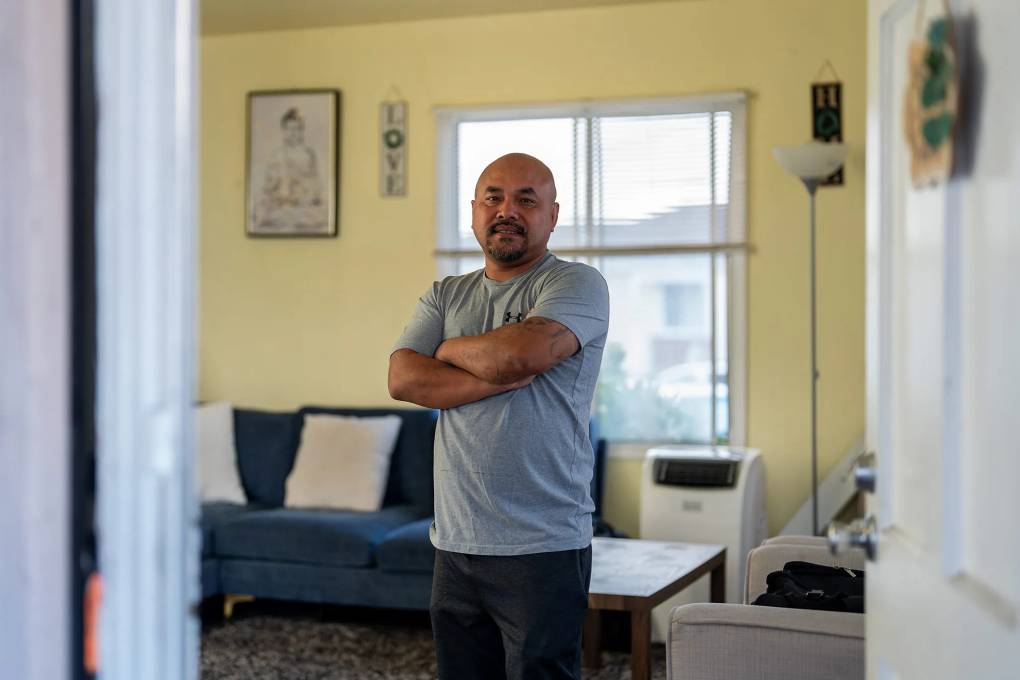
"caption": "Chanthon Bun stands in the living room of his home in San Leandro on Nov. 23, 2024. Bun was born in Cambodia during the genocide in the 1970s and grew up in a refugee camp in Thailand before moving to the United States, where he was convicted of robbery at age 18. That was decades ago, but now he's anxious about President-elect Donald Trump's plan for mass immigrant deportation.",
"credit": "Jungho Kim for CalMatters",
"altTag": null,
"description": null,
"imgSizes": {
"medium": {
"file": "https://cdn.kqed.org/wp-content/uploads/sites/10/2024/11/112324_Bun-Portrait_JK_CM_01-800x533.jpg",
"width": 800,
"height": 533,
"mimeType": "image/jpeg"
},
"large": {
"file": "https://cdn.kqed.org/wp-content/uploads/sites/10/2024/11/112324_Bun-Portrait_JK_CM_01-1020x680.jpg",
"width": 1020,
"height": 680,
"mimeType": "image/jpeg"
},
"thumbnail": {
"file": "https://cdn.kqed.org/wp-content/uploads/sites/10/2024/11/112324_Bun-Portrait_JK_CM_01-160x107.jpg",
"width": 160,
"height": 107,
"mimeType": "image/jpeg"
},
"1536x1536": {
"file": "https://cdn.kqed.org/wp-content/uploads/sites/10/2024/11/112324_Bun-Portrait_JK_CM_01-1536x1024.jpg",
"width": 1536,
"height": 1024,
"mimeType": "image/jpeg"
},
"post-thumbnail": {
"file": "https://cdn.kqed.org/wp-content/uploads/sites/10/2024/11/112324_Bun-Portrait_JK_CM_01-672x372.jpg",
"width": 672,
"height": 372,
"mimeType": "image/jpeg"
},
"twentyfourteen-full-width": {
"file": "https://cdn.kqed.org/wp-content/uploads/sites/10/2024/11/112324_Bun-Portrait_JK_CM_01-1038x576.jpg",
"width": 1038,
"height": 576,
"mimeType": "image/jpeg"
},
"full-width": {
"file": "https://cdn.kqed.org/wp-content/uploads/sites/10/2024/11/112324_Bun-Portrait_JK_CM_01-1920x1280.jpg",
"width": 1920,
"height": 1280,
"mimeType": "image/jpeg"
},
"kqedFullSize": {
"file": "https://cdn.kqed.org/wp-content/uploads/sites/10/2024/11/112324_Bun-Portrait_JK_CM_01.jpg",
"width": 2000,
"height": 1333
}
},
"isLoading": false,
"fetchFailed": false
},
"news_12014519": {
"type": "attachments",
"id": "news_12014519",
"meta": {
"index": "attachments_1716263798",
"site": "news",
"id": "12014519",
"found": true
},
"title": "GettyImages-1217922027_edited",
"publishDate": 1731627825,
"status": "inherit",
"parent": 12014436,
"modified": 1731627992,
"caption": "An undocumented mother and father walk with their two sons in San Lorenzo, Calif. on April 9, 2020. ",
"credit": "Liz Hafalia/The San Francisco Chronicle via Getty Images",
"altTag": null,
"description": null,
"imgSizes": {
"medium": {
"file": "https://cdn.kqed.org/wp-content/uploads/sites/10/2024/11/GettyImages-1217922027_edited-800x532.png",
"width": 800,
"height": 532,
"mimeType": "image/png"
},
"large": {
"file": "https://cdn.kqed.org/wp-content/uploads/sites/10/2024/11/GettyImages-1217922027_edited-1020x678.png",
"width": 1020,
"height": 678,
"mimeType": "image/png"
},
"thumbnail": {
"file": "https://cdn.kqed.org/wp-content/uploads/sites/10/2024/11/GettyImages-1217922027_edited-160x106.png",
"width": 160,
"height": 106,
"mimeType": "image/png"
},
"1536x1536": {
"file": "https://cdn.kqed.org/wp-content/uploads/sites/10/2024/11/GettyImages-1217922027_edited-1536x1022.png",
"width": 1536,
"height": 1022,
"mimeType": "image/png"
},
"post-thumbnail": {
"file": "https://cdn.kqed.org/wp-content/uploads/sites/10/2024/11/GettyImages-1217922027_edited-672x372.png",
"width": 672,
"height": 372,
"mimeType": "image/png"
},
"twentyfourteen-full-width": {
"file": "https://cdn.kqed.org/wp-content/uploads/sites/10/2024/11/GettyImages-1217922027_edited-1038x576.png",
"width": 1038,
"height": 576,
"mimeType": "image/png"
},
"kqedFullSize": {
"file": "https://cdn.kqed.org/wp-content/uploads/sites/10/2024/11/GettyImages-1217922027_edited.png",
"width": 1920,
"height": 1277
}
},
"isLoading": false,
"fetchFailed": false
},
"news_12014015": {
"type": "attachments",
"id": "news_12014015",
"meta": {
"index": "attachments_1716263798",
"site": "news",
"id": "12014015",
"found": true
},
"title": "Rogelio_Garcia_-_Convivir[1]",
"publishDate": 1731359518,
"status": "inherit",
"parent": 0,
"modified": 1731368672,
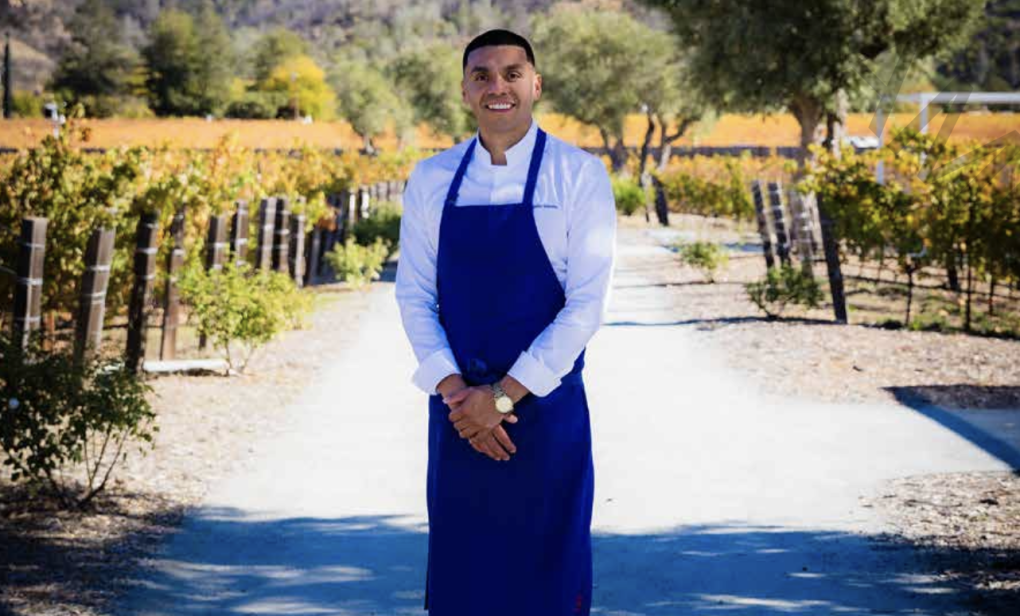
"caption": "Chef Rogelio Garcia is executive chef of Auro, a Michelin Star-winning restaurant at the Four Seasons Resort in Calistoga.",
"credit": "Courtesy of John Troxell",
"altTag": null,
"description": null,
"imgSizes": {
"medium": {
"file": "https://cdn.kqed.org/wp-content/uploads/sites/10/2024/11/Rogelio_Garcia_-_Convivir1-e1731360269373-800x483.png",
"width": 800,
"height": 483,
"mimeType": "image/png"
},
"large": {
"file": "https://cdn.kqed.org/wp-content/uploads/sites/10/2024/11/Rogelio_Garcia_-_Convivir1-e1731360269373-1020x616.png",
"width": 1020,
"height": 616,
"mimeType": "image/png"
},
"thumbnail": {
"file": "https://cdn.kqed.org/wp-content/uploads/sites/10/2024/11/Rogelio_Garcia_-_Convivir1-e1731360269373-160x97.png",
"width": 160,
"height": 97,
"mimeType": "image/png"
},
"1536x1536": {
"file": "https://cdn.kqed.org/wp-content/uploads/sites/10/2024/11/Rogelio_Garcia_-_Convivir1-1267x1536.png",
"width": 1267,
"height": 1536,
"mimeType": "image/png"
},
"post-thumbnail": {
"file": "https://cdn.kqed.org/wp-content/uploads/sites/10/2024/11/Rogelio_Garcia_-_Convivir1-e1731360269373-672x372.png",
"width": 672,
"height": 372,
"mimeType": "image/png"
},
"twentyfourteen-full-width": {
"file": "https://cdn.kqed.org/wp-content/uploads/sites/10/2024/11/Rogelio_Garcia_-_Convivir1-e1731360269373-1038x576.png",
"width": 1038,
"height": 576,
"mimeType": "image/png"
},
"kqedFullSize": {
"file": "https://cdn.kqed.org/wp-content/uploads/sites/10/2024/11/Rogelio_Garcia_-_Convivir1-e1731360269373.png",
"width": 1282,
"height": 774
}
},
"isLoading": false,
"fetchFailed": false
},
"news_12014019": {
"type": "attachments",
"id": "news_12014019",
"meta": {
"index": "attachments_1716263798",
"site": "news",
"id": "12014019",
"found": true
},
"title": "npr.brightspotcdn copy",
"publishDate": 1731361728,
"status": "inherit",
"parent": 12014017,
"modified": 1731361760,
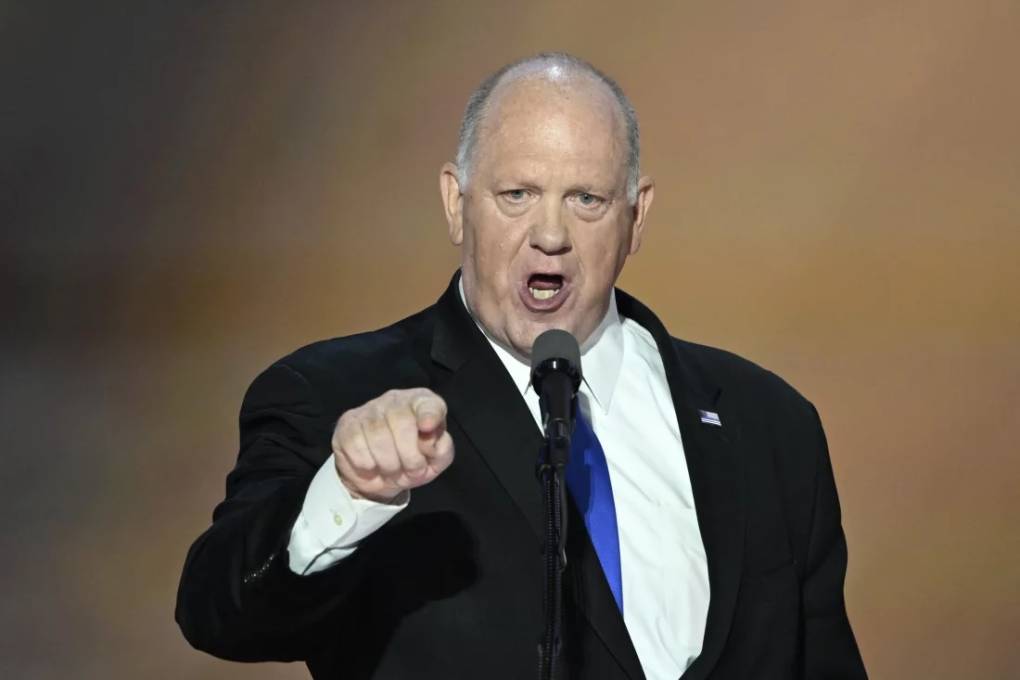
"caption": "Tom Homan speaks at the Republican National Convention in Milwaukee in July. Trump announced on Sunday that the former acting ICE director will oversee border control in his second administration.",
"credit": "Andrew Caballero-Reynolds/AFP via Getty Images",
"altTag": null,
"description": null,
"imgSizes": {
"medium": {
"file": "https://cdn.kqed.org/wp-content/uploads/sites/10/2024/11/npr.brightspotcdn-copy-800x533.jpg",
"width": 800,
"height": 533,
"mimeType": "image/jpeg"
},
"large": {
"file": "https://cdn.kqed.org/wp-content/uploads/sites/10/2024/11/npr.brightspotcdn-copy-1020x680.jpg",
"width": 1020,
"height": 680,
"mimeType": "image/jpeg"
},
"thumbnail": {
"file": "https://cdn.kqed.org/wp-content/uploads/sites/10/2024/11/npr.brightspotcdn-copy-160x107.jpg",
"width": 160,
"height": 107,
"mimeType": "image/jpeg"
},
"post-thumbnail": {
"file": "https://cdn.kqed.org/wp-content/uploads/sites/10/2024/11/npr.brightspotcdn-copy-672x372.jpg",
"width": 672,
"height": 372,
"mimeType": "image/jpeg"
},
"twentyfourteen-full-width": {
"file": "https://cdn.kqed.org/wp-content/uploads/sites/10/2024/11/npr.brightspotcdn-copy-1038x576.jpg",
"width": 1038,
"height": 576,
"mimeType": "image/jpeg"
},
"kqedFullSize": {
"file": "https://cdn.kqed.org/wp-content/uploads/sites/10/2024/11/npr.brightspotcdn-copy.jpg",
"width": 1100,
"height": 733
}
},
"isLoading": false,
"fetchFailed": false
},
"news_12013976": {
"type": "attachments",
"id": "news_12013976",
"meta": {
"index": "attachments_1716263798",
"site": "news",
"id": "12013976",
"found": true
},
"title": "01_110824-Deferred-Action-ZS-04",
"publishDate": 1731352840,
"status": "inherit",
"parent": 12013960,
"modified": 1731365370,
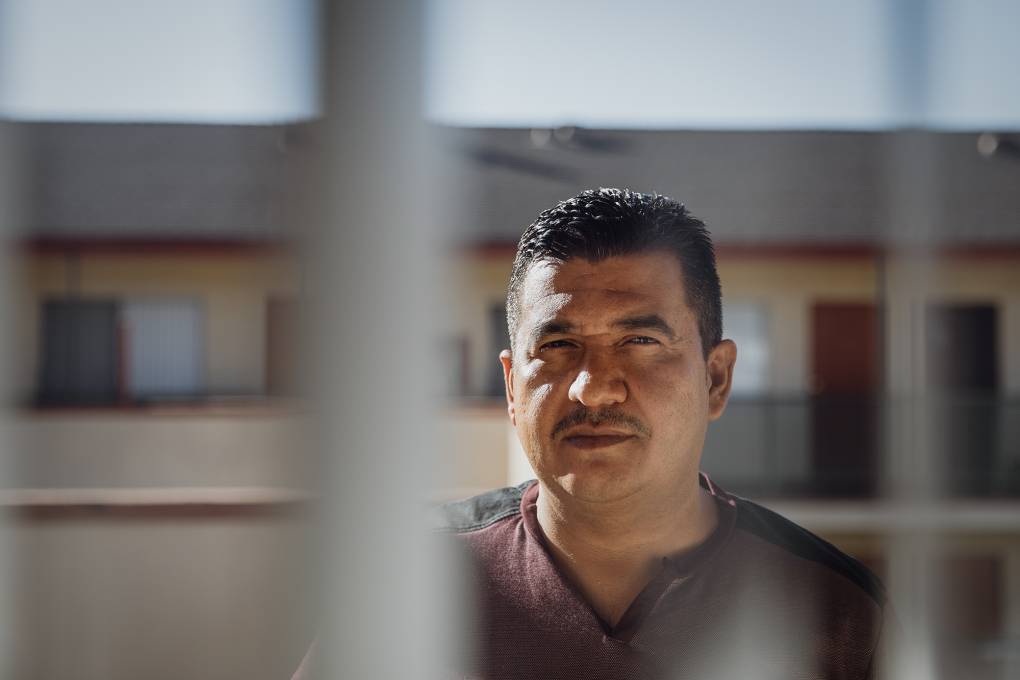
"caption": "Alejandro Gamez in his home in Hawthorne on Nov. 8, 2024. ",
"credit": "Zaydee Sanchez/CalMatters",
"altTag": "A man looks at the camera with light on his face and a house in the background.",
"description": null,
"imgSizes": {
"medium": {
"file": "https://cdn.kqed.org/wp-content/uploads/sites/10/2024/11/01_110824-Deferred-Action-ZS-04-800x533.jpg",
"width": 800,
"height": 533,
"mimeType": "image/jpeg"
},
"large": {
"file": "https://cdn.kqed.org/wp-content/uploads/sites/10/2024/11/01_110824-Deferred-Action-ZS-04-1020x680.jpg",
"width": 1020,
"height": 680,
"mimeType": "image/jpeg"
},
"thumbnail": {
"file": "https://cdn.kqed.org/wp-content/uploads/sites/10/2024/11/01_110824-Deferred-Action-ZS-04-160x107.jpg",
"width": 160,
"height": 107,
"mimeType": "image/jpeg"
},
"1536x1536": {
"file": "https://cdn.kqed.org/wp-content/uploads/sites/10/2024/11/01_110824-Deferred-Action-ZS-04-1536x1024.jpg",
"width": 1536,
"height": 1024,
"mimeType": "image/jpeg"
},
"post-thumbnail": {
"file": "https://cdn.kqed.org/wp-content/uploads/sites/10/2024/11/01_110824-Deferred-Action-ZS-04-672x372.jpg",
"width": 672,
"height": 372,
"mimeType": "image/jpeg"
},
"twentyfourteen-full-width": {
"file": "https://cdn.kqed.org/wp-content/uploads/sites/10/2024/11/01_110824-Deferred-Action-ZS-04-1038x576.jpg",
"width": 1038,
"height": 576,
"mimeType": "image/jpeg"
},
"full-width": {
"file": "https://cdn.kqed.org/wp-content/uploads/sites/10/2024/11/01_110824-Deferred-Action-ZS-04-1920x1280.jpg",
"width": 1920,
"height": 1280,
"mimeType": "image/jpeg"
},
"kqedFullSize": {
"file": "https://cdn.kqed.org/wp-content/uploads/sites/10/2024/11/01_110824-Deferred-Action-ZS-04.jpg",
"width": 2000,
"height": 1333
}
},
"isLoading": false,
"fetchFailed": false
},
"news_11997196": {
"type": "attachments",
"id": "news_11997196",
"meta": {
"index": "attachments_1716263798",
"site": "news",
"id": "11997196",
"found": true
},
"title": "Donald TrumpJD Vance",
"publishDate": 1721853839,
"status": "inherit",
"parent": 11997168,
"modified": 1756337631,
"caption": "Then-Republican presidential candidate and former President Donald Trump arrives at a campaign rally in Grand Rapids, Michigan, on July 20, 2024.",
"credit": "Evan Vucci/AP Photo",
"altTag": null,
"description": null,
"imgSizes": {
"medium": {
"file": "https://cdn.kqed.org/wp-content/uploads/sites/10/2024/07/TrumpRallyAP1-800x533.jpg",
"width": 800,
"height": 533,
"mimeType": "image/jpeg"
},
"large": {
"file": "https://cdn.kqed.org/wp-content/uploads/sites/10/2024/07/TrumpRallyAP1-1020x680.jpg",
"width": 1020,
"height": 680,
"mimeType": "image/jpeg"
},
"thumbnail": {
"file": "https://cdn.kqed.org/wp-content/uploads/sites/10/2024/07/TrumpRallyAP1-160x107.jpg",
"width": 160,
"height": 107,
"mimeType": "image/jpeg"
},
"1536x1536": {
"file": "https://cdn.kqed.org/wp-content/uploads/sites/10/2024/07/TrumpRallyAP1-1536x1024.jpg",
"width": 1536,
"height": 1024,
"mimeType": "image/jpeg"
},
"post-thumbnail": {
"file": "https://cdn.kqed.org/wp-content/uploads/sites/10/2024/07/TrumpRallyAP1-672x372.jpg",
"width": 672,
"height": 372,
"mimeType": "image/jpeg"
},
"twentyfourteen-full-width": {
"file": "https://cdn.kqed.org/wp-content/uploads/sites/10/2024/07/TrumpRallyAP1-1038x576.jpg",
"width": 1038,
"height": 576,
"mimeType": "image/jpeg"
},
"full-width": {
"file": "https://cdn.kqed.org/wp-content/uploads/sites/10/2024/07/TrumpRallyAP1-1920x1280.jpg",
"width": 1920,
"height": 1280,
"mimeType": "image/jpeg"
},
"kqedFullSize": {
"file": "https://cdn.kqed.org/wp-content/uploads/sites/10/2024/07/TrumpRallyAP1.jpg",
"width": 2000,
"height": 1333
}
},
"isLoading": false,
"fetchFailed": false
},
"news_12013572": {
"type": "attachments",
"id": "news_12013572",
"meta": {
"index": "attachments_1716263798",
"site": "news",
"id": "12013572",
"found": true
},
"title": "legal-aid-bay-area",
"publishDate": 1731025240,
"status": "inherit",
"parent": 12013522,
"modified": 1731098420,
"caption": "Since the results of the 2024 presidential election, many in the Bay Area remain anxious that they could be directly affected by the sweeping changes Trump campaign has promised.\n\n\n\n\n\n\n\n",
"credit": "Getty Images",
"altTag": null,
"description": null,
"imgSizes": {
"medium": {
"file": "https://cdn.kqed.org/wp-content/uploads/sites/10/2024/11/GettyImages-1171173643-800x600.jpg",
"width": 800,
"height": 600,
"mimeType": "image/jpeg"
},
"large": {
"file": "https://cdn.kqed.org/wp-content/uploads/sites/10/2024/11/GettyImages-1171173643-1020x765.jpg",
"width": 1020,
"height": 765,
"mimeType": "image/jpeg"
},
"thumbnail": {
"file": "https://cdn.kqed.org/wp-content/uploads/sites/10/2024/11/GettyImages-1171173643-160x120.jpg",
"width": 160,
"height": 120,
"mimeType": "image/jpeg"
},
"1536x1536": {
"file": "https://cdn.kqed.org/wp-content/uploads/sites/10/2024/11/GettyImages-1171173643-1536x1152.jpg",
"width": 1536,
"height": 1152,
"mimeType": "image/jpeg"
},
"post-thumbnail": {
"file": "https://cdn.kqed.org/wp-content/uploads/sites/10/2024/11/GettyImages-1171173643-672x372.jpg",
"width": 672,
"height": 372,
"mimeType": "image/jpeg"
},
"twentyfourteen-full-width": {
"file": "https://cdn.kqed.org/wp-content/uploads/sites/10/2024/11/GettyImages-1171173643-1038x576.jpg",
"width": 1038,
"height": 576,
"mimeType": "image/jpeg"
},
"full-width": {
"file": "https://cdn.kqed.org/wp-content/uploads/sites/10/2024/11/GettyImages-1171173643-1920x1440.jpg",
"width": 1920,
"height": 1440,
"mimeType": "image/jpeg"
},
"kqedFullSize": {
"file": "https://cdn.kqed.org/wp-content/uploads/sites/10/2024/11/GettyImages-1171173643.jpg",
"width": 2000,
"height": 1500
}
},
"isLoading": false,
"fetchFailed": false
},
"news_12013439": {
"type": "attachments",
"id": "news_12013439",
"meta": {
"index": "attachments_1716263798",
"site": "news",
"id": "12013439",
"found": true
},
"title": "U.S. Border Patrol Detains Immigrants Crossing Into Arizona",
"publishDate": 1731008232,
"status": "inherit",
"parent": 12013409,
"modified": 1731016944,
"caption": "A U.S. Border Patrol agent guards a group of Mexican immigrants caught after they crossed into the United States on March 6, 2013, near Walker Canyon, Arizona. Due to broad federal sequestration budget cuts, Border Patrol agents are expected to begin taking unpaid furlough days in April, as Customs and Border Protection funding is expected to be reduced by more than $500 million.",
"credit": "Photo by John Moore/Getty Images",
"altTag": null,
"description": null,
"imgSizes": {
"medium": {
"file": "https://cdn.kqed.org/wp-content/uploads/sites/10/2024/11/163289125_qed-800x533.jpg",
"width": 800,
"height": 533,
"mimeType": "image/jpeg"
},
"large": {
"file": "https://cdn.kqed.org/wp-content/uploads/sites/10/2024/11/163289125_qed-1020x680.jpg",
"width": 1020,
"height": 680,
"mimeType": "image/jpeg"
},
"thumbnail": {
"file": "https://cdn.kqed.org/wp-content/uploads/sites/10/2024/11/163289125_qed-160x107.jpg",
"width": 160,
"height": 107,
"mimeType": "image/jpeg"
},
"1536x1536": {
"file": "https://cdn.kqed.org/wp-content/uploads/sites/10/2024/11/163289125_qed-1536x1024.jpg",
"width": 1536,
"height": 1024,
"mimeType": "image/jpeg"
},
"post-thumbnail": {
"file": "https://cdn.kqed.org/wp-content/uploads/sites/10/2024/11/163289125_qed-672x372.jpg",
"width": 672,
"height": 372,
"mimeType": "image/jpeg"
},
"twentyfourteen-full-width": {
"file": "https://cdn.kqed.org/wp-content/uploads/sites/10/2024/11/163289125_qed-1038x576.jpg",
"width": 1038,
"height": 576,
"mimeType": "image/jpeg"
},
"full-width": {
"file": "https://cdn.kqed.org/wp-content/uploads/sites/10/2024/11/163289125_qed-1920x1280.jpg",
"width": 1920,
"height": 1280,
"mimeType": "image/jpeg"
},
"kqedFullSize": {
"file": "https://cdn.kqed.org/wp-content/uploads/sites/10/2024/11/163289125_qed.jpg",
"width": 1999,
"height": 1333
}
},
"isLoading": false,
"fetchFailed": false
},
"news_12013407": {
"type": "attachments",
"id": "news_12013407",
"meta": {
"index": "attachments_1716263798",
"site": "news",
"id": "12013407",
"found": true
},
"title": "Gavin Newsom, Donald Trump, Jerry Brown",
"publishDate": 1731002743,
"status": "inherit",
"parent": 12013395,
"modified": 1739131345,
"caption": "President Donald Trump talks with Gov. Gavin Newsom (left) during a visit to a neighborhood impacted by the wildfires in Paradise on Nov. 17, 2018.",
"credit": "Evan Vucci/AP Photo",
"altTag": "Two men wearing jackets and the man on the right points while wearing a black hat stand near each other talking.",
"description": null,
"imgSizes": {
"medium": {
"file": "https://cdn.kqed.org/wp-content/uploads/sites/10/2024/11/NewsomTrump2018AP-800x533.jpg",
"width": 800,
"height": 533,
"mimeType": "image/jpeg"
},
"large": {
"file": "https://cdn.kqed.org/wp-content/uploads/sites/10/2024/11/NewsomTrump2018AP-1020x680.jpg",
"width": 1020,
"height": 680,
"mimeType": "image/jpeg"
},
"thumbnail": {
"file": "https://cdn.kqed.org/wp-content/uploads/sites/10/2024/11/NewsomTrump2018AP-160x107.jpg",
"width": 160,
"height": 107,
"mimeType": "image/jpeg"
},
"1536x1536": {
"file": "https://cdn.kqed.org/wp-content/uploads/sites/10/2024/11/NewsomTrump2018AP-1536x1024.jpg",
"width": 1536,
"height": 1024,
"mimeType": "image/jpeg"
},
"post-thumbnail": {
"file": "https://cdn.kqed.org/wp-content/uploads/sites/10/2024/11/NewsomTrump2018AP-672x372.jpg",
"width": 672,
"height": 372,
"mimeType": "image/jpeg"
},
"twentyfourteen-full-width": {
"file": "https://cdn.kqed.org/wp-content/uploads/sites/10/2024/11/NewsomTrump2018AP-1038x576.jpg",
"width": 1038,
"height": 576,
"mimeType": "image/jpeg"
},
"full-width": {
"file": "https://cdn.kqed.org/wp-content/uploads/sites/10/2024/11/NewsomTrump2018AP-1920x1280.jpg",
"width": 1920,
"height": 1280,
"mimeType": "image/jpeg"
},
"kqedFullSize": {
"file": "https://cdn.kqed.org/wp-content/uploads/sites/10/2024/11/NewsomTrump2018AP.jpg",
"width": 2000,
"height": 1333
}
},
"isLoading": false,
"fetchFailed": false
},
"news_12012233": {
"type": "attachments",
"id": "news_12012233",
"meta": {
"index": "attachments_1716263798",
"site": "news",
"id": "12012233",
"found": true
},
"title": "10.28.2024_MeasureS-01-scaled",
"publishDate": 1730501149,
"status": "inherit",
"parent": 0,
"modified": 1730501368,
"caption": "Noncitizens make up 14% of Oakland’s population. Including immigrant parents in conversations about curriculum, staff and language used in class could lead to better academic outcomes for students, the original resolution for Measure S stated.",
"credit": "Hiram Alejandro Durán for El Tímpano/CatchLight Local/Report for America corps member",
"altTag": null,
"description": null,
"imgSizes": {
"medium": {
"file": "https://cdn.kqed.org/wp-content/uploads/sites/10/2024/11/10.28.2024_MeasureS-01-scaled-1-800x532.jpeg",
"width": 800,
"height": 532,
"mimeType": "image/jpeg"
},
"large": {
"file": "https://cdn.kqed.org/wp-content/uploads/sites/10/2024/11/10.28.2024_MeasureS-01-scaled-1-1020x679.jpeg",
"width": 1020,
"height": 679,
"mimeType": "image/jpeg"
},
"thumbnail": {
"file": "https://cdn.kqed.org/wp-content/uploads/sites/10/2024/11/10.28.2024_MeasureS-01-scaled-1-160x106.jpeg",
"width": 160,
"height": 106,
"mimeType": "image/jpeg"
},
"1536x1536": {
"file": "https://cdn.kqed.org/wp-content/uploads/sites/10/2024/11/10.28.2024_MeasureS-01-scaled-1-1536x1022.jpeg",
"width": 1536,
"height": 1022,
"mimeType": "image/jpeg"
},
"post-thumbnail": {
"file": "https://cdn.kqed.org/wp-content/uploads/sites/10/2024/11/10.28.2024_MeasureS-01-scaled-1-672x372.jpeg",
"width": 672,
"height": 372,
"mimeType": "image/jpeg"
},
"twentyfourteen-full-width": {
"file": "https://cdn.kqed.org/wp-content/uploads/sites/10/2024/11/10.28.2024_MeasureS-01-scaled-1-1038x576.jpeg",
"width": 1038,
"height": 576,
"mimeType": "image/jpeg"
},
"full-width": {
"file": "https://cdn.kqed.org/wp-content/uploads/sites/10/2024/11/10.28.2024_MeasureS-01-scaled-1-1920x1278.jpeg",
"width": 1920,
"height": 1278,
"mimeType": "image/jpeg"
},
"kqedFullSize": {
"file": "https://cdn.kqed.org/wp-content/uploads/sites/10/2024/11/10.28.2024_MeasureS-01-scaled-1.jpeg",
"width": 2000,
"height": 1331
}
},
"isLoading": false,
"fetchFailed": false
}
},
"audioPlayerReducer": {
"postId": "stream_live",
"isPaused": true,
"isPlaying": false,
"pfsActive": false,
"pledgeModalIsOpen": true,
"playerDrawerIsOpen": false,
"liveAudioPlayStartedAt": 0,
"liveAudioPlayContext": ""
},
"authorsReducer": {
"byline_news_12015773": {
"type": "authors",
"id": "byline_news_12015773",
"meta": {
"override": true
},
"slug": "byline_news_12015773",
"name": "\u003ca href=\"https://calmatters.org/author/wendy-fry/\">Wendy Fry\u003c/a>, CalMatters",
"isLoading": false
},
"byline_news_12014017": {
"type": "authors",
"id": "byline_news_12014017",
"meta": {
"override": true
},
"slug": "byline_news_12014017",
"name": "\u003ca href=\"https://www.npr.org/people/776048102/rachel-treisman\">Rachel Treisman\u003c/a>, NPR",
"isLoading": false
},
"byline_news_12013960": {
"type": "authors",
"id": "byline_news_12013960",
"meta": {
"override": true
},
"slug": "byline_news_12013960",
"name": "\u003ca href=\"https://calmatters.org/author/jeanne-kuang/\">Jeanne Kuang\u003c/a>, CalMatters",
"isLoading": false
},
"byline_news_12013409": {
"type": "authors",
"id": "byline_news_12013409",
"meta": {
"override": true
},
"slug": "byline_news_12013409",
"name": "Wendy Fry, CalMatters",
"isLoading": false
},
"byline_news_12012228": {
"type": "authors",
"id": "byline_news_12012228",
"meta": {
"override": true
},
"slug": "byline_news_12012228",
"name": "Vanessa Flores and Ximena Loeza, El Tímpano",
"isLoading": false
},
"gmarzorati": {
"type": "authors",
"id": "227",
"meta": {
"index": "authors_1716337520",
"id": "227",
"found": true
},
"name": "Guy Marzorati",
"firstName": "Guy",
"lastName": "Marzorati",
"slug": "gmarzorati",
"email": "gmarzorati@KQED.org",
"display_author_email": true,
"staff_mastheads": [
"news"
],
"title": "Correspondent",
"bio": "Guy Marzorati is a correspondent on KQED's California Politics and Government Desk, based in San Jose. A graduate of Santa Clara University, Guy joined KQED in 2013. He reports on state and local politics and produces KQED's digital voter guide.",
"avatar": "https://secure.gravatar.com/avatar/e7038b8dbfd55b104369b76b1cd0b9de?s=600&d=blank&r=g",
"twitter": "guymarzorati",
"facebook": null,
"instagram": null,
"linkedin": null,
"sites": [
{
"site": "",
"roles": [
"editor"
]
},
{
"site": "news",
"roles": [
"editor"
]
},
{
"site": "science",
"roles": [
"editor"
]
},
{
"site": "forum",
"roles": [
"editor"
]
},
{
"site": "elections",
"roles": [
"editor"
]
},
{
"site": "liveblog",
"roles": [
"editor"
]
}
],
"headData": {
"title": "Guy Marzorati | KQED",
"description": "Correspondent",
"ogImgSrc": "https://secure.gravatar.com/avatar/e7038b8dbfd55b104369b76b1cd0b9de?s=600&d=blank&r=g",
"twImgSrc": "https://secure.gravatar.com/avatar/e7038b8dbfd55b104369b76b1cd0b9de?s=600&d=blank&r=g"
},
"isLoading": false,
"link": "/author/gmarzorati"
},
"scottshafer": {
"type": "authors",
"id": "255",
"meta": {
"index": "authors_1716337520",
"id": "255",
"found": true
},
"name": "Scott Shafer",
"firstName": "Scott",
"lastName": "Shafer",
"slug": "scottshafer",
"email": "sshafer@kqed.org",
"display_author_email": false,
"staff_mastheads": [
"news"
],
"title": "KQED Contributor",
"bio": "Scott Shafer is a senior editor with the KQED Politics and Government desk. He is co-host of Political Breakdown, the award-winning radio show and podcast with a personal take on the world of politics. Scott came to KQED in 1998 to host the statewide\u003cem> California Report\u003c/em>. Prior to that he had extended stints in politics and government\u003cem>.\u003c/em> He uses that inside experience at KQED in his, reporting, hosting and analysis for the politics desk. Scott collaborated \u003cem>Political Breakdown a\u003c/em>nd on \u003cem>The Political Mind of Jerry Brown, \u003c/em>an eight-part series about the life and extraordinary political career of the former governor. For fun, he plays water polo with the San Francisco Tsunami.",
"avatar": "https://secure.gravatar.com/avatar/a62ebae45b79d7aed1a39a0e3bf68104?s=600&d=blank&r=g",
"twitter": "scottshafer",
"bluesky": null,
"facebook": null,
"instagram": null,
"linkedin": null,
"sites": [
{
"site": "news",
"roles": [
"editor"
]
},
{
"site": "stateofhealth",
"roles": [
"author"
]
},
{
"site": "science",
"roles": [
"author"
]
},
{
"site": "forum",
"roles": [
"subscriber"
]
},
{
"site": "liveblog",
"roles": [
"author"
]
}
],
"headData": {
"title": "Scott Shafer | KQED",
"description": "KQED Contributor",
"ogImgSrc": "https://secure.gravatar.com/avatar/a62ebae45b79d7aed1a39a0e3bf68104?s=600&d=blank&r=g",
"twImgSrc": "https://secure.gravatar.com/avatar/a62ebae45b79d7aed1a39a0e3bf68104?s=600&d=blank&r=g"
},
"isLoading": false,
"link": "/author/scottshafer"
},
"tychehendricks": {
"type": "authors",
"id": "259",
"meta": {
"index": "authors_1716337520",
"id": "259",
"found": true
},
"name": "Tyche Hendricks",
"firstName": "Tyche",
"lastName": "Hendricks",
"slug": "tychehendricks",
"email": "thendricks@kqed.org",
"display_author_email": true,
"staff_mastheads": [
"news"
],
"title": "KQED Senior Editor, Immigration",
"bio": "\u003cspan style=\"font-weight: 400;\">Tyche Hendricks is KQED’s senior editor for immigration, leading coverage of the policy and politics that affect California’s immigrant communities. Her work for KQED’s radio and online audiences is also carried on NPR and other national outlets. She has been recognized with awards from the Radio and Television News Directors Association, the Society for Professional Journalists; the Education Writers Association; the Best of the West and the National Federation of Community Broadcasters. Before joining KQED in 2010, Tyche spent more than a dozen years as a newspaper reporter, notably at the \u003c/span>\u003ci>\u003cspan style=\"font-weight: 400;\">San Francisco Chronicle\u003c/span>\u003c/i>\u003cspan style=\"font-weight: 400;\">. At different times she has covered criminal justice, government and politics and urban planning. Tyche has taught in the MFA Creative Writing program at the University of San Francisco and at UC Berkeley’s Graduate School of Journalism, where she was co-director of a national immigration symposium for professional journalists. She is the author of \u003c/span>\u003ci>\u003cspan style=\"font-weight: 400;\">The Wind Doesn't Need a Passport: Stories from the U.S.-Mexico Borderlands\u003c/span>\u003c/i>\u003cspan style=\"font-weight: 400;\"> (University of California Press). \u003c/span>",
"avatar": "https://secure.gravatar.com/avatar/b8ee458e2731c2d43df86882ce17267e?s=600&d=blank&r=g",
"twitter": "tychehendricks",
"facebook": null,
"instagram": null,
"linkedin": null,
"sites": [
{
"site": "news",
"roles": [
"editor"
]
},
{
"site": "stateofhealth",
"roles": [
"editor"
]
}
],
"headData": {
"title": "Tyche Hendricks | KQED",
"description": "KQED Senior Editor, Immigration",
"ogImgSrc": "https://secure.gravatar.com/avatar/b8ee458e2731c2d43df86882ce17267e?s=600&d=blank&r=g",
"twImgSrc": "https://secure.gravatar.com/avatar/b8ee458e2731c2d43df86882ce17267e?s=600&d=blank&r=g"
},
"isLoading": false,
"link": "/author/tychehendricks"
},
"dcronin": {
"type": "authors",
"id": "11362",
"meta": {
"index": "authors_1716337520",
"id": "11362",
"found": true
},
"name": "Dana Cronin",
"firstName": "Dana",
"lastName": "Cronin",
"slug": "dcronin",
"email": "dcronin@KQED.org",
"display_author_email": true,
"staff_mastheads": [],
"title": "KQED Contributor",
"bio": "Dana Cronin is a reporter for KQED News. She loves writing stories about climate change, environmental issues, food and agriculture. She's reported across the country, from Colorado to Washington D.C. to Illinois, and has won numerous awards for her coverage. Her work is regularly featured on national broadcasts, including NPR’s Morning Edition, All Things Considered, PBS Newshour and Science Friday. She lives in Oakland and has an avocado tree in her back yard.",
"avatar": "https://secure.gravatar.com/avatar/bcf89e3455ff7235f96ab6fa7258dd95?s=600&d=blank&r=g",
"twitter": "DanaHCronin",
"facebook": null,
"instagram": null,
"linkedin": null,
"sites": [
{
"site": "arts",
"roles": [
"author"
]
},
{
"site": "news",
"roles": [
"editor"
]
},
{
"site": "science",
"roles": [
"author"
]
},
{
"site": "liveblog",
"roles": [
"author"
]
}
],
"headData": {
"title": "Dana Cronin | KQED",
"description": "KQED Contributor",
"ogImgSrc": "https://secure.gravatar.com/avatar/bcf89e3455ff7235f96ab6fa7258dd95?s=600&d=blank&r=g",
"twImgSrc": "https://secure.gravatar.com/avatar/bcf89e3455ff7235f96ab6fa7258dd95?s=600&d=blank&r=g"
},
"isLoading": false,
"link": "/author/dcronin"
},
"btorres": {
"type": "authors",
"id": "11666",
"meta": {
"index": "authors_1716337520",
"id": "11666",
"found": true
},
"name": "Blanca Torres",
"firstName": "Blanca",
"lastName": "Torres",
"slug": "btorres",
"email": "btorres@kqed.org",
"display_author_email": true,
"staff_mastheads": [
"news"
],
"title": "Producer, Forum",
"bio": "Blanca Torres brings sharp news judgement and keen sense of lively conversation to her work as producer for Forum. She loves producing shows that leave listeners feeling like they heard distinctive voices, learned something new and gained a fresh perspective.\r\n\r\nShe joined KQED in January of 2020 after 16 years of working as a newspaper reporter most recently at the \u003cem>San Francisco Business Times,\u003c/em> where she wrote about real estate and economic development. Before that, she covered a variety of beats including crime, education, retail, workplace, the economy, consumer issues, and small business for the \u003cem>Contra Costa Times, Baltimore Sun\u003c/em> and\u003cem> The Seattle Times\u003c/em>. In addition to reporting, she worked as an editorial writer and columnist for the \u003cem>Seattle Times\u003c/em>. From 2017 to 2020, Blanca won a total of ten awards from the National Association of Real Estate Editors and won first place for land use reporting from the California News Publishers Association two years in a row. She is also a member and former board member for the National Association of Hispanic Journalists.\r\n\r\nA native of the Pacific Northwest, Blanca earned her bachelor's degree from Vanderbilt University in Nashville and a master's in fine arts in creative writing at Mills College. She lives in the East Bay with her family.",
"avatar": "https://secure.gravatar.com/avatar/f2322ff46076d337f7ba731ee6068cb1?s=600&d=blank&r=g",
"twitter": "@blancawrites",
"facebook": null,
"instagram": null,
"linkedin": null,
"sites": [
{
"site": "arts",
"roles": [
"editor"
]
},
{
"site": "news",
"roles": [
"editor"
]
},
{
"site": "forum",
"roles": [
"editor"
]
}
],
"headData": {
"title": "Blanca Torres | KQED",
"description": "Producer, Forum",
"ogImgSrc": "https://secure.gravatar.com/avatar/f2322ff46076d337f7ba731ee6068cb1?s=600&d=blank&r=g",
"twImgSrc": "https://secure.gravatar.com/avatar/f2322ff46076d337f7ba731ee6068cb1?s=600&d=blank&r=g"
},
"isLoading": false,
"link": "/author/btorres"
},
"ccabreralomeli": {
"type": "authors",
"id": "11708",
"meta": {
"index": "authors_1716337520",
"id": "11708",
"found": true
},
"name": "Carlos Cabrera-Lomelí",
"firstName": "Carlos",
"lastName": "Cabrera-Lomelí",
"slug": "ccabreralomeli",
"email": "ccabreralomeli@KQED.org",
"display_author_email": true,
"staff_mastheads": [
"news"
],
"title": "Community Reporter",
"bio": "Carlos Cabrera-Lomelí is a community reporter with KQED's digital engagement team. He also reports and co-produces for KQED's bilingual news hub KQED en Español. He grew up in San Francisco's Mission District and has previously worked with Univision, 48 Hills and REFORMA in Mexico City.",
"avatar": "https://secure.gravatar.com/avatar/e95ff80bb2eaf18a8f2af4dcf7ffb54b?s=600&d=mm&r=g",
"twitter": "@LomeliCabrera",
"facebook": null,
"instagram": null,
"linkedin": null,
"sites": [
{
"site": "arts",
"roles": [
"editor"
]
},
{
"site": "news",
"roles": [
"editor"
]
},
{
"site": "about",
"roles": [
"editor"
]
},
{
"site": "science",
"roles": [
"editor"
]
},
{
"site": "perspectives",
"roles": [
"editor"
]
},
{
"site": "elections",
"roles": [
"editor"
]
},
{
"site": "liveblog",
"roles": [
"contributor"
]
}
],
"headData": {
"title": "Carlos Cabrera-Lomelí | KQED",
"description": "Community Reporter",
"ogImgSrc": "https://secure.gravatar.com/avatar/e95ff80bb2eaf18a8f2af4dcf7ffb54b?s=600&d=mm&r=g",
"twImgSrc": "https://secure.gravatar.com/avatar/e95ff80bb2eaf18a8f2af4dcf7ffb54b?s=600&d=mm&r=g"
},
"isLoading": false,
"link": "/author/ccabreralomeli"
}
},
"pagesReducer": {
"news_tag_immigration": {
"type": "terms",
"id": "news_20202",
"meta": {
"index": "terms_1716263798",
"site": "news",
"id": "20202",
"score": 6.9038835
},
"featImg": null,
"name": "immigration",
"description": null,
"taxonomy": "tag",
"headData": {
"twImgId": null,
"twTitle": null,
"ogTitle": null,
"ogImgId": null,
"twDescription": null,
"description": null,
"title": "immigration Archives | KQED News",
"ogDescription": null
},
"ttid": 20219,
"slug": "immigration",
"isLoading": false,
"title": "immigration",
"pageMeta": {
"site": "news",
"WpPageTemplate": "page-topic-editorial",
"currentPage": 39
},
"blocks": [
{
"blockName": "kqed/post-list",
"attrs": {
"layout": "cardArticle2",
"query": "posts/news?tag=immigration",
"seeMore": false,
"paginated": true,
"page": 39
}
},
{
"blockName": "kqed/ad"
}
]
}
},
"pfsSessionReducer": {},
"postsReducer": {
"stream_live": {
"type": "live",
"id": "stream_live",
"audioUrl": "https://streams.kqed.org/kqedradio",
"title": "Live Stream",
"excerpt": "Live Stream information currently unavailable.",
"link": "/radio",
"featImg": "",
"label": {
"name": "KQED Live",
"link": "/"
}
},
"stream_kqedNewscast": {
"type": "posts",
"id": "stream_kqedNewscast",
"audioUrl": "https://www.kqed.org/.stream/anon/radio/RDnews/newscast.mp3?_=1",
"title": "KQED Newscast",
"featImg": "",
"label": {
"name": "88.5 FM",
"link": "/"
}
},
"news_12016488": {
"type": "posts",
"id": "news_12016488",
"meta": {
"index": "posts_1716263798",
"site": "news",
"id": "12016488",
"score": null,
"sort": [
1733274308000
]
},
"guestAuthors": [],
"slug": "how-trumps-plan-for-mass-deportations-could-play-out",
"title": "How Trump’s Plan for “Mass Deportations” Could Play Out",
"publishDate": 1733274308,
"format": "audio",
"headTitle": "How Trump’s Plan for “Mass Deportations” Could Play Out | KQED",
"labelTerm": {},
"content": "\u003cp>President-elect Donald Trump is promising to enact mass deportations of people in the U.S. without documents. Scott is joined by KQED’s senior editor for immigration Tyche Hendricks to talk about how those policies could play out, how immigrant communities and legal advocacy groups are preparing and the extent to which so-called “sanctuary” laws can protect undocumented immigrants from deportation.\u003c/p>\n\u003cp>Read more: \u003ca href=\"https://www.kqed.org/news/12016037/california-is-a-sanctuary-state-how-much-protection-will-that-give-immigrants-from-trumps-deportation-plans\" target=\"_blank\" rel=\"noopener noreferrer\">California Is a Sanctuary State. How Much Will That Protect Immigrants From Trump’s Deportation Plans?\u003c/a>\u003c/p>\n\u003cp>[ad fullwidth]\u003c/p>\u003cp>\u003c/p>\n",
"blocks": [],
"excerpt": null,
"status": "publish",
"parent": 0,
"modified": 1733350182,
"stats": {
"hasAudio": false,
"hasVideo": false,
"hasChartOrMap": false,
"iframeSrcs": [],
"hasGoogleForm": false,
"hasGallery": false,
"hasHearkenModule": false,
"hasPolis": false,
"paragraphCount": 4,
"wordCount": 88
},
"headData": {
"title": "How Trump’s Plan for “Mass Deportations” Could Play Out | KQED",
"description": "President-elect Donald Trump is promising to enact mass deportations of people in the U.S. without documents. Scott is joined by KQED’s senior editor for immigration Tyche Hendricks to talk about how those policies could play out, how immigrant communities and legal advocacy groups are preparing and the extent to which so-called “sanctuary” laws can protect undocumented immigrants from deportation. Read more: California Is a Sanctuary State. How Much Will That Protect Immigrants From Trump's Deportation Plans?",
"ogTitle": "",
"ogDescription": "",
"ogImgId": "",
"twTitle": "",
"twDescription": "",
"twImgId": "",
"schema": {
"@context": "https://schema.org",
"@type": "NewsArticle",
"headline": "How Trump’s Plan for “Mass Deportations” Could Play Out",
"datePublished": "2024-12-03T17:05:08-08:00",
"dateModified": "2024-12-04T14:09:42-08:00",
"image": "https://cdn.kqed.org/wp-content/uploads/2020/02/KQED-OG-Image@1x.png",
"isAccessibleForFree": "True",
"publisher": {
"@type": "NewsMediaOrganization",
"@id": "https://www.kqed.org/#organization",
"name": "KQED",
"logo": "https://cdn.kqed.org/wp-content/uploads/2020/02/KQED-OG-Image@1x.png",
"url": "https://www.kqed.org",
"sameAs": [
"https://www.facebook.com/KQED",
"https://twitter.com/KQED",
"https://www.instagram.com/kqed/",
"https://www.tiktok.com/@kqedofficial",
"https://www.linkedin.com/company/kqed",
"https://www.youtube.com/channel/UCeC0IOo7i1P_61zVUWbJ4nw"
]
}
}
},
"source": "Political Breakdown",
"audioUrl": "https://www.podtrac.com/pts/redirect.mp3/chrt.fm/track/G6C7C3/traffic.megaphone.fm/KQINC7596331661.mp3?updated=1733269467",
"sticky": false,
"nprStoryId": "kqed-12016488",
"excludeFromSiteSearch": "Include",
"articleAge": "0",
"path": "/news/12016488/how-trumps-plan-for-mass-deportations-could-play-out",
"audioTrackLength": null,
"parsedContent": [
{
"type": "contentString",
"content": "\u003cdiv class=\"post-body\">\u003cp>\u003cp>President-elect Donald Trump is promising to enact mass deportations of people in the U.S. without documents. Scott is joined by KQED’s senior editor for immigration Tyche Hendricks to talk about how those policies could play out, how immigrant communities and legal advocacy groups are preparing and the extent to which so-called “sanctuary” laws can protect undocumented immigrants from deportation.\u003c/p>\n\u003cp>Read more: \u003ca href=\"https://www.kqed.org/news/12016037/california-is-a-sanctuary-state-how-much-protection-will-that-give-immigrants-from-trumps-deportation-plans\" target=\"_blank\" rel=\"noopener noreferrer\">California Is a Sanctuary State. How Much Will That Protect Immigrants From Trump’s Deportation Plans?\u003c/a>\u003c/p>\n\u003cp>\u003c/p>\u003c/div>",
"attributes": {
"named": {},
"numeric": []
}
},
{
"type": "component",
"content": "",
"name": "ad",
"attributes": {
"named": {
"label": "fullwidth"
},
"numeric": [
"fullwidth"
]
}
},
{
"type": "contentString",
"content": "\u003cdiv class=\"post-body\">\u003cp>\u003c/p>\u003cp>\u003c/p>\n\u003c/div>\u003c/p>",
"attributes": {
"named": {},
"numeric": []
}
}
],
"link": "/news/12016488/how-trumps-plan-for-mass-deportations-could-play-out",
"authors": [
"255",
"259"
],
"programs": [
"news_33544"
],
"categories": [
"news_8"
],
"tags": [
"news_20202",
"news_22235",
"news_17968"
],
"featImg": "news_11958277",
"label": "source_news_12016488"
},
"news_12016037": {
"type": "posts",
"id": "news_12016037",
"meta": {
"index": "posts_1716263798",
"site": "news",
"id": "12016037",
"score": null,
"sort": [
1733148035000
]
},
"guestAuthors": [],
"slug": "california-is-a-sanctuary-state-how-much-protection-will-that-give-immigrants-from-trumps-deportation-plans",
"title": "California Is a Sanctuary State. How Much Will That Protect Immigrants From Trump's Deportation Plans?",
"publishDate": 1733148035,
"format": "standard",
"headTitle": "California Is a Sanctuary State. How Much Will That Protect Immigrants From Trump’s Deportation Plans? | KQED",
"labelTerm": {
"site": "news"
},
"content": "\u003cp>Throughout the 2024 campaign, President-elect Donald Trump promised \u003ca href=\"https://www.kqed.org/news/12014017/what-to-know-about-tom-homan-the-former-ice-head-returning-as-trumps-border-czar\">mass deportations as part of his immigration policy,\u003c/a> a strategy he says will include declaring a national emergency and deploying the U.S. military. While these promises have received significant media attention, immigration analysts say that Trump is actually \u003ca href=\"https://www.npr.org/2024/11/01/nx-s1-5164531/deportations-local-police-sheriff-trump-border-immigrants\">more likely to lean on local police\u003c/a> and sheriffs.\u003c/p>\n\u003cp>Since the Nov. 5 election, California officials \u003ca href=\"https://www.kqed.org/news/12013535/california-and-the-bay-area-took-on-trump-before-theyre-ready-to-do-it-again\">have vowed to push back against the Trump administration\u003c/a>. “I can promise to the undocumented community in California that I and my team have been thinking about you for months and the harm that might come from a Trump administration 2.0,” state Attorney General Rob Bonta said \u003ca href=\"https://apnews.com/video/california-donald-trump-donald-trump-es-government-regulations-u-s-republican-party-20c24862a8114940a6ec2cbf76cb46ac\">at a press conference in San Francisco two days after the election\u003c/a>. “We have planned for you. We have prepared for you.”\u003c/p>\n\u003cp>Multiple cities in California, including San Francisco, Oakland and San José, have in place what are commonly called “sanctuary laws”: policies designed to protect immigrants from deportation by limiting law enforcement cooperation with U.S. Immigration and Customs Enforcement (ICE). And other cities are bolstering local protections in anticipation of Trump’s pledge of mass deportations. In Los Angeles, \u003ca href=\"https://apnews.com/article/sanctuary-city-trump-deportations-immigrants-los-angeles-836cf68a756c64800bbeb0270e8a965c\">city officials unanimously passed a sanctuary ordinance \u003c/a>on Nov. 19, and in the Bay Area, Redwood City is currently debating a similar move. \u003c/p>\n\u003cp>As the clock ticks down to a second Trump term, what do we know about existing sanctuary laws in cities like San Francisco, along with policies at the state level? And what are some ways these policies do — and do not — protect immigrants from deportation?\u003c/p>\n\u003cp>[ad fullwidth]\u003c/p>\n\u003ch2>\u003cb>What is a sanctuary policy?\u003c/b>\u003cb>\u003cbr>\n\u003c/b>\u003c/h2>\n\u003cp>There’s no single definition of a “sanctuary law,” but most policies require that state and local law enforcement resources not be used for immigration enforcement. \u003ca href=\"https://www.sfcityattorney.org/2018/10/05/herrera-wins-ruling-that-san-franciscos-sanctuary-policies-comply-with-federal-law/\">Courts have upheld the legal premise of many of these laws\u003c/a>, pointing out that immigration law is an area of federal responsibility, and local governments don’t get to control how it’s enforced. \u003c/p>\n\u003cp>Nevertheless, successive administrations have worked to recruit local authorities to assist ICE in identifying and detaining immigrants who the federal agency considers “deportable.” Collaboration could include information-sharing, \u003ca href=\"https://www.ice.gov/identify-and-arrest/criminal-apprehension-program\">agreements that give agents access to prisons and jails\u003c/a>, and a program that \u003ca href=\"https://www.ice.gov/identify-and-arrest/287g\">deputizes police and sheriffs to function as immigration agents\u003c/a>.\u003c/p>\n\u003cp>\u003cb>“\u003c/b>ICE, under both Democratic and Republican presidents, has tried to coerce, pressure and encourage local law enforcement to become their ‘force multipliers,’ because there are many more police, sheriff and probation officers than there are ICE agents,” says Angela Chan, who leads immigrant advocacy efforts at the San Francisco Public Defender’s office and helped draft the sanctuary laws for both San Francisco and California.\u003c/p>\n\u003ch2>\u003cb>Why have sanctuary policies?\u003c/b>\u003c/h2>\n\u003cp>\u003cb>\u003c/b>The sanctuary movement began in the 1980s, \u003ca href=\"https://www.kalw.org/show/crosscurrents/2018-03-06/hey-area-a-history-of-san-franciscos-contested-sanctuary-city-status\">with church activists protecting undocumented Salvadorans and Guatemalans escaping civil wars\u003c/a> at a time when the U.S. was denying their asylum claims and backing the repressive governments they had fled.[aside label=\"Related Stories\" postID=\"news_12014436,news_11989910,news_12015773\"]In response, Berkeley adopted a sanctuary resolution in 1971, the first city in the country to do so, and it’d be almost two decades later that \u003ca href=\"https://www.sf.gov/information/sanctuary-city-ordinance\">San Francisco enacted its sanctuary ordinance in 1989\u003c/a> after years of organizing \u003ca href=\"https://eltecolote.org/content/en/sf-fights-to-protect-sanctuary-city-status/\">led by the city’s Central American communities\u003c/a>.\u003c/p>\n\u003cp>Since then, dozens of Democratic-led cities and \u003ca href=\"https://www.ilrc.org/state-map-immigration-enforcement-2024\">more than a dozen states\u003c/a> have followed with their own sanctuary policies, emphasizing that public safety depends on trust. At the state level, California has passed a trio of sanctuary laws — the \u003ca href=\"http://www.leginfo.ca.gov/pub/13-14/bill/asm/ab_0001-0050/ab_4_bill_20130916_enrolled.htm\">TRUST Act\u003c/a> in 2013, the \u003ca href=\"https://leginfo.legislature.ca.gov/faces/billNavClient.xhtml?bill_id=201520160AB2792\">TRUTH Act\u003c/a> in 2016 and the \u003ca href=\"https://leginfo.legislature.ca.gov/faces/billNavClient.xhtml?bill_id=201720180SB54\">California Values Act\u003c/a> in 2017 — that govern how law enforcement can interact with ICE.\u003c/p>\n\u003cp>Immigrants, the bills’ backers argue, need to feel safe going to the police to report crimes and speak up as witnesses, just like everyone else. But the \u003ca href=\"https://cmsny.org/us-undocumented-population-increased-in-july-2023-warren-090624/\">nearly 12 million unauthorized immigrants\u003c/a> and their family members, who live in communities across the country, could be unlikely to cooperate with police if they fear they’ll be reported to ICE.\u003cbr>\n\u003cbr>\nIt’s worth noting that most unauthorized immigrants \u003ca href=\"https://www.pewresearch.org/short-reads/2021/04/13/key-facts-about-the-changing-u-s-unauthorized-immigrant-population/\">have lived in the U.S. for at least a decade\u003c/a>. But under current immigration laws, an overwhelming majority don’t have any way to legalize their status, so they’re stuck in limbo.\u003c/p>\n\u003ch2>\u003cb>What does California’s sanctuary law do?\u003c/b>\u003cb>\u003c/b>\u003c/h2>\n\u003cp>When the California Values Act (\u003ca href=\"https://leginfo.legislature.ca.gov/faces/billCompareClient.xhtml?bill_id=201720180SB54&showamends=false\">SB 54\u003c/a>) took effect in 2018, the first Trump administration was working on ramping up deportations nationwide.\u003c/p>\n\u003cp>The law says that state and local resources in California shall not be used to “investigate, interrogate, detain, detect, or arrest persons for immigration enforcement purposes” or transfer people to ICE custody without a judge’s warrant.\u003cbr>\n\u003cbr>\nThere are, however, some major exceptions: SB 54 permits law enforcement to notify ICE about immigrants with any of a long list of serious convictions on their records. \u003c/p>\n\u003cp>In addition, the law makes another big exception for state prisons. The California Department of Corrections and Rehabilitation (CDCR) automatically flags immigrants in custody for ICE and turns them over after they complete their sentences. Even longtime legal residents with green cards are transferred, because they can be deportable based on their criminal record.\u003c/p>\n\u003cp>At a press conference in late November, Attorney General Bonta affirmed that law enforcement in California would continue to enforce criminal laws. However, he says he would uphold SB 54’s restrictions that prevent state officials from participating in civil immigration enforcement, even if the incoming Trump administration pressures the state.\u003cbr>\n\u003cbr>\n“The federal administration is welcome to do their job, but they cannot commandeer or conscript law enforcement in California to do their job for them,” he says. “cooperation under SB 54 on civil immigration enforcement will not be forthcoming because it would violate the law if it were.”\u003c/p>\n\u003cfigure id=\"attachment_12013478\" class=\"wp-caption alignnone\" style=\"max-width: 800px\">\u003cimg loading=\"lazy\" decoding=\"async\" class=\"size-medium wp-image-12013478\" src=\"https://cdn.kqed.org/wp-content/uploads/sites/10/2024/11/241107-ATTORNEYGENERALBONTA-09-BL-KQED-800x533.jpg\" alt=\"\" width=\"800\" height=\"533\" srcset=\"https://cdn.kqed.org/wp-content/uploads/sites/10/2024/11/241107-ATTORNEYGENERALBONTA-09-BL-KQED-800x533.jpg 800w, https://cdn.kqed.org/wp-content/uploads/sites/10/2024/11/241107-ATTORNEYGENERALBONTA-09-BL-KQED-1020x680.jpg 1020w, https://cdn.kqed.org/wp-content/uploads/sites/10/2024/11/241107-ATTORNEYGENERALBONTA-09-BL-KQED-160x107.jpg 160w, https://cdn.kqed.org/wp-content/uploads/sites/10/2024/11/241107-ATTORNEYGENERALBONTA-09-BL-KQED-1536x1024.jpg 1536w, https://cdn.kqed.org/wp-content/uploads/sites/10/2024/11/241107-ATTORNEYGENERALBONTA-09-BL-KQED-1920x1280.jpg 1920w, https://cdn.kqed.org/wp-content/uploads/sites/10/2024/11/241107-ATTORNEYGENERALBONTA-09-BL-KQED.jpg 2000w\" sizes=\"(max-width: 800px) 100vw, 800px\">\u003cfigcaption class=\"wp-caption-text\">Attorney General Rob Bonta speaks with KQED politics reporters Marisa Lagos and Scott Shafer for Political Breakdown at the KQED offices in San Francisco on Nov. 7, 2024. \u003ccite>(Beth LaBerge/KQED)\u003c/cite>\u003c/figcaption>\u003c/figure>\n\u003ch2>\u003cb>Don’t sanctuary laws prevent ICE from operating in California?\u003c/b>\u003cb>\u003cbr>\n\u003c/b>\u003c/h2>\n\u003cp>Not exactly. State laws restrict what state and local authorities can do. However, ICE is a federal agency with agents based throughout California. In addition to taking custody of immigrants handed over by prisons, they can and do track down people they believe are deportable. \u003cbr>\n\u003cbr>\nUnder President Joe Biden, ICE was guided by \u003ca href=\"https://www.ice.gov/doclib/news/guidelines-civilimmigrationlaw.pdf\">enforcement priorities\u003c/a> that focused on removing immigrants who posed a threat to national security, a threat to public safety or a threat to border security. The policy, based on an Obama-era directive, emphasized that agents would use their discretion in a way that would protect the civil rights of immigrants, even those who could be deported. In 2023, \u003ca href=\"https://www.aila.org/library/featured-issue-prosecutorial-discretion\">the Supreme Court upheld the legality of these enforcement guidelines\u003c/a>.\u003c/p>\n\u003cp>Since the Nov. 5 election, however, President-elect Trump has said he would toss out the priorities of the previous administration and that any immigrant here illegally would be subject to deportation. However, experts say the next administration will also have to set priorities because they won’t be able to remove 11 or 12 million people at once. Trump’s pick for the new role of “border czar,” Thomas Homan, who’s spent a career in immigration enforcement, has indicated he would focus first on immigrants with criminal histories.\u003c/p>\n\u003cp>An analysis by the conservative American Action Forum estimated \u003ca href=\"https://www.americanactionforum.org/daily-dish/the-reality-of-mass-deportation/?utm_source=American+Action+Forum+Emails&utm_campaign=8fb2baf00b-EMAIL_CAMPAIGN_2019_04_23_07_19_COPY_01&utm_medium=email&utm_term=0_64783a8335-8fb2baf00b-300300517\">it would cost $400 billion to $600 billion to remove 11.2 million people\u003c/a>, and it would take two decades, \u003ca href=\"https://www.pewresearch.org/short-reads/2024/07/22/what-we-know-about-unauthorized-immigrants-living-in-the-us/\">leaving a significant dent in the U.S. workforce\u003c/a>.\u003cbr>\n\u003cbr>\nDoris Meissner, a senior fellow at the nonpartisan Migration Policy Institute, says she expects that “significant” deportations are coming, along with a pervasive message that immigrants are unwelcome. \u003c/p>\n\u003cp>“There may not be mass deportations depending on how one defines that,” she says. “But there will surely be a significant climate of fear and hostility toward people that are in the country recently or people that are seen to be ‘invaders.’”\u003c/p>\n\u003ch2>\u003cb>Do local authorities ever work with ICE? \u003c/b>\u003c/h2>\n\u003cp>A number of more conservative cities and counties in California \u003ca href=\"https://calmatters.org/justice/2018/05/rebelling-against-californias-sanctuary-law-from-inside-california/\">have come out in opposition of the California Values Act since it took effect in 2018\u003c/a>, but they are bound by it and prevented, in most cases, from giving ICE access to county jails or information on the whereabouts of undocumented immigrants.\u003cbr>\n\u003cbr>\nHowever, some local law enforcement leaders do find ways around state and local sanctuary laws. That’s true right now, even in progressive San Francisco. \u003cbr>\n\u003cbr>\nOver the past year, \u003ca href=\"https://www.cbsnews.com/sanfrancisco/news/san-francisco-da-jenkins-promises-fentanyl-dealer-crackdown-withdraws-plea-deals/\">as part of a multi-agency crackdown on fentanyl dealing in the city’s Tenderloin neighborhood\u003c/a>, the San Francisco district attorney’s office has been building cases against suspected dealers, many of them young Honduran immigrants, then handing them off to the U.S. Attorney and dropping the local charges. \u003c/p>\n\u003cp>Faced with much stiffer federal penalties for drug crimes, defendants typically plead guilty, allowing federal authorities to hand them over to ICE for deportation, something San Francisco officials can’t do under sanctuary policies. \u003cbr>\n\u003cbr>\nSan Francisco District Attorney Brooke Jenkins says she supports the city’s sanctuary law and abides by it. But she’s unapologetic.\u003cbr>\n\u003cbr>\n“The spirit of Sanctuary City is not to embolden criminal behavior,” \u003ca href=\"https://omny.fm/shows/kqed-segmented-audio/hendricks-sf-fentanyl-sanctuary\">she told KQED earlier this year.\u003c/a> “It is not to embolden selling people death.” \u003c/p>\n\u003cp>While Trump has cast undocumented immigrants as brutal criminals “attacking” and “invading” the U.S., research has repeatedly shown that immigrants — \u003ca href=\"https://nij.ojp.gov/topics/articles/undocumented-immigrant-offending-rate-lower-us-born-citizen-rate\">including undocumented immigrants\u003c/a> — are \u003ca href=\"https://www.americanimmigrationcouncil.org/research/debunking-myth-immigrants-and-crime\">less likely than other people to commit crimes\u003c/a>. \u003c/p>\n\u003ch2>\u003cb>What are California and local governments doing ahead of Trump’s second term?\u003c/b>\u003c/h2>\n\u003cp>California has been successful before in withstanding legal challenges from the Trump administration against the state’s sanctuary laws. In 2020, the \u003ca href=\"https://www.courthousenews.com/supreme-court-rejects-trump-challenge-of-california-sanctuary-laws/\">U.S. Supreme Court declined to hear a Trump administration challenge to SB 54\u003c/a>, allowing the law to stand. \u003c/p>\n\u003cp>In addition to limiting what local and state law enforcement can do, SB 54 says public schools, libraries, hospitals, courthouses and other public facilities are supposed to have policies that define how they will limit interaction with ICE. And the state Attorney General’s office is required to offer model policies they can use.\u003c/p>\n\u003cp>The San Francisco Public Defender’s Angela Chan says now is the time, ahead of a second Trump term, for those local entities to take a look at their policies, clarify them and make sure staff members understand them.\u003c/p>\n\u003cp>“They should do an honest assessment of the many ways they might inadvertently — or purposely — assist ICE,” she says. “They should especially look at their data privacy policies and see how the data they collect from their residents is used and shared with other agencies. If you share data with one federal agency, it can make it very difficult to prevent — especially under a Trump administration — that federal agency from sharing it with another.”\u003c/p>\n\u003cp>[ad floatright]\u003c/p>\n",
"blocks": [],
"excerpt": "California is a so-called 'sanctuary state,' and San Francisco declared itself a 'sanctuary city' following the 2016 presidential election. So, what could we expect under the second Trump presidency? ",
"status": "publish",
"parent": 0,
"modified": 1733163409,
"stats": {
"hasAudio": false,
"hasVideo": false,
"hasChartOrMap": false,
"iframeSrcs": [],
"hasGoogleForm": false,
"hasGallery": false,
"hasHearkenModule": false,
"hasPolis": false,
"paragraphCount": 27,
"wordCount": 1870
},
"headData": {
"title": "California Is a Sanctuary State. How Much Will That Protect Immigrants From Trump's Deportation Plans? | KQED",
"description": "California is a so-called 'sanctuary state,' and San Francisco declared itself a 'sanctuary city' following the 2016 presidential election. So, what could we expect under the second Trump presidency? ",
"ogTitle": "",
"ogDescription": "",
"ogImgId": "",
"twTitle": "",
"twDescription": "",
"twImgId": "",
"schema": {
"@context": "https://schema.org",
"@type": "NewsArticle",
"headline": "California Is a Sanctuary State. How Much Will That Protect Immigrants From Trump's Deportation Plans?",
"datePublished": "2024-12-02T06:00:35-08:00",
"dateModified": "2024-12-02T10:16:49-08:00",
"image": "https://cdn.kqed.org/wp-content/uploads/2020/02/KQED-OG-Image@1x.png",
"isAccessibleForFree": "True",
"publisher": {
"@type": "NewsMediaOrganization",
"@id": "https://www.kqed.org/#organization",
"name": "KQED",
"logo": "https://cdn.kqed.org/wp-content/uploads/2020/02/KQED-OG-Image@1x.png",
"url": "https://www.kqed.org",
"sameAs": [
"https://www.facebook.com/KQED",
"https://twitter.com/KQED",
"https://www.instagram.com/kqed/",
"https://www.tiktok.com/@kqedofficial",
"https://www.linkedin.com/company/kqed",
"https://www.youtube.com/channel/UCeC0IOo7i1P_61zVUWbJ4nw"
]
}
}
},
"audioUrl": "https://traffic.omny.fm/d/clips/0af137ef-751e-4b19-a055-aaef00d2d578/ffca7e9f-6831-41c5-bcaf-aaef00f5a073/b9c47bc8-a4f6-4704-ab16-b2330114d7c0/audio.mp3?accessToken=eyJhbGciOiJIUzI1NiIsImtpZCI6IjlzYTZ6N20wdUVtT0VhcnZBUGdxVHciLCJ0eXAiOiJKV1QifQ.eyJjbGlwIjoiYjljNDdiYzgtYTRmNi00NzA0LWFiMTYtYjIzMzAxMTRkN2MwIiwiYWRzIjowfQ.kyRnKdev-C7cTwMGp3M3JdQrnRCNAO-LhKWw0n1iCQ0",
"sticky": false,
"nprStoryId": "kqed-12016037",
"excludeFromSiteSearch": "Include",
"articleAge": "0",
"path": "/news/12016037/california-is-a-sanctuary-state-how-much-protection-will-that-give-immigrants-from-trumps-deportation-plans",
"audioTrackLength": null,
"parsedContent": [
{
"type": "contentString",
"content": "\u003cdiv class=\"post-body\">\u003cp>\u003cp>Throughout the 2024 campaign, President-elect Donald Trump promised \u003ca href=\"https://www.kqed.org/news/12014017/what-to-know-about-tom-homan-the-former-ice-head-returning-as-trumps-border-czar\">mass deportations as part of his immigration policy,\u003c/a> a strategy he says will include declaring a national emergency and deploying the U.S. military. While these promises have received significant media attention, immigration analysts say that Trump is actually \u003ca href=\"https://www.npr.org/2024/11/01/nx-s1-5164531/deportations-local-police-sheriff-trump-border-immigrants\">more likely to lean on local police\u003c/a> and sheriffs.\u003c/p>\n\u003cp>Since the Nov. 5 election, California officials \u003ca href=\"https://www.kqed.org/news/12013535/california-and-the-bay-area-took-on-trump-before-theyre-ready-to-do-it-again\">have vowed to push back against the Trump administration\u003c/a>. “I can promise to the undocumented community in California that I and my team have been thinking about you for months and the harm that might come from a Trump administration 2.0,” state Attorney General Rob Bonta said \u003ca href=\"https://apnews.com/video/california-donald-trump-donald-trump-es-government-regulations-u-s-republican-party-20c24862a8114940a6ec2cbf76cb46ac\">at a press conference in San Francisco two days after the election\u003c/a>. “We have planned for you. We have prepared for you.”\u003c/p>\n\u003cp>Multiple cities in California, including San Francisco, Oakland and San José, have in place what are commonly called “sanctuary laws”: policies designed to protect immigrants from deportation by limiting law enforcement cooperation with U.S. Immigration and Customs Enforcement (ICE). And other cities are bolstering local protections in anticipation of Trump’s pledge of mass deportations. In Los Angeles, \u003ca href=\"https://apnews.com/article/sanctuary-city-trump-deportations-immigrants-los-angeles-836cf68a756c64800bbeb0270e8a965c\">city officials unanimously passed a sanctuary ordinance \u003c/a>on Nov. 19, and in the Bay Area, Redwood City is currently debating a similar move. \u003c/p>\n\u003cp>As the clock ticks down to a second Trump term, what do we know about existing sanctuary laws in cities like San Francisco, along with policies at the state level? And what are some ways these policies do — and do not — protect immigrants from deportation?\u003c/p>\n\u003cp>\u003c/p>\u003c/div>",
"attributes": {
"named": {},
"numeric": []
}
},
{
"type": "component",
"content": "",
"name": "ad",
"attributes": {
"named": {
"label": "fullwidth"
},
"numeric": [
"fullwidth"
]
}
},
{
"type": "contentString",
"content": "\u003cdiv class=\"post-body\">\u003cp>\u003c/p>\n\u003ch2>\u003cb>What is a sanctuary policy?\u003c/b>\u003cb>\u003cbr>\n\u003c/b>\u003c/h2>\n\u003cp>There’s no single definition of a “sanctuary law,” but most policies require that state and local law enforcement resources not be used for immigration enforcement. \u003ca href=\"https://www.sfcityattorney.org/2018/10/05/herrera-wins-ruling-that-san-franciscos-sanctuary-policies-comply-with-federal-law/\">Courts have upheld the legal premise of many of these laws\u003c/a>, pointing out that immigration law is an area of federal responsibility, and local governments don’t get to control how it’s enforced. \u003c/p>\n\u003cp>Nevertheless, successive administrations have worked to recruit local authorities to assist ICE in identifying and detaining immigrants who the federal agency considers “deportable.” Collaboration could include information-sharing, \u003ca href=\"https://www.ice.gov/identify-and-arrest/criminal-apprehension-program\">agreements that give agents access to prisons and jails\u003c/a>, and a program that \u003ca href=\"https://www.ice.gov/identify-and-arrest/287g\">deputizes police and sheriffs to function as immigration agents\u003c/a>.\u003c/p>\n\u003cp>\u003cb>“\u003c/b>ICE, under both Democratic and Republican presidents, has tried to coerce, pressure and encourage local law enforcement to become their ‘force multipliers,’ because there are many more police, sheriff and probation officers than there are ICE agents,” says Angela Chan, who leads immigrant advocacy efforts at the San Francisco Public Defender’s office and helped draft the sanctuary laws for both San Francisco and California.\u003c/p>\n\u003ch2>\u003cb>Why have sanctuary policies?\u003c/b>\u003c/h2>\n\u003cp>\u003cb>\u003c/b>The sanctuary movement began in the 1980s, \u003ca href=\"https://www.kalw.org/show/crosscurrents/2018-03-06/hey-area-a-history-of-san-franciscos-contested-sanctuary-city-status\">with church activists protecting undocumented Salvadorans and Guatemalans escaping civil wars\u003c/a> at a time when the U.S. was denying their asylum claims and backing the repressive governments they had fled.\u003c/p>\u003c/div>",
"attributes": {
"named": {},
"numeric": []
}
},
{
"type": "component",
"content": "",
"name": "aside",
"attributes": {
"named": {
"label": "Related Stories ",
"postid": "news_12014436,news_11989910,news_12015773"
},
"numeric": []
}
},
{
"type": "contentString",
"content": "\u003cdiv class=\"post-body\">\u003cp>In response, Berkeley adopted a sanctuary resolution in 1971, the first city in the country to do so, and it’d be almost two decades later that \u003ca href=\"https://www.sf.gov/information/sanctuary-city-ordinance\">San Francisco enacted its sanctuary ordinance in 1989\u003c/a> after years of organizing \u003ca href=\"https://eltecolote.org/content/en/sf-fights-to-protect-sanctuary-city-status/\">led by the city’s Central American communities\u003c/a>.\u003c/p>\n\u003cp>Since then, dozens of Democratic-led cities and \u003ca href=\"https://www.ilrc.org/state-map-immigration-enforcement-2024\">more than a dozen states\u003c/a> have followed with their own sanctuary policies, emphasizing that public safety depends on trust. At the state level, California has passed a trio of sanctuary laws — the \u003ca href=\"http://www.leginfo.ca.gov/pub/13-14/bill/asm/ab_0001-0050/ab_4_bill_20130916_enrolled.htm\">TRUST Act\u003c/a> in 2013, the \u003ca href=\"https://leginfo.legislature.ca.gov/faces/billNavClient.xhtml?bill_id=201520160AB2792\">TRUTH Act\u003c/a> in 2016 and the \u003ca href=\"https://leginfo.legislature.ca.gov/faces/billNavClient.xhtml?bill_id=201720180SB54\">California Values Act\u003c/a> in 2017 — that govern how law enforcement can interact with ICE.\u003c/p>\n\u003cp>Immigrants, the bills’ backers argue, need to feel safe going to the police to report crimes and speak up as witnesses, just like everyone else. But the \u003ca href=\"https://cmsny.org/us-undocumented-population-increased-in-july-2023-warren-090624/\">nearly 12 million unauthorized immigrants\u003c/a> and their family members, who live in communities across the country, could be unlikely to cooperate with police if they fear they’ll be reported to ICE.\u003cbr>\n\u003cbr>\nIt’s worth noting that most unauthorized immigrants \u003ca href=\"https://www.pewresearch.org/short-reads/2021/04/13/key-facts-about-the-changing-u-s-unauthorized-immigrant-population/\">have lived in the U.S. for at least a decade\u003c/a>. But under current immigration laws, an overwhelming majority don’t have any way to legalize their status, so they’re stuck in limbo.\u003c/p>\n\u003ch2>\u003cb>What does California’s sanctuary law do?\u003c/b>\u003cb>\u003c/b>\u003c/h2>\n\u003cp>When the California Values Act (\u003ca href=\"https://leginfo.legislature.ca.gov/faces/billCompareClient.xhtml?bill_id=201720180SB54&showamends=false\">SB 54\u003c/a>) took effect in 2018, the first Trump administration was working on ramping up deportations nationwide.\u003c/p>\n\u003cp>The law says that state and local resources in California shall not be used to “investigate, interrogate, detain, detect, or arrest persons for immigration enforcement purposes” or transfer people to ICE custody without a judge’s warrant.\u003cbr>\n\u003cbr>\nThere are, however, some major exceptions: SB 54 permits law enforcement to notify ICE about immigrants with any of a long list of serious convictions on their records. \u003c/p>\n\u003cp>In addition, the law makes another big exception for state prisons. The California Department of Corrections and Rehabilitation (CDCR) automatically flags immigrants in custody for ICE and turns them over after they complete their sentences. Even longtime legal residents with green cards are transferred, because they can be deportable based on their criminal record.\u003c/p>\n\u003cp>At a press conference in late November, Attorney General Bonta affirmed that law enforcement in California would continue to enforce criminal laws. However, he says he would uphold SB 54’s restrictions that prevent state officials from participating in civil immigration enforcement, even if the incoming Trump administration pressures the state.\u003cbr>\n\u003cbr>\n“The federal administration is welcome to do their job, but they cannot commandeer or conscript law enforcement in California to do their job for them,” he says. “cooperation under SB 54 on civil immigration enforcement will not be forthcoming because it would violate the law if it were.”\u003c/p>\n\u003cfigure id=\"attachment_12013478\" class=\"wp-caption alignnone\" style=\"max-width: 800px\">\u003cimg loading=\"lazy\" decoding=\"async\" class=\"size-medium wp-image-12013478\" src=\"https://cdn.kqed.org/wp-content/uploads/sites/10/2024/11/241107-ATTORNEYGENERALBONTA-09-BL-KQED-800x533.jpg\" alt=\"\" width=\"800\" height=\"533\" srcset=\"https://cdn.kqed.org/wp-content/uploads/sites/10/2024/11/241107-ATTORNEYGENERALBONTA-09-BL-KQED-800x533.jpg 800w, https://cdn.kqed.org/wp-content/uploads/sites/10/2024/11/241107-ATTORNEYGENERALBONTA-09-BL-KQED-1020x680.jpg 1020w, https://cdn.kqed.org/wp-content/uploads/sites/10/2024/11/241107-ATTORNEYGENERALBONTA-09-BL-KQED-160x107.jpg 160w, https://cdn.kqed.org/wp-content/uploads/sites/10/2024/11/241107-ATTORNEYGENERALBONTA-09-BL-KQED-1536x1024.jpg 1536w, https://cdn.kqed.org/wp-content/uploads/sites/10/2024/11/241107-ATTORNEYGENERALBONTA-09-BL-KQED-1920x1280.jpg 1920w, https://cdn.kqed.org/wp-content/uploads/sites/10/2024/11/241107-ATTORNEYGENERALBONTA-09-BL-KQED.jpg 2000w\" sizes=\"(max-width: 800px) 100vw, 800px\">\u003cfigcaption class=\"wp-caption-text\">Attorney General Rob Bonta speaks with KQED politics reporters Marisa Lagos and Scott Shafer for Political Breakdown at the KQED offices in San Francisco on Nov. 7, 2024. \u003ccite>(Beth LaBerge/KQED)\u003c/cite>\u003c/figcaption>\u003c/figure>\n\u003ch2>\u003cb>Don’t sanctuary laws prevent ICE from operating in California?\u003c/b>\u003cb>\u003cbr>\n\u003c/b>\u003c/h2>\n\u003cp>Not exactly. State laws restrict what state and local authorities can do. However, ICE is a federal agency with agents based throughout California. In addition to taking custody of immigrants handed over by prisons, they can and do track down people they believe are deportable. \u003cbr>\n\u003cbr>\nUnder President Joe Biden, ICE was guided by \u003ca href=\"https://www.ice.gov/doclib/news/guidelines-civilimmigrationlaw.pdf\">enforcement priorities\u003c/a> that focused on removing immigrants who posed a threat to national security, a threat to public safety or a threat to border security. The policy, based on an Obama-era directive, emphasized that agents would use their discretion in a way that would protect the civil rights of immigrants, even those who could be deported. In 2023, \u003ca href=\"https://www.aila.org/library/featured-issue-prosecutorial-discretion\">the Supreme Court upheld the legality of these enforcement guidelines\u003c/a>.\u003c/p>\n\u003cp>Since the Nov. 5 election, however, President-elect Trump has said he would toss out the priorities of the previous administration and that any immigrant here illegally would be subject to deportation. However, experts say the next administration will also have to set priorities because they won’t be able to remove 11 or 12 million people at once. Trump’s pick for the new role of “border czar,” Thomas Homan, who’s spent a career in immigration enforcement, has indicated he would focus first on immigrants with criminal histories.\u003c/p>\n\u003cp>An analysis by the conservative American Action Forum estimated \u003ca href=\"https://www.americanactionforum.org/daily-dish/the-reality-of-mass-deportation/?utm_source=American+Action+Forum+Emails&utm_campaign=8fb2baf00b-EMAIL_CAMPAIGN_2019_04_23_07_19_COPY_01&utm_medium=email&utm_term=0_64783a8335-8fb2baf00b-300300517\">it would cost $400 billion to $600 billion to remove 11.2 million people\u003c/a>, and it would take two decades, \u003ca href=\"https://www.pewresearch.org/short-reads/2024/07/22/what-we-know-about-unauthorized-immigrants-living-in-the-us/\">leaving a significant dent in the U.S. workforce\u003c/a>.\u003cbr>\n\u003cbr>\nDoris Meissner, a senior fellow at the nonpartisan Migration Policy Institute, says she expects that “significant” deportations are coming, along with a pervasive message that immigrants are unwelcome. \u003c/p>\n\u003cp>“There may not be mass deportations depending on how one defines that,” she says. “But there will surely be a significant climate of fear and hostility toward people that are in the country recently or people that are seen to be ‘invaders.’”\u003c/p>\n\u003ch2>\u003cb>Do local authorities ever work with ICE? \u003c/b>\u003c/h2>\n\u003cp>A number of more conservative cities and counties in California \u003ca href=\"https://calmatters.org/justice/2018/05/rebelling-against-californias-sanctuary-law-from-inside-california/\">have come out in opposition of the California Values Act since it took effect in 2018\u003c/a>, but they are bound by it and prevented, in most cases, from giving ICE access to county jails or information on the whereabouts of undocumented immigrants.\u003cbr>\n\u003cbr>\nHowever, some local law enforcement leaders do find ways around state and local sanctuary laws. That’s true right now, even in progressive San Francisco. \u003cbr>\n\u003cbr>\nOver the past year, \u003ca href=\"https://www.cbsnews.com/sanfrancisco/news/san-francisco-da-jenkins-promises-fentanyl-dealer-crackdown-withdraws-plea-deals/\">as part of a multi-agency crackdown on fentanyl dealing in the city’s Tenderloin neighborhood\u003c/a>, the San Francisco district attorney’s office has been building cases against suspected dealers, many of them young Honduran immigrants, then handing them off to the U.S. Attorney and dropping the local charges. \u003c/p>\n\u003cp>Faced with much stiffer federal penalties for drug crimes, defendants typically plead guilty, allowing federal authorities to hand them over to ICE for deportation, something San Francisco officials can’t do under sanctuary policies. \u003cbr>\n\u003cbr>\nSan Francisco District Attorney Brooke Jenkins says she supports the city’s sanctuary law and abides by it. But she’s unapologetic.\u003cbr>\n\u003cbr>\n“The spirit of Sanctuary City is not to embolden criminal behavior,” \u003ca href=\"https://omny.fm/shows/kqed-segmented-audio/hendricks-sf-fentanyl-sanctuary\">she told KQED earlier this year.\u003c/a> “It is not to embolden selling people death.” \u003c/p>\n\u003cp>While Trump has cast undocumented immigrants as brutal criminals “attacking” and “invading” the U.S., research has repeatedly shown that immigrants — \u003ca href=\"https://nij.ojp.gov/topics/articles/undocumented-immigrant-offending-rate-lower-us-born-citizen-rate\">including undocumented immigrants\u003c/a> — are \u003ca href=\"https://www.americanimmigrationcouncil.org/research/debunking-myth-immigrants-and-crime\">less likely than other people to commit crimes\u003c/a>. \u003c/p>\n\u003ch2>\u003cb>What are California and local governments doing ahead of Trump’s second term?\u003c/b>\u003c/h2>\n\u003cp>California has been successful before in withstanding legal challenges from the Trump administration against the state’s sanctuary laws. In 2020, the \u003ca href=\"https://www.courthousenews.com/supreme-court-rejects-trump-challenge-of-california-sanctuary-laws/\">U.S. Supreme Court declined to hear a Trump administration challenge to SB 54\u003c/a>, allowing the law to stand. \u003c/p>\n\u003cp>In addition to limiting what local and state law enforcement can do, SB 54 says public schools, libraries, hospitals, courthouses and other public facilities are supposed to have policies that define how they will limit interaction with ICE. And the state Attorney General’s office is required to offer model policies they can use.\u003c/p>\n\u003cp>The San Francisco Public Defender’s Angela Chan says now is the time, ahead of a second Trump term, for those local entities to take a look at their policies, clarify them and make sure staff members understand them.\u003c/p>\n\u003cp>“They should do an honest assessment of the many ways they might inadvertently — or purposely — assist ICE,” she says. “They should especially look at their data privacy policies and see how the data they collect from their residents is used and shared with other agencies. If you share data with one federal agency, it can make it very difficult to prevent — especially under a Trump administration — that federal agency from sharing it with another.”\u003c/p>\n\u003cp>\u003c/p>\u003c/div>",
"attributes": {
"named": {},
"numeric": []
}
},
{
"type": "component",
"content": "",
"name": "ad",
"attributes": {
"named": {
"label": "floatright"
},
"numeric": [
"floatright"
]
}
},
{
"type": "contentString",
"content": "\u003cdiv class=\"post-body\">\u003cp>\u003c/p>\n\u003c/div>\u003c/p>",
"attributes": {
"named": {},
"numeric": []
}
}
],
"link": "/news/12016037/california-is-a-sanctuary-state-how-much-protection-will-that-give-immigrants-from-trumps-deportation-plans",
"authors": [
"259"
],
"categories": [
"news_31795",
"news_1169",
"news_8",
"news_13"
],
"tags": [
"news_32707",
"news_27626",
"news_20202"
],
"featImg": "news_11732826",
"label": "news"
},
"news_12015773": {
"type": "posts",
"id": "news_12015773",
"meta": {
"index": "posts_1716263798",
"site": "news",
"id": "12015773",
"score": null,
"sort": [
1732579219000
]
},
"guestAuthors": [],
"slug": "whats-going-to-happen-to-my-kids-california-prepares-to-resist-trump-deportations",
"title": "'What's Going to Happen to My Kids?': California Prepares to Resist Trump Deportations",
"publishDate": 1732579219,
"format": "standard",
"headTitle": "‘What’s Going to Happen to My Kids?’: California Prepares to Resist Trump Deportations | KQED",
"labelTerm": {},
"content": "\u003cp>When he was 18, Chanthon Bun recalled, he was the lookout during a Los Angeles robbery in which no one was hurt. He was sentenced to 50 years in state prison.\u003c/p>\n\u003cp>Incarcerated for 23 years, he was paroled in 2020 at the height of the COVID-19 pandemic.\u003c/p>\n\u003cp>Bun had come to the United States as a refugee at age 6. He was born during the \u003ca href=\"https://cla.umn.edu/chgs/holocaust-genocide-education/resource-guides/cambodia\">Cambodian Genocide\u003c/a> when millions of people were put into work camps, separated from their families and killed by the communist group Khmer Rouge.\u003c/p>\n\u003cp>Although he’s a legal permanent resident of the United States, the 46-year-old is among the thousands of Californians who live in constant fear of deportation because of a past criminal conviction. That threat became even more serious earlier this month when Donald Trump was reelected. The president-elect has vowed to launch the biggest militarized mass deportation in U.S. history, and his team has since doubled down on those threats.\u003c/p>\n\u003cp>“I worry about what’s going to happen to my kids,” Bun said. “It’s like you’re not even here. Your mind is in such fear that you can’t even enjoy breathing.”\u003c/p>\n\u003cp>[ad fullwidth]\u003c/p>\n\u003cp>Immigration experts warn of an indiscriminate dragnet that could put almost anyone at risk, but some are in more immediate jeopardy than others. Those include noncitizens who have had contact with the criminal justice system, some 1.3 million people nationwide who have already received final orders of removal, and undocumented people who may live or work close to the other two groups.\u003c/p>\n\u003cp>“Folks who have had contact with the criminal legal system will be of high priority,” said Nayna Gupta, the policy director at the left-leaning Washington think tank American Immigration Council. “Under current immigration law, that includes people who might have convictions from decades prior. There’s no statute of limitations on when the government can remove someone.”\u003c/p>\n\u003cp>Communities closer to the border may be at greater risk early in the next Trump administration because that’s where more Customs and Border Protection agents and Border Patrol officials are located. Trump has said he plans to use those agencies to carry out his mass deportation plan.\u003c/p>\n\u003cp>For months, advocates have been planning ways to fight back.\u003c/p>\n\u003cp>“He doesn’t own our states,” said \u003ca href=\"https://www.aclu.org/bio/naureen-shah\">Naureen Shah\u003c/a>, deputy director of government affairs at the American Civil Liberties Union. “And our states will be the frontline in the defense of our civil liberties and our civil rights.”\u003c/p>\n\u003cp>California, which has the country’s largest immigrant population, already has strong state laws to protect immigrant communities from mass deportations, although not as strong as Oregon and Illinois, according to the \u003ca href=\"https://www.ilrc.org/state-map-immigration-enforcement-2024\">Immigrant Legal Resource Center\u003c/a>.\u003c/p>\n\u003cp>Those two states have comprehensive laws restricting transfers of people to ICE, whereas California state prison employees regularly contact the federal immigration enforcement agency about inmates in their custody, including United States citizens, public records show. Immigrant Legal Resource Center, a national nonprofit that provides legal training and does pro-immigrant policy work in California and Texas, estimates 70% to 75% of ICE arrests in the interior of the U.S. are handoffs from another law enforcement agency, such as local jails or state or federal prisons.\u003c/p>\n\u003cp>During Trump’s first term, California led in resisting federal deportation of undocumented immigrants by becoming the first “sanctuary state” that \u003ca href=\"https://calmatters.org/politics/2018/03/how-california-went-from-anti-immigration-to-sanctuary-state/\">curbed local agencies’ cooperation\u003c/a> with Immigration and Customs Enforcement. But before that law was signed, it was weakened to allow state prisons to continue their coordination with ICE and to give federal immigration agents access to interview people in prisons and jails. Protections that limited police agencies sharing data with ICE were also weakened \u003ca href=\"https://www.nbcnews.com/news/us-news/california-s-sanctuary-state-bill-protecting-immigrants-closer-approval-n801976\">to allow for information to be provided\u003c/a> if a person has been convicted of one of some 800 crimes.\u003c/p>\n\u003cp>The day after Trump’s second election, Gov. Gavin Newsom summoned the Legislature, dominated by his fellow Democrats, to a special session starting Dec. 2 — vowing to “protect California values” as the state braces for renewed clashes with the incoming administration.\u003c/p>\n\u003ch2>‘There is no price tag’\u003c/h2>\n\u003cp>Trump’s political ascent was fueled by racist and xenophobic rhetoric about immigrants: At a December 2023 campaign rally in New Hampshire, for instance, he said they were “\u003ca href=\"https://www.nbcnews.com/politics/2024-election/trump-says-immigrants-are-poisoning-blood-country-biden-campaign-liken-rcna130141\">poisoning the blood of our country\u003c/a>.” He’s promised to expend massive federal resources on raids and sweeps in immigrant communities, especially in ‘sanctuary cities.’ One goal is to discourage future illegal immigration.\u003c/p>\n\u003cp>“It’s not a question of a price tag. It’s not — really, we have no choice,” \u003ca href=\"https://www.nbcnews.com/politics/2024-election/trump-says-no-price-tag-mass-deportation-plan-rcna179178\">he recently told NBC\u003c/a>. “When people have killed and murdered, when drug lords have destroyed countries, and now they’re going to go back to those countries because they’re not staying here. There is no price tag.”\u003c/p>\n\u003cp>A majority of registered voters — 56% — agree with \u003ca href=\"https://www.pewresearch.org/wp-content/uploads/sites/20/2024/09/RE_2024.09.27_Voters-on-Immigration_REPORT.pdf\">enforcing mass deportations (PDF)\u003c/a> of immigrants living in the country illegally, according to the Pew Research Center. In a separate survey by Data for Progress, \u003ca href=\"https://www.dataforprogress.org/blog/2024/10/25/mass-deportation-is-actually-very-unpopular\">67% of voters say they supported\u003c/a> deporting an undocumented person who has a criminal record for a non-violent offense.\u003c/p>\n\u003cp>In California, immigrant advocates want the state to step up again.\u003c/p>\n\u003cp>“We’re looking to California to provide leadership,” said Alex Mensing with the California Collaborative for Immigrant Justice. “We fully expect California to stand up to ICE’s terror as a state. We fully expect the state to put as much creativity and as many resources as possible toward supporting a response that defends immigrants.”\u003c/p>\n\u003cp>In an interview with CalMatters, Attorney General Rob Bonta said Friday his office is preparing legal challenges and bracing for “a full frontal assault on our immigrant communities.”\u003c/p>\n\u003cp>“We are ready to file,” he added. “We have been thinking about and preparing and readying ourselves for the possibility of this moment for months.”\u003c/p>\n\u003cp>Bonta said his office has been carefully watching and listening to what the president-elect and his team say they are planning, “and, thankfully, he’s telling us what he’s going to do.”\u003c/p>\n\u003cp>“The Trump administration 1.0 told us one thing: that Trump is unable to not break the law. It’s his brand. He does what he wants to do, when he wants to and how he wants to, regardless of the Constitution or federal law. And by doing that, he breaks the law,” Bonta said. “That’s why our job is so important to be there when he does and to stop him from doing it.”\u003c/p>\n\u003cp>The state’s attorney general office spent about $10 million a year in legal expenses fighting Trump during the last administration, Bonta acknowledged, but “you can’t put a price on freedom, on rights, on democracy. It is always the right time and the right thing to protect those rights.” During the last Trump administration, California’s attorneys successfully defended protections for people who were brought to the U.S. illegally as children, for example.\u003c/p>\n\u003cp>For years, the Golden State has been increasing protections for immigrants.\u003c/p>\n\u003cp>This year, California passed a law that will allow county health workers to inspect inside federal immigration detention centers where there has been a long documented history of medical neglect and worker safety violations. In 2023, the state fined the for-profit prison operator Geo Group \u003ca href=\"https://www.osha.gov/ords/imis/establishment.inspection_detail?id=1609228.015\">$100,000 for six workplace violations\u003c/a>, including lacking a plan to control COVID-19 spread and failure to provide information and training on hazardous chemicals.\u003c/p>\n\u003cfigure id=\"attachment_12015794\" class=\"wp-caption aligncenter\" style=\"max-width: 1200px\">\u003cimg loading=\"lazy\" decoding=\"async\" class=\"size-full wp-image-12015794\" src=\"https://cdn.kqed.org/wp-content/uploads/sites/10/2024/11/112224-Immigration-Detention-Center-CC-AP-02.jpg\" alt=\"\" width=\"1200\" height=\"800\" srcset=\"https://cdn.kqed.org/wp-content/uploads/sites/10/2024/11/112224-Immigration-Detention-Center-CC-AP-02.jpg 1200w, https://cdn.kqed.org/wp-content/uploads/sites/10/2024/11/112224-Immigration-Detention-Center-CC-AP-02-800x533.jpg 800w, https://cdn.kqed.org/wp-content/uploads/sites/10/2024/11/112224-Immigration-Detention-Center-CC-AP-02-1020x680.jpg 1020w, https://cdn.kqed.org/wp-content/uploads/sites/10/2024/11/112224-Immigration-Detention-Center-CC-AP-02-160x107.jpg 160w\" sizes=\"(max-width: 1200px) 100vw, 1200px\">\u003cfigcaption class=\"wp-caption-text\">Detainees exercise at the Adelanto ICE Processing Center in Adelanto on Aug. 28, 2019. The expansion of such facilities would be necessary for President-elect Donald Trump to carry out his immigrant deportation plans. \u003ccite>(Chris Carlson, AP Photo)\u003c/cite>\u003c/figcaption>\u003c/figure>\n\u003cp>Advocates say more could be done, such as strengthening data protections in local police agencies and preventing state prison staff from coordinating with ICE.\u003c/p>\n\u003cp>The governor could pardon immigrants with old criminal records, shielding them from deportation. Newsom has done it when certain refugees faced removal due to old cases, like Bun’s, but Newsom’s clemency rate has been lower than that of other governors.\u003c/p>\n\u003cp>“Gov. Newsom has pardoned far fewer people than Gov. Brown,” said Angela Chan, assistant chief attorney of the San Francisco public defender’s office. “Thus far, in his six years in office, Gov. Newsom has granted \u003ca href=\"https://www.gov.ca.gov/2024/11/11/governor-newsom-grants-executive-clemency-11-11-24/\">186 pardons\u003c/a>, an average of 31 per year. By contrast, Gov. Brown issued \u003ca href=\"https://calmatters.org/politics/2018/12/governor-jerrry-brown-pardon-record-number/\">1,332 pardons\u003c/a> during his third and fourth terms as governor, an average of 166 pardons per year.”\u003c/p>\n\u003cp>There are limits to what California can do. Lots of legal issues remain unresolved and will be battled out in court. Most sanctuary laws have a caveat that says local law enforcement cannot cooperate with immigration authorities “unless required by a valid court order.” Experts said what constitutes a valid court order might become an issue for the courts. The U.S. Supreme Court let California’s sanctuary law stand in 2020 by not hearing a Trump challenge to it.\u003c/p>\n\u003cp>The state also can’t do much about military troops entering California. The president can \u003ca href=\"https://crsreports.congress.gov/product/pdf/LSB/LSB10121\">federalize the National Guard\u003c/a>. In 2018, Trump sent nearly 6,000 active-duty service members to the border, authorizing them to perform “military protective activities.”\u003c/p>\n\u003cp>“It’s going to have to be fought out in the courts,” said Shawn VanDiver, a national security expert.\u003c/p>\n\u003cp>Some of the avenues Trump is exploring to deploy the military, such as the Alien and Sedition Acts of 1798, would require an invasion by a foreign government, some lawyers say. Lee Gelernt, a lawyer at the American Civil Liberties Union who argued challenges to immigration restrictions during Trump’s first term, said the president-elect’s plan to use the military is illegal, and the civil liberties organization was already preparing legal challenges.\u003c/p>\n\u003cp>[aside label='More Immigration Coverage' tag='immigration']\u003c/p>\n\u003cp>“Trump is going to do everything that he can get away with,” Mensing said.\u003c/p>\n\u003cp>However, there are limits to what Trump can do, too, particularly based on the resources he’d need to deliver on some of his campaign promises.\u003c/p>\n\u003cp>The president-elect has said he plans to carry out a million deportations a year. The highest number of deportations in a single fiscal year in recent history was fiscal year 2012 — during the Obama administration — with 407,821 deportations across the United States. During Trump’s first term, he was only able to carry out several hundred thousand removals a year, about on par with other presidents, at least partly because of California and other states’ new sanctuary laws.\u003c/p>\n\u003cp>According to the American Immigration Council, the long-term cost of deporting one million people annually could average $88 billion annually, which would be higher than the Department of Homeland Security’s $62 billion budget in fiscal year 2025. It would also require massive expansions of federal immigration court systems and detention facilities.\u003c/p>\n\u003cp>Deportations from California have reached record lows in recent years following the changes in state law and policy about ICE pick-ups and new federal regulations about COVID-19 testing before pick-ups at state prisons, public records show.\u003c/p>\n\u003ch2>‘Power not panic’\u003c/h2>\n\u003cp>Advocates are emphasizing the need for community preparedness and organization to combat the anticipated crackdown on immigrants in California.\u003c/p>\n\u003cp>“There are a lot of people actively preparing, and I think community members should take heart in that and also participate,” Mensing said. “Ultimately, that is what is going to prevent Trump from getting what he wants, which is to terrorize people.”\u003c/p>\n\u003cp>In immigrant communities across the state, advocates are helping those at risk of detention and deportation make emergency plans, including who will pick up their children from school and how to protect their assets in the United States. “Know your rights” workshops are being organized, and neighbors are helping each other get informed.\u003c/p>\n\u003cp>“Power not panic” is a mantra Mensing and others often repeat. “Trump is going to attack sanctuary cities and sanctuary states because he is vindictive. Our main tools are to be organized and to be informed,” he said.\u003c/p>\n\u003cp>Pedro Rios, director of the American Friends Service Committee’s U.S.-Mexico Border Program, a Quaker organization, said even people with some form of legal status and protection are concerned.\u003c/p>\n\u003cp>“The amount of worry and the amount of uncertainty that people have is just tremendous, and what I tell people is to find a supportive community and to not be alone at this time,” Rios said. He said he was asked to talk to a 6-year-old child “because what he had been hearing in his school terrified him.”\u003c/p>\n\u003cp>Bun said his phone has also been ringing nonstop with urgent calls from fellow Cambodian refugees across the country. Meanwhile, he’s been trying to figure out how to tell his own 3-year-old son that there might be a knock on the door, and he’ll be gone forever.\u003c/p>\n\u003cp>“This is like planning a life sentence,” he said. “How could you plan for that?”\u003c/p>\n\u003cp>[ad floatright]\u003c/p>\n\u003cp>\u003cem>Journalism engineer \u003ca href=\"https://calmatters.org/author/mohamed-al-elew/\">Mohamed Al Elew\u003c/a> contributed to this report.\u003c/em>\u003c/p>\n\n",
"blocks": [],
"excerpt": "California is readying legal challenges to reaffirm a 'sanctuary state' law to thwart a second Trump administration’s mass deportation plans.",
"status": "publish",
"parent": 0,
"modified": 1732582155,
"stats": {
"hasAudio": false,
"hasVideo": false,
"hasChartOrMap": false,
"iframeSrcs": [],
"hasGoogleForm": false,
"hasGallery": false,
"hasHearkenModule": false,
"hasPolis": false,
"paragraphCount": 50,
"wordCount": 2283
},
"headData": {
"title": "'What's Going to Happen to My Kids?': California Prepares to Resist Trump Deportations | KQED",
"description": "California is readying legal challenges to reaffirm a 'sanctuary state' law to thwart a second Trump administration’s mass deportation plans.",
"ogTitle": "",
"ogDescription": "",
"ogImgId": "",
"twTitle": "",
"twDescription": "",
"twImgId": "",
"schema": {
"@context": "https://schema.org",
"@type": "NewsArticle",
"headline": "'What's Going to Happen to My Kids?': California Prepares to Resist Trump Deportations",
"datePublished": "2024-11-25T16:00:19-08:00",
"dateModified": "2024-11-25T16:49:15-08:00",
"image": "https://cdn.kqed.org/wp-content/uploads/2020/02/KQED-OG-Image@1x.png",
"isAccessibleForFree": "True",
"publisher": {
"@type": "NewsMediaOrganization",
"@id": "https://www.kqed.org/#organization",
"name": "KQED",
"logo": "https://cdn.kqed.org/wp-content/uploads/2020/02/KQED-OG-Image@1x.png",
"url": "https://www.kqed.org",
"sameAs": [
"https://www.facebook.com/KQED",
"https://twitter.com/KQED",
"https://www.instagram.com/kqed/",
"https://www.tiktok.com/@kqedofficial",
"https://www.linkedin.com/company/kqed",
"https://www.youtube.com/channel/UCeC0IOo7i1P_61zVUWbJ4nw"
]
}
}
},
"source": "CalMatters",
"sourceUrl": "https://calmatters.org/",
"sticky": false,
"nprByline": "\u003ca href=\"https://calmatters.org/author/wendy-fry/\">Wendy Fry\u003c/a>, CalMatters",
"nprStoryId": "kqed-12015773",
"excludeFromSiteSearch": "Include",
"showOnAuthorArchivePages": "No",
"articleAge": "0",
"path": "/news/12015773/whats-going-to-happen-to-my-kids-california-prepares-to-resist-trump-deportations",
"audioTrackLength": null,
"parsedContent": [
{
"type": "contentString",
"content": "\u003cdiv class=\"post-body\">\u003cp>\u003cp>When he was 18, Chanthon Bun recalled, he was the lookout during a Los Angeles robbery in which no one was hurt. He was sentenced to 50 years in state prison.\u003c/p>\n\u003cp>Incarcerated for 23 years, he was paroled in 2020 at the height of the COVID-19 pandemic.\u003c/p>\n\u003cp>Bun had come to the United States as a refugee at age 6. He was born during the \u003ca href=\"https://cla.umn.edu/chgs/holocaust-genocide-education/resource-guides/cambodia\">Cambodian Genocide\u003c/a> when millions of people were put into work camps, separated from their families and killed by the communist group Khmer Rouge.\u003c/p>\n\u003cp>Although he’s a legal permanent resident of the United States, the 46-year-old is among the thousands of Californians who live in constant fear of deportation because of a past criminal conviction. That threat became even more serious earlier this month when Donald Trump was reelected. The president-elect has vowed to launch the biggest militarized mass deportation in U.S. history, and his team has since doubled down on those threats.\u003c/p>\n\u003cp>“I worry about what’s going to happen to my kids,” Bun said. “It’s like you’re not even here. Your mind is in such fear that you can’t even enjoy breathing.”\u003c/p>\n\u003cp>\u003c/p>\u003c/div>",
"attributes": {
"named": {},
"numeric": []
}
},
{
"type": "component",
"content": "",
"name": "ad",
"attributes": {
"named": {
"label": "fullwidth"
},
"numeric": [
"fullwidth"
]
}
},
{
"type": "contentString",
"content": "\u003cdiv class=\"post-body\">\u003cp>\u003c/p>\n\u003cp>Immigration experts warn of an indiscriminate dragnet that could put almost anyone at risk, but some are in more immediate jeopardy than others. Those include noncitizens who have had contact with the criminal justice system, some 1.3 million people nationwide who have already received final orders of removal, and undocumented people who may live or work close to the other two groups.\u003c/p>\n\u003cp>“Folks who have had contact with the criminal legal system will be of high priority,” said Nayna Gupta, the policy director at the left-leaning Washington think tank American Immigration Council. “Under current immigration law, that includes people who might have convictions from decades prior. There’s no statute of limitations on when the government can remove someone.”\u003c/p>\n\u003cp>Communities closer to the border may be at greater risk early in the next Trump administration because that’s where more Customs and Border Protection agents and Border Patrol officials are located. Trump has said he plans to use those agencies to carry out his mass deportation plan.\u003c/p>\n\u003cp>For months, advocates have been planning ways to fight back.\u003c/p>\n\u003cp>“He doesn’t own our states,” said \u003ca href=\"https://www.aclu.org/bio/naureen-shah\">Naureen Shah\u003c/a>, deputy director of government affairs at the American Civil Liberties Union. “And our states will be the frontline in the defense of our civil liberties and our civil rights.”\u003c/p>\n\u003cp>California, which has the country’s largest immigrant population, already has strong state laws to protect immigrant communities from mass deportations, although not as strong as Oregon and Illinois, according to the \u003ca href=\"https://www.ilrc.org/state-map-immigration-enforcement-2024\">Immigrant Legal Resource Center\u003c/a>.\u003c/p>\n\u003cp>Those two states have comprehensive laws restricting transfers of people to ICE, whereas California state prison employees regularly contact the federal immigration enforcement agency about inmates in their custody, including United States citizens, public records show. Immigrant Legal Resource Center, a national nonprofit that provides legal training and does pro-immigrant policy work in California and Texas, estimates 70% to 75% of ICE arrests in the interior of the U.S. are handoffs from another law enforcement agency, such as local jails or state or federal prisons.\u003c/p>\n\u003cp>During Trump’s first term, California led in resisting federal deportation of undocumented immigrants by becoming the first “sanctuary state” that \u003ca href=\"https://calmatters.org/politics/2018/03/how-california-went-from-anti-immigration-to-sanctuary-state/\">curbed local agencies’ cooperation\u003c/a> with Immigration and Customs Enforcement. But before that law was signed, it was weakened to allow state prisons to continue their coordination with ICE and to give federal immigration agents access to interview people in prisons and jails. Protections that limited police agencies sharing data with ICE were also weakened \u003ca href=\"https://www.nbcnews.com/news/us-news/california-s-sanctuary-state-bill-protecting-immigrants-closer-approval-n801976\">to allow for information to be provided\u003c/a> if a person has been convicted of one of some 800 crimes.\u003c/p>\n\u003cp>The day after Trump’s second election, Gov. Gavin Newsom summoned the Legislature, dominated by his fellow Democrats, to a special session starting Dec. 2 — vowing to “protect California values” as the state braces for renewed clashes with the incoming administration.\u003c/p>\n\u003ch2>‘There is no price tag’\u003c/h2>\n\u003cp>Trump’s political ascent was fueled by racist and xenophobic rhetoric about immigrants: At a December 2023 campaign rally in New Hampshire, for instance, he said they were “\u003ca href=\"https://www.nbcnews.com/politics/2024-election/trump-says-immigrants-are-poisoning-blood-country-biden-campaign-liken-rcna130141\">poisoning the blood of our country\u003c/a>.” He’s promised to expend massive federal resources on raids and sweeps in immigrant communities, especially in ‘sanctuary cities.’ One goal is to discourage future illegal immigration.\u003c/p>\n\u003cp>“It’s not a question of a price tag. It’s not — really, we have no choice,” \u003ca href=\"https://www.nbcnews.com/politics/2024-election/trump-says-no-price-tag-mass-deportation-plan-rcna179178\">he recently told NBC\u003c/a>. “When people have killed and murdered, when drug lords have destroyed countries, and now they’re going to go back to those countries because they’re not staying here. There is no price tag.”\u003c/p>\n\u003cp>A majority of registered voters — 56% — agree with \u003ca href=\"https://www.pewresearch.org/wp-content/uploads/sites/20/2024/09/RE_2024.09.27_Voters-on-Immigration_REPORT.pdf\">enforcing mass deportations (PDF)\u003c/a> of immigrants living in the country illegally, according to the Pew Research Center. In a separate survey by Data for Progress, \u003ca href=\"https://www.dataforprogress.org/blog/2024/10/25/mass-deportation-is-actually-very-unpopular\">67% of voters say they supported\u003c/a> deporting an undocumented person who has a criminal record for a non-violent offense.\u003c/p>\n\u003cp>In California, immigrant advocates want the state to step up again.\u003c/p>\n\u003cp>“We’re looking to California to provide leadership,” said Alex Mensing with the California Collaborative for Immigrant Justice. “We fully expect California to stand up to ICE’s terror as a state. We fully expect the state to put as much creativity and as many resources as possible toward supporting a response that defends immigrants.”\u003c/p>\n\u003cp>In an interview with CalMatters, Attorney General Rob Bonta said Friday his office is preparing legal challenges and bracing for “a full frontal assault on our immigrant communities.”\u003c/p>\n\u003cp>“We are ready to file,” he added. “We have been thinking about and preparing and readying ourselves for the possibility of this moment for months.”\u003c/p>\n\u003cp>Bonta said his office has been carefully watching and listening to what the president-elect and his team say they are planning, “and, thankfully, he’s telling us what he’s going to do.”\u003c/p>\n\u003cp>“The Trump administration 1.0 told us one thing: that Trump is unable to not break the law. It’s his brand. He does what he wants to do, when he wants to and how he wants to, regardless of the Constitution or federal law. And by doing that, he breaks the law,” Bonta said. “That’s why our job is so important to be there when he does and to stop him from doing it.”\u003c/p>\n\u003cp>The state’s attorney general office spent about $10 million a year in legal expenses fighting Trump during the last administration, Bonta acknowledged, but “you can’t put a price on freedom, on rights, on democracy. It is always the right time and the right thing to protect those rights.” During the last Trump administration, California’s attorneys successfully defended protections for people who were brought to the U.S. illegally as children, for example.\u003c/p>\n\u003cp>For years, the Golden State has been increasing protections for immigrants.\u003c/p>\n\u003cp>This year, California passed a law that will allow county health workers to inspect inside federal immigration detention centers where there has been a long documented history of medical neglect and worker safety violations. In 2023, the state fined the for-profit prison operator Geo Group \u003ca href=\"https://www.osha.gov/ords/imis/establishment.inspection_detail?id=1609228.015\">$100,000 for six workplace violations\u003c/a>, including lacking a plan to control COVID-19 spread and failure to provide information and training on hazardous chemicals.\u003c/p>\n\u003cfigure id=\"attachment_12015794\" class=\"wp-caption aligncenter\" style=\"max-width: 1200px\">\u003cimg loading=\"lazy\" decoding=\"async\" class=\"size-full wp-image-12015794\" src=\"https://cdn.kqed.org/wp-content/uploads/sites/10/2024/11/112224-Immigration-Detention-Center-CC-AP-02.jpg\" alt=\"\" width=\"1200\" height=\"800\" srcset=\"https://cdn.kqed.org/wp-content/uploads/sites/10/2024/11/112224-Immigration-Detention-Center-CC-AP-02.jpg 1200w, https://cdn.kqed.org/wp-content/uploads/sites/10/2024/11/112224-Immigration-Detention-Center-CC-AP-02-800x533.jpg 800w, https://cdn.kqed.org/wp-content/uploads/sites/10/2024/11/112224-Immigration-Detention-Center-CC-AP-02-1020x680.jpg 1020w, https://cdn.kqed.org/wp-content/uploads/sites/10/2024/11/112224-Immigration-Detention-Center-CC-AP-02-160x107.jpg 160w\" sizes=\"(max-width: 1200px) 100vw, 1200px\">\u003cfigcaption class=\"wp-caption-text\">Detainees exercise at the Adelanto ICE Processing Center in Adelanto on Aug. 28, 2019. The expansion of such facilities would be necessary for President-elect Donald Trump to carry out his immigrant deportation plans. \u003ccite>(Chris Carlson, AP Photo)\u003c/cite>\u003c/figcaption>\u003c/figure>\n\u003cp>Advocates say more could be done, such as strengthening data protections in local police agencies and preventing state prison staff from coordinating with ICE.\u003c/p>\n\u003cp>The governor could pardon immigrants with old criminal records, shielding them from deportation. Newsom has done it when certain refugees faced removal due to old cases, like Bun’s, but Newsom’s clemency rate has been lower than that of other governors.\u003c/p>\n\u003cp>“Gov. Newsom has pardoned far fewer people than Gov. Brown,” said Angela Chan, assistant chief attorney of the San Francisco public defender’s office. “Thus far, in his six years in office, Gov. Newsom has granted \u003ca href=\"https://www.gov.ca.gov/2024/11/11/governor-newsom-grants-executive-clemency-11-11-24/\">186 pardons\u003c/a>, an average of 31 per year. By contrast, Gov. Brown issued \u003ca href=\"https://calmatters.org/politics/2018/12/governor-jerrry-brown-pardon-record-number/\">1,332 pardons\u003c/a> during his third and fourth terms as governor, an average of 166 pardons per year.”\u003c/p>\n\u003cp>There are limits to what California can do. Lots of legal issues remain unresolved and will be battled out in court. Most sanctuary laws have a caveat that says local law enforcement cannot cooperate with immigration authorities “unless required by a valid court order.” Experts said what constitutes a valid court order might become an issue for the courts. The U.S. Supreme Court let California’s sanctuary law stand in 2020 by not hearing a Trump challenge to it.\u003c/p>\n\u003cp>The state also can’t do much about military troops entering California. The president can \u003ca href=\"https://crsreports.congress.gov/product/pdf/LSB/LSB10121\">federalize the National Guard\u003c/a>. In 2018, Trump sent nearly 6,000 active-duty service members to the border, authorizing them to perform “military protective activities.”\u003c/p>\n\u003cp>“It’s going to have to be fought out in the courts,” said Shawn VanDiver, a national security expert.\u003c/p>\n\u003cp>Some of the avenues Trump is exploring to deploy the military, such as the Alien and Sedition Acts of 1798, would require an invasion by a foreign government, some lawyers say. Lee Gelernt, a lawyer at the American Civil Liberties Union who argued challenges to immigration restrictions during Trump’s first term, said the president-elect’s plan to use the military is illegal, and the civil liberties organization was already preparing legal challenges.\u003c/p>\n\u003cp>\u003c/p>\u003c/div>",
"attributes": {
"named": {},
"numeric": []
}
},
{
"type": "component",
"content": "",
"name": "aside",
"attributes": {
"named": {
"label": "More Immigration Coverage ",
"tag": "immigration"
},
"numeric": []
}
},
{
"type": "contentString",
"content": "\u003cdiv class=\"post-body\">\u003cp>\u003c/p>\n\u003cp>“Trump is going to do everything that he can get away with,” Mensing said.\u003c/p>\n\u003cp>However, there are limits to what Trump can do, too, particularly based on the resources he’d need to deliver on some of his campaign promises.\u003c/p>\n\u003cp>The president-elect has said he plans to carry out a million deportations a year. The highest number of deportations in a single fiscal year in recent history was fiscal year 2012 — during the Obama administration — with 407,821 deportations across the United States. During Trump’s first term, he was only able to carry out several hundred thousand removals a year, about on par with other presidents, at least partly because of California and other states’ new sanctuary laws.\u003c/p>\n\u003cp>According to the American Immigration Council, the long-term cost of deporting one million people annually could average $88 billion annually, which would be higher than the Department of Homeland Security’s $62 billion budget in fiscal year 2025. It would also require massive expansions of federal immigration court systems and detention facilities.\u003c/p>\n\u003cp>Deportations from California have reached record lows in recent years following the changes in state law and policy about ICE pick-ups and new federal regulations about COVID-19 testing before pick-ups at state prisons, public records show.\u003c/p>\n\u003ch2>‘Power not panic’\u003c/h2>\n\u003cp>Advocates are emphasizing the need for community preparedness and organization to combat the anticipated crackdown on immigrants in California.\u003c/p>\n\u003cp>“There are a lot of people actively preparing, and I think community members should take heart in that and also participate,” Mensing said. “Ultimately, that is what is going to prevent Trump from getting what he wants, which is to terrorize people.”\u003c/p>\n\u003cp>In immigrant communities across the state, advocates are helping those at risk of detention and deportation make emergency plans, including who will pick up their children from school and how to protect their assets in the United States. “Know your rights” workshops are being organized, and neighbors are helping each other get informed.\u003c/p>\n\u003cp>“Power not panic” is a mantra Mensing and others often repeat. “Trump is going to attack sanctuary cities and sanctuary states because he is vindictive. Our main tools are to be organized and to be informed,” he said.\u003c/p>\n\u003cp>Pedro Rios, director of the American Friends Service Committee’s U.S.-Mexico Border Program, a Quaker organization, said even people with some form of legal status and protection are concerned.\u003c/p>\n\u003cp>“The amount of worry and the amount of uncertainty that people have is just tremendous, and what I tell people is to find a supportive community and to not be alone at this time,” Rios said. He said he was asked to talk to a 6-year-old child “because what he had been hearing in his school terrified him.”\u003c/p>\n\u003cp>Bun said his phone has also been ringing nonstop with urgent calls from fellow Cambodian refugees across the country. Meanwhile, he’s been trying to figure out how to tell his own 3-year-old son that there might be a knock on the door, and he’ll be gone forever.\u003c/p>\n\u003cp>“This is like planning a life sentence,” he said. “How could you plan for that?”\u003c/p>\n\u003cp>\u003c/p>\u003c/div>",
"attributes": {
"named": {},
"numeric": []
}
},
{
"type": "component",
"content": "",
"name": "ad",
"attributes": {
"named": {
"label": "floatright"
},
"numeric": [
"floatright"
]
}
},
{
"type": "contentString",
"content": "\u003cdiv class=\"post-body\">\u003cp>\u003c/p>\n\u003cp>\u003cem>Journalism engineer \u003ca href=\"https://calmatters.org/author/mohamed-al-elew/\">Mohamed Al Elew\u003c/a> contributed to this report.\u003c/em>\u003c/p>\n\n\u003c/div>\u003c/p>",
"attributes": {
"named": {},
"numeric": []
}
}
],
"link": "/news/12015773/whats-going-to-happen-to-my-kids-california-prepares-to-resist-trump-deportations",
"authors": [
"byline_news_12015773"
],
"categories": [
"news_8"
],
"tags": [
"news_350",
"news_18538",
"news_21200",
"news_1323",
"news_20202",
"news_20584",
"news_21791",
"news_3674",
"news_23272"
],
"affiliates": [
"news_18481"
],
"featImg": "news_12015777",
"label": "source_news_12015773"
},
"news_12014436": {
"type": "posts",
"id": "news_12014436",
"meta": {
"index": "posts_1716263798",
"site": "news",
"id": "12014436",
"score": null,
"sort": [
1731672006000
]
},
"guestAuthors": [],
"slug": "undocumented-what-to-know-before-a-second-trump-term",
"title": "Undocumented? What to Know Before a Second Trump Term",
"publishDate": 1731672006,
"format": "standard",
"headTitle": "Undocumented? What to Know Before a Second Trump Term | KQED",
"labelTerm": {
"site": "news"
},
"content": "\u003cp>\u003ca href=\"https://www.kqed.org/news/12015513/indocumentados-que-hay-que-saber-antes-segundo-mandato-trump\">\u003ci>Leer en español\u003c/i>\u003c/a>\u003c/p>\n\u003cp>On Jan. 20, 2025, Donald Trump will once again \u003ca href=\"https://www.kqed.org/elections/results/president\">step into the White House as President of the United States\u003c/a> — and is expected to bring with him sweeping changes in the country’s immigration system.\u003c/p>\n\u003cp>Trump has already named two individuals who will have key positions in his new administration: Stephen Miller \u003ca href=\"https://www.npr.org/2024/11/11/g-s1-33741/trump-stephen-miller-deputy-chief-of-staff-immigration-policy-deportations\">as his deputy chief of staff\u003c/a> and \u003ca href=\"https://www.kqed.org/news/12014017/what-to-know-about-tom-homan-the-former-ice-head-returning-as-trumps-border-czar\">Thomas Homan as his “border czar.”\u003c/a> Both helped form immigration policies during Trump’s first term, including \u003ca href=\"https://www.npr.org/sections/president-biden-takes-office/2021/01/21/959074750/biden-suspends-deportations-stops-remain-in-mexico-policy\">the “Remain in Mexico” program\u003c/a>, which forced migrants seeking asylum to wait for their court dates in Mexican — rather than American — territory, and \u003ca href=\"https://www.npr.org/2019/07/15/741769333/u-s-sets-new-asylum-rule-telling-potential-refugees-to-apply-elsewhere\">the “safe third country” agreements\u003c/a> requiring migrant seekers to first request asylum in countries like El Salvador or Guatemala.\u003c/p>\n\u003cp>As they return to the White House, both Miller and Homan \u003ca href=\"https://www.nytimes.com/2023/11/11/us/politics/trump-2025-immigration-agenda.html\">want to fulfill many of Trump’s 2024 campaign promises\u003c/a>. These include ending the \u003ca href=\"https://www.uscis.gov/DACA\">Deferred Action for Childhood Arrivals program\u003c/a> or DACA; \u003ca href=\"https://www.nytimes.com/2024/10/28/us/politics/harris-trump-asylum-immigration.html\">strictly limiting the asylum process\u003c/a>; expanding migrant detention centers; and enforcing what the president-elect \u003ca href=\"https://www.theguardian.com/us-news/article/2024/may/03/trump-mass-deportations-detention-camps-military-migrants\">has called “the largest domestic deportation operation in American history.”\u003c/a>\u003c/p>\n\u003cp>\u003ca href=\"https://www.pewresearch.org/short-reads/2024/07/22/what-we-know-about-unauthorized-immigrants-living-in-the-us/\">California has 1.8 million residents who l\u003c/a>ack permanent legal status, according to the latest available research — roughly 5% of people in the state. Eight percent of California households include a family member without a permanent legal status. Many are now feeling anxiety, confusion and fear as Trump continues to threaten deportation for people lacking permanent legal status — something that could separate thousands of families.[ad fullwidth]\u003c/p>\n\u003cp>“At this point, we have nine weeks to get ready for what I would say is going to be a much worse version of what we’ve seen before,” said Huy Tran, executive director of \u003ca href=\"https://www.sirenimmigrantrights.org/\">Services, Immigrant Rights and Education Network (SIREN)\u003c/a>, an organization with offices in San José and Fresno that offers legal aid, trainings and leadership development to immigrant communities.\u003c/p>\n\u003cp>To better understand what lies ahead and what undocumented and “mixed-status” families can do right now, we spoke to immigration attorneys working with \u003ca href=\"https://www.kqed.org/news/12013522/free-legal-aid-in-the-bay-area-how-it-works-where-to-find-it\">legal aid groups\u003c/a> throughout the state. Keep reading to hear from experts, keeping in mind that each immigration situation is unique — and that for specific recommendations, it is best to talk to a licensed attorney about your individual case.\u003c/p>\n\u003ch3>Who would first be impacted by Trump’s immigration policies?\u003c/h3>\n\u003cp>Trump may make a lot of promises on the campaign trail, but it’s important to question what he actually can do as president, said Lourdes Martínez, co-directing attorney of the immigrants’ rights practice at \u003ca href=\"https://www.centrolegal.org/\">Centro Legal de la Raza\u003c/a>, a legal services nonprofit in Oakland.\u003c/p>\n\u003cp>“The truth is,” Martínez said, “big changes to the law move very slowly.”\u003c/p>\n\u003cp>Something she reminds her clients is that Joe Biden is still the president until Trump’s inauguration on Jan. 20. Until then, Trump can’t make any changes to immigration policy.\u003c/p>\n\u003cp>And once Trump is in office, she added, he will most likely focus on things he can change quickly without needing to go through Congress. Martínez said these would include security along the U.S.-Mexico border or the way that the federal government handles \u003ca href=\"https://www.uscis.gov/laws-and-policy/other-resources/immigration-benefits-in-eoir-removal-proceedings\">active removal proceedings\u003c/a> (when a judge decides if an immigrant who lacks permanent legal status should be deported from the country.)\u003c/p>\n\u003cp>“That’s where lawyers are going to focus,” she said. “People who already have a case in court, especially those who are in removal proceedings.”\u003c/p>\n\u003cp>If that’s you, Martínez said — or a loved one — “I think it would be wise” to \u003ca href=\"https://www.kqed.org/news/12013522/free-legal-aid-in-the-bay-area-how-it-works-where-to-find-it\">check in with a lawyer as soon as possible\u003c/a>.\u003c/p>\n\u003ch3>How do you know if you are in a removal proceeding?\u003c/h3>\n\u003cp>The Executive Office of Immigration Review (EOIR) at the Department of Justice manages immigration courts, and if you’re in an active removal proceeding, they should have sent you a letter in the mail with the details of your next hearing.\u003c/p>\n\u003cp>If you \u003cem>haven’t\u003c/em> received a letter from EOIR, you can call the immigration court managing your case and have \u003ca href=\"https://acis.eoir.justice.gov/en/\">your Alien Registration Number\u003c/a> (A-Number) ready — it’s a number that you can find on documents you have received from U.S. immigration officials. You can find the contact information of the court managing your case \u003ca href=\"https://acis.eoir.justice.gov/en/\">by entering your A-Number on EOIR’s website\u003c/a>.[aside label=\"Related Stories\" postID=news_12013409,news_12013960,news_12014017]\u003c/p>\n\u003cp>“If you have never come in touch with immigration law enforcement, like Immigration and Customs Enforcement, you are likely not in the system,” Martínez said. “Most of our clients here in the Bay Area with new hearings are most likely people that were detained at the border and they’ve made their way here. They have a history of detention. They know they were detained. And they’ll have some paperwork.”\u003c/p>\n\u003cp>In active removal proceedings, a Trump White House could exert influence upon which cases are given priority. According to the National Immigration Law Center, this is called “prosecutorial discretion”: \u003ca href=\"https://www.nilc.org/wp-content/uploads/2015/11/president-legal-authority-2014-08-20.pdf\">the power to decide whom to investigate, arrest, detain, charge and prosecute\u003c/a>. According to \u003ca href=\"https://homeland.house.gov/wp-content/uploads/2024/09/24-01143-ICEs-Signed-Response-to-Representative-Tony-Gonzales.pdf\">data from Immigration & Customs Enforcement (ICE)\u003c/a>, there are over 662,500 noncitizens with criminal histories on this agency’s list of pending or ongoing cases, and that includes both detained and non-detained immigrants.\u003c/p>\n\u003cp>In other words, if the Trump administration changes which cases are prioritized, that only affects people who are \u003cem>already\u003c/em> going to court for an active removal proceeding. But Martínez said that the huge media attention Trump gets from his threats against immigrants without permanent legal status ends up creating a perception of fear — and that’s by design, she said.\u003c/p>\n\u003cp>“The federal government is more likely going to do the things that can get the Trump administration visibility, so he can show off to his supporters that he’s doing what he said he would do,” she said. “Most likely what we might face is instead a culture of terror against the immigrant community … they only have to detain a few people for the fear to really reverberate.”\u003c/p>\n\u003cp>Even if you’re not in an active removal proceeding, experts still recommend checking in with an immigration attorney on what your best options are, depending on your specific situation.\u003c/p>\n\u003ch3>If you’re on DACA, what can you do?\u003c/h3>\n\u003cp>If you are currently one of the more than 800,000 people nationally on DACA and \u003ca href=\"https://unitedwedream.org/resources/daca-renewal-all-the-information-you-need-to-know-if-you-are-looking-to-renew/\">are eligible to renew this protection\u003c/a>, advocates recommend you talk to your attorney as soon as you can about a DACA renewal.\u003c/p>\n\u003cp>This is because it’s not just the incoming Trump administration that is looking to change — or eliminate — the program; a federal court that has gained a reputation for hardline immigration decisions\u003ca href=\"https://www.motherjones.com/politics/2024/10/daca-undocumented-youth-deportation-trump-harris-2024-fifth-circuit/\"> is currently reviewing the legality of DACA\u003c/a>. With this in mind, you may want to talk with a lawyer about if there’s anything else related to your situation that could be turned into a lawful status, Martínez said.\u003c/p>\n\u003cp>Remember: According to the federal government, \u003ca href=\"https://www.uscis.gov/humanitarian/consideration-of-deferred-action-for-childhood-arrivals-daca/frequently-asked-questions\">anyone who has DACA entered the country unlawfully\u003c/a>. Having an “unlawful entry” on your record makes it very difficult for DACA recipients to then gain permanent status through marriage or employee sponsorship.\u003c/p>\n\u003cp>But “DACA does have provisions that allow people to get \u003ca href=\"https://unitedwedream.org/resources/daca-prep-session-4-daca-renewals-and-applying-for-advance-parole/\">advance parole\u003c/a>: when [recipients] are able to travel outside the country for very special reasons, such as educational purposes, medical emergencies or going to visit a family member who is about to pass away,” she said.\u003c/p>\n\u003cp>And if you can obtain advance parole, Martínez said, that could \u003cem>potentially\u003c/em> improve your chances of improving your situation. If you leave the country, fulfill the purpose of that travel and then reenter on your advance parole, “you are no longer without lawful entry,” she said.\u003c/p>\n\u003cp>Having a lawful entry on your record may help when applying for a lawful status, she said. “If there are DACAmented people out there who could be eligible for this advance parole,” Martínez said, “this would be the time to do it.”\u003c/p>\n\u003cfigure id=\"attachment_12014518\" class=\"wp-caption aligncenter\" style=\"max-width: 1920px\">\u003cimg loading=\"lazy\" decoding=\"async\" class=\"size-full wp-image-12014518\" src=\"https://cdn.kqed.org/wp-content/uploads/sites/10/2024/11/GettyImages-841662300_edited.png\" alt=\"\" width=\"1920\" height=\"1170\" srcset=\"https://cdn.kqed.org/wp-content/uploads/sites/10/2024/11/GettyImages-841662300_edited.png 1920w, https://cdn.kqed.org/wp-content/uploads/sites/10/2024/11/GettyImages-841662300_edited-800x488.png 800w, https://cdn.kqed.org/wp-content/uploads/sites/10/2024/11/GettyImages-841662300_edited-1020x622.png 1020w, https://cdn.kqed.org/wp-content/uploads/sites/10/2024/11/GettyImages-841662300_edited-160x98.png 160w, https://cdn.kqed.org/wp-content/uploads/sites/10/2024/11/GettyImages-841662300_edited-1536x936.png 1536w\" sizes=\"auto, (max-width: 1920px) 100vw, 1920px\">\u003cfigcaption class=\"wp-caption-text\">Young immigrants and supporters walk holding signs during a rally in support of Deferred Action for Childhood Arrivals (DACA) in Los Angeles, California, on Sept. 1, 2017. \u003ccite>(Frederic J. Brown/AFP via Getty Images)\u003c/cite>\u003c/figcaption>\u003c/figure>\n\u003ch3>How to prepare for Jan. 20 if your family is mixed-status\u003c/h3>\n\u003cp>A very common situation immigration attorneys see is mixed-status families — when either a parent or spouse lacks permanent legal status while others in the family are citizens or permanent residents.\u003c/p>\n\u003cp>Sometimes, family members with legal status can petition for direct relatives without permanent legal status, said Gilberto Nicolás González, immigration staff attorney at \u003ca href=\"https://www.larazacrc.org/\">La Raza Community Resource Center\u003c/a> in San Francisco. “If you know anybody who’s in your direct family who has any sort of legal status and you don’t, then please talk to them to see if they would be willing to petition for you,” he recommended.\u003c/p>\n\u003cp>Something important to keep in mind: in June, \u003ca href=\"https://www.americanimmigrationcouncil.org/research/biden-parole-place-announcement-helping-mixed-status-families-stay-together\">the Biden administration announced “Parole in Place,”\u003c/a> a program that \u003ca href=\"https://www.npr.org/2024/11/08/g-s1-33370/judge-biden-program-immigrant-spouses-deportation\">would have allowed undocumented spouses and stepchildren of American citizens to apply for a green card\u003c/a> without first having to leave the U.S. However, after only a week of accepting applications, \u003ca href=\"https://www.npr.org/2024/11/08/g-s1-33370/judge-biden-program-immigrant-spouses-deportation\">a federal judge in Texas struck down Parole in Place.\u003c/a> This means that in many situations, spouses without permanent legal status still have to temporarily leave the country if they want to apply for legal status despite already being married to a U.S. citizen.\u003c/p>\n\u003cp>González adds that there are some small things that families can do to help stay together if a relative is at risk of being deported.\u003c/p>\n\u003cp>“It’s important for people to know that they should not publish their locations online,” he said, adding that immigration officials can work with local law enforcement to use information available on social media to track down immigrants who have a deportation order.\u003c/p>\n\u003cfigure id=\"attachment_12014534\" class=\"wp-caption aligncenter\" style=\"max-width: 1920px\">\u003cimg loading=\"lazy\" decoding=\"async\" class=\"size-full wp-image-12014534\" src=\"https://cdn.kqed.org/wp-content/uploads/sites/10/2024/11/GettyImages-645467442-edited.png\" alt=\"\" width=\"1920\" height=\"1279\" srcset=\"https://cdn.kqed.org/wp-content/uploads/sites/10/2024/11/GettyImages-645467442-edited.png 1920w, https://cdn.kqed.org/wp-content/uploads/sites/10/2024/11/GettyImages-645467442-edited-800x533.png 800w, https://cdn.kqed.org/wp-content/uploads/sites/10/2024/11/GettyImages-645467442-edited-1020x679.png 1020w, https://cdn.kqed.org/wp-content/uploads/sites/10/2024/11/GettyImages-645467442-edited-160x107.png 160w, https://cdn.kqed.org/wp-content/uploads/sites/10/2024/11/GettyImages-645467442-edited-1536x1023.png 1536w\" sizes=\"auto, (max-width: 1920px) 100vw, 1920px\">\u003cfigcaption class=\"wp-caption-text\">Families attend a workshop for immigrants without permanent legal status in Coachella, California, during the first Trump term on Feb. 24, 2017. \u003ccite>(David McNew/AFP via Getty Images)\u003c/cite>\u003c/figcaption>\u003c/figure>\n\u003cp>Most cities in the Bay Area and \u003ca href=\"https://www.npr.org/sections/thetwo-way/2017/10/05/555920658/california-governor-signs-sanctuary-state-bill\">the whole state of California\u003c/a> have adopted what is referred to as “sanctuary” laws when local and state officials do not cooperate with federal immigration law enforcement. \u003cspan style=\"margin: 0px;padding: 0px\">However, advocates stress that these policies \u003ca href=\"https://calmatters.org/justice/2018/05/rebelling-against-californias-sanctuary-law-from-inside-california/\" target=\"_blank\" rel=\"noopener\">are not perfect shields\u003c/a>.\u003c/span> That’s why they remind folks to avoid situations where they could end up arrested or questioned by law enforcement.\u003c/p>\n\u003cp>Families should also prepare for the worst, said Cathy Sakimura, executive director of \u003ca href=\"https://lsc-sf.org/how-we-can-help/\">Legal Services for Children\u003c/a>, a San Francisco-based legal aid organization that primarily serves minors who entered the country without their parents. One difficult question adults with children who are U.S. citizens should consider when making an emergency plan is, she said, “Who should care for children if parents are deported?”\u003c/p>\n\u003cp>“Parents may be able to fill out a standby guardianship, for example, or some other kind of estate planning documents around nominating who they would want to take care of their child if something were to happen to them,” Sakimura said. She said that it’s best to talk to a lawyer now about preparing legal and financial documents and how to address specific needs children may have if parents are suddenly placed in the custody of immigration officials.\u003c/p>\n\u003ch3>Remember, the Constitution still protects you…\u003c/h3>\n\u003cp>In the summer of 2019, during the last Trump presidency, ICE announced that it would carry out \u003ca href=\"https://www.univision.com/noticias/inmigracion/comienza-el-operativo-de-ice-para-arrestar-a-indocumentados-con-orden-de-deportacion-final\">large-scale raids to detain immigrants who lack permanent legal status across the country\u003c/a>. In most states, ICE detained a few dozen individuals at a time, but in Mississippi, \u003ca href=\"https://www.npr.org/2019/08/07/749243985/mississippi-immigration-raids-net-hundreds-of-workers\">officials arrested hundreds of immigrants working at food processing plants\u003c/a>. At this time, immigrant advocates were on high alert, tracking ICE’s movements around the clock to get information and legal aid to vulnerable individuals.\u003c/p>\n\u003cp>One of the organizations that led this effort in California was \u003ca href=\"https://www.sirenimmigrantrights.org/\">SIREN\u003c/a>, which has consistently held workshops in schools, churches and community centers, letting people know what to do if an ICE agent knocked on their door. Folks who attended these training sessions also received \u003ca href=\"https://www.ilrc.org/sites/default/files/documents/red_card-self_srv-english.pdf\">small red cards in multiple languages that listed their rights during an encounter with ICE\u003c/a>:\u003c/p>\n\u003cfigure id=\"attachment_12014479\" class=\"wp-caption aligncenter\" style=\"max-width: 735px\">\u003cimg loading=\"lazy\" decoding=\"async\" class=\"size-full wp-image-12014479\" src=\"https://cdn.kqed.org/wp-content/uploads/sites/10/2024/11/4327a8_dd2af11554ad4f0b9ded4173d95eb379mv2.jpg\" alt=\"\" width=\"735\" height=\"420\" srcset=\"https://cdn.kqed.org/wp-content/uploads/sites/10/2024/11/4327a8_dd2af11554ad4f0b9ded4173d95eb379mv2.jpg 735w, https://cdn.kqed.org/wp-content/uploads/sites/10/2024/11/4327a8_dd2af11554ad4f0b9ded4173d95eb379mv2-160x91.jpg 160w\" sizes=\"auto, (max-width: 735px) 100vw, 735px\">\u003cfigcaption class=\"wp-caption-text\">At training sessions, SIREN hands out small red cards that explain an individual’s rights during an encounter with ICE.\u003c/figcaption>\u003c/figure>\n\u003cp>Even when you are face-to-face with an immigration official, said Tran from SIREN, “the Constitution still applies — and that’s what the red cards are based on.”\u003c/p>\n\u003cp>“These are the rights that every person within the United States can utilize because these are rules and expectations that are placed on law enforcement,” he explained, adding that the protections in the Constitution apply regardless of your immigration status.\u003c/p>\n\u003ch3>… and by your community\u003c/h3>\n\u003cp>There are many lessons from the first Trump administration that immigrants lacking permanent legal status — along with their families and advocates — can apply now, Martínez said. “One lesson learned is the importance of community action at the local level.”\u003c/p>\n\u003cp>“Living in terror is very detrimental to our mental and emotional health,” she said. “We really cannot discount the importance of being in community, to build support systems that are pragmatically really effective, \u003ca href=\"https://www.aclusocal.org/en/know-your-rights/california-values-act-sb-54#:~:text=The%20California%20Values%20Act%20(SB,into%20effect%20January%201%2C%202018.\">like sanctuary policies\u003c/a> — but also the unseen part of life, the emotional and psychological impact of this.”\u003c/p>\n\u003cp>“The reality is that we are bracing for changes that will not be easy to deal with,” Martínez said. “Ultimately, the real power is with the people.”\u003c/p>\n\u003cp>“I know that it’s really hard to believe that when you’re an undocumented person, but the real power is really your internal resources to withstand these attacks of fear and not let yourself be in a state of terror.”\u003c/p>\n\u003cp>\u003cem>This guide includes reporting from KQED’s Dana Cronin and the Associated Press.\u003c/em>\u003c/p>\n\u003cp>[ad floatright]\u003c/p>\n",
"blocks": [],
"excerpt": "Here are ways that immigrants lacking permanent legal status — and folks in mixed-status families — can prepare for the sweeping immigration changes proposed by President-elect Donald Trump for his second term. ",
"status": "publish",
"parent": 0,
"modified": 1739493699,
"stats": {
"hasAudio": false,
"hasVideo": false,
"hasChartOrMap": false,
"iframeSrcs": [],
"hasGoogleForm": false,
"hasGallery": false,
"hasHearkenModule": false,
"hasPolis": false,
"paragraphCount": 44,
"wordCount": 2429
},
"headData": {
"title": "Undocumented? What to Know Before a Second Trump Term | KQED",
"description": "Here are ways that immigrants lacking permanent legal status — and folks in mixed-status families — can prepare for the sweeping immigration changes proposed by President-elect Donald Trump for his second term. ",
"ogTitle": "",
"ogDescription": "",
"ogImgId": "",
"twTitle": "",
"twDescription": "",
"twImgId": "",
"schema": {
"@context": "https://schema.org",
"@type": "NewsArticle",
"headline": "Undocumented? What to Know Before a Second Trump Term",
"datePublished": "2024-11-15T04:00:06-08:00",
"dateModified": "2025-02-13T16:41:39-08:00",
"image": "https://cdn.kqed.org/wp-content/uploads/2020/02/KQED-OG-Image@1x.png",
"isAccessibleForFree": "True",
"publisher": {
"@type": "NewsMediaOrganization",
"@id": "https://www.kqed.org/#organization",
"name": "KQED",
"logo": "https://cdn.kqed.org/wp-content/uploads/2020/02/KQED-OG-Image@1x.png",
"url": "https://www.kqed.org",
"sameAs": [
"https://www.facebook.com/KQED",
"https://twitter.com/KQED",
"https://www.instagram.com/kqed/",
"https://www.tiktok.com/@kqedofficial",
"https://www.linkedin.com/company/kqed",
"https://www.youtube.com/channel/UCeC0IOo7i1P_61zVUWbJ4nw"
]
}
}
},
"sticky": false,
"nprStoryId": "kqed-12014436",
"excludeFromSiteSearch": "Include",
"articleAge": "0",
"path": "/news/12014436/undocumented-what-to-know-before-a-second-trump-term",
"audioTrackLength": null,
"parsedContent": [
{
"type": "contentString",
"content": "\u003cdiv class=\"post-body\">\u003cp>\u003cp>\u003ca href=\"https://www.kqed.org/news/12015513/indocumentados-que-hay-que-saber-antes-segundo-mandato-trump\">\u003ci>Leer en español\u003c/i>\u003c/a>\u003c/p>\n\u003cp>On Jan. 20, 2025, Donald Trump will once again \u003ca href=\"https://www.kqed.org/elections/results/president\">step into the White House as President of the United States\u003c/a> — and is expected to bring with him sweeping changes in the country’s immigration system.\u003c/p>\n\u003cp>Trump has already named two individuals who will have key positions in his new administration: Stephen Miller \u003ca href=\"https://www.npr.org/2024/11/11/g-s1-33741/trump-stephen-miller-deputy-chief-of-staff-immigration-policy-deportations\">as his deputy chief of staff\u003c/a> and \u003ca href=\"https://www.kqed.org/news/12014017/what-to-know-about-tom-homan-the-former-ice-head-returning-as-trumps-border-czar\">Thomas Homan as his “border czar.”\u003c/a> Both helped form immigration policies during Trump’s first term, including \u003ca href=\"https://www.npr.org/sections/president-biden-takes-office/2021/01/21/959074750/biden-suspends-deportations-stops-remain-in-mexico-policy\">the “Remain in Mexico” program\u003c/a>, which forced migrants seeking asylum to wait for their court dates in Mexican — rather than American — territory, and \u003ca href=\"https://www.npr.org/2019/07/15/741769333/u-s-sets-new-asylum-rule-telling-potential-refugees-to-apply-elsewhere\">the “safe third country” agreements\u003c/a> requiring migrant seekers to first request asylum in countries like El Salvador or Guatemala.\u003c/p>\n\u003cp>As they return to the White House, both Miller and Homan \u003ca href=\"https://www.nytimes.com/2023/11/11/us/politics/trump-2025-immigration-agenda.html\">want to fulfill many of Trump’s 2024 campaign promises\u003c/a>. These include ending the \u003ca href=\"https://www.uscis.gov/DACA\">Deferred Action for Childhood Arrivals program\u003c/a> or DACA; \u003ca href=\"https://www.nytimes.com/2024/10/28/us/politics/harris-trump-asylum-immigration.html\">strictly limiting the asylum process\u003c/a>; expanding migrant detention centers; and enforcing what the president-elect \u003ca href=\"https://www.theguardian.com/us-news/article/2024/may/03/trump-mass-deportations-detention-camps-military-migrants\">has called “the largest domestic deportation operation in American history.”\u003c/a>\u003c/p>\n\u003cp>\u003ca href=\"https://www.pewresearch.org/short-reads/2024/07/22/what-we-know-about-unauthorized-immigrants-living-in-the-us/\">California has 1.8 million residents who l\u003c/a>ack permanent legal status, according to the latest available research — roughly 5% of people in the state. Eight percent of California households include a family member without a permanent legal status. Many are now feeling anxiety, confusion and fear as Trump continues to threaten deportation for people lacking permanent legal status — something that could separate thousands of families.\u003c/p>\u003c/div>",
"attributes": {
"named": {},
"numeric": []
}
},
{
"type": "component",
"content": "",
"name": "ad",
"attributes": {
"named": {
"label": "fullwidth"
},
"numeric": [
"fullwidth"
]
}
},
{
"type": "contentString",
"content": "\u003cdiv class=\"post-body\">\u003cp>\u003c/p>\n\u003cp>“At this point, we have nine weeks to get ready for what I would say is going to be a much worse version of what we’ve seen before,” said Huy Tran, executive director of \u003ca href=\"https://www.sirenimmigrantrights.org/\">Services, Immigrant Rights and Education Network (SIREN)\u003c/a>, an organization with offices in San José and Fresno that offers legal aid, trainings and leadership development to immigrant communities.\u003c/p>\n\u003cp>To better understand what lies ahead and what undocumented and “mixed-status” families can do right now, we spoke to immigration attorneys working with \u003ca href=\"https://www.kqed.org/news/12013522/free-legal-aid-in-the-bay-area-how-it-works-where-to-find-it\">legal aid groups\u003c/a> throughout the state. Keep reading to hear from experts, keeping in mind that each immigration situation is unique — and that for specific recommendations, it is best to talk to a licensed attorney about your individual case.\u003c/p>\n\u003ch3>Who would first be impacted by Trump’s immigration policies?\u003c/h3>\n\u003cp>Trump may make a lot of promises on the campaign trail, but it’s important to question what he actually can do as president, said Lourdes Martínez, co-directing attorney of the immigrants’ rights practice at \u003ca href=\"https://www.centrolegal.org/\">Centro Legal de la Raza\u003c/a>, a legal services nonprofit in Oakland.\u003c/p>\n\u003cp>“The truth is,” Martínez said, “big changes to the law move very slowly.”\u003c/p>\n\u003cp>Something she reminds her clients is that Joe Biden is still the president until Trump’s inauguration on Jan. 20. Until then, Trump can’t make any changes to immigration policy.\u003c/p>\n\u003cp>And once Trump is in office, she added, he will most likely focus on things he can change quickly without needing to go through Congress. Martínez said these would include security along the U.S.-Mexico border or the way that the federal government handles \u003ca href=\"https://www.uscis.gov/laws-and-policy/other-resources/immigration-benefits-in-eoir-removal-proceedings\">active removal proceedings\u003c/a> (when a judge decides if an immigrant who lacks permanent legal status should be deported from the country.)\u003c/p>\n\u003cp>“That’s where lawyers are going to focus,” she said. “People who already have a case in court, especially those who are in removal proceedings.”\u003c/p>\n\u003cp>If that’s you, Martínez said — or a loved one — “I think it would be wise” to \u003ca href=\"https://www.kqed.org/news/12013522/free-legal-aid-in-the-bay-area-how-it-works-where-to-find-it\">check in with a lawyer as soon as possible\u003c/a>.\u003c/p>\n\u003ch3>How do you know if you are in a removal proceeding?\u003c/h3>\n\u003cp>The Executive Office of Immigration Review (EOIR) at the Department of Justice manages immigration courts, and if you’re in an active removal proceeding, they should have sent you a letter in the mail with the details of your next hearing.\u003c/p>\n\u003cp>If you \u003cem>haven’t\u003c/em> received a letter from EOIR, you can call the immigration court managing your case and have \u003ca href=\"https://acis.eoir.justice.gov/en/\">your Alien Registration Number\u003c/a> (A-Number) ready — it’s a number that you can find on documents you have received from U.S. immigration officials. You can find the contact information of the court managing your case \u003ca href=\"https://acis.eoir.justice.gov/en/\">by entering your A-Number on EOIR’s website\u003c/a>.\u003c/p>\u003c/div>",
"attributes": {
"named": {},
"numeric": []
}
},
{
"type": "component",
"content": "",
"name": "aside",
"attributes": {
"named": {
"label": "Related Stories ",
"postid": "news_12013409,news_12013960,news_12014017"
},
"numeric": []
}
},
{
"type": "contentString",
"content": "\u003cdiv class=\"post-body\">\u003cp>\u003c/p>\n\u003cp>“If you have never come in touch with immigration law enforcement, like Immigration and Customs Enforcement, you are likely not in the system,” Martínez said. “Most of our clients here in the Bay Area with new hearings are most likely people that were detained at the border and they’ve made their way here. They have a history of detention. They know they were detained. And they’ll have some paperwork.”\u003c/p>\n\u003cp>In active removal proceedings, a Trump White House could exert influence upon which cases are given priority. According to the National Immigration Law Center, this is called “prosecutorial discretion”: \u003ca href=\"https://www.nilc.org/wp-content/uploads/2015/11/president-legal-authority-2014-08-20.pdf\">the power to decide whom to investigate, arrest, detain, charge and prosecute\u003c/a>. According to \u003ca href=\"https://homeland.house.gov/wp-content/uploads/2024/09/24-01143-ICEs-Signed-Response-to-Representative-Tony-Gonzales.pdf\">data from Immigration & Customs Enforcement (ICE)\u003c/a>, there are over 662,500 noncitizens with criminal histories on this agency’s list of pending or ongoing cases, and that includes both detained and non-detained immigrants.\u003c/p>\n\u003cp>In other words, if the Trump administration changes which cases are prioritized, that only affects people who are \u003cem>already\u003c/em> going to court for an active removal proceeding. But Martínez said that the huge media attention Trump gets from his threats against immigrants without permanent legal status ends up creating a perception of fear — and that’s by design, she said.\u003c/p>\n\u003cp>“The federal government is more likely going to do the things that can get the Trump administration visibility, so he can show off to his supporters that he’s doing what he said he would do,” she said. “Most likely what we might face is instead a culture of terror against the immigrant community … they only have to detain a few people for the fear to really reverberate.”\u003c/p>\n\u003cp>Even if you’re not in an active removal proceeding, experts still recommend checking in with an immigration attorney on what your best options are, depending on your specific situation.\u003c/p>\n\u003ch3>If you’re on DACA, what can you do?\u003c/h3>\n\u003cp>If you are currently one of the more than 800,000 people nationally on DACA and \u003ca href=\"https://unitedwedream.org/resources/daca-renewal-all-the-information-you-need-to-know-if-you-are-looking-to-renew/\">are eligible to renew this protection\u003c/a>, advocates recommend you talk to your attorney as soon as you can about a DACA renewal.\u003c/p>\n\u003cp>This is because it’s not just the incoming Trump administration that is looking to change — or eliminate — the program; a federal court that has gained a reputation for hardline immigration decisions\u003ca href=\"https://www.motherjones.com/politics/2024/10/daca-undocumented-youth-deportation-trump-harris-2024-fifth-circuit/\"> is currently reviewing the legality of DACA\u003c/a>. With this in mind, you may want to talk with a lawyer about if there’s anything else related to your situation that could be turned into a lawful status, Martínez said.\u003c/p>\n\u003cp>Remember: According to the federal government, \u003ca href=\"https://www.uscis.gov/humanitarian/consideration-of-deferred-action-for-childhood-arrivals-daca/frequently-asked-questions\">anyone who has DACA entered the country unlawfully\u003c/a>. Having an “unlawful entry” on your record makes it very difficult for DACA recipients to then gain permanent status through marriage or employee sponsorship.\u003c/p>\n\u003cp>But “DACA does have provisions that allow people to get \u003ca href=\"https://unitedwedream.org/resources/daca-prep-session-4-daca-renewals-and-applying-for-advance-parole/\">advance parole\u003c/a>: when [recipients] are able to travel outside the country for very special reasons, such as educational purposes, medical emergencies or going to visit a family member who is about to pass away,” she said.\u003c/p>\n\u003cp>And if you can obtain advance parole, Martínez said, that could \u003cem>potentially\u003c/em> improve your chances of improving your situation. If you leave the country, fulfill the purpose of that travel and then reenter on your advance parole, “you are no longer without lawful entry,” she said.\u003c/p>\n\u003cp>Having a lawful entry on your record may help when applying for a lawful status, she said. “If there are DACAmented people out there who could be eligible for this advance parole,” Martínez said, “this would be the time to do it.”\u003c/p>\n\u003cfigure id=\"attachment_12014518\" class=\"wp-caption aligncenter\" style=\"max-width: 1920px\">\u003cimg loading=\"lazy\" decoding=\"async\" class=\"size-full wp-image-12014518\" src=\"https://cdn.kqed.org/wp-content/uploads/sites/10/2024/11/GettyImages-841662300_edited.png\" alt=\"\" width=\"1920\" height=\"1170\" srcset=\"https://cdn.kqed.org/wp-content/uploads/sites/10/2024/11/GettyImages-841662300_edited.png 1920w, https://cdn.kqed.org/wp-content/uploads/sites/10/2024/11/GettyImages-841662300_edited-800x488.png 800w, https://cdn.kqed.org/wp-content/uploads/sites/10/2024/11/GettyImages-841662300_edited-1020x622.png 1020w, https://cdn.kqed.org/wp-content/uploads/sites/10/2024/11/GettyImages-841662300_edited-160x98.png 160w, https://cdn.kqed.org/wp-content/uploads/sites/10/2024/11/GettyImages-841662300_edited-1536x936.png 1536w\" sizes=\"auto, (max-width: 1920px) 100vw, 1920px\">\u003cfigcaption class=\"wp-caption-text\">Young immigrants and supporters walk holding signs during a rally in support of Deferred Action for Childhood Arrivals (DACA) in Los Angeles, California, on Sept. 1, 2017. \u003ccite>(Frederic J. Brown/AFP via Getty Images)\u003c/cite>\u003c/figcaption>\u003c/figure>\n\u003ch3>How to prepare for Jan. 20 if your family is mixed-status\u003c/h3>\n\u003cp>A very common situation immigration attorneys see is mixed-status families — when either a parent or spouse lacks permanent legal status while others in the family are citizens or permanent residents.\u003c/p>\n\u003cp>Sometimes, family members with legal status can petition for direct relatives without permanent legal status, said Gilberto Nicolás González, immigration staff attorney at \u003ca href=\"https://www.larazacrc.org/\">La Raza Community Resource Center\u003c/a> in San Francisco. “If you know anybody who’s in your direct family who has any sort of legal status and you don’t, then please talk to them to see if they would be willing to petition for you,” he recommended.\u003c/p>\n\u003cp>Something important to keep in mind: in June, \u003ca href=\"https://www.americanimmigrationcouncil.org/research/biden-parole-place-announcement-helping-mixed-status-families-stay-together\">the Biden administration announced “Parole in Place,”\u003c/a> a program that \u003ca href=\"https://www.npr.org/2024/11/08/g-s1-33370/judge-biden-program-immigrant-spouses-deportation\">would have allowed undocumented spouses and stepchildren of American citizens to apply for a green card\u003c/a> without first having to leave the U.S. However, after only a week of accepting applications, \u003ca href=\"https://www.npr.org/2024/11/08/g-s1-33370/judge-biden-program-immigrant-spouses-deportation\">a federal judge in Texas struck down Parole in Place.\u003c/a> This means that in many situations, spouses without permanent legal status still have to temporarily leave the country if they want to apply for legal status despite already being married to a U.S. citizen.\u003c/p>\n\u003cp>González adds that there are some small things that families can do to help stay together if a relative is at risk of being deported.\u003c/p>\n\u003cp>“It’s important for people to know that they should not publish their locations online,” he said, adding that immigration officials can work with local law enforcement to use information available on social media to track down immigrants who have a deportation order.\u003c/p>\n\u003cfigure id=\"attachment_12014534\" class=\"wp-caption aligncenter\" style=\"max-width: 1920px\">\u003cimg loading=\"lazy\" decoding=\"async\" class=\"size-full wp-image-12014534\" src=\"https://cdn.kqed.org/wp-content/uploads/sites/10/2024/11/GettyImages-645467442-edited.png\" alt=\"\" width=\"1920\" height=\"1279\" srcset=\"https://cdn.kqed.org/wp-content/uploads/sites/10/2024/11/GettyImages-645467442-edited.png 1920w, https://cdn.kqed.org/wp-content/uploads/sites/10/2024/11/GettyImages-645467442-edited-800x533.png 800w, https://cdn.kqed.org/wp-content/uploads/sites/10/2024/11/GettyImages-645467442-edited-1020x679.png 1020w, https://cdn.kqed.org/wp-content/uploads/sites/10/2024/11/GettyImages-645467442-edited-160x107.png 160w, https://cdn.kqed.org/wp-content/uploads/sites/10/2024/11/GettyImages-645467442-edited-1536x1023.png 1536w\" sizes=\"auto, (max-width: 1920px) 100vw, 1920px\">\u003cfigcaption class=\"wp-caption-text\">Families attend a workshop for immigrants without permanent legal status in Coachella, California, during the first Trump term on Feb. 24, 2017. \u003ccite>(David McNew/AFP via Getty Images)\u003c/cite>\u003c/figcaption>\u003c/figure>\n\u003cp>Most cities in the Bay Area and \u003ca href=\"https://www.npr.org/sections/thetwo-way/2017/10/05/555920658/california-governor-signs-sanctuary-state-bill\">the whole state of California\u003c/a> have adopted what is referred to as “sanctuary” laws when local and state officials do not cooperate with federal immigration law enforcement. \u003cspan style=\"margin: 0px;padding: 0px\">However, advocates stress that these policies \u003ca href=\"https://calmatters.org/justice/2018/05/rebelling-against-californias-sanctuary-law-from-inside-california/\" target=\"_blank\" rel=\"noopener\">are not perfect shields\u003c/a>.\u003c/span> That’s why they remind folks to avoid situations where they could end up arrested or questioned by law enforcement.\u003c/p>\n\u003cp>Families should also prepare for the worst, said Cathy Sakimura, executive director of \u003ca href=\"https://lsc-sf.org/how-we-can-help/\">Legal Services for Children\u003c/a>, a San Francisco-based legal aid organization that primarily serves minors who entered the country without their parents. One difficult question adults with children who are U.S. citizens should consider when making an emergency plan is, she said, “Who should care for children if parents are deported?”\u003c/p>\n\u003cp>“Parents may be able to fill out a standby guardianship, for example, or some other kind of estate planning documents around nominating who they would want to take care of their child if something were to happen to them,” Sakimura said. She said that it’s best to talk to a lawyer now about preparing legal and financial documents and how to address specific needs children may have if parents are suddenly placed in the custody of immigration officials.\u003c/p>\n\u003ch3>Remember, the Constitution still protects you…\u003c/h3>\n\u003cp>In the summer of 2019, during the last Trump presidency, ICE announced that it would carry out \u003ca href=\"https://www.univision.com/noticias/inmigracion/comienza-el-operativo-de-ice-para-arrestar-a-indocumentados-con-orden-de-deportacion-final\">large-scale raids to detain immigrants who lack permanent legal status across the country\u003c/a>. In most states, ICE detained a few dozen individuals at a time, but in Mississippi, \u003ca href=\"https://www.npr.org/2019/08/07/749243985/mississippi-immigration-raids-net-hundreds-of-workers\">officials arrested hundreds of immigrants working at food processing plants\u003c/a>. At this time, immigrant advocates were on high alert, tracking ICE’s movements around the clock to get information and legal aid to vulnerable individuals.\u003c/p>\n\u003cp>One of the organizations that led this effort in California was \u003ca href=\"https://www.sirenimmigrantrights.org/\">SIREN\u003c/a>, which has consistently held workshops in schools, churches and community centers, letting people know what to do if an ICE agent knocked on their door. Folks who attended these training sessions also received \u003ca href=\"https://www.ilrc.org/sites/default/files/documents/red_card-self_srv-english.pdf\">small red cards in multiple languages that listed their rights during an encounter with ICE\u003c/a>:\u003c/p>\n\u003cfigure id=\"attachment_12014479\" class=\"wp-caption aligncenter\" style=\"max-width: 735px\">\u003cimg loading=\"lazy\" decoding=\"async\" class=\"size-full wp-image-12014479\" src=\"https://cdn.kqed.org/wp-content/uploads/sites/10/2024/11/4327a8_dd2af11554ad4f0b9ded4173d95eb379mv2.jpg\" alt=\"\" width=\"735\" height=\"420\" srcset=\"https://cdn.kqed.org/wp-content/uploads/sites/10/2024/11/4327a8_dd2af11554ad4f0b9ded4173d95eb379mv2.jpg 735w, https://cdn.kqed.org/wp-content/uploads/sites/10/2024/11/4327a8_dd2af11554ad4f0b9ded4173d95eb379mv2-160x91.jpg 160w\" sizes=\"auto, (max-width: 735px) 100vw, 735px\">\u003cfigcaption class=\"wp-caption-text\">At training sessions, SIREN hands out small red cards that explain an individual’s rights during an encounter with ICE.\u003c/figcaption>\u003c/figure>\n\u003cp>Even when you are face-to-face with an immigration official, said Tran from SIREN, “the Constitution still applies — and that’s what the red cards are based on.”\u003c/p>\n\u003cp>“These are the rights that every person within the United States can utilize because these are rules and expectations that are placed on law enforcement,” he explained, adding that the protections in the Constitution apply regardless of your immigration status.\u003c/p>\n\u003ch3>… and by your community\u003c/h3>\n\u003cp>There are many lessons from the first Trump administration that immigrants lacking permanent legal status — along with their families and advocates — can apply now, Martínez said. “One lesson learned is the importance of community action at the local level.”\u003c/p>\n\u003cp>“Living in terror is very detrimental to our mental and emotional health,” she said. “We really cannot discount the importance of being in community, to build support systems that are pragmatically really effective, \u003ca href=\"https://www.aclusocal.org/en/know-your-rights/california-values-act-sb-54#:~:text=The%20California%20Values%20Act%20(SB,into%20effect%20January%201%2C%202018.\">like sanctuary policies\u003c/a> — but also the unseen part of life, the emotional and psychological impact of this.”\u003c/p>\n\u003cp>“The reality is that we are bracing for changes that will not be easy to deal with,” Martínez said. “Ultimately, the real power is with the people.”\u003c/p>\n\u003cp>“I know that it’s really hard to believe that when you’re an undocumented person, but the real power is really your internal resources to withstand these attacks of fear and not let yourself be in a state of terror.”\u003c/p>\n\u003cp>\u003cem>This guide includes reporting from KQED’s Dana Cronin and the Associated Press.\u003c/em>\u003c/p>\n\u003cp>\u003c/p>\u003c/div>",
"attributes": {
"named": {},
"numeric": []
}
},
{
"type": "component",
"content": "",
"name": "ad",
"attributes": {
"named": {
"label": "floatright"
},
"numeric": [
"floatright"
]
}
},
{
"type": "contentString",
"content": "\u003cdiv class=\"post-body\">\u003cp>\u003c/p>\n\u003c/div>\u003c/p>",
"attributes": {
"named": {},
"numeric": []
}
}
],
"link": "/news/12014436/undocumented-what-to-know-before-a-second-trump-term",
"authors": [
"11708"
],
"categories": [
"news_1169",
"news_8",
"news_13"
],
"tags": [
"news_32707",
"news_20226",
"news_18123",
"news_32839",
"news_27626",
"news_20611",
"news_20202",
"news_17968",
"news_29111",
"news_244"
],
"featImg": "news_12014519",
"label": "news"
},
"news_12014006": {
"type": "posts",
"id": "news_12014006",
"meta": {
"index": "posts_1716263798",
"site": "news",
"id": "12014006",
"score": null,
"sort": [
1731420052000
]
},
"guestAuthors": [],
"slug": "former-top-chef-contestant-rise-from-dishwasher-michelin-star-honors",
"title": "Former ‘Top Chef’ Contestant on His Rise from Dishwasher to Michelin-Star Honors",
"publishDate": 1731420052,
"format": "standard",
"headTitle": "Former ‘Top Chef’ Contestant on His Rise from Dishwasher to Michelin-Star Honors | KQED",
"labelTerm": {},
"content": "\u003cp>\u003cem>This story was reported for K Onda KQED, a monthly newsletter focused on the Bay Area’s Latinx community. \u003ca href=\"https://www.kqed.org/newsletters/k-onda\">Click here to subscribe\u003c/a>\u003c/em>.\u003c/p>\n\u003cp>Chef Rogelio Garcia has wasted no time living out his culinary dreams. After taking an after-school job as a dishwasher at 15, he dedicated himself to rising up the ranks in fine dining.\u003c/p>\n\u003cp>In his early 20s, he was named executive chef of well-known restaurants, including Angele in Napa, as well as the Commissary and Spruce, both in \u003ca href=\"https://www.kqed.org/arts/tag/san-francisco\">San Francisco\u003c/a>. In 2018, he was a contestant on Bravo’s \u003cem>Top Chef\u003c/em>.\u003c/p>\n\u003cp>In 2022, he took on the challenge of developing and opening Auro, a restaurant in the Four Seasons Resort in Calistoga that earned a Michelin star in its first year, a major accomplishment for any chef.\u003c/p>\n\u003cfigure id=\"attachment_12014014\" class=\"wp-caption aligncenter\" style=\"max-width: 1706px\">\u003cimg loading=\"lazy\" decoding=\"async\" class=\"size-full wp-image-12014014\" src=\"https://cdn.kqed.org/wp-content/uploads/sites/10/2024/11/MushroomTacos_Convivir_p042a1-scaled-e1731360232297.jpg\" alt=\"\" width=\"1706\" height=\"1237\" srcset=\"https://cdn.kqed.org/wp-content/uploads/sites/10/2024/11/MushroomTacos_Convivir_p042a1-scaled-e1731360232297.jpg 1706w, https://cdn.kqed.org/wp-content/uploads/sites/10/2024/11/MushroomTacos_Convivir_p042a1-scaled-e1731360232297-800x580.jpg 800w, https://cdn.kqed.org/wp-content/uploads/sites/10/2024/11/MushroomTacos_Convivir_p042a1-scaled-e1731360232297-1020x740.jpg 1020w, https://cdn.kqed.org/wp-content/uploads/sites/10/2024/11/MushroomTacos_Convivir_p042a1-scaled-e1731360232297-160x116.jpg 160w, https://cdn.kqed.org/wp-content/uploads/sites/10/2024/11/MushroomTacos_Convivir_p042a1-scaled-e1731360232297-1536x1114.jpg 1536w\" sizes=\"(max-width: 1706px) 100vw, 1706px\">\u003cfigcaption class=\"wp-caption-text\">Mushroom tacos from Rogelio Garcia’s cookbook, ‘Convivir: Modern Mexican Cuisine In California’s Wine Country.’ \u003ccite>(Courtesy of John Troxell)\u003c/cite>\u003c/figcaption>\u003c/figure>\n\u003cp>In September, he released a cookbook, \u003cem>Convivir: Modern Mexican Cooking in California’s Wine Country\u003c/em>. All the while, he’s raised two sons who are now 18 and 19.\u003c/p>\n\u003cp>“When I got into this industry, I just needed a job to help my mother,” Garcia, 38, said. “It became such an amazing career.”\u003c/p>\n\u003cp>Garcia is a different kind of dreamer. He is one of more than half a million people who participate in Deferred Action for Childhood Arrivals, \u003ca href=\"https://www.kqed.org/news/tag/deferred-action-for-childhood-arrivals\">the program commonly known as DACA\u003c/a>, which was enacted in 2012 to \u003ca href=\"https://www.kqed.org/news/11881855/tired-of-living-in-limbo-daca-application-backlog-puts-immigrant-lives-on-hold\">protect immigrants from deportation\u003c/a> if they came to the United States as children.\u003c/p>\n\u003cp>[ad fullwidth]\u003c/p>\n\u003cp>Former President Donald Trump tried to end the program during his first term as president. He has promised to deport millions of undocumented immigrants in his second term, which starts in January.\u003c/p>\n\u003cp>I sat down with Garcia two days after Trump won the 2024 presidential election. The \u003ca href=\"https://www.kqed.org/news/11917125/bay-area-daca-recipients-have-mixed-emotions-on-10-year-anniversary\">possibility of DACA ending\u003c/a> keeps him up at night. His hope would be to obtain citizenship one day, but right now he doesn’t have a clear path for that.\u003c/p>\n\u003cfigure id=\"attachment_12014012\" class=\"wp-caption alignright\" style=\"max-width: 800px\">\u003cimg loading=\"lazy\" decoding=\"async\" class=\"size-medium wp-image-12014012\" src=\"https://cdn.kqed.org/wp-content/uploads/sites/10/2024/11/Convivir_Cover1-800x987.jpg\" alt=\"\" width=\"800\" height=\"987\" srcset=\"https://cdn.kqed.org/wp-content/uploads/sites/10/2024/11/Convivir_Cover1-800x987.jpg 800w, https://cdn.kqed.org/wp-content/uploads/sites/10/2024/11/Convivir_Cover1-1020x1259.jpg 1020w, https://cdn.kqed.org/wp-content/uploads/sites/10/2024/11/Convivir_Cover1-160x197.jpg 160w, https://cdn.kqed.org/wp-content/uploads/sites/10/2024/11/Convivir_Cover1-1245x1536.jpg 1245w, https://cdn.kqed.org/wp-content/uploads/sites/10/2024/11/Convivir_Cover1-1659x2048.jpg 1659w, https://cdn.kqed.org/wp-content/uploads/sites/10/2024/11/Convivir_Cover1-1920x2370.jpg 1920w\" sizes=\"(max-width: 800px) 100vw, 800px\">\u003cfigcaption class=\"wp-caption-text\">The cover of Rogelio Garcia’s cookbook, ‘Convivir: Modern Mexican Cuisine In California’s Wine Country.’ \u003ccite>(Courtesy of John Troxell)\u003c/cite>\u003c/figcaption>\u003c/figure>\n\u003cp>“A good friend of mine told me, ‘You can’t waste energy on something you can’t control, because what’s going to happen is going to happen,’” he recalled. “If it was up to me, things would be different, right? But that doesn’t mean that I’m not going to work hard and pursue my dreams and continue to inspire.”\u003c/p>\n\u003cp>Garcia walked me through the dining room at Auro, with its floor-to-ceiling windows framing a stunning view of the Napa Valley. Diners enjoy dishes influenced by Mexican, French and Japanese cuisine. He told me about some of the items he was serving that night on the tasting menu: canapes, king crab from Japan, an al pastor-inspired pineapple sauce and buñuelos for dessert.\u003c/p>\n\u003cp>Living with uncertainty has been a constant for Garcia. He and his two siblings were raised by a single mother who brought him to Los Angeles when he was 2 years old.\u003c/p>\n\u003cp>“I don’t know how she did it,” Garcia said of his mother, who navigated a new country, an unfamiliar language and tight finances. “When the holidays were coming up or my birthday or one of my siblings’ birthdays, she would definitely make an effort to make us feel special, whether it’d be cooking chiles rellenos or making flan.\u003c/p>\n\u003cp>“I knew when she was about to make dessert, it was because it was a special day.”\u003c/p>\n\u003cfigure id=\"attachment_12014013\" class=\"wp-caption aligncenter\" style=\"max-width: 800px\">\u003cimg loading=\"lazy\" decoding=\"async\" class=\"size-full wp-image-12014013\" src=\"https://cdn.kqed.org/wp-content/uploads/sites/10/2024/11/HuaracheswithShrimp_Convivir_p049a1-scaled-e1731360195186-800x620.jpg\" alt=\"\" width=\"800\" height=\"620\" srcset=\"https://cdn.kqed.org/wp-content/uploads/sites/10/2024/11/HuaracheswithShrimp_Convivir_p049a1-scaled-e1731360195186-800x620.jpg 800w, https://cdn.kqed.org/wp-content/uploads/sites/10/2024/11/HuaracheswithShrimp_Convivir_p049a1-scaled-e1731360195186-1020x790.jpg 1020w, https://cdn.kqed.org/wp-content/uploads/sites/10/2024/11/HuaracheswithShrimp_Convivir_p049a1-scaled-e1731360195186-160x124.jpg 160w, https://cdn.kqed.org/wp-content/uploads/sites/10/2024/11/HuaracheswithShrimp_Convivir_p049a1-scaled-e1731360195186-1536x1190.jpg 1536w, https://cdn.kqed.org/wp-content/uploads/sites/10/2024/11/HuaracheswithShrimp_Convivir_p049a1-scaled-e1731360195186.jpg 1706w\" sizes=\"(max-width: 800px) 100vw, 800px\">\u003cfigcaption class=\"wp-caption-text\">Huaraches with shrimp from Rogelio Garcia’s cookbook, ‘Convivir: Modern Mexican Cuisine In California’s Wine Country.’ \u003ccite>(Courtesy of John Troxell)\u003c/cite>\u003c/figcaption>\u003c/figure>\n\u003cp>When he was teenager, the family moved to the Napa Valley to be near relatives. During his time at Vintage High School in Napa, Garcia took drama classes and dreamt of becoming an actor until he learned how hard it would be to make it in Hollywood.\u003c/p>\n\u003cp>What drew him to acting was the chance to express himself as an artist. Food, he decided, could also be an avenue for that.\u003c/p>\n\u003cp>“Whatever I had inside that I wanted to come out, it was going to come out in one form or the other,” he said.\u003c/p>\n\u003cp>He considered going to culinary school, but he couldn’t afford it nor could he apply for financial aid because he was undocumented.[aside label=\"Related Stories\" postID=\"forum_2010101907777,news_12013395,news_11969685\"]“I had more time than money, so I would come in early to learn from the chef or the guy that I was working for to show me how to break down fish, show me how to do X, Y and Z,” he said of his jobs in restaurants. “I was always asking, ‘What book should I buy? What things should I watch on YouTube?’”\u003c/p>\n\u003cp>In 2012, President Obama announced DACA. Garcia began his application right away. He hired a lawyer and spent several weeks pulling together school records, his birth certificate and documents proving he had arrived in the U.S. before his 16th birthday — and that he’d lived here continuously.\u003c/p>\n\u003cp>“I felt like I won the lottery,” he said when his application was approved. “It was just incredible. I don’t have to worry about driving. I can work in places that, even if they check, it is fine because it’s all valid. So that was a huge relief for me.”\u003c/p>\n\u003cp>In 2013, he landed the executive chef role at Angele. He went on to other fine dining establishments, where worked with accomplished chefs and restaurateurs such as Traci des Jardins, Douglas Keane and Michael Mina.\u003c/p>\n\u003cp>As he built up his resume, his dream of winning a Michelin Star, one of the most prestigious awards in the culinary world, lingered. He knew that Auro would give him a chance.\u003c/p>\n\u003cp>“My personal goal was to come to this restaurant and get a Michelin star,” he said. “That’s like the ultimate prize for a chef, but I didn’t plan on doing a book and opening a restaurant at the same time.”\u003c/p>\n\u003cfigure id=\"attachment_12014011\" class=\"wp-caption aligncenter\" style=\"max-width: 800px\">\u003cimg loading=\"lazy\" decoding=\"async\" class=\"size-full wp-image-12014011\" src=\"https://cdn.kqed.org/wp-content/uploads/sites/10/2024/11/CaviarTostones_Convivir_p191a1-scaled-e1731360156713-800x644.jpg\" alt=\"\" width=\"800\" height=\"644\" srcset=\"https://cdn.kqed.org/wp-content/uploads/sites/10/2024/11/CaviarTostones_Convivir_p191a1-scaled-e1731360156713-800x644.jpg 800w, https://cdn.kqed.org/wp-content/uploads/sites/10/2024/11/CaviarTostones_Convivir_p191a1-scaled-e1731360156713-1020x821.jpg 1020w, https://cdn.kqed.org/wp-content/uploads/sites/10/2024/11/CaviarTostones_Convivir_p191a1-scaled-e1731360156713-160x129.jpg 160w, https://cdn.kqed.org/wp-content/uploads/sites/10/2024/11/CaviarTostones_Convivir_p191a1-scaled-e1731360156713-1536x1236.jpg 1536w, https://cdn.kqed.org/wp-content/uploads/sites/10/2024/11/CaviarTostones_Convivir_p191a1-scaled-e1731360156713.jpg 1706w\" sizes=\"(max-width: 800px) 100vw, 800px\">\u003cfigcaption class=\"wp-caption-text\">Branzino with shrimp mousse from Rogelio Garcia’s cookbook, ‘Convivir: Modern Mexican Cuisine In California’s Wine Country.’ \u003ccite>(Courtesy of John Troxell)\u003c/cite>\u003c/figcaption>\u003c/figure>\n\u003cp>Auro was added to the Michelin Guide in 2023, and Garcia was invited to the awards ceremony for California restaurants. Then came an invite to the after party. None of that guarantees a star.\u003c/p>\n\u003cp>“I remember the moment when they called my name and the restaurant’s name — I just couldn’t believe it,” he said.\u003c/p>\n\u003cp>Within minutes, he received so many congratulatory texts and messages that his phone froze. He relished every second. Another dream had come true.\u003c/p>\n\u003cp>That has made sharing his story all the more important. His goal with the cookbook was to demonstrate what he’s accomplished in spite of not having legal status in this country.\u003c/p>\n\u003cp>It’s also a “love letter” to his mother, California and Mexico — his biggest culinary influences. The irony is that he can’t visit Mexico without risking not being able to return to the United States.\u003c/p>\n\u003cp>“It’s like, ‘I love you from afar. I can’t wait to truly meet you and meet the people and hold you. I hold you in my heart. But I can’t be there to hold you in person,’” said Garcia, who makes it a point of speaking about his experiences at local schools. “The most important thing for me is to give back to inspire the younger generation, to young kids who are maybe lost like I was, maybe confused, maybe not guided.”\u003c/p>\n\u003cp>[ad floatright]\u003c/p>\n",
"blocks": [],
"excerpt": "Garcia is one of more than half a million DACA recipients in the country. The possibility of the program ending during a second Trump term keeps him up at night.",
"status": "publish",
"parent": 0,
"modified": 1731544961,
"stats": {
"hasAudio": false,
"hasVideo": false,
"hasChartOrMap": false,
"iframeSrcs": [],
"hasGoogleForm": false,
"hasGallery": false,
"hasHearkenModule": false,
"hasPolis": false,
"paragraphCount": 31,
"wordCount": 1358
},
"headData": {
"title": "Former ‘Top Chef’ Contestant on His Rise from Dishwasher to Michelin-Star Honors | KQED",
"description": "Garcia is one of more than half a million DACA recipients in the country. The possibility of the program ending during a second Trump term keeps him up at night.",
"ogTitle": "",
"ogDescription": "",
"ogImgId": "",
"twTitle": "",
"twDescription": "",
"twImgId": "",
"schema": {
"@context": "https://schema.org",
"@type": "NewsArticle",
"headline": "Former ‘Top Chef’ Contestant on His Rise from Dishwasher to Michelin-Star Honors",
"datePublished": "2024-11-12T06:00:52-08:00",
"dateModified": "2024-11-13T16:42:41-08:00",
"image": "https://cdn.kqed.org/wp-content/uploads/2020/02/KQED-OG-Image@1x.png",
"isAccessibleForFree": "True",
"publisher": {
"@type": "NewsMediaOrganization",
"@id": "https://www.kqed.org/#organization",
"name": "KQED",
"logo": "https://cdn.kqed.org/wp-content/uploads/2020/02/KQED-OG-Image@1x.png",
"url": "https://www.kqed.org",
"sameAs": [
"https://www.facebook.com/KQED",
"https://twitter.com/KQED",
"https://www.instagram.com/kqed/",
"https://www.tiktok.com/@kqedofficial",
"https://www.linkedin.com/company/kqed",
"https://www.youtube.com/channel/UCeC0IOo7i1P_61zVUWbJ4nw"
]
}
}
},
"source": "Commentary",
"sticky": false,
"WpOldSlug": "as-trump-targets-daca-michelin-star-chefs-dream-could-become-a-nightmare",
"nprStoryId": "kqed-12014006",
"excludeFromSiteSearch": "Include",
"articleAge": "0",
"path": "/news/12014006/former-top-chef-contestant-rise-from-dishwasher-michelin-star-honors",
"audioTrackLength": null,
"parsedContent": [
{
"type": "contentString",
"content": "\u003cdiv class=\"post-body\">\u003cp>\u003cp>\u003cem>This story was reported for K Onda KQED, a monthly newsletter focused on the Bay Area’s Latinx community. \u003ca href=\"https://www.kqed.org/newsletters/k-onda\">Click here to subscribe\u003c/a>\u003c/em>.\u003c/p>\n\u003cp>Chef Rogelio Garcia has wasted no time living out his culinary dreams. After taking an after-school job as a dishwasher at 15, he dedicated himself to rising up the ranks in fine dining.\u003c/p>\n\u003cp>In his early 20s, he was named executive chef of well-known restaurants, including Angele in Napa, as well as the Commissary and Spruce, both in \u003ca href=\"https://www.kqed.org/arts/tag/san-francisco\">San Francisco\u003c/a>. In 2018, he was a contestant on Bravo’s \u003cem>Top Chef\u003c/em>.\u003c/p>\n\u003cp>In 2022, he took on the challenge of developing and opening Auro, a restaurant in the Four Seasons Resort in Calistoga that earned a Michelin star in its first year, a major accomplishment for any chef.\u003c/p>\n\u003cfigure id=\"attachment_12014014\" class=\"wp-caption aligncenter\" style=\"max-width: 1706px\">\u003cimg loading=\"lazy\" decoding=\"async\" class=\"size-full wp-image-12014014\" src=\"https://cdn.kqed.org/wp-content/uploads/sites/10/2024/11/MushroomTacos_Convivir_p042a1-scaled-e1731360232297.jpg\" alt=\"\" width=\"1706\" height=\"1237\" srcset=\"https://cdn.kqed.org/wp-content/uploads/sites/10/2024/11/MushroomTacos_Convivir_p042a1-scaled-e1731360232297.jpg 1706w, https://cdn.kqed.org/wp-content/uploads/sites/10/2024/11/MushroomTacos_Convivir_p042a1-scaled-e1731360232297-800x580.jpg 800w, https://cdn.kqed.org/wp-content/uploads/sites/10/2024/11/MushroomTacos_Convivir_p042a1-scaled-e1731360232297-1020x740.jpg 1020w, https://cdn.kqed.org/wp-content/uploads/sites/10/2024/11/MushroomTacos_Convivir_p042a1-scaled-e1731360232297-160x116.jpg 160w, https://cdn.kqed.org/wp-content/uploads/sites/10/2024/11/MushroomTacos_Convivir_p042a1-scaled-e1731360232297-1536x1114.jpg 1536w\" sizes=\"(max-width: 1706px) 100vw, 1706px\">\u003cfigcaption class=\"wp-caption-text\">Mushroom tacos from Rogelio Garcia’s cookbook, ‘Convivir: Modern Mexican Cuisine In California’s Wine Country.’ \u003ccite>(Courtesy of John Troxell)\u003c/cite>\u003c/figcaption>\u003c/figure>\n\u003cp>In September, he released a cookbook, \u003cem>Convivir: Modern Mexican Cooking in California’s Wine Country\u003c/em>. All the while, he’s raised two sons who are now 18 and 19.\u003c/p>\n\u003cp>“When I got into this industry, I just needed a job to help my mother,” Garcia, 38, said. “It became such an amazing career.”\u003c/p>\n\u003cp>Garcia is a different kind of dreamer. He is one of more than half a million people who participate in Deferred Action for Childhood Arrivals, \u003ca href=\"https://www.kqed.org/news/tag/deferred-action-for-childhood-arrivals\">the program commonly known as DACA\u003c/a>, which was enacted in 2012 to \u003ca href=\"https://www.kqed.org/news/11881855/tired-of-living-in-limbo-daca-application-backlog-puts-immigrant-lives-on-hold\">protect immigrants from deportation\u003c/a> if they came to the United States as children.\u003c/p>\n\u003cp>\u003c/p>\u003c/div>",
"attributes": {
"named": {},
"numeric": []
}
},
{
"type": "component",
"content": "",
"name": "ad",
"attributes": {
"named": {
"label": "fullwidth"
},
"numeric": [
"fullwidth"
]
}
},
{
"type": "contentString",
"content": "\u003cdiv class=\"post-body\">\u003cp>\u003c/p>\n\u003cp>Former President Donald Trump tried to end the program during his first term as president. He has promised to deport millions of undocumented immigrants in his second term, which starts in January.\u003c/p>\n\u003cp>I sat down with Garcia two days after Trump won the 2024 presidential election. The \u003ca href=\"https://www.kqed.org/news/11917125/bay-area-daca-recipients-have-mixed-emotions-on-10-year-anniversary\">possibility of DACA ending\u003c/a> keeps him up at night. His hope would be to obtain citizenship one day, but right now he doesn’t have a clear path for that.\u003c/p>\n\u003cfigure id=\"attachment_12014012\" class=\"wp-caption alignright\" style=\"max-width: 800px\">\u003cimg loading=\"lazy\" decoding=\"async\" class=\"size-medium wp-image-12014012\" src=\"https://cdn.kqed.org/wp-content/uploads/sites/10/2024/11/Convivir_Cover1-800x987.jpg\" alt=\"\" width=\"800\" height=\"987\" srcset=\"https://cdn.kqed.org/wp-content/uploads/sites/10/2024/11/Convivir_Cover1-800x987.jpg 800w, https://cdn.kqed.org/wp-content/uploads/sites/10/2024/11/Convivir_Cover1-1020x1259.jpg 1020w, https://cdn.kqed.org/wp-content/uploads/sites/10/2024/11/Convivir_Cover1-160x197.jpg 160w, https://cdn.kqed.org/wp-content/uploads/sites/10/2024/11/Convivir_Cover1-1245x1536.jpg 1245w, https://cdn.kqed.org/wp-content/uploads/sites/10/2024/11/Convivir_Cover1-1659x2048.jpg 1659w, https://cdn.kqed.org/wp-content/uploads/sites/10/2024/11/Convivir_Cover1-1920x2370.jpg 1920w\" sizes=\"(max-width: 800px) 100vw, 800px\">\u003cfigcaption class=\"wp-caption-text\">The cover of Rogelio Garcia’s cookbook, ‘Convivir: Modern Mexican Cuisine In California’s Wine Country.’ \u003ccite>(Courtesy of John Troxell)\u003c/cite>\u003c/figcaption>\u003c/figure>\n\u003cp>“A good friend of mine told me, ‘You can’t waste energy on something you can’t control, because what’s going to happen is going to happen,’” he recalled. “If it was up to me, things would be different, right? But that doesn’t mean that I’m not going to work hard and pursue my dreams and continue to inspire.”\u003c/p>\n\u003cp>Garcia walked me through the dining room at Auro, with its floor-to-ceiling windows framing a stunning view of the Napa Valley. Diners enjoy dishes influenced by Mexican, French and Japanese cuisine. He told me about some of the items he was serving that night on the tasting menu: canapes, king crab from Japan, an al pastor-inspired pineapple sauce and buñuelos for dessert.\u003c/p>\n\u003cp>Living with uncertainty has been a constant for Garcia. He and his two siblings were raised by a single mother who brought him to Los Angeles when he was 2 years old.\u003c/p>\n\u003cp>“I don’t know how she did it,” Garcia said of his mother, who navigated a new country, an unfamiliar language and tight finances. “When the holidays were coming up or my birthday or one of my siblings’ birthdays, she would definitely make an effort to make us feel special, whether it’d be cooking chiles rellenos or making flan.\u003c/p>\n\u003cp>“I knew when she was about to make dessert, it was because it was a special day.”\u003c/p>\n\u003cfigure id=\"attachment_12014013\" class=\"wp-caption aligncenter\" style=\"max-width: 800px\">\u003cimg loading=\"lazy\" decoding=\"async\" class=\"size-full wp-image-12014013\" src=\"https://cdn.kqed.org/wp-content/uploads/sites/10/2024/11/HuaracheswithShrimp_Convivir_p049a1-scaled-e1731360195186-800x620.jpg\" alt=\"\" width=\"800\" height=\"620\" srcset=\"https://cdn.kqed.org/wp-content/uploads/sites/10/2024/11/HuaracheswithShrimp_Convivir_p049a1-scaled-e1731360195186-800x620.jpg 800w, https://cdn.kqed.org/wp-content/uploads/sites/10/2024/11/HuaracheswithShrimp_Convivir_p049a1-scaled-e1731360195186-1020x790.jpg 1020w, https://cdn.kqed.org/wp-content/uploads/sites/10/2024/11/HuaracheswithShrimp_Convivir_p049a1-scaled-e1731360195186-160x124.jpg 160w, https://cdn.kqed.org/wp-content/uploads/sites/10/2024/11/HuaracheswithShrimp_Convivir_p049a1-scaled-e1731360195186-1536x1190.jpg 1536w, https://cdn.kqed.org/wp-content/uploads/sites/10/2024/11/HuaracheswithShrimp_Convivir_p049a1-scaled-e1731360195186.jpg 1706w\" sizes=\"(max-width: 800px) 100vw, 800px\">\u003cfigcaption class=\"wp-caption-text\">Huaraches with shrimp from Rogelio Garcia’s cookbook, ‘Convivir: Modern Mexican Cuisine In California’s Wine Country.’ \u003ccite>(Courtesy of John Troxell)\u003c/cite>\u003c/figcaption>\u003c/figure>\n\u003cp>When he was teenager, the family moved to the Napa Valley to be near relatives. During his time at Vintage High School in Napa, Garcia took drama classes and dreamt of becoming an actor until he learned how hard it would be to make it in Hollywood.\u003c/p>\n\u003cp>What drew him to acting was the chance to express himself as an artist. Food, he decided, could also be an avenue for that.\u003c/p>\n\u003cp>“Whatever I had inside that I wanted to come out, it was going to come out in one form or the other,” he said.\u003c/p>\n\u003cp>He considered going to culinary school, but he couldn’t afford it nor could he apply for financial aid because he was undocumented.\u003c/p>\u003c/div>",
"attributes": {
"named": {},
"numeric": []
}
},
{
"type": "component",
"content": "",
"name": "aside",
"attributes": {
"named": {
"label": "Related Stories ",
"postid": "forum_2010101907777,news_12013395,news_11969685"
},
"numeric": []
}
},
{
"type": "contentString",
"content": "\u003cdiv class=\"post-body\">\u003cp>“I had more time than money, so I would come in early to learn from the chef or the guy that I was working for to show me how to break down fish, show me how to do X, Y and Z,” he said of his jobs in restaurants. “I was always asking, ‘What book should I buy? What things should I watch on YouTube?’”\u003c/p>\n\u003cp>In 2012, President Obama announced DACA. Garcia began his application right away. He hired a lawyer and spent several weeks pulling together school records, his birth certificate and documents proving he had arrived in the U.S. before his 16th birthday — and that he’d lived here continuously.\u003c/p>\n\u003cp>“I felt like I won the lottery,” he said when his application was approved. “It was just incredible. I don’t have to worry about driving. I can work in places that, even if they check, it is fine because it’s all valid. So that was a huge relief for me.”\u003c/p>\n\u003cp>In 2013, he landed the executive chef role at Angele. He went on to other fine dining establishments, where worked with accomplished chefs and restaurateurs such as Traci des Jardins, Douglas Keane and Michael Mina.\u003c/p>\n\u003cp>As he built up his resume, his dream of winning a Michelin Star, one of the most prestigious awards in the culinary world, lingered. He knew that Auro would give him a chance.\u003c/p>\n\u003cp>“My personal goal was to come to this restaurant and get a Michelin star,” he said. “That’s like the ultimate prize for a chef, but I didn’t plan on doing a book and opening a restaurant at the same time.”\u003c/p>\n\u003cfigure id=\"attachment_12014011\" class=\"wp-caption aligncenter\" style=\"max-width: 800px\">\u003cimg loading=\"lazy\" decoding=\"async\" class=\"size-full wp-image-12014011\" src=\"https://cdn.kqed.org/wp-content/uploads/sites/10/2024/11/CaviarTostones_Convivir_p191a1-scaled-e1731360156713-800x644.jpg\" alt=\"\" width=\"800\" height=\"644\" srcset=\"https://cdn.kqed.org/wp-content/uploads/sites/10/2024/11/CaviarTostones_Convivir_p191a1-scaled-e1731360156713-800x644.jpg 800w, https://cdn.kqed.org/wp-content/uploads/sites/10/2024/11/CaviarTostones_Convivir_p191a1-scaled-e1731360156713-1020x821.jpg 1020w, https://cdn.kqed.org/wp-content/uploads/sites/10/2024/11/CaviarTostones_Convivir_p191a1-scaled-e1731360156713-160x129.jpg 160w, https://cdn.kqed.org/wp-content/uploads/sites/10/2024/11/CaviarTostones_Convivir_p191a1-scaled-e1731360156713-1536x1236.jpg 1536w, https://cdn.kqed.org/wp-content/uploads/sites/10/2024/11/CaviarTostones_Convivir_p191a1-scaled-e1731360156713.jpg 1706w\" sizes=\"(max-width: 800px) 100vw, 800px\">\u003cfigcaption class=\"wp-caption-text\">Branzino with shrimp mousse from Rogelio Garcia’s cookbook, ‘Convivir: Modern Mexican Cuisine In California’s Wine Country.’ \u003ccite>(Courtesy of John Troxell)\u003c/cite>\u003c/figcaption>\u003c/figure>\n\u003cp>Auro was added to the Michelin Guide in 2023, and Garcia was invited to the awards ceremony for California restaurants. Then came an invite to the after party. None of that guarantees a star.\u003c/p>\n\u003cp>“I remember the moment when they called my name and the restaurant’s name — I just couldn’t believe it,” he said.\u003c/p>\n\u003cp>Within minutes, he received so many congratulatory texts and messages that his phone froze. He relished every second. Another dream had come true.\u003c/p>\n\u003cp>That has made sharing his story all the more important. His goal with the cookbook was to demonstrate what he’s accomplished in spite of not having legal status in this country.\u003c/p>\n\u003cp>It’s also a “love letter” to his mother, California and Mexico — his biggest culinary influences. The irony is that he can’t visit Mexico without risking not being able to return to the United States.\u003c/p>\n\u003cp>“It’s like, ‘I love you from afar. I can’t wait to truly meet you and meet the people and hold you. I hold you in my heart. But I can’t be there to hold you in person,’” said Garcia, who makes it a point of speaking about his experiences at local schools. “The most important thing for me is to give back to inspire the younger generation, to young kids who are maybe lost like I was, maybe confused, maybe not guided.”\u003c/p>\n\u003cp>\u003c/p>\u003c/div>",
"attributes": {
"named": {},
"numeric": []
}
},
{
"type": "component",
"content": "",
"name": "ad",
"attributes": {
"named": {
"label": "floatright"
},
"numeric": [
"floatright"
]
}
},
{
"type": "contentString",
"content": "\u003cdiv class=\"post-body\">\u003cp>\u003c/p>\n\u003c/div>\u003c/p>",
"attributes": {
"named": {},
"numeric": []
}
}
],
"link": "/news/12014006/former-top-chef-contestant-rise-from-dishwasher-michelin-star-honors",
"authors": [
"11666"
],
"categories": [
"news_24114",
"news_1169",
"news_8"
],
"tags": [
"news_20226",
"news_21021",
"news_1323",
"news_32839",
"news_333",
"news_20202"
],
"featImg": "news_12014015",
"label": "source_news_12014006"
},
"news_12014017": {
"type": "posts",
"id": "news_12014017",
"meta": {
"index": "posts_1716263798",
"site": "news",
"id": "12014017",
"score": null,
"sort": [
1731369609000
]
},
"guestAuthors": [],
"slug": "what-to-know-about-tom-homan-the-former-ice-head-returning-as-trumps-border-czar",
"title": "What to Know About Tom Homan, the Former ICE Head Returning as Trump's 'Border Czar'",
"publishDate": 1731369609,
"format": "standard",
"headTitle": "What to Know About Tom Homan, the Former ICE Head Returning as Trump’s ‘Border Czar’ | KQED",
"labelTerm": {
"term": 253,
"site": "news"
},
"content": "\u003cp>President-elect Trump announced Sunday night that Tom Homan, his former acting head of Immigration and Customs Enforcement (ICE), will join his second administration to oversee border control.\u003c/p>\n\u003cp>In his role as “border czar” — which does not require Senate confirmation — Homan will be in charge of the southern and northern U.S. borders, as well as “all Maritime and Aviation Security,” Trump said in his \u003ca href=\"https://truthsocial.com/@realDonaldTrump/posts/113462412414821782\">post on Truth Social\u003c/a>.\u003c/p>\n\u003cp>“Likewise, Tom Homan will be in charge of all Deportation of Illegal Aliens back to their Country of Origin,” Trump wrote, adding that “there is nobody better at policing and controlling our Borders.”\u003c/p>\n\u003cp>It is unclear what role Homan will take, since managing immigration requires coordination between several agencies under the Department of Homeland Security.[aside postID=news_12011983 hero='https://cdn.kqed.org/wp-content/uploads/sites/10/2024/10/241031-BORDER-CROSSINGS-ZM-02-KQED-1020x680.jpg']Homan, a former police officer and Border Patrol agent, has worked under six presidents during his three decades in law enforcement. He was executive associate director of enforcement and removal operations for Immigration and Customs Enforcement under President Obama. During that administration, ICE carried out a record number of deportations.\u003c/p>\n\u003cp>Honan repeatedly \u003ca href=\"https://www.npr.org/live-updates/trump-2024-rnc-milwaukee#former-acting-ice-director-tells-undocumented-immigrants-to-start-packing\">praised Trump\u003c/a> for being the one who did the most to secure the border.\u003c/p>\n\u003cp>Sunday’s announcement was largely expected, as Trump had said \u003ca href=\"https://ny1.com/nyc/all-boroughs/news/2024/07/15/rnc-chair-whatley-trump-project-2025\">over the summer\u003c/a> that he would tap Homan to help oversee immigration policies in his potential second term. Speaking at the National Conservatism Conference in July, Homan \u003ca href=\"https://www.npr.org/2024/08/14/nx-s1-5037992/trump-immigrants-border-mass-deportation-presidential-race-migrants\">told undocumented immigrants\u003c/a> to “wait till 2025,” adding, “If you’re here illegally, you better be looking over your shoulder.”\u003c/p>\n\u003cp>“Trump comes back in January,” Homan said. “I’ll be on his heels coming back. And I will run the biggest deportation operation this country’s ever seen.”\u003c/p>\n\u003ch2 class=\"edTag\">Homan was behind Trump’s controversial family separation policy\u003c/h2>\n\u003cp>Homan was the face of the Trump administration’s crackdown on immigration during his tenure as acting director of ICE from January 2017 to June 2018.\u003c/p>\n\u003cp>During that time, he often appeared at White House press briefings to defend his agents’ arrests of undocumented immigrants and call for stronger enforcement, \u003ca href=\"https://www.cnn.com/2024/11/10/politics/tom-homan-border-czar-ice-donald-trump/index.html\">according to CNN\u003c/a>, and \u003ca href=\"https://www.washingtonpost.com/immigration/trump-says-he-will-install-fomer-ice-chief-tom-homan-as-new-border-czar/2019/06/14/db9a88d4-8ea8-11e9-b08e-cfd89bd36d4e_story.html\">applauded Trump\u003c/a> for “taking the shackles off” ICE by allowing agents to make a broader range of arrests.\u003c/p>\n\u003cp>[ad fullwidth]\u003c/p>\n\u003cp>Notably, Homan was one of the architects behind its controversial \u003ca href=\"https://www.theatlantic.com/magazine/archive/2022/09/trump-administration-family-separation-policy-immigration/670604/\">family separation policy\u003c/a>. More than 5,500 children of immigrants were separated from their parents at the U.S.-Mexico border in 2018 under the administration’s short-lived “\u003ca href=\"https://www.npr.org/2022/08/10/1116738450/how-the-family-separation-policy-came-to-be\">Zero Tolerance\u003c/a>” policy. According to the Department of Homeland Security, as of April, there were still 1,401 children \u003ca href=\"https://www.dhs.gov/sites/default/files/2024-05/24_0422_sec_frtf-interim-progress-report-final-508.pdf\">without confirmed reunification\u003c/a>.\u003c/p>\n\u003cp>Trump signed an executive order stopping family separations in June 2018 after much condemnation from lawmakers and the public, and the Biden administration \u003ca href=\"https://www.npr.org/2021/01/27/961048895/justice-department-rescinds-trumps-zero-tolerance-immigration-policy\">officially rescinded it\u003c/a> days after President Biden took office in 2021.\u003c/p>\n\u003cp>Homan retired in frustration in 2018 when the White House failed to move his nomination toward Senate confirmation, according to the \u003ca href=\"https://www.washingtonpost.com/immigration/trump-says-he-will-install-fomer-ice-chief-tom-homan-as-new-border-czar/2019/06/14/db9a88d4-8ea8-11e9-b08e-cfd89bd36d4e_story.html\">\u003cem>Washington Post\u003c/em>\u003c/a>\u003cem>. \u003c/em>He became a Fox News contributor, joined the conservative Heritage Foundation as a visiting fellow and \u003ca href=\"https://www.nytimes.com/interactive/2024/10/22/us/politics/project-2025-trump-heritage-foundation.html\">contributed to Project 2025\u003c/a>, its controversial blueprint for reshaping the federal government\u003cem>. \u003c/em>\u003c/p>\n\u003cp>Trump had sought to distance himself from Project 2025 during his campaign, even though it \u003ca href=\"https://www.npr.org/2024/11/05/g-s1-32720/what-is-project-2025-trump-election\">overlaps with his own agenda\u003c/a>. Trump made immigration a major part of his campaign and has vowed to deport millions of immigrants who are in the country without authorization.\u003c/p>\n\u003ch2 class=\"edTag\">Homan has warned undocumented immigrants to ‘start packing’\u003c/h2>\n\u003cp>Homan spoke about how such deportations would work in an interview on Fox \u003cem>Sunday Morning Futures \u003c/em>hours before his appointment was announced, saying it would be a “well-targeted, planned operation, conducted … by the men of ICE.”\u003c/p>\n\u003cp>“When we go out there we’re gonna know who we’re looking for, we most likely know where they’re going to be and it’s gonna be done in a humane manner,” Homan said, adding that it will focus on the “public safety threats and the national security threats first.”[aside label=\"Related Stories\" postID=\"news_12013409,news_12013693,news_12013535\"]But those groups won’t be the only targets, Homan told \u003ca href=\"https://www.cbsnews.com/news/trump-mass-deportation-plan-cost-consequences-60-minutes-transcript/\">CBS’ \u003cem>60 Minutes\u003c/em>\u003c/a> last month. He said he would restart workplace enforcement after the Biden administration moved away from the controversial practice of \u003ca href=\"https://www.cnn.com/2021/10/12/politics/ice-workplace-raids/index.html\">mass worksite immigration raids\u003c/a> in favor of pursuing “exploitative employers.” He also said in that interview that “families can be deported together,” suggesting children who are U.S. citizens but with undocumented parents would have to go with them.\u003c/p>\n\u003cp>Months earlier, speaking onstage at the \u003ca href=\"https://www.npr.org/live-updates/trump-2024-rnc-milwaukee#former-acting-ice-director-tells-undocumented-immigrants-to-start-packing\">Republican National Convention\u003c/a>, Homan said Trump would designate Mexican cartels a “terrorist organization” for their role in getting \u003ca href=\"https://www.npr.org/2024/09/30/nx-s1-5124997/fentanyl-overdose-opioid-btmps-drug-cartel-xylazine-tranq-mexico-china\">fentanyl over the border\u003c/a>, warning, “He’s gonna wipe you off the face of the Earth.”\u003c/p>\n\u003cdiv class=\"ad-header \">\n\u003cp>He also addressed undocumented immigrants at large, whom he said Biden released into the country against federal law.\u003c/p>\n\u003cp>“You better start packing now,” he said, as attendees waving pro-deportation signs cheered. “‘Cause you’re going home.”\u003c/p>\n\u003cp>Trump’s anti-immigrant rhetoric and policy proposals, while clearly a winning issue with voters, aren’t being met without pushback.\u003c/p>\n\u003cp>In the days since Trump’s election, immigrants rights groups have said they stand \u003ca href=\"https://www.npr.org/2024/11/06/nx-s1-5182279/immigrant-rights-border-trump-election-migration-immigration\">ready to challenge his anti-migrant policies\u003c/a> through protests, local legislation and lawsuits. And analysts from the Brookings Institution, the American Enterprise Institute and the Niskanen Center project that lower — potentially even negative — net migration to the U.S. would hurt the country’s economy, as \u003ca href=\"https://www.npr.org/2024/11/06/nx-s1-5181327/trump-election-economy-tariffs-deportations\">NPR has reported\u003c/a>.\u003c/p>\n\u003cp>Homan is not the only appointee that Trump has named for his upcoming term. He announced last week that \u003ca href=\"https://www.npr.org/2024/11/07/nx-s1-5183242/trump-chief-of-staff-susie-wiles\">Susie Wiles\u003c/a> will be his chief of staff.\u003c/p>\n\u003cp>On Monday, Trump offered Rep. Elise Stefanik, the New York Republican who chairs the House Republican Conference, to be the U.S. ambassador to the United Nations. The role requires Senate confirmation, which is all but guaranteed in the soon-to-be Republican-controlled chamber.\u003c/p>\n\u003cp>\u003cem>Sergio Martínez-Beltrán contributed to this report.\u003c/em>\u003c/p>\n\u003c/div>\n\u003cp>\u003c/p>\n",
"blocks": [],
"excerpt": null,
"status": "publish",
"parent": 0,
"modified": 1731362462,
"stats": {
"hasAudio": false,
"hasVideo": false,
"hasChartOrMap": false,
"iframeSrcs": [],
"hasGoogleForm": false,
"hasGallery": false,
"hasHearkenModule": false,
"hasPolis": false,
"paragraphCount": 25,
"wordCount": 1090
},
"headData": {
"title": "What to Know About Tom Homan, the Former ICE Head Returning as Trump's 'Border Czar' | KQED",
"description": "President-elect Trump announced Sunday night that Tom Homan, his former acting head of Immigration and Customs Enforcement (ICE), will join his second administration to oversee border control. In his role as “border czar” — which does not require Senate confirmation — Homan will be in charge of the southern and northern U.S. borders, as well",
"ogTitle": "",
"ogDescription": "",
"ogImgId": "",
"twTitle": "",
"twDescription": "",
"twImgId": "",
"schema": {
"@context": "https://schema.org",
"@type": "NewsArticle",
"headline": "What to Know About Tom Homan, the Former ICE Head Returning as Trump's 'Border Czar'",
"datePublished": "2024-11-11T16:00:09-08:00",
"dateModified": "2024-11-11T14:01:02-08:00",
"image": "https://cdn.kqed.org/wp-content/uploads/2020/02/KQED-OG-Image@1x.png",
"isAccessibleForFree": "True",
"publisher": {
"@type": "NewsMediaOrganization",
"@id": "https://www.kqed.org/#organization",
"name": "KQED",
"logo": "https://cdn.kqed.org/wp-content/uploads/2020/02/KQED-OG-Image@1x.png",
"url": "https://www.kqed.org",
"sameAs": [
"https://www.facebook.com/KQED",
"https://twitter.com/KQED",
"https://www.instagram.com/kqed/",
"https://www.tiktok.com/@kqedofficial",
"https://www.linkedin.com/company/kqed",
"https://www.youtube.com/channel/UCeC0IOo7i1P_61zVUWbJ4nw"
]
}
}
},
"sticky": false,
"nprByline": "\u003ca href=\"https://www.npr.org/people/776048102/rachel-treisman\">Rachel Treisman\u003c/a>, NPR",
"excludeFromSiteSearch": "Include",
"showOnAuthorArchivePages": "No",
"articleAge": "0",
"path": "/news/12014017/what-to-know-about-tom-homan-the-former-ice-head-returning-as-trumps-border-czar",
"audioTrackLength": null,
"parsedContent": [
{
"type": "contentString",
"content": "\u003cdiv class=\"post-body\">\u003cp>\u003cp>President-elect Trump announced Sunday night that Tom Homan, his former acting head of Immigration and Customs Enforcement (ICE), will join his second administration to oversee border control.\u003c/p>\n\u003cp>In his role as “border czar” — which does not require Senate confirmation — Homan will be in charge of the southern and northern U.S. borders, as well as “all Maritime and Aviation Security,” Trump said in his \u003ca href=\"https://truthsocial.com/@realDonaldTrump/posts/113462412414821782\">post on Truth Social\u003c/a>.\u003c/p>\n\u003cp>“Likewise, Tom Homan will be in charge of all Deportation of Illegal Aliens back to their Country of Origin,” Trump wrote, adding that “there is nobody better at policing and controlling our Borders.”\u003c/p>\n\u003cp>It is unclear what role Homan will take, since managing immigration requires coordination between several agencies under the Department of Homeland Security.\u003c/p>\u003c/div>",
"attributes": {
"named": {},
"numeric": []
}
},
{
"type": "component",
"content": "",
"name": "aside",
"attributes": {
"named": {
"postid": "news_12011983",
"hero": "https://cdn.kqed.org/wp-content/uploads/sites/10/2024/10/241031-BORDER-CROSSINGS-ZM-02-KQED-1020x680.jpg",
"label": ""
},
"numeric": []
}
},
{
"type": "contentString",
"content": "\u003cdiv class=\"post-body\">\u003cp>Homan, a former police officer and Border Patrol agent, has worked under six presidents during his three decades in law enforcement. He was executive associate director of enforcement and removal operations for Immigration and Customs Enforcement under President Obama. During that administration, ICE carried out a record number of deportations.\u003c/p>\n\u003cp>Honan repeatedly \u003ca href=\"https://www.npr.org/live-updates/trump-2024-rnc-milwaukee#former-acting-ice-director-tells-undocumented-immigrants-to-start-packing\">praised Trump\u003c/a> for being the one who did the most to secure the border.\u003c/p>\n\u003cp>Sunday’s announcement was largely expected, as Trump had said \u003ca href=\"https://ny1.com/nyc/all-boroughs/news/2024/07/15/rnc-chair-whatley-trump-project-2025\">over the summer\u003c/a> that he would tap Homan to help oversee immigration policies in his potential second term. Speaking at the National Conservatism Conference in July, Homan \u003ca href=\"https://www.npr.org/2024/08/14/nx-s1-5037992/trump-immigrants-border-mass-deportation-presidential-race-migrants\">told undocumented immigrants\u003c/a> to “wait till 2025,” adding, “If you’re here illegally, you better be looking over your shoulder.”\u003c/p>\n\u003cp>“Trump comes back in January,” Homan said. “I’ll be on his heels coming back. And I will run the biggest deportation operation this country’s ever seen.”\u003c/p>\n\u003ch2 class=\"edTag\">Homan was behind Trump’s controversial family separation policy\u003c/h2>\n\u003cp>Homan was the face of the Trump administration’s crackdown on immigration during his tenure as acting director of ICE from January 2017 to June 2018.\u003c/p>\n\u003cp>During that time, he often appeared at White House press briefings to defend his agents’ arrests of undocumented immigrants and call for stronger enforcement, \u003ca href=\"https://www.cnn.com/2024/11/10/politics/tom-homan-border-czar-ice-donald-trump/index.html\">according to CNN\u003c/a>, and \u003ca href=\"https://www.washingtonpost.com/immigration/trump-says-he-will-install-fomer-ice-chief-tom-homan-as-new-border-czar/2019/06/14/db9a88d4-8ea8-11e9-b08e-cfd89bd36d4e_story.html\">applauded Trump\u003c/a> for “taking the shackles off” ICE by allowing agents to make a broader range of arrests.\u003c/p>\n\u003cp>\u003c/p>\u003c/div>",
"attributes": {
"named": {},
"numeric": []
}
},
{
"type": "component",
"content": "",
"name": "ad",
"attributes": {
"named": {
"label": "fullwidth"
},
"numeric": [
"fullwidth"
]
}
},
{
"type": "contentString",
"content": "\u003cdiv class=\"post-body\">\u003cp>\u003c/p>\n\u003cp>Notably, Homan was one of the architects behind its controversial \u003ca href=\"https://www.theatlantic.com/magazine/archive/2022/09/trump-administration-family-separation-policy-immigration/670604/\">family separation policy\u003c/a>. More than 5,500 children of immigrants were separated from their parents at the U.S.-Mexico border in 2018 under the administration’s short-lived “\u003ca href=\"https://www.npr.org/2022/08/10/1116738450/how-the-family-separation-policy-came-to-be\">Zero Tolerance\u003c/a>” policy. According to the Department of Homeland Security, as of April, there were still 1,401 children \u003ca href=\"https://www.dhs.gov/sites/default/files/2024-05/24_0422_sec_frtf-interim-progress-report-final-508.pdf\">without confirmed reunification\u003c/a>.\u003c/p>\n\u003cp>Trump signed an executive order stopping family separations in June 2018 after much condemnation from lawmakers and the public, and the Biden administration \u003ca href=\"https://www.npr.org/2021/01/27/961048895/justice-department-rescinds-trumps-zero-tolerance-immigration-policy\">officially rescinded it\u003c/a> days after President Biden took office in 2021.\u003c/p>\n\u003cp>Homan retired in frustration in 2018 when the White House failed to move his nomination toward Senate confirmation, according to the \u003ca href=\"https://www.washingtonpost.com/immigration/trump-says-he-will-install-fomer-ice-chief-tom-homan-as-new-border-czar/2019/06/14/db9a88d4-8ea8-11e9-b08e-cfd89bd36d4e_story.html\">\u003cem>Washington Post\u003c/em>\u003c/a>\u003cem>. \u003c/em>He became a Fox News contributor, joined the conservative Heritage Foundation as a visiting fellow and \u003ca href=\"https://www.nytimes.com/interactive/2024/10/22/us/politics/project-2025-trump-heritage-foundation.html\">contributed to Project 2025\u003c/a>, its controversial blueprint for reshaping the federal government\u003cem>. \u003c/em>\u003c/p>\n\u003cp>Trump had sought to distance himself from Project 2025 during his campaign, even though it \u003ca href=\"https://www.npr.org/2024/11/05/g-s1-32720/what-is-project-2025-trump-election\">overlaps with his own agenda\u003c/a>. Trump made immigration a major part of his campaign and has vowed to deport millions of immigrants who are in the country without authorization.\u003c/p>\n\u003ch2 class=\"edTag\">Homan has warned undocumented immigrants to ‘start packing’\u003c/h2>\n\u003cp>Homan spoke about how such deportations would work in an interview on Fox \u003cem>Sunday Morning Futures \u003c/em>hours before his appointment was announced, saying it would be a “well-targeted, planned operation, conducted … by the men of ICE.”\u003c/p>\n\u003cp>“When we go out there we’re gonna know who we’re looking for, we most likely know where they’re going to be and it’s gonna be done in a humane manner,” Homan said, adding that it will focus on the “public safety threats and the national security threats first.”\u003c/p>\u003c/div>",
"attributes": {
"named": {},
"numeric": []
}
},
{
"type": "component",
"content": "",
"name": "aside",
"attributes": {
"named": {
"label": "Related Stories ",
"postid": "news_12013409,news_12013693,news_12013535"
},
"numeric": []
}
},
{
"type": "contentString",
"content": "\u003cdiv class=\"post-body\">\u003cp>But those groups won’t be the only targets, Homan told \u003ca href=\"https://www.cbsnews.com/news/trump-mass-deportation-plan-cost-consequences-60-minutes-transcript/\">CBS’ \u003cem>60 Minutes\u003c/em>\u003c/a> last month. He said he would restart workplace enforcement after the Biden administration moved away from the controversial practice of \u003ca href=\"https://www.cnn.com/2021/10/12/politics/ice-workplace-raids/index.html\">mass worksite immigration raids\u003c/a> in favor of pursuing “exploitative employers.” He also said in that interview that “families can be deported together,” suggesting children who are U.S. citizens but with undocumented parents would have to go with them.\u003c/p>\n\u003cp>Months earlier, speaking onstage at the \u003ca href=\"https://www.npr.org/live-updates/trump-2024-rnc-milwaukee#former-acting-ice-director-tells-undocumented-immigrants-to-start-packing\">Republican National Convention\u003c/a>, Homan said Trump would designate Mexican cartels a “terrorist organization” for their role in getting \u003ca href=\"https://www.npr.org/2024/09/30/nx-s1-5124997/fentanyl-overdose-opioid-btmps-drug-cartel-xylazine-tranq-mexico-china\">fentanyl over the border\u003c/a>, warning, “He’s gonna wipe you off the face of the Earth.”\u003c/p>\n\u003cdiv class=\"ad-header \">\n\u003cp>He also addressed undocumented immigrants at large, whom he said Biden released into the country against federal law.\u003c/p>\n\u003cp>“You better start packing now,” he said, as attendees waving pro-deportation signs cheered. “‘Cause you’re going home.”\u003c/p>\n\u003cp>Trump’s anti-immigrant rhetoric and policy proposals, while clearly a winning issue with voters, aren’t being met without pushback.\u003c/p>\n\u003cp>In the days since Trump’s election, immigrants rights groups have said they stand \u003ca href=\"https://www.npr.org/2024/11/06/nx-s1-5182279/immigrant-rights-border-trump-election-migration-immigration\">ready to challenge his anti-migrant policies\u003c/a> through protests, local legislation and lawsuits. And analysts from the Brookings Institution, the American Enterprise Institute and the Niskanen Center project that lower — potentially even negative — net migration to the U.S. would hurt the country’s economy, as \u003ca href=\"https://www.npr.org/2024/11/06/nx-s1-5181327/trump-election-economy-tariffs-deportations\">NPR has reported\u003c/a>.\u003c/p>\n\u003cp>Homan is not the only appointee that Trump has named for his upcoming term. He announced last week that \u003ca href=\"https://www.npr.org/2024/11/07/nx-s1-5183242/trump-chief-of-staff-susie-wiles\">Susie Wiles\u003c/a> will be his chief of staff.\u003c/p>\n\u003cp>On Monday, Trump offered Rep. Elise Stefanik, the New York Republican who chairs the House Republican Conference, to be the U.S. ambassador to the United Nations. The role requires Senate confirmation, which is all but guaranteed in the soon-to-be Republican-controlled chamber.\u003c/p>\n\u003cp>\u003cem>Sergio Martínez-Beltrán contributed to this report.\u003c/em>\u003c/p>\n\u003c/div>\n\u003cp>\u003c/p>\n\u003c/div>\u003c/p>",
"attributes": {
"named": {},
"numeric": []
}
}
],
"link": "/news/12014017/what-to-know-about-tom-homan-the-former-ice-head-returning-as-trumps-border-czar",
"authors": [
"byline_news_12014017"
],
"categories": [
"news_1169",
"news_8",
"news_13"
],
"tags": [
"news_1323",
"news_20202",
"news_20529"
],
"affiliates": [
"news_253"
],
"featImg": "news_12014019",
"label": "news_253"
},
"news_12013960": {
"type": "posts",
"id": "news_12013960",
"meta": {
"index": "posts_1716263798",
"site": "news",
"id": "12013960",
"score": null,
"sort": [
1731362427000
]
},
"guestAuthors": [],
"slug": "california-empowered-immigrants-to-speak-up-at-work-trump-could-end-their-protections",
"title": "California Empowered Immigrants to Speak Up at Work. Trump Could End Their Protections",
"publishDate": 1731362427,
"format": "standard",
"headTitle": "California Empowered Immigrants to Speak Up at Work. Trump Could End Their Protections | KQED",
"labelTerm": {},
"content": "\u003cp>In 30 years in America, Alejandro Gamez took any job he could as an undocumented worker — at fast food restaurants, factories and car washes and driving trucks, even when conditions were poor.\u003c/p>\n\u003cp>“I had no status,” he said. “I had no options.”\u003c/p>\n\u003cp>But after speaking up in 2017 about unpaid wages at an Inglewood car wash, his fortunes changed. As part of a state investigation into that employer’s labor practices, Gamez this year became eligible for four years of protection from deportation — and a temporary work permit that seemed to open doors overnight. The 51-year-old Hawthorne resident said he can apply for better, stable jobs that pay more and provide benefits. He now has a union-represented position in a college kitchen and a Social Security number to build his credit.\u003c/p>\n\u003cp>“It changed my life,” he said in Spanish. “It is giving me many job opportunities, to be better financially and to give a better life to my family.”\u003c/p>\n\u003cp>His opportunities are thanks to a recent federal program that grants temporary legal status to workers involved in certain labor investigations. With some of the nation’s strictest workplace laws but \u003ca href=\"https://calmatters.org/california-divide/2023/09/workplace-retaliation-california-labor/\">widespread concerns of employer retaliation\u003c/a>, California has issued more than 200 requests to the U.S. Department of Homeland Security, asking it to grant legal status to workers who report violations.\u003c/p>\n\u003cp>[ad fullwidth]\u003c/p>\n\u003cp>But just months after Gamez got his reprieve, the program may be on the chopping block: President-elect Donald Trump and his advisors have\u003ca href=\"https://apnews.com/article/trump-mass-deportations-immigration-844f3050ba99552b900ed9f3a1dec22d\"> vowed mass deportations\u003c/a>, a return to workplace immigration raids and the repeal of similar temporary protection programs.\u003c/p>\n\u003cp>Gamez’s attorney, Yvonne Medrano, said she’s expecting the program to be axed soon after Trump takes office Jan. 20. Her firm, the Los Angeles-based Bet Tzedek Legal Services, is no longer pursuing new cases under the program after representing workers seeking protections in 15 different workplace investigations.\u003c/p>\n\u003cp>“Removing this protection will return workers to a time when they fear deportation for asking for minimum wage, their paychecks or any other protections they have,” Medrano said.\u003c/p>\n\u003cfigure id=\"attachment_12013975\" class=\"wp-caption alignnone\" style=\"max-width: 2000px\">\u003cimg loading=\"lazy\" decoding=\"async\" class=\"size-full wp-image-12013975\" src=\"https://cdn.kqed.org/wp-content/uploads/sites/10/2024/11/02_060622-ICE-Immigration-AP-CM.jpg\" alt=\"A person in jeans and a t-shirt stands while someone with a vest and gun ties something around them.\" width=\"2000\" height=\"1333\" srcset=\"https://cdn.kqed.org/wp-content/uploads/sites/10/2024/11/02_060622-ICE-Immigration-AP-CM.jpg 2000w, https://cdn.kqed.org/wp-content/uploads/sites/10/2024/11/02_060622-ICE-Immigration-AP-CM-800x533.jpg 800w, https://cdn.kqed.org/wp-content/uploads/sites/10/2024/11/02_060622-ICE-Immigration-AP-CM-1020x680.jpg 1020w, https://cdn.kqed.org/wp-content/uploads/sites/10/2024/11/02_060622-ICE-Immigration-AP-CM-160x107.jpg 160w, https://cdn.kqed.org/wp-content/uploads/sites/10/2024/11/02_060622-ICE-Immigration-AP-CM-1536x1024.jpg 1536w, https://cdn.kqed.org/wp-content/uploads/sites/10/2024/11/02_060622-ICE-Immigration-AP-CM-1920x1280.jpg 1920w\" sizes=\"(max-width: 2000px) 100vw, 2000px\">\u003cfigcaption class=\"wp-caption-text\">US Immigration and Customs Enforcement agents transfer an immigrant after an early morning raid in Duarte on June 6, 2022. \u003ccite>(Damian Dovarganes/AP Photo)\u003c/cite>\u003c/figcaption>\u003c/figure>\n\u003cp>Other immigration attorneys in California had already stopped filing new applications before Election Day. They said they expect Homeland Security to honor the four-year reprieves that the department has already granted, but are uncertain what happens next.\u003c/p>\n\u003cp>“This is a discretionary program,” said Jessie Hahn, senior counsel for labor and employment policy at the National Immigration Law Center, an advocacy group. “We are not anticipating that if Trump were elected he would continue the program.”\u003c/p>\n\u003cp>A Trump campaign spokesperson did not respond to a request for comment about his intentions for the program.\u003c/p>\n\u003cp>It has created another group of immigrants who have been granted temporary permission to be in the United States as the chances of a federal immigration overhaul have grown ever slimmer — making their prospects heavily dependent on the see-saw of each presidential administration.\u003c/p>\n\u003cp>The program, one of several Biden administration efforts to boost the enforcement of labor laws, aims to give state investigators easier access to witnesses who may otherwise fear reprisal for making workplace complaints.\u003c/p>\n\u003cp>It’s similar to the Obama-era Deferred Action for Childhood Arrivals program that \u003ca href=\"https://calmatters.org/education/higher-education/2024/05/undocumented-students-work/\">gave work permits\u003c/a> and temporary deportation protections to immigrants who had been brought to the U.S. without authorization as children. About 500,000 residents have that form of legal status, but the program has stopped granting new applications after challenges in the federal courts. Trump tried to rescind the program in his last term; Stephen Miller, a close Trump advisor, said he will do so again, \u003ca href=\"https://www.nytimes.com/2023/11/11/us/politics/trump-2025-immigration-agenda.html\">\u003cem>The New York Times\u003c/em> has reported\u003c/a>.\u003c/p>\n\u003cp>\u003ca href=\"https://www.dhs.gov/news/2023/01/13/dhs-announces-process-enhancements-supporting-labor-enforcement-investigations\">Deferred Action for Labor Enforcement\u003c/a> is much narrower — 7,700 workers have benefitted since January 2023. Anyone who’s not a U.S. citizen can apply if they can prove they were working for an employer under investigation. First, a state or federal labor agency must submit a letter to Homeland Security saying they need the cooperation of worker witnesses in each investigation.\u003c/p>\n\u003cp>Those granted deferred action are shielded from deportation and allowed to work legally for four years, but there is no path toward permanent residency. Some recipients see it as a way to earn money legally and get better-paying jobs outside the underground economy. Others said it gives them time — and a much quicker path to a work permit — as their other immigration-related cases wind their way through the federal bureaucracy.\u003c/p>\n\u003cp>Immigration attorneys and advocates say while some applicants are seeking reprieves from active deportation cases, most have been living and working without papers undetected, meaning they’ve come forward to federal immigration authorities for the first time.\u003c/p>\n\u003cp>It’s not clear how many of those workers are in California. A Homeland Security spokesperson would not release state-by-state figures, citing “ongoing investigations.”\u003c/p>\n\u003cp>But California is an eager participant in the program; Gov. Gavin Newsom’s administration says it was the first state to file a letter supporting worker protections. The state is home to nearly 1.5 million workers who are undocumented immigrants, making up \u003ca href=\"https://www.pewresearch.org/short-reads/2024/07/22/what-we-know-about-unauthorized-immigrants-living-in-the-us\">more than 7% of the workforce\u003c/a>.\u003c/p>\n\u003cp>Such workers are a frequent focus of the state’s labor investigations, and labor advocates say undocumented workers routinely fear both losing their jobs and being reported to immigration authorities for complaining about workplace violations.\u003c/p>\n\u003cp>“This fear can prevent them from fully cooperating with labor enforcement agencies in reporting and corroborating violations of the law,” Daniel Lopez, spokesperson for the state Labor Commissioner’s Office, said in a statement. “Ultimately, fewer protections undermine workers and impact responsible employers.”\u003c/p>\n\u003cp>In the past two years, the office, which investigates wage theft, has sent letters supporting deportation protections in 136 workplace investigations covering potentially hundreds of workers. The Division of Occupational Safety and Health has sent at least 12 letters. The Agricultural Labor Relations Board, which oversees farmworkers’ rights, has sent 10, and the Civil Rights Department, which investigates workplace discrimination complaints, has sent 60, spokespersons said.\u003c/p>\n\u003cp>The state has even paid to help immigrants get work permits. Last year, Newsom announced \u003ca href=\"https://calmatters.org/california-divide/2023/07/farmworker-labor-california/\">$4.5 million to pay\u003c/a> for free legal services to help farmworkers who are involved in labor investigations apply for deferred action. The money, allocated through mid-2026, has so far helped screen more than 500 workers for eligibility and 175 apply for the program.\u003c/p>\n\u003cp>There are as many as 800,000 seasonal and year-round farmworkers in California; at least half are believed to be undocumented.\u003c/p>\n\u003cp>“Agricultural regions have very limited access to immigration legal services,” said Jason Montiel, spokesperson for the Department of Social Services, which administers the grant to five legal aid groups statewide. “Providing farmworkers direct access to immigration legal services when their labor rights are violated increases the likelihood that they will file labor claims and collaborate with labor agencies.”\u003c/p>\n\u003cp>Newsom’s spokespersons did not respond to an inquiry about what will happen with the state grant program if federal rules change.\u003c/p>\n\u003cp>Nicole Gorney, a supervising attorney with VIDAS Legal Services, which is receiving a state grant, said that she has 12 farmworker clients waiting to be granted deferred action. She had hoped the state would expand the program to include workers in other industries.\u003c/p>\n\u003cp>“There are still a lot of workers out there who may qualify but really don’t want to come out of the shadows,” she said the morning after the election.\u003c/p>\n\u003cfigure id=\"attachment_12013974\" class=\"wp-caption alignnone\" style=\"max-width: 2000px\">\u003cimg loading=\"lazy\" decoding=\"async\" class=\"size-full wp-image-12013974\" src=\"https://cdn.kqed.org/wp-content/uploads/sites/10/2024/11/03_110824-Deferred-Action-ZS-CM-15.jpg\" alt=\"A person sits in a dark room\" width=\"2000\" height=\"1333\" srcset=\"https://cdn.kqed.org/wp-content/uploads/sites/10/2024/11/03_110824-Deferred-Action-ZS-CM-15.jpg 2000w, https://cdn.kqed.org/wp-content/uploads/sites/10/2024/11/03_110824-Deferred-Action-ZS-CM-15-800x533.jpg 800w, https://cdn.kqed.org/wp-content/uploads/sites/10/2024/11/03_110824-Deferred-Action-ZS-CM-15-1020x680.jpg 1020w, https://cdn.kqed.org/wp-content/uploads/sites/10/2024/11/03_110824-Deferred-Action-ZS-CM-15-160x107.jpg 160w, https://cdn.kqed.org/wp-content/uploads/sites/10/2024/11/03_110824-Deferred-Action-ZS-CM-15-1536x1024.jpg 1536w, https://cdn.kqed.org/wp-content/uploads/sites/10/2024/11/03_110824-Deferred-Action-ZS-CM-15-1920x1280.jpg 1920w\" sizes=\"(max-width: 2000px) 100vw, 2000px\">\u003cfigcaption class=\"wp-caption-text\">Alejandro Gamez in his home in Hawthorne on Nov. 8, 2024. \u003ccite>(Zaydee Sanchez/CalMatters.)\u003c/cite>\u003c/figcaption>\u003c/figure>\n\u003cp>Gamez’ deferred action was granted in connection with retaliation claims he and his coworkers filed against Century Car Wash in 2018. That year, they had also filed wage theft claims with the state Labor Commissioner’s Office. According to state records, they told the office their managers made them show up earlier and leave later than the businesses’ opening hours, but their time-sheets didn’t match all the hours they worked. The car wash’s co-owners denied the claims, and told the state the time-sheets were accurate.\u003c/p>\n\u003cp>After demanding payment from his managers, Gamez said he was fired, and told to leave in front of customers. According to state records, he and his coworkers won the wage claims in 2021; a state hearing officer ruled Gamez was owed more than $20,000. But the state is still investigating claims the workers were fired and questioned about their immigration status in retaliation for speaking up. Last year at Gamez’ attorney’s request, the Labor Commissioner’s Office sent a letter to Homeland Security to request deportation protection for the workers.\u003c/p>\n\u003cp>“The ongoing investigation … is being conducted by our Retaliation Complaint Investigation unit and requires worker cooperation and testimony,” Labor Commissioner Lilia Garcia-Brower wrote in the letter.\u003c/p>\n\u003cp>Reached by phone, one of Century Car Wash’s owners deferred to the co-owner, who did not respond to a request for comment.\u003c/p>\n\u003cp>Gamez said his deferred action status kept him calm last week as many immigrants feared for their futures under a second Trump administration.\u003c/p>\n\u003cp>Others who received the protection remain afraid.\u003c/p>\n\u003cp>Alejandra Montoya came to the United States five years ago fleeing “problems in the family,” she said, and found work in the Central Valley’s fields. She had a degree in business administration in her native Mexico, and said she never intended to be an undocumented immigrant. But she had a son, and stayed to raise him in Bakersfield.\u003c/p>\n\u003cp>Montoya said she enjoys farm work, despite the hard days on her hands and knees picking and bunching carrots for $3.05 per box. On a good day, when the field conditions are forgiving, she can take home $150 or more, she said.\u003c/p>\n\u003cp>Working for a contractor hired by Grimmway Farms, she said she kept her head down, until one day last September when a coworker, Rosa Sanchez, was struck by a truck and killed in the field next to hers. Montoya said workers had raised concerns about that driver and she believed the accident was preventable. Some of the workers were \u003ca href=\"https://www.latimes.com/california/story/2023-11-03/she-was-killed-in-a-carrot-field-with-her-body-nearby-workers-say-they-were-told-to-keep-picking\">told to keep working\u003c/a> around Sanchez’ body, she said. Stunned, and now knowing what else to do, she did.\u003c/p>\n\u003cp>It was “traumatic,” she said through a translator. “Inhumane.”\u003c/p>\n\u003cp>In March, the state’s workplace safety agency issued more than $65,000 of citations against Grimmway, the contractor Esparza Enterprises and another contractor that employed the driver, alleging serious safety violations for allowing employees to work “in close proximity to a Commercial Truck being driven in an unsafe manner,” according to files obtained through a public records request. Federal and state records show the driver was backing up \u003ca href=\"https://www.osha.gov/ords/imis/establishment.inspection_detail?id=1699564.015\">when the truck struck Sanchez\u003c/a>.[aside tag=\"immigration\" label=\"More Related Stories.\"]The company and its contractors have contested the citations. Esparza did not respond to a request for comment. In a statement, Grimmway spokesperson Dana Brennan wrote the company has strict policies prohibiting retaliation against employees or contractors’ employees who report issues at work.\u003c/p>\n\u003cp>“We have a confidential, anonymous, bilingual hotline where employees can report ethical concerns,” Brennan wrote. “As we have since we first learned of this tragic accident, we are committed to working with authorities throughout their investigation and extend our deepest sympathies to Ms. Sanchez’s family and her co-workers on this grievous loss.”\u003c/p>\n\u003cp>As a potential witness to the accident, Montoya applied for deferred action with the help of the United Farm Workers, and has since become more active with the organization, encouraging coworkers to apply and speaking at a union convention in September.\u003c/p>\n\u003cp>The day after the election, she said she’s both relieved she got her work permit this year and fearful that she’s given her information to federal immigration authorities. In the fields, most of the workers were talking about Trump’s victory, “about what will happen with us now.”\u003c/p>\n\u003cp>[ad floatright]\u003c/p>\n\u003cp>“It protects us from deportation,” she said of the program. “Even so, the fear exists … Whenever he wants, he can take it away.”\u003c/p>\n\n",
"blocks": [],
"excerpt": "California wants to protect witnesses in workplace investigations from deportation, but the Biden administration program for undocumented employees is at risk with Donald Trump’s return to the White House.",
"status": "publish",
"parent": 0,
"modified": 1731365374,
"stats": {
"hasAudio": false,
"hasVideo": false,
"hasChartOrMap": false,
"iframeSrcs": [],
"hasGoogleForm": false,
"hasGallery": false,
"hasHearkenModule": false,
"hasPolis": false,
"paragraphCount": 45,
"wordCount": 2098
},
"headData": {
"title": "California Empowered Immigrants to Speak Up at Work. Trump Could End Their Protections | KQED",
"description": "California wants to protect witnesses in workplace investigations from deportation, but the Biden administration program for undocumented employees is at risk with Donald Trump’s return to the White House.",
"ogTitle": "",
"ogDescription": "",
"ogImgId": "",
"twTitle": "",
"twDescription": "",
"twImgId": "",
"schema": {
"@context": "https://schema.org",
"@type": "NewsArticle",
"headline": "California Empowered Immigrants to Speak Up at Work. Trump Could End Their Protections",
"datePublished": "2024-11-11T14:00:27-08:00",
"dateModified": "2024-11-11T14:49:34-08:00",
"image": "https://cdn.kqed.org/wp-content/uploads/2020/02/KQED-OG-Image@1x.png",
"isAccessibleForFree": "True",
"publisher": {
"@type": "NewsMediaOrganization",
"@id": "https://www.kqed.org/#organization",
"name": "KQED",
"logo": "https://cdn.kqed.org/wp-content/uploads/2020/02/KQED-OG-Image@1x.png",
"url": "https://www.kqed.org",
"sameAs": [
"https://www.facebook.com/KQED",
"https://twitter.com/KQED",
"https://www.instagram.com/kqed/",
"https://www.tiktok.com/@kqedofficial",
"https://www.linkedin.com/company/kqed",
"https://www.youtube.com/channel/UCeC0IOo7i1P_61zVUWbJ4nw"
]
}
}
},
"source": "Calmatters",
"sourceUrl": "https://calmatters.org/",
"sticky": false,
"nprByline": "\u003ca href=\"https://calmatters.org/author/jeanne-kuang/\">Jeanne Kuang\u003c/a>, CalMatters",
"nprStoryId": "kqed-12013960",
"excludeFromSiteSearch": "Include",
"showOnAuthorArchivePages": "No",
"articleAge": "0",
"path": "/news/12013960/california-empowered-immigrants-to-speak-up-at-work-trump-could-end-their-protections",
"audioTrackLength": null,
"parsedContent": [
{
"type": "contentString",
"content": "\u003cdiv class=\"post-body\">\u003cp>\u003cp>In 30 years in America, Alejandro Gamez took any job he could as an undocumented worker — at fast food restaurants, factories and car washes and driving trucks, even when conditions were poor.\u003c/p>\n\u003cp>“I had no status,” he said. “I had no options.”\u003c/p>\n\u003cp>But after speaking up in 2017 about unpaid wages at an Inglewood car wash, his fortunes changed. As part of a state investigation into that employer’s labor practices, Gamez this year became eligible for four years of protection from deportation — and a temporary work permit that seemed to open doors overnight. The 51-year-old Hawthorne resident said he can apply for better, stable jobs that pay more and provide benefits. He now has a union-represented position in a college kitchen and a Social Security number to build his credit.\u003c/p>\n\u003cp>“It changed my life,” he said in Spanish. “It is giving me many job opportunities, to be better financially and to give a better life to my family.”\u003c/p>\n\u003cp>His opportunities are thanks to a recent federal program that grants temporary legal status to workers involved in certain labor investigations. With some of the nation’s strictest workplace laws but \u003ca href=\"https://calmatters.org/california-divide/2023/09/workplace-retaliation-california-labor/\">widespread concerns of employer retaliation\u003c/a>, California has issued more than 200 requests to the U.S. Department of Homeland Security, asking it to grant legal status to workers who report violations.\u003c/p>\n\u003cp>\u003c/p>\u003c/div>",
"attributes": {
"named": {},
"numeric": []
}
},
{
"type": "component",
"content": "",
"name": "ad",
"attributes": {
"named": {
"label": "fullwidth"
},
"numeric": [
"fullwidth"
]
}
},
{
"type": "contentString",
"content": "\u003cdiv class=\"post-body\">\u003cp>\u003c/p>\n\u003cp>But just months after Gamez got his reprieve, the program may be on the chopping block: President-elect Donald Trump and his advisors have\u003ca href=\"https://apnews.com/article/trump-mass-deportations-immigration-844f3050ba99552b900ed9f3a1dec22d\"> vowed mass deportations\u003c/a>, a return to workplace immigration raids and the repeal of similar temporary protection programs.\u003c/p>\n\u003cp>Gamez’s attorney, Yvonne Medrano, said she’s expecting the program to be axed soon after Trump takes office Jan. 20. Her firm, the Los Angeles-based Bet Tzedek Legal Services, is no longer pursuing new cases under the program after representing workers seeking protections in 15 different workplace investigations.\u003c/p>\n\u003cp>“Removing this protection will return workers to a time when they fear deportation for asking for minimum wage, their paychecks or any other protections they have,” Medrano said.\u003c/p>\n\u003cfigure id=\"attachment_12013975\" class=\"wp-caption alignnone\" style=\"max-width: 2000px\">\u003cimg loading=\"lazy\" decoding=\"async\" class=\"size-full wp-image-12013975\" src=\"https://cdn.kqed.org/wp-content/uploads/sites/10/2024/11/02_060622-ICE-Immigration-AP-CM.jpg\" alt=\"A person in jeans and a t-shirt stands while someone with a vest and gun ties something around them.\" width=\"2000\" height=\"1333\" srcset=\"https://cdn.kqed.org/wp-content/uploads/sites/10/2024/11/02_060622-ICE-Immigration-AP-CM.jpg 2000w, https://cdn.kqed.org/wp-content/uploads/sites/10/2024/11/02_060622-ICE-Immigration-AP-CM-800x533.jpg 800w, https://cdn.kqed.org/wp-content/uploads/sites/10/2024/11/02_060622-ICE-Immigration-AP-CM-1020x680.jpg 1020w, https://cdn.kqed.org/wp-content/uploads/sites/10/2024/11/02_060622-ICE-Immigration-AP-CM-160x107.jpg 160w, https://cdn.kqed.org/wp-content/uploads/sites/10/2024/11/02_060622-ICE-Immigration-AP-CM-1536x1024.jpg 1536w, https://cdn.kqed.org/wp-content/uploads/sites/10/2024/11/02_060622-ICE-Immigration-AP-CM-1920x1280.jpg 1920w\" sizes=\"(max-width: 2000px) 100vw, 2000px\">\u003cfigcaption class=\"wp-caption-text\">US Immigration and Customs Enforcement agents transfer an immigrant after an early morning raid in Duarte on June 6, 2022. \u003ccite>(Damian Dovarganes/AP Photo)\u003c/cite>\u003c/figcaption>\u003c/figure>\n\u003cp>Other immigration attorneys in California had already stopped filing new applications before Election Day. They said they expect Homeland Security to honor the four-year reprieves that the department has already granted, but are uncertain what happens next.\u003c/p>\n\u003cp>“This is a discretionary program,” said Jessie Hahn, senior counsel for labor and employment policy at the National Immigration Law Center, an advocacy group. “We are not anticipating that if Trump were elected he would continue the program.”\u003c/p>\n\u003cp>A Trump campaign spokesperson did not respond to a request for comment about his intentions for the program.\u003c/p>\n\u003cp>It has created another group of immigrants who have been granted temporary permission to be in the United States as the chances of a federal immigration overhaul have grown ever slimmer — making their prospects heavily dependent on the see-saw of each presidential administration.\u003c/p>\n\u003cp>The program, one of several Biden administration efforts to boost the enforcement of labor laws, aims to give state investigators easier access to witnesses who may otherwise fear reprisal for making workplace complaints.\u003c/p>\n\u003cp>It’s similar to the Obama-era Deferred Action for Childhood Arrivals program that \u003ca href=\"https://calmatters.org/education/higher-education/2024/05/undocumented-students-work/\">gave work permits\u003c/a> and temporary deportation protections to immigrants who had been brought to the U.S. without authorization as children. About 500,000 residents have that form of legal status, but the program has stopped granting new applications after challenges in the federal courts. Trump tried to rescind the program in his last term; Stephen Miller, a close Trump advisor, said he will do so again, \u003ca href=\"https://www.nytimes.com/2023/11/11/us/politics/trump-2025-immigration-agenda.html\">\u003cem>The New York Times\u003c/em> has reported\u003c/a>.\u003c/p>\n\u003cp>\u003ca href=\"https://www.dhs.gov/news/2023/01/13/dhs-announces-process-enhancements-supporting-labor-enforcement-investigations\">Deferred Action for Labor Enforcement\u003c/a> is much narrower — 7,700 workers have benefitted since January 2023. Anyone who’s not a U.S. citizen can apply if they can prove they were working for an employer under investigation. First, a state or federal labor agency must submit a letter to Homeland Security saying they need the cooperation of worker witnesses in each investigation.\u003c/p>\n\u003cp>Those granted deferred action are shielded from deportation and allowed to work legally for four years, but there is no path toward permanent residency. Some recipients see it as a way to earn money legally and get better-paying jobs outside the underground economy. Others said it gives them time — and a much quicker path to a work permit — as their other immigration-related cases wind their way through the federal bureaucracy.\u003c/p>\n\u003cp>Immigration attorneys and advocates say while some applicants are seeking reprieves from active deportation cases, most have been living and working without papers undetected, meaning they’ve come forward to federal immigration authorities for the first time.\u003c/p>\n\u003cp>It’s not clear how many of those workers are in California. A Homeland Security spokesperson would not release state-by-state figures, citing “ongoing investigations.”\u003c/p>\n\u003cp>But California is an eager participant in the program; Gov. Gavin Newsom’s administration says it was the first state to file a letter supporting worker protections. The state is home to nearly 1.5 million workers who are undocumented immigrants, making up \u003ca href=\"https://www.pewresearch.org/short-reads/2024/07/22/what-we-know-about-unauthorized-immigrants-living-in-the-us\">more than 7% of the workforce\u003c/a>.\u003c/p>\n\u003cp>Such workers are a frequent focus of the state’s labor investigations, and labor advocates say undocumented workers routinely fear both losing their jobs and being reported to immigration authorities for complaining about workplace violations.\u003c/p>\n\u003cp>“This fear can prevent them from fully cooperating with labor enforcement agencies in reporting and corroborating violations of the law,” Daniel Lopez, spokesperson for the state Labor Commissioner’s Office, said in a statement. “Ultimately, fewer protections undermine workers and impact responsible employers.”\u003c/p>\n\u003cp>In the past two years, the office, which investigates wage theft, has sent letters supporting deportation protections in 136 workplace investigations covering potentially hundreds of workers. The Division of Occupational Safety and Health has sent at least 12 letters. The Agricultural Labor Relations Board, which oversees farmworkers’ rights, has sent 10, and the Civil Rights Department, which investigates workplace discrimination complaints, has sent 60, spokespersons said.\u003c/p>\n\u003cp>The state has even paid to help immigrants get work permits. Last year, Newsom announced \u003ca href=\"https://calmatters.org/california-divide/2023/07/farmworker-labor-california/\">$4.5 million to pay\u003c/a> for free legal services to help farmworkers who are involved in labor investigations apply for deferred action. The money, allocated through mid-2026, has so far helped screen more than 500 workers for eligibility and 175 apply for the program.\u003c/p>\n\u003cp>There are as many as 800,000 seasonal and year-round farmworkers in California; at least half are believed to be undocumented.\u003c/p>\n\u003cp>“Agricultural regions have very limited access to immigration legal services,” said Jason Montiel, spokesperson for the Department of Social Services, which administers the grant to five legal aid groups statewide. “Providing farmworkers direct access to immigration legal services when their labor rights are violated increases the likelihood that they will file labor claims and collaborate with labor agencies.”\u003c/p>\n\u003cp>Newsom’s spokespersons did not respond to an inquiry about what will happen with the state grant program if federal rules change.\u003c/p>\n\u003cp>Nicole Gorney, a supervising attorney with VIDAS Legal Services, which is receiving a state grant, said that she has 12 farmworker clients waiting to be granted deferred action. She had hoped the state would expand the program to include workers in other industries.\u003c/p>\n\u003cp>“There are still a lot of workers out there who may qualify but really don’t want to come out of the shadows,” she said the morning after the election.\u003c/p>\n\u003cfigure id=\"attachment_12013974\" class=\"wp-caption alignnone\" style=\"max-width: 2000px\">\u003cimg loading=\"lazy\" decoding=\"async\" class=\"size-full wp-image-12013974\" src=\"https://cdn.kqed.org/wp-content/uploads/sites/10/2024/11/03_110824-Deferred-Action-ZS-CM-15.jpg\" alt=\"A person sits in a dark room\" width=\"2000\" height=\"1333\" srcset=\"https://cdn.kqed.org/wp-content/uploads/sites/10/2024/11/03_110824-Deferred-Action-ZS-CM-15.jpg 2000w, https://cdn.kqed.org/wp-content/uploads/sites/10/2024/11/03_110824-Deferred-Action-ZS-CM-15-800x533.jpg 800w, https://cdn.kqed.org/wp-content/uploads/sites/10/2024/11/03_110824-Deferred-Action-ZS-CM-15-1020x680.jpg 1020w, https://cdn.kqed.org/wp-content/uploads/sites/10/2024/11/03_110824-Deferred-Action-ZS-CM-15-160x107.jpg 160w, https://cdn.kqed.org/wp-content/uploads/sites/10/2024/11/03_110824-Deferred-Action-ZS-CM-15-1536x1024.jpg 1536w, https://cdn.kqed.org/wp-content/uploads/sites/10/2024/11/03_110824-Deferred-Action-ZS-CM-15-1920x1280.jpg 1920w\" sizes=\"(max-width: 2000px) 100vw, 2000px\">\u003cfigcaption class=\"wp-caption-text\">Alejandro Gamez in his home in Hawthorne on Nov. 8, 2024. \u003ccite>(Zaydee Sanchez/CalMatters.)\u003c/cite>\u003c/figcaption>\u003c/figure>\n\u003cp>Gamez’ deferred action was granted in connection with retaliation claims he and his coworkers filed against Century Car Wash in 2018. That year, they had also filed wage theft claims with the state Labor Commissioner’s Office. According to state records, they told the office their managers made them show up earlier and leave later than the businesses’ opening hours, but their time-sheets didn’t match all the hours they worked. The car wash’s co-owners denied the claims, and told the state the time-sheets were accurate.\u003c/p>\n\u003cp>After demanding payment from his managers, Gamez said he was fired, and told to leave in front of customers. According to state records, he and his coworkers won the wage claims in 2021; a state hearing officer ruled Gamez was owed more than $20,000. But the state is still investigating claims the workers were fired and questioned about their immigration status in retaliation for speaking up. Last year at Gamez’ attorney’s request, the Labor Commissioner’s Office sent a letter to Homeland Security to request deportation protection for the workers.\u003c/p>\n\u003cp>“The ongoing investigation … is being conducted by our Retaliation Complaint Investigation unit and requires worker cooperation and testimony,” Labor Commissioner Lilia Garcia-Brower wrote in the letter.\u003c/p>\n\u003cp>Reached by phone, one of Century Car Wash’s owners deferred to the co-owner, who did not respond to a request for comment.\u003c/p>\n\u003cp>Gamez said his deferred action status kept him calm last week as many immigrants feared for their futures under a second Trump administration.\u003c/p>\n\u003cp>Others who received the protection remain afraid.\u003c/p>\n\u003cp>Alejandra Montoya came to the United States five years ago fleeing “problems in the family,” she said, and found work in the Central Valley’s fields. She had a degree in business administration in her native Mexico, and said she never intended to be an undocumented immigrant. But she had a son, and stayed to raise him in Bakersfield.\u003c/p>\n\u003cp>Montoya said she enjoys farm work, despite the hard days on her hands and knees picking and bunching carrots for $3.05 per box. On a good day, when the field conditions are forgiving, she can take home $150 or more, she said.\u003c/p>\n\u003cp>Working for a contractor hired by Grimmway Farms, she said she kept her head down, until one day last September when a coworker, Rosa Sanchez, was struck by a truck and killed in the field next to hers. Montoya said workers had raised concerns about that driver and she believed the accident was preventable. Some of the workers were \u003ca href=\"https://www.latimes.com/california/story/2023-11-03/she-was-killed-in-a-carrot-field-with-her-body-nearby-workers-say-they-were-told-to-keep-picking\">told to keep working\u003c/a> around Sanchez’ body, she said. Stunned, and now knowing what else to do, she did.\u003c/p>\n\u003cp>It was “traumatic,” she said through a translator. “Inhumane.”\u003c/p>\n\u003cp>In March, the state’s workplace safety agency issued more than $65,000 of citations against Grimmway, the contractor Esparza Enterprises and another contractor that employed the driver, alleging serious safety violations for allowing employees to work “in close proximity to a Commercial Truck being driven in an unsafe manner,” according to files obtained through a public records request. Federal and state records show the driver was backing up \u003ca href=\"https://www.osha.gov/ords/imis/establishment.inspection_detail?id=1699564.015\">when the truck struck Sanchez\u003c/a>.\u003c/p>\u003c/div>",
"attributes": {
"named": {},
"numeric": []
}
},
{
"type": "component",
"content": "",
"name": "aside",
"attributes": {
"named": {
"tag": "immigration",
"label": "More Related Stories. "
},
"numeric": []
}
},
{
"type": "contentString",
"content": "\u003cdiv class=\"post-body\">\u003cp>The company and its contractors have contested the citations. Esparza did not respond to a request for comment. In a statement, Grimmway spokesperson Dana Brennan wrote the company has strict policies prohibiting retaliation against employees or contractors’ employees who report issues at work.\u003c/p>\n\u003cp>“We have a confidential, anonymous, bilingual hotline where employees can report ethical concerns,” Brennan wrote. “As we have since we first learned of this tragic accident, we are committed to working with authorities throughout their investigation and extend our deepest sympathies to Ms. Sanchez’s family and her co-workers on this grievous loss.”\u003c/p>\n\u003cp>As a potential witness to the accident, Montoya applied for deferred action with the help of the United Farm Workers, and has since become more active with the organization, encouraging coworkers to apply and speaking at a union convention in September.\u003c/p>\n\u003cp>The day after the election, she said she’s both relieved she got her work permit this year and fearful that she’s given her information to federal immigration authorities. In the fields, most of the workers were talking about Trump’s victory, “about what will happen with us now.”\u003c/p>\n\u003cp>\u003c/p>\u003c/div>",
"attributes": {
"named": {},
"numeric": []
}
},
{
"type": "component",
"content": "",
"name": "ad",
"attributes": {
"named": {
"label": "floatright"
},
"numeric": [
"floatright"
]
}
},
{
"type": "contentString",
"content": "\u003cdiv class=\"post-body\">\u003cp>\u003c/p>\n\u003cp>“It protects us from deportation,” she said of the program. “Even so, the fear exists … Whenever he wants, he can take it away.”\u003c/p>\n\n\u003c/div>\u003c/p>",
"attributes": {
"named": {},
"numeric": []
}
}
],
"link": "/news/12013960/california-empowered-immigrants-to-speak-up-at-work-trump-could-end-their-protections",
"authors": [
"byline_news_12013960"
],
"categories": [
"news_31795",
"news_1169",
"news_34551",
"news_6188",
"news_8"
],
"tags": [
"news_20202",
"news_19904"
],
"affiliates": [
"news_18481"
],
"featImg": "news_12013976",
"label": "source_news_12013960"
},
"news_12013535": {
"type": "posts",
"id": "news_12013535",
"meta": {
"index": "posts_1716263798",
"site": "news",
"id": "12013535",
"score": null,
"sort": [
1731091580000
]
},
"guestAuthors": [],
"slug": "california-and-the-bay-area-took-on-trump-before-theyre-ready-to-do-it-again",
"title": "California and the Bay Area Took on Trump Before. They’re Ready to Do It Again",
"publishDate": 1731091580,
"format": "standard",
"headTitle": "California and the Bay Area Took on Trump Before. They’re Ready to Do It Again | KQED",
"labelTerm": {
"site": "news"
},
"content": "\u003cp>Elected officials and legal teams across California are mobilizing this week after \u003ca href=\"https://www.kqed.org/news/tag/donald-trump\">former President Donald Trump\u003c/a> won back the White House on Tuesday.\u003c/p>\n\u003cp>Near-constant battles with the Golden State, \u003ca href=\"https://calmatters.org/justice/2024/11/california-vs-trump-lawsuits/\">which sued him on average about every 12 days\u003c/a>, marked Trump’s first administration, on a wide range of issues including immigration and environmental protection. In the second Trump administration, the state is poised to play a leading role in opposition.\u003c/p>\n\u003cp>In the Bay Area, immigrant groups, the LGBTQ community and others are anxious about their future under Trump, whose campaign rhetoric often targeted them specifically.\u003c/p>\n\u003cp>At a press conference at San Francisco’s Crissy Field on Thursday, standing next to a “Progress will prevail” sign, \u003ca href=\"https://www.kqed.org/news/12013588/ag-bonta-pledges-to-protect-california-values-from-trump-presidency\">California Attorney General Rob Bonta\u003c/a> said he’s spent months talking with his department and attorneys general across the country in preparation of a potential second Trump term.\u003c/p>\n\u003cp>[ad fullwidth]\u003c/p>\n\u003cp>“We have thought through all of the possibilities of the attacks on our values, our people, our state, and we expect certain litigation to come or certain actions to come from the federal government and certain litigation that we will take in response,” Bonta said. “There’s a lot of different scenarios on a lot of different topics, from immigration to the environment to civil rights to gun safety … the list goes on, but we are ready.”\u003c/p>\n\u003cp>During Trump’s first term, Bonta’s predecessor Xavier Becerra brought \u003ca href=\"https://www.kqed.org/news/11741446/fastest-litigant-in-the-west-californias-on-verge-of-suing-trump-more-than-texas-ever-sued-obama\">over 100 lawsuits\u003c/a> against his administration — far more than any other state.\u003c/p>\n\u003cfigure id=\"attachment_12007638\" class=\"wp-caption aligncenter\" style=\"max-width: 2000px\">\u003cimg loading=\"lazy\" decoding=\"async\" class=\"size-full wp-image-12007638\" src=\"https://cdn.kqed.org/wp-content/uploads/sites/10/2024/10/AGBontaAP1.jpg\" alt=\"\" width=\"2000\" height=\"1333\" srcset=\"https://cdn.kqed.org/wp-content/uploads/sites/10/2024/10/AGBontaAP1.jpg 2000w, https://cdn.kqed.org/wp-content/uploads/sites/10/2024/10/AGBontaAP1-800x533.jpg 800w, https://cdn.kqed.org/wp-content/uploads/sites/10/2024/10/AGBontaAP1-1020x680.jpg 1020w, https://cdn.kqed.org/wp-content/uploads/sites/10/2024/10/AGBontaAP1-160x107.jpg 160w, https://cdn.kqed.org/wp-content/uploads/sites/10/2024/10/AGBontaAP1-1536x1024.jpg 1536w, https://cdn.kqed.org/wp-content/uploads/sites/10/2024/10/AGBontaAP1-1920x1280.jpg 1920w\" sizes=\"(max-width: 2000px) 100vw, 2000px\">\u003cfigcaption class=\"wp-caption-text\">Attorney General Rob Bonta takes questions from the media as he announces charges made against suspects involved in an organized retail crime ring during a news conference in Los Angeles on March 19, 2024. \u003ccite>(Damian Dovarganes/AP Photo)\u003c/cite>\u003c/figcaption>\u003c/figure>\n\u003cp>Many were successful. Becerra prevented Trump from \u003ca href=\"https://www.npr.org/2017/09/11/550218405/california-sues-trump-administration-over-decision-to-rescind-daca\">repealing an Obama-era protection\u003c/a> against deportation for immigrants covered by the Deferred Action for Childhood Arrivals policy and upheld California’s right to \u003ca href=\"https://oag.ca.gov/news/press-releases/attorney-general-becerra-files-lawsuit-challenging-trump-administration%E2%80%99s-2\">set its own vehicle emissions standards\u003c/a>.\u003c/p>\n\u003cp>The strategy will be the same this time around, Bonta said.[aside postID=news_12013588 hero='https://cdn.kqed.org/wp-content/uploads/sites/10/2024/11/241107-ATTORNEYGENERALBONTA-09-BL-KQED-1020x680.jpg']“We believe he’ll be taking unlawful actions and that we will find appropriate relief and remedies in court where we always have,” he said.\u003c/p>\n\u003cp>Gov. Gavin Newsom is \u003ca href=\"https://www.kqed.org/news/12013395/newsom-calls-special-session-prepare-california-legal-fight-against-trump\">preparing to bolster that legal effort\u003c/a> against what he called an incoming “attack” on the state’s freedoms. On Thursday, Newsom called a special legislative session meant to gird the state for an incoming federal administration that has clashed with California on many fronts.\u003c/p>\n\u003cp>“California has faced this challenge before, and we know how to respond,” Newsom said in a statement. “We are prepared to fight in the courts, and we will do everything necessary to ensure Californians have the support and resources they need to thrive.”\u003c/p>\n\u003cfigure id=\"attachment_12008449\" class=\"wp-caption aligncenter\" style=\"max-width: 2000px\">\u003cimg loading=\"lazy\" decoding=\"async\" class=\"size-full wp-image-12008449\" src=\"https://cdn.kqed.org/wp-content/uploads/sites/10/2024/10/GavinNewsomAP3.jpg\" alt=\"\" width=\"2000\" height=\"1333\" srcset=\"https://cdn.kqed.org/wp-content/uploads/sites/10/2024/10/GavinNewsomAP3.jpg 2000w, https://cdn.kqed.org/wp-content/uploads/sites/10/2024/10/GavinNewsomAP3-800x533.jpg 800w, https://cdn.kqed.org/wp-content/uploads/sites/10/2024/10/GavinNewsomAP3-1020x680.jpg 1020w, https://cdn.kqed.org/wp-content/uploads/sites/10/2024/10/GavinNewsomAP3-160x107.jpg 160w, https://cdn.kqed.org/wp-content/uploads/sites/10/2024/10/GavinNewsomAP3-1536x1024.jpg 1536w, https://cdn.kqed.org/wp-content/uploads/sites/10/2024/10/GavinNewsomAP3-1920x1280.jpg 1920w\" sizes=\"(max-width: 2000px) 100vw, 2000px\">\u003cfigcaption class=\"wp-caption-text\">Gov. Gavin Newsom speaks during a press conference in Los Angeles on Wednesday, Sept. 25, 2024. \u003ccite>(Eric Thayer/AP Photo)\u003c/cite>\u003c/figcaption>\u003c/figure>\n\u003cp>Among the priorities for the special session, which would begin in early December, will be legislation to provide additional funding for the state’s Department of Justice and other agencies to be ready to sue the Trump administration as well as defend against potential incoming federal lawsuits.\u003c/p>\n\u003cp>On the campaign trail, \u003ca href=\"https://www.washingtonpost.com/immigration/2024/11/06/trump-immigration-policies/\">Trump repeatedly called\u003c/a> for mass, militarized deportation of immigrants who lack legal status. California — a sanctuary state — is home to millions of immigrants, and local advocates and lawyers are gearing up for a turbulent next four years.\u003c/p>\n\u003cp>Gabriel Medina, executive director of La Raza Community Resource Center in San Francisco, said that in the days since the election, his team has already seen a drop-off in the number of people coming in for basic services.\u003c/p>\n\u003cp>“The fear is disconnecting our folks from just being able to receive basic services, whether it’s case management, whether it’s food, whether it’s rental assistance,” Medina said. “That’s a huge concern.”\u003c/p>\n\u003cp>San Francisco is \u003ca href=\"https://www.kqed.org/news/11941173/sf-supervisors-split-on-details-of-citys-sanctuary-policy-shielding-immigrants-from-deportation\">a sanctuary city\u003c/a> within a sanctuary state, which Medina said will help protect the city’s immigrant community under Trump.\u003c/p>\n\u003cfigure id=\"attachment_11293483\" class=\"wp-caption aligncenter\" style=\"max-width: 2000px\">\u003cimg loading=\"lazy\" decoding=\"async\" class=\"size-full wp-image-11293483\" src=\"https://cdn.kqed.org/wp-content/uploads/sites/10/2017/01/ap_17025826671102-4248d9fac27dea825d965cbaa5629bfed9e79f3f-1-e1731091489399.jpg\" alt=\"\" width=\"2000\" height=\"1500\">\u003cfigcaption class=\"wp-caption-text\">A demonstrator yells at a rally outside of City Hall in San Francisco to protest President Donald Trump’s aggressive moves to tighten the nation’s immigration controls on Jan. 25, 2017. \u003ccite>(Alex Emslie/KQED)\u003c/cite>\u003c/figcaption>\u003c/figure>\n\u003cp>“We know that both our city agencies and city attorneys will do everything they can to help defend everyone that lives here,” he said.\u003c/p>\n\u003cp>Still, Trump’s promise of mass deportations has attorneys worried about their clients.\u003c/p>\n\u003cp>“He can really do a lot of harm to a lot of the families that we help here, whether it’s blocking benefits with work permits, blocking benefits with asylum, with temporary protected status eligibility categories,” said Gilberto Nicolas Gonzalez, one of the lawyers on staff at La Raza.\u003c/p>\n\u003cp>Over the next couple of months, Gonzalez said, his team is preparing strategies to deal with an increase in detainments and court hearings.\u003c/p>\n\u003cp>“We’re really just trying to plan ahead,” he said. “But as of right now, we’re really uncertain and a lot of our clients are kind of in fear and in shambles right now.”\u003c/p>\n\u003cp>Bay Area LGBTQ advocates are also voicing their anxiety about the future under Trump.\u003c/p>\n\u003cfigure id=\"attachment_12005996\" class=\"wp-caption aligncenter\" style=\"max-width: 2000px\">\u003cimg loading=\"lazy\" decoding=\"async\" class=\"size-full wp-image-12005996\" src=\"https://cdn.kqed.org/wp-content/uploads/sites/10/2024/09/012.jpg\" alt=\"A row of flagpoles displaying rainbow flags stands in front of San Francisco City Hall.\" width=\"2000\" height=\"1333\" srcset=\"https://cdn.kqed.org/wp-content/uploads/sites/10/2024/09/012.jpg 2000w, https://cdn.kqed.org/wp-content/uploads/sites/10/2024/09/012-800x533.jpg 800w, https://cdn.kqed.org/wp-content/uploads/sites/10/2024/09/012-1020x680.jpg 1020w, https://cdn.kqed.org/wp-content/uploads/sites/10/2024/09/012-160x107.jpg 160w, https://cdn.kqed.org/wp-content/uploads/sites/10/2024/09/012-1536x1024.jpg 1536w, https://cdn.kqed.org/wp-content/uploads/sites/10/2024/09/012-1920x1280.jpg 1920w\" sizes=\"(max-width: 2000px) 100vw, 2000px\">\u003cfigcaption class=\"wp-caption-text\">Rainbow flags line the plaza in front of the San Francisco City Hall on June 26, 2013, following the rulings brought down by the Supreme Court on same sex marriage. \u003ccite>(Deborah Svoboda/KQED)\u003c/cite>\u003c/figcaption>\u003c/figure>\n\u003cp>In the final weeks of his campaign, Trump narrowed his attacks on transgender people, often using demeaning and offensive language to portray a threat to national identity.\u003c/p>\n\u003cp>“We will get … transgender insanity the hell out of our schools, and we will keep men out of women’s sports,” Trump said at an inflammatory \u003ca href=\"https://apnews.com/article/trump-madison-square-garden-new-york-election-fcfe75be7f8281fde7bffa3adb3bba5d\">Madison Square Garden rally\u003c/a> at the end of October.\u003c/p>\n\u003cp>He’s also promised to withhold Medicare and Medicaid funding from hospitals that provide gender transition treatment to minors.\u003c/p>\n\u003cp>Advocates said that even in Democratic bulwarks, people need to be ready for the fallout from a Trump presidency that aims to roll back transgender rights.\u003c/p>\n\u003cp>“I think a lot of people are thinking, ‘I’m in California, I’m safe.’ And besides the fact that that neglects our trans siblings living all across the United States, we are going to see real effects here outside of policy,” said Chase Overholt, director of development at Positive Images, a Sonoma County-based LGBTQ community center.\u003c/p>\n\u003cp>[aside postID=news_12013395 hero='https://cdn.kqed.org/wp-content/uploads/sites/10/2024/11/NewsomTrump2018AP-1020x680.jpg']\u003c/p>\n\u003cp>Overholt said he’s worried that Trump’s presidency will lead to a rise in anti-trans and homophobic rhetoric and action. When Trump was first elected in 2016, Overholt said many businesses that displayed pride flags in downtown Santa Rosa were vandalized.\u003c/p>\n\u003cp>To prepare for Trump’s second term, Overholt said his team is upping on-site security.\u003c/p>\n\u003cp>“We’re hardening our center at Positive Images to make sure that when communities are there, they can trust that they’re in a safe space physically,” he said.\u003c/p>\n\u003cp>Overholt encouraged folks who are worried about access to health care and other resources to prepare now.\u003c/p>\n\u003cp>“Make sure that your legal documents are in order. If you are a trans person who is interested in a legal name change or a gender indicator change, you should file that paperwork tomorrow,” he said.\u003c/p>\n\u003cp>Positive Images is teaming up with other local organizations like the NAACP, Latino Service Providers and legal aid groups in order to provide resources to its residents and training to “repair some of the trauma or harm that’s been done and protect against it.”\u003c/p>\n\u003cp>“It’s going to be difficult,” Overholt said. “But there is still queer joy to be had. There is still Black joy to be had. And we need to center that so that we can, frankly, stay alive.”\u003c/p>\n\u003cp>\u003cem>KQED’s \u003ca href=\"https://www.kqed.org/author/gzada\">Gilare Zada\u003c/a> and \u003ca href=\"https://www.kqed.org/author/bkrans\">Brian Krans\u003c/a> contributed to this report.\u003c/em>\u003c/p>\n\u003cp>[ad floatright]\u003c/p>\n",
"blocks": [],
"excerpt": "During Donald Trump’s first term as president, California served as his chief legal adversary. Now, the attorney general and advocates across the state are gearing up for round two.",
"status": "publish",
"parent": 0,
"modified": 1731183679,
"stats": {
"hasAudio": false,
"hasVideo": false,
"hasChartOrMap": false,
"iframeSrcs": [],
"hasGoogleForm": false,
"hasGallery": false,
"hasHearkenModule": false,
"hasPolis": false,
"paragraphCount": 37,
"wordCount": 1401
},
"headData": {
"title": "California and the Bay Area Took on Trump Before. They’re Ready to Do It Again | KQED",
"description": "During Donald Trump’s first term as president, California served as his chief legal adversary. Now, the attorney general and advocates across the state are gearing up for round two.",
"ogTitle": "",
"ogDescription": "",
"ogImgId": "",
"twTitle": "",
"twDescription": "",
"twImgId": "",
"schema": {
"@context": "https://schema.org",
"@type": "NewsArticle",
"headline": "California and the Bay Area Took on Trump Before. They’re Ready to Do It Again",
"datePublished": "2024-11-08T10:46:20-08:00",
"dateModified": "2024-11-09T12:21:19-08:00",
"image": "https://cdn.kqed.org/wp-content/uploads/2020/02/KQED-OG-Image@1x.png",
"isAccessibleForFree": "True",
"publisher": {
"@type": "NewsMediaOrganization",
"@id": "https://www.kqed.org/#organization",
"name": "KQED",
"logo": "https://cdn.kqed.org/wp-content/uploads/2020/02/KQED-OG-Image@1x.png",
"url": "https://www.kqed.org",
"sameAs": [
"https://www.facebook.com/KQED",
"https://twitter.com/KQED",
"https://www.instagram.com/kqed/",
"https://www.tiktok.com/@kqedofficial",
"https://www.linkedin.com/company/kqed",
"https://www.youtube.com/channel/UCeC0IOo7i1P_61zVUWbJ4nw"
]
}
}
},
"sticky": false,
"nprStoryId": "kqed-12013535",
"excludeFromSiteSearch": "Include",
"articleAge": "0",
"path": "/news/12013535/california-and-the-bay-area-took-on-trump-before-theyre-ready-to-do-it-again",
"audioTrackLength": null,
"parsedContent": [
{
"type": "contentString",
"content": "\u003cdiv class=\"post-body\">\u003cp>\u003cp>Elected officials and legal teams across California are mobilizing this week after \u003ca href=\"https://www.kqed.org/news/tag/donald-trump\">former President Donald Trump\u003c/a> won back the White House on Tuesday.\u003c/p>\n\u003cp>Near-constant battles with the Golden State, \u003ca href=\"https://calmatters.org/justice/2024/11/california-vs-trump-lawsuits/\">which sued him on average about every 12 days\u003c/a>, marked Trump’s first administration, on a wide range of issues including immigration and environmental protection. In the second Trump administration, the state is poised to play a leading role in opposition.\u003c/p>\n\u003cp>In the Bay Area, immigrant groups, the LGBTQ community and others are anxious about their future under Trump, whose campaign rhetoric often targeted them specifically.\u003c/p>\n\u003cp>At a press conference at San Francisco’s Crissy Field on Thursday, standing next to a “Progress will prevail” sign, \u003ca href=\"https://www.kqed.org/news/12013588/ag-bonta-pledges-to-protect-california-values-from-trump-presidency\">California Attorney General Rob Bonta\u003c/a> said he’s spent months talking with his department and attorneys general across the country in preparation of a potential second Trump term.\u003c/p>\n\u003cp>\u003c/p>\u003c/div>",
"attributes": {
"named": {},
"numeric": []
}
},
{
"type": "component",
"content": "",
"name": "ad",
"attributes": {
"named": {
"label": "fullwidth"
},
"numeric": [
"fullwidth"
]
}
},
{
"type": "contentString",
"content": "\u003cdiv class=\"post-body\">\u003cp>\u003c/p>\n\u003cp>“We have thought through all of the possibilities of the attacks on our values, our people, our state, and we expect certain litigation to come or certain actions to come from the federal government and certain litigation that we will take in response,” Bonta said. “There’s a lot of different scenarios on a lot of different topics, from immigration to the environment to civil rights to gun safety … the list goes on, but we are ready.”\u003c/p>\n\u003cp>During Trump’s first term, Bonta’s predecessor Xavier Becerra brought \u003ca href=\"https://www.kqed.org/news/11741446/fastest-litigant-in-the-west-californias-on-verge-of-suing-trump-more-than-texas-ever-sued-obama\">over 100 lawsuits\u003c/a> against his administration — far more than any other state.\u003c/p>\n\u003cfigure id=\"attachment_12007638\" class=\"wp-caption aligncenter\" style=\"max-width: 2000px\">\u003cimg loading=\"lazy\" decoding=\"async\" class=\"size-full wp-image-12007638\" src=\"https://cdn.kqed.org/wp-content/uploads/sites/10/2024/10/AGBontaAP1.jpg\" alt=\"\" width=\"2000\" height=\"1333\" srcset=\"https://cdn.kqed.org/wp-content/uploads/sites/10/2024/10/AGBontaAP1.jpg 2000w, https://cdn.kqed.org/wp-content/uploads/sites/10/2024/10/AGBontaAP1-800x533.jpg 800w, https://cdn.kqed.org/wp-content/uploads/sites/10/2024/10/AGBontaAP1-1020x680.jpg 1020w, https://cdn.kqed.org/wp-content/uploads/sites/10/2024/10/AGBontaAP1-160x107.jpg 160w, https://cdn.kqed.org/wp-content/uploads/sites/10/2024/10/AGBontaAP1-1536x1024.jpg 1536w, https://cdn.kqed.org/wp-content/uploads/sites/10/2024/10/AGBontaAP1-1920x1280.jpg 1920w\" sizes=\"(max-width: 2000px) 100vw, 2000px\">\u003cfigcaption class=\"wp-caption-text\">Attorney General Rob Bonta takes questions from the media as he announces charges made against suspects involved in an organized retail crime ring during a news conference in Los Angeles on March 19, 2024. \u003ccite>(Damian Dovarganes/AP Photo)\u003c/cite>\u003c/figcaption>\u003c/figure>\n\u003cp>Many were successful. Becerra prevented Trump from \u003ca href=\"https://www.npr.org/2017/09/11/550218405/california-sues-trump-administration-over-decision-to-rescind-daca\">repealing an Obama-era protection\u003c/a> against deportation for immigrants covered by the Deferred Action for Childhood Arrivals policy and upheld California’s right to \u003ca href=\"https://oag.ca.gov/news/press-releases/attorney-general-becerra-files-lawsuit-challenging-trump-administration%E2%80%99s-2\">set its own vehicle emissions standards\u003c/a>.\u003c/p>\n\u003cp>The strategy will be the same this time around, Bonta said.\u003c/p>\u003c/div>",
"attributes": {
"named": {},
"numeric": []
}
},
{
"type": "component",
"content": "",
"name": "aside",
"attributes": {
"named": {
"postid": "news_12013588",
"hero": "https://cdn.kqed.org/wp-content/uploads/sites/10/2024/11/241107-ATTORNEYGENERALBONTA-09-BL-KQED-1020x680.jpg",
"label": ""
},
"numeric": []
}
},
{
"type": "contentString",
"content": "\u003cdiv class=\"post-body\">\u003cp>“We believe he’ll be taking unlawful actions and that we will find appropriate relief and remedies in court where we always have,” he said.\u003c/p>\n\u003cp>Gov. Gavin Newsom is \u003ca href=\"https://www.kqed.org/news/12013395/newsom-calls-special-session-prepare-california-legal-fight-against-trump\">preparing to bolster that legal effort\u003c/a> against what he called an incoming “attack” on the state’s freedoms. On Thursday, Newsom called a special legislative session meant to gird the state for an incoming federal administration that has clashed with California on many fronts.\u003c/p>\n\u003cp>“California has faced this challenge before, and we know how to respond,” Newsom said in a statement. “We are prepared to fight in the courts, and we will do everything necessary to ensure Californians have the support and resources they need to thrive.”\u003c/p>\n\u003cfigure id=\"attachment_12008449\" class=\"wp-caption aligncenter\" style=\"max-width: 2000px\">\u003cimg loading=\"lazy\" decoding=\"async\" class=\"size-full wp-image-12008449\" src=\"https://cdn.kqed.org/wp-content/uploads/sites/10/2024/10/GavinNewsomAP3.jpg\" alt=\"\" width=\"2000\" height=\"1333\" srcset=\"https://cdn.kqed.org/wp-content/uploads/sites/10/2024/10/GavinNewsomAP3.jpg 2000w, https://cdn.kqed.org/wp-content/uploads/sites/10/2024/10/GavinNewsomAP3-800x533.jpg 800w, https://cdn.kqed.org/wp-content/uploads/sites/10/2024/10/GavinNewsomAP3-1020x680.jpg 1020w, https://cdn.kqed.org/wp-content/uploads/sites/10/2024/10/GavinNewsomAP3-160x107.jpg 160w, https://cdn.kqed.org/wp-content/uploads/sites/10/2024/10/GavinNewsomAP3-1536x1024.jpg 1536w, https://cdn.kqed.org/wp-content/uploads/sites/10/2024/10/GavinNewsomAP3-1920x1280.jpg 1920w\" sizes=\"(max-width: 2000px) 100vw, 2000px\">\u003cfigcaption class=\"wp-caption-text\">Gov. Gavin Newsom speaks during a press conference in Los Angeles on Wednesday, Sept. 25, 2024. \u003ccite>(Eric Thayer/AP Photo)\u003c/cite>\u003c/figcaption>\u003c/figure>\n\u003cp>Among the priorities for the special session, which would begin in early December, will be legislation to provide additional funding for the state’s Department of Justice and other agencies to be ready to sue the Trump administration as well as defend against potential incoming federal lawsuits.\u003c/p>\n\u003cp>On the campaign trail, \u003ca href=\"https://www.washingtonpost.com/immigration/2024/11/06/trump-immigration-policies/\">Trump repeatedly called\u003c/a> for mass, militarized deportation of immigrants who lack legal status. California — a sanctuary state — is home to millions of immigrants, and local advocates and lawyers are gearing up for a turbulent next four years.\u003c/p>\n\u003cp>Gabriel Medina, executive director of La Raza Community Resource Center in San Francisco, said that in the days since the election, his team has already seen a drop-off in the number of people coming in for basic services.\u003c/p>\n\u003cp>“The fear is disconnecting our folks from just being able to receive basic services, whether it’s case management, whether it’s food, whether it’s rental assistance,” Medina said. “That’s a huge concern.”\u003c/p>\n\u003cp>San Francisco is \u003ca href=\"https://www.kqed.org/news/11941173/sf-supervisors-split-on-details-of-citys-sanctuary-policy-shielding-immigrants-from-deportation\">a sanctuary city\u003c/a> within a sanctuary state, which Medina said will help protect the city’s immigrant community under Trump.\u003c/p>\n\u003cfigure id=\"attachment_11293483\" class=\"wp-caption aligncenter\" style=\"max-width: 2000px\">\u003cimg loading=\"lazy\" decoding=\"async\" class=\"size-full wp-image-11293483\" src=\"https://cdn.kqed.org/wp-content/uploads/sites/10/2017/01/ap_17025826671102-4248d9fac27dea825d965cbaa5629bfed9e79f3f-1-e1731091489399.jpg\" alt=\"\" width=\"2000\" height=\"1500\">\u003cfigcaption class=\"wp-caption-text\">A demonstrator yells at a rally outside of City Hall in San Francisco to protest President Donald Trump’s aggressive moves to tighten the nation’s immigration controls on Jan. 25, 2017. \u003ccite>(Alex Emslie/KQED)\u003c/cite>\u003c/figcaption>\u003c/figure>\n\u003cp>“We know that both our city agencies and city attorneys will do everything they can to help defend everyone that lives here,” he said.\u003c/p>\n\u003cp>Still, Trump’s promise of mass deportations has attorneys worried about their clients.\u003c/p>\n\u003cp>“He can really do a lot of harm to a lot of the families that we help here, whether it’s blocking benefits with work permits, blocking benefits with asylum, with temporary protected status eligibility categories,” said Gilberto Nicolas Gonzalez, one of the lawyers on staff at La Raza.\u003c/p>\n\u003cp>Over the next couple of months, Gonzalez said, his team is preparing strategies to deal with an increase in detainments and court hearings.\u003c/p>\n\u003cp>“We’re really just trying to plan ahead,” he said. “But as of right now, we’re really uncertain and a lot of our clients are kind of in fear and in shambles right now.”\u003c/p>\n\u003cp>Bay Area LGBTQ advocates are also voicing their anxiety about the future under Trump.\u003c/p>\n\u003cfigure id=\"attachment_12005996\" class=\"wp-caption aligncenter\" style=\"max-width: 2000px\">\u003cimg loading=\"lazy\" decoding=\"async\" class=\"size-full wp-image-12005996\" src=\"https://cdn.kqed.org/wp-content/uploads/sites/10/2024/09/012.jpg\" alt=\"A row of flagpoles displaying rainbow flags stands in front of San Francisco City Hall.\" width=\"2000\" height=\"1333\" srcset=\"https://cdn.kqed.org/wp-content/uploads/sites/10/2024/09/012.jpg 2000w, https://cdn.kqed.org/wp-content/uploads/sites/10/2024/09/012-800x533.jpg 800w, https://cdn.kqed.org/wp-content/uploads/sites/10/2024/09/012-1020x680.jpg 1020w, https://cdn.kqed.org/wp-content/uploads/sites/10/2024/09/012-160x107.jpg 160w, https://cdn.kqed.org/wp-content/uploads/sites/10/2024/09/012-1536x1024.jpg 1536w, https://cdn.kqed.org/wp-content/uploads/sites/10/2024/09/012-1920x1280.jpg 1920w\" sizes=\"(max-width: 2000px) 100vw, 2000px\">\u003cfigcaption class=\"wp-caption-text\">Rainbow flags line the plaza in front of the San Francisco City Hall on June 26, 2013, following the rulings brought down by the Supreme Court on same sex marriage. \u003ccite>(Deborah Svoboda/KQED)\u003c/cite>\u003c/figcaption>\u003c/figure>\n\u003cp>In the final weeks of his campaign, Trump narrowed his attacks on transgender people, often using demeaning and offensive language to portray a threat to national identity.\u003c/p>\n\u003cp>“We will get … transgender insanity the hell out of our schools, and we will keep men out of women’s sports,” Trump said at an inflammatory \u003ca href=\"https://apnews.com/article/trump-madison-square-garden-new-york-election-fcfe75be7f8281fde7bffa3adb3bba5d\">Madison Square Garden rally\u003c/a> at the end of October.\u003c/p>\n\u003cp>He’s also promised to withhold Medicare and Medicaid funding from hospitals that provide gender transition treatment to minors.\u003c/p>\n\u003cp>Advocates said that even in Democratic bulwarks, people need to be ready for the fallout from a Trump presidency that aims to roll back transgender rights.\u003c/p>\n\u003cp>“I think a lot of people are thinking, ‘I’m in California, I’m safe.’ And besides the fact that that neglects our trans siblings living all across the United States, we are going to see real effects here outside of policy,” said Chase Overholt, director of development at Positive Images, a Sonoma County-based LGBTQ community center.\u003c/p>\n\u003cp>\u003c/p>\u003c/div>",
"attributes": {
"named": {},
"numeric": []
}
},
{
"type": "component",
"content": "",
"name": "aside",
"attributes": {
"named": {
"postid": "news_12013395",
"hero": "https://cdn.kqed.org/wp-content/uploads/sites/10/2024/11/NewsomTrump2018AP-1020x680.jpg",
"label": ""
},
"numeric": []
}
},
{
"type": "contentString",
"content": "\u003cdiv class=\"post-body\">\u003cp>\u003c/p>\n\u003cp>Overholt said he’s worried that Trump’s presidency will lead to a rise in anti-trans and homophobic rhetoric and action. When Trump was first elected in 2016, Overholt said many businesses that displayed pride flags in downtown Santa Rosa were vandalized.\u003c/p>\n\u003cp>To prepare for Trump’s second term, Overholt said his team is upping on-site security.\u003c/p>\n\u003cp>“We’re hardening our center at Positive Images to make sure that when communities are there, they can trust that they’re in a safe space physically,” he said.\u003c/p>\n\u003cp>Overholt encouraged folks who are worried about access to health care and other resources to prepare now.\u003c/p>\n\u003cp>“Make sure that your legal documents are in order. If you are a trans person who is interested in a legal name change or a gender indicator change, you should file that paperwork tomorrow,” he said.\u003c/p>\n\u003cp>Positive Images is teaming up with other local organizations like the NAACP, Latino Service Providers and legal aid groups in order to provide resources to its residents and training to “repair some of the trauma or harm that’s been done and protect against it.”\u003c/p>\n\u003cp>“It’s going to be difficult,” Overholt said. “But there is still queer joy to be had. There is still Black joy to be had. And we need to center that so that we can, frankly, stay alive.”\u003c/p>\n\u003cp>\u003cem>KQED’s \u003ca href=\"https://www.kqed.org/author/gzada\">Gilare Zada\u003c/a> and \u003ca href=\"https://www.kqed.org/author/bkrans\">Brian Krans\u003c/a> contributed to this report.\u003c/em>\u003c/p>\n\u003cp>\u003c/p>\u003c/div>",
"attributes": {
"named": {},
"numeric": []
}
},
{
"type": "component",
"content": "",
"name": "ad",
"attributes": {
"named": {
"label": "floatright"
},
"numeric": [
"floatright"
]
}
},
{
"type": "contentString",
"content": "\u003cdiv class=\"post-body\">\u003cp>\u003c/p>\n\u003c/div>\u003c/p>",
"attributes": {
"named": {},
"numeric": []
}
}
],
"link": "/news/12013535/california-and-the-bay-area-took-on-trump-before-theyre-ready-to-do-it-again",
"authors": [
"11362"
],
"categories": [
"news_31795",
"news_8",
"news_13"
],
"tags": [
"news_18538",
"news_20023",
"news_27626",
"news_34377",
"news_20202",
"news_20004",
"news_17968"
],
"featImg": "news_11997196",
"label": "news"
},
"news_12013522": {
"type": "posts",
"id": "news_12013522",
"meta": {
"index": "posts_1716263798",
"site": "news",
"id": "12013522",
"score": null,
"sort": [
1731067211000
]
},
"guestAuthors": [],
"slug": "free-legal-aid-in-the-bay-area-how-it-works-where-to-find-it",
"title": "Free Legal Aid in the Bay Area: How it Works, Where to Find it",
"publishDate": 1731067211,
"format": "standard",
"headTitle": "Free Legal Aid in the Bay Area: How it Works, Where to Find it | KQED",
"labelTerm": {
"site": "news"
},
"content": "\u003cp>\u003cem>This story was updated at 5 p.m. on Nov. 13.\u003c/em>\u003c/p>\n\u003cp>The results of Tuesday’s presidential election \u003ca href=\"https://www.kqed.org/news/12013186/san-franciscans-react-trumps-win\">have left a deep impact in the Bay Area\u003c/a>. And now, former president Donald Trump’s victory over Vice President Kamala Harris opens the door to massive changes in \u003ca href=\"https://www.npr.org/2024/11/01/nx-s1-5164531/deportations-local-police-sheriff-trump-border-immigrants\">immigration\u003c/a>, \u003ca href=\"https://www.kqed.org/news/12013256/how-health-care-could-change-under-the-new-trump-administration\">health care\u003c/a>, \u003ca href=\"https://www.npr.org/2024/11/06/nx-s1-5181327/trump-election-economy-tariffs-deportations\">national security and economic policy\u003c/a> as Trump has vowed to take the country in a radically different direction from the last four years.\u003c/p>\n\u003cp>\u003ca href=\"https://www.kqed.org/news/12013395/newsom-calls-special-session-prepare-california-legal-fight-against-trump\">California’s leaders have vowed to push back against the incoming administration in court\u003c/a>, but many residents nonetheless remain anxious that the sweeping changes Trump has promised could directly affect them.\u003c/p>\n\u003cul>\n\u003cli>\u003cstrong>Jump straight to:\u003c/strong> \u003ca href=\"#find-legal-aid-bay-area\">\u003cstrong>Where can I find free legal aid in the Bay Area?\u003c/strong>\u003c/a>\u003c/li>\n\u003c/ul>\n\u003cp>“Many folks are feeling vulnerable and insecure about how they might fit into this country at this moment,” said Cynthia Chagolla, chief program officer at Law Foundation of Silicon Valley, which provides free legal services to low- and moderate-income families in Santa Clara County. She said her team is preparing for what they expect is a higher demand for their services during the new administration, as folks respond to changes in the law.\u003c/p>\n\u003cp>“Irrespective of the outcome of the presidential election, individuals are still going to be entitled to \u003ca href=\"https://www.pbs.org/tpt/constitution-usa-peter-sagal/equality/due-process-equal-protection-and-disenfranchisement/\">due process\u003c/a>,” Chagolla said. “We want to make sure that folks know, should they receive any kind of adverse court papers … who to contact locally if they need help.”\u003c/p>\n\u003cp>The Law Foundation of Silicon Valley is one of the several organizations in the Bay Area that offer free legal aid: legal advice and representation, provided at no cost, to people who cannot afford to hire a private attorney. And there are dozens of different situations when someone may need legal assistance, not just in a criminal proceeding. For example, if you received an eviction notice from their landlord and need to know what your rights are; if you are applying for a change in your immigration status; or even if you qualify for certain public benefits but aren’t receiving what you’re entitled to.\u003c/p>\n\u003cp>Keep reading to find out more about what legal aid services are available in the Bay Area, who qualifies for free legal aid and how to best prepare for a meeting with a legal aid office.[ad fullwidth]\u003c/p>\n\u003ch2>How is legal aid different from using a private law firm?\u003c/h2>\n\u003cp>A legal aid organization is not the same thing as a private law firm.\u003c/p>\n\u003cp>While private law firms charge clients fees in exchange for legal counsel and representation, a legal aid organization provides legal representation at no charge — but only for individuals and families who meet the eligibility requirements, which are usually based on income.\u003c/p>\n\u003cp>“We are licensed attorneys with years of experience but we do not charge a dime for our services,” said Carolina Martín Ramos, executive director of La Raza Centro Legal, a legal aid and advocacy organization that has worked for decades in San Francisco’s Mission District. Martín Ramos adds that, from what she has seen, private attorneys can charge a few hundred dollars an hour. But if someone qualifies to receive services from La Raza Centro Legal, they wouldn’t have to worry about paying any attorney fees.\u003c/p>\n\u003cp>“Where folks might have to pay something, it would be a government fee,” Martín Ramos said, “So, for instance, in the context of immigration law, if you’re applying for your legal permanent residency or citizenship, the federal government will have a filing fee that has to be paid.”\u003c/p>\n\u003ch2>What can a legal aid group help me with?\u003c/h2>\n\u003cp>The legal world is vast and complex, which is why many attorneys focus on a specific type of law. Legal aid organizations also specialize in specific areas, and one group may not be able to support your needs if it falls out of their scope — so check their website or give them a call first to make sure they are able to respond to your particular situation. Below are examples of different services offered by legal aid groups that KQED spoke with in the Bay Area:\u003c/p>\n\u003cp>\u003cstrong>Housing\u003c/strong>\u003c/p>\n\u003cp>This is legal assistance for tenants facing eviction proceedings. Some groups, like the Law Foundation of Silicon Valley, also focus on supporting clients if they are experiencing poor housing conditions, like infestations or electrical issues.\u003c/p>\n\u003cp>“The services that we provide in the housing team vary from just offering advice and counsel or general information,” Chagolla said, “and then can extend up all the way through our full scope of representation, where we’re ultimately walking with tenants in court and representing tenants in court as their attorneys.”\u003c/p>\n\u003cp>\u003cstrong>Immigration\u003c/strong>\u003c/p>\n\u003cp>Martín Ramos of La Raza Centro Legal said the immigration services her organization offers can be placed into two categories: affirmative legal aid and defensive legal aid.\u003c/p>\n\u003cp>“The affirmative immigration program,” she explained, “offers services that are outside of the immigration court, outside the adversarial context, where people can apply for legal permanent residency or they can apply for citizenship and other types of immigration benefits, like a U or T visa.”\u003c/p>\n\u003cfigure id=\"attachment_12013614\" class=\"wp-caption aligncenter\" style=\"max-width: 2000px\">\u003cimg loading=\"lazy\" decoding=\"async\" class=\"size-full wp-image-12013614\" src=\"https://cdn.kqed.org/wp-content/uploads/sites/10/2024/11/GettyImages-84047778-1-edited.jpg\" alt=\"\" width=\"2000\" height=\"1333\" srcset=\"https://cdn.kqed.org/wp-content/uploads/sites/10/2024/11/GettyImages-84047778-1-edited.jpg 2000w, https://cdn.kqed.org/wp-content/uploads/sites/10/2024/11/GettyImages-84047778-1-edited-800x533.jpg 800w, https://cdn.kqed.org/wp-content/uploads/sites/10/2024/11/GettyImages-84047778-1-edited-1020x680.jpg 1020w, https://cdn.kqed.org/wp-content/uploads/sites/10/2024/11/GettyImages-84047778-1-edited-160x107.jpg 160w, https://cdn.kqed.org/wp-content/uploads/sites/10/2024/11/GettyImages-84047778-1-edited-1536x1024.jpg 1536w, https://cdn.kqed.org/wp-content/uploads/sites/10/2024/11/GettyImages-84047778-1-edited-1920x1280.jpg 1920w\" sizes=\"auto, (max-width: 2000px) 100vw, 2000px\">\u003cfigcaption class=\"wp-caption-text\">Immigration attorneys give free consultations to immigrants during a Know Your Rights event in Los Angeles, Calif. \u003ccite>(David McNew/Getty Images)\u003c/cite>\u003c/figcaption>\u003c/figure>\n\u003cp>Defensive immigration, on the other hand, deals with deportation proceedings. If deportations are scaled up during the next administration, Martín Ramos said that there is a network of legal aid groups already in place ready to respond to the needs of the region’s undocumented community.\u003c/p>\n\u003cp>“Those rapid response networks have not gone away, and will pick up and do what we did before, if we have to,” she said.\u003c/p>\n\u003cp>\u003cstrong>Consumer rights\u003c/strong>\u003c/p>\n\u003cp>The East Bay Community Law Center (EBCLC), based in Berkeley, is one of the few legal aid groups in California that provides consumer protection services.\u003c/p>\n\u003cp>Ramon Becerra Alcantar, EBCLC’s director of operations, said their consumer justice program provides “hands-on assistance and representation” on a variety of consumer issues, “including debt collection defense, student loans, car fraud, predatory lending and consumer scams.”\u003c/p>\n\u003cp>\u003cstrong>Youth services\u003c/strong>\u003c/p>\n\u003cp>Both the Law Foundation of Silicon Valley and EBCLC have teams that focus on serving kids and teenagers. “Issues range from some limited immigration matters, some school discipline or special education matters,” said the Law Foundation of Silicon Valley’s Chagolla. “We also represent children who are in dependency proceedings in the county.”\u003c/p>\n\u003cp>“The vast majority of those cases come to us by either direct referral from external partners, stakeholders or come to us through the court,” Chagolla said.\u003c/p>\n\u003cp>\u003cstrong>Workers’ rights\u003c/strong>\u003c/p>\n\u003cp>This type of legal aid usually covers issues of wage theft, retaliation, and workplace discrimination. In many instances, you can also reach out with questions if there is something happening at work that you aren’t sure if it goes against the law but want to talk to an expert about.\u003c/p>\n\u003cp>KQED also has a series of guides that cover many of the rights and protections California workers have available now, regardless of immigration status, which include:\u003c/p>\n\u003cul>\n\u003cli>\u003ca href=\"https://www.kqed.org/news/11992472/these-california-cities-just-raised-the-minimum-wage-make-sure-youre-getting-paid-the-right-amount\">What to do if your employer is paying you less than the minimum wage.\u003c/a>\u003c/li>\n\u003cli>During a heat wave, what protections are available for you if \u003ca href=\"https://www.kqed.org/news/11999014/working-inside-during-a-heat-wave-what-to-know-about-californias-new-protections\">you work indoors\u003c/a> or \u003ca href=\"https://www.kqed.org/news/11886628/feeling-the-heat-how-workers-can-advocate-for-safer-working-conditions-under-the-sun\">outdoors\u003c/a>.\u003c/li>\n\u003cli>If you are a farmworker, \u003ca href=\"https://www.kqed.org/news/11958506/guide-unsafe-working-conditions-employer-retaliation-and-worker-protections\">what do you do if your employer fires you or cuts your hours after you speak out against unsafe working conditions\u003c/a>.\u003c/li>\n\u003c/ul>\n\u003cp>\u003cstrong>Health and public benefits\u003c/strong>\u003c/p>\n\u003cp>This area involves making sure patients receive the treatment they need, which could involve negotiating with health care providers or insurance companies.\u003c/p>\n\u003cp>Chagolla said that the Law Foundation of Silicon Valley also represents individuals who are on federal or state public benefits, but who are “not getting the full amount or they have an overpayment notice from the state or federal agency saying they owe money”.\u003c/p>\n\u003cfigure id=\"attachment_12013603\" class=\"wp-caption aligncenter\" style=\"max-width: 1920px\">\u003cimg loading=\"lazy\" decoding=\"async\" class=\"size-full wp-image-12013603\" src=\"https://cdn.kqed.org/wp-content/uploads/sites/10/2024/11/GettyImages-1403824678-edited.jpg\" alt=\"\" width=\"1920\" height=\"1280\" srcset=\"https://cdn.kqed.org/wp-content/uploads/sites/10/2024/11/GettyImages-1403824678-edited.jpg 1920w, https://cdn.kqed.org/wp-content/uploads/sites/10/2024/11/GettyImages-1403824678-edited-800x533.jpg 800w, https://cdn.kqed.org/wp-content/uploads/sites/10/2024/11/GettyImages-1403824678-edited-1020x680.jpg 1020w, https://cdn.kqed.org/wp-content/uploads/sites/10/2024/11/GettyImages-1403824678-edited-160x107.jpg 160w, https://cdn.kqed.org/wp-content/uploads/sites/10/2024/11/GettyImages-1403824678-edited-1536x1024.jpg 1536w\" sizes=\"auto, (max-width: 1920px) 100vw, 1920px\">\u003cfigcaption class=\"wp-caption-text\">A woman looking at documents. \u003ccite>(Getty Images)\u003c/cite>\u003c/figcaption>\u003c/figure>\n\u003ch2>How can I best prepare for a meeting with a legal aid office?\u003c/h2>\n\u003cp>Even just thinking about courts and lawyers can be pretty overwhelming, especially if you are already in a high-pressure situation.\u003c/p>\n\u003cp>But there are things you can do to help you feel more prepared — and, crucially, to make the most of the time you have talking to a legal aid organization.\u003c/p>\n\u003cp>First off, try to have all the documents related to your situation in one place so you can easily share them when talking to an attorney.\u003c/p>\n\u003cp>“This may include court documents, letters, eviction notices, applications, case numbers,” said Becerra Alcantar of EBCLC. “Stuff like that will allow our team to better help them, especially if it’s an emergency.”\u003c/p>\n\u003cp>But even if you don’t have all your documents on hand, that’s OK, Chagolla said. “For example, if your landlord served you a notice to pay rent or quit, but you no longer have a copy of the document,” she said. “You can still call us.”\u003c/p>\n\u003cp>“I don’t want anyone walking away thinking if they don’t have paperwork that they can’t call us,” Chagolla said.[aside label=\"Related Stories\" tag=\"kqed-guides\"]\u003c/p>\n\u003cp>Something else to think about: a timeline of key events relating to your situation. For example, if you are seeking immigration help, knowing the dates of when you came into the U.S., and if there were any changes to your immigration status since then and when, can make things a lot easier, Martín Ramos said.\u003c/p>\n\u003cp>One more logistical tip: make sure you have access to an email account so that an attorney can quickly share important updates about your situation. If you don’t have an email account, or you only have access to a shared email, you can \u003ca href=\"https://support.google.com/mail/answer/56256?hl=en\">make a new one for free using tools like Gmail.\u003c/a>\u003c/p>\n\u003cp>Once you’re able to talk to an attorney, Martín Ramos strongly recommends that you are 100% honest with your attorney, to give them the full picture without holding anything back. “You are protected by attorney-client privilege,” she said. “An attorney could lose their license if they don’t respect your privacy or confidentiality.”\u003c/p>\n\u003cp>And, she stressed, let your attorney know when you \u003cem>don’t\u003c/em> understand something they’ve said, or about any aspect of the process.\u003c/p>\n\u003cp>“You can ask the attorney or legal staff to slow down, to repeat things, to tell them you don’t understand and to explain things better,” Martín Ramos said. “Even with your own attorney, you have to be your own advocate.”\u003c/p>\n\u003ch2>\u003ca id=\"find-legal-aid-bay-area\">\u003c/a>Where to find free legal aid in the Bay Area\u003c/h2>\n\u003cp>The organizations KQED spoke to for this story confirmed that the best way to get in contact with them is over the phone, but some also offer walk-in services. When talking to representatives from these organizations, make sure to check in about the income eligibility requirements for the services you are looking for, as each organization has different guidelines.\u003c/p>\n\u003cp>\u003ca href=\"https://www.lrcl.org/\">\u003cem>La Raza Centro Legal (San Francisco):\u003c/em>\u003c/a> Besides immigration legal aid, La Raza Centro Legal also has teams that serve the specific needs of youth and elders. You can make an appointment by calling 415-575-3500 or emailing pilar@lrcl.org.\u003c/p>\n\u003cp>\u003ca href=\"https://www.centrolegal.org/\">\u003cem>Centro Legal de la Raza (Oakland):\u003c/em>\u003c/a> You can call 510-437-1554 or email the team at \u003ca href=\"mailto:info@centrolegal.org\">info@centrolegal.org\u003c/a>. The center also offers several remote legal clinics covering workers’, immigrants’ and tenants’ rights each month. To register, call ahead.\u003c/p>\n\u003cp>\u003ca href=\"https://www.asianlawcaucus.org/get-help\">\u003cem>Asian Law Caucus (ALC)\u003c/em>\u003c/a>: The ALC offers legal aid services on immigration, tenant and workers’ rights issues, with interpretation services available in over 200 languages, including Arabic, Cantonese, Farsi, Korean, Mandarin, Tagalog, Spanish, Urdu, and Vietnamese. You can \u003ca href=\"https://www.asianlawcaucus.org/get-help\">complete a form on their website to request help\u003c/a> or call the ALC offices directly at 415-896-1701.\u003c/p>\n\u003cp>\u003ca href=\"https://www.lawfoundation.org/contactus\">\u003cem>Law Foundation of Silicon Valley:\u003c/em>\u003c/a> The foundation’s housing team offers walk-in hours on Thursdays from 1 p.m. till appointments are booked and the health team’s walk-in hours are on Tuesdays and Thursdays from 1 p,m. to 3 p.m. You can also call the organization’s general phone line to figure out which service works best for your needs at 408-293-4790.\u003c/p>\n\u003cp>\u003ca href=\"https://ebclc.org/get-help/\">\u003cem>East Bay Community Law Center (EBCLC):\u003c/em>\u003c/a> Besides the services listed in this guide, EBCLC offers services to small business owners, people living with HIV seeking treatment, unhoused individuals, people with a criminal record reentering society and much more. Walk-in hours for the different legal teams \u003ca href=\"https://ebclc.org/get-help/\">are available on EBCLC’s website\u003c/a> and you can also call their offices directly at 510-548-4040.\u003c/p>\n\u003cp>\u003ca href=\"https://baylegal.org/what-we-do/areas-of-practice/\">\u003cem>Bay Area Legal Aid (BALA):\u003c/em>\u003c/a> BALA has offices in seven of the Bay Area’s nine counties, each with their own contact information, but you can also use the organization’s general legal advice line at 800-551-5554.\u003c/p>\n\u003cp>\u003ca href=\"https://lsc-sf.org/how-we-can-help/\">\u003cem>Legal Services for Children (LSC):\u003c/em>\u003c/a> LSC is a San Francisco-based nonprofit that provides free legal aid for youth in both San Francisco and Alameda County. LSC represents kids who are dealing with difficult situations at home with their biological or foster family, dealing with discipline issues at school and immigration cases as well, including asylum, special immigrant juvenile status and young adults with Deferred Action for Childhood Arrivals (DACA). You can reach LSC staff on Mondays and Thursdays from 1:30 p.m. to 4:30 p.m. by calling (415) 780-6366 for English and (415) 780-6367 for Spanish.\u003c/p>\n\u003cp>[ad floatright]\u003c/p>\n",
"blocks": [],
"excerpt": "Situations when someone might need legal assistance can vary. Here's what to know about legal aid services in the Bay Area, who qualifies and how to best prepare for a meeting at a legal aid office.\r\n",
"status": "publish",
"parent": 0,
"modified": 1733721680,
"stats": {
"hasAudio": false,
"hasVideo": false,
"hasChartOrMap": false,
"iframeSrcs": [],
"hasGoogleForm": false,
"hasGallery": false,
"hasHearkenModule": false,
"hasPolis": false,
"paragraphCount": 52,
"wordCount": 2310
},
"headData": {
"title": "Free Legal Aid in the Bay Area: How it Works, Where to Find it | KQED",
"description": "Situations when someone might need legal assistance can vary. Here's what to know about legal aid services in the Bay Area, who qualifies and how to best prepare for a meeting at a legal aid office.\r\n",
"ogTitle": "",
"ogDescription": "",
"ogImgId": "",
"twTitle": "",
"twDescription": "",
"twImgId": "",
"schema": {
"@context": "https://schema.org",
"@type": "NewsArticle",
"headline": "Free Legal Aid in the Bay Area: How it Works, Where to Find it",
"datePublished": "2024-11-08T04:00:11-08:00",
"dateModified": "2024-12-08T21:21:20-08:00",
"image": "https://cdn.kqed.org/wp-content/uploads/2020/02/KQED-OG-Image@1x.png",
"isAccessibleForFree": "True",
"publisher": {
"@type": "NewsMediaOrganization",
"@id": "https://www.kqed.org/#organization",
"name": "KQED",
"logo": "https://cdn.kqed.org/wp-content/uploads/2020/02/KQED-OG-Image@1x.png",
"url": "https://www.kqed.org",
"sameAs": [
"https://www.facebook.com/KQED",
"https://twitter.com/KQED",
"https://www.instagram.com/kqed/",
"https://www.tiktok.com/@kqedofficial",
"https://www.linkedin.com/company/kqed",
"https://www.youtube.com/channel/UCeC0IOo7i1P_61zVUWbJ4nw"
]
}
}
},
"sticky": false,
"nprStoryId": "kqed-12013522",
"excludeFromSiteSearch": "Include",
"articleAge": "0",
"path": "/news/12013522/free-legal-aid-in-the-bay-area-how-it-works-where-to-find-it",
"audioTrackLength": null,
"parsedContent": [
{
"type": "contentString",
"content": "\u003cdiv class=\"post-body\">\u003cp>\u003cp>\u003cem>This story was updated at 5 p.m. on Nov. 13.\u003c/em>\u003c/p>\n\u003cp>The results of Tuesday’s presidential election \u003ca href=\"https://www.kqed.org/news/12013186/san-franciscans-react-trumps-win\">have left a deep impact in the Bay Area\u003c/a>. And now, former president Donald Trump’s victory over Vice President Kamala Harris opens the door to massive changes in \u003ca href=\"https://www.npr.org/2024/11/01/nx-s1-5164531/deportations-local-police-sheriff-trump-border-immigrants\">immigration\u003c/a>, \u003ca href=\"https://www.kqed.org/news/12013256/how-health-care-could-change-under-the-new-trump-administration\">health care\u003c/a>, \u003ca href=\"https://www.npr.org/2024/11/06/nx-s1-5181327/trump-election-economy-tariffs-deportations\">national security and economic policy\u003c/a> as Trump has vowed to take the country in a radically different direction from the last four years.\u003c/p>\n\u003cp>\u003ca href=\"https://www.kqed.org/news/12013395/newsom-calls-special-session-prepare-california-legal-fight-against-trump\">California’s leaders have vowed to push back against the incoming administration in court\u003c/a>, but many residents nonetheless remain anxious that the sweeping changes Trump has promised could directly affect them.\u003c/p>\n\u003cul>\n\u003cli>\u003cstrong>Jump straight to:\u003c/strong> \u003ca href=\"#find-legal-aid-bay-area\">\u003cstrong>Where can I find free legal aid in the Bay Area?\u003c/strong>\u003c/a>\u003c/li>\n\u003c/ul>\n\u003cp>“Many folks are feeling vulnerable and insecure about how they might fit into this country at this moment,” said Cynthia Chagolla, chief program officer at Law Foundation of Silicon Valley, which provides free legal services to low- and moderate-income families in Santa Clara County. She said her team is preparing for what they expect is a higher demand for their services during the new administration, as folks respond to changes in the law.\u003c/p>\n\u003cp>“Irrespective of the outcome of the presidential election, individuals are still going to be entitled to \u003ca href=\"https://www.pbs.org/tpt/constitution-usa-peter-sagal/equality/due-process-equal-protection-and-disenfranchisement/\">due process\u003c/a>,” Chagolla said. “We want to make sure that folks know, should they receive any kind of adverse court papers … who to contact locally if they need help.”\u003c/p>\n\u003cp>The Law Foundation of Silicon Valley is one of the several organizations in the Bay Area that offer free legal aid: legal advice and representation, provided at no cost, to people who cannot afford to hire a private attorney. And there are dozens of different situations when someone may need legal assistance, not just in a criminal proceeding. For example, if you received an eviction notice from their landlord and need to know what your rights are; if you are applying for a change in your immigration status; or even if you qualify for certain public benefits but aren’t receiving what you’re entitled to.\u003c/p>\n\u003cp>Keep reading to find out more about what legal aid services are available in the Bay Area, who qualifies for free legal aid and how to best prepare for a meeting with a legal aid office.\u003c/p>\u003c/div>",
"attributes": {
"named": {},
"numeric": []
}
},
{
"type": "component",
"content": "",
"name": "ad",
"attributes": {
"named": {
"label": "fullwidth"
},
"numeric": [
"fullwidth"
]
}
},
{
"type": "contentString",
"content": "\u003cdiv class=\"post-body\">\u003cp>\u003c/p>\n\u003ch2>How is legal aid different from using a private law firm?\u003c/h2>\n\u003cp>A legal aid organization is not the same thing as a private law firm.\u003c/p>\n\u003cp>While private law firms charge clients fees in exchange for legal counsel and representation, a legal aid organization provides legal representation at no charge — but only for individuals and families who meet the eligibility requirements, which are usually based on income.\u003c/p>\n\u003cp>“We are licensed attorneys with years of experience but we do not charge a dime for our services,” said Carolina Martín Ramos, executive director of La Raza Centro Legal, a legal aid and advocacy organization that has worked for decades in San Francisco’s Mission District. Martín Ramos adds that, from what she has seen, private attorneys can charge a few hundred dollars an hour. But if someone qualifies to receive services from La Raza Centro Legal, they wouldn’t have to worry about paying any attorney fees.\u003c/p>\n\u003cp>“Where folks might have to pay something, it would be a government fee,” Martín Ramos said, “So, for instance, in the context of immigration law, if you’re applying for your legal permanent residency or citizenship, the federal government will have a filing fee that has to be paid.”\u003c/p>\n\u003ch2>What can a legal aid group help me with?\u003c/h2>\n\u003cp>The legal world is vast and complex, which is why many attorneys focus on a specific type of law. Legal aid organizations also specialize in specific areas, and one group may not be able to support your needs if it falls out of their scope — so check their website or give them a call first to make sure they are able to respond to your particular situation. Below are examples of different services offered by legal aid groups that KQED spoke with in the Bay Area:\u003c/p>\n\u003cp>\u003cstrong>Housing\u003c/strong>\u003c/p>\n\u003cp>This is legal assistance for tenants facing eviction proceedings. Some groups, like the Law Foundation of Silicon Valley, also focus on supporting clients if they are experiencing poor housing conditions, like infestations or electrical issues.\u003c/p>\n\u003cp>“The services that we provide in the housing team vary from just offering advice and counsel or general information,” Chagolla said, “and then can extend up all the way through our full scope of representation, where we’re ultimately walking with tenants in court and representing tenants in court as their attorneys.”\u003c/p>\n\u003cp>\u003cstrong>Immigration\u003c/strong>\u003c/p>\n\u003cp>Martín Ramos of La Raza Centro Legal said the immigration services her organization offers can be placed into two categories: affirmative legal aid and defensive legal aid.\u003c/p>\n\u003cp>“The affirmative immigration program,” she explained, “offers services that are outside of the immigration court, outside the adversarial context, where people can apply for legal permanent residency or they can apply for citizenship and other types of immigration benefits, like a U or T visa.”\u003c/p>\n\u003cfigure id=\"attachment_12013614\" class=\"wp-caption aligncenter\" style=\"max-width: 2000px\">\u003cimg loading=\"lazy\" decoding=\"async\" class=\"size-full wp-image-12013614\" src=\"https://cdn.kqed.org/wp-content/uploads/sites/10/2024/11/GettyImages-84047778-1-edited.jpg\" alt=\"\" width=\"2000\" height=\"1333\" srcset=\"https://cdn.kqed.org/wp-content/uploads/sites/10/2024/11/GettyImages-84047778-1-edited.jpg 2000w, https://cdn.kqed.org/wp-content/uploads/sites/10/2024/11/GettyImages-84047778-1-edited-800x533.jpg 800w, https://cdn.kqed.org/wp-content/uploads/sites/10/2024/11/GettyImages-84047778-1-edited-1020x680.jpg 1020w, https://cdn.kqed.org/wp-content/uploads/sites/10/2024/11/GettyImages-84047778-1-edited-160x107.jpg 160w, https://cdn.kqed.org/wp-content/uploads/sites/10/2024/11/GettyImages-84047778-1-edited-1536x1024.jpg 1536w, https://cdn.kqed.org/wp-content/uploads/sites/10/2024/11/GettyImages-84047778-1-edited-1920x1280.jpg 1920w\" sizes=\"auto, (max-width: 2000px) 100vw, 2000px\">\u003cfigcaption class=\"wp-caption-text\">Immigration attorneys give free consultations to immigrants during a Know Your Rights event in Los Angeles, Calif. \u003ccite>(David McNew/Getty Images)\u003c/cite>\u003c/figcaption>\u003c/figure>\n\u003cp>Defensive immigration, on the other hand, deals with deportation proceedings. If deportations are scaled up during the next administration, Martín Ramos said that there is a network of legal aid groups already in place ready to respond to the needs of the region’s undocumented community.\u003c/p>\n\u003cp>“Those rapid response networks have not gone away, and will pick up and do what we did before, if we have to,” she said.\u003c/p>\n\u003cp>\u003cstrong>Consumer rights\u003c/strong>\u003c/p>\n\u003cp>The East Bay Community Law Center (EBCLC), based in Berkeley, is one of the few legal aid groups in California that provides consumer protection services.\u003c/p>\n\u003cp>Ramon Becerra Alcantar, EBCLC’s director of operations, said their consumer justice program provides “hands-on assistance and representation” on a variety of consumer issues, “including debt collection defense, student loans, car fraud, predatory lending and consumer scams.”\u003c/p>\n\u003cp>\u003cstrong>Youth services\u003c/strong>\u003c/p>\n\u003cp>Both the Law Foundation of Silicon Valley and EBCLC have teams that focus on serving kids and teenagers. “Issues range from some limited immigration matters, some school discipline or special education matters,” said the Law Foundation of Silicon Valley’s Chagolla. “We also represent children who are in dependency proceedings in the county.”\u003c/p>\n\u003cp>“The vast majority of those cases come to us by either direct referral from external partners, stakeholders or come to us through the court,” Chagolla said.\u003c/p>\n\u003cp>\u003cstrong>Workers’ rights\u003c/strong>\u003c/p>\n\u003cp>This type of legal aid usually covers issues of wage theft, retaliation, and workplace discrimination. In many instances, you can also reach out with questions if there is something happening at work that you aren’t sure if it goes against the law but want to talk to an expert about.\u003c/p>\n\u003cp>KQED also has a series of guides that cover many of the rights and protections California workers have available now, regardless of immigration status, which include:\u003c/p>\n\u003cul>\n\u003cli>\u003ca href=\"https://www.kqed.org/news/11992472/these-california-cities-just-raised-the-minimum-wage-make-sure-youre-getting-paid-the-right-amount\">What to do if your employer is paying you less than the minimum wage.\u003c/a>\u003c/li>\n\u003cli>During a heat wave, what protections are available for you if \u003ca href=\"https://www.kqed.org/news/11999014/working-inside-during-a-heat-wave-what-to-know-about-californias-new-protections\">you work indoors\u003c/a> or \u003ca href=\"https://www.kqed.org/news/11886628/feeling-the-heat-how-workers-can-advocate-for-safer-working-conditions-under-the-sun\">outdoors\u003c/a>.\u003c/li>\n\u003cli>If you are a farmworker, \u003ca href=\"https://www.kqed.org/news/11958506/guide-unsafe-working-conditions-employer-retaliation-and-worker-protections\">what do you do if your employer fires you or cuts your hours after you speak out against unsafe working conditions\u003c/a>.\u003c/li>\n\u003c/ul>\n\u003cp>\u003cstrong>Health and public benefits\u003c/strong>\u003c/p>\n\u003cp>This area involves making sure patients receive the treatment they need, which could involve negotiating with health care providers or insurance companies.\u003c/p>\n\u003cp>Chagolla said that the Law Foundation of Silicon Valley also represents individuals who are on federal or state public benefits, but who are “not getting the full amount or they have an overpayment notice from the state or federal agency saying they owe money”.\u003c/p>\n\u003cfigure id=\"attachment_12013603\" class=\"wp-caption aligncenter\" style=\"max-width: 1920px\">\u003cimg loading=\"lazy\" decoding=\"async\" class=\"size-full wp-image-12013603\" src=\"https://cdn.kqed.org/wp-content/uploads/sites/10/2024/11/GettyImages-1403824678-edited.jpg\" alt=\"\" width=\"1920\" height=\"1280\" srcset=\"https://cdn.kqed.org/wp-content/uploads/sites/10/2024/11/GettyImages-1403824678-edited.jpg 1920w, https://cdn.kqed.org/wp-content/uploads/sites/10/2024/11/GettyImages-1403824678-edited-800x533.jpg 800w, https://cdn.kqed.org/wp-content/uploads/sites/10/2024/11/GettyImages-1403824678-edited-1020x680.jpg 1020w, https://cdn.kqed.org/wp-content/uploads/sites/10/2024/11/GettyImages-1403824678-edited-160x107.jpg 160w, https://cdn.kqed.org/wp-content/uploads/sites/10/2024/11/GettyImages-1403824678-edited-1536x1024.jpg 1536w\" sizes=\"auto, (max-width: 1920px) 100vw, 1920px\">\u003cfigcaption class=\"wp-caption-text\">A woman looking at documents. \u003ccite>(Getty Images)\u003c/cite>\u003c/figcaption>\u003c/figure>\n\u003ch2>How can I best prepare for a meeting with a legal aid office?\u003c/h2>\n\u003cp>Even just thinking about courts and lawyers can be pretty overwhelming, especially if you are already in a high-pressure situation.\u003c/p>\n\u003cp>But there are things you can do to help you feel more prepared — and, crucially, to make the most of the time you have talking to a legal aid organization.\u003c/p>\n\u003cp>First off, try to have all the documents related to your situation in one place so you can easily share them when talking to an attorney.\u003c/p>\n\u003cp>“This may include court documents, letters, eviction notices, applications, case numbers,” said Becerra Alcantar of EBCLC. “Stuff like that will allow our team to better help them, especially if it’s an emergency.”\u003c/p>\n\u003cp>But even if you don’t have all your documents on hand, that’s OK, Chagolla said. “For example, if your landlord served you a notice to pay rent or quit, but you no longer have a copy of the document,” she said. “You can still call us.”\u003c/p>\n\u003cp>“I don’t want anyone walking away thinking if they don’t have paperwork that they can’t call us,” Chagolla said.\u003c/p>\u003c/div>",
"attributes": {
"named": {},
"numeric": []
}
},
{
"type": "component",
"content": "",
"name": "aside",
"attributes": {
"named": {
"label": "Related Stories ",
"tag": "kqed-guides"
},
"numeric": []
}
},
{
"type": "contentString",
"content": "\u003cdiv class=\"post-body\">\u003cp>\u003c/p>\n\u003cp>Something else to think about: a timeline of key events relating to your situation. For example, if you are seeking immigration help, knowing the dates of when you came into the U.S., and if there were any changes to your immigration status since then and when, can make things a lot easier, Martín Ramos said.\u003c/p>\n\u003cp>One more logistical tip: make sure you have access to an email account so that an attorney can quickly share important updates about your situation. If you don’t have an email account, or you only have access to a shared email, you can \u003ca href=\"https://support.google.com/mail/answer/56256?hl=en\">make a new one for free using tools like Gmail.\u003c/a>\u003c/p>\n\u003cp>Once you’re able to talk to an attorney, Martín Ramos strongly recommends that you are 100% honest with your attorney, to give them the full picture without holding anything back. “You are protected by attorney-client privilege,” she said. “An attorney could lose their license if they don’t respect your privacy or confidentiality.”\u003c/p>\n\u003cp>And, she stressed, let your attorney know when you \u003cem>don’t\u003c/em> understand something they’ve said, or about any aspect of the process.\u003c/p>\n\u003cp>“You can ask the attorney or legal staff to slow down, to repeat things, to tell them you don’t understand and to explain things better,” Martín Ramos said. “Even with your own attorney, you have to be your own advocate.”\u003c/p>\n\u003ch2>\u003ca id=\"find-legal-aid-bay-area\">\u003c/a>Where to find free legal aid in the Bay Area\u003c/h2>\n\u003cp>The organizations KQED spoke to for this story confirmed that the best way to get in contact with them is over the phone, but some also offer walk-in services. When talking to representatives from these organizations, make sure to check in about the income eligibility requirements for the services you are looking for, as each organization has different guidelines.\u003c/p>\n\u003cp>\u003ca href=\"https://www.lrcl.org/\">\u003cem>La Raza Centro Legal (San Francisco):\u003c/em>\u003c/a> Besides immigration legal aid, La Raza Centro Legal also has teams that serve the specific needs of youth and elders. You can make an appointment by calling 415-575-3500 or emailing pilar@lrcl.org.\u003c/p>\n\u003cp>\u003ca href=\"https://www.centrolegal.org/\">\u003cem>Centro Legal de la Raza (Oakland):\u003c/em>\u003c/a> You can call 510-437-1554 or email the team at \u003ca href=\"mailto:info@centrolegal.org\">info@centrolegal.org\u003c/a>. The center also offers several remote legal clinics covering workers’, immigrants’ and tenants’ rights each month. To register, call ahead.\u003c/p>\n\u003cp>\u003ca href=\"https://www.asianlawcaucus.org/get-help\">\u003cem>Asian Law Caucus (ALC)\u003c/em>\u003c/a>: The ALC offers legal aid services on immigration, tenant and workers’ rights issues, with interpretation services available in over 200 languages, including Arabic, Cantonese, Farsi, Korean, Mandarin, Tagalog, Spanish, Urdu, and Vietnamese. You can \u003ca href=\"https://www.asianlawcaucus.org/get-help\">complete a form on their website to request help\u003c/a> or call the ALC offices directly at 415-896-1701.\u003c/p>\n\u003cp>\u003ca href=\"https://www.lawfoundation.org/contactus\">\u003cem>Law Foundation of Silicon Valley:\u003c/em>\u003c/a> The foundation’s housing team offers walk-in hours on Thursdays from 1 p.m. till appointments are booked and the health team’s walk-in hours are on Tuesdays and Thursdays from 1 p,m. to 3 p.m. You can also call the organization’s general phone line to figure out which service works best for your needs at 408-293-4790.\u003c/p>\n\u003cp>\u003ca href=\"https://ebclc.org/get-help/\">\u003cem>East Bay Community Law Center (EBCLC):\u003c/em>\u003c/a> Besides the services listed in this guide, EBCLC offers services to small business owners, people living with HIV seeking treatment, unhoused individuals, people with a criminal record reentering society and much more. Walk-in hours for the different legal teams \u003ca href=\"https://ebclc.org/get-help/\">are available on EBCLC’s website\u003c/a> and you can also call their offices directly at 510-548-4040.\u003c/p>\n\u003cp>\u003ca href=\"https://baylegal.org/what-we-do/areas-of-practice/\">\u003cem>Bay Area Legal Aid (BALA):\u003c/em>\u003c/a> BALA has offices in seven of the Bay Area’s nine counties, each with their own contact information, but you can also use the organization’s general legal advice line at 800-551-5554.\u003c/p>\n\u003cp>\u003ca href=\"https://lsc-sf.org/how-we-can-help/\">\u003cem>Legal Services for Children (LSC):\u003c/em>\u003c/a> LSC is a San Francisco-based nonprofit that provides free legal aid for youth in both San Francisco and Alameda County. LSC represents kids who are dealing with difficult situations at home with their biological or foster family, dealing with discipline issues at school and immigration cases as well, including asylum, special immigrant juvenile status and young adults with Deferred Action for Childhood Arrivals (DACA). You can reach LSC staff on Mondays and Thursdays from 1:30 p.m. to 4:30 p.m. by calling (415) 780-6366 for English and (415) 780-6367 for Spanish.\u003c/p>\n\u003cp>\u003c/p>\u003c/div>",
"attributes": {
"named": {},
"numeric": []
}
},
{
"type": "component",
"content": "",
"name": "ad",
"attributes": {
"named": {
"label": "floatright"
},
"numeric": [
"floatright"
]
}
},
{
"type": "contentString",
"content": "\u003cdiv class=\"post-body\">\u003cp>\u003c/p>\n\u003c/div>\u003c/p>",
"attributes": {
"named": {},
"numeric": []
}
}
],
"link": "/news/12013522/free-legal-aid-in-the-bay-area-how-it-works-where-to-find-it",
"authors": [
"11708"
],
"categories": [
"news_6266",
"news_1169",
"news_8"
],
"tags": [
"news_32707",
"news_27626",
"news_1775",
"news_20202",
"news_19904",
"news_34072",
"news_98"
],
"featImg": "news_12013572",
"label": "news"
},
"news_12013409": {
"type": "posts",
"id": "news_12013409",
"meta": {
"index": "posts_1716263798",
"site": "news",
"id": "12013409",
"score": null,
"sort": [
1731016839000
]
},
"guestAuthors": [],
"slug": "immigrant-advocates-anticipate-fight-against-trump-border-policies",
"title": "Immigrant Advocates Gear Up To Fight Trump on Border Policies",
"publishDate": 1731016839,
"format": "standard",
"headTitle": "Immigrant Advocates Gear Up To Fight Trump on Border Policies | KQED",
"labelTerm": {},
"content": "\u003cp>California immigrant advocates and state officials are bracing for what they describe as the likely massive impact of a second Trump presidency on border policies — vowing to fight his plans in court even as they remain uncertain which will make it from the campaign trail to reality.\u003c/p>\n\u003cp>Trump has pledged to conduct the largest \u003ca href=\"https://www.reuters.com/world/us/how-trump-would-crack-down-immigration-second-term-2023-11-14/\">mass deportation campaign\u003c/a> in U.S. history on Jan. 20 when he takes office; \u003ca href=\"https://www.reuters.com/world/us/trump-says-he-will-put-tariff-mexico-stop-flow-fentanyl-into-us-2024-11-05/\">threatened to impose\u003c/a> tariffs on Mexico if it doesn’t stop the northbound flow of migrants and fentanyl; and described \u003ca href=\"https://apnews.com/article/trump-military-border-civil-unrest-domestic-use-a136c69cc85184b07f161c4c09b46c50\">plans to use the military\u003c/a> as part of his crackdown, contemplating deploying the National Guard to aid in deportations if necessary.\u003c/p>\n\u003cp>“We’re going to have to seal up those borders, and we’re going to have to let people come into our country,” the president-elect said during his acceptance remarks on Tuesday. “We want people to come back in, but we have to, we have to let them come back in, but they have to come in legally.”\u003c/p>\n\u003cp>Lee Gelernt, an attorney with the American Civil Liberties Union who argued challenges to immigration restrictions during Trump’s first term, said, “Many of the policies Trump is advocating and promising, like use of the military, are illegal, and we are prepared to challenge them.” \u003ca href=\"https://www.aclu.org/news/immigrants-rights/trump-on-immigration-tearing-apart-immigrant-families-communities-and-the-fabric-of-our-nation\">An ACLU “roadmap”\u003c/a> on Trump’s reelection described plans to push legislators to block deportations and make cuts to Immigration and Customs Enforcement’s detention operations. It also envisioned “a civil rights firewall” to protect immigrants and litigation against deportations.\u003c/p>\n\u003cp>Other organizations have promised to join the fight.[ad fullwidth]\u003c/p>\n\u003cp>“We believe Trump when he promises to enact disastrous policies that aim to tear families apart, destabilize communities, and weaken our economy,” said Lindsay Toczylowski, CEO and president of Los Angeles-based Immigrant Defenders Law Center.\u003c/p>\n\u003cp>“But the U.S. Constitution didn’t disappear overnight. We will use all the tools we have to protect and defend the rights of all immigrants and \u003ca href=\"https://calmatters.org/newsletter/newsom-ordered-encampment-sweeps-also-impact-asylum-seekers/\">asylum seekers\u003c/a>,” she added.\u003c/p>\n\u003cp>Those planning to fight Trump’s border policy face the strategic challenge of not knowing if or when each of his myriad border-related proposals will be implemented or how feasible and legal they will turn out to be.[aside label=\"Related stories\" tag=\"immigration\"]\u003c/p>\n\u003cp>But immigrant advocates said the impact from his election will likely be massive. California is home to more immigrants than any other state in the nation, about 10.6 million people, as well as the most unauthorized immigrants, according to 2022 numbers \u003ca href=\"https://www.pewresearch.org/short-reads/2024/07/22/what-we-know-about-unauthorized-immigrants-living-in-the-us/\">compiled by the Pew Research Center\u003c/a>. Immigrants make up more than a fourth of the state’s population, and nearly half of all children in California have at least one immigrant parent.\u003c/p>\n\u003cp>“If Donald Trump is successful with deportations, no state will be more impacted from a fiscal perspective, from an economic perspective,” Gov. Gavin Newsom \u003ca href=\"https://www.youtube.com/watch?v=BBgajKQ1F1w\">said at a press briefing last week\u003c/a>.\u003c/p>\n\u003cp>State Attorney General Rob Bonta told CalMatters that his office is prepared to fight, spending the months leading up to the election developing legal strategies.\u003c/p>\n\u003cp>“The best way to protect California, its values, the rights of our people, is to be prepared so we won’t be flat-footed,” Bonta said days before the election. Bonta’s comments indicate that the state, which sued more than 100 times over Trump’s policies in his first term, will again be a thorn in the president’s side.\u003c/p>\n\u003cp>Those waiting in Tijuana to cross legally into the United States through CBP One, the federal government’s phone app, worried on Wednesday that their opportunity to seek asylum had already slipped away.\u003c/p>\n\u003cfigure class=\"wp-block-image size-large\">\u003cimg loading=\"lazy\" decoding=\"async\" class=\"wp-image-446802\" src=\"https://i0.wp.com/calmatters.org/wp-content/uploads/2024/11/072623_Movimiento_Juventud_Migrants_AH_CM_08.jpg?resize=780%2C519&ssl=1\" alt=\"\" width=\"780\" height=\"519\" data-recalc-dims=\"1\">\u003cfigcaption class=\"wp-element-caption\">Various tents at Moviemiento Juventud 2000 provide shelter for roughly 150 asylum seekers in Tijuana on July 26, 2023. Photo by Adriana Heldiz, CalMatters\u003c/figcaption>\u003c/figure>\n\u003cp>“Sadness” is what Emir Mesa said she felt when she heard of Trump’s pending victory. The 45-year-old mother and new grandmother from Michoacán said she fled her hometown because of extreme violence there.\u003c/p>\n\u003cp>“We do not want to enter as illegals,” she said. “That’s why we are here in Tijuana waiting to enter properly, not to be smuggled.” She held her 15-day-old grandchild as she described how her family has been waiting six months at the Movimiento Juventud 2000 migrant shelter, located a stone’s throw from the U.S.-Mexico border.\u003c/p>\n\u003cp>Trump has said he plans to discontinue the Biden administration’s use of CBP One, through which migrants can apply for asylum in the U.S. However, it remains unclear what will happen to people who have already spent months in Mexico on the waiting list for their initial asylum screening appointment.\u003c/p>\n\u003ch3 id=\"h-impact-on-u-s-citizens\" class=\"wp-block-heading\">Impact on U.S. citizens\u003c/h3>\n\u003cp>Trump’s border policies may also have significant impacts on all Californians by disrupting trade and expanding surveillance.\u003c/p>\n\u003cp>His administration would have to extend the border surveillance apparatus already in place to carry out deportations on the scale he has planned, experts said. Federal authorities \u003ca href=\"https://www.motherjones.com/politics/2024/08/border-patrol-wall-automated-surveillance-artificial-intelligence-security-expo/\">have used everything from camera towers to drones\u003c/a> to ground sensors and thermal imaging to detect migrants in recent years.\u003c/p>\n\u003cp>“Given the indiscriminate nature of mass surveillance, it is possible that U.S. citizens and others permanently in the country will also be caught in its web,” said Petra Molnar, a Harvard faculty associate, lawyer and author of the book “The Walls Have Eyes: Surviving Migration in the Age of Artificial Intelligence.”\u003c/p>\n\u003cp>Trump’s plans for the border also seem poised to reverberate across regional economies and in Mexico.\u003c/p>\n\u003cp>On Monday, Trump said he plans to impose tariffs on Mexico if the country doesn’t stop the northbound flow of migrants and fentanyl. Local business leaders scoffed as they recalled the damage to the border region’s economy during Trump’s first term. The peso slumped to a two-year low.\u003c/p>\n\u003cp>“It’s important to remember that we aren’t just trading with Mexico, we’re producing together,” said San Diego Regional Chamber of Commerce CEO Jerry Sanders, a Republican and former mayor of the border city. “At the end of the day, this would be a tax on U.S. customers and would likely set off a domino effect of other countries imposing retaliatory measures to protect their own interests.”\u003c/p>\n\u003cp>A massive deportation campaign clearly would impact California’s economy.\u003c/p>\n\u003cp>Over half of all California workers are immigrants or children of immigrants, and collectively, the state’s undocumented residents paid nearly $8.5 billion in taxes in 2022, playing a key role in stimulating the state’s economy, according to the California Budget & Policy Center and data estimates from the Institute on Taxation and Economic Policy.\u003c/p>\n\u003cp>[ad floatright]\u003c/p>\n",
"blocks": [],
"excerpt": "The president-elect’s border policies could hit trade, privacy, and immigrant families living in California.",
"status": "publish",
"parent": 0,
"modified": 1738096073,
"stats": {
"hasAudio": false,
"hasVideo": false,
"hasChartOrMap": false,
"iframeSrcs": [],
"hasGoogleForm": false,
"hasGallery": false,
"hasHearkenModule": false,
"hasPolis": false,
"paragraphCount": 25,
"wordCount": 1177
},
"headData": {
"title": "Immigrant Advocates Gear Up To Fight Trump on Border Policies | KQED",
"description": "The president-elect’s border policies could hit trade, privacy, and immigrant families living in California.",
"ogTitle": "",
"ogDescription": "",
"ogImgId": "",
"twTitle": "",
"twDescription": "",
"twImgId": "",
"schema": {
"@context": "https://schema.org",
"@type": "NewsArticle",
"headline": "Immigrant Advocates Gear Up To Fight Trump on Border Policies",
"datePublished": "2024-11-07T14:00:39-08:00",
"dateModified": "2025-01-28T12:27:53-08:00",
"image": "https://cdn.kqed.org/wp-content/uploads/2020/02/KQED-OG-Image@1x.png",
"isAccessibleForFree": "True",
"publisher": {
"@type": "NewsMediaOrganization",
"@id": "https://www.kqed.org/#organization",
"name": "KQED",
"logo": "https://cdn.kqed.org/wp-content/uploads/2020/02/KQED-OG-Image@1x.png",
"url": "https://www.kqed.org",
"sameAs": [
"https://www.facebook.com/KQED",
"https://twitter.com/KQED",
"https://www.instagram.com/kqed/",
"https://www.tiktok.com/@kqedofficial",
"https://www.linkedin.com/company/kqed",
"https://www.youtube.com/channel/UCeC0IOo7i1P_61zVUWbJ4nw"
]
}
}
},
"source": "CalMatters",
"sourceUrl": "https://calmatters.org/politics/elections/2024/11/trump-deportation-californians-fight/",
"sticky": false,
"nprByline": "Wendy Fry, CalMatters",
"nprStoryId": "kqed-12013409",
"excludeFromSiteSearch": "Include",
"showOnAuthorArchivePages": "No",
"articleAge": "0",
"path": "/news/12013409/immigrant-advocates-anticipate-fight-against-trump-border-policies",
"audioTrackLength": null,
"parsedContent": [
{
"type": "contentString",
"content": "\u003cdiv class=\"post-body\">\u003cp>\u003cp>California immigrant advocates and state officials are bracing for what they describe as the likely massive impact of a second Trump presidency on border policies — vowing to fight his plans in court even as they remain uncertain which will make it from the campaign trail to reality.\u003c/p>\n\u003cp>Trump has pledged to conduct the largest \u003ca href=\"https://www.reuters.com/world/us/how-trump-would-crack-down-immigration-second-term-2023-11-14/\">mass deportation campaign\u003c/a> in U.S. history on Jan. 20 when he takes office; \u003ca href=\"https://www.reuters.com/world/us/trump-says-he-will-put-tariff-mexico-stop-flow-fentanyl-into-us-2024-11-05/\">threatened to impose\u003c/a> tariffs on Mexico if it doesn’t stop the northbound flow of migrants and fentanyl; and described \u003ca href=\"https://apnews.com/article/trump-military-border-civil-unrest-domestic-use-a136c69cc85184b07f161c4c09b46c50\">plans to use the military\u003c/a> as part of his crackdown, contemplating deploying the National Guard to aid in deportations if necessary.\u003c/p>\n\u003cp>“We’re going to have to seal up those borders, and we’re going to have to let people come into our country,” the president-elect said during his acceptance remarks on Tuesday. “We want people to come back in, but we have to, we have to let them come back in, but they have to come in legally.”\u003c/p>\n\u003cp>Lee Gelernt, an attorney with the American Civil Liberties Union who argued challenges to immigration restrictions during Trump’s first term, said, “Many of the policies Trump is advocating and promising, like use of the military, are illegal, and we are prepared to challenge them.” \u003ca href=\"https://www.aclu.org/news/immigrants-rights/trump-on-immigration-tearing-apart-immigrant-families-communities-and-the-fabric-of-our-nation\">An ACLU “roadmap”\u003c/a> on Trump’s reelection described plans to push legislators to block deportations and make cuts to Immigration and Customs Enforcement’s detention operations. It also envisioned “a civil rights firewall” to protect immigrants and litigation against deportations.\u003c/p>\n\u003cp>Other organizations have promised to join the fight.\u003c/p>\u003c/div>",
"attributes": {
"named": {},
"numeric": []
}
},
{
"type": "component",
"content": "",
"name": "ad",
"attributes": {
"named": {
"label": "fullwidth"
},
"numeric": [
"fullwidth"
]
}
},
{
"type": "contentString",
"content": "\u003cdiv class=\"post-body\">\u003cp>\u003c/p>\n\u003cp>“We believe Trump when he promises to enact disastrous policies that aim to tear families apart, destabilize communities, and weaken our economy,” said Lindsay Toczylowski, CEO and president of Los Angeles-based Immigrant Defenders Law Center.\u003c/p>\n\u003cp>“But the U.S. Constitution didn’t disappear overnight. We will use all the tools we have to protect and defend the rights of all immigrants and \u003ca href=\"https://calmatters.org/newsletter/newsom-ordered-encampment-sweeps-also-impact-asylum-seekers/\">asylum seekers\u003c/a>,” she added.\u003c/p>\n\u003cp>Those planning to fight Trump’s border policy face the strategic challenge of not knowing if or when each of his myriad border-related proposals will be implemented or how feasible and legal they will turn out to be.\u003c/p>\u003c/div>",
"attributes": {
"named": {},
"numeric": []
}
},
{
"type": "component",
"content": "",
"name": "aside",
"attributes": {
"named": {
"label": "Related stories ",
"tag": "immigration"
},
"numeric": []
}
},
{
"type": "contentString",
"content": "\u003cdiv class=\"post-body\">\u003cp>\u003c/p>\n\u003cp>But immigrant advocates said the impact from his election will likely be massive. California is home to more immigrants than any other state in the nation, about 10.6 million people, as well as the most unauthorized immigrants, according to 2022 numbers \u003ca href=\"https://www.pewresearch.org/short-reads/2024/07/22/what-we-know-about-unauthorized-immigrants-living-in-the-us/\">compiled by the Pew Research Center\u003c/a>. Immigrants make up more than a fourth of the state’s population, and nearly half of all children in California have at least one immigrant parent.\u003c/p>\n\u003cp>“If Donald Trump is successful with deportations, no state will be more impacted from a fiscal perspective, from an economic perspective,” Gov. Gavin Newsom \u003ca href=\"https://www.youtube.com/watch?v=BBgajKQ1F1w\">said at a press briefing last week\u003c/a>.\u003c/p>\n\u003cp>State Attorney General Rob Bonta told CalMatters that his office is prepared to fight, spending the months leading up to the election developing legal strategies.\u003c/p>\n\u003cp>“The best way to protect California, its values, the rights of our people, is to be prepared so we won’t be flat-footed,” Bonta said days before the election. Bonta’s comments indicate that the state, which sued more than 100 times over Trump’s policies in his first term, will again be a thorn in the president’s side.\u003c/p>\n\u003cp>Those waiting in Tijuana to cross legally into the United States through CBP One, the federal government’s phone app, worried on Wednesday that their opportunity to seek asylum had already slipped away.\u003c/p>\n\u003cfigure class=\"wp-block-image size-large\">\u003cimg loading=\"lazy\" decoding=\"async\" class=\"wp-image-446802\" src=\"https://i0.wp.com/calmatters.org/wp-content/uploads/2024/11/072623_Movimiento_Juventud_Migrants_AH_CM_08.jpg?resize=780%2C519&ssl=1\" alt=\"\" width=\"780\" height=\"519\" data-recalc-dims=\"1\">\u003cfigcaption class=\"wp-element-caption\">Various tents at Moviemiento Juventud 2000 provide shelter for roughly 150 asylum seekers in Tijuana on July 26, 2023. Photo by Adriana Heldiz, CalMatters\u003c/figcaption>\u003c/figure>\n\u003cp>“Sadness” is what Emir Mesa said she felt when she heard of Trump’s pending victory. The 45-year-old mother and new grandmother from Michoacán said she fled her hometown because of extreme violence there.\u003c/p>\n\u003cp>“We do not want to enter as illegals,” she said. “That’s why we are here in Tijuana waiting to enter properly, not to be smuggled.” She held her 15-day-old grandchild as she described how her family has been waiting six months at the Movimiento Juventud 2000 migrant shelter, located a stone’s throw from the U.S.-Mexico border.\u003c/p>\n\u003cp>Trump has said he plans to discontinue the Biden administration’s use of CBP One, through which migrants can apply for asylum in the U.S. However, it remains unclear what will happen to people who have already spent months in Mexico on the waiting list for their initial asylum screening appointment.\u003c/p>\n\u003ch3 id=\"h-impact-on-u-s-citizens\" class=\"wp-block-heading\">Impact on U.S. citizens\u003c/h3>\n\u003cp>Trump’s border policies may also have significant impacts on all Californians by disrupting trade and expanding surveillance.\u003c/p>\n\u003cp>His administration would have to extend the border surveillance apparatus already in place to carry out deportations on the scale he has planned, experts said. Federal authorities \u003ca href=\"https://www.motherjones.com/politics/2024/08/border-patrol-wall-automated-surveillance-artificial-intelligence-security-expo/\">have used everything from camera towers to drones\u003c/a> to ground sensors and thermal imaging to detect migrants in recent years.\u003c/p>\n\u003cp>“Given the indiscriminate nature of mass surveillance, it is possible that U.S. citizens and others permanently in the country will also be caught in its web,” said Petra Molnar, a Harvard faculty associate, lawyer and author of the book “The Walls Have Eyes: Surviving Migration in the Age of Artificial Intelligence.”\u003c/p>\n\u003cp>Trump’s plans for the border also seem poised to reverberate across regional economies and in Mexico.\u003c/p>\n\u003cp>On Monday, Trump said he plans to impose tariffs on Mexico if the country doesn’t stop the northbound flow of migrants and fentanyl. Local business leaders scoffed as they recalled the damage to the border region’s economy during Trump’s first term. The peso slumped to a two-year low.\u003c/p>\n\u003cp>“It’s important to remember that we aren’t just trading with Mexico, we’re producing together,” said San Diego Regional Chamber of Commerce CEO Jerry Sanders, a Republican and former mayor of the border city. “At the end of the day, this would be a tax on U.S. customers and would likely set off a domino effect of other countries imposing retaliatory measures to protect their own interests.”\u003c/p>\n\u003cp>A massive deportation campaign clearly would impact California’s economy.\u003c/p>\n\u003cp>Over half of all California workers are immigrants or children of immigrants, and collectively, the state’s undocumented residents paid nearly $8.5 billion in taxes in 2022, playing a key role in stimulating the state’s economy, according to the California Budget & Policy Center and data estimates from the Institute on Taxation and Economic Policy.\u003c/p>\n\u003cp>\u003c/p>\u003c/div>",
"attributes": {
"named": {},
"numeric": []
}
},
{
"type": "component",
"content": "",
"name": "ad",
"attributes": {
"named": {
"label": "floatright"
},
"numeric": [
"floatright"
]
}
},
{
"type": "contentString",
"content": "\u003cdiv class=\"post-body\">\u003cp>\u003c/p>\n\u003c/div>\u003c/p>",
"attributes": {
"named": {},
"numeric": []
}
}
],
"link": "/news/12013409/immigrant-advocates-anticipate-fight-against-trump-border-policies",
"authors": [
"byline_news_12013409"
],
"categories": [
"news_1169",
"news_8"
],
"tags": [
"news_20458",
"news_18123",
"news_1323",
"news_32839",
"news_20202",
"news_34468",
"news_23796"
],
"featImg": "news_12013439",
"label": "source_news_12013409"
},
"news_12013395": {
"type": "posts",
"id": "news_12013395",
"meta": {
"index": "posts_1716263798",
"site": "news",
"id": "12013395",
"score": null,
"sort": [
1731007112000
]
},
"guestAuthors": [],
"slug": "newsom-calls-special-session-prepare-california-legal-fight-against-trump",
"title": "Newsom Calls Special Session to Prepare California for Legal Fight Against Trump",
"publishDate": 1731007112,
"format": "standard",
"headTitle": "Newsom Calls Special Session to Prepare California for Legal Fight Against Trump | KQED",
"labelTerm": {
"site": "news"
},
"content": "\u003cp>Hoping to establish California as a legal bulwark \u003ca href=\"https://www.kqed.org/news/12013269/what-another-trump-term-could-mean-for-california\">against the second Trump administration\u003c/a>, Gov. Gavin Newsom on Thursday called a special legislative session to prepare for what he described as an incoming “attack” on the state’s freedoms.\u003c/p>\n\u003cp>Newsom’s first two years in office were defined by frequent clashes with then-President Donald Trump over climate change, immigration and health care policy. Now, the governor is \u003ca href=\"https://www.gov.ca.gov/wp-content/uploads/2024/11/Special_Session_Proc_Nov.pdf\">directing the Legislature\u003c/a> to meet in early December to approve new funding as the state expects to take on the White House in court.\u003c/p>\n\u003cp>“California has faced this challenge before, and we know how to respond,” Newsom said in a statement. “We are prepared to fight in the courts, and we will do everything necessary to ensure Californians have the support and resources they need to thrive.”\u003c/p>\n\u003cp>[ad fullwidth]\u003c/p>\n\u003cp>The new spending could bolster the state’s Department of Justice to both defend against federal lawsuits and initiate legal action against the Trump administration.\u003c/p>\n\u003cp>“No matter what the incoming Administration has in store, California will keep moving forward,” Attorney General Rob Bonta said in a statement. “We’ve been through this before, and we stand ready to defend your rights and protect California values. We’re working closely with the Governor and the Legislature to shore up our defenses and ensure we have the resources we need to take on each fight as it comes.”\u003c/p>\n\u003cfigure id=\"attachment_11916429\" class=\"wp-caption aligncenter\" style=\"max-width: 1920px\">\u003cimg loading=\"lazy\" decoding=\"async\" class=\"size-full wp-image-11916429\" src=\"https://cdn.kqed.org/wp-content/uploads/sites/10/2022/06/RS48085_029_SanFrancisco_NewsomBontaPressConference_03242021-qut.jpg\" alt=\"A fit, middle-aged Filipino man, with black hair slicked away from his head, stands at a wooden lectern inside a room, speaking toward, but beyond, the camera at his left. We see a sliver of the Seal of California at the top of the front of the lectern, and a skinny microphone neck extending from the lectern toward him. He wears a dark blue suit jacket, a white dress shirt, and a glossy powder blue tie. On a wall behind him are two paintings; the one visible behind him seems to be an oil or acrylic portrait in blues, pinks, and yellows or a man wearing a baseball cap and jacket, with a surprised or distraught look on his face. A tall man also dressed in a suit and wearing a black face mask stands at a distance in a doorway to Bonta's right; it appears to be Gov. Gavin Newsom.\" width=\"1920\" height=\"1278\" srcset=\"https://cdn.kqed.org/wp-content/uploads/sites/10/2022/06/RS48085_029_SanFrancisco_NewsomBontaPressConference_03242021-qut.jpg 1920w, https://cdn.kqed.org/wp-content/uploads/sites/10/2022/06/RS48085_029_SanFrancisco_NewsomBontaPressConference_03242021-qut-800x533.jpg 800w, https://cdn.kqed.org/wp-content/uploads/sites/10/2022/06/RS48085_029_SanFrancisco_NewsomBontaPressConference_03242021-qut-1020x679.jpg 1020w, https://cdn.kqed.org/wp-content/uploads/sites/10/2022/06/RS48085_029_SanFrancisco_NewsomBontaPressConference_03242021-qut-160x107.jpg 160w, https://cdn.kqed.org/wp-content/uploads/sites/10/2022/06/RS48085_029_SanFrancisco_NewsomBontaPressConference_03242021-qut-1536x1022.jpg 1536w\" sizes=\"auto, (max-width: 1920px) 100vw, 1920px\">\u003cfigcaption class=\"wp-caption-text\">Rob Bonta (right) speaks at a press conference in San Francisco on March 24, 2021, after being appointed by Gov. Gavin Newsom to serve as California’s attorney general. \u003ccite>(Beth LaBerge/KQED)\u003c/cite>\u003c/figcaption>\u003c/figure>\n\u003cp>During Trump’s first term in the White House, California leaders sought to stymie many of the administration’s initiatives in court. Then-Attorney General Xavier Becerra filed more than 100 \u003ca href=\"https://www.kqed.org/news/11741446/fastest-litigant-in-the-west-californias-on-verge-of-suing-trump-more-than-texas-ever-sued-obama\">lawsuits against the federal government\u003c/a> — seeking to block Trump’s travel ban against residents of many Muslim-majority countries, the end of the Deferred Action for Childhood Arrivals immigration program and the weakening of environmental regulations.\u003c/p>\n\u003cp>Back then, the push to “resist” Trump’s policies was also accompanied by a desire by Gov. Jerry Brown and leaders in the Democratic-controlled Legislature to model effective progressive governance. The legislative session in 2017, Trump’s first year in office, was one of the most productive in recent memory — with a flurry of bills passed in Sacramento to fix roads, build housing and limit greenhouse gas emissions.\u003c/p>\n\u003cp>“Resistance isn’t just suing the federal government,” said Manuel Pastor, a professor of sociology and American Studies & Ethnicity at the University of Southern California. “It’s also moving the needle on things people care about.”\u003c/p>\n\u003cp>Pastor, who chronicled the political lessons from recent California history in his book, \u003cem>State of Resistance\u003c/em>, said the state’s experience during the first Trump term and Newsom’s own political ambitions will shape California’s response to the incoming administration.\u003c/p>\n\u003cp>“Newsom is both much more aware of [what a Trump presidency could be like] and actually also has a much different set of political incentives,” Pastor added.\u003c/p>\n\u003cp>[aside label=\"Live 2024 Election Results\" link1='https://www.kqed.org/elections/results,Follow results for every Bay Area race in the 2024 general election.' hero=https://cdn.kqed.org/wp-content/uploads/sites/80/2024/10/Aside-Results-California-2024-General-Election-1200x1200-1.png]\u003c/p>\n\u003cp>Typically, lawmakers gather at the Capitol in early December for swearing-in and ceremonial tasks before reconvening in January to begin their work in earnest.\u003c/p>\n\u003cp>Assemblymember Jesse Gabriel (D-Encino) said the governor’s early action was needed to put the state “in a position, so that if we need to, we can act quickly to file affirmative litigation…to protect fundamental rights and California values.” \u003c/p>\n\u003cp>But he said it was unclear if any votes or debate on bills would actually occur before the new year.\u003c/p>\n\u003cp>“My understanding and my sense is that the goal here is to pass legislation prior to the new administration being sworn in,” he added. \u003c/p>\n\u003cp>During the special session, the Legislature may only debate bills related to the topic outlined in the governor’s proclamation, though they are not required to approve any legislation.\u003c/p>\n\u003cp>While Democrats are virtually guaranteed to hold a two-thirds supermajority in both houses, the margins of Democratic control are still up in the air. In the Senate, Orange County incumbent Josh Newman trails his Republican challenger. And in the Assembly, three seats in the Inland Empire — two of which are held by Democrats — remain too close to call.\u003c/p>\n\u003cp>Republicans blasted Newsom’s move as premature political grandstanding.\u003c/p>\n\u003cp>“This is all headline-grabbing,” said state Sen. Brian Jones (R-San Diego). “Whatever he wants to do in a so-called special session, he can do in the regular session.” \u003c/p>\n\u003cp>The special session would be the third called by Newsom. The previous two directed the Legislature to work on bills related to gas prices — including a session that concluded last month with the passing of a bill to regulate inventory at oil refineries.\u003c/p>\n\u003cp>\u003c/p>\n",
"blocks": [],
"excerpt": "California lawmakers will meet in December to consider new funding for future legal defense and litigation against the incoming Trump administration.",
"status": "publish",
"parent": 0,
"modified": 1738186062,
"stats": {
"hasAudio": false,
"hasVideo": false,
"hasChartOrMap": false,
"iframeSrcs": [],
"hasGoogleForm": false,
"hasGallery": false,
"hasHearkenModule": false,
"hasPolis": false,
"paragraphCount": 22,
"wordCount": 883
},
"headData": {
"title": "Newsom Calls Special Session to Prepare California for Legal Fight Against Trump | KQED",
"description": "California lawmakers will meet in December to consider new funding for future legal defense and litigation against the incoming Trump administration.",
"ogTitle": "",
"ogDescription": "",
"ogImgId": "",
"twTitle": "",
"twDescription": "",
"twImgId": "",
"schema": {
"@context": "https://schema.org",
"@type": "NewsArticle",
"headline": "Newsom Calls Special Session to Prepare California for Legal Fight Against Trump",
"datePublished": "2024-11-07T11:18:32-08:00",
"dateModified": "2025-01-29T13:27:42-08:00",
"image": "https://cdn.kqed.org/wp-content/uploads/2020/02/KQED-OG-Image@1x.png",
"isAccessibleForFree": "True",
"publisher": {
"@type": "NewsMediaOrganization",
"@id": "https://www.kqed.org/#organization",
"name": "KQED",
"logo": "https://cdn.kqed.org/wp-content/uploads/2020/02/KQED-OG-Image@1x.png",
"url": "https://www.kqed.org",
"sameAs": [
"https://www.facebook.com/KQED",
"https://twitter.com/KQED",
"https://www.instagram.com/kqed/",
"https://www.tiktok.com/@kqedofficial",
"https://www.linkedin.com/company/kqed",
"https://www.youtube.com/channel/UCeC0IOo7i1P_61zVUWbJ4nw"
]
}
}
},
"sticky": false,
"nprStoryId": "kqed-12013395",
"excludeFromSiteSearch": "Include",
"articleAge": "0",
"path": "/news/12013395/newsom-calls-special-session-prepare-california-legal-fight-against-trump",
"audioTrackLength": null,
"parsedContent": [
{
"type": "contentString",
"content": "\u003cdiv class=\"post-body\">\u003cp>\u003cp>Hoping to establish California as a legal bulwark \u003ca href=\"https://www.kqed.org/news/12013269/what-another-trump-term-could-mean-for-california\">against the second Trump administration\u003c/a>, Gov. Gavin Newsom on Thursday called a special legislative session to prepare for what he described as an incoming “attack” on the state’s freedoms.\u003c/p>\n\u003cp>Newsom’s first two years in office were defined by frequent clashes with then-President Donald Trump over climate change, immigration and health care policy. Now, the governor is \u003ca href=\"https://www.gov.ca.gov/wp-content/uploads/2024/11/Special_Session_Proc_Nov.pdf\">directing the Legislature\u003c/a> to meet in early December to approve new funding as the state expects to take on the White House in court.\u003c/p>\n\u003cp>“California has faced this challenge before, and we know how to respond,” Newsom said in a statement. “We are prepared to fight in the courts, and we will do everything necessary to ensure Californians have the support and resources they need to thrive.”\u003c/p>\n\u003cp>\u003c/p>\u003c/div>",
"attributes": {
"named": {},
"numeric": []
}
},
{
"type": "component",
"content": "",
"name": "ad",
"attributes": {
"named": {
"label": "fullwidth"
},
"numeric": [
"fullwidth"
]
}
},
{
"type": "contentString",
"content": "\u003cdiv class=\"post-body\">\u003cp>\u003c/p>\n\u003cp>The new spending could bolster the state’s Department of Justice to both defend against federal lawsuits and initiate legal action against the Trump administration.\u003c/p>\n\u003cp>“No matter what the incoming Administration has in store, California will keep moving forward,” Attorney General Rob Bonta said in a statement. “We’ve been through this before, and we stand ready to defend your rights and protect California values. We’re working closely with the Governor and the Legislature to shore up our defenses and ensure we have the resources we need to take on each fight as it comes.”\u003c/p>\n\u003cfigure id=\"attachment_11916429\" class=\"wp-caption aligncenter\" style=\"max-width: 1920px\">\u003cimg loading=\"lazy\" decoding=\"async\" class=\"size-full wp-image-11916429\" src=\"https://cdn.kqed.org/wp-content/uploads/sites/10/2022/06/RS48085_029_SanFrancisco_NewsomBontaPressConference_03242021-qut.jpg\" alt=\"A fit, middle-aged Filipino man, with black hair slicked away from his head, stands at a wooden lectern inside a room, speaking toward, but beyond, the camera at his left. We see a sliver of the Seal of California at the top of the front of the lectern, and a skinny microphone neck extending from the lectern toward him. He wears a dark blue suit jacket, a white dress shirt, and a glossy powder blue tie. On a wall behind him are two paintings; the one visible behind him seems to be an oil or acrylic portrait in blues, pinks, and yellows or a man wearing a baseball cap and jacket, with a surprised or distraught look on his face. A tall man also dressed in a suit and wearing a black face mask stands at a distance in a doorway to Bonta's right; it appears to be Gov. Gavin Newsom.\" width=\"1920\" height=\"1278\" srcset=\"https://cdn.kqed.org/wp-content/uploads/sites/10/2022/06/RS48085_029_SanFrancisco_NewsomBontaPressConference_03242021-qut.jpg 1920w, https://cdn.kqed.org/wp-content/uploads/sites/10/2022/06/RS48085_029_SanFrancisco_NewsomBontaPressConference_03242021-qut-800x533.jpg 800w, https://cdn.kqed.org/wp-content/uploads/sites/10/2022/06/RS48085_029_SanFrancisco_NewsomBontaPressConference_03242021-qut-1020x679.jpg 1020w, https://cdn.kqed.org/wp-content/uploads/sites/10/2022/06/RS48085_029_SanFrancisco_NewsomBontaPressConference_03242021-qut-160x107.jpg 160w, https://cdn.kqed.org/wp-content/uploads/sites/10/2022/06/RS48085_029_SanFrancisco_NewsomBontaPressConference_03242021-qut-1536x1022.jpg 1536w\" sizes=\"auto, (max-width: 1920px) 100vw, 1920px\">\u003cfigcaption class=\"wp-caption-text\">Rob Bonta (right) speaks at a press conference in San Francisco on March 24, 2021, after being appointed by Gov. Gavin Newsom to serve as California’s attorney general. \u003ccite>(Beth LaBerge/KQED)\u003c/cite>\u003c/figcaption>\u003c/figure>\n\u003cp>During Trump’s first term in the White House, California leaders sought to stymie many of the administration’s initiatives in court. Then-Attorney General Xavier Becerra filed more than 100 \u003ca href=\"https://www.kqed.org/news/11741446/fastest-litigant-in-the-west-californias-on-verge-of-suing-trump-more-than-texas-ever-sued-obama\">lawsuits against the federal government\u003c/a> — seeking to block Trump’s travel ban against residents of many Muslim-majority countries, the end of the Deferred Action for Childhood Arrivals immigration program and the weakening of environmental regulations.\u003c/p>\n\u003cp>Back then, the push to “resist” Trump’s policies was also accompanied by a desire by Gov. Jerry Brown and leaders in the Democratic-controlled Legislature to model effective progressive governance. The legislative session in 2017, Trump’s first year in office, was one of the most productive in recent memory — with a flurry of bills passed in Sacramento to fix roads, build housing and limit greenhouse gas emissions.\u003c/p>\n\u003cp>“Resistance isn’t just suing the federal government,” said Manuel Pastor, a professor of sociology and American Studies & Ethnicity at the University of Southern California. “It’s also moving the needle on things people care about.”\u003c/p>\n\u003cp>Pastor, who chronicled the political lessons from recent California history in his book, \u003cem>State of Resistance\u003c/em>, said the state’s experience during the first Trump term and Newsom’s own political ambitions will shape California’s response to the incoming administration.\u003c/p>\n\u003cp>“Newsom is both much more aware of [what a Trump presidency could be like] and actually also has a much different set of political incentives,” Pastor added.\u003c/p>\n\u003cp>\u003c/p>\u003c/div>",
"attributes": {
"named": {},
"numeric": []
}
},
{
"type": "component",
"content": "",
"name": "aside",
"attributes": {
"named": {
"label": "Live 2024 Election Results ",
"link1": "https://www.kqed.org/elections/results,Follow results for every Bay Area race in the 2024 general election.",
"hero": "https://cdn.kqed.org/wp-content/uploads/sites/80/2024/10/Aside-Results-California-2024-General-Election-1200x1200-1.png"
},
"numeric": []
}
},
{
"type": "contentString",
"content": "\u003cdiv class=\"post-body\">\u003cp>\u003c/p>\n\u003cp>Typically, lawmakers gather at the Capitol in early December for swearing-in and ceremonial tasks before reconvening in January to begin their work in earnest.\u003c/p>\n\u003cp>Assemblymember Jesse Gabriel (D-Encino) said the governor’s early action was needed to put the state “in a position, so that if we need to, we can act quickly to file affirmative litigation…to protect fundamental rights and California values.” \u003c/p>\n\u003cp>But he said it was unclear if any votes or debate on bills would actually occur before the new year.\u003c/p>\n\u003cp>“My understanding and my sense is that the goal here is to pass legislation prior to the new administration being sworn in,” he added. \u003c/p>\n\u003cp>During the special session, the Legislature may only debate bills related to the topic outlined in the governor’s proclamation, though they are not required to approve any legislation.\u003c/p>\n\u003cp>While Democrats are virtually guaranteed to hold a two-thirds supermajority in both houses, the margins of Democratic control are still up in the air. In the Senate, Orange County incumbent Josh Newman trails his Republican challenger. And in the Assembly, three seats in the Inland Empire — two of which are held by Democrats — remain too close to call.\u003c/p>\n\u003cp>Republicans blasted Newsom’s move as premature political grandstanding.\u003c/p>\n\u003cp>“This is all headline-grabbing,” said state Sen. Brian Jones (R-San Diego). “Whatever he wants to do in a so-called special session, he can do in the regular session.” \u003c/p>\n\u003cp>The special session would be the third called by Newsom. The previous two directed the Legislature to work on bills related to gas prices — including a session that concluded last month with the passing of a bill to regulate inventory at oil refineries.\u003c/p>\n\u003cp>\u003c/p>\n\u003c/div>\u003c/p>",
"attributes": {
"named": {},
"numeric": []
}
}
],
"link": "/news/12013395/newsom-calls-special-session-prepare-california-legal-fight-against-trump",
"authors": [
"227"
],
"categories": [
"news_31795",
"news_8",
"news_13"
],
"tags": [
"news_18538",
"news_255",
"news_1323",
"news_32839",
"news_27626",
"news_34377",
"news_16",
"news_18543",
"news_20202",
"news_17968",
"news_29111"
],
"featImg": "news_12013407",
"label": "news"
},
"news_12012228": {
"type": "posts",
"id": "news_12012228",
"meta": {
"index": "posts_1716263798",
"site": "news",
"id": "12012228",
"score": null,
"sort": [
1730656836000
]
},
"guestAuthors": [],
"slug": "after-two-years-of-waiting-noncitizen-parents-still-cant-vote-in-oakland-school-board-elections",
"title": "After 2 Years of Waiting, Noncitizen Parents Still Can’t Vote in Oakland School Board Elections",
"publishDate": 1730656836,
"format": "standard",
"headTitle": "After 2 Years of Waiting, Noncitizen Parents Still Can’t Vote in Oakland School Board Elections | KQED",
"labelTerm": {},
"content": "\u003cp>\u003cem>This story was produced by \u003ca href=\"https://www.eltimpano.org/\">El Tímpano\u003c/a>, a bilingual nonprofit news outlet that amplifies the voices of Latino and Mayan immigrants in Oakland and the wider Bay Area. The original version of the story can be found \u003ca href=\"https://www.eltimpano.org/education/after-two-years-of-waiting-noncitizen-parents-still-cant-vote-in-oakland-school-board-elections/\">here\u003c/a>.\u003c/em>\u003c/p>\n\u003cp>[dropcap]N[/dropcap]oncitizen parents and guardians with students enrolled in Oakland Unified School District won the right to vote in school board elections two years ago. But they won’t be casting their ballots anytime soon.\u003c/p>\n\u003cp>Oakland ballot Measure S, passed in 2022, allows noncitizen parents, including those lacking permanent legal status, green card holders and asylum seekers, to vote in school board elections. But the city has yet to begin creating a process for people to register and cast ballots as noncitizens, El Tímpano found.\u003c/p>\n\u003cp>The delay has disappointed immigrant parents like Maria Cordova, a 47-year-old immigrant from El Salvador. Her 12-year-old daughter is in fifth grade at Fruitvale Elementary, and she said she was looking forward to voting. “I want to be able to vote because we can decide who can offer better opportunities for the children,” Cordova said. “So that we all, as parents and our children, have the opportunity to have a better life.”\u003c/p>\n\u003cp>A coalition of groups that support immigrants and their families in Oakland also \u003ca href=\"https://www.oaklandca.gov/news/councilmembers-vote-to-send-non-citizen-voting-ballot-measure-for-ousd-school-board-elections-to-november-general-election-ballot\">supported\u003c/a> Measure S, including The Unity Council and Homies Empowerment.\u003c/p>\n\u003cp>[ad fullwidth]\u003c/p>\n\u003cp>The failure of an \u003ca href=\"https://www.sfchronicle.com/politics/article/New-court-order-means-noncitizen-parents-can-vote-17430973.php\">appeals court case\u003c/a> challenging a similar ordinance in San Francisco cleared the way for Measure S to move forward without facing potential legal complications in late 2023.\u003c/p>\n\u003cp>Oakland City Council supported the \u003ca href=\"https://cao-94612.s3.amazonaws.com/documents/RESO-89281-Non-Citizen-Vote-filed-materials_2022-07-30-033334_eazb.pdf\">resolution\u003c/a> from councilmembers Treva Reid and Dan Kalb to include Measure S on the 2022 general election ballot. The measure allowed the city to amend the Oakland city charter and permit undocumented residents who are the parents, legal guardians or legally recognized caregivers of a child residing in Oakland to vote in elections for Oakland Unified School District. Most Oaklanders — \u003ca href=\"https://ballotpedia.org/Oakland,_California,_Measure_S,_Noncitizen_Residents_Voting_Measure_(November_2022)\">66%\u003c/a> of voters — approved the measure.\u003c/p>\n\u003cp>\u003cspan style=\"font-weight: 400\">[aside label=\"2024 California Voter Guide\" link1='https://www.kqed.org/voterguide,Learn everything you need to cast an informed ballot for the 2024 general election' hero=https://cdn.kqed.org/wp-content/uploads/sites/80/2024/09/Aside-California-Voter-Guide-2024-General-Election-1200x1200-1.png]\u003c/span>\u003c/p>\n\u003cp>“The hope is that parents of school-aged children should be able to decide who runs the [Oakland] school system,” Councilmember Kalb told El Tímpano. “Those parents, whether they’re citizens or not, shouldn’t be a factor [in voting], and so we want that to be a reality.”\u003c/p>\n\u003cp>Noncitizens make up 14% of Oakland’s population, and there are more than 13,000 noncitizen parents who send their children to school in Oakland, the resolution noted. Including immigrant parents in conversations about curriculum, staff and language used in class could lead to better academic outcomes for students, it stated.\u003c/p>\n\u003cp>Kalb attributed the delay in implementing Measure S to another measure passed in 2020, Measure QQ, allowing 16 and 17-year-old students in Oakland Unified School District to vote in school board elections. That process has now been created, and 16 and 17-year-old students can vote in the upcoming elections for the first time.\u003c/p>\n\u003cp>According to Kalb, the Oakland city clerk recommended pausing Measure S until after the 2024 election, as they were still managing the complexities of rolling out the youth vote.\u003c/p>\n\u003cp>Currently, Measure S has no timeline for implementation.\u003c/p>\n\u003cp>Kalb said he intends to meet with the city clerk after the November elections to set in motion the process of allowing noncitizen parents to vote. “The hope is that the council will pass an ordinance sometime in the next few months or next six months,” he said.\u003c/p>\n\u003cp>Oakland’s city clerk referred El Tímpano’s questions about implementing Measure S to an Oakland public information officer, who did not comment on the record for this story.\u003c/p>\n\u003cfigure id=\"attachment_12012234\" class=\"wp-caption alignnone\" style=\"max-width: 1200px\">\u003cimg loading=\"lazy\" decoding=\"async\" class=\"wp-image-12012234 size-full\" src=\"https://cdn.kqed.org/wp-content/uploads/sites/10/2024/11/10.28.2024_MeasureS-03-scaled-1.jpeg\" alt=\"\" width=\"1200\" height=\"798\" srcset=\"https://cdn.kqed.org/wp-content/uploads/sites/10/2024/11/10.28.2024_MeasureS-03-scaled-1.jpeg 1200w, https://cdn.kqed.org/wp-content/uploads/sites/10/2024/11/10.28.2024_MeasureS-03-scaled-1-800x532.jpeg 800w, https://cdn.kqed.org/wp-content/uploads/sites/10/2024/11/10.28.2024_MeasureS-03-scaled-1-1020x678.jpeg 1020w, https://cdn.kqed.org/wp-content/uploads/sites/10/2024/11/10.28.2024_MeasureS-03-scaled-1-160x106.jpeg 160w\" sizes=\"(max-width: 1200px) 100vw, 1200px\">\u003cfigcaption class=\"wp-caption-text\">Councilmember Dan Kalb attributed the delay in implementing Measure S to another measure passed in 2020, Measure QQ, allowing 16 and 17-year-old students in Oakland Unified School District to vote in school board elections. That process has now been created, and 16 and 17-year-old students can vote in the upcoming elections for the first time. \u003ccite>(Hiram Alejandro Durán for El Tímpano/CatchLight Local/Report for America corps member)\u003c/cite>\u003c/figcaption>\u003c/figure>\n\u003ch2>Creating a new category of voters\u003c/h2>\n\u003cp>San Francisco and \u003ca href=\"https://www.newsweek.com/immigrants-are-getting-right-vote-cities-across-america-664467\">other cities\u003c/a> have already made noncitizen voting a reality. In 2016, San Francisco voters approved Proposition N, which extended voting rights to noncitizens at the school board level. The law took effect in 2018.\u003c/p>\n\u003cp>School board members have several key responsibilities that directly affect the district’s quality of education and student experience. They include overseeing the district’s budget, developing and approving policies, negotiating teacher and staff contracts and other key decisions that shape the educational landscape.\u003c/p>\n\u003cp>Parents who voted in San Francisco’s school board election said the experience motivated them to become more involved with their children’s school, according to a \u003ca href=\"https://caasf.org/wp-content/uploads/2023/09/23-CAA-ImmigrationVotingReport-F2.pdf\">report\u003c/a> by Chinese for Affirmative Action, which supported giving noncitizens the right to vote in school board elections. One parent said they were inspired to volunteer and assume leadership positions in school committees and councils after voting for the first time in a school board election.\u003c/p>\n\u003ch2>Protecting noncitizen voters\u003c/h2>\n\u003cp>Voting rights for noncitizens come as part of a long push-back against anti-immigrant sentiment. Proposition 187, passed in 1993, mobilized immigrant organizations to create and back measures that expanded rights and access to services, said Ron Hayduk, a political science professor at San Francisco State University and co-author of the study “Immigrant Voting and the Movement for Inclusion in San Francisco.”\u003c/p>\n\u003cp>“California went from being worse on immigrant rights to first on immigrant rights in a lot of ways,” he added.\u003c/p>\n\u003cp>Figuring out how to better protect immigrants can make a difference in how or if they want to participate in local elections. The number of noncitizen voters in San Francisco has fluctuated between small and nearly nonexistent: 59 parents voted in the \u003ca href=\"https://abc7news.com/noncitizen-voting-san-francisco-recall-election-rights-jose/11556464/\">2018 election\u003c/a>, but only two noncitizens voted in \u003ca href=\"https://www.sfexaminer.com/news/politics/why-more-noncitizens-arent-voting-in-sf-school-races/article_be7cd5b4-37d1-11ee-bc57-97bd1533bffd.html\">2019\u003c/a>. The low turnout was attributed mainly to fear, though language barriers and a need for better voter mobilization likely also contributed to the low initial turnout, according to the report from Chinese for Affirmative Action.\u003c/p>\n\u003cp>More than 300 noncitizen parents voted in a \u003ca href=\"https://sfstandard.com/2022/09/16/sf-noncitizen-parents/\">2022 recall election\u003c/a>, but no noncitizen parents voted in 2023 because of a pending court challenge to the law’s constitutionality. Because the law has now been ruled constitutional, noncitizen parents can resume voting, starting with the 2024 school board election.\u003c/p>\n\u003cp>Noncitizen voting has become a flashpoint amid unfounded accusations that people lacking permanent legal status have been voting in federal and state elections. Multiple news outlets have noted that former president Donald Trump’s 2024 campaign has spread \u003ca href=\"https://www.npr.org/2024/10/12/nx-s1-5147789/voting-election-2024-noncitizen-fact-check-trump\">misinformation\u003c/a> about noncitizen voting to set the stage for \u003ca href=\"https://www.nbcnews.com/politics/2024-election/trump-election-results-2024-noncitizens-voting-big-lie-rcna175552\">challenging\u003c/a> the \u003ca href=\"https://www.theguardian.com/us-news/2024/oct/03/trump-republicans-non-citizen-voters-myth-stolen-election\">legitimacy\u003c/a> of the presidential election if Trump loses.\u003c/p>\n\u003cp>People lacking permanent legal status may be reluctant to call attention to their status by registering to vote as noncitizens in local elections, Hayduk said.\u003c/p>\n\u003cp>“Some folks have looked into whether or not people’s names could be protected like victims of domestic violence or police officers — they can register to vote, but their names don’t appear on a public voter registration list,” he said. “So, why not for immigrants? But that change needs to happen at the state level.”\u003c/p>\n\u003cp>Yet, despite the fear, there are parents who still want to vote in Oakland’s school board elections and are disappointed that they cannot vote in 2024.\u003c/p>\n\u003cp>[ad floatright]\u003c/p>\n\u003cp>“It frustrates me,” OUSD parent Cordova said. “It feels like we are not taken into account just because we are immigrants.”\u003c/p>\n\n",
"blocks": [],
"excerpt": null,
"status": "publish",
"parent": 0,
"modified": 1730505192,
"stats": {
"hasAudio": false,
"hasVideo": false,
"hasChartOrMap": false,
"iframeSrcs": [],
"hasGoogleForm": false,
"hasGallery": false,
"hasHearkenModule": false,
"hasPolis": false,
"paragraphCount": 29,
"wordCount": 1346
},
"headData": {
"title": "After 2 Years of Waiting, Noncitizen Parents Still Can’t Vote in Oakland School Board Elections | KQED",
"description": "This story was produced by El Tímpano, a bilingual nonprofit news outlet that amplifies the voices of Latino and Mayan immigrants in Oakland and the wider Bay Area. The original version of the story can be found here. oncitizen parents and guardians with students enrolled in Oakland Unified School District won the right to vote in school",
"ogTitle": "",
"ogDescription": "",
"ogImgId": "",
"twTitle": "",
"twDescription": "",
"twImgId": "",
"schema": {
"@context": "https://schema.org",
"@type": "NewsArticle",
"headline": "After 2 Years of Waiting, Noncitizen Parents Still Can’t Vote in Oakland School Board Elections",
"datePublished": "2024-11-03T10:00:36-08:00",
"dateModified": "2024-11-01T16:53:12-07:00",
"image": "https://cdn.kqed.org/wp-content/uploads/2020/02/KQED-OG-Image@1x.png",
"isAccessibleForFree": "True",
"publisher": {
"@type": "NewsMediaOrganization",
"@id": "https://www.kqed.org/#organization",
"name": "KQED",
"logo": "https://cdn.kqed.org/wp-content/uploads/2020/02/KQED-OG-Image@1x.png",
"url": "https://www.kqed.org",
"sameAs": [
"https://www.facebook.com/KQED",
"https://twitter.com/KQED",
"https://www.instagram.com/kqed/",
"https://www.tiktok.com/@kqedofficial",
"https://www.linkedin.com/company/kqed",
"https://www.youtube.com/channel/UCeC0IOo7i1P_61zVUWbJ4nw"
]
}
}
},
"source": "El Tímpano",
"sourceUrl": "https://www.eltimpano.org/",
"sticky": false,
"nprByline": "Vanessa Flores and Ximena Loeza, El Tímpano",
"subhead": "A 2022 ballot measure gave noncitizen parents the right to vote for their school boards, but the city hasn’t yet moved to make their right a reality.",
"excludeFromSiteSearch": "Include",
"showOnAuthorArchivePages": "No",
"articleAge": "0",
"path": "/news/12012228/after-two-years-of-waiting-noncitizen-parents-still-cant-vote-in-oakland-school-board-elections",
"audioTrackLength": null,
"parsedContent": [
{
"type": "contentString",
"content": "\u003cdiv class=\"post-body\">\u003cp>\u003cp>\u003cem>This story was produced by \u003ca href=\"https://www.eltimpano.org/\">El Tímpano\u003c/a>, a bilingual nonprofit news outlet that amplifies the voices of Latino and Mayan immigrants in Oakland and the wider Bay Area. The original version of the story can be found \u003ca href=\"https://www.eltimpano.org/education/after-two-years-of-waiting-noncitizen-parents-still-cant-vote-in-oakland-school-board-elections/\">here\u003c/a>.\u003c/em>\u003c/p>\n\u003cp>\u003c/p>\u003cp>\u003cspan class=\"utils-parseShortcode-shortcodes-__dropcapShortcode__dropcap\">N\u003c/span>\u003c/p>\u003cp>oncitizen parents and guardians with students enrolled in Oakland Unified School District won the right to vote in school board elections two years ago. But they won’t be casting their ballots anytime soon.\u003c/p>\n\u003cp>Oakland ballot Measure S, passed in 2022, allows noncitizen parents, including those lacking permanent legal status, green card holders and asylum seekers, to vote in school board elections. But the city has yet to begin creating a process for people to register and cast ballots as noncitizens, El Tímpano found.\u003c/p>\n\u003cp>The delay has disappointed immigrant parents like Maria Cordova, a 47-year-old immigrant from El Salvador. Her 12-year-old daughter is in fifth grade at Fruitvale Elementary, and she said she was looking forward to voting. “I want to be able to vote because we can decide who can offer better opportunities for the children,” Cordova said. “So that we all, as parents and our children, have the opportunity to have a better life.”\u003c/p>\n\u003cp>A coalition of groups that support immigrants and their families in Oakland also \u003ca href=\"https://www.oaklandca.gov/news/councilmembers-vote-to-send-non-citizen-voting-ballot-measure-for-ousd-school-board-elections-to-november-general-election-ballot\">supported\u003c/a> Measure S, including The Unity Council and Homies Empowerment.\u003c/p>\n\u003cp>\u003c/p>\u003c/div>",
"attributes": {
"named": {},
"numeric": []
}
},
{
"type": "component",
"content": "",
"name": "ad",
"attributes": {
"named": {
"label": "fullwidth"
},
"numeric": [
"fullwidth"
]
}
},
{
"type": "contentString",
"content": "\u003cdiv class=\"post-body\">\u003cp>\u003c/p>\n\u003cp>The failure of an \u003ca href=\"https://www.sfchronicle.com/politics/article/New-court-order-means-noncitizen-parents-can-vote-17430973.php\">appeals court case\u003c/a> challenging a similar ordinance in San Francisco cleared the way for Measure S to move forward without facing potential legal complications in late 2023.\u003c/p>\n\u003cp>Oakland City Council supported the \u003ca href=\"https://cao-94612.s3.amazonaws.com/documents/RESO-89281-Non-Citizen-Vote-filed-materials_2022-07-30-033334_eazb.pdf\">resolution\u003c/a> from councilmembers Treva Reid and Dan Kalb to include Measure S on the 2022 general election ballot. The measure allowed the city to amend the Oakland city charter and permit undocumented residents who are the parents, legal guardians or legally recognized caregivers of a child residing in Oakland to vote in elections for Oakland Unified School District. Most Oaklanders — \u003ca href=\"https://ballotpedia.org/Oakland,_California,_Measure_S,_Noncitizen_Residents_Voting_Measure_(November_2022)\">66%\u003c/a> of voters — approved the measure.\u003c/p>\n\u003cp>\u003cspan style=\"font-weight: 400\">\u003c/p>\u003c/div>",
"attributes": {
"named": {},
"numeric": []
}
},
{
"type": "component",
"content": "",
"name": "aside",
"attributes": {
"named": {
"label": "2024 California Voter Guide ",
"link1": "https://www.kqed.org/voterguide,Learn everything you need to cast an informed ballot for the 2024 general election",
"hero": "https://cdn.kqed.org/wp-content/uploads/sites/80/2024/09/Aside-California-Voter-Guide-2024-General-Election-1200x1200-1.png"
},
"numeric": []
}
},
{
"type": "contentString",
"content": "\u003cdiv class=\"post-body\">\u003cp>\u003c/span>\u003c/p>\n\u003cp>“The hope is that parents of school-aged children should be able to decide who runs the [Oakland] school system,” Councilmember Kalb told El Tímpano. “Those parents, whether they’re citizens or not, shouldn’t be a factor [in voting], and so we want that to be a reality.”\u003c/p>\n\u003cp>Noncitizens make up 14% of Oakland’s population, and there are more than 13,000 noncitizen parents who send their children to school in Oakland, the resolution noted. Including immigrant parents in conversations about curriculum, staff and language used in class could lead to better academic outcomes for students, it stated.\u003c/p>\n\u003cp>Kalb attributed the delay in implementing Measure S to another measure passed in 2020, Measure QQ, allowing 16 and 17-year-old students in Oakland Unified School District to vote in school board elections. That process has now been created, and 16 and 17-year-old students can vote in the upcoming elections for the first time.\u003c/p>\n\u003cp>According to Kalb, the Oakland city clerk recommended pausing Measure S until after the 2024 election, as they were still managing the complexities of rolling out the youth vote.\u003c/p>\n\u003cp>Currently, Measure S has no timeline for implementation.\u003c/p>\n\u003cp>Kalb said he intends to meet with the city clerk after the November elections to set in motion the process of allowing noncitizen parents to vote. “The hope is that the council will pass an ordinance sometime in the next few months or next six months,” he said.\u003c/p>\n\u003cp>Oakland’s city clerk referred El Tímpano’s questions about implementing Measure S to an Oakland public information officer, who did not comment on the record for this story.\u003c/p>\n\u003cfigure id=\"attachment_12012234\" class=\"wp-caption alignnone\" style=\"max-width: 1200px\">\u003cimg loading=\"lazy\" decoding=\"async\" class=\"wp-image-12012234 size-full\" src=\"https://cdn.kqed.org/wp-content/uploads/sites/10/2024/11/10.28.2024_MeasureS-03-scaled-1.jpeg\" alt=\"\" width=\"1200\" height=\"798\" srcset=\"https://cdn.kqed.org/wp-content/uploads/sites/10/2024/11/10.28.2024_MeasureS-03-scaled-1.jpeg 1200w, https://cdn.kqed.org/wp-content/uploads/sites/10/2024/11/10.28.2024_MeasureS-03-scaled-1-800x532.jpeg 800w, https://cdn.kqed.org/wp-content/uploads/sites/10/2024/11/10.28.2024_MeasureS-03-scaled-1-1020x678.jpeg 1020w, https://cdn.kqed.org/wp-content/uploads/sites/10/2024/11/10.28.2024_MeasureS-03-scaled-1-160x106.jpeg 160w\" sizes=\"(max-width: 1200px) 100vw, 1200px\">\u003cfigcaption class=\"wp-caption-text\">Councilmember Dan Kalb attributed the delay in implementing Measure S to another measure passed in 2020, Measure QQ, allowing 16 and 17-year-old students in Oakland Unified School District to vote in school board elections. That process has now been created, and 16 and 17-year-old students can vote in the upcoming elections for the first time. \u003ccite>(Hiram Alejandro Durán for El Tímpano/CatchLight Local/Report for America corps member)\u003c/cite>\u003c/figcaption>\u003c/figure>\n\u003ch2>Creating a new category of voters\u003c/h2>\n\u003cp>San Francisco and \u003ca href=\"https://www.newsweek.com/immigrants-are-getting-right-vote-cities-across-america-664467\">other cities\u003c/a> have already made noncitizen voting a reality. In 2016, San Francisco voters approved Proposition N, which extended voting rights to noncitizens at the school board level. The law took effect in 2018.\u003c/p>\n\u003cp>School board members have several key responsibilities that directly affect the district’s quality of education and student experience. They include overseeing the district’s budget, developing and approving policies, negotiating teacher and staff contracts and other key decisions that shape the educational landscape.\u003c/p>\n\u003cp>Parents who voted in San Francisco’s school board election said the experience motivated them to become more involved with their children’s school, according to a \u003ca href=\"https://caasf.org/wp-content/uploads/2023/09/23-CAA-ImmigrationVotingReport-F2.pdf\">report\u003c/a> by Chinese for Affirmative Action, which supported giving noncitizens the right to vote in school board elections. One parent said they were inspired to volunteer and assume leadership positions in school committees and councils after voting for the first time in a school board election.\u003c/p>\n\u003ch2>Protecting noncitizen voters\u003c/h2>\n\u003cp>Voting rights for noncitizens come as part of a long push-back against anti-immigrant sentiment. Proposition 187, passed in 1993, mobilized immigrant organizations to create and back measures that expanded rights and access to services, said Ron Hayduk, a political science professor at San Francisco State University and co-author of the study “Immigrant Voting and the Movement for Inclusion in San Francisco.”\u003c/p>\n\u003cp>“California went from being worse on immigrant rights to first on immigrant rights in a lot of ways,” he added.\u003c/p>\n\u003cp>Figuring out how to better protect immigrants can make a difference in how or if they want to participate in local elections. The number of noncitizen voters in San Francisco has fluctuated between small and nearly nonexistent: 59 parents voted in the \u003ca href=\"https://abc7news.com/noncitizen-voting-san-francisco-recall-election-rights-jose/11556464/\">2018 election\u003c/a>, but only two noncitizens voted in \u003ca href=\"https://www.sfexaminer.com/news/politics/why-more-noncitizens-arent-voting-in-sf-school-races/article_be7cd5b4-37d1-11ee-bc57-97bd1533bffd.html\">2019\u003c/a>. The low turnout was attributed mainly to fear, though language barriers and a need for better voter mobilization likely also contributed to the low initial turnout, according to the report from Chinese for Affirmative Action.\u003c/p>\n\u003cp>More than 300 noncitizen parents voted in a \u003ca href=\"https://sfstandard.com/2022/09/16/sf-noncitizen-parents/\">2022 recall election\u003c/a>, but no noncitizen parents voted in 2023 because of a pending court challenge to the law’s constitutionality. Because the law has now been ruled constitutional, noncitizen parents can resume voting, starting with the 2024 school board election.\u003c/p>\n\u003cp>Noncitizen voting has become a flashpoint amid unfounded accusations that people lacking permanent legal status have been voting in federal and state elections. Multiple news outlets have noted that former president Donald Trump’s 2024 campaign has spread \u003ca href=\"https://www.npr.org/2024/10/12/nx-s1-5147789/voting-election-2024-noncitizen-fact-check-trump\">misinformation\u003c/a> about noncitizen voting to set the stage for \u003ca href=\"https://www.nbcnews.com/politics/2024-election/trump-election-results-2024-noncitizens-voting-big-lie-rcna175552\">challenging\u003c/a> the \u003ca href=\"https://www.theguardian.com/us-news/2024/oct/03/trump-republicans-non-citizen-voters-myth-stolen-election\">legitimacy\u003c/a> of the presidential election if Trump loses.\u003c/p>\n\u003cp>People lacking permanent legal status may be reluctant to call attention to their status by registering to vote as noncitizens in local elections, Hayduk said.\u003c/p>\n\u003cp>“Some folks have looked into whether or not people’s names could be protected like victims of domestic violence or police officers — they can register to vote, but their names don’t appear on a public voter registration list,” he said. “So, why not for immigrants? But that change needs to happen at the state level.”\u003c/p>\n\u003cp>Yet, despite the fear, there are parents who still want to vote in Oakland’s school board elections and are disappointed that they cannot vote in 2024.\u003c/p>\n\u003cp>\u003c/p>\u003c/div>",
"attributes": {
"named": {},
"numeric": []
}
},
{
"type": "component",
"content": "",
"name": "ad",
"attributes": {
"named": {
"label": "floatright"
},
"numeric": [
"floatright"
]
}
},
{
"type": "contentString",
"content": "\u003cdiv class=\"post-body\">\u003cp>\u003c/p>\n\u003cp>“It frustrates me,” OUSD parent Cordova said. “It feels like we are not taken into account just because we are immigrants.”\u003c/p>\n\n\u003c/div>\u003c/p>",
"attributes": {
"named": {},
"numeric": []
}
}
],
"link": "/news/12012228/after-two-years-of-waiting-noncitizen-parents-still-cant-vote-in-oakland-school-board-elections",
"authors": [
"byline_news_12012228"
],
"categories": [
"news_31795",
"news_1169",
"news_8",
"news_13"
],
"tags": [
"news_32839",
"news_20202",
"news_34054",
"news_4281",
"news_1826"
],
"featImg": "news_12012233",
"label": "source_news_12012228"
}
},
"podcastsReducer": {
"isFetching": false,
"fetchFailed": false,
"hasFetched": false,
"podcasts": {}
},
"radioProgramsReducer": {
"isFetching": false,
"fetchFailed": false,
"hasFetched": false,
"radioPrograms": {}
},
"programsReducer": {
"all-things-considered": {
"id": "all-things-considered",
"title": "All Things Considered",
"info": "Every weekday, \u003cem>All Things Considered\u003c/em> hosts Robert Siegel, Audie Cornish, Ari Shapiro, and Kelly McEvers present the program's trademark mix of news, interviews, commentaries, reviews, and offbeat features. Michel Martin hosts on the weekends.",
"airtime": "MON-FRI 1pm-2pm, 4:30pm-6:30pm\u003cbr />SAT-SUN 5pm-6pm",
"imageSrc": "https://cdn.kqed.org/wp-content/uploads/2024/04/All-Things-Considered-Podcast-Tile-360x360-1.jpg",
"officialWebsiteLink": "https://www.npr.org/programs/all-things-considered/",
"meta": {
"site": "news",
"source": "npr"
},
"link": "/radio/program/all-things-considered"
},
"american-suburb-podcast": {
"id": "american-suburb-podcast",
"title": "American Suburb: The Podcast",
"tagline": "The flip side of gentrification, told through one town",
"info": "Gentrification is changing cities across America, forcing people from neighborhoods they have long called home. Call them the displaced. Now those priced out of the Bay Area are looking for a better life in an unlikely place. American Suburb follows this migration to one California town along the Delta, 45 miles from San Francisco. But is this once sleepy suburb ready for them?",
"imageSrc": "https://cdn.kqed.org/wp-content/uploads/2024/04/American-Suburb-Podcast-Tile-703x703-1.jpg",
"officialWebsiteLink": "/news/series/american-suburb-podcast",
"meta": {
"site": "news",
"source": "kqed",
"order": 19
},
"link": "/news/series/american-suburb-podcast/",
"subscribe": {
"npr": "https://rpb3r.app.goo.gl/RBrW",
"apple": "https://itunes.apple.com/WebObjects/MZStore.woa/wa/viewPodcast?mt=2&id=1287748328",
"tuneIn": "https://tunein.com/radio/American-Suburb-p1086805/",
"rss": "https://ww2.kqed.org/news/series/american-suburb-podcast/feed/podcast",
"google": "https://podcasts.google.com/feed/aHR0cHM6Ly9mZWVkcy5tZWdhcGhvbmUuZm0vS1FJTkMzMDExODgxNjA5"
}
},
"baycurious": {
"id": "baycurious",
"title": "Bay Curious",
"tagline": "Exploring the Bay Area, one question at a time",
"info": "KQED’s new podcast, Bay Curious, gets to the bottom of the mysteries — both profound and peculiar — that give the Bay Area its unique identity. And we’ll do it with your help! You ask the questions. You decide what Bay Curious investigates. And you join us on the journey to find the answers.",
"imageSrc": "https://cdn.kqed.org/wp-content/uploads/2024/04/Bay-Curious-Podcast-Tile-703x703-1.jpg",
"imageAlt": "KQED Bay Curious",
"officialWebsiteLink": "/news/series/baycurious",
"meta": {
"site": "news",
"source": "kqed",
"order": 3
},
"link": "/podcasts/baycurious",
"subscribe": {
"apple": "https://podcasts.apple.com/us/podcast/bay-curious/id1172473406",
"npr": "https://www.npr.org/podcasts/500557090/bay-curious",
"rss": "https://ww2.kqed.org/news/category/bay-curious-podcast/feed/podcast",
"amazon": "https://music.amazon.com/podcasts/9a90d476-aa04-455d-9a4c-0871ed6216d4/bay-curious",
"stitcher": "https://www.stitcher.com/podcast/kqed/bay-curious",
"spotify": "https://open.spotify.com/show/6O76IdmhixfijmhTZLIJ8k"
}
},
"bbc-world-service": {
"id": "bbc-world-service",
"title": "BBC World Service",
"info": "The day's top stories from BBC News compiled twice daily in the week, once at weekends.",
"airtime": "MON-FRI 9pm-10pm, TUE-FRI 1am-2am",
"imageSrc": "https://cdn.kqed.org/wp-content/uploads/2024/04/BBC-World-Service-Podcast-Tile-360x360-1.jpg",
"officialWebsiteLink": "https://www.bbc.co.uk/sounds/play/live:bbc_world_service",
"meta": {
"site": "news",
"source": "BBC World Service"
},
"link": "/radio/program/bbc-world-service",
"subscribe": {
"apple": "https://itunes.apple.com/us/podcast/global-news-podcast/id135067274?mt=2",
"tuneIn": "https://tunein.com/radio/BBC-World-Service-p455581/",
"rss": "https://podcasts.files.bbci.co.uk/p02nq0gn.rss"
}
},
"californiareport": {
"id": "californiareport",
"title": "The California Report",
"tagline": "California, day by day",
"info": "KQED’s statewide radio news program providing daily coverage of issues, trends and public policy decisions.",
"imageSrc": "https://cdn.kqed.org/wp-content/uploads/2024/04/The-California-Report-Podcast-Tile-703x703-1.jpg",
"imageAlt": "KQED The California Report",
"officialWebsiteLink": "/californiareport",
"meta": {
"site": "news",
"source": "kqed",
"order": 8
},
"link": "/californiareport",
"subscribe": {
"apple": "https://podcasts.apple.com/us/podcast/kqeds-the-california-report/id79681292",
"amazon": "https://music.amazon.com/podcasts/26099305-72af-4542-9dde-ac1807fe36d5/kqed-s-the-california-report",
"npr": "https://www.npr.org/podcasts/432285393/the-california-report",
"stitcher": "https://www.stitcher.com/podcast/kqedfm-kqeds-the-california-report-podcast-8838",
"rss": "https://ww2.kqed.org/news/tag/tcram/feed/podcast"
}
},
"californiareportmagazine": {
"id": "californiareportmagazine",
"title": "The California Report Magazine",
"tagline": "Your state, your stories",
"info": "Every week, The California Report Magazine takes you on a road trip for the ears: to visit the places and meet the people who make California unique. The in-depth storytelling podcast from the California Report.",
"airtime": "FRI 4:30pm-5pm, 6:30pm-7pm, 11pm-11:30pm",
"imageSrc": "https://cdn.kqed.org/wp-content/uploads/2024/04/The-California-Report-Magazine-Podcast-Tile-703x703-1.jpg",
"imageAlt": "KQED The California Report Magazine",
"officialWebsiteLink": "/californiareportmagazine",
"meta": {
"site": "news",
"source": "kqed",
"order": 10
},
"link": "/californiareportmagazine",
"subscribe": {
"apple": "https://podcasts.apple.com/us/podcast/the-california-report-magazine/id1314750545",
"google": "https://podcasts.google.com/feed/aHR0cHM6Ly9mZWVkcy5tZWdhcGhvbmUuZm0vS1FJTkM3NjkwNjk1OTAz",
"npr": "https://www.npr.org/podcasts/564733126/the-california-report-magazine",
"stitcher": "https://www.stitcher.com/podcast/kqed/the-california-report-magazine",
"rss": "https://ww2.kqed.org/news/tag/tcrmag/feed/podcast"
}
},
"city-arts": {
"id": "city-arts",
"title": "City Arts & Lectures",
"info": "A one-hour radio program to hear celebrated writers, artists and thinkers address contemporary ideas and values, often discussing the creative process. Please note: tapes or transcripts are not available",
"imageSrc": "https://ww2.kqed.org/radio/wp-content/uploads/sites/50/2018/05/cityartsandlecture-300x300.jpg",
"officialWebsiteLink": "https://www.cityarts.net/",
"airtime": "SUN 1pm-2pm, TUE 10pm, WED 1am",
"meta": {
"site": "news",
"source": "City Arts & Lectures"
},
"link": "https://www.cityarts.net",
"subscribe": {
"tuneIn": "https://tunein.com/radio/City-Arts-and-Lectures-p692/",
"rss": "https://www.cityarts.net/feed/"
}
},
"closealltabs": {
"id": "closealltabs",
"title": "Close All Tabs",
"tagline": "Your irreverent guide to the trends redefining our world",
"info": "Close All Tabs breaks down how digital culture shapes our world through thoughtful insights and irreverent humor.",
"imageSrc": "https://cdn.kqed.org/wp-content/uploads/2025/02/CAT_2_Tile-scaled.jpg",
"imageAlt": "KQED Close All Tabs",
"officialWebsiteLink": "/podcasts/closealltabs",
"meta": {
"site": "news",
"source": "kqed",
"order": 1
},
"link": "/podcasts/closealltabs",
"subscribe": {
"apple": "https://podcasts.apple.com/us/podcast/close-all-tabs/id214663465",
"rss": "https://feeds.megaphone.fm/KQINC6993880386",
"amazon": "https://music.amazon.com/podcasts/92d9d4ac-67a3-4eed-b10a-fb45d45b1ef2/close-all-tabs",
"spotify": "https://open.spotify.com/show/6LAJFHnGK1pYXYzv6SIol6?si=deb0cae19813417c"
}
},
"code-switch-life-kit": {
"id": "code-switch-life-kit",
"title": "Code Switch / Life Kit",
"info": "\u003cem>Code Switch\u003c/em>, which listeners will hear in the first part of the hour, has fearless and much-needed conversations about race. Hosted by journalists of color, the show tackles the subject of race head-on, exploring how it impacts every part of society — from politics and pop culture to history, sports and more.\u003cbr />\u003cbr />\u003cem>Life Kit\u003c/em>, which will be in the second part of the hour, guides you through spaces and feelings no one prepares you for — from finances to mental health, from workplace microaggressions to imposter syndrome, from relationships to parenting. The show features experts with real world experience and shares their knowledge. Because everyone needs a little help being human.\u003cbr />\u003cbr />\u003ca href=\"https://www.npr.org/podcasts/510312/codeswitch\">\u003cem>Code Switch\u003c/em> offical site and podcast\u003c/a>\u003cbr />\u003ca href=\"https://www.npr.org/lifekit\">\u003cem>Life Kit\u003c/em> offical site and podcast\u003c/a>\u003cbr />",
"airtime": "SUN 9pm-10pm",
"imageSrc": "https://cdn.kqed.org/wp-content/uploads/2024/04/Code-Switch-Life-Kit-Podcast-Tile-360x360-1.jpg",
"meta": {
"site": "radio",
"source": "npr"
},
"link": "/radio/program/code-switch-life-kit",
"subscribe": {
"apple": "https://podcasts.apple.com/podcast/1112190608?mt=2&at=11l79Y&ct=nprdirectory",
"google": "https://podcasts.google.com/feed/aHR0cHM6Ly93d3cubnByLm9yZy9yc3MvcG9kY2FzdC5waHA_aWQ9NTEwMzEy",
"spotify": "https://open.spotify.com/show/3bExJ9JQpkwNhoHvaIIuyV",
"rss": "https://feeds.npr.org/510312/podcast.xml"
}
},
"commonwealth-club": {
"id": "commonwealth-club",
"title": "Commonwealth Club of California Podcast",
"info": "The Commonwealth Club of California is the nation's oldest and largest public affairs forum. As a non-partisan forum, The Club brings to the public airwaves diverse viewpoints on important topics. The Club's weekly radio broadcast - the oldest in the U.S., dating back to 1924 - is carried across the nation on public radio stations and is now podcasting. Our website archive features audio of our recent programs, as well as selected speeches from our long and distinguished history. This podcast feed is usually updated twice a week and is always un-edited.",
"airtime": "THU 10pm, FRI 1am",
"imageSrc": "https://cdn.kqed.org/wp-content/uploads/2024/04/Commonwealth-Club-Podcast-Tile-360x360-1.jpg",
"officialWebsiteLink": "https://www.commonwealthclub.org/podcasts",
"meta": {
"site": "news",
"source": "Commonwealth Club of California"
},
"link": "/radio/program/commonwealth-club",
"subscribe": {
"apple": "https://itunes.apple.com/us/podcast/commonwealth-club-of-california-podcast/id976334034?mt=2",
"google": "https://podcasts.google.com/feed/aHR0cDovL3d3dy5jb21tb253ZWFsdGhjbHViLm9yZy9hdWRpby9wb2RjYXN0L3dlZWtseS54bWw",
"tuneIn": "https://tunein.com/radio/Commonwealth-Club-of-California-p1060/"
}
},
"forum": {
"id": "forum",
"title": "Forum",
"tagline": "The conversation starts here",
"info": "KQED’s live call-in program discussing local, state, national and international issues, as well as in-depth interviews.",
"airtime": "MON-FRI 9am-11am, 10pm-11pm",
"imageSrc": "https://cdn.kqed.org/wp-content/uploads/2024/04/Forum-Podcast-Tile-703x703-1.jpg",
"imageAlt": "KQED Forum with Mina Kim and Alexis Madrigal",
"officialWebsiteLink": "/forum",
"meta": {
"site": "news",
"source": "kqed",
"order": 9
},
"link": "/forum",
"subscribe": {
"apple": "https://podcasts.apple.com/us/podcast/kqeds-forum/id73329719",
"google": "https://podcasts.google.com/feed/aHR0cHM6Ly9mZWVkcy5tZWdhcGhvbmUuZm0vS1FJTkM5NTU3MzgxNjMz",
"npr": "https://www.npr.org/podcasts/432307980/forum",
"stitcher": "https://www.stitcher.com/podcast/kqedfm-kqeds-forum-podcast",
"rss": "https://feeds.megaphone.fm/KQINC9557381633"
}
},
"freakonomics-radio": {
"id": "freakonomics-radio",
"title": "Freakonomics Radio",
"info": "Freakonomics Radio is a one-hour award-winning podcast and public-radio project hosted by Stephen Dubner, with co-author Steve Levitt as a regular guest. It is produced in partnership with WNYC.",
"imageSrc": "https://ww2.kqed.org/news/wp-content/uploads/sites/10/2018/05/freakonomicsRadio.png",
"officialWebsiteLink": "http://freakonomics.com/",
"airtime": "SUN 1am-2am, SAT 3pm-4pm",
"meta": {
"site": "radio",
"source": "WNYC"
},
"link": "/radio/program/freakonomics-radio",
"subscribe": {
"npr": "https://rpb3r.app.goo.gl/4s8b",
"apple": "https://itunes.apple.com/us/podcast/freakonomics-radio/id354668519",
"tuneIn": "https://tunein.com/podcasts/WNYC-Podcasts/Freakonomics-Radio-p272293/",
"rss": "https://feeds.feedburner.com/freakonomicsradio"
}
},
"fresh-air": {
"id": "fresh-air",
"title": "Fresh Air",
"info": "Hosted by Terry Gross, \u003cem>Fresh Air from WHYY\u003c/em> is the Peabody Award-winning weekday magazine of contemporary arts and issues. One of public radio's most popular programs, Fresh Air features intimate conversations with today's biggest luminaries.",
"airtime": "MON-FRI 7pm-8pm",
"imageSrc": "https://cdn.kqed.org/wp-content/uploads/2024/04/Fresh-Air-Podcast-Tile-360x360-1.jpg",
"officialWebsiteLink": "https://www.npr.org/programs/fresh-air/",
"meta": {
"site": "radio",
"source": "npr"
},
"link": "/radio/program/fresh-air",
"subscribe": {
"npr": "https://rpb3r.app.goo.gl/4s8b",
"apple": "https://itunes.apple.com/WebObjects/MZStore.woa/wa/viewPodcast?s=143441&mt=2&id=214089682&at=11l79Y&ct=nprdirectory",
"tuneIn": "https://tunein.com/radio/Fresh-Air-p17/",
"rss": "https://feeds.npr.org/381444908/podcast.xml"
}
},
"here-and-now": {
"id": "here-and-now",
"title": "Here & Now",
"info": "A live production of NPR and WBUR Boston, in collaboration with stations across the country, Here & Now reflects the fluid world of news as it's happening in the middle of the day, with timely, in-depth news, interviews and conversation. Hosted by Robin Young, Jeremy Hobson and Tonya Mosley.",
"airtime": "MON-THU 11am-12pm",
"imageSrc": "https://cdn.kqed.org/wp-content/uploads/2024/04/Here-And-Now-Podcast-Tile-360x360-1.jpg",
"officialWebsiteLink": "http://www.wbur.org/hereandnow",
"meta": {
"site": "news",
"source": "npr"
},
"link": "/radio/program/here-and-now",
"subsdcribe": {
"apple": "https://itunes.apple.com/WebObjects/MZStore.woa/wa/viewPodcast?mt=2&id=426698661",
"tuneIn": "https://tunein.com/radio/Here--Now-p211/",
"rss": "https://feeds.npr.org/510051/podcast.xml"
}
},
"hidden-brain": {
"id": "hidden-brain",
"title": "Hidden Brain",
"info": "Shankar Vedantam uses science and storytelling to reveal the unconscious patterns that drive human behavior, shape our choices and direct our relationships.",
"imageSrc": "https://ww2.kqed.org/radio/wp-content/uploads/sites/50/2018/05/hiddenbrain.jpg",
"officialWebsiteLink": "https://www.npr.org/series/423302056/hidden-brain",
"airtime": "SUN 7pm-8pm",
"meta": {
"site": "news",
"source": "NPR"
},
"link": "/radio/program/hidden-brain",
"subscribe": {
"apple": "https://itunes.apple.com/us/podcast/hidden-brain/id1028908750?mt=2",
"tuneIn": "https://tunein.com/podcasts/Science-Podcasts/Hidden-Brain-p787503/",
"rss": "https://feeds.npr.org/510308/podcast.xml"
}
},
"how-i-built-this": {
"id": "how-i-built-this",
"title": "How I Built This with Guy Raz",
"info": "Guy Raz dives into the stories behind some of the world's best known companies. How I Built This weaves a narrative journey about innovators, entrepreneurs and idealists—and the movements they built.",
"imageSrc": "https://ww2.kqed.org/news/wp-content/uploads/sites/10/2018/05/howIBuiltThis.png",
"officialWebsiteLink": "https://www.npr.org/podcasts/510313/how-i-built-this",
"airtime": "SUN 7:30pm-8pm",
"meta": {
"site": "news",
"source": "npr"
},
"link": "/radio/program/how-i-built-this",
"subscribe": {
"npr": "https://rpb3r.app.goo.gl/3zxy",
"apple": "https://itunes.apple.com/us/podcast/how-i-built-this-with-guy-raz/id1150510297?mt=2",
"tuneIn": "https://tunein.com/podcasts/Arts--Culture-Podcasts/How-I-Built-This-p910896/",
"rss": "https://feeds.npr.org/510313/podcast.xml"
}
},
"hyphenacion": {
"id": "hyphenacion",
"title": "Hyphenación",
"tagline": "Where conversation and cultura meet",
"info": "What kind of no sabo word is Hyphenación? For us, it’s about living within a hyphenation. Like being a third-gen Mexican-American from the Texas border now living that Bay Area Chicano life. Like Xorje! Each week we bring together a couple of hyphenated Latinos to talk all about personal life choices: family, careers, relationships, belonging … everything is on the table. ",
"imageSrc": "https://cdn.kqed.org/wp-content/uploads/2025/03/Hyphenacion_FinalAssets_PodcastTile.png",
"imageAlt": "KQED Hyphenación",
"officialWebsiteLink": "/podcasts/hyphenacion",
"meta": {
"site": "news",
"source": "kqed",
"order": 15
},
"link": "/podcasts/hyphenacion",
"subscribe": {
"apple": "https://podcasts.apple.com/us/podcast/hyphenaci%C3%B3n/id1191591838",
"spotify": "https://open.spotify.com/show/2p3Fifq96nw9BPcmFdIq0o?si=39209f7b25774f38",
"youtube": "https://www.youtube.com/c/kqedarts",
"amazon": "https://music.amazon.com/podcasts/6c3dd23c-93fb-4aab-97ba-1725fa6315f1/hyphenaci%C3%B3n",
"rss": "https://feeds.megaphone.fm/KQINC2275451163"
}
},
"jerrybrown": {
"id": "jerrybrown",
"title": "The Political Mind of Jerry Brown",
"tagline": "Lessons from a lifetime in politics",
"info": "The Political Mind of Jerry Brown brings listeners the wisdom of the former Governor, Mayor, and presidential candidate. Scott Shafer interviewed Brown for more than 40 hours, covering the former governor's life and half-century in the political game – and Brown has some lessons he'd like to share. ",
"imageSrc": "https://cdn.kqed.org/wp-content/uploads/2024/04/The-Political-Mind-of-Jerry-Brown-Podcast-Tile-703x703-1.jpg",
"imageAlt": "KQED The Political Mind of Jerry Brown",
"officialWebsiteLink": "/podcasts/jerrybrown",
"meta": {
"site": "news",
"source": "kqed",
"order": 18
},
"link": "/podcasts/jerrybrown",
"subscribe": {
"npr": "https://www.npr.org/podcasts/790253322/the-political-mind-of-jerry-brown",
"apple": "https://itunes.apple.com/us/podcast/id1492194549",
"rss": "https://ww2.kqed.org/news/series/jerrybrown/feed/podcast/",
"tuneIn": "http://tun.in/pjGcK",
"stitcher": "https://www.stitcher.com/podcast/kqed/the-political-mind-of-jerry-brown",
"spotify": "https://open.spotify.com/show/54C1dmuyFyKMFttY6X2j6r?si=K8SgRCoISNK6ZbjpXrX5-w",
"amazon": "https://music.amazon.com/podcasts/44420f75-3b0e-4301-ab3b-16da6b09e543/the-political-mind-of-jerry-brown"
}
},
"latino-usa": {
"id": "latino-usa",
"title": "Latino USA",
"airtime": "MON 1am-2am, SUN 6pm-7pm",
"info": "Latino USA, the radio journal of news and culture, is the only national, English-language radio program produced from a Latino perspective.",
"imageSrc": "https://ww2.kqed.org/radio/wp-content/uploads/sites/50/2018/04/latinoUsa.jpg",
"officialWebsiteLink": "http://latinousa.org/",
"meta": {
"site": "news",
"source": "npr"
},
"link": "/radio/program/latino-usa",
"subscribe": {
"npr": "https://rpb3r.app.goo.gl/xtTd",
"apple": "https://itunes.apple.com/WebObjects/MZStore.woa/wa/viewPodcast?s=143441&mt=2&id=79681317&at=11l79Y&ct=nprdirectory",
"tuneIn": "https://tunein.com/radio/Latino-USA-p621/",
"rss": "https://feeds.npr.org/510016/podcast.xml"
}
},
"marketplace": {
"id": "marketplace",
"title": "Marketplace",
"info": "Our flagship program, helmed by Kai Ryssdal, examines what the day in money delivered, through stories, conversations, newsworthy numbers and more. Updated Monday through Friday at about 3:30 p.m. PT.",
"airtime": "MON-FRI 4pm-4:30pm, MON-WED 6:30pm-7pm",
"imageSrc": "https://cdn.kqed.org/wp-content/uploads/2024/04/Marketplace-Podcast-Tile-360x360-1.jpg",
"officialWebsiteLink": "https://www.marketplace.org/",
"meta": {
"site": "news",
"source": "American Public Media"
},
"link": "/radio/program/marketplace",
"subscribe": {
"apple": "https://itunes.apple.com/WebObjects/MZStore.woa/wa/viewPodcast?s=143441&mt=2&id=201853034&at=11l79Y&ct=nprdirectory",
"tuneIn": "https://tunein.com/radio/APM-Marketplace-p88/",
"rss": "https://feeds.publicradio.org/public_feeds/marketplace-pm/rss/rss"
}
},
"masters-of-scale": {
"id": "masters-of-scale",
"title": "Masters of Scale",
"info": "Masters of Scale is an original podcast in which LinkedIn co-founder and Greylock Partner Reid Hoffman sets out to describe and prove theories that explain how great entrepreneurs take their companies from zero to a gazillion in ingenious fashion.",
"airtime": "Every other Wednesday June 12 through October 16 at 8pm (repeats Thursdays at 2am)",
"imageSrc": "https://cdn.kqed.org/wp-content/uploads/2024/04/Masters-of-Scale-Podcast-Tile-360x360-1.jpg",
"officialWebsiteLink": "https://mastersofscale.com/",
"meta": {
"site": "radio",
"source": "WaitWhat"
},
"link": "/radio/program/masters-of-scale",
"subscribe": {
"apple": "http://mastersofscale.app.link/",
"rss": "https://rss.art19.com/masters-of-scale"
}
},
"mindshift": {
"id": "mindshift",
"title": "MindShift",
"tagline": "A podcast about the future of learning and how we raise our kids",
"info": "The MindShift podcast explores the innovations in education that are shaping how kids learn. Hosts Ki Sung and Katrina Schwartz introduce listeners to educators, researchers, parents and students who are developing effective ways to improve how kids learn. We cover topics like how fed-up administrators are developing surprising tactics to deal with classroom disruptions; how listening to podcasts are helping kids develop reading skills; the consequences of overparenting; and why interdisciplinary learning can engage students on all ends of the traditional achievement spectrum. This podcast is part of the MindShift education site, a division of KQED News. KQED is an NPR/PBS member station based in San Francisco. You can also visit the MindShift website for episodes and supplemental blog posts or tweet us \u003ca href=\"https://twitter.com/MindShiftKQED\">@MindShiftKQED\u003c/a> or visit us at \u003ca href=\"/mindshift\">MindShift.KQED.org\u003c/a>",
"imageSrc": "https://cdn.kqed.org/wp-content/uploads/2024/04/Mindshift-Podcast-Tile-703x703-1.jpg",
"imageAlt": "KQED MindShift: How We Will Learn",
"officialWebsiteLink": "/mindshift/",
"meta": {
"site": "news",
"source": "kqed",
"order": 12
},
"link": "/podcasts/mindshift",
"subscribe": {
"apple": "https://podcasts.apple.com/us/podcast/mindshift-podcast/id1078765985",
"google": "https://podcasts.google.com/feed/aHR0cHM6Ly9mZWVkcy5tZWdhcGhvbmUuZm0vS1FJTkM1NzY0NjAwNDI5",
"npr": "https://www.npr.org/podcasts/464615685/mind-shift-podcast",
"stitcher": "https://www.stitcher.com/podcast/kqed/stories-teachers-share",
"spotify": "https://open.spotify.com/show/0MxSpNYZKNprFLCl7eEtyx"
}
},
"morning-edition": {
"id": "morning-edition",
"title": "Morning Edition",
"info": "\u003cem>Morning Edition\u003c/em> takes listeners around the country and the world with multi-faceted stories and commentaries every weekday. Hosts Steve Inskeep, David Greene and Rachel Martin bring you the latest breaking news and features to prepare you for the day.",
"airtime": "MON-FRI 3am-9am",
"imageSrc": "https://cdn.kqed.org/wp-content/uploads/2024/04/Morning-Edition-Podcast-Tile-360x360-1.jpg",
"officialWebsiteLink": "https://www.npr.org/programs/morning-edition/",
"meta": {
"site": "news",
"source": "npr"
},
"link": "/radio/program/morning-edition"
},
"onourwatch": {
"id": "onourwatch",
"title": "On Our Watch",
"tagline": "Deeply-reported investigative journalism",
"info": "For decades, the process for how police police themselves has been inconsistent – if not opaque. In some states, like California, these proceedings were completely hidden. After a new police transparency law unsealed scores of internal affairs files, our reporters set out to examine these cases and the shadow world of police discipline. On Our Watch brings listeners into the rooms where officers are questioned and witnesses are interrogated to find out who this system is really protecting. Is it the officers, or the public they've sworn to serve?",
"imageSrc": "https://cdn.kqed.org/wp-content/uploads/2024/04/On-Our-Watch-Podcast-Tile-703x703-1.jpg",
"imageAlt": "On Our Watch from NPR and KQED",
"officialWebsiteLink": "/podcasts/onourwatch",
"meta": {
"site": "news",
"source": "kqed",
"order": 11
},
"link": "/podcasts/onourwatch",
"subscribe": {
"apple": "https://podcasts.apple.com/podcast/id1567098962",
"google": "https://podcasts.google.com/feed/aHR0cHM6Ly9mZWVkcy5ucHIub3JnLzUxMDM2MC9wb2RjYXN0LnhtbD9zYz1nb29nbGVwb2RjYXN0cw",
"npr": "https://rpb3r.app.goo.gl/onourwatch",
"spotify": "https://open.spotify.com/show/0OLWoyizopu6tY1XiuX70x",
"tuneIn": "https://tunein.com/radio/On-Our-Watch-p1436229/",
"stitcher": "https://www.stitcher.com/show/on-our-watch",
"rss": "https://feeds.npr.org/510360/podcast.xml"
}
},
"on-the-media": {
"id": "on-the-media",
"title": "On The Media",
"info": "Our weekly podcast explores how the media 'sausage' is made, casts an incisive eye on fluctuations in the marketplace of ideas, and examines threats to the freedom of information and expression in America and abroad. For one hour a week, the show tries to lift the veil from the process of \"making media,\" especially news media, because it's through that lens that we see the world and the world sees us",
"airtime": "SUN 2pm-3pm, MON 12am-1am",
"imageSrc": "https://ww2.kqed.org/radio/wp-content/uploads/sites/50/2018/04/onTheMedia.png",
"officialWebsiteLink": "https://www.wnycstudios.org/shows/otm",
"meta": {
"site": "news",
"source": "wnyc"
},
"link": "/radio/program/on-the-media",
"subscribe": {
"apple": "https://itunes.apple.com/us/podcast/on-the-media/id73330715?mt=2",
"tuneIn": "https://tunein.com/radio/On-the-Media-p69/",
"rss": "http://feeds.wnyc.org/onthemedia"
}
},
"pbs-newshour": {
"id": "pbs-newshour",
"title": "PBS NewsHour",
"info": "Analysis, background reports and updates from the PBS NewsHour putting today's news in context.",
"airtime": "MON-FRI 3pm-4pm",
"imageSrc": "https://cdn.kqed.org/wp-content/uploads/2024/04/PBS-News-Hour-Podcast-Tile-360x360-1.jpg",
"officialWebsiteLink": "https://www.pbs.org/newshour/",
"meta": {
"site": "news",
"source": "pbs"
},
"link": "/radio/program/pbs-newshour",
"subscribe": {
"apple": "https://itunes.apple.com/us/podcast/pbs-newshour-full-show/id394432287?mt=2",
"tuneIn": "https://tunein.com/radio/PBS-NewsHour---Full-Show-p425698/",
"rss": "https://www.pbs.org/newshour/feeds/rss/podcasts/show"
}
},
"perspectives": {
"id": "perspectives",
"title": "Perspectives",
"tagline": "KQED's series of daily listener commentaries since 1991",
"info": "KQED's series of daily listener commentaries since 1991.",
"imageSrc": "https://cdn.kqed.org/wp-content/uploads/2025/01/Perspectives_Tile_Final.jpg",
"imageAlt": "KQED Perspectives",
"officialWebsiteLink": "/perspectives/",
"meta": {
"site": "radio",
"source": "kqed",
"order": 14
},
"link": "/perspectives",
"subscribe": {
"apple": "https://podcasts.apple.com/us/podcast/id73801135",
"npr": "https://www.npr.org/podcasts/432309616/perspectives",
"rss": "https://ww2.kqed.org/perspectives/category/perspectives/feed/",
"google": "https://podcasts.google.com/feed/aHR0cHM6Ly93dzIua3FlZC5vcmcvcGVyc3BlY3RpdmVzL2NhdGVnb3J5L3BlcnNwZWN0aXZlcy9mZWVkLw"
}
},
"planet-money": {
"id": "planet-money",
"title": "Planet Money",
"info": "The economy explained. Imagine you could call up a friend and say, Meet me at the bar and tell me what's going on with the economy. Now imagine that's actually a fun evening.",
"airtime": "SUN 3pm-4pm",
"imageSrc": "https://ww2.kqed.org/radio/wp-content/uploads/sites/50/2018/04/planetmoney.jpg",
"officialWebsiteLink": "https://www.npr.org/sections/money/",
"meta": {
"site": "news",
"source": "npr"
},
"link": "/radio/program/planet-money",
"subscribe": {
"npr": "https://rpb3r.app.goo.gl/M4f5",
"apple": "https://itunes.apple.com/us/podcast/planet-money/id290783428?mt=2",
"tuneIn": "https://tunein.com/podcasts/Business--Economics-Podcasts/Planet-Money-p164680/",
"rss": "https://feeds.npr.org/510289/podcast.xml"
}
},
"politicalbreakdown": {
"id": "politicalbreakdown",
"title": "Political Breakdown",
"tagline": "Politics from a personal perspective",
"info": "Political Breakdown is a new series that explores the political intersection of California and the nation. Each week hosts Scott Shafer and Marisa Lagos are joined with a new special guest to unpack politics -- with personality — and offer an insider’s glimpse at how politics happens.",
"airtime": "THU 6:30pm-7pm",
"imageSrc": "https://cdn.kqed.org/wp-content/uploads/2024/04/Political-Breakdown-2024-Podcast-Tile-703x703-1.jpg",
"imageAlt": "KQED Political Breakdown",
"officialWebsiteLink": "/podcasts/politicalbreakdown",
"meta": {
"site": "radio",
"source": "kqed",
"order": 5
},
"link": "/podcasts/politicalbreakdown",
"subscribe": {
"apple": "https://podcasts.apple.com/us/podcast/political-breakdown/id1327641087",
"amazon": "https://music.amazon.com/podcasts/e0c2d153-ad36-4c8d-901d-f1da6a724824/political-breakdown",
"npr": "https://www.npr.org/podcasts/572155894/political-breakdown",
"stitcher": "https://www.stitcher.com/podcast/kqed/political-breakdown",
"spotify": "https://open.spotify.com/show/07RVyIjIdk2WDuVehvBMoN",
"rss": "https://ww2.kqed.org/news/tag/political-breakdown/feed/podcast"
}
},
"possible": {
"id": "possible",
"title": "Possible",
"info": "Possible is hosted by entrepreneur Reid Hoffman and writer Aria Finger. Together in Possible, Hoffman and Finger lead enlightening discussions about building a brighter collective future. The show features interviews with visionary guests like Trevor Noah, Sam Altman and Janette Sadik-Khan. Possible paints an optimistic portrait of the world we can create through science, policy, business, art and our shared humanity. It asks: What if everything goes right for once? How can we get there? Each episode also includes a short fiction story generated by advanced AI GPT-4, serving as a thought-provoking springboard to speculate how humanity could leverage technology for good.",
"airtime": "SUN 2pm",
"imageSrc": "https://cdn.kqed.org/wp-content/uploads/2024/04/Possible-Podcast-Tile-360x360-1.jpg",
"officialWebsiteLink": "https://www.possible.fm/",
"meta": {
"site": "news",
"source": "Possible"
},
"link": "/radio/program/possible",
"subscribe": {
"apple": "https://podcasts.apple.com/us/podcast/possible/id1677184070",
"spotify": "https://open.spotify.com/show/730YpdUSNlMyPQwNnyjp4k"
}
},
"pri-the-world": {
"id": "pri-the-world",
"title": "PRI's The World: Latest Edition",
"info": "Each weekday, host Marco Werman and his team of producers bring you the world's most interesting stories in an hour of radio that reminds us just how small our planet really is.",
"airtime": "MON-FRI 2pm-3pm",
"imageSrc": "https://cdn.kqed.org/wp-content/uploads/2024/04/The-World-Podcast-Tile-360x360-1.jpg",
"officialWebsiteLink": "https://www.pri.org/programs/the-world",
"meta": {
"site": "news",
"source": "PRI"
},
"link": "/radio/program/pri-the-world",
"subscribe": {
"apple": "https://itunes.apple.com/us/podcast/pris-the-world-latest-edition/id278196007?mt=2",
"tuneIn": "https://tunein.com/podcasts/News--Politics-Podcasts/PRIs-The-World-p24/",
"rss": "http://feeds.feedburner.com/pri/theworld"
}
},
"radiolab": {
"id": "radiolab",
"title": "Radiolab",
"info": "A two-time Peabody Award-winner, Radiolab is an investigation told through sounds and stories, and centered around one big idea. In the Radiolab world, information sounds like music and science and culture collide. Hosted by Jad Abumrad and Robert Krulwich, the show is designed for listeners who demand skepticism, but appreciate wonder. WNYC Studios is the producer of other leading podcasts including Freakonomics Radio, Death, Sex & Money, On the Media and many more.",
"airtime": "SUN 12am-1am, SAT 2pm-3pm",
"imageSrc": "https://ww2.kqed.org/radio/wp-content/uploads/sites/50/2018/04/radiolab1400.png",
"officialWebsiteLink": "https://www.wnycstudios.org/shows/radiolab/",
"meta": {
"site": "science",
"source": "WNYC"
},
"link": "/radio/program/radiolab",
"subscribe": {
"apple": "https://itunes.apple.com/us/podcast/radiolab/id152249110?mt=2",
"tuneIn": "https://tunein.com/radio/RadioLab-p68032/",
"rss": "https://feeds.wnyc.org/radiolab"
}
},
"reveal": {
"id": "reveal",
"title": "Reveal",
"info": "Created by The Center for Investigative Reporting and PRX, Reveal is public radios first one-hour weekly radio show and podcast dedicated to investigative reporting. Credible, fact based and without a partisan agenda, Reveal combines the power and artistry of driveway moment storytelling with data-rich reporting on critically important issues. The result is stories that inform and inspire, arming our listeners with information to right injustices, hold the powerful accountable and improve lives.Reveal is hosted by Al Letson and showcases the award-winning work of CIR and newsrooms large and small across the nation. In a radio and podcast market crowded with choices, Reveal focuses on important and often surprising stories that illuminate the world for our listeners.",
"airtime": "SAT 4pm-5pm",
"imageSrc": "https://ww2.kqed.org/radio/wp-content/uploads/sites/50/2018/04/reveal300px.png",
"officialWebsiteLink": "https://www.revealnews.org/episodes/",
"meta": {
"site": "news",
"source": "npr"
},
"link": "/radio/program/reveal",
"subscribe": {
"apple": "https://itunes.apple.com/us/podcast/reveal/id886009669",
"tuneIn": "https://tunein.com/radio/Reveal-p679597/",
"rss": "http://feeds.revealradio.org/revealpodcast"
}
},
"rightnowish": {
"id": "rightnowish",
"title": "Rightnowish",
"tagline": "Art is where you find it",
"info": "Rightnowish digs into life in the Bay Area right now… ish. Journalist Pendarvis Harshaw takes us to galleries painted on the sides of liquor stores in West Oakland. We'll dance in warehouses in the Bayview, make smoothies with kids in South Berkeley, and listen to classical music in a 1984 Cutlass Supreme in Richmond. Every week, Pen talks to movers and shakers about how the Bay Area shapes what they create, and how they shape the place we call home.",
"imageSrc": "https://cdn.kqed.org/wp-content/uploads/2024/04/Rightnowish-Podcast-Tile-500x500-1.jpg",
"imageAlt": "KQED Rightnowish with Pendarvis Harshaw",
"officialWebsiteLink": "/podcasts/rightnowish",
"meta": {
"site": "arts",
"source": "kqed",
"order": 16
},
"link": "/podcasts/rightnowish",
"subscribe": {
"npr": "https://www.npr.org/podcasts/721590300/rightnowish",
"rss": "https://ww2.kqed.org/arts/programs/rightnowish/feed/podcast",
"apple": "https://podcasts.apple.com/us/podcast/rightnowish/id1482187648",
"stitcher": "https://www.stitcher.com/podcast/kqed/rightnowish",
"google": "https://podcasts.google.com/feed/aHR0cHM6Ly9mZWVkcy5tZWdhcGhvbmUuZm0vS1FJTkMxMjU5MTY3NDc4",
"spotify": "https://open.spotify.com/show/7kEJuafTzTVan7B78ttz1I"
}
},
"science-friday": {
"id": "science-friday",
"title": "Science Friday",
"info": "Science Friday is a weekly science talk show, broadcast live over public radio stations nationwide. Each week, the show focuses on science topics that are in the news and tries to bring an educated, balanced discussion to bear on the scientific issues at hand. Panels of expert guests join host Ira Flatow, a veteran science journalist, to discuss science and to take questions from listeners during the call-in portion of the program.",
"airtime": "FRI 11am-1pm",
"imageSrc": "https://cdn.kqed.org/wp-content/uploads/2024/04/Science-Friday-Podcast-Tile-360x360-1.jpg",
"officialWebsiteLink": "https://www.wnycstudios.org/shows/science-friday",
"meta": {
"site": "news",
"source": "npr"
},
"link": "/radio/program/science-friday",
"subscribe": {
"apple": "https://itunes.apple.com/WebObjects/MZStore.woa/wa/viewPodcast?s=143441&mt=2&id=73329284&at=11l79Y&ct=nprdirectory",
"tuneIn": "https://tunein.com/radio/Science-Friday-p394/",
"rss": "http://feeds.wnyc.org/science-friday"
}
},
"snap-judgment": {
"id": "snap-judgment",
"title": "Snap Judgment",
"tagline": "Real stories with killer beats",
"info": "The Snap Judgment radio show and podcast mixes real stories with killer beats to produce cinematic, dramatic radio. Snap's musical brand of storytelling dares listeners to see the world through the eyes of another. This is storytelling... with a BEAT!! Snap first aired on public radio stations nationwide in July 2010. Today, Snap Judgment airs on over 450 public radio stations and is brought to the airwaves by KQED & PRX.",
"airtime": "SAT 1pm-2pm, 9pm-10pm",
"imageSrc": "https://cdn.kqed.org/wp-content/uploads/2024/05/Snap-Judgment-Podcast-Tile-703x703-1.jpg",
"imageAlt": "KQED Snap Judgment",
"officialWebsiteLink": "https://snapjudgment.org",
"meta": {
"site": "arts",
"source": "kqed",
"order": 4
},
"link": "https://snapjudgment.org",
"subscribe": {
"apple": "https://podcasts.apple.com/us/podcast/snap-judgment/id283657561",
"npr": "https://www.npr.org/podcasts/449018144/snap-judgment",
"stitcher": "https://www.pandora.com/podcast/snap-judgment/PC:241?source=stitcher-sunset",
"spotify": "https://open.spotify.com/show/3Cct7ZWmxHNAtLgBTqjC5v",
"rss": "https://snap.feed.snapjudgment.org/"
}
},
"soldout": {
"id": "soldout",
"title": "SOLD OUT: Rethinking Housing in America",
"tagline": "A new future for housing",
"info": "Sold Out: Rethinking Housing in America",
"imageSrc": "https://cdn.kqed.org/wp-content/uploads/2024/04/Sold-Out-Podcast-Tile-703x703-1.jpg",
"imageAlt": "KQED Sold Out: Rethinking Housing in America",
"officialWebsiteLink": "/podcasts/soldout",
"meta": {
"site": "news",
"source": "kqed",
"order": 13
},
"link": "/podcasts/soldout",
"subscribe": {
"npr": "https://www.npr.org/podcasts/911586047/s-o-l-d-o-u-t-a-new-future-for-housing",
"apple": "https://podcasts.apple.com/us/podcast/introducing-sold-out-rethinking-housing-in-america/id1531354937",
"rss": "https://feeds.megaphone.fm/soldout",
"spotify": "https://open.spotify.com/show/38dTBSk2ISFoPiyYNoKn1X",
"stitcher": "https://www.stitcher.com/podcast/kqed/sold-out-rethinking-housing-in-america",
"tunein": "https://tunein.com/radio/SOLD-OUT-Rethinking-Housing-in-America-p1365871/"
}
},
"spooked": {
"id": "spooked",
"title": "Spooked",
"tagline": "True-life supernatural stories",
"info": "",
"imageSrc": "https://cdn.kqed.org/wp-content/uploads/2024/10/Spooked-Podcast-Tile-703x703-1.jpg",
"imageAlt": "KQED Spooked",
"officialWebsiteLink": "https://spookedpodcast.org/",
"meta": {
"site": "news",
"source": "kqed",
"order": 7
},
"link": "https://spookedpodcast.org/",
"subscribe": {
"apple": "https://podcasts.apple.com/us/podcast/spooked/id1279361017",
"npr": "https://www.npr.org/podcasts/549547848/snap-judgment-presents-spooked",
"spotify": "https://open.spotify.com/show/76571Rfl3m7PLJQZKQIGCT",
"rss": "https://feeds.simplecast.com/TBotaapn"
}
},
"tech-nation": {
"id": "tech-nation",
"title": "Tech Nation Radio Podcast",
"info": "Tech Nation is a weekly public radio program, hosted by Dr. Moira Gunn. Founded in 1993, it has grown from a simple interview show to a multi-faceted production, featuring conversations with noted technology and science leaders, and a weekly science and technology-related commentary.",
"airtime": "FRI 10pm",
"imageSrc": "https://cdn.kqed.org/wp-content/uploads/2024/04/Tech-Nation-Radio-Podcast-Tile-360x360-1.jpg",
"officialWebsiteLink": "http://technation.podomatic.com/",
"meta": {
"site": "science",
"source": "Tech Nation Media"
},
"link": "/radio/program/tech-nation",
"subscribe": {
"rss": "https://technation.podomatic.com/rss2.xml"
}
},
"ted-radio-hour": {
"id": "ted-radio-hour",
"title": "TED Radio Hour",
"info": "The TED Radio Hour is a journey through fascinating ideas, astonishing inventions, fresh approaches to old problems, and new ways to think and create.",
"airtime": "SUN 3pm-4pm, SAT 10pm-11pm",
"imageSrc": "https://ww2.kqed.org/radio/wp-content/uploads/sites/50/2018/04/tedRadioHour.jpg",
"officialWebsiteLink": "https://www.npr.org/programs/ted-radio-hour/?showDate=2018-06-22",
"meta": {
"site": "news",
"source": "npr"
},
"link": "/radio/program/ted-radio-hour",
"subscribe": {
"npr": "https://rpb3r.app.goo.gl/8vsS",
"apple": "https://itunes.apple.com/WebObjects/MZStore.woa/wa/viewPodcast?s=143441&mt=2&id=523121474&at=11l79Y&ct=nprdirectory",
"tuneIn": "https://tunein.com/radio/TED-Radio-Hour-p418021/",
"rss": "https://feeds.npr.org/510298/podcast.xml"
}
},
"thebay": {
"id": "thebay",
"title": "The Bay",
"tagline": "Local news to keep you rooted",
"info": "Host Devin Katayama walks you through the biggest story of the day with reporters and newsmakers.",
"imageSrc": "https://cdn.kqed.org/wp-content/uploads/2024/04/The-Bay-Podcast-Tile-703x703-1.jpg",
"imageAlt": "KQED The Bay",
"officialWebsiteLink": "/podcasts/thebay",
"meta": {
"site": "radio",
"source": "kqed",
"order": 2
},
"link": "/podcasts/thebay",
"subscribe": {
"apple": "https://podcasts.apple.com/us/podcast/the-bay/id1350043452",
"amazon": "https://music.amazon.com/podcasts/d800ea4c-7a2c-42f2-b861-edaf78a5db0b/the-bay",
"npr": "https://www.npr.org/podcasts/586725995/the-bay",
"stitcher": "https://www.stitcher.com/podcast/kqed/the-bay",
"spotify": "https://open.spotify.com/show/4BIKBKIujizLHlIlBNaAqQ",
"rss": "https://feeds.megaphone.fm/KQINC8259786327"
}
},
"thelatest": {
"id": "thelatest",
"title": "The Latest",
"tagline": "Trusted local news in real time",
"info": "",
"imageSrc": "https://cdn.kqed.org/wp-content/uploads/2025/05/The-Latest-2025-Podcast-Tile-703x703-1.jpg",
"imageAlt": "KQED The Latest",
"officialWebsiteLink": "/thelatest",
"meta": {
"site": "news",
"source": "kqed",
"order": 6
},
"link": "/thelatest",
"subscribe": {
"apple": "https://podcasts.apple.com/us/podcast/the-latest-from-kqed/id1197721799",
"npr": "https://www.npr.org/podcasts/1257949365/the-latest-from-k-q-e-d",
"spotify": "https://open.spotify.com/show/5KIIXMgM9GTi5AepwOYvIZ?si=bd3053fec7244dba",
"rss": "https://feeds.megaphone.fm/KQINC9137121918"
}
},
"theleap": {
"id": "theleap",
"title": "The Leap",
"tagline": "What if you closed your eyes, and jumped?",
"info": "Stories about people making dramatic, risky changes, told by award-winning public radio reporter Judy Campbell.",
"imageSrc": "https://cdn.kqed.org/wp-content/uploads/2024/04/The-Leap-Podcast-Tile-703x703-1.jpg",
"imageAlt": "KQED The Leap",
"officialWebsiteLink": "/podcasts/theleap",
"meta": {
"site": "news",
"source": "kqed",
"order": 17
},
"link": "/podcasts/theleap",
"subscribe": {
"apple": "https://podcasts.apple.com/us/podcast/the-leap/id1046668171",
"npr": "https://www.npr.org/podcasts/447248267/the-leap",
"stitcher": "https://www.stitcher.com/podcast/kqed/the-leap",
"spotify": "https://open.spotify.com/show/3sSlVHHzU0ytLwuGs1SD1U",
"rss": "https://ww2.kqed.org/news/programs/the-leap/feed/podcast"
}
},
"the-moth-radio-hour": {
"id": "the-moth-radio-hour",
"title": "The Moth Radio Hour",
"info": "Since its launch in 1997, The Moth has presented thousands of true stories, told live and without notes, to standing-room-only crowds worldwide. Moth storytellers stand alone, under a spotlight, with only a microphone and a roomful of strangers. The storyteller and the audience embark on a high-wire act of shared experience which is both terrifying and exhilarating. Since 2008, The Moth podcast has featured many of our favorite stories told live on Moth stages around the country. For information on all of our programs and live events, visit themoth.org.",
"airtime": "SAT 8pm-9pm and SUN 11am-12pm",
"imageSrc": "https://ww2.kqed.org/radio/wp-content/uploads/sites/50/2018/04/theMoth.jpg",
"officialWebsiteLink": "https://themoth.org/",
"meta": {
"site": "arts",
"source": "prx"
},
"link": "/radio/program/the-moth-radio-hour",
"subscribe": {
"apple": "https://itunes.apple.com/us/podcast/the-moth-podcast/id275699983?mt=2",
"tuneIn": "https://tunein.com/radio/The-Moth-p273888/",
"rss": "http://feeds.themoth.org/themothpodcast"
}
},
"the-new-yorker-radio-hour": {
"id": "the-new-yorker-radio-hour",
"title": "The New Yorker Radio Hour",
"info": "The New Yorker Radio Hour is a weekly program presented by the magazine's editor, David Remnick, and produced by WNYC Studios and The New Yorker. Each episode features a diverse mix of interviews, profiles, storytelling, and an occasional burst of humor inspired by the magazine, and shaped by its writers, artists, and editors. This isn't a radio version of a magazine, but something all its own, reflecting the rich possibilities of audio storytelling and conversation. Theme music for the show was composed and performed by Merrill Garbus of tUnE-YArDs.",
"airtime": "SAT 10am-11am",
"imageSrc": "https://cdn.kqed.org/wp-content/uploads/2024/04/The-New-Yorker-Podcast-Tile-360x360-1.jpg",
"officialWebsiteLink": "https://www.wnycstudios.org/shows/tnyradiohour",
"meta": {
"site": "arts",
"source": "WNYC"
},
"link": "/radio/program/the-new-yorker-radio-hour",
"subscribe": {
"apple": "https://itunes.apple.com/us/podcast/id1050430296",
"tuneIn": "https://tunein.com/podcasts/WNYC-Podcasts/New-Yorker-Radio-Hour-p803804/",
"rss": "https://feeds.feedburner.com/newyorkerradiohour"
}
},
"the-sam-sanders-show": {
"id": "the-sam-sanders-show",
"title": "The Sam Sanders Show",
"info": "One of public radio's most dynamic voices, Sam Sanders helped launch The NPR Politics Podcast and hosted NPR's hit show It's Been A Minute. Now, the award-winning host returns with something brand new, The Sam Sanders Show. Every week, Sam Sanders and friends dig into the culture that shapes our lives: what's driving the biggest trends, how artists really think, and even the memes you can't stop scrolling past. Sam is beloved for his way of unpacking the world and bringing you up close to fresh currents and engaging conversations. The Sam Sanders Show is smart, funny and always a good time.",
"airtime": "FRI 12-1pm AND SAT 11am-12pm",
"imageSrc": "https://cdn.kqed.org/wp-content/uploads/2025/11/The-Sam-Sanders-Show-Podcast-Tile-400x400-1.jpg",
"officialWebsiteLink": "https://www.kcrw.com/shows/the-sam-sanders-show/latest",
"meta": {
"site": "arts",
"source": "KCRW"
},
"link": "https://www.kcrw.com/shows/the-sam-sanders-show/latest",
"subscribe": {
"rss": "https://feed.cdnstream1.com/zjb/feed/download/ac/28/59/ac28594c-e1d0-4231-8728-61865cdc80e8.xml"
}
},
"the-splendid-table": {
"id": "the-splendid-table",
"title": "The Splendid Table",
"info": "\u003cem>The Splendid Table\u003c/em> hosts our nation's conversations about cooking, sustainability and food culture.",
"imageSrc": "https://cdn.kqed.org/wp-content/uploads/2024/04/The-Splendid-Table-Podcast-Tile-360x360-1.jpg",
"officialWebsiteLink": "https://www.splendidtable.org/",
"airtime": "SUN 10-11 pm",
"meta": {
"site": "radio",
"source": "npr"
},
"link": "/radio/program/the-splendid-table"
},
"this-american-life": {
"id": "this-american-life",
"title": "This American Life",
"info": "This American Life is a weekly public radio show, heard by 2.2 million people on more than 500 stations. Another 2.5 million people download the weekly podcast. It is hosted by Ira Glass, produced in collaboration with Chicago Public Media, delivered to stations by PRX The Public Radio Exchange, and has won all of the major broadcasting awards.",
"airtime": "SAT 12pm-1pm, 7pm-8pm",
"imageSrc": "https://ww2.kqed.org/radio/wp-content/uploads/sites/50/2018/04/thisAmericanLife.png",
"officialWebsiteLink": "https://www.thisamericanlife.org/",
"meta": {
"site": "news",
"source": "wbez"
},
"link": "/radio/program/this-american-life",
"subscribe": {
"apple": "https://itunes.apple.com/WebObjects/MZStore.woa/wa/viewPodcast?s=143441&mt=2&id=201671138&at=11l79Y&ct=nprdirectory",
"rss": "https://www.thisamericanlife.org/podcast/rss.xml"
}
},
"tinydeskradio": {
"id": "tinydeskradio",
"title": "Tiny Desk Radio",
"info": "We're bringing the best of Tiny Desk to the airwaves, only on public radio.",
"airtime": "SUN 8pm and SAT 9pm",
"imageSrc": "https://cdn.kqed.org/wp-content/uploads/2025/04/300x300-For-Member-Station-Logo-Tiny-Desk-Radio-@2x.png",
"officialWebsiteLink": "https://www.npr.org/series/g-s1-52030/tiny-desk-radio",
"meta": {
"site": "news",
"source": "npr"
},
"link": "/radio/program/tinydeskradio",
"subscribe": {
"rss": "https://feeds.npr.org/g-s1-52030/rss.xml"
}
},
"wait-wait-dont-tell-me": {
"id": "wait-wait-dont-tell-me",
"title": "Wait Wait... Don't Tell Me!",
"info": "Peter Sagal and Bill Kurtis host the weekly NPR News quiz show alongside some of the best and brightest news and entertainment personalities.",
"airtime": "SUN 10am-11am, SAT 11am-12pm, SAT 6pm-7pm",
"imageSrc": "https://cdn.kqed.org/wp-content/uploads/2024/04/Wait-Wait-Podcast-Tile-300x300-1.jpg",
"officialWebsiteLink": "https://www.npr.org/programs/wait-wait-dont-tell-me/",
"meta": {
"site": "news",
"source": "npr"
},
"link": "/radio/program/wait-wait-dont-tell-me",
"subscribe": {
"npr": "https://rpb3r.app.goo.gl/Xogv",
"apple": "https://itunes.apple.com/WebObjects/MZStore.woa/wa/viewPodcast?s=143441&mt=2&id=121493804&at=11l79Y&ct=nprdirectory",
"tuneIn": "https://tunein.com/radio/Wait-Wait-Dont-Tell-Me-p46/",
"rss": "https://feeds.npr.org/344098539/podcast.xml"
}
},
"weekend-edition-saturday": {
"id": "weekend-edition-saturday",
"title": "Weekend Edition Saturday",
"info": "Weekend Edition Saturday wraps up the week's news and offers a mix of analysis and features on a wide range of topics, including arts, sports, entertainment, and human interest stories. The two-hour program is hosted by NPR's Peabody Award-winning Scott Simon.",
"airtime": "SAT 5am-10am",
"imageSrc": "https://cdn.kqed.org/wp-content/uploads/2024/04/Weekend-Edition-Podcast-Tile-360x360-1.jpg",
"officialWebsiteLink": "https://www.npr.org/programs/weekend-edition-saturday/",
"meta": {
"site": "news",
"source": "npr"
},
"link": "/radio/program/weekend-edition-saturday"
},
"weekend-edition-sunday": {
"id": "weekend-edition-sunday",
"title": "Weekend Edition Sunday",
"info": "Weekend Edition Sunday features interviews with newsmakers, artists, scientists, politicians, musicians, writers, theologians and historians. The program has covered news events from Nelson Mandela's 1990 release from a South African prison to the capture of Saddam Hussein.",
"airtime": "SUN 5am-10am",
"imageSrc": "https://cdn.kqed.org/wp-content/uploads/2024/04/Weekend-Edition-Podcast-Tile-360x360-1.jpg",
"officialWebsiteLink": "https://www.npr.org/programs/weekend-edition-sunday/",
"meta": {
"site": "news",
"source": "npr"
},
"link": "/radio/program/weekend-edition-sunday"
}
},
"racesReducer": {},
"racesGenElectionReducer": {},
"racesGenElection2026Reducer": {},
"radioSchedulesReducer": {},
"listsReducer": {
"posts/news?tag=immigration": {
"isFetching": false,
"latestQuery": {
"from": 456,
"size": 12
},
"vitalsOnly": false,
"totalRequested": 12,
"isLoading": false,
"isLoadingMore": true,
"total": {
"value": 1098,
"relation": "eq"
},
"items": [
"news_12016488",
"news_12016037",
"news_12015773",
"news_12014436",
"news_12014006",
"news_12014017",
"news_12013960",
"news_12013535",
"news_12013522",
"news_12013409",
"news_12013395",
"news_12012228"
],
"complete": true
}
},
"recallGuideReducer": {
"intros": {},
"policy": {},
"candidates": {}
},
"savedArticleReducer": {
"articles": [],
"status": {}
},
"newslettersReducer": {
"isFetching": false,
"fetchFailed": false,
"hasFetched": false,
"newsletters": {},
"isSubscribing": false,
"isUnsubscribing": false,
"subscribedNewsletters": {}
},
"termsReducer": {
"about": {
"name": "About",
"type": "terms",
"id": "about",
"slug": "about",
"link": "/about",
"taxonomy": "site"
},
"arts": {
"name": "Arts & Culture",
"grouping": [
"arts",
"pop",
"trulyca"
],
"description": "KQED Arts provides daily in-depth coverage of the Bay Area's music, art, film, performing arts, literature and arts news, as well as cultural commentary and criticism.",
"type": "terms",
"id": "arts",
"slug": "arts",
"link": "/arts",
"taxonomy": "site"
},
"artschool": {
"name": "Art School",
"parent": "arts",
"type": "terms",
"id": "artschool",
"slug": "artschool",
"link": "/artschool",
"taxonomy": "site"
},
"bayareabites": {
"name": "KQED food",
"grouping": [
"food",
"bayareabites",
"checkplease"
],
"parent": "food",
"type": "terms",
"id": "bayareabites",
"slug": "bayareabites",
"link": "/food",
"taxonomy": "site"
},
"bayareahiphop": {
"name": "Bay Area Hiphop",
"type": "terms",
"id": "bayareahiphop",
"slug": "bayareahiphop",
"link": "/bayareahiphop",
"taxonomy": "site"
},
"campaign21": {
"name": "Campaign 21",
"type": "terms",
"id": "campaign21",
"slug": "campaign21",
"link": "/campaign21",
"taxonomy": "site"
},
"careers": {
"name": "Careers",
"type": "terms",
"id": "careers",
"slug": "careers",
"link": "/careers",
"taxonomy": "site"
},
"checkplease": {
"name": "KQED food",
"grouping": [
"food",
"bayareabites",
"checkplease"
],
"parent": "food",
"type": "terms",
"id": "checkplease",
"slug": "checkplease",
"link": "/food",
"taxonomy": "site"
},
"education": {
"name": "Education",
"grouping": [
"education"
],
"type": "terms",
"id": "education",
"slug": "education",
"link": "/education",
"taxonomy": "site"
},
"elections": {
"name": "Elections",
"type": "terms",
"id": "elections",
"slug": "elections",
"link": "/elections",
"taxonomy": "site"
},
"events": {
"name": "Events",
"type": "terms",
"id": "events",
"slug": "events",
"link": "/events",
"taxonomy": "site"
},
"event": {
"name": "Event",
"alias": "events",
"type": "terms",
"id": "event",
"slug": "event",
"link": "/event",
"taxonomy": "site"
},
"filmschoolshorts": {
"name": "Film School Shorts",
"type": "terms",
"id": "filmschoolshorts",
"slug": "filmschoolshorts",
"link": "/filmschoolshorts",
"taxonomy": "site"
},
"food": {
"name": "KQED food",
"grouping": [
"food",
"bayareabites",
"checkplease"
],
"type": "terms",
"id": "food",
"slug": "food",
"link": "/food",
"taxonomy": "site"
},
"forum": {
"name": "Forum",
"relatedContentQuery": "posts/forum?",
"parent": "news",
"type": "terms",
"id": "forum",
"slug": "forum",
"link": "/forum",
"taxonomy": "site"
},
"futureofyou": {
"name": "Future of You",
"grouping": [
"science",
"futureofyou"
],
"parent": "science",
"type": "terms",
"id": "futureofyou",
"slug": "futureofyou",
"link": "/futureofyou",
"taxonomy": "site"
},
"jpepinheart": {
"name": "KQED food",
"relatedContentQuery": "posts/food,bayareabites,checkplease",
"parent": "food",
"type": "terms",
"id": "jpepinheart",
"slug": "jpepinheart",
"link": "/food",
"taxonomy": "site"
},
"liveblog": {
"name": "Live Blog",
"type": "terms",
"id": "liveblog",
"slug": "liveblog",
"link": "/liveblog",
"taxonomy": "site"
},
"livetv": {
"name": "Live TV",
"parent": "tv",
"type": "terms",
"id": "livetv",
"slug": "livetv",
"link": "/livetv",
"taxonomy": "site"
},
"lowdown": {
"name": "The Lowdown",
"relatedContentQuery": "posts/lowdown?",
"parent": "news",
"type": "terms",
"id": "lowdown",
"slug": "lowdown",
"link": "/lowdown",
"taxonomy": "site"
},
"mindshift": {
"name": "Mindshift",
"parent": "news",
"description": "MindShift explores the future of education by highlighting the innovative – and sometimes counterintuitive – ways educators and parents are helping all children succeed.",
"type": "terms",
"id": "mindshift",
"slug": "mindshift",
"link": "/mindshift",
"taxonomy": "site"
},
"news": {
"name": "News",
"grouping": [
"news",
"forum"
],
"type": "terms",
"id": "news",
"slug": "news",
"link": "/news",
"taxonomy": "site"
},
"newsletters": {
"name": "newsletters",
"type": "terms",
"id": "newsletters",
"slug": "newsletters",
"link": "/newsletters",
"taxonomy": "site"
},
"perspectives": {
"name": "Perspectives",
"parent": "radio",
"type": "terms",
"id": "perspectives",
"slug": "perspectives",
"link": "/perspectives",
"taxonomy": "site"
},
"podcasts": {
"name": "Podcasts",
"type": "terms",
"id": "podcasts",
"slug": "podcasts",
"link": "/podcasts",
"taxonomy": "site"
},
"pop": {
"name": "Pop",
"parent": "arts",
"type": "terms",
"id": "pop",
"slug": "pop",
"link": "/pop",
"taxonomy": "site"
},
"pressroom": {
"name": "Pressroom",
"type": "terms",
"id": "pressroom",
"slug": "pressroom",
"link": "/pressroom",
"taxonomy": "site"
},
"quest": {
"name": "Quest",
"parent": "science",
"type": "terms",
"id": "quest",
"slug": "quest",
"link": "/quest",
"taxonomy": "site"
},
"radio": {
"name": "Radio",
"grouping": [
"forum",
"perspectives"
],
"description": "Listen to KQED Public Radio – home of Forum and The California Report – on 88.5 FM in San Francisco, 89.3 FM in Sacramento, 88.3 FM in Santa Rosa and 88.1 FM in Martinez.",
"type": "terms",
"id": "radio",
"slug": "radio",
"link": "/radio",
"taxonomy": "site"
},
"root": {
"name": "KQED",
"image": "https://ww2.kqed.org/app/uploads/2020/02/KQED-OG-Image@1x.png",
"imageWidth": 1200,
"imageHeight": 630,
"headData": {
"title": "KQED | News, Radio, Podcasts, TV | Public Media for Northern California",
"description": "KQED provides public radio, television, and independent reporting on issues that matter to the Bay Area. We’re the NPR and PBS member station for Northern California."
},
"type": "terms",
"id": "root",
"slug": "root",
"link": "/root",
"taxonomy": "site"
},
"science": {
"name": "Science",
"grouping": [
"science",
"futureofyou"
],
"description": "KQED Science brings you award-winning science and environment coverage from the Bay Area and beyond.",
"type": "terms",
"id": "science",
"slug": "science",
"link": "/science",
"taxonomy": "site"
},
"stateofhealth": {
"name": "State of Health",
"parent": "science",
"type": "terms",
"id": "stateofhealth",
"slug": "stateofhealth",
"link": "/stateofhealth",
"taxonomy": "site"
},
"support": {
"name": "Support",
"type": "terms",
"id": "support",
"slug": "support",
"link": "/support",
"taxonomy": "site"
},
"thedolist": {
"name": "The Do List",
"parent": "arts",
"type": "terms",
"id": "thedolist",
"slug": "thedolist",
"link": "/thedolist",
"taxonomy": "site"
},
"trulyca": {
"name": "Truly CA",
"grouping": [
"arts",
"pop",
"trulyca"
],
"parent": "arts",
"type": "terms",
"id": "trulyca",
"slug": "trulyca",
"link": "/trulyca",
"taxonomy": "site"
},
"tv": {
"name": "TV",
"type": "terms",
"id": "tv",
"slug": "tv",
"link": "/tv",
"taxonomy": "site"
},
"voterguide": {
"name": "Voter Guide",
"parent": "elections",
"alias": "elections",
"type": "terms",
"id": "voterguide",
"slug": "voterguide",
"link": "/voterguide",
"taxonomy": "site"
},
"guiaelectoral": {
"name": "Guia Electoral",
"parent": "elections",
"alias": "elections",
"type": "terms",
"id": "guiaelectoral",
"slug": "guiaelectoral",
"link": "/guiaelectoral",
"taxonomy": "site"
},
"news_tag_immigration": {
"isLoading": true
},
"news_20202": {
"type": "terms",
"id": "news_20202",
"meta": {
"index": "terms_1716263798",
"site": "news",
"id": "20202",
"found": true
},
"relationships": {},
"featImg": null,
"name": "immigration",
"description": null,
"taxonomy": "tag",
"headData": {
"twImgId": null,
"twTitle": null,
"ogTitle": null,
"ogImgId": null,
"twDescription": null,
"description": null,
"title": "immigration Archives | KQED News",
"ogDescription": null
},
"ttid": 20219,
"slug": "immigration",
"isLoading": false,
"link": "/news/tag/immigration"
},
"source_news_12016488": {
"type": "terms",
"id": "source_news_12016488",
"meta": {
"override": true
},
"name": "Political Breakdown",
"isLoading": false
},
"source_news_12015773": {
"type": "terms",
"id": "source_news_12015773",
"meta": {
"override": true
},
"name": "CalMatters",
"link": "https://calmatters.org/",
"isLoading": false
},
"source_news_12014006": {
"type": "terms",
"id": "source_news_12014006",
"meta": {
"override": true
},
"name": "Commentary",
"isLoading": false
},
"source_news_12013960": {
"type": "terms",
"id": "source_news_12013960",
"meta": {
"override": true
},
"name": "Calmatters",
"link": "https://calmatters.org/",
"isLoading": false
},
"source_news_12013409": {
"type": "terms",
"id": "source_news_12013409",
"meta": {
"override": true
},
"name": "CalMatters",
"link": "https://calmatters.org/politics/elections/2024/11/trump-deportation-californians-fight/",
"isLoading": false
},
"source_news_12012228": {
"type": "terms",
"id": "source_news_12012228",
"meta": {
"override": true
},
"name": "El Tímpano",
"link": "https://www.eltimpano.org/",
"isLoading": false
},
"news_33544": {
"type": "terms",
"id": "news_33544",
"meta": {
"index": "terms_1716263798",
"site": "news",
"id": "33544",
"found": true
},
"relationships": {},
"featImg": null,
"name": "Political Breakdown",
"description": null,
"taxonomy": "program",
"headData": {
"twImgId": null,
"twTitle": null,
"ogTitle": null,
"ogImgId": null,
"twDescription": null,
"description": null,
"title": "Political Breakdown Archives | KQED News",
"ogDescription": null
},
"ttid": 33561,
"slug": "political-breakdown",
"isLoading": false,
"link": "/news/program/political-breakdown"
},
"news_8": {
"type": "terms",
"id": "news_8",
"meta": {
"index": "terms_1716263798",
"site": "news",
"id": "8",
"found": true
},
"relationships": {},
"featImg": null,
"name": "News",
"description": null,
"taxonomy": "category",
"headData": {
"twImgId": null,
"twTitle": null,
"ogTitle": null,
"ogImgId": null,
"twDescription": null,
"description": null,
"title": "News Archives | KQED News",
"ogDescription": null
},
"ttid": 8,
"slug": "news",
"isLoading": false,
"link": "/news/category/news"
},
"news_22235": {
"type": "terms",
"id": "news_22235",
"meta": {
"index": "terms_1716263798",
"site": "news",
"id": "22235",
"found": true
},
"relationships": {},
"featImg": null,
"name": "Political Breakdown",
"description": "\u003cimg class=\"alignnone size-medium wp-image-11638190\" src=\"https://ww2.kqed.org/news/wp-content/uploads/sites/10/2018/01/PB-for-FB-links.png\" alt=\"\" />\r\n\r\nJoin hosts\u003cstrong> Scott Shafer\u003c/strong> and \u003cstrong>Marisa Lagos\u003c/strong> as they unpack the week in politics with a California perspective. Featuring interviews with reporters and other insiders involved in the craft of politics—including elected officials, candidates, pollsters, campaign managers, fundraisers, and other political players—\u003ci>Political Breakdown \u003c/i>pulls back the curtain to offer an insider’s glimpse at how politics works today.\r\n\r\n\u003ca href=\"https://itunes.apple.com/us/podcast/political-breakdown/id1327641087?mt=2\">\u003cimg src=\"https://ww2.kqed.org/news/wp-content/uploads/sites/10/2018/01/Listen_on_Apple_Podcasts_sRGB_US-e1515635079510.png\" />\u003c/a>",
"taxonomy": "tag",
"headData": {
"twImgId": null,
"twTitle": null,
"ogTitle": null,
"ogImgId": null,
"twDescription": null,
"description": "Join hosts Scott Shafer and Marisa Lagos as they unpack the week in politics with a California perspective. Featuring interviews with reporters and other insiders involved in the craft of politics—including elected officials, candidates, pollsters, campaign managers, fundraisers, and other political players—Political Breakdown pulls back the curtain to offer an insider’s glimpse at how politics works today.",
"title": "Political Breakdown Archives | KQED News",
"ogDescription": null
},
"ttid": 22252,
"slug": "political-breakdown",
"isLoading": false,
"link": "/news/tag/political-breakdown"
},
"news_17968": {
"type": "terms",
"id": "news_17968",
"meta": {
"index": "terms_1716263798",
"site": "news",
"id": "17968",
"found": true
},
"relationships": {},
"name": "Politics",
"slug": "politics",
"taxonomy": "tag",
"description": null,
"featImg": null,
"headData": {
"title": "Politics | KQED News",
"description": null,
"ogTitle": null,
"ogDescription": null,
"ogImgId": null,
"twTitle": null,
"twDescription": null,
"twImgId": null
},
"ttid": 18002,
"isLoading": false,
"link": "/news/tag/politics"
},
"news_31795": {
"type": "terms",
"id": "news_31795",
"meta": {
"index": "terms_1716263798",
"site": "news",
"id": "31795",
"found": true
},
"relationships": {},
"featImg": null,
"name": "California",
"description": null,
"taxonomy": "category",
"headData": {
"twImgId": null,
"twTitle": null,
"ogTitle": null,
"ogImgId": null,
"twDescription": null,
"description": null,
"title": "California Archives | KQED News",
"ogDescription": null
},
"ttid": 31812,
"slug": "california",
"isLoading": false,
"link": "/news/category/california"
},
"news_1169": {
"type": "terms",
"id": "news_1169",
"meta": {
"index": "terms_1716263798",
"site": "news",
"id": "1169",
"found": true
},
"relationships": {},
"featImg": null,
"name": "Immigration",
"description": null,
"taxonomy": "category",
"headData": {
"twImgId": null,
"twTitle": null,
"ogTitle": null,
"ogImgId": null,
"twDescription": null,
"description": null,
"title": "Immigration Archives | KQED News",
"ogDescription": null
},
"ttid": 1180,
"slug": "immigration",
"isLoading": false,
"link": "/news/category/immigration"
},
"news_13": {
"type": "terms",
"id": "news_13",
"meta": {
"index": "terms_1716263798",
"site": "news",
"id": "13",
"found": true
},
"relationships": {},
"name": "Politics",
"slug": "politics",
"taxonomy": "category",
"description": null,
"featImg": null,
"headData": {
"title": "Politics | KQED News",
"description": null,
"ogTitle": null,
"ogDescription": null,
"ogImgId": null,
"twTitle": null,
"twDescription": null,
"twImgId": null
},
"ttid": 13,
"isLoading": false,
"link": "/news/category/politics"
},
"news_32707": {
"type": "terms",
"id": "news_32707",
"meta": {
"index": "terms_1716263798",
"site": "news",
"id": "32707",
"found": true
},
"relationships": {},
"featImg": null,
"name": "audience-news",
"description": null,
"taxonomy": "tag",
"headData": {
"twImgId": null,
"twTitle": null,
"ogTitle": null,
"ogImgId": null,
"twDescription": null,
"description": null,
"title": "audience-news Archives | KQED News",
"ogDescription": null
},
"ttid": 32724,
"slug": "audience-news",
"isLoading": false,
"link": "/news/tag/audience-news"
},
"news_27626": {
"type": "terms",
"id": "news_27626",
"meta": {
"index": "terms_1716263798",
"site": "news",
"id": "27626",
"found": true
},
"relationships": {},
"featImg": null,
"name": "featured-news",
"description": null,
"taxonomy": "tag",
"headData": {
"twImgId": null,
"twTitle": null,
"ogTitle": null,
"ogImgId": null,
"twDescription": null,
"description": null,
"title": "featured-news Archives | KQED News",
"ogDescription": null
},
"ttid": 27643,
"slug": "featured-news",
"isLoading": false,
"link": "/news/tag/featured-news"
},
"news_33738": {
"type": "terms",
"id": "news_33738",
"meta": {
"index": "terms_1716263798",
"site": "news",
"id": "33738",
"found": true
},
"relationships": {},
"featImg": null,
"name": "California",
"description": null,
"taxonomy": "interest",
"headData": {
"twImgId": null,
"twTitle": null,
"ogTitle": null,
"ogImgId": null,
"twDescription": null,
"description": null,
"title": "California Archives | KQED News",
"ogDescription": null
},
"ttid": 33755,
"slug": "california",
"isLoading": false,
"link": "/news/interest/california"
},
"news_33748": {
"type": "terms",
"id": "news_33748",
"meta": {
"index": "terms_1716263798",
"site": "news",
"id": "33748",
"found": true
},
"relationships": {},
"featImg": null,
"name": "Immigration",
"description": null,
"taxonomy": "interest",
"headData": {
"twImgId": null,
"twTitle": null,
"ogTitle": null,
"ogImgId": null,
"twDescription": null,
"description": null,
"title": "Immigration Archives | KQED News",
"ogDescription": null
},
"ttid": 33765,
"slug": "immigration",
"isLoading": false,
"link": "/news/interest/immigration"
},
"news_33733": {
"type": "terms",
"id": "news_33733",
"meta": {
"index": "terms_1716263798",
"site": "news",
"id": "33733",
"found": true
},
"relationships": {},
"featImg": null,
"name": "News",
"description": null,
"taxonomy": "interest",
"headData": {
"twImgId": null,
"twTitle": null,
"ogTitle": null,
"ogImgId": null,
"twDescription": null,
"description": null,
"title": "News Archives | KQED News",
"ogDescription": null
},
"ttid": 33750,
"slug": "news",
"isLoading": false,
"link": "/news/interest/news"
},
"news_33729": {
"type": "terms",
"id": "news_33729",
"meta": {
"index": "terms_1716263798",
"site": "news",
"id": "33729",
"found": true
},
"relationships": {},
"featImg": null,
"name": "San Francisco",
"description": null,
"taxonomy": "interest",
"headData": {
"twImgId": null,
"twTitle": null,
"ogTitle": null,
"ogImgId": null,
"twDescription": null,
"description": null,
"title": "San Francisco Archives | KQED News",
"ogDescription": null
},
"ttid": 33746,
"slug": "san-francisco",
"isLoading": false,
"link": "/news/interest/san-francisco"
},
"news_350": {
"type": "terms",
"id": "news_350",
"meta": {
"index": "terms_1716263798",
"site": "news",
"id": "350",
"found": true
},
"relationships": {},
"featImg": null,
"name": "ACLU",
"description": null,
"taxonomy": "tag",
"headData": {
"twImgId": null,
"twTitle": null,
"ogTitle": null,
"ogImgId": null,
"twDescription": null,
"description": null,
"title": "ACLU Archives | KQED News",
"ogDescription": null
},
"ttid": 358,
"slug": "aclu",
"isLoading": false,
"link": "/news/tag/aclu"
},
"news_18538": {
"type": "terms",
"id": "news_18538",
"meta": {
"index": "terms_1716263798",
"site": "news",
"id": "18538",
"found": true
},
"relationships": {},
"featImg": null,
"name": "California",
"description": null,
"taxonomy": "tag",
"headData": {
"twImgId": null,
"twTitle": null,
"ogTitle": null,
"ogImgId": null,
"twDescription": null,
"description": null,
"title": "California Archives | KQED News",
"ogDescription": null
},
"ttid": 31,
"slug": "california",
"isLoading": false,
"link": "/news/tag/california"
},
"news_21200": {
"type": "terms",
"id": "news_21200",
"meta": {
"index": "terms_1716263798",
"site": "news",
"id": "21200",
"found": true
},
"relationships": {},
"featImg": null,
"name": "Customs and Border Protection",
"description": null,
"taxonomy": "tag",
"headData": {
"twImgId": null,
"twTitle": null,
"ogTitle": null,
"ogImgId": null,
"twDescription": null,
"description": null,
"title": "Customs and Border Protection Archives | KQED News",
"ogDescription": null
},
"ttid": 21217,
"slug": "customs-and-border-protection",
"isLoading": false,
"link": "/news/tag/customs-and-border-protection"
},
"news_1323": {
"type": "terms",
"id": "news_1323",
"meta": {
"index": "terms_1716263798",
"site": "news",
"id": "1323",
"found": true
},
"relationships": {},
"featImg": null,
"name": "Donald Trump",
"description": null,
"taxonomy": "tag",
"headData": {
"twImgId": null,
"twTitle": null,
"ogTitle": null,
"ogImgId": null,
"twDescription": null,
"description": null,
"title": "Donald Trump Archives | KQED News",
"ogDescription": null
},
"ttid": 1335,
"slug": "donald-trump",
"isLoading": false,
"link": "/news/tag/donald-trump"
},
"news_20584": {
"type": "terms",
"id": "news_20584",
"meta": {
"index": "terms_1716263798",
"site": "news",
"id": "20584",
"found": true
},
"relationships": {},
"featImg": null,
"name": "immigration detention",
"description": null,
"taxonomy": "tag",
"headData": {
"twImgId": null,
"twTitle": null,
"ogTitle": null,
"ogImgId": null,
"twDescription": null,
"description": null,
"title": "immigration detention Archives | KQED News",
"ogDescription": null
},
"ttid": 20601,
"slug": "immigration-detention",
"isLoading": false,
"link": "/news/tag/immigration-detention"
},
"news_21791": {
"type": "terms",
"id": "news_21791",
"meta": {
"index": "terms_1716263798",
"site": "news",
"id": "21791",
"found": true
},
"relationships": {},
"featImg": null,
"name": "immigration enforcement",
"description": null,
"taxonomy": "tag",
"headData": {
"twImgId": null,
"twTitle": null,
"ogTitle": null,
"ogImgId": null,
"twDescription": null,
"description": null,
"title": "immigration enforcement Archives | KQED News",
"ogDescription": null
},
"ttid": 21808,
"slug": "immigration-enforcement",
"isLoading": false,
"link": "/news/tag/immigration-enforcement"
},
"news_3674": {
"type": "terms",
"id": "news_3674",
"meta": {
"index": "terms_1716263798",
"site": "news",
"id": "3674",
"found": true
},
"relationships": {},
"featImg": null,
"name": "Rob Bonta",
"description": null,
"taxonomy": "tag",
"headData": {
"twImgId": null,
"twTitle": null,
"ogTitle": null,
"ogImgId": null,
"twDescription": null,
"description": null,
"title": "Rob Bonta Archives | KQED News",
"ogDescription": null
},
"ttid": 3692,
"slug": "rob-bonta",
"isLoading": false,
"link": "/news/tag/rob-bonta"
},
"news_23272": {
"type": "terms",
"id": "news_23272",
"meta": {
"index": "terms_1716263798",
"site": "news",
"id": "23272",
"found": true
},
"relationships": {},
"featImg": null,
"name": "Sanctuary State",
"description": null,
"taxonomy": "tag",
"headData": {
"twImgId": null,
"twTitle": null,
"ogTitle": null,
"ogImgId": null,
"twDescription": null,
"description": null,
"title": "Sanctuary State Archives | KQED News",
"ogDescription": null
},
"ttid": 23289,
"slug": "sanctuary-state",
"isLoading": false,
"link": "/news/tag/sanctuary-state"
},
"news_18481": {
"type": "terms",
"id": "news_18481",
"meta": {
"index": "terms_1716263798",
"site": "news",
"id": "18481",
"found": true
},
"relationships": {},
"featImg": null,
"name": "CALmatters",
"description": null,
"taxonomy": "affiliate",
"headData": {
"twImgId": null,
"twTitle": null,
"ogTitle": null,
"ogImgId": null,
"twDescription": null,
"description": null,
"title": "CALmatters Archives | KQED Arts",
"ogDescription": null
},
"ttid": 18515,
"slug": "calmatters",
"isLoading": false,
"link": "/news/affiliate/calmatters"
},
"news_33745": {
"type": "terms",
"id": "news_33745",
"meta": {
"index": "terms_1716263798",
"site": "news",
"id": "33745",
"found": true
},
"relationships": {},
"featImg": null,
"name": "Criminal Justice",
"description": null,
"taxonomy": "interest",
"headData": {
"twImgId": null,
"twTitle": null,
"ogTitle": null,
"ogImgId": null,
"twDescription": null,
"description": null,
"title": "Criminal Justice Archives | KQED News",
"ogDescription": null
},
"ttid": 33762,
"slug": "criminal-justice",
"isLoading": false,
"link": "/news/interest/criminal-justice"
},
"news_20226": {
"type": "terms",
"id": "news_20226",
"meta": {
"index": "terms_1716263798",
"site": "news",
"id": "20226",
"found": true
},
"relationships": {},
"featImg": null,
"name": "DACA",
"description": null,
"taxonomy": "tag",
"headData": {
"twImgId": null,
"twTitle": null,
"ogTitle": null,
"ogImgId": null,
"twDescription": null,
"description": null,
"title": "DACA Archives | KQED News",
"ogDescription": null
},
"ttid": 20243,
"slug": "daca",
"isLoading": false,
"link": "/news/tag/daca"
},
"news_18123": {
"type": "terms",
"id": "news_18123",
"meta": {
"index": "terms_1716263798",
"site": "news",
"id": "18123",
"found": true
},
"relationships": {},
"featImg": null,
"name": "deportation",
"description": null,
"taxonomy": "tag",
"headData": {
"twImgId": null,
"twTitle": null,
"ogTitle": null,
"ogImgId": null,
"twDescription": null,
"description": null,
"title": "deportation Archives | KQED News",
"ogDescription": null
},
"ttid": 18157,
"slug": "deportation",
"isLoading": false,
"link": "/news/tag/deportation"
},
"news_32839": {
"type": "terms",
"id": "news_32839",
"meta": {
"index": "terms_1716263798",
"site": "news",
"id": "32839",
"found": true
},
"relationships": {},
"featImg": null,
"name": "Election 2024",
"description": null,
"taxonomy": "tag",
"headData": {
"twImgId": null,
"twTitle": null,
"ogTitle": null,
"ogImgId": null,
"twDescription": null,
"description": null,
"title": "Election 2024 Archives | KQED News",
"ogDescription": null
},
"ttid": 32856,
"slug": "election-2024",
"isLoading": false,
"link": "/news/tag/election-2024"
},
"news_20611": {
"type": "terms",
"id": "news_20611",
"meta": {
"index": "terms_1716263798",
"site": "news",
"id": "20611",
"found": true
},
"relationships": {},
"featImg": null,
"name": "immigrant",
"description": null,
"taxonomy": "tag",
"headData": {
"twImgId": null,
"twTitle": null,
"ogTitle": null,
"ogImgId": null,
"twDescription": null,
"description": null,
"title": "immigrant Archives | KQED News",
"ogDescription": null
},
"ttid": 20628,
"slug": "immigrant",
"isLoading": false,
"link": "/news/tag/immigrant"
},
"news_29111": {
"type": "terms",
"id": "news_29111",
"meta": {
"index": "terms_1716263798",
"site": "news",
"id": "29111",
"found": true
},
"relationships": {},
"name": "Presidential Election",
"slug": "presidential-election",
"taxonomy": "tag",
"description": null,
"featImg": null,
"headData": {
"title": "Presidential Election Archives | KQED News",
"description": null,
"ogTitle": null,
"ogDescription": null,
"ogImgId": null,
"twTitle": null,
"twDescription": null,
"twImgId": null
},
"ttid": 29128,
"isLoading": false,
"link": "/news/tag/presidential-election"
},
"news_244": {
"type": "terms",
"id": "news_244",
"meta": {
"index": "terms_1716263798",
"site": "news",
"id": "244",
"found": true
},
"relationships": {},
"featImg": null,
"name": "undocumented immigrants",
"description": null,
"taxonomy": "tag",
"headData": {
"twImgId": null,
"twTitle": null,
"ogTitle": null,
"ogImgId": null,
"twDescription": null,
"description": null,
"title": "undocumented immigrants Archives | KQED News",
"ogDescription": null
},
"ttid": 252,
"slug": "undocumented-immigrants",
"isLoading": false,
"link": "/news/tag/undocumented-immigrants"
},
"news_24114": {
"type": "terms",
"id": "news_24114",
"meta": {
"index": "terms_1716263798",
"site": "news",
"id": "24114",
"found": true
},
"relationships": {},
"featImg": null,
"name": "Food",
"description": null,
"taxonomy": "category",
"headData": {
"twImgId": null,
"twTitle": null,
"ogTitle": null,
"ogImgId": null,
"twDescription": null,
"description": null,
"title": "Food Archives | KQED News",
"ogDescription": null
},
"ttid": 24131,
"slug": "food",
"isLoading": false,
"link": "/news/category/food"
},
"news_21021": {
"type": "terms",
"id": "news_21021",
"meta": {
"index": "terms_1716263798",
"site": "news",
"id": "21021",
"found": true
},
"relationships": {},
"featImg": null,
"name": "Deferred Action for Childhood Arrivals",
"description": null,
"taxonomy": "tag",
"headData": {
"twImgId": null,
"twTitle": null,
"ogTitle": null,
"ogImgId": null,
"twDescription": null,
"description": null,
"title": "Deferred Action for Childhood Arrivals Archives | KQED News",
"ogDescription": null
},
"ttid": 21038,
"slug": "deferred-action-for-childhood-arrivals",
"isLoading": false,
"link": "/news/tag/deferred-action-for-childhood-arrivals"
},
"news_333": {
"type": "terms",
"id": "news_333",
"meta": {
"index": "terms_1716263798",
"site": "news",
"id": "333",
"found": true
},
"relationships": {},
"featImg": null,
"name": "Food",
"description": null,
"taxonomy": "tag",
"headData": {
"twImgId": null,
"twTitle": null,
"ogTitle": null,
"ogImgId": null,
"twDescription": null,
"description": null,
"title": "Food Archives | KQED News",
"ogDescription": null
},
"ttid": 341,
"slug": "food",
"isLoading": false,
"link": "/news/tag/food"
},
"news_33743": {
"type": "terms",
"id": "news_33743",
"meta": {
"index": "terms_1716263798",
"site": "news",
"id": "33743",
"found": true
},
"relationships": {},
"featImg": null,
"name": "North Bay",
"description": null,
"taxonomy": "interest",
"headData": {
"twImgId": null,
"twTitle": null,
"ogTitle": null,
"ogImgId": null,
"twDescription": null,
"description": null,
"title": "North Bay Archives | KQED News",
"ogDescription": null
},
"ttid": 33760,
"slug": "north-bay",
"isLoading": false,
"link": "/news/interest/north-bay"
},
"news_20529": {
"type": "terms",
"id": "news_20529",
"meta": {
"index": "terms_1716263798",
"site": "news",
"id": "20529",
"found": true
},
"relationships": {},
"featImg": null,
"name": "U.S. Immigration and Customs Enforcement",
"description": null,
"taxonomy": "tag",
"headData": {
"twImgId": null,
"twTitle": null,
"ogTitle": null,
"ogImgId": null,
"twDescription": null,
"description": null,
"title": "U.S. Immigration and Customs Enforcement Archives | KQED News",
"ogDescription": null
},
"ttid": 20546,
"slug": "u-s-immigration-and-customs-enforcement",
"isLoading": false,
"link": "/news/tag/u-s-immigration-and-customs-enforcement"
},
"news_253": {
"type": "terms",
"id": "news_253",
"meta": {
"index": "terms_1716263798",
"site": "news",
"id": "253",
"found": true
},
"relationships": {},
"featImg": null,
"name": "NPR",
"description": null,
"taxonomy": "affiliate",
"headData": {
"twImgId": null,
"twTitle": null,
"ogTitle": null,
"ogImgId": null,
"twDescription": null,
"description": "KQED is the NPR station for the Bay Area, providing award-winning news, programming, and community engagement.",
"title": "NPR Archives - Get the Latest News and Reports from California | KQED",
"ogDescription": null
},
"ttid": 7083,
"slug": "npr",
"isLoading": false,
"link": "/news/affiliate/npr"
},
"news_34551": {
"type": "terms",
"id": "news_34551",
"meta": {
"index": "terms_1716263798",
"site": "news",
"id": "34551",
"found": true
},
"relationships": {},
"name": "Labor",
"slug": "labor",
"taxonomy": "category",
"description": "We examine worker safety, workplace regulation, employment trends and union organizing.",
"featImg": null,
"headData": {
"title": "Labor | KQED News",
"description": "We examine worker safety, workplace regulation, employment trends and union organizing.",
"ogTitle": null,
"ogDescription": null,
"ogImgId": null,
"twTitle": null,
"twDescription": null,
"twImgId": null
},
"ttid": 34568,
"isLoading": false,
"link": "/news/category/labor"
},
"news_6188": {
"type": "terms",
"id": "news_6188",
"meta": {
"index": "terms_1716263798",
"site": "news",
"id": "6188",
"found": true
},
"relationships": {},
"featImg": null,
"name": "Law and Justice",
"description": null,
"taxonomy": "category",
"headData": {
"twImgId": null,
"twTitle": null,
"ogTitle": null,
"ogImgId": null,
"twDescription": null,
"description": null,
"title": "Law and Justice Archives | KQED News",
"ogDescription": null
},
"ttid": 6212,
"slug": "law-and-justice",
"isLoading": false,
"link": "/news/category/law-and-justice"
},
"news_19904": {
"type": "terms",
"id": "news_19904",
"meta": {
"index": "terms_1716263798",
"site": "news",
"id": "19904",
"found": true
},
"relationships": {},
"name": "Labor",
"slug": "labor",
"taxonomy": "tag",
"description": null,
"featImg": null,
"headData": {
"title": "Labor | KQED News",
"description": null,
"ogTitle": null,
"ogDescription": null,
"ogImgId": null,
"twTitle": null,
"twDescription": null,
"twImgId": null
},
"ttid": 19921,
"isLoading": false,
"link": "/news/tag/labor"
},
"news_20023": {
"type": "terms",
"id": "news_20023",
"meta": {
"index": "terms_1716263798",
"site": "news",
"id": "20023",
"found": true
},
"relationships": {},
"featImg": null,
"name": "environment",
"description": null,
"taxonomy": "tag",
"headData": {
"twImgId": null,
"twTitle": null,
"ogTitle": null,
"ogImgId": null,
"twDescription": null,
"description": null,
"title": "environment Archives | KQED News",
"ogDescription": null
},
"ttid": 20040,
"slug": "environment",
"isLoading": false,
"link": "/news/tag/environment"
},
"news_34377": {
"type": "terms",
"id": "news_34377",
"meta": {
"index": "terms_1716263798",
"site": "news",
"id": "34377",
"found": true
},
"relationships": {},
"name": "featured-politics",
"slug": "featured-politics",
"taxonomy": "tag",
"description": null,
"featImg": null,
"headData": {
"title": "featured-politics Archives | KQED News",
"description": null,
"ogTitle": null,
"ogDescription": null,
"ogImgId": null,
"twTitle": null,
"twDescription": null,
"twImgId": null
},
"ttid": 34394,
"isLoading": false,
"link": "/news/tag/featured-politics"
},
"news_20004": {
"type": "terms",
"id": "news_20004",
"meta": {
"index": "terms_1716263798",
"site": "news",
"id": "20004",
"found": true
},
"relationships": {},
"featImg": null,
"name": "LGBTQ",
"description": null,
"taxonomy": "tag",
"headData": {
"twImgId": null,
"twTitle": null,
"ogTitle": null,
"ogImgId": null,
"twDescription": null,
"description": null,
"title": "LGBTQ Archives | KQED News",
"ogDescription": null
},
"ttid": 20021,
"slug": "lgbtq",
"isLoading": false,
"link": "/news/tag/lgbtq"
},
"news_33734": {
"type": "terms",
"id": "news_33734",
"meta": {
"index": "terms_1716263798",
"site": "news",
"id": "33734",
"found": true
},
"relationships": {},
"featImg": null,
"name": "Local Politics",
"description": null,
"taxonomy": "interest",
"headData": {
"twImgId": null,
"twTitle": null,
"ogTitle": null,
"ogImgId": null,
"twDescription": null,
"description": null,
"title": "Local Politics Archives | KQED News",
"ogDescription": null
},
"ttid": 33751,
"slug": "local-politics",
"isLoading": false,
"link": "/news/interest/local-politics"
},
"news_6266": {
"type": "terms",
"id": "news_6266",
"meta": {
"index": "terms_1716263798",
"site": "news",
"id": "6266",
"found": true
},
"relationships": {},
"featImg": null,
"name": "Housing",
"description": null,
"taxonomy": "category",
"headData": {
"twImgId": null,
"twTitle": null,
"ogTitle": null,
"ogImgId": null,
"twDescription": null,
"description": null,
"title": "Housing Archives | KQED News",
"ogDescription": null
},
"ttid": 6290,
"slug": "housing",
"isLoading": false,
"link": "/news/category/housing"
},
"news_1775": {
"type": "terms",
"id": "news_1775",
"meta": {
"index": "terms_1716263798",
"site": "news",
"id": "1775",
"found": true
},
"relationships": {},
"featImg": null,
"name": "housing",
"description": null,
"taxonomy": "tag",
"headData": {
"twImgId": null,
"twTitle": null,
"ogTitle": null,
"ogImgId": null,
"twDescription": null,
"description": null,
"title": "housing Archives | KQED News",
"ogDescription": null
},
"ttid": 1790,
"slug": "housing",
"isLoading": false,
"link": "/news/tag/housing"
},
"news_34072": {
"type": "terms",
"id": "news_34072",
"meta": {
"index": "terms_1716263798",
"site": "news",
"id": "34072",
"found": true
},
"relationships": {},
"name": "workplace",
"slug": "workplace",
"taxonomy": "tag",
"description": null,
"featImg": null,
"headData": {
"title": "workplace | KQED News",
"description": null,
"ogTitle": null,
"ogDescription": null,
"ogImgId": null,
"twTitle": null,
"twDescription": null,
"twImgId": null,
"metaRobotsNoIndex": "noindex"
},
"ttid": 34089,
"isLoading": false,
"link": "/news/tag/workplace"
},
"news_98": {
"type": "terms",
"id": "news_98",
"meta": {
"index": "terms_1716263798",
"site": "news",
"id": "98",
"found": true
},
"relationships": {},
"featImg": null,
"name": "Youth",
"description": null,
"taxonomy": "tag",
"headData": {
"twImgId": null,
"twTitle": null,
"ogTitle": null,
"ogImgId": null,
"twDescription": null,
"description": null,
"title": "Youth Archives | KQED News",
"ogDescription": null
},
"ttid": 101,
"slug": "youth",
"isLoading": false,
"link": "/news/tag/youth"
},
"news_33739": {
"type": "terms",
"id": "news_33739",
"meta": {
"index": "terms_1716263798",
"site": "news",
"id": "33739",
"found": true
},
"relationships": {},
"featImg": null,
"name": "Housing",
"description": null,
"taxonomy": "interest",
"headData": {
"twImgId": null,
"twTitle": null,
"ogTitle": null,
"ogImgId": null,
"twDescription": null,
"description": null,
"title": "Housing Archives | KQED News",
"ogDescription": null
},
"ttid": 33756,
"slug": "housing",
"isLoading": false,
"link": "/news/interest/housing"
},
"news_20458": {
"type": "terms",
"id": "news_20458",
"meta": {
"index": "terms_1716263798",
"site": "news",
"id": "20458",
"found": true
},
"relationships": {},
"featImg": null,
"name": "border",
"description": null,
"taxonomy": "tag",
"headData": {
"twImgId": null,
"twTitle": null,
"ogTitle": null,
"ogImgId": null,
"twDescription": null,
"description": null,
"title": "border Archives | KQED News",
"ogDescription": null
},
"ttid": 20475,
"slug": "border",
"isLoading": false,
"link": "/news/tag/border"
},
"news_34468": {
"type": "terms",
"id": "news_34468",
"meta": {
"index": "terms_1716263798",
"site": "news",
"id": "34468",
"found": true
},
"relationships": {},
"name": "mass deportations",
"slug": "mass-deportations",
"taxonomy": "tag",
"description": null,
"featImg": null,
"headData": {
"title": "mass deportations | KQED News",
"description": null,
"ogTitle": null,
"ogDescription": null,
"ogImgId": null,
"twTitle": null,
"twDescription": null,
"twImgId": null
},
"ttid": 34485,
"isLoading": false,
"link": "/news/tag/mass-deportations"
},
"news_23796": {
"type": "terms",
"id": "news_23796",
"meta": {
"index": "terms_1716263798",
"site": "news",
"id": "23796",
"found": true
},
"relationships": {},
"featImg": null,
"name": "U.S. Border Patrol",
"description": null,
"taxonomy": "tag",
"headData": {
"twImgId": null,
"twTitle": null,
"ogTitle": null,
"ogImgId": null,
"twDescription": null,
"description": null,
"title": "U.S. Border Patrol Archives | KQED News",
"ogDescription": null
},
"ttid": 23813,
"slug": "u-s-border-patrol",
"isLoading": false,
"link": "/news/tag/u-s-border-patrol"
},
"news_255": {
"type": "terms",
"id": "news_255",
"meta": {
"index": "terms_1716263798",
"site": "news",
"id": "255",
"found": true
},
"relationships": {},
"featImg": null,
"name": "climate change",
"description": null,
"taxonomy": "tag",
"headData": {
"twImgId": null,
"twTitle": null,
"ogTitle": null,
"ogImgId": null,
"twDescription": null,
"description": null,
"title": "climate change Archives | KQED News",
"ogDescription": null
},
"ttid": 263,
"slug": "climate-change",
"isLoading": false,
"link": "/news/tag/climate-change"
},
"news_16": {
"type": "terms",
"id": "news_16",
"meta": {
"index": "terms_1716263798",
"site": "news",
"id": "16",
"found": true
},
"relationships": {},
"featImg": null,
"name": "Gavin Newsom",
"description": null,
"taxonomy": "tag",
"headData": {
"twImgId": null,
"twTitle": null,
"ogTitle": null,
"ogImgId": null,
"twDescription": null,
"description": null,
"title": "Gavin Newsom Archives | KQED News",
"ogDescription": null
},
"ttid": 16,
"slug": "gavin-newsom",
"isLoading": false,
"link": "/news/tag/gavin-newsom"
},
"news_18543": {
"type": "terms",
"id": "news_18543",
"meta": {
"index": "terms_1716263798",
"site": "news",
"id": "18543",
"found": true
},
"relationships": {},
"featImg": null,
"name": "Health",
"description": null,
"taxonomy": "tag",
"headData": {
"twImgId": null,
"twTitle": null,
"ogTitle": null,
"ogImgId": null,
"twDescription": null,
"description": null,
"title": "Health Archives | KQED News",
"ogDescription": null
},
"ttid": 466,
"slug": "health",
"isLoading": false,
"link": "/news/tag/health"
},
"news_34054": {
"type": "terms",
"id": "news_34054",
"meta": {
"index": "terms_1716263798",
"site": "news",
"id": "34054",
"found": true
},
"relationships": {},
"featImg": null,
"name": "oakland",
"description": null,
"taxonomy": "tag",
"headData": {
"twImgId": null,
"twTitle": null,
"ogTitle": null,
"ogImgId": null,
"twDescription": null,
"description": null,
"title": "oakland Archives | KQED News",
"ogDescription": null
},
"ttid": 34071,
"slug": "oakland",
"isLoading": false,
"link": "/news/tag/oakland"
},
"news_4281": {
"type": "terms",
"id": "news_4281",
"meta": {
"index": "terms_1716263798",
"site": "news",
"id": "4281",
"found": true
},
"relationships": {},
"featImg": null,
"name": "Oakland School Board",
"description": null,
"taxonomy": "tag",
"headData": {
"twImgId": null,
"twTitle": null,
"ogTitle": null,
"ogImgId": null,
"twDescription": null,
"description": null,
"title": "Oakland School Board Archives | KQED News",
"ogDescription": null
},
"ttid": 4300,
"slug": "oakland-school-board",
"isLoading": false,
"link": "/news/tag/oakland-school-board"
},
"news_1826": {
"type": "terms",
"id": "news_1826",
"meta": {
"index": "terms_1716263798",
"site": "news",
"id": "1826",
"found": true
},
"relationships": {},
"featImg": null,
"name": "Oakland Unified School District",
"description": null,
"taxonomy": "tag",
"headData": {
"twImgId": null,
"twTitle": null,
"ogTitle": null,
"ogImgId": null,
"twDescription": null,
"description": null,
"title": "Oakland Unified School District Archives | KQED News",
"ogDescription": null
},
"ttid": 1841,
"slug": "oakland-unified-school-district",
"isLoading": false,
"link": "/news/tag/oakland-unified-school-district"
},
"news_33741": {
"type": "terms",
"id": "news_33741",
"meta": {
"index": "terms_1716263798",
"site": "news",
"id": "33741",
"found": true
},
"relationships": {},
"featImg": null,
"name": "East Bay",
"description": null,
"taxonomy": "interest",
"headData": {
"twImgId": null,
"twTitle": null,
"ogTitle": null,
"ogImgId": null,
"twDescription": null,
"description": null,
"title": "East Bay Archives | KQED News",
"ogDescription": null
},
"ttid": 33758,
"slug": "east-bay",
"isLoading": false,
"link": "/news/interest/east-bay"
},
"news_33746": {
"type": "terms",
"id": "news_33746",
"meta": {
"index": "terms_1716263798",
"site": "news",
"id": "33746",
"found": true
},
"relationships": {},
"featImg": null,
"name": "Education",
"description": null,
"taxonomy": "interest",
"headData": {
"twImgId": null,
"twTitle": null,
"ogTitle": null,
"ogImgId": null,
"twDescription": null,
"description": null,
"title": "Education Archives | KQED News",
"ogDescription": null
},
"ttid": 33763,
"slug": "education",
"isLoading": false,
"link": "/news/interest/education"
},
"news_33730": {
"type": "terms",
"id": "news_33730",
"meta": {
"index": "terms_1716263798",
"site": "news",
"id": "33730",
"found": true
},
"relationships": {},
"featImg": null,
"name": "Oakland",
"description": null,
"taxonomy": "interest",
"headData": {
"twImgId": null,
"twTitle": null,
"ogTitle": null,
"ogImgId": null,
"twDescription": null,
"description": null,
"title": "Oakland Archives | KQED News",
"ogDescription": null
},
"ttid": 33747,
"slug": "oakland",
"isLoading": false,
"link": "/news/interest/oakland"
}
},
"userPermissionsReducer": {
"wpLoggedIn": false
},
"eventsReducer": {},
"fssReducer": {},
"tvDailyScheduleReducer": {},
"tvWeeklyScheduleReducer": {},
"tvPrimetimeScheduleReducer": {},
"tvMonthlyScheduleReducer": {},
"userAccountReducer": {
"user": {
"email": null,
"emailStatus": "EMAIL_UNVALIDATED",
"loggedStatus": "LOGGED_OUT",
"loggingChecked": false,
"articles": [],
"firstName": null,
"lastName": null,
"phoneNumber": null,
"fetchingMembership": false,
"membershipError": false,
"memberships": [
{
"id": null,
"startDate": null,
"firstName": null,
"lastName": null,
"familyNumber": null,
"memberNumber": null,
"memberSince": null,
"expirationDate": null,
"pfsEligible": false,
"isSustaining": false,
"membershipLevel": "Prospect",
"membershipStatus": "Non Member",
"lastGiftDate": null,
"renewalDate": null,
"lastDonationAmount": null
}
]
},
"authModal": {
"isOpen": false,
"view": "LANDING_VIEW"
},
"error": null
},
"youthMediaReducer": {},
"checkPleaseReducer": {
"filterData": {
"region": {
"key": "Restaurant Region",
"filters": [
"Any Region"
]
},
"cuisine": {
"key": "Restaurant Cuisine",
"filters": [
"Any Cuisine"
]
}
},
"restaurantDataById": {},
"restaurantIdsSorted": [],
"error": null
},
"userAgentReducer": {
"userAgent": "Mozilla/5.0 AppleWebKit/537.36 (KHTML, like Gecko; compatible; ClaudeBot/1.0; +claudebot@anthropic.com)",
"isBot": true
}
}