A roller skating rink in a church, a Prohibition-era bowling alley, and a movie set tucked into dunes along the Central Coast. We’ve put together a list of hidden gems in California.
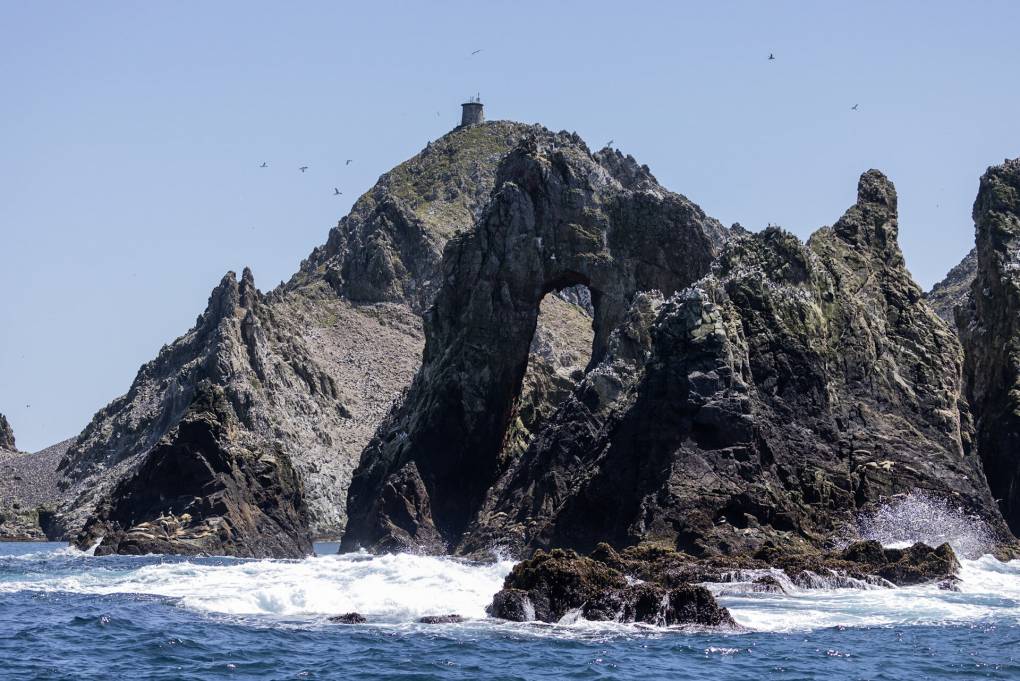
'It's Like You're on a Different Planet': In Search of Whales (and Other Creatures) at the Mysterious Farallon Islands
Revisiting Some of Our Favorite Hidden Gems: A Journey Through California's Best Kept Secrets
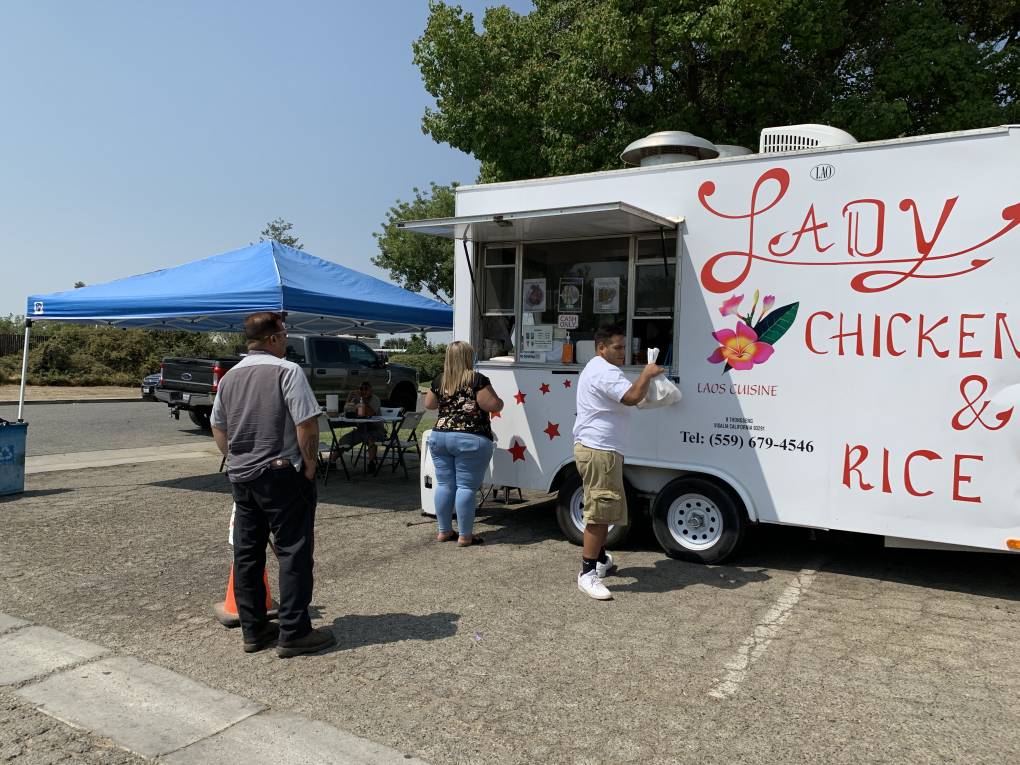
Coming Back for More at Lady Chicken & Rice
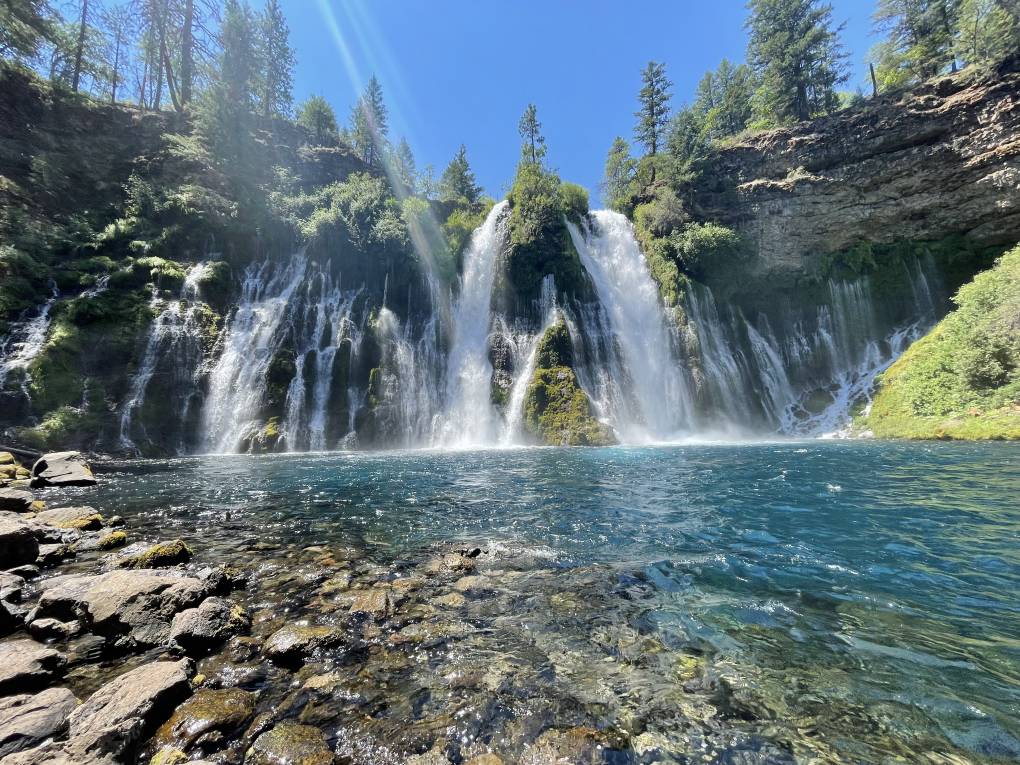
Chasing Waterfalls at California's Second-Oldest State Park
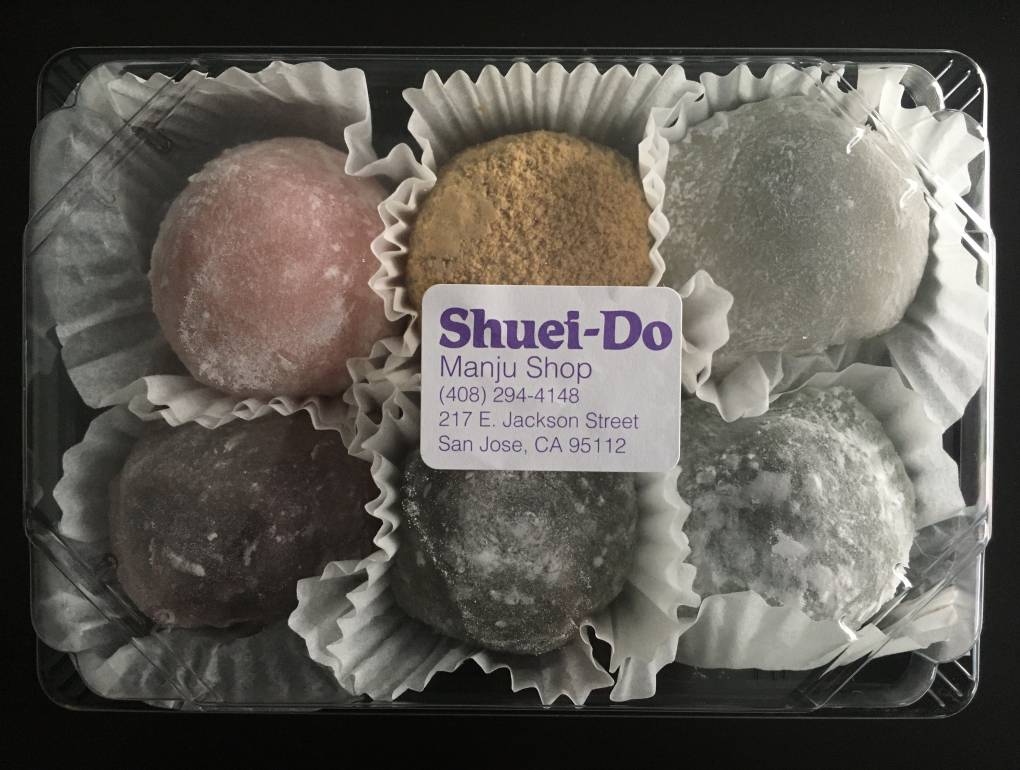
How Shuei-Do Manju Shop in San José Inspires a Cult Following With Its Soft, Pillowy Mochi
Hidden Gems: A Journey Through California's Best Kept Secrets
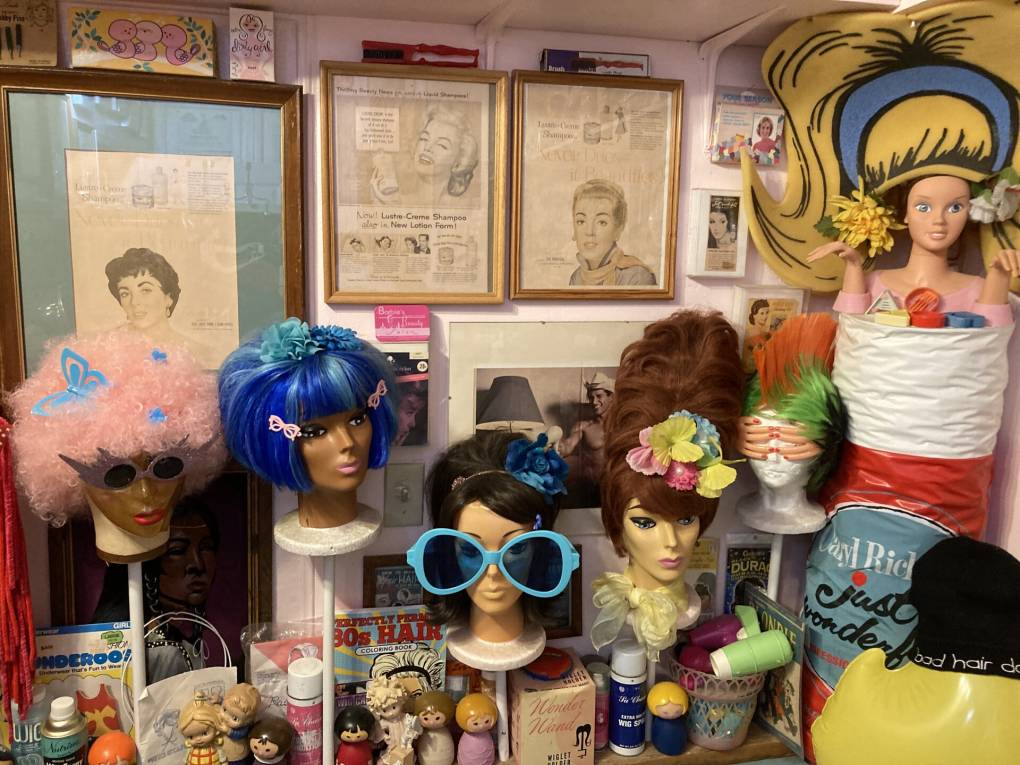
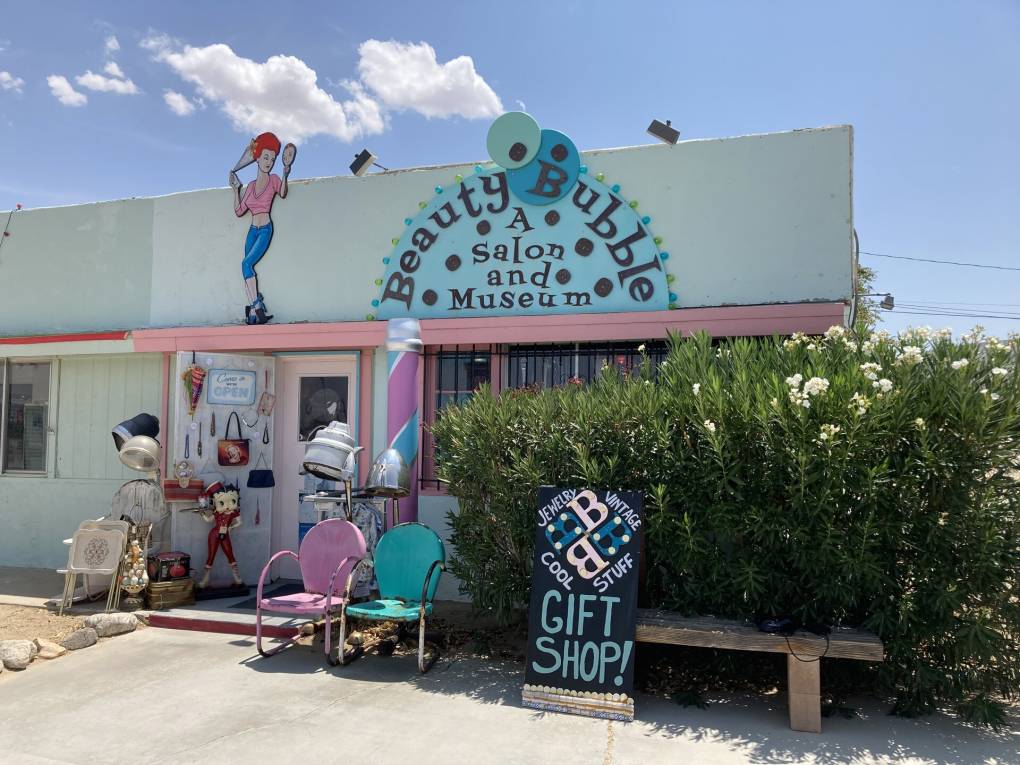
The Beauty Bubble Brings Vintage Style to the High Desert
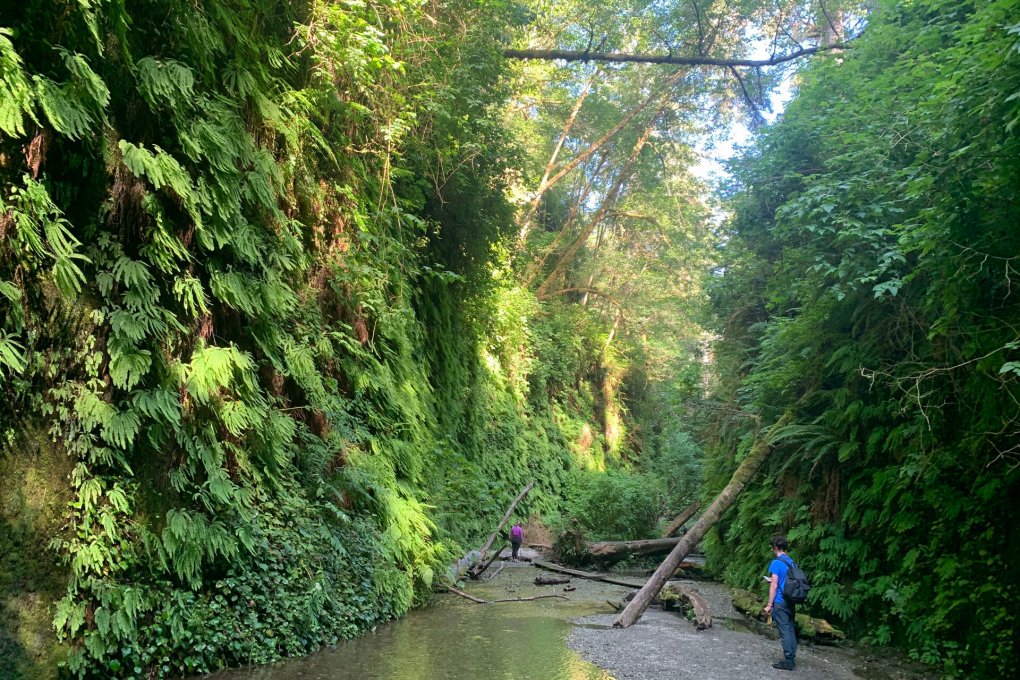
Fern Canyon: Humboldt's Soaring Emerald Palace
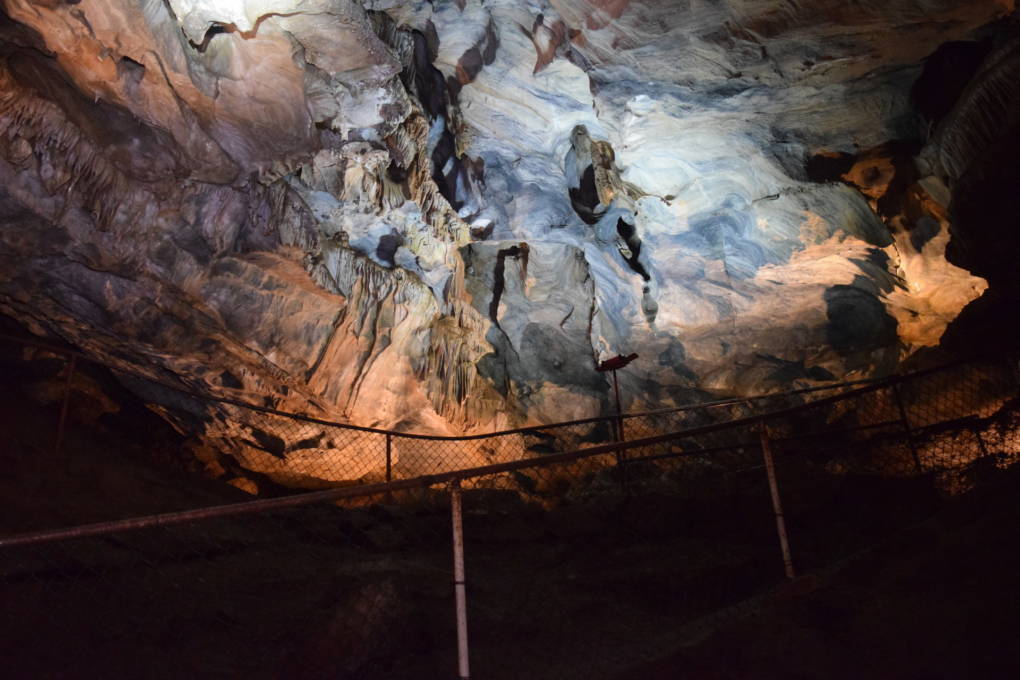
Underground Lakes and a Vanished Church Await in California Cavern
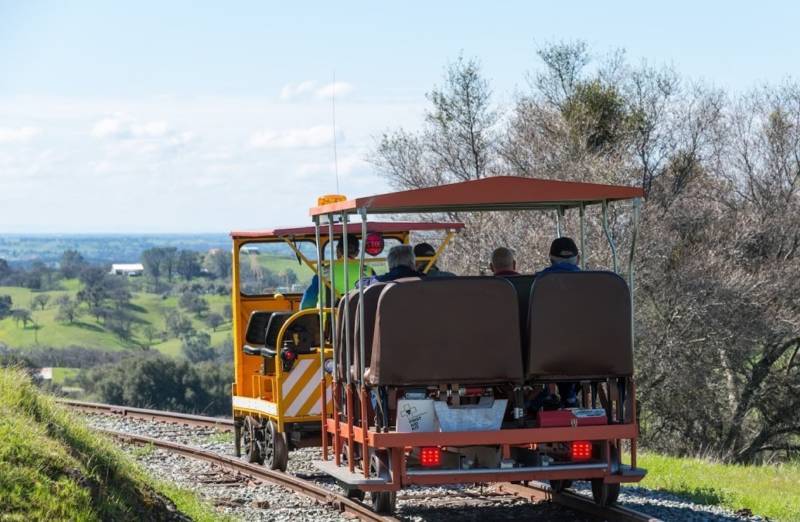
Take a Ride Through Gold Country Aboard The Amador Central Railroad
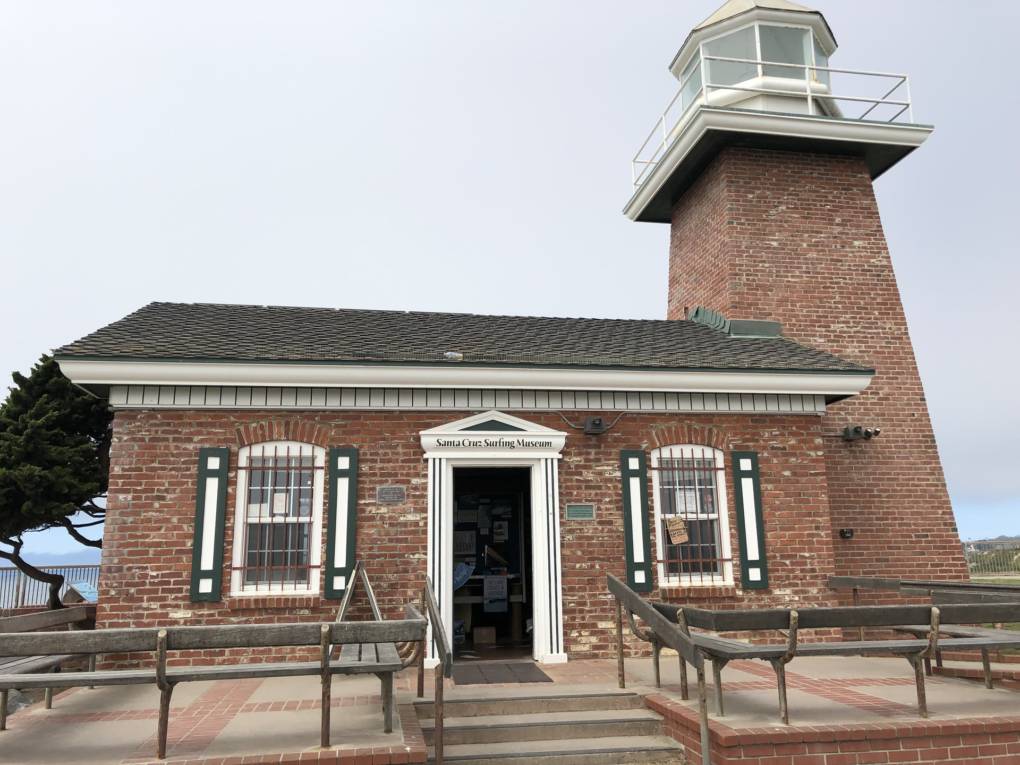
Santa Cruz Museum Shines Light on the History of Surfing
window.__IS_SSR__=true
window.__INITIAL_STATE__={
"attachmentsReducer": {
"audio_0": {
"type": "attachments",
"id": "audio_0",
"imgSizes": {
"kqedFullSize": {
"file": "https://ww2.kqed.org/news/wp-content/themes/KQED-unified/img/audio_bgs/background0.jpg"
}
}
},
"audio_1": {
"type": "attachments",
"id": "audio_1",
"imgSizes": {
"kqedFullSize": {
"file": "https://ww2.kqed.org/news/wp-content/themes/KQED-unified/img/audio_bgs/background1.jpg"
}
}
},
"audio_2": {
"type": "attachments",
"id": "audio_2",
"imgSizes": {
"kqedFullSize": {
"file": "https://ww2.kqed.org/news/wp-content/themes/KQED-unified/img/audio_bgs/background2.jpg"
}
}
},
"audio_3": {
"type": "attachments",
"id": "audio_3",
"imgSizes": {
"kqedFullSize": {
"file": "https://ww2.kqed.org/news/wp-content/themes/KQED-unified/img/audio_bgs/background3.jpg"
}
}
},
"audio_4": {
"type": "attachments",
"id": "audio_4",
"imgSizes": {
"kqedFullSize": {
"file": "https://ww2.kqed.org/news/wp-content/themes/KQED-unified/img/audio_bgs/background4.jpg"
}
}
},
"placeholder": {
"type": "attachments",
"id": "placeholder",
"imgSizes": {
"thumbnail": {
"file": "https://cdn.kqed.org/wp-content/uploads/2024/12/KQED-Default-Image-816638274-2000x1333-1-160x107.jpg",
"width": 160,
"height": 107,
"mimeType": "image/jpeg"
},
"medium": {
"file": "https://cdn.kqed.org/wp-content/uploads/2024/12/KQED-Default-Image-816638274-2000x1333-1-800x533.jpg",
"width": 800,
"height": 533,
"mimeType": "image/jpeg"
},
"medium_large": {
"file": "https://cdn.kqed.org/wp-content/uploads/2024/12/KQED-Default-Image-816638274-2000x1333-1-768x512.jpg",
"width": 768,
"height": 512,
"mimeType": "image/jpeg"
},
"large": {
"file": "https://cdn.kqed.org/wp-content/uploads/2024/12/KQED-Default-Image-816638274-2000x1333-1-1020x680.jpg",
"width": 1020,
"height": 680,
"mimeType": "image/jpeg"
},
"1536x1536": {
"file": "https://cdn.kqed.org/wp-content/uploads/2024/12/KQED-Default-Image-816638274-2000x1333-1-1536x1024.jpg",
"width": 1536,
"height": 1024,
"mimeType": "image/jpeg"
},
"fd-lrg": {
"file": "https://cdn.kqed.org/wp-content/uploads/2024/12/KQED-Default-Image-816638274-2000x1333-1-1536x1024.jpg",
"width": 1536,
"height": 1024,
"mimeType": "image/jpeg"
},
"fd-med": {
"file": "https://cdn.kqed.org/wp-content/uploads/2024/12/KQED-Default-Image-816638274-2000x1333-1-1020x680.jpg",
"width": 1020,
"height": 680,
"mimeType": "image/jpeg"
},
"fd-sm": {
"file": "https://cdn.kqed.org/wp-content/uploads/2024/12/KQED-Default-Image-816638274-2000x1333-1-800x533.jpg",
"width": 800,
"height": 533,
"mimeType": "image/jpeg"
},
"post-thumbnail": {
"file": "https://cdn.kqed.org/wp-content/uploads/2024/12/KQED-Default-Image-816638274-2000x1333-1-672x372.jpg",
"width": 672,
"height": 372,
"mimeType": "image/jpeg"
},
"twentyfourteen-full-width": {
"file": "https://cdn.kqed.org/wp-content/uploads/2024/12/KQED-Default-Image-816638274-2000x1333-1-1038x576.jpg",
"width": 1038,
"height": 576,
"mimeType": "image/jpeg"
},
"xxsmall": {
"file": "https://cdn.kqed.org/wp-content/uploads/2024/12/KQED-Default-Image-816638274-2000x1333-1-160x107.jpg",
"width": 160,
"height": 107,
"mimeType": "image/jpeg"
},
"xsmall": {
"file": "https://cdn.kqed.org/wp-content/uploads/2024/12/KQED-Default-Image-816638274-2000x1333-1-672x372.jpg",
"width": 672,
"height": 372,
"mimeType": "image/jpeg"
},
"small": {
"file": "https://cdn.kqed.org/wp-content/uploads/2024/12/KQED-Default-Image-816638274-2000x1333-1-672x372.jpg",
"width": 672,
"height": 372,
"mimeType": "image/jpeg"
},
"xlarge": {
"file": "https://cdn.kqed.org/wp-content/uploads/2024/12/KQED-Default-Image-816638274-2000x1333-1-1020x680.jpg",
"width": 1020,
"height": 680,
"mimeType": "image/jpeg"
},
"full-width": {
"file": "https://cdn.kqed.org/wp-content/uploads/2024/12/KQED-Default-Image-816638274-2000x1333-1-1920x1280.jpg",
"width": 1920,
"height": 1280,
"mimeType": "image/jpeg"
},
"guest-author-32": {
"file": "https://cdn.kqed.org/wp-content/uploads/2025/01/KQED-Default-Image-816638274-1333x1333-1-160x160.jpg",
"width": 32,
"height": 32,
"mimeType": "image/jpeg"
},
"guest-author-50": {
"file": "https://cdn.kqed.org/wp-content/uploads/2025/01/KQED-Default-Image-816638274-1333x1333-1-160x160.jpg",
"width": 50,
"height": 50,
"mimeType": "image/jpeg"
},
"guest-author-64": {
"file": "https://cdn.kqed.org/wp-content/uploads/2025/01/KQED-Default-Image-816638274-1333x1333-1-160x160.jpg",
"width": 64,
"height": 64,
"mimeType": "image/jpeg"
},
"guest-author-96": {
"file": "https://cdn.kqed.org/wp-content/uploads/2025/01/KQED-Default-Image-816638274-1333x1333-1-160x160.jpg",
"width": 96,
"height": 96,
"mimeType": "image/jpeg"
},
"guest-author-128": {
"file": "https://cdn.kqed.org/wp-content/uploads/2025/01/KQED-Default-Image-816638274-1333x1333-1-160x160.jpg",
"width": 128,
"height": 128,
"mimeType": "image/jpeg"
},
"detail": {
"file": "https://cdn.kqed.org/wp-content/uploads/2025/01/KQED-Default-Image-816638274-1333x1333-1-160x160.jpg",
"width": 160,
"height": 160,
"mimeType": "image/jpeg"
},
"kqedFullSize": {
"file": "https://cdn.kqed.org/wp-content/uploads/2024/12/KQED-Default-Image-816638274-2000x1333-1.jpg",
"width": 2000,
"height": 1333
}
}
},
"news_11916657": {
"type": "attachments",
"id": "news_11916657",
"meta": {
"index": "attachments_1716263798",
"site": "news",
"id": "11916657",
"found": true
},
"parent": 11916632,
"imgSizes": {
"twentyfourteen-full-width": {
"file": "https://ww2.kqed.org/app/uploads/sites/10/2022/06/RS56595_IMG_9558-qut-1038x576.jpg",
"width": 1038,
"mimeType": "image/jpeg",
"height": 576
},
"thumbnail": {
"file": "https://ww2.kqed.org/app/uploads/sites/10/2022/06/RS56595_IMG_9558-qut-160x107.jpg",
"width": 160,
"mimeType": "image/jpeg",
"height": 107
},
"post-thumbnail": {
"file": "https://ww2.kqed.org/app/uploads/sites/10/2022/06/RS56595_IMG_9558-qut-672x372.jpg",
"width": 672,
"mimeType": "image/jpeg",
"height": 372
},
"kqedFullSize": {
"file": "https://ww2.kqed.org/app/uploads/sites/10/2022/06/RS56595_IMG_9558-qut.jpg",
"width": 1920,
"height": 1281
},
"large": {
"file": "https://ww2.kqed.org/app/uploads/sites/10/2022/06/RS56595_IMG_9558-qut-1020x681.jpg",
"width": 1020,
"mimeType": "image/jpeg",
"height": 681
},
"1536x1536": {
"file": "https://ww2.kqed.org/app/uploads/sites/10/2022/06/RS56595_IMG_9558-qut-1536x1025.jpg",
"width": 1536,
"mimeType": "image/jpeg",
"height": 1025
},
"medium": {
"file": "https://ww2.kqed.org/app/uploads/sites/10/2022/06/RS56595_IMG_9558-qut-800x534.jpg",
"width": 800,
"mimeType": "image/jpeg",
"height": 534
}
},
"publishDate": 1654807543,
"modified": 1654908511,
"caption": "Southeast Farallon Island, about 27 miles west of San Francisco, is the largest and only inhabited island of the Farallones.",
"description": null,
"title": "RS56595_IMG_9558-qut",
"credit": "Rhys Watkin/Oceanic Society",
"status": "inherit",
"altTag": "A large, rocky island, with waves crashing around it.",
"isLoading": false,
"fetchFailed": false
},
"news_11886254": {
"type": "attachments",
"id": "news_11886254",
"meta": {
"index": "attachments_1716263798",
"site": "news",
"id": "11886254",
"found": true
},
"parent": 11882522,
"imgSizes": {
"twentyfourteen-full-width": {
"file": "https://ww2.kqed.org/app/uploads/sites/10/2021/08/RS51137_IMG_3259-qut-1038x576.jpg",
"width": 1038,
"mimeType": "image/jpeg",
"height": 576
},
"thumbnail": {
"file": "https://ww2.kqed.org/app/uploads/sites/10/2021/08/RS51137_IMG_3259-qut-160x120.jpg",
"width": 160,
"mimeType": "image/jpeg",
"height": 120
},
"post-thumbnail": {
"file": "https://ww2.kqed.org/app/uploads/sites/10/2021/08/RS51137_IMG_3259-qut-672x372.jpg",
"width": 672,
"mimeType": "image/jpeg",
"height": 372
},
"kqedFullSize": {
"file": "https://ww2.kqed.org/app/uploads/sites/10/2021/08/RS51137_IMG_3259-qut.jpg",
"width": 1920,
"height": 1440
},
"large": {
"file": "https://ww2.kqed.org/app/uploads/sites/10/2021/08/RS51137_IMG_3259-qut-1020x765.jpg",
"width": 1020,
"mimeType": "image/jpeg",
"height": 765
},
"1536x1536": {
"file": "https://ww2.kqed.org/app/uploads/sites/10/2021/08/RS51137_IMG_3259-qut-1536x1152.jpg",
"width": 1536,
"mimeType": "image/jpeg",
"height": 1152
},
"medium": {
"file": "https://ww2.kqed.org/app/uploads/sites/10/2021/08/RS51137_IMG_3259-qut-800x600.jpg",
"width": 800,
"mimeType": "image/jpeg",
"height": 600
}
},
"publishDate": 1629912180,
"modified": 1629912339,
"caption": "Beauty Bubble is covered with vintage ephemera from floor to ceiling. ",
"description": null,
"title": "RS51137_IMG_3259-qut",
"credit": "Peter Gilstrap",
"status": "inherit",
"altTag": null,
"isLoading": false,
"fetchFailed": false
},
"news_11889485": {
"type": "attachments",
"id": "news_11889485",
"meta": {
"index": "attachments_1716263798",
"site": "news",
"id": "11889485",
"found": true
},
"parent": 11889482,
"imgSizes": {
"twentyfourteen-full-width": {
"file": "https://ww2.kqed.org/app/uploads/sites/10/2021/09/IMG_1709-1038x576.jpg",
"width": 1038,
"mimeType": "image/jpeg",
"height": 576
},
"thumbnail": {
"file": "https://ww2.kqed.org/app/uploads/sites/10/2021/09/IMG_1709-160x120.jpg",
"width": 160,
"mimeType": "image/jpeg",
"height": 120
},
"post-thumbnail": {
"file": "https://ww2.kqed.org/app/uploads/sites/10/2021/09/IMG_1709-672x372.jpg",
"width": 672,
"mimeType": "image/jpeg",
"height": 372
},
"kqedFullSize": {
"file": "https://ww2.kqed.org/app/uploads/sites/10/2021/09/IMG_1709-scaled-e1632528966233.jpg",
"width": 1920,
"height": 1440
},
"2048x2048": {
"file": "https://ww2.kqed.org/app/uploads/sites/10/2021/09/IMG_1709-2048x1536.jpg",
"width": 2048,
"mimeType": "image/jpeg",
"height": 1536
},
"large": {
"file": "https://ww2.kqed.org/app/uploads/sites/10/2021/09/IMG_1709-1020x765.jpg",
"width": 1020,
"mimeType": "image/jpeg",
"height": 765
},
"1536x1536": {
"file": "https://ww2.kqed.org/app/uploads/sites/10/2021/09/IMG_1709-1536x1152.jpg",
"width": 1536,
"mimeType": "image/jpeg",
"height": 1152
},
"full-width": {
"file": "https://ww2.kqed.org/app/uploads/sites/10/2021/09/IMG_1709-1920x1440.jpg",
"width": 1920,
"mimeType": "image/jpeg",
"height": 1440
},
"medium": {
"file": "https://ww2.kqed.org/app/uploads/sites/10/2021/09/IMG_1709-800x600.jpg",
"width": 800,
"mimeType": "image/jpeg",
"height": 600
}
},
"publishDate": 1632342371,
"modified": 1632772460,
"caption": "In the heart of the Central Valley, Lady Chicken & Rice serves as many as 500 people Lao food every day. ",
"description": null,
"title": "IMG_1709",
"credit": "Alice Daniel/KVPR",
"status": "inherit",
"altTag": "People order food at a white food truck with red lettering and a red flower painted on the side.",
"isLoading": false,
"fetchFailed": false
},
"news_11885988": {
"type": "attachments",
"id": "news_11885988",
"meta": {
"index": "attachments_1716263798",
"site": "news",
"id": "11885988",
"found": true
},
"parent": 11885803,
"imgSizes": {
"twentyfourteen-full-width": {
"file": "https://ww2.kqed.org/app/uploads/sites/10/2021/08/IMG-5614-1038x576.jpg",
"width": 1038,
"mimeType": "image/jpeg",
"height": 576
},
"thumbnail": {
"file": "https://ww2.kqed.org/app/uploads/sites/10/2021/08/IMG-5614-160x120.jpg",
"width": 160,
"mimeType": "image/jpeg",
"height": 120
},
"post-thumbnail": {
"file": "https://ww2.kqed.org/app/uploads/sites/10/2021/08/IMG-5614-672x372.jpg",
"width": 672,
"mimeType": "image/jpeg",
"height": 372
},
"kqedFullSize": {
"file": "https://ww2.kqed.org/app/uploads/sites/10/2021/08/IMG-5614-scaled.jpg",
"width": 2560,
"height": 1920
},
"2048x2048": {
"file": "https://ww2.kqed.org/app/uploads/sites/10/2021/08/IMG-5614-2048x1536.jpg",
"width": 2048,
"mimeType": "image/jpeg",
"height": 1536
},
"large": {
"file": "https://ww2.kqed.org/app/uploads/sites/10/2021/08/IMG-5614-1020x765.jpg",
"width": 1020,
"mimeType": "image/jpeg",
"height": 765
},
"1536x1536": {
"file": "https://ww2.kqed.org/app/uploads/sites/10/2021/08/IMG-5614-1536x1152.jpg",
"width": 1536,
"mimeType": "image/jpeg",
"height": 1152
},
"full-width": {
"file": "https://ww2.kqed.org/app/uploads/sites/10/2021/08/IMG-5614-1920x1440.jpg",
"width": 1920,
"mimeType": "image/jpeg",
"height": 1440
},
"medium": {
"file": "https://ww2.kqed.org/app/uploads/sites/10/2021/08/IMG-5614-800x600.jpg",
"width": 800,
"mimeType": "image/jpeg",
"height": 600
}
},
"publishDate": 1629738629,
"modified": 1632770659,
"caption": "The 129-foot-high waterfalls at McArthur-Burney Falls Memorial State Park.",
"description": null,
"title": "IMG-5614",
"credit": "Héctor Alejandro Arzate",
"status": "inherit",
"altTag": "A lush waterfall, with dozens of separate cascades from a green, rocky cliff into a turquoise pool.",
"isLoading": false,
"fetchFailed": false
},
"news_11886964": {
"type": "attachments",
"id": "news_11886964",
"meta": {
"index": "attachments_1716263798",
"site": "news",
"id": "11886964",
"found": true
},
"parent": 11886880,
"imgSizes": {
"twentyfourteen-full-width": {
"file": "https://ww2.kqed.org/app/uploads/sites/10/2021/08/IMG_0781-1038x576.jpeg",
"width": 1038,
"mimeType": "image/jpeg",
"height": 576
},
"thumbnail": {
"file": "https://ww2.kqed.org/app/uploads/sites/10/2021/08/IMG_0781-160x121.jpeg",
"width": 160,
"mimeType": "image/jpeg",
"height": 121
},
"post-thumbnail": {
"file": "https://ww2.kqed.org/app/uploads/sites/10/2021/08/IMG_0781-672x372.jpeg",
"width": 672,
"mimeType": "image/jpeg",
"height": 372
},
"kqedFullSize": {
"file": "https://ww2.kqed.org/app/uploads/sites/10/2021/08/IMG_0781-scaled.jpeg",
"width": 2560,
"height": 1932
},
"2048x2048": {
"file": "https://ww2.kqed.org/app/uploads/sites/10/2021/08/IMG_0781-2048x1545.jpeg",
"width": 2048,
"mimeType": "image/jpeg",
"height": 1545
},
"large": {
"file": "https://ww2.kqed.org/app/uploads/sites/10/2021/08/IMG_0781-1020x770.jpeg",
"width": 1020,
"mimeType": "image/jpeg",
"height": 770
},
"1536x1536": {
"file": "https://ww2.kqed.org/app/uploads/sites/10/2021/08/IMG_0781-1536x1159.jpeg",
"width": 1536,
"mimeType": "image/jpeg",
"height": 1159
},
"full-width": {
"file": "https://ww2.kqed.org/app/uploads/sites/10/2021/08/IMG_0781-1920x1449.jpeg",
"width": 1920,
"mimeType": "image/jpeg",
"height": 1449
},
"medium": {
"file": "https://ww2.kqed.org/app/uploads/sites/10/2021/08/IMG_0781-800x604.jpeg",
"width": 800,
"mimeType": "image/jpeg",
"height": 604
}
},
"publishDate": 1630422876,
"modified": 1632530649,
"caption": "For close to 70 years, Shuei-Do Manju Shop has been delighting customers with its \"country-style\" mochi, so soft, so fresh, that eating one is like eating a baby cheek — but in a good way.",
"description": "For close to 70 years, Shuei-do Manju Shop has been delighting customers with its \"country-style\" mochi, so soft, so fresh, eating one is like eating a baby cheek, but in a good way.",
"title": "IMG_0781",
"credit": "Rachael Myrow/KQED",
"status": "inherit",
"altTag": "A box of six colorful mochi, with a plastic top and the shop's label on it.",
"isLoading": false,
"fetchFailed": false
},
"news_11886186": {
"type": "attachments",
"id": "news_11886186",
"meta": {
"index": "attachments_1716263798",
"site": "news",
"id": "11886186",
"found": true
},
"parent": 11882522,
"imgSizes": {
"twentyfourteen-full-width": {
"file": "https://ww2.kqed.org/app/uploads/sites/10/2021/07/RS50444_IMG_3317-qut-1038x576.jpg",
"width": 1038,
"mimeType": "image/jpeg",
"height": 576
},
"thumbnail": {
"file": "https://ww2.kqed.org/app/uploads/sites/10/2021/07/RS50444_IMG_3317-qut-160x120.jpg",
"width": 160,
"mimeType": "image/jpeg",
"height": 120
},
"post-thumbnail": {
"file": "https://ww2.kqed.org/app/uploads/sites/10/2021/07/RS50444_IMG_3317-qut-672x372.jpg",
"width": 672,
"mimeType": "image/jpeg",
"height": 372
},
"kqedFullSize": {
"file": "https://ww2.kqed.org/app/uploads/sites/10/2021/07/RS50444_IMG_3317-qut.jpg",
"width": 1920,
"height": 1440
},
"large": {
"file": "https://ww2.kqed.org/app/uploads/sites/10/2021/07/RS50444_IMG_3317-qut-1020x765.jpg",
"width": 1020,
"mimeType": "image/jpeg",
"height": 765
},
"1536x1536": {
"file": "https://ww2.kqed.org/app/uploads/sites/10/2021/07/RS50444_IMG_3317-qut-1536x1152.jpg",
"width": 1536,
"mimeType": "image/jpeg",
"height": 1152
},
"medium": {
"file": "https://ww2.kqed.org/app/uploads/sites/10/2021/07/RS50444_IMG_3317-qut-800x600.jpg",
"width": 800,
"mimeType": "image/jpeg",
"height": 600
}
},
"publishDate": 1629842024,
"modified": 1632521838,
"caption": "The Beauty Bubble Salon and Museum on Highway 62 in Joshua Tree.",
"description": null,
"title": "RS50444_IMG_3317-qut",
"credit": "Peter Gilstrap",
"status": "inherit",
"altTag": "A blue-and-pink storefront sits in a desert with a blue sky above and green bushes out front.",
"isLoading": false,
"fetchFailed": false
},
"news_11889735": {
"type": "attachments",
"id": "news_11889735",
"meta": {
"index": "attachments_1716263798",
"site": "news",
"id": "11889735",
"found": true
},
"parent": 11886264,
"imgSizes": {
"twentyfourteen-full-width": {
"file": "https://ww2.kqed.org/app/uploads/sites/10/2021/09/RS51194_IMG_5814-qut2-1038x576.png",
"width": 1038,
"mimeType": "image/png",
"height": 576
},
"thumbnail": {
"file": "https://ww2.kqed.org/app/uploads/sites/10/2021/09/RS51194_IMG_5814-qut2-160x107.png",
"width": 160,
"mimeType": "image/png",
"height": 107
},
"post-thumbnail": {
"file": "https://ww2.kqed.org/app/uploads/sites/10/2021/09/RS51194_IMG_5814-qut2-672x372.png",
"width": 672,
"mimeType": "image/png",
"height": 372
},
"kqedFullSize": {
"file": "https://ww2.kqed.org/app/uploads/sites/10/2021/09/RS51194_IMG_5814-qut2.png",
"width": 1920,
"height": 1280
},
"large": {
"file": "https://ww2.kqed.org/app/uploads/sites/10/2021/09/RS51194_IMG_5814-qut2-1020x680.png",
"width": 1020,
"mimeType": "image/png",
"height": 680
},
"1536x1536": {
"file": "https://ww2.kqed.org/app/uploads/sites/10/2021/09/RS51194_IMG_5814-qut2-1536x1024.png",
"width": 1536,
"mimeType": "image/png",
"height": 1024
},
"medium": {
"file": "https://ww2.kqed.org/app/uploads/sites/10/2021/09/RS51194_IMG_5814-qut2-800x533.png",
"width": 800,
"mimeType": "image/png",
"height": 533
}
},
"publishDate": 1632429997,
"modified": 1632440625,
"caption": "If you can get past the aggressive elk, Fern Canyon is an emerald gem in Humboldt County.",
"description": null,
"title": "fern-canyon-jurassic-park",
"credit": "Sasha Khokha/KQED",
"status": "inherit",
"altTag": null,
"isLoading": false,
"fetchFailed": false
},
"news_11765328": {
"type": "attachments",
"id": "news_11765328",
"meta": {
"index": "attachments_1716263798",
"site": "news",
"id": "11765328",
"found": true
},
"parent": 11763985,
"imgSizes": {
"apple_news_ca_landscape_5_5": {
"file": "https://ww2.kqed.org/app/uploads/sites/10/2019/08/RS38383_DSC_1294-qut-1044x783.jpg",
"width": 1044,
"mimeType": "image/jpeg",
"height": 783
},
"apple_news_ca_square_4_0": {
"file": "https://ww2.kqed.org/app/uploads/sites/10/2019/08/RS38383_DSC_1294-qut-470x470.jpg",
"width": 470,
"mimeType": "image/jpeg",
"height": 470
},
"twentyfourteen-full-width": {
"file": "https://ww2.kqed.org/app/uploads/sites/10/2019/08/RS38383_DSC_1294-qut-1038x576.jpg",
"width": 1038,
"mimeType": "image/jpeg",
"height": 576
},
"thumbnail": {
"file": "https://ww2.kqed.org/app/uploads/sites/10/2019/08/RS38383_DSC_1294-qut-160x107.jpg",
"width": 160,
"mimeType": "image/jpeg",
"height": 107
},
"post-thumbnail": {
"file": "https://ww2.kqed.org/app/uploads/sites/10/2019/08/RS38383_DSC_1294-qut-672x372.jpg",
"width": 672,
"mimeType": "image/jpeg",
"height": 372
},
"kqedFullSize": {
"file": "https://ww2.kqed.org/app/uploads/sites/10/2019/08/RS38383_DSC_1294-qut.jpg",
"width": 1920,
"height": 1280
},
"apple_news_ca_landscape_4_7": {
"file": "https://ww2.kqed.org/app/uploads/sites/10/2019/08/RS38383_DSC_1294-qut-632x474.jpg",
"width": 632,
"mimeType": "image/jpeg",
"height": 474
},
"large": {
"file": "https://ww2.kqed.org/app/uploads/sites/10/2019/08/RS38383_DSC_1294-qut-1020x680.jpg",
"width": 1020,
"mimeType": "image/jpeg",
"height": 680
},
"complete_open_graph": {
"file": "https://ww2.kqed.org/app/uploads/sites/10/2019/08/RS38383_DSC_1294-qut-1200x800.jpg",
"width": 1200,
"mimeType": "image/jpeg",
"height": 800
},
"apple_news_ca_landscape_4_0": {
"file": "https://ww2.kqed.org/app/uploads/sites/10/2019/08/RS38383_DSC_1294-qut-536x402.jpg",
"width": 536,
"mimeType": "image/jpeg",
"height": 402
},
"apple_news_ca_portrait_12_9": {
"file": "https://ww2.kqed.org/app/uploads/sites/10/2019/08/RS38383_DSC_1294-qut-1122x1280.jpg",
"width": 1122,
"mimeType": "image/jpeg",
"height": 1280
},
"medium": {
"file": "https://ww2.kqed.org/app/uploads/sites/10/2019/08/RS38383_DSC_1294-qut-800x533.jpg",
"width": 800,
"mimeType": "image/jpeg",
"height": 533
},
"apple_news_ca_portrait_4_0": {
"file": "https://ww2.kqed.org/app/uploads/sites/10/2019/08/RS38383_DSC_1294-qut-354x472.jpg",
"width": 354,
"mimeType": "image/jpeg",
"height": 472
},
"apple_news_ca_portrait_9_7": {
"file": "https://ww2.kqed.org/app/uploads/sites/10/2019/08/RS38383_DSC_1294-qut-840x1120.jpg",
"width": 840,
"mimeType": "image/jpeg",
"height": 1120
},
"apple_news_ca_landscape_12_9": {
"file": "https://ww2.kqed.org/app/uploads/sites/10/2019/08/RS38383_DSC_1294-qut-1832x1280.jpg",
"width": 1832,
"mimeType": "image/jpeg",
"height": 1280
},
"apple_news_ca_square_9_7": {
"file": "https://ww2.kqed.org/app/uploads/sites/10/2019/08/RS38383_DSC_1294-qut-1104x1104.jpg",
"width": 1104,
"mimeType": "image/jpeg",
"height": 1104
},
"apple_news_ca_portrait_4_7": {
"file": "https://ww2.kqed.org/app/uploads/sites/10/2019/08/RS38383_DSC_1294-qut-414x552.jpg",
"width": 414,
"mimeType": "image/jpeg",
"height": 552
},
"apple_news_ca_square_12_9": {
"file": "https://ww2.kqed.org/app/uploads/sites/10/2019/08/RS38383_DSC_1294-qut-1472x1280.jpg",
"width": 1472,
"mimeType": "image/jpeg",
"height": 1280
},
"apple_news_ca_portrait_5_5": {
"file": "https://ww2.kqed.org/app/uploads/sites/10/2019/08/RS38383_DSC_1294-qut-687x916.jpg",
"width": 687,
"mimeType": "image/jpeg",
"height": 916
},
"full-width": {
"file": "https://ww2.kqed.org/app/uploads/sites/10/2019/08/RS38383_DSC_1294-qut-1920x1280.jpg",
"width": 1920,
"mimeType": "image/jpeg",
"height": 1280
},
"apple_news_ca_square_4_7": {
"file": "https://ww2.kqed.org/app/uploads/sites/10/2019/08/RS38383_DSC_1294-qut-550x550.jpg",
"width": 550,
"mimeType": "image/jpeg",
"height": 550
},
"apple_news_ca_landscape_9_7": {
"file": "https://ww2.kqed.org/app/uploads/sites/10/2019/08/RS38383_DSC_1294-qut-1376x1032.jpg",
"width": 1376,
"mimeType": "image/jpeg",
"height": 1032
},
"apple_news_ca_square_5_5": {
"file": "https://ww2.kqed.org/app/uploads/sites/10/2019/08/RS38383_DSC_1294-qut-912x912.jpg",
"width": 912,
"mimeType": "image/jpeg",
"height": 912
}
},
"publishDate": 1564786341,
"modified": 1564786412,
"caption": "The \"Cathedral Room\" in California Cavern",
"description": null,
"title": "RS38383_DSC_1294-qut",
"credit": "Carly Severn / KQED",
"status": "inherit",
"isLoading": false,
"fetchFailed": false
},
"news_11766666": {
"type": "attachments",
"id": "news_11766666",
"meta": {
"index": "attachments_1716263798",
"site": "news",
"id": "11766666",
"found": true
},
"parent": 11764589,
"imgSizes": {
"apple_news_ca_square_4_0": {
"file": "https://ww2.kqed.org/app/uploads/sites/10/2019/08/railroad-470x470.jpg",
"width": 470,
"mimeType": "image/jpeg",
"height": 470
},
"thumbnail": {
"file": "https://ww2.kqed.org/app/uploads/sites/10/2019/08/railroad-160x104.jpg",
"width": 160,
"mimeType": "image/jpeg",
"height": 104
},
"post-thumbnail": {
"file": "https://ww2.kqed.org/app/uploads/sites/10/2019/08/railroad-672x372.jpg",
"width": 672,
"mimeType": "image/jpeg",
"height": 372
},
"kqedFullSize": {
"file": "https://ww2.kqed.org/app/uploads/sites/10/2019/08/railroad.jpg",
"width": 800,
"height": 522
},
"apple_news_ca_landscape_4_7": {
"file": "https://ww2.kqed.org/app/uploads/sites/10/2019/08/railroad-632x474.jpg",
"width": 632,
"mimeType": "image/jpeg",
"height": 474
},
"apple_news_ca_portrait_4_7": {
"file": "https://ww2.kqed.org/app/uploads/sites/10/2019/08/railroad-414x522.jpg",
"width": 414,
"mimeType": "image/jpeg",
"height": 522
},
"apple_news_ca_portrait_5_5": {
"file": "https://ww2.kqed.org/app/uploads/sites/10/2019/08/railroad-687x522.jpg",
"width": 687,
"mimeType": "image/jpeg",
"height": 522
},
"apple_news_ca_square_4_7": {
"file": "https://ww2.kqed.org/app/uploads/sites/10/2019/08/railroad-550x522.jpg",
"width": 550,
"mimeType": "image/jpeg",
"height": 522
},
"apple_news_ca_landscape_4_0": {
"file": "https://ww2.kqed.org/app/uploads/sites/10/2019/08/railroad-536x402.jpg",
"width": 536,
"mimeType": "image/jpeg",
"height": 402
},
"medium": {
"file": "https://ww2.kqed.org/app/uploads/sites/10/2019/08/railroad-800x522.jpg",
"width": 800,
"mimeType": "image/jpeg",
"height": 522
},
"apple_news_ca_portrait_4_0": {
"file": "https://ww2.kqed.org/app/uploads/sites/10/2019/08/railroad-354x472.jpg",
"width": 354,
"mimeType": "image/jpeg",
"height": 472
}
},
"publishDate": 1565375868,
"modified": 1565375885,
"caption": "\"This actually is one of the steepest rails incline railroads in America,\" says Mark Demler of the Amador Central Railroad. ",
"description": "\"This actually is one of the steepest rails incline railroads in America,\" says Mark Demler of the Amador Central Railroad. ",
"title": "railroad",
"credit": "Courtesy of Mike Cozad",
"status": "inherit",
"isLoading": false,
"fetchFailed": false
},
"news_11765708": {
"type": "attachments",
"id": "news_11765708",
"meta": {
"index": "attachments_1716263798",
"site": "news",
"id": "11765708",
"found": true
},
"parent": 11765699,
"imgSizes": {
"apple_news_ca_landscape_5_5": {
"file": "https://ww2.kqed.org/app/uploads/sites/10/2019/08/RS38114_IMG_0377-qut-1044x783.jpg",
"width": 1044,
"mimeType": "image/jpeg",
"height": 783
},
"apple_news_ca_square_4_0": {
"file": "https://ww2.kqed.org/app/uploads/sites/10/2019/08/RS38114_IMG_0377-qut-470x470.jpg",
"width": 470,
"mimeType": "image/jpeg",
"height": 470
},
"twentyfourteen-full-width": {
"file": "https://ww2.kqed.org/app/uploads/sites/10/2019/08/RS38114_IMG_0377-qut-1038x576.jpg",
"width": 1038,
"mimeType": "image/jpeg",
"height": 576
},
"thumbnail": {
"file": "https://ww2.kqed.org/app/uploads/sites/10/2019/08/RS38114_IMG_0377-qut-160x120.jpg",
"width": 160,
"mimeType": "image/jpeg",
"height": 120
},
"post-thumbnail": {
"file": "https://ww2.kqed.org/app/uploads/sites/10/2019/08/RS38114_IMG_0377-qut-672x372.jpg",
"width": 672,
"mimeType": "image/jpeg",
"height": 372
},
"kqedFullSize": {
"file": "https://ww2.kqed.org/app/uploads/sites/10/2019/08/RS38114_IMG_0377-qut.jpg",
"width": 1920,
"height": 1440
},
"apple_news_ca_landscape_4_7": {
"file": "https://ww2.kqed.org/app/uploads/sites/10/2019/08/RS38114_IMG_0377-qut-632x474.jpg",
"width": 632,
"mimeType": "image/jpeg",
"height": 474
},
"large": {
"file": "https://ww2.kqed.org/app/uploads/sites/10/2019/08/RS38114_IMG_0377-qut-1020x765.jpg",
"width": 1020,
"mimeType": "image/jpeg",
"height": 765
},
"complete_open_graph": {
"file": "https://ww2.kqed.org/app/uploads/sites/10/2019/08/RS38114_IMG_0377-qut-1200x900.jpg",
"width": 1200,
"mimeType": "image/jpeg",
"height": 900
},
"apple_news_ca_landscape_4_0": {
"file": "https://ww2.kqed.org/app/uploads/sites/10/2019/08/RS38114_IMG_0377-qut-536x402.jpg",
"width": 536,
"mimeType": "image/jpeg",
"height": 402
},
"apple_news_ca_portrait_12_9": {
"file": "https://ww2.kqed.org/app/uploads/sites/10/2019/08/RS38114_IMG_0377-qut-1122x1440.jpg",
"width": 1122,
"mimeType": "image/jpeg",
"height": 1440
},
"medium": {
"file": "https://ww2.kqed.org/app/uploads/sites/10/2019/08/RS38114_IMG_0377-qut-800x600.jpg",
"width": 800,
"mimeType": "image/jpeg",
"height": 600
},
"apple_news_ca_portrait_4_0": {
"file": "https://ww2.kqed.org/app/uploads/sites/10/2019/08/RS38114_IMG_0377-qut-354x472.jpg",
"width": 354,
"mimeType": "image/jpeg",
"height": 472
},
"apple_news_ca_portrait_9_7": {
"file": "https://ww2.kqed.org/app/uploads/sites/10/2019/08/RS38114_IMG_0377-qut-840x1120.jpg",
"width": 840,
"mimeType": "image/jpeg",
"height": 1120
},
"apple_news_ca_landscape_12_9": {
"file": "https://ww2.kqed.org/app/uploads/sites/10/2019/08/RS38114_IMG_0377-qut-1832x1374.jpg",
"width": 1832,
"mimeType": "image/jpeg",
"height": 1374
},
"apple_news_ca_square_9_7": {
"file": "https://ww2.kqed.org/app/uploads/sites/10/2019/08/RS38114_IMG_0377-qut-1104x1104.jpg",
"width": 1104,
"mimeType": "image/jpeg",
"height": 1104
},
"apple_news_ca_portrait_4_7": {
"file": "https://ww2.kqed.org/app/uploads/sites/10/2019/08/RS38114_IMG_0377-qut-414x552.jpg",
"width": 414,
"mimeType": "image/jpeg",
"height": 552
},
"apple_news_ca_square_12_9": {
"file": "https://ww2.kqed.org/app/uploads/sites/10/2019/08/RS38114_IMG_0377-qut-1472x1440.jpg",
"width": 1472,
"mimeType": "image/jpeg",
"height": 1440
},
"apple_news_ca_portrait_5_5": {
"file": "https://ww2.kqed.org/app/uploads/sites/10/2019/08/RS38114_IMG_0377-qut-687x916.jpg",
"width": 687,
"mimeType": "image/jpeg",
"height": 916
},
"full-width": {
"file": "https://ww2.kqed.org/app/uploads/sites/10/2019/08/RS38114_IMG_0377-qut-1920x1440.jpg",
"width": 1920,
"mimeType": "image/jpeg",
"height": 1440
},
"apple_news_ca_square_4_7": {
"file": "https://ww2.kqed.org/app/uploads/sites/10/2019/08/RS38114_IMG_0377-qut-550x550.jpg",
"width": 550,
"mimeType": "image/jpeg",
"height": 550
},
"apple_news_ca_landscape_9_7": {
"file": "https://ww2.kqed.org/app/uploads/sites/10/2019/08/RS38114_IMG_0377-qut-1376x1032.jpg",
"width": 1376,
"mimeType": "image/jpeg",
"height": 1032
},
"apple_news_ca_square_5_5": {
"file": "https://ww2.kqed.org/app/uploads/sites/10/2019/08/RS38114_IMG_0377-qut-912x912.jpg",
"width": 912,
"mimeType": "image/jpeg",
"height": 912
}
},
"publishDate": 1565044557,
"modified": 1565389858,
"caption": "The Santa Cruz Surfing Museum, established in 1986, sits atop a cliff overlooking Steamer Lane beach.",
"description": null,
"title": "RS38114_IMG_0377-qut",
"credit": "Bianca Taylor/KQED",
"status": "inherit",
"isLoading": false,
"fetchFailed": false
},
"news_11765109": {
"type": "attachments",
"id": "news_11765109",
"meta": {
"index": "attachments_1716263798",
"site": "news",
"id": "11765109",
"found": true
},
"parent": 11765107,
"imgSizes": {
"apple_news_ca_landscape_5_5": {
"file": "https://ww2.kqed.org/app/uploads/sites/10/2019/08/Magic-Castle-Day-1044x783.jpg",
"width": 1044,
"mimeType": "image/jpeg",
"height": 783
},
"apple_news_ca_square_4_0": {
"file": "https://ww2.kqed.org/app/uploads/sites/10/2019/08/Magic-Castle-Day-470x470.jpg",
"width": 470,
"mimeType": "image/jpeg",
"height": 470
},
"twentyfourteen-full-width": {
"file": "https://ww2.kqed.org/app/uploads/sites/10/2019/08/Magic-Castle-Day-1038x576.jpg",
"width": 1038,
"mimeType": "image/jpeg",
"height": 576
},
"thumbnail": {
"file": "https://ww2.kqed.org/app/uploads/sites/10/2019/08/Magic-Castle-Day-160x107.jpg",
"width": 160,
"mimeType": "image/jpeg",
"height": 107
},
"post-thumbnail": {
"file": "https://ww2.kqed.org/app/uploads/sites/10/2019/08/Magic-Castle-Day-672x372.jpg",
"width": 672,
"mimeType": "image/jpeg",
"height": 372
},
"kqedFullSize": {
"file": "https://ww2.kqed.org/app/uploads/sites/10/2019/08/Magic-Castle-Day-e1565376098262.jpg",
"width": 1920,
"height": 1282
},
"apple_news_ca_landscape_4_7": {
"file": "https://ww2.kqed.org/app/uploads/sites/10/2019/08/Magic-Castle-Day-632x474.jpg",
"width": 632,
"mimeType": "image/jpeg",
"height": 474
},
"large": {
"file": "https://ww2.kqed.org/app/uploads/sites/10/2019/08/Magic-Castle-Day-1020x681.jpg",
"width": 1020,
"mimeType": "image/jpeg",
"height": 681
},
"complete_open_graph": {
"file": "https://ww2.kqed.org/app/uploads/sites/10/2019/08/Magic-Castle-Day-1200x801.jpg",
"width": 1200,
"mimeType": "image/jpeg",
"height": 801
},
"apple_news_ca_landscape_4_0": {
"file": "https://ww2.kqed.org/app/uploads/sites/10/2019/08/Magic-Castle-Day-536x402.jpg",
"width": 536,
"mimeType": "image/jpeg",
"height": 402
},
"apple_news_ca_portrait_12_9": {
"file": "https://ww2.kqed.org/app/uploads/sites/10/2019/08/Magic-Castle-Day-1122x1496.jpg",
"width": 1122,
"mimeType": "image/jpeg",
"height": 1496
},
"medium": {
"file": "https://ww2.kqed.org/app/uploads/sites/10/2019/08/Magic-Castle-Day-800x534.jpg",
"width": 800,
"mimeType": "image/jpeg",
"height": 534
},
"apple_news_ca_portrait_4_0": {
"file": "https://ww2.kqed.org/app/uploads/sites/10/2019/08/Magic-Castle-Day-354x472.jpg",
"width": 354,
"mimeType": "image/jpeg",
"height": 472
},
"apple_news_ca_portrait_9_7": {
"file": "https://ww2.kqed.org/app/uploads/sites/10/2019/08/Magic-Castle-Day-840x1120.jpg",
"width": 840,
"mimeType": "image/jpeg",
"height": 1120
},
"apple_news_ca_landscape_12_9": {
"file": "https://ww2.kqed.org/app/uploads/sites/10/2019/08/Magic-Castle-Day-1832x1374.jpg",
"width": 1832,
"mimeType": "image/jpeg",
"height": 1374
},
"apple_news_ca_square_9_7": {
"file": "https://ww2.kqed.org/app/uploads/sites/10/2019/08/Magic-Castle-Day-1104x1104.jpg",
"width": 1104,
"mimeType": "image/jpeg",
"height": 1104
},
"apple_news_ca_portrait_4_7": {
"file": "https://ww2.kqed.org/app/uploads/sites/10/2019/08/Magic-Castle-Day-414x552.jpg",
"width": 414,
"mimeType": "image/jpeg",
"height": 552
},
"apple_news_ca_square_12_9": {
"file": "https://ww2.kqed.org/app/uploads/sites/10/2019/08/Magic-Castle-Day-1472x1472.jpg",
"width": 1472,
"mimeType": "image/jpeg",
"height": 1472
},
"apple_news_ca_portrait_5_5": {
"file": "https://ww2.kqed.org/app/uploads/sites/10/2019/08/Magic-Castle-Day-687x916.jpg",
"width": 687,
"mimeType": "image/jpeg",
"height": 916
},
"full-width": {
"file": "https://ww2.kqed.org/app/uploads/sites/10/2019/08/Magic-Castle-Day-1920x1282.jpg",
"width": 1920,
"mimeType": "image/jpeg",
"height": 1282
},
"apple_news_ca_square_4_7": {
"file": "https://ww2.kqed.org/app/uploads/sites/10/2019/08/Magic-Castle-Day-550x550.jpg",
"width": 550,
"mimeType": "image/jpeg",
"height": 550
},
"apple_news_ca_landscape_9_7": {
"file": "https://ww2.kqed.org/app/uploads/sites/10/2019/08/Magic-Castle-Day-1376x1032.jpg",
"width": 1376,
"mimeType": "image/jpeg",
"height": 1032
},
"apple_news_ca_square_5_5": {
"file": "https://ww2.kqed.org/app/uploads/sites/10/2019/08/Magic-Castle-Day-912x912.jpg",
"width": 912,
"mimeType": "image/jpeg",
"height": 912
}
},
"publishDate": 1564707546,
"modified": 1564707627,
"caption": "An exterior of the Magic Castle, a club for magicians.",
"description": "An exterior of the Magic Castle, a club for magicians.",
"title": "An exterior of the Magic Castle, a club for magicians.",
"credit": "Courtesy of the Magic Castle",
"status": "inherit",
"isLoading": false,
"fetchFailed": false
}
},
"audioPlayerReducer": {
"postId": "stream_live",
"isPaused": true,
"isPlaying": false,
"pfsActive": false,
"pledgeModalIsOpen": true,
"playerDrawerIsOpen": false,
"liveAudioPlayStartedAt": 0,
"liveAudioPlayContext": ""
},
"authorsReducer": {
"aliceldaniel": {
"type": "authors",
"id": "208",
"meta": {
"index": "authors_1716337520",
"id": "208",
"found": true
},
"name": "Alice Daniel",
"firstName": "Alice",
"lastName": "Daniel",
"slug": "aliceldaniel",
"email": "adaniel@kqed.org",
"display_author_email": false,
"staff_mastheads": [],
"title": null,
"bio": "Alice Daniel loves the listening aspect of reporting because she gets to briefly walk in other people’s shoes. She has rappelled down into caves and gone up in helicopters for KQED’s The California Report but her favorite place to pursue a story is the High Sierra or any family-run bakery, of course. Alice has a masters in journalism from Columbia University and teaches at Fresno State. She is a California Healthline Regional Correspondent and a frequent contributor to Success magazine. In her free time, she skis and hikes, throws pottery, practices piano and looks out the window.",
"avatar": "https://secure.gravatar.com/avatar/e611aa06593b114a67f9f123a8e875ad?s=600&d=blank&r=g",
"twitter": null,
"facebook": null,
"instagram": null,
"linkedin": null,
"sites": [
{
"site": "news",
"roles": [
"author"
]
},
{
"site": "stateofhealth",
"roles": [
"author"
]
}
],
"headData": {
"title": "Alice Daniel | KQED",
"description": null,
"ogImgSrc": "https://secure.gravatar.com/avatar/e611aa06593b114a67f9f123a8e875ad?s=600&d=blank&r=g",
"twImgSrc": "https://secure.gravatar.com/avatar/e611aa06593b114a67f9f123a8e875ad?s=600&d=blank&r=g"
},
"isLoading": false,
"link": "/author/aliceldaniel"
},
"kqed": {
"type": "authors",
"id": "236",
"meta": {
"index": "authors_1716337520",
"id": "236",
"found": true
},
"name": "KQED News Staff",
"firstName": "KQED News Staff",
"lastName": null,
"slug": "kqed",
"email": "faq@kqed.org",
"display_author_email": false,
"staff_mastheads": [],
"title": null,
"bio": null,
"avatar": "https://secure.gravatar.com/avatar/ef0e801a68c4c54afa9180db14084167?s=600&d=blank&r=g",
"twitter": null,
"facebook": null,
"instagram": null,
"linkedin": null,
"sites": [
{
"site": "arts",
"roles": [
"contributor"
]
},
{
"site": "news",
"roles": [
"editor"
]
},
{
"site": "futureofyou",
"roles": [
"author"
]
}
],
"headData": {
"title": "KQED News Staff | KQED",
"description": null,
"ogImgSrc": "https://secure.gravatar.com/avatar/ef0e801a68c4c54afa9180db14084167?s=600&d=blank&r=g",
"twImgSrc": "https://secure.gravatar.com/avatar/ef0e801a68c4c54afa9180db14084167?s=600&d=blank&r=g"
},
"isLoading": false,
"link": "/author/kqed"
},
"rachael-myrow": {
"type": "authors",
"id": "251",
"meta": {
"index": "authors_1716337520",
"id": "251",
"found": true
},
"name": "Rachael Myrow",
"firstName": "Rachael",
"lastName": "Myrow",
"slug": "rachael-myrow",
"email": "rmyrow@kqed.org",
"display_author_email": true,
"staff_mastheads": [
"news"
],
"title": "Senior Editor of KQED's Silicon Valley News Desk",
"bio": "• I write and edit stories about how Silicon Valley power and policies shape everyday life in California. I’m also passionate about making Bay Area history and culture more accessible to a broad public. • I’ve been a journalist for most of my life, starting in high school with The Franklin Press in Los Angeles, where I grew up. While earning my first degree in English at UC Berkeley, I got my start in public radio at KALX-FM. After completing a second degree in journalism at Cal, I landed my first professional job at Marketplace, then moved on to KPCC (now LAist), and then KQED, where I hosted The California Report for more than seven years. • My reporting has appeared on NPR, The World, WBUR’s \u003ci>Here & Now\u003c/i>, and the BBC. I also guest host for KQED’s \u003ci>Forum\u003c/i>, as well as the Commonwealth Club in San Francisco. • I speak periodically on media, democracy and technology issues, and do voiceover work for documentaries and educational video projects. • Outside of the studio, you'll find me hiking Bay Area trails and whipping up Insta-ready meals in my kitchen. • I do not accept gifts, money, or favors from anyone connected to my reporting, I don't pay people for information, and I do not support or donate to political causes. • I strive to treat the people I report on with fairness, honesty, and respect. I also recognize there are often multiple sides to a story and work to verify information through multiple sources and documentation. If I get something wrong, I correct it.",
"avatar": "https://secure.gravatar.com/avatar/3ed8a3c5f26025e4a805ba634cda8cd764906b97438a6d9ce216b044e340da4e?s=600&d=blank&r=g",
"twitter": "rachaelmyrow",
"bluesky": null,
"facebook": null,
"instagram": null,
"linkedin": "https://www.linkedin.com/in/rachaelmyrow/",
"sites": [
{
"site": "arts",
"roles": [
"administrator"
]
},
{
"site": "news",
"roles": [
"edit_others_posts",
"editor"
]
},
{
"site": "futureofyou",
"roles": [
"editor"
]
},
{
"site": "bayareabites",
"roles": [
"editor"
]
},
{
"site": "stateofhealth",
"roles": [
"editor"
]
},
{
"site": "science",
"roles": [
"editor"
]
},
{
"site": "food",
"roles": [
"editor"
]
},
{
"site": "forum",
"roles": [
"editor"
]
},
{
"site": "liveblog",
"roles": [
"author"
]
}
],
"headData": {
"title": "Rachael Myrow | KQED",
"description": "Senior Editor of KQED's Silicon Valley News Desk",
"ogImgSrc": "https://secure.gravatar.com/avatar/3ed8a3c5f26025e4a805ba634cda8cd764906b97438a6d9ce216b044e340da4e?s=600&d=blank&r=g",
"twImgSrc": "https://secure.gravatar.com/avatar/3ed8a3c5f26025e4a805ba634cda8cd764906b97438a6d9ce216b044e340da4e?s=600&d=blank&r=g"
},
"isLoading": false,
"link": "/author/rachael-myrow"
},
"sasha-khokha": {
"type": "authors",
"id": "254",
"meta": {
"index": "authors_1716337520",
"id": "254",
"found": true
},
"name": "Sasha Khokha",
"firstName": "Sasha",
"lastName": "Khokha",
"slug": "sasha-khokha",
"email": "skhokha@kqed.org",
"display_author_email": true,
"staff_mastheads": [
"news"
],
"title": "Host, The California Report Magazine",
"bio": "Sasha Khokha is the host of \u003cem>The California Report's \u003c/em> weekly magazine program, which takes listeners on sound-rich excursions to meet the people that make the Golden State unique -- through audio documentaries and long-form stories. As \u003cem>The California Report's\u003c/em> Central Valley Bureau Chief based in Fresno for nearly a dozen years, Sasha brought the lives and concerns of rural Californians to listeners around the state. Her reporting helped expose the hidden price immigrant women janitors and farmworkers may pay to keep their jobs: sexual assault at work. It inspired two new California laws to protect them from sexual harassment. She was a key member of the reporting team for the Frontline film \u003cem>Rape on the Night Shift, \u003c/em>which was nominated for two national Emmys. Sasha has also won a national Edward R. Murrow and a national PRNDI award for investigative reporting, as well as multiple prizes from the Society for Professional Journalists. Sasha is a proud alum of the UC Berkeley Graduate School of Journalism and Brown University and a member of the South Asian Journalists Association.",
"avatar": "https://secure.gravatar.com/avatar/e4b5e1541aaeea2aa356aa1fb2a68950?s=600&d=blank&r=g",
"twitter": "KQEDSashaKhokha",
"facebook": null,
"instagram": null,
"linkedin": null,
"sites": [
{
"site": "news",
"roles": [
"editor"
]
},
{
"site": "stateofhealth",
"roles": [
"author"
]
},
{
"site": "science",
"roles": [
"author"
]
},
{
"site": "quest",
"roles": [
"subscriber"
]
}
],
"headData": {
"title": "Sasha Khokha | KQED",
"description": "Host, The California Report Magazine",
"ogImgSrc": "https://secure.gravatar.com/avatar/e4b5e1541aaeea2aa356aa1fb2a68950?s=600&d=blank&r=g",
"twImgSrc": "https://secure.gravatar.com/avatar/e4b5e1541aaeea2aa356aa1fb2a68950?s=600&d=blank&r=g"
},
"isLoading": false,
"link": "/author/sasha-khokha"
},
"carlysevern": {
"type": "authors",
"id": "3243",
"meta": {
"index": "authors_1716337520",
"id": "3243",
"found": true
},
"name": "Carly Severn",
"firstName": "Carly",
"lastName": "Severn",
"slug": "carlysevern",
"email": "csevern@kqed.org",
"display_author_email": false,
"staff_mastheads": [
"news"
],
"title": "Senior Editor, Audience News ",
"bio": "Carly is KQED's Senior Editor of Audience News on the Digital News team, and has reported for the California Report Magazine, Bay Curious and KQED Arts. She's formerly the host of \u003ca href=\"http://ww2.kqed.org/pop/category/the-cooler/\" rel=\"noopener noreferrer\">The Cooler\u003c/a> podcast.",
"avatar": "https://secure.gravatar.com/avatar/54037bf5c128fe678f0ef26cec97a93f2e7f220a22d7285703328f12c42c1b1d?s=600&d=blank&r=g",
"twitter": "teacupinthebay",
"bluesky": null,
"facebook": null,
"instagram": null,
"linkedin": null,
"sites": [
{
"site": "",
"roles": [
"editor"
]
},
{
"site": "arts",
"roles": [
"editor"
]
},
{
"site": "news",
"roles": [
"administrator"
]
},
{
"site": "pop",
"roles": [
"editor"
]
},
{
"site": "futureofyou",
"roles": [
"editor"
]
},
{
"site": "about",
"roles": [
"administrator"
]
},
{
"site": "mindshift",
"roles": [
"editor"
]
},
{
"site": "bayareabites",
"roles": [
"editor"
]
},
{
"site": "stateofhealth",
"roles": [
"editor"
]
},
{
"site": "science",
"roles": [
"editor"
]
},
{
"site": "food",
"roles": [
"contributor"
]
},
{
"site": "forum",
"roles": [
"editor"
]
},
{
"site": "perspectives",
"roles": [
"administrator"
]
},
{
"site": "liveblog",
"roles": [
"editor"
]
}
],
"headData": {
"title": "Carly Severn | KQED",
"description": "Senior Editor, Audience News ",
"ogImgSrc": "https://secure.gravatar.com/avatar/54037bf5c128fe678f0ef26cec97a93f2e7f220a22d7285703328f12c42c1b1d?s=600&d=blank&r=g",
"twImgSrc": "https://secure.gravatar.com/avatar/54037bf5c128fe678f0ef26cec97a93f2e7f220a22d7285703328f12c42c1b1d?s=600&d=blank&r=g"
},
"isLoading": false,
"link": "/author/carlysevern"
},
"pgilstrap": {
"type": "authors",
"id": "11275",
"meta": {
"index": "authors_1716337520",
"id": "11275",
"found": true
},
"name": "Peter Gilstrap",
"firstName": "Peter",
"lastName": "Gilstrap",
"slug": "pgilstrap",
"email": "pgilstrap@sbcglobal.net",
"display_author_email": false,
"staff_mastheads": [],
"title": null,
"bio": null,
"avatar": "https://secure.gravatar.com/avatar/2bf93e4a8c1e35493845045175273916?s=600&d=blank&r=g",
"twitter": null,
"facebook": null,
"instagram": null,
"linkedin": null,
"sites": [
{
"site": "news",
"roles": [
"author"
]
}
],
"headData": {
"title": "Peter Gilstrap | KQED",
"description": null,
"ogImgSrc": "https://secure.gravatar.com/avatar/2bf93e4a8c1e35493845045175273916?s=600&d=blank&r=g",
"twImgSrc": "https://secure.gravatar.com/avatar/2bf93e4a8c1e35493845045175273916?s=600&d=blank&r=g"
},
"isLoading": false,
"link": "/author/pgilstrap"
},
"btaylor": {
"type": "authors",
"id": "11365",
"meta": {
"index": "authors_1716337520",
"id": "11365",
"found": true
},
"name": "Bianca Taylor",
"firstName": "Bianca",
"lastName": "Taylor",
"slug": "btaylor",
"email": "btaylor@KQED.org",
"display_author_email": false,
"staff_mastheads": [
"news"
],
"title": "Host and Producer ",
"bio": "Bianca Taylor is a news producer and host of KQED's The Latest podcast.\r\n\r\nHer work with KQED has been honored by the Society of Professional Journalists NorCal, the Webby's, the Regional Murrow Awards, and ONA. She has also worked with NPR, the BBC World Service, and the Washington Post Creative Group.\r\n\r\nBianca is represented by SAG-AFTRA.",
"avatar": "https://secure.gravatar.com/avatar/6b9d3f6552dd10470c5d1c2e58cfe717?s=600&d=blank&r=g",
"twitter": "SoundsLkeBianca",
"facebook": null,
"instagram": null,
"linkedin": null,
"sites": [
{
"site": "arts",
"roles": [
"editor"
]
},
{
"site": "news",
"roles": [
"edit_others_posts",
"editor"
]
},
{
"site": "pop",
"roles": [
"editor"
]
},
{
"site": "bayareabites",
"roles": [
"author"
]
},
{
"site": "science",
"roles": [
"editor"
]
},
{
"site": "forum",
"roles": [
"editor"
]
},
{
"site": "radio",
"roles": [
"editor"
]
},
{
"site": "podcasts",
"roles": [
"editor"
]
}
],
"headData": {
"title": "Bianca Taylor | KQED",
"description": "Host and Producer ",
"ogImgSrc": "https://secure.gravatar.com/avatar/6b9d3f6552dd10470c5d1c2e58cfe717?s=600&d=blank&r=g",
"twImgSrc": "https://secure.gravatar.com/avatar/6b9d3f6552dd10470c5d1c2e58cfe717?s=600&d=blank&r=g"
},
"isLoading": false,
"link": "/author/btaylor"
},
"aehsanipour": {
"type": "authors",
"id": "11580",
"meta": {
"index": "authors_1716337520",
"id": "11580",
"found": true
},
"name": "Asal Ehsanipour",
"firstName": "Asal",
"lastName": "Ehsanipour",
"slug": "aehsanipour",
"email": "aehsanipour@kqed.org",
"display_author_email": false,
"staff_mastheads": [],
"title": "Reporter and Producer",
"bio": "Asal Ehsanipour is a producer and reporter for Rightnowish, Bay Curious and The California Report Magazine. She is also a producer for \u003ca href=\"https://www.thedoubleshift.com/\">The Double Shift\u003c/a>, a podcast about a new generation of working mothers. In 2018, Asal was named an Emerging Journalist Fellow by the Journalism and Women’s Symposium. Her work has appeared on KQED, KALW, PRI’s The World, and in several food and travel publications.",
"avatar": "https://secure.gravatar.com/avatar/c0e210438f5dca1b76921ff9f0eada52?s=600&d=blank&r=g",
"twitter": null,
"facebook": null,
"instagram": null,
"linkedin": null,
"sites": [
{
"site": "arts",
"roles": []
},
{
"site": "news",
"roles": [
"author",
"edit_others_posts"
]
}
],
"headData": {
"title": "Asal Ehsanipour | KQED",
"description": "Reporter and Producer",
"ogImgSrc": "https://secure.gravatar.com/avatar/c0e210438f5dca1b76921ff9f0eada52?s=600&d=blank&r=g",
"twImgSrc": "https://secure.gravatar.com/avatar/c0e210438f5dca1b76921ff9f0eada52?s=600&d=blank&r=g"
},
"isLoading": false,
"link": "/author/aehsanipour"
},
"nsparling": {
"type": "authors",
"id": "11655",
"meta": {
"index": "authors_1716337520",
"id": "11655",
"found": true
},
"name": "Nina Sparling",
"firstName": "Nina",
"lastName": "Sparling",
"slug": "nsparling",
"email": "nsparling@kqed.org",
"display_author_email": false,
"staff_mastheads": [],
"title": "KQED Contributor",
"bio": null,
"avatar": "https://secure.gravatar.com/avatar/4f605141f48bfba20520677de109f9bc?s=600&d=blank&r=g",
"twitter": null,
"facebook": null,
"instagram": null,
"linkedin": null,
"sites": [
{
"site": "",
"roles": [
"editor"
]
},
{
"site": "news",
"roles": [
"author"
]
},
{
"site": "forum",
"roles": [
"editor"
]
},
{
"site": "perspectives",
"roles": [
"editor"
]
}
],
"headData": {
"title": "Nina Sparling | KQED",
"description": "KQED Contributor",
"ogImgSrc": "https://secure.gravatar.com/avatar/4f605141f48bfba20520677de109f9bc?s=600&d=blank&r=g",
"twImgSrc": "https://secure.gravatar.com/avatar/4f605141f48bfba20520677de109f9bc?s=600&d=blank&r=g"
},
"isLoading": false,
"link": "/author/nsparling"
},
"harzate": {
"type": "authors",
"id": "11727",
"meta": {
"index": "authors_1716337520",
"id": "11727",
"found": true
},
"name": "Héctor Alejandro Arzate",
"firstName": "Héctor Alejandro",
"lastName": "Arzate",
"slug": "harzate",
"email": "harzate@kqed.org",
"display_author_email": false,
"staff_mastheads": [],
"title": "KQED Contributor",
"bio": null,
"avatar": "https://secure.gravatar.com/avatar/23c72c3afa19f2c6801c5db997a908d8?s=600&d=blank&r=g",
"twitter": null,
"facebook": null,
"instagram": null,
"linkedin": null,
"sites": [
{
"site": "news",
"roles": [
"author"
]
}
],
"headData": {
"title": "Héctor Alejandro Arzate | KQED",
"description": "KQED Contributor",
"ogImgSrc": "https://secure.gravatar.com/avatar/23c72c3afa19f2c6801c5db997a908d8?s=600&d=blank&r=g",
"twImgSrc": "https://secure.gravatar.com/avatar/23c72c3afa19f2c6801c5db997a908d8?s=600&d=blank&r=g"
},
"isLoading": false,
"link": "/author/harzate"
},
"ibloom": {
"type": "authors",
"id": "11805",
"meta": {
"index": "authors_1716337520",
"id": "11805",
"found": true
},
"name": "Izzy Bloom",
"firstName": "Izzy",
"lastName": "Bloom",
"slug": "ibloom",
"email": "ibloom@kqed.org",
"display_author_email": false,
"staff_mastheads": [],
"title": "KQED Reporter & Producer",
"bio": "Izzy is a reporter and producer on KQED's California Politics & Government Desk. She joined the desk in 2024 to produce Political Breakdown, covering local and national elections and attending the RNC and DNC in Milwaukee and Chicago. \r\n\r\nBefore that, Izzy was a producer on The California Report and reported long-form stories for The California Report Magazine. She was a finalist for the Third Coast/Richard H. Driehaus Foundation Competition and was awarded for her reporting on indigenous land back by the Society of Professional Journalists. Izzy received her master's in journalism from the University of California, Berkeley.",
"avatar": "https://secure.gravatar.com/avatar/cc4d272ca430783ee1a8efac470a6b1e0fdd082c3beb61da019801d0ff751c8c?s=600&d=blank&r=g",
"twitter": null,
"bluesky": null,
"facebook": null,
"instagram": null,
"linkedin": null,
"sites": [
{
"site": "news",
"roles": [
"editor"
]
},
{
"site": "perspectives",
"roles": [
"editor"
]
}
],
"headData": {
"title": "Izzy Bloom | KQED",
"description": "KQED Reporter & Producer",
"ogImgSrc": "https://secure.gravatar.com/avatar/cc4d272ca430783ee1a8efac470a6b1e0fdd082c3beb61da019801d0ff751c8c?s=600&d=blank&r=g",
"twImgSrc": "https://secure.gravatar.com/avatar/cc4d272ca430783ee1a8efac470a6b1e0fdd082c3beb61da019801d0ff751c8c?s=600&d=blank&r=g"
},
"isLoading": false,
"link": "/author/ibloom"
}
},
"pagesReducer": {
"news_tag_hidden-gems": {
"type": "terms",
"id": "news_19623",
"meta": {
"index": "terms_1716263798",
"site": "news",
"id": "19623",
"score": 9.892588
},
"featImg": "https://ww2.kqed.org/app/uploads/sites/10/2016/07/Ten-Commandments.jpg",
"name": "Hidden Gems",
"description": "A roller skating rink in a church, a Prohibition-era bowling alley, and a movie set tucked into dunes along the Central Coast. We’ve put together a list of hidden gems in California. ",
"taxonomy": "tag",
"headData": {
"twImgId": null,
"twTitle": null,
"ogTitle": null,
"ogImgId": null,
"twDescription": null,
"description": "A roller skating rink in a church, a Prohibition-era bowling alley, and a movie set tucked into dunes along the Central Coast. We’ve put together a list of hidden gems in California.",
"title": "Hidden Gems Archives | KQED News",
"ogDescription": null
},
"ttid": 19640,
"slug": "hidden-gems",
"isLoading": false,
"title": "Hidden Gems",
"pageMeta": {
"site": "news",
"WpPageTemplate": "page-topic-editorial",
"currentPage": 2
},
"blocks": [
{
"blockName": "kqed/company-paragraph",
"content": "A roller skating rink in a church, a Prohibition-era bowling alley, and a movie set tucked into dunes along the Central Coast. We’ve put together a list of hidden gems in California. "
},
{
"blockName": "kqed/post-list",
"attrs": {
"layout": "cardArticle2",
"query": "posts/news?tag=hidden-gems",
"seeMore": false,
"paginated": true,
"page": 2
}
},
{
"blockName": "kqed/ad"
}
]
}
},
"pfsSessionReducer": {},
"postsReducer": {
"stream_live": {
"type": "live",
"id": "stream_live",
"audioUrl": "https://streams.kqed.org/kqedradio",
"title": "Live Stream",
"excerpt": "Live Stream information currently unavailable.",
"link": "/radio",
"featImg": "",
"label": {
"name": "KQED Live",
"link": "/"
}
},
"stream_kqedNewscast": {
"type": "posts",
"id": "stream_kqedNewscast",
"audioUrl": "https://www.kqed.org/.stream/anon/radio/RDnews/newscast.mp3?_=1",
"title": "KQED Newscast",
"featImg": "",
"label": {
"name": "88.5 FM",
"link": "/"
}
},
"news_11916632": {
"type": "posts",
"id": "news_11916632",
"meta": {
"index": "posts_1716263798",
"site": "news",
"id": "11916632",
"score": null,
"sort": [
1654909003000
]
},
"parent": 0,
"labelTerm": {},
"blocks": [],
"publishDate": 1654909003,
"format": "standard",
"disqusTitle": "'It's Like You're on a Different Planet': In Search of Whales (and Other Creatures) at the Mysterious Farallon Islands",
"title": "'It's Like You're on a Different Planet': In Search of Whales (and Other Creatures) at the Mysterious Farallon Islands",
"headTitle": "Hidden Gems | The California Report Magazine | KQED News",
"content": "\u003cp>If you look out west from San Francisco, when the fog clears and the light is just right, you might be able to see a cluster of islands jutting out of the ocean, like sharp, misshapen teeth.\u003c/p>\n\u003cp>The Farallon Islands, 27 miles west of San Francisco, get their name from the Spanish word farallón, meaning “sea cliff.” The islands are a national wildlife refuge, and home to the largest seabird breeding colony in the contiguous United States.\u003c/p>\n\u003cfigure id=\"attachment_11916649\" class=\"wp-caption alignnone\" style=\"max-width: 1920px\">\u003cimg class=\"wp-image-11916649 size-full\" src=\"https://ww2.kqed.org/app/uploads/sites/10/2022/06/RS56587_IMG_8754-qut.jpg\" alt=\"Multiple types of seals and sea lions lie on wet rocks.\" width=\"1920\" height=\"1281\" srcset=\"https://ww2.kqed.org/app/uploads/sites/10/2022/06/RS56587_IMG_8754-qut.jpg 1920w, https://ww2.kqed.org/app/uploads/sites/10/2022/06/RS56587_IMG_8754-qut-800x534.jpg 800w, https://ww2.kqed.org/app/uploads/sites/10/2022/06/RS56587_IMG_8754-qut-1020x681.jpg 1020w, https://ww2.kqed.org/app/uploads/sites/10/2022/06/RS56587_IMG_8754-qut-160x107.jpg 160w, https://ww2.kqed.org/app/uploads/sites/10/2022/06/RS56587_IMG_8754-qut-1536x1025.jpg 1536w\" sizes=\"(max-width: 1920px) 100vw, 1920px\">\u003cfigcaption class=\"wp-caption-text\">There are five types of seals and sea lions that live on the Farallones: harbor seals, California sea lions, Steller's sea lions, northern fur seals and elephant seals. \u003ccite>(Rhys Watkin/Oceanic Society)\u003c/cite>\u003c/figcaption>\u003c/figure>\n\u003cp>Aside from the hundreds of thousands of birds, the islands — and the waters around them — are brimming with a variety of wildlife, including thousands of seals and sea lions, gray and humpback whales, sharks and even orcas.\u003c/p>\n\u003cp>“It's completely wild and crazy out there,” said Chris Biertuempfel, the California program manager for the Oceanic Society, a nonprofit founded in 1969 by a group of sailors and scientists dedicated to ocean conservation. “It's like you're on a different planet.”\u003c/p>\n\u003cfigure id=\"attachment_11916887\" class=\"wp-caption alignnone\" style=\"max-width: 1366px\">\u003ca href=\"https://ww2.kqed.org/app/uploads/sites/10/2022/06/RS56590_IMG_8950-qut.jpeg\">\u003cimg class=\"wp-image-11916887 size-full\" src=\"https://ww2.kqed.org/app/uploads/sites/10/2022/06/RS56590_IMG_8950-qut.jpeg\" alt=\"A small cluster of buildings on a rocky island.\" width=\"1366\" height=\"1132\" srcset=\"https://ww2.kqed.org/app/uploads/sites/10/2022/06/RS56590_IMG_8950-qut.jpeg 1366w, https://ww2.kqed.org/app/uploads/sites/10/2022/06/RS56590_IMG_8950-qut-800x663.jpeg 800w, https://ww2.kqed.org/app/uploads/sites/10/2022/06/RS56590_IMG_8950-qut-1020x845.jpeg 1020w, https://ww2.kqed.org/app/uploads/sites/10/2022/06/RS56590_IMG_8950-qut-160x133.jpeg 160w\" sizes=\"(max-width: 1366px) 100vw, 1366px\">\u003c/a>\u003cfigcaption class=\"wp-caption-text\">The Farallon Islands are off-limits to the public, but conservation scientists are allowed to stay at the field research station on Southeast Farallon Island. \u003ccite>(Rhys Watkin/Oceanic Society)\u003c/cite>\u003c/figcaption>\u003c/figure>\n\u003cp>In addition to taking political action, the organization sought to increase the public's awareness of marine environmental issues, and began leading oceanic expeditions around the world that combined tourism and conservation work. And in 1972, the group started leading \u003ca href=\"https://www.oceanicsociety.org/expedition/farallon-islands-wildlife-expedition/\">whale-watching expeditions\u003c/a> to Southeast Farallon Island.\u003c/p>\n\u003cp>[ad fullwidth]\u003c/p>\n\u003cp>On a recent Sunday, I joined one of their all-day tours around the island.\u003c/p>\n\u003cfigure id=\"attachment_11916647\" class=\"wp-caption alignright\" style=\"max-width: 800px\">\u003ca href=\"https://ww2.kqed.org/app/uploads/sites/10/2022/06/RS56585_IMG_8707-qut.jpg\">\u003cimg class=\"size-medium wp-image-11916647\" src=\"https://ww2.kqed.org/app/uploads/sites/10/2022/06/RS56585_IMG_8707-qut-800x1200.jpg\" alt=\"Thousands of birds packed together on a rocky cliff.\" width=\"800\" height=\"1200\" srcset=\"https://ww2.kqed.org/app/uploads/sites/10/2022/06/RS56585_IMG_8707-qut-800x1200.jpg 800w, https://ww2.kqed.org/app/uploads/sites/10/2022/06/RS56585_IMG_8707-qut-1020x1530.jpg 1020w, https://ww2.kqed.org/app/uploads/sites/10/2022/06/RS56585_IMG_8707-qut-160x240.jpg 160w, https://ww2.kqed.org/app/uploads/sites/10/2022/06/RS56585_IMG_8707-qut-1024x1536.jpg 1024w, https://ww2.kqed.org/app/uploads/sites/10/2022/06/RS56585_IMG_8707-qut.jpg 1365w\" sizes=\"(max-width: 800px) 100vw, 800px\">\u003c/a>\u003cfigcaption class=\"wp-caption-text\">These common murres are sometimes referred to as 'flying penguins' because of their tuxedoed feathers. During peak breeding season in 2021, there were about 250,000 common murres on Southeast Farallon Island. \u003ccite>(Rhys Watkin/Oceanic Society)\u003c/cite>\u003c/figcaption>\u003c/figure>\n\u003cp>At 70 acres, Southeast Farallon Island is the largest of the Farallones, and the only one inhabited by humans. Conservation scientists, mostly from the U.S. Fish and Wildlife Service, have a field research station there, where they stay for months at a time.\u003c/p>\n\u003cp>But it's strictly off-limits to everyone else — including us.\u003c/p>\n\u003cp>We cruise into Fisherman’s Bay, and see hundreds of thousands of breeding seabirds coating the face of the island.\u003c/p>\n\u003cp>It’s not long before you notice the smell.\u003c/p>\n\u003cp>“It's definitely very pungent,” said Michael Pierson, an Oceanic Society naturalist. “It has a high level of ammonia for obvious reasons, right? It's a lot of guano … kind of like a cat box that hasn't been changed for a while that maybe has some rotten fish in it as well.”\u003c/p>\n\u003cp>The slender, black-and-white birds are called common murres, Pierson said, and during peak breeding season last year, there were about 250,000 of them, according to the island's researchers, who conduct daily counts.\u003c/p>\n\u003cp>“They nest in the same exact location every single year,” Pierson said. “So out of 250,000 neighbors, you're going to find the exact same two neighbors to lay your egg [next to] and raise your chick for the season.”\u003c/p>\n\u003cp>And, because the birds lay them on the rocky cliffs, the eggs are shaped like teardrops, “which is helpful for the birds because it causes the egg to just kind of roll in a circle instead of rolling off the cliff,” Pierson said.\u003c/p>\n\u003cp>From Fisherman’s Bay, the boat circumnavigates the island. Along the way, we’re treated to a close-up look of a tufted puffin, and I spot a group of seals chasing after our boat.\u003c/p>\n\u003cp>“There’s two different kinds of sounds we’re hearing. One of them is the bark and then another one is more of a roar, kind of a belchy roar,” Pierson said. “The belchy roar is coming from the Steller's sea lion, where the barking is coming from the California sea lion.”\u003c/p>\n\u003cfigure id=\"attachment_11916655\" class=\"wp-caption alignnone\" style=\"max-width: 1920px\">\u003cimg class=\"wp-image-11916655 size-full\" src=\"https://ww2.kqed.org/app/uploads/sites/10/2022/06/RS56593_IMG_9779-qut.jpg\" alt=\"\" width=\"1920\" height=\"1281\" srcset=\"https://ww2.kqed.org/app/uploads/sites/10/2022/06/RS56593_IMG_9779-qut.jpg 1920w, https://ww2.kqed.org/app/uploads/sites/10/2022/06/RS56593_IMG_9779-qut-800x534.jpg 800w, https://ww2.kqed.org/app/uploads/sites/10/2022/06/RS56593_IMG_9779-qut-1020x681.jpg 1020w, https://ww2.kqed.org/app/uploads/sites/10/2022/06/RS56593_IMG_9779-qut-160x107.jpg 160w, https://ww2.kqed.org/app/uploads/sites/10/2022/06/RS56593_IMG_9779-qut-1536x1025.jpg 1536w\" sizes=\"(max-width: 1920px) 100vw, 1920px\">\u003cfigcaption class=\"wp-caption-text\">A gray or humpback whale lifts its tail fin out of the water — known as fluking — near the Farallon Islands. \u003ccite>(Rhys Watkin/Oceanic Society)\u003c/cite>\u003c/figcaption>\u003c/figure>\n\u003cp>Our tour group then heads back toward San Francisco, stopping to check gray whales and a mother humpback whale with her calf.\u003c/p>\n\u003cp>Pierson tells me his favorite part of bringing people out to the Farallones is getting to see them experience it for the first time.\u003c/p>\n\u003cfigure id=\"attachment_11916874\" class=\"wp-caption alignnone\" style=\"max-width: 1364px\">\u003ca href=\"https://ww2.kqed.org/app/uploads/sites/10/2022/06/RS56582_IMG_2935-qut.jpeg\">\u003cimg class=\"wp-image-11916874 size-full\" src=\"https://ww2.kqed.org/app/uploads/sites/10/2022/06/RS56582_IMG_2935-qut.jpeg\" alt=\"A group of orca whales in the water.\" width=\"1364\" height=\"886\" srcset=\"https://ww2.kqed.org/app/uploads/sites/10/2022/06/RS56582_IMG_2935-qut.jpeg 1364w, https://ww2.kqed.org/app/uploads/sites/10/2022/06/RS56582_IMG_2935-qut-800x520.jpeg 800w, https://ww2.kqed.org/app/uploads/sites/10/2022/06/RS56582_IMG_2935-qut-1020x663.jpeg 1020w, https://ww2.kqed.org/app/uploads/sites/10/2022/06/RS56582_IMG_2935-qut-160x104.jpeg 160w\" sizes=\"(max-width: 1364px) 100vw, 1364px\">\u003c/a>\u003cfigcaption class=\"wp-caption-text\">Passengers on the Oceanic Society’s tour to the Farallones spotted a group of female orcas, and also got a rare sighting of a male orca. \u003ccite>(Rhys Watkin/Oceanic Society)\u003c/cite>\u003c/figcaption>\u003c/figure>\n\u003cp>“It’s this mysterious place that they’ve heard of but never been to,” he said. “So when they first get out here and they get to experience it for the first time, it’s always kind of magical just to see the sheer number of birds that are packed in on a hillside, or seals and sea lions that are coating the rocks around the outside. And then you get those really rare sightings where, if you see a great white shark or something like that, then everybody completely loses their minds.”\u003c/p>\n\u003cp>\u003c/p>\n\u003cp>For a chance to see puffins, whales or even sharks for yourself, \u003ca href=\"https://www.oceanicsociety.org/expedition/farallon-islands-wildlife-expedition/#book-now\">the Oceanic Society leads tours\u003c/a> around the island every weekend from April to November, weather permitting.\u003c/p>\n\u003cfigure id=\"attachment_11916876\" class=\"wp-caption alignnone\" style=\"max-width: 905px\">\u003ca href=\"https://ww2.kqed.org/app/uploads/sites/10/2022/06/RS56580_IMG_2956-qut.jpeg\">\u003cimg class=\"wp-image-11916876 size-full\" src=\"https://ww2.kqed.org/app/uploads/sites/10/2022/06/RS56580_IMG_2956-qut.jpeg\" alt=\"An orca whale facing the camera.\" width=\"905\" height=\"929\" srcset=\"https://ww2.kqed.org/app/uploads/sites/10/2022/06/RS56580_IMG_2956-qut.jpeg 905w, https://ww2.kqed.org/app/uploads/sites/10/2022/06/RS56580_IMG_2956-qut-800x821.jpeg 800w, https://ww2.kqed.org/app/uploads/sites/10/2022/06/RS56580_IMG_2956-qut-160x164.jpeg 160w\" sizes=\"(max-width: 905px) 100vw, 905px\">\u003c/a>\u003cfigcaption class=\"wp-caption-text\">An orca spotted off Southeast Farallon Island. \u003ccite>(Rhys Watkin/Oceanic Society)\u003c/cite>\u003c/figcaption>\u003c/figure>\n\n",
"disqusIdentifier": "11916632 https://ww2.kqed.org/news/?p=11916632",
"disqusUrl": "https://ww2.kqed.org/news/2022/06/10/its-like-youre-on-a-different-planet-in-search-of-whales-and-other-creatures-at-the-mysterious-farallon-islands/",
"stats": {
"hasVideo": false,
"hasChartOrMap": false,
"hasAudio": false,
"hasPolis": false,
"wordCount": 939,
"hasGoogleForm": false,
"hasGallery": false,
"hasHearkenModule": false,
"iframeSrcs": [],
"paragraphCount": 22
},
"modified": 1654909003,
"excerpt": "The Farallon Islands, 27 miles west of San Francisco, are a national wildlife refuge teeming with marine animals, including the largest seabird breeding colony in the contiguous U.S.",
"headData": {
"twImgId": "",
"twTitle": "",
"ogTitle": "",
"ogImgId": "",
"twDescription": "",
"description": "The Farallon Islands, 27 miles west of San Francisco, are a national wildlife refuge teeming with marine animals, including the largest seabird breeding colony in the contiguous U.S.",
"title": "'It's Like You're on a Different Planet': In Search of Whales (and Other Creatures) at the Mysterious Farallon Islands | KQED",
"ogDescription": "",
"schema": {
"@context": "https://schema.org",
"@type": "NewsArticle",
"headline": "'It's Like You're on a Different Planet': In Search of Whales (and Other Creatures) at the Mysterious Farallon Islands",
"datePublished": "2022-06-10T17:56:43-07:00",
"dateModified": "2022-06-10T17:56:43-07:00",
"image": "https://cdn.kqed.org/wp-content/uploads/2020/02/KQED-OG-Image@1x.png",
"isAccessibleForFree": "True",
"publisher": {
"@type": "NewsMediaOrganization",
"@id": "https://www.kqed.org/#organization",
"name": "KQED",
"logo": "https://cdn.kqed.org/wp-content/uploads/2020/02/KQED-OG-Image@1x.png",
"url": "https://www.kqed.org",
"sameAs": [
"https://www.facebook.com/KQED",
"https://twitter.com/KQED",
"https://www.instagram.com/kqed/",
"https://www.tiktok.com/@kqedofficial",
"https://www.linkedin.com/company/kqed",
"https://www.youtube.com/channel/UCeC0IOo7i1P_61zVUWbJ4nw"
]
}
}
},
"guestAuthors": [],
"slug": "its-like-youre-on-a-different-planet-in-search-of-whales-and-other-creatures-at-the-mysterious-farallon-islands",
"status": "publish",
"sourceUrl": "https://www.kqed.org/news/tag/tcrmag/ ",
"audioUrl": "https://traffic.omny.fm/d/clips/0af137ef-751e-4b19-a055-aaef00d2d578/ffca7e9f-6831-41c5-bcaf-aaef00f5a073/aadfe711-65fd-486a-8fb9-aeb0012e72c5/audio.mp3",
"excludeFromSiteSearch": "Include",
"source": "The California Report Magazine ",
"path": "/news/11916632/its-like-youre-on-a-different-planet-in-search-of-whales-and-other-creatures-at-the-mysterious-farallon-islands",
"audioTrackLength": null,
"parsedContent": [
{
"type": "contentString",
"content": "\u003cdiv class=\"post-body\">\u003cp>\u003cp>If you look out west from San Francisco, when the fog clears and the light is just right, you might be able to see a cluster of islands jutting out of the ocean, like sharp, misshapen teeth.\u003c/p>\n\u003cp>The Farallon Islands, 27 miles west of San Francisco, get their name from the Spanish word farallón, meaning “sea cliff.” The islands are a national wildlife refuge, and home to the largest seabird breeding colony in the contiguous United States.\u003c/p>\n\u003cfigure id=\"attachment_11916649\" class=\"wp-caption alignnone\" style=\"max-width: 1920px\">\u003cimg class=\"wp-image-11916649 size-full\" src=\"https://ww2.kqed.org/app/uploads/sites/10/2022/06/RS56587_IMG_8754-qut.jpg\" alt=\"Multiple types of seals and sea lions lie on wet rocks.\" width=\"1920\" height=\"1281\" srcset=\"https://ww2.kqed.org/app/uploads/sites/10/2022/06/RS56587_IMG_8754-qut.jpg 1920w, https://ww2.kqed.org/app/uploads/sites/10/2022/06/RS56587_IMG_8754-qut-800x534.jpg 800w, https://ww2.kqed.org/app/uploads/sites/10/2022/06/RS56587_IMG_8754-qut-1020x681.jpg 1020w, https://ww2.kqed.org/app/uploads/sites/10/2022/06/RS56587_IMG_8754-qut-160x107.jpg 160w, https://ww2.kqed.org/app/uploads/sites/10/2022/06/RS56587_IMG_8754-qut-1536x1025.jpg 1536w\" sizes=\"(max-width: 1920px) 100vw, 1920px\">\u003cfigcaption class=\"wp-caption-text\">There are five types of seals and sea lions that live on the Farallones: harbor seals, California sea lions, Steller's sea lions, northern fur seals and elephant seals. \u003ccite>(Rhys Watkin/Oceanic Society)\u003c/cite>\u003c/figcaption>\u003c/figure>\n\u003cp>Aside from the hundreds of thousands of birds, the islands — and the waters around them — are brimming with a variety of wildlife, including thousands of seals and sea lions, gray and humpback whales, sharks and even orcas.\u003c/p>\n\u003cp>“It's completely wild and crazy out there,” said Chris Biertuempfel, the California program manager for the Oceanic Society, a nonprofit founded in 1969 by a group of sailors and scientists dedicated to ocean conservation. “It's like you're on a different planet.”\u003c/p>\n\u003cfigure id=\"attachment_11916887\" class=\"wp-caption alignnone\" style=\"max-width: 1366px\">\u003ca href=\"https://ww2.kqed.org/app/uploads/sites/10/2022/06/RS56590_IMG_8950-qut.jpeg\">\u003cimg class=\"wp-image-11916887 size-full\" src=\"https://ww2.kqed.org/app/uploads/sites/10/2022/06/RS56590_IMG_8950-qut.jpeg\" alt=\"A small cluster of buildings on a rocky island.\" width=\"1366\" height=\"1132\" srcset=\"https://ww2.kqed.org/app/uploads/sites/10/2022/06/RS56590_IMG_8950-qut.jpeg 1366w, https://ww2.kqed.org/app/uploads/sites/10/2022/06/RS56590_IMG_8950-qut-800x663.jpeg 800w, https://ww2.kqed.org/app/uploads/sites/10/2022/06/RS56590_IMG_8950-qut-1020x845.jpeg 1020w, https://ww2.kqed.org/app/uploads/sites/10/2022/06/RS56590_IMG_8950-qut-160x133.jpeg 160w\" sizes=\"(max-width: 1366px) 100vw, 1366px\">\u003c/a>\u003cfigcaption class=\"wp-caption-text\">The Farallon Islands are off-limits to the public, but conservation scientists are allowed to stay at the field research station on Southeast Farallon Island. \u003ccite>(Rhys Watkin/Oceanic Society)\u003c/cite>\u003c/figcaption>\u003c/figure>\n\u003cp>In addition to taking political action, the organization sought to increase the public's awareness of marine environmental issues, and began leading oceanic expeditions around the world that combined tourism and conservation work. And in 1972, the group started leading \u003ca href=\"https://www.oceanicsociety.org/expedition/farallon-islands-wildlife-expedition/\">whale-watching expeditions\u003c/a> to Southeast Farallon Island.\u003c/p>\n\u003cp>\u003c/p>\u003c/div>",
"attributes": {
"named": {},
"numeric": []
}
},
{
"type": "component",
"content": "",
"name": "ad",
"attributes": {
"named": {
"label": "fullwidth"
},
"numeric": [
"fullwidth"
]
}
},
{
"type": "contentString",
"content": "\u003cdiv class=\"post-body\">\u003cp>\u003c/p>\n\u003cp>On a recent Sunday, I joined one of their all-day tours around the island.\u003c/p>\n\u003cfigure id=\"attachment_11916647\" class=\"wp-caption alignright\" style=\"max-width: 800px\">\u003ca href=\"https://ww2.kqed.org/app/uploads/sites/10/2022/06/RS56585_IMG_8707-qut.jpg\">\u003cimg class=\"size-medium wp-image-11916647\" src=\"https://ww2.kqed.org/app/uploads/sites/10/2022/06/RS56585_IMG_8707-qut-800x1200.jpg\" alt=\"Thousands of birds packed together on a rocky cliff.\" width=\"800\" height=\"1200\" srcset=\"https://ww2.kqed.org/app/uploads/sites/10/2022/06/RS56585_IMG_8707-qut-800x1200.jpg 800w, https://ww2.kqed.org/app/uploads/sites/10/2022/06/RS56585_IMG_8707-qut-1020x1530.jpg 1020w, https://ww2.kqed.org/app/uploads/sites/10/2022/06/RS56585_IMG_8707-qut-160x240.jpg 160w, https://ww2.kqed.org/app/uploads/sites/10/2022/06/RS56585_IMG_8707-qut-1024x1536.jpg 1024w, https://ww2.kqed.org/app/uploads/sites/10/2022/06/RS56585_IMG_8707-qut.jpg 1365w\" sizes=\"(max-width: 800px) 100vw, 800px\">\u003c/a>\u003cfigcaption class=\"wp-caption-text\">These common murres are sometimes referred to as 'flying penguins' because of their tuxedoed feathers. During peak breeding season in 2021, there were about 250,000 common murres on Southeast Farallon Island. \u003ccite>(Rhys Watkin/Oceanic Society)\u003c/cite>\u003c/figcaption>\u003c/figure>\n\u003cp>At 70 acres, Southeast Farallon Island is the largest of the Farallones, and the only one inhabited by humans. Conservation scientists, mostly from the U.S. Fish and Wildlife Service, have a field research station there, where they stay for months at a time.\u003c/p>\n\u003cp>But it's strictly off-limits to everyone else — including us.\u003c/p>\n\u003cp>We cruise into Fisherman’s Bay, and see hundreds of thousands of breeding seabirds coating the face of the island.\u003c/p>\n\u003cp>It’s not long before you notice the smell.\u003c/p>\n\u003cp>“It's definitely very pungent,” said Michael Pierson, an Oceanic Society naturalist. “It has a high level of ammonia for obvious reasons, right? It's a lot of guano … kind of like a cat box that hasn't been changed for a while that maybe has some rotten fish in it as well.”\u003c/p>\n\u003cp>The slender, black-and-white birds are called common murres, Pierson said, and during peak breeding season last year, there were about 250,000 of them, according to the island's researchers, who conduct daily counts.\u003c/p>\n\u003cp>“They nest in the same exact location every single year,” Pierson said. “So out of 250,000 neighbors, you're going to find the exact same two neighbors to lay your egg [next to] and raise your chick for the season.”\u003c/p>\n\u003cp>And, because the birds lay them on the rocky cliffs, the eggs are shaped like teardrops, “which is helpful for the birds because it causes the egg to just kind of roll in a circle instead of rolling off the cliff,” Pierson said.\u003c/p>\n\u003cp>From Fisherman’s Bay, the boat circumnavigates the island. Along the way, we’re treated to a close-up look of a tufted puffin, and I spot a group of seals chasing after our boat.\u003c/p>\n\u003cp>“There’s two different kinds of sounds we’re hearing. One of them is the bark and then another one is more of a roar, kind of a belchy roar,” Pierson said. “The belchy roar is coming from the Steller's sea lion, where the barking is coming from the California sea lion.”\u003c/p>\n\u003cfigure id=\"attachment_11916655\" class=\"wp-caption alignnone\" style=\"max-width: 1920px\">\u003cimg class=\"wp-image-11916655 size-full\" src=\"https://ww2.kqed.org/app/uploads/sites/10/2022/06/RS56593_IMG_9779-qut.jpg\" alt=\"\" width=\"1920\" height=\"1281\" srcset=\"https://ww2.kqed.org/app/uploads/sites/10/2022/06/RS56593_IMG_9779-qut.jpg 1920w, https://ww2.kqed.org/app/uploads/sites/10/2022/06/RS56593_IMG_9779-qut-800x534.jpg 800w, https://ww2.kqed.org/app/uploads/sites/10/2022/06/RS56593_IMG_9779-qut-1020x681.jpg 1020w, https://ww2.kqed.org/app/uploads/sites/10/2022/06/RS56593_IMG_9779-qut-160x107.jpg 160w, https://ww2.kqed.org/app/uploads/sites/10/2022/06/RS56593_IMG_9779-qut-1536x1025.jpg 1536w\" sizes=\"(max-width: 1920px) 100vw, 1920px\">\u003cfigcaption class=\"wp-caption-text\">A gray or humpback whale lifts its tail fin out of the water — known as fluking — near the Farallon Islands. \u003ccite>(Rhys Watkin/Oceanic Society)\u003c/cite>\u003c/figcaption>\u003c/figure>\n\u003cp>Our tour group then heads back toward San Francisco, stopping to check gray whales and a mother humpback whale with her calf.\u003c/p>\n\u003cp>Pierson tells me his favorite part of bringing people out to the Farallones is getting to see them experience it for the first time.\u003c/p>\n\u003cfigure id=\"attachment_11916874\" class=\"wp-caption alignnone\" style=\"max-width: 1364px\">\u003ca href=\"https://ww2.kqed.org/app/uploads/sites/10/2022/06/RS56582_IMG_2935-qut.jpeg\">\u003cimg class=\"wp-image-11916874 size-full\" src=\"https://ww2.kqed.org/app/uploads/sites/10/2022/06/RS56582_IMG_2935-qut.jpeg\" alt=\"A group of orca whales in the water.\" width=\"1364\" height=\"886\" srcset=\"https://ww2.kqed.org/app/uploads/sites/10/2022/06/RS56582_IMG_2935-qut.jpeg 1364w, https://ww2.kqed.org/app/uploads/sites/10/2022/06/RS56582_IMG_2935-qut-800x520.jpeg 800w, https://ww2.kqed.org/app/uploads/sites/10/2022/06/RS56582_IMG_2935-qut-1020x663.jpeg 1020w, https://ww2.kqed.org/app/uploads/sites/10/2022/06/RS56582_IMG_2935-qut-160x104.jpeg 160w\" sizes=\"(max-width: 1364px) 100vw, 1364px\">\u003c/a>\u003cfigcaption class=\"wp-caption-text\">Passengers on the Oceanic Society’s tour to the Farallones spotted a group of female orcas, and also got a rare sighting of a male orca. \u003ccite>(Rhys Watkin/Oceanic Society)\u003c/cite>\u003c/figcaption>\u003c/figure>\n\u003cp>“It’s this mysterious place that they’ve heard of but never been to,” he said. “So when they first get out here and they get to experience it for the first time, it’s always kind of magical just to see the sheer number of birds that are packed in on a hillside, or seals and sea lions that are coating the rocks around the outside. And then you get those really rare sightings where, if you see a great white shark or something like that, then everybody completely loses their minds.”\u003c/p>\n\u003cp>\u003c/p>\n\u003cp>For a chance to see puffins, whales or even sharks for yourself, \u003ca href=\"https://www.oceanicsociety.org/expedition/farallon-islands-wildlife-expedition/#book-now\">the Oceanic Society leads tours\u003c/a> around the island every weekend from April to November, weather permitting.\u003c/p>\n\u003cfigure id=\"attachment_11916876\" class=\"wp-caption alignnone\" style=\"max-width: 905px\">\u003ca href=\"https://ww2.kqed.org/app/uploads/sites/10/2022/06/RS56580_IMG_2956-qut.jpeg\">\u003cimg class=\"wp-image-11916876 size-full\" src=\"https://ww2.kqed.org/app/uploads/sites/10/2022/06/RS56580_IMG_2956-qut.jpeg\" alt=\"An orca whale facing the camera.\" width=\"905\" height=\"929\" srcset=\"https://ww2.kqed.org/app/uploads/sites/10/2022/06/RS56580_IMG_2956-qut.jpeg 905w, https://ww2.kqed.org/app/uploads/sites/10/2022/06/RS56580_IMG_2956-qut-800x821.jpeg 800w, https://ww2.kqed.org/app/uploads/sites/10/2022/06/RS56580_IMG_2956-qut-160x164.jpeg 160w\" sizes=\"(max-width: 905px) 100vw, 905px\">\u003c/a>\u003cfigcaption class=\"wp-caption-text\">An orca spotted off Southeast Farallon Island. \u003ccite>(Rhys Watkin/Oceanic Society)\u003c/cite>\u003c/figcaption>\u003c/figure>\n\n\u003c/div>\u003c/p>",
"attributes": {
"named": {},
"numeric": []
}
}
],
"link": "/news/11916632/its-like-youre-on-a-different-planet-in-search-of-whales-and-other-creatures-at-the-mysterious-farallon-islands",
"authors": [
"11805"
],
"programs": [
"news_72",
"news_26731"
],
"series": [
"news_29825"
],
"categories": [
"news_8"
],
"tags": [
"news_24878",
"news_24881",
"news_19623",
"news_841"
],
"featImg": "news_11916657",
"label": "source_news_11916632"
},
"news_11910454": {
"type": "posts",
"id": "news_11910454",
"meta": {
"index": "posts_1716263798",
"site": "news",
"id": "11910454",
"score": null,
"sort": [
1649451630000
]
},
"guestAuthors": [],
"slug": "revisiting-some-of-our-favorite-hidden-gems-a-journey-through-californias-best-kept-secrets",
"title": "Revisiting Some of Our Favorite Hidden Gems: A Journey Through California's Best Kept Secrets",
"publishDate": 1649451630,
"format": "standard",
"headTitle": "Revisiting Some of Our Favorite Hidden Gems: A Journey Through California’s Best Kept Secrets | KQED",
"labelTerm": {
"term": 26731,
"site": "news"
},
"content": "\u003cp>\u003cem>\u003ca href=\"http://itunes.apple.com/us/podcast/the-california-report-magazine/id1314750545?mt=2\" target=\"_blank\" rel=\"noopener noreferrer\">Listen to this and more in-depth storytelling by subscribing to The California Report Magazine podcast.\u003c/a>\u003c/em>\u003c/p>\n\u003cp>\u003cspan style=\"font-weight: 400\">The California Magazine’s host, Sasha Khokha, is away this week, so we’re reprising our 2021 Hidden Gems show, where we go from a coveted food truck in the Central Valley to remote corners of Humboldt County. \u003c/span>\u003c/p>\n\u003ch2 class=\"routes-Site-routes-Post-components-Post-components-PostTitle-___PostTitle__title\">\u003ca href=\"https://www.kqed.org/news/11886264/fern-canyon-humboldts-soaring-emerald-palace\">Fern Canyon: Humboldt’s Soaring Emerald Palace\u003c/a>\u003c/h2>\n\u003cp>\u003cspan style=\"font-weight: 400\">In the heart of Humboldt County lies a canyon exploding in bright green ferns — it’s easy to imagine a dinosaur popping up from behind the densest thickets. California Report Magazine host Sasha Khokha introduces us to a corner of California that feels more like Jurassic Park than the Golden State.\u003c/span>\u003c/p>\n\u003ch2>\u003ca href=\"https://www.kqed.org/news/11882522/the-beauty-bubble-brings-vintage-style-to-the-high-desert\">\u003cb>Finding More than Natural Beauty in Joshua Tree\u003c/b>\u003c/a>\u003c/h2>\n\u003cp>\u003cspan style=\"font-weight: 400\">Landscapes, vistas, and knotted trees abound in Joshua Tree National Park. But those natural stunners are not the only beauty game in town. Reporter Peter Gilstrap takes us to the Beauty Bubble — a cool refuge from the desert sun, and a snapshot of another era.\u003c/span>\u003c/p>\n\u003ch2>\u003ca href=\"https://www.kqed.org/news/11889331/whats-behind-one-of-californias-most-ubiquitous-bumper-stickers\">\u003cb>The Truth Behind One of the State’s Most Ubiquitous Bumper Stickers\u003c/b>\u003c/a>\u003c/h2>\n\u003cp>\u003cspan style=\"font-weight: 400\">We’ve all seen them before — the bright yellow bumper stickers that read “Mystery Spot” in black lettering. But what, actually, happens at the Mystery Spot? Reporter Amanda Font follows the story to the heart of the Santa Cruz mountains, to a place where perception appears to bend reality.\u003c/span>\u003c/p>\n\u003ch2 class=\"routes-Site-routes-Post-components-Post-components-PostTitle-___PostTitle__title\">\u003ca href=\"https://www.kqed.org/news/11886880/how-shuei-do-manju-shop-in-san-jose-inspires-a-cult-following-with-its-soft-pillowy-mochi\">How Shuei-Do Manju Shop in San José Inspires a Cult Following With Its Soft, Pillowy Mochi\u003c/a>\u003c/h2>\n\u003cp>\u003cspan style=\"font-weight: 400\">The Shuei-Do Manju secret has been out for decades now. The San Jose shop makes mochi so soft one Instagram follower described them as “baby cheeks.” There’s almost always a line out the door at the tiny shop. KQED’s Rachael Myrow stopped by to sample\u003c/span>\u003c/p>\n\u003ch2>\u003ca href=\"https://www.kqed.org/news/11889482/coming-back-for-more-at-lady-chicken-rice\">\u003cb>Coming Back for More at Lady Chicken and Rice\u003c/b>\u003c/a>\u003c/h2>\n\u003cp>\u003cspan style=\"font-weight: 400\">Tucked away among the warehouses and farm supply stores that dot Highway 99 between Fresno and Bakersfield sits a jewel of a joint. Reporter Alice Daniel takes us to a food truck in Goshen, California featuring Lao cuisine, and a reputation that extends far beyond the local community. \u003c/span>\u003c/p>\n\u003ch2 class=\"routes-Site-routes-Post-components-Post-components-PostTitle-___PostTitle__title\">\u003ca href=\"https://www.kqed.org/news/11885803/ca-hidden-gems-chasing-waterfalls-at-californias-second-oldest-state-park\">Chasing Waterfalls at California’s Second-Oldest State Park\u003c/a>\u003c/h2>\n\u003cp>\u003cspan style=\"font-weight: 400\">McArthur-Burney Falls Memorial State Park in Shasta County is the second oldest state park in California. The waterfall it’s named for might not be the largest in the state — but the California Report’s intern Hector Arzate thinks it might be the most beautiful.\u003c/span>\u003c/p>\n\u003cp>[ad fullwidth]\u003c/p>\n\u003cp>\u003c/p>\n",
"blocks": [],
"excerpt": "We revisit our 2021 \"Road Trip for Your Ears\" to secret spots even longtime Californians might not know about. ",
"status": "publish",
"parent": 0,
"modified": 1721157793,
"stats": {
"hasAudio": false,
"hasVideo": false,
"hasChartOrMap": false,
"iframeSrcs": [],
"hasGoogleForm": false,
"hasGallery": false,
"hasHearkenModule": false,
"hasPolis": false,
"paragraphCount": 10,
"wordCount": 429
},
"headData": {
"title": "Revisiting Some of Our Favorite Hidden Gems: A Journey Through California's Best Kept Secrets | KQED",
"description": "We revisit our 2021 "Road Trip for Your Ears" to secret spots even longtime Californians might not know about. ",
"ogTitle": "",
"ogDescription": "",
"ogImgId": "",
"twTitle": "",
"twDescription": "",
"twImgId": "",
"schema": {
"@context": "https://schema.org",
"@type": "NewsArticle",
"headline": "Revisiting Some of Our Favorite Hidden Gems: A Journey Through California's Best Kept Secrets",
"datePublished": "2022-04-08T14:00:30-07:00",
"dateModified": "2024-07-16T12:23:13-07:00",
"image": "https://cdn.kqed.org/wp-content/uploads/2020/02/KQED-OG-Image@1x.png",
"isAccessibleForFree": "True",
"publisher": {
"@type": "NewsMediaOrganization",
"@id": "https://www.kqed.org/#organization",
"name": "KQED",
"logo": "https://cdn.kqed.org/wp-content/uploads/2020/02/KQED-OG-Image@1x.png",
"url": "https://www.kqed.org",
"sameAs": [
"https://www.facebook.com/KQED",
"https://twitter.com/KQED",
"https://www.instagram.com/kqed/",
"https://www.tiktok.com/@kqedofficial",
"https://www.linkedin.com/company/kqed",
"https://www.youtube.com/channel/UCeC0IOo7i1P_61zVUWbJ4nw"
]
}
}
},
"audioUrl": "https://www.podtrac.com/pts/redirect.mp3/traffic.megaphone.fm/KQINC2265632051.mp3?updated=1649276143",
"sticky": false,
"excludeFromSiteSearch": "Include",
"path": "/news/11910454/revisiting-some-of-our-favorite-hidden-gems-a-journey-through-californias-best-kept-secrets",
"audioTrackLength": null,
"parsedContent": [
{
"type": "contentString",
"content": "\u003cdiv class=\"post-body\">\u003cp>\u003cp>\u003cem>\u003ca href=\"http://itunes.apple.com/us/podcast/the-california-report-magazine/id1314750545?mt=2\" target=\"_blank\" rel=\"noopener noreferrer\">Listen to this and more in-depth storytelling by subscribing to The California Report Magazine podcast.\u003c/a>\u003c/em>\u003c/p>\n\u003cp>\u003cspan style=\"font-weight: 400\">The California Magazine’s host, Sasha Khokha, is away this week, so we’re reprising our 2021 Hidden Gems show, where we go from a coveted food truck in the Central Valley to remote corners of Humboldt County. \u003c/span>\u003c/p>\n\u003ch2 class=\"routes-Site-routes-Post-components-Post-components-PostTitle-___PostTitle__title\">\u003ca href=\"https://www.kqed.org/news/11886264/fern-canyon-humboldts-soaring-emerald-palace\">Fern Canyon: Humboldt’s Soaring Emerald Palace\u003c/a>\u003c/h2>\n\u003cp>\u003cspan style=\"font-weight: 400\">In the heart of Humboldt County lies a canyon exploding in bright green ferns — it’s easy to imagine a dinosaur popping up from behind the densest thickets. California Report Magazine host Sasha Khokha introduces us to a corner of California that feels more like Jurassic Park than the Golden State.\u003c/span>\u003c/p>\n\u003ch2>\u003ca href=\"https://www.kqed.org/news/11882522/the-beauty-bubble-brings-vintage-style-to-the-high-desert\">\u003cb>Finding More than Natural Beauty in Joshua Tree\u003c/b>\u003c/a>\u003c/h2>\n\u003cp>\u003cspan style=\"font-weight: 400\">Landscapes, vistas, and knotted trees abound in Joshua Tree National Park. But those natural stunners are not the only beauty game in town. Reporter Peter Gilstrap takes us to the Beauty Bubble — a cool refuge from the desert sun, and a snapshot of another era.\u003c/span>\u003c/p>\n\u003ch2>\u003ca href=\"https://www.kqed.org/news/11889331/whats-behind-one-of-californias-most-ubiquitous-bumper-stickers\">\u003cb>The Truth Behind One of the State’s Most Ubiquitous Bumper Stickers\u003c/b>\u003c/a>\u003c/h2>\n\u003cp>\u003cspan style=\"font-weight: 400\">We’ve all seen them before — the bright yellow bumper stickers that read “Mystery Spot” in black lettering. But what, actually, happens at the Mystery Spot? Reporter Amanda Font follows the story to the heart of the Santa Cruz mountains, to a place where perception appears to bend reality.\u003c/span>\u003c/p>\n\u003ch2 class=\"routes-Site-routes-Post-components-Post-components-PostTitle-___PostTitle__title\">\u003ca href=\"https://www.kqed.org/news/11886880/how-shuei-do-manju-shop-in-san-jose-inspires-a-cult-following-with-its-soft-pillowy-mochi\">How Shuei-Do Manju Shop in San José Inspires a Cult Following With Its Soft, Pillowy Mochi\u003c/a>\u003c/h2>\n\u003cp>\u003cspan style=\"font-weight: 400\">The Shuei-Do Manju secret has been out for decades now. The San Jose shop makes mochi so soft one Instagram follower described them as “baby cheeks.” There’s almost always a line out the door at the tiny shop. KQED’s Rachael Myrow stopped by to sample\u003c/span>\u003c/p>\n\u003ch2>\u003ca href=\"https://www.kqed.org/news/11889482/coming-back-for-more-at-lady-chicken-rice\">\u003cb>Coming Back for More at Lady Chicken and Rice\u003c/b>\u003c/a>\u003c/h2>\n\u003cp>\u003cspan style=\"font-weight: 400\">Tucked away among the warehouses and farm supply stores that dot Highway 99 between Fresno and Bakersfield sits a jewel of a joint. Reporter Alice Daniel takes us to a food truck in Goshen, California featuring Lao cuisine, and a reputation that extends far beyond the local community. \u003c/span>\u003c/p>\n\u003ch2 class=\"routes-Site-routes-Post-components-Post-components-PostTitle-___PostTitle__title\">\u003ca href=\"https://www.kqed.org/news/11885803/ca-hidden-gems-chasing-waterfalls-at-californias-second-oldest-state-park\">Chasing Waterfalls at California’s Second-Oldest State Park\u003c/a>\u003c/h2>\n\u003cp>\u003cspan style=\"font-weight: 400\">McArthur-Burney Falls Memorial State Park in Shasta County is the second oldest state park in California. The waterfall it’s named for might not be the largest in the state — but the California Report’s intern Hector Arzate thinks it might be the most beautiful.\u003c/span>\u003c/p>\n\u003cp>\u003c/p>\u003c/div>",
"attributes": {
"named": {},
"numeric": []
}
},
{
"type": "component",
"content": "",
"name": "ad",
"attributes": {
"named": {
"label": "fullwidth"
},
"numeric": [
"fullwidth"
]
}
},
{
"type": "contentString",
"content": "\u003cdiv class=\"post-body\">\u003cp>\u003c/p>\n\u003cp>\u003c/p>\n\u003c/div>\u003c/p>",
"attributes": {
"named": {},
"numeric": []
}
}
],
"link": "/news/11910454/revisiting-some-of-our-favorite-hidden-gems-a-journey-through-californias-best-kept-secrets",
"authors": [
"236"
],
"programs": [
"news_72",
"news_26731"
],
"series": [
"news_29825"
],
"categories": [
"news_223",
"news_8"
],
"tags": [
"news_20023",
"news_19623",
"news_5923",
"news_18541",
"news_721",
"news_21801",
"news_22895",
"news_29941"
],
"featImg": "news_11886254",
"label": "news_26731"
},
"news_11889482": {
"type": "posts",
"id": "news_11889482",
"meta": {
"index": "posts_1716263798",
"site": "news",
"id": "11889482",
"score": null,
"sort": [
1632762920000
]
},
"guestAuthors": [],
"slug": "coming-back-for-more-at-lady-chicken-rice",
"title": "Coming Back for More at Lady Chicken & Rice",
"publishDate": 1632762920,
"format": "standard",
"headTitle": "Coming Back for More at Lady Chicken & Rice | KQED",
"labelTerm": {},
"content": "\u003cul>\n\u003cli>\u003cstrong>\u003ca href=\"https://www.kqed.org/news/tag/hidden-gems\">\u003cem>Read more from The California Report Magazine’s ‘Hidden Gems’ series.\u003c/em>\u003c/a>\u003c/strong>\u003c/li>\n\u003c/ul>\n\u003cp>Just off Highway 99, halfway between Fresno and Bakersfield, lies the small community of Goshen. It’s mostly known for its ethanol plant, but among the warehouses and agricultural supply stores that line its commercial streets, there’s a jewel of a joint whose popularity goes well beyond even state lines: a food truck that serves Lao fried chicken and rice.\u003c/p>\n\u003cp>The truck sits in the parking lot of a large store that sells plastic dinosaurs, stuffed animals and novelty items for vending machines. Lady Chicken & Rice is hand painted in candied red letters on its front. Lady Chicken is named for the woman who created the deep-fried Lao chicken recipe that’s so popular here.\u003c/p>\n\u003cfigure id=\"attachment_11889486\" class=\"wp-caption alignright\" style=\"max-width: 800px\">\u003cimg loading=\"lazy\" decoding=\"async\" class=\"wp-image-11889486 size-medium\" src=\"https://ww2.kqed.org/app/uploads/sites/10/2021/09/IMG_1725-800x1067.jpg\" alt=\"A smiling man in a ball cap and glasses standing inside a food truck puts two small plastic containers into a plastic bag.\" width=\"800\" height=\"1067\" srcset=\"https://cdn.kqed.org/wp-content/uploads/sites/10/2021/09/IMG_1725-800x1067.jpg 800w, https://cdn.kqed.org/wp-content/uploads/sites/10/2021/09/IMG_1725-1020x1360.jpg 1020w, https://cdn.kqed.org/wp-content/uploads/sites/10/2021/09/IMG_1725-160x213.jpg 160w, https://cdn.kqed.org/wp-content/uploads/sites/10/2021/09/IMG_1725-1152x1536.jpg 1152w, https://cdn.kqed.org/wp-content/uploads/sites/10/2021/09/IMG_1725-1536x2048.jpg 1536w, https://cdn.kqed.org/wp-content/uploads/sites/10/2021/09/IMG_1725-scaled.jpg 1920w\" sizes=\"(max-width: 800px) 100vw, 800px\">\u003cfigcaption class=\"wp-caption-text\">Bounthong Sang prepares an order for a customer. \u003ccite>(Alice Daniel/KVPR)\u003c/cite>\u003c/figcaption>\u003c/figure>\n\u003cp>“I call her Lady. She’s my Lady,” said Bounthong Sang, who runs the business. He was talking about his wife, Bounleuk. Bounthong didn’t give her the nickname, though — fame did. Well, fame among the locals here in Goshen who love her chicken.\u003c/p>\n\u003cp>“They didn’t know her name. They call, ‘Oh, that’s Lady Chicken,’” he said.\u003c/p>\n\u003cp>The food truck serves as many as 500 customers a day. It’s open from 9 a.m. to 5 p.m., and lines form as soon as the first batch of chicken is out of the fryer.\u003c/p>\n\u003cp>Bounthong said he’s met travelers from as far away as Virginia and Texas who find rave reviews on Yelp or other food apps. But there are also plenty of regulars, like Tony Solis, a UPS driver who comes here at least once a week.\u003c/p>\n\u003cp>“Great food, good price, friendly people, awesome,” Tony said.\u003c/p>\n\u003cp>The friendly people include Bounthong’s employees, whom he calls family even though they’re from Mexico and he’s from Laos. Ramona Villa, who was inside the truck prepping the $3 plates of golden brown chicken and sticky rice, said they stay busy all day.\u003c/p>\n\u003cp>“We never stop cooking until it’s time to go home,” she said. Ramona has a large colorful tattoo just below her neck that says “Robert.”\u003c/p>\n\u003cp>“My husband,” she said, looking down at the word and smiling. Robert. Lady Chicken. Love is written all around here.\u003c/p>\n\u003cp>[pullquote align=\"right\" size=\"medium\" citation=\"Ramona Villa, Works at Lady Chicken & Rice\"]‘Everybody always comes back over and over and that’s the first thing they always say is the chile.’[/pullquote]Speaking of love, people also return for the homemade green jalapeño sauce that goes with the chicken, she said.\u003c/p>\n\u003cp>“Everybody always comes back over and over and that’s the first thing they always say is the chile,” Ramona said.\u003c/p>\n\u003cp>Villa packed two wrapped plates in a brown paper lunch bag, threw in a couple containers of sauce and handed them to Marbella Sotelo. Marbella ran the cash register and took orders, sometimes in English and sometimes in Spanish.\u003c/p>\n\u003cp>“Un pollo con arroz, unas spring rolls, y — gracias,” she said to a customer.\u003c/p>\n\u003cp>She said everyone who works here knows how to do all the tasks: ring up orders, make rice, deep-fry the egg rolls, deep-fry the chicken, twice. The second time, it’s fried at a higher temperature to make it extra crispy, she said.\u003c/p>\n\u003cfigure id=\"attachment_11889487\" class=\"wp-caption aligncenter\" style=\"max-width: 800px\">\u003cimg loading=\"lazy\" decoding=\"async\" class=\"wp-image-11889487 size-medium\" src=\"https://ww2.kqed.org/app/uploads/sites/10/2021/09/IMG_1737-800x600.jpg\" alt=\"Two women, backs turned, stand inside a food truck, one wearing an apron and pulling chicken from a deep fryer.\" width=\"800\" height=\"600\" srcset=\"https://cdn.kqed.org/wp-content/uploads/sites/10/2021/09/IMG_1737-800x600.jpg 800w, https://cdn.kqed.org/wp-content/uploads/sites/10/2021/09/IMG_1737-1020x765.jpg 1020w, https://cdn.kqed.org/wp-content/uploads/sites/10/2021/09/IMG_1737-160x120.jpg 160w, https://cdn.kqed.org/wp-content/uploads/sites/10/2021/09/IMG_1737-1536x1152.jpg 1536w, https://cdn.kqed.org/wp-content/uploads/sites/10/2021/09/IMG_1737-2048x1536.jpg 2048w, https://cdn.kqed.org/wp-content/uploads/sites/10/2021/09/IMG_1737-1920x1440.jpg 1920w\" sizes=\"(max-width: 800px) 100vw, 800px\">\u003cfigcaption class=\"wp-caption-text\">Bounleuk Sang, nicknamed ‘Lady,’ fries chicken at the food truck. \u003ccite>(Alice Daniel/KVPR)\u003c/cite>\u003c/figcaption>\u003c/figure>\n\u003cp>“I think it’s the flavor, you know, they’ve got something,” she said, explaining why the chicken is so popular. “The chicken, you know, it’s a good flavor and the way that they cook, it’s crispy, and soft inside. So it’s really good.”\u003c/p>\n\u003cp>Apart from the chicken, fresh spring rolls also are on the menu. Egg rolls, too. That’s why Erendira Aranzazu comes here. Often.\u003c/p>\n\u003cp>“More often than I should!” she said, laughing loudly. “Very, very good food. You can taste the authenticity of it, and my favorite are the egg rolls. Egg rolls by far are the best in town. For sure. Hands down.”\u003c/p>\n\u003cp>A few other customers in line shared why they visit.\u003c/p>\n\u003cp>“It’s close by, the food is good, and the ladies are friendly,” said one woman ordering for herself and her co-workers who work at a nearby grocery store.\u003c/p>\n\u003cp>[aside tag=\"hidden-gems\" label=\"More Stories From the California Report Magazine's Hidden Gems Series\"]\u003c/p>\n\u003cp>“Quality, I guess you could say. Because I’ve tried a lot of chicken and rice and it’s not the same,” said a young man named Brian.\u003c/p>\n\u003cp>“The authenticity of it. It’s not like anything else. You can’t really get this anywhere else other than here,” said Jonathan Zavaleta.\u003c/p>\n\u003cp>Bounthong knows he’s got a good thing going here: regulars he greets daily, people who come from far away to enjoy the food, employees he views as family and a popular chicken recipe created by the woman he loves\u003c/p>\n\u003cp>“Oh, maybe I say, ‘Hey, Lady, I love you.’ Something like that every day,” he said. “We have to.”\u003c/p>\n\u003cp>We have to, he said, because how can you run a popular food truck without letting the woman behind it know how much she’s appreciated? Without Lady Chicken, he said, there would be no Lady Chicken & Rice.\u003c/p>\n\u003cp>[ad fullwidth]\u003c/p>\n\u003cp>\u003c/p>\n",
"blocks": [],
"excerpt": "Among the warehouses and agricultural supply stores in Goshen, there's a jewel of a joint whose popularity goes well beyond even state lines: a food truck that serves Lao fried chicken and rice.",
"status": "publish",
"parent": 0,
"modified": 1721157798,
"stats": {
"hasAudio": false,
"hasVideo": false,
"hasChartOrMap": false,
"iframeSrcs": [],
"hasGoogleForm": false,
"hasGallery": false,
"hasHearkenModule": false,
"hasPolis": false,
"paragraphCount": 28,
"wordCount": 964
},
"headData": {
"title": "Coming Back for More at Lady Chicken & Rice | KQED",
"description": "Among the warehouses and agricultural supply stores in Goshen, there's a jewel of a joint whose popularity goes well beyond even state lines: a food truck that serves Lao fried chicken and rice.",
"ogTitle": "",
"ogDescription": "",
"ogImgId": "",
"twTitle": "",
"twDescription": "",
"twImgId": "",
"schema": {
"@context": "https://schema.org",
"@type": "NewsArticle",
"headline": "Coming Back for More at Lady Chicken & Rice",
"datePublished": "2021-09-27T10:15:20-07:00",
"dateModified": "2024-07-16T12:23:18-07:00",
"image": "https://cdn.kqed.org/wp-content/uploads/2020/02/KQED-OG-Image@1x.png",
"isAccessibleForFree": "True",
"publisher": {
"@type": "NewsMediaOrganization",
"@id": "https://www.kqed.org/#organization",
"name": "KQED",
"logo": "https://cdn.kqed.org/wp-content/uploads/2020/02/KQED-OG-Image@1x.png",
"url": "https://www.kqed.org",
"sameAs": [
"https://www.facebook.com/KQED",
"https://twitter.com/KQED",
"https://www.instagram.com/kqed/",
"https://www.tiktok.com/@kqedofficial",
"https://www.linkedin.com/company/kqed",
"https://www.youtube.com/channel/UCeC0IOo7i1P_61zVUWbJ4nw"
]
}
}
},
"source": "The California Report Magazine",
"sourceUrl": "https://www.kqed.org/news/program/the-california-report-magazine",
"audioUrl": "https://omny.fm/shows/kqed-segmented-audio/tcrpm-2021-09-24-daniel-webleveled.mp3",
"sticky": false,
"subhead": "Among warehouses and agricultural supply stores, there's a jewel of a joint whose popularity goes well beyond even state lines.",
"path": "/news/11889482/coming-back-for-more-at-lady-chicken-rice",
"audioTrackLength": null,
"parsedContent": [
{
"type": "contentString",
"content": "\u003cdiv class=\"post-body\">\u003cp>\u003cul>\n\u003cli>\u003cstrong>\u003ca href=\"https://www.kqed.org/news/tag/hidden-gems\">\u003cem>Read more from The California Report Magazine’s ‘Hidden Gems’ series.\u003c/em>\u003c/a>\u003c/strong>\u003c/li>\n\u003c/ul>\n\u003cp>Just off Highway 99, halfway between Fresno and Bakersfield, lies the small community of Goshen. It’s mostly known for its ethanol plant, but among the warehouses and agricultural supply stores that line its commercial streets, there’s a jewel of a joint whose popularity goes well beyond even state lines: a food truck that serves Lao fried chicken and rice.\u003c/p>\n\u003cp>The truck sits in the parking lot of a large store that sells plastic dinosaurs, stuffed animals and novelty items for vending machines. Lady Chicken & Rice is hand painted in candied red letters on its front. Lady Chicken is named for the woman who created the deep-fried Lao chicken recipe that’s so popular here.\u003c/p>\n\u003cfigure id=\"attachment_11889486\" class=\"wp-caption alignright\" style=\"max-width: 800px\">\u003cimg loading=\"lazy\" decoding=\"async\" class=\"wp-image-11889486 size-medium\" src=\"https://ww2.kqed.org/app/uploads/sites/10/2021/09/IMG_1725-800x1067.jpg\" alt=\"A smiling man in a ball cap and glasses standing inside a food truck puts two small plastic containers into a plastic bag.\" width=\"800\" height=\"1067\" srcset=\"https://cdn.kqed.org/wp-content/uploads/sites/10/2021/09/IMG_1725-800x1067.jpg 800w, https://cdn.kqed.org/wp-content/uploads/sites/10/2021/09/IMG_1725-1020x1360.jpg 1020w, https://cdn.kqed.org/wp-content/uploads/sites/10/2021/09/IMG_1725-160x213.jpg 160w, https://cdn.kqed.org/wp-content/uploads/sites/10/2021/09/IMG_1725-1152x1536.jpg 1152w, https://cdn.kqed.org/wp-content/uploads/sites/10/2021/09/IMG_1725-1536x2048.jpg 1536w, https://cdn.kqed.org/wp-content/uploads/sites/10/2021/09/IMG_1725-scaled.jpg 1920w\" sizes=\"(max-width: 800px) 100vw, 800px\">\u003cfigcaption class=\"wp-caption-text\">Bounthong Sang prepares an order for a customer. \u003ccite>(Alice Daniel/KVPR)\u003c/cite>\u003c/figcaption>\u003c/figure>\n\u003cp>“I call her Lady. She’s my Lady,” said Bounthong Sang, who runs the business. He was talking about his wife, Bounleuk. Bounthong didn’t give her the nickname, though — fame did. Well, fame among the locals here in Goshen who love her chicken.\u003c/p>\n\u003cp>“They didn’t know her name. They call, ‘Oh, that’s Lady Chicken,’” he said.\u003c/p>\n\u003cp>The food truck serves as many as 500 customers a day. It’s open from 9 a.m. to 5 p.m., and lines form as soon as the first batch of chicken is out of the fryer.\u003c/p>\n\u003cp>Bounthong said he’s met travelers from as far away as Virginia and Texas who find rave reviews on Yelp or other food apps. But there are also plenty of regulars, like Tony Solis, a UPS driver who comes here at least once a week.\u003c/p>\n\u003cp>“Great food, good price, friendly people, awesome,” Tony said.\u003c/p>\n\u003cp>The friendly people include Bounthong’s employees, whom he calls family even though they’re from Mexico and he’s from Laos. Ramona Villa, who was inside the truck prepping the $3 plates of golden brown chicken and sticky rice, said they stay busy all day.\u003c/p>\n\u003cp>“We never stop cooking until it’s time to go home,” she said. Ramona has a large colorful tattoo just below her neck that says “Robert.”\u003c/p>\n\u003cp>“My husband,” she said, looking down at the word and smiling. Robert. Lady Chicken. Love is written all around here.\u003c/p>\n\u003cp>\u003c/p>\u003c/div>",
"attributes": {
"named": {},
"numeric": []
}
},
{
"type": "component",
"content": "‘Everybody always comes back over and over and that’s the first thing they always say is the chile.’",
"name": "pullquote",
"attributes": {
"named": {
"align": "right",
"size": "medium",
"citation": "Ramona Villa, Works at Lady Chicken & Rice",
"label": ""
},
"numeric": []
}
},
{
"type": "contentString",
"content": "\u003cdiv class=\"post-body\">\u003cp>Speaking of love, people also return for the homemade green jalapeño sauce that goes with the chicken, she said.\u003c/p>\n\u003cp>“Everybody always comes back over and over and that’s the first thing they always say is the chile,” Ramona said.\u003c/p>\n\u003cp>Villa packed two wrapped plates in a brown paper lunch bag, threw in a couple containers of sauce and handed them to Marbella Sotelo. Marbella ran the cash register and took orders, sometimes in English and sometimes in Spanish.\u003c/p>\n\u003cp>“Un pollo con arroz, unas spring rolls, y — gracias,” she said to a customer.\u003c/p>\n\u003cp>She said everyone who works here knows how to do all the tasks: ring up orders, make rice, deep-fry the egg rolls, deep-fry the chicken, twice. The second time, it’s fried at a higher temperature to make it extra crispy, she said.\u003c/p>\n\u003cfigure id=\"attachment_11889487\" class=\"wp-caption aligncenter\" style=\"max-width: 800px\">\u003cimg loading=\"lazy\" decoding=\"async\" class=\"wp-image-11889487 size-medium\" src=\"https://ww2.kqed.org/app/uploads/sites/10/2021/09/IMG_1737-800x600.jpg\" alt=\"Two women, backs turned, stand inside a food truck, one wearing an apron and pulling chicken from a deep fryer.\" width=\"800\" height=\"600\" srcset=\"https://cdn.kqed.org/wp-content/uploads/sites/10/2021/09/IMG_1737-800x600.jpg 800w, https://cdn.kqed.org/wp-content/uploads/sites/10/2021/09/IMG_1737-1020x765.jpg 1020w, https://cdn.kqed.org/wp-content/uploads/sites/10/2021/09/IMG_1737-160x120.jpg 160w, https://cdn.kqed.org/wp-content/uploads/sites/10/2021/09/IMG_1737-1536x1152.jpg 1536w, https://cdn.kqed.org/wp-content/uploads/sites/10/2021/09/IMG_1737-2048x1536.jpg 2048w, https://cdn.kqed.org/wp-content/uploads/sites/10/2021/09/IMG_1737-1920x1440.jpg 1920w\" sizes=\"(max-width: 800px) 100vw, 800px\">\u003cfigcaption class=\"wp-caption-text\">Bounleuk Sang, nicknamed ‘Lady,’ fries chicken at the food truck. \u003ccite>(Alice Daniel/KVPR)\u003c/cite>\u003c/figcaption>\u003c/figure>\n\u003cp>“I think it’s the flavor, you know, they’ve got something,” she said, explaining why the chicken is so popular. “The chicken, you know, it’s a good flavor and the way that they cook, it’s crispy, and soft inside. So it’s really good.”\u003c/p>\n\u003cp>Apart from the chicken, fresh spring rolls also are on the menu. Egg rolls, too. That’s why Erendira Aranzazu comes here. Often.\u003c/p>\n\u003cp>“More often than I should!” she said, laughing loudly. “Very, very good food. You can taste the authenticity of it, and my favorite are the egg rolls. Egg rolls by far are the best in town. For sure. Hands down.”\u003c/p>\n\u003cp>A few other customers in line shared why they visit.\u003c/p>\n\u003cp>“It’s close by, the food is good, and the ladies are friendly,” said one woman ordering for herself and her co-workers who work at a nearby grocery store.\u003c/p>\n\u003cp>\u003c/p>\u003c/div>",
"attributes": {
"named": {},
"numeric": []
}
},
{
"type": "component",
"content": "",
"name": "aside",
"attributes": {
"named": {
"tag": "hidden-gems",
"label": "More Stories From the California Report Magazine's Hidden Gems Series "
},
"numeric": []
}
},
{
"type": "contentString",
"content": "\u003cdiv class=\"post-body\">\u003cp>\u003c/p>\n\u003cp>“Quality, I guess you could say. Because I’ve tried a lot of chicken and rice and it’s not the same,” said a young man named Brian.\u003c/p>\n\u003cp>“The authenticity of it. It’s not like anything else. You can’t really get this anywhere else other than here,” said Jonathan Zavaleta.\u003c/p>\n\u003cp>Bounthong knows he’s got a good thing going here: regulars he greets daily, people who come from far away to enjoy the food, employees he views as family and a popular chicken recipe created by the woman he loves\u003c/p>\n\u003cp>“Oh, maybe I say, ‘Hey, Lady, I love you.’ Something like that every day,” he said. “We have to.”\u003c/p>\n\u003cp>We have to, he said, because how can you run a popular food truck without letting the woman behind it know how much she’s appreciated? Without Lady Chicken, he said, there would be no Lady Chicken & Rice.\u003c/p>\n\u003cp>\u003c/p>\u003c/div>",
"attributes": {
"named": {},
"numeric": []
}
},
{
"type": "component",
"content": "",
"name": "ad",
"attributes": {
"named": {
"label": "fullwidth"
},
"numeric": [
"fullwidth"
]
}
},
{
"type": "contentString",
"content": "\u003cdiv class=\"post-body\">\u003cp>\u003c/p>\n\u003cp>\u003c/p>\n\u003c/div>\u003c/p>",
"attributes": {
"named": {},
"numeric": []
}
}
],
"link": "/news/11889482/coming-back-for-more-at-lady-chicken-rice",
"authors": [
"208"
],
"programs": [
"news_72",
"news_26731"
],
"categories": [
"news_223",
"news_8"
],
"tags": [
"news_333",
"news_37",
"news_19623"
],
"featImg": "news_11889485",
"label": "source_news_11889482"
},
"news_11885803": {
"type": "posts",
"id": "news_11885803",
"meta": {
"index": "posts_1716263798",
"site": "news",
"id": "11885803",
"score": null,
"sort": [
1632596434000
]
},
"parent": 0,
"labelTerm": {
"site": "news",
"term": 26731
},
"blocks": [],
"publishDate": 1632596434,
"format": "standard",
"disqusTitle": "Chasing Waterfalls at California's Second-Oldest State Park",
"title": "Chasing Waterfalls at California's Second-Oldest State Park",
"headTitle": "The California Report Magazine | KQED News",
"content": "\u003cul>\n\u003cli>\u003cstrong>\u003ca href=\"https://www.kqed.org/news/tag/hidden-gems\">\u003cem>Read more from The California Report Magazine's 'Hidden Gems' series.\u003c/em>\u003c/a>\u003c/strong>\u003c/li>\n\u003c/ul>\n\u003cp>The hip-hop and R&B group TLC once famously sang, \"Don't go chasing waterfalls.\" And while the chorus of their 1995 hit single has stuck around, it's hard to follow their wisdom at McArthur-Burney Falls Memorial State Park in Shasta County.\u003c/p>\n\u003cp>It's the second-oldest state park in California and home to a breathtaking 129-foot cascade that draws visitors year-round. Supposedly, former U.S. President Theodore Roosevelt once called this spot the \"Eighth Wonder of the World.\"\u003c/p>\n\u003cfigure id=\"attachment_11886332\" class=\"wp-caption aligncenter\" style=\"max-width: 800px\">\u003cimg class=\"wp-image-11886332 size-medium\" src=\"https://ww2.kqed.org/app/uploads/sites/10/2021/08/IMG-5578-800x600.jpg\" alt=\"A brown-and-white state park sign with distances to three trails listed, amid a clearing alongside a trail. \" width=\"800\" height=\"600\" srcset=\"https://ww2.kqed.org/app/uploads/sites/10/2021/08/IMG-5578-800x600.jpg 800w, https://ww2.kqed.org/app/uploads/sites/10/2021/08/IMG-5578-1020x765.jpg 1020w, https://ww2.kqed.org/app/uploads/sites/10/2021/08/IMG-5578-160x120.jpg 160w, https://ww2.kqed.org/app/uploads/sites/10/2021/08/IMG-5578-1536x1152.jpg 1536w, https://ww2.kqed.org/app/uploads/sites/10/2021/08/IMG-5578-2048x1536.jpg 2048w, https://ww2.kqed.org/app/uploads/sites/10/2021/08/IMG-5578-1920x1440.jpg 1920w\" sizes=\"(max-width: 800px) 100vw, 800px\">\u003cfigcaption class=\"wp-caption-text\">A trail sign at McArthur-Burney Falls Memorial State Park. \u003ccite>(Héctor Alejandro Arzate)\u003c/cite>\u003c/figcaption>\u003c/figure>\n\u003cp>\"This is a very powerful, beautiful place,\" says Marlon Sloan, the park's interpretive specialist. \"It's truly a singularly unique and beautiful place.\"\u003c/p>\n\u003cp>For the past 15 years, it's been Sloan's job to get visitors excited about the falls and surrounding forest. Dressed in khaki shorts and a big smile, he's eager to share a wealth of knowledge about its history and the local wildlife.\u003c/p>\n\u003cp>\"I like meeting the people and being able to entertain and educate them about why the falls are working the way they are — seeing that little light bulb go off as they see the land in a whole new light,\" says Sloan, who was born and raised in the area.\u003c/p>\n\u003cp>He says the falls never stop or slow down. That’s because there’s a constant flow of millions of gallons of water every day, even during drought years, like this one.\u003c/p>\n\u003cp>At the base of the falls is a deep blue pool, and in the air you can see water droplets create rainbows. It also causes a cooling effect on typically hot summer days, when temperatures can rise above 90 degrees.\u003c/p>\n\u003cfigure id=\"attachment_11886438\" class=\"wp-caption aligncenter\" style=\"max-width: 800px\">\u003cimg class=\"wp-image-11886438 size-medium\" src=\"https://ww2.kqed.org/app/uploads/sites/10/2021/08/Image-from-iOS-2-800x600.jpg\" alt=\"A lush waterfall, with dozens of separate cascades from a green, rocky cliff into a turquoise pool.\" width=\"800\" height=\"600\" srcset=\"https://ww2.kqed.org/app/uploads/sites/10/2021/08/Image-from-iOS-2-800x600.jpg 800w, https://ww2.kqed.org/app/uploads/sites/10/2021/08/Image-from-iOS-2-1020x765.jpg 1020w, https://ww2.kqed.org/app/uploads/sites/10/2021/08/Image-from-iOS-2-160x120.jpg 160w, https://ww2.kqed.org/app/uploads/sites/10/2021/08/Image-from-iOS-2-1536x1152.jpg 1536w, https://ww2.kqed.org/app/uploads/sites/10/2021/08/Image-from-iOS-2-2048x1536.jpg 2048w, https://ww2.kqed.org/app/uploads/sites/10/2021/08/Image-from-iOS-2-1920x1440.jpg 1920w\" sizes=\"(max-width: 800px) 100vw, 800px\">\u003cfigcaption class=\"wp-caption-text\">Park visitors gather around the base of Burney Falls. \u003ccite>(Héctor Alejandro Arzate)\u003c/cite>\u003c/figcaption>\u003c/figure>\n\u003cp>\"It's so nice. It’s very hot everywhere and it's very cool here. It's like a refrigerator,\" says Leah Brorstrom, who’s visiting from Sonoma County.\u003c/p>\n\u003cp>The water looks refreshing, and while it may be tempting to go for a swim around the base of the falls, doing so is not allowed. It can be dangerous, and keeping people out is meant to protect some of the species living there.\u003c/p>\n\u003cblockquote class=\"twitter-tweet\">\n\u003cp dir=\"ltr\" lang=\"en\">These waterfalls are worth chasing! \u003ca href=\"https://t.co/uWm2x1Unzs\">pic.twitter.com/uWm2x1Unzs\u003c/a>\u003c/p>\n\u003cp>— Héctor Alejandro Arzate (@hrzate) \u003ca href=\"https://twitter.com/hrzate/status/1430997860217102336?ref_src=twsrc%5Etfw\">August 26, 2021\u003c/a>\u003c/p>\u003c/blockquote>\n\u003cp>Sloan says wildlife in and around the waterfalls is abundant, including mule deer, porcupines and trout.\u003c/p>\n\u003cfigure id=\"attachment_11886335\" class=\"wp-caption aligncenter\" style=\"max-width: 800px\">\u003cimg class=\"wp-image-11886335 size-medium\" src=\"https://ww2.kqed.org/app/uploads/sites/10/2021/08/IMG_6665-scaled-e1629929503492-800x1067.jpg\" alt=\"Couple posing in front of falls\" width=\"800\" height=\"1067\" srcset=\"https://ww2.kqed.org/app/uploads/sites/10/2021/08/IMG_6665-scaled-e1629929503492-800x1067.jpg 800w, https://ww2.kqed.org/app/uploads/sites/10/2021/08/IMG_6665-scaled-e1629929503492-1020x1360.jpg 1020w, https://ww2.kqed.org/app/uploads/sites/10/2021/08/IMG_6665-scaled-e1629929503492-160x213.jpg 160w, https://ww2.kqed.org/app/uploads/sites/10/2021/08/IMG_6665-scaled-e1629929503492-1152x1536.jpg 1152w, https://ww2.kqed.org/app/uploads/sites/10/2021/08/IMG_6665-scaled-e1629929503492-1536x2048.jpg 1536w, https://ww2.kqed.org/app/uploads/sites/10/2021/08/IMG_6665-scaled-e1629929503492.jpg 1920w\" sizes=\"(max-width: 800px) 100vw, 800px\">\u003cfigcaption class=\"wp-caption-text\">Reporter Héctor Alejandro Arzate with his wife, Michelle. \u003ccite>(Courtesy of Héctor Alejandro Arzate)\u003c/cite>\u003c/figcaption>\u003c/figure>\n\u003cp>\"We benefit from having this cool water coming out and in this canyon,\" says Sloan. \"So there are animals living in the canyon that can't live anywhere else, as well as benefiting from that terrific ecology that we're getting from all these different rocks and geologies, too.\"\u003c/p>\n\u003cp>Sloan says bird species are also plentiful in the park's unique ecosystem.\u003c/p>\n\u003cp>[ad fullwidth]\"We're on the bird migratory routes, so there's about 260 different birds you can see in the park,\" he says. \"We've got bald eagles down at the lake, osprey flying overhead. Black swifts migrate in from the main colony, from the coast, to nest behind the falls.\"\u003c/p>\n\u003cp>Sloan says people from all over California and beyond have taken notice of the park in recent years. He thinks it’s because of the pandemic, which has prompted more people to get outdoors.\u003c/p>\n\u003cp>Charisse Hedgebeth, who drove here from Sacramento, says Burney Falls is simply a must-see.\u003c/p>\n\u003cp>\"Well, it's my birthday tomorrow,\" she says. \"So what's a better way than to chase waterfalls for my birthday? This is one of my bucket list items that I can check off now.\"\u003c/p>\n\u003cfigure id=\"attachment_11886334\" class=\"wp-caption aligncenter\" style=\"max-width: 800px\">\u003cimg class=\"wp-image-11886334 size-medium\" src=\"https://ww2.kqed.org/app/uploads/sites/10/2021/08/IMG-5584-800x600.jpg\" alt=\"A long, steep concrete stairway in sun, with a rocky hillside on one side and a rock composite wall and trees on the other.\" width=\"800\" height=\"600\" srcset=\"https://ww2.kqed.org/app/uploads/sites/10/2021/08/IMG-5584-800x600.jpg 800w, https://ww2.kqed.org/app/uploads/sites/10/2021/08/IMG-5584-1020x765.jpg 1020w, https://ww2.kqed.org/app/uploads/sites/10/2021/08/IMG-5584-160x120.jpg 160w, https://ww2.kqed.org/app/uploads/sites/10/2021/08/IMG-5584-1536x1152.jpg 1536w, https://ww2.kqed.org/app/uploads/sites/10/2021/08/IMG-5584-2048x1536.jpg 2048w, https://ww2.kqed.org/app/uploads/sites/10/2021/08/IMG-5584-1920x1440.jpg 1920w\" sizes=\"(max-width: 800px) 100vw, 800px\">\u003cfigcaption class=\"wp-caption-text\">A staircase leading to the base of the waterfalls. \u003ccite>(Photo by Héctor Alejandro Arzate.)\u003c/cite>\u003c/figcaption>\u003c/figure>\n\u003cp>The park is located off Highway 89, about six miles north of the town of Burney. It costs $10 per vehicle to get in. Once inside, a paved trail slightly over a quarter-mile long — with multiple stairs — leads visitors to the base of the falls.\u003c/p>\n\u003cp>\u003c/p>\n",
"disqusIdentifier": "11885803 https://ww2.kqed.org/news/?p=11885803",
"disqusUrl": "https://ww2.kqed.org/news/2021/09/25/ca-hidden-gems-chasing-waterfalls-at-californias-second-oldest-state-park/",
"stats": {
"hasVideo": false,
"hasChartOrMap": false,
"hasAudio": false,
"hasPolis": false,
"wordCount": 710,
"hasGoogleForm": false,
"hasGallery": false,
"hasHearkenModule": false,
"iframeSrcs": [],
"paragraphCount": 19
},
"modified": 1632770894,
"excerpt": "It's rumored that former U.S. President Theodore Roosevelt once called the 129-foot Burney Falls in Shasta County the \"Eighth Wonder of the World.\" But you don't have to take his word for it.",
"headData": {
"twImgId": "",
"twTitle": "",
"ogTitle": "",
"ogImgId": "",
"twDescription": "",
"description": "It's rumored that former U.S. President Theodore Roosevelt once called the 129-foot Burney Falls in Shasta County the "Eighth Wonder of the World." But you don't have to take his word for it.",
"title": "Chasing Waterfalls at California's Second-Oldest State Park | KQED",
"ogDescription": "",
"schema": {
"@context": "https://schema.org",
"@type": "NewsArticle",
"headline": "Chasing Waterfalls at California's Second-Oldest State Park",
"datePublished": "2021-09-25T12:00:34-07:00",
"dateModified": "2021-09-27T12:28:14-07:00",
"image": "https://cdn.kqed.org/wp-content/uploads/2020/02/KQED-OG-Image@1x.png",
"isAccessibleForFree": "True",
"publisher": {
"@type": "NewsMediaOrganization",
"@id": "https://www.kqed.org/#organization",
"name": "KQED",
"logo": "https://cdn.kqed.org/wp-content/uploads/2020/02/KQED-OG-Image@1x.png",
"url": "https://www.kqed.org",
"sameAs": [
"https://www.facebook.com/KQED",
"https://twitter.com/KQED",
"https://www.instagram.com/kqed/",
"https://www.tiktok.com/@kqedofficial",
"https://www.linkedin.com/company/kqed",
"https://www.youtube.com/channel/UCeC0IOo7i1P_61zVUWbJ4nw"
]
}
}
},
"guestAuthors": [],
"slug": "ca-hidden-gems-chasing-waterfalls-at-californias-second-oldest-state-park",
"status": "publish",
"audioUrl": "https://omny.fm/shows/kqed-segmented-audio/tcrpm-20210924-arzate-webleveled.mp3",
"path": "/news/11885803/ca-hidden-gems-chasing-waterfalls-at-californias-second-oldest-state-park",
"audioTrackLength": null,
"parsedContent": [
{
"type": "contentString",
"content": "\u003cdiv class=\"post-body\">\u003cp>\u003cul>\n\u003cli>\u003cstrong>\u003ca href=\"https://www.kqed.org/news/tag/hidden-gems\">\u003cem>Read more from The California Report Magazine's 'Hidden Gems' series.\u003c/em>\u003c/a>\u003c/strong>\u003c/li>\n\u003c/ul>\n\u003cp>The hip-hop and R&B group TLC once famously sang, \"Don't go chasing waterfalls.\" And while the chorus of their 1995 hit single has stuck around, it's hard to follow their wisdom at McArthur-Burney Falls Memorial State Park in Shasta County.\u003c/p>\n\u003cp>It's the second-oldest state park in California and home to a breathtaking 129-foot cascade that draws visitors year-round. Supposedly, former U.S. President Theodore Roosevelt once called this spot the \"Eighth Wonder of the World.\"\u003c/p>\n\u003cfigure id=\"attachment_11886332\" class=\"wp-caption aligncenter\" style=\"max-width: 800px\">\u003cimg class=\"wp-image-11886332 size-medium\" src=\"https://ww2.kqed.org/app/uploads/sites/10/2021/08/IMG-5578-800x600.jpg\" alt=\"A brown-and-white state park sign with distances to three trails listed, amid a clearing alongside a trail. \" width=\"800\" height=\"600\" srcset=\"https://ww2.kqed.org/app/uploads/sites/10/2021/08/IMG-5578-800x600.jpg 800w, https://ww2.kqed.org/app/uploads/sites/10/2021/08/IMG-5578-1020x765.jpg 1020w, https://ww2.kqed.org/app/uploads/sites/10/2021/08/IMG-5578-160x120.jpg 160w, https://ww2.kqed.org/app/uploads/sites/10/2021/08/IMG-5578-1536x1152.jpg 1536w, https://ww2.kqed.org/app/uploads/sites/10/2021/08/IMG-5578-2048x1536.jpg 2048w, https://ww2.kqed.org/app/uploads/sites/10/2021/08/IMG-5578-1920x1440.jpg 1920w\" sizes=\"(max-width: 800px) 100vw, 800px\">\u003cfigcaption class=\"wp-caption-text\">A trail sign at McArthur-Burney Falls Memorial State Park. \u003ccite>(Héctor Alejandro Arzate)\u003c/cite>\u003c/figcaption>\u003c/figure>\n\u003cp>\"This is a very powerful, beautiful place,\" says Marlon Sloan, the park's interpretive specialist. \"It's truly a singularly unique and beautiful place.\"\u003c/p>\n\u003cp>For the past 15 years, it's been Sloan's job to get visitors excited about the falls and surrounding forest. Dressed in khaki shorts and a big smile, he's eager to share a wealth of knowledge about its history and the local wildlife.\u003c/p>\n\u003cp>\"I like meeting the people and being able to entertain and educate them about why the falls are working the way they are — seeing that little light bulb go off as they see the land in a whole new light,\" says Sloan, who was born and raised in the area.\u003c/p>\n\u003cp>He says the falls never stop or slow down. That’s because there’s a constant flow of millions of gallons of water every day, even during drought years, like this one.\u003c/p>\n\u003cp>At the base of the falls is a deep blue pool, and in the air you can see water droplets create rainbows. It also causes a cooling effect on typically hot summer days, when temperatures can rise above 90 degrees.\u003c/p>\n\u003cfigure id=\"attachment_11886438\" class=\"wp-caption aligncenter\" style=\"max-width: 800px\">\u003cimg class=\"wp-image-11886438 size-medium\" src=\"https://ww2.kqed.org/app/uploads/sites/10/2021/08/Image-from-iOS-2-800x600.jpg\" alt=\"A lush waterfall, with dozens of separate cascades from a green, rocky cliff into a turquoise pool.\" width=\"800\" height=\"600\" srcset=\"https://ww2.kqed.org/app/uploads/sites/10/2021/08/Image-from-iOS-2-800x600.jpg 800w, https://ww2.kqed.org/app/uploads/sites/10/2021/08/Image-from-iOS-2-1020x765.jpg 1020w, https://ww2.kqed.org/app/uploads/sites/10/2021/08/Image-from-iOS-2-160x120.jpg 160w, https://ww2.kqed.org/app/uploads/sites/10/2021/08/Image-from-iOS-2-1536x1152.jpg 1536w, https://ww2.kqed.org/app/uploads/sites/10/2021/08/Image-from-iOS-2-2048x1536.jpg 2048w, https://ww2.kqed.org/app/uploads/sites/10/2021/08/Image-from-iOS-2-1920x1440.jpg 1920w\" sizes=\"(max-width: 800px) 100vw, 800px\">\u003cfigcaption class=\"wp-caption-text\">Park visitors gather around the base of Burney Falls. \u003ccite>(Héctor Alejandro Arzate)\u003c/cite>\u003c/figcaption>\u003c/figure>\n\u003cp>\"It's so nice. It’s very hot everywhere and it's very cool here. It's like a refrigerator,\" says Leah Brorstrom, who’s visiting from Sonoma County.\u003c/p>\n\u003cp>The water looks refreshing, and while it may be tempting to go for a swim around the base of the falls, doing so is not allowed. It can be dangerous, and keeping people out is meant to protect some of the species living there.\u003c/p>\n\u003cblockquote class=\"twitter-tweet\">\n\u003cp dir=\"ltr\" lang=\"en\">These waterfalls are worth chasing! \u003ca href=\"https://t.co/uWm2x1Unzs\">pic.twitter.com/uWm2x1Unzs\u003c/a>\u003c/p>\n\u003cp>— Héctor Alejandro Arzate (@hrzate) \u003ca href=\"https://twitter.com/hrzate/status/1430997860217102336?ref_src=twsrc%5Etfw\">August 26, 2021\u003c/a>\u003c/p>\u003c/blockquote>\n\u003cp>Sloan says wildlife in and around the waterfalls is abundant, including mule deer, porcupines and trout.\u003c/p>\n\u003cfigure id=\"attachment_11886335\" class=\"wp-caption aligncenter\" style=\"max-width: 800px\">\u003cimg class=\"wp-image-11886335 size-medium\" src=\"https://ww2.kqed.org/app/uploads/sites/10/2021/08/IMG_6665-scaled-e1629929503492-800x1067.jpg\" alt=\"Couple posing in front of falls\" width=\"800\" height=\"1067\" srcset=\"https://ww2.kqed.org/app/uploads/sites/10/2021/08/IMG_6665-scaled-e1629929503492-800x1067.jpg 800w, https://ww2.kqed.org/app/uploads/sites/10/2021/08/IMG_6665-scaled-e1629929503492-1020x1360.jpg 1020w, https://ww2.kqed.org/app/uploads/sites/10/2021/08/IMG_6665-scaled-e1629929503492-160x213.jpg 160w, https://ww2.kqed.org/app/uploads/sites/10/2021/08/IMG_6665-scaled-e1629929503492-1152x1536.jpg 1152w, https://ww2.kqed.org/app/uploads/sites/10/2021/08/IMG_6665-scaled-e1629929503492-1536x2048.jpg 1536w, https://ww2.kqed.org/app/uploads/sites/10/2021/08/IMG_6665-scaled-e1629929503492.jpg 1920w\" sizes=\"(max-width: 800px) 100vw, 800px\">\u003cfigcaption class=\"wp-caption-text\">Reporter Héctor Alejandro Arzate with his wife, Michelle. \u003ccite>(Courtesy of Héctor Alejandro Arzate)\u003c/cite>\u003c/figcaption>\u003c/figure>\n\u003cp>\"We benefit from having this cool water coming out and in this canyon,\" says Sloan. \"So there are animals living in the canyon that can't live anywhere else, as well as benefiting from that terrific ecology that we're getting from all these different rocks and geologies, too.\"\u003c/p>\n\u003cp>Sloan says bird species are also plentiful in the park's unique ecosystem.\u003c/p>\n\u003cp>\u003c/p>\u003c/div>",
"attributes": {
"named": {},
"numeric": []
}
},
{
"type": "component",
"content": "",
"name": "ad",
"attributes": {
"named": {
"label": "fullwidth"
},
"numeric": [
"fullwidth"
]
}
},
{
"type": "contentString",
"content": "\u003cdiv class=\"post-body\">\u003cp>\"We're on the bird migratory routes, so there's about 260 different birds you can see in the park,\" he says. \"We've got bald eagles down at the lake, osprey flying overhead. Black swifts migrate in from the main colony, from the coast, to nest behind the falls.\"\u003c/p>\n\u003cp>Sloan says people from all over California and beyond have taken notice of the park in recent years. He thinks it’s because of the pandemic, which has prompted more people to get outdoors.\u003c/p>\n\u003cp>Charisse Hedgebeth, who drove here from Sacramento, says Burney Falls is simply a must-see.\u003c/p>\n\u003cp>\"Well, it's my birthday tomorrow,\" she says. \"So what's a better way than to chase waterfalls for my birthday? This is one of my bucket list items that I can check off now.\"\u003c/p>\n\u003cfigure id=\"attachment_11886334\" class=\"wp-caption aligncenter\" style=\"max-width: 800px\">\u003cimg class=\"wp-image-11886334 size-medium\" src=\"https://ww2.kqed.org/app/uploads/sites/10/2021/08/IMG-5584-800x600.jpg\" alt=\"A long, steep concrete stairway in sun, with a rocky hillside on one side and a rock composite wall and trees on the other.\" width=\"800\" height=\"600\" srcset=\"https://ww2.kqed.org/app/uploads/sites/10/2021/08/IMG-5584-800x600.jpg 800w, https://ww2.kqed.org/app/uploads/sites/10/2021/08/IMG-5584-1020x765.jpg 1020w, https://ww2.kqed.org/app/uploads/sites/10/2021/08/IMG-5584-160x120.jpg 160w, https://ww2.kqed.org/app/uploads/sites/10/2021/08/IMG-5584-1536x1152.jpg 1536w, https://ww2.kqed.org/app/uploads/sites/10/2021/08/IMG-5584-2048x1536.jpg 2048w, https://ww2.kqed.org/app/uploads/sites/10/2021/08/IMG-5584-1920x1440.jpg 1920w\" sizes=\"(max-width: 800px) 100vw, 800px\">\u003cfigcaption class=\"wp-caption-text\">A staircase leading to the base of the waterfalls. \u003ccite>(Photo by Héctor Alejandro Arzate.)\u003c/cite>\u003c/figcaption>\u003c/figure>\n\u003cp>The park is located off Highway 89, about six miles north of the town of Burney. It costs $10 per vehicle to get in. Once inside, a paved trail slightly over a quarter-mile long — with multiple stairs — leads visitors to the base of the falls.\u003c/p>\n\u003cp>\u003c/p>\n\u003c/div>\u003c/p>",
"attributes": {
"named": {},
"numeric": []
}
}
],
"link": "/news/11885803/ca-hidden-gems-chasing-waterfalls-at-californias-second-oldest-state-park",
"authors": [
"11727"
],
"programs": [
"news_26731"
],
"categories": [
"news_8"
],
"tags": [
"news_29839",
"news_24345",
"news_19623",
"news_5930",
"news_22895",
"news_29840",
"news_1421"
],
"featImg": "news_11885988",
"label": "news_26731"
},
"news_11886880": {
"type": "posts",
"id": "news_11886880",
"meta": {
"index": "posts_1716263798",
"site": "news",
"id": "11886880",
"score": null,
"sort": [
1632571210000
]
},
"guestAuthors": [],
"slug": "how-shuei-do-manju-shop-in-san-jose-inspires-a-cult-following-with-its-soft-pillowy-mochi",
"title": "How Shuei-Do Manju Shop in San José Inspires a Cult Following With Its Soft, Pillowy Mochi",
"publishDate": 1632571210,
"format": "standard",
"headTitle": "How Shuei-Do Manju Shop in San José Inspires a Cult Following With Its Soft, Pillowy Mochi | KQED",
"labelTerm": {},
"content": "\u003cul>\n\u003cli>\u003cstrong>\u003ca href=\"https://www.kqed.org/news/tag/hidden-gems\">\u003cem>Read more from The California Report Magazine’s ‘Hidden Gems’ series.\u003c/em>\u003c/a>\u003c/strong>\u003c/li>\n\u003c/ul>\n\u003cp>To be honest, The Shuei-Do Manju Shop is not quite a \u003cem>hidden\u003c/em> gem. It was established in 1953, and word has been out for almost 70 years now. But hidden or not, it’s certainly a \u003cem>gem — \u003c/em>There’s almost always a line at this little shop on Jackson Street, the main drag in San José’s Japantown.\u003c/p>\n\u003cp>The mochi made here by hand is so soft, so pillowy, one Instagram follower described them as “baby cheeks,” and this journalist (cough) can confirm the description is accurate.\u003c/p>\n\u003cp>“They’re some of the best I’ve ever had. It’s always nice and fresh,” said Gene Takahashi from the Takahashi Market in San Mateo (\u003cem>another\u003c/em> hidden gem, by the way). “I have a legion of addicts that come shopping at my store, looking for this.” He drives down twice a week to pick up 40 pieces of mochi for his store on Thursdays, and 80 to 90 on Saturdays.\u003c/p>\n\u003cp>If Takahashi miscalculates demand, and the treats don’t sell out, he’ll be unable to resist eating what’s left, especially the Kinako (top row, center in the photo below): That’s the mochi filled with white lima bean paste, covered on the outside with a blizzard of soybean flour.\u003c/p>\n\u003cp>“There’s a trick to eating it,” Takahashi advised. “You have to make sure and take a breath first before you bite it, so you don’t inhale, and sneeze, and get brown powder in the air!”\u003c/p>\n\u003cfigure id=\"attachment_11886965\" class=\"wp-caption aligncenter\" style=\"max-width: 2560px\">\u003cimg loading=\"lazy\" decoding=\"async\" class=\"wp-image-11886965 size-full\" src=\"https://ww2.kqed.org/app/uploads/sites/10/2021/08/IMG_0783-scaled.jpeg\" alt=\"Six pieces of mochi, from top left, pink, sandy-colored with powder topping, white, dark gray, and two gray mochis with white sugar powder topping.\" width=\"2560\" height=\"1919\" srcset=\"https://cdn.kqed.org/wp-content/uploads/sites/10/2021/08/IMG_0783-scaled.jpeg 2560w, https://cdn.kqed.org/wp-content/uploads/sites/10/2021/08/IMG_0783-800x600.jpeg 800w, https://cdn.kqed.org/wp-content/uploads/sites/10/2021/08/IMG_0783-1020x765.jpeg 1020w, https://cdn.kqed.org/wp-content/uploads/sites/10/2021/08/IMG_0783-160x120.jpeg 160w, https://cdn.kqed.org/wp-content/uploads/sites/10/2021/08/IMG_0783-1536x1151.jpeg 1536w, https://cdn.kqed.org/wp-content/uploads/sites/10/2021/08/IMG_0783-2048x1535.jpeg 2048w, https://cdn.kqed.org/wp-content/uploads/sites/10/2021/08/IMG_0783-1920x1439.jpeg 1920w\" sizes=\"(max-width: 2560px) 100vw, 2560px\">\u003cfigcaption class=\"wp-caption-text\">Which to pick? There’s no wrong choice at Shuei-Do Manju Shop in San José’s Japantown. \u003ccite>(Rachael Myrow/KQED)\u003c/cite>\u003c/figcaption>\u003c/figure>\n\u003cp>Japanese teatime sweets are called \u003ca href=\"https://sakura.co/blog/what-is-japanese-wagashi/\" target=\"_blank\" rel=\"noopener noreferrer\">wagashi,\u003c/a> and there are hundreds of varieties, many regional and seasonal. Here in the U.S., much of what you’ll find in supermarkets has been shipped directly from Japan. There are even Japanese chains like \u003ca href=\"https://www.kitchoan.com/shop/all/in-store-pickup/\" target=\"_blank\" rel=\"noopener noreferrer\">K. Minamoto\u003c/a> that feature stores in California and beyond.\u003c/p>\n\u003cp>[ad fullwidth]\u003c/p>\n\u003cp>But stores run by Japanese Americans are a special breed, and there are a vanishing few. \u003ca href=\"http://www.benkyodocompany.com\" target=\"_blank\" rel=\"noopener noreferrer\">Benkyodo\u003c/a> in San Francisco’s Japantown is expected to close at the end of the year. More widely, \u003ca href=\"https://www.kqed.org/news/11837511/whats-lost-in-bay-area-asian-culture-when-sf-eviction-moratorium-ends\">the Japantown mall has had a rough pandemic\u003c/a>.\u003c/p>\n\u003cp>Tom and Judy Kumamaru, the owners at Shuei-Do, specialize in mochi. Those are the sweets made with glutinous rice pounded into a paste and steamed, sometimes flavored and cut into squares, more often molded into something the size of a golf ball, filled with white lima or red adzuki bean paste, and lightly dusted so they don’t stick to your hand or the little paper cups they come in.\u003c/p>\n\u003cp>The Kumamarus also make manju (baked) and chichi dango (made with rice flour, versus rice). On the day I visited, wobbly pink squares of strawberry chichi dango were the featured special.\u003c/p>\n\u003cp>Their kitchen is tiny, packed with ancient copper kettles, giant steaming baskets, a baker’s oven and a simple wooden table for assembly. The two of them move with steady, practiced ease: pinching off the mochi paste, pressing with fingers to make a space for the filling.\u003c/p>\n\u003cfigure id=\"attachment_11886968\" class=\"wp-caption aligncenter\" style=\"max-width: 2560px\">\u003cimg loading=\"lazy\" decoding=\"async\" class=\"wp-image-11886968 size-full\" src=\"https://ww2.kqed.org/app/uploads/sites/10/2021/08/Photo-Aug-19-9-06-20-AM-scaled.jpeg\" alt='A whiteboard details the treats at Shuei-Do, saying \"chichidango flavors\" in multicolored marker, with a drawing of a bear with a mask on top of a mochi pastry. ' width=\"2560\" height=\"1920\" srcset=\"https://cdn.kqed.org/wp-content/uploads/sites/10/2021/08/Photo-Aug-19-9-06-20-AM-scaled.jpeg 2560w, https://cdn.kqed.org/wp-content/uploads/sites/10/2021/08/Photo-Aug-19-9-06-20-AM-800x600.jpeg 800w, https://cdn.kqed.org/wp-content/uploads/sites/10/2021/08/Photo-Aug-19-9-06-20-AM-1020x765.jpeg 1020w, https://cdn.kqed.org/wp-content/uploads/sites/10/2021/08/Photo-Aug-19-9-06-20-AM-160x120.jpeg 160w, https://cdn.kqed.org/wp-content/uploads/sites/10/2021/08/Photo-Aug-19-9-06-20-AM-1536x1152.jpeg 1536w, https://cdn.kqed.org/wp-content/uploads/sites/10/2021/08/Photo-Aug-19-9-06-20-AM-2048x1536.jpeg 2048w, https://cdn.kqed.org/wp-content/uploads/sites/10/2021/08/Photo-Aug-19-9-06-20-AM-1920x1440.jpeg 1920w\" sizes=\"(max-width: 2560px) 100vw, 2560px\">\u003cfigcaption class=\"wp-caption-text\">The teatime treats at Shuei-Do are made fresh, sans preservatives. Plan to eat them within three days, presuming you make it home without having finished them all. \u003ccite>(Rachael Myrow/KQED)\u003c/cite>\u003c/figcaption>\u003c/figure>\n\u003cp>“There’s no real recipe. Everything is by look, feel and timing,” said Judy.\u003c/p>\n\u003cp>[aside postID=\"news_10459596,news_11636018,arts_13814125\" label=\"Related Coverage\"]The Kumamarus didn’t start out in sweets. Judy was a dental technician. Tom worked for an electronics company. It so happens, Judy’s parents were pals with the original husband-and-wife team, the Ozawas, who launched Shuei-Do Manju Shop in 1953. So when they were ready to retire, in the late 1980s, Judy’s parents lined up a transfer of ownership.\u003c/p>\n\u003cp>“The shop was well known,” Tom explained. “It was already established. No competition. No other shops are around, until you go to San Francisco or LA or Fresno.” In short, they knew there was already an established, loyal customer base.\u003c/p>\n\u003cp>But Tom and Judy had to say yes to taking over the business before the Ozawas taught them the trade, and it turns out to be a lot of work. “I get here about 5 [a.m.], and I don’t get home till 8, 9 [p.m.],” said Tom. The couple downsized the menu of varieties from around 20 to around a dozen, but still struggle to meet consumer demand. They pull all-nighters ahead of major holidays.\u003c/p>\n\u003cp>While there are \u003ca href=\"https://www.taiwantrade.com/product/commercial-mochi-maker-machine-high-quality-good-design-1142679.html#\">machines now that can churn out thousands of mochi in an hour\u003c/a>, the Kumamarus looked into them years ago, and decided against the mechanical mochi-makers. They didn’t like the prospect of just running a wholesale business, spending their days on the computer, on the phone, managing accounts.\u003c/p>\n\u003cfigure id=\"attachment_11886969\" class=\"wp-caption aligncenter\" style=\"max-width: 2560px\">\u003cimg loading=\"lazy\" decoding=\"async\" class=\"size-full wp-image-11886969\" src=\"https://ww2.kqed.org/app/uploads/sites/10/2021/08/Photo-Aug-19-9-58-20-AM-scaled.jpeg\" alt=\"Tom and Judy Kumamaru make the peanut butter mochi, introduced into their lineup by customer demand.\" width=\"2560\" height=\"1922\" srcset=\"https://cdn.kqed.org/wp-content/uploads/sites/10/2021/08/Photo-Aug-19-9-58-20-AM-scaled.jpeg 2560w, https://cdn.kqed.org/wp-content/uploads/sites/10/2021/08/Photo-Aug-19-9-58-20-AM-800x601.jpeg 800w, https://cdn.kqed.org/wp-content/uploads/sites/10/2021/08/Photo-Aug-19-9-58-20-AM-1020x766.jpeg 1020w, https://cdn.kqed.org/wp-content/uploads/sites/10/2021/08/Photo-Aug-19-9-58-20-AM-160x120.jpeg 160w, https://cdn.kqed.org/wp-content/uploads/sites/10/2021/08/Photo-Aug-19-9-58-20-AM-1536x1153.jpeg 1536w, https://cdn.kqed.org/wp-content/uploads/sites/10/2021/08/Photo-Aug-19-9-58-20-AM-2048x1538.jpeg 2048w, https://cdn.kqed.org/wp-content/uploads/sites/10/2021/08/Photo-Aug-19-9-58-20-AM-1920x1442.jpeg 1920w\" sizes=\"(max-width: 2560px) 100vw, 2560px\">\u003cfigcaption class=\"wp-caption-text\">Tom and Judy Kumamaru make the peanut butter mochi, introduced into their lineup by customer demand. \u003ccite>(Rachael Myrow/KQED)\u003c/cite>\u003c/figcaption>\u003c/figure>\n\u003cp>Also, in a world where many mochi can be prettier to look at than tasty to eat, it matters to the Kumamarus that their preservative-free, “country-style” mochi tastes the way they like it: soft, fresh, not too sweet. They’re so particular, so focused on quality, they get relatives in Japan to ship them specialty ingredients that aren’t available in the U.S.\u003c/p>\n\u003cp>The Kumamarus like the simple delight it brings customers. “I love it when someone bites into it and they just go, ‘Ooooh.’ They like it, you know?” said Judy. She added she’s seen people open their boxes right outside the store and down several mochi immediately, unable to wait until they get home. They get customers from Los Angeles and Japan. NHK, Japan’s public broadcaster, \u003ca href=\"https://www.facebook.com/shueidomanju/posts/flashbackfriday-when-former-us-secretary-of-transportation-norman-mineta-and-act/10158660461832679/\" target=\"_blank\" rel=\"noopener noreferrer\">profiled the shop\u003c/a> a few years back, delighting Judy’s relatives in Japan.\u003c/p>\n\u003cfigure id=\"attachment_11886974\" class=\"wp-caption aligncenter\" style=\"max-width: 1920px\">\u003cimg loading=\"lazy\" decoding=\"async\" class=\"wp-image-11886974\" src=\"https://ww2.kqed.org/app/uploads/sites/10/2021/08/Photo-Aug-19-10-43-06-AM-scaled.jpeg\" alt=\"The outside of Shuei-Do, a mochi shop, with its door wide open. It has blue awning and beige lettering. \" width=\"1920\" height=\"1334\" srcset=\"https://cdn.kqed.org/wp-content/uploads/sites/10/2021/08/Photo-Aug-19-10-43-06-AM-scaled.jpeg 2560w, https://cdn.kqed.org/wp-content/uploads/sites/10/2021/08/Photo-Aug-19-10-43-06-AM-800x556.jpeg 800w, https://cdn.kqed.org/wp-content/uploads/sites/10/2021/08/Photo-Aug-19-10-43-06-AM-1020x709.jpeg 1020w, https://cdn.kqed.org/wp-content/uploads/sites/10/2021/08/Photo-Aug-19-10-43-06-AM-160x111.jpeg 160w, https://cdn.kqed.org/wp-content/uploads/sites/10/2021/08/Photo-Aug-19-10-43-06-AM-1536x1068.jpeg 1536w, https://cdn.kqed.org/wp-content/uploads/sites/10/2021/08/Photo-Aug-19-10-43-06-AM-2048x1424.jpeg 2048w, https://cdn.kqed.org/wp-content/uploads/sites/10/2021/08/Photo-Aug-19-10-43-06-AM-1920x1335.jpeg 1920w\" sizes=\"(max-width: 1920px) 100vw, 1920px\">\u003cfigcaption class=\"wp-caption-text\">When they first started, Tom and Judy Kumamaru were open six days a week, from 9 a.m. to 6 p.m. Now, it’s four days a week, from 10 a.m. to 4 p.m. \u003ccite>(Rachael Myrow/KQED)\u003c/cite>\u003c/figcaption>\u003c/figure>\n\u003cp>Somehow, 34 years have passed since the Kumamarus started. The original owners, the Ozawas, lasted 35 years. Who is going to continue this critical community service if Tom and Judy can’t convince their kids to?\u003c/p>\n\u003cp>There are four kids to choose from. Like other family members, the Kumamaru “children” (they’re grown now) already help, when they aren’t busy with their own jobs. Like that \u003ca href=\"https://www.instagram.com/shueidomanju/\">Instagram account\u003c/a> keeping Shuei-Do current with younger foodies? That’s the kids. But it’s not a sure bet one of them wants do this for another 35 years.\u003c/p>\n\u003cp>[ad floatright]\u003c/p>\n\u003cp>“The minute we get in here, it’s nonstop till we close. It’s hard for just one to take over. You would need a few people, in order to get all this done. So it’s still up in the air. They’re still not saying!” Judy said.\u003c/p>\n\n",
"blocks": [],
"excerpt": "Shuei-Do (the name means \"gathering place\") is one of a handful of Japanese mochi makers left in the San Francisco Bay Area.",
"status": "publish",
"parent": 0,
"modified": 1721133204,
"stats": {
"hasAudio": false,
"hasVideo": false,
"hasChartOrMap": false,
"iframeSrcs": [],
"hasGoogleForm": false,
"hasGallery": false,
"hasHearkenModule": false,
"hasPolis": false,
"paragraphCount": 22,
"wordCount": 1238
},
"headData": {
"title": "How Shuei-Do Manju Shop in San José Inspires a Cult Following With Its Soft, Pillowy Mochi | KQED",
"description": "Shuei-Do (the name means "gathering place") is one of a handful of Japanese mochi makers left in the San Francisco Bay Area.",
"ogTitle": "",
"ogDescription": "",
"ogImgId": "",
"twTitle": "",
"twDescription": "",
"twImgId": "",
"schema": {
"@context": "https://schema.org",
"@type": "NewsArticle",
"headline": "How Shuei-Do Manju Shop in San José Inspires a Cult Following With Its Soft, Pillowy Mochi",
"datePublished": "2021-09-25T05:00:10-07:00",
"dateModified": "2024-07-16T05:33:24-07:00",
"image": "https://cdn.kqed.org/wp-content/uploads/2020/02/KQED-OG-Image@1x.png",
"isAccessibleForFree": "True",
"publisher": {
"@type": "NewsMediaOrganization",
"@id": "https://www.kqed.org/#organization",
"name": "KQED",
"logo": "https://cdn.kqed.org/wp-content/uploads/2020/02/KQED-OG-Image@1x.png",
"url": "https://www.kqed.org",
"sameAs": [
"https://www.facebook.com/KQED",
"https://twitter.com/KQED",
"https://www.instagram.com/kqed/",
"https://www.tiktok.com/@kqedofficial",
"https://www.linkedin.com/company/kqed",
"https://www.youtube.com/channel/UCeC0IOo7i1P_61zVUWbJ4nw"
]
}
}
},
"source": "Food",
"sourceUrl": "/food/",
"audioUrl": "https://ww2.kqed.org/app/uploads/sites/10/2021/09/TCRPM-20210924_Myrow_webLeveled_1.mp3",
"sticky": false,
"excludeFromSiteSearch": "Include",
"path": "/news/11886880/how-shuei-do-manju-shop-in-san-jose-inspires-a-cult-following-with-its-soft-pillowy-mochi",
"audioTrackLength": null,
"parsedContent": [
{
"type": "contentString",
"content": "\u003cdiv class=\"post-body\">\u003cp>\u003cul>\n\u003cli>\u003cstrong>\u003ca href=\"https://www.kqed.org/news/tag/hidden-gems\">\u003cem>Read more from The California Report Magazine’s ‘Hidden Gems’ series.\u003c/em>\u003c/a>\u003c/strong>\u003c/li>\n\u003c/ul>\n\u003cp>To be honest, The Shuei-Do Manju Shop is not quite a \u003cem>hidden\u003c/em> gem. It was established in 1953, and word has been out for almost 70 years now. But hidden or not, it’s certainly a \u003cem>gem — \u003c/em>There’s almost always a line at this little shop on Jackson Street, the main drag in San José’s Japantown.\u003c/p>\n\u003cp>The mochi made here by hand is so soft, so pillowy, one Instagram follower described them as “baby cheeks,” and this journalist (cough) can confirm the description is accurate.\u003c/p>\n\u003cp>“They’re some of the best I’ve ever had. It’s always nice and fresh,” said Gene Takahashi from the Takahashi Market in San Mateo (\u003cem>another\u003c/em> hidden gem, by the way). “I have a legion of addicts that come shopping at my store, looking for this.” He drives down twice a week to pick up 40 pieces of mochi for his store on Thursdays, and 80 to 90 on Saturdays.\u003c/p>\n\u003cp>If Takahashi miscalculates demand, and the treats don’t sell out, he’ll be unable to resist eating what’s left, especially the Kinako (top row, center in the photo below): That’s the mochi filled with white lima bean paste, covered on the outside with a blizzard of soybean flour.\u003c/p>\n\u003cp>“There’s a trick to eating it,” Takahashi advised. “You have to make sure and take a breath first before you bite it, so you don’t inhale, and sneeze, and get brown powder in the air!”\u003c/p>\n\u003cfigure id=\"attachment_11886965\" class=\"wp-caption aligncenter\" style=\"max-width: 2560px\">\u003cimg loading=\"lazy\" decoding=\"async\" class=\"wp-image-11886965 size-full\" src=\"https://ww2.kqed.org/app/uploads/sites/10/2021/08/IMG_0783-scaled.jpeg\" alt=\"Six pieces of mochi, from top left, pink, sandy-colored with powder topping, white, dark gray, and two gray mochis with white sugar powder topping.\" width=\"2560\" height=\"1919\" srcset=\"https://cdn.kqed.org/wp-content/uploads/sites/10/2021/08/IMG_0783-scaled.jpeg 2560w, https://cdn.kqed.org/wp-content/uploads/sites/10/2021/08/IMG_0783-800x600.jpeg 800w, https://cdn.kqed.org/wp-content/uploads/sites/10/2021/08/IMG_0783-1020x765.jpeg 1020w, https://cdn.kqed.org/wp-content/uploads/sites/10/2021/08/IMG_0783-160x120.jpeg 160w, https://cdn.kqed.org/wp-content/uploads/sites/10/2021/08/IMG_0783-1536x1151.jpeg 1536w, https://cdn.kqed.org/wp-content/uploads/sites/10/2021/08/IMG_0783-2048x1535.jpeg 2048w, https://cdn.kqed.org/wp-content/uploads/sites/10/2021/08/IMG_0783-1920x1439.jpeg 1920w\" sizes=\"(max-width: 2560px) 100vw, 2560px\">\u003cfigcaption class=\"wp-caption-text\">Which to pick? There’s no wrong choice at Shuei-Do Manju Shop in San José’s Japantown. \u003ccite>(Rachael Myrow/KQED)\u003c/cite>\u003c/figcaption>\u003c/figure>\n\u003cp>Japanese teatime sweets are called \u003ca href=\"https://sakura.co/blog/what-is-japanese-wagashi/\" target=\"_blank\" rel=\"noopener noreferrer\">wagashi,\u003c/a> and there are hundreds of varieties, many regional and seasonal. Here in the U.S., much of what you’ll find in supermarkets has been shipped directly from Japan. There are even Japanese chains like \u003ca href=\"https://www.kitchoan.com/shop/all/in-store-pickup/\" target=\"_blank\" rel=\"noopener noreferrer\">K. Minamoto\u003c/a> that feature stores in California and beyond.\u003c/p>\n\u003cp>\u003c/p>\u003c/div>",
"attributes": {
"named": {},
"numeric": []
}
},
{
"type": "component",
"content": "",
"name": "ad",
"attributes": {
"named": {
"label": "fullwidth"
},
"numeric": [
"fullwidth"
]
}
},
{
"type": "contentString",
"content": "\u003cdiv class=\"post-body\">\u003cp>\u003c/p>\n\u003cp>But stores run by Japanese Americans are a special breed, and there are a vanishing few. \u003ca href=\"http://www.benkyodocompany.com\" target=\"_blank\" rel=\"noopener noreferrer\">Benkyodo\u003c/a> in San Francisco’s Japantown is expected to close at the end of the year. More widely, \u003ca href=\"https://www.kqed.org/news/11837511/whats-lost-in-bay-area-asian-culture-when-sf-eviction-moratorium-ends\">the Japantown mall has had a rough pandemic\u003c/a>.\u003c/p>\n\u003cp>Tom and Judy Kumamaru, the owners at Shuei-Do, specialize in mochi. Those are the sweets made with glutinous rice pounded into a paste and steamed, sometimes flavored and cut into squares, more often molded into something the size of a golf ball, filled with white lima or red adzuki bean paste, and lightly dusted so they don’t stick to your hand or the little paper cups they come in.\u003c/p>\n\u003cp>The Kumamarus also make manju (baked) and chichi dango (made with rice flour, versus rice). On the day I visited, wobbly pink squares of strawberry chichi dango were the featured special.\u003c/p>\n\u003cp>Their kitchen is tiny, packed with ancient copper kettles, giant steaming baskets, a baker’s oven and a simple wooden table for assembly. The two of them move with steady, practiced ease: pinching off the mochi paste, pressing with fingers to make a space for the filling.\u003c/p>\n\u003cfigure id=\"attachment_11886968\" class=\"wp-caption aligncenter\" style=\"max-width: 2560px\">\u003cimg loading=\"lazy\" decoding=\"async\" class=\"wp-image-11886968 size-full\" src=\"https://ww2.kqed.org/app/uploads/sites/10/2021/08/Photo-Aug-19-9-06-20-AM-scaled.jpeg\" alt='A whiteboard details the treats at Shuei-Do, saying \"chichidango flavors\" in multicolored marker, with a drawing of a bear with a mask on top of a mochi pastry. ' width=\"2560\" height=\"1920\" srcset=\"https://cdn.kqed.org/wp-content/uploads/sites/10/2021/08/Photo-Aug-19-9-06-20-AM-scaled.jpeg 2560w, https://cdn.kqed.org/wp-content/uploads/sites/10/2021/08/Photo-Aug-19-9-06-20-AM-800x600.jpeg 800w, https://cdn.kqed.org/wp-content/uploads/sites/10/2021/08/Photo-Aug-19-9-06-20-AM-1020x765.jpeg 1020w, https://cdn.kqed.org/wp-content/uploads/sites/10/2021/08/Photo-Aug-19-9-06-20-AM-160x120.jpeg 160w, https://cdn.kqed.org/wp-content/uploads/sites/10/2021/08/Photo-Aug-19-9-06-20-AM-1536x1152.jpeg 1536w, https://cdn.kqed.org/wp-content/uploads/sites/10/2021/08/Photo-Aug-19-9-06-20-AM-2048x1536.jpeg 2048w, https://cdn.kqed.org/wp-content/uploads/sites/10/2021/08/Photo-Aug-19-9-06-20-AM-1920x1440.jpeg 1920w\" sizes=\"(max-width: 2560px) 100vw, 2560px\">\u003cfigcaption class=\"wp-caption-text\">The teatime treats at Shuei-Do are made fresh, sans preservatives. Plan to eat them within three days, presuming you make it home without having finished them all. \u003ccite>(Rachael Myrow/KQED)\u003c/cite>\u003c/figcaption>\u003c/figure>\n\u003cp>“There’s no real recipe. Everything is by look, feel and timing,” said Judy.\u003c/p>\n\u003cp>\u003c/p>\u003c/div>",
"attributes": {
"named": {},
"numeric": []
}
},
{
"type": "component",
"content": "",
"name": "aside",
"attributes": {
"named": {
"postid": "news_10459596,news_11636018,arts_13814125",
"label": "Related Coverage "
},
"numeric": []
}
},
{
"type": "contentString",
"content": "\u003cdiv class=\"post-body\">\u003cp>The Kumamarus didn’t start out in sweets. Judy was a dental technician. Tom worked for an electronics company. It so happens, Judy’s parents were pals with the original husband-and-wife team, the Ozawas, who launched Shuei-Do Manju Shop in 1953. So when they were ready to retire, in the late 1980s, Judy’s parents lined up a transfer of ownership.\u003c/p>\n\u003cp>“The shop was well known,” Tom explained. “It was already established. No competition. No other shops are around, until you go to San Francisco or LA or Fresno.” In short, they knew there was already an established, loyal customer base.\u003c/p>\n\u003cp>But Tom and Judy had to say yes to taking over the business before the Ozawas taught them the trade, and it turns out to be a lot of work. “I get here about 5 [a.m.], and I don’t get home till 8, 9 [p.m.],” said Tom. The couple downsized the menu of varieties from around 20 to around a dozen, but still struggle to meet consumer demand. They pull all-nighters ahead of major holidays.\u003c/p>\n\u003cp>While there are \u003ca href=\"https://www.taiwantrade.com/product/commercial-mochi-maker-machine-high-quality-good-design-1142679.html#\">machines now that can churn out thousands of mochi in an hour\u003c/a>, the Kumamarus looked into them years ago, and decided against the mechanical mochi-makers. They didn’t like the prospect of just running a wholesale business, spending their days on the computer, on the phone, managing accounts.\u003c/p>\n\u003cfigure id=\"attachment_11886969\" class=\"wp-caption aligncenter\" style=\"max-width: 2560px\">\u003cimg loading=\"lazy\" decoding=\"async\" class=\"size-full wp-image-11886969\" src=\"https://ww2.kqed.org/app/uploads/sites/10/2021/08/Photo-Aug-19-9-58-20-AM-scaled.jpeg\" alt=\"Tom and Judy Kumamaru make the peanut butter mochi, introduced into their lineup by customer demand.\" width=\"2560\" height=\"1922\" srcset=\"https://cdn.kqed.org/wp-content/uploads/sites/10/2021/08/Photo-Aug-19-9-58-20-AM-scaled.jpeg 2560w, https://cdn.kqed.org/wp-content/uploads/sites/10/2021/08/Photo-Aug-19-9-58-20-AM-800x601.jpeg 800w, https://cdn.kqed.org/wp-content/uploads/sites/10/2021/08/Photo-Aug-19-9-58-20-AM-1020x766.jpeg 1020w, https://cdn.kqed.org/wp-content/uploads/sites/10/2021/08/Photo-Aug-19-9-58-20-AM-160x120.jpeg 160w, https://cdn.kqed.org/wp-content/uploads/sites/10/2021/08/Photo-Aug-19-9-58-20-AM-1536x1153.jpeg 1536w, https://cdn.kqed.org/wp-content/uploads/sites/10/2021/08/Photo-Aug-19-9-58-20-AM-2048x1538.jpeg 2048w, https://cdn.kqed.org/wp-content/uploads/sites/10/2021/08/Photo-Aug-19-9-58-20-AM-1920x1442.jpeg 1920w\" sizes=\"(max-width: 2560px) 100vw, 2560px\">\u003cfigcaption class=\"wp-caption-text\">Tom and Judy Kumamaru make the peanut butter mochi, introduced into their lineup by customer demand. \u003ccite>(Rachael Myrow/KQED)\u003c/cite>\u003c/figcaption>\u003c/figure>\n\u003cp>Also, in a world where many mochi can be prettier to look at than tasty to eat, it matters to the Kumamarus that their preservative-free, “country-style” mochi tastes the way they like it: soft, fresh, not too sweet. They’re so particular, so focused on quality, they get relatives in Japan to ship them specialty ingredients that aren’t available in the U.S.\u003c/p>\n\u003cp>The Kumamarus like the simple delight it brings customers. “I love it when someone bites into it and they just go, ‘Ooooh.’ They like it, you know?” said Judy. She added she’s seen people open their boxes right outside the store and down several mochi immediately, unable to wait until they get home. They get customers from Los Angeles and Japan. NHK, Japan’s public broadcaster, \u003ca href=\"https://www.facebook.com/shueidomanju/posts/flashbackfriday-when-former-us-secretary-of-transportation-norman-mineta-and-act/10158660461832679/\" target=\"_blank\" rel=\"noopener noreferrer\">profiled the shop\u003c/a> a few years back, delighting Judy’s relatives in Japan.\u003c/p>\n\u003cfigure id=\"attachment_11886974\" class=\"wp-caption aligncenter\" style=\"max-width: 1920px\">\u003cimg loading=\"lazy\" decoding=\"async\" class=\"wp-image-11886974\" src=\"https://ww2.kqed.org/app/uploads/sites/10/2021/08/Photo-Aug-19-10-43-06-AM-scaled.jpeg\" alt=\"The outside of Shuei-Do, a mochi shop, with its door wide open. It has blue awning and beige lettering. \" width=\"1920\" height=\"1334\" srcset=\"https://cdn.kqed.org/wp-content/uploads/sites/10/2021/08/Photo-Aug-19-10-43-06-AM-scaled.jpeg 2560w, https://cdn.kqed.org/wp-content/uploads/sites/10/2021/08/Photo-Aug-19-10-43-06-AM-800x556.jpeg 800w, https://cdn.kqed.org/wp-content/uploads/sites/10/2021/08/Photo-Aug-19-10-43-06-AM-1020x709.jpeg 1020w, https://cdn.kqed.org/wp-content/uploads/sites/10/2021/08/Photo-Aug-19-10-43-06-AM-160x111.jpeg 160w, https://cdn.kqed.org/wp-content/uploads/sites/10/2021/08/Photo-Aug-19-10-43-06-AM-1536x1068.jpeg 1536w, https://cdn.kqed.org/wp-content/uploads/sites/10/2021/08/Photo-Aug-19-10-43-06-AM-2048x1424.jpeg 2048w, https://cdn.kqed.org/wp-content/uploads/sites/10/2021/08/Photo-Aug-19-10-43-06-AM-1920x1335.jpeg 1920w\" sizes=\"(max-width: 1920px) 100vw, 1920px\">\u003cfigcaption class=\"wp-caption-text\">When they first started, Tom and Judy Kumamaru were open six days a week, from 9 a.m. to 6 p.m. Now, it’s four days a week, from 10 a.m. to 4 p.m. \u003ccite>(Rachael Myrow/KQED)\u003c/cite>\u003c/figcaption>\u003c/figure>\n\u003cp>Somehow, 34 years have passed since the Kumamarus started. The original owners, the Ozawas, lasted 35 years. Who is going to continue this critical community service if Tom and Judy can’t convince their kids to?\u003c/p>\n\u003cp>There are four kids to choose from. Like other family members, the Kumamaru “children” (they’re grown now) already help, when they aren’t busy with their own jobs. Like that \u003ca href=\"https://www.instagram.com/shueidomanju/\">Instagram account\u003c/a> keeping Shuei-Do current with younger foodies? That’s the kids. But it’s not a sure bet one of them wants do this for another 35 years.\u003c/p>\n\u003cp>\u003c/p>\u003c/div>",
"attributes": {
"named": {},
"numeric": []
}
},
{
"type": "component",
"content": "",
"name": "ad",
"attributes": {
"named": {
"label": "floatright"
},
"numeric": [
"floatright"
]
}
},
{
"type": "contentString",
"content": "\u003cdiv class=\"post-body\">\u003cp>\u003c/p>\n\u003cp>“The minute we get in here, it’s nonstop till we close. It’s hard for just one to take over. You would need a few people, in order to get all this done. So it’s still up in the air. They’re still not saying!” Judy said.\u003c/p>\n\n\u003c/div>\u003c/p>",
"attributes": {
"named": {},
"numeric": []
}
}
],
"link": "/news/11886880/how-shuei-do-manju-shop-in-san-jose-inspires-a-cult-following-with-its-soft-pillowy-mochi",
"authors": [
"251"
],
"programs": [
"news_72"
],
"categories": [
"news_223",
"news_24114",
"news_8"
],
"tags": [
"news_333",
"news_19623",
"news_17856",
"news_23056",
"news_2011",
"news_18541"
],
"featImg": "news_11886964",
"label": "source_news_11886880"
},
"news_11889702": {
"type": "posts",
"id": "news_11889702",
"meta": {
"index": "posts_1716263798",
"site": "news",
"id": "11889702",
"score": null,
"sort": [
1632514722000
]
},
"guestAuthors": [],
"slug": "hidden-gems-a-journey-through-californias-best-kept-secrets",
"title": "Hidden Gems: A Journey Through California's Best Kept Secrets",
"publishDate": 1632514722,
"format": "standard",
"headTitle": "Hidden Gems: A Journey Through California’s Best Kept Secrets | KQED",
"labelTerm": {
"term": 26731,
"site": "news"
},
"content": "\u003cp>\u003cspan style=\"font-weight: 400\">Every year we highlight some of our favorite secret spots in California — places tourists and longtime residents alike might not know about. This week, we’re taking you all over the state of California, from a coveted food truck in the Central Valley to remote corners of Humboldt County. \u003c/span>\u003c/p>\n\u003cp>\u003ca href=\"https://www.kqed.org/news/11886264/fern-canyon-humboldts-soaring-emerald-palace\">\u003cb>A Fern Canyon Fit for a Stegosaurus\u003c/b>\u003c/a>\u003c/p>\n\u003cp>\u003cspan style=\"font-weight: 400\">In the heart of Humboldt County lies a canyon exploding in bright green ferns — it’s easy to imagine a dinosaur popping up from behind the densest thickets. California Report Magazine host Sasha Khokha introduces us to a corner of California that feels more like Jurassic Park than the Golden State.\u003c/span>\u003c/p>\n\u003cp>\u003ca href=\"https://www.kqed.org/news/11882522/the-beauty-bubble-brings-vintage-style-to-the-high-desert\">\u003cb>Finding More than Natural Beauty in Joshua Tree\u003c/b>\u003c/a>\u003c/p>\n\u003cp>\u003cspan style=\"font-weight: 400\">Landscapes, vistas, and knotted trees abound in Joshua Tree National Park. But those natural stunners are not the only beauty game in town. Reporter Peter Gilstrap takes us to the Beauty Bubble — a cool refuge from the desert sun, and a snapshot of another era.\u003c/span>\u003c/p>\n\u003cp>[ad fullwidth]\u003c/p>\n\u003cp>\u003cb>The Truth Behind One of the State’s Most Ubiquitous Bumper Stickers\u003c/b>\u003c/p>\n\u003cp>\u003cspan style=\"font-weight: 400\">We’ve all seen them before — the bright yellow bumper stickers that read “Mystery Spot” in black lettering. But what, actually, happens at the Mystery Spot? Reporter Amanda Font follows the story to the heart of the Santa Cruz mountains, to a place where perception appears to bend reality.\u003c/span>\u003c/p>\n\u003cp>\u003cb>“Pillowy Goodness” in a San Jose’s Japantown\u003c/b>\u003c/p>\n\u003cp>\u003cspan style=\"font-weight: 400\">The Shuei-Do Manju secret has been out for decades now. The San Jose shop makes mochi so soft one Instagram follower described them as “baby cheeks.” There’s almost always a line out the door at the tiny shop. KQED’s Rachael Myrow stopped by to sample\u003c/span>\u003c/p>\n\u003cp>\u003cb>Coming Back for More at Lady Chicken and Rice\u003c/b>\u003c/p>\n\u003cp>\u003cspan style=\"font-weight: 400\">Tucked away among the warehouses and farm supply stores that dot Highway 99 between Fresno and Bakersfield sits a jewel of a joint. Reporter Alice Daniel takes us to a food truck in Goshen, California featuring Lao cuisine, and a reputation that extends far beyond the local community. \u003c/span>\u003c/p>\n\u003cp>\u003cb>Where Water Falls from the Sky\u003c/b>\u003c/p>\n\u003cp>\u003c/p>\n\u003cp>\u003cspan style=\"font-weight: 400\">McArthur-Burney Falls Memorial State Park in Shasta County is the second oldest state park in California. The waterfall it’s named for might not be the largest in the state — but the California Report’s intern Hector Arzate thinks it might be the most beautiful.\u003c/span>\u003c/p>\n\n",
"blocks": [],
"excerpt": "Our annual \"Road Trip for Your Ears\" to secret spots even longtime Californians might not know about. ",
"status": "publish",
"parent": 0,
"modified": 1721157802,
"stats": {
"hasAudio": false,
"hasVideo": false,
"hasChartOrMap": false,
"iframeSrcs": [],
"hasGoogleForm": false,
"hasGallery": false,
"hasHearkenModule": false,
"hasPolis": false,
"paragraphCount": 15,
"wordCount": 410
},
"headData": {
"title": "Hidden Gems: A Journey Through California's Best Kept Secrets | KQED",
"description": "Our annual "Road Trip for Your Ears" to secret spots even longtime Californians might not know about. ",
"ogTitle": "",
"ogDescription": "",
"ogImgId": "",
"twTitle": "",
"twDescription": "",
"twImgId": "",
"schema": {
"@context": "https://schema.org",
"@type": "NewsArticle",
"headline": "Hidden Gems: A Journey Through California's Best Kept Secrets",
"datePublished": "2021-09-24T13:18:42-07:00",
"dateModified": "2024-07-16T12:23:22-07:00",
"image": "https://cdn.kqed.org/wp-content/uploads/2020/02/KQED-OG-Image@1x.png",
"isAccessibleForFree": "True",
"publisher": {
"@type": "NewsMediaOrganization",
"@id": "https://www.kqed.org/#organization",
"name": "KQED",
"logo": "https://cdn.kqed.org/wp-content/uploads/2020/02/KQED-OG-Image@1x.png",
"url": "https://www.kqed.org",
"sameAs": [
"https://www.facebook.com/KQED",
"https://twitter.com/KQED",
"https://www.instagram.com/kqed/",
"https://www.tiktok.com/@kqedofficial",
"https://www.linkedin.com/company/kqed",
"https://www.youtube.com/channel/UCeC0IOo7i1P_61zVUWbJ4nw"
]
}
}
},
"audioUrl": "https://www.podtrac.com/pts/redirect.mp3/traffic.megaphone.fm/KQINC9721560294.mp3?updated=1632513639",
"sticky": false,
"path": "/news/11889702/hidden-gems-a-journey-through-californias-best-kept-secrets",
"audioTrackLength": null,
"parsedContent": [
{
"type": "contentString",
"content": "\u003cdiv class=\"post-body\">\u003cp>\u003cp>\u003cspan style=\"font-weight: 400\">Every year we highlight some of our favorite secret spots in California — places tourists and longtime residents alike might not know about. This week, we’re taking you all over the state of California, from a coveted food truck in the Central Valley to remote corners of Humboldt County. \u003c/span>\u003c/p>\n\u003cp>\u003ca href=\"https://www.kqed.org/news/11886264/fern-canyon-humboldts-soaring-emerald-palace\">\u003cb>A Fern Canyon Fit for a Stegosaurus\u003c/b>\u003c/a>\u003c/p>\n\u003cp>\u003cspan style=\"font-weight: 400\">In the heart of Humboldt County lies a canyon exploding in bright green ferns — it’s easy to imagine a dinosaur popping up from behind the densest thickets. California Report Magazine host Sasha Khokha introduces us to a corner of California that feels more like Jurassic Park than the Golden State.\u003c/span>\u003c/p>\n\u003cp>\u003ca href=\"https://www.kqed.org/news/11882522/the-beauty-bubble-brings-vintage-style-to-the-high-desert\">\u003cb>Finding More than Natural Beauty in Joshua Tree\u003c/b>\u003c/a>\u003c/p>\n\u003cp>\u003cspan style=\"font-weight: 400\">Landscapes, vistas, and knotted trees abound in Joshua Tree National Park. But those natural stunners are not the only beauty game in town. Reporter Peter Gilstrap takes us to the Beauty Bubble — a cool refuge from the desert sun, and a snapshot of another era.\u003c/span>\u003c/p>\n\u003cp>\u003c/p>\u003c/div>",
"attributes": {
"named": {},
"numeric": []
}
},
{
"type": "component",
"content": "",
"name": "ad",
"attributes": {
"named": {
"label": "fullwidth"
},
"numeric": [
"fullwidth"
]
}
},
{
"type": "contentString",
"content": "\u003cdiv class=\"post-body\">\u003cp>\u003c/p>\n\u003cp>\u003cb>The Truth Behind One of the State’s Most Ubiquitous Bumper Stickers\u003c/b>\u003c/p>\n\u003cp>\u003cspan style=\"font-weight: 400\">We’ve all seen them before — the bright yellow bumper stickers that read “Mystery Spot” in black lettering. But what, actually, happens at the Mystery Spot? Reporter Amanda Font follows the story to the heart of the Santa Cruz mountains, to a place where perception appears to bend reality.\u003c/span>\u003c/p>\n\u003cp>\u003cb>“Pillowy Goodness” in a San Jose’s Japantown\u003c/b>\u003c/p>\n\u003cp>\u003cspan style=\"font-weight: 400\">The Shuei-Do Manju secret has been out for decades now. The San Jose shop makes mochi so soft one Instagram follower described them as “baby cheeks.” There’s almost always a line out the door at the tiny shop. KQED’s Rachael Myrow stopped by to sample\u003c/span>\u003c/p>\n\u003cp>\u003cb>Coming Back for More at Lady Chicken and Rice\u003c/b>\u003c/p>\n\u003cp>\u003cspan style=\"font-weight: 400\">Tucked away among the warehouses and farm supply stores that dot Highway 99 between Fresno and Bakersfield sits a jewel of a joint. Reporter Alice Daniel takes us to a food truck in Goshen, California featuring Lao cuisine, and a reputation that extends far beyond the local community. \u003c/span>\u003c/p>\n\u003cp>\u003cb>Where Water Falls from the Sky\u003c/b>\u003c/p>\n\u003cp>\u003c/p>\n\u003cp>\u003cspan style=\"font-weight: 400\">McArthur-Burney Falls Memorial State Park in Shasta County is the second oldest state park in California. The waterfall it’s named for might not be the largest in the state — but the California Report’s intern Hector Arzate thinks it might be the most beautiful.\u003c/span>\u003c/p>\n\n\u003c/div>\u003c/p>",
"attributes": {
"named": {},
"numeric": []
}
}
],
"link": "/news/11889702/hidden-gems-a-journey-through-californias-best-kept-secrets",
"authors": [
"11655"
],
"programs": [
"news_72",
"news_26731"
],
"series": [
"news_29825"
],
"categories": [
"news_223",
"news_8"
],
"tags": [
"news_20023",
"news_19623",
"news_5923",
"news_18541",
"news_721",
"news_21801",
"news_22895",
"news_29941"
],
"featImg": "news_11886254",
"label": "news_26731"
},
"news_11882522": {
"type": "posts",
"id": "news_11882522",
"meta": {
"index": "posts_1716263798",
"site": "news",
"id": "11882522",
"score": null,
"sort": [
1632511792000
]
},
"guestAuthors": [],
"slug": "the-beauty-bubble-brings-vintage-style-to-the-high-desert",
"title": "The Beauty Bubble Brings Vintage Style to the High Desert",
"publishDate": 1632511792,
"format": "standard",
"headTitle": "The Beauty Bubble Brings Vintage Style to the High Desert | KQED",
"labelTerm": {
"term": 26731,
"site": "news"
},
"content": "\u003cul>\n\u003cli>\u003cstrong>\u003ca href=\"//www.kqed.org/news/tag/hidden-gems\">\u003cem>Read more from The California Report Magazine’s ‘Hidden Gems’ series.\u003c/em>\u003c/a>\u003c/strong>\u003c/li>\n\u003c/ul>\n\u003cp>The sun-scorched desert terrain of Joshua Tree is striking, stunning and glorious. But local beauty isn’t confined to the national park. In this small high-desert community, Jeff Hafler has created an oasis of style that’s part salon, part museum and all roadside attraction.\u003c/p>\n\u003cp>Welcome to the Beauty Bubble Salon and Museum.\u003c/p>\n\u003cp>It’s the kind of spot where hair care baubles — even grandma’s worn-out rollers — are revered as historical discoveries.\u003c/p>\n\u003cp>Outside on Highway 62, the temperature is well into three digits. But inside the Beauty Bubble, it’s a cool and constant 69 degrees, with a strong chance of time warp.\u003c/p>\n\u003cp>Walk on in and the vintage hair products take you back to the decades of yesteryear. Hafler greets you flashing a photo-ready grin — part endearing host, part fast-talking emcee, part carnival ringmaster.\u003c/p>\n\u003cp>[ad fullwidth]\u003c/p>\n\u003cp>“You’re welcome to walk through the museum so I would start in the back. It’s my life’s work,” he says. “It’s 30 years of collecting back there. They call me America’s ‘hairstorian\u003cstrong>,’\u003c/strong> now. Somebody had to do it!”\u003c/p>\n\u003cp>As a couple leaves the shop, he yells out, “Hair’s to ya!”\u003c/p>\n\u003cfigure id=\"attachment_11886183\" class=\"wp-caption alignnone\" style=\"max-width: 1920px\">\u003cimg loading=\"lazy\" decoding=\"async\" class=\"wp-image-11886183 size-full\" src=\"https://ww2.kqed.org/app/uploads/sites/10/2021/07/RS50442_IMG_3324-qut.jpg\" alt=\"A man sits in a vintage salon chair, smiling, next to a mannequin wearing vintage hair rollers. \" width=\"1920\" height=\"2560\" srcset=\"https://cdn.kqed.org/wp-content/uploads/sites/10/2021/07/RS50442_IMG_3324-qut.jpg 1920w, https://cdn.kqed.org/wp-content/uploads/sites/10/2021/07/RS50442_IMG_3324-qut-800x1067.jpg 800w, https://cdn.kqed.org/wp-content/uploads/sites/10/2021/07/RS50442_IMG_3324-qut-1020x1360.jpg 1020w, https://cdn.kqed.org/wp-content/uploads/sites/10/2021/07/RS50442_IMG_3324-qut-160x213.jpg 160w, https://cdn.kqed.org/wp-content/uploads/sites/10/2021/07/RS50442_IMG_3324-qut-1152x1536.jpg 1152w, https://cdn.kqed.org/wp-content/uploads/sites/10/2021/07/RS50442_IMG_3324-qut-1536x2048.jpg 1536w\" sizes=\"(max-width: 1920px) 100vw, 1920px\">\u003cfigcaption class=\"wp-caption-text\">Jeff Hafler, founder, owner and operator of the Beauty Bubble museum and salon in his element. \u003ccite>(Peter Gilstrap)\u003c/cite>\u003c/figcaption>\u003c/figure>\n\u003cp>“I’ve got all my puns. I should have an animatronic version of me standing at the door,” he says. “Put in a quarter and I go through my whole thing.”\u003c/p>\n\u003cp>Since 2004, Hafler has been the owner-operator of the Beauty Bubble, currently housed in a 1940s one-bedroom bungalow turned storefront. Floor to ceiling, wall to wall, the place is crammed with some 3,000 beauty care artifacts going back over 100 years.\u003c/p>\n\u003cp>[pullquote size=\"medium\" align=\"right\" citation=\"Jeff Hafler, owner of the Beauty Bubble Salon and Museum\"]“I thought, this is fascinating history. And this is beautiful, interesting stuff. So I was 20 years old and I said, ‘I’m going to make a roadside attraction, beauty parlor museum.’ And so here I am, 29 years later, I’m 49 now. And I’m living that dream.”[/pullquote]\u003c/p>\n\u003cp>There are vintage advertisements, framed magazine covers and unopened hair nets from the ’20s and ’30s with names like Bon Ton, Jac-O-Net and Pretty Miss. Outlandish wigs sit on sloe-eyed mannequin heads. Along with the portraits of Elvis Presley and Dolly Parton painted on black velvet are aging mechanical devices that look like instruments of torture. On a deco dresser, there’s a matching set of pink mirrors, brushes and jars with a note that says, “Marion’s dresser set from the 40s, found in Mom’s attic. Donated by her daughter.”\u003c/p>\n\u003cp>“Almost the entire time I’ve been collecting, people have been donating these random beauty things … like rollers and clips and barrettes,” he says. “Someone threw a bag of rollers in the front door and said, ‘Here’s grandma’s rollers! We didn’t want to throw ’em away!’”\u003c/p>\n\u003cfigure id=\"attachment_11886254\" class=\"wp-caption alignnone\" style=\"max-width: 1920px\">\u003cimg loading=\"lazy\" decoding=\"async\" class=\"wp-image-11886254 size-full\" src=\"https://ww2.kqed.org/app/uploads/sites/10/2021/08/RS51137_IMG_3259-qut.jpg\" alt=\"Multi-colored wigs adorn mannequin heads with vintage posters in the background. \" width=\"1920\" height=\"1440\" srcset=\"https://cdn.kqed.org/wp-content/uploads/sites/10/2021/08/RS51137_IMG_3259-qut.jpg 1920w, https://cdn.kqed.org/wp-content/uploads/sites/10/2021/08/RS51137_IMG_3259-qut-800x600.jpg 800w, https://cdn.kqed.org/wp-content/uploads/sites/10/2021/08/RS51137_IMG_3259-qut-1020x765.jpg 1020w, https://cdn.kqed.org/wp-content/uploads/sites/10/2021/08/RS51137_IMG_3259-qut-160x120.jpg 160w, https://cdn.kqed.org/wp-content/uploads/sites/10/2021/08/RS51137_IMG_3259-qut-1536x1152.jpg 1536w\" sizes=\"(max-width: 1920px) 100vw, 1920px\">\u003cfigcaption class=\"wp-caption-text\">Beauty Bubble is covered with vintage ephemera from floor to ceiling. \u003ccite>(Peter Gilstrap)\u003c/cite>\u003c/figcaption>\u003c/figure>\n\u003cp>To paraphrase Will Rogers, Hafler is a man who \u003cem>never\u003c/em> saw a beauty item he didn’t like.\u003c/p>\n\u003cp>“That’s part of the problem. That’s part of the disease, right? I can’t say no!,” he says.\u003c/p>\n\u003cp>But that’s what makes the place unique. Included with your modern-day cuts, colors and curls comes the sensory-engulfing overkill of it all, taking you on a journey to a bygone era of beauty care.\u003c/p>\n\u003cfigure id=\"attachment_11886255\" class=\"wp-caption alignnone\" style=\"max-width: 1920px\">\u003cimg loading=\"lazy\" decoding=\"async\" class=\"wp-image-11886255 size-full\" src=\"https://ww2.kqed.org/app/uploads/sites/10/2021/08/RS51141_IMG_3311-qut.jpg\" alt=\"A pink hair care supply box with gold cloth and a mirror sits open. \" width=\"1920\" height=\"1440\" srcset=\"https://cdn.kqed.org/wp-content/uploads/sites/10/2021/08/RS51141_IMG_3311-qut.jpg 1920w, https://cdn.kqed.org/wp-content/uploads/sites/10/2021/08/RS51141_IMG_3311-qut-800x600.jpg 800w, https://cdn.kqed.org/wp-content/uploads/sites/10/2021/08/RS51141_IMG_3311-qut-1020x765.jpg 1020w, https://cdn.kqed.org/wp-content/uploads/sites/10/2021/08/RS51141_IMG_3311-qut-160x120.jpg 160w, https://cdn.kqed.org/wp-content/uploads/sites/10/2021/08/RS51141_IMG_3311-qut-1536x1152.jpg 1536w\" sizes=\"(max-width: 1920px) 100vw, 1920px\">\u003cfigcaption class=\"wp-caption-text\">Beauty Bubble owner Jeff Hafler says he can’t say no when people donate items to his massive collection. \u003ccite>(Peter Gilstrap)\u003c/cite>\u003c/figcaption>\u003c/figure>\n\u003cp>“One of the most common comments is that it reminds people of their mother or their grandmother,” says Hafler. “I hear that multiple times every week. And I love that because I was close with my grandmother. I’m very close with my mother and, you know, it’s true. I like old ladies’ trinkets.”\u003c/p>\n\u003cfigure id=\"attachment_11886185\" class=\"wp-caption aligncenter\" style=\"max-width: 1920px\">\u003cimg loading=\"lazy\" decoding=\"async\" class=\"wp-image-11886185 size-full\" src=\"https://ww2.kqed.org/app/uploads/sites/10/2021/07/RS50443_IMG_3273-qut.jpg\" alt=\"A woman with what appears to be a fresh haircut sits in a blue dress, smiling, with a vintage hair dryer behind her.\" width=\"1920\" height=\"2560\" srcset=\"https://cdn.kqed.org/wp-content/uploads/sites/10/2021/07/RS50443_IMG_3273-qut.jpg 1920w, https://cdn.kqed.org/wp-content/uploads/sites/10/2021/07/RS50443_IMG_3273-qut-800x1067.jpg 800w, https://cdn.kqed.org/wp-content/uploads/sites/10/2021/07/RS50443_IMG_3273-qut-1020x1360.jpg 1020w, https://cdn.kqed.org/wp-content/uploads/sites/10/2021/07/RS50443_IMG_3273-qut-160x213.jpg 160w, https://cdn.kqed.org/wp-content/uploads/sites/10/2021/07/RS50443_IMG_3273-qut-1152x1536.jpg 1152w, https://cdn.kqed.org/wp-content/uploads/sites/10/2021/07/RS50443_IMG_3273-qut-1536x2048.jpg 1536w\" sizes=\"(max-width: 1920px) 100vw, 1920px\">\u003cfigcaption class=\"wp-caption-text\">Heather Morgan, Beauty Bubble patron since 2017. \u003ccite>(Peter Gilstrap)\u003c/cite>\u003c/figcaption>\u003c/figure>\n\u003cp>Heather Morgan is sitting in a salon chair wearing a big smile and a platinum blonde pixie cut crafted by Hafler. She’s been a regular at the Beauty Bubble since she relocated from Los Angeles in 2017.\u003c/p>\n\u003cp>“There’s a lot of people in the desert who go out and rock their LA style,” she says. “So I didn’t have to change my hair or my style. I thought I would have to, like, stop going platinum or become some old desert rag. But Jeff is out here paving the way for style.”\u003c/p>\n\u003cp>Hafler grew up in Pickerington, Ohio, just outside of Columbus, where he went to beauty school. Back then, he fell in love with a 1940s hairdryer — it’s still on display. That hairdryer sparked an interest in the vintage tools of his newfound trade.\u003c/p>\n\u003cp>“For that first year I was just collecting and decorating my bathroom with it,” he says. “And I thought, this is fascinating history. And this is beautiful, interesting stuff. So I was 20 years old and I said, ‘I’m going to make a roadside attraction, beauty parlor museum.’ And so here I am, 29 years later, I’m 49 now. And I’m living that dream.”\u003c/p>\n\u003cfigure id=\"attachment_11886257\" class=\"wp-caption alignnone\" style=\"max-width: 1920px\">\u003cimg loading=\"lazy\" decoding=\"async\" class=\"wp-image-11886257 size-full\" src=\"https://ww2.kqed.org/app/uploads/sites/10/2021/08/RS51144_IMG_3266-qut.jpg\" alt=\"Two mannequin heads sit with a red raggedy-anne wig and a pink curly-haired wig.\" width=\"1920\" height=\"1440\" srcset=\"https://cdn.kqed.org/wp-content/uploads/sites/10/2021/08/RS51144_IMG_3266-qut.jpg 1920w, https://cdn.kqed.org/wp-content/uploads/sites/10/2021/08/RS51144_IMG_3266-qut-800x600.jpg 800w, https://cdn.kqed.org/wp-content/uploads/sites/10/2021/08/RS51144_IMG_3266-qut-1020x765.jpg 1020w, https://cdn.kqed.org/wp-content/uploads/sites/10/2021/08/RS51144_IMG_3266-qut-160x120.jpg 160w, https://cdn.kqed.org/wp-content/uploads/sites/10/2021/08/RS51144_IMG_3266-qut-1536x1152.jpg 1536w\" sizes=\"(max-width: 1920px) 100vw, 1920px\">\u003cfigcaption class=\"wp-caption-text\">Colorful wigs are everywhere. \u003ccite>(Peter Gilstrap)\u003c/cite>\u003c/figcaption>\u003c/figure>\n\u003cp>In 2004, Hafler and his husband, jewelry designer Mikal Winn, bought a home in Wonder Valley, a dot on the desert map 30 miles east of Joshua Tree.\u003c/p>\n\u003cp>It’s an unincorporated land of rough dirt roads and endless horizons. And it’s such a rural part of San Bernardino County that home salons were, and are still, legal.\u003c/p>\n\u003cp>Says Hafler, “I had the ‘high society of the high desert,’ is what I call them. Business owners, retired artists, Hollywood actresses. And we live next to a pretty large Marine base here and I would get the general’s wives and officer’s wives. I mean, you name it!”\u003c/p>\n\u003cp>Those early clients have stayed loyal. But here in Joshua Tree — where Hafler moved his salon in 2015 — a steady stream of tourists and locals wander in to gawk at the display.\u003c/p>\n\u003cp>But these days, Jeff Hafler is not styling any new heads. He’s turning his focus to selling his vintage items and curating his ever-expanding museum.\u003c/p>\n\u003cp>“Since I turned my lobby into a gift shop, it’s doing so well that I don’t have to cut hair anymore,” he says. “And I was ready to stop. I’m going to maintain a handful of dear clients that I’ve done for 17 years. But I have three incredible stylists that rent the chairs, so we’ll still have hairdos down at the Beauty Bubble four days a week.”\u003c/p>\n\u003cp>And Hafler is taking his trinkets on the road.\u003c/p>\n\u003cp>He had a recent show at the SFO Museum at the San Francisco International Airport featuring vintage beauty items and the sculptures he creates from discarded hair care ephemera. And there’s an upcoming documentary about the Beauty Bubble. If that weren’t enough, Hafler has plans even past that.\u003c/p>\n\u003cp>“I dream about building a geodesic dome and making it look like a giant hairdryer, like that blue hairdryer up in the corner. So the beauty museum would be housed in the world’s largest hairdryer. It just has to happen.”\u003c/p>\n\u003cp>Like the miles of hair that got him here, Hafler’s dream in the desert never stops growing.\u003c/p>\n\u003cp>[ad floatright]\u003c/p>\n\u003cp>\u003c!-- /wp:paragraph -->\u003c/p>\n\n",
"blocks": [],
"excerpt": "The Beauty Bubble Salon and Museum is the kind of spot where hair care items from the back of your closet are revered as historical discoveries. ",
"status": "publish",
"parent": 0,
"modified": 1721128539,
"stats": {
"hasAudio": false,
"hasVideo": false,
"hasChartOrMap": false,
"iframeSrcs": [],
"hasGoogleForm": false,
"hasGallery": false,
"hasHearkenModule": false,
"hasPolis": false,
"paragraphCount": 33,
"wordCount": 1375
},
"headData": {
"title": "The Beauty Bubble Brings Vintage Style to the High Desert | KQED",
"description": "The Beauty Bubble Salon and Museum is the kind of spot where hair care items from the back of your closet are revered as historical discoveries. ",
"ogTitle": "",
"ogDescription": "",
"ogImgId": "",
"twTitle": "",
"twDescription": "",
"twImgId": "",
"schema": {
"@context": "https://schema.org",
"@type": "NewsArticle",
"headline": "The Beauty Bubble Brings Vintage Style to the High Desert",
"datePublished": "2021-09-24T12:29:52-07:00",
"dateModified": "2024-07-16T04:15:39-07:00",
"image": "https://cdn.kqed.org/wp-content/uploads/2020/02/KQED-OG-Image@1x.png",
"isAccessibleForFree": "True",
"publisher": {
"@type": "NewsMediaOrganization",
"@id": "https://www.kqed.org/#organization",
"name": "KQED",
"logo": "https://cdn.kqed.org/wp-content/uploads/2020/02/KQED-OG-Image@1x.png",
"url": "https://www.kqed.org",
"sameAs": [
"https://www.facebook.com/KQED",
"https://twitter.com/KQED",
"https://www.instagram.com/kqed/",
"https://www.tiktok.com/@kqedofficial",
"https://www.linkedin.com/company/kqed",
"https://www.youtube.com/channel/UCeC0IOo7i1P_61zVUWbJ4nw"
]
}
}
},
"audioUrl": "https://ww2.kqed.org/app/uploads/sites/10/2021/08/Finding-More-than-Natural-Beauty-in-Joshua-Tree.mp3",
"sticky": false,
"path": "/news/11882522/the-beauty-bubble-brings-vintage-style-to-the-high-desert",
"audioTrackLength": null,
"parsedContent": [
{
"type": "contentString",
"content": "\u003cdiv class=\"post-body\">\u003cp>\u003cul>\n\u003cli>\u003cstrong>\u003ca href=\"//www.kqed.org/news/tag/hidden-gems\">\u003cem>Read more from The California Report Magazine’s ‘Hidden Gems’ series.\u003c/em>\u003c/a>\u003c/strong>\u003c/li>\n\u003c/ul>\n\u003cp>The sun-scorched desert terrain of Joshua Tree is striking, stunning and glorious. But local beauty isn’t confined to the national park. In this small high-desert community, Jeff Hafler has created an oasis of style that’s part salon, part museum and all roadside attraction.\u003c/p>\n\u003cp>Welcome to the Beauty Bubble Salon and Museum.\u003c/p>\n\u003cp>It’s the kind of spot where hair care baubles — even grandma’s worn-out rollers — are revered as historical discoveries.\u003c/p>\n\u003cp>Outside on Highway 62, the temperature is well into three digits. But inside the Beauty Bubble, it’s a cool and constant 69 degrees, with a strong chance of time warp.\u003c/p>\n\u003cp>Walk on in and the vintage hair products take you back to the decades of yesteryear. Hafler greets you flashing a photo-ready grin — part endearing host, part fast-talking emcee, part carnival ringmaster.\u003c/p>\n\u003cp>\u003c/p>\u003c/div>",
"attributes": {
"named": {},
"numeric": []
}
},
{
"type": "component",
"content": "",
"name": "ad",
"attributes": {
"named": {
"label": "fullwidth"
},
"numeric": [
"fullwidth"
]
}
},
{
"type": "contentString",
"content": "\u003cdiv class=\"post-body\">\u003cp>\u003c/p>\n\u003cp>“You’re welcome to walk through the museum so I would start in the back. It’s my life’s work,” he says. “It’s 30 years of collecting back there. They call me America’s ‘hairstorian\u003cstrong>,’\u003c/strong> now. Somebody had to do it!”\u003c/p>\n\u003cp>As a couple leaves the shop, he yells out, “Hair’s to ya!”\u003c/p>\n\u003cfigure id=\"attachment_11886183\" class=\"wp-caption alignnone\" style=\"max-width: 1920px\">\u003cimg loading=\"lazy\" decoding=\"async\" class=\"wp-image-11886183 size-full\" src=\"https://ww2.kqed.org/app/uploads/sites/10/2021/07/RS50442_IMG_3324-qut.jpg\" alt=\"A man sits in a vintage salon chair, smiling, next to a mannequin wearing vintage hair rollers. \" width=\"1920\" height=\"2560\" srcset=\"https://cdn.kqed.org/wp-content/uploads/sites/10/2021/07/RS50442_IMG_3324-qut.jpg 1920w, https://cdn.kqed.org/wp-content/uploads/sites/10/2021/07/RS50442_IMG_3324-qut-800x1067.jpg 800w, https://cdn.kqed.org/wp-content/uploads/sites/10/2021/07/RS50442_IMG_3324-qut-1020x1360.jpg 1020w, https://cdn.kqed.org/wp-content/uploads/sites/10/2021/07/RS50442_IMG_3324-qut-160x213.jpg 160w, https://cdn.kqed.org/wp-content/uploads/sites/10/2021/07/RS50442_IMG_3324-qut-1152x1536.jpg 1152w, https://cdn.kqed.org/wp-content/uploads/sites/10/2021/07/RS50442_IMG_3324-qut-1536x2048.jpg 1536w\" sizes=\"(max-width: 1920px) 100vw, 1920px\">\u003cfigcaption class=\"wp-caption-text\">Jeff Hafler, founder, owner and operator of the Beauty Bubble museum and salon in his element. \u003ccite>(Peter Gilstrap)\u003c/cite>\u003c/figcaption>\u003c/figure>\n\u003cp>“I’ve got all my puns. I should have an animatronic version of me standing at the door,” he says. “Put in a quarter and I go through my whole thing.”\u003c/p>\n\u003cp>Since 2004, Hafler has been the owner-operator of the Beauty Bubble, currently housed in a 1940s one-bedroom bungalow turned storefront. Floor to ceiling, wall to wall, the place is crammed with some 3,000 beauty care artifacts going back over 100 years.\u003c/p>\n\u003cp>\u003c/p>\u003c/div>",
"attributes": {
"named": {},
"numeric": []
}
},
{
"type": "component",
"content": "“I thought, this is fascinating history. And this is beautiful, interesting stuff. So I was 20 years old and I said, ‘I’m going to make a roadside attraction, beauty parlor museum.’ And so here I am, 29 years later, I’m 49 now. And I’m living that dream.”",
"name": "pullquote",
"attributes": {
"named": {
"size": "medium",
"align": "right",
"citation": "Jeff Hafler, owner of the Beauty Bubble Salon and Museum",
"label": ""
},
"numeric": []
}
},
{
"type": "contentString",
"content": "\u003cdiv class=\"post-body\">\u003cp>\u003c/p>\n\u003cp>There are vintage advertisements, framed magazine covers and unopened hair nets from the ’20s and ’30s with names like Bon Ton, Jac-O-Net and Pretty Miss. Outlandish wigs sit on sloe-eyed mannequin heads. Along with the portraits of Elvis Presley and Dolly Parton painted on black velvet are aging mechanical devices that look like instruments of torture. On a deco dresser, there’s a matching set of pink mirrors, brushes and jars with a note that says, “Marion’s dresser set from the 40s, found in Mom’s attic. Donated by her daughter.”\u003c/p>\n\u003cp>“Almost the entire time I’ve been collecting, people have been donating these random beauty things … like rollers and clips and barrettes,” he says. “Someone threw a bag of rollers in the front door and said, ‘Here’s grandma’s rollers! We didn’t want to throw ’em away!’”\u003c/p>\n\u003cfigure id=\"attachment_11886254\" class=\"wp-caption alignnone\" style=\"max-width: 1920px\">\u003cimg loading=\"lazy\" decoding=\"async\" class=\"wp-image-11886254 size-full\" src=\"https://ww2.kqed.org/app/uploads/sites/10/2021/08/RS51137_IMG_3259-qut.jpg\" alt=\"Multi-colored wigs adorn mannequin heads with vintage posters in the background. \" width=\"1920\" height=\"1440\" srcset=\"https://cdn.kqed.org/wp-content/uploads/sites/10/2021/08/RS51137_IMG_3259-qut.jpg 1920w, https://cdn.kqed.org/wp-content/uploads/sites/10/2021/08/RS51137_IMG_3259-qut-800x600.jpg 800w, https://cdn.kqed.org/wp-content/uploads/sites/10/2021/08/RS51137_IMG_3259-qut-1020x765.jpg 1020w, https://cdn.kqed.org/wp-content/uploads/sites/10/2021/08/RS51137_IMG_3259-qut-160x120.jpg 160w, https://cdn.kqed.org/wp-content/uploads/sites/10/2021/08/RS51137_IMG_3259-qut-1536x1152.jpg 1536w\" sizes=\"(max-width: 1920px) 100vw, 1920px\">\u003cfigcaption class=\"wp-caption-text\">Beauty Bubble is covered with vintage ephemera from floor to ceiling. \u003ccite>(Peter Gilstrap)\u003c/cite>\u003c/figcaption>\u003c/figure>\n\u003cp>To paraphrase Will Rogers, Hafler is a man who \u003cem>never\u003c/em> saw a beauty item he didn’t like.\u003c/p>\n\u003cp>“That’s part of the problem. That’s part of the disease, right? I can’t say no!,” he says.\u003c/p>\n\u003cp>But that’s what makes the place unique. Included with your modern-day cuts, colors and curls comes the sensory-engulfing overkill of it all, taking you on a journey to a bygone era of beauty care.\u003c/p>\n\u003cfigure id=\"attachment_11886255\" class=\"wp-caption alignnone\" style=\"max-width: 1920px\">\u003cimg loading=\"lazy\" decoding=\"async\" class=\"wp-image-11886255 size-full\" src=\"https://ww2.kqed.org/app/uploads/sites/10/2021/08/RS51141_IMG_3311-qut.jpg\" alt=\"A pink hair care supply box with gold cloth and a mirror sits open. \" width=\"1920\" height=\"1440\" srcset=\"https://cdn.kqed.org/wp-content/uploads/sites/10/2021/08/RS51141_IMG_3311-qut.jpg 1920w, https://cdn.kqed.org/wp-content/uploads/sites/10/2021/08/RS51141_IMG_3311-qut-800x600.jpg 800w, https://cdn.kqed.org/wp-content/uploads/sites/10/2021/08/RS51141_IMG_3311-qut-1020x765.jpg 1020w, https://cdn.kqed.org/wp-content/uploads/sites/10/2021/08/RS51141_IMG_3311-qut-160x120.jpg 160w, https://cdn.kqed.org/wp-content/uploads/sites/10/2021/08/RS51141_IMG_3311-qut-1536x1152.jpg 1536w\" sizes=\"(max-width: 1920px) 100vw, 1920px\">\u003cfigcaption class=\"wp-caption-text\">Beauty Bubble owner Jeff Hafler says he can’t say no when people donate items to his massive collection. \u003ccite>(Peter Gilstrap)\u003c/cite>\u003c/figcaption>\u003c/figure>\n\u003cp>“One of the most common comments is that it reminds people of their mother or their grandmother,” says Hafler. “I hear that multiple times every week. And I love that because I was close with my grandmother. I’m very close with my mother and, you know, it’s true. I like old ladies’ trinkets.”\u003c/p>\n\u003cfigure id=\"attachment_11886185\" class=\"wp-caption aligncenter\" style=\"max-width: 1920px\">\u003cimg loading=\"lazy\" decoding=\"async\" class=\"wp-image-11886185 size-full\" src=\"https://ww2.kqed.org/app/uploads/sites/10/2021/07/RS50443_IMG_3273-qut.jpg\" alt=\"A woman with what appears to be a fresh haircut sits in a blue dress, smiling, with a vintage hair dryer behind her.\" width=\"1920\" height=\"2560\" srcset=\"https://cdn.kqed.org/wp-content/uploads/sites/10/2021/07/RS50443_IMG_3273-qut.jpg 1920w, https://cdn.kqed.org/wp-content/uploads/sites/10/2021/07/RS50443_IMG_3273-qut-800x1067.jpg 800w, https://cdn.kqed.org/wp-content/uploads/sites/10/2021/07/RS50443_IMG_3273-qut-1020x1360.jpg 1020w, https://cdn.kqed.org/wp-content/uploads/sites/10/2021/07/RS50443_IMG_3273-qut-160x213.jpg 160w, https://cdn.kqed.org/wp-content/uploads/sites/10/2021/07/RS50443_IMG_3273-qut-1152x1536.jpg 1152w, https://cdn.kqed.org/wp-content/uploads/sites/10/2021/07/RS50443_IMG_3273-qut-1536x2048.jpg 1536w\" sizes=\"(max-width: 1920px) 100vw, 1920px\">\u003cfigcaption class=\"wp-caption-text\">Heather Morgan, Beauty Bubble patron since 2017. \u003ccite>(Peter Gilstrap)\u003c/cite>\u003c/figcaption>\u003c/figure>\n\u003cp>Heather Morgan is sitting in a salon chair wearing a big smile and a platinum blonde pixie cut crafted by Hafler. She’s been a regular at the Beauty Bubble since she relocated from Los Angeles in 2017.\u003c/p>\n\u003cp>“There’s a lot of people in the desert who go out and rock their LA style,” she says. “So I didn’t have to change my hair or my style. I thought I would have to, like, stop going platinum or become some old desert rag. But Jeff is out here paving the way for style.”\u003c/p>\n\u003cp>Hafler grew up in Pickerington, Ohio, just outside of Columbus, where he went to beauty school. Back then, he fell in love with a 1940s hairdryer — it’s still on display. That hairdryer sparked an interest in the vintage tools of his newfound trade.\u003c/p>\n\u003cp>“For that first year I was just collecting and decorating my bathroom with it,” he says. “And I thought, this is fascinating history. And this is beautiful, interesting stuff. So I was 20 years old and I said, ‘I’m going to make a roadside attraction, beauty parlor museum.’ And so here I am, 29 years later, I’m 49 now. And I’m living that dream.”\u003c/p>\n\u003cfigure id=\"attachment_11886257\" class=\"wp-caption alignnone\" style=\"max-width: 1920px\">\u003cimg loading=\"lazy\" decoding=\"async\" class=\"wp-image-11886257 size-full\" src=\"https://ww2.kqed.org/app/uploads/sites/10/2021/08/RS51144_IMG_3266-qut.jpg\" alt=\"Two mannequin heads sit with a red raggedy-anne wig and a pink curly-haired wig.\" width=\"1920\" height=\"1440\" srcset=\"https://cdn.kqed.org/wp-content/uploads/sites/10/2021/08/RS51144_IMG_3266-qut.jpg 1920w, https://cdn.kqed.org/wp-content/uploads/sites/10/2021/08/RS51144_IMG_3266-qut-800x600.jpg 800w, https://cdn.kqed.org/wp-content/uploads/sites/10/2021/08/RS51144_IMG_3266-qut-1020x765.jpg 1020w, https://cdn.kqed.org/wp-content/uploads/sites/10/2021/08/RS51144_IMG_3266-qut-160x120.jpg 160w, https://cdn.kqed.org/wp-content/uploads/sites/10/2021/08/RS51144_IMG_3266-qut-1536x1152.jpg 1536w\" sizes=\"(max-width: 1920px) 100vw, 1920px\">\u003cfigcaption class=\"wp-caption-text\">Colorful wigs are everywhere. \u003ccite>(Peter Gilstrap)\u003c/cite>\u003c/figcaption>\u003c/figure>\n\u003cp>In 2004, Hafler and his husband, jewelry designer Mikal Winn, bought a home in Wonder Valley, a dot on the desert map 30 miles east of Joshua Tree.\u003c/p>\n\u003cp>It’s an unincorporated land of rough dirt roads and endless horizons. And it’s such a rural part of San Bernardino County that home salons were, and are still, legal.\u003c/p>\n\u003cp>Says Hafler, “I had the ‘high society of the high desert,’ is what I call them. Business owners, retired artists, Hollywood actresses. And we live next to a pretty large Marine base here and I would get the general’s wives and officer’s wives. I mean, you name it!”\u003c/p>\n\u003cp>Those early clients have stayed loyal. But here in Joshua Tree — where Hafler moved his salon in 2015 — a steady stream of tourists and locals wander in to gawk at the display.\u003c/p>\n\u003cp>But these days, Jeff Hafler is not styling any new heads. He’s turning his focus to selling his vintage items and curating his ever-expanding museum.\u003c/p>\n\u003cp>“Since I turned my lobby into a gift shop, it’s doing so well that I don’t have to cut hair anymore,” he says. “And I was ready to stop. I’m going to maintain a handful of dear clients that I’ve done for 17 years. But I have three incredible stylists that rent the chairs, so we’ll still have hairdos down at the Beauty Bubble four days a week.”\u003c/p>\n\u003cp>And Hafler is taking his trinkets on the road.\u003c/p>\n\u003cp>He had a recent show at the SFO Museum at the San Francisco International Airport featuring vintage beauty items and the sculptures he creates from discarded hair care ephemera. And there’s an upcoming documentary about the Beauty Bubble. If that weren’t enough, Hafler has plans even past that.\u003c/p>\n\u003cp>“I dream about building a geodesic dome and making it look like a giant hairdryer, like that blue hairdryer up in the corner. So the beauty museum would be housed in the world’s largest hairdryer. It just has to happen.”\u003c/p>\n\u003cp>Like the miles of hair that got him here, Hafler’s dream in the desert never stops growing.\u003c/p>\n\u003cp>\u003c/p>\u003c/div>",
"attributes": {
"named": {},
"numeric": []
}
},
{
"type": "component",
"content": "",
"name": "ad",
"attributes": {
"named": {
"label": "floatright"
},
"numeric": [
"floatright"
]
}
},
{
"type": "contentString",
"content": "\u003cdiv class=\"post-body\">\u003cp>\u003c/p>\n\u003cp>\u003c!-- /wp:paragraph -->\u003c/p>\n\n\u003c/div>\u003c/p>",
"attributes": {
"named": {},
"numeric": []
}
}
],
"link": "/news/11882522/the-beauty-bubble-brings-vintage-style-to-the-high-desert",
"authors": [
"11275"
],
"programs": [
"news_26731"
],
"categories": [
"news_8"
],
"tags": [
"news_20023",
"news_19623"
],
"featImg": "news_11886186",
"label": "news_26731"
},
"news_11886264": {
"type": "posts",
"id": "news_11886264",
"meta": {
"index": "posts_1716263798",
"site": "news",
"id": "11886264",
"score": null,
"sort": [
1632495911000
]
},
"guestAuthors": [],
"slug": "fern-canyon-humboldts-soaring-emerald-palace",
"title": "Fern Canyon: Humboldt's Soaring Emerald Palace",
"publishDate": 1632495911,
"format": "standard",
"headTitle": "Fern Canyon: Humboldt’s Soaring Emerald Palace | KQED",
"labelTerm": {
"term": 26731,
"site": "news"
},
"content": "\u003cul>\n\u003cli>\u003cstrong>\u003ca href=\"https://www.kqed.org/news/tag/hidden-gems\">\u003cem>Read more from The California Report Magazine’s ‘Hidden Gems’ series.\u003c/em>\u003c/a>\u003c/strong>\u003c/li>\n\u003c/ul>\n\u003cp>It’s a narrow, bumpy drive through the trees to get to \u003ca href=\"https://www.nps.gov/thingstodo/ferncanyon.htm\">Fern Canyon in Prairie Creek Redwoods State Park\u003c/a>, about 50 miles north of Eureka in Humboldt County. And when you do, there are warning signs to watch for aggressive 1,200-pound elk.\u003c/p>\n\u003cp>But if you can get past those obstacles, \u003ca href=\"https://www.nps.gov/thingstodo/ferncanyon.htm\">the 1-mile walk through the lush canyon\u003c/a> is relatively easy, especially in the summer — when rangers lay wooden boards across the creek that runs between the lush canyon walls, and you don’t have to get your feet wet.\u003c/p>\n\u003cfigure id=\"attachment_11886275\" class=\"wp-caption alignnone\" style=\"max-width: 800px\">\u003cimg loading=\"lazy\" decoding=\"async\" class=\"wp-image-11886275 size-medium\" src=\"https://ww2.kqed.org/app/uploads/sites/10/2021/08/RS51147_IMG_2749-qut-800x1067.jpg\" alt=\"Adults and kids walk across wet boards above a low creek amid lush green hills.\" width=\"800\" height=\"1067\" srcset=\"https://cdn.kqed.org/wp-content/uploads/sites/10/2021/08/RS51147_IMG_2749-qut-800x1067.jpg 800w, https://cdn.kqed.org/wp-content/uploads/sites/10/2021/08/RS51147_IMG_2749-qut-1020x1360.jpg 1020w, https://cdn.kqed.org/wp-content/uploads/sites/10/2021/08/RS51147_IMG_2749-qut-160x213.jpg 160w, https://cdn.kqed.org/wp-content/uploads/sites/10/2021/08/RS51147_IMG_2749-qut-1152x1536.jpg 1152w, https://cdn.kqed.org/wp-content/uploads/sites/10/2021/08/RS51147_IMG_2749-qut-1536x2048.jpg 1536w, https://cdn.kqed.org/wp-content/uploads/sites/10/2021/08/RS51147_IMG_2749-qut.jpg 1920w\" sizes=\"(max-width: 800px) 100vw, 800px\">\u003cfigcaption class=\"wp-caption-text\">In the summer, park rangers lay down wooden boards so visitors can easily traverse the creek that runs through Fern Canyon. \u003ccite>(Sasha Khokha/KQED)\u003c/cite>\u003c/figcaption>\u003c/figure>\n\u003cp>Fern Canyon is just inland from \u003ca href=\"https://www.visitredwoods.com/listing/gold-bluffs-beach-%26-campground/529/\">Gold Bluffs Beach in Orick\u003c/a>, named because early miners found flecks of gold in its sand. Once you’re in the canyon, though, it’s hard to believe you’re anywhere near a beach.\u003c/p>\n\u003cp>The sound of the waves gives way to ephemeral waterfalls trickling down the mossy walls. As the light moves through, the canyon lights up in different shades of electric green — a moist habitat for salamanders and banana slugs.\u003c/p>\n\u003cfigure id=\"attachment_11886273\" class=\"wp-caption alignnone\" style=\"max-width: 800px\">\u003cimg loading=\"lazy\" decoding=\"async\" class=\"wp-image-11886273 size-medium\" src=\"https://ww2.kqed.org/app/uploads/sites/10/2021/08/RS51148_IMG_2753-qut-800x600.jpg\" alt=\"Close-up of bright green fern fronds.\" width=\"800\" height=\"600\" srcset=\"https://cdn.kqed.org/wp-content/uploads/sites/10/2021/08/RS51148_IMG_2753-qut-800x600.jpg 800w, https://cdn.kqed.org/wp-content/uploads/sites/10/2021/08/RS51148_IMG_2753-qut-1020x765.jpg 1020w, https://cdn.kqed.org/wp-content/uploads/sites/10/2021/08/RS51148_IMG_2753-qut-160x120.jpg 160w, https://cdn.kqed.org/wp-content/uploads/sites/10/2021/08/RS51148_IMG_2753-qut-1536x1152.jpg 1536w, https://cdn.kqed.org/wp-content/uploads/sites/10/2021/08/RS51148_IMG_2753-qut.jpg 1920w\" sizes=\"(max-width: 800px) 100vw, 800px\">\u003cfigcaption class=\"wp-caption-text\">Five-finger ferns look like open palms hanging from the sheer cliff walls of Fern Canyon. Some species of ferns in the canyon date back 325 million years. \u003ccite>(Sasha Khokha/KQED)\u003c/cite>\u003c/figcaption>\u003c/figure>\n\u003cp>Millions of years ago, \u003ca href=\"https://www.visitredwoods.com/listing/fern-canyon-in-prairie-creek-redwoods-sp/464/\">a retreating sea sculpted these sheer walls\u003c/a>. Species of ferns dating back 325 million years are still growing on the cliffs.\u003c/p>\n\u003cp>[ad fullwidth]\u003c/p>\n\u003cp>There are sword ferns, with their spear-like tips; velvety five-finger ferns, like open palms; and the lady ferns (named, in the heyday of sexist botany, for their lacy feathery leaves and their spores, \u003ca href=\"https://www.uaex.uada.edu/yard-garden/resource-library/plant-week/fern-lady-6-5-09.aspx\">which were supposed to look “like the eye of the ‘fairer sex'”\u003c/a>).\u003c/p>\n\u003cp>But the delicacy of these ferns belie their hearty resilience. Some of these species are older than the dinosaurs, and the vibe of this place \u003cem>is\u003c/em> positively prehistoric.\u003c/p>\n\u003cp>Standing in this cathedral of ferns, it’s easy to see why \u003ca href=\"https://www.chicagotribune.com/travel/sc-trav-jurassic-park-fern-canyon-0822-story.html\">Steven Spielberg used this as one of the backdrops\u003c/a> for the filming of “The Lost World: Jurassic Park” (1997), the sequel to the classic “Jurassic Park.”\u003c/p>\n\u003cp>https://www.youtube.com/watch?v=uPQwNE4OsIE\u003c/p>\n\u003cp>“It’s seriously like going to Jurassic Park. Pretty crazy,” said Cody McEachren, visiting Fern Canyon from Utah. “Ultimate greenery, in my opinion.”\u003c/p>\n\u003cp>“It’s like you’ve been transported to another world,” added his wife, Molly. “It is so magical, and so lush, and green. It totally refuels your spirit.”\u003c/p>\n\u003cp>“I come from Montana, so to come from a place that’s known for it’s lush green, and then to come here and say, ‘I’ve never seen anything so beautiful’ — it says something,” she said.\u003c/p>\n\u003cfigure id=\"attachment_11886274\" class=\"wp-caption alignright\" style=\"max-width: 217px\">\u003cimg loading=\"lazy\" decoding=\"async\" class=\"wp-image-11886274\" src=\"https://ww2.kqed.org/app/uploads/sites/10/2021/08/RS51146_IMG_2738-qut-800x600.jpg\" alt=\"A yellow triangular sign with black figures: an elk, flanked by a baby elk, rearing up at a human.\" width=\"217\" height=\"163\" srcset=\"https://cdn.kqed.org/wp-content/uploads/sites/10/2021/08/RS51146_IMG_2738-qut-800x600.jpg 800w, https://cdn.kqed.org/wp-content/uploads/sites/10/2021/08/RS51146_IMG_2738-qut-1020x765.jpg 1020w, https://cdn.kqed.org/wp-content/uploads/sites/10/2021/08/RS51146_IMG_2738-qut-160x120.jpg 160w, https://cdn.kqed.org/wp-content/uploads/sites/10/2021/08/RS51146_IMG_2738-qut-1536x1152.jpg 1536w, https://cdn.kqed.org/wp-content/uploads/sites/10/2021/08/RS51146_IMG_2738-qut.jpg 1920w\" sizes=\"(max-width: 217px) 100vw, 217px\">\u003cfigcaption class=\"wp-caption-text\">Signs on the trail to Fern Canyon warn of aggressive Roosevelt elk, which can weigh 1,200 lbs. and behave aggressively toward human visitors. \u003ccite>(Sasha Khokha/KQED)\u003c/cite>\u003c/figcaption>\u003c/figure>\n\u003cp>The only drawback to Fern Canyon? It can be harder to get there in winter, when rain can flood the road and, sometimes, the canyon itself. The wooden planks rangers put down in the summer aren’t there for wintertime hikes, so water shoes are a must.\u003c/p>\n\u003cp>\u003c/p>\n\u003cp>\u003ca href=\"https://www.nps.gov/thingstodo/ferncanyon.htm\">If you’re planning to visit Fern Canyon\u003c/a>, be sure to call one of the visitor’s centers for trail conditions before you go.\u003c/p>\n\n",
"blocks": [],
"excerpt": "Fern Canyon, in Prairie Redwoods State Park, is an emerald gem of prehistoric ferns in Humboldt County. ",
"status": "publish",
"parent": 0,
"modified": 1721130309,
"stats": {
"hasAudio": false,
"hasVideo": true,
"hasChartOrMap": false,
"iframeSrcs": [],
"hasGoogleForm": false,
"hasGallery": false,
"hasHearkenModule": false,
"hasPolis": false,
"paragraphCount": 15,
"wordCount": 611
},
"headData": {
"title": "Fern Canyon: Humboldt's Soaring Emerald Palace | KQED",
"description": "Fern Canyon, in Prairie Redwoods State Park, is an emerald gem of prehistoric ferns in Humboldt County. ",
"ogTitle": "",
"ogDescription": "",
"ogImgId": "",
"twTitle": "",
"twDescription": "",
"twImgId": "",
"schema": {
"@context": "https://schema.org",
"@type": "NewsArticle",
"headline": "Fern Canyon: Humboldt's Soaring Emerald Palace",
"datePublished": "2021-09-24T08:05:11-07:00",
"dateModified": "2024-07-16T04:45:09-07:00",
"image": "https://cdn.kqed.org/wp-content/uploads/2020/02/KQED-OG-Image@1x.png",
"isAccessibleForFree": "True",
"publisher": {
"@type": "NewsMediaOrganization",
"@id": "https://www.kqed.org/#organization",
"name": "KQED",
"logo": "https://cdn.kqed.org/wp-content/uploads/2020/02/KQED-OG-Image@1x.png",
"url": "https://www.kqed.org",
"sameAs": [
"https://www.facebook.com/KQED",
"https://twitter.com/KQED",
"https://www.instagram.com/kqed/",
"https://www.tiktok.com/@kqedofficial",
"https://www.linkedin.com/company/kqed",
"https://www.youtube.com/channel/UCeC0IOo7i1P_61zVUWbJ4nw"
]
}
}
},
"audioUrl": "https://omny.fm/shows/kqed-segmented-audio/tcrpm-20210924-khokha-webleveled.mp3",
"sticky": false,
"path": "/news/11886264/fern-canyon-humboldts-soaring-emerald-palace",
"audioTrackLength": null,
"parsedContent": [
{
"type": "contentString",
"content": "\u003cdiv class=\"post-body\">\u003cp>\u003cul>\n\u003cli>\u003cstrong>\u003ca href=\"https://www.kqed.org/news/tag/hidden-gems\">\u003cem>Read more from The California Report Magazine’s ‘Hidden Gems’ series.\u003c/em>\u003c/a>\u003c/strong>\u003c/li>\n\u003c/ul>\n\u003cp>It’s a narrow, bumpy drive through the trees to get to \u003ca href=\"https://www.nps.gov/thingstodo/ferncanyon.htm\">Fern Canyon in Prairie Creek Redwoods State Park\u003c/a>, about 50 miles north of Eureka in Humboldt County. And when you do, there are warning signs to watch for aggressive 1,200-pound elk.\u003c/p>\n\u003cp>But if you can get past those obstacles, \u003ca href=\"https://www.nps.gov/thingstodo/ferncanyon.htm\">the 1-mile walk through the lush canyon\u003c/a> is relatively easy, especially in the summer — when rangers lay wooden boards across the creek that runs between the lush canyon walls, and you don’t have to get your feet wet.\u003c/p>\n\u003cfigure id=\"attachment_11886275\" class=\"wp-caption alignnone\" style=\"max-width: 800px\">\u003cimg loading=\"lazy\" decoding=\"async\" class=\"wp-image-11886275 size-medium\" src=\"https://ww2.kqed.org/app/uploads/sites/10/2021/08/RS51147_IMG_2749-qut-800x1067.jpg\" alt=\"Adults and kids walk across wet boards above a low creek amid lush green hills.\" width=\"800\" height=\"1067\" srcset=\"https://cdn.kqed.org/wp-content/uploads/sites/10/2021/08/RS51147_IMG_2749-qut-800x1067.jpg 800w, https://cdn.kqed.org/wp-content/uploads/sites/10/2021/08/RS51147_IMG_2749-qut-1020x1360.jpg 1020w, https://cdn.kqed.org/wp-content/uploads/sites/10/2021/08/RS51147_IMG_2749-qut-160x213.jpg 160w, https://cdn.kqed.org/wp-content/uploads/sites/10/2021/08/RS51147_IMG_2749-qut-1152x1536.jpg 1152w, https://cdn.kqed.org/wp-content/uploads/sites/10/2021/08/RS51147_IMG_2749-qut-1536x2048.jpg 1536w, https://cdn.kqed.org/wp-content/uploads/sites/10/2021/08/RS51147_IMG_2749-qut.jpg 1920w\" sizes=\"(max-width: 800px) 100vw, 800px\">\u003cfigcaption class=\"wp-caption-text\">In the summer, park rangers lay down wooden boards so visitors can easily traverse the creek that runs through Fern Canyon. \u003ccite>(Sasha Khokha/KQED)\u003c/cite>\u003c/figcaption>\u003c/figure>\n\u003cp>Fern Canyon is just inland from \u003ca href=\"https://www.visitredwoods.com/listing/gold-bluffs-beach-%26-campground/529/\">Gold Bluffs Beach in Orick\u003c/a>, named because early miners found flecks of gold in its sand. Once you’re in the canyon, though, it’s hard to believe you’re anywhere near a beach.\u003c/p>\n\u003cp>The sound of the waves gives way to ephemeral waterfalls trickling down the mossy walls. As the light moves through, the canyon lights up in different shades of electric green — a moist habitat for salamanders and banana slugs.\u003c/p>\n\u003cfigure id=\"attachment_11886273\" class=\"wp-caption alignnone\" style=\"max-width: 800px\">\u003cimg loading=\"lazy\" decoding=\"async\" class=\"wp-image-11886273 size-medium\" src=\"https://ww2.kqed.org/app/uploads/sites/10/2021/08/RS51148_IMG_2753-qut-800x600.jpg\" alt=\"Close-up of bright green fern fronds.\" width=\"800\" height=\"600\" srcset=\"https://cdn.kqed.org/wp-content/uploads/sites/10/2021/08/RS51148_IMG_2753-qut-800x600.jpg 800w, https://cdn.kqed.org/wp-content/uploads/sites/10/2021/08/RS51148_IMG_2753-qut-1020x765.jpg 1020w, https://cdn.kqed.org/wp-content/uploads/sites/10/2021/08/RS51148_IMG_2753-qut-160x120.jpg 160w, https://cdn.kqed.org/wp-content/uploads/sites/10/2021/08/RS51148_IMG_2753-qut-1536x1152.jpg 1536w, https://cdn.kqed.org/wp-content/uploads/sites/10/2021/08/RS51148_IMG_2753-qut.jpg 1920w\" sizes=\"(max-width: 800px) 100vw, 800px\">\u003cfigcaption class=\"wp-caption-text\">Five-finger ferns look like open palms hanging from the sheer cliff walls of Fern Canyon. Some species of ferns in the canyon date back 325 million years. \u003ccite>(Sasha Khokha/KQED)\u003c/cite>\u003c/figcaption>\u003c/figure>\n\u003cp>Millions of years ago, \u003ca href=\"https://www.visitredwoods.com/listing/fern-canyon-in-prairie-creek-redwoods-sp/464/\">a retreating sea sculpted these sheer walls\u003c/a>. Species of ferns dating back 325 million years are still growing on the cliffs.\u003c/p>\n\u003cp>\u003c/p>\u003c/div>",
"attributes": {
"named": {},
"numeric": []
}
},
{
"type": "component",
"content": "",
"name": "ad",
"attributes": {
"named": {
"label": "fullwidth"
},
"numeric": [
"fullwidth"
]
}
},
{
"type": "contentString",
"content": "\u003cdiv class=\"post-body\">\u003cp>\u003c/p>\n\u003cp>There are sword ferns, with their spear-like tips; velvety five-finger ferns, like open palms; and the lady ferns (named, in the heyday of sexist botany, for their lacy feathery leaves and their spores, \u003ca href=\"https://www.uaex.uada.edu/yard-garden/resource-library/plant-week/fern-lady-6-5-09.aspx\">which were supposed to look “like the eye of the ‘fairer sex'”\u003c/a>).\u003c/p>\n\u003cp>But the delicacy of these ferns belie their hearty resilience. Some of these species are older than the dinosaurs, and the vibe of this place \u003cem>is\u003c/em> positively prehistoric.\u003c/p>\n\u003cp>Standing in this cathedral of ferns, it’s easy to see why \u003ca href=\"https://www.chicagotribune.com/travel/sc-trav-jurassic-park-fern-canyon-0822-story.html\">Steven Spielberg used this as one of the backdrops\u003c/a> for the filming of “The Lost World: Jurassic Park” (1997), the sequel to the classic “Jurassic Park.”\u003c/p>\u003c/p>\u003cp>\u003cspan class='utils-parseShortcode-shortcodes-__youtubeShortcode__embedYoutube'>\n \u003cspan class='utils-parseShortcode-shortcodes-__youtubeShortcode__embedYoutubeInside'>\n \u003ciframe\n loading='lazy'\n class='utils-parseShortcode-shortcodes-__youtubeShortcode__youtubePlayer'\n type='text/html'\n src='//www.youtube.com/embed/uPQwNE4OsIE'\n title='//www.youtube.com/embed/uPQwNE4OsIE'\n allowfullscreen='true'\n style='border:0;'>\u003c/iframe>\n \u003c/span>\n \u003c/span>\u003c/p>\u003cp>\u003cp>“It’s seriously like going to Jurassic Park. Pretty crazy,” said Cody McEachren, visiting Fern Canyon from Utah. “Ultimate greenery, in my opinion.”\u003c/p>\n\u003cp>“It’s like you’ve been transported to another world,” added his wife, Molly. “It is so magical, and so lush, and green. It totally refuels your spirit.”\u003c/p>\n\u003cp>“I come from Montana, so to come from a place that’s known for it’s lush green, and then to come here and say, ‘I’ve never seen anything so beautiful’ — it says something,” she said.\u003c/p>\n\u003cfigure id=\"attachment_11886274\" class=\"wp-caption alignright\" style=\"max-width: 217px\">\u003cimg loading=\"lazy\" decoding=\"async\" class=\"wp-image-11886274\" src=\"https://ww2.kqed.org/app/uploads/sites/10/2021/08/RS51146_IMG_2738-qut-800x600.jpg\" alt=\"A yellow triangular sign with black figures: an elk, flanked by a baby elk, rearing up at a human.\" width=\"217\" height=\"163\" srcset=\"https://cdn.kqed.org/wp-content/uploads/sites/10/2021/08/RS51146_IMG_2738-qut-800x600.jpg 800w, https://cdn.kqed.org/wp-content/uploads/sites/10/2021/08/RS51146_IMG_2738-qut-1020x765.jpg 1020w, https://cdn.kqed.org/wp-content/uploads/sites/10/2021/08/RS51146_IMG_2738-qut-160x120.jpg 160w, https://cdn.kqed.org/wp-content/uploads/sites/10/2021/08/RS51146_IMG_2738-qut-1536x1152.jpg 1536w, https://cdn.kqed.org/wp-content/uploads/sites/10/2021/08/RS51146_IMG_2738-qut.jpg 1920w\" sizes=\"(max-width: 217px) 100vw, 217px\">\u003cfigcaption class=\"wp-caption-text\">Signs on the trail to Fern Canyon warn of aggressive Roosevelt elk, which can weigh 1,200 lbs. and behave aggressively toward human visitors. \u003ccite>(Sasha Khokha/KQED)\u003c/cite>\u003c/figcaption>\u003c/figure>\n\u003cp>The only drawback to Fern Canyon? It can be harder to get there in winter, when rain can flood the road and, sometimes, the canyon itself. The wooden planks rangers put down in the summer aren’t there for wintertime hikes, so water shoes are a must.\u003c/p>\n\u003cp>\u003c/p>\n\u003cp>\u003ca href=\"https://www.nps.gov/thingstodo/ferncanyon.htm\">If you’re planning to visit Fern Canyon\u003c/a>, be sure to call one of the visitor’s centers for trail conditions before you go.\u003c/p>\n\n\u003c/div>\u003c/p>",
"attributes": {
"named": {},
"numeric": []
}
}
],
"link": "/news/11886264/fern-canyon-humboldts-soaring-emerald-palace",
"authors": [
"254"
],
"programs": [
"news_72",
"news_26731"
],
"series": [
"news_29825"
],
"categories": [
"news_223",
"news_19906",
"news_8"
],
"tags": [
"news_20023",
"news_19623",
"news_29828",
"news_5923"
],
"featImg": "news_11889735",
"label": "news_26731"
},
"news_11763985": {
"type": "posts",
"id": "news_11763985",
"meta": {
"index": "posts_1716263798",
"site": "news",
"id": "11763985",
"score": null,
"sort": [
1565701254000
]
},
"parent": 0,
"labelTerm": {},
"blocks": [],
"publishDate": 1565701254,
"format": "video",
"disqusTitle": "Underground Lakes and a Vanished Church Await in California Cavern",
"title": "Underground Lakes and a Vanished Church Await in California Cavern",
"headTitle": "The California Report | KQED News",
"content": "\u003cp>For you adventurous souls who like to get your sightseeing thrills underground, California has a wealth of caves open to the public — offering everything from walking tours to mud-caked spelunking. Yet subterranean tourism isn’t as new a concept as you might assume.\u003c/p>\n\u003cp>Hidden in the foothills of the Sierra Nevada, \u003ca href=\"https://www.gocalaveras.com/travel-directory/california-cavern/\">California Cavern\u003c/a> became the first cave to open to the public in the state in the 1850s. It’s still operational 170 years later, and its unique sights are as astonishing now as they were to those first visitors.\u003c/p>\n\u003cfigure id=\"attachment_11765327\" class=\"wp-caption alignnone\" style=\"max-width: 1920px\">\u003cimg class=\"size-full wp-image-11765327\" src=\"https://ww2.kqed.org/news/wp-content/uploads/sites/10/2019/08/RS38375_DSC_1319-qut.jpg\" alt=\"\" width=\"1920\" height=\"1280\" srcset=\"https://ww2.kqed.org/app/uploads/sites/10/2019/08/RS38375_DSC_1319-qut.jpg 1920w, https://ww2.kqed.org/app/uploads/sites/10/2019/08/RS38375_DSC_1319-qut-160x107.jpg 160w, https://ww2.kqed.org/app/uploads/sites/10/2019/08/RS38375_DSC_1319-qut-800x533.jpg 800w, https://ww2.kqed.org/app/uploads/sites/10/2019/08/RS38375_DSC_1319-qut-1020x680.jpg 1020w, https://ww2.kqed.org/app/uploads/sites/10/2019/08/RS38375_DSC_1319-qut-1200x800.jpg 1200w\" sizes=\"(max-width: 1920px) 100vw, 1920px\">\u003cfigcaption class=\"wp-caption-text\">A rock formation in California Cavern \u003ccite>(Carly Severn / KQED)\u003c/cite>\u003c/figcaption>\u003c/figure>\n\u003cp>An elaborate network of tunnels and yawning crystalline chambers awaits 80 feet below the earth. The network stretches underground for two and a half miles, giving it the distinction of the state’s longest cave system.\u003c/p>\n\u003cp>“It’s really just a different world,” says Andrew Kilbreath, a California Cavern tour guide who’s been guiding visitors in the cave for 17 years.\u003c/p>\n\u003cfigure id=\"attachment_11765326\" class=\"wp-caption alignnone\" style=\"max-width: 1920px\">\u003cimg class=\"size-full wp-image-11765326\" src=\"https://ww2.kqed.org/news/wp-content/uploads/sites/10/2019/08/RS38381_DSC_1286-qut.jpg\" alt=\"\" width=\"1920\" height=\"1280\" srcset=\"https://ww2.kqed.org/app/uploads/sites/10/2019/08/RS38381_DSC_1286-qut.jpg 1920w, https://ww2.kqed.org/app/uploads/sites/10/2019/08/RS38381_DSC_1286-qut-160x107.jpg 160w, https://ww2.kqed.org/app/uploads/sites/10/2019/08/RS38381_DSC_1286-qut-800x533.jpg 800w, https://ww2.kqed.org/app/uploads/sites/10/2019/08/RS38381_DSC_1286-qut-1020x680.jpg 1020w, https://ww2.kqed.org/app/uploads/sites/10/2019/08/RS38381_DSC_1286-qut-1200x800.jpg 1200w\" sizes=\"(max-width: 1920px) 100vw, 1920px\">\u003cfigcaption class=\"wp-caption-text\">California Cavern tour guide Andrew Kilbreath \u003ccite>(Carly Severn / KQED)\u003c/cite>\u003c/figcaption>\u003c/figure>\n\u003cp>Down in the caverns, it’s 53.8 degrees 365 days of the year — so stepping through the gate on a hot summer day can feel like heaven. In winter, steam rises from the cave’s mouth, giving it a somewhat more hellish appearance.\u003c/p>\n\u003cp>[ad fullwidth]\u003c/p>\n\u003cp>Much of California Caverns’ early history is shrouded in mystery. The indigenous Miwok people were said to have used the caverns as a jail, and there are rumors that a Spanish helmet was once found inside.\u003c/p>\n\u003cp>In 1850, a prospector named Captain Joseph Taylor was passing the time with target practice on the rocks above when he suddenly felt a rush of cool air on his skin. It was coming from a hole that lead to the caverns he had no idea were gaping underneath his feet. Thrilled by the notion he’d stumbled upon a secret goldmine, Taylor returned the next day with gunpowder and blew the hole wide open to expose the cave’s entrance.\u003c/p>\n\u003cfigure id=\"attachment_11765338\" class=\"wp-caption alignnone\" style=\"max-width: 1920px\">\u003cimg class=\"size-full wp-image-11765338\" src=\"https://ww2.kqed.org/news/wp-content/uploads/sites/10/2019/08/RS38377_DSC_1336-qut.jpg\" alt=\"\" width=\"1920\" height=\"1280\" srcset=\"https://ww2.kqed.org/app/uploads/sites/10/2019/08/RS38377_DSC_1336-qut.jpg 1920w, https://ww2.kqed.org/app/uploads/sites/10/2019/08/RS38377_DSC_1336-qut-160x107.jpg 160w, https://ww2.kqed.org/app/uploads/sites/10/2019/08/RS38377_DSC_1336-qut-800x533.jpg 800w, https://ww2.kqed.org/app/uploads/sites/10/2019/08/RS38377_DSC_1336-qut-1020x680.jpg 1020w, https://ww2.kqed.org/app/uploads/sites/10/2019/08/RS38377_DSC_1336-qut-1200x800.jpg 1200w\" sizes=\"(max-width: 1920px) 100vw, 1920px\">\u003cfigcaption class=\"wp-caption-text\">A passageway in California Cavern \u003ccite>(Carly Severn / KQED)\u003c/cite>\u003c/figcaption>\u003c/figure>\n\u003cp>The caverns he found were marble, not gold — but the underworld Taylor had rediscovered immediately captured the public imagination.\u003c/p>\n\u003cp>“It gave him the idea of charging a pinch of gold dust or a couple of coins and giving candlelit tours — starting this off as the very first commercialized cave in California,” explains Kilbreath.\u003c/p>\n\u003cp>Finding himself one of the state’s first tourism entrepreneurs, Taylor shrewdly dubbed the caverns Mammoth Cave, after the famous Kentucky cave systems that were drawing attention all over the United States. Afledgling town sprung up around this new tourist attraction, and became known as “Cave City” — a name the caverns eventually took too.\u003c/p>\n\u003cfigure id=\"attachment_11765334\" class=\"wp-caption alignnone\" style=\"max-width: 1920px\">\u003cimg class=\"size-full wp-image-11765334\" src=\"https://ww2.kqed.org/news/wp-content/uploads/sites/10/2019/08/RS38382_DSC_1288-qut.jpg\" alt=\"\" width=\"1920\" height=\"1280\" srcset=\"https://ww2.kqed.org/app/uploads/sites/10/2019/08/RS38382_DSC_1288-qut.jpg 1920w, https://ww2.kqed.org/app/uploads/sites/10/2019/08/RS38382_DSC_1288-qut-160x107.jpg 160w, https://ww2.kqed.org/app/uploads/sites/10/2019/08/RS38382_DSC_1288-qut-800x533.jpg 800w, https://ww2.kqed.org/app/uploads/sites/10/2019/08/RS38382_DSC_1288-qut-1020x680.jpg 1020w, https://ww2.kqed.org/app/uploads/sites/10/2019/08/RS38382_DSC_1288-qut-1200x800.jpg 1200w\" sizes=\"(max-width: 1920px) 100vw, 1920px\">\u003cfigcaption class=\"wp-caption-text\">Overhanging rock formations in California Cavern \u003ccite>(Carly Severn / KQED)\u003c/cite>\u003c/figcaption>\u003c/figure>\n\u003cp>Throughout history, humans have always been thrilled by the idea of underground worlds, and when it opened to the public, Taylor’s cave was a monster hit.\u003c/p>\n\u003cp>“No powers of description can convey an idea of the immensity of this cave, the grandeur of its lofty columns and fretted domes, and the elegance of the designs,” wrote the Calaveras Chronicle in 1854. They described it as a place “where nature exhibits how far her handiwork transcends the most exquisite productions of man.”\u003c/p>\n\u003cp>In an act of, what Kilbreath calls, “historical vandalism,” those first visitors were encouraged to etch their names onto the cavern walls. The litany of signatures — carved into the rock with a steel nail, some crude, some elegant — may appall us today, but it’s one of the reasons California Cavern is now considered a state landmark.\u003c/p>\n\u003cp>On rare occasions modern visitors have found the names of distant relatives marked on these rocks, says Kilbreath.\u003c/p>\n\u003cp>One of the most notable features of California Cavern are the underground lakes. These foreboding pools of dark water fall away into the blackness. But when you hold a light to them, the water is revealed to be crystal clear. During the flood season, unless you hear the bubbles softly rising, it’s easy to step straight into the water without even realizing.\u003c/p>\n\u003cfigure id=\"attachment_11765322\" class=\"wp-caption alignnone\" style=\"max-width: 1920px\">\u003cimg class=\"size-full wp-image-11765322\" src=\"https://ww2.kqed.org/news/wp-content/uploads/sites/10/2019/08/RS38376_DSC_1329-qut.jpg\" alt=\"\" width=\"1920\" height=\"1280\" srcset=\"https://ww2.kqed.org/app/uploads/sites/10/2019/08/RS38376_DSC_1329-qut.jpg 1920w, https://ww2.kqed.org/app/uploads/sites/10/2019/08/RS38376_DSC_1329-qut-160x107.jpg 160w, https://ww2.kqed.org/app/uploads/sites/10/2019/08/RS38376_DSC_1329-qut-800x533.jpg 800w, https://ww2.kqed.org/app/uploads/sites/10/2019/08/RS38376_DSC_1329-qut-1020x680.jpg 1020w, https://ww2.kqed.org/app/uploads/sites/10/2019/08/RS38376_DSC_1329-qut-1200x800.jpg 1200w\" sizes=\"(max-width: 1920px) 100vw, 1920px\">\u003cfigcaption class=\"wp-caption-text\">An underground lake in California Cavern. \u003ccite>(Carly Severn / KQED)\u003c/cite>\u003c/figcaption>\u003c/figure>\n\u003cp>When deemed safe, California Cavern opens the lakes to tour groups, who raft or swim across them. While Kilbreath says it’s “pretty neat” to be able to say you swam in an underground lake, it’s also “a little creepy knowing there's 80 feet of pitch black water below you.”\u003c/p>\n\u003cp>When the caverns first opened, writers like Mark Twain and Bret Harte paid a visit. John Muir visited in 1876, and later wrote how the caverns were “all a-glitter like a glacier cave with icicle-like stalactites and stalagmites combined in forms of indescribable beauty.”\u003c/p>\n\u003cp>Above ground, the small town of Cave City that sprung up around the cave mouth in the 1850s began to develop an unusually close relationship with the underground world that stretched below them. First, the townspeople built a hotel at the entrance. Then the town itself began to spill down into the caverns.\u003c/p>\n\u003cfigure id=\"attachment_11765343\" class=\"wp-caption alignnone\" style=\"max-width: 1920px\">\u003cimg class=\"size-full wp-image-11765343\" src=\"https://ww2.kqed.org/news/wp-content/uploads/sites/10/2019/08/RS38379_DSC_1277-qut.jpg\" alt=\"\" width=\"1920\" height=\"1280\" srcset=\"https://ww2.kqed.org/app/uploads/sites/10/2019/08/RS38379_DSC_1277-qut.jpg 1920w, https://ww2.kqed.org/app/uploads/sites/10/2019/08/RS38379_DSC_1277-qut-160x107.jpg 160w, https://ww2.kqed.org/app/uploads/sites/10/2019/08/RS38379_DSC_1277-qut-800x533.jpg 800w, https://ww2.kqed.org/app/uploads/sites/10/2019/08/RS38379_DSC_1277-qut-1020x680.jpg 1020w, https://ww2.kqed.org/app/uploads/sites/10/2019/08/RS38379_DSC_1277-qut-1200x800.jpg 1200w\" sizes=\"(max-width: 1920px) 100vw, 1920px\">\u003cfigcaption class=\"wp-caption-text\">A formation known informally as \"cave bacon\" in California Cavern \u003ccite>(Carly Severn / KQED)\u003c/cite>\u003c/figcaption>\u003c/figure>\n\u003cp>They built a saloon where prospectors and visitors alike could swig their whiskey under sheets of solid rock. (“The bad joke for that: It's the cavern tavern,” says Andrew.)\u003c/p>\n\u003cp>Deeper inside, in a domed vault they called “the Bishop’s Palace,” the people of Cave City built their church, complete with an organ. Stepping into this hushed space, it’s hard not to imagine how angelic those services must have sounded.\u003c/p>\n\u003cp>The Bishop’s Palace was named for a pillar of rock the people of Cave City thought resembled a Roman Catholic bishop wearing robes — illustrating how 80 feet underground, the human eye seeks out familiar shapes and patterns like it does when faced with clouds.\u003c/p>\n\u003cfigure id=\"attachment_11765341\" class=\"wp-caption alignnone\" style=\"max-width: 1920px\">\u003cimg class=\"size-full wp-image-11765341\" src=\"https://ww2.kqed.org/news/wp-content/uploads/sites/10/2019/08/RS38374_DSC_1317-qut.jpg\" alt=\"\" width=\"1920\" height=\"1280\" srcset=\"https://ww2.kqed.org/app/uploads/sites/10/2019/08/RS38374_DSC_1317-qut.jpg 1920w, https://ww2.kqed.org/app/uploads/sites/10/2019/08/RS38374_DSC_1317-qut-160x107.jpg 160w, https://ww2.kqed.org/app/uploads/sites/10/2019/08/RS38374_DSC_1317-qut-800x533.jpg 800w, https://ww2.kqed.org/app/uploads/sites/10/2019/08/RS38374_DSC_1317-qut-1020x680.jpg 1020w, https://ww2.kqed.org/app/uploads/sites/10/2019/08/RS38374_DSC_1317-qut-1200x800.jpg 1200w\" sizes=\"(max-width: 1920px) 100vw, 1920px\">\u003cfigcaption class=\"wp-caption-text\">A formation that resembles jellyfish in California Cavern \u003ccite>(Carly Severn / KQED)\u003c/cite>\u003c/figcaption>\u003c/figure>\n\u003cp>Rock formations known as 'flowstones' look like frozen waterfalls — they're created by mineral-rich water dripping down the cave walls and depositing calcite. Pillars of rock looks like human figures, and elsewhere formations look like jellyfish, dinosaurs, even monstrous faces.\u003c/p>\n\u003cp>“If you do have a good imagination you can spend hours down here staring up at the ceiling,” says Kilbreath.\u003c/p>\n\u003cp>Today, our subterranean sightseeing is enabled by the colorful artificial lighting that bathes California Cavern. It’s the kind of illumination that, if it hadn’t been for Captain Taylor’s curiosity, would never have been brought down here.\u003c/p>\n\u003cp>The idea that the cave’s beauty was previously “shrouded in darkness all the time” is something that particularly strikes Kilbreath each time he visits the caverns.\u003c/p>\n\u003cp>[ad floatright]\u003c/p>\n\u003cp>“It's kind of a weird way of thinking about how much beauty is down here but not really ever meant to be looked at,” he says.\u003c/p>\n\n",
"disqusIdentifier": "11763985 https://ww2.kqed.org/news/?p=11763985",
"disqusUrl": "https://ww2.kqed.org/news/2019/08/13/underground-lakes-and-a-vanished-church-await-in-california-cavern/",
"stats": {
"hasVideo": false,
"hasChartOrMap": false,
"hasAudio": false,
"hasPolis": false,
"wordCount": 1197,
"hasGoogleForm": false,
"hasGallery": false,
"hasHearkenModule": false,
"iframeSrcs": [],
"paragraphCount": 28
},
"modified": 1565673924,
"excerpt": "An elaborate network of tunnels and yawning crystalline chambers awaits 80 feet below the earth.",
"headData": {
"twImgId": "",
"twTitle": "",
"ogTitle": "",
"ogImgId": "",
"twDescription": "",
"description": "An elaborate network of tunnels and yawning crystalline chambers awaits 80 feet below the earth.",
"title": "Underground Lakes and a Vanished Church Await in California Cavern | KQED",
"ogDescription": "",
"schema": {
"@context": "https://schema.org",
"@type": "NewsArticle",
"headline": "Underground Lakes and a Vanished Church Await in California Cavern",
"datePublished": "2019-08-13T06:00:54-07:00",
"dateModified": "2019-08-12T22:25:24-07:00",
"image": "https://cdn.kqed.org/wp-content/uploads/2020/02/KQED-OG-Image@1x.png",
"isAccessibleForFree": "True",
"publisher": {
"@type": "NewsMediaOrganization",
"@id": "https://www.kqed.org/#organization",
"name": "KQED",
"logo": "https://cdn.kqed.org/wp-content/uploads/2020/02/KQED-OG-Image@1x.png",
"url": "https://www.kqed.org",
"sameAs": [
"https://www.facebook.com/KQED",
"https://twitter.com/KQED",
"https://www.instagram.com/kqed/",
"https://www.tiktok.com/@kqedofficial",
"https://www.linkedin.com/company/kqed",
"https://www.youtube.com/channel/UCeC0IOo7i1P_61zVUWbJ4nw"
]
}
}
},
"guestAuthors": [],
"slug": "underground-lakes-and-a-vanished-church-await-in-california-cavern",
"status": "publish",
"sourceUrl": "https://www.kqed.org/news/tag/hidden-gems",
"videoEmbed": "https://youtu.be/JjE7QwMVa_4",
"audioUrl": "https://www.kqed.org/.stream/anon/radio/tcrmag/2019/08/tcrmag20190809a.mp3",
"audioTrackLength": 356,
"source": "Hidden Gems",
"path": "/news/11763985/underground-lakes-and-a-vanished-church-await-in-california-cavern",
"audioDuration": 356000,
"parsedContent": [
{
"type": "contentString",
"content": "\u003cdiv class=\"post-body\">\u003cp>\u003cp>For you adventurous souls who like to get your sightseeing thrills underground, California has a wealth of caves open to the public — offering everything from walking tours to mud-caked spelunking. Yet subterranean tourism isn’t as new a concept as you might assume.\u003c/p>\n\u003cp>Hidden in the foothills of the Sierra Nevada, \u003ca href=\"https://www.gocalaveras.com/travel-directory/california-cavern/\">California Cavern\u003c/a> became the first cave to open to the public in the state in the 1850s. It’s still operational 170 years later, and its unique sights are as astonishing now as they were to those first visitors.\u003c/p>\n\u003cfigure id=\"attachment_11765327\" class=\"wp-caption alignnone\" style=\"max-width: 1920px\">\u003cimg class=\"size-full wp-image-11765327\" src=\"https://ww2.kqed.org/news/wp-content/uploads/sites/10/2019/08/RS38375_DSC_1319-qut.jpg\" alt=\"\" width=\"1920\" height=\"1280\" srcset=\"https://ww2.kqed.org/app/uploads/sites/10/2019/08/RS38375_DSC_1319-qut.jpg 1920w, https://ww2.kqed.org/app/uploads/sites/10/2019/08/RS38375_DSC_1319-qut-160x107.jpg 160w, https://ww2.kqed.org/app/uploads/sites/10/2019/08/RS38375_DSC_1319-qut-800x533.jpg 800w, https://ww2.kqed.org/app/uploads/sites/10/2019/08/RS38375_DSC_1319-qut-1020x680.jpg 1020w, https://ww2.kqed.org/app/uploads/sites/10/2019/08/RS38375_DSC_1319-qut-1200x800.jpg 1200w\" sizes=\"(max-width: 1920px) 100vw, 1920px\">\u003cfigcaption class=\"wp-caption-text\">A rock formation in California Cavern \u003ccite>(Carly Severn / KQED)\u003c/cite>\u003c/figcaption>\u003c/figure>\n\u003cp>An elaborate network of tunnels and yawning crystalline chambers awaits 80 feet below the earth. The network stretches underground for two and a half miles, giving it the distinction of the state’s longest cave system.\u003c/p>\n\u003cp>“It’s really just a different world,” says Andrew Kilbreath, a California Cavern tour guide who’s been guiding visitors in the cave for 17 years.\u003c/p>\n\u003cfigure id=\"attachment_11765326\" class=\"wp-caption alignnone\" style=\"max-width: 1920px\">\u003cimg class=\"size-full wp-image-11765326\" src=\"https://ww2.kqed.org/news/wp-content/uploads/sites/10/2019/08/RS38381_DSC_1286-qut.jpg\" alt=\"\" width=\"1920\" height=\"1280\" srcset=\"https://ww2.kqed.org/app/uploads/sites/10/2019/08/RS38381_DSC_1286-qut.jpg 1920w, https://ww2.kqed.org/app/uploads/sites/10/2019/08/RS38381_DSC_1286-qut-160x107.jpg 160w, https://ww2.kqed.org/app/uploads/sites/10/2019/08/RS38381_DSC_1286-qut-800x533.jpg 800w, https://ww2.kqed.org/app/uploads/sites/10/2019/08/RS38381_DSC_1286-qut-1020x680.jpg 1020w, https://ww2.kqed.org/app/uploads/sites/10/2019/08/RS38381_DSC_1286-qut-1200x800.jpg 1200w\" sizes=\"(max-width: 1920px) 100vw, 1920px\">\u003cfigcaption class=\"wp-caption-text\">California Cavern tour guide Andrew Kilbreath \u003ccite>(Carly Severn / KQED)\u003c/cite>\u003c/figcaption>\u003c/figure>\n\u003cp>Down in the caverns, it’s 53.8 degrees 365 days of the year — so stepping through the gate on a hot summer day can feel like heaven. In winter, steam rises from the cave’s mouth, giving it a somewhat more hellish appearance.\u003c/p>\n\u003cp>\u003c/p>\u003c/div>",
"attributes": {
"named": {},
"numeric": []
}
},
{
"type": "component",
"content": "",
"name": "ad",
"attributes": {
"named": {
"label": "fullwidth"
},
"numeric": [
"fullwidth"
]
}
},
{
"type": "contentString",
"content": "\u003cdiv class=\"post-body\">\u003cp>\u003c/p>\n\u003cp>Much of California Caverns’ early history is shrouded in mystery. The indigenous Miwok people were said to have used the caverns as a jail, and there are rumors that a Spanish helmet was once found inside.\u003c/p>\n\u003cp>In 1850, a prospector named Captain Joseph Taylor was passing the time with target practice on the rocks above when he suddenly felt a rush of cool air on his skin. It was coming from a hole that lead to the caverns he had no idea were gaping underneath his feet. Thrilled by the notion he’d stumbled upon a secret goldmine, Taylor returned the next day with gunpowder and blew the hole wide open to expose the cave’s entrance.\u003c/p>\n\u003cfigure id=\"attachment_11765338\" class=\"wp-caption alignnone\" style=\"max-width: 1920px\">\u003cimg class=\"size-full wp-image-11765338\" src=\"https://ww2.kqed.org/news/wp-content/uploads/sites/10/2019/08/RS38377_DSC_1336-qut.jpg\" alt=\"\" width=\"1920\" height=\"1280\" srcset=\"https://ww2.kqed.org/app/uploads/sites/10/2019/08/RS38377_DSC_1336-qut.jpg 1920w, https://ww2.kqed.org/app/uploads/sites/10/2019/08/RS38377_DSC_1336-qut-160x107.jpg 160w, https://ww2.kqed.org/app/uploads/sites/10/2019/08/RS38377_DSC_1336-qut-800x533.jpg 800w, https://ww2.kqed.org/app/uploads/sites/10/2019/08/RS38377_DSC_1336-qut-1020x680.jpg 1020w, https://ww2.kqed.org/app/uploads/sites/10/2019/08/RS38377_DSC_1336-qut-1200x800.jpg 1200w\" sizes=\"(max-width: 1920px) 100vw, 1920px\">\u003cfigcaption class=\"wp-caption-text\">A passageway in California Cavern \u003ccite>(Carly Severn / KQED)\u003c/cite>\u003c/figcaption>\u003c/figure>\n\u003cp>The caverns he found were marble, not gold — but the underworld Taylor had rediscovered immediately captured the public imagination.\u003c/p>\n\u003cp>“It gave him the idea of charging a pinch of gold dust or a couple of coins and giving candlelit tours — starting this off as the very first commercialized cave in California,” explains Kilbreath.\u003c/p>\n\u003cp>Finding himself one of the state’s first tourism entrepreneurs, Taylor shrewdly dubbed the caverns Mammoth Cave, after the famous Kentucky cave systems that were drawing attention all over the United States. Afledgling town sprung up around this new tourist attraction, and became known as “Cave City” — a name the caverns eventually took too.\u003c/p>\n\u003cfigure id=\"attachment_11765334\" class=\"wp-caption alignnone\" style=\"max-width: 1920px\">\u003cimg class=\"size-full wp-image-11765334\" src=\"https://ww2.kqed.org/news/wp-content/uploads/sites/10/2019/08/RS38382_DSC_1288-qut.jpg\" alt=\"\" width=\"1920\" height=\"1280\" srcset=\"https://ww2.kqed.org/app/uploads/sites/10/2019/08/RS38382_DSC_1288-qut.jpg 1920w, https://ww2.kqed.org/app/uploads/sites/10/2019/08/RS38382_DSC_1288-qut-160x107.jpg 160w, https://ww2.kqed.org/app/uploads/sites/10/2019/08/RS38382_DSC_1288-qut-800x533.jpg 800w, https://ww2.kqed.org/app/uploads/sites/10/2019/08/RS38382_DSC_1288-qut-1020x680.jpg 1020w, https://ww2.kqed.org/app/uploads/sites/10/2019/08/RS38382_DSC_1288-qut-1200x800.jpg 1200w\" sizes=\"(max-width: 1920px) 100vw, 1920px\">\u003cfigcaption class=\"wp-caption-text\">Overhanging rock formations in California Cavern \u003ccite>(Carly Severn / KQED)\u003c/cite>\u003c/figcaption>\u003c/figure>\n\u003cp>Throughout history, humans have always been thrilled by the idea of underground worlds, and when it opened to the public, Taylor’s cave was a monster hit.\u003c/p>\n\u003cp>“No powers of description can convey an idea of the immensity of this cave, the grandeur of its lofty columns and fretted domes, and the elegance of the designs,” wrote the Calaveras Chronicle in 1854. They described it as a place “where nature exhibits how far her handiwork transcends the most exquisite productions of man.”\u003c/p>\n\u003cp>In an act of, what Kilbreath calls, “historical vandalism,” those first visitors were encouraged to etch their names onto the cavern walls. The litany of signatures — carved into the rock with a steel nail, some crude, some elegant — may appall us today, but it’s one of the reasons California Cavern is now considered a state landmark.\u003c/p>\n\u003cp>On rare occasions modern visitors have found the names of distant relatives marked on these rocks, says Kilbreath.\u003c/p>\n\u003cp>One of the most notable features of California Cavern are the underground lakes. These foreboding pools of dark water fall away into the blackness. But when you hold a light to them, the water is revealed to be crystal clear. During the flood season, unless you hear the bubbles softly rising, it’s easy to step straight into the water without even realizing.\u003c/p>\n\u003cfigure id=\"attachment_11765322\" class=\"wp-caption alignnone\" style=\"max-width: 1920px\">\u003cimg class=\"size-full wp-image-11765322\" src=\"https://ww2.kqed.org/news/wp-content/uploads/sites/10/2019/08/RS38376_DSC_1329-qut.jpg\" alt=\"\" width=\"1920\" height=\"1280\" srcset=\"https://ww2.kqed.org/app/uploads/sites/10/2019/08/RS38376_DSC_1329-qut.jpg 1920w, https://ww2.kqed.org/app/uploads/sites/10/2019/08/RS38376_DSC_1329-qut-160x107.jpg 160w, https://ww2.kqed.org/app/uploads/sites/10/2019/08/RS38376_DSC_1329-qut-800x533.jpg 800w, https://ww2.kqed.org/app/uploads/sites/10/2019/08/RS38376_DSC_1329-qut-1020x680.jpg 1020w, https://ww2.kqed.org/app/uploads/sites/10/2019/08/RS38376_DSC_1329-qut-1200x800.jpg 1200w\" sizes=\"(max-width: 1920px) 100vw, 1920px\">\u003cfigcaption class=\"wp-caption-text\">An underground lake in California Cavern. \u003ccite>(Carly Severn / KQED)\u003c/cite>\u003c/figcaption>\u003c/figure>\n\u003cp>When deemed safe, California Cavern opens the lakes to tour groups, who raft or swim across them. While Kilbreath says it’s “pretty neat” to be able to say you swam in an underground lake, it’s also “a little creepy knowing there's 80 feet of pitch black water below you.”\u003c/p>\n\u003cp>When the caverns first opened, writers like Mark Twain and Bret Harte paid a visit. John Muir visited in 1876, and later wrote how the caverns were “all a-glitter like a glacier cave with icicle-like stalactites and stalagmites combined in forms of indescribable beauty.”\u003c/p>\n\u003cp>Above ground, the small town of Cave City that sprung up around the cave mouth in the 1850s began to develop an unusually close relationship with the underground world that stretched below them. First, the townspeople built a hotel at the entrance. Then the town itself began to spill down into the caverns.\u003c/p>\n\u003cfigure id=\"attachment_11765343\" class=\"wp-caption alignnone\" style=\"max-width: 1920px\">\u003cimg class=\"size-full wp-image-11765343\" src=\"https://ww2.kqed.org/news/wp-content/uploads/sites/10/2019/08/RS38379_DSC_1277-qut.jpg\" alt=\"\" width=\"1920\" height=\"1280\" srcset=\"https://ww2.kqed.org/app/uploads/sites/10/2019/08/RS38379_DSC_1277-qut.jpg 1920w, https://ww2.kqed.org/app/uploads/sites/10/2019/08/RS38379_DSC_1277-qut-160x107.jpg 160w, https://ww2.kqed.org/app/uploads/sites/10/2019/08/RS38379_DSC_1277-qut-800x533.jpg 800w, https://ww2.kqed.org/app/uploads/sites/10/2019/08/RS38379_DSC_1277-qut-1020x680.jpg 1020w, https://ww2.kqed.org/app/uploads/sites/10/2019/08/RS38379_DSC_1277-qut-1200x800.jpg 1200w\" sizes=\"(max-width: 1920px) 100vw, 1920px\">\u003cfigcaption class=\"wp-caption-text\">A formation known informally as \"cave bacon\" in California Cavern \u003ccite>(Carly Severn / KQED)\u003c/cite>\u003c/figcaption>\u003c/figure>\n\u003cp>They built a saloon where prospectors and visitors alike could swig their whiskey under sheets of solid rock. (“The bad joke for that: It's the cavern tavern,” says Andrew.)\u003c/p>\n\u003cp>Deeper inside, in a domed vault they called “the Bishop’s Palace,” the people of Cave City built their church, complete with an organ. Stepping into this hushed space, it’s hard not to imagine how angelic those services must have sounded.\u003c/p>\n\u003cp>The Bishop’s Palace was named for a pillar of rock the people of Cave City thought resembled a Roman Catholic bishop wearing robes — illustrating how 80 feet underground, the human eye seeks out familiar shapes and patterns like it does when faced with clouds.\u003c/p>\n\u003cfigure id=\"attachment_11765341\" class=\"wp-caption alignnone\" style=\"max-width: 1920px\">\u003cimg class=\"size-full wp-image-11765341\" src=\"https://ww2.kqed.org/news/wp-content/uploads/sites/10/2019/08/RS38374_DSC_1317-qut.jpg\" alt=\"\" width=\"1920\" height=\"1280\" srcset=\"https://ww2.kqed.org/app/uploads/sites/10/2019/08/RS38374_DSC_1317-qut.jpg 1920w, https://ww2.kqed.org/app/uploads/sites/10/2019/08/RS38374_DSC_1317-qut-160x107.jpg 160w, https://ww2.kqed.org/app/uploads/sites/10/2019/08/RS38374_DSC_1317-qut-800x533.jpg 800w, https://ww2.kqed.org/app/uploads/sites/10/2019/08/RS38374_DSC_1317-qut-1020x680.jpg 1020w, https://ww2.kqed.org/app/uploads/sites/10/2019/08/RS38374_DSC_1317-qut-1200x800.jpg 1200w\" sizes=\"(max-width: 1920px) 100vw, 1920px\">\u003cfigcaption class=\"wp-caption-text\">A formation that resembles jellyfish in California Cavern \u003ccite>(Carly Severn / KQED)\u003c/cite>\u003c/figcaption>\u003c/figure>\n\u003cp>Rock formations known as 'flowstones' look like frozen waterfalls — they're created by mineral-rich water dripping down the cave walls and depositing calcite. Pillars of rock looks like human figures, and elsewhere formations look like jellyfish, dinosaurs, even monstrous faces.\u003c/p>\n\u003cp>“If you do have a good imagination you can spend hours down here staring up at the ceiling,” says Kilbreath.\u003c/p>\n\u003cp>Today, our subterranean sightseeing is enabled by the colorful artificial lighting that bathes California Cavern. It’s the kind of illumination that, if it hadn’t been for Captain Taylor’s curiosity, would never have been brought down here.\u003c/p>\n\u003cp>The idea that the cave’s beauty was previously “shrouded in darkness all the time” is something that particularly strikes Kilbreath each time he visits the caverns.\u003c/p>\n\u003cp>\u003c/p>\u003c/div>",
"attributes": {
"named": {},
"numeric": []
}
},
{
"type": "component",
"content": "",
"name": "ad",
"attributes": {
"named": {
"label": "floatright"
},
"numeric": [
"floatright"
]
}
},
{
"type": "contentString",
"content": "\u003cdiv class=\"post-body\">\u003cp>\u003c/p>\n\u003cp>“It's kind of a weird way of thinking about how much beauty is down here but not really ever meant to be looked at,” he says.\u003c/p>\n\n\u003c/div>\u003c/p>",
"attributes": {
"named": {},
"numeric": []
}
}
],
"link": "/news/11763985/underground-lakes-and-a-vanished-church-await-in-california-cavern",
"authors": [
"3243"
],
"programs": [
"news_72"
],
"categories": [
"news_8"
],
"tags": [
"news_19623",
"news_566",
"news_1855"
],
"featImg": "news_11765328",
"label": "source_news_11763985"
},
"news_11764589": {
"type": "posts",
"id": "news_11764589",
"meta": {
"index": "posts_1716263798",
"site": "news",
"id": "11764589",
"score": null,
"sort": [
1565539215000
]
},
"parent": 0,
"labelTerm": {},
"blocks": [],
"publishDate": 1565539215,
"format": "audio",
"disqusTitle": "Take a Ride Through Gold Country Aboard The Amador Central Railroad",
"title": "Take a Ride Through Gold Country Aboard The Amador Central Railroad",
"headTitle": "The California Report | KQED News",
"content": "\u003cp>Ione is a small Gold Rush town in Amador County, 30 miles east of Sacramento. Tourists come here for the wineries and casinos, but on the \u003ca href=\"http://www.amadorcentralrailroad.com/Amador-Central-Railroad-events\" target=\"_blank\" rel=\"noopener\">second Saturday\u003c/a> of most months, you can take a trip back in time.\u003c/p>\n\u003cp>For $10, anyone can ride a 3-mile stretch of the \u003ca href=\"http://www.amadorcentralrailroad.com/\">Amador Central Railroad\u003c/a>. In 1904, the railroad was the only way to bring supplies up the hills of California’s Mother Lode. Today, a burly crew of railroad enthusiasts help keep it alive.\u003c/p>\n\u003cp>I meet some of the railroaders at 6:45 a.m. one Saturday at Ione's Rich Bryant Station, where the crew starts preparing for the day's excursion.\u003c/p>\n\u003cp>“They say, inside every man’s breast beats the heart of a steam locomotive,\" says Larry Bowler, Vice President of the Recreational Railroad Coalition Historical Society (RRCHS), which works to preserve the Amador Central Railroad for educational and recreational activities.\u003c/p>\n\u003cfigure id=\"attachment_11765019\" class=\"wp-caption alignnone\" style=\"max-width: 800px\">\u003cimg class=\"wp-image-11765019 size-medium\" src=\"https://ww2.kqed.org/news/wp-content/uploads/sites/10/2019/08/RS38313_AMC-Public-Run-3-11-2017-9415-qut-800x520.jpg\" alt=\"\" width=\"800\" height=\"520\" srcset=\"https://ww2.kqed.org/app/uploads/sites/10/2019/08/RS38313_AMC-Public-Run-3-11-2017-9415-qut-800x520.jpg 800w, https://ww2.kqed.org/app/uploads/sites/10/2019/08/RS38313_AMC-Public-Run-3-11-2017-9415-qut-160x104.jpg 160w, https://ww2.kqed.org/app/uploads/sites/10/2019/08/RS38313_AMC-Public-Run-3-11-2017-9415-qut-1020x663.jpg 1020w, https://ww2.kqed.org/app/uploads/sites/10/2019/08/RS38313_AMC-Public-Run-3-11-2017-9415-qut.jpg 1028w\" sizes=\"(max-width: 800px) 100vw, 800px\">\u003cfigcaption class=\"wp-caption-text\">Larry Bowler is the co-founder and former president of the Recreational Railroad Coalition Historical Society, which owns and aims to preserve the Amador Central Railroad. \u003ccite>(Courtesy of Mike Cozad)\u003c/cite>\u003c/figcaption>\u003c/figure>\n\u003cp>After retirement, Bowler was on the hunt for a new hobby and opted to join his family's lineage of railroaders. Bowler and RRCHS initially began leasing the railroad from Sierra Pacific Industries as a way to explore and preserve the tracks. But in 2010, RRCHS joined forces with the \u003ca href=\"https://amadorcountyhistoricalsociety.org/\">Amador County Historical Society\u003c/a> to buy a 10-mile stretch of tracks for $1.\u003c/p>\n\u003cp>[ad fullwidth]\u003c/p>\n\u003cp>\"Everybody that’s a member [of the RRCHS] becomes an owner of the railroad,\" says Bowler. \"That gives you bragging rights.\"\u003c/p>\n\u003cp>The group's members are also bonded by their love of restoring vintage motorcars, small rail cars that seat just four passengers during public rides.\u003c/p>\n\u003cp>\"The noble part of it is that we are preserving history,\" says Bowler. \"Not only the railroad tracks, but these cars are historical. They don’t make these anymore.\"\u003c/p>\n\u003cfigure id=\"attachment_11765484\" class=\"wp-caption alignnone\" style=\"max-width: 800px\">\u003cimg class=\"wp-image-11765484 size-medium\" src=\"https://ww2.kqed.org/news/wp-content/uploads/sites/10/2019/08/RS38333_End-of-Summer-Run-2016-8319-qut-1-800x514.jpg\" alt=\"\" width=\"800\" height=\"514\" srcset=\"https://ww2.kqed.org/app/uploads/sites/10/2019/08/RS38333_End-of-Summer-Run-2016-8319-qut-1-800x514.jpg 800w, https://ww2.kqed.org/app/uploads/sites/10/2019/08/RS38333_End-of-Summer-Run-2016-8319-qut-1-160x103.jpg 160w, https://ww2.kqed.org/app/uploads/sites/10/2019/08/RS38333_End-of-Summer-Run-2016-8319-qut-1-1020x655.jpg 1020w, https://ww2.kqed.org/app/uploads/sites/10/2019/08/RS38333_End-of-Summer-Run-2016-8319-qut-1.jpg 1053w\" sizes=\"(max-width: 800px) 100vw, 800px\">\u003cfigcaption class=\"wp-caption-text\">Railroad hobbyists come together to preserve the tracks and ride their restored motorcars, some of which date back to the 1930's. \u003ccite>(Courtesy of Mike Cozad)\u003c/cite>\u003c/figcaption>\u003c/figure>\n\u003cp>Many of the railroaders own their very own motorcars, which they've brought to the yard from their homes. They start the day's preparation by unloading their cars onto the tracks, manually aligning the older ones using giant metal turning skis, called a \"turntable.\"\u003c/p>\n\u003cp>“Little more, little more,\" they call out while working together to adjust the cars. \"That’s good.”\u003c/p>\n\u003cp>Then, the railroaders test the breaks, load the cars with fuel, and check the radios.\u003c/p>\n\u003cp>“Other than the radios this car is 100 percent original,\" says Mark Demler, the Amador Central's excursion coordinator.\u003c/p>\n\u003cfigure id=\"attachment_11765472\" class=\"wp-caption alignnone\" style=\"max-width: 800px\">\u003cimg class=\"wp-image-11765472 size-medium\" src=\"https://ww2.kqed.org/news/wp-content/uploads/sites/10/2019/08/RS38329_AMC-Test-Run-2-25-2017-8782-qut-800x606.jpg\" alt=\"\" width=\"800\" height=\"606\" srcset=\"https://ww2.kqed.org/app/uploads/sites/10/2019/08/RS38329_AMC-Test-Run-2-25-2017-8782-qut-800x606.jpg 800w, https://ww2.kqed.org/app/uploads/sites/10/2019/08/RS38329_AMC-Test-Run-2-25-2017-8782-qut-160x121.jpg 160w, https://ww2.kqed.org/app/uploads/sites/10/2019/08/RS38329_AMC-Test-Run-2-25-2017-8782-qut.jpg 896w\" sizes=\"(max-width: 800px) 100vw, 800px\">\u003cfigcaption class=\"wp-caption-text\">Mark Demler is the Amador Central Railroad's \"excursion coordinator.\" He wakes up at 4am and drives his motorcar two hours from his home in Martinez on days when the group hosts public rides. \u003ccite>(Courtesy of Mike Cozad)\u003c/cite>\u003c/figcaption>\u003c/figure>\n\u003cp>Once preparations are complete, I hop aboard Demler's motorcar — one of six he owns. Demler spent part of his college days living in a caboose during a railroad restoration program. A fan of anything that \"flies, floats or rolls,\" he ultimately calls the railroad his \"touchstone.\"\u003c/p>\n\u003cp>As we drive to pick up passengers at Lane's Station, Demler explains that we're surrounded by clay quarries, which the city of Ione mined to make bricks during the Gold Rush. He also points out patches of tracks that the group restored themselves, explaining how they even built railroad crossings with the support of the local community. He says the town sees the Amador Central as a piece of the town's local history worth preserving.\u003c/p>\n\u003cp>\"We’re not your normal railroad buffs,\" says Demler. \"We’re historians. Keepers of the history.\"\u003c/p>\n\u003cp>The sun is already blazing by the time we arrive at at Lane's Station, but that doesn’t stop the line of people snaking around a shaded tent to buy their tickets. Demler explains that regular passengers arrive an hourly early to reserve their seats, since it's common for rides to sell out.\u003c/p>\n\u003cfigure id=\"attachment_11765452\" class=\"wp-caption alignnone\" style=\"max-width: 800px\">\u003cimg class=\"wp-image-11765452 size-medium\" src=\"https://ww2.kqed.org/news/wp-content/uploads/sites/10/2019/08/RS38311_AMC-Public-Run-3-11-2017-9331-qut-1-800x580.jpg\" alt=\"\" width=\"800\" height=\"580\" srcset=\"https://ww2.kqed.org/app/uploads/sites/10/2019/08/RS38311_AMC-Public-Run-3-11-2017-9331-qut-1-800x580.jpg 800w, https://ww2.kqed.org/app/uploads/sites/10/2019/08/RS38311_AMC-Public-Run-3-11-2017-9331-qut-1-160x116.jpg 160w, https://ww2.kqed.org/app/uploads/sites/10/2019/08/RS38311_AMC-Public-Run-3-11-2017-9331-qut-1.jpg 912w\" sizes=\"(max-width: 800px) 100vw, 800px\">\u003cfigcaption class=\"wp-caption-text\">Excursions with the Amador Central Railroad run three times a day on the second Saturday of most months. \u003ccite>(Courtesy of Mike Cozad)\u003c/cite>\u003c/figcaption>\u003c/figure>\n\u003cp>\"Many of the views you see today can only be seen from the rails here,\" Demler explains. \"It’s the idea of doing something exclusive, seeing a little piece of history you can’t see any other way. It's a down in the weeds experience riding close to the rails with the smell, the sounds, the noise, the vibrations of a real working railroad.\"\u003c/p>\n\u003cp>After a quick safety demo, Demler welcomes the passengers with a brief history of the railroad.\u003c/p>\n\u003cp>\"We want to welcome you to the Amador Central Railroad,\" Demler announces. \"We are the owners, and operators, and volunteers that make this operation occur. And we do it solely for you.\"\u003c/p>\n\u003cp>The passengers hop aboard the the motorcars, riding at a steady 10 mph. Along the way, Demler explains our surroundings with boyish enthusiasm.\u003c/p>\n\u003cp>\"This is anything but a straight line railroad,\" says Demler. \"We're snaking through curves constantly. You don't like the view. Wait a minute we'll see something else.\"\u003c/p>\n\u003cfigure id=\"attachment_11765023\" class=\"wp-caption alignleft\" style=\"max-width: 859px\">\u003cimg class=\"size-full wp-image-11765023\" src=\"https://ww2.kqed.org/news/wp-content/uploads/sites/10/2019/08/RS38335_End-of-Summer-Run-2016-8480-qut.jpg\" alt=\"\" width=\"859\" height=\"608\" srcset=\"https://ww2.kqed.org/app/uploads/sites/10/2019/08/RS38335_End-of-Summer-Run-2016-8480-qut.jpg 859w, https://ww2.kqed.org/app/uploads/sites/10/2019/08/RS38335_End-of-Summer-Run-2016-8480-qut-160x113.jpg 160w, https://ww2.kqed.org/app/uploads/sites/10/2019/08/RS38335_End-of-Summer-Run-2016-8480-qut-800x566.jpg 800w\" sizes=\"(max-width: 859px) 100vw, 859px\">\u003cfigcaption class=\"wp-caption-text\">Cars wind their way along the tracks at about 10 mph. \u003ccite>(Courtesy of Mike Cozad)\u003c/cite>\u003c/figcaption>\u003c/figure>\n\u003cp>As we twist and turn upward, the landscape alternates sun-drenched open valleys and patches of shade where horses can lounge. Demler points out some sites that the 49ers would have seen.\u003c/p>\n\u003cp>\"That's the original water ditch [from the 1870s] bringing water down to the city of Ione from the lakes up in the mountains,\" he yells over the sound of the motorcar. \"Interesting old barn down there,\" he continues. \"That round top goes back to the 1920s. One of the older buildings left out here.\"\u003c/p>\n\u003cp>Then, we turn into Bovine Meadow, where cattle stare us down as they block our path.\u003c/p>\n\u003cp>\"And they don’t always clear, they just keep running,\" Demler says.\u003c/p>\n\u003cp>Red-tailed hawks fly above us and gold-speckled quartz, elderberry plants, and oak trees dot the terrain. In the spring, I’m told these meadows become a sea of red, yellow and purple flowers. But today, golden thistle plants wave around in the wind, which grows stronger as the train rides higher.\u003c/p>\n\u003cp>\"We're about twelve hundred feet up the hillside,\" explains Demler. \"We're about fourteen hundred feet above sea level. And as we snake around through these hills we occasionally get glimpses of the Sacramento Valley. We can see Lodi from here.\"\u003c/p>\n\u003cfigure id=\"attachment_11765029\" class=\"wp-caption alignnone\" style=\"max-width: 800px\">\u003cimg class=\"wp-image-11765029 size-medium\" src=\"https://ww2.kqed.org/news/wp-content/uploads/sites/10/2019/08/RS38314_AMC-Public-Run-3-11-2017-9424-qut-800x487.jpg\" alt=\"\" width=\"800\" height=\"487\" srcset=\"https://ww2.kqed.org/app/uploads/sites/10/2019/08/RS38314_AMC-Public-Run-3-11-2017-9424-qut-800x487.jpg 800w, https://ww2.kqed.org/app/uploads/sites/10/2019/08/RS38314_AMC-Public-Run-3-11-2017-9424-qut-160x97.jpg 160w, https://ww2.kqed.org/app/uploads/sites/10/2019/08/RS38314_AMC-Public-Run-3-11-2017-9424-qut-1020x621.jpg 1020w, https://ww2.kqed.org/app/uploads/sites/10/2019/08/RS38314_AMC-Public-Run-3-11-2017-9424-qut-1104x673.jpg 1104w, https://ww2.kqed.org/app/uploads/sites/10/2019/08/RS38314_AMC-Public-Run-3-11-2017-9424-qut.jpg 1106w\" sizes=\"(max-width: 800px) 100vw, 800px\">\u003cfigcaption class=\"wp-caption-text\">\"This is the only railroad in the United States — as far as we know — thats dedicated to recreation and preservation,\" says Larry Bowler. \"There are not a lot of abandoned railroad tracks that are available for this.\" \u003ccite>(Courtesy of Mike Cozad)\u003c/cite>\u003c/figcaption>\u003c/figure>\n\u003cp>Once we reach the top of the hill, we spot Mount Diablo, more than 100 miles away.\u003c/p>\n\u003cp>For Demler, it’s not just about the views or the history. It’s about the people he gets to share it with.\u003c/p>\n\u003cp>\"When the railroad was just us, it wasn’t nearly as fun as the last couple of years when we opened it up to the public,\" says Demler. \"To know you’re bringing an adventure to somebody’s day is really what it’s all about.\"\u003c/p>\n\u003cp>A half hour after the ride began, we hop off so the railroaders can turn the cars around, using the same turntables they used at the start of the day.\u003c/p>\n\u003cp>“Breaks on,\" they call out, aligning the cars once again. \"Clockwise.”\u003c/p>\n\u003cp>\"Guys, this is exactly the way it was done on the railroad,\" Demler explains to the crowd of passengers.\u003c/p>\n\u003cp>When the railroaders finish turning the cars, we begin our journey back to Lane’s Station, where operators will get ready for the next ride of the day.\u003c/p>\n\u003cp>[ad floatright]\u003c/p>\n\u003cp>\"All aboard!\" the conductors call out.\u003c/p>\n\n",
"disqusIdentifier": "11764589 https://ww2.kqed.org/news/?p=11764589",
"disqusUrl": "https://ww2.kqed.org/news/2019/08/11/take-a-ride-through-gold-country-aboard-the-amador-central-railroad/",
"stats": {
"hasVideo": false,
"hasChartOrMap": false,
"hasAudio": false,
"hasPolis": false,
"wordCount": 1345,
"hasGoogleForm": false,
"hasGallery": false,
"hasHearkenModule": false,
"iframeSrcs": [],
"paragraphCount": 37
},
"modified": 1565398464,
"excerpt": "Railroad hobbyists preserve this railroad through gold country, and offer monthly rides to the public.\r\n",
"headData": {
"twImgId": "",
"twTitle": "",
"ogTitle": "",
"ogImgId": "",
"twDescription": "",
"description": "Railroad hobbyists preserve this railroad through gold country, and offer monthly rides to the public.\r\n",
"title": "Take a Ride Through Gold Country Aboard The Amador Central Railroad | KQED",
"ogDescription": "",
"schema": {
"@context": "https://schema.org",
"@type": "NewsArticle",
"headline": "Take a Ride Through Gold Country Aboard The Amador Central Railroad",
"datePublished": "2019-08-11T09:00:15-07:00",
"dateModified": "2019-08-09T17:54:24-07:00",
"image": "https://cdn.kqed.org/wp-content/uploads/2020/02/KQED-OG-Image@1x.png",
"isAccessibleForFree": "True",
"publisher": {
"@type": "NewsMediaOrganization",
"@id": "https://www.kqed.org/#organization",
"name": "KQED",
"logo": "https://cdn.kqed.org/wp-content/uploads/2020/02/KQED-OG-Image@1x.png",
"url": "https://www.kqed.org",
"sameAs": [
"https://www.facebook.com/KQED",
"https://twitter.com/KQED",
"https://www.instagram.com/kqed/",
"https://www.tiktok.com/@kqedofficial",
"https://www.linkedin.com/company/kqed",
"https://www.youtube.com/channel/UCeC0IOo7i1P_61zVUWbJ4nw"
]
}
}
},
"guestAuthors": [],
"slug": "take-a-ride-through-gold-country-aboard-the-amador-central-railroad",
"status": "publish",
"sourceUrl": "https://www.kqed.org/news/tag/hidden-gems",
"audioUrl": "https://www.kqed.org/.stream/anon/radio/tcrmag/2019/08/tcrmag20190809e.mp3",
"audioTrackLength": 261,
"source": "Hidden Gems",
"path": "/news/11764589/take-a-ride-through-gold-country-aboard-the-amador-central-railroad",
"audioDuration": 261000,
"parsedContent": [
{
"type": "contentString",
"content": "\u003cdiv class=\"post-body\">\u003cp>\u003cp>Ione is a small Gold Rush town in Amador County, 30 miles east of Sacramento. Tourists come here for the wineries and casinos, but on the \u003ca href=\"http://www.amadorcentralrailroad.com/Amador-Central-Railroad-events\" target=\"_blank\" rel=\"noopener\">second Saturday\u003c/a> of most months, you can take a trip back in time.\u003c/p>\n\u003cp>For $10, anyone can ride a 3-mile stretch of the \u003ca href=\"http://www.amadorcentralrailroad.com/\">Amador Central Railroad\u003c/a>. In 1904, the railroad was the only way to bring supplies up the hills of California’s Mother Lode. Today, a burly crew of railroad enthusiasts help keep it alive.\u003c/p>\n\u003cp>I meet some of the railroaders at 6:45 a.m. one Saturday at Ione's Rich Bryant Station, where the crew starts preparing for the day's excursion.\u003c/p>\n\u003cp>“They say, inside every man’s breast beats the heart of a steam locomotive,\" says Larry Bowler, Vice President of the Recreational Railroad Coalition Historical Society (RRCHS), which works to preserve the Amador Central Railroad for educational and recreational activities.\u003c/p>\n\u003cfigure id=\"attachment_11765019\" class=\"wp-caption alignnone\" style=\"max-width: 800px\">\u003cimg class=\"wp-image-11765019 size-medium\" src=\"https://ww2.kqed.org/news/wp-content/uploads/sites/10/2019/08/RS38313_AMC-Public-Run-3-11-2017-9415-qut-800x520.jpg\" alt=\"\" width=\"800\" height=\"520\" srcset=\"https://ww2.kqed.org/app/uploads/sites/10/2019/08/RS38313_AMC-Public-Run-3-11-2017-9415-qut-800x520.jpg 800w, https://ww2.kqed.org/app/uploads/sites/10/2019/08/RS38313_AMC-Public-Run-3-11-2017-9415-qut-160x104.jpg 160w, https://ww2.kqed.org/app/uploads/sites/10/2019/08/RS38313_AMC-Public-Run-3-11-2017-9415-qut-1020x663.jpg 1020w, https://ww2.kqed.org/app/uploads/sites/10/2019/08/RS38313_AMC-Public-Run-3-11-2017-9415-qut.jpg 1028w\" sizes=\"(max-width: 800px) 100vw, 800px\">\u003cfigcaption class=\"wp-caption-text\">Larry Bowler is the co-founder and former president of the Recreational Railroad Coalition Historical Society, which owns and aims to preserve the Amador Central Railroad. \u003ccite>(Courtesy of Mike Cozad)\u003c/cite>\u003c/figcaption>\u003c/figure>\n\u003cp>After retirement, Bowler was on the hunt for a new hobby and opted to join his family's lineage of railroaders. Bowler and RRCHS initially began leasing the railroad from Sierra Pacific Industries as a way to explore and preserve the tracks. But in 2010, RRCHS joined forces with the \u003ca href=\"https://amadorcountyhistoricalsociety.org/\">Amador County Historical Society\u003c/a> to buy a 10-mile stretch of tracks for $1.\u003c/p>\n\u003cp>\u003c/p>\u003c/div>",
"attributes": {
"named": {},
"numeric": []
}
},
{
"type": "component",
"content": "",
"name": "ad",
"attributes": {
"named": {
"label": "fullwidth"
},
"numeric": [
"fullwidth"
]
}
},
{
"type": "contentString",
"content": "\u003cdiv class=\"post-body\">\u003cp>\u003c/p>\n\u003cp>\"Everybody that’s a member [of the RRCHS] becomes an owner of the railroad,\" says Bowler. \"That gives you bragging rights.\"\u003c/p>\n\u003cp>The group's members are also bonded by their love of restoring vintage motorcars, small rail cars that seat just four passengers during public rides.\u003c/p>\n\u003cp>\"The noble part of it is that we are preserving history,\" says Bowler. \"Not only the railroad tracks, but these cars are historical. They don’t make these anymore.\"\u003c/p>\n\u003cfigure id=\"attachment_11765484\" class=\"wp-caption alignnone\" style=\"max-width: 800px\">\u003cimg class=\"wp-image-11765484 size-medium\" src=\"https://ww2.kqed.org/news/wp-content/uploads/sites/10/2019/08/RS38333_End-of-Summer-Run-2016-8319-qut-1-800x514.jpg\" alt=\"\" width=\"800\" height=\"514\" srcset=\"https://ww2.kqed.org/app/uploads/sites/10/2019/08/RS38333_End-of-Summer-Run-2016-8319-qut-1-800x514.jpg 800w, https://ww2.kqed.org/app/uploads/sites/10/2019/08/RS38333_End-of-Summer-Run-2016-8319-qut-1-160x103.jpg 160w, https://ww2.kqed.org/app/uploads/sites/10/2019/08/RS38333_End-of-Summer-Run-2016-8319-qut-1-1020x655.jpg 1020w, https://ww2.kqed.org/app/uploads/sites/10/2019/08/RS38333_End-of-Summer-Run-2016-8319-qut-1.jpg 1053w\" sizes=\"(max-width: 800px) 100vw, 800px\">\u003cfigcaption class=\"wp-caption-text\">Railroad hobbyists come together to preserve the tracks and ride their restored motorcars, some of which date back to the 1930's. \u003ccite>(Courtesy of Mike Cozad)\u003c/cite>\u003c/figcaption>\u003c/figure>\n\u003cp>Many of the railroaders own their very own motorcars, which they've brought to the yard from their homes. They start the day's preparation by unloading their cars onto the tracks, manually aligning the older ones using giant metal turning skis, called a \"turntable.\"\u003c/p>\n\u003cp>“Little more, little more,\" they call out while working together to adjust the cars. \"That’s good.”\u003c/p>\n\u003cp>Then, the railroaders test the breaks, load the cars with fuel, and check the radios.\u003c/p>\n\u003cp>“Other than the radios this car is 100 percent original,\" says Mark Demler, the Amador Central's excursion coordinator.\u003c/p>\n\u003cfigure id=\"attachment_11765472\" class=\"wp-caption alignnone\" style=\"max-width: 800px\">\u003cimg class=\"wp-image-11765472 size-medium\" src=\"https://ww2.kqed.org/news/wp-content/uploads/sites/10/2019/08/RS38329_AMC-Test-Run-2-25-2017-8782-qut-800x606.jpg\" alt=\"\" width=\"800\" height=\"606\" srcset=\"https://ww2.kqed.org/app/uploads/sites/10/2019/08/RS38329_AMC-Test-Run-2-25-2017-8782-qut-800x606.jpg 800w, https://ww2.kqed.org/app/uploads/sites/10/2019/08/RS38329_AMC-Test-Run-2-25-2017-8782-qut-160x121.jpg 160w, https://ww2.kqed.org/app/uploads/sites/10/2019/08/RS38329_AMC-Test-Run-2-25-2017-8782-qut.jpg 896w\" sizes=\"(max-width: 800px) 100vw, 800px\">\u003cfigcaption class=\"wp-caption-text\">Mark Demler is the Amador Central Railroad's \"excursion coordinator.\" He wakes up at 4am and drives his motorcar two hours from his home in Martinez on days when the group hosts public rides. \u003ccite>(Courtesy of Mike Cozad)\u003c/cite>\u003c/figcaption>\u003c/figure>\n\u003cp>Once preparations are complete, I hop aboard Demler's motorcar — one of six he owns. Demler spent part of his college days living in a caboose during a railroad restoration program. A fan of anything that \"flies, floats or rolls,\" he ultimately calls the railroad his \"touchstone.\"\u003c/p>\n\u003cp>As we drive to pick up passengers at Lane's Station, Demler explains that we're surrounded by clay quarries, which the city of Ione mined to make bricks during the Gold Rush. He also points out patches of tracks that the group restored themselves, explaining how they even built railroad crossings with the support of the local community. He says the town sees the Amador Central as a piece of the town's local history worth preserving.\u003c/p>\n\u003cp>\"We’re not your normal railroad buffs,\" says Demler. \"We’re historians. Keepers of the history.\"\u003c/p>\n\u003cp>The sun is already blazing by the time we arrive at at Lane's Station, but that doesn’t stop the line of people snaking around a shaded tent to buy their tickets. Demler explains that regular passengers arrive an hourly early to reserve their seats, since it's common for rides to sell out.\u003c/p>\n\u003cfigure id=\"attachment_11765452\" class=\"wp-caption alignnone\" style=\"max-width: 800px\">\u003cimg class=\"wp-image-11765452 size-medium\" src=\"https://ww2.kqed.org/news/wp-content/uploads/sites/10/2019/08/RS38311_AMC-Public-Run-3-11-2017-9331-qut-1-800x580.jpg\" alt=\"\" width=\"800\" height=\"580\" srcset=\"https://ww2.kqed.org/app/uploads/sites/10/2019/08/RS38311_AMC-Public-Run-3-11-2017-9331-qut-1-800x580.jpg 800w, https://ww2.kqed.org/app/uploads/sites/10/2019/08/RS38311_AMC-Public-Run-3-11-2017-9331-qut-1-160x116.jpg 160w, https://ww2.kqed.org/app/uploads/sites/10/2019/08/RS38311_AMC-Public-Run-3-11-2017-9331-qut-1.jpg 912w\" sizes=\"(max-width: 800px) 100vw, 800px\">\u003cfigcaption class=\"wp-caption-text\">Excursions with the Amador Central Railroad run three times a day on the second Saturday of most months. \u003ccite>(Courtesy of Mike Cozad)\u003c/cite>\u003c/figcaption>\u003c/figure>\n\u003cp>\"Many of the views you see today can only be seen from the rails here,\" Demler explains. \"It’s the idea of doing something exclusive, seeing a little piece of history you can’t see any other way. It's a down in the weeds experience riding close to the rails with the smell, the sounds, the noise, the vibrations of a real working railroad.\"\u003c/p>\n\u003cp>After a quick safety demo, Demler welcomes the passengers with a brief history of the railroad.\u003c/p>\n\u003cp>\"We want to welcome you to the Amador Central Railroad,\" Demler announces. \"We are the owners, and operators, and volunteers that make this operation occur. And we do it solely for you.\"\u003c/p>\n\u003cp>The passengers hop aboard the the motorcars, riding at a steady 10 mph. Along the way, Demler explains our surroundings with boyish enthusiasm.\u003c/p>\n\u003cp>\"This is anything but a straight line railroad,\" says Demler. \"We're snaking through curves constantly. You don't like the view. Wait a minute we'll see something else.\"\u003c/p>\n\u003cfigure id=\"attachment_11765023\" class=\"wp-caption alignleft\" style=\"max-width: 859px\">\u003cimg class=\"size-full wp-image-11765023\" src=\"https://ww2.kqed.org/news/wp-content/uploads/sites/10/2019/08/RS38335_End-of-Summer-Run-2016-8480-qut.jpg\" alt=\"\" width=\"859\" height=\"608\" srcset=\"https://ww2.kqed.org/app/uploads/sites/10/2019/08/RS38335_End-of-Summer-Run-2016-8480-qut.jpg 859w, https://ww2.kqed.org/app/uploads/sites/10/2019/08/RS38335_End-of-Summer-Run-2016-8480-qut-160x113.jpg 160w, https://ww2.kqed.org/app/uploads/sites/10/2019/08/RS38335_End-of-Summer-Run-2016-8480-qut-800x566.jpg 800w\" sizes=\"(max-width: 859px) 100vw, 859px\">\u003cfigcaption class=\"wp-caption-text\">Cars wind their way along the tracks at about 10 mph. \u003ccite>(Courtesy of Mike Cozad)\u003c/cite>\u003c/figcaption>\u003c/figure>\n\u003cp>As we twist and turn upward, the landscape alternates sun-drenched open valleys and patches of shade where horses can lounge. Demler points out some sites that the 49ers would have seen.\u003c/p>\n\u003cp>\"That's the original water ditch [from the 1870s] bringing water down to the city of Ione from the lakes up in the mountains,\" he yells over the sound of the motorcar. \"Interesting old barn down there,\" he continues. \"That round top goes back to the 1920s. One of the older buildings left out here.\"\u003c/p>\n\u003cp>Then, we turn into Bovine Meadow, where cattle stare us down as they block our path.\u003c/p>\n\u003cp>\"And they don’t always clear, they just keep running,\" Demler says.\u003c/p>\n\u003cp>Red-tailed hawks fly above us and gold-speckled quartz, elderberry plants, and oak trees dot the terrain. In the spring, I’m told these meadows become a sea of red, yellow and purple flowers. But today, golden thistle plants wave around in the wind, which grows stronger as the train rides higher.\u003c/p>\n\u003cp>\"We're about twelve hundred feet up the hillside,\" explains Demler. \"We're about fourteen hundred feet above sea level. And as we snake around through these hills we occasionally get glimpses of the Sacramento Valley. We can see Lodi from here.\"\u003c/p>\n\u003cfigure id=\"attachment_11765029\" class=\"wp-caption alignnone\" style=\"max-width: 800px\">\u003cimg class=\"wp-image-11765029 size-medium\" src=\"https://ww2.kqed.org/news/wp-content/uploads/sites/10/2019/08/RS38314_AMC-Public-Run-3-11-2017-9424-qut-800x487.jpg\" alt=\"\" width=\"800\" height=\"487\" srcset=\"https://ww2.kqed.org/app/uploads/sites/10/2019/08/RS38314_AMC-Public-Run-3-11-2017-9424-qut-800x487.jpg 800w, https://ww2.kqed.org/app/uploads/sites/10/2019/08/RS38314_AMC-Public-Run-3-11-2017-9424-qut-160x97.jpg 160w, https://ww2.kqed.org/app/uploads/sites/10/2019/08/RS38314_AMC-Public-Run-3-11-2017-9424-qut-1020x621.jpg 1020w, https://ww2.kqed.org/app/uploads/sites/10/2019/08/RS38314_AMC-Public-Run-3-11-2017-9424-qut-1104x673.jpg 1104w, https://ww2.kqed.org/app/uploads/sites/10/2019/08/RS38314_AMC-Public-Run-3-11-2017-9424-qut.jpg 1106w\" sizes=\"(max-width: 800px) 100vw, 800px\">\u003cfigcaption class=\"wp-caption-text\">\"This is the only railroad in the United States — as far as we know — thats dedicated to recreation and preservation,\" says Larry Bowler. \"There are not a lot of abandoned railroad tracks that are available for this.\" \u003ccite>(Courtesy of Mike Cozad)\u003c/cite>\u003c/figcaption>\u003c/figure>\n\u003cp>Once we reach the top of the hill, we spot Mount Diablo, more than 100 miles away.\u003c/p>\n\u003cp>For Demler, it’s not just about the views or the history. It’s about the people he gets to share it with.\u003c/p>\n\u003cp>\"When the railroad was just us, it wasn’t nearly as fun as the last couple of years when we opened it up to the public,\" says Demler. \"To know you’re bringing an adventure to somebody’s day is really what it’s all about.\"\u003c/p>\n\u003cp>A half hour after the ride began, we hop off so the railroaders can turn the cars around, using the same turntables they used at the start of the day.\u003c/p>\n\u003cp>“Breaks on,\" they call out, aligning the cars once again. \"Clockwise.”\u003c/p>\n\u003cp>\"Guys, this is exactly the way it was done on the railroad,\" Demler explains to the crowd of passengers.\u003c/p>\n\u003cp>When the railroaders finish turning the cars, we begin our journey back to Lane’s Station, where operators will get ready for the next ride of the day.\u003c/p>\n\u003cp>\u003c/p>\u003c/div>",
"attributes": {
"named": {},
"numeric": []
}
},
{
"type": "component",
"content": "",
"name": "ad",
"attributes": {
"named": {
"label": "floatright"
},
"numeric": [
"floatright"
]
}
},
{
"type": "contentString",
"content": "\u003cdiv class=\"post-body\">\u003cp>\u003c/p>\n\u003cp>\"All aboard!\" the conductors call out.\u003c/p>\n\n\u003c/div>\u003c/p>",
"attributes": {
"named": {},
"numeric": []
}
}
],
"link": "/news/11764589/take-a-ride-through-gold-country-aboard-the-amador-central-railroad",
"authors": [
"11580"
],
"programs": [
"news_72"
],
"categories": [
"news_223",
"news_8",
"news_1397"
],
"tags": [
"news_23414",
"news_19623",
"news_22761"
],
"featImg": "news_11766666",
"label": "source_news_11764589"
},
"news_11765699": {
"type": "posts",
"id": "news_11765699",
"meta": {
"index": "posts_1716263798",
"site": "news",
"id": "11765699",
"score": null,
"sort": [
1565463627000
]
},
"parent": 0,
"labelTerm": {},
"blocks": [],
"publishDate": 1565463627,
"format": "audio",
"disqusTitle": "Santa Cruz Museum Shines Light on the History of Surfing",
"title": "Santa Cruz Museum Shines Light on the History of Surfing",
"headTitle": "The California Report | KQED News",
"content": "\u003cp>The Santa Cruz Surfing Museum doesn't look like your typical museum, because it's a working lighthouse. But this tiny space, situated on a cliff overlooking the famous Steamer Lane beach, holds the distinction of being one of the first surf museums on the West Coast.\u003c/p>\n\u003cp>Kim Stoner, one of the museum's founders, is a surf historian and Santa Cruz native. He learned how to surf when he was 11 years old.\u003c/p>\n\u003cp>\"It was a life-changing event,\" he says, his tanned face crinkling with a smile. \"Once you get it in your blood, it's hard to get out.\"\u003c/p>\n\u003cfigure id=\"attachment_11765756\" class=\"wp-caption alignnone\" style=\"max-width: 800px\">\u003cimg class=\"wp-image-11765756 size-medium\" src=\"https://ww2.kqed.org/news/wp-content/uploads/sites/10/2019/08/RS38103_IMG_0365-qut-800x600.jpg\" alt=\"\" width=\"800\" height=\"600\" srcset=\"https://ww2.kqed.org/app/uploads/sites/10/2019/08/RS38103_IMG_0365-qut-800x600.jpg 800w, https://ww2.kqed.org/app/uploads/sites/10/2019/08/RS38103_IMG_0365-qut-160x120.jpg 160w, https://ww2.kqed.org/app/uploads/sites/10/2019/08/RS38103_IMG_0365-qut-1020x765.jpg 1020w, https://ww2.kqed.org/app/uploads/sites/10/2019/08/RS38103_IMG_0365-qut-1200x900.jpg 1200w, https://ww2.kqed.org/app/uploads/sites/10/2019/08/RS38103_IMG_0365-qut.jpg 1920w, https://ww2.kqed.org/app/uploads/sites/10/2019/08/RS38103_IMG_0365-qut-1832x1374.jpg 1832w, https://ww2.kqed.org/app/uploads/sites/10/2019/08/RS38103_IMG_0365-qut-1376x1032.jpg 1376w, https://ww2.kqed.org/app/uploads/sites/10/2019/08/RS38103_IMG_0365-qut-1044x783.jpg 1044w, https://ww2.kqed.org/app/uploads/sites/10/2019/08/RS38103_IMG_0365-qut-632x474.jpg 632w, https://ww2.kqed.org/app/uploads/sites/10/2019/08/RS38103_IMG_0365-qut-536x402.jpg 536w\" sizes=\"(max-width: 800px) 100vw, 800px\">\u003cfigcaption class=\"wp-caption-text\">(R-L) Dan Young, Bob Pearson, Howard \"Boots\" McGhee and Kim Stoner are all local surfers involved in the founding of the Santa Cruz Surfing Museum. \u003ccite>(Bianca Taylor/KQED)\u003c/cite>\u003c/figcaption>\u003c/figure>\n\u003cp>Stoner and his friends came up with the idea for the museum in 1985, but the history of surfing in the state goes back 100 years earlier, to a hot day in July 1885.\u003c/p>\n\u003cfigure id=\"attachment_11765719\" class=\"wp-caption alignright\" style=\"max-width: 240px\">\u003cimg class=\"size-full wp-image-11765719\" src=\"https://ww2.kqed.org/news/wp-content/uploads/sites/10/2019/08/RS38279_three-princes-qut.jpg\" alt=\"\" width=\"240\" height=\"407\" srcset=\"https://ww2.kqed.org/app/uploads/sites/10/2019/08/RS38279_three-princes-qut.jpg 240w, https://ww2.kqed.org/app/uploads/sites/10/2019/08/RS38279_three-princes-qut-160x271.jpg 160w\" sizes=\"(max-width: 240px) 100vw, 240px\">\u003cfigcaption class=\"wp-caption-text\">The three princes while students at Saint Matthews Military Academy in San Mateo. \u003ccite>(Courtesy of Hawaii State Archives)\u003c/cite>\u003c/figcaption>\u003c/figure>\n\u003cp>Three Hawaiian princes — brothers David Kawānanakoa, Edward Keliʻiahonui and Jonah Kalanianaʻole — were sent to California by the King of Hawaii to attend Saint Matthews Military Academy in San Mateo. While on summer vacation, David caught a glimpse of the swell at the mouth of the San Lorenzo River, close to where the Santa Cruz Beach Boardwalk stands today.\u003c/p>\n\u003cp>\"[David] probably saw the perfect 'A-frame' waves at the river mouth, similar to the waves of Waikiki ... and said to his brothers, 'Man, we got to make some surfboards!' \" Stoner says.\u003c/p>\n\u003cp>So, they did. They went to the local timber mill, picked up some redwood planks and shaped them into boards using knives. Their boards were close to 18 feet long and weighed more 200 pounds. When they dropped them into the river and surfed those waves, local reporters were there to capture the scene.\u003c/p>\n\u003cp>This moment, according to Stoner, cements in stone that surfing on the mainland United States originated in Santa Cruz.\u003c/p>\n\u003cp>Outside the museum, a plaque commemorates that day with an engraving of the three princes. But it's inside where you really get a surf education.\u003c/p>\n\u003cfigure id=\"attachment_11765731\" class=\"wp-caption alignnone\" style=\"max-width: 800px\">\u003cimg class=\"size-medium wp-image-11765731\" src=\"https://ww2.kqed.org/news/wp-content/uploads/sites/10/2019/08/38111_transform-800x1067.jpg\" alt=\"\" width=\"800\" height=\"1067\" srcset=\"https://ww2.kqed.org/app/uploads/sites/10/2019/08/38111_transform-800x1067.jpg 800w, https://ww2.kqed.org/app/uploads/sites/10/2019/08/38111_transform-160x213.jpg 160w, https://ww2.kqed.org/app/uploads/sites/10/2019/08/38111_transform-1020x1360.jpg 1020w, https://ww2.kqed.org/app/uploads/sites/10/2019/08/38111_transform-900x1200.jpg 900w, https://ww2.kqed.org/app/uploads/sites/10/2019/08/38111_transform-1920x2560.jpg 1920w, https://ww2.kqed.org/app/uploads/sites/10/2019/08/38111_transform-1122x1496.jpg 1122w, https://ww2.kqed.org/app/uploads/sites/10/2019/08/38111_transform-840x1120.jpg 840w, https://ww2.kqed.org/app/uploads/sites/10/2019/08/38111_transform-687x916.jpg 687w, https://ww2.kqed.org/app/uploads/sites/10/2019/08/38111_transform-414x552.jpg 414w, https://ww2.kqed.org/app/uploads/sites/10/2019/08/38111_transform-354x472.jpg 354w, https://ww2.kqed.org/app/uploads/sites/10/2019/08/38111_transform.jpg 1536w\" sizes=\"(max-width: 800px) 100vw, 800px\">\u003cfigcaption class=\"wp-caption-text\">A plaque engraved with the portrait of the three Hawaiian princes sits at the entrance of the Surfing Museum. \u003ccite>(Bianca Taylor/KQED)\u003c/cite>\u003c/figcaption>\u003c/figure>\n\u003cp>Surfboards hang from the rafters, flippers and old T-shirts are tacked onto display boards, and everywhere you look there are photos of people surfing in Santa Cruz, dating back to the early 1900s.\u003c/p>\n\u003cp>\"It's kind of congested in here,\" Stoner tells me. It's quite the understatement.\u003c/p>\n\u003cp>You are guided through the exhibit by footprints painted on the floor. The first place they bring you to is a replica of the board the Hawaiian princes shaped and rode. Stoner raps it with his knuckles, and it sounds like he's knocking on a door.\u003c/p>\n\u003cp>\"This is first-growth redwood. See how tightly grained it is? This is really heavy,\" he says.\u003c/p>\n\u003cfigure id=\"attachment_11765759\" class=\"wp-caption alignnone\" style=\"max-width: 800px\">\u003cimg class=\"wp-image-11765759 size-medium\" src=\"https://ww2.kqed.org/news/wp-content/uploads/sites/10/2019/08/RS38086_IMG_0344-qut-e1565113168532-800x1067.jpg\" alt=\"\" width=\"800\" height=\"1067\" srcset=\"https://ww2.kqed.org/app/uploads/sites/10/2019/08/RS38086_IMG_0344-qut-e1565113168532-800x1067.jpg 800w, https://ww2.kqed.org/app/uploads/sites/10/2019/08/RS38086_IMG_0344-qut-e1565113168532-160x213.jpg 160w, https://ww2.kqed.org/app/uploads/sites/10/2019/08/RS38086_IMG_0344-qut-e1565113168532-1020x1360.jpg 1020w, https://ww2.kqed.org/app/uploads/sites/10/2019/08/RS38086_IMG_0344-qut-e1565113168532-900x1200.jpg 900w, https://ww2.kqed.org/app/uploads/sites/10/2019/08/RS38086_IMG_0344-qut-e1565113168532-1122x1496.jpg 1122w, https://ww2.kqed.org/app/uploads/sites/10/2019/08/RS38086_IMG_0344-qut-e1565113168532-840x1120.jpg 840w, https://ww2.kqed.org/app/uploads/sites/10/2019/08/RS38086_IMG_0344-qut-e1565113168532-687x916.jpg 687w, https://ww2.kqed.org/app/uploads/sites/10/2019/08/RS38086_IMG_0344-qut-e1565113168532-414x552.jpg 414w, https://ww2.kqed.org/app/uploads/sites/10/2019/08/RS38086_IMG_0344-qut-e1565113168532-354x472.jpg 354w, https://ww2.kqed.org/app/uploads/sites/10/2019/08/RS38086_IMG_0344-qut-e1565113168532.jpg 1440w\" sizes=\"(max-width: 800px) 100vw, 800px\">\u003cfigcaption class=\"wp-caption-text\">Kim Stoner stands next to a replica of the board the Hawaiian princes surfed on at the mouth of the San Lorenzo River. \u003ccite>(Bianca Taylor/KQED)\u003c/cite>\u003c/figcaption>\u003c/figure>\n\u003cp>Next to it, a beat-up yellow ironing board rests against the wall. It seems very out of place, until Stoner tells me that someone used it as a surfboard. You can still see the salt on it.\u003c/p>\n\u003cp>You follow the footsteps into the 1930s, when the Santa Cruz Surf Club was founded, to the '50s when \u003ca href=\"https://www.nytimes.com/2017/06/05/business/jack-oneill-dead-popularized-the-wet-suit.html\">Jack O'Neill\u003c/a> invented the modern wetsuit.\u003c/p>\n\u003cfigure id=\"attachment_11765737\" class=\"wp-caption alignnone\" style=\"max-width: 800px\">\u003cimg class=\"wp-image-11765737 size-medium\" src=\"https://ww2.kqed.org/news/wp-content/uploads/sites/10/2019/08/38089_transform-800x807.jpg\" alt=\"\" width=\"800\" height=\"807\" srcset=\"https://ww2.kqed.org/app/uploads/sites/10/2019/08/38089_transform-800x807.jpg 800w, https://ww2.kqed.org/app/uploads/sites/10/2019/08/38089_transform-160x161.jpg 160w, https://ww2.kqed.org/app/uploads/sites/10/2019/08/38089_transform-1020x1029.jpg 1020w, https://ww2.kqed.org/app/uploads/sites/10/2019/08/38089_transform-1189x1200.jpg 1189w, https://ww2.kqed.org/app/uploads/sites/10/2019/08/38089_transform-1920x1937.jpg 1920w, https://ww2.kqed.org/app/uploads/sites/10/2019/08/38089_transform.jpg 2030w\" sizes=\"(max-width: 800px) 100vw, 800px\">\u003cfigcaption class=\"wp-caption-text\">An old sweatshirt from the Santa Cruz Surfing Club sits in the Surfing Museum. \u003ccite>(Bianca Taylor/KQED)\u003c/cite>\u003c/figcaption>\u003c/figure>\n\u003cfigure id=\"attachment_11765743\" class=\"wp-caption alignnone\" style=\"max-width: 800px\">\u003cimg class=\"size-medium wp-image-11765743\" src=\"https://ww2.kqed.org/news/wp-content/uploads/sites/10/2019/08/wetsuit-pic-800x569.jpg\" alt=\"\" width=\"800\" height=\"569\" srcset=\"https://ww2.kqed.org/app/uploads/sites/10/2019/08/wetsuit-pic-800x569.jpg 800w, https://ww2.kqed.org/app/uploads/sites/10/2019/08/wetsuit-pic-160x114.jpg 160w, https://ww2.kqed.org/app/uploads/sites/10/2019/08/wetsuit-pic-1020x725.jpg 1020w, https://ww2.kqed.org/app/uploads/sites/10/2019/08/wetsuit-pic-1200x853.jpg 1200w, https://ww2.kqed.org/app/uploads/sites/10/2019/08/wetsuit-pic.jpg 1486w\" sizes=\"(max-width: 800px) 100vw, 800px\">\u003cfigcaption class=\"wp-caption-text\">Before the invention of wetsuits, surfers would cut the sleeves off wool sweaters and wear them to keep warm in the water. \u003ccite>(Bianca Taylor/KQED)\u003c/cite>\u003c/figcaption>\u003c/figure>\n\u003cp>In the 1990s, Jane \"The Lane\" McKenzie makes an appearance in the museum. McKenzie earned her nickname because she was one of the few women surfing Steamer Lane in the early '60s.\u003c/p>\n\u003cp>\"For a young woman to be able to be in the ocean with these kind of gnarly guys ... it was something else,\" she remembers. Given what she went through back then, she has a remarkably positive — and forgiving — attitude.\u003c/p>\n\u003cp>\"I've been kicked, spit on, slugged, you know, everything. But I always think, 'Oh, I must be having a better day than them,' \" she says.\u003c/p>\n\u003cfigure id=\"attachment_11765863\" class=\"wp-caption alignnone\" style=\"max-width: 800px\">\u003cimg class=\"size-medium wp-image-11765863\" src=\"https://ww2.kqed.org/news/wp-content/uploads/sites/10/2019/08/RS38110_IMG_0372-qut-800x600.jpg\" alt=\"\" width=\"800\" height=\"600\" srcset=\"https://ww2.kqed.org/app/uploads/sites/10/2019/08/RS38110_IMG_0372-qut-800x600.jpg 800w, https://ww2.kqed.org/app/uploads/sites/10/2019/08/RS38110_IMG_0372-qut-160x120.jpg 160w, https://ww2.kqed.org/app/uploads/sites/10/2019/08/RS38110_IMG_0372-qut-1020x765.jpg 1020w, https://ww2.kqed.org/app/uploads/sites/10/2019/08/RS38110_IMG_0372-qut-1200x900.jpg 1200w, https://ww2.kqed.org/app/uploads/sites/10/2019/08/RS38110_IMG_0372-qut.jpg 1920w, https://ww2.kqed.org/app/uploads/sites/10/2019/08/RS38110_IMG_0372-qut-1832x1374.jpg 1832w, https://ww2.kqed.org/app/uploads/sites/10/2019/08/RS38110_IMG_0372-qut-1376x1032.jpg 1376w, https://ww2.kqed.org/app/uploads/sites/10/2019/08/RS38110_IMG_0372-qut-1044x783.jpg 1044w, https://ww2.kqed.org/app/uploads/sites/10/2019/08/RS38110_IMG_0372-qut-632x474.jpg 632w, https://ww2.kqed.org/app/uploads/sites/10/2019/08/RS38110_IMG_0372-qut-536x402.jpg 536w\" sizes=\"(max-width: 800px) 100vw, 800px\">\u003cfigcaption class=\"wp-caption-text\">Jane \"The Lane\" McKenzie poses next to a photo of her displayed in the Santa Cruz Surfing Museum. \u003ccite>(Bianca Taylor/KQED)\u003c/cite>\u003c/figcaption>\u003c/figure>\n\u003cp>Still, she stresses there were only a few \"stinkers,\" and that most of the men she surfed with treated her like a sister.\u003c/p>\n\u003cp>[audio mp3=\"https://ww2.kqed.org/news/wp-content/uploads/sites/10/2019/08/278122_JanetheLane.mp3\"][/audio]\u003c/p>\n\u003cp>McKenzie's photo is one of the last stops on the timeline because once you finish the '90s ... you're done.\u003c/p>\n\u003cp>[ad fullwidth]\u003c/p>\n\u003cp>Kim Stoner hopes the museum can expand into the 2000s someday, and include the local big wave surf competition, Mavericks. Still, even at its size, the museum is an incredible archive of surfing history, not just in Santa Cruz, but throughout the world. Many of today’s surfing standards — from techniques to technologies — were invented and perfected in Santa Cruz.\u003c/p>\n\u003cp>One of my favorite things about the Santa Cruz Surfing Museum is that it's such a labor of love. Stoner tells me that nearly everything we're looking at was donated by the local community — fellow surfers digging in their garages for old boards and photos, talking to family members and sharing their own stories. On top of that, the museum is managed by volunteers, funded by donations and is always free to visit.\u003c/p>\n\u003cp>\"It's a gem,\" Stoner says, standing in the museum he helped create. \"We're very lucky to have it.\"\u003c/p>\n\u003cfigure id=\"attachment_11765753\" class=\"wp-caption alignnone\" style=\"max-width: 800px\">\u003cimg class=\"size-medium wp-image-11765753\" src=\"https://ww2.kqed.org/news/wp-content/uploads/sites/10/2019/08/RS38402_steamers-lane-qut-800x600.jpg\" alt=\"\" width=\"800\" height=\"600\" srcset=\"https://ww2.kqed.org/app/uploads/sites/10/2019/08/RS38402_steamers-lane-qut-800x600.jpg 800w, https://ww2.kqed.org/app/uploads/sites/10/2019/08/RS38402_steamers-lane-qut-160x120.jpg 160w, https://ww2.kqed.org/app/uploads/sites/10/2019/08/RS38402_steamers-lane-qut-1020x765.jpg 1020w, https://ww2.kqed.org/app/uploads/sites/10/2019/08/RS38402_steamers-lane-qut-1200x900.jpg 1200w, https://ww2.kqed.org/app/uploads/sites/10/2019/08/RS38402_steamers-lane-qut.jpg 1920w, https://ww2.kqed.org/app/uploads/sites/10/2019/08/RS38402_steamers-lane-qut-1832x1374.jpg 1832w, https://ww2.kqed.org/app/uploads/sites/10/2019/08/RS38402_steamers-lane-qut-1376x1032.jpg 1376w, https://ww2.kqed.org/app/uploads/sites/10/2019/08/RS38402_steamers-lane-qut-1044x783.jpg 1044w, https://ww2.kqed.org/app/uploads/sites/10/2019/08/RS38402_steamers-lane-qut-632x474.jpg 632w, https://ww2.kqed.org/app/uploads/sites/10/2019/08/RS38402_steamers-lane-qut-536x402.jpg 536w\" sizes=\"(max-width: 800px) 100vw, 800px\">\u003cfigcaption class=\"wp-caption-text\">People watch surfers below ride waves at Steamer Lane beach. \u003ccite>(Bianca Taylor/KQED)\u003c/cite>\u003c/figcaption>\u003c/figure>\n\u003cp>But you don’t have to be a surfer to appreciate the Santa Cruz Surfing Museum. It might be enough to stand outside the lighthouse, smell the salty air, hear the waves crashing on Steamer Lane below you, and imagine when 140 years ago three Hawaiian princes lugged a 200-pound piece of wood into the freezing water, paddled out, and stood up off the California coastline for the first time.\u003c/p>\n\u003cp>[ad floatright]\u003c/p>\n",
"disqusIdentifier": "11765699 https://ww2.kqed.org/news/?p=11765699",
"disqusUrl": "https://ww2.kqed.org/news/2019/08/10/santa-cruz-museum-shines-light-on-the-history-of-surfing/",
"stats": {
"hasVideo": false,
"hasChartOrMap": false,
"hasAudio": true,
"hasPolis": false,
"wordCount": 1076,
"hasGoogleForm": false,
"hasGallery": false,
"hasHearkenModule": false,
"iframeSrcs": [],
"paragraphCount": 26
},
"modified": 1565398183,
"excerpt": "This tiny museum, perched on a cliff overlooking the famous Steamer Lane beach, was one of the first surf museums on the West Coast.",
"headData": {
"twImgId": "",
"twTitle": "",
"ogTitle": "",
"ogImgId": "",
"twDescription": "",
"description": "This tiny museum, perched on a cliff overlooking the famous Steamer Lane beach, was one of the first surf museums on the West Coast.",
"title": "Santa Cruz Museum Shines Light on the History of Surfing | KQED",
"ogDescription": "",
"schema": {
"@context": "https://schema.org",
"@type": "NewsArticle",
"headline": "Santa Cruz Museum Shines Light on the History of Surfing",
"datePublished": "2019-08-10T12:00:27-07:00",
"dateModified": "2019-08-09T17:49:43-07:00",
"image": "https://cdn.kqed.org/wp-content/uploads/2020/02/KQED-OG-Image@1x.png",
"isAccessibleForFree": "True",
"publisher": {
"@type": "NewsMediaOrganization",
"@id": "https://www.kqed.org/#organization",
"name": "KQED",
"logo": "https://cdn.kqed.org/wp-content/uploads/2020/02/KQED-OG-Image@1x.png",
"url": "https://www.kqed.org",
"sameAs": [
"https://www.facebook.com/KQED",
"https://twitter.com/KQED",
"https://www.instagram.com/kqed/",
"https://www.tiktok.com/@kqedofficial",
"https://www.linkedin.com/company/kqed",
"https://www.youtube.com/channel/UCeC0IOo7i1P_61zVUWbJ4nw"
]
}
}
},
"guestAuthors": [],
"slug": "santa-cruz-museum-shines-light-on-the-history-of-surfing",
"status": "publish",
"sourceUrl": "https://www.kqed.org/news/tag/hidden-gems",
"audioUrl": "https://www.kqed.org/.stream/anon/radio/tcrmag/2019/08/tcrmag20190809d.mp3",
"audioTrackLength": 298,
"source": "Hidden Gems",
"path": "/news/11765699/santa-cruz-museum-shines-light-on-the-history-of-surfing",
"audioDuration": 298000,
"parsedContent": [
{
"type": "contentString",
"content": "\u003cdiv class=\"post-body\">\u003cp>\u003cp>The Santa Cruz Surfing Museum doesn't look like your typical museum, because it's a working lighthouse. But this tiny space, situated on a cliff overlooking the famous Steamer Lane beach, holds the distinction of being one of the first surf museums on the West Coast.\u003c/p>\n\u003cp>Kim Stoner, one of the museum's founders, is a surf historian and Santa Cruz native. He learned how to surf when he was 11 years old.\u003c/p>\n\u003cp>\"It was a life-changing event,\" he says, his tanned face crinkling with a smile. \"Once you get it in your blood, it's hard to get out.\"\u003c/p>\n\u003cfigure id=\"attachment_11765756\" class=\"wp-caption alignnone\" style=\"max-width: 800px\">\u003cimg class=\"wp-image-11765756 size-medium\" src=\"https://ww2.kqed.org/news/wp-content/uploads/sites/10/2019/08/RS38103_IMG_0365-qut-800x600.jpg\" alt=\"\" width=\"800\" height=\"600\" srcset=\"https://ww2.kqed.org/app/uploads/sites/10/2019/08/RS38103_IMG_0365-qut-800x600.jpg 800w, https://ww2.kqed.org/app/uploads/sites/10/2019/08/RS38103_IMG_0365-qut-160x120.jpg 160w, https://ww2.kqed.org/app/uploads/sites/10/2019/08/RS38103_IMG_0365-qut-1020x765.jpg 1020w, https://ww2.kqed.org/app/uploads/sites/10/2019/08/RS38103_IMG_0365-qut-1200x900.jpg 1200w, https://ww2.kqed.org/app/uploads/sites/10/2019/08/RS38103_IMG_0365-qut.jpg 1920w, https://ww2.kqed.org/app/uploads/sites/10/2019/08/RS38103_IMG_0365-qut-1832x1374.jpg 1832w, https://ww2.kqed.org/app/uploads/sites/10/2019/08/RS38103_IMG_0365-qut-1376x1032.jpg 1376w, https://ww2.kqed.org/app/uploads/sites/10/2019/08/RS38103_IMG_0365-qut-1044x783.jpg 1044w, https://ww2.kqed.org/app/uploads/sites/10/2019/08/RS38103_IMG_0365-qut-632x474.jpg 632w, https://ww2.kqed.org/app/uploads/sites/10/2019/08/RS38103_IMG_0365-qut-536x402.jpg 536w\" sizes=\"(max-width: 800px) 100vw, 800px\">\u003cfigcaption class=\"wp-caption-text\">(R-L) Dan Young, Bob Pearson, Howard \"Boots\" McGhee and Kim Stoner are all local surfers involved in the founding of the Santa Cruz Surfing Museum. \u003ccite>(Bianca Taylor/KQED)\u003c/cite>\u003c/figcaption>\u003c/figure>\n\u003cp>Stoner and his friends came up with the idea for the museum in 1985, but the history of surfing in the state goes back 100 years earlier, to a hot day in July 1885.\u003c/p>\n\u003cfigure id=\"attachment_11765719\" class=\"wp-caption alignright\" style=\"max-width: 240px\">\u003cimg class=\"size-full wp-image-11765719\" src=\"https://ww2.kqed.org/news/wp-content/uploads/sites/10/2019/08/RS38279_three-princes-qut.jpg\" alt=\"\" width=\"240\" height=\"407\" srcset=\"https://ww2.kqed.org/app/uploads/sites/10/2019/08/RS38279_three-princes-qut.jpg 240w, https://ww2.kqed.org/app/uploads/sites/10/2019/08/RS38279_three-princes-qut-160x271.jpg 160w\" sizes=\"(max-width: 240px) 100vw, 240px\">\u003cfigcaption class=\"wp-caption-text\">The three princes while students at Saint Matthews Military Academy in San Mateo. \u003ccite>(Courtesy of Hawaii State Archives)\u003c/cite>\u003c/figcaption>\u003c/figure>\n\u003cp>Three Hawaiian princes — brothers David Kawānanakoa, Edward Keliʻiahonui and Jonah Kalanianaʻole — were sent to California by the King of Hawaii to attend Saint Matthews Military Academy in San Mateo. While on summer vacation, David caught a glimpse of the swell at the mouth of the San Lorenzo River, close to where the Santa Cruz Beach Boardwalk stands today.\u003c/p>\n\u003cp>\"[David] probably saw the perfect 'A-frame' waves at the river mouth, similar to the waves of Waikiki ... and said to his brothers, 'Man, we got to make some surfboards!' \" Stoner says.\u003c/p>\n\u003cp>So, they did. They went to the local timber mill, picked up some redwood planks and shaped them into boards using knives. Their boards were close to 18 feet long and weighed more 200 pounds. When they dropped them into the river and surfed those waves, local reporters were there to capture the scene.\u003c/p>\n\u003cp>This moment, according to Stoner, cements in stone that surfing on the mainland United States originated in Santa Cruz.\u003c/p>\n\u003cp>Outside the museum, a plaque commemorates that day with an engraving of the three princes. But it's inside where you really get a surf education.\u003c/p>\n\u003cfigure id=\"attachment_11765731\" class=\"wp-caption alignnone\" style=\"max-width: 800px\">\u003cimg class=\"size-medium wp-image-11765731\" src=\"https://ww2.kqed.org/news/wp-content/uploads/sites/10/2019/08/38111_transform-800x1067.jpg\" alt=\"\" width=\"800\" height=\"1067\" srcset=\"https://ww2.kqed.org/app/uploads/sites/10/2019/08/38111_transform-800x1067.jpg 800w, https://ww2.kqed.org/app/uploads/sites/10/2019/08/38111_transform-160x213.jpg 160w, https://ww2.kqed.org/app/uploads/sites/10/2019/08/38111_transform-1020x1360.jpg 1020w, https://ww2.kqed.org/app/uploads/sites/10/2019/08/38111_transform-900x1200.jpg 900w, https://ww2.kqed.org/app/uploads/sites/10/2019/08/38111_transform-1920x2560.jpg 1920w, https://ww2.kqed.org/app/uploads/sites/10/2019/08/38111_transform-1122x1496.jpg 1122w, https://ww2.kqed.org/app/uploads/sites/10/2019/08/38111_transform-840x1120.jpg 840w, https://ww2.kqed.org/app/uploads/sites/10/2019/08/38111_transform-687x916.jpg 687w, https://ww2.kqed.org/app/uploads/sites/10/2019/08/38111_transform-414x552.jpg 414w, https://ww2.kqed.org/app/uploads/sites/10/2019/08/38111_transform-354x472.jpg 354w, https://ww2.kqed.org/app/uploads/sites/10/2019/08/38111_transform.jpg 1536w\" sizes=\"(max-width: 800px) 100vw, 800px\">\u003cfigcaption class=\"wp-caption-text\">A plaque engraved with the portrait of the three Hawaiian princes sits at the entrance of the Surfing Museum. \u003ccite>(Bianca Taylor/KQED)\u003c/cite>\u003c/figcaption>\u003c/figure>\n\u003cp>Surfboards hang from the rafters, flippers and old T-shirts are tacked onto display boards, and everywhere you look there are photos of people surfing in Santa Cruz, dating back to the early 1900s.\u003c/p>\n\u003cp>\"It's kind of congested in here,\" Stoner tells me. It's quite the understatement.\u003c/p>\n\u003cp>You are guided through the exhibit by footprints painted on the floor. The first place they bring you to is a replica of the board the Hawaiian princes shaped and rode. Stoner raps it with his knuckles, and it sounds like he's knocking on a door.\u003c/p>\n\u003cp>\"This is first-growth redwood. See how tightly grained it is? This is really heavy,\" he says.\u003c/p>\n\u003cfigure id=\"attachment_11765759\" class=\"wp-caption alignnone\" style=\"max-width: 800px\">\u003cimg class=\"wp-image-11765759 size-medium\" src=\"https://ww2.kqed.org/news/wp-content/uploads/sites/10/2019/08/RS38086_IMG_0344-qut-e1565113168532-800x1067.jpg\" alt=\"\" width=\"800\" height=\"1067\" srcset=\"https://ww2.kqed.org/app/uploads/sites/10/2019/08/RS38086_IMG_0344-qut-e1565113168532-800x1067.jpg 800w, https://ww2.kqed.org/app/uploads/sites/10/2019/08/RS38086_IMG_0344-qut-e1565113168532-160x213.jpg 160w, https://ww2.kqed.org/app/uploads/sites/10/2019/08/RS38086_IMG_0344-qut-e1565113168532-1020x1360.jpg 1020w, https://ww2.kqed.org/app/uploads/sites/10/2019/08/RS38086_IMG_0344-qut-e1565113168532-900x1200.jpg 900w, https://ww2.kqed.org/app/uploads/sites/10/2019/08/RS38086_IMG_0344-qut-e1565113168532-1122x1496.jpg 1122w, https://ww2.kqed.org/app/uploads/sites/10/2019/08/RS38086_IMG_0344-qut-e1565113168532-840x1120.jpg 840w, https://ww2.kqed.org/app/uploads/sites/10/2019/08/RS38086_IMG_0344-qut-e1565113168532-687x916.jpg 687w, https://ww2.kqed.org/app/uploads/sites/10/2019/08/RS38086_IMG_0344-qut-e1565113168532-414x552.jpg 414w, https://ww2.kqed.org/app/uploads/sites/10/2019/08/RS38086_IMG_0344-qut-e1565113168532-354x472.jpg 354w, https://ww2.kqed.org/app/uploads/sites/10/2019/08/RS38086_IMG_0344-qut-e1565113168532.jpg 1440w\" sizes=\"(max-width: 800px) 100vw, 800px\">\u003cfigcaption class=\"wp-caption-text\">Kim Stoner stands next to a replica of the board the Hawaiian princes surfed on at the mouth of the San Lorenzo River. \u003ccite>(Bianca Taylor/KQED)\u003c/cite>\u003c/figcaption>\u003c/figure>\n\u003cp>Next to it, a beat-up yellow ironing board rests against the wall. It seems very out of place, until Stoner tells me that someone used it as a surfboard. You can still see the salt on it.\u003c/p>\n\u003cp>You follow the footsteps into the 1930s, when the Santa Cruz Surf Club was founded, to the '50s when \u003ca href=\"https://www.nytimes.com/2017/06/05/business/jack-oneill-dead-popularized-the-wet-suit.html\">Jack O'Neill\u003c/a> invented the modern wetsuit.\u003c/p>\n\u003cfigure id=\"attachment_11765737\" class=\"wp-caption alignnone\" style=\"max-width: 800px\">\u003cimg class=\"wp-image-11765737 size-medium\" src=\"https://ww2.kqed.org/news/wp-content/uploads/sites/10/2019/08/38089_transform-800x807.jpg\" alt=\"\" width=\"800\" height=\"807\" srcset=\"https://ww2.kqed.org/app/uploads/sites/10/2019/08/38089_transform-800x807.jpg 800w, https://ww2.kqed.org/app/uploads/sites/10/2019/08/38089_transform-160x161.jpg 160w, https://ww2.kqed.org/app/uploads/sites/10/2019/08/38089_transform-1020x1029.jpg 1020w, https://ww2.kqed.org/app/uploads/sites/10/2019/08/38089_transform-1189x1200.jpg 1189w, https://ww2.kqed.org/app/uploads/sites/10/2019/08/38089_transform-1920x1937.jpg 1920w, https://ww2.kqed.org/app/uploads/sites/10/2019/08/38089_transform.jpg 2030w\" sizes=\"(max-width: 800px) 100vw, 800px\">\u003cfigcaption class=\"wp-caption-text\">An old sweatshirt from the Santa Cruz Surfing Club sits in the Surfing Museum. \u003ccite>(Bianca Taylor/KQED)\u003c/cite>\u003c/figcaption>\u003c/figure>\n\u003cfigure id=\"attachment_11765743\" class=\"wp-caption alignnone\" style=\"max-width: 800px\">\u003cimg class=\"size-medium wp-image-11765743\" src=\"https://ww2.kqed.org/news/wp-content/uploads/sites/10/2019/08/wetsuit-pic-800x569.jpg\" alt=\"\" width=\"800\" height=\"569\" srcset=\"https://ww2.kqed.org/app/uploads/sites/10/2019/08/wetsuit-pic-800x569.jpg 800w, https://ww2.kqed.org/app/uploads/sites/10/2019/08/wetsuit-pic-160x114.jpg 160w, https://ww2.kqed.org/app/uploads/sites/10/2019/08/wetsuit-pic-1020x725.jpg 1020w, https://ww2.kqed.org/app/uploads/sites/10/2019/08/wetsuit-pic-1200x853.jpg 1200w, https://ww2.kqed.org/app/uploads/sites/10/2019/08/wetsuit-pic.jpg 1486w\" sizes=\"(max-width: 800px) 100vw, 800px\">\u003cfigcaption class=\"wp-caption-text\">Before the invention of wetsuits, surfers would cut the sleeves off wool sweaters and wear them to keep warm in the water. \u003ccite>(Bianca Taylor/KQED)\u003c/cite>\u003c/figcaption>\u003c/figure>\n\u003cp>In the 1990s, Jane \"The Lane\" McKenzie makes an appearance in the museum. McKenzie earned her nickname because she was one of the few women surfing Steamer Lane in the early '60s.\u003c/p>\n\u003cp>\"For a young woman to be able to be in the ocean with these kind of gnarly guys ... it was something else,\" she remembers. Given what she went through back then, she has a remarkably positive — and forgiving — attitude.\u003c/p>\n\u003cp>\"I've been kicked, spit on, slugged, you know, everything. But I always think, 'Oh, I must be having a better day than them,' \" she says.\u003c/p>\n\u003cfigure id=\"attachment_11765863\" class=\"wp-caption alignnone\" style=\"max-width: 800px\">\u003cimg class=\"size-medium wp-image-11765863\" src=\"https://ww2.kqed.org/news/wp-content/uploads/sites/10/2019/08/RS38110_IMG_0372-qut-800x600.jpg\" alt=\"\" width=\"800\" height=\"600\" srcset=\"https://ww2.kqed.org/app/uploads/sites/10/2019/08/RS38110_IMG_0372-qut-800x600.jpg 800w, https://ww2.kqed.org/app/uploads/sites/10/2019/08/RS38110_IMG_0372-qut-160x120.jpg 160w, https://ww2.kqed.org/app/uploads/sites/10/2019/08/RS38110_IMG_0372-qut-1020x765.jpg 1020w, https://ww2.kqed.org/app/uploads/sites/10/2019/08/RS38110_IMG_0372-qut-1200x900.jpg 1200w, https://ww2.kqed.org/app/uploads/sites/10/2019/08/RS38110_IMG_0372-qut.jpg 1920w, https://ww2.kqed.org/app/uploads/sites/10/2019/08/RS38110_IMG_0372-qut-1832x1374.jpg 1832w, https://ww2.kqed.org/app/uploads/sites/10/2019/08/RS38110_IMG_0372-qut-1376x1032.jpg 1376w, https://ww2.kqed.org/app/uploads/sites/10/2019/08/RS38110_IMG_0372-qut-1044x783.jpg 1044w, https://ww2.kqed.org/app/uploads/sites/10/2019/08/RS38110_IMG_0372-qut-632x474.jpg 632w, https://ww2.kqed.org/app/uploads/sites/10/2019/08/RS38110_IMG_0372-qut-536x402.jpg 536w\" sizes=\"(max-width: 800px) 100vw, 800px\">\u003cfigcaption class=\"wp-caption-text\">Jane \"The Lane\" McKenzie poses next to a photo of her displayed in the Santa Cruz Surfing Museum. \u003ccite>(Bianca Taylor/KQED)\u003c/cite>\u003c/figcaption>\u003c/figure>\n\u003cp>Still, she stresses there were only a few \"stinkers,\" and that most of the men she surfed with treated her like a sister.\u003c/p>\n\u003cp>\u003c/p>\u003c/div>",
"attributes": {
"named": {},
"numeric": []
}
},
{
"type": "component",
"content": "",
"name": "audio",
"attributes": {
"named": {
"mp3": "https://ww2.kqed.org/news/wp-content/uploads/sites/10/2019/08/278122_JanetheLane.mp3",
"label": ""
},
"numeric": []
}
},
{
"type": "contentString",
"content": "\u003cdiv class=\"post-body\">\u003cp>\u003c/p>\n\u003cp>McKenzie's photo is one of the last stops on the timeline because once you finish the '90s ... you're done.\u003c/p>\n\u003cp>\u003c/p>\u003c/div>",
"attributes": {
"named": {},
"numeric": []
}
},
{
"type": "component",
"content": "",
"name": "ad",
"attributes": {
"named": {
"label": "fullwidth"
},
"numeric": [
"fullwidth"
]
}
},
{
"type": "contentString",
"content": "\u003cdiv class=\"post-body\">\u003cp>\u003c/p>\n\u003cp>Kim Stoner hopes the museum can expand into the 2000s someday, and include the local big wave surf competition, Mavericks. Still, even at its size, the museum is an incredible archive of surfing history, not just in Santa Cruz, but throughout the world. Many of today’s surfing standards — from techniques to technologies — were invented and perfected in Santa Cruz.\u003c/p>\n\u003cp>One of my favorite things about the Santa Cruz Surfing Museum is that it's such a labor of love. Stoner tells me that nearly everything we're looking at was donated by the local community — fellow surfers digging in their garages for old boards and photos, talking to family members and sharing their own stories. On top of that, the museum is managed by volunteers, funded by donations and is always free to visit.\u003c/p>\n\u003cp>\"It's a gem,\" Stoner says, standing in the museum he helped create. \"We're very lucky to have it.\"\u003c/p>\n\u003cfigure id=\"attachment_11765753\" class=\"wp-caption alignnone\" style=\"max-width: 800px\">\u003cimg class=\"size-medium wp-image-11765753\" src=\"https://ww2.kqed.org/news/wp-content/uploads/sites/10/2019/08/RS38402_steamers-lane-qut-800x600.jpg\" alt=\"\" width=\"800\" height=\"600\" srcset=\"https://ww2.kqed.org/app/uploads/sites/10/2019/08/RS38402_steamers-lane-qut-800x600.jpg 800w, https://ww2.kqed.org/app/uploads/sites/10/2019/08/RS38402_steamers-lane-qut-160x120.jpg 160w, https://ww2.kqed.org/app/uploads/sites/10/2019/08/RS38402_steamers-lane-qut-1020x765.jpg 1020w, https://ww2.kqed.org/app/uploads/sites/10/2019/08/RS38402_steamers-lane-qut-1200x900.jpg 1200w, https://ww2.kqed.org/app/uploads/sites/10/2019/08/RS38402_steamers-lane-qut.jpg 1920w, https://ww2.kqed.org/app/uploads/sites/10/2019/08/RS38402_steamers-lane-qut-1832x1374.jpg 1832w, https://ww2.kqed.org/app/uploads/sites/10/2019/08/RS38402_steamers-lane-qut-1376x1032.jpg 1376w, https://ww2.kqed.org/app/uploads/sites/10/2019/08/RS38402_steamers-lane-qut-1044x783.jpg 1044w, https://ww2.kqed.org/app/uploads/sites/10/2019/08/RS38402_steamers-lane-qut-632x474.jpg 632w, https://ww2.kqed.org/app/uploads/sites/10/2019/08/RS38402_steamers-lane-qut-536x402.jpg 536w\" sizes=\"(max-width: 800px) 100vw, 800px\">\u003cfigcaption class=\"wp-caption-text\">People watch surfers below ride waves at Steamer Lane beach. \u003ccite>(Bianca Taylor/KQED)\u003c/cite>\u003c/figcaption>\u003c/figure>\n\u003cp>But you don’t have to be a surfer to appreciate the Santa Cruz Surfing Museum. It might be enough to stand outside the lighthouse, smell the salty air, hear the waves crashing on Steamer Lane below you, and imagine when 140 years ago three Hawaiian princes lugged a 200-pound piece of wood into the freezing water, paddled out, and stood up off the California coastline for the first time.\u003c/p>\n\u003cp>\u003c/p>\u003c/div>",
"attributes": {
"named": {},
"numeric": []
}
},
{
"type": "component",
"content": "",
"name": "ad",
"attributes": {
"named": {
"label": "floatright"
},
"numeric": [
"floatright"
]
}
},
{
"type": "contentString",
"content": "\u003cdiv class=\"post-body\">\u003cp>\u003c/p>\n\u003c/div>\u003c/p>",
"attributes": {
"named": {},
"numeric": []
}
}
],
"link": "/news/11765699/santa-cruz-museum-shines-light-on-the-history-of-surfing",
"authors": [
"11365"
],
"programs": [
"news_72"
],
"categories": [
"news_8"
],
"tags": [
"news_1019",
"news_19623",
"news_5930",
"news_721",
"news_1071"
],
"featImg": "news_11765708",
"label": "source_news_11765699"
},
"news_11766663": {
"type": "posts",
"id": "news_11766663",
"meta": {
"index": "posts_1716263798",
"site": "news",
"id": "11766663",
"score": null,
"sort": [
1565396416000
]
},
"parent": 0,
"labelTerm": {},
"blocks": [],
"publishDate": 1565396416,
"format": "audio",
"disqusTitle": "A Road Trip to Some of California’s Hidden Gems",
"title": "A Road Trip to Some of California’s Hidden Gems",
"headTitle": "KQED News",
"content": "\u003cp>This week is our Hidden Gems show! This summer, forget the tourist traps and come along with us on a sonic journey to explore some of California’s out-of-the-way, cool spots that make this place we call home so unique.\u003c/p>\n\u003ch2>\u003ca href=\"https://www.kqed.org/news/11763985/underground-lakes-and-a-vanished-church-await-in-california-cavern\" rel=\"noopener noreferrer\" target=\"_blank\">Underground Lakes and a Vanished Church Await in California Cavern\u003c/a>\u003c/h2>\n\u003cp>For you adventurous souls who like to get your sightseeing thrills underground, California has a surprising wealth of caves open to the public — offering everything from walking tours to mud-caked spelunking. But subterranean tourism isn’t as new a concept as you might think. The very first California cave to open to the public, back during the Gold Rush, was in the Sierra Nevada foothills. And 170 years later, its unique sights are still as impressive as they were to those first candle-clutching visitors. Reporter Carly Severn was lucky enough to get a private tour.\u003c/p>\n\u003ch2>\u003ca href=\"https://www.kqed.org/news/11765982/an-apple-pancake-as-big-as-a-pie-at-this-50s-l-a-diner-its-true\" rel=\"noopener noreferrer\" target=\"_blank\">An Apple Pancake as Big as a Pie? At This ’50s L.A. Diner, It’s True\u003c/a>\u003c/h2>\n\u003cp>The California Report Magazine’s host Sasha Khokha grew up in L.A., just a mile from LAX, and she takes us to one of her family’s favorite neighborhood spots. Dinah’s Family Restaurant has been serving up American comfort food for 60 years. Diners come for the fried chicken, liver and onions, and one-of-a-kind apple pancakes. With its “Googie” architecture — think The Jetsons: big red and blue stucco orbs jutting from the ceiling, rock walls, and vinyl booths — this quintessential LA diner has also been used as a backdrop for Hollywood.\u003c/p>\n\u003ch2>\u003ca href=\"https://www.kqed.org/news/11765107/what-happens-inside-this-victorian-mansion-in-l-a-magic-literally\" rel=\"noopener noreferrer\" target=\"_blank\">What Happens Inside This Victorian Mansion in L.A.? Magic! Literally\u003c/a>\u003c/h2>\n\u003cp>The Magic Castle is a Los Angeles landmark, but it’s one that not everyone gets to visit. Since 1963, this ornate mansion has served as an exclusive clubhouse for magicians, illusionists and Hollywood celebrities…but KQED’s Jessica Placzek said the magic words to give us a peek inside.\u003c/p>\n\u003ch2>\u003ca href=\"https://www.kqed.org/news/11765699/santa-cruz-museum-shines-light-on-the-history-of-surfing\" rel=\"noopener noreferrer\" target=\"_blank\">Santa Cruz Museum Shines Light on the History of Surfing\u003c/a>\u003c/h2>\n\u003cp>The Santa Cruz Surfing Museum doesn't look like your typical museum — because it’s a working lighthouse. It’s also one of the first — and smallest — surf museums on the West Coast. Bianca Taylor takes us there.\u003c/p>\n\u003ch2>\u003ca href=\"https://www.kqed.org/news/11764589/take-a-ride-through-gold-country-aboard-the-amador-central-railroad\" rel=\"noopener noreferrer\" target=\"_blank\">Journey Back In Time With a Ride Aboard The Amador Central Railroad\u003c/a>\u003c/h2>\n\u003cp>Last stop on our hidden gems tour: Ione, a small Gold Rush town in Amador County 30 miles East of Sacramento. Tourists come here for the wineries and casinos, but on the second Saturday of most months, you can take a trip back in time. From Ione’s Main Street, we head South on Highway 104, following signs for Lane’s Station. That’s where reporter Asal Ehsanipour’s journey aboard The Amador Central Railroad begins.\u003c/p>\n\u003cp>[ad fullwidth]\u003c/p>\u003cp>\u003c/p>\n",
"disqusIdentifier": "11766663 https://ww2.kqed.org/news/?p=11766663",
"disqusUrl": "https://ww2.kqed.org/news/2019/08/09/a-road-trip-to-some-of-californias-hidden-gems/",
"stats": {
"hasVideo": false,
"hasChartOrMap": false,
"hasAudio": false,
"hasPolis": false,
"wordCount": 486,
"hasGoogleForm": false,
"hasGallery": false,
"hasHearkenModule": false,
"iframeSrcs": [],
"paragraphCount": 8
},
"modified": 1594421052,
"excerpt": "This summer, forget the tourist traps and come along with us on a sonic journey to explore some of California’s out-of-the-way, cool spots that make this place we call home so unique.",
"headData": {
"twImgId": "",
"twTitle": "",
"ogTitle": "",
"ogImgId": "",
"twDescription": "",
"description": "This summer, forget the tourist traps and come along with us on a sonic journey to explore some of California’s out-of-the-way, cool spots that make this place we call home so unique.",
"title": "A Road Trip to Some of California’s Hidden Gems | KQED",
"ogDescription": "",
"schema": {
"@context": "https://schema.org",
"@type": "NewsArticle",
"headline": "A Road Trip to Some of California’s Hidden Gems",
"datePublished": "2019-08-09T17:20:16-07:00",
"dateModified": "2020-07-10T15:44:12-07:00",
"image": "https://cdn.kqed.org/wp-content/uploads/2020/02/KQED-OG-Image@1x.png",
"isAccessibleForFree": "True",
"publisher": {
"@type": "NewsMediaOrganization",
"@id": "https://www.kqed.org/#organization",
"name": "KQED",
"logo": "https://cdn.kqed.org/wp-content/uploads/2020/02/KQED-OG-Image@1x.png",
"url": "https://www.kqed.org",
"sameAs": [
"https://www.facebook.com/KQED",
"https://twitter.com/KQED",
"https://www.instagram.com/kqed/",
"https://www.tiktok.com/@kqedofficial",
"https://www.linkedin.com/company/kqed",
"https://www.youtube.com/channel/UCeC0IOo7i1P_61zVUWbJ4nw"
]
}
}
},
"guestAuthors": [],
"slug": "a-road-trip-to-some-of-californias-hidden-gems",
"status": "publish",
"sourceUrl": "https://www.kqed.org/news/tag/tcrmag/",
"audioUrl": "https://www.kqed.org/.stream/anon/radio/tcrmag/2019/08/tcrmag20190809.mp3",
"audioTrackLength": 1755,
"source": "The California Report Magazine",
"path": "/news/11766663/a-road-trip-to-some-of-californias-hidden-gems",
"audioDuration": 1755000,
"parsedContent": [
{
"type": "contentString",
"content": "\u003cdiv class=\"post-body\">\u003cp>\u003cp>This week is our Hidden Gems show! This summer, forget the tourist traps and come along with us on a sonic journey to explore some of California’s out-of-the-way, cool spots that make this place we call home so unique.\u003c/p>\n\u003ch2>\u003ca href=\"https://www.kqed.org/news/11763985/underground-lakes-and-a-vanished-church-await-in-california-cavern\" rel=\"noopener noreferrer\" target=\"_blank\">Underground Lakes and a Vanished Church Await in California Cavern\u003c/a>\u003c/h2>\n\u003cp>For you adventurous souls who like to get your sightseeing thrills underground, California has a surprising wealth of caves open to the public — offering everything from walking tours to mud-caked spelunking. But subterranean tourism isn’t as new a concept as you might think. The very first California cave to open to the public, back during the Gold Rush, was in the Sierra Nevada foothills. And 170 years later, its unique sights are still as impressive as they were to those first candle-clutching visitors. Reporter Carly Severn was lucky enough to get a private tour.\u003c/p>\n\u003ch2>\u003ca href=\"https://www.kqed.org/news/11765982/an-apple-pancake-as-big-as-a-pie-at-this-50s-l-a-diner-its-true\" rel=\"noopener noreferrer\" target=\"_blank\">An Apple Pancake as Big as a Pie? At This ’50s L.A. Diner, It’s True\u003c/a>\u003c/h2>\n\u003cp>The California Report Magazine’s host Sasha Khokha grew up in L.A., just a mile from LAX, and she takes us to one of her family’s favorite neighborhood spots. Dinah’s Family Restaurant has been serving up American comfort food for 60 years. Diners come for the fried chicken, liver and onions, and one-of-a-kind apple pancakes. With its “Googie” architecture — think The Jetsons: big red and blue stucco orbs jutting from the ceiling, rock walls, and vinyl booths — this quintessential LA diner has also been used as a backdrop for Hollywood.\u003c/p>\n\u003ch2>\u003ca href=\"https://www.kqed.org/news/11765107/what-happens-inside-this-victorian-mansion-in-l-a-magic-literally\" rel=\"noopener noreferrer\" target=\"_blank\">What Happens Inside This Victorian Mansion in L.A.? Magic! Literally\u003c/a>\u003c/h2>\n\u003cp>The Magic Castle is a Los Angeles landmark, but it’s one that not everyone gets to visit. Since 1963, this ornate mansion has served as an exclusive clubhouse for magicians, illusionists and Hollywood celebrities…but KQED’s Jessica Placzek said the magic words to give us a peek inside.\u003c/p>\n\u003ch2>\u003ca href=\"https://www.kqed.org/news/11765699/santa-cruz-museum-shines-light-on-the-history-of-surfing\" rel=\"noopener noreferrer\" target=\"_blank\">Santa Cruz Museum Shines Light on the History of Surfing\u003c/a>\u003c/h2>\n\u003cp>The Santa Cruz Surfing Museum doesn't look like your typical museum — because it’s a working lighthouse. It’s also one of the first — and smallest — surf museums on the West Coast. Bianca Taylor takes us there.\u003c/p>\n\u003ch2>\u003ca href=\"https://www.kqed.org/news/11764589/take-a-ride-through-gold-country-aboard-the-amador-central-railroad\" rel=\"noopener noreferrer\" target=\"_blank\">Journey Back In Time With a Ride Aboard The Amador Central Railroad\u003c/a>\u003c/h2>\n\u003cp>Last stop on our hidden gems tour: Ione, a small Gold Rush town in Amador County 30 miles East of Sacramento. Tourists come here for the wineries and casinos, but on the second Saturday of most months, you can take a trip back in time. From Ione’s Main Street, we head South on Highway 104, following signs for Lane’s Station. That’s where reporter Asal Ehsanipour’s journey aboard The Amador Central Railroad begins.\u003c/p>\n\u003cp>\u003c/p>\u003c/div>",
"attributes": {
"named": {},
"numeric": []
}
},
{
"type": "component",
"content": "",
"name": "ad",
"attributes": {
"named": {
"label": "fullwidth"
},
"numeric": [
"fullwidth"
]
}
},
{
"type": "contentString",
"content": "\u003cdiv class=\"post-body\">\u003cp>\u003c/p>\u003cp>\u003c/p>\n\u003c/div>\u003c/p>",
"attributes": {
"named": {},
"numeric": []
}
}
],
"link": "/news/11766663/a-road-trip-to-some-of-californias-hidden-gems",
"authors": [
"236"
],
"categories": [
"news_6266"
],
"tags": [
"news_19623",
"news_21268",
"news_22018",
"news_28233"
],
"featImg": "news_11765109",
"label": "source_news_11766663"
}
},
"podcastsReducer": {
"isFetching": false,
"fetchFailed": false,
"hasFetched": false,
"podcasts": {}
},
"radioProgramsReducer": {
"isFetching": false,
"fetchFailed": false,
"hasFetched": false,
"radioPrograms": {}
},
"radioSearchSegmentsReducer": {},
"programsReducer": {
"all-things-considered": {
"id": "all-things-considered",
"title": "All Things Considered",
"info": "Every weekday, \u003cem>All Things Considered\u003c/em> hosts Robert Siegel, Audie Cornish, Ari Shapiro, and Kelly McEvers present the program's trademark mix of news, interviews, commentaries, reviews, and offbeat features. Michel Martin hosts on the weekends.",
"airtime": "MON-FRI 1pm-2pm, 4:30pm-6:30pm\u003cbr />SAT-SUN 5pm-6pm",
"imageSrc": "https://cdn.kqed.org/wp-content/uploads/2024/04/All-Things-Considered-Podcast-Tile-360x360-1.jpg",
"officialWebsiteLink": "https://www.npr.org/programs/all-things-considered/",
"meta": {
"site": "news",
"source": "npr"
},
"link": "/radio/program/all-things-considered"
},
"american-suburb-podcast": {
"id": "american-suburb-podcast",
"title": "American Suburb: The Podcast",
"tagline": "The flip side of gentrification, told through one town",
"info": "Gentrification is changing cities across America, forcing people from neighborhoods they have long called home. Call them the displaced. Now those priced out of the Bay Area are looking for a better life in an unlikely place. American Suburb follows this migration to one California town along the Delta, 45 miles from San Francisco. But is this once sleepy suburb ready for them?",
"imageSrc": "https://cdn.kqed.org/wp-content/uploads/2024/04/American-Suburb-Podcast-Tile-703x703-1.jpg",
"officialWebsiteLink": "/news/series/american-suburb-podcast",
"meta": {
"site": "news",
"source": "kqed",
"order": 19
},
"link": "/news/series/american-suburb-podcast/",
"subscribe": {
"npr": "https://rpb3r.app.goo.gl/RBrW",
"apple": "https://itunes.apple.com/WebObjects/MZStore.woa/wa/viewPodcast?mt=2&id=1287748328",
"tuneIn": "https://tunein.com/radio/American-Suburb-p1086805/",
"rss": "https://ww2.kqed.org/news/series/american-suburb-podcast/feed/podcast",
"google": "https://podcasts.google.com/feed/aHR0cHM6Ly9mZWVkcy5tZWdhcGhvbmUuZm0vS1FJTkMzMDExODgxNjA5"
}
},
"baycurious": {
"id": "baycurious",
"title": "Bay Curious",
"tagline": "Exploring the Bay Area, one question at a time",
"info": "KQED’s new podcast, Bay Curious, gets to the bottom of the mysteries — both profound and peculiar — that give the Bay Area its unique identity. And we’ll do it with your help! You ask the questions. You decide what Bay Curious investigates. And you join us on the journey to find the answers.",
"imageSrc": "https://cdn.kqed.org/wp-content/uploads/2024/04/Bay-Curious-Podcast-Tile-703x703-1.jpg",
"imageAlt": "KQED Bay Curious",
"officialWebsiteLink": "/news/series/baycurious",
"meta": {
"site": "news",
"source": "kqed",
"order": 3
},
"link": "/podcasts/baycurious",
"subscribe": {
"apple": "https://podcasts.apple.com/us/podcast/bay-curious/id1172473406",
"npr": "https://www.npr.org/podcasts/500557090/bay-curious",
"rss": "https://ww2.kqed.org/news/category/bay-curious-podcast/feed/podcast",
"amazon": "https://music.amazon.com/podcasts/9a90d476-aa04-455d-9a4c-0871ed6216d4/bay-curious",
"stitcher": "https://www.stitcher.com/podcast/kqed/bay-curious",
"spotify": "https://open.spotify.com/show/6O76IdmhixfijmhTZLIJ8k"
}
},
"bbc-world-service": {
"id": "bbc-world-service",
"title": "BBC World Service",
"info": "The day's top stories from BBC News compiled twice daily in the week, once at weekends.",
"airtime": "MON-FRI 9pm-10pm, TUE-FRI 1am-2am",
"imageSrc": "https://cdn.kqed.org/wp-content/uploads/2024/04/BBC-World-Service-Podcast-Tile-360x360-1.jpg",
"officialWebsiteLink": "https://www.bbc.co.uk/sounds/play/live:bbc_world_service",
"meta": {
"site": "news",
"source": "BBC World Service"
},
"link": "/radio/program/bbc-world-service",
"subscribe": {
"apple": "https://itunes.apple.com/us/podcast/global-news-podcast/id135067274?mt=2",
"tuneIn": "https://tunein.com/radio/BBC-World-Service-p455581/",
"rss": "https://podcasts.files.bbci.co.uk/p02nq0gn.rss"
}
},
"californiareport": {
"id": "californiareport",
"title": "The California Report",
"tagline": "California, day by day",
"info": "KQED’s statewide radio news program providing daily coverage of issues, trends and public policy decisions.",
"imageSrc": "https://cdn.kqed.org/wp-content/uploads/2024/04/The-California-Report-Podcast-Tile-703x703-1.jpg",
"imageAlt": "KQED The California Report",
"officialWebsiteLink": "/californiareport",
"meta": {
"site": "news",
"source": "kqed",
"order": 8
},
"link": "/californiareport",
"subscribe": {
"apple": "https://podcasts.apple.com/us/podcast/kqeds-the-california-report/id79681292",
"amazon": "https://music.amazon.com/podcasts/26099305-72af-4542-9dde-ac1807fe36d5/kqed-s-the-california-report",
"npr": "https://www.npr.org/podcasts/432285393/the-california-report",
"stitcher": "https://www.stitcher.com/podcast/kqedfm-kqeds-the-california-report-podcast-8838",
"rss": "https://ww2.kqed.org/news/tag/tcram/feed/podcast"
}
},
"californiareportmagazine": {
"id": "californiareportmagazine",
"title": "The California Report Magazine",
"tagline": "Your state, your stories",
"info": "Every week, The California Report Magazine takes you on a road trip for the ears: to visit the places and meet the people who make California unique. The in-depth storytelling podcast from the California Report.",
"airtime": "FRI 4:30pm-5pm, 6:30pm-7pm, 11pm-11:30pm",
"imageSrc": "https://cdn.kqed.org/wp-content/uploads/2024/04/The-California-Report-Magazine-Podcast-Tile-703x703-1.jpg",
"imageAlt": "KQED The California Report Magazine",
"officialWebsiteLink": "/californiareportmagazine",
"meta": {
"site": "news",
"source": "kqed",
"order": 10
},
"link": "/californiareportmagazine",
"subscribe": {
"apple": "https://podcasts.apple.com/us/podcast/the-california-report-magazine/id1314750545",
"google": "https://podcasts.google.com/feed/aHR0cHM6Ly9mZWVkcy5tZWdhcGhvbmUuZm0vS1FJTkM3NjkwNjk1OTAz",
"npr": "https://www.npr.org/podcasts/564733126/the-california-report-magazine",
"stitcher": "https://www.stitcher.com/podcast/kqed/the-california-report-magazine",
"rss": "https://ww2.kqed.org/news/tag/tcrmag/feed/podcast"
}
},
"city-arts": {
"id": "city-arts",
"title": "City Arts & Lectures",
"info": "A one-hour radio program to hear celebrated writers, artists and thinkers address contemporary ideas and values, often discussing the creative process. Please note: tapes or transcripts are not available",
"imageSrc": "https://ww2.kqed.org/radio/wp-content/uploads/sites/50/2018/05/cityartsandlecture-300x300.jpg",
"officialWebsiteLink": "https://www.cityarts.net/",
"airtime": "SUN 1pm-2pm, TUE 10pm, WED 1am",
"meta": {
"site": "news",
"source": "City Arts & Lectures"
},
"link": "https://www.cityarts.net",
"subscribe": {
"tuneIn": "https://tunein.com/radio/City-Arts-and-Lectures-p692/",
"rss": "https://www.cityarts.net/feed/"
}
},
"closealltabs": {
"id": "closealltabs",
"title": "Close All Tabs",
"tagline": "Your irreverent guide to the trends redefining our world",
"info": "Close All Tabs breaks down how digital culture shapes our world through thoughtful insights and irreverent humor.",
"imageSrc": "https://cdn.kqed.org/wp-content/uploads/2025/02/CAT_2_Tile-scaled.jpg",
"imageAlt": "KQED Close All Tabs",
"officialWebsiteLink": "/podcasts/closealltabs",
"meta": {
"site": "news",
"source": "kqed",
"order": 1
},
"link": "/podcasts/closealltabs",
"subscribe": {
"apple": "https://podcasts.apple.com/us/podcast/close-all-tabs/id214663465",
"rss": "https://feeds.megaphone.fm/KQINC6993880386",
"amazon": "https://music.amazon.com/podcasts/92d9d4ac-67a3-4eed-b10a-fb45d45b1ef2/close-all-tabs",
"spotify": "https://open.spotify.com/show/6LAJFHnGK1pYXYzv6SIol6?si=deb0cae19813417c"
}
},
"code-switch-life-kit": {
"id": "code-switch-life-kit",
"title": "Code Switch / Life Kit",
"info": "\u003cem>Code Switch\u003c/em>, which listeners will hear in the first part of the hour, has fearless and much-needed conversations about race. Hosted by journalists of color, the show tackles the subject of race head-on, exploring how it impacts every part of society — from politics and pop culture to history, sports and more.\u003cbr />\u003cbr />\u003cem>Life Kit\u003c/em>, which will be in the second part of the hour, guides you through spaces and feelings no one prepares you for — from finances to mental health, from workplace microaggressions to imposter syndrome, from relationships to parenting. The show features experts with real world experience and shares their knowledge. Because everyone needs a little help being human.\u003cbr />\u003cbr />\u003ca href=\"https://www.npr.org/podcasts/510312/codeswitch\">\u003cem>Code Switch\u003c/em> offical site and podcast\u003c/a>\u003cbr />\u003ca href=\"https://www.npr.org/lifekit\">\u003cem>Life Kit\u003c/em> offical site and podcast\u003c/a>\u003cbr />",
"airtime": "SUN 9pm-10pm",
"imageSrc": "https://cdn.kqed.org/wp-content/uploads/2024/04/Code-Switch-Life-Kit-Podcast-Tile-360x360-1.jpg",
"meta": {
"site": "radio",
"source": "npr"
},
"link": "/radio/program/code-switch-life-kit",
"subscribe": {
"apple": "https://podcasts.apple.com/podcast/1112190608?mt=2&at=11l79Y&ct=nprdirectory",
"google": "https://podcasts.google.com/feed/aHR0cHM6Ly93d3cubnByLm9yZy9yc3MvcG9kY2FzdC5waHA_aWQ9NTEwMzEy",
"spotify": "https://open.spotify.com/show/3bExJ9JQpkwNhoHvaIIuyV",
"rss": "https://feeds.npr.org/510312/podcast.xml"
}
},
"commonwealth-club": {
"id": "commonwealth-club",
"title": "Commonwealth Club of California Podcast",
"info": "The Commonwealth Club of California is the nation's oldest and largest public affairs forum. As a non-partisan forum, The Club brings to the public airwaves diverse viewpoints on important topics. The Club's weekly radio broadcast - the oldest in the U.S., dating back to 1924 - is carried across the nation on public radio stations and is now podcasting. Our website archive features audio of our recent programs, as well as selected speeches from our long and distinguished history. This podcast feed is usually updated twice a week and is always un-edited.",
"airtime": "THU 10pm, FRI 1am",
"imageSrc": "https://cdn.kqed.org/wp-content/uploads/2024/04/Commonwealth-Club-Podcast-Tile-360x360-1.jpg",
"officialWebsiteLink": "https://www.commonwealthclub.org/podcasts",
"meta": {
"site": "news",
"source": "Commonwealth Club of California"
},
"link": "/radio/program/commonwealth-club",
"subscribe": {
"apple": "https://itunes.apple.com/us/podcast/commonwealth-club-of-california-podcast/id976334034?mt=2",
"google": "https://podcasts.google.com/feed/aHR0cDovL3d3dy5jb21tb253ZWFsdGhjbHViLm9yZy9hdWRpby9wb2RjYXN0L3dlZWtseS54bWw",
"tuneIn": "https://tunein.com/radio/Commonwealth-Club-of-California-p1060/"
}
},
"forum": {
"id": "forum",
"title": "Forum",
"tagline": "The conversation starts here",
"info": "KQED’s live call-in program discussing local, state, national and international issues, as well as in-depth interviews.",
"airtime": "MON-FRI 9am-11am, 10pm-11pm",
"imageSrc": "https://cdn.kqed.org/wp-content/uploads/2024/04/Forum-Podcast-Tile-703x703-1.jpg",
"imageAlt": "KQED Forum with Mina Kim and Alexis Madrigal",
"officialWebsiteLink": "/forum",
"meta": {
"site": "news",
"source": "kqed",
"order": 9
},
"link": "/forum",
"subscribe": {
"apple": "https://podcasts.apple.com/us/podcast/kqeds-forum/id73329719",
"google": "https://podcasts.google.com/feed/aHR0cHM6Ly9mZWVkcy5tZWdhcGhvbmUuZm0vS1FJTkM5NTU3MzgxNjMz",
"npr": "https://www.npr.org/podcasts/432307980/forum",
"stitcher": "https://www.stitcher.com/podcast/kqedfm-kqeds-forum-podcast",
"rss": "https://feeds.megaphone.fm/KQINC9557381633"
}
},
"freakonomics-radio": {
"id": "freakonomics-radio",
"title": "Freakonomics Radio",
"info": "Freakonomics Radio is a one-hour award-winning podcast and public-radio project hosted by Stephen Dubner, with co-author Steve Levitt as a regular guest. It is produced in partnership with WNYC.",
"imageSrc": "https://ww2.kqed.org/news/wp-content/uploads/sites/10/2018/05/freakonomicsRadio.png",
"officialWebsiteLink": "http://freakonomics.com/",
"airtime": "SUN 1am-2am, SAT 3pm-4pm",
"meta": {
"site": "radio",
"source": "WNYC"
},
"link": "/radio/program/freakonomics-radio",
"subscribe": {
"npr": "https://rpb3r.app.goo.gl/4s8b",
"apple": "https://itunes.apple.com/us/podcast/freakonomics-radio/id354668519",
"tuneIn": "https://tunein.com/podcasts/WNYC-Podcasts/Freakonomics-Radio-p272293/",
"rss": "https://feeds.feedburner.com/freakonomicsradio"
}
},
"fresh-air": {
"id": "fresh-air",
"title": "Fresh Air",
"info": "Hosted by Terry Gross, \u003cem>Fresh Air from WHYY\u003c/em> is the Peabody Award-winning weekday magazine of contemporary arts and issues. One of public radio's most popular programs, Fresh Air features intimate conversations with today's biggest luminaries.",
"airtime": "MON-FRI 7pm-8pm",
"imageSrc": "https://cdn.kqed.org/wp-content/uploads/2024/04/Fresh-Air-Podcast-Tile-360x360-1.jpg",
"officialWebsiteLink": "https://www.npr.org/programs/fresh-air/",
"meta": {
"site": "radio",
"source": "npr"
},
"link": "/radio/program/fresh-air",
"subscribe": {
"npr": "https://rpb3r.app.goo.gl/4s8b",
"apple": "https://itunes.apple.com/WebObjects/MZStore.woa/wa/viewPodcast?s=143441&mt=2&id=214089682&at=11l79Y&ct=nprdirectory",
"tuneIn": "https://tunein.com/radio/Fresh-Air-p17/",
"rss": "https://feeds.npr.org/381444908/podcast.xml"
}
},
"here-and-now": {
"id": "here-and-now",
"title": "Here & Now",
"info": "A live production of NPR and WBUR Boston, in collaboration with stations across the country, Here & Now reflects the fluid world of news as it's happening in the middle of the day, with timely, in-depth news, interviews and conversation. Hosted by Robin Young, Jeremy Hobson and Tonya Mosley.",
"airtime": "MON-THU 11am-12pm",
"imageSrc": "https://cdn.kqed.org/wp-content/uploads/2024/04/Here-And-Now-Podcast-Tile-360x360-1.jpg",
"officialWebsiteLink": "http://www.wbur.org/hereandnow",
"meta": {
"site": "news",
"source": "npr"
},
"link": "/radio/program/here-and-now",
"subsdcribe": {
"apple": "https://itunes.apple.com/WebObjects/MZStore.woa/wa/viewPodcast?mt=2&id=426698661",
"tuneIn": "https://tunein.com/radio/Here--Now-p211/",
"rss": "https://feeds.npr.org/510051/podcast.xml"
}
},
"hidden-brain": {
"id": "hidden-brain",
"title": "Hidden Brain",
"info": "Shankar Vedantam uses science and storytelling to reveal the unconscious patterns that drive human behavior, shape our choices and direct our relationships.",
"imageSrc": "https://ww2.kqed.org/radio/wp-content/uploads/sites/50/2018/05/hiddenbrain.jpg",
"officialWebsiteLink": "https://www.npr.org/series/423302056/hidden-brain",
"airtime": "SUN 7pm-8pm",
"meta": {
"site": "news",
"source": "NPR"
},
"link": "/radio/program/hidden-brain",
"subscribe": {
"apple": "https://itunes.apple.com/us/podcast/hidden-brain/id1028908750?mt=2",
"tuneIn": "https://tunein.com/podcasts/Science-Podcasts/Hidden-Brain-p787503/",
"rss": "https://feeds.npr.org/510308/podcast.xml"
}
},
"how-i-built-this": {
"id": "how-i-built-this",
"title": "How I Built This with Guy Raz",
"info": "Guy Raz dives into the stories behind some of the world's best known companies. How I Built This weaves a narrative journey about innovators, entrepreneurs and idealists—and the movements they built.",
"imageSrc": "https://ww2.kqed.org/news/wp-content/uploads/sites/10/2018/05/howIBuiltThis.png",
"officialWebsiteLink": "https://www.npr.org/podcasts/510313/how-i-built-this",
"airtime": "SUN 7:30pm-8pm",
"meta": {
"site": "news",
"source": "npr"
},
"link": "/radio/program/how-i-built-this",
"subscribe": {
"npr": "https://rpb3r.app.goo.gl/3zxy",
"apple": "https://itunes.apple.com/us/podcast/how-i-built-this-with-guy-raz/id1150510297?mt=2",
"tuneIn": "https://tunein.com/podcasts/Arts--Culture-Podcasts/How-I-Built-This-p910896/",
"rss": "https://feeds.npr.org/510313/podcast.xml"
}
},
"hyphenacion": {
"id": "hyphenacion",
"title": "Hyphenación",
"tagline": "Where conversation and cultura meet",
"info": "What kind of no sabo word is Hyphenación? For us, it’s about living within a hyphenation. Like being a third-gen Mexican-American from the Texas border now living that Bay Area Chicano life. Like Xorje! Each week we bring together a couple of hyphenated Latinos to talk all about personal life choices: family, careers, relationships, belonging … everything is on the table. ",
"imageSrc": "https://cdn.kqed.org/wp-content/uploads/2025/03/Hyphenacion_FinalAssets_PodcastTile.png",
"imageAlt": "KQED Hyphenación",
"officialWebsiteLink": "/podcasts/hyphenacion",
"meta": {
"site": "news",
"source": "kqed",
"order": 15
},
"link": "/podcasts/hyphenacion",
"subscribe": {
"apple": "https://podcasts.apple.com/us/podcast/hyphenaci%C3%B3n/id1191591838",
"spotify": "https://open.spotify.com/show/2p3Fifq96nw9BPcmFdIq0o?si=39209f7b25774f38",
"youtube": "https://www.youtube.com/c/kqedarts",
"amazon": "https://music.amazon.com/podcasts/6c3dd23c-93fb-4aab-97ba-1725fa6315f1/hyphenaci%C3%B3n",
"rss": "https://feeds.megaphone.fm/KQINC2275451163"
}
},
"jerrybrown": {
"id": "jerrybrown",
"title": "The Political Mind of Jerry Brown",
"tagline": "Lessons from a lifetime in politics",
"info": "The Political Mind of Jerry Brown brings listeners the wisdom of the former Governor, Mayor, and presidential candidate. Scott Shafer interviewed Brown for more than 40 hours, covering the former governor's life and half-century in the political game – and Brown has some lessons he'd like to share. ",
"imageSrc": "https://cdn.kqed.org/wp-content/uploads/2024/04/The-Political-Mind-of-Jerry-Brown-Podcast-Tile-703x703-1.jpg",
"imageAlt": "KQED The Political Mind of Jerry Brown",
"officialWebsiteLink": "/podcasts/jerrybrown",
"meta": {
"site": "news",
"source": "kqed",
"order": 18
},
"link": "/podcasts/jerrybrown",
"subscribe": {
"npr": "https://www.npr.org/podcasts/790253322/the-political-mind-of-jerry-brown",
"apple": "https://itunes.apple.com/us/podcast/id1492194549",
"rss": "https://ww2.kqed.org/news/series/jerrybrown/feed/podcast/",
"tuneIn": "http://tun.in/pjGcK",
"stitcher": "https://www.stitcher.com/podcast/kqed/the-political-mind-of-jerry-brown",
"spotify": "https://open.spotify.com/show/54C1dmuyFyKMFttY6X2j6r?si=K8SgRCoISNK6ZbjpXrX5-w",
"amazon": "https://music.amazon.com/podcasts/44420f75-3b0e-4301-ab3b-16da6b09e543/the-political-mind-of-jerry-brown"
}
},
"latino-usa": {
"id": "latino-usa",
"title": "Latino USA",
"airtime": "MON 1am-2am, SUN 6pm-7pm",
"info": "Latino USA, the radio journal of news and culture, is the only national, English-language radio program produced from a Latino perspective.",
"imageSrc": "https://ww2.kqed.org/radio/wp-content/uploads/sites/50/2018/04/latinoUsa.jpg",
"officialWebsiteLink": "http://latinousa.org/",
"meta": {
"site": "news",
"source": "npr"
},
"link": "/radio/program/latino-usa",
"subscribe": {
"npr": "https://rpb3r.app.goo.gl/xtTd",
"apple": "https://itunes.apple.com/WebObjects/MZStore.woa/wa/viewPodcast?s=143441&mt=2&id=79681317&at=11l79Y&ct=nprdirectory",
"tuneIn": "https://tunein.com/radio/Latino-USA-p621/",
"rss": "https://feeds.npr.org/510016/podcast.xml"
}
},
"marketplace": {
"id": "marketplace",
"title": "Marketplace",
"info": "Our flagship program, helmed by Kai Ryssdal, examines what the day in money delivered, through stories, conversations, newsworthy numbers and more. Updated Monday through Friday at about 3:30 p.m. PT.",
"airtime": "MON-FRI 4pm-4:30pm, MON-WED 6:30pm-7pm",
"imageSrc": "https://cdn.kqed.org/wp-content/uploads/2024/04/Marketplace-Podcast-Tile-360x360-1.jpg",
"officialWebsiteLink": "https://www.marketplace.org/",
"meta": {
"site": "news",
"source": "American Public Media"
},
"link": "/radio/program/marketplace",
"subscribe": {
"apple": "https://itunes.apple.com/WebObjects/MZStore.woa/wa/viewPodcast?s=143441&mt=2&id=201853034&at=11l79Y&ct=nprdirectory",
"tuneIn": "https://tunein.com/radio/APM-Marketplace-p88/",
"rss": "https://feeds.publicradio.org/public_feeds/marketplace-pm/rss/rss"
}
},
"masters-of-scale": {
"id": "masters-of-scale",
"title": "Masters of Scale",
"info": "Masters of Scale is an original podcast in which LinkedIn co-founder and Greylock Partner Reid Hoffman sets out to describe and prove theories that explain how great entrepreneurs take their companies from zero to a gazillion in ingenious fashion.",
"airtime": "Every other Wednesday June 12 through October 16 at 8pm (repeats Thursdays at 2am)",
"imageSrc": "https://cdn.kqed.org/wp-content/uploads/2024/04/Masters-of-Scale-Podcast-Tile-360x360-1.jpg",
"officialWebsiteLink": "https://mastersofscale.com/",
"meta": {
"site": "radio",
"source": "WaitWhat"
},
"link": "/radio/program/masters-of-scale",
"subscribe": {
"apple": "http://mastersofscale.app.link/",
"rss": "https://rss.art19.com/masters-of-scale"
}
},
"mindshift": {
"id": "mindshift",
"title": "MindShift",
"tagline": "A podcast about the future of learning and how we raise our kids",
"info": "The MindShift podcast explores the innovations in education that are shaping how kids learn. Hosts Ki Sung and Katrina Schwartz introduce listeners to educators, researchers, parents and students who are developing effective ways to improve how kids learn. We cover topics like how fed-up administrators are developing surprising tactics to deal with classroom disruptions; how listening to podcasts are helping kids develop reading skills; the consequences of overparenting; and why interdisciplinary learning can engage students on all ends of the traditional achievement spectrum. This podcast is part of the MindShift education site, a division of KQED News. KQED is an NPR/PBS member station based in San Francisco. You can also visit the MindShift website for episodes and supplemental blog posts or tweet us \u003ca href=\"https://twitter.com/MindShiftKQED\">@MindShiftKQED\u003c/a> or visit us at \u003ca href=\"/mindshift\">MindShift.KQED.org\u003c/a>",
"imageSrc": "https://cdn.kqed.org/wp-content/uploads/2024/04/Mindshift-Podcast-Tile-703x703-1.jpg",
"imageAlt": "KQED MindShift: How We Will Learn",
"officialWebsiteLink": "/mindshift/",
"meta": {
"site": "news",
"source": "kqed",
"order": 12
},
"link": "/podcasts/mindshift",
"subscribe": {
"apple": "https://podcasts.apple.com/us/podcast/mindshift-podcast/id1078765985",
"google": "https://podcasts.google.com/feed/aHR0cHM6Ly9mZWVkcy5tZWdhcGhvbmUuZm0vS1FJTkM1NzY0NjAwNDI5",
"npr": "https://www.npr.org/podcasts/464615685/mind-shift-podcast",
"stitcher": "https://www.stitcher.com/podcast/kqed/stories-teachers-share",
"spotify": "https://open.spotify.com/show/0MxSpNYZKNprFLCl7eEtyx"
}
},
"morning-edition": {
"id": "morning-edition",
"title": "Morning Edition",
"info": "\u003cem>Morning Edition\u003c/em> takes listeners around the country and the world with multi-faceted stories and commentaries every weekday. Hosts Steve Inskeep, David Greene and Rachel Martin bring you the latest breaking news and features to prepare you for the day.",
"airtime": "MON-FRI 3am-9am",
"imageSrc": "https://cdn.kqed.org/wp-content/uploads/2024/04/Morning-Edition-Podcast-Tile-360x360-1.jpg",
"officialWebsiteLink": "https://www.npr.org/programs/morning-edition/",
"meta": {
"site": "news",
"source": "npr"
},
"link": "/radio/program/morning-edition"
},
"onourwatch": {
"id": "onourwatch",
"title": "On Our Watch",
"tagline": "Deeply-reported investigative journalism",
"info": "For decades, the process for how police police themselves has been inconsistent – if not opaque. In some states, like California, these proceedings were completely hidden. After a new police transparency law unsealed scores of internal affairs files, our reporters set out to examine these cases and the shadow world of police discipline. On Our Watch brings listeners into the rooms where officers are questioned and witnesses are interrogated to find out who this system is really protecting. Is it the officers, or the public they've sworn to serve?",
"imageSrc": "https://cdn.kqed.org/wp-content/uploads/2024/04/On-Our-Watch-Podcast-Tile-703x703-1.jpg",
"imageAlt": "On Our Watch from NPR and KQED",
"officialWebsiteLink": "/podcasts/onourwatch",
"meta": {
"site": "news",
"source": "kqed",
"order": 11
},
"link": "/podcasts/onourwatch",
"subscribe": {
"apple": "https://podcasts.apple.com/podcast/id1567098962",
"google": "https://podcasts.google.com/feed/aHR0cHM6Ly9mZWVkcy5ucHIub3JnLzUxMDM2MC9wb2RjYXN0LnhtbD9zYz1nb29nbGVwb2RjYXN0cw",
"npr": "https://rpb3r.app.goo.gl/onourwatch",
"spotify": "https://open.spotify.com/show/0OLWoyizopu6tY1XiuX70x",
"tuneIn": "https://tunein.com/radio/On-Our-Watch-p1436229/",
"stitcher": "https://www.stitcher.com/show/on-our-watch",
"rss": "https://feeds.npr.org/510360/podcast.xml"
}
},
"on-the-media": {
"id": "on-the-media",
"title": "On The Media",
"info": "Our weekly podcast explores how the media 'sausage' is made, casts an incisive eye on fluctuations in the marketplace of ideas, and examines threats to the freedom of information and expression in America and abroad. For one hour a week, the show tries to lift the veil from the process of \"making media,\" especially news media, because it's through that lens that we see the world and the world sees us",
"airtime": "SUN 2pm-3pm, MON 12am-1am",
"imageSrc": "https://ww2.kqed.org/radio/wp-content/uploads/sites/50/2018/04/onTheMedia.png",
"officialWebsiteLink": "https://www.wnycstudios.org/shows/otm",
"meta": {
"site": "news",
"source": "wnyc"
},
"link": "/radio/program/on-the-media",
"subscribe": {
"apple": "https://itunes.apple.com/us/podcast/on-the-media/id73330715?mt=2",
"tuneIn": "https://tunein.com/radio/On-the-Media-p69/",
"rss": "http://feeds.wnyc.org/onthemedia"
}
},
"pbs-newshour": {
"id": "pbs-newshour",
"title": "PBS NewsHour",
"info": "Analysis, background reports and updates from the PBS NewsHour putting today's news in context.",
"airtime": "MON-FRI 3pm-4pm",
"imageSrc": "https://cdn.kqed.org/wp-content/uploads/2024/04/PBS-News-Hour-Podcast-Tile-360x360-1.jpg",
"officialWebsiteLink": "https://www.pbs.org/newshour/",
"meta": {
"site": "news",
"source": "pbs"
},
"link": "/radio/program/pbs-newshour",
"subscribe": {
"apple": "https://itunes.apple.com/us/podcast/pbs-newshour-full-show/id394432287?mt=2",
"tuneIn": "https://tunein.com/radio/PBS-NewsHour---Full-Show-p425698/",
"rss": "https://www.pbs.org/newshour/feeds/rss/podcasts/show"
}
},
"perspectives": {
"id": "perspectives",
"title": "Perspectives",
"tagline": "KQED's series of daily listener commentaries since 1991",
"info": "KQED's series of daily listener commentaries since 1991.",
"imageSrc": "https://cdn.kqed.org/wp-content/uploads/2025/01/Perspectives_Tile_Final.jpg",
"imageAlt": "KQED Perspectives",
"officialWebsiteLink": "/perspectives/",
"meta": {
"site": "radio",
"source": "kqed",
"order": 14
},
"link": "/perspectives",
"subscribe": {
"apple": "https://podcasts.apple.com/us/podcast/id73801135",
"npr": "https://www.npr.org/podcasts/432309616/perspectives",
"rss": "https://ww2.kqed.org/perspectives/category/perspectives/feed/",
"google": "https://podcasts.google.com/feed/aHR0cHM6Ly93dzIua3FlZC5vcmcvcGVyc3BlY3RpdmVzL2NhdGVnb3J5L3BlcnNwZWN0aXZlcy9mZWVkLw"
}
},
"planet-money": {
"id": "planet-money",
"title": "Planet Money",
"info": "The economy explained. Imagine you could call up a friend and say, Meet me at the bar and tell me what's going on with the economy. Now imagine that's actually a fun evening.",
"airtime": "SUN 3pm-4pm",
"imageSrc": "https://ww2.kqed.org/radio/wp-content/uploads/sites/50/2018/04/planetmoney.jpg",
"officialWebsiteLink": "https://www.npr.org/sections/money/",
"meta": {
"site": "news",
"source": "npr"
},
"link": "/radio/program/planet-money",
"subscribe": {
"npr": "https://rpb3r.app.goo.gl/M4f5",
"apple": "https://itunes.apple.com/us/podcast/planet-money/id290783428?mt=2",
"tuneIn": "https://tunein.com/podcasts/Business--Economics-Podcasts/Planet-Money-p164680/",
"rss": "https://feeds.npr.org/510289/podcast.xml"
}
},
"politicalbreakdown": {
"id": "politicalbreakdown",
"title": "Political Breakdown",
"tagline": "Politics from a personal perspective",
"info": "Political Breakdown is a new series that explores the political intersection of California and the nation. Each week hosts Scott Shafer and Marisa Lagos are joined with a new special guest to unpack politics -- with personality — and offer an insider’s glimpse at how politics happens.",
"airtime": "THU 6:30pm-7pm",
"imageSrc": "https://cdn.kqed.org/wp-content/uploads/2024/04/Political-Breakdown-2024-Podcast-Tile-703x703-1.jpg",
"imageAlt": "KQED Political Breakdown",
"officialWebsiteLink": "/podcasts/politicalbreakdown",
"meta": {
"site": "radio",
"source": "kqed",
"order": 5
},
"link": "/podcasts/politicalbreakdown",
"subscribe": {
"apple": "https://podcasts.apple.com/us/podcast/political-breakdown/id1327641087",
"amazon": "https://music.amazon.com/podcasts/e0c2d153-ad36-4c8d-901d-f1da6a724824/political-breakdown",
"npr": "https://www.npr.org/podcasts/572155894/political-breakdown",
"stitcher": "https://www.stitcher.com/podcast/kqed/political-breakdown",
"spotify": "https://open.spotify.com/show/07RVyIjIdk2WDuVehvBMoN",
"rss": "https://ww2.kqed.org/news/tag/political-breakdown/feed/podcast"
}
},
"possible": {
"id": "possible",
"title": "Possible",
"info": "Possible is hosted by entrepreneur Reid Hoffman and writer Aria Finger. Together in Possible, Hoffman and Finger lead enlightening discussions about building a brighter collective future. The show features interviews with visionary guests like Trevor Noah, Sam Altman and Janette Sadik-Khan. Possible paints an optimistic portrait of the world we can create through science, policy, business, art and our shared humanity. It asks: What if everything goes right for once? How can we get there? Each episode also includes a short fiction story generated by advanced AI GPT-4, serving as a thought-provoking springboard to speculate how humanity could leverage technology for good.",
"airtime": "SUN 2pm",
"imageSrc": "https://cdn.kqed.org/wp-content/uploads/2024/04/Possible-Podcast-Tile-360x360-1.jpg",
"officialWebsiteLink": "https://www.possible.fm/",
"meta": {
"site": "news",
"source": "Possible"
},
"link": "/radio/program/possible",
"subscribe": {
"apple": "https://podcasts.apple.com/us/podcast/possible/id1677184070",
"spotify": "https://open.spotify.com/show/730YpdUSNlMyPQwNnyjp4k"
}
},
"pri-the-world": {
"id": "pri-the-world",
"title": "PRI's The World: Latest Edition",
"info": "Each weekday, host Marco Werman and his team of producers bring you the world's most interesting stories in an hour of radio that reminds us just how small our planet really is.",
"airtime": "MON-FRI 2pm-3pm",
"imageSrc": "https://cdn.kqed.org/wp-content/uploads/2024/04/The-World-Podcast-Tile-360x360-1.jpg",
"officialWebsiteLink": "https://www.pri.org/programs/the-world",
"meta": {
"site": "news",
"source": "PRI"
},
"link": "/radio/program/pri-the-world",
"subscribe": {
"apple": "https://itunes.apple.com/us/podcast/pris-the-world-latest-edition/id278196007?mt=2",
"tuneIn": "https://tunein.com/podcasts/News--Politics-Podcasts/PRIs-The-World-p24/",
"rss": "http://feeds.feedburner.com/pri/theworld"
}
},
"radiolab": {
"id": "radiolab",
"title": "Radiolab",
"info": "A two-time Peabody Award-winner, Radiolab is an investigation told through sounds and stories, and centered around one big idea. In the Radiolab world, information sounds like music and science and culture collide. Hosted by Jad Abumrad and Robert Krulwich, the show is designed for listeners who demand skepticism, but appreciate wonder. WNYC Studios is the producer of other leading podcasts including Freakonomics Radio, Death, Sex & Money, On the Media and many more.",
"airtime": "SUN 12am-1am, SAT 2pm-3pm",
"imageSrc": "https://ww2.kqed.org/radio/wp-content/uploads/sites/50/2018/04/radiolab1400.png",
"officialWebsiteLink": "https://www.wnycstudios.org/shows/radiolab/",
"meta": {
"site": "science",
"source": "WNYC"
},
"link": "/radio/program/radiolab",
"subscribe": {
"apple": "https://itunes.apple.com/us/podcast/radiolab/id152249110?mt=2",
"tuneIn": "https://tunein.com/radio/RadioLab-p68032/",
"rss": "https://feeds.wnyc.org/radiolab"
}
},
"reveal": {
"id": "reveal",
"title": "Reveal",
"info": "Created by The Center for Investigative Reporting and PRX, Reveal is public radios first one-hour weekly radio show and podcast dedicated to investigative reporting. Credible, fact based and without a partisan agenda, Reveal combines the power and artistry of driveway moment storytelling with data-rich reporting on critically important issues. The result is stories that inform and inspire, arming our listeners with information to right injustices, hold the powerful accountable and improve lives.Reveal is hosted by Al Letson and showcases the award-winning work of CIR and newsrooms large and small across the nation. In a radio and podcast market crowded with choices, Reveal focuses on important and often surprising stories that illuminate the world for our listeners.",
"airtime": "SAT 4pm-5pm",
"imageSrc": "https://ww2.kqed.org/radio/wp-content/uploads/sites/50/2018/04/reveal300px.png",
"officialWebsiteLink": "https://www.revealnews.org/episodes/",
"meta": {
"site": "news",
"source": "npr"
},
"link": "/radio/program/reveal",
"subscribe": {
"apple": "https://itunes.apple.com/us/podcast/reveal/id886009669",
"tuneIn": "https://tunein.com/radio/Reveal-p679597/",
"rss": "http://feeds.revealradio.org/revealpodcast"
}
},
"rightnowish": {
"id": "rightnowish",
"title": "Rightnowish",
"tagline": "Art is where you find it",
"info": "Rightnowish digs into life in the Bay Area right now… ish. Journalist Pendarvis Harshaw takes us to galleries painted on the sides of liquor stores in West Oakland. We'll dance in warehouses in the Bayview, make smoothies with kids in South Berkeley, and listen to classical music in a 1984 Cutlass Supreme in Richmond. Every week, Pen talks to movers and shakers about how the Bay Area shapes what they create, and how they shape the place we call home.",
"imageSrc": "https://cdn.kqed.org/wp-content/uploads/2024/04/Rightnowish-Podcast-Tile-500x500-1.jpg",
"imageAlt": "KQED Rightnowish with Pendarvis Harshaw",
"officialWebsiteLink": "/podcasts/rightnowish",
"meta": {
"site": "arts",
"source": "kqed",
"order": 16
},
"link": "/podcasts/rightnowish",
"subscribe": {
"npr": "https://www.npr.org/podcasts/721590300/rightnowish",
"rss": "https://ww2.kqed.org/arts/programs/rightnowish/feed/podcast",
"apple": "https://podcasts.apple.com/us/podcast/rightnowish/id1482187648",
"stitcher": "https://www.stitcher.com/podcast/kqed/rightnowish",
"google": "https://podcasts.google.com/feed/aHR0cHM6Ly9mZWVkcy5tZWdhcGhvbmUuZm0vS1FJTkMxMjU5MTY3NDc4",
"spotify": "https://open.spotify.com/show/7kEJuafTzTVan7B78ttz1I"
}
},
"science-friday": {
"id": "science-friday",
"title": "Science Friday",
"info": "Science Friday is a weekly science talk show, broadcast live over public radio stations nationwide. Each week, the show focuses on science topics that are in the news and tries to bring an educated, balanced discussion to bear on the scientific issues at hand. Panels of expert guests join host Ira Flatow, a veteran science journalist, to discuss science and to take questions from listeners during the call-in portion of the program.",
"airtime": "FRI 11am-1pm",
"imageSrc": "https://cdn.kqed.org/wp-content/uploads/2024/04/Science-Friday-Podcast-Tile-360x360-1.jpg",
"officialWebsiteLink": "https://www.wnycstudios.org/shows/science-friday",
"meta": {
"site": "news",
"source": "npr"
},
"link": "/radio/program/science-friday",
"subscribe": {
"apple": "https://itunes.apple.com/WebObjects/MZStore.woa/wa/viewPodcast?s=143441&mt=2&id=73329284&at=11l79Y&ct=nprdirectory",
"tuneIn": "https://tunein.com/radio/Science-Friday-p394/",
"rss": "http://feeds.wnyc.org/science-friday"
}
},
"snap-judgment": {
"id": "snap-judgment",
"title": "Snap Judgment",
"tagline": "Real stories with killer beats",
"info": "The Snap Judgment radio show and podcast mixes real stories with killer beats to produce cinematic, dramatic radio. Snap's musical brand of storytelling dares listeners to see the world through the eyes of another. This is storytelling... with a BEAT!! Snap first aired on public radio stations nationwide in July 2010. Today, Snap Judgment airs on over 450 public radio stations and is brought to the airwaves by KQED & PRX.",
"airtime": "SAT 1pm-2pm, 9pm-10pm",
"imageSrc": "https://cdn.kqed.org/wp-content/uploads/2024/05/Snap-Judgment-Podcast-Tile-703x703-1.jpg",
"imageAlt": "KQED Snap Judgment",
"officialWebsiteLink": "https://snapjudgment.org",
"meta": {
"site": "arts",
"source": "kqed",
"order": 4
},
"link": "https://snapjudgment.org",
"subscribe": {
"apple": "https://podcasts.apple.com/us/podcast/snap-judgment/id283657561",
"npr": "https://www.npr.org/podcasts/449018144/snap-judgment",
"stitcher": "https://www.pandora.com/podcast/snap-judgment/PC:241?source=stitcher-sunset",
"spotify": "https://open.spotify.com/show/3Cct7ZWmxHNAtLgBTqjC5v",
"rss": "https://snap.feed.snapjudgment.org/"
}
},
"soldout": {
"id": "soldout",
"title": "SOLD OUT: Rethinking Housing in America",
"tagline": "A new future for housing",
"info": "Sold Out: Rethinking Housing in America",
"imageSrc": "https://cdn.kqed.org/wp-content/uploads/2024/04/Sold-Out-Podcast-Tile-703x703-1.jpg",
"imageAlt": "KQED Sold Out: Rethinking Housing in America",
"officialWebsiteLink": "/podcasts/soldout",
"meta": {
"site": "news",
"source": "kqed",
"order": 13
},
"link": "/podcasts/soldout",
"subscribe": {
"npr": "https://www.npr.org/podcasts/911586047/s-o-l-d-o-u-t-a-new-future-for-housing",
"apple": "https://podcasts.apple.com/us/podcast/introducing-sold-out-rethinking-housing-in-america/id1531354937",
"rss": "https://feeds.megaphone.fm/soldout",
"spotify": "https://open.spotify.com/show/38dTBSk2ISFoPiyYNoKn1X",
"stitcher": "https://www.stitcher.com/podcast/kqed/sold-out-rethinking-housing-in-america",
"tunein": "https://tunein.com/radio/SOLD-OUT-Rethinking-Housing-in-America-p1365871/"
}
},
"spooked": {
"id": "spooked",
"title": "Spooked",
"tagline": "True-life supernatural stories",
"info": "",
"imageSrc": "https://cdn.kqed.org/wp-content/uploads/2024/10/Spooked-Podcast-Tile-703x703-1.jpg",
"imageAlt": "KQED Spooked",
"officialWebsiteLink": "https://spookedpodcast.org/",
"meta": {
"site": "news",
"source": "kqed",
"order": 7
},
"link": "https://spookedpodcast.org/",
"subscribe": {
"apple": "https://podcasts.apple.com/us/podcast/spooked/id1279361017",
"npr": "https://www.npr.org/podcasts/549547848/snap-judgment-presents-spooked",
"spotify": "https://open.spotify.com/show/76571Rfl3m7PLJQZKQIGCT",
"rss": "https://feeds.simplecast.com/TBotaapn"
}
},
"tech-nation": {
"id": "tech-nation",
"title": "Tech Nation Radio Podcast",
"info": "Tech Nation is a weekly public radio program, hosted by Dr. Moira Gunn. Founded in 1993, it has grown from a simple interview show to a multi-faceted production, featuring conversations with noted technology and science leaders, and a weekly science and technology-related commentary.",
"airtime": "FRI 10pm",
"imageSrc": "https://cdn.kqed.org/wp-content/uploads/2024/04/Tech-Nation-Radio-Podcast-Tile-360x360-1.jpg",
"officialWebsiteLink": "http://technation.podomatic.com/",
"meta": {
"site": "science",
"source": "Tech Nation Media"
},
"link": "/radio/program/tech-nation",
"subscribe": {
"rss": "https://technation.podomatic.com/rss2.xml"
}
},
"ted-radio-hour": {
"id": "ted-radio-hour",
"title": "TED Radio Hour",
"info": "The TED Radio Hour is a journey through fascinating ideas, astonishing inventions, fresh approaches to old problems, and new ways to think and create.",
"airtime": "SUN 3pm-4pm, SAT 10pm-11pm",
"imageSrc": "https://ww2.kqed.org/radio/wp-content/uploads/sites/50/2018/04/tedRadioHour.jpg",
"officialWebsiteLink": "https://www.npr.org/programs/ted-radio-hour/?showDate=2018-06-22",
"meta": {
"site": "news",
"source": "npr"
},
"link": "/radio/program/ted-radio-hour",
"subscribe": {
"npr": "https://rpb3r.app.goo.gl/8vsS",
"apple": "https://itunes.apple.com/WebObjects/MZStore.woa/wa/viewPodcast?s=143441&mt=2&id=523121474&at=11l79Y&ct=nprdirectory",
"tuneIn": "https://tunein.com/radio/TED-Radio-Hour-p418021/",
"rss": "https://feeds.npr.org/510298/podcast.xml"
}
},
"thebay": {
"id": "thebay",
"title": "The Bay",
"tagline": "Local news to keep you rooted",
"info": "Host Devin Katayama walks you through the biggest story of the day with reporters and newsmakers.",
"imageSrc": "https://cdn.kqed.org/wp-content/uploads/2024/04/The-Bay-Podcast-Tile-703x703-1.jpg",
"imageAlt": "KQED The Bay",
"officialWebsiteLink": "/podcasts/thebay",
"meta": {
"site": "radio",
"source": "kqed",
"order": 2
},
"link": "/podcasts/thebay",
"subscribe": {
"apple": "https://podcasts.apple.com/us/podcast/the-bay/id1350043452",
"amazon": "https://music.amazon.com/podcasts/d800ea4c-7a2c-42f2-b861-edaf78a5db0b/the-bay",
"npr": "https://www.npr.org/podcasts/586725995/the-bay",
"stitcher": "https://www.stitcher.com/podcast/kqed/the-bay",
"spotify": "https://open.spotify.com/show/4BIKBKIujizLHlIlBNaAqQ",
"rss": "https://feeds.megaphone.fm/KQINC8259786327"
}
},
"thelatest": {
"id": "thelatest",
"title": "The Latest",
"tagline": "Trusted local news in real time",
"info": "",
"imageSrc": "https://cdn.kqed.org/wp-content/uploads/2025/05/The-Latest-2025-Podcast-Tile-703x703-1.jpg",
"imageAlt": "KQED The Latest",
"officialWebsiteLink": "/thelatest",
"meta": {
"site": "news",
"source": "kqed",
"order": 6
},
"link": "/thelatest",
"subscribe": {
"apple": "https://podcasts.apple.com/us/podcast/the-latest-from-kqed/id1197721799",
"npr": "https://www.npr.org/podcasts/1257949365/the-latest-from-k-q-e-d",
"spotify": "https://open.spotify.com/show/5KIIXMgM9GTi5AepwOYvIZ?si=bd3053fec7244dba",
"rss": "https://feeds.megaphone.fm/KQINC9137121918"
}
},
"theleap": {
"id": "theleap",
"title": "The Leap",
"tagline": "What if you closed your eyes, and jumped?",
"info": "Stories about people making dramatic, risky changes, told by award-winning public radio reporter Judy Campbell.",
"imageSrc": "https://cdn.kqed.org/wp-content/uploads/2024/04/The-Leap-Podcast-Tile-703x703-1.jpg",
"imageAlt": "KQED The Leap",
"officialWebsiteLink": "/podcasts/theleap",
"meta": {
"site": "news",
"source": "kqed",
"order": 17
},
"link": "/podcasts/theleap",
"subscribe": {
"apple": "https://podcasts.apple.com/us/podcast/the-leap/id1046668171",
"npr": "https://www.npr.org/podcasts/447248267/the-leap",
"stitcher": "https://www.stitcher.com/podcast/kqed/the-leap",
"spotify": "https://open.spotify.com/show/3sSlVHHzU0ytLwuGs1SD1U",
"rss": "https://ww2.kqed.org/news/programs/the-leap/feed/podcast"
}
},
"the-moth-radio-hour": {
"id": "the-moth-radio-hour",
"title": "The Moth Radio Hour",
"info": "Since its launch in 1997, The Moth has presented thousands of true stories, told live and without notes, to standing-room-only crowds worldwide. Moth storytellers stand alone, under a spotlight, with only a microphone and a roomful of strangers. The storyteller and the audience embark on a high-wire act of shared experience which is both terrifying and exhilarating. Since 2008, The Moth podcast has featured many of our favorite stories told live on Moth stages around the country. For information on all of our programs and live events, visit themoth.org.",
"airtime": "SAT 8pm-9pm and SUN 11am-12pm",
"imageSrc": "https://ww2.kqed.org/radio/wp-content/uploads/sites/50/2018/04/theMoth.jpg",
"officialWebsiteLink": "https://themoth.org/",
"meta": {
"site": "arts",
"source": "prx"
},
"link": "/radio/program/the-moth-radio-hour",
"subscribe": {
"apple": "https://itunes.apple.com/us/podcast/the-moth-podcast/id275699983?mt=2",
"tuneIn": "https://tunein.com/radio/The-Moth-p273888/",
"rss": "http://feeds.themoth.org/themothpodcast"
}
},
"the-new-yorker-radio-hour": {
"id": "the-new-yorker-radio-hour",
"title": "The New Yorker Radio Hour",
"info": "The New Yorker Radio Hour is a weekly program presented by the magazine's editor, David Remnick, and produced by WNYC Studios and The New Yorker. Each episode features a diverse mix of interviews, profiles, storytelling, and an occasional burst of humor inspired by the magazine, and shaped by its writers, artists, and editors. This isn't a radio version of a magazine, but something all its own, reflecting the rich possibilities of audio storytelling and conversation. Theme music for the show was composed and performed by Merrill Garbus of tUnE-YArDs.",
"airtime": "SAT 10am-11am",
"imageSrc": "https://cdn.kqed.org/wp-content/uploads/2024/04/The-New-Yorker-Podcast-Tile-360x360-1.jpg",
"officialWebsiteLink": "https://www.wnycstudios.org/shows/tnyradiohour",
"meta": {
"site": "arts",
"source": "WNYC"
},
"link": "/radio/program/the-new-yorker-radio-hour",
"subscribe": {
"apple": "https://itunes.apple.com/us/podcast/id1050430296",
"tuneIn": "https://tunein.com/podcasts/WNYC-Podcasts/New-Yorker-Radio-Hour-p803804/",
"rss": "https://feeds.feedburner.com/newyorkerradiohour"
}
},
"the-sam-sanders-show": {
"id": "the-sam-sanders-show",
"title": "The Sam Sanders Show",
"info": "One of public radio's most dynamic voices, Sam Sanders helped launch The NPR Politics Podcast and hosted NPR's hit show It's Been A Minute. Now, the award-winning host returns with something brand new, The Sam Sanders Show. Every week, Sam Sanders and friends dig into the culture that shapes our lives: what's driving the biggest trends, how artists really think, and even the memes you can't stop scrolling past. Sam is beloved for his way of unpacking the world and bringing you up close to fresh currents and engaging conversations. The Sam Sanders Show is smart, funny and always a good time.",
"airtime": "FRI 12-1pm AND SAT 11am-12pm",
"imageSrc": "https://cdn.kqed.org/wp-content/uploads/2025/11/The-Sam-Sanders-Show-Podcast-Tile-400x400-1.jpg",
"officialWebsiteLink": "https://www.kcrw.com/shows/the-sam-sanders-show/latest",
"meta": {
"site": "arts",
"source": "KCRW"
},
"link": "https://www.kcrw.com/shows/the-sam-sanders-show/latest",
"subscribe": {
"rss": "https://feed.cdnstream1.com/zjb/feed/download/ac/28/59/ac28594c-e1d0-4231-8728-61865cdc80e8.xml"
}
},
"the-splendid-table": {
"id": "the-splendid-table",
"title": "The Splendid Table",
"info": "\u003cem>The Splendid Table\u003c/em> hosts our nation's conversations about cooking, sustainability and food culture.",
"imageSrc": "https://cdn.kqed.org/wp-content/uploads/2024/04/The-Splendid-Table-Podcast-Tile-360x360-1.jpg",
"officialWebsiteLink": "https://www.splendidtable.org/",
"airtime": "SUN 10-11 pm",
"meta": {
"site": "radio",
"source": "npr"
},
"link": "/radio/program/the-splendid-table"
},
"this-american-life": {
"id": "this-american-life",
"title": "This American Life",
"info": "This American Life is a weekly public radio show, heard by 2.2 million people on more than 500 stations. Another 2.5 million people download the weekly podcast. It is hosted by Ira Glass, produced in collaboration with Chicago Public Media, delivered to stations by PRX The Public Radio Exchange, and has won all of the major broadcasting awards.",
"airtime": "SAT 12pm-1pm, 7pm-8pm",
"imageSrc": "https://ww2.kqed.org/radio/wp-content/uploads/sites/50/2018/04/thisAmericanLife.png",
"officialWebsiteLink": "https://www.thisamericanlife.org/",
"meta": {
"site": "news",
"source": "wbez"
},
"link": "/radio/program/this-american-life",
"subscribe": {
"apple": "https://itunes.apple.com/WebObjects/MZStore.woa/wa/viewPodcast?s=143441&mt=2&id=201671138&at=11l79Y&ct=nprdirectory",
"rss": "https://www.thisamericanlife.org/podcast/rss.xml"
}
},
"tinydeskradio": {
"id": "tinydeskradio",
"title": "Tiny Desk Radio",
"info": "We're bringing the best of Tiny Desk to the airwaves, only on public radio.",
"airtime": "SUN 8pm and SAT 9pm",
"imageSrc": "https://cdn.kqed.org/wp-content/uploads/2025/04/300x300-For-Member-Station-Logo-Tiny-Desk-Radio-@2x.png",
"officialWebsiteLink": "https://www.npr.org/series/g-s1-52030/tiny-desk-radio",
"meta": {
"site": "news",
"source": "npr"
},
"link": "/radio/program/tinydeskradio",
"subscribe": {
"rss": "https://feeds.npr.org/g-s1-52030/rss.xml"
}
},
"wait-wait-dont-tell-me": {
"id": "wait-wait-dont-tell-me",
"title": "Wait Wait... Don't Tell Me!",
"info": "Peter Sagal and Bill Kurtis host the weekly NPR News quiz show alongside some of the best and brightest news and entertainment personalities.",
"airtime": "SUN 10am-11am, SAT 11am-12pm, SAT 6pm-7pm",
"imageSrc": "https://cdn.kqed.org/wp-content/uploads/2024/04/Wait-Wait-Podcast-Tile-300x300-1.jpg",
"officialWebsiteLink": "https://www.npr.org/programs/wait-wait-dont-tell-me/",
"meta": {
"site": "news",
"source": "npr"
},
"link": "/radio/program/wait-wait-dont-tell-me",
"subscribe": {
"npr": "https://rpb3r.app.goo.gl/Xogv",
"apple": "https://itunes.apple.com/WebObjects/MZStore.woa/wa/viewPodcast?s=143441&mt=2&id=121493804&at=11l79Y&ct=nprdirectory",
"tuneIn": "https://tunein.com/radio/Wait-Wait-Dont-Tell-Me-p46/",
"rss": "https://feeds.npr.org/344098539/podcast.xml"
}
},
"weekend-edition-saturday": {
"id": "weekend-edition-saturday",
"title": "Weekend Edition Saturday",
"info": "Weekend Edition Saturday wraps up the week's news and offers a mix of analysis and features on a wide range of topics, including arts, sports, entertainment, and human interest stories. The two-hour program is hosted by NPR's Peabody Award-winning Scott Simon.",
"airtime": "SAT 5am-10am",
"imageSrc": "https://cdn.kqed.org/wp-content/uploads/2024/04/Weekend-Edition-Podcast-Tile-360x360-1.jpg",
"officialWebsiteLink": "https://www.npr.org/programs/weekend-edition-saturday/",
"meta": {
"site": "news",
"source": "npr"
},
"link": "/radio/program/weekend-edition-saturday"
},
"weekend-edition-sunday": {
"id": "weekend-edition-sunday",
"title": "Weekend Edition Sunday",
"info": "Weekend Edition Sunday features interviews with newsmakers, artists, scientists, politicians, musicians, writers, theologians and historians. The program has covered news events from Nelson Mandela's 1990 release from a South African prison to the capture of Saddam Hussein.",
"airtime": "SUN 5am-10am",
"imageSrc": "https://cdn.kqed.org/wp-content/uploads/2024/04/Weekend-Edition-Podcast-Tile-360x360-1.jpg",
"officialWebsiteLink": "https://www.npr.org/programs/weekend-edition-sunday/",
"meta": {
"site": "news",
"source": "npr"
},
"link": "/radio/program/weekend-edition-sunday"
}
},
"racesReducer": {},
"racesGenElectionReducer": {},
"racesGenElection2026Reducer": {},
"radioSchedulesReducer": {},
"listsReducer": {
"posts/news?tag=hidden-gems": {
"isFetching": false,
"latestQuery": {
"from": 12,
"size": 12
},
"vitalsOnly": false,
"totalRequested": 12,
"isLoading": false,
"isLoadingMore": true,
"total": {
"value": 43,
"relation": "eq"
},
"items": [
"news_11916632",
"news_11910454",
"news_11889482",
"news_11885803",
"news_11886880",
"news_11889702",
"news_11882522",
"news_11886264",
"news_11763985",
"news_11764589",
"news_11765699",
"news_11766663"
],
"complete": true
}
},
"recallGuideReducer": {
"intros": {},
"policy": {},
"candidates": {}
},
"savedArticleReducer": {
"articles": [],
"status": {}
},
"newslettersReducer": {
"isFetching": false,
"fetchFailed": false,
"hasFetched": false,
"newsletters": {},
"isSubscribing": false,
"isUnsubscribing": false,
"subscribedNewsletters": {}
},
"termsReducer": {
"about": {
"name": "About",
"type": "terms",
"id": "about",
"slug": "about",
"link": "/about",
"taxonomy": "site"
},
"arts": {
"name": "Arts & Culture",
"grouping": [
"arts",
"pop",
"trulyca"
],
"description": "KQED Arts provides daily in-depth coverage of the Bay Area's music, art, film, performing arts, literature and arts news, as well as cultural commentary and criticism.",
"type": "terms",
"id": "arts",
"slug": "arts",
"link": "/arts",
"taxonomy": "site"
},
"artschool": {
"name": "Art School",
"parent": "arts",
"type": "terms",
"id": "artschool",
"slug": "artschool",
"link": "/artschool",
"taxonomy": "site"
},
"bayareabites": {
"name": "KQED food",
"grouping": [
"food",
"bayareabites",
"checkplease"
],
"parent": "food",
"type": "terms",
"id": "bayareabites",
"slug": "bayareabites",
"link": "/food",
"taxonomy": "site"
},
"bayareahiphop": {
"name": "Bay Area Hiphop",
"type": "terms",
"id": "bayareahiphop",
"slug": "bayareahiphop",
"link": "/bayareahiphop",
"taxonomy": "site"
},
"campaign21": {
"name": "Campaign 21",
"type": "terms",
"id": "campaign21",
"slug": "campaign21",
"link": "/campaign21",
"taxonomy": "site"
},
"careers": {
"name": "Careers",
"type": "terms",
"id": "careers",
"slug": "careers",
"link": "/careers",
"taxonomy": "site"
},
"checkplease": {
"name": "KQED food",
"grouping": [
"food",
"bayareabites",
"checkplease"
],
"parent": "food",
"type": "terms",
"id": "checkplease",
"slug": "checkplease",
"link": "/food",
"taxonomy": "site"
},
"education": {
"name": "Education",
"grouping": [
"education"
],
"type": "terms",
"id": "education",
"slug": "education",
"link": "/education",
"taxonomy": "site"
},
"elections": {
"name": "Elections",
"type": "terms",
"id": "elections",
"slug": "elections",
"link": "/elections",
"taxonomy": "site"
},
"events": {
"name": "Events",
"type": "terms",
"id": "events",
"slug": "events",
"link": "/events",
"taxonomy": "site"
},
"event": {
"name": "Event",
"alias": "events",
"type": "terms",
"id": "event",
"slug": "event",
"link": "/event",
"taxonomy": "site"
},
"filmschoolshorts": {
"name": "Film School Shorts",
"type": "terms",
"id": "filmschoolshorts",
"slug": "filmschoolshorts",
"link": "/filmschoolshorts",
"taxonomy": "site"
},
"food": {
"name": "KQED food",
"grouping": [
"food",
"bayareabites",
"checkplease"
],
"type": "terms",
"id": "food",
"slug": "food",
"link": "/food",
"taxonomy": "site"
},
"forum": {
"name": "Forum",
"relatedContentQuery": "posts/forum?",
"parent": "news",
"type": "terms",
"id": "forum",
"slug": "forum",
"link": "/forum",
"taxonomy": "site"
},
"futureofyou": {
"name": "Future of You",
"grouping": [
"science",
"futureofyou"
],
"parent": "science",
"type": "terms",
"id": "futureofyou",
"slug": "futureofyou",
"link": "/futureofyou",
"taxonomy": "site"
},
"jpepinheart": {
"name": "KQED food",
"relatedContentQuery": "posts/food,bayareabites,checkplease",
"parent": "food",
"type": "terms",
"id": "jpepinheart",
"slug": "jpepinheart",
"link": "/food",
"taxonomy": "site"
},
"liveblog": {
"name": "Live Blog",
"type": "terms",
"id": "liveblog",
"slug": "liveblog",
"link": "/liveblog",
"taxonomy": "site"
},
"livetv": {
"name": "Live TV",
"parent": "tv",
"type": "terms",
"id": "livetv",
"slug": "livetv",
"link": "/livetv",
"taxonomy": "site"
},
"lowdown": {
"name": "The Lowdown",
"relatedContentQuery": "posts/lowdown?",
"parent": "news",
"type": "terms",
"id": "lowdown",
"slug": "lowdown",
"link": "/lowdown",
"taxonomy": "site"
},
"mindshift": {
"name": "Mindshift",
"parent": "news",
"description": "MindShift explores the future of education by highlighting the innovative – and sometimes counterintuitive – ways educators and parents are helping all children succeed.",
"type": "terms",
"id": "mindshift",
"slug": "mindshift",
"link": "/mindshift",
"taxonomy": "site"
},
"news": {
"name": "News",
"grouping": [
"news",
"forum"
],
"type": "terms",
"id": "news",
"slug": "news",
"link": "/news",
"taxonomy": "site"
},
"newsletters": {
"name": "newsletters",
"type": "terms",
"id": "newsletters",
"slug": "newsletters",
"link": "/newsletters",
"taxonomy": "site"
},
"perspectives": {
"name": "Perspectives",
"parent": "radio",
"type": "terms",
"id": "perspectives",
"slug": "perspectives",
"link": "/perspectives",
"taxonomy": "site"
},
"podcasts": {
"name": "Podcasts",
"type": "terms",
"id": "podcasts",
"slug": "podcasts",
"link": "/podcasts",
"taxonomy": "site"
},
"pop": {
"name": "Pop",
"parent": "arts",
"type": "terms",
"id": "pop",
"slug": "pop",
"link": "/pop",
"taxonomy": "site"
},
"pressroom": {
"name": "Pressroom",
"type": "terms",
"id": "pressroom",
"slug": "pressroom",
"link": "/pressroom",
"taxonomy": "site"
},
"quest": {
"name": "Quest",
"parent": "science",
"type": "terms",
"id": "quest",
"slug": "quest",
"link": "/quest",
"taxonomy": "site"
},
"radio": {
"name": "Radio",
"grouping": [
"forum",
"perspectives"
],
"description": "Listen to KQED Public Radio – home of Forum and The California Report – on 88.5 FM in San Francisco, 89.3 FM in Sacramento, 88.3 FM in Santa Rosa and 88.1 FM in Martinez.",
"type": "terms",
"id": "radio",
"slug": "radio",
"link": "/radio",
"taxonomy": "site"
},
"root": {
"name": "KQED",
"image": "https://ww2.kqed.org/app/uploads/2020/02/KQED-OG-Image@1x.png",
"imageWidth": 1200,
"imageHeight": 630,
"headData": {
"title": "KQED | News, Radio, Podcasts, TV | Public Media for Northern California",
"description": "KQED provides public radio, television, and independent reporting on issues that matter to the Bay Area. We’re the NPR and PBS member station for Northern California."
},
"type": "terms",
"id": "root",
"slug": "root",
"link": "/root",
"taxonomy": "site"
},
"science": {
"name": "Science",
"grouping": [
"science",
"futureofyou"
],
"description": "KQED Science brings you award-winning science and environment coverage from the Bay Area and beyond.",
"type": "terms",
"id": "science",
"slug": "science",
"link": "/science",
"taxonomy": "site"
},
"stateofhealth": {
"name": "State of Health",
"parent": "science",
"type": "terms",
"id": "stateofhealth",
"slug": "stateofhealth",
"link": "/stateofhealth",
"taxonomy": "site"
},
"support": {
"name": "Support",
"type": "terms",
"id": "support",
"slug": "support",
"link": "/support",
"taxonomy": "site"
},
"thedolist": {
"name": "The Do List",
"parent": "arts",
"type": "terms",
"id": "thedolist",
"slug": "thedolist",
"link": "/thedolist",
"taxonomy": "site"
},
"trulyca": {
"name": "Truly CA",
"grouping": [
"arts",
"pop",
"trulyca"
],
"parent": "arts",
"type": "terms",
"id": "trulyca",
"slug": "trulyca",
"link": "/trulyca",
"taxonomy": "site"
},
"tv": {
"name": "TV",
"type": "terms",
"id": "tv",
"slug": "tv",
"link": "/tv",
"taxonomy": "site"
},
"voterguide": {
"name": "Voter Guide",
"parent": "elections",
"alias": "elections",
"type": "terms",
"id": "voterguide",
"slug": "voterguide",
"link": "/voterguide",
"taxonomy": "site"
},
"guiaelectoral": {
"name": "Guia Electoral",
"parent": "elections",
"alias": "elections",
"type": "terms",
"id": "guiaelectoral",
"slug": "guiaelectoral",
"link": "/guiaelectoral",
"taxonomy": "site"
},
"news_tag_hidden-gems": {
"isLoading": true
},
"news_19623": {
"type": "terms",
"id": "news_19623",
"meta": {
"index": "terms_1716263798",
"site": "news",
"id": "19623",
"found": true
},
"relationships": {},
"featImg": "https://ww2.kqed.org/app/uploads/sites/10/2016/07/Ten-Commandments.jpg",
"name": "Hidden Gems",
"description": "A roller skating rink in a church, a Prohibition-era bowling alley, and a movie set tucked into dunes along the Central Coast. We’ve put together a list of hidden gems in California. ",
"taxonomy": "tag",
"headData": {
"twImgId": null,
"twTitle": null,
"ogTitle": null,
"ogImgId": null,
"twDescription": null,
"description": "A roller skating rink in a church, a Prohibition-era bowling alley, and a movie set tucked into dunes along the Central Coast. We’ve put together a list of hidden gems in California.",
"title": "Hidden Gems Archives | KQED News",
"ogDescription": null
},
"ttid": 19640,
"slug": "hidden-gems",
"isLoading": false,
"link": "/news/tag/hidden-gems"
},
"source_news_11916632": {
"type": "terms",
"id": "source_news_11916632",
"meta": {
"override": true
},
"name": "The California Report Magazine ",
"link": "https://www.kqed.org/news/tag/tcrmag/ ",
"isLoading": false
},
"source_news_11889482": {
"type": "terms",
"id": "source_news_11889482",
"meta": {
"override": true
},
"name": "The California Report Magazine",
"link": "https://www.kqed.org/news/program/the-california-report-magazine",
"isLoading": false
},
"source_news_11886880": {
"type": "terms",
"id": "source_news_11886880",
"meta": {
"override": true
},
"name": "Food",
"link": "/food/",
"isLoading": false
},
"source_news_11763985": {
"type": "terms",
"id": "source_news_11763985",
"meta": {
"override": true
},
"name": "Hidden Gems",
"link": "https://www.kqed.org/news/tag/hidden-gems",
"isLoading": false
},
"source_news_11764589": {
"type": "terms",
"id": "source_news_11764589",
"meta": {
"override": true
},
"name": "Hidden Gems",
"link": "https://www.kqed.org/news/tag/hidden-gems",
"isLoading": false
},
"source_news_11765699": {
"type": "terms",
"id": "source_news_11765699",
"meta": {
"override": true
},
"name": "Hidden Gems",
"link": "https://www.kqed.org/news/tag/hidden-gems",
"isLoading": false
},
"source_news_11766663": {
"type": "terms",
"id": "source_news_11766663",
"meta": {
"override": true
},
"name": "The California Report Magazine",
"link": "https://www.kqed.org/news/tag/tcrmag/",
"isLoading": false
},
"news_72": {
"type": "terms",
"id": "news_72",
"meta": {
"index": "terms_1716263798",
"site": "news",
"id": "72",
"found": true
},
"relationships": {},
"featImg": "https://ww2.kqed.org/app/uploads/sites/10/2014/10/TCR-2-Logo-Web-Banners-03.png",
"name": "The California Report",
"description": null,
"taxonomy": "program",
"headData": {
"twImgId": null,
"twTitle": null,
"ogTitle": null,
"ogImgId": null,
"twDescription": null,
"description": null,
"title": "The California Report Archives | KQED News",
"ogDescription": null
},
"ttid": 6969,
"slug": "the-california-report",
"isLoading": false,
"link": "/news/program/the-california-report"
},
"news_26731": {
"type": "terms",
"id": "news_26731",
"meta": {
"index": "terms_1716263798",
"site": "news",
"id": "26731",
"found": true
},
"relationships": {},
"featImg": null,
"name": "The California Report Magazine",
"description": null,
"taxonomy": "program",
"headData": {
"twImgId": null,
"twTitle": null,
"ogTitle": null,
"ogImgId": null,
"twDescription": null,
"description": null,
"title": "The California Report Magazine Archives | KQED News",
"ogDescription": null
},
"ttid": 26748,
"slug": "the-california-report-magazine",
"isLoading": false,
"link": "/news/program/the-california-report-magazine"
},
"news_29825": {
"type": "terms",
"id": "news_29825",
"meta": {
"index": "terms_1716263798",
"site": "news",
"id": "29825",
"found": true
},
"relationships": {},
"featImg": null,
"name": "Hidden Gems",
"description": null,
"taxonomy": "series",
"headData": {
"twImgId": null,
"twTitle": null,
"ogTitle": null,
"ogImgId": null,
"twDescription": null,
"description": null,
"title": "Hidden Gems Archives | KQED News",
"ogDescription": null
},
"ttid": 29842,
"slug": "hidden-gems",
"isLoading": false,
"link": "/news/series/hidden-gems"
},
"news_8": {
"type": "terms",
"id": "news_8",
"meta": {
"index": "terms_1716263798",
"site": "news",
"id": "8",
"found": true
},
"relationships": {},
"featImg": null,
"name": "News",
"description": null,
"taxonomy": "category",
"headData": {
"twImgId": null,
"twTitle": null,
"ogTitle": null,
"ogImgId": null,
"twDescription": null,
"description": null,
"title": "News Archives | KQED News",
"ogDescription": null
},
"ttid": 8,
"slug": "news",
"isLoading": false,
"link": "/news/category/news"
},
"news_24878": {
"type": "terms",
"id": "news_24878",
"meta": {
"index": "terms_1716263798",
"site": "news",
"id": "24878",
"found": true
},
"relationships": {},
"featImg": null,
"name": "Farallon Islands",
"description": null,
"taxonomy": "tag",
"headData": {
"twImgId": null,
"twTitle": null,
"ogTitle": null,
"ogImgId": null,
"twDescription": null,
"description": null,
"title": "Farallon Islands Archives | KQED News",
"ogDescription": null
},
"ttid": 24895,
"slug": "farallon-islands",
"isLoading": false,
"link": "/news/tag/farallon-islands"
},
"news_24881": {
"type": "terms",
"id": "news_24881",
"meta": {
"index": "terms_1716263798",
"site": "news",
"id": "24881",
"found": true
},
"relationships": {},
"featImg": null,
"name": "Farallon Islands National Wildlife Refuge",
"description": null,
"taxonomy": "tag",
"headData": {
"twImgId": null,
"twTitle": null,
"ogTitle": null,
"ogImgId": null,
"twDescription": null,
"description": null,
"title": "Farallon Islands National Wildlife Refuge Archives | KQED News",
"ogDescription": null
},
"ttid": 24898,
"slug": "farallon-islands-national-wildlife-refuge",
"isLoading": false,
"link": "/news/tag/farallon-islands-national-wildlife-refuge"
},
"news_841": {
"type": "terms",
"id": "news_841",
"meta": {
"index": "terms_1716263798",
"site": "news",
"id": "841",
"found": true
},
"relationships": {},
"featImg": null,
"name": "whales",
"description": null,
"taxonomy": "tag",
"headData": {
"twImgId": null,
"twTitle": null,
"ogTitle": null,
"ogImgId": null,
"twDescription": null,
"description": null,
"title": "whales Archives | KQED News",
"ogDescription": null
},
"ttid": 851,
"slug": "whales",
"isLoading": false,
"link": "/news/tag/whales"
},
"news_223": {
"type": "terms",
"id": "news_223",
"meta": {
"index": "terms_1716263798",
"site": "news",
"id": "223",
"found": true
},
"relationships": {},
"featImg": null,
"name": "Arts and Culture",
"description": null,
"taxonomy": "category",
"headData": {
"twImgId": null,
"twTitle": null,
"ogTitle": null,
"ogImgId": null,
"twDescription": null,
"description": null,
"title": "Arts and Culture Archives | KQED News",
"ogDescription": null
},
"ttid": 231,
"slug": "arts-and-culture",
"isLoading": false,
"link": "/news/category/arts-and-culture"
},
"news_20023": {
"type": "terms",
"id": "news_20023",
"meta": {
"index": "terms_1716263798",
"site": "news",
"id": "20023",
"found": true
},
"relationships": {},
"featImg": null,
"name": "environment",
"description": null,
"taxonomy": "tag",
"headData": {
"twImgId": null,
"twTitle": null,
"ogTitle": null,
"ogImgId": null,
"twDescription": null,
"description": null,
"title": "environment Archives | KQED News",
"ogDescription": null
},
"ttid": 20040,
"slug": "environment",
"isLoading": false,
"link": "/news/tag/environment"
},
"news_5923": {
"type": "terms",
"id": "news_5923",
"meta": {
"index": "terms_1716263798",
"site": "news",
"id": "5923",
"found": true
},
"relationships": {},
"featImg": null,
"name": "Humboldt County",
"description": null,
"taxonomy": "tag",
"headData": {
"twImgId": null,
"twTitle": null,
"ogTitle": null,
"ogImgId": null,
"twDescription": null,
"description": null,
"title": "Humboldt County Archives | KQED News",
"ogDescription": null
},
"ttid": 5947,
"slug": "humboldt-county",
"isLoading": false,
"link": "/news/tag/humboldt-county"
},
"news_18541": {
"type": "terms",
"id": "news_18541",
"meta": {
"index": "terms_1716263798",
"site": "news",
"id": "18541",
"found": true
},
"relationships": {},
"featImg": null,
"name": "San Jose",
"description": null,
"taxonomy": "tag",
"headData": {
"twImgId": null,
"twTitle": null,
"ogTitle": null,
"ogImgId": null,
"twDescription": null,
"description": null,
"title": "San Jose Archives | KQED News",
"ogDescription": null
},
"ttid": 91,
"slug": "san-jose",
"isLoading": false,
"link": "/news/tag/san-jose"
},
"news_721": {
"type": "terms",
"id": "news_721",
"meta": {
"index": "terms_1716263798",
"site": "news",
"id": "721",
"found": true
},
"relationships": {},
"featImg": null,
"name": "Santa Cruz",
"description": null,
"taxonomy": "tag",
"headData": {
"twImgId": null,
"twTitle": null,
"ogTitle": null,
"ogImgId": null,
"twDescription": null,
"description": null,
"title": "Santa Cruz Archives | KQED News",
"ogDescription": null
},
"ttid": 730,
"slug": "santa-cruz",
"isLoading": false,
"link": "/news/tag/santa-cruz"
},
"news_21801": {
"type": "terms",
"id": "news_21801",
"meta": {
"index": "terms_1716263798",
"site": "news",
"id": "21801",
"found": true
},
"relationships": {},
"featImg": null,
"name": "Santa Cruz Mountains",
"description": null,
"taxonomy": "tag",
"headData": {
"twImgId": null,
"twTitle": null,
"ogTitle": null,
"ogImgId": null,
"twDescription": null,
"description": null,
"title": "Santa Cruz Mountains Archives | KQED News",
"ogDescription": null
},
"ttid": 21818,
"slug": "santa-cruz-mountains",
"isLoading": false,
"link": "/news/tag/santa-cruz-mountains"
},
"news_22895": {
"type": "terms",
"id": "news_22895",
"meta": {
"index": "terms_1716263798",
"site": "news",
"id": "22895",
"found": true
},
"relationships": {},
"featImg": null,
"name": "Shasta County",
"description": null,
"taxonomy": "tag",
"headData": {
"twImgId": null,
"twTitle": null,
"ogTitle": null,
"ogImgId": null,
"twDescription": null,
"description": null,
"title": "Shasta County Archives | KQED News",
"ogDescription": null
},
"ttid": 22912,
"slug": "shasta-county",
"isLoading": false,
"link": "/news/tag/shasta-county"
},
"news_29941": {
"type": "terms",
"id": "news_29941",
"meta": {
"index": "terms_1716263798",
"site": "news",
"id": "29941",
"found": true
},
"relationships": {},
"featImg": null,
"name": "Tulare County",
"description": null,
"taxonomy": "tag",
"headData": {
"twImgId": null,
"twTitle": null,
"ogTitle": null,
"ogImgId": null,
"twDescription": null,
"description": null,
"title": "Tulare County Archives | KQED News",
"ogDescription": null
},
"ttid": 29958,
"slug": "tulare-county",
"isLoading": false,
"link": "/news/tag/tulare-county"
},
"news_333": {
"type": "terms",
"id": "news_333",
"meta": {
"index": "terms_1716263798",
"site": "news",
"id": "333",
"found": true
},
"relationships": {},
"featImg": null,
"name": "Food",
"description": null,
"taxonomy": "tag",
"headData": {
"twImgId": null,
"twTitle": null,
"ogTitle": null,
"ogImgId": null,
"twDescription": null,
"description": null,
"title": "Food Archives | KQED News",
"ogDescription": null
},
"ttid": 341,
"slug": "food",
"isLoading": false,
"link": "/news/tag/food"
},
"news_37": {
"type": "terms",
"id": "news_37",
"meta": {
"index": "terms_1716263798",
"site": "news",
"id": "37",
"found": true
},
"relationships": {},
"featImg": null,
"name": "Fresno",
"description": null,
"taxonomy": "tag",
"headData": {
"twImgId": null,
"twTitle": null,
"ogTitle": null,
"ogImgId": null,
"twDescription": null,
"description": null,
"title": "Fresno Archives | KQED News",
"ogDescription": null
},
"ttid": 37,
"slug": "fresno",
"isLoading": false,
"link": "/news/tag/fresno"
},
"news_24345": {
"type": "terms",
"id": "news_24345",
"meta": {
"index": "terms_1716263798",
"site": "news",
"id": "24345",
"found": true
},
"relationships": {},
"featImg": null,
"name": "California State Parks",
"description": null,
"taxonomy": "tag",
"headData": {
"twImgId": null,
"twTitle": null,
"ogTitle": null,
"ogImgId": null,
"twDescription": null,
"description": null,
"title": "California State Parks Archives | KQED News",
"ogDescription": null
},
"ttid": 24362,
"slug": "california-state-parks",
"isLoading": false,
"link": "/news/tag/california-state-parks"
},
"news_5930": {
"type": "terms",
"id": "news_5930",
"meta": {
"index": "terms_1716263798",
"site": "news",
"id": "5930",
"found": true
},
"relationships": {},
"featImg": null,
"name": "Northern California",
"description": null,
"taxonomy": "tag",
"headData": {
"twImgId": null,
"twTitle": null,
"ogTitle": null,
"ogImgId": null,
"twDescription": null,
"description": null,
"title": "Northern California Archives | KQED News",
"ogDescription": null
},
"ttid": 5954,
"slug": "northern-california",
"isLoading": false,
"link": "/news/tag/northern-california"
},
"news_1421": {
"type": "terms",
"id": "news_1421",
"meta": {
"index": "terms_1716263798",
"site": "news",
"id": "1421",
"found": true
},
"relationships": {},
"featImg": null,
"name": "wildlife",
"description": null,
"taxonomy": "tag",
"headData": {
"twImgId": null,
"twTitle": null,
"ogTitle": null,
"ogImgId": null,
"twDescription": null,
"description": null,
"title": "wildlife Archives | KQED News",
"ogDescription": null
},
"ttid": 1433,
"slug": "wildlife",
"isLoading": false,
"link": "/news/tag/wildlife"
},
"news_24114": {
"type": "terms",
"id": "news_24114",
"meta": {
"index": "terms_1716263798",
"site": "news",
"id": "24114",
"found": true
},
"relationships": {},
"featImg": null,
"name": "Food",
"description": null,
"taxonomy": "category",
"headData": {
"twImgId": null,
"twTitle": null,
"ogTitle": null,
"ogImgId": null,
"twDescription": null,
"description": null,
"title": "Food Archives | KQED News",
"ogDescription": null
},
"ttid": 24131,
"slug": "food",
"isLoading": false,
"link": "/news/category/food"
},
"news_17856": {
"type": "terms",
"id": "news_17856",
"meta": {
"index": "terms_1716263798",
"site": "news",
"id": "17856",
"found": true
},
"relationships": {},
"featImg": null,
"name": "Japanese Americans",
"description": null,
"taxonomy": "tag",
"headData": {
"twImgId": null,
"twTitle": null,
"ogTitle": null,
"ogImgId": null,
"twDescription": null,
"description": null,
"title": "Japanese Americans Archives | KQED News",
"ogDescription": null
},
"ttid": 17890,
"slug": "japanese-americans",
"isLoading": false,
"link": "/news/tag/japanese-americans"
},
"news_23056": {
"type": "terms",
"id": "news_23056",
"meta": {
"index": "terms_1716263798",
"site": "news",
"id": "23056",
"found": true
},
"relationships": {},
"featImg": null,
"name": "japantown",
"description": null,
"taxonomy": "tag",
"headData": {
"twImgId": null,
"twTitle": null,
"ogTitle": null,
"ogImgId": null,
"twDescription": null,
"description": null,
"title": "japantown Archives | KQED News",
"ogDescription": null
},
"ttid": 23073,
"slug": "japantown",
"isLoading": false,
"link": "/news/tag/japantown"
},
"news_2011": {
"type": "terms",
"id": "news_2011",
"meta": {
"index": "terms_1716263798",
"site": "news",
"id": "2011",
"found": true
},
"relationships": {},
"featImg": null,
"name": "Rachael Myrow",
"description": null,
"taxonomy": "tag",
"headData": {
"twImgId": null,
"twTitle": null,
"ogTitle": null,
"ogImgId": null,
"twDescription": null,
"description": null,
"title": "Rachael Myrow Archives | KQED News",
"ogDescription": null
},
"ttid": 2026,
"slug": "rachael-myrow-2",
"isLoading": false,
"link": "/news/tag/rachael-myrow-2"
},
"news_19906": {
"type": "terms",
"id": "news_19906",
"meta": {
"index": "terms_1716263798",
"site": "news",
"id": "19906",
"found": true
},
"relationships": {},
"featImg": null,
"name": "Environment",
"description": null,
"taxonomy": "category",
"headData": {
"twImgId": null,
"twTitle": null,
"ogTitle": null,
"ogImgId": null,
"twDescription": null,
"description": null,
"title": "Environment Archives | KQED News",
"ogDescription": null
},
"ttid": 19923,
"slug": "environment",
"isLoading": false,
"link": "/news/category/environment"
},
"news_29828": {
"type": "terms",
"id": "news_29828",
"meta": {
"index": "terms_1716263798",
"site": "news",
"id": "29828",
"found": true
},
"relationships": {},
"featImg": null,
"name": "hikes",
"description": null,
"taxonomy": "tag",
"headData": {
"twImgId": null,
"twTitle": null,
"ogTitle": null,
"ogImgId": null,
"twDescription": null,
"description": null,
"title": "hikes Archives | KQED News",
"ogDescription": null
},
"ttid": 29845,
"slug": "hikes",
"isLoading": false,
"link": "/news/tag/hikes"
},
"news_566": {
"type": "terms",
"id": "news_566",
"meta": {
"index": "terms_1716263798",
"site": "news",
"id": "566",
"found": true
},
"relationships": {},
"featImg": null,
"name": "Tourism",
"description": null,
"taxonomy": "tag",
"headData": {
"twImgId": null,
"twTitle": null,
"ogTitle": null,
"ogImgId": null,
"twDescription": null,
"description": null,
"title": "Tourism Archives | KQED News",
"ogDescription": null
},
"ttid": 575,
"slug": "tourism",
"isLoading": false,
"link": "/news/tag/tourism"
},
"news_1855": {
"type": "terms",
"id": "news_1855",
"meta": {
"index": "terms_1716263798",
"site": "news",
"id": "1855",
"found": true
},
"relationships": {},
"featImg": null,
"name": "travel",
"description": null,
"taxonomy": "tag",
"headData": {
"twImgId": null,
"twTitle": null,
"ogTitle": null,
"ogImgId": null,
"twDescription": null,
"description": null,
"title": "travel Archives | KQED News",
"ogDescription": null
},
"ttid": 1870,
"slug": "travel",
"isLoading": false,
"link": "/news/tag/travel"
},
"news_1397": {
"type": "terms",
"id": "news_1397",
"meta": {
"index": "terms_1716263798",
"site": "news",
"id": "1397",
"found": true
},
"relationships": {},
"featImg": null,
"name": "Transportation",
"description": null,
"taxonomy": "category",
"headData": {
"twImgId": null,
"twTitle": null,
"ogTitle": null,
"ogImgId": null,
"twDescription": null,
"description": null,
"title": "Transportation Archives | KQED News",
"ogDescription": null
},
"ttid": 1409,
"slug": "transportation",
"isLoading": false,
"link": "/news/category/transportation"
},
"news_23414": {
"type": "terms",
"id": "news_23414",
"meta": {
"index": "terms_1716263798",
"site": "news",
"id": "23414",
"found": true
},
"relationships": {},
"featImg": null,
"name": "Amador County",
"description": null,
"taxonomy": "tag",
"headData": {
"twImgId": null,
"twTitle": null,
"ogTitle": null,
"ogImgId": null,
"twDescription": null,
"description": null,
"title": "Amador County Archives | KQED News",
"ogDescription": null
},
"ttid": 23431,
"slug": "amador-county",
"isLoading": false,
"link": "/news/tag/amador-county"
},
"news_22761": {
"type": "terms",
"id": "news_22761",
"meta": {
"index": "terms_1716263798",
"site": "news",
"id": "22761",
"found": true
},
"relationships": {},
"featImg": null,
"name": "The Gold Rush",
"description": null,
"taxonomy": "tag",
"headData": {
"twImgId": null,
"twTitle": null,
"ogTitle": null,
"ogImgId": null,
"twDescription": null,
"description": null,
"title": "The Gold Rush Archives | KQED News",
"ogDescription": null
},
"ttid": 22778,
"slug": "the-gold-rush",
"isLoading": false,
"link": "/news/tag/the-gold-rush"
},
"news_1071": {
"type": "terms",
"id": "news_1071",
"meta": {
"index": "terms_1716263798",
"site": "news",
"id": "1071",
"found": true
},
"relationships": {},
"featImg": null,
"name": "surfing",
"description": null,
"taxonomy": "tag",
"headData": {
"twImgId": null,
"twTitle": null,
"ogTitle": null,
"ogImgId": null,
"twDescription": null,
"description": null,
"title": "surfing Archives | KQED News",
"ogDescription": null
},
"ttid": 1082,
"slug": "surfing",
"isLoading": false,
"link": "/news/tag/surfing"
},
"news_6266": {
"type": "terms",
"id": "news_6266",
"meta": {
"index": "terms_1716263798",
"site": "news",
"id": "6266",
"found": true
},
"relationships": {},
"featImg": null,
"name": "Housing",
"description": null,
"taxonomy": "category",
"headData": {
"twImgId": null,
"twTitle": null,
"ogTitle": null,
"ogImgId": null,
"twDescription": null,
"description": null,
"title": "Housing Archives | KQED News",
"ogDescription": null
},
"ttid": 6290,
"slug": "housing",
"isLoading": false,
"link": "/news/category/housing"
},
"news_21268": {
"type": "terms",
"id": "news_21268",
"meta": {
"index": "terms_1716263798",
"site": "news",
"id": "21268",
"found": true
},
"relationships": {},
"featImg": null,
"name": "tcrarchive",
"description": null,
"taxonomy": "tag",
"headData": {
"twImgId": null,
"twTitle": null,
"ogTitle": null,
"ogImgId": null,
"twDescription": null,
"description": null,
"title": "tcrarchive Archives | KQED News",
"ogDescription": null
},
"ttid": 21285,
"slug": "tcrarchive",
"isLoading": false,
"link": "/news/tag/tcrarchive"
},
"news_22018": {
"type": "terms",
"id": "news_22018",
"meta": {
"index": "terms_1716263798",
"site": "news",
"id": "22018",
"found": true
},
"relationships": {},
"featImg": null,
"name": "TCRMag",
"description": null,
"taxonomy": "tag",
"headData": {
"twImgId": null,
"twTitle": null,
"ogTitle": null,
"ogImgId": null,
"twDescription": null,
"description": null,
"title": "TCRMag Archives | KQED News",
"ogDescription": null
},
"ttid": 22035,
"slug": "tcrmag",
"isLoading": false,
"link": "/news/tag/tcrmag"
},
"news_28233": {
"type": "terms",
"id": "news_28233",
"meta": {
"index": "terms_1716263798",
"site": "news",
"id": "28233",
"found": true
},
"relationships": {},
"featImg": null,
"name": "tcrmag2",
"description": null,
"taxonomy": "tag",
"headData": {
"twImgId": null,
"twTitle": null,
"ogTitle": null,
"ogImgId": null,
"twDescription": null,
"description": null,
"title": "tcrmag2 Archives | KQED News",
"ogDescription": null
},
"ttid": 28250,
"slug": "tcrmag2",
"isLoading": false,
"link": "/news/tag/tcrmag2"
}
},
"userPermissionsReducer": {
"wpLoggedIn": false
},
"eventsReducer": {},
"fssReducer": {},
"tvDailyScheduleReducer": {},
"tvWeeklyScheduleReducer": {},
"tvPrimetimeScheduleReducer": {},
"tvMonthlyScheduleReducer": {},
"userAccountReducer": {
"user": {
"email": null,
"emailStatus": "EMAIL_UNVALIDATED",
"loggedStatus": "LOGGED_OUT",
"loggingChecked": false,
"articles": [],
"firstName": null,
"lastName": null,
"phoneNumber": null,
"fetchingMembership": false,
"membershipError": false,
"memberships": [
{
"id": null,
"startDate": null,
"firstName": null,
"lastName": null,
"familyNumber": null,
"memberNumber": null,
"memberSince": null,
"expirationDate": null,
"pfsEligible": false,
"isSustaining": false,
"membershipLevel": "Prospect",
"membershipStatus": "Non Member",
"lastGiftDate": null,
"renewalDate": null,
"lastDonationAmount": null
}
]
},
"authModal": {
"isOpen": false,
"view": "LANDING_VIEW"
},
"error": null
},
"youthMediaReducer": {},
"checkPleaseReducer": {
"filterData": {
"region": {
"key": "Restaurant Region",
"filters": [
"Any Region"
]
},
"cuisine": {
"key": "Restaurant Cuisine",
"filters": [
"Any Cuisine"
]
}
},
"restaurantDataById": {},
"restaurantIdsSorted": [],
"error": null
},
"userAgentReducer": {
"userAgent": "Mozilla/5.0 AppleWebKit/537.36 (KHTML, like Gecko; compatible; ClaudeBot/1.0; +claudebot@anthropic.com)",
"isBot": true
},
"requestOutcomesReducer": {
"notFound": []
}
}