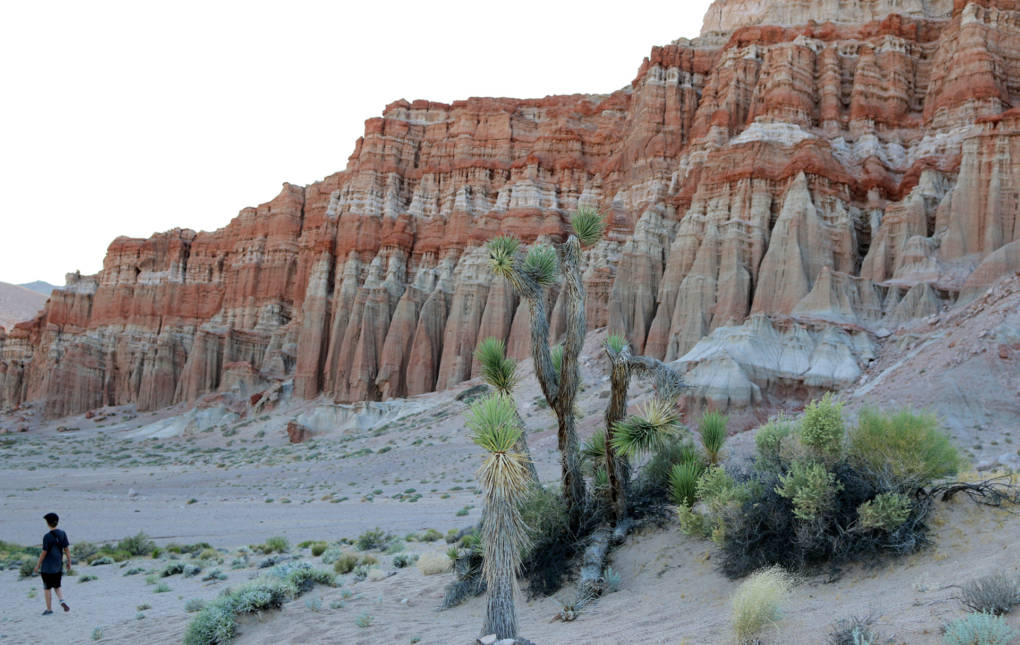
A roller skating rink in a church, a Prohibition-era bowling alley, and a movie set tucked into dunes along the Central Coast. We’ve put together a list of hidden gems in California.
What Happens Inside This Victorian Mansion in L.A.? Magic! Literally
Hidden Gems: The National Landmark 100 Feet Beneath Your Feet
Hidden Gems: A Garden Oasis, Buried Deep Underground in Fresno
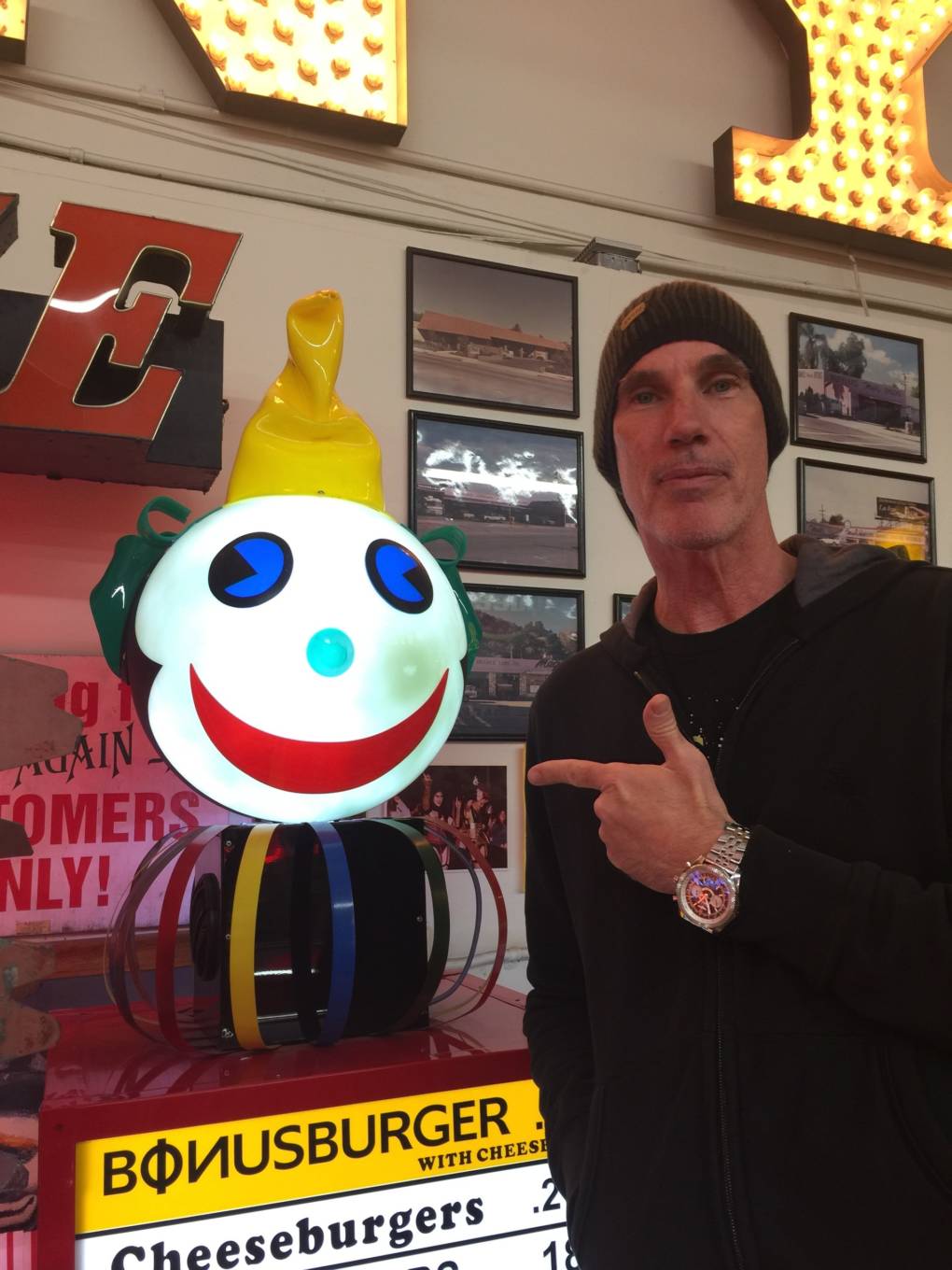
Hidden Gems: The Valley Relics Museum Is a Love Letter to Pop Culture
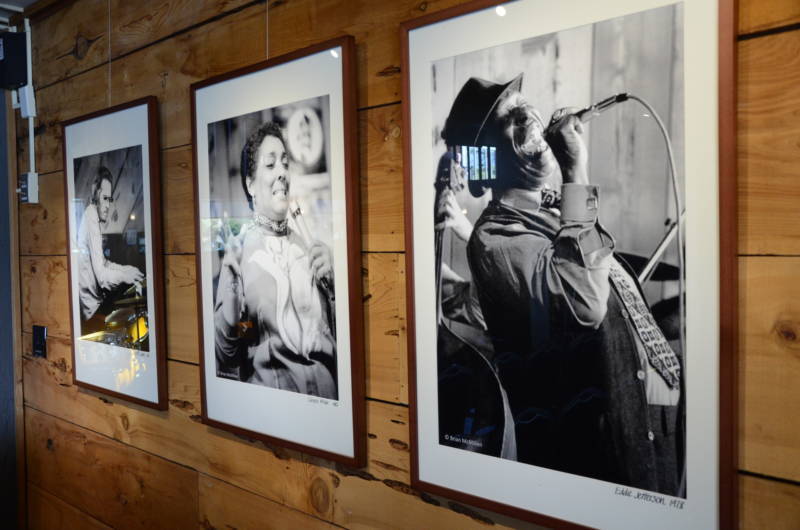
Hidden Gems: Half Moon Bay's Legendary Jazz Spot That Started in a Living Room
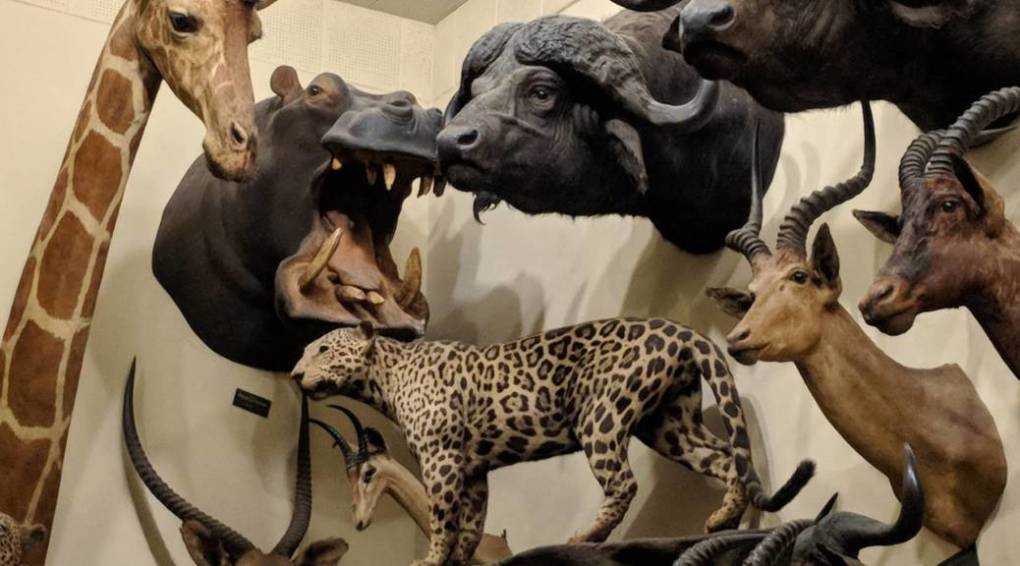
Hidden Gems: A Place Where You Can Eat Bison ... and Admire Them, Too
Exploring California's Best Kept Secret Spots and Hidden Gems
Archaeologists Excavate Sphinx from SoCal Sand Dunes
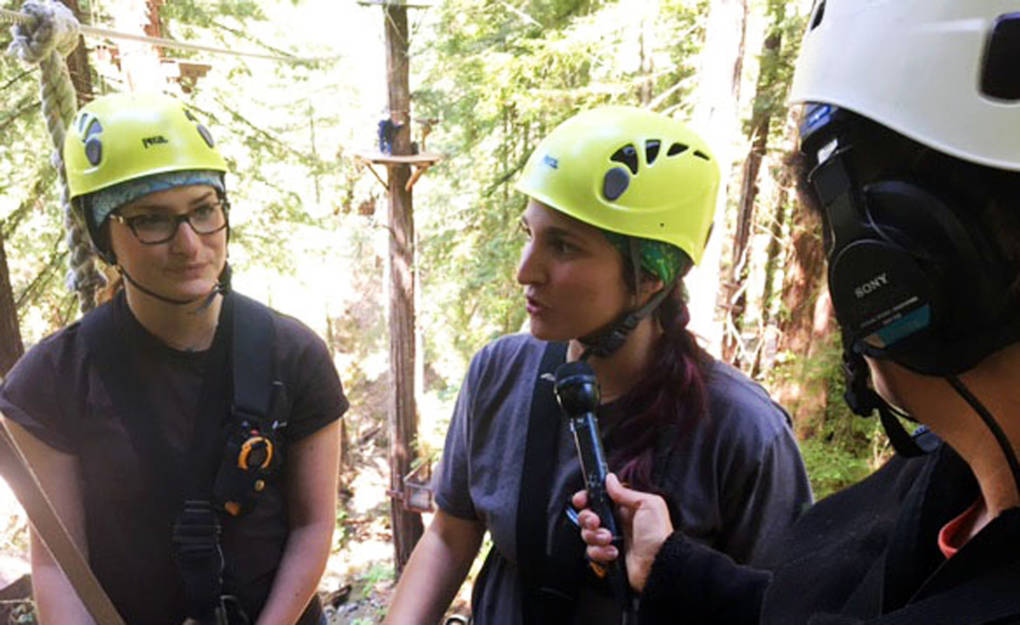
An Audio Road Trip: Unearthing California's Hidden Gems
Not Far From Hollywood, This State Park Is a Scene-Stealer
33 Years After Her Death, Eccentric Opera Singer's Garden Still Grows
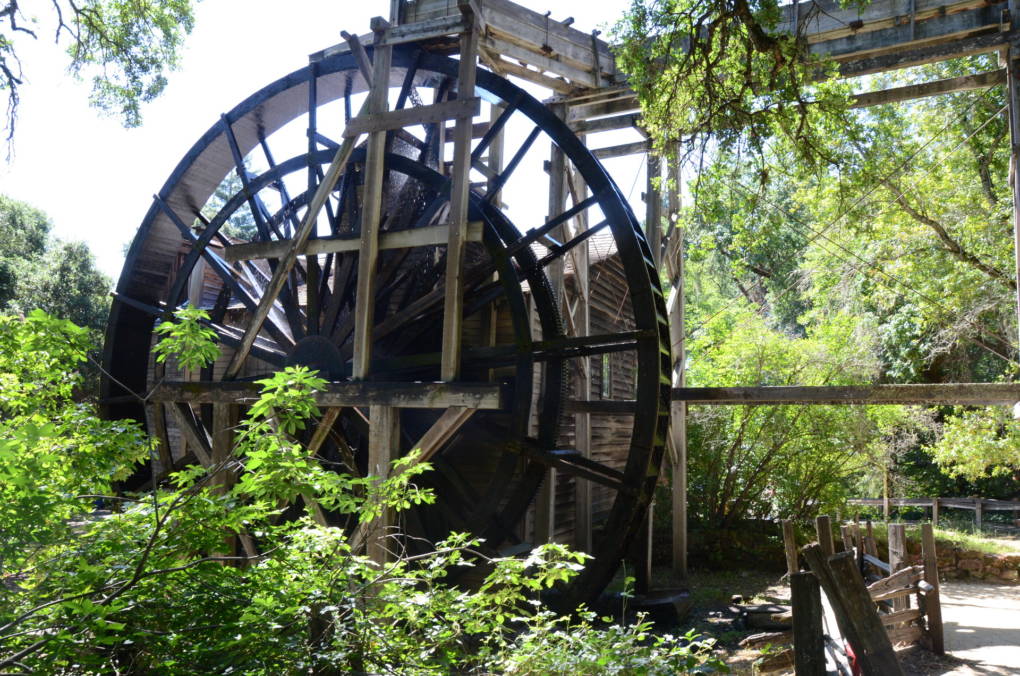
Going to Napa? Take a Break From Wine and Check Out This Mill
window.__IS_SSR__=true
window.__INITIAL_STATE__={
"attachmentsReducer": {
"audio_0": {
"type": "attachments",
"id": "audio_0",
"imgSizes": {
"kqedFullSize": {
"file": "https://ww2.kqed.org/news/wp-content/themes/KQED-unified/img/audio_bgs/background0.jpg"
}
}
},
"audio_1": {
"type": "attachments",
"id": "audio_1",
"imgSizes": {
"kqedFullSize": {
"file": "https://ww2.kqed.org/news/wp-content/themes/KQED-unified/img/audio_bgs/background1.jpg"
}
}
},
"audio_2": {
"type": "attachments",
"id": "audio_2",
"imgSizes": {
"kqedFullSize": {
"file": "https://ww2.kqed.org/news/wp-content/themes/KQED-unified/img/audio_bgs/background2.jpg"
}
}
},
"audio_3": {
"type": "attachments",
"id": "audio_3",
"imgSizes": {
"kqedFullSize": {
"file": "https://ww2.kqed.org/news/wp-content/themes/KQED-unified/img/audio_bgs/background3.jpg"
}
}
},
"audio_4": {
"type": "attachments",
"id": "audio_4",
"imgSizes": {
"kqedFullSize": {
"file": "https://ww2.kqed.org/news/wp-content/themes/KQED-unified/img/audio_bgs/background4.jpg"
}
}
},
"placeholder": {
"type": "attachments",
"id": "placeholder",
"imgSizes": {
"thumbnail": {
"file": "https://cdn.kqed.org/wp-content/uploads/2024/12/KQED-Default-Image-816638274-2000x1333-1-160x107.jpg",
"width": 160,
"height": 107,
"mimeType": "image/jpeg"
},
"medium": {
"file": "https://cdn.kqed.org/wp-content/uploads/2024/12/KQED-Default-Image-816638274-2000x1333-1-800x533.jpg",
"width": 800,
"height": 533,
"mimeType": "image/jpeg"
},
"medium_large": {
"file": "https://cdn.kqed.org/wp-content/uploads/2024/12/KQED-Default-Image-816638274-2000x1333-1-768x512.jpg",
"width": 768,
"height": 512,
"mimeType": "image/jpeg"
},
"large": {
"file": "https://cdn.kqed.org/wp-content/uploads/2024/12/KQED-Default-Image-816638274-2000x1333-1-1020x680.jpg",
"width": 1020,
"height": 680,
"mimeType": "image/jpeg"
},
"1536x1536": {
"file": "https://cdn.kqed.org/wp-content/uploads/2024/12/KQED-Default-Image-816638274-2000x1333-1-1536x1024.jpg",
"width": 1536,
"height": 1024,
"mimeType": "image/jpeg"
},
"fd-lrg": {
"file": "https://cdn.kqed.org/wp-content/uploads/2024/12/KQED-Default-Image-816638274-2000x1333-1-1536x1024.jpg",
"width": 1536,
"height": 1024,
"mimeType": "image/jpeg"
},
"fd-med": {
"file": "https://cdn.kqed.org/wp-content/uploads/2024/12/KQED-Default-Image-816638274-2000x1333-1-1020x680.jpg",
"width": 1020,
"height": 680,
"mimeType": "image/jpeg"
},
"fd-sm": {
"file": "https://cdn.kqed.org/wp-content/uploads/2024/12/KQED-Default-Image-816638274-2000x1333-1-800x533.jpg",
"width": 800,
"height": 533,
"mimeType": "image/jpeg"
},
"post-thumbnail": {
"file": "https://cdn.kqed.org/wp-content/uploads/2024/12/KQED-Default-Image-816638274-2000x1333-1-672x372.jpg",
"width": 672,
"height": 372,
"mimeType": "image/jpeg"
},
"twentyfourteen-full-width": {
"file": "https://cdn.kqed.org/wp-content/uploads/2024/12/KQED-Default-Image-816638274-2000x1333-1-1038x576.jpg",
"width": 1038,
"height": 576,
"mimeType": "image/jpeg"
},
"xxsmall": {
"file": "https://cdn.kqed.org/wp-content/uploads/2024/12/KQED-Default-Image-816638274-2000x1333-1-160x107.jpg",
"width": 160,
"height": 107,
"mimeType": "image/jpeg"
},
"xsmall": {
"file": "https://cdn.kqed.org/wp-content/uploads/2024/12/KQED-Default-Image-816638274-2000x1333-1-672x372.jpg",
"width": 672,
"height": 372,
"mimeType": "image/jpeg"
},
"small": {
"file": "https://cdn.kqed.org/wp-content/uploads/2024/12/KQED-Default-Image-816638274-2000x1333-1-672x372.jpg",
"width": 672,
"height": 372,
"mimeType": "image/jpeg"
},
"xlarge": {
"file": "https://cdn.kqed.org/wp-content/uploads/2024/12/KQED-Default-Image-816638274-2000x1333-1-1020x680.jpg",
"width": 1020,
"height": 680,
"mimeType": "image/jpeg"
},
"full-width": {
"file": "https://cdn.kqed.org/wp-content/uploads/2024/12/KQED-Default-Image-816638274-2000x1333-1-1920x1280.jpg",
"width": 1920,
"height": 1280,
"mimeType": "image/jpeg"
},
"guest-author-32": {
"file": "https://cdn.kqed.org/wp-content/uploads/2025/01/KQED-Default-Image-816638274-1333x1333-1-160x160.jpg",
"width": 32,
"height": 32,
"mimeType": "image/jpeg"
},
"guest-author-50": {
"file": "https://cdn.kqed.org/wp-content/uploads/2025/01/KQED-Default-Image-816638274-1333x1333-1-160x160.jpg",
"width": 50,
"height": 50,
"mimeType": "image/jpeg"
},
"guest-author-64": {
"file": "https://cdn.kqed.org/wp-content/uploads/2025/01/KQED-Default-Image-816638274-1333x1333-1-160x160.jpg",
"width": 64,
"height": 64,
"mimeType": "image/jpeg"
},
"guest-author-96": {
"file": "https://cdn.kqed.org/wp-content/uploads/2025/01/KQED-Default-Image-816638274-1333x1333-1-160x160.jpg",
"width": 96,
"height": 96,
"mimeType": "image/jpeg"
},
"guest-author-128": {
"file": "https://cdn.kqed.org/wp-content/uploads/2025/01/KQED-Default-Image-816638274-1333x1333-1-160x160.jpg",
"width": 128,
"height": 128,
"mimeType": "image/jpeg"
},
"detail": {
"file": "https://cdn.kqed.org/wp-content/uploads/2025/01/KQED-Default-Image-816638274-1333x1333-1-160x160.jpg",
"width": 160,
"height": 160,
"mimeType": "image/jpeg"
},
"kqedFullSize": {
"file": "https://cdn.kqed.org/wp-content/uploads/2024/12/KQED-Default-Image-816638274-2000x1333-1.jpg",
"width": 2000,
"height": 1333
}
}
},
"news_11765109": {
"type": "attachments",
"id": "news_11765109",
"meta": {
"index": "attachments_1716263798",
"site": "news",
"id": "11765109",
"found": true
},
"parent": 11765107,
"imgSizes": {
"apple_news_ca_landscape_5_5": {
"file": "https://ww2.kqed.org/app/uploads/sites/10/2019/08/Magic-Castle-Day-1044x783.jpg",
"width": 1044,
"mimeType": "image/jpeg",
"height": 783
},
"apple_news_ca_square_4_0": {
"file": "https://ww2.kqed.org/app/uploads/sites/10/2019/08/Magic-Castle-Day-470x470.jpg",
"width": 470,
"mimeType": "image/jpeg",
"height": 470
},
"twentyfourteen-full-width": {
"file": "https://ww2.kqed.org/app/uploads/sites/10/2019/08/Magic-Castle-Day-1038x576.jpg",
"width": 1038,
"mimeType": "image/jpeg",
"height": 576
},
"thumbnail": {
"file": "https://ww2.kqed.org/app/uploads/sites/10/2019/08/Magic-Castle-Day-160x107.jpg",
"width": 160,
"mimeType": "image/jpeg",
"height": 107
},
"post-thumbnail": {
"file": "https://ww2.kqed.org/app/uploads/sites/10/2019/08/Magic-Castle-Day-672x372.jpg",
"width": 672,
"mimeType": "image/jpeg",
"height": 372
},
"kqedFullSize": {
"file": "https://ww2.kqed.org/app/uploads/sites/10/2019/08/Magic-Castle-Day-e1565376098262.jpg",
"width": 1920,
"height": 1282
},
"apple_news_ca_landscape_4_7": {
"file": "https://ww2.kqed.org/app/uploads/sites/10/2019/08/Magic-Castle-Day-632x474.jpg",
"width": 632,
"mimeType": "image/jpeg",
"height": 474
},
"large": {
"file": "https://ww2.kqed.org/app/uploads/sites/10/2019/08/Magic-Castle-Day-1020x681.jpg",
"width": 1020,
"mimeType": "image/jpeg",
"height": 681
},
"complete_open_graph": {
"file": "https://ww2.kqed.org/app/uploads/sites/10/2019/08/Magic-Castle-Day-1200x801.jpg",
"width": 1200,
"mimeType": "image/jpeg",
"height": 801
},
"apple_news_ca_landscape_4_0": {
"file": "https://ww2.kqed.org/app/uploads/sites/10/2019/08/Magic-Castle-Day-536x402.jpg",
"width": 536,
"mimeType": "image/jpeg",
"height": 402
},
"apple_news_ca_portrait_12_9": {
"file": "https://ww2.kqed.org/app/uploads/sites/10/2019/08/Magic-Castle-Day-1122x1496.jpg",
"width": 1122,
"mimeType": "image/jpeg",
"height": 1496
},
"medium": {
"file": "https://ww2.kqed.org/app/uploads/sites/10/2019/08/Magic-Castle-Day-800x534.jpg",
"width": 800,
"mimeType": "image/jpeg",
"height": 534
},
"apple_news_ca_portrait_4_0": {
"file": "https://ww2.kqed.org/app/uploads/sites/10/2019/08/Magic-Castle-Day-354x472.jpg",
"width": 354,
"mimeType": "image/jpeg",
"height": 472
},
"apple_news_ca_portrait_9_7": {
"file": "https://ww2.kqed.org/app/uploads/sites/10/2019/08/Magic-Castle-Day-840x1120.jpg",
"width": 840,
"mimeType": "image/jpeg",
"height": 1120
},
"apple_news_ca_landscape_12_9": {
"file": "https://ww2.kqed.org/app/uploads/sites/10/2019/08/Magic-Castle-Day-1832x1374.jpg",
"width": 1832,
"mimeType": "image/jpeg",
"height": 1374
},
"apple_news_ca_square_9_7": {
"file": "https://ww2.kqed.org/app/uploads/sites/10/2019/08/Magic-Castle-Day-1104x1104.jpg",
"width": 1104,
"mimeType": "image/jpeg",
"height": 1104
},
"apple_news_ca_portrait_4_7": {
"file": "https://ww2.kqed.org/app/uploads/sites/10/2019/08/Magic-Castle-Day-414x552.jpg",
"width": 414,
"mimeType": "image/jpeg",
"height": 552
},
"apple_news_ca_square_12_9": {
"file": "https://ww2.kqed.org/app/uploads/sites/10/2019/08/Magic-Castle-Day-1472x1472.jpg",
"width": 1472,
"mimeType": "image/jpeg",
"height": 1472
},
"apple_news_ca_portrait_5_5": {
"file": "https://ww2.kqed.org/app/uploads/sites/10/2019/08/Magic-Castle-Day-687x916.jpg",
"width": 687,
"mimeType": "image/jpeg",
"height": 916
},
"full-width": {
"file": "https://ww2.kqed.org/app/uploads/sites/10/2019/08/Magic-Castle-Day-1920x1282.jpg",
"width": 1920,
"mimeType": "image/jpeg",
"height": 1282
},
"apple_news_ca_square_4_7": {
"file": "https://ww2.kqed.org/app/uploads/sites/10/2019/08/Magic-Castle-Day-550x550.jpg",
"width": 550,
"mimeType": "image/jpeg",
"height": 550
},
"apple_news_ca_landscape_9_7": {
"file": "https://ww2.kqed.org/app/uploads/sites/10/2019/08/Magic-Castle-Day-1376x1032.jpg",
"width": 1376,
"mimeType": "image/jpeg",
"height": 1032
},
"apple_news_ca_square_5_5": {
"file": "https://ww2.kqed.org/app/uploads/sites/10/2019/08/Magic-Castle-Day-912x912.jpg",
"width": 912,
"mimeType": "image/jpeg",
"height": 912
}
},
"publishDate": 1564707546,
"modified": 1564707627,
"caption": "An exterior of the Magic Castle, a club for magicians.",
"description": "An exterior of the Magic Castle, a club for magicians.",
"title": "An exterior of the Magic Castle, a club for magicians.",
"credit": "Courtesy of the Magic Castle",
"status": "inherit",
"isLoading": false,
"fetchFailed": false
},
"news_11672379": {
"type": "attachments",
"id": "news_11672379",
"meta": {
"index": "attachments_1716263798",
"site": "news",
"id": "11672379",
"found": true
},
"parent": 11672369,
"imgSizes": {
"small": {
"file": "https://ww2.kqed.org/app/uploads/sites/10/2018/06/RS31194_IMG_3371-qut-520x390.jpg",
"width": 520,
"mimeType": "image/jpeg",
"height": 390
},
"twentyfourteen-full-width": {
"file": "https://ww2.kqed.org/app/uploads/sites/10/2018/06/RS31194_IMG_3371-qut-1038x576.jpg",
"width": 1038,
"mimeType": "image/jpeg",
"height": 576
},
"thumbnail": {
"file": "https://ww2.kqed.org/app/uploads/sites/10/2018/06/RS31194_IMG_3371-qut-160x120.jpg",
"width": 160,
"mimeType": "image/jpeg",
"height": 120
},
"fd-sm": {
"file": "https://ww2.kqed.org/app/uploads/sites/10/2018/06/RS31194_IMG_3371-qut-960x720.jpg",
"width": 960,
"mimeType": "image/jpeg",
"height": 720
},
"post-thumbnail": {
"file": "https://ww2.kqed.org/app/uploads/sites/10/2018/06/RS31194_IMG_3371-qut-672x372.jpg",
"width": 672,
"mimeType": "image/jpeg",
"height": 372
},
"xsmall": {
"file": "https://ww2.kqed.org/app/uploads/sites/10/2018/06/RS31194_IMG_3371-qut-375x281.jpg",
"width": 375,
"mimeType": "image/jpeg",
"height": 281
},
"kqedFullSize": {
"file": "https://ww2.kqed.org/app/uploads/sites/10/2018/06/RS31194_IMG_3371-qut.jpg",
"width": 1920,
"height": 1440
},
"large": {
"file": "https://ww2.kqed.org/app/uploads/sites/10/2018/06/RS31194_IMG_3371-qut-1020x765.jpg",
"width": 1020,
"mimeType": "image/jpeg",
"height": 765
},
"xlarge": {
"file": "https://ww2.kqed.org/app/uploads/sites/10/2018/06/RS31194_IMG_3371-qut-1180x885.jpg",
"width": 1180,
"mimeType": "image/jpeg",
"height": 885
},
"complete_open_graph": {
"file": "https://ww2.kqed.org/app/uploads/sites/10/2018/06/RS31194_IMG_3371-qut-1200x900.jpg",
"width": 1200,
"mimeType": "image/jpeg",
"height": 900
},
"guest-author-50": {
"file": "https://ww2.kqed.org/app/uploads/sites/10/2018/06/RS31194_IMG_3371-qut-50x50.jpg",
"width": 50,
"mimeType": "image/jpeg",
"height": 50
},
"guest-author-96": {
"file": "https://ww2.kqed.org/app/uploads/sites/10/2018/06/RS31194_IMG_3371-qut-96x96.jpg",
"width": 96,
"mimeType": "image/jpeg",
"height": 96
},
"medium": {
"file": "https://ww2.kqed.org/app/uploads/sites/10/2018/06/RS31194_IMG_3371-qut-800x600.jpg",
"width": 800,
"mimeType": "image/jpeg",
"height": 600
},
"guest-author-64": {
"file": "https://ww2.kqed.org/app/uploads/sites/10/2018/06/RS31194_IMG_3371-qut-64x64.jpg",
"width": 64,
"mimeType": "image/jpeg",
"height": 64
},
"guest-author-32": {
"file": "https://ww2.kqed.org/app/uploads/sites/10/2018/06/RS31194_IMG_3371-qut-32x32.jpg",
"width": 32,
"mimeType": "image/jpeg",
"height": 32
},
"fd-lrg": {
"file": "https://ww2.kqed.org/app/uploads/sites/10/2018/06/RS31194_IMG_3371-qut-1920x1440.jpg",
"width": 1920,
"mimeType": "image/jpeg",
"height": 1440
},
"fd-med": {
"file": "https://ww2.kqed.org/app/uploads/sites/10/2018/06/RS31194_IMG_3371-qut-1180x885.jpg",
"width": 1180,
"mimeType": "image/jpeg",
"height": 885
},
"full-width": {
"file": "https://ww2.kqed.org/app/uploads/sites/10/2018/06/RS31194_IMG_3371-qut-1920x1440.jpg",
"width": 1920,
"mimeType": "image/jpeg",
"height": 1440
},
"detail": {
"file": "https://ww2.kqed.org/app/uploads/sites/10/2018/06/RS31194_IMG_3371-qut-150x150.jpg",
"width": 150,
"mimeType": "image/jpeg",
"height": 150
},
"guest-author-128": {
"file": "https://ww2.kqed.org/app/uploads/sites/10/2018/06/RS31194_IMG_3371-qut-128x128.jpg",
"width": 128,
"mimeType": "image/jpeg",
"height": 128
},
"xxsmall": {
"file": "https://ww2.kqed.org/app/uploads/sites/10/2018/06/RS31194_IMG_3371-qut-240x180.jpg",
"width": 240,
"mimeType": "image/jpeg",
"height": 180
}
},
"publishDate": 1528136883,
"modified": 1529833337,
"caption": "Black Chasm Cavern is a 2-million-year-old cave in Volcano, California.",
"description": "Black Chasm Cavern is a 2-million-year-old cave in Volcano, California.",
"title": "RS31194_IMG_3371-qut",
"credit": "Bianca Taylor/KQED",
"status": "inherit",
"isLoading": false,
"fetchFailed": false
},
"news_11673462": {
"type": "attachments",
"id": "news_11673462",
"meta": {
"index": "attachments_1716263798",
"site": "news",
"id": "11673462",
"found": true
},
"parent": 11673103,
"imgSizes": {
"small": {
"file": "https://ww2.kqed.org/app/uploads/sites/10/2018/06/6084572264_679a533429_o-520x347.jpg",
"width": 520,
"mimeType": "image/jpeg",
"height": 347
},
"twentyfourteen-full-width": {
"file": "https://ww2.kqed.org/app/uploads/sites/10/2018/06/6084572264_679a533429_o-1038x576.jpg",
"width": 1038,
"mimeType": "image/jpeg",
"height": 576
},
"thumbnail": {
"file": "https://ww2.kqed.org/app/uploads/sites/10/2018/06/6084572264_679a533429_o-160x107.jpg",
"width": 160,
"mimeType": "image/jpeg",
"height": 107
},
"fd-sm": {
"file": "https://ww2.kqed.org/app/uploads/sites/10/2018/06/6084572264_679a533429_o-960x640.jpg",
"width": 960,
"mimeType": "image/jpeg",
"height": 640
},
"post-thumbnail": {
"file": "https://ww2.kqed.org/app/uploads/sites/10/2018/06/6084572264_679a533429_o-672x372.jpg",
"width": 672,
"mimeType": "image/jpeg",
"height": 372
},
"xsmall": {
"file": "https://ww2.kqed.org/app/uploads/sites/10/2018/06/6084572264_679a533429_o-375x250.jpg",
"width": 375,
"mimeType": "image/jpeg",
"height": 250
},
"kqedFullSize": {
"file": "https://ww2.kqed.org/app/uploads/sites/10/2018/06/6084572264_679a533429_o-e1528414332452.jpg",
"width": 1920,
"height": 1280
},
"large": {
"file": "https://ww2.kqed.org/app/uploads/sites/10/2018/06/6084572264_679a533429_o-1020x680.jpg",
"width": 1020,
"mimeType": "image/jpeg",
"height": 680
},
"xlarge": {
"file": "https://ww2.kqed.org/app/uploads/sites/10/2018/06/6084572264_679a533429_o-1180x787.jpg",
"width": 1180,
"mimeType": "image/jpeg",
"height": 787
},
"complete_open_graph": {
"file": "https://ww2.kqed.org/app/uploads/sites/10/2018/06/6084572264_679a533429_o-1200x800.jpg",
"width": 1200,
"mimeType": "image/jpeg",
"height": 800
},
"guest-author-50": {
"file": "https://ww2.kqed.org/app/uploads/sites/10/2018/06/6084572264_679a533429_o-50x50.jpg",
"width": 50,
"mimeType": "image/jpeg",
"height": 50
},
"guest-author-96": {
"file": "https://ww2.kqed.org/app/uploads/sites/10/2018/06/6084572264_679a533429_o-96x96.jpg",
"width": 96,
"mimeType": "image/jpeg",
"height": 96
},
"medium": {
"file": "https://ww2.kqed.org/app/uploads/sites/10/2018/06/6084572264_679a533429_o-800x533.jpg",
"width": 800,
"mimeType": "image/jpeg",
"height": 533
},
"guest-author-64": {
"file": "https://ww2.kqed.org/app/uploads/sites/10/2018/06/6084572264_679a533429_o-64x64.jpg",
"width": 64,
"mimeType": "image/jpeg",
"height": 64
},
"guest-author-32": {
"file": "https://ww2.kqed.org/app/uploads/sites/10/2018/06/6084572264_679a533429_o-32x32.jpg",
"width": 32,
"mimeType": "image/jpeg",
"height": 32
},
"fd-lrg": {
"file": "https://ww2.kqed.org/app/uploads/sites/10/2018/06/6084572264_679a533429_o-1920x1280.jpg",
"width": 1920,
"mimeType": "image/jpeg",
"height": 1280
},
"fd-med": {
"file": "https://ww2.kqed.org/app/uploads/sites/10/2018/06/6084572264_679a533429_o-1180x787.jpg",
"width": 1180,
"mimeType": "image/jpeg",
"height": 787
},
"full-width": {
"file": "https://ww2.kqed.org/app/uploads/sites/10/2018/06/6084572264_679a533429_o-1920x1280.jpg",
"width": 1920,
"mimeType": "image/jpeg",
"height": 1280
},
"detail": {
"file": "https://ww2.kqed.org/app/uploads/sites/10/2018/06/6084572264_679a533429_o-150x150.jpg",
"width": 150,
"mimeType": "image/jpeg",
"height": 150
},
"guest-author-128": {
"file": "https://ww2.kqed.org/app/uploads/sites/10/2018/06/6084572264_679a533429_o-128x128.jpg",
"width": 128,
"mimeType": "image/jpeg",
"height": 128
},
"xxsmall": {
"file": "https://ww2.kqed.org/app/uploads/sites/10/2018/06/6084572264_679a533429_o-240x160.jpg",
"width": 240,
"mimeType": "image/jpeg",
"height": 160
}
},
"publishDate": 1528414277,
"modified": 1528414316,
"caption": "Forestiere Underground Gardens",
"description": "Forestiere Underground Gardens",
"title": "Forestiere Underground Gardens",
"credit": "Yale Quan/Flickr",
"status": "inherit",
"isLoading": false,
"fetchFailed": false
},
"news_11673225": {
"type": "attachments",
"id": "news_11673225",
"meta": {
"index": "attachments_1716263798",
"site": "news",
"id": "11673225",
"found": true
},
"parent": 11672800,
"imgSizes": {
"small": {
"file": "https://ww2.kqed.org/app/uploads/sites/10/2018/06/RS30471_IMG_5034-qut-520x693.jpg",
"width": 520,
"mimeType": "image/jpeg",
"height": 693
},
"twentyfourteen-full-width": {
"file": "https://ww2.kqed.org/app/uploads/sites/10/2018/06/RS30471_IMG_5034-qut-1038x576.jpg",
"width": 1038,
"mimeType": "image/jpeg",
"height": 576
},
"thumbnail": {
"file": "https://ww2.kqed.org/app/uploads/sites/10/2018/06/RS30471_IMG_5034-qut-160x213.jpg",
"width": 160,
"mimeType": "image/jpeg",
"height": 213
},
"fd-sm": {
"file": "https://ww2.kqed.org/app/uploads/sites/10/2018/06/RS30471_IMG_5034-qut-960x1280.jpg",
"width": 960,
"mimeType": "image/jpeg",
"height": 1280
},
"post-thumbnail": {
"file": "https://ww2.kqed.org/app/uploads/sites/10/2018/06/RS30471_IMG_5034-qut-672x372.jpg",
"width": 672,
"mimeType": "image/jpeg",
"height": 372
},
"xsmall": {
"file": "https://ww2.kqed.org/app/uploads/sites/10/2018/06/RS30471_IMG_5034-qut-375x500.jpg",
"width": 375,
"mimeType": "image/jpeg",
"height": 500
},
"kqedFullSize": {
"file": "https://ww2.kqed.org/app/uploads/sites/10/2018/06/RS30471_IMG_5034-qut.jpg",
"width": 1920,
"height": 2560
},
"large": {
"file": "https://ww2.kqed.org/app/uploads/sites/10/2018/06/RS30471_IMG_5034-qut-1020x1360.jpg",
"width": 1020,
"mimeType": "image/jpeg",
"height": 1360
},
"xlarge": {
"file": "https://ww2.kqed.org/app/uploads/sites/10/2018/06/RS30471_IMG_5034-qut-1180x1573.jpg",
"width": 1180,
"mimeType": "image/jpeg",
"height": 1573
},
"complete_open_graph": {
"file": "https://ww2.kqed.org/app/uploads/sites/10/2018/06/RS30471_IMG_5034-qut-900x1200.jpg",
"width": 900,
"mimeType": "image/jpeg",
"height": 1200
},
"guest-author-50": {
"file": "https://ww2.kqed.org/app/uploads/sites/10/2018/06/RS30471_IMG_5034-qut-50x50.jpg",
"width": 50,
"mimeType": "image/jpeg",
"height": 50
},
"guest-author-96": {
"file": "https://ww2.kqed.org/app/uploads/sites/10/2018/06/RS30471_IMG_5034-qut-96x96.jpg",
"width": 96,
"mimeType": "image/jpeg",
"height": 96
},
"medium": {
"file": "https://ww2.kqed.org/app/uploads/sites/10/2018/06/RS30471_IMG_5034-qut-800x1067.jpg",
"width": 800,
"mimeType": "image/jpeg",
"height": 1067
},
"guest-author-64": {
"file": "https://ww2.kqed.org/app/uploads/sites/10/2018/06/RS30471_IMG_5034-qut-64x64.jpg",
"width": 64,
"mimeType": "image/jpeg",
"height": 64
},
"guest-author-32": {
"file": "https://ww2.kqed.org/app/uploads/sites/10/2018/06/RS30471_IMG_5034-qut-32x32.jpg",
"width": 32,
"mimeType": "image/jpeg",
"height": 32
},
"fd-lrg": {
"file": "https://ww2.kqed.org/app/uploads/sites/10/2018/06/RS30471_IMG_5034-qut-1920x2560.jpg",
"width": 1920,
"mimeType": "image/jpeg",
"height": 2560
},
"fd-med": {
"file": "https://ww2.kqed.org/app/uploads/sites/10/2018/06/RS30471_IMG_5034-qut-1180x1573.jpg",
"width": 1180,
"mimeType": "image/jpeg",
"height": 1573
},
"full-width": {
"file": "https://ww2.kqed.org/app/uploads/sites/10/2018/06/RS30471_IMG_5034-qut-1920x2560.jpg",
"width": 1920,
"mimeType": "image/jpeg",
"height": 2560
},
"detail": {
"file": "https://ww2.kqed.org/app/uploads/sites/10/2018/06/RS30471_IMG_5034-qut-150x150.jpg",
"width": 150,
"mimeType": "image/jpeg",
"height": 150
},
"guest-author-128": {
"file": "https://ww2.kqed.org/app/uploads/sites/10/2018/06/RS30471_IMG_5034-qut-128x128.jpg",
"width": 128,
"mimeType": "image/jpeg",
"height": 128
},
"xxsmall": {
"file": "https://ww2.kqed.org/app/uploads/sites/10/2018/06/RS30471_IMG_5034-qut-240x320.jpg",
"width": 240,
"mimeType": "image/jpeg",
"height": 320
}
},
"publishDate": 1528328691,
"modified": 1529097517,
"caption": "Valley Relics Museum founder and curator Tommy Gelinas.",
"description": null,
"title": "RS30471_IMG_5034-qut",
"credit": "Peter Gilstrap/KQED",
"status": "inherit",
"isLoading": false,
"fetchFailed": false
},
"news_11675097": {
"type": "attachments",
"id": "news_11675097",
"meta": {
"index": "attachments_1716263798",
"site": "news",
"id": "11675097",
"found": true
},
"parent": 11674177,
"imgSizes": {
"small": {
"file": "https://ww2.kqed.org/app/uploads/sites/10/2018/06/RS31463_DSC_1586-qut-520x345.jpg",
"width": 520,
"mimeType": "image/jpeg",
"height": 345
},
"twentyfourteen-full-width": {
"file": "https://ww2.kqed.org/app/uploads/sites/10/2018/06/RS31463_DSC_1586-qut-1038x576.jpg",
"width": 1038,
"mimeType": "image/jpeg",
"height": 576
},
"thumbnail": {
"file": "https://ww2.kqed.org/app/uploads/sites/10/2018/06/RS31463_DSC_1586-qut-160x106.jpg",
"width": 160,
"mimeType": "image/jpeg",
"height": 106
},
"fd-sm": {
"file": "https://ww2.kqed.org/app/uploads/sites/10/2018/06/RS31463_DSC_1586-qut-960x636.jpg",
"width": 960,
"mimeType": "image/jpeg",
"height": 636
},
"post-thumbnail": {
"file": "https://ww2.kqed.org/app/uploads/sites/10/2018/06/RS31463_DSC_1586-qut-672x372.jpg",
"width": 672,
"mimeType": "image/jpeg",
"height": 372
},
"xsmall": {
"file": "https://ww2.kqed.org/app/uploads/sites/10/2018/06/RS31463_DSC_1586-qut-375x248.jpg",
"width": 375,
"mimeType": "image/jpeg",
"height": 248
},
"kqedFullSize": {
"file": "https://ww2.kqed.org/app/uploads/sites/10/2018/06/RS31463_DSC_1586-qut.jpg",
"width": 1920,
"height": 1272
},
"large": {
"file": "https://ww2.kqed.org/app/uploads/sites/10/2018/06/RS31463_DSC_1586-qut-1020x676.jpg",
"width": 1020,
"mimeType": "image/jpeg",
"height": 676
},
"xlarge": {
"file": "https://ww2.kqed.org/app/uploads/sites/10/2018/06/RS31463_DSC_1586-qut-1180x782.jpg",
"width": 1180,
"mimeType": "image/jpeg",
"height": 782
},
"complete_open_graph": {
"file": "https://ww2.kqed.org/app/uploads/sites/10/2018/06/RS31463_DSC_1586-qut-1200x795.jpg",
"width": 1200,
"mimeType": "image/jpeg",
"height": 795
},
"guest-author-50": {
"file": "https://ww2.kqed.org/app/uploads/sites/10/2018/06/RS31463_DSC_1586-qut-50x50.jpg",
"width": 50,
"mimeType": "image/jpeg",
"height": 50
},
"guest-author-96": {
"file": "https://ww2.kqed.org/app/uploads/sites/10/2018/06/RS31463_DSC_1586-qut-96x96.jpg",
"width": 96,
"mimeType": "image/jpeg",
"height": 96
},
"medium": {
"file": "https://ww2.kqed.org/app/uploads/sites/10/2018/06/RS31463_DSC_1586-qut-800x530.jpg",
"width": 800,
"mimeType": "image/jpeg",
"height": 530
},
"guest-author-64": {
"file": "https://ww2.kqed.org/app/uploads/sites/10/2018/06/RS31463_DSC_1586-qut-64x64.jpg",
"width": 64,
"mimeType": "image/jpeg",
"height": 64
},
"guest-author-32": {
"file": "https://ww2.kqed.org/app/uploads/sites/10/2018/06/RS31463_DSC_1586-qut-32x32.jpg",
"width": 32,
"mimeType": "image/jpeg",
"height": 32
},
"fd-lrg": {
"file": "https://ww2.kqed.org/app/uploads/sites/10/2018/06/RS31463_DSC_1586-qut-1920x1272.jpg",
"width": 1920,
"mimeType": "image/jpeg",
"height": 1272
},
"fd-med": {
"file": "https://ww2.kqed.org/app/uploads/sites/10/2018/06/RS31463_DSC_1586-qut-1180x782.jpg",
"width": 1180,
"mimeType": "image/jpeg",
"height": 782
},
"full-width": {
"file": "https://ww2.kqed.org/app/uploads/sites/10/2018/06/RS31463_DSC_1586-qut-1920x1272.jpg",
"width": 1920,
"mimeType": "image/jpeg",
"height": 1272
},
"detail": {
"file": "https://ww2.kqed.org/app/uploads/sites/10/2018/06/RS31463_DSC_1586-qut-150x150.jpg",
"width": 150,
"mimeType": "image/jpeg",
"height": 150
},
"guest-author-128": {
"file": "https://ww2.kqed.org/app/uploads/sites/10/2018/06/RS31463_DSC_1586-qut-128x128.jpg",
"width": 128,
"mimeType": "image/jpeg",
"height": 128
},
"xxsmall": {
"file": "https://ww2.kqed.org/app/uploads/sites/10/2018/06/RS31463_DSC_1586-qut-240x159.jpg",
"width": 240,
"mimeType": "image/jpeg",
"height": 159
}
},
"publishDate": 1529084784,
"modified": 1529706613,
"caption": "The Bach Dancing & Dynamite Society in Half Moon Bay grew out of the impromptu jazz concerts Pete Douglas would throw in his living room.",
"description": "The Bach Dancing and Dynamite Society in Half Moon Bay grew out of the impromptu jazz concerts Pete Douglas would throw in his living room.",
"title": "RS31463_DSC_1586-qut",
"credit": "Ryan Levi/KQED",
"status": "inherit",
"isLoading": false,
"fetchFailed": false
},
"news_11674194": {
"type": "attachments",
"id": "news_11674194",
"meta": {
"index": "attachments_1716263798",
"site": "news",
"id": "11674194",
"found": true
},
"parent": 11674191,
"imgSizes": {
"small": {
"file": "https://ww2.kqed.org/app/uploads/sites/10/2018/06/fosters-1-e1526428475762-1038x576-520x289.jpg",
"width": 520,
"mimeType": "image/jpeg",
"height": 289
},
"thumbnail": {
"file": "https://ww2.kqed.org/app/uploads/sites/10/2018/06/fosters-1-e1526428475762-1038x576-160x89.jpg",
"width": 160,
"mimeType": "image/jpeg",
"height": 89
},
"fd-sm": {
"file": "https://ww2.kqed.org/app/uploads/sites/10/2018/06/fosters-1-e1526428475762-1038x576-960x533.jpg",
"width": 960,
"mimeType": "image/jpeg",
"height": 533
},
"post-thumbnail": {
"file": "https://ww2.kqed.org/app/uploads/sites/10/2018/06/fosters-1-e1526428475762-1038x576-672x372.jpg",
"width": 672,
"mimeType": "image/jpeg",
"height": 372
},
"xsmall": {
"file": "https://ww2.kqed.org/app/uploads/sites/10/2018/06/fosters-1-e1526428475762-1038x576-375x208.jpg",
"width": 375,
"mimeType": "image/jpeg",
"height": 208
},
"kqedFullSize": {
"file": "https://ww2.kqed.org/app/uploads/sites/10/2018/06/fosters-1-e1526428475762-1038x576.jpg",
"width": 1038,
"height": 576
},
"large": {
"file": "https://ww2.kqed.org/app/uploads/sites/10/2018/06/fosters-1-e1526428475762-1038x576-1020x566.jpg",
"width": 1020,
"mimeType": "image/jpeg",
"height": 566
},
"guest-author-50": {
"file": "https://ww2.kqed.org/app/uploads/sites/10/2018/06/fosters-1-e1526428475762-1038x576-50x50.jpg",
"width": 50,
"mimeType": "image/jpeg",
"height": 50
},
"guest-author-96": {
"file": "https://ww2.kqed.org/app/uploads/sites/10/2018/06/fosters-1-e1526428475762-1038x576-96x96.jpg",
"width": 96,
"mimeType": "image/jpeg",
"height": 96
},
"medium": {
"file": "https://ww2.kqed.org/app/uploads/sites/10/2018/06/fosters-1-e1526428475762-1038x576-800x444.jpg",
"width": 800,
"mimeType": "image/jpeg",
"height": 444
},
"guest-author-64": {
"file": "https://ww2.kqed.org/app/uploads/sites/10/2018/06/fosters-1-e1526428475762-1038x576-64x64.jpg",
"width": 64,
"mimeType": "image/jpeg",
"height": 64
},
"guest-author-32": {
"file": "https://ww2.kqed.org/app/uploads/sites/10/2018/06/fosters-1-e1526428475762-1038x576-32x32.jpg",
"width": 32,
"mimeType": "image/jpeg",
"height": 32
},
"detail": {
"file": "https://ww2.kqed.org/app/uploads/sites/10/2018/06/fosters-1-e1526428475762-1038x576-150x150.jpg",
"width": 150,
"mimeType": "image/jpeg",
"height": 150
},
"guest-author-128": {
"file": "https://ww2.kqed.org/app/uploads/sites/10/2018/06/fosters-1-e1526428475762-1038x576-128x128.jpg",
"width": 128,
"mimeType": "image/jpeg",
"height": 128
},
"xxsmall": {
"file": "https://ww2.kqed.org/app/uploads/sites/10/2018/06/fosters-1-e1526428475762-1038x576-240x133.jpg",
"width": 240,
"mimeType": "image/jpeg",
"height": 133
}
},
"publishDate": 1528749915,
"modified": 1529707303,
"caption": "Part of a wall at Foster's Bighorn, a restaurant and bar in Rio Vista that houses an enormous collection of taxidermied animals.",
"description": "Part of a wall at Foster's Bighorn, a restaurant and bar in Rio Vista which houses an enormous collection of taxidermied animals.",
"title": "fosters-1-e1526428475762-1038x576",
"credit": "Courtesy of Jim Ratcliffe",
"status": "inherit",
"isLoading": false,
"fetchFailed": false
},
"news_11676616": {
"type": "attachments",
"id": "news_11676616",
"meta": {
"index": "attachments_1716263798",
"site": "news",
"id": "11676616",
"found": true
},
"parent": 11675549,
"imgSizes": {
"small": {
"file": "https://ww2.kqed.org/app/uploads/sites/10/2018/06/RS31465_DSC_1581-qut-800x530-1-520x345.jpg",
"width": 520,
"mimeType": "image/jpeg",
"height": 345
},
"thumbnail": {
"file": "https://ww2.kqed.org/app/uploads/sites/10/2018/06/RS31465_DSC_1581-qut-800x530-1-160x106.jpg",
"width": 160,
"mimeType": "image/jpeg",
"height": 106
},
"post-thumbnail": {
"file": "https://ww2.kqed.org/app/uploads/sites/10/2018/06/RS31465_DSC_1581-qut-800x530-1-672x372.jpg",
"width": 672,
"mimeType": "image/jpeg",
"height": 372
},
"xsmall": {
"file": "https://ww2.kqed.org/app/uploads/sites/10/2018/06/RS31465_DSC_1581-qut-800x530-1-375x248.jpg",
"width": 375,
"mimeType": "image/jpeg",
"height": 248
},
"kqedFullSize": {
"file": "https://ww2.kqed.org/app/uploads/sites/10/2018/06/RS31465_DSC_1581-qut-800x530-1.jpg",
"width": 800,
"height": 530
},
"guest-author-50": {
"file": "https://ww2.kqed.org/app/uploads/sites/10/2018/06/RS31465_DSC_1581-qut-800x530-1-50x50.jpg",
"width": 50,
"mimeType": "image/jpeg",
"height": 50
},
"guest-author-96": {
"file": "https://ww2.kqed.org/app/uploads/sites/10/2018/06/RS31465_DSC_1581-qut-800x530-1-96x96.jpg",
"width": 96,
"mimeType": "image/jpeg",
"height": 96
},
"medium": {
"file": "https://ww2.kqed.org/app/uploads/sites/10/2018/06/RS31465_DSC_1581-qut-800x530-1-800x530.jpg",
"width": 800,
"mimeType": "image/jpeg",
"height": 530
},
"guest-author-64": {
"file": "https://ww2.kqed.org/app/uploads/sites/10/2018/06/RS31465_DSC_1581-qut-800x530-1-64x64.jpg",
"width": 64,
"mimeType": "image/jpeg",
"height": 64
},
"guest-author-32": {
"file": "https://ww2.kqed.org/app/uploads/sites/10/2018/06/RS31465_DSC_1581-qut-800x530-1-32x32.jpg",
"width": 32,
"mimeType": "image/jpeg",
"height": 32
},
"detail": {
"file": "https://ww2.kqed.org/app/uploads/sites/10/2018/06/RS31465_DSC_1581-qut-800x530-1-150x150.jpg",
"width": 150,
"mimeType": "image/jpeg",
"height": 150
},
"guest-author-128": {
"file": "https://ww2.kqed.org/app/uploads/sites/10/2018/06/RS31465_DSC_1581-qut-800x530-1-128x128.jpg",
"width": 128,
"mimeType": "image/jpeg",
"height": 128
},
"xxsmall": {
"file": "https://ww2.kqed.org/app/uploads/sites/10/2018/06/RS31465_DSC_1581-qut-800x530-1-240x159.jpg",
"width": 240,
"mimeType": "image/jpeg",
"height": 159
}
},
"publishDate": 1529703728,
"modified": 1529710337,
"caption": "Photos of jazz greats including Carmen McRae, Bill Evans and Eddie Jackson line the wood-paneled walls of the present-day Bach Dancing and Dynamite Society concert room in Half Moon Bay.\n",
"description": null,
"title": "RS31465_DSC_1581-qut-800x530",
"credit": "Ryan Levi/KQED",
"status": "inherit",
"isLoading": false,
"fetchFailed": false
},
"news_11635619": {
"type": "attachments",
"id": "news_11635619",
"meta": {
"index": "attachments_1716263798",
"site": "news",
"id": "11635619",
"found": true
},
"parent": 11635285,
"imgSizes": {
"small": {
"file": "https://ww2.kqed.org/app/uploads/sites/10/2017/12/RS28377_Sphinx-face-qut-520x376.jpg",
"width": 520,
"mimeType": "image/jpeg",
"height": 376
},
"twentyfourteen-full-width": {
"file": "https://ww2.kqed.org/app/uploads/sites/10/2017/12/RS28377_Sphinx-face-qut-1038x576.jpg",
"width": 1038,
"mimeType": "image/jpeg",
"height": 576
},
"thumbnail": {
"file": "https://ww2.kqed.org/app/uploads/sites/10/2017/12/RS28377_Sphinx-face-qut-160x116.jpg",
"width": 160,
"mimeType": "image/jpeg",
"height": 116
},
"fd-sm": {
"file": "https://ww2.kqed.org/app/uploads/sites/10/2017/12/RS28377_Sphinx-face-qut-960x694.jpg",
"width": 960,
"mimeType": "image/jpeg",
"height": 694
},
"post-thumbnail": {
"file": "https://ww2.kqed.org/app/uploads/sites/10/2017/12/RS28377_Sphinx-face-qut-672x372.jpg",
"width": 672,
"mimeType": "image/jpeg",
"height": 372
},
"xsmall": {
"file": "https://ww2.kqed.org/app/uploads/sites/10/2017/12/RS28377_Sphinx-face-qut-375x271.jpg",
"width": 375,
"mimeType": "image/jpeg",
"height": 271
},
"kqedFullSize": {
"file": "https://ww2.kqed.org/app/uploads/sites/10/2017/12/RS28377_Sphinx-face-qut.jpg",
"width": 1920,
"height": 1387
},
"large": {
"file": "https://ww2.kqed.org/app/uploads/sites/10/2017/12/RS28377_Sphinx-face-qut-1020x737.jpg",
"width": 1020,
"mimeType": "image/jpeg",
"height": 737
},
"xlarge": {
"file": "https://ww2.kqed.org/app/uploads/sites/10/2017/12/RS28377_Sphinx-face-qut-1180x852.jpg",
"width": 1180,
"mimeType": "image/jpeg",
"height": 852
},
"guest-author-50": {
"file": "https://ww2.kqed.org/app/uploads/sites/10/2017/12/RS28377_Sphinx-face-qut-50x50.jpg",
"width": 50,
"mimeType": "image/jpeg",
"height": 50
},
"guest-author-96": {
"file": "https://ww2.kqed.org/app/uploads/sites/10/2017/12/RS28377_Sphinx-face-qut-96x96.jpg",
"width": 96,
"mimeType": "image/jpeg",
"height": 96
},
"medium": {
"file": "https://ww2.kqed.org/app/uploads/sites/10/2017/12/RS28377_Sphinx-face-qut-800x578.jpg",
"width": 800,
"mimeType": "image/jpeg",
"height": 578
},
"guest-author-64": {
"file": "https://ww2.kqed.org/app/uploads/sites/10/2017/12/RS28377_Sphinx-face-qut-64x64.jpg",
"width": 64,
"mimeType": "image/jpeg",
"height": 64
},
"guest-author-32": {
"file": "https://ww2.kqed.org/app/uploads/sites/10/2017/12/RS28377_Sphinx-face-qut-32x32.jpg",
"width": 32,
"mimeType": "image/jpeg",
"height": 32
},
"fd-lrg": {
"file": "https://ww2.kqed.org/app/uploads/sites/10/2017/12/RS28377_Sphinx-face-qut-1920x1387.jpg",
"width": 1920,
"mimeType": "image/jpeg",
"height": 1387
},
"fd-med": {
"file": "https://ww2.kqed.org/app/uploads/sites/10/2017/12/RS28377_Sphinx-face-qut-1180x852.jpg",
"width": 1180,
"mimeType": "image/jpeg",
"height": 852
},
"full-width": {
"file": "https://ww2.kqed.org/app/uploads/sites/10/2017/12/RS28377_Sphinx-face-qut-1920x1387.jpg",
"width": 1920,
"mimeType": "image/jpeg",
"height": 1387
},
"detail": {
"file": "https://ww2.kqed.org/app/uploads/sites/10/2017/12/RS28377_Sphinx-face-qut-150x150.jpg",
"width": 150,
"mimeType": "image/jpeg",
"height": 150
},
"guest-author-128": {
"file": "https://ww2.kqed.org/app/uploads/sites/10/2017/12/RS28377_Sphinx-face-qut-128x128.jpg",
"width": 128,
"mimeType": "image/jpeg",
"height": 128
},
"xxsmall": {
"file": "https://ww2.kqed.org/app/uploads/sites/10/2017/12/RS28377_Sphinx-face-qut-240x173.jpg",
"width": 240,
"mimeType": "image/jpeg",
"height": 173
}
},
"publishDate": 1512681450,
"modified": 1512769828,
"caption": "The face of the sphinx statue recently uncovered by archaeologists in the Guadalupe-Nipomo Sand Dunes.\n",
"description": null,
"title": "RS28377_Sphinx face-qut",
"credit": "Courtesy of Guadalupe-Nipomo Dunes Center",
"status": "inherit",
"isLoading": false,
"fetchFailed": false
},
"news_11528711": {
"type": "attachments",
"id": "news_11528711",
"meta": {
"index": "attachments_1716263798",
"site": "news",
"id": "11528711",
"found": true
},
"parent": 11524457,
"imgSizes": {
"small": {
"file": "https://ww2.kqed.org/app/uploads/sites/10/2017/06/ZiplineGuides-520x319.jpg",
"width": 520,
"mimeType": "image/jpeg",
"height": 319
},
"twentyfourteen-full-width": {
"file": "https://ww2.kqed.org/app/uploads/sites/10/2017/06/ZiplineGuides-1038x576.jpg",
"width": 1038,
"mimeType": "image/jpeg",
"height": 576
},
"thumbnail": {
"file": "https://ww2.kqed.org/app/uploads/sites/10/2017/06/ZiplineGuides-160x98.jpg",
"width": 160,
"mimeType": "image/jpeg",
"height": 98
},
"fd-sm": {
"file": "https://ww2.kqed.org/app/uploads/sites/10/2017/06/ZiplineGuides-960x589.jpg",
"width": 960,
"mimeType": "image/jpeg",
"height": 589
},
"post-thumbnail": {
"file": "https://ww2.kqed.org/app/uploads/sites/10/2017/06/ZiplineGuides-672x372.jpg",
"width": 672,
"mimeType": "image/jpeg",
"height": 372
},
"xsmall": {
"file": "https://ww2.kqed.org/app/uploads/sites/10/2017/06/ZiplineGuides-375x230.jpg",
"width": 375,
"mimeType": "image/jpeg",
"height": 230
},
"kqedFullSize": {
"file": "https://ww2.kqed.org/app/uploads/sites/10/2017/06/ZiplineGuides.jpg",
"width": 1920,
"height": 1177
},
"large": {
"file": "https://ww2.kqed.org/app/uploads/sites/10/2017/06/ZiplineGuides-1020x625.jpg",
"width": 1020,
"mimeType": "image/jpeg",
"height": 625
},
"xlarge": {
"file": "https://ww2.kqed.org/app/uploads/sites/10/2017/06/ZiplineGuides-1180x723.jpg",
"width": 1180,
"mimeType": "image/jpeg",
"height": 723
},
"guest-author-50": {
"file": "https://ww2.kqed.org/app/uploads/sites/10/2017/06/ZiplineGuides-50x50.jpg",
"width": 50,
"mimeType": "image/jpeg",
"height": 50
},
"guest-author-96": {
"file": "https://ww2.kqed.org/app/uploads/sites/10/2017/06/ZiplineGuides-96x96.jpg",
"width": 96,
"mimeType": "image/jpeg",
"height": 96
},
"medium": {
"file": "https://ww2.kqed.org/app/uploads/sites/10/2017/06/ZiplineGuides-800x490.jpg",
"width": 800,
"mimeType": "image/jpeg",
"height": 490
},
"guest-author-64": {
"file": "https://ww2.kqed.org/app/uploads/sites/10/2017/06/ZiplineGuides-64x64.jpg",
"width": 64,
"mimeType": "image/jpeg",
"height": 64
},
"guest-author-32": {
"file": "https://ww2.kqed.org/app/uploads/sites/10/2017/06/ZiplineGuides-32x32.jpg",
"width": 32,
"mimeType": "image/jpeg",
"height": 32
},
"fd-lrg": {
"file": "https://ww2.kqed.org/app/uploads/sites/10/2017/06/ZiplineGuides-1920x1177.jpg",
"width": 1920,
"mimeType": "image/jpeg",
"height": 1177
},
"fd-med": {
"file": "https://ww2.kqed.org/app/uploads/sites/10/2017/06/ZiplineGuides-1180x723.jpg",
"width": 1180,
"mimeType": "image/jpeg",
"height": 723
},
"full-width": {
"file": "https://ww2.kqed.org/app/uploads/sites/10/2017/06/ZiplineGuides-1920x1177.jpg",
"width": 1920,
"mimeType": "image/jpeg",
"height": 1177
},
"detail": {
"file": "https://ww2.kqed.org/app/uploads/sites/10/2017/06/ZiplineGuides-150x150.jpg",
"width": 150,
"mimeType": "image/jpeg",
"height": 150
},
"guest-author-128": {
"file": "https://ww2.kqed.org/app/uploads/sites/10/2017/06/ZiplineGuides-128x128.jpg",
"width": 128,
"mimeType": "image/jpeg",
"height": 128
},
"xxsmall": {
"file": "https://ww2.kqed.org/app/uploads/sites/10/2017/06/ZiplineGuides-240x147.jpg",
"width": 240,
"mimeType": "image/jpeg",
"height": 147
}
},
"publishDate": 1498259998,
"modified": 1498260023,
"caption": "Did you know you could go ziplining in Sonoma County? Host Sasha Khokha interviews zipline guides high above the redwoods.",
"description": "Did you know you could go ziplining in Sonoma County? Host Sasha Khokha interviews zipline guides high above the redwoods.",
"title": "ZiplineGuides",
"credit": "Suzie Racho/KQED",
"status": "inherit",
"isLoading": false,
"fetchFailed": false
},
"news_11533693": {
"type": "attachments",
"id": "news_11533693",
"meta": {
"index": "attachments_1716263798",
"site": "news",
"id": "11533693",
"found": true
},
"parent": 11528726,
"imgSizes": {
"small": {
"file": "https://ww2.kqed.org/app/uploads/sites/10/2017/06/RedRockMain-520x329.jpg",
"width": 520,
"mimeType": "image/jpeg",
"height": 329
},
"twentyfourteen-full-width": {
"file": "https://ww2.kqed.org/app/uploads/sites/10/2017/06/RedRockMain-1038x576.jpg",
"width": 1038,
"mimeType": "image/jpeg",
"height": 576
},
"thumbnail": {
"file": "https://ww2.kqed.org/app/uploads/sites/10/2017/06/RedRockMain-160x101.jpg",
"width": 160,
"mimeType": "image/jpeg",
"height": 101
},
"fd-sm": {
"file": "https://ww2.kqed.org/app/uploads/sites/10/2017/06/RedRockMain-960x607.jpg",
"width": 960,
"mimeType": "image/jpeg",
"height": 607
},
"post-thumbnail": {
"file": "https://ww2.kqed.org/app/uploads/sites/10/2017/06/RedRockMain-672x372.jpg",
"width": 672,
"mimeType": "image/jpeg",
"height": 372
},
"xsmall": {
"file": "https://ww2.kqed.org/app/uploads/sites/10/2017/06/RedRockMain-375x237.jpg",
"width": 375,
"mimeType": "image/jpeg",
"height": 237
},
"kqedFullSize": {
"file": "https://ww2.kqed.org/app/uploads/sites/10/2017/06/RedRockMain.jpg",
"width": 1920,
"height": 1214
},
"large": {
"file": "https://ww2.kqed.org/app/uploads/sites/10/2017/06/RedRockMain-1020x645.jpg",
"width": 1020,
"mimeType": "image/jpeg",
"height": 645
},
"xlarge": {
"file": "https://ww2.kqed.org/app/uploads/sites/10/2017/06/RedRockMain-1180x746.jpg",
"width": 1180,
"mimeType": "image/jpeg",
"height": 746
},
"guest-author-50": {
"file": "https://ww2.kqed.org/app/uploads/sites/10/2017/06/RedRockMain-50x50.jpg",
"width": 50,
"mimeType": "image/jpeg",
"height": 50
},
"guest-author-96": {
"file": "https://ww2.kqed.org/app/uploads/sites/10/2017/06/RedRockMain-96x96.jpg",
"width": 96,
"mimeType": "image/jpeg",
"height": 96
},
"medium": {
"file": "https://ww2.kqed.org/app/uploads/sites/10/2017/06/RedRockMain-800x506.jpg",
"width": 800,
"mimeType": "image/jpeg",
"height": 506
},
"guest-author-64": {
"file": "https://ww2.kqed.org/app/uploads/sites/10/2017/06/RedRockMain-64x64.jpg",
"width": 64,
"mimeType": "image/jpeg",
"height": 64
},
"guest-author-32": {
"file": "https://ww2.kqed.org/app/uploads/sites/10/2017/06/RedRockMain-32x32.jpg",
"width": 32,
"mimeType": "image/jpeg",
"height": 32
},
"fd-lrg": {
"file": "https://ww2.kqed.org/app/uploads/sites/10/2017/06/RedRockMain-1920x1214.jpg",
"width": 1920,
"mimeType": "image/jpeg",
"height": 1214
},
"fd-med": {
"file": "https://ww2.kqed.org/app/uploads/sites/10/2017/06/RedRockMain-1180x746.jpg",
"width": 1180,
"mimeType": "image/jpeg",
"height": 746
},
"full-width": {
"file": "https://ww2.kqed.org/app/uploads/sites/10/2017/06/RedRockMain-1920x1214.jpg",
"width": 1920,
"mimeType": "image/jpeg",
"height": 1214
},
"detail": {
"file": "https://ww2.kqed.org/app/uploads/sites/10/2017/06/RedRockMain-150x150.jpg",
"width": 150,
"mimeType": "image/jpeg",
"height": 150
},
"guest-author-128": {
"file": "https://ww2.kqed.org/app/uploads/sites/10/2017/06/RedRockMain-128x128.jpg",
"width": 128,
"mimeType": "image/jpeg",
"height": 128
},
"xxsmall": {
"file": "https://ww2.kqed.org/app/uploads/sites/10/2017/06/RedRockMain-240x152.jpg",
"width": 240,
"mimeType": "image/jpeg",
"height": 152
}
},
"publishDate": 1498512793,
"modified": 1498512827,
"caption": "Red Rock Canyon looks a little like Utah, except for all the Joshua Trees. ",
"description": "Red Rock Canyon looks a little like Utah, except for all the Joshua Trees. ",
"title": "RedRockMain",
"credit": "Alice Daniel/KQED",
"status": "inherit",
"isLoading": false,
"fetchFailed": false
},
"news_11524429": {
"type": "attachments",
"id": "news_11524429",
"meta": {
"index": "attachments_1716263798",
"site": "news",
"id": "11524429",
"found": true
},
"parent": 11524318,
"imgSizes": {
"small": {
"file": "https://ww2.kqed.org/app/uploads/sites/10/2017/06/GW-Agave-520x524.jpg",
"width": 520,
"mimeType": "image/jpeg",
"height": 524
},
"twentyfourteen-full-width": {
"file": "https://ww2.kqed.org/app/uploads/sites/10/2017/06/GW-Agave-1038x576.jpg",
"width": 1038,
"mimeType": "image/jpeg",
"height": 576
},
"thumbnail": {
"file": "https://ww2.kqed.org/app/uploads/sites/10/2017/06/GW-Agave-160x161.jpg",
"width": 160,
"mimeType": "image/jpeg",
"height": 161
},
"fd-sm": {
"file": "https://ww2.kqed.org/app/uploads/sites/10/2017/06/GW-Agave-960x967.jpg",
"width": 960,
"mimeType": "image/jpeg",
"height": 967
},
"post-thumbnail": {
"file": "https://ww2.kqed.org/app/uploads/sites/10/2017/06/GW-Agave-672x372.jpg",
"width": 672,
"mimeType": "image/jpeg",
"height": 372
},
"xsmall": {
"file": "https://ww2.kqed.org/app/uploads/sites/10/2017/06/GW-Agave-375x378.jpg",
"width": 375,
"mimeType": "image/jpeg",
"height": 378
},
"kqedFullSize": {
"file": "https://ww2.kqed.org/app/uploads/sites/10/2017/06/GW-Agave.jpg",
"width": 3619,
"height": 3645
},
"large": {
"file": "https://ww2.kqed.org/app/uploads/sites/10/2017/06/GW-Agave-1020x1027.jpg",
"width": 1020,
"mimeType": "image/jpeg",
"height": 1027
},
"xlarge": {
"file": "https://ww2.kqed.org/app/uploads/sites/10/2017/06/GW-Agave-1180x1188.jpg",
"width": 1180,
"mimeType": "image/jpeg",
"height": 1188
},
"guest-author-50": {
"file": "https://ww2.kqed.org/app/uploads/sites/10/2017/06/GW-Agave-50x50.jpg",
"width": 50,
"mimeType": "image/jpeg",
"height": 50
},
"guest-author-96": {
"file": "https://ww2.kqed.org/app/uploads/sites/10/2017/06/GW-Agave-96x96.jpg",
"width": 96,
"mimeType": "image/jpeg",
"height": 96
},
"medium": {
"file": "https://ww2.kqed.org/app/uploads/sites/10/2017/06/GW-Agave-800x806.jpg",
"width": 800,
"mimeType": "image/jpeg",
"height": 806
},
"guest-author-64": {
"file": "https://ww2.kqed.org/app/uploads/sites/10/2017/06/GW-Agave-64x64.jpg",
"width": 64,
"mimeType": "image/jpeg",
"height": 64
},
"guest-author-32": {
"file": "https://ww2.kqed.org/app/uploads/sites/10/2017/06/GW-Agave-32x32.jpg",
"width": 32,
"mimeType": "image/jpeg",
"height": 32
},
"fd-lrg": {
"file": "https://ww2.kqed.org/app/uploads/sites/10/2017/06/GW-Agave-1920x1934.jpg",
"width": 1920,
"mimeType": "image/jpeg",
"height": 1934
},
"fd-med": {
"file": "https://ww2.kqed.org/app/uploads/sites/10/2017/06/GW-Agave-1180x1188.jpg",
"width": 1180,
"mimeType": "image/jpeg",
"height": 1188
},
"full-width": {
"file": "https://ww2.kqed.org/app/uploads/sites/10/2017/06/GW-Agave-1920x1934.jpg",
"width": 1920,
"mimeType": "image/jpeg",
"height": 1934
},
"detail": {
"file": "https://ww2.kqed.org/app/uploads/sites/10/2017/06/GW-Agave-150x150.jpg",
"width": 150,
"mimeType": "image/jpeg",
"height": 150
},
"guest-author-128": {
"file": "https://ww2.kqed.org/app/uploads/sites/10/2017/06/GW-Agave-128x128.jpg",
"width": 128,
"mimeType": "image/jpeg",
"height": 128
},
"xxsmall": {
"file": "https://ww2.kqed.org/app/uploads/sites/10/2017/06/GW-Agave-240x242.jpg",
"width": 240,
"mimeType": "image/jpeg",
"height": 242
}
},
"publishDate": 1498071834,
"modified": 1498155478,
"caption": "Madame Ganna Walska tends to her agave garden at Lotusland.\n",
"description": null,
"title": "GW-Agave",
"credit": "Courtesy of Lotusland",
"status": "inherit",
"isLoading": false,
"fetchFailed": false
},
"news_11520942": {
"type": "attachments",
"id": "news_11520942",
"meta": {
"index": "attachments_1716263798",
"site": "news",
"id": "11520942",
"found": true
},
"parent": 11520594,
"imgSizes": {
"small": {
"file": "https://ww2.kqed.org/app/uploads/sites/10/2017/06/RS25733_WHEEL-qut-1-520x345.jpg",
"width": 520,
"mimeType": "image/jpeg",
"height": 345
},
"twentyfourteen-full-width": {
"file": "https://ww2.kqed.org/app/uploads/sites/10/2017/06/RS25733_WHEEL-qut-1-1038x576.jpg",
"width": 1038,
"mimeType": "image/jpeg",
"height": 576
},
"thumbnail": {
"file": "https://ww2.kqed.org/app/uploads/sites/10/2017/06/RS25733_WHEEL-qut-1-160x106.jpg",
"width": 160,
"mimeType": "image/jpeg",
"height": 106
},
"fd-sm": {
"file": "https://ww2.kqed.org/app/uploads/sites/10/2017/06/RS25733_WHEEL-qut-1-960x636.jpg",
"width": 960,
"mimeType": "image/jpeg",
"height": 636
},
"post-thumbnail": {
"file": "https://ww2.kqed.org/app/uploads/sites/10/2017/06/RS25733_WHEEL-qut-1-672x372.jpg",
"width": 672,
"mimeType": "image/jpeg",
"height": 372
},
"xsmall": {
"file": "https://ww2.kqed.org/app/uploads/sites/10/2017/06/RS25733_WHEEL-qut-1-375x248.jpg",
"width": 375,
"mimeType": "image/jpeg",
"height": 248
},
"kqedFullSize": {
"file": "https://ww2.kqed.org/app/uploads/sites/10/2017/06/RS25733_WHEEL-qut-1.jpg",
"width": 1920,
"height": 1272
},
"large": {
"file": "https://ww2.kqed.org/app/uploads/sites/10/2017/06/RS25733_WHEEL-qut-1-1020x676.jpg",
"width": 1020,
"mimeType": "image/jpeg",
"height": 676
},
"xlarge": {
"file": "https://ww2.kqed.org/app/uploads/sites/10/2017/06/RS25733_WHEEL-qut-1-1180x782.jpg",
"width": 1180,
"mimeType": "image/jpeg",
"height": 782
},
"guest-author-50": {
"file": "https://ww2.kqed.org/app/uploads/sites/10/2017/06/RS25733_WHEEL-qut-1-50x50.jpg",
"width": 50,
"mimeType": "image/jpeg",
"height": 50
},
"guest-author-96": {
"file": "https://ww2.kqed.org/app/uploads/sites/10/2017/06/RS25733_WHEEL-qut-1-96x96.jpg",
"width": 96,
"mimeType": "image/jpeg",
"height": 96
},
"medium": {
"file": "https://ww2.kqed.org/app/uploads/sites/10/2017/06/RS25733_WHEEL-qut-1-800x530.jpg",
"width": 800,
"mimeType": "image/jpeg",
"height": 530
},
"guest-author-64": {
"file": "https://ww2.kqed.org/app/uploads/sites/10/2017/06/RS25733_WHEEL-qut-1-64x64.jpg",
"width": 64,
"mimeType": "image/jpeg",
"height": 64
},
"guest-author-32": {
"file": "https://ww2.kqed.org/app/uploads/sites/10/2017/06/RS25733_WHEEL-qut-1-32x32.jpg",
"width": 32,
"mimeType": "image/jpeg",
"height": 32
},
"fd-lrg": {
"file": "https://ww2.kqed.org/app/uploads/sites/10/2017/06/RS25733_WHEEL-qut-1-1920x1272.jpg",
"width": 1920,
"mimeType": "image/jpeg",
"height": 1272
},
"fd-med": {
"file": "https://ww2.kqed.org/app/uploads/sites/10/2017/06/RS25733_WHEEL-qut-1-1180x782.jpg",
"width": 1180,
"mimeType": "image/jpeg",
"height": 782
},
"full-width": {
"file": "https://ww2.kqed.org/app/uploads/sites/10/2017/06/RS25733_WHEEL-qut-1-1920x1272.jpg",
"width": 1920,
"mimeType": "image/jpeg",
"height": 1272
},
"detail": {
"file": "https://ww2.kqed.org/app/uploads/sites/10/2017/06/RS25733_WHEEL-qut-1-150x150.jpg",
"width": 150,
"mimeType": "image/jpeg",
"height": 150
},
"guest-author-128": {
"file": "https://ww2.kqed.org/app/uploads/sites/10/2017/06/RS25733_WHEEL-qut-1-128x128.jpg",
"width": 128,
"mimeType": "image/jpeg",
"height": 128
},
"xxsmall": {
"file": "https://ww2.kqed.org/app/uploads/sites/10/2017/06/RS25733_WHEEL-qut-1-240x159.jpg",
"width": 240,
"mimeType": "image/jpeg",
"height": 159
}
},
"publishDate": 1497918132,
"modified": 1498255952,
"caption": "At 36 feet tall, the Bale Grist Mill's waterwheel is one of the tallest in North America.",
"description": "At 36 feet tall, the Bale Grist Mill's waterwheel is one of the tallest waterwheels in North America.",
"title": "Waterwheel",
"credit": "Ryan Levi/KQED",
"status": "inherit",
"isLoading": false,
"fetchFailed": false
}
},
"audioPlayerReducer": {
"postId": "stream_live",
"isPaused": true,
"isPlaying": false,
"pfsActive": false,
"pledgeModalIsOpen": true,
"playerDrawerIsOpen": false,
"liveAudioPlayStartedAt": 0,
"liveAudioPlayContext": ""
},
"authorsReducer": {
"byline_news_11673103": {
"type": "authors",
"id": "byline_news_11673103",
"meta": {
"override": true
},
"slug": "byline_news_11673103",
"name": "\u003cb>Jessica Placzek \u003c/b> and \u003cb> Maddie Gobbo \u003c/b>",
"isLoading": false
},
"byline_news_11672800": {
"type": "authors",
"id": "byline_news_11672800",
"meta": {
"override": true
},
"slug": "byline_news_11672800",
"name": "Peter Gilstrap",
"isLoading": false
},
"byline_news_11524318": {
"type": "authors",
"id": "byline_news_11524318",
"meta": {
"override": true
},
"slug": "byline_news_11524318",
"name": "\u003cstrong>Diane Bock\u003c/strong>",
"isLoading": false
},
"aliceldaniel": {
"type": "authors",
"id": "208",
"meta": {
"index": "authors_1716337520",
"id": "208",
"found": true
},
"name": "Alice Daniel",
"firstName": "Alice",
"lastName": "Daniel",
"slug": "aliceldaniel",
"email": "adaniel@kqed.org",
"display_author_email": false,
"staff_mastheads": [],
"title": null,
"bio": "Alice Daniel loves the listening aspect of reporting because she gets to briefly walk in other people’s shoes. She has rappelled down into caves and gone up in helicopters for KQED’s The California Report but her favorite place to pursue a story is the High Sierra or any family-run bakery, of course. Alice has a masters in journalism from Columbia University and teaches at Fresno State. She is a California Healthline Regional Correspondent and a frequent contributor to Success magazine. In her free time, she skis and hikes, throws pottery, practices piano and looks out the window.",
"avatar": "https://secure.gravatar.com/avatar/e611aa06593b114a67f9f123a8e875ad?s=600&d=blank&r=g",
"twitter": null,
"facebook": null,
"instagram": null,
"linkedin": null,
"sites": [
{
"site": "news",
"roles": [
"author"
]
},
{
"site": "stateofhealth",
"roles": [
"author"
]
}
],
"headData": {
"title": "Alice Daniel | KQED",
"description": null,
"ogImgSrc": "https://secure.gravatar.com/avatar/e611aa06593b114a67f9f123a8e875ad?s=600&d=blank&r=g",
"twImgSrc": "https://secure.gravatar.com/avatar/e611aa06593b114a67f9f123a8e875ad?s=600&d=blank&r=g"
},
"isLoading": false,
"link": "/author/aliceldaniel"
},
"sasha-khokha": {
"type": "authors",
"id": "254",
"meta": {
"index": "authors_1716337520",
"id": "254",
"found": true
},
"name": "Sasha Khokha",
"firstName": "Sasha",
"lastName": "Khokha",
"slug": "sasha-khokha",
"email": "skhokha@kqed.org",
"display_author_email": true,
"staff_mastheads": [
"news"
],
"title": "Host, The California Report Magazine",
"bio": "Sasha Khokha is the host of \u003cem>The California Report's \u003c/em> weekly magazine program, which takes listeners on sound-rich excursions to meet the people that make the Golden State unique -- through audio documentaries and long-form stories. As \u003cem>The California Report's\u003c/em> Central Valley Bureau Chief based in Fresno for nearly a dozen years, Sasha brought the lives and concerns of rural Californians to listeners around the state. Her reporting helped expose the hidden price immigrant women janitors and farmworkers may pay to keep their jobs: sexual assault at work. It inspired two new California laws to protect them from sexual harassment. She was a key member of the reporting team for the Frontline film \u003cem>Rape on the Night Shift, \u003c/em>which was nominated for two national Emmys. Sasha has also won a national Edward R. Murrow and a national PRNDI award for investigative reporting, as well as multiple prizes from the Society for Professional Journalists. Sasha is a proud alum of the UC Berkeley Graduate School of Journalism and Brown University and a member of the South Asian Journalists Association.",
"avatar": "https://secure.gravatar.com/avatar/e4b5e1541aaeea2aa356aa1fb2a68950?s=600&d=blank&r=g",
"twitter": "KQEDSashaKhokha",
"facebook": null,
"instagram": null,
"linkedin": null,
"sites": [
{
"site": "news",
"roles": [
"editor"
]
},
{
"site": "stateofhealth",
"roles": [
"author"
]
},
{
"site": "science",
"roles": [
"author"
]
},
{
"site": "quest",
"roles": [
"subscriber"
]
}
],
"headData": {
"title": "Sasha Khokha | KQED",
"description": "Host, The California Report Magazine",
"ogImgSrc": "https://secure.gravatar.com/avatar/e4b5e1541aaeea2aa356aa1fb2a68950?s=600&d=blank&r=g",
"twImgSrc": "https://secure.gravatar.com/avatar/e4b5e1541aaeea2aa356aa1fb2a68950?s=600&d=blank&r=g"
},
"isLoading": false,
"link": "/author/sasha-khokha"
},
"jplaczek": {
"type": "authors",
"id": "8606",
"meta": {
"index": "authors_1716337520",
"id": "8606",
"found": true
},
"name": "Jessica Placzek",
"firstName": "Jessica",
"lastName": "Placzek",
"slug": "jplaczek",
"email": "jessicalplaczek@gmail.com",
"display_author_email": false,
"staff_mastheads": [
"news"
],
"title": "KQED Contributor",
"bio": "Jessica Placzek is a former senior editor of podcasts at KQED where she served as the editorial lead of the podcast department. She worked with shows like MindShift, Rightnowish, Consider This, SOLD OUT, Bay Curious and The Bay. She’s also been a reporter and audio producer at KQED, KPFA, and KALW. She taught audio production to men incarcerated at California State Prison Solano and edited pieces they produced for the Uncuffed podcast through KALW. In 2018 she co-hosted and produced the third season of Raw Material for SFMOMA. In New Orleans she wrote for the Nola Defender. Her work has also appeared on Marketplace, All Things Considered, The California Report, and Vice. You can find more at jessicaplaczek.com",
"avatar": "https://secure.gravatar.com/avatar/5ead103b5880f672eceb84ce75eecd1b4b6f74a47edc457684a73ad5b8b158e9?s=600&d=blank&r=g",
"twitter": null,
"bluesky": null,
"facebook": null,
"instagram": null,
"linkedin": null,
"sites": [
{
"site": "arts",
"roles": [
"subscriber"
]
},
{
"site": "news",
"roles": [
"subscriber"
]
},
{
"site": "stateofhealth",
"roles": [
"editor"
]
},
{
"site": "forum",
"roles": [
"editor"
]
}
],
"headData": {
"title": "Jessica Placzek | KQED",
"description": "KQED Contributor",
"ogImgSrc": "https://secure.gravatar.com/avatar/5ead103b5880f672eceb84ce75eecd1b4b6f74a47edc457684a73ad5b8b158e9?s=600&d=blank&r=g",
"twImgSrc": "https://secure.gravatar.com/avatar/5ead103b5880f672eceb84ce75eecd1b4b6f74a47edc457684a73ad5b8b158e9?s=600&d=blank&r=g"
},
"isLoading": false,
"link": "/author/jplaczek"
},
"cveltman": {
"type": "authors",
"id": "8608",
"meta": {
"index": "authors_1716337520",
"id": "8608",
"found": true
},
"name": "Chloe Veltman",
"firstName": "Chloe",
"lastName": "Veltman",
"slug": "cveltman",
"email": "cveltman@kqed.org",
"display_author_email": true,
"staff_mastheads": [],
"title": "Arts and Culture Reporter",
"bio": "Chloe Veltman is a former arts and culture reporter for KQED. Prior to joining the organization, she launched and led the arts bureau at Colorado Public Radio, served as the Bay Area's culture columnist for the New York Times, and was the founder, host and executive producer of VoiceBox, a national award-winning weekly podcast/radio show and live events series all about the human voice. Chloe is the recipient of numerous prizes, grants and fellowships including a Webby Award for her work on interactive storytelling, both the John S Knight Journalism Fellowship and Humanities Center Fellowship at Stanford University, the Sundance Arts Writing Fellowship and a Library of Congress Research Fellowship. She is the author of the book \"On Acting\" and has appeared as a guest lecturer at Yale University and the San Francisco Conservatory of Music among other institutions. She holds a BA in english literature from King's College, Cambridge, and a Masters in Dramaturgy from the Central School of Speech and Drama/Harvard Institute for Advanced Theater Training.\r\n\u003ca href=\"https://www.chloeveltman.com\">www.chloeveltman.com\u003c/a>",
"avatar": "https://secure.gravatar.com/avatar/55403394b00a1ddab683952c2eb2cf85?s=600&d=blank&r=g",
"twitter": "chloeveltman",
"facebook": null,
"instagram": null,
"linkedin": null,
"sites": [
{
"site": "arts",
"roles": []
},
{
"site": "news",
"roles": [
"author"
]
},
{
"site": "pop",
"roles": [
"editor"
]
},
{
"site": "science",
"roles": []
}
],
"headData": {
"title": "Chloe Veltman | KQED",
"description": "Arts and Culture Reporter",
"ogImgSrc": "https://secure.gravatar.com/avatar/55403394b00a1ddab683952c2eb2cf85?s=600&d=blank&r=g",
"twImgSrc": "https://secure.gravatar.com/avatar/55403394b00a1ddab683952c2eb2cf85?s=600&d=blank&r=g"
},
"isLoading": false,
"link": "/author/cveltman"
},
"rlevi": {
"type": "authors",
"id": "11260",
"meta": {
"index": "authors_1716337520",
"id": "11260",
"found": true
},
"name": "Ryan Levi",
"firstName": "Ryan",
"lastName": "Levi",
"slug": "rlevi",
"email": "rlevi@KQED.org",
"display_author_email": false,
"staff_mastheads": [],
"title": "KQED Contributor",
"bio": "Ryan Levi was a reporter and podcast producer at KQED News from 2016-2019. He worked on \u003ca href=\"https://www.kqed.org/news/series/baycurious\">Bay Curious\u003c/a>, \u003ca href=\"https://www.kqed.org/news/tag/the-bay/\">The Bay, \u003c/a>and \u003ca href=\"https://podcasts.apple.com/us/podcast/the-california-report-magazine/id1314750545\">The California Report Magazine\u003c/a>, as well as hosting and producing the weekly \u003ca href=\"https://www.kqed.org/news/program/qedup/\">Q'ed Up podcast. \u003c/a>He also helped inaugurate KQED's weekend news coverage in 2017 as one of two original digital producers. Ryan holds degrees in multimedia journalism and Spanish from the University of Missouri.",
"avatar": "https://secure.gravatar.com/avatar/4cb2ddd028ac8807d1adf09609c5555d?s=600&d=blank&r=g",
"twitter": "ryan_levi",
"facebook": null,
"instagram": null,
"linkedin": null,
"sites": [
{
"site": "arts",
"roles": [
"editor"
]
},
{
"site": "news",
"roles": [
"subscriber"
]
},
{
"site": "stateofhealth",
"roles": [
"editor"
]
},
{
"site": "science",
"roles": [
"editor"
]
},
{
"site": "forum",
"roles": [
"administrator"
]
},
{
"site": "perspectives",
"roles": [
"administrator"
]
}
],
"headData": {
"title": "Ryan Levi | KQED",
"description": "KQED Contributor",
"ogImgSrc": "https://secure.gravatar.com/avatar/4cb2ddd028ac8807d1adf09609c5555d?s=600&d=blank&r=g",
"twImgSrc": "https://secure.gravatar.com/avatar/4cb2ddd028ac8807d1adf09609c5555d?s=600&d=blank&r=g"
},
"isLoading": false,
"link": "/author/rlevi"
},
"btaylor": {
"type": "authors",
"id": "11365",
"meta": {
"index": "authors_1716337520",
"id": "11365",
"found": true
},
"name": "Bianca Taylor",
"firstName": "Bianca",
"lastName": "Taylor",
"slug": "btaylor",
"email": "btaylor@KQED.org",
"display_author_email": false,
"staff_mastheads": [
"news"
],
"title": "Host and Producer ",
"bio": "Bianca Taylor is a news producer and host of KQED's The Latest podcast.\r\n\r\nHer work with KQED has been honored by the Society of Professional Journalists NorCal, the Webby's, the Regional Murrow Awards, and ONA. She has also worked with NPR, the BBC World Service, and the Washington Post Creative Group.\r\n\r\nBianca is represented by SAG-AFTRA.",
"avatar": "https://secure.gravatar.com/avatar/6b9d3f6552dd10470c5d1c2e58cfe717?s=600&d=blank&r=g",
"twitter": "SoundsLkeBianca",
"facebook": null,
"instagram": null,
"linkedin": null,
"sites": [
{
"site": "arts",
"roles": [
"editor"
]
},
{
"site": "news",
"roles": [
"edit_others_posts",
"editor"
]
},
{
"site": "pop",
"roles": [
"editor"
]
},
{
"site": "bayareabites",
"roles": [
"author"
]
},
{
"site": "science",
"roles": [
"editor"
]
},
{
"site": "forum",
"roles": [
"editor"
]
},
{
"site": "radio",
"roles": [
"editor"
]
},
{
"site": "podcasts",
"roles": [
"editor"
]
}
],
"headData": {
"title": "Bianca Taylor | KQED",
"description": "Host and Producer ",
"ogImgSrc": "https://secure.gravatar.com/avatar/6b9d3f6552dd10470c5d1c2e58cfe717?s=600&d=blank&r=g",
"twImgSrc": "https://secure.gravatar.com/avatar/6b9d3f6552dd10470c5d1c2e58cfe717?s=600&d=blank&r=g"
},
"isLoading": false,
"link": "/author/btaylor"
}
},
"pagesReducer": {
"news_tag_hidden-gems": {
"type": "terms",
"id": "news_19623",
"meta": {
"index": "terms_1716263798",
"site": "news",
"id": "19623",
"score": 9.892588
},
"featImg": "https://ww2.kqed.org/app/uploads/sites/10/2016/07/Ten-Commandments.jpg",
"name": "Hidden Gems",
"description": "A roller skating rink in a church, a Prohibition-era bowling alley, and a movie set tucked into dunes along the Central Coast. We’ve put together a list of hidden gems in California. ",
"taxonomy": "tag",
"headData": {
"twImgId": null,
"twTitle": null,
"ogTitle": null,
"ogImgId": null,
"twDescription": null,
"description": "A roller skating rink in a church, a Prohibition-era bowling alley, and a movie set tucked into dunes along the Central Coast. We’ve put together a list of hidden gems in California.",
"title": "Hidden Gems Archives | KQED News",
"ogDescription": null
},
"ttid": 19640,
"slug": "hidden-gems",
"isLoading": false,
"title": "Hidden Gems",
"pageMeta": {
"site": "news",
"WpPageTemplate": "page-topic-editorial",
"currentPage": 3
},
"blocks": [
{
"blockName": "kqed/company-paragraph",
"content": "A roller skating rink in a church, a Prohibition-era bowling alley, and a movie set tucked into dunes along the Central Coast. We’ve put together a list of hidden gems in California. "
},
{
"blockName": "kqed/post-list",
"attrs": {
"layout": "cardArticle2",
"query": "posts/news?tag=hidden-gems",
"seeMore": false,
"paginated": true,
"page": 3
}
},
{
"blockName": "kqed/ad"
}
]
}
},
"pfsSessionReducer": {},
"postsReducer": {
"stream_live": {
"type": "live",
"id": "stream_live",
"audioUrl": "https://streams.kqed.org/kqedradio",
"title": "Live Stream",
"excerpt": "Live Stream information currently unavailable.",
"link": "/radio",
"featImg": "",
"label": {
"name": "KQED Live",
"link": "/"
}
},
"stream_kqedNewscast": {
"type": "posts",
"id": "stream_kqedNewscast",
"audioUrl": "https://www.kqed.org/.stream/anon/radio/RDnews/newscast.mp3?_=1",
"title": "KQED Newscast",
"featImg": "",
"label": {
"name": "88.5 FM",
"link": "/"
}
},
"news_11765107": {
"type": "posts",
"id": "news_11765107",
"meta": {
"index": "posts_1716263798",
"site": "news",
"id": "11765107",
"score": null,
"sort": [
1565395248000
]
},
"parent": 0,
"labelTerm": {},
"blocks": [],
"publishDate": 1565395248,
"format": "audio",
"disqusTitle": "What Happens Inside This Victorian Mansion in L.A.? Magic! Literally",
"title": "What Happens Inside This Victorian Mansion in L.A.? Magic! Literally",
"headTitle": "The California Report | KQED News",
"content": "\u003cp>At the top of a winding driveway on the edge of Hollywood Heights sits a huge Victorian mansion. Guests in suits, gowns and diaphanous shawls step out at the valet stand. You can pick out the newcomers by their wide eyes taking in the looming mansion, the water fountain and the stained glass owl in the window up high. Before they enter, couples snap photos together. It’s their last chance to memorialize what is sure to be a memorable night at the Magic Castle, the Los Angeles clubhouse for magicians.\u003c/p>\n\u003cfigure id=\"attachment_11765113\" class=\"wp-caption alignright\" style=\"max-width: 500px\">\u003cimg class=\"wp-image-11765113\" src=\"https://ww2.kqed.org/news/wp-content/uploads/sites/10/2019/08/Grand-Salon-Bar-1020x1536.jpg\" alt=\"The Grand Salon Bar\" width=\"500\" height=\"753\" srcset=\"https://ww2.kqed.org/app/uploads/sites/10/2019/08/Grand-Salon-Bar-1020x1536.jpg 1020w, https://ww2.kqed.org/app/uploads/sites/10/2019/08/Grand-Salon-Bar-160x241.jpg 160w, https://ww2.kqed.org/app/uploads/sites/10/2019/08/Grand-Salon-Bar-800x1204.jpg 800w, https://ww2.kqed.org/app/uploads/sites/10/2019/08/Grand-Salon-Bar-797x1200.jpg 797w, https://ww2.kqed.org/app/uploads/sites/10/2019/08/Grand-Salon-Bar-1920x2891.jpg 1920w, https://ww2.kqed.org/app/uploads/sites/10/2019/08/Grand-Salon-Bar.jpg 1360w\" sizes=\"(max-width: 500px) 100vw, 500px\">\u003cfigcaption class=\"wp-caption-text\">The Grand Salon Bar \u003ccite>(Courtesy of The Magic Castle)\u003c/cite>\u003c/figcaption>\u003c/figure>\n\u003cp>Once guests check in, they're directed toward a bookshelf. They lean toward an owl figurine with red glowing eyes. They say the magical phrase — “Open Sesame,\" of course. The owl coos, and the trick bookcase swings open, welcoming guests into the Grand Salon.\u003c/p>\n\u003cp>Inside the mansion, burgundy walls are covered in ephemera and lit by chandeliers. The place is a maze of bars, banquet rooms and lounges. It’s easy to forget which floor you’re on as you snake about the mansion. There are four theaters. The biggest can seat 150, the smallest about two dozen. Off the stages you’ll find bartender magicians, and Magical Academy members mingling with guests. That unassuming guy in a gray suit, he’ll make your chosen card appear tattooed on your new friend's wrist.\u003c/p>\n\u003cp>For a long time you had to \u003cem>know a magician\u003c/em> to get into the Magic Castle, or stay at the Magic Castle Hotel next door. But access recently got a little easier. Guests of the Hilton can now book a trip to the clubhouse as an add-on to their reservation.\u003c/p>\n\u003cp>But access doesn’t come without a few rules: No photos inside, you must make dinner reservations and you must dress up. No exceptions. Even Siegfried (of Siegfried & Roy) was turned away for wearing jeans.\u003c/p>\n\u003cp>[ad fullwidth]\u003c/p>\n\u003cp>Though many magicians come here to perform, some come to learn.\u003c/p>\n\u003cp>The library in the basement has around 28,000 items, which include magic magazines from the 1600s, and books signed by Houdini. Members can learn about the performances their predecessors created, and see if their ingenious new trick is \u003cem>really\u003c/em> something new. Members can often be found in the library, discussing their routines and practicing sleight of hand in front of full-length mirrors.\u003c/p>\n\u003cfigure id=\"attachment_11765112\" class=\"wp-caption alignnone\" style=\"max-width: 1800px\">\u003cimg class=\"wp-image-11765112 size-full\" src=\"https://ww2.kqed.org/news/wp-content/uploads/sites/10/2019/08/Houdini-Seance-Room-2.jpg\" alt=\"The Houdini Seance Room\" width=\"1800\" height=\"1201\" srcset=\"https://ww2.kqed.org/app/uploads/sites/10/2019/08/Houdini-Seance-Room-2.jpg 1800w, https://ww2.kqed.org/app/uploads/sites/10/2019/08/Houdini-Seance-Room-2-160x107.jpg 160w, https://ww2.kqed.org/app/uploads/sites/10/2019/08/Houdini-Seance-Room-2-800x534.jpg 800w, https://ww2.kqed.org/app/uploads/sites/10/2019/08/Houdini-Seance-Room-2-1020x681.jpg 1020w, https://ww2.kqed.org/app/uploads/sites/10/2019/08/Houdini-Seance-Room-2-1200x801.jpg 1200w\" sizes=\"(max-width: 1800px) 100vw, 1800px\">\u003cfigcaption class=\"wp-caption-text\">The Houdini Seance Room \u003ccite>(Courtesy of the Magic Castle)\u003c/cite>\u003c/figcaption>\u003c/figure>\n\u003ch3>The Beginning\u003c/h3>\n\u003cp>The place was founded by Milt and Bill Larsen Jr., who grew up in a family of magicians. Their father was an ex-attorney turned magician, and their mother was said to have been the first female magician on television. The family toured California doing magic, and opened a magic shop in Los Angeles. They spent time with Houdini’s widow. Around here, the Larsens are referred to as “magic royalty.”\u003c/p>\n\u003cp>This club was their father’s dream, but Milt and Bill made it a reality when they found the house. The mansion was built in 1909 by a banker, and later served as a boardinghouse for young boys. It was in a state of disrepair when the brothers began leasing the mansion in 1962.\u003c/p>\n\u003cfigure id=\"attachment_11765121\" class=\"wp-caption alignleft\" style=\"max-width: 500px\">\u003cimg class=\"wp-image-11765121\" src=\"https://ww2.kqed.org/news/wp-content/uploads/sites/10/2019/08/Milt-Irene-Bill-Larsen-Jr-1020x1405.jpg\" alt=\"Milt, Irene and Bill Larsen, Jr.\" width=\"500\" height=\"689\" srcset=\"https://ww2.kqed.org/app/uploads/sites/10/2019/08/Milt-Irene-Bill-Larsen-Jr-1020x1405.jpg 1020w, https://ww2.kqed.org/app/uploads/sites/10/2019/08/Milt-Irene-Bill-Larsen-Jr-160x220.jpg 160w, https://ww2.kqed.org/app/uploads/sites/10/2019/08/Milt-Irene-Bill-Larsen-Jr-800x1102.jpg 800w, https://ww2.kqed.org/app/uploads/sites/10/2019/08/Milt-Irene-Bill-Larsen-Jr-871x1200.jpg 871w, https://ww2.kqed.org/app/uploads/sites/10/2019/08/Milt-Irene-Bill-Larsen-Jr.jpg 1487w\" sizes=\"(max-width: 500px) 100vw, 500px\">\u003cfigcaption class=\"wp-caption-text\">Milt, Irene and Bill Larsen Jr. \u003ccite>(Courtesy of the Magic Castle)\u003c/cite>\u003c/figcaption>\u003c/figure>\n\u003cp>“My favorite memory was the day I was handed the keys to this place,” says Milt Larsen.\u003c/p>\n\u003cp>While Bill took over the business, and managing the Academy of Magical Arts, Milt set about fixing the place up. He went to demolition sites and salvaged materials. Some paneling in the theaters is made from repurposed doors from the Los Angeles courthouse. One of the bar tops is made from the wooden flooring from the gymnasium at Hollywood High. Tin ceiling tiles in the Palace Bar were salvaged from a Redondo Beach fire station.\u003c/p>\n\u003cp>The castle has also acquired pieces from movie and television sets, such as a painted L.A. skyline behind the Owl Bar, which was originally the backdrop from \"The Tonight Show.\" They have Jack Nicholson's headboard from \"The Witches of Eastwick,\" and the downstairs bar was originally used for the musical, \"Hello, Dolly!\"\u003c/p>\n\u003cp>There are also unique installations, like a piano-playing ghost who takes song requests, an owl that will answer any yes or no question, a prototype illusion for Disney’s original Haunted Mansion, and a Houdini seance room where guests can try to contact the dead while surrounded by props used by the famous magician.\u003c/p>\n\u003cfigure id=\"attachment_11765110\" class=\"wp-caption alignright\" style=\"max-width: 500px\">\u003cimg class=\"wp-image-11765110\" src=\"https://ww2.kqed.org/news/wp-content/uploads/sites/10/2019/08/Milt-Larsen-Joe-Pugliese-AUGUST-1020x1361.jpg\" alt=\"Milt Larsen, co-founder of the Magic Castle, sitting at the Owl Bar.\" width=\"500\" height=\"667\" srcset=\"https://ww2.kqed.org/app/uploads/sites/10/2019/08/Milt-Larsen-Joe-Pugliese-AUGUST-1020x1361.jpg 1020w, https://ww2.kqed.org/app/uploads/sites/10/2019/08/Milt-Larsen-Joe-Pugliese-AUGUST-160x213.jpg 160w, https://ww2.kqed.org/app/uploads/sites/10/2019/08/Milt-Larsen-Joe-Pugliese-AUGUST-800x1067.jpg 800w, https://ww2.kqed.org/app/uploads/sites/10/2019/08/Milt-Larsen-Joe-Pugliese-AUGUST-900x1200.jpg 900w, https://ww2.kqed.org/app/uploads/sites/10/2019/08/Milt-Larsen-Joe-Pugliese-AUGUST-1920x2561.jpg 1920w, https://ww2.kqed.org/app/uploads/sites/10/2019/08/Milt-Larsen-Joe-Pugliese-AUGUST-1122x1496.jpg 1122w, https://ww2.kqed.org/app/uploads/sites/10/2019/08/Milt-Larsen-Joe-Pugliese-AUGUST-840x1120.jpg 840w, https://ww2.kqed.org/app/uploads/sites/10/2019/08/Milt-Larsen-Joe-Pugliese-AUGUST-687x916.jpg 687w, https://ww2.kqed.org/app/uploads/sites/10/2019/08/Milt-Larsen-Joe-Pugliese-AUGUST-414x552.jpg 414w, https://ww2.kqed.org/app/uploads/sites/10/2019/08/Milt-Larsen-Joe-Pugliese-AUGUST-354x472.jpg 354w, https://ww2.kqed.org/app/uploads/sites/10/2019/08/Milt-Larsen-Joe-Pugliese-AUGUST.jpg 1535w\" sizes=\"(max-width: 500px) 100vw, 500px\">\u003cfigcaption class=\"wp-caption-text\">Milt Larsen, co-founder of the Magic Castle, sitting at the Owl Bar. \u003ccite>(Courtesy of the Magic Castle/Joe Pugliese)\u003c/cite>\u003c/figcaption>\u003c/figure>\n\u003cp>The Magic Castle has had some eerie incidents over the years. In 2011 a fire broke out in the building on Halloween — a date also significant to magicians because it is the day of Houdini's death.\u003c/p>\n\u003cp>“While we know the fire was due to roofers, not ghosts, the only room in the entire club that had no damage was Houdini’s room. And the room that had the most damage was the Dante-themed dining room,\" says the Magic Castle’s Vicki Greenleaf. \"Dante and Houdini were the two major magicians of their day. They had a great rivalry. They couldn't stand each other.”\u003c/p>\n\u003ch2>Ties To Fame\u003c/h2>\n\u003cp>Over the years, many famous people have joined the club. Early members included Cary Grant, Jimmy Stewart and Orson Welles. Both Steve Martin and Johnny Carson have performed at the Magic Castle, and Neil Patrick Harris was once president of their board.\u003c/p>\n\u003cp>“Neil did so much to promote the art form, not only on 'How I Met Your Mother' but also on the Academy Awards, on the Tonys,\" says Joe Furlow, general manager of the Academy of Magical Arts. \"We hated it when he decided to move to New York, but he does visit from time to time. I think he did more from 2011 to 2015 to promote the art form than most.”\u003c/p>\n\u003cp>Celebrities have been known to stop by the club. Adele, in particular, caused quite the stir. But she's not alone. There have been a number of other celebrity guests in recent years.\u003c/p>\n\u003cp>“I was standing down by our main bar, and a couple came down our main staircase, and turned like they were both heading to the restroom. Before they got to the doors they stopped and started to kiss,\" says Furlow. \"The PDA got a little X-rated. So I walked over and I tried to interrupt them from kissing and said, ‘I love PDA as much as the next guy. However we need to keep it PG.' And then I realized who it was ... Ryan Gosling and Eva Mendes!'\"\u003c/p>\n\u003cp>[ad floatright]\u003c/p>\n\u003cp>\u003cimg class=\"aligncenter wp-image-11765114 size-medium\" src=\"https://ww2.kqed.org/news/wp-content/uploads/sites/10/2019/08/Chef-Anton-2-Taylor-Wong-800x534.jpg\" alt=\"\" width=\"800\" height=\"534\" srcset=\"https://ww2.kqed.org/app/uploads/sites/10/2019/08/Chef-Anton-2-Taylor-Wong-800x534.jpg 800w, https://ww2.kqed.org/app/uploads/sites/10/2019/08/Chef-Anton-2-Taylor-Wong-160x107.jpg 160w, https://ww2.kqed.org/app/uploads/sites/10/2019/08/Chef-Anton-2-Taylor-Wong-1020x681.jpg 1020w, https://ww2.kqed.org/app/uploads/sites/10/2019/08/Chef-Anton-2-Taylor-Wong-1200x802.jpg 1200w, https://ww2.kqed.org/app/uploads/sites/10/2019/08/Chef-Anton-2-Taylor-Wong-1920x1282.jpg 1920w, https://ww2.kqed.org/app/uploads/sites/10/2019/08/Chef-Anton-2-Taylor-Wong.jpg 2048w\" sizes=\"(max-width: 800px) 100vw, 800px\">\u003c/p>\n\n",
"disqusIdentifier": "11765107 https://ww2.kqed.org/news/?p=11765107",
"disqusUrl": "https://ww2.kqed.org/news/2019/08/09/what-happens-inside-this-victorian-mansion-in-l-a-magic-literally/",
"stats": {
"hasVideo": false,
"hasChartOrMap": false,
"hasAudio": false,
"hasPolis": false,
"wordCount": 1138,
"hasGoogleForm": false,
"hasGallery": false,
"hasHearkenModule": false,
"iframeSrcs": [],
"paragraphCount": 22
},
"modified": 1565397506,
"excerpt": "This private club in the Hollywood Hills was once open only to magicians, but now, with some arranging, the general public can get inside.",
"headData": {
"twImgId": "",
"twTitle": "",
"ogTitle": "",
"ogImgId": "",
"twDescription": "",
"description": "This private club in the Hollywood Hills was once open only to magicians, but now, with some arranging, the general public can get inside.",
"title": "What Happens Inside This Victorian Mansion in L.A.? Magic! Literally | KQED",
"ogDescription": "",
"schema": {
"@context": "https://schema.org",
"@type": "NewsArticle",
"headline": "What Happens Inside This Victorian Mansion in L.A.? Magic! Literally",
"datePublished": "2019-08-09T17:00:48-07:00",
"dateModified": "2019-08-09T17:38:26-07:00",
"image": "https://cdn.kqed.org/wp-content/uploads/2020/02/KQED-OG-Image@1x.png",
"isAccessibleForFree": "True",
"publisher": {
"@type": "NewsMediaOrganization",
"@id": "https://www.kqed.org/#organization",
"name": "KQED",
"logo": "https://cdn.kqed.org/wp-content/uploads/2020/02/KQED-OG-Image@1x.png",
"url": "https://www.kqed.org",
"sameAs": [
"https://www.facebook.com/KQED",
"https://twitter.com/KQED",
"https://www.instagram.com/kqed/",
"https://www.tiktok.com/@kqedofficial",
"https://www.linkedin.com/company/kqed",
"https://www.youtube.com/channel/UCeC0IOo7i1P_61zVUWbJ4nw"
]
}
}
},
"guestAuthors": [],
"slug": "what-happens-inside-this-victorian-mansion-in-l-a-magic-literally",
"status": "publish",
"sourceUrl": "https://www.kqed.org/news/tag/hidden-gems",
"audioUrl": "https://www.kqed.org/.stream/anon/radio/tcrmag/2019/08/tcrmag20190809b.mp3",
"audioTrackLength": 330,
"source": "Hidden Gems",
"path": "/news/11765107/what-happens-inside-this-victorian-mansion-in-l-a-magic-literally",
"audioDuration": 330000,
"parsedContent": [
{
"type": "contentString",
"content": "\u003cdiv class=\"post-body\">\u003cp>\u003cp>At the top of a winding driveway on the edge of Hollywood Heights sits a huge Victorian mansion. Guests in suits, gowns and diaphanous shawls step out at the valet stand. You can pick out the newcomers by their wide eyes taking in the looming mansion, the water fountain and the stained glass owl in the window up high. Before they enter, couples snap photos together. It’s their last chance to memorialize what is sure to be a memorable night at the Magic Castle, the Los Angeles clubhouse for magicians.\u003c/p>\n\u003cfigure id=\"attachment_11765113\" class=\"wp-caption alignright\" style=\"max-width: 500px\">\u003cimg class=\"wp-image-11765113\" src=\"https://ww2.kqed.org/news/wp-content/uploads/sites/10/2019/08/Grand-Salon-Bar-1020x1536.jpg\" alt=\"The Grand Salon Bar\" width=\"500\" height=\"753\" srcset=\"https://ww2.kqed.org/app/uploads/sites/10/2019/08/Grand-Salon-Bar-1020x1536.jpg 1020w, https://ww2.kqed.org/app/uploads/sites/10/2019/08/Grand-Salon-Bar-160x241.jpg 160w, https://ww2.kqed.org/app/uploads/sites/10/2019/08/Grand-Salon-Bar-800x1204.jpg 800w, https://ww2.kqed.org/app/uploads/sites/10/2019/08/Grand-Salon-Bar-797x1200.jpg 797w, https://ww2.kqed.org/app/uploads/sites/10/2019/08/Grand-Salon-Bar-1920x2891.jpg 1920w, https://ww2.kqed.org/app/uploads/sites/10/2019/08/Grand-Salon-Bar.jpg 1360w\" sizes=\"(max-width: 500px) 100vw, 500px\">\u003cfigcaption class=\"wp-caption-text\">The Grand Salon Bar \u003ccite>(Courtesy of The Magic Castle)\u003c/cite>\u003c/figcaption>\u003c/figure>\n\u003cp>Once guests check in, they're directed toward a bookshelf. They lean toward an owl figurine with red glowing eyes. They say the magical phrase — “Open Sesame,\" of course. The owl coos, and the trick bookcase swings open, welcoming guests into the Grand Salon.\u003c/p>\n\u003cp>Inside the mansion, burgundy walls are covered in ephemera and lit by chandeliers. The place is a maze of bars, banquet rooms and lounges. It’s easy to forget which floor you’re on as you snake about the mansion. There are four theaters. The biggest can seat 150, the smallest about two dozen. Off the stages you’ll find bartender magicians, and Magical Academy members mingling with guests. That unassuming guy in a gray suit, he’ll make your chosen card appear tattooed on your new friend's wrist.\u003c/p>\n\u003cp>For a long time you had to \u003cem>know a magician\u003c/em> to get into the Magic Castle, or stay at the Magic Castle Hotel next door. But access recently got a little easier. Guests of the Hilton can now book a trip to the clubhouse as an add-on to their reservation.\u003c/p>\n\u003cp>But access doesn’t come without a few rules: No photos inside, you must make dinner reservations and you must dress up. No exceptions. Even Siegfried (of Siegfried & Roy) was turned away for wearing jeans.\u003c/p>\n\u003cp>\u003c/p>\u003c/div>",
"attributes": {
"named": {},
"numeric": []
}
},
{
"type": "component",
"content": "",
"name": "ad",
"attributes": {
"named": {
"label": "fullwidth"
},
"numeric": [
"fullwidth"
]
}
},
{
"type": "contentString",
"content": "\u003cdiv class=\"post-body\">\u003cp>\u003c/p>\n\u003cp>Though many magicians come here to perform, some come to learn.\u003c/p>\n\u003cp>The library in the basement has around 28,000 items, which include magic magazines from the 1600s, and books signed by Houdini. Members can learn about the performances their predecessors created, and see if their ingenious new trick is \u003cem>really\u003c/em> something new. Members can often be found in the library, discussing their routines and practicing sleight of hand in front of full-length mirrors.\u003c/p>\n\u003cfigure id=\"attachment_11765112\" class=\"wp-caption alignnone\" style=\"max-width: 1800px\">\u003cimg class=\"wp-image-11765112 size-full\" src=\"https://ww2.kqed.org/news/wp-content/uploads/sites/10/2019/08/Houdini-Seance-Room-2.jpg\" alt=\"The Houdini Seance Room\" width=\"1800\" height=\"1201\" srcset=\"https://ww2.kqed.org/app/uploads/sites/10/2019/08/Houdini-Seance-Room-2.jpg 1800w, https://ww2.kqed.org/app/uploads/sites/10/2019/08/Houdini-Seance-Room-2-160x107.jpg 160w, https://ww2.kqed.org/app/uploads/sites/10/2019/08/Houdini-Seance-Room-2-800x534.jpg 800w, https://ww2.kqed.org/app/uploads/sites/10/2019/08/Houdini-Seance-Room-2-1020x681.jpg 1020w, https://ww2.kqed.org/app/uploads/sites/10/2019/08/Houdini-Seance-Room-2-1200x801.jpg 1200w\" sizes=\"(max-width: 1800px) 100vw, 1800px\">\u003cfigcaption class=\"wp-caption-text\">The Houdini Seance Room \u003ccite>(Courtesy of the Magic Castle)\u003c/cite>\u003c/figcaption>\u003c/figure>\n\u003ch3>The Beginning\u003c/h3>\n\u003cp>The place was founded by Milt and Bill Larsen Jr., who grew up in a family of magicians. Their father was an ex-attorney turned magician, and their mother was said to have been the first female magician on television. The family toured California doing magic, and opened a magic shop in Los Angeles. They spent time with Houdini’s widow. Around here, the Larsens are referred to as “magic royalty.”\u003c/p>\n\u003cp>This club was their father’s dream, but Milt and Bill made it a reality when they found the house. The mansion was built in 1909 by a banker, and later served as a boardinghouse for young boys. It was in a state of disrepair when the brothers began leasing the mansion in 1962.\u003c/p>\n\u003cfigure id=\"attachment_11765121\" class=\"wp-caption alignleft\" style=\"max-width: 500px\">\u003cimg class=\"wp-image-11765121\" src=\"https://ww2.kqed.org/news/wp-content/uploads/sites/10/2019/08/Milt-Irene-Bill-Larsen-Jr-1020x1405.jpg\" alt=\"Milt, Irene and Bill Larsen, Jr.\" width=\"500\" height=\"689\" srcset=\"https://ww2.kqed.org/app/uploads/sites/10/2019/08/Milt-Irene-Bill-Larsen-Jr-1020x1405.jpg 1020w, https://ww2.kqed.org/app/uploads/sites/10/2019/08/Milt-Irene-Bill-Larsen-Jr-160x220.jpg 160w, https://ww2.kqed.org/app/uploads/sites/10/2019/08/Milt-Irene-Bill-Larsen-Jr-800x1102.jpg 800w, https://ww2.kqed.org/app/uploads/sites/10/2019/08/Milt-Irene-Bill-Larsen-Jr-871x1200.jpg 871w, https://ww2.kqed.org/app/uploads/sites/10/2019/08/Milt-Irene-Bill-Larsen-Jr.jpg 1487w\" sizes=\"(max-width: 500px) 100vw, 500px\">\u003cfigcaption class=\"wp-caption-text\">Milt, Irene and Bill Larsen Jr. \u003ccite>(Courtesy of the Magic Castle)\u003c/cite>\u003c/figcaption>\u003c/figure>\n\u003cp>“My favorite memory was the day I was handed the keys to this place,” says Milt Larsen.\u003c/p>\n\u003cp>While Bill took over the business, and managing the Academy of Magical Arts, Milt set about fixing the place up. He went to demolition sites and salvaged materials. Some paneling in the theaters is made from repurposed doors from the Los Angeles courthouse. One of the bar tops is made from the wooden flooring from the gymnasium at Hollywood High. Tin ceiling tiles in the Palace Bar were salvaged from a Redondo Beach fire station.\u003c/p>\n\u003cp>The castle has also acquired pieces from movie and television sets, such as a painted L.A. skyline behind the Owl Bar, which was originally the backdrop from \"The Tonight Show.\" They have Jack Nicholson's headboard from \"The Witches of Eastwick,\" and the downstairs bar was originally used for the musical, \"Hello, Dolly!\"\u003c/p>\n\u003cp>There are also unique installations, like a piano-playing ghost who takes song requests, an owl that will answer any yes or no question, a prototype illusion for Disney’s original Haunted Mansion, and a Houdini seance room where guests can try to contact the dead while surrounded by props used by the famous magician.\u003c/p>\n\u003cfigure id=\"attachment_11765110\" class=\"wp-caption alignright\" style=\"max-width: 500px\">\u003cimg class=\"wp-image-11765110\" src=\"https://ww2.kqed.org/news/wp-content/uploads/sites/10/2019/08/Milt-Larsen-Joe-Pugliese-AUGUST-1020x1361.jpg\" alt=\"Milt Larsen, co-founder of the Magic Castle, sitting at the Owl Bar.\" width=\"500\" height=\"667\" srcset=\"https://ww2.kqed.org/app/uploads/sites/10/2019/08/Milt-Larsen-Joe-Pugliese-AUGUST-1020x1361.jpg 1020w, https://ww2.kqed.org/app/uploads/sites/10/2019/08/Milt-Larsen-Joe-Pugliese-AUGUST-160x213.jpg 160w, https://ww2.kqed.org/app/uploads/sites/10/2019/08/Milt-Larsen-Joe-Pugliese-AUGUST-800x1067.jpg 800w, https://ww2.kqed.org/app/uploads/sites/10/2019/08/Milt-Larsen-Joe-Pugliese-AUGUST-900x1200.jpg 900w, https://ww2.kqed.org/app/uploads/sites/10/2019/08/Milt-Larsen-Joe-Pugliese-AUGUST-1920x2561.jpg 1920w, https://ww2.kqed.org/app/uploads/sites/10/2019/08/Milt-Larsen-Joe-Pugliese-AUGUST-1122x1496.jpg 1122w, https://ww2.kqed.org/app/uploads/sites/10/2019/08/Milt-Larsen-Joe-Pugliese-AUGUST-840x1120.jpg 840w, https://ww2.kqed.org/app/uploads/sites/10/2019/08/Milt-Larsen-Joe-Pugliese-AUGUST-687x916.jpg 687w, https://ww2.kqed.org/app/uploads/sites/10/2019/08/Milt-Larsen-Joe-Pugliese-AUGUST-414x552.jpg 414w, https://ww2.kqed.org/app/uploads/sites/10/2019/08/Milt-Larsen-Joe-Pugliese-AUGUST-354x472.jpg 354w, https://ww2.kqed.org/app/uploads/sites/10/2019/08/Milt-Larsen-Joe-Pugliese-AUGUST.jpg 1535w\" sizes=\"(max-width: 500px) 100vw, 500px\">\u003cfigcaption class=\"wp-caption-text\">Milt Larsen, co-founder of the Magic Castle, sitting at the Owl Bar. \u003ccite>(Courtesy of the Magic Castle/Joe Pugliese)\u003c/cite>\u003c/figcaption>\u003c/figure>\n\u003cp>The Magic Castle has had some eerie incidents over the years. In 2011 a fire broke out in the building on Halloween — a date also significant to magicians because it is the day of Houdini's death.\u003c/p>\n\u003cp>“While we know the fire was due to roofers, not ghosts, the only room in the entire club that had no damage was Houdini’s room. And the room that had the most damage was the Dante-themed dining room,\" says the Magic Castle’s Vicki Greenleaf. \"Dante and Houdini were the two major magicians of their day. They had a great rivalry. They couldn't stand each other.”\u003c/p>\n\u003ch2>Ties To Fame\u003c/h2>\n\u003cp>Over the years, many famous people have joined the club. Early members included Cary Grant, Jimmy Stewart and Orson Welles. Both Steve Martin and Johnny Carson have performed at the Magic Castle, and Neil Patrick Harris was once president of their board.\u003c/p>\n\u003cp>“Neil did so much to promote the art form, not only on 'How I Met Your Mother' but also on the Academy Awards, on the Tonys,\" says Joe Furlow, general manager of the Academy of Magical Arts. \"We hated it when he decided to move to New York, but he does visit from time to time. I think he did more from 2011 to 2015 to promote the art form than most.”\u003c/p>\n\u003cp>Celebrities have been known to stop by the club. Adele, in particular, caused quite the stir. But she's not alone. There have been a number of other celebrity guests in recent years.\u003c/p>\n\u003cp>“I was standing down by our main bar, and a couple came down our main staircase, and turned like they were both heading to the restroom. Before they got to the doors they stopped and started to kiss,\" says Furlow. \"The PDA got a little X-rated. So I walked over and I tried to interrupt them from kissing and said, ‘I love PDA as much as the next guy. However we need to keep it PG.' And then I realized who it was ... Ryan Gosling and Eva Mendes!'\"\u003c/p>\n\u003cp>\u003c/p>\u003c/div>",
"attributes": {
"named": {},
"numeric": []
}
},
{
"type": "component",
"content": "",
"name": "ad",
"attributes": {
"named": {
"label": "floatright"
},
"numeric": [
"floatright"
]
}
},
{
"type": "contentString",
"content": "\u003cdiv class=\"post-body\">\u003cp>\u003c/p>\n\u003cp>\u003cimg class=\"aligncenter wp-image-11765114 size-medium\" src=\"https://ww2.kqed.org/news/wp-content/uploads/sites/10/2019/08/Chef-Anton-2-Taylor-Wong-800x534.jpg\" alt=\"\" width=\"800\" height=\"534\" srcset=\"https://ww2.kqed.org/app/uploads/sites/10/2019/08/Chef-Anton-2-Taylor-Wong-800x534.jpg 800w, https://ww2.kqed.org/app/uploads/sites/10/2019/08/Chef-Anton-2-Taylor-Wong-160x107.jpg 160w, https://ww2.kqed.org/app/uploads/sites/10/2019/08/Chef-Anton-2-Taylor-Wong-1020x681.jpg 1020w, https://ww2.kqed.org/app/uploads/sites/10/2019/08/Chef-Anton-2-Taylor-Wong-1200x802.jpg 1200w, https://ww2.kqed.org/app/uploads/sites/10/2019/08/Chef-Anton-2-Taylor-Wong-1920x1282.jpg 1920w, https://ww2.kqed.org/app/uploads/sites/10/2019/08/Chef-Anton-2-Taylor-Wong.jpg 2048w\" sizes=\"(max-width: 800px) 100vw, 800px\">\u003c/p>\n\n\u003c/div>\u003c/p>",
"attributes": {
"named": {},
"numeric": []
}
}
],
"link": "/news/11765107/what-happens-inside-this-victorian-mansion-in-l-a-magic-literally",
"authors": [
"8606"
],
"programs": [
"news_72"
],
"categories": [
"news_8"
],
"tags": [
"news_19623"
],
"featImg": "news_11765109",
"label": "source_news_11765107"
},
"news_11672369": {
"type": "posts",
"id": "news_11672369",
"meta": {
"index": "posts_1716263798",
"site": "news",
"id": "11672369",
"score": null,
"sort": [
1529717375000
]
},
"guestAuthors": [],
"slug": "hidden-gems-the-national-landmark-100-feet-beneath-your-feet",
"title": "Hidden Gems: The National Landmark 100 Feet Beneath Your Feet",
"publishDate": 1529717375,
"format": "audio",
"headTitle": "Hidden Gems: The National Landmark 100 Feet Beneath Your Feet | KQED",
"labelTerm": {
"term": 72,
"site": "news"
},
"content": "\u003cp>It’s a beautiful morning in the town of Volcano, and I am getting ready to spelunk (that’s a fancy term for cave exploring).\u003c/p>\n\u003cp>Heather Busbee, the assistant manager at \u003ca href=\"https://www.blackchasmcavern.com/\" target=\"_blank\" rel=\"noopener\">Black Chasm Cavern\u003c/a>, leads me through a green wooded area to the mouth of the cave. Standing in front of it, her slight frame takes up nearly the entire entrance.\u003c/p>\n\u003cp>“This hole that we’re looking at,” she says, “this is the only way in and the only way out.”\u003c/p>\n\u003cfigure id=\"attachment_11672380\" class=\"wp-caption alignnone\" style=\"max-width: 800px\">\u003cimg loading=\"lazy\" decoding=\"async\" class=\"size-medium wp-image-11672380\" src=\"https://ww2.kqed.org/news/wp-content/uploads/sites/10/2018/06/RS31184_alt_739-800x1067.jpg\" alt=\"\" width=\"800\" height=\"1067\" srcset=\"https://cdn.kqed.org/wp-content/uploads/sites/10/2018/06/RS31184_alt_739-800x1067.jpg 800w, https://cdn.kqed.org/wp-content/uploads/sites/10/2018/06/RS31184_alt_739-160x213.jpg 160w, https://cdn.kqed.org/wp-content/uploads/sites/10/2018/06/RS31184_alt_739-1020x1360.jpg 1020w, https://cdn.kqed.org/wp-content/uploads/sites/10/2018/06/RS31184_alt_739-900x1200.jpg 900w, https://cdn.kqed.org/wp-content/uploads/sites/10/2018/06/RS31184_alt_739-1920x2560.jpg 1920w, https://cdn.kqed.org/wp-content/uploads/sites/10/2018/06/RS31184_alt_739-1180x1573.jpg 1180w, https://cdn.kqed.org/wp-content/uploads/sites/10/2018/06/RS31184_alt_739-960x1280.jpg 960w, https://cdn.kqed.org/wp-content/uploads/sites/10/2018/06/RS31184_alt_739-240x320.jpg 240w, https://cdn.kqed.org/wp-content/uploads/sites/10/2018/06/RS31184_alt_739-375x500.jpg 375w, https://cdn.kqed.org/wp-content/uploads/sites/10/2018/06/RS31184_alt_739-520x693.jpg 520w\" sizes=\"(max-width: 800px) 100vw, 800px\">\u003cfigcaption class=\"wp-caption-text\">Assistant Manager Heather Busbee stands in front of the only entrance and exit for the cave. \u003ccite>(Bianca Taylor/KQED)\u003c/cite>\u003c/figcaption>\u003c/figure>\n\u003cp>OK, that’s not very comforting. But Busbee knows Black Chasm like the back of her hand.\u003c/p>\n\u003cp>The cave is 2 million years old and was declared a National Natural Landmark in 1976. It’s 165 feet deep, a mile long, with five lakes and 18 different chambers to explore. It’s best known for its abundance of \u003ca href=\"https://en.wikipedia.org/wiki/Helictite\" target=\"_blank\" rel=\"noopener\">helictites\u003c/a> — spirally, gravity-defying crystal formations that are super rare.\u003c/p>\n\u003cp>[ad fullwidth]\u003c/p>\n\u003cp>“[Helictites] are only found in 5 percent of caves throughout the whole world. And we have the largest display in Black Chasm in the U.S.,” Busbee explains.\u003c/p>\n\u003cp>Discovered by miners in 1854, the cave is now family-owned and open every day for 45-minute tours. Hardcore cave enthusiasts come from all over the world to check out this natural wonder that’s just an hour east of Sacramento.\u003c/p>\n\u003cp>After explaining a few rules — like don’t touch or lean against anything — Busbee unlocks the iron gate at the mouth of the cave and leads me down a steep, narrow set of wooden stairs.\u003c/p>\n\u003cfigure id=\"attachment_11672375\" class=\"wp-caption alignnone\" style=\"max-width: 800px\">\u003cimg loading=\"lazy\" decoding=\"async\" class=\"size-medium wp-image-11672375\" src=\"https://ww2.kqed.org/news/wp-content/uploads/sites/10/2018/06/RS31185_alt_742-800x1067.jpg\" alt=\"\" width=\"800\" height=\"1067\" srcset=\"https://cdn.kqed.org/wp-content/uploads/sites/10/2018/06/RS31185_alt_742-800x1067.jpg 800w, https://cdn.kqed.org/wp-content/uploads/sites/10/2018/06/RS31185_alt_742-160x213.jpg 160w, https://cdn.kqed.org/wp-content/uploads/sites/10/2018/06/RS31185_alt_742-1020x1360.jpg 1020w, https://cdn.kqed.org/wp-content/uploads/sites/10/2018/06/RS31185_alt_742-900x1200.jpg 900w, https://cdn.kqed.org/wp-content/uploads/sites/10/2018/06/RS31185_alt_742-1920x2560.jpg 1920w, https://cdn.kqed.org/wp-content/uploads/sites/10/2018/06/RS31185_alt_742-1180x1573.jpg 1180w, https://cdn.kqed.org/wp-content/uploads/sites/10/2018/06/RS31185_alt_742-960x1280.jpg 960w, https://cdn.kqed.org/wp-content/uploads/sites/10/2018/06/RS31185_alt_742-240x320.jpg 240w, https://cdn.kqed.org/wp-content/uploads/sites/10/2018/06/RS31185_alt_742-375x500.jpg 375w, https://cdn.kqed.org/wp-content/uploads/sites/10/2018/06/RS31185_alt_742-520x693.jpg 520w\" sizes=\"(max-width: 800px) 100vw, 800px\">\u003cfigcaption class=\"wp-caption-text\">The stairs that lead down to the first chamber of Black Chasm Cavern. \u003ccite>(Bianca Taylor/KQED)\u003c/cite>\u003c/figcaption>\u003c/figure>\n\u003cp>Immediately, I feel like I’m descending into an entirely foreign world.\u003c/p>\n\u003cp>“It sort of feels like I’m in Disneyland,” I remark, to which Busbee responds, “Yes! It reminds me of that movie, ‘\u003ca href=\"https://www.imdb.com/title/tt0089218/\" target=\"_blank\" rel=\"noopener\">The Goonies\u003c/a>‘.”\u003c/p>\n\u003cp>The cave is dimly lit, but Heather uses a flashlight to show me the glittering walls of blue marble and brown limestone. As we stand on a wooden platform, she points out crystals as big as cars and helictites as tiny as sewing needles.\u003c/p>\n\u003cfigure id=\"attachment_11672376\" class=\"wp-caption alignnone\" style=\"max-width: 800px\">\u003cimg loading=\"lazy\" decoding=\"async\" class=\"size-medium wp-image-11672376\" src=\"https://ww2.kqed.org/news/wp-content/uploads/sites/10/2018/06/RS31187_IMG_3353-qut-800x600.jpg\" alt=\"\" width=\"800\" height=\"600\" srcset=\"https://cdn.kqed.org/wp-content/uploads/sites/10/2018/06/RS31187_IMG_3353-qut-800x600.jpg 800w, https://cdn.kqed.org/wp-content/uploads/sites/10/2018/06/RS31187_IMG_3353-qut-160x120.jpg 160w, https://cdn.kqed.org/wp-content/uploads/sites/10/2018/06/RS31187_IMG_3353-qut-1020x765.jpg 1020w, https://cdn.kqed.org/wp-content/uploads/sites/10/2018/06/RS31187_IMG_3353-qut-1200x900.jpg 1200w, https://cdn.kqed.org/wp-content/uploads/sites/10/2018/06/RS31187_IMG_3353-qut.jpg 1920w, https://cdn.kqed.org/wp-content/uploads/sites/10/2018/06/RS31187_IMG_3353-qut-1180x885.jpg 1180w, https://cdn.kqed.org/wp-content/uploads/sites/10/2018/06/RS31187_IMG_3353-qut-960x720.jpg 960w, https://cdn.kqed.org/wp-content/uploads/sites/10/2018/06/RS31187_IMG_3353-qut-240x180.jpg 240w, https://cdn.kqed.org/wp-content/uploads/sites/10/2018/06/RS31187_IMG_3353-qut-375x281.jpg 375w, https://cdn.kqed.org/wp-content/uploads/sites/10/2018/06/RS31187_IMG_3353-qut-520x390.jpg 520w\" sizes=\"(max-width: 800px) 100vw, 800px\">\u003cfigcaption class=\"wp-caption-text\">Helictites line the walls and ceiling of the Landmark Chamber. \u003ccite>(Bianca Taylor/KQED)\u003c/cite>\u003c/figcaption>\u003c/figure>\n\u003cp>It is totally breathtaking.\u003c/p>\n\u003cp>And then, just when I don’t think it can’t get any cooler, Busbee leans over the railing and points out the lake.\u003c/p>\n\u003cp>YES. A LAKE AT THE BOTTOM OF A CAVE. I peer over the edge of the railing and spot it, 80 feet down. At first glance it looks like a neon blue puddle. It is so gorgeous and tempting that I have to ask if people are allowed to swim in it.\u003c/p>\n\u003cp>She says there is a little blow up raft down there that staff take across the water sometimes.\u003c/p>\n\u003cp>“It’s really fun!” she says. And she adds, “You can drink that water, all it is is mineral water, really.”\u003c/p>\n\u003cp>We follow the path down more wooden steps and end up in a huge room called the Landmark Chamber. It’s known for its breathtaking ceiling, which is covered with different crystal formations. It’s also famous for inspiring a scene in ‘The Matrix Reloaded.’\u003c/p>\n\u003cp>https://www.youtube.com/watch?v=Ju0UOrnWoZk\u003c/p>\n\u003cp>While the production crew wasn’t actually allowed to film down here, Busbee tells me that they have held weddings and concerts in the Landmark Chamber. The acoustics down here are insanely good, but I can’t imagine any of my claustrophobic family members being OK with me getting married 100 feet underground.\u003c/p>\n\u003cfigure id=\"attachment_11672378\" class=\"wp-caption alignnone\" style=\"max-width: 800px\">\u003cimg loading=\"lazy\" decoding=\"async\" class=\"size-medium wp-image-11672378\" src=\"https://ww2.kqed.org/news/wp-content/uploads/sites/10/2018/06/RS31189_IMG_3358-qut-800x1068.jpg\" alt=\"\" width=\"800\" height=\"1068\" srcset=\"https://cdn.kqed.org/wp-content/uploads/sites/10/2018/06/RS31189_IMG_3358-qut-800x1068.jpg 800w, https://cdn.kqed.org/wp-content/uploads/sites/10/2018/06/RS31189_IMG_3358-qut-160x214.jpg 160w, https://cdn.kqed.org/wp-content/uploads/sites/10/2018/06/RS31189_IMG_3358-qut-1020x1361.jpg 1020w, https://cdn.kqed.org/wp-content/uploads/sites/10/2018/06/RS31189_IMG_3358-qut-899x1200.jpg 899w, https://cdn.kqed.org/wp-content/uploads/sites/10/2018/06/RS31189_IMG_3358-qut.jpg 1920w, https://cdn.kqed.org/wp-content/uploads/sites/10/2018/06/RS31189_IMG_3358-qut-1180x1575.jpg 1180w, https://cdn.kqed.org/wp-content/uploads/sites/10/2018/06/RS31189_IMG_3358-qut-960x1281.jpg 960w, https://cdn.kqed.org/wp-content/uploads/sites/10/2018/06/RS31189_IMG_3358-qut-240x320.jpg 240w, https://cdn.kqed.org/wp-content/uploads/sites/10/2018/06/RS31189_IMG_3358-qut-375x500.jpg 375w, https://cdn.kqed.org/wp-content/uploads/sites/10/2018/06/RS31189_IMG_3358-qut-520x694.jpg 520w\" sizes=\"(max-width: 800px) 100vw, 800px\">\u003cfigcaption class=\"wp-caption-text\">Standing in front of the “Butterscotch” flow crystal in the Landmark Chamber. \u003ccite>(Heather Busbee)\u003c/cite>\u003c/figcaption>\u003c/figure>\n\u003cp>As we start the walk back up to the mouth of the cave, the only thing we can hear is the echo of our footsteps. No cars, no birds chirping, nothing. We’re totally alone …\u003c/p>\n\u003cp>Wait, never mind.\u003c/p>\n\u003cp>Heather spots a salamander — called an \u003ca href=\"https://en.wikipedia.org/wiki/Ensatina\" target=\"_blank\" rel=\"noopener\">ensatina\u003c/a> — no bigger than a matchstick, perched on a limestone rock.\u003c/p>\n\u003cp>But this little guy is not a fan of our flashlight, so he scampers back into the darkness.\u003c/p>\n\u003cp>When we finally emerge above ground, the sun feels warm on my skin. The trees, birds, and clouds — they seem so foreign from the world we just spent an hour in.\u003c/p>\n\u003cp>\u003c/p>\n\u003cp>Black Chasm Cavern is one of the most unique places I’ve ever been to in California, and a good reminder that you never know what beauty lies right underneath your feet.\u003c/p>\n\n",
"blocks": [],
"excerpt": "Black Chasm Cavern is home to huge crystals, tiny critters ... and a lake!",
"status": "publish",
"parent": 0,
"modified": 1721116745,
"stats": {
"hasAudio": false,
"hasVideo": true,
"hasChartOrMap": false,
"iframeSrcs": [],
"hasGoogleForm": false,
"hasGallery": false,
"hasHearkenModule": false,
"hasPolis": false,
"paragraphCount": 26,
"wordCount": 807
},
"headData": {
"title": "Hidden Gems: The National Landmark 100 Feet Beneath Your Feet | KQED",
"description": "Black Chasm Cavern is home to huge crystals, tiny critters ... and a lake!",
"ogTitle": "",
"ogDescription": "",
"ogImgId": "",
"twTitle": "",
"twDescription": "",
"twImgId": "",
"schema": {
"@context": "https://schema.org",
"@type": "NewsArticle",
"headline": "Hidden Gems: The National Landmark 100 Feet Beneath Your Feet",
"datePublished": "2018-06-22T18:29:35-07:00",
"dateModified": "2024-07-16T00:59:05-07:00",
"image": "https://cdn.kqed.org/wp-content/uploads/2020/02/KQED-OG-Image@1x.png",
"isAccessibleForFree": "True",
"publisher": {
"@type": "NewsMediaOrganization",
"@id": "https://www.kqed.org/#organization",
"name": "KQED",
"logo": "https://cdn.kqed.org/wp-content/uploads/2020/02/KQED-OG-Image@1x.png",
"url": "https://www.kqed.org",
"sameAs": [
"https://www.facebook.com/KQED",
"https://twitter.com/KQED",
"https://www.instagram.com/kqed/",
"https://www.tiktok.com/@kqedofficial",
"https://www.linkedin.com/company/kqed",
"https://www.youtube.com/channel/UCeC0IOo7i1P_61zVUWbJ4nw"
]
}
}
},
"audioUrl": "https://www.kqed.org/.stream/anon/radio/tcrmag/2018/06/TCRMag20180622a.mp3",
"sticky": false,
"path": "/news/11672369/hidden-gems-the-national-landmark-100-feet-beneath-your-feet",
"audioDuration": 306000,
"audioTrackLength": null,
"parsedContent": [
{
"type": "contentString",
"content": "\u003cdiv class=\"post-body\">\u003cp>\u003cp>It’s a beautiful morning in the town of Volcano, and I am getting ready to spelunk (that’s a fancy term for cave exploring).\u003c/p>\n\u003cp>Heather Busbee, the assistant manager at \u003ca href=\"https://www.blackchasmcavern.com/\" target=\"_blank\" rel=\"noopener\">Black Chasm Cavern\u003c/a>, leads me through a green wooded area to the mouth of the cave. Standing in front of it, her slight frame takes up nearly the entire entrance.\u003c/p>\n\u003cp>“This hole that we’re looking at,” she says, “this is the only way in and the only way out.”\u003c/p>\n\u003cfigure id=\"attachment_11672380\" class=\"wp-caption alignnone\" style=\"max-width: 800px\">\u003cimg loading=\"lazy\" decoding=\"async\" class=\"size-medium wp-image-11672380\" src=\"https://ww2.kqed.org/news/wp-content/uploads/sites/10/2018/06/RS31184_alt_739-800x1067.jpg\" alt=\"\" width=\"800\" height=\"1067\" srcset=\"https://cdn.kqed.org/wp-content/uploads/sites/10/2018/06/RS31184_alt_739-800x1067.jpg 800w, https://cdn.kqed.org/wp-content/uploads/sites/10/2018/06/RS31184_alt_739-160x213.jpg 160w, https://cdn.kqed.org/wp-content/uploads/sites/10/2018/06/RS31184_alt_739-1020x1360.jpg 1020w, https://cdn.kqed.org/wp-content/uploads/sites/10/2018/06/RS31184_alt_739-900x1200.jpg 900w, https://cdn.kqed.org/wp-content/uploads/sites/10/2018/06/RS31184_alt_739-1920x2560.jpg 1920w, https://cdn.kqed.org/wp-content/uploads/sites/10/2018/06/RS31184_alt_739-1180x1573.jpg 1180w, https://cdn.kqed.org/wp-content/uploads/sites/10/2018/06/RS31184_alt_739-960x1280.jpg 960w, https://cdn.kqed.org/wp-content/uploads/sites/10/2018/06/RS31184_alt_739-240x320.jpg 240w, https://cdn.kqed.org/wp-content/uploads/sites/10/2018/06/RS31184_alt_739-375x500.jpg 375w, https://cdn.kqed.org/wp-content/uploads/sites/10/2018/06/RS31184_alt_739-520x693.jpg 520w\" sizes=\"(max-width: 800px) 100vw, 800px\">\u003cfigcaption class=\"wp-caption-text\">Assistant Manager Heather Busbee stands in front of the only entrance and exit for the cave. \u003ccite>(Bianca Taylor/KQED)\u003c/cite>\u003c/figcaption>\u003c/figure>\n\u003cp>OK, that’s not very comforting. But Busbee knows Black Chasm like the back of her hand.\u003c/p>\n\u003cp>The cave is 2 million years old and was declared a National Natural Landmark in 1976. It’s 165 feet deep, a mile long, with five lakes and 18 different chambers to explore. It’s best known for its abundance of \u003ca href=\"https://en.wikipedia.org/wiki/Helictite\" target=\"_blank\" rel=\"noopener\">helictites\u003c/a> — spirally, gravity-defying crystal formations that are super rare.\u003c/p>\n\u003cp>\u003c/p>\u003c/div>",
"attributes": {
"named": {},
"numeric": []
}
},
{
"type": "component",
"content": "",
"name": "ad",
"attributes": {
"named": {
"label": "fullwidth"
},
"numeric": [
"fullwidth"
]
}
},
{
"type": "contentString",
"content": "\u003cdiv class=\"post-body\">\u003cp>\u003c/p>\n\u003cp>“[Helictites] are only found in 5 percent of caves throughout the whole world. And we have the largest display in Black Chasm in the U.S.,” Busbee explains.\u003c/p>\n\u003cp>Discovered by miners in 1854, the cave is now family-owned and open every day for 45-minute tours. Hardcore cave enthusiasts come from all over the world to check out this natural wonder that’s just an hour east of Sacramento.\u003c/p>\n\u003cp>After explaining a few rules — like don’t touch or lean against anything — Busbee unlocks the iron gate at the mouth of the cave and leads me down a steep, narrow set of wooden stairs.\u003c/p>\n\u003cfigure id=\"attachment_11672375\" class=\"wp-caption alignnone\" style=\"max-width: 800px\">\u003cimg loading=\"lazy\" decoding=\"async\" class=\"size-medium wp-image-11672375\" src=\"https://ww2.kqed.org/news/wp-content/uploads/sites/10/2018/06/RS31185_alt_742-800x1067.jpg\" alt=\"\" width=\"800\" height=\"1067\" srcset=\"https://cdn.kqed.org/wp-content/uploads/sites/10/2018/06/RS31185_alt_742-800x1067.jpg 800w, https://cdn.kqed.org/wp-content/uploads/sites/10/2018/06/RS31185_alt_742-160x213.jpg 160w, https://cdn.kqed.org/wp-content/uploads/sites/10/2018/06/RS31185_alt_742-1020x1360.jpg 1020w, https://cdn.kqed.org/wp-content/uploads/sites/10/2018/06/RS31185_alt_742-900x1200.jpg 900w, https://cdn.kqed.org/wp-content/uploads/sites/10/2018/06/RS31185_alt_742-1920x2560.jpg 1920w, https://cdn.kqed.org/wp-content/uploads/sites/10/2018/06/RS31185_alt_742-1180x1573.jpg 1180w, https://cdn.kqed.org/wp-content/uploads/sites/10/2018/06/RS31185_alt_742-960x1280.jpg 960w, https://cdn.kqed.org/wp-content/uploads/sites/10/2018/06/RS31185_alt_742-240x320.jpg 240w, https://cdn.kqed.org/wp-content/uploads/sites/10/2018/06/RS31185_alt_742-375x500.jpg 375w, https://cdn.kqed.org/wp-content/uploads/sites/10/2018/06/RS31185_alt_742-520x693.jpg 520w\" sizes=\"(max-width: 800px) 100vw, 800px\">\u003cfigcaption class=\"wp-caption-text\">The stairs that lead down to the first chamber of Black Chasm Cavern. \u003ccite>(Bianca Taylor/KQED)\u003c/cite>\u003c/figcaption>\u003c/figure>\n\u003cp>Immediately, I feel like I’m descending into an entirely foreign world.\u003c/p>\n\u003cp>“It sort of feels like I’m in Disneyland,” I remark, to which Busbee responds, “Yes! It reminds me of that movie, ‘\u003ca href=\"https://www.imdb.com/title/tt0089218/\" target=\"_blank\" rel=\"noopener\">The Goonies\u003c/a>‘.”\u003c/p>\n\u003cp>The cave is dimly lit, but Heather uses a flashlight to show me the glittering walls of blue marble and brown limestone. As we stand on a wooden platform, she points out crystals as big as cars and helictites as tiny as sewing needles.\u003c/p>\n\u003cfigure id=\"attachment_11672376\" class=\"wp-caption alignnone\" style=\"max-width: 800px\">\u003cimg loading=\"lazy\" decoding=\"async\" class=\"size-medium wp-image-11672376\" src=\"https://ww2.kqed.org/news/wp-content/uploads/sites/10/2018/06/RS31187_IMG_3353-qut-800x600.jpg\" alt=\"\" width=\"800\" height=\"600\" srcset=\"https://cdn.kqed.org/wp-content/uploads/sites/10/2018/06/RS31187_IMG_3353-qut-800x600.jpg 800w, https://cdn.kqed.org/wp-content/uploads/sites/10/2018/06/RS31187_IMG_3353-qut-160x120.jpg 160w, https://cdn.kqed.org/wp-content/uploads/sites/10/2018/06/RS31187_IMG_3353-qut-1020x765.jpg 1020w, https://cdn.kqed.org/wp-content/uploads/sites/10/2018/06/RS31187_IMG_3353-qut-1200x900.jpg 1200w, https://cdn.kqed.org/wp-content/uploads/sites/10/2018/06/RS31187_IMG_3353-qut.jpg 1920w, https://cdn.kqed.org/wp-content/uploads/sites/10/2018/06/RS31187_IMG_3353-qut-1180x885.jpg 1180w, https://cdn.kqed.org/wp-content/uploads/sites/10/2018/06/RS31187_IMG_3353-qut-960x720.jpg 960w, https://cdn.kqed.org/wp-content/uploads/sites/10/2018/06/RS31187_IMG_3353-qut-240x180.jpg 240w, https://cdn.kqed.org/wp-content/uploads/sites/10/2018/06/RS31187_IMG_3353-qut-375x281.jpg 375w, https://cdn.kqed.org/wp-content/uploads/sites/10/2018/06/RS31187_IMG_3353-qut-520x390.jpg 520w\" sizes=\"(max-width: 800px) 100vw, 800px\">\u003cfigcaption class=\"wp-caption-text\">Helictites line the walls and ceiling of the Landmark Chamber. \u003ccite>(Bianca Taylor/KQED)\u003c/cite>\u003c/figcaption>\u003c/figure>\n\u003cp>It is totally breathtaking.\u003c/p>\n\u003cp>And then, just when I don’t think it can’t get any cooler, Busbee leans over the railing and points out the lake.\u003c/p>\n\u003cp>YES. A LAKE AT THE BOTTOM OF A CAVE. I peer over the edge of the railing and spot it, 80 feet down. At first glance it looks like a neon blue puddle. It is so gorgeous and tempting that I have to ask if people are allowed to swim in it.\u003c/p>\n\u003cp>She says there is a little blow up raft down there that staff take across the water sometimes.\u003c/p>\n\u003cp>“It’s really fun!” she says. And she adds, “You can drink that water, all it is is mineral water, really.”\u003c/p>\n\u003cp>We follow the path down more wooden steps and end up in a huge room called the Landmark Chamber. It’s known for its breathtaking ceiling, which is covered with different crystal formations. It’s also famous for inspiring a scene in ‘The Matrix Reloaded.’\u003c/p>\u003c/p>\u003cp>\u003cspan class='utils-parseShortcode-shortcodes-__youtubeShortcode__embedYoutube'>\n \u003cspan class='utils-parseShortcode-shortcodes-__youtubeShortcode__embedYoutubeInside'>\n \u003ciframe\n loading='lazy'\n class='utils-parseShortcode-shortcodes-__youtubeShortcode__youtubePlayer'\n type='text/html'\n src='//www.youtube.com/embed/Ju0UOrnWoZk'\n title='//www.youtube.com/embed/Ju0UOrnWoZk'\n allowfullscreen='true'\n style='border:0;'>\u003c/iframe>\n \u003c/span>\n \u003c/span>\u003c/p>\u003cp>\u003cp>While the production crew wasn’t actually allowed to film down here, Busbee tells me that they have held weddings and concerts in the Landmark Chamber. The acoustics down here are insanely good, but I can’t imagine any of my claustrophobic family members being OK with me getting married 100 feet underground.\u003c/p>\n\u003cfigure id=\"attachment_11672378\" class=\"wp-caption alignnone\" style=\"max-width: 800px\">\u003cimg loading=\"lazy\" decoding=\"async\" class=\"size-medium wp-image-11672378\" src=\"https://ww2.kqed.org/news/wp-content/uploads/sites/10/2018/06/RS31189_IMG_3358-qut-800x1068.jpg\" alt=\"\" width=\"800\" height=\"1068\" srcset=\"https://cdn.kqed.org/wp-content/uploads/sites/10/2018/06/RS31189_IMG_3358-qut-800x1068.jpg 800w, https://cdn.kqed.org/wp-content/uploads/sites/10/2018/06/RS31189_IMG_3358-qut-160x214.jpg 160w, https://cdn.kqed.org/wp-content/uploads/sites/10/2018/06/RS31189_IMG_3358-qut-1020x1361.jpg 1020w, https://cdn.kqed.org/wp-content/uploads/sites/10/2018/06/RS31189_IMG_3358-qut-899x1200.jpg 899w, https://cdn.kqed.org/wp-content/uploads/sites/10/2018/06/RS31189_IMG_3358-qut.jpg 1920w, https://cdn.kqed.org/wp-content/uploads/sites/10/2018/06/RS31189_IMG_3358-qut-1180x1575.jpg 1180w, https://cdn.kqed.org/wp-content/uploads/sites/10/2018/06/RS31189_IMG_3358-qut-960x1281.jpg 960w, https://cdn.kqed.org/wp-content/uploads/sites/10/2018/06/RS31189_IMG_3358-qut-240x320.jpg 240w, https://cdn.kqed.org/wp-content/uploads/sites/10/2018/06/RS31189_IMG_3358-qut-375x500.jpg 375w, https://cdn.kqed.org/wp-content/uploads/sites/10/2018/06/RS31189_IMG_3358-qut-520x694.jpg 520w\" sizes=\"(max-width: 800px) 100vw, 800px\">\u003cfigcaption class=\"wp-caption-text\">Standing in front of the “Butterscotch” flow crystal in the Landmark Chamber. \u003ccite>(Heather Busbee)\u003c/cite>\u003c/figcaption>\u003c/figure>\n\u003cp>As we start the walk back up to the mouth of the cave, the only thing we can hear is the echo of our footsteps. No cars, no birds chirping, nothing. We’re totally alone …\u003c/p>\n\u003cp>Wait, never mind.\u003c/p>\n\u003cp>Heather spots a salamander — called an \u003ca href=\"https://en.wikipedia.org/wiki/Ensatina\" target=\"_blank\" rel=\"noopener\">ensatina\u003c/a> — no bigger than a matchstick, perched on a limestone rock.\u003c/p>\n\u003cp>But this little guy is not a fan of our flashlight, so he scampers back into the darkness.\u003c/p>\n\u003cp>When we finally emerge above ground, the sun feels warm on my skin. The trees, birds, and clouds — they seem so foreign from the world we just spent an hour in.\u003c/p>\n\u003cp>\u003c/p>\n\u003cp>Black Chasm Cavern is one of the most unique places I’ve ever been to in California, and a good reminder that you never know what beauty lies right underneath your feet.\u003c/p>\n\n\u003c/div>\u003c/p>",
"attributes": {
"named": {},
"numeric": []
}
}
],
"link": "/news/11672369/hidden-gems-the-national-landmark-100-feet-beneath-your-feet",
"authors": [
"11365"
],
"programs": [
"news_72"
],
"categories": [
"news_8"
],
"tags": [
"news_23414",
"news_19623",
"news_5930"
],
"featImg": "news_11672379",
"label": "news_72"
},
"news_11673103": {
"type": "posts",
"id": "news_11673103",
"meta": {
"index": "posts_1716263798",
"site": "news",
"id": "11673103",
"score": null,
"sort": [
1529710842000
]
},
"guestAuthors": [],
"slug": "hidden-gems-a-garden-oasis-buried-deep-underground-in-fresno",
"title": "Hidden Gems: A Garden Oasis, Buried Deep Underground in Fresno",
"publishDate": 1529710842,
"format": "audio",
"headTitle": "Hidden Gems: A Garden Oasis, Buried Deep Underground in Fresno | KQED",
"labelTerm": {
"term": 72,
"site": "news"
},
"content": "\u003cp>Cars shimmer in the heat of California’s San Joaquin Valley. We’ve come to a place known as “highway city” — an area crisscrossed with expressways and thoroughfares. It might be the last place you’d expect to find the \u003ca href=\"http://www.undergroundgardens.com/\">Forestiere Underground Gardens\u003c/a>. It’s an underground complex of earthen tunnels containing bedrooms, fishponds, a chapel, a ballroom and endless rooms where citrus trees grow beneath big round skylights.\u003c/p>\n\u003cp>These tunnels are the creation of one man: Baldassare Forestiere.\u003c/p>\n\u003cp>“Forestiere was a Sicilian immigrant, born in 1879. And he came to [the] United States with the dream of growing citrus,” says Shera Rodrick, a manager at the Gardens.\u003c/p>\n\u003cp>Rodrick says after coming to the U.S., Forestiere worked digging subway tunnels in Boston before setting off for California, a paradise for food growers.\u003c/p>\n\u003cp>“He was going around California, and he had heard about the San Joaquin Valley, and of course we grow all types of fruit here,” Rodrick says.\u003c/p>\n\u003cp>[ad fullwidth]\u003c/p>\n\u003cp>Even today almost half of California’s total agriculture is produced in the San Joaquin Valley.\u003c/p>\n\u003cfigure id=\"attachment_11673164\" class=\"wp-caption aligncenter\" style=\"max-width: 960px\">\u003cimg loading=\"lazy\" decoding=\"async\" class=\"size-full wp-image-11673164\" src=\"https://ww2.kqed.org/news/wp-content/uploads/sites/10/2018/06/19894619_1424402140981275_2724277099836094352_n.jpg\" alt=\"Baldassare Forestiere\" width=\"960\" height=\"960\" srcset=\"https://cdn.kqed.org/wp-content/uploads/sites/10/2018/06/19894619_1424402140981275_2724277099836094352_n.jpg 960w, https://cdn.kqed.org/wp-content/uploads/sites/10/2018/06/19894619_1424402140981275_2724277099836094352_n-160x160.jpg 160w, https://cdn.kqed.org/wp-content/uploads/sites/10/2018/06/19894619_1424402140981275_2724277099836094352_n-800x800.jpg 800w, https://cdn.kqed.org/wp-content/uploads/sites/10/2018/06/19894619_1424402140981275_2724277099836094352_n-240x240.jpg 240w, https://cdn.kqed.org/wp-content/uploads/sites/10/2018/06/19894619_1424402140981275_2724277099836094352_n-375x375.jpg 375w, https://cdn.kqed.org/wp-content/uploads/sites/10/2018/06/19894619_1424402140981275_2724277099836094352_n-520x520.jpg 520w, https://cdn.kqed.org/wp-content/uploads/sites/10/2018/06/19894619_1424402140981275_2724277099836094352_n-32x32.jpg 32w, https://cdn.kqed.org/wp-content/uploads/sites/10/2018/06/19894619_1424402140981275_2724277099836094352_n-50x50.jpg 50w, https://cdn.kqed.org/wp-content/uploads/sites/10/2018/06/19894619_1424402140981275_2724277099836094352_n-64x64.jpg 64w, https://cdn.kqed.org/wp-content/uploads/sites/10/2018/06/19894619_1424402140981275_2724277099836094352_n-96x96.jpg 96w, https://cdn.kqed.org/wp-content/uploads/sites/10/2018/06/19894619_1424402140981275_2724277099836094352_n-128x128.jpg 128w, https://cdn.kqed.org/wp-content/uploads/sites/10/2018/06/19894619_1424402140981275_2724277099836094352_n-150x150.jpg 150w\" sizes=\"(max-width: 960px) 100vw, 960px\">\u003cfigcaption class=\"wp-caption-text\">Baldassare Forestiere \u003ccite>(Courtesy of the Forestiere Underground Gardens)\u003c/cite>\u003c/figcaption>\u003c/figure>\n\u003cp>In 1905, Forestiere bought 70 acres of land. But when he dug into it he found a thick layer of hardpan, a mixture of clay and sand that’s difficult to grow plants in. At first he let it be, and then he hired himself out as a laborer just to make ends meet.\u003c/p>\n\u003cp>Then came his first summer in Fresno.\u003c/p>\n\u003cp>“It was over 100 degrees almost every single day, sometimes getting to 115 degrees,” Rodrick explains. “He was miserable.”\u003c/p>\n\u003cfigure id=\"attachment_11673456\" class=\"wp-caption alignright\" style=\"max-width: 640px\">\u003cimg loading=\"lazy\" decoding=\"async\" class=\"size-large wp-image-11673456\" src=\"https://ww2.kqed.org/news/wp-content/uploads/sites/10/2018/06/IMG_4708-e1528413720868-1020x1360.jpg\" alt=\"Forestiere's bathtub is underground and beneath huge skylights\" width=\"640\" height=\"853\" srcset=\"https://cdn.kqed.org/wp-content/uploads/sites/10/2018/06/IMG_4708-e1528413720868-1020x1360.jpg 1020w, https://cdn.kqed.org/wp-content/uploads/sites/10/2018/06/IMG_4708-e1528413720868-160x213.jpg 160w, https://cdn.kqed.org/wp-content/uploads/sites/10/2018/06/IMG_4708-e1528413720868-800x1067.jpg 800w, https://cdn.kqed.org/wp-content/uploads/sites/10/2018/06/IMG_4708-e1528413720868-900x1200.jpg 900w, https://cdn.kqed.org/wp-content/uploads/sites/10/2018/06/IMG_4708-e1528413720868-1920x2560.jpg 1920w, https://cdn.kqed.org/wp-content/uploads/sites/10/2018/06/IMG_4708-e1528413720868-1180x1573.jpg 1180w, https://cdn.kqed.org/wp-content/uploads/sites/10/2018/06/IMG_4708-e1528413720868-960x1280.jpg 960w, https://cdn.kqed.org/wp-content/uploads/sites/10/2018/06/IMG_4708-e1528413720868-240x320.jpg 240w, https://cdn.kqed.org/wp-content/uploads/sites/10/2018/06/IMG_4708-e1528413720868-375x500.jpg 375w, https://cdn.kqed.org/wp-content/uploads/sites/10/2018/06/IMG_4708-e1528413720868-520x693.jpg 520w\" sizes=\"(max-width: 640px) 100vw, 640px\">\u003cfigcaption class=\"wp-caption-text\">Forestiere’s underground bathtub sits beneath huge skylights \u003ccite>(Maddie Gobbo/KQED)\u003c/cite>\u003c/figcaption>\u003c/figure>\n\u003cp>Baking in the heat, his thoughts turned to his homeland, and to the cool temperatures underground in the wine cellars and catacombs.\u003c/p>\n\u003cp>“So he thought, ‘I’ll make myself a room underground,’ ” Rodrick says.\u003c/p>\n\u003cp>Forestiere began digging. He hollowed out a little room and moved his bed downstairs. He dug out a well. He moved his stove underground, then the rest of his house and then everything else.\u003c/p>\n\u003cp>Underground tunnels and rooms branched out in all directions. In the first 17 years he’d hollowed out 50 rooms. Eventually he dug out a ballroom, a chapel, fishponds, bedrooms and gardens.\u003c/p>\n\u003cp>He painted frescoes on a few of the walls, but many remain bare and a few are bursting with his ingenuity. To reinforce the walls, he used recycled materials that were easily available to him like recycled rebar, wagon wheels, chicken wire and even springs from a mattress.\u003c/p>\n\u003cp>He worked on the tunnels for about 40 years. Because he never made a map we don’t know how big the underground gardens became.\u003c/p>\n\u003cfigure id=\"attachment_11673463\" class=\"wp-caption aligncenter\" style=\"max-width: 640px\">\u003cimg loading=\"lazy\" decoding=\"async\" class=\"size-large wp-image-11673463\" src=\"https://ww2.kqed.org/news/wp-content/uploads/sites/10/2018/06/17143161579_d0df0fa8d4_h-1020x680.jpg\" alt=\"Forestieres underground bedroom.\" width=\"640\" height=\"427\" srcset=\"https://cdn.kqed.org/wp-content/uploads/sites/10/2018/06/17143161579_d0df0fa8d4_h-1020x680.jpg 1020w, https://cdn.kqed.org/wp-content/uploads/sites/10/2018/06/17143161579_d0df0fa8d4_h-160x107.jpg 160w, https://cdn.kqed.org/wp-content/uploads/sites/10/2018/06/17143161579_d0df0fa8d4_h-800x533.jpg 800w, https://cdn.kqed.org/wp-content/uploads/sites/10/2018/06/17143161579_d0df0fa8d4_h-1200x800.jpg 1200w, https://cdn.kqed.org/wp-content/uploads/sites/10/2018/06/17143161579_d0df0fa8d4_h-1180x786.jpg 1180w, https://cdn.kqed.org/wp-content/uploads/sites/10/2018/06/17143161579_d0df0fa8d4_h-960x640.jpg 960w, https://cdn.kqed.org/wp-content/uploads/sites/10/2018/06/17143161579_d0df0fa8d4_h-240x160.jpg 240w, https://cdn.kqed.org/wp-content/uploads/sites/10/2018/06/17143161579_d0df0fa8d4_h-375x250.jpg 375w, https://cdn.kqed.org/wp-content/uploads/sites/10/2018/06/17143161579_d0df0fa8d4_h-520x346.jpg 520w, https://cdn.kqed.org/wp-content/uploads/sites/10/2018/06/17143161579_d0df0fa8d4_h.jpg 1600w\" sizes=\"(max-width: 640px) 100vw, 640px\">\u003cfigcaption class=\"wp-caption-text\">Forestiere’s underground bedroom. \u003ccite>(Scott Harrison/Flickr)\u003c/cite>\u003c/figcaption>\u003c/figure>\n\u003cp>“We still to this day get contacted by people,” Rodrick says. “I had a gentleman down the street came over here and said he just bought a piece of land not too far from us and there’s a cellar in it that looks just like Baldassare’s.”\u003c/p>\n\u003cp>One way you can tell it’s Baldassare Forestiere’s work? The tunnels are often carved to exactly his height: 5-foot-6. So if you’re tall, you’ll need to duck when you visit.\u003c/p>\n\u003cp>He also infused the architecture with spirituality. As a Roman Catholic, he did more than just create a chapel. Many doorways and windows are grouped in threes and sevens to represent the Holy Trinity and the seven sacraments.\u003c/p>\n\u003cfigure id=\"attachment_11673149\" class=\"wp-caption alignright\" style=\"max-width: 500px\">\u003cimg loading=\"lazy\" decoding=\"async\" class=\"size-full wp-image-11673149\" src=\"https://ww2.kqed.org/news/wp-content/uploads/sites/10/2018/06/BaldassareForestiereatEntrancecirca1920s-1.jpg\" alt=\"Baldassare Forestiere at Entrance circa 1920s\" width=\"500\" height=\"333\" srcset=\"https://cdn.kqed.org/wp-content/uploads/sites/10/2018/06/BaldassareForestiereatEntrancecirca1920s-1.jpg 500w, https://cdn.kqed.org/wp-content/uploads/sites/10/2018/06/BaldassareForestiereatEntrancecirca1920s-1-160x107.jpg 160w, https://cdn.kqed.org/wp-content/uploads/sites/10/2018/06/BaldassareForestiereatEntrancecirca1920s-1-240x160.jpg 240w, https://cdn.kqed.org/wp-content/uploads/sites/10/2018/06/BaldassareForestiereatEntrancecirca1920s-1-375x250.jpg 375w\" sizes=\"(max-width: 500px) 100vw, 500px\">\u003cfigcaption class=\"wp-caption-text\">Baldassare Forestiere at the entrance, circa 1920s \u003ccite>(Courtesy of the Forestiere Underground Gardens)\u003c/cite>\u003c/figcaption>\u003c/figure>\n\u003cp>Forestiere wasn’t a lonely moleman, as outsiders might suspect. He had many friends and built rooms for entertaining, like the ballroom, guest room and gardens. When he had visitors, the easiest way to find Forestiere would be to ring the big bell above the chapel and he would appear out of the tunnels.\u003c/p>\n\u003cp>Though a lifelong bachelor, his nephew says that Forestiere did have lady visitors.\u003c/p>\n\u003cp>“All we know is that Rick, his nephew, he would hear high-heeled shoes echo down the halls when he would knock on the door.”\u003c/p>\n\u003cp>The gardens are not dark, scary or dank. In fact, they are light, airy and cool. Part of what makes it lovely is the number of citrus trees throughout the tunnels.\u003c/p>\n\u003cp>After breaking through the hardpan, Forestiere’s trees grew so well they extended through skylights sometimes two or three floors up. He would walk around on the surface, bending down here and there to pluck an orange off the ground.\u003c/p>\n\u003cfigure id=\"attachment_11673442\" class=\"wp-caption alignleft\" style=\"max-width: 348px\">\u003cimg loading=\"lazy\" decoding=\"async\" class=\"size-full wp-image-11673442\" src=\"https://ww2.kqed.org/news/wp-content/uploads/sites/10/2018/06/100_3394-348x467.jpg\" alt=\"One of Forestiere's underground trees.\" width=\"348\" height=\"467\" srcset=\"https://cdn.kqed.org/wp-content/uploads/sites/10/2018/06/100_3394-348x467.jpg 348w, https://cdn.kqed.org/wp-content/uploads/sites/10/2018/06/100_3394-348x467-160x215.jpg 160w, https://cdn.kqed.org/wp-content/uploads/sites/10/2018/06/100_3394-348x467-240x322.jpg 240w\" sizes=\"(max-width: 348px) 100vw, 348px\">\u003cfigcaption class=\"wp-caption-text\">One of Forestiere’s underground trees. \u003ccite>(Courtesy of the Forestiere Underground Gardens)\u003c/cite>\u003c/figcaption>\u003c/figure>\n\u003cp>“Citrus trees typically have a lifespan of 40-50 years of producing good fruit, and we have trees here that are over 100 years old and still producing delicious fruit,” Rodrick says.\u003c/p>\n\u003cp>This might be because the fruit are more protected from the scorching Fresno sun.\u003c/p>\n\u003cp>Forestiere worked on his underground complex until his death in 1946. With no children of his own, the land was left to Forestiere’s brother, who opened it to the public. And it’s been an oasis for visitors ever since.\u003c/p>\n\u003cp>\u003c/p>\n\u003cp>\u003cem>This story was originally produced for SFMOMA’s \u003ca href=\"https://www.sfmoma.org/raw-material/\">Raw Material podcast\u003c/a>.\u003c/em>\u003c/p>\n\n",
"blocks": [],
"excerpt": "Baldassare Forestiere's 50-room subterranean villa features gardens, a chapel and a ballroom. ",
"status": "publish",
"parent": 0,
"modified": 1721116795,
"stats": {
"hasAudio": false,
"hasVideo": false,
"hasChartOrMap": false,
"iframeSrcs": [],
"hasGoogleForm": false,
"hasGallery": false,
"hasHearkenModule": false,
"hasPolis": false,
"paragraphCount": 29,
"wordCount": 913
},
"headData": {
"title": "Hidden Gems: A Garden Oasis, Buried Deep Underground in Fresno | KQED",
"description": "Baldassare Forestiere's 50-room subterranean villa features gardens, a chapel and a ballroom. ",
"ogTitle": "",
"ogDescription": "",
"ogImgId": "",
"twTitle": "",
"twDescription": "",
"twImgId": "",
"schema": {
"@context": "https://schema.org",
"@type": "NewsArticle",
"headline": "Hidden Gems: A Garden Oasis, Buried Deep Underground in Fresno",
"datePublished": "2018-06-22T16:40:42-07:00",
"dateModified": "2024-07-16T00:59:55-07:00",
"image": "https://cdn.kqed.org/wp-content/uploads/2020/02/KQED-OG-Image@1x.png",
"isAccessibleForFree": "True",
"publisher": {
"@type": "NewsMediaOrganization",
"@id": "https://www.kqed.org/#organization",
"name": "KQED",
"logo": "https://cdn.kqed.org/wp-content/uploads/2020/02/KQED-OG-Image@1x.png",
"url": "https://www.kqed.org",
"sameAs": [
"https://www.facebook.com/KQED",
"https://twitter.com/KQED",
"https://www.instagram.com/kqed/",
"https://www.tiktok.com/@kqedofficial",
"https://www.linkedin.com/company/kqed",
"https://www.youtube.com/channel/UCeC0IOo7i1P_61zVUWbJ4nw"
]
}
}
},
"audioUrl": "https://www.kqed.org/.stream/anon/radio/tcrmag/2018/06/TCRMag20180622e.mp3",
"sticky": false,
"nprByline": "\u003cb>Jessica Placzek \u003c/b> and \u003cb> Maddie Gobbo \u003c/b>",
"path": "/news/11673103/hidden-gems-a-garden-oasis-buried-deep-underground-in-fresno",
"audioDuration": 266000,
"audioTrackLength": null,
"parsedContent": [
{
"type": "contentString",
"content": "\u003cdiv class=\"post-body\">\u003cp>\u003cp>Cars shimmer in the heat of California’s San Joaquin Valley. We’ve come to a place known as “highway city” — an area crisscrossed with expressways and thoroughfares. It might be the last place you’d expect to find the \u003ca href=\"http://www.undergroundgardens.com/\">Forestiere Underground Gardens\u003c/a>. It’s an underground complex of earthen tunnels containing bedrooms, fishponds, a chapel, a ballroom and endless rooms where citrus trees grow beneath big round skylights.\u003c/p>\n\u003cp>These tunnels are the creation of one man: Baldassare Forestiere.\u003c/p>\n\u003cp>“Forestiere was a Sicilian immigrant, born in 1879. And he came to [the] United States with the dream of growing citrus,” says Shera Rodrick, a manager at the Gardens.\u003c/p>\n\u003cp>Rodrick says after coming to the U.S., Forestiere worked digging subway tunnels in Boston before setting off for California, a paradise for food growers.\u003c/p>\n\u003cp>“He was going around California, and he had heard about the San Joaquin Valley, and of course we grow all types of fruit here,” Rodrick says.\u003c/p>\n\u003cp>\u003c/p>\u003c/div>",
"attributes": {
"named": {},
"numeric": []
}
},
{
"type": "component",
"content": "",
"name": "ad",
"attributes": {
"named": {
"label": "fullwidth"
},
"numeric": [
"fullwidth"
]
}
},
{
"type": "contentString",
"content": "\u003cdiv class=\"post-body\">\u003cp>\u003c/p>\n\u003cp>Even today almost half of California’s total agriculture is produced in the San Joaquin Valley.\u003c/p>\n\u003cfigure id=\"attachment_11673164\" class=\"wp-caption aligncenter\" style=\"max-width: 960px\">\u003cimg loading=\"lazy\" decoding=\"async\" class=\"size-full wp-image-11673164\" src=\"https://ww2.kqed.org/news/wp-content/uploads/sites/10/2018/06/19894619_1424402140981275_2724277099836094352_n.jpg\" alt=\"Baldassare Forestiere\" width=\"960\" height=\"960\" srcset=\"https://cdn.kqed.org/wp-content/uploads/sites/10/2018/06/19894619_1424402140981275_2724277099836094352_n.jpg 960w, https://cdn.kqed.org/wp-content/uploads/sites/10/2018/06/19894619_1424402140981275_2724277099836094352_n-160x160.jpg 160w, https://cdn.kqed.org/wp-content/uploads/sites/10/2018/06/19894619_1424402140981275_2724277099836094352_n-800x800.jpg 800w, https://cdn.kqed.org/wp-content/uploads/sites/10/2018/06/19894619_1424402140981275_2724277099836094352_n-240x240.jpg 240w, https://cdn.kqed.org/wp-content/uploads/sites/10/2018/06/19894619_1424402140981275_2724277099836094352_n-375x375.jpg 375w, https://cdn.kqed.org/wp-content/uploads/sites/10/2018/06/19894619_1424402140981275_2724277099836094352_n-520x520.jpg 520w, https://cdn.kqed.org/wp-content/uploads/sites/10/2018/06/19894619_1424402140981275_2724277099836094352_n-32x32.jpg 32w, https://cdn.kqed.org/wp-content/uploads/sites/10/2018/06/19894619_1424402140981275_2724277099836094352_n-50x50.jpg 50w, https://cdn.kqed.org/wp-content/uploads/sites/10/2018/06/19894619_1424402140981275_2724277099836094352_n-64x64.jpg 64w, https://cdn.kqed.org/wp-content/uploads/sites/10/2018/06/19894619_1424402140981275_2724277099836094352_n-96x96.jpg 96w, https://cdn.kqed.org/wp-content/uploads/sites/10/2018/06/19894619_1424402140981275_2724277099836094352_n-128x128.jpg 128w, https://cdn.kqed.org/wp-content/uploads/sites/10/2018/06/19894619_1424402140981275_2724277099836094352_n-150x150.jpg 150w\" sizes=\"(max-width: 960px) 100vw, 960px\">\u003cfigcaption class=\"wp-caption-text\">Baldassare Forestiere \u003ccite>(Courtesy of the Forestiere Underground Gardens)\u003c/cite>\u003c/figcaption>\u003c/figure>\n\u003cp>In 1905, Forestiere bought 70 acres of land. But when he dug into it he found a thick layer of hardpan, a mixture of clay and sand that’s difficult to grow plants in. At first he let it be, and then he hired himself out as a laborer just to make ends meet.\u003c/p>\n\u003cp>Then came his first summer in Fresno.\u003c/p>\n\u003cp>“It was over 100 degrees almost every single day, sometimes getting to 115 degrees,” Rodrick explains. “He was miserable.”\u003c/p>\n\u003cfigure id=\"attachment_11673456\" class=\"wp-caption alignright\" style=\"max-width: 640px\">\u003cimg loading=\"lazy\" decoding=\"async\" class=\"size-large wp-image-11673456\" src=\"https://ww2.kqed.org/news/wp-content/uploads/sites/10/2018/06/IMG_4708-e1528413720868-1020x1360.jpg\" alt=\"Forestiere's bathtub is underground and beneath huge skylights\" width=\"640\" height=\"853\" srcset=\"https://cdn.kqed.org/wp-content/uploads/sites/10/2018/06/IMG_4708-e1528413720868-1020x1360.jpg 1020w, https://cdn.kqed.org/wp-content/uploads/sites/10/2018/06/IMG_4708-e1528413720868-160x213.jpg 160w, https://cdn.kqed.org/wp-content/uploads/sites/10/2018/06/IMG_4708-e1528413720868-800x1067.jpg 800w, https://cdn.kqed.org/wp-content/uploads/sites/10/2018/06/IMG_4708-e1528413720868-900x1200.jpg 900w, https://cdn.kqed.org/wp-content/uploads/sites/10/2018/06/IMG_4708-e1528413720868-1920x2560.jpg 1920w, https://cdn.kqed.org/wp-content/uploads/sites/10/2018/06/IMG_4708-e1528413720868-1180x1573.jpg 1180w, https://cdn.kqed.org/wp-content/uploads/sites/10/2018/06/IMG_4708-e1528413720868-960x1280.jpg 960w, https://cdn.kqed.org/wp-content/uploads/sites/10/2018/06/IMG_4708-e1528413720868-240x320.jpg 240w, https://cdn.kqed.org/wp-content/uploads/sites/10/2018/06/IMG_4708-e1528413720868-375x500.jpg 375w, https://cdn.kqed.org/wp-content/uploads/sites/10/2018/06/IMG_4708-e1528413720868-520x693.jpg 520w\" sizes=\"(max-width: 640px) 100vw, 640px\">\u003cfigcaption class=\"wp-caption-text\">Forestiere’s underground bathtub sits beneath huge skylights \u003ccite>(Maddie Gobbo/KQED)\u003c/cite>\u003c/figcaption>\u003c/figure>\n\u003cp>Baking in the heat, his thoughts turned to his homeland, and to the cool temperatures underground in the wine cellars and catacombs.\u003c/p>\n\u003cp>“So he thought, ‘I’ll make myself a room underground,’ ” Rodrick says.\u003c/p>\n\u003cp>Forestiere began digging. He hollowed out a little room and moved his bed downstairs. He dug out a well. He moved his stove underground, then the rest of his house and then everything else.\u003c/p>\n\u003cp>Underground tunnels and rooms branched out in all directions. In the first 17 years he’d hollowed out 50 rooms. Eventually he dug out a ballroom, a chapel, fishponds, bedrooms and gardens.\u003c/p>\n\u003cp>He painted frescoes on a few of the walls, but many remain bare and a few are bursting with his ingenuity. To reinforce the walls, he used recycled materials that were easily available to him like recycled rebar, wagon wheels, chicken wire and even springs from a mattress.\u003c/p>\n\u003cp>He worked on the tunnels for about 40 years. Because he never made a map we don’t know how big the underground gardens became.\u003c/p>\n\u003cfigure id=\"attachment_11673463\" class=\"wp-caption aligncenter\" style=\"max-width: 640px\">\u003cimg loading=\"lazy\" decoding=\"async\" class=\"size-large wp-image-11673463\" src=\"https://ww2.kqed.org/news/wp-content/uploads/sites/10/2018/06/17143161579_d0df0fa8d4_h-1020x680.jpg\" alt=\"Forestieres underground bedroom.\" width=\"640\" height=\"427\" srcset=\"https://cdn.kqed.org/wp-content/uploads/sites/10/2018/06/17143161579_d0df0fa8d4_h-1020x680.jpg 1020w, https://cdn.kqed.org/wp-content/uploads/sites/10/2018/06/17143161579_d0df0fa8d4_h-160x107.jpg 160w, https://cdn.kqed.org/wp-content/uploads/sites/10/2018/06/17143161579_d0df0fa8d4_h-800x533.jpg 800w, https://cdn.kqed.org/wp-content/uploads/sites/10/2018/06/17143161579_d0df0fa8d4_h-1200x800.jpg 1200w, https://cdn.kqed.org/wp-content/uploads/sites/10/2018/06/17143161579_d0df0fa8d4_h-1180x786.jpg 1180w, https://cdn.kqed.org/wp-content/uploads/sites/10/2018/06/17143161579_d0df0fa8d4_h-960x640.jpg 960w, https://cdn.kqed.org/wp-content/uploads/sites/10/2018/06/17143161579_d0df0fa8d4_h-240x160.jpg 240w, https://cdn.kqed.org/wp-content/uploads/sites/10/2018/06/17143161579_d0df0fa8d4_h-375x250.jpg 375w, https://cdn.kqed.org/wp-content/uploads/sites/10/2018/06/17143161579_d0df0fa8d4_h-520x346.jpg 520w, https://cdn.kqed.org/wp-content/uploads/sites/10/2018/06/17143161579_d0df0fa8d4_h.jpg 1600w\" sizes=\"(max-width: 640px) 100vw, 640px\">\u003cfigcaption class=\"wp-caption-text\">Forestiere’s underground bedroom. \u003ccite>(Scott Harrison/Flickr)\u003c/cite>\u003c/figcaption>\u003c/figure>\n\u003cp>“We still to this day get contacted by people,” Rodrick says. “I had a gentleman down the street came over here and said he just bought a piece of land not too far from us and there’s a cellar in it that looks just like Baldassare’s.”\u003c/p>\n\u003cp>One way you can tell it’s Baldassare Forestiere’s work? The tunnels are often carved to exactly his height: 5-foot-6. So if you’re tall, you’ll need to duck when you visit.\u003c/p>\n\u003cp>He also infused the architecture with spirituality. As a Roman Catholic, he did more than just create a chapel. Many doorways and windows are grouped in threes and sevens to represent the Holy Trinity and the seven sacraments.\u003c/p>\n\u003cfigure id=\"attachment_11673149\" class=\"wp-caption alignright\" style=\"max-width: 500px\">\u003cimg loading=\"lazy\" decoding=\"async\" class=\"size-full wp-image-11673149\" src=\"https://ww2.kqed.org/news/wp-content/uploads/sites/10/2018/06/BaldassareForestiereatEntrancecirca1920s-1.jpg\" alt=\"Baldassare Forestiere at Entrance circa 1920s\" width=\"500\" height=\"333\" srcset=\"https://cdn.kqed.org/wp-content/uploads/sites/10/2018/06/BaldassareForestiereatEntrancecirca1920s-1.jpg 500w, https://cdn.kqed.org/wp-content/uploads/sites/10/2018/06/BaldassareForestiereatEntrancecirca1920s-1-160x107.jpg 160w, https://cdn.kqed.org/wp-content/uploads/sites/10/2018/06/BaldassareForestiereatEntrancecirca1920s-1-240x160.jpg 240w, https://cdn.kqed.org/wp-content/uploads/sites/10/2018/06/BaldassareForestiereatEntrancecirca1920s-1-375x250.jpg 375w\" sizes=\"(max-width: 500px) 100vw, 500px\">\u003cfigcaption class=\"wp-caption-text\">Baldassare Forestiere at the entrance, circa 1920s \u003ccite>(Courtesy of the Forestiere Underground Gardens)\u003c/cite>\u003c/figcaption>\u003c/figure>\n\u003cp>Forestiere wasn’t a lonely moleman, as outsiders might suspect. He had many friends and built rooms for entertaining, like the ballroom, guest room and gardens. When he had visitors, the easiest way to find Forestiere would be to ring the big bell above the chapel and he would appear out of the tunnels.\u003c/p>\n\u003cp>Though a lifelong bachelor, his nephew says that Forestiere did have lady visitors.\u003c/p>\n\u003cp>“All we know is that Rick, his nephew, he would hear high-heeled shoes echo down the halls when he would knock on the door.”\u003c/p>\n\u003cp>The gardens are not dark, scary or dank. In fact, they are light, airy and cool. Part of what makes it lovely is the number of citrus trees throughout the tunnels.\u003c/p>\n\u003cp>After breaking through the hardpan, Forestiere’s trees grew so well they extended through skylights sometimes two or three floors up. He would walk around on the surface, bending down here and there to pluck an orange off the ground.\u003c/p>\n\u003cfigure id=\"attachment_11673442\" class=\"wp-caption alignleft\" style=\"max-width: 348px\">\u003cimg loading=\"lazy\" decoding=\"async\" class=\"size-full wp-image-11673442\" src=\"https://ww2.kqed.org/news/wp-content/uploads/sites/10/2018/06/100_3394-348x467.jpg\" alt=\"One of Forestiere's underground trees.\" width=\"348\" height=\"467\" srcset=\"https://cdn.kqed.org/wp-content/uploads/sites/10/2018/06/100_3394-348x467.jpg 348w, https://cdn.kqed.org/wp-content/uploads/sites/10/2018/06/100_3394-348x467-160x215.jpg 160w, https://cdn.kqed.org/wp-content/uploads/sites/10/2018/06/100_3394-348x467-240x322.jpg 240w\" sizes=\"(max-width: 348px) 100vw, 348px\">\u003cfigcaption class=\"wp-caption-text\">One of Forestiere’s underground trees. \u003ccite>(Courtesy of the Forestiere Underground Gardens)\u003c/cite>\u003c/figcaption>\u003c/figure>\n\u003cp>“Citrus trees typically have a lifespan of 40-50 years of producing good fruit, and we have trees here that are over 100 years old and still producing delicious fruit,” Rodrick says.\u003c/p>\n\u003cp>This might be because the fruit are more protected from the scorching Fresno sun.\u003c/p>\n\u003cp>Forestiere worked on his underground complex until his death in 1946. With no children of his own, the land was left to Forestiere’s brother, who opened it to the public. And it’s been an oasis for visitors ever since.\u003c/p>\n\u003cp>\u003c/p>\n\u003cp>\u003cem>This story was originally produced for SFMOMA’s \u003ca href=\"https://www.sfmoma.org/raw-material/\">Raw Material podcast\u003c/a>.\u003c/em>\u003c/p>\n\n\u003c/div>\u003c/p>",
"attributes": {
"named": {},
"numeric": []
}
}
],
"link": "/news/11673103/hidden-gems-a-garden-oasis-buried-deep-underground-in-fresno",
"authors": [
"byline_news_11673103"
],
"programs": [
"news_72"
],
"categories": [
"news_223",
"news_8"
],
"tags": [
"news_23441",
"news_37",
"news_19623",
"news_312"
],
"featImg": "news_11673462",
"label": "news_72"
},
"news_11672800": {
"type": "posts",
"id": "news_11672800",
"meta": {
"index": "posts_1716263798",
"site": "news",
"id": "11672800",
"score": null,
"sort": [
1529709742000
]
},
"guestAuthors": [],
"slug": "hidden-gems-the-valley-relics-museum-is-a-love-letter-to-pop-culture",
"title": "Hidden Gems: The Valley Relics Museum Is a Love Letter to Pop Culture",
"publishDate": 1529709742,
"format": "audio",
"headTitle": "Hidden Gems: The Valley Relics Museum Is a Love Letter to Pop Culture | KQED",
"labelTerm": {
"term": 72,
"site": "news"
},
"content": "\u003cp>\u003cem>This story was originally published in June 2018 as part of The California Report Magazine’s “\u003ca href=\"https://www.kqed.org/news/tag/hidden-gems\">Hidden Gems\u003c/a>” series. It re-aired on July 3rd, 2020 for a special show called “Buckle Up: A (Virtual) Road Trip to CA Hidden Gems.” Note: Since this story originally aired, The Valley Relics Museum has moved from the Chatsworth location into two brand new airplane hangers at The Van Nuys airport. They are currently open to visitors — as long as you wear a mask inside.\u003c/em>\u003c/p>\n\u003cp>The \u003ca href=\"https://valleyrelicsmuseum.org/\">Valley Relics Museum\u003c/a> in Chatsworth is a shrine to the everyday things that, decades ago, may have seemed disposable, but defined 20th century life in the area. It’s a clearinghouse of the all-American pop culture that existed in the group of 33 neighborhoods — communities like Tarzana, Reseda and Van Nuys — that comprise what has become known simply as “The Valley.”\u003c/p>\n\u003cp>It’s a busy Saturday morning at the Museum, a nondescript warehouse tucked away on a street of nondescript warehouses. A man has just arrived bearing an exciting and culturally significant donation.\u003c/p>\n\u003cp>A bell from Taco Bell.\u003c/p>\n\u003cp>Chatsworth native John Both is carrying a weathered plastic bell he has had for over 30 years. Someone spray-painted it blue once, but the provenance is unimpeachable.\u003c/p>\n\u003cfigure id=\"attachment_11673227\" class=\"wp-caption alignnone\" style=\"max-width: 800px\">\u003cimg loading=\"lazy\" decoding=\"async\" class=\"size-medium wp-image-11673227\" src=\"https://ww2.kqed.org/news/wp-content/uploads/sites/10/2018/06/RS30470_IMG_5009-qut-800x1067.jpg\" alt=\"\" width=\"800\" height=\"1067\" srcset=\"https://cdn.kqed.org/wp-content/uploads/sites/10/2018/06/RS30470_IMG_5009-qut-800x1067.jpg 800w, https://cdn.kqed.org/wp-content/uploads/sites/10/2018/06/RS30470_IMG_5009-qut-160x213.jpg 160w, https://cdn.kqed.org/wp-content/uploads/sites/10/2018/06/RS30470_IMG_5009-qut-1020x1360.jpg 1020w, https://cdn.kqed.org/wp-content/uploads/sites/10/2018/06/RS30470_IMG_5009-qut-900x1200.jpg 900w, https://cdn.kqed.org/wp-content/uploads/sites/10/2018/06/RS30470_IMG_5009-qut.jpg 1920w, https://cdn.kqed.org/wp-content/uploads/sites/10/2018/06/RS30470_IMG_5009-qut-1180x1573.jpg 1180w, https://cdn.kqed.org/wp-content/uploads/sites/10/2018/06/RS30470_IMG_5009-qut-960x1280.jpg 960w, https://cdn.kqed.org/wp-content/uploads/sites/10/2018/06/RS30470_IMG_5009-qut-240x320.jpg 240w, https://cdn.kqed.org/wp-content/uploads/sites/10/2018/06/RS30470_IMG_5009-qut-375x500.jpg 375w, https://cdn.kqed.org/wp-content/uploads/sites/10/2018/06/RS30470_IMG_5009-qut-520x693.jpg 520w\" sizes=\"(max-width: 800px) 100vw, 800px\">\u003cfigcaption class=\"wp-caption-text\">Chatsworth native John Both donating a bell liberated from a local Taco Bell some three decades ago. \u003ccite>(Peter Gilstrap/KQED)\u003c/cite>\u003c/figcaption>\u003c/figure>\n\u003cp>It came “from the roof of the Taco Bell in Chatsworth,” he says. “A friend of mine climbed up and took it. I had it hanging from the roll bar of my truck for a long time. I figured he’d like to have it.”\u003c/p>\n\u003cp>[ad fullwidth]\u003c/p>\n\u003cp>The “he” in question is Valley native Tommy Gelinas, a custom T-shirt designer by trade who founded the museum with his own collection of Valley ephemera 17 years ago. Tommy loves the bell.\u003c/p>\n\u003cp>“This is part of that pop culture coolness that has slowly disappeared,” says Gelinas, gazing at the bell like it’s a piece of long-lost treasure. Which for him, it is.\u003c/p>\n\u003cp>Gelinas became obsessed with preserving the Valley he knew growing up in the ‘70s and ‘80s. The long-gone ice cream stands, fast food joints, cocktail lounges and record stores that seemed mundane decades ago have become things of significance.\u003c/p>\n\u003cp>“And as I started to look for it, I realized that the Valley has been striped of its history, and there really is no preservation,” he says.\u003c/p>\n\u003cp>That history has a safe haven here. Gelinas has over 15,000 items crammed into this 5,000-square-foot warehouse, and it’s a dazzling parade of cultural eye candy.\u003c/p>\n\u003cp>“Here we’re not claiming to be the Smithsonian,” Gelinas admits. “What it is, it’s kind of like a resting place for our local history.”\u003c/p>\n\u003cp>That includes western tailor Nudie Cohn’s ’65 Bonneville wagon with chrome pistols and steer horns mounted on the hood. It includes props and costumes from locally shot B-grade westerns, and artifacts from low-budget sci-fi and monster movies. Cool stuff and plenty of it.\u003c/p>\n\u003cp>But it’s not all kitsch. Gelinas pays tribute to the aerospace and auto industries, back when Lockheed and GM ruled the Valley. Yeah, they made Camaros here.\u003c/p>\n\u003cp>The museum may not be filled with antiques, but collecting artifacts from the recent past still took some doing.\u003c/p>\n\u003cp>“It’s a lot easier for me to find something from the 1800s than it is to find a picture from a mall that opened in the ‘70s,” Gelinas explains.\u003c/p>\n\u003cp>And shining down on everything are dozens of enormous neon signs rescued from scrap heaps and forgotten warehouses, brought back to life to hum and glow you into the past, whether you lived through it the first time around or not.\u003c/p>\n\u003cfigure id=\"attachment_11673226\" class=\"wp-caption alignnone\" style=\"max-width: 800px\">\u003cimg loading=\"lazy\" decoding=\"async\" class=\"size-medium wp-image-11673226\" src=\"https://ww2.kqed.org/news/wp-content/uploads/sites/10/2018/06/RS30472_IMG_5023-2-qut-800x1067.jpg\" alt=\"\" width=\"800\" height=\"1067\" srcset=\"https://cdn.kqed.org/wp-content/uploads/sites/10/2018/06/RS30472_IMG_5023-2-qut-800x1067.jpg 800w, https://cdn.kqed.org/wp-content/uploads/sites/10/2018/06/RS30472_IMG_5023-2-qut-160x213.jpg 160w, https://cdn.kqed.org/wp-content/uploads/sites/10/2018/06/RS30472_IMG_5023-2-qut-1020x1360.jpg 1020w, https://cdn.kqed.org/wp-content/uploads/sites/10/2018/06/RS30472_IMG_5023-2-qut-900x1200.jpg 900w, https://cdn.kqed.org/wp-content/uploads/sites/10/2018/06/RS30472_IMG_5023-2-qut.jpg 1920w, https://cdn.kqed.org/wp-content/uploads/sites/10/2018/06/RS30472_IMG_5023-2-qut-1180x1573.jpg 1180w, https://cdn.kqed.org/wp-content/uploads/sites/10/2018/06/RS30472_IMG_5023-2-qut-960x1280.jpg 960w, https://cdn.kqed.org/wp-content/uploads/sites/10/2018/06/RS30472_IMG_5023-2-qut-240x320.jpg 240w, https://cdn.kqed.org/wp-content/uploads/sites/10/2018/06/RS30472_IMG_5023-2-qut-375x500.jpg 375w, https://cdn.kqed.org/wp-content/uploads/sites/10/2018/06/RS30472_IMG_5023-2-qut-520x693.jpg 520w\" sizes=\"(max-width: 800px) 100vw, 800px\">\u003cfigcaption class=\"wp-caption-text\">Lucy Giles and Vinnie Tauzer, along with Theodore the chipmunk, one of the many attractions at the Valley Relics Museum. \u003ccite>(Peter Gilstrap/KQED)\u003c/cite>\u003c/figcaption>\u003c/figure>\n\u003cp>“I was born in 1998, so I think it’s really cool that all this stuff from this period of time is like in one place,” says Lucy Giles. She’s visiting from Long Beach with her friend, Vinnie Tauzer. “It’s not like typical stuff, it’s more rare, sub-pop culture stuff.”\u003c/p>\n\u003cp>“They got a Del Taco ashtray!” gushes Tauzer. “That’s pretty cool!”\u003c/p>\n\u003cp>It is pretty cool. But the humble Valley — beleaguered home to earthquakes, porn and high-speed cop chases — has often been a harder sell in the cool department. Yet it’s a place Gelinas is prepared to defend.\u003c/p>\n\u003cp>“The Valley has been talked down, but think about anyplace else in the world where you can open a yearbook and go, ‘Oh, Marilyn Monroe went to Van Nuys, Robert Redford went to Van Nuys,’ you had Ronnie James Dio living in Encino. I can go on and on about how many famous people lived here.”\u003c/p>\n\u003cp>A lot of residents, famous and otherwise, have donated artifacts to the museum, which is a nonprofit and charges no admission.\u003c/p>\n\u003cp>“It is a definitely a labor of love,” says Gelinas, “and I think the Valley deserves it, you know? A lot of people kind of go, ‘Oh my God, the Valley.’ But there is a lot of history here, and once you come to the Valley Relics Museum, you go, ‘You know what? I’ve never really seen the Valley in this light.’ ”\u003c/p>\n\u003cp>\u003c/p>\n\u003cp>Totally.\u003c/p>\n\n",
"blocks": [],
"excerpt": "This museum is no Smithsonian, but it is collecting important artifacts of California's pop-culture past. \r\n\r\n",
"status": "publish",
"parent": 0,
"modified": 1721102183,
"stats": {
"hasAudio": false,
"hasVideo": false,
"hasChartOrMap": false,
"iframeSrcs": [],
"hasGoogleForm": false,
"hasGallery": false,
"hasHearkenModule": false,
"hasPolis": false,
"paragraphCount": 26,
"wordCount": 971
},
"headData": {
"title": "Hidden Gems: The Valley Relics Museum Is a Love Letter to Pop Culture | KQED",
"description": "This museum is no Smithsonian, but it is collecting important artifacts of California's pop-culture past. \r\n\r\n",
"ogTitle": "",
"ogDescription": "",
"ogImgId": "",
"twTitle": "",
"twDescription": "",
"twImgId": "",
"schema": {
"@context": "https://schema.org",
"@type": "NewsArticle",
"headline": "Hidden Gems: The Valley Relics Museum Is a Love Letter to Pop Culture",
"datePublished": "2018-06-22T16:22:22-07:00",
"dateModified": "2024-07-15T20:56:23-07:00",
"image": "https://cdn.kqed.org/wp-content/uploads/2020/02/KQED-OG-Image@1x.png",
"isAccessibleForFree": "True",
"publisher": {
"@type": "NewsMediaOrganization",
"@id": "https://www.kqed.org/#organization",
"name": "KQED",
"logo": "https://cdn.kqed.org/wp-content/uploads/2020/02/KQED-OG-Image@1x.png",
"url": "https://www.kqed.org",
"sameAs": [
"https://www.facebook.com/KQED",
"https://twitter.com/KQED",
"https://www.instagram.com/kqed/",
"https://www.tiktok.com/@kqedofficial",
"https://www.linkedin.com/company/kqed",
"https://www.youtube.com/channel/UCeC0IOo7i1P_61zVUWbJ4nw"
]
}
}
},
"audioUrl": "https://www.kqed.org/.stream/anon/radio/tcrmag/2018/06/TCRMag20180622d.mp3",
"sticky": false,
"nprByline": "Peter Gilstrap",
"path": "/news/11672800/hidden-gems-the-valley-relics-museum-is-a-love-letter-to-pop-culture",
"audioDuration": 327000,
"audioTrackLength": null,
"parsedContent": [
{
"type": "contentString",
"content": "\u003cdiv class=\"post-body\">\u003cp>\u003cp>\u003cem>This story was originally published in June 2018 as part of The California Report Magazine’s “\u003ca href=\"https://www.kqed.org/news/tag/hidden-gems\">Hidden Gems\u003c/a>” series. It re-aired on July 3rd, 2020 for a special show called “Buckle Up: A (Virtual) Road Trip to CA Hidden Gems.” Note: Since this story originally aired, The Valley Relics Museum has moved from the Chatsworth location into two brand new airplane hangers at The Van Nuys airport. They are currently open to visitors — as long as you wear a mask inside.\u003c/em>\u003c/p>\n\u003cp>The \u003ca href=\"https://valleyrelicsmuseum.org/\">Valley Relics Museum\u003c/a> in Chatsworth is a shrine to the everyday things that, decades ago, may have seemed disposable, but defined 20th century life in the area. It’s a clearinghouse of the all-American pop culture that existed in the group of 33 neighborhoods — communities like Tarzana, Reseda and Van Nuys — that comprise what has become known simply as “The Valley.”\u003c/p>\n\u003cp>It’s a busy Saturday morning at the Museum, a nondescript warehouse tucked away on a street of nondescript warehouses. A man has just arrived bearing an exciting and culturally significant donation.\u003c/p>\n\u003cp>A bell from Taco Bell.\u003c/p>\n\u003cp>Chatsworth native John Both is carrying a weathered plastic bell he has had for over 30 years. Someone spray-painted it blue once, but the provenance is unimpeachable.\u003c/p>\n\u003cfigure id=\"attachment_11673227\" class=\"wp-caption alignnone\" style=\"max-width: 800px\">\u003cimg loading=\"lazy\" decoding=\"async\" class=\"size-medium wp-image-11673227\" src=\"https://ww2.kqed.org/news/wp-content/uploads/sites/10/2018/06/RS30470_IMG_5009-qut-800x1067.jpg\" alt=\"\" width=\"800\" height=\"1067\" srcset=\"https://cdn.kqed.org/wp-content/uploads/sites/10/2018/06/RS30470_IMG_5009-qut-800x1067.jpg 800w, https://cdn.kqed.org/wp-content/uploads/sites/10/2018/06/RS30470_IMG_5009-qut-160x213.jpg 160w, https://cdn.kqed.org/wp-content/uploads/sites/10/2018/06/RS30470_IMG_5009-qut-1020x1360.jpg 1020w, https://cdn.kqed.org/wp-content/uploads/sites/10/2018/06/RS30470_IMG_5009-qut-900x1200.jpg 900w, https://cdn.kqed.org/wp-content/uploads/sites/10/2018/06/RS30470_IMG_5009-qut.jpg 1920w, https://cdn.kqed.org/wp-content/uploads/sites/10/2018/06/RS30470_IMG_5009-qut-1180x1573.jpg 1180w, https://cdn.kqed.org/wp-content/uploads/sites/10/2018/06/RS30470_IMG_5009-qut-960x1280.jpg 960w, https://cdn.kqed.org/wp-content/uploads/sites/10/2018/06/RS30470_IMG_5009-qut-240x320.jpg 240w, https://cdn.kqed.org/wp-content/uploads/sites/10/2018/06/RS30470_IMG_5009-qut-375x500.jpg 375w, https://cdn.kqed.org/wp-content/uploads/sites/10/2018/06/RS30470_IMG_5009-qut-520x693.jpg 520w\" sizes=\"(max-width: 800px) 100vw, 800px\">\u003cfigcaption class=\"wp-caption-text\">Chatsworth native John Both donating a bell liberated from a local Taco Bell some three decades ago. \u003ccite>(Peter Gilstrap/KQED)\u003c/cite>\u003c/figcaption>\u003c/figure>\n\u003cp>It came “from the roof of the Taco Bell in Chatsworth,” he says. “A friend of mine climbed up and took it. I had it hanging from the roll bar of my truck for a long time. I figured he’d like to have it.”\u003c/p>\n\u003cp>\u003c/p>\u003c/div>",
"attributes": {
"named": {},
"numeric": []
}
},
{
"type": "component",
"content": "",
"name": "ad",
"attributes": {
"named": {
"label": "fullwidth"
},
"numeric": [
"fullwidth"
]
}
},
{
"type": "contentString",
"content": "\u003cdiv class=\"post-body\">\u003cp>\u003c/p>\n\u003cp>The “he” in question is Valley native Tommy Gelinas, a custom T-shirt designer by trade who founded the museum with his own collection of Valley ephemera 17 years ago. Tommy loves the bell.\u003c/p>\n\u003cp>“This is part of that pop culture coolness that has slowly disappeared,” says Gelinas, gazing at the bell like it’s a piece of long-lost treasure. Which for him, it is.\u003c/p>\n\u003cp>Gelinas became obsessed with preserving the Valley he knew growing up in the ‘70s and ‘80s. The long-gone ice cream stands, fast food joints, cocktail lounges and record stores that seemed mundane decades ago have become things of significance.\u003c/p>\n\u003cp>“And as I started to look for it, I realized that the Valley has been striped of its history, and there really is no preservation,” he says.\u003c/p>\n\u003cp>That history has a safe haven here. Gelinas has over 15,000 items crammed into this 5,000-square-foot warehouse, and it’s a dazzling parade of cultural eye candy.\u003c/p>\n\u003cp>“Here we’re not claiming to be the Smithsonian,” Gelinas admits. “What it is, it’s kind of like a resting place for our local history.”\u003c/p>\n\u003cp>That includes western tailor Nudie Cohn’s ’65 Bonneville wagon with chrome pistols and steer horns mounted on the hood. It includes props and costumes from locally shot B-grade westerns, and artifacts from low-budget sci-fi and monster movies. Cool stuff and plenty of it.\u003c/p>\n\u003cp>But it’s not all kitsch. Gelinas pays tribute to the aerospace and auto industries, back when Lockheed and GM ruled the Valley. Yeah, they made Camaros here.\u003c/p>\n\u003cp>The museum may not be filled with antiques, but collecting artifacts from the recent past still took some doing.\u003c/p>\n\u003cp>“It’s a lot easier for me to find something from the 1800s than it is to find a picture from a mall that opened in the ‘70s,” Gelinas explains.\u003c/p>\n\u003cp>And shining down on everything are dozens of enormous neon signs rescued from scrap heaps and forgotten warehouses, brought back to life to hum and glow you into the past, whether you lived through it the first time around or not.\u003c/p>\n\u003cfigure id=\"attachment_11673226\" class=\"wp-caption alignnone\" style=\"max-width: 800px\">\u003cimg loading=\"lazy\" decoding=\"async\" class=\"size-medium wp-image-11673226\" src=\"https://ww2.kqed.org/news/wp-content/uploads/sites/10/2018/06/RS30472_IMG_5023-2-qut-800x1067.jpg\" alt=\"\" width=\"800\" height=\"1067\" srcset=\"https://cdn.kqed.org/wp-content/uploads/sites/10/2018/06/RS30472_IMG_5023-2-qut-800x1067.jpg 800w, https://cdn.kqed.org/wp-content/uploads/sites/10/2018/06/RS30472_IMG_5023-2-qut-160x213.jpg 160w, https://cdn.kqed.org/wp-content/uploads/sites/10/2018/06/RS30472_IMG_5023-2-qut-1020x1360.jpg 1020w, https://cdn.kqed.org/wp-content/uploads/sites/10/2018/06/RS30472_IMG_5023-2-qut-900x1200.jpg 900w, https://cdn.kqed.org/wp-content/uploads/sites/10/2018/06/RS30472_IMG_5023-2-qut.jpg 1920w, https://cdn.kqed.org/wp-content/uploads/sites/10/2018/06/RS30472_IMG_5023-2-qut-1180x1573.jpg 1180w, https://cdn.kqed.org/wp-content/uploads/sites/10/2018/06/RS30472_IMG_5023-2-qut-960x1280.jpg 960w, https://cdn.kqed.org/wp-content/uploads/sites/10/2018/06/RS30472_IMG_5023-2-qut-240x320.jpg 240w, https://cdn.kqed.org/wp-content/uploads/sites/10/2018/06/RS30472_IMG_5023-2-qut-375x500.jpg 375w, https://cdn.kqed.org/wp-content/uploads/sites/10/2018/06/RS30472_IMG_5023-2-qut-520x693.jpg 520w\" sizes=\"(max-width: 800px) 100vw, 800px\">\u003cfigcaption class=\"wp-caption-text\">Lucy Giles and Vinnie Tauzer, along with Theodore the chipmunk, one of the many attractions at the Valley Relics Museum. \u003ccite>(Peter Gilstrap/KQED)\u003c/cite>\u003c/figcaption>\u003c/figure>\n\u003cp>“I was born in 1998, so I think it’s really cool that all this stuff from this period of time is like in one place,” says Lucy Giles. She’s visiting from Long Beach with her friend, Vinnie Tauzer. “It’s not like typical stuff, it’s more rare, sub-pop culture stuff.”\u003c/p>\n\u003cp>“They got a Del Taco ashtray!” gushes Tauzer. “That’s pretty cool!”\u003c/p>\n\u003cp>It is pretty cool. But the humble Valley — beleaguered home to earthquakes, porn and high-speed cop chases — has often been a harder sell in the cool department. Yet it’s a place Gelinas is prepared to defend.\u003c/p>\n\u003cp>“The Valley has been talked down, but think about anyplace else in the world where you can open a yearbook and go, ‘Oh, Marilyn Monroe went to Van Nuys, Robert Redford went to Van Nuys,’ you had Ronnie James Dio living in Encino. I can go on and on about how many famous people lived here.”\u003c/p>\n\u003cp>A lot of residents, famous and otherwise, have donated artifacts to the museum, which is a nonprofit and charges no admission.\u003c/p>\n\u003cp>“It is a definitely a labor of love,” says Gelinas, “and I think the Valley deserves it, you know? A lot of people kind of go, ‘Oh my God, the Valley.’ But there is a lot of history here, and once you come to the Valley Relics Museum, you go, ‘You know what? I’ve never really seen the Valley in this light.’ ”\u003c/p>\n\u003cp>\u003c/p>\n\u003cp>Totally.\u003c/p>\n\n\u003c/div>\u003c/p>",
"attributes": {
"named": {},
"numeric": []
}
}
],
"link": "/news/11672800/hidden-gems-the-valley-relics-museum-is-a-love-letter-to-pop-culture",
"authors": [
"byline_news_11672800"
],
"programs": [
"news_72"
],
"categories": [
"news_223",
"news_8"
],
"tags": [
"news_19133",
"news_19623"
],
"featImg": "news_11673225",
"label": "news_72"
},
"news_11674177": {
"type": "posts",
"id": "news_11674177",
"meta": {
"index": "posts_1716263798",
"site": "news",
"id": "11674177",
"score": null,
"sort": [
1529708921000
]
},
"parent": 0,
"labelTerm": {
"site": "news",
"term": 72
},
"blocks": [],
"publishDate": 1529708921,
"format": "audio",
"disqusTitle": "Hidden Gems: Half Moon Bay's Legendary Jazz Spot That Started in a Living Room",
"title": "Hidden Gems: Half Moon Bay's Legendary Jazz Spot That Started in a Living Room",
"headTitle": "The California Report | KQED News",
"content": "\u003cp>\u003cem>This story was originally published in June 2018 as part of The California Report Magazine's \"\u003ca href=\"https://www.kqed.org/news/tag/hidden-gems\">Hidden Gems\u003c/a>\" series. It re-aired on July 3rd, 2020 for a special show called \"Buckle Up: A (Virtual) Road Trip to CA Hidden Gems.\" Note: The Bach Dynamite and Dancing Society is currently closed due to COVID-19. They are planning to live-stream free concerts throughout the summer.\u003c/em>\u003c/p>\n\u003cp>The \u003ca href=\"http://www.bachddsoc.org/\" target=\"_blank\" rel=\"noopener noreferrer\">Bach Dancing & Dynamite Society\u003c/a> in Half Moon Bay is not your average jazz club, and it's not just because of the quirky name (more on that later).\u003c/p>\n\u003cp>Let's start with the setting. As I settle into my seat in the cozy, wood-paneled room for a Sunday afternoon concert, I can see the sunset streaming through the stained-glass window. I can hear the ocean just outside the door.\u003c/p>\n\u003cp>\"To watch the sunset and be listening to jazz here, I can't imagine any place on the planet that's quite like where we are right now,\" said Kevin Daniels, who first came to the Bach — as it's affectionately called — in the 1970s.\u003c/p>\n\u003cp>By that point, the Bach had already been around for nearly a decade, but its story starts in 1957, when a beatnik beach rat named Pete Douglas moved to Half Moon Bay from Los Angeles with his wife, Patricia.\u003c/p>\n\u003cfigure id=\"attachment_11675100\" class=\"wp-caption alignright\" style=\"max-width: 800px\">\u003cimg class=\"size-medium wp-image-11675100\" src=\"https://ww2.kqed.org/news/wp-content/uploads/sites/10/2018/06/RS31468_Pete-early-Beach-House-8x10-qut-1-800x547.jpg\" alt=\"Pete Douglas, circa 1959, in his cottage. He and his wife bought an old beer and hamburger joint in Half Moon Bay when they moved from Los Angeles in 1957.\" width=\"800\" height=\"547\" srcset=\"https://ww2.kqed.org/app/uploads/sites/10/2018/06/RS31468_Pete-early-Beach-House-8x10-qut-1-800x547.jpg 800w, https://ww2.kqed.org/app/uploads/sites/10/2018/06/RS31468_Pete-early-Beach-House-8x10-qut-1-160x109.jpg 160w, https://ww2.kqed.org/app/uploads/sites/10/2018/06/RS31468_Pete-early-Beach-House-8x10-qut-1-1020x697.jpg 1020w, https://ww2.kqed.org/app/uploads/sites/10/2018/06/RS31468_Pete-early-Beach-House-8x10-qut-1-1200x820.jpg 1200w, https://ww2.kqed.org/app/uploads/sites/10/2018/06/RS31468_Pete-early-Beach-House-8x10-qut-1.jpg 1920w, https://ww2.kqed.org/app/uploads/sites/10/2018/06/RS31468_Pete-early-Beach-House-8x10-qut-1-1180x806.jpg 1180w, https://ww2.kqed.org/app/uploads/sites/10/2018/06/RS31468_Pete-early-Beach-House-8x10-qut-1-960x656.jpg 960w, https://ww2.kqed.org/app/uploads/sites/10/2018/06/RS31468_Pete-early-Beach-House-8x10-qut-1-240x164.jpg 240w, https://ww2.kqed.org/app/uploads/sites/10/2018/06/RS31468_Pete-early-Beach-House-8x10-qut-1-375x256.jpg 375w, https://ww2.kqed.org/app/uploads/sites/10/2018/06/RS31468_Pete-early-Beach-House-8x10-qut-1-520x355.jpg 520w\" sizes=\"(max-width: 800px) 100vw, 800px\">\u003cfigcaption class=\"wp-caption-text\">Pete Douglas, circa 1959, in his cottage. He and his wife bought an old beer and hamburger joint in Half Moon Bay when they moved from Los Angeles in 1957. \u003ccite>(Courtesy Barbara Riching)\u003c/cite>\u003c/figcaption>\u003c/figure>\n\u003cp>Douglas initially worked as a probation officer for San Mateo County, but that didn't last long.\u003c/p>\n\u003cp>\"I think he took the county car and drove it off the road or something, and that was the end of that,\" said Barbara Riching, Douglas' daughter. But before he got fired, he was assigned to work with Pat Britt, who had stolen a bologna sandwich.\u003c/p>\n\u003cp>Britt was also in a band, and Douglas asked him if they would come play at the beer and hamburger joint he had bought in Half Moon Bay, the Ebb Tide Cafe, where Douglas also lived with his family.\u003c/p>\n\u003cp>\"He started having just little jams right in there,\" Riching said, \u003cem>there\u003c/em> being effectively his family's living room.\u003c/p>\n\u003cfigure id=\"attachment_11675103\" class=\"wp-caption aligncenter\" style=\"max-width: 637px\">\u003cimg class=\"wp-image-11675103 size-full\" src=\"https://ww2.kqed.org/news/wp-content/uploads/sites/10/2018/06/RS31467_Cottage-early-jam-3-qut-1.jpg\" alt=\"One of the first jam sessions inside Douglas' cottage in Half Moon Bay in the late 1950s, featuring Pat Britt and his band.\" width=\"637\" height=\"504\" srcset=\"https://ww2.kqed.org/app/uploads/sites/10/2018/06/RS31467_Cottage-early-jam-3-qut-1.jpg 637w, https://ww2.kqed.org/app/uploads/sites/10/2018/06/RS31467_Cottage-early-jam-3-qut-1-160x127.jpg 160w, https://ww2.kqed.org/app/uploads/sites/10/2018/06/RS31467_Cottage-early-jam-3-qut-1-240x190.jpg 240w, https://ww2.kqed.org/app/uploads/sites/10/2018/06/RS31467_Cottage-early-jam-3-qut-1-375x297.jpg 375w, https://ww2.kqed.org/app/uploads/sites/10/2018/06/RS31467_Cottage-early-jam-3-qut-1-520x411.jpg 520w\" sizes=\"(max-width: 637px) 100vw, 637px\">\u003cfigcaption class=\"wp-caption-text\">One of the first jam sessions inside Douglas' cottage in Half Moon Bay in the late 1950s, featuring Pat Britt and his band. \u003ccite>(Courtesy Barbara Riching)\u003c/cite>\u003c/figcaption>\u003c/figure>\n\u003ch2>'This Must Be the Bach Dancing and Dynamite Society'\u003c/h2>\n\u003cp>In 1964, Douglas was hanging out with some friends in the Ebb Tide and dancing to some Bach, when one of his friends went down to the beach below and started setting off dynamite. As the dynamite blew, Douglas and his friends kept dancing to Bach, prompting one friend to say, \"This must be the Bach Dancing and Dynamite Society.\"\u003c/p>\n\u003cp>\"Sure enough, one of my dad's attorney friends who was there said, 'Yeah, let's incorporate this thing,'\" Riching said. \"And so that's how the nonprofit actually got incorporated in 1964.\"\u003c/p>\n\u003cfigure id=\"attachment_11675104\" class=\"wp-caption alignright\" style=\"max-width: 740px\">\u003cimg class=\"size-full wp-image-11675104\" src=\"https://ww2.kqed.org/news/wp-content/uploads/sites/10/2018/06/RS31469_Cottage2-b-qut-1.jpg\" alt=\"The first 'Bach Dancing and Dynamite Society' sign in front of the cottage in Half Moon Bay with Douglas' daughters Linda (R) and Virginia (L).\" width=\"740\" height=\"568\" srcset=\"https://ww2.kqed.org/app/uploads/sites/10/2018/06/RS31469_Cottage2-b-qut-1.jpg 740w, https://ww2.kqed.org/app/uploads/sites/10/2018/06/RS31469_Cottage2-b-qut-1-160x123.jpg 160w, https://ww2.kqed.org/app/uploads/sites/10/2018/06/RS31469_Cottage2-b-qut-1-240x184.jpg 240w, https://ww2.kqed.org/app/uploads/sites/10/2018/06/RS31469_Cottage2-b-qut-1-375x288.jpg 375w, https://ww2.kqed.org/app/uploads/sites/10/2018/06/RS31469_Cottage2-b-qut-1-520x399.jpg 520w\" sizes=\"(max-width: 740px) 100vw, 740px\">\u003cfigcaption class=\"wp-caption-text\">The first 'Bach Dancing and Dynamite Society' sign in front of the cottage in Half Moon Bay with Douglas' daughters Linda (R) and Virginia (L). \u003ccite>(Courtesy of Barbara Riching)\u003c/cite>\u003c/figcaption>\u003c/figure>\n\u003cp>With an official name and organization in tow, Douglas set about to expand the operation. He built a two-story house onto the beer joint and moved the concerts — for which he now charged a small entrance fee — into his new living room.\u003c/p>\n\u003cp>\"He would set up a temporary stage, and then we would swing the couch around right up to the stage,\" Riching remembers. \"So the people that first got here were the luckiest because they could just sit right on the couch and hear the music.\"\u003c/p>\n\u003cp>In 1972, Douglas added a separate performance space next door with room for about 200 seats and a small stage. According to Britt, this is when Douglas started booking some of the biggest names in jazz to play his small seaside venue. [ad fullwidth]\u003c/p>\n\u003cp>Jazz legends, including Bobby Hutcherson, Carmen McRae and Stan Getz, have all played the Bach. Pianist Bill Evans recorded a live album there in 1973.\u003c/p>\n\u003cp>“I almost cried. Bill Evans was playing there. Bill Evans was my hero,\" Britt said. \"I just couldn’t believe it. Bill Evans was playing at Pete Douglas’ place.”\u003c/p>\n\u003cfigure id=\"attachment_11675107\" class=\"wp-caption aligncenter\" style=\"max-width: 800px\">\u003cimg class=\"size-medium wp-image-11675107\" src=\"https://ww2.kqed.org/news/wp-content/uploads/sites/10/2018/06/RS31465_DSC_1581-qut-800x530.jpg\" alt=\"Photos of jazz greats including Carmen McRae, Bill Evans and Eddie Jackson line the wood-paneled walls of the present-day Bach concert room.\" width=\"800\" height=\"530\" srcset=\"https://ww2.kqed.org/app/uploads/sites/10/2018/06/RS31465_DSC_1581-qut-800x530.jpg 800w, https://ww2.kqed.org/app/uploads/sites/10/2018/06/RS31465_DSC_1581-qut-160x106.jpg 160w, https://ww2.kqed.org/app/uploads/sites/10/2018/06/RS31465_DSC_1581-qut-1020x676.jpg 1020w, https://ww2.kqed.org/app/uploads/sites/10/2018/06/RS31465_DSC_1581-qut-1200x795.jpg 1200w, https://ww2.kqed.org/app/uploads/sites/10/2018/06/RS31465_DSC_1581-qut.jpg 1920w, https://ww2.kqed.org/app/uploads/sites/10/2018/06/RS31465_DSC_1581-qut-1180x782.jpg 1180w, https://ww2.kqed.org/app/uploads/sites/10/2018/06/RS31465_DSC_1581-qut-960x636.jpg 960w, https://ww2.kqed.org/app/uploads/sites/10/2018/06/RS31465_DSC_1581-qut-240x159.jpg 240w, https://ww2.kqed.org/app/uploads/sites/10/2018/06/RS31465_DSC_1581-qut-375x248.jpg 375w, https://ww2.kqed.org/app/uploads/sites/10/2018/06/RS31465_DSC_1581-qut-520x345.jpg 520w\" sizes=\"(max-width: 800px) 100vw, 800px\">\u003cfigcaption class=\"wp-caption-text\">Photos of jazz greats, including Carmen McRae, Bill Evans and Eddie Jackson, line the wood-paneled walls of the present-day Bach concert room. \u003ccite>(Ryan Levi/KQED)\u003c/cite>\u003c/figcaption>\u003c/figure>\n\u003ch2>The Bach Today\u003c/h2>\n\u003cp>In 2014, the Bach closed temporarily after \u003ca href=\"https://www.mercurynews.com/2014/07/21/pete-douglas-dies-unforgettable-owner-of-jazz-venue-bach-dancing-dynamite-society/\" target=\"_blank\" rel=\"noopener noreferrer\">Douglas died\u003c/a>, but it reopened soon after, under the management of Riching, Douglas' daughter.\u003c/p>\n\u003cp>\"It's my father's legacy,\" she said. \"I feel like I have to somehow make it happen.\"\u003c/p>\n\u003cp>The Bach has a small but passionate group of members who help sustain the venue and regularly attend concerts, and it seems like everyone I talk to has a personal story about Douglas.\u003c/p>\n\u003cfigure id=\"attachment_11675109\" class=\"wp-caption aligncenter\" style=\"max-width: 800px\">\u003cimg class=\"wp-image-11675109 size-medium\" src=\"https://ww2.kqed.org/news/wp-content/uploads/sites/10/2018/06/RS31466_Pete-stage-left-1-qut-1-800x600.jpg\" alt=\"Pete Douglas running the sound system just off of stage right in the performance room at the Bach Dancing and Dynamite Society. Douglas died in 2014.\" width=\"800\" height=\"600\" srcset=\"https://ww2.kqed.org/app/uploads/sites/10/2018/06/RS31466_Pete-stage-left-1-qut-1-800x600.jpg 800w, https://ww2.kqed.org/app/uploads/sites/10/2018/06/RS31466_Pete-stage-left-1-qut-1-160x120.jpg 160w, https://ww2.kqed.org/app/uploads/sites/10/2018/06/RS31466_Pete-stage-left-1-qut-1-1020x765.jpg 1020w, https://ww2.kqed.org/app/uploads/sites/10/2018/06/RS31466_Pete-stage-left-1-qut-1-1200x900.jpg 1200w, https://ww2.kqed.org/app/uploads/sites/10/2018/06/RS31466_Pete-stage-left-1-qut-1.jpg 1920w, https://ww2.kqed.org/app/uploads/sites/10/2018/06/RS31466_Pete-stage-left-1-qut-1-1180x885.jpg 1180w, https://ww2.kqed.org/app/uploads/sites/10/2018/06/RS31466_Pete-stage-left-1-qut-1-960x720.jpg 960w, https://ww2.kqed.org/app/uploads/sites/10/2018/06/RS31466_Pete-stage-left-1-qut-1-240x180.jpg 240w, https://ww2.kqed.org/app/uploads/sites/10/2018/06/RS31466_Pete-stage-left-1-qut-1-375x281.jpg 375w, https://ww2.kqed.org/app/uploads/sites/10/2018/06/RS31466_Pete-stage-left-1-qut-1-520x390.jpg 520w\" sizes=\"(max-width: 800px) 100vw, 800px\">\u003cfigcaption class=\"wp-caption-text\">Pete Douglas running the sound system just off of stage right in the performance room at the Bach Dancing & Dynamite Society. Douglas died in 2014. \u003ccite>(Courtesy of Barbara Riching)\u003c/cite>\u003c/figcaption>\u003c/figure>\n\u003cp>\"Pete would sit over there controlling the sound board,\" said Rob Malenka, who first came to the Bach in the late 1970s when he moved to the Bay Area. \"And he would have two pipes, and I'll just let the audience imagine what substances were in the two pipes. I'll give you a hint — one was tobacco.\"\u003c/p>\n\u003cfigure id=\"attachment_11675108\" class=\"wp-caption aligncenter\" style=\"max-width: 800px\">\u003cimg class=\"size-medium wp-image-11675108\" src=\"https://ww2.kqed.org/news/wp-content/uploads/sites/10/2018/06/RS31459_DSC_1614-qut-800x530.jpg\" alt=\"Barbara Riching sits next to a photo of her father, Pete Douglas, in what was his customary spot at his Bach Dancing and Dynamite Society.\" width=\"800\" height=\"530\" srcset=\"https://ww2.kqed.org/app/uploads/sites/10/2018/06/RS31459_DSC_1614-qut-800x530.jpg 800w, https://ww2.kqed.org/app/uploads/sites/10/2018/06/RS31459_DSC_1614-qut-160x106.jpg 160w, https://ww2.kqed.org/app/uploads/sites/10/2018/06/RS31459_DSC_1614-qut-1020x676.jpg 1020w, https://ww2.kqed.org/app/uploads/sites/10/2018/06/RS31459_DSC_1614-qut-1200x795.jpg 1200w, https://ww2.kqed.org/app/uploads/sites/10/2018/06/RS31459_DSC_1614-qut.jpg 1920w, https://ww2.kqed.org/app/uploads/sites/10/2018/06/RS31459_DSC_1614-qut-1180x782.jpg 1180w, https://ww2.kqed.org/app/uploads/sites/10/2018/06/RS31459_DSC_1614-qut-960x636.jpg 960w, https://ww2.kqed.org/app/uploads/sites/10/2018/06/RS31459_DSC_1614-qut-240x159.jpg 240w, https://ww2.kqed.org/app/uploads/sites/10/2018/06/RS31459_DSC_1614-qut-375x248.jpg 375w, https://ww2.kqed.org/app/uploads/sites/10/2018/06/RS31459_DSC_1614-qut-520x345.jpg 520w\" sizes=\"(max-width: 800px) 100vw, 800px\">\u003cfigcaption class=\"wp-caption-text\">Barbara Riching sits next to a photo of her father, Pete Douglas, in what was his customary spot at his Bach Dancing & Dynamite Society. \u003ccite>(Ryan Levi/KQED)\u003c/cite>\u003c/figcaption>\u003c/figure>\n\u003cp>Malenka and his wife, Julia Kauer, like to take advantage of another one of the Bach's perks — visitors can bring their own food and alcohol. They also appreciate the camaraderie they say exists among the patrons.\u003c/p>\n\u003cp>Sitting out on the venue's outdoor deck overlooking Pillar Point before the concert, Kauer said people they didn't know offered them their seats and then chatted with them for 20 minutes.\u003c/p>\n\u003cp>Riching said that social component was always important to her dad.\u003c/p>\n\u003cp>\"What was important to him was creating a really unique atmosphere where people could come together and socialize and experience the music and talk,\" she said.\u003c/p>\n\u003cfigure id=\"attachment_11675113\" class=\"wp-caption aligncenter\" style=\"max-width: 800px\">\u003cimg class=\"size-medium wp-image-11675113\" src=\"https://ww2.kqed.org/news/wp-content/uploads/sites/10/2018/06/RS31470_DSC_1631-qut-800x530.jpg\" alt=\"Paula West performs at the Bach Dancing and Dynamite Society in Half Moon Bay on April 22, 2018.\" width=\"800\" height=\"530\" srcset=\"https://ww2.kqed.org/app/uploads/sites/10/2018/06/RS31470_DSC_1631-qut-800x530.jpg 800w, https://ww2.kqed.org/app/uploads/sites/10/2018/06/RS31470_DSC_1631-qut-160x106.jpg 160w, https://ww2.kqed.org/app/uploads/sites/10/2018/06/RS31470_DSC_1631-qut-1020x676.jpg 1020w, https://ww2.kqed.org/app/uploads/sites/10/2018/06/RS31470_DSC_1631-qut-1200x795.jpg 1200w, https://ww2.kqed.org/app/uploads/sites/10/2018/06/RS31470_DSC_1631-qut.jpg 1920w, https://ww2.kqed.org/app/uploads/sites/10/2018/06/RS31470_DSC_1631-qut-1180x782.jpg 1180w, https://ww2.kqed.org/app/uploads/sites/10/2018/06/RS31470_DSC_1631-qut-960x636.jpg 960w, https://ww2.kqed.org/app/uploads/sites/10/2018/06/RS31470_DSC_1631-qut-240x159.jpg 240w, https://ww2.kqed.org/app/uploads/sites/10/2018/06/RS31470_DSC_1631-qut-375x248.jpg 375w, https://ww2.kqed.org/app/uploads/sites/10/2018/06/RS31470_DSC_1631-qut-520x345.jpg 520w\" sizes=\"(max-width: 800px) 100vw, 800px\">\u003cfigcaption class=\"wp-caption-text\">Paula West performs at the Bach Dancing & Dynamite Society in Half Moon Bay on April 22, 2018. \u003ccite>(Ryan Levi/KQED)\u003c/cite>\u003c/figcaption>\u003c/figure>\n\u003cp>[ad floatright]\u003c/p>\n",
"disqusIdentifier": "11674177 https://ww2.kqed.org/news/?p=11674177",
"disqusUrl": "https://ww2.kqed.org/news/2018/06/22/hidden-gems-half-moon-bays-legendary-jazz-spot-that-started-in-a-living-room/",
"stats": {
"hasVideo": false,
"hasChartOrMap": false,
"hasAudio": false,
"hasPolis": false,
"wordCount": 1080,
"hasGoogleForm": false,
"hasGallery": false,
"hasHearkenModule": false,
"iframeSrcs": [],
"paragraphCount": 25
},
"modified": 1593731131,
"excerpt": "The Bach Dancing & Dynamite Society has been home to world-class jazz performances for decades.",
"headData": {
"twImgId": "",
"twTitle": "",
"ogTitle": "",
"ogImgId": "",
"twDescription": "",
"description": "The Bach Dancing & Dynamite Society has been home to world-class jazz performances for decades.",
"title": "Hidden Gems: Half Moon Bay's Legendary Jazz Spot That Started in a Living Room | KQED",
"ogDescription": "",
"schema": {
"@context": "https://schema.org",
"@type": "NewsArticle",
"headline": "Hidden Gems: Half Moon Bay's Legendary Jazz Spot That Started in a Living Room",
"datePublished": "2018-06-22T16:08:41-07:00",
"dateModified": "2020-07-02T16:05:31-07:00",
"image": "https://cdn.kqed.org/wp-content/uploads/2020/02/KQED-OG-Image@1x.png",
"isAccessibleForFree": "True",
"publisher": {
"@type": "NewsMediaOrganization",
"@id": "https://www.kqed.org/#organization",
"name": "KQED",
"logo": "https://cdn.kqed.org/wp-content/uploads/2020/02/KQED-OG-Image@1x.png",
"url": "https://www.kqed.org",
"sameAs": [
"https://www.facebook.com/KQED",
"https://twitter.com/KQED",
"https://www.instagram.com/kqed/",
"https://www.tiktok.com/@kqedofficial",
"https://www.linkedin.com/company/kqed",
"https://www.youtube.com/channel/UCeC0IOo7i1P_61zVUWbJ4nw"
]
}
}
},
"guestAuthors": [],
"slug": "hidden-gems-half-moon-bays-legendary-jazz-spot-that-started-in-a-living-room",
"status": "publish",
"audioUrl": "https://www.kqed.org/.stream/anon/radio/tcrmag/2018/06/TCRMag20180622c.mp3",
"path": "/news/11674177/hidden-gems-half-moon-bays-legendary-jazz-spot-that-started-in-a-living-room",
"audioDuration": 300000,
"audioTrackLength": null,
"parsedContent": [
{
"type": "contentString",
"content": "\u003cdiv class=\"post-body\">\u003cp>\u003cp>\u003cem>This story was originally published in June 2018 as part of The California Report Magazine's \"\u003ca href=\"https://www.kqed.org/news/tag/hidden-gems\">Hidden Gems\u003c/a>\" series. It re-aired on July 3rd, 2020 for a special show called \"Buckle Up: A (Virtual) Road Trip to CA Hidden Gems.\" Note: The Bach Dynamite and Dancing Society is currently closed due to COVID-19. They are planning to live-stream free concerts throughout the summer.\u003c/em>\u003c/p>\n\u003cp>The \u003ca href=\"http://www.bachddsoc.org/\" target=\"_blank\" rel=\"noopener noreferrer\">Bach Dancing & Dynamite Society\u003c/a> in Half Moon Bay is not your average jazz club, and it's not just because of the quirky name (more on that later).\u003c/p>\n\u003cp>Let's start with the setting. As I settle into my seat in the cozy, wood-paneled room for a Sunday afternoon concert, I can see the sunset streaming through the stained-glass window. I can hear the ocean just outside the door.\u003c/p>\n\u003cp>\"To watch the sunset and be listening to jazz here, I can't imagine any place on the planet that's quite like where we are right now,\" said Kevin Daniels, who first came to the Bach — as it's affectionately called — in the 1970s.\u003c/p>\n\u003cp>By that point, the Bach had already been around for nearly a decade, but its story starts in 1957, when a beatnik beach rat named Pete Douglas moved to Half Moon Bay from Los Angeles with his wife, Patricia.\u003c/p>\n\u003cfigure id=\"attachment_11675100\" class=\"wp-caption alignright\" style=\"max-width: 800px\">\u003cimg class=\"size-medium wp-image-11675100\" src=\"https://ww2.kqed.org/news/wp-content/uploads/sites/10/2018/06/RS31468_Pete-early-Beach-House-8x10-qut-1-800x547.jpg\" alt=\"Pete Douglas, circa 1959, in his cottage. He and his wife bought an old beer and hamburger joint in Half Moon Bay when they moved from Los Angeles in 1957.\" width=\"800\" height=\"547\" srcset=\"https://ww2.kqed.org/app/uploads/sites/10/2018/06/RS31468_Pete-early-Beach-House-8x10-qut-1-800x547.jpg 800w, https://ww2.kqed.org/app/uploads/sites/10/2018/06/RS31468_Pete-early-Beach-House-8x10-qut-1-160x109.jpg 160w, https://ww2.kqed.org/app/uploads/sites/10/2018/06/RS31468_Pete-early-Beach-House-8x10-qut-1-1020x697.jpg 1020w, https://ww2.kqed.org/app/uploads/sites/10/2018/06/RS31468_Pete-early-Beach-House-8x10-qut-1-1200x820.jpg 1200w, https://ww2.kqed.org/app/uploads/sites/10/2018/06/RS31468_Pete-early-Beach-House-8x10-qut-1.jpg 1920w, https://ww2.kqed.org/app/uploads/sites/10/2018/06/RS31468_Pete-early-Beach-House-8x10-qut-1-1180x806.jpg 1180w, https://ww2.kqed.org/app/uploads/sites/10/2018/06/RS31468_Pete-early-Beach-House-8x10-qut-1-960x656.jpg 960w, https://ww2.kqed.org/app/uploads/sites/10/2018/06/RS31468_Pete-early-Beach-House-8x10-qut-1-240x164.jpg 240w, https://ww2.kqed.org/app/uploads/sites/10/2018/06/RS31468_Pete-early-Beach-House-8x10-qut-1-375x256.jpg 375w, https://ww2.kqed.org/app/uploads/sites/10/2018/06/RS31468_Pete-early-Beach-House-8x10-qut-1-520x355.jpg 520w\" sizes=\"(max-width: 800px) 100vw, 800px\">\u003cfigcaption class=\"wp-caption-text\">Pete Douglas, circa 1959, in his cottage. He and his wife bought an old beer and hamburger joint in Half Moon Bay when they moved from Los Angeles in 1957. \u003ccite>(Courtesy Barbara Riching)\u003c/cite>\u003c/figcaption>\u003c/figure>\n\u003cp>Douglas initially worked as a probation officer for San Mateo County, but that didn't last long.\u003c/p>\n\u003cp>\"I think he took the county car and drove it off the road or something, and that was the end of that,\" said Barbara Riching, Douglas' daughter. But before he got fired, he was assigned to work with Pat Britt, who had stolen a bologna sandwich.\u003c/p>\n\u003cp>Britt was also in a band, and Douglas asked him if they would come play at the beer and hamburger joint he had bought in Half Moon Bay, the Ebb Tide Cafe, where Douglas also lived with his family.\u003c/p>\n\u003cp>\"He started having just little jams right in there,\" Riching said, \u003cem>there\u003c/em> being effectively his family's living room.\u003c/p>\n\u003cfigure id=\"attachment_11675103\" class=\"wp-caption aligncenter\" style=\"max-width: 637px\">\u003cimg class=\"wp-image-11675103 size-full\" src=\"https://ww2.kqed.org/news/wp-content/uploads/sites/10/2018/06/RS31467_Cottage-early-jam-3-qut-1.jpg\" alt=\"One of the first jam sessions inside Douglas' cottage in Half Moon Bay in the late 1950s, featuring Pat Britt and his band.\" width=\"637\" height=\"504\" srcset=\"https://ww2.kqed.org/app/uploads/sites/10/2018/06/RS31467_Cottage-early-jam-3-qut-1.jpg 637w, https://ww2.kqed.org/app/uploads/sites/10/2018/06/RS31467_Cottage-early-jam-3-qut-1-160x127.jpg 160w, https://ww2.kqed.org/app/uploads/sites/10/2018/06/RS31467_Cottage-early-jam-3-qut-1-240x190.jpg 240w, https://ww2.kqed.org/app/uploads/sites/10/2018/06/RS31467_Cottage-early-jam-3-qut-1-375x297.jpg 375w, https://ww2.kqed.org/app/uploads/sites/10/2018/06/RS31467_Cottage-early-jam-3-qut-1-520x411.jpg 520w\" sizes=\"(max-width: 637px) 100vw, 637px\">\u003cfigcaption class=\"wp-caption-text\">One of the first jam sessions inside Douglas' cottage in Half Moon Bay in the late 1950s, featuring Pat Britt and his band. \u003ccite>(Courtesy Barbara Riching)\u003c/cite>\u003c/figcaption>\u003c/figure>\n\u003ch2>'This Must Be the Bach Dancing and Dynamite Society'\u003c/h2>\n\u003cp>In 1964, Douglas was hanging out with some friends in the Ebb Tide and dancing to some Bach, when one of his friends went down to the beach below and started setting off dynamite. As the dynamite blew, Douglas and his friends kept dancing to Bach, prompting one friend to say, \"This must be the Bach Dancing and Dynamite Society.\"\u003c/p>\n\u003cp>\"Sure enough, one of my dad's attorney friends who was there said, 'Yeah, let's incorporate this thing,'\" Riching said. \"And so that's how the nonprofit actually got incorporated in 1964.\"\u003c/p>\n\u003cfigure id=\"attachment_11675104\" class=\"wp-caption alignright\" style=\"max-width: 740px\">\u003cimg class=\"size-full wp-image-11675104\" src=\"https://ww2.kqed.org/news/wp-content/uploads/sites/10/2018/06/RS31469_Cottage2-b-qut-1.jpg\" alt=\"The first 'Bach Dancing and Dynamite Society' sign in front of the cottage in Half Moon Bay with Douglas' daughters Linda (R) and Virginia (L).\" width=\"740\" height=\"568\" srcset=\"https://ww2.kqed.org/app/uploads/sites/10/2018/06/RS31469_Cottage2-b-qut-1.jpg 740w, https://ww2.kqed.org/app/uploads/sites/10/2018/06/RS31469_Cottage2-b-qut-1-160x123.jpg 160w, https://ww2.kqed.org/app/uploads/sites/10/2018/06/RS31469_Cottage2-b-qut-1-240x184.jpg 240w, https://ww2.kqed.org/app/uploads/sites/10/2018/06/RS31469_Cottage2-b-qut-1-375x288.jpg 375w, https://ww2.kqed.org/app/uploads/sites/10/2018/06/RS31469_Cottage2-b-qut-1-520x399.jpg 520w\" sizes=\"(max-width: 740px) 100vw, 740px\">\u003cfigcaption class=\"wp-caption-text\">The first 'Bach Dancing and Dynamite Society' sign in front of the cottage in Half Moon Bay with Douglas' daughters Linda (R) and Virginia (L). \u003ccite>(Courtesy of Barbara Riching)\u003c/cite>\u003c/figcaption>\u003c/figure>\n\u003cp>With an official name and organization in tow, Douglas set about to expand the operation. He built a two-story house onto the beer joint and moved the concerts — for which he now charged a small entrance fee — into his new living room.\u003c/p>\n\u003cp>\"He would set up a temporary stage, and then we would swing the couch around right up to the stage,\" Riching remembers. \"So the people that first got here were the luckiest because they could just sit right on the couch and hear the music.\"\u003c/p>\n\u003cp>In 1972, Douglas added a separate performance space next door with room for about 200 seats and a small stage. According to Britt, this is when Douglas started booking some of the biggest names in jazz to play his small seaside venue. \u003c/p>\u003c/div>",
"attributes": {
"named": {},
"numeric": []
}
},
{
"type": "component",
"content": "",
"name": "ad",
"attributes": {
"named": {
"label": "fullwidth"
},
"numeric": [
"fullwidth"
]
}
},
{
"type": "contentString",
"content": "\u003cdiv class=\"post-body\">\u003cp>\u003c/p>\n\u003cp>Jazz legends, including Bobby Hutcherson, Carmen McRae and Stan Getz, have all played the Bach. Pianist Bill Evans recorded a live album there in 1973.\u003c/p>\n\u003cp>“I almost cried. Bill Evans was playing there. Bill Evans was my hero,\" Britt said. \"I just couldn’t believe it. Bill Evans was playing at Pete Douglas’ place.”\u003c/p>\n\u003cfigure id=\"attachment_11675107\" class=\"wp-caption aligncenter\" style=\"max-width: 800px\">\u003cimg class=\"size-medium wp-image-11675107\" src=\"https://ww2.kqed.org/news/wp-content/uploads/sites/10/2018/06/RS31465_DSC_1581-qut-800x530.jpg\" alt=\"Photos of jazz greats including Carmen McRae, Bill Evans and Eddie Jackson line the wood-paneled walls of the present-day Bach concert room.\" width=\"800\" height=\"530\" srcset=\"https://ww2.kqed.org/app/uploads/sites/10/2018/06/RS31465_DSC_1581-qut-800x530.jpg 800w, https://ww2.kqed.org/app/uploads/sites/10/2018/06/RS31465_DSC_1581-qut-160x106.jpg 160w, https://ww2.kqed.org/app/uploads/sites/10/2018/06/RS31465_DSC_1581-qut-1020x676.jpg 1020w, https://ww2.kqed.org/app/uploads/sites/10/2018/06/RS31465_DSC_1581-qut-1200x795.jpg 1200w, https://ww2.kqed.org/app/uploads/sites/10/2018/06/RS31465_DSC_1581-qut.jpg 1920w, https://ww2.kqed.org/app/uploads/sites/10/2018/06/RS31465_DSC_1581-qut-1180x782.jpg 1180w, https://ww2.kqed.org/app/uploads/sites/10/2018/06/RS31465_DSC_1581-qut-960x636.jpg 960w, https://ww2.kqed.org/app/uploads/sites/10/2018/06/RS31465_DSC_1581-qut-240x159.jpg 240w, https://ww2.kqed.org/app/uploads/sites/10/2018/06/RS31465_DSC_1581-qut-375x248.jpg 375w, https://ww2.kqed.org/app/uploads/sites/10/2018/06/RS31465_DSC_1581-qut-520x345.jpg 520w\" sizes=\"(max-width: 800px) 100vw, 800px\">\u003cfigcaption class=\"wp-caption-text\">Photos of jazz greats, including Carmen McRae, Bill Evans and Eddie Jackson, line the wood-paneled walls of the present-day Bach concert room. \u003ccite>(Ryan Levi/KQED)\u003c/cite>\u003c/figcaption>\u003c/figure>\n\u003ch2>The Bach Today\u003c/h2>\n\u003cp>In 2014, the Bach closed temporarily after \u003ca href=\"https://www.mercurynews.com/2014/07/21/pete-douglas-dies-unforgettable-owner-of-jazz-venue-bach-dancing-dynamite-society/\" target=\"_blank\" rel=\"noopener noreferrer\">Douglas died\u003c/a>, but it reopened soon after, under the management of Riching, Douglas' daughter.\u003c/p>\n\u003cp>\"It's my father's legacy,\" she said. \"I feel like I have to somehow make it happen.\"\u003c/p>\n\u003cp>The Bach has a small but passionate group of members who help sustain the venue and regularly attend concerts, and it seems like everyone I talk to has a personal story about Douglas.\u003c/p>\n\u003cfigure id=\"attachment_11675109\" class=\"wp-caption aligncenter\" style=\"max-width: 800px\">\u003cimg class=\"wp-image-11675109 size-medium\" src=\"https://ww2.kqed.org/news/wp-content/uploads/sites/10/2018/06/RS31466_Pete-stage-left-1-qut-1-800x600.jpg\" alt=\"Pete Douglas running the sound system just off of stage right in the performance room at the Bach Dancing and Dynamite Society. Douglas died in 2014.\" width=\"800\" height=\"600\" srcset=\"https://ww2.kqed.org/app/uploads/sites/10/2018/06/RS31466_Pete-stage-left-1-qut-1-800x600.jpg 800w, https://ww2.kqed.org/app/uploads/sites/10/2018/06/RS31466_Pete-stage-left-1-qut-1-160x120.jpg 160w, https://ww2.kqed.org/app/uploads/sites/10/2018/06/RS31466_Pete-stage-left-1-qut-1-1020x765.jpg 1020w, https://ww2.kqed.org/app/uploads/sites/10/2018/06/RS31466_Pete-stage-left-1-qut-1-1200x900.jpg 1200w, https://ww2.kqed.org/app/uploads/sites/10/2018/06/RS31466_Pete-stage-left-1-qut-1.jpg 1920w, https://ww2.kqed.org/app/uploads/sites/10/2018/06/RS31466_Pete-stage-left-1-qut-1-1180x885.jpg 1180w, https://ww2.kqed.org/app/uploads/sites/10/2018/06/RS31466_Pete-stage-left-1-qut-1-960x720.jpg 960w, https://ww2.kqed.org/app/uploads/sites/10/2018/06/RS31466_Pete-stage-left-1-qut-1-240x180.jpg 240w, https://ww2.kqed.org/app/uploads/sites/10/2018/06/RS31466_Pete-stage-left-1-qut-1-375x281.jpg 375w, https://ww2.kqed.org/app/uploads/sites/10/2018/06/RS31466_Pete-stage-left-1-qut-1-520x390.jpg 520w\" sizes=\"(max-width: 800px) 100vw, 800px\">\u003cfigcaption class=\"wp-caption-text\">Pete Douglas running the sound system just off of stage right in the performance room at the Bach Dancing & Dynamite Society. Douglas died in 2014. \u003ccite>(Courtesy of Barbara Riching)\u003c/cite>\u003c/figcaption>\u003c/figure>\n\u003cp>\"Pete would sit over there controlling the sound board,\" said Rob Malenka, who first came to the Bach in the late 1970s when he moved to the Bay Area. \"And he would have two pipes, and I'll just let the audience imagine what substances were in the two pipes. I'll give you a hint — one was tobacco.\"\u003c/p>\n\u003cfigure id=\"attachment_11675108\" class=\"wp-caption aligncenter\" style=\"max-width: 800px\">\u003cimg class=\"size-medium wp-image-11675108\" src=\"https://ww2.kqed.org/news/wp-content/uploads/sites/10/2018/06/RS31459_DSC_1614-qut-800x530.jpg\" alt=\"Barbara Riching sits next to a photo of her father, Pete Douglas, in what was his customary spot at his Bach Dancing and Dynamite Society.\" width=\"800\" height=\"530\" srcset=\"https://ww2.kqed.org/app/uploads/sites/10/2018/06/RS31459_DSC_1614-qut-800x530.jpg 800w, https://ww2.kqed.org/app/uploads/sites/10/2018/06/RS31459_DSC_1614-qut-160x106.jpg 160w, https://ww2.kqed.org/app/uploads/sites/10/2018/06/RS31459_DSC_1614-qut-1020x676.jpg 1020w, https://ww2.kqed.org/app/uploads/sites/10/2018/06/RS31459_DSC_1614-qut-1200x795.jpg 1200w, https://ww2.kqed.org/app/uploads/sites/10/2018/06/RS31459_DSC_1614-qut.jpg 1920w, https://ww2.kqed.org/app/uploads/sites/10/2018/06/RS31459_DSC_1614-qut-1180x782.jpg 1180w, https://ww2.kqed.org/app/uploads/sites/10/2018/06/RS31459_DSC_1614-qut-960x636.jpg 960w, https://ww2.kqed.org/app/uploads/sites/10/2018/06/RS31459_DSC_1614-qut-240x159.jpg 240w, https://ww2.kqed.org/app/uploads/sites/10/2018/06/RS31459_DSC_1614-qut-375x248.jpg 375w, https://ww2.kqed.org/app/uploads/sites/10/2018/06/RS31459_DSC_1614-qut-520x345.jpg 520w\" sizes=\"(max-width: 800px) 100vw, 800px\">\u003cfigcaption class=\"wp-caption-text\">Barbara Riching sits next to a photo of her father, Pete Douglas, in what was his customary spot at his Bach Dancing & Dynamite Society. \u003ccite>(Ryan Levi/KQED)\u003c/cite>\u003c/figcaption>\u003c/figure>\n\u003cp>Malenka and his wife, Julia Kauer, like to take advantage of another one of the Bach's perks — visitors can bring their own food and alcohol. They also appreciate the camaraderie they say exists among the patrons.\u003c/p>\n\u003cp>Sitting out on the venue's outdoor deck overlooking Pillar Point before the concert, Kauer said people they didn't know offered them their seats and then chatted with them for 20 minutes.\u003c/p>\n\u003cp>Riching said that social component was always important to her dad.\u003c/p>\n\u003cp>\"What was important to him was creating a really unique atmosphere where people could come together and socialize and experience the music and talk,\" she said.\u003c/p>\n\u003cfigure id=\"attachment_11675113\" class=\"wp-caption aligncenter\" style=\"max-width: 800px\">\u003cimg class=\"size-medium wp-image-11675113\" src=\"https://ww2.kqed.org/news/wp-content/uploads/sites/10/2018/06/RS31470_DSC_1631-qut-800x530.jpg\" alt=\"Paula West performs at the Bach Dancing and Dynamite Society in Half Moon Bay on April 22, 2018.\" width=\"800\" height=\"530\" srcset=\"https://ww2.kqed.org/app/uploads/sites/10/2018/06/RS31470_DSC_1631-qut-800x530.jpg 800w, https://ww2.kqed.org/app/uploads/sites/10/2018/06/RS31470_DSC_1631-qut-160x106.jpg 160w, https://ww2.kqed.org/app/uploads/sites/10/2018/06/RS31470_DSC_1631-qut-1020x676.jpg 1020w, https://ww2.kqed.org/app/uploads/sites/10/2018/06/RS31470_DSC_1631-qut-1200x795.jpg 1200w, https://ww2.kqed.org/app/uploads/sites/10/2018/06/RS31470_DSC_1631-qut.jpg 1920w, https://ww2.kqed.org/app/uploads/sites/10/2018/06/RS31470_DSC_1631-qut-1180x782.jpg 1180w, https://ww2.kqed.org/app/uploads/sites/10/2018/06/RS31470_DSC_1631-qut-960x636.jpg 960w, https://ww2.kqed.org/app/uploads/sites/10/2018/06/RS31470_DSC_1631-qut-240x159.jpg 240w, https://ww2.kqed.org/app/uploads/sites/10/2018/06/RS31470_DSC_1631-qut-375x248.jpg 375w, https://ww2.kqed.org/app/uploads/sites/10/2018/06/RS31470_DSC_1631-qut-520x345.jpg 520w\" sizes=\"(max-width: 800px) 100vw, 800px\">\u003cfigcaption class=\"wp-caption-text\">Paula West performs at the Bach Dancing & Dynamite Society in Half Moon Bay on April 22, 2018. \u003ccite>(Ryan Levi/KQED)\u003c/cite>\u003c/figcaption>\u003c/figure>\n\u003cp>\u003c/p>\u003c/div>",
"attributes": {
"named": {},
"numeric": []
}
},
{
"type": "component",
"content": "",
"name": "ad",
"attributes": {
"named": {
"label": "floatright"
},
"numeric": [
"floatright"
]
}
},
{
"type": "contentString",
"content": "\u003cdiv class=\"post-body\">\u003cp>\u003c/p>\n\u003c/div>\u003c/p>",
"attributes": {
"named": {},
"numeric": []
}
}
],
"link": "/news/11674177/hidden-gems-half-moon-bays-legendary-jazz-spot-that-started-in-a-living-room",
"authors": [
"11260"
],
"programs": [
"news_72"
],
"categories": [
"news_223",
"news_8"
],
"tags": [
"news_1164",
"news_19623"
],
"featImg": "news_11675097",
"label": "news_72"
},
"news_11674191": {
"type": "posts",
"id": "news_11674191",
"meta": {
"index": "posts_1716263798",
"site": "news",
"id": "11674191",
"score": null,
"sort": [
1529707901000
]
},
"parent": 0,
"labelTerm": {
"site": "news",
"term": 72
},
"blocks": [],
"publishDate": 1529707901,
"format": "audio",
"disqusTitle": "Hidden Gems: A Place Where You Can Eat Bison ... and Admire Them, Too",
"title": "Hidden Gems: A Place Where You Can Eat Bison ... and Admire Them, Too",
"headTitle": "The California Report | KQED News",
"content": "\u003cp>It's not every day a gal gets to smooch with an enormous dead moose. But at \u003ca href=\"http://fostersbighorn.com/\" target=\"_blank\" rel=\"noopener\">Foster's Bighorn\u003c/a>, a restaurant and drinking hole in the small, sleepy California Delta town of Rio Vista, kissing the taxidermied moose that hangs at one end of the bar is something of a tradition.\u003c/p>\n\u003cp>\"When girls and guys turn 21, they get up on top of the bar and they kiss that moose down at the end,\" says bartender Heather Gardner.\u003c/p>\n\u003cfigure id=\"attachment_11675585\" class=\"wp-caption aligncenter\" style=\"max-width: 800px\">\u003cimg class=\"size-full wp-image-11675585\" src=\"https://ww2.kqed.org/news/wp-content/uploads/sites/10/2018/06/veltman-1a.jpg\" alt=\"\" width=\"800\" height=\"600\" srcset=\"https://ww2.kqed.org/app/uploads/sites/10/2018/06/veltman-1a.jpg 800w, https://ww2.kqed.org/app/uploads/sites/10/2018/06/veltman-1a-160x120.jpg 160w, https://ww2.kqed.org/app/uploads/sites/10/2018/06/veltman-1a-240x180.jpg 240w, https://ww2.kqed.org/app/uploads/sites/10/2018/06/veltman-1a-375x281.jpg 375w, https://ww2.kqed.org/app/uploads/sites/10/2018/06/veltman-1a-520x390.jpg 520w\" sizes=\"(max-width: 800px) 100vw, 800px\">\u003cfigcaption class=\"wp-caption-text\">KQED's Chloe Veltman gets hot and heavy with a very large dead moose. \u003ccite>(Courtesy of Jim Ratcliffe)\u003c/cite>\u003c/figcaption>\u003c/figure>\n\u003cp>But what started out as a rite of passage for the young has become a free-for-all.\u003c/p>\n\u003cp>\"All kinds of people just want to get up there and pucker up and kiss him,\" Gardner says, admitting she has also smooched with the moose on many occasions.\u003c/p>\n\u003cp>Despite being well over 100 years old and rather bristly, the moose is not a bad kisser. He’s one of 255 animals adorning the walls at Foster’s. There’s barely an inch of vertical space that doesn’t have an antique giraffe, tiger, bighorn sheep or other creature nailed to it. Some of the specimens are so big, they’ve set records.\u003c/p>\n\u003cp>[ad fullwidth]\u003c/p>\n\u003cp>The collection fills biker Patricia DeRouen with awe. \"This is something that you don't see very often,\" DeRouen says. \"I mean, there's history here.\"\u003c/p>\n\u003cfigure id=\"attachment_11675586\" class=\"wp-caption aligncenter\" style=\"max-width: 800px\">\u003cimg class=\"size-full wp-image-11675586\" src=\"https://ww2.kqed.org/news/wp-content/uploads/sites/10/2018/06/photo-5a.jpg\" alt=\"\" width=\"800\" height=\"600\" srcset=\"https://ww2.kqed.org/app/uploads/sites/10/2018/06/photo-5a.jpg 800w, https://ww2.kqed.org/app/uploads/sites/10/2018/06/photo-5a-160x120.jpg 160w, https://ww2.kqed.org/app/uploads/sites/10/2018/06/photo-5a-240x180.jpg 240w, https://ww2.kqed.org/app/uploads/sites/10/2018/06/photo-5a-375x281.jpg 375w, https://ww2.kqed.org/app/uploads/sites/10/2018/06/photo-5a-520x390.jpg 520w\" sizes=\"(max-width: 800px) 100vw, 800px\">\u003cfigcaption class=\"wp-caption-text\">Patricia DeRouen (left) was on a biking trip through the Delta and stopped in at Foster's on a whim. \u003ccite>(Chloe Veltman/KQED)\u003c/cite>\u003c/figcaption>\u003c/figure>\n\u003cp>Restaurant owner Howard Lamothe, a fifth-generation Rio Vista resident, tells me the history of Foster's Bighorn centers on its original owner, Bill Foster.\u003c/p>\n\u003cp>Lamothe says Foster was a Bay Area native with Portuguese roots and a colorful past.\u003c/p>\n\u003cp>\"He bootlegged whiskey throughout Prohibition,\" Lamothe says. \"Made quite a bit of money.\"\u003c/p>\n\u003cp>In 1931, the enterprising Mr. Foster headed for the Delta. \"He came to Rio Vista because he could escape the law,\" Lamothe says. \"There were no bridges, so it was easy for him to hide.\"\u003c/p>\n\u003cfigure id=\"attachment_11675588\" class=\"wp-caption aligncenter\" style=\"max-width: 800px\">\u003cimg class=\"size-full wp-image-11675588\" src=\"https://ww2.kqed.org/news/wp-content/uploads/sites/10/2018/06/veltman-3a.jpg\" alt=\"\" width=\"800\" height=\"600\" srcset=\"https://ww2.kqed.org/app/uploads/sites/10/2018/06/veltman-3a.jpg 800w, https://ww2.kqed.org/app/uploads/sites/10/2018/06/veltman-3a-160x120.jpg 160w, https://ww2.kqed.org/app/uploads/sites/10/2018/06/veltman-3a-240x180.jpg 240w, https://ww2.kqed.org/app/uploads/sites/10/2018/06/veltman-3a-375x281.jpg 375w, https://ww2.kqed.org/app/uploads/sites/10/2018/06/veltman-3a-520x390.jpg 520w\" sizes=\"(max-width: 800px) 100vw, 800px\">\u003cfigcaption class=\"wp-caption-text\">Bill Foster (left), the original owner of Foster's Bighorn, on the hunt. \u003ccite>(Courtesy of Foster's Bighorn)\u003c/cite>\u003c/figcaption>\u003c/figure>\n\u003cp>Foster’s Bighorn opened its doors to the public in 1933. Shortly afterward, Lamothe says, Foster went hunting.\u003c/p>\n\u003cp>For the next 15 years, Lamothe says, Foster traveled and hunted widely, undertaking many trips to Africa, Canada and Alaska in search of big game.\u003c/p>\n\u003cp>Lamothe says Foster’s triumphant returns to Rio Vista always attracted a crowd. \"My dad used to say when he was a little guy, you know 10, 12 years old, everybody would come down and see Foster’s, go in and see these magnificent animals,\" Lamothe says.\u003c/p>\n\u003cp>Foster died in 1963. Lamothe says many of the animals in the original owner’s collection are now considered protected species. He thinks of the place as a unique museum.\u003c/p>\n\u003cfigure id=\"attachment_11675589\" class=\"wp-caption aligncenter\" style=\"max-width: 800px\">\u003cimg class=\"size-full wp-image-11675589\" src=\"https://ww2.kqed.org/news/wp-content/uploads/sites/10/2018/06/veltman-4a.jpg\" alt=\"\" width=\"800\" height=\"600\" srcset=\"https://ww2.kqed.org/app/uploads/sites/10/2018/06/veltman-4a.jpg 800w, https://ww2.kqed.org/app/uploads/sites/10/2018/06/veltman-4a-160x120.jpg 160w, https://ww2.kqed.org/app/uploads/sites/10/2018/06/veltman-4a-240x180.jpg 240w, https://ww2.kqed.org/app/uploads/sites/10/2018/06/veltman-4a-375x281.jpg 375w, https://ww2.kqed.org/app/uploads/sites/10/2018/06/veltman-4a-520x390.jpg 520w\" sizes=\"(max-width: 800px) 100vw, 800px\">\u003cfigcaption class=\"wp-caption-text\">Restaurateur Howard Lamothe poses with a huge elephant tusk. \u003ccite>(Chloe Veltman/KQED)\u003c/cite>\u003c/figcaption>\u003c/figure>\n\u003cp>\"This is kind of like the West Coast version of the Smithsonian Institute,\" Lamothe says. \"You’ve got free access to see this stuff.\"\u003c/p>\n\u003cp>And, like a curator, he spends a lot of time taking care of the artifacts.\u003c/p>\n\u003cp>\"We wash everything real good,\" Lamothe says. \"We clean out the antlers and the horns, the eyeballs, the noses, and the mouth -- when they're open. And then we vacuum them off.\"\u003c/p>\n\u003cp>These days, there are some would-be customers who don’t care for the art on display at Foster’s Bighorn. \"People that are uncomfortable, they usually come in, turn around and walk out,\" Lamothe says.\u003c/p>\n\u003cp>\u003c/p>\n\u003cp>But for the many that stick around, the Bighorn Bison burger still tastes delicious -- even when there’s a massive, shaggy bison staring down at you from the wall.\u003c/p>\n\n",
"disqusIdentifier": "11674191 https://ww2.kqed.org/news/?p=11674191",
"disqusUrl": "https://ww2.kqed.org/news/2018/06/22/hidden-gems-a-place-where-you-can-eat-bison-and-admire-them-too/",
"stats": {
"hasVideo": false,
"hasChartOrMap": false,
"hasAudio": false,
"hasPolis": false,
"wordCount": 648,
"hasGoogleForm": false,
"hasGallery": false,
"hasHearkenModule": false,
"iframeSrcs": [],
"paragraphCount": 21
},
"modified": 1529966300,
"excerpt": "There are 255 taxidermied animals at Foster's Bighorn, a restaurant and drinking hole in Rio Vista. ",
"headData": {
"twImgId": "",
"twTitle": "",
"ogTitle": "",
"ogImgId": "",
"twDescription": "",
"description": "There are 255 taxidermied animals at Foster's Bighorn, a restaurant and drinking hole in Rio Vista. ",
"title": "Hidden Gems: A Place Where You Can Eat Bison ... and Admire Them, Too | KQED",
"ogDescription": "",
"schema": {
"@context": "https://schema.org",
"@type": "NewsArticle",
"headline": "Hidden Gems: A Place Where You Can Eat Bison ... and Admire Them, Too",
"datePublished": "2018-06-22T15:51:41-07:00",
"dateModified": "2018-06-25T15:38:20-07:00",
"image": "https://cdn.kqed.org/wp-content/uploads/2020/02/KQED-OG-Image@1x.png",
"isAccessibleForFree": "True",
"publisher": {
"@type": "NewsMediaOrganization",
"@id": "https://www.kqed.org/#organization",
"name": "KQED",
"logo": "https://cdn.kqed.org/wp-content/uploads/2020/02/KQED-OG-Image@1x.png",
"url": "https://www.kqed.org",
"sameAs": [
"https://www.facebook.com/KQED",
"https://twitter.com/KQED",
"https://www.instagram.com/kqed/",
"https://www.tiktok.com/@kqedofficial",
"https://www.linkedin.com/company/kqed",
"https://www.youtube.com/channel/UCeC0IOo7i1P_61zVUWbJ4nw"
]
}
}
},
"guestAuthors": [],
"slug": "hidden-gems-a-place-where-you-can-eat-bison-and-admire-them-too",
"status": "publish",
"audioUrl": "https://www.kqed.org/.stream/anon/radio/tcrmag/2018/06/TCRMag20180622b.mp3",
"path": "/news/11674191/hidden-gems-a-place-where-you-can-eat-bison-and-admire-them-too",
"audioDuration": 246000,
"audioTrackLength": null,
"parsedContent": [
{
"type": "contentString",
"content": "\u003cdiv class=\"post-body\">\u003cp>\u003cp>It's not every day a gal gets to smooch with an enormous dead moose. But at \u003ca href=\"http://fostersbighorn.com/\" target=\"_blank\" rel=\"noopener\">Foster's Bighorn\u003c/a>, a restaurant and drinking hole in the small, sleepy California Delta town of Rio Vista, kissing the taxidermied moose that hangs at one end of the bar is something of a tradition.\u003c/p>\n\u003cp>\"When girls and guys turn 21, they get up on top of the bar and they kiss that moose down at the end,\" says bartender Heather Gardner.\u003c/p>\n\u003cfigure id=\"attachment_11675585\" class=\"wp-caption aligncenter\" style=\"max-width: 800px\">\u003cimg class=\"size-full wp-image-11675585\" src=\"https://ww2.kqed.org/news/wp-content/uploads/sites/10/2018/06/veltman-1a.jpg\" alt=\"\" width=\"800\" height=\"600\" srcset=\"https://ww2.kqed.org/app/uploads/sites/10/2018/06/veltman-1a.jpg 800w, https://ww2.kqed.org/app/uploads/sites/10/2018/06/veltman-1a-160x120.jpg 160w, https://ww2.kqed.org/app/uploads/sites/10/2018/06/veltman-1a-240x180.jpg 240w, https://ww2.kqed.org/app/uploads/sites/10/2018/06/veltman-1a-375x281.jpg 375w, https://ww2.kqed.org/app/uploads/sites/10/2018/06/veltman-1a-520x390.jpg 520w\" sizes=\"(max-width: 800px) 100vw, 800px\">\u003cfigcaption class=\"wp-caption-text\">KQED's Chloe Veltman gets hot and heavy with a very large dead moose. \u003ccite>(Courtesy of Jim Ratcliffe)\u003c/cite>\u003c/figcaption>\u003c/figure>\n\u003cp>But what started out as a rite of passage for the young has become a free-for-all.\u003c/p>\n\u003cp>\"All kinds of people just want to get up there and pucker up and kiss him,\" Gardner says, admitting she has also smooched with the moose on many occasions.\u003c/p>\n\u003cp>Despite being well over 100 years old and rather bristly, the moose is not a bad kisser. He’s one of 255 animals adorning the walls at Foster’s. There’s barely an inch of vertical space that doesn’t have an antique giraffe, tiger, bighorn sheep or other creature nailed to it. Some of the specimens are so big, they’ve set records.\u003c/p>\n\u003cp>\u003c/p>\u003c/div>",
"attributes": {
"named": {},
"numeric": []
}
},
{
"type": "component",
"content": "",
"name": "ad",
"attributes": {
"named": {
"label": "fullwidth"
},
"numeric": [
"fullwidth"
]
}
},
{
"type": "contentString",
"content": "\u003cdiv class=\"post-body\">\u003cp>\u003c/p>\n\u003cp>The collection fills biker Patricia DeRouen with awe. \"This is something that you don't see very often,\" DeRouen says. \"I mean, there's history here.\"\u003c/p>\n\u003cfigure id=\"attachment_11675586\" class=\"wp-caption aligncenter\" style=\"max-width: 800px\">\u003cimg class=\"size-full wp-image-11675586\" src=\"https://ww2.kqed.org/news/wp-content/uploads/sites/10/2018/06/photo-5a.jpg\" alt=\"\" width=\"800\" height=\"600\" srcset=\"https://ww2.kqed.org/app/uploads/sites/10/2018/06/photo-5a.jpg 800w, https://ww2.kqed.org/app/uploads/sites/10/2018/06/photo-5a-160x120.jpg 160w, https://ww2.kqed.org/app/uploads/sites/10/2018/06/photo-5a-240x180.jpg 240w, https://ww2.kqed.org/app/uploads/sites/10/2018/06/photo-5a-375x281.jpg 375w, https://ww2.kqed.org/app/uploads/sites/10/2018/06/photo-5a-520x390.jpg 520w\" sizes=\"(max-width: 800px) 100vw, 800px\">\u003cfigcaption class=\"wp-caption-text\">Patricia DeRouen (left) was on a biking trip through the Delta and stopped in at Foster's on a whim. \u003ccite>(Chloe Veltman/KQED)\u003c/cite>\u003c/figcaption>\u003c/figure>\n\u003cp>Restaurant owner Howard Lamothe, a fifth-generation Rio Vista resident, tells me the history of Foster's Bighorn centers on its original owner, Bill Foster.\u003c/p>\n\u003cp>Lamothe says Foster was a Bay Area native with Portuguese roots and a colorful past.\u003c/p>\n\u003cp>\"He bootlegged whiskey throughout Prohibition,\" Lamothe says. \"Made quite a bit of money.\"\u003c/p>\n\u003cp>In 1931, the enterprising Mr. Foster headed for the Delta. \"He came to Rio Vista because he could escape the law,\" Lamothe says. \"There were no bridges, so it was easy for him to hide.\"\u003c/p>\n\u003cfigure id=\"attachment_11675588\" class=\"wp-caption aligncenter\" style=\"max-width: 800px\">\u003cimg class=\"size-full wp-image-11675588\" src=\"https://ww2.kqed.org/news/wp-content/uploads/sites/10/2018/06/veltman-3a.jpg\" alt=\"\" width=\"800\" height=\"600\" srcset=\"https://ww2.kqed.org/app/uploads/sites/10/2018/06/veltman-3a.jpg 800w, https://ww2.kqed.org/app/uploads/sites/10/2018/06/veltman-3a-160x120.jpg 160w, https://ww2.kqed.org/app/uploads/sites/10/2018/06/veltman-3a-240x180.jpg 240w, https://ww2.kqed.org/app/uploads/sites/10/2018/06/veltman-3a-375x281.jpg 375w, https://ww2.kqed.org/app/uploads/sites/10/2018/06/veltman-3a-520x390.jpg 520w\" sizes=\"(max-width: 800px) 100vw, 800px\">\u003cfigcaption class=\"wp-caption-text\">Bill Foster (left), the original owner of Foster's Bighorn, on the hunt. \u003ccite>(Courtesy of Foster's Bighorn)\u003c/cite>\u003c/figcaption>\u003c/figure>\n\u003cp>Foster’s Bighorn opened its doors to the public in 1933. Shortly afterward, Lamothe says, Foster went hunting.\u003c/p>\n\u003cp>For the next 15 years, Lamothe says, Foster traveled and hunted widely, undertaking many trips to Africa, Canada and Alaska in search of big game.\u003c/p>\n\u003cp>Lamothe says Foster’s triumphant returns to Rio Vista always attracted a crowd. \"My dad used to say when he was a little guy, you know 10, 12 years old, everybody would come down and see Foster’s, go in and see these magnificent animals,\" Lamothe says.\u003c/p>\n\u003cp>Foster died in 1963. Lamothe says many of the animals in the original owner’s collection are now considered protected species. He thinks of the place as a unique museum.\u003c/p>\n\u003cfigure id=\"attachment_11675589\" class=\"wp-caption aligncenter\" style=\"max-width: 800px\">\u003cimg class=\"size-full wp-image-11675589\" src=\"https://ww2.kqed.org/news/wp-content/uploads/sites/10/2018/06/veltman-4a.jpg\" alt=\"\" width=\"800\" height=\"600\" srcset=\"https://ww2.kqed.org/app/uploads/sites/10/2018/06/veltman-4a.jpg 800w, https://ww2.kqed.org/app/uploads/sites/10/2018/06/veltman-4a-160x120.jpg 160w, https://ww2.kqed.org/app/uploads/sites/10/2018/06/veltman-4a-240x180.jpg 240w, https://ww2.kqed.org/app/uploads/sites/10/2018/06/veltman-4a-375x281.jpg 375w, https://ww2.kqed.org/app/uploads/sites/10/2018/06/veltman-4a-520x390.jpg 520w\" sizes=\"(max-width: 800px) 100vw, 800px\">\u003cfigcaption class=\"wp-caption-text\">Restaurateur Howard Lamothe poses with a huge elephant tusk. \u003ccite>(Chloe Veltman/KQED)\u003c/cite>\u003c/figcaption>\u003c/figure>\n\u003cp>\"This is kind of like the West Coast version of the Smithsonian Institute,\" Lamothe says. \"You’ve got free access to see this stuff.\"\u003c/p>\n\u003cp>And, like a curator, he spends a lot of time taking care of the artifacts.\u003c/p>\n\u003cp>\"We wash everything real good,\" Lamothe says. \"We clean out the antlers and the horns, the eyeballs, the noses, and the mouth -- when they're open. And then we vacuum them off.\"\u003c/p>\n\u003cp>These days, there are some would-be customers who don’t care for the art on display at Foster’s Bighorn. \"People that are uncomfortable, they usually come in, turn around and walk out,\" Lamothe says.\u003c/p>\n\u003cp>\u003c/p>\n\u003cp>But for the many that stick around, the Bighorn Bison burger still tastes delicious -- even when there’s a massive, shaggy bison staring down at you from the wall.\u003c/p>\n\n\u003c/div>\u003c/p>",
"attributes": {
"named": {},
"numeric": []
}
}
],
"link": "/news/11674191/hidden-gems-a-place-where-you-can-eat-bison-and-admire-them-too",
"authors": [
"8608"
],
"programs": [
"news_72"
],
"categories": [
"news_223",
"news_8"
],
"tags": [
"news_6179",
"news_19623"
],
"featImg": "news_11674194",
"label": "news_72"
},
"news_11675549": {
"type": "posts",
"id": "news_11675549",
"meta": {
"index": "posts_1716263798",
"site": "news",
"id": "11675549",
"score": null,
"sort": [
1529706848000
]
},
"guestAuthors": [],
"slug": "exploring-californias-best-kept-secret-spots-and-hidden-gems",
"title": "Exploring California's Best Kept Secret Spots and Hidden Gems",
"publishDate": 1529706848,
"format": "audio",
"headTitle": "Exploring California’s Best Kept Secret Spots and Hidden Gems | KQED",
"labelTerm": {
"term": 72,
"site": "news"
},
"content": "\u003cp>Every summer, we scour the state to find California’s best kept secret spots and hidden gems. It’s a showcase of the special places — and people — who make our state unique.\u003c/p>\n\u003cp>You don’t have to look far to find special people in Santa Rosa. When the city was devastated by last fall’s Northern California wildfires, Santa Rosa residents rallied to rebuild and restore their community — including their own hidden gems.\u003c/p>\n\u003cp>We hosted this year’s show in Santa Rosa, finding secret tunnels, playing with bunnies and eating homemade pasta. It was the perfect start to our hidden gems road trip for the ears.\u003c/p>\n\u003ch3>Some of This Year’s Hidden Gems\u003c/h3>\n\u003cp>We’ve already taken you to the small town of Volcano in our \u003ca href=\"https://www.kqed.org/news/11631700/ghosts-of-the-gold-rush-linger-in-tiny-lava-free-volcano\" target=\"_blank\" rel=\"noopener\">A Place Called What?!\u003c/a> series, but what we didn’t show you then was the \u003ca href=\"https://www.kqed.org/news/11672369/hidden-gems-the-national-landmark-100-feet-beneath-your-feet\" rel=\"noopener\" target=\"_blank\">famous cave (and lake!) located 100 feet below the surface\u003c/a>.\u003c/p>\n\u003cfigure id=\"attachment_11672376\" class=\"wp-caption alignnone\" style=\"max-width: 800px\">\u003cimg loading=\"lazy\" decoding=\"async\" class=\"size-medium wp-image-11672376\" src=\"https://ww2.kqed.org/news/wp-content/uploads/sites/10/2018/06/RS31187_IMG_3353-qut-800x600.jpg\" alt=\"\" width=\"800\" height=\"600\" srcset=\"https://cdn.kqed.org/wp-content/uploads/sites/10/2018/06/RS31187_IMG_3353-qut-800x600.jpg 800w, https://cdn.kqed.org/wp-content/uploads/sites/10/2018/06/RS31187_IMG_3353-qut-160x120.jpg 160w, https://cdn.kqed.org/wp-content/uploads/sites/10/2018/06/RS31187_IMG_3353-qut-1020x765.jpg 1020w, https://cdn.kqed.org/wp-content/uploads/sites/10/2018/06/RS31187_IMG_3353-qut-1200x900.jpg 1200w, https://cdn.kqed.org/wp-content/uploads/sites/10/2018/06/RS31187_IMG_3353-qut.jpg 1920w, https://cdn.kqed.org/wp-content/uploads/sites/10/2018/06/RS31187_IMG_3353-qut-1180x885.jpg 1180w, https://cdn.kqed.org/wp-content/uploads/sites/10/2018/06/RS31187_IMG_3353-qut-960x720.jpg 960w, https://cdn.kqed.org/wp-content/uploads/sites/10/2018/06/RS31187_IMG_3353-qut-240x180.jpg 240w, https://cdn.kqed.org/wp-content/uploads/sites/10/2018/06/RS31187_IMG_3353-qut-375x281.jpg 375w, https://cdn.kqed.org/wp-content/uploads/sites/10/2018/06/RS31187_IMG_3353-qut-520x390.jpg 520w\" sizes=\"(max-width: 800px) 100vw, 800px\">\u003cfigcaption class=\"wp-caption-text\">Helictites line the walls and ceiling of the Landmark Chamber in Black Chasm Cavern. \u003ccite>(Bianca Taylor/KQED)\u003c/cite>\u003c/figcaption>\u003c/figure>\n\u003cp>It’s not every day that you can make out with a huge, taxidermied moose. Except if you’re at \u003ca href=\"https://www.kqed.org/news/11674191/hidden-gems-a-place-where-you-can-eat-bison-and-admire-them-too\" rel=\"noopener\" target=\"_blank\">Foster’s Bighorn\u003c/a> in the California Delta.\u003c/p>\n\u003cfigure id=\"attachment_11674194\" class=\"wp-caption alignnone\" style=\"max-width: 800px\">\u003cimg loading=\"lazy\" decoding=\"async\" class=\"size-medium wp-image-11674194\" src=\"https://ww2.kqed.org/news/wp-content/uploads/sites/10/2018/06/fosters-1-e1526428475762-1038x576-800x444.jpg\" alt=\"Part of a wall at Foster's Bighorn, a restaurant and bar in Rio Vista which houses an enormous collection of taxidermied animals.\" width=\"800\" height=\"444\" srcset=\"https://cdn.kqed.org/wp-content/uploads/sites/10/2018/06/fosters-1-e1526428475762-1038x576-800x444.jpg 800w, https://cdn.kqed.org/wp-content/uploads/sites/10/2018/06/fosters-1-e1526428475762-1038x576-160x89.jpg 160w, https://cdn.kqed.org/wp-content/uploads/sites/10/2018/06/fosters-1-e1526428475762-1038x576-1020x566.jpg 1020w, https://cdn.kqed.org/wp-content/uploads/sites/10/2018/06/fosters-1-e1526428475762-1038x576-960x533.jpg 960w, https://cdn.kqed.org/wp-content/uploads/sites/10/2018/06/fosters-1-e1526428475762-1038x576-672x372.jpg 672w, https://cdn.kqed.org/wp-content/uploads/sites/10/2018/06/fosters-1-e1526428475762-1038x576-240x133.jpg 240w, https://cdn.kqed.org/wp-content/uploads/sites/10/2018/06/fosters-1-e1526428475762-1038x576-375x208.jpg 375w, https://cdn.kqed.org/wp-content/uploads/sites/10/2018/06/fosters-1-e1526428475762-1038x576-520x289.jpg 520w, https://cdn.kqed.org/wp-content/uploads/sites/10/2018/06/fosters-1-e1526428475762-1038x576.jpg 1038w\" sizes=\"(max-width: 800px) 100vw, 800px\">\u003cfigcaption class=\"wp-caption-text\">Part of a wall at Foster’s Bighorn, a restaurant and bar in Rio Vista that houses an enormous collection of taxidermied animals. \u003ccite>(Courtesy of Jim Ratcliffe)\u003c/cite>\u003c/figcaption>\u003c/figure>\n\u003cp>Just a few steps from the Pacific Ocean in Half Moon Bay, \u003ca href=\"https://www.kqed.org/news/11674177/hidden-gems-half-moon-bays-legendary-jazz-spot-that-started-in-a-living-room\" rel=\"noopener\" target=\"_blank\">there’s a music venue with a mysterious name\u003c/a>, an explosive history and some of the best live jazz you could ever hope to find.\u003c/p>\n\u003cfigure id=\"attachment_11675097\" class=\"wp-caption aligncenter\" style=\"max-width: 1920px\">\u003cimg loading=\"lazy\" decoding=\"async\" src=\"https://ww2.kqed.org/news/wp-content/uploads/sites/10/2018/06/RS31463_DSC_1586-qut.jpg\" alt=\"The Bach Dancing and Dynamite Society in Half Moon Bay grew out of the impromptu jazz concerts Pete Douglas would throw in his living room.\" width=\"1920\" height=\"1272\" class=\"size-full wp-image-11675097\" srcset=\"https://cdn.kqed.org/wp-content/uploads/sites/10/2018/06/RS31463_DSC_1586-qut.jpg 1920w, https://cdn.kqed.org/wp-content/uploads/sites/10/2018/06/RS31463_DSC_1586-qut-160x106.jpg 160w, https://cdn.kqed.org/wp-content/uploads/sites/10/2018/06/RS31463_DSC_1586-qut-800x530.jpg 800w, https://cdn.kqed.org/wp-content/uploads/sites/10/2018/06/RS31463_DSC_1586-qut-1020x676.jpg 1020w, https://cdn.kqed.org/wp-content/uploads/sites/10/2018/06/RS31463_DSC_1586-qut-1200x795.jpg 1200w, https://cdn.kqed.org/wp-content/uploads/sites/10/2018/06/RS31463_DSC_1586-qut-1180x782.jpg 1180w, https://cdn.kqed.org/wp-content/uploads/sites/10/2018/06/RS31463_DSC_1586-qut-960x636.jpg 960w, https://cdn.kqed.org/wp-content/uploads/sites/10/2018/06/RS31463_DSC_1586-qut-240x159.jpg 240w, https://cdn.kqed.org/wp-content/uploads/sites/10/2018/06/RS31463_DSC_1586-qut-375x248.jpg 375w, https://cdn.kqed.org/wp-content/uploads/sites/10/2018/06/RS31463_DSC_1586-qut-520x345.jpg 520w\" sizes=\"(max-width: 1920px) 100vw, 1920px\">\u003cfigcaption class=\"wp-caption-text\">The Bach Dancing & Dynamite Society in Half Moon Bay grew out of the impromptu jazz concerts Pete Douglas would throw in his living room. \u003ccite>(Ryan Levi/KQED)\u003c/cite>\u003c/figcaption>\u003c/figure>\n\u003cp>The \u003ca href=\"https://www.kqed.org/news/11672800/hidden-gems-the-valley-relics-museum-is-a-love-letter-to-pop-culture\" rel=\"noopener\" target=\"_blank\">Valley Relics Museum\u003c/a> is a place that celebrates the history of the everyday places and things that defined 20th century life in the San Fernando Valley.\u003c/p>\n\u003cfigure id=\"attachment_11673225\" class=\"wp-caption alignnone\" style=\"max-width: 800px\">\u003cimg loading=\"lazy\" decoding=\"async\" class=\"size-medium wp-image-11673225\" src=\"https://ww2.kqed.org/news/wp-content/uploads/sites/10/2018/06/RS30471_IMG_5034-qut-800x1067.jpg\" alt=\"\" width=\"800\" height=\"1067\" srcset=\"https://cdn.kqed.org/wp-content/uploads/sites/10/2018/06/RS30471_IMG_5034-qut-800x1067.jpg 800w, https://cdn.kqed.org/wp-content/uploads/sites/10/2018/06/RS30471_IMG_5034-qut-160x213.jpg 160w, https://cdn.kqed.org/wp-content/uploads/sites/10/2018/06/RS30471_IMG_5034-qut-1020x1360.jpg 1020w, https://cdn.kqed.org/wp-content/uploads/sites/10/2018/06/RS30471_IMG_5034-qut-900x1200.jpg 900w, https://cdn.kqed.org/wp-content/uploads/sites/10/2018/06/RS30471_IMG_5034-qut.jpg 1920w, https://cdn.kqed.org/wp-content/uploads/sites/10/2018/06/RS30471_IMG_5034-qut-1180x1573.jpg 1180w, https://cdn.kqed.org/wp-content/uploads/sites/10/2018/06/RS30471_IMG_5034-qut-960x1280.jpg 960w, https://cdn.kqed.org/wp-content/uploads/sites/10/2018/06/RS30471_IMG_5034-qut-240x320.jpg 240w, https://cdn.kqed.org/wp-content/uploads/sites/10/2018/06/RS30471_IMG_5034-qut-375x500.jpg 375w, https://cdn.kqed.org/wp-content/uploads/sites/10/2018/06/RS30471_IMG_5034-qut-520x693.jpg 520w\" sizes=\"(max-width: 800px) 100vw, 800px\">\u003cfigcaption class=\"wp-caption-text\">Valley Relics Museum founder and curator Tommy Gelinas. \u003ccite>(Peter Gilstrap/KQED)\u003c/cite>\u003c/figcaption>\u003c/figure>\n\u003cp>Take a break from the Central Valley’s summer heat and head underground to the cool (literally) oasis that is the \u003ca href=\"https://www.kqed.org/news/11673103/hidden-gems-a-garden-oasis-buried-deep-underground-in-fresno\" rel=\"noopener\" target=\"_blank\">Forestiere Underground Gardens\u003c/a>.\u003c/p>\n\u003cfigure id=\"attachment_11673442\" class=\"wp-caption alignnone\" style=\"max-width: 348px\">\u003cimg loading=\"lazy\" decoding=\"async\" class=\"size-full wp-image-11673442\" src=\"https://ww2.kqed.org/news/wp-content/uploads/sites/10/2018/06/100_3394-348x467.jpg\" alt=\"One of Forestiere's underground trees.\" width=\"348\" height=\"467\" srcset=\"https://cdn.kqed.org/wp-content/uploads/sites/10/2018/06/100_3394-348x467.jpg 348w, https://cdn.kqed.org/wp-content/uploads/sites/10/2018/06/100_3394-348x467-160x215.jpg 160w, https://cdn.kqed.org/wp-content/uploads/sites/10/2018/06/100_3394-348x467-240x322.jpg 240w\" sizes=\"(max-width: 348px) 100vw, 348px\">\u003cfigcaption class=\"wp-caption-text\">One of Forestiere’s underground trees. \u003ccite>(Courtesy of the Forestiere Underground Gardens)\u003c/cite>\u003c/figcaption>\u003c/figure>\n\u003cp>[ad fullwidth]\u003c/p>\u003cp>\u003c/p>\n",
"blocks": [],
"excerpt": "We explore underground caves and gardens, enjoy some jazz by the beach, and kiss a dead moose.",
"status": "publish",
"parent": 0,
"modified": 1721116800,
"stats": {
"hasAudio": false,
"hasVideo": false,
"hasChartOrMap": false,
"iframeSrcs": [],
"hasGoogleForm": false,
"hasGallery": false,
"hasHearkenModule": false,
"hasPolis": false,
"paragraphCount": 10,
"wordCount": 381
},
"headData": {
"title": "Exploring California's Best Kept Secret Spots and Hidden Gems | KQED",
"description": "We explore underground caves and gardens, enjoy some jazz by the beach, and kiss a dead moose.",
"ogTitle": "",
"ogDescription": "",
"ogImgId": "",
"twTitle": "",
"twDescription": "",
"twImgId": "",
"schema": {
"@context": "https://schema.org",
"@type": "NewsArticle",
"headline": "Exploring California's Best Kept Secret Spots and Hidden Gems",
"datePublished": "2018-06-22T15:34:08-07:00",
"dateModified": "2024-07-16T01:00:00-07:00",
"image": "https://cdn.kqed.org/wp-content/uploads/2020/02/KQED-OG-Image@1x.png",
"isAccessibleForFree": "True",
"publisher": {
"@type": "NewsMediaOrganization",
"@id": "https://www.kqed.org/#organization",
"name": "KQED",
"logo": "https://cdn.kqed.org/wp-content/uploads/2020/02/KQED-OG-Image@1x.png",
"url": "https://www.kqed.org",
"sameAs": [
"https://www.facebook.com/KQED",
"https://twitter.com/KQED",
"https://www.instagram.com/kqed/",
"https://www.tiktok.com/@kqedofficial",
"https://www.linkedin.com/company/kqed",
"https://www.youtube.com/channel/UCeC0IOo7i1P_61zVUWbJ4nw"
]
}
}
},
"audioUrl": "https://www.kqed.org/.stream/anon/radio/tcrmag/2018/06/TCRMag20180622.mp3",
"sticky": false,
"path": "/news/11675549/exploring-californias-best-kept-secret-spots-and-hidden-gems",
"audioTrackLength": null,
"parsedContent": [
{
"type": "contentString",
"content": "\u003cdiv class=\"post-body\">\u003cp>\u003cp>Every summer, we scour the state to find California’s best kept secret spots and hidden gems. It’s a showcase of the special places — and people — who make our state unique.\u003c/p>\n\u003cp>You don’t have to look far to find special people in Santa Rosa. When the city was devastated by last fall’s Northern California wildfires, Santa Rosa residents rallied to rebuild and restore their community — including their own hidden gems.\u003c/p>\n\u003cp>We hosted this year’s show in Santa Rosa, finding secret tunnels, playing with bunnies and eating homemade pasta. It was the perfect start to our hidden gems road trip for the ears.\u003c/p>\n\u003ch3>Some of This Year’s Hidden Gems\u003c/h3>\n\u003cp>We’ve already taken you to the small town of Volcano in our \u003ca href=\"https://www.kqed.org/news/11631700/ghosts-of-the-gold-rush-linger-in-tiny-lava-free-volcano\" target=\"_blank\" rel=\"noopener\">A Place Called What?!\u003c/a> series, but what we didn’t show you then was the \u003ca href=\"https://www.kqed.org/news/11672369/hidden-gems-the-national-landmark-100-feet-beneath-your-feet\" rel=\"noopener\" target=\"_blank\">famous cave (and lake!) located 100 feet below the surface\u003c/a>.\u003c/p>\n\u003cfigure id=\"attachment_11672376\" class=\"wp-caption alignnone\" style=\"max-width: 800px\">\u003cimg loading=\"lazy\" decoding=\"async\" class=\"size-medium wp-image-11672376\" src=\"https://ww2.kqed.org/news/wp-content/uploads/sites/10/2018/06/RS31187_IMG_3353-qut-800x600.jpg\" alt=\"\" width=\"800\" height=\"600\" srcset=\"https://cdn.kqed.org/wp-content/uploads/sites/10/2018/06/RS31187_IMG_3353-qut-800x600.jpg 800w, https://cdn.kqed.org/wp-content/uploads/sites/10/2018/06/RS31187_IMG_3353-qut-160x120.jpg 160w, https://cdn.kqed.org/wp-content/uploads/sites/10/2018/06/RS31187_IMG_3353-qut-1020x765.jpg 1020w, https://cdn.kqed.org/wp-content/uploads/sites/10/2018/06/RS31187_IMG_3353-qut-1200x900.jpg 1200w, https://cdn.kqed.org/wp-content/uploads/sites/10/2018/06/RS31187_IMG_3353-qut.jpg 1920w, https://cdn.kqed.org/wp-content/uploads/sites/10/2018/06/RS31187_IMG_3353-qut-1180x885.jpg 1180w, https://cdn.kqed.org/wp-content/uploads/sites/10/2018/06/RS31187_IMG_3353-qut-960x720.jpg 960w, https://cdn.kqed.org/wp-content/uploads/sites/10/2018/06/RS31187_IMG_3353-qut-240x180.jpg 240w, https://cdn.kqed.org/wp-content/uploads/sites/10/2018/06/RS31187_IMG_3353-qut-375x281.jpg 375w, https://cdn.kqed.org/wp-content/uploads/sites/10/2018/06/RS31187_IMG_3353-qut-520x390.jpg 520w\" sizes=\"(max-width: 800px) 100vw, 800px\">\u003cfigcaption class=\"wp-caption-text\">Helictites line the walls and ceiling of the Landmark Chamber in Black Chasm Cavern. \u003ccite>(Bianca Taylor/KQED)\u003c/cite>\u003c/figcaption>\u003c/figure>\n\u003cp>It’s not every day that you can make out with a huge, taxidermied moose. Except if you’re at \u003ca href=\"https://www.kqed.org/news/11674191/hidden-gems-a-place-where-you-can-eat-bison-and-admire-them-too\" rel=\"noopener\" target=\"_blank\">Foster’s Bighorn\u003c/a> in the California Delta.\u003c/p>\n\u003cfigure id=\"attachment_11674194\" class=\"wp-caption alignnone\" style=\"max-width: 800px\">\u003cimg loading=\"lazy\" decoding=\"async\" class=\"size-medium wp-image-11674194\" src=\"https://ww2.kqed.org/news/wp-content/uploads/sites/10/2018/06/fosters-1-e1526428475762-1038x576-800x444.jpg\" alt=\"Part of a wall at Foster's Bighorn, a restaurant and bar in Rio Vista which houses an enormous collection of taxidermied animals.\" width=\"800\" height=\"444\" srcset=\"https://cdn.kqed.org/wp-content/uploads/sites/10/2018/06/fosters-1-e1526428475762-1038x576-800x444.jpg 800w, https://cdn.kqed.org/wp-content/uploads/sites/10/2018/06/fosters-1-e1526428475762-1038x576-160x89.jpg 160w, https://cdn.kqed.org/wp-content/uploads/sites/10/2018/06/fosters-1-e1526428475762-1038x576-1020x566.jpg 1020w, https://cdn.kqed.org/wp-content/uploads/sites/10/2018/06/fosters-1-e1526428475762-1038x576-960x533.jpg 960w, https://cdn.kqed.org/wp-content/uploads/sites/10/2018/06/fosters-1-e1526428475762-1038x576-672x372.jpg 672w, https://cdn.kqed.org/wp-content/uploads/sites/10/2018/06/fosters-1-e1526428475762-1038x576-240x133.jpg 240w, https://cdn.kqed.org/wp-content/uploads/sites/10/2018/06/fosters-1-e1526428475762-1038x576-375x208.jpg 375w, https://cdn.kqed.org/wp-content/uploads/sites/10/2018/06/fosters-1-e1526428475762-1038x576-520x289.jpg 520w, https://cdn.kqed.org/wp-content/uploads/sites/10/2018/06/fosters-1-e1526428475762-1038x576.jpg 1038w\" sizes=\"(max-width: 800px) 100vw, 800px\">\u003cfigcaption class=\"wp-caption-text\">Part of a wall at Foster’s Bighorn, a restaurant and bar in Rio Vista that houses an enormous collection of taxidermied animals. \u003ccite>(Courtesy of Jim Ratcliffe)\u003c/cite>\u003c/figcaption>\u003c/figure>\n\u003cp>Just a few steps from the Pacific Ocean in Half Moon Bay, \u003ca href=\"https://www.kqed.org/news/11674177/hidden-gems-half-moon-bays-legendary-jazz-spot-that-started-in-a-living-room\" rel=\"noopener\" target=\"_blank\">there’s a music venue with a mysterious name\u003c/a>, an explosive history and some of the best live jazz you could ever hope to find.\u003c/p>\n\u003cfigure id=\"attachment_11675097\" class=\"wp-caption aligncenter\" style=\"max-width: 1920px\">\u003cimg loading=\"lazy\" decoding=\"async\" src=\"https://ww2.kqed.org/news/wp-content/uploads/sites/10/2018/06/RS31463_DSC_1586-qut.jpg\" alt=\"The Bach Dancing and Dynamite Society in Half Moon Bay grew out of the impromptu jazz concerts Pete Douglas would throw in his living room.\" width=\"1920\" height=\"1272\" class=\"size-full wp-image-11675097\" srcset=\"https://cdn.kqed.org/wp-content/uploads/sites/10/2018/06/RS31463_DSC_1586-qut.jpg 1920w, https://cdn.kqed.org/wp-content/uploads/sites/10/2018/06/RS31463_DSC_1586-qut-160x106.jpg 160w, https://cdn.kqed.org/wp-content/uploads/sites/10/2018/06/RS31463_DSC_1586-qut-800x530.jpg 800w, https://cdn.kqed.org/wp-content/uploads/sites/10/2018/06/RS31463_DSC_1586-qut-1020x676.jpg 1020w, https://cdn.kqed.org/wp-content/uploads/sites/10/2018/06/RS31463_DSC_1586-qut-1200x795.jpg 1200w, https://cdn.kqed.org/wp-content/uploads/sites/10/2018/06/RS31463_DSC_1586-qut-1180x782.jpg 1180w, https://cdn.kqed.org/wp-content/uploads/sites/10/2018/06/RS31463_DSC_1586-qut-960x636.jpg 960w, https://cdn.kqed.org/wp-content/uploads/sites/10/2018/06/RS31463_DSC_1586-qut-240x159.jpg 240w, https://cdn.kqed.org/wp-content/uploads/sites/10/2018/06/RS31463_DSC_1586-qut-375x248.jpg 375w, https://cdn.kqed.org/wp-content/uploads/sites/10/2018/06/RS31463_DSC_1586-qut-520x345.jpg 520w\" sizes=\"(max-width: 1920px) 100vw, 1920px\">\u003cfigcaption class=\"wp-caption-text\">The Bach Dancing & Dynamite Society in Half Moon Bay grew out of the impromptu jazz concerts Pete Douglas would throw in his living room. \u003ccite>(Ryan Levi/KQED)\u003c/cite>\u003c/figcaption>\u003c/figure>\n\u003cp>The \u003ca href=\"https://www.kqed.org/news/11672800/hidden-gems-the-valley-relics-museum-is-a-love-letter-to-pop-culture\" rel=\"noopener\" target=\"_blank\">Valley Relics Museum\u003c/a> is a place that celebrates the history of the everyday places and things that defined 20th century life in the San Fernando Valley.\u003c/p>\n\u003cfigure id=\"attachment_11673225\" class=\"wp-caption alignnone\" style=\"max-width: 800px\">\u003cimg loading=\"lazy\" decoding=\"async\" class=\"size-medium wp-image-11673225\" src=\"https://ww2.kqed.org/news/wp-content/uploads/sites/10/2018/06/RS30471_IMG_5034-qut-800x1067.jpg\" alt=\"\" width=\"800\" height=\"1067\" srcset=\"https://cdn.kqed.org/wp-content/uploads/sites/10/2018/06/RS30471_IMG_5034-qut-800x1067.jpg 800w, https://cdn.kqed.org/wp-content/uploads/sites/10/2018/06/RS30471_IMG_5034-qut-160x213.jpg 160w, https://cdn.kqed.org/wp-content/uploads/sites/10/2018/06/RS30471_IMG_5034-qut-1020x1360.jpg 1020w, https://cdn.kqed.org/wp-content/uploads/sites/10/2018/06/RS30471_IMG_5034-qut-900x1200.jpg 900w, https://cdn.kqed.org/wp-content/uploads/sites/10/2018/06/RS30471_IMG_5034-qut.jpg 1920w, https://cdn.kqed.org/wp-content/uploads/sites/10/2018/06/RS30471_IMG_5034-qut-1180x1573.jpg 1180w, https://cdn.kqed.org/wp-content/uploads/sites/10/2018/06/RS30471_IMG_5034-qut-960x1280.jpg 960w, https://cdn.kqed.org/wp-content/uploads/sites/10/2018/06/RS30471_IMG_5034-qut-240x320.jpg 240w, https://cdn.kqed.org/wp-content/uploads/sites/10/2018/06/RS30471_IMG_5034-qut-375x500.jpg 375w, https://cdn.kqed.org/wp-content/uploads/sites/10/2018/06/RS30471_IMG_5034-qut-520x693.jpg 520w\" sizes=\"(max-width: 800px) 100vw, 800px\">\u003cfigcaption class=\"wp-caption-text\">Valley Relics Museum founder and curator Tommy Gelinas. \u003ccite>(Peter Gilstrap/KQED)\u003c/cite>\u003c/figcaption>\u003c/figure>\n\u003cp>Take a break from the Central Valley’s summer heat and head underground to the cool (literally) oasis that is the \u003ca href=\"https://www.kqed.org/news/11673103/hidden-gems-a-garden-oasis-buried-deep-underground-in-fresno\" rel=\"noopener\" target=\"_blank\">Forestiere Underground Gardens\u003c/a>.\u003c/p>\n\u003cfigure id=\"attachment_11673442\" class=\"wp-caption alignnone\" style=\"max-width: 348px\">\u003cimg loading=\"lazy\" decoding=\"async\" class=\"size-full wp-image-11673442\" src=\"https://ww2.kqed.org/news/wp-content/uploads/sites/10/2018/06/100_3394-348x467.jpg\" alt=\"One of Forestiere's underground trees.\" width=\"348\" height=\"467\" srcset=\"https://cdn.kqed.org/wp-content/uploads/sites/10/2018/06/100_3394-348x467.jpg 348w, https://cdn.kqed.org/wp-content/uploads/sites/10/2018/06/100_3394-348x467-160x215.jpg 160w, https://cdn.kqed.org/wp-content/uploads/sites/10/2018/06/100_3394-348x467-240x322.jpg 240w\" sizes=\"(max-width: 348px) 100vw, 348px\">\u003cfigcaption class=\"wp-caption-text\">One of Forestiere’s underground trees. \u003ccite>(Courtesy of the Forestiere Underground Gardens)\u003c/cite>\u003c/figcaption>\u003c/figure>\n\u003cp>\u003c/p>\u003c/div>",
"attributes": {
"named": {},
"numeric": []
}
},
{
"type": "component",
"content": "",
"name": "ad",
"attributes": {
"named": {
"label": "fullwidth"
},
"numeric": [
"fullwidth"
]
}
},
{
"type": "contentString",
"content": "\u003cdiv class=\"post-body\">\u003cp>\u003c/p>\u003cp>\u003c/p>\n\u003c/div>\u003c/p>",
"attributes": {
"named": {},
"numeric": []
}
}
],
"link": "/news/11675549/exploring-californias-best-kept-secret-spots-and-hidden-gems",
"authors": [
"254"
],
"programs": [
"news_72"
],
"categories": [
"news_223",
"news_8"
],
"tags": [
"news_6179",
"news_311",
"news_23441",
"news_37",
"news_19623",
"news_21312"
],
"featImg": "news_11676616",
"label": "news_72"
},
"news_11635285": {
"type": "posts",
"id": "news_11635285",
"meta": {
"index": "posts_1716263798",
"site": "news",
"id": "11635285",
"score": null,
"sort": [
1512846038000
]
},
"guestAuthors": [],
"slug": "archaeologists-excavate-sphinx-from-socal-sand-dunes",
"title": "Archaeologists Excavate Sphinx from SoCal Sand Dunes",
"publishDate": 1512846038,
"format": "audio",
"headTitle": "Archaeologists Excavate Sphinx from SoCal Sand Dunes | KQED",
"labelTerm": {
"term": 72,
"site": "news"
},
"content": "\u003cp>When Cecil B. DeMille made his 1923 blockbuster \u003ca href=\"http://www.imdb.com/title/tt0014532/\" target=\"_blank\" rel=\"noopener\">“The Ten Commandments,”\u003c/a> he used the massive sloping sand dunes in Guadalupe, near Santa Barbara, as a stand-in for ancient Egypt. Huge gates and towering statues were built into the sand.\u003c/p>\n\u003cfigure id=\"attachment_11635624\" class=\"wp-caption alignnone\" style=\"max-width: 800px\">\u003cimg loading=\"lazy\" decoding=\"async\" class=\"size-medium wp-image-11635624\" src=\"https://ww2.kqed.org/news/wp-content/uploads/sites/10/2017/12/RS28381_013-qut-800x580.jpg\" alt=\"\" width=\"800\" height=\"580\" srcset=\"https://cdn.kqed.org/wp-content/uploads/sites/10/2017/12/RS28381_013-qut-800x580.jpg 800w, https://cdn.kqed.org/wp-content/uploads/sites/10/2017/12/RS28381_013-qut-160x116.jpg 160w, https://cdn.kqed.org/wp-content/uploads/sites/10/2017/12/RS28381_013-qut-1020x740.jpg 1020w, https://cdn.kqed.org/wp-content/uploads/sites/10/2017/12/RS28381_013-qut.jpg 1920w, https://cdn.kqed.org/wp-content/uploads/sites/10/2017/12/RS28381_013-qut-1180x856.jpg 1180w, https://cdn.kqed.org/wp-content/uploads/sites/10/2017/12/RS28381_013-qut-960x696.jpg 960w, https://cdn.kqed.org/wp-content/uploads/sites/10/2017/12/RS28381_013-qut-240x174.jpg 240w, https://cdn.kqed.org/wp-content/uploads/sites/10/2017/12/RS28381_013-qut-375x272.jpg 375w, https://cdn.kqed.org/wp-content/uploads/sites/10/2017/12/RS28381_013-qut-520x377.jpg 520w\" sizes=\"(max-width: 800px) 100vw, 800px\">\u003cfigcaption class=\"wp-caption-text\">Sphinx with unfinished “The Ten Commandments” set in the background. \u003ccite>(Courtesy of Guadalupe-Nipomo Dunes Center)\u003c/cite>\u003c/figcaption>\u003c/figure>\n\u003cp>It was biggest set ever built for the most expensive movie that had ever been made at the time.\u003c/p>\n\u003cp>When filming ended, DeMille buried the set in the sand dunes so no one from a rival studio could steal it. But that didn’t stop archaeologists from searching for treasures in the sand.\u003c/p>\n\u003cp>The California Report magazine first introduced you to the buried treasure in our annual \u003ca href=\"https://ww2.kqed.org/news/2016/11/26/hidden-gems-the-lost-city-of-cecil-b-demille/\">Hidden Gems\u003c/a> show, about cool road trip spots in California.\u003c/p>\n\u003cp>https://ww2.kqed.org/news/2016/11/26/hidden-gems-the-lost-city-of-cecil-b-demille/\u003c/p>\n\u003cp>[ad fullwidth]\u003c/p>\n\u003cp>Last month, archaeologists there dug up their most impressive find yet: a huge statue of a sphinx, made of plaster of Paris and horsehair. (A sphinx is a creature from ancient Egyptian mythology, a cat body with a human head.)\u003c/p>\n\u003cp>“It’s about 5 1/2 feet tall, and 300 pounds, and it’s quite the statue to be working with,” says Doug Jenzen, Executive Director of the \u003ca href=\"http://dunescenter.org/\" target=\"_blank\" rel=\"noopener\">Guadalupe-Nipomo Dunes Center.\u003c/a>\u003c/p>\n\u003cfigure id=\"attachment_11635622\" class=\"wp-caption alignnone\" style=\"max-width: 800px\">\u003cimg loading=\"lazy\" decoding=\"async\" class=\"wp-image-11635622 size-medium\" src=\"https://ww2.kqed.org/news/wp-content/uploads/sites/10/2017/12/RS28383_DJI_0088-qut-800x600.jpg\" alt=\"\" width=\"800\" height=\"600\" srcset=\"https://cdn.kqed.org/wp-content/uploads/sites/10/2017/12/RS28383_DJI_0088-qut-800x600.jpg 800w, https://cdn.kqed.org/wp-content/uploads/sites/10/2017/12/RS28383_DJI_0088-qut-160x120.jpg 160w, https://cdn.kqed.org/wp-content/uploads/sites/10/2017/12/RS28383_DJI_0088-qut-1020x764.jpg 1020w, https://cdn.kqed.org/wp-content/uploads/sites/10/2017/12/RS28383_DJI_0088-qut.jpg 1920w, https://cdn.kqed.org/wp-content/uploads/sites/10/2017/12/RS28383_DJI_0088-qut-1180x884.jpg 1180w, https://cdn.kqed.org/wp-content/uploads/sites/10/2017/12/RS28383_DJI_0088-qut-960x720.jpg 960w, https://cdn.kqed.org/wp-content/uploads/sites/10/2017/12/RS28383_DJI_0088-qut-240x180.jpg 240w, https://cdn.kqed.org/wp-content/uploads/sites/10/2017/12/RS28383_DJI_0088-qut-375x281.jpg 375w, https://cdn.kqed.org/wp-content/uploads/sites/10/2017/12/RS28383_DJI_0088-qut-520x390.jpg 520w\" sizes=\"(max-width: 800px) 100vw, 800px\">\u003cfigcaption class=\"wp-caption-text\">Archaeologists spent 12 days uncovering the sphinx buried nearly a century ago. \u003ccite>(Courtesy of Guadalupe-Nipomo Dunes Center)\u003c/cite>\u003c/figcaption>\u003c/figure>\n\u003cp>It took a team of ten people 12 days to excavate the waterlogged statue. The first thing they noticed was its color, which wasn’t black and white, like the other remains they’d found.\u003c/p>\n\u003cp>“The part that was in the earth the longest had this deep terra cotta pigment to it,” Jenzen explains. “It was a complete surprise.”\u003c/p>\n\u003cp>Jenzen sees uncovering these relics from “The Ten Commandments” movie set as an important way of saving a piece of cinematic history.\u003c/p>\n\u003cfigure id=\"attachment_11635621\" class=\"wp-caption alignnone\" style=\"max-width: 800px\">\u003cimg loading=\"lazy\" decoding=\"async\" class=\"wp-image-11635621 size-medium\" src=\"https://ww2.kqed.org/news/wp-content/uploads/sites/10/2017/12/RS28380_021-qut-800x627.jpg\" alt=\"\" width=\"800\" height=\"627\" srcset=\"https://cdn.kqed.org/wp-content/uploads/sites/10/2017/12/RS28380_021-qut-800x627.jpg 800w, https://cdn.kqed.org/wp-content/uploads/sites/10/2017/12/RS28380_021-qut-160x125.jpg 160w, https://cdn.kqed.org/wp-content/uploads/sites/10/2017/12/RS28380_021-qut-1020x799.jpg 1020w, https://cdn.kqed.org/wp-content/uploads/sites/10/2017/12/RS28380_021-qut.jpg 1920w, https://cdn.kqed.org/wp-content/uploads/sites/10/2017/12/RS28380_021-qut-1180x924.jpg 1180w, https://cdn.kqed.org/wp-content/uploads/sites/10/2017/12/RS28380_021-qut-960x752.jpg 960w, https://cdn.kqed.org/wp-content/uploads/sites/10/2017/12/RS28380_021-qut-240x188.jpg 240w, https://cdn.kqed.org/wp-content/uploads/sites/10/2017/12/RS28380_021-qut-375x294.jpg 375w, https://cdn.kqed.org/wp-content/uploads/sites/10/2017/12/RS28380_021-qut-520x407.jpg 520w\" sizes=\"(max-width: 800px) 100vw, 800px\">\u003cfigcaption class=\"wp-caption-text\">Reproduction still photograph of the temple up close with extras in the foreground, taken on the set of “The Ten Commandments”. \u003ccite>(Courtesy of the Academy of Motion Picture Arts and Sciences/Guadalupe-Nipomo Dunes Center)\u003c/cite>\u003c/figcaption>\u003c/figure>\n\u003cp>“People around the country – and actually around the world – could go see these films and have these shared experiences for the first time,” says Jenzen.\u003c/p>\n\u003cp>And, he adds, it’s also about bringing art to rural Guadalupe.\u003c/p>\n\u003cp>“It deserves to get some positive press and children here deserve to have these amazing things to see in museums.”\u003c/p>\n\u003cp>\u003c/p>\n\u003cp>You can see the sphinx for yourself when it’s on display at the Dunes Center next summer.\u003c/p>\n\n",
"blocks": [],
"excerpt": "Archaeologists uncovered a sphinx from \"The Ten Commandments\" movie set that had been buried since 1923 near Santa Barbara.",
"status": "publish",
"parent": 0,
"modified": 1721113367,
"stats": {
"hasAudio": false,
"hasVideo": false,
"hasChartOrMap": false,
"iframeSrcs": [],
"hasGoogleForm": false,
"hasGallery": false,
"hasHearkenModule": false,
"hasPolis": false,
"paragraphCount": 15,
"wordCount": 465
},
"headData": {
"title": "Archaeologists Excavate Sphinx from SoCal Sand Dunes | KQED",
"description": "Archaeologists uncovered a sphinx from "The Ten Commandments" movie set that had been buried since 1923 near Santa Barbara.",
"ogTitle": "",
"ogDescription": "",
"ogImgId": "",
"twTitle": "",
"twDescription": "",
"twImgId": "",
"schema": {
"@context": "https://schema.org",
"@type": "NewsArticle",
"headline": "Archaeologists Excavate Sphinx from SoCal Sand Dunes",
"datePublished": "2017-12-09T11:00:38-08:00",
"dateModified": "2024-07-16T00:02:47-07:00",
"image": "https://cdn.kqed.org/wp-content/uploads/2020/02/KQED-OG-Image@1x.png",
"isAccessibleForFree": "True",
"publisher": {
"@type": "NewsMediaOrganization",
"@id": "https://www.kqed.org/#organization",
"name": "KQED",
"logo": "https://cdn.kqed.org/wp-content/uploads/2020/02/KQED-OG-Image@1x.png",
"url": "https://www.kqed.org",
"sameAs": [
"https://www.facebook.com/KQED",
"https://twitter.com/KQED",
"https://www.instagram.com/kqed/",
"https://www.tiktok.com/@kqedofficial",
"https://www.linkedin.com/company/kqed",
"https://www.youtube.com/channel/UCeC0IOo7i1P_61zVUWbJ4nw"
]
}
}
},
"audioUrl": "https://www.kqed.org/.stream/anon/radio/tcrmag/2017/12/Sphinx.mp3",
"sticky": false,
"path": "/news/11635285/archaeologists-excavate-sphinx-from-socal-sand-dunes",
"audioTrackLength": null,
"parsedContent": [
{
"type": "contentString",
"content": "\u003cdiv class=\"post-body\">\u003cp>\u003cp>When Cecil B. DeMille made his 1923 blockbuster \u003ca href=\"http://www.imdb.com/title/tt0014532/\" target=\"_blank\" rel=\"noopener\">“The Ten Commandments,”\u003c/a> he used the massive sloping sand dunes in Guadalupe, near Santa Barbara, as a stand-in for ancient Egypt. Huge gates and towering statues were built into the sand.\u003c/p>\n\u003cfigure id=\"attachment_11635624\" class=\"wp-caption alignnone\" style=\"max-width: 800px\">\u003cimg loading=\"lazy\" decoding=\"async\" class=\"size-medium wp-image-11635624\" src=\"https://ww2.kqed.org/news/wp-content/uploads/sites/10/2017/12/RS28381_013-qut-800x580.jpg\" alt=\"\" width=\"800\" height=\"580\" srcset=\"https://cdn.kqed.org/wp-content/uploads/sites/10/2017/12/RS28381_013-qut-800x580.jpg 800w, https://cdn.kqed.org/wp-content/uploads/sites/10/2017/12/RS28381_013-qut-160x116.jpg 160w, https://cdn.kqed.org/wp-content/uploads/sites/10/2017/12/RS28381_013-qut-1020x740.jpg 1020w, https://cdn.kqed.org/wp-content/uploads/sites/10/2017/12/RS28381_013-qut.jpg 1920w, https://cdn.kqed.org/wp-content/uploads/sites/10/2017/12/RS28381_013-qut-1180x856.jpg 1180w, https://cdn.kqed.org/wp-content/uploads/sites/10/2017/12/RS28381_013-qut-960x696.jpg 960w, https://cdn.kqed.org/wp-content/uploads/sites/10/2017/12/RS28381_013-qut-240x174.jpg 240w, https://cdn.kqed.org/wp-content/uploads/sites/10/2017/12/RS28381_013-qut-375x272.jpg 375w, https://cdn.kqed.org/wp-content/uploads/sites/10/2017/12/RS28381_013-qut-520x377.jpg 520w\" sizes=\"(max-width: 800px) 100vw, 800px\">\u003cfigcaption class=\"wp-caption-text\">Sphinx with unfinished “The Ten Commandments” set in the background. \u003ccite>(Courtesy of Guadalupe-Nipomo Dunes Center)\u003c/cite>\u003c/figcaption>\u003c/figure>\n\u003cp>It was biggest set ever built for the most expensive movie that had ever been made at the time.\u003c/p>\n\u003cp>When filming ended, DeMille buried the set in the sand dunes so no one from a rival studio could steal it. But that didn’t stop archaeologists from searching for treasures in the sand.\u003c/p>\n\u003cp>The California Report magazine first introduced you to the buried treasure in our annual \u003ca href=\"https://ww2.kqed.org/news/2016/11/26/hidden-gems-the-lost-city-of-cecil-b-demille/\">Hidden Gems\u003c/a> show, about cool road trip spots in California.\u003c/p>\u003c/p>\u003c/div>",
"attributes": {
"named": {},
"numeric": []
}
},
{
"type": "component",
"content": "",
"name": "kqedEmbed",
"attributes": {
"named": {
"url": "https://ww2.kqed.org/news/2016/11/26/hidden-gems-the-lost-city-of-cecil-b-demille/"
},
"numeric": []
}
},
{
"type": "contentString",
"content": "\u003cdiv class=\"post-body\">\u003cp>\u003cp>\u003c/p>\u003c/div>",
"attributes": {
"named": {},
"numeric": []
}
},
{
"type": "component",
"content": "",
"name": "ad",
"attributes": {
"named": {
"label": "fullwidth"
},
"numeric": [
"fullwidth"
]
}
},
{
"type": "contentString",
"content": "\u003cdiv class=\"post-body\">\u003cp>\u003c/p>\n\u003cp>Last month, archaeologists there dug up their most impressive find yet: a huge statue of a sphinx, made of plaster of Paris and horsehair. (A sphinx is a creature from ancient Egyptian mythology, a cat body with a human head.)\u003c/p>\n\u003cp>“It’s about 5 1/2 feet tall, and 300 pounds, and it’s quite the statue to be working with,” says Doug Jenzen, Executive Director of the \u003ca href=\"http://dunescenter.org/\" target=\"_blank\" rel=\"noopener\">Guadalupe-Nipomo Dunes Center.\u003c/a>\u003c/p>\n\u003cfigure id=\"attachment_11635622\" class=\"wp-caption alignnone\" style=\"max-width: 800px\">\u003cimg loading=\"lazy\" decoding=\"async\" class=\"wp-image-11635622 size-medium\" src=\"https://ww2.kqed.org/news/wp-content/uploads/sites/10/2017/12/RS28383_DJI_0088-qut-800x600.jpg\" alt=\"\" width=\"800\" height=\"600\" srcset=\"https://cdn.kqed.org/wp-content/uploads/sites/10/2017/12/RS28383_DJI_0088-qut-800x600.jpg 800w, https://cdn.kqed.org/wp-content/uploads/sites/10/2017/12/RS28383_DJI_0088-qut-160x120.jpg 160w, https://cdn.kqed.org/wp-content/uploads/sites/10/2017/12/RS28383_DJI_0088-qut-1020x764.jpg 1020w, https://cdn.kqed.org/wp-content/uploads/sites/10/2017/12/RS28383_DJI_0088-qut.jpg 1920w, https://cdn.kqed.org/wp-content/uploads/sites/10/2017/12/RS28383_DJI_0088-qut-1180x884.jpg 1180w, https://cdn.kqed.org/wp-content/uploads/sites/10/2017/12/RS28383_DJI_0088-qut-960x720.jpg 960w, https://cdn.kqed.org/wp-content/uploads/sites/10/2017/12/RS28383_DJI_0088-qut-240x180.jpg 240w, https://cdn.kqed.org/wp-content/uploads/sites/10/2017/12/RS28383_DJI_0088-qut-375x281.jpg 375w, https://cdn.kqed.org/wp-content/uploads/sites/10/2017/12/RS28383_DJI_0088-qut-520x390.jpg 520w\" sizes=\"(max-width: 800px) 100vw, 800px\">\u003cfigcaption class=\"wp-caption-text\">Archaeologists spent 12 days uncovering the sphinx buried nearly a century ago. \u003ccite>(Courtesy of Guadalupe-Nipomo Dunes Center)\u003c/cite>\u003c/figcaption>\u003c/figure>\n\u003cp>It took a team of ten people 12 days to excavate the waterlogged statue. The first thing they noticed was its color, which wasn’t black and white, like the other remains they’d found.\u003c/p>\n\u003cp>“The part that was in the earth the longest had this deep terra cotta pigment to it,” Jenzen explains. “It was a complete surprise.”\u003c/p>\n\u003cp>Jenzen sees uncovering these relics from “The Ten Commandments” movie set as an important way of saving a piece of cinematic history.\u003c/p>\n\u003cfigure id=\"attachment_11635621\" class=\"wp-caption alignnone\" style=\"max-width: 800px\">\u003cimg loading=\"lazy\" decoding=\"async\" class=\"wp-image-11635621 size-medium\" src=\"https://ww2.kqed.org/news/wp-content/uploads/sites/10/2017/12/RS28380_021-qut-800x627.jpg\" alt=\"\" width=\"800\" height=\"627\" srcset=\"https://cdn.kqed.org/wp-content/uploads/sites/10/2017/12/RS28380_021-qut-800x627.jpg 800w, https://cdn.kqed.org/wp-content/uploads/sites/10/2017/12/RS28380_021-qut-160x125.jpg 160w, https://cdn.kqed.org/wp-content/uploads/sites/10/2017/12/RS28380_021-qut-1020x799.jpg 1020w, https://cdn.kqed.org/wp-content/uploads/sites/10/2017/12/RS28380_021-qut.jpg 1920w, https://cdn.kqed.org/wp-content/uploads/sites/10/2017/12/RS28380_021-qut-1180x924.jpg 1180w, https://cdn.kqed.org/wp-content/uploads/sites/10/2017/12/RS28380_021-qut-960x752.jpg 960w, https://cdn.kqed.org/wp-content/uploads/sites/10/2017/12/RS28380_021-qut-240x188.jpg 240w, https://cdn.kqed.org/wp-content/uploads/sites/10/2017/12/RS28380_021-qut-375x294.jpg 375w, https://cdn.kqed.org/wp-content/uploads/sites/10/2017/12/RS28380_021-qut-520x407.jpg 520w\" sizes=\"(max-width: 800px) 100vw, 800px\">\u003cfigcaption class=\"wp-caption-text\">Reproduction still photograph of the temple up close with extras in the foreground, taken on the set of “The Ten Commandments”. \u003ccite>(Courtesy of the Academy of Motion Picture Arts and Sciences/Guadalupe-Nipomo Dunes Center)\u003c/cite>\u003c/figcaption>\u003c/figure>\n\u003cp>“People around the country – and actually around the world – could go see these films and have these shared experiences for the first time,” says Jenzen.\u003c/p>\n\u003cp>And, he adds, it’s also about bringing art to rural Guadalupe.\u003c/p>\n\u003cp>“It deserves to get some positive press and children here deserve to have these amazing things to see in museums.”\u003c/p>\n\u003cp>\u003c/p>\n\u003cp>You can see the sphinx for yourself when it’s on display at the Dunes Center next summer.\u003c/p>\n\n\u003c/div>\u003c/p>",
"attributes": {
"named": {},
"numeric": []
}
}
],
"link": "/news/11635285/archaeologists-excavate-sphinx-from-socal-sand-dunes",
"authors": [
"11365"
],
"programs": [
"news_72"
],
"categories": [
"news_223",
"news_8"
],
"tags": [
"news_20023",
"news_17719",
"news_19623",
"news_17286"
],
"featImg": "news_11635619",
"label": "news_72"
},
"news_11524457": {
"type": "posts",
"id": "news_11524457",
"meta": {
"index": "posts_1716263798",
"site": "news",
"id": "11524457",
"score": null,
"sort": [
1504306255000
]
},
"guestAuthors": [],
"slug": "an-audio-road-trip-unearthing-californias-hidden-gems",
"title": "An Audio Road Trip: Unearthing California's Hidden Gems",
"publishDate": 1504306255,
"format": "audio",
"headTitle": "An Audio Road Trip: Unearthing California’s Hidden Gems | KQED",
"labelTerm": {
"term": 72,
"site": "news"
},
"content": "\u003cp>California is full of incredible, unique places. Even for those of us who have lived here all our lives, there are still secret, off-the-beaten-path spots we’ve never even heard of.\u003c/p>\n\u003cp>Every summer, we put together a special show about some of those hidden gems.\u003c/p>\n\u003cp>I decided to host this year’s show from a \u003ca href=\"https://www.sonomacanopytours.com/\" target=\"_blank\" rel=\"noopener noreferrer\">zipline in Sonoma County\u003c/a>, with help from our intrepid producer Suzie Racho. Soaring above the redwoods — with our microphones, headphones and tape recorders — was nerve-wracking.\u003c/p>\n\u003cp>[gallery type=\"rectangular\" ids=\"11526701,11526697\"]\u003c/p>\n\u003cp>I’ve hiked through redwoods and tried to put my arms around them. But I’ve never flown above them suspended from a cable or seen the treetop canopy from a 100-foot-high platform. It gave me a different perspective on one of California’s greatest treasures.\u003c/p>\n\u003ch3>Some of This Year’s Hidden Gems\u003c/h3>\n\u003cp>At \u003ca href=\"https://ww2.kqed.org/news/2017/06/23/nancys-airport-cafe-where-regulars-fly-in-for-pie/\" target=\"_blank\" rel=\"noopener noreferrer\">\u003cstrong>Nancy’s Airport Cafe\u003c/strong>\u003c/a>, steps from the tarmac in rural Glenn County, the pie is so good that small-plane pilots fly in just for the food.\u003c/p>\n\u003cfigure id=\"attachment_11524197\" class=\"wp-caption aligncenter\" style=\"max-width: 800px\">\u003ca href=\"https://ww2.kqed.org/news/2017/06/23/nancys-airport-cafe-where-regulars-fly-in-for-pie/\">\u003cimg loading=\"lazy\" decoding=\"async\" class=\"wp-image-11524197 size-medium\" src=\"https://ww2.kqed.org/news/wp-content/uploads/sites/10/2017/06/RS25545_IMG_6759-qut-800x600.jpg\" alt=\"\" width=\"800\" height=\"600\" srcset=\"https://cdn.kqed.org/wp-content/uploads/sites/10/2017/06/RS25545_IMG_6759-qut-800x600.jpg 800w, https://cdn.kqed.org/wp-content/uploads/sites/10/2017/06/RS25545_IMG_6759-qut-160x120.jpg 160w, https://cdn.kqed.org/wp-content/uploads/sites/10/2017/06/RS25545_IMG_6759-qut-1020x765.jpg 1020w, https://cdn.kqed.org/wp-content/uploads/sites/10/2017/06/RS25545_IMG_6759-qut.jpg 1920w, https://cdn.kqed.org/wp-content/uploads/sites/10/2017/06/RS25545_IMG_6759-qut-1180x885.jpg 1180w, https://cdn.kqed.org/wp-content/uploads/sites/10/2017/06/RS25545_IMG_6759-qut-960x720.jpg 960w, https://cdn.kqed.org/wp-content/uploads/sites/10/2017/06/RS25545_IMG_6759-qut-240x180.jpg 240w, https://cdn.kqed.org/wp-content/uploads/sites/10/2017/06/RS25545_IMG_6759-qut-375x281.jpg 375w, https://cdn.kqed.org/wp-content/uploads/sites/10/2017/06/RS25545_IMG_6759-qut-520x390.jpg 520w\" sizes=\"(max-width: 800px) 100vw, 800px\">\u003c/a>\u003cfigcaption class=\"wp-caption-text\">Tricia Lawson has worked as a server at Nancy’s for 26 years. She still wears the nametag she got when she started. \u003ccite>(Lisa Morehouse/KQED)\u003c/cite>\u003c/figcaption>\u003c/figure>\n\u003cp>Madame Ganna Walska, an eccentric Polish opera diva, planted lush gardens near Santa Barbara where you can still walk among plants that predate the dinosaurs. \u003ca href=\"https://ww2.kqed.org/news/2017/06/23/33-years-after-her-death-eccentric-opera-singers-garden-still-grows/\" target=\"_blank\" rel=\"noopener noreferrer\">\u003cstrong>She called it Lotusland\u003c/strong>\u003c/a>.\u003c/p>\n\u003cfigure id=\"attachment_11524458\" class=\"wp-caption aligncenter\" style=\"max-width: 660px\">\u003ca href=\"https://ww2.kqed.org/news/2017/06/23/33-years-after-her-death-eccentric-opera-singers-garden-still-grows/\">\u003cimg loading=\"lazy\" decoding=\"async\" class=\"wp-image-11524458 size-full\" src=\"https://ww2.kqed.org/news/wp-content/uploads/sites/10/2017/06/RS25748_MGW-in-Garden-kneeling-qut.jpg\" alt=\"\" width=\"660\" height=\"444\" srcset=\"https://cdn.kqed.org/wp-content/uploads/sites/10/2017/06/RS25748_MGW-in-Garden-kneeling-qut.jpg 660w, https://cdn.kqed.org/wp-content/uploads/sites/10/2017/06/RS25748_MGW-in-Garden-kneeling-qut-160x108.jpg 160w, https://cdn.kqed.org/wp-content/uploads/sites/10/2017/06/RS25748_MGW-in-Garden-kneeling-qut-240x161.jpg 240w, https://cdn.kqed.org/wp-content/uploads/sites/10/2017/06/RS25748_MGW-in-Garden-kneeling-qut-375x252.jpg 375w, https://cdn.kqed.org/wp-content/uploads/sites/10/2017/06/RS25748_MGW-in-Garden-kneeling-qut-520x350.jpg 520w\" sizes=\"(max-width: 660px) 100vw, 660px\">\u003c/a>\u003cfigcaption class=\"wp-caption-text\">Madame Ganna Walska poses for a photographer in the garden. \u003ccite>(Courtesy of Lotusland)\u003c/cite>\u003c/figcaption>\u003c/figure>\n\u003cp>Want to get giant, fresh and legendary strawberry doughnuts near Los Angeles in the middle of the night? \u003ca href=\"https://ww2.kqed.org/news/2017/06/23/are-these-the-best-donuts-in-southern-california/\" target=\"_blank\" rel=\"noopener noreferrer\">\u003cstrong>Meet the Donut Man\u003c/strong>\u003c/a>.\u003c/p>\n\u003cfigure id=\"attachment_11528631\" class=\"wp-caption aligncenter\" style=\"max-width: 800px\">\u003ca href=\"https://ww2.kqed.org/news/2017/06/23/are-these-the-best-donuts-in-southern-california/\">\u003cimg loading=\"lazy\" decoding=\"async\" class=\"size-medium wp-image-11528631\" src=\"https://ww2.kqed.org/news/wp-content/uploads/sites/10/2017/06/StrawberryDonuts-800x685-1-800x685.jpg\" alt=\"Katelyn Johnson displays The Donut Man's calling card: the strawberry donut.\" width=\"800\" height=\"685\" srcset=\"https://cdn.kqed.org/wp-content/uploads/sites/10/2017/06/StrawberryDonuts-800x685-1.jpg 800w, https://cdn.kqed.org/wp-content/uploads/sites/10/2017/06/StrawberryDonuts-800x685-1-160x137.jpg 160w, https://cdn.kqed.org/wp-content/uploads/sites/10/2017/06/StrawberryDonuts-800x685-1-240x206.jpg 240w, https://cdn.kqed.org/wp-content/uploads/sites/10/2017/06/StrawberryDonuts-800x685-1-375x321.jpg 375w, https://cdn.kqed.org/wp-content/uploads/sites/10/2017/06/StrawberryDonuts-800x685-1-520x445.jpg 520w\" sizes=\"(max-width: 800px) 100vw, 800px\">\u003c/a>\u003cfigcaption class=\"wp-caption-text\">Katelyn Johnson displays the Donut Man’s calling card: the strawberry doughnut. \u003ccite>(Peter Gilstrap/KQED)\u003c/cite>\u003c/figcaption>\u003c/figure>\n\u003cp>Nestled among the vineyards of Napa County, there’s a place dating back to when California was part of Mexico. At 36 feet tall, \u003ca href=\"https://ww2.kqed.org/news/2017/06/23/when-in-napa-skip-the-wine-and-head-for-the-mill/\" target=\"_blank\" rel=\"noopener noreferrer\">\u003cstrong>the Bale Grist Mill’s\u003c/strong>\u003c/a> waterwheel is one of the tallest in North America.\u003c/p>\n\u003cfigure id=\"attachment_11528633\" class=\"wp-caption aligncenter\" style=\"max-width: 800px\">\u003ca href=\"https://ww2.kqed.org/news/2017/06/23/when-in-napa-skip-the-wine-and-head-for-the-mill/\">\u003cimg loading=\"lazy\" decoding=\"async\" class=\"wp-image-11528633 size-medium\" src=\"https://ww2.kqed.org/news/wp-content/uploads/sites/10/2017/06/RS25733_WHEEL-qut-1-1920x1272-1-800x530.jpg\" alt=\"\" width=\"800\" height=\"530\" srcset=\"https://cdn.kqed.org/wp-content/uploads/sites/10/2017/06/RS25733_WHEEL-qut-1-1920x1272-1-800x530.jpg 800w, https://cdn.kqed.org/wp-content/uploads/sites/10/2017/06/RS25733_WHEEL-qut-1-1920x1272-1-160x106.jpg 160w, https://cdn.kqed.org/wp-content/uploads/sites/10/2017/06/RS25733_WHEEL-qut-1-1920x1272-1-1020x676.jpg 1020w, https://cdn.kqed.org/wp-content/uploads/sites/10/2017/06/RS25733_WHEEL-qut-1-1920x1272-1.jpg 1920w, https://cdn.kqed.org/wp-content/uploads/sites/10/2017/06/RS25733_WHEEL-qut-1-1920x1272-1-1180x782.jpg 1180w, https://cdn.kqed.org/wp-content/uploads/sites/10/2017/06/RS25733_WHEEL-qut-1-1920x1272-1-960x636.jpg 960w, https://cdn.kqed.org/wp-content/uploads/sites/10/2017/06/RS25733_WHEEL-qut-1-1920x1272-1-240x159.jpg 240w, https://cdn.kqed.org/wp-content/uploads/sites/10/2017/06/RS25733_WHEEL-qut-1-1920x1272-1-375x248.jpg 375w, https://cdn.kqed.org/wp-content/uploads/sites/10/2017/06/RS25733_WHEEL-qut-1-1920x1272-1-520x345.jpg 520w\" sizes=\"(max-width: 800px) 100vw, 800px\">\u003c/a>\u003cfigcaption class=\"wp-caption-text\">The Bale Grist Mill. (Ryan Levi/KQED) \u003ccite>(Ryan Levi/KQED)\u003c/cite>\u003c/figcaption>\u003c/figure>\n\u003cp>Layers of sandstone form buttes and towering cliffs. Joshua Trees stand guard on the desert floor, and there are way more lizards than people. It’s no wonder this place has been the backdrop for a lot of Westerns. Not far from Hollywood, \u003ca href=\"https://ww2.kqed.org/news/2017/06/26/not-far-from-hollywood-this-state-park-is-a-scene-stealer/\" target=\"_blank\" rel=\"noopener noreferrer\">\u003cstrong>Red Rock Canyon State Park is a scene-stealer\u003c/strong>\u003c/a>.\u003c/p>\n\u003cfigure id=\"attachment_11533693\" class=\"wp-caption aligncenter\" style=\"max-width: 800px\">\u003cimg loading=\"lazy\" decoding=\"async\" class=\"size-medium wp-image-11533693\" src=\"https://ww2.kqed.org/news/wp-content/uploads/sites/10/2017/06/RedRockMain-800x506.jpg\" alt=\"Red Rock Canyon looks a little like Utah, except for all the Joshua Trees.\" width=\"800\" height=\"506\" srcset=\"https://cdn.kqed.org/wp-content/uploads/sites/10/2017/06/RedRockMain-800x506.jpg 800w, https://cdn.kqed.org/wp-content/uploads/sites/10/2017/06/RedRockMain-160x101.jpg 160w, https://cdn.kqed.org/wp-content/uploads/sites/10/2017/06/RedRockMain-1020x645.jpg 1020w, https://cdn.kqed.org/wp-content/uploads/sites/10/2017/06/RedRockMain.jpg 1920w, https://cdn.kqed.org/wp-content/uploads/sites/10/2017/06/RedRockMain-1180x746.jpg 1180w, https://cdn.kqed.org/wp-content/uploads/sites/10/2017/06/RedRockMain-960x607.jpg 960w, https://cdn.kqed.org/wp-content/uploads/sites/10/2017/06/RedRockMain-240x152.jpg 240w, https://cdn.kqed.org/wp-content/uploads/sites/10/2017/06/RedRockMain-375x237.jpg 375w, https://cdn.kqed.org/wp-content/uploads/sites/10/2017/06/RedRockMain-520x329.jpg 520w\" sizes=\"(max-width: 800px) 100vw, 800px\">\u003cfigcaption class=\"wp-caption-text\">Red Rock Canyon looks a little like Utah, except for all the Joshua Trees. \u003ccite>(Alice Daniel/KQED)\u003c/cite>\u003c/figcaption>\u003c/figure>\n\u003cp>[ad fullwidth]\u003c/p>\u003cp>\u003c/p>\n",
"blocks": [],
"excerpt": "We visit a garden founded by a Polish opera diva, eat what might be Southern California's best doughnuts and stop by a cafe with pie so good the pilots fly in for it.",
"status": "publish",
"parent": 0,
"modified": 1721110652,
"stats": {
"hasAudio": false,
"hasVideo": false,
"hasChartOrMap": false,
"iframeSrcs": [],
"hasGoogleForm": false,
"hasGallery": true,
"hasHearkenModule": false,
"hasPolis": false,
"paragraphCount": 12,
"wordCount": 414
},
"headData": {
"title": "An Audio Road Trip: Unearthing California's Hidden Gems | KQED",
"description": "We visit a garden founded by a Polish opera diva, eat what might be Southern California's best doughnuts and stop by a cafe with pie so good the pilots fly in for it.",
"ogTitle": "",
"ogDescription": "",
"ogImgId": "",
"twTitle": "",
"twDescription": "",
"twImgId": "",
"schema": {
"@context": "https://schema.org",
"@type": "NewsArticle",
"headline": "An Audio Road Trip: Unearthing California's Hidden Gems",
"datePublished": "2017-09-01T15:50:55-07:00",
"dateModified": "2024-07-15T23:17:32-07:00",
"image": "https://cdn.kqed.org/wp-content/uploads/2020/02/KQED-OG-Image@1x.png",
"isAccessibleForFree": "True",
"publisher": {
"@type": "NewsMediaOrganization",
"@id": "https://www.kqed.org/#organization",
"name": "KQED",
"logo": "https://cdn.kqed.org/wp-content/uploads/2020/02/KQED-OG-Image@1x.png",
"url": "https://www.kqed.org",
"sameAs": [
"https://www.facebook.com/KQED",
"https://twitter.com/KQED",
"https://www.instagram.com/kqed/",
"https://www.tiktok.com/@kqedofficial",
"https://www.linkedin.com/company/kqed",
"https://www.youtube.com/channel/UCeC0IOo7i1P_61zVUWbJ4nw"
]
}
}
},
"audioUrl": "https://www.kqed.org/.stream/anon/radio/tcrmag/2017/06/TCRMag20170623.mp3",
"sticky": false,
"path": "/news/11524457/an-audio-road-trip-unearthing-californias-hidden-gems",
"audioDuration": null,
"audioTrackLength": null,
"parsedContent": [
{
"type": "contentString",
"content": "\u003cdiv class=\"post-body\">\u003cp>\u003cp>California is full of incredible, unique places. Even for those of us who have lived here all our lives, there are still secret, off-the-beaten-path spots we’ve never even heard of.\u003c/p>\n\u003cp>Every summer, we put together a special show about some of those hidden gems.\u003c/p>\n\u003cp>I decided to host this year’s show from a \u003ca href=\"https://www.sonomacanopytours.com/\" target=\"_blank\" rel=\"noopener noreferrer\">zipline in Sonoma County\u003c/a>, with help from our intrepid producer Suzie Racho. Soaring above the redwoods — with our microphones, headphones and tape recorders — was nerve-wracking.\u003c/p>\n\u003cp>\u003c/p>\u003c/div>",
"attributes": {
"named": {},
"numeric": []
}
},
{
"type": "component",
"content": "",
"name": "gallery",
"attributes": {
"named": {
"type": "rectangular",
"ids": "11526701,11526697",
"label": ""
},
"numeric": []
}
},
{
"type": "contentString",
"content": "\u003cdiv class=\"post-body\">\u003cp>\u003c/p>\n\u003cp>I’ve hiked through redwoods and tried to put my arms around them. But I’ve never flown above them suspended from a cable or seen the treetop canopy from a 100-foot-high platform. It gave me a different perspective on one of California’s greatest treasures.\u003c/p>\n\u003ch3>Some of This Year’s Hidden Gems\u003c/h3>\n\u003cp>At \u003ca href=\"https://ww2.kqed.org/news/2017/06/23/nancys-airport-cafe-where-regulars-fly-in-for-pie/\" target=\"_blank\" rel=\"noopener noreferrer\">\u003cstrong>Nancy’s Airport Cafe\u003c/strong>\u003c/a>, steps from the tarmac in rural Glenn County, the pie is so good that small-plane pilots fly in just for the food.\u003c/p>\n\u003cfigure id=\"attachment_11524197\" class=\"wp-caption aligncenter\" style=\"max-width: 800px\">\u003ca href=\"https://ww2.kqed.org/news/2017/06/23/nancys-airport-cafe-where-regulars-fly-in-for-pie/\">\u003cimg loading=\"lazy\" decoding=\"async\" class=\"wp-image-11524197 size-medium\" src=\"https://ww2.kqed.org/news/wp-content/uploads/sites/10/2017/06/RS25545_IMG_6759-qut-800x600.jpg\" alt=\"\" width=\"800\" height=\"600\" srcset=\"https://cdn.kqed.org/wp-content/uploads/sites/10/2017/06/RS25545_IMG_6759-qut-800x600.jpg 800w, https://cdn.kqed.org/wp-content/uploads/sites/10/2017/06/RS25545_IMG_6759-qut-160x120.jpg 160w, https://cdn.kqed.org/wp-content/uploads/sites/10/2017/06/RS25545_IMG_6759-qut-1020x765.jpg 1020w, https://cdn.kqed.org/wp-content/uploads/sites/10/2017/06/RS25545_IMG_6759-qut.jpg 1920w, https://cdn.kqed.org/wp-content/uploads/sites/10/2017/06/RS25545_IMG_6759-qut-1180x885.jpg 1180w, https://cdn.kqed.org/wp-content/uploads/sites/10/2017/06/RS25545_IMG_6759-qut-960x720.jpg 960w, https://cdn.kqed.org/wp-content/uploads/sites/10/2017/06/RS25545_IMG_6759-qut-240x180.jpg 240w, https://cdn.kqed.org/wp-content/uploads/sites/10/2017/06/RS25545_IMG_6759-qut-375x281.jpg 375w, https://cdn.kqed.org/wp-content/uploads/sites/10/2017/06/RS25545_IMG_6759-qut-520x390.jpg 520w\" sizes=\"(max-width: 800px) 100vw, 800px\">\u003c/a>\u003cfigcaption class=\"wp-caption-text\">Tricia Lawson has worked as a server at Nancy’s for 26 years. She still wears the nametag she got when she started. \u003ccite>(Lisa Morehouse/KQED)\u003c/cite>\u003c/figcaption>\u003c/figure>\n\u003cp>Madame Ganna Walska, an eccentric Polish opera diva, planted lush gardens near Santa Barbara where you can still walk among plants that predate the dinosaurs. \u003ca href=\"https://ww2.kqed.org/news/2017/06/23/33-years-after-her-death-eccentric-opera-singers-garden-still-grows/\" target=\"_blank\" rel=\"noopener noreferrer\">\u003cstrong>She called it Lotusland\u003c/strong>\u003c/a>.\u003c/p>\n\u003cfigure id=\"attachment_11524458\" class=\"wp-caption aligncenter\" style=\"max-width: 660px\">\u003ca href=\"https://ww2.kqed.org/news/2017/06/23/33-years-after-her-death-eccentric-opera-singers-garden-still-grows/\">\u003cimg loading=\"lazy\" decoding=\"async\" class=\"wp-image-11524458 size-full\" src=\"https://ww2.kqed.org/news/wp-content/uploads/sites/10/2017/06/RS25748_MGW-in-Garden-kneeling-qut.jpg\" alt=\"\" width=\"660\" height=\"444\" srcset=\"https://cdn.kqed.org/wp-content/uploads/sites/10/2017/06/RS25748_MGW-in-Garden-kneeling-qut.jpg 660w, https://cdn.kqed.org/wp-content/uploads/sites/10/2017/06/RS25748_MGW-in-Garden-kneeling-qut-160x108.jpg 160w, https://cdn.kqed.org/wp-content/uploads/sites/10/2017/06/RS25748_MGW-in-Garden-kneeling-qut-240x161.jpg 240w, https://cdn.kqed.org/wp-content/uploads/sites/10/2017/06/RS25748_MGW-in-Garden-kneeling-qut-375x252.jpg 375w, https://cdn.kqed.org/wp-content/uploads/sites/10/2017/06/RS25748_MGW-in-Garden-kneeling-qut-520x350.jpg 520w\" sizes=\"(max-width: 660px) 100vw, 660px\">\u003c/a>\u003cfigcaption class=\"wp-caption-text\">Madame Ganna Walska poses for a photographer in the garden. \u003ccite>(Courtesy of Lotusland)\u003c/cite>\u003c/figcaption>\u003c/figure>\n\u003cp>Want to get giant, fresh and legendary strawberry doughnuts near Los Angeles in the middle of the night? \u003ca href=\"https://ww2.kqed.org/news/2017/06/23/are-these-the-best-donuts-in-southern-california/\" target=\"_blank\" rel=\"noopener noreferrer\">\u003cstrong>Meet the Donut Man\u003c/strong>\u003c/a>.\u003c/p>\n\u003cfigure id=\"attachment_11528631\" class=\"wp-caption aligncenter\" style=\"max-width: 800px\">\u003ca href=\"https://ww2.kqed.org/news/2017/06/23/are-these-the-best-donuts-in-southern-california/\">\u003cimg loading=\"lazy\" decoding=\"async\" class=\"size-medium wp-image-11528631\" src=\"https://ww2.kqed.org/news/wp-content/uploads/sites/10/2017/06/StrawberryDonuts-800x685-1-800x685.jpg\" alt=\"Katelyn Johnson displays The Donut Man's calling card: the strawberry donut.\" width=\"800\" height=\"685\" srcset=\"https://cdn.kqed.org/wp-content/uploads/sites/10/2017/06/StrawberryDonuts-800x685-1.jpg 800w, https://cdn.kqed.org/wp-content/uploads/sites/10/2017/06/StrawberryDonuts-800x685-1-160x137.jpg 160w, https://cdn.kqed.org/wp-content/uploads/sites/10/2017/06/StrawberryDonuts-800x685-1-240x206.jpg 240w, https://cdn.kqed.org/wp-content/uploads/sites/10/2017/06/StrawberryDonuts-800x685-1-375x321.jpg 375w, https://cdn.kqed.org/wp-content/uploads/sites/10/2017/06/StrawberryDonuts-800x685-1-520x445.jpg 520w\" sizes=\"(max-width: 800px) 100vw, 800px\">\u003c/a>\u003cfigcaption class=\"wp-caption-text\">Katelyn Johnson displays the Donut Man’s calling card: the strawberry doughnut. \u003ccite>(Peter Gilstrap/KQED)\u003c/cite>\u003c/figcaption>\u003c/figure>\n\u003cp>Nestled among the vineyards of Napa County, there’s a place dating back to when California was part of Mexico. At 36 feet tall, \u003ca href=\"https://ww2.kqed.org/news/2017/06/23/when-in-napa-skip-the-wine-and-head-for-the-mill/\" target=\"_blank\" rel=\"noopener noreferrer\">\u003cstrong>the Bale Grist Mill’s\u003c/strong>\u003c/a> waterwheel is one of the tallest in North America.\u003c/p>\n\u003cfigure id=\"attachment_11528633\" class=\"wp-caption aligncenter\" style=\"max-width: 800px\">\u003ca href=\"https://ww2.kqed.org/news/2017/06/23/when-in-napa-skip-the-wine-and-head-for-the-mill/\">\u003cimg loading=\"lazy\" decoding=\"async\" class=\"wp-image-11528633 size-medium\" src=\"https://ww2.kqed.org/news/wp-content/uploads/sites/10/2017/06/RS25733_WHEEL-qut-1-1920x1272-1-800x530.jpg\" alt=\"\" width=\"800\" height=\"530\" srcset=\"https://cdn.kqed.org/wp-content/uploads/sites/10/2017/06/RS25733_WHEEL-qut-1-1920x1272-1-800x530.jpg 800w, https://cdn.kqed.org/wp-content/uploads/sites/10/2017/06/RS25733_WHEEL-qut-1-1920x1272-1-160x106.jpg 160w, https://cdn.kqed.org/wp-content/uploads/sites/10/2017/06/RS25733_WHEEL-qut-1-1920x1272-1-1020x676.jpg 1020w, https://cdn.kqed.org/wp-content/uploads/sites/10/2017/06/RS25733_WHEEL-qut-1-1920x1272-1.jpg 1920w, https://cdn.kqed.org/wp-content/uploads/sites/10/2017/06/RS25733_WHEEL-qut-1-1920x1272-1-1180x782.jpg 1180w, https://cdn.kqed.org/wp-content/uploads/sites/10/2017/06/RS25733_WHEEL-qut-1-1920x1272-1-960x636.jpg 960w, https://cdn.kqed.org/wp-content/uploads/sites/10/2017/06/RS25733_WHEEL-qut-1-1920x1272-1-240x159.jpg 240w, https://cdn.kqed.org/wp-content/uploads/sites/10/2017/06/RS25733_WHEEL-qut-1-1920x1272-1-375x248.jpg 375w, https://cdn.kqed.org/wp-content/uploads/sites/10/2017/06/RS25733_WHEEL-qut-1-1920x1272-1-520x345.jpg 520w\" sizes=\"(max-width: 800px) 100vw, 800px\">\u003c/a>\u003cfigcaption class=\"wp-caption-text\">The Bale Grist Mill. (Ryan Levi/KQED) \u003ccite>(Ryan Levi/KQED)\u003c/cite>\u003c/figcaption>\u003c/figure>\n\u003cp>Layers of sandstone form buttes and towering cliffs. Joshua Trees stand guard on the desert floor, and there are way more lizards than people. It’s no wonder this place has been the backdrop for a lot of Westerns. Not far from Hollywood, \u003ca href=\"https://ww2.kqed.org/news/2017/06/26/not-far-from-hollywood-this-state-park-is-a-scene-stealer/\" target=\"_blank\" rel=\"noopener noreferrer\">\u003cstrong>Red Rock Canyon State Park is a scene-stealer\u003c/strong>\u003c/a>.\u003c/p>\n\u003cfigure id=\"attachment_11533693\" class=\"wp-caption aligncenter\" style=\"max-width: 800px\">\u003cimg loading=\"lazy\" decoding=\"async\" class=\"size-medium wp-image-11533693\" src=\"https://ww2.kqed.org/news/wp-content/uploads/sites/10/2017/06/RedRockMain-800x506.jpg\" alt=\"Red Rock Canyon looks a little like Utah, except for all the Joshua Trees.\" width=\"800\" height=\"506\" srcset=\"https://cdn.kqed.org/wp-content/uploads/sites/10/2017/06/RedRockMain-800x506.jpg 800w, https://cdn.kqed.org/wp-content/uploads/sites/10/2017/06/RedRockMain-160x101.jpg 160w, https://cdn.kqed.org/wp-content/uploads/sites/10/2017/06/RedRockMain-1020x645.jpg 1020w, https://cdn.kqed.org/wp-content/uploads/sites/10/2017/06/RedRockMain.jpg 1920w, https://cdn.kqed.org/wp-content/uploads/sites/10/2017/06/RedRockMain-1180x746.jpg 1180w, https://cdn.kqed.org/wp-content/uploads/sites/10/2017/06/RedRockMain-960x607.jpg 960w, https://cdn.kqed.org/wp-content/uploads/sites/10/2017/06/RedRockMain-240x152.jpg 240w, https://cdn.kqed.org/wp-content/uploads/sites/10/2017/06/RedRockMain-375x237.jpg 375w, https://cdn.kqed.org/wp-content/uploads/sites/10/2017/06/RedRockMain-520x329.jpg 520w\" sizes=\"(max-width: 800px) 100vw, 800px\">\u003cfigcaption class=\"wp-caption-text\">Red Rock Canyon looks a little like Utah, except for all the Joshua Trees. \u003ccite>(Alice Daniel/KQED)\u003c/cite>\u003c/figcaption>\u003c/figure>\n\u003cp>\u003c/p>\u003c/div>",
"attributes": {
"named": {},
"numeric": []
}
},
{
"type": "component",
"content": "",
"name": "ad",
"attributes": {
"named": {
"label": "fullwidth"
},
"numeric": [
"fullwidth"
]
}
},
{
"type": "contentString",
"content": "\u003cdiv class=\"post-body\">\u003cp>\u003c/p>\u003cp>\u003c/p>\n\u003c/div>\u003c/p>",
"attributes": {
"named": {},
"numeric": []
}
}
],
"link": "/news/11524457/an-audio-road-trip-unearthing-californias-hidden-gems",
"authors": [
"254"
],
"programs": [
"news_72"
],
"categories": [
"news_223",
"news_19906"
],
"tags": [
"news_20023",
"news_333",
"news_19623",
"news_21176",
"news_17286"
],
"featImg": "news_11528711",
"label": "news_72"
},
"news_11528726": {
"type": "posts",
"id": "news_11528726",
"meta": {
"index": "posts_1716263798",
"site": "news",
"id": "11528726",
"score": null,
"sort": [
1498515692000
]
},
"parent": 0,
"labelTerm": {
"site": "news",
"term": 72
},
"blocks": [],
"publishDate": 1498515692,
"format": "audio",
"disqusTitle": "Not Far From Hollywood, This State Park Is a Scene-Stealer",
"title": "Not Far From Hollywood, This State Park Is a Scene-Stealer",
"headTitle": "The California Report | KQED News",
"content": "\u003cp>If you stay in \u003ca href=\"https://www.parks.ca.gov/?page_id=631\" target=\"_blank\" rel=\"noopener noreferrer\">Red Rock Canyon State Park\u003c/a> on a clear night under a crescent moon, make sure to spend some time looking up. Unzip your tent and step out after everyone else has gone to sleep and spend a moment alone on planet Earth. That's what I do on a recent trip here with my two teenage sons.\u003c/p>\n\u003cp>Shooting stars abound. The Milky Way looks like someone took a giant paintbrush and swiped the sky with glitter. The fluted cliffs abutting the campground look like dark curtains cast in moonlight.\u003c/p>\n\u003cp>Except for a random bird call, there's a silence that feels almost pristine.\u003c/p>\n\u003cfigure id=\"attachment_11533697\" class=\"wp-caption alignright\" style=\"max-width: 800px\">\u003cimg class=\"size-medium wp-image-11533697\" src=\"https://ww2.kqed.org/news/wp-content/uploads/sites/10/2017/06/RedRockCamp-800x1106.jpg\" alt=\"Desert cliffs add drama and beauty to Ricardo Campground. \" width=\"800\" height=\"1106\" srcset=\"https://ww2.kqed.org/app/uploads/sites/10/2017/06/RedRockCamp-800x1106.jpg 800w, https://ww2.kqed.org/app/uploads/sites/10/2017/06/RedRockCamp-160x221.jpg 160w, https://ww2.kqed.org/app/uploads/sites/10/2017/06/RedRockCamp-1020x1410.jpg 1020w, https://ww2.kqed.org/app/uploads/sites/10/2017/06/RedRockCamp.jpg 1920w, https://ww2.kqed.org/app/uploads/sites/10/2017/06/RedRockCamp-1180x1631.jpg 1180w, https://ww2.kqed.org/app/uploads/sites/10/2017/06/RedRockCamp-960x1327.jpg 960w, https://ww2.kqed.org/app/uploads/sites/10/2017/06/RedRockCamp-240x332.jpg 240w, https://ww2.kqed.org/app/uploads/sites/10/2017/06/RedRockCamp-375x518.jpg 375w, https://ww2.kqed.org/app/uploads/sites/10/2017/06/RedRockCamp-520x719.jpg 520w\" sizes=\"(max-width: 800px) 100vw, 800px\">\u003cfigcaption class=\"wp-caption-text\">Desert cliffs add drama and beauty to Ricardo Campground. \u003ccite>(Alice Daniel/KQED)\u003c/cite>\u003c/figcaption>\u003c/figure>\n\u003cp>Even during the day, visitors can easily find themselves alone on one of the many trails in the park.\u003c/p>\n\u003cp>There's stunning scenery, but for many travelers, it’s merely a pit stop on Highway 14 on the eastern side of the Sierra Nevada. Travelers point out the red cliffs on the way to Joshua Tree or Death Valley but many fail to delve deeper into this 27,000 acre state park.\u003c/p>\n\u003cp>[ad fullwidth]\u003c/p>\n\u003cp>“Lots of people just pull off the highway, take a few pictures and keep going,” says Park Ranger Damion Laughlin. “They don’t realize how much there is besides what you can see from the highway.”\u003c/p>\n\u003cp>Layers of mudstone and sandstone form buttes and cliffs that tower over Hagen Canyon. Joshua Trees stand guard on the desert floor, and there are way more lizards than people here.\u003c/p>\n\u003cp>It’s no wonder this place has been the backdrop for a lot of Westerns.\u003c/p>\n\u003cfigure id=\"attachment_11528796\" class=\"wp-caption aligncenter\" style=\"max-width: 800px\">\u003cimg class=\"size-medium wp-image-11528796\" src=\"https://ww2.kqed.org/news/wp-content/uploads/sites/10/2017/06/011-800x533.jpg\" alt=\"\" width=\"800\" height=\"533\">\u003cfigcaption class=\"wp-caption-text\">About two hours north of Hollywood, hundreds of movies including Westerns have been filmed here. \u003ccite>(Alice Daniel/KQED)\u003c/cite>\u003c/figcaption>\u003c/figure>\n\u003cp>In the 1953 classic \"Law and Order,\" Ronald Reagan stood on a rock near here and took shots to scare an outlaw.\u003c/p>\n\u003cp>Just a couple hours from Hollywood, this otherworldly landscape has been the setting for \u003ca href=\"https://www.youtube.com/watch?v=kWy86ZENzFk\" target=\"_blank\" rel=\"noopener noreferrer\">hundreds of movies\u003c/a>, TV shows and commercials: \"Buck Rogers,\" \"20,000 Leagues Under the Sea\" and even \"Jurassic Park,\" for a scene that’s supposed to resemble the Montana badlands.\u003c/p>\n\u003cp>We weren’t chased by velociraptors, but my teenage sons and I did escape. We headed deep into the backcountry on some of the rutted dirt roads. It's good to have a four-wheel drive car with high clearance, and plenty of water in case you get stuck.\u003c/p>\n\u003cp>[contextly_sidebar id=\"oJyru51LSamxtXtV6LXSyRwOBiwlf5vP\"]\u003c/p>\n\u003cp>And if you are traveling with teens, they might notice that some of the dirt roads here don’t \u003cem>really\u003c/em> require a driver’s license.\u003c/p>\n\u003cp>\u003c/p>\n\u003cp>My 15-year-old decided this would be a safe place to learn to drive a stick shift. With no one around, we switched seats. But after he forgot to use the break and the car lurched forward one too many times, my nerves got frayed. After all, it wasn't what we came there to do. I’d rather watch the colors of the desert shift in the sunlight and the ravens soar overhead.\u003c/p>\n\u003cfigure id=\"attachment_11528797\" class=\"wp-caption aligncenter\" style=\"max-width: 800px\">\u003cimg class=\"wp-image-11528797 size-medium\" src=\"https://ww2.kqed.org/news/wp-content/uploads/sites/10/2017/06/004-800x533.jpg\" alt=\"\" width=\"800\" height=\"533\" srcset=\"https://ww2.kqed.org/app/uploads/sites/10/2017/06/004-800x533.jpg 800w, https://ww2.kqed.org/app/uploads/sites/10/2017/06/004-160x107.jpg 160w, https://ww2.kqed.org/app/uploads/sites/10/2017/06/004-1020x680.jpg 1020w, https://ww2.kqed.org/app/uploads/sites/10/2017/06/004-1920x1280.jpg 1920w, https://ww2.kqed.org/app/uploads/sites/10/2017/06/004-1180x787.jpg 1180w, https://ww2.kqed.org/app/uploads/sites/10/2017/06/004-960x640.jpg 960w, https://ww2.kqed.org/app/uploads/sites/10/2017/06/004-240x160.jpg 240w, https://ww2.kqed.org/app/uploads/sites/10/2017/06/004-375x250.jpg 375w, https://ww2.kqed.org/app/uploads/sites/10/2017/06/004-520x347.jpg 520w\" sizes=\"(max-width: 800px) 100vw, 800px\">\u003cfigcaption class=\"wp-caption-text\">Spring is a great time to visit. It's not too hot, and wildflowers abound. \u003ccite>(Alice Daniel/KQED)\u003c/cite>\u003c/figcaption>\u003c/figure>\n\n",
"disqusIdentifier": "11528726 https://ww2.kqed.org/news/?p=11528726",
"disqusUrl": "https://ww2.kqed.org/news/2017/06/26/not-far-from-hollywood-this-state-park-is-a-scene-stealer/",
"stats": {
"hasVideo": false,
"hasChartOrMap": false,
"hasAudio": false,
"hasPolis": false,
"wordCount": 547,
"hasGoogleForm": false,
"hasGallery": false,
"hasHearkenModule": false,
"iframeSrcs": [],
"paragraphCount": 16
},
"modified": 1498846943,
"excerpt": "You may have seen it in numerous classic Westerns, but you probably haven’t camped at Red Rock Canyon.",
"headData": {
"twImgId": "",
"twTitle": "",
"ogTitle": "",
"ogImgId": "",
"twDescription": "",
"description": "You may have seen it in numerous classic Westerns, but you probably haven’t camped at Red Rock Canyon.",
"title": "Not Far From Hollywood, This State Park Is a Scene-Stealer | KQED",
"ogDescription": "",
"schema": {
"@context": "https://schema.org",
"@type": "NewsArticle",
"headline": "Not Far From Hollywood, This State Park Is a Scene-Stealer",
"datePublished": "2017-06-26T15:21:32-07:00",
"dateModified": "2017-06-30T11:22:23-07:00",
"image": "https://cdn.kqed.org/wp-content/uploads/2020/02/KQED-OG-Image@1x.png",
"isAccessibleForFree": "True",
"publisher": {
"@type": "NewsMediaOrganization",
"@id": "https://www.kqed.org/#organization",
"name": "KQED",
"logo": "https://cdn.kqed.org/wp-content/uploads/2020/02/KQED-OG-Image@1x.png",
"url": "https://www.kqed.org",
"sameAs": [
"https://www.facebook.com/KQED",
"https://twitter.com/KQED",
"https://www.instagram.com/kqed/",
"https://www.tiktok.com/@kqedofficial",
"https://www.linkedin.com/company/kqed",
"https://www.youtube.com/channel/UCeC0IOo7i1P_61zVUWbJ4nw"
]
}
}
},
"guestAuthors": [],
"slug": "not-far-from-hollywood-this-state-park-is-a-scene-stealer",
"status": "publish",
"audioUrl": "http://www.kqed.org/.stream/anon/radio/tcrmag/2017/06/20170623dtcrmag.mp3",
"guestFields": "0",
"path": "/news/11528726/not-far-from-hollywood-this-state-park-is-a-scene-stealer",
"audioTrackLength": null,
"parsedContent": [
{
"type": "contentString",
"content": "\u003cdiv class=\"post-body\">\u003cp>\u003cp>If you stay in \u003ca href=\"https://www.parks.ca.gov/?page_id=631\" target=\"_blank\" rel=\"noopener noreferrer\">Red Rock Canyon State Park\u003c/a> on a clear night under a crescent moon, make sure to spend some time looking up. Unzip your tent and step out after everyone else has gone to sleep and spend a moment alone on planet Earth. That's what I do on a recent trip here with my two teenage sons.\u003c/p>\n\u003cp>Shooting stars abound. The Milky Way looks like someone took a giant paintbrush and swiped the sky with glitter. The fluted cliffs abutting the campground look like dark curtains cast in moonlight.\u003c/p>\n\u003cp>Except for a random bird call, there's a silence that feels almost pristine.\u003c/p>\n\u003cfigure id=\"attachment_11533697\" class=\"wp-caption alignright\" style=\"max-width: 800px\">\u003cimg class=\"size-medium wp-image-11533697\" src=\"https://ww2.kqed.org/news/wp-content/uploads/sites/10/2017/06/RedRockCamp-800x1106.jpg\" alt=\"Desert cliffs add drama and beauty to Ricardo Campground. \" width=\"800\" height=\"1106\" srcset=\"https://ww2.kqed.org/app/uploads/sites/10/2017/06/RedRockCamp-800x1106.jpg 800w, https://ww2.kqed.org/app/uploads/sites/10/2017/06/RedRockCamp-160x221.jpg 160w, https://ww2.kqed.org/app/uploads/sites/10/2017/06/RedRockCamp-1020x1410.jpg 1020w, https://ww2.kqed.org/app/uploads/sites/10/2017/06/RedRockCamp.jpg 1920w, https://ww2.kqed.org/app/uploads/sites/10/2017/06/RedRockCamp-1180x1631.jpg 1180w, https://ww2.kqed.org/app/uploads/sites/10/2017/06/RedRockCamp-960x1327.jpg 960w, https://ww2.kqed.org/app/uploads/sites/10/2017/06/RedRockCamp-240x332.jpg 240w, https://ww2.kqed.org/app/uploads/sites/10/2017/06/RedRockCamp-375x518.jpg 375w, https://ww2.kqed.org/app/uploads/sites/10/2017/06/RedRockCamp-520x719.jpg 520w\" sizes=\"(max-width: 800px) 100vw, 800px\">\u003cfigcaption class=\"wp-caption-text\">Desert cliffs add drama and beauty to Ricardo Campground. \u003ccite>(Alice Daniel/KQED)\u003c/cite>\u003c/figcaption>\u003c/figure>\n\u003cp>Even during the day, visitors can easily find themselves alone on one of the many trails in the park.\u003c/p>\n\u003cp>There's stunning scenery, but for many travelers, it’s merely a pit stop on Highway 14 on the eastern side of the Sierra Nevada. Travelers point out the red cliffs on the way to Joshua Tree or Death Valley but many fail to delve deeper into this 27,000 acre state park.\u003c/p>\n\u003cp>\u003c/p>\u003c/div>",
"attributes": {
"named": {},
"numeric": []
}
},
{
"type": "component",
"content": "",
"name": "ad",
"attributes": {
"named": {
"label": "fullwidth"
},
"numeric": [
"fullwidth"
]
}
},
{
"type": "contentString",
"content": "\u003cdiv class=\"post-body\">\u003cp>\u003c/p>\n\u003cp>“Lots of people just pull off the highway, take a few pictures and keep going,” says Park Ranger Damion Laughlin. “They don’t realize how much there is besides what you can see from the highway.”\u003c/p>\n\u003cp>Layers of mudstone and sandstone form buttes and cliffs that tower over Hagen Canyon. Joshua Trees stand guard on the desert floor, and there are way more lizards than people here.\u003c/p>\n\u003cp>It’s no wonder this place has been the backdrop for a lot of Westerns.\u003c/p>\n\u003cfigure id=\"attachment_11528796\" class=\"wp-caption aligncenter\" style=\"max-width: 800px\">\u003cimg class=\"size-medium wp-image-11528796\" src=\"https://ww2.kqed.org/news/wp-content/uploads/sites/10/2017/06/011-800x533.jpg\" alt=\"\" width=\"800\" height=\"533\">\u003cfigcaption class=\"wp-caption-text\">About two hours north of Hollywood, hundreds of movies including Westerns have been filmed here. \u003ccite>(Alice Daniel/KQED)\u003c/cite>\u003c/figcaption>\u003c/figure>\n\u003cp>In the 1953 classic \"Law and Order,\" Ronald Reagan stood on a rock near here and took shots to scare an outlaw.\u003c/p>\n\u003cp>Just a couple hours from Hollywood, this otherworldly landscape has been the setting for \u003ca href=\"https://www.youtube.com/watch?v=kWy86ZENzFk\" target=\"_blank\" rel=\"noopener noreferrer\">hundreds of movies\u003c/a>, TV shows and commercials: \"Buck Rogers,\" \"20,000 Leagues Under the Sea\" and even \"Jurassic Park,\" for a scene that’s supposed to resemble the Montana badlands.\u003c/p>\n\u003cp>We weren’t chased by velociraptors, but my teenage sons and I did escape. We headed deep into the backcountry on some of the rutted dirt roads. It's good to have a four-wheel drive car with high clearance, and plenty of water in case you get stuck.\u003c/p>\n\u003cp>\u003c/p>\u003cp>\u003c/p>\u003cp>\u003c/p>\n\u003cp>And if you are traveling with teens, they might notice that some of the dirt roads here don’t \u003cem>really\u003c/em> require a driver’s license.\u003c/p>\n\u003cp>\u003c/p>\n\u003cp>My 15-year-old decided this would be a safe place to learn to drive a stick shift. With no one around, we switched seats. But after he forgot to use the break and the car lurched forward one too many times, my nerves got frayed. After all, it wasn't what we came there to do. I’d rather watch the colors of the desert shift in the sunlight and the ravens soar overhead.\u003c/p>\n\u003cfigure id=\"attachment_11528797\" class=\"wp-caption aligncenter\" style=\"max-width: 800px\">\u003cimg class=\"wp-image-11528797 size-medium\" src=\"https://ww2.kqed.org/news/wp-content/uploads/sites/10/2017/06/004-800x533.jpg\" alt=\"\" width=\"800\" height=\"533\" srcset=\"https://ww2.kqed.org/app/uploads/sites/10/2017/06/004-800x533.jpg 800w, https://ww2.kqed.org/app/uploads/sites/10/2017/06/004-160x107.jpg 160w, https://ww2.kqed.org/app/uploads/sites/10/2017/06/004-1020x680.jpg 1020w, https://ww2.kqed.org/app/uploads/sites/10/2017/06/004-1920x1280.jpg 1920w, https://ww2.kqed.org/app/uploads/sites/10/2017/06/004-1180x787.jpg 1180w, https://ww2.kqed.org/app/uploads/sites/10/2017/06/004-960x640.jpg 960w, https://ww2.kqed.org/app/uploads/sites/10/2017/06/004-240x160.jpg 240w, https://ww2.kqed.org/app/uploads/sites/10/2017/06/004-375x250.jpg 375w, https://ww2.kqed.org/app/uploads/sites/10/2017/06/004-520x347.jpg 520w\" sizes=\"(max-width: 800px) 100vw, 800px\">\u003cfigcaption class=\"wp-caption-text\">Spring is a great time to visit. It's not too hot, and wildflowers abound. \u003ccite>(Alice Daniel/KQED)\u003c/cite>\u003c/figcaption>\u003c/figure>\n\n\u003c/div>\u003c/p>",
"attributes": {
"named": {},
"numeric": []
}
}
],
"link": "/news/11528726/not-far-from-hollywood-this-state-park-is-a-scene-stealer",
"authors": [
"208"
],
"programs": [
"news_72"
],
"categories": [
"news_223",
"news_19906",
"news_8"
],
"tags": [
"news_19623",
"news_17925",
"news_1419",
"news_17286"
],
"featImg": "news_11533693",
"label": "news_72"
},
"news_11524318": {
"type": "posts",
"id": "news_11524318",
"meta": {
"index": "posts_1716263798",
"site": "news",
"id": "11524318",
"score": null,
"sort": [
1498254217000
]
},
"parent": 0,
"labelTerm": {
"site": "news",
"term": 72
},
"blocks": [],
"publishDate": 1498254217,
"format": "audio",
"disqusTitle": "33 Years After Her Death, Eccentric Opera Singer's Garden Still Grows",
"title": "33 Years After Her Death, Eccentric Opera Singer's Garden Still Grows",
"headTitle": "The California Report | KQED News",
"content": "\u003cp>Like many, Madame Ganna Walska came to California in search of spiritual enlightenment.\u003c/p>\n\u003cp>Walska was a Polish opera diva. She toured Europe and the United States, collecting numerous husbands along the way. In 1941, encouraged by her sixth and final spouse (who was also her yoga guru), she purchased a 37-acre estate in Montecito, in Santa Barbara County. But a few years later, when the marriage fell apart, Walska claimed the estate as her own. She called it \u003ca href=\"http://www.lotusland.org/\" target=\"_blank\" rel=\"noopener noreferrer\">Lotusland\u003c/a>.\u003c/p>\n\u003cfigure id=\"attachment_11524458\" class=\"wp-caption aligncenter\" style=\"max-width: 660px\">\u003cimg class=\"wp-image-11524458 size-full\" src=\"https://ww2.kqed.org/news/wp-content/uploads/sites/10/2017/06/RS25748_MGW-in-Garden-kneeling-qut.jpg\" alt=\"Madame Ganna Walska poses for a photographer in the garden. (Lotusland)\" width=\"660\" height=\"444\" srcset=\"https://ww2.kqed.org/app/uploads/sites/10/2017/06/RS25748_MGW-in-Garden-kneeling-qut.jpg 660w, https://ww2.kqed.org/app/uploads/sites/10/2017/06/RS25748_MGW-in-Garden-kneeling-qut-160x108.jpg 160w, https://ww2.kqed.org/app/uploads/sites/10/2017/06/RS25748_MGW-in-Garden-kneeling-qut-240x161.jpg 240w, https://ww2.kqed.org/app/uploads/sites/10/2017/06/RS25748_MGW-in-Garden-kneeling-qut-375x252.jpg 375w, https://ww2.kqed.org/app/uploads/sites/10/2017/06/RS25748_MGW-in-Garden-kneeling-qut-520x350.jpg 520w\" sizes=\"(max-width: 660px) 100vw, 660px\">\u003cfigcaption class=\"wp-caption-text\">Madame Ganna Walska poses for a photographer in the garden. \u003ccite>(Courtesy of Lotusland)\u003c/cite>\u003c/figcaption>\u003c/figure>\n\u003cp>“It is impossible to separate the creation from the creator. This is a very personal garden. It’s all Madame Ganna Walska,” said Gwen Stauffer, Lotusland’s executive director. She smiled as she described Walska. “She was a collector by heart. She collected all kinds of things, and when she found out plants were collectible she was collecting them with a vengeance, from all over the world.”\u003c/p>\n\u003cp>Eccentric hats, opulent gowns and glittering gemstones took a backseat to exotic flora and fauna. And Walska had an incredible knack for showcasing her newfound passion. For maximum dramatic effect, she’d instruct her gardeners to group hundreds of the same plants together, like the barrel cacti that line the estate’s driveway.\u003c/p>\n\u003cfigure id=\"attachment_11524522\" class=\"wp-caption alignright\" style=\"max-width: 800px\">\u003cimg class=\"wp-image-11524522 size-medium\" src=\"https://ww2.kqed.org/news/wp-content/uploads/sites/10/2017/06/RS25749_IMG_9883-qut-e1498077258498-800x1067.jpg\" alt=\"\" width=\"800\" height=\"1067\" srcset=\"https://ww2.kqed.org/app/uploads/sites/10/2017/06/RS25749_IMG_9883-qut-e1498077258498-800x1067.jpg 800w, https://ww2.kqed.org/app/uploads/sites/10/2017/06/RS25749_IMG_9883-qut-e1498077258498-160x213.jpg 160w, https://ww2.kqed.org/app/uploads/sites/10/2017/06/RS25749_IMG_9883-qut-e1498077258498-1020x1360.jpg 1020w, https://ww2.kqed.org/app/uploads/sites/10/2017/06/RS25749_IMG_9883-qut-e1498077258498-1180x1573.jpg 1180w, https://ww2.kqed.org/app/uploads/sites/10/2017/06/RS25749_IMG_9883-qut-e1498077258498-960x1280.jpg 960w, https://ww2.kqed.org/app/uploads/sites/10/2017/06/RS25749_IMG_9883-qut-e1498077258498-240x320.jpg 240w, https://ww2.kqed.org/app/uploads/sites/10/2017/06/RS25749_IMG_9883-qut-e1498077258498-375x500.jpg 375w, https://ww2.kqed.org/app/uploads/sites/10/2017/06/RS25749_IMG_9883-qut-e1498077258498-520x693.jpg 520w, https://ww2.kqed.org/app/uploads/sites/10/2017/06/RS25749_IMG_9883-qut-e1498077258498.jpg 1440w\" sizes=\"(max-width: 800px) 100vw, 800px\">\u003cfigcaption class=\"wp-caption-text\">Mike Furner's been the gardener at Lotusland for 38 years. \u003ccite>(Diane Bock/KQED)\u003c/cite>\u003c/figcaption>\u003c/figure>\n\u003cp>Mike Furner has worked at Lotusland for 38 years. “When Madame was trying to get ahold of one of the gardeners, she would almost sing out their names.\" In a falsetto voice, he imitated her. “She’d be going, ‘Chaaaarlieeee’ or ‘Mr. Tiiiilst.'\"\u003c/p>\n\u003cp>[ad fullwidth]\u003c/p>\n\u003cp>Today, Furner tends the bromeliad garden. Also known as air plants, they’re tucked into an enchanted forest, just beyond the secluded, fanciful theatre garden where Walska sometimes performed.\u003c/p>\n\u003cp>“To me, it’s pretty magical walking through here,\" said Furner. “You come out of a succulent garden, and bam, there all of a sudden, you’re in this tropical area, as if you were walking through the forest in Costa Rica.”\u003c/p>\n\u003cp>A big part of Lotusland’s charm is the contrast between its classic elements -- like the impressive rose garden and expansive lawns -- and the unique plant specimens that Walska sought out. Her final creation, and a must-see stop on the tour, is the cycad garden. Cycads are Jurassic-era plants that resemble palm trees, and Lotusland features some extraordinarily rare specimens. In 1977, Walska auctioned off her treasured jewelry to create this collection.\u003c/p>\n\u003cp>Walska died at Lotusland in 1984. She was 96. The gardens opened to the public for tours seven years later.\u003c/p>\n\u003cp>Lotusland Director Gwen Stauffer admires Walska and her legacy.\u003c/p>\n\u003cp>“She was extraordinary,\" Stauffer said. \"You know, I can understand why people called her eccentric; she didn’t think like anybody else. Thank goodness, because who else would come up with this incredible, crazy, beautiful designs and these gardens? Normal people don’t do that. This is fun.\"\u003c/p>\n\u003cp>\u003c/p>\n\u003cp>Just like the lady herself, Walska’s horticultural legacy is over-the-top and unforgettable.\u003c/p>\n\n",
"disqusIdentifier": "11524318 https://ww2.kqed.org/news/?p=11524318",
"disqusUrl": "https://ww2.kqed.org/news/2017/06/23/33-years-after-her-death-eccentric-opera-singers-garden-still-grows/",
"stats": {
"hasVideo": false,
"hasChartOrMap": false,
"hasAudio": false,
"hasPolis": false,
"wordCount": 535,
"hasGoogleForm": false,
"hasGallery": false,
"hasHearkenModule": false,
"iframeSrcs": [],
"paragraphCount": 14
},
"modified": 1498267465,
"excerpt": "Like Madame Ganna Walska — the lady who created them — the gardens of Lotusland are over-the-top and unforgettable.",
"headData": {
"twImgId": "",
"twTitle": "",
"ogTitle": "",
"ogImgId": "",
"twDescription": "",
"description": "Like Madame Ganna Walska — the lady who created them — the gardens of Lotusland are over-the-top and unforgettable.",
"title": "33 Years After Her Death, Eccentric Opera Singer's Garden Still Grows | KQED",
"ogDescription": "",
"schema": {
"@context": "https://schema.org",
"@type": "NewsArticle",
"headline": "33 Years After Her Death, Eccentric Opera Singer's Garden Still Grows",
"datePublished": "2017-06-23T14:43:37-07:00",
"dateModified": "2017-06-23T18:24:25-07:00",
"image": "https://cdn.kqed.org/wp-content/uploads/2020/02/KQED-OG-Image@1x.png",
"isAccessibleForFree": "True",
"publisher": {
"@type": "NewsMediaOrganization",
"@id": "https://www.kqed.org/#organization",
"name": "KQED",
"logo": "https://cdn.kqed.org/wp-content/uploads/2020/02/KQED-OG-Image@1x.png",
"url": "https://www.kqed.org",
"sameAs": [
"https://www.facebook.com/KQED",
"https://twitter.com/KQED",
"https://www.instagram.com/kqed/",
"https://www.tiktok.com/@kqedofficial",
"https://www.linkedin.com/company/kqed",
"https://www.youtube.com/channel/UCeC0IOo7i1P_61zVUWbJ4nw"
]
}
}
},
"guestAuthors": [],
"slug": "33-years-after-her-death-eccentric-opera-singers-garden-still-grows",
"status": "publish",
"audioUrl": "http://www.kqed.org/.stream/anon/radio/tcrmag/2017/06/20170623ctcrmag.mp3",
"nprByline": "\u003cstrong>Diane Bock\u003c/strong>",
"guestFields": "0",
"path": "/news/11524318/33-years-after-her-death-eccentric-opera-singers-garden-still-grows",
"audioTrackLength": null,
"parsedContent": [
{
"type": "contentString",
"content": "\u003cdiv class=\"post-body\">\u003cp>\u003cp>Like many, Madame Ganna Walska came to California in search of spiritual enlightenment.\u003c/p>\n\u003cp>Walska was a Polish opera diva. She toured Europe and the United States, collecting numerous husbands along the way. In 1941, encouraged by her sixth and final spouse (who was also her yoga guru), she purchased a 37-acre estate in Montecito, in Santa Barbara County. But a few years later, when the marriage fell apart, Walska claimed the estate as her own. She called it \u003ca href=\"http://www.lotusland.org/\" target=\"_blank\" rel=\"noopener noreferrer\">Lotusland\u003c/a>.\u003c/p>\n\u003cfigure id=\"attachment_11524458\" class=\"wp-caption aligncenter\" style=\"max-width: 660px\">\u003cimg class=\"wp-image-11524458 size-full\" src=\"https://ww2.kqed.org/news/wp-content/uploads/sites/10/2017/06/RS25748_MGW-in-Garden-kneeling-qut.jpg\" alt=\"Madame Ganna Walska poses for a photographer in the garden. (Lotusland)\" width=\"660\" height=\"444\" srcset=\"https://ww2.kqed.org/app/uploads/sites/10/2017/06/RS25748_MGW-in-Garden-kneeling-qut.jpg 660w, https://ww2.kqed.org/app/uploads/sites/10/2017/06/RS25748_MGW-in-Garden-kneeling-qut-160x108.jpg 160w, https://ww2.kqed.org/app/uploads/sites/10/2017/06/RS25748_MGW-in-Garden-kneeling-qut-240x161.jpg 240w, https://ww2.kqed.org/app/uploads/sites/10/2017/06/RS25748_MGW-in-Garden-kneeling-qut-375x252.jpg 375w, https://ww2.kqed.org/app/uploads/sites/10/2017/06/RS25748_MGW-in-Garden-kneeling-qut-520x350.jpg 520w\" sizes=\"(max-width: 660px) 100vw, 660px\">\u003cfigcaption class=\"wp-caption-text\">Madame Ganna Walska poses for a photographer in the garden. \u003ccite>(Courtesy of Lotusland)\u003c/cite>\u003c/figcaption>\u003c/figure>\n\u003cp>“It is impossible to separate the creation from the creator. This is a very personal garden. It’s all Madame Ganna Walska,” said Gwen Stauffer, Lotusland’s executive director. She smiled as she described Walska. “She was a collector by heart. She collected all kinds of things, and when she found out plants were collectible she was collecting them with a vengeance, from all over the world.”\u003c/p>\n\u003cp>Eccentric hats, opulent gowns and glittering gemstones took a backseat to exotic flora and fauna. And Walska had an incredible knack for showcasing her newfound passion. For maximum dramatic effect, she’d instruct her gardeners to group hundreds of the same plants together, like the barrel cacti that line the estate’s driveway.\u003c/p>\n\u003cfigure id=\"attachment_11524522\" class=\"wp-caption alignright\" style=\"max-width: 800px\">\u003cimg class=\"wp-image-11524522 size-medium\" src=\"https://ww2.kqed.org/news/wp-content/uploads/sites/10/2017/06/RS25749_IMG_9883-qut-e1498077258498-800x1067.jpg\" alt=\"\" width=\"800\" height=\"1067\" srcset=\"https://ww2.kqed.org/app/uploads/sites/10/2017/06/RS25749_IMG_9883-qut-e1498077258498-800x1067.jpg 800w, https://ww2.kqed.org/app/uploads/sites/10/2017/06/RS25749_IMG_9883-qut-e1498077258498-160x213.jpg 160w, https://ww2.kqed.org/app/uploads/sites/10/2017/06/RS25749_IMG_9883-qut-e1498077258498-1020x1360.jpg 1020w, https://ww2.kqed.org/app/uploads/sites/10/2017/06/RS25749_IMG_9883-qut-e1498077258498-1180x1573.jpg 1180w, https://ww2.kqed.org/app/uploads/sites/10/2017/06/RS25749_IMG_9883-qut-e1498077258498-960x1280.jpg 960w, https://ww2.kqed.org/app/uploads/sites/10/2017/06/RS25749_IMG_9883-qut-e1498077258498-240x320.jpg 240w, https://ww2.kqed.org/app/uploads/sites/10/2017/06/RS25749_IMG_9883-qut-e1498077258498-375x500.jpg 375w, https://ww2.kqed.org/app/uploads/sites/10/2017/06/RS25749_IMG_9883-qut-e1498077258498-520x693.jpg 520w, https://ww2.kqed.org/app/uploads/sites/10/2017/06/RS25749_IMG_9883-qut-e1498077258498.jpg 1440w\" sizes=\"(max-width: 800px) 100vw, 800px\">\u003cfigcaption class=\"wp-caption-text\">Mike Furner's been the gardener at Lotusland for 38 years. \u003ccite>(Diane Bock/KQED)\u003c/cite>\u003c/figcaption>\u003c/figure>\n\u003cp>Mike Furner has worked at Lotusland for 38 years. “When Madame was trying to get ahold of one of the gardeners, she would almost sing out their names.\" In a falsetto voice, he imitated her. “She’d be going, ‘Chaaaarlieeee’ or ‘Mr. Tiiiilst.'\"\u003c/p>\n\u003cp>\u003c/p>\u003c/div>",
"attributes": {
"named": {},
"numeric": []
}
},
{
"type": "component",
"content": "",
"name": "ad",
"attributes": {
"named": {
"label": "fullwidth"
},
"numeric": [
"fullwidth"
]
}
},
{
"type": "contentString",
"content": "\u003cdiv class=\"post-body\">\u003cp>\u003c/p>\n\u003cp>Today, Furner tends the bromeliad garden. Also known as air plants, they’re tucked into an enchanted forest, just beyond the secluded, fanciful theatre garden where Walska sometimes performed.\u003c/p>\n\u003cp>“To me, it’s pretty magical walking through here,\" said Furner. “You come out of a succulent garden, and bam, there all of a sudden, you’re in this tropical area, as if you were walking through the forest in Costa Rica.”\u003c/p>\n\u003cp>A big part of Lotusland’s charm is the contrast between its classic elements -- like the impressive rose garden and expansive lawns -- and the unique plant specimens that Walska sought out. Her final creation, and a must-see stop on the tour, is the cycad garden. Cycads are Jurassic-era plants that resemble palm trees, and Lotusland features some extraordinarily rare specimens. In 1977, Walska auctioned off her treasured jewelry to create this collection.\u003c/p>\n\u003cp>Walska died at Lotusland in 1984. She was 96. The gardens opened to the public for tours seven years later.\u003c/p>\n\u003cp>Lotusland Director Gwen Stauffer admires Walska and her legacy.\u003c/p>\n\u003cp>“She was extraordinary,\" Stauffer said. \"You know, I can understand why people called her eccentric; she didn’t think like anybody else. Thank goodness, because who else would come up with this incredible, crazy, beautiful designs and these gardens? Normal people don’t do that. This is fun.\"\u003c/p>\n\u003cp>\u003c/p>\n\u003cp>Just like the lady herself, Walska’s horticultural legacy is over-the-top and unforgettable.\u003c/p>\n\n\u003c/div>\u003c/p>",
"attributes": {
"named": {},
"numeric": []
}
}
],
"link": "/news/11524318/33-years-after-her-death-eccentric-opera-singers-garden-still-grows",
"authors": [
"byline_news_11524318"
],
"programs": [
"news_72"
],
"categories": [
"news_223",
"news_19906"
],
"tags": [
"news_19623",
"news_18044",
"news_17286"
],
"featImg": "news_11524429",
"label": "news_72"
},
"news_11520594": {
"type": "posts",
"id": "news_11520594",
"meta": {
"index": "posts_1716263798",
"site": "news",
"id": "11520594",
"score": null,
"sort": [
1498251702000
]
},
"parent": 0,
"labelTerm": {
"site": "news",
"term": 72
},
"blocks": [],
"publishDate": 1498251702,
"format": "audio",
"disqusTitle": "Going to Napa? Take a Break From Wine and Check Out This Mill",
"title": "Going to Napa? Take a Break From Wine and Check Out This Mill",
"headTitle": "The California Report | KQED News",
"content": "\u003cp>It’s easy to miss the Bale Grist Mill.\u003c/p>\n\u003cp>Its nondescript sign off Highway 29 blends in among the dozens of wineries and vineyards that fill the Napa Valley.\u003c/p>\n\u003cp>\"This was here for a very long time, and it sort of became part of the wallpaper,” said Steve Harle. “It's something that people are aware of and used to driving straight past it, but are maybe not used to stopping in.\"\u003c/p>\n\u003cp>Harle is the head miller at the \u003ca href=\"http://napavalleystateparks.org/local-activities-attractions/\" target=\"_blank\" rel=\"noopener noreferrer\">Bale Grist Mill\u003c/a> located in the picturesque upper valley between Calistoga and St. Helena.\u003c/p>\n\u003cp>The mill was founded in the mid-1840s by Dr. Edward Bale, an English surgeon who came to Mexican California on a whaling ship. In 1849, Bale died, leaving his 27-year-old widow Maria Soberanes Bale to care for the mill, their six young children and a sizable debt.\u003c/p>\n\u003cp>[ad fullwidth]\u003c/p>\n\u003cp>[gallery type=\"rectangular\" size=\"medium\" ids=\"11524293,11524294,11524289\"]\u003cbr>\n\u003cem>Archival photos courtesy of the Napa Valley State Parks Association\u003c/em>\u003c/p>\n\u003cp>Maria responded by building one of the largest waterwheels in North America. At 36 feet tall, it was the same height as a modern telephone pole. She needed the big wheel to power the new \u003ca href=\"http://www.historyisfun.org/blog/oliver-evans-invention/\" target=\"_blank\" rel=\"noopener noreferrer\">Evans custom mill\u003c/a> she installed, an automated mill that is considered one of the first continuous production systems in the world.\u003c/p>\n\u003cp>“I never realized a wheel could be so big,” said Pat Cuthbertson, who was visiting from London where she’s toured several other mills. “The wheel is huge compared to what I’ve seen before.”\u003c/p>\n\u003cp>The souped-up mill’s increased productivity -- combined with the thousands of people flowing into California looking for gold in the late 1840s and early 1850s -- took Maria from indebtedness in 1848 to being the third richest person in the Napa Valley by 1853.\u003c/p>\n\u003caside class=\"pullquote alignright\">'It was a wreck. It was a complete derelict mess.'\u003ccite>Mario Scalise,\u003cbr>Mill Historian\u003cbr>\n\u003c/cite>\u003c/aside>\n\u003cp>Maria later gave the mill to one of her daughters, who sold it in 1860. It operated under various owners until the early 1900s when it stopped production completely, falling into disrepair over the years.\u003c/p>\n\u003cp>\"I first came here when I was about seven years old in the early '60s, and back in those days you couldn't get in,” said Mario Scalise, a third-generation miller and the Bale Grist Mill historian. “It was a wreck. It was a complete derelict mess.”\u003c/p>\n\u003cp>The California State Parks took over the mill in the 1970s and started a decades-long restoration process. In 2000, the mill reopened for active milling and for public tours.\u003c/p>\n\u003cp>Harle gives a tour standing in the shadow of Maria Soberanes Bale’s 36-foot waterwheel, a redwood ferris wheel slowly turning with clock-like gears. The wheel connects to the mill building itself, the sidecar to the massive wheel’s motorcycle.\u003c/p>\n\u003cfigure id=\"attachment_11524299\" class=\"wp-caption aligncenter\" style=\"max-width: 800px\">\u003cimg class=\"size-medium wp-image-11524299\" src=\"https://ww2.kqed.org/news/wp-content/uploads/sites/10/2017/06/RS25730_TOUR-qut-1-800x530.jpg\" alt=\"\" width=\"800\" height=\"530\" srcset=\"https://ww2.kqed.org/app/uploads/sites/10/2017/06/RS25730_TOUR-qut-1-800x530.jpg 800w, https://ww2.kqed.org/app/uploads/sites/10/2017/06/RS25730_TOUR-qut-1-160x106.jpg 160w, https://ww2.kqed.org/app/uploads/sites/10/2017/06/RS25730_TOUR-qut-1-1020x676.jpg 1020w, https://ww2.kqed.org/app/uploads/sites/10/2017/06/RS25730_TOUR-qut-1.jpg 1920w, https://ww2.kqed.org/app/uploads/sites/10/2017/06/RS25730_TOUR-qut-1-1180x782.jpg 1180w, https://ww2.kqed.org/app/uploads/sites/10/2017/06/RS25730_TOUR-qut-1-960x636.jpg 960w, https://ww2.kqed.org/app/uploads/sites/10/2017/06/RS25730_TOUR-qut-1-240x159.jpg 240w, https://ww2.kqed.org/app/uploads/sites/10/2017/06/RS25730_TOUR-qut-1-375x248.jpg 375w, https://ww2.kqed.org/app/uploads/sites/10/2017/06/RS25730_TOUR-qut-1-520x345.jpg 520w\" sizes=\"(max-width: 800px) 100vw, 800px\">\u003cfigcaption class=\"wp-caption-text\">Head miller and tour guide Steve Harle (right) tells visitors the history of the Bale Grist Mill. \u003ccite>(Ryan Levi/KQED)\u003c/cite>\u003c/figcaption>\u003c/figure>\n\u003cp>Harle -- dressed like Indiana Jones in a white collared shirt, brown vest and fedora -- leads the group inside the mill for a demonstration. He walks them through the pre-milling process: Grain is dropped into a basin, carried by elevators to a cleaner and dropped into another basin where it awaits milling.\u003c/p>\n\u003cp>Harle gets down on his hands and knees to adjust the two French Buhr millstones between which the grain will actually be milled. Once the millstones are set, he turns a metal crank, opening up the waterwheel and starting the process.\u003c/p>\n\u003cp>[contextly_sidebar id=\"BjhKNvvePq6WpGd1z1TFbbXlja4DRz1q\"]\u003c/p>\n\u003cp>The quiet room begins to hum with the turning of the millstones, and soon it’s overtaken by the “song of the damsel,” an incessant banging of a vertical rod called a damsel, which looks like a metal tuning fork, against the wooden basin.\u003c/p>\n\u003cp>Unlike Scalise, Harle doesn’t have a history in milling.\u003c/p>\n\u003cp>He moved to the Napa Valley a year ago with his family, after living in Australia for about 15 years where he worked in information technology. Harle learned about the mill from his in-laws, who live in the area, and brought his wife and two little kids for a visit.\u003c/p>\n\u003cp>“I just thought, ‘This is awesome,’” he said.\u003c/p>\n\u003cp>Then he saw an ad in the local paper for the head miller position at the Bale Grist Mill and found himself with a decision to make.\u003c/p>\n\u003cfigure id=\"attachment_11524302\" class=\"wp-caption aligncenter\" style=\"max-width: 800px\">\u003cimg class=\"size-medium wp-image-11524302\" src=\"https://ww2.kqed.org/news/wp-content/uploads/sites/10/2017/06/RS25729_HARLE-qut-1-800x530.jpg\" alt=\"\" width=\"800\" height=\"530\" srcset=\"https://ww2.kqed.org/app/uploads/sites/10/2017/06/RS25729_HARLE-qut-1-800x530.jpg 800w, https://ww2.kqed.org/app/uploads/sites/10/2017/06/RS25729_HARLE-qut-1-160x106.jpg 160w, https://ww2.kqed.org/app/uploads/sites/10/2017/06/RS25729_HARLE-qut-1-1020x676.jpg 1020w, https://ww2.kqed.org/app/uploads/sites/10/2017/06/RS25729_HARLE-qut-1.jpg 1920w, https://ww2.kqed.org/app/uploads/sites/10/2017/06/RS25729_HARLE-qut-1-1180x782.jpg 1180w, https://ww2.kqed.org/app/uploads/sites/10/2017/06/RS25729_HARLE-qut-1-960x636.jpg 960w, https://ww2.kqed.org/app/uploads/sites/10/2017/06/RS25729_HARLE-qut-1-240x159.jpg 240w, https://ww2.kqed.org/app/uploads/sites/10/2017/06/RS25729_HARLE-qut-1-375x248.jpg 375w, https://ww2.kqed.org/app/uploads/sites/10/2017/06/RS25729_HARLE-qut-1-520x345.jpg 520w\" sizes=\"(max-width: 800px) 100vw, 800px\">\u003cfigcaption class=\"wp-caption-text\">After moving to the United States from Australia, Harle decided to switch careers from IT to milling. \u003ccite>(Ryan Levi/KQED)\u003c/cite>\u003c/figcaption>\u003c/figure>\n\u003cp>“Do I want to commute two hours a day down to the Bay Area and two hours back, or do I want to maybe take a cut in pay and see my kids a bit more and go and do something like this, which is pretty unique? So I chose the unique option,” Harle said.\u003c/p>\n\u003cp>Now he’s trying to get more people to visit his unique workplace. He said the mill gets a few thousand visitors per year, but could handle a lot more. He’s working on creating more awareness of the landmark through social media and regular community events at the mill.\u003c/p>\n\u003cp>“You might not think you are into this stuff, but it is really impressive that they managed to put something like this together with what they had at hand over 100, 150 years ago,” he said.\u003c/p>\n\u003cp>The couple of dozen visitors out on a recent spring day were certainly impressed.\u003c/p>\n\u003cp>“It's just really interesting to see how everything works the way they used to do it,” said Amber Bamberg, who was visiting from Santa Rosa with her husband. “I could smell the flour when he was milling it.”\u003c/p>\n\u003cfigure id=\"attachment_11524306\" class=\"wp-caption aligncenter\" style=\"max-width: 800px\">\u003cimg class=\"wp-image-11524306 size-medium\" src=\"https://ww2.kqed.org/news/wp-content/uploads/sites/10/2017/06/RS25732_BAMBERGS-qut-1-800x530.jpg\" alt=\"\" width=\"800\" height=\"530\" srcset=\"https://ww2.kqed.org/app/uploads/sites/10/2017/06/RS25732_BAMBERGS-qut-1-800x530.jpg 800w, https://ww2.kqed.org/app/uploads/sites/10/2017/06/RS25732_BAMBERGS-qut-1-160x106.jpg 160w, https://ww2.kqed.org/app/uploads/sites/10/2017/06/RS25732_BAMBERGS-qut-1-1020x676.jpg 1020w, https://ww2.kqed.org/app/uploads/sites/10/2017/06/RS25732_BAMBERGS-qut-1.jpg 1920w, https://ww2.kqed.org/app/uploads/sites/10/2017/06/RS25732_BAMBERGS-qut-1-1180x782.jpg 1180w, https://ww2.kqed.org/app/uploads/sites/10/2017/06/RS25732_BAMBERGS-qut-1-960x636.jpg 960w, https://ww2.kqed.org/app/uploads/sites/10/2017/06/RS25732_BAMBERGS-qut-1-240x159.jpg 240w, https://ww2.kqed.org/app/uploads/sites/10/2017/06/RS25732_BAMBERGS-qut-1-375x248.jpg 375w, https://ww2.kqed.org/app/uploads/sites/10/2017/06/RS25732_BAMBERGS-qut-1-520x345.jpg 520w\" sizes=\"(max-width: 800px) 100vw, 800px\">\u003cfigcaption class=\"wp-caption-text\">Donny and Amber Bamberg stand in front of Maria Soberanes Bale's 36-foot waterwheel. They live just a few miles away in Santa Rosa, but this was their first time at the mill. \u003ccite>(Ryan Levi/KQED)\u003c/cite>\u003c/figcaption>\u003c/figure>\n\u003cp>Amber’s husband Donny Bamberg works with machines all day and spends a lot of time researching how they used to work. He said it was amazing to see the same type of machine he’s read about in books actually being used to produce flour.\u003c/p>\n\u003cp>“We've probably driven past here a hundred times and never really put thought into ‘Hey, what's that?’” said Donny.\u003c/p>\n\u003cp>[ad floatright]\u003c/p>\n\u003cp>“It's something you have to look for,” added Amber. “I'm going to go look for other things like this because this was so much fun.”\u003c/p>\n\n",
"disqusIdentifier": "11520594 https://ww2.kqed.org/news/?p=11520594",
"disqusUrl": "https://ww2.kqed.org/news/2017/06/23/when-in-napa-skip-the-wine-and-head-for-the-mill/",
"stats": {
"hasVideo": false,
"hasChartOrMap": false,
"hasAudio": false,
"hasPolis": false,
"wordCount": 1123,
"hasGoogleForm": false,
"hasGallery": true,
"hasHearkenModule": false,
"iframeSrcs": [],
"paragraphCount": 31
},
"modified": 1498267244,
"excerpt": "The 36-foot-tall Bale Grist Mill has stood in the upper Napa Valley since California was a part of Mexico.",
"headData": {
"twImgId": "",
"twTitle": "",
"ogTitle": "",
"ogImgId": "",
"twDescription": "",
"description": "The 36-foot-tall Bale Grist Mill has stood in the upper Napa Valley since California was a part of Mexico.",
"title": "Going to Napa? Take a Break From Wine and Check Out This Mill | KQED",
"ogDescription": "",
"schema": {
"@context": "https://schema.org",
"@type": "NewsArticle",
"headline": "Going to Napa? Take a Break From Wine and Check Out This Mill",
"datePublished": "2017-06-23T14:01:42-07:00",
"dateModified": "2017-06-23T18:20:44-07:00",
"image": "https://cdn.kqed.org/wp-content/uploads/2020/02/KQED-OG-Image@1x.png",
"isAccessibleForFree": "True",
"publisher": {
"@type": "NewsMediaOrganization",
"@id": "https://www.kqed.org/#organization",
"name": "KQED",
"logo": "https://cdn.kqed.org/wp-content/uploads/2020/02/KQED-OG-Image@1x.png",
"url": "https://www.kqed.org",
"sameAs": [
"https://www.facebook.com/KQED",
"https://twitter.com/KQED",
"https://www.instagram.com/kqed/",
"https://www.tiktok.com/@kqedofficial",
"https://www.linkedin.com/company/kqed",
"https://www.youtube.com/channel/UCeC0IOo7i1P_61zVUWbJ4nw"
]
}
}
},
"guestAuthors": [],
"slug": "when-in-napa-skip-the-wine-and-head-for-the-mill",
"status": "publish",
"audioUrl": "http://www.kqed.org/.stream/anon/radio/tcrmag/2017/06/20170623btcrmag.mp3",
"guestFields": "0",
"path": "/news/11520594/when-in-napa-skip-the-wine-and-head-for-the-mill",
"audioTrackLength": null,
"parsedContent": [
{
"type": "contentString",
"content": "\u003cdiv class=\"post-body\">\u003cp>\u003cp>It’s easy to miss the Bale Grist Mill.\u003c/p>\n\u003cp>Its nondescript sign off Highway 29 blends in among the dozens of wineries and vineyards that fill the Napa Valley.\u003c/p>\n\u003cp>\"This was here for a very long time, and it sort of became part of the wallpaper,” said Steve Harle. “It's something that people are aware of and used to driving straight past it, but are maybe not used to stopping in.\"\u003c/p>\n\u003cp>Harle is the head miller at the \u003ca href=\"http://napavalleystateparks.org/local-activities-attractions/\" target=\"_blank\" rel=\"noopener noreferrer\">Bale Grist Mill\u003c/a> located in the picturesque upper valley between Calistoga and St. Helena.\u003c/p>\n\u003cp>The mill was founded in the mid-1840s by Dr. Edward Bale, an English surgeon who came to Mexican California on a whaling ship. In 1849, Bale died, leaving his 27-year-old widow Maria Soberanes Bale to care for the mill, their six young children and a sizable debt.\u003c/p>\n\u003cp>\u003c/p>\u003c/div>",
"attributes": {
"named": {},
"numeric": []
}
},
{
"type": "component",
"content": "",
"name": "ad",
"attributes": {
"named": {
"label": "fullwidth"
},
"numeric": [
"fullwidth"
]
}
},
{
"type": "contentString",
"content": "\u003cdiv class=\"post-body\">\u003cp>\u003c/p>\n\u003cp>\u003c/p>\u003c/div>",
"attributes": {
"named": {},
"numeric": []
}
},
{
"type": "component",
"content": "",
"name": "gallery",
"attributes": {
"named": {
"type": "rectangular",
"size": "medium",
"ids": "11524293,11524294,11524289",
"label": ""
},
"numeric": []
}
},
{
"type": "contentString",
"content": "\u003cdiv class=\"post-body\">\u003cp>\u003cbr>\n\u003cem>Archival photos courtesy of the Napa Valley State Parks Association\u003c/em>\u003c/p>\n\u003cp>Maria responded by building one of the largest waterwheels in North America. At 36 feet tall, it was the same height as a modern telephone pole. She needed the big wheel to power the new \u003ca href=\"http://www.historyisfun.org/blog/oliver-evans-invention/\" target=\"_blank\" rel=\"noopener noreferrer\">Evans custom mill\u003c/a> she installed, an automated mill that is considered one of the first continuous production systems in the world.\u003c/p>\n\u003cp>“I never realized a wheel could be so big,” said Pat Cuthbertson, who was visiting from London where she’s toured several other mills. “The wheel is huge compared to what I’ve seen before.”\u003c/p>\n\u003cp>The souped-up mill’s increased productivity -- combined with the thousands of people flowing into California looking for gold in the late 1840s and early 1850s -- took Maria from indebtedness in 1848 to being the third richest person in the Napa Valley by 1853.\u003c/p>\n\u003caside class=\"pullquote alignright\">'It was a wreck. It was a complete derelict mess.'\u003ccite>Mario Scalise,\u003cbr>Mill Historian\u003cbr>\n\u003c/cite>\u003c/aside>\n\u003cp>Maria later gave the mill to one of her daughters, who sold it in 1860. It operated under various owners until the early 1900s when it stopped production completely, falling into disrepair over the years.\u003c/p>\n\u003cp>\"I first came here when I was about seven years old in the early '60s, and back in those days you couldn't get in,” said Mario Scalise, a third-generation miller and the Bale Grist Mill historian. “It was a wreck. It was a complete derelict mess.”\u003c/p>\n\u003cp>The California State Parks took over the mill in the 1970s and started a decades-long restoration process. In 2000, the mill reopened for active milling and for public tours.\u003c/p>\n\u003cp>Harle gives a tour standing in the shadow of Maria Soberanes Bale’s 36-foot waterwheel, a redwood ferris wheel slowly turning with clock-like gears. The wheel connects to the mill building itself, the sidecar to the massive wheel’s motorcycle.\u003c/p>\n\u003cfigure id=\"attachment_11524299\" class=\"wp-caption aligncenter\" style=\"max-width: 800px\">\u003cimg class=\"size-medium wp-image-11524299\" src=\"https://ww2.kqed.org/news/wp-content/uploads/sites/10/2017/06/RS25730_TOUR-qut-1-800x530.jpg\" alt=\"\" width=\"800\" height=\"530\" srcset=\"https://ww2.kqed.org/app/uploads/sites/10/2017/06/RS25730_TOUR-qut-1-800x530.jpg 800w, https://ww2.kqed.org/app/uploads/sites/10/2017/06/RS25730_TOUR-qut-1-160x106.jpg 160w, https://ww2.kqed.org/app/uploads/sites/10/2017/06/RS25730_TOUR-qut-1-1020x676.jpg 1020w, https://ww2.kqed.org/app/uploads/sites/10/2017/06/RS25730_TOUR-qut-1.jpg 1920w, https://ww2.kqed.org/app/uploads/sites/10/2017/06/RS25730_TOUR-qut-1-1180x782.jpg 1180w, https://ww2.kqed.org/app/uploads/sites/10/2017/06/RS25730_TOUR-qut-1-960x636.jpg 960w, https://ww2.kqed.org/app/uploads/sites/10/2017/06/RS25730_TOUR-qut-1-240x159.jpg 240w, https://ww2.kqed.org/app/uploads/sites/10/2017/06/RS25730_TOUR-qut-1-375x248.jpg 375w, https://ww2.kqed.org/app/uploads/sites/10/2017/06/RS25730_TOUR-qut-1-520x345.jpg 520w\" sizes=\"(max-width: 800px) 100vw, 800px\">\u003cfigcaption class=\"wp-caption-text\">Head miller and tour guide Steve Harle (right) tells visitors the history of the Bale Grist Mill. \u003ccite>(Ryan Levi/KQED)\u003c/cite>\u003c/figcaption>\u003c/figure>\n\u003cp>Harle -- dressed like Indiana Jones in a white collared shirt, brown vest and fedora -- leads the group inside the mill for a demonstration. He walks them through the pre-milling process: Grain is dropped into a basin, carried by elevators to a cleaner and dropped into another basin where it awaits milling.\u003c/p>\n\u003cp>Harle gets down on his hands and knees to adjust the two French Buhr millstones between which the grain will actually be milled. Once the millstones are set, he turns a metal crank, opening up the waterwheel and starting the process.\u003c/p>\n\u003cp>\u003c/p>\u003cp>\u003c/p>\u003cp>\u003c/p>\n\u003cp>The quiet room begins to hum with the turning of the millstones, and soon it’s overtaken by the “song of the damsel,” an incessant banging of a vertical rod called a damsel, which looks like a metal tuning fork, against the wooden basin.\u003c/p>\n\u003cp>Unlike Scalise, Harle doesn’t have a history in milling.\u003c/p>\n\u003cp>He moved to the Napa Valley a year ago with his family, after living in Australia for about 15 years where he worked in information technology. Harle learned about the mill from his in-laws, who live in the area, and brought his wife and two little kids for a visit.\u003c/p>\n\u003cp>“I just thought, ‘This is awesome,’” he said.\u003c/p>\n\u003cp>Then he saw an ad in the local paper for the head miller position at the Bale Grist Mill and found himself with a decision to make.\u003c/p>\n\u003cfigure id=\"attachment_11524302\" class=\"wp-caption aligncenter\" style=\"max-width: 800px\">\u003cimg class=\"size-medium wp-image-11524302\" src=\"https://ww2.kqed.org/news/wp-content/uploads/sites/10/2017/06/RS25729_HARLE-qut-1-800x530.jpg\" alt=\"\" width=\"800\" height=\"530\" srcset=\"https://ww2.kqed.org/app/uploads/sites/10/2017/06/RS25729_HARLE-qut-1-800x530.jpg 800w, https://ww2.kqed.org/app/uploads/sites/10/2017/06/RS25729_HARLE-qut-1-160x106.jpg 160w, https://ww2.kqed.org/app/uploads/sites/10/2017/06/RS25729_HARLE-qut-1-1020x676.jpg 1020w, https://ww2.kqed.org/app/uploads/sites/10/2017/06/RS25729_HARLE-qut-1.jpg 1920w, https://ww2.kqed.org/app/uploads/sites/10/2017/06/RS25729_HARLE-qut-1-1180x782.jpg 1180w, https://ww2.kqed.org/app/uploads/sites/10/2017/06/RS25729_HARLE-qut-1-960x636.jpg 960w, https://ww2.kqed.org/app/uploads/sites/10/2017/06/RS25729_HARLE-qut-1-240x159.jpg 240w, https://ww2.kqed.org/app/uploads/sites/10/2017/06/RS25729_HARLE-qut-1-375x248.jpg 375w, https://ww2.kqed.org/app/uploads/sites/10/2017/06/RS25729_HARLE-qut-1-520x345.jpg 520w\" sizes=\"(max-width: 800px) 100vw, 800px\">\u003cfigcaption class=\"wp-caption-text\">After moving to the United States from Australia, Harle decided to switch careers from IT to milling. \u003ccite>(Ryan Levi/KQED)\u003c/cite>\u003c/figcaption>\u003c/figure>\n\u003cp>“Do I want to commute two hours a day down to the Bay Area and two hours back, or do I want to maybe take a cut in pay and see my kids a bit more and go and do something like this, which is pretty unique? So I chose the unique option,” Harle said.\u003c/p>\n\u003cp>Now he’s trying to get more people to visit his unique workplace. He said the mill gets a few thousand visitors per year, but could handle a lot more. He’s working on creating more awareness of the landmark through social media and regular community events at the mill.\u003c/p>\n\u003cp>“You might not think you are into this stuff, but it is really impressive that they managed to put something like this together with what they had at hand over 100, 150 years ago,” he said.\u003c/p>\n\u003cp>The couple of dozen visitors out on a recent spring day were certainly impressed.\u003c/p>\n\u003cp>“It's just really interesting to see how everything works the way they used to do it,” said Amber Bamberg, who was visiting from Santa Rosa with her husband. “I could smell the flour when he was milling it.”\u003c/p>\n\u003cfigure id=\"attachment_11524306\" class=\"wp-caption aligncenter\" style=\"max-width: 800px\">\u003cimg class=\"wp-image-11524306 size-medium\" src=\"https://ww2.kqed.org/news/wp-content/uploads/sites/10/2017/06/RS25732_BAMBERGS-qut-1-800x530.jpg\" alt=\"\" width=\"800\" height=\"530\" srcset=\"https://ww2.kqed.org/app/uploads/sites/10/2017/06/RS25732_BAMBERGS-qut-1-800x530.jpg 800w, https://ww2.kqed.org/app/uploads/sites/10/2017/06/RS25732_BAMBERGS-qut-1-160x106.jpg 160w, https://ww2.kqed.org/app/uploads/sites/10/2017/06/RS25732_BAMBERGS-qut-1-1020x676.jpg 1020w, https://ww2.kqed.org/app/uploads/sites/10/2017/06/RS25732_BAMBERGS-qut-1.jpg 1920w, https://ww2.kqed.org/app/uploads/sites/10/2017/06/RS25732_BAMBERGS-qut-1-1180x782.jpg 1180w, https://ww2.kqed.org/app/uploads/sites/10/2017/06/RS25732_BAMBERGS-qut-1-960x636.jpg 960w, https://ww2.kqed.org/app/uploads/sites/10/2017/06/RS25732_BAMBERGS-qut-1-240x159.jpg 240w, https://ww2.kqed.org/app/uploads/sites/10/2017/06/RS25732_BAMBERGS-qut-1-375x248.jpg 375w, https://ww2.kqed.org/app/uploads/sites/10/2017/06/RS25732_BAMBERGS-qut-1-520x345.jpg 520w\" sizes=\"(max-width: 800px) 100vw, 800px\">\u003cfigcaption class=\"wp-caption-text\">Donny and Amber Bamberg stand in front of Maria Soberanes Bale's 36-foot waterwheel. They live just a few miles away in Santa Rosa, but this was their first time at the mill. \u003ccite>(Ryan Levi/KQED)\u003c/cite>\u003c/figcaption>\u003c/figure>\n\u003cp>Amber’s husband Donny Bamberg works with machines all day and spends a lot of time researching how they used to work. He said it was amazing to see the same type of machine he’s read about in books actually being used to produce flour.\u003c/p>\n\u003cp>“We've probably driven past here a hundred times and never really put thought into ‘Hey, what's that?’” said Donny.\u003c/p>\n\u003cp>\u003c/p>\u003c/div>",
"attributes": {
"named": {},
"numeric": []
}
},
{
"type": "component",
"content": "",
"name": "ad",
"attributes": {
"named": {
"label": "floatright"
},
"numeric": [
"floatright"
]
}
},
{
"type": "contentString",
"content": "\u003cdiv class=\"post-body\">\u003cp>\u003c/p>\n\u003cp>“It's something you have to look for,” added Amber. “I'm going to go look for other things like this because this was so much fun.”\u003c/p>\n\n\u003c/div>\u003c/p>",
"attributes": {
"named": {},
"numeric": []
}
}
],
"link": "/news/11520594/when-in-napa-skip-the-wine-and-head-for-the-mill",
"authors": [
"11260"
],
"programs": [
"news_6944",
"news_72"
],
"categories": [
"news_223",
"news_8",
"news_248"
],
"tags": [
"news_20397",
"news_19623",
"news_6850",
"news_17286"
],
"featImg": "news_11520942",
"label": "news_72"
}
},
"podcastsReducer": {
"isFetching": false,
"fetchFailed": false,
"hasFetched": false,
"podcasts": {}
},
"radioProgramsReducer": {
"isFetching": false,
"fetchFailed": false,
"hasFetched": false,
"radioPrograms": {}
},
"radioSearchSegmentsReducer": {},
"programsReducer": {
"all-things-considered": {
"id": "all-things-considered",
"title": "All Things Considered",
"info": "Every weekday, \u003cem>All Things Considered\u003c/em> hosts Robert Siegel, Audie Cornish, Ari Shapiro, and Kelly McEvers present the program's trademark mix of news, interviews, commentaries, reviews, and offbeat features. Michel Martin hosts on the weekends.",
"airtime": "MON-FRI 1pm-2pm, 4:30pm-6:30pm\u003cbr />SAT-SUN 5pm-6pm",
"imageSrc": "https://cdn.kqed.org/wp-content/uploads/2024/04/All-Things-Considered-Podcast-Tile-360x360-1.jpg",
"officialWebsiteLink": "https://www.npr.org/programs/all-things-considered/",
"meta": {
"site": "news",
"source": "npr"
},
"link": "/radio/program/all-things-considered"
},
"american-suburb-podcast": {
"id": "american-suburb-podcast",
"title": "American Suburb: The Podcast",
"tagline": "The flip side of gentrification, told through one town",
"info": "Gentrification is changing cities across America, forcing people from neighborhoods they have long called home. Call them the displaced. Now those priced out of the Bay Area are looking for a better life in an unlikely place. American Suburb follows this migration to one California town along the Delta, 45 miles from San Francisco. But is this once sleepy suburb ready for them?",
"imageSrc": "https://cdn.kqed.org/wp-content/uploads/2024/04/American-Suburb-Podcast-Tile-703x703-1.jpg",
"officialWebsiteLink": "/news/series/american-suburb-podcast",
"meta": {
"site": "news",
"source": "kqed",
"order": 19
},
"link": "/news/series/american-suburb-podcast/",
"subscribe": {
"npr": "https://rpb3r.app.goo.gl/RBrW",
"apple": "https://itunes.apple.com/WebObjects/MZStore.woa/wa/viewPodcast?mt=2&id=1287748328",
"tuneIn": "https://tunein.com/radio/American-Suburb-p1086805/",
"rss": "https://ww2.kqed.org/news/series/american-suburb-podcast/feed/podcast",
"google": "https://podcasts.google.com/feed/aHR0cHM6Ly9mZWVkcy5tZWdhcGhvbmUuZm0vS1FJTkMzMDExODgxNjA5"
}
},
"baycurious": {
"id": "baycurious",
"title": "Bay Curious",
"tagline": "Exploring the Bay Area, one question at a time",
"info": "KQED’s new podcast, Bay Curious, gets to the bottom of the mysteries — both profound and peculiar — that give the Bay Area its unique identity. And we’ll do it with your help! You ask the questions. You decide what Bay Curious investigates. And you join us on the journey to find the answers.",
"imageSrc": "https://cdn.kqed.org/wp-content/uploads/2024/04/Bay-Curious-Podcast-Tile-703x703-1.jpg",
"imageAlt": "KQED Bay Curious",
"officialWebsiteLink": "/news/series/baycurious",
"meta": {
"site": "news",
"source": "kqed",
"order": 3
},
"link": "/podcasts/baycurious",
"subscribe": {
"apple": "https://podcasts.apple.com/us/podcast/bay-curious/id1172473406",
"npr": "https://www.npr.org/podcasts/500557090/bay-curious",
"rss": "https://ww2.kqed.org/news/category/bay-curious-podcast/feed/podcast",
"amazon": "https://music.amazon.com/podcasts/9a90d476-aa04-455d-9a4c-0871ed6216d4/bay-curious",
"stitcher": "https://www.stitcher.com/podcast/kqed/bay-curious",
"spotify": "https://open.spotify.com/show/6O76IdmhixfijmhTZLIJ8k"
}
},
"bbc-world-service": {
"id": "bbc-world-service",
"title": "BBC World Service",
"info": "The day's top stories from BBC News compiled twice daily in the week, once at weekends.",
"airtime": "MON-FRI 9pm-10pm, TUE-FRI 1am-2am",
"imageSrc": "https://cdn.kqed.org/wp-content/uploads/2024/04/BBC-World-Service-Podcast-Tile-360x360-1.jpg",
"officialWebsiteLink": "https://www.bbc.co.uk/sounds/play/live:bbc_world_service",
"meta": {
"site": "news",
"source": "BBC World Service"
},
"link": "/radio/program/bbc-world-service",
"subscribe": {
"apple": "https://itunes.apple.com/us/podcast/global-news-podcast/id135067274?mt=2",
"tuneIn": "https://tunein.com/radio/BBC-World-Service-p455581/",
"rss": "https://podcasts.files.bbci.co.uk/p02nq0gn.rss"
}
},
"californiareport": {
"id": "californiareport",
"title": "The California Report",
"tagline": "California, day by day",
"info": "KQED’s statewide radio news program providing daily coverage of issues, trends and public policy decisions.",
"imageSrc": "https://cdn.kqed.org/wp-content/uploads/2024/04/The-California-Report-Podcast-Tile-703x703-1.jpg",
"imageAlt": "KQED The California Report",
"officialWebsiteLink": "/californiareport",
"meta": {
"site": "news",
"source": "kqed",
"order": 8
},
"link": "/californiareport",
"subscribe": {
"apple": "https://podcasts.apple.com/us/podcast/kqeds-the-california-report/id79681292",
"amazon": "https://music.amazon.com/podcasts/26099305-72af-4542-9dde-ac1807fe36d5/kqed-s-the-california-report",
"npr": "https://www.npr.org/podcasts/432285393/the-california-report",
"stitcher": "https://www.stitcher.com/podcast/kqedfm-kqeds-the-california-report-podcast-8838",
"rss": "https://ww2.kqed.org/news/tag/tcram/feed/podcast"
}
},
"californiareportmagazine": {
"id": "californiareportmagazine",
"title": "The California Report Magazine",
"tagline": "Your state, your stories",
"info": "Every week, The California Report Magazine takes you on a road trip for the ears: to visit the places and meet the people who make California unique. The in-depth storytelling podcast from the California Report.",
"airtime": "FRI 4:30pm-5pm, 6:30pm-7pm, 11pm-11:30pm",
"imageSrc": "https://cdn.kqed.org/wp-content/uploads/2024/04/The-California-Report-Magazine-Podcast-Tile-703x703-1.jpg",
"imageAlt": "KQED The California Report Magazine",
"officialWebsiteLink": "/californiareportmagazine",
"meta": {
"site": "news",
"source": "kqed",
"order": 10
},
"link": "/californiareportmagazine",
"subscribe": {
"apple": "https://podcasts.apple.com/us/podcast/the-california-report-magazine/id1314750545",
"google": "https://podcasts.google.com/feed/aHR0cHM6Ly9mZWVkcy5tZWdhcGhvbmUuZm0vS1FJTkM3NjkwNjk1OTAz",
"npr": "https://www.npr.org/podcasts/564733126/the-california-report-magazine",
"stitcher": "https://www.stitcher.com/podcast/kqed/the-california-report-magazine",
"rss": "https://ww2.kqed.org/news/tag/tcrmag/feed/podcast"
}
},
"city-arts": {
"id": "city-arts",
"title": "City Arts & Lectures",
"info": "A one-hour radio program to hear celebrated writers, artists and thinkers address contemporary ideas and values, often discussing the creative process. Please note: tapes or transcripts are not available",
"imageSrc": "https://ww2.kqed.org/radio/wp-content/uploads/sites/50/2018/05/cityartsandlecture-300x300.jpg",
"officialWebsiteLink": "https://www.cityarts.net/",
"airtime": "SUN 1pm-2pm, TUE 10pm, WED 1am",
"meta": {
"site": "news",
"source": "City Arts & Lectures"
},
"link": "https://www.cityarts.net",
"subscribe": {
"tuneIn": "https://tunein.com/radio/City-Arts-and-Lectures-p692/",
"rss": "https://www.cityarts.net/feed/"
}
},
"closealltabs": {
"id": "closealltabs",
"title": "Close All Tabs",
"tagline": "Your irreverent guide to the trends redefining our world",
"info": "Close All Tabs breaks down how digital culture shapes our world through thoughtful insights and irreverent humor.",
"imageSrc": "https://cdn.kqed.org/wp-content/uploads/2025/02/CAT_2_Tile-scaled.jpg",
"imageAlt": "KQED Close All Tabs",
"officialWebsiteLink": "/podcasts/closealltabs",
"meta": {
"site": "news",
"source": "kqed",
"order": 1
},
"link": "/podcasts/closealltabs",
"subscribe": {
"apple": "https://podcasts.apple.com/us/podcast/close-all-tabs/id214663465",
"rss": "https://feeds.megaphone.fm/KQINC6993880386",
"amazon": "https://music.amazon.com/podcasts/92d9d4ac-67a3-4eed-b10a-fb45d45b1ef2/close-all-tabs",
"spotify": "https://open.spotify.com/show/6LAJFHnGK1pYXYzv6SIol6?si=deb0cae19813417c"
}
},
"code-switch-life-kit": {
"id": "code-switch-life-kit",
"title": "Code Switch / Life Kit",
"info": "\u003cem>Code Switch\u003c/em>, which listeners will hear in the first part of the hour, has fearless and much-needed conversations about race. Hosted by journalists of color, the show tackles the subject of race head-on, exploring how it impacts every part of society — from politics and pop culture to history, sports and more.\u003cbr />\u003cbr />\u003cem>Life Kit\u003c/em>, which will be in the second part of the hour, guides you through spaces and feelings no one prepares you for — from finances to mental health, from workplace microaggressions to imposter syndrome, from relationships to parenting. The show features experts with real world experience and shares their knowledge. Because everyone needs a little help being human.\u003cbr />\u003cbr />\u003ca href=\"https://www.npr.org/podcasts/510312/codeswitch\">\u003cem>Code Switch\u003c/em> offical site and podcast\u003c/a>\u003cbr />\u003ca href=\"https://www.npr.org/lifekit\">\u003cem>Life Kit\u003c/em> offical site and podcast\u003c/a>\u003cbr />",
"airtime": "SUN 9pm-10pm",
"imageSrc": "https://cdn.kqed.org/wp-content/uploads/2024/04/Code-Switch-Life-Kit-Podcast-Tile-360x360-1.jpg",
"meta": {
"site": "radio",
"source": "npr"
},
"link": "/radio/program/code-switch-life-kit",
"subscribe": {
"apple": "https://podcasts.apple.com/podcast/1112190608?mt=2&at=11l79Y&ct=nprdirectory",
"google": "https://podcasts.google.com/feed/aHR0cHM6Ly93d3cubnByLm9yZy9yc3MvcG9kY2FzdC5waHA_aWQ9NTEwMzEy",
"spotify": "https://open.spotify.com/show/3bExJ9JQpkwNhoHvaIIuyV",
"rss": "https://feeds.npr.org/510312/podcast.xml"
}
},
"commonwealth-club": {
"id": "commonwealth-club",
"title": "Commonwealth Club of California Podcast",
"info": "The Commonwealth Club of California is the nation's oldest and largest public affairs forum. As a non-partisan forum, The Club brings to the public airwaves diverse viewpoints on important topics. The Club's weekly radio broadcast - the oldest in the U.S., dating back to 1924 - is carried across the nation on public radio stations and is now podcasting. Our website archive features audio of our recent programs, as well as selected speeches from our long and distinguished history. This podcast feed is usually updated twice a week and is always un-edited.",
"airtime": "THU 10pm, FRI 1am",
"imageSrc": "https://cdn.kqed.org/wp-content/uploads/2024/04/Commonwealth-Club-Podcast-Tile-360x360-1.jpg",
"officialWebsiteLink": "https://www.commonwealthclub.org/podcasts",
"meta": {
"site": "news",
"source": "Commonwealth Club of California"
},
"link": "/radio/program/commonwealth-club",
"subscribe": {
"apple": "https://itunes.apple.com/us/podcast/commonwealth-club-of-california-podcast/id976334034?mt=2",
"google": "https://podcasts.google.com/feed/aHR0cDovL3d3dy5jb21tb253ZWFsdGhjbHViLm9yZy9hdWRpby9wb2RjYXN0L3dlZWtseS54bWw",
"tuneIn": "https://tunein.com/radio/Commonwealth-Club-of-California-p1060/"
}
},
"forum": {
"id": "forum",
"title": "Forum",
"tagline": "The conversation starts here",
"info": "KQED’s live call-in program discussing local, state, national and international issues, as well as in-depth interviews.",
"airtime": "MON-FRI 9am-11am, 10pm-11pm",
"imageSrc": "https://cdn.kqed.org/wp-content/uploads/2024/04/Forum-Podcast-Tile-703x703-1.jpg",
"imageAlt": "KQED Forum with Mina Kim and Alexis Madrigal",
"officialWebsiteLink": "/forum",
"meta": {
"site": "news",
"source": "kqed",
"order": 9
},
"link": "/forum",
"subscribe": {
"apple": "https://podcasts.apple.com/us/podcast/kqeds-forum/id73329719",
"google": "https://podcasts.google.com/feed/aHR0cHM6Ly9mZWVkcy5tZWdhcGhvbmUuZm0vS1FJTkM5NTU3MzgxNjMz",
"npr": "https://www.npr.org/podcasts/432307980/forum",
"stitcher": "https://www.stitcher.com/podcast/kqedfm-kqeds-forum-podcast",
"rss": "https://feeds.megaphone.fm/KQINC9557381633"
}
},
"freakonomics-radio": {
"id": "freakonomics-radio",
"title": "Freakonomics Radio",
"info": "Freakonomics Radio is a one-hour award-winning podcast and public-radio project hosted by Stephen Dubner, with co-author Steve Levitt as a regular guest. It is produced in partnership with WNYC.",
"imageSrc": "https://ww2.kqed.org/news/wp-content/uploads/sites/10/2018/05/freakonomicsRadio.png",
"officialWebsiteLink": "http://freakonomics.com/",
"airtime": "SUN 1am-2am, SAT 3pm-4pm",
"meta": {
"site": "radio",
"source": "WNYC"
},
"link": "/radio/program/freakonomics-radio",
"subscribe": {
"npr": "https://rpb3r.app.goo.gl/4s8b",
"apple": "https://itunes.apple.com/us/podcast/freakonomics-radio/id354668519",
"tuneIn": "https://tunein.com/podcasts/WNYC-Podcasts/Freakonomics-Radio-p272293/",
"rss": "https://feeds.feedburner.com/freakonomicsradio"
}
},
"fresh-air": {
"id": "fresh-air",
"title": "Fresh Air",
"info": "Hosted by Terry Gross, \u003cem>Fresh Air from WHYY\u003c/em> is the Peabody Award-winning weekday magazine of contemporary arts and issues. One of public radio's most popular programs, Fresh Air features intimate conversations with today's biggest luminaries.",
"airtime": "MON-FRI 7pm-8pm",
"imageSrc": "https://cdn.kqed.org/wp-content/uploads/2024/04/Fresh-Air-Podcast-Tile-360x360-1.jpg",
"officialWebsiteLink": "https://www.npr.org/programs/fresh-air/",
"meta": {
"site": "radio",
"source": "npr"
},
"link": "/radio/program/fresh-air",
"subscribe": {
"npr": "https://rpb3r.app.goo.gl/4s8b",
"apple": "https://itunes.apple.com/WebObjects/MZStore.woa/wa/viewPodcast?s=143441&mt=2&id=214089682&at=11l79Y&ct=nprdirectory",
"tuneIn": "https://tunein.com/radio/Fresh-Air-p17/",
"rss": "https://feeds.npr.org/381444908/podcast.xml"
}
},
"here-and-now": {
"id": "here-and-now",
"title": "Here & Now",
"info": "A live production of NPR and WBUR Boston, in collaboration with stations across the country, Here & Now reflects the fluid world of news as it's happening in the middle of the day, with timely, in-depth news, interviews and conversation. Hosted by Robin Young, Jeremy Hobson and Tonya Mosley.",
"airtime": "MON-THU 11am-12pm",
"imageSrc": "https://cdn.kqed.org/wp-content/uploads/2024/04/Here-And-Now-Podcast-Tile-360x360-1.jpg",
"officialWebsiteLink": "http://www.wbur.org/hereandnow",
"meta": {
"site": "news",
"source": "npr"
},
"link": "/radio/program/here-and-now",
"subsdcribe": {
"apple": "https://itunes.apple.com/WebObjects/MZStore.woa/wa/viewPodcast?mt=2&id=426698661",
"tuneIn": "https://tunein.com/radio/Here--Now-p211/",
"rss": "https://feeds.npr.org/510051/podcast.xml"
}
},
"hidden-brain": {
"id": "hidden-brain",
"title": "Hidden Brain",
"info": "Shankar Vedantam uses science and storytelling to reveal the unconscious patterns that drive human behavior, shape our choices and direct our relationships.",
"imageSrc": "https://ww2.kqed.org/radio/wp-content/uploads/sites/50/2018/05/hiddenbrain.jpg",
"officialWebsiteLink": "https://www.npr.org/series/423302056/hidden-brain",
"airtime": "SUN 7pm-8pm",
"meta": {
"site": "news",
"source": "NPR"
},
"link": "/radio/program/hidden-brain",
"subscribe": {
"apple": "https://itunes.apple.com/us/podcast/hidden-brain/id1028908750?mt=2",
"tuneIn": "https://tunein.com/podcasts/Science-Podcasts/Hidden-Brain-p787503/",
"rss": "https://feeds.npr.org/510308/podcast.xml"
}
},
"how-i-built-this": {
"id": "how-i-built-this",
"title": "How I Built This with Guy Raz",
"info": "Guy Raz dives into the stories behind some of the world's best known companies. How I Built This weaves a narrative journey about innovators, entrepreneurs and idealists—and the movements they built.",
"imageSrc": "https://ww2.kqed.org/news/wp-content/uploads/sites/10/2018/05/howIBuiltThis.png",
"officialWebsiteLink": "https://www.npr.org/podcasts/510313/how-i-built-this",
"airtime": "SUN 7:30pm-8pm",
"meta": {
"site": "news",
"source": "npr"
},
"link": "/radio/program/how-i-built-this",
"subscribe": {
"npr": "https://rpb3r.app.goo.gl/3zxy",
"apple": "https://itunes.apple.com/us/podcast/how-i-built-this-with-guy-raz/id1150510297?mt=2",
"tuneIn": "https://tunein.com/podcasts/Arts--Culture-Podcasts/How-I-Built-This-p910896/",
"rss": "https://feeds.npr.org/510313/podcast.xml"
}
},
"hyphenacion": {
"id": "hyphenacion",
"title": "Hyphenación",
"tagline": "Where conversation and cultura meet",
"info": "What kind of no sabo word is Hyphenación? For us, it’s about living within a hyphenation. Like being a third-gen Mexican-American from the Texas border now living that Bay Area Chicano life. Like Xorje! Each week we bring together a couple of hyphenated Latinos to talk all about personal life choices: family, careers, relationships, belonging … everything is on the table. ",
"imageSrc": "https://cdn.kqed.org/wp-content/uploads/2025/03/Hyphenacion_FinalAssets_PodcastTile.png",
"imageAlt": "KQED Hyphenación",
"officialWebsiteLink": "/podcasts/hyphenacion",
"meta": {
"site": "news",
"source": "kqed",
"order": 15
},
"link": "/podcasts/hyphenacion",
"subscribe": {
"apple": "https://podcasts.apple.com/us/podcast/hyphenaci%C3%B3n/id1191591838",
"spotify": "https://open.spotify.com/show/2p3Fifq96nw9BPcmFdIq0o?si=39209f7b25774f38",
"youtube": "https://www.youtube.com/c/kqedarts",
"amazon": "https://music.amazon.com/podcasts/6c3dd23c-93fb-4aab-97ba-1725fa6315f1/hyphenaci%C3%B3n",
"rss": "https://feeds.megaphone.fm/KQINC2275451163"
}
},
"jerrybrown": {
"id": "jerrybrown",
"title": "The Political Mind of Jerry Brown",
"tagline": "Lessons from a lifetime in politics",
"info": "The Political Mind of Jerry Brown brings listeners the wisdom of the former Governor, Mayor, and presidential candidate. Scott Shafer interviewed Brown for more than 40 hours, covering the former governor's life and half-century in the political game – and Brown has some lessons he'd like to share. ",
"imageSrc": "https://cdn.kqed.org/wp-content/uploads/2024/04/The-Political-Mind-of-Jerry-Brown-Podcast-Tile-703x703-1.jpg",
"imageAlt": "KQED The Political Mind of Jerry Brown",
"officialWebsiteLink": "/podcasts/jerrybrown",
"meta": {
"site": "news",
"source": "kqed",
"order": 18
},
"link": "/podcasts/jerrybrown",
"subscribe": {
"npr": "https://www.npr.org/podcasts/790253322/the-political-mind-of-jerry-brown",
"apple": "https://itunes.apple.com/us/podcast/id1492194549",
"rss": "https://ww2.kqed.org/news/series/jerrybrown/feed/podcast/",
"tuneIn": "http://tun.in/pjGcK",
"stitcher": "https://www.stitcher.com/podcast/kqed/the-political-mind-of-jerry-brown",
"spotify": "https://open.spotify.com/show/54C1dmuyFyKMFttY6X2j6r?si=K8SgRCoISNK6ZbjpXrX5-w",
"amazon": "https://music.amazon.com/podcasts/44420f75-3b0e-4301-ab3b-16da6b09e543/the-political-mind-of-jerry-brown"
}
},
"latino-usa": {
"id": "latino-usa",
"title": "Latino USA",
"airtime": "MON 1am-2am, SUN 6pm-7pm",
"info": "Latino USA, the radio journal of news and culture, is the only national, English-language radio program produced from a Latino perspective.",
"imageSrc": "https://ww2.kqed.org/radio/wp-content/uploads/sites/50/2018/04/latinoUsa.jpg",
"officialWebsiteLink": "http://latinousa.org/",
"meta": {
"site": "news",
"source": "npr"
},
"link": "/radio/program/latino-usa",
"subscribe": {
"npr": "https://rpb3r.app.goo.gl/xtTd",
"apple": "https://itunes.apple.com/WebObjects/MZStore.woa/wa/viewPodcast?s=143441&mt=2&id=79681317&at=11l79Y&ct=nprdirectory",
"tuneIn": "https://tunein.com/radio/Latino-USA-p621/",
"rss": "https://feeds.npr.org/510016/podcast.xml"
}
},
"marketplace": {
"id": "marketplace",
"title": "Marketplace",
"info": "Our flagship program, helmed by Kai Ryssdal, examines what the day in money delivered, through stories, conversations, newsworthy numbers and more. Updated Monday through Friday at about 3:30 p.m. PT.",
"airtime": "MON-FRI 4pm-4:30pm, MON-WED 6:30pm-7pm",
"imageSrc": "https://cdn.kqed.org/wp-content/uploads/2024/04/Marketplace-Podcast-Tile-360x360-1.jpg",
"officialWebsiteLink": "https://www.marketplace.org/",
"meta": {
"site": "news",
"source": "American Public Media"
},
"link": "/radio/program/marketplace",
"subscribe": {
"apple": "https://itunes.apple.com/WebObjects/MZStore.woa/wa/viewPodcast?s=143441&mt=2&id=201853034&at=11l79Y&ct=nprdirectory",
"tuneIn": "https://tunein.com/radio/APM-Marketplace-p88/",
"rss": "https://feeds.publicradio.org/public_feeds/marketplace-pm/rss/rss"
}
},
"masters-of-scale": {
"id": "masters-of-scale",
"title": "Masters of Scale",
"info": "Masters of Scale is an original podcast in which LinkedIn co-founder and Greylock Partner Reid Hoffman sets out to describe and prove theories that explain how great entrepreneurs take their companies from zero to a gazillion in ingenious fashion.",
"airtime": "Every other Wednesday June 12 through October 16 at 8pm (repeats Thursdays at 2am)",
"imageSrc": "https://cdn.kqed.org/wp-content/uploads/2024/04/Masters-of-Scale-Podcast-Tile-360x360-1.jpg",
"officialWebsiteLink": "https://mastersofscale.com/",
"meta": {
"site": "radio",
"source": "WaitWhat"
},
"link": "/radio/program/masters-of-scale",
"subscribe": {
"apple": "http://mastersofscale.app.link/",
"rss": "https://rss.art19.com/masters-of-scale"
}
},
"mindshift": {
"id": "mindshift",
"title": "MindShift",
"tagline": "A podcast about the future of learning and how we raise our kids",
"info": "The MindShift podcast explores the innovations in education that are shaping how kids learn. Hosts Ki Sung and Katrina Schwartz introduce listeners to educators, researchers, parents and students who are developing effective ways to improve how kids learn. We cover topics like how fed-up administrators are developing surprising tactics to deal with classroom disruptions; how listening to podcasts are helping kids develop reading skills; the consequences of overparenting; and why interdisciplinary learning can engage students on all ends of the traditional achievement spectrum. This podcast is part of the MindShift education site, a division of KQED News. KQED is an NPR/PBS member station based in San Francisco. You can also visit the MindShift website for episodes and supplemental blog posts or tweet us \u003ca href=\"https://twitter.com/MindShiftKQED\">@MindShiftKQED\u003c/a> or visit us at \u003ca href=\"/mindshift\">MindShift.KQED.org\u003c/a>",
"imageSrc": "https://cdn.kqed.org/wp-content/uploads/2024/04/Mindshift-Podcast-Tile-703x703-1.jpg",
"imageAlt": "KQED MindShift: How We Will Learn",
"officialWebsiteLink": "/mindshift/",
"meta": {
"site": "news",
"source": "kqed",
"order": 12
},
"link": "/podcasts/mindshift",
"subscribe": {
"apple": "https://podcasts.apple.com/us/podcast/mindshift-podcast/id1078765985",
"google": "https://podcasts.google.com/feed/aHR0cHM6Ly9mZWVkcy5tZWdhcGhvbmUuZm0vS1FJTkM1NzY0NjAwNDI5",
"npr": "https://www.npr.org/podcasts/464615685/mind-shift-podcast",
"stitcher": "https://www.stitcher.com/podcast/kqed/stories-teachers-share",
"spotify": "https://open.spotify.com/show/0MxSpNYZKNprFLCl7eEtyx"
}
},
"morning-edition": {
"id": "morning-edition",
"title": "Morning Edition",
"info": "\u003cem>Morning Edition\u003c/em> takes listeners around the country and the world with multi-faceted stories and commentaries every weekday. Hosts Steve Inskeep, David Greene and Rachel Martin bring you the latest breaking news and features to prepare you for the day.",
"airtime": "MON-FRI 3am-9am",
"imageSrc": "https://cdn.kqed.org/wp-content/uploads/2024/04/Morning-Edition-Podcast-Tile-360x360-1.jpg",
"officialWebsiteLink": "https://www.npr.org/programs/morning-edition/",
"meta": {
"site": "news",
"source": "npr"
},
"link": "/radio/program/morning-edition"
},
"onourwatch": {
"id": "onourwatch",
"title": "On Our Watch",
"tagline": "Deeply-reported investigative journalism",
"info": "For decades, the process for how police police themselves has been inconsistent – if not opaque. In some states, like California, these proceedings were completely hidden. After a new police transparency law unsealed scores of internal affairs files, our reporters set out to examine these cases and the shadow world of police discipline. On Our Watch brings listeners into the rooms where officers are questioned and witnesses are interrogated to find out who this system is really protecting. Is it the officers, or the public they've sworn to serve?",
"imageSrc": "https://cdn.kqed.org/wp-content/uploads/2024/04/On-Our-Watch-Podcast-Tile-703x703-1.jpg",
"imageAlt": "On Our Watch from NPR and KQED",
"officialWebsiteLink": "/podcasts/onourwatch",
"meta": {
"site": "news",
"source": "kqed",
"order": 11
},
"link": "/podcasts/onourwatch",
"subscribe": {
"apple": "https://podcasts.apple.com/podcast/id1567098962",
"google": "https://podcasts.google.com/feed/aHR0cHM6Ly9mZWVkcy5ucHIub3JnLzUxMDM2MC9wb2RjYXN0LnhtbD9zYz1nb29nbGVwb2RjYXN0cw",
"npr": "https://rpb3r.app.goo.gl/onourwatch",
"spotify": "https://open.spotify.com/show/0OLWoyizopu6tY1XiuX70x",
"tuneIn": "https://tunein.com/radio/On-Our-Watch-p1436229/",
"stitcher": "https://www.stitcher.com/show/on-our-watch",
"rss": "https://feeds.npr.org/510360/podcast.xml"
}
},
"on-the-media": {
"id": "on-the-media",
"title": "On The Media",
"info": "Our weekly podcast explores how the media 'sausage' is made, casts an incisive eye on fluctuations in the marketplace of ideas, and examines threats to the freedom of information and expression in America and abroad. For one hour a week, the show tries to lift the veil from the process of \"making media,\" especially news media, because it's through that lens that we see the world and the world sees us",
"airtime": "SUN 2pm-3pm, MON 12am-1am",
"imageSrc": "https://ww2.kqed.org/radio/wp-content/uploads/sites/50/2018/04/onTheMedia.png",
"officialWebsiteLink": "https://www.wnycstudios.org/shows/otm",
"meta": {
"site": "news",
"source": "wnyc"
},
"link": "/radio/program/on-the-media",
"subscribe": {
"apple": "https://itunes.apple.com/us/podcast/on-the-media/id73330715?mt=2",
"tuneIn": "https://tunein.com/radio/On-the-Media-p69/",
"rss": "http://feeds.wnyc.org/onthemedia"
}
},
"pbs-newshour": {
"id": "pbs-newshour",
"title": "PBS NewsHour",
"info": "Analysis, background reports and updates from the PBS NewsHour putting today's news in context.",
"airtime": "MON-FRI 3pm-4pm",
"imageSrc": "https://cdn.kqed.org/wp-content/uploads/2024/04/PBS-News-Hour-Podcast-Tile-360x360-1.jpg",
"officialWebsiteLink": "https://www.pbs.org/newshour/",
"meta": {
"site": "news",
"source": "pbs"
},
"link": "/radio/program/pbs-newshour",
"subscribe": {
"apple": "https://itunes.apple.com/us/podcast/pbs-newshour-full-show/id394432287?mt=2",
"tuneIn": "https://tunein.com/radio/PBS-NewsHour---Full-Show-p425698/",
"rss": "https://www.pbs.org/newshour/feeds/rss/podcasts/show"
}
},
"perspectives": {
"id": "perspectives",
"title": "Perspectives",
"tagline": "KQED's series of daily listener commentaries since 1991",
"info": "KQED's series of daily listener commentaries since 1991.",
"imageSrc": "https://cdn.kqed.org/wp-content/uploads/2025/01/Perspectives_Tile_Final.jpg",
"imageAlt": "KQED Perspectives",
"officialWebsiteLink": "/perspectives/",
"meta": {
"site": "radio",
"source": "kqed",
"order": 14
},
"link": "/perspectives",
"subscribe": {
"apple": "https://podcasts.apple.com/us/podcast/id73801135",
"npr": "https://www.npr.org/podcasts/432309616/perspectives",
"rss": "https://ww2.kqed.org/perspectives/category/perspectives/feed/",
"google": "https://podcasts.google.com/feed/aHR0cHM6Ly93dzIua3FlZC5vcmcvcGVyc3BlY3RpdmVzL2NhdGVnb3J5L3BlcnNwZWN0aXZlcy9mZWVkLw"
}
},
"planet-money": {
"id": "planet-money",
"title": "Planet Money",
"info": "The economy explained. Imagine you could call up a friend and say, Meet me at the bar and tell me what's going on with the economy. Now imagine that's actually a fun evening.",
"airtime": "SUN 3pm-4pm",
"imageSrc": "https://ww2.kqed.org/radio/wp-content/uploads/sites/50/2018/04/planetmoney.jpg",
"officialWebsiteLink": "https://www.npr.org/sections/money/",
"meta": {
"site": "news",
"source": "npr"
},
"link": "/radio/program/planet-money",
"subscribe": {
"npr": "https://rpb3r.app.goo.gl/M4f5",
"apple": "https://itunes.apple.com/us/podcast/planet-money/id290783428?mt=2",
"tuneIn": "https://tunein.com/podcasts/Business--Economics-Podcasts/Planet-Money-p164680/",
"rss": "https://feeds.npr.org/510289/podcast.xml"
}
},
"politicalbreakdown": {
"id": "politicalbreakdown",
"title": "Political Breakdown",
"tagline": "Politics from a personal perspective",
"info": "Political Breakdown is a new series that explores the political intersection of California and the nation. Each week hosts Scott Shafer and Marisa Lagos are joined with a new special guest to unpack politics -- with personality — and offer an insider’s glimpse at how politics happens.",
"airtime": "THU 6:30pm-7pm",
"imageSrc": "https://cdn.kqed.org/wp-content/uploads/2024/04/Political-Breakdown-2024-Podcast-Tile-703x703-1.jpg",
"imageAlt": "KQED Political Breakdown",
"officialWebsiteLink": "/podcasts/politicalbreakdown",
"meta": {
"site": "radio",
"source": "kqed",
"order": 5
},
"link": "/podcasts/politicalbreakdown",
"subscribe": {
"apple": "https://podcasts.apple.com/us/podcast/political-breakdown/id1327641087",
"amazon": "https://music.amazon.com/podcasts/e0c2d153-ad36-4c8d-901d-f1da6a724824/political-breakdown",
"npr": "https://www.npr.org/podcasts/572155894/political-breakdown",
"stitcher": "https://www.stitcher.com/podcast/kqed/political-breakdown",
"spotify": "https://open.spotify.com/show/07RVyIjIdk2WDuVehvBMoN",
"rss": "https://ww2.kqed.org/news/tag/political-breakdown/feed/podcast"
}
},
"possible": {
"id": "possible",
"title": "Possible",
"info": "Possible is hosted by entrepreneur Reid Hoffman and writer Aria Finger. Together in Possible, Hoffman and Finger lead enlightening discussions about building a brighter collective future. The show features interviews with visionary guests like Trevor Noah, Sam Altman and Janette Sadik-Khan. Possible paints an optimistic portrait of the world we can create through science, policy, business, art and our shared humanity. It asks: What if everything goes right for once? How can we get there? Each episode also includes a short fiction story generated by advanced AI GPT-4, serving as a thought-provoking springboard to speculate how humanity could leverage technology for good.",
"airtime": "SUN 2pm",
"imageSrc": "https://cdn.kqed.org/wp-content/uploads/2024/04/Possible-Podcast-Tile-360x360-1.jpg",
"officialWebsiteLink": "https://www.possible.fm/",
"meta": {
"site": "news",
"source": "Possible"
},
"link": "/radio/program/possible",
"subscribe": {
"apple": "https://podcasts.apple.com/us/podcast/possible/id1677184070",
"spotify": "https://open.spotify.com/show/730YpdUSNlMyPQwNnyjp4k"
}
},
"pri-the-world": {
"id": "pri-the-world",
"title": "PRI's The World: Latest Edition",
"info": "Each weekday, host Marco Werman and his team of producers bring you the world's most interesting stories in an hour of radio that reminds us just how small our planet really is.",
"airtime": "MON-FRI 2pm-3pm",
"imageSrc": "https://cdn.kqed.org/wp-content/uploads/2024/04/The-World-Podcast-Tile-360x360-1.jpg",
"officialWebsiteLink": "https://www.pri.org/programs/the-world",
"meta": {
"site": "news",
"source": "PRI"
},
"link": "/radio/program/pri-the-world",
"subscribe": {
"apple": "https://itunes.apple.com/us/podcast/pris-the-world-latest-edition/id278196007?mt=2",
"tuneIn": "https://tunein.com/podcasts/News--Politics-Podcasts/PRIs-The-World-p24/",
"rss": "http://feeds.feedburner.com/pri/theworld"
}
},
"radiolab": {
"id": "radiolab",
"title": "Radiolab",
"info": "A two-time Peabody Award-winner, Radiolab is an investigation told through sounds and stories, and centered around one big idea. In the Radiolab world, information sounds like music and science and culture collide. Hosted by Jad Abumrad and Robert Krulwich, the show is designed for listeners who demand skepticism, but appreciate wonder. WNYC Studios is the producer of other leading podcasts including Freakonomics Radio, Death, Sex & Money, On the Media and many more.",
"airtime": "SUN 12am-1am, SAT 2pm-3pm",
"imageSrc": "https://ww2.kqed.org/radio/wp-content/uploads/sites/50/2018/04/radiolab1400.png",
"officialWebsiteLink": "https://www.wnycstudios.org/shows/radiolab/",
"meta": {
"site": "science",
"source": "WNYC"
},
"link": "/radio/program/radiolab",
"subscribe": {
"apple": "https://itunes.apple.com/us/podcast/radiolab/id152249110?mt=2",
"tuneIn": "https://tunein.com/radio/RadioLab-p68032/",
"rss": "https://feeds.wnyc.org/radiolab"
}
},
"reveal": {
"id": "reveal",
"title": "Reveal",
"info": "Created by The Center for Investigative Reporting and PRX, Reveal is public radios first one-hour weekly radio show and podcast dedicated to investigative reporting. Credible, fact based and without a partisan agenda, Reveal combines the power and artistry of driveway moment storytelling with data-rich reporting on critically important issues. The result is stories that inform and inspire, arming our listeners with information to right injustices, hold the powerful accountable and improve lives.Reveal is hosted by Al Letson and showcases the award-winning work of CIR and newsrooms large and small across the nation. In a radio and podcast market crowded with choices, Reveal focuses on important and often surprising stories that illuminate the world for our listeners.",
"airtime": "SAT 4pm-5pm",
"imageSrc": "https://ww2.kqed.org/radio/wp-content/uploads/sites/50/2018/04/reveal300px.png",
"officialWebsiteLink": "https://www.revealnews.org/episodes/",
"meta": {
"site": "news",
"source": "npr"
},
"link": "/radio/program/reveal",
"subscribe": {
"apple": "https://itunes.apple.com/us/podcast/reveal/id886009669",
"tuneIn": "https://tunein.com/radio/Reveal-p679597/",
"rss": "http://feeds.revealradio.org/revealpodcast"
}
},
"rightnowish": {
"id": "rightnowish",
"title": "Rightnowish",
"tagline": "Art is where you find it",
"info": "Rightnowish digs into life in the Bay Area right now… ish. Journalist Pendarvis Harshaw takes us to galleries painted on the sides of liquor stores in West Oakland. We'll dance in warehouses in the Bayview, make smoothies with kids in South Berkeley, and listen to classical music in a 1984 Cutlass Supreme in Richmond. Every week, Pen talks to movers and shakers about how the Bay Area shapes what they create, and how they shape the place we call home.",
"imageSrc": "https://cdn.kqed.org/wp-content/uploads/2024/04/Rightnowish-Podcast-Tile-500x500-1.jpg",
"imageAlt": "KQED Rightnowish with Pendarvis Harshaw",
"officialWebsiteLink": "/podcasts/rightnowish",
"meta": {
"site": "arts",
"source": "kqed",
"order": 16
},
"link": "/podcasts/rightnowish",
"subscribe": {
"npr": "https://www.npr.org/podcasts/721590300/rightnowish",
"rss": "https://ww2.kqed.org/arts/programs/rightnowish/feed/podcast",
"apple": "https://podcasts.apple.com/us/podcast/rightnowish/id1482187648",
"stitcher": "https://www.stitcher.com/podcast/kqed/rightnowish",
"google": "https://podcasts.google.com/feed/aHR0cHM6Ly9mZWVkcy5tZWdhcGhvbmUuZm0vS1FJTkMxMjU5MTY3NDc4",
"spotify": "https://open.spotify.com/show/7kEJuafTzTVan7B78ttz1I"
}
},
"science-friday": {
"id": "science-friday",
"title": "Science Friday",
"info": "Science Friday is a weekly science talk show, broadcast live over public radio stations nationwide. Each week, the show focuses on science topics that are in the news and tries to bring an educated, balanced discussion to bear on the scientific issues at hand. Panels of expert guests join host Ira Flatow, a veteran science journalist, to discuss science and to take questions from listeners during the call-in portion of the program.",
"airtime": "FRI 11am-1pm",
"imageSrc": "https://cdn.kqed.org/wp-content/uploads/2024/04/Science-Friday-Podcast-Tile-360x360-1.jpg",
"officialWebsiteLink": "https://www.wnycstudios.org/shows/science-friday",
"meta": {
"site": "news",
"source": "npr"
},
"link": "/radio/program/science-friday",
"subscribe": {
"apple": "https://itunes.apple.com/WebObjects/MZStore.woa/wa/viewPodcast?s=143441&mt=2&id=73329284&at=11l79Y&ct=nprdirectory",
"tuneIn": "https://tunein.com/radio/Science-Friday-p394/",
"rss": "http://feeds.wnyc.org/science-friday"
}
},
"snap-judgment": {
"id": "snap-judgment",
"title": "Snap Judgment",
"tagline": "Real stories with killer beats",
"info": "The Snap Judgment radio show and podcast mixes real stories with killer beats to produce cinematic, dramatic radio. Snap's musical brand of storytelling dares listeners to see the world through the eyes of another. This is storytelling... with a BEAT!! Snap first aired on public radio stations nationwide in July 2010. Today, Snap Judgment airs on over 450 public radio stations and is brought to the airwaves by KQED & PRX.",
"airtime": "SAT 1pm-2pm, 9pm-10pm",
"imageSrc": "https://cdn.kqed.org/wp-content/uploads/2024/05/Snap-Judgment-Podcast-Tile-703x703-1.jpg",
"imageAlt": "KQED Snap Judgment",
"officialWebsiteLink": "https://snapjudgment.org",
"meta": {
"site": "arts",
"source": "kqed",
"order": 4
},
"link": "https://snapjudgment.org",
"subscribe": {
"apple": "https://podcasts.apple.com/us/podcast/snap-judgment/id283657561",
"npr": "https://www.npr.org/podcasts/449018144/snap-judgment",
"stitcher": "https://www.pandora.com/podcast/snap-judgment/PC:241?source=stitcher-sunset",
"spotify": "https://open.spotify.com/show/3Cct7ZWmxHNAtLgBTqjC5v",
"rss": "https://snap.feed.snapjudgment.org/"
}
},
"soldout": {
"id": "soldout",
"title": "SOLD OUT: Rethinking Housing in America",
"tagline": "A new future for housing",
"info": "Sold Out: Rethinking Housing in America",
"imageSrc": "https://cdn.kqed.org/wp-content/uploads/2024/04/Sold-Out-Podcast-Tile-703x703-1.jpg",
"imageAlt": "KQED Sold Out: Rethinking Housing in America",
"officialWebsiteLink": "/podcasts/soldout",
"meta": {
"site": "news",
"source": "kqed",
"order": 13
},
"link": "/podcasts/soldout",
"subscribe": {
"npr": "https://www.npr.org/podcasts/911586047/s-o-l-d-o-u-t-a-new-future-for-housing",
"apple": "https://podcasts.apple.com/us/podcast/introducing-sold-out-rethinking-housing-in-america/id1531354937",
"rss": "https://feeds.megaphone.fm/soldout",
"spotify": "https://open.spotify.com/show/38dTBSk2ISFoPiyYNoKn1X",
"stitcher": "https://www.stitcher.com/podcast/kqed/sold-out-rethinking-housing-in-america",
"tunein": "https://tunein.com/radio/SOLD-OUT-Rethinking-Housing-in-America-p1365871/"
}
},
"spooked": {
"id": "spooked",
"title": "Spooked",
"tagline": "True-life supernatural stories",
"info": "",
"imageSrc": "https://cdn.kqed.org/wp-content/uploads/2024/10/Spooked-Podcast-Tile-703x703-1.jpg",
"imageAlt": "KQED Spooked",
"officialWebsiteLink": "https://spookedpodcast.org/",
"meta": {
"site": "news",
"source": "kqed",
"order": 7
},
"link": "https://spookedpodcast.org/",
"subscribe": {
"apple": "https://podcasts.apple.com/us/podcast/spooked/id1279361017",
"npr": "https://www.npr.org/podcasts/549547848/snap-judgment-presents-spooked",
"spotify": "https://open.spotify.com/show/76571Rfl3m7PLJQZKQIGCT",
"rss": "https://feeds.simplecast.com/TBotaapn"
}
},
"tech-nation": {
"id": "tech-nation",
"title": "Tech Nation Radio Podcast",
"info": "Tech Nation is a weekly public radio program, hosted by Dr. Moira Gunn. Founded in 1993, it has grown from a simple interview show to a multi-faceted production, featuring conversations with noted technology and science leaders, and a weekly science and technology-related commentary.",
"airtime": "FRI 10pm",
"imageSrc": "https://cdn.kqed.org/wp-content/uploads/2024/04/Tech-Nation-Radio-Podcast-Tile-360x360-1.jpg",
"officialWebsiteLink": "http://technation.podomatic.com/",
"meta": {
"site": "science",
"source": "Tech Nation Media"
},
"link": "/radio/program/tech-nation",
"subscribe": {
"rss": "https://technation.podomatic.com/rss2.xml"
}
},
"ted-radio-hour": {
"id": "ted-radio-hour",
"title": "TED Radio Hour",
"info": "The TED Radio Hour is a journey through fascinating ideas, astonishing inventions, fresh approaches to old problems, and new ways to think and create.",
"airtime": "SUN 3pm-4pm, SAT 10pm-11pm",
"imageSrc": "https://ww2.kqed.org/radio/wp-content/uploads/sites/50/2018/04/tedRadioHour.jpg",
"officialWebsiteLink": "https://www.npr.org/programs/ted-radio-hour/?showDate=2018-06-22",
"meta": {
"site": "news",
"source": "npr"
},
"link": "/radio/program/ted-radio-hour",
"subscribe": {
"npr": "https://rpb3r.app.goo.gl/8vsS",
"apple": "https://itunes.apple.com/WebObjects/MZStore.woa/wa/viewPodcast?s=143441&mt=2&id=523121474&at=11l79Y&ct=nprdirectory",
"tuneIn": "https://tunein.com/radio/TED-Radio-Hour-p418021/",
"rss": "https://feeds.npr.org/510298/podcast.xml"
}
},
"thebay": {
"id": "thebay",
"title": "The Bay",
"tagline": "Local news to keep you rooted",
"info": "Host Devin Katayama walks you through the biggest story of the day with reporters and newsmakers.",
"imageSrc": "https://cdn.kqed.org/wp-content/uploads/2024/04/The-Bay-Podcast-Tile-703x703-1.jpg",
"imageAlt": "KQED The Bay",
"officialWebsiteLink": "/podcasts/thebay",
"meta": {
"site": "radio",
"source": "kqed",
"order": 2
},
"link": "/podcasts/thebay",
"subscribe": {
"apple": "https://podcasts.apple.com/us/podcast/the-bay/id1350043452",
"amazon": "https://music.amazon.com/podcasts/d800ea4c-7a2c-42f2-b861-edaf78a5db0b/the-bay",
"npr": "https://www.npr.org/podcasts/586725995/the-bay",
"stitcher": "https://www.stitcher.com/podcast/kqed/the-bay",
"spotify": "https://open.spotify.com/show/4BIKBKIujizLHlIlBNaAqQ",
"rss": "https://feeds.megaphone.fm/KQINC8259786327"
}
},
"thelatest": {
"id": "thelatest",
"title": "The Latest",
"tagline": "Trusted local news in real time",
"info": "",
"imageSrc": "https://cdn.kqed.org/wp-content/uploads/2025/05/The-Latest-2025-Podcast-Tile-703x703-1.jpg",
"imageAlt": "KQED The Latest",
"officialWebsiteLink": "/thelatest",
"meta": {
"site": "news",
"source": "kqed",
"order": 6
},
"link": "/thelatest",
"subscribe": {
"apple": "https://podcasts.apple.com/us/podcast/the-latest-from-kqed/id1197721799",
"npr": "https://www.npr.org/podcasts/1257949365/the-latest-from-k-q-e-d",
"spotify": "https://open.spotify.com/show/5KIIXMgM9GTi5AepwOYvIZ?si=bd3053fec7244dba",
"rss": "https://feeds.megaphone.fm/KQINC9137121918"
}
},
"theleap": {
"id": "theleap",
"title": "The Leap",
"tagline": "What if you closed your eyes, and jumped?",
"info": "Stories about people making dramatic, risky changes, told by award-winning public radio reporter Judy Campbell.",
"imageSrc": "https://cdn.kqed.org/wp-content/uploads/2024/04/The-Leap-Podcast-Tile-703x703-1.jpg",
"imageAlt": "KQED The Leap",
"officialWebsiteLink": "/podcasts/theleap",
"meta": {
"site": "news",
"source": "kqed",
"order": 17
},
"link": "/podcasts/theleap",
"subscribe": {
"apple": "https://podcasts.apple.com/us/podcast/the-leap/id1046668171",
"npr": "https://www.npr.org/podcasts/447248267/the-leap",
"stitcher": "https://www.stitcher.com/podcast/kqed/the-leap",
"spotify": "https://open.spotify.com/show/3sSlVHHzU0ytLwuGs1SD1U",
"rss": "https://ww2.kqed.org/news/programs/the-leap/feed/podcast"
}
},
"the-moth-radio-hour": {
"id": "the-moth-radio-hour",
"title": "The Moth Radio Hour",
"info": "Since its launch in 1997, The Moth has presented thousands of true stories, told live and without notes, to standing-room-only crowds worldwide. Moth storytellers stand alone, under a spotlight, with only a microphone and a roomful of strangers. The storyteller and the audience embark on a high-wire act of shared experience which is both terrifying and exhilarating. Since 2008, The Moth podcast has featured many of our favorite stories told live on Moth stages around the country. For information on all of our programs and live events, visit themoth.org.",
"airtime": "SAT 8pm-9pm and SUN 11am-12pm",
"imageSrc": "https://ww2.kqed.org/radio/wp-content/uploads/sites/50/2018/04/theMoth.jpg",
"officialWebsiteLink": "https://themoth.org/",
"meta": {
"site": "arts",
"source": "prx"
},
"link": "/radio/program/the-moth-radio-hour",
"subscribe": {
"apple": "https://itunes.apple.com/us/podcast/the-moth-podcast/id275699983?mt=2",
"tuneIn": "https://tunein.com/radio/The-Moth-p273888/",
"rss": "http://feeds.themoth.org/themothpodcast"
}
},
"the-new-yorker-radio-hour": {
"id": "the-new-yorker-radio-hour",
"title": "The New Yorker Radio Hour",
"info": "The New Yorker Radio Hour is a weekly program presented by the magazine's editor, David Remnick, and produced by WNYC Studios and The New Yorker. Each episode features a diverse mix of interviews, profiles, storytelling, and an occasional burst of humor inspired by the magazine, and shaped by its writers, artists, and editors. This isn't a radio version of a magazine, but something all its own, reflecting the rich possibilities of audio storytelling and conversation. Theme music for the show was composed and performed by Merrill Garbus of tUnE-YArDs.",
"airtime": "SAT 10am-11am",
"imageSrc": "https://cdn.kqed.org/wp-content/uploads/2024/04/The-New-Yorker-Podcast-Tile-360x360-1.jpg",
"officialWebsiteLink": "https://www.wnycstudios.org/shows/tnyradiohour",
"meta": {
"site": "arts",
"source": "WNYC"
},
"link": "/radio/program/the-new-yorker-radio-hour",
"subscribe": {
"apple": "https://itunes.apple.com/us/podcast/id1050430296",
"tuneIn": "https://tunein.com/podcasts/WNYC-Podcasts/New-Yorker-Radio-Hour-p803804/",
"rss": "https://feeds.feedburner.com/newyorkerradiohour"
}
},
"the-sam-sanders-show": {
"id": "the-sam-sanders-show",
"title": "The Sam Sanders Show",
"info": "One of public radio's most dynamic voices, Sam Sanders helped launch The NPR Politics Podcast and hosted NPR's hit show It's Been A Minute. Now, the award-winning host returns with something brand new, The Sam Sanders Show. Every week, Sam Sanders and friends dig into the culture that shapes our lives: what's driving the biggest trends, how artists really think, and even the memes you can't stop scrolling past. Sam is beloved for his way of unpacking the world and bringing you up close to fresh currents and engaging conversations. The Sam Sanders Show is smart, funny and always a good time.",
"airtime": "FRI 12-1pm AND SAT 11am-12pm",
"imageSrc": "https://cdn.kqed.org/wp-content/uploads/2025/11/The-Sam-Sanders-Show-Podcast-Tile-400x400-1.jpg",
"officialWebsiteLink": "https://www.kcrw.com/shows/the-sam-sanders-show/latest",
"meta": {
"site": "arts",
"source": "KCRW"
},
"link": "https://www.kcrw.com/shows/the-sam-sanders-show/latest",
"subscribe": {
"rss": "https://feed.cdnstream1.com/zjb/feed/download/ac/28/59/ac28594c-e1d0-4231-8728-61865cdc80e8.xml"
}
},
"the-splendid-table": {
"id": "the-splendid-table",
"title": "The Splendid Table",
"info": "\u003cem>The Splendid Table\u003c/em> hosts our nation's conversations about cooking, sustainability and food culture.",
"imageSrc": "https://cdn.kqed.org/wp-content/uploads/2024/04/The-Splendid-Table-Podcast-Tile-360x360-1.jpg",
"officialWebsiteLink": "https://www.splendidtable.org/",
"airtime": "SUN 10-11 pm",
"meta": {
"site": "radio",
"source": "npr"
},
"link": "/radio/program/the-splendid-table"
},
"this-american-life": {
"id": "this-american-life",
"title": "This American Life",
"info": "This American Life is a weekly public radio show, heard by 2.2 million people on more than 500 stations. Another 2.5 million people download the weekly podcast. It is hosted by Ira Glass, produced in collaboration with Chicago Public Media, delivered to stations by PRX The Public Radio Exchange, and has won all of the major broadcasting awards.",
"airtime": "SAT 12pm-1pm, 7pm-8pm",
"imageSrc": "https://ww2.kqed.org/radio/wp-content/uploads/sites/50/2018/04/thisAmericanLife.png",
"officialWebsiteLink": "https://www.thisamericanlife.org/",
"meta": {
"site": "news",
"source": "wbez"
},
"link": "/radio/program/this-american-life",
"subscribe": {
"apple": "https://itunes.apple.com/WebObjects/MZStore.woa/wa/viewPodcast?s=143441&mt=2&id=201671138&at=11l79Y&ct=nprdirectory",
"rss": "https://www.thisamericanlife.org/podcast/rss.xml"
}
},
"tinydeskradio": {
"id": "tinydeskradio",
"title": "Tiny Desk Radio",
"info": "We're bringing the best of Tiny Desk to the airwaves, only on public radio.",
"airtime": "SUN 8pm and SAT 9pm",
"imageSrc": "https://cdn.kqed.org/wp-content/uploads/2025/04/300x300-For-Member-Station-Logo-Tiny-Desk-Radio-@2x.png",
"officialWebsiteLink": "https://www.npr.org/series/g-s1-52030/tiny-desk-radio",
"meta": {
"site": "news",
"source": "npr"
},
"link": "/radio/program/tinydeskradio",
"subscribe": {
"rss": "https://feeds.npr.org/g-s1-52030/rss.xml"
}
},
"wait-wait-dont-tell-me": {
"id": "wait-wait-dont-tell-me",
"title": "Wait Wait... Don't Tell Me!",
"info": "Peter Sagal and Bill Kurtis host the weekly NPR News quiz show alongside some of the best and brightest news and entertainment personalities.",
"airtime": "SUN 10am-11am, SAT 11am-12pm, SAT 6pm-7pm",
"imageSrc": "https://cdn.kqed.org/wp-content/uploads/2024/04/Wait-Wait-Podcast-Tile-300x300-1.jpg",
"officialWebsiteLink": "https://www.npr.org/programs/wait-wait-dont-tell-me/",
"meta": {
"site": "news",
"source": "npr"
},
"link": "/radio/program/wait-wait-dont-tell-me",
"subscribe": {
"npr": "https://rpb3r.app.goo.gl/Xogv",
"apple": "https://itunes.apple.com/WebObjects/MZStore.woa/wa/viewPodcast?s=143441&mt=2&id=121493804&at=11l79Y&ct=nprdirectory",
"tuneIn": "https://tunein.com/radio/Wait-Wait-Dont-Tell-Me-p46/",
"rss": "https://feeds.npr.org/344098539/podcast.xml"
}
},
"weekend-edition-saturday": {
"id": "weekend-edition-saturday",
"title": "Weekend Edition Saturday",
"info": "Weekend Edition Saturday wraps up the week's news and offers a mix of analysis and features on a wide range of topics, including arts, sports, entertainment, and human interest stories. The two-hour program is hosted by NPR's Peabody Award-winning Scott Simon.",
"airtime": "SAT 5am-10am",
"imageSrc": "https://cdn.kqed.org/wp-content/uploads/2024/04/Weekend-Edition-Podcast-Tile-360x360-1.jpg",
"officialWebsiteLink": "https://www.npr.org/programs/weekend-edition-saturday/",
"meta": {
"site": "news",
"source": "npr"
},
"link": "/radio/program/weekend-edition-saturday"
},
"weekend-edition-sunday": {
"id": "weekend-edition-sunday",
"title": "Weekend Edition Sunday",
"info": "Weekend Edition Sunday features interviews with newsmakers, artists, scientists, politicians, musicians, writers, theologians and historians. The program has covered news events from Nelson Mandela's 1990 release from a South African prison to the capture of Saddam Hussein.",
"airtime": "SUN 5am-10am",
"imageSrc": "https://cdn.kqed.org/wp-content/uploads/2024/04/Weekend-Edition-Podcast-Tile-360x360-1.jpg",
"officialWebsiteLink": "https://www.npr.org/programs/weekend-edition-sunday/",
"meta": {
"site": "news",
"source": "npr"
},
"link": "/radio/program/weekend-edition-sunday"
}
},
"racesReducer": {},
"racesGenElectionReducer": {},
"racesGenElection2026Reducer": {},
"radioSchedulesReducer": {},
"listsReducer": {
"posts/news?tag=hidden-gems": {
"isFetching": false,
"latestQuery": {
"from": 24,
"size": 12
},
"vitalsOnly": false,
"totalRequested": 12,
"isLoading": false,
"isLoadingMore": true,
"total": {
"value": 43,
"relation": "eq"
},
"items": [
"news_11765107",
"news_11672369",
"news_11673103",
"news_11672800",
"news_11674177",
"news_11674191",
"news_11675549",
"news_11635285",
"news_11524457",
"news_11528726",
"news_11524318",
"news_11520594"
],
"complete": true
}
},
"recallGuideReducer": {
"intros": {},
"policy": {},
"candidates": {}
},
"savedArticleReducer": {
"articles": [],
"status": {}
},
"newslettersReducer": {
"isFetching": false,
"fetchFailed": false,
"hasFetched": false,
"newsletters": {},
"isSubscribing": false,
"isUnsubscribing": false,
"subscribedNewsletters": {}
},
"termsReducer": {
"about": {
"name": "About",
"type": "terms",
"id": "about",
"slug": "about",
"link": "/about",
"taxonomy": "site"
},
"arts": {
"name": "Arts & Culture",
"grouping": [
"arts",
"pop",
"trulyca"
],
"description": "KQED Arts provides daily in-depth coverage of the Bay Area's music, art, film, performing arts, literature and arts news, as well as cultural commentary and criticism.",
"type": "terms",
"id": "arts",
"slug": "arts",
"link": "/arts",
"taxonomy": "site"
},
"artschool": {
"name": "Art School",
"parent": "arts",
"type": "terms",
"id": "artschool",
"slug": "artschool",
"link": "/artschool",
"taxonomy": "site"
},
"bayareabites": {
"name": "KQED food",
"grouping": [
"food",
"bayareabites",
"checkplease"
],
"parent": "food",
"type": "terms",
"id": "bayareabites",
"slug": "bayareabites",
"link": "/food",
"taxonomy": "site"
},
"bayareahiphop": {
"name": "Bay Area Hiphop",
"type": "terms",
"id": "bayareahiphop",
"slug": "bayareahiphop",
"link": "/bayareahiphop",
"taxonomy": "site"
},
"campaign21": {
"name": "Campaign 21",
"type": "terms",
"id": "campaign21",
"slug": "campaign21",
"link": "/campaign21",
"taxonomy": "site"
},
"careers": {
"name": "Careers",
"type": "terms",
"id": "careers",
"slug": "careers",
"link": "/careers",
"taxonomy": "site"
},
"checkplease": {
"name": "KQED food",
"grouping": [
"food",
"bayareabites",
"checkplease"
],
"parent": "food",
"type": "terms",
"id": "checkplease",
"slug": "checkplease",
"link": "/food",
"taxonomy": "site"
},
"education": {
"name": "Education",
"grouping": [
"education"
],
"type": "terms",
"id": "education",
"slug": "education",
"link": "/education",
"taxonomy": "site"
},
"elections": {
"name": "Elections",
"type": "terms",
"id": "elections",
"slug": "elections",
"link": "/elections",
"taxonomy": "site"
},
"events": {
"name": "Events",
"type": "terms",
"id": "events",
"slug": "events",
"link": "/events",
"taxonomy": "site"
},
"event": {
"name": "Event",
"alias": "events",
"type": "terms",
"id": "event",
"slug": "event",
"link": "/event",
"taxonomy": "site"
},
"filmschoolshorts": {
"name": "Film School Shorts",
"type": "terms",
"id": "filmschoolshorts",
"slug": "filmschoolshorts",
"link": "/filmschoolshorts",
"taxonomy": "site"
},
"food": {
"name": "KQED food",
"grouping": [
"food",
"bayareabites",
"checkplease"
],
"type": "terms",
"id": "food",
"slug": "food",
"link": "/food",
"taxonomy": "site"
},
"forum": {
"name": "Forum",
"relatedContentQuery": "posts/forum?",
"parent": "news",
"type": "terms",
"id": "forum",
"slug": "forum",
"link": "/forum",
"taxonomy": "site"
},
"futureofyou": {
"name": "Future of You",
"grouping": [
"science",
"futureofyou"
],
"parent": "science",
"type": "terms",
"id": "futureofyou",
"slug": "futureofyou",
"link": "/futureofyou",
"taxonomy": "site"
},
"jpepinheart": {
"name": "KQED food",
"relatedContentQuery": "posts/food,bayareabites,checkplease",
"parent": "food",
"type": "terms",
"id": "jpepinheart",
"slug": "jpepinheart",
"link": "/food",
"taxonomy": "site"
},
"liveblog": {
"name": "Live Blog",
"type": "terms",
"id": "liveblog",
"slug": "liveblog",
"link": "/liveblog",
"taxonomy": "site"
},
"livetv": {
"name": "Live TV",
"parent": "tv",
"type": "terms",
"id": "livetv",
"slug": "livetv",
"link": "/livetv",
"taxonomy": "site"
},
"lowdown": {
"name": "The Lowdown",
"relatedContentQuery": "posts/lowdown?",
"parent": "news",
"type": "terms",
"id": "lowdown",
"slug": "lowdown",
"link": "/lowdown",
"taxonomy": "site"
},
"mindshift": {
"name": "Mindshift",
"parent": "news",
"description": "MindShift explores the future of education by highlighting the innovative – and sometimes counterintuitive – ways educators and parents are helping all children succeed.",
"type": "terms",
"id": "mindshift",
"slug": "mindshift",
"link": "/mindshift",
"taxonomy": "site"
},
"news": {
"name": "News",
"grouping": [
"news",
"forum"
],
"type": "terms",
"id": "news",
"slug": "news",
"link": "/news",
"taxonomy": "site"
},
"newsletters": {
"name": "newsletters",
"type": "terms",
"id": "newsletters",
"slug": "newsletters",
"link": "/newsletters",
"taxonomy": "site"
},
"perspectives": {
"name": "Perspectives",
"parent": "radio",
"type": "terms",
"id": "perspectives",
"slug": "perspectives",
"link": "/perspectives",
"taxonomy": "site"
},
"podcasts": {
"name": "Podcasts",
"type": "terms",
"id": "podcasts",
"slug": "podcasts",
"link": "/podcasts",
"taxonomy": "site"
},
"pop": {
"name": "Pop",
"parent": "arts",
"type": "terms",
"id": "pop",
"slug": "pop",
"link": "/pop",
"taxonomy": "site"
},
"pressroom": {
"name": "Pressroom",
"type": "terms",
"id": "pressroom",
"slug": "pressroom",
"link": "/pressroom",
"taxonomy": "site"
},
"quest": {
"name": "Quest",
"parent": "science",
"type": "terms",
"id": "quest",
"slug": "quest",
"link": "/quest",
"taxonomy": "site"
},
"radio": {
"name": "Radio",
"grouping": [
"forum",
"perspectives"
],
"description": "Listen to KQED Public Radio – home of Forum and The California Report – on 88.5 FM in San Francisco, 89.3 FM in Sacramento, 88.3 FM in Santa Rosa and 88.1 FM in Martinez.",
"type": "terms",
"id": "radio",
"slug": "radio",
"link": "/radio",
"taxonomy": "site"
},
"root": {
"name": "KQED",
"image": "https://ww2.kqed.org/app/uploads/2020/02/KQED-OG-Image@1x.png",
"imageWidth": 1200,
"imageHeight": 630,
"headData": {
"title": "KQED | News, Radio, Podcasts, TV | Public Media for Northern California",
"description": "KQED provides public radio, television, and independent reporting on issues that matter to the Bay Area. We’re the NPR and PBS member station for Northern California."
},
"type": "terms",
"id": "root",
"slug": "root",
"link": "/root",
"taxonomy": "site"
},
"science": {
"name": "Science",
"grouping": [
"science",
"futureofyou"
],
"description": "KQED Science brings you award-winning science and environment coverage from the Bay Area and beyond.",
"type": "terms",
"id": "science",
"slug": "science",
"link": "/science",
"taxonomy": "site"
},
"stateofhealth": {
"name": "State of Health",
"parent": "science",
"type": "terms",
"id": "stateofhealth",
"slug": "stateofhealth",
"link": "/stateofhealth",
"taxonomy": "site"
},
"support": {
"name": "Support",
"type": "terms",
"id": "support",
"slug": "support",
"link": "/support",
"taxonomy": "site"
},
"thedolist": {
"name": "The Do List",
"parent": "arts",
"type": "terms",
"id": "thedolist",
"slug": "thedolist",
"link": "/thedolist",
"taxonomy": "site"
},
"trulyca": {
"name": "Truly CA",
"grouping": [
"arts",
"pop",
"trulyca"
],
"parent": "arts",
"type": "terms",
"id": "trulyca",
"slug": "trulyca",
"link": "/trulyca",
"taxonomy": "site"
},
"tv": {
"name": "TV",
"type": "terms",
"id": "tv",
"slug": "tv",
"link": "/tv",
"taxonomy": "site"
},
"voterguide": {
"name": "Voter Guide",
"parent": "elections",
"alias": "elections",
"type": "terms",
"id": "voterguide",
"slug": "voterguide",
"link": "/voterguide",
"taxonomy": "site"
},
"guiaelectoral": {
"name": "Guia Electoral",
"parent": "elections",
"alias": "elections",
"type": "terms",
"id": "guiaelectoral",
"slug": "guiaelectoral",
"link": "/guiaelectoral",
"taxonomy": "site"
},
"news_tag_hidden-gems": {
"isLoading": true
},
"news_19623": {
"type": "terms",
"id": "news_19623",
"meta": {
"index": "terms_1716263798",
"site": "news",
"id": "19623",
"found": true
},
"relationships": {},
"featImg": "https://ww2.kqed.org/app/uploads/sites/10/2016/07/Ten-Commandments.jpg",
"name": "Hidden Gems",
"description": "A roller skating rink in a church, a Prohibition-era bowling alley, and a movie set tucked into dunes along the Central Coast. We’ve put together a list of hidden gems in California. ",
"taxonomy": "tag",
"headData": {
"twImgId": null,
"twTitle": null,
"ogTitle": null,
"ogImgId": null,
"twDescription": null,
"description": "A roller skating rink in a church, a Prohibition-era bowling alley, and a movie set tucked into dunes along the Central Coast. We’ve put together a list of hidden gems in California.",
"title": "Hidden Gems Archives | KQED News",
"ogDescription": null
},
"ttid": 19640,
"slug": "hidden-gems",
"isLoading": false,
"link": "/news/tag/hidden-gems"
},
"source_news_11765107": {
"type": "terms",
"id": "source_news_11765107",
"meta": {
"override": true
},
"name": "Hidden Gems",
"link": "https://www.kqed.org/news/tag/hidden-gems",
"isLoading": false
},
"news_72": {
"type": "terms",
"id": "news_72",
"meta": {
"index": "terms_1716263798",
"site": "news",
"id": "72",
"found": true
},
"relationships": {},
"featImg": "https://ww2.kqed.org/app/uploads/sites/10/2014/10/TCR-2-Logo-Web-Banners-03.png",
"name": "The California Report",
"description": null,
"taxonomy": "program",
"headData": {
"twImgId": null,
"twTitle": null,
"ogTitle": null,
"ogImgId": null,
"twDescription": null,
"description": null,
"title": "The California Report Archives | KQED News",
"ogDescription": null
},
"ttid": 6969,
"slug": "the-california-report",
"isLoading": false,
"link": "/news/program/the-california-report"
},
"news_8": {
"type": "terms",
"id": "news_8",
"meta": {
"index": "terms_1716263798",
"site": "news",
"id": "8",
"found": true
},
"relationships": {},
"featImg": null,
"name": "News",
"description": null,
"taxonomy": "category",
"headData": {
"twImgId": null,
"twTitle": null,
"ogTitle": null,
"ogImgId": null,
"twDescription": null,
"description": null,
"title": "News Archives | KQED News",
"ogDescription": null
},
"ttid": 8,
"slug": "news",
"isLoading": false,
"link": "/news/category/news"
},
"news_23414": {
"type": "terms",
"id": "news_23414",
"meta": {
"index": "terms_1716263798",
"site": "news",
"id": "23414",
"found": true
},
"relationships": {},
"featImg": null,
"name": "Amador County",
"description": null,
"taxonomy": "tag",
"headData": {
"twImgId": null,
"twTitle": null,
"ogTitle": null,
"ogImgId": null,
"twDescription": null,
"description": null,
"title": "Amador County Archives | KQED News",
"ogDescription": null
},
"ttid": 23431,
"slug": "amador-county",
"isLoading": false,
"link": "/news/tag/amador-county"
},
"news_5930": {
"type": "terms",
"id": "news_5930",
"meta": {
"index": "terms_1716263798",
"site": "news",
"id": "5930",
"found": true
},
"relationships": {},
"featImg": null,
"name": "Northern California",
"description": null,
"taxonomy": "tag",
"headData": {
"twImgId": null,
"twTitle": null,
"ogTitle": null,
"ogImgId": null,
"twDescription": null,
"description": null,
"title": "Northern California Archives | KQED News",
"ogDescription": null
},
"ttid": 5954,
"slug": "northern-california",
"isLoading": false,
"link": "/news/tag/northern-california"
},
"news_223": {
"type": "terms",
"id": "news_223",
"meta": {
"index": "terms_1716263798",
"site": "news",
"id": "223",
"found": true
},
"relationships": {},
"featImg": null,
"name": "Arts and Culture",
"description": null,
"taxonomy": "category",
"headData": {
"twImgId": null,
"twTitle": null,
"ogTitle": null,
"ogImgId": null,
"twDescription": null,
"description": null,
"title": "Arts and Culture Archives | KQED News",
"ogDescription": null
},
"ttid": 231,
"slug": "arts-and-culture",
"isLoading": false,
"link": "/news/category/arts-and-culture"
},
"news_23441": {
"type": "terms",
"id": "news_23441",
"meta": {
"index": "terms_1716263798",
"site": "news",
"id": "23441",
"found": true
},
"relationships": {},
"name": "Forestiere Underground Gardens",
"slug": "forestiere-underground-gardens",
"taxonomy": "tag",
"description": null,
"featImg": null,
"headData": {
"title": "Forestiere Underground Gardens | KQED News",
"description": null,
"ogTitle": null,
"ogDescription": null,
"ogImgId": null,
"twTitle": null,
"twDescription": null,
"twImgId": null,
"metaRobotsNoIndex": "noindex"
},
"ttid": 23458,
"isLoading": false,
"link": "/news/tag/forestiere-underground-gardens"
},
"news_37": {
"type": "terms",
"id": "news_37",
"meta": {
"index": "terms_1716263798",
"site": "news",
"id": "37",
"found": true
},
"relationships": {},
"featImg": null,
"name": "Fresno",
"description": null,
"taxonomy": "tag",
"headData": {
"twImgId": null,
"twTitle": null,
"ogTitle": null,
"ogImgId": null,
"twDescription": null,
"description": null,
"title": "Fresno Archives | KQED News",
"ogDescription": null
},
"ttid": 37,
"slug": "fresno",
"isLoading": false,
"link": "/news/tag/fresno"
},
"news_312": {
"type": "terms",
"id": "news_312",
"meta": {
"index": "terms_1716263798",
"site": "news",
"id": "312",
"found": true
},
"relationships": {},
"featImg": null,
"name": "San Joaquin Valley",
"description": null,
"taxonomy": "tag",
"headData": {
"twImgId": null,
"twTitle": null,
"ogTitle": null,
"ogImgId": null,
"twDescription": null,
"description": null,
"title": "San Joaquin Valley Archives | KQED News",
"ogDescription": null
},
"ttid": 320,
"slug": "san-joaquin-valley",
"isLoading": false,
"link": "/news/tag/san-joaquin-valley"
},
"news_19133": {
"type": "terms",
"id": "news_19133",
"meta": {
"index": "terms_1716263798",
"site": "news",
"id": "19133",
"found": true
},
"relationships": {},
"featImg": null,
"name": "Arts",
"description": null,
"taxonomy": "tag",
"headData": {
"twImgId": null,
"twTitle": null,
"ogTitle": null,
"ogImgId": null,
"twDescription": null,
"description": null,
"title": "Arts Archives | KQED News",
"ogDescription": null
},
"ttid": 19150,
"slug": "arts",
"isLoading": false,
"link": "/news/tag/arts"
},
"news_1164": {
"type": "terms",
"id": "news_1164",
"meta": {
"index": "terms_1716263798",
"site": "news",
"id": "1164",
"found": true
},
"relationships": {},
"featImg": null,
"name": "Half Moon Bay",
"description": null,
"taxonomy": "tag",
"headData": {
"twImgId": null,
"twTitle": null,
"ogTitle": null,
"ogImgId": null,
"twDescription": null,
"description": null,
"title": "Half Moon Bay Archives | KQED News",
"ogDescription": null
},
"ttid": 1175,
"slug": "half-moon-bay",
"isLoading": false,
"link": "/news/tag/half-moon-bay"
},
"news_6179": {
"type": "terms",
"id": "news_6179",
"meta": {
"index": "terms_1716263798",
"site": "news",
"id": "6179",
"found": true
},
"relationships": {},
"featImg": null,
"name": "california delta",
"description": null,
"taxonomy": "tag",
"headData": {
"twImgId": null,
"twTitle": null,
"ogTitle": null,
"ogImgId": null,
"twDescription": null,
"description": null,
"title": "california delta Archives | KQED News",
"ogDescription": null
},
"ttid": 6203,
"slug": "california-delta",
"isLoading": false,
"link": "/news/tag/california-delta"
},
"news_311": {
"type": "terms",
"id": "news_311",
"meta": {
"index": "terms_1716263798",
"site": "news",
"id": "311",
"found": true
},
"relationships": {},
"featImg": null,
"name": "Central Valley",
"description": null,
"taxonomy": "tag",
"headData": {
"twImgId": null,
"twTitle": null,
"ogTitle": null,
"ogImgId": null,
"twDescription": null,
"description": null,
"title": "Central Valley Archives | KQED News",
"ogDescription": null
},
"ttid": 319,
"slug": "central-valley",
"isLoading": false,
"link": "/news/tag/central-valley"
},
"news_21312": {
"type": "terms",
"id": "news_21312",
"meta": {
"index": "terms_1716263798",
"site": "news",
"id": "21312",
"found": true
},
"relationships": {},
"name": "San Fernando Valley",
"slug": "san-fernando-valley",
"taxonomy": "tag",
"description": null,
"featImg": null,
"headData": {
"title": "San Fernando Valley | KQED News",
"description": null,
"ogTitle": null,
"ogDescription": null,
"ogImgId": null,
"twTitle": null,
"twDescription": null,
"twImgId": null,
"metaRobotsNoIndex": "noindex"
},
"ttid": 21329,
"isLoading": false,
"link": "/news/tag/san-fernando-valley"
},
"news_20023": {
"type": "terms",
"id": "news_20023",
"meta": {
"index": "terms_1716263798",
"site": "news",
"id": "20023",
"found": true
},
"relationships": {},
"featImg": null,
"name": "environment",
"description": null,
"taxonomy": "tag",
"headData": {
"twImgId": null,
"twTitle": null,
"ogTitle": null,
"ogImgId": null,
"twDescription": null,
"description": null,
"title": "environment Archives | KQED News",
"ogDescription": null
},
"ttid": 20040,
"slug": "environment",
"isLoading": false,
"link": "/news/tag/environment"
},
"news_17719": {
"type": "terms",
"id": "news_17719",
"meta": {
"index": "terms_1716263798",
"site": "news",
"id": "17719",
"found": true
},
"relationships": {},
"featImg": null,
"name": "film",
"description": null,
"taxonomy": "tag",
"headData": {
"twImgId": null,
"twTitle": null,
"ogTitle": null,
"ogImgId": null,
"twDescription": null,
"description": null,
"title": "film Archives | KQED News",
"ogDescription": null
},
"ttid": 17753,
"slug": "film",
"isLoading": false,
"link": "/news/tag/film"
},
"news_17286": {
"type": "terms",
"id": "news_17286",
"meta": {
"index": "terms_1716263798",
"site": "news",
"id": "17286",
"found": true
},
"relationships": {},
"featImg": null,
"name": "tcr",
"description": null,
"taxonomy": "tag",
"headData": {
"twImgId": null,
"twTitle": null,
"ogTitle": null,
"ogImgId": null,
"twDescription": null,
"description": null,
"title": "tcr Archives | KQED News",
"ogDescription": null
},
"ttid": 17318,
"slug": "tcr",
"isLoading": false,
"link": "/news/tag/tcr"
},
"news_19906": {
"type": "terms",
"id": "news_19906",
"meta": {
"index": "terms_1716263798",
"site": "news",
"id": "19906",
"found": true
},
"relationships": {},
"featImg": null,
"name": "Environment",
"description": null,
"taxonomy": "category",
"headData": {
"twImgId": null,
"twTitle": null,
"ogTitle": null,
"ogImgId": null,
"twDescription": null,
"description": null,
"title": "Environment Archives | KQED News",
"ogDescription": null
},
"ttid": 19923,
"slug": "environment",
"isLoading": false,
"link": "/news/category/environment"
},
"news_333": {
"type": "terms",
"id": "news_333",
"meta": {
"index": "terms_1716263798",
"site": "news",
"id": "333",
"found": true
},
"relationships": {},
"featImg": null,
"name": "Food",
"description": null,
"taxonomy": "tag",
"headData": {
"twImgId": null,
"twTitle": null,
"ogTitle": null,
"ogImgId": null,
"twDescription": null,
"description": null,
"title": "Food Archives | KQED News",
"ogDescription": null
},
"ttid": 341,
"slug": "food",
"isLoading": false,
"link": "/news/tag/food"
},
"news_21176": {
"type": "terms",
"id": "news_21176",
"meta": {
"index": "terms_1716263798",
"site": "news",
"id": "21176",
"found": true
},
"relationships": {},
"featImg": null,
"name": "redwoods",
"description": null,
"taxonomy": "tag",
"headData": {
"twImgId": null,
"twTitle": null,
"ogTitle": null,
"ogImgId": null,
"twDescription": null,
"description": null,
"title": "redwoods Archives | KQED News",
"ogDescription": null
},
"ttid": 21193,
"slug": "redwoods",
"isLoading": false,
"link": "/news/tag/redwoods"
},
"news_17925": {
"type": "terms",
"id": "news_17925",
"meta": {
"index": "terms_1716263798",
"site": "news",
"id": "17925",
"found": true
},
"relationships": {},
"featImg": null,
"name": "hiking",
"description": null,
"taxonomy": "tag",
"headData": {
"twImgId": null,
"twTitle": null,
"ogTitle": null,
"ogImgId": null,
"twDescription": null,
"description": null,
"title": "hiking Archives | KQED News",
"ogDescription": null
},
"ttid": 17959,
"slug": "hiking",
"isLoading": false,
"link": "/news/tag/hiking"
},
"news_1419": {
"type": "terms",
"id": "news_1419",
"meta": {
"index": "terms_1716263798",
"site": "news",
"id": "1419",
"found": true
},
"relationships": {},
"featImg": null,
"name": "state parks",
"description": null,
"taxonomy": "tag",
"headData": {
"twImgId": null,
"twTitle": null,
"ogTitle": null,
"ogImgId": null,
"twDescription": null,
"description": null,
"title": "state parks Archives | KQED News",
"ogDescription": null
},
"ttid": 1431,
"slug": "state-parks",
"isLoading": false,
"link": "/news/tag/state-parks"
},
"news_18044": {
"type": "terms",
"id": "news_18044",
"meta": {
"index": "terms_1716263798",
"site": "news",
"id": "18044",
"found": true
},
"relationships": {},
"featImg": null,
"name": "Santa Barbara",
"description": null,
"taxonomy": "tag",
"headData": {
"twImgId": null,
"twTitle": null,
"ogTitle": null,
"ogImgId": null,
"twDescription": null,
"description": null,
"title": "Santa Barbara Archives | KQED News",
"ogDescription": null
},
"ttid": 18078,
"slug": "santa-barbara",
"isLoading": false,
"link": "/news/tag/santa-barbara"
},
"news_6944": {
"type": "terms",
"id": "news_6944",
"meta": {
"index": "terms_1716263798",
"site": "news",
"id": "6944",
"found": true
},
"relationships": {},
"featImg": "https://ww2.kqed.org/app/uploads/sites/10/2014/10/News-Fix-Logo-Web-Banners-04.png",
"name": "News Fix",
"description": null,
"taxonomy": "program",
"headData": {
"twImgId": null,
"twTitle": null,
"ogTitle": null,
"ogImgId": null,
"twDescription": null,
"description": "The News Fix is a daily news podcast from KQED that breaks down the latest headlines and provides in-depth analysis of the stories that matter to the Bay Area.",
"title": "News Fix - Daily Dose of Bay Area News | KQED",
"ogDescription": null
},
"ttid": 6968,
"slug": "news-fix",
"isLoading": false,
"link": "/news/program/news-fix"
},
"news_248": {
"type": "terms",
"id": "news_248",
"meta": {
"index": "terms_1716263798",
"site": "news",
"id": "248",
"found": true
},
"relationships": {},
"featImg": null,
"name": "Technology",
"description": null,
"taxonomy": "category",
"headData": {
"twImgId": null,
"twTitle": null,
"ogTitle": null,
"ogImgId": null,
"twDescription": null,
"description": null,
"title": "Technology Archives | KQED News",
"ogDescription": null
},
"ttid": 256,
"slug": "technology",
"isLoading": false,
"link": "/news/category/technology"
},
"news_20397": {
"type": "terms",
"id": "news_20397",
"meta": {
"index": "terms_1716263798",
"site": "news",
"id": "20397",
"found": true
},
"relationships": {},
"featImg": null,
"name": "California history",
"description": null,
"taxonomy": "tag",
"headData": {
"twImgId": null,
"twTitle": null,
"ogTitle": null,
"ogImgId": null,
"twDescription": null,
"description": null,
"title": "California history Archives | KQED News",
"ogDescription": null
},
"ttid": 20414,
"slug": "california-history",
"isLoading": false,
"link": "/news/tag/california-history"
},
"news_6850": {
"type": "terms",
"id": "news_6850",
"meta": {
"index": "terms_1716263798",
"site": "news",
"id": "6850",
"found": true
},
"relationships": {},
"featImg": null,
"name": "Napa Valley",
"description": null,
"taxonomy": "tag",
"headData": {
"twImgId": null,
"twTitle": null,
"ogTitle": null,
"ogImgId": null,
"twDescription": null,
"description": null,
"title": "Napa Valley Archives | KQED News",
"ogDescription": null
},
"ttid": 6874,
"slug": "napa-valley",
"isLoading": false,
"link": "/news/tag/napa-valley"
}
},
"userPermissionsReducer": {
"wpLoggedIn": false
},
"eventsReducer": {},
"fssReducer": {},
"tvDailyScheduleReducer": {},
"tvWeeklyScheduleReducer": {},
"tvPrimetimeScheduleReducer": {},
"tvMonthlyScheduleReducer": {},
"userAccountReducer": {
"user": {
"email": null,
"emailStatus": "EMAIL_UNVALIDATED",
"loggedStatus": "LOGGED_OUT",
"loggingChecked": false,
"articles": [],
"firstName": null,
"lastName": null,
"phoneNumber": null,
"fetchingMembership": false,
"membershipError": false,
"memberships": [
{
"id": null,
"startDate": null,
"firstName": null,
"lastName": null,
"familyNumber": null,
"memberNumber": null,
"memberSince": null,
"expirationDate": null,
"pfsEligible": false,
"isSustaining": false,
"membershipLevel": "Prospect",
"membershipStatus": "Non Member",
"lastGiftDate": null,
"renewalDate": null,
"lastDonationAmount": null
}
]
},
"authModal": {
"isOpen": false,
"view": "LANDING_VIEW"
},
"error": null
},
"youthMediaReducer": {},
"checkPleaseReducer": {
"filterData": {
"region": {
"key": "Restaurant Region",
"filters": [
"Any Region"
]
},
"cuisine": {
"key": "Restaurant Cuisine",
"filters": [
"Any Cuisine"
]
}
},
"restaurantDataById": {},
"restaurantIdsSorted": [],
"error": null
},
"userAgentReducer": {
"userAgent": "Mozilla/5.0 AppleWebKit/537.36 (KHTML, like Gecko; compatible; ClaudeBot/1.0; +claudebot@anthropic.com)",
"isBot": true
},
"requestOutcomesReducer": {
"notFound": []
}
}