How to Find Free Tax Help Near You — and Prepare Everything You Need for Your Appointment
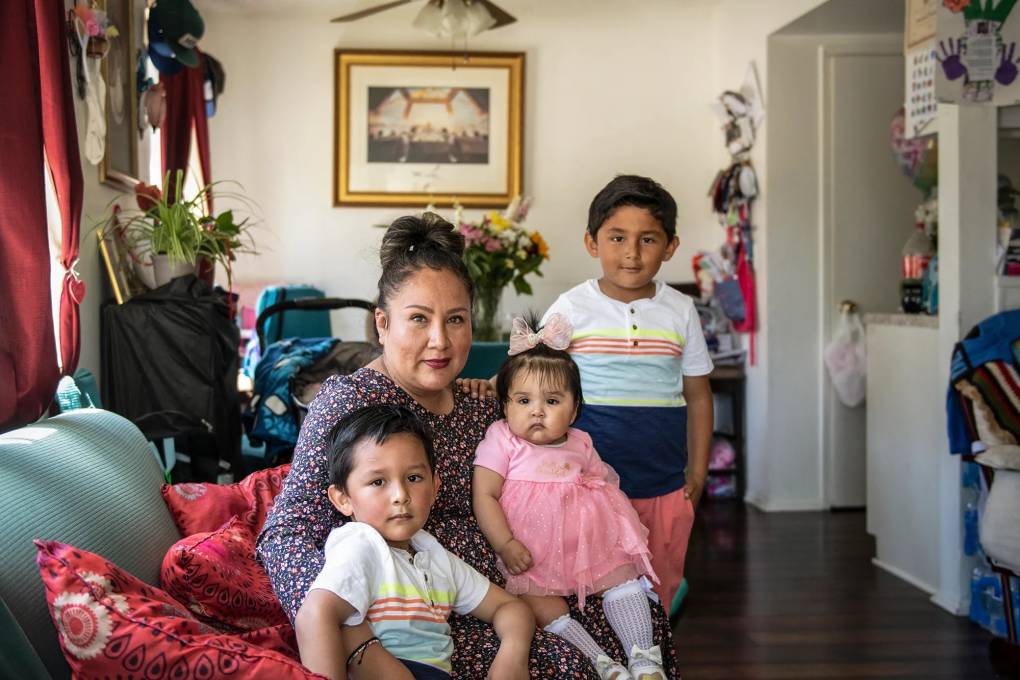
Poverty in California Declined During the Pandemic. Now Inflation Is Threatening That Progress
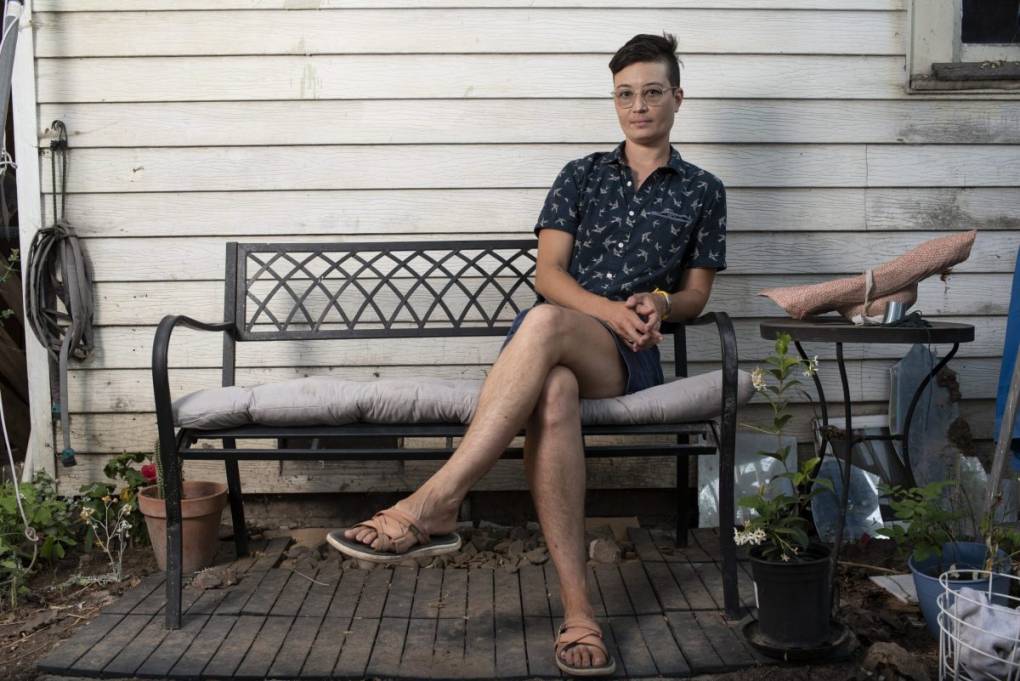
Some Disabled Californians Feel Abandoned by Newsom’s Golden State Stimulus
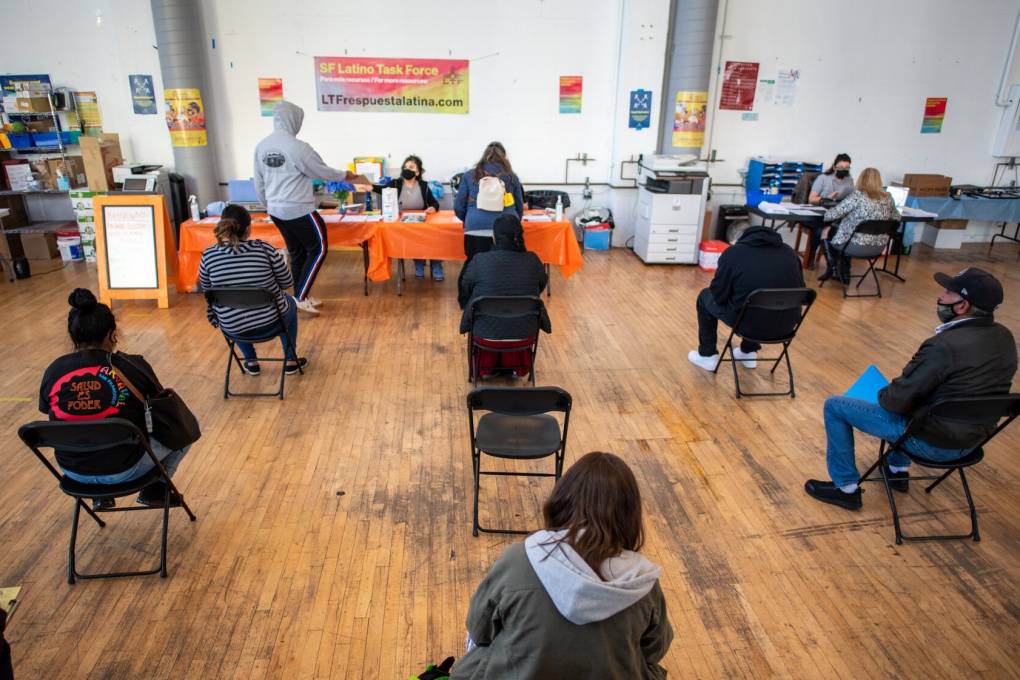
Una 'brecha' del estímulo económico: Por qué muchos inmigrantes indocumentados no han podido recibir el alivio financiero de California que les corresponde
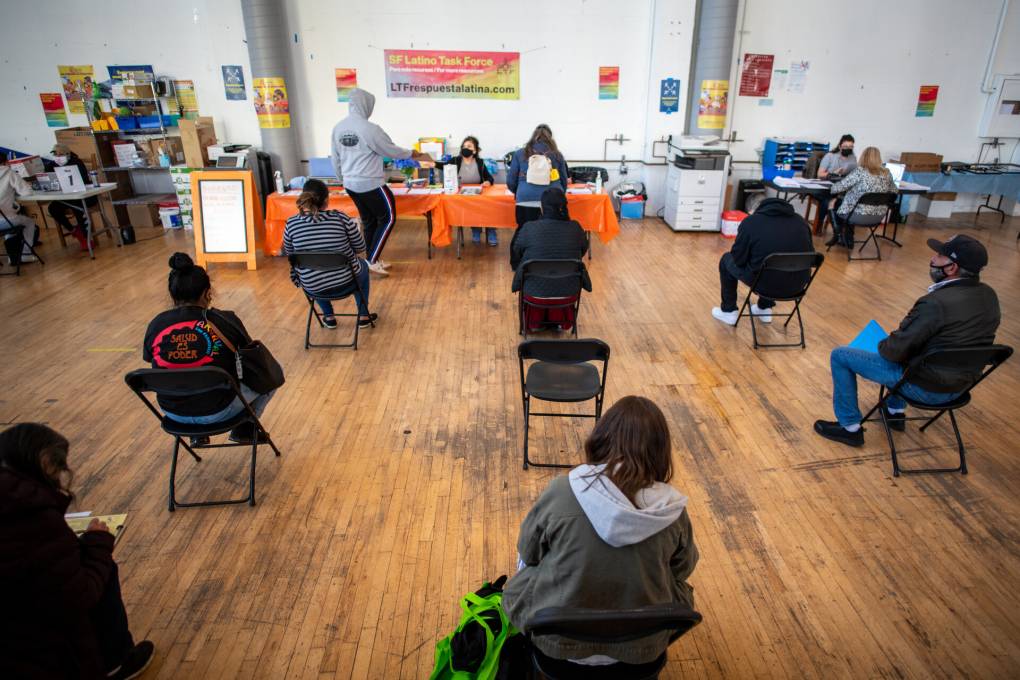
The ‘Golden State Stimulus’ Includes Undocumented Californians, But Many Can’t Access Their Checks
A ‘Stimulus Gap’: Why Many Undocumented Californians Are Missing Out on Pandemic Aid Meant for Them
Sponsored
Player sponsored by
window.__IS_SSR__=true
window.__INITIAL_STATE__={
"attachmentsReducer": {
"audio_0": {
"type": "attachments",
"id": "audio_0",
"imgSizes": {
"kqedFullSize": {
"file": "https://ww2.kqed.org/news/wp-content/themes/KQED-unified/img/audio_bgs/background0.jpg"
}
}
},
"audio_1": {
"type": "attachments",
"id": "audio_1",
"imgSizes": {
"kqedFullSize": {
"file": "https://ww2.kqed.org/news/wp-content/themes/KQED-unified/img/audio_bgs/background1.jpg"
}
}
},
"audio_2": {
"type": "attachments",
"id": "audio_2",
"imgSizes": {
"kqedFullSize": {
"file": "https://ww2.kqed.org/news/wp-content/themes/KQED-unified/img/audio_bgs/background2.jpg"
}
}
},
"audio_3": {
"type": "attachments",
"id": "audio_3",
"imgSizes": {
"kqedFullSize": {
"file": "https://ww2.kqed.org/news/wp-content/themes/KQED-unified/img/audio_bgs/background3.jpg"
}
}
},
"audio_4": {
"type": "attachments",
"id": "audio_4",
"imgSizes": {
"kqedFullSize": {
"file": "https://ww2.kqed.org/news/wp-content/themes/KQED-unified/img/audio_bgs/background4.jpg"
}
}
},
"placeholder": {
"type": "attachments",
"id": "placeholder",
"imgSizes": {
"thumbnail": {
"file": "https://cdn.kqed.org/wp-content/uploads/2024/12/KQED-Default-Image-816638274-2000x1333-1-160x107.jpg",
"width": 160,
"height": 107,
"mimeType": "image/jpeg"
},
"medium": {
"file": "https://cdn.kqed.org/wp-content/uploads/2024/12/KQED-Default-Image-816638274-2000x1333-1-800x533.jpg",
"width": 800,
"height": 533,
"mimeType": "image/jpeg"
},
"medium_large": {
"file": "https://cdn.kqed.org/wp-content/uploads/2024/12/KQED-Default-Image-816638274-2000x1333-1-768x512.jpg",
"width": 768,
"height": 512,
"mimeType": "image/jpeg"
},
"large": {
"file": "https://cdn.kqed.org/wp-content/uploads/2024/12/KQED-Default-Image-816638274-2000x1333-1-1020x680.jpg",
"width": 1020,
"height": 680,
"mimeType": "image/jpeg"
},
"1536x1536": {
"file": "https://cdn.kqed.org/wp-content/uploads/2024/12/KQED-Default-Image-816638274-2000x1333-1-1536x1024.jpg",
"width": 1536,
"height": 1024,
"mimeType": "image/jpeg"
},
"fd-lrg": {
"file": "https://cdn.kqed.org/wp-content/uploads/2024/12/KQED-Default-Image-816638274-2000x1333-1-1536x1024.jpg",
"width": 1536,
"height": 1024,
"mimeType": "image/jpeg"
},
"fd-med": {
"file": "https://cdn.kqed.org/wp-content/uploads/2024/12/KQED-Default-Image-816638274-2000x1333-1-1020x680.jpg",
"width": 1020,
"height": 680,
"mimeType": "image/jpeg"
},
"fd-sm": {
"file": "https://cdn.kqed.org/wp-content/uploads/2024/12/KQED-Default-Image-816638274-2000x1333-1-800x533.jpg",
"width": 800,
"height": 533,
"mimeType": "image/jpeg"
},
"post-thumbnail": {
"file": "https://cdn.kqed.org/wp-content/uploads/2024/12/KQED-Default-Image-816638274-2000x1333-1-672x372.jpg",
"width": 672,
"height": 372,
"mimeType": "image/jpeg"
},
"twentyfourteen-full-width": {
"file": "https://cdn.kqed.org/wp-content/uploads/2024/12/KQED-Default-Image-816638274-2000x1333-1-1038x576.jpg",
"width": 1038,
"height": 576,
"mimeType": "image/jpeg"
},
"xxsmall": {
"file": "https://cdn.kqed.org/wp-content/uploads/2024/12/KQED-Default-Image-816638274-2000x1333-1-160x107.jpg",
"width": 160,
"height": 107,
"mimeType": "image/jpeg"
},
"xsmall": {
"file": "https://cdn.kqed.org/wp-content/uploads/2024/12/KQED-Default-Image-816638274-2000x1333-1-672x372.jpg",
"width": 672,
"height": 372,
"mimeType": "image/jpeg"
},
"small": {
"file": "https://cdn.kqed.org/wp-content/uploads/2024/12/KQED-Default-Image-816638274-2000x1333-1-672x372.jpg",
"width": 672,
"height": 372,
"mimeType": "image/jpeg"
},
"xlarge": {
"file": "https://cdn.kqed.org/wp-content/uploads/2024/12/KQED-Default-Image-816638274-2000x1333-1-1020x680.jpg",
"width": 1020,
"height": 680,
"mimeType": "image/jpeg"
},
"full-width": {
"file": "https://cdn.kqed.org/wp-content/uploads/2024/12/KQED-Default-Image-816638274-2000x1333-1-1920x1280.jpg",
"width": 1920,
"height": 1280,
"mimeType": "image/jpeg"
},
"guest-author-32": {
"file": "https://cdn.kqed.org/wp-content/uploads/2025/01/KQED-Default-Image-816638274-1333x1333-1-160x160.jpg",
"width": 32,
"height": 32,
"mimeType": "image/jpeg"
},
"guest-author-50": {
"file": "https://cdn.kqed.org/wp-content/uploads/2025/01/KQED-Default-Image-816638274-1333x1333-1-160x160.jpg",
"width": 50,
"height": 50,
"mimeType": "image/jpeg"
},
"guest-author-64": {
"file": "https://cdn.kqed.org/wp-content/uploads/2025/01/KQED-Default-Image-816638274-1333x1333-1-160x160.jpg",
"width": 64,
"height": 64,
"mimeType": "image/jpeg"
},
"guest-author-96": {
"file": "https://cdn.kqed.org/wp-content/uploads/2025/01/KQED-Default-Image-816638274-1333x1333-1-160x160.jpg",
"width": 96,
"height": 96,
"mimeType": "image/jpeg"
},
"guest-author-128": {
"file": "https://cdn.kqed.org/wp-content/uploads/2025/01/KQED-Default-Image-816638274-1333x1333-1-160x160.jpg",
"width": 128,
"height": 128,
"mimeType": "image/jpeg"
},
"detail": {
"file": "https://cdn.kqed.org/wp-content/uploads/2025/01/KQED-Default-Image-816638274-1333x1333-1-160x160.jpg",
"width": 160,
"height": 160,
"mimeType": "image/jpeg"
},
"kqedFullSize": {
"file": "https://cdn.kqed.org/wp-content/uploads/2024/12/KQED-Default-Image-816638274-2000x1333-1.jpg",
"width": 2000,
"height": 1333
}
}
},
"news_11910183": {
"type": "attachments",
"id": "news_11910183",
"meta": {
"index": "attachments_1716263798",
"site": "news",
"id": "11910183",
"found": true
},
"parent": 11909786,
"imgSizes": {
"twentyfourteen-full-width": {
"file": "https://ww2.kqed.org/app/uploads/sites/10/2022/04/pexels-sora-shimazaki-5668869-1038x576.jpg",
"width": 1038,
"mimeType": "image/jpeg",
"height": 576
},
"thumbnail": {
"file": "https://ww2.kqed.org/app/uploads/sites/10/2022/04/pexels-sora-shimazaki-5668869-160x107.jpg",
"width": 160,
"mimeType": "image/jpeg",
"height": 107
},
"post-thumbnail": {
"file": "https://ww2.kqed.org/app/uploads/sites/10/2022/04/pexels-sora-shimazaki-5668869-672x372.jpg",
"width": 672,
"mimeType": "image/jpeg",
"height": 372
},
"kqedFullSize": {
"file": "https://ww2.kqed.org/app/uploads/sites/10/2022/04/pexels-sora-shimazaki-5668869.jpg",
"width": 1920,
"height": 1280
},
"large": {
"file": "https://ww2.kqed.org/app/uploads/sites/10/2022/04/pexels-sora-shimazaki-5668869-1020x680.jpg",
"width": 1020,
"mimeType": "image/jpeg",
"height": 680
},
"1536x1536": {
"file": "https://ww2.kqed.org/app/uploads/sites/10/2022/04/pexels-sora-shimazaki-5668869-1536x1024.jpg",
"width": 1536,
"mimeType": "image/jpeg",
"height": 1024
},
"medium": {
"file": "https://ww2.kqed.org/app/uploads/sites/10/2022/04/pexels-sora-shimazaki-5668869-800x533.jpg",
"width": 800,
"mimeType": "image/jpeg",
"height": 533
}
},
"publishDate": 1648850866,
"modified": 1648858573,
"caption": "If you're looking for free tax help ahead of Tax Day 2022, we have advice.",
"description": null,
"title": "free-tax-help",
"credit": "Sora Shimazaki/Pexels",
"status": "inherit",
"altTag": "A woman in a large beige trench coat sits at a table writing on a clipboard.",
"fetchFailed": false,
"isLoading": false
},
"news_11914299": {
"type": "attachments",
"id": "news_11914299",
"meta": {
"index": "attachments_1716263798",
"site": "news",
"id": "11914299",
"found": true
},
"parent": 11914291,
"imgSizes": {
"twentyfourteen-full-width": {
"file": "https://ww2.kqed.org/app/uploads/sites/10/2022/06/InflationCALMATTERS-1038x576.jpg",
"width": 1038,
"mimeType": "image/jpeg",
"height": 576
},
"thumbnail": {
"file": "https://ww2.kqed.org/app/uploads/sites/10/2022/06/InflationCALMATTERS-160x107.jpg",
"width": 160,
"mimeType": "image/jpeg",
"height": 107
},
"post-thumbnail": {
"file": "https://ww2.kqed.org/app/uploads/sites/10/2022/06/InflationCALMATTERS-672x372.jpg",
"width": 672,
"mimeType": "image/jpeg",
"height": 372
},
"kqedFullSize": {
"file": "https://ww2.kqed.org/app/uploads/sites/10/2022/06/InflationCALMATTERS.jpg",
"width": 2000,
"height": 1334
},
"large": {
"file": "https://ww2.kqed.org/app/uploads/sites/10/2022/06/InflationCALMATTERS-1020x680.jpg",
"width": 1020,
"mimeType": "image/jpeg",
"height": 680
},
"1536x1536": {
"file": "https://ww2.kqed.org/app/uploads/sites/10/2022/06/InflationCALMATTERS-1536x1025.jpg",
"width": 1536,
"mimeType": "image/jpeg",
"height": 1025
},
"full-width": {
"file": "https://ww2.kqed.org/app/uploads/sites/10/2022/06/InflationCALMATTERS-1920x1281.jpg",
"width": 1920,
"mimeType": "image/jpeg",
"height": 1281
},
"medium": {
"file": "https://ww2.kqed.org/app/uploads/sites/10/2022/06/InflationCALMATTERS-800x534.jpg",
"width": 800,
"mimeType": "image/jpeg",
"height": 534
}
},
"publishDate": 1652733561,
"modified": 1652830395,
"caption": "Mayra Paniagua and her three children inside their home in Oxnard on May 14, 2022. 'With the stimulus payments, we were able to continue making the car payment and the other household bills,' Paniagua said. 'That helped us a lot.'",
"description": null,
"title": "Inflation CALMATTERS",
"credit": "Pablo Unzueta/CalMatters",
"status": "inherit",
"altTag": null,
"fetchFailed": false,
"isLoading": false
},
"news_11879472": {
"type": "attachments",
"id": "news_11879472",
"meta": {
"index": "attachments_1716263798",
"site": "news",
"id": "11879472",
"found": true
},
"parent": 11879461,
"imgSizes": {
"twentyfourteen-full-width": {
"file": "https://ww2.kqed.org/app/uploads/sites/10/2021/06/20210620_CalMatters_CharisHill_0129_A-scaled-1-1038x576.jpeg",
"width": 1038,
"mimeType": "image/jpeg",
"height": 576
},
"thumbnail": {
"file": "https://ww2.kqed.org/app/uploads/sites/10/2021/06/20210620_CalMatters_CharisHill_0129_A-scaled-1-160x107.jpeg",
"width": 160,
"mimeType": "image/jpeg",
"height": 107
},
"post-thumbnail": {
"file": "https://ww2.kqed.org/app/uploads/sites/10/2021/06/20210620_CalMatters_CharisHill_0129_A-scaled-1-672x372.jpeg",
"width": 672,
"mimeType": "image/jpeg",
"height": 372
},
"kqedFullSize": {
"file": "https://ww2.kqed.org/app/uploads/sites/10/2021/06/20210620_CalMatters_CharisHill_0129_A-scaled-1.jpeg",
"width": 1200,
"height": 801
},
"large": {
"file": "https://ww2.kqed.org/app/uploads/sites/10/2021/06/20210620_CalMatters_CharisHill_0129_A-scaled-1-1020x681.jpeg",
"width": 1020,
"mimeType": "image/jpeg",
"height": 681
},
"medium": {
"file": "https://ww2.kqed.org/app/uploads/sites/10/2021/06/20210620_CalMatters_CharisHill_0129_A-scaled-1-800x534.jpeg",
"width": 800,
"mimeType": "image/jpeg",
"height": 534
}
},
"publishDate": 1624667525,
"modified": 1624667544,
"caption": "Charis Hill, a disability activist, poses for a portrait at their home in Sacramento. Hill is advocating for the Golden State Stimulus to be extended to SSDI recipients automatically.",
"description": "Charis Hill, a disability activist, poses for a portrait at their home in Sacramento. Hill is advocating for the Golden State Stimulus to be extended to SSDI recipients automatically.",
"title": "20210620_CalMatters_CharisHill_0129_A-scaled",
"credit": "Salgu Wissmath/CalMatters",
"status": "inherit",
"altTag": null,
"fetchFailed": false,
"isLoading": false
},
"news_11877671": {
"type": "attachments",
"id": "news_11877671",
"meta": {
"index": "attachments_1716263798",
"site": "news",
"id": "11877671",
"found": true
},
"parent": 11877669,
"imgSizes": {
"twentyfourteen-full-width": {
"file": "https://ww2.kqed.org/app/uploads/sites/10/2021/06/RS49132_013_SanFrancisco_MEDADairoRomero_05192021-qut-1-1038x576.jpg",
"width": 1038,
"mimeType": "image/jpeg",
"height": 576
},
"thumbnail": {
"file": "https://ww2.kqed.org/app/uploads/sites/10/2021/06/RS49132_013_SanFrancisco_MEDADairoRomero_05192021-qut-1-160x107.jpg",
"width": 160,
"mimeType": "image/jpeg",
"height": 107
},
"post-thumbnail": {
"file": "https://ww2.kqed.org/app/uploads/sites/10/2021/06/RS49132_013_SanFrancisco_MEDADairoRomero_05192021-qut-1-672x372.jpg",
"width": 672,
"mimeType": "image/jpeg",
"height": 372
},
"kqedFullSize": {
"file": "https://ww2.kqed.org/app/uploads/sites/10/2021/06/RS49132_013_SanFrancisco_MEDADairoRomero_05192021-qut-1.jpg",
"width": 1682,
"height": 1121
},
"large": {
"file": "https://ww2.kqed.org/app/uploads/sites/10/2021/06/RS49132_013_SanFrancisco_MEDADairoRomero_05192021-qut-1-1020x680.jpg",
"width": 1020,
"mimeType": "image/jpeg",
"height": 680
},
"1536x1536": {
"file": "https://ww2.kqed.org/app/uploads/sites/10/2021/06/RS49132_013_SanFrancisco_MEDADairoRomero_05192021-qut-1-1536x1024.jpg",
"width": 1536,
"mimeType": "image/jpeg",
"height": 1024
},
"medium": {
"file": "https://ww2.kqed.org/app/uploads/sites/10/2021/06/RS49132_013_SanFrancisco_MEDADairoRomero_05192021-qut-1-800x533.jpg",
"width": 800,
"mimeType": "image/jpeg",
"height": 533
}
},
"publishDate": 1623399309,
"modified": 1623400117,
"caption": "El 'Mission Resource Hub' en San Francisco ha ayudado a cientos de familias a presentar sus impuestos y calificar para la ayuda del programa estatal 'Golden State Stimulus'. Pero muchos inmigrantes sin números de Seguro Social han enfrentado grandes obstáculos al intentar presentar la solicitud por primera vez.",
"description": "El 'Mission Resource Hub' en San Francisco ha ayudado a cientos de familias a presentar sus impuestos y calificar para la ayuda del programa estatal 'Golden State Stimulus'. Pero muchos inmigrantes sin números de Seguro Social han enfrentado grandes obstáculos al intentar presentar la solicitud por primera vez.",
"title": "RS49132_013_SanFrancisco_MEDADairoRomero_05192021-qut (1)",
"credit": "Beth LaBerge/KQED",
"status": "inherit",
"altTag": "Varias personas esperan sentadas en sillas para que las atiendan.",
"fetchFailed": false,
"isLoading": false
},
"news_11876122": {
"type": "attachments",
"id": "news_11876122",
"meta": {
"index": "attachments_1716263798",
"site": "news",
"id": "11876122",
"found": true
},
"parent": 11874637,
"imgSizes": {
"twentyfourteen-full-width": {
"file": "https://ww2.kqed.org/app/uploads/sites/10/2021/06/RS49123_004_SanFrancisco_MEDADairoRomero_05192021-qut-1038x576.jpg",
"width": 1038,
"mimeType": "image/jpeg",
"height": 576
},
"thumbnail": {
"file": "https://ww2.kqed.org/app/uploads/sites/10/2021/06/RS49123_004_SanFrancisco_MEDADairoRomero_05192021-qut-160x107.jpg",
"width": 160,
"mimeType": "image/jpeg",
"height": 107
},
"post-thumbnail": {
"file": "https://ww2.kqed.org/app/uploads/sites/10/2021/06/RS49123_004_SanFrancisco_MEDADairoRomero_05192021-qut-672x372.jpg",
"width": 672,
"mimeType": "image/jpeg",
"height": 372
},
"kqedFullSize": {
"file": "https://ww2.kqed.org/app/uploads/sites/10/2021/06/RS49123_004_SanFrancisco_MEDADairoRomero_05192021-qut.jpg",
"width": 1920,
"height": 1280
},
"large": {
"file": "https://ww2.kqed.org/app/uploads/sites/10/2021/06/RS49123_004_SanFrancisco_MEDADairoRomero_05192021-qut-1020x680.jpg",
"width": 1020,
"mimeType": "image/jpeg",
"height": 680
},
"1536x1536": {
"file": "https://ww2.kqed.org/app/uploads/sites/10/2021/06/RS49123_004_SanFrancisco_MEDADairoRomero_05192021-qut-1536x1024.jpg",
"width": 1536,
"mimeType": "image/jpeg",
"height": 1024
},
"medium": {
"file": "https://ww2.kqed.org/app/uploads/sites/10/2021/06/RS49123_004_SanFrancisco_MEDADairoRomero_05192021-qut-800x533.jpg",
"width": 800,
"mimeType": "image/jpeg",
"height": 533
}
},
"publishDate": 1622541047,
"modified": 1622541460,
"caption": "When Leydi needed help requesting an emergency appointment with the Mexican consulate in San Francisco, she turned to Dairo Romero, community initiatives manager at MEDA, for help. He was able to write her a letter explaining her family's situation and need for passports. Romero helps another person file their taxes on the second floor of the Mission Food Hub in San Francisco on May 19, 2021.",
"description": "Dairo Romero helps another person file their taxes on the second floor of the Mission Food Hub in San Francisco on May 19, 2021.",
"title": "RS49123_004_SanFrancisco_MEDADairoRomero_05192021-qut",
"credit": "Beth LaBerge/KQED",
"status": "inherit",
"altTag": "Dairo Romero, community initiatives manager at MEDA, sits at a table as he helps out a person file their taxes.",
"fetchFailed": false,
"isLoading": false
},
"news_11874638": {
"type": "attachments",
"id": "news_11874638",
"meta": {
"index": "attachments_1716263798",
"site": "news",
"id": "11874638",
"found": true
},
"parent": 11874637,
"imgSizes": {
"twentyfourteen-full-width": {
"file": "https://ww2.kqed.org/app/uploads/sites/10/2021/05/RS49132_013_SanFrancisco_MEDADairoRomero_05192021-qut-1038x576.jpg",
"width": 1038,
"mimeType": "image/jpeg",
"height": 576
},
"thumbnail": {
"file": "https://ww2.kqed.org/app/uploads/sites/10/2021/05/RS49132_013_SanFrancisco_MEDADairoRomero_05192021-qut-160x107.jpg",
"width": 160,
"mimeType": "image/jpeg",
"height": 107
},
"post-thumbnail": {
"file": "https://ww2.kqed.org/app/uploads/sites/10/2021/05/RS49132_013_SanFrancisco_MEDADairoRomero_05192021-qut-672x372.jpg",
"width": 672,
"mimeType": "image/jpeg",
"height": 372
},
"kqedFullSize": {
"file": "https://ww2.kqed.org/app/uploads/sites/10/2021/05/RS49132_013_SanFrancisco_MEDADairoRomero_05192021-qut.jpg",
"width": 1920,
"height": 1280
},
"large": {
"file": "https://ww2.kqed.org/app/uploads/sites/10/2021/05/RS49132_013_SanFrancisco_MEDADairoRomero_05192021-qut-1020x680.jpg",
"width": 1020,
"mimeType": "image/jpeg",
"height": 680
},
"1536x1536": {
"file": "https://ww2.kqed.org/app/uploads/sites/10/2021/05/RS49132_013_SanFrancisco_MEDADairoRomero_05192021-qut-1536x1024.jpg",
"width": 1536,
"mimeType": "image/jpeg",
"height": 1024
},
"medium": {
"file": "https://ww2.kqed.org/app/uploads/sites/10/2021/05/RS49132_013_SanFrancisco_MEDADairoRomero_05192021-qut-800x533.jpg",
"width": 800,
"mimeType": "image/jpeg",
"height": 533
}
},
"publishDate": 1621611959,
"modified": 1622608689,
"caption": "The Mission Resource Hub in San Francisco has helped hundreds of families file their taxes and qualify for Golden State Stimulus program aid. But many immigrants without Social Security numbers have run into major obstacles trying to file for the first time.",
"description": "People wait for tax help at the Mission Food Hub in San Francisco on May 19, 2021.",
"title": "RS49132_013_SanFrancisco_MEDADairoRomero_05192021-qut",
"credit": "Beth LaBerge/KQED",
"status": "inherit",
"altTag": "People wait for tax help at the Mission Food Hub in San Francisco on May 19, 2021.",
"fetchFailed": false,
"isLoading": false
}
},
"audioPlayerReducer": {
"postId": "stream_live",
"isPaused": true,
"isPlaying": false,
"pfsActive": false,
"pledgeModalIsOpen": true,
"playerDrawerIsOpen": false
},
"authorsReducer": {
"byline_news_11914291": {
"type": "authors",
"id": "byline_news_11914291",
"meta": {
"override": true
},
"slug": "byline_news_11914291",
"name": "\u003ca>Alejandro Lazo\u003c/a>",
"isLoading": false
},
"byline_news_11879461": {
"type": "authors",
"id": "byline_news_11879461",
"meta": {
"override": true
},
"slug": "byline_news_11879461",
"name": "\u003ca href=\"https://calmatters.org/author/jackie-botts/\">Jackie Botts\u003c/a>",
"isLoading": false
},
"dkatayama": {
"type": "authors",
"id": "7240",
"meta": {
"index": "authors_1716337520",
"id": "7240",
"found": true
},
"name": "Devin Katayama",
"firstName": "Devin",
"lastName": "Katayama",
"slug": "dkatayama",
"email": "dkatayama@kqed.org",
"display_author_email": true,
"staff_mastheads": [
"news"
],
"title": "Editor of Talent and Development",
"bio": "Devin Katayama is former Editor of Talent and Development for KQED. He supported our internship program and on-call staff by looking for equitable opportunities to improve the newsroom.\r\n\r\nHe previously hosted The Bay and American Suburb podcasts from KQED News. Prior to returning to the Bay Area in 2015, Devin was the education reporter for WFPL in Louisville and worked as a producer with radio stations in Chicago and Portland, OR. His work has appeared on NPR’s \u003cem>Morning Edition, All Things Considered, The Takeaway\u003c/em> and \u003cem>Here and Now.\u003c/em>\r\n\r\nDevin earned his MA in Journalism from Columbia College Chicago, where he was a Follett Fellow and the recipient of the 2011 Studs Terkel Community Media Workshop Scholarship for his story on Chicago's homeless youth. He won WBUR's 2014 Daniel Schorr award and a regional RTNDA Edward R. Murrow Award for his documentary \"At Risk\" that looked at issues facing some of Louisville's students. Devin has also received numerous local awards from the Associated Press and the Society of Professional Journalists.",
"avatar": "https://secure.gravatar.com/avatar/d0d2978a31002fb2de107921a8e18405?s=600&d=blank&r=g",
"twitter": "RadioDevin",
"facebook": null,
"instagram": null,
"linkedin": null,
"sites": [
{
"site": "arts",
"roles": []
},
{
"site": "news",
"roles": [
"author"
]
},
{
"site": "stateofhealth",
"roles": [
"author"
]
},
{
"site": "forum",
"roles": [
"editor"
]
},
{
"site": "perspectives",
"roles": [
"editor"
]
}
],
"headData": {
"title": "Devin Katayama | KQED",
"description": "Editor of Talent and Development",
"ogImgSrc": "https://secure.gravatar.com/avatar/d0d2978a31002fb2de107921a8e18405?s=600&d=blank&r=g",
"twImgSrc": "https://secure.gravatar.com/avatar/d0d2978a31002fb2de107921a8e18405?s=600&d=blank&r=g"
},
"isLoading": false,
"link": "/author/dkatayama"
},
"ecruzguevarra": {
"type": "authors",
"id": "8654",
"meta": {
"index": "authors_1716337520",
"id": "8654",
"found": true
},
"name": "Ericka Cruz Guevarra",
"firstName": "Ericka",
"lastName": "Cruz Guevarra",
"slug": "ecruzguevarra",
"email": "ecruzguevarra@kqed.org",
"display_author_email": true,
"staff_mastheads": [
"news"
],
"title": "Producer, The Bay Podcast",
"bio": "Ericka Cruz Guevarra is host of \u003ca href=\"https://www.kqed.org/podcasts/thebay\">\u003cem>The Bay\u003c/em>\u003c/a> podcast at KQED. Before host, she was the show’s producer. Her work in that capacity includes a three-part reported series on policing in Vallejo, which won a 2020 excellence in journalism award from the Society of Professional Journalists. Ericka has worked as a breaking news reporter at Oregon Public Broadcasting, helped produce the Code Switch podcast, and was KQED’s inaugural Raul Ramirez Diversity Fund intern. She’s also an alumna of NPR’s Next Generation Radio program. Send her an email if you have strong feelings about whether Fairfield and Suisun City are the Bay. Ericka is represented by SAG-AFTRA.",
"avatar": "https://secure.gravatar.com/avatar/25e5ab8d3d53fad2dcc7bb2b5c506b1a?s=600&d=blank&r=g",
"twitter": "NotoriousECG",
"facebook": null,
"instagram": null,
"linkedin": null,
"sites": [
{
"site": "arts",
"roles": [
"subscriber"
]
},
{
"site": "news",
"roles": [
"editor",
"manage_categories"
]
},
{
"site": "futureofyou",
"roles": [
"subscriber"
]
},
{
"site": "stateofhealth",
"roles": [
"subscriber"
]
},
{
"site": "science",
"roles": [
"editor"
]
},
{
"site": "forum",
"roles": [
"subscriber"
]
}
],
"headData": {
"title": "Ericka Cruz Guevarra | KQED",
"description": "Producer, The Bay Podcast",
"ogImgSrc": "https://secure.gravatar.com/avatar/25e5ab8d3d53fad2dcc7bb2b5c506b1a?s=600&d=blank&r=g",
"twImgSrc": "https://secure.gravatar.com/avatar/25e5ab8d3d53fad2dcc7bb2b5c506b1a?s=600&d=blank&r=g"
},
"isLoading": false,
"link": "/author/ecruzguevarra"
},
"amontecillo": {
"type": "authors",
"id": "11649",
"meta": {
"index": "authors_1716337520",
"id": "11649",
"found": true
},
"name": "Alan Montecillo",
"firstName": "Alan",
"lastName": "Montecillo",
"slug": "amontecillo",
"email": "amontecillo@kqed.org",
"display_author_email": false,
"staff_mastheads": [
"news"
],
"title": "KQED Contributor",
"bio": "Alan Montecillo is the senior editor of \u003cem>\u003ca href=\"http://kqed.org/thebay\">The Bay\u003c/a>, \u003c/em> KQED's local news podcast. Before moving to the Bay Area, he worked as a senior talk show producer for WILL in Champaign-Urbana, Illinois and at Oregon Public Broadcasting in Portland, Oregon. He has won journalism awards from the Society of Professional Journalists Northern California, the Public Media Journalists Association, The Signal Awards, and has also received a regional Edward R. Murrow award. Alan is a Filipino American from Hong Kong and a graduate of Reed College.",
"avatar": "https://secure.gravatar.com/avatar/d5e4e7a76481969ccba76f4e2b5ccabc?s=600&d=blank&r=g",
"twitter": "alanmontecillo",
"facebook": null,
"instagram": null,
"linkedin": null,
"sites": [
{
"site": "",
"roles": [
"editor"
]
},
{
"site": "news",
"roles": [
"editor",
"manage_categories"
]
}
],
"headData": {
"title": "Alan Montecillo | KQED",
"description": "KQED Contributor",
"ogImgSrc": "https://secure.gravatar.com/avatar/d5e4e7a76481969ccba76f4e2b5ccabc?s=600&d=blank&r=g",
"twImgSrc": "https://secure.gravatar.com/avatar/d5e4e7a76481969ccba76f4e2b5ccabc?s=600&d=blank&r=g"
},
"isLoading": false,
"link": "/author/amontecillo"
},
"ccabreralomeli": {
"type": "authors",
"id": "11708",
"meta": {
"index": "authors_1716337520",
"id": "11708",
"found": true
},
"name": "Carlos Cabrera-Lomelí",
"firstName": "Carlos",
"lastName": "Cabrera-Lomelí",
"slug": "ccabreralomeli",
"email": "ccabreralomeli@KQED.org",
"display_author_email": true,
"staff_mastheads": [
"news"
],
"title": "Community Reporter",
"bio": "Carlos Cabrera-Lomelí is a community reporter with KQED's digital engagement team. He also reports and co-produces for KQED's bilingual news hub KQED en Español. He grew up in San Francisco's Mission District and has previously worked with Univision, 48 Hills and REFORMA in Mexico City.",
"avatar": "https://secure.gravatar.com/avatar/e95ff80bb2eaf18a8f2af4dcf7ffb54b?s=600&d=mm&r=g",
"twitter": "@LomeliCabrera",
"facebook": null,
"instagram": null,
"linkedin": null,
"sites": [
{
"site": "arts",
"roles": [
"editor"
]
},
{
"site": "news",
"roles": [
"editor"
]
},
{
"site": "about",
"roles": [
"editor"
]
},
{
"site": "science",
"roles": [
"editor"
]
},
{
"site": "perspectives",
"roles": [
"editor"
]
},
{
"site": "elections",
"roles": [
"editor"
]
},
{
"site": "liveblog",
"roles": [
"contributor"
]
}
],
"headData": {
"title": "Carlos Cabrera-Lomelí | KQED",
"description": "Community Reporter",
"ogImgSrc": "https://secure.gravatar.com/avatar/e95ff80bb2eaf18a8f2af4dcf7ffb54b?s=600&d=mm&r=g",
"twImgSrc": "https://secure.gravatar.com/avatar/e95ff80bb2eaf18a8f2af4dcf7ffb54b?s=600&d=mm&r=g"
},
"isLoading": false,
"link": "/author/ccabreralomeli"
}
},
"breakingNewsReducer": {},
"pagesReducer": {},
"postsReducer": {
"stream_live": {
"type": "live",
"id": "stream_live",
"audioUrl": "https://streams.kqed.org/kqedradio",
"title": "Live Stream",
"excerpt": "Live Stream information currently unavailable.",
"link": "/radio",
"featImg": "",
"label": {
"name": "KQED Live",
"link": "/"
}
},
"stream_kqedNewscast": {
"type": "posts",
"id": "stream_kqedNewscast",
"audioUrl": "https://www.kqed.org/.stream/anon/radio/RDnews/newscast.mp3?_=1",
"title": "KQED Newscast",
"featImg": "",
"label": {
"name": "88.5 FM",
"link": "/"
}
},
"news_11909786": {
"type": "posts",
"id": "news_11909786",
"meta": {
"index": "posts_1716263798",
"site": "news",
"id": "11909786",
"score": null,
"sort": [
1743850803000
]
},
"guestAuthors": [],
"slug": "how-to-find-free-tax-help-near-you-and-prepare-everything-you-need-for-your-appointment",
"title": "How to Find Free Tax Help Near You — and Prepare Everything You Need for Your Appointment",
"publishDate": 1743850803,
"format": "image",
"headTitle": "How to Find Free Tax Help Near You — and Prepare Everything You Need for Your Appointment | KQED",
"labelTerm": {
"site": "news"
},
"content": "\u003cp>This year, Tax Day is Tuesday, April 15. And if you’re running low on time before the deadline, a great option might be to seek the help of a free tax clinic to file your taxes. Skip to \u003ca href=\"#find\">where to find free tax help near you.\u003c/a>\u003c/p>\n\u003cp>KQED reached out to community tax sites across the Bay Area to ask what information they wish their clients knew before using their services — and what’s new about filing this year. Keep reading for their advice.\u003c/p>\n\u003cp>\u003cstrong>Skip to:\u003c/strong>\u003c/p>\n\u003cul>\n\u003cli>\u003cstrong>\u003ca href=\"#prep\">What to have ready before filing\u003c/a>\u003c/strong>\u003c/li>\n\u003cli>\u003cstrong>\u003ca href=\"#remember\">Things to keep in mind when talking to a tax filer\u003c/a>\u003c/strong>\u003c/li>\n\u003cli>\u003cstrong>\u003ca href=\"#time\">Running out of time and thinking about not filing this year?\u003c/a>\u003c/strong>\u003c/li>\n\u003c/ul>\n\u003ch3>\u003ca id=\"find\">\u003c/a>Where to find free tax help near you\u003c/h3>\n\u003cp>Across the Bay Area, dozens of nonprofit organizations and Volunteer Income Tax Assistance (VITA) sites are offering you free tax filing services, both in person and virtually — often right up until April 15.[aside postID=news_12030754 hero='https://cdn.kqed.org/wp-content/uploads/sites/10/2025/03/iStock-915488206_qed-1020x538.jpg']\u003c/p>\n\u003cp>Many of these sites offer assistance in Spanish, Cantonese, Tagalog, Vietnamese and other languages. Some also offer unscheduled walk-in appointments.\u003c/p>\n\u003cp>Find free tax help near you online:\u003c/p>\n\u003cul>\n\u003cli>Visit \u003ca href=\"https://www.myfreetaxes.org/\">myfreetaxes.org \u003c/a>to schedule an in-person or virtual appointment (or to file on your own for free)\u003c/li>\n\u003cli>Use \u003ca href=\"https://earnitkeepitsaveit.org/\">United Way Bay Area’s map\u003c/a>.\u003c/li>\n\u003c/ul>\n\u003cp>Find free tax help near you by phone:\u003c/p>\n\u003cul>\n\u003cli>Call 211\u003c/li>\n\u003cli>Text “taxes” to 211-211 (a text help line from United Ways of California and 211) to find a free tax filing site near you.\u003c/li>\n\u003c/ul>\n\u003ch2>\u003ca id=\"prep\">\u003c/a>What to have ready before filing\u003c/h2>\n\u003cp>The last two weeks before Tax Day tend to be the busiest period for free tax clinics, with many seeing up to hundreds of people each week.\u003c/p>\n\u003cp>For this reason, the tax aid groups KQED spoke to stressed just how important it is for filers to have \u003cem>everything\u003c/em> ready ahead of time — to make the process as easy and fast as possible. So, a few days before your filing appointment, start getting all your documents together in a “filing kit.”\u003c/p>\n\u003cp>Make sure your kit includes the following:\u003c/p>\n\u003cp>\u003cstrong>1. Your photo ID\u003c/strong>\u003c/p>\n\u003cp>\u003cstrong>2. Your Social Security card, or a letter from the Social Security Administration that verifies your SSN\u003c/strong>\u003c/p>\n\u003cul>\n\u003cli>If you do not have a Social Security number, bring your Individual Taxpayer Identification Number (ITIN) provided by the IRS instead. An ITIN is a number created by the IRS for taxpayers who don’t have a Social Security number due to their immigration status.\u003c/li>\n\u003cli>\u003ca href=\"https://www.irs.gov/individuals/how-do-i-apply-for-an-itin\">Get more information on how to request an ITIN.\u003c/a>\u003c/li>\n\u003c/ul>\n\u003cp>\u003cstrong>3. The Social Security numbers and/or ITIN numbers of everyone you’ll be claiming in your taxes this year\u003c/strong>\u003c/p>\n\u003cp>\u003cstrong>4. Income statement forms from your employer such as a W-2, 1099-MISC, 1099-NEC or 1099-K.\u003c/strong>\u003c/p>\n\u003cul>\n\u003cli>Starting this year, you should receive in the mail a 1099-K form if you use online payment systems like Venmo, Cash App or PayPal, and received over $5,000 through these platforms last year. Even if this is not your main source of income, make sure to bring this 1099-K form as well. If you did not receive a 1099-K form — but made over $5,000 through these platforms — let your filer know to prevent the risk of a potential audit from the IRS.\u003c/li>\n\u003cli>If you claimed unemployment benefits in 2021, the EDD also should have sent you a 1099-G form.\u003c/li>\n\u003c/ul>\n\u003cp>\u003cstrong>5. Proof of health care coverage\u003c/strong>\u003c/p>\n\u003cul>\n\u003cli>This will be a 1095-B form, or 1095-A form if you’re insured through Covered California.\u003c/li>\n\u003cli>If you didn’t receive a 1095-B or 1095-A in the mail, and you were enrolled in a health care plan in 2021, contact your care provider or access your online health care account to have it ready before you visit a tax clinic.\u003c/li>\n\u003c/ul>\n\u003cfigure id=\"attachment_11864604\" class=\"wp-caption alignnone\" style=\"max-width: 1920px\">\u003cimg loading=\"lazy\" decoding=\"async\" class=\"wp-image-11864604 size-full\" src=\"https://ww2.kqed.org/app/uploads/sites/10/2021/03/pexels-karolina-grabowska-4386433.jpg\" alt=\"A person's hands touching money in a wallet\" width=\"1920\" height=\"1200\" srcset=\"https://cdn.kqed.org/wp-content/uploads/sites/10/2021/03/pexels-karolina-grabowska-4386433.jpg 1920w, https://cdn.kqed.org/wp-content/uploads/sites/10/2021/03/pexels-karolina-grabowska-4386433-800x500.jpg 800w, https://cdn.kqed.org/wp-content/uploads/sites/10/2021/03/pexels-karolina-grabowska-4386433-1020x638.jpg 1020w, https://cdn.kqed.org/wp-content/uploads/sites/10/2021/03/pexels-karolina-grabowska-4386433-160x100.jpg 160w, https://cdn.kqed.org/wp-content/uploads/sites/10/2021/03/pexels-karolina-grabowska-4386433-1536x960.jpg 1536w\" sizes=\"auto, (max-width: 1920px) 100vw, 1920px\">\u003cfigcaption class=\"wp-caption-text\">Even if you’re worried about filing your taxes last-minute, don’t put it off. \u003ccite>(Karolina Grabowska/Pexels)\u003c/cite>\u003c/figcaption>\u003c/figure>\n\u003ch2>\u003ca id=\"remember\">\u003c/a>Things to keep in mind when talking to a tax filer\u003c/h2>\n\u003cp>Once you have your filing kit assembled, make sure you share \u003cem>everything\u003c/em> with your tax filer. And even if you misplaced a form, let your filer know which benefits you received in 2024.[aside postID=news_12030754 hero='https://cdn.kqed.org/wp-content/uploads/sites/10/2025/03/iStock-915488206_qed-1020x538.jpg']Something that several community tax clinics noticed this year is that several clients come in \u003cem>believing\u003c/em> they qualify for certain tax credits, when that may not in fact be the case. For example, some clients think that everyone regardless of income is eligible to receive the Earned Income Tax Credit.\u003c/p>\n\u003cp>But in reality, this cash rebate “is a function of how much income you receive and how many dependents you claim in your tax return,” Amy Spivey, professor and director of the Low-Income Taxpayer Clinic at UC College of the Law in San Francisco, told KQED in 2022.\u003c/p>\n\u003cp>For example, if you are filing jointly with your spouse and only have one child, your income must be less than $56,004. This number changes based on the size of your family and how you choose to file your taxes.\u003c/p>\n\u003cp>\u003ca href=\"https://www.eitc.irs.gov/eitc-central/income-limits-and-range-of-eitc\">\u003cstrong>The IRS has a complete list of income limits for families to qualify for the Earned Income Tax Credit.\u003c/strong>\u003c/a>\u003c/p>\n\u003cp>California has its own state version of this rebate, called the California Earned Income Tax Credit (CalEITC). But there are income restrictions on who can receive that, too: Only families that made up to $31,950 a year are eligible.\u003c/p>\n\u003cp>If you don’t have proof of health care coverage (like a 1095-B or 1095-A form) because you don’t have health insurance, you should make that very clear to your tax preparer.\u003c/p>\n\u003cp>You may very likely be penalized by the state of California for being uninsured. You can use the \u003ca href=\"https://www.ftb.ca.gov/file/personal/filing-situations/healthcare/estimator/\">penalty estimator tool on the California Franchise Tax Board website\u003c/a> to calculate how big this penalty could be for you.\u003c/p>\n\u003cp>[ad fullwidth]\u003c/p>\n\u003ch2>\u003ca id=\"time\">\u003c/a>Running out of time and thinking about not filing this year?\u003c/h2>\n\u003cp>Getting all your documents together and finding a place that can help you file your taxes can sometimes be overwhelming — especially if you already owe payments to the IRS from previous years. And Spivey understands this could dissuade people from filing when they have little time left before April 15.\u003c/p>\n\u003cp>“A lot of clients we see [don’t] file — they were afraid, they saw they owed money and they avoided filing,” she said. “But clients should really file on time, regardless of whether or not they can pay.”\u003c/p>\n\u003cp>Missing the April 15 deadline and letting another year pass without paying could have much bigger consequences later on, Spivey noted — and filing on time “is going to save you in additional penalties for maybe late filing.”\u003c/p>\n\u003cp>Filing by April 15 “will ensure if, for example you’re self-employed, that you’re going to get proper credit with the Social Security Administration,” she said.\u003c/p>\n\u003cp>What if you’re unable to pay everything you owe up front when you file? You can set up a payment plan, Spivey explained. You can do this at the time you file, or later on the IRS website.\u003c/p>\n\u003cp>\u003cem>KQED’s Mary Franklin Harvin contributed to this story. \u003c/em>\u003cem>A version of this story originally published on April 1, 2022.\u003c/em>\u003c/p>\n\u003cp>[ad floatright]\u003c/p>\n",
"blocks": [],
"excerpt": "Tax Day this year is around the corner — and if you're filing last-minute, here's what Bay Area tax preparers want you to know.",
"status": "publish",
"parent": 0,
"modified": 1743800995,
"stats": {
"hasAudio": false,
"hasVideo": false,
"hasChartOrMap": false,
"iframeSrcs": [],
"hasGoogleForm": false,
"hasGallery": false,
"hasHearkenModule": false,
"hasPolis": false,
"paragraphCount": 30,
"wordCount": 1266
},
"headData": {
"title": "How to Find Free Tax Help Near You — and Prepare Everything You Need for Your Appointment | KQED",
"description": "Tax Day this year is around the corner — and if you're filing last-minute, here's what Bay Area tax preparers want you to know.",
"ogTitle": "",
"ogDescription": "",
"ogImgId": "",
"twTitle": "",
"twDescription": "",
"twImgId": "",
"schema": {
"@context": "https://schema.org",
"@type": "NewsArticle",
"headline": "How to Find Free Tax Help Near You — and Prepare Everything You Need for Your Appointment",
"datePublished": "2025-04-05T04:00:03-07:00",
"dateModified": "2025-04-04T14:09:55-07:00",
"image": "https://cdn.kqed.org/wp-content/uploads/2020/02/KQED-OG-Image@1x.png",
"isAccessibleForFree": "True",
"publisher": {
"@type": "NewsMediaOrganization",
"@id": "https://www.kqed.org/#organization",
"name": "KQED",
"logo": "https://cdn.kqed.org/wp-content/uploads/2020/02/KQED-OG-Image@1x.png",
"url": "https://www.kqed.org",
"sameAs": [
"https://www.facebook.com/KQED",
"https://twitter.com/KQED",
"https://www.instagram.com/kqed/",
"https://www.tiktok.com/@kqedofficial",
"https://www.linkedin.com/company/kqed",
"https://www.youtube.com/channel/UCeC0IOo7i1P_61zVUWbJ4nw"
]
}
}
},
"sticky": false,
"templateType": "standard",
"featuredImageType": "standard",
"excludeFromSiteSearch": "Include",
"articleAge": "0",
"path": "/news/11909786/how-to-find-free-tax-help-near-you-and-prepare-everything-you-need-for-your-appointment",
"audioTrackLength": null,
"parsedContent": [
{
"type": "contentString",
"content": "\u003cdiv class=\"post-body\">\u003cp>\u003cp>This year, Tax Day is Tuesday, April 15. And if you’re running low on time before the deadline, a great option might be to seek the help of a free tax clinic to file your taxes. Skip to \u003ca href=\"#find\">where to find free tax help near you.\u003c/a>\u003c/p>\n\u003cp>KQED reached out to community tax sites across the Bay Area to ask what information they wish their clients knew before using their services — and what’s new about filing this year. Keep reading for their advice.\u003c/p>\n\u003cp>\u003cstrong>Skip to:\u003c/strong>\u003c/p>\n\u003cul>\n\u003cli>\u003cstrong>\u003ca href=\"#prep\">What to have ready before filing\u003c/a>\u003c/strong>\u003c/li>\n\u003cli>\u003cstrong>\u003ca href=\"#remember\">Things to keep in mind when talking to a tax filer\u003c/a>\u003c/strong>\u003c/li>\n\u003cli>\u003cstrong>\u003ca href=\"#time\">Running out of time and thinking about not filing this year?\u003c/a>\u003c/strong>\u003c/li>\n\u003c/ul>\n\u003ch3>\u003ca id=\"find\">\u003c/a>Where to find free tax help near you\u003c/h3>\n\u003cp>Across the Bay Area, dozens of nonprofit organizations and Volunteer Income Tax Assistance (VITA) sites are offering you free tax filing services, both in person and virtually — often right up until April 15.\u003c/p>\u003c/div>",
"attributes": {
"named": {},
"numeric": []
}
},
{
"type": "component",
"content": "",
"name": "aside",
"attributes": {
"named": {
"postid": "news_12030754",
"hero": "https://cdn.kqed.org/wp-content/uploads/sites/10/2025/03/iStock-915488206_qed-1020x538.jpg",
"label": ""
},
"numeric": []
}
},
{
"type": "contentString",
"content": "\u003cdiv class=\"post-body\">\u003cp>\u003c/p>\n\u003cp>Many of these sites offer assistance in Spanish, Cantonese, Tagalog, Vietnamese and other languages. Some also offer unscheduled walk-in appointments.\u003c/p>\n\u003cp>Find free tax help near you online:\u003c/p>\n\u003cul>\n\u003cli>Visit \u003ca href=\"https://www.myfreetaxes.org/\">myfreetaxes.org \u003c/a>to schedule an in-person or virtual appointment (or to file on your own for free)\u003c/li>\n\u003cli>Use \u003ca href=\"https://earnitkeepitsaveit.org/\">United Way Bay Area’s map\u003c/a>.\u003c/li>\n\u003c/ul>\n\u003cp>Find free tax help near you by phone:\u003c/p>\n\u003cul>\n\u003cli>Call 211\u003c/li>\n\u003cli>Text “taxes” to 211-211 (a text help line from United Ways of California and 211) to find a free tax filing site near you.\u003c/li>\n\u003c/ul>\n\u003ch2>\u003ca id=\"prep\">\u003c/a>What to have ready before filing\u003c/h2>\n\u003cp>The last two weeks before Tax Day tend to be the busiest period for free tax clinics, with many seeing up to hundreds of people each week.\u003c/p>\n\u003cp>For this reason, the tax aid groups KQED spoke to stressed just how important it is for filers to have \u003cem>everything\u003c/em> ready ahead of time — to make the process as easy and fast as possible. So, a few days before your filing appointment, start getting all your documents together in a “filing kit.”\u003c/p>\n\u003cp>Make sure your kit includes the following:\u003c/p>\n\u003cp>\u003cstrong>1. Your photo ID\u003c/strong>\u003c/p>\n\u003cp>\u003cstrong>2. Your Social Security card, or a letter from the Social Security Administration that verifies your SSN\u003c/strong>\u003c/p>\n\u003cul>\n\u003cli>If you do not have a Social Security number, bring your Individual Taxpayer Identification Number (ITIN) provided by the IRS instead. An ITIN is a number created by the IRS for taxpayers who don’t have a Social Security number due to their immigration status.\u003c/li>\n\u003cli>\u003ca href=\"https://www.irs.gov/individuals/how-do-i-apply-for-an-itin\">Get more information on how to request an ITIN.\u003c/a>\u003c/li>\n\u003c/ul>\n\u003cp>\u003cstrong>3. The Social Security numbers and/or ITIN numbers of everyone you’ll be claiming in your taxes this year\u003c/strong>\u003c/p>\n\u003cp>\u003cstrong>4. Income statement forms from your employer such as a W-2, 1099-MISC, 1099-NEC or 1099-K.\u003c/strong>\u003c/p>\n\u003cul>\n\u003cli>Starting this year, you should receive in the mail a 1099-K form if you use online payment systems like Venmo, Cash App or PayPal, and received over $5,000 through these platforms last year. Even if this is not your main source of income, make sure to bring this 1099-K form as well. If you did not receive a 1099-K form — but made over $5,000 through these platforms — let your filer know to prevent the risk of a potential audit from the IRS.\u003c/li>\n\u003cli>If you claimed unemployment benefits in 2021, the EDD also should have sent you a 1099-G form.\u003c/li>\n\u003c/ul>\n\u003cp>\u003cstrong>5. Proof of health care coverage\u003c/strong>\u003c/p>\n\u003cul>\n\u003cli>This will be a 1095-B form, or 1095-A form if you’re insured through Covered California.\u003c/li>\n\u003cli>If you didn’t receive a 1095-B or 1095-A in the mail, and you were enrolled in a health care plan in 2021, contact your care provider or access your online health care account to have it ready before you visit a tax clinic.\u003c/li>\n\u003c/ul>\n\u003cfigure id=\"attachment_11864604\" class=\"wp-caption alignnone\" style=\"max-width: 1920px\">\u003cimg loading=\"lazy\" decoding=\"async\" class=\"wp-image-11864604 size-full\" src=\"https://ww2.kqed.org/app/uploads/sites/10/2021/03/pexels-karolina-grabowska-4386433.jpg\" alt=\"A person's hands touching money in a wallet\" width=\"1920\" height=\"1200\" srcset=\"https://cdn.kqed.org/wp-content/uploads/sites/10/2021/03/pexels-karolina-grabowska-4386433.jpg 1920w, https://cdn.kqed.org/wp-content/uploads/sites/10/2021/03/pexels-karolina-grabowska-4386433-800x500.jpg 800w, https://cdn.kqed.org/wp-content/uploads/sites/10/2021/03/pexels-karolina-grabowska-4386433-1020x638.jpg 1020w, https://cdn.kqed.org/wp-content/uploads/sites/10/2021/03/pexels-karolina-grabowska-4386433-160x100.jpg 160w, https://cdn.kqed.org/wp-content/uploads/sites/10/2021/03/pexels-karolina-grabowska-4386433-1536x960.jpg 1536w\" sizes=\"auto, (max-width: 1920px) 100vw, 1920px\">\u003cfigcaption class=\"wp-caption-text\">Even if you’re worried about filing your taxes last-minute, don’t put it off. \u003ccite>(Karolina Grabowska/Pexels)\u003c/cite>\u003c/figcaption>\u003c/figure>\n\u003ch2>\u003ca id=\"remember\">\u003c/a>Things to keep in mind when talking to a tax filer\u003c/h2>\n\u003cp>Once you have your filing kit assembled, make sure you share \u003cem>everything\u003c/em> with your tax filer. And even if you misplaced a form, let your filer know which benefits you received in 2024.\u003c/p>\u003c/div>",
"attributes": {
"named": {},
"numeric": []
}
},
{
"type": "component",
"content": "",
"name": "aside",
"attributes": {
"named": {
"postid": "news_12030754",
"hero": "https://cdn.kqed.org/wp-content/uploads/sites/10/2025/03/iStock-915488206_qed-1020x538.jpg",
"label": ""
},
"numeric": []
}
},
{
"type": "contentString",
"content": "\u003cdiv class=\"post-body\">\u003cp>Something that several community tax clinics noticed this year is that several clients come in \u003cem>believing\u003c/em> they qualify for certain tax credits, when that may not in fact be the case. For example, some clients think that everyone regardless of income is eligible to receive the Earned Income Tax Credit.\u003c/p>\n\u003cp>But in reality, this cash rebate “is a function of how much income you receive and how many dependents you claim in your tax return,” Amy Spivey, professor and director of the Low-Income Taxpayer Clinic at UC College of the Law in San Francisco, told KQED in 2022.\u003c/p>\n\u003cp>For example, if you are filing jointly with your spouse and only have one child, your income must be less than $56,004. This number changes based on the size of your family and how you choose to file your taxes.\u003c/p>\n\u003cp>\u003ca href=\"https://www.eitc.irs.gov/eitc-central/income-limits-and-range-of-eitc\">\u003cstrong>The IRS has a complete list of income limits for families to qualify for the Earned Income Tax Credit.\u003c/strong>\u003c/a>\u003c/p>\n\u003cp>California has its own state version of this rebate, called the California Earned Income Tax Credit (CalEITC). But there are income restrictions on who can receive that, too: Only families that made up to $31,950 a year are eligible.\u003c/p>\n\u003cp>If you don’t have proof of health care coverage (like a 1095-B or 1095-A form) because you don’t have health insurance, you should make that very clear to your tax preparer.\u003c/p>\n\u003cp>You may very likely be penalized by the state of California for being uninsured. You can use the \u003ca href=\"https://www.ftb.ca.gov/file/personal/filing-situations/healthcare/estimator/\">penalty estimator tool on the California Franchise Tax Board website\u003c/a> to calculate how big this penalty could be for you.\u003c/p>\n\u003cp>\u003c/p>\u003c/div>",
"attributes": {
"named": {},
"numeric": []
}
},
{
"type": "component",
"content": "",
"name": "ad",
"attributes": {
"named": {
"label": "fullwidth"
},
"numeric": [
"fullwidth"
]
}
},
{
"type": "contentString",
"content": "\u003cdiv class=\"post-body\">\u003cp>\u003c/p>\n\u003ch2>\u003ca id=\"time\">\u003c/a>Running out of time and thinking about not filing this year?\u003c/h2>\n\u003cp>Getting all your documents together and finding a place that can help you file your taxes can sometimes be overwhelming — especially if you already owe payments to the IRS from previous years. And Spivey understands this could dissuade people from filing when they have little time left before April 15.\u003c/p>\n\u003cp>“A lot of clients we see [don’t] file — they were afraid, they saw they owed money and they avoided filing,” she said. “But clients should really file on time, regardless of whether or not they can pay.”\u003c/p>\n\u003cp>Missing the April 15 deadline and letting another year pass without paying could have much bigger consequences later on, Spivey noted — and filing on time “is going to save you in additional penalties for maybe late filing.”\u003c/p>\n\u003cp>Filing by April 15 “will ensure if, for example you’re self-employed, that you’re going to get proper credit with the Social Security Administration,” she said.\u003c/p>\n\u003cp>What if you’re unable to pay everything you owe up front when you file? You can set up a payment plan, Spivey explained. You can do this at the time you file, or later on the IRS website.\u003c/p>\n\u003cp>\u003cem>KQED’s Mary Franklin Harvin contributed to this story. \u003c/em>\u003cem>A version of this story originally published on April 1, 2022.\u003c/em>\u003c/p>\n\u003cp>\u003c/p>\u003c/div>",
"attributes": {
"named": {},
"numeric": []
}
},
{
"type": "component",
"content": "",
"name": "ad",
"attributes": {
"named": {
"label": "floatright"
},
"numeric": [
"floatright"
]
}
},
{
"type": "contentString",
"content": "\u003cdiv class=\"post-body\">\u003cp>\u003c/p>\n\u003c/div>\u003c/p>",
"attributes": {
"named": {},
"numeric": []
}
}
],
"link": "/news/11909786/how-to-find-free-tax-help-near-you-and-prepare-everything-you-need-for-your-appointment",
"authors": [
"11708"
],
"categories": [
"news_8"
],
"tags": [
"news_29235",
"news_29525",
"news_17968",
"news_2679",
"news_423"
],
"featImg": "news_11910183",
"label": "news"
},
"news_11914291": {
"type": "posts",
"id": "news_11914291",
"meta": {
"index": "posts_1716263798",
"site": "news",
"id": "11914291",
"score": null,
"sort": [
1652743501000
]
},
"guestAuthors": [],
"slug": "poverty-in-california-declined-during-the-pandemic-now-inflation-is-threatening-that-progress",
"title": "Poverty in California Declined During the Pandemic. Now Inflation Is Threatening That Progress",
"publishDate": 1652743501,
"format": "standard",
"headTitle": "Poverty in California Declined During the Pandemic. Now Inflation Is Threatening That Progress | KQED",
"labelTerm": {},
"content": "\u003cp>As the state’s Democratic leaders weigh how to spend a record $97.5 billion budget surplus, they also are grappling with how best to keep many vulnerable Californians out of poverty, with federal stimulus dollars waning and high inflation devouring household budgets.\u003c/p>\n\u003cp>Some advocates say the \u003ca href=\"https://calmatters.org/politics/2022/05/newsom-budget-spending/\">revised budget Gov. Gavin Newsom unveiled Friday\u003c/a> won’t do enough. To address inflation, Newsom is proposing to devote $18.1 billion in state funds.[aside postID=\"news_11873677\" hero=\"https://ww2.kqed.org/app/uploads/sites/10/2021/05/RS48059_003_SanFrancisco_NewsomBontaPressConference_03242021-qut-1020x679.jpg\"]His lead proposal, estimated to cost about $11.5 billion, would refund $400 each to most of the state’s car owners, with the aim of easing the burden of high gas prices. Newsom also included $750 million to make public transit free for three months.\u003c/p>\n\u003cp>Activists said the car-owner refund would not be targeted enough toward those needing the most help.\u003c/p>\n\u003cp>“At the end of the day, the state budget should be about ensuring every Californian can afford housing, food, child care, health care and education opportunities,” said Chris Hoene, executive director of the California Budget and Policy Center.[ad fullwidth]Experts say lower-income Californians are struggling the most with a volatile economic recovery marred by high housing costs and pricier basic necessities. And critics said the budget proposal doesn’t go far enough to help lower-income households weather high inflation.\u003c/p>\n\u003cp>Mayra Paniagua, a part-time tax preparer in Ventura County whose family of five lives frugally on a combined income of $44,000, said she would welcome any relief, as she has seen expenses climb this year.[pullquote size=\"medium\" align=\"right\" citation='Mayra Paniagua, part-time tax preparer and mother of three']‘We stretch our money, and try to save as much as possible, especially for what we need.’[/pullquote]“It’s been hard,” Paniagua said. “We stretch our money, and try to save as much as possible, especially for what we need.”\u003c/p>\n\u003cp>But the California Democrats who control state government are at odds over how they should spend on the state’s lowest-income residents.\u003c/p>\n\u003cp>Some are advocating the state extend expiring federal stimulus programs. Others say the eligibility of programs should be expanded to include more people.\u003c/p>\n\u003cp>They have about a month to come to an agreement, as the Legislature is constitutionally required to pass a budget by June 15. Then, Newsom has 15 days to act, before the new budget takes effect July 1.\u003c/p>\n\u003cp>Republican lawmakers, who are so small a minority they have virtually no say over spending, blame inflation on the policies of the majority party. “Democrat-rule has made this state unaffordable,” James Gallagher, the Assembly Republican leader from Yuba City, said last week.\u003c/p>\n\u003cp>Gallagher and other Republicans have blamed the state’s gas tax, which Democrats raised in 2017 under Brown to repair roads and bridges and expand mass transit, as a contributor to higher prices at the pump. Gallagher also has blamed the state’s climate change agenda for driving up the cost of utilities.\u003c/p>\n\u003cp>The federal stimulus is credited with boosting the fortune of the state’s least well-off.\u003cbr>\n\u003c!-- iframe plugin v.4.3 wordpress.org/plugins/iframe/ -->\u003cbr>\n\u003ciframe loading=\"lazy\" src=\"https://flo.uri.sh/visualisation/9945565/embed?auto=1\" width=\"800\" height=\"600\" scrolling=\"yes\" class=\"iframe-class\" frameborder=\"0\">\u003c/iframe>\u003cbr>\nThe state’s poverty rate fell from 16.2% in 2019 to 12.3% in 2020, according to the Public Policy Institute of California.\u003c/p>\n\u003cp>But experts caution that inflation and the expiration of federal programs could threaten that progress. Without the child tax credit, for instance, 1.7 million children are at risk of falling deeper into poverty, the Budget and Policy Center has said.[pullquote size=\"medium\" align=\"right\" citation=\"Sara Kimberlin, senior policy analyst, California Budget and Policy Center\"]‘Even if you can find a job, that doesn’t mean that you can afford to pay the rent and get food on the table.’[/pullquote]More than half of California’s \u003ca href=\"https://calbudgetcenter.org/resources/californians-with-low-incomes-are-in-most-need-of-support-for-basic-costs/\">residents with incomes below $50,000 were struggling\u003c/a> to pay for food, housing and medical costs in March and April. Black and Latino families and other families of color were among those most likely to be struggling, the center reported.\u003c/p>\n\u003cp>“We’ve got a strong labor market,” said Sara Kimberlin, a senior policy analyst with the center. “But even if you can find a job, that doesn’t mean that you can afford to pay the rent and get food on the table.”\u003c/p>\n\u003cp>The governor unveiled a variety of other measures he said were aimed at easing the inflation burden. Those proposals included $2.7 billion in rental assistance and $1.4 billion in past-due utility bill assistance. He also proposed a waiver of child care fees for lower-income families estimated to cost $157 million.\u003c/p>\n\u003cp>Newsom also proposed $933 million be used to provide cash payments of $1,500 for hospital and nursing home workers, while reserving $304 million for health insurance premium assistance for families.\u003c/p>\n\u003cp>To offset freighting costs, the governor proposed a $439 million pause on the state’s diesel tax.\u003c/p>\n\u003cp>The governor also announced that the \u003ca href=\"https://calmatters.org/newsletters/whatmatters/2022/05/california-minimum-wage/\">state’s minimum wage is set to increase to $15.50 an hour\u003c/a> next year due to the inflation hike.\u003c/p>\n\u003cp>Some Democratic legislators and their allies are pushing Newsom to take a different approach.[aside label=\"Related Stories\" postID=\"news_11874637,science_1979067,news_11907999\"]Assemblymember Miguel Santiago, a Los Angeles Democrat, plans to promote a bill he authored that would enable the state to extend the expired federal child tax credit. Santiago’s bill, backed by United Ways of California, would provide a $2,000 payment per child to families that earn $30,000 a year or less.\u003c/p>\n\u003cp>“It is a chance for the Legislature to send a clear message of prioritization,” said Anna Hasselblad, director of public policy for United Ways of California.\u003c/p>\n\u003cp>Any form of relief would be welcome to Paniagua, a 38-year-old mother of three living with her husband in a two-bedroom apartment in the coastal Ventura County city of Port Hueneme.\u003c/p>\n\u003cp>In a phone interview, Paniagua said her family survived the pandemic only because her husband kept his job at a local nursery. He is undocumented, she said, and so would not have qualified for 2020 federal relief.\u003c/p>\n\u003cp>In 2021, her family benefited from \u003ca href=\"https://calmatters.org/california-divide/2021/02/california-600-stimulus-checks-undocumented-workers/\">state stimulus checks for the undocumented\u003c/a>, she said, and from goods from a local food pantry and some CalFresh benefits available to her because her son was enrolled in school.\u003c/p>\n\u003cp>This year, she said, the high cost of living has stretched her family thin. With her rent increasing $200 in July to $2,100 a month, she has taken to using the Flipp phone app to search for deals on necessities such as milk, yogurt and baby formula for her 7-month-old girl.\u003c/p>\n\u003cp>Gone are any trips to the movies, or the occasional splurge on In-N-Out burgers, a favorite of her children, she said.\u003c/p>\n\u003cp>\u003cem>This article is part of the \u003ca href=\"https://calmatters.org/projects/california-divide/\">California Divide\u003c/a> project, a collaboration among newsrooms examining income inequality and economic survival in California.\u003c/em>\u003c/p>\n\u003cp>[ad floatright]\u003c/p>\n",
"blocks": [],
"excerpt": "California lawmakers and activists are pressing Gov. Gavin Newsom to spend more to help the state's lowest-income residents.",
"status": "publish",
"parent": 0,
"modified": 1728425557,
"stats": {
"hasAudio": false,
"hasVideo": false,
"hasChartOrMap": true,
"iframeSrcs": [
"https://flo.uri.sh/visualisation/9945565/embed"
],
"hasGoogleForm": false,
"hasGallery": false,
"hasHearkenModule": false,
"hasPolis": false,
"paragraphCount": 26,
"wordCount": 1193
},
"headData": {
"title": "Poverty in California Declined During the Pandemic. Now Inflation Is Threatening That Progress | KQED",
"description": "California lawmakers and activists are pressing Gov. Gavin Newsom to spend more to help the state's lowest-income residents.",
"ogTitle": "",
"ogDescription": "",
"ogImgId": "",
"twTitle": "",
"twDescription": "",
"twImgId": "",
"schema": {
"@context": "https://schema.org",
"@type": "NewsArticle",
"headline": "Poverty in California Declined During the Pandemic. Now Inflation Is Threatening That Progress",
"datePublished": "2022-05-16T16:25:01-07:00",
"dateModified": "2024-10-08T15:12:37-07:00",
"image": "https://cdn.kqed.org/wp-content/uploads/2020/02/KQED-OG-Image@1x.png",
"isAccessibleForFree": "True",
"publisher": {
"@type": "NewsMediaOrganization",
"@id": "https://www.kqed.org/#organization",
"name": "KQED",
"logo": "https://cdn.kqed.org/wp-content/uploads/2020/02/KQED-OG-Image@1x.png",
"url": "https://www.kqed.org",
"sameAs": [
"https://www.facebook.com/KQED",
"https://twitter.com/KQED",
"https://www.instagram.com/kqed/",
"https://www.tiktok.com/@kqedofficial",
"https://www.linkedin.com/company/kqed",
"https://www.youtube.com/channel/UCeC0IOo7i1P_61zVUWbJ4nw"
]
}
}
},
"source": "CALMATTERS",
"sourceUrl": "https://calmatters.org/",
"sticky": false,
"nprByline": "\u003ca>Alejandro Lazo\u003c/a>",
"excludeFromSiteSearch": "Include",
"showOnAuthorArchivePages": "No",
"path": "/news/11914291/poverty-in-california-declined-during-the-pandemic-now-inflation-is-threatening-that-progress",
"audioTrackLength": null,
"parsedContent": [
{
"type": "contentString",
"content": "\u003cdiv class=\"post-body\">\u003cp>\u003cp>As the state’s Democratic leaders weigh how to spend a record $97.5 billion budget surplus, they also are grappling with how best to keep many vulnerable Californians out of poverty, with federal stimulus dollars waning and high inflation devouring household budgets.\u003c/p>\n\u003cp>Some advocates say the \u003ca href=\"https://calmatters.org/politics/2022/05/newsom-budget-spending/\">revised budget Gov. Gavin Newsom unveiled Friday\u003c/a> won’t do enough. To address inflation, Newsom is proposing to devote $18.1 billion in state funds.\u003c/p>\u003c/div>",
"attributes": {
"named": {},
"numeric": []
}
},
{
"type": "component",
"content": "",
"name": "aside",
"attributes": {
"named": {
"postid": "news_11873677",
"hero": "https://ww2.kqed.org/app/uploads/sites/10/2021/05/RS48059_003_SanFrancisco_NewsomBontaPressConference_03242021-qut-1020x679.jpg",
"label": ""
},
"numeric": []
}
},
{
"type": "contentString",
"content": "\u003cdiv class=\"post-body\">\u003cp>His lead proposal, estimated to cost about $11.5 billion, would refund $400 each to most of the state’s car owners, with the aim of easing the burden of high gas prices. Newsom also included $750 million to make public transit free for three months.\u003c/p>\n\u003cp>Activists said the car-owner refund would not be targeted enough toward those needing the most help.\u003c/p>\n\u003cp>“At the end of the day, the state budget should be about ensuring every Californian can afford housing, food, child care, health care and education opportunities,” said Chris Hoene, executive director of the California Budget and Policy Center.\u003c/p>\u003c/div>",
"attributes": {
"named": {},
"numeric": []
}
},
{
"type": "component",
"content": "",
"name": "ad",
"attributes": {
"named": {
"label": "fullwidth"
},
"numeric": [
"fullwidth"
]
}
},
{
"type": "contentString",
"content": "\u003cdiv class=\"post-body\">\u003cp>Experts say lower-income Californians are struggling the most with a volatile economic recovery marred by high housing costs and pricier basic necessities. And critics said the budget proposal doesn’t go far enough to help lower-income households weather high inflation.\u003c/p>\n\u003cp>Mayra Paniagua, a part-time tax preparer in Ventura County whose family of five lives frugally on a combined income of $44,000, said she would welcome any relief, as she has seen expenses climb this year.\u003c/p>\u003c/div>",
"attributes": {
"named": {},
"numeric": []
}
},
{
"type": "component",
"content": "‘We stretch our money, and try to save as much as possible, especially for what we need.’",
"name": "pullquote",
"attributes": {
"named": {
"size": "medium",
"align": "right",
"citation": "Mayra Paniagua, part-time tax preparer and mother of three",
"label": ""
},
"numeric": []
}
},
{
"type": "contentString",
"content": "\u003cdiv class=\"post-body\">\u003cp>“It’s been hard,” Paniagua said. “We stretch our money, and try to save as much as possible, especially for what we need.”\u003c/p>\n\u003cp>But the California Democrats who control state government are at odds over how they should spend on the state’s lowest-income residents.\u003c/p>\n\u003cp>Some are advocating the state extend expiring federal stimulus programs. Others say the eligibility of programs should be expanded to include more people.\u003c/p>\n\u003cp>They have about a month to come to an agreement, as the Legislature is constitutionally required to pass a budget by June 15. Then, Newsom has 15 days to act, before the new budget takes effect July 1.\u003c/p>\n\u003cp>Republican lawmakers, who are so small a minority they have virtually no say over spending, blame inflation on the policies of the majority party. “Democrat-rule has made this state unaffordable,” James Gallagher, the Assembly Republican leader from Yuba City, said last week.\u003c/p>\n\u003cp>Gallagher and other Republicans have blamed the state’s gas tax, which Democrats raised in 2017 under Brown to repair roads and bridges and expand mass transit, as a contributor to higher prices at the pump. Gallagher also has blamed the state’s climate change agenda for driving up the cost of utilities.\u003c/p>\n\u003cp>The federal stimulus is credited with boosting the fortune of the state’s least well-off.\u003cbr>\n\u003c!-- iframe plugin v.4.3 wordpress.org/plugins/iframe/ -->\u003cbr>\n\u003ciframe loading=\"lazy\" src=\"https://flo.uri.sh/visualisation/9945565/embed?auto=1\" width=\"800\" height=\"600\" scrolling=\"yes\" class=\"iframe-class\" frameborder=\"0\">\u003c/iframe>\u003cbr>\nThe state’s poverty rate fell from 16.2% in 2019 to 12.3% in 2020, according to the Public Policy Institute of California.\u003c/p>\n\u003cp>But experts caution that inflation and the expiration of federal programs could threaten that progress. Without the child tax credit, for instance, 1.7 million children are at risk of falling deeper into poverty, the Budget and Policy Center has said.\u003c/p>\u003c/div>",
"attributes": {
"named": {},
"numeric": []
}
},
{
"type": "component",
"content": "‘Even if you can find a job, that doesn’t mean that you can afford to pay the rent and get food on the table.’",
"name": "pullquote",
"attributes": {
"named": {
"size": "medium",
"align": "right",
"citation": "Sara Kimberlin, senior policy analyst, California Budget and Policy Center",
"label": ""
},
"numeric": []
}
},
{
"type": "contentString",
"content": "\u003cdiv class=\"post-body\">\u003cp>More than half of California’s \u003ca href=\"https://calbudgetcenter.org/resources/californians-with-low-incomes-are-in-most-need-of-support-for-basic-costs/\">residents with incomes below $50,000 were struggling\u003c/a> to pay for food, housing and medical costs in March and April. Black and Latino families and other families of color were among those most likely to be struggling, the center reported.\u003c/p>\n\u003cp>“We’ve got a strong labor market,” said Sara Kimberlin, a senior policy analyst with the center. “But even if you can find a job, that doesn’t mean that you can afford to pay the rent and get food on the table.”\u003c/p>\n\u003cp>The governor unveiled a variety of other measures he said were aimed at easing the inflation burden. Those proposals included $2.7 billion in rental assistance and $1.4 billion in past-due utility bill assistance. He also proposed a waiver of child care fees for lower-income families estimated to cost $157 million.\u003c/p>\n\u003cp>Newsom also proposed $933 million be used to provide cash payments of $1,500 for hospital and nursing home workers, while reserving $304 million for health insurance premium assistance for families.\u003c/p>\n\u003cp>To offset freighting costs, the governor proposed a $439 million pause on the state’s diesel tax.\u003c/p>\n\u003cp>The governor also announced that the \u003ca href=\"https://calmatters.org/newsletters/whatmatters/2022/05/california-minimum-wage/\">state’s minimum wage is set to increase to $15.50 an hour\u003c/a> next year due to the inflation hike.\u003c/p>\n\u003cp>Some Democratic legislators and their allies are pushing Newsom to take a different approach.\u003c/p>\u003c/div>",
"attributes": {
"named": {},
"numeric": []
}
},
{
"type": "component",
"content": "",
"name": "aside",
"attributes": {
"named": {
"label": "Related Stories ",
"postid": "news_11874637,science_1979067,news_11907999"
},
"numeric": []
}
},
{
"type": "contentString",
"content": "\u003cdiv class=\"post-body\">\u003cp>Assemblymember Miguel Santiago, a Los Angeles Democrat, plans to promote a bill he authored that would enable the state to extend the expired federal child tax credit. Santiago’s bill, backed by United Ways of California, would provide a $2,000 payment per child to families that earn $30,000 a year or less.\u003c/p>\n\u003cp>“It is a chance for the Legislature to send a clear message of prioritization,” said Anna Hasselblad, director of public policy for United Ways of California.\u003c/p>\n\u003cp>Any form of relief would be welcome to Paniagua, a 38-year-old mother of three living with her husband in a two-bedroom apartment in the coastal Ventura County city of Port Hueneme.\u003c/p>\n\u003cp>In a phone interview, Paniagua said her family survived the pandemic only because her husband kept his job at a local nursery. He is undocumented, she said, and so would not have qualified for 2020 federal relief.\u003c/p>\n\u003cp>In 2021, her family benefited from \u003ca href=\"https://calmatters.org/california-divide/2021/02/california-600-stimulus-checks-undocumented-workers/\">state stimulus checks for the undocumented\u003c/a>, she said, and from goods from a local food pantry and some CalFresh benefits available to her because her son was enrolled in school.\u003c/p>\n\u003cp>This year, she said, the high cost of living has stretched her family thin. With her rent increasing $200 in July to $2,100 a month, she has taken to using the Flipp phone app to search for deals on necessities such as milk, yogurt and baby formula for her 7-month-old girl.\u003c/p>\n\u003cp>Gone are any trips to the movies, or the occasional splurge on In-N-Out burgers, a favorite of her children, she said.\u003c/p>\n\u003cp>\u003cem>This article is part of the \u003ca href=\"https://calmatters.org/projects/california-divide/\">California Divide\u003c/a> project, a collaboration among newsrooms examining income inequality and economic survival in California.\u003c/em>\u003c/p>\n\u003cp>\u003c/p>\u003c/div>",
"attributes": {
"named": {},
"numeric": []
}
},
{
"type": "component",
"content": "",
"name": "ad",
"attributes": {
"named": {
"label": "floatright"
},
"numeric": [
"floatright"
]
}
},
{
"type": "contentString",
"content": "\u003cdiv class=\"post-body\">\u003cp>\u003c/p>\n\u003c/div>\u003c/p>",
"attributes": {
"named": {},
"numeric": []
}
}
],
"link": "/news/11914291/poverty-in-california-declined-during-the-pandemic-now-inflation-is-threatening-that-progress",
"authors": [
"byline_news_11914291"
],
"categories": [
"news_8"
],
"tags": [
"news_20023",
"news_21405",
"news_641",
"news_19105",
"news_16",
"news_29525",
"news_17968",
"news_397"
],
"featImg": "news_11914299",
"label": "source_news_11914291"
},
"news_11879461": {
"type": "posts",
"id": "news_11879461",
"meta": {
"index": "posts_1716263798",
"site": "news",
"id": "11879461",
"score": null,
"sort": [
1624714207000
]
},
"guestAuthors": [],
"slug": "some-disabled-californians-feel-abandoned-by-newsoms-golden-state-stimulus",
"title": "Some Disabled Californians Feel Abandoned by Newsom’s Golden State Stimulus",
"publishDate": 1624714207,
"format": "standard",
"headTitle": "Some Disabled Californians Feel Abandoned by Newsom’s Golden State Stimulus | KQED",
"labelTerm": {},
"content": "\u003cp>\u003cem>Lea este artículo en \u003ca href=\"https://calmatters.org/calmatters-en-espanol/2021/06/algunos-californianos-discapacitados-se-sienten-abandonados-por-el-estimulo-golden-state-de-newsom/\" target=\"_blank\" rel=\"noopener noreferrer\">español\u003c/a>.\u003c/em>\u003c/p>\n\u003cp>A $600 check would go a long way for Janet Clendenin.\u003c/p>\n\u003cp>The costs of the sugar-free foods she buys to manage her diabetes have risen sharply in South Lake Tahoe during the pandemic, Clendenin said. She usually has to crisscross the picturesque region by bus to find discounts at Dollar Tree, Grocery Outlet and Walmart.\u003c/p>\n\u003cp>So when she learned about Gov. Gavin Newsom’s plan to send $600 payments to the lowest-income Californians in February, Clendenin felt relief.\u003c/p>\n\u003cp>[pullquote size=\"medium\" align=\"right\" citation=\"Charis Hill, disability activist\"]‘It’s really hard to see and read coverage of Newsom touting how great this is for middle-class people.’[/pullquote]Then came frustration.\u003c/p>\n\u003cp>Clendenin scoured the news for \u003ca href=\"https://calmatters.org/california-divide/2021/02/california-golden-state-stimulus-600-check/\" target=\"_blank\" rel=\"noopener noreferrer\">details on eligibility\u003c/a>. She learned that she could have qualified if she worked in 2020. But a constellation of diabetes, arthritis, migraines, back injuries and nerve pain made work impossible about six years ago. Given her disabilities, she could also have qualified if only she received Supplemental Security Income, a federal safety-net program for elderly, blind and disabled people with limited income.\u003c/p>\n\u003cp>But nowhere could Clendenin find mention of Social Security Disability Insurance, the other main federal program for people with disabilities, which sends her $1,056 a month.\u003c/p>\n\u003cp>“I couldn’t believe that we were left out,” said Clendenin. “How unfair is that?”\u003c/p>\n\u003cp>It’s a sentiment shared by many Californians on federal disability insurance, who have asked why Newsom’s stimulus payments skipped them over.\u003c/p>\n\u003cp>While California lawmakers automatically sent checks to 1.2 million people who receive SSI, the 1.2 million Californians on SSDI only qualify if they had income from work in 2020. But that’s rare — \u003ca href=\"https://www.cbpp.org/research/social-security/paul-n-van-de-water-promoting-opportunity-for-social-security-disability\" target=\"_blank\" rel=\"noopener noreferrer\">research shows\u003c/a> that \u003ca href=\"https://www.ssa.gov/disabilityresearch/documents/TTW5_Brief_2_DIcohort_REV2.pdf\" target=\"_blank\" rel=\"noopener noreferrer\">fewer than 1 in 5 SSDI recipients work during a typical year\u003c/a>, often because they are limited by their disabilities or risk losing their benefits if they work too much.\u003c/p>\n\u003cp>[aside postID=\"news_11860924\" hero=\"https://ww2.kqed.org/app/uploads/sites/10/2021/02/RS47239_001_SanFrancisco_HenryZhang_02162021-qut-1020x680.jpg\"]Disability advocates say it’s the latest example of the state abandoning some of its most vulnerable residents during the pandemic, after having directed medical health providers to \u003ca href=\"https://www.sacbee.com/article243474286.html\" target=\"_blank\" rel=\"noopener noreferrer\">ration COVID-19 care to elderly and less-healthy people\u003c/a> last spring and \u003ca href=\"https://calmatters.org/health/coronavirus/2021/02/covid-advisory-group-rejects-higher-vaccine-priority-for-disabled-californians-and-those-with-chronic-conditions/\" target=\"_blank\" rel=\"noopener noreferrer\">deprioritize people with disabilities for vaccines\u003c/a> earlier this year — both policies that were \u003ca href=\"https://calmatters.org/health/coronavirus/2021/02/california-shifts-priorities-vaccine-chronic-conditions/\" target=\"_blank\" rel=\"noopener noreferrer\">reversed after considerable outcry\u003c/a>.\u003c/p>\n\u003cp>“Overall the state has been uneven in how it’s helped people with disabilities navigate the pandemic,” said Andrew Imparato, executive director of Disability Rights California. “A lot of people with disabilities have had to fend for themselves.”\u003c/p>\n\u003cp>Department of Finance spokesperson H.D. Palmer cites logistical challenges. California maintains an up-to-date list of residents who get SSI \u003ca href=\"https://www.cdss.ca.gov/inforesources/ssi-ssp\" target=\"_blank\" rel=\"noopener noreferrer\">because the state supplements the federal benefit by a few hundred dollars\u003c/a>, but doesn’t have access to the same information for SSDI.\u003c/p>\n\u003cp>“Trying to include SSDI … would be a time-consuming and laborious process with the feds that doesn’t line up with the intent of (the Golden State Stimulus) — to get immediate relief to Californians with whom we have an existing relationship,” Palmer wrote in an email.\u003c/p>\n\u003ch3>‘Make Hard Decisions Quickly’\u003c/h3>\n\u003cp>The Newsom administration may have also based the decision on a consideration of need.\u003c/p>\n\u003cp>California’s \u003ca href=\"https://calbudgetcenter.org/wp-content/uploads/2020/02/CA-Budget-Center-SSI-SSP-IB_Chart-4.-SSP-Individual-Grant-Up-to-FPL-Bar-Chart.png\" target=\"_blank\" rel=\"noopener noreferrer\">SSI recipients live in poverty by definition\u003c/a>. Elderly, blind and disabled people can only qualify if they have extremely low income and wealth, and they typically receive just $954.72 per month.\u003c/p>\n\u003cp>On the other hand, people with sufficient work history can qualify for monthly SSDI payments based on their former wages, with the \u003ca href=\"https://www.ssa.gov/OACT/ProgData/icp.html\" target=\"_blank\" rel=\"noopener noreferrer\">average national benefit at $1,280\u003c/a> per month.\u003c/p>\n\u003cp>Still, California’s SSDI recipients often face steep financial challenges. They are more than twice as likely to live in poverty compared to the rest of the population, according to calculations by Andrew Houtenville, an economist at the Institute on Disability at the University of New Hampshire. And people with disabilities often have to cover expensive medical equipment, appointments with specialists and drugs out-of-pocket.\u003c/p>\n\u003cp>[ad fullwidth]\u003c/p>\n\u003cp>Imparato acknowledged that the state was “trying to make hard decisions quickly” but “including everyone on SSDI probably would have been a more equitable thing to do than excluding them because you don’t have access to their program or because it’s not a means-tested program.”\u003c/p>\n\u003cp>There are some signs that lawmakers could still include SSDI recipients. Newsom’s proposed expansion of the Golden State Stimulus still requires approval from state legislators. Though they passed a placeholder budget to meet a June 15 deadline, state lawmakers continue to disagree with Newsom over how much surplus money the state has at its disposal and how to spend it.\u003c/p>\n\u003cp>According to a legislative staffer familiar with ongoing budget negotiations, some members of the Legislature are pushing the Newsom administration to expand eligibility for the Golden State Stimulus payments to Californians on SSDI, among other groups.\u003c/p>\n\u003ch3>The Evolution of the Golden State Stimulus\u003c/h3>\n\u003cp>Eligibility for Newsom’s Golden State Stimulus has gone through several twists and turns. In January, \u003ca href=\"https://calmatters.org/california-divide/2021/01/newsom-wants-extra-600-stimulus-for-low-wage-californians/\" target=\"_blank\" rel=\"noopener noreferrer\">Newsom announced a $2.4 billion plan to send $600 Golden State Stimulus checks\u003c/a> to approximately 4 million low-income workers.\u003c/p>\n\u003cp>[aside postID=news_11874637 hero='https://ww2.kqed.org/app/uploads/sites/10/2021/05/RS49132_013_SanFrancisco_MEDADairoRomero_05192021-qut-1020x680.jpg']By February, with the \u003ca href=\"https://twitter.com/GavinNewsom/status/1357089574288117760?s=20\" target=\"_blank\" rel=\"noopener noreferrer\">state’s revenue estimates swelling\u003c/a>, the Legislature negotiated and approved an even more generous \u003ca href=\"https://calmatters.org/california-divide/2021/02/california-600-stimulus-checks-undocumented-workers/\" target=\"_blank\" rel=\"noopener noreferrer\">$3.8 billion stimulus payment plan that included extra aid for undocumented workers\u003c/a>.\u003c/p>\n\u003cp>Under this plan, the state also sent $600 payments to certain Californians living in poverty — regardless of whether they work. That included very low-income families with children enrolled in CalWORKs, as well as recipients of SSI or the state’s alternative for some immigrant groups, known as the \u003ca href=\"https://www.cdss.ca.gov/inforesources/cash-assistance-for-immigrants\" target=\"_blank\" rel=\"noopener noreferrer\">Cash Assistance Program for Immigrants\u003c/a>.\u003c/p>\n\u003cp>It took Charis Hill several days of searching online and contacting their state assemblymember to discover that they did not automatically qualify. A Sacramento-based disability activist who lives on $1,027 per month from SSDI, Hill eventually deduced that they could qualify not because they were disabled, but rather because they had done freelance writing and speaking last year.\u003c/p>\n\u003cp>Hill would have to file taxes, something they hadn’t done in years because their earned income is far below the filing requirement. They decided it was worth it. Their expenses have jumped during the pandemic, especially as they’ve opted for grocery deliveries instead of shopping in stores because they are immunocompromised.\u003c/p>\n\u003cp>Hill said that, unlike many disabled people, they were fortunate to have internet access and a friend who could help them file their taxes. They were lucky to be able to work last year despite experiencing constant pain and fatigue from an inflammatory condition called axial spondyloarthritis. But, they said, it’s wrong that the Golden State Stimulus program is “basing a disabled person’s value on their ability to work.”\u003c/p>\n\u003cfigure id=\"attachment_11879468\" class=\"wp-caption alignnone\" style=\"max-width: 800px\">\u003cimg loading=\"lazy\" decoding=\"async\" class=\"size-medium wp-image-11879468\" src=\"https://ww2.kqed.org/app/uploads/sites/10/2021/06/20210620_CalMatters_CharisHill_0075_A-scaled-1-800x533.jpeg\" alt=\"\" width=\"800\" height=\"533\" srcset=\"https://cdn.kqed.org/wp-content/uploads/sites/10/2021/06/20210620_CalMatters_CharisHill_0075_A-scaled-1-800x533.jpeg 800w, https://cdn.kqed.org/wp-content/uploads/sites/10/2021/06/20210620_CalMatters_CharisHill_0075_A-scaled-1-1020x680.jpeg 1020w, https://cdn.kqed.org/wp-content/uploads/sites/10/2021/06/20210620_CalMatters_CharisHill_0075_A-scaled-1-160x107.jpeg 160w, https://cdn.kqed.org/wp-content/uploads/sites/10/2021/06/20210620_CalMatters_CharisHill_0075_A-scaled-1-1536x1024.jpeg 1536w, https://cdn.kqed.org/wp-content/uploads/sites/10/2021/06/20210620_CalMatters_CharisHill_0075_A-scaled-1.jpeg 1568w\" sizes=\"(max-width: 800px) 100vw, 800px\">\u003cfigcaption class=\"wp-caption-text\">Charis Hill, a disability activist based in Sacramento, was able to get the Golden State Stimulus because they did some freelance work in 2020. But Hill says that it’s unfair that most Californians receiving federal disability insurance don’t currently qualify. \u003ccite>(Salgu Wissmath/CalMatters)\u003c/cite>\u003c/figcaption>\u003c/figure>\n\u003cp>When Newsom proposed a \u003ca href=\"https://calmatters.org/california-divide/2021/05/newsom-proposes-expanding-golden-state-stimulus-to-middle-class/\" target=\"_blank\" rel=\"noopener noreferrer\">second round of Golden State stimulus payments aimed at California’s middle class\u003c/a> in May, Hill was hopeful that other SSDI recipients would finally be able to benefit, too. However, as the details of Newsom’s plan emerged, there was still no mention of SSDI recipients.\u003c/p>\n\u003cp>“It’s really hard to see and read coverage of Newsom touting how great this is for middle-class people,” said Hill, when people with disabilities are “some of the most impoverished people in the whole country.”\u003c/p>\n\u003ch3>Financial Burden Can Fall to Caretakers\u003c/h3>\n\u003cp>Sydney Chandler manages the finances and health care of her cousin, Chris Batiste, who is paralyzed. Batiste breathes through an apparatus and communicates with Chandler through a laptop, blinks and head movements.\u003c/p>\n\u003cp>[aside label=\"related coverage\" tag=\"disability-rights\"]Chandler, who is a Los Angeles-based writer, said she was livid to learn that SSDI recipients were left out of the state stimulus. To her, it was just another obstacle in the arbitrary and bureaucratic maze that people with disabilities face in trying to attain a liveable income.\u003c/p>\n\u003cp>Caretakers often carry a significant financial burden. Batiste receives $975 per month in SSDI, and Chandler said she contributes over $1,000 more each month to help cover his rent and full-time nursing.\u003c/p>\n\u003cp>“If it wasn’t for me, he would be one of the homeless,” Chandler said, “and you’re telling me that you couldn’t set up a portal for SSDI (recipients) to input their information?”\u003c/p>\n\u003cp>\u003cem>This article is part of the California Divide, a collaboration among newsrooms examining income inequality and economic survival in California.\u003c/em>\u003c/p>\n\u003cp>[ad floatright]\u003c/p>\n",
"blocks": [],
"excerpt": "The Newsom administration sent $600 Golden State Stimulus checks to some Californians with disabilities, but passed over others. ",
"status": "publish",
"parent": 0,
"modified": 1726006318,
"stats": {
"hasAudio": false,
"hasVideo": false,
"hasChartOrMap": false,
"iframeSrcs": [],
"hasGoogleForm": false,
"hasGallery": false,
"hasHearkenModule": false,
"hasPolis": false,
"paragraphCount": 36,
"wordCount": 1535
},
"headData": {
"title": "Some Disabled Californians Feel Abandoned by Newsom’s Golden State Stimulus | KQED",
"description": "The Newsom administration sent $600 Golden State Stimulus checks to some Californians with disabilities, but passed over others. ",
"ogTitle": "",
"ogDescription": "",
"ogImgId": "",
"twTitle": "",
"twDescription": "",
"twImgId": "",
"schema": {
"@context": "https://schema.org",
"@type": "NewsArticle",
"headline": "Some Disabled Californians Feel Abandoned by Newsom’s Golden State Stimulus",
"datePublished": "2021-06-26T06:30:07-07:00",
"dateModified": "2024-09-10T15:11:58-07:00",
"image": "https://cdn.kqed.org/wp-content/uploads/2020/02/KQED-OG-Image@1x.png",
"isAccessibleForFree": "True",
"publisher": {
"@type": "NewsMediaOrganization",
"@id": "https://www.kqed.org/#organization",
"name": "KQED",
"logo": "https://cdn.kqed.org/wp-content/uploads/2020/02/KQED-OG-Image@1x.png",
"url": "https://www.kqed.org",
"sameAs": [
"https://www.facebook.com/KQED",
"https://twitter.com/KQED",
"https://www.instagram.com/kqed/",
"https://www.tiktok.com/@kqedofficial",
"https://www.linkedin.com/company/kqed",
"https://www.youtube.com/channel/UCeC0IOo7i1P_61zVUWbJ4nw"
]
}
}
},
"source": "CalMatters",
"sourceUrl": "https://calmatters.org/",
"sticky": false,
"nprByline": "\u003ca href=\"https://calmatters.org/author/jackie-botts/\">Jackie Botts\u003c/a>",
"path": "/news/11879461/some-disabled-californians-feel-abandoned-by-newsoms-golden-state-stimulus",
"audioTrackLength": null,
"parsedContent": [
{
"type": "contentString",
"content": "\u003cdiv class=\"post-body\">\u003cp>\u003cp>\u003cem>Lea este artículo en \u003ca href=\"https://calmatters.org/calmatters-en-espanol/2021/06/algunos-californianos-discapacitados-se-sienten-abandonados-por-el-estimulo-golden-state-de-newsom/\" target=\"_blank\" rel=\"noopener noreferrer\">español\u003c/a>.\u003c/em>\u003c/p>\n\u003cp>A $600 check would go a long way for Janet Clendenin.\u003c/p>\n\u003cp>The costs of the sugar-free foods she buys to manage her diabetes have risen sharply in South Lake Tahoe during the pandemic, Clendenin said. She usually has to crisscross the picturesque region by bus to find discounts at Dollar Tree, Grocery Outlet and Walmart.\u003c/p>\n\u003cp>So when she learned about Gov. Gavin Newsom’s plan to send $600 payments to the lowest-income Californians in February, Clendenin felt relief.\u003c/p>\n\u003cp>\u003c/p>\u003c/div>",
"attributes": {
"named": {},
"numeric": []
}
},
{
"type": "component",
"content": "‘It’s really hard to see and read coverage of Newsom touting how great this is for middle-class people.’",
"name": "pullquote",
"attributes": {
"named": {
"size": "medium",
"align": "right",
"citation": "Charis Hill, disability activist",
"label": ""
},
"numeric": []
}
},
{
"type": "contentString",
"content": "\u003cdiv class=\"post-body\">\u003cp>Then came frustration.\u003c/p>\n\u003cp>Clendenin scoured the news for \u003ca href=\"https://calmatters.org/california-divide/2021/02/california-golden-state-stimulus-600-check/\" target=\"_blank\" rel=\"noopener noreferrer\">details on eligibility\u003c/a>. She learned that she could have qualified if she worked in 2020. But a constellation of diabetes, arthritis, migraines, back injuries and nerve pain made work impossible about six years ago. Given her disabilities, she could also have qualified if only she received Supplemental Security Income, a federal safety-net program for elderly, blind and disabled people with limited income.\u003c/p>\n\u003cp>But nowhere could Clendenin find mention of Social Security Disability Insurance, the other main federal program for people with disabilities, which sends her $1,056 a month.\u003c/p>\n\u003cp>“I couldn’t believe that we were left out,” said Clendenin. “How unfair is that?”\u003c/p>\n\u003cp>It’s a sentiment shared by many Californians on federal disability insurance, who have asked why Newsom’s stimulus payments skipped them over.\u003c/p>\n\u003cp>While California lawmakers automatically sent checks to 1.2 million people who receive SSI, the 1.2 million Californians on SSDI only qualify if they had income from work in 2020. But that’s rare — \u003ca href=\"https://www.cbpp.org/research/social-security/paul-n-van-de-water-promoting-opportunity-for-social-security-disability\" target=\"_blank\" rel=\"noopener noreferrer\">research shows\u003c/a> that \u003ca href=\"https://www.ssa.gov/disabilityresearch/documents/TTW5_Brief_2_DIcohort_REV2.pdf\" target=\"_blank\" rel=\"noopener noreferrer\">fewer than 1 in 5 SSDI recipients work during a typical year\u003c/a>, often because they are limited by their disabilities or risk losing their benefits if they work too much.\u003c/p>\n\u003cp>\u003c/p>\u003c/div>",
"attributes": {
"named": {},
"numeric": []
}
},
{
"type": "component",
"content": "",
"name": "aside",
"attributes": {
"named": {
"postid": "news_11860924",
"hero": "https://ww2.kqed.org/app/uploads/sites/10/2021/02/RS47239_001_SanFrancisco_HenryZhang_02162021-qut-1020x680.jpg",
"label": ""
},
"numeric": []
}
},
{
"type": "contentString",
"content": "\u003cdiv class=\"post-body\">\u003cp>Disability advocates say it’s the latest example of the state abandoning some of its most vulnerable residents during the pandemic, after having directed medical health providers to \u003ca href=\"https://www.sacbee.com/article243474286.html\" target=\"_blank\" rel=\"noopener noreferrer\">ration COVID-19 care to elderly and less-healthy people\u003c/a> last spring and \u003ca href=\"https://calmatters.org/health/coronavirus/2021/02/covid-advisory-group-rejects-higher-vaccine-priority-for-disabled-californians-and-those-with-chronic-conditions/\" target=\"_blank\" rel=\"noopener noreferrer\">deprioritize people with disabilities for vaccines\u003c/a> earlier this year — both policies that were \u003ca href=\"https://calmatters.org/health/coronavirus/2021/02/california-shifts-priorities-vaccine-chronic-conditions/\" target=\"_blank\" rel=\"noopener noreferrer\">reversed after considerable outcry\u003c/a>.\u003c/p>\n\u003cp>“Overall the state has been uneven in how it’s helped people with disabilities navigate the pandemic,” said Andrew Imparato, executive director of Disability Rights California. “A lot of people with disabilities have had to fend for themselves.”\u003c/p>\n\u003cp>Department of Finance spokesperson H.D. Palmer cites logistical challenges. California maintains an up-to-date list of residents who get SSI \u003ca href=\"https://www.cdss.ca.gov/inforesources/ssi-ssp\" target=\"_blank\" rel=\"noopener noreferrer\">because the state supplements the federal benefit by a few hundred dollars\u003c/a>, but doesn’t have access to the same information for SSDI.\u003c/p>\n\u003cp>“Trying to include SSDI … would be a time-consuming and laborious process with the feds that doesn’t line up with the intent of (the Golden State Stimulus) — to get immediate relief to Californians with whom we have an existing relationship,” Palmer wrote in an email.\u003c/p>\n\u003ch3>‘Make Hard Decisions Quickly’\u003c/h3>\n\u003cp>The Newsom administration may have also based the decision on a consideration of need.\u003c/p>\n\u003cp>California’s \u003ca href=\"https://calbudgetcenter.org/wp-content/uploads/2020/02/CA-Budget-Center-SSI-SSP-IB_Chart-4.-SSP-Individual-Grant-Up-to-FPL-Bar-Chart.png\" target=\"_blank\" rel=\"noopener noreferrer\">SSI recipients live in poverty by definition\u003c/a>. Elderly, blind and disabled people can only qualify if they have extremely low income and wealth, and they typically receive just $954.72 per month.\u003c/p>\n\u003cp>On the other hand, people with sufficient work history can qualify for monthly SSDI payments based on their former wages, with the \u003ca href=\"https://www.ssa.gov/OACT/ProgData/icp.html\" target=\"_blank\" rel=\"noopener noreferrer\">average national benefit at $1,280\u003c/a> per month.\u003c/p>\n\u003cp>Still, California’s SSDI recipients often face steep financial challenges. They are more than twice as likely to live in poverty compared to the rest of the population, according to calculations by Andrew Houtenville, an economist at the Institute on Disability at the University of New Hampshire. And people with disabilities often have to cover expensive medical equipment, appointments with specialists and drugs out-of-pocket.\u003c/p>\n\u003cp>\u003c/p>\u003c/div>",
"attributes": {
"named": {},
"numeric": []
}
},
{
"type": "component",
"content": "",
"name": "ad",
"attributes": {
"named": {
"label": "fullwidth"
},
"numeric": [
"fullwidth"
]
}
},
{
"type": "contentString",
"content": "\u003cdiv class=\"post-body\">\u003cp>\u003c/p>\n\u003cp>Imparato acknowledged that the state was “trying to make hard decisions quickly” but “including everyone on SSDI probably would have been a more equitable thing to do than excluding them because you don’t have access to their program or because it’s not a means-tested program.”\u003c/p>\n\u003cp>There are some signs that lawmakers could still include SSDI recipients. Newsom’s proposed expansion of the Golden State Stimulus still requires approval from state legislators. Though they passed a placeholder budget to meet a June 15 deadline, state lawmakers continue to disagree with Newsom over how much surplus money the state has at its disposal and how to spend it.\u003c/p>\n\u003cp>According to a legislative staffer familiar with ongoing budget negotiations, some members of the Legislature are pushing the Newsom administration to expand eligibility for the Golden State Stimulus payments to Californians on SSDI, among other groups.\u003c/p>\n\u003ch3>The Evolution of the Golden State Stimulus\u003c/h3>\n\u003cp>Eligibility for Newsom’s Golden State Stimulus has gone through several twists and turns. In January, \u003ca href=\"https://calmatters.org/california-divide/2021/01/newsom-wants-extra-600-stimulus-for-low-wage-californians/\" target=\"_blank\" rel=\"noopener noreferrer\">Newsom announced a $2.4 billion plan to send $600 Golden State Stimulus checks\u003c/a> to approximately 4 million low-income workers.\u003c/p>\n\u003cp>\u003c/p>\u003c/div>",
"attributes": {
"named": {},
"numeric": []
}
},
{
"type": "component",
"content": "",
"name": "aside",
"attributes": {
"named": {
"postid": "news_11874637",
"hero": "https://ww2.kqed.org/app/uploads/sites/10/2021/05/RS49132_013_SanFrancisco_MEDADairoRomero_05192021-qut-1020x680.jpg",
"label": ""
},
"numeric": []
}
},
{
"type": "contentString",
"content": "\u003cdiv class=\"post-body\">\u003cp>By February, with the \u003ca href=\"https://twitter.com/GavinNewsom/status/1357089574288117760?s=20\" target=\"_blank\" rel=\"noopener noreferrer\">state’s revenue estimates swelling\u003c/a>, the Legislature negotiated and approved an even more generous \u003ca href=\"https://calmatters.org/california-divide/2021/02/california-600-stimulus-checks-undocumented-workers/\" target=\"_blank\" rel=\"noopener noreferrer\">$3.8 billion stimulus payment plan that included extra aid for undocumented workers\u003c/a>.\u003c/p>\n\u003cp>Under this plan, the state also sent $600 payments to certain Californians living in poverty — regardless of whether they work. That included very low-income families with children enrolled in CalWORKs, as well as recipients of SSI or the state’s alternative for some immigrant groups, known as the \u003ca href=\"https://www.cdss.ca.gov/inforesources/cash-assistance-for-immigrants\" target=\"_blank\" rel=\"noopener noreferrer\">Cash Assistance Program for Immigrants\u003c/a>.\u003c/p>\n\u003cp>It took Charis Hill several days of searching online and contacting their state assemblymember to discover that they did not automatically qualify. A Sacramento-based disability activist who lives on $1,027 per month from SSDI, Hill eventually deduced that they could qualify not because they were disabled, but rather because they had done freelance writing and speaking last year.\u003c/p>\n\u003cp>Hill would have to file taxes, something they hadn’t done in years because their earned income is far below the filing requirement. They decided it was worth it. Their expenses have jumped during the pandemic, especially as they’ve opted for grocery deliveries instead of shopping in stores because they are immunocompromised.\u003c/p>\n\u003cp>Hill said that, unlike many disabled people, they were fortunate to have internet access and a friend who could help them file their taxes. They were lucky to be able to work last year despite experiencing constant pain and fatigue from an inflammatory condition called axial spondyloarthritis. But, they said, it’s wrong that the Golden State Stimulus program is “basing a disabled person’s value on their ability to work.”\u003c/p>\n\u003cfigure id=\"attachment_11879468\" class=\"wp-caption alignnone\" style=\"max-width: 800px\">\u003cimg loading=\"lazy\" decoding=\"async\" class=\"size-medium wp-image-11879468\" src=\"https://ww2.kqed.org/app/uploads/sites/10/2021/06/20210620_CalMatters_CharisHill_0075_A-scaled-1-800x533.jpeg\" alt=\"\" width=\"800\" height=\"533\" srcset=\"https://cdn.kqed.org/wp-content/uploads/sites/10/2021/06/20210620_CalMatters_CharisHill_0075_A-scaled-1-800x533.jpeg 800w, https://cdn.kqed.org/wp-content/uploads/sites/10/2021/06/20210620_CalMatters_CharisHill_0075_A-scaled-1-1020x680.jpeg 1020w, https://cdn.kqed.org/wp-content/uploads/sites/10/2021/06/20210620_CalMatters_CharisHill_0075_A-scaled-1-160x107.jpeg 160w, https://cdn.kqed.org/wp-content/uploads/sites/10/2021/06/20210620_CalMatters_CharisHill_0075_A-scaled-1-1536x1024.jpeg 1536w, https://cdn.kqed.org/wp-content/uploads/sites/10/2021/06/20210620_CalMatters_CharisHill_0075_A-scaled-1.jpeg 1568w\" sizes=\"(max-width: 800px) 100vw, 800px\">\u003cfigcaption class=\"wp-caption-text\">Charis Hill, a disability activist based in Sacramento, was able to get the Golden State Stimulus because they did some freelance work in 2020. But Hill says that it’s unfair that most Californians receiving federal disability insurance don’t currently qualify. \u003ccite>(Salgu Wissmath/CalMatters)\u003c/cite>\u003c/figcaption>\u003c/figure>\n\u003cp>When Newsom proposed a \u003ca href=\"https://calmatters.org/california-divide/2021/05/newsom-proposes-expanding-golden-state-stimulus-to-middle-class/\" target=\"_blank\" rel=\"noopener noreferrer\">second round of Golden State stimulus payments aimed at California’s middle class\u003c/a> in May, Hill was hopeful that other SSDI recipients would finally be able to benefit, too. However, as the details of Newsom’s plan emerged, there was still no mention of SSDI recipients.\u003c/p>\n\u003cp>“It’s really hard to see and read coverage of Newsom touting how great this is for middle-class people,” said Hill, when people with disabilities are “some of the most impoverished people in the whole country.”\u003c/p>\n\u003ch3>Financial Burden Can Fall to Caretakers\u003c/h3>\n\u003cp>Sydney Chandler manages the finances and health care of her cousin, Chris Batiste, who is paralyzed. Batiste breathes through an apparatus and communicates with Chandler through a laptop, blinks and head movements.\u003c/p>\n\u003cp>\u003c/p>\u003c/div>",
"attributes": {
"named": {},
"numeric": []
}
},
{
"type": "component",
"content": "",
"name": "aside",
"attributes": {
"named": {
"label": "related coverage ",
"tag": "disability-rights"
},
"numeric": []
}
},
{
"type": "contentString",
"content": "\u003cdiv class=\"post-body\">\u003cp>Chandler, who is a Los Angeles-based writer, said she was livid to learn that SSDI recipients were left out of the state stimulus. To her, it was just another obstacle in the arbitrary and bureaucratic maze that people with disabilities face in trying to attain a liveable income.\u003c/p>\n\u003cp>Caretakers often carry a significant financial burden. Batiste receives $975 per month in SSDI, and Chandler said she contributes over $1,000 more each month to help cover his rent and full-time nursing.\u003c/p>\n\u003cp>“If it wasn’t for me, he would be one of the homeless,” Chandler said, “and you’re telling me that you couldn’t set up a portal for SSDI (recipients) to input their information?”\u003c/p>\n\u003cp>\u003cem>This article is part of the California Divide, a collaboration among newsrooms examining income inequality and economic survival in California.\u003c/em>\u003c/p>\n\u003cp>\u003c/p>\u003c/div>",
"attributes": {
"named": {},
"numeric": []
}
},
{
"type": "component",
"content": "",
"name": "ad",
"attributes": {
"named": {
"label": "floatright"
},
"numeric": [
"floatright"
]
}
},
{
"type": "contentString",
"content": "\u003cdiv class=\"post-body\">\u003cp>\u003c/p>\n\u003c/div>\u003c/p>",
"attributes": {
"named": {},
"numeric": []
}
}
],
"link": "/news/11879461/some-disabled-californians-feel-abandoned-by-newsoms-golden-state-stimulus",
"authors": [
"byline_news_11879461"
],
"categories": [
"news_457",
"news_8"
],
"tags": [
"news_27504",
"news_29228",
"news_25262",
"news_29525",
"news_18543"
],
"featImg": "news_11879472",
"label": "source_news_11879461"
},
"news_11877669": {
"type": "posts",
"id": "news_11877669",
"meta": {
"index": "posts_1716263798",
"site": "news",
"id": "11877669",
"score": null,
"sort": [
1623698104000
]
},
"guestAuthors": [],
"slug": "una-brecha-del-estimulo-economico-por-que-muchos-inmigrantes-indocumentados-no-han-podido-recibir-el-alivio-financiero-de-california-que-les-corresponde",
"title": "Una 'brecha' del estímulo económico: Por qué muchos inmigrantes indocumentados no han podido recibir el alivio financiero de California que les corresponde",
"publishDate": 1623698104,
"format": "standard",
"headTitle": "Una ‘brecha’ del estímulo económico: Por qué muchos inmigrantes indocumentados no han podido recibir el alivio financiero de California que les corresponde | KQED",
"labelTerm": {},
"content": "\u003cp>\u003ca href=\"https://www.kqed.org/news/11874637/the-stimulus-gap-why-many-undocumented-immigrants-arent-getting-the-golden-state-stimulus-theyre-entitled-to\">Read in English\u003c/a>\u003c/p>\n\u003cul>\n\u003cli>\u003cem>\u003ca href=\"#recursos\">\u003cstrong>Pase a la sección de sitios en el Área de la Bahía que siguen ofreciendo asistencia gratuita para presentar sus impuestos\u003c/strong>\u003c/a>\u003c/em>\u003c/li>\n\u003c/ul>\n\u003cp>Leydi estaba preocupada.\u003c/p>\n\u003cp>Ya era abril y todavía no había pagado sus impuestos.\u003c/p>\n\u003cp>Aunque ella quería hacerlo, no podía.\u003c/p>\n\u003cp>Leydi y su familia son inmigrantes indocumentados que viven en California (y por esa razón sólo usaremos sus nombres sin apellido para identificarlos).\u003c/p>\n\u003cp>Ellos califican para recibir hasta $2,400 en ayuda económica como parte del \u003cem>Golden State Stimulus\u003c/em> (o el Estímulo del Estado Dorado). El plan de alrededor de \u003ca href=\"https://calmatters.org/calmatters-en-espanol/2021/02/california-considera-estimulo-para-trabajadores-indocumentados-excluidos-de-la-ayuda-federal/\">$7.6 mil millones\u003c/a> fue aprobado por el gobernador Gavin Newsom el pasado mes de febrero y ofrece cheques de $600 a contribuyentes que ganaron menos de $30,000 en 2020 y $600 adicionales a trabajadores indocumentados.\u003c/p>\n\u003cp>El año pasado fue extremadamente difícil para la familia de Leydi, que vive en el distrito de la Misión en San Francisco. Ella y su esposo se quedaron sin empleo y por esa razón, esta ayuda, de las pocas que califican a causa de su estatus migratorio, podría aliviar un poco el estrés financiero de la familia.\u003c/p>\n\u003cp>Pero para recibir este monto, Leydi y su marido Jorge, tienen que presentar sus impuestos. En el caso de los trabajadores indocumentados, se requiere tener un \u003ca href=\"https://www.irs.gov/es/individuals/individual-taxpayer-identification-number\">número de identificación personal del contribuyente\u003c/a>, o ITIN por sus siglas en inglés. Sólo el Servicio de Impuestos Internos (o mejor conocido como el IRS en inglés) da este dato, el cual requiere que el solicitante verifique su identidad y estatus como extranjero. Normalmente la dependencia acepta documentos como una acta de nacimiento o pasaporte para cumplir este requisito.\u003c/p>\n\u003cp>[pullquote align=\"right\" size=\"medium\" citation=\"Jorge, un inmigrante indocumentado de México viviendo en San Francisco\"]‘Dos meses, así estuve llamando … No me contestaban, no entraba la llamada, o estaba ocupado.’[/pullquote]Ahí es cuando se comenzaron complicaron las cosas para Leydi. Tanto su marido como su hijo no tienen un pasaporte vigente de México, su país de origen. En California, sólo un consulado mexicano puede concederles ese documento, pero ya por varias semanas, habían llamado sin éxito a \u003ca href=\"https://consulmex.sre.gob.mx/denver/index.php/citas/mexitel\">Mexitel\u003c/a>, la línea telefónica del gobierno mexicano para agendar una cita.\u003c/p>\n\u003cp>“Me comencé a desesperar porque solamente era el pasaporte de él que nos hacía falta y realmente nos estamos atrasando para realizar todo esto”, dijo Leydi.\u003c/p>\n\u003cp>“Dos meses, así estuve llamando,” dijo Jorge, y agregó, “No me contestaban, no entraba la llamada, o estaba ocupado…casi todos los días estaba intentando llamar”.\u003c/p>\n\u003cp>En Estados Unidos, existen 50 consulados mexicanos que atienden a unos 11 millones de ciudadanos mexicanos en los Estados Unidos. Dos de estos consulados se encuentran en el Área de la Bahía, en San Francisco y San José, ambos sitios requieren que uno llame a Mexitel para agendar una cita.\u003c/p>\n\u003cp>Jorge dijo que llamó a Mexitel tantas veces que hasta se aprendió de memoria el horario de los operadores. “Yo marcaba a veces a las 10 a.m. y sólo sonaba y no me contestaban porque comienzan a contestar las llamadas a partir de las 2 p.m. de aquí”, explicó él.\u003c/p>\n\u003cp>Cuando por fin le atendieron su llamada, las únicas citas que le ofrecieron eran para varios meses después o en otros consulados lejos del Área de la Bahía.\u003c/p>\n\u003cp>En aquel momento, Leydi y Jorge justo acababan de encontrar un poco de trabajo otra vez. Faltar uno o dos días para viajar a Sacramento o Los Ángeles podrían perder lo poca fuente de ingresos que su familia necesitaba con urgencia.\u003c/p>\n\u003cp>“Es un poco complicado de un día para el otro realizar un viaje repentino”, dijo Leydi.\u003c/p>\n\u003cp>Faltaban pocas semanas para la fecha límite del 17 de mayo y la familia tenía pocas opciones. Decidieron ir directamente al consulado de San Francisco para pedir en persona una cita. No se les permitió entrar, pero insistieron en que se iban a quedar hasta que fueran atendidos.\u003c/p>\n\u003cp>Alguien del personal del consulado por fin salió y les dijo que si traían una carta de una organización comunitaria o un abogado que confirmara que necesitaban los pasaportes de manera urgente, podrían agendar una cita de emergencia.\u003c/p>\n\u003cp>Al no tener los recursos para contratar a un abogado, acudieron por ayuda a \u003cem>Mission Economic Development Agency\u003c/em> (en español, la ‘Agencia de Desarrollo Económico de la Misión’ o mejor conocido como \u003ca href=\"https://medasf.org/\">MEDA\u003c/a> por sus siglas en inglés).\u003c/p>\n\u003cp>Dairo Romero es el director de las iniciativas comunitarias para MEDA, y a lo largo de este año, ha ayudado a decenas de familias, muchas de ellas indocumentadas, a presentar sus impuestos por primera vez.\u003c/p>\n\u003cfigure id=\"attachment_11877674\" class=\"wp-caption alignnone\" style=\"max-width: 1920px\">\u003cimg loading=\"lazy\" decoding=\"async\" class=\"size-full wp-image-11877674\" src=\"https://ww2.kqed.org/app/uploads/sites/10/2021/06/RS49123_004_SanFrancisco_MEDADairoRomero_05192021-qut-2.jpg\" alt=\"Dairo Romero, de MEDA, sentado con una persona en una mesa, platicando y con varios papeles a la mano.\" width=\"1920\" height=\"1280\" srcset=\"https://cdn.kqed.org/wp-content/uploads/sites/10/2021/06/RS49123_004_SanFrancisco_MEDADairoRomero_05192021-qut-2.jpg 1920w, https://cdn.kqed.org/wp-content/uploads/sites/10/2021/06/RS49123_004_SanFrancisco_MEDADairoRomero_05192021-qut-2-800x533.jpg 800w, https://cdn.kqed.org/wp-content/uploads/sites/10/2021/06/RS49123_004_SanFrancisco_MEDADairoRomero_05192021-qut-2-1020x680.jpg 1020w, https://cdn.kqed.org/wp-content/uploads/sites/10/2021/06/RS49123_004_SanFrancisco_MEDADairoRomero_05192021-qut-2-160x107.jpg 160w, https://cdn.kqed.org/wp-content/uploads/sites/10/2021/06/RS49123_004_SanFrancisco_MEDADairoRomero_05192021-qut-2-1536x1024.jpg 1536w\" sizes=\"(max-width: 1920px) 100vw, 1920px\">\u003cfigcaption class=\"wp-caption-text\">Dairo Romero de MEDA, ayuda a un miembro de la comunidad a presentar impuestos el 19 de mayo de 2021 en un espacio del banco de alimentos ‘Mission Food Hub’ en San Francisco. \u003ccite>(Beth LaBerge/KQED)\u003c/cite>\u003c/figcaption>\u003c/figure>\n\u003cp>Romero aceptó escribir una carta, en la cual él explicó que Leydi y su familia necesitaban los pasaportes lo más pronto posible, lo que permitió que la pareja por fin recibiera una cita.\u003c/p>\n\u003cp>“Nos sentimos más tranquilos”, dijo Jorge, con su pasaporte por fin en su mano.\u003c/p>\n\u003cp>Sin embargo, Romero indica que este método tiene sus límites.\u003c/p>\n\u003cp>“Ya he hecho como unas 6 cartas diciendo que para el proceso de vivienda o para su declaración de impuestos se necesita el consulado para que le den prioridad y puedan expedir su pasaporte” explicó Romero.\u003c/p>\n\u003cp>Pero agregó, “No quiero promover eso porque ya me están llamando para que le haga cartas a todo el mundo y hay personas que ni conozco y me están llamando para pedirme cartas”.\u003cbr>\n[ad fullwidth]\u003c/p>\n\u003ch3>‘Una brecha’\u003c/h3>\n\u003cp>Romero ha intentado ayudar a otras familias que están pasando por situaciones similares y muchas de ellas provienen de El Salvador y Guatemala, los países que representan el segundo y tercer grupo de inmigrantes latinoamericanos más grandes en California, después de México.\u003c/p>\n\u003cp>Lo que le preocupa a él es que podría haber muchos más inmigrantes indocumentados que de otra manera calificarían para recibir los cheques de ayuda económica del estado, pero enfrentan bastantes dificultades al navegar el sistema consular.\u003c/p>\n\u003cp>Actualmente existen pocos datos de cuántos inmigrantes indocumentados que califican para recibir el \u003cem>Golden State Stimulus\u003c/em> están perdiendo este beneficio.\u003c/p>\n\u003cp>[aside postID=\"news_11865309\" hero=\"https://ww2.kqed.org/app/uploads/sites/10/2021/03/RS46311_031_KQED_SanFrancisco_COVIDShutdown_12062020-qut.jpg\"]Pero un \u003ca href=\"https://www.capolicylab.org/the-stimulus-gap-2-2-million-californians-could-miss-5-7-billion-in-federal-stimulus-payments/\">estudio de abril\u003c/a> del California Policy Lab puede proporcionar algunas pistas. El informe encontró que 2.2 millones de californianos de bajos ingresos pueden estar perdiendo $5.7 mil millones en cheques de estímulo federal, algo que los investigadores consideran como una “brecha” del estímulo económico. Esa cifra no incluye a los inmigrantes indocumentados, que quedan automáticamente excluidos de la ayuda federal.\u003c/p>\n\u003cp>Sin embargo, entre esos 2.2 millones de californianos, el estudio identificó 360,000 dependientes que son ciudadanos estadounidenses pero que también son hijos de padres indocumentados que no han logrado presentar sus impuestos.\u003c/p>\n\u003cp>La tercera ronda de cheques de estímulo económico, bajo la administración del presidente Joe Biden, permitió a las familias de estatus mixto, si los niños son ciudadanos, recibir parte de este monto.\u003c/p>\n\u003cp>Pero, si los padres indocumentados no pueden declarar sus impuestos, sus hijos no recibirán esa ayuda aunque sean ciudadanos.\u003c/p>\n\u003cp>“Se ha hablado mucho … sobre cómo estos créditos van a ayudar a la gente a salir de la pobreza”, dijo Aparna Ramesh, gerente de investigaciones en el centro \u003cem>California Policy Lab\u003c/em> (o ‘Laboratorio de políticas de California’) y uno de los autores del reporte. “Es cierto eso. Pero yo creo que a fin de cuentas, sólo podrán ser de ayuda siempre y cuando la gente reciba este alivio”.\u003c/p>\n\u003cp>Romero, de MEDA, recalca que tan importante es un ITIN para que una persona indocumentada solicite ayuda financiera durante la pandemia, pero cuando este proceso se complica, la espera para recibir ayuda esencial puede prolongarse aún más.\u003c/p>\n\u003cp>“Por la pandemia, sí es muy común estos casos”, dijo Romero, indicando que muchos consulados han visto sus operaciones reducidas durante la pandemia debido a las restricciones de salud y agregó, “el proceso de dar el pasaporte es muy fácil, pero el problema es que no están dando citas”.\u003c/p>\n\u003cfigure id=\"attachment_11877675\" class=\"wp-caption alignnone\" style=\"max-width: 1920px\">\u003cimg loading=\"lazy\" decoding=\"async\" class=\"size-full wp-image-11877675\" src=\"https://ww2.kqed.org/app/uploads/sites/10/2021/06/RS49133_014_SanFrancisco_MEDADairoRomero_05192021-qut-1.jpg\" alt=\"Dairo Romero de MEDA, parado enfrente del edificio del grupo 'Mission Food Hub'.\" width=\"1920\" height=\"1280\" srcset=\"https://cdn.kqed.org/wp-content/uploads/sites/10/2021/06/RS49133_014_SanFrancisco_MEDADairoRomero_05192021-qut-1.jpg 1920w, https://cdn.kqed.org/wp-content/uploads/sites/10/2021/06/RS49133_014_SanFrancisco_MEDADairoRomero_05192021-qut-1-800x533.jpg 800w, https://cdn.kqed.org/wp-content/uploads/sites/10/2021/06/RS49133_014_SanFrancisco_MEDADairoRomero_05192021-qut-1-1020x680.jpg 1020w, https://cdn.kqed.org/wp-content/uploads/sites/10/2021/06/RS49133_014_SanFrancisco_MEDADairoRomero_05192021-qut-1-160x107.jpg 160w, https://cdn.kqed.org/wp-content/uploads/sites/10/2021/06/RS49133_014_SanFrancisco_MEDADairoRomero_05192021-qut-1-1536x1024.jpg 1536w\" sizes=\"(max-width: 1920px) 100vw, 1920px\">\u003cfigcaption class=\"wp-caption-text\">Dairo Romero de MEDA ha escrito varias cartas en nombre de familias que necesitan una carta para seguir adelante con su proceso de ITIN pero recalca que esto no es una solución sustentable. “Hay personas que ni conozco y me están llamando para pedirme cartas”, dijo Romero.\u003c/figcaption>\u003c/figure>\n\u003ch3>‘Nunca estaremos al día’\u003c/h3>\n\u003cp>Nelda De León, una inmigrante guatemalteca que vive en San Francisco, pasó días tratando de agendar una cita con el consulado de Guatemala en San Francisco para procesar el trámite de doble ciudadanía para su sobrina. Cuando por fin le respondieron, la primera cita disponible era hasta diciembre.\u003c/p>\n\u003cp>“No es algo fácil, pero uno con la necesidad que tiene lo tiene que hacer, pero no es justo, ese tiempo no debería de estar allí”, dijo ella.\u003c/p>\n\u003cp>De León insistió repetidamente que el centro de llamadas la conectaran directamente al consulado guatemalteco en San Francisco, y cuando finalmente lo hicieron, logrò agendar una cita para la siguiente semana.\u003c/p>\n\u003cp>[pullquote align=\"right\" size=\"medium\" citation=\"Nelda De León, inmigrante de Guatemala\"]‘No es algo fácil, pero uno con la necesidad que tiene lo tiene que hacer, pero no es justo, ese tiempo no debería de estar allí.’[/pullquote]Ella dice que algunas de sus amistades intentaron agendar citas para procesar su pasaporte para su solicitud del ITIN, pero no les tocó una que fuera antes de la fecha límite para presentar los impuestos, y ahora están haciendo todo lo que pueden para ubicar otros tipos de documentación que el IRS acepte.\u003c/p>\n\u003cp>“Entiendo el malestar de los guatemaltecos que dicen, ‘ay, nunca contestan’, dijo Sylvia Wohlers Gomar de Meie, cónsul general de Guatemala en San Francisco.\u003c/p>\n\u003cp>Desde hace dos años, Wohlers dirige este consulado y se ha enfocado en ampliar sus operaciones para responder a las necesidades de la población guatemalteca en el norte de California y Nevada, la cual sigue creciendo año tras año. Pero indica que pese a que ella y su personal conocen muy bien los costos que conlleva manejar un consulado, ellos no tienen control sobre el presupuesto otorgado al consulado.\u003c/p>\n\u003cp>Esa decisión se toma a miles de millas de distancia, en Ciudad de Guatemala.\u003c/p>\n\u003cfigure id=\"attachment_11877676\" class=\"wp-caption alignnone\" style=\"max-width: 2560px\">\u003cimg loading=\"lazy\" decoding=\"async\" class=\"size-full wp-image-11877676\" src=\"https://ww2.kqed.org/app/uploads/sites/10/2021/06/194808269_139313008259625_4534454110953541825_n-1-scaled.jpg\" alt=\"Sylvia Wohlers Gomar de Meie, cónsul general de Guatemala en San Francisco, sentada enfrente de su computadora en su oficina.\" width=\"2560\" height=\"1708\" srcset=\"https://cdn.kqed.org/wp-content/uploads/sites/10/2021/06/194808269_139313008259625_4534454110953541825_n-1-scaled.jpg 2560w, https://cdn.kqed.org/wp-content/uploads/sites/10/2021/06/194808269_139313008259625_4534454110953541825_n-1-800x534.jpg 800w, https://cdn.kqed.org/wp-content/uploads/sites/10/2021/06/194808269_139313008259625_4534454110953541825_n-1-1020x681.jpg 1020w, https://cdn.kqed.org/wp-content/uploads/sites/10/2021/06/194808269_139313008259625_4534454110953541825_n-1-160x107.jpg 160w, https://cdn.kqed.org/wp-content/uploads/sites/10/2021/06/194808269_139313008259625_4534454110953541825_n-1-1536x1025.jpg 1536w, https://cdn.kqed.org/wp-content/uploads/sites/10/2021/06/194808269_139313008259625_4534454110953541825_n-1-2048x1367.jpg 2048w, https://cdn.kqed.org/wp-content/uploads/sites/10/2021/06/194808269_139313008259625_4534454110953541825_n-1-1920x1281.jpg 1920w\" sizes=\"(max-width: 2560px) 100vw, 2560px\">\u003cfigcaption class=\"wp-caption-text\">Sylvia Wohlers Gomar de Meie, cónsul general de Guatemala en San Francisco, reconoce que la necesidad de servicios consulares de la población guatemalteca en el Área de la Bahía es mucho mayor que la capacidad de su oficina. Y aunque le gustaría traer más personal, indica que hacerlo requeriría la autorización de las autoridades guatemaltecas. \u003ccite>(Carlos Cabrera-Lomelí/KQED)\u003c/cite>\u003c/figcaption>\u003c/figure>\n\u003cp>“En Guatemala, pasó lo mismo que lo que han pasado en otros países por esta pandemia y los ingresos se redujeron enormemente, se redujeron, no hay comercio exterior”, explicó Wohlers y agregó que, “nosotros tenemos que tener mucho cuidado con los fondos que nosotros administramos y que nosotros recibimos”.\u003c/p>\n\u003cp>[pullquote align=\"right\" size=\"medium\" citation=\"Sylvia Wohlers Gomar de Meie, cónsul general de Guatemala en San Francisco\"]‘El crecimiento de la población que requiere una atención es cada vez mayor. Estamos luchando por estar a la par pero es difícil lograrlo.’[/pullquote]Durante la pandemia, la demanda de los servicios consulares sólo ha incrementado pero la Cónsul menciona que esto ocurre a la misma vez que su oficina opera con una capacidad limitada a causa de las restricciones de salud por el COVID-19.\u003c/p>\n\u003cp>“Es una carrera contra el tiempo”, dijo Wohlers, haciendo referencia al hecho de que si ella quiere contratar a más personal o pagar horas extras a sus empleados que ya tiene, ella debe esperar hasta recibir permiso del Ministerio de Relaciones Exteriores de Guatemala.\u003c/p>\n\u003cp>“Nunca vamos a estar al día. Nunca. Porque el crecimiento de la población que requiere una atención es cada vez mayor. Estamos luchando por estar a la par pero es difícil lograrlo”, dijo Wohlers, e indicó que su oficina espera hacer disponible más citas a partir del 15 de junio, fecha cuando California planea remover gran parte de las restricciones de salud.\u003c/p>\n\u003cp>A través de comunicados separados, los consulados mexicanos en San Francisco y San José afirmaron que su capacidad para hacer citas durante la pandemia ha sido limitada por las pautas de salud.\u003c/p>\n\u003cp>[aside label ='Más en español' tag='kqed-en-espanol']Alejandra Bologna Zubikarai, la cónsul general de México en San José expresó en un comunicado que su oficina “trabaja casi al 100% de su capacidad” y que alrededor de mil citas se agendan cada semana para expeditar pasaportes y otros documentos.\u003c/p>\n\u003cp>Sin embargo, una visita a la página de Mexitel el 26 de mayo demostró que no había ninguna cita disponible en las siguientes dos semanas, el único plazo de tiempo en el que el portal comparte información, tanto en el consulado de San Francisco como en el de San José.\u003c/p>\n\u003cp>Bologna informó que el consulado sí ofrece citas de emergencia en caso que alguien necesite una consulta de manera urgente. Pero quienes escojan esta opción tendrán que pagar un 30% adicional de lo que cuesta procesar un pasaporte.\u003c/p>\n\u003cp>Cuando Leydi y Jorge lograron encontrar una cita de emergencia para el trámite de pasaporte, se sorprendieron al saber que ellos tendrían que pagar este costo extra. “Muchos [inmigrantes] no pueden pagar cuando les cobran un 30% extra”, dijo Jorge.\u003c/p>\n\u003cp>KQED también intentó contactar al consulado salvadoreño en San Francisco varias veces para realizar una entrevista pero nunca recibió una respuesta. Llamamos varias veces en abril y mayo al número telefónico indicado para hacer una cita, pero en cada llamada siempre se podía escuchar la misma grabación, la cual decía que en ese momento, todos los agentes están ocupados y que llame más al rato.\u003c/p>\n\u003cp>Ramón Cardona es director del \u003ca href=\"https://centro-latino-cuscatlan.business.site/\">Centro Latino Cuzcatlán\u003c/a>, un centro de servicios migratorios en la ciudad de El Cerrito, y trabaja con varias familias salvadoreñas. Él mismo es un inmigrante salvadoreño quien ha trabajado en el sector migratorio por varias décadas.\u003c/p>\n\u003cp>“Me han dicho gente que han estado llamando días, días para que por fin alguien les responda … porque es puras máquinas, puras máquinas y nadie en vivo te responde. A veces te responden y te mandan a otro centro y pasas lo mismo, llama y llama”, dijo Cardona.\u003c/p>\n\u003cp>[pullquote align=\"right\" size=\"medium\" citation=\"Ramón Cardona, director del Centro Latino Cuzcatlán\"]‘Me han dicho gente que han estado llamando días, días para que por fin alguien les responda … porque es puras máquinas.’[/pullquote]Como Romero, Cardona ha escrito múltiples cartas para familias que necesitan una cita. Ha conocido a inmigrantes salvadoreños que han llegado a San Francisco de lugares tan remotos como Oregón y Utah, sólo para llegar y ser decepcionados cuando se dan cuenta que no podrán entrar al consulado sin cita.\u003c/p>\n\u003cp>Cardona sugiere que los consulados comuniquen claramente cómo programar una cita de la manera más eficaz, especialmente en casos urgentes.\u003c/p>\n\u003cp>El laberinto de llamadas que un inmigrante debe de navegar no sólo podría afectar el trámite para recibir un ITIN, sino también podría atrasar un proceso migratorio, menciona Cardona, ya que para muchos, los trámites migratorios requieren que uno esté al día con sus obligaciones tributarias.\u003c/p>\n\u003cp>“Un proceso migratorio lleva años”, dijo él y agregó que, “por un momento, que tu consulado no te puede dar el pasaporte a tiempo por todos estos obstáculos en este momento [tendrías] que recalendarizar.”\u003c/p>\n\u003cp>\u003ca id=\"recursos\">\u003c/a>\u003c/p>\n\u003ch3>Recursos disponibles para quienes todavía no han presentado sus impuestos\u003c/h3>\n\u003cp>Si aún no ha pagado sus impuestos o busca ayuda para solicitar un ITIN, todavía hay varias opciones disponibles. Cuando esté preparando sus impuestos, puede avisar a la persona que le ayude en este proceso que aún no ha recibido su cheque de estímulo del estado de California.\u003c/p>\n\u003cp>El IRS sigue aceptando solicitudes de ITIN. El sitio web de la agencia dice que toma alrededor de siete semanas para que alguien reciba su número luego de mandar su solicitud.\u003c/p>\n\u003cp>Hay algunas organizaciones que todavía ofrecen asistencia para llenar los impuestos de manera gratuita y además ayuda con la aplicación del ITIN (pero cabe recalcar que sólo el IRS puede proveer un ITIN).\u003c/p>\n\u003cp>\u003cstrong>Condado de Alameda:\u003c/strong>\u003c/p>\n\u003cul>\n\u003cli>La organización \u003ca href=\"https://irs.treasury.gov/freetaxprep/jsp/direction.jsp?id=11873&lng=-122.236562&lat=37.785067\">\u003cem>San Antonio CDC\u003c/em>\u003c/a> ofrece citas y asistencia a distancia a lo largo del año excepto durante julio y las fiestas decembrinas. Lo pueden atender en inglés, español, cantonés o mandarín. Normalmente hay citas disponibles de lunes a viernes. Puede llamar al (510) 536-5179 para agendar una cita.\u003c/li>\n\u003c/ul>\n\u003cp>\u003cstrong>Condado de Contra Costa\u003c/strong>\u003c/p>\n\u003cul>\n\u003cli>La organización \u003cem>SparkPoint/\u003ca href=\"https://www.ambroserec.org/bay-point-works-community-career-center\">Bay Point Works ECC\u003c/a>\u003c/em> ofrecerá asistencia virtual/a distancia para presentar los impuestos y también para solicitar un ITIN a partir del 2 de junio. Lo pueden atender en inglés o español. Antes de dejar su información, por favor llame al (925) 252-2331 después de las 9:30 a.m.\u003c/li>\n\u003c/ul>\n\u003cp>\u003cstrong>San Francisco\u003c/strong>\u003c/p>\n\u003cul>\n\u003cli>La organización \u003ca href=\"https://medasf.org/programs/free-tax-preparation/\">\u003cem>Mission Economic Development Agency\u003c/em>\u003c/a> (MEDA) ofrece asistencia en persona por cita o sin cita para presentar los impuestos o para solicitar el ITIN, en inglés o español. Llame al (415) 612-2014, extensión 6 para agendar una cita.\u003c/li>\n\u003cli>El centro comunitario \u003ca href=\"https://chinesenewcomers.org/en/volunteer-income-tax-assistance-program-vita/\">\u003cem>Chinese Newcomers Service Center\u003c/em>\u003c/a> tiene citas virtuales disponibles en inglés, mandarín, cantonés y vietnamita. Llame al (415) 421-2111 para agendar una cita, entre las 9 a.m. a las 4 p.m.\u003c/li>\n\u003c/ul>\n\u003cp>\u003cstrong>Condado de Solano:\u003c/strong>\u003c/p>\n\u003cul>\n\u003cli>El grupo comunitario \u003ca href=\"https://www.bencac.com/\">\u003cem>Benicia Community Action Council\u003c/em>\u003c/a> ofrece asistencia virtual/a distancia hasta el 30 de octubre. Sólo lo pueden atender en inglés. Se recomiende que antes de dejar su información en las oficinas de la organización, llame al (707) 745-0900. Puede llamar de martes a jueves.\u003c/li>\n\u003c/ul>\n\u003cp>\u003cem>Este artículo fue traducido por el autor y la traducción fue editada por la periodista \u003ca href=\"https://twitter.com/soytapatia\">María Peña\u003c/a>.\u003c/em>\u003c/p>\n\u003cp>[ad floatright]\u003c/p>\n",
"blocks": [],
"excerpt": "California promote cheques de estímulo económico a los inmigrantes indocumentados pero para recibir esta ayuda, se requiere presentar los impuestos. Pero antes de eso, un inmigrante indocumentado debe de solicitar un número ITIN del IRS y eso conlleva varios obstáculos adicionales.",
"status": "publish",
"parent": 0,
"modified": 1721129513,
"stats": {
"hasAudio": false,
"hasVideo": false,
"hasChartOrMap": false,
"iframeSrcs": [],
"hasGoogleForm": false,
"hasGallery": false,
"hasHearkenModule": false,
"hasPolis": false,
"paragraphCount": 68,
"wordCount": 3498
},
"headData": {
"title": "Una 'brecha' del estímulo económico: Por qué muchos inmigrantes indocumentados no han podido recibir el alivio financiero de California que les corresponde | KQED",
"description": "California promote cheques de estímulo económico a los inmigrantes indocumentados pero para recibir esta ayuda, se requiere presentar los impuestos. Pero antes de eso, un inmigrante indocumentado debe de solicitar un número ITIN del IRS y eso conlleva varios obstáculos adicionales.",
"ogTitle": "",
"ogDescription": "",
"ogImgId": "",
"twTitle": "",
"twDescription": "",
"twImgId": "",
"schema": {
"@context": "https://schema.org",
"@type": "NewsArticle",
"headline": "Una 'brecha' del estímulo económico: Por qué muchos inmigrantes indocumentados no han podido recibir el alivio financiero de California que les corresponde",
"datePublished": "2021-06-14T12:15:04-07:00",
"dateModified": "2024-07-16T04:31:53-07:00",
"image": "https://cdn.kqed.org/wp-content/uploads/2020/02/KQED-OG-Image@1x.png",
"isAccessibleForFree": "True",
"publisher": {
"@type": "NewsMediaOrganization",
"@id": "https://www.kqed.org/#organization",
"name": "KQED",
"logo": "https://cdn.kqed.org/wp-content/uploads/2020/02/KQED-OG-Image@1x.png",
"url": "https://www.kqed.org",
"sameAs": [
"https://www.facebook.com/KQED",
"https://twitter.com/KQED",
"https://www.instagram.com/kqed/",
"https://www.tiktok.com/@kqedofficial",
"https://www.linkedin.com/company/kqed",
"https://www.youtube.com/channel/UCeC0IOo7i1P_61zVUWbJ4nw"
]
}
}
},
"source": "KQED en Español",
"sourceUrl": "https://www.kqed.org/kqedenespanol",
"sticky": false,
"path": "/news/11877669/una-brecha-del-estimulo-economico-por-que-muchos-inmigrantes-indocumentados-no-han-podido-recibir-el-alivio-financiero-de-california-que-les-corresponde",
"audioTrackLength": null,
"parsedContent": [
{
"type": "contentString",
"content": "\u003cdiv class=\"post-body\">\u003cp>\u003cp>\u003ca href=\"https://www.kqed.org/news/11874637/the-stimulus-gap-why-many-undocumented-immigrants-arent-getting-the-golden-state-stimulus-theyre-entitled-to\">Read in English\u003c/a>\u003c/p>\n\u003cul>\n\u003cli>\u003cem>\u003ca href=\"#recursos\">\u003cstrong>Pase a la sección de sitios en el Área de la Bahía que siguen ofreciendo asistencia gratuita para presentar sus impuestos\u003c/strong>\u003c/a>\u003c/em>\u003c/li>\n\u003c/ul>\n\u003cp>Leydi estaba preocupada.\u003c/p>\n\u003cp>Ya era abril y todavía no había pagado sus impuestos.\u003c/p>\n\u003cp>Aunque ella quería hacerlo, no podía.\u003c/p>\n\u003cp>Leydi y su familia son inmigrantes indocumentados que viven en California (y por esa razón sólo usaremos sus nombres sin apellido para identificarlos).\u003c/p>\n\u003cp>Ellos califican para recibir hasta $2,400 en ayuda económica como parte del \u003cem>Golden State Stimulus\u003c/em> (o el Estímulo del Estado Dorado). El plan de alrededor de \u003ca href=\"https://calmatters.org/calmatters-en-espanol/2021/02/california-considera-estimulo-para-trabajadores-indocumentados-excluidos-de-la-ayuda-federal/\">$7.6 mil millones\u003c/a> fue aprobado por el gobernador Gavin Newsom el pasado mes de febrero y ofrece cheques de $600 a contribuyentes que ganaron menos de $30,000 en 2020 y $600 adicionales a trabajadores indocumentados.\u003c/p>\n\u003cp>El año pasado fue extremadamente difícil para la familia de Leydi, que vive en el distrito de la Misión en San Francisco. Ella y su esposo se quedaron sin empleo y por esa razón, esta ayuda, de las pocas que califican a causa de su estatus migratorio, podría aliviar un poco el estrés financiero de la familia.\u003c/p>\n\u003cp>Pero para recibir este monto, Leydi y su marido Jorge, tienen que presentar sus impuestos. En el caso de los trabajadores indocumentados, se requiere tener un \u003ca href=\"https://www.irs.gov/es/individuals/individual-taxpayer-identification-number\">número de identificación personal del contribuyente\u003c/a>, o ITIN por sus siglas en inglés. Sólo el Servicio de Impuestos Internos (o mejor conocido como el IRS en inglés) da este dato, el cual requiere que el solicitante verifique su identidad y estatus como extranjero. Normalmente la dependencia acepta documentos como una acta de nacimiento o pasaporte para cumplir este requisito.\u003c/p>\n\u003cp>\u003c/p>\u003c/div>",
"attributes": {
"named": {},
"numeric": []
}
},
{
"type": "component",
"content": "‘Dos meses, así estuve llamando … No me contestaban, no entraba la llamada, o estaba ocupado.’",
"name": "pullquote",
"attributes": {
"named": {
"align": "right",
"size": "medium",
"citation": "Jorge, un inmigrante indocumentado de México viviendo en San Francisco",
"label": ""
},
"numeric": []
}
},
{
"type": "contentString",
"content": "\u003cdiv class=\"post-body\">\u003cp>Ahí es cuando se comenzaron complicaron las cosas para Leydi. Tanto su marido como su hijo no tienen un pasaporte vigente de México, su país de origen. En California, sólo un consulado mexicano puede concederles ese documento, pero ya por varias semanas, habían llamado sin éxito a \u003ca href=\"https://consulmex.sre.gob.mx/denver/index.php/citas/mexitel\">Mexitel\u003c/a>, la línea telefónica del gobierno mexicano para agendar una cita.\u003c/p>\n\u003cp>“Me comencé a desesperar porque solamente era el pasaporte de él que nos hacía falta y realmente nos estamos atrasando para realizar todo esto”, dijo Leydi.\u003c/p>\n\u003cp>“Dos meses, así estuve llamando,” dijo Jorge, y agregó, “No me contestaban, no entraba la llamada, o estaba ocupado…casi todos los días estaba intentando llamar”.\u003c/p>\n\u003cp>En Estados Unidos, existen 50 consulados mexicanos que atienden a unos 11 millones de ciudadanos mexicanos en los Estados Unidos. Dos de estos consulados se encuentran en el Área de la Bahía, en San Francisco y San José, ambos sitios requieren que uno llame a Mexitel para agendar una cita.\u003c/p>\n\u003cp>Jorge dijo que llamó a Mexitel tantas veces que hasta se aprendió de memoria el horario de los operadores. “Yo marcaba a veces a las 10 a.m. y sólo sonaba y no me contestaban porque comienzan a contestar las llamadas a partir de las 2 p.m. de aquí”, explicó él.\u003c/p>\n\u003cp>Cuando por fin le atendieron su llamada, las únicas citas que le ofrecieron eran para varios meses después o en otros consulados lejos del Área de la Bahía.\u003c/p>\n\u003cp>En aquel momento, Leydi y Jorge justo acababan de encontrar un poco de trabajo otra vez. Faltar uno o dos días para viajar a Sacramento o Los Ángeles podrían perder lo poca fuente de ingresos que su familia necesitaba con urgencia.\u003c/p>\n\u003cp>“Es un poco complicado de un día para el otro realizar un viaje repentino”, dijo Leydi.\u003c/p>\n\u003cp>Faltaban pocas semanas para la fecha límite del 17 de mayo y la familia tenía pocas opciones. Decidieron ir directamente al consulado de San Francisco para pedir en persona una cita. No se les permitió entrar, pero insistieron en que se iban a quedar hasta que fueran atendidos.\u003c/p>\n\u003cp>Alguien del personal del consulado por fin salió y les dijo que si traían una carta de una organización comunitaria o un abogado que confirmara que necesitaban los pasaportes de manera urgente, podrían agendar una cita de emergencia.\u003c/p>\n\u003cp>Al no tener los recursos para contratar a un abogado, acudieron por ayuda a \u003cem>Mission Economic Development Agency\u003c/em> (en español, la ‘Agencia de Desarrollo Económico de la Misión’ o mejor conocido como \u003ca href=\"https://medasf.org/\">MEDA\u003c/a> por sus siglas en inglés).\u003c/p>\n\u003cp>Dairo Romero es el director de las iniciativas comunitarias para MEDA, y a lo largo de este año, ha ayudado a decenas de familias, muchas de ellas indocumentadas, a presentar sus impuestos por primera vez.\u003c/p>\n\u003cfigure id=\"attachment_11877674\" class=\"wp-caption alignnone\" style=\"max-width: 1920px\">\u003cimg loading=\"lazy\" decoding=\"async\" class=\"size-full wp-image-11877674\" src=\"https://ww2.kqed.org/app/uploads/sites/10/2021/06/RS49123_004_SanFrancisco_MEDADairoRomero_05192021-qut-2.jpg\" alt=\"Dairo Romero, de MEDA, sentado con una persona en una mesa, platicando y con varios papeles a la mano.\" width=\"1920\" height=\"1280\" srcset=\"https://cdn.kqed.org/wp-content/uploads/sites/10/2021/06/RS49123_004_SanFrancisco_MEDADairoRomero_05192021-qut-2.jpg 1920w, https://cdn.kqed.org/wp-content/uploads/sites/10/2021/06/RS49123_004_SanFrancisco_MEDADairoRomero_05192021-qut-2-800x533.jpg 800w, https://cdn.kqed.org/wp-content/uploads/sites/10/2021/06/RS49123_004_SanFrancisco_MEDADairoRomero_05192021-qut-2-1020x680.jpg 1020w, https://cdn.kqed.org/wp-content/uploads/sites/10/2021/06/RS49123_004_SanFrancisco_MEDADairoRomero_05192021-qut-2-160x107.jpg 160w, https://cdn.kqed.org/wp-content/uploads/sites/10/2021/06/RS49123_004_SanFrancisco_MEDADairoRomero_05192021-qut-2-1536x1024.jpg 1536w\" sizes=\"(max-width: 1920px) 100vw, 1920px\">\u003cfigcaption class=\"wp-caption-text\">Dairo Romero de MEDA, ayuda a un miembro de la comunidad a presentar impuestos el 19 de mayo de 2021 en un espacio del banco de alimentos ‘Mission Food Hub’ en San Francisco. \u003ccite>(Beth LaBerge/KQED)\u003c/cite>\u003c/figcaption>\u003c/figure>\n\u003cp>Romero aceptó escribir una carta, en la cual él explicó que Leydi y su familia necesitaban los pasaportes lo más pronto posible, lo que permitió que la pareja por fin recibiera una cita.\u003c/p>\n\u003cp>“Nos sentimos más tranquilos”, dijo Jorge, con su pasaporte por fin en su mano.\u003c/p>\n\u003cp>Sin embargo, Romero indica que este método tiene sus límites.\u003c/p>\n\u003cp>“Ya he hecho como unas 6 cartas diciendo que para el proceso de vivienda o para su declaración de impuestos se necesita el consulado para que le den prioridad y puedan expedir su pasaporte” explicó Romero.\u003c/p>\n\u003cp>Pero agregó, “No quiero promover eso porque ya me están llamando para que le haga cartas a todo el mundo y hay personas que ni conozco y me están llamando para pedirme cartas”.\u003cbr>\n\u003c/p>\u003c/div>",
"attributes": {
"named": {},
"numeric": []
}
},
{
"type": "component",
"content": "",
"name": "ad",
"attributes": {
"named": {
"label": "fullwidth"
},
"numeric": [
"fullwidth"
]
}
},
{
"type": "contentString",
"content": "\u003cdiv class=\"post-body\">\u003cp>\u003c/p>\n\u003ch3>‘Una brecha’\u003c/h3>\n\u003cp>Romero ha intentado ayudar a otras familias que están pasando por situaciones similares y muchas de ellas provienen de El Salvador y Guatemala, los países que representan el segundo y tercer grupo de inmigrantes latinoamericanos más grandes en California, después de México.\u003c/p>\n\u003cp>Lo que le preocupa a él es que podría haber muchos más inmigrantes indocumentados que de otra manera calificarían para recibir los cheques de ayuda económica del estado, pero enfrentan bastantes dificultades al navegar el sistema consular.\u003c/p>\n\u003cp>Actualmente existen pocos datos de cuántos inmigrantes indocumentados que califican para recibir el \u003cem>Golden State Stimulus\u003c/em> están perdiendo este beneficio.\u003c/p>\n\u003cp>\u003c/p>\u003c/div>",
"attributes": {
"named": {},
"numeric": []
}
},
{
"type": "component",
"content": "",
"name": "aside",
"attributes": {
"named": {
"postid": "news_11865309",
"hero": "https://ww2.kqed.org/app/uploads/sites/10/2021/03/RS46311_031_KQED_SanFrancisco_COVIDShutdown_12062020-qut.jpg",
"label": ""
},
"numeric": []
}
},
{
"type": "contentString",
"content": "\u003cdiv class=\"post-body\">\u003cp>Pero un \u003ca href=\"https://www.capolicylab.org/the-stimulus-gap-2-2-million-californians-could-miss-5-7-billion-in-federal-stimulus-payments/\">estudio de abril\u003c/a> del California Policy Lab puede proporcionar algunas pistas. El informe encontró que 2.2 millones de californianos de bajos ingresos pueden estar perdiendo $5.7 mil millones en cheques de estímulo federal, algo que los investigadores consideran como una “brecha” del estímulo económico. Esa cifra no incluye a los inmigrantes indocumentados, que quedan automáticamente excluidos de la ayuda federal.\u003c/p>\n\u003cp>Sin embargo, entre esos 2.2 millones de californianos, el estudio identificó 360,000 dependientes que son ciudadanos estadounidenses pero que también son hijos de padres indocumentados que no han logrado presentar sus impuestos.\u003c/p>\n\u003cp>La tercera ronda de cheques de estímulo económico, bajo la administración del presidente Joe Biden, permitió a las familias de estatus mixto, si los niños son ciudadanos, recibir parte de este monto.\u003c/p>\n\u003cp>Pero, si los padres indocumentados no pueden declarar sus impuestos, sus hijos no recibirán esa ayuda aunque sean ciudadanos.\u003c/p>\n\u003cp>“Se ha hablado mucho … sobre cómo estos créditos van a ayudar a la gente a salir de la pobreza”, dijo Aparna Ramesh, gerente de investigaciones en el centro \u003cem>California Policy Lab\u003c/em> (o ‘Laboratorio de políticas de California’) y uno de los autores del reporte. “Es cierto eso. Pero yo creo que a fin de cuentas, sólo podrán ser de ayuda siempre y cuando la gente reciba este alivio”.\u003c/p>\n\u003cp>Romero, de MEDA, recalca que tan importante es un ITIN para que una persona indocumentada solicite ayuda financiera durante la pandemia, pero cuando este proceso se complica, la espera para recibir ayuda esencial puede prolongarse aún más.\u003c/p>\n\u003cp>“Por la pandemia, sí es muy común estos casos”, dijo Romero, indicando que muchos consulados han visto sus operaciones reducidas durante la pandemia debido a las restricciones de salud y agregó, “el proceso de dar el pasaporte es muy fácil, pero el problema es que no están dando citas”.\u003c/p>\n\u003cfigure id=\"attachment_11877675\" class=\"wp-caption alignnone\" style=\"max-width: 1920px\">\u003cimg loading=\"lazy\" decoding=\"async\" class=\"size-full wp-image-11877675\" src=\"https://ww2.kqed.org/app/uploads/sites/10/2021/06/RS49133_014_SanFrancisco_MEDADairoRomero_05192021-qut-1.jpg\" alt=\"Dairo Romero de MEDA, parado enfrente del edificio del grupo 'Mission Food Hub'.\" width=\"1920\" height=\"1280\" srcset=\"https://cdn.kqed.org/wp-content/uploads/sites/10/2021/06/RS49133_014_SanFrancisco_MEDADairoRomero_05192021-qut-1.jpg 1920w, https://cdn.kqed.org/wp-content/uploads/sites/10/2021/06/RS49133_014_SanFrancisco_MEDADairoRomero_05192021-qut-1-800x533.jpg 800w, https://cdn.kqed.org/wp-content/uploads/sites/10/2021/06/RS49133_014_SanFrancisco_MEDADairoRomero_05192021-qut-1-1020x680.jpg 1020w, https://cdn.kqed.org/wp-content/uploads/sites/10/2021/06/RS49133_014_SanFrancisco_MEDADairoRomero_05192021-qut-1-160x107.jpg 160w, https://cdn.kqed.org/wp-content/uploads/sites/10/2021/06/RS49133_014_SanFrancisco_MEDADairoRomero_05192021-qut-1-1536x1024.jpg 1536w\" sizes=\"(max-width: 1920px) 100vw, 1920px\">\u003cfigcaption class=\"wp-caption-text\">Dairo Romero de MEDA ha escrito varias cartas en nombre de familias que necesitan una carta para seguir adelante con su proceso de ITIN pero recalca que esto no es una solución sustentable. “Hay personas que ni conozco y me están llamando para pedirme cartas”, dijo Romero.\u003c/figcaption>\u003c/figure>\n\u003ch3>‘Nunca estaremos al día’\u003c/h3>\n\u003cp>Nelda De León, una inmigrante guatemalteca que vive en San Francisco, pasó días tratando de agendar una cita con el consulado de Guatemala en San Francisco para procesar el trámite de doble ciudadanía para su sobrina. Cuando por fin le respondieron, la primera cita disponible era hasta diciembre.\u003c/p>\n\u003cp>“No es algo fácil, pero uno con la necesidad que tiene lo tiene que hacer, pero no es justo, ese tiempo no debería de estar allí”, dijo ella.\u003c/p>\n\u003cp>De León insistió repetidamente que el centro de llamadas la conectaran directamente al consulado guatemalteco en San Francisco, y cuando finalmente lo hicieron, logrò agendar una cita para la siguiente semana.\u003c/p>\n\u003cp>\u003c/p>\u003c/div>",
"attributes": {
"named": {},
"numeric": []
}
},
{
"type": "component",
"content": "‘No es algo fácil, pero uno con la necesidad que tiene lo tiene que hacer, pero no es justo, ese tiempo no debería de estar allí.’",
"name": "pullquote",
"attributes": {
"named": {
"align": "right",
"size": "medium",
"citation": "Nelda De León, inmigrante de Guatemala",
"label": ""
},
"numeric": []
}
},
{
"type": "contentString",
"content": "\u003cdiv class=\"post-body\">\u003cp>Ella dice que algunas de sus amistades intentaron agendar citas para procesar su pasaporte para su solicitud del ITIN, pero no les tocó una que fuera antes de la fecha límite para presentar los impuestos, y ahora están haciendo todo lo que pueden para ubicar otros tipos de documentación que el IRS acepte.\u003c/p>\n\u003cp>“Entiendo el malestar de los guatemaltecos que dicen, ‘ay, nunca contestan’, dijo Sylvia Wohlers Gomar de Meie, cónsul general de Guatemala en San Francisco.\u003c/p>\n\u003cp>Desde hace dos años, Wohlers dirige este consulado y se ha enfocado en ampliar sus operaciones para responder a las necesidades de la población guatemalteca en el norte de California y Nevada, la cual sigue creciendo año tras año. Pero indica que pese a que ella y su personal conocen muy bien los costos que conlleva manejar un consulado, ellos no tienen control sobre el presupuesto otorgado al consulado.\u003c/p>\n\u003cp>Esa decisión se toma a miles de millas de distancia, en Ciudad de Guatemala.\u003c/p>\n\u003cfigure id=\"attachment_11877676\" class=\"wp-caption alignnone\" style=\"max-width: 2560px\">\u003cimg loading=\"lazy\" decoding=\"async\" class=\"size-full wp-image-11877676\" src=\"https://ww2.kqed.org/app/uploads/sites/10/2021/06/194808269_139313008259625_4534454110953541825_n-1-scaled.jpg\" alt=\"Sylvia Wohlers Gomar de Meie, cónsul general de Guatemala en San Francisco, sentada enfrente de su computadora en su oficina.\" width=\"2560\" height=\"1708\" srcset=\"https://cdn.kqed.org/wp-content/uploads/sites/10/2021/06/194808269_139313008259625_4534454110953541825_n-1-scaled.jpg 2560w, https://cdn.kqed.org/wp-content/uploads/sites/10/2021/06/194808269_139313008259625_4534454110953541825_n-1-800x534.jpg 800w, https://cdn.kqed.org/wp-content/uploads/sites/10/2021/06/194808269_139313008259625_4534454110953541825_n-1-1020x681.jpg 1020w, https://cdn.kqed.org/wp-content/uploads/sites/10/2021/06/194808269_139313008259625_4534454110953541825_n-1-160x107.jpg 160w, https://cdn.kqed.org/wp-content/uploads/sites/10/2021/06/194808269_139313008259625_4534454110953541825_n-1-1536x1025.jpg 1536w, https://cdn.kqed.org/wp-content/uploads/sites/10/2021/06/194808269_139313008259625_4534454110953541825_n-1-2048x1367.jpg 2048w, https://cdn.kqed.org/wp-content/uploads/sites/10/2021/06/194808269_139313008259625_4534454110953541825_n-1-1920x1281.jpg 1920w\" sizes=\"(max-width: 2560px) 100vw, 2560px\">\u003cfigcaption class=\"wp-caption-text\">Sylvia Wohlers Gomar de Meie, cónsul general de Guatemala en San Francisco, reconoce que la necesidad de servicios consulares de la población guatemalteca en el Área de la Bahía es mucho mayor que la capacidad de su oficina. Y aunque le gustaría traer más personal, indica que hacerlo requeriría la autorización de las autoridades guatemaltecas. \u003ccite>(Carlos Cabrera-Lomelí/KQED)\u003c/cite>\u003c/figcaption>\u003c/figure>\n\u003cp>“En Guatemala, pasó lo mismo que lo que han pasado en otros países por esta pandemia y los ingresos se redujeron enormemente, se redujeron, no hay comercio exterior”, explicó Wohlers y agregó que, “nosotros tenemos que tener mucho cuidado con los fondos que nosotros administramos y que nosotros recibimos”.\u003c/p>\n\u003cp>\u003c/p>\u003c/div>",
"attributes": {
"named": {},
"numeric": []
}
},
{
"type": "component",
"content": "‘El crecimiento de la población que requiere una atención es cada vez mayor. Estamos luchando por estar a la par pero es difícil lograrlo.’",
"name": "pullquote",
"attributes": {
"named": {
"align": "right",
"size": "medium",
"citation": "Sylvia Wohlers Gomar de Meie, cónsul general de Guatemala en San Francisco",
"label": ""
},
"numeric": []
}
},
{
"type": "contentString",
"content": "\u003cdiv class=\"post-body\">\u003cp>Durante la pandemia, la demanda de los servicios consulares sólo ha incrementado pero la Cónsul menciona que esto ocurre a la misma vez que su oficina opera con una capacidad limitada a causa de las restricciones de salud por el COVID-19.\u003c/p>\n\u003cp>“Es una carrera contra el tiempo”, dijo Wohlers, haciendo referencia al hecho de que si ella quiere contratar a más personal o pagar horas extras a sus empleados que ya tiene, ella debe esperar hasta recibir permiso del Ministerio de Relaciones Exteriores de Guatemala.\u003c/p>\n\u003cp>“Nunca vamos a estar al día. Nunca. Porque el crecimiento de la población que requiere una atención es cada vez mayor. Estamos luchando por estar a la par pero es difícil lograrlo”, dijo Wohlers, e indicó que su oficina espera hacer disponible más citas a partir del 15 de junio, fecha cuando California planea remover gran parte de las restricciones de salud.\u003c/p>\n\u003cp>A través de comunicados separados, los consulados mexicanos en San Francisco y San José afirmaron que su capacidad para hacer citas durante la pandemia ha sido limitada por las pautas de salud.\u003c/p>\n\u003cp>\u003c/p>\u003c/div>",
"attributes": {
"named": {},
"numeric": []
}
},
{
"type": "component",
"content": "",
"name": "aside",
"attributes": {
"named": {
"label": "Más en español ",
"tag": "kqed-en-espanol"
},
"numeric": []
}
},
{
"type": "contentString",
"content": "\u003cdiv class=\"post-body\">\u003cp>Alejandra Bologna Zubikarai, la cónsul general de México en San José expresó en un comunicado que su oficina “trabaja casi al 100% de su capacidad” y que alrededor de mil citas se agendan cada semana para expeditar pasaportes y otros documentos.\u003c/p>\n\u003cp>Sin embargo, una visita a la página de Mexitel el 26 de mayo demostró que no había ninguna cita disponible en las siguientes dos semanas, el único plazo de tiempo en el que el portal comparte información, tanto en el consulado de San Francisco como en el de San José.\u003c/p>\n\u003cp>Bologna informó que el consulado sí ofrece citas de emergencia en caso que alguien necesite una consulta de manera urgente. Pero quienes escojan esta opción tendrán que pagar un 30% adicional de lo que cuesta procesar un pasaporte.\u003c/p>\n\u003cp>Cuando Leydi y Jorge lograron encontrar una cita de emergencia para el trámite de pasaporte, se sorprendieron al saber que ellos tendrían que pagar este costo extra. “Muchos [inmigrantes] no pueden pagar cuando les cobran un 30% extra”, dijo Jorge.\u003c/p>\n\u003cp>KQED también intentó contactar al consulado salvadoreño en San Francisco varias veces para realizar una entrevista pero nunca recibió una respuesta. Llamamos varias veces en abril y mayo al número telefónico indicado para hacer una cita, pero en cada llamada siempre se podía escuchar la misma grabación, la cual decía que en ese momento, todos los agentes están ocupados y que llame más al rato.\u003c/p>\n\u003cp>Ramón Cardona es director del \u003ca href=\"https://centro-latino-cuscatlan.business.site/\">Centro Latino Cuzcatlán\u003c/a>, un centro de servicios migratorios en la ciudad de El Cerrito, y trabaja con varias familias salvadoreñas. Él mismo es un inmigrante salvadoreño quien ha trabajado en el sector migratorio por varias décadas.\u003c/p>\n\u003cp>“Me han dicho gente que han estado llamando días, días para que por fin alguien les responda … porque es puras máquinas, puras máquinas y nadie en vivo te responde. A veces te responden y te mandan a otro centro y pasas lo mismo, llama y llama”, dijo Cardona.\u003c/p>\n\u003cp>\u003c/p>\u003c/div>",
"attributes": {
"named": {},
"numeric": []
}
},
{
"type": "component",
"content": "‘Me han dicho gente que han estado llamando días, días para que por fin alguien les responda … porque es puras máquinas.’",
"name": "pullquote",
"attributes": {
"named": {
"align": "right",
"size": "medium",
"citation": "Ramón Cardona, director del Centro Latino Cuzcatlán",
"label": ""
},
"numeric": []
}
},
{
"type": "contentString",
"content": "\u003cdiv class=\"post-body\">\u003cp>Como Romero, Cardona ha escrito múltiples cartas para familias que necesitan una cita. Ha conocido a inmigrantes salvadoreños que han llegado a San Francisco de lugares tan remotos como Oregón y Utah, sólo para llegar y ser decepcionados cuando se dan cuenta que no podrán entrar al consulado sin cita.\u003c/p>\n\u003cp>Cardona sugiere que los consulados comuniquen claramente cómo programar una cita de la manera más eficaz, especialmente en casos urgentes.\u003c/p>\n\u003cp>El laberinto de llamadas que un inmigrante debe de navegar no sólo podría afectar el trámite para recibir un ITIN, sino también podría atrasar un proceso migratorio, menciona Cardona, ya que para muchos, los trámites migratorios requieren que uno esté al día con sus obligaciones tributarias.\u003c/p>\n\u003cp>“Un proceso migratorio lleva años”, dijo él y agregó que, “por un momento, que tu consulado no te puede dar el pasaporte a tiempo por todos estos obstáculos en este momento [tendrías] que recalendarizar.”\u003c/p>\n\u003cp>\u003ca id=\"recursos\">\u003c/a>\u003c/p>\n\u003ch3>Recursos disponibles para quienes todavía no han presentado sus impuestos\u003c/h3>\n\u003cp>Si aún no ha pagado sus impuestos o busca ayuda para solicitar un ITIN, todavía hay varias opciones disponibles. Cuando esté preparando sus impuestos, puede avisar a la persona que le ayude en este proceso que aún no ha recibido su cheque de estímulo del estado de California.\u003c/p>\n\u003cp>El IRS sigue aceptando solicitudes de ITIN. El sitio web de la agencia dice que toma alrededor de siete semanas para que alguien reciba su número luego de mandar su solicitud.\u003c/p>\n\u003cp>Hay algunas organizaciones que todavía ofrecen asistencia para llenar los impuestos de manera gratuita y además ayuda con la aplicación del ITIN (pero cabe recalcar que sólo el IRS puede proveer un ITIN).\u003c/p>\n\u003cp>\u003cstrong>Condado de Alameda:\u003c/strong>\u003c/p>\n\u003cul>\n\u003cli>La organización \u003ca href=\"https://irs.treasury.gov/freetaxprep/jsp/direction.jsp?id=11873&lng=-122.236562&lat=37.785067\">\u003cem>San Antonio CDC\u003c/em>\u003c/a> ofrece citas y asistencia a distancia a lo largo del año excepto durante julio y las fiestas decembrinas. Lo pueden atender en inglés, español, cantonés o mandarín. Normalmente hay citas disponibles de lunes a viernes. Puede llamar al (510) 536-5179 para agendar una cita.\u003c/li>\n\u003c/ul>\n\u003cp>\u003cstrong>Condado de Contra Costa\u003c/strong>\u003c/p>\n\u003cul>\n\u003cli>La organización \u003cem>SparkPoint/\u003ca href=\"https://www.ambroserec.org/bay-point-works-community-career-center\">Bay Point Works ECC\u003c/a>\u003c/em> ofrecerá asistencia virtual/a distancia para presentar los impuestos y también para solicitar un ITIN a partir del 2 de junio. Lo pueden atender en inglés o español. Antes de dejar su información, por favor llame al (925) 252-2331 después de las 9:30 a.m.\u003c/li>\n\u003c/ul>\n\u003cp>\u003cstrong>San Francisco\u003c/strong>\u003c/p>\n\u003cul>\n\u003cli>La organización \u003ca href=\"https://medasf.org/programs/free-tax-preparation/\">\u003cem>Mission Economic Development Agency\u003c/em>\u003c/a> (MEDA) ofrece asistencia en persona por cita o sin cita para presentar los impuestos o para solicitar el ITIN, en inglés o español. Llame al (415) 612-2014, extensión 6 para agendar una cita.\u003c/li>\n\u003cli>El centro comunitario \u003ca href=\"https://chinesenewcomers.org/en/volunteer-income-tax-assistance-program-vita/\">\u003cem>Chinese Newcomers Service Center\u003c/em>\u003c/a> tiene citas virtuales disponibles en inglés, mandarín, cantonés y vietnamita. Llame al (415) 421-2111 para agendar una cita, entre las 9 a.m. a las 4 p.m.\u003c/li>\n\u003c/ul>\n\u003cp>\u003cstrong>Condado de Solano:\u003c/strong>\u003c/p>\n\u003cul>\n\u003cli>El grupo comunitario \u003ca href=\"https://www.bencac.com/\">\u003cem>Benicia Community Action Council\u003c/em>\u003c/a> ofrece asistencia virtual/a distancia hasta el 30 de octubre. Sólo lo pueden atender en inglés. Se recomiende que antes de dejar su información en las oficinas de la organización, llame al (707) 745-0900. Puede llamar de martes a jueves.\u003c/li>\n\u003c/ul>\n\u003cp>\u003cem>Este artículo fue traducido por el autor y la traducción fue editada por la periodista \u003ca href=\"https://twitter.com/soytapatia\">María Peña\u003c/a>.\u003c/em>\u003c/p>\n\u003cp>\u003c/p>\u003c/div>",
"attributes": {
"named": {},
"numeric": []
}
},
{
"type": "component",
"content": "",
"name": "ad",
"attributes": {
"named": {
"label": "floatright"
},
"numeric": [
"floatright"
]
}
},
{
"type": "contentString",
"content": "\u003cdiv class=\"post-body\">\u003cp>\u003c/p>\n\u003c/div>\u003c/p>",
"attributes": {
"named": {},
"numeric": []
}
}
],
"link": "/news/11877669/una-brecha-del-estimulo-economico-por-que-muchos-inmigrantes-indocumentados-no-han-podido-recibir-el-alivio-financiero-de-california-que-les-corresponde",
"authors": [
"11708"
],
"categories": [
"news_1169",
"news_28523"
],
"tags": [
"news_18538",
"news_27350",
"news_27735",
"news_28586",
"news_29525",
"news_20202",
"news_28535",
"news_28790",
"news_28640",
"news_27775",
"news_28444",
"news_423"
],
"featImg": "news_11877671",
"label": "source_news_11877669"
},
"news_11876727": {
"type": "posts",
"id": "news_11876727",
"meta": {
"index": "posts_1716263798",
"site": "news",
"id": "11876727",
"score": null,
"sort": [
1623060051000
]
},
"parent": 0,
"labelTerm": {},
"blocks": [],
"publishDate": 1623060051,
"format": "audio",
"title": "The ‘Golden State Stimulus’ Includes Undocumented Californians, But Many Can’t Access Their Checks",
"headTitle": "The ‘Golden State Stimulus’ Includes Undocumented Californians, But Many Can’t Access Their Checks | KQED",
"content": "\u003cp>Undocumented Californians have been mostly shut out of three rounds of federal stimulus checks. So when the ‘Golden State Stimulus’ was approved in February by the State Legislature and signed into law by Gov. Gavin Newsom, undocumented immigrants were hopeful that they’d finally receive some direct relief. But bureaucratic hoops have prevented many people from accessing this money in a timely fashion.\u003c/p>\n\u003cp>\u003cb>Guest\u003c/b>: Carlos Cabrera-Lomelí, reporter for \u003ca href=\"https://www.instagram.com/kqedenespanol/\">KQED en Español\u003c/a>\u003c/p>\n\u003cp>\u003ci>Episode transcript \u003ca href=\"https://bit.ly/3z3N3uQ\">here\u003c/a>. Subscribe to our weekly newsletter \u003c/i>\u003ca href=\"https://docs.google.com/forms/d/e/1FAIpQLSfeiQTfCnzwvOkxyTf8kUNPHsaoishgMkbMpQ25W5UpHOn9bw/viewform\">\u003ci>here\u003c/i>\u003c/a>\u003ci>.\u003c/i>\u003c/p>\n\u003cp id=\"embed-code\" class=\"inconsolata\">\n\u003c!-- iframe plugin v.4.3 wordpress.org/plugins/iframe/ -->\u003cbr>\n\u003ciframe loading=\"lazy\" frameborder=\"0\" height=\"200\" scrolling=\"no\" src=\"https://playlist.megaphone.fm?e=KQINC9423508870\" width=\"100%\" class=\"iframe-class\">\u003c/iframe>\n\u003c/p>\n\u003cp>\u003ci>Follow \u003c/i>\u003ca href=\"https://www.kqed.org/news/tag/the-bay\">\u003ci>The Bay\u003c/i>\u003c/a>\u003ci> to hear more local Bay Area stories like this one. New episodes are released Monday, Wednesday and Friday at 3 a.m. Find The Bay on \u003c/i>\u003ca href=\"https://podcasts.apple.com/us/podcast/the-bay/id1350043452?mt=2\">\u003ci>Apple Podcasts\u003c/i>\u003c/a>\u003ci>, \u003c/i>\u003ca href=\"https://open.spotify.com/show/4BIKBKIujizLHlIlBNaAqQ\">\u003ci>Spotify\u003c/i>\u003c/a>\u003ci>, \u003c/i>\u003ca href=\"https://www.stitcher.com/podcast/kqed/the-bay\">\u003ci>Stitcher\u003c/i>\u003c/a>\u003ci>, NPR One or via \u003c/i>\u003ca href=\"https://www.amazon.com/KQED-The-Bay-Flash-Briefing/dp/B07H6YYV23\">\u003ci>Alexa\u003c/i>\u003c/a>.\u003c/p>\n\u003cp>[ad fullwidth]\u003c/p>\u003cp>\u003c/p>\n",
"stats": {
"hasVideo": false,
"hasChartOrMap": false,
"hasAudio": true,
"hasPolis": false,
"wordCount": 127,
"hasGoogleForm": false,
"hasGallery": false,
"hasHearkenModule": false,
"iframeSrcs": [],
"paragraphCount": 6
},
"modified": 1700692863,
"excerpt": null,
"headData": {
"twImgId": "",
"twTitle": "",
"ogTitle": "",
"ogImgId": "",
"twDescription": "",
"description": "Undocumented Californians have been mostly shut out of three rounds of federal stimulus checks. So when the ‘Golden State Stimulus’ was approved in February by the State Legislature and signed into law by Gov. Gavin Newsom, undocumented immigrants were hopeful that they’d finally receive some direct relief. But bureaucratic hoops have prevented many people from",
"title": "The ‘Golden State Stimulus’ Includes Undocumented Californians, But Many Can’t Access Their Checks | KQED",
"ogDescription": "",
"schema": {
"@context": "https://schema.org",
"@type": "NewsArticle",
"headline": "The ‘Golden State Stimulus’ Includes Undocumented Californians, But Many Can’t Access Their Checks",
"datePublished": "2021-06-07T03:00:51-07:00",
"dateModified": "2023-11-22T14:41:03-08:00",
"image": "https://cdn.kqed.org/wp-content/uploads/2020/02/KQED-OG-Image@1x.png",
"isAccessibleForFree": "True",
"publisher": {
"@type": "NewsMediaOrganization",
"@id": "https://www.kqed.org/#organization",
"name": "KQED",
"logo": "https://cdn.kqed.org/wp-content/uploads/2020/02/KQED-OG-Image@1x.png",
"url": "https://www.kqed.org",
"sameAs": [
"https://www.facebook.com/KQED",
"https://twitter.com/KQED",
"https://www.instagram.com/kqed/",
"https://www.tiktok.com/@kqedofficial",
"https://www.linkedin.com/company/kqed",
"https://www.youtube.com/channel/UCeC0IOo7i1P_61zVUWbJ4nw"
]
}
}
},
"guestAuthors": [],
"slug": "the-golden-state-stimulus-includes-undocumented-californians-but-many-cant-access-their-checks",
"status": "publish",
"sourceUrl": "https://www.kqed.org/podcasts/thebay",
"audioUrl": "https://www.podtrac.com/pts/redirect.mp3/traffic.megaphone.fm/KQINC9423508870.mp3?updated=1622845056",
"source": "The Bay",
"path": "/news/11876727/the-golden-state-stimulus-includes-undocumented-californians-but-many-cant-access-their-checks",
"audioTrackLength": null,
"parsedContent": [
{
"type": "contentString",
"content": "\u003cdiv class=\"post-body\">\u003cp>\u003cp>Undocumented Californians have been mostly shut out of three rounds of federal stimulus checks. So when the ‘Golden State Stimulus’ was approved in February by the State Legislature and signed into law by Gov. Gavin Newsom, undocumented immigrants were hopeful that they’d finally receive some direct relief. But bureaucratic hoops have prevented many people from accessing this money in a timely fashion.\u003c/p>\n\u003cp>\u003cb>Guest\u003c/b>: Carlos Cabrera-Lomelí, reporter for \u003ca href=\"https://www.instagram.com/kqedenespanol/\">KQED en Español\u003c/a>\u003c/p>\n\u003cp>\u003ci>Episode transcript \u003ca href=\"https://bit.ly/3z3N3uQ\">here\u003c/a>. Subscribe to our weekly newsletter \u003c/i>\u003ca href=\"https://docs.google.com/forms/d/e/1FAIpQLSfeiQTfCnzwvOkxyTf8kUNPHsaoishgMkbMpQ25W5UpHOn9bw/viewform\">\u003ci>here\u003c/i>\u003c/a>\u003ci>.\u003c/i>\u003c/p>\n\u003cp id=\"embed-code\" class=\"inconsolata\">\n\u003c!-- iframe plugin v.4.3 wordpress.org/plugins/iframe/ -->\u003cbr>\n\u003ciframe loading=\"lazy\" frameborder=\"0\" height=\"200\" scrolling=\"no\" src=\"https://playlist.megaphone.fm?e=KQINC9423508870\" width=\"100%\" class=\"iframe-class\">\u003c/iframe>\n\u003c/p>\n\u003cp>\u003ci>Follow \u003c/i>\u003ca href=\"https://www.kqed.org/news/tag/the-bay\">\u003ci>The Bay\u003c/i>\u003c/a>\u003ci> to hear more local Bay Area stories like this one. New episodes are released Monday, Wednesday and Friday at 3 a.m. Find The Bay on \u003c/i>\u003ca href=\"https://podcasts.apple.com/us/podcast/the-bay/id1350043452?mt=2\">\u003ci>Apple Podcasts\u003c/i>\u003c/a>\u003ci>, \u003c/i>\u003ca href=\"https://open.spotify.com/show/4BIKBKIujizLHlIlBNaAqQ\">\u003ci>Spotify\u003c/i>\u003c/a>\u003ci>, \u003c/i>\u003ca href=\"https://www.stitcher.com/podcast/kqed/the-bay\">\u003ci>Stitcher\u003c/i>\u003c/a>\u003ci>, NPR One or via \u003c/i>\u003ca href=\"https://www.amazon.com/KQED-The-Bay-Flash-Briefing/dp/B07H6YYV23\">\u003ci>Alexa\u003c/i>\u003c/a>.\u003c/p>\n\u003cp>\u003c/p>\u003c/div>",
"attributes": {
"named": {},
"numeric": []
}
},
{
"type": "component",
"content": "",
"name": "ad",
"attributes": {
"named": {
"label": "fullwidth"
},
"numeric": [
"fullwidth"
]
}
},
{
"type": "contentString",
"content": "\u003cdiv class=\"post-body\">\u003cp>\u003c/p>\u003cp>\u003c/p>\n\u003c/div>\u003c/p>",
"attributes": {
"named": {},
"numeric": []
}
}
],
"link": "/news/11876727/the-golden-state-stimulus-includes-undocumented-californians-but-many-cant-access-their-checks",
"authors": [
"7240",
"11708",
"8654",
"11649"
],
"programs": [
"news_28779"
],
"categories": [
"news_8",
"news_33520"
],
"tags": [
"news_29525",
"news_20202",
"news_22598"
],
"featImg": "news_11876122",
"label": "source_news_11876727"
},
"news_11874637": {
"type": "posts",
"id": "news_11874637",
"meta": {
"index": "posts_1716263798",
"site": "news",
"id": "11874637",
"score": null,
"sort": [
1622638853000
]
},
"parent": 0,
"labelTerm": {
"site": "news"
},
"blocks": [],
"publishDate": 1622638853,
"format": "standard",
"disqusTitle": "A ‘Stimulus Gap’: Why Many Undocumented Californians Are Missing Out on Pandemic Aid Meant for Them",
"title": "A ‘Stimulus Gap’: Why Many Undocumented Californians Are Missing Out on Pandemic Aid Meant for Them",
"headTitle": "KQED News",
"content": "\u003cp>\u003cem>Updated 3:15 p.m. on Monday, June 14.\u003c/em>\u003c/p>\n\u003cp>\u003ca href=\"https://www.kqed.org/news/11877669/una-brecha-del-estimulo-economico-por-que-muchos-inmigrantes-indocumentados-no-han-podido-recibir-el-alivio-financiero-de-california-que-les-corresponde\">Leer en español\u003c/a>\u003c/p>\n\u003cul>\n\u003cli>\u003ca href=\"#finding\">\u003cem>\u003cstrong>Skip straight to tax assistance resources\u003c/strong>\u003c/em>\u003c/a>\u003c/li>\n\u003c/ul>\n\u003cp>Leydi was worried.\u003c/p>\n\u003cp>It was April and she hadn’t filed her taxes yet.\u003c/p>\n\u003cp>Not because she didn’t want to, but because she couldn’t. Leydi and her family are undocumented immigrants living in California (only their first names are being used in this story due to their immigration status).\u003c/p>\n\u003cp>They are eligible to receive a rebate of up to $2,400 as part of the Golden State Stimulus. The \u003ca href=\"https://calmatters.org/california-divide/2021/02/california-600-stimulus-checks-undocumented-workers/\">$7.6 billion plan\u003c/a>, approved by Gov. Gavin Newsom in February, offers a one-time payment of $600 to taxpayers who earned less than $30,000 in 2020, and an additional $600 to undocumented workers.\u003c/p>\n\u003cp>Last year was extremely difficult financially for Leydi’s family, who live in San Francisco’s Mission District. She and her husband lost their jobs, so this aid, one of the few government assistance programs they qualify for, would make a big difference.\u003c/p>\n\u003cp>But to get the rebate, Leydi and her husband, Jorge, have to file their taxes. And for undocumented immigrants without Social Security numbers, that requires getting an \u003ca href=\"https://www.irs.gov/individuals/individual-taxpayer-identification-number\">Individual Taxpayer Identification Number\u003c/a> (ITIN) from the Internal Revenue Service. To request one, applicants need to confirm their identities and foreign status by providing documentation like a birth certificate, driver’s license or passport.\u003c/p>\n\u003cp>[pullquote align=\"right\" size=\"medium\" citation=\"Jorge, an undocumented immigrant from Mexico living in San Francisco\"]'For about two months, I was calling every day. Sometimes I would not get a response, other times the call would not go through.'[/pullquote]That’s where Leydi’s troubles began. Both her husband and son did not have a valid passport from Mexico, where they’re from. Only the Mexican consulate could grant them one, and for weeks, they had been trying, unsuccessfully, to book an appointment through \u003ca href=\"https://consulmex.sre.gob.mx/denver/index.php/citas/mexitel\">Mexitel\u003c/a>, the government’s helpline.\u003c/p>\n\u003cp>“I started to get really desperate because we were only missing the passports and we were falling behind in this process,” Leydi said, in Spanish.\u003c/p>\n\u003cp>“For about two months, I was calling every day. Sometimes I would not get a response, other times the call would not go through or all the lines were busy,” Jorge added, in Spanish.\u003c/p>\n\u003cp>Across the country, there are 50 Mexican consulates serving roughly 11 million Mexican citizens in the United States. Two of these consulates are in the Bay Area — in San Francisco and San Jose — and both sites request appointments be made through Mexitel.\u003c/p>\n\u003cp>Jorge says he called so many times he even figured out the schedule of the operators at the other end of the line. “I would start calling at 10 a.m. and only hear the line ring and no one would pick up my call till 2 p.m.,” he said.\u003c/p>\n\u003cp>When he did finally connect with an operator, the only available appointments he was offered were months away or at other consulates far from the Bay Area.\u003cbr>\n[ad fullwidth]\u003cbr>\nAt the time, Leydi and Jorge had just started working again, and missing a day or two to travel to consulates in Sacramento or Los Angeles would mean losing out on possible income their family sorely needed.\u003c/p>\n\u003cp>“It’s complicated for us to plan a trip like this out of the blue,” Leydi said.\u003c/p>\n\u003cp>Running out of options and with the May 17 filing deadline fast approaching, they went directly to the San Francisco consulate to personally request an appointment. When they were not let in the building, they insisted on waiting outside until they received some kind of response.\u003c/p>\n\u003cp>One of the staffers finally came out and told them if they brought a letter from an advocacy organization or lawyer affirming that they urgently needed the passports, they could book an emergency appointment.\u003c/p>\n\u003cp>Unable to afford a lawyer, they reached out to the \u003ca href=\"https://medasf.org/\">Mission Economic Development Agency\u003c/a> (MEDA) in San Francisco for help.\u003c/p>\n\u003cp>Dairo Romero is the community initiatives manager at MEDA, and this year he has helped dozens of families, many of whom are undocumented, file their taxes for the first time.\u003c/p>\n\u003cfigure id=\"attachment_11876122\" class=\"wp-caption aligncenter\" style=\"max-width: 1920px\">\u003cimg class=\"wp-image-11876122 size-full\" src=\"https://ww2.kqed.org/app/uploads/sites/10/2021/06/RS49123_004_SanFrancisco_MEDADairoRomero_05192021-qut.jpg\" alt=\"Dairo Romero, community initiatives manager at MEDA, sits at a table as he helps out a person file their taxes.\" width=\"1920\" height=\"1280\" srcset=\"https://ww2.kqed.org/app/uploads/sites/10/2021/06/RS49123_004_SanFrancisco_MEDADairoRomero_05192021-qut.jpg 1920w, https://ww2.kqed.org/app/uploads/sites/10/2021/06/RS49123_004_SanFrancisco_MEDADairoRomero_05192021-qut-800x533.jpg 800w, https://ww2.kqed.org/app/uploads/sites/10/2021/06/RS49123_004_SanFrancisco_MEDADairoRomero_05192021-qut-1020x680.jpg 1020w, https://ww2.kqed.org/app/uploads/sites/10/2021/06/RS49123_004_SanFrancisco_MEDADairoRomero_05192021-qut-160x107.jpg 160w, https://ww2.kqed.org/app/uploads/sites/10/2021/06/RS49123_004_SanFrancisco_MEDADairoRomero_05192021-qut-1536x1024.jpg 1536w\" sizes=\"(max-width: 1920px) 100vw, 1920px\">\u003cfigcaption class=\"wp-caption-text\">Dairo Romero, right, with the Mission Economic Development Agency, helps an undocumented immigrant file taxes on May 19, 2021, at the Mission Food Hub in San Francisco. \u003ccite>(Beth LaBerge/KQED)\u003c/cite>\u003c/figcaption>\u003c/figure>\n\u003cp>Romero agreed to write a letter vouching for Leydi, explaining that they urgently needed the passports, which allowed them to finally book an appointment at the consulate.\u003c/p>\n\u003cp>“We felt so much more relieved,” said Jorge, holding on tightly to his passport.\u003c/p>\n\u003cp>But Romero points out that this method has its limitations.\u003c/p>\n\u003cp>“I’ve written about six letters explaining why the consulate needs to prioritize the passport process, because it’s a document that will be needed later on in processes like filing taxes or applying for affordable housing,” he said.\u003c/p>\n\u003cp>Romero added, “But I don’t want to promote the letters because I’ve gotten so many calls, even from people I don’t know, asking for me to write letters for them.”\u003c/p>\n\u003ch3>A ‘Stimulus Gap’\u003c/h3>\n\u003cp>Romero has tried to help many other families going through similar situations, including ones from El Salvador and Guatemala, where California's second and third largest Latin American immigrant populations are from, after Mexico.\u003c/p>\n\u003cp>He says he's concerned many undocumented immigrants who would otherwise qualify to receive the state’s rebate checks are missing out because of difficulties navigating the consular system.\u003c/p>\n\u003cp>Little data is available on how many eligible undocumented immigrants are missing out on the Golden State Stimulus.\u003c/p>\n\u003cp>But an \u003ca href=\"https://www.capolicylab.org/the-stimulus-gap-2-2-million-californians-could-miss-5-7-billion-in-federal-stimulus-payments/\">April study\u003c/a> from the California Policy Lab may provide some clues. The report found that 2.2 million low-income Californians may be missing out on $5.7 billion in federal stimulus checks, a disparity it labels the “stimulus gap.” That figure does not include undocumented immigrants, who are automatically excluded from federal aid.\u003c/p>\n\u003cp>However, among those 2.2 million Californians, the study identified 360,000 dependents who are U.S. citizens but are children of undocumented parents who have not filed taxes.\u003c/p>\n\u003cp>The third round of federal stimulus checks, under the Biden administration, permitted mixed status families — if the children are citizens — to receive some assistance.\u003c/p>\n\u003cp>But, if undocumented parents are unable to file their taxes, their kids won’t get the aid they’re entitled to.\u003c/p>\n\u003cp>[aside postID=\"news_11860924\" hero=\"https://ww2.kqed.org/app/uploads/sites/10/2021/02/RS47239_001_SanFrancisco_HenryZhang_02162021-qut-1020x680.jpg\"]“There's been a lot of focus … about how these credits are going to lift people out of poverty,” said Aparna Ramesh, a senior research manager at California Policy Lab and a co-author of the report. “That's certainly true. But I think the bottom line is they're only going to lift people out of poverty if people actually receive the credits.”\u003c/p>\n\u003cp>Romero, from MEDA, emphasized how critical an Individual Taxpayer Identification Number can be for an undocumented person navigating aid programs during the pandemic, and how the complicated process of getting one can often drag things out even further.\u003c/p>\n\u003cp>“Because of the pandemic, these cases are fairly common,” Romero said, noting that many consulates limited their services due to health restrictions. “The process itself of receiving a passport is fairly easy but the problem is that there are no available appointments.”\u003c/p>\n\u003ch3>’We’ll Never Be up to Date’\u003c/h3>\n\u003cp>Nelda De León, an immigrant from Guatemala who lives in San Francisco, spent days trying to make an appointment with the Guatemalan consulate in San Francisco to secure a dual citizenship for her niece. When she finally got a response, the earliest available appointment was December.\u003c/p>\n\u003cp>“It’s not easy, but this is something we need to do. It’s not fair because this amount of time should not be spent this way,” she said in Spanish.\u003c/p>\n\u003cp>De León repeatedly insisted that the call center connect her directly with the Guatemalan consulate in San Francisco, and when they finally did, she managed to book an appointment the following week.\u003c/p>\n\u003cp>[pullquote align=\"right\" size=\"medium\" citation=\"Nelda De León, Immigrant from Guatemala\"]'It’s not easy but this is something we need to do. It’s not fair because this amount of time should not be spent this way.'[/pullquote]She says some of her friends tried to find an appointment to get their passport for their ITIN application, but weren’t able to find a time before the federal tax deadline, and are now scrambling to find the other types of accepted documentation.\u003c/p>\n\u003cp>“I understand the distress Guatemalans feel when they say no one is picking up,” said Sylvia Wohlers Gomar de Meie, the Guatemalan consul general in San Francisco.\u003c/p>\n\u003cp>Wohlers started running the San Francisco consulate two years ago and has pushed for her office to expand its operations to meet the needs of the growing Guatemalan population she tries to serve in Northern California and Nevada. But she points out that while she and her staff are intimately familiar with the costs of running their consulate, they do not control their office’s budget.\u003c/p>\n\u003cp>That amount is calculated thousands of miles away in Guatemala City.\u003c/p>\n\u003cfigure id=\"attachment_11876118\" class=\"wp-caption alignnone\" style=\"max-width: 1920px\">\u003cimg class=\"wp-image-11876118\" src=\"https://ww2.kqed.org/app/uploads/sites/10/2021/06/194808269_139313008259625_4534454110953541825_n-scaled.jpg\" alt=\"Sylvia Wohlers Gomar de Meie, the Guatemalan consul general in San Francisco, types on her computer in her office. She is wearing glasses and a blue facemask.\" width=\"1920\" height=\"1281\" srcset=\"https://ww2.kqed.org/app/uploads/sites/10/2021/06/194808269_139313008259625_4534454110953541825_n-scaled.jpg 2560w, https://ww2.kqed.org/app/uploads/sites/10/2021/06/194808269_139313008259625_4534454110953541825_n-800x534.jpg 800w, https://ww2.kqed.org/app/uploads/sites/10/2021/06/194808269_139313008259625_4534454110953541825_n-1020x681.jpg 1020w, https://ww2.kqed.org/app/uploads/sites/10/2021/06/194808269_139313008259625_4534454110953541825_n-160x107.jpg 160w, https://ww2.kqed.org/app/uploads/sites/10/2021/06/194808269_139313008259625_4534454110953541825_n-1536x1025.jpg 1536w, https://ww2.kqed.org/app/uploads/sites/10/2021/06/194808269_139313008259625_4534454110953541825_n-2048x1367.jpg 2048w, https://ww2.kqed.org/app/uploads/sites/10/2021/06/194808269_139313008259625_4534454110953541825_n-1920x1281.jpg 1920w\" sizes=\"(max-width: 1920px) 100vw, 1920px\">\u003cfigcaption class=\"wp-caption-text\">Sylvia Wohlers Gomar de Meie, the Guatemalan consul general in San Francisco, acknowledges that the need for consular services in the Bay Area is much greater than her office's capacity. And while she'd like to bring in more staff, she says doing so would require authorization from Guatemalan authorities. \u003ccite>(Carlos Cabrera-Lomelí/KQED)\u003c/cite>\u003c/figcaption>\u003c/figure>\n\u003cp>“In Guatemala, the same thing has happened as other countries during the pandemic. Economic activity has gone down tremendously,” she said. “So we have to be extremely careful with the funds that we operate with.”\u003c/p>\n\u003cp>At the same time, Wohlers explains, the need for consular services has significantly increased during the pandemic, even as her office has only been able to operate at limited capacity.\u003c/p>\n\u003cp>“It’s a race against time,” she said, noting that if she wants to hire more staffers or even pay for more hours for existing employees, she needs to get approval from Guatemala’s Ministry of Foreign Affairs.\u003c/p>\n\u003cp>“We’ll never be up to date. Never. Because the need of the population we serve is greater every time. We’re fighting to catch up, but it’s difficult doing so,” Wohlers said, noting that her office hopes to open up additional appointments starting on June 15, when California eases pandemic restrictions.\u003c/p>\n\u003cp>Through separate statements, the Mexican consulates in San Francisco and San Jose both said their capacity to offer appointments during the pandemic has also been limited due to health restrictions.\u003c/p>\n\u003cp>[pullquote align=\"right\" size=\"medium\" citation=\"Sylvia Wohlers Gomar de Meie, Guatemalan consul general in San Francisco\"]'The need of the population we serve is greater every time. We’re fighting to catch up, but it’s difficult doing so.'[/pullquote]Alejandra Bologna Zubikarai, the Mexican consul general in San Jose, said in a statement in Spanish that her office “works at almost 100% capacity,” with some 1,000 appointments booked each week for passports and other identification documents.\u003c/p>\n\u003cp>A visit to the Mexitel website on May 26 showed there were no available appointments to file for a passport over the next two weeks — the only period that the website shares information for — at either the San Francisco or San Jose consulates.\u003c/p>\n\u003cp>Bologna pointed out that the consulate does offer emergency appointments in case someone can’t wait for the next available slot. But those who use this option must pay an extra 30% in fees to process a passport.\u003c/p>\n\u003cp>When Leydi and Jorge managed to get an emergency appointment for their passports, they were surprised when they saw this additional charge. “Many [immigrants] just can’t pay that extra 30%,” Jorge said.\u003c/p>\n\u003cp>KQED reached out to the Salvadoran consulate for an interview multiple times but did not get an official response. Several calls were made during April and May to the phone number listed on the consulate’s Facebook page for booking an appointment. Each time, the automatic recording said all operators were busy and to call back later.\u003c/p>\n\u003cp>Ramón Cardona, director of Centro Latino Cuzcatlan, an immigration and naturalization legal services center in El Cerrito, works with several Salvadoran families. He’s a Salvadoran immigrant himself and has worked in immigration advocacy for several decades.\u003c/p>\n\u003cp>“Folks tell me that they are calling for days and days for someone to finally respond … but it is always the automatic recording, and no real person ever seems to respond. On the occasion a person responds, you’re transferred to another call center and it’s the same thing all over again, calling, calling and calling,” Cardona said, in Spanish.\u003c/p>\n\u003cp>[pullquote align=\"right\" size=\"medium\" citation=\"Ramón Cardona, director of Centro Latino Cuzcatlan\"]'Folks tell me that they are calling for days and days for someone to finally respond … but it is always the automatic recording.'[/pullquote]Like Romero, Cardona has also written multiple letters for families in need of an appointment. He’s met Salvadoran immigrants who have traveled to San Francisco from places as far away as Oregon and Utah, only to be turned down at the doors of the consulate because they did not have an appointment.\u003c/p>\n\u003cp>Cardona suggests consulates should clearly communicate how to most effectively schedule an appointment, especially when the need for one is urgent.\u003c/p>\n\u003cp>The labyrinth of calls someone may have to go through may not just impact their Individual Taxpayer Identification Number process, but could also seriously delay immigration proceedings, Cardona pointed out.\u003c/p>\n\u003cp>“An immigration process takes years,” he said. “And it could take even longer just because your consulate is not able to give you a passport.”\u003c/p>\n\u003ch3>\u003ca id=\"finding\">\u003c/a>Resources for People Still Trying to File Their Taxes\u003c/h3>\n\u003cp>If you haven’t filed your taxes yet or are looking to apply for an Individual Taxpayer Identification Number, there are several options still available. When filing, you can let your preparer know you have not received your Golden State Stimulus check yet.\u003c/p>\n\u003cp>The IRS is still accepting ITIN applications. The agency website says that it takes about seven weeks for an applicant to receive one.\u003c/p>\n\u003cp>There are a few organizations in the Bay Area that still offer free tax aid, as well as help applying for an ITIN (although only the IRS can actually provide an ITIN).\u003c/p>\n\u003cp>\u003cstrong>Alameda County:\u003c/strong>\u003c/p>\n\u003cul>\n\u003cli>\u003ca href=\"https://irs.treasury.gov/freetaxprep/jsp/direction.jsp?id=11873&lng=-122.236562&lat=37.785067\">San Antonio CDC\u003c/a> offers appointments and drop-off filing services all year round except during July and December holidays. Assistance is available in English, Spanish, Cantonese and Mandarin. Appointments are usually available from Monday through Friday. Call (510) 536-5179 to set up a time.\u003c/li>\n\u003c/ul>\n\u003cp>\u003cstrong>Contra Costa County:\u003c/strong>\u003c/p>\n\u003cul>\n\u003cli>SparkPoint/\u003ca href=\"https://www.ambroserec.org/bay-point-works-community-career-center\">Bay Point Works ECC\u003c/a> starts offering drop-off filing services and ITIN assistance starting June 2. Support is available in English and Spanish. Before dropping off, call (925) 252-2331 after 9:30 a.m.\u003c/li>\n\u003c/ul>\n\u003cp>\u003cstrong>San Francisco:\u003c/strong>\u003c/p>\n\u003cul>\n\u003cli>\u003ca href=\"https://medasf.org/programs/free-tax-preparation/\">Mission Economic Development Agency\u003c/a> (MEDA) will offer both walk-ins and appointments for assistance in the ITIN process in English and Spanish. Call (415) 612-2014 to check availability.\u003c/li>\n\u003cli>\u003ca href=\"https://chinesenewcomers.org/en/volunteer-income-tax-assistance-program-vita/\">The Chinese Newcomers Service Center\u003c/a> offers virtual appointments in English, Mandarin, Cantonese and Vietnamese. Call (415) 421-2111 to make an appointment from 9 a.m. to 4 p.m.\u003c/li>\n\u003c/ul>\n\u003cp>\u003cstrong>Solano County:\u003c/strong>\u003c/p>\n\u003cul>\n\u003cli>\u003ca href=\"https://www.bencac.com/\">Benicia Community Action Council\u003c/a> offers drop-off tax aid until October 30. Assistance is only available in English. The best times to drop off tax information are between Tuesday and Thursday. For more, call (707) 745-0900.\u003c/li>\n\u003c/ul>\n\u003cp>\u003cem>\u003ca href=\"https://www.kqed.org/author/mfharvin\">Mary Franklin Harvin\u003c/a> and \u003ca href=\"https://www.kqed.org/author/csevern\">Carly Severn\u003c/a> contributed to this post.\u003c/em>\u003cbr>\n[ad fullwidth]\u003c/p>\n\u003cp>[ad floatright]\u003c/p>\n",
"disqusIdentifier": "11874637 https://ww2.kqed.org/news/?p=11874637",
"disqusUrl": "https://ww2.kqed.org/news/2021/06/02/the-stimulus-gap-why-many-undocumented-immigrants-arent-getting-the-golden-state-stimulus-theyre-entitled-to/",
"stats": {
"hasVideo": false,
"hasChartOrMap": false,
"hasAudio": false,
"hasPolis": false,
"wordCount": 2692,
"hasGoogleForm": false,
"hasGallery": false,
"hasHearkenModule": false,
"iframeSrcs": [],
"paragraphCount": 66
},
"modified": 1623709016,
"excerpt": "The Golden State Stimulus includes financial aid to undocumented immigrants. But to receive it, they must file their taxes using an Individual Taxpayer Identification Number, and getting one often requires going through bureaucratic hurdles many don't know how to navigate.",
"headData": {
"twImgId": "",
"twTitle": "",
"ogTitle": "",
"ogImgId": "",
"twDescription": "",
"description": "The Golden State Stimulus includes financial aid to undocumented immigrants. But to receive it, they must file their taxes using an Individual Taxpayer Identification Number, and getting one often requires going through bureaucratic hurdles many don't know how to navigate.",
"title": "A ‘Stimulus Gap’: Why Many Undocumented Californians Are Missing Out on Pandemic Aid Meant for Them | KQED",
"ogDescription": "",
"schema": {
"@context": "https://schema.org",
"@type": "NewsArticle",
"headline": "A ‘Stimulus Gap’: Why Many Undocumented Californians Are Missing Out on Pandemic Aid Meant for Them",
"datePublished": "2021-06-02T06:00:53-07:00",
"dateModified": "2021-06-14T15:16:56-07:00",
"image": "https://cdn.kqed.org/wp-content/uploads/2020/02/KQED-OG-Image@1x.png",
"isAccessibleForFree": "True",
"publisher": {
"@type": "NewsMediaOrganization",
"@id": "https://www.kqed.org/#organization",
"name": "KQED",
"logo": "https://cdn.kqed.org/wp-content/uploads/2020/02/KQED-OG-Image@1x.png",
"url": "https://www.kqed.org",
"sameAs": [
"https://www.facebook.com/KQED",
"https://twitter.com/KQED",
"https://www.instagram.com/kqed/",
"https://www.tiktok.com/@kqedofficial",
"https://www.linkedin.com/company/kqed",
"https://www.youtube.com/channel/UCeC0IOo7i1P_61zVUWbJ4nw"
]
}
}
},
"guestAuthors": [],
"slug": "the-stimulus-gap-why-many-undocumented-immigrants-arent-getting-the-golden-state-stimulus-theyre-entitled-to",
"status": "publish",
"path": "/news/11874637/the-stimulus-gap-why-many-undocumented-immigrants-arent-getting-the-golden-state-stimulus-theyre-entitled-to",
"audioTrackLength": null,
"parsedContent": [
{
"type": "contentString",
"content": "\u003cdiv class=\"post-body\">\u003cp>\u003cp>\u003cem>Updated 3:15 p.m. on Monday, June 14.\u003c/em>\u003c/p>\n\u003cp>\u003ca href=\"https://www.kqed.org/news/11877669/una-brecha-del-estimulo-economico-por-que-muchos-inmigrantes-indocumentados-no-han-podido-recibir-el-alivio-financiero-de-california-que-les-corresponde\">Leer en español\u003c/a>\u003c/p>\n\u003cul>\n\u003cli>\u003ca href=\"#finding\">\u003cem>\u003cstrong>Skip straight to tax assistance resources\u003c/strong>\u003c/em>\u003c/a>\u003c/li>\n\u003c/ul>\n\u003cp>Leydi was worried.\u003c/p>\n\u003cp>It was April and she hadn’t filed her taxes yet.\u003c/p>\n\u003cp>Not because she didn’t want to, but because she couldn’t. Leydi and her family are undocumented immigrants living in California (only their first names are being used in this story due to their immigration status).\u003c/p>\n\u003cp>They are eligible to receive a rebate of up to $2,400 as part of the Golden State Stimulus. The \u003ca href=\"https://calmatters.org/california-divide/2021/02/california-600-stimulus-checks-undocumented-workers/\">$7.6 billion plan\u003c/a>, approved by Gov. Gavin Newsom in February, offers a one-time payment of $600 to taxpayers who earned less than $30,000 in 2020, and an additional $600 to undocumented workers.\u003c/p>\n\u003cp>Last year was extremely difficult financially for Leydi’s family, who live in San Francisco’s Mission District. She and her husband lost their jobs, so this aid, one of the few government assistance programs they qualify for, would make a big difference.\u003c/p>\n\u003cp>But to get the rebate, Leydi and her husband, Jorge, have to file their taxes. And for undocumented immigrants without Social Security numbers, that requires getting an \u003ca href=\"https://www.irs.gov/individuals/individual-taxpayer-identification-number\">Individual Taxpayer Identification Number\u003c/a> (ITIN) from the Internal Revenue Service. To request one, applicants need to confirm their identities and foreign status by providing documentation like a birth certificate, driver’s license or passport.\u003c/p>\n\u003cp>\u003c/p>\u003c/div>",
"attributes": {
"named": {},
"numeric": []
}
},
{
"type": "component",
"content": "'For about two months, I was calling every day. Sometimes I would not get a response, other times the call would not go through.'",
"name": "pullquote",
"attributes": {
"named": {
"align": "right",
"size": "medium",
"citation": "Jorge, an undocumented immigrant from Mexico living in San Francisco",
"label": ""
},
"numeric": []
}
},
{
"type": "contentString",
"content": "\u003cdiv class=\"post-body\">\u003cp>That’s where Leydi’s troubles began. Both her husband and son did not have a valid passport from Mexico, where they’re from. Only the Mexican consulate could grant them one, and for weeks, they had been trying, unsuccessfully, to book an appointment through \u003ca href=\"https://consulmex.sre.gob.mx/denver/index.php/citas/mexitel\">Mexitel\u003c/a>, the government’s helpline.\u003c/p>\n\u003cp>“I started to get really desperate because we were only missing the passports and we were falling behind in this process,” Leydi said, in Spanish.\u003c/p>\n\u003cp>“For about two months, I was calling every day. Sometimes I would not get a response, other times the call would not go through or all the lines were busy,” Jorge added, in Spanish.\u003c/p>\n\u003cp>Across the country, there are 50 Mexican consulates serving roughly 11 million Mexican citizens in the United States. Two of these consulates are in the Bay Area — in San Francisco and San Jose — and both sites request appointments be made through Mexitel.\u003c/p>\n\u003cp>Jorge says he called so many times he even figured out the schedule of the operators at the other end of the line. “I would start calling at 10 a.m. and only hear the line ring and no one would pick up my call till 2 p.m.,” he said.\u003c/p>\n\u003cp>When he did finally connect with an operator, the only available appointments he was offered were months away or at other consulates far from the Bay Area.\u003cbr>\n\u003c/p>\u003c/div>",
"attributes": {
"named": {},
"numeric": []
}
},
{
"type": "component",
"content": "",
"name": "ad",
"attributes": {
"named": {
"label": "fullwidth"
},
"numeric": [
"fullwidth"
]
}
},
{
"type": "contentString",
"content": "\u003cdiv class=\"post-body\">\u003cp>\u003cbr>\nAt the time, Leydi and Jorge had just started working again, and missing a day or two to travel to consulates in Sacramento or Los Angeles would mean losing out on possible income their family sorely needed.\u003c/p>\n\u003cp>“It’s complicated for us to plan a trip like this out of the blue,” Leydi said.\u003c/p>\n\u003cp>Running out of options and with the May 17 filing deadline fast approaching, they went directly to the San Francisco consulate to personally request an appointment. When they were not let in the building, they insisted on waiting outside until they received some kind of response.\u003c/p>\n\u003cp>One of the staffers finally came out and told them if they brought a letter from an advocacy organization or lawyer affirming that they urgently needed the passports, they could book an emergency appointment.\u003c/p>\n\u003cp>Unable to afford a lawyer, they reached out to the \u003ca href=\"https://medasf.org/\">Mission Economic Development Agency\u003c/a> (MEDA) in San Francisco for help.\u003c/p>\n\u003cp>Dairo Romero is the community initiatives manager at MEDA, and this year he has helped dozens of families, many of whom are undocumented, file their taxes for the first time.\u003c/p>\n\u003cfigure id=\"attachment_11876122\" class=\"wp-caption aligncenter\" style=\"max-width: 1920px\">\u003cimg class=\"wp-image-11876122 size-full\" src=\"https://ww2.kqed.org/app/uploads/sites/10/2021/06/RS49123_004_SanFrancisco_MEDADairoRomero_05192021-qut.jpg\" alt=\"Dairo Romero, community initiatives manager at MEDA, sits at a table as he helps out a person file their taxes.\" width=\"1920\" height=\"1280\" srcset=\"https://ww2.kqed.org/app/uploads/sites/10/2021/06/RS49123_004_SanFrancisco_MEDADairoRomero_05192021-qut.jpg 1920w, https://ww2.kqed.org/app/uploads/sites/10/2021/06/RS49123_004_SanFrancisco_MEDADairoRomero_05192021-qut-800x533.jpg 800w, https://ww2.kqed.org/app/uploads/sites/10/2021/06/RS49123_004_SanFrancisco_MEDADairoRomero_05192021-qut-1020x680.jpg 1020w, https://ww2.kqed.org/app/uploads/sites/10/2021/06/RS49123_004_SanFrancisco_MEDADairoRomero_05192021-qut-160x107.jpg 160w, https://ww2.kqed.org/app/uploads/sites/10/2021/06/RS49123_004_SanFrancisco_MEDADairoRomero_05192021-qut-1536x1024.jpg 1536w\" sizes=\"(max-width: 1920px) 100vw, 1920px\">\u003cfigcaption class=\"wp-caption-text\">Dairo Romero, right, with the Mission Economic Development Agency, helps an undocumented immigrant file taxes on May 19, 2021, at the Mission Food Hub in San Francisco. \u003ccite>(Beth LaBerge/KQED)\u003c/cite>\u003c/figcaption>\u003c/figure>\n\u003cp>Romero agreed to write a letter vouching for Leydi, explaining that they urgently needed the passports, which allowed them to finally book an appointment at the consulate.\u003c/p>\n\u003cp>“We felt so much more relieved,” said Jorge, holding on tightly to his passport.\u003c/p>\n\u003cp>But Romero points out that this method has its limitations.\u003c/p>\n\u003cp>“I’ve written about six letters explaining why the consulate needs to prioritize the passport process, because it’s a document that will be needed later on in processes like filing taxes or applying for affordable housing,” he said.\u003c/p>\n\u003cp>Romero added, “But I don’t want to promote the letters because I’ve gotten so many calls, even from people I don’t know, asking for me to write letters for them.”\u003c/p>\n\u003ch3>A ‘Stimulus Gap’\u003c/h3>\n\u003cp>Romero has tried to help many other families going through similar situations, including ones from El Salvador and Guatemala, where California's second and third largest Latin American immigrant populations are from, after Mexico.\u003c/p>\n\u003cp>He says he's concerned many undocumented immigrants who would otherwise qualify to receive the state’s rebate checks are missing out because of difficulties navigating the consular system.\u003c/p>\n\u003cp>Little data is available on how many eligible undocumented immigrants are missing out on the Golden State Stimulus.\u003c/p>\n\u003cp>But an \u003ca href=\"https://www.capolicylab.org/the-stimulus-gap-2-2-million-californians-could-miss-5-7-billion-in-federal-stimulus-payments/\">April study\u003c/a> from the California Policy Lab may provide some clues. The report found that 2.2 million low-income Californians may be missing out on $5.7 billion in federal stimulus checks, a disparity it labels the “stimulus gap.” That figure does not include undocumented immigrants, who are automatically excluded from federal aid.\u003c/p>\n\u003cp>However, among those 2.2 million Californians, the study identified 360,000 dependents who are U.S. citizens but are children of undocumented parents who have not filed taxes.\u003c/p>\n\u003cp>The third round of federal stimulus checks, under the Biden administration, permitted mixed status families — if the children are citizens — to receive some assistance.\u003c/p>\n\u003cp>But, if undocumented parents are unable to file their taxes, their kids won’t get the aid they’re entitled to.\u003c/p>\n\u003cp>\u003c/p>\u003c/div>",
"attributes": {
"named": {},
"numeric": []
}
},
{
"type": "component",
"content": "",
"name": "aside",
"attributes": {
"named": {
"postid": "news_11860924",
"hero": "https://ww2.kqed.org/app/uploads/sites/10/2021/02/RS47239_001_SanFrancisco_HenryZhang_02162021-qut-1020x680.jpg",
"label": ""
},
"numeric": []
}
},
{
"type": "contentString",
"content": "\u003cdiv class=\"post-body\">\u003cp>“There's been a lot of focus … about how these credits are going to lift people out of poverty,” said Aparna Ramesh, a senior research manager at California Policy Lab and a co-author of the report. “That's certainly true. But I think the bottom line is they're only going to lift people out of poverty if people actually receive the credits.”\u003c/p>\n\u003cp>Romero, from MEDA, emphasized how critical an Individual Taxpayer Identification Number can be for an undocumented person navigating aid programs during the pandemic, and how the complicated process of getting one can often drag things out even further.\u003c/p>\n\u003cp>“Because of the pandemic, these cases are fairly common,” Romero said, noting that many consulates limited their services due to health restrictions. “The process itself of receiving a passport is fairly easy but the problem is that there are no available appointments.”\u003c/p>\n\u003ch3>’We’ll Never Be up to Date’\u003c/h3>\n\u003cp>Nelda De León, an immigrant from Guatemala who lives in San Francisco, spent days trying to make an appointment with the Guatemalan consulate in San Francisco to secure a dual citizenship for her niece. When she finally got a response, the earliest available appointment was December.\u003c/p>\n\u003cp>“It’s not easy, but this is something we need to do. It’s not fair because this amount of time should not be spent this way,” she said in Spanish.\u003c/p>\n\u003cp>De León repeatedly insisted that the call center connect her directly with the Guatemalan consulate in San Francisco, and when they finally did, she managed to book an appointment the following week.\u003c/p>\n\u003cp>\u003c/p>\u003c/div>",
"attributes": {
"named": {},
"numeric": []
}
},
{
"type": "component",
"content": "'It’s not easy but this is something we need to do. It’s not fair because this amount of time should not be spent this way.'",
"name": "pullquote",
"attributes": {
"named": {
"align": "right",
"size": "medium",
"citation": "Nelda De León, Immigrant from Guatemala",
"label": ""
},
"numeric": []
}
},
{
"type": "contentString",
"content": "\u003cdiv class=\"post-body\">\u003cp>She says some of her friends tried to find an appointment to get their passport for their ITIN application, but weren’t able to find a time before the federal tax deadline, and are now scrambling to find the other types of accepted documentation.\u003c/p>\n\u003cp>“I understand the distress Guatemalans feel when they say no one is picking up,” said Sylvia Wohlers Gomar de Meie, the Guatemalan consul general in San Francisco.\u003c/p>\n\u003cp>Wohlers started running the San Francisco consulate two years ago and has pushed for her office to expand its operations to meet the needs of the growing Guatemalan population she tries to serve in Northern California and Nevada. But she points out that while she and her staff are intimately familiar with the costs of running their consulate, they do not control their office’s budget.\u003c/p>\n\u003cp>That amount is calculated thousands of miles away in Guatemala City.\u003c/p>\n\u003cfigure id=\"attachment_11876118\" class=\"wp-caption alignnone\" style=\"max-width: 1920px\">\u003cimg class=\"wp-image-11876118\" src=\"https://ww2.kqed.org/app/uploads/sites/10/2021/06/194808269_139313008259625_4534454110953541825_n-scaled.jpg\" alt=\"Sylvia Wohlers Gomar de Meie, the Guatemalan consul general in San Francisco, types on her computer in her office. She is wearing glasses and a blue facemask.\" width=\"1920\" height=\"1281\" srcset=\"https://ww2.kqed.org/app/uploads/sites/10/2021/06/194808269_139313008259625_4534454110953541825_n-scaled.jpg 2560w, https://ww2.kqed.org/app/uploads/sites/10/2021/06/194808269_139313008259625_4534454110953541825_n-800x534.jpg 800w, https://ww2.kqed.org/app/uploads/sites/10/2021/06/194808269_139313008259625_4534454110953541825_n-1020x681.jpg 1020w, https://ww2.kqed.org/app/uploads/sites/10/2021/06/194808269_139313008259625_4534454110953541825_n-160x107.jpg 160w, https://ww2.kqed.org/app/uploads/sites/10/2021/06/194808269_139313008259625_4534454110953541825_n-1536x1025.jpg 1536w, https://ww2.kqed.org/app/uploads/sites/10/2021/06/194808269_139313008259625_4534454110953541825_n-2048x1367.jpg 2048w, https://ww2.kqed.org/app/uploads/sites/10/2021/06/194808269_139313008259625_4534454110953541825_n-1920x1281.jpg 1920w\" sizes=\"(max-width: 1920px) 100vw, 1920px\">\u003cfigcaption class=\"wp-caption-text\">Sylvia Wohlers Gomar de Meie, the Guatemalan consul general in San Francisco, acknowledges that the need for consular services in the Bay Area is much greater than her office's capacity. And while she'd like to bring in more staff, she says doing so would require authorization from Guatemalan authorities. \u003ccite>(Carlos Cabrera-Lomelí/KQED)\u003c/cite>\u003c/figcaption>\u003c/figure>\n\u003cp>“In Guatemala, the same thing has happened as other countries during the pandemic. Economic activity has gone down tremendously,” she said. “So we have to be extremely careful with the funds that we operate with.”\u003c/p>\n\u003cp>At the same time, Wohlers explains, the need for consular services has significantly increased during the pandemic, even as her office has only been able to operate at limited capacity.\u003c/p>\n\u003cp>“It’s a race against time,” she said, noting that if she wants to hire more staffers or even pay for more hours for existing employees, she needs to get approval from Guatemala’s Ministry of Foreign Affairs.\u003c/p>\n\u003cp>“We’ll never be up to date. Never. Because the need of the population we serve is greater every time. We’re fighting to catch up, but it’s difficult doing so,” Wohlers said, noting that her office hopes to open up additional appointments starting on June 15, when California eases pandemic restrictions.\u003c/p>\n\u003cp>Through separate statements, the Mexican consulates in San Francisco and San Jose both said their capacity to offer appointments during the pandemic has also been limited due to health restrictions.\u003c/p>\n\u003cp>\u003c/p>\u003c/div>",
"attributes": {
"named": {},
"numeric": []
}
},
{
"type": "component",
"content": "'The need of the population we serve is greater every time. We’re fighting to catch up, but it’s difficult doing so.'",
"name": "pullquote",
"attributes": {
"named": {
"align": "right",
"size": "medium",
"citation": "Sylvia Wohlers Gomar de Meie, Guatemalan consul general in San Francisco",
"label": ""
},
"numeric": []
}
},
{
"type": "contentString",
"content": "\u003cdiv class=\"post-body\">\u003cp>Alejandra Bologna Zubikarai, the Mexican consul general in San Jose, said in a statement in Spanish that her office “works at almost 100% capacity,” with some 1,000 appointments booked each week for passports and other identification documents.\u003c/p>\n\u003cp>A visit to the Mexitel website on May 26 showed there were no available appointments to file for a passport over the next two weeks — the only period that the website shares information for — at either the San Francisco or San Jose consulates.\u003c/p>\n\u003cp>Bologna pointed out that the consulate does offer emergency appointments in case someone can’t wait for the next available slot. But those who use this option must pay an extra 30% in fees to process a passport.\u003c/p>\n\u003cp>When Leydi and Jorge managed to get an emergency appointment for their passports, they were surprised when they saw this additional charge. “Many [immigrants] just can’t pay that extra 30%,” Jorge said.\u003c/p>\n\u003cp>KQED reached out to the Salvadoran consulate for an interview multiple times but did not get an official response. Several calls were made during April and May to the phone number listed on the consulate’s Facebook page for booking an appointment. Each time, the automatic recording said all operators were busy and to call back later.\u003c/p>\n\u003cp>Ramón Cardona, director of Centro Latino Cuzcatlan, an immigration and naturalization legal services center in El Cerrito, works with several Salvadoran families. He’s a Salvadoran immigrant himself and has worked in immigration advocacy for several decades.\u003c/p>\n\u003cp>“Folks tell me that they are calling for days and days for someone to finally respond … but it is always the automatic recording, and no real person ever seems to respond. On the occasion a person responds, you’re transferred to another call center and it’s the same thing all over again, calling, calling and calling,” Cardona said, in Spanish.\u003c/p>\n\u003cp>\u003c/p>\u003c/div>",
"attributes": {
"named": {},
"numeric": []
}
},
{
"type": "component",
"content": "'Folks tell me that they are calling for days and days for someone to finally respond … but it is always the automatic recording.'",
"name": "pullquote",
"attributes": {
"named": {
"align": "right",
"size": "medium",
"citation": "Ramón Cardona, director of Centro Latino Cuzcatlan",
"label": ""
},
"numeric": []
}
},
{
"type": "contentString",
"content": "\u003cdiv class=\"post-body\">\u003cp>Like Romero, Cardona has also written multiple letters for families in need of an appointment. He’s met Salvadoran immigrants who have traveled to San Francisco from places as far away as Oregon and Utah, only to be turned down at the doors of the consulate because they did not have an appointment.\u003c/p>\n\u003cp>Cardona suggests consulates should clearly communicate how to most effectively schedule an appointment, especially when the need for one is urgent.\u003c/p>\n\u003cp>The labyrinth of calls someone may have to go through may not just impact their Individual Taxpayer Identification Number process, but could also seriously delay immigration proceedings, Cardona pointed out.\u003c/p>\n\u003cp>“An immigration process takes years,” he said. “And it could take even longer just because your consulate is not able to give you a passport.”\u003c/p>\n\u003ch3>\u003ca id=\"finding\">\u003c/a>Resources for People Still Trying to File Their Taxes\u003c/h3>\n\u003cp>If you haven’t filed your taxes yet or are looking to apply for an Individual Taxpayer Identification Number, there are several options still available. When filing, you can let your preparer know you have not received your Golden State Stimulus check yet.\u003c/p>\n\u003cp>The IRS is still accepting ITIN applications. The agency website says that it takes about seven weeks for an applicant to receive one.\u003c/p>\n\u003cp>There are a few organizations in the Bay Area that still offer free tax aid, as well as help applying for an ITIN (although only the IRS can actually provide an ITIN).\u003c/p>\n\u003cp>\u003cstrong>Alameda County:\u003c/strong>\u003c/p>\n\u003cul>\n\u003cli>\u003ca href=\"https://irs.treasury.gov/freetaxprep/jsp/direction.jsp?id=11873&lng=-122.236562&lat=37.785067\">San Antonio CDC\u003c/a> offers appointments and drop-off filing services all year round except during July and December holidays. Assistance is available in English, Spanish, Cantonese and Mandarin. Appointments are usually available from Monday through Friday. Call (510) 536-5179 to set up a time.\u003c/li>\n\u003c/ul>\n\u003cp>\u003cstrong>Contra Costa County:\u003c/strong>\u003c/p>\n\u003cul>\n\u003cli>SparkPoint/\u003ca href=\"https://www.ambroserec.org/bay-point-works-community-career-center\">Bay Point Works ECC\u003c/a> starts offering drop-off filing services and ITIN assistance starting June 2. Support is available in English and Spanish. Before dropping off, call (925) 252-2331 after 9:30 a.m.\u003c/li>\n\u003c/ul>\n\u003cp>\u003cstrong>San Francisco:\u003c/strong>\u003c/p>\n\u003cul>\n\u003cli>\u003ca href=\"https://medasf.org/programs/free-tax-preparation/\">Mission Economic Development Agency\u003c/a> (MEDA) will offer both walk-ins and appointments for assistance in the ITIN process in English and Spanish. Call (415) 612-2014 to check availability.\u003c/li>\n\u003cli>\u003ca href=\"https://chinesenewcomers.org/en/volunteer-income-tax-assistance-program-vita/\">The Chinese Newcomers Service Center\u003c/a> offers virtual appointments in English, Mandarin, Cantonese and Vietnamese. Call (415) 421-2111 to make an appointment from 9 a.m. to 4 p.m.\u003c/li>\n\u003c/ul>\n\u003cp>\u003cstrong>Solano County:\u003c/strong>\u003c/p>\n\u003cul>\n\u003cli>\u003ca href=\"https://www.bencac.com/\">Benicia Community Action Council\u003c/a> offers drop-off tax aid until October 30. Assistance is only available in English. The best times to drop off tax information are between Tuesday and Thursday. For more, call (707) 745-0900.\u003c/li>\n\u003c/ul>\n\u003cp>\u003cem>\u003ca href=\"https://www.kqed.org/author/mfharvin\">Mary Franklin Harvin\u003c/a> and \u003ca href=\"https://www.kqed.org/author/csevern\">Carly Severn\u003c/a> contributed to this post.\u003c/em>\u003cbr>\n\u003c/p>\u003c/div>",
"attributes": {
"named": {},
"numeric": []
}
},
{
"type": "component",
"content": "",
"name": "ad",
"attributes": {
"named": {
"label": "fullwidth"
},
"numeric": [
"fullwidth"
]
}
},
{
"type": "contentString",
"content": "\u003cdiv class=\"post-body\">\u003cp>\u003c/p>\n\u003cp>\u003c/p>\u003c/div>",
"attributes": {
"named": {},
"numeric": []
}
},
{
"type": "component",
"content": "",
"name": "ad",
"attributes": {
"named": {
"label": "floatright"
},
"numeric": [
"floatright"
]
}
},
{
"type": "contentString",
"content": "\u003cdiv class=\"post-body\">\u003cp>\u003c/p>\n\u003c/div>\u003c/p>",
"attributes": {
"named": {},
"numeric": []
}
}
],
"link": "/news/11874637/the-stimulus-gap-why-many-undocumented-immigrants-arent-getting-the-golden-state-stimulus-theyre-entitled-to",
"authors": [
"11708"
],
"categories": [
"news_1758",
"news_457",
"news_1169",
"news_8"
],
"tags": [
"news_18538",
"news_27350",
"news_27626",
"news_29525",
"news_20202",
"news_423",
"news_244"
],
"featImg": "news_11874638",
"label": "news"
}
},
"programsReducer": {
"all-things-considered": {
"id": "all-things-considered",
"title": "All Things Considered",
"info": "Every weekday, \u003cem>All Things Considered\u003c/em> hosts Robert Siegel, Audie Cornish, Ari Shapiro, and Kelly McEvers present the program's trademark mix of news, interviews, commentaries, reviews, and offbeat features. Michel Martin hosts on the weekends.",
"airtime": "MON-FRI 1pm-2pm, 4:30pm-6:30pm\u003cbr />SAT-SUN 5pm-6pm",
"imageSrc": "https://cdn.kqed.org/wp-content/uploads/2024/04/All-Things-Considered-Podcast-Tile-360x360-1.jpg",
"officialWebsiteLink": "https://www.npr.org/programs/all-things-considered/",
"meta": {
"site": "news",
"source": "npr"
},
"link": "/radio/program/all-things-considered"
},
"american-suburb-podcast": {
"id": "american-suburb-podcast",
"title": "American Suburb: The Podcast",
"tagline": "The flip side of gentrification, told through one town",
"info": "Gentrification is changing cities across America, forcing people from neighborhoods they have long called home. Call them the displaced. Now those priced out of the Bay Area are looking for a better life in an unlikely place. American Suburb follows this migration to one California town along the Delta, 45 miles from San Francisco. But is this once sleepy suburb ready for them?",
"imageSrc": "https://cdn.kqed.org/wp-content/uploads/2024/04/American-Suburb-Podcast-Tile-703x703-1.jpg",
"officialWebsiteLink": "/news/series/american-suburb-podcast",
"meta": {
"site": "news",
"source": "kqed",
"order": 19
},
"link": "/news/series/american-suburb-podcast/",
"subscribe": {
"npr": "https://rpb3r.app.goo.gl/RBrW",
"apple": "https://itunes.apple.com/WebObjects/MZStore.woa/wa/viewPodcast?mt=2&id=1287748328",
"tuneIn": "https://tunein.com/radio/American-Suburb-p1086805/",
"rss": "https://ww2.kqed.org/news/series/american-suburb-podcast/feed/podcast",
"google": "https://podcasts.google.com/feed/aHR0cHM6Ly9mZWVkcy5tZWdhcGhvbmUuZm0vS1FJTkMzMDExODgxNjA5"
}
},
"baycurious": {
"id": "baycurious",
"title": "Bay Curious",
"tagline": "Exploring the Bay Area, one question at a time",
"info": "KQED’s new podcast, Bay Curious, gets to the bottom of the mysteries — both profound and peculiar — that give the Bay Area its unique identity. And we’ll do it with your help! You ask the questions. You decide what Bay Curious investigates. And you join us on the journey to find the answers.",
"imageSrc": "https://cdn.kqed.org/wp-content/uploads/2024/04/Bay-Curious-Podcast-Tile-703x703-1.jpg",
"imageAlt": "\"KQED Bay Curious",
"officialWebsiteLink": "/news/series/baycurious",
"meta": {
"site": "news",
"source": "kqed",
"order": 3
},
"link": "/podcasts/baycurious",
"subscribe": {
"apple": "https://podcasts.apple.com/us/podcast/bay-curious/id1172473406",
"npr": "https://www.npr.org/podcasts/500557090/bay-curious",
"rss": "https://ww2.kqed.org/news/category/bay-curious-podcast/feed/podcast",
"google": "https://podcasts.google.com/feed/aHR0cHM6Ly93dzIua3FlZC5vcmcvbmV3cy9jYXRlZ29yeS9iYXktY3VyaW91cy1wb2RjYXN0L2ZlZWQvcG9kY2FzdA",
"stitcher": "https://www.stitcher.com/podcast/kqed/bay-curious",
"spotify": "https://open.spotify.com/show/6O76IdmhixfijmhTZLIJ8k"
}
},
"bbc-world-service": {
"id": "bbc-world-service",
"title": "BBC World Service",
"info": "The day's top stories from BBC News compiled twice daily in the week, once at weekends.",
"airtime": "MON-FRI 9pm-10pm, TUE-FRI 1am-2am",
"imageSrc": "https://cdn.kqed.org/wp-content/uploads/2024/04/BBC-World-Service-Podcast-Tile-360x360-1.jpg",
"officialWebsiteLink": "https://www.bbc.co.uk/sounds/play/live:bbc_world_service",
"meta": {
"site": "news",
"source": "BBC World Service"
},
"link": "/radio/program/bbc-world-service",
"subscribe": {
"apple": "https://itunes.apple.com/us/podcast/global-news-podcast/id135067274?mt=2",
"tuneIn": "https://tunein.com/radio/BBC-World-Service-p455581/",
"rss": "https://podcasts.files.bbci.co.uk/p02nq0gn.rss"
}
},
"californiareport": {
"id": "californiareport",
"title": "The California Report",
"tagline": "California, day by day",
"info": "KQED’s statewide radio news program providing daily coverage of issues, trends and public policy decisions.",
"imageSrc": "https://cdn.kqed.org/wp-content/uploads/2024/04/The-California-Report-Podcast-Tile-703x703-1.jpg",
"imageAlt": "KQED The California Report",
"officialWebsiteLink": "/californiareport",
"meta": {
"site": "news",
"source": "kqed",
"order": 8
},
"link": "/californiareport",
"subscribe": {
"apple": "https://podcasts.apple.com/us/podcast/kqeds-the-california-report/id79681292",
"google": "https://podcasts.google.com/feed/aHR0cHM6Ly9mZWVkcy5tZWdhcGhvbmUuZm0vS1FJTkM1MDAyODE4NTgz",
"npr": "https://www.npr.org/podcasts/432285393/the-california-report",
"stitcher": "https://www.stitcher.com/podcast/kqedfm-kqeds-the-california-report-podcast-8838",
"rss": "https://ww2.kqed.org/news/tag/tcram/feed/podcast"
}
},
"californiareportmagazine": {
"id": "californiareportmagazine",
"title": "The California Report Magazine",
"tagline": "Your state, your stories",
"info": "Every week, The California Report Magazine takes you on a road trip for the ears: to visit the places and meet the people who make California unique. The in-depth storytelling podcast from the California Report.",
"airtime": "FRI 4:30pm-5pm, 6:30pm-7pm, 11pm-11:30pm",
"imageSrc": "https://cdn.kqed.org/wp-content/uploads/2024/04/The-California-Report-Magazine-Podcast-Tile-703x703-1.jpg",
"imageAlt": "KQED The California Report Magazine",
"officialWebsiteLink": "/californiareportmagazine",
"meta": {
"site": "news",
"source": "kqed",
"order": 10
},
"link": "/californiareportmagazine",
"subscribe": {
"apple": "https://podcasts.apple.com/us/podcast/the-california-report-magazine/id1314750545",
"google": "https://podcasts.google.com/feed/aHR0cHM6Ly9mZWVkcy5tZWdhcGhvbmUuZm0vS1FJTkM3NjkwNjk1OTAz",
"npr": "https://www.npr.org/podcasts/564733126/the-california-report-magazine",
"stitcher": "https://www.stitcher.com/podcast/kqed/the-california-report-magazine",
"rss": "https://ww2.kqed.org/news/tag/tcrmag/feed/podcast"
}
},
"city-arts": {
"id": "city-arts",
"title": "City Arts & Lectures",
"info": "A one-hour radio program to hear celebrated writers, artists and thinkers address contemporary ideas and values, often discussing the creative process. Please note: tapes or transcripts are not available",
"imageSrc": "https://ww2.kqed.org/radio/wp-content/uploads/sites/50/2018/05/cityartsandlecture-300x300.jpg",
"officialWebsiteLink": "https://www.cityarts.net/",
"airtime": "SUN 1pm-2pm, TUE 10pm, WED 1am",
"meta": {
"site": "news",
"source": "City Arts & Lectures"
},
"link": "https://www.cityarts.net",
"subscribe": {
"tuneIn": "https://tunein.com/radio/City-Arts-and-Lectures-p692/",
"rss": "https://www.cityarts.net/feed/"
}
},
"closealltabs": {
"id": "closealltabs",
"title": "Close All Tabs",
"tagline": "Your irreverent guide to the trends redefining our world",
"info": "Close All Tabs breaks down how digital culture shapes our world through thoughtful insights and irreverent humor.",
"imageSrc": "https://cdn.kqed.org/wp-content/uploads/2025/02/CAT_2_Tile-scaled.jpg",
"imageAlt": "\"KQED Close All Tabs",
"officialWebsiteLink": "/podcasts/closealltabs",
"meta": {
"site": "news",
"source": "kqed",
"order": 1
},
"link": "/podcasts/closealltabs",
"subscribe": {
"apple": "https://podcasts.apple.com/us/podcast/close-all-tabs/id214663465",
"rss": "https://feeds.megaphone.fm/KQINC6993880386",
"amazon": "https://music.amazon.com/podcasts/92d9d4ac-67a3-4eed-b10a-fb45d45b1ef2/close-all-tabs",
"spotify": "https://open.spotify.com/show/6LAJFHnGK1pYXYzv6SIol6?si=deb0cae19813417c"
}
},
"code-switch-life-kit": {
"id": "code-switch-life-kit",
"title": "Code Switch / Life Kit",
"info": "\u003cem>Code Switch\u003c/em>, which listeners will hear in the first part of the hour, has fearless and much-needed conversations about race. Hosted by journalists of color, the show tackles the subject of race head-on, exploring how it impacts every part of society — from politics and pop culture to history, sports and more.\u003cbr />\u003cbr />\u003cem>Life Kit\u003c/em>, which will be in the second part of the hour, guides you through spaces and feelings no one prepares you for — from finances to mental health, from workplace microaggressions to imposter syndrome, from relationships to parenting. The show features experts with real world experience and shares their knowledge. Because everyone needs a little help being human.\u003cbr />\u003cbr />\u003ca href=\"https://www.npr.org/podcasts/510312/codeswitch\">\u003cem>Code Switch\u003c/em> offical site and podcast\u003c/a>\u003cbr />\u003ca href=\"https://www.npr.org/lifekit\">\u003cem>Life Kit\u003c/em> offical site and podcast\u003c/a>\u003cbr />",
"airtime": "SUN 9pm-10pm",
"imageSrc": "https://cdn.kqed.org/wp-content/uploads/2024/04/Code-Switch-Life-Kit-Podcast-Tile-360x360-1.jpg",
"meta": {
"site": "radio",
"source": "npr"
},
"link": "/radio/program/code-switch-life-kit",
"subscribe": {
"apple": "https://podcasts.apple.com/podcast/1112190608?mt=2&at=11l79Y&ct=nprdirectory",
"google": "https://podcasts.google.com/feed/aHR0cHM6Ly93d3cubnByLm9yZy9yc3MvcG9kY2FzdC5waHA_aWQ9NTEwMzEy",
"spotify": "https://open.spotify.com/show/3bExJ9JQpkwNhoHvaIIuyV",
"rss": "https://feeds.npr.org/510312/podcast.xml"
}
},
"commonwealth-club": {
"id": "commonwealth-club",
"title": "Commonwealth Club of California Podcast",
"info": "The Commonwealth Club of California is the nation's oldest and largest public affairs forum. As a non-partisan forum, The Club brings to the public airwaves diverse viewpoints on important topics. The Club's weekly radio broadcast - the oldest in the U.S., dating back to 1924 - is carried across the nation on public radio stations and is now podcasting. Our website archive features audio of our recent programs, as well as selected speeches from our long and distinguished history. This podcast feed is usually updated twice a week and is always un-edited.",
"airtime": "THU 10pm, FRI 1am",
"imageSrc": "https://cdn.kqed.org/wp-content/uploads/2024/04/Commonwealth-Club-Podcast-Tile-360x360-1.jpg",
"officialWebsiteLink": "https://www.commonwealthclub.org/podcasts",
"meta": {
"site": "news",
"source": "Commonwealth Club of California"
},
"link": "/radio/program/commonwealth-club",
"subscribe": {
"apple": "https://itunes.apple.com/us/podcast/commonwealth-club-of-california-podcast/id976334034?mt=2",
"google": "https://podcasts.google.com/feed/aHR0cDovL3d3dy5jb21tb253ZWFsdGhjbHViLm9yZy9hdWRpby9wb2RjYXN0L3dlZWtseS54bWw",
"tuneIn": "https://tunein.com/radio/Commonwealth-Club-of-California-p1060/"
}
},
"forum": {
"id": "forum",
"title": "Forum",
"tagline": "The conversation starts here",
"info": "KQED’s live call-in program discussing local, state, national and international issues, as well as in-depth interviews.",
"airtime": "MON-FRI 9am-11am, 10pm-11pm",
"imageSrc": "https://cdn.kqed.org/wp-content/uploads/2024/04/Forum-Podcast-Tile-703x703-1.jpg",
"imageAlt": "KQED Forum with Mina Kim and Alexis Madrigal",
"officialWebsiteLink": "/forum",
"meta": {
"site": "news",
"source": "kqed",
"order": 9
},
"link": "/forum",
"subscribe": {
"apple": "https://podcasts.apple.com/us/podcast/kqeds-forum/id73329719",
"google": "https://podcasts.google.com/feed/aHR0cHM6Ly9mZWVkcy5tZWdhcGhvbmUuZm0vS1FJTkM5NTU3MzgxNjMz",
"npr": "https://www.npr.org/podcasts/432307980/forum",
"stitcher": "https://www.stitcher.com/podcast/kqedfm-kqeds-forum-podcast",
"rss": "https://feeds.megaphone.fm/KQINC9557381633"
}
},
"freakonomics-radio": {
"id": "freakonomics-radio",
"title": "Freakonomics Radio",
"info": "Freakonomics Radio is a one-hour award-winning podcast and public-radio project hosted by Stephen Dubner, with co-author Steve Levitt as a regular guest. It is produced in partnership with WNYC.",
"imageSrc": "https://ww2.kqed.org/news/wp-content/uploads/sites/10/2018/05/freakonomicsRadio.png",
"officialWebsiteLink": "http://freakonomics.com/",
"airtime": "SUN 1am-2am, SAT 3pm-4pm",
"meta": {
"site": "radio",
"source": "WNYC"
},
"link": "/radio/program/freakonomics-radio",
"subscribe": {
"npr": "https://rpb3r.app.goo.gl/4s8b",
"apple": "https://itunes.apple.com/us/podcast/freakonomics-radio/id354668519",
"tuneIn": "https://tunein.com/podcasts/WNYC-Podcasts/Freakonomics-Radio-p272293/",
"rss": "https://feeds.feedburner.com/freakonomicsradio"
}
},
"fresh-air": {
"id": "fresh-air",
"title": "Fresh Air",
"info": "Hosted by Terry Gross, \u003cem>Fresh Air from WHYY\u003c/em> is the Peabody Award-winning weekday magazine of contemporary arts and issues. One of public radio's most popular programs, Fresh Air features intimate conversations with today's biggest luminaries.",
"airtime": "MON-FRI 7pm-8pm",
"imageSrc": "https://cdn.kqed.org/wp-content/uploads/2024/04/Fresh-Air-Podcast-Tile-360x360-1.jpg",
"officialWebsiteLink": "https://www.npr.org/programs/fresh-air/",
"meta": {
"site": "radio",
"source": "npr"
},
"link": "/radio/program/fresh-air",
"subscribe": {
"npr": "https://rpb3r.app.goo.gl/4s8b",
"apple": "https://itunes.apple.com/WebObjects/MZStore.woa/wa/viewPodcast?s=143441&mt=2&id=214089682&at=11l79Y&ct=nprdirectory",
"tuneIn": "https://tunein.com/radio/Fresh-Air-p17/",
"rss": "https://feeds.npr.org/381444908/podcast.xml"
}
},
"here-and-now": {
"id": "here-and-now",
"title": "Here & Now",
"info": "A live production of NPR and WBUR Boston, in collaboration with stations across the country, Here & Now reflects the fluid world of news as it's happening in the middle of the day, with timely, in-depth news, interviews and conversation. Hosted by Robin Young, Jeremy Hobson and Tonya Mosley.",
"airtime": "MON-THU 11am-12pm",
"imageSrc": "https://cdn.kqed.org/wp-content/uploads/2024/04/Here-And-Now-Podcast-Tile-360x360-1.jpg",
"officialWebsiteLink": "http://www.wbur.org/hereandnow",
"meta": {
"site": "news",
"source": "npr"
},
"link": "/radio/program/here-and-now",
"subsdcribe": {
"apple": "https://itunes.apple.com/WebObjects/MZStore.woa/wa/viewPodcast?mt=2&id=426698661",
"tuneIn": "https://tunein.com/radio/Here--Now-p211/",
"rss": "https://feeds.npr.org/510051/podcast.xml"
}
},
"hidden-brain": {
"id": "hidden-brain",
"title": "Hidden Brain",
"info": "Shankar Vedantam uses science and storytelling to reveal the unconscious patterns that drive human behavior, shape our choices and direct our relationships.",
"imageSrc": "https://ww2.kqed.org/radio/wp-content/uploads/sites/50/2018/05/hiddenbrain.jpg",
"officialWebsiteLink": "https://www.npr.org/series/423302056/hidden-brain",
"airtime": "SUN 7pm-8pm",
"meta": {
"site": "news",
"source": "NPR"
},
"link": "/radio/program/hidden-brain",
"subscribe": {
"apple": "https://itunes.apple.com/us/podcast/hidden-brain/id1028908750?mt=2",
"tuneIn": "https://tunein.com/podcasts/Science-Podcasts/Hidden-Brain-p787503/",
"rss": "https://feeds.npr.org/510308/podcast.xml"
}
},
"how-i-built-this": {
"id": "how-i-built-this",
"title": "How I Built This with Guy Raz",
"info": "Guy Raz dives into the stories behind some of the world's best known companies. How I Built This weaves a narrative journey about innovators, entrepreneurs and idealists—and the movements they built.",
"imageSrc": "https://ww2.kqed.org/news/wp-content/uploads/sites/10/2018/05/howIBuiltThis.png",
"officialWebsiteLink": "https://www.npr.org/podcasts/510313/how-i-built-this",
"airtime": "SUN 7:30pm-8pm",
"meta": {
"site": "news",
"source": "npr"
},
"link": "/radio/program/how-i-built-this",
"subscribe": {
"npr": "https://rpb3r.app.goo.gl/3zxy",
"apple": "https://itunes.apple.com/us/podcast/how-i-built-this-with-guy-raz/id1150510297?mt=2",
"tuneIn": "https://tunein.com/podcasts/Arts--Culture-Podcasts/How-I-Built-This-p910896/",
"rss": "https://feeds.npr.org/510313/podcast.xml"
}
},
"hyphenacion": {
"id": "hyphenacion",
"title": "Hyphenación",
"tagline": "Where conversation and cultura meet",
"info": "What kind of no sabo word is Hyphenación? For us, it’s about living within a hyphenation. Like being a third-gen Mexican-American from the Texas border now living that Bay Area Chicano life. Like Xorje! Each week we bring together a couple of hyphenated Latinos to talk all about personal life choices: family, careers, relationships, belonging … everything is on the table. ",
"imageSrc": "https://cdn.kqed.org/wp-content/uploads/2025/03/Hyphenacion_FinalAssets_PodcastTile.png",
"imageAlt": "KQED Hyphenación",
"officialWebsiteLink": "/podcasts/hyphenacion",
"meta": {
"site": "news",
"source": "kqed",
"order": 15
},
"link": "/podcasts/hyphenacion",
"subscribe": {
"apple": "https://podcasts.apple.com/us/podcast/hyphenaci%C3%B3n/id1191591838",
"spotify": "https://open.spotify.com/show/2p3Fifq96nw9BPcmFdIq0o?si=39209f7b25774f38",
"youtube": "https://www.youtube.com/c/kqedarts",
"amazon": "https://music.amazon.com/podcasts/6c3dd23c-93fb-4aab-97ba-1725fa6315f1/hyphenaci%C3%B3n",
"rss": "https://feeds.megaphone.fm/KQINC2275451163"
}
},
"jerrybrown": {
"id": "jerrybrown",
"title": "The Political Mind of Jerry Brown",
"tagline": "Lessons from a lifetime in politics",
"info": "The Political Mind of Jerry Brown brings listeners the wisdom of the former Governor, Mayor, and presidential candidate. Scott Shafer interviewed Brown for more than 40 hours, covering the former governor's life and half-century in the political game – and Brown has some lessons he'd like to share. ",
"imageSrc": "https://cdn.kqed.org/wp-content/uploads/2024/04/The-Political-Mind-of-Jerry-Brown-Podcast-Tile-703x703-1.jpg",
"imageAlt": "KQED The Political Mind of Jerry Brown",
"officialWebsiteLink": "/podcasts/jerrybrown",
"meta": {
"site": "news",
"source": "kqed",
"order": 18
},
"link": "/podcasts/jerrybrown",
"subscribe": {
"npr": "https://www.npr.org/podcasts/790253322/the-political-mind-of-jerry-brown",
"apple": "https://itunes.apple.com/us/podcast/id1492194549",
"rss": "https://ww2.kqed.org/news/series/jerrybrown/feed/podcast/",
"tuneIn": "http://tun.in/pjGcK",
"stitcher": "https://www.stitcher.com/podcast/kqed/the-political-mind-of-jerry-brown",
"spotify": "https://open.spotify.com/show/54C1dmuyFyKMFttY6X2j6r?si=K8SgRCoISNK6ZbjpXrX5-w",
"google": "https://podcasts.google.com/feed/aHR0cHM6Ly93dzIua3FlZC5vcmcvbmV3cy9zZXJpZXMvamVycnlicm93bi9mZWVkL3BvZGNhc3Qv"
}
},
"latino-usa": {
"id": "latino-usa",
"title": "Latino USA",
"airtime": "MON 1am-2am, SUN 6pm-7pm",
"info": "Latino USA, the radio journal of news and culture, is the only national, English-language radio program produced from a Latino perspective.",
"imageSrc": "https://ww2.kqed.org/radio/wp-content/uploads/sites/50/2018/04/latinoUsa.jpg",
"officialWebsiteLink": "http://latinousa.org/",
"meta": {
"site": "news",
"source": "npr"
},
"link": "/radio/program/latino-usa",
"subscribe": {
"npr": "https://rpb3r.app.goo.gl/xtTd",
"apple": "https://itunes.apple.com/WebObjects/MZStore.woa/wa/viewPodcast?s=143441&mt=2&id=79681317&at=11l79Y&ct=nprdirectory",
"tuneIn": "https://tunein.com/radio/Latino-USA-p621/",
"rss": "https://feeds.npr.org/510016/podcast.xml"
}
},
"marketplace": {
"id": "marketplace",
"title": "Marketplace",
"info": "Our flagship program, helmed by Kai Ryssdal, examines what the day in money delivered, through stories, conversations, newsworthy numbers and more. Updated Monday through Friday at about 3:30 p.m. PT.",
"airtime": "MON-FRI 4pm-4:30pm, MON-WED 6:30pm-7pm",
"imageSrc": "https://cdn.kqed.org/wp-content/uploads/2024/04/Marketplace-Podcast-Tile-360x360-1.jpg",
"officialWebsiteLink": "https://www.marketplace.org/",
"meta": {
"site": "news",
"source": "American Public Media"
},
"link": "/radio/program/marketplace",
"subscribe": {
"apple": "https://itunes.apple.com/WebObjects/MZStore.woa/wa/viewPodcast?s=143441&mt=2&id=201853034&at=11l79Y&ct=nprdirectory",
"tuneIn": "https://tunein.com/radio/APM-Marketplace-p88/",
"rss": "https://feeds.publicradio.org/public_feeds/marketplace-pm/rss/rss"
}
},
"masters-of-scale": {
"id": "masters-of-scale",
"title": "Masters of Scale",
"info": "Masters of Scale is an original podcast in which LinkedIn co-founder and Greylock Partner Reid Hoffman sets out to describe and prove theories that explain how great entrepreneurs take their companies from zero to a gazillion in ingenious fashion.",
"airtime": "Every other Wednesday June 12 through October 16 at 8pm (repeats Thursdays at 2am)",
"imageSrc": "https://cdn.kqed.org/wp-content/uploads/2024/04/Masters-of-Scale-Podcast-Tile-360x360-1.jpg",
"officialWebsiteLink": "https://mastersofscale.com/",
"meta": {
"site": "radio",
"source": "WaitWhat"
},
"link": "/radio/program/masters-of-scale",
"subscribe": {
"apple": "http://mastersofscale.app.link/",
"rss": "https://rss.art19.com/masters-of-scale"
}
},
"mindshift": {
"id": "mindshift",
"title": "MindShift",
"tagline": "A podcast about the future of learning and how we raise our kids",
"info": "The MindShift podcast explores the innovations in education that are shaping how kids learn. Hosts Ki Sung and Katrina Schwartz introduce listeners to educators, researchers, parents and students who are developing effective ways to improve how kids learn. We cover topics like how fed-up administrators are developing surprising tactics to deal with classroom disruptions; how listening to podcasts are helping kids develop reading skills; the consequences of overparenting; and why interdisciplinary learning can engage students on all ends of the traditional achievement spectrum. This podcast is part of the MindShift education site, a division of KQED News. KQED is an NPR/PBS member station based in San Francisco. You can also visit the MindShift website for episodes and supplemental blog posts or tweet us \u003ca href=\"https://twitter.com/MindShiftKQED\">@MindShiftKQED\u003c/a> or visit us at \u003ca href=\"/mindshift\">MindShift.KQED.org\u003c/a>",
"imageSrc": "https://cdn.kqed.org/wp-content/uploads/2024/04/Mindshift-Podcast-Tile-703x703-1.jpg",
"imageAlt": "KQED MindShift: How We Will Learn",
"officialWebsiteLink": "/mindshift/",
"meta": {
"site": "news",
"source": "kqed",
"order": 12
},
"link": "/podcasts/mindshift",
"subscribe": {
"apple": "https://podcasts.apple.com/us/podcast/mindshift-podcast/id1078765985",
"google": "https://podcasts.google.com/feed/aHR0cHM6Ly9mZWVkcy5tZWdhcGhvbmUuZm0vS1FJTkM1NzY0NjAwNDI5",
"npr": "https://www.npr.org/podcasts/464615685/mind-shift-podcast",
"stitcher": "https://www.stitcher.com/podcast/kqed/stories-teachers-share",
"spotify": "https://open.spotify.com/show/0MxSpNYZKNprFLCl7eEtyx"
}
},
"morning-edition": {
"id": "morning-edition",
"title": "Morning Edition",
"info": "\u003cem>Morning Edition\u003c/em> takes listeners around the country and the world with multi-faceted stories and commentaries every weekday. Hosts Steve Inskeep, David Greene and Rachel Martin bring you the latest breaking news and features to prepare you for the day.",
"airtime": "MON-FRI 3am-9am",
"imageSrc": "https://cdn.kqed.org/wp-content/uploads/2024/04/Morning-Edition-Podcast-Tile-360x360-1.jpg",
"officialWebsiteLink": "https://www.npr.org/programs/morning-edition/",
"meta": {
"site": "news",
"source": "npr"
},
"link": "/radio/program/morning-edition"
},
"onourwatch": {
"id": "onourwatch",
"title": "On Our Watch",
"tagline": "Deeply-reported investigative journalism",
"info": "For decades, the process for how police police themselves has been inconsistent – if not opaque. In some states, like California, these proceedings were completely hidden. After a new police transparency law unsealed scores of internal affairs files, our reporters set out to examine these cases and the shadow world of police discipline. On Our Watch brings listeners into the rooms where officers are questioned and witnesses are interrogated to find out who this system is really protecting. Is it the officers, or the public they've sworn to serve?",
"imageSrc": "https://cdn.kqed.org/wp-content/uploads/2024/04/On-Our-Watch-Podcast-Tile-703x703-1.jpg",
"imageAlt": "On Our Watch from NPR and KQED",
"officialWebsiteLink": "/podcasts/onourwatch",
"meta": {
"site": "news",
"source": "kqed",
"order": 11
},
"link": "/podcasts/onourwatch",
"subscribe": {
"apple": "https://podcasts.apple.com/podcast/id1567098962",
"google": "https://podcasts.google.com/feed/aHR0cHM6Ly9mZWVkcy5ucHIub3JnLzUxMDM2MC9wb2RjYXN0LnhtbD9zYz1nb29nbGVwb2RjYXN0cw",
"npr": "https://rpb3r.app.goo.gl/onourwatch",
"spotify": "https://open.spotify.com/show/0OLWoyizopu6tY1XiuX70x",
"tuneIn": "https://tunein.com/radio/On-Our-Watch-p1436229/",
"stitcher": "https://www.stitcher.com/show/on-our-watch",
"rss": "https://feeds.npr.org/510360/podcast.xml"
}
},
"on-the-media": {
"id": "on-the-media",
"title": "On The Media",
"info": "Our weekly podcast explores how the media 'sausage' is made, casts an incisive eye on fluctuations in the marketplace of ideas, and examines threats to the freedom of information and expression in America and abroad. For one hour a week, the show tries to lift the veil from the process of \"making media,\" especially news media, because it's through that lens that we see the world and the world sees us",
"airtime": "SUN 2pm-3pm, MON 12am-1am",
"imageSrc": "https://ww2.kqed.org/radio/wp-content/uploads/sites/50/2018/04/onTheMedia.png",
"officialWebsiteLink": "https://www.wnycstudios.org/shows/otm",
"meta": {
"site": "news",
"source": "wnyc"
},
"link": "/radio/program/on-the-media",
"subscribe": {
"apple": "https://itunes.apple.com/us/podcast/on-the-media/id73330715?mt=2",
"tuneIn": "https://tunein.com/radio/On-the-Media-p69/",
"rss": "http://feeds.wnyc.org/onthemedia"
}
},
"pbs-newshour": {
"id": "pbs-newshour",
"title": "PBS NewsHour",
"info": "Analysis, background reports and updates from the PBS NewsHour putting today's news in context.",
"airtime": "MON-FRI 3pm-4pm",
"imageSrc": "https://cdn.kqed.org/wp-content/uploads/2024/04/PBS-News-Hour-Podcast-Tile-360x360-1.jpg",
"officialWebsiteLink": "https://www.pbs.org/newshour/",
"meta": {
"site": "news",
"source": "pbs"
},
"link": "/radio/program/pbs-newshour",
"subscribe": {
"apple": "https://itunes.apple.com/us/podcast/pbs-newshour-full-show/id394432287?mt=2",
"tuneIn": "https://tunein.com/radio/PBS-NewsHour---Full-Show-p425698/",
"rss": "https://www.pbs.org/newshour/feeds/rss/podcasts/show"
}
},
"perspectives": {
"id": "perspectives",
"title": "Perspectives",
"tagline": "KQED's series of daily listener commentaries since 1991",
"info": "KQED's series of daily listener commentaries since 1991.",
"imageSrc": "https://cdn.kqed.org/wp-content/uploads/2025/01/Perspectives_Tile_Final.jpg",
"officialWebsiteLink": "/perspectives/",
"meta": {
"site": "radio",
"source": "kqed",
"order": 14
},
"link": "/perspectives",
"subscribe": {
"apple": "https://podcasts.apple.com/us/podcast/id73801135",
"npr": "https://www.npr.org/podcasts/432309616/perspectives",
"rss": "https://ww2.kqed.org/perspectives/category/perspectives/feed/",
"google": "https://podcasts.google.com/feed/aHR0cHM6Ly93dzIua3FlZC5vcmcvcGVyc3BlY3RpdmVzL2NhdGVnb3J5L3BlcnNwZWN0aXZlcy9mZWVkLw"
}
},
"planet-money": {
"id": "planet-money",
"title": "Planet Money",
"info": "The economy explained. Imagine you could call up a friend and say, Meet me at the bar and tell me what's going on with the economy. Now imagine that's actually a fun evening.",
"airtime": "SUN 3pm-4pm",
"imageSrc": "https://ww2.kqed.org/radio/wp-content/uploads/sites/50/2018/04/planetmoney.jpg",
"officialWebsiteLink": "https://www.npr.org/sections/money/",
"meta": {
"site": "news",
"source": "npr"
},
"link": "/radio/program/planet-money",
"subscribe": {
"npr": "https://rpb3r.app.goo.gl/M4f5",
"apple": "https://itunes.apple.com/us/podcast/planet-money/id290783428?mt=2",
"tuneIn": "https://tunein.com/podcasts/Business--Economics-Podcasts/Planet-Money-p164680/",
"rss": "https://feeds.npr.org/510289/podcast.xml"
}
},
"politicalbreakdown": {
"id": "politicalbreakdown",
"title": "Political Breakdown",
"tagline": "Politics from a personal perspective",
"info": "Political Breakdown is a new series that explores the political intersection of California and the nation. Each week hosts Scott Shafer and Marisa Lagos are joined with a new special guest to unpack politics -- with personality — and offer an insider’s glimpse at how politics happens.",
"airtime": "THU 6:30pm-7pm",
"imageSrc": "https://cdn.kqed.org/wp-content/uploads/2024/04/Political-Breakdown-2024-Podcast-Tile-703x703-1.jpg",
"imageAlt": "KQED Political Breakdown",
"officialWebsiteLink": "/podcasts/politicalbreakdown",
"meta": {
"site": "radio",
"source": "kqed",
"order": 5
},
"link": "/podcasts/politicalbreakdown",
"subscribe": {
"apple": "https://podcasts.apple.com/us/podcast/political-breakdown/id1327641087",
"google": "https://podcasts.google.com/feed/aHR0cHM6Ly9mZWVkcy5tZWdhcGhvbmUuZm0vS1FJTkM5Nzk2MzI2MTEx",
"npr": "https://www.npr.org/podcasts/572155894/political-breakdown",
"stitcher": "https://www.stitcher.com/podcast/kqed/political-breakdown",
"spotify": "https://open.spotify.com/show/07RVyIjIdk2WDuVehvBMoN",
"rss": "https://ww2.kqed.org/news/tag/political-breakdown/feed/podcast"
}
},
"possible": {
"id": "possible",
"title": "Possible",
"info": "Possible is hosted by entrepreneur Reid Hoffman and writer Aria Finger. Together in Possible, Hoffman and Finger lead enlightening discussions about building a brighter collective future. The show features interviews with visionary guests like Trevor Noah, Sam Altman and Janette Sadik-Khan. Possible paints an optimistic portrait of the world we can create through science, policy, business, art and our shared humanity. It asks: What if everything goes right for once? How can we get there? Each episode also includes a short fiction story generated by advanced AI GPT-4, serving as a thought-provoking springboard to speculate how humanity could leverage technology for good.",
"airtime": "SUN 2pm",
"imageSrc": "https://cdn.kqed.org/wp-content/uploads/2024/04/Possible-Podcast-Tile-360x360-1.jpg",
"officialWebsiteLink": "https://www.possible.fm/",
"meta": {
"site": "news",
"source": "Possible"
},
"link": "/radio/program/possible",
"subscribe": {
"apple": "https://podcasts.apple.com/us/podcast/possible/id1677184070",
"spotify": "https://open.spotify.com/show/730YpdUSNlMyPQwNnyjp4k"
}
},
"pri-the-world": {
"id": "pri-the-world",
"title": "PRI's The World: Latest Edition",
"info": "Each weekday, host Marco Werman and his team of producers bring you the world's most interesting stories in an hour of radio that reminds us just how small our planet really is.",
"airtime": "MON-FRI 2pm-3pm",
"imageSrc": "https://cdn.kqed.org/wp-content/uploads/2024/04/The-World-Podcast-Tile-360x360-1.jpg",
"officialWebsiteLink": "https://www.pri.org/programs/the-world",
"meta": {
"site": "news",
"source": "PRI"
},
"link": "/radio/program/pri-the-world",
"subscribe": {
"apple": "https://itunes.apple.com/us/podcast/pris-the-world-latest-edition/id278196007?mt=2",
"tuneIn": "https://tunein.com/podcasts/News--Politics-Podcasts/PRIs-The-World-p24/",
"rss": "http://feeds.feedburner.com/pri/theworld"
}
},
"radiolab": {
"id": "radiolab",
"title": "Radiolab",
"info": "A two-time Peabody Award-winner, Radiolab is an investigation told through sounds and stories, and centered around one big idea. In the Radiolab world, information sounds like music and science and culture collide. Hosted by Jad Abumrad and Robert Krulwich, the show is designed for listeners who demand skepticism, but appreciate wonder. WNYC Studios is the producer of other leading podcasts including Freakonomics Radio, Death, Sex & Money, On the Media and many more.",
"airtime": "SUN 12am-1am, SAT 2pm-3pm",
"imageSrc": "https://ww2.kqed.org/radio/wp-content/uploads/sites/50/2018/04/radiolab1400.png",
"officialWebsiteLink": "https://www.wnycstudios.org/shows/radiolab/",
"meta": {
"site": "science",
"source": "WNYC"
},
"link": "/radio/program/radiolab",
"subscribe": {
"apple": "https://itunes.apple.com/us/podcast/radiolab/id152249110?mt=2",
"tuneIn": "https://tunein.com/radio/RadioLab-p68032/",
"rss": "https://feeds.wnyc.org/radiolab"
}
},
"reveal": {
"id": "reveal",
"title": "Reveal",
"info": "Created by The Center for Investigative Reporting and PRX, Reveal is public radios first one-hour weekly radio show and podcast dedicated to investigative reporting. Credible, fact based and without a partisan agenda, Reveal combines the power and artistry of driveway moment storytelling with data-rich reporting on critically important issues. The result is stories that inform and inspire, arming our listeners with information to right injustices, hold the powerful accountable and improve lives.Reveal is hosted by Al Letson and showcases the award-winning work of CIR and newsrooms large and small across the nation. In a radio and podcast market crowded with choices, Reveal focuses on important and often surprising stories that illuminate the world for our listeners.",
"airtime": "SAT 4pm-5pm",
"imageSrc": "https://ww2.kqed.org/radio/wp-content/uploads/sites/50/2018/04/reveal300px.png",
"officialWebsiteLink": "https://www.revealnews.org/episodes/",
"meta": {
"site": "news",
"source": "npr"
},
"link": "/radio/program/reveal",
"subscribe": {
"apple": "https://itunes.apple.com/us/podcast/reveal/id886009669",
"tuneIn": "https://tunein.com/radio/Reveal-p679597/",
"rss": "http://feeds.revealradio.org/revealpodcast"
}
},
"rightnowish": {
"id": "rightnowish",
"title": "Rightnowish",
"tagline": "Art is where you find it",
"info": "Rightnowish digs into life in the Bay Area right now… ish. Journalist Pendarvis Harshaw takes us to galleries painted on the sides of liquor stores in West Oakland. We'll dance in warehouses in the Bayview, make smoothies with kids in South Berkeley, and listen to classical music in a 1984 Cutlass Supreme in Richmond. Every week, Pen talks to movers and shakers about how the Bay Area shapes what they create, and how they shape the place we call home.",
"imageSrc": "https://cdn.kqed.org/wp-content/uploads/2024/04/Rightnowish-Podcast-Tile-500x500-1.jpg",
"imageAlt": "KQED Rightnowish with Pendarvis Harshaw",
"officialWebsiteLink": "/podcasts/rightnowish",
"meta": {
"site": "arts",
"source": "kqed",
"order": 16
},
"link": "/podcasts/rightnowish",
"subscribe": {
"npr": "https://www.npr.org/podcasts/721590300/rightnowish",
"rss": "https://ww2.kqed.org/arts/programs/rightnowish/feed/podcast",
"apple": "https://podcasts.apple.com/us/podcast/rightnowish/id1482187648",
"stitcher": "https://www.stitcher.com/podcast/kqed/rightnowish",
"google": "https://podcasts.google.com/feed/aHR0cHM6Ly9mZWVkcy5tZWdhcGhvbmUuZm0vS1FJTkMxMjU5MTY3NDc4",
"spotify": "https://open.spotify.com/show/7kEJuafTzTVan7B78ttz1I"
}
},
"science-friday": {
"id": "science-friday",
"title": "Science Friday",
"info": "Science Friday is a weekly science talk show, broadcast live over public radio stations nationwide. Each week, the show focuses on science topics that are in the news and tries to bring an educated, balanced discussion to bear on the scientific issues at hand. Panels of expert guests join host Ira Flatow, a veteran science journalist, to discuss science and to take questions from listeners during the call-in portion of the program.",
"airtime": "FRI 11am-1pm",
"imageSrc": "https://cdn.kqed.org/wp-content/uploads/2024/04/Science-Friday-Podcast-Tile-360x360-1.jpg",
"officialWebsiteLink": "https://www.wnycstudios.org/shows/science-friday",
"meta": {
"site": "news",
"source": "npr"
},
"link": "/radio/program/science-friday",
"subscribe": {
"apple": "https://itunes.apple.com/WebObjects/MZStore.woa/wa/viewPodcast?s=143441&mt=2&id=73329284&at=11l79Y&ct=nprdirectory",
"tuneIn": "https://tunein.com/radio/Science-Friday-p394/",
"rss": "http://feeds.wnyc.org/science-friday"
}
},
"snap-judgment": {
"id": "snap-judgment",
"title": "Snap Judgment",
"tagline": "Real stories with killer beats",
"info": "The Snap Judgment radio show and podcast mixes real stories with killer beats to produce cinematic, dramatic radio. Snap's musical brand of storytelling dares listeners to see the world through the eyes of another. This is storytelling... with a BEAT!! Snap first aired on public radio stations nationwide in July 2010. Today, Snap Judgment airs on over 450 public radio stations and is brought to the airwaves by KQED & PRX.",
"airtime": "SAT 1pm-2pm, 9pm-10pm",
"imageSrc": "https://cdn.kqed.org/wp-content/uploads/2024/05/Snap-Judgment-Podcast-Tile-703x703-1.jpg",
"officialWebsiteLink": "https://snapjudgment.org",
"meta": {
"site": "arts",
"source": "kqed",
"order": 4
},
"link": "https://snapjudgment.org",
"subscribe": {
"apple": "https://podcasts.apple.com/us/podcast/snap-judgment/id283657561",
"npr": "https://www.npr.org/podcasts/449018144/snap-judgment",
"stitcher": "https://www.pandora.com/podcast/snap-judgment/PC:241?source=stitcher-sunset",
"spotify": "https://open.spotify.com/show/3Cct7ZWmxHNAtLgBTqjC5v",
"rss": "https://snap.feed.snapjudgment.org/"
}
},
"soldout": {
"id": "soldout",
"title": "SOLD OUT: Rethinking Housing in America",
"tagline": "A new future for housing",
"info": "Sold Out: Rethinking Housing in America",
"imageSrc": "https://cdn.kqed.org/wp-content/uploads/2024/04/Sold-Out-Podcast-Tile-703x703-1.jpg",
"imageAlt": "KQED Sold Out: Rethinking Housing in America",
"officialWebsiteLink": "/podcasts/soldout",
"meta": {
"site": "news",
"source": "kqed",
"order": 13
},
"link": "/podcasts/soldout",
"subscribe": {
"npr": "https://www.npr.org/podcasts/911586047/s-o-l-d-o-u-t-a-new-future-for-housing",
"apple": "https://podcasts.apple.com/us/podcast/introducing-sold-out-rethinking-housing-in-america/id1531354937",
"rss": "https://feeds.megaphone.fm/soldout",
"spotify": "https://open.spotify.com/show/38dTBSk2ISFoPiyYNoKn1X",
"stitcher": "https://www.stitcher.com/podcast/kqed/sold-out-rethinking-housing-in-america",
"tunein": "https://tunein.com/radio/SOLD-OUT-Rethinking-Housing-in-America-p1365871/",
"google": "https://podcasts.google.com/feed/aHR0cHM6Ly9mZWVkcy5tZWdhcGhvbmUuZm0vc29sZG91dA"
}
},
"spooked": {
"id": "spooked",
"title": "Spooked",
"tagline": "True-life supernatural stories",
"info": "",
"imageSrc": "https://cdn.kqed.org/wp-content/uploads/2024/10/Spooked-Podcast-Tile-703x703-1.jpg",
"imageAlt": "",
"officialWebsiteLink": "https://spookedpodcast.org/",
"meta": {
"site": "news",
"source": "kqed",
"order": 7
},
"link": "https://spookedpodcast.org/",
"subscribe": {
"apple": "https://podcasts.apple.com/us/podcast/spooked/id1279361017",
"npr": "https://www.npr.org/podcasts/549547848/snap-judgment-presents-spooked",
"spotify": "https://open.spotify.com/show/76571Rfl3m7PLJQZKQIGCT",
"rss": "https://feeds.simplecast.com/TBotaapn"
}
},
"tech-nation": {
"id": "tech-nation",
"title": "Tech Nation Radio Podcast",
"info": "Tech Nation is a weekly public radio program, hosted by Dr. Moira Gunn. Founded in 1993, it has grown from a simple interview show to a multi-faceted production, featuring conversations with noted technology and science leaders, and a weekly science and technology-related commentary.",
"airtime": "FRI 10pm",
"imageSrc": "https://cdn.kqed.org/wp-content/uploads/2024/04/Tech-Nation-Radio-Podcast-Tile-360x360-1.jpg",
"officialWebsiteLink": "http://technation.podomatic.com/",
"meta": {
"site": "science",
"source": "Tech Nation Media"
},
"link": "/radio/program/tech-nation",
"subscribe": {
"rss": "https://technation.podomatic.com/rss2.xml"
}
},
"ted-radio-hour": {
"id": "ted-radio-hour",
"title": "TED Radio Hour",
"info": "The TED Radio Hour is a journey through fascinating ideas, astonishing inventions, fresh approaches to old problems, and new ways to think and create.",
"airtime": "SUN 3pm-4pm, SAT 10pm-11pm",
"imageSrc": "https://ww2.kqed.org/radio/wp-content/uploads/sites/50/2018/04/tedRadioHour.jpg",
"officialWebsiteLink": "https://www.npr.org/programs/ted-radio-hour/?showDate=2018-06-22",
"meta": {
"site": "news",
"source": "npr"
},
"link": "/radio/program/ted-radio-hour",
"subscribe": {
"npr": "https://rpb3r.app.goo.gl/8vsS",
"apple": "https://itunes.apple.com/WebObjects/MZStore.woa/wa/viewPodcast?s=143441&mt=2&id=523121474&at=11l79Y&ct=nprdirectory",
"tuneIn": "https://tunein.com/radio/TED-Radio-Hour-p418021/",
"rss": "https://feeds.npr.org/510298/podcast.xml"
}
},
"thebay": {
"id": "thebay",
"title": "The Bay",
"tagline": "Local news to keep you rooted",
"info": "Host Devin Katayama walks you through the biggest story of the day with reporters and newsmakers.",
"imageSrc": "https://cdn.kqed.org/wp-content/uploads/2024/04/The-Bay-Podcast-Tile-703x703-1.jpg",
"imageAlt": "KQED The Bay",
"officialWebsiteLink": "/podcasts/thebay",
"meta": {
"site": "radio",
"source": "kqed",
"order": 2
},
"link": "/podcasts/thebay",
"subscribe": {
"apple": "https://podcasts.apple.com/us/podcast/the-bay/id1350043452",
"google": "https://podcasts.google.com/feed/aHR0cHM6Ly9mZWVkcy5tZWdhcGhvbmUuZm0vS1FJTkM4MjU5Nzg2MzI3",
"npr": "https://www.npr.org/podcasts/586725995/the-bay",
"stitcher": "https://www.stitcher.com/podcast/kqed/the-bay",
"spotify": "https://open.spotify.com/show/4BIKBKIujizLHlIlBNaAqQ",
"rss": "https://feeds.megaphone.fm/KQINC8259786327"
}
},
"thelatest": {
"id": "thelatest",
"title": "The Latest",
"tagline": "Trusted local news in real time",
"info": "",
"imageSrc": "https://cdn.kqed.org/wp-content/uploads/2025/05/The-Latest-2025-Podcast-Tile-703x703-1.jpg",
"imageAlt": "KQED The Latest",
"officialWebsiteLink": "/thelatest",
"meta": {
"site": "news",
"source": "kqed",
"order": 6
},
"link": "/thelatest",
"subscribe": {
"apple": "https://podcasts.apple.com/us/podcast/the-latest-from-kqed/id1197721799",
"npr": "https://www.npr.org/podcasts/1257949365/the-latest-from-k-q-e-d",
"spotify": "https://open.spotify.com/show/5KIIXMgM9GTi5AepwOYvIZ?si=bd3053fec7244dba",
"rss": "https://feeds.megaphone.fm/KQINC9137121918"
}
},
"theleap": {
"id": "theleap",
"title": "The Leap",
"tagline": "What if you closed your eyes, and jumped?",
"info": "Stories about people making dramatic, risky changes, told by award-winning public radio reporter Judy Campbell.",
"imageSrc": "https://cdn.kqed.org/wp-content/uploads/2024/04/The-Leap-Podcast-Tile-703x703-1.jpg",
"imageAlt": "KQED The Leap",
"officialWebsiteLink": "/podcasts/theleap",
"meta": {
"site": "news",
"source": "kqed",
"order": 17
},
"link": "/podcasts/theleap",
"subscribe": {
"apple": "https://podcasts.apple.com/us/podcast/the-leap/id1046668171",
"google": "https://podcasts.google.com/feed/aHR0cHM6Ly9mZWVkcy5tZWdhcGhvbmUuZm0vS1FJTkM0NTcwODQ2MjY2",
"npr": "https://www.npr.org/podcasts/447248267/the-leap",
"stitcher": "https://www.stitcher.com/podcast/kqed/the-leap",
"spotify": "https://open.spotify.com/show/3sSlVHHzU0ytLwuGs1SD1U",
"rss": "https://ww2.kqed.org/news/programs/the-leap/feed/podcast"
}
},
"the-moth-radio-hour": {
"id": "the-moth-radio-hour",
"title": "The Moth Radio Hour",
"info": "Since its launch in 1997, The Moth has presented thousands of true stories, told live and without notes, to standing-room-only crowds worldwide. Moth storytellers stand alone, under a spotlight, with only a microphone and a roomful of strangers. The storyteller and the audience embark on a high-wire act of shared experience which is both terrifying and exhilarating. Since 2008, The Moth podcast has featured many of our favorite stories told live on Moth stages around the country. For information on all of our programs and live events, visit themoth.org.",
"airtime": "SAT 8pm-9pm and SUN 11am-12pm",
"imageSrc": "https://ww2.kqed.org/radio/wp-content/uploads/sites/50/2018/04/theMoth.jpg",
"officialWebsiteLink": "https://themoth.org/",
"meta": {
"site": "arts",
"source": "prx"
},
"link": "/radio/program/the-moth-radio-hour",
"subscribe": {
"apple": "https://itunes.apple.com/us/podcast/the-moth-podcast/id275699983?mt=2",
"tuneIn": "https://tunein.com/radio/The-Moth-p273888/",
"rss": "http://feeds.themoth.org/themothpodcast"
}
},
"the-new-yorker-radio-hour": {
"id": "the-new-yorker-radio-hour",
"title": "The New Yorker Radio Hour",
"info": "The New Yorker Radio Hour is a weekly program presented by the magazine's editor, David Remnick, and produced by WNYC Studios and The New Yorker. Each episode features a diverse mix of interviews, profiles, storytelling, and an occasional burst of humor inspired by the magazine, and shaped by its writers, artists, and editors. This isn't a radio version of a magazine, but something all its own, reflecting the rich possibilities of audio storytelling and conversation. Theme music for the show was composed and performed by Merrill Garbus of tUnE-YArDs.",
"airtime": "SAT 10am-11am",
"imageSrc": "https://cdn.kqed.org/wp-content/uploads/2024/04/The-New-Yorker-Podcast-Tile-360x360-1.jpg",
"officialWebsiteLink": "https://www.wnycstudios.org/shows/tnyradiohour",
"meta": {
"site": "arts",
"source": "WNYC"
},
"link": "/radio/program/the-new-yorker-radio-hour",
"subscribe": {
"apple": "https://itunes.apple.com/us/podcast/id1050430296",
"tuneIn": "https://tunein.com/podcasts/WNYC-Podcasts/New-Yorker-Radio-Hour-p803804/",
"rss": "https://feeds.feedburner.com/newyorkerradiohour"
}
},
"the-sam-sanders-show": {
"id": "the-sam-sanders-show",
"title": "The Sam Sanders Show",
"info": "One of public radio's most dynamic voices, Sam Sanders helped launch The NPR Politics Podcast and hosted NPR's hit show It's Been A Minute. Now, the award-winning host returns with something brand new, The Sam Sanders Show. Every week, Sam Sanders and friends dig into the culture that shapes our lives: what's driving the biggest trends, how artists really think, and even the memes you can't stop scrolling past. Sam is beloved for his way of unpacking the world and bringing you up close to fresh currents and engaging conversations. The Sam Sanders Show is smart, funny and always a good time.",
"airtime": "FRI 12-1pm AND SAT 11am-12pm",
"imageSrc": "https://cdn.kqed.org/wp-content/uploads/2025/11/The-Sam-Sanders-Show-Podcast-Tile-400x400-1.jpg",
"officialWebsiteLink": "https://www.kcrw.com/shows/the-sam-sanders-show/latest",
"meta": {
"site": "arts",
"source": "KCRW"
},
"link": "https://www.kcrw.com/shows/the-sam-sanders-show/latest",
"subscribe": {
"rss": "https://feed.cdnstream1.com/zjb/feed/download/ac/28/59/ac28594c-e1d0-4231-8728-61865cdc80e8.xml"
}
},
"the-splendid-table": {
"id": "the-splendid-table",
"title": "The Splendid Table",
"info": "\u003cem>The Splendid Table\u003c/em> hosts our nation's conversations about cooking, sustainability and food culture.",
"imageSrc": "https://cdn.kqed.org/wp-content/uploads/2024/04/The-Splendid-Table-Podcast-Tile-360x360-1.jpg",
"officialWebsiteLink": "https://www.splendidtable.org/",
"airtime": "SUN 10-11 pm",
"meta": {
"site": "radio",
"source": "npr"
},
"link": "/radio/program/the-splendid-table"
},
"this-american-life": {
"id": "this-american-life",
"title": "This American Life",
"info": "This American Life is a weekly public radio show, heard by 2.2 million people on more than 500 stations. Another 2.5 million people download the weekly podcast. It is hosted by Ira Glass, produced in collaboration with Chicago Public Media, delivered to stations by PRX The Public Radio Exchange, and has won all of the major broadcasting awards.",
"airtime": "SAT 12pm-1pm, 7pm-8pm",
"imageSrc": "https://ww2.kqed.org/radio/wp-content/uploads/sites/50/2018/04/thisAmericanLife.png",
"officialWebsiteLink": "https://www.thisamericanlife.org/",
"meta": {
"site": "news",
"source": "wbez"
},
"link": "/radio/program/this-american-life",
"subscribe": {
"apple": "https://itunes.apple.com/WebObjects/MZStore.woa/wa/viewPodcast?s=143441&mt=2&id=201671138&at=11l79Y&ct=nprdirectory",
"rss": "https://www.thisamericanlife.org/podcast/rss.xml"
}
},
"tinydeskradio": {
"id": "tinydeskradio",
"title": "Tiny Desk Radio",
"info": "We're bringing the best of Tiny Desk to the airwaves, only on public radio.",
"airtime": "SUN 8pm and SAT 9pm",
"imageSrc": "https://cdn.kqed.org/wp-content/uploads/2025/04/300x300-For-Member-Station-Logo-Tiny-Desk-Radio-@2x.png",
"officialWebsiteLink": "https://www.npr.org/series/g-s1-52030/tiny-desk-radio",
"meta": {
"site": "news",
"source": "npr"
},
"link": "/radio/program/tinydeskradio",
"subscribe": {
"rss": "https://feeds.npr.org/g-s1-52030/rss.xml"
}
},
"wait-wait-dont-tell-me": {
"id": "wait-wait-dont-tell-me",
"title": "Wait Wait... Don't Tell Me!",
"info": "Peter Sagal and Bill Kurtis host the weekly NPR News quiz show alongside some of the best and brightest news and entertainment personalities.",
"airtime": "SUN 10am-11am, SAT 11am-12pm, SAT 6pm-7pm",
"imageSrc": "https://cdn.kqed.org/wp-content/uploads/2024/04/Wait-Wait-Podcast-Tile-300x300-1.jpg",
"officialWebsiteLink": "https://www.npr.org/programs/wait-wait-dont-tell-me/",
"meta": {
"site": "news",
"source": "npr"
},
"link": "/radio/program/wait-wait-dont-tell-me",
"subscribe": {
"npr": "https://rpb3r.app.goo.gl/Xogv",
"apple": "https://itunes.apple.com/WebObjects/MZStore.woa/wa/viewPodcast?s=143441&mt=2&id=121493804&at=11l79Y&ct=nprdirectory",
"tuneIn": "https://tunein.com/radio/Wait-Wait-Dont-Tell-Me-p46/",
"rss": "https://feeds.npr.org/344098539/podcast.xml"
}
},
"weekend-edition-saturday": {
"id": "weekend-edition-saturday",
"title": "Weekend Edition Saturday",
"info": "Weekend Edition Saturday wraps up the week's news and offers a mix of analysis and features on a wide range of topics, including arts, sports, entertainment, and human interest stories. The two-hour program is hosted by NPR's Peabody Award-winning Scott Simon.",
"airtime": "SAT 5am-10am",
"imageSrc": "https://cdn.kqed.org/wp-content/uploads/2024/04/Weekend-Edition-Podcast-Tile-360x360-1.jpg",
"officialWebsiteLink": "https://www.npr.org/programs/weekend-edition-saturday/",
"meta": {
"site": "news",
"source": "npr"
},
"link": "/radio/program/weekend-edition-saturday"
},
"weekend-edition-sunday": {
"id": "weekend-edition-sunday",
"title": "Weekend Edition Sunday",
"info": "Weekend Edition Sunday features interviews with newsmakers, artists, scientists, politicians, musicians, writers, theologians and historians. The program has covered news events from Nelson Mandela's 1990 release from a South African prison to the capture of Saddam Hussein.",
"airtime": "SUN 5am-10am",
"imageSrc": "https://cdn.kqed.org/wp-content/uploads/2024/04/Weekend-Edition-Podcast-Tile-360x360-1.jpg",
"officialWebsiteLink": "https://www.npr.org/programs/weekend-edition-sunday/",
"meta": {
"site": "news",
"source": "npr"
},
"link": "/radio/program/weekend-edition-sunday"
}
},
"racesReducer": {},
"racesGenElectionReducer": {},
"radioSchedulesReducer": {},
"listsReducer": {
"posts/news?tag=golden-state-stimulus": {
"isFetching": false,
"latestQuery": {
"from": 0,
"postsToRender": 9
},
"tag": null,
"vitalsOnly": true,
"totalRequested": 6,
"isLoading": false,
"isLoadingMore": true,
"total": {
"value": 6,
"relation": "eq"
},
"items": [
"news_11909786",
"news_11914291",
"news_11879461",
"news_11877669",
"news_11876727",
"news_11874637"
]
}
},
"recallGuideReducer": {
"intros": {},
"policy": {},
"candidates": {}
},
"savedArticleReducer": {
"articles": [],
"status": {}
},
"pfsSessionReducer": {},
"subscriptionsReducer": {},
"termsReducer": {
"about": {
"name": "About",
"type": "terms",
"id": "about",
"slug": "about",
"link": "/about",
"taxonomy": "site"
},
"arts": {
"name": "Arts & Culture",
"grouping": [
"arts",
"pop",
"trulyca"
],
"description": "KQED Arts provides daily in-depth coverage of the Bay Area's music, art, film, performing arts, literature and arts news, as well as cultural commentary and criticism.",
"type": "terms",
"id": "arts",
"slug": "arts",
"link": "/arts",
"taxonomy": "site"
},
"artschool": {
"name": "Art School",
"parent": "arts",
"type": "terms",
"id": "artschool",
"slug": "artschool",
"link": "/artschool",
"taxonomy": "site"
},
"bayareabites": {
"name": "KQED food",
"grouping": [
"food",
"bayareabites",
"checkplease"
],
"parent": "food",
"type": "terms",
"id": "bayareabites",
"slug": "bayareabites",
"link": "/food",
"taxonomy": "site"
},
"bayareahiphop": {
"name": "Bay Area Hiphop",
"type": "terms",
"id": "bayareahiphop",
"slug": "bayareahiphop",
"link": "/bayareahiphop",
"taxonomy": "site"
},
"campaign21": {
"name": "Campaign 21",
"type": "terms",
"id": "campaign21",
"slug": "campaign21",
"link": "/campaign21",
"taxonomy": "site"
},
"checkplease": {
"name": "KQED food",
"grouping": [
"food",
"bayareabites",
"checkplease"
],
"parent": "food",
"type": "terms",
"id": "checkplease",
"slug": "checkplease",
"link": "/food",
"taxonomy": "site"
},
"education": {
"name": "Education",
"grouping": [
"education"
],
"type": "terms",
"id": "education",
"slug": "education",
"link": "/education",
"taxonomy": "site"
},
"elections": {
"name": "Elections",
"type": "terms",
"id": "elections",
"slug": "elections",
"link": "/elections",
"taxonomy": "site"
},
"events": {
"name": "Events",
"type": "terms",
"id": "events",
"slug": "events",
"link": "/events",
"taxonomy": "site"
},
"event": {
"name": "Event",
"alias": "events",
"type": "terms",
"id": "event",
"slug": "event",
"link": "/event",
"taxonomy": "site"
},
"filmschoolshorts": {
"name": "Film School Shorts",
"type": "terms",
"id": "filmschoolshorts",
"slug": "filmschoolshorts",
"link": "/filmschoolshorts",
"taxonomy": "site"
},
"food": {
"name": "KQED food",
"grouping": [
"food",
"bayareabites",
"checkplease"
],
"type": "terms",
"id": "food",
"slug": "food",
"link": "/food",
"taxonomy": "site"
},
"forum": {
"name": "Forum",
"relatedContentQuery": "posts/forum?",
"parent": "news",
"type": "terms",
"id": "forum",
"slug": "forum",
"link": "/forum",
"taxonomy": "site"
},
"futureofyou": {
"name": "Future of You",
"grouping": [
"science",
"futureofyou"
],
"parent": "science",
"type": "terms",
"id": "futureofyou",
"slug": "futureofyou",
"link": "/futureofyou",
"taxonomy": "site"
},
"jpepinheart": {
"name": "KQED food",
"relatedContentQuery": "posts/food,bayareabites,checkplease",
"parent": "food",
"type": "terms",
"id": "jpepinheart",
"slug": "jpepinheart",
"link": "/food",
"taxonomy": "site"
},
"liveblog": {
"name": "Live Blog",
"type": "terms",
"id": "liveblog",
"slug": "liveblog",
"link": "/liveblog",
"taxonomy": "site"
},
"livetv": {
"name": "Live TV",
"parent": "tv",
"type": "terms",
"id": "livetv",
"slug": "livetv",
"link": "/livetv",
"taxonomy": "site"
},
"lowdown": {
"name": "The Lowdown",
"relatedContentQuery": "posts/lowdown?",
"parent": "news",
"type": "terms",
"id": "lowdown",
"slug": "lowdown",
"link": "/lowdown",
"taxonomy": "site"
},
"mindshift": {
"name": "Mindshift",
"parent": "news",
"description": "MindShift explores the future of education by highlighting the innovative – and sometimes counterintuitive – ways educators and parents are helping all children succeed.",
"type": "terms",
"id": "mindshift",
"slug": "mindshift",
"link": "/mindshift",
"taxonomy": "site"
},
"news": {
"name": "News",
"grouping": [
"news",
"forum"
],
"type": "terms",
"id": "news",
"slug": "news",
"link": "/news",
"taxonomy": "site"
},
"perspectives": {
"name": "Perspectives",
"parent": "radio",
"type": "terms",
"id": "perspectives",
"slug": "perspectives",
"link": "/perspectives",
"taxonomy": "site"
},
"podcasts": {
"name": "Podcasts",
"type": "terms",
"id": "podcasts",
"slug": "podcasts",
"link": "/podcasts",
"taxonomy": "site"
},
"pop": {
"name": "Pop",
"parent": "arts",
"type": "terms",
"id": "pop",
"slug": "pop",
"link": "/pop",
"taxonomy": "site"
},
"pressroom": {
"name": "Pressroom",
"type": "terms",
"id": "pressroom",
"slug": "pressroom",
"link": "/pressroom",
"taxonomy": "site"
},
"quest": {
"name": "Quest",
"parent": "science",
"type": "terms",
"id": "quest",
"slug": "quest",
"link": "/quest",
"taxonomy": "site"
},
"radio": {
"name": "Radio",
"grouping": [
"forum",
"perspectives"
],
"description": "Listen to KQED Public Radio – home of Forum and The California Report – on 88.5 FM in San Francisco, 89.3 FM in Sacramento, 88.3 FM in Santa Rosa and 88.1 FM in Martinez.",
"type": "terms",
"id": "radio",
"slug": "radio",
"link": "/radio",
"taxonomy": "site"
},
"root": {
"name": "KQED",
"image": "https://ww2.kqed.org/app/uploads/2020/02/KQED-OG-Image@1x.png",
"imageWidth": 1200,
"imageHeight": 630,
"headData": {
"title": "KQED | News, Radio, Podcasts, TV | Public Media for Northern California",
"description": "KQED provides public radio, television, and independent reporting on issues that matter to the Bay Area. We’re the NPR and PBS member station for Northern California."
},
"type": "terms",
"id": "root",
"slug": "root",
"link": "/root",
"taxonomy": "site"
},
"science": {
"name": "Science",
"grouping": [
"science",
"futureofyou"
],
"description": "KQED Science brings you award-winning science and environment coverage from the Bay Area and beyond.",
"type": "terms",
"id": "science",
"slug": "science",
"link": "/science",
"taxonomy": "site"
},
"stateofhealth": {
"name": "State of Health",
"parent": "science",
"type": "terms",
"id": "stateofhealth",
"slug": "stateofhealth",
"link": "/stateofhealth",
"taxonomy": "site"
},
"support": {
"name": "Support",
"type": "terms",
"id": "support",
"slug": "support",
"link": "/support",
"taxonomy": "site"
},
"thedolist": {
"name": "The Do List",
"parent": "arts",
"type": "terms",
"id": "thedolist",
"slug": "thedolist",
"link": "/thedolist",
"taxonomy": "site"
},
"trulyca": {
"name": "Truly CA",
"grouping": [
"arts",
"pop",
"trulyca"
],
"parent": "arts",
"type": "terms",
"id": "trulyca",
"slug": "trulyca",
"link": "/trulyca",
"taxonomy": "site"
},
"tv": {
"name": "TV",
"type": "terms",
"id": "tv",
"slug": "tv",
"link": "/tv",
"taxonomy": "site"
},
"voterguide": {
"name": "Voter Guide",
"parent": "elections",
"alias": "elections",
"type": "terms",
"id": "voterguide",
"slug": "voterguide",
"link": "/voterguide",
"taxonomy": "site"
},
"guiaelectoral": {
"name": "Guia Electoral",
"parent": "elections",
"alias": "elections",
"type": "terms",
"id": "guiaelectoral",
"slug": "guiaelectoral",
"link": "/guiaelectoral",
"taxonomy": "site"
},
"news_29525": {
"type": "terms",
"id": "news_29525",
"meta": {
"index": "terms_1716263798",
"site": "news",
"id": "29525",
"found": true
},
"relationships": {},
"featImg": null,
"name": "golden state stimulus",
"description": null,
"taxonomy": "tag",
"headData": {
"twImgId": null,
"twTitle": null,
"ogTitle": null,
"ogImgId": null,
"twDescription": null,
"description": null,
"title": "golden state stimulus Archives | KQED News",
"ogDescription": null,
"imageData": {
"ogImageSize": {
"file": "https://cdn.kqed.org/wp-content/uploads/2020/02/KQED-OG-Image@1x.png",
"width": 1200,
"height": 630
},
"twImageSize": {
"file": "https://cdn.kqed.org/wp-content/uploads/2020/02/KQED-OG-Image@1x.png"
},
"twitterCard": "summary_large_image"
}
},
"ttid": 29542,
"slug": "golden-state-stimulus",
"isLoading": false,
"link": "/news/tag/golden-state-stimulus"
},
"source_news_11914291": {
"type": "terms",
"id": "source_news_11914291",
"meta": {
"override": true
},
"name": "CALMATTERS",
"link": "https://calmatters.org/",
"isLoading": false
},
"source_news_11879461": {
"type": "terms",
"id": "source_news_11879461",
"meta": {
"override": true
},
"name": "CalMatters",
"link": "https://calmatters.org/",
"isLoading": false
},
"source_news_11877669": {
"type": "terms",
"id": "source_news_11877669",
"meta": {
"override": true
},
"name": "KQED en Español",
"link": "https://www.kqed.org/kqedenespanol",
"isLoading": false
},
"source_news_11876727": {
"type": "terms",
"id": "source_news_11876727",
"meta": {
"override": true
},
"name": "The Bay",
"link": "https://www.kqed.org/podcasts/thebay",
"isLoading": false
},
"news_8": {
"type": "terms",
"id": "news_8",
"meta": {
"index": "terms_1716263798",
"site": "news",
"id": "8",
"found": true
},
"relationships": {},
"featImg": null,
"name": "News",
"description": null,
"taxonomy": "category",
"headData": {
"twImgId": null,
"twTitle": null,
"ogTitle": null,
"ogImgId": null,
"twDescription": null,
"description": null,
"title": "News Archives | KQED News",
"ogDescription": null
},
"ttid": 8,
"slug": "news",
"isLoading": false,
"link": "/news/category/news"
},
"news_29235": {
"type": "terms",
"id": "news_29235",
"meta": {
"index": "terms_1716263798",
"site": "news",
"id": "29235",
"found": true
},
"relationships": {},
"featImg": null,
"name": "child tax credit",
"description": null,
"taxonomy": "tag",
"headData": {
"twImgId": null,
"twTitle": null,
"ogTitle": null,
"ogImgId": null,
"twDescription": null,
"description": null,
"title": "child tax credit Archives | KQED News",
"ogDescription": null
},
"ttid": 29252,
"slug": "child-tax-credit",
"isLoading": false,
"link": "/news/tag/child-tax-credit"
},
"news_17968": {
"type": "terms",
"id": "news_17968",
"meta": {
"index": "terms_1716263798",
"site": "news",
"id": "17968",
"found": true
},
"relationships": {},
"name": "Politics",
"slug": "politics",
"taxonomy": "tag",
"description": null,
"featImg": null,
"headData": {
"title": "Politics | KQED News",
"description": null,
"ogTitle": null,
"ogDescription": null,
"ogImgId": null,
"twTitle": null,
"twDescription": null,
"twImgId": null
},
"ttid": 18002,
"isLoading": false,
"link": "/news/tag/politics"
},
"news_2679": {
"type": "terms",
"id": "news_2679",
"meta": {
"index": "terms_1716263798",
"site": "news",
"id": "2679",
"found": true
},
"relationships": {},
"featImg": null,
"name": "tax",
"description": null,
"taxonomy": "tag",
"headData": {
"twImgId": null,
"twTitle": null,
"ogTitle": null,
"ogImgId": null,
"twDescription": null,
"description": null,
"title": "tax Archives | KQED News",
"ogDescription": null
},
"ttid": 2696,
"slug": "tax",
"isLoading": false,
"link": "/news/tag/tax"
},
"news_423": {
"type": "terms",
"id": "news_423",
"meta": {
"index": "terms_1716263798",
"site": "news",
"id": "423",
"found": true
},
"relationships": {},
"featImg": null,
"name": "taxes",
"description": null,
"taxonomy": "tag",
"headData": {
"twImgId": null,
"twTitle": null,
"ogTitle": null,
"ogImgId": null,
"twDescription": null,
"description": null,
"title": "taxes Archives | KQED News",
"ogDescription": null
},
"ttid": 432,
"slug": "taxes",
"isLoading": false,
"link": "/news/tag/taxes"
},
"news_20023": {
"type": "terms",
"id": "news_20023",
"meta": {
"index": "terms_1716263798",
"site": "news",
"id": "20023",
"found": true
},
"relationships": {},
"featImg": null,
"name": "environment",
"description": null,
"taxonomy": "tag",
"headData": {
"twImgId": null,
"twTitle": null,
"ogTitle": null,
"ogImgId": null,
"twDescription": null,
"description": null,
"title": "environment Archives | KQED News",
"ogDescription": null
},
"ttid": 20040,
"slug": "environment",
"isLoading": false,
"link": "/news/tag/environment"
},
"news_21405": {
"type": "terms",
"id": "news_21405",
"meta": {
"index": "terms_1716263798",
"site": "news",
"id": "21405",
"found": true
},
"relationships": {},
"featImg": null,
"name": "equity",
"description": null,
"taxonomy": "tag",
"headData": {
"twImgId": null,
"twTitle": null,
"ogTitle": null,
"ogImgId": null,
"twDescription": null,
"description": null,
"title": "equity Archives | KQED News",
"ogDescription": null
},
"ttid": 21422,
"slug": "equity",
"isLoading": false,
"link": "/news/tag/equity"
},
"news_641": {
"type": "terms",
"id": "news_641",
"meta": {
"index": "terms_1716263798",
"site": "news",
"id": "641",
"found": true
},
"relationships": {},
"featImg": null,
"name": "gas prices",
"description": null,
"taxonomy": "tag",
"headData": {
"twImgId": null,
"twTitle": null,
"ogTitle": null,
"ogImgId": null,
"twDescription": null,
"description": null,
"title": "gas prices Archives | KQED News",
"ogDescription": null
},
"ttid": 650,
"slug": "gas-prices",
"isLoading": false,
"link": "/news/tag/gas-prices"
},
"news_19105": {
"type": "terms",
"id": "news_19105",
"meta": {
"index": "terms_1716263798",
"site": "news",
"id": "19105",
"found": true
},
"relationships": {},
"featImg": null,
"name": "gas tax",
"description": null,
"taxonomy": "tag",
"headData": {
"twImgId": null,
"twTitle": null,
"ogTitle": null,
"ogImgId": null,
"twDescription": null,
"description": null,
"title": "gas tax Archives | KQED News",
"ogDescription": null
},
"ttid": 19122,
"slug": "gas-tax",
"isLoading": false,
"link": "/news/tag/gas-tax"
},
"news_16": {
"type": "terms",
"id": "news_16",
"meta": {
"index": "terms_1716263798",
"site": "news",
"id": "16",
"found": true
},
"relationships": {},
"featImg": null,
"name": "Gavin Newsom",
"description": null,
"taxonomy": "tag",
"headData": {
"twImgId": null,
"twTitle": null,
"ogTitle": null,
"ogImgId": null,
"twDescription": null,
"description": null,
"title": "Gavin Newsom Archives | KQED News",
"ogDescription": null
},
"ttid": 16,
"slug": "gavin-newsom",
"isLoading": false,
"link": "/news/tag/gavin-newsom"
},
"news_397": {
"type": "terms",
"id": "news_397",
"meta": {
"index": "terms_1716263798",
"site": "news",
"id": "397",
"found": true
},
"relationships": {},
"featImg": null,
"name": "stimulus",
"description": null,
"taxonomy": "tag",
"headData": {
"twImgId": null,
"twTitle": null,
"ogTitle": null,
"ogImgId": null,
"twDescription": null,
"description": null,
"title": "stimulus Archives | KQED News",
"ogDescription": null
},
"ttid": 405,
"slug": "stimulus",
"isLoading": false,
"link": "/news/tag/stimulus"
},
"news_457": {
"type": "terms",
"id": "news_457",
"meta": {
"index": "terms_1716263798",
"site": "news",
"id": "457",
"found": true
},
"relationships": {},
"featImg": null,
"name": "Health",
"description": null,
"taxonomy": "category",
"headData": {
"twImgId": null,
"twTitle": null,
"ogTitle": null,
"ogImgId": null,
"twDescription": null,
"description": null,
"title": "Health Archives | KQED News",
"ogDescription": null
},
"ttid": 16998,
"slug": "health",
"isLoading": false,
"link": "/news/category/health"
},
"news_27504": {
"type": "terms",
"id": "news_27504",
"meta": {
"index": "terms_1716263798",
"site": "news",
"id": "27504",
"found": true
},
"relationships": {},
"featImg": null,
"name": "covid-19",
"description": null,
"taxonomy": "tag",
"headData": {
"twImgId": null,
"twTitle": null,
"ogTitle": null,
"ogImgId": null,
"twDescription": null,
"description": null,
"title": "covid-19 Archives | KQED News",
"ogDescription": null
},
"ttid": 27521,
"slug": "covid-19",
"isLoading": false,
"link": "/news/tag/covid-19"
},
"news_29228": {
"type": "terms",
"id": "news_29228",
"meta": {
"index": "terms_1716263798",
"site": "news",
"id": "29228",
"found": true
},
"relationships": {},
"featImg": null,
"name": "disability community",
"description": null,
"taxonomy": "tag",
"headData": {
"twImgId": null,
"twTitle": null,
"ogTitle": null,
"ogImgId": null,
"twDescription": null,
"description": null,
"title": "disability community Archives | KQED News",
"ogDescription": null
},
"ttid": 29245,
"slug": "disability-community",
"isLoading": false,
"link": "/news/tag/disability-community"
},
"news_25262": {
"type": "terms",
"id": "news_25262",
"meta": {
"index": "terms_1716263798",
"site": "news",
"id": "25262",
"found": true
},
"relationships": {},
"featImg": null,
"name": "disability rights",
"description": null,
"taxonomy": "tag",
"headData": {
"twImgId": null,
"twTitle": null,
"ogTitle": null,
"ogImgId": null,
"twDescription": null,
"description": null,
"title": "disability rights Archives | KQED News",
"ogDescription": null
},
"ttid": 25279,
"slug": "disability-rights",
"isLoading": false,
"link": "/news/tag/disability-rights"
},
"news_18543": {
"type": "terms",
"id": "news_18543",
"meta": {
"index": "terms_1716263798",
"site": "news",
"id": "18543",
"found": true
},
"relationships": {},
"featImg": null,
"name": "Health",
"description": null,
"taxonomy": "tag",
"headData": {
"twImgId": null,
"twTitle": null,
"ogTitle": null,
"ogImgId": null,
"twDescription": null,
"description": null,
"title": "Health Archives | KQED News",
"ogDescription": null
},
"ttid": 466,
"slug": "health",
"isLoading": false,
"link": "/news/tag/health"
},
"news_1169": {
"type": "terms",
"id": "news_1169",
"meta": {
"index": "terms_1716263798",
"site": "news",
"id": "1169",
"found": true
},
"relationships": {},
"featImg": null,
"name": "Immigration",
"description": null,
"taxonomy": "category",
"headData": {
"twImgId": null,
"twTitle": null,
"ogTitle": null,
"ogImgId": null,
"twDescription": null,
"description": null,
"title": "Immigration Archives | KQED News",
"ogDescription": null
},
"ttid": 1180,
"slug": "immigration",
"isLoading": false,
"link": "/news/category/immigration"
},
"news_28523": {
"type": "terms",
"id": "news_28523",
"meta": {
"index": "terms_1716263798",
"site": "news",
"id": "28523",
"found": true
},
"relationships": {},
"featImg": null,
"name": "KQED en Español",
"description": null,
"taxonomy": "category",
"headData": {
"twImgId": null,
"twTitle": null,
"ogTitle": null,
"ogImgId": null,
"twDescription": null,
"description": null,
"title": "KQED en Español Archives | KQED News",
"ogDescription": null
},
"ttid": 28540,
"slug": "kqed-en-espanol",
"isLoading": false,
"link": "/news/category/kqed-en-espanol"
},
"news_18538": {
"type": "terms",
"id": "news_18538",
"meta": {
"index": "terms_1716263798",
"site": "news",
"id": "18538",
"found": true
},
"relationships": {},
"featImg": null,
"name": "California",
"description": null,
"taxonomy": "tag",
"headData": {
"twImgId": null,
"twTitle": null,
"ogTitle": null,
"ogImgId": null,
"twDescription": null,
"description": null,
"title": "California Archives | KQED News",
"ogDescription": null
},
"ttid": 31,
"slug": "california",
"isLoading": false,
"link": "/news/tag/california"
},
"news_27350": {
"type": "terms",
"id": "news_27350",
"meta": {
"index": "terms_1716263798",
"site": "news",
"id": "27350",
"found": true
},
"relationships": {},
"featImg": null,
"name": "coronavirus",
"description": null,
"taxonomy": "tag",
"headData": {
"twImgId": null,
"twTitle": null,
"ogTitle": null,
"ogImgId": null,
"twDescription": null,
"description": null,
"title": "coronavirus Archives | KQED News",
"ogDescription": null
},
"ttid": 27367,
"slug": "coronavirus",
"isLoading": false,
"link": "/news/tag/coronavirus"
},
"news_27735": {
"type": "terms",
"id": "news_27735",
"meta": {
"index": "terms_1716263798",
"site": "news",
"id": "27735",
"found": true
},
"relationships": {},
"featImg": null,
"name": "elcoronavirus",
"description": null,
"taxonomy": "tag",
"headData": {
"twImgId": null,
"twTitle": null,
"ogTitle": null,
"ogImgId": null,
"twDescription": null,
"description": null,
"title": "elcoronavirus Archives | KQED News",
"ogDescription": null
},
"ttid": 27752,
"slug": "elcoronavirus",
"isLoading": false,
"link": "/news/tag/elcoronavirus"
},
"news_28586": {
"type": "terms",
"id": "news_28586",
"meta": {
"index": "terms_1716263798",
"site": "news",
"id": "28586",
"found": true
},
"relationships": {},
"featImg": null,
"name": "en español",
"description": null,
"taxonomy": "tag",
"headData": {
"twImgId": null,
"twTitle": null,
"ogTitle": null,
"ogImgId": null,
"twDescription": null,
"description": null,
"title": "en español Archives | KQED News",
"ogDescription": null
},
"ttid": 28603,
"slug": "en-espanol",
"isLoading": false,
"link": "/news/tag/en-espanol"
},
"news_20202": {
"type": "terms",
"id": "news_20202",
"meta": {
"index": "terms_1716263798",
"site": "news",
"id": "20202",
"found": true
},
"relationships": {},
"featImg": null,
"name": "immigration",
"description": null,
"taxonomy": "tag",
"headData": {
"twImgId": null,
"twTitle": null,
"ogTitle": null,
"ogImgId": null,
"twDescription": null,
"description": null,
"title": "immigration Archives | KQED News",
"ogDescription": null
},
"ttid": 20219,
"slug": "immigration",
"isLoading": false,
"link": "/news/tag/immigration"
},
"news_28535": {
"type": "terms",
"id": "news_28535",
"meta": {
"index": "terms_1716263798",
"site": "news",
"id": "28535",
"found": true
},
"relationships": {},
"featImg": null,
"name": "inmigración",
"description": null,
"taxonomy": "tag",
"headData": {
"twImgId": null,
"twTitle": null,
"ogTitle": null,
"ogImgId": null,
"twDescription": null,
"description": null,
"title": "inmigración Archives | KQED News",
"ogDescription": null
},
"ttid": 28552,
"slug": "inmigracion",
"isLoading": false,
"link": "/news/tag/inmigracion"
},
"news_28790": {
"type": "terms",
"id": "news_28790",
"meta": {
"index": "terms_1716263798",
"site": "news",
"id": "28790",
"found": true
},
"relationships": {},
"featImg": null,
"name": "inmigrantes",
"description": null,
"taxonomy": "tag",
"headData": {
"twImgId": null,
"twTitle": null,
"ogTitle": null,
"ogImgId": null,
"twDescription": null,
"description": null,
"title": "inmigrantes Archives | KQED News",
"ogDescription": null
},
"ttid": 28807,
"slug": "inmigrantes",
"isLoading": false,
"link": "/news/tag/inmigrantes"
},
"news_28640": {
"type": "terms",
"id": "news_28640",
"meta": {
"index": "terms_1716263798",
"site": "news",
"id": "28640",
"found": true
},
"relationships": {},
"featImg": null,
"name": "inmigrantes indocumentados",
"description": null,
"taxonomy": "tag",
"headData": {
"twImgId": null,
"twTitle": null,
"ogTitle": null,
"ogImgId": null,
"twDescription": null,
"description": null,
"title": "inmigrantes indocumentados Archives | KQED News",
"ogDescription": null
},
"ttid": 28657,
"slug": "inmigrantes-indocumentados",
"isLoading": false,
"link": "/news/tag/inmigrantes-indocumentados"
},
"news_27775": {
"type": "terms",
"id": "news_27775",
"meta": {
"index": "terms_1716263798",
"site": "news",
"id": "27775",
"found": true
},
"relationships": {},
"featImg": null,
"name": "kqed en español",
"description": null,
"taxonomy": "tag",
"headData": {
"twImgId": null,
"twTitle": null,
"ogTitle": null,
"ogImgId": null,
"twDescription": null,
"description": null,
"title": "kqed en español Archives | KQED News",
"ogDescription": null
},
"ttid": 27792,
"slug": "kqed-en-espanol",
"isLoading": false,
"link": "/news/tag/kqed-en-espanol"
},
"news_28444": {
"type": "terms",
"id": "news_28444",
"meta": {
"index": "terms_1716263798",
"site": "news",
"id": "28444",
"found": true
},
"relationships": {},
"featImg": null,
"name": "kqedenespanol",
"description": null,
"taxonomy": "tag",
"headData": {
"twImgId": null,
"twTitle": null,
"ogTitle": null,
"ogImgId": null,
"twDescription": null,
"description": null,
"title": "kqedenespanol Archives | KQED News",
"ogDescription": null
},
"ttid": 28461,
"slug": "kqedenespanol",
"isLoading": false,
"link": "/news/tag/kqedenespanol"
},
"news_28779": {
"type": "terms",
"id": "news_28779",
"meta": {
"index": "terms_1716263798",
"site": "news",
"id": "28779",
"found": true
},
"relationships": {},
"featImg": null,
"name": "The Bay",
"description": null,
"taxonomy": "program",
"headData": {
"twImgId": null,
"twTitle": null,
"ogTitle": null,
"ogImgId": null,
"twDescription": null,
"description": "The Bay is a daily news and culture program from KQED that covers the latest headlines, trends, and stories that matter to the Bay Area.",
"title": "The Bay Area Archives | KQED",
"ogDescription": null
},
"ttid": 28796,
"slug": "the-bay",
"isLoading": false,
"link": "/news/program/the-bay"
},
"news_33520": {
"type": "terms",
"id": "news_33520",
"meta": {
"index": "terms_1716263798",
"site": "news",
"id": "33520",
"found": true
},
"relationships": {},
"featImg": null,
"name": "Podcast",
"description": null,
"taxonomy": "category",
"headData": {
"twImgId": null,
"twTitle": null,
"ogTitle": null,
"ogImgId": null,
"twDescription": null,
"description": null,
"title": "Podcast Archives | KQED News",
"ogDescription": null
},
"ttid": 33537,
"slug": "podcast",
"isLoading": false,
"link": "/news/category/podcast"
},
"news_22598": {
"type": "terms",
"id": "news_22598",
"meta": {
"index": "terms_1716263798",
"site": "news",
"id": "22598",
"found": true
},
"relationships": {},
"featImg": null,
"name": "The Bay",
"description": "\u003cimg class=\"alignnone size-medium wp-image-11638190\" src=\"https://ww2.kqed.org/news/wp-content/uploads/sites/10/2018/02/TheBay_1200x6301.png\" alt=\"\" />\r\n\u003cbr/>\r\n\r\nEvery good story starts local. So that’s where we start. \u003ci>The Bay\u003c/i> is storytelling for daily news. KQED host Devin Katayama talks with reporters to help us make sense of what’s happening in the Bay Area. One story. One conversation. One idea.\r\n\r\n\u003cstrong>Subscribe to The Bay:\u003c/strong>\r\n\r\n\u003ca href=\"https://itunes.apple.com/us/podcast/the-bay/id1350043452?mt=2\">\u003cimg src=\"https://ww2.kqed.org/news/wp-content/uploads/sites/10/2018/01/Listen_on_Apple_Podcasts_sRGB_US-e1515635079510.png\" />\u003c/a>",
"taxonomy": "tag",
"headData": {
"twImgId": null,
"twTitle": null,
"ogTitle": null,
"ogImgId": null,
"twDescription": null,
"description": "Every good story starts local. So that’s where we start. The Bay is storytelling for daily news. KQED host Devin Katayama talks with reporters to help us make sense of what’s happening in the Bay Area. One story. One conversation. One idea. Subscribe to The Bay:",
"title": "The Bay Archives | KQED News",
"ogDescription": null
},
"ttid": 22615,
"slug": "the-bay",
"isLoading": false,
"link": "/news/tag/the-bay"
},
"news_1758": {
"type": "terms",
"id": "news_1758",
"meta": {
"index": "terms_1716263798",
"site": "news",
"id": "1758",
"found": true
},
"relationships": {},
"featImg": null,
"name": "Economy",
"description": null,
"taxonomy": "category",
"headData": {
"twImgId": null,
"twTitle": null,
"ogTitle": null,
"ogImgId": null,
"twDescription": null,
"description": "Full coverage of the economy",
"title": "Economy Archives | KQED News",
"ogDescription": null
},
"ttid": 2648,
"slug": "economy",
"isLoading": false,
"link": "/news/category/economy"
},
"news_27626": {
"type": "terms",
"id": "news_27626",
"meta": {
"index": "terms_1716263798",
"site": "news",
"id": "27626",
"found": true
},
"relationships": {},
"featImg": null,
"name": "featured-news",
"description": null,
"taxonomy": "tag",
"headData": {
"twImgId": null,
"twTitle": null,
"ogTitle": null,
"ogImgId": null,
"twDescription": null,
"description": null,
"title": "featured-news Archives | KQED News",
"ogDescription": null
},
"ttid": 27643,
"slug": "featured-news",
"isLoading": false,
"link": "/news/tag/featured-news"
},
"news_244": {
"type": "terms",
"id": "news_244",
"meta": {
"index": "terms_1716263798",
"site": "news",
"id": "244",
"found": true
},
"relationships": {},
"featImg": null,
"name": "undocumented immigrants",
"description": null,
"taxonomy": "tag",
"headData": {
"twImgId": null,
"twTitle": null,
"ogTitle": null,
"ogImgId": null,
"twDescription": null,
"description": null,
"title": "undocumented immigrants Archives | KQED News",
"ogDescription": null
},
"ttid": 252,
"slug": "undocumented-immigrants",
"isLoading": false,
"link": "/news/tag/undocumented-immigrants"
}
},
"userAgentReducer": {
"userAgent": "Mozilla/5.0 AppleWebKit/537.36 (KHTML, like Gecko; compatible; ClaudeBot/1.0; +claudebot@anthropic.com)",
"isBot": true
},
"userPermissionsReducer": {
"wpLoggedIn": false
},
"localStorageReducer": {},
"browserHistoryReducer": [],
"eventsReducer": {},
"fssReducer": {},
"tvDailyScheduleReducer": {},
"tvWeeklyScheduleReducer": {},
"tvPrimetimeScheduleReducer": {},
"tvMonthlyScheduleReducer": {},
"userAccountReducer": {
"user": {
"email": null,
"emailStatus": "EMAIL_UNVALIDATED",
"loggedStatus": "LOGGED_OUT",
"loggingChecked": false,
"articles": [],
"firstName": null,
"lastName": null,
"phoneNumber": null,
"fetchingMembership": false,
"membershipError": false,
"memberships": [
{
"id": null,
"startDate": null,
"firstName": null,
"lastName": null,
"familyNumber": null,
"memberNumber": null,
"memberSince": null,
"expirationDate": null,
"pfsEligible": false,
"isSustaining": false,
"membershipLevel": "Prospect",
"membershipStatus": "Non Member",
"lastGiftDate": null,
"renewalDate": null,
"lastDonationAmount": null
}
]
},
"authModal": {
"isOpen": false,
"view": "LANDING_VIEW"
},
"error": null
},
"youthMediaReducer": {},
"checkPleaseReducer": {
"filterData": {},
"restaurantData": []
},
"location": {
"pathname": "/news/tag/golden-state-stimulus",
"previousPathname": "/"
}
}