window.__IS_SSR__=true
window.__INITIAL_STATE__={
"attachmentsReducer": {
"audio_0": {
"type": "attachments",
"id": "audio_0",
"imgSizes": {
"kqedFullSize": {
"file": "https://ww2.kqed.org/news/wp-content/themes/KQED-unified/img/audio_bgs/background0.jpg"
}
}
},
"audio_1": {
"type": "attachments",
"id": "audio_1",
"imgSizes": {
"kqedFullSize": {
"file": "https://ww2.kqed.org/news/wp-content/themes/KQED-unified/img/audio_bgs/background1.jpg"
}
}
},
"audio_2": {
"type": "attachments",
"id": "audio_2",
"imgSizes": {
"kqedFullSize": {
"file": "https://ww2.kqed.org/news/wp-content/themes/KQED-unified/img/audio_bgs/background2.jpg"
}
}
},
"audio_3": {
"type": "attachments",
"id": "audio_3",
"imgSizes": {
"kqedFullSize": {
"file": "https://ww2.kqed.org/news/wp-content/themes/KQED-unified/img/audio_bgs/background3.jpg"
}
}
},
"audio_4": {
"type": "attachments",
"id": "audio_4",
"imgSizes": {
"kqedFullSize": {
"file": "https://ww2.kqed.org/news/wp-content/themes/KQED-unified/img/audio_bgs/background4.jpg"
}
}
},
"placeholder": {
"type": "attachments",
"id": "placeholder",
"imgSizes": {
"thumbnail": {
"file": "https://cdn.kqed.org/wp-content/uploads/2024/12/KQED-Default-Image-816638274-2000x1333-1-160x107.jpg",
"width": 160,
"height": 107,
"mimeType": "image/jpeg"
},
"medium": {
"file": "https://cdn.kqed.org/wp-content/uploads/2024/12/KQED-Default-Image-816638274-2000x1333-1-800x533.jpg",
"width": 800,
"height": 533,
"mimeType": "image/jpeg"
},
"medium_large": {
"file": "https://cdn.kqed.org/wp-content/uploads/2024/12/KQED-Default-Image-816638274-2000x1333-1-768x512.jpg",
"width": 768,
"height": 512,
"mimeType": "image/jpeg"
},
"large": {
"file": "https://cdn.kqed.org/wp-content/uploads/2024/12/KQED-Default-Image-816638274-2000x1333-1-1020x680.jpg",
"width": 1020,
"height": 680,
"mimeType": "image/jpeg"
},
"1536x1536": {
"file": "https://cdn.kqed.org/wp-content/uploads/2024/12/KQED-Default-Image-816638274-2000x1333-1-1536x1024.jpg",
"width": 1536,
"height": 1024,
"mimeType": "image/jpeg"
},
"fd-lrg": {
"file": "https://cdn.kqed.org/wp-content/uploads/2024/12/KQED-Default-Image-816638274-2000x1333-1-1536x1024.jpg",
"width": 1536,
"height": 1024,
"mimeType": "image/jpeg"
},
"fd-med": {
"file": "https://cdn.kqed.org/wp-content/uploads/2024/12/KQED-Default-Image-816638274-2000x1333-1-1020x680.jpg",
"width": 1020,
"height": 680,
"mimeType": "image/jpeg"
},
"fd-sm": {
"file": "https://cdn.kqed.org/wp-content/uploads/2024/12/KQED-Default-Image-816638274-2000x1333-1-800x533.jpg",
"width": 800,
"height": 533,
"mimeType": "image/jpeg"
},
"post-thumbnail": {
"file": "https://cdn.kqed.org/wp-content/uploads/2024/12/KQED-Default-Image-816638274-2000x1333-1-672x372.jpg",
"width": 672,
"height": 372,
"mimeType": "image/jpeg"
},
"twentyfourteen-full-width": {
"file": "https://cdn.kqed.org/wp-content/uploads/2024/12/KQED-Default-Image-816638274-2000x1333-1-1038x576.jpg",
"width": 1038,
"height": 576,
"mimeType": "image/jpeg"
},
"xxsmall": {
"file": "https://cdn.kqed.org/wp-content/uploads/2024/12/KQED-Default-Image-816638274-2000x1333-1-160x107.jpg",
"width": 160,
"height": 107,
"mimeType": "image/jpeg"
},
"xsmall": {
"file": "https://cdn.kqed.org/wp-content/uploads/2024/12/KQED-Default-Image-816638274-2000x1333-1-672x372.jpg",
"width": 672,
"height": 372,
"mimeType": "image/jpeg"
},
"small": {
"file": "https://cdn.kqed.org/wp-content/uploads/2024/12/KQED-Default-Image-816638274-2000x1333-1-672x372.jpg",
"width": 672,
"height": 372,
"mimeType": "image/jpeg"
},
"xlarge": {
"file": "https://cdn.kqed.org/wp-content/uploads/2024/12/KQED-Default-Image-816638274-2000x1333-1-1020x680.jpg",
"width": 1020,
"height": 680,
"mimeType": "image/jpeg"
},
"full-width": {
"file": "https://cdn.kqed.org/wp-content/uploads/2024/12/KQED-Default-Image-816638274-2000x1333-1-1920x1280.jpg",
"width": 1920,
"height": 1280,
"mimeType": "image/jpeg"
},
"guest-author-32": {
"file": "https://cdn.kqed.org/wp-content/uploads/2025/01/KQED-Default-Image-816638274-1333x1333-1-160x160.jpg",
"width": 32,
"height": 32,
"mimeType": "image/jpeg"
},
"guest-author-50": {
"file": "https://cdn.kqed.org/wp-content/uploads/2025/01/KQED-Default-Image-816638274-1333x1333-1-160x160.jpg",
"width": 50,
"height": 50,
"mimeType": "image/jpeg"
},
"guest-author-64": {
"file": "https://cdn.kqed.org/wp-content/uploads/2025/01/KQED-Default-Image-816638274-1333x1333-1-160x160.jpg",
"width": 64,
"height": 64,
"mimeType": "image/jpeg"
},
"guest-author-96": {
"file": "https://cdn.kqed.org/wp-content/uploads/2025/01/KQED-Default-Image-816638274-1333x1333-1-160x160.jpg",
"width": 96,
"height": 96,
"mimeType": "image/jpeg"
},
"guest-author-128": {
"file": "https://cdn.kqed.org/wp-content/uploads/2025/01/KQED-Default-Image-816638274-1333x1333-1-160x160.jpg",
"width": 128,
"height": 128,
"mimeType": "image/jpeg"
},
"detail": {
"file": "https://cdn.kqed.org/wp-content/uploads/2025/01/KQED-Default-Image-816638274-1333x1333-1-160x160.jpg",
"width": 160,
"height": 160,
"mimeType": "image/jpeg"
},
"kqedFullSize": {
"file": "https://cdn.kqed.org/wp-content/uploads/2024/12/KQED-Default-Image-816638274-2000x1333-1.jpg",
"width": 2000,
"height": 1333
}
}
},
"news_12045376": {
"type": "attachments",
"id": "news_12045376",
"meta": {
"index": "attachments_1716263798",
"site": "news",
"id": "12045376",
"found": true
},
"title": "061125-Prop-187-Protest-GETTY-CM",
"publishDate": 1750535985,
"status": "inherit",
"parent": 12045374,
"modified": 1750536008,
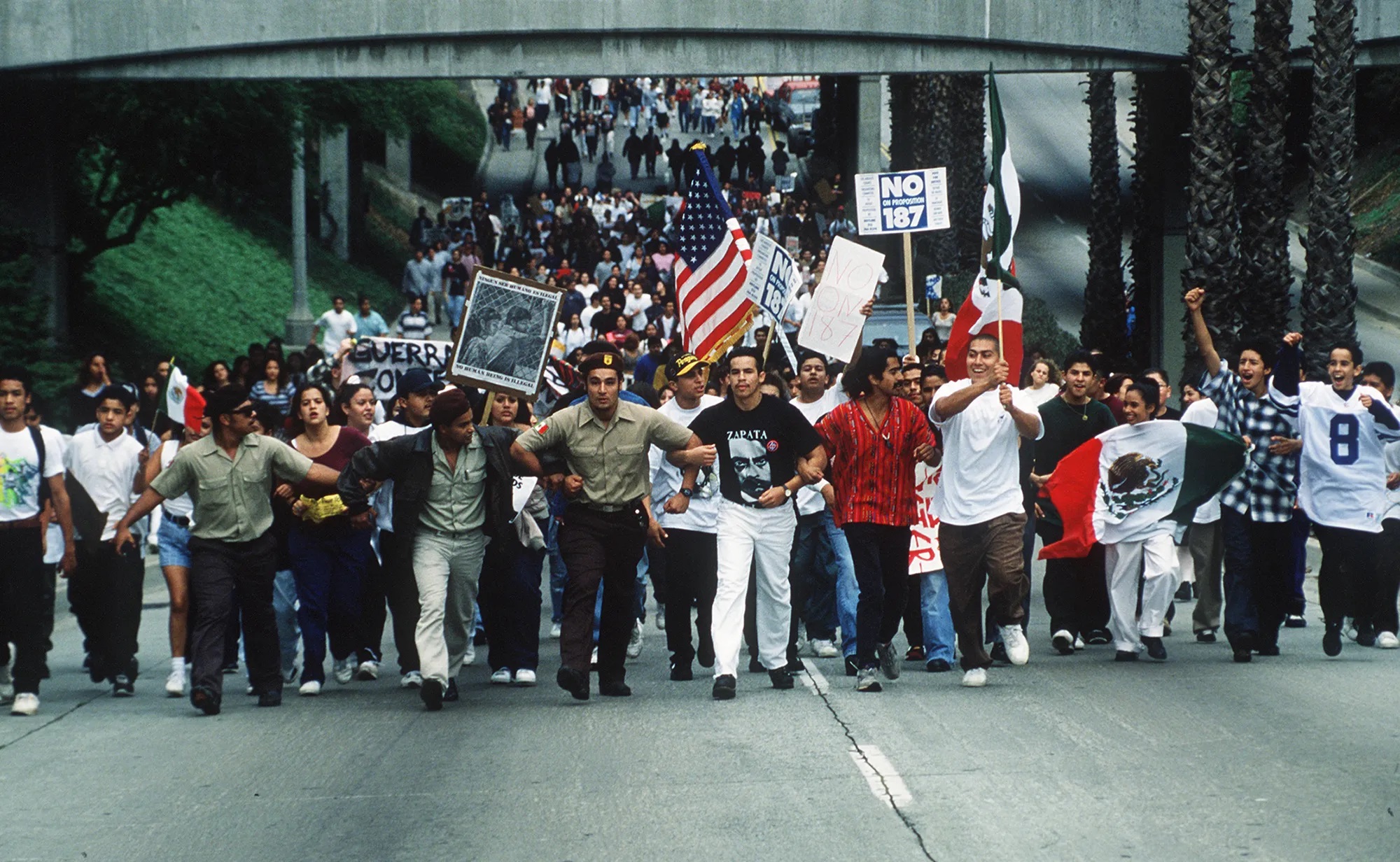
"caption": "Hundreds of Fullerton College students march through Fullerton in protest of Proposition 187 on Nov. 2, 1994. \n",
"credit": "Photo by Bruce Chambers, Orange County Register via Getty Images",
"altTag": null,
"description": null,
"imgSizes": {
"thumbnail": {
"file": "https://cdn.kqed.org/wp-content/uploads/sites/10/2025/06/061125-Prop-187-Protest-GETTY-CM-160x99.jpg",
"width": 160,
"height": 99,
"mimeType": "image/jpeg"
},
"1536x1536": {
"file": "https://cdn.kqed.org/wp-content/uploads/sites/10/2025/06/061125-Prop-187-Protest-GETTY-CM-1536x946.jpg",
"width": 1536,
"height": 946,
"mimeType": "image/jpeg"
},
"post-thumbnail": {
"file": "https://cdn.kqed.org/wp-content/uploads/sites/10/2025/06/061125-Prop-187-Protest-GETTY-CM-672x372.jpg",
"width": 672,
"height": 372,
"mimeType": "image/jpeg"
},
"twentyfourteen-full-width": {
"file": "https://cdn.kqed.org/wp-content/uploads/sites/10/2025/06/061125-Prop-187-Protest-GETTY-CM-1038x576.jpg",
"width": 1038,
"height": 576,
"mimeType": "image/jpeg"
},
"kqedFullSize": {
"file": "https://cdn.kqed.org/wp-content/uploads/sites/10/2025/06/061125-Prop-187-Protest-GETTY-CM.jpg",
"width": 2000,
"height": 1232
}
},
"isLoading": false,
"fetchFailed": false
},
"news_12025029": {
"type": "attachments",
"id": "news_12025029",
"meta": {
"index": "attachments_1716263798",
"site": "news",
"id": "12025029",
"found": true
},
"title": "trump with executive order",
"publishDate": 1738336172,
"status": "inherit",
"parent": 12025026,
"modified": 1738336251,
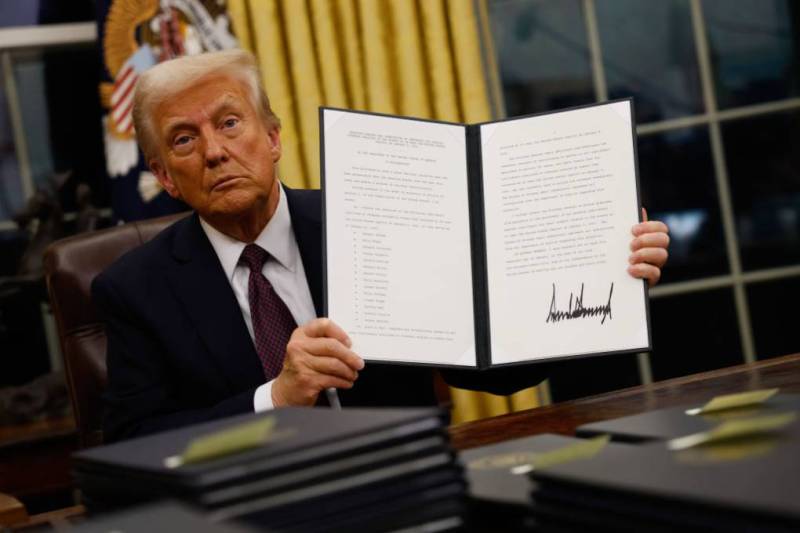
"caption": "Desde la toma de protesta del presidente Donald Trump, el miedo y el pánico por posibles redadas de ICE se han extendido en California.",
"credit": null,
"altTag": null,
"description": null,
"imgSizes": {
"medium": {
"file": "https://cdn.kqed.org/wp-content/uploads/sites/10/2025/01/trump-with-executive-order-800x533.jpg",
"width": 800,
"height": 533,
"mimeType": "image/jpeg"
},
"thumbnail": {
"file": "https://cdn.kqed.org/wp-content/uploads/sites/10/2025/01/trump-with-executive-order-160x107.jpg",
"width": 160,
"height": 107,
"mimeType": "image/jpeg"
},
"post-thumbnail": {
"file": "https://cdn.kqed.org/wp-content/uploads/sites/10/2025/01/trump-with-executive-order-672x372.jpg",
"width": 672,
"height": 372,
"mimeType": "image/jpeg"
},
"twentyfourteen-full-width": {
"file": "https://cdn.kqed.org/wp-content/uploads/sites/10/2025/01/trump-with-executive-order-1020x576.jpg",
"width": 1020,
"height": 576,
"mimeType": "image/jpeg"
},
"kqedFullSize": {
"file": "https://cdn.kqed.org/wp-content/uploads/sites/10/2025/01/trump-with-executive-order.jpg",
"width": 1020,
"height": 680
}
},
"isLoading": false,
"fetchFailed": false
},
"news_12044953": {
"type": "attachments",
"id": "news_12044953",
"meta": {
"index": "attachments_1716263798",
"site": "news",
"id": "12044953",
"found": true
},
"title": "20241204-BART-JY-009_qed",
"publishDate": 1750277536,
"status": "inherit",
"parent": 12044945,
"modified": 1757191512,
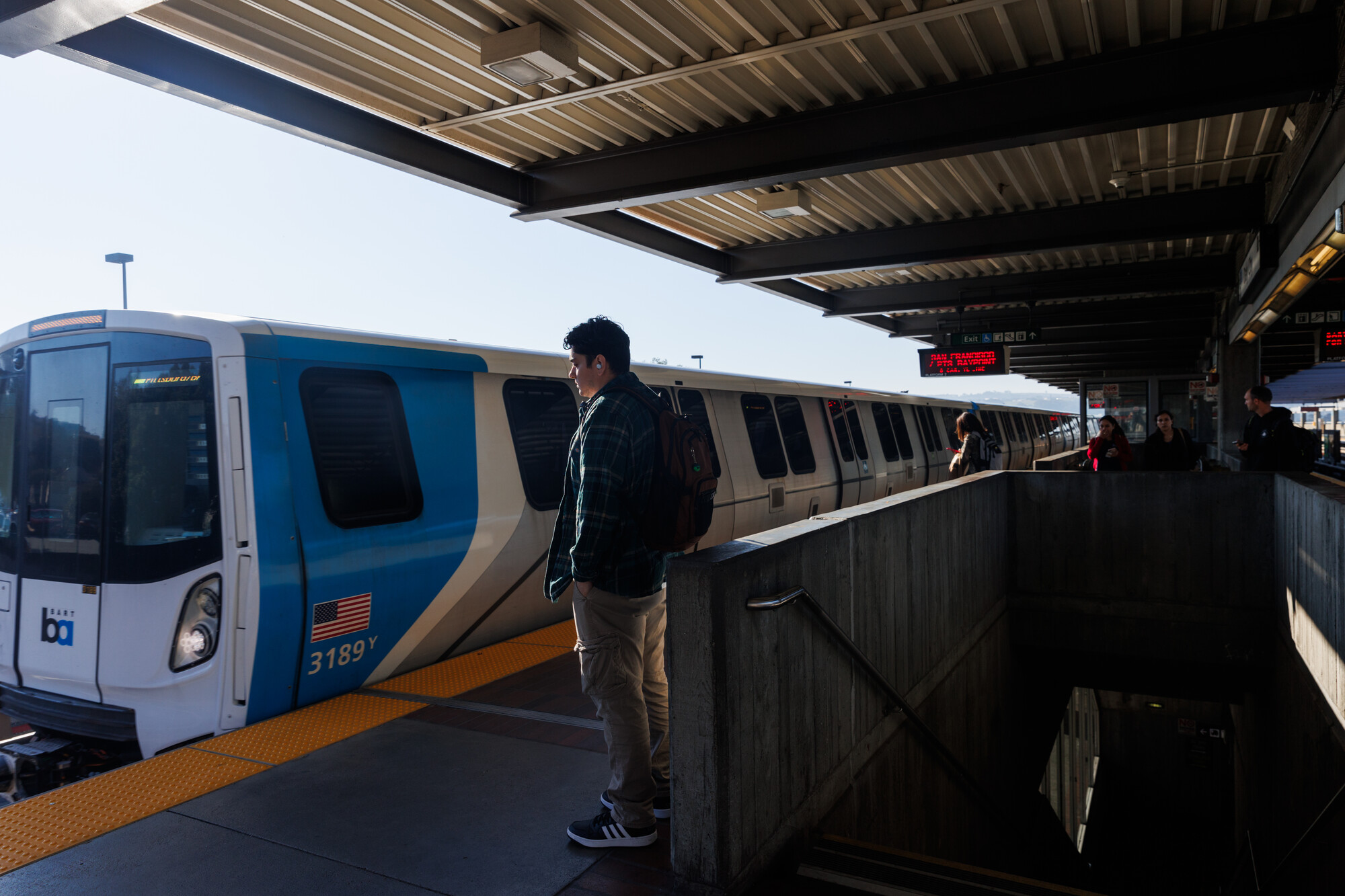
"caption": "Passengers wait to board BART at Daly City Station in Daly City, on Dec. 4, 2024.",
"credit": "Juliana Yamada/KQED",
"altTag": null,
"description": null,
"imgSizes": {
"thumbnail": {
"file": "https://cdn.kqed.org/wp-content/uploads/sites/10/2025/06/20241204-BART-JY-009_qed-160x107.jpg",
"width": 160,
"height": 107,
"mimeType": "image/jpeg"
},
"1536x1536": {
"file": "https://cdn.kqed.org/wp-content/uploads/sites/10/2025/06/20241204-BART-JY-009_qed-1536x1024.jpg",
"width": 1536,
"height": 1024,
"mimeType": "image/jpeg"
},
"post-thumbnail": {
"file": "https://cdn.kqed.org/wp-content/uploads/sites/10/2025/06/20241204-BART-JY-009_qed-672x372.jpg",
"width": 672,
"height": 372,
"mimeType": "image/jpeg"
},
"twentyfourteen-full-width": {
"file": "https://cdn.kqed.org/wp-content/uploads/sites/10/2025/06/20241204-BART-JY-009_qed-1038x576.jpg",
"width": 1038,
"height": 576,
"mimeType": "image/jpeg"
},
"kqedFullSize": {
"file": "https://cdn.kqed.org/wp-content/uploads/sites/10/2025/06/20241204-BART-JY-009_qed.jpg",
"width": 2000,
"height": 1333
}
},
"isLoading": false,
"fetchFailed": false
},
"news_12044643": {
"type": "attachments",
"id": "news_12044643",
"meta": {
"index": "attachments_1716263798",
"site": "news",
"id": "12044643",
"found": true
},
"title": "$12m Reparations Illustration",
"publishDate": 1750179912,
"status": "inherit",
"parent": 0,
"modified": 1750180537,
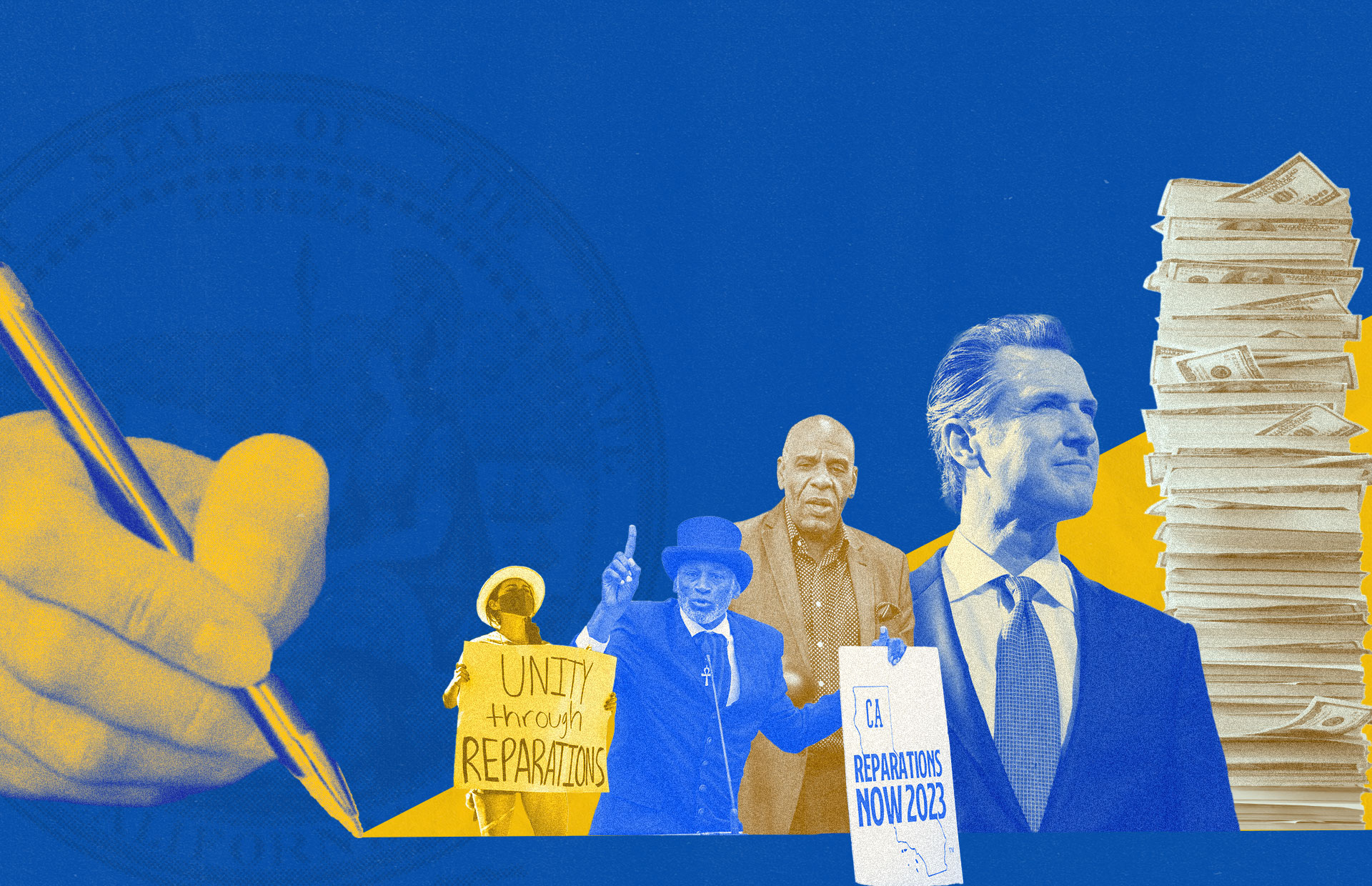
"caption": "One year ago, Gov. Gavin Newsom set aside $12 million for reparations legislation. The dispersal of the money remains stalled amid disagreements over how it should be used.",
"credit": "Darren Tu/KQED",
"altTag": null,
"description": null,
"imgSizes": {
"thumbnail": {
"file": "https://cdn.kqed.org/wp-content/uploads/sites/10/2025/06/12m-Reparations-1-160x103.jpg",
"width": 160,
"height": 103,
"mimeType": "image/jpeg"
},
"1536x1536": {
"file": "https://cdn.kqed.org/wp-content/uploads/sites/10/2025/06/12m-Reparations-1-1536x992.jpg",
"width": 1536,
"height": 992,
"mimeType": "image/jpeg"
},
"post-thumbnail": {
"file": "https://cdn.kqed.org/wp-content/uploads/sites/10/2025/06/12m-Reparations-1-672x372.jpg",
"width": 672,
"height": 372,
"mimeType": "image/jpeg"
},
"twentyfourteen-full-width": {
"file": "https://cdn.kqed.org/wp-content/uploads/sites/10/2025/06/12m-Reparations-1-1038x576.jpg",
"width": 1038,
"height": 576,
"mimeType": "image/jpeg"
},
"kqedFullSize": {
"file": "https://cdn.kqed.org/wp-content/uploads/sites/10/2025/06/12m-Reparations-1.jpg",
"width": 1920,
"height": 1240
}
},
"isLoading": false,
"fetchFailed": false
},
"news_12043264": {
"type": "attachments",
"id": "news_12043264",
"meta": {
"index": "attachments_1716263798",
"site": "news",
"id": "12043264",
"found": true
},
"title": "250608-ICE OUT OF THE BAY-AC-04-KQED",
"publishDate": 1749445597,
"status": "inherit",
"parent": 12043544,
"modified": 1749860292,
"caption": "Protesters face off with SFPD during an anti-ICE protest in San Francisco on June 8, 2025.",
"credit": "Aryk Copley for KQED",
"altTag": null,
"description": null,
"imgSizes": {
"thumbnail": {
"file": "https://cdn.kqed.org/wp-content/uploads/sites/10/2025/06/250608-ICE-OUT-OF-THE-BAY-AC-04-KQED-160x107.jpg",
"width": 160,
"height": 107,
"mimeType": "image/jpeg"
},
"1536x1536": {
"file": "https://cdn.kqed.org/wp-content/uploads/sites/10/2025/06/250608-ICE-OUT-OF-THE-BAY-AC-04-KQED-1536x1024.jpg",
"width": 1536,
"height": 1024,
"mimeType": "image/jpeg"
},
"post-thumbnail": {
"file": "https://cdn.kqed.org/wp-content/uploads/sites/10/2025/06/250608-ICE-OUT-OF-THE-BAY-AC-04-KQED-672x372.jpg",
"width": 672,
"height": 372,
"mimeType": "image/jpeg"
},
"twentyfourteen-full-width": {
"file": "https://cdn.kqed.org/wp-content/uploads/sites/10/2025/06/250608-ICE-OUT-OF-THE-BAY-AC-04-KQED-1038x576.jpg",
"width": 1038,
"height": 576,
"mimeType": "image/jpeg"
},
"kqedFullSize": {
"file": "https://cdn.kqed.org/wp-content/uploads/sites/10/2025/06/250608-ICE-OUT-OF-THE-BAY-AC-04-KQED.jpg",
"width": 2000,
"height": 1333
}
},
"isLoading": false,
"fetchFailed": false
},
"news_12044055": {
"type": "attachments",
"id": "news_12044055",
"meta": {
"index": "attachments_1716263798",
"site": "news",
"id": "12044055",
"found": true
},
"title": "20250129_UCBerkeleyRally_GC-44_qed",
"publishDate": 1749763340,
"status": "inherit",
"parent": 12044042,
"modified": 1749763426,
"caption": "A UC Berkeley student gets emotional and hugs a DACA recipient during a rally against the Trump administration’s promises to carry out mass deportations, in Berkeley, California, on Jan. 29, 2025.",
"credit": "Beth LaBerge/KQED",
"altTag": null,
"description": null,
"imgSizes": {
"thumbnail": {
"file": "https://cdn.kqed.org/wp-content/uploads/sites/10/2025/06/20250129_UCBerkeleyRally_GC-44_qed-160x107.jpg",
"width": 160,
"height": 107,
"mimeType": "image/jpeg"
},
"1536x1536": {
"file": "https://cdn.kqed.org/wp-content/uploads/sites/10/2025/06/20250129_UCBerkeleyRally_GC-44_qed-1536x1024.jpg",
"width": 1536,
"height": 1024,
"mimeType": "image/jpeg"
},
"post-thumbnail": {
"file": "https://cdn.kqed.org/wp-content/uploads/sites/10/2025/06/20250129_UCBerkeleyRally_GC-44_qed-672x372.jpg",
"width": 672,
"height": 372,
"mimeType": "image/jpeg"
},
"twentyfourteen-full-width": {
"file": "https://cdn.kqed.org/wp-content/uploads/sites/10/2025/06/20250129_UCBerkeleyRally_GC-44_qed-1038x576.jpg",
"width": 1038,
"height": 576,
"mimeType": "image/jpeg"
},
"kqedFullSize": {
"file": "https://cdn.kqed.org/wp-content/uploads/sites/10/2025/06/20250129_UCBerkeleyRally_GC-44_qed.jpg",
"width": 2000,
"height": 1333
}
},
"isLoading": false,
"fetchFailed": false
},
"news_12043922": {
"type": "attachments",
"id": "news_12043922",
"meta": {
"index": "attachments_1716263798",
"site": "news",
"id": "12043922",
"found": true
},
"title": "Immigration Protests Los Angeles",
"publishDate": 1749749041,
"status": "inherit",
"parent": 12043920,
"modified": 1749757600,
"caption": "Police confront protesters outside City Hall during protests over federal immigration enforcement raids on Wednesday, June 11, 2025, in Los Angeles. ",
"credit": "Ethan Swope/AP Photo",
"altTag": null,
"description": null,
"imgSizes": {
"thumbnail": {
"file": "https://cdn.kqed.org/wp-content/uploads/sites/10/2025/06/LosAngelesImmigrationRaidAP-160x107.jpg",
"width": 160,
"height": 107,
"mimeType": "image/jpeg"
},
"1536x1536": {
"file": "https://cdn.kqed.org/wp-content/uploads/sites/10/2025/06/LosAngelesImmigrationRaidAP-1536x1024.jpg",
"width": 1536,
"height": 1024,
"mimeType": "image/jpeg"
},
"post-thumbnail": {
"file": "https://cdn.kqed.org/wp-content/uploads/sites/10/2025/06/LosAngelesImmigrationRaidAP-672x372.jpg",
"width": 672,
"height": 372,
"mimeType": "image/jpeg"
},
"twentyfourteen-full-width": {
"file": "https://cdn.kqed.org/wp-content/uploads/sites/10/2025/06/LosAngelesImmigrationRaidAP-1038x576.jpg",
"width": 1038,
"height": 576,
"mimeType": "image/jpeg"
},
"kqedFullSize": {
"file": "https://cdn.kqed.org/wp-content/uploads/sites/10/2025/06/LosAngelesImmigrationRaidAP.jpg",
"width": 2000,
"height": 1333
}
},
"isLoading": false,
"fetchFailed": false
},
"news_12043958": {
"type": "attachments",
"id": "news_12043958",
"meta": {
"index": "attachments_1716263798",
"site": "news",
"id": "12043958",
"found": true
},
"title": "APTOPIX Immigration-Protests",
"publishDate": 1749754480,
"status": "inherit",
"parent": 12043957,
"modified": 1749754502,
"caption": "U.S. Sen. Alex Padilla is pushed out of the room as Homeland Security Secretary Kristi Noem holds a news conference regarding the recent protests in Los Angeles on Thursday, June 12, 2025. ",
"credit": "Etienne Laurent/AP Photo",
"altTag": null,
"description": null,
"imgSizes": {
"thumbnail": {
"file": "https://cdn.kqed.org/wp-content/uploads/sites/10/2025/06/PadillaRemovedAP-160x107.jpg",
"width": 160,
"height": 107,
"mimeType": "image/jpeg"
},
"1536x1536": {
"file": "https://cdn.kqed.org/wp-content/uploads/sites/10/2025/06/PadillaRemovedAP-1536x1024.jpg",
"width": 1536,
"height": 1024,
"mimeType": "image/jpeg"
},
"post-thumbnail": {
"file": "https://cdn.kqed.org/wp-content/uploads/sites/10/2025/06/PadillaRemovedAP-672x372.jpg",
"width": 672,
"height": 372,
"mimeType": "image/jpeg"
},
"twentyfourteen-full-width": {
"file": "https://cdn.kqed.org/wp-content/uploads/sites/10/2025/06/PadillaRemovedAP-1038x576.jpg",
"width": 1038,
"height": 576,
"mimeType": "image/jpeg"
},
"kqedFullSize": {
"file": "https://cdn.kqed.org/wp-content/uploads/sites/10/2025/06/PadillaRemovedAP.jpg",
"width": 2000,
"height": 1333
}
},
"isLoading": false,
"fetchFailed": false
},
"news_12036066": {
"type": "attachments",
"id": "news_12036066",
"meta": {
"index": "attachments_1716263798",
"site": "news",
"id": "12036066",
"found": true
},
"title": "California Medicaid",
"publishDate": 1744746796,
"status": "inherit",
"parent": 12036063,
"modified": 1749663522,
"caption": "Gov. Gavin Newsom discusses his revised 2024-25 state budget during a news conference in Sacramento, California, on May 10, 2024. ",
"credit": "Rich Pedroncelli/AP Photo",
"altTag": null,
"description": null,
"imgSizes": {
"medium": {
"file": "https://cdn.kqed.org/wp-content/uploads/sites/10/2025/04/GavinNewsom1AP-800x533.jpg",
"width": 800,
"height": 533,
"mimeType": "image/jpeg"
},
"large": {
"file": "https://cdn.kqed.org/wp-content/uploads/sites/10/2025/04/GavinNewsom1AP-1020x680.jpg",
"width": 1020,
"height": 680,
"mimeType": "image/jpeg"
},
"thumbnail": {
"file": "https://cdn.kqed.org/wp-content/uploads/sites/10/2025/04/GavinNewsom1AP-160x107.jpg",
"width": 160,
"height": 107,
"mimeType": "image/jpeg"
},
"1536x1536": {
"file": "https://cdn.kqed.org/wp-content/uploads/sites/10/2025/04/GavinNewsom1AP-1536x1024.jpg",
"width": 1536,
"height": 1024,
"mimeType": "image/jpeg"
},
"post-thumbnail": {
"file": "https://cdn.kqed.org/wp-content/uploads/sites/10/2025/04/GavinNewsom1AP-672x372.jpg",
"width": 672,
"height": 372,
"mimeType": "image/jpeg"
},
"twentyfourteen-full-width": {
"file": "https://cdn.kqed.org/wp-content/uploads/sites/10/2025/04/GavinNewsom1AP-1038x576.jpg",
"width": 1038,
"height": 576,
"mimeType": "image/jpeg"
},
"full-width": {
"file": "https://cdn.kqed.org/wp-content/uploads/sites/10/2025/04/GavinNewsom1AP-1920x1280.jpg",
"width": 1920,
"height": 1280,
"mimeType": "image/jpeg"
},
"kqedFullSize": {
"file": "https://cdn.kqed.org/wp-content/uploads/sites/10/2025/04/GavinNewsom1AP.jpg",
"width": 2000,
"height": 1333
}
},
"isLoading": false,
"fetchFailed": false
},
"news_11877202": {
"type": "attachments",
"id": "news_11877202",
"meta": {
"index": "attachments_1716263798",
"site": "news",
"id": "11877202",
"found": true
},
"title": "US-MAYDAY-RALLY",
"publishDate": 1623184946,
"status": "inherit",
"parent": 11877128,
"modified": 1749679480,
"caption": "A woman protests family separations at the border as a coalition of activist groups and labor unions participates in a May Day march in Los Angeles for workers and human rights in 2021.",
"credit": "David McNew/AFP via Getty Images",
"altTag": null,
"description": null,
"imgSizes": {
"medium": {
"file": "https://cdn.kqed.org/wp-content/uploads/sites/10/2021/06/GettyImages-1232636077-800x534.jpg",
"width": 800,
"height": 534,
"mimeType": "image/jpeg"
},
"large": {
"file": "https://cdn.kqed.org/wp-content/uploads/sites/10/2021/06/GettyImages-1232636077-1020x680.jpg",
"width": 1020,
"height": 680,
"mimeType": "image/jpeg"
},
"thumbnail": {
"file": "https://cdn.kqed.org/wp-content/uploads/sites/10/2021/06/GettyImages-1232636077-160x107.jpg",
"width": 160,
"height": 107,
"mimeType": "image/jpeg"
},
"post-thumbnail": {
"file": "https://cdn.kqed.org/wp-content/uploads/sites/10/2021/06/GettyImages-1232636077-672x372.jpg",
"width": 672,
"height": 372,
"mimeType": "image/jpeg"
},
"twentyfourteen-full-width": {
"file": "https://cdn.kqed.org/wp-content/uploads/sites/10/2021/06/GettyImages-1232636077-1024x576.jpg",
"width": 1024,
"height": 576,
"mimeType": "image/jpeg"
},
"kqedFullSize": {
"file": "https://cdn.kqed.org/wp-content/uploads/sites/10/2021/06/GettyImages-1232636077.jpg",
"width": 1024,
"height": 683
}
},
"isLoading": false,
"fetchFailed": false
},
"news_12043749": {
"type": "attachments",
"id": "news_12043749",
"meta": {
"index": "attachments_1716263798",
"site": "news",
"id": "12043749",
"found": true
},
"title": "LAProtestCM1",
"publishDate": 1749660653,
"status": "inherit",
"parent": 12043745,
"modified": 1749660679,
"caption": "Members of the press take cover as police officers clear the area outside of a federal building as protests continue in Los Angeles on June 9, 2025.",
"credit": "David McNew/Getty Images",
"altTag": null,
"description": null,
"imgSizes": {
"thumbnail": {
"file": "https://cdn.kqed.org/wp-content/uploads/sites/10/2025/06/LAProtestCM1-160x107.jpg",
"width": 160,
"height": 107,
"mimeType": "image/jpeg"
},
"1536x1536": {
"file": "https://cdn.kqed.org/wp-content/uploads/sites/10/2025/06/LAProtestCM1-1536x1025.jpg",
"width": 1536,
"height": 1025,
"mimeType": "image/jpeg"
},
"post-thumbnail": {
"file": "https://cdn.kqed.org/wp-content/uploads/sites/10/2025/06/LAProtestCM1-672x372.jpg",
"width": 672,
"height": 372,
"mimeType": "image/jpeg"
},
"twentyfourteen-full-width": {
"file": "https://cdn.kqed.org/wp-content/uploads/sites/10/2025/06/LAProtestCM1-1038x576.jpg",
"width": 1038,
"height": 576,
"mimeType": "image/jpeg"
},
"kqedFullSize": {
"file": "https://cdn.kqed.org/wp-content/uploads/sites/10/2025/06/LAProtestCM1.jpg",
"width": 1999,
"height": 1334
}
},
"isLoading": false,
"fetchFailed": false
},
"news_12043712": {
"type": "attachments",
"id": "news_12043712",
"meta": {
"index": "attachments_1716263798",
"site": "news",
"id": "12043712",
"found": true
},
"title": "250610-OAKLAND ICE VIGIL-MD-08-KQED",
"publishDate": 1749611103,
"status": "inherit",
"parent": 0,
"modified": 1749614401,
"caption": "Demonstrators gather for an interfaith vigil at Fruitvale Plaza in Oakland on June 10, 2025, in solidarity with immigrants and protesters in Los Angeles.",
"credit": "Beth LaBerge/KQED",
"altTag": null,
"description": null,
"imgSizes": {
"thumbnail": {
"file": "https://cdn.kqed.org/wp-content/uploads/sites/10/2025/06/250610-OAKLAND-ICE-VIGIL-MD-08-KQED-160x107.jpg",
"width": 160,
"height": 107,
"mimeType": "image/jpeg"
},
"1536x1536": {
"file": "https://cdn.kqed.org/wp-content/uploads/sites/10/2025/06/250610-OAKLAND-ICE-VIGIL-MD-08-KQED-1536x1024.jpg",
"width": 1536,
"height": 1024,
"mimeType": "image/jpeg"
},
"post-thumbnail": {
"file": "https://cdn.kqed.org/wp-content/uploads/sites/10/2025/06/250610-OAKLAND-ICE-VIGIL-MD-08-KQED-672x372.jpg",
"width": 672,
"height": 372,
"mimeType": "image/jpeg"
},
"twentyfourteen-full-width": {
"file": "https://cdn.kqed.org/wp-content/uploads/sites/10/2025/06/250610-OAKLAND-ICE-VIGIL-MD-08-KQED-1038x576.jpg",
"width": 1038,
"height": 576,
"mimeType": "image/jpeg"
},
"kqedFullSize": {
"file": "https://cdn.kqed.org/wp-content/uploads/sites/10/2025/06/250610-OAKLAND-ICE-VIGIL-MD-08-KQED.jpg",
"width": 2000,
"height": 1333
}
},
"isLoading": false,
"fetchFailed": false
}
},
"audioPlayerReducer": {
"postId": "stream_live",
"isPaused": true,
"isPlaying": false,
"pfsActive": false,
"pledgeModalIsOpen": true,
"playerDrawerIsOpen": false,
"liveAudioPlayStartedAt": 0,
"liveAudioPlayContext": ""
},
"authorsReducer": {
"byline_news_12045374": {
"type": "authors",
"id": "byline_news_12045374",
"meta": {
"override": true
},
"slug": "byline_news_12045374",
"name": "Ben Christopher and Mikhail Zinshteyn, CalMatters",
"isLoading": false
},
"byline_news_12043745": {
"type": "authors",
"id": "byline_news_12043745",
"meta": {
"override": true
},
"slug": "byline_news_12043745",
"name": "John D'Anna, CalMatters",
"isLoading": false
},
"danbrekke": {
"type": "authors",
"id": "222",
"meta": {
"index": "authors_1716337520",
"id": "222",
"found": true
},
"name": "Dan Brekke",
"firstName": "Dan",
"lastName": "Brekke",
"slug": "danbrekke",
"email": "dbrekke@kqed.org",
"display_author_email": true,
"staff_mastheads": [
"news",
"science"
],
"title": "KQED Editor and Reporter",
"bio": "Dan Brekke is a reporter and editor for KQED News, responsible for coverage of topics ranging from California water issues to the Bay Area's transportation challenges. In a newsroom career that began in Chicago in 1972, Dan has worked for \u003cem>The San Francisco Examiner,\u003c/em> Wired and TechTV and has been published in The New York Times, The New York Times Magazine, Business 2.0, Salon and elsewhere.\r\n\r\nSince joining KQED in 2007, Dan has reported, edited and produced both radio and online features and breaking news pieces. He has shared as both editor and reporter in four Society of Professional Journalists Norcal Excellence in Journalism awards and one Edward R. Murrow regional award. He was chosen for a spring 2017 residency at the Mesa Refuge to advance his research on California salmon.\r\n\r\nEmail Dan at: \u003ca href=\"mailto:dbrekke@kqed.org\">dbrekke@kqed.org\u003c/a>\r\n\r\n\u003cstrong>Twitter:\u003c/strong> \u003ca href=\"https://twitter.com/danbrekke\" rel=\"noopener noreferrer\">twitter.com/danbrekke\u003c/a>\r\n\u003cstrong>Facebook:\u003c/strong> \u003ca href=\"https://www.facebook.com/danbrekke\" rel=\"noopener noreferrer\">www.facebook.com/danbrekke\u003c/a>\r\n\u003cstrong>LinkedIn:\u003c/strong> \u003ca href=\"https://www.linkedin.com/in/danbrekke\" rel=\"noopener noreferrer\">www.linkedin.com/in/danbrekke\u003c/a>",
"avatar": "https://secure.gravatar.com/avatar/c8126230345efca3f7aa89b1a402be45?s=600&d=mm&r=g",
"twitter": "danbrekke",
"facebook": null,
"instagram": "https://www.instagram.com/dan.brekke/",
"linkedin": "https://www.linkedin.com/in/danbrekke/",
"sites": [
{
"site": "news",
"roles": [
"administrator",
"create_posts"
]
},
{
"site": "stateofhealth",
"roles": [
"editor"
]
},
{
"site": "science",
"roles": [
"editor"
]
},
{
"site": "quest",
"roles": [
"contributor"
]
},
{
"site": "food",
"roles": [
"contributor"
]
},
{
"site": "forum",
"roles": [
"contributor"
]
},
{
"site": "liveblog",
"roles": [
"editor"
]
}
],
"headData": {
"title": "Dan Brekke | KQED",
"description": "KQED Editor and Reporter",
"ogImgSrc": "https://secure.gravatar.com/avatar/c8126230345efca3f7aa89b1a402be45?s=600&d=mm&r=g",
"twImgSrc": "https://secure.gravatar.com/avatar/c8126230345efca3f7aa89b1a402be45?s=600&d=mm&r=g"
},
"isLoading": false,
"link": "/author/danbrekke"
},
"gmarzorati": {
"type": "authors",
"id": "227",
"meta": {
"index": "authors_1716337520",
"id": "227",
"found": true
},
"name": "Guy Marzorati",
"firstName": "Guy",
"lastName": "Marzorati",
"slug": "gmarzorati",
"email": "gmarzorati@KQED.org",
"display_author_email": true,
"staff_mastheads": [
"news"
],
"title": "Correspondent",
"bio": "Guy Marzorati is a correspondent on KQED's California Politics and Government Desk, based in San Jose. A graduate of Santa Clara University, Guy joined KQED in 2013. He reports on state and local politics and produces KQED's digital voter guide.",
"avatar": "https://secure.gravatar.com/avatar/e7038b8dbfd55b104369b76b1cd0b9de?s=600&d=blank&r=g",
"twitter": "guymarzorati",
"facebook": null,
"instagram": null,
"linkedin": null,
"sites": [
{
"site": "",
"roles": [
"editor"
]
},
{
"site": "news",
"roles": [
"editor"
]
},
{
"site": "science",
"roles": [
"editor"
]
},
{
"site": "forum",
"roles": [
"editor"
]
},
{
"site": "elections",
"roles": [
"editor"
]
},
{
"site": "liveblog",
"roles": [
"editor"
]
}
],
"headData": {
"title": "Guy Marzorati | KQED",
"description": "Correspondent",
"ogImgSrc": "https://secure.gravatar.com/avatar/e7038b8dbfd55b104369b76b1cd0b9de?s=600&d=blank&r=g",
"twImgSrc": "https://secure.gravatar.com/avatar/e7038b8dbfd55b104369b76b1cd0b9de?s=600&d=blank&r=g"
},
"isLoading": false,
"link": "/author/gmarzorati"
},
"tychehendricks": {
"type": "authors",
"id": "259",
"meta": {
"index": "authors_1716337520",
"id": "259",
"found": true
},
"name": "Tyche Hendricks",
"firstName": "Tyche",
"lastName": "Hendricks",
"slug": "tychehendricks",
"email": "thendricks@kqed.org",
"display_author_email": true,
"staff_mastheads": [
"news"
],
"title": "KQED Senior Editor, Immigration",
"bio": "\u003cspan style=\"font-weight: 400;\">Tyche Hendricks is KQED’s senior editor for immigration, leading coverage of the policy and politics that affect California’s immigrant communities. Her work for KQED’s radio and online audiences is also carried on NPR and other national outlets. She has been recognized with awards from the Radio and Television News Directors Association, the Society for Professional Journalists; the Education Writers Association; the Best of the West and the National Federation of Community Broadcasters. Before joining KQED in 2010, Tyche spent more than a dozen years as a newspaper reporter, notably at the \u003c/span>\u003ci>\u003cspan style=\"font-weight: 400;\">San Francisco Chronicle\u003c/span>\u003c/i>\u003cspan style=\"font-weight: 400;\">. At different times she has covered criminal justice, government and politics and urban planning. Tyche has taught in the MFA Creative Writing program at the University of San Francisco and at UC Berkeley’s Graduate School of Journalism, where she was co-director of a national immigration symposium for professional journalists. She is the author of \u003c/span>\u003ci>\u003cspan style=\"font-weight: 400;\">The Wind Doesn't Need a Passport: Stories from the U.S.-Mexico Borderlands\u003c/span>\u003c/i>\u003cspan style=\"font-weight: 400;\"> (University of California Press). \u003c/span>",
"avatar": "https://secure.gravatar.com/avatar/b8ee458e2731c2d43df86882ce17267e?s=600&d=blank&r=g",
"twitter": "tychehendricks",
"facebook": null,
"instagram": null,
"linkedin": null,
"sites": [
{
"site": "news",
"roles": [
"editor"
]
},
{
"site": "stateofhealth",
"roles": [
"editor"
]
}
],
"headData": {
"title": "Tyche Hendricks | KQED",
"description": "KQED Senior Editor, Immigration",
"ogImgSrc": "https://secure.gravatar.com/avatar/b8ee458e2731c2d43df86882ce17267e?s=600&d=blank&r=g",
"twImgSrc": "https://secure.gravatar.com/avatar/b8ee458e2731c2d43df86882ce17267e?s=600&d=blank&r=g"
},
"isLoading": false,
"link": "/author/tychehendricks"
},
"mlagos": {
"type": "authors",
"id": "3239",
"meta": {
"index": "authors_1716337520",
"id": "3239",
"found": true
},
"name": "Marisa Lagos",
"firstName": "Marisa",
"lastName": "Lagos",
"slug": "mlagos",
"email": "mlagos@kqed.org",
"display_author_email": false,
"staff_mastheads": [
"news"
],
"title": "KQED Contributor",
"bio": "Marisa Lagos is a correspondent for KQED’s California Politics and Government Desk and co-hosts the award-winning show and podcast, Political Breakdown. At KQED, Lagos also conducts reporting, analysis and investigations into state, local and national politics for radio, TV, online and onstage. In 2022, she and co-host, Scott Shafer, moderated the only gubernatorial debate in California. In 2020, the \u003ci>Washington Post\u003c/i> named her one of the top political journalists in California; she was nominated for a Peabody and won several other awards for her work investigating the 2017 California wildfires. She has worked at the \u003ci>San Francisco Chronicle\u003c/i>, \u003ci>San Francisco Examiner\u003c/i> and \u003ci>Los Angeles Times\u003c/i>. A UC Santa Barbara graduate, she lives in San Francisco with her two sons and husband.",
"avatar": "https://secure.gravatar.com/avatar/a261a0d3696fc066871ef96b85b5e7d2?s=600&d=blank&r=g",
"twitter": "@mlagos",
"facebook": null,
"instagram": null,
"linkedin": null,
"sites": [
{
"site": "arts",
"roles": [
"author"
]
},
{
"site": "news",
"roles": [
"editor"
]
},
{
"site": "science",
"roles": [
"editor"
]
},
{
"site": "forum",
"roles": [
"author"
]
},
{
"site": "liveblog",
"roles": [
"author"
]
}
],
"headData": {
"title": "Marisa Lagos | KQED",
"description": "KQED Contributor",
"ogImgSrc": "https://secure.gravatar.com/avatar/a261a0d3696fc066871ef96b85b5e7d2?s=600&d=blank&r=g",
"twImgSrc": "https://secure.gravatar.com/avatar/a261a0d3696fc066871ef96b85b5e7d2?s=600&d=blank&r=g"
},
"isLoading": false,
"link": "/author/mlagos"
},
"ahall": {
"type": "authors",
"id": "11490",
"meta": {
"index": "authors_1716337520",
"id": "11490",
"found": true
},
"name": "Alex Hall",
"firstName": "Alex",
"lastName": "Hall",
"slug": "ahall",
"email": "ahall@kqed.org",
"display_author_email": false,
"staff_mastheads": [
"news"
],
"title": "KQED Enterprise & Accountability Reporter",
"bio": "Alex Hall is KQED's Enterprise and Accountability Reporter. She previously covered the Central Valley for five years from KQED's bureau in Fresno. Before joining KQED, Alex was an investigative reporting fellow at Wisconsin Public Radio and the Wisconsin Center for Investigative Journalism. She has also worked as a bilingual producer for NPR's investigative unit and freelance video producer for Reuters TV on the Latin America desk. She got her start in journalism in South America, where she worked as a radio producer and Spanish-English translator for CNN Chile. Her documentary and investigation into the series of deadly COVID-19 outbreaks at Foster Farms won a national Edward R. Murrow award and was named an Investigative Reporters & Editors award finalist. Alex's reporting for Reveal on the Wisconsin dairy industry's reliance on undocumented immigrant labor was made into a film, Los Lecheros, which won a regional Edward R. Murrow award for best news documentary.",
"avatar": "https://secure.gravatar.com/avatar/defcbeb88b0bf591ff9af41f22644051?s=600&d=blank&r=g",
"twitter": "@chalexhall",
"facebook": null,
"instagram": null,
"linkedin": null,
"sites": [
{
"site": "news",
"roles": [
"editor"
]
},
{
"site": "liveblog",
"roles": [
"author"
]
}
],
"headData": {
"title": "Alex Hall | KQED",
"description": "KQED Enterprise & Accountability Reporter",
"ogImgSrc": "https://secure.gravatar.com/avatar/defcbeb88b0bf591ff9af41f22644051?s=600&d=blank&r=g",
"twImgSrc": "https://secure.gravatar.com/avatar/defcbeb88b0bf591ff9af41f22644051?s=600&d=blank&r=g"
},
"isLoading": false,
"link": "/author/ahall"
},
"eromero": {
"type": "authors",
"id": "11746",
"meta": {
"index": "authors_1716337520",
"id": "11746",
"found": true
},
"name": "Ezra David Romero",
"firstName": "Ezra David",
"lastName": "Romero",
"slug": "eromero",
"email": "eromero@kqed.org",
"display_author_email": true,
"staff_mastheads": [
"news",
"science"
],
"title": "Climate Reporter",
"bio": "Ezra David Romero is a climate reporter for KQED News. He covers the absence and excess of water in the Bay Area — think sea level rise, flooding and drought. For nearly a decade he’s covered how warming temperatures are altering the lives of Californians. He’s reported on farmers worried their pistachio trees aren’t getting enough sleep, families desperate for water, scientists studying dying giant sequoias, and alongside firefighters containing wildfires. His work has appeared on local stations across California and nationally on public radio shows like Morning Edition, Here and Now, All Things Considered and Science Friday. ",
"avatar": "https://secure.gravatar.com/avatar/c76404d287c10ed40224227551ac36e24352c7306f106632caf6fead76f8801f?s=600&d=blank&r=g",
"twitter": "ezraromero",
"bluesky": null,
"facebook": null,
"instagram": null,
"linkedin": null,
"sites": [
{
"site": "arts",
"roles": [
"editor"
]
},
{
"site": "news",
"roles": [
"editor"
]
},
{
"site": "science",
"roles": [
"editor"
]
},
{
"site": "liveblog",
"roles": [
"author"
]
}
],
"headData": {
"title": "Ezra David Romero | KQED",
"description": "Climate Reporter",
"ogImgSrc": "https://secure.gravatar.com/avatar/c76404d287c10ed40224227551ac36e24352c7306f106632caf6fead76f8801f?s=600&d=blank&r=g",
"twImgSrc": "https://secure.gravatar.com/avatar/c76404d287c10ed40224227551ac36e24352c7306f106632caf6fead76f8801f?s=600&d=blank&r=g"
},
"isLoading": false,
"link": "/author/eromero"
},
"jlara": {
"type": "authors",
"id": "11761",
"meta": {
"index": "authors_1716337520",
"id": "11761",
"found": true
},
"name": "Juan Carlos Lara",
"firstName": "Juan Carlos",
"lastName": "Lara",
"slug": "jlara",
"email": "jlara@kqed.org",
"display_author_email": false,
"staff_mastheads": [],
"title": "KQED Contributor",
"bio": null,
"avatar": "https://secure.gravatar.com/avatar/19e2052b9b05657c5ff2af2121846e9c?s=600&d=blank&r=g",
"twitter": null,
"facebook": null,
"instagram": null,
"linkedin": null,
"sites": [
{
"site": "arts",
"roles": [
"editor"
]
},
{
"site": "news",
"roles": [
"editor"
]
},
{
"site": "forum",
"roles": [
"editor"
]
},
{
"site": "liveblog",
"roles": [
"contributor"
]
}
],
"headData": {
"title": "Juan Carlos Lara | KQED",
"description": "KQED Contributor",
"ogImgSrc": "https://secure.gravatar.com/avatar/19e2052b9b05657c5ff2af2121846e9c?s=600&d=blank&r=g",
"twImgSrc": "https://secure.gravatar.com/avatar/19e2052b9b05657c5ff2af2121846e9c?s=600&d=blank&r=g"
},
"isLoading": false,
"link": "/author/jlara"
},
"nkhan": {
"type": "authors",
"id": "11867",
"meta": {
"index": "authors_1716337520",
"id": "11867",
"found": true
},
"name": "Nisa Khan",
"firstName": "Nisa",
"lastName": "Khan",
"slug": "nkhan",
"email": "nkhan@kqed.org",
"display_author_email": false,
"staff_mastheads": [],
"title": "KQED Contributor",
"bio": "Nisa Khan is a reporter for KQED's Audience News Desk. She was formerly a data reporter at Michigan Radio. She earned a Bachelor of Science in Information from the University of Michigan and a Master of Arts in Communication from Stanford University.",
"avatar": "https://secure.gravatar.com/avatar/8720459eef081ff64582b3506b124d58523e80e120704a0cbd9892533c914991?s=600&d=blank&r=g",
"twitter": "mnisakhan",
"bluesky": null,
"facebook": null,
"instagram": null,
"linkedin": null,
"sites": [
{
"site": "arts",
"roles": [
"editor"
]
},
{
"site": "news",
"roles": [
"editor"
]
},
{
"site": "science",
"roles": [
"editor",
"author"
]
},
{
"site": "forum",
"roles": [
"editor"
]
},
{
"site": "liveblog",
"roles": [
"contributor"
]
}
],
"headData": {
"title": "Nisa Khan | KQED",
"description": "KQED Contributor",
"ogImgSrc": "https://secure.gravatar.com/avatar/8720459eef081ff64582b3506b124d58523e80e120704a0cbd9892533c914991?s=600&d=blank&r=g",
"twImgSrc": "https://secure.gravatar.com/avatar/8720459eef081ff64582b3506b124d58523e80e120704a0cbd9892533c914991?s=600&d=blank&r=g"
},
"isLoading": false,
"link": "/author/nkhan"
},
"jservantez": {
"type": "authors",
"id": "11909",
"meta": {
"index": "authors_1716337520",
"id": "11909",
"found": true
},
"name": "Jared Servantez",
"firstName": "Jared",
"lastName": "Servantez",
"slug": "jservantez",
"email": "jservantez@kqed.org",
"display_author_email": true,
"staff_mastheads": [
"news"
],
"title": "KQED Contributor",
"bio": "Jared Servantez is the editor of KQED's Express Desk, leading the newsroom's online breaking news operation. He most recently worked for the Los Angeles Times, where he served as a breaking news editor, the Metro Desk's night editor, and a copy editor. Jared is a graduate of the USC Annenberg School for Communication and Journalism.",
"avatar": "https://secure.gravatar.com/avatar/f0e317c67bb498c3f077f033d1cc79e62f3bc1303fa20a14e8880d31fbe7e01e?s=600&d=blank&r=g",
"twitter": "jservantez",
"bluesky": null,
"facebook": null,
"instagram": null,
"linkedin": null,
"sites": [
{
"site": "news",
"roles": [
"editor"
]
},
{
"site": "science",
"roles": [
"editor",
"author"
]
},
{
"site": "liveblog",
"roles": [
"editor"
]
}
],
"headData": {
"title": "Jared Servantez | KQED",
"description": "KQED Contributor",
"ogImgSrc": "https://secure.gravatar.com/avatar/f0e317c67bb498c3f077f033d1cc79e62f3bc1303fa20a14e8880d31fbe7e01e?s=600&d=blank&r=g",
"twImgSrc": "https://secure.gravatar.com/avatar/f0e317c67bb498c3f077f033d1cc79e62f3bc1303fa20a14e8880d31fbe7e01e?s=600&d=blank&r=g"
},
"isLoading": false,
"link": "/author/jservantez"
},
"slim": {
"type": "authors",
"id": "11920",
"meta": {
"index": "authors_1716337520",
"id": "11920",
"found": true
},
"name": "Samantha Lim",
"firstName": "Samantha",
"lastName": "Lim",
"slug": "slim",
"email": "slim@KQED.org",
"display_author_email": false,
"staff_mastheads": [],
"title": "KQED Contributor",
"bio": null,
"avatar": "https://secure.gravatar.com/avatar/82e592e6c15fe1a04d385e8ad0fb0b4e?s=600&d=blank&r=g",
"twitter": null,
"facebook": null,
"instagram": null,
"linkedin": null,
"sites": [
{
"site": "news",
"roles": []
}
],
"headData": {
"title": "Samantha Lim | KQED",
"description": "KQED Contributor",
"ogImgSrc": "https://secure.gravatar.com/avatar/82e592e6c15fe1a04d385e8ad0fb0b4e?s=600&d=blank&r=g",
"twImgSrc": "https://secure.gravatar.com/avatar/82e592e6c15fe1a04d385e8ad0fb0b4e?s=600&d=blank&r=g"
},
"isLoading": false,
"link": "/author/slim"
},
"emanoukian": {
"type": "authors",
"id": "11925",
"meta": {
"index": "authors_1716337520",
"id": "11925",
"found": true
},
"name": "Elize Manoukian",
"firstName": "Elize",
"lastName": "Manoukian",
"slug": "emanoukian",
"email": "emanoukian@KQED.org",
"display_author_email": false,
"staff_mastheads": [
"news"
],
"title": "Digital News Editor",
"bio": "Elize Manoukian is an award-winning audio producer and Senior Editor on the Express Desk, KQED's digital news platform. Her work has appeared on KPFA, Interlochen Public Radio, Oregon Public Broadcast, the New York Daily News, LA Times and the San Diego Union-Tribune.",
"avatar": "https://secure.gravatar.com/avatar/4525f1a8e46ccb30933b32653d9772064cfefe3fa655eb45b3b3a80341f6bdad?s=600&d=blank&r=g",
"twitter": null,
"bluesky": null,
"facebook": null,
"instagram": null,
"linkedin": null,
"sites": [
{
"site": "arts",
"roles": [
"editor"
]
},
{
"site": "news",
"roles": [
"editor"
]
},
{
"site": "science",
"roles": [
"editor"
]
}
],
"headData": {
"title": "Elize Manoukian | KQED",
"description": "Digital News Editor",
"ogImgSrc": "https://secure.gravatar.com/avatar/4525f1a8e46ccb30933b32653d9772064cfefe3fa655eb45b3b3a80341f6bdad?s=600&d=blank&r=g",
"twImgSrc": "https://secure.gravatar.com/avatar/4525f1a8e46ccb30933b32653d9772064cfefe3fa655eb45b3b3a80341f6bdad?s=600&d=blank&r=g"
},
"isLoading": false,
"link": "/author/emanoukian"
}
},
"pagesReducer": {
"news_tag_gavin-newsom": {
"type": "terms",
"id": "news_16",
"meta": {
"index": "terms_1716263798",
"site": "news",
"id": "16",
"score": 8.936892
},
"featImg": null,
"name": "Gavin Newsom",
"description": null,
"taxonomy": "tag",
"headData": {
"twImgId": null,
"twTitle": null,
"ogTitle": null,
"ogImgId": null,
"twDescription": null,
"description": null,
"title": "Gavin Newsom Archives | KQED News",
"ogDescription": null
},
"ttid": 16,
"slug": "gavin-newsom",
"isLoading": false,
"title": "Gavin Newsom",
"pageMeta": {
"site": "news",
"WpPageTemplate": "page-topic-editorial",
"currentPage": 18
},
"blocks": [
{
"blockName": "kqed/post-list",
"attrs": {
"layout": "cardArticle2",
"query": "posts/news?tag=gavin-newsom",
"seeMore": false,
"paginated": true,
"page": 18
}
},
{
"blockName": "kqed/ad"
}
]
}
},
"pfsSessionReducer": {},
"postsReducer": {
"stream_live": {
"type": "live",
"id": "stream_live",
"audioUrl": "https://streams.kqed.org/kqedradio",
"title": "Live Stream",
"excerpt": "Live Stream information currently unavailable.",
"link": "/radio",
"featImg": "",
"label": {
"name": "KQED Live",
"link": "/"
}
},
"stream_kqedNewscast": {
"type": "posts",
"id": "stream_kqedNewscast",
"audioUrl": "https://www.kqed.org/.stream/anon/radio/RDnews/newscast.mp3?_=1",
"title": "KQED Newscast",
"featImg": "",
"label": {
"name": "88.5 FM",
"link": "/"
}
},
"news_12045374": {
"type": "posts",
"id": "news_12045374",
"meta": {
"index": "posts_1716263798",
"site": "news",
"id": "12045374",
"score": null,
"sort": [
1750539632000
]
},
"guestAuthors": [],
"slug": "from-save-our-state-to-sanctuary-californias-immigration-views-have-shifted-dramatically",
"title": "From 'Save our State' to Sanctuary, California's Immigration Views Have Shifted Dramatically",
"publishDate": 1750539632,
"format": "standard",
"headTitle": "From ‘Save our State’ to Sanctuary, California’s Immigration Views Have Shifted Dramatically | KQED",
"labelTerm": {
"site": "news"
},
"content": "\u003cp>In 1994, a 26-year-old Alex Padilla, sporting a newly minted engineering degree from MIT, was back at home living with his parents in the San Fernando Valley when that fall’s most heated ballot measure campaign dragged him into a life of politics.\u003c/p>\n\u003cp>Proposition 187, the Save Our State initiative, would bar undocumented immigrants across California from using public schools, taxpayer-funded social services and non-emergency medical care.\u003c/p>\n\u003cp>“I had to get involved, so that families like mine, communities like mine, would not continue to be scapegoated or targeted,” Padilla, whose parents immigrated to the United States from Mexico, said in an \u003ca href=\"https://youtu.be/7zZOOFby6Nc?si=rqCi8eG4BlMpTVH5&t=40\">interview in 2018\u003c/a>.\u003c/p>\n\u003cp>[ad fullwidth]\u003c/p>\n\u003cp>That attitude put him in the political minority at the time. Backed by then-Gov. Pete Wilson, a Republican who made the campaign a \u003ca href=\"https://www.latimes.com/archives/la-xpm-1994-11-09-mn-60569-story.html\">centerpiece of his reelection\u003c/a>, Prop. 187 passed with a commanding 58%, including majorities in 51 out of 58 counties. That included Padilla’s Los Angeles County, where it won by eight percentage points.\u003c/p>\n\u003cp>California has changed in the three decades since, a political and cultural transformation that is in many ways personified by Padilla’s career. In just a single generation, the political clout immigrants hold in California has soared. So have the legal protections afforded even to those immigrants who are unauthorized to live here.\u003c/p>\n\u003cp>On the whole, public opinion on immigration policy, border security and the rightful role of immigrants in American life has inverted from 31 years ago. Prop. 187 was \u003ca href=\"https://www.cnn.com/ALLPOLITICS/1998/03/19/prop.187/\">voided by a federal judge\u003c/a> shortly after its passage, but its effect on California politics endures.\u003c/p>\n\u003cdiv id=\"datawrapper-vis-95N3K\" style=\"min-height: 478px\">\u003cimg decoding=\"async\" src=\"https://datawrapper.dwcdn.net/95N3K/full.png\" alt=\"\">\u003c/div>\n\u003cp>Case in point: Padilla, the reluctant young activist, is now the first Latino U.S. senator to represent California. In that role he has become one of the most visible symbols of the clash of values between the nativism of President Donald Trump’s administration and California’s liberal consensus on immigration.\u003c/p>\n\u003cp>After last week’s \u003ca href=\"https://calmatters.org/politics/2025/06/alex-padilla-handcuffed/\">jarring altercation\u003c/a>, in which Padilla was forcibly removed from a press conference held by Homeland Security Secretary Kristi Noem and briefly handcuffed, elected officials across California lined up to lionize and defend him.\u003c/p>\n\u003cp>This isn’t Pete Wilson’s California anymore.\u003c/p>\n\u003ch2>Immigration policy a ‘settled issue’ in California\u003c/h2>\n\u003cp>Pollster Mark Baldassare has been chronicling the change for decades. In 1998, he and his colleagues at the Public Policy Institute of California began asking Californians a simple question: Are immigrants a “benefit” or a “burden” to California?\u003c/p>\n\u003cp>Respondents were evenly split in the first survey. Ever since, a majority — one that has grown with each decade — has come to see immigrants as a boon to our state. In February, when PPIC most recently asked the question, 72% of respondents chose “benefit.”[aside postID=news_12045336 hero='https://cdn.kqed.org/wp-content/uploads/sites/10/2025/06/250614-NO-KINGS-SAN-JOSE-AC-09-KQED.jpg']That included 91% of Democrats and 73% of political independents, though only 31% of Republicans.\u003c/p>\n\u003cp>“This is pretty much a settled issue,” said Baldassarre.\u003c/p>\n\u003cp>Part of that sweeping change can be explained by the state’s shifting demographics. If the U.S. is the land of immigrants, California is \u003ca href=\"https://www.ppic.org/publication/immigrants-in-california/\">doubly so\u003c/a>. More than a quarter of the state’s population was born abroad, and almost half of California’s children were born to an immigrant parent. More than half of California’s immigrants \u003ca href=\"https://www.ppic.org/publication/immigrants-in-california/#:~:text=More%20than%20half%20(55%25)%20of%20California%E2%80%99s%20immigrants%20were%20naturalized%20US%20citizens%20in%202023.%20This%20share%20has%20increased%20consistently%20since%201990%2C%20when%20only%2031%25%20of%20immigrants%20were%20naturalized.\">are naturalized U.S. citizens\u003c/a>.\u003c/p>\n\u003cp>And California’s immigrant community is diverse: 49% are originally from Latin American countries and 41% from Asia. For the past decade, \u003ca href=\"https://www.ppic.org/publication/immigrants-in-california/\">more immigrants\u003c/a> from Asia have entered California than from Latin America.\u003c/p>\n\u003cp>But California’s changing demographics are only part of the reason immigration politics have seen such a radical shift in such a relatively short period of time, said Adrian Pantoja, a political science and Chicano studies professor at \u003ca href=\"https://www.pitzer.edu/\">Pitzer College in Claremont\u003c/a>.\u003c/p>\n\u003cp>It’s not a law of nature that Latinos and other demographic groups with sizable immigrant populations should favor the Democratic Party. Plenty of \u003ca href=\"http://t\">Latinos\u003c/a> and \u003ca href=\"https://www.pewresearch.org/race-and-ethnicity/2024/10/09/how-asian-americans-see-the-u-s-immigration-system/\">Asian Americans\u003c/a>, for example, hold traditionally conservative opinions — on specific border and immigration-related policies and a host of other issues.\u003c/p>\n\u003cfigure>\u003cimg decoding=\"async\" src=\"https://calmatters.org/wp-content/uploads/2025/05/051824-Fresno-State-Graduation-LV_CM_08-1024x682.jpg\" alt=\"A group of college graduates sits in rows during a commencement ceremony, wearing black caps and gowns adorned with colorful stoles, leis, and sashes. The focus is on a young woman in glasses looking ahead, surrounded by classmates with celebratory decorations, including a student in a green gown and marigold leis.\">\u003cfigcaption>Graduating students at the Fresno State Chicano/Latino Commencement Celebration in the Save Mart Center in Fresno on May 18, 2024. Photo by Larry Valenzuela, CalMatters/CatchLight Local\u003c/figcaption>\u003c/figure>\n\u003cp>Had the GOP “reached out effectively to Latinos, to Asian American voters — populations that were inclined and trending toward the Republican Party” the state GOP might still be an electoral force, said Pantoja.\u003c/p>\n\u003cp>Instead, the state party hitched its political future to a ballot measure aimed at penalizing undocumented immigrants and their children — and hasn’t won a statewide race since 2006.\u003c/p>\n\u003cp>Still, as in much of the nation, Latino support for Republicans in the last presidential election ticked up in California. In nine of 12 counties where Latinos are the largest demographic group, support for Trump increased from 4 to 6 percentage points between the last two presidential contests, depending on the county.\u003c/p>\n\u003ch2>The legacy of Proposition 187\u003c/h2>\n\u003cp>Three decades after that great California political rupture, the fruits of Prop. 187 are apparent in who holds power in California.\u003c/p>\n\u003cp>Padilla is California’s senior U.S. senator. Both chambers of the state Legislature have elected Latino leaders — Assembly \u003ca href=\"https://calmatters.digitaldemocracy.org/legislators/robert-rivas-165041\">Speaker Robert Rivas\u003c/a> of Salinas and Senate President Pro Tem-elect \u003ca href=\"https://calmatters.org/politics/2025/06/california-senate-leadership-limon/\">Monique Limón\u003c/a> of Santa Barbara. In the early 1990s, the count of Latinos in the Legislature bounced around the single digits. Today, there are a combined 42 members in the Democratic and Republican parties’ respective Latino caucuses out of 120 members.\u003c/p>\n\u003cp>That rise in political power has translated to changes in policy.\u003c/p>\n\u003cp>In 2017, then-Gov. Jerry Brown signed into law Senate Bill 54, California’s \u003ca href=\"https://calmatters.org/justice/2025/01/california-sanctuary-state/\">sanctuary state law\u003c/a> that largely bars state and local law enforcement from cooperating with federal immigration enforcement. The bill’s author, Kevin de Leon, also \u003ca href=\"https://www.npr.org/2019/11/08/777466912/californias-prop-187-vote-damaged-gop-relations-with-immigrants\">traces his start in politics\u003c/a> to Prop. 187.[aside postID=news_12045198 hero='https://cdn.kqed.org/wp-content/uploads/sites/10/2025/01/trump-with-executive-order.jpg']More recently, the state has expanded Medi-Cal, the state’s health insurance program for low-income Californians and those with disabilities, to all immigrants without legal status. Newsom signed successive expansions into law starting in 2020.\u003c/p>\n\u003cp>Where Prop. 187 was authored to deprive undocumented immigrants of social services, California’s Medi-Cal expansion was its antithesis.\u003c/p>\n\u003cp>The generational impact of that ballot measure was demonstrated in 2010, when immigrants were mobilized to vote and shift the state further to the left.By then, a quarter of the state’s electorate was Latino, said Thad Kousser, a professor of California politics at UC San Diego.\u003c/p>\n\u003cp>“Latinos become this voting block that helps deliver the state to Jerry Brown, and then the state becomes Democratic in every single statewide office, in every election” since, he said.\u003c/p>\n\u003cp>That year, Brown defeated billionaire businesswoman Meg Whitman in an acrimonious gubernatorial race, showcasing California as an outlier in the national red wave and ending a run in which Republicans won the governor’s race six times out of the previous eight elections. Democrats lost no congressional seats in California even as the party was \u003ca href=\"https://archive.nytimes.com/www.nytimes.com/elections/2010/results/house.html\">routed nationally\u003c/a>.\u003c/p>\n\u003cp>By 2016, the respective leaders of the State Assembly and Senate were Latino, \u003ca href=\"https://www.nbcnews.com/news/latino/making-history-who-are-latinos-leading-california-s-legislature-n577546\">a first in California\u003c/a>.\u003c/p>\n\u003cp>But not all efforts to reverse the conservatism of the 1990s in California have succeeded. In 2020, a ballot measure to largely reverse the state’s ban on using race, ethnicity or gender as factors in public university admissions and government grant-making \u003ca href=\"https://calmatters.org/education/2020/10/prop-16-affirmative-action-trailing/\">failed to woo voters\u003c/a>. In the state’s population center of Los Angeles County, a majority of Asian voters shot down the proposal while \u003ca href=\"https://www.nytimes.com/2023/06/11/us/supreme-court-affirmative-action.html#:~:text=This%20was%20true%20even%20of%20majority%20Black%20precincts%20in%20Los%20Angeles%2C%20which%20supported%20Proposition%2016%20by%20wide%20margins.\">only 55% of Latino voters backed it\u003c/a>.\u003c/p>\n\u003cp>And immigrants or their children make up a sizable chunk of the GOP in the state capital. When voters \u003ca href=\"https://www.latimes.com/california/story/2024-09-06/california-senate-race-its-first-transgender-candidate-vs-first-republican-latina\">in 2020\u003c/a> elected Redlands Republican \u003ca href=\"https://calmatters.digitaldemocracy.org/legislators/rosilicie-ochoa-bogh-165450\">Rosilicie Ochoa-Bogh\u003c/a>, the child of Mexican immigrants, she became the first GOP Latina state senator in California’s history. Today the Republican Senate caucus has at least three members who are immigrants or whose parents were born abroad, according to their public biographies — 30% of the caucus. Before being elected to the Assembly as a Republican, Tri Ta became the first Vietnamese American to \u003ca href=\"https://www.pbs.org/wgbh/americanexperience/lastdays/firstdaysstoryproject/interviews/im-product-community/raw/\">serve as mayor of a U.S. city\u003c/a>.\u003c/p>\n\u003ch2>Medi-Cal rollback shifts views\u003c/h2>\n\u003cp>Recent polling shows the latest wave of Medi-Cal expansions may have gone too far even for California’s immigrant-friendly electorate. A majority of Californians — 58% — oppose health coverage for immigrants without permanent legal status, according to PPIC’s June 2025 survey.\u003c/p>\n\u003cp>Other polls show a majority of likely voters still support health insurance for immigrants.\u003c/p>\n\u003cp>This mixed picture emerges as California grapples with a third successive fiscal year of multibillion-dollar deficits and sharply increasing Medi-Cal costs. While those data may indicate softening political support for the boldest of California’s policies aimed at helping undocumented immigrants, it doesn’t spell a political realignment, said Kousser.[aside postID=news_12044637 hero='https://cdn.kqed.org/wp-content/uploads/sites/10/2025/06/GettyImages-2219434485-2000x1333.jpg']“California moved so far to the left that there’s almost nowhere to go other than the slight counter-reaction,” he said.\u003c/p>\n\u003cp>Baldassare of PPIC agreed, saying the Medi-Cal survey results may simply reflect a growing concern about the state’s finances. He noted that Newsom has proposed freezing enrollment.\u003c/p>\n\u003cp>On some other measures affecting immigrants, Democratic lawmakers and Newsom have diverged. Last year the Legislature approved a bill to essentially adopt a novel legal theory to permit public college students without legal authorization in the U.S. to work on their campuses. Newsom \u003ca href=\"https://calmatters.org/newsletter/university-of-california-students-weapons-jobs/\">vetoed the bill\u003c/a>.\u003c/p>\n\u003ch2>Anti-ICE protests: A new Prop. 187 moment?\u003c/h2>\n\u003cp>There is some indication that California’s philosophical support for immigrants is, at least in part, accelerated by Trump. The share of respondents who called immigrants a “benefit” in PPIC’s surveys shot up during the first Trump administration and ebbed during Joe Biden’s stint in the White House. The most recent survey, the first since Trump returned to power, saw another spike.\u003c/p>\n\u003cp>That has some immigrant rights advocates hoping that the Trump administration’s current sweeping deportation policy will galvanize a new generation of political activists in California.\u003c/p>\n\u003cp>“Whether it’s post-Prop. 187 or post-9/11 for middle eastern South Asian communities, at some point you realize that you are being endlessly and inhumanely targeted and if you don’t speak up, and if you don’t practice your First Amendment rights, and if you’re not civically engaged, then you’ll be taken advantage of,” said Masih Fouladi, executive director of the California Immigrant Policy Center. “I think those are really the things that brought people together then, and what are bringing people to the streets now.”\u003c/p>\n\u003cfigure>\u003cimg decoding=\"async\" src=\"https://calmatters.org/wp-content/uploads/2025/02/020325_Day-Without-Immigrants_JWH_07-1024x682.jpg\" alt=\"A person in a green tracksuit holding up a sign saying, “IMMIGRANTS UILT THIS NATION,” while next to a guard railing over a highway in downtown Los Angeles. In the background, cars can be seen driving on the road while crowds of protesters hold up signs and flags on both sides of the highway.\">\u003cfigcaption>Protesters gather over the 101 freeway in Downtown Los Angeles in support of the “Day Without Immigrants” march, on Feb. 3, 2025. Photo by J.W. Hendricks for CalMatters\u003c/figcaption>\u003c/figure>\n\u003cp>He said if he were asked a few months ago whether California elected leaders were shifting to the center on immigration, he’d have said yes. But Trump’s immigration raids in Los Angeles are “allowing elected officials to come out more strongly” against the apprehensions, he said.\u003c/p>\n\u003cp>Christian Arana, vice president of policy at the Latino Community Foundation, was just six years old when Prop. 187 was on the ballot. He has distinct memories of marching with his family, everyone clad in white shirts, surrounded by a wide array of his neighbors chanting delightfully brash slogans about someone named Pete Wilson.[aside postID=news_12039972 hero='https://cdn.kqed.org/wp-content/uploads/sites/10/2025/05/DSC06624_qed-1020x680.jpg']“For six-year-old me, what I understood was that my parents, my neighbors, my community was under attack because some man — in that case the governor of California — was blaming California’s problems on them,” he said. “I wonder how young children are experiencing this moment now.”\u003c/p>\n\u003cp>Fifteen-year-old Nathon Ponce has an answer: He feels vulnerable. The rising high school sophomore at USC Hybrid High College Prep stood with his aunt several hundred feet from law enforcement as they fired projectiles and less-lethal rounds at protesters in downtown Los Angeles on Saturday.\u003c/p>\n\u003cp>He wants to see the government create a legal pathway to citizenship for immigrants without that status, “instead of pushing them away.”\u003c/p>\n\u003cp>More broadly, he was there to support his community, which “some people consider a vulnerable group, like Hispanics and low-income working people,” he said. “And I just want to show my support by, like, actually attending a protest.”\u003c/p>\n\u003cp>This article was \u003ca href=\"https://calmatters.org/politics/2025/06/california-prop187-immigration-politics/\">originally published on CalMatters\u003c/a> and was republished under the \u003ca href=\"https://creativecommons.org/licenses/by-nc-nd/4.0/\">Creative Commons Attribution-NonCommercial-NoDerivatives\u003c/a> license.\u003c/p>\n\u003cp>[ad floatright]\u003c/p>\n",
"blocks": [],
"excerpt": "California voted to bar immigrants from schools and social services in 1994. Now most Californians see immigrants as a benefit to the state.",
"status": "publish",
"parent": 0,
"modified": 1750538831,
"stats": {
"hasAudio": false,
"hasVideo": false,
"hasChartOrMap": false,
"iframeSrcs": [],
"hasGoogleForm": false,
"hasGallery": false,
"hasHearkenModule": false,
"hasPolis": false,
"paragraphCount": 46,
"wordCount": 2224
},
"headData": {
"title": "From 'Save our State' to Sanctuary, California's Immigration Views Have Shifted Dramatically | KQED",
"description": "California voted to bar immigrants from schools and social services in 1994. Now most Californians see immigrants as a benefit to the state.",
"ogTitle": "",
"ogDescription": "",
"ogImgId": "",
"twTitle": "",
"twDescription": "",
"twImgId": "",
"schema": {
"@context": "https://schema.org",
"@type": "NewsArticle",
"headline": "From 'Save our State' to Sanctuary, California's Immigration Views Have Shifted Dramatically",
"datePublished": "2025-06-21T14:00:32-07:00",
"dateModified": "2025-06-21T13:47:11-07:00",
"image": "https://cdn.kqed.org/wp-content/uploads/2020/02/KQED-OG-Image@1x.png",
"isAccessibleForFree": "True",
"publisher": {
"@type": "NewsMediaOrganization",
"@id": "https://www.kqed.org/#organization",
"name": "KQED",
"logo": "https://cdn.kqed.org/wp-content/uploads/2020/02/KQED-OG-Image@1x.png",
"url": "https://www.kqed.org",
"sameAs": [
"https://www.facebook.com/KQED",
"https://twitter.com/KQED",
"https://www.instagram.com/kqed/",
"https://www.tiktok.com/@kqedofficial",
"https://www.linkedin.com/company/kqed",
"https://www.youtube.com/channel/UCeC0IOo7i1P_61zVUWbJ4nw"
]
}
}
},
"sticky": false,
"nprByline": "Ben Christopher and Mikhail Zinshteyn, CalMatters",
"templateType": "standard",
"featuredImageType": "standard",
"excludeFromSiteSearch": "Include",
"showOnAuthorArchivePages": "No",
"articleAge": "0",
"path": "/news/12045374/from-save-our-state-to-sanctuary-californias-immigration-views-have-shifted-dramatically",
"audioTrackLength": null,
"parsedContent": [
{
"type": "contentString",
"content": "\u003cdiv class=\"post-body\">\u003cp>\u003cp>In 1994, a 26-year-old Alex Padilla, sporting a newly minted engineering degree from MIT, was back at home living with his parents in the San Fernando Valley when that fall’s most heated ballot measure campaign dragged him into a life of politics.\u003c/p>\n\u003cp>Proposition 187, the Save Our State initiative, would bar undocumented immigrants across California from using public schools, taxpayer-funded social services and non-emergency medical care.\u003c/p>\n\u003cp>“I had to get involved, so that families like mine, communities like mine, would not continue to be scapegoated or targeted,” Padilla, whose parents immigrated to the United States from Mexico, said in an \u003ca href=\"https://youtu.be/7zZOOFby6Nc?si=rqCi8eG4BlMpTVH5&t=40\">interview in 2018\u003c/a>.\u003c/p>\n\u003cp>\u003c/p>\u003c/div>",
"attributes": {
"named": {},
"numeric": []
}
},
{
"type": "component",
"content": "",
"name": "ad",
"attributes": {
"named": {
"label": "fullwidth"
},
"numeric": [
"fullwidth"
]
}
},
{
"type": "contentString",
"content": "\u003cdiv class=\"post-body\">\u003cp>\u003c/p>\n\u003cp>That attitude put him in the political minority at the time. Backed by then-Gov. Pete Wilson, a Republican who made the campaign a \u003ca href=\"https://www.latimes.com/archives/la-xpm-1994-11-09-mn-60569-story.html\">centerpiece of his reelection\u003c/a>, Prop. 187 passed with a commanding 58%, including majorities in 51 out of 58 counties. That included Padilla’s Los Angeles County, where it won by eight percentage points.\u003c/p>\n\u003cp>California has changed in the three decades since, a political and cultural transformation that is in many ways personified by Padilla’s career. In just a single generation, the political clout immigrants hold in California has soared. So have the legal protections afforded even to those immigrants who are unauthorized to live here.\u003c/p>\n\u003cp>On the whole, public opinion on immigration policy, border security and the rightful role of immigrants in American life has inverted from 31 years ago. Prop. 187 was \u003ca href=\"https://www.cnn.com/ALLPOLITICS/1998/03/19/prop.187/\">voided by a federal judge\u003c/a> shortly after its passage, but its effect on California politics endures.\u003c/p>\n\u003cdiv id=\"datawrapper-vis-95N3K\" style=\"min-height: 478px\">\u003cimg decoding=\"async\" src=\"https://datawrapper.dwcdn.net/95N3K/full.png\" alt=\"\">\u003c/div>\n\u003cp>Case in point: Padilla, the reluctant young activist, is now the first Latino U.S. senator to represent California. In that role he has become one of the most visible symbols of the clash of values between the nativism of President Donald Trump’s administration and California’s liberal consensus on immigration.\u003c/p>\n\u003cp>After last week’s \u003ca href=\"https://calmatters.org/politics/2025/06/alex-padilla-handcuffed/\">jarring altercation\u003c/a>, in which Padilla was forcibly removed from a press conference held by Homeland Security Secretary Kristi Noem and briefly handcuffed, elected officials across California lined up to lionize and defend him.\u003c/p>\n\u003cp>This isn’t Pete Wilson’s California anymore.\u003c/p>\n\u003ch2>Immigration policy a ‘settled issue’ in California\u003c/h2>\n\u003cp>Pollster Mark Baldassare has been chronicling the change for decades. In 1998, he and his colleagues at the Public Policy Institute of California began asking Californians a simple question: Are immigrants a “benefit” or a “burden” to California?\u003c/p>\n\u003cp>Respondents were evenly split in the first survey. Ever since, a majority — one that has grown with each decade — has come to see immigrants as a boon to our state. In February, when PPIC most recently asked the question, 72% of respondents chose “benefit.”\u003c/p>\u003c/div>",
"attributes": {
"named": {},
"numeric": []
}
},
{
"type": "component",
"content": "",
"name": "aside",
"attributes": {
"named": {
"postid": "news_12045336",
"hero": "https://cdn.kqed.org/wp-content/uploads/sites/10/2025/06/250614-NO-KINGS-SAN-JOSE-AC-09-KQED.jpg",
"label": ""
},
"numeric": []
}
},
{
"type": "contentString",
"content": "\u003cdiv class=\"post-body\">\u003cp>That included 91% of Democrats and 73% of political independents, though only 31% of Republicans.\u003c/p>\n\u003cp>“This is pretty much a settled issue,” said Baldassarre.\u003c/p>\n\u003cp>Part of that sweeping change can be explained by the state’s shifting demographics. If the U.S. is the land of immigrants, California is \u003ca href=\"https://www.ppic.org/publication/immigrants-in-california/\">doubly so\u003c/a>. More than a quarter of the state’s population was born abroad, and almost half of California’s children were born to an immigrant parent. More than half of California’s immigrants \u003ca href=\"https://www.ppic.org/publication/immigrants-in-california/#:~:text=More%20than%20half%20(55%25)%20of%20California%E2%80%99s%20immigrants%20were%20naturalized%20US%20citizens%20in%202023.%20This%20share%20has%20increased%20consistently%20since%201990%2C%20when%20only%2031%25%20of%20immigrants%20were%20naturalized.\">are naturalized U.S. citizens\u003c/a>.\u003c/p>\n\u003cp>And California’s immigrant community is diverse: 49% are originally from Latin American countries and 41% from Asia. For the past decade, \u003ca href=\"https://www.ppic.org/publication/immigrants-in-california/\">more immigrants\u003c/a> from Asia have entered California than from Latin America.\u003c/p>\n\u003cp>But California’s changing demographics are only part of the reason immigration politics have seen such a radical shift in such a relatively short period of time, said Adrian Pantoja, a political science and Chicano studies professor at \u003ca href=\"https://www.pitzer.edu/\">Pitzer College in Claremont\u003c/a>.\u003c/p>\n\u003cp>It’s not a law of nature that Latinos and other demographic groups with sizable immigrant populations should favor the Democratic Party. Plenty of \u003ca href=\"http://t\">Latinos\u003c/a> and \u003ca href=\"https://www.pewresearch.org/race-and-ethnicity/2024/10/09/how-asian-americans-see-the-u-s-immigration-system/\">Asian Americans\u003c/a>, for example, hold traditionally conservative opinions — on specific border and immigration-related policies and a host of other issues.\u003c/p>\n\u003cfigure>\u003cimg decoding=\"async\" src=\"https://calmatters.org/wp-content/uploads/2025/05/051824-Fresno-State-Graduation-LV_CM_08-1024x682.jpg\" alt=\"A group of college graduates sits in rows during a commencement ceremony, wearing black caps and gowns adorned with colorful stoles, leis, and sashes. The focus is on a young woman in glasses looking ahead, surrounded by classmates with celebratory decorations, including a student in a green gown and marigold leis.\">\u003cfigcaption>Graduating students at the Fresno State Chicano/Latino Commencement Celebration in the Save Mart Center in Fresno on May 18, 2024. Photo by Larry Valenzuela, CalMatters/CatchLight Local\u003c/figcaption>\u003c/figure>\n\u003cp>Had the GOP “reached out effectively to Latinos, to Asian American voters — populations that were inclined and trending toward the Republican Party” the state GOP might still be an electoral force, said Pantoja.\u003c/p>\n\u003cp>Instead, the state party hitched its political future to a ballot measure aimed at penalizing undocumented immigrants and their children — and hasn’t won a statewide race since 2006.\u003c/p>\n\u003cp>Still, as in much of the nation, Latino support for Republicans in the last presidential election ticked up in California. In nine of 12 counties where Latinos are the largest demographic group, support for Trump increased from 4 to 6 percentage points between the last two presidential contests, depending on the county.\u003c/p>\n\u003ch2>The legacy of Proposition 187\u003c/h2>\n\u003cp>Three decades after that great California political rupture, the fruits of Prop. 187 are apparent in who holds power in California.\u003c/p>\n\u003cp>Padilla is California’s senior U.S. senator. Both chambers of the state Legislature have elected Latino leaders — Assembly \u003ca href=\"https://calmatters.digitaldemocracy.org/legislators/robert-rivas-165041\">Speaker Robert Rivas\u003c/a> of Salinas and Senate President Pro Tem-elect \u003ca href=\"https://calmatters.org/politics/2025/06/california-senate-leadership-limon/\">Monique Limón\u003c/a> of Santa Barbara. In the early 1990s, the count of Latinos in the Legislature bounced around the single digits. Today, there are a combined 42 members in the Democratic and Republican parties’ respective Latino caucuses out of 120 members.\u003c/p>\n\u003cp>That rise in political power has translated to changes in policy.\u003c/p>\n\u003cp>In 2017, then-Gov. Jerry Brown signed into law Senate Bill 54, California’s \u003ca href=\"https://calmatters.org/justice/2025/01/california-sanctuary-state/\">sanctuary state law\u003c/a> that largely bars state and local law enforcement from cooperating with federal immigration enforcement. The bill’s author, Kevin de Leon, also \u003ca href=\"https://www.npr.org/2019/11/08/777466912/californias-prop-187-vote-damaged-gop-relations-with-immigrants\">traces his start in politics\u003c/a> to Prop. 187.\u003c/p>\u003c/div>",
"attributes": {
"named": {},
"numeric": []
}
},
{
"type": "component",
"content": "",
"name": "aside",
"attributes": {
"named": {
"postid": "news_12045198",
"hero": "https://cdn.kqed.org/wp-content/uploads/sites/10/2025/01/trump-with-executive-order.jpg",
"label": ""
},
"numeric": []
}
},
{
"type": "contentString",
"content": "\u003cdiv class=\"post-body\">\u003cp>More recently, the state has expanded Medi-Cal, the state’s health insurance program for low-income Californians and those with disabilities, to all immigrants without legal status. Newsom signed successive expansions into law starting in 2020.\u003c/p>\n\u003cp>Where Prop. 187 was authored to deprive undocumented immigrants of social services, California’s Medi-Cal expansion was its antithesis.\u003c/p>\n\u003cp>The generational impact of that ballot measure was demonstrated in 2010, when immigrants were mobilized to vote and shift the state further to the left.By then, a quarter of the state’s electorate was Latino, said Thad Kousser, a professor of California politics at UC San Diego.\u003c/p>\n\u003cp>“Latinos become this voting block that helps deliver the state to Jerry Brown, and then the state becomes Democratic in every single statewide office, in every election” since, he said.\u003c/p>\n\u003cp>That year, Brown defeated billionaire businesswoman Meg Whitman in an acrimonious gubernatorial race, showcasing California as an outlier in the national red wave and ending a run in which Republicans won the governor’s race six times out of the previous eight elections. Democrats lost no congressional seats in California even as the party was \u003ca href=\"https://archive.nytimes.com/www.nytimes.com/elections/2010/results/house.html\">routed nationally\u003c/a>.\u003c/p>\n\u003cp>By 2016, the respective leaders of the State Assembly and Senate were Latino, \u003ca href=\"https://www.nbcnews.com/news/latino/making-history-who-are-latinos-leading-california-s-legislature-n577546\">a first in California\u003c/a>.\u003c/p>\n\u003cp>But not all efforts to reverse the conservatism of the 1990s in California have succeeded. In 2020, a ballot measure to largely reverse the state’s ban on using race, ethnicity or gender as factors in public university admissions and government grant-making \u003ca href=\"https://calmatters.org/education/2020/10/prop-16-affirmative-action-trailing/\">failed to woo voters\u003c/a>. In the state’s population center of Los Angeles County, a majority of Asian voters shot down the proposal while \u003ca href=\"https://www.nytimes.com/2023/06/11/us/supreme-court-affirmative-action.html#:~:text=This%20was%20true%20even%20of%20majority%20Black%20precincts%20in%20Los%20Angeles%2C%20which%20supported%20Proposition%2016%20by%20wide%20margins.\">only 55% of Latino voters backed it\u003c/a>.\u003c/p>\n\u003cp>And immigrants or their children make up a sizable chunk of the GOP in the state capital. When voters \u003ca href=\"https://www.latimes.com/california/story/2024-09-06/california-senate-race-its-first-transgender-candidate-vs-first-republican-latina\">in 2020\u003c/a> elected Redlands Republican \u003ca href=\"https://calmatters.digitaldemocracy.org/legislators/rosilicie-ochoa-bogh-165450\">Rosilicie Ochoa-Bogh\u003c/a>, the child of Mexican immigrants, she became the first GOP Latina state senator in California’s history. Today the Republican Senate caucus has at least three members who are immigrants or whose parents were born abroad, according to their public biographies — 30% of the caucus. Before being elected to the Assembly as a Republican, Tri Ta became the first Vietnamese American to \u003ca href=\"https://www.pbs.org/wgbh/americanexperience/lastdays/firstdaysstoryproject/interviews/im-product-community/raw/\">serve as mayor of a U.S. city\u003c/a>.\u003c/p>\n\u003ch2>Medi-Cal rollback shifts views\u003c/h2>\n\u003cp>Recent polling shows the latest wave of Medi-Cal expansions may have gone too far even for California’s immigrant-friendly electorate. A majority of Californians — 58% — oppose health coverage for immigrants without permanent legal status, according to PPIC’s June 2025 survey.\u003c/p>\n\u003cp>Other polls show a majority of likely voters still support health insurance for immigrants.\u003c/p>\n\u003cp>This mixed picture emerges as California grapples with a third successive fiscal year of multibillion-dollar deficits and sharply increasing Medi-Cal costs. While those data may indicate softening political support for the boldest of California’s policies aimed at helping undocumented immigrants, it doesn’t spell a political realignment, said Kousser.\u003c/p>\u003c/div>",
"attributes": {
"named": {},
"numeric": []
}
},
{
"type": "component",
"content": "",
"name": "aside",
"attributes": {
"named": {
"postid": "news_12044637",
"hero": "https://cdn.kqed.org/wp-content/uploads/sites/10/2025/06/GettyImages-2219434485-2000x1333.jpg",
"label": ""
},
"numeric": []
}
},
{
"type": "contentString",
"content": "\u003cdiv class=\"post-body\">\u003cp>“California moved so far to the left that there’s almost nowhere to go other than the slight counter-reaction,” he said.\u003c/p>\n\u003cp>Baldassare of PPIC agreed, saying the Medi-Cal survey results may simply reflect a growing concern about the state’s finances. He noted that Newsom has proposed freezing enrollment.\u003c/p>\n\u003cp>On some other measures affecting immigrants, Democratic lawmakers and Newsom have diverged. Last year the Legislature approved a bill to essentially adopt a novel legal theory to permit public college students without legal authorization in the U.S. to work on their campuses. Newsom \u003ca href=\"https://calmatters.org/newsletter/university-of-california-students-weapons-jobs/\">vetoed the bill\u003c/a>.\u003c/p>\n\u003ch2>Anti-ICE protests: A new Prop. 187 moment?\u003c/h2>\n\u003cp>There is some indication that California’s philosophical support for immigrants is, at least in part, accelerated by Trump. The share of respondents who called immigrants a “benefit” in PPIC’s surveys shot up during the first Trump administration and ebbed during Joe Biden’s stint in the White House. The most recent survey, the first since Trump returned to power, saw another spike.\u003c/p>\n\u003cp>That has some immigrant rights advocates hoping that the Trump administration’s current sweeping deportation policy will galvanize a new generation of political activists in California.\u003c/p>\n\u003cp>“Whether it’s post-Prop. 187 or post-9/11 for middle eastern South Asian communities, at some point you realize that you are being endlessly and inhumanely targeted and if you don’t speak up, and if you don’t practice your First Amendment rights, and if you’re not civically engaged, then you’ll be taken advantage of,” said Masih Fouladi, executive director of the California Immigrant Policy Center. “I think those are really the things that brought people together then, and what are bringing people to the streets now.”\u003c/p>\n\u003cfigure>\u003cimg decoding=\"async\" src=\"https://calmatters.org/wp-content/uploads/2025/02/020325_Day-Without-Immigrants_JWH_07-1024x682.jpg\" alt=\"A person in a green tracksuit holding up a sign saying, “IMMIGRANTS UILT THIS NATION,” while next to a guard railing over a highway in downtown Los Angeles. In the background, cars can be seen driving on the road while crowds of protesters hold up signs and flags on both sides of the highway.\">\u003cfigcaption>Protesters gather over the 101 freeway in Downtown Los Angeles in support of the “Day Without Immigrants” march, on Feb. 3, 2025. Photo by J.W. Hendricks for CalMatters\u003c/figcaption>\u003c/figure>\n\u003cp>He said if he were asked a few months ago whether California elected leaders were shifting to the center on immigration, he’d have said yes. But Trump’s immigration raids in Los Angeles are “allowing elected officials to come out more strongly” against the apprehensions, he said.\u003c/p>\n\u003cp>Christian Arana, vice president of policy at the Latino Community Foundation, was just six years old when Prop. 187 was on the ballot. He has distinct memories of marching with his family, everyone clad in white shirts, surrounded by a wide array of his neighbors chanting delightfully brash slogans about someone named Pete Wilson.\u003c/p>\u003c/div>",
"attributes": {
"named": {},
"numeric": []
}
},
{
"type": "component",
"content": "",
"name": "aside",
"attributes": {
"named": {
"postid": "news_12039972",
"hero": "https://cdn.kqed.org/wp-content/uploads/sites/10/2025/05/DSC06624_qed-1020x680.jpg",
"label": ""
},
"numeric": []
}
},
{
"type": "contentString",
"content": "\u003cdiv class=\"post-body\">\u003cp>“For six-year-old me, what I understood was that my parents, my neighbors, my community was under attack because some man — in that case the governor of California — was blaming California’s problems on them,” he said. “I wonder how young children are experiencing this moment now.”\u003c/p>\n\u003cp>Fifteen-year-old Nathon Ponce has an answer: He feels vulnerable. The rising high school sophomore at USC Hybrid High College Prep stood with his aunt several hundred feet from law enforcement as they fired projectiles and less-lethal rounds at protesters in downtown Los Angeles on Saturday.\u003c/p>\n\u003cp>He wants to see the government create a legal pathway to citizenship for immigrants without that status, “instead of pushing them away.”\u003c/p>\n\u003cp>More broadly, he was there to support his community, which “some people consider a vulnerable group, like Hispanics and low-income working people,” he said. “And I just want to show my support by, like, actually attending a protest.”\u003c/p>\n\u003cp>This article was \u003ca href=\"https://calmatters.org/politics/2025/06/california-prop187-immigration-politics/\">originally published on CalMatters\u003c/a> and was republished under the \u003ca href=\"https://creativecommons.org/licenses/by-nc-nd/4.0/\">Creative Commons Attribution-NonCommercial-NoDerivatives\u003c/a> license.\u003c/p>\n\u003cp>\u003c/p>\u003c/div>",
"attributes": {
"named": {},
"numeric": []
}
},
{
"type": "component",
"content": "",
"name": "ad",
"attributes": {
"named": {
"label": "floatright"
},
"numeric": [
"floatright"
]
}
},
{
"type": "contentString",
"content": "\u003cdiv class=\"post-body\">\u003cp>\u003c/p>\n\u003c/div>\u003c/p>",
"attributes": {
"named": {},
"numeric": []
}
}
],
"link": "/news/12045374/from-save-our-state-to-sanctuary-californias-immigration-views-have-shifted-dramatically",
"authors": [
"byline_news_12045374"
],
"categories": [
"news_31795",
"news_1169",
"news_8"
],
"tags": [
"news_18538",
"news_1323",
"news_16",
"news_2582",
"news_20202"
],
"featImg": "news_12045376",
"label": "news"
},
"news_12045198": {
"type": "posts",
"id": "news_12045198",
"meta": {
"index": "posts_1716263798",
"site": "news",
"id": "12045198",
"score": null,
"sort": [
1750485626000
]
},
"guestAuthors": [],
"slug": "judge-delays-hearing-on-troops-in-la-leaving-them-under-trumps-control-for-now",
"title": "Judge Delays Hearing on Troops in LA, Leaving Them Under Trump’s Control for Now",
"publishDate": 1750485626,
"format": "standard",
"headTitle": "Judge Delays Hearing on Troops in LA, Leaving Them Under Trump’s Control for Now | KQED",
"labelTerm": {
"site": "news"
},
"content": "\u003cp>Armed military troops will \u003ca href=\"https://www.kqed.org/news/12045178/trump-can-keep-troops-in-la-for-now-appeals-court-rules\">remain in Los Angeles\u003c/a> and under President Donald Trump’s command for now after a federal judge delayed a hearing Friday in California’s case challenging his authority to dispatch them in response to immigration protests.\u003c/p>\n\u003cp>U.S. District Judge Charles Breyer asked lawyers for the federal government and the state of California to submit legal arguments by Monday on how the case should proceed, after an appeals court sided with Trump and blocked an earlier ruling of Breyer’s.\u003c/p>\n\u003cp>Late Thursday, the 9th Circuit Court of Appeals stayed — or suspended — Breyer’s June 12 temporary restraining order that had directed Trump to \u003ca href=\"https://www.kqed.org/news/12043920/judge-weighs-californias-lawsuit-over-trumps-troop-deployment-in-la\">hand back control\u003c/a> of the 4,000 California National Guard troops to Gov. Gavin Newsom. In its ruling, the 9th Circuit panel wrote that the restraining order was essentially a preliminary injunction, which Breyer said made his Friday hearing moot since it had initially been scheduled to weigh whether to grant a preliminary injunction.\u003c/p>\n\u003cp>[ad fullwidth]\u003c/p>\n\u003cp>The appeals court panel, made up of two judges appointed by Trump and one appointed by former President Joe Biden, ruled that the White House was likely to succeed on the merits of its case. Although the panel rejected the federal government’s argument that the courts should not even be considering the case, it wrote that any judicial review must be “highly deferential.”\u003c/p>\n\u003cp>The panel also said Trump “likely” acted within his authority when he invoked a rarely used legal provision that allows a president to deploy federal service members if “there is a rebellion or danger of a rebellion against the authority of the Government of the United States.”\u003c/p>\n\u003cfigure id=\"attachment_12044094\" class=\"wp-caption aligncenter\" style=\"max-width: 2000px\">\u003ca href=\"https://cdn.kqed.org/wp-content/uploads/sites/10/2025/06/GettyImages-2218796587-scaled-e1750446347200.jpg\">\u003cimg loading=\"lazy\" decoding=\"async\" class=\"size-full wp-image-12044094\" src=\"https://cdn.kqed.org/wp-content/uploads/sites/10/2025/06/GettyImages-2218796587-scaled-e1750446347200.jpg\" alt=\"\" width=\"2000\" height=\"1334\">\u003c/a>\u003cfigcaption class=\"wp-caption-text\">The California National Guard stands guard as protesters clash with law enforcement in downtown Los Angeles at the Metropolitan Detention Center due to the immigration raids that roiled LA on Sunday, June 8, 2025 in Los Angeles. \u003ccite>(Jason Armond/Los Angeles Times via Getty Images)\u003c/cite>\u003c/figcaption>\u003c/figure>\n\u003cp>However, the appeals panel made clear that its decision only addresses whether the president had the authority to call up the troops and does not yet consider what those troops are allowed to do on the streets of L.A. And it did not address one of California’s main legal claims: that the president’s actions violate an 1878 law, known as the Posse Comitatus Act, which bars using the military for domestic law enforcement purposes.\u003c/p>\n\u003cp>Breyer asked lawyers for both sides to submit written arguments by Monday at noon on whether he has the authority to modify the appeals court ruling based on the Posse Comitatus Act.\u003c/p>\n\u003cp>“Depending on what you say, because I am actually interested in what authority I have, I will decide what to do next,” Breyer said. “Maybe I’ll have a hearing, maybe I won’t — I don’t know. You will tell me what to do. … My guess is you might disagree.”\u003c/p>\n\u003cp>California Supervising Deputy Attorney General Jane Reilley also asked the court to consider whether there are any limits on how long the state National Guard troops can be federalized.\u003c/p>\n\u003cp>Friday’s hearing was initially scheduled so Breyer could consider California’s request for the court to hand \u003ca href=\"https://www.kqed.org/news/12043548/california-asks-court-to-stop-national-guard-marines-from-patrolling-la-streets\">control of the National Guard troops\u003c/a> back to Newsom and bar the federal government from using the remaining troops to conduct any law enforcement against civilians.\u003cbr>\n[aside postID=news_12045178 hero='https://cdn.kqed.org/wp-content/uploads/sites/10/2025/06/060825-SEIU-ICE-Protest-TS-29_qed.jpg']The White House has repeatedly insisted that the troops are there solely to protect federal property and personnel, not to police civilians. Newsom and California Attorney General Rob Bonta called the mobilization an illegal breach of state sovereignty.\u003c/p>\n\u003cp>Breyer had sided with the state last week in ruling that Trump did not follow procedures set out by Congress when he federalized the troops without telling Newsom, issuing the order through the California Guard’s adjutant general instead.\u003c/p>\n\u003cp>But the appeals court ruled that Trump “likely met the procedural requirement” by telling the general because he is “an agent” of the governor, and judges noted that the law does not afford Newsom veto power over the president’s federalization decisions.\u003c/p>\n\u003cp>The court also said that “irreparable harm and the public interest” is on the president’s side due to the need to protect federal agents and property.\u003c/p>\n\u003cp>Trump began calling up troops June 7, eventually mobilizing 4,000 National Guard troops and \u003ca href=\"https://www.kqed.org/news/12043453/trump-mobilizes-marines-for-duty-in-los-angeles\">700 U.S. Marines\u003c/a> to respond to protests in and around L.A. that broke out in response to immigration deportation raids. \u003ca href=\"https://www.kqed.org/news/12043314/california-to-sue-trump-for-sending-national-guard-troops-into-la-after-ice-protests\">California sued\u003c/a>, arguing that the mobilization was illegal because the state did not request or consent to the military deployment. Under ordinary circumstances, National Guard troops are under the command of state governors.\u003c/p>\n\u003cfigure id=\"attachment_12044826\" class=\"wp-caption aligncenter\" style=\"max-width: 2560px\">\u003ca href=\"https://cdn.kqed.org/wp-content/uploads/sites/10/2025/06/GettyImages-2219434485-scaled.jpg\">\u003cimg loading=\"lazy\" decoding=\"async\" class=\"size-full wp-image-12044826\" src=\"https://cdn.kqed.org/wp-content/uploads/sites/10/2025/06/GettyImages-2219434485-scaled.jpg\" alt=\"\" width=\"2560\" height=\"1707\" srcset=\"https://cdn.kqed.org/wp-content/uploads/sites/10/2025/06/GettyImages-2219434485-scaled.jpg 2560w, https://cdn.kqed.org/wp-content/uploads/sites/10/2025/06/GettyImages-2219434485-2000x1333.jpg 2000w, https://cdn.kqed.org/wp-content/uploads/sites/10/2025/06/GettyImages-2219434485-160x107.jpg 160w, https://cdn.kqed.org/wp-content/uploads/sites/10/2025/06/GettyImages-2219434485-1536x1024.jpg 1536w, https://cdn.kqed.org/wp-content/uploads/sites/10/2025/06/GettyImages-2219434485-2048x1365.jpg 2048w\" sizes=\"auto, (max-width: 2560px) 100vw, 2560px\">\u003c/a>\u003cfigcaption class=\"wp-caption-text\">A police officer holds a nonlethal rifle as protesters confront California National Guard soldiers and police outside of a federal building as protests continue in Los Angeles following 3 days of clashes with police after a series of immigration raids on June 9, 2025 in Los Angeles. \u003ccite>(Photo by David McNew/Getty Images)\u003c/cite>\u003c/figcaption>\u003c/figure>\n\u003cp>After the appeals court ruled Thursday, both sides claimed victory.\u003c/p>\n\u003cp>“BIG WIN in the Ninth Circuit Court of Appeals on the President’s core power to call in the National Guard!” Trump wrote on Truth Social. “The Judges obviously realized that Gavin Newscum is incompetent and ill prepared, but this is much bigger than Gavin, because all over the United States, if our Cities, and our people, need protection, we are the ones to give it to them should State and Local Police be unable, for whatever reason, to get the job done.”\u003c/p>\n\u003cp>Newsom, however, noted that the appeals court rebuffed the president’s argument that the courts didn’t have the right to review the case.\u003c/p>\n\u003cp>“The court rightly rejected Trump’s claim that he can do whatever he wants with the National Guard and not have to explain himself to a court. The President is not a king and is not above the law. We will press forward with our challenge to President Trump’s authoritarian use of U.S. military soldiers against citizens,” Newsom said in a statement Thursday night.\u003c/p>\n\u003cp>Later Friday, Vice President J.D. Vance will be in L.A. to visit with the troops deployed there.\u003c/p>\n\u003cp>[ad floatright]\u003c/p>\n",
"blocks": [],
"excerpt": "A federal judge will weigh how the case should proceed after an appeals panel blocked his order directing President Trump to return control of National Guard troops to Gov. Gavin Newsom.\r\n",
"status": "publish",
"parent": 0,
"modified": 1750485654,
"stats": {
"hasAudio": false,
"hasVideo": false,
"hasChartOrMap": false,
"iframeSrcs": [],
"hasGoogleForm": false,
"hasGallery": false,
"hasHearkenModule": false,
"hasPolis": false,
"paragraphCount": 21,
"wordCount": 1093
},
"headData": {
"title": "Judge Delays Hearing on Troops in LA, Leaving Them Under Trump’s Control for Now | KQED",
"description": "A federal judge will weigh how the case should proceed after an appeals panel blocked his order directing President Trump to return control of National Guard troops to Gov. Gavin Newsom.\r\n",
"ogTitle": "",
"ogDescription": "",
"ogImgId": "",
"twTitle": "",
"twDescription": "",
"twImgId": "",
"schema": {
"@context": "https://schema.org",
"@type": "NewsArticle",
"headline": "Judge Delays Hearing on Troops in LA, Leaving Them Under Trump’s Control for Now",
"datePublished": "2025-06-20T23:00:26-07:00",
"dateModified": "2025-06-20T23:00:54-07:00",
"image": "https://cdn.kqed.org/wp-content/uploads/2020/02/KQED-OG-Image@1x.png",
"isAccessibleForFree": "True",
"publisher": {
"@type": "NewsMediaOrganization",
"@id": "https://www.kqed.org/#organization",
"name": "KQED",
"logo": "https://cdn.kqed.org/wp-content/uploads/2020/02/KQED-OG-Image@1x.png",
"url": "https://www.kqed.org",
"sameAs": [
"https://www.facebook.com/KQED",
"https://twitter.com/KQED",
"https://www.instagram.com/kqed/",
"https://www.tiktok.com/@kqedofficial",
"https://www.linkedin.com/company/kqed",
"https://www.youtube.com/channel/UCeC0IOo7i1P_61zVUWbJ4nw"
]
}
}
},
"sticky": false,
"nprStoryId": "kqed-12045198",
"templateType": "standard",
"featuredImageType": "standard",
"excludeFromSiteSearch": "Include",
"articleAge": "0",
"path": "/news/12045198/judge-delays-hearing-on-troops-in-la-leaving-them-under-trumps-control-for-now",
"audioTrackLength": null,
"parsedContent": [
{
"type": "contentString",
"content": "\u003cdiv class=\"post-body\">\u003cp>\u003cp>Armed military troops will \u003ca href=\"https://www.kqed.org/news/12045178/trump-can-keep-troops-in-la-for-now-appeals-court-rules\">remain in Los Angeles\u003c/a> and under President Donald Trump’s command for now after a federal judge delayed a hearing Friday in California’s case challenging his authority to dispatch them in response to immigration protests.\u003c/p>\n\u003cp>U.S. District Judge Charles Breyer asked lawyers for the federal government and the state of California to submit legal arguments by Monday on how the case should proceed, after an appeals court sided with Trump and blocked an earlier ruling of Breyer’s.\u003c/p>\n\u003cp>Late Thursday, the 9th Circuit Court of Appeals stayed — or suspended — Breyer’s June 12 temporary restraining order that had directed Trump to \u003ca href=\"https://www.kqed.org/news/12043920/judge-weighs-californias-lawsuit-over-trumps-troop-deployment-in-la\">hand back control\u003c/a> of the 4,000 California National Guard troops to Gov. Gavin Newsom. In its ruling, the 9th Circuit panel wrote that the restraining order was essentially a preliminary injunction, which Breyer said made his Friday hearing moot since it had initially been scheduled to weigh whether to grant a preliminary injunction.\u003c/p>\n\u003cp>\u003c/p>\u003c/div>",
"attributes": {
"named": {},
"numeric": []
}
},
{
"type": "component",
"content": "",
"name": "ad",
"attributes": {
"named": {
"label": "fullwidth"
},
"numeric": [
"fullwidth"
]
}
},
{
"type": "contentString",
"content": "\u003cdiv class=\"post-body\">\u003cp>\u003c/p>\n\u003cp>The appeals court panel, made up of two judges appointed by Trump and one appointed by former President Joe Biden, ruled that the White House was likely to succeed on the merits of its case. Although the panel rejected the federal government’s argument that the courts should not even be considering the case, it wrote that any judicial review must be “highly deferential.”\u003c/p>\n\u003cp>The panel also said Trump “likely” acted within his authority when he invoked a rarely used legal provision that allows a president to deploy federal service members if “there is a rebellion or danger of a rebellion against the authority of the Government of the United States.”\u003c/p>\n\u003cfigure id=\"attachment_12044094\" class=\"wp-caption aligncenter\" style=\"max-width: 2000px\">\u003ca href=\"https://cdn.kqed.org/wp-content/uploads/sites/10/2025/06/GettyImages-2218796587-scaled-e1750446347200.jpg\">\u003cimg loading=\"lazy\" decoding=\"async\" class=\"size-full wp-image-12044094\" src=\"https://cdn.kqed.org/wp-content/uploads/sites/10/2025/06/GettyImages-2218796587-scaled-e1750446347200.jpg\" alt=\"\" width=\"2000\" height=\"1334\">\u003c/a>\u003cfigcaption class=\"wp-caption-text\">The California National Guard stands guard as protesters clash with law enforcement in downtown Los Angeles at the Metropolitan Detention Center due to the immigration raids that roiled LA on Sunday, June 8, 2025 in Los Angeles. \u003ccite>(Jason Armond/Los Angeles Times via Getty Images)\u003c/cite>\u003c/figcaption>\u003c/figure>\n\u003cp>However, the appeals panel made clear that its decision only addresses whether the president had the authority to call up the troops and does not yet consider what those troops are allowed to do on the streets of L.A. And it did not address one of California’s main legal claims: that the president’s actions violate an 1878 law, known as the Posse Comitatus Act, which bars using the military for domestic law enforcement purposes.\u003c/p>\n\u003cp>Breyer asked lawyers for both sides to submit written arguments by Monday at noon on whether he has the authority to modify the appeals court ruling based on the Posse Comitatus Act.\u003c/p>\n\u003cp>“Depending on what you say, because I am actually interested in what authority I have, I will decide what to do next,” Breyer said. “Maybe I’ll have a hearing, maybe I won’t — I don’t know. You will tell me what to do. … My guess is you might disagree.”\u003c/p>\n\u003cp>California Supervising Deputy Attorney General Jane Reilley also asked the court to consider whether there are any limits on how long the state National Guard troops can be federalized.\u003c/p>\n\u003cp>Friday’s hearing was initially scheduled so Breyer could consider California’s request for the court to hand \u003ca href=\"https://www.kqed.org/news/12043548/california-asks-court-to-stop-national-guard-marines-from-patrolling-la-streets\">control of the National Guard troops\u003c/a> back to Newsom and bar the federal government from using the remaining troops to conduct any law enforcement against civilians.\u003cbr>\n\u003c/p>\u003c/div>",
"attributes": {
"named": {},
"numeric": []
}
},
{
"type": "component",
"content": "",
"name": "aside",
"attributes": {
"named": {
"postid": "news_12045178",
"hero": "https://cdn.kqed.org/wp-content/uploads/sites/10/2025/06/060825-SEIU-ICE-Protest-TS-29_qed.jpg",
"label": ""
},
"numeric": []
}
},
{
"type": "contentString",
"content": "\u003cdiv class=\"post-body\">\u003cp>The White House has repeatedly insisted that the troops are there solely to protect federal property and personnel, not to police civilians. Newsom and California Attorney General Rob Bonta called the mobilization an illegal breach of state sovereignty.\u003c/p>\n\u003cp>Breyer had sided with the state last week in ruling that Trump did not follow procedures set out by Congress when he federalized the troops without telling Newsom, issuing the order through the California Guard’s adjutant general instead.\u003c/p>\n\u003cp>But the appeals court ruled that Trump “likely met the procedural requirement” by telling the general because he is “an agent” of the governor, and judges noted that the law does not afford Newsom veto power over the president’s federalization decisions.\u003c/p>\n\u003cp>The court also said that “irreparable harm and the public interest” is on the president’s side due to the need to protect federal agents and property.\u003c/p>\n\u003cp>Trump began calling up troops June 7, eventually mobilizing 4,000 National Guard troops and \u003ca href=\"https://www.kqed.org/news/12043453/trump-mobilizes-marines-for-duty-in-los-angeles\">700 U.S. Marines\u003c/a> to respond to protests in and around L.A. that broke out in response to immigration deportation raids. \u003ca href=\"https://www.kqed.org/news/12043314/california-to-sue-trump-for-sending-national-guard-troops-into-la-after-ice-protests\">California sued\u003c/a>, arguing that the mobilization was illegal because the state did not request or consent to the military deployment. Under ordinary circumstances, National Guard troops are under the command of state governors.\u003c/p>\n\u003cfigure id=\"attachment_12044826\" class=\"wp-caption aligncenter\" style=\"max-width: 2560px\">\u003ca href=\"https://cdn.kqed.org/wp-content/uploads/sites/10/2025/06/GettyImages-2219434485-scaled.jpg\">\u003cimg loading=\"lazy\" decoding=\"async\" class=\"size-full wp-image-12044826\" src=\"https://cdn.kqed.org/wp-content/uploads/sites/10/2025/06/GettyImages-2219434485-scaled.jpg\" alt=\"\" width=\"2560\" height=\"1707\" srcset=\"https://cdn.kqed.org/wp-content/uploads/sites/10/2025/06/GettyImages-2219434485-scaled.jpg 2560w, https://cdn.kqed.org/wp-content/uploads/sites/10/2025/06/GettyImages-2219434485-2000x1333.jpg 2000w, https://cdn.kqed.org/wp-content/uploads/sites/10/2025/06/GettyImages-2219434485-160x107.jpg 160w, https://cdn.kqed.org/wp-content/uploads/sites/10/2025/06/GettyImages-2219434485-1536x1024.jpg 1536w, https://cdn.kqed.org/wp-content/uploads/sites/10/2025/06/GettyImages-2219434485-2048x1365.jpg 2048w\" sizes=\"auto, (max-width: 2560px) 100vw, 2560px\">\u003c/a>\u003cfigcaption class=\"wp-caption-text\">A police officer holds a nonlethal rifle as protesters confront California National Guard soldiers and police outside of a federal building as protests continue in Los Angeles following 3 days of clashes with police after a series of immigration raids on June 9, 2025 in Los Angeles. \u003ccite>(Photo by David McNew/Getty Images)\u003c/cite>\u003c/figcaption>\u003c/figure>\n\u003cp>After the appeals court ruled Thursday, both sides claimed victory.\u003c/p>\n\u003cp>“BIG WIN in the Ninth Circuit Court of Appeals on the President’s core power to call in the National Guard!” Trump wrote on Truth Social. “The Judges obviously realized that Gavin Newscum is incompetent and ill prepared, but this is much bigger than Gavin, because all over the United States, if our Cities, and our people, need protection, we are the ones to give it to them should State and Local Police be unable, for whatever reason, to get the job done.”\u003c/p>\n\u003cp>Newsom, however, noted that the appeals court rebuffed the president’s argument that the courts didn’t have the right to review the case.\u003c/p>\n\u003cp>“The court rightly rejected Trump’s claim that he can do whatever he wants with the National Guard and not have to explain himself to a court. The President is not a king and is not above the law. We will press forward with our challenge to President Trump’s authoritarian use of U.S. military soldiers against citizens,” Newsom said in a statement Thursday night.\u003c/p>\n\u003cp>Later Friday, Vice President J.D. Vance will be in L.A. to visit with the troops deployed there.\u003c/p>\n\u003cp>\u003c/p>\u003c/div>",
"attributes": {
"named": {},
"numeric": []
}
},
{
"type": "component",
"content": "",
"name": "ad",
"attributes": {
"named": {
"label": "floatright"
},
"numeric": [
"floatright"
]
}
},
{
"type": "contentString",
"content": "\u003cdiv class=\"post-body\">\u003cp>\u003c/p>\n\u003c/div>\u003c/p>",
"attributes": {
"named": {},
"numeric": []
}
}
],
"link": "/news/12045198/judge-delays-hearing-on-troops-in-la-leaving-them-under-trumps-control-for-now",
"authors": [
"3239"
],
"categories": [
"news_31795",
"news_1169",
"news_8",
"news_13"
],
"tags": [
"news_1323",
"news_16",
"news_20202",
"news_4",
"news_35532",
"news_79"
],
"featImg": "news_12025029",
"label": "news"
},
"news_12044945": {
"type": "posts",
"id": "news_12044945",
"meta": {
"index": "posts_1716263798",
"site": "news",
"id": "12044945",
"score": null,
"sort": [
1750345223000
]
},
"guestAuthors": [],
"slug": "proposed-transit-tax-should-be-paid-by-businesses-not-people-progressive-group-says",
"title": "Proposed Transit Tax Should Be Paid by Businesses, Not People, Progressive Group Says",
"publishDate": 1750345223,
"format": "standard",
"headTitle": "Proposed Transit Tax Should Be Paid by Businesses, Not People, Progressive Group Says | KQED",
"labelTerm": {
"site": "news"
},
"content": "\u003cp>As state lawmakers weigh a proposed regional tax measure designed to \u003ca href=\"https://www.kqed.org/news/12043556/california-lawmakers-plan-would-help-bay-area-transit-avoid-fiscal-disaster-for-now\">bail out deficit-ridden Bay Area transit agencies\u003c/a>, a coalition of progressive labor and public transportation advocates has launched a campaign aimed at rewriting a key provision and shifting the tax burden.\u003c/p>\n\u003cp>Bay Area Forward, which includes union locals representing workers at BART, Muni and AC Transit and the advocacy group \u003ca href=\"https://www.voicesforpublictransportation.org/\">Voices for Public Transportation\u003c/a>, wants legislators to drop the proposed measure’s sales tax in favor of a gross receipts tax on the region’s businesses.\u003c/p>\n\u003cp>The group argues that a sales tax would impose an unfair burden on Bay Area residents and transit riders who pay high fares and already support public transportation with a variety of sales and parcel taxes.\u003c/p>\n\u003cp>[ad fullwidth]\u003c/p>\n\u003cp>The coalition also points to recent polling that it says shows voters would be more receptive to a business tax than a sales tax. It also says a business tax measure could raise more money for transit operators who are \u003ca href=\"https://www.kqed.org/news/12041824/bay-area-transit-faces-a-fiscal-crisis-newsoms-budget-plan-could-make-it-worse\">facing billions in deficits\u003c/a> over the next several years.\u003c/p>\n\u003cp>“At the end of the day, we have a choice,” said Ryan Williams, a political organizer with Service Employees International Union Local 1021 and campaign director for Bay Area Forward. “Do we want a regressive sales tax that would increase the cost of living for folks and that doesn’t quite fund the amount needed for transit, or do you all want a progressive business tax where big businesses pay their fair share and we can have thriving public transit agencies?”\u003c/p>\n\u003cp>But the group’s proposal has drawn a cool response from the lawmakers leading the effort to pass \u003ca href=\"https://leginfo.legislature.ca.gov/faces/billTextClient.xhtml?bill_id=202520260SB63\">a bill\u003c/a> to authorize the ballot measure. And the gross receipts tax has provoked outright hostility from a host of business groups across the region.\u003c/p>\n\u003cfigure id=\"attachment_12023544\" class=\"wp-caption aligncenter\" style=\"max-width: 2000px\">\u003cimg loading=\"lazy\" decoding=\"async\" class=\"size-full wp-image-12023544\" src=\"https://cdn.kqed.org/wp-content/uploads/sites/10/2025/01/250122-OaklandImmigrants-22-BL.jpg\" alt=\"\" width=\"2000\" height=\"1333\" srcset=\"https://cdn.kqed.org/wp-content/uploads/sites/10/2025/01/250122-OaklandImmigrants-22-BL.jpg 2000w, https://cdn.kqed.org/wp-content/uploads/sites/10/2025/01/250122-OaklandImmigrants-22-BL-800x533.jpg 800w, https://cdn.kqed.org/wp-content/uploads/sites/10/2025/01/250122-OaklandImmigrants-22-BL-1020x680.jpg 1020w, https://cdn.kqed.org/wp-content/uploads/sites/10/2025/01/250122-OaklandImmigrants-22-BL-160x107.jpg 160w, https://cdn.kqed.org/wp-content/uploads/sites/10/2025/01/250122-OaklandImmigrants-22-BL-1536x1024.jpg 1536w, https://cdn.kqed.org/wp-content/uploads/sites/10/2025/01/250122-OaklandImmigrants-22-BL-1920x1280.jpg 1920w\" sizes=\"auto, (max-width: 2000px) 100vw, 2000px\">\u003cfigcaption class=\"wp-caption-text\">Sen. Jesse Arreguín speaks during a press conference with leaders from community groups throughout Alameda County in the Fruitvale neighborhood of Oakland on Jan. 22, 2025, to discuss support for immigrant families in the Bay Area after President Donald Trump promised mass deportations. \u003ccite>(Beth LaBerge/KQED)\u003c/cite>\u003c/figcaption>\u003c/figure>\n\u003cp>“We understand and respect that there are diverse views about the best funding source to shore up and strengthen our transit systems,” state Sens. Scott Wiener (D–San Francisco) and Jesse Arreguín (D-Berkeley) said in a joint statement. “There are pros and cons to any funding source. We are very late in this multi-year process, and changing the funding source at this point will be difficult.”\u003c/p>\n\u003cp>Earlier this week, 13 business groups, including the Bay Area Council, Silicon Valley Leadership Group and the San Francisco and San José chambers of commerce, sent \u003ca href=\"https://www.documentcloud.org/documents/25978965-061625-business-coalition-letter-re-sb-63-revenue-mechanism/\" target=\"_blank\" rel=\"noopener\">a joint letter\u003c/a> to leaders of the Legislature’s Bay Area caucus promising “strong and sustained opposition” to a gross receipts tax.\u003c/p>\n\u003cp>“Introducing new business taxes would undercut our current efforts to make our regional economy more competitive and would not support a vibrant economy,” the groups said.[aside postID=news_12043556 hero='https://cdn.kqed.org/wp-content/uploads/sites/10/2025/06/20241204-BART-JY-003_qed.jpg']“That labor is proposing this now at the 11th hour after a more than yearlong process in which they participated is frustrating, to say the least,” the Bay Area Council business group said in a separate statement. “We would not play any role, other than possibly an opposition role, in a campaign in which a payroll, gross receipts or other business tax represented the funding mechanism.”\u003c/p>\n\u003cp>The Bay Area Forward proposal comes several months after Wiener and Arreguin introduced \u003ca href=\"https://leginfo.legislature.ca.gov/faces/billTextClient.xhtml?bill_id=202520260SB63\">SB 63\u003c/a>, which would authorize a transit tax measure for the November 2026 ballot in as many as five Bay Area counties. The measure passed the state Senate earlier this month and will get its first Assembly committee hearing in early July.\u003c/p>\n\u003cp>The group’s plan is the latest twist in a process that began early last year, when Wiener introduced \u003ca href=\"https://www.kqed.org/news/11988365/a-bill-to-save-bay-area-transit-from-fiscal-disaster-is-dead-at-least-for-now\">an ambitious bill\u003c/a> that would have authorized a nine-county vote and raised as much as $1.5 billion a year for transit and other regional transportation needs. The bill included several potential tax options: a payroll tax, parcel tax and sales tax.\u003c/p>\n\u003cp>Wiener pulled the bill, \u003ca href=\"https://leginfo.legislature.ca.gov/faces/billNavClient.xhtml?bill_id=202320240SB1031\">SB 1031\u003c/a>, amid disagreements about how much of the measure’s funding would be returned directly to the counties where it was raised. The Metropolitan Transportation Commission then appointed \u003ca href=\"https://mtc.ca.gov/about-mtc/committees/interagency-committees/transportation-revenue-measure-select-committee\">a select panel\u003c/a> of local officials, transit advocates and labor and business representatives from across the region to develop a framework for the 2026 ballot measure.\u003c/p>\n\u003cfigure id=\"attachment_12016156\" class=\"wp-caption aligncenter\" style=\"max-width: 2000px\">\u003cimg loading=\"lazy\" decoding=\"async\" class=\"size-full wp-image-12016156\" src=\"https://cdn.kqed.org/wp-content/uploads/sites/10/2024/11/240111-TransitFile-02-BL_qed.jpg\" alt=\"\" width=\"2000\" height=\"1333\" srcset=\"https://cdn.kqed.org/wp-content/uploads/sites/10/2024/11/240111-TransitFile-02-BL_qed.jpg 2000w, https://cdn.kqed.org/wp-content/uploads/sites/10/2024/11/240111-TransitFile-02-BL_qed-800x533.jpg 800w, https://cdn.kqed.org/wp-content/uploads/sites/10/2024/11/240111-TransitFile-02-BL_qed-1020x680.jpg 1020w, https://cdn.kqed.org/wp-content/uploads/sites/10/2024/11/240111-TransitFile-02-BL_qed-160x107.jpg 160w, https://cdn.kqed.org/wp-content/uploads/sites/10/2024/11/240111-TransitFile-02-BL_qed-1536x1024.jpg 1536w, https://cdn.kqed.org/wp-content/uploads/sites/10/2024/11/240111-TransitFile-02-BL_qed-1920x1280.jpg 1920w\" sizes=\"auto, (max-width: 2000px) 100vw, 2000px\">\u003cfigcaption class=\"wp-caption-text\">People enter and exit the BART fare gate at the Embarcadero Station in San Francisco on Jan. 11, 2024. \u003ccite>(Beth LaBerge/KQED)\u003c/cite>\u003c/figcaption>\u003c/figure>\n\u003cp>Although the select committee considered a range of different tax options, disagreements on the panel led the Metropolitan Transportation Commission to recommend that legislators adopt a sales tax as the revenue mechanism in SB 63.\u003c/p>\n\u003cp>San Francisco-based urban policy research organization SPUR says it has “\u003ca href=\"https://www.spur.org/news/2025-04-18/why-spur-supporting-sb-63-tax-measure-keep-transit-alive\">deep-seated reservations\u003c/a>” about a new sales tax because of its regressive nature — it poses a heavier relative burden on the limited resources of lower-income taxpayers than on the more affluent. But the group says it supports the tax in this case because the money it raises will go to fund day-to-day operations of transit services that lower-income people rely on.\u003c/p>\n\u003cp>Polls conducted by the MTC and BART over the past six months have shown that a new transit sales tax attracts just over 50% support after respondents hear both positive and negative arguments for the levy. Bay Area Forward’s polling on its gross receipts tax proposal gains 57% backing after respondents hear the pros and cons.\u003c/p>\n\u003cp>Key details of SB 63 are still under negotiation. Currently, the ballot measure that the bill would authorize would take place in only three counties: Alameda, Contra Costa and San Francisco. But the legislation also expresses a preference for San Mateo County to participate and gives Santa Clara County the option of joining. A decision on which counties will be included is due in early August.\u003c/p>\n\u003cp>\u003c/p>\n",
"blocks": [],
"excerpt": "Bay Area public transportation advocates have joined with transit labor groups in an attempt to get lawmakers to drop a sales tax proposal in favor of a new levy on businesses.",
"status": "publish",
"parent": 0,
"modified": 1750289774,
"stats": {
"hasAudio": false,
"hasVideo": false,
"hasChartOrMap": false,
"iframeSrcs": [],
"hasGoogleForm": false,
"hasGallery": false,
"hasHearkenModule": false,
"hasPolis": false,
"paragraphCount": 18,
"wordCount": 1038
},
"headData": {
"title": "Proposed Transit Tax Should Be Paid by Businesses, Not People, Progressive Group Says | KQED",
"description": "Bay Area public transportation advocates have joined with transit labor groups in an attempt to get lawmakers to drop a sales tax proposal in favor of a new levy on businesses.",
"ogTitle": "",
"ogDescription": "",
"ogImgId": "",
"twTitle": "",
"twDescription": "",
"twImgId": "",
"schema": {
"@context": "https://schema.org",
"@type": "NewsArticle",
"headline": "Proposed Transit Tax Should Be Paid by Businesses, Not People, Progressive Group Says",
"datePublished": "2025-06-19T08:00:23-07:00",
"dateModified": "2025-06-18T16:36:14-07:00",
"image": "https://cdn.kqed.org/wp-content/uploads/2020/02/KQED-OG-Image@1x.png",
"isAccessibleForFree": "True",
"publisher": {
"@type": "NewsMediaOrganization",
"@id": "https://www.kqed.org/#organization",
"name": "KQED",
"logo": "https://cdn.kqed.org/wp-content/uploads/2020/02/KQED-OG-Image@1x.png",
"url": "https://www.kqed.org",
"sameAs": [
"https://www.facebook.com/KQED",
"https://twitter.com/KQED",
"https://www.instagram.com/kqed/",
"https://www.tiktok.com/@kqedofficial",
"https://www.linkedin.com/company/kqed",
"https://www.youtube.com/channel/UCeC0IOo7i1P_61zVUWbJ4nw"
]
}
}
},
"sticky": false,
"templateType": "standard",
"featuredImageType": "standard",
"excludeFromSiteSearch": "Include",
"articleAge": "0",
"path": "/news/12044945/proposed-transit-tax-should-be-paid-by-businesses-not-people-progressive-group-says",
"audioTrackLength": null,
"parsedContent": [
{
"type": "contentString",
"content": "\u003cdiv class=\"post-body\">\u003cp>\u003cp>As state lawmakers weigh a proposed regional tax measure designed to \u003ca href=\"https://www.kqed.org/news/12043556/california-lawmakers-plan-would-help-bay-area-transit-avoid-fiscal-disaster-for-now\">bail out deficit-ridden Bay Area transit agencies\u003c/a>, a coalition of progressive labor and public transportation advocates has launched a campaign aimed at rewriting a key provision and shifting the tax burden.\u003c/p>\n\u003cp>Bay Area Forward, which includes union locals representing workers at BART, Muni and AC Transit and the advocacy group \u003ca href=\"https://www.voicesforpublictransportation.org/\">Voices for Public Transportation\u003c/a>, wants legislators to drop the proposed measure’s sales tax in favor of a gross receipts tax on the region’s businesses.\u003c/p>\n\u003cp>The group argues that a sales tax would impose an unfair burden on Bay Area residents and transit riders who pay high fares and already support public transportation with a variety of sales and parcel taxes.\u003c/p>\n\u003cp>\u003c/p>\u003c/div>",
"attributes": {
"named": {},
"numeric": []
}
},
{
"type": "component",
"content": "",
"name": "ad",
"attributes": {
"named": {
"label": "fullwidth"
},
"numeric": [
"fullwidth"
]
}
},
{
"type": "contentString",
"content": "\u003cdiv class=\"post-body\">\u003cp>\u003c/p>\n\u003cp>The coalition also points to recent polling that it says shows voters would be more receptive to a business tax than a sales tax. It also says a business tax measure could raise more money for transit operators who are \u003ca href=\"https://www.kqed.org/news/12041824/bay-area-transit-faces-a-fiscal-crisis-newsoms-budget-plan-could-make-it-worse\">facing billions in deficits\u003c/a> over the next several years.\u003c/p>\n\u003cp>“At the end of the day, we have a choice,” said Ryan Williams, a political organizer with Service Employees International Union Local 1021 and campaign director for Bay Area Forward. “Do we want a regressive sales tax that would increase the cost of living for folks and that doesn’t quite fund the amount needed for transit, or do you all want a progressive business tax where big businesses pay their fair share and we can have thriving public transit agencies?”\u003c/p>\n\u003cp>But the group’s proposal has drawn a cool response from the lawmakers leading the effort to pass \u003ca href=\"https://leginfo.legislature.ca.gov/faces/billTextClient.xhtml?bill_id=202520260SB63\">a bill\u003c/a> to authorize the ballot measure. And the gross receipts tax has provoked outright hostility from a host of business groups across the region.\u003c/p>\n\u003cfigure id=\"attachment_12023544\" class=\"wp-caption aligncenter\" style=\"max-width: 2000px\">\u003cimg loading=\"lazy\" decoding=\"async\" class=\"size-full wp-image-12023544\" src=\"https://cdn.kqed.org/wp-content/uploads/sites/10/2025/01/250122-OaklandImmigrants-22-BL.jpg\" alt=\"\" width=\"2000\" height=\"1333\" srcset=\"https://cdn.kqed.org/wp-content/uploads/sites/10/2025/01/250122-OaklandImmigrants-22-BL.jpg 2000w, https://cdn.kqed.org/wp-content/uploads/sites/10/2025/01/250122-OaklandImmigrants-22-BL-800x533.jpg 800w, https://cdn.kqed.org/wp-content/uploads/sites/10/2025/01/250122-OaklandImmigrants-22-BL-1020x680.jpg 1020w, https://cdn.kqed.org/wp-content/uploads/sites/10/2025/01/250122-OaklandImmigrants-22-BL-160x107.jpg 160w, https://cdn.kqed.org/wp-content/uploads/sites/10/2025/01/250122-OaklandImmigrants-22-BL-1536x1024.jpg 1536w, https://cdn.kqed.org/wp-content/uploads/sites/10/2025/01/250122-OaklandImmigrants-22-BL-1920x1280.jpg 1920w\" sizes=\"auto, (max-width: 2000px) 100vw, 2000px\">\u003cfigcaption class=\"wp-caption-text\">Sen. Jesse Arreguín speaks during a press conference with leaders from community groups throughout Alameda County in the Fruitvale neighborhood of Oakland on Jan. 22, 2025, to discuss support for immigrant families in the Bay Area after President Donald Trump promised mass deportations. \u003ccite>(Beth LaBerge/KQED)\u003c/cite>\u003c/figcaption>\u003c/figure>\n\u003cp>“We understand and respect that there are diverse views about the best funding source to shore up and strengthen our transit systems,” state Sens. Scott Wiener (D–San Francisco) and Jesse Arreguín (D-Berkeley) said in a joint statement. “There are pros and cons to any funding source. We are very late in this multi-year process, and changing the funding source at this point will be difficult.”\u003c/p>\n\u003cp>Earlier this week, 13 business groups, including the Bay Area Council, Silicon Valley Leadership Group and the San Francisco and San José chambers of commerce, sent \u003ca href=\"https://www.documentcloud.org/documents/25978965-061625-business-coalition-letter-re-sb-63-revenue-mechanism/\" target=\"_blank\" rel=\"noopener\">a joint letter\u003c/a> to leaders of the Legislature’s Bay Area caucus promising “strong and sustained opposition” to a gross receipts tax.\u003c/p>\n\u003cp>“Introducing new business taxes would undercut our current efforts to make our regional economy more competitive and would not support a vibrant economy,” the groups said.\u003c/p>\u003c/div>",
"attributes": {
"named": {},
"numeric": []
}
},
{
"type": "component",
"content": "",
"name": "aside",
"attributes": {
"named": {
"postid": "news_12043556",
"hero": "https://cdn.kqed.org/wp-content/uploads/sites/10/2025/06/20241204-BART-JY-003_qed.jpg",
"label": ""
},
"numeric": []
}
},
{
"type": "contentString",
"content": "\u003cdiv class=\"post-body\">\u003cp>“That labor is proposing this now at the 11th hour after a more than yearlong process in which they participated is frustrating, to say the least,” the Bay Area Council business group said in a separate statement. “We would not play any role, other than possibly an opposition role, in a campaign in which a payroll, gross receipts or other business tax represented the funding mechanism.”\u003c/p>\n\u003cp>The Bay Area Forward proposal comes several months after Wiener and Arreguin introduced \u003ca href=\"https://leginfo.legislature.ca.gov/faces/billTextClient.xhtml?bill_id=202520260SB63\">SB 63\u003c/a>, which would authorize a transit tax measure for the November 2026 ballot in as many as five Bay Area counties. The measure passed the state Senate earlier this month and will get its first Assembly committee hearing in early July.\u003c/p>\n\u003cp>The group’s plan is the latest twist in a process that began early last year, when Wiener introduced \u003ca href=\"https://www.kqed.org/news/11988365/a-bill-to-save-bay-area-transit-from-fiscal-disaster-is-dead-at-least-for-now\">an ambitious bill\u003c/a> that would have authorized a nine-county vote and raised as much as $1.5 billion a year for transit and other regional transportation needs. The bill included several potential tax options: a payroll tax, parcel tax and sales tax.\u003c/p>\n\u003cp>Wiener pulled the bill, \u003ca href=\"https://leginfo.legislature.ca.gov/faces/billNavClient.xhtml?bill_id=202320240SB1031\">SB 1031\u003c/a>, amid disagreements about how much of the measure’s funding would be returned directly to the counties where it was raised. The Metropolitan Transportation Commission then appointed \u003ca href=\"https://mtc.ca.gov/about-mtc/committees/interagency-committees/transportation-revenue-measure-select-committee\">a select panel\u003c/a> of local officials, transit advocates and labor and business representatives from across the region to develop a framework for the 2026 ballot measure.\u003c/p>\n\u003cfigure id=\"attachment_12016156\" class=\"wp-caption aligncenter\" style=\"max-width: 2000px\">\u003cimg loading=\"lazy\" decoding=\"async\" class=\"size-full wp-image-12016156\" src=\"https://cdn.kqed.org/wp-content/uploads/sites/10/2024/11/240111-TransitFile-02-BL_qed.jpg\" alt=\"\" width=\"2000\" height=\"1333\" srcset=\"https://cdn.kqed.org/wp-content/uploads/sites/10/2024/11/240111-TransitFile-02-BL_qed.jpg 2000w, https://cdn.kqed.org/wp-content/uploads/sites/10/2024/11/240111-TransitFile-02-BL_qed-800x533.jpg 800w, https://cdn.kqed.org/wp-content/uploads/sites/10/2024/11/240111-TransitFile-02-BL_qed-1020x680.jpg 1020w, https://cdn.kqed.org/wp-content/uploads/sites/10/2024/11/240111-TransitFile-02-BL_qed-160x107.jpg 160w, https://cdn.kqed.org/wp-content/uploads/sites/10/2024/11/240111-TransitFile-02-BL_qed-1536x1024.jpg 1536w, https://cdn.kqed.org/wp-content/uploads/sites/10/2024/11/240111-TransitFile-02-BL_qed-1920x1280.jpg 1920w\" sizes=\"auto, (max-width: 2000px) 100vw, 2000px\">\u003cfigcaption class=\"wp-caption-text\">People enter and exit the BART fare gate at the Embarcadero Station in San Francisco on Jan. 11, 2024. \u003ccite>(Beth LaBerge/KQED)\u003c/cite>\u003c/figcaption>\u003c/figure>\n\u003cp>Although the select committee considered a range of different tax options, disagreements on the panel led the Metropolitan Transportation Commission to recommend that legislators adopt a sales tax as the revenue mechanism in SB 63.\u003c/p>\n\u003cp>San Francisco-based urban policy research organization SPUR says it has “\u003ca href=\"https://www.spur.org/news/2025-04-18/why-spur-supporting-sb-63-tax-measure-keep-transit-alive\">deep-seated reservations\u003c/a>” about a new sales tax because of its regressive nature — it poses a heavier relative burden on the limited resources of lower-income taxpayers than on the more affluent. But the group says it supports the tax in this case because the money it raises will go to fund day-to-day operations of transit services that lower-income people rely on.\u003c/p>\n\u003cp>Polls conducted by the MTC and BART over the past six months have shown that a new transit sales tax attracts just over 50% support after respondents hear both positive and negative arguments for the levy. Bay Area Forward’s polling on its gross receipts tax proposal gains 57% backing after respondents hear the pros and cons.\u003c/p>\n\u003cp>Key details of SB 63 are still under negotiation. Currently, the ballot measure that the bill would authorize would take place in only three counties: Alameda, Contra Costa and San Francisco. But the legislation also expresses a preference for San Mateo County to participate and gives Santa Clara County the option of joining. A decision on which counties will be included is due in early August.\u003c/p>\n\u003cp>\u003c/p>\n\u003c/div>\u003c/p>",
"attributes": {
"named": {},
"numeric": []
}
}
],
"link": "/news/12044945/proposed-transit-tax-should-be-paid-by-businesses-not-people-progressive-group-says",
"authors": [
"222"
],
"categories": [
"news_31795",
"news_8",
"news_1397"
],
"tags": [
"news_269",
"news_1386",
"news_18538",
"news_17768",
"news_16",
"news_320",
"news_1764",
"news_20517"
],
"featImg": "news_12044953",
"label": "news"
},
"news_12044638": {
"type": "posts",
"id": "news_12044638",
"meta": {
"index": "posts_1716263798",
"site": "news",
"id": "12044638",
"score": null,
"sort": [
1750255215000
]
},
"guestAuthors": [],
"slug": "california-reparations-bills-definition-12-million-explainer",
"title": "Newsom Pledged $12 Million for Racial Justice in California. What Now?",
"publishDate": 1750255215,
"format": "standard",
"headTitle": "Newsom Pledged $12 Million for Racial Justice in California. What Now? | KQED",
"labelTerm": {},
"content": "\u003cp>In June 2024, Gov. Gavin Newsom set aside \u003ca href=\"https://www.kqed.org/news/11992846/california-sets-aside-up-to-12-million-for-reparations-bills-to-make-amends-for-racist-legacy\">$12 million\u003c/a> to spend on reparations legislation, a historic move by the state to atone for its legacy of racism and discrimination against Black residents.\u003c/p>\n\u003cp>While the dispersal of the money is still being decided in the state Legislature, disagreements over how it should be used have surfaced between politicians, academics and reparative justice advocates.\u003c/p>\n\u003cp>With the state budget deadline approaching, some restorative justice advocates see an opportunity to advance the movement — despite efforts by the Trump administration to curtail conversations about race and accountability. Three bills backed by reparative justice advocates — and based on recommendations from the \u003ca href=\"https://www.kqed.org/reparations\">California Reparations Task Force\u003c/a> — are set to be voted on this year, with a recently passed bill creating a new state agency to oversee restitution for descendants of enslaved people.\u003c/p>\n\u003cp>KQED spoke to lawmakers, academics and advocates to figure out what is happening with the $12 million, how we got here and what the future holds for the reparations movement.\u003c/p>\n\u003cp>[ad fullwidth]\u003c/p>\n\u003cul>\n\u003cli>\u003cstrong>Jump to:\u003c/strong>\u003cstrong> \u003ca href=\"#california-reparations-future\">What does the future of reparations in California look like?\u003c/a>\u003c/strong>\u003c/li>\n\u003c/ul>\n\u003ch2>\u003ca id=\"Understandingthe$12million\">\u003c/a>What is the $12 million for?\u003c/h2>\n\u003cp>The $12 million is coming from the state’s \u003ca href=\"https://leginfo.legislature.ca.gov/faces/billNavClient.xhtml?bill_id=202320240SB108\">general fund\u003c/a>. It’s a small slice of the fiscal year’s \u003ca href=\"https://ebudget.ca.gov/budget/publication/#/e/2024-25/Home\">$297.9 billion budget\u003c/a>, approximately 0.004%, but the state is grappling with \u003ca href=\"https://www.kqed.org/news/12040025/newsom-blames-trump-california-budget-deficit-aims-cap-undocumented-health-care\">a projected shortfall of billions of dollars\u003c/a> and proposed cuts to services such as health care for undocumented people.\u003c/p>\n\u003cp>As former state Sen. Steven Bradford, who was on the task force, said \u003ca href=\"https://www.npr.org/2024/07/07/nx-s1-5030141/what-could-reparations-look-like-in-california#:~:text=Earlier%20this%20month%2C%20California%20lawmakers,%2C%20politically%2C%20it's%20been%20tough.\">to NPR last year\u003c/a>, the $12 million does not “come close to healing or addressing all the massive wrongs and continued vestiges of slavery and discrimination,” but “it lets folks know that we’re serious about it.”\u003c/p>\n\u003cp>“It’s a beginning,” he said.\u003c/p>\n\u003cfigure id=\"attachment_11942341\" class=\"wp-caption aligncenter\" style=\"max-width: 1920px\">\u003cimg loading=\"lazy\" decoding=\"async\" class=\"size-full wp-image-11942341\" src=\"https://cdn.kqed.org/wp-content/uploads/sites/10/2024/03/IMG_4305.jpg\" alt=\"A Black man wearing a jacket and tie, sitting at a desk.\" width=\"1920\" height=\"1371\" srcset=\"https://cdn.kqed.org/wp-content/uploads/sites/10/2024/03/IMG_4305.jpg 1920w, https://cdn.kqed.org/wp-content/uploads/sites/10/2024/03/IMG_4305-800x571.jpg 800w, https://cdn.kqed.org/wp-content/uploads/sites/10/2024/03/IMG_4305-1020x728.jpg 1020w, https://cdn.kqed.org/wp-content/uploads/sites/10/2024/03/IMG_4305-160x114.jpg 160w, https://cdn.kqed.org/wp-content/uploads/sites/10/2024/03/IMG_4305-1536x1097.jpg 1536w\" sizes=\"auto, (max-width: 1920px) 100vw, 1920px\">\u003cfigcaption class=\"wp-caption-text\">California state Sen. Steven Bradford (D-Gardena), a member of California’s reparations task force, in his office in Sacramento on Aug. 10, 2022. \u003ccite>(Guy Marzorati/KQED)\u003c/cite>\u003c/figcaption>\u003c/figure>\n\u003ch2>\u003cstrong>Will there be cash payments?\u003c/strong>\u003c/h2>\n\u003cp>Reparations are often associated with direct payments to individuals.\u003c/p>\n\u003cp>After the abolishment of slavery in the United States, a government program promised to provide “40 Acres and a Mule” to formerly enslaved people. But the promise was never fulfilled. The few Black families who were given property had it swiftly taken away after President Abraham Lincoln’s assassination, according to \u003ca href=\"https://www.motherjones.com/politics/2024/06/40-acres-and-a-lie/\">an investigation by \u003cem>Mother Jones\u003c/em>, the Center of Public Integrity and \u003cem>Reveal\u003c/em>\u003c/a>.\u003c/p>\n\u003cp>“Reparation was never about a check. It was about land. It was about property ownership,” Bradford, who was also the vice chair of the California Legislative Black Caucus, said. “But if it were to be a check, the minimum it should be is \u003ca href=\"https://www.youtube.com/watch?v=oTES5mX9-Co\">[around $350,000]\u003c/a>, because that was clearly identified through leading economists of what the wealth gap is between African American families and their white counterparts. That should be the floor, not the ceiling.”[aside postID=arts_13976970 hero='https://cdn.kqed.org/wp-content/uploads/sites/2/2025/06/20240619_JuneteenthCookout_GC-5_qed-1020x680.jpg']“I don’t think this state — or this nation — can ever fully compensate those descendants of slavery who built this country,” Bradford added. “It’s not enough money in our coffers to do so, but we can make amends and provide some kind of level of recognition.”\u003c/p>\n\u003cp>The government has doled out cash payments for reparations before. In 1988, demand pushed the United States government to distribute \u003ca href=\"https://www.kqed.org/news/11906015/how-japanese-americans-in-the-bay-area-are-carrying-forward-the-legacy-of-reparations\">reparations to around 82,000 people\u003c/a> for the mass incarceration of people of Japanese ancestry during World War II. In 2024, some Californian women who were \u003ca href=\"https://www.kqed.org/news/12008246/i-would-have-been-a-great-mom-california-finally-pays-reparations-to-woman-it-sterilized\">forcibly sterilized in prison\u003c/a> received payments from the state.\u003c/p>\n\u003cp>One of the top recommendations from the California Reparations Task Force was \u003ca href=\"https://calmatters.org/california-divide/2023/05/california-payment-calculator-reparations/\">direct cash payments\u003c/a> — totaling hundreds of thousands of dollars — to descendants of enslaved people.\u003c/p>\n\u003cp>But the idea of payments has been difficult to get support from political figures, like Newsom, who cite \u003ca href=\"https://www.npr.org/2024/07/07/nx-s1-5030141/what-could-reparations-look-like-in-california#:~:text=Earlier%20this%20month%2C%20California%20lawmakers,%2C%20politically%2C%20it's%20been%20tough.\">budgetary issues\u003c/a>.\u003c/p>\n\u003cp>The $12 million has been allotted for “\u003ca href=\"https://leginfo.legislature.ca.gov/faces/billNavClient.xhtml?bill_id=202320240SB108\">the implementation of reparations legislation that is enacted into law\u003c/a>,” meaning any bills or proposals that pass through the state government.\u003c/p>\n\u003cfigure id=\"attachment_12020007\" class=\"wp-caption aligncenter\" style=\"max-width: 2000px\">\u003cimg loading=\"lazy\" decoding=\"async\" class=\"size-full wp-image-12020007\" src=\"https://cdn.kqed.org/wp-content/uploads/sites/10/2024/12/241010-RiseEastDeepDown-35-BL.jpg\" alt=\"\" width=\"2000\" height=\"1333\" srcset=\"https://cdn.kqed.org/wp-content/uploads/sites/10/2024/12/241010-RiseEastDeepDown-35-BL.jpg 2000w, https://cdn.kqed.org/wp-content/uploads/sites/10/2024/12/241010-RiseEastDeepDown-35-BL-800x533.jpg 800w, https://cdn.kqed.org/wp-content/uploads/sites/10/2024/12/241010-RiseEastDeepDown-35-BL-1020x680.jpg 1020w, https://cdn.kqed.org/wp-content/uploads/sites/10/2024/12/241010-RiseEastDeepDown-35-BL-160x107.jpg 160w, https://cdn.kqed.org/wp-content/uploads/sites/10/2024/12/241010-RiseEastDeepDown-35-BL-1536x1024.jpg 1536w, https://cdn.kqed.org/wp-content/uploads/sites/10/2024/12/241010-RiseEastDeepDown-35-BL-1920x1280.jpg 1920w\" sizes=\"auto, (max-width: 2000px) 100vw, 2000px\">\u003cfigcaption class=\"wp-caption-text\">Carolyn Johnson, CEO of Black Culture Zone, discusses plans to remake part of the Allen Temple Baptist Church into a community space during a fundraising walking tour for the Rise East collective along International Boulevard in Oakland on Oct. 10, 2024. \u003ccite>(Beth LaBerge/KQED)\u003c/cite>\u003c/figcaption>\u003c/figure>\n\u003cp>“The intent is for the Administration to work with the Legislature on the allocation of these funds,” a spokesperson for the California Department of Finance said in a statement to KQED.\u003c/p>\n\u003cp>The spokesperson said that there are no requirements for the bill at present, and there is no specific timeline associated with appropriation of the money.\u003c/p>\n\u003cp>The Bay Area will see a glimpse of how reparations can work when invested in public infrastructure. In East Oakland, a collective of nonprofits called Rise East unlocked a $50 million grant from Blue Meridian Partners, a national philanthropic organization, by \u003ca href=\"https://www.kqed.org/news/12021914/rise-east-unlocks-100-million-to-reimagine-east-oakland\">raising a matching $50 million\u003c/a>. The money will be used for Rise East’s \u003ca href=\"https://www.riseeast.org/\">10-year plan to address decades of harm\u003c/a>.\u003c/p>\n\u003ch2>How did we get here?\u003c/h2>\n\u003cp>Although California entered the union as a free state in 1850, it did not ratify the 14th and 15th Amendments — granting citizenship and voting rights, respectively — for more than a century. After the abolishment of slavery, attacks on Black people continued. In the 1920s, the Ku Klux Klan had a sizable presence in California, and discriminatory housing laws and redlining dismantled neighborhoods like \u003ca href=\"https://www.kqed.org/news/11825401/how-urban-renewal-decimated-the-fillmore-district-and-took-jazz-with-it\">San Francisco’s Fillmore District\u003c/a>.\u003c/p>\n\u003cp>As the reparations task force noted in its report, the life expectancy gap between Black Californians and their white counterparts can be “interpreted as the cumulative effect of unequal treatment.”\u003c/p>\n\u003cfigure id=\"attachment_11942566\" class=\"wp-caption aligncenter\" style=\"max-width: 1920px\">\u003cimg loading=\"lazy\" decoding=\"async\" class=\"size-full wp-image-11942566\" src=\"https://cdn.kqed.org/wp-content/uploads/sites/10/2023/03/RS63355_048_KQED_CAReparationsTaskForceSac_03032023-qut.jpg\" alt=\"Three African American men have a standing conversation.\" width=\"1920\" height=\"1280\" srcset=\"https://cdn.kqed.org/wp-content/uploads/sites/10/2023/03/RS63355_048_KQED_CAReparationsTaskForceSac_03032023-qut.jpg 1920w, https://cdn.kqed.org/wp-content/uploads/sites/10/2023/03/RS63355_048_KQED_CAReparationsTaskForceSac_03032023-qut-800x533.jpg 800w, https://cdn.kqed.org/wp-content/uploads/sites/10/2023/03/RS63355_048_KQED_CAReparationsTaskForceSac_03032023-qut-1020x680.jpg 1020w, https://cdn.kqed.org/wp-content/uploads/sites/10/2023/03/RS63355_048_KQED_CAReparationsTaskForceSac_03032023-qut-160x107.jpg 160w, https://cdn.kqed.org/wp-content/uploads/sites/10/2023/03/RS63355_048_KQED_CAReparationsTaskForceSac_03032023-qut-1536x1024.jpg 1536w\" sizes=\"auto, (max-width: 1920px) 100vw, 1920px\">\u003cfigcaption class=\"wp-caption-text\">State Sen. Steven Bradford (D-Gardena) speaks with attendees during a California Reparations Task Force meeting in Sacramento on March 3, 2023. \u003ccite>(Beth LaBerge/KQED)\u003c/cite>\u003c/figcaption>\u003c/figure>\n\u003cp>“Reparations were never a handout,” Bradford said to KQED. “It was never charity. It was what was promised and what was owed and what’s 160 years overdue — whether it’s in the form of a check, continued education, ongoing health care, homebuyers assistance, tax exemptions for a period of time, business loans.\u003c/p>\n\u003cp>“It’s many ways that we can provide opportunities to folks who have been disenfranchised in this country simply because of the color of their skin.”\u003c/p>\n\u003cp>Reparations gained momentum across the United States after the \u003ca href=\"https://www.kqed.org/news/11987911/how-george-floyds-murder-ignited-solidarity-in-the-streets-and-californias-reparations-movement\">murder of George Floyd\u003c/a> by Minneapolis officers five years ago, as protests against police brutality and anti-Black racism \u003ca href=\"https://www.kqed.org/news/tag/george-floyd-protests\">blossomed in California and across the country\u003c/a>.\u003c/p>\n\u003cp>The social upheaval from four years ago provided the legislative support for Assembly Bill 3121, which created \u003ca href=\"https://www.kqed.org/news/11948198/examining-reparations-and-the-historical-harms-of-slavery-and-racism-in-california\">the reparations task force\u003c/a> — the first statewide body to study reparative measures for Black people.\u003c/p>\n\u003cp>In June 2023, after two years of research, the task force \u003ca href=\"https://www.kqed.org/news/11953025/reparations-task-forces-final-report-covers-much-more-than-money\">released a final report\u003c/a> of more than 1,000 pages outlining policies to help close racial gaps in housing, education and health — including a K–12 Black studies curriculum, wellness centers in Black communities and free tuition at California public colleges and universities.\u003c/p>\n\u003cp>In addition to direct payments, another major recommendation was the creation of the \u003ca href=\"https://oag.ca.gov/system/files/media/ch18-ca-reparations.pdf\" target=\"_blank\" rel=\"noopener\">California American Freedman Affairs Agency (PDF)\u003c/a>, which would administer reparations, offer legal services and operate a genealogy office.\u003c/p>\n\u003ch2>\u003cstrong>How genealogy comes into play\u003c/strong>\u003c/h2>\n\u003cp>One major point of contention the reparations task force addressed was determining who would be eligible for reparations. While some members of the task force were in favor of limiting restitution to those who can prove they are the descendants of an enslaved person, others argued for race-based eligibility. Under the latter, any Black person in the state would be eligible for reparations regardless of descendancy.\u003c/p>\n\u003cp>In 2022, the task force voted 5–4 to \u003ca href=\"https://www.kqed.org/news/11909471/unpacking-reparations-eligibility-in-california\">limit its compensation eligibility\u003c/a> to people whose lineage can be traced to an enslaved person. While some of the recommendations in the task force’s final report addressed systemic issues that affect all Black Californians, the decision to limit eligibility for direct compensation was controversial.\u003c/p>\n\u003cfigure id=\"attachment_12044680\" class=\"wp-caption aligncenter\" style=\"max-width: 1999px\">\u003cimg loading=\"lazy\" decoding=\"async\" class=\"size-full wp-image-12044680\" src=\"https://cdn.kqed.org/wp-content/uploads/sites/10/2025/06/031_KQED_CAReparationsTaskForce_04142022_qed.jpg\" alt=\"\" width=\"1999\" height=\"1333\" srcset=\"https://cdn.kqed.org/wp-content/uploads/sites/10/2025/06/031_KQED_CAReparationsTaskForce_04142022_qed.jpg 1999w, https://cdn.kqed.org/wp-content/uploads/sites/10/2025/06/031_KQED_CAReparationsTaskForce_04142022_qed-160x107.jpg 160w, https://cdn.kqed.org/wp-content/uploads/sites/10/2025/06/031_KQED_CAReparationsTaskForce_04142022_qed-1536x1024.jpg 1536w\" sizes=\"auto, (max-width: 1999px) 100vw, 1999px\">\u003cfigcaption class=\"wp-caption-text\">Task force members Lisa Holder and Don Tamaki speak during the 2nd day of an in-person meeting of the California Reparations Task Force at the Third Baptist Church in San Francisco on April 14, 2022. \u003ccite>(Beth LaBerge/KQED)\u003c/cite>\u003c/figcaption>\u003c/figure>\n\u003cp>Lisa Holder, a task force member and president of the Oakland-based Equal Justice Society, said she supports race-based reparations because the harm experienced by Black people did not end with the abolition of slavery.\u003c/p>\n\u003cp>Holder said decades of segregation in the United States, along with its history of colonization in Africa and the Caribbean, have denied many Black and African people the opportunities they should have had access to. Discriminatory practices in the educational system and the United States’ financial institutions, as well as abuses by law enforcement, have also perpetuated a continued cycle of race-based harm, she added.\u003c/p>\n\u003cp>“Black people throughout the diaspora have been harmed by anti-Black animus and anti-Black hate,” Holder said. “All Black people deserve repair.”\u003c/p>\n\u003cp>Other task force members and reparations advocates expressed concern that race-based reparations could be more vulnerable to legal challenges.\u003c/p>\n\u003cfigure id=\"attachment_12042500\" class=\"wp-caption aligncenter\" style=\"max-width: 2000px\">\u003cimg loading=\"lazy\" decoding=\"async\" class=\"wp-image-12042500 size-full\" src=\"https://cdn.kqed.org/wp-content/uploads/sites/10/2025/06/ErwinChemerinskyGetty.jpg\" alt=\"\" width=\"2000\" height=\"1373\" srcset=\"https://cdn.kqed.org/wp-content/uploads/sites/10/2025/06/ErwinChemerinskyGetty.jpg 2000w, https://cdn.kqed.org/wp-content/uploads/sites/10/2025/06/ErwinChemerinskyGetty-800x549.jpg 800w, https://cdn.kqed.org/wp-content/uploads/sites/10/2025/06/ErwinChemerinskyGetty-1020x700.jpg 1020w, https://cdn.kqed.org/wp-content/uploads/sites/10/2025/06/ErwinChemerinskyGetty-160x110.jpg 160w, https://cdn.kqed.org/wp-content/uploads/sites/10/2025/06/ErwinChemerinskyGetty-1536x1054.jpg 1536w, https://cdn.kqed.org/wp-content/uploads/sites/10/2025/06/ErwinChemerinskyGetty-1920x1318.jpg 1920w\" sizes=\"auto, (max-width: 2000px) 100vw, 2000px\">\u003cfigcaption class=\"wp-caption-text\">UC Berkeley law school dean Erwin Chemerinsky at his home in Oakland, on Jan. 19, 2021. \u003ccite>(Carlos Avila Gonzalez/The San Francisco Chronicle via Getty Images)\u003c/cite>\u003c/figcaption>\u003c/figure>\n\u003cp>Erwin Chemerinsky, dean of the UC Berkeley School of Law, said the Supreme Court has made it clear that it is hostile to policies that include “racial preference,” even those that are meant to remediate past instances of discrimination. They could be declared unconstitutional, he said.\u003c/p>\n\u003cp>Chemerinsky, who testified before the task force in 2022, said a reparations package based on lineage would be more likely to hold up in court because it avoids the kind of racial classifications that have undermined policies like affirmative action.\u003c/p>\n\u003cp>“Although most enslaved individuals were Black individuals, there were also individuals who were not Black who were enslaved,” Chemerinsky told KQED.\u003c/p>\n\u003cp>It’s not a matter of the greatest social good, but rather what will most likely survive judicial examination, he said. Racial considerations were used for recommendations that look at broader systemic change, according to Holder.\u003c/p>\n\u003cp>“It’s not just about a check in the mail,” Holder said. “It is about rehabilitating our systems.\u003c/p>\n\u003cp>“The reparations package and the 115 bills that we introduced as a task force toggle back and forth between direct payments and financial compensation and systemic repair. All Black people — frankly, all people — are eligible for that.”\u003c/p>\n\u003ch2>What bills were on the table in 2024?\u003c/h2>\n\u003cp>Last year, the California Legislative Black Caucus introduced a slate of bills incorporating many of the task force’s policy proposals.\u003c/p>\n\u003cp>Gov. Gavin Newsom \u003ca href=\"https://www.kqed.org/news/11981271/track-the-success-of-californias-14-reparations-bills-for-black-residents\">signed six of the 14 bills\u003c/a>, including one that requires the state to issue a formal apology for its \u003ca href=\"https://www.kqed.org/news/12006819/california-to-issue-apology-for-slavery-as-newsom-signs-reparations-bills\">role in harming Black residents\u003c/a> through racist and oppressive policies. Under Assembly Bill 3089, a plaque displaying the official apology is set to be installed in the State Capitol Building in Sacramento, though no action has been taken yet.\u003c/p>\n\u003cfigure id=\"attachment_12040807\" class=\"wp-caption aligncenter\" style=\"max-width: 2000px\">\u003cimg loading=\"lazy\" decoding=\"async\" class=\"size-full wp-image-12040807\" src=\"https://cdn.kqed.org/wp-content/uploads/sites/10/2025/05/250506-SACRAMENTOFILE-11-BL-KQED.jpg\" alt=\"\" width=\"2000\" height=\"1333\" srcset=\"https://cdn.kqed.org/wp-content/uploads/sites/10/2025/05/250506-SACRAMENTOFILE-11-BL-KQED.jpg 2000w, https://cdn.kqed.org/wp-content/uploads/sites/10/2025/05/250506-SACRAMENTOFILE-11-BL-KQED-800x533.jpg 800w, https://cdn.kqed.org/wp-content/uploads/sites/10/2025/05/250506-SACRAMENTOFILE-11-BL-KQED-1020x680.jpg 1020w, https://cdn.kqed.org/wp-content/uploads/sites/10/2025/05/250506-SACRAMENTOFILE-11-BL-KQED-160x107.jpg 160w, https://cdn.kqed.org/wp-content/uploads/sites/10/2025/05/250506-SACRAMENTOFILE-11-BL-KQED-1536x1024.jpg 1536w, https://cdn.kqed.org/wp-content/uploads/sites/10/2025/05/250506-SACRAMENTOFILE-11-BL-KQED-1920x1280.jpg 1920w\" sizes=\"auto, (max-width: 2000px) 100vw, 2000px\">\u003cfigcaption class=\"wp-caption-text\">The California State Capitol in Sacramento on May 6, 2025. \u003ccite>(Beth LaBerge/KQED)\u003c/cite>\u003c/figcaption>\u003c/figure>\n\u003cp>The Department of General Services \u003ca href=\"https://bcp.dof.ca.gov/2526/FY2526_ORG7760_BCP7787.pdf\" target=\"_blank\" rel=\"noopener\">requested $500,000 (PDF)\u003c/a> for the plaque, which the Department of Finance said is separate from the $12 million. According to the Department of General Services, there is no timeline on the plaque until the item is approved by the state Legislature and the budget is signed.\u003c/p>\n\u003cp>Other bills signed by Newsom last year include:\u003c/p>\n\u003cul>\n\u003cli>\u003cstrong>Assembly Bill 1815\u003c/strong>: Prohibits discrimination based on certain traits associated with race, such as hair texture or style.\u003c/li>\n\u003cli>\u003cstrong>Senate Bill 1089\u003c/strong>: Requires grocery stores and pharmacies to provide employees, county officials and surrounding communities with advanced notice of their impending closures.\u003c/li>\n\u003cli>\u003cstrong>Assembly Bill 1986\u003c/strong>: Allows the Department of Corrections and Rehabilitation’s Office of the Inspector General to track and publicize which books are banned in state prisons.\u003c/li>\n\u003cli>\u003cstrong>Assembly Bill 1929\u003c/strong>: Requires data tracking of who receives state technical education grants to be disaggregated by race.\u003c/li>\n\u003cli>\u003cstrong>Assembly Bill 3131\u003c/strong>: Requires the state Department of Education to prioritize socioeconomically disadvantaged communities in historically redlined communities for career education grants.\u003c/li>\n\u003c/ul>\n\u003cp>\u003c!-- iframe plugin v.4.3 wordpress.org/plugins/iframe/ -->\u003cbr>\n\u003ciframe loading=\"lazy\" title=\"Reparations (and reparations-adjacent) bills in California\" aria-label=\"Table\" id=\"datawrapper-chart-BvlhD\" src=\"https://datawrapper.dwcdn.net/BvlhD/2/\" scrolling=\"no\" frameborder=\"0\" style=\"width: 0; min-width: 100% !important; border: none;\" height=\"900\" data-external=\"1\" width=\"100%\" class=\"iframe-class\">\u003c/iframe>\u003c/p>\n\u003ch2>Tensions rising\u003c/h2>\n\u003cp>For many organizers and reparations advocates, it was not enough.\u003c/p>\n\u003cp>The reparations task force “did a really good job of working out the mechanics,” said Kamilah Moore, the former chair of the task force. “I’ve been trying to stay optimistic, but it is a bit disconcerting — even upsetting — given that the task force ended June ’23. It’ll be almost two years, and there hasn’t been much progress.”\u003c/p>\n\u003cp>Former state Sen. Steven Bradford introduced three bills last year that many in the movement saw as the centerpiece of the CLBC’s reparations package. All three failed.\u003c/p>\n\u003cfigure id=\"attachment_11948415\" class=\"wp-caption aligncenter\" style=\"max-width: 1920px\">\u003cimg loading=\"lazy\" decoding=\"async\" class=\"size-full wp-image-11948415\" src=\"https://cdn.kqed.org/wp-content/uploads/sites/10/2023/05/RS55334_044_KQED_CAReparationsTaskForce_04142022-qut.jpg\" alt=\"A Black woman wearing glasses, a navy blue jacket and yellow and black designed shirt, shakes hands with a Black woman wearing a patterned hat and black shirt in a building with other people in the background.\" width=\"1920\" height=\"1280\" srcset=\"https://cdn.kqed.org/wp-content/uploads/sites/10/2023/05/RS55334_044_KQED_CAReparationsTaskForce_04142022-qut.jpg 1920w, https://cdn.kqed.org/wp-content/uploads/sites/10/2023/05/RS55334_044_KQED_CAReparationsTaskForce_04142022-qut-800x533.jpg 800w, https://cdn.kqed.org/wp-content/uploads/sites/10/2023/05/RS55334_044_KQED_CAReparationsTaskForce_04142022-qut-1020x680.jpg 1020w, https://cdn.kqed.org/wp-content/uploads/sites/10/2023/05/RS55334_044_KQED_CAReparationsTaskForce_04142022-qut-160x107.jpg 160w, https://cdn.kqed.org/wp-content/uploads/sites/10/2023/05/RS55334_044_KQED_CAReparationsTaskForce_04142022-qut-1536x1024.jpg 1536w\" sizes=\"auto, (max-width: 1920px) 100vw, 1920px\">\u003cfigcaption class=\"wp-caption-text\">Task force chair Kamilah Moore speaks with attendees during the 2nd day of an in-person meeting of the California Reparations Task Force at the Third Baptist Church in San Francisco on April 14, 2022. \u003ccite>(Beth LaBerge/KQED)\u003c/cite>\u003c/figcaption>\u003c/figure>\n\u003cp>Senate Bill 1403 would have created the California American Freedmen Agency to implement the reparations task force’s recommendations, while Senate Bill 1331 would have funded it. Both bills were ultimately pulled off the floor by members of the Black Caucus before they could be voted on after \u003ca href=\"https://www.kqed.org/news/12002804/centerpiece-reparations-bill-derailed-by-newsoms-late-request-heres-why\">pressure from Newsom’s office\u003c/a>, sparking backlash from reparations activists who criticized members of the Black Caucus.\u003c/p>\n\u003cp>Many were frustrated by what they felt was a unilateral decision to reject Bradford’s bills, despite what constituents were calling for.\u003c/p>\n\u003cp>“I’m living in Sacramento. There’s no Black Caucus member that represents the Sacramento area,” said Chris Lodgson, an organizer with the Coalition for a Just and Equitable California, or CJEC. “I can’t vote against them if I don’t like what they do.”\u003c/p>\n\u003cfigure id=\"attachment_12044684\" class=\"wp-caption aligncenter\" style=\"max-width: 2000px\">\u003cimg loading=\"lazy\" decoding=\"async\" class=\"size-full wp-image-12044684\" src=\"https://cdn.kqed.org/wp-content/uploads/sites/10/2025/06/241022-Prop36-15-BL_qed.jpg\" alt=\"\" width=\"2000\" height=\"1333\" srcset=\"https://cdn.kqed.org/wp-content/uploads/sites/10/2025/06/241022-Prop36-15-BL_qed.jpg 2000w, https://cdn.kqed.org/wp-content/uploads/sites/10/2025/06/241022-Prop36-15-BL_qed-160x107.jpg 160w, https://cdn.kqed.org/wp-content/uploads/sites/10/2025/06/241022-Prop36-15-BL_qed-1536x1024.jpg 1536w\" sizes=\"auto, (max-width: 2000px) 100vw, 2000px\">\u003cfigcaption class=\"wp-caption-text\">Chris Lodgson, an organizer with the Coalition for a Just and Equitable California, a reparations advocacy group, speaks during a rally against Proposition 36 at the Upper Haight bookstore, Booksmith, in San Francisco on Oct. 22, 2024. \u003ccite>(Beth LaBerge/KQED)\u003c/cite>\u003c/figcaption>\u003c/figure>\n\u003cp>Senate Bill 1050, which would have provided compensation to people affected by racist land seizures, received approval from both legislative houses but was vetoed. According to Newsom, there is no existing agency that could implement the bill, though SB 1403 would have created one.\u003c/p>\n\u003cp>In May 2024, \u003ca href=\"https://x.com/wendyfry_/status/1836047838217904612?s=46\">\u003cem>CalMatters\u003c/em> reported\u003c/a> that members of the CLBC sent a letter to Newsom asking that $6 million of the $12 million allocation be sent to the California Black Freedom Fund, a $100 million initiative dedicated to funding nonprofits that support Black communities and tackle anti-Blackness.\u003c/p>\n\u003cp>According to Moore, community organizations such as the ones supported by the fund can be difficult to track and oversee.\u003c/p>\n\u003cp>“We’re not denigrating the utility of nonprofits or the work that they’ve done for our communities,” Moore said. “But this is a reparations commission. … The state should not outsource the solutions to nonprofits.”\u003c/p>\n\u003ch2>What are the bills in play right now in 2025?\u003c/h2>\n\u003cp>While there is only one bill that seeks funding from the $12 million, there are several bills in session meant to address the harms of institutional racism that have attracted the attention of reparations activists.\u003c/p>\n\u003cfigure id=\"attachment_11841803\" class=\"wp-caption aligncenter\" style=\"max-width: 960px\">\u003cimg loading=\"lazy\" decoding=\"async\" class=\"size-full wp-image-11841803\" src=\"https://cdn.kqed.org/wp-content/uploads/sites/10/2020/10/RepNowMural.jpg\" alt=\"A street mural on Ellis Street in South Berkeley spells out 'Reparations Now!'\" width=\"960\" height=\"720\" srcset=\"https://cdn.kqed.org/wp-content/uploads/sites/10/2020/10/RepNowMural.jpg 960w, https://cdn.kqed.org/wp-content/uploads/sites/10/2020/10/RepNowMural-800x600.jpg 800w, https://cdn.kqed.org/wp-content/uploads/sites/10/2020/10/RepNowMural-160x120.jpg 160w, https://cdn.kqed.org/wp-content/uploads/sites/10/2020/10/RepNowMural-632x474.jpg 632w, https://cdn.kqed.org/wp-content/uploads/sites/10/2020/10/RepNowMural-536x402.jpg 536w\" sizes=\"auto, (max-width: 960px) 100vw, 960px\">\u003cfigcaption class=\"wp-caption-text\">A street mural on Ellis Street in South Berkeley spells out ‘Reparations Now!’ \u003ccite>(Courtesy of Todd Matthews)\u003c/cite>\u003c/figcaption>\u003c/figure>\n\u003cp>\u003cstrong>\u003cu>Senate Bill 518 \u003c/u>\u003c/strong>\u003c/p>\n\u003cp>\u003cstrong>Status: \u003c/strong>Passed\u003c/p>\n\u003cp>\u003cstrong>Who introduced the bill? \u003c/strong>State Sen. Akilah Weber Pierson (D-San Diego).\u003c/p>\n\u003cp>\u003cstrong>What does it do? \u003c/strong>This bill would create a \u003ca href=\"https://leginfo.legislature.ca.gov/faces/billNavClient.xhtml?bill_id=202520260SB518\">Bureau for Descendants of American Slavery\u003c/a> within the Department of Justice. The leader of the bureau would be appointed by the attorney general and confirmed by the Senate. The bureau would “determine how an individual’s status as a descendant would be confirmed.”\u003c/p>\n\u003cp>\u003cstrong>What is the discussion around it? \u003c/strong> Newsom signed the bill into law on Oct. 10.\u003c/p>\n\u003cp>“California is not just confronting the past. We are investing in the future,” Weber Pierson said in \u003ca href=\"https://blackcaucus.legislature.ca.gov/news/governor-newsom-signs-landmark-bill-creating-slavery-descendants-bureau\">a news release\u003c/a>. “With SB 518, we have created a model for how states can move from study to structure, from intention to action. This is about building something permanent that honors the truth and restores dignity to the descendants of those who endured generations of injustice.”\u003c/p>\n\u003cp>CJEC pushed back on the bureau’s language in June, saying the bill would open services to non-descendants of slavery.\u003c/p>\n\u003cp>“I don’t want to have to go to the state’s top law enforcement body to do my reparations claims. Or have my genealogy data sitting with the state’s top police,” Lodgson added. “That is crazy to me.”\u003c/p>\n\u003cp>\u003cstrong>\u003cu>Senate Bill 437\u003c/u>\u003c/strong>\u003c/p>\n\u003cp>\u003cstrong>Status: \u003c/strong>In progress\u003c/p>\n\u003cp>\u003cstrong>Who introduced the bill? \u003c/strong>Weber Pierson (D-San Diego)\u003c/p>\n\u003cp>\u003cstrong>What does it do? \u003c/strong>It seeks $6 million to enable “the California State University to conduct research in furtherance of the recommendations of the task force, thereby making an appropriation.” Citing the task force, the guidelines of the bill would propose research to conduct and determine ways to confirm an individual’s status as a descendant of an enslaved person.\u003c/p>\n\u003cp>\u003cstrong>What is the discussion around it? \u003c/strong>Some critics argue that the bill is redundant. Last year, Newsom’s administration offered the same language as an amendment to one of Bradford’s bills, which he rejected, saying it recreated what the task force had already done.\u003c/p>\n\u003cp>“The task force studied reparations for two years,” Bradford said. “No disrespect to the CSUs … [but] they would just further meat on the bone, so to speak, on how it would be structured. But not the implementation of reparations. There are professional genealogists out there already.”\u003c/p>\n\u003cp>Lodgson agreed, saying that the task force’s recommendation to provide genealogy services is “very different from giving the CSU $6 million to research how to do genealogy.”\u003c/p>\n\u003cfigure id=\"attachment_12006891\" class=\"wp-caption aligncenter\" style=\"max-width: 2000px\">\u003cimg loading=\"lazy\" decoding=\"async\" class=\"size-full wp-image-12006891\" src=\"https://cdn.kqed.org/wp-content/uploads/sites/10/2024/09/ReparationsOaklandAP.jpg\" alt=\"\" width=\"2000\" height=\"1333\" srcset=\"https://cdn.kqed.org/wp-content/uploads/sites/10/2024/09/ReparationsOaklandAP.jpg 2000w, https://cdn.kqed.org/wp-content/uploads/sites/10/2024/09/ReparationsOaklandAP-800x533.jpg 800w, https://cdn.kqed.org/wp-content/uploads/sites/10/2024/09/ReparationsOaklandAP-1020x680.jpg 1020w, https://cdn.kqed.org/wp-content/uploads/sites/10/2024/09/ReparationsOaklandAP-160x107.jpg 160w, https://cdn.kqed.org/wp-content/uploads/sites/10/2024/09/ReparationsOaklandAP-1536x1024.jpg 1536w, https://cdn.kqed.org/wp-content/uploads/sites/10/2024/09/ReparationsOaklandAP-1920x1280.jpg 1920w\" sizes=\"auto, (max-width: 2000px) 100vw, 2000px\">\u003cfigcaption class=\"wp-caption-text\">Morris Griffin holds up a sign during a meeting by the Task Force to Study and Develop Reparation Proposals for African Americans in Oakland, Dec. 14, 2022. \u003ccite>(Jeff Chiu/AP Photo)\u003c/cite>\u003c/figcaption>\u003c/figure>\n\u003cp>\u003cspan style=\"text-decoration: underline\">\u003cstrong>Assembly Bill 1315\u003c/strong>\u003c/span>\u003c/p>\n\u003cp>\u003cstrong>Status: \u003c/strong>In progress\u003c/p>\n\u003cp>\u003cstrong>Who introduced the bill? \u003c/strong>Former Assemblymember Bill Essayli, who is currently the interim United States attorney for the Central District of California. The bill needs a new author, Lodgson said.\u003c/p>\n\u003cp>\u003cstrong>What does it do? \u003c/strong>This bill would create a California American Freedmen Affairs Agency within the state government. The leader of the agency would be appointed by the governor and confirmed by the Senate. The \u003ca href=\"https://leginfo.legislature.ca.gov/faces/billTextClient.xhtml?bill_id=202520260AB1315\">purpose\u003c/a> of the agency is to “verify a resident’s status as an American Freedman, as defined, and create and maintain an accurate database registry of American Freedmen residents.”\u003c/p>\n\u003cp>\u003cstrong>What is the discussion around it? \u003c/strong>As described by Lodgson, the legislation is “in direct competition” with Weber Pierson’s bill and was brought to Essayli by the CJEC. Lodgson defended working with a Republican lawmaker, saying it follows what the task force recommended more closely. Moore \u003ca href=\"https://www.kcra.com/article/california-fight-for-reparations-unexpected-pair/63965892\">agreed\u003c/a>.\u003c/p>\n\u003cp>In mid-October, Gov. Gavin Newsom \u003ca href=\"https://www.kqed.org/news/12059600/newsom-vetoes-stall-californias-reparations-push-for-black-descendants\">vetoed several reparations-related bills\u003c/a>, arguing they were unnecessary, would strain state resources or posed legal risks. The measures included:\u003c/p>\n\u003cul>\n\u003cli>\u003cstrong>AB 7\u003c/strong>, which would have allowed descendants of enslaved people to receive preference in university admissions, business licenses and first-time homebuyer loans.\u003c/li>\n\u003cli>\u003cstrong>AB 57\u003c/strong>, which proposed setting aside 10% of funds in the California Dream for All Program for descendants of enslaved people.\u003c/li>\n\u003cli>\u003cstrong>AB 62\u003c/strong>, which would have allowed residents who lost property through racist eminent domain policies to petition the state for compensation.\u003c/li>\n\u003cli>\u003cstrong>AB 742\u003c/strong>, which sought to prioritize professional license applications for descendants of enslaved people.\u003c/li>\n\u003c/ul>\n\u003ch2>\u003ca id=\"california-reparations-future\">\u003c/a>What does the future of reparations in California look like?\u003c/h2>\n\u003cp>For many racial justice advocates, the mass protests following George Floyd’s murder in 2020 marked a moment of racial reckoning for institutions across the United States.\u003c/p>\n\u003cp>Politicians and government agencies, media outlets and corporations responded with urgency, issuing \u003ca href=\"https://www.washingtonpost.com/business/2020/06/13/after-years-marginalizing-black-employees-customers-corporate-america-says-black-lives-matter/\">statements of solidarity\u003c/a> and introducing initiatives that would increase diversity, equity and inclusion.\u003c/p>\n\u003cfigure id=\"attachment_11879375\" class=\"wp-caption aligncenter\" style=\"max-width: 1920px\">\u003cimg loading=\"lazy\" decoding=\"async\" class=\"size-full wp-image-11879375\" src=\"https://cdn.kqed.org/wp-content/uploads/sites/10/2021/06/gettyimages-1325462782-11cedddb24505af92a60e86c49c305934cf5ab34-scaled-e1624651309323.jpg\" alt=\"\" width=\"1920\" height=\"1440\">\u003cfigcaption class=\"wp-caption-text\">Two children view a mural of George Floyd in Minneapolis on Friday, as a Hennepin County court weighed the sentence to impose on former police officer Derek Chauvin. \u003ccite>(Brandon Bell/Getty Images)\u003c/cite>\u003c/figcaption>\u003c/figure>\n\u003cp>“Some of it was meaningful,” Eric Garcia, co-director of Detour Productions in San Francisco, told \u003ca href=\"https://www.kqed.org/arts/13977200/the-great-quiet-quitting-of-dei-in-bay-area-arts\">KQED Arts.\u003c/a> “A lot of it was reactive, short-lived and ultimately self-serving.”\u003c/p>\n\u003cp>Five years later, the political landscape in the United States has taken a sharp, rightward turn. As the Trump administration continues to condemn efforts to improve diversity and equity in both the public and private sectors, reparations advocates are searching for new ways to \u003ca href=\"https://www.kqed.org/news/12034699/racial-justice-advocates-stay-course-dei-faces-mounting-attacks\">advance the racial justice movement\u003c/a>.\u003c/p>\n\u003cp>“There is tremendous hostility from the White House to civil rights,” said Chemerinsky, the dean of the UC Berkeley School of Law. “It’s impossible at this moment to know how successful the Trump administration will be in undermining civil rights law, but there’s no doubt that they’re engaged in a concerted effort to do so.”[aside postID=news_11944986 hero='https://ww2.kqed.org/app/uploads/sites/10/2023/03/RS63478_005_KQED_AlisonFordBerkeley_03022023-qut-1020x680.jpg']It has also impacted how policymakers approach racial justice policies. Black legislators in California, for example, have avoided using the term “reparations” in bills due to its association with direct cash payments, according to a \u003ca href=\"https://www.politico.com/newsletters/california-playbook-pm/2025/02/20/black-caucus-reparations-00205352\">report\u003c/a> by \u003cem>Politico\u003c/em>.\u003c/p>\n\u003cp>“I feel the California Legislative Black Caucus is very much committed to this issue and committed to staying with the issue for more than one legislative session,” said Holder. “This is not a one-and-done program. This is not about trying to fix 400 years of harm in 15 minutes. That’s unrealistic and that will be unsuccessful.”\u003c/p>\n\u003cp>She continued: “In this moment, when we are dealing essentially with an apex predator who’s attacking democracy and who has hijacked our federal government and our resources, we have to really be strategic.”\u003c/p>\n\u003cp>Lodgson argued that not much has changed for him, as the bills he supported failed under a Democratic administration.\u003c/p>\n\u003cp>“Democrats and Republicans — none of these administrations supported reparations at the federal level. None of them,” he said.\u003c/p>\n\u003cp>Bradford said California missed a critical opportunity last year to enact reparations.\u003c/p>\n\u003cp>“We first must understand the history and understand why, when it comes to African Americans, we always continue to have to take a back seat and say, ‘Get over it’ or ‘It’s not a priority,’” he said. “It’s still a priority. It still needs to be addressed.”\u003c/p>\n\u003cp>\u003ci data-stringify-type=\"italic\">KQED’s \u003c/i>\u003ci data-stringify-type=\"italic\">\u003ca class=\"c-link\" href=\"https://www.kqed.org/author/gmarzorati\" target=\"_blank\" rel=\"noopener noreferrer\" data-stringify-link=\"https://www.kqed.org/author/gmarzorati\" data-sk=\"tooltip_parent\">Guy Marzorati\u003c/a>\u003c/i>\u003ci data-stringify-type=\"italic\"> contributed to this report.\u003c/i>\u003c/p>\n\u003ch2>What questions do you have?\u003c/h2>\n\u003cp>At KQED News, we aim to publish guides that dispel confusion and answer burning questions.\u003c/p>\n\u003cp>If you have more inquiries about reparations or racial justice, please let us know, and we’ll do our best to answer. It will make our reporting stronger and will help us decide what to cover.\u003c/p>\n\u003cp>https://docs.google.com/forms/d/e/1FAIpQLScwcbTYMD7fA9T1Tm7VvQfBTB1KZpCweq-RO5DfwzU5rfk2mQ/viewform?embedded=true\u003c/p>\n\u003cp>[ad floatright]\u003c/p>\n",
"blocks": [],
"excerpt": "KQED spoke with lawmakers, academics and advocates to uncover what’s happening with the $12 million California set aside for reparations legislation. The short answer: not much.",
"status": "publish",
"parent": 0,
"modified": 1760463656,
"stats": {
"hasAudio": false,
"hasVideo": false,
"hasChartOrMap": true,
"iframeSrcs": [
"https://datawrapper.dwcdn.net/BvlhD/2/"
],
"hasGoogleForm": true,
"hasGallery": false,
"hasHearkenModule": false,
"hasPolis": false,
"paragraphCount": 90,
"wordCount": 3943
},
"headData": {
"title": "Newsom Pledged $12 Million for Racial Justice in California. What Now? | KQED",
"description": "KQED spoke with lawmakers, academics and advocates to uncover what’s happening with the $12 million California set aside for reparations legislation. The short answer: not much.",
"ogTitle": "",
"ogDescription": "",
"ogImgId": "",
"twTitle": "",
"twDescription": "",
"twImgId": "",
"schema": {
"@context": "https://schema.org",
"@type": "NewsArticle",
"headline": "Newsom Pledged $12 Million for Racial Justice in California. What Now?",
"datePublished": "2025-06-18T07:00:15-07:00",
"dateModified": "2025-10-14T10:40:56-07:00",
"image": "https://cdn.kqed.org/wp-content/uploads/2020/02/KQED-OG-Image@1x.png",
"isAccessibleForFree": "True",
"publisher": {
"@type": "NewsMediaOrganization",
"@id": "https://www.kqed.org/#organization",
"name": "KQED",
"logo": "https://cdn.kqed.org/wp-content/uploads/2020/02/KQED-OG-Image@1x.png",
"url": "https://www.kqed.org",
"sameAs": [
"https://www.facebook.com/KQED",
"https://twitter.com/KQED",
"https://www.instagram.com/kqed/",
"https://www.tiktok.com/@kqedofficial",
"https://www.linkedin.com/company/kqed",
"https://www.youtube.com/channel/UCeC0IOo7i1P_61zVUWbJ4nw"
]
}
}
},
"primaryCategory": {
"termId": 8,
"slug": "news",
"name": "News"
},
"source": "Reparations",
"sourceUrl": "https://www.kqed.org/news/tag/reparations",
"sticky": false,
"nprStoryId": "kqed-12044638",
"templateType": "standard",
"featuredImageType": "standard",
"excludeFromSiteSearch": "Include",
"articleAge": "0",
"path": "/news/12044638/california-reparations-bills-definition-12-million-explainer",
"audioTrackLength": null,
"parsedContent": [
{
"type": "contentString",
"content": "\u003cdiv class=\"post-body\">\u003cp>\u003cp>In June 2024, Gov. Gavin Newsom set aside \u003ca href=\"https://www.kqed.org/news/11992846/california-sets-aside-up-to-12-million-for-reparations-bills-to-make-amends-for-racist-legacy\">$12 million\u003c/a> to spend on reparations legislation, a historic move by the state to atone for its legacy of racism and discrimination against Black residents.\u003c/p>\n\u003cp>While the dispersal of the money is still being decided in the state Legislature, disagreements over how it should be used have surfaced between politicians, academics and reparative justice advocates.\u003c/p>\n\u003cp>With the state budget deadline approaching, some restorative justice advocates see an opportunity to advance the movement — despite efforts by the Trump administration to curtail conversations about race and accountability. Three bills backed by reparative justice advocates — and based on recommendations from the \u003ca href=\"https://www.kqed.org/reparations\">California Reparations Task Force\u003c/a> — are set to be voted on this year, with a recently passed bill creating a new state agency to oversee restitution for descendants of enslaved people.\u003c/p>\n\u003cp>KQED spoke to lawmakers, academics and advocates to figure out what is happening with the $12 million, how we got here and what the future holds for the reparations movement.\u003c/p>\n\u003cp>\u003c/p>\u003c/div>",
"attributes": {
"named": {},
"numeric": []
}
},
{
"type": "component",
"content": "",
"name": "ad",
"attributes": {
"named": {
"label": "fullwidth"
},
"numeric": [
"fullwidth"
]
}
},
{
"type": "contentString",
"content": "\u003cdiv class=\"post-body\">\u003cp>\u003c/p>\n\u003cul>\n\u003cli>\u003cstrong>Jump to:\u003c/strong>\u003cstrong> \u003ca href=\"#california-reparations-future\">What does the future of reparations in California look like?\u003c/a>\u003c/strong>\u003c/li>\n\u003c/ul>\n\u003ch2>\u003ca id=\"Understandingthe$12million\">\u003c/a>What is the $12 million for?\u003c/h2>\n\u003cp>The $12 million is coming from the state’s \u003ca href=\"https://leginfo.legislature.ca.gov/faces/billNavClient.xhtml?bill_id=202320240SB108\">general fund\u003c/a>. It’s a small slice of the fiscal year’s \u003ca href=\"https://ebudget.ca.gov/budget/publication/#/e/2024-25/Home\">$297.9 billion budget\u003c/a>, approximately 0.004%, but the state is grappling with \u003ca href=\"https://www.kqed.org/news/12040025/newsom-blames-trump-california-budget-deficit-aims-cap-undocumented-health-care\">a projected shortfall of billions of dollars\u003c/a> and proposed cuts to services such as health care for undocumented people.\u003c/p>\n\u003cp>As former state Sen. Steven Bradford, who was on the task force, said \u003ca href=\"https://www.npr.org/2024/07/07/nx-s1-5030141/what-could-reparations-look-like-in-california#:~:text=Earlier%20this%20month%2C%20California%20lawmakers,%2C%20politically%2C%20it's%20been%20tough.\">to NPR last year\u003c/a>, the $12 million does not “come close to healing or addressing all the massive wrongs and continued vestiges of slavery and discrimination,” but “it lets folks know that we’re serious about it.”\u003c/p>\n\u003cp>“It’s a beginning,” he said.\u003c/p>\n\u003cfigure id=\"attachment_11942341\" class=\"wp-caption aligncenter\" style=\"max-width: 1920px\">\u003cimg loading=\"lazy\" decoding=\"async\" class=\"size-full wp-image-11942341\" src=\"https://cdn.kqed.org/wp-content/uploads/sites/10/2024/03/IMG_4305.jpg\" alt=\"A Black man wearing a jacket and tie, sitting at a desk.\" width=\"1920\" height=\"1371\" srcset=\"https://cdn.kqed.org/wp-content/uploads/sites/10/2024/03/IMG_4305.jpg 1920w, https://cdn.kqed.org/wp-content/uploads/sites/10/2024/03/IMG_4305-800x571.jpg 800w, https://cdn.kqed.org/wp-content/uploads/sites/10/2024/03/IMG_4305-1020x728.jpg 1020w, https://cdn.kqed.org/wp-content/uploads/sites/10/2024/03/IMG_4305-160x114.jpg 160w, https://cdn.kqed.org/wp-content/uploads/sites/10/2024/03/IMG_4305-1536x1097.jpg 1536w\" sizes=\"auto, (max-width: 1920px) 100vw, 1920px\">\u003cfigcaption class=\"wp-caption-text\">California state Sen. Steven Bradford (D-Gardena), a member of California’s reparations task force, in his office in Sacramento on Aug. 10, 2022. \u003ccite>(Guy Marzorati/KQED)\u003c/cite>\u003c/figcaption>\u003c/figure>\n\u003ch2>\u003cstrong>Will there be cash payments?\u003c/strong>\u003c/h2>\n\u003cp>Reparations are often associated with direct payments to individuals.\u003c/p>\n\u003cp>After the abolishment of slavery in the United States, a government program promised to provide “40 Acres and a Mule” to formerly enslaved people. But the promise was never fulfilled. The few Black families who were given property had it swiftly taken away after President Abraham Lincoln’s assassination, according to \u003ca href=\"https://www.motherjones.com/politics/2024/06/40-acres-and-a-lie/\">an investigation by \u003cem>Mother Jones\u003c/em>, the Center of Public Integrity and \u003cem>Reveal\u003c/em>\u003c/a>.\u003c/p>\n\u003cp>“Reparation was never about a check. It was about land. It was about property ownership,” Bradford, who was also the vice chair of the California Legislative Black Caucus, said. “But if it were to be a check, the minimum it should be is \u003ca href=\"https://www.youtube.com/watch?v=oTES5mX9-Co\">[around $350,000]\u003c/a>, because that was clearly identified through leading economists of what the wealth gap is between African American families and their white counterparts. That should be the floor, not the ceiling.”\u003c/p>\u003c/div>",
"attributes": {
"named": {},
"numeric": []
}
},
{
"type": "component",
"content": "",
"name": "aside",
"attributes": {
"named": {
"postid": "arts_13976970",
"hero": "https://cdn.kqed.org/wp-content/uploads/sites/2/2025/06/20240619_JuneteenthCookout_GC-5_qed-1020x680.jpg",
"label": ""
},
"numeric": []
}
},
{
"type": "contentString",
"content": "\u003cdiv class=\"post-body\">\u003cp>“I don’t think this state — or this nation — can ever fully compensate those descendants of slavery who built this country,” Bradford added. “It’s not enough money in our coffers to do so, but we can make amends and provide some kind of level of recognition.”\u003c/p>\n\u003cp>The government has doled out cash payments for reparations before. In 1988, demand pushed the United States government to distribute \u003ca href=\"https://www.kqed.org/news/11906015/how-japanese-americans-in-the-bay-area-are-carrying-forward-the-legacy-of-reparations\">reparations to around 82,000 people\u003c/a> for the mass incarceration of people of Japanese ancestry during World War II. In 2024, some Californian women who were \u003ca href=\"https://www.kqed.org/news/12008246/i-would-have-been-a-great-mom-california-finally-pays-reparations-to-woman-it-sterilized\">forcibly sterilized in prison\u003c/a> received payments from the state.\u003c/p>\n\u003cp>One of the top recommendations from the California Reparations Task Force was \u003ca href=\"https://calmatters.org/california-divide/2023/05/california-payment-calculator-reparations/\">direct cash payments\u003c/a> — totaling hundreds of thousands of dollars — to descendants of enslaved people.\u003c/p>\n\u003cp>But the idea of payments has been difficult to get support from political figures, like Newsom, who cite \u003ca href=\"https://www.npr.org/2024/07/07/nx-s1-5030141/what-could-reparations-look-like-in-california#:~:text=Earlier%20this%20month%2C%20California%20lawmakers,%2C%20politically%2C%20it's%20been%20tough.\">budgetary issues\u003c/a>.\u003c/p>\n\u003cp>The $12 million has been allotted for “\u003ca href=\"https://leginfo.legislature.ca.gov/faces/billNavClient.xhtml?bill_id=202320240SB108\">the implementation of reparations legislation that is enacted into law\u003c/a>,” meaning any bills or proposals that pass through the state government.\u003c/p>\n\u003cfigure id=\"attachment_12020007\" class=\"wp-caption aligncenter\" style=\"max-width: 2000px\">\u003cimg loading=\"lazy\" decoding=\"async\" class=\"size-full wp-image-12020007\" src=\"https://cdn.kqed.org/wp-content/uploads/sites/10/2024/12/241010-RiseEastDeepDown-35-BL.jpg\" alt=\"\" width=\"2000\" height=\"1333\" srcset=\"https://cdn.kqed.org/wp-content/uploads/sites/10/2024/12/241010-RiseEastDeepDown-35-BL.jpg 2000w, https://cdn.kqed.org/wp-content/uploads/sites/10/2024/12/241010-RiseEastDeepDown-35-BL-800x533.jpg 800w, https://cdn.kqed.org/wp-content/uploads/sites/10/2024/12/241010-RiseEastDeepDown-35-BL-1020x680.jpg 1020w, https://cdn.kqed.org/wp-content/uploads/sites/10/2024/12/241010-RiseEastDeepDown-35-BL-160x107.jpg 160w, https://cdn.kqed.org/wp-content/uploads/sites/10/2024/12/241010-RiseEastDeepDown-35-BL-1536x1024.jpg 1536w, https://cdn.kqed.org/wp-content/uploads/sites/10/2024/12/241010-RiseEastDeepDown-35-BL-1920x1280.jpg 1920w\" sizes=\"auto, (max-width: 2000px) 100vw, 2000px\">\u003cfigcaption class=\"wp-caption-text\">Carolyn Johnson, CEO of Black Culture Zone, discusses plans to remake part of the Allen Temple Baptist Church into a community space during a fundraising walking tour for the Rise East collective along International Boulevard in Oakland on Oct. 10, 2024. \u003ccite>(Beth LaBerge/KQED)\u003c/cite>\u003c/figcaption>\u003c/figure>\n\u003cp>“The intent is for the Administration to work with the Legislature on the allocation of these funds,” a spokesperson for the California Department of Finance said in a statement to KQED.\u003c/p>\n\u003cp>The spokesperson said that there are no requirements for the bill at present, and there is no specific timeline associated with appropriation of the money.\u003c/p>\n\u003cp>The Bay Area will see a glimpse of how reparations can work when invested in public infrastructure. In East Oakland, a collective of nonprofits called Rise East unlocked a $50 million grant from Blue Meridian Partners, a national philanthropic organization, by \u003ca href=\"https://www.kqed.org/news/12021914/rise-east-unlocks-100-million-to-reimagine-east-oakland\">raising a matching $50 million\u003c/a>. The money will be used for Rise East’s \u003ca href=\"https://www.riseeast.org/\">10-year plan to address decades of harm\u003c/a>.\u003c/p>\n\u003ch2>How did we get here?\u003c/h2>\n\u003cp>Although California entered the union as a free state in 1850, it did not ratify the 14th and 15th Amendments — granting citizenship and voting rights, respectively — for more than a century. After the abolishment of slavery, attacks on Black people continued. In the 1920s, the Ku Klux Klan had a sizable presence in California, and discriminatory housing laws and redlining dismantled neighborhoods like \u003ca href=\"https://www.kqed.org/news/11825401/how-urban-renewal-decimated-the-fillmore-district-and-took-jazz-with-it\">San Francisco’s Fillmore District\u003c/a>.\u003c/p>\n\u003cp>As the reparations task force noted in its report, the life expectancy gap between Black Californians and their white counterparts can be “interpreted as the cumulative effect of unequal treatment.”\u003c/p>\n\u003cfigure id=\"attachment_11942566\" class=\"wp-caption aligncenter\" style=\"max-width: 1920px\">\u003cimg loading=\"lazy\" decoding=\"async\" class=\"size-full wp-image-11942566\" src=\"https://cdn.kqed.org/wp-content/uploads/sites/10/2023/03/RS63355_048_KQED_CAReparationsTaskForceSac_03032023-qut.jpg\" alt=\"Three African American men have a standing conversation.\" width=\"1920\" height=\"1280\" srcset=\"https://cdn.kqed.org/wp-content/uploads/sites/10/2023/03/RS63355_048_KQED_CAReparationsTaskForceSac_03032023-qut.jpg 1920w, https://cdn.kqed.org/wp-content/uploads/sites/10/2023/03/RS63355_048_KQED_CAReparationsTaskForceSac_03032023-qut-800x533.jpg 800w, https://cdn.kqed.org/wp-content/uploads/sites/10/2023/03/RS63355_048_KQED_CAReparationsTaskForceSac_03032023-qut-1020x680.jpg 1020w, https://cdn.kqed.org/wp-content/uploads/sites/10/2023/03/RS63355_048_KQED_CAReparationsTaskForceSac_03032023-qut-160x107.jpg 160w, https://cdn.kqed.org/wp-content/uploads/sites/10/2023/03/RS63355_048_KQED_CAReparationsTaskForceSac_03032023-qut-1536x1024.jpg 1536w\" sizes=\"auto, (max-width: 1920px) 100vw, 1920px\">\u003cfigcaption class=\"wp-caption-text\">State Sen. Steven Bradford (D-Gardena) speaks with attendees during a California Reparations Task Force meeting in Sacramento on March 3, 2023. \u003ccite>(Beth LaBerge/KQED)\u003c/cite>\u003c/figcaption>\u003c/figure>\n\u003cp>“Reparations were never a handout,” Bradford said to KQED. “It was never charity. It was what was promised and what was owed and what’s 160 years overdue — whether it’s in the form of a check, continued education, ongoing health care, homebuyers assistance, tax exemptions for a period of time, business loans.\u003c/p>\n\u003cp>“It’s many ways that we can provide opportunities to folks who have been disenfranchised in this country simply because of the color of their skin.”\u003c/p>\n\u003cp>Reparations gained momentum across the United States after the \u003ca href=\"https://www.kqed.org/news/11987911/how-george-floyds-murder-ignited-solidarity-in-the-streets-and-californias-reparations-movement\">murder of George Floyd\u003c/a> by Minneapolis officers five years ago, as protests against police brutality and anti-Black racism \u003ca href=\"https://www.kqed.org/news/tag/george-floyd-protests\">blossomed in California and across the country\u003c/a>.\u003c/p>\n\u003cp>The social upheaval from four years ago provided the legislative support for Assembly Bill 3121, which created \u003ca href=\"https://www.kqed.org/news/11948198/examining-reparations-and-the-historical-harms-of-slavery-and-racism-in-california\">the reparations task force\u003c/a> — the first statewide body to study reparative measures for Black people.\u003c/p>\n\u003cp>In June 2023, after two years of research, the task force \u003ca href=\"https://www.kqed.org/news/11953025/reparations-task-forces-final-report-covers-much-more-than-money\">released a final report\u003c/a> of more than 1,000 pages outlining policies to help close racial gaps in housing, education and health — including a K–12 Black studies curriculum, wellness centers in Black communities and free tuition at California public colleges and universities.\u003c/p>\n\u003cp>In addition to direct payments, another major recommendation was the creation of the \u003ca href=\"https://oag.ca.gov/system/files/media/ch18-ca-reparations.pdf\" target=\"_blank\" rel=\"noopener\">California American Freedman Affairs Agency (PDF)\u003c/a>, which would administer reparations, offer legal services and operate a genealogy office.\u003c/p>\n\u003ch2>\u003cstrong>How genealogy comes into play\u003c/strong>\u003c/h2>\n\u003cp>One major point of contention the reparations task force addressed was determining who would be eligible for reparations. While some members of the task force were in favor of limiting restitution to those who can prove they are the descendants of an enslaved person, others argued for race-based eligibility. Under the latter, any Black person in the state would be eligible for reparations regardless of descendancy.\u003c/p>\n\u003cp>In 2022, the task force voted 5–4 to \u003ca href=\"https://www.kqed.org/news/11909471/unpacking-reparations-eligibility-in-california\">limit its compensation eligibility\u003c/a> to people whose lineage can be traced to an enslaved person. While some of the recommendations in the task force’s final report addressed systemic issues that affect all Black Californians, the decision to limit eligibility for direct compensation was controversial.\u003c/p>\n\u003cfigure id=\"attachment_12044680\" class=\"wp-caption aligncenter\" style=\"max-width: 1999px\">\u003cimg loading=\"lazy\" decoding=\"async\" class=\"size-full wp-image-12044680\" src=\"https://cdn.kqed.org/wp-content/uploads/sites/10/2025/06/031_KQED_CAReparationsTaskForce_04142022_qed.jpg\" alt=\"\" width=\"1999\" height=\"1333\" srcset=\"https://cdn.kqed.org/wp-content/uploads/sites/10/2025/06/031_KQED_CAReparationsTaskForce_04142022_qed.jpg 1999w, https://cdn.kqed.org/wp-content/uploads/sites/10/2025/06/031_KQED_CAReparationsTaskForce_04142022_qed-160x107.jpg 160w, https://cdn.kqed.org/wp-content/uploads/sites/10/2025/06/031_KQED_CAReparationsTaskForce_04142022_qed-1536x1024.jpg 1536w\" sizes=\"auto, (max-width: 1999px) 100vw, 1999px\">\u003cfigcaption class=\"wp-caption-text\">Task force members Lisa Holder and Don Tamaki speak during the 2nd day of an in-person meeting of the California Reparations Task Force at the Third Baptist Church in San Francisco on April 14, 2022. \u003ccite>(Beth LaBerge/KQED)\u003c/cite>\u003c/figcaption>\u003c/figure>\n\u003cp>Lisa Holder, a task force member and president of the Oakland-based Equal Justice Society, said she supports race-based reparations because the harm experienced by Black people did not end with the abolition of slavery.\u003c/p>\n\u003cp>Holder said decades of segregation in the United States, along with its history of colonization in Africa and the Caribbean, have denied many Black and African people the opportunities they should have had access to. Discriminatory practices in the educational system and the United States’ financial institutions, as well as abuses by law enforcement, have also perpetuated a continued cycle of race-based harm, she added.\u003c/p>\n\u003cp>“Black people throughout the diaspora have been harmed by anti-Black animus and anti-Black hate,” Holder said. “All Black people deserve repair.”\u003c/p>\n\u003cp>Other task force members and reparations advocates expressed concern that race-based reparations could be more vulnerable to legal challenges.\u003c/p>\n\u003cfigure id=\"attachment_12042500\" class=\"wp-caption aligncenter\" style=\"max-width: 2000px\">\u003cimg loading=\"lazy\" decoding=\"async\" class=\"wp-image-12042500 size-full\" src=\"https://cdn.kqed.org/wp-content/uploads/sites/10/2025/06/ErwinChemerinskyGetty.jpg\" alt=\"\" width=\"2000\" height=\"1373\" srcset=\"https://cdn.kqed.org/wp-content/uploads/sites/10/2025/06/ErwinChemerinskyGetty.jpg 2000w, https://cdn.kqed.org/wp-content/uploads/sites/10/2025/06/ErwinChemerinskyGetty-800x549.jpg 800w, https://cdn.kqed.org/wp-content/uploads/sites/10/2025/06/ErwinChemerinskyGetty-1020x700.jpg 1020w, https://cdn.kqed.org/wp-content/uploads/sites/10/2025/06/ErwinChemerinskyGetty-160x110.jpg 160w, https://cdn.kqed.org/wp-content/uploads/sites/10/2025/06/ErwinChemerinskyGetty-1536x1054.jpg 1536w, https://cdn.kqed.org/wp-content/uploads/sites/10/2025/06/ErwinChemerinskyGetty-1920x1318.jpg 1920w\" sizes=\"auto, (max-width: 2000px) 100vw, 2000px\">\u003cfigcaption class=\"wp-caption-text\">UC Berkeley law school dean Erwin Chemerinsky at his home in Oakland, on Jan. 19, 2021. \u003ccite>(Carlos Avila Gonzalez/The San Francisco Chronicle via Getty Images)\u003c/cite>\u003c/figcaption>\u003c/figure>\n\u003cp>Erwin Chemerinsky, dean of the UC Berkeley School of Law, said the Supreme Court has made it clear that it is hostile to policies that include “racial preference,” even those that are meant to remediate past instances of discrimination. They could be declared unconstitutional, he said.\u003c/p>\n\u003cp>Chemerinsky, who testified before the task force in 2022, said a reparations package based on lineage would be more likely to hold up in court because it avoids the kind of racial classifications that have undermined policies like affirmative action.\u003c/p>\n\u003cp>“Although most enslaved individuals were Black individuals, there were also individuals who were not Black who were enslaved,” Chemerinsky told KQED.\u003c/p>\n\u003cp>It’s not a matter of the greatest social good, but rather what will most likely survive judicial examination, he said. Racial considerations were used for recommendations that look at broader systemic change, according to Holder.\u003c/p>\n\u003cp>“It’s not just about a check in the mail,” Holder said. “It is about rehabilitating our systems.\u003c/p>\n\u003cp>“The reparations package and the 115 bills that we introduced as a task force toggle back and forth between direct payments and financial compensation and systemic repair. All Black people — frankly, all people — are eligible for that.”\u003c/p>\n\u003ch2>What bills were on the table in 2024?\u003c/h2>\n\u003cp>Last year, the California Legislative Black Caucus introduced a slate of bills incorporating many of the task force’s policy proposals.\u003c/p>\n\u003cp>Gov. Gavin Newsom \u003ca href=\"https://www.kqed.org/news/11981271/track-the-success-of-californias-14-reparations-bills-for-black-residents\">signed six of the 14 bills\u003c/a>, including one that requires the state to issue a formal apology for its \u003ca href=\"https://www.kqed.org/news/12006819/california-to-issue-apology-for-slavery-as-newsom-signs-reparations-bills\">role in harming Black residents\u003c/a> through racist and oppressive policies. Under Assembly Bill 3089, a plaque displaying the official apology is set to be installed in the State Capitol Building in Sacramento, though no action has been taken yet.\u003c/p>\n\u003cfigure id=\"attachment_12040807\" class=\"wp-caption aligncenter\" style=\"max-width: 2000px\">\u003cimg loading=\"lazy\" decoding=\"async\" class=\"size-full wp-image-12040807\" src=\"https://cdn.kqed.org/wp-content/uploads/sites/10/2025/05/250506-SACRAMENTOFILE-11-BL-KQED.jpg\" alt=\"\" width=\"2000\" height=\"1333\" srcset=\"https://cdn.kqed.org/wp-content/uploads/sites/10/2025/05/250506-SACRAMENTOFILE-11-BL-KQED.jpg 2000w, https://cdn.kqed.org/wp-content/uploads/sites/10/2025/05/250506-SACRAMENTOFILE-11-BL-KQED-800x533.jpg 800w, https://cdn.kqed.org/wp-content/uploads/sites/10/2025/05/250506-SACRAMENTOFILE-11-BL-KQED-1020x680.jpg 1020w, https://cdn.kqed.org/wp-content/uploads/sites/10/2025/05/250506-SACRAMENTOFILE-11-BL-KQED-160x107.jpg 160w, https://cdn.kqed.org/wp-content/uploads/sites/10/2025/05/250506-SACRAMENTOFILE-11-BL-KQED-1536x1024.jpg 1536w, https://cdn.kqed.org/wp-content/uploads/sites/10/2025/05/250506-SACRAMENTOFILE-11-BL-KQED-1920x1280.jpg 1920w\" sizes=\"auto, (max-width: 2000px) 100vw, 2000px\">\u003cfigcaption class=\"wp-caption-text\">The California State Capitol in Sacramento on May 6, 2025. \u003ccite>(Beth LaBerge/KQED)\u003c/cite>\u003c/figcaption>\u003c/figure>\n\u003cp>The Department of General Services \u003ca href=\"https://bcp.dof.ca.gov/2526/FY2526_ORG7760_BCP7787.pdf\" target=\"_blank\" rel=\"noopener\">requested $500,000 (PDF)\u003c/a> for the plaque, which the Department of Finance said is separate from the $12 million. According to the Department of General Services, there is no timeline on the plaque until the item is approved by the state Legislature and the budget is signed.\u003c/p>\n\u003cp>Other bills signed by Newsom last year include:\u003c/p>\n\u003cul>\n\u003cli>\u003cstrong>Assembly Bill 1815\u003c/strong>: Prohibits discrimination based on certain traits associated with race, such as hair texture or style.\u003c/li>\n\u003cli>\u003cstrong>Senate Bill 1089\u003c/strong>: Requires grocery stores and pharmacies to provide employees, county officials and surrounding communities with advanced notice of their impending closures.\u003c/li>\n\u003cli>\u003cstrong>Assembly Bill 1986\u003c/strong>: Allows the Department of Corrections and Rehabilitation’s Office of the Inspector General to track and publicize which books are banned in state prisons.\u003c/li>\n\u003cli>\u003cstrong>Assembly Bill 1929\u003c/strong>: Requires data tracking of who receives state technical education grants to be disaggregated by race.\u003c/li>\n\u003cli>\u003cstrong>Assembly Bill 3131\u003c/strong>: Requires the state Department of Education to prioritize socioeconomically disadvantaged communities in historically redlined communities for career education grants.\u003c/li>\n\u003c/ul>\n\u003cp>\u003c!-- iframe plugin v.4.3 wordpress.org/plugins/iframe/ -->\u003cbr>\n\u003ciframe loading=\"lazy\" title=\"Reparations (and reparations-adjacent) bills in California\" aria-label=\"Table\" id=\"datawrapper-chart-BvlhD\" src=\"https://datawrapper.dwcdn.net/BvlhD/2/\" scrolling=\"no\" frameborder=\"0\" style=\"width: 0; min-width: 100% !important; border: none;\" height=\"900\" data-external=\"1\" width=\"100%\" class=\"iframe-class\">\u003c/iframe>\u003c/p>\n\u003ch2>Tensions rising\u003c/h2>\n\u003cp>For many organizers and reparations advocates, it was not enough.\u003c/p>\n\u003cp>The reparations task force “did a really good job of working out the mechanics,” said Kamilah Moore, the former chair of the task force. “I’ve been trying to stay optimistic, but it is a bit disconcerting — even upsetting — given that the task force ended June ’23. It’ll be almost two years, and there hasn’t been much progress.”\u003c/p>\n\u003cp>Former state Sen. Steven Bradford introduced three bills last year that many in the movement saw as the centerpiece of the CLBC’s reparations package. All three failed.\u003c/p>\n\u003cfigure id=\"attachment_11948415\" class=\"wp-caption aligncenter\" style=\"max-width: 1920px\">\u003cimg loading=\"lazy\" decoding=\"async\" class=\"size-full wp-image-11948415\" src=\"https://cdn.kqed.org/wp-content/uploads/sites/10/2023/05/RS55334_044_KQED_CAReparationsTaskForce_04142022-qut.jpg\" alt=\"A Black woman wearing glasses, a navy blue jacket and yellow and black designed shirt, shakes hands with a Black woman wearing a patterned hat and black shirt in a building with other people in the background.\" width=\"1920\" height=\"1280\" srcset=\"https://cdn.kqed.org/wp-content/uploads/sites/10/2023/05/RS55334_044_KQED_CAReparationsTaskForce_04142022-qut.jpg 1920w, https://cdn.kqed.org/wp-content/uploads/sites/10/2023/05/RS55334_044_KQED_CAReparationsTaskForce_04142022-qut-800x533.jpg 800w, https://cdn.kqed.org/wp-content/uploads/sites/10/2023/05/RS55334_044_KQED_CAReparationsTaskForce_04142022-qut-1020x680.jpg 1020w, https://cdn.kqed.org/wp-content/uploads/sites/10/2023/05/RS55334_044_KQED_CAReparationsTaskForce_04142022-qut-160x107.jpg 160w, https://cdn.kqed.org/wp-content/uploads/sites/10/2023/05/RS55334_044_KQED_CAReparationsTaskForce_04142022-qut-1536x1024.jpg 1536w\" sizes=\"auto, (max-width: 1920px) 100vw, 1920px\">\u003cfigcaption class=\"wp-caption-text\">Task force chair Kamilah Moore speaks with attendees during the 2nd day of an in-person meeting of the California Reparations Task Force at the Third Baptist Church in San Francisco on April 14, 2022. \u003ccite>(Beth LaBerge/KQED)\u003c/cite>\u003c/figcaption>\u003c/figure>\n\u003cp>Senate Bill 1403 would have created the California American Freedmen Agency to implement the reparations task force’s recommendations, while Senate Bill 1331 would have funded it. Both bills were ultimately pulled off the floor by members of the Black Caucus before they could be voted on after \u003ca href=\"https://www.kqed.org/news/12002804/centerpiece-reparations-bill-derailed-by-newsoms-late-request-heres-why\">pressure from Newsom’s office\u003c/a>, sparking backlash from reparations activists who criticized members of the Black Caucus.\u003c/p>\n\u003cp>Many were frustrated by what they felt was a unilateral decision to reject Bradford’s bills, despite what constituents were calling for.\u003c/p>\n\u003cp>“I’m living in Sacramento. There’s no Black Caucus member that represents the Sacramento area,” said Chris Lodgson, an organizer with the Coalition for a Just and Equitable California, or CJEC. “I can’t vote against them if I don’t like what they do.”\u003c/p>\n\u003cfigure id=\"attachment_12044684\" class=\"wp-caption aligncenter\" style=\"max-width: 2000px\">\u003cimg loading=\"lazy\" decoding=\"async\" class=\"size-full wp-image-12044684\" src=\"https://cdn.kqed.org/wp-content/uploads/sites/10/2025/06/241022-Prop36-15-BL_qed.jpg\" alt=\"\" width=\"2000\" height=\"1333\" srcset=\"https://cdn.kqed.org/wp-content/uploads/sites/10/2025/06/241022-Prop36-15-BL_qed.jpg 2000w, https://cdn.kqed.org/wp-content/uploads/sites/10/2025/06/241022-Prop36-15-BL_qed-160x107.jpg 160w, https://cdn.kqed.org/wp-content/uploads/sites/10/2025/06/241022-Prop36-15-BL_qed-1536x1024.jpg 1536w\" sizes=\"auto, (max-width: 2000px) 100vw, 2000px\">\u003cfigcaption class=\"wp-caption-text\">Chris Lodgson, an organizer with the Coalition for a Just and Equitable California, a reparations advocacy group, speaks during a rally against Proposition 36 at the Upper Haight bookstore, Booksmith, in San Francisco on Oct. 22, 2024. \u003ccite>(Beth LaBerge/KQED)\u003c/cite>\u003c/figcaption>\u003c/figure>\n\u003cp>Senate Bill 1050, which would have provided compensation to people affected by racist land seizures, received approval from both legislative houses but was vetoed. According to Newsom, there is no existing agency that could implement the bill, though SB 1403 would have created one.\u003c/p>\n\u003cp>In May 2024, \u003ca href=\"https://x.com/wendyfry_/status/1836047838217904612?s=46\">\u003cem>CalMatters\u003c/em> reported\u003c/a> that members of the CLBC sent a letter to Newsom asking that $6 million of the $12 million allocation be sent to the California Black Freedom Fund, a $100 million initiative dedicated to funding nonprofits that support Black communities and tackle anti-Blackness.\u003c/p>\n\u003cp>According to Moore, community organizations such as the ones supported by the fund can be difficult to track and oversee.\u003c/p>\n\u003cp>“We’re not denigrating the utility of nonprofits or the work that they’ve done for our communities,” Moore said. “But this is a reparations commission. … The state should not outsource the solutions to nonprofits.”\u003c/p>\n\u003ch2>What are the bills in play right now in 2025?\u003c/h2>\n\u003cp>While there is only one bill that seeks funding from the $12 million, there are several bills in session meant to address the harms of institutional racism that have attracted the attention of reparations activists.\u003c/p>\n\u003cfigure id=\"attachment_11841803\" class=\"wp-caption aligncenter\" style=\"max-width: 960px\">\u003cimg loading=\"lazy\" decoding=\"async\" class=\"size-full wp-image-11841803\" src=\"https://cdn.kqed.org/wp-content/uploads/sites/10/2020/10/RepNowMural.jpg\" alt=\"A street mural on Ellis Street in South Berkeley spells out 'Reparations Now!'\" width=\"960\" height=\"720\" srcset=\"https://cdn.kqed.org/wp-content/uploads/sites/10/2020/10/RepNowMural.jpg 960w, https://cdn.kqed.org/wp-content/uploads/sites/10/2020/10/RepNowMural-800x600.jpg 800w, https://cdn.kqed.org/wp-content/uploads/sites/10/2020/10/RepNowMural-160x120.jpg 160w, https://cdn.kqed.org/wp-content/uploads/sites/10/2020/10/RepNowMural-632x474.jpg 632w, https://cdn.kqed.org/wp-content/uploads/sites/10/2020/10/RepNowMural-536x402.jpg 536w\" sizes=\"auto, (max-width: 960px) 100vw, 960px\">\u003cfigcaption class=\"wp-caption-text\">A street mural on Ellis Street in South Berkeley spells out ‘Reparations Now!’ \u003ccite>(Courtesy of Todd Matthews)\u003c/cite>\u003c/figcaption>\u003c/figure>\n\u003cp>\u003cstrong>\u003cu>Senate Bill 518 \u003c/u>\u003c/strong>\u003c/p>\n\u003cp>\u003cstrong>Status: \u003c/strong>Passed\u003c/p>\n\u003cp>\u003cstrong>Who introduced the bill? \u003c/strong>State Sen. Akilah Weber Pierson (D-San Diego).\u003c/p>\n\u003cp>\u003cstrong>What does it do? \u003c/strong>This bill would create a \u003ca href=\"https://leginfo.legislature.ca.gov/faces/billNavClient.xhtml?bill_id=202520260SB518\">Bureau for Descendants of American Slavery\u003c/a> within the Department of Justice. The leader of the bureau would be appointed by the attorney general and confirmed by the Senate. The bureau would “determine how an individual’s status as a descendant would be confirmed.”\u003c/p>\n\u003cp>\u003cstrong>What is the discussion around it? \u003c/strong> Newsom signed the bill into law on Oct. 10.\u003c/p>\n\u003cp>“California is not just confronting the past. We are investing in the future,” Weber Pierson said in \u003ca href=\"https://blackcaucus.legislature.ca.gov/news/governor-newsom-signs-landmark-bill-creating-slavery-descendants-bureau\">a news release\u003c/a>. “With SB 518, we have created a model for how states can move from study to structure, from intention to action. This is about building something permanent that honors the truth and restores dignity to the descendants of those who endured generations of injustice.”\u003c/p>\n\u003cp>CJEC pushed back on the bureau’s language in June, saying the bill would open services to non-descendants of slavery.\u003c/p>\n\u003cp>“I don’t want to have to go to the state’s top law enforcement body to do my reparations claims. Or have my genealogy data sitting with the state’s top police,” Lodgson added. “That is crazy to me.”\u003c/p>\n\u003cp>\u003cstrong>\u003cu>Senate Bill 437\u003c/u>\u003c/strong>\u003c/p>\n\u003cp>\u003cstrong>Status: \u003c/strong>In progress\u003c/p>\n\u003cp>\u003cstrong>Who introduced the bill? \u003c/strong>Weber Pierson (D-San Diego)\u003c/p>\n\u003cp>\u003cstrong>What does it do? \u003c/strong>It seeks $6 million to enable “the California State University to conduct research in furtherance of the recommendations of the task force, thereby making an appropriation.” Citing the task force, the guidelines of the bill would propose research to conduct and determine ways to confirm an individual’s status as a descendant of an enslaved person.\u003c/p>\n\u003cp>\u003cstrong>What is the discussion around it? \u003c/strong>Some critics argue that the bill is redundant. Last year, Newsom’s administration offered the same language as an amendment to one of Bradford’s bills, which he rejected, saying it recreated what the task force had already done.\u003c/p>\n\u003cp>“The task force studied reparations for two years,” Bradford said. “No disrespect to the CSUs … [but] they would just further meat on the bone, so to speak, on how it would be structured. But not the implementation of reparations. There are professional genealogists out there already.”\u003c/p>\n\u003cp>Lodgson agreed, saying that the task force’s recommendation to provide genealogy services is “very different from giving the CSU $6 million to research how to do genealogy.”\u003c/p>\n\u003cfigure id=\"attachment_12006891\" class=\"wp-caption aligncenter\" style=\"max-width: 2000px\">\u003cimg loading=\"lazy\" decoding=\"async\" class=\"size-full wp-image-12006891\" src=\"https://cdn.kqed.org/wp-content/uploads/sites/10/2024/09/ReparationsOaklandAP.jpg\" alt=\"\" width=\"2000\" height=\"1333\" srcset=\"https://cdn.kqed.org/wp-content/uploads/sites/10/2024/09/ReparationsOaklandAP.jpg 2000w, https://cdn.kqed.org/wp-content/uploads/sites/10/2024/09/ReparationsOaklandAP-800x533.jpg 800w, https://cdn.kqed.org/wp-content/uploads/sites/10/2024/09/ReparationsOaklandAP-1020x680.jpg 1020w, https://cdn.kqed.org/wp-content/uploads/sites/10/2024/09/ReparationsOaklandAP-160x107.jpg 160w, https://cdn.kqed.org/wp-content/uploads/sites/10/2024/09/ReparationsOaklandAP-1536x1024.jpg 1536w, https://cdn.kqed.org/wp-content/uploads/sites/10/2024/09/ReparationsOaklandAP-1920x1280.jpg 1920w\" sizes=\"auto, (max-width: 2000px) 100vw, 2000px\">\u003cfigcaption class=\"wp-caption-text\">Morris Griffin holds up a sign during a meeting by the Task Force to Study and Develop Reparation Proposals for African Americans in Oakland, Dec. 14, 2022. \u003ccite>(Jeff Chiu/AP Photo)\u003c/cite>\u003c/figcaption>\u003c/figure>\n\u003cp>\u003cspan style=\"text-decoration: underline\">\u003cstrong>Assembly Bill 1315\u003c/strong>\u003c/span>\u003c/p>\n\u003cp>\u003cstrong>Status: \u003c/strong>In progress\u003c/p>\n\u003cp>\u003cstrong>Who introduced the bill? \u003c/strong>Former Assemblymember Bill Essayli, who is currently the interim United States attorney for the Central District of California. The bill needs a new author, Lodgson said.\u003c/p>\n\u003cp>\u003cstrong>What does it do? \u003c/strong>This bill would create a California American Freedmen Affairs Agency within the state government. The leader of the agency would be appointed by the governor and confirmed by the Senate. The \u003ca href=\"https://leginfo.legislature.ca.gov/faces/billTextClient.xhtml?bill_id=202520260AB1315\">purpose\u003c/a> of the agency is to “verify a resident’s status as an American Freedman, as defined, and create and maintain an accurate database registry of American Freedmen residents.”\u003c/p>\n\u003cp>\u003cstrong>What is the discussion around it? \u003c/strong>As described by Lodgson, the legislation is “in direct competition” with Weber Pierson’s bill and was brought to Essayli by the CJEC. Lodgson defended working with a Republican lawmaker, saying it follows what the task force recommended more closely. Moore \u003ca href=\"https://www.kcra.com/article/california-fight-for-reparations-unexpected-pair/63965892\">agreed\u003c/a>.\u003c/p>\n\u003cp>In mid-October, Gov. Gavin Newsom \u003ca href=\"https://www.kqed.org/news/12059600/newsom-vetoes-stall-californias-reparations-push-for-black-descendants\">vetoed several reparations-related bills\u003c/a>, arguing they were unnecessary, would strain state resources or posed legal risks. The measures included:\u003c/p>\n\u003cul>\n\u003cli>\u003cstrong>AB 7\u003c/strong>, which would have allowed descendants of enslaved people to receive preference in university admissions, business licenses and first-time homebuyer loans.\u003c/li>\n\u003cli>\u003cstrong>AB 57\u003c/strong>, which proposed setting aside 10% of funds in the California Dream for All Program for descendants of enslaved people.\u003c/li>\n\u003cli>\u003cstrong>AB 62\u003c/strong>, which would have allowed residents who lost property through racist eminent domain policies to petition the state for compensation.\u003c/li>\n\u003cli>\u003cstrong>AB 742\u003c/strong>, which sought to prioritize professional license applications for descendants of enslaved people.\u003c/li>\n\u003c/ul>\n\u003ch2>\u003ca id=\"california-reparations-future\">\u003c/a>What does the future of reparations in California look like?\u003c/h2>\n\u003cp>For many racial justice advocates, the mass protests following George Floyd’s murder in 2020 marked a moment of racial reckoning for institutions across the United States.\u003c/p>\n\u003cp>Politicians and government agencies, media outlets and corporations responded with urgency, issuing \u003ca href=\"https://www.washingtonpost.com/business/2020/06/13/after-years-marginalizing-black-employees-customers-corporate-america-says-black-lives-matter/\">statements of solidarity\u003c/a> and introducing initiatives that would increase diversity, equity and inclusion.\u003c/p>\n\u003cfigure id=\"attachment_11879375\" class=\"wp-caption aligncenter\" style=\"max-width: 1920px\">\u003cimg loading=\"lazy\" decoding=\"async\" class=\"size-full wp-image-11879375\" src=\"https://cdn.kqed.org/wp-content/uploads/sites/10/2021/06/gettyimages-1325462782-11cedddb24505af92a60e86c49c305934cf5ab34-scaled-e1624651309323.jpg\" alt=\"\" width=\"1920\" height=\"1440\">\u003cfigcaption class=\"wp-caption-text\">Two children view a mural of George Floyd in Minneapolis on Friday, as a Hennepin County court weighed the sentence to impose on former police officer Derek Chauvin. \u003ccite>(Brandon Bell/Getty Images)\u003c/cite>\u003c/figcaption>\u003c/figure>\n\u003cp>“Some of it was meaningful,” Eric Garcia, co-director of Detour Productions in San Francisco, told \u003ca href=\"https://www.kqed.org/arts/13977200/the-great-quiet-quitting-of-dei-in-bay-area-arts\">KQED Arts.\u003c/a> “A lot of it was reactive, short-lived and ultimately self-serving.”\u003c/p>\n\u003cp>Five years later, the political landscape in the United States has taken a sharp, rightward turn. As the Trump administration continues to condemn efforts to improve diversity and equity in both the public and private sectors, reparations advocates are searching for new ways to \u003ca href=\"https://www.kqed.org/news/12034699/racial-justice-advocates-stay-course-dei-faces-mounting-attacks\">advance the racial justice movement\u003c/a>.\u003c/p>\n\u003cp>“There is tremendous hostility from the White House to civil rights,” said Chemerinsky, the dean of the UC Berkeley School of Law. “It’s impossible at this moment to know how successful the Trump administration will be in undermining civil rights law, but there’s no doubt that they’re engaged in a concerted effort to do so.”\u003c/p>\u003c/div>",
"attributes": {
"named": {},
"numeric": []
}
},
{
"type": "component",
"content": "",
"name": "aside",
"attributes": {
"named": {
"postid": "news_11944986",
"hero": "https://ww2.kqed.org/app/uploads/sites/10/2023/03/RS63478_005_KQED_AlisonFordBerkeley_03022023-qut-1020x680.jpg",
"label": ""
},
"numeric": []
}
},
{
"type": "contentString",
"content": "\u003cdiv class=\"post-body\">\u003cp>It has also impacted how policymakers approach racial justice policies. Black legislators in California, for example, have avoided using the term “reparations” in bills due to its association with direct cash payments, according to a \u003ca href=\"https://www.politico.com/newsletters/california-playbook-pm/2025/02/20/black-caucus-reparations-00205352\">report\u003c/a> by \u003cem>Politico\u003c/em>.\u003c/p>\n\u003cp>“I feel the California Legislative Black Caucus is very much committed to this issue and committed to staying with the issue for more than one legislative session,” said Holder. “This is not a one-and-done program. This is not about trying to fix 400 years of harm in 15 minutes. That’s unrealistic and that will be unsuccessful.”\u003c/p>\n\u003cp>She continued: “In this moment, when we are dealing essentially with an apex predator who’s attacking democracy and who has hijacked our federal government and our resources, we have to really be strategic.”\u003c/p>\n\u003cp>Lodgson argued that not much has changed for him, as the bills he supported failed under a Democratic administration.\u003c/p>\n\u003cp>“Democrats and Republicans — none of these administrations supported reparations at the federal level. None of them,” he said.\u003c/p>\n\u003cp>Bradford said California missed a critical opportunity last year to enact reparations.\u003c/p>\n\u003cp>“We first must understand the history and understand why, when it comes to African Americans, we always continue to have to take a back seat and say, ‘Get over it’ or ‘It’s not a priority,’” he said. “It’s still a priority. It still needs to be addressed.”\u003c/p>\n\u003cp>\u003ci data-stringify-type=\"italic\">KQED’s \u003c/i>\u003ci data-stringify-type=\"italic\">\u003ca class=\"c-link\" href=\"https://www.kqed.org/author/gmarzorati\" target=\"_blank\" rel=\"noopener noreferrer\" data-stringify-link=\"https://www.kqed.org/author/gmarzorati\" data-sk=\"tooltip_parent\">Guy Marzorati\u003c/a>\u003c/i>\u003ci data-stringify-type=\"italic\"> contributed to this report.\u003c/i>\u003c/p>\n\u003ch2>What questions do you have?\u003c/h2>\n\u003cp>At KQED News, we aim to publish guides that dispel confusion and answer burning questions.\u003c/p>\n\u003cp>If you have more inquiries about reparations or racial justice, please let us know, and we’ll do our best to answer. It will make our reporting stronger and will help us decide what to cover.\u003c/p>\u003c/p>\u003cp>\u003cdiv class='utils-parseShortcode-shortcodes-__shortcodes__shortcodeWrapper'>\n \u003ciframe\n src='https://docs.google.com/forms/d/e/1FAIpQLScwcbTYMD7fA9T1Tm7VvQfBTB1KZpCweq-RO5DfwzU5rfk2mQ/viewform?embedded=true?embedded=true'\n title='https://docs.google.com/forms/d/e/1FAIpQLScwcbTYMD7fA9T1Tm7VvQfBTB1KZpCweq-RO5DfwzU5rfk2mQ/viewform?embedded=true'\n width='760' height='500'\n frameborder='0'\n marginheight='0' marginwidth='0'>\u003c/iframe>\u003c/div>\u003c/p>\u003cp>\u003cp>\u003c/p>\u003c/div>",
"attributes": {
"named": {},
"numeric": []
}
},
{
"type": "component",
"content": "",
"name": "ad",
"attributes": {
"named": {
"label": "floatright"
},
"numeric": [
"floatright"
]
}
},
{
"type": "contentString",
"content": "\u003cdiv class=\"post-body\">\u003cp>\u003c/p>\n\u003c/div>\u003c/p>",
"attributes": {
"named": {},
"numeric": []
}
}
],
"link": "/news/12044638/california-reparations-bills-definition-12-million-explainer",
"authors": [
"11867",
"11920"
],
"categories": [
"news_8",
"news_34199"
],
"tags": [
"news_32487",
"news_18538",
"news_30345",
"news_30652",
"news_33935",
"news_27626",
"news_34377",
"news_34512",
"news_16",
"news_23528",
"news_17968",
"news_2923"
],
"featImg": "news_12044643",
"label": "source_news_12044638"
},
"news_12044206": {
"type": "posts",
"id": "news_12044206",
"meta": {
"index": "posts_1716263798",
"site": "news",
"id": "12044206",
"score": null,
"sort": [
1749906058000
]
},
"guestAuthors": [],
"slug": "sfpds-protest-response-raises-press-freedom-concerns-ahead-of-anti-trump-march",
"title": "SFPD’s Protest Response Raises Press Freedom Concerns Ahead of Anti-Trump March",
"publishDate": 1749906058,
"format": "standard",
"headTitle": "SFPD’s Protest Response Raises Press Freedom Concerns Ahead of Anti-Trump March | KQED",
"labelTerm": {
"site": "news"
},
"content": "\u003cp>“We’re student journalists. We’re press.”\u003c/p>\n\u003cp>For the second night in a row, as part of their coverage of \u003ca href=\"https://www.kqed.org/news/12043653/hundreds-rally-in-oakland-to-protest-ice-raids-support-immigrant-communities\">immigration protests\u003c/a> in downtown San Francisco, UC Berkeley students Aarya Mukherjee and Sam Grotenstein found themselves detained by police.\u003c/p>\n\u003cp>“SFPD has kennelled us,” Mukherjee, a journalist for the university’s \u003cem>Daily Californian\u003c/em> student newspaper, posted on the social media platform \u003ca href=\"https://x.com/Aarya_Muk/status/1932306723785842718\">X\u003c/a> on June 9. “We have announced that we are press and they are not letting us leave.”\u003c/p>\n\u003cp>Their experience was not unique.\u003c/p>\n\u003cp>[ad fullwidth]\u003c/p>\n\u003cp>Press freedom groups are raising alarms about police interference with journalists’ First Amendment rights ahead of Saturday’s planned mass protests against the Trump administration’s immigration crackdown.\u003c/p>\n\u003cp>In the last week, the San Francisco Police Department detained “numerous journalists” covering protests, “halting their ability to report the news,” according to a letter sent Wednesday to interim Police Chief Paul Yep by the Society of Professional Journalists and the First Amendment Coalition.\u003c/p>\n\u003cp>Some were kettled into barricaded areas, like Mukherjee and Grotenstein, despite displaying their badges and identifying themselves as press. Others were restricted from crossing police lines, obstructing their view of newsworthy events.\u003c/p>\n\u003cfigure id=\"attachment_12044364\" class=\"wp-caption aligncenter\" style=\"max-width: 2000px\">\u003cimg loading=\"lazy\" decoding=\"async\" class=\"wp-image-12044364 size-full\" src=\"https://cdn.kqed.org/wp-content/uploads/sites/10/2025/06/FirstAmendment.jpg\" alt=\"\" width=\"2000\" height=\"1500\" srcset=\"https://cdn.kqed.org/wp-content/uploads/sites/10/2025/06/FirstAmendment.jpg 2000w, https://cdn.kqed.org/wp-content/uploads/sites/10/2025/06/FirstAmendment-160x120.jpg 160w, https://cdn.kqed.org/wp-content/uploads/sites/10/2025/06/FirstAmendment-1536x1152.jpg 1536w\" sizes=\"auto, (max-width: 2000px) 100vw, 2000px\">\u003cfigcaption class=\"wp-caption-text\">Press badges and homemade helmets identifying UC Berkeley student journalists detained by the San Francisco Police Department, on June 13, 2025, in Berkeley, California. \u003ccite>(Courtesy of Aarya Mukherjee)\u003c/cite>\u003c/figcaption>\u003c/figure>\n\u003cp>Aldo Toledo, a \u003cem>San Francisco Chronicle\u003c/em> reporter, was reportedly “shoved” to the ground, his phone knocked out of his hand as he tried to record police, the letter said.\u003c/p>\n\u003cp>Press freedom advocates condemned these actions by law enforcement, which they said trampled on journalists’ rights under state law.\u003c/p>\n\u003cp>“The press should not be singled out by officers to be kept away from a protest or a scene,” said Chessie Thacher, senior staff attorney at the ACLU of Northern California. “That’s actually unlawful in California, and it is questionable under the First Amendment in California’s free speech rights.”\u003c/p>\n\u003cp>In 2022, California significantly expanded legal protections for the press, spurred by numerous injuries to journalists and arrests during coverage of the protests following the murder of George Floyd.[aside postID=news_12043596 hero='https://cdn.kqed.org/wp-content/uploads/sites/10/2025/06/250609-SF-IMMIGRATION-PROTESTS-MD-12-KQED.jpg']The new law explicitly allows journalists access behind police lines during an emergency and prohibits police from interfering with newsgathering or citing journalists for failing to disperse. The law also gives journalists the right to challenge any detention with a supervisor on the scene.\u003c/p>\n\u003cp>But as tensions have escalated between the Trump administration and California, journalists have increasingly found themselves caught in the crossfire.\u003c/p>\n\u003cp>In Los Angeles, several journalists covering the protests against ramped-up immigration enforcement have been injured, including an Australian TV broadcaster who police shot with a less-lethal projectile while she was live on air.\u003c/p>\n\u003cp>It is not immediately clear what led to the incidents involving journalists in San Francisco, and the SFPD did not respond to requests for comment in time for publication of this story.\u003c/p>\n\u003cp>Tracy McCray, head of the San Francisco Police Officers Association, said it can be difficult in a tense environment to identify who is a journalist and who is a protester “with a phone.”\u003c/p>\n\u003cp>“The press has a right to do their job and report on this. That helps everyone. But there needs to be a better way to identify them,” McCray told KQED. “Because people can say anything, right? And sometimes we can’t take their word for it.”\u003c/p>\n\u003cfigure id=\"attachment_12043375\" class=\"wp-caption aligncenter\" style=\"max-width: 2000px\">\u003cimg loading=\"lazy\" decoding=\"async\" class=\"wp-image-12043375 size-full\" src=\"https://cdn.kqed.org/wp-content/uploads/sites/10/2025/06/250608-ICE-OUT-OF-THE-BAY-AC-18-KQED.jpg\" alt=\"\" width=\"2000\" height=\"1333\" srcset=\"https://cdn.kqed.org/wp-content/uploads/sites/10/2025/06/250608-ICE-OUT-OF-THE-BAY-AC-18-KQED.jpg 2000w, https://cdn.kqed.org/wp-content/uploads/sites/10/2025/06/250608-ICE-OUT-OF-THE-BAY-AC-18-KQED-160x107.jpg 160w, https://cdn.kqed.org/wp-content/uploads/sites/10/2025/06/250608-ICE-OUT-OF-THE-BAY-AC-18-KQED-1536x1024.jpg 1536w\" sizes=\"auto, (max-width: 2000px) 100vw, 2000px\">\u003cfigcaption class=\"wp-caption-text\">SFPD officers advance a line toward anti-ICE protesters during a demonstration outside the ICE offices in San Francisco on June 8, 2025. \u003ccite>(Aryk Copley for KQED)\u003c/cite>\u003c/figcaption>\u003c/figure>\n\u003cp>Mukherjee and Grotenstein were both wearing their student press badges and hard hats with “Press” and “Daily Cal” written on them, Mukherjee told KQED.\u003c/p>\n\u003cp>“On some level I understand that they are working and it’s an intense situation, but so far as detaining us for an hour, on two separate days, behind an SFPD line, when we’re repeatedly asking to speak to a supervisor … they’re putting our safety at risk,” said Mukherjee, 20. “And on a level I care about more, they’re impeding our ability to do our work and report on the events happening — it impedes both of those things.\u003c/p>\n\u003cp>While past anti-Trump protests in San Francisco have been relatively peaceful, including an April 5 protest called “Hands Off,” heightened tensions over the past week have led some to wonder if the protest could escalate. A safety advisory published by \u003ca href=\"https://bridgingdivides.princeton.edu/sites/g/files/toruqf6646/files/documents/BDI_Advisory_No%20Kings%20Protests%20June%202025.pdf\">Princeton University’s\u003c/a> Bridging Divides Initiative reported that the recent developments in Los Angeles may contribute to increased “contention” on Saturday.\u003c/p>\n\u003cp>Indivisible SF’s Liliana Soroceanu, an organizer of the upcoming protest, said she expects that the escalation in L.A. would bring more than the 4,000 currently registered attendees out into the streets “to express their dissatisfaction with what’s going on in America.”\u003c/p>\n\u003cp>Members of her organization have been in touch with SFPD and the mayor’s office to come up with a safety plan for the event.\u003c/p>\n\u003cp>“Our hope is that this will be a joyful, peaceful event, and the police will basically keep us safe,” she said.\u003c/p>\n\u003cp>\u003c/p>\n",
"blocks": [],
"excerpt": "Journalists and advocates say San Francisco police detained multiple reporters and interfered with First Amendment rights during recent protests against immigration raids.",
"status": "publish",
"parent": 0,
"modified": 1749861483,
"stats": {
"hasAudio": false,
"hasVideo": false,
"hasChartOrMap": false,
"iframeSrcs": [],
"hasGoogleForm": false,
"hasGallery": false,
"hasHearkenModule": false,
"hasPolis": false,
"paragraphCount": 24,
"wordCount": 920
},
"headData": {
"title": "SFPD’s Protest Response Raises Press Freedom Concerns Ahead of Anti-Trump March | KQED",
"description": "Journalists and advocates say San Francisco police detained multiple reporters and interfered with First Amendment rights during recent protests against immigration raids.",
"ogTitle": "",
"ogDescription": "",
"ogImgId": "",
"twTitle": "",
"twDescription": "",
"twImgId": "",
"schema": {
"@context": "https://schema.org",
"@type": "NewsArticle",
"headline": "SFPD’s Protest Response Raises Press Freedom Concerns Ahead of Anti-Trump March",
"datePublished": "2025-06-14T06:00:58-07:00",
"dateModified": "2025-06-13T17:38:03-07:00",
"image": "https://cdn.kqed.org/wp-content/uploads/2020/02/KQED-OG-Image@1x.png",
"isAccessibleForFree": "True",
"publisher": {
"@type": "NewsMediaOrganization",
"@id": "https://www.kqed.org/#organization",
"name": "KQED",
"logo": "https://cdn.kqed.org/wp-content/uploads/2020/02/KQED-OG-Image@1x.png",
"url": "https://www.kqed.org",
"sameAs": [
"https://www.facebook.com/KQED",
"https://twitter.com/KQED",
"https://www.instagram.com/kqed/",
"https://www.tiktok.com/@kqedofficial",
"https://www.linkedin.com/company/kqed",
"https://www.youtube.com/channel/UCeC0IOo7i1P_61zVUWbJ4nw"
]
}
}
},
"sticky": false,
"templateType": "standard",
"featuredImageType": "standard",
"excludeFromSiteSearch": "Include",
"articleAge": "0",
"path": "/news/12044206/sfpds-protest-response-raises-press-freedom-concerns-ahead-of-anti-trump-march",
"audioTrackLength": null,
"parsedContent": [
{
"type": "contentString",
"content": "\u003cdiv class=\"post-body\">\u003cp>\u003cp>“We’re student journalists. We’re press.”\u003c/p>\n\u003cp>For the second night in a row, as part of their coverage of \u003ca href=\"https://www.kqed.org/news/12043653/hundreds-rally-in-oakland-to-protest-ice-raids-support-immigrant-communities\">immigration protests\u003c/a> in downtown San Francisco, UC Berkeley students Aarya Mukherjee and Sam Grotenstein found themselves detained by police.\u003c/p>\n\u003cp>“SFPD has kennelled us,” Mukherjee, a journalist for the university’s \u003cem>Daily Californian\u003c/em> student newspaper, posted on the social media platform \u003ca href=\"https://x.com/Aarya_Muk/status/1932306723785842718\">X\u003c/a> on June 9. “We have announced that we are press and they are not letting us leave.”\u003c/p>\n\u003cp>Their experience was not unique.\u003c/p>\n\u003cp>\u003c/p>\u003c/div>",
"attributes": {
"named": {},
"numeric": []
}
},
{
"type": "component",
"content": "",
"name": "ad",
"attributes": {
"named": {
"label": "fullwidth"
},
"numeric": [
"fullwidth"
]
}
},
{
"type": "contentString",
"content": "\u003cdiv class=\"post-body\">\u003cp>\u003c/p>\n\u003cp>Press freedom groups are raising alarms about police interference with journalists’ First Amendment rights ahead of Saturday’s planned mass protests against the Trump administration’s immigration crackdown.\u003c/p>\n\u003cp>In the last week, the San Francisco Police Department detained “numerous journalists” covering protests, “halting their ability to report the news,” according to a letter sent Wednesday to interim Police Chief Paul Yep by the Society of Professional Journalists and the First Amendment Coalition.\u003c/p>\n\u003cp>Some were kettled into barricaded areas, like Mukherjee and Grotenstein, despite displaying their badges and identifying themselves as press. Others were restricted from crossing police lines, obstructing their view of newsworthy events.\u003c/p>\n\u003cfigure id=\"attachment_12044364\" class=\"wp-caption aligncenter\" style=\"max-width: 2000px\">\u003cimg loading=\"lazy\" decoding=\"async\" class=\"wp-image-12044364 size-full\" src=\"https://cdn.kqed.org/wp-content/uploads/sites/10/2025/06/FirstAmendment.jpg\" alt=\"\" width=\"2000\" height=\"1500\" srcset=\"https://cdn.kqed.org/wp-content/uploads/sites/10/2025/06/FirstAmendment.jpg 2000w, https://cdn.kqed.org/wp-content/uploads/sites/10/2025/06/FirstAmendment-160x120.jpg 160w, https://cdn.kqed.org/wp-content/uploads/sites/10/2025/06/FirstAmendment-1536x1152.jpg 1536w\" sizes=\"auto, (max-width: 2000px) 100vw, 2000px\">\u003cfigcaption class=\"wp-caption-text\">Press badges and homemade helmets identifying UC Berkeley student journalists detained by the San Francisco Police Department, on June 13, 2025, in Berkeley, California. \u003ccite>(Courtesy of Aarya Mukherjee)\u003c/cite>\u003c/figcaption>\u003c/figure>\n\u003cp>Aldo Toledo, a \u003cem>San Francisco Chronicle\u003c/em> reporter, was reportedly “shoved” to the ground, his phone knocked out of his hand as he tried to record police, the letter said.\u003c/p>\n\u003cp>Press freedom advocates condemned these actions by law enforcement, which they said trampled on journalists’ rights under state law.\u003c/p>\n\u003cp>“The press should not be singled out by officers to be kept away from a protest or a scene,” said Chessie Thacher, senior staff attorney at the ACLU of Northern California. “That’s actually unlawful in California, and it is questionable under the First Amendment in California’s free speech rights.”\u003c/p>\n\u003cp>In 2022, California significantly expanded legal protections for the press, spurred by numerous injuries to journalists and arrests during coverage of the protests following the murder of George Floyd.\u003c/p>\u003c/div>",
"attributes": {
"named": {},
"numeric": []
}
},
{
"type": "component",
"content": "",
"name": "aside",
"attributes": {
"named": {
"postid": "news_12043596",
"hero": "https://cdn.kqed.org/wp-content/uploads/sites/10/2025/06/250609-SF-IMMIGRATION-PROTESTS-MD-12-KQED.jpg",
"label": ""
},
"numeric": []
}
},
{
"type": "contentString",
"content": "\u003cdiv class=\"post-body\">\u003cp>The new law explicitly allows journalists access behind police lines during an emergency and prohibits police from interfering with newsgathering or citing journalists for failing to disperse. The law also gives journalists the right to challenge any detention with a supervisor on the scene.\u003c/p>\n\u003cp>But as tensions have escalated between the Trump administration and California, journalists have increasingly found themselves caught in the crossfire.\u003c/p>\n\u003cp>In Los Angeles, several journalists covering the protests against ramped-up immigration enforcement have been injured, including an Australian TV broadcaster who police shot with a less-lethal projectile while she was live on air.\u003c/p>\n\u003cp>It is not immediately clear what led to the incidents involving journalists in San Francisco, and the SFPD did not respond to requests for comment in time for publication of this story.\u003c/p>\n\u003cp>Tracy McCray, head of the San Francisco Police Officers Association, said it can be difficult in a tense environment to identify who is a journalist and who is a protester “with a phone.”\u003c/p>\n\u003cp>“The press has a right to do their job and report on this. That helps everyone. But there needs to be a better way to identify them,” McCray told KQED. “Because people can say anything, right? And sometimes we can’t take their word for it.”\u003c/p>\n\u003cfigure id=\"attachment_12043375\" class=\"wp-caption aligncenter\" style=\"max-width: 2000px\">\u003cimg loading=\"lazy\" decoding=\"async\" class=\"wp-image-12043375 size-full\" src=\"https://cdn.kqed.org/wp-content/uploads/sites/10/2025/06/250608-ICE-OUT-OF-THE-BAY-AC-18-KQED.jpg\" alt=\"\" width=\"2000\" height=\"1333\" srcset=\"https://cdn.kqed.org/wp-content/uploads/sites/10/2025/06/250608-ICE-OUT-OF-THE-BAY-AC-18-KQED.jpg 2000w, https://cdn.kqed.org/wp-content/uploads/sites/10/2025/06/250608-ICE-OUT-OF-THE-BAY-AC-18-KQED-160x107.jpg 160w, https://cdn.kqed.org/wp-content/uploads/sites/10/2025/06/250608-ICE-OUT-OF-THE-BAY-AC-18-KQED-1536x1024.jpg 1536w\" sizes=\"auto, (max-width: 2000px) 100vw, 2000px\">\u003cfigcaption class=\"wp-caption-text\">SFPD officers advance a line toward anti-ICE protesters during a demonstration outside the ICE offices in San Francisco on June 8, 2025. \u003ccite>(Aryk Copley for KQED)\u003c/cite>\u003c/figcaption>\u003c/figure>\n\u003cp>Mukherjee and Grotenstein were both wearing their student press badges and hard hats with “Press” and “Daily Cal” written on them, Mukherjee told KQED.\u003c/p>\n\u003cp>“On some level I understand that they are working and it’s an intense situation, but so far as detaining us for an hour, on two separate days, behind an SFPD line, when we’re repeatedly asking to speak to a supervisor … they’re putting our safety at risk,” said Mukherjee, 20. “And on a level I care about more, they’re impeding our ability to do our work and report on the events happening — it impedes both of those things.\u003c/p>\n\u003cp>While past anti-Trump protests in San Francisco have been relatively peaceful, including an April 5 protest called “Hands Off,” heightened tensions over the past week have led some to wonder if the protest could escalate. A safety advisory published by \u003ca href=\"https://bridgingdivides.princeton.edu/sites/g/files/toruqf6646/files/documents/BDI_Advisory_No%20Kings%20Protests%20June%202025.pdf\">Princeton University’s\u003c/a> Bridging Divides Initiative reported that the recent developments in Los Angeles may contribute to increased “contention” on Saturday.\u003c/p>\n\u003cp>Indivisible SF’s Liliana Soroceanu, an organizer of the upcoming protest, said she expects that the escalation in L.A. would bring more than the 4,000 currently registered attendees out into the streets “to express their dissatisfaction with what’s going on in America.”\u003c/p>\n\u003cp>Members of her organization have been in touch with SFPD and the mayor’s office to come up with a safety plan for the event.\u003c/p>\n\u003cp>“Our hope is that this will be a joyful, peaceful event, and the police will basically keep us safe,” she said.\u003c/p>\n\u003cp>\u003c/p>\n\u003c/div>\u003c/p>",
"attributes": {
"named": {},
"numeric": []
}
}
],
"link": "/news/12044206/sfpds-protest-response-raises-press-freedom-concerns-ahead-of-anti-trump-march",
"authors": [
"11925"
],
"categories": [
"news_1169",
"news_28250",
"news_8",
"news_13"
],
"tags": [
"news_18538",
"news_4750",
"news_34055",
"news_1323",
"news_27626",
"news_34377",
"news_23960",
"news_16",
"news_20202",
"news_19903",
"news_17968",
"news_745",
"news_38",
"news_545",
"news_20331",
"news_244"
],
"featImg": "news_12043264",
"label": "news"
},
"news_12044042": {
"type": "posts",
"id": "news_12044042",
"meta": {
"index": "posts_1716263798",
"site": "news",
"id": "12044042",
"score": null,
"sort": [
1749837798000
]
},
"guestAuthors": [],
"slug": "advocates-raise-alarms-over-california-budgets-restrictions-on-immigration-legal-aid",
"title": "Advocates Raise Alarms Over California Budget’s Restrictions on Immigration Legal Aid",
"publishDate": 1749837798,
"format": "standard",
"headTitle": "Advocates Raise Alarms Over California Budget’s Restrictions on Immigration Legal Aid | KQED",
"labelTerm": {
"site": "news"
},
"content": "\u003cp>With lawmakers poised to vote on the \u003ca href=\"https://www.kqed.org/news/12040025/newsom-blames-trump-california-budget-deficit-aims-cap-undocumented-health-care\">state budget\u003c/a> bill on Friday, California legal aid groups that serve immigrants are raising alarms over some fine print that they say could seriously restrict \u003ca href=\"https://www.kqed.org/news/11979997/concords-new-immigration-court\">access to deportation defense\u003c/a>.\u003c/p>\n\u003cp>Legislators included language in the bill saying that the state funding that has long gone to immigration legal aid cannot be used to assist people who have any sort of felony conviction. Advocates and legal aid administrators say that’s a problem at a moment when the Trump administration is ramping up immigration raids — most recently in Los Angeles \u003ca href=\"https://www.kqed.org/news/12043885/increased-ice-raids-send-shock-waves-through-farm-worker-community\">and the Central Valley\u003c/a> — and as \u003ca href=\"https://www.kqed.org/news/12016037/california-is-a-sanctuary-state-how-much-protection-will-that-give-immigrants-from-trumps-deportation-plans\">state leaders have vowed\u003c/a> to vigorously protect California’s immigrants.\u003c/p>\n\u003cp>“The timing couldn’t be worse,” said Doan Nguyen, director for the Office of Access & Inclusion at the State Bar of California, which administers the state’s funding for legal services. “With the current atmosphere and the ICE raids … we just think that this is really going to add to the chilling effect.”\u003c/p>\n\u003cp>[ad fullwidth]\u003c/p>\n\u003cp>Since 1999, the state has supported legal assistance for low-income Californians dealing with issues such as housing discrimination, wage theft at work and navigating the immigration system. Last year, the Equal Access Fund distributed more than $31 million to nonprofit legal service providers, according to the State Bar.\u003c/p>\n\u003cp>This year’s budget bill \u003ca href=\"https://leginfo.legislature.ca.gov/faces/billNavClient.xhtml?bill_id=202520260SB101\">currently says\u003c/a> the funds “shall not be used for legal services defending an immigrant against removal from the United States or another immigration remedy based on a documented felony conviction.”\u003c/p>\n\u003cfigure id=\"attachment_12040027\" class=\"wp-caption aligncenter\" style=\"max-width: 2000px\">\u003cimg loading=\"lazy\" decoding=\"async\" class=\"size-full wp-image-12040027\" src=\"https://cdn.kqed.org/wp-content/uploads/sites/10/2025/05/GavinNewsom2025AP2.jpg\" alt=\"\" width=\"2000\" height=\"1333\" srcset=\"https://cdn.kqed.org/wp-content/uploads/sites/10/2025/05/GavinNewsom2025AP2.jpg 2000w, https://cdn.kqed.org/wp-content/uploads/sites/10/2025/05/GavinNewsom2025AP2-800x533.jpg 800w, https://cdn.kqed.org/wp-content/uploads/sites/10/2025/05/GavinNewsom2025AP2-1020x680.jpg 1020w, https://cdn.kqed.org/wp-content/uploads/sites/10/2025/05/GavinNewsom2025AP2-160x107.jpg 160w, https://cdn.kqed.org/wp-content/uploads/sites/10/2025/05/GavinNewsom2025AP2-1536x1024.jpg 1536w, https://cdn.kqed.org/wp-content/uploads/sites/10/2025/05/GavinNewsom2025AP2-1920x1280.jpg 1920w\" sizes=\"auto, (max-width: 2000px) 100vw, 2000px\">\u003cfigcaption class=\"wp-caption-text\">Gov. Gavin Newsom stands in front of a state flag during a press conference about President Donald Trump’s tariffs on Wednesday, April 16, 2025, at an almond farm in Ceres, California. \u003ccite>(Noah Berger/AP Photo)\u003c/cite>\u003c/figcaption>\u003c/figure>\n\u003cp>That comes after a winter special session at which the Legislature approved an extra $25 million to fund immigration legal services, including $10 million channeled through the State Bar. \u003ca href=\"https://www.kqed.org/news/12024851/california-legislature-approves-50m-to-fight-trump-administration-in-court\">Under pressure from Republicans\u003c/a>, the Democratic authors of that bill included a caveat, reflected in \u003ca href=\"https://www.gov.ca.gov/wp-content/uploads/2025/02/SBx1-2-Signing-Message.pdf\">Gov. Gavin Newsom’s signing statement\u003c/a>, that those funds were not to be used for “individuals with serious or violent felony convictions.”\u003c/p>\n\u003cp>Given that history, Nguyen said she and her colleagues were expecting some kind of restrictive language in the budget bill for the next year, but they were taken aback at how broad it was, excluding even people who’ve committed nonviolent crimes such as theft or vandalism from getting help with immigration matters.[aside postID=news_12043582 hero='https://cdn.kqed.org/wp-content/uploads/sites/10/2025/06/250610-LEGAL-AID-HUNGER-STRIKE-MD-01-KQED.jpg']“It raises a lot of concern,” she said. “It’s going to stoke fears and create a chilling effect on low-income communities that are in need of vital legal services, even beyond immigration, say public benefits or housing-related.”\u003c/p>\n\u003cp>Nguyen added that she also worried that any new requirement to screen clients’ criminal histories would create an administrative burden on already stretched legal clinics.\u003c/p>\n\u003cp>Hamid Yazdan Panah, who leads Immigrant Defense Advocates, said he was frustrated that Democratic lawmakers opted to include what he called a \u003cstrong>“\u003c/strong>criminalizing exemption.”\u003c/p>\n\u003cp>“If they spent more time understanding the importance of legal resources, they would understand that it ultimately helps our state to invest in legal infrastructure and protect due process, especially when it’s being attacked in the manner that we see right now in the streets in L.A.,” he said. “The majority of the funding goes to long-term California residents. And California reaps the benefits of keeping households together and having a strong immigrant workforce that has work permits.”\u003c/p>\n\u003cp>Panah said he’s also worried that the syntax of the bill is sloppy, fearing that the language could be interpreted to mean that the funds may not be used to provide deportation defense for anyone at all.\u003c/p>\n\u003cp>Legislative staffers say that’s not the intention.\u003c/p>\n\u003cfigure id=\"attachment_12040807\" class=\"wp-caption aligncenter\" style=\"max-width: 2000px\">\u003cimg loading=\"lazy\" decoding=\"async\" class=\"size-full wp-image-12040807\" src=\"https://cdn.kqed.org/wp-content/uploads/sites/10/2025/05/250506-SACRAMENTOFILE-11-BL-KQED.jpg\" alt=\"\" width=\"2000\" height=\"1333\" srcset=\"https://cdn.kqed.org/wp-content/uploads/sites/10/2025/05/250506-SACRAMENTOFILE-11-BL-KQED.jpg 2000w, https://cdn.kqed.org/wp-content/uploads/sites/10/2025/05/250506-SACRAMENTOFILE-11-BL-KQED-800x533.jpg 800w, https://cdn.kqed.org/wp-content/uploads/sites/10/2025/05/250506-SACRAMENTOFILE-11-BL-KQED-1020x680.jpg 1020w, https://cdn.kqed.org/wp-content/uploads/sites/10/2025/05/250506-SACRAMENTOFILE-11-BL-KQED-160x107.jpg 160w, https://cdn.kqed.org/wp-content/uploads/sites/10/2025/05/250506-SACRAMENTOFILE-11-BL-KQED-1536x1024.jpg 1536w, https://cdn.kqed.org/wp-content/uploads/sites/10/2025/05/250506-SACRAMENTOFILE-11-BL-KQED-1920x1280.jpg 1920w\" sizes=\"auto, (max-width: 2000px) 100vw, 2000px\">\u003cfigcaption class=\"wp-caption-text\">The California State Capitol in Sacramento on May 6, 2025. \u003ccite>(Beth LaBerge/KQED)\u003c/cite>\u003c/figcaption>\u003c/figure>\n\u003cp>Though the Legislature is required to pass the budget by June 15, there are still two weeks in which they are expected to hammer out final language in talks with the governor before the new fiscal year begins July 1.\u003c/p>\n\u003cp>“The Legislature doubled down on investments in legal aid this year, because immigrant workers, students and parents need support more than ever in the face of Trump’s raids and terror,” said Nick Miller, communications director for Assembly Speaker Robert Rivas. “The Governor’s message from January regarding aid and felons, and any draft language, will be discussed during ongoing budget negotiations.”\u003c/p>\n\u003cp>In 2024, roughly $8 million of the Equal Access Fund was spent on immigration legal services, and of the nearly 42,000 low-income Californians who got legal help, more than 11,000 were immigration clients, according to State Bar officials. Additional funds for immigration legal aid flow through the state Department of Social Services.\u003c/p>\n\u003cp>One of the nonprofits that receives funding from the Equal Access program is the Oakland-based California Collaborative for Immigrant Justice. Co-Executive Director Lisa Knox urged lawmakers to remove the restriction and once again allow groups like hers to serve anyone who needs a lawyer to fight deportation or apply for protection.\u003c/p>\n\u003cp>“Legal representation is the most important factor in whether someone facing deportation is able to remain in their community with their family,” she said. “At a time when the Trump administration is sending in the military to make sure ICE can violently detain as many people as possible in California, it is unconscionable that our state Legislature would pull the rug out from under people who need legal representation.”\u003c/p>\n\u003cp>\u003c/p>\n",
"blocks": [],
"excerpt": "Lawmakers want to block funds from helping immigrants with felony convictions, which legal aid groups said could seriously limit access to deportation defense even as immigration raids mount. ",
"status": "publish",
"parent": 0,
"modified": 1749839930,
"stats": {
"hasAudio": false,
"hasVideo": false,
"hasChartOrMap": false,
"iframeSrcs": [],
"hasGoogleForm": false,
"hasGallery": false,
"hasHearkenModule": false,
"hasPolis": false,
"paragraphCount": 19,
"wordCount": 983
},
"headData": {
"title": "Advocates Raise Alarms Over California Budget’s Restrictions on Immigration Legal Aid | KQED",
"description": "Lawmakers want to block funds from helping immigrants with felony convictions, which legal aid groups said could seriously limit access to deportation defense even as immigration raids mount. ",
"ogTitle": "",
"ogDescription": "",
"ogImgId": "",
"twTitle": "",
"twDescription": "",
"twImgId": "",
"schema": {
"@context": "https://schema.org",
"@type": "NewsArticle",
"headline": "Advocates Raise Alarms Over California Budget’s Restrictions on Immigration Legal Aid",
"datePublished": "2025-06-13T11:03:18-07:00",
"dateModified": "2025-06-13T11:38:50-07:00",
"image": "https://cdn.kqed.org/wp-content/uploads/2020/02/KQED-OG-Image@1x.png",
"isAccessibleForFree": "True",
"publisher": {
"@type": "NewsMediaOrganization",
"@id": "https://www.kqed.org/#organization",
"name": "KQED",
"logo": "https://cdn.kqed.org/wp-content/uploads/2020/02/KQED-OG-Image@1x.png",
"url": "https://www.kqed.org",
"sameAs": [
"https://www.facebook.com/KQED",
"https://twitter.com/KQED",
"https://www.instagram.com/kqed/",
"https://www.tiktok.com/@kqedofficial",
"https://www.linkedin.com/company/kqed",
"https://www.youtube.com/channel/UCeC0IOo7i1P_61zVUWbJ4nw"
]
}
}
},
"audioUrl": "https://traffic.omny.fm/d/clips/0af137ef-751e-4b19-a055-aaef00d2d578/ffca7e9f-6831-41c5-bcaf-aaef00f5a073/704bb293-960c-4f62-a8d9-b2fb01095b3e/audio.mp3",
"sticky": false,
"nprStoryId": "kqed-12044042",
"templateType": "standard",
"featuredImageType": "standard",
"excludeFromSiteSearch": "Include",
"articleAge": "0",
"path": "/news/12044042/advocates-raise-alarms-over-california-budgets-restrictions-on-immigration-legal-aid",
"audioTrackLength": null,
"parsedContent": [
{
"type": "contentString",
"content": "\u003cdiv class=\"post-body\">\u003cp>\u003cp>With lawmakers poised to vote on the \u003ca href=\"https://www.kqed.org/news/12040025/newsom-blames-trump-california-budget-deficit-aims-cap-undocumented-health-care\">state budget\u003c/a> bill on Friday, California legal aid groups that serve immigrants are raising alarms over some fine print that they say could seriously restrict \u003ca href=\"https://www.kqed.org/news/11979997/concords-new-immigration-court\">access to deportation defense\u003c/a>.\u003c/p>\n\u003cp>Legislators included language in the bill saying that the state funding that has long gone to immigration legal aid cannot be used to assist people who have any sort of felony conviction. Advocates and legal aid administrators say that’s a problem at a moment when the Trump administration is ramping up immigration raids — most recently in Los Angeles \u003ca href=\"https://www.kqed.org/news/12043885/increased-ice-raids-send-shock-waves-through-farm-worker-community\">and the Central Valley\u003c/a> — and as \u003ca href=\"https://www.kqed.org/news/12016037/california-is-a-sanctuary-state-how-much-protection-will-that-give-immigrants-from-trumps-deportation-plans\">state leaders have vowed\u003c/a> to vigorously protect California’s immigrants.\u003c/p>\n\u003cp>“The timing couldn’t be worse,” said Doan Nguyen, director for the Office of Access & Inclusion at the State Bar of California, which administers the state’s funding for legal services. “With the current atmosphere and the ICE raids … we just think that this is really going to add to the chilling effect.”\u003c/p>\n\u003cp>\u003c/p>\u003c/div>",
"attributes": {
"named": {},
"numeric": []
}
},
{
"type": "component",
"content": "",
"name": "ad",
"attributes": {
"named": {
"label": "fullwidth"
},
"numeric": [
"fullwidth"
]
}
},
{
"type": "contentString",
"content": "\u003cdiv class=\"post-body\">\u003cp>\u003c/p>\n\u003cp>Since 1999, the state has supported legal assistance for low-income Californians dealing with issues such as housing discrimination, wage theft at work and navigating the immigration system. Last year, the Equal Access Fund distributed more than $31 million to nonprofit legal service providers, according to the State Bar.\u003c/p>\n\u003cp>This year’s budget bill \u003ca href=\"https://leginfo.legislature.ca.gov/faces/billNavClient.xhtml?bill_id=202520260SB101\">currently says\u003c/a> the funds “shall not be used for legal services defending an immigrant against removal from the United States or another immigration remedy based on a documented felony conviction.”\u003c/p>\n\u003cfigure id=\"attachment_12040027\" class=\"wp-caption aligncenter\" style=\"max-width: 2000px\">\u003cimg loading=\"lazy\" decoding=\"async\" class=\"size-full wp-image-12040027\" src=\"https://cdn.kqed.org/wp-content/uploads/sites/10/2025/05/GavinNewsom2025AP2.jpg\" alt=\"\" width=\"2000\" height=\"1333\" srcset=\"https://cdn.kqed.org/wp-content/uploads/sites/10/2025/05/GavinNewsom2025AP2.jpg 2000w, https://cdn.kqed.org/wp-content/uploads/sites/10/2025/05/GavinNewsom2025AP2-800x533.jpg 800w, https://cdn.kqed.org/wp-content/uploads/sites/10/2025/05/GavinNewsom2025AP2-1020x680.jpg 1020w, https://cdn.kqed.org/wp-content/uploads/sites/10/2025/05/GavinNewsom2025AP2-160x107.jpg 160w, https://cdn.kqed.org/wp-content/uploads/sites/10/2025/05/GavinNewsom2025AP2-1536x1024.jpg 1536w, https://cdn.kqed.org/wp-content/uploads/sites/10/2025/05/GavinNewsom2025AP2-1920x1280.jpg 1920w\" sizes=\"auto, (max-width: 2000px) 100vw, 2000px\">\u003cfigcaption class=\"wp-caption-text\">Gov. Gavin Newsom stands in front of a state flag during a press conference about President Donald Trump’s tariffs on Wednesday, April 16, 2025, at an almond farm in Ceres, California. \u003ccite>(Noah Berger/AP Photo)\u003c/cite>\u003c/figcaption>\u003c/figure>\n\u003cp>That comes after a winter special session at which the Legislature approved an extra $25 million to fund immigration legal services, including $10 million channeled through the State Bar. \u003ca href=\"https://www.kqed.org/news/12024851/california-legislature-approves-50m-to-fight-trump-administration-in-court\">Under pressure from Republicans\u003c/a>, the Democratic authors of that bill included a caveat, reflected in \u003ca href=\"https://www.gov.ca.gov/wp-content/uploads/2025/02/SBx1-2-Signing-Message.pdf\">Gov. Gavin Newsom’s signing statement\u003c/a>, that those funds were not to be used for “individuals with serious or violent felony convictions.”\u003c/p>\n\u003cp>Given that history, Nguyen said she and her colleagues were expecting some kind of restrictive language in the budget bill for the next year, but they were taken aback at how broad it was, excluding even people who’ve committed nonviolent crimes such as theft or vandalism from getting help with immigration matters.\u003c/p>\u003c/div>",
"attributes": {
"named": {},
"numeric": []
}
},
{
"type": "component",
"content": "",
"name": "aside",
"attributes": {
"named": {
"postid": "news_12043582",
"hero": "https://cdn.kqed.org/wp-content/uploads/sites/10/2025/06/250610-LEGAL-AID-HUNGER-STRIKE-MD-01-KQED.jpg",
"label": ""
},
"numeric": []
}
},
{
"type": "contentString",
"content": "\u003cdiv class=\"post-body\">\u003cp>“It raises a lot of concern,” she said. “It’s going to stoke fears and create a chilling effect on low-income communities that are in need of vital legal services, even beyond immigration, say public benefits or housing-related.”\u003c/p>\n\u003cp>Nguyen added that she also worried that any new requirement to screen clients’ criminal histories would create an administrative burden on already stretched legal clinics.\u003c/p>\n\u003cp>Hamid Yazdan Panah, who leads Immigrant Defense Advocates, said he was frustrated that Democratic lawmakers opted to include what he called a \u003cstrong>“\u003c/strong>criminalizing exemption.”\u003c/p>\n\u003cp>“If they spent more time understanding the importance of legal resources, they would understand that it ultimately helps our state to invest in legal infrastructure and protect due process, especially when it’s being attacked in the manner that we see right now in the streets in L.A.,” he said. “The majority of the funding goes to long-term California residents. And California reaps the benefits of keeping households together and having a strong immigrant workforce that has work permits.”\u003c/p>\n\u003cp>Panah said he’s also worried that the syntax of the bill is sloppy, fearing that the language could be interpreted to mean that the funds may not be used to provide deportation defense for anyone at all.\u003c/p>\n\u003cp>Legislative staffers say that’s not the intention.\u003c/p>\n\u003cfigure id=\"attachment_12040807\" class=\"wp-caption aligncenter\" style=\"max-width: 2000px\">\u003cimg loading=\"lazy\" decoding=\"async\" class=\"size-full wp-image-12040807\" src=\"https://cdn.kqed.org/wp-content/uploads/sites/10/2025/05/250506-SACRAMENTOFILE-11-BL-KQED.jpg\" alt=\"\" width=\"2000\" height=\"1333\" srcset=\"https://cdn.kqed.org/wp-content/uploads/sites/10/2025/05/250506-SACRAMENTOFILE-11-BL-KQED.jpg 2000w, https://cdn.kqed.org/wp-content/uploads/sites/10/2025/05/250506-SACRAMENTOFILE-11-BL-KQED-800x533.jpg 800w, https://cdn.kqed.org/wp-content/uploads/sites/10/2025/05/250506-SACRAMENTOFILE-11-BL-KQED-1020x680.jpg 1020w, https://cdn.kqed.org/wp-content/uploads/sites/10/2025/05/250506-SACRAMENTOFILE-11-BL-KQED-160x107.jpg 160w, https://cdn.kqed.org/wp-content/uploads/sites/10/2025/05/250506-SACRAMENTOFILE-11-BL-KQED-1536x1024.jpg 1536w, https://cdn.kqed.org/wp-content/uploads/sites/10/2025/05/250506-SACRAMENTOFILE-11-BL-KQED-1920x1280.jpg 1920w\" sizes=\"auto, (max-width: 2000px) 100vw, 2000px\">\u003cfigcaption class=\"wp-caption-text\">The California State Capitol in Sacramento on May 6, 2025. \u003ccite>(Beth LaBerge/KQED)\u003c/cite>\u003c/figcaption>\u003c/figure>\n\u003cp>Though the Legislature is required to pass the budget by June 15, there are still two weeks in which they are expected to hammer out final language in talks with the governor before the new fiscal year begins July 1.\u003c/p>\n\u003cp>“The Legislature doubled down on investments in legal aid this year, because immigrant workers, students and parents need support more than ever in the face of Trump’s raids and terror,” said Nick Miller, communications director for Assembly Speaker Robert Rivas. “The Governor’s message from January regarding aid and felons, and any draft language, will be discussed during ongoing budget negotiations.”\u003c/p>\n\u003cp>In 2024, roughly $8 million of the Equal Access Fund was spent on immigration legal services, and of the nearly 42,000 low-income Californians who got legal help, more than 11,000 were immigration clients, according to State Bar officials. Additional funds for immigration legal aid flow through the state Department of Social Services.\u003c/p>\n\u003cp>One of the nonprofits that receives funding from the Equal Access program is the Oakland-based California Collaborative for Immigrant Justice. Co-Executive Director Lisa Knox urged lawmakers to remove the restriction and once again allow groups like hers to serve anyone who needs a lawyer to fight deportation or apply for protection.\u003c/p>\n\u003cp>“Legal representation is the most important factor in whether someone facing deportation is able to remain in their community with their family,” she said. “At a time when the Trump administration is sending in the military to make sure ICE can violently detain as many people as possible in California, it is unconscionable that our state Legislature would pull the rug out from under people who need legal representation.”\u003c/p>\n\u003cp>\u003c/p>\n\u003c/div>\u003c/p>",
"attributes": {
"named": {},
"numeric": []
}
}
],
"link": "/news/12044042/advocates-raise-alarms-over-california-budgets-restrictions-on-immigration-legal-aid",
"authors": [
"259"
],
"categories": [
"news_1169",
"news_8",
"news_13"
],
"tags": [
"news_18538",
"news_22178",
"news_1323",
"news_27626",
"news_34377",
"news_16",
"news_20202",
"news_17968",
"news_20529",
"news_244"
],
"featImg": "news_12044055",
"label": "news"
},
"news_12043920": {
"type": "posts",
"id": "news_12043920",
"meta": {
"index": "posts_1716263798",
"site": "news",
"id": "12043920",
"score": null,
"sort": [
1749780016000
]
},
"guestAuthors": [],
"slug": "judge-weighs-californias-lawsuit-over-trumps-troop-deployment-in-la",
"title": "Appeals Court Halts Order for Trump to Return California Guard to Newsom",
"publishDate": 1749780016,
"format": "standard",
"headTitle": "Appeals Court Halts Order for Trump to Return California Guard to Newsom | KQED",
"labelTerm": {
"site": "news"
},
"content": "\u003cp>\u003cem>Updated at 9:15 p.m. Thursday\u003c/em>\u003c/p>\n\u003cp>A federal appeals court blocked a judge’s ruling Thursday that President Donald Trump overstepped his authority when he seized control of California’s National Guard without telling Gov. Gavin Newsom.\u003c/p>\n\u003cp>Trump dispatched the troops to Los Angeles to respond to protests sparked by immigration raids.\u003c/p>\n\u003cp>Earlier Thursday, U.S. District Judge Charles Breyer issued a decision that returned control of the National Guard troops to Newsom, but it did not change the status of the 700 U.S. Marines Trump also ordered to L.A. But the Ninth Circuit Court of appeals blocked that ruling a few hours later, and scheduled a hearing for Tuesday.\u003c/p>\n\u003cp>[ad fullwidth]\u003c/p>\n\u003cp>Breyer had ruled that Trump needed to cede control of the National Guard troops back to the governor by midday Friday.\u003c/p>\n\u003cp>“At this early stage of the proceedings, the Court must determine whether the President followed the congressionally mandated procedure for his actions. He did not,” Breyer wrote. “His actions were illegal — both exceeding the scope of his statutory authority and violating the Tenth Amendment to the United States Constitution. He must therefore return control of the California National Guard to the Governor of the State of California forthwith.”\u003c/p>\n\u003cp>Before the appeals court intervened, Newsom applauded Breyer’s decision and told reporters Thursday’s ruling was a test of democracy.\u003c/p>\n\u003cp>“This decision was important because it’s about constraints, it’s about limits, it’s about our democracy,” Newsom said, and added that the National Guard would be redeployed to “what they were doing before Donald Trump commandeered them” — border security, vegetation management and law enforcement.\u003c/p>\n\u003cp>“Donald Trump better abide by these orders or we have a constitutional crisis,” the governor warned. “The likes of which we haven’t seen in our lifetime.”\u003c/p>\n\u003cp>[aside postID=news_12043766 hero='https://cdn.kqed.org/wp-content/uploads/sites/10/2025/04/GavinNewsom1AP-1020x680.jpg']\u003c/p>\n\u003cp>The initial ruling followed an hour-long hearing during which Breyer pressed both sides, and focused mostly around whether Trump went through the proper process for calling up the National Guard. He forcefully pushed back at the federal government’s contention that the courts had no place to weigh in on the issue, noting that the U.S. was “founded in response to a monarch.”\u003c/p>\n\u003cp>“The president is, of course, limited to his authority, and that’s the difference between a constitutional government and King George,” he said.\u003c/p>\n\u003cp>“It’s not that a leader can simply say something and then it becomes it. It’s a question of a leader — a president or a governor — following the law as set forth in both the Constitution and statutes. That’s what a president, a governor, or any leader must act under. Otherwise they become something other than a constitutional officer.”\u003c/p>\n\u003cp>At issue is whether the president had the power to overrule Newsom and activate 2,000 National Guard troops this week — troops who are normally under the control of state governors. Such a move by a U.S. president hasn’t occurred since the Civil Rights Movement in the 1960s.\u003c/p>\n\u003cp>California also objected in the suit to Trump and Defense Secretary Pete Hegseth’s decision to deploy 700 U.S. Marines to the Southern California city, though in that case, the state acknowledges that the president has sole authority over the troops.\u003c/p>\n\u003cp>The state’s attorneys asked the judge to order the National Guard troops back to their regular assignments, and for both the Marines and National Guard troops to be prohibited from patrolling streets or otherwise aiding in any law enforcement action other than protecting federal property and personnel. Specifically, the state wanted Breyer to bar the armed troops from directly participating in the “enforcement of civil laws,” something California contends they have been doing this week.\u003c/p>\n\u003cp>California filed suit on Monday, then asked for an immediate restraining order on Tuesday. Breyer instead asked the Trump administration to respond by Wednesday and scheduled the hearing for Thursday.\u003c/p>\n\u003cfigure id=\"attachment_12043426\" class=\"wp-caption aligncenter\" style=\"max-width: 2000px\">\u003ca href=\"https://cdn.kqed.org/wp-content/uploads/sites/10/2025/06/GavinNewsomRobBontaGetty.jpg\">\u003cimg loading=\"lazy\" decoding=\"async\" class=\"size-full wp-image-12043426\" src=\"https://cdn.kqed.org/wp-content/uploads/sites/10/2025/06/GavinNewsomRobBontaGetty.jpg\" alt=\"\" width=\"2000\" height=\"1491\" srcset=\"https://cdn.kqed.org/wp-content/uploads/sites/10/2025/06/GavinNewsomRobBontaGetty.jpg 2000w, https://cdn.kqed.org/wp-content/uploads/sites/10/2025/06/GavinNewsomRobBontaGetty-160x119.jpg 160w, https://cdn.kqed.org/wp-content/uploads/sites/10/2025/06/GavinNewsomRobBontaGetty-1536x1145.jpg 1536w\" sizes=\"auto, (max-width: 2000px) 100vw, 2000px\">\u003c/a>\u003cfigcaption class=\"wp-caption-text\">Gov. Gavin Newsom (right) speaks as Attorney General Rob Bonta looks on during a news conference on April 16, 2025, in Ceres, California. \u003ccite>(Justin Sullivan/Getty Images)\u003c/cite>\u003c/figcaption>\u003c/figure>\n\u003cp>In court Thursday, California Deputy Attorney General Nicholas Green contended that the “version of executive power to police civilian communities that the government is advancing is breathtaking in scope.”\u003c/p>\n\u003cp>“They are saying, Your Honor, that the president by fiat can federalize the National Guard and deploy it in the streets of a civilian city whenever he perceives that there is disobedience to an order,” Green said. “That is an expansive, dangerous conception of federal executive power.”\u003c/p>\n\u003cp>Trump invoked a rarely used legal provision on Saturday that allows a president to deploy federal service members if “there is a rebellion or danger of a rebellion against the authority of the Government of the United States.” In court filings, the government argued the state is asking the court to “stop the President of the United States from exercising his lawful statutory and constitutional power to ensure that federal personnel and facilities are protected.”\u003c/p>\n\u003cp>In its response, California accused the president of advancing “a breathtaking vision of unlimited, unreviewable executive power.”\u003c/p>\n\u003cp>While the federal government has argued the troops are solely there to protect immigration agents as they pursue deportations, the commander overseeing U.S. military operations in Los Angeles said this week that the troops can detain people if federal personnel are assaulted — but cannot arrest them.\u003c/p>\n\u003cp>Breyer focused much of his questioning Thursday on whether Trump had followed proper legal procedures. He honed in on language in the \u003ca href=\"https://codes.findlaw.com/us/title-10-armed-forces/10-usc-sect-12406/\">statute\u003c/a> that says “orders for these purposes shall be issued through governors of the states.”\u003c/p>\n\u003cp>Breyer said Trump’s administration didn’t tell Newsom directly, but instead Hegseth told the California National Guard’s adjutant general.\u003c/p>\n\u003cp>“I’m trying to figure out how something is through somebody if in fact you didn’t give it to him,” he said.\u003c/p>\n\u003cp>Assistant Attorney General Brett Shumate argued that the proper process was followed because the adjutant general “issues orders in the name of the governor.”\u003c/p>\n\u003cp>But if that’s the case, Breyer mused, why would Congress even mention the governor in the statute?\u003c/p>\n\u003cp>“Why not just simply say to the commanding officer, the command officer of the guard should be notified. I mean, isn’t there a contemplation at least that there may be a discussion between the commander in chief of the force and the prospective commander in chief of the force as to the advisability of that force?” Breyer said, noting that both Trump and Newsom were duly elected.\u003c/p>\n\u003cp>Breyer rejected California’s request to limit the actions of the U.S. Marines. The state wanted Breyer to prohibit the Marines from conducting law enforcement of civilians — but at the hearing, the judge noted that he has no evidence that is happening.\u003c/p>\n\u003cp>Green responded that the governor’s office has information that the Marines are planning to relieve the National Guard on the ground in L.A. “in the next 24 hours.”\u003c/p>\n\u003cp>But Breyer said it’s not his job as a judge to issue orders based on something that might happen.\u003c/p>\n\u003cp>“I sort of don’t think that’s my business,” he said.“It seems somewhat speculative, and it seems certainly a view of the future as distinct from what is presently being done today on this record.”\u003c/p>\n\u003cp>\u003cem>KQED’s \u003c/em>\u003ca href=\"https://www.kqed.org/author/gmarzorati\">\u003cem>Guy Marzorati\u003c/em>\u003c/a>\u003cem> contributed to this report.\u003c/em>\u003c/p>\n\u003cp>[ad floatright]\u003c/p>\n",
"blocks": [],
"excerpt": "Lawyers for California accused the Trump administration of advancing 'unlimited' executive power. ",
"status": "publish",
"parent": 0,
"modified": 1749846064,
"stats": {
"hasAudio": false,
"hasVideo": false,
"hasChartOrMap": false,
"iframeSrcs": [],
"hasGoogleForm": false,
"hasGallery": false,
"hasHearkenModule": false,
"hasPolis": false,
"paragraphCount": 35,
"wordCount": 1320
},
"headData": {
"title": "Appeals Court Halts Order for Trump to Return California Guard to Newsom | KQED",
"description": "Lawyers for California accused the Trump administration of advancing 'unlimited' executive power. ",
"ogTitle": "",
"ogDescription": "",
"ogImgId": "",
"twTitle": "",
"twDescription": "",
"twImgId": "",
"schema": {
"@context": "https://schema.org",
"@type": "NewsArticle",
"headline": "Appeals Court Halts Order for Trump to Return California Guard to Newsom",
"datePublished": "2025-06-12T19:00:16-07:00",
"dateModified": "2025-06-13T13:21:04-07:00",
"image": "https://cdn.kqed.org/wp-content/uploads/2020/02/KQED-OG-Image@1x.png",
"isAccessibleForFree": "True",
"publisher": {
"@type": "NewsMediaOrganization",
"@id": "https://www.kqed.org/#organization",
"name": "KQED",
"logo": "https://cdn.kqed.org/wp-content/uploads/2020/02/KQED-OG-Image@1x.png",
"url": "https://www.kqed.org",
"sameAs": [
"https://www.facebook.com/KQED",
"https://twitter.com/KQED",
"https://www.instagram.com/kqed/",
"https://www.tiktok.com/@kqedofficial",
"https://www.linkedin.com/company/kqed",
"https://www.youtube.com/channel/UCeC0IOo7i1P_61zVUWbJ4nw"
]
}
}
},
"audioUrl": "https://traffic.omny.fm/d/clips/0af137ef-751e-4b19-a055-aaef00d2d578/ffca7e9f-6831-41c5-bcaf-aaef00f5a073/06ebc327-c13a-400d-8b4e-b2fb01095b3f/audio.mp3",
"sticky": false,
"nprStoryId": "kqed-12043920",
"templateType": "standard",
"featuredImageType": "standard",
"excludeFromSiteSearch": "Include",
"articleAge": "0",
"path": "/news/12043920/judge-weighs-californias-lawsuit-over-trumps-troop-deployment-in-la",
"audioTrackLength": null,
"parsedContent": [
{
"type": "contentString",
"content": "\u003cdiv class=\"post-body\">\u003cp>\u003cp>\u003cem>Updated at 9:15 p.m. Thursday\u003c/em>\u003c/p>\n\u003cp>A federal appeals court blocked a judge’s ruling Thursday that President Donald Trump overstepped his authority when he seized control of California’s National Guard without telling Gov. Gavin Newsom.\u003c/p>\n\u003cp>Trump dispatched the troops to Los Angeles to respond to protests sparked by immigration raids.\u003c/p>\n\u003cp>Earlier Thursday, U.S. District Judge Charles Breyer issued a decision that returned control of the National Guard troops to Newsom, but it did not change the status of the 700 U.S. Marines Trump also ordered to L.A. But the Ninth Circuit Court of appeals blocked that ruling a few hours later, and scheduled a hearing for Tuesday.\u003c/p>\n\u003cp>\u003c/p>\u003c/div>",
"attributes": {
"named": {},
"numeric": []
}
},
{
"type": "component",
"content": "",
"name": "ad",
"attributes": {
"named": {
"label": "fullwidth"
},
"numeric": [
"fullwidth"
]
}
},
{
"type": "contentString",
"content": "\u003cdiv class=\"post-body\">\u003cp>\u003c/p>\n\u003cp>Breyer had ruled that Trump needed to cede control of the National Guard troops back to the governor by midday Friday.\u003c/p>\n\u003cp>“At this early stage of the proceedings, the Court must determine whether the President followed the congressionally mandated procedure for his actions. He did not,” Breyer wrote. “His actions were illegal — both exceeding the scope of his statutory authority and violating the Tenth Amendment to the United States Constitution. He must therefore return control of the California National Guard to the Governor of the State of California forthwith.”\u003c/p>\n\u003cp>Before the appeals court intervened, Newsom applauded Breyer’s decision and told reporters Thursday’s ruling was a test of democracy.\u003c/p>\n\u003cp>“This decision was important because it’s about constraints, it’s about limits, it’s about our democracy,” Newsom said, and added that the National Guard would be redeployed to “what they were doing before Donald Trump commandeered them” — border security, vegetation management and law enforcement.\u003c/p>\n\u003cp>“Donald Trump better abide by these orders or we have a constitutional crisis,” the governor warned. “The likes of which we haven’t seen in our lifetime.”\u003c/p>\n\u003cp>\u003c/p>\u003c/div>",
"attributes": {
"named": {},
"numeric": []
}
},
{
"type": "component",
"content": "",
"name": "aside",
"attributes": {
"named": {
"postid": "news_12043766",
"hero": "https://cdn.kqed.org/wp-content/uploads/sites/10/2025/04/GavinNewsom1AP-1020x680.jpg",
"label": ""
},
"numeric": []
}
},
{
"type": "contentString",
"content": "\u003cdiv class=\"post-body\">\u003cp>\u003c/p>\n\u003cp>The initial ruling followed an hour-long hearing during which Breyer pressed both sides, and focused mostly around whether Trump went through the proper process for calling up the National Guard. He forcefully pushed back at the federal government’s contention that the courts had no place to weigh in on the issue, noting that the U.S. was “founded in response to a monarch.”\u003c/p>\n\u003cp>“The president is, of course, limited to his authority, and that’s the difference between a constitutional government and King George,” he said.\u003c/p>\n\u003cp>“It’s not that a leader can simply say something and then it becomes it. It’s a question of a leader — a president or a governor — following the law as set forth in both the Constitution and statutes. That’s what a president, a governor, or any leader must act under. Otherwise they become something other than a constitutional officer.”\u003c/p>\n\u003cp>At issue is whether the president had the power to overrule Newsom and activate 2,000 National Guard troops this week — troops who are normally under the control of state governors. Such a move by a U.S. president hasn’t occurred since the Civil Rights Movement in the 1960s.\u003c/p>\n\u003cp>California also objected in the suit to Trump and Defense Secretary Pete Hegseth’s decision to deploy 700 U.S. Marines to the Southern California city, though in that case, the state acknowledges that the president has sole authority over the troops.\u003c/p>\n\u003cp>The state’s attorneys asked the judge to order the National Guard troops back to their regular assignments, and for both the Marines and National Guard troops to be prohibited from patrolling streets or otherwise aiding in any law enforcement action other than protecting federal property and personnel. Specifically, the state wanted Breyer to bar the armed troops from directly participating in the “enforcement of civil laws,” something California contends they have been doing this week.\u003c/p>\n\u003cp>California filed suit on Monday, then asked for an immediate restraining order on Tuesday. Breyer instead asked the Trump administration to respond by Wednesday and scheduled the hearing for Thursday.\u003c/p>\n\u003cfigure id=\"attachment_12043426\" class=\"wp-caption aligncenter\" style=\"max-width: 2000px\">\u003ca href=\"https://cdn.kqed.org/wp-content/uploads/sites/10/2025/06/GavinNewsomRobBontaGetty.jpg\">\u003cimg loading=\"lazy\" decoding=\"async\" class=\"size-full wp-image-12043426\" src=\"https://cdn.kqed.org/wp-content/uploads/sites/10/2025/06/GavinNewsomRobBontaGetty.jpg\" alt=\"\" width=\"2000\" height=\"1491\" srcset=\"https://cdn.kqed.org/wp-content/uploads/sites/10/2025/06/GavinNewsomRobBontaGetty.jpg 2000w, https://cdn.kqed.org/wp-content/uploads/sites/10/2025/06/GavinNewsomRobBontaGetty-160x119.jpg 160w, https://cdn.kqed.org/wp-content/uploads/sites/10/2025/06/GavinNewsomRobBontaGetty-1536x1145.jpg 1536w\" sizes=\"auto, (max-width: 2000px) 100vw, 2000px\">\u003c/a>\u003cfigcaption class=\"wp-caption-text\">Gov. Gavin Newsom (right) speaks as Attorney General Rob Bonta looks on during a news conference on April 16, 2025, in Ceres, California. \u003ccite>(Justin Sullivan/Getty Images)\u003c/cite>\u003c/figcaption>\u003c/figure>\n\u003cp>In court Thursday, California Deputy Attorney General Nicholas Green contended that the “version of executive power to police civilian communities that the government is advancing is breathtaking in scope.”\u003c/p>\n\u003cp>“They are saying, Your Honor, that the president by fiat can federalize the National Guard and deploy it in the streets of a civilian city whenever he perceives that there is disobedience to an order,” Green said. “That is an expansive, dangerous conception of federal executive power.”\u003c/p>\n\u003cp>Trump invoked a rarely used legal provision on Saturday that allows a president to deploy federal service members if “there is a rebellion or danger of a rebellion against the authority of the Government of the United States.” In court filings, the government argued the state is asking the court to “stop the President of the United States from exercising his lawful statutory and constitutional power to ensure that federal personnel and facilities are protected.”\u003c/p>\n\u003cp>In its response, California accused the president of advancing “a breathtaking vision of unlimited, unreviewable executive power.”\u003c/p>\n\u003cp>While the federal government has argued the troops are solely there to protect immigration agents as they pursue deportations, the commander overseeing U.S. military operations in Los Angeles said this week that the troops can detain people if federal personnel are assaulted — but cannot arrest them.\u003c/p>\n\u003cp>Breyer focused much of his questioning Thursday on whether Trump had followed proper legal procedures. He honed in on language in the \u003ca href=\"https://codes.findlaw.com/us/title-10-armed-forces/10-usc-sect-12406/\">statute\u003c/a> that says “orders for these purposes shall be issued through governors of the states.”\u003c/p>\n\u003cp>Breyer said Trump’s administration didn’t tell Newsom directly, but instead Hegseth told the California National Guard’s adjutant general.\u003c/p>\n\u003cp>“I’m trying to figure out how something is through somebody if in fact you didn’t give it to him,” he said.\u003c/p>\n\u003cp>Assistant Attorney General Brett Shumate argued that the proper process was followed because the adjutant general “issues orders in the name of the governor.”\u003c/p>\n\u003cp>But if that’s the case, Breyer mused, why would Congress even mention the governor in the statute?\u003c/p>\n\u003cp>“Why not just simply say to the commanding officer, the command officer of the guard should be notified. I mean, isn’t there a contemplation at least that there may be a discussion between the commander in chief of the force and the prospective commander in chief of the force as to the advisability of that force?” Breyer said, noting that both Trump and Newsom were duly elected.\u003c/p>\n\u003cp>Breyer rejected California’s request to limit the actions of the U.S. Marines. The state wanted Breyer to prohibit the Marines from conducting law enforcement of civilians — but at the hearing, the judge noted that he has no evidence that is happening.\u003c/p>\n\u003cp>Green responded that the governor’s office has information that the Marines are planning to relieve the National Guard on the ground in L.A. “in the next 24 hours.”\u003c/p>\n\u003cp>But Breyer said it’s not his job as a judge to issue orders based on something that might happen.\u003c/p>\n\u003cp>“I sort of don’t think that’s my business,” he said.“It seems somewhat speculative, and it seems certainly a view of the future as distinct from what is presently being done today on this record.”\u003c/p>\n\u003cp>\u003cem>KQED’s \u003c/em>\u003ca href=\"https://www.kqed.org/author/gmarzorati\">\u003cem>Guy Marzorati\u003c/em>\u003c/a>\u003cem> contributed to this report.\u003c/em>\u003c/p>\n\u003cp>\u003c/p>\u003c/div>",
"attributes": {
"named": {},
"numeric": []
}
},
{
"type": "component",
"content": "",
"name": "ad",
"attributes": {
"named": {
"label": "floatright"
},
"numeric": [
"floatright"
]
}
},
{
"type": "contentString",
"content": "\u003cdiv class=\"post-body\">\u003cp>\u003c/p>\n\u003c/div>\u003c/p>",
"attributes": {
"named": {},
"numeric": []
}
}
],
"link": "/news/12043920/judge-weighs-californias-lawsuit-over-trumps-troop-deployment-in-la",
"authors": [
"3239"
],
"categories": [
"news_31795",
"news_1169",
"news_8",
"news_13"
],
"tags": [
"news_18538",
"news_20098",
"news_1323",
"news_27626",
"news_34377",
"news_16",
"news_20202",
"news_4",
"news_79",
"news_17968",
"news_20529"
],
"featImg": "news_12043922",
"label": "news"
},
"news_12043957": {
"type": "posts",
"id": "news_12043957",
"meta": {
"index": "posts_1716263798",
"site": "news",
"id": "12043957",
"score": null,
"sort": [
1749755887000
]
},
"guestAuthors": [],
"slug": "california-sen-alex-padilla-forced-to-ground-handcuffed-by-agents-at-dhs-briefing",
"title": "California Sen. Alex Padilla Forced to Ground, Handcuffed by Agents at DHS Briefing",
"publishDate": 1749755887,
"format": "standard",
"headTitle": "California Sen. Alex Padilla Forced to Ground, Handcuffed by Agents at DHS Briefing | KQED",
"labelTerm": {
"site": "news"
},
"content": "\u003cp>\u003cem>Updated 2:10 p.m. Thursday\u003c/em>\u003c/p>\n\u003cp>California Sen. \u003ca href=\"https://www.kqed.org/news/tag/alex-padilla\">Alex Padilla\u003c/a> was forced to the ground and handcuffed at a Los Angeles press conference Thursday, where Homeland Security Secretary Kristi Noem was speaking.\u003c/p>\n\u003cp>\u003ca href=\"https://x.com/BillMelugin_/status/1933222907398008912\">Footage from the scene\u003c/a> shows several federal agents pushing Padilla out of the room as he says, “I’m Senator Alex Padilla, I have questions for the secretary.” As they push him into an adjacent hallway, he can be heard saying, “Hands off.”\u003c/p>\n\u003cp>The officials then push Padilla, who has his hands up at his sides, onto his knees, then fully onto the floor, \u003ca href=\"https://x.com/jacobsoboroff/status/1933232550409089128\">where he is handcuffed\u003c/a>.\u003c/p>\n\u003cp>[ad fullwidth]\u003c/p>\n\u003cp>Noem was talking about demonstrations against Immigration and Customs Enforcement operations in L.A. at the time.\u003c/p>\n\u003cp>Shortly before 12:30 p.m., Padilla exited the federal building in Los Angeles and spoke to reporters outside, where he said he had not been arrested or detained.\u003c/p>\n\u003cp>Padilla said he was at the federal building to attend a briefing “as part of my responsibility as a senator to provide oversight and accountability” when he learned that Noem was holding a press conference in another room. He said he went to seek answers on the administration’s “increasingly extreme immigration actions,” because he had been unable to get a meeting with Department of Homeland Security officials.\u003c/p>\n\u003cfigure id=\"attachment_12043454\" class=\"wp-caption aligncenter\" style=\"max-width: 2560px\">\u003cimg loading=\"lazy\" decoding=\"async\" class=\"size-full wp-image-12043454\" src=\"https://cdn.kqed.org/wp-content/uploads/sites/10/2025/06/gettyimages-2219185144-scaled.jpeg\" alt=\"National Guard troops stand outside the Metropolitan Detention Center on Sunday in Los Angeles. Tensions in the city remain high after the Trump administration called in the National Guard against the wishes of city leaders following two days of clashes with police during a series of immigration raids.\" width=\"2560\" height=\"1708\" srcset=\"https://cdn.kqed.org/wp-content/uploads/sites/10/2025/06/gettyimages-2219185144-scaled.jpeg 2560w, https://cdn.kqed.org/wp-content/uploads/sites/10/2025/06/gettyimages-2219185144-2000x1334.jpeg 2000w, https://cdn.kqed.org/wp-content/uploads/sites/10/2025/06/gettyimages-2219185144-160x107.jpeg 160w, https://cdn.kqed.org/wp-content/uploads/sites/10/2025/06/gettyimages-2219185144-1536x1025.jpeg 1536w, https://cdn.kqed.org/wp-content/uploads/sites/10/2025/06/gettyimages-2219185144-2048x1366.jpeg 2048w\" sizes=\"auto, (max-width: 2560px) 100vw, 2560px\">\u003cfigcaption class=\"wp-caption-text\">National Guard troops stand outside the Metropolitan Detention Center on Sunday in Los Angeles. Tensions in the city remain high after the Trump administration called in the National Guard against the wishes of city leaders following two days of clashes with police during a series of immigration raids. \u003ccite>(Spencer Platt/Getty Images)\u003c/cite>\u003c/figcaption>\u003c/figure>\n\u003cp>When he began to ask a question, he said, he was “almost immediately forcibly removed from the room.”\u003c/p>\n\u003cp>“I will say this,” Padilla said outside the federal building. “If this is how this administration responds to a senator with a question, if this is how the Department of Homeland Security responds to a senator with a question, you can only imagine what they’re doing to farmworkers, to cooks, to day laborers out in the Los Angeles community and throughout California and throughout the country. We will hold this administration accountable.”\u003c/p>\n\u003cp>Padilla has long been an outspoken supporter of immigrants and migrant workers. The son of Mexican immigrants and the first Latino to represent California in the Senate, he began his political career in L.A. in the 1990s after protesting against Proposition 187, which excluded undocumented immigrants from a swath of public benefits.\u003c/p>\n\u003cp>Mike Madrid, a longtime political consultant, said in \u003ca href=\"https://x.com/madrid_mike/status/1933227968958247161\">a social media post\u003c/a> that he had known Padilla for 25 years, “and never seen anything like this. It’s so out of character for his measured personality — he’s a living example of how Latinos feel right now.”\u003c/p>\n\u003cp>In a statement, Gov. Gavin Newsom called the incident “outrageous, dictatorial and shameful,” adding that “Trump and his shock troops are out of control.”[aside postID=news_11984807 hero='https://cdn.kqed.org/wp-content/uploads/sites/10/2025/06/250609-SF-IMMIGRATION-PROTESTS-MD-18-KQED.jpg']Senate Minority Leader Chuck Schumer (D–N.Y.) spoke about the video on the Senate floor, saying: “I just saw something that sickened my stomach: the manhandling of a United States senator. We need immediate answers to what the hell went on.”\u003c/p>\n\u003cp>Los Angeles Mayor Karen Bass called the incident “absolutely abhorrent and outrageous.”\u003c/p>\n\u003cp>“This administration’s violent attacks on our city must end,” she said in \u003ca href=\"https://x.com/MayorOfLA/status/1933227193771176262\">a social media post\u003c/a>.\u003c/p>\n\u003cp>A statement from Assistant Homeland Security Secretary Tricia McLaughlin accused Padilla of “disrespectful political theatre,” charging that he did not comply with requests to back away. Noem and her office accused Padilla of failing to identify himself, adding that the Secret Service “thought he was an attacker” after he “lunged toward Secretary Noem.”\u003c/p>\n\u003cp>Video from the scene shows Padilla clearly identifying himself as authorities grapple with him and try to push him out of the room.\u003c/p>\n\u003cp>The DHS statement said that the senator and Noem spoke for 15 minutes after the incident.\u003c/p>\n\u003cp>“The conversation was great and we’re going to continue to communicate,” Noem told reporters after walking out of the press conference. “We exchanged phone numbers and we’re going to continue to talk on ways we can communicate better.”\u003c/p>\n\u003cp>Ahead of the press conference, the department said the event was for Noem to “show her support for DHS, law enforcement, and U.S. military personnel who are working to restore law and order.”\u003c/p>\n\u003cp>The Trump administration has called on National Guard troops and Marines in recent days in response to protests of the administration’s immigration enforcement tactics.\u003c/p>\n\u003cp>\u003c/p>\n",
"blocks": [],
"excerpt": "The senator was trying to speak at a press conference by Homeland Security Secretary Kristi Noem in Los Angeles when he was forcibly removed.",
"status": "publish",
"parent": 0,
"modified": 1749767559,
"stats": {
"hasAudio": false,
"hasVideo": false,
"hasChartOrMap": false,
"iframeSrcs": [],
"hasGoogleForm": false,
"hasGallery": false,
"hasHearkenModule": false,
"hasPolis": false,
"paragraphCount": 22,
"wordCount": 817
},
"headData": {
"title": "California Sen. Alex Padilla Forced to Ground, Handcuffed by Agents at DHS Briefing | KQED",
"description": "The senator was trying to speak at a press conference by Homeland Security Secretary Kristi Noem in Los Angeles when he was forcibly removed.",
"ogTitle": "",
"ogDescription": "",
"ogImgId": "",
"twTitle": "",
"twDescription": "",
"twImgId": "",
"schema": {
"@context": "https://schema.org",
"@type": "NewsArticle",
"headline": "California Sen. Alex Padilla Forced to Ground, Handcuffed by Agents at DHS Briefing",
"datePublished": "2025-06-12T12:18:07-07:00",
"dateModified": "2025-06-12T15:32:39-07:00",
"image": "https://cdn.kqed.org/wp-content/uploads/2020/02/KQED-OG-Image@1x.png",
"isAccessibleForFree": "True",
"publisher": {
"@type": "NewsMediaOrganization",
"@id": "https://www.kqed.org/#organization",
"name": "KQED",
"logo": "https://cdn.kqed.org/wp-content/uploads/2020/02/KQED-OG-Image@1x.png",
"url": "https://www.kqed.org",
"sameAs": [
"https://www.facebook.com/KQED",
"https://twitter.com/KQED",
"https://www.instagram.com/kqed/",
"https://www.tiktok.com/@kqedofficial",
"https://www.linkedin.com/company/kqed",
"https://www.youtube.com/channel/UCeC0IOo7i1P_61zVUWbJ4nw"
]
}
}
},
"sticky": false,
"nprStoryId": "kqed-12043957",
"templateType": "standard",
"featuredImageType": "standard",
"excludeFromSiteSearch": "Include",
"articleAge": "0",
"path": "/news/12043957/california-sen-alex-padilla-forced-to-ground-handcuffed-by-agents-at-dhs-briefing",
"audioTrackLength": null,
"parsedContent": [
{
"type": "contentString",
"content": "\u003cdiv class=\"post-body\">\u003cp>\u003cp>\u003cem>Updated 2:10 p.m. Thursday\u003c/em>\u003c/p>\n\u003cp>California Sen. \u003ca href=\"https://www.kqed.org/news/tag/alex-padilla\">Alex Padilla\u003c/a> was forced to the ground and handcuffed at a Los Angeles press conference Thursday, where Homeland Security Secretary Kristi Noem was speaking.\u003c/p>\n\u003cp>\u003ca href=\"https://x.com/BillMelugin_/status/1933222907398008912\">Footage from the scene\u003c/a> shows several federal agents pushing Padilla out of the room as he says, “I’m Senator Alex Padilla, I have questions for the secretary.” As they push him into an adjacent hallway, he can be heard saying, “Hands off.”\u003c/p>\n\u003cp>The officials then push Padilla, who has his hands up at his sides, onto his knees, then fully onto the floor, \u003ca href=\"https://x.com/jacobsoboroff/status/1933232550409089128\">where he is handcuffed\u003c/a>.\u003c/p>\n\u003cp>\u003c/p>\u003c/div>",
"attributes": {
"named": {},
"numeric": []
}
},
{
"type": "component",
"content": "",
"name": "ad",
"attributes": {
"named": {
"label": "fullwidth"
},
"numeric": [
"fullwidth"
]
}
},
{
"type": "contentString",
"content": "\u003cdiv class=\"post-body\">\u003cp>\u003c/p>\n\u003cp>Noem was talking about demonstrations against Immigration and Customs Enforcement operations in L.A. at the time.\u003c/p>\n\u003cp>Shortly before 12:30 p.m., Padilla exited the federal building in Los Angeles and spoke to reporters outside, where he said he had not been arrested or detained.\u003c/p>\n\u003cp>Padilla said he was at the federal building to attend a briefing “as part of my responsibility as a senator to provide oversight and accountability” when he learned that Noem was holding a press conference in another room. He said he went to seek answers on the administration’s “increasingly extreme immigration actions,” because he had been unable to get a meeting with Department of Homeland Security officials.\u003c/p>\n\u003cfigure id=\"attachment_12043454\" class=\"wp-caption aligncenter\" style=\"max-width: 2560px\">\u003cimg loading=\"lazy\" decoding=\"async\" class=\"size-full wp-image-12043454\" src=\"https://cdn.kqed.org/wp-content/uploads/sites/10/2025/06/gettyimages-2219185144-scaled.jpeg\" alt=\"National Guard troops stand outside the Metropolitan Detention Center on Sunday in Los Angeles. Tensions in the city remain high after the Trump administration called in the National Guard against the wishes of city leaders following two days of clashes with police during a series of immigration raids.\" width=\"2560\" height=\"1708\" srcset=\"https://cdn.kqed.org/wp-content/uploads/sites/10/2025/06/gettyimages-2219185144-scaled.jpeg 2560w, https://cdn.kqed.org/wp-content/uploads/sites/10/2025/06/gettyimages-2219185144-2000x1334.jpeg 2000w, https://cdn.kqed.org/wp-content/uploads/sites/10/2025/06/gettyimages-2219185144-160x107.jpeg 160w, https://cdn.kqed.org/wp-content/uploads/sites/10/2025/06/gettyimages-2219185144-1536x1025.jpeg 1536w, https://cdn.kqed.org/wp-content/uploads/sites/10/2025/06/gettyimages-2219185144-2048x1366.jpeg 2048w\" sizes=\"auto, (max-width: 2560px) 100vw, 2560px\">\u003cfigcaption class=\"wp-caption-text\">National Guard troops stand outside the Metropolitan Detention Center on Sunday in Los Angeles. Tensions in the city remain high after the Trump administration called in the National Guard against the wishes of city leaders following two days of clashes with police during a series of immigration raids. \u003ccite>(Spencer Platt/Getty Images)\u003c/cite>\u003c/figcaption>\u003c/figure>\n\u003cp>When he began to ask a question, he said, he was “almost immediately forcibly removed from the room.”\u003c/p>\n\u003cp>“I will say this,” Padilla said outside the federal building. “If this is how this administration responds to a senator with a question, if this is how the Department of Homeland Security responds to a senator with a question, you can only imagine what they’re doing to farmworkers, to cooks, to day laborers out in the Los Angeles community and throughout California and throughout the country. We will hold this administration accountable.”\u003c/p>\n\u003cp>Padilla has long been an outspoken supporter of immigrants and migrant workers. The son of Mexican immigrants and the first Latino to represent California in the Senate, he began his political career in L.A. in the 1990s after protesting against Proposition 187, which excluded undocumented immigrants from a swath of public benefits.\u003c/p>\n\u003cp>Mike Madrid, a longtime political consultant, said in \u003ca href=\"https://x.com/madrid_mike/status/1933227968958247161\">a social media post\u003c/a> that he had known Padilla for 25 years, “and never seen anything like this. It’s so out of character for his measured personality — he’s a living example of how Latinos feel right now.”\u003c/p>\n\u003cp>In a statement, Gov. Gavin Newsom called the incident “outrageous, dictatorial and shameful,” adding that “Trump and his shock troops are out of control.”\u003c/p>\u003c/div>",
"attributes": {
"named": {},
"numeric": []
}
},
{
"type": "component",
"content": "",
"name": "aside",
"attributes": {
"named": {
"postid": "news_11984807",
"hero": "https://cdn.kqed.org/wp-content/uploads/sites/10/2025/06/250609-SF-IMMIGRATION-PROTESTS-MD-18-KQED.jpg",
"label": ""
},
"numeric": []
}
},
{
"type": "contentString",
"content": "\u003cdiv class=\"post-body\">\u003cp>Senate Minority Leader Chuck Schumer (D–N.Y.) spoke about the video on the Senate floor, saying: “I just saw something that sickened my stomach: the manhandling of a United States senator. We need immediate answers to what the hell went on.”\u003c/p>\n\u003cp>Los Angeles Mayor Karen Bass called the incident “absolutely abhorrent and outrageous.”\u003c/p>\n\u003cp>“This administration’s violent attacks on our city must end,” she said in \u003ca href=\"https://x.com/MayorOfLA/status/1933227193771176262\">a social media post\u003c/a>.\u003c/p>\n\u003cp>A statement from Assistant Homeland Security Secretary Tricia McLaughlin accused Padilla of “disrespectful political theatre,” charging that he did not comply with requests to back away. Noem and her office accused Padilla of failing to identify himself, adding that the Secret Service “thought he was an attacker” after he “lunged toward Secretary Noem.”\u003c/p>\n\u003cp>Video from the scene shows Padilla clearly identifying himself as authorities grapple with him and try to push him out of the room.\u003c/p>\n\u003cp>The DHS statement said that the senator and Noem spoke for 15 minutes after the incident.\u003c/p>\n\u003cp>“The conversation was great and we’re going to continue to communicate,” Noem told reporters after walking out of the press conference. “We exchanged phone numbers and we’re going to continue to talk on ways we can communicate better.”\u003c/p>\n\u003cp>Ahead of the press conference, the department said the event was for Noem to “show her support for DHS, law enforcement, and U.S. military personnel who are working to restore law and order.”\u003c/p>\n\u003cp>The Trump administration has called on National Guard troops and Marines in recent days in response to protests of the administration’s immigration enforcement tactics.\u003c/p>\n\u003cp>\u003c/p>\n\u003c/div>\u003c/p>",
"attributes": {
"named": {},
"numeric": []
}
}
],
"link": "/news/12043957/california-sen-alex-padilla-forced-to-ground-handcuffed-by-agents-at-dhs-briefing",
"authors": [
"11909",
"11761"
],
"categories": [
"news_31795",
"news_1169",
"news_8",
"news_13"
],
"tags": [
"news_19112",
"news_18538",
"news_20098",
"news_1323",
"news_27626",
"news_16",
"news_20202",
"news_4",
"news_21708",
"news_79",
"news_20529",
"news_244"
],
"featImg": "news_12043958",
"label": "news"
},
"news_12043766": {
"type": "posts",
"id": "news_12043766",
"meta": {
"index": "posts_1716263798",
"site": "news",
"id": "12043766",
"score": null,
"sort": [
1749690822000
]
},
"guestAuthors": [],
"slug": "newsom-tries-to-find-political-footing-in-clash-with-trump",
"title": "Newsom Tries to Find Political Footing in Clash With Trump",
"publishDate": 1749690822,
"format": "standard",
"headTitle": "Newsom Tries to Find Political Footing in Clash With Trump | KQED",
"labelTerm": {
"site": "news"
},
"content": "\u003cp>Facing a gaping budget hole, an electorate that decided his attention was elsewhere and middling reviews on Apple Podcasts, \u003ca href=\"https://www.kqed.org/news/tag/gavin-newsom\">Gov. Gavin Newsom\u003c/a> began the first half of 2025 searching for relevance and purpose.\u003c/p>\n\u003cp>That all changed this week.\u003c/p>\n\u003cp>Newsom stood before a camera on Tuesday night and delivered remarks seemingly aimed at positioning himself as President Donald Trump’s number one opponent — and perhaps the Democratic Party’s heir apparent. In \u003ca href=\"https://www.youtube.com/watch?v=8slqGnae3-U\">the nine-minute speech\u003c/a>, the governor tore into Trump’s decision \u003ca href=\"https://www.kqed.org/news/12043221/newsom-asks-trump-to-rescind-unlawful-deployment-of-troops-in-los-angeles\">to send armed troops to Los Angeles\u003c/a> in response to immigration protests in and around the city, and framed it as part of a larger power grab by the president.\u003c/p>\n\u003cp>[ad fullwidth]\u003c/p>\n\u003cp>“When Donald Trump sought blanket authority to commandeer the National Guard, he made that order apply to every state in this nation. This is about all of us. This is all about you. California may be first, but it clearly will not end here,” Newsom warned. “And other states are next. Democracy is next. Democracy is under assault before our eyes. This moment we have feared has arrived.”\u003c/p>\n\u003cp>It didn’t hurt that the confrontation with Trump gave the governor a break from a thicket of thorny issues back at the state capitol. But after months during which both the governor and Democrats more broadly have struggled to find a coherent message to push back against the president, Newsom seized a volatile moment to speak not just to California but to the nation — and seemed to find his footing.\u003c/p>\n\u003cfigure id=\"attachment_12043862\" class=\"wp-caption aligncenter\" style=\"max-width: 2000px\">\u003cimg loading=\"lazy\" decoding=\"async\" class=\"size-full wp-image-12043862\" src=\"https://cdn.kqed.org/wp-content/uploads/sites/10/2025/06/231013-IsraelRally-029-BL_qed-1.jpg\" alt=\"\" width=\"2000\" height=\"1333\" srcset=\"https://cdn.kqed.org/wp-content/uploads/sites/10/2025/06/231013-IsraelRally-029-BL_qed-1.jpg 2000w, https://cdn.kqed.org/wp-content/uploads/sites/10/2025/06/231013-IsraelRally-029-BL_qed-1-160x107.jpg 160w, https://cdn.kqed.org/wp-content/uploads/sites/10/2025/06/231013-IsraelRally-029-BL_qed-1-1536x1024.jpg 1536w\" sizes=\"auto, (max-width: 2000px) 100vw, 2000px\">\u003cfigcaption class=\"wp-caption-text\">Sen. Josh Becker speaks during a rally calling on Hamas to release hostages captured in Israel, at Civic Center Plaza, in San Francisco, on Oct. 13, 2023. \u003ccite>(Beth LaBerge/KQED)\u003c/cite>\u003c/figcaption>\u003c/figure>\n\u003cp>“He’s rising to the moment,” said state Sen. Josh Becker, a Bay Area Democrat who has known Newsom since the governor was a fresh-faced supervisor in San Francisco.\u003c/p>\n\u003cp>“I think Democrats have been looking for leadership and this is the kind of leadership they want,” Becker added. “Donald Trump is a bully. He is a bully 100% and the only way to confront a bully is to stand up to a bully, and Gavin Newsom is standing up to him right now — and I think he’s earning the admiration and appreciation of Californians and the nation.”\u003c/p>\n\u003cp>Newsom’s speech followed a dayslong legal and rhetorical battle with Trump, who took the rare step of ordering the National Guard and U.S. Marines to Los Angeles over Newsom’s objections. On Sunday, Newsom challenged Trump’s border czar Tom Homan to arrest him — “Just get it over with,” Newsom insisted — which Trump said would be a “great thing.”\u003c/p>\n\u003cp>The next day, Newsom and Attorney General Rob Bonta \u003ca href=\"https://www.kqed.org/news/12043221/newsom-asks-trump-to-rescind-unlawful-deployment-of-troops-in-los-angeles\">filed a lawsuit\u003c/a> challenging the military deployment.[aside postID=news_12043314 hero='https://cdn.kqed.org/wp-content/uploads/sites/10/2025/06/GavinNewsomRobBontaGetty.jpg']The back and forth laid bare the strange relationship between Trump and Newsom, who have at times appeared friendly, like when the president traveled to L.A. during the fires there in January. But they both have also relished using the other person as a politically convenient foil to play to their respective bases.\u003c/p>\n\u003cp>“Look, I like Gavin Newsom — he’s a nice guy, but he’s grossly incompetent,” \u003ca href=\"https://www.youtube.com/watch?v=z79YvUbDTVQ\">Trump said \u003c/a>Sunday when asked about the incendiary idea of arresting a democratically elected governor. Trump went on to say that \u003ca href=\"https://apnews.com/video/trump-praises-his-response-to-the-la-protests-we-have-it-very-well-under-control-8b132c7063884d92a2aee002bd07e8e0\">Newsom’s crime\u003c/a> was “running for governor.”\u003c/p>\n\u003cp>There have been many twists and turns over the years between Newsom and Trump.\u003c/p>\n\u003cp>In Trump’s first term, Newsom stepped forward immediately as one of the president’s most vocal Democratic critics. But this year, \u003ca href=\"https://www.kqed.org/news/12026230/after-years-of-attacks-newsom-tries-flattery-on-trump\">Newsom has treaded more carefully\u003c/a>. He has let other Democrats, namely California Attorney General Rob Bonta, take the lead on pushing back against Trump’s agenda. Some of that shift can be attributed to the devastating Los Angeles fires earlier this year and the state’s need for federal assistance.\u003c/p>\n\u003cp>But it’s also created some political problems for Newsom — and this showdown with Trump could shore up support for the governor among California Democrats, who have questioned the termed-out governor’s political intentions and policy agenda for his final 18 months in the Capitol.\u003c/p>\n\u003cfigure id=\"attachment_12040806\" class=\"wp-caption aligncenter\" style=\"max-width: 2000px\">\u003cimg loading=\"lazy\" decoding=\"async\" class=\"size-full wp-image-12040806\" src=\"https://cdn.kqed.org/wp-content/uploads/sites/10/2025/05/250506-SACRAMENTOFILE-04-BL-KQED.jpg\" alt=\"\" width=\"2000\" height=\"1333\" srcset=\"https://cdn.kqed.org/wp-content/uploads/sites/10/2025/05/250506-SACRAMENTOFILE-04-BL-KQED.jpg 2000w, https://cdn.kqed.org/wp-content/uploads/sites/10/2025/05/250506-SACRAMENTOFILE-04-BL-KQED-800x533.jpg 800w, https://cdn.kqed.org/wp-content/uploads/sites/10/2025/05/250506-SACRAMENTOFILE-04-BL-KQED-1020x680.jpg 1020w, https://cdn.kqed.org/wp-content/uploads/sites/10/2025/05/250506-SACRAMENTOFILE-04-BL-KQED-160x107.jpg 160w, https://cdn.kqed.org/wp-content/uploads/sites/10/2025/05/250506-SACRAMENTOFILE-04-BL-KQED-1536x1024.jpg 1536w, https://cdn.kqed.org/wp-content/uploads/sites/10/2025/05/250506-SACRAMENTOFILE-04-BL-KQED-1920x1280.jpg 1920w\" sizes=\"auto, (max-width: 2000px) 100vw, 2000px\">\u003cfigcaption class=\"wp-caption-text\">The California State Capitol in Sacramento on May 6, 2025. \u003ccite>(Beth LaBerge/KQED)\u003c/cite>\u003c/figcaption>\u003c/figure>\n\u003cp>Newsom’s proposal to close \u003ca href=\"https://www.kqed.org/news/12040025/newsom-blames-trump-california-budget-deficit-aims-cap-undocumented-health-care\">a projected $12 billion budget shortfall\u003c/a> rested on cuts to Medicaid coverage for undocumented residents — an idea that garnered fierce pushback from immigrant advocacy groups. A podcast he launched this year, featuring interviews with far-right figures, angered many in his own party — especially after the governor made comments that many on the left saw as throwing transgender kids under the bus.\u003c/p>\n\u003cp>And voters seemed to question whether Newsom’s eyes were wandering toward the White House. A recent poll from the UC Berkeley Institute of Governmental Studies found 54% of California voters thought Newsom was focusing more on bolstering a future run for president than on governing the state. Even Democrats were split evenly on this question of the governor’s political compass.\u003c/p>\n\u003cp>California Republican strategist Tim Rosales said the chance to climb back in the ring with Trump provides a welcome respite for Newsom from tough governing choices that could further divide the governor from his base.\u003c/p>\n\u003cp>“Anything that he can do to kind of deflect attention from some of those things and pick a fight with President Trump is certainly beneficial for him,” Rosales said. “It puts Governor Newsom back on the national stage, which is, we all know, where he wants to be and I think where he has eyes toward for 2028.”\u003c/p>\n\u003cp>That sense — that Newsom is acting out of his own interests, with an eye on his political future — has long dogged the governor.\u003c/p>\n\u003cfigure id=\"attachment_11781815\" class=\"wp-caption aligncenter\" style=\"max-width: 1920px\">\u003cimg loading=\"lazy\" decoding=\"async\" class=\"size-full wp-image-11781815\" src=\"https://cdn.kqed.org/wp-content/uploads/sites/10/2019/10/Newsom-AB5-Gonzalez-signing-1-e1571781593776.jpeg\" alt=\"Assemblywoman Lorena Gonzalez, right, and labor activists celebrate as Gov. Gavin Newsom signs the legislation, which forces companies to treat roughly 1 million contract workers as employees under California law.\" width=\"1920\" height=\"1280\">\u003cfigcaption class=\"wp-caption-text\">Assemblywoman Lorena Gonzalez, right, and labor activists celebrate as Gov. Gavin Newsom signs the legislation, which forces companies to treat roughly 1 million contract workers as employees under California law.\u003c/figcaption>\u003c/figure>\n\u003cp>But some Democrats who have clashed with Newsom in the past said they were heartened by the governor’s shift in tone and message this week.\u003c/p>\n\u003cp>“He’s stepping up in this time. He’s stepping up for Californians, and it’s something I think we were hungry for,” said California Labor Federation president Lorena Gonzalez.\u003c/p>\n\u003cp>Gonzalez is a former state Assembly member who has undertaken public policy fights with Newsom in the past. But she praised his Tuesday speech for calling out the indiscriminate nature of Trump’s immigration raids — and said the integral role of undocumented immigrants in California necessitated a response from the state’s highest officeholder.[aside postID=news_12042751 hero='https://cdn.kqed.org/wp-content/uploads/sites/10/2021/06/GettyImages-1232636077-1020x680.jpg']“There is nothing I think that Gavin Newsom has ever done to suggest that he doesn’t have that type of desire to stand up for Californians, all Californians and protect them from deportation when they’re not criminals. So I think it’s very consistent. I don’t think it is opportunist,” she said.\u003c/p>\n\u003cp>An ever-escalating confrontation is not without risk for Newsom. For one, the governor is largely responding to developments outside of his control. Trump could very well benefit politically with his own base if troops are needed to maintain order — and he could use any confrontation as justification to roll out troops in other Democratic cities, and as a pretense for further escalation nationally.\u003c/p>\n\u003cp>Newsom, by pushing back against those deployments, is betting that state and local officials can keep acts of violence or vandalism isolated and the situation in control.\u003c/p>\n\u003cp>In the meantime, the governor has joined Trump in using the events in Los Angeles to rally his political supporters.\u003c/p>\n\u003cp>On Monday, Trump’s political arm sent an email blast to backers warning of an “ATTACK ON THE HOMELAND.” Then on Wednesday, Newsom’s Campaign for Democracy PAC issued his own appeal in a text, alongside a request for $10 and $20 donations.\u003c/p>\n\u003cp>“Gavin Newsom here, asking if there is ANYTHING I can say to convince you to donate to help me continue to fight back against the attacks and threats from the Trump administration,” the text read. “I can’t do this alone.”\u003c/p>\n\u003cp>Accompanying the text was a photo of Newsom and Trump facing one another, the governor wagging his finger at the president.\u003c/p>\n\u003cp>[ad floatright]\u003c/p>\n",
"blocks": [],
"excerpt": "After months of trying to balance confrontation and collaboration, Newsom seized a volatile moment on Tuesday to speak not just to California but to the nation.",
"status": "publish",
"parent": 0,
"modified": 1749690863,
"stats": {
"hasAudio": false,
"hasVideo": false,
"hasChartOrMap": false,
"iframeSrcs": [],
"hasGoogleForm": false,
"hasGallery": false,
"hasHearkenModule": false,
"hasPolis": false,
"paragraphCount": 29,
"wordCount": 1474
},
"headData": {
"title": "Newsom Tries to Find Political Footing in Clash With Trump | KQED",
"description": "After months of trying to balance confrontation and collaboration, Newsom seized a volatile moment on Tuesday to speak not just to California but to the nation.",
"ogTitle": "",
"ogDescription": "",
"ogImgId": "",
"twTitle": "",
"twDescription": "",
"twImgId": "",
"schema": {
"@context": "https://schema.org",
"@type": "NewsArticle",
"headline": "Newsom Tries to Find Political Footing in Clash With Trump",
"datePublished": "2025-06-11T18:13:42-07:00",
"dateModified": "2025-06-11T18:14:23-07:00",
"image": "https://cdn.kqed.org/wp-content/uploads/2020/02/KQED-OG-Image@1x.png",
"isAccessibleForFree": "True",
"publisher": {
"@type": "NewsMediaOrganization",
"@id": "https://www.kqed.org/#organization",
"name": "KQED",
"logo": "https://cdn.kqed.org/wp-content/uploads/2020/02/KQED-OG-Image@1x.png",
"url": "https://www.kqed.org",
"sameAs": [
"https://www.facebook.com/KQED",
"https://twitter.com/KQED",
"https://www.instagram.com/kqed/",
"https://www.tiktok.com/@kqedofficial",
"https://www.linkedin.com/company/kqed",
"https://www.youtube.com/channel/UCeC0IOo7i1P_61zVUWbJ4nw"
]
}
}
},
"sticky": false,
"nprStoryId": "kqed-12043766",
"templateType": "standard",
"featuredImageType": "standard",
"excludeFromSiteSearch": "Include",
"articleAge": "0",
"path": "/news/12043766/newsom-tries-to-find-political-footing-in-clash-with-trump",
"audioTrackLength": null,
"parsedContent": [
{
"type": "contentString",
"content": "\u003cdiv class=\"post-body\">\u003cp>\u003cp>Facing a gaping budget hole, an electorate that decided his attention was elsewhere and middling reviews on Apple Podcasts, \u003ca href=\"https://www.kqed.org/news/tag/gavin-newsom\">Gov. Gavin Newsom\u003c/a> began the first half of 2025 searching for relevance and purpose.\u003c/p>\n\u003cp>That all changed this week.\u003c/p>\n\u003cp>Newsom stood before a camera on Tuesday night and delivered remarks seemingly aimed at positioning himself as President Donald Trump’s number one opponent — and perhaps the Democratic Party’s heir apparent. In \u003ca href=\"https://www.youtube.com/watch?v=8slqGnae3-U\">the nine-minute speech\u003c/a>, the governor tore into Trump’s decision \u003ca href=\"https://www.kqed.org/news/12043221/newsom-asks-trump-to-rescind-unlawful-deployment-of-troops-in-los-angeles\">to send armed troops to Los Angeles\u003c/a> in response to immigration protests in and around the city, and framed it as part of a larger power grab by the president.\u003c/p>\n\u003cp>\u003c/p>\u003c/div>",
"attributes": {
"named": {},
"numeric": []
}
},
{
"type": "component",
"content": "",
"name": "ad",
"attributes": {
"named": {
"label": "fullwidth"
},
"numeric": [
"fullwidth"
]
}
},
{
"type": "contentString",
"content": "\u003cdiv class=\"post-body\">\u003cp>\u003c/p>\n\u003cp>“When Donald Trump sought blanket authority to commandeer the National Guard, he made that order apply to every state in this nation. This is about all of us. This is all about you. California may be first, but it clearly will not end here,” Newsom warned. “And other states are next. Democracy is next. Democracy is under assault before our eyes. This moment we have feared has arrived.”\u003c/p>\n\u003cp>It didn’t hurt that the confrontation with Trump gave the governor a break from a thicket of thorny issues back at the state capitol. But after months during which both the governor and Democrats more broadly have struggled to find a coherent message to push back against the president, Newsom seized a volatile moment to speak not just to California but to the nation — and seemed to find his footing.\u003c/p>\n\u003cfigure id=\"attachment_12043862\" class=\"wp-caption aligncenter\" style=\"max-width: 2000px\">\u003cimg loading=\"lazy\" decoding=\"async\" class=\"size-full wp-image-12043862\" src=\"https://cdn.kqed.org/wp-content/uploads/sites/10/2025/06/231013-IsraelRally-029-BL_qed-1.jpg\" alt=\"\" width=\"2000\" height=\"1333\" srcset=\"https://cdn.kqed.org/wp-content/uploads/sites/10/2025/06/231013-IsraelRally-029-BL_qed-1.jpg 2000w, https://cdn.kqed.org/wp-content/uploads/sites/10/2025/06/231013-IsraelRally-029-BL_qed-1-160x107.jpg 160w, https://cdn.kqed.org/wp-content/uploads/sites/10/2025/06/231013-IsraelRally-029-BL_qed-1-1536x1024.jpg 1536w\" sizes=\"auto, (max-width: 2000px) 100vw, 2000px\">\u003cfigcaption class=\"wp-caption-text\">Sen. Josh Becker speaks during a rally calling on Hamas to release hostages captured in Israel, at Civic Center Plaza, in San Francisco, on Oct. 13, 2023. \u003ccite>(Beth LaBerge/KQED)\u003c/cite>\u003c/figcaption>\u003c/figure>\n\u003cp>“He’s rising to the moment,” said state Sen. Josh Becker, a Bay Area Democrat who has known Newsom since the governor was a fresh-faced supervisor in San Francisco.\u003c/p>\n\u003cp>“I think Democrats have been looking for leadership and this is the kind of leadership they want,” Becker added. “Donald Trump is a bully. He is a bully 100% and the only way to confront a bully is to stand up to a bully, and Gavin Newsom is standing up to him right now — and I think he’s earning the admiration and appreciation of Californians and the nation.”\u003c/p>\n\u003cp>Newsom’s speech followed a dayslong legal and rhetorical battle with Trump, who took the rare step of ordering the National Guard and U.S. Marines to Los Angeles over Newsom’s objections. On Sunday, Newsom challenged Trump’s border czar Tom Homan to arrest him — “Just get it over with,” Newsom insisted — which Trump said would be a “great thing.”\u003c/p>\n\u003cp>The next day, Newsom and Attorney General Rob Bonta \u003ca href=\"https://www.kqed.org/news/12043221/newsom-asks-trump-to-rescind-unlawful-deployment-of-troops-in-los-angeles\">filed a lawsuit\u003c/a> challenging the military deployment.\u003c/p>\u003c/div>",
"attributes": {
"named": {},
"numeric": []
}
},
{
"type": "component",
"content": "",
"name": "aside",
"attributes": {
"named": {
"postid": "news_12043314",
"hero": "https://cdn.kqed.org/wp-content/uploads/sites/10/2025/06/GavinNewsomRobBontaGetty.jpg",
"label": ""
},
"numeric": []
}
},
{
"type": "contentString",
"content": "\u003cdiv class=\"post-body\">\u003cp>The back and forth laid bare the strange relationship between Trump and Newsom, who have at times appeared friendly, like when the president traveled to L.A. during the fires there in January. But they both have also relished using the other person as a politically convenient foil to play to their respective bases.\u003c/p>\n\u003cp>“Look, I like Gavin Newsom — he’s a nice guy, but he’s grossly incompetent,” \u003ca href=\"https://www.youtube.com/watch?v=z79YvUbDTVQ\">Trump said \u003c/a>Sunday when asked about the incendiary idea of arresting a democratically elected governor. Trump went on to say that \u003ca href=\"https://apnews.com/video/trump-praises-his-response-to-the-la-protests-we-have-it-very-well-under-control-8b132c7063884d92a2aee002bd07e8e0\">Newsom’s crime\u003c/a> was “running for governor.”\u003c/p>\n\u003cp>There have been many twists and turns over the years between Newsom and Trump.\u003c/p>\n\u003cp>In Trump’s first term, Newsom stepped forward immediately as one of the president’s most vocal Democratic critics. But this year, \u003ca href=\"https://www.kqed.org/news/12026230/after-years-of-attacks-newsom-tries-flattery-on-trump\">Newsom has treaded more carefully\u003c/a>. He has let other Democrats, namely California Attorney General Rob Bonta, take the lead on pushing back against Trump’s agenda. Some of that shift can be attributed to the devastating Los Angeles fires earlier this year and the state’s need for federal assistance.\u003c/p>\n\u003cp>But it’s also created some political problems for Newsom — and this showdown with Trump could shore up support for the governor among California Democrats, who have questioned the termed-out governor’s political intentions and policy agenda for his final 18 months in the Capitol.\u003c/p>\n\u003cfigure id=\"attachment_12040806\" class=\"wp-caption aligncenter\" style=\"max-width: 2000px\">\u003cimg loading=\"lazy\" decoding=\"async\" class=\"size-full wp-image-12040806\" src=\"https://cdn.kqed.org/wp-content/uploads/sites/10/2025/05/250506-SACRAMENTOFILE-04-BL-KQED.jpg\" alt=\"\" width=\"2000\" height=\"1333\" srcset=\"https://cdn.kqed.org/wp-content/uploads/sites/10/2025/05/250506-SACRAMENTOFILE-04-BL-KQED.jpg 2000w, https://cdn.kqed.org/wp-content/uploads/sites/10/2025/05/250506-SACRAMENTOFILE-04-BL-KQED-800x533.jpg 800w, https://cdn.kqed.org/wp-content/uploads/sites/10/2025/05/250506-SACRAMENTOFILE-04-BL-KQED-1020x680.jpg 1020w, https://cdn.kqed.org/wp-content/uploads/sites/10/2025/05/250506-SACRAMENTOFILE-04-BL-KQED-160x107.jpg 160w, https://cdn.kqed.org/wp-content/uploads/sites/10/2025/05/250506-SACRAMENTOFILE-04-BL-KQED-1536x1024.jpg 1536w, https://cdn.kqed.org/wp-content/uploads/sites/10/2025/05/250506-SACRAMENTOFILE-04-BL-KQED-1920x1280.jpg 1920w\" sizes=\"auto, (max-width: 2000px) 100vw, 2000px\">\u003cfigcaption class=\"wp-caption-text\">The California State Capitol in Sacramento on May 6, 2025. \u003ccite>(Beth LaBerge/KQED)\u003c/cite>\u003c/figcaption>\u003c/figure>\n\u003cp>Newsom’s proposal to close \u003ca href=\"https://www.kqed.org/news/12040025/newsom-blames-trump-california-budget-deficit-aims-cap-undocumented-health-care\">a projected $12 billion budget shortfall\u003c/a> rested on cuts to Medicaid coverage for undocumented residents — an idea that garnered fierce pushback from immigrant advocacy groups. A podcast he launched this year, featuring interviews with far-right figures, angered many in his own party — especially after the governor made comments that many on the left saw as throwing transgender kids under the bus.\u003c/p>\n\u003cp>And voters seemed to question whether Newsom’s eyes were wandering toward the White House. A recent poll from the UC Berkeley Institute of Governmental Studies found 54% of California voters thought Newsom was focusing more on bolstering a future run for president than on governing the state. Even Democrats were split evenly on this question of the governor’s political compass.\u003c/p>\n\u003cp>California Republican strategist Tim Rosales said the chance to climb back in the ring with Trump provides a welcome respite for Newsom from tough governing choices that could further divide the governor from his base.\u003c/p>\n\u003cp>“Anything that he can do to kind of deflect attention from some of those things and pick a fight with President Trump is certainly beneficial for him,” Rosales said. “It puts Governor Newsom back on the national stage, which is, we all know, where he wants to be and I think where he has eyes toward for 2028.”\u003c/p>\n\u003cp>That sense — that Newsom is acting out of his own interests, with an eye on his political future — has long dogged the governor.\u003c/p>\n\u003cfigure id=\"attachment_11781815\" class=\"wp-caption aligncenter\" style=\"max-width: 1920px\">\u003cimg loading=\"lazy\" decoding=\"async\" class=\"size-full wp-image-11781815\" src=\"https://cdn.kqed.org/wp-content/uploads/sites/10/2019/10/Newsom-AB5-Gonzalez-signing-1-e1571781593776.jpeg\" alt=\"Assemblywoman Lorena Gonzalez, right, and labor activists celebrate as Gov. Gavin Newsom signs the legislation, which forces companies to treat roughly 1 million contract workers as employees under California law.\" width=\"1920\" height=\"1280\">\u003cfigcaption class=\"wp-caption-text\">Assemblywoman Lorena Gonzalez, right, and labor activists celebrate as Gov. Gavin Newsom signs the legislation, which forces companies to treat roughly 1 million contract workers as employees under California law.\u003c/figcaption>\u003c/figure>\n\u003cp>But some Democrats who have clashed with Newsom in the past said they were heartened by the governor’s shift in tone and message this week.\u003c/p>\n\u003cp>“He’s stepping up in this time. He’s stepping up for Californians, and it’s something I think we were hungry for,” said California Labor Federation president Lorena Gonzalez.\u003c/p>\n\u003cp>Gonzalez is a former state Assembly member who has undertaken public policy fights with Newsom in the past. But she praised his Tuesday speech for calling out the indiscriminate nature of Trump’s immigration raids — and said the integral role of undocumented immigrants in California necessitated a response from the state’s highest officeholder.\u003c/p>\u003c/div>",
"attributes": {
"named": {},
"numeric": []
}
},
{
"type": "component",
"content": "",
"name": "aside",
"attributes": {
"named": {
"postid": "news_12042751",
"hero": "https://cdn.kqed.org/wp-content/uploads/sites/10/2021/06/GettyImages-1232636077-1020x680.jpg",
"label": ""
},
"numeric": []
}
},
{
"type": "contentString",
"content": "\u003cdiv class=\"post-body\">\u003cp>“There is nothing I think that Gavin Newsom has ever done to suggest that he doesn’t have that type of desire to stand up for Californians, all Californians and protect them from deportation when they’re not criminals. So I think it’s very consistent. I don’t think it is opportunist,” she said.\u003c/p>\n\u003cp>An ever-escalating confrontation is not without risk for Newsom. For one, the governor is largely responding to developments outside of his control. Trump could very well benefit politically with his own base if troops are needed to maintain order — and he could use any confrontation as justification to roll out troops in other Democratic cities, and as a pretense for further escalation nationally.\u003c/p>\n\u003cp>Newsom, by pushing back against those deployments, is betting that state and local officials can keep acts of violence or vandalism isolated and the situation in control.\u003c/p>\n\u003cp>In the meantime, the governor has joined Trump in using the events in Los Angeles to rally his political supporters.\u003c/p>\n\u003cp>On Monday, Trump’s political arm sent an email blast to backers warning of an “ATTACK ON THE HOMELAND.” Then on Wednesday, Newsom’s Campaign for Democracy PAC issued his own appeal in a text, alongside a request for $10 and $20 donations.\u003c/p>\n\u003cp>“Gavin Newsom here, asking if there is ANYTHING I can say to convince you to donate to help me continue to fight back against the attacks and threats from the Trump administration,” the text read. “I can’t do this alone.”\u003c/p>\n\u003cp>Accompanying the text was a photo of Newsom and Trump facing one another, the governor wagging his finger at the president.\u003c/p>\n\u003cp>\u003c/p>\u003c/div>",
"attributes": {
"named": {},
"numeric": []
}
},
{
"type": "component",
"content": "",
"name": "ad",
"attributes": {
"named": {
"label": "floatright"
},
"numeric": [
"floatright"
]
}
},
{
"type": "contentString",
"content": "\u003cdiv class=\"post-body\">\u003cp>\u003c/p>\n\u003c/div>\u003c/p>",
"attributes": {
"named": {},
"numeric": []
}
}
],
"link": "/news/12043766/newsom-tries-to-find-political-footing-in-clash-with-trump",
"authors": [
"3239",
"227"
],
"categories": [
"news_31795",
"news_8",
"news_13"
],
"tags": [
"news_18538",
"news_20251",
"news_1323",
"news_27626",
"news_34377",
"news_16",
"news_20202",
"news_26062",
"news_4",
"news_17968",
"news_244"
],
"featImg": "news_12036066",
"label": "news"
},
"news_12042751": {
"type": "posts",
"id": "news_12042751",
"meta": {
"index": "posts_1716263798",
"site": "news",
"id": "12042751",
"score": null,
"sort": [
1749678740000
]
},
"guestAuthors": [],
"slug": "judge-orders-us-to-reinstate-legal-aid-for-immigrant-families-separated-at-border",
"title": "Judge Orders US to Reinstate Legal Aid for Immigrant Families Separated at Border",
"publishDate": 1749678740,
"format": "standard",
"headTitle": "Judge Orders US to Reinstate Legal Aid for Immigrant Families Separated at Border | KQED",
"labelTerm": {
"site": "news"
},
"content": "\u003cp>A federal judge in Southern California ordered the Trump administration on Tuesday to reinstate a contract with a legal aid nonprofit that was \u003ca href=\"https://www.kqed.org/news/12040537/some-families-separated-at-the-border-got-free-legal-aid-the-us-just-cut-that-contract\">helping immigrant families\u003c/a> who had been forcibly separated at the U.S.-Mexico border.\u003c/p>\n\u003cp>The government began funding the program as part of a settlement in a class-action lawsuit brought on behalf of the thousands of separated families during the first Trump administration. Those families were reunited in the U.S. and \u003ca href=\"https://www.kqed.org/news/12026959/families-separated-at-the-border-are-protected-by-a-2023-settlement-will-trump-honor-it\">offered legal services\u003c/a> to help with applying for permission to live and work in the country.\u003c/p>\n\u003cp>When federal officials announced in April that they \u003ca href=\"https://www.kqed.org/news/12038327/doj-proposes-giving-legal-advice-to-immigrants-in-cases-it-oversees\">would not renew the contract\u003c/a> with Acacia Center for Justice, they said they would instead administer the legal program themselves to “maximize efficiency in the delivery of the program services.”\u003c/p>\n\u003cp>[ad fullwidth]\u003c/p>\n\u003cp>That didn’t happen, according to District Judge Dana M. Sabraw’s ruling, which said the government violated the settlement agreement by failing to provide the services that Acacia had been offering.\u003c/p>\n\u003cp>“Although numerous Class members have been referred to [Executive Office for Immigration Review] and some have requested services under the new ‘federalized’ Program … there is no evidence that any of those services have actually been provided,” Sabraw wrote.\u003c/p>\n\u003cp>Sara Van Hofwegen, managing director for legal access programs at Acacia, said the nonprofit staffers “are really relieved with the court’s ruling that recognized the clear violations of the settlement agreement.”\u003c/p>\n\u003cfigure id=\"attachment_12043496\" class=\"wp-caption aligncenter\" style=\"max-width: 2000px\">\u003cimg loading=\"lazy\" decoding=\"async\" class=\"size-full wp-image-12043496\" src=\"https://cdn.kqed.org/wp-content/uploads/sites/10/2025/06/250609-SF-IMMIGRATION-PROTESTS-MD-12-KQED.jpg\" alt=\"\" width=\"2000\" height=\"1334\" srcset=\"https://cdn.kqed.org/wp-content/uploads/sites/10/2025/06/250609-SF-IMMIGRATION-PROTESTS-MD-12-KQED.jpg 2000w, https://cdn.kqed.org/wp-content/uploads/sites/10/2025/06/250609-SF-IMMIGRATION-PROTESTS-MD-12-KQED-160x107.jpg 160w, https://cdn.kqed.org/wp-content/uploads/sites/10/2025/06/250609-SF-IMMIGRATION-PROTESTS-MD-12-KQED-1536x1025.jpg 1536w\" sizes=\"auto, (max-width: 2000px) 100vw, 2000px\">\u003cfigcaption class=\"wp-caption-text\">Protestors rally in the Mission District in San Francisco in opposition to the Trump Administration’s immigration policy and enforcement on June 9, 2025. \u003ccite>(Martin do Nascimento/KQED)\u003c/cite>\u003c/figcaption>\u003c/figure>\n\u003cp>In a written declaration submitted to the court, one nonprofit that was offering legal services as a subcontractor under Acacia wrote that it had referred over 80 people to the federal program under EOIR, but only one received services in the form of an online orientation.\u003c/p>\n\u003cp>“It’s very vindicating,” said Danielle Fritz, directing attorney for the San Francisco-based Immigration Center for Women and Children, another subcontractor.\u003c/p>\n\u003cp>When the government allowed the contract to lapse at the end of April, the immigration center continued offering services without funding. Fritz said her organization was prioritizing cases with imminent deadlines for renewing work authorization or parole to remain in the country, but she warned at the time that the situation was unsustainable.\u003c/p>\n\u003cp>“We’ve been limiting it to ongoing services with people we’ve already been working with,” Fritz said. “So, hopefully, if things move quickly, we’d be able to reopen to new referrals, really, as soon as we get the new contract.”[aside postID=news_12043582 hero='https://cdn.kqed.org/wp-content/uploads/sites/10/2025/06/250610-LEGAL-AID-HUNGER-STRIKE-MD-01-KQED.jpg']Sabraw also ruled that the government must notify the American Civil Liberties Union if federal officials detained any class members, since some have missed important immigration deadlines without legal assistance.\u003c/p>\n\u003cp>“There were hundreds of class members whose parole expired in May, who we are worried about, who are now in the United States without parole and are even more vulnerable to enforcement actions,” Van Hofwegen said.\u003c/p>\n\u003cp>As of June 4, the ACLU was aware of three class members or their close family members who had been detained by Immigration and Customs Enforcement. One had active parole but was mistakenly detained for at least a week “on the verge of removal,” according to Van Hofwegen.\u003c/p>\n\u003cp>Representatives for ICE and EOIR did not immediately respond to requests for comment for this story.\u003c/p>\n\u003cp>Van Hofwegen said there is currently no clear timeline for when the contract will be reinstated, but she hopes to hear from government officials in the coming days. Subcontractors will also need time to rehire laid-off staff and reconnect with former clients.\u003c/p>\n\u003cp>“During that time, class members continue to be vulnerable,” Van Hofwegen said. “It’s especially an issue because we know that the deadline for many class members to apply for asylum is coming up in December.\u003c/p>\n\u003cp>Sabraw declined to extend the deadline for asylum applications, which ACLU lawyers had requested.\u003c/p>\n\u003cfigure id=\"attachment_12033465\" class=\"wp-caption aligncenter\" style=\"max-width: 2000px\">\u003cimg loading=\"lazy\" decoding=\"async\" class=\"size-full wp-image-12033465\" src=\"https://cdn.kqed.org/wp-content/uploads/sites/10/2025/03/DonaldTrump100DaysGetty.jpg\" alt=\"\" width=\"2000\" height=\"1333\" srcset=\"https://cdn.kqed.org/wp-content/uploads/sites/10/2025/03/DonaldTrump100DaysGetty.jpg 2000w, https://cdn.kqed.org/wp-content/uploads/sites/10/2025/03/DonaldTrump100DaysGetty-800x533.jpg 800w, https://cdn.kqed.org/wp-content/uploads/sites/10/2025/03/DonaldTrump100DaysGetty-1020x680.jpg 1020w, https://cdn.kqed.org/wp-content/uploads/sites/10/2025/03/DonaldTrump100DaysGetty-160x107.jpg 160w, https://cdn.kqed.org/wp-content/uploads/sites/10/2025/03/DonaldTrump100DaysGetty-1536x1024.jpg 1536w, https://cdn.kqed.org/wp-content/uploads/sites/10/2025/03/DonaldTrump100DaysGetty-1920x1280.jpg 1920w\" sizes=\"auto, (max-width: 2000px) 100vw, 2000px\">\u003cfigcaption class=\"wp-caption-text\">President Donald Trump speaks alongside U.S. Secretary of Defense Pete Hegseth in the Oval Office of the White House on March 21, 2025, in Washington, D.C. \u003ccite>(Anna Moneymaker/Getty Images)\u003c/cite>\u003c/figcaption>\u003c/figure>\n\u003cp>At a hearing on June 4, lawyers for the ACLU, who first brought the class-action lawsuit in 2018, argued that the government’s plan to cancel the Acacia contract and take over the legal program had several holes.\u003c/p>\n\u003cp>For starters, it relied largely on referring class members to pro bono attorneys. But the ACLU argued that the government was unlikely to find enough lawyers willing to work for free to meet the needs of thousands of people with unique cases — especially after other recent federal funding cuts to organizations that could offer those services.\u003c/p>\n\u003cp>“We are extremely pleased with the court’s ruling,” said Lee Gelernt, deputy director of the ACLU’s Immigrants’ Rights Project. “Had the court ruled the other way and allowed the government to eliminate legal assistance, I think there’s no doubt that hundreds, if not thousands, of these families might have been re-separated and re-traumatized.”[aside postID=news_12043548 hero='https://cdn.kqed.org/wp-content/uploads/sites/10/2025/06/AP25160742848163-2000x1333.jpg']Lawyers for the government admitted that as of May 23, no cases had been placed with a pro bono attorney, and Sabraw wrote that “the current landscape strongly suggests Defendants’ placement rate, which is presently zero, is not likely to improve.”\u003c/p>\n\u003cp>Although government lawyers insisted that they would have been able to run the program, they simultaneously argued in court that they were not obligated to offer every service that Acacia had offered.\u003c/p>\n\u003cp>For example, they argued that the settlement agreement only required them to help with initial applications for parole and work authorization, but not with applications for re-parole, which is necessary every three years.\u003c/p>\n\u003cp>“It might not look exactly like what Acacia had run previously and it may not be at lightning speed placing class members, but it is sufficient under the settlement agreement, and there was no requirement that an independent contractor facilitate or run this program,” Department of Justice attorney Daniel Schutrum-Boward said in the June 4 hearing.\u003c/p>\n\u003cp>Gelernt pushed back in court.\u003c/p>\n\u003cp>“If people don’t get legal advice and they don’t have the ability to have re-parole and get a chance, a meaningful chance, to get asylum, they’re going to be re-separated from their children,” he said.\u003c/p>\n\u003ch2>Attacks on other immigrant services\u003c/h2>\n\u003cp>Earlier this week, the government chose not to renew another contract for services stemming from the settlement, according to Oakland-based Seneca Family of Agencies.\u003c/p>\n\u003cp>As part of its contract with the government, Seneca had been offering supportive services including behavioral health, medical referrals, housing placement assistance and efforts to track down separated families.\u003c/p>\n\u003cfigure id=\"attachment_11888806\" class=\"wp-caption aligncenter\" style=\"max-width: 2560px\">\u003cimg loading=\"lazy\" decoding=\"async\" class=\"size-full wp-image-11888806\" src=\"https://cdn.kqed.org/wp-content/uploads/sites/10/2021/09/GettyImages-1031228044-scaled.jpg\" alt=\"A man and young boy hold hands as they walk in silhouette on an urban sidewalk in early morning sun.\" width=\"2560\" height=\"1707\" srcset=\"https://cdn.kqed.org/wp-content/uploads/sites/10/2021/09/GettyImages-1031228044-scaled.jpg 2560w, https://cdn.kqed.org/wp-content/uploads/sites/10/2021/09/GettyImages-1031228044-800x533.jpg 800w, https://cdn.kqed.org/wp-content/uploads/sites/10/2021/09/GettyImages-1031228044-1020x680.jpg 1020w, https://cdn.kqed.org/wp-content/uploads/sites/10/2021/09/GettyImages-1031228044-160x107.jpg 160w, https://cdn.kqed.org/wp-content/uploads/sites/10/2021/09/GettyImages-1031228044-1536x1024.jpg 1536w, https://cdn.kqed.org/wp-content/uploads/sites/10/2021/09/GettyImages-1031228044-2048x1365.jpg 2048w, https://cdn.kqed.org/wp-content/uploads/sites/10/2021/09/GettyImages-1031228044-1920x1280.jpg 1920w\" sizes=\"auto, (max-width: 2560px) 100vw, 2560px\">\u003cfigcaption class=\"wp-caption-text\">A Honduran father and his 6-year-old son walk to Sunday Mass on Sept. 9, 2018, in Oakland, California. They were one of almost 2,600 families separated due to the Trump administration’s “zero tolerance” immigration policy. \u003ccite>(Mario Tama/Getty Images)\u003c/cite>\u003c/figcaption>\u003c/figure>\n\u003cp>“Reunification alone does not erase the trauma of separation for families,” a statement on the organization’s website said. “A family’s journey toward healing is an ongoing process that is unique to each parent, child, and family, and services must be individualized and responsive to each family’s situation.”\u003c/p>\n\u003cp>The government wrote in a court filing that it is searching for a new provider of those services “because it has been determined that Seneca has likely violated anti-discrimination civil rights laws through its Diversity, Equity, and Inclusion(DEI) program.”[aside postID=news_11821950 hero='https://ww2.kqed.org/app/uploads/sites/10/2023/04/RS64575_022_KQED_AntiochPoliceRacistTextProtest_04182023-qut-1020x680.jpg']Government lawyers are now asking the court to temporarily relieve them of their responsibility to provide the aforementioned services while they find a new provider.\u003c/p>\n\u003cp>The federal government has also moved to cut other immigrant legal services in recent months.\u003c/p>\n\u003cp>In March, the Trump administration ended a separate contract with Acacia that provided direct legal representation for tens of thousands of children who are in the country without a parent or legal guardian. Several of Acacia’s subcontractors sued in response, and a federal judge in San Francisco ordered the government to continue funding that legal representation through September while the case plays out.\u003c/p>\n\u003cp>Two other contracts funding programs that offer informational orientations for people facing deportation, or for the legal custodians of people facing deportation, have also been cut.\u003c/p>\n\u003cp>Fritz, the directing attorney for ICWC, said these cuts mean that detained people will be less likely to win asylum claims or deportation proceedings.\u003c/p>\n\u003cp>[ad floatright]\u003c/p>\n",
"blocks": [],
"excerpt": "The government had declined to renew its contract with Acacia Center for Justice, which was part of a class-action settlement for families separated under the first Trump administration.",
"status": "publish",
"parent": 0,
"modified": 1749680849,
"stats": {
"hasAudio": false,
"hasVideo": false,
"hasChartOrMap": false,
"iframeSrcs": [],
"hasGoogleForm": false,
"hasGallery": false,
"hasHearkenModule": false,
"hasPolis": false,
"paragraphCount": 34,
"wordCount": 1515
},
"headData": {
"title": "Judge Orders US to Reinstate Legal Aid for Immigrant Families Separated at Border | KQED",
"description": "The government had declined to renew its contract with Acacia Center for Justice, which was part of a class-action settlement for families separated under the first Trump administration.",
"ogTitle": "",
"ogDescription": "",
"ogImgId": "",
"twTitle": "",
"twDescription": "",
"twImgId": "",
"schema": {
"@context": "https://schema.org",
"@type": "NewsArticle",
"headline": "Judge Orders US to Reinstate Legal Aid for Immigrant Families Separated at Border",
"datePublished": "2025-06-11T14:52:20-07:00",
"dateModified": "2025-06-11T15:27:29-07:00",
"image": "https://cdn.kqed.org/wp-content/uploads/2020/02/KQED-OG-Image@1x.png",
"isAccessibleForFree": "True",
"publisher": {
"@type": "NewsMediaOrganization",
"@id": "https://www.kqed.org/#organization",
"name": "KQED",
"logo": "https://cdn.kqed.org/wp-content/uploads/2020/02/KQED-OG-Image@1x.png",
"url": "https://www.kqed.org",
"sameAs": [
"https://www.facebook.com/KQED",
"https://twitter.com/KQED",
"https://www.instagram.com/kqed/",
"https://www.tiktok.com/@kqedofficial",
"https://www.linkedin.com/company/kqed",
"https://www.youtube.com/channel/UCeC0IOo7i1P_61zVUWbJ4nw"
]
}
}
},
"sticky": false,
"nprStoryId": "kqed-12042751",
"templateType": "standard",
"featuredImageType": "standard",
"excludeFromSiteSearch": "Include",
"articleAge": "0",
"path": "/news/12042751/judge-orders-us-to-reinstate-legal-aid-for-immigrant-families-separated-at-border",
"audioTrackLength": null,
"parsedContent": [
{
"type": "contentString",
"content": "\u003cdiv class=\"post-body\">\u003cp>\u003cp>A federal judge in Southern California ordered the Trump administration on Tuesday to reinstate a contract with a legal aid nonprofit that was \u003ca href=\"https://www.kqed.org/news/12040537/some-families-separated-at-the-border-got-free-legal-aid-the-us-just-cut-that-contract\">helping immigrant families\u003c/a> who had been forcibly separated at the U.S.-Mexico border.\u003c/p>\n\u003cp>The government began funding the program as part of a settlement in a class-action lawsuit brought on behalf of the thousands of separated families during the first Trump administration. Those families were reunited in the U.S. and \u003ca href=\"https://www.kqed.org/news/12026959/families-separated-at-the-border-are-protected-by-a-2023-settlement-will-trump-honor-it\">offered legal services\u003c/a> to help with applying for permission to live and work in the country.\u003c/p>\n\u003cp>When federal officials announced in April that they \u003ca href=\"https://www.kqed.org/news/12038327/doj-proposes-giving-legal-advice-to-immigrants-in-cases-it-oversees\">would not renew the contract\u003c/a> with Acacia Center for Justice, they said they would instead administer the legal program themselves to “maximize efficiency in the delivery of the program services.”\u003c/p>\n\u003cp>\u003c/p>\u003c/div>",
"attributes": {
"named": {},
"numeric": []
}
},
{
"type": "component",
"content": "",
"name": "ad",
"attributes": {
"named": {
"label": "fullwidth"
},
"numeric": [
"fullwidth"
]
}
},
{
"type": "contentString",
"content": "\u003cdiv class=\"post-body\">\u003cp>\u003c/p>\n\u003cp>That didn’t happen, according to District Judge Dana M. Sabraw’s ruling, which said the government violated the settlement agreement by failing to provide the services that Acacia had been offering.\u003c/p>\n\u003cp>“Although numerous Class members have been referred to [Executive Office for Immigration Review] and some have requested services under the new ‘federalized’ Program … there is no evidence that any of those services have actually been provided,” Sabraw wrote.\u003c/p>\n\u003cp>Sara Van Hofwegen, managing director for legal access programs at Acacia, said the nonprofit staffers “are really relieved with the court’s ruling that recognized the clear violations of the settlement agreement.”\u003c/p>\n\u003cfigure id=\"attachment_12043496\" class=\"wp-caption aligncenter\" style=\"max-width: 2000px\">\u003cimg loading=\"lazy\" decoding=\"async\" class=\"size-full wp-image-12043496\" src=\"https://cdn.kqed.org/wp-content/uploads/sites/10/2025/06/250609-SF-IMMIGRATION-PROTESTS-MD-12-KQED.jpg\" alt=\"\" width=\"2000\" height=\"1334\" srcset=\"https://cdn.kqed.org/wp-content/uploads/sites/10/2025/06/250609-SF-IMMIGRATION-PROTESTS-MD-12-KQED.jpg 2000w, https://cdn.kqed.org/wp-content/uploads/sites/10/2025/06/250609-SF-IMMIGRATION-PROTESTS-MD-12-KQED-160x107.jpg 160w, https://cdn.kqed.org/wp-content/uploads/sites/10/2025/06/250609-SF-IMMIGRATION-PROTESTS-MD-12-KQED-1536x1025.jpg 1536w\" sizes=\"auto, (max-width: 2000px) 100vw, 2000px\">\u003cfigcaption class=\"wp-caption-text\">Protestors rally in the Mission District in San Francisco in opposition to the Trump Administration’s immigration policy and enforcement on June 9, 2025. \u003ccite>(Martin do Nascimento/KQED)\u003c/cite>\u003c/figcaption>\u003c/figure>\n\u003cp>In a written declaration submitted to the court, one nonprofit that was offering legal services as a subcontractor under Acacia wrote that it had referred over 80 people to the federal program under EOIR, but only one received services in the form of an online orientation.\u003c/p>\n\u003cp>“It’s very vindicating,” said Danielle Fritz, directing attorney for the San Francisco-based Immigration Center for Women and Children, another subcontractor.\u003c/p>\n\u003cp>When the government allowed the contract to lapse at the end of April, the immigration center continued offering services without funding. Fritz said her organization was prioritizing cases with imminent deadlines for renewing work authorization or parole to remain in the country, but she warned at the time that the situation was unsustainable.\u003c/p>\n\u003cp>“We’ve been limiting it to ongoing services with people we’ve already been working with,” Fritz said. “So, hopefully, if things move quickly, we’d be able to reopen to new referrals, really, as soon as we get the new contract.”\u003c/p>\u003c/div>",
"attributes": {
"named": {},
"numeric": []
}
},
{
"type": "component",
"content": "",
"name": "aside",
"attributes": {
"named": {
"postid": "news_12043582",
"hero": "https://cdn.kqed.org/wp-content/uploads/sites/10/2025/06/250610-LEGAL-AID-HUNGER-STRIKE-MD-01-KQED.jpg",
"label": ""
},
"numeric": []
}
},
{
"type": "contentString",
"content": "\u003cdiv class=\"post-body\">\u003cp>Sabraw also ruled that the government must notify the American Civil Liberties Union if federal officials detained any class members, since some have missed important immigration deadlines without legal assistance.\u003c/p>\n\u003cp>“There were hundreds of class members whose parole expired in May, who we are worried about, who are now in the United States without parole and are even more vulnerable to enforcement actions,” Van Hofwegen said.\u003c/p>\n\u003cp>As of June 4, the ACLU was aware of three class members or their close family members who had been detained by Immigration and Customs Enforcement. One had active parole but was mistakenly detained for at least a week “on the verge of removal,” according to Van Hofwegen.\u003c/p>\n\u003cp>Representatives for ICE and EOIR did not immediately respond to requests for comment for this story.\u003c/p>\n\u003cp>Van Hofwegen said there is currently no clear timeline for when the contract will be reinstated, but she hopes to hear from government officials in the coming days. Subcontractors will also need time to rehire laid-off staff and reconnect with former clients.\u003c/p>\n\u003cp>“During that time, class members continue to be vulnerable,” Van Hofwegen said. “It’s especially an issue because we know that the deadline for many class members to apply for asylum is coming up in December.\u003c/p>\n\u003cp>Sabraw declined to extend the deadline for asylum applications, which ACLU lawyers had requested.\u003c/p>\n\u003cfigure id=\"attachment_12033465\" class=\"wp-caption aligncenter\" style=\"max-width: 2000px\">\u003cimg loading=\"lazy\" decoding=\"async\" class=\"size-full wp-image-12033465\" src=\"https://cdn.kqed.org/wp-content/uploads/sites/10/2025/03/DonaldTrump100DaysGetty.jpg\" alt=\"\" width=\"2000\" height=\"1333\" srcset=\"https://cdn.kqed.org/wp-content/uploads/sites/10/2025/03/DonaldTrump100DaysGetty.jpg 2000w, https://cdn.kqed.org/wp-content/uploads/sites/10/2025/03/DonaldTrump100DaysGetty-800x533.jpg 800w, https://cdn.kqed.org/wp-content/uploads/sites/10/2025/03/DonaldTrump100DaysGetty-1020x680.jpg 1020w, https://cdn.kqed.org/wp-content/uploads/sites/10/2025/03/DonaldTrump100DaysGetty-160x107.jpg 160w, https://cdn.kqed.org/wp-content/uploads/sites/10/2025/03/DonaldTrump100DaysGetty-1536x1024.jpg 1536w, https://cdn.kqed.org/wp-content/uploads/sites/10/2025/03/DonaldTrump100DaysGetty-1920x1280.jpg 1920w\" sizes=\"auto, (max-width: 2000px) 100vw, 2000px\">\u003cfigcaption class=\"wp-caption-text\">President Donald Trump speaks alongside U.S. Secretary of Defense Pete Hegseth in the Oval Office of the White House on March 21, 2025, in Washington, D.C. \u003ccite>(Anna Moneymaker/Getty Images)\u003c/cite>\u003c/figcaption>\u003c/figure>\n\u003cp>At a hearing on June 4, lawyers for the ACLU, who first brought the class-action lawsuit in 2018, argued that the government’s plan to cancel the Acacia contract and take over the legal program had several holes.\u003c/p>\n\u003cp>For starters, it relied largely on referring class members to pro bono attorneys. But the ACLU argued that the government was unlikely to find enough lawyers willing to work for free to meet the needs of thousands of people with unique cases — especially after other recent federal funding cuts to organizations that could offer those services.\u003c/p>\n\u003cp>“We are extremely pleased with the court’s ruling,” said Lee Gelernt, deputy director of the ACLU’s Immigrants’ Rights Project. “Had the court ruled the other way and allowed the government to eliminate legal assistance, I think there’s no doubt that hundreds, if not thousands, of these families might have been re-separated and re-traumatized.”\u003c/p>\u003c/div>",
"attributes": {
"named": {},
"numeric": []
}
},
{
"type": "component",
"content": "",
"name": "aside",
"attributes": {
"named": {
"postid": "news_12043548",
"hero": "https://cdn.kqed.org/wp-content/uploads/sites/10/2025/06/AP25160742848163-2000x1333.jpg",
"label": ""
},
"numeric": []
}
},
{
"type": "contentString",
"content": "\u003cdiv class=\"post-body\">\u003cp>Lawyers for the government admitted that as of May 23, no cases had been placed with a pro bono attorney, and Sabraw wrote that “the current landscape strongly suggests Defendants’ placement rate, which is presently zero, is not likely to improve.”\u003c/p>\n\u003cp>Although government lawyers insisted that they would have been able to run the program, they simultaneously argued in court that they were not obligated to offer every service that Acacia had offered.\u003c/p>\n\u003cp>For example, they argued that the settlement agreement only required them to help with initial applications for parole and work authorization, but not with applications for re-parole, which is necessary every three years.\u003c/p>\n\u003cp>“It might not look exactly like what Acacia had run previously and it may not be at lightning speed placing class members, but it is sufficient under the settlement agreement, and there was no requirement that an independent contractor facilitate or run this program,” Department of Justice attorney Daniel Schutrum-Boward said in the June 4 hearing.\u003c/p>\n\u003cp>Gelernt pushed back in court.\u003c/p>\n\u003cp>“If people don’t get legal advice and they don’t have the ability to have re-parole and get a chance, a meaningful chance, to get asylum, they’re going to be re-separated from their children,” he said.\u003c/p>\n\u003ch2>Attacks on other immigrant services\u003c/h2>\n\u003cp>Earlier this week, the government chose not to renew another contract for services stemming from the settlement, according to Oakland-based Seneca Family of Agencies.\u003c/p>\n\u003cp>As part of its contract with the government, Seneca had been offering supportive services including behavioral health, medical referrals, housing placement assistance and efforts to track down separated families.\u003c/p>\n\u003cfigure id=\"attachment_11888806\" class=\"wp-caption aligncenter\" style=\"max-width: 2560px\">\u003cimg loading=\"lazy\" decoding=\"async\" class=\"size-full wp-image-11888806\" src=\"https://cdn.kqed.org/wp-content/uploads/sites/10/2021/09/GettyImages-1031228044-scaled.jpg\" alt=\"A man and young boy hold hands as they walk in silhouette on an urban sidewalk in early morning sun.\" width=\"2560\" height=\"1707\" srcset=\"https://cdn.kqed.org/wp-content/uploads/sites/10/2021/09/GettyImages-1031228044-scaled.jpg 2560w, https://cdn.kqed.org/wp-content/uploads/sites/10/2021/09/GettyImages-1031228044-800x533.jpg 800w, https://cdn.kqed.org/wp-content/uploads/sites/10/2021/09/GettyImages-1031228044-1020x680.jpg 1020w, https://cdn.kqed.org/wp-content/uploads/sites/10/2021/09/GettyImages-1031228044-160x107.jpg 160w, https://cdn.kqed.org/wp-content/uploads/sites/10/2021/09/GettyImages-1031228044-1536x1024.jpg 1536w, https://cdn.kqed.org/wp-content/uploads/sites/10/2021/09/GettyImages-1031228044-2048x1365.jpg 2048w, https://cdn.kqed.org/wp-content/uploads/sites/10/2021/09/GettyImages-1031228044-1920x1280.jpg 1920w\" sizes=\"auto, (max-width: 2560px) 100vw, 2560px\">\u003cfigcaption class=\"wp-caption-text\">A Honduran father and his 6-year-old son walk to Sunday Mass on Sept. 9, 2018, in Oakland, California. They were one of almost 2,600 families separated due to the Trump administration’s “zero tolerance” immigration policy. \u003ccite>(Mario Tama/Getty Images)\u003c/cite>\u003c/figcaption>\u003c/figure>\n\u003cp>“Reunification alone does not erase the trauma of separation for families,” a statement on the organization’s website said. “A family’s journey toward healing is an ongoing process that is unique to each parent, child, and family, and services must be individualized and responsive to each family’s situation.”\u003c/p>\n\u003cp>The government wrote in a court filing that it is searching for a new provider of those services “because it has been determined that Seneca has likely violated anti-discrimination civil rights laws through its Diversity, Equity, and Inclusion(DEI) program.”\u003c/p>\u003c/div>",
"attributes": {
"named": {},
"numeric": []
}
},
{
"type": "component",
"content": "",
"name": "aside",
"attributes": {
"named": {
"postid": "news_11821950",
"hero": "https://ww2.kqed.org/app/uploads/sites/10/2023/04/RS64575_022_KQED_AntiochPoliceRacistTextProtest_04182023-qut-1020x680.jpg",
"label": ""
},
"numeric": []
}
},
{
"type": "contentString",
"content": "\u003cdiv class=\"post-body\">\u003cp>Government lawyers are now asking the court to temporarily relieve them of their responsibility to provide the aforementioned services while they find a new provider.\u003c/p>\n\u003cp>The federal government has also moved to cut other immigrant legal services in recent months.\u003c/p>\n\u003cp>In March, the Trump administration ended a separate contract with Acacia that provided direct legal representation for tens of thousands of children who are in the country without a parent or legal guardian. Several of Acacia’s subcontractors sued in response, and a federal judge in San Francisco ordered the government to continue funding that legal representation through September while the case plays out.\u003c/p>\n\u003cp>Two other contracts funding programs that offer informational orientations for people facing deportation, or for the legal custodians of people facing deportation, have also been cut.\u003c/p>\n\u003cp>Fritz, the directing attorney for ICWC, said these cuts mean that detained people will be less likely to win asylum claims or deportation proceedings.\u003c/p>\n\u003cp>\u003c/p>\u003c/div>",
"attributes": {
"named": {},
"numeric": []
}
},
{
"type": "component",
"content": "",
"name": "ad",
"attributes": {
"named": {
"label": "floatright"
},
"numeric": [
"floatright"
]
}
},
{
"type": "contentString",
"content": "\u003cdiv class=\"post-body\">\u003cp>\u003c/p>\n\u003c/div>\u003c/p>",
"attributes": {
"named": {},
"numeric": []
}
}
],
"link": "/news/12042751/judge-orders-us-to-reinstate-legal-aid-for-immigrant-families-separated-at-border",
"authors": [
"11761"
],
"categories": [
"news_1169",
"news_8",
"news_13"
],
"tags": [
"news_350",
"news_4750",
"news_1323",
"news_23456",
"news_27626",
"news_34377",
"news_16",
"news_20202",
"news_17968",
"news_20529"
],
"featImg": "news_11877202",
"label": "news"
},
"news_12043745": {
"type": "posts",
"id": "news_12043745",
"meta": {
"index": "posts_1716263798",
"site": "news",
"id": "12043745",
"score": null,
"sort": [
1749664806000
]
},
"guestAuthors": [],
"slug": "why-reporter-ruben-salazars-death-55-years-ago-still-resonates-ice-protests",
"title": "Why Reporter Ruben Salazar’s Death 55 Years Ago Still Resonates in LA Protests",
"publishDate": 1749664806,
"format": "standard",
"headTitle": "Why Reporter Ruben Salazar’s Death 55 Years Ago Still Resonates in LA Protests | KQED",
"labelTerm": {},
"content": "\u003cp>\u003c!-- Creative Commons Attribution-NonCommercial-NoDerivatives https://creativecommons.org/licenses/by-nc-nd/4.0/ -->\u003c/p>\n\u003cp>\u003cem>This story was originally published by \u003ca href=\"https://calmatters.org/\">CalMatters\u003c/a>. \u003ca href=\"https://calmatters.org/subscribe-to-calmatters/\">Sign up\u003c/a> for their newsletters.\u003c/em>\u003c/p>\n\u003cp>The specter of law enforcement firing “less-lethal” rounds into crowds of protesters and striking journalists on the streets of \u003ca href=\"https://www.kqed.org/news/tag/los-angeles\">Los Angeles\u003c/a> is a haunting echo of the death of journalist \u003ca href=\"https://library.sonoma.edu/research/research-guides/regional-research/notable-north-bay-people/ruben-salazar-1928-1970\">Ruben Salazar while covering a protest more than 50 years ago\u003c/a>.\u003c/p>\n\u003cp>In four days of protests over ICE immigration arrests in the Los Angeles Area, nearly a dozen journalists, including CalMatters investigative reporter Sergio Olmos, were struck by projectiles fired by law enforcement officers, according to data compiled by \u003ca href=\"https://lapressclub.org/about/board/adam-rose-2/\">Adam Rose, chair of the press rights committee \u003c/a>of the Los Angeles Press Club.\u003c/p>\n\u003cp>Most sustained minor bruises, but one, British journalist Nick Stern, was hit in the leg with a projectile, apparently fired by a Los Angeles County Sheriff’s deputy, while covering Friday night’s disturbance in the community of Paramount.\u003c/p>\n\u003cp>[ad fullwidth]\u003c/p>\n\u003cp>The impact left a 2-inch hole in his leg and required emergency surgery to remove a 40mm projectile, according to media reports.\u003c/p>\n\u003cp>“It hurt so much that I thought they might be firing live rounds,” \u003ca href=\"https://www.theguardian.com/us-news/2025/jun/08/la-protests-photographer-hit-by-non-lethal-rounds\">he told \u003cem>The Guardian\u003c/em>.\u003c/a> “I’ve been with non-lethal rounds before. They hurt like hell but generally don’t break the skin. But the blood made me think it was a live round.”\u003c/p>\n\u003cp>Another journalist, Lauren Tomasi of News9 Australia, was struck by a rubber bullet fired by a Los Angeles Police Department officer while she was broadcasting live during Sunday’s protest outside the Metropolitan Detention Center in Downtown Los Angeles.\u003c/p>\n\u003cfigure id=\"attachment_12043754\" class=\"wp-caption aligncenter\" style=\"max-width: 2250px\">\u003cimg loading=\"lazy\" decoding=\"async\" class=\"size-full wp-image-12043754\" src=\"https://cdn.kqed.org/wp-content/uploads/sites/10/2025/06/LAProtestScreengrab01.jpg\" alt=\"\" width=\"2250\" height=\"2000\" srcset=\"https://cdn.kqed.org/wp-content/uploads/sites/10/2025/06/LAProtestScreengrab01.jpg 2250w, https://cdn.kqed.org/wp-content/uploads/sites/10/2025/06/LAProtestScreengrab01-2000x1778.jpg 2000w, https://cdn.kqed.org/wp-content/uploads/sites/10/2025/06/LAProtestScreengrab01-160x142.jpg 160w, https://cdn.kqed.org/wp-content/uploads/sites/10/2025/06/LAProtestScreengrab01-1536x1365.jpg 1536w, https://cdn.kqed.org/wp-content/uploads/sites/10/2025/06/LAProtestScreengrab01-2048x1820.jpg 2048w\" sizes=\"auto, (max-width: 2250px) 100vw, 2250px\">\u003cfigcaption class=\"wp-caption-text\">U.S correspondent Lauren Tomasi of 9News in Australia is hit by a projectile fired by LAPD during a live broadcast in downtown Los Angeles on June 8, 2025. \u003ccite>(Screenshot/9News)\u003c/cite>\u003c/figcaption>\u003c/figure>\n\u003cp>The Los Angeles Sheriff’s Department told CalMatters in a statement that the department is reviewing footage of Stern’s injury and “it is not clear at this time whether our department was involved.”\u003c/p>\n\u003cp>The statement said the department is committed to ensuring members of the media “can perform their duties safely while covering events, including protests, civil disobedience and public gatherings.”\u003c/p>\n\u003cp>The statement added that the Tomasi incident “involved another law enforcement agency and not the Sheriff’s Department.”\u003c/p>\n\u003cp>\u003ca href=\"https://x.com/9NewsAUS/status/1931885297203347706?ref_src=twsrc%5Etfw%7Ctwcamp%5Etweetembed%7Ctwterm%5E1931885297203347706%7Ctwgr%5E5bb6c7a309df0e8abb6908bca8945f2a5808eb17%7Ctwcon%5Es1_&ref_url=https%3A%2F%2Fwww.theguardian.com%2Fmedia%2F2025%2Fjun%2F09%2Faustralian-reporter-shot-with-rubber-bullet-while-covering-anti-ice-protests-in-los-angeles\">A video posted on X by News9 Australia\u003c/a> shows a uniformed LAPD officer taking aim and firing in the direction of Tomasi and her crew.\u003c/p>\n\u003cp>When asked for comment, an LAPD spokesperson directed CalMatters to \u003ca href=\"https://x.com/LAPDPIO/status/1932200228951892284/photo/1\">a news release posted\u003c/a> on the agency’s X account. It states that police fired more than 600 rounds of “less-than-lethal munitions” Saturday and Sunday while arresting 29 people.\u003c/p>\n\u003cp>The release states that the department will continue to review body-worn footage from the incidents, but makes no mention of the Tomasi case or other journalists who were struck.\u003c/p>\n\u003cp>News9 reported that the LAPD has launched a formal investigation into the Tomasi incident.\u003c/p>\n\u003cp>A subsequent release by the LAPD states that its Professional Standards Bureau “will be investigating allegations of excessive force,” but does not mention Tomasi or other media.\u003c/p>\n\u003ch2>A history of problems\u003c/h2>\n\u003cp>The hazards journalists face covering the news are not new. Throughout the years, dozens of journalists have been injured by police while covering disturbances in and around Los Angeles.\u003c/p>\n\u003cp>Rose, the LA Press Club’s journalists’ rights advocate, said he started compiling data on incidents after the violence during the 2020 LA George Floyd protests to try to determine whether there has been a pattern involving police encounters in which journalists are injured.\u003c/p>\n\u003cfigure id=\"attachment_11987039\" class=\"wp-caption aligncenter\" style=\"max-width: 2000px\">\u003cimg loading=\"lazy\" decoding=\"async\" class=\"size-full wp-image-11987039\" src=\"https://cdn.kqed.org/wp-content/uploads/sites/10/2024/05/200529-GeorgeFloyd-04-BL.jpg\" alt=\"\" width=\"2000\" height=\"1333\" srcset=\"https://cdn.kqed.org/wp-content/uploads/sites/10/2024/05/200529-GeorgeFloyd-04-BL.jpg 2000w, https://cdn.kqed.org/wp-content/uploads/sites/10/2024/05/200529-GeorgeFloyd-04-BL-800x533.jpg 800w, https://cdn.kqed.org/wp-content/uploads/sites/10/2024/05/200529-GeorgeFloyd-04-BL-1020x680.jpg 1020w, https://cdn.kqed.org/wp-content/uploads/sites/10/2024/05/200529-GeorgeFloyd-04-BL-160x107.jpg 160w, https://cdn.kqed.org/wp-content/uploads/sites/10/2024/05/200529-GeorgeFloyd-04-BL-1536x1024.jpg 1536w, https://cdn.kqed.org/wp-content/uploads/sites/10/2024/05/200529-GeorgeFloyd-04-BL-1920x1280.jpg 1920w\" sizes=\"auto, (max-width: 2000px) 100vw, 2000px\">\u003cfigcaption class=\"wp-caption-text\">A demonstrator outside Oakland police headquarters on May 29 2020, carries a sign with the words, “I can’t breathe” spoken by George Floyd, the man murdered on May 25, 2020, by police in Minneapolis. \u003ccite>(Beth LaBerge/KQED)\u003c/cite>\u003c/figcaption>\u003c/figure>\n\u003cp>He said he believes a pattern does exist.\u003c/p>\n\u003cp>“There has been a long history of problematic dynamics between police and the press in Los Angeles,” he said, especially during incidents of unrest in which police “appear to clearly target journalists.”\u003c/p>\n\u003cp>He cited the 2007 “Mayday Melee,” in which LAPD officers tried to clear protesters at an immigration rally in MacArthur Park. More than 40 people were injured, including nine journalists, and the city paid out $13 million to settle excessive force claims.\u003c/p>\n\u003cp>Six years earlier, LAPD agreed to pay $60,000 to settle a case involving seven reporters who were injured by police covering disturbances surrounding the 2000 Democratic National Convention.[aside postID=news_12043548 hero='https://cdn.kqed.org/wp-content/uploads/sites/10/2025/06/AP25160742848163-2000x1333.jpg']“The [LAPD] culture is really concerning,” Rose said. “Police and the press are both a type of first responder and there should be a level of professionalism and respect. When you culturally target journalists, the rights of the press are chilled and the ability of the public to be informed is harmed.”\u003c/p>\n\u003cp>Rose noted that \u003ca href=\"https://law.justia.com/codes/california/code-pen/part-4/title-4-7/section-13652/#:~:text=(6)%20Officers%20shall%20minimize%20the,to%20extract%20individuals%20in%20distress.\">California Penal Code Section 13652\u003c/a> was amended in 2021 to require that officers “minimize the possible incidental impact of their use of kinetic energy projectiles and chemical agents on bystanders, medical personnel, journalists, or other unintended targets.”\u003c/p>\n\u003cp>Olmos, the CalMatters journalist who was struck, \u003ca href=\"https://x.com/MrOlmos/status/1932266657139024094\">reported on X \u003c/a>that he saw officers aiming less-lethal munitions at close range, “including at eye level.”\u003c/p>\n\u003cp>When asked for a response, an LAPD spokesman directed CalMatters to submit questions in writing via email but not to expect an immediate reply.\u003c/p>\n\u003cp>Rose said it is somewhat difficult to draw a straight line between more recent episodes and the death of Salzar, but there are enough similarities that after 55 years, his case still rings as a cautionary tale.\u003c/p>\n\u003cp>“He was killed by a tear-gas canister fired through an open door, which indicates a sort of recklessness, and that recklessness certainly continues,” he said.\u003c/p>\n\u003cp>Rose noted that on Friday, freelance journalist Sean Becker-Carmitchel was struck in the head by a tear-gas round and that “had it been two inches lower, he would have lost an eye.”\u003c/p>\n\u003ch2>‘The loss of a hero’\u003c/h2>\n\u003cp>Salazar was a columnist for the \u003cem>Los Angeles Times\u003c/em> as well as the news director of a Spanish-language radio station.\u003c/p>\n\u003cp>On Aug. 29, 1970, he was covering a march in East Los Angeles by Latinos against the Vietnam War. As the protest grew more heated, sheriff’s deputies tried to disperse the crowds with tear gas.\u003c/p>\n\u003cp>Salazar ducked into a bar called The Silver Dollar. A short time later, a deputy fired a 10-inch tear gas projectile through the curtained door of the establishment, striking Salazar in the head and killing him. The death was ultimately ruled accidental.\u003c/p>\n\u003cfigure id=\"attachment_11643081\" class=\"wp-caption aligncenter\" style=\"max-width: 1920px\">\u003cimg loading=\"lazy\" decoding=\"async\" class=\"size-full wp-image-11643081\" src=\"https://cdn.kqed.org/wp-content/uploads/sites/10/2018/01/LATimes.jpg\" alt=\"The Los Angeles Times building in downtown L.A.\" width=\"1920\" height=\"1254\" srcset=\"https://cdn.kqed.org/wp-content/uploads/sites/10/2018/01/LATimes.jpg 1920w, https://cdn.kqed.org/wp-content/uploads/sites/10/2018/01/LATimes-160x105.jpg 160w, https://cdn.kqed.org/wp-content/uploads/sites/10/2018/01/LATimes-800x523.jpg 800w, https://cdn.kqed.org/wp-content/uploads/sites/10/2018/01/LATimes-1020x666.jpg 1020w, https://cdn.kqed.org/wp-content/uploads/sites/10/2018/01/LATimes-1180x771.jpg 1180w, https://cdn.kqed.org/wp-content/uploads/sites/10/2018/01/LATimes-960x627.jpg 960w, https://cdn.kqed.org/wp-content/uploads/sites/10/2018/01/LATimes-240x157.jpg 240w, https://cdn.kqed.org/wp-content/uploads/sites/10/2018/01/LATimes-375x245.jpg 375w, https://cdn.kqed.org/wp-content/uploads/sites/10/2018/01/LATimes-520x340.jpg 520w\" sizes=\"auto, (max-width: 1920px) 100vw, 1920px\">\u003cfigcaption class=\"wp-caption-text\">The Los Angeles Times building in downtown L.A. \u003ccite>(Mae Ryan/KPCC)\u003c/cite>\u003c/figcaption>\u003c/figure>\n\u003cp>Retired journalist Frank Sotomayor joined the \u003cem>Times\u003c/em> in 1970, shortly after Salazar’s death. He had become an admirer of Salazar’s after relatives began sending him copies of his columns while he was stationed in Tokyo with the Army.\u003c/p>\n\u003cp>Those columns led him to apply at the \u003cem>Times\u003c/em>.\u003c/p>\n\u003cp>“The day I got out of the Army was the day he was killed,” Sotomayor told CalMatters.\u003c/p>\n\u003cp>“He was one of the few Latinos in journalism at the time … for the people who knew him, they were just stunned … that anything like this would happen.”[aside postID=news_12043445 hero='https://cdn.kqed.org/wp-content/uploads/sites/10/2025/06/250609-SF-IMMIGRATION-PROTESTS-MD-17-KQED-1.jpg']“To me, it was the loss of a hero that I’d always wanted to meet and never had the opportunity.”\u003c/p>\n\u003cp>Sotomayor, who helped lead a \u003cem>Times\u003c/em> project on the Latino community and culture that won the 1984 Pulitzer Prize for public service and later worked on a 20th anniversary retrospective about Salazar’s death, noted that there are still questions surrounding the case.\u003c/p>\n\u003cp>“There’s still people who believe Ruben was killed on purpose,” he said. “I’ve never made my mind up whether it was on purpose or an accident, as the Sheriff’s Office called it. Why someone would fire a projectile of that type into a business … it seems like it’s beyond a coincidence.”\u003c/p>\n\u003cp>Sotomayor noted that the type of tear-gas canister that struck Salazar would not fit the description of a non-lethal projectile today.\u003c/p>\n\u003cp>But that doesn’t discount the danger journalists face in trying to cover their communities.\u003c/p>\n\u003cp>Last year was the deadliest year for journalists on record, with at least 124 killed in the line of duty, \u003ca href=\"https://cpj.org/special-reports/2024-is-deadliest-year-for-journalists-in-cpj-history-almost-70-percent-killed-by-israel/#:~:text=All%20of%20the%202024%20killings,See%20our%20methodology%20here.\">according to the Committee to Protect Journalists. \u003c/a>Most died while covering conflicts in Gaza, Ukraine and other parts of the world.\u003c/p>\n\u003cp>\u003cem>This article was \u003ca href=\"https://calmatters.org/justice/2025/06/ruben-salazars-death-journalists-protests/\">originally published on CalMatters\u003c/a> and was republished under the \u003ca href=\"https://creativecommons.org/licenses/by-nc-nd/4.0/\">Creative Commons Attribution-NonCommercial-NoDerivatives\u003c/a> license.\u003c/em>\u003c/p>\n\u003cp>[ad floatright]\u003c/p>\n",
"blocks": [],
"excerpt": "Ruben Salazar died 55 years ago while covering a protest in LA. His case illustrates the dangers journalists face today as police fire “less lethal munitions” into crowds.",
"status": "publish",
"parent": 0,
"modified": 1749662379,
"stats": {
"hasAudio": false,
"hasVideo": false,
"hasChartOrMap": false,
"iframeSrcs": [],
"hasGoogleForm": false,
"hasGallery": false,
"hasHearkenModule": false,
"hasPolis": false,
"paragraphCount": 43,
"wordCount": 1512
},
"headData": {
"title": "Why Reporter Ruben Salazar’s Death 55 Years Ago Still Resonates in LA Protests | KQED",
"description": "Ruben Salazar died 55 years ago while covering a protest in LA. His case illustrates the dangers journalists face today as police fire “less lethal munitions” into crowds.",
"ogTitle": "",
"ogDescription": "",
"ogImgId": "",
"twTitle": "",
"twDescription": "",
"twImgId": "",
"schema": {
"@context": "https://schema.org",
"@type": "NewsArticle",
"headline": "Why Reporter Ruben Salazar’s Death 55 Years Ago Still Resonates in LA Protests",
"datePublished": "2025-06-11T11:00:06-07:00",
"dateModified": "2025-06-11T10:19:39-07:00",
"image": "https://cdn.kqed.org/wp-content/uploads/2020/02/KQED-OG-Image@1x.png",
"isAccessibleForFree": "True",
"publisher": {
"@type": "NewsMediaOrganization",
"@id": "https://www.kqed.org/#organization",
"name": "KQED",
"logo": "https://cdn.kqed.org/wp-content/uploads/2020/02/KQED-OG-Image@1x.png",
"url": "https://www.kqed.org",
"sameAs": [
"https://www.facebook.com/KQED",
"https://twitter.com/KQED",
"https://www.instagram.com/kqed/",
"https://www.tiktok.com/@kqedofficial",
"https://www.linkedin.com/company/kqed",
"https://www.youtube.com/channel/UCeC0IOo7i1P_61zVUWbJ4nw"
]
}
}
},
"source": "CalMatters",
"sourceUrl": "https://calmatters.org/",
"sticky": false,
"nprByline": "John D'Anna, CalMatters",
"templateType": "standard",
"featuredImageType": "standard",
"excludeFromSiteSearch": "Include",
"showOnAuthorArchivePages": "No",
"articleAge": "0",
"path": "/news/12043745/why-reporter-ruben-salazars-death-55-years-ago-still-resonates-ice-protests",
"audioTrackLength": null,
"parsedContent": [
{
"type": "contentString",
"content": "\u003cdiv class=\"post-body\">\u003cp>\u003cp>\u003c!-- Creative Commons Attribution-NonCommercial-NoDerivatives https://creativecommons.org/licenses/by-nc-nd/4.0/ -->\u003c/p>\n\u003cp>\u003cem>This story was originally published by \u003ca href=\"https://calmatters.org/\">CalMatters\u003c/a>. \u003ca href=\"https://calmatters.org/subscribe-to-calmatters/\">Sign up\u003c/a> for their newsletters.\u003c/em>\u003c/p>\n\u003cp>The specter of law enforcement firing “less-lethal” rounds into crowds of protesters and striking journalists on the streets of \u003ca href=\"https://www.kqed.org/news/tag/los-angeles\">Los Angeles\u003c/a> is a haunting echo of the death of journalist \u003ca href=\"https://library.sonoma.edu/research/research-guides/regional-research/notable-north-bay-people/ruben-salazar-1928-1970\">Ruben Salazar while covering a protest more than 50 years ago\u003c/a>.\u003c/p>\n\u003cp>In four days of protests over ICE immigration arrests in the Los Angeles Area, nearly a dozen journalists, including CalMatters investigative reporter Sergio Olmos, were struck by projectiles fired by law enforcement officers, according to data compiled by \u003ca href=\"https://lapressclub.org/about/board/adam-rose-2/\">Adam Rose, chair of the press rights committee \u003c/a>of the Los Angeles Press Club.\u003c/p>\n\u003cp>Most sustained minor bruises, but one, British journalist Nick Stern, was hit in the leg with a projectile, apparently fired by a Los Angeles County Sheriff’s deputy, while covering Friday night’s disturbance in the community of Paramount.\u003c/p>\n\u003cp>\u003c/p>\u003c/div>",
"attributes": {
"named": {},
"numeric": []
}
},
{
"type": "component",
"content": "",
"name": "ad",
"attributes": {
"named": {
"label": "fullwidth"
},
"numeric": [
"fullwidth"
]
}
},
{
"type": "contentString",
"content": "\u003cdiv class=\"post-body\">\u003cp>\u003c/p>\n\u003cp>The impact left a 2-inch hole in his leg and required emergency surgery to remove a 40mm projectile, according to media reports.\u003c/p>\n\u003cp>“It hurt so much that I thought they might be firing live rounds,” \u003ca href=\"https://www.theguardian.com/us-news/2025/jun/08/la-protests-photographer-hit-by-non-lethal-rounds\">he told \u003cem>The Guardian\u003c/em>.\u003c/a> “I’ve been with non-lethal rounds before. They hurt like hell but generally don’t break the skin. But the blood made me think it was a live round.”\u003c/p>\n\u003cp>Another journalist, Lauren Tomasi of News9 Australia, was struck by a rubber bullet fired by a Los Angeles Police Department officer while she was broadcasting live during Sunday’s protest outside the Metropolitan Detention Center in Downtown Los Angeles.\u003c/p>\n\u003cfigure id=\"attachment_12043754\" class=\"wp-caption aligncenter\" style=\"max-width: 2250px\">\u003cimg loading=\"lazy\" decoding=\"async\" class=\"size-full wp-image-12043754\" src=\"https://cdn.kqed.org/wp-content/uploads/sites/10/2025/06/LAProtestScreengrab01.jpg\" alt=\"\" width=\"2250\" height=\"2000\" srcset=\"https://cdn.kqed.org/wp-content/uploads/sites/10/2025/06/LAProtestScreengrab01.jpg 2250w, https://cdn.kqed.org/wp-content/uploads/sites/10/2025/06/LAProtestScreengrab01-2000x1778.jpg 2000w, https://cdn.kqed.org/wp-content/uploads/sites/10/2025/06/LAProtestScreengrab01-160x142.jpg 160w, https://cdn.kqed.org/wp-content/uploads/sites/10/2025/06/LAProtestScreengrab01-1536x1365.jpg 1536w, https://cdn.kqed.org/wp-content/uploads/sites/10/2025/06/LAProtestScreengrab01-2048x1820.jpg 2048w\" sizes=\"auto, (max-width: 2250px) 100vw, 2250px\">\u003cfigcaption class=\"wp-caption-text\">U.S correspondent Lauren Tomasi of 9News in Australia is hit by a projectile fired by LAPD during a live broadcast in downtown Los Angeles on June 8, 2025. \u003ccite>(Screenshot/9News)\u003c/cite>\u003c/figcaption>\u003c/figure>\n\u003cp>The Los Angeles Sheriff’s Department told CalMatters in a statement that the department is reviewing footage of Stern’s injury and “it is not clear at this time whether our department was involved.”\u003c/p>\n\u003cp>The statement said the department is committed to ensuring members of the media “can perform their duties safely while covering events, including protests, civil disobedience and public gatherings.”\u003c/p>\n\u003cp>The statement added that the Tomasi incident “involved another law enforcement agency and not the Sheriff’s Department.”\u003c/p>\n\u003cp>\u003ca href=\"https://x.com/9NewsAUS/status/1931885297203347706?ref_src=twsrc%5Etfw%7Ctwcamp%5Etweetembed%7Ctwterm%5E1931885297203347706%7Ctwgr%5E5bb6c7a309df0e8abb6908bca8945f2a5808eb17%7Ctwcon%5Es1_&ref_url=https%3A%2F%2Fwww.theguardian.com%2Fmedia%2F2025%2Fjun%2F09%2Faustralian-reporter-shot-with-rubber-bullet-while-covering-anti-ice-protests-in-los-angeles\">A video posted on X by News9 Australia\u003c/a> shows a uniformed LAPD officer taking aim and firing in the direction of Tomasi and her crew.\u003c/p>\n\u003cp>When asked for comment, an LAPD spokesperson directed CalMatters to \u003ca href=\"https://x.com/LAPDPIO/status/1932200228951892284/photo/1\">a news release posted\u003c/a> on the agency’s X account. It states that police fired more than 600 rounds of “less-than-lethal munitions” Saturday and Sunday while arresting 29 people.\u003c/p>\n\u003cp>The release states that the department will continue to review body-worn footage from the incidents, but makes no mention of the Tomasi case or other journalists who were struck.\u003c/p>\n\u003cp>News9 reported that the LAPD has launched a formal investigation into the Tomasi incident.\u003c/p>\n\u003cp>A subsequent release by the LAPD states that its Professional Standards Bureau “will be investigating allegations of excessive force,” but does not mention Tomasi or other media.\u003c/p>\n\u003ch2>A history of problems\u003c/h2>\n\u003cp>The hazards journalists face covering the news are not new. Throughout the years, dozens of journalists have been injured by police while covering disturbances in and around Los Angeles.\u003c/p>\n\u003cp>Rose, the LA Press Club’s journalists’ rights advocate, said he started compiling data on incidents after the violence during the 2020 LA George Floyd protests to try to determine whether there has been a pattern involving police encounters in which journalists are injured.\u003c/p>\n\u003cfigure id=\"attachment_11987039\" class=\"wp-caption aligncenter\" style=\"max-width: 2000px\">\u003cimg loading=\"lazy\" decoding=\"async\" class=\"size-full wp-image-11987039\" src=\"https://cdn.kqed.org/wp-content/uploads/sites/10/2024/05/200529-GeorgeFloyd-04-BL.jpg\" alt=\"\" width=\"2000\" height=\"1333\" srcset=\"https://cdn.kqed.org/wp-content/uploads/sites/10/2024/05/200529-GeorgeFloyd-04-BL.jpg 2000w, https://cdn.kqed.org/wp-content/uploads/sites/10/2024/05/200529-GeorgeFloyd-04-BL-800x533.jpg 800w, https://cdn.kqed.org/wp-content/uploads/sites/10/2024/05/200529-GeorgeFloyd-04-BL-1020x680.jpg 1020w, https://cdn.kqed.org/wp-content/uploads/sites/10/2024/05/200529-GeorgeFloyd-04-BL-160x107.jpg 160w, https://cdn.kqed.org/wp-content/uploads/sites/10/2024/05/200529-GeorgeFloyd-04-BL-1536x1024.jpg 1536w, https://cdn.kqed.org/wp-content/uploads/sites/10/2024/05/200529-GeorgeFloyd-04-BL-1920x1280.jpg 1920w\" sizes=\"auto, (max-width: 2000px) 100vw, 2000px\">\u003cfigcaption class=\"wp-caption-text\">A demonstrator outside Oakland police headquarters on May 29 2020, carries a sign with the words, “I can’t breathe” spoken by George Floyd, the man murdered on May 25, 2020, by police in Minneapolis. \u003ccite>(Beth LaBerge/KQED)\u003c/cite>\u003c/figcaption>\u003c/figure>\n\u003cp>He said he believes a pattern does exist.\u003c/p>\n\u003cp>“There has been a long history of problematic dynamics between police and the press in Los Angeles,” he said, especially during incidents of unrest in which police “appear to clearly target journalists.”\u003c/p>\n\u003cp>He cited the 2007 “Mayday Melee,” in which LAPD officers tried to clear protesters at an immigration rally in MacArthur Park. More than 40 people were injured, including nine journalists, and the city paid out $13 million to settle excessive force claims.\u003c/p>\n\u003cp>Six years earlier, LAPD agreed to pay $60,000 to settle a case involving seven reporters who were injured by police covering disturbances surrounding the 2000 Democratic National Convention.\u003c/p>\u003c/div>",
"attributes": {
"named": {},
"numeric": []
}
},
{
"type": "component",
"content": "",
"name": "aside",
"attributes": {
"named": {
"postid": "news_12043548",
"hero": "https://cdn.kqed.org/wp-content/uploads/sites/10/2025/06/AP25160742848163-2000x1333.jpg",
"label": ""
},
"numeric": []
}
},
{
"type": "contentString",
"content": "\u003cdiv class=\"post-body\">\u003cp>“The [LAPD] culture is really concerning,” Rose said. “Police and the press are both a type of first responder and there should be a level of professionalism and respect. When you culturally target journalists, the rights of the press are chilled and the ability of the public to be informed is harmed.”\u003c/p>\n\u003cp>Rose noted that \u003ca href=\"https://law.justia.com/codes/california/code-pen/part-4/title-4-7/section-13652/#:~:text=(6)%20Officers%20shall%20minimize%20the,to%20extract%20individuals%20in%20distress.\">California Penal Code Section 13652\u003c/a> was amended in 2021 to require that officers “minimize the possible incidental impact of their use of kinetic energy projectiles and chemical agents on bystanders, medical personnel, journalists, or other unintended targets.”\u003c/p>\n\u003cp>Olmos, the CalMatters journalist who was struck, \u003ca href=\"https://x.com/MrOlmos/status/1932266657139024094\">reported on X \u003c/a>that he saw officers aiming less-lethal munitions at close range, “including at eye level.”\u003c/p>\n\u003cp>When asked for a response, an LAPD spokesman directed CalMatters to submit questions in writing via email but not to expect an immediate reply.\u003c/p>\n\u003cp>Rose said it is somewhat difficult to draw a straight line between more recent episodes and the death of Salzar, but there are enough similarities that after 55 years, his case still rings as a cautionary tale.\u003c/p>\n\u003cp>“He was killed by a tear-gas canister fired through an open door, which indicates a sort of recklessness, and that recklessness certainly continues,” he said.\u003c/p>\n\u003cp>Rose noted that on Friday, freelance journalist Sean Becker-Carmitchel was struck in the head by a tear-gas round and that “had it been two inches lower, he would have lost an eye.”\u003c/p>\n\u003ch2>‘The loss of a hero’\u003c/h2>\n\u003cp>Salazar was a columnist for the \u003cem>Los Angeles Times\u003c/em> as well as the news director of a Spanish-language radio station.\u003c/p>\n\u003cp>On Aug. 29, 1970, he was covering a march in East Los Angeles by Latinos against the Vietnam War. As the protest grew more heated, sheriff’s deputies tried to disperse the crowds with tear gas.\u003c/p>\n\u003cp>Salazar ducked into a bar called The Silver Dollar. A short time later, a deputy fired a 10-inch tear gas projectile through the curtained door of the establishment, striking Salazar in the head and killing him. The death was ultimately ruled accidental.\u003c/p>\n\u003cfigure id=\"attachment_11643081\" class=\"wp-caption aligncenter\" style=\"max-width: 1920px\">\u003cimg loading=\"lazy\" decoding=\"async\" class=\"size-full wp-image-11643081\" src=\"https://cdn.kqed.org/wp-content/uploads/sites/10/2018/01/LATimes.jpg\" alt=\"The Los Angeles Times building in downtown L.A.\" width=\"1920\" height=\"1254\" srcset=\"https://cdn.kqed.org/wp-content/uploads/sites/10/2018/01/LATimes.jpg 1920w, https://cdn.kqed.org/wp-content/uploads/sites/10/2018/01/LATimes-160x105.jpg 160w, https://cdn.kqed.org/wp-content/uploads/sites/10/2018/01/LATimes-800x523.jpg 800w, https://cdn.kqed.org/wp-content/uploads/sites/10/2018/01/LATimes-1020x666.jpg 1020w, https://cdn.kqed.org/wp-content/uploads/sites/10/2018/01/LATimes-1180x771.jpg 1180w, https://cdn.kqed.org/wp-content/uploads/sites/10/2018/01/LATimes-960x627.jpg 960w, https://cdn.kqed.org/wp-content/uploads/sites/10/2018/01/LATimes-240x157.jpg 240w, https://cdn.kqed.org/wp-content/uploads/sites/10/2018/01/LATimes-375x245.jpg 375w, https://cdn.kqed.org/wp-content/uploads/sites/10/2018/01/LATimes-520x340.jpg 520w\" sizes=\"auto, (max-width: 1920px) 100vw, 1920px\">\u003cfigcaption class=\"wp-caption-text\">The Los Angeles Times building in downtown L.A. \u003ccite>(Mae Ryan/KPCC)\u003c/cite>\u003c/figcaption>\u003c/figure>\n\u003cp>Retired journalist Frank Sotomayor joined the \u003cem>Times\u003c/em> in 1970, shortly after Salazar’s death. He had become an admirer of Salazar’s after relatives began sending him copies of his columns while he was stationed in Tokyo with the Army.\u003c/p>\n\u003cp>Those columns led him to apply at the \u003cem>Times\u003c/em>.\u003c/p>\n\u003cp>“The day I got out of the Army was the day he was killed,” Sotomayor told CalMatters.\u003c/p>\n\u003cp>“He was one of the few Latinos in journalism at the time … for the people who knew him, they were just stunned … that anything like this would happen.”\u003c/p>\u003c/div>",
"attributes": {
"named": {},
"numeric": []
}
},
{
"type": "component",
"content": "",
"name": "aside",
"attributes": {
"named": {
"postid": "news_12043445",
"hero": "https://cdn.kqed.org/wp-content/uploads/sites/10/2025/06/250609-SF-IMMIGRATION-PROTESTS-MD-17-KQED-1.jpg",
"label": ""
},
"numeric": []
}
},
{
"type": "contentString",
"content": "\u003cdiv class=\"post-body\">\u003cp>“To me, it was the loss of a hero that I’d always wanted to meet and never had the opportunity.”\u003c/p>\n\u003cp>Sotomayor, who helped lead a \u003cem>Times\u003c/em> project on the Latino community and culture that won the 1984 Pulitzer Prize for public service and later worked on a 20th anniversary retrospective about Salazar’s death, noted that there are still questions surrounding the case.\u003c/p>\n\u003cp>“There’s still people who believe Ruben was killed on purpose,” he said. “I’ve never made my mind up whether it was on purpose or an accident, as the Sheriff’s Office called it. Why someone would fire a projectile of that type into a business … it seems like it’s beyond a coincidence.”\u003c/p>\n\u003cp>Sotomayor noted that the type of tear-gas canister that struck Salazar would not fit the description of a non-lethal projectile today.\u003c/p>\n\u003cp>But that doesn’t discount the danger journalists face in trying to cover their communities.\u003c/p>\n\u003cp>Last year was the deadliest year for journalists on record, with at least 124 killed in the line of duty, \u003ca href=\"https://cpj.org/special-reports/2024-is-deadliest-year-for-journalists-in-cpj-history-almost-70-percent-killed-by-israel/#:~:text=All%20of%20the%202024%20killings,See%20our%20methodology%20here.\">according to the Committee to Protect Journalists. \u003c/a>Most died while covering conflicts in Gaza, Ukraine and other parts of the world.\u003c/p>\n\u003cp>\u003cem>This article was \u003ca href=\"https://calmatters.org/justice/2025/06/ruben-salazars-death-journalists-protests/\">originally published on CalMatters\u003c/a> and was republished under the \u003ca href=\"https://creativecommons.org/licenses/by-nc-nd/4.0/\">Creative Commons Attribution-NonCommercial-NoDerivatives\u003c/a> license.\u003c/em>\u003c/p>\n\u003cp>\u003c/p>\u003c/div>",
"attributes": {
"named": {},
"numeric": []
}
},
{
"type": "component",
"content": "",
"name": "ad",
"attributes": {
"named": {
"label": "floatright"
},
"numeric": [
"floatright"
]
}
},
{
"type": "contentString",
"content": "\u003cdiv class=\"post-body\">\u003cp>\u003c/p>\n\u003c/div>\u003c/p>",
"attributes": {
"named": {},
"numeric": []
}
}
],
"link": "/news/12043745/why-reporter-ruben-salazars-death-55-years-ago-still-resonates-ice-protests",
"authors": [
"byline_news_12043745"
],
"categories": [
"news_31795",
"news_1169",
"news_8",
"news_13"
],
"tags": [
"news_18538",
"news_20098",
"news_4750",
"news_1323",
"news_23960",
"news_23959",
"news_16",
"news_20202",
"news_4",
"news_21708",
"news_205",
"news_3260",
"news_17968",
"news_20529"
],
"affiliates": [
"news_18481"
],
"featImg": "news_12043749",
"label": "source_news_12043745"
},
"news_12043653": {
"type": "posts",
"id": "news_12043653",
"meta": {
"index": "posts_1716263798",
"site": "news",
"id": "12043653",
"score": null,
"sort": [
1749616294000
]
},
"guestAuthors": [],
"slug": "hundreds-rally-in-oakland-to-protest-ice-raids-support-immigrant-communities",
"title": "Hundreds Rally in Oakland to Protest ICE Raids, Support Immigrant Communities",
"publishDate": 1749616294,
"format": "standard",
"headTitle": "Hundreds Rally in Oakland to Protest ICE Raids, Support Immigrant Communities | KQED",
"labelTerm": {
"site": "news"
},
"content": "\u003cp>Hundreds gathered near \u003ca href=\"https://www.kqed.org/news/tag/oakland\">Oakland’s\u003c/a> Fruitvale BART Station on Tuesday night to protest increased immigration enforcement and show solidarity with Bay Area immigrant communities.\u003c/p>\n\u003cp>The interfaith vigil was planned in response to actions by the U.S. Immigration and Customs Enforcement in Los Angeles over the weekend. The crowd held white church candles and protest signs as they listened to performances, speeches and rallying cries from faith leaders and local officials, including Oakland Mayor Barbara Lee and Alameda County Supervisor Nikki Fortunato Bas.\u003c/p>\n\u003cp>“I feel that the president and the current administration is grossly overstepping and abusing their power. And I feel that, as a religious person, communities of faith need to show up and stand in solidarity with immigrants who are threatened and afraid,” Rabbi Chai Levy, an Albany resident, told KQED. “It’s important to show up as people of conscience and morality and say that we’re against what our government is doing.”\u003c/p>\n\u003cp>[ad fullwidth]\u003c/p>\n\u003cp>Levy had a sign that read “Resisting tyrants since Pharaoh,” a reference to the biblical story of the Israelites’ oppression in Egypt, and a broader tradition of standing up against injustice and authoritarian rule.\u003c/p>\n\u003cp>“It’s part of our religious tradition to care for the stranger, to love our neighbor and to stand up to tyrants,” said Levy, 53.\u003c/p>\n\u003cfigure id=\"attachment_12043711\" class=\"wp-caption aligncenter\" style=\"max-width: 2000px\">\u003cimg loading=\"lazy\" decoding=\"async\" class=\"size-full wp-image-12043711\" src=\"https://cdn.kqed.org/wp-content/uploads/sites/10/2025/06/250610-OAKLAND-ICE-VIGIL-MD-07-KQED.jpg\" alt=\"\" width=\"2000\" height=\"1333\" srcset=\"https://cdn.kqed.org/wp-content/uploads/sites/10/2025/06/250610-OAKLAND-ICE-VIGIL-MD-07-KQED.jpg 2000w, https://cdn.kqed.org/wp-content/uploads/sites/10/2025/06/250610-OAKLAND-ICE-VIGIL-MD-07-KQED-160x107.jpg 160w, https://cdn.kqed.org/wp-content/uploads/sites/10/2025/06/250610-OAKLAND-ICE-VIGIL-MD-07-KQED-1536x1024.jpg 1536w\" sizes=\"auto, (max-width: 2000px) 100vw, 2000px\">\u003cfigcaption class=\"wp-caption-text\">Demonstrators gather for an interfaith vigil at Fruitvale Plaza in Oakland on June 10, 2025, in solidarity with immigrants and protesters in Los Angeles. \u003ccite>(Beth LaBerge/KQED)\u003c/cite>\u003c/figcaption>\u003c/figure>\n\u003cp>Dennis Kim, a registered nurse and Oakland resident, said he attended the vigil to stand in solidarity with other families.\u003c/p>\n\u003cp>“I’m standing with my family — with my son, with my partner — and with all these beautiful people out here, because this is what Fruitvale is about,” Kim, 47, said. “\u003cem>This\u003c/em> is what Oakland is about. \u003cem>This\u003c/em> is what the Bay is about.”[aside postID=news_12043548 hero='https://cdn.kqed.org/wp-content/uploads/sites/10/2025/06/AP25160742848163-scaled.jpg']\u003c/p>\n\u003cp>The Oakland resident continued: “When I see the people that they’re taking away on television, I see people that look like me. I see people who could be my uncle, who could be my auntie, and I don’t want to wait too late to speak up and to take a stand. If not now, then when? We got to do it now.”\u003c/p>\n\u003cp>Lee, who represented Oakland in Congress for more than two decades before being elected mayor in April, told the crowd she was born in El Paso, Texas, a city located on the Rio Grande along the Mexico–U.S. border.\u003c/p>\n\u003cp>“We stand firmly with Los Angeles families, firmly with our Los Angeles brothers and sisters facing federal immigration raids,” Lee said. “The Bay Area and Los Angeles are united. When any community is threatened, we all respond with compassion, with strength and with action.\u003c/p>\n\u003cp>“Immigrant communities — yes, our immigrant communities — are the heartbeat of Oakland, enriching our neighborhoods with diverse cultures, languages and experience, and deserve the quality of life that every human being deserves.”\u003c/p>\n\u003cfigure id=\"attachment_12043714\" class=\"wp-caption aligncenter\" style=\"max-width: 2000px\">\u003cimg loading=\"lazy\" decoding=\"async\" class=\"size-full wp-image-12043714\" src=\"https://cdn.kqed.org/wp-content/uploads/sites/10/2025/06/250610-OAKLAND-ICE-VIGIL-MD-10-KQED.jpg\" alt=\"\" width=\"2000\" height=\"1333\" srcset=\"https://cdn.kqed.org/wp-content/uploads/sites/10/2025/06/250610-OAKLAND-ICE-VIGIL-MD-10-KQED.jpg 2000w, https://cdn.kqed.org/wp-content/uploads/sites/10/2025/06/250610-OAKLAND-ICE-VIGIL-MD-10-KQED-160x107.jpg 160w, https://cdn.kqed.org/wp-content/uploads/sites/10/2025/06/250610-OAKLAND-ICE-VIGIL-MD-10-KQED-1536x1024.jpg 1536w\" sizes=\"auto, (max-width: 2000px) 100vw, 2000px\">\u003cfigcaption class=\"wp-caption-text\">Hundreds peacefully gathered at Fruitvale Plaza in Oakland on June 10, 2025, in solidarity with immigrants. \u003ccite>(Beth LaBerge/KQED)\u003c/cite>\u003c/figcaption>\u003c/figure>\n\u003cp>Activists provided a hotline number and told people to report ICE sightings and arrests, like those that took place earlier Tuesday at immigration courts in San Francisco and Concord.\u003c/p>\n\u003cp>On Tuesday, San Francisco’s immigration court was \u003ca href=\"https://www.kqed.org/news/12043596/protesters-swarm-sf-immigration-court-after-more-ice-arrests\">shut down for the day\u003c/a> after more than 100 people rallied against the arrests of at least two immigrants by federal officers at the downtown building. The arrests were the first in more than two weeks at the 100 Montgomery St. site, where ICE officers began making \u003ca href=\"https://www.kqed.org/news/12041473/unprecedented-ice-officers-operating-inside-bay-area-immigration-courts-lawyers-say\">unprecedented detainments\u003c/a> of people reporting for asylum hearings last month.\u003c/p>\n\u003cp>Last week, ICE officials detained \u003ca href=\"https://www.kqed.org/news/12042887/ice-arrests-15-people-in-san-francisco-including-a-child\">at least 15 immigrants\u003c/a>, including a 3-year-old child, attending check-in appointments at the ICE field office in San Francisco. On Friday, a man was arrested at the city’s federal courthouse after appearing for an immigration hearing there.\u003c/p>\n\u003cp>The return of ICE agents to the downtown immigration court comes after \u003ca href=\"https://www.kqed.org/news/12043544/dozens-more-arrested-in-calmer-night-of-san-francisco-ice-protests\">two nights of protests\u003c/a> across San Francisco denouncing the ramped-up enforcement efforts and the Trump administration’s deployment of \u003ca href=\"https://www.kqed.org/news/12043548/california-asks-court-to-stop-national-guard-marines-from-patrolling-la-streets\">National Guard troops\u003c/a> — usually under states’ direction — to Los Angeles to quell protests there.\u003c/p>\n\u003cp>More than 150 people \u003ca href=\"https://www.kqed.org/news/12043333/san-francisco-prepares-for-more-ice-protests-after-night-of-mass-arrests\">were arrested\u003c/a> after an offshoot of a San Francisco protest became violent Sunday night, and further arrests were made following a peaceful march that brought thousands of people to the Mission District on Monday evening.\u003c/p>\n\u003cfigure id=\"attachment_12043710\" class=\"wp-caption aligncenter\" style=\"max-width: 2000px\">\u003cimg loading=\"lazy\" decoding=\"async\" class=\"size-full wp-image-12043710\" src=\"https://cdn.kqed.org/wp-content/uploads/sites/10/2025/06/250610-OAKLAND-ICE-VIGIL-MD-06-KQED.jpg\" alt=\"\" width=\"2000\" height=\"1333\" srcset=\"https://cdn.kqed.org/wp-content/uploads/sites/10/2025/06/250610-OAKLAND-ICE-VIGIL-MD-06-KQED.jpg 2000w, https://cdn.kqed.org/wp-content/uploads/sites/10/2025/06/250610-OAKLAND-ICE-VIGIL-MD-06-KQED-160x107.jpg 160w, https://cdn.kqed.org/wp-content/uploads/sites/10/2025/06/250610-OAKLAND-ICE-VIGIL-MD-06-KQED-1536x1024.jpg 1536w\" sizes=\"auto, (max-width: 2000px) 100vw, 2000px\">\u003cfigcaption class=\"wp-caption-text\">Jovanna Diaz waves a Mexican flag during an interfaith vigil at Fruitvale Plaza in Oakland on June 10, 2025. Diaz was there to honor her father. \u003ccite>(Beth LaBerge/KQED)\u003c/cite>\u003c/figcaption>\u003c/figure>\n\u003cp>On Tuesday night in Oakland, about 500 people peacefully gathered at Fruitvale Plaza, standing beneath blooming lavender jacaranda trees. Some attendees waved Mexican flags, while others held candles or signs that read “Keep families together,” “Can’t spell cowardice without ICE,” and “I prefer my ICE crushed.”[aside postID=news_12043596 hero='https://cdn.kqed.org/wp-content/uploads/sites/10/2025/06/250609-SF-IMMIGRATION-PROTESTS-MD-12-KQED.jpg']\u003c/p>\n\u003cp>“It is time for us to say, ‘Not in our city.’ We will stop, we will block, we will drive out ICE,” said Kampala Taiz-Rancifer, the Oakland teachers union president. “We will protect our classrooms. We will protect our streets. We will protect our homes. Together, we rise for the dignity of our families and our right to live without fear.”\u003c/p>\n\u003cp>The crowd was both tense and energetic as community leaders and organizers took turns expressing support for immigrants. In between their remarks, a live band coaxed the crowd to dance to cumbia beats. The event had the feel of a family gathering.\u003c/p>\n\u003cp>But just feet from where the vigil was taking place, a group of workers feverishly cut two-by-fours and sheets of plywood to board up the windows of a Citibank branch.\u003c/p>\n\u003cp>Jovanna Diaz waved a large Mexican flag from atop a trash can. The Oakland resident said she attended the vigil to honor her father, who was deported following an ICE raid in 2006. He died soon afterward from a heart condition, and she was never able to see him again.\u003c/p>\n\u003cp>“I’m here to make him proud,” Diaz, 31, said. “I want him to see me from above and see that I’m using my voice for him, for me and all our people.”\u003c/p>\n\u003cp>[ad floatright]\u003c/p>\n",
"blocks": [],
"excerpt": "The interfaith vigil in Oakland was organized following immigration enforcement actions carried out by ICE in Los Angeles over the weekend.",
"status": "publish",
"parent": 0,
"modified": 1749668191,
"stats": {
"hasAudio": false,
"hasVideo": false,
"hasChartOrMap": false,
"iframeSrcs": [],
"hasGoogleForm": false,
"hasGallery": false,
"hasHearkenModule": false,
"hasPolis": false,
"paragraphCount": 24,
"wordCount": 1126
},
"headData": {
"title": "Hundreds Rally in Oakland to Protest ICE Raids, Support Immigrant Communities | KQED",
"description": "The interfaith vigil in Oakland was organized following immigration enforcement actions carried out by ICE in Los Angeles over the weekend.",
"ogTitle": "",
"ogDescription": "",
"ogImgId": "",
"twTitle": "",
"twDescription": "",
"twImgId": "",
"schema": {
"@context": "https://schema.org",
"@type": "NewsArticle",
"headline": "Hundreds Rally in Oakland to Protest ICE Raids, Support Immigrant Communities",
"datePublished": "2025-06-10T21:31:34-07:00",
"dateModified": "2025-06-11T11:56:31-07:00",
"image": "https://cdn.kqed.org/wp-content/uploads/2020/02/KQED-OG-Image@1x.png",
"isAccessibleForFree": "True",
"publisher": {
"@type": "NewsMediaOrganization",
"@id": "https://www.kqed.org/#organization",
"name": "KQED",
"logo": "https://cdn.kqed.org/wp-content/uploads/2020/02/KQED-OG-Image@1x.png",
"url": "https://www.kqed.org",
"sameAs": [
"https://www.facebook.com/KQED",
"https://twitter.com/KQED",
"https://www.instagram.com/kqed/",
"https://www.tiktok.com/@kqedofficial",
"https://www.linkedin.com/company/kqed",
"https://www.youtube.com/channel/UCeC0IOo7i1P_61zVUWbJ4nw"
]
}
}
},
"sticky": false,
"nprStoryId": "kqed-12043653",
"templateType": "standard",
"featuredImageType": "standard",
"excludeFromSiteSearch": "Include",
"articleAge": "0",
"path": "/news/12043653/hundreds-rally-in-oakland-to-protest-ice-raids-support-immigrant-communities",
"audioTrackLength": null,
"parsedContent": [
{
"type": "contentString",
"content": "\u003cdiv class=\"post-body\">\u003cp>\u003cp>Hundreds gathered near \u003ca href=\"https://www.kqed.org/news/tag/oakland\">Oakland’s\u003c/a> Fruitvale BART Station on Tuesday night to protest increased immigration enforcement and show solidarity with Bay Area immigrant communities.\u003c/p>\n\u003cp>The interfaith vigil was planned in response to actions by the U.S. Immigration and Customs Enforcement in Los Angeles over the weekend. The crowd held white church candles and protest signs as they listened to performances, speeches and rallying cries from faith leaders and local officials, including Oakland Mayor Barbara Lee and Alameda County Supervisor Nikki Fortunato Bas.\u003c/p>\n\u003cp>“I feel that the president and the current administration is grossly overstepping and abusing their power. And I feel that, as a religious person, communities of faith need to show up and stand in solidarity with immigrants who are threatened and afraid,” Rabbi Chai Levy, an Albany resident, told KQED. “It’s important to show up as people of conscience and morality and say that we’re against what our government is doing.”\u003c/p>\n\u003cp>\u003c/p>\u003c/div>",
"attributes": {
"named": {},
"numeric": []
}
},
{
"type": "component",
"content": "",
"name": "ad",
"attributes": {
"named": {
"label": "fullwidth"
},
"numeric": [
"fullwidth"
]
}
},
{
"type": "contentString",
"content": "\u003cdiv class=\"post-body\">\u003cp>\u003c/p>\n\u003cp>Levy had a sign that read “Resisting tyrants since Pharaoh,” a reference to the biblical story of the Israelites’ oppression in Egypt, and a broader tradition of standing up against injustice and authoritarian rule.\u003c/p>\n\u003cp>“It’s part of our religious tradition to care for the stranger, to love our neighbor and to stand up to tyrants,” said Levy, 53.\u003c/p>\n\u003cfigure id=\"attachment_12043711\" class=\"wp-caption aligncenter\" style=\"max-width: 2000px\">\u003cimg loading=\"lazy\" decoding=\"async\" class=\"size-full wp-image-12043711\" src=\"https://cdn.kqed.org/wp-content/uploads/sites/10/2025/06/250610-OAKLAND-ICE-VIGIL-MD-07-KQED.jpg\" alt=\"\" width=\"2000\" height=\"1333\" srcset=\"https://cdn.kqed.org/wp-content/uploads/sites/10/2025/06/250610-OAKLAND-ICE-VIGIL-MD-07-KQED.jpg 2000w, https://cdn.kqed.org/wp-content/uploads/sites/10/2025/06/250610-OAKLAND-ICE-VIGIL-MD-07-KQED-160x107.jpg 160w, https://cdn.kqed.org/wp-content/uploads/sites/10/2025/06/250610-OAKLAND-ICE-VIGIL-MD-07-KQED-1536x1024.jpg 1536w\" sizes=\"auto, (max-width: 2000px) 100vw, 2000px\">\u003cfigcaption class=\"wp-caption-text\">Demonstrators gather for an interfaith vigil at Fruitvale Plaza in Oakland on June 10, 2025, in solidarity with immigrants and protesters in Los Angeles. \u003ccite>(Beth LaBerge/KQED)\u003c/cite>\u003c/figcaption>\u003c/figure>\n\u003cp>Dennis Kim, a registered nurse and Oakland resident, said he attended the vigil to stand in solidarity with other families.\u003c/p>\n\u003cp>“I’m standing with my family — with my son, with my partner — and with all these beautiful people out here, because this is what Fruitvale is about,” Kim, 47, said. “\u003cem>This\u003c/em> is what Oakland is about. \u003cem>This\u003c/em> is what the Bay is about.”\u003c/p>\u003c/div>",
"attributes": {
"named": {},
"numeric": []
}
},
{
"type": "component",
"content": "",
"name": "aside",
"attributes": {
"named": {
"postid": "news_12043548",
"hero": "https://cdn.kqed.org/wp-content/uploads/sites/10/2025/06/AP25160742848163-scaled.jpg",
"label": ""
},
"numeric": []
}
},
{
"type": "contentString",
"content": "\u003cdiv class=\"post-body\">\u003cp>\u003c/p>\n\u003cp>The Oakland resident continued: “When I see the people that they’re taking away on television, I see people that look like me. I see people who could be my uncle, who could be my auntie, and I don’t want to wait too late to speak up and to take a stand. If not now, then when? We got to do it now.”\u003c/p>\n\u003cp>Lee, who represented Oakland in Congress for more than two decades before being elected mayor in April, told the crowd she was born in El Paso, Texas, a city located on the Rio Grande along the Mexico–U.S. border.\u003c/p>\n\u003cp>“We stand firmly with Los Angeles families, firmly with our Los Angeles brothers and sisters facing federal immigration raids,” Lee said. “The Bay Area and Los Angeles are united. When any community is threatened, we all respond with compassion, with strength and with action.\u003c/p>\n\u003cp>“Immigrant communities — yes, our immigrant communities — are the heartbeat of Oakland, enriching our neighborhoods with diverse cultures, languages and experience, and deserve the quality of life that every human being deserves.”\u003c/p>\n\u003cfigure id=\"attachment_12043714\" class=\"wp-caption aligncenter\" style=\"max-width: 2000px\">\u003cimg loading=\"lazy\" decoding=\"async\" class=\"size-full wp-image-12043714\" src=\"https://cdn.kqed.org/wp-content/uploads/sites/10/2025/06/250610-OAKLAND-ICE-VIGIL-MD-10-KQED.jpg\" alt=\"\" width=\"2000\" height=\"1333\" srcset=\"https://cdn.kqed.org/wp-content/uploads/sites/10/2025/06/250610-OAKLAND-ICE-VIGIL-MD-10-KQED.jpg 2000w, https://cdn.kqed.org/wp-content/uploads/sites/10/2025/06/250610-OAKLAND-ICE-VIGIL-MD-10-KQED-160x107.jpg 160w, https://cdn.kqed.org/wp-content/uploads/sites/10/2025/06/250610-OAKLAND-ICE-VIGIL-MD-10-KQED-1536x1024.jpg 1536w\" sizes=\"auto, (max-width: 2000px) 100vw, 2000px\">\u003cfigcaption class=\"wp-caption-text\">Hundreds peacefully gathered at Fruitvale Plaza in Oakland on June 10, 2025, in solidarity with immigrants. \u003ccite>(Beth LaBerge/KQED)\u003c/cite>\u003c/figcaption>\u003c/figure>\n\u003cp>Activists provided a hotline number and told people to report ICE sightings and arrests, like those that took place earlier Tuesday at immigration courts in San Francisco and Concord.\u003c/p>\n\u003cp>On Tuesday, San Francisco’s immigration court was \u003ca href=\"https://www.kqed.org/news/12043596/protesters-swarm-sf-immigration-court-after-more-ice-arrests\">shut down for the day\u003c/a> after more than 100 people rallied against the arrests of at least two immigrants by federal officers at the downtown building. The arrests were the first in more than two weeks at the 100 Montgomery St. site, where ICE officers began making \u003ca href=\"https://www.kqed.org/news/12041473/unprecedented-ice-officers-operating-inside-bay-area-immigration-courts-lawyers-say\">unprecedented detainments\u003c/a> of people reporting for asylum hearings last month.\u003c/p>\n\u003cp>Last week, ICE officials detained \u003ca href=\"https://www.kqed.org/news/12042887/ice-arrests-15-people-in-san-francisco-including-a-child\">at least 15 immigrants\u003c/a>, including a 3-year-old child, attending check-in appointments at the ICE field office in San Francisco. On Friday, a man was arrested at the city’s federal courthouse after appearing for an immigration hearing there.\u003c/p>\n\u003cp>The return of ICE agents to the downtown immigration court comes after \u003ca href=\"https://www.kqed.org/news/12043544/dozens-more-arrested-in-calmer-night-of-san-francisco-ice-protests\">two nights of protests\u003c/a> across San Francisco denouncing the ramped-up enforcement efforts and the Trump administration’s deployment of \u003ca href=\"https://www.kqed.org/news/12043548/california-asks-court-to-stop-national-guard-marines-from-patrolling-la-streets\">National Guard troops\u003c/a> — usually under states’ direction — to Los Angeles to quell protests there.\u003c/p>\n\u003cp>More than 150 people \u003ca href=\"https://www.kqed.org/news/12043333/san-francisco-prepares-for-more-ice-protests-after-night-of-mass-arrests\">were arrested\u003c/a> after an offshoot of a San Francisco protest became violent Sunday night, and further arrests were made following a peaceful march that brought thousands of people to the Mission District on Monday evening.\u003c/p>\n\u003cfigure id=\"attachment_12043710\" class=\"wp-caption aligncenter\" style=\"max-width: 2000px\">\u003cimg loading=\"lazy\" decoding=\"async\" class=\"size-full wp-image-12043710\" src=\"https://cdn.kqed.org/wp-content/uploads/sites/10/2025/06/250610-OAKLAND-ICE-VIGIL-MD-06-KQED.jpg\" alt=\"\" width=\"2000\" height=\"1333\" srcset=\"https://cdn.kqed.org/wp-content/uploads/sites/10/2025/06/250610-OAKLAND-ICE-VIGIL-MD-06-KQED.jpg 2000w, https://cdn.kqed.org/wp-content/uploads/sites/10/2025/06/250610-OAKLAND-ICE-VIGIL-MD-06-KQED-160x107.jpg 160w, https://cdn.kqed.org/wp-content/uploads/sites/10/2025/06/250610-OAKLAND-ICE-VIGIL-MD-06-KQED-1536x1024.jpg 1536w\" sizes=\"auto, (max-width: 2000px) 100vw, 2000px\">\u003cfigcaption class=\"wp-caption-text\">Jovanna Diaz waves a Mexican flag during an interfaith vigil at Fruitvale Plaza in Oakland on June 10, 2025. Diaz was there to honor her father. \u003ccite>(Beth LaBerge/KQED)\u003c/cite>\u003c/figcaption>\u003c/figure>\n\u003cp>On Tuesday night in Oakland, about 500 people peacefully gathered at Fruitvale Plaza, standing beneath blooming lavender jacaranda trees. Some attendees waved Mexican flags, while others held candles or signs that read “Keep families together,” “Can’t spell cowardice without ICE,” and “I prefer my ICE crushed.”\u003c/p>\u003c/div>",
"attributes": {
"named": {},
"numeric": []
}
},
{
"type": "component",
"content": "",
"name": "aside",
"attributes": {
"named": {
"postid": "news_12043596",
"hero": "https://cdn.kqed.org/wp-content/uploads/sites/10/2025/06/250609-SF-IMMIGRATION-PROTESTS-MD-12-KQED.jpg",
"label": ""
},
"numeric": []
}
},
{
"type": "contentString",
"content": "\u003cdiv class=\"post-body\">\u003cp>\u003c/p>\n\u003cp>“It is time for us to say, ‘Not in our city.’ We will stop, we will block, we will drive out ICE,” said Kampala Taiz-Rancifer, the Oakland teachers union president. “We will protect our classrooms. We will protect our streets. We will protect our homes. Together, we rise for the dignity of our families and our right to live without fear.”\u003c/p>\n\u003cp>The crowd was both tense and energetic as community leaders and organizers took turns expressing support for immigrants. In between their remarks, a live band coaxed the crowd to dance to cumbia beats. The event had the feel of a family gathering.\u003c/p>\n\u003cp>But just feet from where the vigil was taking place, a group of workers feverishly cut two-by-fours and sheets of plywood to board up the windows of a Citibank branch.\u003c/p>\n\u003cp>Jovanna Diaz waved a large Mexican flag from atop a trash can. The Oakland resident said she attended the vigil to honor her father, who was deported following an ICE raid in 2006. He died soon afterward from a heart condition, and she was never able to see him again.\u003c/p>\n\u003cp>“I’m here to make him proud,” Diaz, 31, said. “I want him to see me from above and see that I’m using my voice for him, for me and all our people.”\u003c/p>\n\u003cp>\u003c/p>\u003c/div>",
"attributes": {
"named": {},
"numeric": []
}
},
{
"type": "component",
"content": "",
"name": "ad",
"attributes": {
"named": {
"label": "floatright"
},
"numeric": [
"floatright"
]
}
},
{
"type": "contentString",
"content": "\u003cdiv class=\"post-body\">\u003cp>\u003c/p>\n\u003c/div>\u003c/p>",
"attributes": {
"named": {},
"numeric": []
}
}
],
"link": "/news/12043653/hundreds-rally-in-oakland-to-protest-ice-raids-support-immigrant-communities",
"authors": [
"11490",
"11746"
],
"categories": [
"news_1169",
"news_28250",
"news_8",
"news_13"
],
"tags": [
"news_18538",
"news_1323",
"news_27626",
"news_34377",
"news_16",
"news_20202",
"news_4",
"news_34054",
"news_17968",
"news_20529"
],
"featImg": "news_12043712",
"label": "news"
}
},
"podcastsReducer": {
"isFetching": false,
"fetchFailed": false,
"hasFetched": false,
"podcasts": {}
},
"radioProgramsReducer": {
"isFetching": false,
"fetchFailed": false,
"hasFetched": false,
"radioPrograms": {}
},
"radioSearchSegmentsReducer": {},
"programsReducer": {
"all-things-considered": {
"id": "all-things-considered",
"title": "All Things Considered",
"info": "Every weekday, \u003cem>All Things Considered\u003c/em> hosts Robert Siegel, Audie Cornish, Ari Shapiro, and Kelly McEvers present the program's trademark mix of news, interviews, commentaries, reviews, and offbeat features. Michel Martin hosts on the weekends.",
"airtime": "MON-FRI 1pm-2pm, 4:30pm-6:30pm\u003cbr />SAT-SUN 5pm-6pm",
"imageSrc": "https://cdn.kqed.org/wp-content/uploads/2024/04/All-Things-Considered-Podcast-Tile-360x360-1.jpg",
"officialWebsiteLink": "https://www.npr.org/programs/all-things-considered/",
"meta": {
"site": "news",
"source": "npr"
},
"link": "/radio/program/all-things-considered"
},
"american-suburb-podcast": {
"id": "american-suburb-podcast",
"title": "American Suburb: The Podcast",
"tagline": "The flip side of gentrification, told through one town",
"info": "Gentrification is changing cities across America, forcing people from neighborhoods they have long called home. Call them the displaced. Now those priced out of the Bay Area are looking for a better life in an unlikely place. American Suburb follows this migration to one California town along the Delta, 45 miles from San Francisco. But is this once sleepy suburb ready for them?",
"imageSrc": "https://cdn.kqed.org/wp-content/uploads/2024/04/American-Suburb-Podcast-Tile-703x703-1.jpg",
"officialWebsiteLink": "/news/series/american-suburb-podcast",
"meta": {
"site": "news",
"source": "kqed",
"order": 19
},
"link": "/news/series/american-suburb-podcast/",
"subscribe": {
"npr": "https://rpb3r.app.goo.gl/RBrW",
"apple": "https://itunes.apple.com/WebObjects/MZStore.woa/wa/viewPodcast?mt=2&id=1287748328",
"tuneIn": "https://tunein.com/radio/American-Suburb-p1086805/",
"rss": "https://ww2.kqed.org/news/series/american-suburb-podcast/feed/podcast",
"google": "https://podcasts.google.com/feed/aHR0cHM6Ly9mZWVkcy5tZWdhcGhvbmUuZm0vS1FJTkMzMDExODgxNjA5"
}
},
"baycurious": {
"id": "baycurious",
"title": "Bay Curious",
"tagline": "Exploring the Bay Area, one question at a time",
"info": "KQED’s new podcast, Bay Curious, gets to the bottom of the mysteries — both profound and peculiar — that give the Bay Area its unique identity. And we’ll do it with your help! You ask the questions. You decide what Bay Curious investigates. And you join us on the journey to find the answers.",
"imageSrc": "https://cdn.kqed.org/wp-content/uploads/2024/04/Bay-Curious-Podcast-Tile-703x703-1.jpg",
"imageAlt": "KQED Bay Curious",
"officialWebsiteLink": "/news/series/baycurious",
"meta": {
"site": "news",
"source": "kqed",
"order": 3
},
"link": "/podcasts/baycurious",
"subscribe": {
"apple": "https://podcasts.apple.com/us/podcast/bay-curious/id1172473406",
"npr": "https://www.npr.org/podcasts/500557090/bay-curious",
"rss": "https://ww2.kqed.org/news/category/bay-curious-podcast/feed/podcast",
"amazon": "https://music.amazon.com/podcasts/9a90d476-aa04-455d-9a4c-0871ed6216d4/bay-curious",
"stitcher": "https://www.stitcher.com/podcast/kqed/bay-curious",
"spotify": "https://open.spotify.com/show/6O76IdmhixfijmhTZLIJ8k"
}
},
"bbc-world-service": {
"id": "bbc-world-service",
"title": "BBC World Service",
"info": "The day's top stories from BBC News compiled twice daily in the week, once at weekends.",
"airtime": "MON-FRI 9pm-10pm, TUE-FRI 1am-2am",
"imageSrc": "https://cdn.kqed.org/wp-content/uploads/2024/04/BBC-World-Service-Podcast-Tile-360x360-1.jpg",
"officialWebsiteLink": "https://www.bbc.co.uk/sounds/play/live:bbc_world_service",
"meta": {
"site": "news",
"source": "BBC World Service"
},
"link": "/radio/program/bbc-world-service",
"subscribe": {
"apple": "https://itunes.apple.com/us/podcast/global-news-podcast/id135067274?mt=2",
"tuneIn": "https://tunein.com/radio/BBC-World-Service-p455581/",
"rss": "https://podcasts.files.bbci.co.uk/p02nq0gn.rss"
}
},
"californiareport": {
"id": "californiareport",
"title": "The California Report",
"tagline": "California, day by day",
"info": "KQED’s statewide radio news program providing daily coverage of issues, trends and public policy decisions.",
"imageSrc": "https://cdn.kqed.org/wp-content/uploads/2024/04/The-California-Report-Podcast-Tile-703x703-1.jpg",
"imageAlt": "KQED The California Report",
"officialWebsiteLink": "/californiareport",
"meta": {
"site": "news",
"source": "kqed",
"order": 8
},
"link": "/californiareport",
"subscribe": {
"apple": "https://podcasts.apple.com/us/podcast/kqeds-the-california-report/id79681292",
"amazon": "https://music.amazon.com/podcasts/26099305-72af-4542-9dde-ac1807fe36d5/kqed-s-the-california-report",
"npr": "https://www.npr.org/podcasts/432285393/the-california-report",
"stitcher": "https://www.stitcher.com/podcast/kqedfm-kqeds-the-california-report-podcast-8838",
"rss": "https://ww2.kqed.org/news/tag/tcram/feed/podcast"
}
},
"californiareportmagazine": {
"id": "californiareportmagazine",
"title": "The California Report Magazine",
"tagline": "Your state, your stories",
"info": "Every week, The California Report Magazine takes you on a road trip for the ears: to visit the places and meet the people who make California unique. The in-depth storytelling podcast from the California Report.",
"airtime": "FRI 4:30pm-5pm, 6:30pm-7pm, 11pm-11:30pm",
"imageSrc": "https://cdn.kqed.org/wp-content/uploads/2024/04/The-California-Report-Magazine-Podcast-Tile-703x703-1.jpg",
"imageAlt": "KQED The California Report Magazine",
"officialWebsiteLink": "/californiareportmagazine",
"meta": {
"site": "news",
"source": "kqed",
"order": 10
},
"link": "/californiareportmagazine",
"subscribe": {
"apple": "https://podcasts.apple.com/us/podcast/the-california-report-magazine/id1314750545",
"google": "https://podcasts.google.com/feed/aHR0cHM6Ly9mZWVkcy5tZWdhcGhvbmUuZm0vS1FJTkM3NjkwNjk1OTAz",
"npr": "https://www.npr.org/podcasts/564733126/the-california-report-magazine",
"stitcher": "https://www.stitcher.com/podcast/kqed/the-california-report-magazine",
"rss": "https://ww2.kqed.org/news/tag/tcrmag/feed/podcast"
}
},
"city-arts": {
"id": "city-arts",
"title": "City Arts & Lectures",
"info": "A one-hour radio program to hear celebrated writers, artists and thinkers address contemporary ideas and values, often discussing the creative process. Please note: tapes or transcripts are not available",
"imageSrc": "https://ww2.kqed.org/radio/wp-content/uploads/sites/50/2018/05/cityartsandlecture-300x300.jpg",
"officialWebsiteLink": "https://www.cityarts.net/",
"airtime": "SUN 1pm-2pm, TUE 10pm, WED 1am",
"meta": {
"site": "news",
"source": "City Arts & Lectures"
},
"link": "https://www.cityarts.net",
"subscribe": {
"tuneIn": "https://tunein.com/radio/City-Arts-and-Lectures-p692/",
"rss": "https://www.cityarts.net/feed/"
}
},
"closealltabs": {
"id": "closealltabs",
"title": "Close All Tabs",
"tagline": "Your irreverent guide to the trends redefining our world",
"info": "Close All Tabs breaks down how digital culture shapes our world through thoughtful insights and irreverent humor.",
"imageSrc": "https://cdn.kqed.org/wp-content/uploads/2025/02/CAT_2_Tile-scaled.jpg",
"imageAlt": "KQED Close All Tabs",
"officialWebsiteLink": "/podcasts/closealltabs",
"meta": {
"site": "news",
"source": "kqed",
"order": 1
},
"link": "/podcasts/closealltabs",
"subscribe": {
"apple": "https://podcasts.apple.com/us/podcast/close-all-tabs/id214663465",
"rss": "https://feeds.megaphone.fm/KQINC6993880386",
"amazon": "https://music.amazon.com/podcasts/92d9d4ac-67a3-4eed-b10a-fb45d45b1ef2/close-all-tabs",
"spotify": "https://open.spotify.com/show/6LAJFHnGK1pYXYzv6SIol6?si=deb0cae19813417c"
}
},
"code-switch-life-kit": {
"id": "code-switch-life-kit",
"title": "Code Switch / Life Kit",
"info": "\u003cem>Code Switch\u003c/em>, which listeners will hear in the first part of the hour, has fearless and much-needed conversations about race. Hosted by journalists of color, the show tackles the subject of race head-on, exploring how it impacts every part of society — from politics and pop culture to history, sports and more.\u003cbr />\u003cbr />\u003cem>Life Kit\u003c/em>, which will be in the second part of the hour, guides you through spaces and feelings no one prepares you for — from finances to mental health, from workplace microaggressions to imposter syndrome, from relationships to parenting. The show features experts with real world experience and shares their knowledge. Because everyone needs a little help being human.\u003cbr />\u003cbr />\u003ca href=\"https://www.npr.org/podcasts/510312/codeswitch\">\u003cem>Code Switch\u003c/em> offical site and podcast\u003c/a>\u003cbr />\u003ca href=\"https://www.npr.org/lifekit\">\u003cem>Life Kit\u003c/em> offical site and podcast\u003c/a>\u003cbr />",
"airtime": "SUN 9pm-10pm",
"imageSrc": "https://cdn.kqed.org/wp-content/uploads/2024/04/Code-Switch-Life-Kit-Podcast-Tile-360x360-1.jpg",
"meta": {
"site": "radio",
"source": "npr"
},
"link": "/radio/program/code-switch-life-kit",
"subscribe": {
"apple": "https://podcasts.apple.com/podcast/1112190608?mt=2&at=11l79Y&ct=nprdirectory",
"google": "https://podcasts.google.com/feed/aHR0cHM6Ly93d3cubnByLm9yZy9yc3MvcG9kY2FzdC5waHA_aWQ9NTEwMzEy",
"spotify": "https://open.spotify.com/show/3bExJ9JQpkwNhoHvaIIuyV",
"rss": "https://feeds.npr.org/510312/podcast.xml"
}
},
"commonwealth-club": {
"id": "commonwealth-club",
"title": "Commonwealth Club of California Podcast",
"info": "The Commonwealth Club of California is the nation's oldest and largest public affairs forum. As a non-partisan forum, The Club brings to the public airwaves diverse viewpoints on important topics. The Club's weekly radio broadcast - the oldest in the U.S., dating back to 1924 - is carried across the nation on public radio stations and is now podcasting. Our website archive features audio of our recent programs, as well as selected speeches from our long and distinguished history. This podcast feed is usually updated twice a week and is always un-edited.",
"airtime": "THU 10pm, FRI 1am",
"imageSrc": "https://cdn.kqed.org/wp-content/uploads/2024/04/Commonwealth-Club-Podcast-Tile-360x360-1.jpg",
"officialWebsiteLink": "https://www.commonwealthclub.org/podcasts",
"meta": {
"site": "news",
"source": "Commonwealth Club of California"
},
"link": "/radio/program/commonwealth-club",
"subscribe": {
"apple": "https://itunes.apple.com/us/podcast/commonwealth-club-of-california-podcast/id976334034?mt=2",
"google": "https://podcasts.google.com/feed/aHR0cDovL3d3dy5jb21tb253ZWFsdGhjbHViLm9yZy9hdWRpby9wb2RjYXN0L3dlZWtseS54bWw",
"tuneIn": "https://tunein.com/radio/Commonwealth-Club-of-California-p1060/"
}
},
"forum": {
"id": "forum",
"title": "Forum",
"tagline": "The conversation starts here",
"info": "KQED’s live call-in program discussing local, state, national and international issues, as well as in-depth interviews.",
"airtime": "MON-FRI 9am-11am, 10pm-11pm",
"imageSrc": "https://cdn.kqed.org/wp-content/uploads/2024/04/Forum-Podcast-Tile-703x703-1.jpg",
"imageAlt": "KQED Forum with Mina Kim and Alexis Madrigal",
"officialWebsiteLink": "/forum",
"meta": {
"site": "news",
"source": "kqed",
"order": 9
},
"link": "/forum",
"subscribe": {
"apple": "https://podcasts.apple.com/us/podcast/kqeds-forum/id73329719",
"google": "https://podcasts.google.com/feed/aHR0cHM6Ly9mZWVkcy5tZWdhcGhvbmUuZm0vS1FJTkM5NTU3MzgxNjMz",
"npr": "https://www.npr.org/podcasts/432307980/forum",
"stitcher": "https://www.stitcher.com/podcast/kqedfm-kqeds-forum-podcast",
"rss": "https://feeds.megaphone.fm/KQINC9557381633"
}
},
"freakonomics-radio": {
"id": "freakonomics-radio",
"title": "Freakonomics Radio",
"info": "Freakonomics Radio is a one-hour award-winning podcast and public-radio project hosted by Stephen Dubner, with co-author Steve Levitt as a regular guest. It is produced in partnership with WNYC.",
"imageSrc": "https://ww2.kqed.org/news/wp-content/uploads/sites/10/2018/05/freakonomicsRadio.png",
"officialWebsiteLink": "http://freakonomics.com/",
"airtime": "SUN 1am-2am, SAT 3pm-4pm",
"meta": {
"site": "radio",
"source": "WNYC"
},
"link": "/radio/program/freakonomics-radio",
"subscribe": {
"npr": "https://rpb3r.app.goo.gl/4s8b",
"apple": "https://itunes.apple.com/us/podcast/freakonomics-radio/id354668519",
"tuneIn": "https://tunein.com/podcasts/WNYC-Podcasts/Freakonomics-Radio-p272293/",
"rss": "https://feeds.feedburner.com/freakonomicsradio"
}
},
"fresh-air": {
"id": "fresh-air",
"title": "Fresh Air",
"info": "Hosted by Terry Gross, \u003cem>Fresh Air from WHYY\u003c/em> is the Peabody Award-winning weekday magazine of contemporary arts and issues. One of public radio's most popular programs, Fresh Air features intimate conversations with today's biggest luminaries.",
"airtime": "MON-FRI 7pm-8pm",
"imageSrc": "https://cdn.kqed.org/wp-content/uploads/2024/04/Fresh-Air-Podcast-Tile-360x360-1.jpg",
"officialWebsiteLink": "https://www.npr.org/programs/fresh-air/",
"meta": {
"site": "radio",
"source": "npr"
},
"link": "/radio/program/fresh-air",
"subscribe": {
"npr": "https://rpb3r.app.goo.gl/4s8b",
"apple": "https://itunes.apple.com/WebObjects/MZStore.woa/wa/viewPodcast?s=143441&mt=2&id=214089682&at=11l79Y&ct=nprdirectory",
"tuneIn": "https://tunein.com/radio/Fresh-Air-p17/",
"rss": "https://feeds.npr.org/381444908/podcast.xml"
}
},
"here-and-now": {
"id": "here-and-now",
"title": "Here & Now",
"info": "A live production of NPR and WBUR Boston, in collaboration with stations across the country, Here & Now reflects the fluid world of news as it's happening in the middle of the day, with timely, in-depth news, interviews and conversation. Hosted by Robin Young, Jeremy Hobson and Tonya Mosley.",
"airtime": "MON-THU 11am-12pm",
"imageSrc": "https://cdn.kqed.org/wp-content/uploads/2024/04/Here-And-Now-Podcast-Tile-360x360-1.jpg",
"officialWebsiteLink": "http://www.wbur.org/hereandnow",
"meta": {
"site": "news",
"source": "npr"
},
"link": "/radio/program/here-and-now",
"subsdcribe": {
"apple": "https://itunes.apple.com/WebObjects/MZStore.woa/wa/viewPodcast?mt=2&id=426698661",
"tuneIn": "https://tunein.com/radio/Here--Now-p211/",
"rss": "https://feeds.npr.org/510051/podcast.xml"
}
},
"hidden-brain": {
"id": "hidden-brain",
"title": "Hidden Brain",
"info": "Shankar Vedantam uses science and storytelling to reveal the unconscious patterns that drive human behavior, shape our choices and direct our relationships.",
"imageSrc": "https://ww2.kqed.org/radio/wp-content/uploads/sites/50/2018/05/hiddenbrain.jpg",
"officialWebsiteLink": "https://www.npr.org/series/423302056/hidden-brain",
"airtime": "SUN 7pm-8pm",
"meta": {
"site": "news",
"source": "NPR"
},
"link": "/radio/program/hidden-brain",
"subscribe": {
"apple": "https://itunes.apple.com/us/podcast/hidden-brain/id1028908750?mt=2",
"tuneIn": "https://tunein.com/podcasts/Science-Podcasts/Hidden-Brain-p787503/",
"rss": "https://feeds.npr.org/510308/podcast.xml"
}
},
"how-i-built-this": {
"id": "how-i-built-this",
"title": "How I Built This with Guy Raz",
"info": "Guy Raz dives into the stories behind some of the world's best known companies. How I Built This weaves a narrative journey about innovators, entrepreneurs and idealists—and the movements they built.",
"imageSrc": "https://ww2.kqed.org/news/wp-content/uploads/sites/10/2018/05/howIBuiltThis.png",
"officialWebsiteLink": "https://www.npr.org/podcasts/510313/how-i-built-this",
"airtime": "SUN 7:30pm-8pm",
"meta": {
"site": "news",
"source": "npr"
},
"link": "/radio/program/how-i-built-this",
"subscribe": {
"npr": "https://rpb3r.app.goo.gl/3zxy",
"apple": "https://itunes.apple.com/us/podcast/how-i-built-this-with-guy-raz/id1150510297?mt=2",
"tuneIn": "https://tunein.com/podcasts/Arts--Culture-Podcasts/How-I-Built-This-p910896/",
"rss": "https://feeds.npr.org/510313/podcast.xml"
}
},
"hyphenacion": {
"id": "hyphenacion",
"title": "Hyphenación",
"tagline": "Where conversation and cultura meet",
"info": "What kind of no sabo word is Hyphenación? For us, it’s about living within a hyphenation. Like being a third-gen Mexican-American from the Texas border now living that Bay Area Chicano life. Like Xorje! Each week we bring together a couple of hyphenated Latinos to talk all about personal life choices: family, careers, relationships, belonging … everything is on the table. ",
"imageSrc": "https://cdn.kqed.org/wp-content/uploads/2025/03/Hyphenacion_FinalAssets_PodcastTile.png",
"imageAlt": "KQED Hyphenación",
"officialWebsiteLink": "/podcasts/hyphenacion",
"meta": {
"site": "news",
"source": "kqed",
"order": 15
},
"link": "/podcasts/hyphenacion",
"subscribe": {
"apple": "https://podcasts.apple.com/us/podcast/hyphenaci%C3%B3n/id1191591838",
"spotify": "https://open.spotify.com/show/2p3Fifq96nw9BPcmFdIq0o?si=39209f7b25774f38",
"youtube": "https://www.youtube.com/c/kqedarts",
"amazon": "https://music.amazon.com/podcasts/6c3dd23c-93fb-4aab-97ba-1725fa6315f1/hyphenaci%C3%B3n",
"rss": "https://feeds.megaphone.fm/KQINC2275451163"
}
},
"jerrybrown": {
"id": "jerrybrown",
"title": "The Political Mind of Jerry Brown",
"tagline": "Lessons from a lifetime in politics",
"info": "The Political Mind of Jerry Brown brings listeners the wisdom of the former Governor, Mayor, and presidential candidate. Scott Shafer interviewed Brown for more than 40 hours, covering the former governor's life and half-century in the political game – and Brown has some lessons he'd like to share. ",
"imageSrc": "https://cdn.kqed.org/wp-content/uploads/2024/04/The-Political-Mind-of-Jerry-Brown-Podcast-Tile-703x703-1.jpg",
"imageAlt": "KQED The Political Mind of Jerry Brown",
"officialWebsiteLink": "/podcasts/jerrybrown",
"meta": {
"site": "news",
"source": "kqed",
"order": 18
},
"link": "/podcasts/jerrybrown",
"subscribe": {
"npr": "https://www.npr.org/podcasts/790253322/the-political-mind-of-jerry-brown",
"apple": "https://itunes.apple.com/us/podcast/id1492194549",
"rss": "https://ww2.kqed.org/news/series/jerrybrown/feed/podcast/",
"tuneIn": "http://tun.in/pjGcK",
"stitcher": "https://www.stitcher.com/podcast/kqed/the-political-mind-of-jerry-brown",
"spotify": "https://open.spotify.com/show/54C1dmuyFyKMFttY6X2j6r?si=K8SgRCoISNK6ZbjpXrX5-w",
"amazon": "https://music.amazon.com/podcasts/44420f75-3b0e-4301-ab3b-16da6b09e543/the-political-mind-of-jerry-brown"
}
},
"latino-usa": {
"id": "latino-usa",
"title": "Latino USA",
"airtime": "MON 1am-2am, SUN 6pm-7pm",
"info": "Latino USA, the radio journal of news and culture, is the only national, English-language radio program produced from a Latino perspective.",
"imageSrc": "https://ww2.kqed.org/radio/wp-content/uploads/sites/50/2018/04/latinoUsa.jpg",
"officialWebsiteLink": "http://latinousa.org/",
"meta": {
"site": "news",
"source": "npr"
},
"link": "/radio/program/latino-usa",
"subscribe": {
"npr": "https://rpb3r.app.goo.gl/xtTd",
"apple": "https://itunes.apple.com/WebObjects/MZStore.woa/wa/viewPodcast?s=143441&mt=2&id=79681317&at=11l79Y&ct=nprdirectory",
"tuneIn": "https://tunein.com/radio/Latino-USA-p621/",
"rss": "https://feeds.npr.org/510016/podcast.xml"
}
},
"marketplace": {
"id": "marketplace",
"title": "Marketplace",
"info": "Our flagship program, helmed by Kai Ryssdal, examines what the day in money delivered, through stories, conversations, newsworthy numbers and more. Updated Monday through Friday at about 3:30 p.m. PT.",
"airtime": "MON-FRI 4pm-4:30pm, MON-WED 6:30pm-7pm",
"imageSrc": "https://cdn.kqed.org/wp-content/uploads/2024/04/Marketplace-Podcast-Tile-360x360-1.jpg",
"officialWebsiteLink": "https://www.marketplace.org/",
"meta": {
"site": "news",
"source": "American Public Media"
},
"link": "/radio/program/marketplace",
"subscribe": {
"apple": "https://itunes.apple.com/WebObjects/MZStore.woa/wa/viewPodcast?s=143441&mt=2&id=201853034&at=11l79Y&ct=nprdirectory",
"tuneIn": "https://tunein.com/radio/APM-Marketplace-p88/",
"rss": "https://feeds.publicradio.org/public_feeds/marketplace-pm/rss/rss"
}
},
"masters-of-scale": {
"id": "masters-of-scale",
"title": "Masters of Scale",
"info": "Masters of Scale is an original podcast in which LinkedIn co-founder and Greylock Partner Reid Hoffman sets out to describe and prove theories that explain how great entrepreneurs take their companies from zero to a gazillion in ingenious fashion.",
"airtime": "Every other Wednesday June 12 through October 16 at 8pm (repeats Thursdays at 2am)",
"imageSrc": "https://cdn.kqed.org/wp-content/uploads/2024/04/Masters-of-Scale-Podcast-Tile-360x360-1.jpg",
"officialWebsiteLink": "https://mastersofscale.com/",
"meta": {
"site": "radio",
"source": "WaitWhat"
},
"link": "/radio/program/masters-of-scale",
"subscribe": {
"apple": "http://mastersofscale.app.link/",
"rss": "https://rss.art19.com/masters-of-scale"
}
},
"mindshift": {
"id": "mindshift",
"title": "MindShift",
"tagline": "A podcast about the future of learning and how we raise our kids",
"info": "The MindShift podcast explores the innovations in education that are shaping how kids learn. Hosts Ki Sung and Katrina Schwartz introduce listeners to educators, researchers, parents and students who are developing effective ways to improve how kids learn. We cover topics like how fed-up administrators are developing surprising tactics to deal with classroom disruptions; how listening to podcasts are helping kids develop reading skills; the consequences of overparenting; and why interdisciplinary learning can engage students on all ends of the traditional achievement spectrum. This podcast is part of the MindShift education site, a division of KQED News. KQED is an NPR/PBS member station based in San Francisco. You can also visit the MindShift website for episodes and supplemental blog posts or tweet us \u003ca href=\"https://twitter.com/MindShiftKQED\">@MindShiftKQED\u003c/a> or visit us at \u003ca href=\"/mindshift\">MindShift.KQED.org\u003c/a>",
"imageSrc": "https://cdn.kqed.org/wp-content/uploads/2024/04/Mindshift-Podcast-Tile-703x703-1.jpg",
"imageAlt": "KQED MindShift: How We Will Learn",
"officialWebsiteLink": "/mindshift/",
"meta": {
"site": "news",
"source": "kqed",
"order": 12
},
"link": "/podcasts/mindshift",
"subscribe": {
"apple": "https://podcasts.apple.com/us/podcast/mindshift-podcast/id1078765985",
"google": "https://podcasts.google.com/feed/aHR0cHM6Ly9mZWVkcy5tZWdhcGhvbmUuZm0vS1FJTkM1NzY0NjAwNDI5",
"npr": "https://www.npr.org/podcasts/464615685/mind-shift-podcast",
"stitcher": "https://www.stitcher.com/podcast/kqed/stories-teachers-share",
"spotify": "https://open.spotify.com/show/0MxSpNYZKNprFLCl7eEtyx"
}
},
"morning-edition": {
"id": "morning-edition",
"title": "Morning Edition",
"info": "\u003cem>Morning Edition\u003c/em> takes listeners around the country and the world with multi-faceted stories and commentaries every weekday. Hosts Steve Inskeep, David Greene and Rachel Martin bring you the latest breaking news and features to prepare you for the day.",
"airtime": "MON-FRI 3am-9am",
"imageSrc": "https://cdn.kqed.org/wp-content/uploads/2024/04/Morning-Edition-Podcast-Tile-360x360-1.jpg",
"officialWebsiteLink": "https://www.npr.org/programs/morning-edition/",
"meta": {
"site": "news",
"source": "npr"
},
"link": "/radio/program/morning-edition"
},
"onourwatch": {
"id": "onourwatch",
"title": "On Our Watch",
"tagline": "Deeply-reported investigative journalism",
"info": "For decades, the process for how police police themselves has been inconsistent – if not opaque. In some states, like California, these proceedings were completely hidden. After a new police transparency law unsealed scores of internal affairs files, our reporters set out to examine these cases and the shadow world of police discipline. On Our Watch brings listeners into the rooms where officers are questioned and witnesses are interrogated to find out who this system is really protecting. Is it the officers, or the public they've sworn to serve?",
"imageSrc": "https://cdn.kqed.org/wp-content/uploads/2024/04/On-Our-Watch-Podcast-Tile-703x703-1.jpg",
"imageAlt": "On Our Watch from NPR and KQED",
"officialWebsiteLink": "/podcasts/onourwatch",
"meta": {
"site": "news",
"source": "kqed",
"order": 11
},
"link": "/podcasts/onourwatch",
"subscribe": {
"apple": "https://podcasts.apple.com/podcast/id1567098962",
"google": "https://podcasts.google.com/feed/aHR0cHM6Ly9mZWVkcy5ucHIub3JnLzUxMDM2MC9wb2RjYXN0LnhtbD9zYz1nb29nbGVwb2RjYXN0cw",
"npr": "https://rpb3r.app.goo.gl/onourwatch",
"spotify": "https://open.spotify.com/show/0OLWoyizopu6tY1XiuX70x",
"tuneIn": "https://tunein.com/radio/On-Our-Watch-p1436229/",
"stitcher": "https://www.stitcher.com/show/on-our-watch",
"rss": "https://feeds.npr.org/510360/podcast.xml"
}
},
"on-the-media": {
"id": "on-the-media",
"title": "On The Media",
"info": "Our weekly podcast explores how the media 'sausage' is made, casts an incisive eye on fluctuations in the marketplace of ideas, and examines threats to the freedom of information and expression in America and abroad. For one hour a week, the show tries to lift the veil from the process of \"making media,\" especially news media, because it's through that lens that we see the world and the world sees us",
"airtime": "SUN 2pm-3pm, MON 12am-1am",
"imageSrc": "https://ww2.kqed.org/radio/wp-content/uploads/sites/50/2018/04/onTheMedia.png",
"officialWebsiteLink": "https://www.wnycstudios.org/shows/otm",
"meta": {
"site": "news",
"source": "wnyc"
},
"link": "/radio/program/on-the-media",
"subscribe": {
"apple": "https://itunes.apple.com/us/podcast/on-the-media/id73330715?mt=2",
"tuneIn": "https://tunein.com/radio/On-the-Media-p69/",
"rss": "http://feeds.wnyc.org/onthemedia"
}
},
"pbs-newshour": {
"id": "pbs-newshour",
"title": "PBS NewsHour",
"info": "Analysis, background reports and updates from the PBS NewsHour putting today's news in context.",
"airtime": "MON-FRI 3pm-4pm",
"imageSrc": "https://cdn.kqed.org/wp-content/uploads/2024/04/PBS-News-Hour-Podcast-Tile-360x360-1.jpg",
"officialWebsiteLink": "https://www.pbs.org/newshour/",
"meta": {
"site": "news",
"source": "pbs"
},
"link": "/radio/program/pbs-newshour",
"subscribe": {
"apple": "https://itunes.apple.com/us/podcast/pbs-newshour-full-show/id394432287?mt=2",
"tuneIn": "https://tunein.com/radio/PBS-NewsHour---Full-Show-p425698/",
"rss": "https://www.pbs.org/newshour/feeds/rss/podcasts/show"
}
},
"perspectives": {
"id": "perspectives",
"title": "Perspectives",
"tagline": "KQED's series of daily listener commentaries since 1991",
"info": "KQED's series of daily listener commentaries since 1991.",
"imageSrc": "https://cdn.kqed.org/wp-content/uploads/2025/01/Perspectives_Tile_Final.jpg",
"imageAlt": "KQED Perspectives",
"officialWebsiteLink": "/perspectives/",
"meta": {
"site": "radio",
"source": "kqed",
"order": 14
},
"link": "/perspectives",
"subscribe": {
"apple": "https://podcasts.apple.com/us/podcast/id73801135",
"npr": "https://www.npr.org/podcasts/432309616/perspectives",
"rss": "https://ww2.kqed.org/perspectives/category/perspectives/feed/",
"google": "https://podcasts.google.com/feed/aHR0cHM6Ly93dzIua3FlZC5vcmcvcGVyc3BlY3RpdmVzL2NhdGVnb3J5L3BlcnNwZWN0aXZlcy9mZWVkLw"
}
},
"planet-money": {
"id": "planet-money",
"title": "Planet Money",
"info": "The economy explained. Imagine you could call up a friend and say, Meet me at the bar and tell me what's going on with the economy. Now imagine that's actually a fun evening.",
"airtime": "SUN 3pm-4pm",
"imageSrc": "https://ww2.kqed.org/radio/wp-content/uploads/sites/50/2018/04/planetmoney.jpg",
"officialWebsiteLink": "https://www.npr.org/sections/money/",
"meta": {
"site": "news",
"source": "npr"
},
"link": "/radio/program/planet-money",
"subscribe": {
"npr": "https://rpb3r.app.goo.gl/M4f5",
"apple": "https://itunes.apple.com/us/podcast/planet-money/id290783428?mt=2",
"tuneIn": "https://tunein.com/podcasts/Business--Economics-Podcasts/Planet-Money-p164680/",
"rss": "https://feeds.npr.org/510289/podcast.xml"
}
},
"politicalbreakdown": {
"id": "politicalbreakdown",
"title": "Political Breakdown",
"tagline": "Politics from a personal perspective",
"info": "Political Breakdown is a new series that explores the political intersection of California and the nation. Each week hosts Scott Shafer and Marisa Lagos are joined with a new special guest to unpack politics -- with personality — and offer an insider’s glimpse at how politics happens.",
"airtime": "THU 6:30pm-7pm",
"imageSrc": "https://cdn.kqed.org/wp-content/uploads/2024/04/Political-Breakdown-2024-Podcast-Tile-703x703-1.jpg",
"imageAlt": "KQED Political Breakdown",
"officialWebsiteLink": "/podcasts/politicalbreakdown",
"meta": {
"site": "radio",
"source": "kqed",
"order": 5
},
"link": "/podcasts/politicalbreakdown",
"subscribe": {
"apple": "https://podcasts.apple.com/us/podcast/political-breakdown/id1327641087",
"amazon": "https://music.amazon.com/podcasts/e0c2d153-ad36-4c8d-901d-f1da6a724824/political-breakdown",
"npr": "https://www.npr.org/podcasts/572155894/political-breakdown",
"stitcher": "https://www.stitcher.com/podcast/kqed/political-breakdown",
"spotify": "https://open.spotify.com/show/07RVyIjIdk2WDuVehvBMoN",
"rss": "https://ww2.kqed.org/news/tag/political-breakdown/feed/podcast"
}
},
"possible": {
"id": "possible",
"title": "Possible",
"info": "Possible is hosted by entrepreneur Reid Hoffman and writer Aria Finger. Together in Possible, Hoffman and Finger lead enlightening discussions about building a brighter collective future. The show features interviews with visionary guests like Trevor Noah, Sam Altman and Janette Sadik-Khan. Possible paints an optimistic portrait of the world we can create through science, policy, business, art and our shared humanity. It asks: What if everything goes right for once? How can we get there? Each episode also includes a short fiction story generated by advanced AI GPT-4, serving as a thought-provoking springboard to speculate how humanity could leverage technology for good.",
"airtime": "SUN 2pm",
"imageSrc": "https://cdn.kqed.org/wp-content/uploads/2024/04/Possible-Podcast-Tile-360x360-1.jpg",
"officialWebsiteLink": "https://www.possible.fm/",
"meta": {
"site": "news",
"source": "Possible"
},
"link": "/radio/program/possible",
"subscribe": {
"apple": "https://podcasts.apple.com/us/podcast/possible/id1677184070",
"spotify": "https://open.spotify.com/show/730YpdUSNlMyPQwNnyjp4k"
}
},
"pri-the-world": {
"id": "pri-the-world",
"title": "PRI's The World: Latest Edition",
"info": "Each weekday, host Marco Werman and his team of producers bring you the world's most interesting stories in an hour of radio that reminds us just how small our planet really is.",
"airtime": "MON-FRI 2pm-3pm",
"imageSrc": "https://cdn.kqed.org/wp-content/uploads/2024/04/The-World-Podcast-Tile-360x360-1.jpg",
"officialWebsiteLink": "https://www.pri.org/programs/the-world",
"meta": {
"site": "news",
"source": "PRI"
},
"link": "/radio/program/pri-the-world",
"subscribe": {
"apple": "https://itunes.apple.com/us/podcast/pris-the-world-latest-edition/id278196007?mt=2",
"tuneIn": "https://tunein.com/podcasts/News--Politics-Podcasts/PRIs-The-World-p24/",
"rss": "http://feeds.feedburner.com/pri/theworld"
}
},
"radiolab": {
"id": "radiolab",
"title": "Radiolab",
"info": "A two-time Peabody Award-winner, Radiolab is an investigation told through sounds and stories, and centered around one big idea. In the Radiolab world, information sounds like music and science and culture collide. Hosted by Jad Abumrad and Robert Krulwich, the show is designed for listeners who demand skepticism, but appreciate wonder. WNYC Studios is the producer of other leading podcasts including Freakonomics Radio, Death, Sex & Money, On the Media and many more.",
"airtime": "SUN 12am-1am, SAT 2pm-3pm",
"imageSrc": "https://ww2.kqed.org/radio/wp-content/uploads/sites/50/2018/04/radiolab1400.png",
"officialWebsiteLink": "https://www.wnycstudios.org/shows/radiolab/",
"meta": {
"site": "science",
"source": "WNYC"
},
"link": "/radio/program/radiolab",
"subscribe": {
"apple": "https://itunes.apple.com/us/podcast/radiolab/id152249110?mt=2",
"tuneIn": "https://tunein.com/radio/RadioLab-p68032/",
"rss": "https://feeds.wnyc.org/radiolab"
}
},
"reveal": {
"id": "reveal",
"title": "Reveal",
"info": "Created by The Center for Investigative Reporting and PRX, Reveal is public radios first one-hour weekly radio show and podcast dedicated to investigative reporting. Credible, fact based and without a partisan agenda, Reveal combines the power and artistry of driveway moment storytelling with data-rich reporting on critically important issues. The result is stories that inform and inspire, arming our listeners with information to right injustices, hold the powerful accountable and improve lives.Reveal is hosted by Al Letson and showcases the award-winning work of CIR and newsrooms large and small across the nation. In a radio and podcast market crowded with choices, Reveal focuses on important and often surprising stories that illuminate the world for our listeners.",
"airtime": "SAT 4pm-5pm",
"imageSrc": "https://ww2.kqed.org/radio/wp-content/uploads/sites/50/2018/04/reveal300px.png",
"officialWebsiteLink": "https://www.revealnews.org/episodes/",
"meta": {
"site": "news",
"source": "npr"
},
"link": "/radio/program/reveal",
"subscribe": {
"apple": "https://itunes.apple.com/us/podcast/reveal/id886009669",
"tuneIn": "https://tunein.com/radio/Reveal-p679597/",
"rss": "http://feeds.revealradio.org/revealpodcast"
}
},
"rightnowish": {
"id": "rightnowish",
"title": "Rightnowish",
"tagline": "Art is where you find it",
"info": "Rightnowish digs into life in the Bay Area right now… ish. Journalist Pendarvis Harshaw takes us to galleries painted on the sides of liquor stores in West Oakland. We'll dance in warehouses in the Bayview, make smoothies with kids in South Berkeley, and listen to classical music in a 1984 Cutlass Supreme in Richmond. Every week, Pen talks to movers and shakers about how the Bay Area shapes what they create, and how they shape the place we call home.",
"imageSrc": "https://cdn.kqed.org/wp-content/uploads/2024/04/Rightnowish-Podcast-Tile-500x500-1.jpg",
"imageAlt": "KQED Rightnowish with Pendarvis Harshaw",
"officialWebsiteLink": "/podcasts/rightnowish",
"meta": {
"site": "arts",
"source": "kqed",
"order": 16
},
"link": "/podcasts/rightnowish",
"subscribe": {
"npr": "https://www.npr.org/podcasts/721590300/rightnowish",
"rss": "https://ww2.kqed.org/arts/programs/rightnowish/feed/podcast",
"apple": "https://podcasts.apple.com/us/podcast/rightnowish/id1482187648",
"stitcher": "https://www.stitcher.com/podcast/kqed/rightnowish",
"google": "https://podcasts.google.com/feed/aHR0cHM6Ly9mZWVkcy5tZWdhcGhvbmUuZm0vS1FJTkMxMjU5MTY3NDc4",
"spotify": "https://open.spotify.com/show/7kEJuafTzTVan7B78ttz1I"
}
},
"science-friday": {
"id": "science-friday",
"title": "Science Friday",
"info": "Science Friday is a weekly science talk show, broadcast live over public radio stations nationwide. Each week, the show focuses on science topics that are in the news and tries to bring an educated, balanced discussion to bear on the scientific issues at hand. Panels of expert guests join host Ira Flatow, a veteran science journalist, to discuss science and to take questions from listeners during the call-in portion of the program.",
"airtime": "FRI 11am-1pm",
"imageSrc": "https://cdn.kqed.org/wp-content/uploads/2024/04/Science-Friday-Podcast-Tile-360x360-1.jpg",
"officialWebsiteLink": "https://www.wnycstudios.org/shows/science-friday",
"meta": {
"site": "news",
"source": "npr"
},
"link": "/radio/program/science-friday",
"subscribe": {
"apple": "https://itunes.apple.com/WebObjects/MZStore.woa/wa/viewPodcast?s=143441&mt=2&id=73329284&at=11l79Y&ct=nprdirectory",
"tuneIn": "https://tunein.com/radio/Science-Friday-p394/",
"rss": "http://feeds.wnyc.org/science-friday"
}
},
"snap-judgment": {
"id": "snap-judgment",
"title": "Snap Judgment",
"tagline": "Real stories with killer beats",
"info": "The Snap Judgment radio show and podcast mixes real stories with killer beats to produce cinematic, dramatic radio. Snap's musical brand of storytelling dares listeners to see the world through the eyes of another. This is storytelling... with a BEAT!! Snap first aired on public radio stations nationwide in July 2010. Today, Snap Judgment airs on over 450 public radio stations and is brought to the airwaves by KQED & PRX.",
"airtime": "SAT 1pm-2pm, 9pm-10pm",
"imageSrc": "https://cdn.kqed.org/wp-content/uploads/2024/05/Snap-Judgment-Podcast-Tile-703x703-1.jpg",
"imageAlt": "KQED Snap Judgment",
"officialWebsiteLink": "https://snapjudgment.org",
"meta": {
"site": "arts",
"source": "kqed",
"order": 4
},
"link": "https://snapjudgment.org",
"subscribe": {
"apple": "https://podcasts.apple.com/us/podcast/snap-judgment/id283657561",
"npr": "https://www.npr.org/podcasts/449018144/snap-judgment",
"stitcher": "https://www.pandora.com/podcast/snap-judgment/PC:241?source=stitcher-sunset",
"spotify": "https://open.spotify.com/show/3Cct7ZWmxHNAtLgBTqjC5v",
"rss": "https://snap.feed.snapjudgment.org/"
}
},
"soldout": {
"id": "soldout",
"title": "SOLD OUT: Rethinking Housing in America",
"tagline": "A new future for housing",
"info": "Sold Out: Rethinking Housing in America",
"imageSrc": "https://cdn.kqed.org/wp-content/uploads/2024/04/Sold-Out-Podcast-Tile-703x703-1.jpg",
"imageAlt": "KQED Sold Out: Rethinking Housing in America",
"officialWebsiteLink": "/podcasts/soldout",
"meta": {
"site": "news",
"source": "kqed",
"order": 13
},
"link": "/podcasts/soldout",
"subscribe": {
"npr": "https://www.npr.org/podcasts/911586047/s-o-l-d-o-u-t-a-new-future-for-housing",
"apple": "https://podcasts.apple.com/us/podcast/introducing-sold-out-rethinking-housing-in-america/id1531354937",
"rss": "https://feeds.megaphone.fm/soldout",
"spotify": "https://open.spotify.com/show/38dTBSk2ISFoPiyYNoKn1X",
"stitcher": "https://www.stitcher.com/podcast/kqed/sold-out-rethinking-housing-in-america",
"tunein": "https://tunein.com/radio/SOLD-OUT-Rethinking-Housing-in-America-p1365871/"
}
},
"spooked": {
"id": "spooked",
"title": "Spooked",
"tagline": "True-life supernatural stories",
"info": "",
"imageSrc": "https://cdn.kqed.org/wp-content/uploads/2024/10/Spooked-Podcast-Tile-703x703-1.jpg",
"imageAlt": "KQED Spooked",
"officialWebsiteLink": "https://spookedpodcast.org/",
"meta": {
"site": "news",
"source": "kqed",
"order": 7
},
"link": "https://spookedpodcast.org/",
"subscribe": {
"apple": "https://podcasts.apple.com/us/podcast/spooked/id1279361017",
"npr": "https://www.npr.org/podcasts/549547848/snap-judgment-presents-spooked",
"spotify": "https://open.spotify.com/show/76571Rfl3m7PLJQZKQIGCT",
"rss": "https://feeds.simplecast.com/TBotaapn"
}
},
"tech-nation": {
"id": "tech-nation",
"title": "Tech Nation Radio Podcast",
"info": "Tech Nation is a weekly public radio program, hosted by Dr. Moira Gunn. Founded in 1993, it has grown from a simple interview show to a multi-faceted production, featuring conversations with noted technology and science leaders, and a weekly science and technology-related commentary.",
"airtime": "FRI 10pm",
"imageSrc": "https://cdn.kqed.org/wp-content/uploads/2024/04/Tech-Nation-Radio-Podcast-Tile-360x360-1.jpg",
"officialWebsiteLink": "http://technation.podomatic.com/",
"meta": {
"site": "science",
"source": "Tech Nation Media"
},
"link": "/radio/program/tech-nation",
"subscribe": {
"rss": "https://technation.podomatic.com/rss2.xml"
}
},
"ted-radio-hour": {
"id": "ted-radio-hour",
"title": "TED Radio Hour",
"info": "The TED Radio Hour is a journey through fascinating ideas, astonishing inventions, fresh approaches to old problems, and new ways to think and create.",
"airtime": "SUN 3pm-4pm, SAT 10pm-11pm",
"imageSrc": "https://ww2.kqed.org/radio/wp-content/uploads/sites/50/2018/04/tedRadioHour.jpg",
"officialWebsiteLink": "https://www.npr.org/programs/ted-radio-hour/?showDate=2018-06-22",
"meta": {
"site": "news",
"source": "npr"
},
"link": "/radio/program/ted-radio-hour",
"subscribe": {
"npr": "https://rpb3r.app.goo.gl/8vsS",
"apple": "https://itunes.apple.com/WebObjects/MZStore.woa/wa/viewPodcast?s=143441&mt=2&id=523121474&at=11l79Y&ct=nprdirectory",
"tuneIn": "https://tunein.com/radio/TED-Radio-Hour-p418021/",
"rss": "https://feeds.npr.org/510298/podcast.xml"
}
},
"thebay": {
"id": "thebay",
"title": "The Bay",
"tagline": "Local news to keep you rooted",
"info": "Host Devin Katayama walks you through the biggest story of the day with reporters and newsmakers.",
"imageSrc": "https://cdn.kqed.org/wp-content/uploads/2024/04/The-Bay-Podcast-Tile-703x703-1.jpg",
"imageAlt": "KQED The Bay",
"officialWebsiteLink": "/podcasts/thebay",
"meta": {
"site": "radio",
"source": "kqed",
"order": 2
},
"link": "/podcasts/thebay",
"subscribe": {
"apple": "https://podcasts.apple.com/us/podcast/the-bay/id1350043452",
"amazon": "https://music.amazon.com/podcasts/d800ea4c-7a2c-42f2-b861-edaf78a5db0b/the-bay",
"npr": "https://www.npr.org/podcasts/586725995/the-bay",
"stitcher": "https://www.stitcher.com/podcast/kqed/the-bay",
"spotify": "https://open.spotify.com/show/4BIKBKIujizLHlIlBNaAqQ",
"rss": "https://feeds.megaphone.fm/KQINC8259786327"
}
},
"thelatest": {
"id": "thelatest",
"title": "The Latest",
"tagline": "Trusted local news in real time",
"info": "",
"imageSrc": "https://cdn.kqed.org/wp-content/uploads/2025/05/The-Latest-2025-Podcast-Tile-703x703-1.jpg",
"imageAlt": "KQED The Latest",
"officialWebsiteLink": "/thelatest",
"meta": {
"site": "news",
"source": "kqed",
"order": 6
},
"link": "/thelatest",
"subscribe": {
"apple": "https://podcasts.apple.com/us/podcast/the-latest-from-kqed/id1197721799",
"npr": "https://www.npr.org/podcasts/1257949365/the-latest-from-k-q-e-d",
"spotify": "https://open.spotify.com/show/5KIIXMgM9GTi5AepwOYvIZ?si=bd3053fec7244dba",
"rss": "https://feeds.megaphone.fm/KQINC9137121918"
}
},
"theleap": {
"id": "theleap",
"title": "The Leap",
"tagline": "What if you closed your eyes, and jumped?",
"info": "Stories about people making dramatic, risky changes, told by award-winning public radio reporter Judy Campbell.",
"imageSrc": "https://cdn.kqed.org/wp-content/uploads/2024/04/The-Leap-Podcast-Tile-703x703-1.jpg",
"imageAlt": "KQED The Leap",
"officialWebsiteLink": "/podcasts/theleap",
"meta": {
"site": "news",
"source": "kqed",
"order": 17
},
"link": "/podcasts/theleap",
"subscribe": {
"apple": "https://podcasts.apple.com/us/podcast/the-leap/id1046668171",
"npr": "https://www.npr.org/podcasts/447248267/the-leap",
"stitcher": "https://www.stitcher.com/podcast/kqed/the-leap",
"spotify": "https://open.spotify.com/show/3sSlVHHzU0ytLwuGs1SD1U",
"rss": "https://ww2.kqed.org/news/programs/the-leap/feed/podcast"
}
},
"the-moth-radio-hour": {
"id": "the-moth-radio-hour",
"title": "The Moth Radio Hour",
"info": "Since its launch in 1997, The Moth has presented thousands of true stories, told live and without notes, to standing-room-only crowds worldwide. Moth storytellers stand alone, under a spotlight, with only a microphone and a roomful of strangers. The storyteller and the audience embark on a high-wire act of shared experience which is both terrifying and exhilarating. Since 2008, The Moth podcast has featured many of our favorite stories told live on Moth stages around the country. For information on all of our programs and live events, visit themoth.org.",
"airtime": "SAT 8pm-9pm and SUN 11am-12pm",
"imageSrc": "https://ww2.kqed.org/radio/wp-content/uploads/sites/50/2018/04/theMoth.jpg",
"officialWebsiteLink": "https://themoth.org/",
"meta": {
"site": "arts",
"source": "prx"
},
"link": "/radio/program/the-moth-radio-hour",
"subscribe": {
"apple": "https://itunes.apple.com/us/podcast/the-moth-podcast/id275699983?mt=2",
"tuneIn": "https://tunein.com/radio/The-Moth-p273888/",
"rss": "http://feeds.themoth.org/themothpodcast"
}
},
"the-new-yorker-radio-hour": {
"id": "the-new-yorker-radio-hour",
"title": "The New Yorker Radio Hour",
"info": "The New Yorker Radio Hour is a weekly program presented by the magazine's editor, David Remnick, and produced by WNYC Studios and The New Yorker. Each episode features a diverse mix of interviews, profiles, storytelling, and an occasional burst of humor inspired by the magazine, and shaped by its writers, artists, and editors. This isn't a radio version of a magazine, but something all its own, reflecting the rich possibilities of audio storytelling and conversation. Theme music for the show was composed and performed by Merrill Garbus of tUnE-YArDs.",
"airtime": "SAT 10am-11am",
"imageSrc": "https://cdn.kqed.org/wp-content/uploads/2024/04/The-New-Yorker-Podcast-Tile-360x360-1.jpg",
"officialWebsiteLink": "https://www.wnycstudios.org/shows/tnyradiohour",
"meta": {
"site": "arts",
"source": "WNYC"
},
"link": "/radio/program/the-new-yorker-radio-hour",
"subscribe": {
"apple": "https://itunes.apple.com/us/podcast/id1050430296",
"tuneIn": "https://tunein.com/podcasts/WNYC-Podcasts/New-Yorker-Radio-Hour-p803804/",
"rss": "https://feeds.feedburner.com/newyorkerradiohour"
}
},
"the-sam-sanders-show": {
"id": "the-sam-sanders-show",
"title": "The Sam Sanders Show",
"info": "One of public radio's most dynamic voices, Sam Sanders helped launch The NPR Politics Podcast and hosted NPR's hit show It's Been A Minute. Now, the award-winning host returns with something brand new, The Sam Sanders Show. Every week, Sam Sanders and friends dig into the culture that shapes our lives: what's driving the biggest trends, how artists really think, and even the memes you can't stop scrolling past. Sam is beloved for his way of unpacking the world and bringing you up close to fresh currents and engaging conversations. The Sam Sanders Show is smart, funny and always a good time.",
"airtime": "FRI 12-1pm AND SAT 11am-12pm",
"imageSrc": "https://cdn.kqed.org/wp-content/uploads/2025/11/The-Sam-Sanders-Show-Podcast-Tile-400x400-1.jpg",
"officialWebsiteLink": "https://www.kcrw.com/shows/the-sam-sanders-show/latest",
"meta": {
"site": "arts",
"source": "KCRW"
},
"link": "https://www.kcrw.com/shows/the-sam-sanders-show/latest",
"subscribe": {
"rss": "https://feed.cdnstream1.com/zjb/feed/download/ac/28/59/ac28594c-e1d0-4231-8728-61865cdc80e8.xml"
}
},
"the-splendid-table": {
"id": "the-splendid-table",
"title": "The Splendid Table",
"info": "\u003cem>The Splendid Table\u003c/em> hosts our nation's conversations about cooking, sustainability and food culture.",
"imageSrc": "https://cdn.kqed.org/wp-content/uploads/2024/04/The-Splendid-Table-Podcast-Tile-360x360-1.jpg",
"officialWebsiteLink": "https://www.splendidtable.org/",
"airtime": "SUN 10-11 pm",
"meta": {
"site": "radio",
"source": "npr"
},
"link": "/radio/program/the-splendid-table"
},
"this-american-life": {
"id": "this-american-life",
"title": "This American Life",
"info": "This American Life is a weekly public radio show, heard by 2.2 million people on more than 500 stations. Another 2.5 million people download the weekly podcast. It is hosted by Ira Glass, produced in collaboration with Chicago Public Media, delivered to stations by PRX The Public Radio Exchange, and has won all of the major broadcasting awards.",
"airtime": "SAT 12pm-1pm, 7pm-8pm",
"imageSrc": "https://ww2.kqed.org/radio/wp-content/uploads/sites/50/2018/04/thisAmericanLife.png",
"officialWebsiteLink": "https://www.thisamericanlife.org/",
"meta": {
"site": "news",
"source": "wbez"
},
"link": "/radio/program/this-american-life",
"subscribe": {
"apple": "https://itunes.apple.com/WebObjects/MZStore.woa/wa/viewPodcast?s=143441&mt=2&id=201671138&at=11l79Y&ct=nprdirectory",
"rss": "https://www.thisamericanlife.org/podcast/rss.xml"
}
},
"tinydeskradio": {
"id": "tinydeskradio",
"title": "Tiny Desk Radio",
"info": "We're bringing the best of Tiny Desk to the airwaves, only on public radio.",
"airtime": "SUN 8pm and SAT 9pm",
"imageSrc": "https://cdn.kqed.org/wp-content/uploads/2025/04/300x300-For-Member-Station-Logo-Tiny-Desk-Radio-@2x.png",
"officialWebsiteLink": "https://www.npr.org/series/g-s1-52030/tiny-desk-radio",
"meta": {
"site": "news",
"source": "npr"
},
"link": "/radio/program/tinydeskradio",
"subscribe": {
"rss": "https://feeds.npr.org/g-s1-52030/rss.xml"
}
},
"wait-wait-dont-tell-me": {
"id": "wait-wait-dont-tell-me",
"title": "Wait Wait... Don't Tell Me!",
"info": "Peter Sagal and Bill Kurtis host the weekly NPR News quiz show alongside some of the best and brightest news and entertainment personalities.",
"airtime": "SUN 10am-11am, SAT 11am-12pm, SAT 6pm-7pm",
"imageSrc": "https://cdn.kqed.org/wp-content/uploads/2024/04/Wait-Wait-Podcast-Tile-300x300-1.jpg",
"officialWebsiteLink": "https://www.npr.org/programs/wait-wait-dont-tell-me/",
"meta": {
"site": "news",
"source": "npr"
},
"link": "/radio/program/wait-wait-dont-tell-me",
"subscribe": {
"npr": "https://rpb3r.app.goo.gl/Xogv",
"apple": "https://itunes.apple.com/WebObjects/MZStore.woa/wa/viewPodcast?s=143441&mt=2&id=121493804&at=11l79Y&ct=nprdirectory",
"tuneIn": "https://tunein.com/radio/Wait-Wait-Dont-Tell-Me-p46/",
"rss": "https://feeds.npr.org/344098539/podcast.xml"
}
},
"weekend-edition-saturday": {
"id": "weekend-edition-saturday",
"title": "Weekend Edition Saturday",
"info": "Weekend Edition Saturday wraps up the week's news and offers a mix of analysis and features on a wide range of topics, including arts, sports, entertainment, and human interest stories. The two-hour program is hosted by NPR's Peabody Award-winning Scott Simon.",
"airtime": "SAT 5am-10am",
"imageSrc": "https://cdn.kqed.org/wp-content/uploads/2024/04/Weekend-Edition-Podcast-Tile-360x360-1.jpg",
"officialWebsiteLink": "https://www.npr.org/programs/weekend-edition-saturday/",
"meta": {
"site": "news",
"source": "npr"
},
"link": "/radio/program/weekend-edition-saturday"
},
"weekend-edition-sunday": {
"id": "weekend-edition-sunday",
"title": "Weekend Edition Sunday",
"info": "Weekend Edition Sunday features interviews with newsmakers, artists, scientists, politicians, musicians, writers, theologians and historians. The program has covered news events from Nelson Mandela's 1990 release from a South African prison to the capture of Saddam Hussein.",
"airtime": "SUN 5am-10am",
"imageSrc": "https://cdn.kqed.org/wp-content/uploads/2024/04/Weekend-Edition-Podcast-Tile-360x360-1.jpg",
"officialWebsiteLink": "https://www.npr.org/programs/weekend-edition-sunday/",
"meta": {
"site": "news",
"source": "npr"
},
"link": "/radio/program/weekend-edition-sunday"
}
},
"racesReducer": {},
"racesGenElectionReducer": {},
"racesGenElection2026Reducer": {},
"radioSchedulesReducer": {},
"listsReducer": {
"posts/news?tag=gavin-newsom": {
"isFetching": false,
"latestQuery": {
"from": 204,
"size": 12
},
"vitalsOnly": false,
"totalRequested": 12,
"isLoading": false,
"isLoadingMore": true,
"total": {
"value": 1221,
"relation": "eq"
},
"items": [
"news_12045374",
"news_12045198",
"news_12044945",
"news_12044638",
"news_12044206",
"news_12044042",
"news_12043920",
"news_12043957",
"news_12043766",
"news_12042751",
"news_12043745",
"news_12043653"
],
"complete": true
}
},
"recallGuideReducer": {
"intros": {},
"policy": {},
"candidates": {}
},
"savedArticleReducer": {
"articles": [],
"status": {}
},
"newslettersReducer": {
"isFetching": false,
"fetchFailed": false,
"hasFetched": false,
"newsletters": {},
"isSubscribing": false,
"isUnsubscribing": false,
"subscribedNewsletters": {}
},
"termsReducer": {
"about": {
"name": "About",
"type": "terms",
"id": "about",
"slug": "about",
"link": "/about",
"taxonomy": "site"
},
"arts": {
"name": "Arts & Culture",
"grouping": [
"arts",
"pop",
"trulyca"
],
"description": "KQED Arts provides daily in-depth coverage of the Bay Area's music, art, film, performing arts, literature and arts news, as well as cultural commentary and criticism.",
"type": "terms",
"id": "arts",
"slug": "arts",
"link": "/arts",
"taxonomy": "site"
},
"artschool": {
"name": "Art School",
"parent": "arts",
"type": "terms",
"id": "artschool",
"slug": "artschool",
"link": "/artschool",
"taxonomy": "site"
},
"bayareabites": {
"name": "KQED food",
"grouping": [
"food",
"bayareabites",
"checkplease"
],
"parent": "food",
"type": "terms",
"id": "bayareabites",
"slug": "bayareabites",
"link": "/food",
"taxonomy": "site"
},
"bayareahiphop": {
"name": "Bay Area Hiphop",
"type": "terms",
"id": "bayareahiphop",
"slug": "bayareahiphop",
"link": "/bayareahiphop",
"taxonomy": "site"
},
"campaign21": {
"name": "Campaign 21",
"type": "terms",
"id": "campaign21",
"slug": "campaign21",
"link": "/campaign21",
"taxonomy": "site"
},
"careers": {
"name": "Careers",
"type": "terms",
"id": "careers",
"slug": "careers",
"link": "/careers",
"taxonomy": "site"
},
"checkplease": {
"name": "KQED food",
"grouping": [
"food",
"bayareabites",
"checkplease"
],
"parent": "food",
"type": "terms",
"id": "checkplease",
"slug": "checkplease",
"link": "/food",
"taxonomy": "site"
},
"education": {
"name": "Education",
"grouping": [
"education"
],
"type": "terms",
"id": "education",
"slug": "education",
"link": "/education",
"taxonomy": "site"
},
"elections": {
"name": "Elections",
"type": "terms",
"id": "elections",
"slug": "elections",
"link": "/elections",
"taxonomy": "site"
},
"events": {
"name": "Events",
"type": "terms",
"id": "events",
"slug": "events",
"link": "/events",
"taxonomy": "site"
},
"event": {
"name": "Event",
"alias": "events",
"type": "terms",
"id": "event",
"slug": "event",
"link": "/event",
"taxonomy": "site"
},
"filmschoolshorts": {
"name": "Film School Shorts",
"type": "terms",
"id": "filmschoolshorts",
"slug": "filmschoolshorts",
"link": "/filmschoolshorts",
"taxonomy": "site"
},
"food": {
"name": "KQED food",
"grouping": [
"food",
"bayareabites",
"checkplease"
],
"type": "terms",
"id": "food",
"slug": "food",
"link": "/food",
"taxonomy": "site"
},
"forum": {
"name": "Forum",
"relatedContentQuery": "posts/forum?",
"parent": "news",
"type": "terms",
"id": "forum",
"slug": "forum",
"link": "/forum",
"taxonomy": "site"
},
"futureofyou": {
"name": "Future of You",
"grouping": [
"science",
"futureofyou"
],
"parent": "science",
"type": "terms",
"id": "futureofyou",
"slug": "futureofyou",
"link": "/futureofyou",
"taxonomy": "site"
},
"jpepinheart": {
"name": "KQED food",
"relatedContentQuery": "posts/food,bayareabites,checkplease",
"parent": "food",
"type": "terms",
"id": "jpepinheart",
"slug": "jpepinheart",
"link": "/food",
"taxonomy": "site"
},
"liveblog": {
"name": "Live Blog",
"type": "terms",
"id": "liveblog",
"slug": "liveblog",
"link": "/liveblog",
"taxonomy": "site"
},
"livetv": {
"name": "Live TV",
"parent": "tv",
"type": "terms",
"id": "livetv",
"slug": "livetv",
"link": "/livetv",
"taxonomy": "site"
},
"lowdown": {
"name": "The Lowdown",
"relatedContentQuery": "posts/lowdown?",
"parent": "news",
"type": "terms",
"id": "lowdown",
"slug": "lowdown",
"link": "/lowdown",
"taxonomy": "site"
},
"mindshift": {
"name": "Mindshift",
"parent": "news",
"description": "MindShift explores the future of education by highlighting the innovative – and sometimes counterintuitive – ways educators and parents are helping all children succeed.",
"type": "terms",
"id": "mindshift",
"slug": "mindshift",
"link": "/mindshift",
"taxonomy": "site"
},
"news": {
"name": "News",
"grouping": [
"news",
"forum"
],
"type": "terms",
"id": "news",
"slug": "news",
"link": "/news",
"taxonomy": "site"
},
"newsletters": {
"name": "newsletters",
"type": "terms",
"id": "newsletters",
"slug": "newsletters",
"link": "/newsletters",
"taxonomy": "site"
},
"perspectives": {
"name": "Perspectives",
"parent": "radio",
"type": "terms",
"id": "perspectives",
"slug": "perspectives",
"link": "/perspectives",
"taxonomy": "site"
},
"podcasts": {
"name": "Podcasts",
"type": "terms",
"id": "podcasts",
"slug": "podcasts",
"link": "/podcasts",
"taxonomy": "site"
},
"pop": {
"name": "Pop",
"parent": "arts",
"type": "terms",
"id": "pop",
"slug": "pop",
"link": "/pop",
"taxonomy": "site"
},
"pressroom": {
"name": "Pressroom",
"type": "terms",
"id": "pressroom",
"slug": "pressroom",
"link": "/pressroom",
"taxonomy": "site"
},
"quest": {
"name": "Quest",
"parent": "science",
"type": "terms",
"id": "quest",
"slug": "quest",
"link": "/quest",
"taxonomy": "site"
},
"radio": {
"name": "Radio",
"grouping": [
"forum",
"perspectives"
],
"description": "Listen to KQED Public Radio – home of Forum and The California Report – on 88.5 FM in San Francisco, 89.3 FM in Sacramento, 88.3 FM in Santa Rosa and 88.1 FM in Martinez.",
"type": "terms",
"id": "radio",
"slug": "radio",
"link": "/radio",
"taxonomy": "site"
},
"root": {
"name": "KQED",
"image": "https://ww2.kqed.org/app/uploads/2020/02/KQED-OG-Image@1x.png",
"imageWidth": 1200,
"imageHeight": 630,
"headData": {
"title": "KQED | News, Radio, Podcasts, TV | Public Media for Northern California",
"description": "KQED provides public radio, television, and independent reporting on issues that matter to the Bay Area. We’re the NPR and PBS member station for Northern California."
},
"type": "terms",
"id": "root",
"slug": "root",
"link": "/root",
"taxonomy": "site"
},
"science": {
"name": "Science",
"grouping": [
"science",
"futureofyou"
],
"description": "KQED Science brings you award-winning science and environment coverage from the Bay Area and beyond.",
"type": "terms",
"id": "science",
"slug": "science",
"link": "/science",
"taxonomy": "site"
},
"stateofhealth": {
"name": "State of Health",
"parent": "science",
"type": "terms",
"id": "stateofhealth",
"slug": "stateofhealth",
"link": "/stateofhealth",
"taxonomy": "site"
},
"support": {
"name": "Support",
"type": "terms",
"id": "support",
"slug": "support",
"link": "/support",
"taxonomy": "site"
},
"thedolist": {
"name": "The Do List",
"parent": "arts",
"type": "terms",
"id": "thedolist",
"slug": "thedolist",
"link": "/thedolist",
"taxonomy": "site"
},
"trulyca": {
"name": "Truly CA",
"grouping": [
"arts",
"pop",
"trulyca"
],
"parent": "arts",
"type": "terms",
"id": "trulyca",
"slug": "trulyca",
"link": "/trulyca",
"taxonomy": "site"
},
"tv": {
"name": "TV",
"type": "terms",
"id": "tv",
"slug": "tv",
"link": "/tv",
"taxonomy": "site"
},
"voterguide": {
"name": "Voter Guide",
"parent": "elections",
"alias": "elections",
"type": "terms",
"id": "voterguide",
"slug": "voterguide",
"link": "/voterguide",
"taxonomy": "site"
},
"guiaelectoral": {
"name": "Guia Electoral",
"parent": "elections",
"alias": "elections",
"type": "terms",
"id": "guiaelectoral",
"slug": "guiaelectoral",
"link": "/guiaelectoral",
"taxonomy": "site"
},
"news_tag_gavin-newsom": {
"isLoading": true
},
"news_16": {
"type": "terms",
"id": "news_16",
"meta": {
"index": "terms_1716263798",
"site": "news",
"id": "16",
"found": true
},
"relationships": {},
"featImg": null,
"name": "Gavin Newsom",
"description": null,
"taxonomy": "tag",
"headData": {
"twImgId": null,
"twTitle": null,
"ogTitle": null,
"ogImgId": null,
"twDescription": null,
"description": null,
"title": "Gavin Newsom Archives | KQED News",
"ogDescription": null
},
"ttid": 16,
"slug": "gavin-newsom",
"isLoading": false,
"link": "/news/tag/gavin-newsom"
},
"source_news_12044638": {
"type": "terms",
"id": "source_news_12044638",
"meta": {
"override": true
},
"name": "Reparations",
"link": "https://www.kqed.org/news/tag/reparations",
"isLoading": false
},
"source_news_12043745": {
"type": "terms",
"id": "source_news_12043745",
"meta": {
"override": true
},
"name": "CalMatters",
"link": "https://calmatters.org/",
"isLoading": false
},
"news_31795": {
"type": "terms",
"id": "news_31795",
"meta": {
"index": "terms_1716263798",
"site": "news",
"id": "31795",
"found": true
},
"relationships": {},
"featImg": null,
"name": "California",
"description": null,
"taxonomy": "category",
"headData": {
"twImgId": null,
"twTitle": null,
"ogTitle": null,
"ogImgId": null,
"twDescription": null,
"description": null,
"title": "California Archives | KQED News",
"ogDescription": null
},
"ttid": 31812,
"slug": "california",
"isLoading": false,
"link": "/news/category/california"
},
"news_1169": {
"type": "terms",
"id": "news_1169",
"meta": {
"index": "terms_1716263798",
"site": "news",
"id": "1169",
"found": true
},
"relationships": {},
"featImg": null,
"name": "Immigration",
"description": null,
"taxonomy": "category",
"headData": {
"twImgId": null,
"twTitle": null,
"ogTitle": null,
"ogImgId": null,
"twDescription": null,
"description": null,
"title": "Immigration Archives | KQED News",
"ogDescription": null
},
"ttid": 1180,
"slug": "immigration",
"isLoading": false,
"link": "/news/category/immigration"
},
"news_8": {
"type": "terms",
"id": "news_8",
"meta": {
"index": "terms_1716263798",
"site": "news",
"id": "8",
"found": true
},
"relationships": {},
"featImg": null,
"name": "News",
"description": null,
"taxonomy": "category",
"headData": {
"twImgId": null,
"twTitle": null,
"ogTitle": null,
"ogImgId": null,
"twDescription": null,
"description": null,
"title": "News Archives | KQED News",
"ogDescription": null
},
"ttid": 8,
"slug": "news",
"isLoading": false,
"link": "/news/category/news"
},
"news_18538": {
"type": "terms",
"id": "news_18538",
"meta": {
"index": "terms_1716263798",
"site": "news",
"id": "18538",
"found": true
},
"relationships": {},
"featImg": null,
"name": "California",
"description": null,
"taxonomy": "tag",
"headData": {
"twImgId": null,
"twTitle": null,
"ogTitle": null,
"ogImgId": null,
"twDescription": null,
"description": null,
"title": "California Archives | KQED News",
"ogDescription": null
},
"ttid": 31,
"slug": "california",
"isLoading": false,
"link": "/news/tag/california"
},
"news_1323": {
"type": "terms",
"id": "news_1323",
"meta": {
"index": "terms_1716263798",
"site": "news",
"id": "1323",
"found": true
},
"relationships": {},
"featImg": null,
"name": "Donald Trump",
"description": null,
"taxonomy": "tag",
"headData": {
"twImgId": null,
"twTitle": null,
"ogTitle": null,
"ogImgId": null,
"twDescription": null,
"description": null,
"title": "Donald Trump Archives | KQED News",
"ogDescription": null
},
"ttid": 1335,
"slug": "donald-trump",
"isLoading": false,
"link": "/news/tag/donald-trump"
},
"news_2582": {
"type": "terms",
"id": "news_2582",
"meta": {
"index": "terms_1716263798",
"site": "news",
"id": "2582",
"found": true
},
"relationships": {},
"featImg": null,
"name": "government",
"description": null,
"taxonomy": "tag",
"headData": {
"twImgId": null,
"twTitle": null,
"ogTitle": null,
"ogImgId": null,
"twDescription": null,
"description": null,
"title": "government Archives | KQED News",
"ogDescription": null
},
"ttid": 2598,
"slug": "government-2",
"isLoading": false,
"link": "/news/tag/government-2"
},
"news_20202": {
"type": "terms",
"id": "news_20202",
"meta": {
"index": "terms_1716263798",
"site": "news",
"id": "20202",
"found": true
},
"relationships": {},
"featImg": null,
"name": "immigration",
"description": null,
"taxonomy": "tag",
"headData": {
"twImgId": null,
"twTitle": null,
"ogTitle": null,
"ogImgId": null,
"twDescription": null,
"description": null,
"title": "immigration Archives | KQED News",
"ogDescription": null
},
"ttid": 20219,
"slug": "immigration",
"isLoading": false,
"link": "/news/tag/immigration"
},
"news_33738": {
"type": "terms",
"id": "news_33738",
"meta": {
"index": "terms_1716263798",
"site": "news",
"id": "33738",
"found": true
},
"relationships": {},
"featImg": null,
"name": "California",
"description": null,
"taxonomy": "interest",
"headData": {
"twImgId": null,
"twTitle": null,
"ogTitle": null,
"ogImgId": null,
"twDescription": null,
"description": null,
"title": "California Archives | KQED News",
"ogDescription": null
},
"ttid": 33755,
"slug": "california",
"isLoading": false,
"link": "/news/interest/california"
},
"news_33748": {
"type": "terms",
"id": "news_33748",
"meta": {
"index": "terms_1716263798",
"site": "news",
"id": "33748",
"found": true
},
"relationships": {},
"featImg": null,
"name": "Immigration",
"description": null,
"taxonomy": "interest",
"headData": {
"twImgId": null,
"twTitle": null,
"ogTitle": null,
"ogImgId": null,
"twDescription": null,
"description": null,
"title": "Immigration Archives | KQED News",
"ogDescription": null
},
"ttid": 33765,
"slug": "immigration",
"isLoading": false,
"link": "/news/interest/immigration"
},
"news_33733": {
"type": "terms",
"id": "news_33733",
"meta": {
"index": "terms_1716263798",
"site": "news",
"id": "33733",
"found": true
},
"relationships": {},
"featImg": null,
"name": "News",
"description": null,
"taxonomy": "interest",
"headData": {
"twImgId": null,
"twTitle": null,
"ogTitle": null,
"ogImgId": null,
"twDescription": null,
"description": null,
"title": "News Archives | KQED News",
"ogDescription": null
},
"ttid": 33750,
"slug": "news",
"isLoading": false,
"link": "/news/interest/news"
},
"news_13": {
"type": "terms",
"id": "news_13",
"meta": {
"index": "terms_1716263798",
"site": "news",
"id": "13",
"found": true
},
"relationships": {},
"name": "Politics",
"slug": "politics",
"taxonomy": "category",
"description": null,
"featImg": null,
"headData": {
"title": "Politics | KQED News",
"description": null,
"ogTitle": null,
"ogDescription": null,
"ogImgId": null,
"twTitle": null,
"twDescription": null,
"twImgId": null
},
"ttid": 13,
"isLoading": false,
"link": "/news/category/politics"
},
"news_4": {
"type": "terms",
"id": "news_4",
"meta": {
"index": "terms_1716263798",
"site": "news",
"id": "4",
"found": true
},
"relationships": {},
"featImg": null,
"name": "los angeles",
"description": null,
"taxonomy": "tag",
"headData": {
"twImgId": null,
"twTitle": null,
"ogTitle": null,
"ogImgId": null,
"twDescription": null,
"description": null,
"title": "los angeles Archives | KQED News",
"ogDescription": null
},
"ttid": 4,
"slug": "los-angeles",
"isLoading": false,
"link": "/news/tag/los-angeles"
},
"news_35532": {
"type": "terms",
"id": "news_35532",
"meta": {
"index": "terms_1716263798",
"site": "news",
"id": "35532",
"found": true
},
"relationships": {},
"name": "los angeles protests",
"slug": "los-angeles-protests",
"taxonomy": "tag",
"description": null,
"featImg": null,
"headData": {
"title": "los angeles protests | KQED News",
"description": null,
"ogTitle": null,
"ogDescription": null,
"ogImgId": null,
"twTitle": null,
"twDescription": null,
"twImgId": null
},
"ttid": 35549,
"isLoading": false,
"link": "/news/tag/los-angeles-protests"
},
"news_79": {
"type": "terms",
"id": "news_79",
"meta": {
"index": "terms_1716263798",
"site": "news",
"id": "79",
"found": true
},
"relationships": {},
"featImg": null,
"name": "National Guard",
"description": null,
"taxonomy": "tag",
"headData": {
"twImgId": null,
"twTitle": null,
"ogTitle": null,
"ogImgId": null,
"twDescription": null,
"description": null,
"title": "National Guard Archives | KQED News",
"ogDescription": null
},
"ttid": 80,
"slug": "national-guard",
"isLoading": false,
"link": "/news/tag/national-guard"
},
"news_33729": {
"type": "terms",
"id": "news_33729",
"meta": {
"index": "terms_1716263798",
"site": "news",
"id": "33729",
"found": true
},
"relationships": {},
"featImg": null,
"name": "San Francisco",
"description": null,
"taxonomy": "interest",
"headData": {
"twImgId": null,
"twTitle": null,
"ogTitle": null,
"ogImgId": null,
"twDescription": null,
"description": null,
"title": "San Francisco Archives | KQED News",
"ogDescription": null
},
"ttid": 33746,
"slug": "san-francisco",
"isLoading": false,
"link": "/news/interest/san-francisco"
},
"news_1397": {
"type": "terms",
"id": "news_1397",
"meta": {
"index": "terms_1716263798",
"site": "news",
"id": "1397",
"found": true
},
"relationships": {},
"featImg": null,
"name": "Transportation",
"description": null,
"taxonomy": "category",
"headData": {
"twImgId": null,
"twTitle": null,
"ogTitle": null,
"ogImgId": null,
"twDescription": null,
"description": null,
"title": "Transportation Archives | KQED News",
"ogDescription": null
},
"ttid": 1409,
"slug": "transportation",
"isLoading": false,
"link": "/news/category/transportation"
},
"news_269": {
"type": "terms",
"id": "news_269",
"meta": {
"index": "terms_1716263798",
"site": "news",
"id": "269",
"found": true
},
"relationships": {},
"featImg": null,
"name": "BART",
"description": null,
"taxonomy": "tag",
"headData": {
"twImgId": null,
"twTitle": null,
"ogTitle": null,
"ogImgId": null,
"twDescription": null,
"description": null,
"title": "BART Archives | KQED News",
"ogDescription": null
},
"ttid": 277,
"slug": "bart",
"isLoading": false,
"link": "/news/tag/bart"
},
"news_1386": {
"type": "terms",
"id": "news_1386",
"meta": {
"index": "terms_1716263798",
"site": "news",
"id": "1386",
"found": true
},
"relationships": {},
"featImg": null,
"name": "Bay Area",
"description": null,
"taxonomy": "tag",
"headData": {
"twImgId": null,
"twTitle": null,
"ogTitle": null,
"ogImgId": null,
"twDescription": null,
"description": null,
"title": "Bay Area Archives | KQED News",
"ogDescription": null
},
"ttid": 1398,
"slug": "bay-area",
"isLoading": false,
"link": "/news/tag/bay-area"
},
"news_17768": {
"type": "terms",
"id": "news_17768",
"meta": {
"index": "terms_1716263798",
"site": "news",
"id": "17768",
"found": true
},
"relationships": {},
"featImg": null,
"name": "commuting",
"description": null,
"taxonomy": "tag",
"headData": {
"twImgId": null,
"twTitle": null,
"ogTitle": null,
"ogImgId": null,
"twDescription": null,
"description": null,
"title": "commuting Archives | KQED News",
"ogDescription": null
},
"ttid": 17802,
"slug": "commuting",
"isLoading": false,
"link": "/news/tag/commuting"
},
"news_320": {
"type": "terms",
"id": "news_320",
"meta": {
"index": "terms_1716263798",
"site": "news",
"id": "320",
"found": true
},
"relationships": {},
"featImg": null,
"name": "Muni",
"description": null,
"taxonomy": "tag",
"headData": {
"twImgId": null,
"twTitle": null,
"ogTitle": null,
"ogImgId": null,
"twDescription": null,
"description": null,
"title": "Muni Archives | KQED News",
"ogDescription": null
},
"ttid": 328,
"slug": "muni",
"isLoading": false,
"link": "/news/tag/muni"
},
"news_1764": {
"type": "terms",
"id": "news_1764",
"meta": {
"index": "terms_1716263798",
"site": "news",
"id": "1764",
"found": true
},
"relationships": {},
"featImg": null,
"name": "public transit",
"description": null,
"taxonomy": "tag",
"headData": {
"twImgId": null,
"twTitle": null,
"ogTitle": null,
"ogImgId": null,
"twDescription": null,
"description": null,
"title": "public transit Archives | KQED News",
"ogDescription": null
},
"ttid": 1777,
"slug": "public-transit",
"isLoading": false,
"link": "/news/tag/public-transit"
},
"news_20517": {
"type": "terms",
"id": "news_20517",
"meta": {
"index": "terms_1716263798",
"site": "news",
"id": "20517",
"found": true
},
"relationships": {},
"featImg": null,
"name": "transportation",
"description": null,
"taxonomy": "tag",
"headData": {
"twImgId": null,
"twTitle": null,
"ogTitle": null,
"ogImgId": null,
"twDescription": null,
"description": null,
"title": "transportation Archives | KQED News",
"ogDescription": null
},
"ttid": 20534,
"slug": "transportation",
"isLoading": false,
"link": "/news/tag/transportation"
},
"news_34199": {
"type": "terms",
"id": "news_34199",
"meta": {
"index": "terms_1716263798",
"site": "news",
"id": "34199",
"found": true
},
"relationships": {},
"name": "Reparations",
"slug": "reparations",
"taxonomy": "category",
"description": null,
"featImg": null,
"headData": {
"title": "Reparations Archives | KQED News",
"description": null,
"ogTitle": null,
"ogDescription": null,
"ogImgId": null,
"twTitle": null,
"twDescription": null,
"twImgId": null
},
"ttid": 34216,
"isLoading": false,
"link": "/news/category/reparations"
},
"news_32487": {
"type": "terms",
"id": "news_32487",
"meta": {
"index": "terms_1716263798",
"site": "news",
"id": "32487",
"found": true
},
"relationships": {},
"featImg": null,
"name": "Black reparations",
"description": null,
"taxonomy": "tag",
"headData": {
"twImgId": null,
"twTitle": null,
"ogTitle": null,
"ogImgId": null,
"twDescription": null,
"description": null,
"title": "Black reparations Archives | KQED News",
"ogDescription": null
},
"ttid": 32504,
"slug": "black-reparations",
"isLoading": false,
"link": "/news/tag/black-reparations"
},
"news_30345": {
"type": "terms",
"id": "news_30345",
"meta": {
"index": "terms_1716263798",
"site": "news",
"id": "30345",
"found": true
},
"relationships": {},
"featImg": null,
"name": "California reparations task force",
"description": null,
"taxonomy": "tag",
"headData": {
"twImgId": null,
"twTitle": null,
"ogTitle": null,
"ogImgId": null,
"twDescription": null,
"description": null,
"title": "California reparations task force Archives | KQED News",
"ogDescription": null
},
"ttid": 30362,
"slug": "california-reparations-task-force",
"isLoading": false,
"link": "/news/tag/california-reparations-task-force"
},
"news_30652": {
"type": "terms",
"id": "news_30652",
"meta": {
"index": "terms_1716263798",
"site": "news",
"id": "30652",
"found": true
},
"relationships": {},
"featImg": null,
"name": "california-reparations",
"description": null,
"taxonomy": "tag",
"headData": {
"twImgId": null,
"twTitle": null,
"ogTitle": null,
"ogImgId": null,
"twDescription": null,
"description": null,
"title": "california-reparations Archives | KQED News",
"ogDescription": null
},
"ttid": 30669,
"slug": "california-reparations",
"isLoading": false,
"link": "/news/tag/california-reparations"
},
"news_33935": {
"type": "terms",
"id": "news_33935",
"meta": {
"index": "terms_1716263798",
"site": "news",
"id": "33935",
"found": true
},
"relationships": {},
"featImg": null,
"name": "featured-california-reparations",
"description": null,
"taxonomy": "tag",
"headData": {
"twImgId": null,
"twTitle": null,
"ogTitle": null,
"ogImgId": null,
"twDescription": null,
"description": null,
"title": "featured-california-reparations Archives | KQED News",
"ogDescription": null
},
"ttid": 33952,
"slug": "featured-california-reparations",
"isLoading": false,
"link": "/news/tag/featured-california-reparations"
},
"news_27626": {
"type": "terms",
"id": "news_27626",
"meta": {
"index": "terms_1716263798",
"site": "news",
"id": "27626",
"found": true
},
"relationships": {},
"featImg": null,
"name": "featured-news",
"description": null,
"taxonomy": "tag",
"headData": {
"twImgId": null,
"twTitle": null,
"ogTitle": null,
"ogImgId": null,
"twDescription": null,
"description": null,
"title": "featured-news Archives | KQED News",
"ogDescription": null
},
"ttid": 27643,
"slug": "featured-news",
"isLoading": false,
"link": "/news/tag/featured-news"
},
"news_34377": {
"type": "terms",
"id": "news_34377",
"meta": {
"index": "terms_1716263798",
"site": "news",
"id": "34377",
"found": true
},
"relationships": {},
"name": "featured-politics",
"slug": "featured-politics",
"taxonomy": "tag",
"description": null,
"featImg": null,
"headData": {
"title": "featured-politics Archives | KQED News",
"description": null,
"ogTitle": null,
"ogDescription": null,
"ogImgId": null,
"twTitle": null,
"twDescription": null,
"twImgId": null
},
"ttid": 34394,
"isLoading": false,
"link": "/news/tag/featured-politics"
},
"news_34512": {
"type": "terms",
"id": "news_34512",
"meta": {
"index": "terms_1716263798",
"site": "news",
"id": "34512",
"found": true
},
"relationships": {},
"name": "featured-reparations",
"slug": "featured-reparations",
"taxonomy": "tag",
"description": null,
"featImg": null,
"headData": {
"title": "featured-reparations | KQED News",
"description": null,
"ogTitle": null,
"ogDescription": null,
"ogImgId": null,
"twTitle": null,
"twDescription": null,
"twImgId": null
},
"ttid": 34529,
"isLoading": false,
"link": "/news/tag/featured-reparations"
},
"news_23528": {
"type": "terms",
"id": "news_23528",
"meta": {
"index": "terms_1716263798",
"site": "news",
"id": "23528",
"found": true
},
"relationships": {},
"featImg": null,
"name": "Juneteenth",
"description": null,
"taxonomy": "tag",
"headData": {
"twImgId": null,
"twTitle": null,
"ogTitle": null,
"ogImgId": null,
"twDescription": null,
"description": null,
"title": "Juneteenth Archives | KQED News",
"ogDescription": null
},
"ttid": 23545,
"slug": "juneteenth",
"isLoading": false,
"link": "/news/tag/juneteenth"
},
"news_17968": {
"type": "terms",
"id": "news_17968",
"meta": {
"index": "terms_1716263798",
"site": "news",
"id": "17968",
"found": true
},
"relationships": {},
"name": "Politics",
"slug": "politics",
"taxonomy": "tag",
"description": null,
"featImg": null,
"headData": {
"title": "Politics | KQED News",
"description": null,
"ogTitle": null,
"ogDescription": null,
"ogImgId": null,
"twTitle": null,
"twDescription": null,
"twImgId": null
},
"ttid": 18002,
"isLoading": false,
"link": "/news/tag/politics"
},
"news_2923": {
"type": "terms",
"id": "news_2923",
"meta": {
"index": "terms_1716263798",
"site": "news",
"id": "2923",
"found": true
},
"relationships": {},
"featImg": null,
"name": "reparations",
"description": null,
"taxonomy": "tag",
"headData": {
"twImgId": null,
"twTitle": null,
"ogTitle": null,
"ogImgId": null,
"twDescription": null,
"description": null,
"title": "reparations Archives | KQED News",
"ogDescription": null
},
"ttid": 2941,
"slug": "reparations",
"isLoading": false,
"link": "/news/tag/reparations"
},
"news_33734": {
"type": "terms",
"id": "news_33734",
"meta": {
"index": "terms_1716263798",
"site": "news",
"id": "33734",
"found": true
},
"relationships": {},
"featImg": null,
"name": "Local Politics",
"description": null,
"taxonomy": "interest",
"headData": {
"twImgId": null,
"twTitle": null,
"ogTitle": null,
"ogImgId": null,
"twDescription": null,
"description": null,
"title": "Local Politics Archives | KQED News",
"ogDescription": null
},
"ttid": 33751,
"slug": "local-politics",
"isLoading": false,
"link": "/news/interest/local-politics"
},
"news_28250": {
"type": "terms",
"id": "news_28250",
"meta": {
"index": "terms_1716263798",
"site": "news",
"id": "28250",
"found": true
},
"relationships": {},
"featImg": null,
"name": "Local",
"description": null,
"taxonomy": "category",
"headData": {
"twImgId": null,
"twTitle": null,
"ogTitle": null,
"ogImgId": null,
"twDescription": null,
"description": null,
"title": "Local Archives | KQED News",
"ogDescription": null
},
"ttid": 28267,
"slug": "local",
"isLoading": false,
"link": "/news/category/local"
},
"news_4750": {
"type": "terms",
"id": "news_4750",
"meta": {
"index": "terms_1716263798",
"site": "news",
"id": "4750",
"found": true
},
"relationships": {},
"featImg": null,
"name": "civil rights",
"description": null,
"taxonomy": "tag",
"headData": {
"twImgId": null,
"twTitle": null,
"ogTitle": null,
"ogImgId": null,
"twDescription": null,
"description": null,
"title": "civil rights Archives | KQED News",
"ogDescription": null
},
"ttid": 4769,
"slug": "civil-rights",
"isLoading": false,
"link": "/news/tag/civil-rights"
},
"news_34055": {
"type": "terms",
"id": "news_34055",
"meta": {
"index": "terms_1716263798",
"site": "news",
"id": "34055",
"found": true
},
"relationships": {},
"name": "Daniel Lurie",
"slug": "daniel-lurie",
"taxonomy": "tag",
"description": null,
"featImg": null,
"headData": {
"title": "Daniel Lurie | KQED News",
"description": null,
"ogTitle": null,
"ogDescription": null,
"ogImgId": null,
"twTitle": null,
"twDescription": null,
"twImgId": null
},
"ttid": 34072,
"isLoading": false,
"link": "/news/tag/daniel-lurie"
},
"news_23960": {
"type": "terms",
"id": "news_23960",
"meta": {
"index": "terms_1716263798",
"site": "news",
"id": "23960",
"found": true
},
"relationships": {},
"featImg": null,
"name": "First Amendment",
"description": null,
"taxonomy": "tag",
"headData": {
"twImgId": null,
"twTitle": null,
"ogTitle": null,
"ogImgId": null,
"twDescription": null,
"description": null,
"title": "First Amendment Archives | KQED News",
"ogDescription": null
},
"ttid": 23977,
"slug": "first-amendment",
"isLoading": false,
"link": "/news/tag/first-amendment"
},
"news_19903": {
"type": "terms",
"id": "news_19903",
"meta": {
"index": "terms_1716263798",
"site": "news",
"id": "19903",
"found": true
},
"relationships": {},
"featImg": null,
"name": "law enforcement",
"description": null,
"taxonomy": "tag",
"headData": {
"twImgId": null,
"twTitle": null,
"ogTitle": null,
"ogImgId": null,
"twDescription": null,
"description": null,
"title": "law enforcement Archives | KQED News",
"ogDescription": null
},
"ttid": 19920,
"slug": "law-enforcement",
"isLoading": false,
"link": "/news/tag/law-enforcement"
},
"news_745": {
"type": "terms",
"id": "news_745",
"meta": {
"index": "terms_1716263798",
"site": "news",
"id": "745",
"found": true
},
"relationships": {},
"featImg": null,
"name": "protests",
"description": null,
"taxonomy": "tag",
"headData": {
"twImgId": null,
"twTitle": null,
"ogTitle": null,
"ogImgId": null,
"twDescription": null,
"description": null,
"title": "protests Archives | KQED News",
"ogDescription": null
},
"ttid": 754,
"slug": "protests",
"isLoading": false,
"link": "/news/tag/protests"
},
"news_38": {
"type": "terms",
"id": "news_38",
"meta": {
"index": "terms_1716263798",
"site": "news",
"id": "38",
"found": true
},
"relationships": {},
"featImg": null,
"name": "San Francisco",
"description": null,
"taxonomy": "tag",
"headData": {
"twImgId": null,
"twTitle": null,
"ogTitle": null,
"ogImgId": null,
"twDescription": null,
"description": null,
"title": "San Francisco Archives | KQED News",
"ogDescription": null
},
"ttid": 58,
"slug": "san-francisco",
"isLoading": false,
"link": "/news/tag/san-francisco"
},
"news_545": {
"type": "terms",
"id": "news_545",
"meta": {
"index": "terms_1716263798",
"site": "news",
"id": "545",
"found": true
},
"relationships": {},
"featImg": null,
"name": "San Francisco Police Department",
"description": null,
"taxonomy": "tag",
"headData": {
"twImgId": null,
"twTitle": null,
"ogTitle": null,
"ogImgId": null,
"twDescription": null,
"description": null,
"title": "San Francisco Police Department Archives | KQED News",
"ogDescription": null
},
"ttid": 554,
"slug": "san-francisco-police-department",
"isLoading": false,
"link": "/news/tag/san-francisco-police-department"
},
"news_20331": {
"type": "terms",
"id": "news_20331",
"meta": {
"index": "terms_1716263798",
"site": "news",
"id": "20331",
"found": true
},
"relationships": {},
"featImg": null,
"name": "SFPD",
"description": null,
"taxonomy": "tag",
"headData": {
"twImgId": null,
"twTitle": null,
"ogTitle": null,
"ogImgId": null,
"twDescription": null,
"description": null,
"title": "SFPD Archives | KQED News",
"ogDescription": null
},
"ttid": 20348,
"slug": "sfpd",
"isLoading": false,
"link": "/news/tag/sfpd"
},
"news_244": {
"type": "terms",
"id": "news_244",
"meta": {
"index": "terms_1716263798",
"site": "news",
"id": "244",
"found": true
},
"relationships": {},
"featImg": null,
"name": "undocumented immigrants",
"description": null,
"taxonomy": "tag",
"headData": {
"twImgId": null,
"twTitle": null,
"ogTitle": null,
"ogImgId": null,
"twDescription": null,
"description": null,
"title": "undocumented immigrants Archives | KQED News",
"ogDescription": null
},
"ttid": 252,
"slug": "undocumented-immigrants",
"isLoading": false,
"link": "/news/tag/undocumented-immigrants"
},
"news_22178": {
"type": "terms",
"id": "news_22178",
"meta": {
"index": "terms_1716263798",
"site": "news",
"id": "22178",
"found": true
},
"relationships": {},
"featImg": null,
"name": "California State Budget",
"description": null,
"taxonomy": "tag",
"headData": {
"twImgId": null,
"twTitle": null,
"ogTitle": null,
"ogImgId": null,
"twDescription": null,
"description": null,
"title": "California State Budget Archives | KQED News",
"ogDescription": null
},
"ttid": 22195,
"slug": "california-state-budget",
"isLoading": false,
"link": "/news/tag/california-state-budget"
},
"news_20529": {
"type": "terms",
"id": "news_20529",
"meta": {
"index": "terms_1716263798",
"site": "news",
"id": "20529",
"found": true
},
"relationships": {},
"featImg": null,
"name": "U.S. Immigration and Customs Enforcement",
"description": null,
"taxonomy": "tag",
"headData": {
"twImgId": null,
"twTitle": null,
"ogTitle": null,
"ogImgId": null,
"twDescription": null,
"description": null,
"title": "U.S. Immigration and Customs Enforcement Archives | KQED News",
"ogDescription": null
},
"ttid": 20546,
"slug": "u-s-immigration-and-customs-enforcement",
"isLoading": false,
"link": "/news/tag/u-s-immigration-and-customs-enforcement"
},
"news_20098": {
"type": "terms",
"id": "news_20098",
"meta": {
"index": "terms_1716263798",
"site": "news",
"id": "20098",
"found": true
},
"relationships": {},
"featImg": null,
"name": "California National Guard",
"description": null,
"taxonomy": "tag",
"headData": {
"twImgId": null,
"twTitle": null,
"ogTitle": null,
"ogImgId": null,
"twDescription": null,
"description": null,
"title": "California National Guard Archives | KQED News",
"ogDescription": null
},
"ttid": 20115,
"slug": "california-national-guard",
"isLoading": false,
"link": "/news/tag/california-national-guard"
},
"news_19112": {
"type": "terms",
"id": "news_19112",
"meta": {
"index": "terms_1716263798",
"site": "news",
"id": "19112",
"found": true
},
"relationships": {},
"featImg": null,
"name": "Alex Padilla",
"description": null,
"taxonomy": "tag",
"headData": {
"twImgId": null,
"twTitle": null,
"ogTitle": null,
"ogImgId": null,
"twDescription": null,
"description": null,
"title": "Alex Padilla Archives | KQED News",
"ogDescription": null
},
"ttid": 19129,
"slug": "alex-padilla",
"isLoading": false,
"link": "/news/tag/alex-padilla"
},
"news_21708": {
"type": "terms",
"id": "news_21708",
"meta": {
"index": "terms_1716263798",
"site": "news",
"id": "21708",
"found": true
},
"relationships": {},
"featImg": null,
"name": "Marines",
"description": null,
"taxonomy": "tag",
"headData": {
"twImgId": null,
"twTitle": null,
"ogTitle": null,
"ogImgId": null,
"twDescription": null,
"description": null,
"title": "Marines Archives | KQED News",
"ogDescription": null
},
"ttid": 21725,
"slug": "marines",
"isLoading": false,
"link": "/news/tag/marines"
},
"news_20251": {
"type": "terms",
"id": "news_20251",
"meta": {
"index": "terms_1716263798",
"site": "news",
"id": "20251",
"found": true
},
"relationships": {},
"featImg": null,
"name": "California Democrats",
"description": null,
"taxonomy": "tag",
"headData": {
"twImgId": null,
"twTitle": null,
"ogTitle": null,
"ogImgId": null,
"twDescription": null,
"description": null,
"title": "California Democrats Archives | KQED News",
"ogDescription": null
},
"ttid": 20268,
"slug": "california-democrats",
"isLoading": false,
"link": "/news/tag/california-democrats"
},
"news_26062": {
"type": "terms",
"id": "news_26062",
"meta": {
"index": "terms_1716263798",
"site": "news",
"id": "26062",
"found": true
},
"relationships": {},
"featImg": null,
"name": "lorena gonzalez",
"description": null,
"taxonomy": "tag",
"headData": {
"twImgId": null,
"twTitle": null,
"ogTitle": null,
"ogImgId": null,
"twDescription": null,
"description": null,
"title": "lorena gonzalez Archives | KQED News",
"ogDescription": null
},
"ttid": 26079,
"slug": "lorena-gonzalez",
"isLoading": false,
"link": "/news/tag/lorena-gonzalez"
},
"news_350": {
"type": "terms",
"id": "news_350",
"meta": {
"index": "terms_1716263798",
"site": "news",
"id": "350",
"found": true
},
"relationships": {},
"featImg": null,
"name": "ACLU",
"description": null,
"taxonomy": "tag",
"headData": {
"twImgId": null,
"twTitle": null,
"ogTitle": null,
"ogImgId": null,
"twDescription": null,
"description": null,
"title": "ACLU Archives | KQED News",
"ogDescription": null
},
"ttid": 358,
"slug": "aclu",
"isLoading": false,
"link": "/news/tag/aclu"
},
"news_23456": {
"type": "terms",
"id": "news_23456",
"meta": {
"index": "terms_1716263798",
"site": "news",
"id": "23456",
"found": true
},
"relationships": {},
"featImg": null,
"name": "family separation",
"description": null,
"taxonomy": "tag",
"headData": {
"twImgId": null,
"twTitle": null,
"ogTitle": null,
"ogImgId": null,
"twDescription": null,
"description": null,
"title": "family separation Archives | KQED News",
"ogDescription": null
},
"ttid": 23473,
"slug": "family-separation",
"isLoading": false,
"link": "/news/tag/family-separation"
},
"news_23959": {
"type": "terms",
"id": "news_23959",
"meta": {
"index": "terms_1716263798",
"site": "news",
"id": "23959",
"found": true
},
"relationships": {},
"featImg": null,
"name": "freedom of the press",
"description": null,
"taxonomy": "tag",
"headData": {
"twImgId": null,
"twTitle": null,
"ogTitle": null,
"ogImgId": null,
"twDescription": null,
"description": null,
"title": "freedom of the press Archives | KQED News",
"ogDescription": null
},
"ttid": 23976,
"slug": "freedom-of-the-press",
"isLoading": false,
"link": "/news/tag/freedom-of-the-press"
},
"news_205": {
"type": "terms",
"id": "news_205",
"meta": {
"index": "terms_1716263798",
"site": "news",
"id": "205",
"found": true
},
"relationships": {},
"featImg": null,
"name": "Media",
"description": null,
"taxonomy": "tag",
"headData": {
"twImgId": null,
"twTitle": null,
"ogTitle": null,
"ogImgId": null,
"twDescription": null,
"description": null,
"title": "Media Archives | KQED News",
"ogDescription": null
},
"ttid": 213,
"slug": "media",
"isLoading": false,
"link": "/news/tag/media"
},
"news_3260": {
"type": "terms",
"id": "news_3260",
"meta": {
"index": "terms_1716263798",
"site": "news",
"id": "3260",
"found": true
},
"relationships": {},
"featImg": null,
"name": "media access",
"description": null,
"taxonomy": "tag",
"headData": {
"twImgId": null,
"twTitle": null,
"ogTitle": null,
"ogImgId": null,
"twDescription": null,
"description": null,
"title": "media access Archives | KQED News",
"ogDescription": null
},
"ttid": 3278,
"slug": "media-access",
"isLoading": false,
"link": "/news/tag/media-access"
},
"news_18481": {
"type": "terms",
"id": "news_18481",
"meta": {
"index": "terms_1716263798",
"site": "news",
"id": "18481",
"found": true
},
"relationships": {},
"featImg": null,
"name": "CALmatters",
"description": null,
"taxonomy": "affiliate",
"headData": {
"twImgId": null,
"twTitle": null,
"ogTitle": null,
"ogImgId": null,
"twDescription": null,
"description": null,
"title": "CALmatters Archives | KQED Arts",
"ogDescription": null
},
"ttid": 18515,
"slug": "calmatters",
"isLoading": false,
"link": "/news/affiliate/calmatters"
},
"news_34054": {
"type": "terms",
"id": "news_34054",
"meta": {
"index": "terms_1716263798",
"site": "news",
"id": "34054",
"found": true
},
"relationships": {},
"featImg": null,
"name": "oakland",
"description": null,
"taxonomy": "tag",
"headData": {
"twImgId": null,
"twTitle": null,
"ogTitle": null,
"ogImgId": null,
"twDescription": null,
"description": null,
"title": "oakland Archives | KQED News",
"ogDescription": null
},
"ttid": 34071,
"slug": "oakland",
"isLoading": false,
"link": "/news/tag/oakland"
},
"news_33730": {
"type": "terms",
"id": "news_33730",
"meta": {
"index": "terms_1716263798",
"site": "news",
"id": "33730",
"found": true
},
"relationships": {},
"featImg": null,
"name": "Oakland",
"description": null,
"taxonomy": "interest",
"headData": {
"twImgId": null,
"twTitle": null,
"ogTitle": null,
"ogImgId": null,
"twDescription": null,
"description": null,
"title": "Oakland Archives | KQED News",
"ogDescription": null
},
"ttid": 33747,
"slug": "oakland",
"isLoading": false,
"link": "/news/interest/oakland"
}
},
"userPermissionsReducer": {
"wpLoggedIn": false
},
"eventsReducer": {},
"fssReducer": {},
"tvDailyScheduleReducer": {},
"tvWeeklyScheduleReducer": {},
"tvPrimetimeScheduleReducer": {},
"tvMonthlyScheduleReducer": {},
"userAccountReducer": {
"user": {
"email": null,
"emailStatus": "EMAIL_UNVALIDATED",
"loggedStatus": "LOGGED_OUT",
"loggingChecked": false,
"articles": [],
"firstName": null,
"lastName": null,
"phoneNumber": null,
"fetchingMembership": false,
"membershipError": false,
"memberships": [
{
"id": null,
"startDate": null,
"firstName": null,
"lastName": null,
"familyNumber": null,
"memberNumber": null,
"memberSince": null,
"expirationDate": null,
"pfsEligible": false,
"isSustaining": false,
"membershipLevel": "Prospect",
"membershipStatus": "Non Member",
"lastGiftDate": null,
"renewalDate": null,
"lastDonationAmount": null
}
]
},
"authModal": {
"isOpen": false,
"view": "LANDING_VIEW"
},
"error": null
},
"youthMediaReducer": {},
"checkPleaseReducer": {
"filterData": {
"region": {
"key": "Restaurant Region",
"filters": [
"Any Region"
]
},
"cuisine": {
"key": "Restaurant Cuisine",
"filters": [
"Any Cuisine"
]
}
},
"restaurantDataById": {},
"restaurantIdsSorted": [],
"error": null
},
"userAgentReducer": {
"userAgent": "Mozilla/5.0 AppleWebKit/537.36 (KHTML, like Gecko; compatible; ClaudeBot/1.0; +claudebot@anthropic.com)",
"isBot": true
},
"requestOutcomesReducer": {
"notFound": []
}
}