window.__IS_SSR__=true
window.__INITIAL_STATE__={
"attachmentsReducer": {
"audio_0": {
"type": "attachments",
"id": "audio_0",
"imgSizes": {
"kqedFullSize": {
"file": "https://ww2.kqed.org/news/wp-content/themes/KQED-unified/img/audio_bgs/background0.jpg"
}
}
},
"audio_1": {
"type": "attachments",
"id": "audio_1",
"imgSizes": {
"kqedFullSize": {
"file": "https://ww2.kqed.org/news/wp-content/themes/KQED-unified/img/audio_bgs/background1.jpg"
}
}
},
"audio_2": {
"type": "attachments",
"id": "audio_2",
"imgSizes": {
"kqedFullSize": {
"file": "https://ww2.kqed.org/news/wp-content/themes/KQED-unified/img/audio_bgs/background2.jpg"
}
}
},
"audio_3": {
"type": "attachments",
"id": "audio_3",
"imgSizes": {
"kqedFullSize": {
"file": "https://ww2.kqed.org/news/wp-content/themes/KQED-unified/img/audio_bgs/background3.jpg"
}
}
},
"audio_4": {
"type": "attachments",
"id": "audio_4",
"imgSizes": {
"kqedFullSize": {
"file": "https://ww2.kqed.org/news/wp-content/themes/KQED-unified/img/audio_bgs/background4.jpg"
}
}
},
"placeholder": {
"type": "attachments",
"id": "placeholder",
"imgSizes": {
"thumbnail": {
"file": "https://cdn.kqed.org/wp-content/uploads/2024/12/KQED-Default-Image-816638274-2000x1333-1-160x107.jpg",
"width": 160,
"height": 107,
"mimeType": "image/jpeg"
},
"medium": {
"file": "https://cdn.kqed.org/wp-content/uploads/2024/12/KQED-Default-Image-816638274-2000x1333-1-800x533.jpg",
"width": 800,
"height": 533,
"mimeType": "image/jpeg"
},
"medium_large": {
"file": "https://cdn.kqed.org/wp-content/uploads/2024/12/KQED-Default-Image-816638274-2000x1333-1-768x512.jpg",
"width": 768,
"height": 512,
"mimeType": "image/jpeg"
},
"large": {
"file": "https://cdn.kqed.org/wp-content/uploads/2024/12/KQED-Default-Image-816638274-2000x1333-1-1020x680.jpg",
"width": 1020,
"height": 680,
"mimeType": "image/jpeg"
},
"1536x1536": {
"file": "https://cdn.kqed.org/wp-content/uploads/2024/12/KQED-Default-Image-816638274-2000x1333-1-1536x1024.jpg",
"width": 1536,
"height": 1024,
"mimeType": "image/jpeg"
},
"fd-lrg": {
"file": "https://cdn.kqed.org/wp-content/uploads/2024/12/KQED-Default-Image-816638274-2000x1333-1-1536x1024.jpg",
"width": 1536,
"height": 1024,
"mimeType": "image/jpeg"
},
"fd-med": {
"file": "https://cdn.kqed.org/wp-content/uploads/2024/12/KQED-Default-Image-816638274-2000x1333-1-1020x680.jpg",
"width": 1020,
"height": 680,
"mimeType": "image/jpeg"
},
"fd-sm": {
"file": "https://cdn.kqed.org/wp-content/uploads/2024/12/KQED-Default-Image-816638274-2000x1333-1-800x533.jpg",
"width": 800,
"height": 533,
"mimeType": "image/jpeg"
},
"post-thumbnail": {
"file": "https://cdn.kqed.org/wp-content/uploads/2024/12/KQED-Default-Image-816638274-2000x1333-1-672x372.jpg",
"width": 672,
"height": 372,
"mimeType": "image/jpeg"
},
"twentyfourteen-full-width": {
"file": "https://cdn.kqed.org/wp-content/uploads/2024/12/KQED-Default-Image-816638274-2000x1333-1-1038x576.jpg",
"width": 1038,
"height": 576,
"mimeType": "image/jpeg"
},
"xxsmall": {
"file": "https://cdn.kqed.org/wp-content/uploads/2024/12/KQED-Default-Image-816638274-2000x1333-1-160x107.jpg",
"width": 160,
"height": 107,
"mimeType": "image/jpeg"
},
"xsmall": {
"file": "https://cdn.kqed.org/wp-content/uploads/2024/12/KQED-Default-Image-816638274-2000x1333-1-672x372.jpg",
"width": 672,
"height": 372,
"mimeType": "image/jpeg"
},
"small": {
"file": "https://cdn.kqed.org/wp-content/uploads/2024/12/KQED-Default-Image-816638274-2000x1333-1-672x372.jpg",
"width": 672,
"height": 372,
"mimeType": "image/jpeg"
},
"xlarge": {
"file": "https://cdn.kqed.org/wp-content/uploads/2024/12/KQED-Default-Image-816638274-2000x1333-1-1020x680.jpg",
"width": 1020,
"height": 680,
"mimeType": "image/jpeg"
},
"full-width": {
"file": "https://cdn.kqed.org/wp-content/uploads/2024/12/KQED-Default-Image-816638274-2000x1333-1-1920x1280.jpg",
"width": 1920,
"height": 1280,
"mimeType": "image/jpeg"
},
"guest-author-32": {
"file": "https://cdn.kqed.org/wp-content/uploads/2025/01/KQED-Default-Image-816638274-1333x1333-1-160x160.jpg",
"width": 32,
"height": 32,
"mimeType": "image/jpeg"
},
"guest-author-50": {
"file": "https://cdn.kqed.org/wp-content/uploads/2025/01/KQED-Default-Image-816638274-1333x1333-1-160x160.jpg",
"width": 50,
"height": 50,
"mimeType": "image/jpeg"
},
"guest-author-64": {
"file": "https://cdn.kqed.org/wp-content/uploads/2025/01/KQED-Default-Image-816638274-1333x1333-1-160x160.jpg",
"width": 64,
"height": 64,
"mimeType": "image/jpeg"
},
"guest-author-96": {
"file": "https://cdn.kqed.org/wp-content/uploads/2025/01/KQED-Default-Image-816638274-1333x1333-1-160x160.jpg",
"width": 96,
"height": 96,
"mimeType": "image/jpeg"
},
"guest-author-128": {
"file": "https://cdn.kqed.org/wp-content/uploads/2025/01/KQED-Default-Image-816638274-1333x1333-1-160x160.jpg",
"width": 128,
"height": 128,
"mimeType": "image/jpeg"
},
"detail": {
"file": "https://cdn.kqed.org/wp-content/uploads/2025/01/KQED-Default-Image-816638274-1333x1333-1-160x160.jpg",
"width": 160,
"height": 160,
"mimeType": "image/jpeg"
},
"kqedFullSize": {
"file": "https://cdn.kqed.org/wp-content/uploads/2024/12/KQED-Default-Image-816638274-2000x1333-1.jpg",
"width": 2000,
"height": 1333
}
}
},
"news_12038090": {
"type": "attachments",
"id": "news_12038090",
"meta": {
"index": "attachments_1716263798",
"site": "news",
"id": "12038090",
"found": true
},
"title": "CMDetentionICE1",
"publishDate": 1745956729,
"status": "inherit",
"parent": 12038087,
"modified": 1745956768,
"caption": "People detained inside the Golden State Annex, a U.S. Immigration and Customs Enforcement detention facility run by The GEO Group, in McFarland on March 9, 2025.",
"credit": "Larry Valenzuela/CalMatters/CatchLight Local",
"altTag": null,
"description": null,
"imgSizes": {
"medium": {
"file": "https://cdn.kqed.org/wp-content/uploads/sites/10/2025/04/CMDetentionICE1-800x533.jpg",
"width": 800,
"height": 533,
"mimeType": "image/jpeg"
},
"large": {
"file": "https://cdn.kqed.org/wp-content/uploads/sites/10/2025/04/CMDetentionICE1-1020x680.jpg",
"width": 1020,
"height": 680,
"mimeType": "image/jpeg"
},
"thumbnail": {
"file": "https://cdn.kqed.org/wp-content/uploads/sites/10/2025/04/CMDetentionICE1-160x107.jpg",
"width": 160,
"height": 107,
"mimeType": "image/jpeg"
},
"1536x1536": {
"file": "https://cdn.kqed.org/wp-content/uploads/sites/10/2025/04/CMDetentionICE1-1536x1024.jpg",
"width": 1536,
"height": 1024,
"mimeType": "image/jpeg"
},
"post-thumbnail": {
"file": "https://cdn.kqed.org/wp-content/uploads/sites/10/2025/04/CMDetentionICE1-672x372.jpg",
"width": 672,
"height": 372,
"mimeType": "image/jpeg"
},
"twentyfourteen-full-width": {
"file": "https://cdn.kqed.org/wp-content/uploads/sites/10/2025/04/CMDetentionICE1-1038x576.jpg",
"width": 1038,
"height": 576,
"mimeType": "image/jpeg"
},
"full-width": {
"file": "https://cdn.kqed.org/wp-content/uploads/sites/10/2025/04/CMDetentionICE1-1920x1280.jpg",
"width": 1920,
"height": 1280,
"mimeType": "image/jpeg"
},
"kqedFullSize": {
"file": "https://cdn.kqed.org/wp-content/uploads/sites/10/2025/04/CMDetentionICE1.jpg",
"width": 2000,
"height": 1333
}
},
"isLoading": false,
"fetchFailed": false
},
"news_12037950": {
"type": "attachments",
"id": "news_12037950",
"meta": {
"index": "attachments_1716263798",
"site": "news",
"id": "12037950",
"found": true
},
"title": "Paris-By-Night-Ilo_3",
"publishDate": 1745872938,
"status": "inherit",
"parent": 12037891,
"modified": 1745873008,
"caption": "Paris By Night is a Vietnamese variety show that became a central part of the Vietnamese diaspora. The author (left) and his grandmother in 2001; VHS cover; Paris By Night creator Tô Văn Lai (right).",
"credit": "Illustration by Darren Tu",
"altTag": null,
"description": null,
"imgSizes": {
"medium": {
"file": "https://cdn.kqed.org/wp-content/uploads/sites/10/2025/04/Paris-By-Night-Ilo_3-800x517.jpg",
"width": 800,
"height": 517,
"mimeType": "image/jpeg"
},
"large": {
"file": "https://cdn.kqed.org/wp-content/uploads/sites/10/2025/04/Paris-By-Night-Ilo_3-1020x659.jpg",
"width": 1020,
"height": 659,
"mimeType": "image/jpeg"
},
"thumbnail": {
"file": "https://cdn.kqed.org/wp-content/uploads/sites/10/2025/04/Paris-By-Night-Ilo_3-160x103.jpg",
"width": 160,
"height": 103,
"mimeType": "image/jpeg"
},
"1536x1536": {
"file": "https://cdn.kqed.org/wp-content/uploads/sites/10/2025/04/Paris-By-Night-Ilo_3-1536x992.jpg",
"width": 1536,
"height": 992,
"mimeType": "image/jpeg"
},
"post-thumbnail": {
"file": "https://cdn.kqed.org/wp-content/uploads/sites/10/2025/04/Paris-By-Night-Ilo_3-672x372.jpg",
"width": 672,
"height": 372,
"mimeType": "image/jpeg"
},
"twentyfourteen-full-width": {
"file": "https://cdn.kqed.org/wp-content/uploads/sites/10/2025/04/Paris-By-Night-Ilo_3-1038x576.jpg",
"width": 1038,
"height": 576,
"mimeType": "image/jpeg"
},
"kqedFullSize": {
"file": "https://cdn.kqed.org/wp-content/uploads/sites/10/2025/04/Paris-By-Night-Ilo_3.jpg",
"width": 1920,
"height": 1240
}
},
"isLoading": false,
"fetchFailed": false
},
"news_10846895": {
"type": "attachments",
"id": "news_10846895",
"meta": {
"index": "attachments_1716263798",
"site": "news",
"id": "10846895",
"found": true
},
"title": "California Voters Participate In The State's Pivotal Primary",
"publishDate": 1453931158,
"status": "inherit",
"parent": 10845688,
"modified": 1745886676,
"caption": "A \"Se Habla Español\" sign identifies a bilingual election official in the predominantly Latino neighborhood of Boyle Heights on Feb. 5, 2008, in Los Angeles.",
"credit": "David McNew/Getty Images",
"altTag": "A \"Se Habla Español\" sign identifies a bilingual election official in the predominantly Latino neighborhood of Boyle Heights on Feb. 5, 2008, in Los Angeles.",
"description": "A \"Se habla Espanol\" sign identifies a bilingual election official in the predominantly Latino neighborhood of Boyle Heights on Feb. 5, 2008, in Los Angeles.",
"imgSizes": {
"thumbnail": {
"file": "https://cdn.kqed.org/wp-content/uploads/sites/10/2016/01/3527_transform-400x267.jpg",
"width": 400,
"height": 267,
"mimeType": "image/jpeg"
},
"medium": {
"file": "https://cdn.kqed.org/wp-content/uploads/sites/10/2016/01/3527_transform-800x533.jpg",
"width": 800,
"height": 533,
"mimeType": "image/jpeg"
},
"medium_large": {
"file": "https://cdn.kqed.org/wp-content/uploads/sites/10/2016/01/3527_transform-768x512.jpg",
"width": 768,
"height": 512,
"mimeType": "image/jpeg"
},
"large": {
"file": "https://cdn.kqed.org/wp-content/uploads/sites/10/2016/01/3527_transform-1440x960.jpg",
"width": 1440,
"height": 960,
"mimeType": "image/jpeg"
},
"fd-lrg": {
"file": "https://cdn.kqed.org/wp-content/uploads/sites/10/2016/01/3527_transform-1920x1280.jpg",
"width": 1920,
"height": 1280,
"mimeType": "image/jpeg"
},
"fd-med": {
"file": "https://cdn.kqed.org/wp-content/uploads/sites/10/2016/01/3527_transform-1180x787.jpg",
"width": 1180,
"height": 787,
"mimeType": "image/jpeg"
},
"fd-sm": {
"file": "https://cdn.kqed.org/wp-content/uploads/sites/10/2016/01/3527_transform-960x640.jpg",
"width": 960,
"height": 640,
"mimeType": "image/jpeg"
},
"post-thumbnail": {
"file": "https://cdn.kqed.org/wp-content/uploads/sites/10/2016/01/3527_transform-672x372.jpg",
"width": 672,
"height": 372,
"mimeType": "image/jpeg"
},
"twentyfourteen-full-width": {
"file": "https://cdn.kqed.org/wp-content/uploads/sites/10/2016/01/3527_transform-1038x576.jpg",
"width": 1038,
"height": 576,
"mimeType": "image/jpeg"
},
"guest-author-32": {
"file": "https://cdn.kqed.org/wp-content/uploads/sites/10/2016/01/3527_transform-32x32.jpg",
"width": 32,
"height": 32,
"mimeType": "image/jpeg"
},
"guest-author-64": {
"file": "https://cdn.kqed.org/wp-content/uploads/sites/10/2016/01/3527_transform-64x64.jpg",
"width": 64,
"height": 64,
"mimeType": "image/jpeg"
},
"guest-author-96": {
"file": "https://cdn.kqed.org/wp-content/uploads/sites/10/2016/01/3527_transform-96x96.jpg",
"width": 96,
"height": 96,
"mimeType": "image/jpeg"
},
"guest-author-128": {
"file": "https://cdn.kqed.org/wp-content/uploads/sites/10/2016/01/3527_transform-128x128.jpg",
"width": 128,
"height": 128,
"mimeType": "image/jpeg"
},
"detail": {
"file": "https://cdn.kqed.org/wp-content/uploads/sites/10/2016/01/3527_transform-75x75.jpg",
"width": 75,
"height": 75,
"mimeType": "image/jpeg"
},
"jmtc-small-thumb": {
"file": "https://cdn.kqed.org/wp-content/uploads/sites/10/2016/01/3527_transform-280x150.jpg",
"width": 280,
"height": 150,
"mimeType": "image/jpeg"
},
"kqedFullSize": {
"file": "https://cdn.kqed.org/wp-content/uploads/sites/10/2016/01/3527_transform.jpg",
"width": 1920,
"height": 1280
}
},
"isLoading": false,
"fetchFailed": false
},
"news_12037935": {
"type": "attachments",
"id": "news_12037935",
"meta": {
"index": "attachments_1716263798",
"site": "news",
"id": "12037935",
"found": true
},
"title": "US-TECH-LAND",
"publishDate": 1745868501,
"status": "inherit",
"parent": 12037889,
"modified": 1745931977,
"caption": "Travis Air Force Base in Fairfield on Sept. 15, 2023. Rep. John Garamendi said he has “serious opposition” to using Travis Air Force base to lock up immigrants for deportation, a move he says would compromise military readiness and national security.",
"credit": "Josh Edelson/AFP via Getty Images",
"altTag": null,
"description": null,
"imgSizes": {
"medium": {
"file": "https://cdn.kqed.org/wp-content/uploads/sites/10/2025/04/TravisAirForceBaseGetty-800x472.jpg",
"width": 800,
"height": 472,
"mimeType": "image/jpeg"
},
"large": {
"file": "https://cdn.kqed.org/wp-content/uploads/sites/10/2025/04/TravisAirForceBaseGetty-1020x602.jpg",
"width": 1020,
"height": 602,
"mimeType": "image/jpeg"
},
"thumbnail": {
"file": "https://cdn.kqed.org/wp-content/uploads/sites/10/2025/04/TravisAirForceBaseGetty-160x94.jpg",
"width": 160,
"height": 94,
"mimeType": "image/jpeg"
},
"1536x1536": {
"file": "https://cdn.kqed.org/wp-content/uploads/sites/10/2025/04/TravisAirForceBaseGetty-1536x907.jpg",
"width": 1536,
"height": 907,
"mimeType": "image/jpeg"
},
"post-thumbnail": {
"file": "https://cdn.kqed.org/wp-content/uploads/sites/10/2025/04/TravisAirForceBaseGetty-672x372.jpg",
"width": 672,
"height": 372,
"mimeType": "image/jpeg"
},
"twentyfourteen-full-width": {
"file": "https://cdn.kqed.org/wp-content/uploads/sites/10/2025/04/TravisAirForceBaseGetty-1038x576.jpg",
"width": 1038,
"height": 576,
"mimeType": "image/jpeg"
},
"full-width": {
"file": "https://cdn.kqed.org/wp-content/uploads/sites/10/2025/04/TravisAirForceBaseGetty-1920x1134.jpg",
"width": 1920,
"height": 1134,
"mimeType": "image/jpeg"
},
"kqedFullSize": {
"file": "https://cdn.kqed.org/wp-content/uploads/sites/10/2025/04/TravisAirForceBaseGetty.jpg",
"width": 2000,
"height": 1181
}
},
"isLoading": false,
"fetchFailed": false
},
"news_12037706": {
"type": "attachments",
"id": "news_12037706",
"meta": {
"index": "attachments_1716263798",
"site": "news",
"id": "12037706",
"found": true
},
"title": "020_KQED_EARTHseedFarmSonoma_07082022_qed",
"publishDate": 1745611704,
"status": "inherit",
"parent": 12037633,
"modified": 1745611742,
"caption": "EARTHseed Farm founder Pandora Thomas finds a feather at the farm and orchard in Sonoma County on July 8, 2022. The farm operates on Afro-Indigenous permaculture principles.",
"credit": "Beth LaBerge/KQED",
"altTag": null,
"description": null,
"imgSizes": {
"medium": {
"file": "https://cdn.kqed.org/wp-content/uploads/sites/10/2025/04/020_KQED_EARTHseedFarmSonoma_07082022_qed-800x533.jpg",
"width": 800,
"height": 533,
"mimeType": "image/jpeg"
},
"large": {
"file": "https://cdn.kqed.org/wp-content/uploads/sites/10/2025/04/020_KQED_EARTHseedFarmSonoma_07082022_qed-1020x680.jpg",
"width": 1020,
"height": 680,
"mimeType": "image/jpeg"
},
"thumbnail": {
"file": "https://cdn.kqed.org/wp-content/uploads/sites/10/2025/04/020_KQED_EARTHseedFarmSonoma_07082022_qed-160x107.jpg",
"width": 160,
"height": 107,
"mimeType": "image/jpeg"
},
"1536x1536": {
"file": "https://cdn.kqed.org/wp-content/uploads/sites/10/2025/04/020_KQED_EARTHseedFarmSonoma_07082022_qed-1536x1024.jpg",
"width": 1536,
"height": 1024,
"mimeType": "image/jpeg"
},
"post-thumbnail": {
"file": "https://cdn.kqed.org/wp-content/uploads/sites/10/2025/04/020_KQED_EARTHseedFarmSonoma_07082022_qed-672x372.jpg",
"width": 672,
"height": 372,
"mimeType": "image/jpeg"
},
"twentyfourteen-full-width": {
"file": "https://cdn.kqed.org/wp-content/uploads/sites/10/2025/04/020_KQED_EARTHseedFarmSonoma_07082022_qed-1038x576.jpg",
"width": 1038,
"height": 576,
"mimeType": "image/jpeg"
},
"full-width": {
"file": "https://cdn.kqed.org/wp-content/uploads/sites/10/2025/04/020_KQED_EARTHseedFarmSonoma_07082022_qed-1920x1280.jpg",
"width": 1920,
"height": 1280,
"mimeType": "image/jpeg"
},
"kqedFullSize": {
"file": "https://cdn.kqed.org/wp-content/uploads/sites/10/2025/04/020_KQED_EARTHseedFarmSonoma_07082022_qed.jpg",
"width": 1999,
"height": 1333
}
},
"isLoading": false,
"fetchFailed": false
},
"news_12034771": {
"type": "attachments",
"id": "news_12034771",
"meta": {
"index": "attachments_1716263798",
"site": "news",
"id": "12034771",
"found": true
},
"title": "20240403_BETTYDUONG_GC-12-KQED",
"publishDate": 1744051873,
"status": "inherit",
"parent": 0,
"modified": 1745623201,
"caption": "Betty Duong, Santa Clara County supervisor, poses for a photo at the Santa Clara County Administration Building in San José on April 3, 2025.",
"credit": "Gina Castro/KQED",
"altTag": null,
"description": null,
"imgSizes": {
"medium": {
"file": "https://cdn.kqed.org/wp-content/uploads/sites/10/2025/04/20240403_BETTYDUONG_GC-12-KQED-800x533.jpg",
"width": 800,
"height": 533,
"mimeType": "image/jpeg"
},
"large": {
"file": "https://cdn.kqed.org/wp-content/uploads/sites/10/2025/04/20240403_BETTYDUONG_GC-12-KQED-1020x680.jpg",
"width": 1020,
"height": 680,
"mimeType": "image/jpeg"
},
"thumbnail": {
"file": "https://cdn.kqed.org/wp-content/uploads/sites/10/2025/04/20240403_BETTYDUONG_GC-12-KQED-160x107.jpg",
"width": 160,
"height": 107,
"mimeType": "image/jpeg"
},
"1536x1536": {
"file": "https://cdn.kqed.org/wp-content/uploads/sites/10/2025/04/20240403_BETTYDUONG_GC-12-KQED-1536x1024.jpg",
"width": 1536,
"height": 1024,
"mimeType": "image/jpeg"
},
"post-thumbnail": {
"file": "https://cdn.kqed.org/wp-content/uploads/sites/10/2025/04/20240403_BETTYDUONG_GC-12-KQED-672x372.jpg",
"width": 672,
"height": 372,
"mimeType": "image/jpeg"
},
"twentyfourteen-full-width": {
"file": "https://cdn.kqed.org/wp-content/uploads/sites/10/2025/04/20240403_BETTYDUONG_GC-12-KQED-1038x576.jpg",
"width": 1038,
"height": 576,
"mimeType": "image/jpeg"
},
"full-width": {
"file": "https://cdn.kqed.org/wp-content/uploads/sites/10/2025/04/20240403_BETTYDUONG_GC-12-KQED-1920x1280.jpg",
"width": 1920,
"height": 1280,
"mimeType": "image/jpeg"
},
"kqedFullSize": {
"file": "https://cdn.kqed.org/wp-content/uploads/sites/10/2025/04/20240403_BETTYDUONG_GC-12-KQED.jpg",
"width": 2000,
"height": 1333
}
},
"isLoading": false,
"fetchFailed": false
},
"news_12037570": {
"type": "attachments",
"id": "news_12037570",
"meta": {
"index": "attachments_1716263798",
"site": "news",
"id": "12037570",
"found": true
},
"title": "042425-Mehmet-Oz-AM-Getty-01-CM- copy",
"publishDate": 1745535270,
"status": "inherit",
"parent": 12037568,
"modified": 1745535318,
"caption": "Dr. Mehmet Oz speaks during a confirmation hearing with the Senate Finance Committee in the Dirksen Senate Office Building in Washington, DC. on March 14, 2025.",
"credit": "Anna Moneymaker/Getty Images",
"altTag": null,
"description": null,
"imgSizes": {
"medium": {
"file": "https://cdn.kqed.org/wp-content/uploads/sites/10/2025/04/042425-Mehmet-Oz-AM-Getty-01-CM-copy-800x534.jpg",
"width": 800,
"height": 534,
"mimeType": "image/jpeg"
},
"large": {
"file": "https://cdn.kqed.org/wp-content/uploads/sites/10/2025/04/042425-Mehmet-Oz-AM-Getty-01-CM-copy-1020x680.jpg",
"width": 1020,
"height": 680,
"mimeType": "image/jpeg"
},
"thumbnail": {
"file": "https://cdn.kqed.org/wp-content/uploads/sites/10/2025/04/042425-Mehmet-Oz-AM-Getty-01-CM-copy-160x107.jpg",
"width": 160,
"height": 107,
"mimeType": "image/jpeg"
},
"1536x1536": {
"file": "https://cdn.kqed.org/wp-content/uploads/sites/10/2025/04/042425-Mehmet-Oz-AM-Getty-01-CM-copy-1536x1025.jpg",
"width": 1536,
"height": 1025,
"mimeType": "image/jpeg"
},
"post-thumbnail": {
"file": "https://cdn.kqed.org/wp-content/uploads/sites/10/2025/04/042425-Mehmet-Oz-AM-Getty-01-CM-copy-672x372.jpg",
"width": 672,
"height": 372,
"mimeType": "image/jpeg"
},
"twentyfourteen-full-width": {
"file": "https://cdn.kqed.org/wp-content/uploads/sites/10/2025/04/042425-Mehmet-Oz-AM-Getty-01-CM-copy-1038x576.jpg",
"width": 1038,
"height": 576,
"mimeType": "image/jpeg"
},
"full-width": {
"file": "https://cdn.kqed.org/wp-content/uploads/sites/10/2025/04/042425-Mehmet-Oz-AM-Getty-01-CM-copy-1920x1281.jpg",
"width": 1920,
"height": 1281,
"mimeType": "image/jpeg"
},
"kqedFullSize": {
"file": "https://cdn.kqed.org/wp-content/uploads/sites/10/2025/04/042425-Mehmet-Oz-AM-Getty-01-CM-copy.jpg",
"width": 2000,
"height": 1334
}
},
"isLoading": false,
"fetchFailed": false
},
"news_12037800": {
"type": "attachments",
"id": "news_12037800",
"meta": {
"index": "attachments_1716263798",
"site": "news",
"id": "12037800",
"found": true
},
"title": "The Valero refinery in Benicia on Sept. 21, 2023.",
"publishDate": 1745627579,
"status": "inherit",
"parent": 12037668,
"modified": 1745627596,
"caption": "The Valero refinery in Benicia on Sept. 21, 2023.",
"credit": "Martin do Nascimento/KQED",
"altTag": null,
"description": null,
"imgSizes": {
"medium": {
"file": "https://cdn.kqed.org/wp-content/uploads/sites/10/2025/04/230921-VALERO-BENICIA-REFINERY-MD-01_qed-800x533.jpg",
"width": 800,
"height": 533,
"mimeType": "image/jpeg"
},
"large": {
"file": "https://cdn.kqed.org/wp-content/uploads/sites/10/2025/04/230921-VALERO-BENICIA-REFINERY-MD-01_qed-1020x680.jpg",
"width": 1020,
"height": 680,
"mimeType": "image/jpeg"
},
"thumbnail": {
"file": "https://cdn.kqed.org/wp-content/uploads/sites/10/2025/04/230921-VALERO-BENICIA-REFINERY-MD-01_qed-160x107.jpg",
"width": 160,
"height": 107,
"mimeType": "image/jpeg"
},
"1536x1536": {
"file": "https://cdn.kqed.org/wp-content/uploads/sites/10/2025/04/230921-VALERO-BENICIA-REFINERY-MD-01_qed-1536x1024.jpg",
"width": 1536,
"height": 1024,
"mimeType": "image/jpeg"
},
"post-thumbnail": {
"file": "https://cdn.kqed.org/wp-content/uploads/sites/10/2025/04/230921-VALERO-BENICIA-REFINERY-MD-01_qed-672x372.jpg",
"width": 672,
"height": 372,
"mimeType": "image/jpeg"
},
"twentyfourteen-full-width": {
"file": "https://cdn.kqed.org/wp-content/uploads/sites/10/2025/04/230921-VALERO-BENICIA-REFINERY-MD-01_qed-1038x576.jpg",
"width": 1038,
"height": 576,
"mimeType": "image/jpeg"
},
"full-width": {
"file": "https://cdn.kqed.org/wp-content/uploads/sites/10/2025/04/230921-VALERO-BENICIA-REFINERY-MD-01_qed-1920x1280.jpg",
"width": 1920,
"height": 1280,
"mimeType": "image/jpeg"
},
"kqedFullSize": {
"file": "https://cdn.kqed.org/wp-content/uploads/sites/10/2025/04/230921-VALERO-BENICIA-REFINERY-MD-01_qed.jpg",
"width": 1999,
"height": 1333
}
},
"isLoading": false,
"fetchFailed": false
},
"news_12037675": {
"type": "attachments",
"id": "news_12037675",
"meta": {
"index": "attachments_1716263798",
"site": "news",
"id": "12037675",
"found": true
},
"title": "Point Reyes",
"publishDate": 1745604759,
"status": "inherit",
"parent": 12037672,
"modified": 1745604798,
"caption": "A Marin Sun Farms Inc. calf with foliage in its mouth in Point Reyes, California, on Feb. 28, 2018. ",
"credit": "Lauren Hanussak/KQED",
"altTag": null,
"description": null,
"imgSizes": {
"medium": {
"file": "https://cdn.kqed.org/wp-content/uploads/sites/10/2025/04/Point-Reyes_622_qed-800x534.jpg",
"width": 800,
"height": 534,
"mimeType": "image/jpeg"
},
"large": {
"file": "https://cdn.kqed.org/wp-content/uploads/sites/10/2025/04/Point-Reyes_622_qed-1020x681.jpg",
"width": 1020,
"height": 681,
"mimeType": "image/jpeg"
},
"thumbnail": {
"file": "https://cdn.kqed.org/wp-content/uploads/sites/10/2025/04/Point-Reyes_622_qed-160x107.jpg",
"width": 160,
"height": 107,
"mimeType": "image/jpeg"
},
"1536x1536": {
"file": "https://cdn.kqed.org/wp-content/uploads/sites/10/2025/04/Point-Reyes_622_qed-1536x1025.jpg",
"width": 1536,
"height": 1025,
"mimeType": "image/jpeg"
},
"post-thumbnail": {
"file": "https://cdn.kqed.org/wp-content/uploads/sites/10/2025/04/Point-Reyes_622_qed-672x372.jpg",
"width": 672,
"height": 372,
"mimeType": "image/jpeg"
},
"twentyfourteen-full-width": {
"file": "https://cdn.kqed.org/wp-content/uploads/sites/10/2025/04/Point-Reyes_622_qed-1038x576.jpg",
"width": 1038,
"height": 576,
"mimeType": "image/jpeg"
},
"full-width": {
"file": "https://cdn.kqed.org/wp-content/uploads/sites/10/2025/04/Point-Reyes_622_qed-1920x1282.jpg",
"width": 1920,
"height": 1282,
"mimeType": "image/jpeg"
},
"kqedFullSize": {
"file": "https://cdn.kqed.org/wp-content/uploads/sites/10/2025/04/Point-Reyes_622_qed.jpg",
"width": 1997,
"height": 1333
}
},
"isLoading": false,
"fetchFailed": false
},
"news_12034740": {
"type": "attachments",
"id": "news_12034740",
"meta": {
"index": "attachments_1716263798",
"site": "news",
"id": "12034740",
"found": true
},
"title": "250407-EL COMPA NEGRO-09-KQED",
"publishDate": 1744048105,
"status": "inherit",
"parent": 12037162,
"modified": 1745359113,
"caption": "El Compa Negro performs “Yo Soy Compton” in front of the Compton Art and History Museum. ",
"credit": "Aisha Wallace-Palomares for KQED",
"altTag": null,
"description": null,
"imgSizes": {
"medium": {
"file": "https://cdn.kqed.org/wp-content/uploads/sites/10/2025/04/250407-EL-COMPA-NEGRO-09-KQED-800x533.jpg",
"width": 800,
"height": 533,
"mimeType": "image/jpeg"
},
"large": {
"file": "https://cdn.kqed.org/wp-content/uploads/sites/10/2025/04/250407-EL-COMPA-NEGRO-09-KQED-1020x680.jpg",
"width": 1020,
"height": 680,
"mimeType": "image/jpeg"
},
"thumbnail": {
"file": "https://cdn.kqed.org/wp-content/uploads/sites/10/2025/04/250407-EL-COMPA-NEGRO-09-KQED-160x107.jpg",
"width": 160,
"height": 107,
"mimeType": "image/jpeg"
},
"1536x1536": {
"file": "https://cdn.kqed.org/wp-content/uploads/sites/10/2025/04/250407-EL-COMPA-NEGRO-09-KQED-1536x1024.jpg",
"width": 1536,
"height": 1024,
"mimeType": "image/jpeg"
},
"post-thumbnail": {
"file": "https://cdn.kqed.org/wp-content/uploads/sites/10/2025/04/250407-EL-COMPA-NEGRO-09-KQED-672x372.jpg",
"width": 672,
"height": 372,
"mimeType": "image/jpeg"
},
"twentyfourteen-full-width": {
"file": "https://cdn.kqed.org/wp-content/uploads/sites/10/2025/04/250407-EL-COMPA-NEGRO-09-KQED-1038x576.jpg",
"width": 1038,
"height": 576,
"mimeType": "image/jpeg"
},
"full-width": {
"file": "https://cdn.kqed.org/wp-content/uploads/sites/10/2025/04/250407-EL-COMPA-NEGRO-09-KQED-1920x1280.jpg",
"width": 1920,
"height": 1280,
"mimeType": "image/jpeg"
},
"kqedFullSize": {
"file": "https://cdn.kqed.org/wp-content/uploads/sites/10/2025/04/250407-EL-COMPA-NEGRO-09-KQED.jpg",
"width": 2000,
"height": 1333
}
},
"isLoading": false,
"fetchFailed": false
},
"news_12034732": {
"type": "attachments",
"id": "news_12034732",
"meta": {
"index": "attachments_1716263798",
"site": "news",
"id": "12034732",
"found": true
},
"title": "250407-EL COMPA NEGRO-01-KQED",
"publishDate": 1744048062,
"status": "inherit",
"parent": 12037162,
"modified": 1745359081,
"caption": "El Compa Negro, performs in front of the Compton Art and History Museum. He wears a sparkly, Black velvet suit with a felt black cowboy hat known as a Tejana–a popular accessory in the regional Mexican music scene.",
"credit": "Aisha Wallace-Palomares for KQED",
"altTag": null,
"description": null,
"imgSizes": {
"medium": {
"file": "https://cdn.kqed.org/wp-content/uploads/sites/10/2025/04/250407-EL-COMPA-NEGRO-01-KQED-800x533.jpg",
"width": 800,
"height": 533,
"mimeType": "image/jpeg"
},
"large": {
"file": "https://cdn.kqed.org/wp-content/uploads/sites/10/2025/04/250407-EL-COMPA-NEGRO-01-KQED-1020x680.jpg",
"width": 1020,
"height": 680,
"mimeType": "image/jpeg"
},
"thumbnail": {
"file": "https://cdn.kqed.org/wp-content/uploads/sites/10/2025/04/250407-EL-COMPA-NEGRO-01-KQED-160x107.jpg",
"width": 160,
"height": 107,
"mimeType": "image/jpeg"
},
"1536x1536": {
"file": "https://cdn.kqed.org/wp-content/uploads/sites/10/2025/04/250407-EL-COMPA-NEGRO-01-KQED-1536x1024.jpg",
"width": 1536,
"height": 1024,
"mimeType": "image/jpeg"
},
"post-thumbnail": {
"file": "https://cdn.kqed.org/wp-content/uploads/sites/10/2025/04/250407-EL-COMPA-NEGRO-01-KQED-672x372.jpg",
"width": 672,
"height": 372,
"mimeType": "image/jpeg"
},
"twentyfourteen-full-width": {
"file": "https://cdn.kqed.org/wp-content/uploads/sites/10/2025/04/250407-EL-COMPA-NEGRO-01-KQED-1038x576.jpg",
"width": 1038,
"height": 576,
"mimeType": "image/jpeg"
},
"full-width": {
"file": "https://cdn.kqed.org/wp-content/uploads/sites/10/2025/04/250407-EL-COMPA-NEGRO-01-KQED-1920x1280.jpg",
"width": 1920,
"height": 1280,
"mimeType": "image/jpeg"
},
"kqedFullSize": {
"file": "https://cdn.kqed.org/wp-content/uploads/sites/10/2025/04/250407-EL-COMPA-NEGRO-01-KQED.jpg",
"width": 2000,
"height": 1333
}
},
"isLoading": false,
"fetchFailed": false
},
"news_12037606": {
"type": "attachments",
"id": "news_12037606",
"meta": {
"index": "attachments_1716263798",
"site": "news",
"id": "12037606",
"found": true
},
"title": "Donald Trump And Joe Biden Participate In First Presidential Debate",
"publishDate": 1745540245,
"status": "inherit",
"parent": 12037518,
"modified": 1745542357,
"caption": "Gov. Gavin Newsom speaks to reporters in the spin room following the CNN Presidential Debate at the McCamish Pavilion on the Georgia Institute of Technology campus on June 27, 2024, in Atlanta, Georgia. ",
"credit": "Andrew Harnik/Getty Images",
"altTag": null,
"description": null,
"imgSizes": {
"medium": {
"file": "https://cdn.kqed.org/wp-content/uploads/sites/10/2025/04/GettyImages-2159615518-800x534.jpg",
"width": 800,
"height": 534,
"mimeType": "image/jpeg"
},
"large": {
"file": "https://cdn.kqed.org/wp-content/uploads/sites/10/2025/04/GettyImages-2159615518-1020x680.jpg",
"width": 1020,
"height": 680,
"mimeType": "image/jpeg"
},
"thumbnail": {
"file": "https://cdn.kqed.org/wp-content/uploads/sites/10/2025/04/GettyImages-2159615518-160x107.jpg",
"width": 160,
"height": 107,
"mimeType": "image/jpeg"
},
"post-thumbnail": {
"file": "https://cdn.kqed.org/wp-content/uploads/sites/10/2025/04/GettyImages-2159615518-672x372.jpg",
"width": 672,
"height": 372,
"mimeType": "image/jpeg"
},
"twentyfourteen-full-width": {
"file": "https://cdn.kqed.org/wp-content/uploads/sites/10/2025/04/GettyImages-2159615518-1024x576.jpg",
"width": 1024,
"height": 576,
"mimeType": "image/jpeg"
},
"kqedFullSize": {
"file": "https://cdn.kqed.org/wp-content/uploads/sites/10/2025/04/GettyImages-2159615518.jpg",
"width": 1024,
"height": 683
}
},
"isLoading": false,
"fetchFailed": false
}
},
"audioPlayerReducer": {
"postId": "stream_live",
"isPaused": true,
"isPlaying": false,
"pfsActive": false,
"pledgeModalIsOpen": true,
"playerDrawerIsOpen": false,
"liveAudioPlayStartedAt": 0,
"liveAudioPlayContext": ""
},
"authorsReducer": {
"byline_news_12038087": {
"type": "authors",
"id": "byline_news_12038087",
"meta": {
"override": true
},
"slug": "byline_news_12038087",
"name": "\u003ca href=\"https://calmatters.org/author/wendy-fry/\" target=\"_blank\" rel=\"noopener\">Wendy Fry\u003c/a>, CalMatters",
"isLoading": false
},
"byline_news_12037633": {
"type": "authors",
"id": "byline_news_12037633",
"meta": {
"override": true
},
"slug": "byline_news_12037633",
"name": "Camilla Griffiths",
"isLoading": false
},
"byline_news_12037568": {
"type": "authors",
"id": "byline_news_12037568",
"meta": {
"override": true
},
"slug": "byline_news_12037568",
"name": "\u003ca href=\"https://calmatters.org/author/kristen-hwang/\">Kristen Hwang\u003c/a>, CalMatters",
"isLoading": false
},
"byline_news_12037162": {
"type": "authors",
"id": "byline_news_12037162",
"meta": {
"override": true
},
"slug": "byline_news_12037162",
"name": "Aisha Wallace-Palomares",
"isLoading": false
},
"kqed": {
"type": "authors",
"id": "236",
"meta": {
"index": "authors_1716337520",
"id": "236",
"found": true
},
"name": "KQED News Staff",
"firstName": "KQED News Staff",
"lastName": null,
"slug": "kqed",
"email": "faq@kqed.org",
"display_author_email": false,
"staff_mastheads": [],
"title": null,
"bio": null,
"avatar": "https://secure.gravatar.com/avatar/ef0e801a68c4c54afa9180db14084167?s=600&d=blank&r=g",
"twitter": null,
"facebook": null,
"instagram": null,
"linkedin": null,
"sites": [
{
"site": "arts",
"roles": [
"contributor"
]
},
{
"site": "news",
"roles": [
"editor"
]
},
{
"site": "futureofyou",
"roles": [
"author"
]
}
],
"headData": {
"title": "KQED News Staff | KQED",
"description": null,
"ogImgSrc": "https://secure.gravatar.com/avatar/ef0e801a68c4c54afa9180db14084167?s=600&d=blank&r=g",
"twImgSrc": "https://secure.gravatar.com/avatar/ef0e801a68c4c54afa9180db14084167?s=600&d=blank&r=g"
},
"isLoading": false,
"link": "/author/kqed"
},
"rachael-myrow": {
"type": "authors",
"id": "251",
"meta": {
"index": "authors_1716337520",
"id": "251",
"found": true
},
"name": "Rachael Myrow",
"firstName": "Rachael",
"lastName": "Myrow",
"slug": "rachael-myrow",
"email": "rmyrow@kqed.org",
"display_author_email": true,
"staff_mastheads": [
"news"
],
"title": "Senior Editor of KQED's Silicon Valley News Desk",
"bio": "• I write and edit stories about how Silicon Valley power and policies shape everyday life in California. I’m also passionate about making Bay Area history and culture more accessible to a broad public. • I’ve been a journalist for most of my life, starting in high school with The Franklin Press in Los Angeles, where I grew up. While earning my first degree in English at UC Berkeley, I got my start in public radio at KALX-FM. After completing a second degree in journalism at Cal, I landed my first professional job at Marketplace, then moved on to KPCC (now LAist), and then KQED, where I hosted The California Report for more than seven years. • My reporting has appeared on NPR, The World, WBUR’s \u003ci>Here & Now\u003c/i>, and the BBC. I also guest host for KQED’s \u003ci>Forum\u003c/i>, as well as the Commonwealth Club in San Francisco. • I speak periodically on media, democracy and technology issues, and do voiceover work for documentaries and educational video projects. • Outside of the studio, you'll find me hiking Bay Area trails and whipping up Insta-ready meals in my kitchen. • I do not accept gifts, money, or favors from anyone connected to my reporting, I don't pay people for information, and I do not support or donate to political causes. • I strive to treat the people I report on with fairness, honesty, and respect. I also recognize there are often multiple sides to a story and work to verify information through multiple sources and documentation. If I get something wrong, I correct it.",
"avatar": "https://secure.gravatar.com/avatar/87bf8cb5874e045cdff430523a6d48b1?s=600&d=blank&r=g",
"twitter": "rachaelmyrow",
"facebook": null,
"instagram": null,
"linkedin": "https://www.linkedin.com/in/rachaelmyrow/",
"sites": [
{
"site": "arts",
"roles": [
"administrator"
]
},
{
"site": "news",
"roles": [
"edit_others_posts",
"editor"
]
},
{
"site": "futureofyou",
"roles": [
"editor"
]
},
{
"site": "bayareabites",
"roles": [
"editor"
]
},
{
"site": "stateofhealth",
"roles": [
"editor"
]
},
{
"site": "science",
"roles": [
"editor"
]
},
{
"site": "food",
"roles": [
"editor"
]
},
{
"site": "forum",
"roles": [
"editor"
]
},
{
"site": "liveblog",
"roles": [
"author"
]
}
],
"headData": {
"title": "Rachael Myrow | KQED",
"description": "Senior Editor of KQED's Silicon Valley News Desk",
"ogImgSrc": "https://secure.gravatar.com/avatar/87bf8cb5874e045cdff430523a6d48b1?s=600&d=blank&r=g",
"twImgSrc": "https://secure.gravatar.com/avatar/87bf8cb5874e045cdff430523a6d48b1?s=600&d=blank&r=g"
},
"isLoading": false,
"link": "/author/rachael-myrow"
},
"tychehendricks": {
"type": "authors",
"id": "259",
"meta": {
"index": "authors_1716337520",
"id": "259",
"found": true
},
"name": "Tyche Hendricks",
"firstName": "Tyche",
"lastName": "Hendricks",
"slug": "tychehendricks",
"email": "thendricks@kqed.org",
"display_author_email": true,
"staff_mastheads": [
"news"
],
"title": "KQED Senior Editor, Immigration",
"bio": "\u003cspan style=\"font-weight: 400;\">Tyche Hendricks is KQED’s senior editor for immigration, leading coverage of the policy and politics that affect California’s immigrant communities. Her work for KQED’s radio and online audiences is also carried on NPR and other national outlets. She has been recognized with awards from the Radio and Television News Directors Association, the Society for Professional Journalists; the Education Writers Association; the Best of the West and the National Federation of Community Broadcasters. Before joining KQED in 2010, Tyche spent more than a dozen years as a newspaper reporter, notably at the \u003c/span>\u003ci>\u003cspan style=\"font-weight: 400;\">San Francisco Chronicle\u003c/span>\u003c/i>\u003cspan style=\"font-weight: 400;\">. At different times she has covered criminal justice, government and politics and urban planning. Tyche has taught in the MFA Creative Writing program at the University of San Francisco and at UC Berkeley’s Graduate School of Journalism, where she was co-director of a national immigration symposium for professional journalists. She is the author of \u003c/span>\u003ci>\u003cspan style=\"font-weight: 400;\">The Wind Doesn't Need a Passport: Stories from the U.S.-Mexico Borderlands\u003c/span>\u003c/i>\u003cspan style=\"font-weight: 400;\"> (University of California Press). \u003c/span>",
"avatar": "https://secure.gravatar.com/avatar/b8ee458e2731c2d43df86882ce17267e?s=600&d=blank&r=g",
"twitter": "tychehendricks",
"facebook": null,
"instagram": null,
"linkedin": null,
"sites": [
{
"site": "news",
"roles": [
"editor"
]
},
{
"site": "stateofhealth",
"roles": [
"editor"
]
}
],
"headData": {
"title": "Tyche Hendricks | KQED",
"description": "KQED Senior Editor, Immigration",
"ogImgSrc": "https://secure.gravatar.com/avatar/b8ee458e2731c2d43df86882ce17267e?s=600&d=blank&r=g",
"twImgSrc": "https://secure.gravatar.com/avatar/b8ee458e2731c2d43df86882ce17267e?s=600&d=blank&r=g"
},
"isLoading": false,
"link": "/author/tychehendricks"
},
"matthewgreen": {
"type": "authors",
"id": "1263",
"meta": {
"index": "authors_1716337520",
"id": "1263",
"found": true
},
"name": "Matthew Green",
"firstName": "Matthew",
"lastName": "Green",
"slug": "matthewgreen",
"email": "mgreen@kqed.org",
"display_author_email": false,
"staff_mastheads": [],
"title": "KQED Editor/Reporter",
"bio": "Matthew Green is a digital media producer for KQED News. He previously produced \u003ca href=\"http://www.kqed.org/lowdown\">The Lowdown\u003c/a>, KQED’s multimedia news education blog. Matthew's written for numerous Bay Area publications, including the Oakland Tribune and San Francisco Chronicle. He also taught journalism classes at Fremont High School in East Oakland.\r\n\r\nEmail: mgreen@kqed.org; Twitter: @MGreenKQED",
"avatar": "https://secure.gravatar.com/avatar/3bf498d1267ca02c8494f33d8cfc575e?s=600&d=blank&r=g",
"twitter": "MGreenKQED",
"facebook": null,
"instagram": null,
"linkedin": null,
"sites": [
{
"site": "news",
"roles": []
},
{
"site": "lowdown",
"roles": []
},
{
"site": "science",
"roles": []
},
{
"site": "education",
"roles": []
},
{
"site": "quest",
"roles": []
},
{
"site": "liveblog",
"roles": []
}
],
"headData": {
"title": "Matthew Green | KQED",
"description": "KQED Editor/Reporter",
"ogImgSrc": "https://secure.gravatar.com/avatar/3bf498d1267ca02c8494f33d8cfc575e?s=600&d=blank&r=g",
"twImgSrc": "https://secure.gravatar.com/avatar/3bf498d1267ca02c8494f33d8cfc575e?s=600&d=blank&r=g"
},
"isLoading": false,
"link": "/author/matthewgreen"
},
"darrentu": {
"type": "authors",
"id": "11815",
"meta": {
"index": "authors_1716337520",
"id": "11815",
"found": true
},
"name": "Darren Tu",
"firstName": "Darren",
"lastName": "Tu",
"slug": "darrentu",
"email": "dtu@kqed.org",
"display_author_email": false,
"staff_mastheads": [],
"title": "KQED Contributor",
"bio": null,
"avatar": "https://secure.gravatar.com/avatar/5f368f6439dbd37516226ca0af17772d?s=600&d=blank&r=g",
"twitter": null,
"facebook": null,
"instagram": null,
"linkedin": null,
"sites": [
{
"site": "news",
"roles": [
"author",
"read_private_posts",
"edit_others_posts"
]
}
],
"headData": {
"title": "Darren Tu | KQED",
"description": "KQED Contributor",
"ogImgSrc": "https://secure.gravatar.com/avatar/5f368f6439dbd37516226ca0af17772d?s=600&d=blank&r=g",
"twImgSrc": "https://secure.gravatar.com/avatar/5f368f6439dbd37516226ca0af17772d?s=600&d=blank&r=g"
},
"isLoading": false,
"link": "/author/darrentu"
},
"jgeha": {
"type": "authors",
"id": "11906",
"meta": {
"index": "authors_1716337520",
"id": "11906",
"found": true
},
"name": "Joseph Geha",
"firstName": "Joseph",
"lastName": "Geha",
"slug": "jgeha",
"email": "jgeha@kqed.org",
"display_author_email": false,
"staff_mastheads": [
"news",
"science"
],
"title": "KQED Contributor",
"bio": null,
"avatar": "https://secure.gravatar.com/avatar/ea84d2b6dd93d6369d453edf19dd583f117cd1759d2d9c9c92f9de77017354fe?s=600&d=blank&r=g",
"twitter": null,
"bluesky": null,
"facebook": null,
"instagram": null,
"linkedin": null,
"sites": [
{
"site": "news",
"roles": [
"editor"
]
},
{
"site": "liveblog",
"roles": [
"author"
]
}
],
"headData": {
"title": "Joseph Geha | KQED",
"description": "KQED Contributor",
"ogImgSrc": "https://secure.gravatar.com/avatar/ea84d2b6dd93d6369d453edf19dd583f117cd1759d2d9c9c92f9de77017354fe?s=600&d=blank&r=g",
"twImgSrc": "https://secure.gravatar.com/avatar/ea84d2b6dd93d6369d453edf19dd583f117cd1759d2d9c9c92f9de77017354fe?s=600&d=blank&r=g"
},
"isLoading": false,
"link": "/author/jgeha"
},
"kdebenedetti": {
"type": "authors",
"id": "11913",
"meta": {
"index": "authors_1716337520",
"id": "11913",
"found": true
},
"name": "Katie DeBenedetti",
"firstName": "Katie",
"lastName": "DeBenedetti",
"slug": "kdebenedetti",
"email": "kdebenedetti@kqed.org",
"display_author_email": false,
"staff_mastheads": [
"news",
"science"
],
"title": "KQED Contributor",
"bio": "Katie DeBenedetti is a digital reporter covering daily news for the Express Desk. Prior to joining KQED as a culture reporting intern in January 2024, she covered education and city government for the Napa Valley Register.",
"avatar": "https://secure.gravatar.com/avatar/6e31073cb8f7e4214ab03f42771d0f45?s=600&d=blank&r=g",
"twitter": null,
"facebook": null,
"instagram": null,
"linkedin": null,
"sites": [
{
"site": "news",
"roles": [
"author"
]
},
{
"site": "science",
"roles": [
"author"
]
},
{
"site": "liveblog",
"roles": [
"author"
]
}
],
"headData": {
"title": "Katie DeBenedetti | KQED",
"description": "KQED Contributor",
"ogImgSrc": "https://secure.gravatar.com/avatar/6e31073cb8f7e4214ab03f42771d0f45?s=600&d=blank&r=g",
"twImgSrc": "https://secure.gravatar.com/avatar/6e31073cb8f7e4214ab03f42771d0f45?s=600&d=blank&r=g"
},
"isLoading": false,
"link": "/author/kdebenedetti"
}
},
"pagesReducer": {
"news_tag_california": {
"type": "terms",
"id": "news_18538",
"meta": {
"index": "terms_1716263798",
"site": "news",
"id": "18538",
"score": 6.8457103
},
"featImg": null,
"name": "California",
"description": null,
"taxonomy": "tag",
"headData": {
"twImgId": null,
"twTitle": null,
"ogTitle": null,
"ogImgId": null,
"twDescription": null,
"description": null,
"title": "California Archives | KQED News",
"ogDescription": null
},
"ttid": 31,
"slug": "california",
"isLoading": false,
"title": "California",
"pageMeta": {
"site": "news",
"WpPageTemplate": "page-topic-editorial",
"currentPage": 90
},
"blocks": [
{
"blockName": "kqed/post-list",
"attrs": {
"layout": "cardArticle2",
"query": "posts/news?tag=california",
"seeMore": false,
"paginated": true,
"page": 90
}
},
{
"blockName": "kqed/ad"
}
]
}
},
"pfsSessionReducer": {},
"postsReducer": {
"stream_live": {
"type": "live",
"id": "stream_live",
"audioUrl": "https://streams.kqed.org/kqedradio",
"title": "Live Stream",
"excerpt": "Live Stream information currently unavailable.",
"link": "/radio",
"featImg": "",
"label": {
"name": "KQED Live",
"link": "/"
}
},
"stream_kqedNewscast": {
"type": "posts",
"id": "stream_kqedNewscast",
"audioUrl": "https://www.kqed.org/.stream/anon/radio/RDnews/newscast.mp3?_=1",
"title": "KQED Newscast",
"featImg": "",
"label": {
"name": "88.5 FM",
"link": "/"
}
},
"news_12038087": {
"type": "posts",
"id": "news_12038087",
"meta": {
"index": "posts_1716263798",
"site": "news",
"id": "12038087",
"score": null,
"sort": [
1745958636000
]
},
"guestAuthors": [],
"slug": "california-sent-investigators-ice-facilities-found-more-detainees-health-care-gaps",
"title": "California Sent Investigators to ICE Facilities. They Found More Detainees, and Health Care Gaps",
"publishDate": 1745958636,
"format": "standard",
"headTitle": "California Sent Investigators to ICE Facilities. They Found More Detainees, and Health Care Gaps | KQED",
"labelTerm": {},
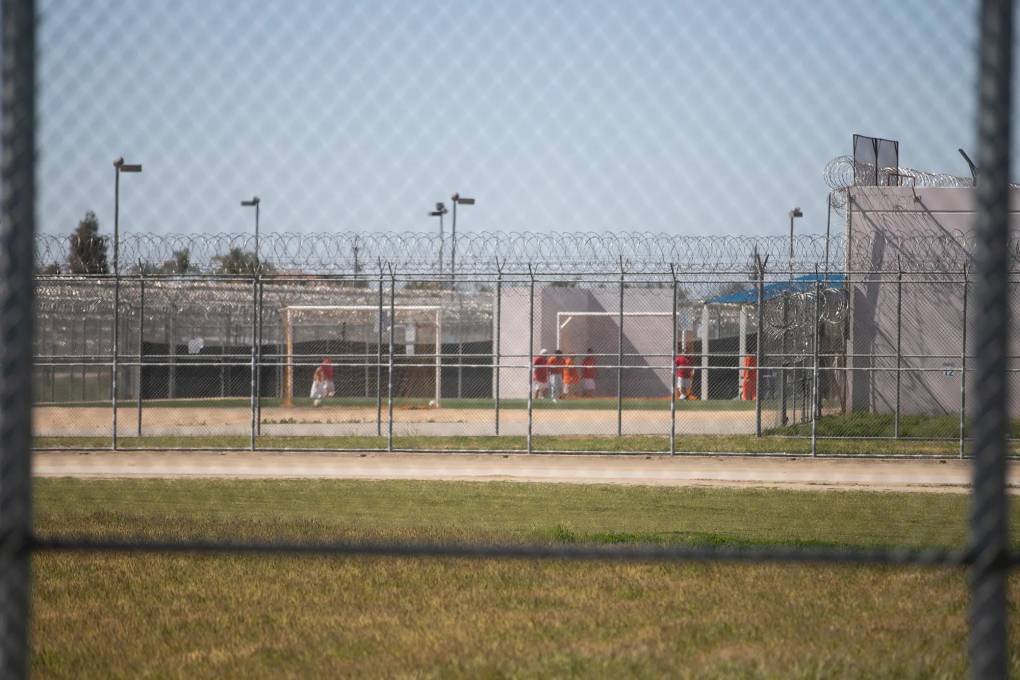
"content": "\u003cp>\u003cem>This story was originally published by \u003ca href=\"https://calmatters.org/\">CalMatters\u003c/a>. \u003ca href=\"https://calmatters.org/subscribe-to-calmatters/\">Sign up\u003c/a> for their newsletters.\u003c/em>\u003c/p>\n\u003cp>A new report from the California Department of Justice finds that \u003ca href=\"https://www.kqed.org/news/tag/immigration\">immigration\u003c/a> detention facilities across the state continue to fall short in providing basic mental health care, with gaps in suicide prevention and treatment, recordkeeping, and use of force incidents against mentally ill detainees.\u003c/p>\n\u003cp>The report’s release today comes alongside an aggressive expansion of immigration enforcement and broader changes to immigration policy under President Donald Trump’s second administration. The timing of the report’s release signals California officials plan to continue oversight as federal officials move to expand immigration detention capacity in the state.\u003c/p>\n\u003cp>It flagged that California’s detainee population has grown since the state’s last review: more than 3,100 people were held in immigration detention statewide as of April 16, up from the daily average of about 1,750 in 2021, the report found. About 75% of those detained had no documented criminal history.\u003c/p>\n\u003cp>[ad fullwidth]\u003c/p>\n\u003cp>Investigators with the state’s Department of Justice inspected all six active immigration facilities in California. The inspections were conducted \u003ca href=\"https://legiscan.com/CA/text/AB103/id/1637414\">under a 2017 state law\u003c/a> that mandated the Attorney General’s office review and report on immigration detention facilities operating in California. It’s the fourth report to be released on conditions in facilities where noncitizens are detained in California by federal Immigration and Customs Enforcement authorities.\u003c/p>\n\u003cp>The findings come amid broader concerns about federal oversight: the report notes that the federal Department of Homeland Security recently moved to shutter internal offices tasked with investigating\u003ca href=\"https://news.bgov.com/bloomberg-government-news/civil-rights-advocates-brace-for-cuts-in-homeland-security-unit\"> civil rights complaints\u003c/a> and detention conditions. Last week, the homeland security department quietly removed more than 100 civil rights and civil liberties records from its website, sparking concerns about transparency and accountability in immigration enforcement.\u003c/p>\n\u003cfigure id=\"attachment_11959336\" class=\"wp-caption aligncenter\" style=\"max-width: 2000px\">\u003cimg loading=\"lazy\" decoding=\"async\" class=\"size-full wp-image-11959336\" src=\"https://cdn.kqed.org/wp-content/uploads/sites/10/2023/08/230828-ROB-BONTA-AP-MJS-KQED.jpg\" alt=\"California's Attorney General Rob Bonta speaks into a microphone.\" width=\"2000\" height=\"1333\" srcset=\"https://cdn.kqed.org/wp-content/uploads/sites/10/2023/08/230828-ROB-BONTA-AP-MJS-KQED.jpg 2000w, https://cdn.kqed.org/wp-content/uploads/sites/10/2023/08/230828-ROB-BONTA-AP-MJS-KQED-800x533.jpg 800w, https://cdn.kqed.org/wp-content/uploads/sites/10/2023/08/230828-ROB-BONTA-AP-MJS-KQED-1020x680.jpg 1020w, https://cdn.kqed.org/wp-content/uploads/sites/10/2023/08/230828-ROB-BONTA-AP-MJS-KQED-160x107.jpg 160w, https://cdn.kqed.org/wp-content/uploads/sites/10/2023/08/230828-ROB-BONTA-AP-MJS-KQED-1536x1024.jpg 1536w, https://cdn.kqed.org/wp-content/uploads/sites/10/2023/08/230828-ROB-BONTA-AP-MJS-KQED-1920x1280.jpg 1920w\" sizes=\"auto, (max-width: 2000px) 100vw, 2000px\">\u003cfigcaption class=\"wp-caption-text\">California Attorney General Rob Bonta fields questions during a press conference on Monday, Aug. 28, 2023, in Los Angeles. \u003ccite>(Marcio Jose Sanchez/AP Photo)\u003c/cite>\u003c/figcaption>\u003c/figure>\n\u003cp>“California’s facility reviews remain especially critical in light of efforts by the Trump Administration to both eliminate oversight of conditions at immigration detention facilities and increase its inhumane campaign of mass immigration enforcement, potentially exacerbating critical issues already present in these facilities by packing them with more people,” said Attorney General Rob Bonta.\u003c/p>\n\u003cp>The 165-page report details conditions at privately operated facilities where federal immigration officials detain people facing deportation. State investigators found “deficiencies in suicide prevention and intervention strategies” at every site, including missed mental health screenings and improper clinical decisions about when to release detainees from suicide watch.\u003c/p>\n\u003cp>Staffing shortages, poor coordination between medical and mental health care providers, and widespread problems with record-keeping contributed to the risks for detainees, many of whom suffer from depression, anxiety, and post-traumatic stress disorder, according to the report.[aside postID=news_12037889 hero='https://cdn.kqed.org/wp-content/uploads/sites/10/2025/04/TravisAirForceBaseGetty-1020x602.jpg']Conditions that can worsen mental health, such as solitary confinement, remain common, the report found. At facilities known as Desert View Annex, Imperial, and Otay Mesa, investigators found that force was disproportionately used against individuals with mental health conditions, including cases where chemical agents were deployed. At the Mesa Verde facility in Bakersfield, officials failed to properly document or report the forced transfer of detainees who had participated in a peaceful hunger strike, the report said.\u003c/p>\n\u003cp>Despite federal guidelines discouraging the isolation of detainees with mental illness, the California review found people with serious mental health conditions were routinely placed in segregation, sometimes for months at a time. Investigators found some facilities failed to properly inform detainees about protections under a federal court settlement that requires legal representation for people with severe mental health disorders.\u003c/p>\n\u003cp>Pat-down policies at the Mesa Verde center discouraged detainees from seeking health care, the review found. Detainees reported feeling that invasive searches deterred them from attending medical appointments or accessing other services.\u003c/p>\n\u003cp>A spokesman for Geo Group, the private company that operates several of the facilities, did not immediately respond to a request for comment on the just-released report, but previously told CalMatters that the company provides high-quality medical services including “around-the-clock access to medical care, which is governed by the \u003ca href=\"https://protect-us.mimecast.com/s/83yMC5y4qOUYRgA3SzbK9z?domain=ice.gov\">Performance-Based National Detention Standards\u003c/a> set by the U.S. Department of Homeland Security and independently accredited by the National Commission on Correctional Health Care.”\u003c/p>\n\u003cp>“In all instances, our contracted services are monitored by the federal government to ensure strict compliance with \u003ca href=\"https://protect-us.mimecast.com/s/UwYVCXDljNhjWwgkc6Xw7d?domain=urldefense.us\">Performance-Based National Detention Standards\u003c/a>, which apply to all ICE Processing Centers,” Geo spokesman Christopher Ferreira said in December.\u003c/p>\n\u003cp>ICE did not immediately respond to a request for comment.\u003c/p>\n\u003cp>\u003c/p>\n",
"blocks": [],
"excerpt": "A California law empowers state investigators to check on conditions at ICE detention centers. A new report raises concerns about health care inside them.",
"status": "publish",
"parent": 0,
"modified": 1745958654,
"stats": {
"hasAudio": false,
"hasVideo": false,
"hasChartOrMap": false,
"iframeSrcs": [],
"hasGoogleForm": false,
"hasGallery": false,
"hasHearkenModule": false,
"hasPolis": false,
"paragraphCount": 16,
"wordCount": 786
},
"headData": {
"title": "California Sent Investigators to ICE Facilities. They Found More Detainees, and Health Care Gaps | KQED",
"description": "A California law empowers state investigators to check on conditions at ICE detention centers. A new report raises concerns about health care inside them.",
"ogTitle": "",
"ogDescription": "",
"ogImgId": "",
"twTitle": "",
"twDescription": "",
"twImgId": "",
"schema": {
"@context": "https://schema.org",
"@type": "NewsArticle",
"headline": "California Sent Investigators to ICE Facilities. They Found More Detainees, and Health Care Gaps",
"datePublished": "2025-04-29T13:30:36-07:00",
"dateModified": "2025-04-29T13:30:54-07:00",
"image": "https://cdn.kqed.org/wp-content/uploads/2020/02/KQED-OG-Image@1x.png",
"isAccessibleForFree": "True",
"publisher": {
"@type": "NewsMediaOrganization",
"@id": "https://www.kqed.org/#organization",
"name": "KQED",
"logo": "https://cdn.kqed.org/wp-content/uploads/2020/02/KQED-OG-Image@1x.png",
"url": "https://www.kqed.org",
"sameAs": [
"https://www.facebook.com/KQED",
"https://twitter.com/KQED",
"https://www.instagram.com/kqed/",
"https://www.tiktok.com/@kqedofficial",
"https://www.linkedin.com/company/kqed",
"https://www.youtube.com/channel/UCeC0IOo7i1P_61zVUWbJ4nw"
]
}
}
},
"source": "CalMatters",
"sourceUrl": "https://calmatters.org/",
"sticky": false,
"nprByline": "\u003ca href=\"https://calmatters.org/author/wendy-fry/\" target=\"_blank\" rel=\"noopener\">Wendy Fry\u003c/a>, CalMatters",
"nprStoryId": "kqed-12038087",
"templateType": "standard",
"featuredImageType": "standard",
"excludeFromSiteSearch": "Include",
"showOnAuthorArchivePages": "No",
"articleAge": "0",
"path": "/news/12038087/california-sent-investigators-ice-facilities-found-more-detainees-health-care-gaps",
"audioTrackLength": null,
"parsedContent": [
{
"type": "contentString",
"content": "\u003cdiv class=\"post-body\">\u003cp>\u003cp>\u003cem>This story was originally published by \u003ca href=\"https://calmatters.org/\">CalMatters\u003c/a>. \u003ca href=\"https://calmatters.org/subscribe-to-calmatters/\">Sign up\u003c/a> for their newsletters.\u003c/em>\u003c/p>\n\u003cp>A new report from the California Department of Justice finds that \u003ca href=\"https://www.kqed.org/news/tag/immigration\">immigration\u003c/a> detention facilities across the state continue to fall short in providing basic mental health care, with gaps in suicide prevention and treatment, recordkeeping, and use of force incidents against mentally ill detainees.\u003c/p>\n\u003cp>The report’s release today comes alongside an aggressive expansion of immigration enforcement and broader changes to immigration policy under President Donald Trump’s second administration. The timing of the report’s release signals California officials plan to continue oversight as federal officials move to expand immigration detention capacity in the state.\u003c/p>\n\u003cp>It flagged that California’s detainee population has grown since the state’s last review: more than 3,100 people were held in immigration detention statewide as of April 16, up from the daily average of about 1,750 in 2021, the report found. About 75% of those detained had no documented criminal history.\u003c/p>\n\u003cp>\u003c/p>\u003c/div>",
"attributes": {
"named": {},
"numeric": []
}
},
{
"type": "component",
"content": "",
"name": "ad",
"attributes": {
"named": {
"label": "fullwidth"
},
"numeric": [
"fullwidth"
]
}
},
{
"type": "contentString",
"content": "\u003cdiv class=\"post-body\">\u003cp>\u003c/p>\n\u003cp>Investigators with the state’s Department of Justice inspected all six active immigration facilities in California. The inspections were conducted \u003ca href=\"https://legiscan.com/CA/text/AB103/id/1637414\">under a 2017 state law\u003c/a> that mandated the Attorney General’s office review and report on immigration detention facilities operating in California. It’s the fourth report to be released on conditions in facilities where noncitizens are detained in California by federal Immigration and Customs Enforcement authorities.\u003c/p>\n\u003cp>The findings come amid broader concerns about federal oversight: the report notes that the federal Department of Homeland Security recently moved to shutter internal offices tasked with investigating\u003ca href=\"https://news.bgov.com/bloomberg-government-news/civil-rights-advocates-brace-for-cuts-in-homeland-security-unit\"> civil rights complaints\u003c/a> and detention conditions. Last week, the homeland security department quietly removed more than 100 civil rights and civil liberties records from its website, sparking concerns about transparency and accountability in immigration enforcement.\u003c/p>\n\u003cfigure id=\"attachment_11959336\" class=\"wp-caption aligncenter\" style=\"max-width: 2000px\">\u003cimg loading=\"lazy\" decoding=\"async\" class=\"size-full wp-image-11959336\" src=\"https://cdn.kqed.org/wp-content/uploads/sites/10/2023/08/230828-ROB-BONTA-AP-MJS-KQED.jpg\" alt=\"California's Attorney General Rob Bonta speaks into a microphone.\" width=\"2000\" height=\"1333\" srcset=\"https://cdn.kqed.org/wp-content/uploads/sites/10/2023/08/230828-ROB-BONTA-AP-MJS-KQED.jpg 2000w, https://cdn.kqed.org/wp-content/uploads/sites/10/2023/08/230828-ROB-BONTA-AP-MJS-KQED-800x533.jpg 800w, https://cdn.kqed.org/wp-content/uploads/sites/10/2023/08/230828-ROB-BONTA-AP-MJS-KQED-1020x680.jpg 1020w, https://cdn.kqed.org/wp-content/uploads/sites/10/2023/08/230828-ROB-BONTA-AP-MJS-KQED-160x107.jpg 160w, https://cdn.kqed.org/wp-content/uploads/sites/10/2023/08/230828-ROB-BONTA-AP-MJS-KQED-1536x1024.jpg 1536w, https://cdn.kqed.org/wp-content/uploads/sites/10/2023/08/230828-ROB-BONTA-AP-MJS-KQED-1920x1280.jpg 1920w\" sizes=\"auto, (max-width: 2000px) 100vw, 2000px\">\u003cfigcaption class=\"wp-caption-text\">California Attorney General Rob Bonta fields questions during a press conference on Monday, Aug. 28, 2023, in Los Angeles. \u003ccite>(Marcio Jose Sanchez/AP Photo)\u003c/cite>\u003c/figcaption>\u003c/figure>\n\u003cp>“California’s facility reviews remain especially critical in light of efforts by the Trump Administration to both eliminate oversight of conditions at immigration detention facilities and increase its inhumane campaign of mass immigration enforcement, potentially exacerbating critical issues already present in these facilities by packing them with more people,” said Attorney General Rob Bonta.\u003c/p>\n\u003cp>The 165-page report details conditions at privately operated facilities where federal immigration officials detain people facing deportation. State investigators found “deficiencies in suicide prevention and intervention strategies” at every site, including missed mental health screenings and improper clinical decisions about when to release detainees from suicide watch.\u003c/p>\n\u003cp>Staffing shortages, poor coordination between medical and mental health care providers, and widespread problems with record-keeping contributed to the risks for detainees, many of whom suffer from depression, anxiety, and post-traumatic stress disorder, according to the report.\u003c/p>\u003c/div>",
"attributes": {
"named": {},
"numeric": []
}
},
{
"type": "component",
"content": "",
"name": "aside",
"attributes": {
"named": {
"postid": "news_12037889",
"hero": "https://cdn.kqed.org/wp-content/uploads/sites/10/2025/04/TravisAirForceBaseGetty-1020x602.jpg",
"label": ""
},
"numeric": []
}
},
{
"type": "contentString",
"content": "\u003cdiv class=\"post-body\">\u003cp>Conditions that can worsen mental health, such as solitary confinement, remain common, the report found. At facilities known as Desert View Annex, Imperial, and Otay Mesa, investigators found that force was disproportionately used against individuals with mental health conditions, including cases where chemical agents were deployed. At the Mesa Verde facility in Bakersfield, officials failed to properly document or report the forced transfer of detainees who had participated in a peaceful hunger strike, the report said.\u003c/p>\n\u003cp>Despite federal guidelines discouraging the isolation of detainees with mental illness, the California review found people with serious mental health conditions were routinely placed in segregation, sometimes for months at a time. Investigators found some facilities failed to properly inform detainees about protections under a federal court settlement that requires legal representation for people with severe mental health disorders.\u003c/p>\n\u003cp>Pat-down policies at the Mesa Verde center discouraged detainees from seeking health care, the review found. Detainees reported feeling that invasive searches deterred them from attending medical appointments or accessing other services.\u003c/p>\n\u003cp>A spokesman for Geo Group, the private company that operates several of the facilities, did not immediately respond to a request for comment on the just-released report, but previously told CalMatters that the company provides high-quality medical services including “around-the-clock access to medical care, which is governed by the \u003ca href=\"https://protect-us.mimecast.com/s/83yMC5y4qOUYRgA3SzbK9z?domain=ice.gov\">Performance-Based National Detention Standards\u003c/a> set by the U.S. Department of Homeland Security and independently accredited by the National Commission on Correctional Health Care.”\u003c/p>\n\u003cp>“In all instances, our contracted services are monitored by the federal government to ensure strict compliance with \u003ca href=\"https://protect-us.mimecast.com/s/UwYVCXDljNhjWwgkc6Xw7d?domain=urldefense.us\">Performance-Based National Detention Standards\u003c/a>, which apply to all ICE Processing Centers,” Geo spokesman Christopher Ferreira said in December.\u003c/p>\n\u003cp>ICE did not immediately respond to a request for comment.\u003c/p>\n\u003cp>\u003c/p>\n\u003c/div>\u003c/p>",
"attributes": {
"named": {},
"numeric": []
}
}
],
"link": "/news/12038087/california-sent-investigators-ice-facilities-found-more-detainees-health-care-gaps",
"authors": [
"byline_news_12038087"
],
"categories": [
"news_31795",
"news_1169",
"news_8",
"news_13"
],
"tags": [
"news_18538",
"news_4750",
"news_27240",
"news_1323",
"news_34377",
"news_6884",
"news_20202",
"news_20857",
"news_17968",
"news_20529"
],
"affiliates": [
"news_18481"
],
"featImg": "news_12038090",
"label": "source_news_12038087"
},
"news_12037891": {
"type": "posts",
"id": "news_12037891",
"meta": {
"index": "posts_1716263798",
"site": "news",
"id": "12037891",
"score": null,
"sort": [
1745935256000
]
},
"guestAuthors": [],
"slug": "how-paris-by-night-became-the-spirit-of-vietnamese-american-life",
"title": "How ‘Paris by Night’ Became the Spirit of Vietnamese American Life",
"publishDate": 1745935256,
"format": "standard",
"headTitle": "How ‘Paris by Night’ Became the Spirit of Vietnamese American Life | KQED",
"labelTerm": {
"site": "news"
},
"content": "\u003cp>\u003cem>Updated 10:26 a.m. Tuesday\u003c/em>\u003c/p>\n\u003cp>In the days before smartphones and personalized feeds, every family had their regular shows they watched on the living room TV.\u003c/p>\n\u003cp>Some sat down to watch the nightly news, others tuned in to a game show or rooted for the winning basketball team. However, if your family is Vietnamese, one show has always played for everyone in practically every household: \u003cem>Paris By Night\u003c/em>.\u003c/p>\n\u003cp>Growing up in East San José, my grandma’s house was the center for all family functions. My extended family would show up in droves, bringing platters of egg rolls, roasted pork, fried rice and more.\u003c/p>\n\u003cp>[ad fullwidth]\u003c/p>\n\u003cp>While the aunts and uncles gleefully hollered over food and gossip, \u003cem>Paris by Night\u003c/em> consistently permeated through the clamor. And that’s a common experience.\u003c/p>\n\u003cp>“Oh my God, that was the soundtrack of my life; it still is,” Santa Clara County Supervisor Betty Duong said. “As a kid, it was the only time that you saw cool Asians on TV,” adding that there was excitement in her entire family about getting the latest episode. “It was, like, religious. Any time the newest \u003cem>Paris by Night\u003c/em> came out, when the VHS tape dropped, that was a day that was marked on the calendar.”[aside postID=news_12037893 hero='https://cdn.kqed.org/wp-content/uploads/sites/10/2025/04/20250412_MIENGAMEMORIES_19-KQED-1020x680.jpg']What did we see?\u003c/p>\n\u003cp>A Vietnamese folk singer belting out a ballad with gravitas or a euro-dance pop number booming through the big living room TV speakers.\u003c/p>\n\u003cp>Occasionally, the “grown-ups” would pause their conversation to listen in and reminisce.\u003c/p>\n\u003cp>Elders, like my grandma, would have a front-row seat, tuning out the buzz and tuning into this larger-than-life display of Vietnamese culture.\u003c/p>\n\u003cp>\u003cem>Paris By Night \u003c/em>is a flashy variety show with musical acts, dance numbers, interviews and vaudeville-style comedy skits. For many decades, it was the cultural anchor for “Viet Kieu,” or Vietnamese people who had fled their homeland.\u003c/p>\n\u003cp>And that’s the purpose of \u003cem>Paris By Night\u003c/em>: to reconnect the Vietnamese diaspora, like my grandma, to the culture that was left behind.\u003c/p>\n\u003ch2>Fleeing to Paris, recreating Vietnam in California\u003c/h2>\n\u003cp>The show’s beginnings can be traced back to Tô Văn Lai, who \u003ca href=\"https://saigoneer.com/saigon-music-art/25830-a-brief-history-of-paris-by-night,-the-anchor-of-vietnamese-culture-abroad\">sold cassette tapes in their Saigon record shop of local singers\u003c/a>, like Thaí Thanh.\u003c/p>\n\u003cp>When he and his wife Thuy \u003ca href=\"https://thesmartlocal.com/vietnam/to-van-lai/\">fled to Paris\u003c/a> in 1976, they brought their collection of tapes and records to remind them of Vietnam.\u003c/p>\n\u003cp>Under the Paris night skies, Tô, who deeply missed his homeland, dreamt of recapturing the melodies that would bring him the warmth of Vietnam. And so, \u003cem>Paris By Night\u003c/em> was conceived.\u003c/p>\n\u003cfigure id=\"attachment_12037955\" class=\"wp-caption aligncenter\" style=\"max-width: 960px\">\u003cimg loading=\"lazy\" decoding=\"async\" class=\"size-full wp-image-12037955\" src=\"https://cdn.kqed.org/wp-content/uploads/sites/10/2025/04/Thuy.jpg\" alt=\"\" width=\"960\" height=\"613\" srcset=\"https://cdn.kqed.org/wp-content/uploads/sites/10/2025/04/Thuy.jpg 960w, https://cdn.kqed.org/wp-content/uploads/sites/10/2025/04/Thuy-800x511.jpg 800w, https://cdn.kqed.org/wp-content/uploads/sites/10/2025/04/Thuy-160x102.jpg 160w\" sizes=\"auto, (max-width: 960px) 100vw, 960px\">\u003cfigcaption class=\"wp-caption-text\">Photo of Thuy taken by Lai at the Saigon Zoo and Botanical Garden. \u003ccite>(Courtesy of Marie Tô)\u003c/cite>\u003c/figcaption>\u003c/figure>\n\u003cfigure id=\"attachment_12037956\" class=\"wp-caption aligncenter\" style=\"max-width: 960px\">\u003cimg loading=\"lazy\" decoding=\"async\" class=\"size-full wp-image-12037956\" src=\"https://cdn.kqed.org/wp-content/uploads/sites/10/2025/04/To-Van-Lai.jpg\" alt=\"\" width=\"960\" height=\"651\" srcset=\"https://cdn.kqed.org/wp-content/uploads/sites/10/2025/04/To-Van-Lai.jpg 960w, https://cdn.kqed.org/wp-content/uploads/sites/10/2025/04/To-Van-Lai-800x543.jpg 800w, https://cdn.kqed.org/wp-content/uploads/sites/10/2025/04/To-Van-Lai-160x109.jpg 160w\" sizes=\"auto, (max-width: 960px) 100vw, 960px\">\u003cfigcaption class=\"wp-caption-text\">Photo of Tô Văn Lai in Saigon in front of the Central Post Office. \u003ccite>(Courtesy of Marie Tô)\u003c/cite>\u003c/figcaption>\u003c/figure>\n\u003cfigure id=\"attachment_12037957\" class=\"wp-caption aligncenter\" style=\"max-width: 2000px\">\u003cimg loading=\"lazy\" decoding=\"async\" class=\"size-full wp-image-12037957\" src=\"https://cdn.kqed.org/wp-content/uploads/sites/10/2025/04/To-Van-Lai-Thuy-Marie.jpg\" alt=\"\" width=\"2000\" height=\"1448\" srcset=\"https://cdn.kqed.org/wp-content/uploads/sites/10/2025/04/To-Van-Lai-Thuy-Marie.jpg 2000w, https://cdn.kqed.org/wp-content/uploads/sites/10/2025/04/To-Van-Lai-Thuy-Marie-800x579.jpg 800w, https://cdn.kqed.org/wp-content/uploads/sites/10/2025/04/To-Van-Lai-Thuy-Marie-1020x738.jpg 1020w, https://cdn.kqed.org/wp-content/uploads/sites/10/2025/04/To-Van-Lai-Thuy-Marie-160x116.jpg 160w, https://cdn.kqed.org/wp-content/uploads/sites/10/2025/04/To-Van-Lai-Thuy-Marie-1536x1112.jpg 1536w, https://cdn.kqed.org/wp-content/uploads/sites/10/2025/04/To-Van-Lai-Thuy-Marie-1920x1390.jpg 1920w\" sizes=\"auto, (max-width: 2000px) 100vw, 2000px\">\u003cfigcaption class=\"wp-caption-text\">Lai and Thuy with their daughter Marie in Saigon. \u003ccite>(Courtesy of Marie Tô)\u003c/cite>\u003c/figcaption>\u003c/figure>\n\u003cp>Nearly 22 episodes of the show were produced for the Vietnamese community in France before expanding internationally and relocating to \u003ca href=\"https://saigoneer.com/saigon-music-art/25830-a-brief-history-of-paris-by-night,-the-anchor-of-vietnamese-culture-abroad\">Orange County, California\u003c/a>. Tô and Thuy’s daughter, Marie Tô Ngoc Thuy, now serves as the executive producer with her husband, Paul Huynh, at Thuy Nga Productions, the company that owns \u003cem>Paris By Night\u003c/em>.\u003c/p>\n\u003cp>“In \u003cem>Paris by Night\u003c/em>, we have 138 volumes. And then beside that, we produce comedies, live concerts, so anything related to Vietnamese music,” Marie Tô said, not to mention the 600 CDs they have produced.\u003c/p>\n\u003cfigure id=\"attachment_12037958\" class=\"wp-caption aligncenter\" style=\"max-width: 1593px\">\u003cimg loading=\"lazy\" decoding=\"async\" class=\"wp-image-12037958 size-full\" src=\"https://cdn.kqed.org/wp-content/uploads/sites/10/2025/04/Marie-To-and-husband-Paul-Huynh-with-singer-Thanh-Ha-in-Paris-for-the-70th-episode.jpg\" alt=\"\" width=\"1593\" height=\"1196\" srcset=\"https://cdn.kqed.org/wp-content/uploads/sites/10/2025/04/Marie-To-and-husband-Paul-Huynh-with-singer-Thanh-Ha-in-Paris-for-the-70th-episode.jpg 1593w, https://cdn.kqed.org/wp-content/uploads/sites/10/2025/04/Marie-To-and-husband-Paul-Huynh-with-singer-Thanh-Ha-in-Paris-for-the-70th-episode-800x601.jpg 800w, https://cdn.kqed.org/wp-content/uploads/sites/10/2025/04/Marie-To-and-husband-Paul-Huynh-with-singer-Thanh-Ha-in-Paris-for-the-70th-episode-1020x766.jpg 1020w, https://cdn.kqed.org/wp-content/uploads/sites/10/2025/04/Marie-To-and-husband-Paul-Huynh-with-singer-Thanh-Ha-in-Paris-for-the-70th-episode-160x120.jpg 160w, https://cdn.kqed.org/wp-content/uploads/sites/10/2025/04/Marie-To-and-husband-Paul-Huynh-with-singer-Thanh-Ha-in-Paris-for-the-70th-episode-1536x1153.jpg 1536w\" sizes=\"auto, (max-width: 1593px) 100vw, 1593px\">\u003cfigcaption class=\"wp-caption-text\">Marie Tô and her husband, Paul Huynh, with singer Thanh Hà in Paris for the 70th episode. \u003ccite>(Courtesy of Marie Tô)\u003c/cite>\u003c/figcaption>\u003c/figure>\n\u003cp>Back when videotapes and DVDs were a hot commodity, \u003cem>Paris By Night\u003c/em> flourished. The shift from France to Southern California also proved to be the right business move since there was a pool of Hollywood producers, designers and choreographers next door. As a result, production levels soared and became more sophisticated.\u003c/p>\n\u003cp>Shanda Sawyer was one of those Hollywood choreographers who came into \u003cem>Paris By Night\u003c/em>. Sawyer is an L.A.-based creative director and choreographer and works closely with Marie Tô to come up with set pieces and musical numbers.\u003c/p>\n\u003cp>“It’s such a long creative relationship, but we really create well together,” said Sawyer, who has been with \u003cem>Paris By Night \u003c/em>for over 20 years.\u003c/p>\n\u003cp>Before every show is filmed, Sawyer has two weeks to work with the Vietnamese artists and backup dancers to rehearse their numbers. She said, “I was able to really connect with the Vietnamese artists in a way that I could help them not only realize their individual songs, but recreate a lot of the culture that had been lost.”\u003c/p>\n\u003cfigure id=\"attachment_12037959\" class=\"wp-caption aligncenter\" style=\"max-width: 2000px\">\u003cimg loading=\"lazy\" decoding=\"async\" class=\"wp-image-12037959 size-full\" src=\"https://cdn.kqed.org/wp-content/uploads/sites/10/2025/04/Nhu-Quynh.jpg\" alt=\"\" width=\"2000\" height=\"1086\" srcset=\"https://cdn.kqed.org/wp-content/uploads/sites/10/2025/04/Nhu-Quynh.jpg 2000w, https://cdn.kqed.org/wp-content/uploads/sites/10/2025/04/Nhu-Quynh-800x434.jpg 800w, https://cdn.kqed.org/wp-content/uploads/sites/10/2025/04/Nhu-Quynh-1020x554.jpg 1020w, https://cdn.kqed.org/wp-content/uploads/sites/10/2025/04/Nhu-Quynh-160x87.jpg 160w, https://cdn.kqed.org/wp-content/uploads/sites/10/2025/04/Nhu-Quynh-1536x834.jpg 1536w, https://cdn.kqed.org/wp-content/uploads/sites/10/2025/04/Nhu-Quynh-1920x1043.jpg 1920w\" sizes=\"auto, (max-width: 2000px) 100vw, 2000px\">\u003cfigcaption class=\"wp-caption-text\">Singer Như Quỳnh performs at the 129th episode of “Paris By Night.” Shanda Sawyer is the creative director and choreographer behind this and many other performances. \u003ccite>(\"Paris By Night\" Official YouTube)\u003c/cite>\u003c/figcaption>\u003c/figure>\n\u003cp>In addition to creating videos, the company performed live in multiple cities, including San José in 2003, and cemented the household name it is today.\u003c/p>\n\u003cp>My parents attended that show, and when I asked my mom about it, she paused in a daze, trying to remember those long-ago memories. She said watching it live was so much better than viewing it at home on DVDs. She also recalled the music, dancing, choreography, the banners and even her favorite singers, Ý Lan and Khánh Ly.\u003c/p>\n\u003cp>https://www.youtube.com/watch?v=RRlHV9V4Ip0\u003c/p>\n\u003cp>Duong told KQED that her mother would wait in line at the Lion Plaza in San José to get the newest videotapes and her whole family would excitedly sit down to watch them on repeat.\u003c/p>\n\u003cp>“On Saturdays and Sundays, it would just play in the background nonstop,” she said. “For my parents, the more classical songs would give them a sense of home.”\u003c/p>\n\u003ch2>A contrast to representation in American media\u003c/h2>\n\u003cp>For the Vietnamese diaspora, \u003cem>Paris By Night\u003c/em> was a welcome contrast to how we were represented in Western visual media. Most depictions of Vietnam have centered around the war, typically from the perspective of American soldiers, like \u003cem>Platoon\u003c/em>, \u003cem>The Deer Hunter\u003c/em> and \u003cem>Casualties of War\u003c/em>.\u003c/p>\n\u003cp>Rarely has there been a piece of visual media about the Vietnam War (also known in Vietnam as the American War) that has centered on the Vietnamese perspective. That is, until last year’s HBO mini-series, \u003cem>The Sympathizer\u003c/em>, based on the Pulitzer Prize-winning book of the same title written by Viet Thanh Nguyen, who fled Vietnam when he was 4 years old.\u003c/p>\n\u003cfigure id=\"attachment_12037960\" class=\"wp-caption alignright\" style=\"max-width: 800px\">\u003cimg loading=\"lazy\" decoding=\"async\" class=\"size-medium wp-image-12037960\" src=\"https://cdn.kqed.org/wp-content/uploads/sites/10/2025/04/The-Sympathizer-Poster-800x1185.jpg\" alt=\"\" width=\"800\" height=\"1185\" srcset=\"https://cdn.kqed.org/wp-content/uploads/sites/10/2025/04/The-Sympathizer-Poster-800x1185.jpg 800w, https://cdn.kqed.org/wp-content/uploads/sites/10/2025/04/The-Sympathizer-Poster-160x237.jpg 160w, https://cdn.kqed.org/wp-content/uploads/sites/10/2025/04/The-Sympathizer-Poster.jpg 1000w\" sizes=\"auto, (max-width: 800px) 100vw, 800px\">\u003cfigcaption class=\"wp-caption-text\">“The Sympathizer” poster. \u003ccite>(HBO Max)\u003c/cite>\u003c/figcaption>\u003c/figure>\n\u003cp>“It’s a war that continues to need to be grappled with, but it’s also exhausting that everything is concentrated so much around this horrific experience of colonialism and war,” explained Nguyen. “It’s something that we should remember, but we shouldn’t pass on. How do we do that? That’s a balancing act.”\u003c/p>\n\u003cp>For a lot of the Vietnamese diaspora, we wanted to find a representation of home that didn’t just depict graphic violence or Asian stereotypes of a war-torn country, but rather showcased our joy, resilience, nostalgia, music, performing arts, comedy, etc. Paris By Night was able to fill that tall order — weaving this complicated tapestry of emotions and politics into an at-home experience.\u003c/p>\n\u003cp>Nguyen explained that his parents were culturally conservative, but still found \u003cem>Paris by Night\u003c/em> entertaining. He called it the Hollywood of the Vietnamese diaspora.\u003c/p>\n\u003cp>“I wasn’t particularly infatuated with \u003cem>Paris by Night\u003c/em>, but I knew it. I knew who they were,” he remarked. “I knew the music that they were singing and somehow that rubbed off on me.”\u003c/p>\n\u003cp>Which meant that even if you weren’t into the show, it still influenced the burgeoning Vietnamese American culture in unexpected ways, such as knowing how to do outdated dances from the late 1980s.\u003c/p>\n\u003cp>“When I went to college, I learned how to do the cha-cha,” he told me. “You could do the cha-cha if you’re a Vietnamese American,” Nguyen said. “This was all wrapped up with the idea of\u003cem> Paris by Night \u003c/em>that we had a distinct Vietnamese American youth culture, pop culture and subculture.”\u003c/p>\n\u003ch2>Full circle to Vietnam\u003c/h2>\n\u003cp>By the late 1990s and early 2000s, counterfeit DVDs and videotapes helped \u003cem>Paris by Night\u003c/em> reach a wider audience, including viewers in Vietnam, but the illegal copies also undermined the show’s ability to make a profit. \u003ca href=\"https://www.ocregister.com/2015/07/29/sold-out-shows-and-thousands-of-dvds-sold-so-why-is-little-saigons-popular-paris-by-night-fighting-to-survive/\">Bootlegs were sold in the thousands at video stores. \u003c/a>\u003c/p>\n\u003cp>\u003ca href=\"https://www.rajraf.org/article/paris-by-nightand-the-making-of-vietnamese-american-music/1162\">In Vietnam, official merchandise of \u003cem>Paris By Night\u003c/em> is banned due to its occasional political messaging\u003c/a>; however, the underground piracy market allowed locals to access the show, and they have expressed gratitude and excitement for its cultural impact. In a full-circle moment, \u003cem>Paris by Night\u003c/em> still manages to reach Vietnamese audiences not only internationally, but also in the homeland — the longing for which inspired the show.\u003c/p>\n\u003cfigure id=\"attachment_12037954\" class=\"wp-caption alignleft\" style=\"max-width: 500px\">\u003cimg loading=\"lazy\" decoding=\"async\" class=\"size-full wp-image-12037954\" src=\"https://cdn.kqed.org/wp-content/uploads/sites/10/2025/04/Paris-By-Night-100-e1745875653968.jpg\" alt=\"\" width=\"500\" height=\"723\">\u003cfigcaption class=\"wp-caption-text\">Poster of the 100th episode of “Paris By Night.” \u003ccite>(Thuy Nga \"Paris By Night\" Fandom Encyclopedia)\u003c/cite>\u003c/figcaption>\u003c/figure>\n\u003cp>One time, when Tô was traveling in Da Nang, a taxi driver recognized her as “chị Thuy” (sister Thuy) and expressed his gratitude. “They thank us for preserving the culture, preserving the song, that all those \u003cem>Paris by Night\u003c/em> would be the success,” Tô added about the people she met in Vietnam. “That was the happiest moment for them, watching with their family.”\u003c/p>\n\u003cp>Through music and performing, the Vietnamese diaspora felt more united. “There’s this beautiful connection of all of the artists who left Vietnam paying homage to their culture and then that culture returning to Vietnam,” Sawyer said.\u003c/p>\n\u003cp>Some of the piracy troubles nearly put the company \u003ca href=\"https://www.pressenterprise.com/2015/08/02/media-vietnamese-juggernaut-paris-by-night-struggles-to-survive/\">out of business in 2010\u003c/a>, but community support and new business strategies managed to salvage it. However, operating the company is still a struggle, and Tô has to find a way to reach a new generation of audiences.\u003c/p>\n\u003cp>“Because this is the digital era, the income from all the digital platforms are not enough for you to produce a quality show,” Marie Tô said. “Our talented singers, now they’re getting older … I think if we want to continue \u003cem>Paris by Night\u003c/em>, we have to renew our blood, like do a talent show, looking for new singers. So we have to start a new road again.”\u003c/p>\n\u003cp>In an effort to fight piracy and achieve a larger digital reach, Thuy Nga archived many of \u003cem>Paris By Night\u003c/em>’s older episodes on its official YouTube channel. While I was watching \u003cem>Paris By Night \u003c/em>episodes on YouTube, I noticed that most, if not all, of the comments are in Vietnamese.\u003c/p>\n\u003cp>https://www.youtube.com/watch?v=M6_y55GpOq8\u003c/p>\n\u003cp>The comments under the Têt-themed episode ranged from nostalgic, like, “I miss my family, I miss my hometown, I miss my grandparents, I miss old memories when my family was still full,” to curious, “I’m 10 years old, but I really like Vietnamese Tet. I’m trying to learn Vietnamese and preserve Vietnamese culture.”\u003c/p>\n\u003cp>It appears that the older generation is still seeking out cultural comfort, while some in the younger generation feel connected to the show.\u003c/p>\n\u003cp>Even Marie Tô gets nostalgic for \u003cem>Paris By Night\u003c/em>, thinking about the opening song in the 40th Anniversary of the “Fall of Saigon” episode (#114) in 2015. “I watched that performance the other day, and I had tears in my eyes,” she said. “That’s the sweetest memory for me. Because that, I think, tells what \u003cem>Paris By Night\u003c/em> wants to achieve.”\u003c/p>\n\u003cp>https://www.youtube.com/watch?v=F0UJkbyzJ2E\u003c/p>\n\u003ch2>\u003cem>Paris by Night\u003c/em> for the next generations\u003c/h2>\n\u003cp>For Vietnamese Americans like me who grew up primarily in the U.S., language barriers still exist.\u003c/p>\n\u003cp>I have a basic understanding of the language — I can ask grandma what she ate that morning and if she slept well the previous night — but going deeper and asking about her childhood is a challenge.\u003c/p>\n\u003cp>Watching \u003cem>Paris By Night\u003c/em>, there was a lot I didn’t quite grasp. Like, why did this MC make a joke that had my family falling out of their seats, while I was sitting there feeling left out? Or, when a musical performance would make references to an old folktale, I’d have to ask my aunt for a full backstory.[aside postID=news_12037680 hero='https://cdn.kqed.org/wp-content/uploads/sites/10/2025/04/20240403_BETTYDUONG_GC-12-KQED-1020x680.jpg']In my mind, this show has been something for the “grown-ups.” This was made for my parents’ generation, by my parents’ generation.\u003c/p>\n\u003cp>Older generations are still tuning in as new episodes become available on DVD or drop on the Thuy Nga YouTube channel. My mom and aunts will gossip about which singer on the show recently got divorced with the same fervor as when my friends and I talk about the latest \u003cem>The White Lotus\u003c/em> episode. As our parents’ generation ages, so does the show, but \u003cem>Paris By Night \u003c/em>isn’t something that could be passed down the same way an heirloom might when a relative dies.\u003c/p>\n\u003cp>These days, I find myself wondering how I will continue to engage in my own culture. It might be the food I make, the Viet pop songs I listen to every now and then or the phrases I’d say when my cat is stinky (con mèo thúi). I think a lot of us are still trying to reconnect with what was left behind — or, in my case, something I’ve never fully known.\u003c/p>\n\u003cp>\u003cem>Paris By Night \u003c/em>was built on memories over many decades and continues to be a cultural throughline for a lot of the Vietnamese diaspora.\u003c/p>\n\u003cp>No matter where we live, my whole family still gravitates to my grandma’s house every year during Têt. Of course, \u003cem>Paris By Night \u003c/em>still plays on the big living room TV, as if to remind us that this is home, in so many ways. And that’s when I feel the same warmth that Tô yearned for way back when in Paris, right here in my grandma’s home in San José.\u003c/p>\n\u003cp>[ad floatright]\u003c/p>\n",
"blocks": [],
"excerpt": "If your family’s Vietnamese, one show has always played for everyone in practically every household: Paris By Night, a variety show that became the cultural anchor for the diasporic experience. ",
"status": "publish",
"parent": 0,
"modified": 1746219767,
"stats": {
"hasAudio": false,
"hasVideo": true,
"hasChartOrMap": false,
"iframeSrcs": [],
"hasGoogleForm": false,
"hasGallery": false,
"hasHearkenModule": false,
"hasPolis": false,
"paragraphCount": 51,
"wordCount": 2478
},
"headData": {
"title": "How ‘Paris by Night’ Became the Spirit of Vietnamese American Life | KQED",
"description": "If your family’s Vietnamese, one show has always played for everyone in practically every household: Paris By Night, a variety show that became the cultural anchor for the diasporic experience. ",
"ogTitle": "",
"ogDescription": "",
"ogImgId": "",
"twTitle": "",
"twDescription": "",
"twImgId": "",
"schema": {
"@context": "https://schema.org",
"@type": "NewsArticle",
"headline": "How ‘Paris by Night’ Became the Spirit of Vietnamese American Life",
"datePublished": "2025-04-29T07:00:56-07:00",
"dateModified": "2025-05-02T14:02:47-07:00",
"image": "https://cdn.kqed.org/wp-content/uploads/2020/02/KQED-OG-Image@1x.png",
"isAccessibleForFree": "True",
"publisher": {
"@type": "NewsMediaOrganization",
"@id": "https://www.kqed.org/#organization",
"name": "KQED",
"logo": "https://cdn.kqed.org/wp-content/uploads/2020/02/KQED-OG-Image@1x.png",
"url": "https://www.kqed.org",
"sameAs": [
"https://www.facebook.com/KQED",
"https://twitter.com/KQED",
"https://www.instagram.com/kqed/",
"https://www.tiktok.com/@kqedofficial",
"https://www.linkedin.com/company/kqed",
"https://www.youtube.com/channel/UCeC0IOo7i1P_61zVUWbJ4nw"
]
}
}
},
"audioUrl": "https://traffic.omny.fm/d/clips/0af137ef-751e-4b19-a055-aaef00d2d578/ffca7e9f-6831-41c5-bcaf-aaef00f5a073/6668ebe4-56ff-470f-aab7-b2d101127034/audio.mp3",
"sticky": false,
"nprStoryId": "kqed-12037891",
"templateType": "standard",
"featuredImageType": "standard",
"excludeFromSiteSearch": "Include",
"articleAge": "0",
"path": "/news/12037891/how-paris-by-night-became-the-spirit-of-vietnamese-american-life",
"audioTrackLength": null,
"parsedContent": [
{
"type": "contentString",
"content": "\u003cdiv class=\"post-body\">\u003cp>\u003cp>\u003cem>Updated 10:26 a.m. Tuesday\u003c/em>\u003c/p>\n\u003cp>In the days before smartphones and personalized feeds, every family had their regular shows they watched on the living room TV.\u003c/p>\n\u003cp>Some sat down to watch the nightly news, others tuned in to a game show or rooted for the winning basketball team. However, if your family is Vietnamese, one show has always played for everyone in practically every household: \u003cem>Paris By Night\u003c/em>.\u003c/p>\n\u003cp>Growing up in East San José, my grandma’s house was the center for all family functions. My extended family would show up in droves, bringing platters of egg rolls, roasted pork, fried rice and more.\u003c/p>\n\u003cp>\u003c/p>\u003c/div>",
"attributes": {
"named": {},
"numeric": []
}
},
{
"type": "component",
"content": "",
"name": "ad",
"attributes": {
"named": {
"label": "fullwidth"
},
"numeric": [
"fullwidth"
]
}
},
{
"type": "contentString",
"content": "\u003cdiv class=\"post-body\">\u003cp>\u003c/p>\n\u003cp>While the aunts and uncles gleefully hollered over food and gossip, \u003cem>Paris by Night\u003c/em> consistently permeated through the clamor. And that’s a common experience.\u003c/p>\n\u003cp>“Oh my God, that was the soundtrack of my life; it still is,” Santa Clara County Supervisor Betty Duong said. “As a kid, it was the only time that you saw cool Asians on TV,” adding that there was excitement in her entire family about getting the latest episode. “It was, like, religious. Any time the newest \u003cem>Paris by Night\u003c/em> came out, when the VHS tape dropped, that was a day that was marked on the calendar.”\u003c/p>\u003c/div>",
"attributes": {
"named": {},
"numeric": []
}
},
{
"type": "component",
"content": "",
"name": "aside",
"attributes": {
"named": {
"postid": "news_12037893",
"hero": "https://cdn.kqed.org/wp-content/uploads/sites/10/2025/04/20250412_MIENGAMEMORIES_19-KQED-1020x680.jpg",
"label": ""
},
"numeric": []
}
},
{
"type": "contentString",
"content": "\u003cdiv class=\"post-body\">\u003cp>What did we see?\u003c/p>\n\u003cp>A Vietnamese folk singer belting out a ballad with gravitas or a euro-dance pop number booming through the big living room TV speakers.\u003c/p>\n\u003cp>Occasionally, the “grown-ups” would pause their conversation to listen in and reminisce.\u003c/p>\n\u003cp>Elders, like my grandma, would have a front-row seat, tuning out the buzz and tuning into this larger-than-life display of Vietnamese culture.\u003c/p>\n\u003cp>\u003cem>Paris By Night \u003c/em>is a flashy variety show with musical acts, dance numbers, interviews and vaudeville-style comedy skits. For many decades, it was the cultural anchor for “Viet Kieu,” or Vietnamese people who had fled their homeland.\u003c/p>\n\u003cp>And that’s the purpose of \u003cem>Paris By Night\u003c/em>: to reconnect the Vietnamese diaspora, like my grandma, to the culture that was left behind.\u003c/p>\n\u003ch2>Fleeing to Paris, recreating Vietnam in California\u003c/h2>\n\u003cp>The show’s beginnings can be traced back to Tô Văn Lai, who \u003ca href=\"https://saigoneer.com/saigon-music-art/25830-a-brief-history-of-paris-by-night,-the-anchor-of-vietnamese-culture-abroad\">sold cassette tapes in their Saigon record shop of local singers\u003c/a>, like Thaí Thanh.\u003c/p>\n\u003cp>When he and his wife Thuy \u003ca href=\"https://thesmartlocal.com/vietnam/to-van-lai/\">fled to Paris\u003c/a> in 1976, they brought their collection of tapes and records to remind them of Vietnam.\u003c/p>\n\u003cp>Under the Paris night skies, Tô, who deeply missed his homeland, dreamt of recapturing the melodies that would bring him the warmth of Vietnam. And so, \u003cem>Paris By Night\u003c/em> was conceived.\u003c/p>\n\u003cfigure id=\"attachment_12037955\" class=\"wp-caption aligncenter\" style=\"max-width: 960px\">\u003cimg loading=\"lazy\" decoding=\"async\" class=\"size-full wp-image-12037955\" src=\"https://cdn.kqed.org/wp-content/uploads/sites/10/2025/04/Thuy.jpg\" alt=\"\" width=\"960\" height=\"613\" srcset=\"https://cdn.kqed.org/wp-content/uploads/sites/10/2025/04/Thuy.jpg 960w, https://cdn.kqed.org/wp-content/uploads/sites/10/2025/04/Thuy-800x511.jpg 800w, https://cdn.kqed.org/wp-content/uploads/sites/10/2025/04/Thuy-160x102.jpg 160w\" sizes=\"auto, (max-width: 960px) 100vw, 960px\">\u003cfigcaption class=\"wp-caption-text\">Photo of Thuy taken by Lai at the Saigon Zoo and Botanical Garden. \u003ccite>(Courtesy of Marie Tô)\u003c/cite>\u003c/figcaption>\u003c/figure>\n\u003cfigure id=\"attachment_12037956\" class=\"wp-caption aligncenter\" style=\"max-width: 960px\">\u003cimg loading=\"lazy\" decoding=\"async\" class=\"size-full wp-image-12037956\" src=\"https://cdn.kqed.org/wp-content/uploads/sites/10/2025/04/To-Van-Lai.jpg\" alt=\"\" width=\"960\" height=\"651\" srcset=\"https://cdn.kqed.org/wp-content/uploads/sites/10/2025/04/To-Van-Lai.jpg 960w, https://cdn.kqed.org/wp-content/uploads/sites/10/2025/04/To-Van-Lai-800x543.jpg 800w, https://cdn.kqed.org/wp-content/uploads/sites/10/2025/04/To-Van-Lai-160x109.jpg 160w\" sizes=\"auto, (max-width: 960px) 100vw, 960px\">\u003cfigcaption class=\"wp-caption-text\">Photo of Tô Văn Lai in Saigon in front of the Central Post Office. \u003ccite>(Courtesy of Marie Tô)\u003c/cite>\u003c/figcaption>\u003c/figure>\n\u003cfigure id=\"attachment_12037957\" class=\"wp-caption aligncenter\" style=\"max-width: 2000px\">\u003cimg loading=\"lazy\" decoding=\"async\" class=\"size-full wp-image-12037957\" src=\"https://cdn.kqed.org/wp-content/uploads/sites/10/2025/04/To-Van-Lai-Thuy-Marie.jpg\" alt=\"\" width=\"2000\" height=\"1448\" srcset=\"https://cdn.kqed.org/wp-content/uploads/sites/10/2025/04/To-Van-Lai-Thuy-Marie.jpg 2000w, https://cdn.kqed.org/wp-content/uploads/sites/10/2025/04/To-Van-Lai-Thuy-Marie-800x579.jpg 800w, https://cdn.kqed.org/wp-content/uploads/sites/10/2025/04/To-Van-Lai-Thuy-Marie-1020x738.jpg 1020w, https://cdn.kqed.org/wp-content/uploads/sites/10/2025/04/To-Van-Lai-Thuy-Marie-160x116.jpg 160w, https://cdn.kqed.org/wp-content/uploads/sites/10/2025/04/To-Van-Lai-Thuy-Marie-1536x1112.jpg 1536w, https://cdn.kqed.org/wp-content/uploads/sites/10/2025/04/To-Van-Lai-Thuy-Marie-1920x1390.jpg 1920w\" sizes=\"auto, (max-width: 2000px) 100vw, 2000px\">\u003cfigcaption class=\"wp-caption-text\">Lai and Thuy with their daughter Marie in Saigon. \u003ccite>(Courtesy of Marie Tô)\u003c/cite>\u003c/figcaption>\u003c/figure>\n\u003cp>Nearly 22 episodes of the show were produced for the Vietnamese community in France before expanding internationally and relocating to \u003ca href=\"https://saigoneer.com/saigon-music-art/25830-a-brief-history-of-paris-by-night,-the-anchor-of-vietnamese-culture-abroad\">Orange County, California\u003c/a>. Tô and Thuy’s daughter, Marie Tô Ngoc Thuy, now serves as the executive producer with her husband, Paul Huynh, at Thuy Nga Productions, the company that owns \u003cem>Paris By Night\u003c/em>.\u003c/p>\n\u003cp>“In \u003cem>Paris by Night\u003c/em>, we have 138 volumes. And then beside that, we produce comedies, live concerts, so anything related to Vietnamese music,” Marie Tô said, not to mention the 600 CDs they have produced.\u003c/p>\n\u003cfigure id=\"attachment_12037958\" class=\"wp-caption aligncenter\" style=\"max-width: 1593px\">\u003cimg loading=\"lazy\" decoding=\"async\" class=\"wp-image-12037958 size-full\" src=\"https://cdn.kqed.org/wp-content/uploads/sites/10/2025/04/Marie-To-and-husband-Paul-Huynh-with-singer-Thanh-Ha-in-Paris-for-the-70th-episode.jpg\" alt=\"\" width=\"1593\" height=\"1196\" srcset=\"https://cdn.kqed.org/wp-content/uploads/sites/10/2025/04/Marie-To-and-husband-Paul-Huynh-with-singer-Thanh-Ha-in-Paris-for-the-70th-episode.jpg 1593w, https://cdn.kqed.org/wp-content/uploads/sites/10/2025/04/Marie-To-and-husband-Paul-Huynh-with-singer-Thanh-Ha-in-Paris-for-the-70th-episode-800x601.jpg 800w, https://cdn.kqed.org/wp-content/uploads/sites/10/2025/04/Marie-To-and-husband-Paul-Huynh-with-singer-Thanh-Ha-in-Paris-for-the-70th-episode-1020x766.jpg 1020w, https://cdn.kqed.org/wp-content/uploads/sites/10/2025/04/Marie-To-and-husband-Paul-Huynh-with-singer-Thanh-Ha-in-Paris-for-the-70th-episode-160x120.jpg 160w, https://cdn.kqed.org/wp-content/uploads/sites/10/2025/04/Marie-To-and-husband-Paul-Huynh-with-singer-Thanh-Ha-in-Paris-for-the-70th-episode-1536x1153.jpg 1536w\" sizes=\"auto, (max-width: 1593px) 100vw, 1593px\">\u003cfigcaption class=\"wp-caption-text\">Marie Tô and her husband, Paul Huynh, with singer Thanh Hà in Paris for the 70th episode. \u003ccite>(Courtesy of Marie Tô)\u003c/cite>\u003c/figcaption>\u003c/figure>\n\u003cp>Back when videotapes and DVDs were a hot commodity, \u003cem>Paris By Night\u003c/em> flourished. The shift from France to Southern California also proved to be the right business move since there was a pool of Hollywood producers, designers and choreographers next door. As a result, production levels soared and became more sophisticated.\u003c/p>\n\u003cp>Shanda Sawyer was one of those Hollywood choreographers who came into \u003cem>Paris By Night\u003c/em>. Sawyer is an L.A.-based creative director and choreographer and works closely with Marie Tô to come up with set pieces and musical numbers.\u003c/p>\n\u003cp>“It’s such a long creative relationship, but we really create well together,” said Sawyer, who has been with \u003cem>Paris By Night \u003c/em>for over 20 years.\u003c/p>\n\u003cp>Before every show is filmed, Sawyer has two weeks to work with the Vietnamese artists and backup dancers to rehearse their numbers. She said, “I was able to really connect with the Vietnamese artists in a way that I could help them not only realize their individual songs, but recreate a lot of the culture that had been lost.”\u003c/p>\n\u003cfigure id=\"attachment_12037959\" class=\"wp-caption aligncenter\" style=\"max-width: 2000px\">\u003cimg loading=\"lazy\" decoding=\"async\" class=\"wp-image-12037959 size-full\" src=\"https://cdn.kqed.org/wp-content/uploads/sites/10/2025/04/Nhu-Quynh.jpg\" alt=\"\" width=\"2000\" height=\"1086\" srcset=\"https://cdn.kqed.org/wp-content/uploads/sites/10/2025/04/Nhu-Quynh.jpg 2000w, https://cdn.kqed.org/wp-content/uploads/sites/10/2025/04/Nhu-Quynh-800x434.jpg 800w, https://cdn.kqed.org/wp-content/uploads/sites/10/2025/04/Nhu-Quynh-1020x554.jpg 1020w, https://cdn.kqed.org/wp-content/uploads/sites/10/2025/04/Nhu-Quynh-160x87.jpg 160w, https://cdn.kqed.org/wp-content/uploads/sites/10/2025/04/Nhu-Quynh-1536x834.jpg 1536w, https://cdn.kqed.org/wp-content/uploads/sites/10/2025/04/Nhu-Quynh-1920x1043.jpg 1920w\" sizes=\"auto, (max-width: 2000px) 100vw, 2000px\">\u003cfigcaption class=\"wp-caption-text\">Singer Như Quỳnh performs at the 129th episode of “Paris By Night.” Shanda Sawyer is the creative director and choreographer behind this and many other performances. \u003ccite>(\"Paris By Night\" Official YouTube)\u003c/cite>\u003c/figcaption>\u003c/figure>\n\u003cp>In addition to creating videos, the company performed live in multiple cities, including San José in 2003, and cemented the household name it is today.\u003c/p>\n\u003cp>My parents attended that show, and when I asked my mom about it, she paused in a daze, trying to remember those long-ago memories. She said watching it live was so much better than viewing it at home on DVDs. She also recalled the music, dancing, choreography, the banners and even her favorite singers, Ý Lan and Khánh Ly.\u003c/p>\u003c/p>\u003cp>\u003cspan class='utils-parseShortcode-shortcodes-__youtubeShortcode__embedYoutube'>\n \u003cspan class='utils-parseShortcode-shortcodes-__youtubeShortcode__embedYoutubeInside'>\n \u003ciframe\n loading='lazy'\n class='utils-parseShortcode-shortcodes-__youtubeShortcode__youtubePlayer'\n type='text/html'\n src='//www.youtube.com/embed/RRlHV9V4Ip0'\n title='//www.youtube.com/embed/RRlHV9V4Ip0'\n allowfullscreen='true'\n style='border:0;'>\u003c/iframe>\n \u003c/span>\n \u003c/span>\u003c/p>\u003cp>\u003cp>Duong told KQED that her mother would wait in line at the Lion Plaza in San José to get the newest videotapes and her whole family would excitedly sit down to watch them on repeat.\u003c/p>\n\u003cp>“On Saturdays and Sundays, it would just play in the background nonstop,” she said. “For my parents, the more classical songs would give them a sense of home.”\u003c/p>\n\u003ch2>A contrast to representation in American media\u003c/h2>\n\u003cp>For the Vietnamese diaspora, \u003cem>Paris By Night\u003c/em> was a welcome contrast to how we were represented in Western visual media. Most depictions of Vietnam have centered around the war, typically from the perspective of American soldiers, like \u003cem>Platoon\u003c/em>, \u003cem>The Deer Hunter\u003c/em> and \u003cem>Casualties of War\u003c/em>.\u003c/p>\n\u003cp>Rarely has there been a piece of visual media about the Vietnam War (also known in Vietnam as the American War) that has centered on the Vietnamese perspective. That is, until last year’s HBO mini-series, \u003cem>The Sympathizer\u003c/em>, based on the Pulitzer Prize-winning book of the same title written by Viet Thanh Nguyen, who fled Vietnam when he was 4 years old.\u003c/p>\n\u003cfigure id=\"attachment_12037960\" class=\"wp-caption alignright\" style=\"max-width: 800px\">\u003cimg loading=\"lazy\" decoding=\"async\" class=\"size-medium wp-image-12037960\" src=\"https://cdn.kqed.org/wp-content/uploads/sites/10/2025/04/The-Sympathizer-Poster-800x1185.jpg\" alt=\"\" width=\"800\" height=\"1185\" srcset=\"https://cdn.kqed.org/wp-content/uploads/sites/10/2025/04/The-Sympathizer-Poster-800x1185.jpg 800w, https://cdn.kqed.org/wp-content/uploads/sites/10/2025/04/The-Sympathizer-Poster-160x237.jpg 160w, https://cdn.kqed.org/wp-content/uploads/sites/10/2025/04/The-Sympathizer-Poster.jpg 1000w\" sizes=\"auto, (max-width: 800px) 100vw, 800px\">\u003cfigcaption class=\"wp-caption-text\">“The Sympathizer” poster. \u003ccite>(HBO Max)\u003c/cite>\u003c/figcaption>\u003c/figure>\n\u003cp>“It’s a war that continues to need to be grappled with, but it’s also exhausting that everything is concentrated so much around this horrific experience of colonialism and war,” explained Nguyen. “It’s something that we should remember, but we shouldn’t pass on. How do we do that? That’s a balancing act.”\u003c/p>\n\u003cp>For a lot of the Vietnamese diaspora, we wanted to find a representation of home that didn’t just depict graphic violence or Asian stereotypes of a war-torn country, but rather showcased our joy, resilience, nostalgia, music, performing arts, comedy, etc. Paris By Night was able to fill that tall order — weaving this complicated tapestry of emotions and politics into an at-home experience.\u003c/p>\n\u003cp>Nguyen explained that his parents were culturally conservative, but still found \u003cem>Paris by Night\u003c/em> entertaining. He called it the Hollywood of the Vietnamese diaspora.\u003c/p>\n\u003cp>“I wasn’t particularly infatuated with \u003cem>Paris by Night\u003c/em>, but I knew it. I knew who they were,” he remarked. “I knew the music that they were singing and somehow that rubbed off on me.”\u003c/p>\n\u003cp>Which meant that even if you weren’t into the show, it still influenced the burgeoning Vietnamese American culture in unexpected ways, such as knowing how to do outdated dances from the late 1980s.\u003c/p>\n\u003cp>“When I went to college, I learned how to do the cha-cha,” he told me. “You could do the cha-cha if you’re a Vietnamese American,” Nguyen said. “This was all wrapped up with the idea of\u003cem> Paris by Night \u003c/em>that we had a distinct Vietnamese American youth culture, pop culture and subculture.”\u003c/p>\n\u003ch2>Full circle to Vietnam\u003c/h2>\n\u003cp>By the late 1990s and early 2000s, counterfeit DVDs and videotapes helped \u003cem>Paris by Night\u003c/em> reach a wider audience, including viewers in Vietnam, but the illegal copies also undermined the show’s ability to make a profit. \u003ca href=\"https://www.ocregister.com/2015/07/29/sold-out-shows-and-thousands-of-dvds-sold-so-why-is-little-saigons-popular-paris-by-night-fighting-to-survive/\">Bootlegs were sold in the thousands at video stores. \u003c/a>\u003c/p>\n\u003cp>\u003ca href=\"https://www.rajraf.org/article/paris-by-nightand-the-making-of-vietnamese-american-music/1162\">In Vietnam, official merchandise of \u003cem>Paris By Night\u003c/em> is banned due to its occasional political messaging\u003c/a>; however, the underground piracy market allowed locals to access the show, and they have expressed gratitude and excitement for its cultural impact. In a full-circle moment, \u003cem>Paris by Night\u003c/em> still manages to reach Vietnamese audiences not only internationally, but also in the homeland — the longing for which inspired the show.\u003c/p>\n\u003cfigure id=\"attachment_12037954\" class=\"wp-caption alignleft\" style=\"max-width: 500px\">\u003cimg loading=\"lazy\" decoding=\"async\" class=\"size-full wp-image-12037954\" src=\"https://cdn.kqed.org/wp-content/uploads/sites/10/2025/04/Paris-By-Night-100-e1745875653968.jpg\" alt=\"\" width=\"500\" height=\"723\">\u003cfigcaption class=\"wp-caption-text\">Poster of the 100th episode of “Paris By Night.” \u003ccite>(Thuy Nga \"Paris By Night\" Fandom Encyclopedia)\u003c/cite>\u003c/figcaption>\u003c/figure>\n\u003cp>One time, when Tô was traveling in Da Nang, a taxi driver recognized her as “chị Thuy” (sister Thuy) and expressed his gratitude. “They thank us for preserving the culture, preserving the song, that all those \u003cem>Paris by Night\u003c/em> would be the success,” Tô added about the people she met in Vietnam. “That was the happiest moment for them, watching with their family.”\u003c/p>\n\u003cp>Through music and performing, the Vietnamese diaspora felt more united. “There’s this beautiful connection of all of the artists who left Vietnam paying homage to their culture and then that culture returning to Vietnam,” Sawyer said.\u003c/p>\n\u003cp>Some of the piracy troubles nearly put the company \u003ca href=\"https://www.pressenterprise.com/2015/08/02/media-vietnamese-juggernaut-paris-by-night-struggles-to-survive/\">out of business in 2010\u003c/a>, but community support and new business strategies managed to salvage it. However, operating the company is still a struggle, and Tô has to find a way to reach a new generation of audiences.\u003c/p>\n\u003cp>“Because this is the digital era, the income from all the digital platforms are not enough for you to produce a quality show,” Marie Tô said. “Our talented singers, now they’re getting older … I think if we want to continue \u003cem>Paris by Night\u003c/em>, we have to renew our blood, like do a talent show, looking for new singers. So we have to start a new road again.”\u003c/p>\n\u003cp>In an effort to fight piracy and achieve a larger digital reach, Thuy Nga archived many of \u003cem>Paris By Night\u003c/em>’s older episodes on its official YouTube channel. While I was watching \u003cem>Paris By Night \u003c/em>episodes on YouTube, I noticed that most, if not all, of the comments are in Vietnamese.\u003c/p>\u003c/p>\u003cp>\u003cspan class='utils-parseShortcode-shortcodes-__youtubeShortcode__embedYoutube'>\n \u003cspan class='utils-parseShortcode-shortcodes-__youtubeShortcode__embedYoutubeInside'>\n \u003ciframe\n loading='lazy'\n class='utils-parseShortcode-shortcodes-__youtubeShortcode__youtubePlayer'\n type='text/html'\n src='//www.youtube.com/embed/M6_y55GpOq8'\n title='//www.youtube.com/embed/M6_y55GpOq8'\n allowfullscreen='true'\n style='border:0;'>\u003c/iframe>\n \u003c/span>\n \u003c/span>\u003c/p>\u003cp>\u003cp>The comments under the Têt-themed episode ranged from nostalgic, like, “I miss my family, I miss my hometown, I miss my grandparents, I miss old memories when my family was still full,” to curious, “I’m 10 years old, but I really like Vietnamese Tet. I’m trying to learn Vietnamese and preserve Vietnamese culture.”\u003c/p>\n\u003cp>It appears that the older generation is still seeking out cultural comfort, while some in the younger generation feel connected to the show.\u003c/p>\n\u003cp>Even Marie Tô gets nostalgic for \u003cem>Paris By Night\u003c/em>, thinking about the opening song in the 40th Anniversary of the “Fall of Saigon” episode (#114) in 2015. “I watched that performance the other day, and I had tears in my eyes,” she said. “That’s the sweetest memory for me. Because that, I think, tells what \u003cem>Paris By Night\u003c/em> wants to achieve.”\u003c/p>\u003c/p>\u003cp>\u003cspan class='utils-parseShortcode-shortcodes-__youtubeShortcode__embedYoutube'>\n \u003cspan class='utils-parseShortcode-shortcodes-__youtubeShortcode__embedYoutubeInside'>\n \u003ciframe\n loading='lazy'\n class='utils-parseShortcode-shortcodes-__youtubeShortcode__youtubePlayer'\n type='text/html'\n src='//www.youtube.com/embed/F0UJkbyzJ2E'\n title='//www.youtube.com/embed/F0UJkbyzJ2E'\n allowfullscreen='true'\n style='border:0;'>\u003c/iframe>\n \u003c/span>\n \u003c/span>\u003c/p>\u003cp>\u003ch2>\u003cem>Paris by Night\u003c/em> for the next generations\u003c/h2>\n\u003cp>For Vietnamese Americans like me who grew up primarily in the U.S., language barriers still exist.\u003c/p>\n\u003cp>I have a basic understanding of the language — I can ask grandma what she ate that morning and if she slept well the previous night — but going deeper and asking about her childhood is a challenge.\u003c/p>\n\u003cp>Watching \u003cem>Paris By Night\u003c/em>, there was a lot I didn’t quite grasp. Like, why did this MC make a joke that had my family falling out of their seats, while I was sitting there feeling left out? Or, when a musical performance would make references to an old folktale, I’d have to ask my aunt for a full backstory.\u003c/p>\u003c/div>",
"attributes": {
"named": {},
"numeric": []
}
},
{
"type": "component",
"content": "",
"name": "aside",
"attributes": {
"named": {
"postid": "news_12037680",
"hero": "https://cdn.kqed.org/wp-content/uploads/sites/10/2025/04/20240403_BETTYDUONG_GC-12-KQED-1020x680.jpg",
"label": ""
},
"numeric": []
}
},
{
"type": "contentString",
"content": "\u003cdiv class=\"post-body\">\u003cp>In my mind, this show has been something for the “grown-ups.” This was made for my parents’ generation, by my parents’ generation.\u003c/p>\n\u003cp>Older generations are still tuning in as new episodes become available on DVD or drop on the Thuy Nga YouTube channel. My mom and aunts will gossip about which singer on the show recently got divorced with the same fervor as when my friends and I talk about the latest \u003cem>The White Lotus\u003c/em> episode. As our parents’ generation ages, so does the show, but \u003cem>Paris By Night \u003c/em>isn’t something that could be passed down the same way an heirloom might when a relative dies.\u003c/p>\n\u003cp>These days, I find myself wondering how I will continue to engage in my own culture. It might be the food I make, the Viet pop songs I listen to every now and then or the phrases I’d say when my cat is stinky (con mèo thúi). I think a lot of us are still trying to reconnect with what was left behind — or, in my case, something I’ve never fully known.\u003c/p>\n\u003cp>\u003cem>Paris By Night \u003c/em>was built on memories over many decades and continues to be a cultural throughline for a lot of the Vietnamese diaspora.\u003c/p>\n\u003cp>No matter where we live, my whole family still gravitates to my grandma’s house every year during Têt. Of course, \u003cem>Paris By Night \u003c/em>still plays on the big living room TV, as if to remind us that this is home, in so many ways. And that’s when I feel the same warmth that Tô yearned for way back when in Paris, right here in my grandma’s home in San José.\u003c/p>\n\u003cp>\u003c/p>\u003c/div>",
"attributes": {
"named": {},
"numeric": []
}
},
{
"type": "component",
"content": "",
"name": "ad",
"attributes": {
"named": {
"label": "floatright"
},
"numeric": [
"floatright"
]
}
},
{
"type": "contentString",
"content": "\u003cdiv class=\"post-body\">\u003cp>\u003c/p>\n\u003c/div>\u003c/p>",
"attributes": {
"named": {},
"numeric": []
}
}
],
"link": "/news/12037891/how-paris-by-night-became-the-spirit-of-vietnamese-american-life",
"authors": [
"11815"
],
"categories": [
"news_223",
"news_31795",
"news_8"
],
"tags": [
"news_1386",
"news_18538",
"news_22973",
"news_20043"
],
"featImg": "news_12037950",
"label": "news"
},
"news_12037900": {
"type": "posts",
"id": "news_12037900",
"meta": {
"index": "posts_1716263798",
"site": "news",
"id": "12037900",
"score": null,
"sort": [
1745931610000
]
},
"guestAuthors": [],
"slug": "latino-voters-say-trump-is-missing-the-mark-in-first-100-days-new-poll-finds",
"title": "Trump Is ‘Missing the Mark’ With Latino Voters in First 100 Days, New Poll Finds",
"publishDate": 1745931610,
"format": "standard",
"headTitle": "Trump Is ‘Missing the Mark’ With Latino Voters in First 100 Days, New Poll Finds | KQED",
"labelTerm": {
"site": "news"
},
"content": "\u003cp>“Worried, angry and afraid.”\u003c/p>\n\u003cp>That’s how most Latino voters say they’re feeling about President Donald Trump’s frenetic first 100 days in office, according to \u003ca href=\"https://latinocf.org/wp-content/uploads/2025/04/FULL-RESULTS_LCF_VL_Poll-Results-1.pdf\">a new nationwide poll\u003c/a> out this week from the San Francisco-based Latino Community Foundation and Voto Latino.\u003c/p>\n\u003cp>“The poll reflects that there’s a lot of anxiety, disappointment, and sometimes anger, especially around the economy,” said Julián Castro, CEO of the Latino Community Foundation. “People feel like the administration has made things worse in a lot of instances. And also they feel like he’s gone too far on immigration enforcement.”\u003c/p>\n\u003cp>[ad fullwidth]\u003c/p>\n\u003cp>The survey — of 1,000 Latino voters across the country who cast ballots in the 2024 election — found inflation and the cost of living to be the top concern (66%), followed by the economy and jobs (50%), and the cost of health care (34%).\u003c/p>\n\u003cp>“Across the board, whether you’re talking about the Latino community or just all Americans, people are giving him low marks for his handling of the economy,” said Castro, a Democratic presidential candidate in 2020, who previously served as U.S. secretary of housing and urban development during President Barack Obama’s second term.\u003c/p>\n\u003cfigure id=\"attachment_12037989\" class=\"wp-caption aligncenter\" style=\"max-width: 2000px\">\u003cimg loading=\"lazy\" decoding=\"async\" class=\"size-full wp-image-12037989\" src=\"https://cdn.kqed.org/wp-content/uploads/sites/10/2025/04/Julian-Castro-AP.jpg\" alt=\"\" width=\"2000\" height=\"1312\" srcset=\"https://cdn.kqed.org/wp-content/uploads/sites/10/2025/04/Julian-Castro-AP.jpg 2000w, https://cdn.kqed.org/wp-content/uploads/sites/10/2025/04/Julian-Castro-AP-800x525.jpg 800w, https://cdn.kqed.org/wp-content/uploads/sites/10/2025/04/Julian-Castro-AP-1020x669.jpg 1020w, https://cdn.kqed.org/wp-content/uploads/sites/10/2025/04/Julian-Castro-AP-160x105.jpg 160w, https://cdn.kqed.org/wp-content/uploads/sites/10/2025/04/Julian-Castro-AP-1536x1008.jpg 1536w, https://cdn.kqed.org/wp-content/uploads/sites/10/2025/04/Julian-Castro-AP-1920x1260.jpg 1920w\" sizes=\"auto, (max-width: 2000px) 100vw, 2000px\">\u003cfigcaption class=\"wp-caption-text\">Former Housing and Urban Development Secretary and Democratic presidential candidate Julian Castro speaks at the Iowa Democratic Wing Ding at the Surf Ballroom on Aug. 9, 2019, in Clear Lake, Iowa. \u003ccite>(John Locher/AP Photo)\u003c/cite>\u003c/figcaption>\u003c/figure>\n\u003cp>The chaos and instability Trump has injected into the economy, through a barrage of tariffs and trade wars, have left voters feeling deeply concerned about “their own pocketbook and their family’s future,” Castro added.\u003c/p>\n\u003cp>“Time and again, when people have said they support him, it was because they believed that he could make the economy better. He’s not doing it. They feel like he’s made the economy worse,” Castro added, noting that continued economic instability could spell serious trouble for Republicans heading into the 2026 midterm elections.\u003c/p>\n\u003cp>The poll, conducted in mid-April, also found that the surge in support for Trump among Latino voters, especially among young men, that helped propel him to the White House in November, had fallen considerably — from 46% in November to under 40%. That roughly tracks with the president’s overall approval rating of just 41%, the lowest for any newly elected president at the 100-day mark in at least seven decades, \u003ca href=\"https://www.cnn.com/2025/04/27/politics/approval-rating-trump-100-days/index.html\">according to CNN\u003c/a>.[aside postID=news_12037247 hero='https://cdn.kqed.org/wp-content/uploads/sites/10/2025/04/download-6808ee26cc542-1020x574.jpg']More than 36 million Hispanic citizens in the U.S. \u003ca href=\"https://www.pewresearch.org/short-reads/2024/01/10/key-facts-about-hispanic-eligible-voters-in-2024/\">were eligible to vote\u003c/a> in 2024 — up 12% since 2020 — accounting for nearly 15% of the electorate.\u003c/p>\n\u003cp>Inflation and the cost of living were a serious concern for Latino voters before the election, and a big reason why many who didn’t vote for Trump in 2020 chose to back him this time around, said Elizabeth Sena of the polling firm GQR, which helped conduct the survey.\u003c/p>\n\u003cp>“The fact that he hasn’t been able to reduce that level of concern, I think, is really a standout issue,” she said. “So he’s very much missing the mark with what Latino voters want.”\u003c/p>\n\u003cp>A significant majority also said they were critical of the Trump administration’s aggressive immigration crackdown, with 63% saying it had gone too far in trying to stop illegal immigration and deport undocumented migrants.\u003c/p>\n\u003cp>More than 1 in 10 people surveyed said they know someone who has been deported since Trump took office, and nearly half said they feared for people in their communities.\u003c/p>\n\u003cp>Despite Trump’s campaign pledge to conduct the largest mass deportation in U.S. history, Castro said most Latino voters thought that the crackdown would be largely focused on people who had committed serious offenses.\u003c/p>\n\u003cp>“They convinced a large segment of the Latino community that who they really meant in terms of deporting people were people who were rapists and murderers and committed major crimes,” he said. “Not that they were going to deport people regardless of what they’ve done, even people that don’t have any kind of criminal record in the United States.”\u003c/p>\n\u003cp>A majority also had negative views of both major political parties, although Democrats fared slightly better, garnering 43% approval, compared to just 37% for Republicans.\u003c/p>\n\u003cp>In reviewing a list of political figures on the national stage, respondents had the most favorable impression of Bernie Sanders, the 83-year-old independent senator from Vermont who has drawn huge crowds across the country on his \u003ca href=\"https://www.nytimes.com/2025/04/16/us/politics/bernie-sanders-aoc-trump-democrats.html\">“Fighting Oligarchy” tour\u003c/a>. More than 50% said they appreciated the self-described democratic socialist and the message he was delivering. (By contrast, just 33% held a favorable view of Vice President JD Vance, 31% of Elon Musk, and 18% of Sen. Minority Leader Chuck Schumer.)\u003c/p>\n\u003cp>“A lot of what Bernie’s talking about resonates with not only Latinos, but [all] Americans these days — about billionaires running the United States at the expense of regular everyday Americans,” Castro said. “Perhaps there’s no politician right now whose message more meets the moment, in some ways, than Bernie Sanders.”\u003c/p>\n\u003cp>\u003c/p>\n",
"blocks": [],
"excerpt": "Latino voters nationwide said inflation, the cost of living and the economy are their top concerns, with many reporting that Trump’s policies have made conditions worse. ",
"status": "publish",
"parent": 0,
"modified": 1745948665,
"stats": {
"hasAudio": false,
"hasVideo": false,
"hasChartOrMap": false,
"iframeSrcs": [],
"hasGoogleForm": false,
"hasGallery": false,
"hasHearkenModule": false,
"hasPolis": false,
"paragraphCount": 19,
"wordCount": 905
},
"headData": {
"title": "Trump Is ‘Missing the Mark’ With Latino Voters in First 100 Days, New Poll Finds | KQED",
"description": "Latino voters nationwide said inflation, the cost of living and the economy are their top concerns, with many reporting that Trump’s policies have made conditions worse. ",
"ogTitle": "",
"ogDescription": "",
"ogImgId": "",
"twTitle": "",
"twDescription": "",
"twImgId": "",
"schema": {
"@context": "https://schema.org",
"@type": "NewsArticle",
"headline": "Trump Is ‘Missing the Mark’ With Latino Voters in First 100 Days, New Poll Finds",
"datePublished": "2025-04-29T06:00:10-07:00",
"dateModified": "2025-04-29T10:44:25-07:00",
"image": "https://cdn.kqed.org/wp-content/uploads/2020/02/KQED-OG-Image@1x.png",
"isAccessibleForFree": "True",
"publisher": {
"@type": "NewsMediaOrganization",
"@id": "https://www.kqed.org/#organization",
"name": "KQED",
"logo": "https://cdn.kqed.org/wp-content/uploads/2020/02/KQED-OG-Image@1x.png",
"url": "https://www.kqed.org",
"sameAs": [
"https://www.facebook.com/KQED",
"https://twitter.com/KQED",
"https://www.instagram.com/kqed/",
"https://www.tiktok.com/@kqedofficial",
"https://www.linkedin.com/company/kqed",
"https://www.youtube.com/channel/UCeC0IOo7i1P_61zVUWbJ4nw"
]
}
}
},
"sticky": false,
"nprStoryId": "kqed-12037900",
"templateType": "standard",
"featuredImageType": "standard",
"excludeFromSiteSearch": "Include",
"articleAge": "0",
"path": "/news/12037900/latino-voters-say-trump-is-missing-the-mark-in-first-100-days-new-poll-finds",
"audioTrackLength": null,
"parsedContent": [
{
"type": "contentString",
"content": "\u003cdiv class=\"post-body\">\u003cp>\u003cp>“Worried, angry and afraid.”\u003c/p>\n\u003cp>That’s how most Latino voters say they’re feeling about President Donald Trump’s frenetic first 100 days in office, according to \u003ca href=\"https://latinocf.org/wp-content/uploads/2025/04/FULL-RESULTS_LCF_VL_Poll-Results-1.pdf\">a new nationwide poll\u003c/a> out this week from the San Francisco-based Latino Community Foundation and Voto Latino.\u003c/p>\n\u003cp>“The poll reflects that there’s a lot of anxiety, disappointment, and sometimes anger, especially around the economy,” said Julián Castro, CEO of the Latino Community Foundation. “People feel like the administration has made things worse in a lot of instances. And also they feel like he’s gone too far on immigration enforcement.”\u003c/p>\n\u003cp>\u003c/p>\u003c/div>",
"attributes": {
"named": {},
"numeric": []
}
},
{
"type": "component",
"content": "",
"name": "ad",
"attributes": {
"named": {
"label": "fullwidth"
},
"numeric": [
"fullwidth"
]
}
},
{
"type": "contentString",
"content": "\u003cdiv class=\"post-body\">\u003cp>\u003c/p>\n\u003cp>The survey — of 1,000 Latino voters across the country who cast ballots in the 2024 election — found inflation and the cost of living to be the top concern (66%), followed by the economy and jobs (50%), and the cost of health care (34%).\u003c/p>\n\u003cp>“Across the board, whether you’re talking about the Latino community or just all Americans, people are giving him low marks for his handling of the economy,” said Castro, a Democratic presidential candidate in 2020, who previously served as U.S. secretary of housing and urban development during President Barack Obama’s second term.\u003c/p>\n\u003cfigure id=\"attachment_12037989\" class=\"wp-caption aligncenter\" style=\"max-width: 2000px\">\u003cimg loading=\"lazy\" decoding=\"async\" class=\"size-full wp-image-12037989\" src=\"https://cdn.kqed.org/wp-content/uploads/sites/10/2025/04/Julian-Castro-AP.jpg\" alt=\"\" width=\"2000\" height=\"1312\" srcset=\"https://cdn.kqed.org/wp-content/uploads/sites/10/2025/04/Julian-Castro-AP.jpg 2000w, https://cdn.kqed.org/wp-content/uploads/sites/10/2025/04/Julian-Castro-AP-800x525.jpg 800w, https://cdn.kqed.org/wp-content/uploads/sites/10/2025/04/Julian-Castro-AP-1020x669.jpg 1020w, https://cdn.kqed.org/wp-content/uploads/sites/10/2025/04/Julian-Castro-AP-160x105.jpg 160w, https://cdn.kqed.org/wp-content/uploads/sites/10/2025/04/Julian-Castro-AP-1536x1008.jpg 1536w, https://cdn.kqed.org/wp-content/uploads/sites/10/2025/04/Julian-Castro-AP-1920x1260.jpg 1920w\" sizes=\"auto, (max-width: 2000px) 100vw, 2000px\">\u003cfigcaption class=\"wp-caption-text\">Former Housing and Urban Development Secretary and Democratic presidential candidate Julian Castro speaks at the Iowa Democratic Wing Ding at the Surf Ballroom on Aug. 9, 2019, in Clear Lake, Iowa. \u003ccite>(John Locher/AP Photo)\u003c/cite>\u003c/figcaption>\u003c/figure>\n\u003cp>The chaos and instability Trump has injected into the economy, through a barrage of tariffs and trade wars, have left voters feeling deeply concerned about “their own pocketbook and their family’s future,” Castro added.\u003c/p>\n\u003cp>“Time and again, when people have said they support him, it was because they believed that he could make the economy better. He’s not doing it. They feel like he’s made the economy worse,” Castro added, noting that continued economic instability could spell serious trouble for Republicans heading into the 2026 midterm elections.\u003c/p>\n\u003cp>The poll, conducted in mid-April, also found that the surge in support for Trump among Latino voters, especially among young men, that helped propel him to the White House in November, had fallen considerably — from 46% in November to under 40%. That roughly tracks with the president’s overall approval rating of just 41%, the lowest for any newly elected president at the 100-day mark in at least seven decades, \u003ca href=\"https://www.cnn.com/2025/04/27/politics/approval-rating-trump-100-days/index.html\">according to CNN\u003c/a>.\u003c/p>\u003c/div>",
"attributes": {
"named": {},
"numeric": []
}
},
{
"type": "component",
"content": "",
"name": "aside",
"attributes": {
"named": {
"postid": "news_12037247",
"hero": "https://cdn.kqed.org/wp-content/uploads/sites/10/2025/04/download-6808ee26cc542-1020x574.jpg",
"label": ""
},
"numeric": []
}
},
{
"type": "contentString",
"content": "\u003cdiv class=\"post-body\">\u003cp>More than 36 million Hispanic citizens in the U.S. \u003ca href=\"https://www.pewresearch.org/short-reads/2024/01/10/key-facts-about-hispanic-eligible-voters-in-2024/\">were eligible to vote\u003c/a> in 2024 — up 12% since 2020 — accounting for nearly 15% of the electorate.\u003c/p>\n\u003cp>Inflation and the cost of living were a serious concern for Latino voters before the election, and a big reason why many who didn’t vote for Trump in 2020 chose to back him this time around, said Elizabeth Sena of the polling firm GQR, which helped conduct the survey.\u003c/p>\n\u003cp>“The fact that he hasn’t been able to reduce that level of concern, I think, is really a standout issue,” she said. “So he’s very much missing the mark with what Latino voters want.”\u003c/p>\n\u003cp>A significant majority also said they were critical of the Trump administration’s aggressive immigration crackdown, with 63% saying it had gone too far in trying to stop illegal immigration and deport undocumented migrants.\u003c/p>\n\u003cp>More than 1 in 10 people surveyed said they know someone who has been deported since Trump took office, and nearly half said they feared for people in their communities.\u003c/p>\n\u003cp>Despite Trump’s campaign pledge to conduct the largest mass deportation in U.S. history, Castro said most Latino voters thought that the crackdown would be largely focused on people who had committed serious offenses.\u003c/p>\n\u003cp>“They convinced a large segment of the Latino community that who they really meant in terms of deporting people were people who were rapists and murderers and committed major crimes,” he said. “Not that they were going to deport people regardless of what they’ve done, even people that don’t have any kind of criminal record in the United States.”\u003c/p>\n\u003cp>A majority also had negative views of both major political parties, although Democrats fared slightly better, garnering 43% approval, compared to just 37% for Republicans.\u003c/p>\n\u003cp>In reviewing a list of political figures on the national stage, respondents had the most favorable impression of Bernie Sanders, the 83-year-old independent senator from Vermont who has drawn huge crowds across the country on his \u003ca href=\"https://www.nytimes.com/2025/04/16/us/politics/bernie-sanders-aoc-trump-democrats.html\">“Fighting Oligarchy” tour\u003c/a>. More than 50% said they appreciated the self-described democratic socialist and the message he was delivering. (By contrast, just 33% held a favorable view of Vice President JD Vance, 31% of Elon Musk, and 18% of Sen. Minority Leader Chuck Schumer.)\u003c/p>\n\u003cp>“A lot of what Bernie’s talking about resonates with not only Latinos, but [all] Americans these days — about billionaires running the United States at the expense of regular everyday Americans,” Castro said. “Perhaps there’s no politician right now whose message more meets the moment, in some ways, than Bernie Sanders.”\u003c/p>\n\u003cp>\u003c/p>\n\u003c/div>\u003c/p>",
"attributes": {
"named": {},
"numeric": []
}
}
],
"link": "/news/12037900/latino-voters-say-trump-is-missing-the-mark-in-first-100-days-new-poll-finds",
"authors": [
"1263"
],
"categories": [
"news_28250",
"news_8",
"news_13"
],
"tags": [
"news_1386",
"news_18538",
"news_1323",
"news_34377",
"news_20202",
"news_31420",
"news_27600",
"news_18142",
"news_25409",
"news_17968",
"news_38"
],
"featImg": "news_10846895",
"label": "news"
},
"news_12037889": {
"type": "posts",
"id": "news_12037889",
"meta": {
"index": "posts_1716263798",
"site": "news",
"id": "12037889",
"score": null,
"sort": [
1745924447000
]
},
"guestAuthors": [],
"slug": "trump-administration-considers-immigration-detention-bay-area-military-base-records-show",
"title": "Trump Administration Considers Immigration Detention on Bay Area Military Base, Records Show",
"publishDate": 1745924447,
"format": "standard",
"headTitle": "Trump Administration Considers Immigration Detention on Bay Area Military Base, Records Show | KQED",
"labelTerm": {
"site": "news"
},
"content": "\u003cp>The Trump administration is looking to build an immigration detention facility at Travis Air Force Base in Fairfield, California, and pushing to speed up a review process, according to internal government communications obtained by KQED.\u003c/p>\n\u003cp>The proposed installation is part of \u003ca href=\"https://www.kqed.org/news/12016823/ice-plans-new-detention-center-near-san-francisco-can-california-stop-it\">an aggressive effort to expand immigration detention \u003c/a>nationally, and specifically to use property owned by the U.S. Department of Defense in service of President Donald Trump’s stated goal of deporting 1 million people in his first year in office.\u003c/p>\n\u003cp>In the early April emails, federal officials discussed efforts to evaluate several military installations, including Travis Air Force Base, for Homeland Security’s immigration detention and removal operations — and tee them up for approval by Defense Secretary Pete Hegseth.\u003c/p>\n\u003cp>[ad fullwidth]\u003c/p>\n\u003cp>The emails show significant coordination among Department of Defense and Homeland Security officials to expedite the plans. The emails do not describe the scope or design of the proposed detention compound at Travis Air Force Base, nor how many people it would be expected to hold.\u003c/p>\n\u003cp>A spokesperson for U.S. Immigration and Customs Enforcement did not respond directly to questions about Travis Air Force Base, but he did affirm that ICE is actively working to expand detention capacity.\u003c/p>\n\u003cp>\u003cstrong>“\u003c/strong>While we cannot confirm individual pre-decisional conversations, we can confirm that ICE is exploring all options in California to meet its current and future detention requirements, which include new detention facilities and possible support from partner agencies,” a written statement from the agency said.\u003c/p>\n\u003cfigure id=\"attachment_12037937\" class=\"wp-caption aligncenter\" style=\"max-width: 2000px\">\u003cimg loading=\"lazy\" decoding=\"async\" class=\"size-full wp-image-12037937\" src=\"https://cdn.kqed.org/wp-content/uploads/sites/10/2025/04/TravisAirForceBaseGetty3.jpg\" alt=\"\" width=\"2000\" height=\"1182\" srcset=\"https://cdn.kqed.org/wp-content/uploads/sites/10/2025/04/TravisAirForceBaseGetty3.jpg 2000w, https://cdn.kqed.org/wp-content/uploads/sites/10/2025/04/TravisAirForceBaseGetty3-800x473.jpg 800w, https://cdn.kqed.org/wp-content/uploads/sites/10/2025/04/TravisAirForceBaseGetty3-1020x603.jpg 1020w, https://cdn.kqed.org/wp-content/uploads/sites/10/2025/04/TravisAirForceBaseGetty3-160x95.jpg 160w, https://cdn.kqed.org/wp-content/uploads/sites/10/2025/04/TravisAirForceBaseGetty3-1536x908.jpg 1536w, https://cdn.kqed.org/wp-content/uploads/sites/10/2025/04/TravisAirForceBaseGetty3-1920x1135.jpg 1920w\" sizes=\"auto, (max-width: 2000px) 100vw, 2000px\">\u003cfigcaption class=\"wp-caption-text\">A U.S. Air Force C-5 Galaxy and a C-17 Globemaster sit on the tarmac at Travis Air Force Base in Fairfield, California, on July 17, 2008. \u003ccite>(Saul Loeb/AFP via Getty Images)\u003c/cite>\u003c/figcaption>\u003c/figure>\n\u003cp>Officials at Travis Air Force Base declined to comment, and the Department of Defense did not respond to KQED’s request for comment by press time.\u003c/p>\n\u003cp>Homeland Security officials have been considering at least 10 military bases around the country for immigration detention, \u003ca href=\"https://www.npr.org/2025/02/24/nx-s1-5307156/immigration-dhs-memo-trump-migrant-detention-military-bases\">NPR has reported\u003c/a>. A February Homeland Security memo obtained by NPR described a plan to use Fort Bliss, near El Paso, TX, as a model for other facilities, with up to 1,000 people initially detained there, eventually expanding to as many as 10,000.\u003c/p>\n\u003cp>The revelation that Travis is on the list of military facilities came as a shock to East Bay Rep. John Garamendi, a Democrat and senior member of the House Armed Services Committee whose district includes the Fairfield base.\u003c/p>\n\u003cp>“Travis Air Force Base is absolutely inappropriate for an immigration detention facility,” Garamendi told KQED. “Travis has a critical national security role of providing worldwide transportation services for personnel and material around the world. An immigration facility would significantly hamper the national security work that Travis is responsible for.”[aside postID=news_12037508 hero='https://cdn.kqed.org/wp-content/uploads/sites/10/2021/12/026_SanJose_Immigration_08232021-1020x680.jpg']Earlier this year, Garamendi and other members of Congress \u003ca href=\"https://garamendi.house.gov/media/press-releases/garamendi-sends-letter-demanding-answers-pentagon-over-use-military-assets-0\">raised strenuous opposition\u003c/a> when military aircraft from the base — C-17 planes typically meant for troops or cargo — were used for deportation flights to remove immigrants from the country.\u003c/p>\n\u003cp>“Just in terms of the cost factor, to say nothing of the readiness, every time you take a military aircraft and you use it for purposes that are not directly related to the national security work, that degrades the ability of the military to do what it’s supposed to do,” he said.\u003c/p>\n\u003cp>Meanwhile, \u003ca href=\"https://www.whitehouse.gov/presidential-actions/2025/01/expanding-migrant-operations-center-at-naval-station-guantanamo-bay-to-full-capacity/\">a plan to use the U.S. naval base at Guantanamo Bay, Cuba\u003c/a>, to detain as many as 30,000 immigrants appears to have been \u003ca href=\"https://www.nbcnews.com/politics/national-security/trump-admin-rethinking-guantanamo-immigrant-detention-plan-rcna194274\">scaled back drastically\u003c/a> in the face of obstacles, including public outcry over the \u003ca href=\"https://www.kqed.org/news/12033989/guantanamo-ice-detention-costs-40-million-in-1st-month-padilla-calls-spending-exorbitant\">$40 million pricetag\u003c/a> to lock up a couple of hundred men during its first month of operation.\u003c/p>\n\u003cp>ICE is currently holding nearly 48,000 immigrants in detention facilities nationwide. Last year, ICE’s detention capacity was 41,500 beds. However, last month, \u003ca href=\"https://www.americanimmigrationcouncil.org/news/congress-approves-even-more-funding-detention-deportation\">Congress added $430,000\u003c/a> to ICE’s current-year detention budget, allowing the agency to \u003ca href=\"https://www.migrationpolicy.org/article/trump-2-immigration-first-100-days\">increase capacity to 54,500 beds\u003c/a>.\u003c/p>\n\u003cp>The number of detention beds is one factor limiting the Trump administration’s ability to increase deportations. ICE would also need to increase staffing and other resources, beyond last year’s $3.4 billion detention budget, which \u003ca href=\"https://nipnlg.org/news/press-releases/200-ngos-oppose-bidens-historic-expansion-ice-detention-system-detention-should\">advocates say was already a historic high\u003c/a>. The administration is looking to the Republican-controlled Congress to vastly expand the Homeland Security budget, and \u003ca href=\"https://www.nytimes.com/2025/04/07/us/politics/trump-administration-immigrant-detention-facilities-services.html\">\u003cem>The New York Times\u003c/em> has reported\u003c/a> that ICE has already solicited proposals from contractors worth as much as $45 billion for the next two years.\u003c/p>\n\u003cfigure id=\"attachment_12037936\" class=\"wp-caption aligncenter\" style=\"max-width: 2000px\">\u003cimg loading=\"lazy\" decoding=\"async\" class=\"size-full wp-image-12037936\" src=\"https://cdn.kqed.org/wp-content/uploads/sites/10/2025/04/TravisAirForceBaseGetty2.jpg\" alt=\"\" width=\"2000\" height=\"1334\" srcset=\"https://cdn.kqed.org/wp-content/uploads/sites/10/2025/04/TravisAirForceBaseGetty2.jpg 2000w, https://cdn.kqed.org/wp-content/uploads/sites/10/2025/04/TravisAirForceBaseGetty2-800x534.jpg 800w, https://cdn.kqed.org/wp-content/uploads/sites/10/2025/04/TravisAirForceBaseGetty2-1020x680.jpg 1020w, https://cdn.kqed.org/wp-content/uploads/sites/10/2025/04/TravisAirForceBaseGetty2-160x107.jpg 160w, https://cdn.kqed.org/wp-content/uploads/sites/10/2025/04/TravisAirForceBaseGetty2-1536x1025.jpg 1536w, https://cdn.kqed.org/wp-content/uploads/sites/10/2025/04/TravisAirForceBaseGetty2-1920x1281.jpg 1920w\" sizes=\"auto, (max-width: 2000px) 100vw, 2000px\">\u003cfigcaption class=\"wp-caption-text\">A KC-10 Extender is parked on the ramp as a C-5M Super Galaxy takes off at Travis Air Force Base, California, March 16, 2017. \u003ccite>(Hum Images/Universal Images Group via Getty Images)\u003c/cite>\u003c/figcaption>\u003c/figure>\n\u003cp>Previous administrations have \u003ca href=\"https://www.congress.gov/crs-product/IN10937\">used military bases to temporarily house \u003c/a>arriving refugees and have \u003ca href=\"https://cis.org/Arthur/Brief-History-Military-Assistance-Immigration-Enforcement\">deployed soldiers to provide logistical support to the U.S. Border Patrol\u003c/a>. But the plan to use Travis and other military facilities for ICE detention represents a more substantial move toward militarizing immigration enforcement.\u003c/p>\n\u003cp>Trump’s “border czar,” Tom Homan, has called the Department of Defense a \u003ca href=\"https://www.facebook.com/watch/?v=1712826589498788\">“force multiplier”\u003c/a> for his deportation plans.\u003c/p>\n\u003cp>However, Jehan Laner, a senior staff attorney at the Immigrant Legal Resource Center in San Francisco, argues that using military bases for ICE detention violates the Posse Comitatus Act, a 19th-century law that limits the use of military personnel to enforce domestic policies within the U.S.\u003c/p>\n\u003cp>“Our country is kind of turning towards authoritarianism when you have the military starting to do civil law enforcement,” she said. “It becomes a very scary prospect.”\u003c/p>\n\u003cp>\u003cem>\u003ca href=\"https://www.kqed.org/californianewsroom#:~:text=About%20the%20California%20Newsroom&text=The%20California%20Newsroom%3A&text=provides%20one%2Don%2Done%20mentorship,UC%20Berkeley%20Journalism%20Fellows%20program.\">The California Newsroom\u003c/a> provided editorial support for this story\u003c/em>.\u003c/p>\n\u003cp>\u003c/p>\n",
"blocks": [],
"excerpt": "Rep. John Garamendi said he has “serious opposition” to using Travis Air Force base to lock up immigrants for deportation, a move he says would compromise military readiness and national security.",
"status": "publish",
"parent": 0,
"modified": 1745947735,
"stats": {
"hasAudio": false,
"hasVideo": false,
"hasChartOrMap": false,
"iframeSrcs": [],
"hasGoogleForm": false,
"hasGallery": false,
"hasHearkenModule": false,
"hasPolis": false,
"paragraphCount": 21,
"wordCount": 966
},
"headData": {
"title": "Trump Administration Considers Immigration Detention on Bay Area Military Base, Records Show | KQED",
"description": "Rep. John Garamendi said he has “serious opposition” to using Travis Air Force base to lock up immigrants for deportation, a move he says would compromise military readiness and national security.",
"ogTitle": "",
"ogDescription": "",
"ogImgId": "",
"twTitle": "",
"twDescription": "",
"twImgId": "",
"schema": {
"@context": "https://schema.org",
"@type": "NewsArticle",
"headline": "Trump Administration Considers Immigration Detention on Bay Area Military Base, Records Show",
"datePublished": "2025-04-29T04:00:47-07:00",
"dateModified": "2025-04-29T10:28:55-07:00",
"image": "https://cdn.kqed.org/wp-content/uploads/2020/02/KQED-OG-Image@1x.png",
"isAccessibleForFree": "True",
"publisher": {
"@type": "NewsMediaOrganization",
"@id": "https://www.kqed.org/#organization",
"name": "KQED",
"logo": "https://cdn.kqed.org/wp-content/uploads/2020/02/KQED-OG-Image@1x.png",
"url": "https://www.kqed.org",
"sameAs": [
"https://www.facebook.com/KQED",
"https://twitter.com/KQED",
"https://www.instagram.com/kqed/",
"https://www.tiktok.com/@kqedofficial",
"https://www.linkedin.com/company/kqed",
"https://www.youtube.com/channel/UCeC0IOo7i1P_61zVUWbJ4nw"
]
}
}
},
"audioUrl": "https://traffic.omny.fm/d/clips/0af137ef-751e-4b19-a055-aaef00d2d578/ffca7e9f-6831-4[…]f-aaef00f5a073/6bbe2594-1697-41f6-ac22-b2ce00fc61aa/audio.mp3",
"sticky": false,
"nprStoryId": "kqed-12037889",
"templateType": "standard",
"featuredImageType": "standard",
"excludeFromSiteSearch": "Include",
"articleAge": "0",
"path": "/news/12037889/trump-administration-considers-immigration-detention-bay-area-military-base-records-show",
"audioTrackLength": null,
"parsedContent": [
{
"type": "contentString",
"content": "\u003cdiv class=\"post-body\">\u003cp>\u003cp>The Trump administration is looking to build an immigration detention facility at Travis Air Force Base in Fairfield, California, and pushing to speed up a review process, according to internal government communications obtained by KQED.\u003c/p>\n\u003cp>The proposed installation is part of \u003ca href=\"https://www.kqed.org/news/12016823/ice-plans-new-detention-center-near-san-francisco-can-california-stop-it\">an aggressive effort to expand immigration detention \u003c/a>nationally, and specifically to use property owned by the U.S. Department of Defense in service of President Donald Trump’s stated goal of deporting 1 million people in his first year in office.\u003c/p>\n\u003cp>In the early April emails, federal officials discussed efforts to evaluate several military installations, including Travis Air Force Base, for Homeland Security’s immigration detention and removal operations — and tee them up for approval by Defense Secretary Pete Hegseth.\u003c/p>\n\u003cp>\u003c/p>\u003c/div>",
"attributes": {
"named": {},
"numeric": []
}
},
{
"type": "component",
"content": "",
"name": "ad",
"attributes": {
"named": {
"label": "fullwidth"
},
"numeric": [
"fullwidth"
]
}
},
{
"type": "contentString",
"content": "\u003cdiv class=\"post-body\">\u003cp>\u003c/p>\n\u003cp>The emails show significant coordination among Department of Defense and Homeland Security officials to expedite the plans. The emails do not describe the scope or design of the proposed detention compound at Travis Air Force Base, nor how many people it would be expected to hold.\u003c/p>\n\u003cp>A spokesperson for U.S. Immigration and Customs Enforcement did not respond directly to questions about Travis Air Force Base, but he did affirm that ICE is actively working to expand detention capacity.\u003c/p>\n\u003cp>\u003cstrong>“\u003c/strong>While we cannot confirm individual pre-decisional conversations, we can confirm that ICE is exploring all options in California to meet its current and future detention requirements, which include new detention facilities and possible support from partner agencies,” a written statement from the agency said.\u003c/p>\n\u003cfigure id=\"attachment_12037937\" class=\"wp-caption aligncenter\" style=\"max-width: 2000px\">\u003cimg loading=\"lazy\" decoding=\"async\" class=\"size-full wp-image-12037937\" src=\"https://cdn.kqed.org/wp-content/uploads/sites/10/2025/04/TravisAirForceBaseGetty3.jpg\" alt=\"\" width=\"2000\" height=\"1182\" srcset=\"https://cdn.kqed.org/wp-content/uploads/sites/10/2025/04/TravisAirForceBaseGetty3.jpg 2000w, https://cdn.kqed.org/wp-content/uploads/sites/10/2025/04/TravisAirForceBaseGetty3-800x473.jpg 800w, https://cdn.kqed.org/wp-content/uploads/sites/10/2025/04/TravisAirForceBaseGetty3-1020x603.jpg 1020w, https://cdn.kqed.org/wp-content/uploads/sites/10/2025/04/TravisAirForceBaseGetty3-160x95.jpg 160w, https://cdn.kqed.org/wp-content/uploads/sites/10/2025/04/TravisAirForceBaseGetty3-1536x908.jpg 1536w, https://cdn.kqed.org/wp-content/uploads/sites/10/2025/04/TravisAirForceBaseGetty3-1920x1135.jpg 1920w\" sizes=\"auto, (max-width: 2000px) 100vw, 2000px\">\u003cfigcaption class=\"wp-caption-text\">A U.S. Air Force C-5 Galaxy and a C-17 Globemaster sit on the tarmac at Travis Air Force Base in Fairfield, California, on July 17, 2008. \u003ccite>(Saul Loeb/AFP via Getty Images)\u003c/cite>\u003c/figcaption>\u003c/figure>\n\u003cp>Officials at Travis Air Force Base declined to comment, and the Department of Defense did not respond to KQED’s request for comment by press time.\u003c/p>\n\u003cp>Homeland Security officials have been considering at least 10 military bases around the country for immigration detention, \u003ca href=\"https://www.npr.org/2025/02/24/nx-s1-5307156/immigration-dhs-memo-trump-migrant-detention-military-bases\">NPR has reported\u003c/a>. A February Homeland Security memo obtained by NPR described a plan to use Fort Bliss, near El Paso, TX, as a model for other facilities, with up to 1,000 people initially detained there, eventually expanding to as many as 10,000.\u003c/p>\n\u003cp>The revelation that Travis is on the list of military facilities came as a shock to East Bay Rep. John Garamendi, a Democrat and senior member of the House Armed Services Committee whose district includes the Fairfield base.\u003c/p>\n\u003cp>“Travis Air Force Base is absolutely inappropriate for an immigration detention facility,” Garamendi told KQED. “Travis has a critical national security role of providing worldwide transportation services for personnel and material around the world. An immigration facility would significantly hamper the national security work that Travis is responsible for.”\u003c/p>\u003c/div>",
"attributes": {
"named": {},
"numeric": []
}
},
{
"type": "component",
"content": "",
"name": "aside",
"attributes": {
"named": {
"postid": "news_12037508",
"hero": "https://cdn.kqed.org/wp-content/uploads/sites/10/2021/12/026_SanJose_Immigration_08232021-1020x680.jpg",
"label": ""
},
"numeric": []
}
},
{
"type": "contentString",
"content": "\u003cdiv class=\"post-body\">\u003cp>Earlier this year, Garamendi and other members of Congress \u003ca href=\"https://garamendi.house.gov/media/press-releases/garamendi-sends-letter-demanding-answers-pentagon-over-use-military-assets-0\">raised strenuous opposition\u003c/a> when military aircraft from the base — C-17 planes typically meant for troops or cargo — were used for deportation flights to remove immigrants from the country.\u003c/p>\n\u003cp>“Just in terms of the cost factor, to say nothing of the readiness, every time you take a military aircraft and you use it for purposes that are not directly related to the national security work, that degrades the ability of the military to do what it’s supposed to do,” he said.\u003c/p>\n\u003cp>Meanwhile, \u003ca href=\"https://www.whitehouse.gov/presidential-actions/2025/01/expanding-migrant-operations-center-at-naval-station-guantanamo-bay-to-full-capacity/\">a plan to use the U.S. naval base at Guantanamo Bay, Cuba\u003c/a>, to detain as many as 30,000 immigrants appears to have been \u003ca href=\"https://www.nbcnews.com/politics/national-security/trump-admin-rethinking-guantanamo-immigrant-detention-plan-rcna194274\">scaled back drastically\u003c/a> in the face of obstacles, including public outcry over the \u003ca href=\"https://www.kqed.org/news/12033989/guantanamo-ice-detention-costs-40-million-in-1st-month-padilla-calls-spending-exorbitant\">$40 million pricetag\u003c/a> to lock up a couple of hundred men during its first month of operation.\u003c/p>\n\u003cp>ICE is currently holding nearly 48,000 immigrants in detention facilities nationwide. Last year, ICE’s detention capacity was 41,500 beds. However, last month, \u003ca href=\"https://www.americanimmigrationcouncil.org/news/congress-approves-even-more-funding-detention-deportation\">Congress added $430,000\u003c/a> to ICE’s current-year detention budget, allowing the agency to \u003ca href=\"https://www.migrationpolicy.org/article/trump-2-immigration-first-100-days\">increase capacity to 54,500 beds\u003c/a>.\u003c/p>\n\u003cp>The number of detention beds is one factor limiting the Trump administration’s ability to increase deportations. ICE would also need to increase staffing and other resources, beyond last year’s $3.4 billion detention budget, which \u003ca href=\"https://nipnlg.org/news/press-releases/200-ngos-oppose-bidens-historic-expansion-ice-detention-system-detention-should\">advocates say was already a historic high\u003c/a>. The administration is looking to the Republican-controlled Congress to vastly expand the Homeland Security budget, and \u003ca href=\"https://www.nytimes.com/2025/04/07/us/politics/trump-administration-immigrant-detention-facilities-services.html\">\u003cem>The New York Times\u003c/em> has reported\u003c/a> that ICE has already solicited proposals from contractors worth as much as $45 billion for the next two years.\u003c/p>\n\u003cfigure id=\"attachment_12037936\" class=\"wp-caption aligncenter\" style=\"max-width: 2000px\">\u003cimg loading=\"lazy\" decoding=\"async\" class=\"size-full wp-image-12037936\" src=\"https://cdn.kqed.org/wp-content/uploads/sites/10/2025/04/TravisAirForceBaseGetty2.jpg\" alt=\"\" width=\"2000\" height=\"1334\" srcset=\"https://cdn.kqed.org/wp-content/uploads/sites/10/2025/04/TravisAirForceBaseGetty2.jpg 2000w, https://cdn.kqed.org/wp-content/uploads/sites/10/2025/04/TravisAirForceBaseGetty2-800x534.jpg 800w, https://cdn.kqed.org/wp-content/uploads/sites/10/2025/04/TravisAirForceBaseGetty2-1020x680.jpg 1020w, https://cdn.kqed.org/wp-content/uploads/sites/10/2025/04/TravisAirForceBaseGetty2-160x107.jpg 160w, https://cdn.kqed.org/wp-content/uploads/sites/10/2025/04/TravisAirForceBaseGetty2-1536x1025.jpg 1536w, https://cdn.kqed.org/wp-content/uploads/sites/10/2025/04/TravisAirForceBaseGetty2-1920x1281.jpg 1920w\" sizes=\"auto, (max-width: 2000px) 100vw, 2000px\">\u003cfigcaption class=\"wp-caption-text\">A KC-10 Extender is parked on the ramp as a C-5M Super Galaxy takes off at Travis Air Force Base, California, March 16, 2017. \u003ccite>(Hum Images/Universal Images Group via Getty Images)\u003c/cite>\u003c/figcaption>\u003c/figure>\n\u003cp>Previous administrations have \u003ca href=\"https://www.congress.gov/crs-product/IN10937\">used military bases to temporarily house \u003c/a>arriving refugees and have \u003ca href=\"https://cis.org/Arthur/Brief-History-Military-Assistance-Immigration-Enforcement\">deployed soldiers to provide logistical support to the U.S. Border Patrol\u003c/a>. But the plan to use Travis and other military facilities for ICE detention represents a more substantial move toward militarizing immigration enforcement.\u003c/p>\n\u003cp>Trump’s “border czar,” Tom Homan, has called the Department of Defense a \u003ca href=\"https://www.facebook.com/watch/?v=1712826589498788\">“force multiplier”\u003c/a> for his deportation plans.\u003c/p>\n\u003cp>However, Jehan Laner, a senior staff attorney at the Immigrant Legal Resource Center in San Francisco, argues that using military bases for ICE detention violates the Posse Comitatus Act, a 19th-century law that limits the use of military personnel to enforce domestic policies within the U.S.\u003c/p>\n\u003cp>“Our country is kind of turning towards authoritarianism when you have the military starting to do civil law enforcement,” she said. “It becomes a very scary prospect.”\u003c/p>\n\u003cp>\u003cem>\u003ca href=\"https://www.kqed.org/californianewsroom#:~:text=About%20the%20California%20Newsroom&text=The%20California%20Newsroom%3A&text=provides%20one%2Don%2Done%20mentorship,UC%20Berkeley%20Journalism%20Fellows%20program.\">The California Newsroom\u003c/a> provided editorial support for this story\u003c/em>.\u003c/p>\n\u003cp>\u003c/p>\n\u003c/div>\u003c/p>",
"attributes": {
"named": {},
"numeric": []
}
}
],
"link": "/news/12037889/trump-administration-considers-immigration-detention-bay-area-military-base-records-show",
"authors": [
"259"
],
"categories": [
"news_31795",
"news_1169",
"news_8",
"news_13"
],
"tags": [
"news_1386",
"news_18538",
"news_27240",
"news_1323",
"news_27626",
"news_34944",
"news_22215",
"news_20202",
"news_20857",
"news_21140"
],
"featImg": "news_12037935",
"label": "news"
},
"news_12037633": {
"type": "posts",
"id": "news_12037633",
"meta": {
"index": "posts_1716263798",
"site": "news",
"id": "12037633",
"score": null,
"sort": [
1745859646000
]
},
"guestAuthors": [],
"slug": "bridging-hope-gap-californias-opportunity-reparative-justice",
"title": "Bridging the Hope Gap: California’s Opportunity for Reparative Justice",
"publishDate": 1745859646,
"format": "standard",
"headTitle": "Bridging the Hope Gap: California’s Opportunity for Reparative Justice | KQED",
"labelTerm": {},
"content": "\u003cp>Reparative movements have a hope problem.\u003c/p>\n\u003cp>We at the \u003ca href=\"https://www.bliscollective.org/\">BLIS Collective\u003c/a> — a solidarity and action hub that braids narratives and grows movements for reparative and redistributive policy — call the distance between support for a movement and belief in its feasibility the “hope gap.”\u003c/p>\n\u003cp>\u003ca href=\"https://static1.squarespace.com/static/63e94c8ea475597f7bbc51e7/t/68094609b33fd33efecc6407/1745438229721/Fabric+of+Repair_LONG_2025.pdf\">New research published last week\u003c/a> by BLIS Collective shows that it’s one thing to believe reparative movements — such as \u003ca href=\"https://www.kqed.org/reparations\">reparations for Black people\u003c/a> and \u003ca href=\"https://www.kqed.org/education/535779/land-back-the-indigenous-fight-to-reclaim-stolen-lands\">Land Back for Indigenous people\u003c/a> — should happen, and another thing altogether to believe that they can happen.\u003c/p>\n\u003cp>And to be clear, in order for this country to live up to its stated ideals of democracy, both must happen. America was founded on stolen land and labor — on the exploitation of Indigenous and Black bodies. Repair for these dual original sins is the only way for this country to realize its stated values and ensure freedom and liberation for all.\u003c/p>\n\u003cp>[ad fullwidth]\u003c/p>\n\u003cp>While 76% of surveyed Black respondents support reparations and 80% of Indigenous respondents support Land Back, only about 20% believe such policies are actually achievable.\u003c/p>\n\u003cp>In California, the first state to establish both a \u003ca href=\"https://oag.ca.gov/ab3121/members\">reparations task force\u003c/a> and a \u003ca href=\"https://tribalaffairs.ca.gov/cthc/\">truth and healing council for Native Californians\u003c/a>, the ground is fertile for helping close this hope gap. In 2020, Gov. Gavin Newsom signed AB 3121, creating the California Reparations Task Force to study and develop proposals for potential reparations for descendants of enslaved people and those impacted by slavery.\u003c/p>\n\u003cfigure id=\"attachment_12028920\" class=\"wp-caption aligncenter\" style=\"max-width: 2000px\">\u003cimg loading=\"lazy\" decoding=\"async\" class=\"wp-image-12028920 size-full\" src=\"https://cdn.kqed.org/wp-content/uploads/sites/10/2025/02/250219-ReparationsGallery-04.jpg\" alt=\"\" width=\"2000\" height=\"1333\" srcset=\"https://cdn.kqed.org/wp-content/uploads/sites/10/2025/02/250219-ReparationsGallery-04.jpg 2000w, https://cdn.kqed.org/wp-content/uploads/sites/10/2025/02/250219-ReparationsGallery-04-800x533.jpg 800w, https://cdn.kqed.org/wp-content/uploads/sites/10/2025/02/250219-ReparationsGallery-04-1020x680.jpg 1020w, https://cdn.kqed.org/wp-content/uploads/sites/10/2025/02/250219-ReparationsGallery-04-160x107.jpg 160w, https://cdn.kqed.org/wp-content/uploads/sites/10/2025/02/250219-ReparationsGallery-04-1536x1024.jpg 1536w, https://cdn.kqed.org/wp-content/uploads/sites/10/2025/02/250219-ReparationsGallery-04-1920x1280.jpg 1920w\" sizes=\"auto, (max-width: 2000px) 100vw, 2000px\">\u003cfigcaption class=\"wp-caption-text\">The exhibit What Are Reparations, a bilingual zine and art installation by Katie Quan, at the Edge on the Square gallery in San Francisco’s Chinatown neighborhood on Feb. 19, 2025. The installation explores the ongoing debate about reparations for Black communities in San Francisco, particularly within the context of systemic injustices. \u003ccite>(Beth LaBerge/KQED)\u003c/cite>\u003c/figcaption>\u003c/figure>\n\u003cp>This task force released its final recommendations in 2023, including proposals for financial compensation for housing discrimination, \u003ca href=\"https://www.kqed.org/news/12002804/centerpiece-reparations-bill-derailed-by-newsoms-late-request-heres-why\">the creation of a dedicated state agency\u003c/a> to implement reparations, \u003ca href=\"https://www.kqed.org/news/12006819/california-to-issue-apology-for-slavery-as-newsom-signs-reparations-bills\">formal apologies for historical injustices\u003c/a> and educational reforms to accurately teach Black history in schools.\u003c/p>\n\u003cp>In 2019, Newsom established the Truth and Healing Council to clarify the historical record of the state’s relationship with California Native Americans and provide recommendations on reparative policies by 2025. This dual-track approach to addressing historical injustices offers California a rare chance to show the nation that repair is not just theoretical — it’s possible.\u003c/p>\n\u003ch2>Why the hope gap matters\u003c/h2>\n\u003cp>Support for a movement alone won’t activate people to participate, engage or advocate without also having the belief that meaningful change is possible. Active engagement from supporters is the only way to grow a movement and ensure its success.\u003c/p>\n\u003cp>Though the hope gap isn’t just about pessimism, it reflects generations of oppression, historic disenfranchisement, broken promises and eroded trust in government institutions. When only 21.5% of Black respondents and 19.1% of Indigenous respondents believe reparative policies are feasible, we face a fundamental challenge that goes beyond building support.\u003c/p>\n\u003cp>We need to rebuild public belief in what’s possible. In a society that continues to breed apathy and despair, addressing the hope gap for a reparative and liberated future is the project of our generation.\u003c/p>\n\u003ch2>Research insights: The power of braided narratives\u003c/h2>\n\u003cp>The hope gap findings emerged from our national study, which tested the impact of a “braided narrative” \u003ca href=\"https://www.tiktok.com/@garrisonhayes/video/7412648697215061294?is_from_webapp=1&web_id=7429881490349934122\">video\u003c/a>, which illustrated how the histories and solutions for Black and Indigenous communities are inherently intertwined.\u003c/p>\n\u003cp>Strengthening solidarity between communities could be a powerful strategy for narrowing the hope gap.\u003c/p>\n\u003cfigure id=\"attachment_11891757\" class=\"wp-caption aligncenter\" style=\"max-width: 2000px\">\u003cimg loading=\"lazy\" decoding=\"async\" class=\"size-full wp-image-11891757\" src=\"https://cdn.kqed.org/wp-content/uploads/sites/10/2021/10/1920_GettyImages-859129098-scaled-e1745610765619.jpg\" alt='A person wearing a T-shirt saying \"You Are on Indian Land\" and wearing two long braids with white ribbons stands amid a crowd.' width=\"2000\" height=\"1125\">\u003cfigcaption class=\"wp-caption-text\">Dancers from Anahuacalmecac International University Preparatory of North America prepare to dance on Hollywood Boulevard during an event celebrating Indigenous Peoples Day, Oct. 8, 2017, in the Hollywood section of Los Angeles, California. \u003ccite>(David McNew/Getty Images)\u003c/cite>\u003c/figcaption>\u003c/figure>\n\u003cp>The survey results demonstrate that we can successfully increase support and solidarity by highlighting the interconnectedness of the reparations and Land Back movements. Solidarity matters for several important reasons: It broadens the base of support for each movement, helps overcome the historical divisions intentionally sown between these communities by the U.S. government and ensures that victories for one community can spark momentum and hope for the other.\u003c/p>\n\u003cp>Our data show that Black and Indigenous communities are already primed for solidarity, with 68% of Black respondents supporting Land Back and 51% of Indigenous respondents supporting reparations. The braided narrative approach further strengthened cross-movement support, particularly among Democrats in both groups.\u003c/p>\n\u003cp>It’s encouraging that the majority of both groups support one another at baseline, and even more so that a brief exposure to a solidarity narrative can boost cross-movement support. This should serve as evidence for a scaled solidarity narrative rooted in the truth about the nation’s founding.\u003c/p>\n\u003ch2>The spillover effect: How movements strengthen each other\u003c/h2>\n\u003cp>The study also revealed an important narrative spillover effect: When Black viewers watched content about reparations, their support for Land Back increased, even without content related to it. Similarly, Indigenous viewers who watched content about Land Back showed increased support for reparations.\u003c/p>\n\u003cp>This suggests that hearing about progress for one movement can boost support for the other. While these movements have distinct and rich histories, both communities recognize that Land Back and reparations are linked and that justice for both populations is interconnected.\u003c/p>\n\u003cfigure id=\"attachment_11981334\" class=\"wp-caption aligncenter\" style=\"max-width: 1920px\">\u003cimg loading=\"lazy\" decoding=\"async\" class=\"size-full wp-image-11981334\" src=\"https://cdn.kqed.org/wp-content/uploads/sites/10/2024/03/001_Oakland_ReparationsMarch_10162021_qut.jpg\" alt=\"\" width=\"1920\" height=\"1280\" srcset=\"https://cdn.kqed.org/wp-content/uploads/sites/10/2024/03/001_Oakland_ReparationsMarch_10162021_qut.jpg 1920w, https://cdn.kqed.org/wp-content/uploads/sites/10/2024/03/001_Oakland_ReparationsMarch_10162021_qut-160x107.jpg 160w, https://cdn.kqed.org/wp-content/uploads/sites/10/2024/03/001_Oakland_ReparationsMarch_10162021_qut-800x533.jpg 800w, https://cdn.kqed.org/wp-content/uploads/sites/10/2024/03/001_Oakland_ReparationsMarch_10162021_qut-1020x680.jpg 1020w, https://cdn.kqed.org/wp-content/uploads/sites/10/2024/03/001_Oakland_ReparationsMarch_10162021_qut-1536x1024.jpg 1536w\" sizes=\"auto, (max-width: 1920px) 100vw, 1920px\">\u003cfigcaption class=\"wp-caption-text\">Bakari Olatunji, Western Regional Party Representative of the African People’s Socialist Party, speaks during a rally for reparations for African people in Oakland on Oct. 16, 2021. \u003ccite>(Beth LaBerge/KQED)\u003c/cite>\u003c/figcaption>\u003c/figure>\n\u003cp>Another promising approach to addressing the hope gap is to publicly highlight evidence of past and current successes for reparative movements. History shows that local wins, even when they seem small, can create powerful precedents that fuel hope and transform what people believe is possible.\u003c/p>\n\u003cp>Consider how marriage equality spread across the United States. In 2004, Massachusetts became the first state to legalize same-sex marriage, a decision that seemed impossibly radical to many at the time. That single, state-level victory created a tangible example that advocates could point to, gradually shifting public opinion and \u003ca href=\"https://www.kqed.org/news/11911275/supreme-court-ruling-clears-way-for-release-of-footage-from-landmark-trial-that-legalized-same-sex-marriage-in-california\">inspiring other states to follow\u003c/a>, including California.[aside postID=news_12036599 hero='https://cdn.kqed.org/wp-content/uploads/sites/10/2025/04/250409-LIVERMORE-BLACK-LAND-MD-10-KQED-1-1020x680.jpg']What once seemed unattainable became reality nationwide just 11 years later.\u003c/p>\n\u003cp>Similarly, the municipal reparations program in Evanston, Illinois, \u003ca href=\"https://www.kqed.org/arts/13921493/erika-alexander-reparations-the-big-payback\">provides a powerful contemporary example\u003c/a>. When Evanston approved the first government reparations program for Black residents in 2021, it created a concrete precedent that advocates across the country could reference. This local policy breakthrough has inspired similar efforts in dozens of municipalities, \u003ca href=\"https://www.kqed.org/forum/2010101894622/whats-next-for-san-franciscos-slavery-reparations-plan\">from Providence to San Francisco\u003c/a>, showing how quickly “impossible” can become “inevitable” once the first domino falls.\u003c/p>\n\u003cp>Finally, Minnesota offers a model for transferring a state park to tribal communities, with the state Legislature voting in 2023 to transfer Upper Sioux Agency State Park to a Dakota tribe as a form of repair for the violent acts preceding and during the U.S.-Dakota War of 1862.\u003c/p>\n\u003cp>It’s important to note that while this case offers a strong model, \u003ca href=\"https://www.kqed.org/news/11956856/how-a-coast-miwok-group-are-buying-back-a-piece-of-their-ancestral-land-in-marin\">California’s Land Back strategy\u003c/a> will require significant intention and tact, given the state’s more than 100 federally recognized tribes and dozens fighting for federal recognition, creating a unique landscape for this work.\u003c/p>\n\u003cp>These historical patterns highlight why publicizing successes is important: Precedent breeds hope, which fuels movements that transform society.\u003c/p>\n\u003ch2>A blueprint for building hope\u003c/h2>\n\u003cp>California is uniquely positioned to leverage both approaches to make a real impact on the hope gap across the nation. The dual processes of the California Reparations Task Force and Truth and Healing Council offer an opportunity for key communicators and leaders to present them as part of the same reparative project — to braid their narratives.\u003c/p>\n\u003cp>Our study shows this approach can effectively strengthen solidarity between Black and Indigenous communities.\u003c/p>\n\u003cfigure id=\"attachment_12037638\" class=\"wp-caption aligncenter\" style=\"max-width: 2000px\">\u003cimg loading=\"lazy\" decoding=\"async\" class=\"size-full wp-image-12037638\" src=\"https://cdn.kqed.org/wp-content/uploads/sites/10/2025/04/011_Oakland_ReparationsMarch_10162021_qed.jpg\" alt=\"\" width=\"2000\" height=\"1333\" srcset=\"https://cdn.kqed.org/wp-content/uploads/sites/10/2025/04/011_Oakland_ReparationsMarch_10162021_qed.jpg 2000w, https://cdn.kqed.org/wp-content/uploads/sites/10/2025/04/011_Oakland_ReparationsMarch_10162021_qed-800x533.jpg 800w, https://cdn.kqed.org/wp-content/uploads/sites/10/2025/04/011_Oakland_ReparationsMarch_10162021_qed-1020x680.jpg 1020w, https://cdn.kqed.org/wp-content/uploads/sites/10/2025/04/011_Oakland_ReparationsMarch_10162021_qed-160x107.jpg 160w, https://cdn.kqed.org/wp-content/uploads/sites/10/2025/04/011_Oakland_ReparationsMarch_10162021_qed-1536x1024.jpg 1536w, https://cdn.kqed.org/wp-content/uploads/sites/10/2025/04/011_Oakland_ReparationsMarch_10162021_qed-1920x1280.jpg 1920w\" sizes=\"auto, (max-width: 2000px) 100vw, 2000px\">\u003cfigcaption class=\"wp-caption-text\">Demonstrators march in support of reparations for African people in Oakland on Oct. 16, 2021, organized by the Uhuru Movement. \u003ccite>(Beth LaBerge/KQED)\u003c/cite>\u003c/figcaption>\u003c/figure>\n\u003cp>Second, there is a significant opportunity to showcase the work of the reparations task force and the ongoing efforts of the Truth and Healing Council.\u003c/p>\n\u003cp>While the reparations task force is no longer active, former members continue to advocate for the policies outlined in the final report. Greater communication about the successes and processes of each commission can show that repair is not just a theoretical concept, but that active steps have been taken in California.\u003c/p>\n\u003cp>California should actively build support while directly addressing skepticism about feasibility through evidence-based storytelling. This means:\u003c/p>\n\u003col>\n\u003cli>Amplifying every concrete win across both commissions, no matter how small\u003c/li>\n\u003cli>Connecting current achievements to longer-term goals\u003c/li>\n\u003cli>Using a braided narrative approach that highlights how these efforts are fundamentally related and can support each other.\u003c/li>\n\u003c/ol>\n\u003cp>The communication efforts should center trusted voices from California’s Black and Indigenous communities — and must be persistent. Closing a hope gap of more than 80 percentage points will require sustained effort over time.\u003c/p>\n\u003ch2>From hope to action: Creating pathways for participation\u003c/h2>\n\u003cp>While government commissions are essential, closing the hope gap requires a broader ecosystem of actors demonstrating progress and providing infrastructure for sustained solidarity.\u003c/p>\n\u003cp>As California shows that change is possible through commissions, it must simultaneously create meaningful ways for people to participate. When people begin to believe that reparative policies are achievable, they’re more likely to engage — but only if there are clear opportunities to contribute.[aside postID=news_11966087 hero='https://cdn.kqed.org/wp-content/uploads/sites/10/2023/10/231002-TULUWAT-ISLAND-01-KQED-1020x680.jpg']By creating community engagement mechanisms, supporting local initiatives and establishing educational programs that build public understanding, California can transform growing hope into concrete action. There is also an opportunity to uplift community-led initiatives that are already advancing reparations and Land Back in big and small ways across the state, such as \u003ca href=\"https://www.kqed.org/news/11956963/how-black-californians-had-their-land-stolen\">Bruce’s Beach\u003c/a>, \u003ca href=\"https://sogoreate-landtrust.org\">Sogorea Te’ Land Trust\u003c/a>, \u003ca href=\"https://www.santamonica.gov/topic-explainers/landback-reparations\">Santa Monica Landback and Reparations Task Force\u003c/a> and \u003ca href=\"https://www.kqed.org/news/12014575/palm-springs-oks-5-9-million-in-reparations-for-black-and-latino-families-whose-homes-the-city-burned\">the Section 14 settlement in Palm Springs\u003c/a>.\u003c/p>\n\u003cp>California has a historic opportunity to show that reparative justice is achievable. By building visible wins, fostering cross-movement solidarity and creating pathways for participation, the state can establish a national model that shows how we move from acknowledging historical harms to actually repairing them.\u003c/p>\n\u003cp>This work isn’t just about policy — it’s about healing generations of justified skepticism and creating a foundation for true liberation.\u003c/p>\n\u003cp>\u003cem>Camilla Griffiths, Ph.D., is a behavioral scientist and the director of applied narrative research at the \u003ca href=\"https://www.bliscollective.org/\">BLIS Collective\u003c/a>.\u003c/em>\u003c/p>\n\u003cp>[ad floatright]\u003c/p>\n",
"blocks": [],
"excerpt": "New research shows that solidarity could be a powerful strategy for narrowing what BLIS Collective refers to as the “hope gap” in the reparations and Land Back movements. ",
"status": "publish",
"parent": 0,
"modified": 1745865008,
"stats": {
"hasAudio": false,
"hasVideo": false,
"hasChartOrMap": false,
"iframeSrcs": [],
"hasGoogleForm": false,
"hasGallery": false,
"hasHearkenModule": false,
"hasPolis": false,
"paragraphCount": 37,
"wordCount": 1776
},
"headData": {
"title": "Bridging the Hope Gap: California’s Opportunity for Reparative Justice | KQED",
"description": "New research shows that solidarity could be a powerful strategy for narrowing what BLIS Collective refers to as the “hope gap” in the reparations and Land Back movements. ",
"ogTitle": "",
"ogDescription": "",
"ogImgId": "",
"twTitle": "",
"twDescription": "",
"twImgId": "",
"schema": {
"@context": "https://schema.org",
"@type": "NewsArticle",
"headline": "Bridging the Hope Gap: California’s Opportunity for Reparative Justice",
"datePublished": "2025-04-28T10:00:46-07:00",
"dateModified": "2025-04-28T11:30:08-07:00",
"image": "https://cdn.kqed.org/wp-content/uploads/2020/02/KQED-OG-Image@1x.png",
"isAccessibleForFree": "True",
"publisher": {
"@type": "NewsMediaOrganization",
"@id": "https://www.kqed.org/#organization",
"name": "KQED",
"logo": "https://cdn.kqed.org/wp-content/uploads/2020/02/KQED-OG-Image@1x.png",
"url": "https://www.kqed.org",
"sameAs": [
"https://www.facebook.com/KQED",
"https://twitter.com/KQED",
"https://www.instagram.com/kqed/",
"https://www.tiktok.com/@kqedofficial",
"https://www.linkedin.com/company/kqed",
"https://www.youtube.com/channel/UCeC0IOo7i1P_61zVUWbJ4nw"
]
}
}
},
"source": "Reparations",
"audioUrl": "https://traffic.omny.fm/d/clips/0af137ef-751e-4b19-a055-aaef00d2d578/ffca7e9f-6831-41c5-bcaf-aaef00f5a073/cda1077f-ee77-4e29-9f88-b2cd0101d695/audio.mp3",
"sticky": false,
"nprByline": "Camilla Griffiths",
"nprStoryId": "kqed-12037633",
"templateType": "standard",
"featuredImageType": "standard",
"excludeFromSiteSearch": "Include",
"showOnAuthorArchivePages": "No",
"articleAge": "0",
"path": "/news/12037633/bridging-hope-gap-californias-opportunity-reparative-justice",
"audioTrackLength": null,
"parsedContent": [
{
"type": "contentString",
"content": "\u003cdiv class=\"post-body\">\u003cp>\u003cp>Reparative movements have a hope problem.\u003c/p>\n\u003cp>We at the \u003ca href=\"https://www.bliscollective.org/\">BLIS Collective\u003c/a> — a solidarity and action hub that braids narratives and grows movements for reparative and redistributive policy — call the distance between support for a movement and belief in its feasibility the “hope gap.”\u003c/p>\n\u003cp>\u003ca href=\"https://static1.squarespace.com/static/63e94c8ea475597f7bbc51e7/t/68094609b33fd33efecc6407/1745438229721/Fabric+of+Repair_LONG_2025.pdf\">New research published last week\u003c/a> by BLIS Collective shows that it’s one thing to believe reparative movements — such as \u003ca href=\"https://www.kqed.org/reparations\">reparations for Black people\u003c/a> and \u003ca href=\"https://www.kqed.org/education/535779/land-back-the-indigenous-fight-to-reclaim-stolen-lands\">Land Back for Indigenous people\u003c/a> — should happen, and another thing altogether to believe that they can happen.\u003c/p>\n\u003cp>And to be clear, in order for this country to live up to its stated ideals of democracy, both must happen. America was founded on stolen land and labor — on the exploitation of Indigenous and Black bodies. Repair for these dual original sins is the only way for this country to realize its stated values and ensure freedom and liberation for all.\u003c/p>\n\u003cp>\u003c/p>\u003c/div>",
"attributes": {
"named": {},
"numeric": []
}
},
{
"type": "component",
"content": "",
"name": "ad",
"attributes": {
"named": {
"label": "fullwidth"
},
"numeric": [
"fullwidth"
]
}
},
{
"type": "contentString",
"content": "\u003cdiv class=\"post-body\">\u003cp>\u003c/p>\n\u003cp>While 76% of surveyed Black respondents support reparations and 80% of Indigenous respondents support Land Back, only about 20% believe such policies are actually achievable.\u003c/p>\n\u003cp>In California, the first state to establish both a \u003ca href=\"https://oag.ca.gov/ab3121/members\">reparations task force\u003c/a> and a \u003ca href=\"https://tribalaffairs.ca.gov/cthc/\">truth and healing council for Native Californians\u003c/a>, the ground is fertile for helping close this hope gap. In 2020, Gov. Gavin Newsom signed AB 3121, creating the California Reparations Task Force to study and develop proposals for potential reparations for descendants of enslaved people and those impacted by slavery.\u003c/p>\n\u003cfigure id=\"attachment_12028920\" class=\"wp-caption aligncenter\" style=\"max-width: 2000px\">\u003cimg loading=\"lazy\" decoding=\"async\" class=\"wp-image-12028920 size-full\" src=\"https://cdn.kqed.org/wp-content/uploads/sites/10/2025/02/250219-ReparationsGallery-04.jpg\" alt=\"\" width=\"2000\" height=\"1333\" srcset=\"https://cdn.kqed.org/wp-content/uploads/sites/10/2025/02/250219-ReparationsGallery-04.jpg 2000w, https://cdn.kqed.org/wp-content/uploads/sites/10/2025/02/250219-ReparationsGallery-04-800x533.jpg 800w, https://cdn.kqed.org/wp-content/uploads/sites/10/2025/02/250219-ReparationsGallery-04-1020x680.jpg 1020w, https://cdn.kqed.org/wp-content/uploads/sites/10/2025/02/250219-ReparationsGallery-04-160x107.jpg 160w, https://cdn.kqed.org/wp-content/uploads/sites/10/2025/02/250219-ReparationsGallery-04-1536x1024.jpg 1536w, https://cdn.kqed.org/wp-content/uploads/sites/10/2025/02/250219-ReparationsGallery-04-1920x1280.jpg 1920w\" sizes=\"auto, (max-width: 2000px) 100vw, 2000px\">\u003cfigcaption class=\"wp-caption-text\">The exhibit What Are Reparations, a bilingual zine and art installation by Katie Quan, at the Edge on the Square gallery in San Francisco’s Chinatown neighborhood on Feb. 19, 2025. The installation explores the ongoing debate about reparations for Black communities in San Francisco, particularly within the context of systemic injustices. \u003ccite>(Beth LaBerge/KQED)\u003c/cite>\u003c/figcaption>\u003c/figure>\n\u003cp>This task force released its final recommendations in 2023, including proposals for financial compensation for housing discrimination, \u003ca href=\"https://www.kqed.org/news/12002804/centerpiece-reparations-bill-derailed-by-newsoms-late-request-heres-why\">the creation of a dedicated state agency\u003c/a> to implement reparations, \u003ca href=\"https://www.kqed.org/news/12006819/california-to-issue-apology-for-slavery-as-newsom-signs-reparations-bills\">formal apologies for historical injustices\u003c/a> and educational reforms to accurately teach Black history in schools.\u003c/p>\n\u003cp>In 2019, Newsom established the Truth and Healing Council to clarify the historical record of the state’s relationship with California Native Americans and provide recommendations on reparative policies by 2025. This dual-track approach to addressing historical injustices offers California a rare chance to show the nation that repair is not just theoretical — it’s possible.\u003c/p>\n\u003ch2>Why the hope gap matters\u003c/h2>\n\u003cp>Support for a movement alone won’t activate people to participate, engage or advocate without also having the belief that meaningful change is possible. Active engagement from supporters is the only way to grow a movement and ensure its success.\u003c/p>\n\u003cp>Though the hope gap isn’t just about pessimism, it reflects generations of oppression, historic disenfranchisement, broken promises and eroded trust in government institutions. When only 21.5% of Black respondents and 19.1% of Indigenous respondents believe reparative policies are feasible, we face a fundamental challenge that goes beyond building support.\u003c/p>\n\u003cp>We need to rebuild public belief in what’s possible. In a society that continues to breed apathy and despair, addressing the hope gap for a reparative and liberated future is the project of our generation.\u003c/p>\n\u003ch2>Research insights: The power of braided narratives\u003c/h2>\n\u003cp>The hope gap findings emerged from our national study, which tested the impact of a “braided narrative” \u003ca href=\"https://www.tiktok.com/@garrisonhayes/video/7412648697215061294?is_from_webapp=1&web_id=7429881490349934122\">video\u003c/a>, which illustrated how the histories and solutions for Black and Indigenous communities are inherently intertwined.\u003c/p>\n\u003cp>Strengthening solidarity between communities could be a powerful strategy for narrowing the hope gap.\u003c/p>\n\u003cfigure id=\"attachment_11891757\" class=\"wp-caption aligncenter\" style=\"max-width: 2000px\">\u003cimg loading=\"lazy\" decoding=\"async\" class=\"size-full wp-image-11891757\" src=\"https://cdn.kqed.org/wp-content/uploads/sites/10/2021/10/1920_GettyImages-859129098-scaled-e1745610765619.jpg\" alt='A person wearing a T-shirt saying \"You Are on Indian Land\" and wearing two long braids with white ribbons stands amid a crowd.' width=\"2000\" height=\"1125\">\u003cfigcaption class=\"wp-caption-text\">Dancers from Anahuacalmecac International University Preparatory of North America prepare to dance on Hollywood Boulevard during an event celebrating Indigenous Peoples Day, Oct. 8, 2017, in the Hollywood section of Los Angeles, California. \u003ccite>(David McNew/Getty Images)\u003c/cite>\u003c/figcaption>\u003c/figure>\n\u003cp>The survey results demonstrate that we can successfully increase support and solidarity by highlighting the interconnectedness of the reparations and Land Back movements. Solidarity matters for several important reasons: It broadens the base of support for each movement, helps overcome the historical divisions intentionally sown between these communities by the U.S. government and ensures that victories for one community can spark momentum and hope for the other.\u003c/p>\n\u003cp>Our data show that Black and Indigenous communities are already primed for solidarity, with 68% of Black respondents supporting Land Back and 51% of Indigenous respondents supporting reparations. The braided narrative approach further strengthened cross-movement support, particularly among Democrats in both groups.\u003c/p>\n\u003cp>It’s encouraging that the majority of both groups support one another at baseline, and even more so that a brief exposure to a solidarity narrative can boost cross-movement support. This should serve as evidence for a scaled solidarity narrative rooted in the truth about the nation’s founding.\u003c/p>\n\u003ch2>The spillover effect: How movements strengthen each other\u003c/h2>\n\u003cp>The study also revealed an important narrative spillover effect: When Black viewers watched content about reparations, their support for Land Back increased, even without content related to it. Similarly, Indigenous viewers who watched content about Land Back showed increased support for reparations.\u003c/p>\n\u003cp>This suggests that hearing about progress for one movement can boost support for the other. While these movements have distinct and rich histories, both communities recognize that Land Back and reparations are linked and that justice for both populations is interconnected.\u003c/p>\n\u003cfigure id=\"attachment_11981334\" class=\"wp-caption aligncenter\" style=\"max-width: 1920px\">\u003cimg loading=\"lazy\" decoding=\"async\" class=\"size-full wp-image-11981334\" src=\"https://cdn.kqed.org/wp-content/uploads/sites/10/2024/03/001_Oakland_ReparationsMarch_10162021_qut.jpg\" alt=\"\" width=\"1920\" height=\"1280\" srcset=\"https://cdn.kqed.org/wp-content/uploads/sites/10/2024/03/001_Oakland_ReparationsMarch_10162021_qut.jpg 1920w, https://cdn.kqed.org/wp-content/uploads/sites/10/2024/03/001_Oakland_ReparationsMarch_10162021_qut-160x107.jpg 160w, https://cdn.kqed.org/wp-content/uploads/sites/10/2024/03/001_Oakland_ReparationsMarch_10162021_qut-800x533.jpg 800w, https://cdn.kqed.org/wp-content/uploads/sites/10/2024/03/001_Oakland_ReparationsMarch_10162021_qut-1020x680.jpg 1020w, https://cdn.kqed.org/wp-content/uploads/sites/10/2024/03/001_Oakland_ReparationsMarch_10162021_qut-1536x1024.jpg 1536w\" sizes=\"auto, (max-width: 1920px) 100vw, 1920px\">\u003cfigcaption class=\"wp-caption-text\">Bakari Olatunji, Western Regional Party Representative of the African People’s Socialist Party, speaks during a rally for reparations for African people in Oakland on Oct. 16, 2021. \u003ccite>(Beth LaBerge/KQED)\u003c/cite>\u003c/figcaption>\u003c/figure>\n\u003cp>Another promising approach to addressing the hope gap is to publicly highlight evidence of past and current successes for reparative movements. History shows that local wins, even when they seem small, can create powerful precedents that fuel hope and transform what people believe is possible.\u003c/p>\n\u003cp>Consider how marriage equality spread across the United States. In 2004, Massachusetts became the first state to legalize same-sex marriage, a decision that seemed impossibly radical to many at the time. That single, state-level victory created a tangible example that advocates could point to, gradually shifting public opinion and \u003ca href=\"https://www.kqed.org/news/11911275/supreme-court-ruling-clears-way-for-release-of-footage-from-landmark-trial-that-legalized-same-sex-marriage-in-california\">inspiring other states to follow\u003c/a>, including California.\u003c/p>\u003c/div>",
"attributes": {
"named": {},
"numeric": []
}
},
{
"type": "component",
"content": "",
"name": "aside",
"attributes": {
"named": {
"postid": "news_12036599",
"hero": "https://cdn.kqed.org/wp-content/uploads/sites/10/2025/04/250409-LIVERMORE-BLACK-LAND-MD-10-KQED-1-1020x680.jpg",
"label": ""
},
"numeric": []
}
},
{
"type": "contentString",
"content": "\u003cdiv class=\"post-body\">\u003cp>What once seemed unattainable became reality nationwide just 11 years later.\u003c/p>\n\u003cp>Similarly, the municipal reparations program in Evanston, Illinois, \u003ca href=\"https://www.kqed.org/arts/13921493/erika-alexander-reparations-the-big-payback\">provides a powerful contemporary example\u003c/a>. When Evanston approved the first government reparations program for Black residents in 2021, it created a concrete precedent that advocates across the country could reference. This local policy breakthrough has inspired similar efforts in dozens of municipalities, \u003ca href=\"https://www.kqed.org/forum/2010101894622/whats-next-for-san-franciscos-slavery-reparations-plan\">from Providence to San Francisco\u003c/a>, showing how quickly “impossible” can become “inevitable” once the first domino falls.\u003c/p>\n\u003cp>Finally, Minnesota offers a model for transferring a state park to tribal communities, with the state Legislature voting in 2023 to transfer Upper Sioux Agency State Park to a Dakota tribe as a form of repair for the violent acts preceding and during the U.S.-Dakota War of 1862.\u003c/p>\n\u003cp>It’s important to note that while this case offers a strong model, \u003ca href=\"https://www.kqed.org/news/11956856/how-a-coast-miwok-group-are-buying-back-a-piece-of-their-ancestral-land-in-marin\">California’s Land Back strategy\u003c/a> will require significant intention and tact, given the state’s more than 100 federally recognized tribes and dozens fighting for federal recognition, creating a unique landscape for this work.\u003c/p>\n\u003cp>These historical patterns highlight why publicizing successes is important: Precedent breeds hope, which fuels movements that transform society.\u003c/p>\n\u003ch2>A blueprint for building hope\u003c/h2>\n\u003cp>California is uniquely positioned to leverage both approaches to make a real impact on the hope gap across the nation. The dual processes of the California Reparations Task Force and Truth and Healing Council offer an opportunity for key communicators and leaders to present them as part of the same reparative project — to braid their narratives.\u003c/p>\n\u003cp>Our study shows this approach can effectively strengthen solidarity between Black and Indigenous communities.\u003c/p>\n\u003cfigure id=\"attachment_12037638\" class=\"wp-caption aligncenter\" style=\"max-width: 2000px\">\u003cimg loading=\"lazy\" decoding=\"async\" class=\"size-full wp-image-12037638\" src=\"https://cdn.kqed.org/wp-content/uploads/sites/10/2025/04/011_Oakland_ReparationsMarch_10162021_qed.jpg\" alt=\"\" width=\"2000\" height=\"1333\" srcset=\"https://cdn.kqed.org/wp-content/uploads/sites/10/2025/04/011_Oakland_ReparationsMarch_10162021_qed.jpg 2000w, https://cdn.kqed.org/wp-content/uploads/sites/10/2025/04/011_Oakland_ReparationsMarch_10162021_qed-800x533.jpg 800w, https://cdn.kqed.org/wp-content/uploads/sites/10/2025/04/011_Oakland_ReparationsMarch_10162021_qed-1020x680.jpg 1020w, https://cdn.kqed.org/wp-content/uploads/sites/10/2025/04/011_Oakland_ReparationsMarch_10162021_qed-160x107.jpg 160w, https://cdn.kqed.org/wp-content/uploads/sites/10/2025/04/011_Oakland_ReparationsMarch_10162021_qed-1536x1024.jpg 1536w, https://cdn.kqed.org/wp-content/uploads/sites/10/2025/04/011_Oakland_ReparationsMarch_10162021_qed-1920x1280.jpg 1920w\" sizes=\"auto, (max-width: 2000px) 100vw, 2000px\">\u003cfigcaption class=\"wp-caption-text\">Demonstrators march in support of reparations for African people in Oakland on Oct. 16, 2021, organized by the Uhuru Movement. \u003ccite>(Beth LaBerge/KQED)\u003c/cite>\u003c/figcaption>\u003c/figure>\n\u003cp>Second, there is a significant opportunity to showcase the work of the reparations task force and the ongoing efforts of the Truth and Healing Council.\u003c/p>\n\u003cp>While the reparations task force is no longer active, former members continue to advocate for the policies outlined in the final report. Greater communication about the successes and processes of each commission can show that repair is not just a theoretical concept, but that active steps have been taken in California.\u003c/p>\n\u003cp>California should actively build support while directly addressing skepticism about feasibility through evidence-based storytelling. This means:\u003c/p>\n\u003col>\n\u003cli>Amplifying every concrete win across both commissions, no matter how small\u003c/li>\n\u003cli>Connecting current achievements to longer-term goals\u003c/li>\n\u003cli>Using a braided narrative approach that highlights how these efforts are fundamentally related and can support each other.\u003c/li>\n\u003c/ol>\n\u003cp>The communication efforts should center trusted voices from California’s Black and Indigenous communities — and must be persistent. Closing a hope gap of more than 80 percentage points will require sustained effort over time.\u003c/p>\n\u003ch2>From hope to action: Creating pathways for participation\u003c/h2>\n\u003cp>While government commissions are essential, closing the hope gap requires a broader ecosystem of actors demonstrating progress and providing infrastructure for sustained solidarity.\u003c/p>\n\u003cp>As California shows that change is possible through commissions, it must simultaneously create meaningful ways for people to participate. When people begin to believe that reparative policies are achievable, they’re more likely to engage — but only if there are clear opportunities to contribute.\u003c/p>\u003c/div>",
"attributes": {
"named": {},
"numeric": []
}
},
{
"type": "component",
"content": "",
"name": "aside",
"attributes": {
"named": {
"postid": "news_11966087",
"hero": "https://cdn.kqed.org/wp-content/uploads/sites/10/2023/10/231002-TULUWAT-ISLAND-01-KQED-1020x680.jpg",
"label": ""
},
"numeric": []
}
},
{
"type": "contentString",
"content": "\u003cdiv class=\"post-body\">\u003cp>By creating community engagement mechanisms, supporting local initiatives and establishing educational programs that build public understanding, California can transform growing hope into concrete action. There is also an opportunity to uplift community-led initiatives that are already advancing reparations and Land Back in big and small ways across the state, such as \u003ca href=\"https://www.kqed.org/news/11956963/how-black-californians-had-their-land-stolen\">Bruce’s Beach\u003c/a>, \u003ca href=\"https://sogoreate-landtrust.org\">Sogorea Te’ Land Trust\u003c/a>, \u003ca href=\"https://www.santamonica.gov/topic-explainers/landback-reparations\">Santa Monica Landback and Reparations Task Force\u003c/a> and \u003ca href=\"https://www.kqed.org/news/12014575/palm-springs-oks-5-9-million-in-reparations-for-black-and-latino-families-whose-homes-the-city-burned\">the Section 14 settlement in Palm Springs\u003c/a>.\u003c/p>\n\u003cp>California has a historic opportunity to show that reparative justice is achievable. By building visible wins, fostering cross-movement solidarity and creating pathways for participation, the state can establish a national model that shows how we move from acknowledging historical harms to actually repairing them.\u003c/p>\n\u003cp>This work isn’t just about policy — it’s about healing generations of justified skepticism and creating a foundation for true liberation.\u003c/p>\n\u003cp>\u003cem>Camilla Griffiths, Ph.D., is a behavioral scientist and the director of applied narrative research at the \u003ca href=\"https://www.bliscollective.org/\">BLIS Collective\u003c/a>.\u003c/em>\u003c/p>\n\u003cp>\u003c/p>\u003c/div>",
"attributes": {
"named": {},
"numeric": []
}
},
{
"type": "component",
"content": "",
"name": "ad",
"attributes": {
"named": {
"label": "floatright"
},
"numeric": [
"floatright"
]
}
},
{
"type": "contentString",
"content": "\u003cdiv class=\"post-body\">\u003cp>\u003c/p>\n\u003c/div>\u003c/p>",
"attributes": {
"named": {},
"numeric": []
}
}
],
"link": "/news/12037633/bridging-hope-gap-californias-opportunity-reparative-justice",
"authors": [
"byline_news_12037633"
],
"categories": [
"news_31795",
"news_8",
"news_34199"
],
"tags": [
"news_30656",
"news_32487",
"news_18538",
"news_30652",
"news_33935",
"news_34512",
"news_1775",
"news_27966",
"news_21512",
"news_1262",
"news_2923"
],
"featImg": "news_12037706",
"label": "source_news_12037633"
},
"news_12037680": {
"type": "posts",
"id": "news_12037680",
"meta": {
"index": "posts_1716263798",
"site": "news",
"id": "12037680",
"score": null,
"sort": [
1745848847000
]
},
"guestAuthors": [],
"slug": "san-jose-became-home-betty-duong-vietnamese-americans",
"title": "‘Beginning of Our Identity’: How San José Became Home for Betty Duong and Vietnamese Americans",
"publishDate": 1745848847,
"format": "standard",
"headTitle": "‘Beginning of Our Identity’: How San José Became Home for Betty Duong and Vietnamese Americans | KQED",
"labelTerm": {
"site": "news"
},
"content": "\u003cp>\u003ca href=\"https://www.kqed.org/news/12017754/meet-betty-duong-santa-clara-countys-first-vietnamese-american-supervisor\">Betty Duong\u003c/a> said that everyone she speaks with in her Vietnamese American community has a different feeling about April 30, 1975, when American soldiers pulled out of South Vietnam and the war officially ended. But they all agree on its significance.\u003c/p>\n\u003cp>Just two years after that day, Duong’s recently married mother fled Vietnam in the middle of the night with her husband on a fishing boat packed with people. She watched helplessly as her brother, who was on board a different vessel, was captured by pirates. Their survival was uncertain.\u003c/p>\n\u003cp>“It’s still a very painful part of time in their lives, that I don’t know if they’ve completely gotten past or processed fully,” Duong, 44, said of her family.\u003c/p>\n\u003cp>[ad fullwidth]\u003c/p>\n\u003cp>For her parents’ generation, that day marks the loss of their home country and a day of mourning. Duong’s peers see it somewhat differently.\u003c/p>\n\u003cp>“When I talk to my second-generation colleagues and counterparts, they say it was the beginning of our identity as a diaspora,” she said. “It’s how we end up here in America.”\u003c/p>\n\u003cp>Today, Duong stands as an example of the growth and influence of the Vietnamese American diaspora in San José. Beginning with the arrival of tens of thousands of refugees in the years after the war, the community has grown, along with its political power, spurred by a need for cultural understanding and by critical events, like the police killing of a Vietnamese American mother.\u003c/p>\n\u003cfigure id=\"attachment_12034774\" class=\"wp-caption aligncenter\" style=\"max-width: 2000px\">\u003cimg loading=\"lazy\" decoding=\"async\" class=\"wp-image-12034774 size-full\" src=\"https://cdn.kqed.org/wp-content/uploads/sites/10/2025/04/20240403_BETTYDUONG_GC-20-KQED.jpg\" alt=\"\" width=\"2000\" height=\"1333\" srcset=\"https://cdn.kqed.org/wp-content/uploads/sites/10/2025/04/20240403_BETTYDUONG_GC-20-KQED.jpg 2000w, https://cdn.kqed.org/wp-content/uploads/sites/10/2025/04/20240403_BETTYDUONG_GC-20-KQED-800x533.jpg 800w, https://cdn.kqed.org/wp-content/uploads/sites/10/2025/04/20240403_BETTYDUONG_GC-20-KQED-1020x680.jpg 1020w, https://cdn.kqed.org/wp-content/uploads/sites/10/2025/04/20240403_BETTYDUONG_GC-20-KQED-160x107.jpg 160w, https://cdn.kqed.org/wp-content/uploads/sites/10/2025/04/20240403_BETTYDUONG_GC-20-KQED-1536x1024.jpg 1536w, https://cdn.kqed.org/wp-content/uploads/sites/10/2025/04/20240403_BETTYDUONG_GC-20-KQED-1920x1280.jpg 1920w\" sizes=\"auto, (max-width: 2000px) 100vw, 2000px\">\u003cfigcaption class=\"wp-caption-text\">From left, Betty Duong holding her daughter, Harper, and her marriage photo with her husband, Khai, are displayed in her office at the Santa Clara County Administration Building in San José on April 3, 2025. \u003ccite>(Gina Castro/KQED)\u003c/cite>\u003c/figcaption>\u003c/figure>\n\u003cp>Duong grew up in the city and attended local schools before going on to UC Berkeley and Davis. After graduating, she became an attorney and then began work in the public sector for the county.\u003c/p>\n\u003cp>Last November, she became the first Vietnamese American elected to the office of Santa Clara County Supervisor. Her success, some say, is rooted in her ability to connect with varied voting groups, developed through her own upbringing in the community and her reliance on public services.\u003c/p>\n\u003cp>Duong was born in San José after her parents arrived here with the help of Santa Clara County’s refugee resettlement program; her uncle, after escaping from the pirates, eventually ended up in Australia.\u003c/p>\n\u003cp>She learned English in school, picking it up faster than her parents, and she often found herself translating for them at parent-teacher conferences, medical appointments and the DMV, an experience children of many immigrants and refugees are familiar with.\u003c/p>\n\u003cfigure id=\"attachment_12037737\" class=\"wp-caption alignright\" style=\"max-width: 400px\">\u003cimg loading=\"lazy\" decoding=\"async\" class=\"wp-image-12037737 size-full\" src=\"https://cdn.kqed.org/wp-content/uploads/sites/10/2025/04/ECEFCE9F-8AED-48FC-8C07-64265BE40EB9_KQED-1.jpg\" alt=\"\" width=\"400\" height=\"508\" srcset=\"https://cdn.kqed.org/wp-content/uploads/sites/10/2025/04/ECEFCE9F-8AED-48FC-8C07-64265BE40EB9_KQED-1.jpg 400w, https://cdn.kqed.org/wp-content/uploads/sites/10/2025/04/ECEFCE9F-8AED-48FC-8C07-64265BE40EB9_KQED-1-160x203.jpg 160w\" sizes=\"auto, (max-width: 400px) 100vw, 400px\">\u003cfigcaption class=\"wp-caption-text\">Betty Duong as a baby, being held by her father, Thông Dương, and her sister, Kathy, being held by her mother, Ngọc Từ, outside of San José State University. \u003ccite>(Courtesy of Betty Duong)\u003c/cite>\u003c/figcaption>\u003c/figure>\n\u003cp>“This was also during the time when police officers and first responders didn’t have a language line or language access, so when 911 was called, I was also volunteered to help translate these very serious situations,” Duong said, something she feels a child should never have to do.\u003c/p>\n\u003cp>Growing up in Section 8 housing in downtown San José, Duong thought the whole world looked like the five-block radius around her, made up largely of Vietnamese and Latino families, with doors left open all day in the warmer months for lack of air conditioning. Many families were reliant on county services to help make ends meet, put food on the table and access medical care.\u003c/p>\n\u003cp>Duong sings the praises of the county for welcoming Vietnamese refugees with open arms and offering support to her family at a critical time.\u003c/p>\n\u003cp>However, her work in public service has been shaped by her family’s experience with poorly implemented or culturally insensitive safety net programs that didn’t consider the different ways people might need assistance.\u003c/p>\n\u003cp>“It always kind of fell short, and it always added a sense of chaos to the world,” she said of the services she received. “It was always somebody else’s call what we were going to eat, how we were going to eat, where we were going to live, how are we going to live and what that entailed.”\u003c/p>\n\u003cp>Today, Vietnamese American culture helps define San José and the region, and politicians have understood for many years the value of the group as a coveted voting bloc. About 122,000 residents identify as Vietnamese American, representing more than 10% of the city’s population, according to the U.S. Census Bureau.\u003c/p>\n\u003cp>But Vietnamese Americans had to make major strides to overcome ignorance, racism, systemic exclusion and cultural and language access barriers along the way.\u003c/p>\n\u003ch2>“We weren’t wanted”\u003c/h2>\n\u003cp>When Duong was growing up, her family experienced blunt racism and bigotry, with people directing slurs at her parents, or telling her father to learn English or go back to his country.\u003c/p>\n\u003cp>Vietnamese refugees arrived in America at a fraught time. The country was in an economic recession, and the war itself was causing division, according to Hien Duc Do, a professor of sociology and Asian American studies at San José State University.\u003c/p>\n\u003cfigure id=\"attachment_12037728\" class=\"wp-caption aligncenter\" style=\"max-width: 1600px\">\u003cimg loading=\"lazy\" decoding=\"async\" class=\"wp-image-12037728 size-full\" src=\"https://cdn.kqed.org/wp-content/uploads/sites/10/2025/04/Photo_2025-03-19_151258-2.jpeg\" alt=\"\" width=\"1600\" height=\"1072\" srcset=\"https://cdn.kqed.org/wp-content/uploads/sites/10/2025/04/Photo_2025-03-19_151258-2.jpeg 1600w, https://cdn.kqed.org/wp-content/uploads/sites/10/2025/04/Photo_2025-03-19_151258-2-800x536.jpeg 800w, https://cdn.kqed.org/wp-content/uploads/sites/10/2025/04/Photo_2025-03-19_151258-2-1020x683.jpeg 1020w, https://cdn.kqed.org/wp-content/uploads/sites/10/2025/04/Photo_2025-03-19_151258-2-160x107.jpeg 160w, https://cdn.kqed.org/wp-content/uploads/sites/10/2025/04/Photo_2025-03-19_151258-2-1536x1029.jpeg 1536w\" sizes=\"auto, (max-width: 1600px) 100vw, 1600px\">\u003cfigcaption class=\"wp-caption-text\">Betty Duong as a toddler with her mom, Ngọc Từ, standing outside an apartment complex on South Fifth Street where they lived at the time, across from San José State University. \u003ccite>(Courtesy of Betty Duong)\u003c/cite>\u003c/figcaption>\u003c/figure>\n\u003cp>“There were people who were happy with the refugees. There were people who weren’t happy with refugees,” said Do, who has written extensively about Vietnamese Americans. “ You have about 100,000 people or so coming from a war-torn country and a lot of them came literally without anything but the clothes on their backs. So for them, it was a very traumatic experience.”\u003c/p>\n\u003cp>President Gerald Ford, in his attempt to avoid “ghettoism,” ordered the initial waves of refugees from Vietnam to be dispersed into different areas in the U.S.\u003c/p>\n\u003cp>Do said that broke apart networks of extended families and people who had come to know each other in refugee camps, making it harder for them to find stability. Ford’s plan didn’t last long, as groups of refugees eventually coalesced around warm weather areas such as Orange County, the Bay Area, and Texas, according to the Immigration Policy Center.\u003c/p>\n\u003cp>“There are all these laws that were passed against people like us when we first came, because we weren’t wanted, in the same way that every community had gone through that,” Do said. “And sometimes people tend to forget that. Sometimes, success breeds this idea that America is this land of meritocracy, it’s this open society, when in fact it is not. It could be, but it’s not quite there yet.”\u003c/p>\n\u003ch2>Government cheese\u003c/h2>\n\u003cp>Duong recalls how she and other low-income families received so-called “government cheese” from food banks. “But for a population that’s like 90% lactose intolerant, that was just not a viable option,” Duong said of her family and other Vietnamese Americans.\u003c/p>\n\u003cp>It’s just one example of the sometimes ham-fisted approaches to public welfare that she experienced growing up. She learned that building effective safety net programs requires collective input and designing empathetically for the unique needs of people with different backgrounds and experiences.\u003c/p>\n\u003cfigure id=\"attachment_12037745\" class=\"wp-caption aligncenter\" style=\"max-width: 2184px\">\u003cimg loading=\"lazy\" decoding=\"async\" class=\"wp-image-12037745 size-full\" src=\"https://cdn.kqed.org/wp-content/uploads/sites/10/2025/04/Photo_2024-11-02_190608_Original-2.jpg\" alt=\"\" width=\"2184\" height=\"1536\" srcset=\"https://cdn.kqed.org/wp-content/uploads/sites/10/2025/04/Photo_2024-11-02_190608_Original-2.jpg 2184w, https://cdn.kqed.org/wp-content/uploads/sites/10/2025/04/Photo_2024-11-02_190608_Original-2-800x563.jpg 800w, https://cdn.kqed.org/wp-content/uploads/sites/10/2025/04/Photo_2024-11-02_190608_Original-2-1020x717.jpg 1020w, https://cdn.kqed.org/wp-content/uploads/sites/10/2025/04/Photo_2024-11-02_190608_Original-2-160x113.jpg 160w, https://cdn.kqed.org/wp-content/uploads/sites/10/2025/04/Photo_2024-11-02_190608_Original-2-1536x1080.jpg 1536w, https://cdn.kqed.org/wp-content/uploads/sites/10/2025/04/Photo_2024-11-02_190608_Original-2-2048x1440.jpg 2048w, https://cdn.kqed.org/wp-content/uploads/sites/10/2025/04/Photo_2024-11-02_190608_Original-2-1920x1350.jpg 1920w\" sizes=\"auto, (max-width: 2184px) 100vw, 2184px\">\u003cfigcaption class=\"wp-caption-text\">Betty Duong’s parents, Thông Dương and Ngọc Từ, seen in front of the old Hammer Theater in San José. \u003ccite>(Courtesy of Betty Duong)\u003c/cite>\u003c/figcaption>\u003c/figure>\n\u003cp>To receive health care, her mother often had to make elaborate public transit plans, seeing a primary doctor in one area of San José and then being sent to see a specialist across the city.\u003c/p>\n\u003cp>She wasn’t alone. Decades later, a 2012 county study showed that Vietnamese Americans still faced physical and mental health challenges, as well as intergenerational conflict and difficulty in navigating county services, according to the county.[aside postID=news_12017754 hero='https://cdn.kqed.org/wp-content/uploads/sites/10/2024/12/Betty-and-Community-Member-1020x680.jpg']To help address those needs, former Santa Clara County Supervisors Dave Cortese and Cindy Chavez, for whom Duong served as chief of staff, helped spearhead the opening of the Vietnamese American Services Center in 2021 on Senter Road, close to Vietnamese American neighborhoods and businesses.\u003c/p>\n\u003cp>The center is meant to be a one-stop shop, with culturally competent services for mental and behavioral health, a general health center, dental clinic, pharmacy, social services and nutrition programs for older adults. Duong was the project’s lead for the county.\u003c/p>\n\u003cp>“Why does it take this long for us to have this?” Duong said of equitable services and centers.\u003c/p>\n\u003cp>“There needs to be more Vietnamese representation. There needs to be more Latino representation. There needs to be more South Asian representation. Our elected bodies don’t look like our communities yet, quite yet,” she said.\u003c/p>\n\u003cp>For Duong and so much of the Vietnamese American community, the need for that representation became more urgent about two decades ago.\u003c/p>\n\u003ch2>Police killing of Bich Cau Thi Tran\u003c/h2>\n\u003cp>In the summer of 2003, Duong was attending De Anza College when she, like many others in the community, was shaken by the fatal police shooting of a Vietnamese American woman who was experiencing a mental health crisis in her San José home.\u003c/p>\n\u003cp>Bich Cau Thi Tran was a small woman weighing less than 100 pounds, and a mother of two young boys who struggled with her mental health. She was killed by San José Police Officer Chad Marshall when he responded to a call about a domestic concern at Tran’s apartment in the Northside neighborhood.\u003c/p>\n\u003cp>Tran was holding a Vietnamese-style vegetable peeler, known as a dao bào. Marshall said later he thought it was a knife, and he thought she was going to kill him. Seconds after confronting Tran, he shot her in the chest, and she died on her kitchen floor.\u003c/p>\n\u003cfigure id=\"attachment_12034770\" class=\"wp-caption aligncenter\" style=\"max-width: 2000px\">\u003cimg loading=\"lazy\" decoding=\"async\" class=\"wp-image-12034770 size-full\" src=\"https://cdn.kqed.org/wp-content/uploads/sites/10/2025/04/20240403_BETTYDUONG_GC-4-KQED.jpg\" alt=\"\" width=\"2000\" height=\"1333\" srcset=\"https://cdn.kqed.org/wp-content/uploads/sites/10/2025/04/20240403_BETTYDUONG_GC-4-KQED.jpg 2000w, https://cdn.kqed.org/wp-content/uploads/sites/10/2025/04/20240403_BETTYDUONG_GC-4-KQED-800x533.jpg 800w, https://cdn.kqed.org/wp-content/uploads/sites/10/2025/04/20240403_BETTYDUONG_GC-4-KQED-1020x680.jpg 1020w, https://cdn.kqed.org/wp-content/uploads/sites/10/2025/04/20240403_BETTYDUONG_GC-4-KQED-160x107.jpg 160w, https://cdn.kqed.org/wp-content/uploads/sites/10/2025/04/20240403_BETTYDUONG_GC-4-KQED-1536x1024.jpg 1536w, https://cdn.kqed.org/wp-content/uploads/sites/10/2025/04/20240403_BETTYDUONG_GC-4-KQED-1920x1280.jpg 1920w\" sizes=\"auto, (max-width: 2000px) 100vw, 2000px\">\u003cfigcaption class=\"wp-caption-text\">Betty Duong, Santa Clara County Supervisor, speaks to KQED reporter Joseph Geha for an interview at the Santa Clara County Administration Building in San José on April 3, 2025. \u003ccite>(Gina Castro/KQED)\u003c/cite>\u003c/figcaption>\u003c/figure>\n\u003cp>“When the story first broke, we were hearing on TV that this woman attacked the officer with a butcher knife,” Duong said. It was only through testimony in a rare open grand jury proceeding that more details were revealed.\u003c/p>\n\u003cp>“And then, when we saw that it was the same vegetable peeler that’s in every single Asian household … it was just really heartbreaking,” Duong said.\u003c/p>\n\u003cp>The killing touched off protests, marches and a reckoning within the community about how police treat residents in American communities. It helped propel Madison Nguyen into a San José City Council seat in 2005, becoming the first Vietnamese American person elected in the city.\u003c/p>\n\u003cp>Tam Nguyen, a 45-year resident of San José, attorney and former council member, said before Tran’s killing, the Vietnamese American community was less engaged in local politics, and often treated as an afterthought by power brokers and the establishment in City Hall.\u003c/p>\n\u003cp>“Because we were poor, we were busy earning a living, we didn’t know about politics or civic engagement. So out of ignorance, out of economic and cultural disadvantage, and also because of the system and how it was designed, to keep Asian people quiet,” Nguyen said. “That was the mentality, and how things were going during the 80s and 90s.”\u003c/p>\n\u003cfigure id=\"attachment_12037760\" class=\"wp-caption aligncenter\" style=\"max-width: 1804px\">\u003cimg loading=\"lazy\" decoding=\"async\" class=\"wp-image-12037760 size-full\" src=\"https://cdn.kqed.org/wp-content/uploads/sites/10/2025/04/GettyImages-1408373497.jpg\" alt=\"\" width=\"1804\" height=\"1145\" srcset=\"https://cdn.kqed.org/wp-content/uploads/sites/10/2025/04/GettyImages-1408373497.jpg 1804w, https://cdn.kqed.org/wp-content/uploads/sites/10/2025/04/GettyImages-1408373497-800x508.jpg 800w, https://cdn.kqed.org/wp-content/uploads/sites/10/2025/04/GettyImages-1408373497-1020x647.jpg 1020w, https://cdn.kqed.org/wp-content/uploads/sites/10/2025/04/GettyImages-1408373497-160x102.jpg 160w, https://cdn.kqed.org/wp-content/uploads/sites/10/2025/04/GettyImages-1408373497-1536x975.jpg 1536w\" sizes=\"auto, (max-width: 1804px) 100vw, 1804px\">\u003cfigcaption class=\"wp-caption-text\">Protesters marched to the civic center about a mile away from Bich Cau Thi Tran’s home. The Vietnamese community and others from around the Santa Clara Valley turned out in force for a vigil and march on City Hall on July 16, 2003, in San José to denounce the fatal police shooting of the single mother. \u003ccite>(Paul Chinn/The San Francisco Chronicle via Getty Images)\u003c/cite>\u003c/figcaption>\u003c/figure>\n\u003cp>He recalls being on Mayor Tom McEnery’s Advisory Group on Minority Affairs, which amounted to monthly meetings where the mayor told the group things were going well, but didn’t seek their input.\u003c/p>\n\u003cp>In the 1990s, Nguyen said the community began clamoring about the lack of Vietnamese American representation on the city council and in city staffing ranks, and the lack of a clear path to apply for city contracts or grants. In response, a city hall emissary was sent to tell the community they were being heard, but not to “burden yourself” by putting up a Vietnamese American candidate for office, and not to confuse “equal rights for equal representation,” Nguyen said.\u003c/p>\n\u003cp>“It’s always been that things don’t change until people speak out, get together and act with their votes,” he said. Tran’s killing “woke people up, that we need to stand up, we need to raise our voice, we need to get our act together, get our votes together.”\u003c/p>\n\u003cp>Richard Konda, the executive director of the Asian Law Alliance, also helped form the Coalition for Justice and Accountability in the wake of Tran’s killing, calling for greater cultural sensitivity in San José’s policing.\u003c/p>\n\u003cp>Konda said the shooting shifted the sole focus of many in the Vietnamese American community in San José away from the issues in their home country, which were still looming large in the collective consciousness.\u003c/p>\n\u003cfigure id=\"attachment_12037773\" class=\"wp-caption aligncenter\" style=\"max-width: 1999px\">\u003cimg loading=\"lazy\" decoding=\"async\" class=\"size-full wp-image-12037773\" src=\"https://cdn.kqed.org/wp-content/uploads/sites/10/2025/04/20230801-SJCityHall-04-JY_qed.jpg\" alt=\"\" width=\"1999\" height=\"1333\" srcset=\"https://cdn.kqed.org/wp-content/uploads/sites/10/2025/04/20230801-SJCityHall-04-JY_qed.jpg 1999w, https://cdn.kqed.org/wp-content/uploads/sites/10/2025/04/20230801-SJCityHall-04-JY_qed-800x533.jpg 800w, https://cdn.kqed.org/wp-content/uploads/sites/10/2025/04/20230801-SJCityHall-04-JY_qed-1020x680.jpg 1020w, https://cdn.kqed.org/wp-content/uploads/sites/10/2025/04/20230801-SJCityHall-04-JY_qed-160x107.jpg 160w, https://cdn.kqed.org/wp-content/uploads/sites/10/2025/04/20230801-SJCityHall-04-JY_qed-1536x1024.jpg 1536w, https://cdn.kqed.org/wp-content/uploads/sites/10/2025/04/20230801-SJCityHall-04-JY_qed-1920x1280.jpg 1920w\" sizes=\"auto, (max-width: 1999px) 100vw, 1999px\">\u003cfigcaption class=\"wp-caption-text\">Flags at City Hall in San José, California, on Aug. 1, 2023. \u003ccite>(Juliana Yamada/KQED)\u003c/cite>\u003c/figcaption>\u003c/figure>\n\u003cp>“For many of them, they weren’t really looking inward in terms of the politics of local or state government,” Konda said. “This may have been, I don’t know if you want to call it a triggering point, but something that maybe caused some people to kind of think about, ‘Hey, we need to maybe get more involved locally.’”\u003c/p>\n\u003cp>Duong called Tran’s death a “defining moment” for herself and her community, and she still becomes emotional when speaking about her.\u003c/p>\n\u003cp>“Ms. Tran’s killing — that was the first time that we were faced with this reality that, as a whole, as a community, it was really undeniable at that point that there is a problem, a challenge. There is a rift between police and community in this country,” she said.\u003c/p>\n\u003cp>Duong, who translated for her community in police interactions as a child, said those experiences inspired her to help develop language access policies in 2014. The county built on that, establishing a dedicated language access unit in 2020.\u003c/p>\n\u003cp>She said it was a rare moment that she and her father saw eye to eye on law enforcement during that time.\u003c/p>\n\u003cp>“My dad has been very, very, very pro-police, very pro-law and order,” Duong said. However, as more details emerged about the killing, “he and I really agreed that significant missteps, inherent biases, camouflaged racism — these were all at play.”\u003c/p>\n\u003ch2>More representation\u003c/h2>\n\u003cp>Since then, the community has grown in power and influence, and for decades now, politicians and city and county officials have courted Vietnamese American voters. They often show up to celebrations or events near the Grand Century Mall and the Vietnam Town shopping center in Little Saigon to talk with residents. Some wear traditional Vietnamese clothing known as an ao dai, or carry the flag of South Vietnam, and learn short phrases in Vietnamese to show solidarity.\u003c/p>\n\u003cp>But having a seat at the table is a recent accomplishment.\u003c/p>\n\u003cp>Only five Vietnamese Americans have been elected to the San José City Council in 50 years, and Duong is the first to become a county supervisor.\u003c/p>\n\u003cfigure id=\"attachment_12037727\" class=\"wp-caption aligncenter\" style=\"max-width: 1024px\">\u003cimg loading=\"lazy\" decoding=\"async\" class=\"wp-image-12037727 size-full\" src=\"https://cdn.kqed.org/wp-content/uploads/sites/10/2025/04/IMG_9346.jpg\" alt=\"\" width=\"1024\" height=\"768\" srcset=\"https://cdn.kqed.org/wp-content/uploads/sites/10/2025/04/IMG_9346.jpg 1024w, https://cdn.kqed.org/wp-content/uploads/sites/10/2025/04/IMG_9346-800x600.jpg 800w, https://cdn.kqed.org/wp-content/uploads/sites/10/2025/04/IMG_9346-1020x765.jpg 1020w, https://cdn.kqed.org/wp-content/uploads/sites/10/2025/04/IMG_9346-160x120.jpg 160w\" sizes=\"auto, (max-width: 1024px) 100vw, 1024px\">\u003cfigcaption class=\"wp-caption-text\">The Duong family at Betty Duong’s Santa Clara County Supervisor swearing-in ceremony in January 2025. \u003ccite>(Courtesy of Betty Duong)\u003c/cite>\u003c/figcaption>\u003c/figure>\n\u003cp>Do, the San José State professor, credits Duong’s election victory to her ability to appeal to the common humanity across many different constituencies, not just Vietnamese Americans, which he said represents a maturation for politicians from the community.\u003c/p>\n\u003cp>“She was able to build this coalition that she’s not only seen as this great, amazing, young politician, but one that really understands how to work the system to benefit all of us, not just her own Vietnamese American community, because that would not have been enough to elect her,” he said. “She really can bridge a lot of these amazing stories from different communities.”\u003c/p>\n\u003ch2>Looking forward, looking back\u003c/h2>\n\u003cp>This year marks half a century as a Vietnamese American community for so many in San José. As the culture continues to change, newer generations keep the memories and feelings of their elders close at heart, but also hold different concerns, like how to best honor the past.\u003c/p>\n\u003cp>Duong, like so many Vietnamese Americans, said she faces a “constant negotiation” about how to share her Vietnamese American identity with her young, third-generation daughter, and what to reinforce and what to let go.\u003c/p>\n\u003cfigure id=\"attachment_12017798\" class=\"wp-caption aligncenter\" style=\"max-width: 2000px\">\u003cimg loading=\"lazy\" decoding=\"async\" class=\"size-full wp-image-12017798\" src=\"https://cdn.kqed.org/wp-content/uploads/sites/10/2024/12/Betty-and-Community-Member-scaled-e1745619585830.jpg\" alt=\"\" width=\"2000\" height=\"1334\">\u003cfigcaption class=\"wp-caption-text\">Betty Duong won the election to represent Santa Clara County’s District 2, which includes San José, Alum Rock and the East Foothills. \u003ccite>(Photo courtesy of Betty Duong)\u003c/cite>\u003c/figcaption>\u003c/figure>\n\u003cp>“Our ancestors, our heritage, why we eat certain foods, why we do certain things, our cultural traditions and ceremonies — that originated in a country called Vietnam,” she said, as she tells her daughter.\u003c/p>\n\u003cp>“I hope that my daughter will learn as much as possible, know as much as I do about her grandparents’ journey to America and how that translates to why we need to take care of each other in community,” Duong said.\u003c/p>\n\u003cp>Do noted that over the decades, as groups hold annual remembrances for the Fall of Saigon, there has at times been tension between the generations, or a disconnect about what they experienced. He attributed that to a lack of education in American schools about the war, and that elders may sometimes be hesitant to share details about their trauma, guilt and memories because they want to protect youth from it.\u003c/p>\n\u003cp>So many Vietnamese refugees who ended up in San José were forced to start over professionally, facing major setbacks. Even if they were business professionals, educators or high-ranking military officers in Vietnam, in America, some had to learn new skills to become engineers or assembly line workers, others became janitors and dishwashers, while some opened restaurants and grocery stores, some of which proliferated widely, like Lee’s Sandwiches.\u003c/p>\n\u003cp>The remembrances are important, especially for older generations, “to renew their friendship, to be in community together, to eat together, to cry together, to just to be in a space where they don’t have to explain to people how and why they feel the way that they feel,” Do said.\u003c/p>\n\u003cfigure id=\"attachment_11299999\" class=\"wp-caption aligncenter\" style=\"max-width: 1920px\">\u003cimg loading=\"lazy\" decoding=\"async\" class=\"size-full wp-image-11299999\" src=\"https://cdn.kqed.org/wp-content/uploads/sites/10/2017/02/Viet-Thanh-Nguyen-1.jpg\" alt=\"\" width=\"1920\" height=\"1280\" srcset=\"https://cdn.kqed.org/wp-content/uploads/sites/10/2017/02/Viet-Thanh-Nguyen-1.jpg 1920w, https://cdn.kqed.org/wp-content/uploads/sites/10/2017/02/Viet-Thanh-Nguyen-1-160x107.jpg 160w, https://cdn.kqed.org/wp-content/uploads/sites/10/2017/02/Viet-Thanh-Nguyen-1-800x533.jpg 800w, https://cdn.kqed.org/wp-content/uploads/sites/10/2017/02/Viet-Thanh-Nguyen-1-1020x680.jpg 1020w, https://cdn.kqed.org/wp-content/uploads/sites/10/2017/02/Viet-Thanh-Nguyen-1-1180x787.jpg 1180w, https://cdn.kqed.org/wp-content/uploads/sites/10/2017/02/Viet-Thanh-Nguyen-1-960x640.jpg 960w, https://cdn.kqed.org/wp-content/uploads/sites/10/2017/02/Viet-Thanh-Nguyen-1-240x160.jpg 240w, https://cdn.kqed.org/wp-content/uploads/sites/10/2017/02/Viet-Thanh-Nguyen-1-375x250.jpg 375w, https://cdn.kqed.org/wp-content/uploads/sites/10/2017/02/Viet-Thanh-Nguyen-1-520x347.jpg 520w\" sizes=\"auto, (max-width: 1920px) 100vw, 1920px\">\u003cfigcaption class=\"wp-caption-text\">Pulitzer Prize-winning author Viet Thanh Nguyen signs copies of his new collection of short stories, “The Refugees.” Nguyen came to the United States with his family as a refugee from Vietnam after the end of the Vietnam War in 1975. \u003ccite>(Sasha Khokha/KQED)\u003c/cite>\u003c/figcaption>\u003c/figure>\n\u003cp>Viet Thanh Nguyen, a Pulitzer Prize-winning author and professor who grew up in San José after fleeing Vietnam with his parents at a young age, also spoke of the difficulties Vietnamese Americans face in trying to ensure younger generations know the history of their elders and the war, while allowing them enough freedom from horrific experiences to create their own paths.\u003c/p>\n\u003cp>He drew inspiration from the conclusion of Toni Morrison’s novel about slavery, Beloved, in which she wrote, “This is not a story to pass on.”\u003c/p>\n\u003cp>“This is not a story that we should avoid, but it’s also not a story that we should pass on to another generation. These two things are contradictory, but they exist simultaneously because we haven’t escaped from history yet,” Nguyen said. “And I think that’s true for the Vietnam War. It’s something that we should remember, but it’s also something that we shouldn’t pass on. How do we do that?” he said. “That’s a balancing act that I think is part of our challenge.”\u003c/p>\n\u003cp>What is undeniable is the growth of the Vietnamese American community in Santa Clara County in political and cultural prominence, which may have been tough to see in the beginning years after the Fall of Saigon.\u003c/p>\n\u003cp>“From my childhood to my adulthood, something shifted at some point where now we were welcomed,” Duong said.\u003c/p>\n\u003cp>“It’s night and day. I wish I could go back and tell my younger self that this world gets better, it changes. This life becomes more integrated and surrounded with joy and you would be proud to be Vietnamese American,” she said.\u003c/p>\n\u003cp>[ad floatright]\u003c/p>\n",
"blocks": [],
"excerpt": "Half a century removed from the Fall of Saigon, Vietnamese American culture is woven into the fabric of San José. However, the group faced a rocky path in the South Bay as it grew in influence and political power. ",
"status": "publish",
"parent": 0,
"modified": 1745625791,
"stats": {
"hasAudio": false,
"hasVideo": false,
"hasChartOrMap": false,
"iframeSrcs": [],
"hasGoogleForm": false,
"hasGallery": false,
"hasHearkenModule": false,
"hasPolis": false,
"paragraphCount": 70,
"wordCount": 3576
},
"headData": {
"title": "‘Beginning of Our Identity’: How San José Became Home for Betty Duong and Vietnamese Americans | KQED",
"description": "Half a century removed from the Fall of Saigon, Vietnamese American culture is woven into the fabric of San José. However, the group faced a rocky path in the South Bay as it grew in influence and political power. ",
"ogTitle": "",
"ogDescription": "",
"ogImgId": "",
"twTitle": "",
"twDescription": "",
"twImgId": "",
"schema": {
"@context": "https://schema.org",
"@type": "NewsArticle",
"headline": "‘Beginning of Our Identity’: How San José Became Home for Betty Duong and Vietnamese Americans",
"datePublished": "2025-04-28T07:00:47-07:00",
"dateModified": "2025-04-25T17:03:11-07:00",
"image": "https://cdn.kqed.org/wp-content/uploads/2020/02/KQED-OG-Image@1x.png",
"isAccessibleForFree": "True",
"publisher": {
"@type": "NewsMediaOrganization",
"@id": "https://www.kqed.org/#organization",
"name": "KQED",
"logo": "https://cdn.kqed.org/wp-content/uploads/2020/02/KQED-OG-Image@1x.png",
"url": "https://www.kqed.org",
"sameAs": [
"https://www.facebook.com/KQED",
"https://twitter.com/KQED",
"https://www.instagram.com/kqed/",
"https://www.tiktok.com/@kqedofficial",
"https://www.linkedin.com/company/kqed",
"https://www.youtube.com/channel/UCeC0IOo7i1P_61zVUWbJ4nw"
]
}
}
},
"sticky": false,
"templateType": "standard",
"featuredImageType": "standard",
"excludeFromSiteSearch": "Include",
"articleAge": "0",
"path": "/news/12037680/san-jose-became-home-betty-duong-vietnamese-americans",
"audioTrackLength": null,
"parsedContent": [
{
"type": "contentString",
"content": "\u003cdiv class=\"post-body\">\u003cp>\u003cp>\u003ca href=\"https://www.kqed.org/news/12017754/meet-betty-duong-santa-clara-countys-first-vietnamese-american-supervisor\">Betty Duong\u003c/a> said that everyone she speaks with in her Vietnamese American community has a different feeling about April 30, 1975, when American soldiers pulled out of South Vietnam and the war officially ended. But they all agree on its significance.\u003c/p>\n\u003cp>Just two years after that day, Duong’s recently married mother fled Vietnam in the middle of the night with her husband on a fishing boat packed with people. She watched helplessly as her brother, who was on board a different vessel, was captured by pirates. Their survival was uncertain.\u003c/p>\n\u003cp>“It’s still a very painful part of time in their lives, that I don’t know if they’ve completely gotten past or processed fully,” Duong, 44, said of her family.\u003c/p>\n\u003cp>\u003c/p>\u003c/div>",
"attributes": {
"named": {},
"numeric": []
}
},
{
"type": "component",
"content": "",
"name": "ad",
"attributes": {
"named": {
"label": "fullwidth"
},
"numeric": [
"fullwidth"
]
}
},
{
"type": "contentString",
"content": "\u003cdiv class=\"post-body\">\u003cp>\u003c/p>\n\u003cp>For her parents’ generation, that day marks the loss of their home country and a day of mourning. Duong’s peers see it somewhat differently.\u003c/p>\n\u003cp>“When I talk to my second-generation colleagues and counterparts, they say it was the beginning of our identity as a diaspora,” she said. “It’s how we end up here in America.”\u003c/p>\n\u003cp>Today, Duong stands as an example of the growth and influence of the Vietnamese American diaspora in San José. Beginning with the arrival of tens of thousands of refugees in the years after the war, the community has grown, along with its political power, spurred by a need for cultural understanding and by critical events, like the police killing of a Vietnamese American mother.\u003c/p>\n\u003cfigure id=\"attachment_12034774\" class=\"wp-caption aligncenter\" style=\"max-width: 2000px\">\u003cimg loading=\"lazy\" decoding=\"async\" class=\"wp-image-12034774 size-full\" src=\"https://cdn.kqed.org/wp-content/uploads/sites/10/2025/04/20240403_BETTYDUONG_GC-20-KQED.jpg\" alt=\"\" width=\"2000\" height=\"1333\" srcset=\"https://cdn.kqed.org/wp-content/uploads/sites/10/2025/04/20240403_BETTYDUONG_GC-20-KQED.jpg 2000w, https://cdn.kqed.org/wp-content/uploads/sites/10/2025/04/20240403_BETTYDUONG_GC-20-KQED-800x533.jpg 800w, https://cdn.kqed.org/wp-content/uploads/sites/10/2025/04/20240403_BETTYDUONG_GC-20-KQED-1020x680.jpg 1020w, https://cdn.kqed.org/wp-content/uploads/sites/10/2025/04/20240403_BETTYDUONG_GC-20-KQED-160x107.jpg 160w, https://cdn.kqed.org/wp-content/uploads/sites/10/2025/04/20240403_BETTYDUONG_GC-20-KQED-1536x1024.jpg 1536w, https://cdn.kqed.org/wp-content/uploads/sites/10/2025/04/20240403_BETTYDUONG_GC-20-KQED-1920x1280.jpg 1920w\" sizes=\"auto, (max-width: 2000px) 100vw, 2000px\">\u003cfigcaption class=\"wp-caption-text\">From left, Betty Duong holding her daughter, Harper, and her marriage photo with her husband, Khai, are displayed in her office at the Santa Clara County Administration Building in San José on April 3, 2025. \u003ccite>(Gina Castro/KQED)\u003c/cite>\u003c/figcaption>\u003c/figure>\n\u003cp>Duong grew up in the city and attended local schools before going on to UC Berkeley and Davis. After graduating, she became an attorney and then began work in the public sector for the county.\u003c/p>\n\u003cp>Last November, she became the first Vietnamese American elected to the office of Santa Clara County Supervisor. Her success, some say, is rooted in her ability to connect with varied voting groups, developed through her own upbringing in the community and her reliance on public services.\u003c/p>\n\u003cp>Duong was born in San José after her parents arrived here with the help of Santa Clara County’s refugee resettlement program; her uncle, after escaping from the pirates, eventually ended up in Australia.\u003c/p>\n\u003cp>She learned English in school, picking it up faster than her parents, and she often found herself translating for them at parent-teacher conferences, medical appointments and the DMV, an experience children of many immigrants and refugees are familiar with.\u003c/p>\n\u003cfigure id=\"attachment_12037737\" class=\"wp-caption alignright\" style=\"max-width: 400px\">\u003cimg loading=\"lazy\" decoding=\"async\" class=\"wp-image-12037737 size-full\" src=\"https://cdn.kqed.org/wp-content/uploads/sites/10/2025/04/ECEFCE9F-8AED-48FC-8C07-64265BE40EB9_KQED-1.jpg\" alt=\"\" width=\"400\" height=\"508\" srcset=\"https://cdn.kqed.org/wp-content/uploads/sites/10/2025/04/ECEFCE9F-8AED-48FC-8C07-64265BE40EB9_KQED-1.jpg 400w, https://cdn.kqed.org/wp-content/uploads/sites/10/2025/04/ECEFCE9F-8AED-48FC-8C07-64265BE40EB9_KQED-1-160x203.jpg 160w\" sizes=\"auto, (max-width: 400px) 100vw, 400px\">\u003cfigcaption class=\"wp-caption-text\">Betty Duong as a baby, being held by her father, Thông Dương, and her sister, Kathy, being held by her mother, Ngọc Từ, outside of San José State University. \u003ccite>(Courtesy of Betty Duong)\u003c/cite>\u003c/figcaption>\u003c/figure>\n\u003cp>“This was also during the time when police officers and first responders didn’t have a language line or language access, so when 911 was called, I was also volunteered to help translate these very serious situations,” Duong said, something she feels a child should never have to do.\u003c/p>\n\u003cp>Growing up in Section 8 housing in downtown San José, Duong thought the whole world looked like the five-block radius around her, made up largely of Vietnamese and Latino families, with doors left open all day in the warmer months for lack of air conditioning. Many families were reliant on county services to help make ends meet, put food on the table and access medical care.\u003c/p>\n\u003cp>Duong sings the praises of the county for welcoming Vietnamese refugees with open arms and offering support to her family at a critical time.\u003c/p>\n\u003cp>However, her work in public service has been shaped by her family’s experience with poorly implemented or culturally insensitive safety net programs that didn’t consider the different ways people might need assistance.\u003c/p>\n\u003cp>“It always kind of fell short, and it always added a sense of chaos to the world,” she said of the services she received. “It was always somebody else’s call what we were going to eat, how we were going to eat, where we were going to live, how are we going to live and what that entailed.”\u003c/p>\n\u003cp>Today, Vietnamese American culture helps define San José and the region, and politicians have understood for many years the value of the group as a coveted voting bloc. About 122,000 residents identify as Vietnamese American, representing more than 10% of the city’s population, according to the U.S. Census Bureau.\u003c/p>\n\u003cp>But Vietnamese Americans had to make major strides to overcome ignorance, racism, systemic exclusion and cultural and language access barriers along the way.\u003c/p>\n\u003ch2>“We weren’t wanted”\u003c/h2>\n\u003cp>When Duong was growing up, her family experienced blunt racism and bigotry, with people directing slurs at her parents, or telling her father to learn English or go back to his country.\u003c/p>\n\u003cp>Vietnamese refugees arrived in America at a fraught time. The country was in an economic recession, and the war itself was causing division, according to Hien Duc Do, a professor of sociology and Asian American studies at San José State University.\u003c/p>\n\u003cfigure id=\"attachment_12037728\" class=\"wp-caption aligncenter\" style=\"max-width: 1600px\">\u003cimg loading=\"lazy\" decoding=\"async\" class=\"wp-image-12037728 size-full\" src=\"https://cdn.kqed.org/wp-content/uploads/sites/10/2025/04/Photo_2025-03-19_151258-2.jpeg\" alt=\"\" width=\"1600\" height=\"1072\" srcset=\"https://cdn.kqed.org/wp-content/uploads/sites/10/2025/04/Photo_2025-03-19_151258-2.jpeg 1600w, https://cdn.kqed.org/wp-content/uploads/sites/10/2025/04/Photo_2025-03-19_151258-2-800x536.jpeg 800w, https://cdn.kqed.org/wp-content/uploads/sites/10/2025/04/Photo_2025-03-19_151258-2-1020x683.jpeg 1020w, https://cdn.kqed.org/wp-content/uploads/sites/10/2025/04/Photo_2025-03-19_151258-2-160x107.jpeg 160w, https://cdn.kqed.org/wp-content/uploads/sites/10/2025/04/Photo_2025-03-19_151258-2-1536x1029.jpeg 1536w\" sizes=\"auto, (max-width: 1600px) 100vw, 1600px\">\u003cfigcaption class=\"wp-caption-text\">Betty Duong as a toddler with her mom, Ngọc Từ, standing outside an apartment complex on South Fifth Street where they lived at the time, across from San José State University. \u003ccite>(Courtesy of Betty Duong)\u003c/cite>\u003c/figcaption>\u003c/figure>\n\u003cp>“There were people who were happy with the refugees. There were people who weren’t happy with refugees,” said Do, who has written extensively about Vietnamese Americans. “ You have about 100,000 people or so coming from a war-torn country and a lot of them came literally without anything but the clothes on their backs. So for them, it was a very traumatic experience.”\u003c/p>\n\u003cp>President Gerald Ford, in his attempt to avoid “ghettoism,” ordered the initial waves of refugees from Vietnam to be dispersed into different areas in the U.S.\u003c/p>\n\u003cp>Do said that broke apart networks of extended families and people who had come to know each other in refugee camps, making it harder for them to find stability. Ford’s plan didn’t last long, as groups of refugees eventually coalesced around warm weather areas such as Orange County, the Bay Area, and Texas, according to the Immigration Policy Center.\u003c/p>\n\u003cp>“There are all these laws that were passed against people like us when we first came, because we weren’t wanted, in the same way that every community had gone through that,” Do said. “And sometimes people tend to forget that. Sometimes, success breeds this idea that America is this land of meritocracy, it’s this open society, when in fact it is not. It could be, but it’s not quite there yet.”\u003c/p>\n\u003ch2>Government cheese\u003c/h2>\n\u003cp>Duong recalls how she and other low-income families received so-called “government cheese” from food banks. “But for a population that’s like 90% lactose intolerant, that was just not a viable option,” Duong said of her family and other Vietnamese Americans.\u003c/p>\n\u003cp>It’s just one example of the sometimes ham-fisted approaches to public welfare that she experienced growing up. She learned that building effective safety net programs requires collective input and designing empathetically for the unique needs of people with different backgrounds and experiences.\u003c/p>\n\u003cfigure id=\"attachment_12037745\" class=\"wp-caption aligncenter\" style=\"max-width: 2184px\">\u003cimg loading=\"lazy\" decoding=\"async\" class=\"wp-image-12037745 size-full\" src=\"https://cdn.kqed.org/wp-content/uploads/sites/10/2025/04/Photo_2024-11-02_190608_Original-2.jpg\" alt=\"\" width=\"2184\" height=\"1536\" srcset=\"https://cdn.kqed.org/wp-content/uploads/sites/10/2025/04/Photo_2024-11-02_190608_Original-2.jpg 2184w, https://cdn.kqed.org/wp-content/uploads/sites/10/2025/04/Photo_2024-11-02_190608_Original-2-800x563.jpg 800w, https://cdn.kqed.org/wp-content/uploads/sites/10/2025/04/Photo_2024-11-02_190608_Original-2-1020x717.jpg 1020w, https://cdn.kqed.org/wp-content/uploads/sites/10/2025/04/Photo_2024-11-02_190608_Original-2-160x113.jpg 160w, https://cdn.kqed.org/wp-content/uploads/sites/10/2025/04/Photo_2024-11-02_190608_Original-2-1536x1080.jpg 1536w, https://cdn.kqed.org/wp-content/uploads/sites/10/2025/04/Photo_2024-11-02_190608_Original-2-2048x1440.jpg 2048w, https://cdn.kqed.org/wp-content/uploads/sites/10/2025/04/Photo_2024-11-02_190608_Original-2-1920x1350.jpg 1920w\" sizes=\"auto, (max-width: 2184px) 100vw, 2184px\">\u003cfigcaption class=\"wp-caption-text\">Betty Duong’s parents, Thông Dương and Ngọc Từ, seen in front of the old Hammer Theater in San José. \u003ccite>(Courtesy of Betty Duong)\u003c/cite>\u003c/figcaption>\u003c/figure>\n\u003cp>To receive health care, her mother often had to make elaborate public transit plans, seeing a primary doctor in one area of San José and then being sent to see a specialist across the city.\u003c/p>\n\u003cp>She wasn’t alone. Decades later, a 2012 county study showed that Vietnamese Americans still faced physical and mental health challenges, as well as intergenerational conflict and difficulty in navigating county services, according to the county.\u003c/p>\u003c/div>",
"attributes": {
"named": {},
"numeric": []
}
},
{
"type": "component",
"content": "",
"name": "aside",
"attributes": {
"named": {
"postid": "news_12017754",
"hero": "https://cdn.kqed.org/wp-content/uploads/sites/10/2024/12/Betty-and-Community-Member-1020x680.jpg",
"label": ""
},
"numeric": []
}
},
{
"type": "contentString",
"content": "\u003cdiv class=\"post-body\">\u003cp>To help address those needs, former Santa Clara County Supervisors Dave Cortese and Cindy Chavez, for whom Duong served as chief of staff, helped spearhead the opening of the Vietnamese American Services Center in 2021 on Senter Road, close to Vietnamese American neighborhoods and businesses.\u003c/p>\n\u003cp>The center is meant to be a one-stop shop, with culturally competent services for mental and behavioral health, a general health center, dental clinic, pharmacy, social services and nutrition programs for older adults. Duong was the project’s lead for the county.\u003c/p>\n\u003cp>“Why does it take this long for us to have this?” Duong said of equitable services and centers.\u003c/p>\n\u003cp>“There needs to be more Vietnamese representation. There needs to be more Latino representation. There needs to be more South Asian representation. Our elected bodies don’t look like our communities yet, quite yet,” she said.\u003c/p>\n\u003cp>For Duong and so much of the Vietnamese American community, the need for that representation became more urgent about two decades ago.\u003c/p>\n\u003ch2>Police killing of Bich Cau Thi Tran\u003c/h2>\n\u003cp>In the summer of 2003, Duong was attending De Anza College when she, like many others in the community, was shaken by the fatal police shooting of a Vietnamese American woman who was experiencing a mental health crisis in her San José home.\u003c/p>\n\u003cp>Bich Cau Thi Tran was a small woman weighing less than 100 pounds, and a mother of two young boys who struggled with her mental health. She was killed by San José Police Officer Chad Marshall when he responded to a call about a domestic concern at Tran’s apartment in the Northside neighborhood.\u003c/p>\n\u003cp>Tran was holding a Vietnamese-style vegetable peeler, known as a dao bào. Marshall said later he thought it was a knife, and he thought she was going to kill him. Seconds after confronting Tran, he shot her in the chest, and she died on her kitchen floor.\u003c/p>\n\u003cfigure id=\"attachment_12034770\" class=\"wp-caption aligncenter\" style=\"max-width: 2000px\">\u003cimg loading=\"lazy\" decoding=\"async\" class=\"wp-image-12034770 size-full\" src=\"https://cdn.kqed.org/wp-content/uploads/sites/10/2025/04/20240403_BETTYDUONG_GC-4-KQED.jpg\" alt=\"\" width=\"2000\" height=\"1333\" srcset=\"https://cdn.kqed.org/wp-content/uploads/sites/10/2025/04/20240403_BETTYDUONG_GC-4-KQED.jpg 2000w, https://cdn.kqed.org/wp-content/uploads/sites/10/2025/04/20240403_BETTYDUONG_GC-4-KQED-800x533.jpg 800w, https://cdn.kqed.org/wp-content/uploads/sites/10/2025/04/20240403_BETTYDUONG_GC-4-KQED-1020x680.jpg 1020w, https://cdn.kqed.org/wp-content/uploads/sites/10/2025/04/20240403_BETTYDUONG_GC-4-KQED-160x107.jpg 160w, https://cdn.kqed.org/wp-content/uploads/sites/10/2025/04/20240403_BETTYDUONG_GC-4-KQED-1536x1024.jpg 1536w, https://cdn.kqed.org/wp-content/uploads/sites/10/2025/04/20240403_BETTYDUONG_GC-4-KQED-1920x1280.jpg 1920w\" sizes=\"auto, (max-width: 2000px) 100vw, 2000px\">\u003cfigcaption class=\"wp-caption-text\">Betty Duong, Santa Clara County Supervisor, speaks to KQED reporter Joseph Geha for an interview at the Santa Clara County Administration Building in San José on April 3, 2025. \u003ccite>(Gina Castro/KQED)\u003c/cite>\u003c/figcaption>\u003c/figure>\n\u003cp>“When the story first broke, we were hearing on TV that this woman attacked the officer with a butcher knife,” Duong said. It was only through testimony in a rare open grand jury proceeding that more details were revealed.\u003c/p>\n\u003cp>“And then, when we saw that it was the same vegetable peeler that’s in every single Asian household … it was just really heartbreaking,” Duong said.\u003c/p>\n\u003cp>The killing touched off protests, marches and a reckoning within the community about how police treat residents in American communities. It helped propel Madison Nguyen into a San José City Council seat in 2005, becoming the first Vietnamese American person elected in the city.\u003c/p>\n\u003cp>Tam Nguyen, a 45-year resident of San José, attorney and former council member, said before Tran’s killing, the Vietnamese American community was less engaged in local politics, and often treated as an afterthought by power brokers and the establishment in City Hall.\u003c/p>\n\u003cp>“Because we were poor, we were busy earning a living, we didn’t know about politics or civic engagement. So out of ignorance, out of economic and cultural disadvantage, and also because of the system and how it was designed, to keep Asian people quiet,” Nguyen said. “That was the mentality, and how things were going during the 80s and 90s.”\u003c/p>\n\u003cfigure id=\"attachment_12037760\" class=\"wp-caption aligncenter\" style=\"max-width: 1804px\">\u003cimg loading=\"lazy\" decoding=\"async\" class=\"wp-image-12037760 size-full\" src=\"https://cdn.kqed.org/wp-content/uploads/sites/10/2025/04/GettyImages-1408373497.jpg\" alt=\"\" width=\"1804\" height=\"1145\" srcset=\"https://cdn.kqed.org/wp-content/uploads/sites/10/2025/04/GettyImages-1408373497.jpg 1804w, https://cdn.kqed.org/wp-content/uploads/sites/10/2025/04/GettyImages-1408373497-800x508.jpg 800w, https://cdn.kqed.org/wp-content/uploads/sites/10/2025/04/GettyImages-1408373497-1020x647.jpg 1020w, https://cdn.kqed.org/wp-content/uploads/sites/10/2025/04/GettyImages-1408373497-160x102.jpg 160w, https://cdn.kqed.org/wp-content/uploads/sites/10/2025/04/GettyImages-1408373497-1536x975.jpg 1536w\" sizes=\"auto, (max-width: 1804px) 100vw, 1804px\">\u003cfigcaption class=\"wp-caption-text\">Protesters marched to the civic center about a mile away from Bich Cau Thi Tran’s home. The Vietnamese community and others from around the Santa Clara Valley turned out in force for a vigil and march on City Hall on July 16, 2003, in San José to denounce the fatal police shooting of the single mother. \u003ccite>(Paul Chinn/The San Francisco Chronicle via Getty Images)\u003c/cite>\u003c/figcaption>\u003c/figure>\n\u003cp>He recalls being on Mayor Tom McEnery’s Advisory Group on Minority Affairs, which amounted to monthly meetings where the mayor told the group things were going well, but didn’t seek their input.\u003c/p>\n\u003cp>In the 1990s, Nguyen said the community began clamoring about the lack of Vietnamese American representation on the city council and in city staffing ranks, and the lack of a clear path to apply for city contracts or grants. In response, a city hall emissary was sent to tell the community they were being heard, but not to “burden yourself” by putting up a Vietnamese American candidate for office, and not to confuse “equal rights for equal representation,” Nguyen said.\u003c/p>\n\u003cp>“It’s always been that things don’t change until people speak out, get together and act with their votes,” he said. Tran’s killing “woke people up, that we need to stand up, we need to raise our voice, we need to get our act together, get our votes together.”\u003c/p>\n\u003cp>Richard Konda, the executive director of the Asian Law Alliance, also helped form the Coalition for Justice and Accountability in the wake of Tran’s killing, calling for greater cultural sensitivity in San José’s policing.\u003c/p>\n\u003cp>Konda said the shooting shifted the sole focus of many in the Vietnamese American community in San José away from the issues in their home country, which were still looming large in the collective consciousness.\u003c/p>\n\u003cfigure id=\"attachment_12037773\" class=\"wp-caption aligncenter\" style=\"max-width: 1999px\">\u003cimg loading=\"lazy\" decoding=\"async\" class=\"size-full wp-image-12037773\" src=\"https://cdn.kqed.org/wp-content/uploads/sites/10/2025/04/20230801-SJCityHall-04-JY_qed.jpg\" alt=\"\" width=\"1999\" height=\"1333\" srcset=\"https://cdn.kqed.org/wp-content/uploads/sites/10/2025/04/20230801-SJCityHall-04-JY_qed.jpg 1999w, https://cdn.kqed.org/wp-content/uploads/sites/10/2025/04/20230801-SJCityHall-04-JY_qed-800x533.jpg 800w, https://cdn.kqed.org/wp-content/uploads/sites/10/2025/04/20230801-SJCityHall-04-JY_qed-1020x680.jpg 1020w, https://cdn.kqed.org/wp-content/uploads/sites/10/2025/04/20230801-SJCityHall-04-JY_qed-160x107.jpg 160w, https://cdn.kqed.org/wp-content/uploads/sites/10/2025/04/20230801-SJCityHall-04-JY_qed-1536x1024.jpg 1536w, https://cdn.kqed.org/wp-content/uploads/sites/10/2025/04/20230801-SJCityHall-04-JY_qed-1920x1280.jpg 1920w\" sizes=\"auto, (max-width: 1999px) 100vw, 1999px\">\u003cfigcaption class=\"wp-caption-text\">Flags at City Hall in San José, California, on Aug. 1, 2023. \u003ccite>(Juliana Yamada/KQED)\u003c/cite>\u003c/figcaption>\u003c/figure>\n\u003cp>“For many of them, they weren’t really looking inward in terms of the politics of local or state government,” Konda said. “This may have been, I don’t know if you want to call it a triggering point, but something that maybe caused some people to kind of think about, ‘Hey, we need to maybe get more involved locally.’”\u003c/p>\n\u003cp>Duong called Tran’s death a “defining moment” for herself and her community, and she still becomes emotional when speaking about her.\u003c/p>\n\u003cp>“Ms. Tran’s killing — that was the first time that we were faced with this reality that, as a whole, as a community, it was really undeniable at that point that there is a problem, a challenge. There is a rift between police and community in this country,” she said.\u003c/p>\n\u003cp>Duong, who translated for her community in police interactions as a child, said those experiences inspired her to help develop language access policies in 2014. The county built on that, establishing a dedicated language access unit in 2020.\u003c/p>\n\u003cp>She said it was a rare moment that she and her father saw eye to eye on law enforcement during that time.\u003c/p>\n\u003cp>“My dad has been very, very, very pro-police, very pro-law and order,” Duong said. However, as more details emerged about the killing, “he and I really agreed that significant missteps, inherent biases, camouflaged racism — these were all at play.”\u003c/p>\n\u003ch2>More representation\u003c/h2>\n\u003cp>Since then, the community has grown in power and influence, and for decades now, politicians and city and county officials have courted Vietnamese American voters. They often show up to celebrations or events near the Grand Century Mall and the Vietnam Town shopping center in Little Saigon to talk with residents. Some wear traditional Vietnamese clothing known as an ao dai, or carry the flag of South Vietnam, and learn short phrases in Vietnamese to show solidarity.\u003c/p>\n\u003cp>But having a seat at the table is a recent accomplishment.\u003c/p>\n\u003cp>Only five Vietnamese Americans have been elected to the San José City Council in 50 years, and Duong is the first to become a county supervisor.\u003c/p>\n\u003cfigure id=\"attachment_12037727\" class=\"wp-caption aligncenter\" style=\"max-width: 1024px\">\u003cimg loading=\"lazy\" decoding=\"async\" class=\"wp-image-12037727 size-full\" src=\"https://cdn.kqed.org/wp-content/uploads/sites/10/2025/04/IMG_9346.jpg\" alt=\"\" width=\"1024\" height=\"768\" srcset=\"https://cdn.kqed.org/wp-content/uploads/sites/10/2025/04/IMG_9346.jpg 1024w, https://cdn.kqed.org/wp-content/uploads/sites/10/2025/04/IMG_9346-800x600.jpg 800w, https://cdn.kqed.org/wp-content/uploads/sites/10/2025/04/IMG_9346-1020x765.jpg 1020w, https://cdn.kqed.org/wp-content/uploads/sites/10/2025/04/IMG_9346-160x120.jpg 160w\" sizes=\"auto, (max-width: 1024px) 100vw, 1024px\">\u003cfigcaption class=\"wp-caption-text\">The Duong family at Betty Duong’s Santa Clara County Supervisor swearing-in ceremony in January 2025. \u003ccite>(Courtesy of Betty Duong)\u003c/cite>\u003c/figcaption>\u003c/figure>\n\u003cp>Do, the San José State professor, credits Duong’s election victory to her ability to appeal to the common humanity across many different constituencies, not just Vietnamese Americans, which he said represents a maturation for politicians from the community.\u003c/p>\n\u003cp>“She was able to build this coalition that she’s not only seen as this great, amazing, young politician, but one that really understands how to work the system to benefit all of us, not just her own Vietnamese American community, because that would not have been enough to elect her,” he said. “She really can bridge a lot of these amazing stories from different communities.”\u003c/p>\n\u003ch2>Looking forward, looking back\u003c/h2>\n\u003cp>This year marks half a century as a Vietnamese American community for so many in San José. As the culture continues to change, newer generations keep the memories and feelings of their elders close at heart, but also hold different concerns, like how to best honor the past.\u003c/p>\n\u003cp>Duong, like so many Vietnamese Americans, said she faces a “constant negotiation” about how to share her Vietnamese American identity with her young, third-generation daughter, and what to reinforce and what to let go.\u003c/p>\n\u003cfigure id=\"attachment_12017798\" class=\"wp-caption aligncenter\" style=\"max-width: 2000px\">\u003cimg loading=\"lazy\" decoding=\"async\" class=\"size-full wp-image-12017798\" src=\"https://cdn.kqed.org/wp-content/uploads/sites/10/2024/12/Betty-and-Community-Member-scaled-e1745619585830.jpg\" alt=\"\" width=\"2000\" height=\"1334\">\u003cfigcaption class=\"wp-caption-text\">Betty Duong won the election to represent Santa Clara County’s District 2, which includes San José, Alum Rock and the East Foothills. \u003ccite>(Photo courtesy of Betty Duong)\u003c/cite>\u003c/figcaption>\u003c/figure>\n\u003cp>“Our ancestors, our heritage, why we eat certain foods, why we do certain things, our cultural traditions and ceremonies — that originated in a country called Vietnam,” she said, as she tells her daughter.\u003c/p>\n\u003cp>“I hope that my daughter will learn as much as possible, know as much as I do about her grandparents’ journey to America and how that translates to why we need to take care of each other in community,” Duong said.\u003c/p>\n\u003cp>Do noted that over the decades, as groups hold annual remembrances for the Fall of Saigon, there has at times been tension between the generations, or a disconnect about what they experienced. He attributed that to a lack of education in American schools about the war, and that elders may sometimes be hesitant to share details about their trauma, guilt and memories because they want to protect youth from it.\u003c/p>\n\u003cp>So many Vietnamese refugees who ended up in San José were forced to start over professionally, facing major setbacks. Even if they were business professionals, educators or high-ranking military officers in Vietnam, in America, some had to learn new skills to become engineers or assembly line workers, others became janitors and dishwashers, while some opened restaurants and grocery stores, some of which proliferated widely, like Lee’s Sandwiches.\u003c/p>\n\u003cp>The remembrances are important, especially for older generations, “to renew their friendship, to be in community together, to eat together, to cry together, to just to be in a space where they don’t have to explain to people how and why they feel the way that they feel,” Do said.\u003c/p>\n\u003cfigure id=\"attachment_11299999\" class=\"wp-caption aligncenter\" style=\"max-width: 1920px\">\u003cimg loading=\"lazy\" decoding=\"async\" class=\"size-full wp-image-11299999\" src=\"https://cdn.kqed.org/wp-content/uploads/sites/10/2017/02/Viet-Thanh-Nguyen-1.jpg\" alt=\"\" width=\"1920\" height=\"1280\" srcset=\"https://cdn.kqed.org/wp-content/uploads/sites/10/2017/02/Viet-Thanh-Nguyen-1.jpg 1920w, https://cdn.kqed.org/wp-content/uploads/sites/10/2017/02/Viet-Thanh-Nguyen-1-160x107.jpg 160w, https://cdn.kqed.org/wp-content/uploads/sites/10/2017/02/Viet-Thanh-Nguyen-1-800x533.jpg 800w, https://cdn.kqed.org/wp-content/uploads/sites/10/2017/02/Viet-Thanh-Nguyen-1-1020x680.jpg 1020w, https://cdn.kqed.org/wp-content/uploads/sites/10/2017/02/Viet-Thanh-Nguyen-1-1180x787.jpg 1180w, https://cdn.kqed.org/wp-content/uploads/sites/10/2017/02/Viet-Thanh-Nguyen-1-960x640.jpg 960w, https://cdn.kqed.org/wp-content/uploads/sites/10/2017/02/Viet-Thanh-Nguyen-1-240x160.jpg 240w, https://cdn.kqed.org/wp-content/uploads/sites/10/2017/02/Viet-Thanh-Nguyen-1-375x250.jpg 375w, https://cdn.kqed.org/wp-content/uploads/sites/10/2017/02/Viet-Thanh-Nguyen-1-520x347.jpg 520w\" sizes=\"auto, (max-width: 1920px) 100vw, 1920px\">\u003cfigcaption class=\"wp-caption-text\">Pulitzer Prize-winning author Viet Thanh Nguyen signs copies of his new collection of short stories, “The Refugees.” Nguyen came to the United States with his family as a refugee from Vietnam after the end of the Vietnam War in 1975. \u003ccite>(Sasha Khokha/KQED)\u003c/cite>\u003c/figcaption>\u003c/figure>\n\u003cp>Viet Thanh Nguyen, a Pulitzer Prize-winning author and professor who grew up in San José after fleeing Vietnam with his parents at a young age, also spoke of the difficulties Vietnamese Americans face in trying to ensure younger generations know the history of their elders and the war, while allowing them enough freedom from horrific experiences to create their own paths.\u003c/p>\n\u003cp>He drew inspiration from the conclusion of Toni Morrison’s novel about slavery, Beloved, in which she wrote, “This is not a story to pass on.”\u003c/p>\n\u003cp>“This is not a story that we should avoid, but it’s also not a story that we should pass on to another generation. These two things are contradictory, but they exist simultaneously because we haven’t escaped from history yet,” Nguyen said. “And I think that’s true for the Vietnam War. It’s something that we should remember, but it’s also something that we shouldn’t pass on. How do we do that?” he said. “That’s a balancing act that I think is part of our challenge.”\u003c/p>\n\u003cp>What is undeniable is the growth of the Vietnamese American community in Santa Clara County in political and cultural prominence, which may have been tough to see in the beginning years after the Fall of Saigon.\u003c/p>\n\u003cp>“From my childhood to my adulthood, something shifted at some point where now we were welcomed,” Duong said.\u003c/p>\n\u003cp>“It’s night and day. I wish I could go back and tell my younger self that this world gets better, it changes. This life becomes more integrated and surrounded with joy and you would be proud to be Vietnamese American,” she said.\u003c/p>\n\u003cp>\u003c/p>\u003c/div>",
"attributes": {
"named": {},
"numeric": []
}
},
{
"type": "component",
"content": "",
"name": "ad",
"attributes": {
"named": {
"label": "floatright"
},
"numeric": [
"floatright"
]
}
},
{
"type": "contentString",
"content": "\u003cdiv class=\"post-body\">\u003cp>\u003c/p>\n\u003c/div>\u003c/p>",
"attributes": {
"named": {},
"numeric": []
}
}
],
"link": "/news/12037680/san-jose-became-home-betty-duong-vietnamese-americans",
"authors": [
"11906"
],
"categories": [
"news_31795",
"news_28250",
"news_8",
"news_13"
],
"tags": [
"news_18538",
"news_27626",
"news_34377",
"news_17968",
"news_18541",
"news_18188",
"news_25766",
"news_21285",
"news_235",
"news_21633",
"news_5067",
"news_20043"
],
"featImg": "news_12034771",
"label": "news"
},
"news_12037568": {
"type": "posts",
"id": "news_12037568",
"meta": {
"index": "posts_1716263798",
"site": "news",
"id": "12037568",
"score": null,
"sort": [
1745686827000
]
},
"guestAuthors": [],
"slug": "biden-let-california-get-creative-with-medicaid-spending-trump-is-signaling-that-may-end",
"title": "Biden Let California Get Creative With Medicaid Spending. Trump Is Signaling That May End",
"publishDate": 1745686827,
"format": "standard",
"headTitle": "Biden Let California Get Creative With Medicaid Spending. Trump Is Signaling That May End | KQED",
"labelTerm": {
"term": 18481,
"site": "news"
},
"content": "\u003cp>\u003cem>This story was originally published by \u003ca href=\"https://calmatters.org/\">CalMatters\u003c/a>. \u003ca href=\"https://calmatters.org/subscribe-to-calmatters/\">Sign up\u003c/a> for their newsletters.\u003c/em>\u003c/p>\n\u003cp>In 2022, California made sweeping changes to its \u003ca href=\"https://calmatters.org/tag/medi-cal/\">Medi-Cal\u003c/a> program that reimagined what health care could look like for some of the state’s poorest and sickest residents by covering services from housing to healthy food. But the future of that program, known as \u003ca href=\"https://calmatters.org/health/2022/02/california-medi-cal-reform/\">CalAIM\u003c/a>, could be at risk under the Trump administration.\u003c/p>\n\u003cp>In recent weeks, federal officials have signaled that support for creative uses of Medi-Cal funding is waning, particularly uses that California has invested in such as rent assistance and medically tailored meals. Medi-Cal is California’s name for Medicaid.\u003c/p>\n\u003cp>The moves align with a narrower vision of Medicaid espoused by newly confirmed \u003ca href=\"https://www.youtube.com/watch?v=66PQk_npFm0\">Centers for Medicare and Medicaid Services head Dr. Mehmet Oz\u003c/a>, who said during his swearing-in ceremony that Medicaid spending was crowding out spending on education and other services in states with the federal government “paying most of the bill.”\u003c/p>\n\u003cp>[ad fullwidth]\u003c/p>\n\u003cp>“This one really bothers me. There are states who are using Medicaid — Medicaid dollars for people who are vulnerable — for services that are not medical,” Oz said.\u003c/p>\n\u003cp>It also fits with broader GOP calls to slim down the federal government. \u003ca href=\"https://calmatters.org/health/2025/03/medicaid-cuts-republican-districts/\">Medicaid is under scrutiny as part of a GOP-led budget process\u003c/a> in the House of Representatives that calls for $880 billion in cuts over 10 years to programs including Medicaid.\u003c/p>\n\u003cp>“The messaging that we want to go back to the basics of Medicaid puts all of these waiver programs in jeopardy,” said John Baackes, former chief executive of L.A. Care, the state’s largest Medi-Cal health insurer.\u003c/p>\n\u003cp>[aside postID=news_12033802 hero='https://cdn.kqed.org/wp-content/uploads/sites/10/2025/03/250323-DEM-TOWN-HALLS-MD-14-KQED-1-1020x680.jpg']\u003c/p>\n\u003cp>CalAIM is authorized under a federal waiver that allows states to experiment with their Medicaid programs to try to save money and improve health outcomes. Under the waiver, California added extra benefits for high-cost users to help with food insecurity, \u003ca href=\"https://calmatters.org/housing/homelessness/2024/12/calaim-federal-waivers/\">housing instability\u003c/a>, \u003ca href=\"https://calmatters.org/health/mental-health/2025/04/medicaid-cuts-behavioral-health/\">substance use and behavioral health challenges\u003c/a>.\u003c/p>\n\u003cp>Roughly \u003ca href=\"https://www.dhcs.ca.gov/CalAIM/Documents/CalAIM-ECM-a11y.pdf\">half of all Medi-Cal spending\u003c/a> can be attributed to 5% of high-cost users, according to state documents.\u003c/p>\n\u003cp>But in March, the federal government \u003ca href=\"https://www.medicaid.gov/federal-policy-guidance/downloads/cib03042025.pdf\">rescinded guidelines supporting Medi-Cal spending for social services\u003c/a>. It also sent states a letter in April indicating that the Centers for Medicare and Medicaid Services would no longer approve a \u003ca href=\"https://www.cms.gov/newsroom/press-releases/cms-refocuses-its-core-mission-and-preserving-state-federal-medicaid-partnership\">funding mechanism that helps support CalAIM\u003c/a>, although that money will continue until 2026.\u003c/p>\n\u003cp>Together, these moves should worry states that operate programs like CalAIM, said Kathy Hempstead, senior policy officer at the Robert Wood Johnson Foundation.\u003c/p>\n\u003cp>“Under the Biden administration states were encouraged to experiment with things like that: To prescribe people prescriptions to get healthy food, to refer people to community-based services,” Hempstead said. “This administration is not receptive at all to … that vision of the Medicaid program.”\u003c/p>\n\u003cp>In a press release, CMS said it is putting an end to spending that isn’t “directly tied to health care services.”\u003c/p>\n\u003cfigure>\u003cimg decoding=\"async\" src=\"https://calmatters.org/wp-content/uploads/2023/07/070523-Street-Medicine-Project-LV-CM_36-1024x682.jpg\" alt=\"Physician assistant Brett Feldman checks his patient, Carla Bolen’s, blood pressure while in her encampment at the Figueroa St. Viaduct above Highway 110 in Elysian Valley Park in Los Angeles on Nov. 18, 2022. Photo by Larry Valenzuela, CalMatters/CatchLight Local\">\u003cfigcaption>Physician assistant Brett Feldman checks his patient, Carla Bolen’s, blood pressure while in her encampment at the Figueroa St. Viaduct above Highway 110 in Elysian Valley Park in Los Angeles on Nov. 18, 2022. \u003cem>Larry Valenzuela/CalMatters/CatchLight Local\u003c/em>\u003c/figcaption>\u003c/figure>\n\u003cp>“Mounting expenditures, such as covering housekeeping for individuals who are not eligible for Medicaid or high-speed internet for rural healthcare providers, distracts from the core mission of Medicaid, and in some instances, serves as an overly-creative financing mechanism to skirt state budget responsibilities,” the press release states.\u003c/p>\n\u003cp>These signals from the federal government apply to future applications for Medicaid changes, and do not change California’s current programs or funding. The state’s CalAIM waiver expires at the end of 2026, and another similar waiver that supports \u003ca href=\"https://calmatters.org/health/mental-health/2023/02/medi-cal-mental-health/\">California’s efforts to improve behavioral health care\u003c/a> expires in 2029.\u003c/p>\n\u003cp>According to a statement from the Department of Health Care Services, the agency that oversees Medi-Cal, all programs “remain federally approved and operational.”\u003c/p>\n\u003cp>“We appreciate our Medi-Cal providers and community partners, and together we will push full steam ahead to transform our health system and improve health outcomes,” the department said.\u003c/p>\n\u003cp>Paul Shafer, co-director of the Boston University Medicaid Policy Lab, said decades of public health research show that people have worse health outcomes that require more expensive treatment when their social needs aren’t met.[aside postID=forum_2010101908967 hero='https://cdn.kqed.org/wp-content/uploads/sites/43/2025/02/iStock-1156622320-1-1020x574.jpg']“We’ve spent the last few decades in public health and health policy, arguing that so much of health and medical costs is driven by environmental factors — people’s living conditions, income, etc.” Shafer said.\u003c/p>\n\u003cp>But, Shafer said, programs like CalAIM are relatively recent and the research hasn’t had enough time to show whether paying for non-traditional services saves money.\u003c/p>\n\u003cp>For example, \u003ca href=\"https://calmatters.org/health/2022/12/homeless-health-care/\">California’s street medicine doctors\u003c/a> who take care of people who are homeless say that their patients often cycle in and out of the emergency room — the most expensive point of service in the health care system. They have no place to recover from medical procedures, no address to deliver medications, and the constant exposure to the elements takes years off of their lives, doctors say.\u003c/p>\n\u003cp>CalAIM gives them options to help their clients find housing.\u003c/p>\n\u003cp>The federal government’s decision not to fund programs like this in the future is a “step backward,” Shafer said.\u003c/p>\n\u003cp>“I think we can all read the tea leaves and say that that means they’re sort of unlikely to be renewed,” he said.\u003c/p>\n\u003cp>\u003cem>Supported by the California Health Care Foundation (CHCF), which works to ensure that people have access to the care they need, when they need it, at a price they can afford. Visit www.chcf.org to learn more.\u003c/em>\u003c/p>\n\u003cp>\u003cem>This article was \u003ca href=\"https://calmatters.org/health/2025/04/medicaid-waiver-calaim/\">originally published on CalMatters\u003c/a> and was republished under the \u003ca href=\"https://creativecommons.org/licenses/by-nc-nd/4.0/\">Creative Commons Attribution-NonCommercial-NoDerivatives\u003c/a> license.\u003c/em>\u003c/p>\n\u003cp>\u003c/p>\n",
"blocks": [],
"excerpt": "California uses Medicaid to pay for a range of nontraditional health care services, including housing. The Trump administration wants to scale back those programs.",
"status": "publish",
"parent": 0,
"modified": 1745536085,
"stats": {
"hasAudio": false,
"hasVideo": false,
"hasChartOrMap": false,
"iframeSrcs": [],
"hasGoogleForm": false,
"hasGallery": false,
"hasHearkenModule": false,
"hasPolis": false,
"paragraphCount": 28,
"wordCount": 1039
},
"headData": {
"title": "Biden Let California Get Creative With Medicaid Spending. Trump Is Signaling That May End | KQED",
"description": "California uses Medicaid to pay for a range of nontraditional health care services, including housing. The Trump administration wants to scale back those programs.",
"ogTitle": "",
"ogDescription": "",
"ogImgId": "",
"twTitle": "",
"twDescription": "",
"twImgId": "",
"schema": {
"@context": "https://schema.org",
"@type": "NewsArticle",
"headline": "Biden Let California Get Creative With Medicaid Spending. Trump Is Signaling That May End",
"datePublished": "2025-04-26T10:00:27-07:00",
"dateModified": "2025-04-24T16:08:05-07:00",
"image": "https://cdn.kqed.org/wp-content/uploads/2020/02/KQED-OG-Image@1x.png",
"isAccessibleForFree": "True",
"publisher": {
"@type": "NewsMediaOrganization",
"@id": "https://www.kqed.org/#organization",
"name": "KQED",
"logo": "https://cdn.kqed.org/wp-content/uploads/2020/02/KQED-OG-Image@1x.png",
"url": "https://www.kqed.org",
"sameAs": [
"https://www.facebook.com/KQED",
"https://twitter.com/KQED",
"https://www.instagram.com/kqed/",
"https://www.tiktok.com/@kqedofficial",
"https://www.linkedin.com/company/kqed",
"https://www.youtube.com/channel/UCeC0IOo7i1P_61zVUWbJ4nw"
]
}
}
},
"sticky": false,
"nprByline": "\u003ca href=\"https://calmatters.org/author/kristen-hwang/\">Kristen Hwang\u003c/a>, CalMatters",
"templateType": "standard",
"featuredImageType": "standard",
"excludeFromSiteSearch": "Include",
"showOnAuthorArchivePages": "No",
"articleAge": "0",
"path": "/news/12037568/biden-let-california-get-creative-with-medicaid-spending-trump-is-signaling-that-may-end",
"audioTrackLength": null,
"parsedContent": [
{
"type": "contentString",
"content": "\u003cdiv class=\"post-body\">\u003cp>\u003cp>\u003cem>This story was originally published by \u003ca href=\"https://calmatters.org/\">CalMatters\u003c/a>. \u003ca href=\"https://calmatters.org/subscribe-to-calmatters/\">Sign up\u003c/a> for their newsletters.\u003c/em>\u003c/p>\n\u003cp>In 2022, California made sweeping changes to its \u003ca href=\"https://calmatters.org/tag/medi-cal/\">Medi-Cal\u003c/a> program that reimagined what health care could look like for some of the state’s poorest and sickest residents by covering services from housing to healthy food. But the future of that program, known as \u003ca href=\"https://calmatters.org/health/2022/02/california-medi-cal-reform/\">CalAIM\u003c/a>, could be at risk under the Trump administration.\u003c/p>\n\u003cp>In recent weeks, federal officials have signaled that support for creative uses of Medi-Cal funding is waning, particularly uses that California has invested in such as rent assistance and medically tailored meals. Medi-Cal is California’s name for Medicaid.\u003c/p>\n\u003cp>The moves align with a narrower vision of Medicaid espoused by newly confirmed \u003ca href=\"https://www.youtube.com/watch?v=66PQk_npFm0\">Centers for Medicare and Medicaid Services head Dr. Mehmet Oz\u003c/a>, who said during his swearing-in ceremony that Medicaid spending was crowding out spending on education and other services in states with the federal government “paying most of the bill.”\u003c/p>\n\u003cp>\u003c/p>\u003c/div>",
"attributes": {
"named": {},
"numeric": []
}
},
{
"type": "component",
"content": "",
"name": "ad",
"attributes": {
"named": {
"label": "fullwidth"
},
"numeric": [
"fullwidth"
]
}
},
{
"type": "contentString",
"content": "\u003cdiv class=\"post-body\">\u003cp>\u003c/p>\n\u003cp>“This one really bothers me. There are states who are using Medicaid — Medicaid dollars for people who are vulnerable — for services that are not medical,” Oz said.\u003c/p>\n\u003cp>It also fits with broader GOP calls to slim down the federal government. \u003ca href=\"https://calmatters.org/health/2025/03/medicaid-cuts-republican-districts/\">Medicaid is under scrutiny as part of a GOP-led budget process\u003c/a> in the House of Representatives that calls for $880 billion in cuts over 10 years to programs including Medicaid.\u003c/p>\n\u003cp>“The messaging that we want to go back to the basics of Medicaid puts all of these waiver programs in jeopardy,” said John Baackes, former chief executive of L.A. Care, the state’s largest Medi-Cal health insurer.\u003c/p>\n\u003cp>\u003c/p>\u003c/div>",
"attributes": {
"named": {},
"numeric": []
}
},
{
"type": "component",
"content": "",
"name": "aside",
"attributes": {
"named": {
"postid": "news_12033802",
"hero": "https://cdn.kqed.org/wp-content/uploads/sites/10/2025/03/250323-DEM-TOWN-HALLS-MD-14-KQED-1-1020x680.jpg",
"label": ""
},
"numeric": []
}
},
{
"type": "contentString",
"content": "\u003cdiv class=\"post-body\">\u003cp>\u003c/p>\n\u003cp>CalAIM is authorized under a federal waiver that allows states to experiment with their Medicaid programs to try to save money and improve health outcomes. Under the waiver, California added extra benefits for high-cost users to help with food insecurity, \u003ca href=\"https://calmatters.org/housing/homelessness/2024/12/calaim-federal-waivers/\">housing instability\u003c/a>, \u003ca href=\"https://calmatters.org/health/mental-health/2025/04/medicaid-cuts-behavioral-health/\">substance use and behavioral health challenges\u003c/a>.\u003c/p>\n\u003cp>Roughly \u003ca href=\"https://www.dhcs.ca.gov/CalAIM/Documents/CalAIM-ECM-a11y.pdf\">half of all Medi-Cal spending\u003c/a> can be attributed to 5% of high-cost users, according to state documents.\u003c/p>\n\u003cp>But in March, the federal government \u003ca href=\"https://www.medicaid.gov/federal-policy-guidance/downloads/cib03042025.pdf\">rescinded guidelines supporting Medi-Cal spending for social services\u003c/a>. It also sent states a letter in April indicating that the Centers for Medicare and Medicaid Services would no longer approve a \u003ca href=\"https://www.cms.gov/newsroom/press-releases/cms-refocuses-its-core-mission-and-preserving-state-federal-medicaid-partnership\">funding mechanism that helps support CalAIM\u003c/a>, although that money will continue until 2026.\u003c/p>\n\u003cp>Together, these moves should worry states that operate programs like CalAIM, said Kathy Hempstead, senior policy officer at the Robert Wood Johnson Foundation.\u003c/p>\n\u003cp>“Under the Biden administration states were encouraged to experiment with things like that: To prescribe people prescriptions to get healthy food, to refer people to community-based services,” Hempstead said. “This administration is not receptive at all to … that vision of the Medicaid program.”\u003c/p>\n\u003cp>In a press release, CMS said it is putting an end to spending that isn’t “directly tied to health care services.”\u003c/p>\n\u003cfigure>\u003cimg decoding=\"async\" src=\"https://calmatters.org/wp-content/uploads/2023/07/070523-Street-Medicine-Project-LV-CM_36-1024x682.jpg\" alt=\"Physician assistant Brett Feldman checks his patient, Carla Bolen’s, blood pressure while in her encampment at the Figueroa St. Viaduct above Highway 110 in Elysian Valley Park in Los Angeles on Nov. 18, 2022. Photo by Larry Valenzuela, CalMatters/CatchLight Local\">\u003cfigcaption>Physician assistant Brett Feldman checks his patient, Carla Bolen’s, blood pressure while in her encampment at the Figueroa St. Viaduct above Highway 110 in Elysian Valley Park in Los Angeles on Nov. 18, 2022. \u003cem>Larry Valenzuela/CalMatters/CatchLight Local\u003c/em>\u003c/figcaption>\u003c/figure>\n\u003cp>“Mounting expenditures, such as covering housekeeping for individuals who are not eligible for Medicaid or high-speed internet for rural healthcare providers, distracts from the core mission of Medicaid, and in some instances, serves as an overly-creative financing mechanism to skirt state budget responsibilities,” the press release states.\u003c/p>\n\u003cp>These signals from the federal government apply to future applications for Medicaid changes, and do not change California’s current programs or funding. The state’s CalAIM waiver expires at the end of 2026, and another similar waiver that supports \u003ca href=\"https://calmatters.org/health/mental-health/2023/02/medi-cal-mental-health/\">California’s efforts to improve behavioral health care\u003c/a> expires in 2029.\u003c/p>\n\u003cp>According to a statement from the Department of Health Care Services, the agency that oversees Medi-Cal, all programs “remain federally approved and operational.”\u003c/p>\n\u003cp>“We appreciate our Medi-Cal providers and community partners, and together we will push full steam ahead to transform our health system and improve health outcomes,” the department said.\u003c/p>\n\u003cp>Paul Shafer, co-director of the Boston University Medicaid Policy Lab, said decades of public health research show that people have worse health outcomes that require more expensive treatment when their social needs aren’t met.\u003c/p>\u003c/div>",
"attributes": {
"named": {},
"numeric": []
}
},
{
"type": "component",
"content": "",
"name": "aside",
"attributes": {
"named": {
"postid": "forum_2010101908967",
"hero": "https://cdn.kqed.org/wp-content/uploads/sites/43/2025/02/iStock-1156622320-1-1020x574.jpg",
"label": ""
},
"numeric": []
}
},
{
"type": "contentString",
"content": "\u003cdiv class=\"post-body\">\u003cp>“We’ve spent the last few decades in public health and health policy, arguing that so much of health and medical costs is driven by environmental factors — people’s living conditions, income, etc.” Shafer said.\u003c/p>\n\u003cp>But, Shafer said, programs like CalAIM are relatively recent and the research hasn’t had enough time to show whether paying for non-traditional services saves money.\u003c/p>\n\u003cp>For example, \u003ca href=\"https://calmatters.org/health/2022/12/homeless-health-care/\">California’s street medicine doctors\u003c/a> who take care of people who are homeless say that their patients often cycle in and out of the emergency room — the most expensive point of service in the health care system. They have no place to recover from medical procedures, no address to deliver medications, and the constant exposure to the elements takes years off of their lives, doctors say.\u003c/p>\n\u003cp>CalAIM gives them options to help their clients find housing.\u003c/p>\n\u003cp>The federal government’s decision not to fund programs like this in the future is a “step backward,” Shafer said.\u003c/p>\n\u003cp>“I think we can all read the tea leaves and say that that means they’re sort of unlikely to be renewed,” he said.\u003c/p>\n\u003cp>\u003cem>Supported by the California Health Care Foundation (CHCF), which works to ensure that people have access to the care they need, when they need it, at a price they can afford. Visit www.chcf.org to learn more.\u003c/em>\u003c/p>\n\u003cp>\u003cem>This article was \u003ca href=\"https://calmatters.org/health/2025/04/medicaid-waiver-calaim/\">originally published on CalMatters\u003c/a> and was republished under the \u003ca href=\"https://creativecommons.org/licenses/by-nc-nd/4.0/\">Creative Commons Attribution-NonCommercial-NoDerivatives\u003c/a> license.\u003c/em>\u003c/p>\n\u003cp>\u003c/p>\n\u003c/div>\u003c/p>",
"attributes": {
"named": {},
"numeric": []
}
}
],
"link": "/news/12037568/biden-let-california-get-creative-with-medicaid-spending-trump-is-signaling-that-may-end",
"authors": [
"byline_news_12037568"
],
"categories": [
"news_31795",
"news_457",
"news_8",
"news_13"
],
"tags": [
"news_18538",
"news_1323",
"news_2605",
"news_20666"
],
"affiliates": [
"news_18481"
],
"featImg": "news_12037570",
"label": "news_18481"
},
"news_12037668": {
"type": "posts",
"id": "news_12037668",
"meta": {
"index": "posts_1716263798",
"site": "news",
"id": "12037668",
"score": null,
"sort": [
1745677833000
]
},
"guestAuthors": [],
"slug": "potential-valero-refinery-closure-leaves-benicia-state-officials-scrambling-to-pick-up-pieces",
"title": "Potential Valero Refinery Closure Leaves Benicia, State Officials Scrambling for Alternatives",
"publishDate": 1745677833,
"format": "standard",
"headTitle": "Potential Valero Refinery Closure Leaves Benicia, State Officials Scrambling for Alternatives | KQED",
"labelTerm": {
"site": "news"
},
"content": "\u003cp>A week after Valero \u003ca href=\"https://www.kqed.org/news/12036695/shocking-news-valero-announces-plans-to-end-operations-at-benicia-refinery\">announced plans\u003c/a> to “idle, restructure or cease” operations at its massive Benicia oil refinery by next April, company executives said that while the plant’s closure was more than likely, it was not yet a foregone conclusion.\u003c/p>\n\u003cp>In an \u003ca href=\"https://seekingalpha.com/article/4777736-valero-energy-corporation-vlo-q1-2025-earnings-call-transcript\">earnings call\u003c/a> Thursday, Valero executives left open the possibility of a Hail Mary, saying they had plans to meet with state and local officials to discuss potential options.\u003c/p>\n\u003cp>“I do think there’s a genuine interest in California to avoid the closure,” Richard Walsh, Valero’s executive vice president, said during the call. But he quickly added, “Our current intent right now is to close the refinery.”\u003c/p>\n\u003cp>[ad fullwidth]\u003c/p>\n\u003cp>Valero CEO Lane Riggs cited California’s tough “regulatory and enforcement environment” as the main driver behind the company’s intent to cease operations at the sprawling North Bay facility. The sixth-largest refinery in the state, it currently produces up to 145,000 barrels of crude oil a day, accounting for \u003ca href=\"https://www.energy.ca.gov/data-reports/energy-almanac/californias-petroleum-market/californias-oil-refineries\">about 9%\u003c/a> of the state’s production.\u003c/p>\n\u003cp>“California has been pursuing policies to move away from fossil fuels for really the past 20 years,” Riggs said, calling the state’s regulations “the most stringent and difficult of anywhere else in North America.”\u003c/p>\n\u003cp>Benicia Mayor Steve Young doesn’t disagree with the assessment, but said he wishes the company had provided more lead time.\u003c/p>\n\u003cp>[aside postID=news_12036242 hero='https://cdn.kqed.org/wp-content/uploads/sites/10/2025/03/ValeroBenicia-1020x765.jpg']\u003c/p>\n\u003cp>“We need to get moving on this quickly because 12 months is not a long time given the severity of the economic impact,” said Young, noting that nearly 20% of Benicia’s $60 million budget comes from the refinery. “I think that’s part of my frustration, is how little time we have to try to plan for some kind of an alternative.”\u003c/p>\n\u003cp>Shutting down the facility, he added, would also be a major blow to the hundreds of residents who work there, not to mention the scores of restaurants, hotels and other businesses that provide services to those workers in this city of some 27,000 residents.\u003c/p>\n\u003cp>The Valero refinery is also the exclusive supplier of jet fuel to nearby Travis Air Force Base, which it delivers through a direct pipeline.\u003c/p>\n\u003cp>“If that is stopped, what does that mean to the base?” Young said. “Travis uses an amazing amount of fuel to fly all their planes, much more than can be easily replaced, and certainly not replaced within a year. So I think that this becomes a matter of real concern to the Defense Department and it’s potentially a national security issue.”\u003c/p>\n\u003cp>Valero dropped its bombshell April 16 announcement roughly six months after regional and state air regulators fined the company a \u003ca href=\"https://www.kqed.org/news/12011785/bay-area-air-district-hits-valeros-benicia-refinery-with-historic-82-million-fine\">record $82 million\u003c/a> for secretly exceeding toxic emissions standards for at least 15 years. And last month, city leaders voted unanimously to impose moderate \u003ca href=\"https://www.kqed.org/news/12029845/benicia-moves-toward-tougher-oversight-of-valero-refinery\">new safety regulations\u003c/a> on the facility.\u003c/p>\n\u003cfigure id=\"attachment_11906319\" class=\"wp-caption alignright\" style=\"max-width: 345px\">\u003cimg loading=\"lazy\" decoding=\"async\" class=\" wp-image-11906319\" src=\"https://cdn.kqed.org/wp-content/uploads/sites/10/2022/02/BeniciaRefinery.png\" alt=\"Map showing location of Valero's Benicia refinery\" width=\"345\" height=\"362\" srcset=\"https://cdn.kqed.org/wp-content/uploads/sites/10/2022/02/BeniciaRefinery.png 940w, https://cdn.kqed.org/wp-content/uploads/sites/10/2022/02/BeniciaRefinery-800x839.png 800w, https://cdn.kqed.org/wp-content/uploads/sites/10/2022/02/BeniciaRefinery-160x168.png 160w\" sizes=\"auto, (max-width: 345px) 100vw, 345px\">\u003cfigcaption class=\"wp-caption-text\">\u003ci>Map by Matthew Green/KQED\u003c/i>\u003c/figcaption>\u003c/figure>\n\u003cp>“I suspect that compared to other refinery operators, they’re a pretty good business operator. But they’ve also had a pretty bad track record on public safety,” said Terry Mollica, who leads a group of residents that pushed for the city’s new safety rules to increase oversight of the refinery.\u003c/p>\n\u003cp>But Mollica said that he doesn’t think anybody in his group is particularly excited about the possibility of the facility closing altogether.\u003c/p>\n\u003cp>“There would be long-term and short-term impacts on the community,” he said. “People would lose their jobs. None of us want to see that happen particularly.”\u003c/p>\n\u003cp>Valero has owned and operated the Benicia refinery since 2000. The refinery was originally built in 1968 for Humble Oil, later called Exxon, and began operations the following year.\u003c/p>\n\u003cp>Its possible closure comes amid a growing exodus of traditional oil refiners in California. \u003ca href=\"https://biodieselmagazine.com/articles/phillips-66-rodeo-conversion-project-to-begin-operations-in-q1\">Phillips 66’s refinery in Rodeo\u003c/a> and \u003ca href=\"https://biodieselmagazine.com/articles/marathon-martinez-biorefinery-to-reach-full-capacity-by-year-end\">Marathon’s facility in Martinez \u003c/a>both recently converted operations to biofuel production. Phillips 66 also \u003ca href=\"https://www.latimes.com/business/story/2024-10-16/phillips-66-will-shut-historic-wilmington-refinery\">plans to close\u003c/a> its Los Angeles-area refinery — the seventh largest in the state — later this year.[aside postID=news_12011785 hero='https://ww2.kqed.org/app/uploads/sites/10/2016/10/Refinery-1920x1440.jpg']And Valero executives, in this week’s earnings call, hinted that they may also soon consider “strategic alternatives” for the company’s only other California refinery, located near Los Angeles, which accounts for more than 5% of the state’s crude oil supply.\u003c/p>\n\u003cp>“California is phasing out its gasoline consumption and refiners see that coming,” said Severin Borenstein, a UC Berkeley energy economist. “We should be seriously concerned about how all that gasoline supply is going to get replaced.”\u003c/p>\n\u003cp>California has dramatically reduced its reliance on fossil fuels in recent decades, but most residents still drive gas-powered cars and will continue to do so for years to come, Borenstein said, even though the state already has some of the highest gas prices in the nation.\u003c/p>\n\u003cp>Gov. Gavin Newsom underscored that sense of urgency this week \u003ca href=\"https://cdn.kqed.org/wp-content/uploads/sites/10/2025/04/GovNewsomLetterCECGunda.pdf\" target=\"_blank\" rel=\"noopener\">in a letter (PDF)\u003c/a> to California Energy Commission Vice Chair Siva Gunda. He urged the commission to “redouble” its efforts to ensure refiners “continue to see the value in serving the California market, even as demand for fossil fuels continues its gradual decline over the coming decades.”\u003c/p>\n\u003cp>“I am directing you … to reinforce the State’s openness to a collaborative relationship and our firm belief that Californians can be protected from price spikes and refiners can profitably operate in California — a market where demand for gasoline will still exist for years to come,” Newsom wrote.\u003c/p>\n\u003cfigure id=\"attachment_12037805\" class=\"wp-caption aligncenter\" style=\"max-width: 1947px\">\u003cimg loading=\"lazy\" decoding=\"async\" class=\"size-full wp-image-12037805\" src=\"https://cdn.kqed.org/wp-content/uploads/sites/10/2025/04/174246469_qed.jpg\" alt=\"\" width=\"1947\" height=\"1333\" srcset=\"https://cdn.kqed.org/wp-content/uploads/sites/10/2025/04/174246469_qed.jpg 1947w, https://cdn.kqed.org/wp-content/uploads/sites/10/2025/04/174246469_qed-800x548.jpg 800w, https://cdn.kqed.org/wp-content/uploads/sites/10/2025/04/174246469_qed-1020x698.jpg 1020w, https://cdn.kqed.org/wp-content/uploads/sites/10/2025/04/174246469_qed-160x110.jpg 160w, https://cdn.kqed.org/wp-content/uploads/sites/10/2025/04/174246469_qed-1536x1052.jpg 1536w, https://cdn.kqed.org/wp-content/uploads/sites/10/2025/04/174246469_qed-1920x1315.jpg 1920w\" sizes=\"auto, (max-width: 1947px) 100vw, 1947px\">\u003cfigcaption class=\"wp-caption-text\">A customer prepares to pump gas into his truck at a Valero gas station on July 22, 2013 in Mill Valley. \u003ccite>(Justin Sullivan/Getty Images)\u003c/cite>\u003c/figcaption>\u003c/figure>\n\u003cp>Almost immediately after Valero’s announcement, Newsom was lambasted by state Assembly Republicans, who said the potential closure was among the growing number of “real-world consequences” of [his] war on California energy producers that was “becoming clearer by the day.”\u003c/p>\n\u003cp>In his letter, Newsom defended two different laws he signed in the last two years that give the state more oversight of the oil industry and regulate backup supply when refineries go offline in order to prevent market irregularities. He also asked state energy and environmental officials to produce a report by July 1 on “any changes in the State’s approach that are needed to ensure adequate supply during this transition.”\u003c/p>\n\u003cp>“The California Energy Commission continues to be committed to working with stakeholders to explore options to ensure an affordable, reliable, and safe transportation fuel supply,” Sandy Louey, a spokesperson for the commission, said in an email in response to Newsom’s letter.\u003c/p>\n\u003cp>Young, whose city has long felt the health impacts of the refinery’s toxic releases, said he understands the motivation behind California’s ambitious regulations.\u003c/p>\n\u003cp>“I think certainly [California’s] done them for lots of good environmental reasons, and that obviously climate change is a real thing and burning fossil fuels is a direct contributor to it,” he said. “Did they go too far? I don’t want to say that. But it certainly has created an environment where oil companies feel that either they’ve been unfairly targeted or they are just seeing this as perhaps a way to negotiate some rollbacks of some of those things.”\u003c/p>\n\u003cp>Young acknowledged that the refinery’s closure would yield some “net benefit” to the health and safety of his community.\u003c/p>\n\u003cp>“And so from an environmental point of view, sure, it’s certainly possible to look at it as a silver lining,” he said. “But overall, given how quick this is unfolding, I’m certainly not celebrating it by any means.”\u003c/p>\n\u003cp>[ad floatright]\u003c/p>\n",
"blocks": [],
"excerpt": "The potential closure of the massive Benicia oil refinery by next April would have a major impact on the city’s economy and the state’s oil supply. ",
"status": "publish",
"parent": 0,
"modified": 1746894360,
"stats": {
"hasAudio": false,
"hasVideo": false,
"hasChartOrMap": false,
"iframeSrcs": [],
"hasGoogleForm": false,
"hasGallery": false,
"hasHearkenModule": false,
"hasPolis": false,
"paragraphCount": 30,
"wordCount": 1369
},
"headData": {
"title": "Potential Valero Refinery Closure Leaves Benicia, State Officials Scrambling for Alternatives | KQED",
"description": "The potential closure of the massive Benicia oil refinery by next April would have a major impact on the city’s economy and the state’s oil supply. ",
"ogTitle": "",
"ogDescription": "",
"ogImgId": "",
"twTitle": "",
"twDescription": "",
"twImgId": "",
"schema": {
"@context": "https://schema.org",
"@type": "NewsArticle",
"headline": "Potential Valero Refinery Closure Leaves Benicia, State Officials Scrambling for Alternatives",
"datePublished": "2025-04-26T07:30:33-07:00",
"dateModified": "2025-05-10T09:26:00-07:00",
"image": "https://cdn.kqed.org/wp-content/uploads/2020/02/KQED-OG-Image@1x.png",
"isAccessibleForFree": "True",
"publisher": {
"@type": "NewsMediaOrganization",
"@id": "https://www.kqed.org/#organization",
"name": "KQED",
"logo": "https://cdn.kqed.org/wp-content/uploads/2020/02/KQED-OG-Image@1x.png",
"url": "https://www.kqed.org",
"sameAs": [
"https://www.facebook.com/KQED",
"https://twitter.com/KQED",
"https://www.instagram.com/kqed/",
"https://www.tiktok.com/@kqedofficial",
"https://www.linkedin.com/company/kqed",
"https://www.youtube.com/channel/UCeC0IOo7i1P_61zVUWbJ4nw"
]
}
}
},
"sticky": false,
"nprStoryId": "kqed-12037668",
"templateType": "standard",
"featuredImageType": "standard",
"excludeFromSiteSearch": "Include",
"articleAge": "0",
"path": "/news/12037668/potential-valero-refinery-closure-leaves-benicia-state-officials-scrambling-to-pick-up-pieces",
"audioTrackLength": null,
"parsedContent": [
{
"type": "contentString",
"content": "\u003cdiv class=\"post-body\">\u003cp>\u003cp>A week after Valero \u003ca href=\"https://www.kqed.org/news/12036695/shocking-news-valero-announces-plans-to-end-operations-at-benicia-refinery\">announced plans\u003c/a> to “idle, restructure or cease” operations at its massive Benicia oil refinery by next April, company executives said that while the plant’s closure was more than likely, it was not yet a foregone conclusion.\u003c/p>\n\u003cp>In an \u003ca href=\"https://seekingalpha.com/article/4777736-valero-energy-corporation-vlo-q1-2025-earnings-call-transcript\">earnings call\u003c/a> Thursday, Valero executives left open the possibility of a Hail Mary, saying they had plans to meet with state and local officials to discuss potential options.\u003c/p>\n\u003cp>“I do think there’s a genuine interest in California to avoid the closure,” Richard Walsh, Valero’s executive vice president, said during the call. But he quickly added, “Our current intent right now is to close the refinery.”\u003c/p>\n\u003cp>\u003c/p>\u003c/div>",
"attributes": {
"named": {},
"numeric": []
}
},
{
"type": "component",
"content": "",
"name": "ad",
"attributes": {
"named": {
"label": "fullwidth"
},
"numeric": [
"fullwidth"
]
}
},
{
"type": "contentString",
"content": "\u003cdiv class=\"post-body\">\u003cp>\u003c/p>\n\u003cp>Valero CEO Lane Riggs cited California’s tough “regulatory and enforcement environment” as the main driver behind the company’s intent to cease operations at the sprawling North Bay facility. The sixth-largest refinery in the state, it currently produces up to 145,000 barrels of crude oil a day, accounting for \u003ca href=\"https://www.energy.ca.gov/data-reports/energy-almanac/californias-petroleum-market/californias-oil-refineries\">about 9%\u003c/a> of the state’s production.\u003c/p>\n\u003cp>“California has been pursuing policies to move away from fossil fuels for really the past 20 years,” Riggs said, calling the state’s regulations “the most stringent and difficult of anywhere else in North America.”\u003c/p>\n\u003cp>Benicia Mayor Steve Young doesn’t disagree with the assessment, but said he wishes the company had provided more lead time.\u003c/p>\n\u003cp>\u003c/p>\u003c/div>",
"attributes": {
"named": {},
"numeric": []
}
},
{
"type": "component",
"content": "",
"name": "aside",
"attributes": {
"named": {
"postid": "news_12036242",
"hero": "https://cdn.kqed.org/wp-content/uploads/sites/10/2025/03/ValeroBenicia-1020x765.jpg",
"label": ""
},
"numeric": []
}
},
{
"type": "contentString",
"content": "\u003cdiv class=\"post-body\">\u003cp>\u003c/p>\n\u003cp>“We need to get moving on this quickly because 12 months is not a long time given the severity of the economic impact,” said Young, noting that nearly 20% of Benicia’s $60 million budget comes from the refinery. “I think that’s part of my frustration, is how little time we have to try to plan for some kind of an alternative.”\u003c/p>\n\u003cp>Shutting down the facility, he added, would also be a major blow to the hundreds of residents who work there, not to mention the scores of restaurants, hotels and other businesses that provide services to those workers in this city of some 27,000 residents.\u003c/p>\n\u003cp>The Valero refinery is also the exclusive supplier of jet fuel to nearby Travis Air Force Base, which it delivers through a direct pipeline.\u003c/p>\n\u003cp>“If that is stopped, what does that mean to the base?” Young said. “Travis uses an amazing amount of fuel to fly all their planes, much more than can be easily replaced, and certainly not replaced within a year. So I think that this becomes a matter of real concern to the Defense Department and it’s potentially a national security issue.”\u003c/p>\n\u003cp>Valero dropped its bombshell April 16 announcement roughly six months after regional and state air regulators fined the company a \u003ca href=\"https://www.kqed.org/news/12011785/bay-area-air-district-hits-valeros-benicia-refinery-with-historic-82-million-fine\">record $82 million\u003c/a> for secretly exceeding toxic emissions standards for at least 15 years. And last month, city leaders voted unanimously to impose moderate \u003ca href=\"https://www.kqed.org/news/12029845/benicia-moves-toward-tougher-oversight-of-valero-refinery\">new safety regulations\u003c/a> on the facility.\u003c/p>\n\u003cfigure id=\"attachment_11906319\" class=\"wp-caption alignright\" style=\"max-width: 345px\">\u003cimg loading=\"lazy\" decoding=\"async\" class=\" wp-image-11906319\" src=\"https://cdn.kqed.org/wp-content/uploads/sites/10/2022/02/BeniciaRefinery.png\" alt=\"Map showing location of Valero's Benicia refinery\" width=\"345\" height=\"362\" srcset=\"https://cdn.kqed.org/wp-content/uploads/sites/10/2022/02/BeniciaRefinery.png 940w, https://cdn.kqed.org/wp-content/uploads/sites/10/2022/02/BeniciaRefinery-800x839.png 800w, https://cdn.kqed.org/wp-content/uploads/sites/10/2022/02/BeniciaRefinery-160x168.png 160w\" sizes=\"auto, (max-width: 345px) 100vw, 345px\">\u003cfigcaption class=\"wp-caption-text\">\u003ci>Map by Matthew Green/KQED\u003c/i>\u003c/figcaption>\u003c/figure>\n\u003cp>“I suspect that compared to other refinery operators, they’re a pretty good business operator. But they’ve also had a pretty bad track record on public safety,” said Terry Mollica, who leads a group of residents that pushed for the city’s new safety rules to increase oversight of the refinery.\u003c/p>\n\u003cp>But Mollica said that he doesn’t think anybody in his group is particularly excited about the possibility of the facility closing altogether.\u003c/p>\n\u003cp>“There would be long-term and short-term impacts on the community,” he said. “People would lose their jobs. None of us want to see that happen particularly.”\u003c/p>\n\u003cp>Valero has owned and operated the Benicia refinery since 2000. The refinery was originally built in 1968 for Humble Oil, later called Exxon, and began operations the following year.\u003c/p>\n\u003cp>Its possible closure comes amid a growing exodus of traditional oil refiners in California. \u003ca href=\"https://biodieselmagazine.com/articles/phillips-66-rodeo-conversion-project-to-begin-operations-in-q1\">Phillips 66’s refinery in Rodeo\u003c/a> and \u003ca href=\"https://biodieselmagazine.com/articles/marathon-martinez-biorefinery-to-reach-full-capacity-by-year-end\">Marathon’s facility in Martinez \u003c/a>both recently converted operations to biofuel production. Phillips 66 also \u003ca href=\"https://www.latimes.com/business/story/2024-10-16/phillips-66-will-shut-historic-wilmington-refinery\">plans to close\u003c/a> its Los Angeles-area refinery — the seventh largest in the state — later this year.\u003c/p>\u003c/div>",
"attributes": {
"named": {},
"numeric": []
}
},
{
"type": "component",
"content": "",
"name": "aside",
"attributes": {
"named": {
"postid": "news_12011785",
"hero": "https://ww2.kqed.org/app/uploads/sites/10/2016/10/Refinery-1920x1440.jpg",
"label": ""
},
"numeric": []
}
},
{
"type": "contentString",
"content": "\u003cdiv class=\"post-body\">\u003cp>And Valero executives, in this week’s earnings call, hinted that they may also soon consider “strategic alternatives” for the company’s only other California refinery, located near Los Angeles, which accounts for more than 5% of the state’s crude oil supply.\u003c/p>\n\u003cp>“California is phasing out its gasoline consumption and refiners see that coming,” said Severin Borenstein, a UC Berkeley energy economist. “We should be seriously concerned about how all that gasoline supply is going to get replaced.”\u003c/p>\n\u003cp>California has dramatically reduced its reliance on fossil fuels in recent decades, but most residents still drive gas-powered cars and will continue to do so for years to come, Borenstein said, even though the state already has some of the highest gas prices in the nation.\u003c/p>\n\u003cp>Gov. Gavin Newsom underscored that sense of urgency this week \u003ca href=\"https://cdn.kqed.org/wp-content/uploads/sites/10/2025/04/GovNewsomLetterCECGunda.pdf\" target=\"_blank\" rel=\"noopener\">in a letter (PDF)\u003c/a> to California Energy Commission Vice Chair Siva Gunda. He urged the commission to “redouble” its efforts to ensure refiners “continue to see the value in serving the California market, even as demand for fossil fuels continues its gradual decline over the coming decades.”\u003c/p>\n\u003cp>“I am directing you … to reinforce the State’s openness to a collaborative relationship and our firm belief that Californians can be protected from price spikes and refiners can profitably operate in California — a market where demand for gasoline will still exist for years to come,” Newsom wrote.\u003c/p>\n\u003cfigure id=\"attachment_12037805\" class=\"wp-caption aligncenter\" style=\"max-width: 1947px\">\u003cimg loading=\"lazy\" decoding=\"async\" class=\"size-full wp-image-12037805\" src=\"https://cdn.kqed.org/wp-content/uploads/sites/10/2025/04/174246469_qed.jpg\" alt=\"\" width=\"1947\" height=\"1333\" srcset=\"https://cdn.kqed.org/wp-content/uploads/sites/10/2025/04/174246469_qed.jpg 1947w, https://cdn.kqed.org/wp-content/uploads/sites/10/2025/04/174246469_qed-800x548.jpg 800w, https://cdn.kqed.org/wp-content/uploads/sites/10/2025/04/174246469_qed-1020x698.jpg 1020w, https://cdn.kqed.org/wp-content/uploads/sites/10/2025/04/174246469_qed-160x110.jpg 160w, https://cdn.kqed.org/wp-content/uploads/sites/10/2025/04/174246469_qed-1536x1052.jpg 1536w, https://cdn.kqed.org/wp-content/uploads/sites/10/2025/04/174246469_qed-1920x1315.jpg 1920w\" sizes=\"auto, (max-width: 1947px) 100vw, 1947px\">\u003cfigcaption class=\"wp-caption-text\">A customer prepares to pump gas into his truck at a Valero gas station on July 22, 2013 in Mill Valley. \u003ccite>(Justin Sullivan/Getty Images)\u003c/cite>\u003c/figcaption>\u003c/figure>\n\u003cp>Almost immediately after Valero’s announcement, Newsom was lambasted by state Assembly Republicans, who said the potential closure was among the growing number of “real-world consequences” of [his] war on California energy producers that was “becoming clearer by the day.”\u003c/p>\n\u003cp>In his letter, Newsom defended two different laws he signed in the last two years that give the state more oversight of the oil industry and regulate backup supply when refineries go offline in order to prevent market irregularities. He also asked state energy and environmental officials to produce a report by July 1 on “any changes in the State’s approach that are needed to ensure adequate supply during this transition.”\u003c/p>\n\u003cp>“The California Energy Commission continues to be committed to working with stakeholders to explore options to ensure an affordable, reliable, and safe transportation fuel supply,” Sandy Louey, a spokesperson for the commission, said in an email in response to Newsom’s letter.\u003c/p>\n\u003cp>Young, whose city has long felt the health impacts of the refinery’s toxic releases, said he understands the motivation behind California’s ambitious regulations.\u003c/p>\n\u003cp>“I think certainly [California’s] done them for lots of good environmental reasons, and that obviously climate change is a real thing and burning fossil fuels is a direct contributor to it,” he said. “Did they go too far? I don’t want to say that. But it certainly has created an environment where oil companies feel that either they’ve been unfairly targeted or they are just seeing this as perhaps a way to negotiate some rollbacks of some of those things.”\u003c/p>\n\u003cp>Young acknowledged that the refinery’s closure would yield some “net benefit” to the health and safety of his community.\u003c/p>\n\u003cp>“And so from an environmental point of view, sure, it’s certainly possible to look at it as a silver lining,” he said. “But overall, given how quick this is unfolding, I’m certainly not celebrating it by any means.”\u003c/p>\n\u003cp>\u003c/p>\u003c/div>",
"attributes": {
"named": {},
"numeric": []
}
},
{
"type": "component",
"content": "",
"name": "ad",
"attributes": {
"named": {
"label": "floatright"
},
"numeric": [
"floatright"
]
}
},
{
"type": "contentString",
"content": "\u003cdiv class=\"post-body\">\u003cp>\u003c/p>\n\u003c/div>\u003c/p>",
"attributes": {
"named": {},
"numeric": []
}
}
],
"link": "/news/12037668/potential-valero-refinery-closure-leaves-benicia-state-officials-scrambling-to-pick-up-pieces",
"authors": [
"1263"
],
"categories": [
"news_31795",
"news_19906",
"news_457",
"news_28250",
"news_8"
],
"tags": [
"news_2036",
"news_1386",
"news_20389",
"news_20902",
"news_21826",
"news_18538",
"news_20023",
"news_31830",
"news_27626",
"news_18543",
"news_19960",
"news_22456",
"news_26179",
"news_20022",
"news_21030"
],
"featImg": "news_12037800",
"label": "news"
},
"news_12037672": {
"type": "posts",
"id": "news_12037672",
"meta": {
"index": "posts_1716263798",
"site": "news",
"id": "12037672",
"score": null,
"sort": [
1745613037000
]
},
"guestAuthors": [],
"slug": "point-reyes-cattle-ranchers-urge-republicans-to-leave-environmental-deal-alone",
"title": "Point Reyes Cattle Ranchers Urge Republicans to Leave Environmental Deal Alone",
"publishDate": 1745613037,
"format": "standard",
"headTitle": "Point Reyes Cattle Ranchers Urge Republicans to Leave Environmental Deal Alone | KQED",
"labelTerm": {
"site": "news"
},
"content": "\u003cp>A \u003ca href=\"https://www.kqed.org/news/12035621/historic-deal-end-point-reyes-ranching-threatened-republicans-probe\">congressional probe\u003c/a> into the historic settlement between ranchers and environmentalists at the \u003ca href=\"https://www.kqed.org/news/tag/point-reyes\">Point Reyes National Seashore\u003c/a> is uniting the unexpected allies over a clear message: Leave the deal alone.\u003c/p>\n\u003cp>House Republicans who launched the investigation this month had accused the Nature Conservancy of “muzzling” ranchers and expressed concerns over a lack of transparency and the environmental and legal consequences of the deal. A dozen ranchers \u003ca href=\"https://www.kqed.org/news/12021426/point-reyes-ranching-will-all-but-end-under-new-deal-capping-decades-long-conflict\">agreed in January to lease buyouts\u003c/a> by the Nature Conservancy, setting up the end of most ranching in the longtime North Bay agricultural region.\u003c/p>\n\u003cp>Though Republicans alleged that many leaseholders were unhappy with the buyout terms, ranchers have called the deal their “only viable path forward,” one that promised compensation and an end to years of environmental litigation.\u003c/p>\n\u003cp>[ad fullwidth]\u003c/p>\n\u003cp>“We are sincerely thankful for the resources that the Nature Conservancy brought to bear to resolve what for us was an untenable situation,” seven of the departing ranch owners, who are members of the Point Reyes Seashore Ranchers Association, wrote last week in a joint letter to Rep. Bruce Westerman, the chairman of the House Committee on Natural Resources and one of the Republicans who initiated the probe.\u003c/p>\n\u003cp>The investigation was started without the knowledge of the top-ranking Democrat on the committee, Rep. Jared Huffman, who represents \u003ca href=\"https://www.kqed.org/news/tag/marin-county\">West Marin\u003c/a> and previously told KQED that the move could “blow up” the historic land deal.\u003c/p>\n\u003cp>[aside postID=news_12035621 hero='https://cdn.kqed.org/wp-content/uploads/sites/10/2025/03/PointReyesNationalSeashoreGetty-1020x680.jpg']\u003c/p>\n\u003cp>The deal, which the ranchers’ statement called “an opportunity and a lifeline,” sent shockwaves through West Marin, where family-run operations say they have spearheaded sustainable farming practices since shortly after the Gold Rush and where many low-income workers \u003ca href=\"https://www.kqed.org/news/12030718/marin-county-declares-shelter-crisis-ranch-workers-poised-lose-homes\">rely on ranches’ affordable housing\u003c/a>.\u003c/p>\n\u003cp>It promised to halt an ongoing lawsuit by three environmental groups in 2022 as they \u003ca href=\"https://www.kqed.org/news/11936802/cattle-ranching-is-at-the-center-of-a-battle-brewing-in-point-reyes\">sparred with ranchers\u003c/a> over land use, alleging that the ranchers dump large amounts of pollutants and greenhouse gases, causing ecological damage and harming the tule elk population that grazes there. It would also bar future similar litigation as the ranches finish out their existing property leases, some of which are set to last nearly 20 more years.\u003c/p>\n\u003cp>However, preventing future lawsuits hinges on the ranchers meeting the settlement’s terms for ceasing operations, according to a letter that environmental groups Advocates for the West, the Resource Renewal Institute, the Center for Biological Diversity and the Western Watersheds Project sent Thursday in response to a document request from the House committee.\u003c/p>\n\u003cp>The ranchers say that there isn’t any turning back on the deal and that the investigation only threatens to upend their protection from litigation and their payouts from the Nature Conservancy.\u003c/p>\n\u003cp>“One ranch has already closed down,” according to the letter from the members of the Point Reyes Seashore Ranchers Association. “Another ranch has purchased property elsewhere. Many of the families are currently cleaning out their ranch buildings and surroundings and removing possessions.”\u003c/p>\n\u003cfigure id=\"attachment_12021428\" class=\"wp-caption aligncenter\" style=\"max-width: 2000px\">\u003cimg loading=\"lazy\" decoding=\"async\" class=\"size-full wp-image-12021428\" src=\"https://cdn.kqed.org/wp-content/uploads/sites/10/2025/01/PointReyesCattleGetty.jpg\" alt=\"\" width=\"2000\" height=\"1333\" srcset=\"https://cdn.kqed.org/wp-content/uploads/sites/10/2025/01/PointReyesCattleGetty.jpg 2000w, https://cdn.kqed.org/wp-content/uploads/sites/10/2025/01/PointReyesCattleGetty-800x533.jpg 800w, https://cdn.kqed.org/wp-content/uploads/sites/10/2025/01/PointReyesCattleGetty-1020x680.jpg 1020w, https://cdn.kqed.org/wp-content/uploads/sites/10/2025/01/PointReyesCattleGetty-160x107.jpg 160w, https://cdn.kqed.org/wp-content/uploads/sites/10/2025/01/PointReyesCattleGetty-1536x1024.jpg 1536w, https://cdn.kqed.org/wp-content/uploads/sites/10/2025/01/PointReyesCattleGetty-1920x1280.jpg 1920w\" sizes=\"auto, (max-width: 2000px) 100vw, 2000px\">\u003cfigcaption class=\"wp-caption-text\">Cows in a meadow in Point Reyes National Seashore, located in Marin County, California, on Nov. 17, 2017. \u003ccite>(Gili Yaari/NurPhoto via Getty Images)\u003c/cite>\u003c/figcaption>\u003c/figure>\n\u003cp>An attorney writing on behalf of three additional dairies sent a second letter to the Committee on Natural Resources last week, requesting that it allow the settlement to move forward without requiring their confidential mediation documents to be revealed.\u003c/p>\n\u003cp>“My clients are asking that their decisions be respected and that they be allowed to fulfill their\u003c/p>\n\u003cp>legal obligations under the agreements to close down their ranches in an orderly and appropriate manner and complete the transaction within the agreed timeline,” it reads.\u003c/p>\n\u003cp>Meanwhile, the environmental groups targeted by the congressional investigation handed over more than 3,500 pages of documents related to the deal but said their mediation documents would not be released, citing attorney-client privilege and work product.\u003c/p>\n\u003cp>While they amplified the ranchers’ request to allow the settlement to continue, the environmental groups didn’t echo the ranchers’ other plea to Congress: to strengthen legal protections for ranchers on public lands elsewhere.[aside postID=news_12029675 hero='https://cdn.kqed.org/wp-content/uploads/sites/10/2025/03/NimanRanchGetty-1020x680.jpg']The dairies called for additional protections against “predatory litigation” by environmental activists, which they said has made it impossible for them to remain in Marin and the wider Bay Area.\u003c/p>\n\u003cp>The dairies said they “urge our elected officials to examine how and why a state like California, where dairy, made up almost entirely of family farms, has been strangled by hostile regulations, activism, and litigation instead of being protected.”\u003c/p>\n\u003cp>Two \u003ca href=\"https://www.kqed.org/news/12029675/niman-ranch-challenges-point-reyes-seashore-settlement-in-lawsuit-over-ranching\">lawsuits fighting the settlement\u003c/a> deal have already been filed on behalf of ranching families and tenants who have long resided there.\u003c/p>\n\u003cp>Bill and Nicolette Niman, who operate one of the two ranches that isn’t party to the settlement, sued the National Park Service, alleging that its move to bar agricultural operations on most of the 28,000-acre seashore fails to account for Congress’ goal to preserve the area’s “ranching and agricultural heritage.”\u003c/p>\n\u003cp>They believe the land should continue to be available to future generations of ranchers, even after those who have signed onto the settlement leave.\u003c/p>\n\u003cp>The other remaining ranch owner, David Evans, joined the Nimans’ suit, and in his own letter to the House committee, he urged it to provide protections from “green groups,” according to \u003ca href=\"https://www.pressdemocrat.com/article/news/most-point-reyes-seashore-ranchers-signal-support-for-buyout-deal-after-hou/?ref=home-icymysmallstories\">reporting by the \u003cem>Press Democrat\u003c/em>\u003c/a>.\u003c/p>\n\u003cp>“Congress, when it authorized the seashore and created the seashore, granted the park service and the Secretary of the Interior the authority — should the initial ranchers decide to leave, as most have now done — to lease that land to a new generation of ranchers,” said Peter Prows, the attorney representing the Nimans. “That alternative of leasing it to others is something that the park service hasn’t considered in violation of the law, and it’s really unfortunate.”\u003c/p>\n\u003cp>\u003c/p>\n",
"blocks": [],
"excerpt": "House Republicans’ investigation into the historic settlement to end most ranching at the Point Reyes National Seashore threatens a 'lifeline' for the ranchers, they say.",
"status": "publish",
"parent": 0,
"modified": 1745618451,
"stats": {
"hasAudio": false,
"hasVideo": false,
"hasChartOrMap": false,
"iframeSrcs": [],
"hasGoogleForm": false,
"hasGallery": false,
"hasHearkenModule": false,
"hasPolis": false,
"paragraphCount": 24,
"wordCount": 1014
},
"headData": {
"title": "Point Reyes Cattle Ranchers Urge Republicans to Leave Environmental Deal Alone | KQED",
"description": "House Republicans’ investigation into the historic settlement to end most ranching at the Point Reyes National Seashore threatens a 'lifeline' for the ranchers, they say.",
"ogTitle": "",
"ogDescription": "",
"ogImgId": "",
"twTitle": "",
"twDescription": "",
"twImgId": "",
"schema": {
"@context": "https://schema.org",
"@type": "NewsArticle",
"headline": "Point Reyes Cattle Ranchers Urge Republicans to Leave Environmental Deal Alone",
"datePublished": "2025-04-25T13:30:37-07:00",
"dateModified": "2025-04-25T15:00:51-07:00",
"image": "https://cdn.kqed.org/wp-content/uploads/2020/02/KQED-OG-Image@1x.png",
"isAccessibleForFree": "True",
"publisher": {
"@type": "NewsMediaOrganization",
"@id": "https://www.kqed.org/#organization",
"name": "KQED",
"logo": "https://cdn.kqed.org/wp-content/uploads/2020/02/KQED-OG-Image@1x.png",
"url": "https://www.kqed.org",
"sameAs": [
"https://www.facebook.com/KQED",
"https://twitter.com/KQED",
"https://www.instagram.com/kqed/",
"https://www.tiktok.com/@kqedofficial",
"https://www.linkedin.com/company/kqed",
"https://www.youtube.com/channel/UCeC0IOo7i1P_61zVUWbJ4nw"
]
}
}
},
"sticky": false,
"nprStoryId": "kqed-12037672",
"templateType": "standard",
"featuredImageType": "standard",
"excludeFromSiteSearch": "Include",
"articleAge": "0",
"path": "/news/12037672/point-reyes-cattle-ranchers-urge-republicans-to-leave-environmental-deal-alone",
"audioTrackLength": null,
"parsedContent": [
{
"type": "contentString",
"content": "\u003cdiv class=\"post-body\">\u003cp>\u003cp>A \u003ca href=\"https://www.kqed.org/news/12035621/historic-deal-end-point-reyes-ranching-threatened-republicans-probe\">congressional probe\u003c/a> into the historic settlement between ranchers and environmentalists at the \u003ca href=\"https://www.kqed.org/news/tag/point-reyes\">Point Reyes National Seashore\u003c/a> is uniting the unexpected allies over a clear message: Leave the deal alone.\u003c/p>\n\u003cp>House Republicans who launched the investigation this month had accused the Nature Conservancy of “muzzling” ranchers and expressed concerns over a lack of transparency and the environmental and legal consequences of the deal. A dozen ranchers \u003ca href=\"https://www.kqed.org/news/12021426/point-reyes-ranching-will-all-but-end-under-new-deal-capping-decades-long-conflict\">agreed in January to lease buyouts\u003c/a> by the Nature Conservancy, setting up the end of most ranching in the longtime North Bay agricultural region.\u003c/p>\n\u003cp>Though Republicans alleged that many leaseholders were unhappy with the buyout terms, ranchers have called the deal their “only viable path forward,” one that promised compensation and an end to years of environmental litigation.\u003c/p>\n\u003cp>\u003c/p>\u003c/div>",
"attributes": {
"named": {},
"numeric": []
}
},
{
"type": "component",
"content": "",
"name": "ad",
"attributes": {
"named": {
"label": "fullwidth"
},
"numeric": [
"fullwidth"
]
}
},
{
"type": "contentString",
"content": "\u003cdiv class=\"post-body\">\u003cp>\u003c/p>\n\u003cp>“We are sincerely thankful for the resources that the Nature Conservancy brought to bear to resolve what for us was an untenable situation,” seven of the departing ranch owners, who are members of the Point Reyes Seashore Ranchers Association, wrote last week in a joint letter to Rep. Bruce Westerman, the chairman of the House Committee on Natural Resources and one of the Republicans who initiated the probe.\u003c/p>\n\u003cp>The investigation was started without the knowledge of the top-ranking Democrat on the committee, Rep. Jared Huffman, who represents \u003ca href=\"https://www.kqed.org/news/tag/marin-county\">West Marin\u003c/a> and previously told KQED that the move could “blow up” the historic land deal.\u003c/p>\n\u003cp>\u003c/p>\u003c/div>",
"attributes": {
"named": {},
"numeric": []
}
},
{
"type": "component",
"content": "",
"name": "aside",
"attributes": {
"named": {
"postid": "news_12035621",
"hero": "https://cdn.kqed.org/wp-content/uploads/sites/10/2025/03/PointReyesNationalSeashoreGetty-1020x680.jpg",
"label": ""
},
"numeric": []
}
},
{
"type": "contentString",
"content": "\u003cdiv class=\"post-body\">\u003cp>\u003c/p>\n\u003cp>The deal, which the ranchers’ statement called “an opportunity and a lifeline,” sent shockwaves through West Marin, where family-run operations say they have spearheaded sustainable farming practices since shortly after the Gold Rush and where many low-income workers \u003ca href=\"https://www.kqed.org/news/12030718/marin-county-declares-shelter-crisis-ranch-workers-poised-lose-homes\">rely on ranches’ affordable housing\u003c/a>.\u003c/p>\n\u003cp>It promised to halt an ongoing lawsuit by three environmental groups in 2022 as they \u003ca href=\"https://www.kqed.org/news/11936802/cattle-ranching-is-at-the-center-of-a-battle-brewing-in-point-reyes\">sparred with ranchers\u003c/a> over land use, alleging that the ranchers dump large amounts of pollutants and greenhouse gases, causing ecological damage and harming the tule elk population that grazes there. It would also bar future similar litigation as the ranches finish out their existing property leases, some of which are set to last nearly 20 more years.\u003c/p>\n\u003cp>However, preventing future lawsuits hinges on the ranchers meeting the settlement’s terms for ceasing operations, according to a letter that environmental groups Advocates for the West, the Resource Renewal Institute, the Center for Biological Diversity and the Western Watersheds Project sent Thursday in response to a document request from the House committee.\u003c/p>\n\u003cp>The ranchers say that there isn’t any turning back on the deal and that the investigation only threatens to upend their protection from litigation and their payouts from the Nature Conservancy.\u003c/p>\n\u003cp>“One ranch has already closed down,” according to the letter from the members of the Point Reyes Seashore Ranchers Association. “Another ranch has purchased property elsewhere. Many of the families are currently cleaning out their ranch buildings and surroundings and removing possessions.”\u003c/p>\n\u003cfigure id=\"attachment_12021428\" class=\"wp-caption aligncenter\" style=\"max-width: 2000px\">\u003cimg loading=\"lazy\" decoding=\"async\" class=\"size-full wp-image-12021428\" src=\"https://cdn.kqed.org/wp-content/uploads/sites/10/2025/01/PointReyesCattleGetty.jpg\" alt=\"\" width=\"2000\" height=\"1333\" srcset=\"https://cdn.kqed.org/wp-content/uploads/sites/10/2025/01/PointReyesCattleGetty.jpg 2000w, https://cdn.kqed.org/wp-content/uploads/sites/10/2025/01/PointReyesCattleGetty-800x533.jpg 800w, https://cdn.kqed.org/wp-content/uploads/sites/10/2025/01/PointReyesCattleGetty-1020x680.jpg 1020w, https://cdn.kqed.org/wp-content/uploads/sites/10/2025/01/PointReyesCattleGetty-160x107.jpg 160w, https://cdn.kqed.org/wp-content/uploads/sites/10/2025/01/PointReyesCattleGetty-1536x1024.jpg 1536w, https://cdn.kqed.org/wp-content/uploads/sites/10/2025/01/PointReyesCattleGetty-1920x1280.jpg 1920w\" sizes=\"auto, (max-width: 2000px) 100vw, 2000px\">\u003cfigcaption class=\"wp-caption-text\">Cows in a meadow in Point Reyes National Seashore, located in Marin County, California, on Nov. 17, 2017. \u003ccite>(Gili Yaari/NurPhoto via Getty Images)\u003c/cite>\u003c/figcaption>\u003c/figure>\n\u003cp>An attorney writing on behalf of three additional dairies sent a second letter to the Committee on Natural Resources last week, requesting that it allow the settlement to move forward without requiring their confidential mediation documents to be revealed.\u003c/p>\n\u003cp>“My clients are asking that their decisions be respected and that they be allowed to fulfill their\u003c/p>\n\u003cp>legal obligations under the agreements to close down their ranches in an orderly and appropriate manner and complete the transaction within the agreed timeline,” it reads.\u003c/p>\n\u003cp>Meanwhile, the environmental groups targeted by the congressional investigation handed over more than 3,500 pages of documents related to the deal but said their mediation documents would not be released, citing attorney-client privilege and work product.\u003c/p>\n\u003cp>While they amplified the ranchers’ request to allow the settlement to continue, the environmental groups didn’t echo the ranchers’ other plea to Congress: to strengthen legal protections for ranchers on public lands elsewhere.\u003c/p>\u003c/div>",
"attributes": {
"named": {},
"numeric": []
}
},
{
"type": "component",
"content": "",
"name": "aside",
"attributes": {
"named": {
"postid": "news_12029675",
"hero": "https://cdn.kqed.org/wp-content/uploads/sites/10/2025/03/NimanRanchGetty-1020x680.jpg",
"label": ""
},
"numeric": []
}
},
{
"type": "contentString",
"content": "\u003cdiv class=\"post-body\">\u003cp>The dairies called for additional protections against “predatory litigation” by environmental activists, which they said has made it impossible for them to remain in Marin and the wider Bay Area.\u003c/p>\n\u003cp>The dairies said they “urge our elected officials to examine how and why a state like California, where dairy, made up almost entirely of family farms, has been strangled by hostile regulations, activism, and litigation instead of being protected.”\u003c/p>\n\u003cp>Two \u003ca href=\"https://www.kqed.org/news/12029675/niman-ranch-challenges-point-reyes-seashore-settlement-in-lawsuit-over-ranching\">lawsuits fighting the settlement\u003c/a> deal have already been filed on behalf of ranching families and tenants who have long resided there.\u003c/p>\n\u003cp>Bill and Nicolette Niman, who operate one of the two ranches that isn’t party to the settlement, sued the National Park Service, alleging that its move to bar agricultural operations on most of the 28,000-acre seashore fails to account for Congress’ goal to preserve the area’s “ranching and agricultural heritage.”\u003c/p>\n\u003cp>They believe the land should continue to be available to future generations of ranchers, even after those who have signed onto the settlement leave.\u003c/p>\n\u003cp>The other remaining ranch owner, David Evans, joined the Nimans’ suit, and in his own letter to the House committee, he urged it to provide protections from “green groups,” according to \u003ca href=\"https://www.pressdemocrat.com/article/news/most-point-reyes-seashore-ranchers-signal-support-for-buyout-deal-after-hou/?ref=home-icymysmallstories\">reporting by the \u003cem>Press Democrat\u003c/em>\u003c/a>.\u003c/p>\n\u003cp>“Congress, when it authorized the seashore and created the seashore, granted the park service and the Secretary of the Interior the authority — should the initial ranchers decide to leave, as most have now done — to lease that land to a new generation of ranchers,” said Peter Prows, the attorney representing the Nimans. “That alternative of leasing it to others is something that the park service hasn’t considered in violation of the law, and it’s really unfortunate.”\u003c/p>\n\u003cp>\u003c/p>\n\u003c/div>\u003c/p>",
"attributes": {
"named": {},
"numeric": []
}
}
],
"link": "/news/12037672/point-reyes-cattle-ranchers-urge-republicans-to-leave-environmental-deal-alone",
"authors": [
"11913"
],
"categories": [
"news_31795",
"news_19906",
"news_8",
"news_13"
],
"tags": [
"news_18538",
"news_3976",
"news_18334",
"news_21074",
"news_20023",
"news_27626",
"news_34377",
"news_6804",
"news_3286",
"news_3287",
"news_17968"
],
"featImg": "news_12037675",
"label": "news"
},
"news_12037030": {
"type": "posts",
"id": "news_12037030",
"meta": {
"index": "posts_1716263798",
"site": "news",
"id": "12037030",
"score": null,
"sort": [
1745604021000
]
},
"guestAuthors": [],
"slug": "history-of-japanese-american-care-homes-singing-corridos-in-compton-sf-hosts-trans-self-defense-class",
"title": "The Activist History of Japanese American Care Homes; Singing Corridos in Compton; SF Hosts Trans Self-Defense Class",
"publishDate": 1745604021,
"format": "standard",
"headTitle": "The Activist History of Japanese American Care Homes; Singing Corridos in Compton; SF Hosts Trans Self-Defense Class | KQED",
"labelTerm": {},
"content": "\u003cp>\u003cem>\u003ca href=\"http://itunes.apple.com/us/podcast/the-california-report-magazine/id1314750545?mt=2\" target=\"_blank\" rel=\"noopener noreferrer\">Listen to this and more in-depth storytelling by subscribing to The California Report Magazine podcast.\u003c/a>\u003c/em>\u003c/p>\n\u003ch2 class=\"routes-Site-routes-Post-Title-__Title__title\">\u003ca href=\"https://www.kqed.org/news/12025613/j-sei-home-closes-after-30-years-leaving-bay-area-japanese-seniors-in-need\">J-Sei Home Closes After 30 Years, Leaving Bay Area Japanese Seniors in Need\u003c/a>\u003c/h2>\n\u003cp>\u003cspan style=\"font-weight: 400\">The 1960s and 70s was a pivotal time for community activism, with the civil rights and anti-war movements, the Black Panther Party and student protests that established ethnic studies on college campuses. That activism led to a decades-old critical lifeline for Japanese American elders: culturally sensitive senior care homes. But in recent years, these kinds of homes have been closing down -including one in the Bay Area. As Cecilia Lei reports, the closures highlight how the Japanese-American community is at a crossroads. \u003c/span>\u003c/p>\n\u003ch2 class=\"routes-Site-routes-Post-Title-__Title__title\">\u003ca href=\"https://www.kqed.org/news/12037162/la-artist-el-compa-negro-plays-traditional-mexican-music-straight-outta-compton\">El Compa Negro Plays Traditional Mexican Music, Straight Outta Compton\u003c/a>\u003c/h2>\n\u003cp>\u003cspan style=\"font-weight: 400\">Compton is known for being the heart of West Coast rap from Dr. Dre .to Kendrick Lamar. But, Compton has changed– a lot. According to census data, the city’s demographics show over 70% of its residents identify as Latino or Hispanic. This shift can be seen and heard in an artist from Compton named Rhyan Lavelle Lowery, aka El Compa Negro. He’s a Black musician who sings corridos or Mexican storytelling songs. Reporter. Aisha Wallace Palomares takes us on a trip to meet him. \u003c/span>\u003c/p>\n\u003ch2 class=\"routes-Site-routes-Post-Title-__Title__title\">\u003ca href=\"https://www.kqed.org/news/12032731/amid-rising-threats-transgender-community-builds-bonds-san-francisco-self-defense-class\">Amid Rising Threats, Transgender Community Builds Bonds at This SF Self-Defense Class\u003c/a>\u003c/h2>\n\u003cp>\u003cspan style=\"font-weight: 400\">Many transgender, nonbinary and gender-expansive people are feeling vulnerable because of anti-trans policies from the Trump administration. There are a lot of efforts to fight for trans rights on the legal front but there’s also momentum to make sure trans and nonbinary people can defend themselves from threats of physical violence. KQED’s Bianca Taylor takes us to a free self-defense class in San Francisco’s Transgender District, the first legally recognized cultural district of its kind in the world. \u003c/span>\u003c/p>\n\u003cp>[ad fullwidth]\u003c/p>\n\u003cp>\u003c/p>\n",
"blocks": [],
"excerpt": " This week, CalTech scientists testing homes for toxins after the Eaton Fire and a youth advocate fighting for victims of sexual abuse and trafficking. ",
"status": "publish",
"parent": 0,
"modified": 1745600611,
"stats": {
"hasAudio": false,
"hasVideo": false,
"hasChartOrMap": false,
"iframeSrcs": [],
"hasGoogleForm": false,
"hasGallery": false,
"hasHearkenModule": false,
"hasPolis": false,
"paragraphCount": 6,
"wordCount": 325
},
"headData": {
"title": "The Activist History of Japanese American Care Homes; Singing Corridos in Compton; SF Hosts Trans Self-Defense Class | KQED",
"description": " This week, CalTech scientists testing homes for toxins after the Eaton Fire and a youth advocate fighting for victims of sexual abuse and trafficking. ",
"ogTitle": "",
"ogDescription": "",
"ogImgId": "",
"twTitle": "",
"twDescription": "",
"twImgId": "",
"schema": {
"@context": "https://schema.org",
"@type": "NewsArticle",
"headline": "The Activist History of Japanese American Care Homes; Singing Corridos in Compton; SF Hosts Trans Self-Defense Class",
"datePublished": "2025-04-25T11:00:21-07:00",
"dateModified": "2025-04-25T10:03:31-07:00",
"image": "https://cdn.kqed.org/wp-content/uploads/2020/02/KQED-OG-Image@1x.png",
"isAccessibleForFree": "True",
"publisher": {
"@type": "NewsMediaOrganization",
"@id": "https://www.kqed.org/#organization",
"name": "KQED",
"logo": "https://cdn.kqed.org/wp-content/uploads/2020/02/KQED-OG-Image@1x.png",
"url": "https://www.kqed.org",
"sameAs": [
"https://www.facebook.com/KQED",
"https://twitter.com/KQED",
"https://www.instagram.com/kqed/",
"https://www.tiktok.com/@kqedofficial",
"https://www.linkedin.com/company/kqed",
"https://www.youtube.com/channel/UCeC0IOo7i1P_61zVUWbJ4nw"
]
}
}
},
"source": "The California Report Magazine",
"sourceUrl": "https://www.kqed.org/news/tag/tcrmag/ ",
"audioUrl": "https:// https://www.podtrac.com/pts/redirect.mp3/chrt.fm/track/G6C7C3/traffic.megaphone.fm/KQINC2970759379.mp3?updated=1745453268",
"sticky": false,
"templateType": "standard",
"featuredImageType": "standard",
"excludeFromSiteSearch": "Include",
"articleAge": "0",
"path": "/news/12037030/history-of-japanese-american-care-homes-singing-corridos-in-compton-sf-hosts-trans-self-defense-class",
"audioTrackLength": null,
"parsedContent": [
{
"type": "contentString",
"content": "\u003cdiv class=\"post-body\">\u003cp>\u003cp>\u003cem>\u003ca href=\"http://itunes.apple.com/us/podcast/the-california-report-magazine/id1314750545?mt=2\" target=\"_blank\" rel=\"noopener noreferrer\">Listen to this and more in-depth storytelling by subscribing to The California Report Magazine podcast.\u003c/a>\u003c/em>\u003c/p>\n\u003ch2 class=\"routes-Site-routes-Post-Title-__Title__title\">\u003ca href=\"https://www.kqed.org/news/12025613/j-sei-home-closes-after-30-years-leaving-bay-area-japanese-seniors-in-need\">J-Sei Home Closes After 30 Years, Leaving Bay Area Japanese Seniors in Need\u003c/a>\u003c/h2>\n\u003cp>\u003cspan style=\"font-weight: 400\">The 1960s and 70s was a pivotal time for community activism, with the civil rights and anti-war movements, the Black Panther Party and student protests that established ethnic studies on college campuses. That activism led to a decades-old critical lifeline for Japanese American elders: culturally sensitive senior care homes. But in recent years, these kinds of homes have been closing down -including one in the Bay Area. As Cecilia Lei reports, the closures highlight how the Japanese-American community is at a crossroads. \u003c/span>\u003c/p>\n\u003ch2 class=\"routes-Site-routes-Post-Title-__Title__title\">\u003ca href=\"https://www.kqed.org/news/12037162/la-artist-el-compa-negro-plays-traditional-mexican-music-straight-outta-compton\">El Compa Negro Plays Traditional Mexican Music, Straight Outta Compton\u003c/a>\u003c/h2>\n\u003cp>\u003cspan style=\"font-weight: 400\">Compton is known for being the heart of West Coast rap from Dr. Dre .to Kendrick Lamar. But, Compton has changed– a lot. According to census data, the city’s demographics show over 70% of its residents identify as Latino or Hispanic. This shift can be seen and heard in an artist from Compton named Rhyan Lavelle Lowery, aka El Compa Negro. He’s a Black musician who sings corridos or Mexican storytelling songs. Reporter. Aisha Wallace Palomares takes us on a trip to meet him. \u003c/span>\u003c/p>\n\u003ch2 class=\"routes-Site-routes-Post-Title-__Title__title\">\u003ca href=\"https://www.kqed.org/news/12032731/amid-rising-threats-transgender-community-builds-bonds-san-francisco-self-defense-class\">Amid Rising Threats, Transgender Community Builds Bonds at This SF Self-Defense Class\u003c/a>\u003c/h2>\n\u003cp>\u003cspan style=\"font-weight: 400\">Many transgender, nonbinary and gender-expansive people are feeling vulnerable because of anti-trans policies from the Trump administration. There are a lot of efforts to fight for trans rights on the legal front but there’s also momentum to make sure trans and nonbinary people can defend themselves from threats of physical violence. KQED’s Bianca Taylor takes us to a free self-defense class in San Francisco’s Transgender District, the first legally recognized cultural district of its kind in the world. \u003c/span>\u003c/p>\n\u003cp>\u003c/p>\u003c/div>",
"attributes": {
"named": {},
"numeric": []
}
},
{
"type": "component",
"content": "",
"name": "ad",
"attributes": {
"named": {
"label": "fullwidth"
},
"numeric": [
"fullwidth"
]
}
},
{
"type": "contentString",
"content": "\u003cdiv class=\"post-body\">\u003cp>\u003c/p>\n\u003cp>\u003c/p>\n\u003c/div>\u003c/p>",
"attributes": {
"named": {},
"numeric": []
}
}
],
"link": "/news/12037030/history-of-japanese-american-care-homes-singing-corridos-in-compton-sf-hosts-trans-self-defense-class",
"authors": [
"236"
],
"programs": [
"news_72",
"news_26731"
],
"categories": [
"news_31795",
"news_33520"
],
"tags": [
"news_18538",
"news_21238",
"news_34868"
],
"featImg": "news_12034740",
"label": "source_news_12037030"
},
"news_12037162": {
"type": "posts",
"id": "news_12037162",
"meta": {
"index": "posts_1716263798",
"site": "news",
"id": "12037162",
"score": null,
"sort": [
1745596835000
]
},
"guestAuthors": [],
"slug": "la-artist-el-compa-negro-plays-traditional-mexican-music-straight-outta-compton",
"title": "LA Artist El Compa Negro Plays Regional Mexican Music, Straight Outta Compton",
"publishDate": 1745596835,
"format": "standard",
"headTitle": "LA Artist El Compa Negro Plays Regional Mexican Music, Straight Outta Compton | KQED",
"labelTerm": {
"term": 26731,
"site": "news"
},
"content": "\u003cp>El Compa Negro is on Facetime with his stylist, trying to pick out his outfit ahead of his set at the Compton Art & History Museum.\u003c/p>\n\u003cp>The \u003ca href=\"https://www.kqed.org/news/tag/los-angeles-county\">Los Angeles\u003c/a>-based musician is performing for the opening reception of “Corridos from the Hood,” an \u003ca href=\"https://www.comptonmuseum.org/previous-exhibitions/corridos-from-the-hood\">exhibit \u003c/a>dedicated to the popular genre of \u003ca href=\"https://www.kqed.org/news/12034651/k-onda-april\">storytelling ballad\u003c/a> and one of the most cherished traditions in Mexican regional music. After going back and forth a few times, he settles on a black suit — a sparkly black velvet coat, a black tejana hat and sneakers.\u003c/p>\n\u003cp>Tucked in the corner of an unassuming strip mall, the museum could easily be overshadowed by the Popeyes that sits across from it. But tonight the museum is hard to miss, with El Compa Negro’s performance taking over the parking lot in front.\u003c/p>\n\u003cp>Smiling, he sings, “Afro-Americano dueño de las calles.”\u003c/p>\n\u003cp>[ad fullwidth]\u003c/p>\n\u003cp>The Sinaloan-style, all-female group \u003ca href=\"https://bandalasangelinas.com/\">Banda Las Angelinas\u003c/a> accompanies him as he belts out, “Compton es nuestro lugar, es mi casa y es mi hogar.”\u003c/p>\n\u003cp>“Yo Soy Compton,” an unreleased song, is El Compa Negro’s ode to his hometown. Cowboy hats bob to the music, while botas and sneakers dance along to the song in a flurry of cheers and motion.\u003c/p>\n\u003cfigure id=\"attachment_12034735\" class=\"wp-caption aligncenter\" style=\"max-width: 2000px\">\u003ca href=\"https://cdn.kqed.org/wp-content/uploads/sites/10/2025/04/250407-EL-COMPA-NEGRO-04-KQED.jpg\">\u003cimg loading=\"lazy\" decoding=\"async\" class=\"size-full wp-image-12034735\" src=\"https://cdn.kqed.org/wp-content/uploads/sites/10/2025/04/250407-EL-COMPA-NEGRO-04-KQED.jpg\" alt=\"\" width=\"2000\" height=\"1333\" srcset=\"https://cdn.kqed.org/wp-content/uploads/sites/10/2025/04/250407-EL-COMPA-NEGRO-04-KQED.jpg 2000w, https://cdn.kqed.org/wp-content/uploads/sites/10/2025/04/250407-EL-COMPA-NEGRO-04-KQED-800x533.jpg 800w, https://cdn.kqed.org/wp-content/uploads/sites/10/2025/04/250407-EL-COMPA-NEGRO-04-KQED-1020x680.jpg 1020w, https://cdn.kqed.org/wp-content/uploads/sites/10/2025/04/250407-EL-COMPA-NEGRO-04-KQED-160x107.jpg 160w, https://cdn.kqed.org/wp-content/uploads/sites/10/2025/04/250407-EL-COMPA-NEGRO-04-KQED-1536x1024.jpg 1536w, https://cdn.kqed.org/wp-content/uploads/sites/10/2025/04/250407-EL-COMPA-NEGRO-04-KQED-1920x1280.jpg 1920w\" sizes=\"auto, (max-width: 2000px) 100vw, 2000px\">\u003c/a>\u003cfigcaption class=\"wp-caption-text\">Marco Bravo, a photographer whose work was highlighted in the exhibit “Corridos from the Hood,” at the Compton Art & History Museum, dances with a partner, as El Compa Negro performs with Banda Las Angelinas. \u003ccite>(Aisha Wallace-Palomares for KQED)\u003c/cite>\u003c/figcaption>\u003c/figure>\n\u003cp>When many people think about Compton, they think about N.W.A and Kendrick Lamar. Compton is a historically Black city known for its vibrant African American community — an image that prevailed through the ‘90s.\u003c/p>\n\u003cp>However, folks from Compton will tell you that a celebration of regional Mexican music on the city streets is not surprising, as Compton has gone through major demographic changes in recent decades. In 1996, the year El Compa Negro was born, the Hispanic or Latino population was around 34 percent. Now, Compton is around 71 percent Latino.\u003c/p>\n\u003cp>But while Rhyan Lavelle Lowery, who performs as El Compa Negro, is a regional Mexican artist, the musician isn’t personally of Mexican descent. Lowery learned Spanish at the Progress Baptist Church, where he also sang in choir and learned to play the organ.\u003c/p>\n\u003cp>Lowery said the church played a big part in his childhood. During weekly services, the children were sent to the nursery where the late Pastor Waddell Hudson taught them the Spanish ABCs on a whiteboard. Of his siblings, Lowery said he was the one who became the most interested in learning Spanish.\u003c/p>\n\u003cp>He grew up in a mostly Black and Mexican neighborhood — on North Pearl and Peck Avenue — where he got many opportunities to practice his Spanish. When he was a teenager, his family moved an hour away to Perris, California, where they owned a few acres of land.\u003c/p>\n\u003cp>“There’s a lot of Mexicans…they would be partying, you know the jaripeos, charreadas\u003cem>,\u003c/em> like bailes, horses dancing and a banda\u003cem>,\u003c/em>” El Compa Negro said, reminiscing over his teen years.\u003c/p>\n\u003cp>[aside postID=news_12035436 hero='https://cdn.kqed.org/wp-content/uploads/sites/10/2025/04/230401-Brittianna-Robinson-04-KQED-1020x680.jpg']\u003c/p>\n\u003cp>Lowery said this was a difficult time in his life — his parents were in the midst of a divorce and the housing crisis put strain on the family, ultimately resulting in the loss of their house. During this time, his Mexican friends and their family became a source of comfort — they welcomed him into their culture and traditions, even gifting him a horse named Preciosa— with open arms, something he is grateful for to this day.\u003c/p>\n\u003cp>As the culture rubbed off on him, he started listening to regional Mexican music. The vast genre encompasses many styles of traditional Mexican music from \u003ca href=\"https://www.kqed.org/news/12027942/loz-rayoz-de-guadalupe-central-coast-norteno-band-embrace-and-evolve-traditional-mexican-sound\">\u003cem>norteño\u003c/em> \u003c/a>to \u003ca href=\"https://www.kqed.org/news/12034651/k-onda-april\">\u003cem>banda\u003c/em> \u003c/a>to \u003ca href=\"https://www.kqed.org/news/11963416/this-all-women-mariachi-group-from-sacramento-is-redefining-the-genre\">\u003cem>mariachi\u003c/em>\u003c/a>. In high school, his friends formed a norteño grupo, called Los Nuevos Padrinos. They asked Compa if he wanted to be a drummer, and he said yes. One day, as they practiced “Y Tú” by Julion Alvarez over and over again —Compa remembers memorizing the words.\u003c/p>\n\u003cp>“They told me to grab a mic, that I sang better than I played,” he said.\u003c/p>\n\u003cp>His friend randomly recorded one of the times they were playing music at school, titled it “\u003ca href=\"https://www.youtube.com/watch?v=J47iRCeNCEE\">El Compa Negro Gettin Down\u003c/a>,” and uploaded it to YouTube. The clip went viral.\u003c/p>\n\u003cp>In the video, a teenage Lowery sings along with his friend’s guitar rendition of “Y Tu.” Lowery grows in confidence with each verse, eventually flashing a big smile at the camera and breaking out into dance as he sings the final lines. In the background, a classmate chants: “Negro\u003cem>,\u003c/em> Negro, Negro, eh, eh!”\u003c/p>\n\u003cp>Lowery said his stage name translates to “The Black friend,” or “the Black homie.” The word Negro or Negra is a commonly used in Spanish to refer to Black people across Latin America and the Latin American diaspora. These words have a complicated history — while they can be used in derogatory ways, many Afro-Latinos, Latinos of African descent, have chosen to embrace the words, like Miami artist \u003ca href=\"https://www.nbcnews.com/news/latino/amara-la-negra-lifting-afrolatinidad-she-moves-hip-hop-n850611\">Amara La Negra\u003c/a>.\u003c/p>\n\u003cfigure id=\"attachment_12034737\" class=\"wp-caption aligncenter\" style=\"max-width: 2000px\">\u003ca href=\"https://cdn.kqed.org/wp-content/uploads/sites/10/2025/04/250407-EL-COMPA-NEGRO-06-KQED.jpg\">\u003cimg loading=\"lazy\" decoding=\"async\" class=\"size-full wp-image-12034737\" src=\"https://cdn.kqed.org/wp-content/uploads/sites/10/2025/04/250407-EL-COMPA-NEGRO-06-KQED.jpg\" alt=\"\" width=\"2000\" height=\"1333\" srcset=\"https://cdn.kqed.org/wp-content/uploads/sites/10/2025/04/250407-EL-COMPA-NEGRO-06-KQED.jpg 2000w, https://cdn.kqed.org/wp-content/uploads/sites/10/2025/04/250407-EL-COMPA-NEGRO-06-KQED-800x533.jpg 800w, https://cdn.kqed.org/wp-content/uploads/sites/10/2025/04/250407-EL-COMPA-NEGRO-06-KQED-1020x680.jpg 1020w, https://cdn.kqed.org/wp-content/uploads/sites/10/2025/04/250407-EL-COMPA-NEGRO-06-KQED-160x107.jpg 160w, https://cdn.kqed.org/wp-content/uploads/sites/10/2025/04/250407-EL-COMPA-NEGRO-06-KQED-1536x1024.jpg 1536w, https://cdn.kqed.org/wp-content/uploads/sites/10/2025/04/250407-EL-COMPA-NEGRO-06-KQED-1920x1280.jpg 1920w\" sizes=\"auto, (max-width: 2000px) 100vw, 2000px\">\u003c/a>\u003cfigcaption class=\"wp-caption-text\">A man dressed in a charro suit, spins a lasso around himself, while a crowd watches in Compton. \u003ccite>(Aisha Wallace-Palomares for KQED)\u003c/cite>\u003c/figcaption>\u003c/figure>\n\u003cfigure id=\"attachment_12034736\" class=\"wp-caption aligncenter\" style=\"max-width: 2000px\">\u003ca href=\"https://cdn.kqed.org/wp-content/uploads/sites/10/2025/04/250407-EL-COMPA-NEGRO-05-KQED.jpg\">\u003cimg loading=\"lazy\" decoding=\"async\" class=\"size-full wp-image-12034736\" src=\"https://cdn.kqed.org/wp-content/uploads/sites/10/2025/04/250407-EL-COMPA-NEGRO-05-KQED.jpg\" alt=\"\" width=\"2000\" height=\"1333\" srcset=\"https://cdn.kqed.org/wp-content/uploads/sites/10/2025/04/250407-EL-COMPA-NEGRO-05-KQED.jpg 2000w, https://cdn.kqed.org/wp-content/uploads/sites/10/2025/04/250407-EL-COMPA-NEGRO-05-KQED-800x533.jpg 800w, https://cdn.kqed.org/wp-content/uploads/sites/10/2025/04/250407-EL-COMPA-NEGRO-05-KQED-1020x680.jpg 1020w, https://cdn.kqed.org/wp-content/uploads/sites/10/2025/04/250407-EL-COMPA-NEGRO-05-KQED-160x107.jpg 160w, https://cdn.kqed.org/wp-content/uploads/sites/10/2025/04/250407-EL-COMPA-NEGRO-05-KQED-1536x1024.jpg 1536w, https://cdn.kqed.org/wp-content/uploads/sites/10/2025/04/250407-EL-COMPA-NEGRO-05-KQED-1920x1280.jpg 1920w\" sizes=\"auto, (max-width: 2000px) 100vw, 2000px\">\u003c/a>\u003cfigcaption class=\"wp-caption-text\">Two men on horseback ride on the sidewalk in Compton. \u003ccite>(Aisha Wallace-Palomares for KQED)\u003c/cite>\u003c/figcaption>\u003c/figure>\n\u003cp>Lowery chose to embrace using “Negro,” too.\u003c/p>\n\u003cp>“They’re not really separating me, they are just describing me. In Spanish, when you’re describing something, you describe it, and it becomes a part of the name,” he said.\u003c/p>\n\u003cp>He emphasized the differences between how the word is pronounced in Spanish in English. “ The alphabet is different and has a different meaning.”\u003c/p>\n\u003cp>While Lowery was celebrated by his friends at the beginning stages of his career, he faced a lot of pushback from the Mexican community. Anti-Blackness is prevalent in the Latino community, rooted in the history of colonization. Five hundred years ago, when enslaved Africans were forcibly brought to Mexico’s shores, Spanish colonizers created a racial caste system to control the white, Black, Indigenous and multi-racial residents. The lighter you were, the higher up you could move on the social ladder. This racialized system persists to this day.\u003c/p>\n\u003cp>“People would tell me they were going to kill me,” Lowery said. “I just kept doing my thing. A lot of people would tell me to leave the Mexican music for the Mexicans — that I should be rapping. But I did my research. Mariachi music has a lot of elements that are derived from African music.”\u003c/p>\n\u003cp>Lowery learned about mariachi’s Afro-Mexican origins, heard in the \u003ca href=\"https://www.youtube.com/watch?v=oGtvdFnc8oM\">polyrhythms\u003c/a> — multiple rhythms happening at the same time — of songs like “\u003ca href=\"https://www.youtube.com/watch?v=MiY-Rj3VA5s\">El Son de la Negra\u003c/a>.”\u003c/p>\n\u003cp>“This whole time that they were telling me to not sing this music, I was singing my own music,” he said.\u003c/p>\n\u003cp>[aside postID=news_12035344 hero='https://cdn.kqed.org/wp-content/uploads/sites/10/2025/04/250408-CAL-TECH-TESTING-113-ZS-KQED-1020x680.jpg']\u003c/p>\n\u003cp>The erasure of African heritage in Latinidad, especially within Mexican history, is one of the issues that Lowery attempts to address as an African-American artist singing regional Mexican music. Core to his mission is standing up against racial injustice, anti-Blackness and colorism in the Latino community. He hopes that he can bring both of these families closer together through his music.\u003c/p>\n\u003cp>When Lowery was 17, his idol — popular Mexican-American artist Larry Hernandez — \u003ca href=\"https://www.nbcsandiego.com/sounddiego/larry-hernandez-is-el-amigo-de-todos/1956948/\">invited him\u003c/a> on stage to sing with him at the Del Mar County Fair in San Diego. Hernandez had seen a video of Lowery covering his song “\u003ca href=\"https://www.youtube.com/watch?v=HCKK0RJV7fs\">Arrastrando Las Patas\u003c/a>” on YouTube and the artist was impressed. That was a pivotal day for a young Lowery — he performed for a crowd of about 15,000 people.\u003c/p>\n\u003cp>In 2015, he was a contestant on the Mexican talent competition show, \u003cem>“\u003c/em>\u003ca href=\"https://www.youtube.com/watch?v=7lVAp1VgXbs\">Tengo Talento, Mucho Talento\u003c/a>” — and won third place.\u003c/p>\n\u003cp>Despite the success and momentum around him, Lowery found it hard to make a living as a working musician. Traditional Mexican labels, he said, did not want to sign him because he was a “Negrito.”\u003c/p>\n\u003cp>Around that time, Lowery learned he was going to become a father. He decided to prioritize family life and focus on fatherhood, and get a day job. For the next few years, he worked as a construction worker and tried his hand at being a car salesman. Although he picked up music gigs here and there, for the most part, he focused on providing for his family.\u003c/p>\n\u003cp>Then, an opportunity came that he couldn’t miss: in 2022, El Compa Negro was offered a record deal from Boss City Music and Death Row Records. At 29, he’s finally being recognized.\u003c/p>\n\u003cfigure id=\"attachment_12034740\" class=\"wp-caption aligncenter\" style=\"max-width: 2000px\">\u003ca href=\"https://cdn.kqed.org/wp-content/uploads/sites/10/2025/04/250407-EL-COMPA-NEGRO-09-KQED.jpg\">\u003cimg loading=\"lazy\" decoding=\"async\" class=\"size-full wp-image-12034740\" src=\"https://cdn.kqed.org/wp-content/uploads/sites/10/2025/04/250407-EL-COMPA-NEGRO-09-KQED.jpg\" alt=\"\" width=\"2000\" height=\"1333\" srcset=\"https://cdn.kqed.org/wp-content/uploads/sites/10/2025/04/250407-EL-COMPA-NEGRO-09-KQED.jpg 2000w, https://cdn.kqed.org/wp-content/uploads/sites/10/2025/04/250407-EL-COMPA-NEGRO-09-KQED-800x533.jpg 800w, https://cdn.kqed.org/wp-content/uploads/sites/10/2025/04/250407-EL-COMPA-NEGRO-09-KQED-1020x680.jpg 1020w, https://cdn.kqed.org/wp-content/uploads/sites/10/2025/04/250407-EL-COMPA-NEGRO-09-KQED-160x107.jpg 160w, https://cdn.kqed.org/wp-content/uploads/sites/10/2025/04/250407-EL-COMPA-NEGRO-09-KQED-1536x1024.jpg 1536w, https://cdn.kqed.org/wp-content/uploads/sites/10/2025/04/250407-EL-COMPA-NEGRO-09-KQED-1920x1280.jpg 1920w\" sizes=\"auto, (max-width: 2000px) 100vw, 2000px\">\u003c/a>\u003cfigcaption class=\"wp-caption-text\">El Compa Negro performs performs with Banda La Unica Tierra de Reyes at El Dia Del Ranchero event in Compton. \u003ccite>(Aisha Wallace-Palomares for KQED)\u003c/cite>\u003c/figcaption>\u003c/figure>\n\u003cp>It’s been hard to make ends meet in an industry that is only beginning to accept him.\u003c/p>\n\u003cp>“People tell me jamás, jamás vas a poder [you will never be able to], but I know that I will,” he said.\u003c/p>\n\u003cp>Lowery works evening shifts at Amazon and flips burgers at a club late into the night on the weekends. He’s a single dad and lost his mom 2 years ago.\u003c/p>\n\u003cp>But Lowery said all of the hardship and pain has led El Compa Negro to creating a new, highly-anticipated, 10-track album.\u003c/p>\n\u003cp>“I know that one day, we will be united,” he said. This album brings him one step closer to achieving his dream.\u003c/p>\n\u003cp>The record will feature romantic banda songs, traditional corridos and his soon-to-be-released single — and the album’s title track — “Yo Soy Compton.”\u003c/p>\n\u003cp>\u003cem>Aisha Wallace-Palomares is a journalism student at UC Berkeley Graduate School of Journalism’s Audio Program, where she has been covering regional Mexican music. \u003c/em>\u003c/p>\n\u003cp>[ad floatright]\u003c/p>\n",
"blocks": [],
"excerpt": "This African American musician from Los Angeles is a rising star in Southern California’s regional Mexican music scene. ",
"status": "publish",
"parent": 0,
"modified": 1745690405,
"stats": {
"hasAudio": false,
"hasVideo": false,
"hasChartOrMap": false,
"iframeSrcs": [],
"hasGoogleForm": false,
"hasGallery": false,
"hasHearkenModule": false,
"hasPolis": false,
"paragraphCount": 42,
"wordCount": 1753
},
"headData": {
"title": "LA Artist El Compa Negro Plays Regional Mexican Music, Straight Outta Compton | KQED",
"description": "This African American musician from Los Angeles is a rising star in Southern California’s regional Mexican music scene. ",
"ogTitle": "",
"ogDescription": "",
"ogImgId": "",
"twTitle": "",
"twDescription": "",
"twImgId": "",
"schema": {
"@context": "https://schema.org",
"@type": "NewsArticle",
"headline": "LA Artist El Compa Negro Plays Regional Mexican Music, Straight Outta Compton",
"datePublished": "2025-04-25T09:00:35-07:00",
"dateModified": "2025-04-26T11:00:05-07:00",
"image": "https://cdn.kqed.org/wp-content/uploads/2020/02/KQED-OG-Image@1x.png",
"isAccessibleForFree": "True",
"publisher": {
"@type": "NewsMediaOrganization",
"@id": "https://www.kqed.org/#organization",
"name": "KQED",
"logo": "https://cdn.kqed.org/wp-content/uploads/2020/02/KQED-OG-Image@1x.png",
"url": "https://www.kqed.org",
"sameAs": [
"https://www.facebook.com/KQED",
"https://twitter.com/KQED",
"https://www.instagram.com/kqed/",
"https://www.tiktok.com/@kqedofficial",
"https://www.linkedin.com/company/kqed",
"https://www.youtube.com/channel/UCeC0IOo7i1P_61zVUWbJ4nw"
]
}
}
},
"audioUrl": "https://traffic.omny.fm/d/clips/0af137ef-751e-4b19-a055-aaef00d2d578/ffca7e9f-6831-41c5-bcaf-aaef00f5a073/b2ffded4-d13c-4f15-9da3-b2c801530cff/audio.mp3",
"sticky": false,
"nprByline": "Aisha Wallace-Palomares",
"nprStoryId": "kqed-12037162",
"templateType": "standard",
"featuredImageType": "standard",
"excludeFromSiteSearch": "Include",
"showOnAuthorArchivePages": "No",
"articleAge": "0",
"path": "/news/12037162/la-artist-el-compa-negro-plays-traditional-mexican-music-straight-outta-compton",
"audioTrackLength": null,
"parsedContent": [
{
"type": "contentString",
"content": "\u003cdiv class=\"post-body\">\u003cp>\u003cp>El Compa Negro is on Facetime with his stylist, trying to pick out his outfit ahead of his set at the Compton Art & History Museum.\u003c/p>\n\u003cp>The \u003ca href=\"https://www.kqed.org/news/tag/los-angeles-county\">Los Angeles\u003c/a>-based musician is performing for the opening reception of “Corridos from the Hood,” an \u003ca href=\"https://www.comptonmuseum.org/previous-exhibitions/corridos-from-the-hood\">exhibit \u003c/a>dedicated to the popular genre of \u003ca href=\"https://www.kqed.org/news/12034651/k-onda-april\">storytelling ballad\u003c/a> and one of the most cherished traditions in Mexican regional music. After going back and forth a few times, he settles on a black suit — a sparkly black velvet coat, a black tejana hat and sneakers.\u003c/p>\n\u003cp>Tucked in the corner of an unassuming strip mall, the museum could easily be overshadowed by the Popeyes that sits across from it. But tonight the museum is hard to miss, with El Compa Negro’s performance taking over the parking lot in front.\u003c/p>\n\u003cp>Smiling, he sings, “Afro-Americano dueño de las calles.”\u003c/p>\n\u003cp>\u003c/p>\u003c/div>",
"attributes": {
"named": {},
"numeric": []
}
},
{
"type": "component",
"content": "",
"name": "ad",
"attributes": {
"named": {
"label": "fullwidth"
},
"numeric": [
"fullwidth"
]
}
},
{
"type": "contentString",
"content": "\u003cdiv class=\"post-body\">\u003cp>\u003c/p>\n\u003cp>The Sinaloan-style, all-female group \u003ca href=\"https://bandalasangelinas.com/\">Banda Las Angelinas\u003c/a> accompanies him as he belts out, “Compton es nuestro lugar, es mi casa y es mi hogar.”\u003c/p>\n\u003cp>“Yo Soy Compton,” an unreleased song, is El Compa Negro’s ode to his hometown. Cowboy hats bob to the music, while botas and sneakers dance along to the song in a flurry of cheers and motion.\u003c/p>\n\u003cfigure id=\"attachment_12034735\" class=\"wp-caption aligncenter\" style=\"max-width: 2000px\">\u003ca href=\"https://cdn.kqed.org/wp-content/uploads/sites/10/2025/04/250407-EL-COMPA-NEGRO-04-KQED.jpg\">\u003cimg loading=\"lazy\" decoding=\"async\" class=\"size-full wp-image-12034735\" src=\"https://cdn.kqed.org/wp-content/uploads/sites/10/2025/04/250407-EL-COMPA-NEGRO-04-KQED.jpg\" alt=\"\" width=\"2000\" height=\"1333\" srcset=\"https://cdn.kqed.org/wp-content/uploads/sites/10/2025/04/250407-EL-COMPA-NEGRO-04-KQED.jpg 2000w, https://cdn.kqed.org/wp-content/uploads/sites/10/2025/04/250407-EL-COMPA-NEGRO-04-KQED-800x533.jpg 800w, https://cdn.kqed.org/wp-content/uploads/sites/10/2025/04/250407-EL-COMPA-NEGRO-04-KQED-1020x680.jpg 1020w, https://cdn.kqed.org/wp-content/uploads/sites/10/2025/04/250407-EL-COMPA-NEGRO-04-KQED-160x107.jpg 160w, https://cdn.kqed.org/wp-content/uploads/sites/10/2025/04/250407-EL-COMPA-NEGRO-04-KQED-1536x1024.jpg 1536w, https://cdn.kqed.org/wp-content/uploads/sites/10/2025/04/250407-EL-COMPA-NEGRO-04-KQED-1920x1280.jpg 1920w\" sizes=\"auto, (max-width: 2000px) 100vw, 2000px\">\u003c/a>\u003cfigcaption class=\"wp-caption-text\">Marco Bravo, a photographer whose work was highlighted in the exhibit “Corridos from the Hood,” at the Compton Art & History Museum, dances with a partner, as El Compa Negro performs with Banda Las Angelinas. \u003ccite>(Aisha Wallace-Palomares for KQED)\u003c/cite>\u003c/figcaption>\u003c/figure>\n\u003cp>When many people think about Compton, they think about N.W.A and Kendrick Lamar. Compton is a historically Black city known for its vibrant African American community — an image that prevailed through the ‘90s.\u003c/p>\n\u003cp>However, folks from Compton will tell you that a celebration of regional Mexican music on the city streets is not surprising, as Compton has gone through major demographic changes in recent decades. In 1996, the year El Compa Negro was born, the Hispanic or Latino population was around 34 percent. Now, Compton is around 71 percent Latino.\u003c/p>\n\u003cp>But while Rhyan Lavelle Lowery, who performs as El Compa Negro, is a regional Mexican artist, the musician isn’t personally of Mexican descent. Lowery learned Spanish at the Progress Baptist Church, where he also sang in choir and learned to play the organ.\u003c/p>\n\u003cp>Lowery said the church played a big part in his childhood. During weekly services, the children were sent to the nursery where the late Pastor Waddell Hudson taught them the Spanish ABCs on a whiteboard. Of his siblings, Lowery said he was the one who became the most interested in learning Spanish.\u003c/p>\n\u003cp>He grew up in a mostly Black and Mexican neighborhood — on North Pearl and Peck Avenue — where he got many opportunities to practice his Spanish. When he was a teenager, his family moved an hour away to Perris, California, where they owned a few acres of land.\u003c/p>\n\u003cp>“There’s a lot of Mexicans…they would be partying, you know the jaripeos, charreadas\u003cem>,\u003c/em> like bailes, horses dancing and a banda\u003cem>,\u003c/em>” El Compa Negro said, reminiscing over his teen years.\u003c/p>\n\u003cp>\u003c/p>\u003c/div>",
"attributes": {
"named": {},
"numeric": []
}
},
{
"type": "component",
"content": "",
"name": "aside",
"attributes": {
"named": {
"postid": "news_12035436",
"hero": "https://cdn.kqed.org/wp-content/uploads/sites/10/2025/04/230401-Brittianna-Robinson-04-KQED-1020x680.jpg",
"label": ""
},
"numeric": []
}
},
{
"type": "contentString",
"content": "\u003cdiv class=\"post-body\">\u003cp>\u003c/p>\n\u003cp>Lowery said this was a difficult time in his life — his parents were in the midst of a divorce and the housing crisis put strain on the family, ultimately resulting in the loss of their house. During this time, his Mexican friends and their family became a source of comfort — they welcomed him into their culture and traditions, even gifting him a horse named Preciosa— with open arms, something he is grateful for to this day.\u003c/p>\n\u003cp>As the culture rubbed off on him, he started listening to regional Mexican music. The vast genre encompasses many styles of traditional Mexican music from \u003ca href=\"https://www.kqed.org/news/12027942/loz-rayoz-de-guadalupe-central-coast-norteno-band-embrace-and-evolve-traditional-mexican-sound\">\u003cem>norteño\u003c/em> \u003c/a>to \u003ca href=\"https://www.kqed.org/news/12034651/k-onda-april\">\u003cem>banda\u003c/em> \u003c/a>to \u003ca href=\"https://www.kqed.org/news/11963416/this-all-women-mariachi-group-from-sacramento-is-redefining-the-genre\">\u003cem>mariachi\u003c/em>\u003c/a>. In high school, his friends formed a norteño grupo, called Los Nuevos Padrinos. They asked Compa if he wanted to be a drummer, and he said yes. One day, as they practiced “Y Tú” by Julion Alvarez over and over again —Compa remembers memorizing the words.\u003c/p>\n\u003cp>“They told me to grab a mic, that I sang better than I played,” he said.\u003c/p>\n\u003cp>His friend randomly recorded one of the times they were playing music at school, titled it “\u003ca href=\"https://www.youtube.com/watch?v=J47iRCeNCEE\">El Compa Negro Gettin Down\u003c/a>,” and uploaded it to YouTube. The clip went viral.\u003c/p>\n\u003cp>In the video, a teenage Lowery sings along with his friend’s guitar rendition of “Y Tu.” Lowery grows in confidence with each verse, eventually flashing a big smile at the camera and breaking out into dance as he sings the final lines. In the background, a classmate chants: “Negro\u003cem>,\u003c/em> Negro, Negro, eh, eh!”\u003c/p>\n\u003cp>Lowery said his stage name translates to “The Black friend,” or “the Black homie.” The word Negro or Negra is a commonly used in Spanish to refer to Black people across Latin America and the Latin American diaspora. These words have a complicated history — while they can be used in derogatory ways, many Afro-Latinos, Latinos of African descent, have chosen to embrace the words, like Miami artist \u003ca href=\"https://www.nbcnews.com/news/latino/amara-la-negra-lifting-afrolatinidad-she-moves-hip-hop-n850611\">Amara La Negra\u003c/a>.\u003c/p>\n\u003cfigure id=\"attachment_12034737\" class=\"wp-caption aligncenter\" style=\"max-width: 2000px\">\u003ca href=\"https://cdn.kqed.org/wp-content/uploads/sites/10/2025/04/250407-EL-COMPA-NEGRO-06-KQED.jpg\">\u003cimg loading=\"lazy\" decoding=\"async\" class=\"size-full wp-image-12034737\" src=\"https://cdn.kqed.org/wp-content/uploads/sites/10/2025/04/250407-EL-COMPA-NEGRO-06-KQED.jpg\" alt=\"\" width=\"2000\" height=\"1333\" srcset=\"https://cdn.kqed.org/wp-content/uploads/sites/10/2025/04/250407-EL-COMPA-NEGRO-06-KQED.jpg 2000w, https://cdn.kqed.org/wp-content/uploads/sites/10/2025/04/250407-EL-COMPA-NEGRO-06-KQED-800x533.jpg 800w, https://cdn.kqed.org/wp-content/uploads/sites/10/2025/04/250407-EL-COMPA-NEGRO-06-KQED-1020x680.jpg 1020w, https://cdn.kqed.org/wp-content/uploads/sites/10/2025/04/250407-EL-COMPA-NEGRO-06-KQED-160x107.jpg 160w, https://cdn.kqed.org/wp-content/uploads/sites/10/2025/04/250407-EL-COMPA-NEGRO-06-KQED-1536x1024.jpg 1536w, https://cdn.kqed.org/wp-content/uploads/sites/10/2025/04/250407-EL-COMPA-NEGRO-06-KQED-1920x1280.jpg 1920w\" sizes=\"auto, (max-width: 2000px) 100vw, 2000px\">\u003c/a>\u003cfigcaption class=\"wp-caption-text\">A man dressed in a charro suit, spins a lasso around himself, while a crowd watches in Compton. \u003ccite>(Aisha Wallace-Palomares for KQED)\u003c/cite>\u003c/figcaption>\u003c/figure>\n\u003cfigure id=\"attachment_12034736\" class=\"wp-caption aligncenter\" style=\"max-width: 2000px\">\u003ca href=\"https://cdn.kqed.org/wp-content/uploads/sites/10/2025/04/250407-EL-COMPA-NEGRO-05-KQED.jpg\">\u003cimg loading=\"lazy\" decoding=\"async\" class=\"size-full wp-image-12034736\" src=\"https://cdn.kqed.org/wp-content/uploads/sites/10/2025/04/250407-EL-COMPA-NEGRO-05-KQED.jpg\" alt=\"\" width=\"2000\" height=\"1333\" srcset=\"https://cdn.kqed.org/wp-content/uploads/sites/10/2025/04/250407-EL-COMPA-NEGRO-05-KQED.jpg 2000w, https://cdn.kqed.org/wp-content/uploads/sites/10/2025/04/250407-EL-COMPA-NEGRO-05-KQED-800x533.jpg 800w, https://cdn.kqed.org/wp-content/uploads/sites/10/2025/04/250407-EL-COMPA-NEGRO-05-KQED-1020x680.jpg 1020w, https://cdn.kqed.org/wp-content/uploads/sites/10/2025/04/250407-EL-COMPA-NEGRO-05-KQED-160x107.jpg 160w, https://cdn.kqed.org/wp-content/uploads/sites/10/2025/04/250407-EL-COMPA-NEGRO-05-KQED-1536x1024.jpg 1536w, https://cdn.kqed.org/wp-content/uploads/sites/10/2025/04/250407-EL-COMPA-NEGRO-05-KQED-1920x1280.jpg 1920w\" sizes=\"auto, (max-width: 2000px) 100vw, 2000px\">\u003c/a>\u003cfigcaption class=\"wp-caption-text\">Two men on horseback ride on the sidewalk in Compton. \u003ccite>(Aisha Wallace-Palomares for KQED)\u003c/cite>\u003c/figcaption>\u003c/figure>\n\u003cp>Lowery chose to embrace using “Negro,” too.\u003c/p>\n\u003cp>“They’re not really separating me, they are just describing me. In Spanish, when you’re describing something, you describe it, and it becomes a part of the name,” he said.\u003c/p>\n\u003cp>He emphasized the differences between how the word is pronounced in Spanish in English. “ The alphabet is different and has a different meaning.”\u003c/p>\n\u003cp>While Lowery was celebrated by his friends at the beginning stages of his career, he faced a lot of pushback from the Mexican community. Anti-Blackness is prevalent in the Latino community, rooted in the history of colonization. Five hundred years ago, when enslaved Africans were forcibly brought to Mexico’s shores, Spanish colonizers created a racial caste system to control the white, Black, Indigenous and multi-racial residents. The lighter you were, the higher up you could move on the social ladder. This racialized system persists to this day.\u003c/p>\n\u003cp>“People would tell me they were going to kill me,” Lowery said. “I just kept doing my thing. A lot of people would tell me to leave the Mexican music for the Mexicans — that I should be rapping. But I did my research. Mariachi music has a lot of elements that are derived from African music.”\u003c/p>\n\u003cp>Lowery learned about mariachi’s Afro-Mexican origins, heard in the \u003ca href=\"https://www.youtube.com/watch?v=oGtvdFnc8oM\">polyrhythms\u003c/a> — multiple rhythms happening at the same time — of songs like “\u003ca href=\"https://www.youtube.com/watch?v=MiY-Rj3VA5s\">El Son de la Negra\u003c/a>.”\u003c/p>\n\u003cp>“This whole time that they were telling me to not sing this music, I was singing my own music,” he said.\u003c/p>\n\u003cp>\u003c/p>\u003c/div>",
"attributes": {
"named": {},
"numeric": []
}
},
{
"type": "component",
"content": "",
"name": "aside",
"attributes": {
"named": {
"postid": "news_12035344",
"hero": "https://cdn.kqed.org/wp-content/uploads/sites/10/2025/04/250408-CAL-TECH-TESTING-113-ZS-KQED-1020x680.jpg",
"label": ""
},
"numeric": []
}
},
{
"type": "contentString",
"content": "\u003cdiv class=\"post-body\">\u003cp>\u003c/p>\n\u003cp>The erasure of African heritage in Latinidad, especially within Mexican history, is one of the issues that Lowery attempts to address as an African-American artist singing regional Mexican music. Core to his mission is standing up against racial injustice, anti-Blackness and colorism in the Latino community. He hopes that he can bring both of these families closer together through his music.\u003c/p>\n\u003cp>When Lowery was 17, his idol — popular Mexican-American artist Larry Hernandez — \u003ca href=\"https://www.nbcsandiego.com/sounddiego/larry-hernandez-is-el-amigo-de-todos/1956948/\">invited him\u003c/a> on stage to sing with him at the Del Mar County Fair in San Diego. Hernandez had seen a video of Lowery covering his song “\u003ca href=\"https://www.youtube.com/watch?v=HCKK0RJV7fs\">Arrastrando Las Patas\u003c/a>” on YouTube and the artist was impressed. That was a pivotal day for a young Lowery — he performed for a crowd of about 15,000 people.\u003c/p>\n\u003cp>In 2015, he was a contestant on the Mexican talent competition show, \u003cem>“\u003c/em>\u003ca href=\"https://www.youtube.com/watch?v=7lVAp1VgXbs\">Tengo Talento, Mucho Talento\u003c/a>” — and won third place.\u003c/p>\n\u003cp>Despite the success and momentum around him, Lowery found it hard to make a living as a working musician. Traditional Mexican labels, he said, did not want to sign him because he was a “Negrito.”\u003c/p>\n\u003cp>Around that time, Lowery learned he was going to become a father. He decided to prioritize family life and focus on fatherhood, and get a day job. For the next few years, he worked as a construction worker and tried his hand at being a car salesman. Although he picked up music gigs here and there, for the most part, he focused on providing for his family.\u003c/p>\n\u003cp>Then, an opportunity came that he couldn’t miss: in 2022, El Compa Negro was offered a record deal from Boss City Music and Death Row Records. At 29, he’s finally being recognized.\u003c/p>\n\u003cfigure id=\"attachment_12034740\" class=\"wp-caption aligncenter\" style=\"max-width: 2000px\">\u003ca href=\"https://cdn.kqed.org/wp-content/uploads/sites/10/2025/04/250407-EL-COMPA-NEGRO-09-KQED.jpg\">\u003cimg loading=\"lazy\" decoding=\"async\" class=\"size-full wp-image-12034740\" src=\"https://cdn.kqed.org/wp-content/uploads/sites/10/2025/04/250407-EL-COMPA-NEGRO-09-KQED.jpg\" alt=\"\" width=\"2000\" height=\"1333\" srcset=\"https://cdn.kqed.org/wp-content/uploads/sites/10/2025/04/250407-EL-COMPA-NEGRO-09-KQED.jpg 2000w, https://cdn.kqed.org/wp-content/uploads/sites/10/2025/04/250407-EL-COMPA-NEGRO-09-KQED-800x533.jpg 800w, https://cdn.kqed.org/wp-content/uploads/sites/10/2025/04/250407-EL-COMPA-NEGRO-09-KQED-1020x680.jpg 1020w, https://cdn.kqed.org/wp-content/uploads/sites/10/2025/04/250407-EL-COMPA-NEGRO-09-KQED-160x107.jpg 160w, https://cdn.kqed.org/wp-content/uploads/sites/10/2025/04/250407-EL-COMPA-NEGRO-09-KQED-1536x1024.jpg 1536w, https://cdn.kqed.org/wp-content/uploads/sites/10/2025/04/250407-EL-COMPA-NEGRO-09-KQED-1920x1280.jpg 1920w\" sizes=\"auto, (max-width: 2000px) 100vw, 2000px\">\u003c/a>\u003cfigcaption class=\"wp-caption-text\">El Compa Negro performs performs with Banda La Unica Tierra de Reyes at El Dia Del Ranchero event in Compton. \u003ccite>(Aisha Wallace-Palomares for KQED)\u003c/cite>\u003c/figcaption>\u003c/figure>\n\u003cp>It’s been hard to make ends meet in an industry that is only beginning to accept him.\u003c/p>\n\u003cp>“People tell me jamás, jamás vas a poder [you will never be able to], but I know that I will,” he said.\u003c/p>\n\u003cp>Lowery works evening shifts at Amazon and flips burgers at a club late into the night on the weekends. He’s a single dad and lost his mom 2 years ago.\u003c/p>\n\u003cp>But Lowery said all of the hardship and pain has led El Compa Negro to creating a new, highly-anticipated, 10-track album.\u003c/p>\n\u003cp>“I know that one day, we will be united,” he said. This album brings him one step closer to achieving his dream.\u003c/p>\n\u003cp>The record will feature romantic banda songs, traditional corridos and his soon-to-be-released single — and the album’s title track — “Yo Soy Compton.”\u003c/p>\n\u003cp>\u003cem>Aisha Wallace-Palomares is a journalism student at UC Berkeley Graduate School of Journalism’s Audio Program, where she has been covering regional Mexican music. \u003c/em>\u003c/p>\n\u003cp>\u003c/p>\u003c/div>",
"attributes": {
"named": {},
"numeric": []
}
},
{
"type": "component",
"content": "",
"name": "ad",
"attributes": {
"named": {
"label": "floatright"
},
"numeric": [
"floatright"
]
}
},
{
"type": "contentString",
"content": "\u003cdiv class=\"post-body\">\u003cp>\u003c/p>\n\u003c/div>\u003c/p>",
"attributes": {
"named": {},
"numeric": []
}
}
],
"link": "/news/12037162/la-artist-el-compa-negro-plays-traditional-mexican-music-straight-outta-compton",
"authors": [
"byline_news_12037162"
],
"programs": [
"news_72",
"news_26731"
],
"categories": [
"news_8"
],
"tags": [
"news_20257",
"news_32662",
"news_18538",
"news_34270",
"news_27626",
"news_18477",
"news_21238",
"news_29283",
"news_2403",
"news_18355",
"news_17286",
"news_17041"
],
"featImg": "news_12034732",
"label": "news_26731"
},
"news_12037518": {
"type": "posts",
"id": "news_12037518",
"meta": {
"index": "posts_1716263798",
"site": "news",
"id": "12037518",
"score": null,
"sort": [
1745593252000
]
},
"guestAuthors": [],
"slug": "newsom-signals-to-california-privacy-watchdog-that-hes-on-big-techs-side-on-ai-regulation",
"title": "Newsom Signals to California Privacy Watchdog That He’s on Big Tech’s Side on AI Regulation",
"publishDate": 1745593252,
"format": "standard",
"headTitle": "Newsom Signals to California Privacy Watchdog That He’s on Big Tech’s Side on AI Regulation | KQED",
"labelTerm": {
"site": "news"
},
"content": "\u003cp>Gov. Gavin Newsom is urging the California Privacy Protection Agency to regulate the state’s AI sector with a light touch.\u003c/p>\n\u003cp>Newsom, in an unusual letter to the California Privacy Protection Agency’s board, urged the regulators to dial back \u003ca href=\"https://cppa.ca.gov/regulations/pdf/ccpa_updates_cyber_risk_admt_ins_text.pdf\" target=\"_blank\" rel=\"noopener\">proposed regulations (PDF)\u003c/a> on automated decision-making technology.\u003c/p>\n\u003cp>“As my office has relayed to Agency staff over the last year, enacting these regulations could create significant unintended consequences and impose substantial costs,” the governor wrote in a letter \u003ca href=\"https://cdn.kqed.org/wp-content/uploads/sites/10/2025/04/CPPA-Letter.pdf\" target=\"_blank\" rel=\"noopener\">obtained by KQED (PDF)\u003c/a>.\u003c/p>\n\u003cp>[ad fullwidth]\u003c/p>\n\u003cp>He went on to write, “The Agency can fulfill its obligations to issue the regulations called for by \u003ca href=\"https://www.kqed.org/news/11844163/proposition-24-californians-say-yes-to-expanding-on-nations-toughest-data-privacy-law\">Proposition 24\u003c/a> without venturing into areas beyond its mandate. Thank you for working in partnership with my Administration and the Legislature to balance privacy protection with clear and implementable guidelines that allow regulated entities to innovate responsibly, creating a fairer and more trustworthy digital environment for California consumers.”\u003c/p>\n\u003cp class=\"x_MsoNormal\">“The CPPA Board and staff continue to refine the draft regulations and will further discuss them at the May 1st board meeting,” Tom Kemp, CPPA’s executive director, wrote in response. He added, “We are grateful for the Governor’s Office’s continued engagement around this important issue.”\u003c/p>\n\u003cp>“It’s unfortunate to see a lot of the industry talking points coming out of a letter from the governor,” said Jake Snow, a technology and civil liberties attorney at the ACLU of Northern California. “The agency has a really broad authority to put in place new rules and the regulations that they’ve written are simple rules that encourage transparency and trust in AI for people in California.”\u003c/p>\n\u003cp>There’s really nothing like the California Privacy Protection Agency anywhere in the United States. Created in 2020, the agency is just beginning to find its voice, and that means “increasingly, it is attracting lobbying attention from industry,” said Jonathan Mehta Stein, chair of the \u003ca href=\"https://cited.tech\">California Initiative for Technology and Democracy\u003c/a>.\u003c/p>\n\u003cp>[aside postID=news_12036593 hero='https://cdn.kqed.org/wp-content/uploads/sites/10/2025/04/GoogleGetty-1020x750.jpg']\u003c/p>\n\u003cp>The \u003ca href=\"https://cppa.ca.gov/regulations/pdf/ccpa_updates_cyber_risk_admt_ins_text.pdf\" target=\"_blank\" rel=\"noopener\">draft regulations\u003c/a> would require businesses to assess and report privacy risks, perform annual cybersecurity audits, and give consumers more control over how automated systems (like AI and profiling tools) use their personal data. Public comment for the draft regulations closed on February 19. The board discussed those comments at the April board meeting, and they’ll discuss again on May 1.\u003c/p>\n\u003cp>The broad scope of the conversation brought out a fulsome array of interested parties, including not just the governor, but industry lobbyists and consumer advocates as well.\u003c/p>\n\u003cp>“AI, social media and data privacy are fundamentally intertwined, and if we are going to protect consumers and our democracy, from these combined, interwoven threats, you have to be talking about all of them all at once,” Stein said. “Right now, social media and AI are almost totally unregulated.\u003c/p>\n\u003cp>“California has made some good starts on data privacy in some recent bills in recent years, but there is almost no industry I can think of that has an impact on our lives so enormous, and sits under a regulatory regime so light and so minimal.”\u003c/p>\n\u003cp>Newsom has a reputation in Sacramento for lending a friendly ear to industry concerns. He has killed a couple of the most controversial AI bills, like one that would have required large-scale AI developers to submit their \u003ca href=\"https://www.kqed.org/news/12007087/california-blinks-governor-newsom-vetoes-ai-bill-aimed-at-catastrophic-harms\">safety plans\u003c/a> to the state attorney general, and two that would have forced tech platforms to \u003ca href=\"https://www.kqed.org/news/12001227/newsom-strikes-deal-with-google-and-openai-to-support-california-newsrooms\">share ad revenues with news\u003c/a> organizations.\u003c/p>\n\u003cp>However, Newsom has also signed many bills that consumer advocates like, addressing everything from online privacy to critical infrastructure.\u003c/p>\n\u003cp>At a board meeting \u003ca href=\"https://www.youtube.com/watch?v=qvRonzmjUgY\">three weeks ago\u003c/a>, CPPA Board member Alastair Mactaggart worried that moving forward aggressively could trigger industry lawsuits designed to bury the agency’s small staff in paperwork.\u003c/p>\n\u003cp>Or Silicon Valley lobbyists might appeal to President Donald Trump and the Republican-controlled Congress to preempt California’s privacy protections with weaker federal rules. However, it’s not clear how friendly that audience would be, given the federal government’s \u003ca href=\"https://www.kqed.org/author/rachael-myrow\">continued aggressive legal assaults\u003c/a> against Google and Meta.\u003c/p>\n\u003cp>“Rules around artificial intelligence are really a part of privacy law, because they govern the control that people should have over the use of information about them, and the use of that information that affects people’s lives,” said Snow, urging the board to move forward on “common sense restrictions on this technology.” What defines “common sense,” however, is a matter of continued debate.\u003c/p>\n\u003cp>The CPPA board has a November deadline to finalize the rules.\u003c/p>\n\u003cp>\u003c/p>\n",
"blocks": [],
"excerpt": "In an unusual letter to the California Privacy Protection Agency’s board, Gov. Gavin Newsom is urging the regulators to dial back proposed regulations on automated decision-making technology.",
"status": "publish",
"parent": 0,
"modified": 1745605081,
"stats": {
"hasAudio": false,
"hasVideo": false,
"hasChartOrMap": false,
"iframeSrcs": [],
"hasGoogleForm": false,
"hasGallery": false,
"hasHearkenModule": false,
"hasPolis": false,
"paragraphCount": 19,
"wordCount": 794
},
"headData": {
"title": "Newsom Signals to California Privacy Watchdog That He’s on Big Tech’s Side on AI Regulation | KQED",
"description": "In an unusual letter to the California Privacy Protection Agency’s board, Gov. Gavin Newsom is urging the regulators to dial back proposed regulations on automated decision-making technology.",
"ogTitle": "",
"ogDescription": "",
"ogImgId": "",
"twTitle": "",
"twDescription": "",
"twImgId": "",
"schema": {
"@context": "https://schema.org",
"@type": "NewsArticle",
"headline": "Newsom Signals to California Privacy Watchdog That He’s on Big Tech’s Side on AI Regulation",
"datePublished": "2025-04-25T08:00:52-07:00",
"dateModified": "2025-04-25T11:18:01-07:00",
"image": "https://cdn.kqed.org/wp-content/uploads/2020/02/KQED-OG-Image@1x.png",
"isAccessibleForFree": "True",
"publisher": {
"@type": "NewsMediaOrganization",
"@id": "https://www.kqed.org/#organization",
"name": "KQED",
"logo": "https://cdn.kqed.org/wp-content/uploads/2020/02/KQED-OG-Image@1x.png",
"url": "https://www.kqed.org",
"sameAs": [
"https://www.facebook.com/KQED",
"https://twitter.com/KQED",
"https://www.instagram.com/kqed/",
"https://www.tiktok.com/@kqedofficial",
"https://www.linkedin.com/company/kqed",
"https://www.youtube.com/channel/UCeC0IOo7i1P_61zVUWbJ4nw"
]
}
}
},
"sticky": false,
"nprStoryId": "kqed-12037518",
"templateType": "standard",
"featuredImageType": "standard",
"excludeFromSiteSearch": "Include",
"articleAge": "0",
"path": "/news/12037518/newsom-signals-to-california-privacy-watchdog-that-hes-on-big-techs-side-on-ai-regulation",
"audioTrackLength": null,
"parsedContent": [
{
"type": "contentString",
"content": "\u003cdiv class=\"post-body\">\u003cp>\u003cp>Gov. Gavin Newsom is urging the California Privacy Protection Agency to regulate the state’s AI sector with a light touch.\u003c/p>\n\u003cp>Newsom, in an unusual letter to the California Privacy Protection Agency’s board, urged the regulators to dial back \u003ca href=\"https://cppa.ca.gov/regulations/pdf/ccpa_updates_cyber_risk_admt_ins_text.pdf\" target=\"_blank\" rel=\"noopener\">proposed regulations (PDF)\u003c/a> on automated decision-making technology.\u003c/p>\n\u003cp>“As my office has relayed to Agency staff over the last year, enacting these regulations could create significant unintended consequences and impose substantial costs,” the governor wrote in a letter \u003ca href=\"https://cdn.kqed.org/wp-content/uploads/sites/10/2025/04/CPPA-Letter.pdf\" target=\"_blank\" rel=\"noopener\">obtained by KQED (PDF)\u003c/a>.\u003c/p>\n\u003cp>\u003c/p>\u003c/div>",
"attributes": {
"named": {},
"numeric": []
}
},
{
"type": "component",
"content": "",
"name": "ad",
"attributes": {
"named": {
"label": "fullwidth"
},
"numeric": [
"fullwidth"
]
}
},
{
"type": "contentString",
"content": "\u003cdiv class=\"post-body\">\u003cp>\u003c/p>\n\u003cp>He went on to write, “The Agency can fulfill its obligations to issue the regulations called for by \u003ca href=\"https://www.kqed.org/news/11844163/proposition-24-californians-say-yes-to-expanding-on-nations-toughest-data-privacy-law\">Proposition 24\u003c/a> without venturing into areas beyond its mandate. Thank you for working in partnership with my Administration and the Legislature to balance privacy protection with clear and implementable guidelines that allow regulated entities to innovate responsibly, creating a fairer and more trustworthy digital environment for California consumers.”\u003c/p>\n\u003cp class=\"x_MsoNormal\">“The CPPA Board and staff continue to refine the draft regulations and will further discuss them at the May 1st board meeting,” Tom Kemp, CPPA’s executive director, wrote in response. He added, “We are grateful for the Governor’s Office’s continued engagement around this important issue.”\u003c/p>\n\u003cp>“It’s unfortunate to see a lot of the industry talking points coming out of a letter from the governor,” said Jake Snow, a technology and civil liberties attorney at the ACLU of Northern California. “The agency has a really broad authority to put in place new rules and the regulations that they’ve written are simple rules that encourage transparency and trust in AI for people in California.”\u003c/p>\n\u003cp>There’s really nothing like the California Privacy Protection Agency anywhere in the United States. Created in 2020, the agency is just beginning to find its voice, and that means “increasingly, it is attracting lobbying attention from industry,” said Jonathan Mehta Stein, chair of the \u003ca href=\"https://cited.tech\">California Initiative for Technology and Democracy\u003c/a>.\u003c/p>\n\u003cp>\u003c/p>\u003c/div>",
"attributes": {
"named": {},
"numeric": []
}
},
{
"type": "component",
"content": "",
"name": "aside",
"attributes": {
"named": {
"postid": "news_12036593",
"hero": "https://cdn.kqed.org/wp-content/uploads/sites/10/2025/04/GoogleGetty-1020x750.jpg",
"label": ""
},
"numeric": []
}
},
{
"type": "contentString",
"content": "\u003cdiv class=\"post-body\">\u003cp>\u003c/p>\n\u003cp>The \u003ca href=\"https://cppa.ca.gov/regulations/pdf/ccpa_updates_cyber_risk_admt_ins_text.pdf\" target=\"_blank\" rel=\"noopener\">draft regulations\u003c/a> would require businesses to assess and report privacy risks, perform annual cybersecurity audits, and give consumers more control over how automated systems (like AI and profiling tools) use their personal data. Public comment for the draft regulations closed on February 19. The board discussed those comments at the April board meeting, and they’ll discuss again on May 1.\u003c/p>\n\u003cp>The broad scope of the conversation brought out a fulsome array of interested parties, including not just the governor, but industry lobbyists and consumer advocates as well.\u003c/p>\n\u003cp>“AI, social media and data privacy are fundamentally intertwined, and if we are going to protect consumers and our democracy, from these combined, interwoven threats, you have to be talking about all of them all at once,” Stein said. “Right now, social media and AI are almost totally unregulated.\u003c/p>\n\u003cp>“California has made some good starts on data privacy in some recent bills in recent years, but there is almost no industry I can think of that has an impact on our lives so enormous, and sits under a regulatory regime so light and so minimal.”\u003c/p>\n\u003cp>Newsom has a reputation in Sacramento for lending a friendly ear to industry concerns. He has killed a couple of the most controversial AI bills, like one that would have required large-scale AI developers to submit their \u003ca href=\"https://www.kqed.org/news/12007087/california-blinks-governor-newsom-vetoes-ai-bill-aimed-at-catastrophic-harms\">safety plans\u003c/a> to the state attorney general, and two that would have forced tech platforms to \u003ca href=\"https://www.kqed.org/news/12001227/newsom-strikes-deal-with-google-and-openai-to-support-california-newsrooms\">share ad revenues with news\u003c/a> organizations.\u003c/p>\n\u003cp>However, Newsom has also signed many bills that consumer advocates like, addressing everything from online privacy to critical infrastructure.\u003c/p>\n\u003cp>At a board meeting \u003ca href=\"https://www.youtube.com/watch?v=qvRonzmjUgY\">three weeks ago\u003c/a>, CPPA Board member Alastair Mactaggart worried that moving forward aggressively could trigger industry lawsuits designed to bury the agency’s small staff in paperwork.\u003c/p>\n\u003cp>Or Silicon Valley lobbyists might appeal to President Donald Trump and the Republican-controlled Congress to preempt California’s privacy protections with weaker federal rules. However, it’s not clear how friendly that audience would be, given the federal government’s \u003ca href=\"https://www.kqed.org/author/rachael-myrow\">continued aggressive legal assaults\u003c/a> against Google and Meta.\u003c/p>\n\u003cp>“Rules around artificial intelligence are really a part of privacy law, because they govern the control that people should have over the use of information about them, and the use of that information that affects people’s lives,” said Snow, urging the board to move forward on “common sense restrictions on this technology.” What defines “common sense,” however, is a matter of continued debate.\u003c/p>\n\u003cp>The CPPA board has a November deadline to finalize the rules.\u003c/p>\n\u003cp>\u003c/p>\n\u003c/div>\u003c/p>",
"attributes": {
"named": {},
"numeric": []
}
}
],
"link": "/news/12037518/newsom-signals-to-california-privacy-watchdog-that-hes-on-big-techs-side-on-ai-regulation",
"authors": [
"251"
],
"categories": [
"news_8",
"news_13",
"news_248"
],
"tags": [
"news_25184",
"news_34755",
"news_18538",
"news_16",
"news_33542",
"news_34586",
"news_1631"
],
"featImg": "news_12037606",
"label": "news"
}
},
"podcastsReducer": {
"isFetching": false,
"fetchFailed": false,
"hasFetched": false,
"podcasts": {}
},
"radioProgramsReducer": {
"isFetching": false,
"fetchFailed": false,
"hasFetched": false,
"radioPrograms": {}
},
"programsReducer": {
"all-things-considered": {
"id": "all-things-considered",
"title": "All Things Considered",
"info": "Every weekday, \u003cem>All Things Considered\u003c/em> hosts Robert Siegel, Audie Cornish, Ari Shapiro, and Kelly McEvers present the program's trademark mix of news, interviews, commentaries, reviews, and offbeat features. Michel Martin hosts on the weekends.",
"airtime": "MON-FRI 1pm-2pm, 4:30pm-6:30pm\u003cbr />SAT-SUN 5pm-6pm",
"imageSrc": "https://cdn.kqed.org/wp-content/uploads/2024/04/All-Things-Considered-Podcast-Tile-360x360-1.jpg",
"officialWebsiteLink": "https://www.npr.org/programs/all-things-considered/",
"meta": {
"site": "news",
"source": "npr"
},
"link": "/radio/program/all-things-considered"
},
"american-suburb-podcast": {
"id": "american-suburb-podcast",
"title": "American Suburb: The Podcast",
"tagline": "The flip side of gentrification, told through one town",
"info": "Gentrification is changing cities across America, forcing people from neighborhoods they have long called home. Call them the displaced. Now those priced out of the Bay Area are looking for a better life in an unlikely place. American Suburb follows this migration to one California town along the Delta, 45 miles from San Francisco. But is this once sleepy suburb ready for them?",
"imageSrc": "https://cdn.kqed.org/wp-content/uploads/2024/04/American-Suburb-Podcast-Tile-703x703-1.jpg",
"officialWebsiteLink": "/news/series/american-suburb-podcast",
"meta": {
"site": "news",
"source": "kqed",
"order": 19
},
"link": "/news/series/american-suburb-podcast/",
"subscribe": {
"npr": "https://rpb3r.app.goo.gl/RBrW",
"apple": "https://itunes.apple.com/WebObjects/MZStore.woa/wa/viewPodcast?mt=2&id=1287748328",
"tuneIn": "https://tunein.com/radio/American-Suburb-p1086805/",
"rss": "https://ww2.kqed.org/news/series/american-suburb-podcast/feed/podcast",
"google": "https://podcasts.google.com/feed/aHR0cHM6Ly9mZWVkcy5tZWdhcGhvbmUuZm0vS1FJTkMzMDExODgxNjA5"
}
},
"baycurious": {
"id": "baycurious",
"title": "Bay Curious",
"tagline": "Exploring the Bay Area, one question at a time",
"info": "KQED’s new podcast, Bay Curious, gets to the bottom of the mysteries — both profound and peculiar — that give the Bay Area its unique identity. And we’ll do it with your help! You ask the questions. You decide what Bay Curious investigates. And you join us on the journey to find the answers.",
"imageSrc": "https://cdn.kqed.org/wp-content/uploads/2024/04/Bay-Curious-Podcast-Tile-703x703-1.jpg",
"imageAlt": "KQED Bay Curious",
"officialWebsiteLink": "/news/series/baycurious",
"meta": {
"site": "news",
"source": "kqed",
"order": 3
},
"link": "/podcasts/baycurious",
"subscribe": {
"apple": "https://podcasts.apple.com/us/podcast/bay-curious/id1172473406",
"npr": "https://www.npr.org/podcasts/500557090/bay-curious",
"rss": "https://ww2.kqed.org/news/category/bay-curious-podcast/feed/podcast",
"amazon": "https://music.amazon.com/podcasts/9a90d476-aa04-455d-9a4c-0871ed6216d4/bay-curious",
"stitcher": "https://www.stitcher.com/podcast/kqed/bay-curious",
"spotify": "https://open.spotify.com/show/6O76IdmhixfijmhTZLIJ8k"
}
},
"bbc-world-service": {
"id": "bbc-world-service",
"title": "BBC World Service",
"info": "The day's top stories from BBC News compiled twice daily in the week, once at weekends.",
"airtime": "MON-FRI 9pm-10pm, TUE-FRI 1am-2am",
"imageSrc": "https://cdn.kqed.org/wp-content/uploads/2024/04/BBC-World-Service-Podcast-Tile-360x360-1.jpg",
"officialWebsiteLink": "https://www.bbc.co.uk/sounds/play/live:bbc_world_service",
"meta": {
"site": "news",
"source": "BBC World Service"
},
"link": "/radio/program/bbc-world-service",
"subscribe": {
"apple": "https://itunes.apple.com/us/podcast/global-news-podcast/id135067274?mt=2",
"tuneIn": "https://tunein.com/radio/BBC-World-Service-p455581/",
"rss": "https://podcasts.files.bbci.co.uk/p02nq0gn.rss"
}
},
"californiareport": {
"id": "californiareport",
"title": "The California Report",
"tagline": "California, day by day",
"info": "KQED’s statewide radio news program providing daily coverage of issues, trends and public policy decisions.",
"imageSrc": "https://cdn.kqed.org/wp-content/uploads/2024/04/The-California-Report-Podcast-Tile-703x703-1.jpg",
"imageAlt": "KQED The California Report",
"officialWebsiteLink": "/californiareport",
"meta": {
"site": "news",
"source": "kqed",
"order": 8
},
"link": "/californiareport",
"subscribe": {
"apple": "https://podcasts.apple.com/us/podcast/kqeds-the-california-report/id79681292",
"amazon": "https://music.amazon.com/podcasts/26099305-72af-4542-9dde-ac1807fe36d5/kqed-s-the-california-report",
"npr": "https://www.npr.org/podcasts/432285393/the-california-report",
"stitcher": "https://www.stitcher.com/podcast/kqedfm-kqeds-the-california-report-podcast-8838",
"rss": "https://ww2.kqed.org/news/tag/tcram/feed/podcast"
}
},
"californiareportmagazine": {
"id": "californiareportmagazine",
"title": "The California Report Magazine",
"tagline": "Your state, your stories",
"info": "Every week, The California Report Magazine takes you on a road trip for the ears: to visit the places and meet the people who make California unique. The in-depth storytelling podcast from the California Report.",
"airtime": "FRI 4:30pm-5pm, 6:30pm-7pm, 11pm-11:30pm",
"imageSrc": "https://cdn.kqed.org/wp-content/uploads/2024/04/The-California-Report-Magazine-Podcast-Tile-703x703-1.jpg",
"imageAlt": "KQED The California Report Magazine",
"officialWebsiteLink": "/californiareportmagazine",
"meta": {
"site": "news",
"source": "kqed",
"order": 10
},
"link": "/californiareportmagazine",
"subscribe": {
"apple": "https://podcasts.apple.com/us/podcast/the-california-report-magazine/id1314750545",
"google": "https://podcasts.google.com/feed/aHR0cHM6Ly9mZWVkcy5tZWdhcGhvbmUuZm0vS1FJTkM3NjkwNjk1OTAz",
"npr": "https://www.npr.org/podcasts/564733126/the-california-report-magazine",
"stitcher": "https://www.stitcher.com/podcast/kqed/the-california-report-magazine",
"rss": "https://ww2.kqed.org/news/tag/tcrmag/feed/podcast"
}
},
"city-arts": {
"id": "city-arts",
"title": "City Arts & Lectures",
"info": "A one-hour radio program to hear celebrated writers, artists and thinkers address contemporary ideas and values, often discussing the creative process. Please note: tapes or transcripts are not available",
"imageSrc": "https://ww2.kqed.org/radio/wp-content/uploads/sites/50/2018/05/cityartsandlecture-300x300.jpg",
"officialWebsiteLink": "https://www.cityarts.net/",
"airtime": "SUN 1pm-2pm, TUE 10pm, WED 1am",
"meta": {
"site": "news",
"source": "City Arts & Lectures"
},
"link": "https://www.cityarts.net",
"subscribe": {
"tuneIn": "https://tunein.com/radio/City-Arts-and-Lectures-p692/",
"rss": "https://www.cityarts.net/feed/"
}
},
"closealltabs": {
"id": "closealltabs",
"title": "Close All Tabs",
"tagline": "Your irreverent guide to the trends redefining our world",
"info": "Close All Tabs breaks down how digital culture shapes our world through thoughtful insights and irreverent humor.",
"imageSrc": "https://cdn.kqed.org/wp-content/uploads/2025/02/CAT_2_Tile-scaled.jpg",
"imageAlt": "KQED Close All Tabs",
"officialWebsiteLink": "/podcasts/closealltabs",
"meta": {
"site": "news",
"source": "kqed",
"order": 1
},
"link": "/podcasts/closealltabs",
"subscribe": {
"apple": "https://podcasts.apple.com/us/podcast/close-all-tabs/id214663465",
"rss": "https://feeds.megaphone.fm/KQINC6993880386",
"amazon": "https://music.amazon.com/podcasts/92d9d4ac-67a3-4eed-b10a-fb45d45b1ef2/close-all-tabs",
"spotify": "https://open.spotify.com/show/6LAJFHnGK1pYXYzv6SIol6?si=deb0cae19813417c"
}
},
"code-switch-life-kit": {
"id": "code-switch-life-kit",
"title": "Code Switch / Life Kit",
"info": "\u003cem>Code Switch\u003c/em>, which listeners will hear in the first part of the hour, has fearless and much-needed conversations about race. Hosted by journalists of color, the show tackles the subject of race head-on, exploring how it impacts every part of society — from politics and pop culture to history, sports and more.\u003cbr />\u003cbr />\u003cem>Life Kit\u003c/em>, which will be in the second part of the hour, guides you through spaces and feelings no one prepares you for — from finances to mental health, from workplace microaggressions to imposter syndrome, from relationships to parenting. The show features experts with real world experience and shares their knowledge. Because everyone needs a little help being human.\u003cbr />\u003cbr />\u003ca href=\"https://www.npr.org/podcasts/510312/codeswitch\">\u003cem>Code Switch\u003c/em> offical site and podcast\u003c/a>\u003cbr />\u003ca href=\"https://www.npr.org/lifekit\">\u003cem>Life Kit\u003c/em> offical site and podcast\u003c/a>\u003cbr />",
"airtime": "SUN 9pm-10pm",
"imageSrc": "https://cdn.kqed.org/wp-content/uploads/2024/04/Code-Switch-Life-Kit-Podcast-Tile-360x360-1.jpg",
"meta": {
"site": "radio",
"source": "npr"
},
"link": "/radio/program/code-switch-life-kit",
"subscribe": {
"apple": "https://podcasts.apple.com/podcast/1112190608?mt=2&at=11l79Y&ct=nprdirectory",
"google": "https://podcasts.google.com/feed/aHR0cHM6Ly93d3cubnByLm9yZy9yc3MvcG9kY2FzdC5waHA_aWQ9NTEwMzEy",
"spotify": "https://open.spotify.com/show/3bExJ9JQpkwNhoHvaIIuyV",
"rss": "https://feeds.npr.org/510312/podcast.xml"
}
},
"commonwealth-club": {
"id": "commonwealth-club",
"title": "Commonwealth Club of California Podcast",
"info": "The Commonwealth Club of California is the nation's oldest and largest public affairs forum. As a non-partisan forum, The Club brings to the public airwaves diverse viewpoints on important topics. The Club's weekly radio broadcast - the oldest in the U.S., dating back to 1924 - is carried across the nation on public radio stations and is now podcasting. Our website archive features audio of our recent programs, as well as selected speeches from our long and distinguished history. This podcast feed is usually updated twice a week and is always un-edited.",
"airtime": "THU 10pm, FRI 1am",
"imageSrc": "https://cdn.kqed.org/wp-content/uploads/2024/04/Commonwealth-Club-Podcast-Tile-360x360-1.jpg",
"officialWebsiteLink": "https://www.commonwealthclub.org/podcasts",
"meta": {
"site": "news",
"source": "Commonwealth Club of California"
},
"link": "/radio/program/commonwealth-club",
"subscribe": {
"apple": "https://itunes.apple.com/us/podcast/commonwealth-club-of-california-podcast/id976334034?mt=2",
"google": "https://podcasts.google.com/feed/aHR0cDovL3d3dy5jb21tb253ZWFsdGhjbHViLm9yZy9hdWRpby9wb2RjYXN0L3dlZWtseS54bWw",
"tuneIn": "https://tunein.com/radio/Commonwealth-Club-of-California-p1060/"
}
},
"forum": {
"id": "forum",
"title": "Forum",
"tagline": "The conversation starts here",
"info": "KQED’s live call-in program discussing local, state, national and international issues, as well as in-depth interviews.",
"airtime": "MON-FRI 9am-11am, 10pm-11pm",
"imageSrc": "https://cdn.kqed.org/wp-content/uploads/2024/04/Forum-Podcast-Tile-703x703-1.jpg",
"imageAlt": "KQED Forum with Mina Kim and Alexis Madrigal",
"officialWebsiteLink": "/forum",
"meta": {
"site": "news",
"source": "kqed",
"order": 9
},
"link": "/forum",
"subscribe": {
"apple": "https://podcasts.apple.com/us/podcast/kqeds-forum/id73329719",
"google": "https://podcasts.google.com/feed/aHR0cHM6Ly9mZWVkcy5tZWdhcGhvbmUuZm0vS1FJTkM5NTU3MzgxNjMz",
"npr": "https://www.npr.org/podcasts/432307980/forum",
"stitcher": "https://www.stitcher.com/podcast/kqedfm-kqeds-forum-podcast",
"rss": "https://feeds.megaphone.fm/KQINC9557381633"
}
},
"freakonomics-radio": {
"id": "freakonomics-radio",
"title": "Freakonomics Radio",
"info": "Freakonomics Radio is a one-hour award-winning podcast and public-radio project hosted by Stephen Dubner, with co-author Steve Levitt as a regular guest. It is produced in partnership with WNYC.",
"imageSrc": "https://ww2.kqed.org/news/wp-content/uploads/sites/10/2018/05/freakonomicsRadio.png",
"officialWebsiteLink": "http://freakonomics.com/",
"airtime": "SUN 1am-2am, SAT 3pm-4pm",
"meta": {
"site": "radio",
"source": "WNYC"
},
"link": "/radio/program/freakonomics-radio",
"subscribe": {
"npr": "https://rpb3r.app.goo.gl/4s8b",
"apple": "https://itunes.apple.com/us/podcast/freakonomics-radio/id354668519",
"tuneIn": "https://tunein.com/podcasts/WNYC-Podcasts/Freakonomics-Radio-p272293/",
"rss": "https://feeds.feedburner.com/freakonomicsradio"
}
},
"fresh-air": {
"id": "fresh-air",
"title": "Fresh Air",
"info": "Hosted by Terry Gross, \u003cem>Fresh Air from WHYY\u003c/em> is the Peabody Award-winning weekday magazine of contemporary arts and issues. One of public radio's most popular programs, Fresh Air features intimate conversations with today's biggest luminaries.",
"airtime": "MON-FRI 7pm-8pm",
"imageSrc": "https://cdn.kqed.org/wp-content/uploads/2024/04/Fresh-Air-Podcast-Tile-360x360-1.jpg",
"officialWebsiteLink": "https://www.npr.org/programs/fresh-air/",
"meta": {
"site": "radio",
"source": "npr"
},
"link": "/radio/program/fresh-air",
"subscribe": {
"npr": "https://rpb3r.app.goo.gl/4s8b",
"apple": "https://itunes.apple.com/WebObjects/MZStore.woa/wa/viewPodcast?s=143441&mt=2&id=214089682&at=11l79Y&ct=nprdirectory",
"tuneIn": "https://tunein.com/radio/Fresh-Air-p17/",
"rss": "https://feeds.npr.org/381444908/podcast.xml"
}
},
"here-and-now": {
"id": "here-and-now",
"title": "Here & Now",
"info": "A live production of NPR and WBUR Boston, in collaboration with stations across the country, Here & Now reflects the fluid world of news as it's happening in the middle of the day, with timely, in-depth news, interviews and conversation. Hosted by Robin Young, Jeremy Hobson and Tonya Mosley.",
"airtime": "MON-THU 11am-12pm",
"imageSrc": "https://cdn.kqed.org/wp-content/uploads/2024/04/Here-And-Now-Podcast-Tile-360x360-1.jpg",
"officialWebsiteLink": "http://www.wbur.org/hereandnow",
"meta": {
"site": "news",
"source": "npr"
},
"link": "/radio/program/here-and-now",
"subsdcribe": {
"apple": "https://itunes.apple.com/WebObjects/MZStore.woa/wa/viewPodcast?mt=2&id=426698661",
"tuneIn": "https://tunein.com/radio/Here--Now-p211/",
"rss": "https://feeds.npr.org/510051/podcast.xml"
}
},
"hidden-brain": {
"id": "hidden-brain",
"title": "Hidden Brain",
"info": "Shankar Vedantam uses science and storytelling to reveal the unconscious patterns that drive human behavior, shape our choices and direct our relationships.",
"imageSrc": "https://ww2.kqed.org/radio/wp-content/uploads/sites/50/2018/05/hiddenbrain.jpg",
"officialWebsiteLink": "https://www.npr.org/series/423302056/hidden-brain",
"airtime": "SUN 7pm-8pm",
"meta": {
"site": "news",
"source": "NPR"
},
"link": "/radio/program/hidden-brain",
"subscribe": {
"apple": "https://itunes.apple.com/us/podcast/hidden-brain/id1028908750?mt=2",
"tuneIn": "https://tunein.com/podcasts/Science-Podcasts/Hidden-Brain-p787503/",
"rss": "https://feeds.npr.org/510308/podcast.xml"
}
},
"how-i-built-this": {
"id": "how-i-built-this",
"title": "How I Built This with Guy Raz",
"info": "Guy Raz dives into the stories behind some of the world's best known companies. How I Built This weaves a narrative journey about innovators, entrepreneurs and idealists—and the movements they built.",
"imageSrc": "https://ww2.kqed.org/news/wp-content/uploads/sites/10/2018/05/howIBuiltThis.png",
"officialWebsiteLink": "https://www.npr.org/podcasts/510313/how-i-built-this",
"airtime": "SUN 7:30pm-8pm",
"meta": {
"site": "news",
"source": "npr"
},
"link": "/radio/program/how-i-built-this",
"subscribe": {
"npr": "https://rpb3r.app.goo.gl/3zxy",
"apple": "https://itunes.apple.com/us/podcast/how-i-built-this-with-guy-raz/id1150510297?mt=2",
"tuneIn": "https://tunein.com/podcasts/Arts--Culture-Podcasts/How-I-Built-This-p910896/",
"rss": "https://feeds.npr.org/510313/podcast.xml"
}
},
"hyphenacion": {
"id": "hyphenacion",
"title": "Hyphenación",
"tagline": "Where conversation and cultura meet",
"info": "What kind of no sabo word is Hyphenación? For us, it’s about living within a hyphenation. Like being a third-gen Mexican-American from the Texas border now living that Bay Area Chicano life. Like Xorje! Each week we bring together a couple of hyphenated Latinos to talk all about personal life choices: family, careers, relationships, belonging … everything is on the table. ",
"imageSrc": "https://cdn.kqed.org/wp-content/uploads/2025/03/Hyphenacion_FinalAssets_PodcastTile.png",
"imageAlt": "KQED Hyphenación",
"officialWebsiteLink": "/podcasts/hyphenacion",
"meta": {
"site": "news",
"source": "kqed",
"order": 15
},
"link": "/podcasts/hyphenacion",
"subscribe": {
"apple": "https://podcasts.apple.com/us/podcast/hyphenaci%C3%B3n/id1191591838",
"spotify": "https://open.spotify.com/show/2p3Fifq96nw9BPcmFdIq0o?si=39209f7b25774f38",
"youtube": "https://www.youtube.com/c/kqedarts",
"amazon": "https://music.amazon.com/podcasts/6c3dd23c-93fb-4aab-97ba-1725fa6315f1/hyphenaci%C3%B3n",
"rss": "https://feeds.megaphone.fm/KQINC2275451163"
}
},
"jerrybrown": {
"id": "jerrybrown",
"title": "The Political Mind of Jerry Brown",
"tagline": "Lessons from a lifetime in politics",
"info": "The Political Mind of Jerry Brown brings listeners the wisdom of the former Governor, Mayor, and presidential candidate. Scott Shafer interviewed Brown for more than 40 hours, covering the former governor's life and half-century in the political game – and Brown has some lessons he'd like to share. ",
"imageSrc": "https://cdn.kqed.org/wp-content/uploads/2024/04/The-Political-Mind-of-Jerry-Brown-Podcast-Tile-703x703-1.jpg",
"imageAlt": "KQED The Political Mind of Jerry Brown",
"officialWebsiteLink": "/podcasts/jerrybrown",
"meta": {
"site": "news",
"source": "kqed",
"order": 18
},
"link": "/podcasts/jerrybrown",
"subscribe": {
"npr": "https://www.npr.org/podcasts/790253322/the-political-mind-of-jerry-brown",
"apple": "https://itunes.apple.com/us/podcast/id1492194549",
"rss": "https://ww2.kqed.org/news/series/jerrybrown/feed/podcast/",
"tuneIn": "http://tun.in/pjGcK",
"stitcher": "https://www.stitcher.com/podcast/kqed/the-political-mind-of-jerry-brown",
"spotify": "https://open.spotify.com/show/54C1dmuyFyKMFttY6X2j6r?si=K8SgRCoISNK6ZbjpXrX5-w",
"amazon": "https://music.amazon.com/podcasts/44420f75-3b0e-4301-ab3b-16da6b09e543/the-political-mind-of-jerry-brown"
}
},
"latino-usa": {
"id": "latino-usa",
"title": "Latino USA",
"airtime": "MON 1am-2am, SUN 6pm-7pm",
"info": "Latino USA, the radio journal of news and culture, is the only national, English-language radio program produced from a Latino perspective.",
"imageSrc": "https://ww2.kqed.org/radio/wp-content/uploads/sites/50/2018/04/latinoUsa.jpg",
"officialWebsiteLink": "http://latinousa.org/",
"meta": {
"site": "news",
"source": "npr"
},
"link": "/radio/program/latino-usa",
"subscribe": {
"npr": "https://rpb3r.app.goo.gl/xtTd",
"apple": "https://itunes.apple.com/WebObjects/MZStore.woa/wa/viewPodcast?s=143441&mt=2&id=79681317&at=11l79Y&ct=nprdirectory",
"tuneIn": "https://tunein.com/radio/Latino-USA-p621/",
"rss": "https://feeds.npr.org/510016/podcast.xml"
}
},
"marketplace": {
"id": "marketplace",
"title": "Marketplace",
"info": "Our flagship program, helmed by Kai Ryssdal, examines what the day in money delivered, through stories, conversations, newsworthy numbers and more. Updated Monday through Friday at about 3:30 p.m. PT.",
"airtime": "MON-FRI 4pm-4:30pm, MON-WED 6:30pm-7pm",
"imageSrc": "https://cdn.kqed.org/wp-content/uploads/2024/04/Marketplace-Podcast-Tile-360x360-1.jpg",
"officialWebsiteLink": "https://www.marketplace.org/",
"meta": {
"site": "news",
"source": "American Public Media"
},
"link": "/radio/program/marketplace",
"subscribe": {
"apple": "https://itunes.apple.com/WebObjects/MZStore.woa/wa/viewPodcast?s=143441&mt=2&id=201853034&at=11l79Y&ct=nprdirectory",
"tuneIn": "https://tunein.com/radio/APM-Marketplace-p88/",
"rss": "https://feeds.publicradio.org/public_feeds/marketplace-pm/rss/rss"
}
},
"masters-of-scale": {
"id": "masters-of-scale",
"title": "Masters of Scale",
"info": "Masters of Scale is an original podcast in which LinkedIn co-founder and Greylock Partner Reid Hoffman sets out to describe and prove theories that explain how great entrepreneurs take their companies from zero to a gazillion in ingenious fashion.",
"airtime": "Every other Wednesday June 12 through October 16 at 8pm (repeats Thursdays at 2am)",
"imageSrc": "https://cdn.kqed.org/wp-content/uploads/2024/04/Masters-of-Scale-Podcast-Tile-360x360-1.jpg",
"officialWebsiteLink": "https://mastersofscale.com/",
"meta": {
"site": "radio",
"source": "WaitWhat"
},
"link": "/radio/program/masters-of-scale",
"subscribe": {
"apple": "http://mastersofscale.app.link/",
"rss": "https://rss.art19.com/masters-of-scale"
}
},
"mindshift": {
"id": "mindshift",
"title": "MindShift",
"tagline": "A podcast about the future of learning and how we raise our kids",
"info": "The MindShift podcast explores the innovations in education that are shaping how kids learn. Hosts Ki Sung and Katrina Schwartz introduce listeners to educators, researchers, parents and students who are developing effective ways to improve how kids learn. We cover topics like how fed-up administrators are developing surprising tactics to deal with classroom disruptions; how listening to podcasts are helping kids develop reading skills; the consequences of overparenting; and why interdisciplinary learning can engage students on all ends of the traditional achievement spectrum. This podcast is part of the MindShift education site, a division of KQED News. KQED is an NPR/PBS member station based in San Francisco. You can also visit the MindShift website for episodes and supplemental blog posts or tweet us \u003ca href=\"https://twitter.com/MindShiftKQED\">@MindShiftKQED\u003c/a> or visit us at \u003ca href=\"/mindshift\">MindShift.KQED.org\u003c/a>",
"imageSrc": "https://cdn.kqed.org/wp-content/uploads/2024/04/Mindshift-Podcast-Tile-703x703-1.jpg",
"imageAlt": "KQED MindShift: How We Will Learn",
"officialWebsiteLink": "/mindshift/",
"meta": {
"site": "news",
"source": "kqed",
"order": 12
},
"link": "/podcasts/mindshift",
"subscribe": {
"apple": "https://podcasts.apple.com/us/podcast/mindshift-podcast/id1078765985",
"google": "https://podcasts.google.com/feed/aHR0cHM6Ly9mZWVkcy5tZWdhcGhvbmUuZm0vS1FJTkM1NzY0NjAwNDI5",
"npr": "https://www.npr.org/podcasts/464615685/mind-shift-podcast",
"stitcher": "https://www.stitcher.com/podcast/kqed/stories-teachers-share",
"spotify": "https://open.spotify.com/show/0MxSpNYZKNprFLCl7eEtyx"
}
},
"morning-edition": {
"id": "morning-edition",
"title": "Morning Edition",
"info": "\u003cem>Morning Edition\u003c/em> takes listeners around the country and the world with multi-faceted stories and commentaries every weekday. Hosts Steve Inskeep, David Greene and Rachel Martin bring you the latest breaking news and features to prepare you for the day.",
"airtime": "MON-FRI 3am-9am",
"imageSrc": "https://cdn.kqed.org/wp-content/uploads/2024/04/Morning-Edition-Podcast-Tile-360x360-1.jpg",
"officialWebsiteLink": "https://www.npr.org/programs/morning-edition/",
"meta": {
"site": "news",
"source": "npr"
},
"link": "/radio/program/morning-edition"
},
"onourwatch": {
"id": "onourwatch",
"title": "On Our Watch",
"tagline": "Deeply-reported investigative journalism",
"info": "For decades, the process for how police police themselves has been inconsistent – if not opaque. In some states, like California, these proceedings were completely hidden. After a new police transparency law unsealed scores of internal affairs files, our reporters set out to examine these cases and the shadow world of police discipline. On Our Watch brings listeners into the rooms where officers are questioned and witnesses are interrogated to find out who this system is really protecting. Is it the officers, or the public they've sworn to serve?",
"imageSrc": "https://cdn.kqed.org/wp-content/uploads/2024/04/On-Our-Watch-Podcast-Tile-703x703-1.jpg",
"imageAlt": "On Our Watch from NPR and KQED",
"officialWebsiteLink": "/podcasts/onourwatch",
"meta": {
"site": "news",
"source": "kqed",
"order": 11
},
"link": "/podcasts/onourwatch",
"subscribe": {
"apple": "https://podcasts.apple.com/podcast/id1567098962",
"google": "https://podcasts.google.com/feed/aHR0cHM6Ly9mZWVkcy5ucHIub3JnLzUxMDM2MC9wb2RjYXN0LnhtbD9zYz1nb29nbGVwb2RjYXN0cw",
"npr": "https://rpb3r.app.goo.gl/onourwatch",
"spotify": "https://open.spotify.com/show/0OLWoyizopu6tY1XiuX70x",
"tuneIn": "https://tunein.com/radio/On-Our-Watch-p1436229/",
"stitcher": "https://www.stitcher.com/show/on-our-watch",
"rss": "https://feeds.npr.org/510360/podcast.xml"
}
},
"on-the-media": {
"id": "on-the-media",
"title": "On The Media",
"info": "Our weekly podcast explores how the media 'sausage' is made, casts an incisive eye on fluctuations in the marketplace of ideas, and examines threats to the freedom of information and expression in America and abroad. For one hour a week, the show tries to lift the veil from the process of \"making media,\" especially news media, because it's through that lens that we see the world and the world sees us",
"airtime": "SUN 2pm-3pm, MON 12am-1am",
"imageSrc": "https://ww2.kqed.org/radio/wp-content/uploads/sites/50/2018/04/onTheMedia.png",
"officialWebsiteLink": "https://www.wnycstudios.org/shows/otm",
"meta": {
"site": "news",
"source": "wnyc"
},
"link": "/radio/program/on-the-media",
"subscribe": {
"apple": "https://itunes.apple.com/us/podcast/on-the-media/id73330715?mt=2",
"tuneIn": "https://tunein.com/radio/On-the-Media-p69/",
"rss": "http://feeds.wnyc.org/onthemedia"
}
},
"pbs-newshour": {
"id": "pbs-newshour",
"title": "PBS NewsHour",
"info": "Analysis, background reports and updates from the PBS NewsHour putting today's news in context.",
"airtime": "MON-FRI 3pm-4pm",
"imageSrc": "https://cdn.kqed.org/wp-content/uploads/2024/04/PBS-News-Hour-Podcast-Tile-360x360-1.jpg",
"officialWebsiteLink": "https://www.pbs.org/newshour/",
"meta": {
"site": "news",
"source": "pbs"
},
"link": "/radio/program/pbs-newshour",
"subscribe": {
"apple": "https://itunes.apple.com/us/podcast/pbs-newshour-full-show/id394432287?mt=2",
"tuneIn": "https://tunein.com/radio/PBS-NewsHour---Full-Show-p425698/",
"rss": "https://www.pbs.org/newshour/feeds/rss/podcasts/show"
}
},
"perspectives": {
"id": "perspectives",
"title": "Perspectives",
"tagline": "KQED's series of daily listener commentaries since 1991",
"info": "KQED's series of daily listener commentaries since 1991.",
"imageSrc": "https://cdn.kqed.org/wp-content/uploads/2025/01/Perspectives_Tile_Final.jpg",
"imageAlt": "KQED Perspectives",
"officialWebsiteLink": "/perspectives/",
"meta": {
"site": "radio",
"source": "kqed",
"order": 14
},
"link": "/perspectives",
"subscribe": {
"apple": "https://podcasts.apple.com/us/podcast/id73801135",
"npr": "https://www.npr.org/podcasts/432309616/perspectives",
"rss": "https://ww2.kqed.org/perspectives/category/perspectives/feed/",
"google": "https://podcasts.google.com/feed/aHR0cHM6Ly93dzIua3FlZC5vcmcvcGVyc3BlY3RpdmVzL2NhdGVnb3J5L3BlcnNwZWN0aXZlcy9mZWVkLw"
}
},
"planet-money": {
"id": "planet-money",
"title": "Planet Money",
"info": "The economy explained. Imagine you could call up a friend and say, Meet me at the bar and tell me what's going on with the economy. Now imagine that's actually a fun evening.",
"airtime": "SUN 3pm-4pm",
"imageSrc": "https://ww2.kqed.org/radio/wp-content/uploads/sites/50/2018/04/planetmoney.jpg",
"officialWebsiteLink": "https://www.npr.org/sections/money/",
"meta": {
"site": "news",
"source": "npr"
},
"link": "/radio/program/planet-money",
"subscribe": {
"npr": "https://rpb3r.app.goo.gl/M4f5",
"apple": "https://itunes.apple.com/us/podcast/planet-money/id290783428?mt=2",
"tuneIn": "https://tunein.com/podcasts/Business--Economics-Podcasts/Planet-Money-p164680/",
"rss": "https://feeds.npr.org/510289/podcast.xml"
}
},
"politicalbreakdown": {
"id": "politicalbreakdown",
"title": "Political Breakdown",
"tagline": "Politics from a personal perspective",
"info": "Political Breakdown is a new series that explores the political intersection of California and the nation. Each week hosts Scott Shafer and Marisa Lagos are joined with a new special guest to unpack politics -- with personality — and offer an insider’s glimpse at how politics happens.",
"airtime": "THU 6:30pm-7pm",
"imageSrc": "https://cdn.kqed.org/wp-content/uploads/2024/04/Political-Breakdown-2024-Podcast-Tile-703x703-1.jpg",
"imageAlt": "KQED Political Breakdown",
"officialWebsiteLink": "/podcasts/politicalbreakdown",
"meta": {
"site": "radio",
"source": "kqed",
"order": 5
},
"link": "/podcasts/politicalbreakdown",
"subscribe": {
"apple": "https://podcasts.apple.com/us/podcast/political-breakdown/id1327641087",
"amazon": "https://music.amazon.com/podcasts/e0c2d153-ad36-4c8d-901d-f1da6a724824/political-breakdown",
"npr": "https://www.npr.org/podcasts/572155894/political-breakdown",
"stitcher": "https://www.stitcher.com/podcast/kqed/political-breakdown",
"spotify": "https://open.spotify.com/show/07RVyIjIdk2WDuVehvBMoN",
"rss": "https://ww2.kqed.org/news/tag/political-breakdown/feed/podcast"
}
},
"possible": {
"id": "possible",
"title": "Possible",
"info": "Possible is hosted by entrepreneur Reid Hoffman and writer Aria Finger. Together in Possible, Hoffman and Finger lead enlightening discussions about building a brighter collective future. The show features interviews with visionary guests like Trevor Noah, Sam Altman and Janette Sadik-Khan. Possible paints an optimistic portrait of the world we can create through science, policy, business, art and our shared humanity. It asks: What if everything goes right for once? How can we get there? Each episode also includes a short fiction story generated by advanced AI GPT-4, serving as a thought-provoking springboard to speculate how humanity could leverage technology for good.",
"airtime": "SUN 2pm",
"imageSrc": "https://cdn.kqed.org/wp-content/uploads/2024/04/Possible-Podcast-Tile-360x360-1.jpg",
"officialWebsiteLink": "https://www.possible.fm/",
"meta": {
"site": "news",
"source": "Possible"
},
"link": "/radio/program/possible",
"subscribe": {
"apple": "https://podcasts.apple.com/us/podcast/possible/id1677184070",
"spotify": "https://open.spotify.com/show/730YpdUSNlMyPQwNnyjp4k"
}
},
"pri-the-world": {
"id": "pri-the-world",
"title": "PRI's The World: Latest Edition",
"info": "Each weekday, host Marco Werman and his team of producers bring you the world's most interesting stories in an hour of radio that reminds us just how small our planet really is.",
"airtime": "MON-FRI 2pm-3pm",
"imageSrc": "https://cdn.kqed.org/wp-content/uploads/2024/04/The-World-Podcast-Tile-360x360-1.jpg",
"officialWebsiteLink": "https://www.pri.org/programs/the-world",
"meta": {
"site": "news",
"source": "PRI"
},
"link": "/radio/program/pri-the-world",
"subscribe": {
"apple": "https://itunes.apple.com/us/podcast/pris-the-world-latest-edition/id278196007?mt=2",
"tuneIn": "https://tunein.com/podcasts/News--Politics-Podcasts/PRIs-The-World-p24/",
"rss": "http://feeds.feedburner.com/pri/theworld"
}
},
"radiolab": {
"id": "radiolab",
"title": "Radiolab",
"info": "A two-time Peabody Award-winner, Radiolab is an investigation told through sounds and stories, and centered around one big idea. In the Radiolab world, information sounds like music and science and culture collide. Hosted by Jad Abumrad and Robert Krulwich, the show is designed for listeners who demand skepticism, but appreciate wonder. WNYC Studios is the producer of other leading podcasts including Freakonomics Radio, Death, Sex & Money, On the Media and many more.",
"airtime": "SUN 12am-1am, SAT 2pm-3pm",
"imageSrc": "https://ww2.kqed.org/radio/wp-content/uploads/sites/50/2018/04/radiolab1400.png",
"officialWebsiteLink": "https://www.wnycstudios.org/shows/radiolab/",
"meta": {
"site": "science",
"source": "WNYC"
},
"link": "/radio/program/radiolab",
"subscribe": {
"apple": "https://itunes.apple.com/us/podcast/radiolab/id152249110?mt=2",
"tuneIn": "https://tunein.com/radio/RadioLab-p68032/",
"rss": "https://feeds.wnyc.org/radiolab"
}
},
"reveal": {
"id": "reveal",
"title": "Reveal",
"info": "Created by The Center for Investigative Reporting and PRX, Reveal is public radios first one-hour weekly radio show and podcast dedicated to investigative reporting. Credible, fact based and without a partisan agenda, Reveal combines the power and artistry of driveway moment storytelling with data-rich reporting on critically important issues. The result is stories that inform and inspire, arming our listeners with information to right injustices, hold the powerful accountable and improve lives.Reveal is hosted by Al Letson and showcases the award-winning work of CIR and newsrooms large and small across the nation. In a radio and podcast market crowded with choices, Reveal focuses on important and often surprising stories that illuminate the world for our listeners.",
"airtime": "SAT 4pm-5pm",
"imageSrc": "https://ww2.kqed.org/radio/wp-content/uploads/sites/50/2018/04/reveal300px.png",
"officialWebsiteLink": "https://www.revealnews.org/episodes/",
"meta": {
"site": "news",
"source": "npr"
},
"link": "/radio/program/reveal",
"subscribe": {
"apple": "https://itunes.apple.com/us/podcast/reveal/id886009669",
"tuneIn": "https://tunein.com/radio/Reveal-p679597/",
"rss": "http://feeds.revealradio.org/revealpodcast"
}
},
"rightnowish": {
"id": "rightnowish",
"title": "Rightnowish",
"tagline": "Art is where you find it",
"info": "Rightnowish digs into life in the Bay Area right now… ish. Journalist Pendarvis Harshaw takes us to galleries painted on the sides of liquor stores in West Oakland. We'll dance in warehouses in the Bayview, make smoothies with kids in South Berkeley, and listen to classical music in a 1984 Cutlass Supreme in Richmond. Every week, Pen talks to movers and shakers about how the Bay Area shapes what they create, and how they shape the place we call home.",
"imageSrc": "https://cdn.kqed.org/wp-content/uploads/2024/04/Rightnowish-Podcast-Tile-500x500-1.jpg",
"imageAlt": "KQED Rightnowish with Pendarvis Harshaw",
"officialWebsiteLink": "/podcasts/rightnowish",
"meta": {
"site": "arts",
"source": "kqed",
"order": 16
},
"link": "/podcasts/rightnowish",
"subscribe": {
"npr": "https://www.npr.org/podcasts/721590300/rightnowish",
"rss": "https://ww2.kqed.org/arts/programs/rightnowish/feed/podcast",
"apple": "https://podcasts.apple.com/us/podcast/rightnowish/id1482187648",
"stitcher": "https://www.stitcher.com/podcast/kqed/rightnowish",
"google": "https://podcasts.google.com/feed/aHR0cHM6Ly9mZWVkcy5tZWdhcGhvbmUuZm0vS1FJTkMxMjU5MTY3NDc4",
"spotify": "https://open.spotify.com/show/7kEJuafTzTVan7B78ttz1I"
}
},
"science-friday": {
"id": "science-friday",
"title": "Science Friday",
"info": "Science Friday is a weekly science talk show, broadcast live over public radio stations nationwide. Each week, the show focuses on science topics that are in the news and tries to bring an educated, balanced discussion to bear on the scientific issues at hand. Panels of expert guests join host Ira Flatow, a veteran science journalist, to discuss science and to take questions from listeners during the call-in portion of the program.",
"airtime": "FRI 11am-1pm",
"imageSrc": "https://cdn.kqed.org/wp-content/uploads/2024/04/Science-Friday-Podcast-Tile-360x360-1.jpg",
"officialWebsiteLink": "https://www.wnycstudios.org/shows/science-friday",
"meta": {
"site": "news",
"source": "npr"
},
"link": "/radio/program/science-friday",
"subscribe": {
"apple": "https://itunes.apple.com/WebObjects/MZStore.woa/wa/viewPodcast?s=143441&mt=2&id=73329284&at=11l79Y&ct=nprdirectory",
"tuneIn": "https://tunein.com/radio/Science-Friday-p394/",
"rss": "http://feeds.wnyc.org/science-friday"
}
},
"snap-judgment": {
"id": "snap-judgment",
"title": "Snap Judgment",
"tagline": "Real stories with killer beats",
"info": "The Snap Judgment radio show and podcast mixes real stories with killer beats to produce cinematic, dramatic radio. Snap's musical brand of storytelling dares listeners to see the world through the eyes of another. This is storytelling... with a BEAT!! Snap first aired on public radio stations nationwide in July 2010. Today, Snap Judgment airs on over 450 public radio stations and is brought to the airwaves by KQED & PRX.",
"airtime": "SAT 1pm-2pm, 9pm-10pm",
"imageSrc": "https://cdn.kqed.org/wp-content/uploads/2024/05/Snap-Judgment-Podcast-Tile-703x703-1.jpg",
"imageAlt": "KQED Snap Judgment",
"officialWebsiteLink": "https://snapjudgment.org",
"meta": {
"site": "arts",
"source": "kqed",
"order": 4
},
"link": "https://snapjudgment.org",
"subscribe": {
"apple": "https://podcasts.apple.com/us/podcast/snap-judgment/id283657561",
"npr": "https://www.npr.org/podcasts/449018144/snap-judgment",
"stitcher": "https://www.pandora.com/podcast/snap-judgment/PC:241?source=stitcher-sunset",
"spotify": "https://open.spotify.com/show/3Cct7ZWmxHNAtLgBTqjC5v",
"rss": "https://snap.feed.snapjudgment.org/"
}
},
"soldout": {
"id": "soldout",
"title": "SOLD OUT: Rethinking Housing in America",
"tagline": "A new future for housing",
"info": "Sold Out: Rethinking Housing in America",
"imageSrc": "https://cdn.kqed.org/wp-content/uploads/2024/04/Sold-Out-Podcast-Tile-703x703-1.jpg",
"imageAlt": "KQED Sold Out: Rethinking Housing in America",
"officialWebsiteLink": "/podcasts/soldout",
"meta": {
"site": "news",
"source": "kqed",
"order": 13
},
"link": "/podcasts/soldout",
"subscribe": {
"npr": "https://www.npr.org/podcasts/911586047/s-o-l-d-o-u-t-a-new-future-for-housing",
"apple": "https://podcasts.apple.com/us/podcast/introducing-sold-out-rethinking-housing-in-america/id1531354937",
"rss": "https://feeds.megaphone.fm/soldout",
"spotify": "https://open.spotify.com/show/38dTBSk2ISFoPiyYNoKn1X",
"stitcher": "https://www.stitcher.com/podcast/kqed/sold-out-rethinking-housing-in-america",
"tunein": "https://tunein.com/radio/SOLD-OUT-Rethinking-Housing-in-America-p1365871/"
}
},
"spooked": {
"id": "spooked",
"title": "Spooked",
"tagline": "True-life supernatural stories",
"info": "",
"imageSrc": "https://cdn.kqed.org/wp-content/uploads/2024/10/Spooked-Podcast-Tile-703x703-1.jpg",
"imageAlt": "KQED Spooked",
"officialWebsiteLink": "https://spookedpodcast.org/",
"meta": {
"site": "news",
"source": "kqed",
"order": 7
},
"link": "https://spookedpodcast.org/",
"subscribe": {
"apple": "https://podcasts.apple.com/us/podcast/spooked/id1279361017",
"npr": "https://www.npr.org/podcasts/549547848/snap-judgment-presents-spooked",
"spotify": "https://open.spotify.com/show/76571Rfl3m7PLJQZKQIGCT",
"rss": "https://feeds.simplecast.com/TBotaapn"
}
},
"tech-nation": {
"id": "tech-nation",
"title": "Tech Nation Radio Podcast",
"info": "Tech Nation is a weekly public radio program, hosted by Dr. Moira Gunn. Founded in 1993, it has grown from a simple interview show to a multi-faceted production, featuring conversations with noted technology and science leaders, and a weekly science and technology-related commentary.",
"airtime": "FRI 10pm",
"imageSrc": "https://cdn.kqed.org/wp-content/uploads/2024/04/Tech-Nation-Radio-Podcast-Tile-360x360-1.jpg",
"officialWebsiteLink": "http://technation.podomatic.com/",
"meta": {
"site": "science",
"source": "Tech Nation Media"
},
"link": "/radio/program/tech-nation",
"subscribe": {
"rss": "https://technation.podomatic.com/rss2.xml"
}
},
"ted-radio-hour": {
"id": "ted-radio-hour",
"title": "TED Radio Hour",
"info": "The TED Radio Hour is a journey through fascinating ideas, astonishing inventions, fresh approaches to old problems, and new ways to think and create.",
"airtime": "SUN 3pm-4pm, SAT 10pm-11pm",
"imageSrc": "https://ww2.kqed.org/radio/wp-content/uploads/sites/50/2018/04/tedRadioHour.jpg",
"officialWebsiteLink": "https://www.npr.org/programs/ted-radio-hour/?showDate=2018-06-22",
"meta": {
"site": "news",
"source": "npr"
},
"link": "/radio/program/ted-radio-hour",
"subscribe": {
"npr": "https://rpb3r.app.goo.gl/8vsS",
"apple": "https://itunes.apple.com/WebObjects/MZStore.woa/wa/viewPodcast?s=143441&mt=2&id=523121474&at=11l79Y&ct=nprdirectory",
"tuneIn": "https://tunein.com/radio/TED-Radio-Hour-p418021/",
"rss": "https://feeds.npr.org/510298/podcast.xml"
}
},
"thebay": {
"id": "thebay",
"title": "The Bay",
"tagline": "Local news to keep you rooted",
"info": "Host Devin Katayama walks you through the biggest story of the day with reporters and newsmakers.",
"imageSrc": "https://cdn.kqed.org/wp-content/uploads/2024/04/The-Bay-Podcast-Tile-703x703-1.jpg",
"imageAlt": "KQED The Bay",
"officialWebsiteLink": "/podcasts/thebay",
"meta": {
"site": "radio",
"source": "kqed",
"order": 2
},
"link": "/podcasts/thebay",
"subscribe": {
"apple": "https://podcasts.apple.com/us/podcast/the-bay/id1350043452",
"amazon": "https://music.amazon.com/podcasts/d800ea4c-7a2c-42f2-b861-edaf78a5db0b/the-bay",
"npr": "https://www.npr.org/podcasts/586725995/the-bay",
"stitcher": "https://www.stitcher.com/podcast/kqed/the-bay",
"spotify": "https://open.spotify.com/show/4BIKBKIujizLHlIlBNaAqQ",
"rss": "https://feeds.megaphone.fm/KQINC8259786327"
}
},
"thelatest": {
"id": "thelatest",
"title": "The Latest",
"tagline": "Trusted local news in real time",
"info": "",
"imageSrc": "https://cdn.kqed.org/wp-content/uploads/2025/05/The-Latest-2025-Podcast-Tile-703x703-1.jpg",
"imageAlt": "KQED The Latest",
"officialWebsiteLink": "/thelatest",
"meta": {
"site": "news",
"source": "kqed",
"order": 6
},
"link": "/thelatest",
"subscribe": {
"apple": "https://podcasts.apple.com/us/podcast/the-latest-from-kqed/id1197721799",
"npr": "https://www.npr.org/podcasts/1257949365/the-latest-from-k-q-e-d",
"spotify": "https://open.spotify.com/show/5KIIXMgM9GTi5AepwOYvIZ?si=bd3053fec7244dba",
"rss": "https://feeds.megaphone.fm/KQINC9137121918"
}
},
"theleap": {
"id": "theleap",
"title": "The Leap",
"tagline": "What if you closed your eyes, and jumped?",
"info": "Stories about people making dramatic, risky changes, told by award-winning public radio reporter Judy Campbell.",
"imageSrc": "https://cdn.kqed.org/wp-content/uploads/2024/04/The-Leap-Podcast-Tile-703x703-1.jpg",
"imageAlt": "KQED The Leap",
"officialWebsiteLink": "/podcasts/theleap",
"meta": {
"site": "news",
"source": "kqed",
"order": 17
},
"link": "/podcasts/theleap",
"subscribe": {
"apple": "https://podcasts.apple.com/us/podcast/the-leap/id1046668171",
"npr": "https://www.npr.org/podcasts/447248267/the-leap",
"stitcher": "https://www.stitcher.com/podcast/kqed/the-leap",
"spotify": "https://open.spotify.com/show/3sSlVHHzU0ytLwuGs1SD1U",
"rss": "https://ww2.kqed.org/news/programs/the-leap/feed/podcast"
}
},
"the-moth-radio-hour": {
"id": "the-moth-radio-hour",
"title": "The Moth Radio Hour",
"info": "Since its launch in 1997, The Moth has presented thousands of true stories, told live and without notes, to standing-room-only crowds worldwide. Moth storytellers stand alone, under a spotlight, with only a microphone and a roomful of strangers. The storyteller and the audience embark on a high-wire act of shared experience which is both terrifying and exhilarating. Since 2008, The Moth podcast has featured many of our favorite stories told live on Moth stages around the country. For information on all of our programs and live events, visit themoth.org.",
"airtime": "SAT 8pm-9pm and SUN 11am-12pm",
"imageSrc": "https://ww2.kqed.org/radio/wp-content/uploads/sites/50/2018/04/theMoth.jpg",
"officialWebsiteLink": "https://themoth.org/",
"meta": {
"site": "arts",
"source": "prx"
},
"link": "/radio/program/the-moth-radio-hour",
"subscribe": {
"apple": "https://itunes.apple.com/us/podcast/the-moth-podcast/id275699983?mt=2",
"tuneIn": "https://tunein.com/radio/The-Moth-p273888/",
"rss": "http://feeds.themoth.org/themothpodcast"
}
},
"the-new-yorker-radio-hour": {
"id": "the-new-yorker-radio-hour",
"title": "The New Yorker Radio Hour",
"info": "The New Yorker Radio Hour is a weekly program presented by the magazine's editor, David Remnick, and produced by WNYC Studios and The New Yorker. Each episode features a diverse mix of interviews, profiles, storytelling, and an occasional burst of humor inspired by the magazine, and shaped by its writers, artists, and editors. This isn't a radio version of a magazine, but something all its own, reflecting the rich possibilities of audio storytelling and conversation. Theme music for the show was composed and performed by Merrill Garbus of tUnE-YArDs.",
"airtime": "SAT 10am-11am",
"imageSrc": "https://cdn.kqed.org/wp-content/uploads/2024/04/The-New-Yorker-Podcast-Tile-360x360-1.jpg",
"officialWebsiteLink": "https://www.wnycstudios.org/shows/tnyradiohour",
"meta": {
"site": "arts",
"source": "WNYC"
},
"link": "/radio/program/the-new-yorker-radio-hour",
"subscribe": {
"apple": "https://itunes.apple.com/us/podcast/id1050430296",
"tuneIn": "https://tunein.com/podcasts/WNYC-Podcasts/New-Yorker-Radio-Hour-p803804/",
"rss": "https://feeds.feedburner.com/newyorkerradiohour"
}
},
"the-sam-sanders-show": {
"id": "the-sam-sanders-show",
"title": "The Sam Sanders Show",
"info": "One of public radio's most dynamic voices, Sam Sanders helped launch The NPR Politics Podcast and hosted NPR's hit show It's Been A Minute. Now, the award-winning host returns with something brand new, The Sam Sanders Show. Every week, Sam Sanders and friends dig into the culture that shapes our lives: what's driving the biggest trends, how artists really think, and even the memes you can't stop scrolling past. Sam is beloved for his way of unpacking the world and bringing you up close to fresh currents and engaging conversations. The Sam Sanders Show is smart, funny and always a good time.",
"airtime": "FRI 12-1pm AND SAT 11am-12pm",
"imageSrc": "https://cdn.kqed.org/wp-content/uploads/2025/11/The-Sam-Sanders-Show-Podcast-Tile-400x400-1.jpg",
"officialWebsiteLink": "https://www.kcrw.com/shows/the-sam-sanders-show/latest",
"meta": {
"site": "arts",
"source": "KCRW"
},
"link": "https://www.kcrw.com/shows/the-sam-sanders-show/latest",
"subscribe": {
"rss": "https://feed.cdnstream1.com/zjb/feed/download/ac/28/59/ac28594c-e1d0-4231-8728-61865cdc80e8.xml"
}
},
"the-splendid-table": {
"id": "the-splendid-table",
"title": "The Splendid Table",
"info": "\u003cem>The Splendid Table\u003c/em> hosts our nation's conversations about cooking, sustainability and food culture.",
"imageSrc": "https://cdn.kqed.org/wp-content/uploads/2024/04/The-Splendid-Table-Podcast-Tile-360x360-1.jpg",
"officialWebsiteLink": "https://www.splendidtable.org/",
"airtime": "SUN 10-11 pm",
"meta": {
"site": "radio",
"source": "npr"
},
"link": "/radio/program/the-splendid-table"
},
"this-american-life": {
"id": "this-american-life",
"title": "This American Life",
"info": "This American Life is a weekly public radio show, heard by 2.2 million people on more than 500 stations. Another 2.5 million people download the weekly podcast. It is hosted by Ira Glass, produced in collaboration with Chicago Public Media, delivered to stations by PRX The Public Radio Exchange, and has won all of the major broadcasting awards.",
"airtime": "SAT 12pm-1pm, 7pm-8pm",
"imageSrc": "https://ww2.kqed.org/radio/wp-content/uploads/sites/50/2018/04/thisAmericanLife.png",
"officialWebsiteLink": "https://www.thisamericanlife.org/",
"meta": {
"site": "news",
"source": "wbez"
},
"link": "/radio/program/this-american-life",
"subscribe": {
"apple": "https://itunes.apple.com/WebObjects/MZStore.woa/wa/viewPodcast?s=143441&mt=2&id=201671138&at=11l79Y&ct=nprdirectory",
"rss": "https://www.thisamericanlife.org/podcast/rss.xml"
}
},
"tinydeskradio": {
"id": "tinydeskradio",
"title": "Tiny Desk Radio",
"info": "We're bringing the best of Tiny Desk to the airwaves, only on public radio.",
"airtime": "SUN 8pm and SAT 9pm",
"imageSrc": "https://cdn.kqed.org/wp-content/uploads/2025/04/300x300-For-Member-Station-Logo-Tiny-Desk-Radio-@2x.png",
"officialWebsiteLink": "https://www.npr.org/series/g-s1-52030/tiny-desk-radio",
"meta": {
"site": "news",
"source": "npr"
},
"link": "/radio/program/tinydeskradio",
"subscribe": {
"rss": "https://feeds.npr.org/g-s1-52030/rss.xml"
}
},
"wait-wait-dont-tell-me": {
"id": "wait-wait-dont-tell-me",
"title": "Wait Wait... Don't Tell Me!",
"info": "Peter Sagal and Bill Kurtis host the weekly NPR News quiz show alongside some of the best and brightest news and entertainment personalities.",
"airtime": "SUN 10am-11am, SAT 11am-12pm, SAT 6pm-7pm",
"imageSrc": "https://cdn.kqed.org/wp-content/uploads/2024/04/Wait-Wait-Podcast-Tile-300x300-1.jpg",
"officialWebsiteLink": "https://www.npr.org/programs/wait-wait-dont-tell-me/",
"meta": {
"site": "news",
"source": "npr"
},
"link": "/radio/program/wait-wait-dont-tell-me",
"subscribe": {
"npr": "https://rpb3r.app.goo.gl/Xogv",
"apple": "https://itunes.apple.com/WebObjects/MZStore.woa/wa/viewPodcast?s=143441&mt=2&id=121493804&at=11l79Y&ct=nprdirectory",
"tuneIn": "https://tunein.com/radio/Wait-Wait-Dont-Tell-Me-p46/",
"rss": "https://feeds.npr.org/344098539/podcast.xml"
}
},
"weekend-edition-saturday": {
"id": "weekend-edition-saturday",
"title": "Weekend Edition Saturday",
"info": "Weekend Edition Saturday wraps up the week's news and offers a mix of analysis and features on a wide range of topics, including arts, sports, entertainment, and human interest stories. The two-hour program is hosted by NPR's Peabody Award-winning Scott Simon.",
"airtime": "SAT 5am-10am",
"imageSrc": "https://cdn.kqed.org/wp-content/uploads/2024/04/Weekend-Edition-Podcast-Tile-360x360-1.jpg",
"officialWebsiteLink": "https://www.npr.org/programs/weekend-edition-saturday/",
"meta": {
"site": "news",
"source": "npr"
},
"link": "/radio/program/weekend-edition-saturday"
},
"weekend-edition-sunday": {
"id": "weekend-edition-sunday",
"title": "Weekend Edition Sunday",
"info": "Weekend Edition Sunday features interviews with newsmakers, artists, scientists, politicians, musicians, writers, theologians and historians. The program has covered news events from Nelson Mandela's 1990 release from a South African prison to the capture of Saddam Hussein.",
"airtime": "SUN 5am-10am",
"imageSrc": "https://cdn.kqed.org/wp-content/uploads/2024/04/Weekend-Edition-Podcast-Tile-360x360-1.jpg",
"officialWebsiteLink": "https://www.npr.org/programs/weekend-edition-sunday/",
"meta": {
"site": "news",
"source": "npr"
},
"link": "/radio/program/weekend-edition-sunday"
}
},
"racesReducer": {},
"racesGenElectionReducer": {},
"racesGenElection2026Reducer": {},
"radioSchedulesReducer": {},
"listsReducer": {
"posts/news?tag=california": {
"isFetching": false,
"latestQuery": {
"from": 1068,
"size": 12
},
"vitalsOnly": false,
"totalRequested": 12,
"isLoading": false,
"isLoadingMore": true,
"total": {
"value": 2773,
"relation": "eq"
},
"items": [
"news_12038087",
"news_12037891",
"news_12037900",
"news_12037889",
"news_12037633",
"news_12037680",
"news_12037568",
"news_12037668",
"news_12037672",
"news_12037030",
"news_12037162",
"news_12037518"
],
"complete": true
}
},
"recallGuideReducer": {
"intros": {},
"policy": {},
"candidates": {}
},
"savedArticleReducer": {
"articles": [],
"status": {}
},
"newslettersReducer": {
"isFetching": false,
"fetchFailed": false,
"hasFetched": false,
"newsletters": {},
"isSubscribing": false,
"isUnsubscribing": false,
"subscribedNewsletters": {}
},
"termsReducer": {
"about": {
"name": "About",
"type": "terms",
"id": "about",
"slug": "about",
"link": "/about",
"taxonomy": "site"
},
"arts": {
"name": "Arts & Culture",
"grouping": [
"arts",
"pop",
"trulyca"
],
"description": "KQED Arts provides daily in-depth coverage of the Bay Area's music, art, film, performing arts, literature and arts news, as well as cultural commentary and criticism.",
"type": "terms",
"id": "arts",
"slug": "arts",
"link": "/arts",
"taxonomy": "site"
},
"artschool": {
"name": "Art School",
"parent": "arts",
"type": "terms",
"id": "artschool",
"slug": "artschool",
"link": "/artschool",
"taxonomy": "site"
},
"bayareabites": {
"name": "KQED food",
"grouping": [
"food",
"bayareabites",
"checkplease"
],
"parent": "food",
"type": "terms",
"id": "bayareabites",
"slug": "bayareabites",
"link": "/food",
"taxonomy": "site"
},
"bayareahiphop": {
"name": "Bay Area Hiphop",
"type": "terms",
"id": "bayareahiphop",
"slug": "bayareahiphop",
"link": "/bayareahiphop",
"taxonomy": "site"
},
"campaign21": {
"name": "Campaign 21",
"type": "terms",
"id": "campaign21",
"slug": "campaign21",
"link": "/campaign21",
"taxonomy": "site"
},
"careers": {
"name": "Careers",
"type": "terms",
"id": "careers",
"slug": "careers",
"link": "/careers",
"taxonomy": "site"
},
"checkplease": {
"name": "KQED food",
"grouping": [
"food",
"bayareabites",
"checkplease"
],
"parent": "food",
"type": "terms",
"id": "checkplease",
"slug": "checkplease",
"link": "/food",
"taxonomy": "site"
},
"education": {
"name": "Education",
"grouping": [
"education"
],
"type": "terms",
"id": "education",
"slug": "education",
"link": "/education",
"taxonomy": "site"
},
"elections": {
"name": "Elections",
"type": "terms",
"id": "elections",
"slug": "elections",
"link": "/elections",
"taxonomy": "site"
},
"events": {
"name": "Events",
"type": "terms",
"id": "events",
"slug": "events",
"link": "/events",
"taxonomy": "site"
},
"event": {
"name": "Event",
"alias": "events",
"type": "terms",
"id": "event",
"slug": "event",
"link": "/event",
"taxonomy": "site"
},
"filmschoolshorts": {
"name": "Film School Shorts",
"type": "terms",
"id": "filmschoolshorts",
"slug": "filmschoolshorts",
"link": "/filmschoolshorts",
"taxonomy": "site"
},
"food": {
"name": "KQED food",
"grouping": [
"food",
"bayareabites",
"checkplease"
],
"type": "terms",
"id": "food",
"slug": "food",
"link": "/food",
"taxonomy": "site"
},
"forum": {
"name": "Forum",
"relatedContentQuery": "posts/forum?",
"parent": "news",
"type": "terms",
"id": "forum",
"slug": "forum",
"link": "/forum",
"taxonomy": "site"
},
"futureofyou": {
"name": "Future of You",
"grouping": [
"science",
"futureofyou"
],
"parent": "science",
"type": "terms",
"id": "futureofyou",
"slug": "futureofyou",
"link": "/futureofyou",
"taxonomy": "site"
},
"jpepinheart": {
"name": "KQED food",
"relatedContentQuery": "posts/food,bayareabites,checkplease",
"parent": "food",
"type": "terms",
"id": "jpepinheart",
"slug": "jpepinheart",
"link": "/food",
"taxonomy": "site"
},
"liveblog": {
"name": "Live Blog",
"type": "terms",
"id": "liveblog",
"slug": "liveblog",
"link": "/liveblog",
"taxonomy": "site"
},
"livetv": {
"name": "Live TV",
"parent": "tv",
"type": "terms",
"id": "livetv",
"slug": "livetv",
"link": "/livetv",
"taxonomy": "site"
},
"lowdown": {
"name": "The Lowdown",
"relatedContentQuery": "posts/lowdown?",
"parent": "news",
"type": "terms",
"id": "lowdown",
"slug": "lowdown",
"link": "/lowdown",
"taxonomy": "site"
},
"mindshift": {
"name": "Mindshift",
"parent": "news",
"description": "MindShift explores the future of education by highlighting the innovative – and sometimes counterintuitive – ways educators and parents are helping all children succeed.",
"type": "terms",
"id": "mindshift",
"slug": "mindshift",
"link": "/mindshift",
"taxonomy": "site"
},
"news": {
"name": "News",
"grouping": [
"news",
"forum"
],
"type": "terms",
"id": "news",
"slug": "news",
"link": "/news",
"taxonomy": "site"
},
"newsletters": {
"name": "newsletters",
"type": "terms",
"id": "newsletters",
"slug": "newsletters",
"link": "/newsletters",
"taxonomy": "site"
},
"perspectives": {
"name": "Perspectives",
"parent": "radio",
"type": "terms",
"id": "perspectives",
"slug": "perspectives",
"link": "/perspectives",
"taxonomy": "site"
},
"podcasts": {
"name": "Podcasts",
"type": "terms",
"id": "podcasts",
"slug": "podcasts",
"link": "/podcasts",
"taxonomy": "site"
},
"pop": {
"name": "Pop",
"parent": "arts",
"type": "terms",
"id": "pop",
"slug": "pop",
"link": "/pop",
"taxonomy": "site"
},
"pressroom": {
"name": "Pressroom",
"type": "terms",
"id": "pressroom",
"slug": "pressroom",
"link": "/pressroom",
"taxonomy": "site"
},
"quest": {
"name": "Quest",
"parent": "science",
"type": "terms",
"id": "quest",
"slug": "quest",
"link": "/quest",
"taxonomy": "site"
},
"radio": {
"name": "Radio",
"grouping": [
"forum",
"perspectives"
],
"description": "Listen to KQED Public Radio – home of Forum and The California Report – on 88.5 FM in San Francisco, 89.3 FM in Sacramento, 88.3 FM in Santa Rosa and 88.1 FM in Martinez.",
"type": "terms",
"id": "radio",
"slug": "radio",
"link": "/radio",
"taxonomy": "site"
},
"root": {
"name": "KQED",
"image": "https://ww2.kqed.org/app/uploads/2020/02/KQED-OG-Image@1x.png",
"imageWidth": 1200,
"imageHeight": 630,
"headData": {
"title": "KQED | News, Radio, Podcasts, TV | Public Media for Northern California",
"description": "KQED provides public radio, television, and independent reporting on issues that matter to the Bay Area. We’re the NPR and PBS member station for Northern California."
},
"type": "terms",
"id": "root",
"slug": "root",
"link": "/root",
"taxonomy": "site"
},
"science": {
"name": "Science",
"grouping": [
"science",
"futureofyou"
],
"description": "KQED Science brings you award-winning science and environment coverage from the Bay Area and beyond.",
"type": "terms",
"id": "science",
"slug": "science",
"link": "/science",
"taxonomy": "site"
},
"stateofhealth": {
"name": "State of Health",
"parent": "science",
"type": "terms",
"id": "stateofhealth",
"slug": "stateofhealth",
"link": "/stateofhealth",
"taxonomy": "site"
},
"support": {
"name": "Support",
"type": "terms",
"id": "support",
"slug": "support",
"link": "/support",
"taxonomy": "site"
},
"thedolist": {
"name": "The Do List",
"parent": "arts",
"type": "terms",
"id": "thedolist",
"slug": "thedolist",
"link": "/thedolist",
"taxonomy": "site"
},
"trulyca": {
"name": "Truly CA",
"grouping": [
"arts",
"pop",
"trulyca"
],
"parent": "arts",
"type": "terms",
"id": "trulyca",
"slug": "trulyca",
"link": "/trulyca",
"taxonomy": "site"
},
"tv": {
"name": "TV",
"type": "terms",
"id": "tv",
"slug": "tv",
"link": "/tv",
"taxonomy": "site"
},
"voterguide": {
"name": "Voter Guide",
"parent": "elections",
"alias": "elections",
"type": "terms",
"id": "voterguide",
"slug": "voterguide",
"link": "/voterguide",
"taxonomy": "site"
},
"guiaelectoral": {
"name": "Guia Electoral",
"parent": "elections",
"alias": "elections",
"type": "terms",
"id": "guiaelectoral",
"slug": "guiaelectoral",
"link": "/guiaelectoral",
"taxonomy": "site"
},
"news_tag_california": {
"isLoading": true
},
"news_18538": {
"type": "terms",
"id": "news_18538",
"meta": {
"index": "terms_1716263798",
"site": "news",
"id": "18538",
"found": true
},
"relationships": {},
"featImg": null,
"name": "California",
"description": null,
"taxonomy": "tag",
"headData": {
"twImgId": null,
"twTitle": null,
"ogTitle": null,
"ogImgId": null,
"twDescription": null,
"description": null,
"title": "California Archives | KQED News",
"ogDescription": null
},
"ttid": 31,
"slug": "california",
"isLoading": false,
"link": "/news/tag/california"
},
"source_news_12038087": {
"type": "terms",
"id": "source_news_12038087",
"meta": {
"override": true
},
"name": "CalMatters",
"link": "https://calmatters.org/",
"isLoading": false
},
"source_news_12037633": {
"type": "terms",
"id": "source_news_12037633",
"meta": {
"override": true
},
"name": "Reparations",
"isLoading": false
},
"source_news_12037030": {
"type": "terms",
"id": "source_news_12037030",
"meta": {
"override": true
},
"name": "The California Report Magazine",
"link": "https://www.kqed.org/news/tag/tcrmag/ ",
"isLoading": false
},
"news_31795": {
"type": "terms",
"id": "news_31795",
"meta": {
"index": "terms_1716263798",
"site": "news",
"id": "31795",
"found": true
},
"relationships": {},
"featImg": null,
"name": "California",
"description": null,
"taxonomy": "category",
"headData": {
"twImgId": null,
"twTitle": null,
"ogTitle": null,
"ogImgId": null,
"twDescription": null,
"description": null,
"title": "California Archives | KQED News",
"ogDescription": null
},
"ttid": 31812,
"slug": "california",
"isLoading": false,
"link": "/news/category/california"
},
"news_1169": {
"type": "terms",
"id": "news_1169",
"meta": {
"index": "terms_1716263798",
"site": "news",
"id": "1169",
"found": true
},
"relationships": {},
"featImg": null,
"name": "Immigration",
"description": null,
"taxonomy": "category",
"headData": {
"twImgId": null,
"twTitle": null,
"ogTitle": null,
"ogImgId": null,
"twDescription": null,
"description": null,
"title": "Immigration Archives | KQED News",
"ogDescription": null
},
"ttid": 1180,
"slug": "immigration",
"isLoading": false,
"link": "/news/category/immigration"
},
"news_8": {
"type": "terms",
"id": "news_8",
"meta": {
"index": "terms_1716263798",
"site": "news",
"id": "8",
"found": true
},
"relationships": {},
"featImg": null,
"name": "News",
"description": null,
"taxonomy": "category",
"headData": {
"twImgId": null,
"twTitle": null,
"ogTitle": null,
"ogImgId": null,
"twDescription": null,
"description": null,
"title": "News Archives | KQED News",
"ogDescription": null
},
"ttid": 8,
"slug": "news",
"isLoading": false,
"link": "/news/category/news"
},
"news_13": {
"type": "terms",
"id": "news_13",
"meta": {
"index": "terms_1716263798",
"site": "news",
"id": "13",
"found": true
},
"relationships": {},
"name": "Politics",
"slug": "politics",
"taxonomy": "category",
"description": null,
"featImg": null,
"headData": {
"title": "Politics | KQED News",
"description": null,
"ogTitle": null,
"ogDescription": null,
"ogImgId": null,
"twTitle": null,
"twDescription": null,
"twImgId": null
},
"ttid": 13,
"isLoading": false,
"link": "/news/category/politics"
},
"news_4750": {
"type": "terms",
"id": "news_4750",
"meta": {
"index": "terms_1716263798",
"site": "news",
"id": "4750",
"found": true
},
"relationships": {},
"featImg": null,
"name": "civil rights",
"description": null,
"taxonomy": "tag",
"headData": {
"twImgId": null,
"twTitle": null,
"ogTitle": null,
"ogImgId": null,
"twDescription": null,
"description": null,
"title": "civil rights Archives | KQED News",
"ogDescription": null
},
"ttid": 4769,
"slug": "civil-rights",
"isLoading": false,
"link": "/news/tag/civil-rights"
},
"news_27240": {
"type": "terms",
"id": "news_27240",
"meta": {
"index": "terms_1716263798",
"site": "news",
"id": "27240",
"found": true
},
"relationships": {},
"featImg": null,
"name": "detention centers",
"description": null,
"taxonomy": "tag",
"headData": {
"twImgId": null,
"twTitle": null,
"ogTitle": null,
"ogImgId": null,
"twDescription": null,
"description": null,
"title": "detention centers Archives | KQED News",
"ogDescription": null
},
"ttid": 27257,
"slug": "detention-centers",
"isLoading": false,
"link": "/news/tag/detention-centers"
},
"news_1323": {
"type": "terms",
"id": "news_1323",
"meta": {
"index": "terms_1716263798",
"site": "news",
"id": "1323",
"found": true
},
"relationships": {},
"featImg": null,
"name": "Donald Trump",
"description": null,
"taxonomy": "tag",
"headData": {
"twImgId": null,
"twTitle": null,
"ogTitle": null,
"ogImgId": null,
"twDescription": null,
"description": null,
"title": "Donald Trump Archives | KQED News",
"ogDescription": null
},
"ttid": 1335,
"slug": "donald-trump",
"isLoading": false,
"link": "/news/tag/donald-trump"
},
"news_34377": {
"type": "terms",
"id": "news_34377",
"meta": {
"index": "terms_1716263798",
"site": "news",
"id": "34377",
"found": true
},
"relationships": {},
"name": "featured-politics",
"slug": "featured-politics",
"taxonomy": "tag",
"description": null,
"featImg": null,
"headData": {
"title": "featured-politics Archives | KQED News",
"description": null,
"ogTitle": null,
"ogDescription": null,
"ogImgId": null,
"twTitle": null,
"twDescription": null,
"twImgId": null
},
"ttid": 34394,
"isLoading": false,
"link": "/news/tag/featured-politics"
},
"news_6884": {
"type": "terms",
"id": "news_6884",
"meta": {
"index": "terms_1716263798",
"site": "news",
"id": "6884",
"found": true
},
"relationships": {},
"featImg": null,
"name": "ICE detention",
"description": null,
"taxonomy": "tag",
"headData": {
"twImgId": null,
"twTitle": null,
"ogTitle": null,
"ogImgId": null,
"twDescription": null,
"description": null,
"title": "ICE detention Archives | KQED News",
"ogDescription": null
},
"ttid": 6908,
"slug": "ice-detention",
"isLoading": false,
"link": "/news/tag/ice-detention"
},
"news_20202": {
"type": "terms",
"id": "news_20202",
"meta": {
"index": "terms_1716263798",
"site": "news",
"id": "20202",
"found": true
},
"relationships": {},
"featImg": null,
"name": "immigration",
"description": null,
"taxonomy": "tag",
"headData": {
"twImgId": null,
"twTitle": null,
"ogTitle": null,
"ogImgId": null,
"twDescription": null,
"description": null,
"title": "immigration Archives | KQED News",
"ogDescription": null
},
"ttid": 20219,
"slug": "immigration",
"isLoading": false,
"link": "/news/tag/immigration"
},
"news_20857": {
"type": "terms",
"id": "news_20857",
"meta": {
"index": "terms_1716263798",
"site": "news",
"id": "20857",
"found": true
},
"relationships": {},
"featImg": null,
"name": "Immigration Customs and Enforcement",
"description": null,
"taxonomy": "tag",
"headData": {
"twImgId": null,
"twTitle": null,
"ogTitle": null,
"ogImgId": null,
"twDescription": null,
"description": null,
"title": "Immigration Customs and Enforcement Archives | KQED News",
"ogDescription": null
},
"ttid": 20874,
"slug": "immigration-customs-and-enforcement",
"isLoading": false,
"link": "/news/tag/immigration-customs-and-enforcement"
},
"news_17968": {
"type": "terms",
"id": "news_17968",
"meta": {
"index": "terms_1716263798",
"site": "news",
"id": "17968",
"found": true
},
"relationships": {},
"name": "Politics",
"slug": "politics",
"taxonomy": "tag",
"description": null,
"featImg": null,
"headData": {
"title": "Politics | KQED News",
"description": null,
"ogTitle": null,
"ogDescription": null,
"ogImgId": null,
"twTitle": null,
"twDescription": null,
"twImgId": null
},
"ttid": 18002,
"isLoading": false,
"link": "/news/tag/politics"
},
"news_20529": {
"type": "terms",
"id": "news_20529",
"meta": {
"index": "terms_1716263798",
"site": "news",
"id": "20529",
"found": true
},
"relationships": {},
"featImg": null,
"name": "U.S. Immigration and Customs Enforcement",
"description": null,
"taxonomy": "tag",
"headData": {
"twImgId": null,
"twTitle": null,
"ogTitle": null,
"ogImgId": null,
"twDescription": null,
"description": null,
"title": "U.S. Immigration and Customs Enforcement Archives | KQED News",
"ogDescription": null
},
"ttid": 20546,
"slug": "u-s-immigration-and-customs-enforcement",
"isLoading": false,
"link": "/news/tag/u-s-immigration-and-customs-enforcement"
},
"news_18481": {
"type": "terms",
"id": "news_18481",
"meta": {
"index": "terms_1716263798",
"site": "news",
"id": "18481",
"found": true
},
"relationships": {},
"featImg": null,
"name": "CALmatters",
"description": null,
"taxonomy": "affiliate",
"headData": {
"twImgId": null,
"twTitle": null,
"ogTitle": null,
"ogImgId": null,
"twDescription": null,
"description": null,
"title": "CALmatters Archives | KQED Arts",
"ogDescription": null
},
"ttid": 18515,
"slug": "calmatters",
"isLoading": false,
"link": "/news/affiliate/calmatters"
},
"news_33748": {
"type": "terms",
"id": "news_33748",
"meta": {
"index": "terms_1716263798",
"site": "news",
"id": "33748",
"found": true
},
"relationships": {},
"featImg": null,
"name": "Immigration",
"description": null,
"taxonomy": "interest",
"headData": {
"twImgId": null,
"twTitle": null,
"ogTitle": null,
"ogImgId": null,
"twDescription": null,
"description": null,
"title": "Immigration Archives | KQED News",
"ogDescription": null
},
"ttid": 33765,
"slug": "immigration",
"isLoading": false,
"link": "/news/interest/immigration"
},
"news_33734": {
"type": "terms",
"id": "news_33734",
"meta": {
"index": "terms_1716263798",
"site": "news",
"id": "33734",
"found": true
},
"relationships": {},
"featImg": null,
"name": "Local Politics",
"description": null,
"taxonomy": "interest",
"headData": {
"twImgId": null,
"twTitle": null,
"ogTitle": null,
"ogImgId": null,
"twDescription": null,
"description": null,
"title": "Local Politics Archives | KQED News",
"ogDescription": null
},
"ttid": 33751,
"slug": "local-politics",
"isLoading": false,
"link": "/news/interest/local-politics"
},
"news_33733": {
"type": "terms",
"id": "news_33733",
"meta": {
"index": "terms_1716263798",
"site": "news",
"id": "33733",
"found": true
},
"relationships": {},
"featImg": null,
"name": "News",
"description": null,
"taxonomy": "interest",
"headData": {
"twImgId": null,
"twTitle": null,
"ogTitle": null,
"ogImgId": null,
"twDescription": null,
"description": null,
"title": "News Archives | KQED News",
"ogDescription": null
},
"ttid": 33750,
"slug": "news",
"isLoading": false,
"link": "/news/interest/news"
},
"news_223": {
"type": "terms",
"id": "news_223",
"meta": {
"index": "terms_1716263798",
"site": "news",
"id": "223",
"found": true
},
"relationships": {},
"featImg": null,
"name": "Arts and Culture",
"description": null,
"taxonomy": "category",
"headData": {
"twImgId": null,
"twTitle": null,
"ogTitle": null,
"ogImgId": null,
"twDescription": null,
"description": null,
"title": "Arts and Culture Archives | KQED News",
"ogDescription": null
},
"ttid": 231,
"slug": "arts-and-culture",
"isLoading": false,
"link": "/news/category/arts-and-culture"
},
"news_1386": {
"type": "terms",
"id": "news_1386",
"meta": {
"index": "terms_1716263798",
"site": "news",
"id": "1386",
"found": true
},
"relationships": {},
"featImg": null,
"name": "Bay Area",
"description": null,
"taxonomy": "tag",
"headData": {
"twImgId": null,
"twTitle": null,
"ogTitle": null,
"ogImgId": null,
"twDescription": null,
"description": null,
"title": "Bay Area Archives | KQED News",
"ogDescription": null
},
"ttid": 1398,
"slug": "bay-area",
"isLoading": false,
"link": "/news/tag/bay-area"
},
"news_22973": {
"type": "terms",
"id": "news_22973",
"meta": {
"index": "terms_1716263798",
"site": "news",
"id": "22973",
"found": true
},
"relationships": {},
"featImg": null,
"name": "culture",
"description": null,
"taxonomy": "tag",
"headData": {
"twImgId": null,
"twTitle": null,
"ogTitle": null,
"ogImgId": null,
"twDescription": null,
"description": null,
"title": "culture Archives | KQED News",
"ogDescription": null
},
"ttid": 22990,
"slug": "culture",
"isLoading": false,
"link": "/news/tag/culture"
},
"news_20043": {
"type": "terms",
"id": "news_20043",
"meta": {
"index": "terms_1716263798",
"site": "news",
"id": "20043",
"found": true
},
"relationships": {},
"featImg": null,
"name": "Vietnamese-Americans",
"description": null,
"taxonomy": "tag",
"headData": {
"twImgId": null,
"twTitle": null,
"ogTitle": null,
"ogImgId": null,
"twDescription": null,
"description": null,
"title": "Vietnamese-Americans Archives | KQED News",
"ogDescription": null
},
"ttid": 20060,
"slug": "vietnamese-americans",
"isLoading": false,
"link": "/news/tag/vietnamese-americans"
},
"news_33736": {
"type": "terms",
"id": "news_33736",
"meta": {
"index": "terms_1716263798",
"site": "news",
"id": "33736",
"found": true
},
"relationships": {},
"featImg": null,
"name": "Arts and Culture",
"description": null,
"taxonomy": "interest",
"headData": {
"twImgId": null,
"twTitle": null,
"ogTitle": null,
"ogImgId": null,
"twDescription": null,
"description": null,
"title": "Arts and Culture Archives | KQED News",
"ogDescription": null
},
"ttid": 33753,
"slug": "arts-and-culture",
"isLoading": false,
"link": "/news/interest/arts-and-culture"
},
"news_28250": {
"type": "terms",
"id": "news_28250",
"meta": {
"index": "terms_1716263798",
"site": "news",
"id": "28250",
"found": true
},
"relationships": {},
"featImg": null,
"name": "Local",
"description": null,
"taxonomy": "category",
"headData": {
"twImgId": null,
"twTitle": null,
"ogTitle": null,
"ogImgId": null,
"twDescription": null,
"description": null,
"title": "Local Archives | KQED News",
"ogDescription": null
},
"ttid": 28267,
"slug": "local",
"isLoading": false,
"link": "/news/category/local"
},
"news_31420": {
"type": "terms",
"id": "news_31420",
"meta": {
"index": "terms_1716263798",
"site": "news",
"id": "31420",
"found": true
},
"relationships": {},
"featImg": null,
"name": "latino community",
"description": null,
"taxonomy": "tag",
"headData": {
"twImgId": null,
"twTitle": null,
"ogTitle": null,
"ogImgId": null,
"twDescription": null,
"description": null,
"title": "latino community Archives | KQED News",
"ogDescription": null
},
"ttid": 31437,
"slug": "latino-community",
"isLoading": false,
"link": "/news/tag/latino-community"
},
"news_27600": {
"type": "terms",
"id": "news_27600",
"meta": {
"index": "terms_1716263798",
"site": "news",
"id": "27600",
"found": true
},
"relationships": {},
"featImg": null,
"name": "Latino voters",
"description": null,
"taxonomy": "tag",
"headData": {
"twImgId": null,
"twTitle": null,
"ogTitle": null,
"ogImgId": null,
"twDescription": null,
"description": null,
"title": "Latino voters Archives | KQED News",
"ogDescription": null
},
"ttid": 27617,
"slug": "latino-voters",
"isLoading": false,
"link": "/news/tag/latino-voters"
},
"news_18142": {
"type": "terms",
"id": "news_18142",
"meta": {
"index": "terms_1716263798",
"site": "news",
"id": "18142",
"found": true
},
"relationships": {},
"featImg": null,
"name": "Latinos",
"description": null,
"taxonomy": "tag",
"headData": {
"twImgId": null,
"twTitle": null,
"ogTitle": null,
"ogImgId": null,
"twDescription": null,
"description": null,
"title": "Latinos Archives | KQED News",
"ogDescription": null
},
"ttid": 18176,
"slug": "latinos",
"isLoading": false,
"link": "/news/tag/latinos"
},
"news_25409": {
"type": "terms",
"id": "news_25409",
"meta": {
"index": "terms_1716263798",
"site": "news",
"id": "25409",
"found": true
},
"relationships": {},
"featImg": null,
"name": "Latinx",
"description": null,
"taxonomy": "tag",
"headData": {
"twImgId": null,
"twTitle": null,
"ogTitle": null,
"ogImgId": null,
"twDescription": null,
"description": null,
"title": "Latinx Archives | KQED News",
"ogDescription": null
},
"ttid": 25426,
"slug": "latinx",
"isLoading": false,
"link": "/news/tag/latinx"
},
"news_38": {
"type": "terms",
"id": "news_38",
"meta": {
"index": "terms_1716263798",
"site": "news",
"id": "38",
"found": true
},
"relationships": {},
"featImg": null,
"name": "San Francisco",
"description": null,
"taxonomy": "tag",
"headData": {
"twImgId": null,
"twTitle": null,
"ogTitle": null,
"ogImgId": null,
"twDescription": null,
"description": null,
"title": "San Francisco Archives | KQED News",
"ogDescription": null
},
"ttid": 58,
"slug": "san-francisco",
"isLoading": false,
"link": "/news/tag/san-francisco"
},
"news_33729": {
"type": "terms",
"id": "news_33729",
"meta": {
"index": "terms_1716263798",
"site": "news",
"id": "33729",
"found": true
},
"relationships": {},
"featImg": null,
"name": "San Francisco",
"description": null,
"taxonomy": "interest",
"headData": {
"twImgId": null,
"twTitle": null,
"ogTitle": null,
"ogImgId": null,
"twDescription": null,
"description": null,
"title": "San Francisco Archives | KQED News",
"ogDescription": null
},
"ttid": 33746,
"slug": "san-francisco",
"isLoading": false,
"link": "/news/interest/san-francisco"
},
"news_27626": {
"type": "terms",
"id": "news_27626",
"meta": {
"index": "terms_1716263798",
"site": "news",
"id": "27626",
"found": true
},
"relationships": {},
"featImg": null,
"name": "featured-news",
"description": null,
"taxonomy": "tag",
"headData": {
"twImgId": null,
"twTitle": null,
"ogTitle": null,
"ogImgId": null,
"twDescription": null,
"description": null,
"title": "featured-news Archives | KQED News",
"ogDescription": null
},
"ttid": 27643,
"slug": "featured-news",
"isLoading": false,
"link": "/news/tag/featured-news"
},
"news_34944": {
"type": "terms",
"id": "news_34944",
"meta": {
"index": "terms_1716263798",
"site": "news",
"id": "34944",
"found": true
},
"relationships": {},
"name": "ICE detention facility",
"slug": "ice-detention-facility",
"taxonomy": "tag",
"description": null,
"featImg": null,
"headData": {
"title": "ICE detention facility | KQED News",
"description": null,
"ogTitle": null,
"ogDescription": null,
"ogImgId": null,
"twTitle": null,
"twDescription": null,
"twImgId": null
},
"ttid": 34961,
"isLoading": false,
"link": "/news/tag/ice-detention-facility"
},
"news_22215": {
"type": "terms",
"id": "news_22215",
"meta": {
"index": "terms_1716263798",
"site": "news",
"id": "22215",
"found": true
},
"relationships": {},
"featImg": null,
"name": "immigrant detention centers",
"description": null,
"taxonomy": "tag",
"headData": {
"twImgId": null,
"twTitle": null,
"ogTitle": null,
"ogImgId": null,
"twDescription": null,
"description": null,
"title": "immigrant detention centers Archives | KQED News",
"ogDescription": null
},
"ttid": 22232,
"slug": "immigrant-detention-centers",
"isLoading": false,
"link": "/news/tag/immigrant-detention-centers"
},
"news_21140": {
"type": "terms",
"id": "news_21140",
"meta": {
"index": "terms_1716263798",
"site": "news",
"id": "21140",
"found": true
},
"relationships": {},
"featImg": null,
"name": "Travis Air Force Base",
"description": null,
"taxonomy": "tag",
"headData": {
"twImgId": null,
"twTitle": null,
"ogTitle": null,
"ogImgId": null,
"twDescription": null,
"description": null,
"title": "Travis Air Force Base Archives | KQED News",
"ogDescription": null
},
"ttid": 21157,
"slug": "travis-air-force-base",
"isLoading": false,
"link": "/news/tag/travis-air-force-base"
},
"news_33738": {
"type": "terms",
"id": "news_33738",
"meta": {
"index": "terms_1716263798",
"site": "news",
"id": "33738",
"found": true
},
"relationships": {},
"featImg": null,
"name": "California",
"description": null,
"taxonomy": "interest",
"headData": {
"twImgId": null,
"twTitle": null,
"ogTitle": null,
"ogImgId": null,
"twDescription": null,
"description": null,
"title": "California Archives | KQED News",
"ogDescription": null
},
"ttid": 33755,
"slug": "california",
"isLoading": false,
"link": "/news/interest/california"
},
"news_34199": {
"type": "terms",
"id": "news_34199",
"meta": {
"index": "terms_1716263798",
"site": "news",
"id": "34199",
"found": true
},
"relationships": {},
"name": "Reparations",
"slug": "reparations",
"taxonomy": "category",
"description": null,
"featImg": null,
"headData": {
"title": "Reparations Archives | KQED News",
"description": null,
"ogTitle": null,
"ogDescription": null,
"ogImgId": null,
"twTitle": null,
"twDescription": null,
"twImgId": null
},
"ttid": 34216,
"isLoading": false,
"link": "/news/category/reparations"
},
"news_30656": {
"type": "terms",
"id": "news_30656",
"meta": {
"index": "terms_1716263798",
"site": "news",
"id": "30656",
"found": true
},
"relationships": {},
"featImg": null,
"name": "African American reparations",
"description": null,
"taxonomy": "tag",
"headData": {
"twImgId": null,
"twTitle": null,
"ogTitle": null,
"ogImgId": null,
"twDescription": null,
"description": null,
"title": "African American reparations Archives | KQED News",
"ogDescription": null
},
"ttid": 30673,
"slug": "african-american-reparations",
"isLoading": false,
"link": "/news/tag/african-american-reparations"
},
"news_32487": {
"type": "terms",
"id": "news_32487",
"meta": {
"index": "terms_1716263798",
"site": "news",
"id": "32487",
"found": true
},
"relationships": {},
"featImg": null,
"name": "Black reparations",
"description": null,
"taxonomy": "tag",
"headData": {
"twImgId": null,
"twTitle": null,
"ogTitle": null,
"ogImgId": null,
"twDescription": null,
"description": null,
"title": "Black reparations Archives | KQED News",
"ogDescription": null
},
"ttid": 32504,
"slug": "black-reparations",
"isLoading": false,
"link": "/news/tag/black-reparations"
},
"news_30652": {
"type": "terms",
"id": "news_30652",
"meta": {
"index": "terms_1716263798",
"site": "news",
"id": "30652",
"found": true
},
"relationships": {},
"featImg": null,
"name": "california-reparations",
"description": null,
"taxonomy": "tag",
"headData": {
"twImgId": null,
"twTitle": null,
"ogTitle": null,
"ogImgId": null,
"twDescription": null,
"description": null,
"title": "california-reparations Archives | KQED News",
"ogDescription": null
},
"ttid": 30669,
"slug": "california-reparations",
"isLoading": false,
"link": "/news/tag/california-reparations"
},
"news_33935": {
"type": "terms",
"id": "news_33935",
"meta": {
"index": "terms_1716263798",
"site": "news",
"id": "33935",
"found": true
},
"relationships": {},
"featImg": null,
"name": "featured-california-reparations",
"description": null,
"taxonomy": "tag",
"headData": {
"twImgId": null,
"twTitle": null,
"ogTitle": null,
"ogImgId": null,
"twDescription": null,
"description": null,
"title": "featured-california-reparations Archives | KQED News",
"ogDescription": null
},
"ttid": 33952,
"slug": "featured-california-reparations",
"isLoading": false,
"link": "/news/tag/featured-california-reparations"
},
"news_34512": {
"type": "terms",
"id": "news_34512",
"meta": {
"index": "terms_1716263798",
"site": "news",
"id": "34512",
"found": true
},
"relationships": {},
"name": "featured-reparations",
"slug": "featured-reparations",
"taxonomy": "tag",
"description": null,
"featImg": null,
"headData": {
"title": "featured-reparations | KQED News",
"description": null,
"ogTitle": null,
"ogDescription": null,
"ogImgId": null,
"twTitle": null,
"twDescription": null,
"twImgId": null
},
"ttid": 34529,
"isLoading": false,
"link": "/news/tag/featured-reparations"
},
"news_1775": {
"type": "terms",
"id": "news_1775",
"meta": {
"index": "terms_1716263798",
"site": "news",
"id": "1775",
"found": true
},
"relationships": {},
"featImg": null,
"name": "housing",
"description": null,
"taxonomy": "tag",
"headData": {
"twImgId": null,
"twTitle": null,
"ogTitle": null,
"ogImgId": null,
"twDescription": null,
"description": null,
"title": "housing Archives | KQED News",
"ogDescription": null
},
"ttid": 1790,
"slug": "housing",
"isLoading": false,
"link": "/news/tag/housing"
},
"news_27966": {
"type": "terms",
"id": "news_27966",
"meta": {
"index": "terms_1716263798",
"site": "news",
"id": "27966",
"found": true
},
"relationships": {},
"featImg": null,
"name": "indigenous",
"description": null,
"taxonomy": "tag",
"headData": {
"twImgId": null,
"twTitle": null,
"ogTitle": null,
"ogImgId": null,
"twDescription": null,
"description": null,
"title": "indigenous Archives | KQED News",
"ogDescription": null
},
"ttid": 27983,
"slug": "indigenous",
"isLoading": false,
"link": "/news/tag/indigenous"
},
"news_21512": {
"type": "terms",
"id": "news_21512",
"meta": {
"index": "terms_1716263798",
"site": "news",
"id": "21512",
"found": true
},
"relationships": {},
"featImg": null,
"name": "Native American",
"description": null,
"taxonomy": "tag",
"headData": {
"twImgId": null,
"twTitle": null,
"ogTitle": null,
"ogImgId": null,
"twDescription": null,
"description": null,
"title": "Native American Archives | KQED News",
"ogDescription": null
},
"ttid": 21529,
"slug": "native-american",
"isLoading": false,
"link": "/news/tag/native-american"
},
"news_1262": {
"type": "terms",
"id": "news_1262",
"meta": {
"index": "terms_1716263798",
"site": "news",
"id": "1262",
"found": true
},
"relationships": {},
"featImg": null,
"name": "native americans",
"description": null,
"taxonomy": "tag",
"headData": {
"twImgId": null,
"twTitle": null,
"ogTitle": null,
"ogImgId": null,
"twDescription": null,
"description": null,
"title": "native americans Archives | KQED News",
"ogDescription": null
},
"ttid": 1274,
"slug": "native-americans",
"isLoading": false,
"link": "/news/tag/native-americans"
},
"news_2923": {
"type": "terms",
"id": "news_2923",
"meta": {
"index": "terms_1716263798",
"site": "news",
"id": "2923",
"found": true
},
"relationships": {},
"featImg": null,
"name": "reparations",
"description": null,
"taxonomy": "tag",
"headData": {
"twImgId": null,
"twTitle": null,
"ogTitle": null,
"ogImgId": null,
"twDescription": null,
"description": null,
"title": "reparations Archives | KQED News",
"ogDescription": null
},
"ttid": 2941,
"slug": "reparations",
"isLoading": false,
"link": "/news/tag/reparations"
},
"news_33739": {
"type": "terms",
"id": "news_33739",
"meta": {
"index": "terms_1716263798",
"site": "news",
"id": "33739",
"found": true
},
"relationships": {},
"featImg": null,
"name": "Housing",
"description": null,
"taxonomy": "interest",
"headData": {
"twImgId": null,
"twTitle": null,
"ogTitle": null,
"ogImgId": null,
"twDescription": null,
"description": null,
"title": "Housing Archives | KQED News",
"ogDescription": null
},
"ttid": 33756,
"slug": "housing",
"isLoading": false,
"link": "/news/interest/housing"
},
"news_18541": {
"type": "terms",
"id": "news_18541",
"meta": {
"index": "terms_1716263798",
"site": "news",
"id": "18541",
"found": true
},
"relationships": {},
"featImg": null,
"name": "San Jose",
"description": null,
"taxonomy": "tag",
"headData": {
"twImgId": null,
"twTitle": null,
"ogTitle": null,
"ogImgId": null,
"twDescription": null,
"description": null,
"title": "San Jose Archives | KQED News",
"ogDescription": null
},
"ttid": 91,
"slug": "san-jose",
"isLoading": false,
"link": "/news/tag/san-jose"
},
"news_18188": {
"type": "terms",
"id": "news_18188",
"meta": {
"index": "terms_1716263798",
"site": "news",
"id": "18188",
"found": true
},
"relationships": {},
"featImg": null,
"name": "Santa Clara County",
"description": null,
"taxonomy": "tag",
"headData": {
"twImgId": null,
"twTitle": null,
"ogTitle": null,
"ogImgId": null,
"twDescription": null,
"description": null,
"title": "Santa Clara County Archives | KQED News",
"ogDescription": null
},
"ttid": 18222,
"slug": "santa-clara-county",
"isLoading": false,
"link": "/news/tag/santa-clara-county"
},
"news_25766": {
"type": "terms",
"id": "news_25766",
"meta": {
"index": "terms_1716263798",
"site": "news",
"id": "25766",
"found": true
},
"relationships": {},
"featImg": null,
"name": "Santa Clara County Board of Supervisors",
"description": null,
"taxonomy": "tag",
"headData": {
"twImgId": null,
"twTitle": null,
"ogTitle": null,
"ogImgId": null,
"twDescription": null,
"description": null,
"title": "Santa Clara County Board of Supervisors Archives | KQED News",
"ogDescription": null
},
"ttid": 25783,
"slug": "santa-clara-county-board-of-supervisors",
"isLoading": false,
"link": "/news/tag/santa-clara-county-board-of-supervisors"
},
"news_21285": {
"type": "terms",
"id": "news_21285",
"meta": {
"index": "terms_1716263798",
"site": "news",
"id": "21285",
"found": true
},
"relationships": {},
"featImg": null,
"name": "South Bay",
"description": null,
"taxonomy": "tag",
"headData": {
"twImgId": null,
"twTitle": null,
"ogTitle": null,
"ogImgId": null,
"twDescription": null,
"description": null,
"title": "South Bay Archives | KQED News",
"ogDescription": null
},
"ttid": 21302,
"slug": "south-bay",
"isLoading": false,
"link": "/news/tag/south-bay"
},
"news_235": {
"type": "terms",
"id": "news_235",
"meta": {
"index": "terms_1716263798",
"site": "news",
"id": "235",
"found": true
},
"relationships": {},
"featImg": null,
"name": "Vietnam",
"description": null,
"taxonomy": "tag",
"headData": {
"twImgId": null,
"twTitle": null,
"ogTitle": null,
"ogImgId": null,
"twDescription": null,
"description": null,
"title": "Vietnam Archives | KQED News",
"ogDescription": null
},
"ttid": 243,
"slug": "vietnam",
"isLoading": false,
"link": "/news/tag/vietnam"
},
"news_21633": {
"type": "terms",
"id": "news_21633",
"meta": {
"index": "terms_1716263798",
"site": "news",
"id": "21633",
"found": true
},
"relationships": {},
"featImg": null,
"name": "Vietnam stories",
"description": null,
"taxonomy": "tag",
"headData": {
"twImgId": null,
"twTitle": null,
"ogTitle": null,
"ogImgId": null,
"twDescription": null,
"description": null,
"title": "Vietnam stories Archives | KQED News",
"ogDescription": null
},
"ttid": 21650,
"slug": "vietnam-stories",
"isLoading": false,
"link": "/news/tag/vietnam-stories"
},
"news_5067": {
"type": "terms",
"id": "news_5067",
"meta": {
"index": "terms_1716263798",
"site": "news",
"id": "5067",
"found": true
},
"relationships": {},
"featImg": null,
"name": "Vietnam War",
"description": null,
"taxonomy": "tag",
"headData": {
"twImgId": null,
"twTitle": null,
"ogTitle": null,
"ogImgId": null,
"twDescription": null,
"description": null,
"title": "Vietnam War Archives | KQED News",
"ogDescription": null
},
"ttid": 5088,
"slug": "vietnam-war",
"isLoading": false,
"link": "/news/tag/vietnam-war"
},
"news_33731": {
"type": "terms",
"id": "news_33731",
"meta": {
"index": "terms_1716263798",
"site": "news",
"id": "33731",
"found": true
},
"relationships": {},
"featImg": null,
"name": "South Bay",
"description": null,
"taxonomy": "interest",
"headData": {
"twImgId": null,
"twTitle": null,
"ogTitle": null,
"ogImgId": null,
"twDescription": null,
"description": null,
"title": "South Bay Archives | KQED News",
"ogDescription": null
},
"ttid": 33748,
"slug": "south-bay",
"isLoading": false,
"link": "/news/interest/south-bay"
},
"news_457": {
"type": "terms",
"id": "news_457",
"meta": {
"index": "terms_1716263798",
"site": "news",
"id": "457",
"found": true
},
"relationships": {},
"featImg": null,
"name": "Health",
"description": null,
"taxonomy": "category",
"headData": {
"twImgId": null,
"twTitle": null,
"ogTitle": null,
"ogImgId": null,
"twDescription": null,
"description": null,
"title": "Health Archives | KQED News",
"ogDescription": null
},
"ttid": 16998,
"slug": "health",
"isLoading": false,
"link": "/news/category/health"
},
"news_2605": {
"type": "terms",
"id": "news_2605",
"meta": {
"index": "terms_1716263798",
"site": "news",
"id": "2605",
"found": true
},
"relationships": {},
"featImg": null,
"name": "Medi-Cal",
"description": null,
"taxonomy": "tag",
"headData": {
"twImgId": null,
"twTitle": null,
"ogTitle": null,
"ogImgId": null,
"twDescription": null,
"description": null,
"title": "Medi-Cal Archives | KQED News",
"ogDescription": null
},
"ttid": 2621,
"slug": "medi-cal",
"isLoading": false,
"link": "/news/tag/medi-cal"
},
"news_20666": {
"type": "terms",
"id": "news_20666",
"meta": {
"index": "terms_1716263798",
"site": "news",
"id": "20666",
"found": true
},
"relationships": {},
"featImg": null,
"name": "Medicaid",
"description": null,
"taxonomy": "tag",
"headData": {
"twImgId": null,
"twTitle": null,
"ogTitle": null,
"ogImgId": null,
"twDescription": null,
"description": null,
"title": "Medicaid Archives | KQED News",
"ogDescription": null
},
"ttid": 20683,
"slug": "medicaid",
"isLoading": false,
"link": "/news/tag/medicaid"
},
"news_33747": {
"type": "terms",
"id": "news_33747",
"meta": {
"index": "terms_1716263798",
"site": "news",
"id": "33747",
"found": true
},
"relationships": {},
"featImg": null,
"name": "Health",
"description": null,
"taxonomy": "interest",
"headData": {
"twImgId": null,
"twTitle": null,
"ogTitle": null,
"ogImgId": null,
"twDescription": null,
"description": null,
"title": "Health Archives | KQED News",
"ogDescription": null
},
"ttid": 33764,
"slug": "health",
"isLoading": false,
"link": "/news/interest/health"
},
"news_19906": {
"type": "terms",
"id": "news_19906",
"meta": {
"index": "terms_1716263798",
"site": "news",
"id": "19906",
"found": true
},
"relationships": {},
"featImg": null,
"name": "Environment",
"description": null,
"taxonomy": "category",
"headData": {
"twImgId": null,
"twTitle": null,
"ogTitle": null,
"ogImgId": null,
"twDescription": null,
"description": null,
"title": "Environment Archives | KQED News",
"ogDescription": null
},
"ttid": 19923,
"slug": "environment",
"isLoading": false,
"link": "/news/category/environment"
},
"news_2036": {
"type": "terms",
"id": "news_2036",
"meta": {
"index": "terms_1716263798",
"site": "news",
"id": "2036",
"found": true
},
"relationships": {},
"featImg": null,
"name": "air pollution",
"description": null,
"taxonomy": "tag",
"headData": {
"twImgId": null,
"twTitle": null,
"ogTitle": null,
"ogImgId": null,
"twDescription": null,
"description": null,
"title": "air pollution Archives | KQED News",
"ogDescription": null
},
"ttid": 2051,
"slug": "air-pollution",
"isLoading": false,
"link": "/news/tag/air-pollution"
},
"news_20389": {
"type": "terms",
"id": "news_20389",
"meta": {
"index": "terms_1716263798",
"site": "news",
"id": "20389",
"found": true
},
"relationships": {},
"featImg": null,
"name": "Bay Area refineries",
"description": null,
"taxonomy": "tag",
"headData": {
"twImgId": null,
"twTitle": null,
"ogTitle": null,
"ogImgId": null,
"twDescription": null,
"description": null,
"title": "Bay Area refineries Archives | KQED News",
"ogDescription": null
},
"ttid": 20406,
"slug": "bay-area-refineries",
"isLoading": false,
"link": "/news/tag/bay-area-refineries"
},
"news_20902": {
"type": "terms",
"id": "news_20902",
"meta": {
"index": "terms_1716263798",
"site": "news",
"id": "20902",
"found": true
},
"relationships": {},
"featImg": null,
"name": "Benicia",
"description": null,
"taxonomy": "tag",
"headData": {
"twImgId": null,
"twTitle": null,
"ogTitle": null,
"ogImgId": null,
"twDescription": null,
"description": null,
"title": "Benicia Archives | KQED News",
"ogDescription": null
},
"ttid": 20919,
"slug": "benicia",
"isLoading": false,
"link": "/news/tag/benicia"
},
"news_21826": {
"type": "terms",
"id": "news_21826",
"meta": {
"index": "terms_1716263798",
"site": "news",
"id": "21826",
"found": true
},
"relationships": {},
"featImg": null,
"name": "Benicia Refinery",
"description": null,
"taxonomy": "tag",
"headData": {
"twImgId": null,
"twTitle": null,
"ogTitle": null,
"ogImgId": null,
"twDescription": null,
"description": null,
"title": "Benicia Refinery Archives | KQED News",
"ogDescription": null
},
"ttid": 21843,
"slug": "benicia-refinery",
"isLoading": false,
"link": "/news/tag/benicia-refinery"
},
"news_20023": {
"type": "terms",
"id": "news_20023",
"meta": {
"index": "terms_1716263798",
"site": "news",
"id": "20023",
"found": true
},
"relationships": {},
"featImg": null,
"name": "environment",
"description": null,
"taxonomy": "tag",
"headData": {
"twImgId": null,
"twTitle": null,
"ogTitle": null,
"ogImgId": null,
"twDescription": null,
"description": null,
"title": "environment Archives | KQED News",
"ogDescription": null
},
"ttid": 20040,
"slug": "environment",
"isLoading": false,
"link": "/news/tag/environment"
},
"news_31830": {
"type": "terms",
"id": "news_31830",
"meta": {
"index": "terms_1716263798",
"site": "news",
"id": "31830",
"found": true
},
"relationships": {},
"featImg": null,
"name": "environmental pollution",
"description": null,
"taxonomy": "tag",
"headData": {
"twImgId": null,
"twTitle": null,
"ogTitle": null,
"ogImgId": null,
"twDescription": null,
"description": null,
"title": "environmental pollution Archives | KQED News",
"ogDescription": null
},
"ttid": 31847,
"slug": "environmental-pollution",
"isLoading": false,
"link": "/news/tag/environmental-pollution"
},
"news_18543": {
"type": "terms",
"id": "news_18543",
"meta": {
"index": "terms_1716263798",
"site": "news",
"id": "18543",
"found": true
},
"relationships": {},
"featImg": null,
"name": "Health",
"description": null,
"taxonomy": "tag",
"headData": {
"twImgId": null,
"twTitle": null,
"ogTitle": null,
"ogImgId": null,
"twDescription": null,
"description": null,
"title": "Health Archives | KQED News",
"ogDescription": null
},
"ttid": 466,
"slug": "health",
"isLoading": false,
"link": "/news/tag/health"
},
"news_19960": {
"type": "terms",
"id": "news_19960",
"meta": {
"index": "terms_1716263798",
"site": "news",
"id": "19960",
"found": true
},
"relationships": {},
"featImg": null,
"name": "public health",
"description": null,
"taxonomy": "tag",
"headData": {
"twImgId": null,
"twTitle": null,
"ogTitle": null,
"ogImgId": null,
"twDescription": null,
"description": null,
"title": "public health Archives | KQED News",
"ogDescription": null
},
"ttid": 19977,
"slug": "public-health",
"isLoading": false,
"link": "/news/tag/public-health"
},
"news_22456": {
"type": "terms",
"id": "news_22456",
"meta": {
"index": "terms_1716263798",
"site": "news",
"id": "22456",
"found": true
},
"relationships": {},
"featImg": null,
"name": "public safety",
"description": null,
"taxonomy": "tag",
"headData": {
"twImgId": null,
"twTitle": null,
"ogTitle": null,
"ogImgId": null,
"twDescription": null,
"description": null,
"title": "public safety Archives | KQED News",
"ogDescription": null
},
"ttid": 22473,
"slug": "public-safety",
"isLoading": false,
"link": "/news/tag/public-safety"
},
"news_26179": {
"type": "terms",
"id": "news_26179",
"meta": {
"index": "terms_1716263798",
"site": "news",
"id": "26179",
"found": true
},
"relationships": {},
"featImg": null,
"name": "refineries",
"description": null,
"taxonomy": "tag",
"headData": {
"twImgId": null,
"twTitle": null,
"ogTitle": null,
"ogImgId": null,
"twDescription": null,
"description": null,
"title": "refineries Archives | KQED News",
"ogDescription": null
},
"ttid": 26196,
"slug": "refineries",
"isLoading": false,
"link": "/news/tag/refineries"
},
"news_20022": {
"type": "terms",
"id": "news_20022",
"meta": {
"index": "terms_1716263798",
"site": "news",
"id": "20022",
"found": true
},
"relationships": {},
"featImg": null,
"name": "Valero",
"description": null,
"taxonomy": "tag",
"headData": {
"twImgId": null,
"twTitle": null,
"ogTitle": null,
"ogImgId": null,
"twDescription": null,
"description": null,
"title": "Valero Archives | KQED News",
"ogDescription": null
},
"ttid": 20039,
"slug": "valero",
"isLoading": false,
"link": "/news/tag/valero"
},
"news_21030": {
"type": "terms",
"id": "news_21030",
"meta": {
"index": "terms_1716263798",
"site": "news",
"id": "21030",
"found": true
},
"relationships": {},
"featImg": null,
"name": "Valero Refinery",
"description": null,
"taxonomy": "tag",
"headData": {
"twImgId": null,
"twTitle": null,
"ogTitle": null,
"ogImgId": null,
"twDescription": null,
"description": null,
"title": "Valero Refinery Archives | KQED News",
"ogDescription": null
},
"ttid": 21047,
"slug": "valero-refinery",
"isLoading": false,
"link": "/news/tag/valero-refinery"
},
"news_3976": {
"type": "terms",
"id": "news_3976",
"meta": {
"index": "terms_1716263798",
"site": "news",
"id": "3976",
"found": true
},
"relationships": {},
"featImg": null,
"name": "California Republicans",
"description": null,
"taxonomy": "tag",
"headData": {
"twImgId": null,
"twTitle": null,
"ogTitle": null,
"ogImgId": null,
"twDescription": null,
"description": null,
"title": "California Republicans Archives | KQED News",
"ogDescription": null
},
"ttid": 3995,
"slug": "california-republicans",
"isLoading": false,
"link": "/news/tag/california-republicans"
},
"news_18334": {
"type": "terms",
"id": "news_18334",
"meta": {
"index": "terms_1716263798",
"site": "news",
"id": "18334",
"found": true
},
"relationships": {},
"featImg": null,
"name": "cattle ranchers",
"description": null,
"taxonomy": "tag",
"headData": {
"twImgId": null,
"twTitle": null,
"ogTitle": null,
"ogImgId": null,
"twDescription": null,
"description": null,
"title": "cattle ranchers Archives | KQED News",
"ogDescription": null
},
"ttid": 18368,
"slug": "cattle-ranchers",
"isLoading": false,
"link": "/news/tag/cattle-ranchers"
},
"news_21074": {
"type": "terms",
"id": "news_21074",
"meta": {
"index": "terms_1716263798",
"site": "news",
"id": "21074",
"found": true
},
"relationships": {},
"featImg": null,
"name": "Conservation",
"description": null,
"taxonomy": "tag",
"headData": {
"twImgId": null,
"twTitle": null,
"ogTitle": null,
"ogImgId": null,
"twDescription": null,
"description": null,
"title": "Conservation Archives | KQED News",
"ogDescription": null
},
"ttid": 21091,
"slug": "conservation",
"isLoading": false,
"link": "/news/tag/conservation"
},
"news_6804": {
"type": "terms",
"id": "news_6804",
"meta": {
"index": "terms_1716263798",
"site": "news",
"id": "6804",
"found": true
},
"relationships": {},
"featImg": null,
"name": "Niman Ranch",
"description": null,
"taxonomy": "tag",
"headData": {
"twImgId": null,
"twTitle": null,
"ogTitle": null,
"ogImgId": null,
"twDescription": null,
"description": null,
"title": "Niman Ranch Archives | KQED News",
"ogDescription": null
},
"ttid": 6828,
"slug": "niman-ranch",
"isLoading": false,
"link": "/news/tag/niman-ranch"
},
"news_3286": {
"type": "terms",
"id": "news_3286",
"meta": {
"index": "terms_1716263798",
"site": "news",
"id": "3286",
"found": true
},
"relationships": {},
"featImg": null,
"name": "Point Reyes",
"description": null,
"taxonomy": "tag",
"headData": {
"twImgId": null,
"twTitle": null,
"ogTitle": null,
"ogImgId": null,
"twDescription": null,
"description": null,
"title": "Point Reyes Archives | KQED News",
"ogDescription": null
},
"ttid": 3304,
"slug": "point-reyes",
"isLoading": false,
"link": "/news/tag/point-reyes"
},
"news_3287": {
"type": "terms",
"id": "news_3287",
"meta": {
"index": "terms_1716263798",
"site": "news",
"id": "3287",
"found": true
},
"relationships": {},
"featImg": null,
"name": "Point Reyes National Seashore",
"description": null,
"taxonomy": "tag",
"headData": {
"twImgId": null,
"twTitle": null,
"ogTitle": null,
"ogImgId": null,
"twDescription": null,
"description": null,
"title": "Point Reyes National Seashore Archives | KQED News",
"ogDescription": null
},
"ttid": 3305,
"slug": "point-reyes-national-seashore",
"isLoading": false,
"link": "/news/tag/point-reyes-national-seashore"
},
"news_72": {
"type": "terms",
"id": "news_72",
"meta": {
"index": "terms_1716263798",
"site": "news",
"id": "72",
"found": true
},
"relationships": {},
"featImg": "https://ww2.kqed.org/app/uploads/sites/10/2014/10/TCR-2-Logo-Web-Banners-03.png",
"name": "The California Report",
"description": null,
"taxonomy": "program",
"headData": {
"twImgId": null,
"twTitle": null,
"ogTitle": null,
"ogImgId": null,
"twDescription": null,
"description": null,
"title": "The California Report Archives | KQED News",
"ogDescription": null
},
"ttid": 6969,
"slug": "the-california-report",
"isLoading": false,
"link": "/news/program/the-california-report"
},
"news_26731": {
"type": "terms",
"id": "news_26731",
"meta": {
"index": "terms_1716263798",
"site": "news",
"id": "26731",
"found": true
},
"relationships": {},
"featImg": null,
"name": "The California Report Magazine",
"description": null,
"taxonomy": "program",
"headData": {
"twImgId": null,
"twTitle": null,
"ogTitle": null,
"ogImgId": null,
"twDescription": null,
"description": null,
"title": "The California Report Magazine Archives | KQED News",
"ogDescription": null
},
"ttid": 26748,
"slug": "the-california-report-magazine",
"isLoading": false,
"link": "/news/program/the-california-report-magazine"
},
"news_33520": {
"type": "terms",
"id": "news_33520",
"meta": {
"index": "terms_1716263798",
"site": "news",
"id": "33520",
"found": true
},
"relationships": {},
"featImg": null,
"name": "Podcast",
"description": null,
"taxonomy": "category",
"headData": {
"twImgId": null,
"twTitle": null,
"ogTitle": null,
"ogImgId": null,
"twDescription": null,
"description": null,
"title": "Podcast Archives | KQED News",
"ogDescription": null
},
"ttid": 33537,
"slug": "podcast",
"isLoading": false,
"link": "/news/category/podcast"
},
"news_21238": {
"type": "terms",
"id": "news_21238",
"meta": {
"index": "terms_1716263798",
"site": "news",
"id": "21238",
"found": true
},
"relationships": {},
"featImg": null,
"name": "Los Angeles County",
"description": null,
"taxonomy": "tag",
"headData": {
"twImgId": null,
"twTitle": null,
"ogTitle": null,
"ogImgId": null,
"twDescription": null,
"description": null,
"title": "Los Angeles County Archives | KQED News",
"ogDescription": null
},
"ttid": 21255,
"slug": "los-angeles-county",
"isLoading": false,
"link": "/news/tag/los-angeles-county"
},
"news_34868": {
"type": "terms",
"id": "news_34868",
"meta": {
"index": "terms_1716263798",
"site": "news",
"id": "34868",
"found": true
},
"relationships": {},
"name": "los angeles fires",
"slug": "los-angeles-fires",
"taxonomy": "tag",
"description": null,
"featImg": null,
"headData": {
"title": "los angeles fires | KQED News",
"description": null,
"ogTitle": null,
"ogDescription": null,
"ogImgId": null,
"twTitle": null,
"twDescription": null,
"twImgId": null
},
"ttid": 34885,
"isLoading": false,
"link": "/news/tag/los-angeles-fires"
},
"news_20257": {
"type": "terms",
"id": "news_20257",
"meta": {
"index": "terms_1716263798",
"site": "news",
"id": "20257",
"found": true
},
"relationships": {},
"featImg": null,
"name": "art",
"description": null,
"taxonomy": "tag",
"headData": {
"twImgId": null,
"twTitle": null,
"ogTitle": null,
"ogImgId": null,
"twDescription": null,
"description": null,
"title": "art Archives | KQED News",
"ogDescription": null
},
"ttid": 20274,
"slug": "art",
"isLoading": false,
"link": "/news/tag/art"
},
"news_32662": {
"type": "terms",
"id": "news_32662",
"meta": {
"index": "terms_1716263798",
"site": "news",
"id": "32662",
"found": true
},
"relationships": {},
"featImg": null,
"name": "arts and culture",
"description": null,
"taxonomy": "tag",
"headData": {
"twImgId": null,
"twTitle": null,
"ogTitle": null,
"ogImgId": null,
"twDescription": null,
"description": null,
"title": "arts and culture Archives | KQED News",
"ogDescription": null
},
"ttid": 32679,
"slug": "arts-and-culture",
"isLoading": false,
"link": "/news/tag/arts-and-culture"
},
"news_34270": {
"type": "terms",
"id": "news_34270",
"meta": {
"index": "terms_1716263798",
"site": "news",
"id": "34270",
"found": true
},
"relationships": {},
"name": "corridos",
"slug": "corridos",
"taxonomy": "tag",
"description": null,
"featImg": null,
"headData": {
"title": "corridos Archives | KQED News",
"description": null,
"ogTitle": null,
"ogDescription": null,
"ogImgId": null,
"twTitle": null,
"twDescription": null,
"twImgId": null
},
"ttid": 34287,
"isLoading": false,
"link": "/news/tag/corridos"
},
"news_18477": {
"type": "terms",
"id": "news_18477",
"meta": {
"index": "terms_1716263798",
"site": "news",
"id": "18477",
"found": true
},
"relationships": {},
"featImg": null,
"name": "hip-hop",
"description": null,
"taxonomy": "tag",
"headData": {
"twImgId": null,
"twTitle": null,
"ogTitle": null,
"ogImgId": null,
"twDescription": null,
"description": null,
"title": "hip-hop Archives | KQED News",
"ogDescription": null
},
"ttid": 18511,
"slug": "hip-hop",
"isLoading": false,
"link": "/news/tag/hip-hop"
},
"news_29283": {
"type": "terms",
"id": "news_29283",
"meta": {
"index": "terms_1716263798",
"site": "news",
"id": "29283",
"found": true
},
"relationships": {},
"featImg": null,
"name": "Mexican music",
"description": null,
"taxonomy": "tag",
"headData": {
"twImgId": null,
"twTitle": null,
"ogTitle": null,
"ogImgId": null,
"twDescription": null,
"description": null,
"title": "Mexican music Archives | KQED News",
"ogDescription": null
},
"ttid": 29300,
"slug": "mexican-music",
"isLoading": false,
"link": "/news/tag/mexican-music"
},
"news_2403": {
"type": "terms",
"id": "news_2403",
"meta": {
"index": "terms_1716263798",
"site": "news",
"id": "2403",
"found": true
},
"relationships": {},
"featImg": null,
"name": "Mexico",
"description": null,
"taxonomy": "tag",
"headData": {
"twImgId": null,
"twTitle": null,
"ogTitle": null,
"ogImgId": null,
"twDescription": null,
"description": null,
"title": "Mexico Archives | KQED News",
"ogDescription": null
},
"ttid": 2418,
"slug": "mexico",
"isLoading": false,
"link": "/news/tag/mexico"
},
"news_18355": {
"type": "terms",
"id": "news_18355",
"meta": {
"index": "terms_1716263798",
"site": "news",
"id": "18355",
"found": true
},
"relationships": {},
"featImg": null,
"name": "Southern California",
"description": null,
"taxonomy": "tag",
"headData": {
"twImgId": null,
"twTitle": null,
"ogTitle": null,
"ogImgId": null,
"twDescription": null,
"description": null,
"title": "Southern California Archives | KQED News",
"ogDescription": null
},
"ttid": 18389,
"slug": "southern-california",
"isLoading": false,
"link": "/news/tag/southern-california"
},
"news_17286": {
"type": "terms",
"id": "news_17286",
"meta": {
"index": "terms_1716263798",
"site": "news",
"id": "17286",
"found": true
},
"relationships": {},
"featImg": null,
"name": "tcr",
"description": null,
"taxonomy": "tag",
"headData": {
"twImgId": null,
"twTitle": null,
"ogTitle": null,
"ogImgId": null,
"twDescription": null,
"description": null,
"title": "tcr Archives | KQED News",
"ogDescription": null
},
"ttid": 17318,
"slug": "tcr",
"isLoading": false,
"link": "/news/tag/tcr"
},
"news_17041": {
"type": "terms",
"id": "news_17041",
"meta": {
"index": "terms_1716263798",
"site": "news",
"id": "17041",
"found": true
},
"relationships": {},
"featImg": null,
"name": "the-california-report-featured",
"description": null,
"taxonomy": "tag",
"headData": {
"twImgId": null,
"twTitle": null,
"ogTitle": null,
"ogImgId": null,
"twDescription": null,
"description": null,
"title": "the-california-report-featured Archives | KQED News",
"ogDescription": null
},
"ttid": 17067,
"slug": "the-california-report-featured",
"isLoading": false,
"link": "/news/tag/the-california-report-featured"
},
"news_248": {
"type": "terms",
"id": "news_248",
"meta": {
"index": "terms_1716263798",
"site": "news",
"id": "248",
"found": true
},
"relationships": {},
"featImg": null,
"name": "Technology",
"description": null,
"taxonomy": "category",
"headData": {
"twImgId": null,
"twTitle": null,
"ogTitle": null,
"ogImgId": null,
"twDescription": null,
"description": null,
"title": "Technology Archives | KQED News",
"ogDescription": null
},
"ttid": 256,
"slug": "technology",
"isLoading": false,
"link": "/news/category/technology"
},
"news_25184": {
"type": "terms",
"id": "news_25184",
"meta": {
"index": "terms_1716263798",
"site": "news",
"id": "25184",
"found": true
},
"relationships": {},
"featImg": null,
"name": "AI",
"description": null,
"taxonomy": "tag",
"headData": {
"twImgId": null,
"twTitle": null,
"ogTitle": null,
"ogImgId": null,
"twDescription": null,
"description": null,
"title": "AI Archives | KQED News",
"ogDescription": null
},
"ttid": 25201,
"slug": "ai",
"isLoading": false,
"link": "/news/tag/ai"
},
"news_34755": {
"type": "terms",
"id": "news_34755",
"meta": {
"index": "terms_1716263798",
"site": "news",
"id": "34755",
"found": true
},
"relationships": {},
"name": "artificial intelligence",
"slug": "artificial-intelligence",
"taxonomy": "tag",
"description": null,
"featImg": null,
"headData": {
"title": "artificial intelligence | KQED News",
"description": null,
"ogTitle": null,
"ogDescription": null,
"ogImgId": null,
"twTitle": null,
"twDescription": null,
"twImgId": null
},
"ttid": 34772,
"isLoading": false,
"link": "/news/tag/artificial-intelligence"
},
"news_16": {
"type": "terms",
"id": "news_16",
"meta": {
"index": "terms_1716263798",
"site": "news",
"id": "16",
"found": true
},
"relationships": {},
"featImg": null,
"name": "Gavin Newsom",
"description": null,
"taxonomy": "tag",
"headData": {
"twImgId": null,
"twTitle": null,
"ogTitle": null,
"ogImgId": null,
"twDescription": null,
"description": null,
"title": "Gavin Newsom Archives | KQED News",
"ogDescription": null
},
"ttid": 16,
"slug": "gavin-newsom",
"isLoading": false,
"link": "/news/tag/gavin-newsom"
},
"news_33542": {
"type": "terms",
"id": "news_33542",
"meta": {
"index": "terms_1716263798",
"site": "news",
"id": "33542",
"found": true
},
"relationships": {},
"featImg": null,
"name": "OpenAI",
"description": null,
"taxonomy": "tag",
"headData": {
"twImgId": null,
"twTitle": null,
"ogTitle": null,
"ogImgId": null,
"twDescription": null,
"description": null,
"title": "OpenAI Archives | KQED News",
"ogDescription": null
},
"ttid": 33559,
"slug": "openai",
"isLoading": false,
"link": "/news/tag/openai"
},
"news_34586": {
"type": "terms",
"id": "news_34586",
"meta": {
"index": "terms_1716263798",
"site": "news",
"id": "34586",
"found": true
},
"relationships": {},
"name": "Silicon Valley",
"slug": "silicon-valley",
"taxonomy": "tag",
"description": null,
"featImg": null,
"headData": {
"title": "Silicon Valley | KQED News",
"description": null,
"ogTitle": null,
"ogDescription": null,
"ogImgId": null,
"twTitle": null,
"twDescription": null,
"twImgId": null
},
"ttid": 34603,
"isLoading": false,
"link": "/news/tag/silicon-valley"
},
"news_1631": {
"type": "terms",
"id": "news_1631",
"meta": {
"index": "terms_1716263798",
"site": "news",
"id": "1631",
"found": true
},
"relationships": {},
"name": "Technology",
"slug": "technology",
"taxonomy": "tag",
"description": null,
"featImg": null,
"headData": {
"title": "Technology | KQED News",
"description": null,
"ogTitle": null,
"ogDescription": null,
"ogImgId": null,
"twTitle": null,
"twDescription": null,
"twImgId": null
},
"ttid": 1643,
"isLoading": false,
"link": "/news/tag/technology"
},
"news_33732": {
"type": "terms",
"id": "news_33732",
"meta": {
"index": "terms_1716263798",
"site": "news",
"id": "33732",
"found": true
},
"relationships": {},
"featImg": null,
"name": "Technology",
"description": null,
"taxonomy": "interest",
"headData": {
"twImgId": null,
"twTitle": null,
"ogTitle": null,
"ogImgId": null,
"twDescription": null,
"description": null,
"title": "Technology Archives | KQED News",
"ogDescription": null
},
"ttid": 33749,
"slug": "technology",
"isLoading": false,
"link": "/news/interest/technology"
}
},
"userPermissionsReducer": {
"wpLoggedIn": false
},
"eventsReducer": {},
"fssReducer": {},
"tvDailyScheduleReducer": {},
"tvWeeklyScheduleReducer": {},
"tvPrimetimeScheduleReducer": {},
"tvMonthlyScheduleReducer": {},
"userAccountReducer": {
"user": {
"email": null,
"emailStatus": "EMAIL_UNVALIDATED",
"loggedStatus": "LOGGED_OUT",
"loggingChecked": false,
"articles": [],
"firstName": null,
"lastName": null,
"phoneNumber": null,
"fetchingMembership": false,
"membershipError": false,
"memberships": [
{
"id": null,
"startDate": null,
"firstName": null,
"lastName": null,
"familyNumber": null,
"memberNumber": null,
"memberSince": null,
"expirationDate": null,
"pfsEligible": false,
"isSustaining": false,
"membershipLevel": "Prospect",
"membershipStatus": "Non Member",
"lastGiftDate": null,
"renewalDate": null,
"lastDonationAmount": null
}
]
},
"authModal": {
"isOpen": false,
"view": "LANDING_VIEW"
},
"error": null
},
"youthMediaReducer": {},
"checkPleaseReducer": {
"filterData": {
"region": {
"key": "Restaurant Region",
"filters": [
"Any Region"
]
},
"cuisine": {
"key": "Restaurant Cuisine",
"filters": [
"Any Cuisine"
]
}
},
"restaurantDataById": {},
"restaurantIdsSorted": [],
"error": null
},
"userAgentReducer": {
"userAgent": "Mozilla/5.0 AppleWebKit/537.36 (KHTML, like Gecko; compatible; ClaudeBot/1.0; +claudebot@anthropic.com)",
"isBot": true
}
}