window.__IS_SSR__=true
window.__INITIAL_STATE__={
"attachmentsReducer": {
"audio_0": {
"type": "attachments",
"id": "audio_0",
"imgSizes": {
"kqedFullSize": {
"file": "https://ww2.kqed.org/news/wp-content/themes/KQED-unified/img/audio_bgs/background0.jpg"
}
}
},
"audio_1": {
"type": "attachments",
"id": "audio_1",
"imgSizes": {
"kqedFullSize": {
"file": "https://ww2.kqed.org/news/wp-content/themes/KQED-unified/img/audio_bgs/background1.jpg"
}
}
},
"audio_2": {
"type": "attachments",
"id": "audio_2",
"imgSizes": {
"kqedFullSize": {
"file": "https://ww2.kqed.org/news/wp-content/themes/KQED-unified/img/audio_bgs/background2.jpg"
}
}
},
"audio_3": {
"type": "attachments",
"id": "audio_3",
"imgSizes": {
"kqedFullSize": {
"file": "https://ww2.kqed.org/news/wp-content/themes/KQED-unified/img/audio_bgs/background3.jpg"
}
}
},
"audio_4": {
"type": "attachments",
"id": "audio_4",
"imgSizes": {
"kqedFullSize": {
"file": "https://ww2.kqed.org/news/wp-content/themes/KQED-unified/img/audio_bgs/background4.jpg"
}
}
},
"placeholder": {
"type": "attachments",
"id": "placeholder",
"imgSizes": {
"thumbnail": {
"file": "https://cdn.kqed.org/wp-content/uploads/2024/12/KQED-Default-Image-816638274-2000x1333-1-160x107.jpg",
"width": 160,
"height": 107,
"mimeType": "image/jpeg"
},
"medium": {
"file": "https://cdn.kqed.org/wp-content/uploads/2024/12/KQED-Default-Image-816638274-2000x1333-1-800x533.jpg",
"width": 800,
"height": 533,
"mimeType": "image/jpeg"
},
"medium_large": {
"file": "https://cdn.kqed.org/wp-content/uploads/2024/12/KQED-Default-Image-816638274-2000x1333-1-768x512.jpg",
"width": 768,
"height": 512,
"mimeType": "image/jpeg"
},
"large": {
"file": "https://cdn.kqed.org/wp-content/uploads/2024/12/KQED-Default-Image-816638274-2000x1333-1-1020x680.jpg",
"width": 1020,
"height": 680,
"mimeType": "image/jpeg"
},
"1536x1536": {
"file": "https://cdn.kqed.org/wp-content/uploads/2024/12/KQED-Default-Image-816638274-2000x1333-1-1536x1024.jpg",
"width": 1536,
"height": 1024,
"mimeType": "image/jpeg"
},
"fd-lrg": {
"file": "https://cdn.kqed.org/wp-content/uploads/2024/12/KQED-Default-Image-816638274-2000x1333-1-1536x1024.jpg",
"width": 1536,
"height": 1024,
"mimeType": "image/jpeg"
},
"fd-med": {
"file": "https://cdn.kqed.org/wp-content/uploads/2024/12/KQED-Default-Image-816638274-2000x1333-1-1020x680.jpg",
"width": 1020,
"height": 680,
"mimeType": "image/jpeg"
},
"fd-sm": {
"file": "https://cdn.kqed.org/wp-content/uploads/2024/12/KQED-Default-Image-816638274-2000x1333-1-800x533.jpg",
"width": 800,
"height": 533,
"mimeType": "image/jpeg"
},
"post-thumbnail": {
"file": "https://cdn.kqed.org/wp-content/uploads/2024/12/KQED-Default-Image-816638274-2000x1333-1-672x372.jpg",
"width": 672,
"height": 372,
"mimeType": "image/jpeg"
},
"twentyfourteen-full-width": {
"file": "https://cdn.kqed.org/wp-content/uploads/2024/12/KQED-Default-Image-816638274-2000x1333-1-1038x576.jpg",
"width": 1038,
"height": 576,
"mimeType": "image/jpeg"
},
"xxsmall": {
"file": "https://cdn.kqed.org/wp-content/uploads/2024/12/KQED-Default-Image-816638274-2000x1333-1-160x107.jpg",
"width": 160,
"height": 107,
"mimeType": "image/jpeg"
},
"xsmall": {
"file": "https://cdn.kqed.org/wp-content/uploads/2024/12/KQED-Default-Image-816638274-2000x1333-1-672x372.jpg",
"width": 672,
"height": 372,
"mimeType": "image/jpeg"
},
"small": {
"file": "https://cdn.kqed.org/wp-content/uploads/2024/12/KQED-Default-Image-816638274-2000x1333-1-672x372.jpg",
"width": 672,
"height": 372,
"mimeType": "image/jpeg"
},
"xlarge": {
"file": "https://cdn.kqed.org/wp-content/uploads/2024/12/KQED-Default-Image-816638274-2000x1333-1-1020x680.jpg",
"width": 1020,
"height": 680,
"mimeType": "image/jpeg"
},
"full-width": {
"file": "https://cdn.kqed.org/wp-content/uploads/2024/12/KQED-Default-Image-816638274-2000x1333-1-1920x1280.jpg",
"width": 1920,
"height": 1280,
"mimeType": "image/jpeg"
},
"guest-author-32": {
"file": "https://cdn.kqed.org/wp-content/uploads/2025/01/KQED-Default-Image-816638274-1333x1333-1-160x160.jpg",
"width": 32,
"height": 32,
"mimeType": "image/jpeg"
},
"guest-author-50": {
"file": "https://cdn.kqed.org/wp-content/uploads/2025/01/KQED-Default-Image-816638274-1333x1333-1-160x160.jpg",
"width": 50,
"height": 50,
"mimeType": "image/jpeg"
},
"guest-author-64": {
"file": "https://cdn.kqed.org/wp-content/uploads/2025/01/KQED-Default-Image-816638274-1333x1333-1-160x160.jpg",
"width": 64,
"height": 64,
"mimeType": "image/jpeg"
},
"guest-author-96": {
"file": "https://cdn.kqed.org/wp-content/uploads/2025/01/KQED-Default-Image-816638274-1333x1333-1-160x160.jpg",
"width": 96,
"height": 96,
"mimeType": "image/jpeg"
},
"guest-author-128": {
"file": "https://cdn.kqed.org/wp-content/uploads/2025/01/KQED-Default-Image-816638274-1333x1333-1-160x160.jpg",
"width": 128,
"height": 128,
"mimeType": "image/jpeg"
},
"detail": {
"file": "https://cdn.kqed.org/wp-content/uploads/2025/01/KQED-Default-Image-816638274-1333x1333-1-160x160.jpg",
"width": 160,
"height": 160,
"mimeType": "image/jpeg"
},
"kqedFullSize": {
"file": "https://cdn.kqed.org/wp-content/uploads/2024/12/KQED-Default-Image-816638274-2000x1333-1.jpg",
"width": 2000,
"height": 1333
}
}
},
"news_11929270": {
"type": "attachments",
"id": "news_11929270",
"meta": {
"index": "attachments_1716263798",
"site": "news",
"id": "11929270",
"found": true
},
"parent": 11929233,
"imgSizes": {
"twentyfourteen-full-width": {
"file": "https://ww2.kqed.org/app/uploads/sites/10/2022/10/GettyImages-1385208037-1038x576.jpg",
"width": 1038,
"mimeType": "image/jpeg",
"height": 576
},
"thumbnail": {
"file": "https://ww2.kqed.org/app/uploads/sites/10/2022/10/GettyImages-1385208037-160x107.jpg",
"width": 160,
"mimeType": "image/jpeg",
"height": 107
},
"post-thumbnail": {
"file": "https://ww2.kqed.org/app/uploads/sites/10/2022/10/GettyImages-1385208037-672x372.jpg",
"width": 672,
"mimeType": "image/jpeg",
"height": 372
},
"kqedFullSize": {
"file": "https://ww2.kqed.org/app/uploads/sites/10/2022/10/GettyImages-1385208037-scaled.jpg",
"width": 2560,
"height": 1707
},
"2048x2048": {
"file": "https://ww2.kqed.org/app/uploads/sites/10/2022/10/GettyImages-1385208037-2048x1365.jpg",
"width": 2048,
"mimeType": "image/jpeg",
"height": 1365
},
"large": {
"file": "https://ww2.kqed.org/app/uploads/sites/10/2022/10/GettyImages-1385208037-1020x680.jpg",
"width": 1020,
"mimeType": "image/jpeg",
"height": 680
},
"1536x1536": {
"file": "https://ww2.kqed.org/app/uploads/sites/10/2022/10/GettyImages-1385208037-1536x1024.jpg",
"width": 1536,
"mimeType": "image/jpeg",
"height": 1024
},
"full-width": {
"file": "https://ww2.kqed.org/app/uploads/sites/10/2022/10/GettyImages-1385208037-1920x1280.jpg",
"width": 1920,
"mimeType": "image/jpeg",
"height": 1280
},
"medium": {
"file": "https://ww2.kqed.org/app/uploads/sites/10/2022/10/GettyImages-1385208037-800x533.jpg",
"width": 800,
"mimeType": "image/jpeg",
"height": 533
}
},
"publishDate": 1666045873,
"modified": 1666045984,
"caption": "A family at a rally at the capitol in St. Paul, Minnesota, to support trans kids. A recent wave of bills has sought to ban or criminalize gender-affirming care for trans minors in several states.",
"description": null,
"title": "St. Paul, Minnesota. March 6, 2022. Because the attacks against transgender kids are increasing across the country Minneasotans hold a rally at the capitol to support trans kids in Minnesota, Texas, and around the country.",
"credit": "Michael Siluk/UCG/Universal Images Group via Getty Images",
"status": "inherit",
"altTag": null,
"isLoading": false,
"fetchFailed": false
},
"news_11929140": {
"type": "attachments",
"id": "news_11929140",
"meta": {
"index": "attachments_1716263798",
"site": "news",
"id": "11929140",
"found": true
},
"parent": 11929137,
"imgSizes": {
"thumbnail": {
"file": "https://ww2.kqed.org/app/uploads/sites/10/2022/10/GettyImages-825104070-160x106.jpg",
"width": 160,
"mimeType": "image/jpeg",
"height": 106
},
"post-thumbnail": {
"file": "https://ww2.kqed.org/app/uploads/sites/10/2022/10/GettyImages-825104070-672x372.jpg",
"width": 672,
"mimeType": "image/jpeg",
"height": 372
},
"kqedFullSize": {
"file": "https://ww2.kqed.org/app/uploads/sites/10/2022/10/GettyImages-825104070.jpg",
"width": 727,
"height": 481
}
},
"publishDate": 1665873516,
"modified": 1665873557,
"caption": null,
"description": null,
"title": "Close-up of a hand pouring fuel into a car",
"credit": "Sol de Zuasnabar Brebbia/Getty Images",
"status": "inherit",
"altTag": "A woman operates a gasoline pump as she fills her tank with gas.",
"isLoading": false,
"fetchFailed": false
},
"news_11929289": {
"type": "attachments",
"id": "news_11929289",
"meta": {
"index": "attachments_1716263798",
"site": "news",
"id": "11929289",
"found": true
},
"parent": 11929285,
"imgSizes": {
"twentyfourteen-full-width": {
"file": "https://ww2.kqed.org/app/uploads/sites/10/2022/10/GettyImages-1243779945-1024x576.jpg",
"width": 1024,
"mimeType": "image/jpeg",
"height": 576
},
"thumbnail": {
"file": "https://ww2.kqed.org/app/uploads/sites/10/2022/10/GettyImages-1243779945-160x107.jpg",
"width": 160,
"mimeType": "image/jpeg",
"height": 107
},
"post-thumbnail": {
"file": "https://ww2.kqed.org/app/uploads/sites/10/2022/10/GettyImages-1243779945-672x372.jpg",
"width": 672,
"mimeType": "image/jpeg",
"height": 372
},
"kqedFullSize": {
"file": "https://ww2.kqed.org/app/uploads/sites/10/2022/10/GettyImages-1243779945.jpg",
"width": 1024,
"height": 683
},
"large": {
"file": "https://ww2.kqed.org/app/uploads/sites/10/2022/10/GettyImages-1243779945-1020x680.jpg",
"width": 1020,
"mimeType": "image/jpeg",
"height": 680
},
"medium": {
"file": "https://ww2.kqed.org/app/uploads/sites/10/2022/10/GettyImages-1243779945-800x534.jpg",
"width": 800,
"mimeType": "image/jpeg",
"height": 534
}
},
"publishDate": 1666049192,
"modified": 1666053433,
"caption": "Gov. Gavin Newsom speaks during a joint climate agreement with other West Coast leaders on Oct. 6, 2022, in San Francisco.",
"description": null,
"title": "California Governor Newsom and West Coast Leaders Sign Climate Agreement",
"credit": "Tayfun Coskun/Anadolu Agency via Getty Images",
"status": "inherit",
"altTag": "Gov. Gavin Newsom giving a speech at a podium.",
"isLoading": false,
"fetchFailed": false
},
"news_11929072": {
"type": "attachments",
"id": "news_11929072",
"meta": {
"index": "attachments_1716263798",
"site": "news",
"id": "11929072",
"found": true
},
"parent": 11929046,
"imgSizes": {
"thumbnail": {
"file": "https://ww2.kqed.org/app/uploads/sites/10/2022/10/GettyImages-1146607789-160x120.jpg",
"width": 160,
"mimeType": "image/jpeg",
"height": 120
},
"post-thumbnail": {
"file": "https://ww2.kqed.org/app/uploads/sites/10/2022/10/GettyImages-1146607789-672x372.jpg",
"width": 672,
"mimeType": "image/jpeg",
"height": 372
},
"kqedFullSize": {
"file": "https://ww2.kqed.org/app/uploads/sites/10/2022/10/GettyImages-1146607789.jpg",
"width": 683,
"height": 512
}
},
"publishDate": 1665797914,
"modified": 1665798230,
"caption": null,
"description": null,
"title": "Electric cars charging",
"credit": "onurdongel/Getty Images",
"status": "inherit",
"altTag": "White electric cars charging",
"isLoading": false,
"fetchFailed": false
},
"news_11928458": {
"type": "attachments",
"id": "news_11928458",
"meta": {
"index": "attachments_1716263798",
"site": "news",
"id": "11928458",
"found": true
},
"parent": 11928455,
"imgSizes": {
"twentyfourteen-full-width": {
"file": "https://ww2.kqed.org/app/uploads/sites/10/2022/10/091322_CatalyticConverter_LV__005-CM-1038x576.jpg",
"width": 1038,
"mimeType": "image/jpeg",
"height": 576
},
"thumbnail": {
"file": "https://ww2.kqed.org/app/uploads/sites/10/2022/10/091322_CatalyticConverter_LV__005-CM-160x107.jpg",
"width": 160,
"mimeType": "image/jpeg",
"height": 107
},
"post-thumbnail": {
"file": "https://ww2.kqed.org/app/uploads/sites/10/2022/10/091322_CatalyticConverter_LV__005-CM-672x372.jpg",
"width": 672,
"mimeType": "image/jpeg",
"height": 372
},
"kqedFullSize": {
"file": "https://ww2.kqed.org/app/uploads/sites/10/2022/10/091322_CatalyticConverter_LV__005-CM.jpg",
"width": 2000,
"height": 1333
},
"large": {
"file": "https://ww2.kqed.org/app/uploads/sites/10/2022/10/091322_CatalyticConverter_LV__005-CM-1020x680.jpg",
"width": 1020,
"mimeType": "image/jpeg",
"height": 680
},
"1536x1536": {
"file": "https://ww2.kqed.org/app/uploads/sites/10/2022/10/091322_CatalyticConverter_LV__005-CM-1536x1024.jpg",
"width": 1536,
"mimeType": "image/jpeg",
"height": 1024
},
"full-width": {
"file": "https://ww2.kqed.org/app/uploads/sites/10/2022/10/091322_CatalyticConverter_LV__005-CM-1920x1280.jpg",
"width": 1920,
"mimeType": "image/jpeg",
"height": 1280
},
"medium": {
"file": "https://ww2.kqed.org/app/uploads/sites/10/2022/10/091322_CatalyticConverter_LV__005-CM-800x533.jpg",
"width": 800,
"mimeType": "image/jpeg",
"height": 533
}
},
"publishDate": 1665511771,
"modified": 1665519360,
"caption": "Mechanic Alex Esparza works on a catalytic converter at Van Ness Auto Repair in Fresno on Sept. 13, 2022.",
"description": null,
"title": "091322_CatalyticConverter_LV__005-CM",
"credit": "Larry Valenzuela/CalMatters/CatchLight Local",
"status": "inherit",
"altTag": "a person in orange gloves works on a car",
"isLoading": false,
"fetchFailed": false
},
"news_11928205": {
"type": "attachments",
"id": "news_11928205",
"meta": {
"index": "attachments_1716263798",
"site": "news",
"id": "11928205",
"found": true
},
"parent": 11928178,
"imgSizes": {
"twentyfourteen-full-width": {
"file": "https://ww2.kqed.org/app/uploads/sites/10/2022/10/WEED-1038x576.jpg",
"width": 1038,
"mimeType": "image/jpeg",
"height": 576
},
"thumbnail": {
"file": "https://ww2.kqed.org/app/uploads/sites/10/2022/10/WEED-160x109.jpg",
"width": 160,
"mimeType": "image/jpeg",
"height": 109
},
"post-thumbnail": {
"file": "https://ww2.kqed.org/app/uploads/sites/10/2022/10/WEED-672x372.jpg",
"width": 672,
"mimeType": "image/jpeg",
"height": 372
},
"kqedFullSize": {
"file": "https://ww2.kqed.org/app/uploads/sites/10/2022/10/WEED.jpg",
"width": 1980,
"height": 1355
},
"large": {
"file": "https://ww2.kqed.org/app/uploads/sites/10/2022/10/WEED-1020x698.jpg",
"width": 1020,
"mimeType": "image/jpeg",
"height": 698
},
"1536x1536": {
"file": "https://ww2.kqed.org/app/uploads/sites/10/2022/10/WEED-1536x1051.jpg",
"width": 1536,
"mimeType": "image/jpeg",
"height": 1051
},
"full-width": {
"file": "https://ww2.kqed.org/app/uploads/sites/10/2022/10/WEED-1920x1314.jpg",
"width": 1920,
"mimeType": "image/jpeg",
"height": 1314
},
"medium": {
"file": "https://ww2.kqed.org/app/uploads/sites/10/2022/10/WEED-800x547.jpg",
"width": 800,
"mimeType": "image/jpeg",
"height": 547
}
},
"publishDate": 1665351546,
"modified": 1665442762,
"caption": "Leaves of a mature marijuana plant are seen in a display at The International Cannabis and Hemp Expo on April 18, 2010, at the Cow Palace in Daly City.",
"description": null,
"title": "WEED",
"credit": "Justin Sullivan/Getty Images",
"status": "inherit",
"altTag": "A close-up shot of marijuana leaves covering the entire frame",
"isLoading": false,
"fetchFailed": false
},
"news_11927933": {
"type": "attachments",
"id": "news_11927933",
"meta": {
"index": "attachments_1716263798",
"site": "news",
"id": "11927933",
"found": true
},
"parent": 11927744,
"imgSizes": {
"twentyfourteen-full-width": {
"file": "https://ww2.kqed.org/app/uploads/sites/10/2022/10/RS45235_027_KQED_SanFrancisco_VotingCenter_10052020-qut-1038x576.jpg",
"width": 1038,
"mimeType": "image/jpeg",
"height": 576
},
"thumbnail": {
"file": "https://ww2.kqed.org/app/uploads/sites/10/2022/10/RS45235_027_KQED_SanFrancisco_VotingCenter_10052020-qut-160x107.jpg",
"width": 160,
"mimeType": "image/jpeg",
"height": 107
},
"post-thumbnail": {
"file": "https://ww2.kqed.org/app/uploads/sites/10/2022/10/RS45235_027_KQED_SanFrancisco_VotingCenter_10052020-qut-672x372.jpg",
"width": 672,
"mimeType": "image/jpeg",
"height": 372
},
"kqedFullSize": {
"file": "https://ww2.kqed.org/app/uploads/sites/10/2022/10/RS45235_027_KQED_SanFrancisco_VotingCenter_10052020-qut.jpg",
"width": 1920,
"height": 1280
},
"large": {
"file": "https://ww2.kqed.org/app/uploads/sites/10/2022/10/RS45235_027_KQED_SanFrancisco_VotingCenter_10052020-qut-1020x680.jpg",
"width": 1020,
"mimeType": "image/jpeg",
"height": 680
},
"1536x1536": {
"file": "https://ww2.kqed.org/app/uploads/sites/10/2022/10/RS45235_027_KQED_SanFrancisco_VotingCenter_10052020-qut-1536x1024.jpg",
"width": 1536,
"mimeType": "image/jpeg",
"height": 1024
},
"medium": {
"file": "https://ww2.kqed.org/app/uploads/sites/10/2022/10/RS45235_027_KQED_SanFrancisco_VotingCenter_10052020-qut-800x533.jpg",
"width": 800,
"mimeType": "image/jpeg",
"height": 533
}
},
"publishDate": 1665087663,
"modified": 1666600425,
"caption": "Un votante deja una papeleta en un nuevo centro de votación al aire libre cerca de Civic Center Plaza en San Francisco el 5 de octubre de 2020, el primer día de votación anticipada.",
"description": null,
"title": null,
"credit": "Beth LaBerge/KQED",
"status": "inherit",
"altTag": null,
"isLoading": false,
"fetchFailed": false
},
"news_11927397": {
"type": "attachments",
"id": "news_11927397",
"meta": {
"index": "attachments_1716263798",
"site": "news",
"id": "11927397",
"found": true
},
"parent": 11927282,
"imgSizes": {
"twentyfourteen-full-width": {
"file": "https://ww2.kqed.org/app/uploads/sites/10/2022/09/m-japanese-american-farmers-agriculture-california-history-1-family-portrait-1038x576.jpg",
"width": 1038,
"mimeType": "image/jpeg",
"height": 576
},
"thumbnail": {
"file": "https://ww2.kqed.org/app/uploads/sites/10/2022/09/m-japanese-american-farmers-agriculture-california-history-1-family-portrait-160x107.jpg",
"width": 160,
"mimeType": "image/jpeg",
"height": 107
},
"post-thumbnail": {
"file": "https://ww2.kqed.org/app/uploads/sites/10/2022/09/m-japanese-american-farmers-agriculture-california-history-1-family-portrait-672x372.jpg",
"width": 672,
"mimeType": "image/jpeg",
"height": 372
},
"kqedFullSize": {
"file": "https://ww2.kqed.org/app/uploads/sites/10/2022/09/m-japanese-american-farmers-agriculture-california-history-1-family-portrait.jpg",
"width": 1200,
"height": 800
},
"large": {
"file": "https://ww2.kqed.org/app/uploads/sites/10/2022/09/m-japanese-american-farmers-agriculture-california-history-1-family-portrait-1020x680.jpg",
"width": 1020,
"mimeType": "image/jpeg",
"height": 680
},
"medium": {
"file": "https://ww2.kqed.org/app/uploads/sites/10/2022/09/m-japanese-american-farmers-agriculture-california-history-1-family-portrait-800x533.jpg",
"width": 800,
"mimeType": "image/jpeg",
"height": 533
}
},
"publishDate": 1664579212,
"modified": 1664582873,
"caption": "James Hatano (third from left) with his family on the land they farmed in Redondo Beach, circa early 1950s, before he headed out to farm on his own.",
"description": null,
"title": "m-japanese-american-farmers-agriculture-california-history-1-family-portrait",
"credit": "Courtesy of the Hatano family",
"status": "inherit",
"altTag": "A group of Japanese farmers stand in a field.",
"isLoading": false,
"fetchFailed": false
},
"news_11927329": {
"type": "attachments",
"id": "news_11927329",
"meta": {
"index": "attachments_1716263798",
"site": "news",
"id": "11927329",
"found": true
},
"parent": 11927310,
"imgSizes": {
"twentyfourteen-full-width": {
"file": "https://ww2.kqed.org/app/uploads/sites/10/2022/09/MoehligCalmatters-1038x576.jpg",
"width": 1038,
"mimeType": "image/jpeg",
"height": 576
},
"thumbnail": {
"file": "https://ww2.kqed.org/app/uploads/sites/10/2022/09/MoehligCalmatters-160x107.jpg",
"width": 160,
"mimeType": "image/jpeg",
"height": 107
},
"post-thumbnail": {
"file": "https://ww2.kqed.org/app/uploads/sites/10/2022/09/MoehligCalmatters-672x372.jpg",
"width": 672,
"mimeType": "image/jpeg",
"height": 372
},
"kqedFullSize": {
"file": "https://ww2.kqed.org/app/uploads/sites/10/2022/09/MoehligCalmatters.jpg",
"width": 1920,
"height": 1287
},
"large": {
"file": "https://ww2.kqed.org/app/uploads/sites/10/2022/09/MoehligCalmatters-1020x684.jpg",
"width": 1020,
"mimeType": "image/jpeg",
"height": 684
},
"1536x1536": {
"file": "https://ww2.kqed.org/app/uploads/sites/10/2022/09/MoehligCalmatters-1536x1030.jpg",
"width": 1536,
"mimeType": "image/jpeg",
"height": 1030
},
"medium": {
"file": "https://ww2.kqed.org/app/uploads/sites/10/2022/09/MoehligCalmatters-800x536.jpg",
"width": 800,
"mimeType": "image/jpeg",
"height": 536
}
},
"publishDate": 1664567294,
"modified": 1664567391,
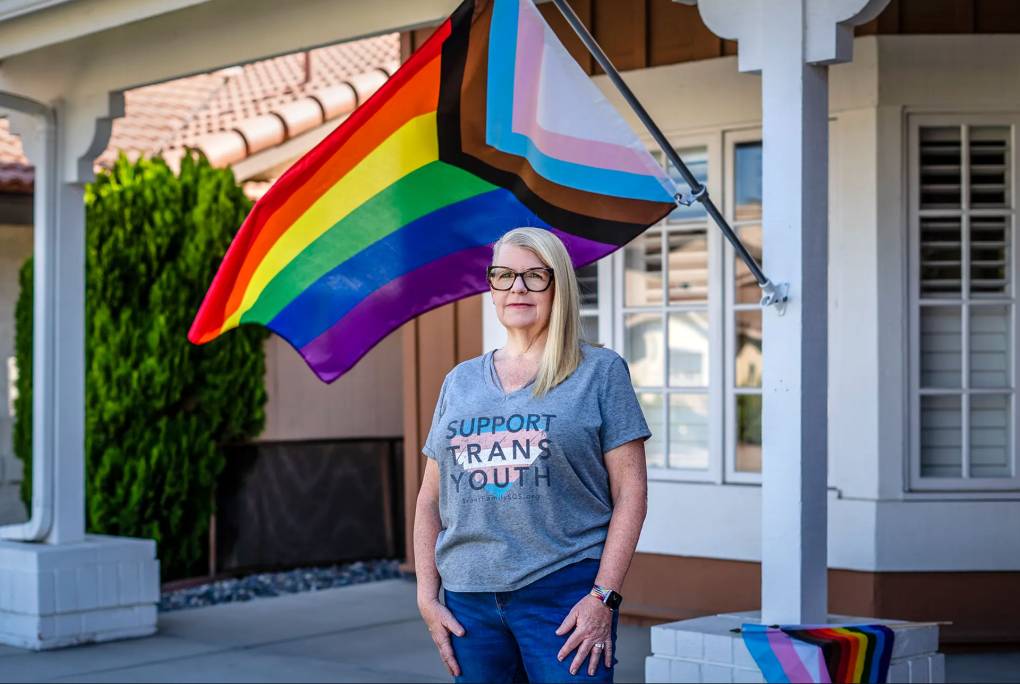
"caption": "Kathie Moehlig, founder of TransFamily Support Services, at her home in San Diego County on Aug. 26, 2022.",
"description": null,
"title": "MoehligCalmatters",
"credit": "Ariana Drehsler/CalMatters",
"status": "inherit",
"altTag": "woman with straight blonde hair and glasses wearing 'support trans youth' shirt stands underneath a pride flag outdoors outside of a home",
"isLoading": false,
"fetchFailed": false
},
"news_11927300": {
"type": "attachments",
"id": "news_11927300",
"meta": {
"index": "attachments_1716263798",
"site": "news",
"id": "11927300",
"found": true
},
"parent": 11926978,
"imgSizes": {
"twentyfourteen-full-width": {
"file": "https://ww2.kqed.org/app/uploads/sites/10/2022/09/Untitled_Artwork-1038x576.jpg",
"width": 1038,
"mimeType": "image/jpeg",
"height": 576
},
"thumbnail": {
"file": "https://ww2.kqed.org/app/uploads/sites/10/2022/09/Untitled_Artwork-160x103.jpg",
"width": 160,
"mimeType": "image/jpeg",
"height": 103
},
"post-thumbnail": {
"file": "https://ww2.kqed.org/app/uploads/sites/10/2022/09/Untitled_Artwork-672x372.jpg",
"width": 672,
"mimeType": "image/jpeg",
"height": 372
},
"kqedFullSize": {
"file": "https://ww2.kqed.org/app/uploads/sites/10/2022/09/Untitled_Artwork.jpg",
"width": 1920,
"height": 1240
},
"large": {
"file": "https://ww2.kqed.org/app/uploads/sites/10/2022/09/Untitled_Artwork-1020x659.jpg",
"width": 1020,
"mimeType": "image/jpeg",
"height": 659
},
"1536x1536": {
"file": "https://ww2.kqed.org/app/uploads/sites/10/2022/09/Untitled_Artwork-1536x992.jpg",
"width": 1536,
"mimeType": "image/jpeg",
"height": 992
},
"medium": {
"file": "https://ww2.kqed.org/app/uploads/sites/10/2022/09/Untitled_Artwork-800x517.jpg",
"width": 800,
"mimeType": "image/jpeg",
"height": 517
}
},
"publishDate": 1664563687,
"modified": 1664563938,
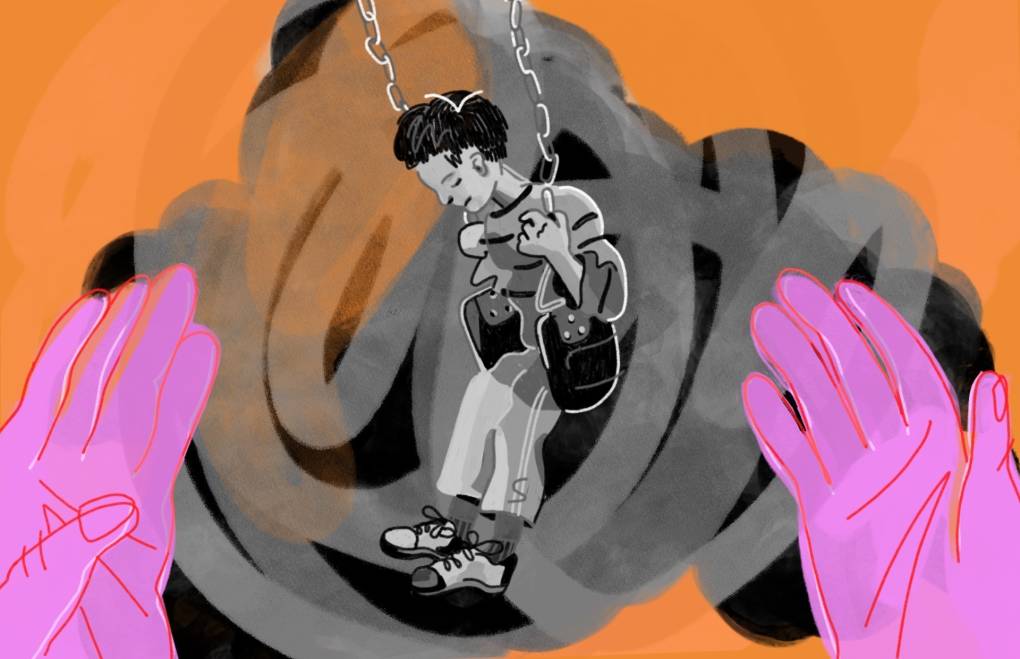
"caption": "There has been an alarming increase in anxiety, depression and suicidal thoughts among young people in recent years — a trend some mental experts are calling a crisis.",
"description": null,
"title": "Untitled_Artwork",
"credit": "Illustration by Anna Vignet/KQED",
"status": "inherit",
"altTag": "An illustration of a child sitting dejectedly on a swing.",
"isLoading": false,
"fetchFailed": false
},
"news_11927064": {
"type": "attachments",
"id": "news_11927064",
"meta": {
"index": "attachments_1716263798",
"site": "news",
"id": "11927064",
"found": true
},
"parent": 11927062,
"imgSizes": {
"twentyfourteen-full-width": {
"file": "https://ww2.kqed.org/app/uploads/sites/10/2022/09/RS54766_008_KQED_CastroHousingRightsRally_03272022-qut-1038x576.jpg",
"width": 1038,
"mimeType": "image/jpeg",
"height": 576
},
"thumbnail": {
"file": "https://ww2.kqed.org/app/uploads/sites/10/2022/09/RS54766_008_KQED_CastroHousingRightsRally_03272022-qut-160x107.jpg",
"width": 160,
"mimeType": "image/jpeg",
"height": 107
},
"post-thumbnail": {
"file": "https://ww2.kqed.org/app/uploads/sites/10/2022/09/RS54766_008_KQED_CastroHousingRightsRally_03272022-qut-672x372.jpg",
"width": 672,
"mimeType": "image/jpeg",
"height": 372
},
"kqedFullSize": {
"file": "https://ww2.kqed.org/app/uploads/sites/10/2022/09/RS54766_008_KQED_CastroHousingRightsRally_03272022-qut.jpg",
"width": 1920,
"height": 1278
},
"large": {
"file": "https://ww2.kqed.org/app/uploads/sites/10/2022/09/RS54766_008_KQED_CastroHousingRightsRally_03272022-qut-1020x679.jpg",
"width": 1020,
"mimeType": "image/jpeg",
"height": 679
},
"1536x1536": {
"file": "https://ww2.kqed.org/app/uploads/sites/10/2022/09/RS54766_008_KQED_CastroHousingRightsRally_03272022-qut-1536x1022.jpg",
"width": 1536,
"mimeType": "image/jpeg",
"height": 1022
},
"medium": {
"file": "https://ww2.kqed.org/app/uploads/sites/10/2022/09/RS54766_008_KQED_CastroHousingRightsRally_03272022-qut-800x533.jpg",
"width": 800,
"mimeType": "image/jpeg",
"height": 533
}
},
"publishDate": 1664410267,
"modified": 1664471018,
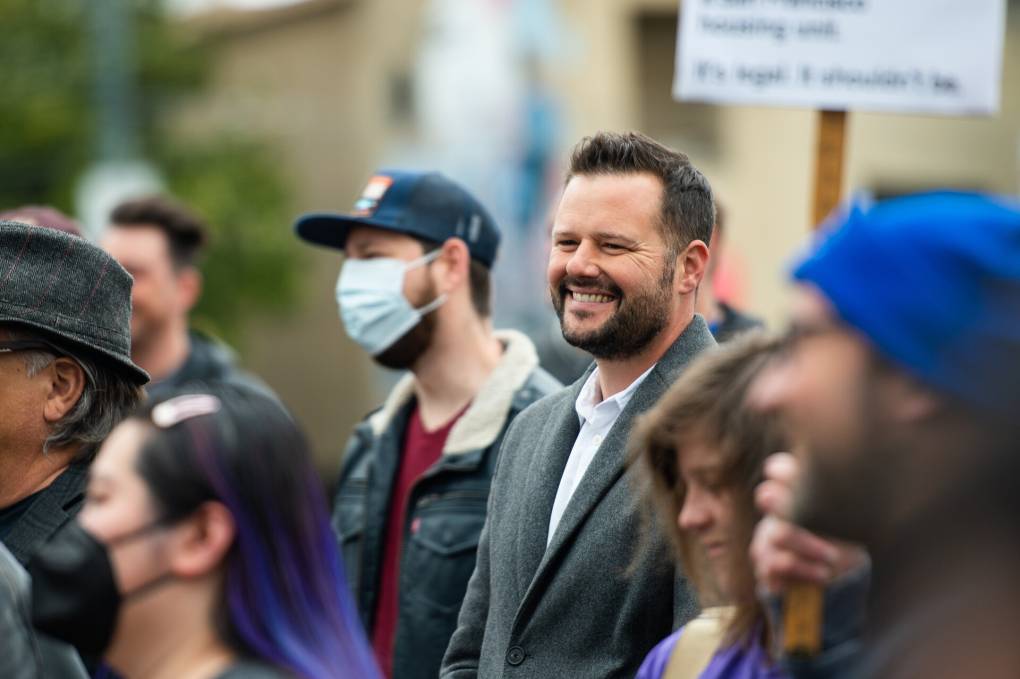
"caption": "Assemblymember Matt Haney will lead a bipartisan committee that will look for solutions to the opioid epidemic.",
"description": null,
"title": "RS54766_008_KQED_CastroHousingRightsRally_03272022-qut",
"credit": "Beth LaBerge/KQED",
"status": "inherit",
"altTag": "Assemblyman Matt Haney smiles among a crowd of people.",
"isLoading": false,
"fetchFailed": false
},
"news_11927074": {
"type": "attachments",
"id": "news_11927074",
"meta": {
"index": "attachments_1716263798",
"site": "news",
"id": "11927074",
"found": true
},
"parent": 11927063,
"imgSizes": {
"twentyfourteen-full-width": {
"file": "https://ww2.kqed.org/app/uploads/sites/10/2022/09/Commercial-Lot-Housing-1038x576.jpg",
"width": 1038,
"mimeType": "image/jpeg",
"height": 576
},
"thumbnail": {
"file": "https://ww2.kqed.org/app/uploads/sites/10/2022/09/Commercial-Lot-Housing-160x109.jpg",
"width": 160,
"mimeType": "image/jpeg",
"height": 109
},
"post-thumbnail": {
"file": "https://ww2.kqed.org/app/uploads/sites/10/2022/09/Commercial-Lot-Housing-672x372.jpg",
"width": 672,
"mimeType": "image/jpeg",
"height": 372
},
"kqedFullSize": {
"file": "https://ww2.kqed.org/app/uploads/sites/10/2022/09/Commercial-Lot-Housing.jpg",
"width": 1980,
"height": 1346
},
"large": {
"file": "https://ww2.kqed.org/app/uploads/sites/10/2022/09/Commercial-Lot-Housing-1020x693.jpg",
"width": 1020,
"mimeType": "image/jpeg",
"height": 693
},
"1536x1536": {
"file": "https://ww2.kqed.org/app/uploads/sites/10/2022/09/Commercial-Lot-Housing-1536x1044.jpg",
"width": 1536,
"mimeType": "image/jpeg",
"height": 1044
},
"full-width": {
"file": "https://ww2.kqed.org/app/uploads/sites/10/2022/09/Commercial-Lot-Housing-1920x1305.jpg",
"width": 1920,
"mimeType": "image/jpeg",
"height": 1305
},
"medium": {
"file": "https://ww2.kqed.org/app/uploads/sites/10/2022/09/Commercial-Lot-Housing-800x544.jpg",
"width": 800,
"mimeType": "image/jpeg",
"height": 544
}
},
"publishDate": 1664412441,
"modified": 1664424081,
"caption": "New housing is constructed at Brooklyn Basin in Oakland on Aug. 18, 2022.",
"description": null,
"title": "Commercial Lot Housing",
"credit": "Jane Tyska/Digital First Media/East Bay Times via Getty Images",
"status": "inherit",
"altTag": "An aerial view of a housing development in Oakland. The building is more than a frame but not yet complete, and a crane sticks out from the roof. Far in the background, Oakland's downtown area.",
"isLoading": false,
"fetchFailed": false
}
},
"audioPlayerReducer": {
"postId": "stream_live",
"isPaused": true,
"isPlaying": false,
"pfsActive": false,
"pledgeModalIsOpen": true,
"playerDrawerIsOpen": false,
"liveAudioPlayStartedAt": 0,
"liveAudioPlayContext": ""
},
"authorsReducer": {
"byline_news_11929137": {
"type": "authors",
"id": "byline_news_11929137",
"meta": {
"override": true
},
"slug": "byline_news_11929137",
"name": "\u003ca href=\"https://calmatters.org/author/grace-gedye/\">Grace Gedye\u003c/a>",
"isLoading": false
},
"byline_news_11928455": {
"type": "authors",
"id": "byline_news_11928455",
"meta": {
"override": true
},
"slug": "byline_news_11928455",
"name": "\u003ca href=\"https://calmatters.org/author/grace-gedye/\">Grace Gedye\u003c/a>",
"isLoading": false
},
"byline_news_11927282": {
"type": "authors",
"id": "byline_news_11927282",
"meta": {
"override": true
},
"slug": "byline_news_11927282",
"name": "\u003ca href=\"https://civileats.com/author/chatano/\">Caroline Hatano\u003c/a>",
"isLoading": false
},
"byline_news_11927310": {
"type": "authors",
"id": "byline_news_11927310",
"meta": {
"override": true
},
"slug": "byline_news_11927310",
"name": "\u003ca href=\"https://calmatters.org/author/ariel-gans/\">Ariel Gans\u003c/a>",
"isLoading": false
},
"byline_news_11927063": {
"type": "authors",
"id": "byline_news_11927063",
"meta": {
"override": true
},
"slug": "byline_news_11927063",
"name": "Adam Beam, Associated Press",
"isLoading": false
},
"gmarzorati": {
"type": "authors",
"id": "227",
"meta": {
"index": "authors_1716337520",
"id": "227",
"found": true
},
"name": "Guy Marzorati",
"firstName": "Guy",
"lastName": "Marzorati",
"slug": "gmarzorati",
"email": "gmarzorati@KQED.org",
"display_author_email": true,
"staff_mastheads": [
"news"
],
"title": "Correspondent",
"bio": "Guy Marzorati is a correspondent on KQED's California Politics and Government Desk, based in San Jose. A graduate of Santa Clara University, Guy joined KQED in 2013. He reports on state and local politics and produces KQED's digital voter guide.",
"avatar": "https://secure.gravatar.com/avatar/e7038b8dbfd55b104369b76b1cd0b9de?s=600&d=blank&r=g",
"twitter": "guymarzorati",
"facebook": null,
"instagram": null,
"linkedin": null,
"sites": [
{
"site": "",
"roles": [
"editor"
]
},
{
"site": "news",
"roles": [
"editor"
]
},
{
"site": "science",
"roles": [
"editor"
]
},
{
"site": "forum",
"roles": [
"editor"
]
},
{
"site": "elections",
"roles": [
"editor"
]
},
{
"site": "liveblog",
"roles": [
"editor"
]
}
],
"headData": {
"title": "Guy Marzorati | KQED",
"description": "Correspondent",
"ogImgSrc": "https://secure.gravatar.com/avatar/e7038b8dbfd55b104369b76b1cd0b9de?s=600&d=blank&r=g",
"twImgSrc": "https://secure.gravatar.com/avatar/e7038b8dbfd55b104369b76b1cd0b9de?s=600&d=blank&r=g"
},
"isLoading": false,
"link": "/author/gmarzorati"
},
"kqednewsstaffandwires": {
"type": "authors",
"id": "237",
"meta": {
"index": "authors_1716337520",
"id": "237",
"found": true
},
"name": "KQED News Staff and Wires",
"firstName": "KQED News Staff and Wires",
"lastName": null,
"slug": "kqednewsstaffandwires",
"email": "onlinenewsstaff@kqed.org",
"display_author_email": false,
"staff_mastheads": [],
"title": null,
"bio": null,
"avatar": "https://secure.gravatar.com/avatar/72295af8ebbfbd19a4948f5271285664?s=600&d=blank&r=g",
"twitter": null,
"facebook": null,
"instagram": null,
"linkedin": null,
"sites": [
{
"site": "arts",
"roles": [
"contributor"
]
},
{
"site": "news",
"roles": [
"contributor"
]
},
{
"site": "lowdown",
"roles": [
"author"
]
},
{
"site": "stateofhealth",
"roles": [
"contributor"
]
},
{
"site": "food",
"roles": [
"author"
]
}
],
"headData": {
"title": "KQED News Staff and Wires | KQED",
"description": null,
"ogImgSrc": "https://secure.gravatar.com/avatar/72295af8ebbfbd19a4948f5271285664?s=600&d=blank&r=g",
"twImgSrc": "https://secure.gravatar.com/avatar/72295af8ebbfbd19a4948f5271285664?s=600&d=blank&r=g"
},
"isLoading": false,
"link": "/author/kqednewsstaffandwires"
},
"ninathorsen": {
"type": "authors",
"id": "246",
"meta": {
"index": "authors_1716337520",
"id": "246",
"found": true
},
"name": "Nina Thorsen",
"firstName": "Nina",
"lastName": "Thorsen",
"slug": "ninathorsen",
"email": "nthorsen@kqed.org",
"display_author_email": false,
"staff_mastheads": [
"news"
],
"title": "Producer, Radio",
"bio": "\u003cspan style=\"color: #000000;\">Nina Thorsen is a KQED radio producer, and frequently reports on sports and culture. \u003c/span>\u003cspan style=\"color: #000000;\">She co-created and produced KQED's \u003cem>Pacific Time, \u003c/em> a weekly radio program on Asian and Asian American issues that aired from 2000 to 2007. Before coming to KQED, Thorsen was the deputy foreign editor for \u003cem>Marketplace, \u003c/em>and in her home state of Minnesota, worked for \u003cem>A Prairie Home Companion\u003c/em> and for Public Radio International. \u003c/span>",
"avatar": "https://secure.gravatar.com/avatar/e13dc7282cec33c15d973ebb56d57ead?s=600&d=blank&r=g",
"twitter": "NinaKQED",
"facebook": null,
"instagram": null,
"linkedin": null,
"sites": [
{
"site": "news",
"roles": [
"editor"
]
},
{
"site": "podcasts",
"roles": [
"editor"
]
}
],
"headData": {
"title": "Nina Thorsen | KQED",
"description": "Producer, Radio",
"ogImgSrc": "https://secure.gravatar.com/avatar/e13dc7282cec33c15d973ebb56d57ead?s=600&d=blank&r=g",
"twImgSrc": "https://secure.gravatar.com/avatar/e13dc7282cec33c15d973ebb56d57ead?s=600&d=blank&r=g"
},
"isLoading": false,
"link": "/author/ninathorsen"
},
"mlagos": {
"type": "authors",
"id": "3239",
"meta": {
"index": "authors_1716337520",
"id": "3239",
"found": true
},
"name": "Marisa Lagos",
"firstName": "Marisa",
"lastName": "Lagos",
"slug": "mlagos",
"email": "mlagos@kqed.org",
"display_author_email": false,
"staff_mastheads": [
"news"
],
"title": "KQED Contributor",
"bio": "Marisa Lagos is a correspondent for KQED’s California Politics and Government Desk and co-hosts the award-winning show and podcast, Political Breakdown. At KQED, Lagos also conducts reporting, analysis and investigations into state, local and national politics for radio, TV, online and onstage. In 2022, she and co-host, Scott Shafer, moderated the only gubernatorial debate in California. In 2020, the \u003ci>Washington Post\u003c/i> named her one of the top political journalists in California; she was nominated for a Peabody and won several other awards for her work investigating the 2017 California wildfires. She has worked at the \u003ci>San Francisco Chronicle\u003c/i>, \u003ci>San Francisco Examiner\u003c/i> and \u003ci>Los Angeles Times\u003c/i>. A UC Santa Barbara graduate, she lives in San Francisco with her two sons and husband.",
"avatar": "https://secure.gravatar.com/avatar/a261a0d3696fc066871ef96b85b5e7d2?s=600&d=blank&r=g",
"twitter": "@mlagos",
"facebook": null,
"instagram": null,
"linkedin": null,
"sites": [
{
"site": "arts",
"roles": [
"author"
]
},
{
"site": "news",
"roles": [
"editor"
]
},
{
"site": "science",
"roles": [
"editor"
]
},
{
"site": "forum",
"roles": [
"author"
]
},
{
"site": "liveblog",
"roles": [
"author"
]
}
],
"headData": {
"title": "Marisa Lagos | KQED",
"description": "KQED Contributor",
"ogImgSrc": "https://secure.gravatar.com/avatar/a261a0d3696fc066871ef96b85b5e7d2?s=600&d=blank&r=g",
"twImgSrc": "https://secure.gravatar.com/avatar/a261a0d3696fc066871ef96b85b5e7d2?s=600&d=blank&r=g"
},
"isLoading": false,
"link": "/author/mlagos"
},
"carlysevern": {
"type": "authors",
"id": "3243",
"meta": {
"index": "authors_1716337520",
"id": "3243",
"found": true
},
"name": "Carly Severn",
"firstName": "Carly",
"lastName": "Severn",
"slug": "carlysevern",
"email": "csevern@kqed.org",
"display_author_email": false,
"staff_mastheads": [
"news"
],
"title": "Senior Editor, Audience News ",
"bio": "Carly is KQED's Senior Editor of Audience News on the Digital News team, and has reported for the California Report Magazine, Bay Curious and KQED Arts. She's formerly the host of \u003ca href=\"http://ww2.kqed.org/pop/category/the-cooler/\" rel=\"noopener noreferrer\">The Cooler\u003c/a> podcast.",
"avatar": "https://secure.gravatar.com/avatar/2d8d6765f186e64c798cf7f0c8088a41?s=600&d=blank&r=g",
"twitter": "teacupinthebay",
"facebook": null,
"instagram": null,
"linkedin": null,
"sites": [
{
"site": "",
"roles": [
"editor"
]
},
{
"site": "arts",
"roles": [
"editor"
]
},
{
"site": "news",
"roles": [
"administrator"
]
},
{
"site": "pop",
"roles": [
"editor"
]
},
{
"site": "futureofyou",
"roles": [
"editor"
]
},
{
"site": "about",
"roles": [
"administrator"
]
},
{
"site": "mindshift",
"roles": [
"editor"
]
},
{
"site": "bayareabites",
"roles": [
"editor"
]
},
{
"site": "stateofhealth",
"roles": [
"editor"
]
},
{
"site": "science",
"roles": [
"editor"
]
},
{
"site": "food",
"roles": [
"contributor"
]
},
{
"site": "forum",
"roles": [
"editor"
]
},
{
"site": "perspectives",
"roles": [
"administrator"
]
},
{
"site": "liveblog",
"roles": [
"editor"
]
}
],
"headData": {
"title": "Carly Severn | KQED",
"description": "Senior Editor, Audience News ",
"ogImgSrc": "https://secure.gravatar.com/avatar/2d8d6765f186e64c798cf7f0c8088a41?s=600&d=blank&r=g",
"twImgSrc": "https://secure.gravatar.com/avatar/2d8d6765f186e64c798cf7f0c8088a41?s=600&d=blank&r=g"
},
"isLoading": false,
"link": "/author/carlysevern"
},
"lesleymcclurg": {
"type": "authors",
"id": "11229",
"meta": {
"index": "authors_1716337520",
"id": "11229",
"found": true
},
"name": "Lesley McClurg",
"firstName": "Lesley",
"lastName": "McClurg",
"slug": "lesleymcclurg",
"email": "lmcclurg@KQED.org",
"display_author_email": false,
"staff_mastheads": [
"news",
"science"
],
"title": "KQED Health Correspondent",
"bio": "Lesley McClurg is a health correspondent and fill-in host whose work is regularly rebroadcast on NPR and PBS programs. She’s earned multiple regional Emmy awards, a national and a regional Edward R. Murrow award, and was named Best Beat Reporter by the Association of Health Care Journalists. The Society of Professional Journalists has recognized her work several times, and the Society of Environmental Journalists spotlighted her coverage of California’s historic drought.\r\n\r\nBefore joining KQED in 2016, Lesley covered food and sustainability for Capital Public Radio, environmental issues for Colorado Public Radio, and reported for KUOW and KCTS 9 in Seattle. Away from the newsroom, she loves skiing with her daughter, mountain biking with her partner, and playing with Ollie, the family’s goldendoodle. On deadline, she runs almost entirely on chocolate chips.\r\n\r\n ",
"avatar": "https://secure.gravatar.com/avatar/bab49e972ea10c774fe0f5e29dba1722b158f7c0d58a360923d1389d380b2978?s=600&d=blank&r=g",
"twitter": "lesleywmcclurg",
"bluesky": null,
"facebook": null,
"instagram": null,
"linkedin": null,
"sites": [
{
"site": "arts",
"roles": [
"author"
]
},
{
"site": "news",
"roles": [
"editor"
]
},
{
"site": "futureofyou",
"roles": [
"editor"
]
},
{
"site": "stateofhealth",
"roles": [
"author"
]
},
{
"site": "science",
"roles": [
"editor"
]
},
{
"site": "quest",
"roles": [
"subscriber"
]
},
{
"site": "forum",
"roles": [
"administrator"
]
},
{
"site": "liveblog",
"roles": [
"author"
]
}
],
"headData": {
"title": "Lesley McClurg | KQED",
"description": "KQED Health Correspondent",
"ogImgSrc": "https://secure.gravatar.com/avatar/bab49e972ea10c774fe0f5e29dba1722b158f7c0d58a360923d1389d380b2978?s=600&d=blank&r=g",
"twImgSrc": "https://secure.gravatar.com/avatar/bab49e972ea10c774fe0f5e29dba1722b158f7c0d58a360923d1389d380b2978?s=600&d=blank&r=g"
},
"isLoading": false,
"link": "/author/lesleymcclurg"
},
"kevinstark": {
"type": "authors",
"id": "11608",
"meta": {
"index": "authors_1716337520",
"id": "11608",
"found": true
},
"name": "Kevin Stark",
"firstName": "Kevin",
"lastName": "Stark",
"slug": "kevinstark",
"email": "kstark@kqed.org",
"display_author_email": true,
"staff_mastheads": [
"science"
],
"title": "Senior Editor",
"bio": "Kevin is a senior editor for KQED Science, managing the station's health and climate desks. His journalism career began in the Pacific Northwest, and he later became a lead reporter for the San Francisco Public Press. His work has appeared in Pacific Standard magazine, the Energy News Network, the Center for Investigative Reporting's Reveal and WBEZ in Chicago. Kevin joined KQED in 2019, and has covered issues related to energy, wildfire, climate change and the environment.",
"avatar": "https://secure.gravatar.com/avatar/1f646bf546a63d638e04ff23b52b0e79?s=600&d=blank&r=g",
"twitter": "starkkev",
"facebook": null,
"instagram": null,
"linkedin": null,
"sites": [
{
"site": "",
"roles": [
"editor"
]
},
{
"site": "news",
"roles": [
"editor"
]
},
{
"site": "science",
"roles": [
"administrator"
]
}
],
"headData": {
"title": "Kevin Stark | KQED",
"description": "Senior Editor",
"ogImgSrc": "https://secure.gravatar.com/avatar/1f646bf546a63d638e04ff23b52b0e79?s=600&d=blank&r=g",
"twImgSrc": "https://secure.gravatar.com/avatar/1f646bf546a63d638e04ff23b52b0e79?s=600&d=blank&r=g"
},
"isLoading": false,
"link": "/author/kevinstark"
},
"amontecillo": {
"type": "authors",
"id": "11649",
"meta": {
"index": "authors_1716337520",
"id": "11649",
"found": true
},
"name": "Alan Montecillo",
"firstName": "Alan",
"lastName": "Montecillo",
"slug": "amontecillo",
"email": "amontecillo@kqed.org",
"display_author_email": false,
"staff_mastheads": [
"news"
],
"title": "KQED Contributor",
"bio": "Alan Montecillo is the senior editor of \u003cem>\u003ca href=\"http://kqed.org/thebay\">The Bay\u003c/a>, \u003c/em> KQED's local news podcast. Before moving to the Bay Area, he worked as a senior talk show producer for WILL in Champaign-Urbana, Illinois and at Oregon Public Broadcasting in Portland, Oregon. He has won journalism awards from the Society of Professional Journalists Northern California, the Public Media Journalists Association, The Signal Awards, and has also received a regional Edward R. Murrow award. Alan is a Filipino American from Hong Kong and a graduate of Reed College.",
"avatar": "https://secure.gravatar.com/avatar/d5e4e7a76481969ccba76f4e2b5ccabc?s=600&d=blank&r=g",
"twitter": "alanmontecillo",
"facebook": null,
"instagram": null,
"linkedin": null,
"sites": [
{
"site": "",
"roles": [
"editor"
]
},
{
"site": "news",
"roles": [
"editor",
"manage_categories"
]
}
],
"headData": {
"title": "Alan Montecillo | KQED",
"description": "KQED Contributor",
"ogImgSrc": "https://secure.gravatar.com/avatar/d5e4e7a76481969ccba76f4e2b5ccabc?s=600&d=blank&r=g",
"twImgSrc": "https://secure.gravatar.com/avatar/d5e4e7a76481969ccba76f4e2b5ccabc?s=600&d=blank&r=g"
},
"isLoading": false,
"link": "/author/amontecillo"
},
"btorres": {
"type": "authors",
"id": "11666",
"meta": {
"index": "authors_1716337520",
"id": "11666",
"found": true
},
"name": "Blanca Torres",
"firstName": "Blanca",
"lastName": "Torres",
"slug": "btorres",
"email": "btorres@kqed.org",
"display_author_email": true,
"staff_mastheads": [
"news"
],
"title": "Producer, Forum",
"bio": "Blanca Torres brings sharp news judgement and keen sense of lively conversation to her work as producer for Forum. She loves producing shows that leave listeners feeling like they heard distinctive voices, learned something new and gained a fresh perspective.\r\n\r\nShe joined KQED in January of 2020 after 16 years of working as a newspaper reporter most recently at the \u003cem>San Francisco Business Times,\u003c/em> where she wrote about real estate and economic development. Before that, she covered a variety of beats including crime, education, retail, workplace, the economy, consumer issues, and small business for the \u003cem>Contra Costa Times, Baltimore Sun\u003c/em> and\u003cem> The Seattle Times\u003c/em>. In addition to reporting, she worked as an editorial writer and columnist for the \u003cem>Seattle Times\u003c/em>. From 2017 to 2020, Blanca won a total of ten awards from the National Association of Real Estate Editors and won first place for land use reporting from the California News Publishers Association two years in a row. She is also a member and former board member for the National Association of Hispanic Journalists.\r\n\r\nA native of the Pacific Northwest, Blanca earned her bachelor's degree from Vanderbilt University in Nashville and a master's in fine arts in creative writing at Mills College. She lives in the East Bay with her family.",
"avatar": "https://secure.gravatar.com/avatar/f2322ff46076d337f7ba731ee6068cb1?s=600&d=blank&r=g",
"twitter": "@blancawrites",
"facebook": null,
"instagram": null,
"linkedin": null,
"sites": [
{
"site": "arts",
"roles": [
"editor"
]
},
{
"site": "news",
"roles": [
"editor"
]
},
{
"site": "forum",
"roles": [
"editor"
]
}
],
"headData": {
"title": "Blanca Torres | KQED",
"description": "Producer, Forum",
"ogImgSrc": "https://secure.gravatar.com/avatar/f2322ff46076d337f7ba731ee6068cb1?s=600&d=blank&r=g",
"twImgSrc": "https://secure.gravatar.com/avatar/f2322ff46076d337f7ba731ee6068cb1?s=600&d=blank&r=g"
},
"isLoading": false,
"link": "/author/btorres"
},
"mesquinca": {
"type": "authors",
"id": "11802",
"meta": {
"index": "authors_1716337520",
"id": "11802",
"found": true
},
"name": "Maria Esquinca",
"firstName": "Maria",
"lastName": "Esquinca",
"slug": "mesquinca",
"email": "mesquinca@kqed.org",
"display_author_email": false,
"staff_mastheads": [],
"title": "Producer, The Bay",
"bio": "María Esquinca is a producer of The Bay. Before that, she was a New York Women’s Foundation IGNITE Fellow at Latino USA. She worked at Radio Bilingue where she covered the San Joaquin Valley. Maria has interned at WLRN, News 21, The New York Times Student Journalism Institute and at Crain’s Detroit Business as a Dow Jones News Fund Business Reporting Intern. She is an MFA graduate from the University of Miami. In 2017, she graduated from the Walter Cronkite School of Journalism and Mass Communication with a Master of Mass Communication. A fronteriza, she was born in Ciudad Juárez, Chihuahua, Mexico and grew up in El Paso, Texas.",
"avatar": "https://secure.gravatar.com/avatar/77cedba18aae91da775038ba06dcd8d0?s=600&d=blank&r=g",
"twitter": "@m_esquinca",
"facebook": null,
"instagram": null,
"linkedin": null,
"sites": [
{
"site": "news",
"roles": []
}
],
"headData": {
"title": "Maria Esquinca | KQED",
"description": "Producer, The Bay",
"ogImgSrc": "https://secure.gravatar.com/avatar/77cedba18aae91da775038ba06dcd8d0?s=600&d=blank&r=g",
"twImgSrc": "https://secure.gravatar.com/avatar/77cedba18aae91da775038ba06dcd8d0?s=600&d=blank&r=g"
},
"isLoading": false,
"link": "/author/mesquinca"
},
"apelit": {
"type": "authors",
"id": "11812",
"meta": {
"index": "authors_1716337520",
"id": "11812",
"found": true
},
"name": "Attila Pelit",
"firstName": "Attila",
"lastName": "Pelit",
"slug": "apelit",
"email": "apelit@kqed.org",
"display_author_email": false,
"staff_mastheads": [],
"title": "KQED Contributor",
"bio": null,
"avatar": "https://secure.gravatar.com/avatar/9b7b8a9e595d58a1f4d853f8608ae584?s=600&d=mm&r=g",
"twitter": null,
"facebook": null,
"instagram": null,
"linkedin": null,
"sites": [
{
"site": "news",
"roles": [
"editor"
]
},
{
"site": "science",
"roles": [
"editor"
]
},
{
"site": "elections",
"roles": [
"editor"
]
},
{
"site": "liveblog",
"roles": [
"editor"
]
}
],
"headData": {
"title": "Attila Pelit | KQED",
"description": "KQED Contributor",
"ogImgSrc": "https://secure.gravatar.com/avatar/9b7b8a9e595d58a1f4d853f8608ae584?s=600&d=mm&r=g",
"twImgSrc": "https://secure.gravatar.com/avatar/9b7b8a9e595d58a1f4d853f8608ae584?s=600&d=mm&r=g"
},
"isLoading": false,
"link": "/author/apelit"
}
},
"pagesReducer": {
"news_tag_california": {
"type": "terms",
"id": "news_18538",
"meta": {
"index": "terms_1716263798",
"site": "news",
"id": "18538",
"score": 6.8456903
},
"featImg": null,
"name": "California",
"description": null,
"taxonomy": "tag",
"headData": {
"twImgId": null,
"twTitle": null,
"ogTitle": null,
"ogImgId": null,
"twDescription": null,
"description": null,
"title": "California Archives | KQED News",
"ogDescription": null
},
"ttid": 31,
"slug": "california",
"isLoading": false,
"title": "California",
"pageMeta": {
"site": "news",
"WpPageTemplate": "page-topic-editorial",
"currentPage": 162
},
"blocks": [
{
"blockName": "kqed/post-list",
"attrs": {
"layout": "cardArticle2",
"query": "posts/news?tag=california",
"seeMore": false,
"paginated": true,
"page": 162
}
},
{
"blockName": "kqed/ad"
}
]
}
},
"pfsSessionReducer": {},
"postsReducer": {
"stream_live": {
"type": "live",
"id": "stream_live",
"audioUrl": "https://streams.kqed.org/kqedradio",
"title": "Live Stream",
"excerpt": "Live Stream information currently unavailable.",
"link": "/radio",
"featImg": "",
"label": {
"name": "KQED Live",
"link": "/"
}
},
"stream_kqedNewscast": {
"type": "posts",
"id": "stream_kqedNewscast",
"audioUrl": "https://www.kqed.org/.stream/anon/radio/RDnews/newscast.mp3?_=1",
"title": "KQED Newscast",
"featImg": "",
"label": {
"name": "88.5 FM",
"link": "/"
}
},
"news_11930130": {
"type": "posts",
"id": "news_11930130",
"meta": {
"index": "posts_1716263798",
"site": "news",
"id": "11930130",
"score": null,
"sort": [
1666778451000
]
},
"guestAuthors": [],
"slug": "a-sanctuary-state-for-gender-affirming-care",
"title": "A Sanctuary State for Gender Affirming Care",
"publishDate": 1666778451,
"format": "audio",
"headTitle": "A Sanctuary State for Gender Affirming Care | KQED",
"labelTerm": {},
"content": "\u003cp>\u003cspan style=\"font-weight: 400\">21 states have attempted to limit, ban, or criminalize access to medical care for transgender and nonbinary youth. \u003c/span>\u003c/p>\n\u003cp>\u003cspan style=\"font-weight: 400\">California is going in the opposite direction. In September, Gov. Gavin Newsom signed a law that ensures transgender kids from out-of-state can safely access hormones or puberty blocker. The law also shields families from child abuse investigations or from being prosecuted for seeking gender affirming care. It’s the first law of its kind in the nation.\u003c/span>\u003c/p>\n\u003cp>\u003cspan style=\"font-weight: 400\">Guest: \u003c/span>\u003ca href=\"https://twitter.com/lesleywmcclurg\">\u003cb>Lesley McClurg\u003c/b>\u003c/a>\u003cspan style=\"font-weight: 400\">, KQED health correspondent\u003c/span>\u003c/p>\n\u003cdiv class=\"card card--enclosed grey\">\n\u003cp id=\"embed-code\" class=\"inconsolata\">\n\u003c!-- iframe plugin v.4.3 wordpress.org/plugins/iframe/ -->\u003cbr>\n\u003ciframe loading=\"lazy\" frameborder=\"0\" height=\"200\" scrolling=\"no\" src=\"https://playlist.megaphone.fm?e=KQINC5534245598&light=true\" width=\"100%\" class=\"iframe-class\">\u003c/iframe>\n\u003c/p>\n\u003c/div>\n\u003cp>\u003cstrong>Links:\u003c/strong>\u003c/p>\n\u003cul>\n\u003cli>‘\u003cstrong>\u003ca href=\"https://www.kqed.org/news/11929233/california-becomes-first-sanctuary-state-for-transgender-youth-seeking-medical-care\">California Becomes First Sanctuary State for Transgender Youth Seeking Medical Care\u003c/a>\u003c/strong>,’ by Lesley McClurg, Oct. 18, 2022.\u003c/li>\n\u003c/ul>\n\u003cp>[ad fullwidth]\u003c/p>\u003cp>\u003c/p>\n",
"blocks": [],
"excerpt": null,
"status": "publish",
"parent": 0,
"modified": 1721135406,
"stats": {
"hasAudio": true,
"hasVideo": false,
"hasChartOrMap": false,
"iframeSrcs": [],
"hasGoogleForm": false,
"hasGallery": false,
"hasHearkenModule": false,
"hasPolis": false,
"paragraphCount": 6,
"wordCount": 107
},
"headData": {
"title": "A Sanctuary State for Gender Affirming Care | KQED",
"description": "21 states have attempted to limit, ban, or criminalize access to medical care for transgender and nonbinary youth. California is going in the opposite direction. In September, Gov. Gavin Newsom signed a law that ensures transgender kids from out-of-state can safely access hormones or puberty blocker. The law also shields families from child abuse investigations",
"ogTitle": "",
"ogDescription": "",
"ogImgId": "",
"twTitle": "",
"twDescription": "",
"twImgId": "",
"schema": {
"@context": "https://schema.org",
"@type": "NewsArticle",
"headline": "A Sanctuary State for Gender Affirming Care",
"datePublished": "2022-10-26T03:00:51-07:00",
"dateModified": "2024-07-16T06:10:06-07:00",
"image": "https://cdn.kqed.org/wp-content/uploads/2020/02/KQED-OG-Image@1x.png",
"isAccessibleForFree": "True",
"publisher": {
"@type": "NewsMediaOrganization",
"@id": "https://www.kqed.org/#organization",
"name": "KQED",
"logo": "https://cdn.kqed.org/wp-content/uploads/2020/02/KQED-OG-Image@1x.png",
"url": "https://www.kqed.org",
"sameAs": [
"https://www.facebook.com/KQED",
"https://twitter.com/KQED",
"https://www.instagram.com/kqed/",
"https://www.tiktok.com/@kqedofficial",
"https://www.linkedin.com/company/kqed",
"https://www.youtube.com/channel/UCeC0IOo7i1P_61zVUWbJ4nw"
]
}
}
},
"source": "The Bay",
"sourceUrl": "https://www.kqed.org/podcasts/thebay",
"audioUrl": "https://www.podtrac.com/pts/redirect.mp3/traffic.megaphone.fm/KQINC5534245598.mp3",
"sticky": false,
"excludeFromSiteSearch": "Include",
"path": "/news/11930130/a-sanctuary-state-for-gender-affirming-care",
"audioTrackLength": null,
"parsedContent": [
{
"type": "contentString",
"content": "\u003cdiv class=\"post-body\">\u003cp>\u003cp>\u003cspan style=\"font-weight: 400\">21 states have attempted to limit, ban, or criminalize access to medical care for transgender and nonbinary youth. \u003c/span>\u003c/p>\n\u003cp>\u003cspan style=\"font-weight: 400\">California is going in the opposite direction. In September, Gov. Gavin Newsom signed a law that ensures transgender kids from out-of-state can safely access hormones or puberty blocker. The law also shields families from child abuse investigations or from being prosecuted for seeking gender affirming care. It’s the first law of its kind in the nation.\u003c/span>\u003c/p>\n\u003cp>\u003cspan style=\"font-weight: 400\">Guest: \u003c/span>\u003ca href=\"https://twitter.com/lesleywmcclurg\">\u003cb>Lesley McClurg\u003c/b>\u003c/a>\u003cspan style=\"font-weight: 400\">, KQED health correspondent\u003c/span>\u003c/p>\n\u003cdiv class=\"card card--enclosed grey\">\n\u003cp id=\"embed-code\" class=\"inconsolata\">\n\u003c!-- iframe plugin v.4.3 wordpress.org/plugins/iframe/ -->\u003cbr>\n\u003ciframe loading=\"lazy\" frameborder=\"0\" height=\"200\" scrolling=\"no\" src=\"https://playlist.megaphone.fm?e=KQINC5534245598&light=true\" width=\"100%\" class=\"iframe-class\">\u003c/iframe>\n\u003c/p>\n\u003c/div>\n\u003cp>\u003cstrong>Links:\u003c/strong>\u003c/p>\n\u003cul>\n\u003cli>‘\u003cstrong>\u003ca href=\"https://www.kqed.org/news/11929233/california-becomes-first-sanctuary-state-for-transgender-youth-seeking-medical-care\">California Becomes First Sanctuary State for Transgender Youth Seeking Medical Care\u003c/a>\u003c/strong>,’ by Lesley McClurg, Oct. 18, 2022.\u003c/li>\n\u003c/ul>\n\u003cp>\u003c/p>\u003c/div>",
"attributes": {
"named": {},
"numeric": []
}
},
{
"type": "component",
"content": "",
"name": "ad",
"attributes": {
"named": {
"label": "fullwidth"
},
"numeric": [
"fullwidth"
]
}
},
{
"type": "contentString",
"content": "\u003cdiv class=\"post-body\">\u003cp>\u003c/p>\u003cp>\u003c/p>\n\u003c/div>\u003c/p>",
"attributes": {
"named": {},
"numeric": []
}
}
],
"link": "/news/11930130/a-sanctuary-state-for-gender-affirming-care",
"authors": [
"11649",
"11229",
"11802"
],
"programs": [
"news_28779"
],
"categories": [
"news_8",
"news_33520"
],
"tags": [
"news_18538",
"news_23272",
"news_22598",
"news_2486"
],
"featImg": "news_11929270",
"label": "source_news_11930130"
},
"news_11929137": {
"type": "posts",
"id": "news_11929137",
"meta": {
"index": "posts_1716263798",
"site": "news",
"id": "11929137",
"score": null,
"sort": [
1666294720000
]
},
"guestAuthors": [],
"slug": "california-gas-rebate-heres-what-you-need-to-know",
"title": "California Gas Rebate — Here's What You Need to Know",
"publishDate": 1666294720,
"format": "standard",
"headTitle": "California Gas Rebate — Here’s What You Need to Know | KQED",
"labelTerm": {
"term": 18481,
"site": "news"
},
"content": "\u003cp>California is sending money directly to millions of residents to help with rising costs and high gas prices.\u003c/p>\n\u003cp>The payments, which started \u003ca href=\"https://www.gov.ca.gov/2022/10/06/tomorrow-middle-class-tax-refunds-start-hitting-bank-accounts/\">going out October 7\u003c/a>, range from $200 to $1,050, depending on income and other factors. About 18 million payments will be distributed over the next few months, benefiting up to \u003ca href=\"https://www.gov.ca.gov/2022/10/06/tomorrow-middle-class-tax-refunds-start-hitting-bank-accounts/\">23 million Californians\u003c/a>. The cash payouts are part of a \u003ca href=\"https://calmatters.org/politics/2022/06/california-tax-relief-deal/\">June budget deal\u003c/a>.\u003c/p>\n\u003cp>We’ve already \u003ca href=\"https://www.kqed.org/news/11929137/california-gas-rebate-heres-what-you-need-to-know\">answered the basics\u003c/a>, including who is eligible for the payments, when they are getting sent out, how people will receive them, and how much you can expect to receive.\u003c/p>\n\u003cp>But readers responded with more questions via email and social media. We also took cues from questions people searched for a lot online. We’ve answered some of those questions here, and will be adding more questions and answers to this page over the coming days.\u003c/p>\n\u003ch2>Does it matter how many cars I have, or whether I have an electric vehicle?\u003c/h2>\n\u003cp>No. Whether or not you’re\u003cspan class=\"apple-converted-space\"> \u003c/span>\u003ca href=\"https://calmatters.org/economy/2022/10/california-gas-rebate-4/\">eligible for this payment\u003c/a>\u003cspan class=\"apple-converted-space\"> \u003c/span>— or how much you will get — has nothing to do with whether you own a car, how many cars you own, or what kind of car you own.\u003c/p>\n\u003cp>The reason people might be confused is that back in March, Gov. Gavin Newsom proposed sending payments to Californians\u003cspan class=\"apple-converted-space\"> \u003c/span>\u003ca href=\"https://calmatters.org/politics/2022/03/california-gas-tax-newsom-rebate/\">based on how many cars they own\u003c/a>. But that wasn’t part of the final deal.\u003c/p>\n\u003cp>Eligibility is based on having submitted a complete 2020 tax return by Oct. 15, 2021, as well as\u003cspan class=\"apple-converted-space\"> \u003c/span>\u003ca href=\"https://calmatters.org/economy/2022/10/california-gas-rebate-4/\">other factors including income and residency\u003c/a>.\u003c/p>\n\u003ch2 id=\"h-are-the-gas-rebates-the-same-as-the-inflation-relief-payments\">Are the ‘gas rebates’ the same as the ‘inflation relief’ payments?\u003c/h2>\n\u003cp>Basically, yes.\u003c/p>\n\u003cp>The idea of financial relief for high gas prices was\u003ca href=\"https://calmatters.org/politics/2022/03/gov-newsom-speech/\">\u003cspan class=\"apple-converted-space\"> \u003c/span>floated by Newsom\u003c/a>\u003cspan class=\"apple-converted-space\"> \u003c/span>in March. As the proposal developed, it was sometimes referred to as a gas rebate or refund, and sometimes referred to as an inflation relief payment. The official name it ultimately got was the Middle Class Tax Refund. In most cases, those terms are all referring to payments that started going out in October to offset the high price of gas and other goods.\u003c/p>\n\u003cp>One wrinkle: In the wake of a recent uptick in the price of California gas, Newsom proposed a\u003cspan class=\"apple-converted-space\"> \u003c/span>\u003ca href=\"https://www.gov.ca.gov/2022/09/30/governor-newsom-calls-for-a-windfall-tax-to-put-record-oil-profits-back-in-californians-pockets/\">new tax on oil companies\u003c/a>\u003cspan class=\"apple-converted-space\"> \u003c/span>in late September and called for a special legislative session in December to discuss the idea. His proposal is to turn the funds generated from that tax into\u003cspan class=\"apple-converted-space\"> \u003c/span>\u003ca href=\"https://calmatters.org/politics/2022/10/newsom-gas-rebate-special-session/\">a refund or rebate for people affected by high gas prices\u003c/a>, so that’s another gas rebate you might hear about, but it hasn’t happened yet.\u003c/p>\n\u003caside>\u003c/aside>\n\u003ch2 id=\"h-are-these-payments-taxable\">Are these payments taxable?\u003c/h2>\n\u003cp>The payments won’t be taxable for California state income tax purposes, says Franchise Tax Board spokesperson Catalina Martinez. Martinez said the board would be issuing 1099-MISC forms to people receiving payments of more than $600.\u003c/p>\n\u003cp>Whether the federal government will tax these payments is less clear. “That’s an issue where individuals should check with your local tax preparer,” said H.D. Palmer, spokesperson for California’s Department of Finance.\u003c/p>\n\u003ch2 id=\"h-why-can-t-you-file-something-now-to-get-the-payment-if-you-didn-t-file-a-2020-tax-return\">Why can’t you file something now to get the payment if you didn’t file a 2020 tax return?\u003c/h2>\n\u003cp>Some people earn little enough income that they aren’t required to file taxes. That includes some\u003cspan class=\"apple-converted-space\"> \u003c/span>\u003ca href=\"https://calmatters.org/economy/2022/07/california-gas-rebate-2/\">seniors and disabled people\u003c/a>, as well as some people with very low incomes. Unfortunately, if you didn’t file a 2020 tax return by the deadline, you aren’t eligible for this payment.\u003c/p>\n\u003cp>You can’t file anything retroactively to receive the payment.\u003c/p>\n\u003cp>[ad fullwidth]\u003c/p>\n\u003cp>If the state allowed people to file amended tax returns, for example, that would have taken more time — both for people to file, and for the state to process — and would have opened up “concerns regarding potential fraud,” said Palmer of the Department of Finance.\u003c/p>\n\u003cp>Basing the payments on previously submitted returns, and documentation that has “already been processed and validated by the [Franchise Tax Board] significantly eliminates the possibility of fraud,” Palmer said.\u003c/p>\n\u003ch2 id=\"h-why-is-your-2020-tax-return-important-why-not-2021\">Why is your 2020 tax return important? Why not 2021?\u003c/h2>\n\u003cp>There are two main reasons why the 2020 tax return was chosen, Palmer said. One is that the 2020 tax filing is completely done, whereas tax filing and processing for 2021 is ongoing. (The extension deadline for 2021 tax returns was October 17).\u003c/p>\n\u003cp>The other reason, Palmer said, is that the tax board “received roughly half a million more low-income tax returns than usual in 2020, since more households filed tax returns to take advantage of pandemic-related assistance.” So, by using the 2020 return, California will be able to reach several hundred thousand more people with these payments, according to Palmer.\u003c/p>\n\u003ch2 id=\"h-what-happens-if-you-were-married-when-you-filed-your-2020-tax-return-and-filed-it-jointly-but-have-since-gotten-divorced\">What happens if you were married when you filed your 2020 tax return and filed it jointly, but have since gotten divorced?\u003c/h2>\n\u003cp>Your tax return for 2020 is important for these payments —\u003cspan class=\"apple-converted-space\"> \u003c/span>\u003ca href=\"https://calmatters.org/economy/2022/10/california-gas-rebate-4/\">without one, you aren’t eligible\u003c/a>. Plus, the adjusted gross income reported on your 2020 return will factor into how much money you get. The payments are being sent out either as direct deposits or debit cards.\u003c/p>\n\u003cp>If you were part of a couple that filed a 2020 tax return jointly, but have since separated or gotten divorced, you will still be issued one debit card jointly with your former spouse or partner, with both names on it, said Martinez. That card would be sent to the most recent address the tax board has on file for the first person named on the 2020 return.\u003c/p>\n\u003cp>If your address has changed since you last filed California taxes, you can update your address through\u003cspan class=\"apple-converted-space\"> \u003c/span>\u003ca href=\"https://www.ftb.ca.gov/myftb/\">MyFTB\u003c/a>\u003cspan class=\"apple-converted-space\"> \u003c/span>or by dialing (800) 542-9332, according to Martinez.\u003c/p>\n\u003cp>[ad fullwidth]\u003c/p>\n\u003cp>Same goes for direct deposit: If you filed a 2020 tax return with a partner or spouse you’ve since separated from, the deposit will go to the bank account of the first person named on the 2020 tax return, Martinez said.\u003c/p>\n\u003cp>In this situation the formerly coupled taxpayers “should work together to ensure proper handling of the (Middle Class Tax Refund) payment,” said Martinez in a statement.\u003c/p>\n\u003ch2>Are you eligible?\u003c/h2>\n\u003cp>To be eligible, you need to have filed a 2020 California tax return by Oct. 15, 2021. There’s \u003ca href=\"https://www.ftb.ca.gov/about-ftb/newsroom/middle-class-tax-refund/index.html#Note\">an exception\u003c/a> for people who did not file by the October deadline because they were waiting on an \u003ca href=\"https://www.irs.gov/individuals/individual-taxpayer-identification-number\">individual taxpayer identification number\u003c/a> (so long as they filed by Feb. 15, 2022).\u003c/p>\n\u003cp>People who didn’t file taxes for 2020, including some seniors and disabled people, will be left out.\u003c/p>\n\u003cp>People who can be claimed as dependents for tax purposes won’t get their own payments.\u003c/p>\n\u003cp>The payments also won’t go to people who are married or in domestic partnerships who have an adjusted gross income over $500,000. Same goes for many individuals who have adjusted gross incomes over $250,000.\u003c/p>\n\u003cp>You also had to be a California resident for at least six months of 2020, and be a resident when your payment is issued.\u003c/p>\n\u003cp>Undocumented Californians with a valid taxpayer number or Social Security number, who filed complete 2020 tax returns and meet all the eligibility requirements, can receive the payments.\u003c/p>\n\u003cp>You don’t need to send any additional forms or fill out any application to get the payment.\u003c/p>\n\u003ch2>How will you get the payment?\u003c/h2>\n\u003cp>People who are eligible for the payment will get it either via a direct deposit to their bank account or by mailed debit card, according to the tax board. Generally, people who filed their 2020 tax return online and received their state tax refund via direct deposit will get a direct deposit. Most other people who are eligible will get debit cards in the mail. The envelope will be clearly marked with the phrase “Middle Class Tax Refund.”\u003c/p>\n\u003ch2>When will you get the payment?\u003c/h2>\n\u003cp>The first round of payments will go to people who received one of the two Golden State stimulus payments from 2021 and are eligible for a direct deposit. The first round of payments are expected to go out between October 7 and October 25.\u003c/p>\n\u003cp>The rest of the direct deposits are expected to go out between October 28 and November 14. The tax board expects 90% of direct deposits to be sent out in October, according to its website.\u003c/p>\n\u003cp>Debit cards for people who got one of the Golden State stimulus payments are expected to be mailed out between October 25 and December 10. All of the remaining debit cards are expected to be mailed by January 15.\u003c/p>\n\u003ch2>Why can’t they all be sent out at once?\u003c/h2>\n\u003cp>“There are constraints on the number of direct deposits and mailed debit cards that can be issued weekly,” Franchise Tax Board spokesperson Andrew LePage told CalMatters. “Logistically it takes time to deliver approximately 18 million payments to Californians effectively and accurately, protecting both taxpayers and California.”\u003c/p>\n\u003ch2>How much will you get?\u003c/h2>\n\u003cp>The Franchise Tax Board has information, as well as a customer help line, which can be reached by dialing (800) 542-9332. The help line has assistance in English, Spanish, Mandarin, Hindi, Vietnamese, Korean and Punjabi. The board says other languages may be supported by request. You can also access the FTB’s \u003ca href=\"https://www.ftb.ca.gov/about-ftb/newsroom/middle-class-tax-refund/middle-class-tax-refund-estimator.html\">Middle Class Tax Refund Estimator\u003c/a>.\u003c/p>\n\u003cp>[ad floatright]\u003c/p>\n",
"blocks": [],
"excerpt": "Readers had questions about California's gas rebate payments, including whether it matters how many cars you have, and why the payments are based on 2020 tax returns. We've answered some questions here.",
"status": "publish",
"parent": 0,
"modified": 1776730872,
"stats": {
"hasAudio": false,
"hasVideo": false,
"hasChartOrMap": false,
"iframeSrcs": [],
"hasGoogleForm": false,
"hasGallery": false,
"hasHearkenModule": false,
"hasPolis": false,
"paragraphCount": 39,
"wordCount": 1592
},
"headData": {
"title": "California Gas Rebate — Here's What You Need to Know | KQED",
"description": "Readers had questions about California's gas rebate payments, including whether it matters how many cars you have, and why the payments are based on 2020 tax returns. We've answered some questions here.",
"ogTitle": "",
"ogDescription": "",
"ogImgId": "",
"twTitle": "",
"twDescription": "",
"twImgId": "",
"schema": {
"@context": "https://schema.org",
"@type": "NewsArticle",
"headline": "California Gas Rebate — Here's What You Need to Know",
"datePublished": "2022-10-20T12:38:40-07:00",
"dateModified": "2026-04-20T17:21:12-07:00",
"image": "https://cdn.kqed.org/wp-content/uploads/2020/02/KQED-OG-Image@1x.png",
"isAccessibleForFree": "True",
"publisher": {
"@type": "NewsMediaOrganization",
"@id": "https://www.kqed.org/#organization",
"name": "KQED",
"logo": "https://cdn.kqed.org/wp-content/uploads/2020/02/KQED-OG-Image@1x.png",
"url": "https://www.kqed.org",
"sameAs": [
"https://www.facebook.com/KQED",
"https://twitter.com/KQED",
"https://www.instagram.com/kqed/",
"https://www.tiktok.com/@kqedofficial",
"https://www.linkedin.com/company/kqed",
"https://www.youtube.com/channel/UCeC0IOo7i1P_61zVUWbJ4nw"
]
}
}
},
"primaryCategory": {
"termId": 8,
"slug": "news",
"name": "News"
},
"sticky": false,
"nprByline": "\u003ca href=\"https://calmatters.org/author/grace-gedye/\">Grace Gedye\u003c/a>",
"templateType": "standard",
"featuredImageType": "standard",
"excludeFromSiteSearch": "Include",
"showOnAuthorArchivePages": "No",
"articleAge": "0",
"path": "/news/11929137/california-gas-rebate-heres-what-you-need-to-know",
"audioTrackLength": null,
"parsedContent": [
{
"type": "contentString",
"content": "\u003cdiv class=\"post-body\">\u003cp>\u003cp>California is sending money directly to millions of residents to help with rising costs and high gas prices.\u003c/p>\n\u003cp>The payments, which started \u003ca href=\"https://www.gov.ca.gov/2022/10/06/tomorrow-middle-class-tax-refunds-start-hitting-bank-accounts/\">going out October 7\u003c/a>, range from $200 to $1,050, depending on income and other factors. About 18 million payments will be distributed over the next few months, benefiting up to \u003ca href=\"https://www.gov.ca.gov/2022/10/06/tomorrow-middle-class-tax-refunds-start-hitting-bank-accounts/\">23 million Californians\u003c/a>. The cash payouts are part of a \u003ca href=\"https://calmatters.org/politics/2022/06/california-tax-relief-deal/\">June budget deal\u003c/a>.\u003c/p>\n\u003cp>We’ve already \u003ca href=\"https://www.kqed.org/news/11929137/california-gas-rebate-heres-what-you-need-to-know\">answered the basics\u003c/a>, including who is eligible for the payments, when they are getting sent out, how people will receive them, and how much you can expect to receive.\u003c/p>\n\u003cp>But readers responded with more questions via email and social media. We also took cues from questions people searched for a lot online. We’ve answered some of those questions here, and will be adding more questions and answers to this page over the coming days.\u003c/p>\n\u003ch2>Does it matter how many cars I have, or whether I have an electric vehicle?\u003c/h2>\n\u003cp>No. Whether or not you’re\u003cspan class=\"apple-converted-space\"> \u003c/span>\u003ca href=\"https://calmatters.org/economy/2022/10/california-gas-rebate-4/\">eligible for this payment\u003c/a>\u003cspan class=\"apple-converted-space\"> \u003c/span>— or how much you will get — has nothing to do with whether you own a car, how many cars you own, or what kind of car you own.\u003c/p>\n\u003cp>The reason people might be confused is that back in March, Gov. Gavin Newsom proposed sending payments to Californians\u003cspan class=\"apple-converted-space\"> \u003c/span>\u003ca href=\"https://calmatters.org/politics/2022/03/california-gas-tax-newsom-rebate/\">based on how many cars they own\u003c/a>. But that wasn’t part of the final deal.\u003c/p>\n\u003cp>Eligibility is based on having submitted a complete 2020 tax return by Oct. 15, 2021, as well as\u003cspan class=\"apple-converted-space\"> \u003c/span>\u003ca href=\"https://calmatters.org/economy/2022/10/california-gas-rebate-4/\">other factors including income and residency\u003c/a>.\u003c/p>\n\u003ch2 id=\"h-are-the-gas-rebates-the-same-as-the-inflation-relief-payments\">Are the ‘gas rebates’ the same as the ‘inflation relief’ payments?\u003c/h2>\n\u003cp>Basically, yes.\u003c/p>\n\u003cp>The idea of financial relief for high gas prices was\u003ca href=\"https://calmatters.org/politics/2022/03/gov-newsom-speech/\">\u003cspan class=\"apple-converted-space\"> \u003c/span>floated by Newsom\u003c/a>\u003cspan class=\"apple-converted-space\"> \u003c/span>in March. As the proposal developed, it was sometimes referred to as a gas rebate or refund, and sometimes referred to as an inflation relief payment. The official name it ultimately got was the Middle Class Tax Refund. In most cases, those terms are all referring to payments that started going out in October to offset the high price of gas and other goods.\u003c/p>\n\u003cp>One wrinkle: In the wake of a recent uptick in the price of California gas, Newsom proposed a\u003cspan class=\"apple-converted-space\"> \u003c/span>\u003ca href=\"https://www.gov.ca.gov/2022/09/30/governor-newsom-calls-for-a-windfall-tax-to-put-record-oil-profits-back-in-californians-pockets/\">new tax on oil companies\u003c/a>\u003cspan class=\"apple-converted-space\"> \u003c/span>in late September and called for a special legislative session in December to discuss the idea. His proposal is to turn the funds generated from that tax into\u003cspan class=\"apple-converted-space\"> \u003c/span>\u003ca href=\"https://calmatters.org/politics/2022/10/newsom-gas-rebate-special-session/\">a refund or rebate for people affected by high gas prices\u003c/a>, so that’s another gas rebate you might hear about, but it hasn’t happened yet.\u003c/p>\n\u003caside>\u003c/aside>\n\u003ch2 id=\"h-are-these-payments-taxable\">Are these payments taxable?\u003c/h2>\n\u003cp>The payments won’t be taxable for California state income tax purposes, says Franchise Tax Board spokesperson Catalina Martinez. Martinez said the board would be issuing 1099-MISC forms to people receiving payments of more than $600.\u003c/p>\n\u003cp>Whether the federal government will tax these payments is less clear. “That’s an issue where individuals should check with your local tax preparer,” said H.D. Palmer, spokesperson for California’s Department of Finance.\u003c/p>\n\u003ch2 id=\"h-why-can-t-you-file-something-now-to-get-the-payment-if-you-didn-t-file-a-2020-tax-return\">Why can’t you file something now to get the payment if you didn’t file a 2020 tax return?\u003c/h2>\n\u003cp>Some people earn little enough income that they aren’t required to file taxes. That includes some\u003cspan class=\"apple-converted-space\"> \u003c/span>\u003ca href=\"https://calmatters.org/economy/2022/07/california-gas-rebate-2/\">seniors and disabled people\u003c/a>, as well as some people with very low incomes. Unfortunately, if you didn’t file a 2020 tax return by the deadline, you aren’t eligible for this payment.\u003c/p>\n\u003cp>You can’t file anything retroactively to receive the payment.\u003c/p>\n\u003cp>\u003c/p>\u003c/div>",
"attributes": {
"named": {},
"numeric": []
}
},
{
"type": "component",
"content": "",
"name": "ad",
"attributes": {
"named": {
"label": "fullwidth"
},
"numeric": [
"fullwidth"
]
}
},
{
"type": "contentString",
"content": "\u003cdiv class=\"post-body\">\u003cp>\u003c/p>\n\u003cp>If the state allowed people to file amended tax returns, for example, that would have taken more time — both for people to file, and for the state to process — and would have opened up “concerns regarding potential fraud,” said Palmer of the Department of Finance.\u003c/p>\n\u003cp>Basing the payments on previously submitted returns, and documentation that has “already been processed and validated by the [Franchise Tax Board] significantly eliminates the possibility of fraud,” Palmer said.\u003c/p>\n\u003ch2 id=\"h-why-is-your-2020-tax-return-important-why-not-2021\">Why is your 2020 tax return important? Why not 2021?\u003c/h2>\n\u003cp>There are two main reasons why the 2020 tax return was chosen, Palmer said. One is that the 2020 tax filing is completely done, whereas tax filing and processing for 2021 is ongoing. (The extension deadline for 2021 tax returns was October 17).\u003c/p>\n\u003cp>The other reason, Palmer said, is that the tax board “received roughly half a million more low-income tax returns than usual in 2020, since more households filed tax returns to take advantage of pandemic-related assistance.” So, by using the 2020 return, California will be able to reach several hundred thousand more people with these payments, according to Palmer.\u003c/p>\n\u003ch2 id=\"h-what-happens-if-you-were-married-when-you-filed-your-2020-tax-return-and-filed-it-jointly-but-have-since-gotten-divorced\">What happens if you were married when you filed your 2020 tax return and filed it jointly, but have since gotten divorced?\u003c/h2>\n\u003cp>Your tax return for 2020 is important for these payments —\u003cspan class=\"apple-converted-space\"> \u003c/span>\u003ca href=\"https://calmatters.org/economy/2022/10/california-gas-rebate-4/\">without one, you aren’t eligible\u003c/a>. Plus, the adjusted gross income reported on your 2020 return will factor into how much money you get. The payments are being sent out either as direct deposits or debit cards.\u003c/p>\n\u003cp>If you were part of a couple that filed a 2020 tax return jointly, but have since separated or gotten divorced, you will still be issued one debit card jointly with your former spouse or partner, with both names on it, said Martinez. That card would be sent to the most recent address the tax board has on file for the first person named on the 2020 return.\u003c/p>\n\u003cp>If your address has changed since you last filed California taxes, you can update your address through\u003cspan class=\"apple-converted-space\"> \u003c/span>\u003ca href=\"https://www.ftb.ca.gov/myftb/\">MyFTB\u003c/a>\u003cspan class=\"apple-converted-space\"> \u003c/span>or by dialing (800) 542-9332, according to Martinez.\u003c/p>\n\u003cp>\u003c/p>\u003c/div>",
"attributes": {
"named": {},
"numeric": []
}
},
{
"type": "component",
"content": "",
"name": "ad",
"attributes": {
"named": {
"label": "fullwidth"
},
"numeric": [
"fullwidth"
]
}
},
{
"type": "contentString",
"content": "\u003cdiv class=\"post-body\">\u003cp>\u003c/p>\n\u003cp>Same goes for direct deposit: If you filed a 2020 tax return with a partner or spouse you’ve since separated from, the deposit will go to the bank account of the first person named on the 2020 tax return, Martinez said.\u003c/p>\n\u003cp>In this situation the formerly coupled taxpayers “should work together to ensure proper handling of the (Middle Class Tax Refund) payment,” said Martinez in a statement.\u003c/p>\n\u003ch2>Are you eligible?\u003c/h2>\n\u003cp>To be eligible, you need to have filed a 2020 California tax return by Oct. 15, 2021. There’s \u003ca href=\"https://www.ftb.ca.gov/about-ftb/newsroom/middle-class-tax-refund/index.html#Note\">an exception\u003c/a> for people who did not file by the October deadline because they were waiting on an \u003ca href=\"https://www.irs.gov/individuals/individual-taxpayer-identification-number\">individual taxpayer identification number\u003c/a> (so long as they filed by Feb. 15, 2022).\u003c/p>\n\u003cp>People who didn’t file taxes for 2020, including some seniors and disabled people, will be left out.\u003c/p>\n\u003cp>People who can be claimed as dependents for tax purposes won’t get their own payments.\u003c/p>\n\u003cp>The payments also won’t go to people who are married or in domestic partnerships who have an adjusted gross income over $500,000. Same goes for many individuals who have adjusted gross incomes over $250,000.\u003c/p>\n\u003cp>You also had to be a California resident for at least six months of 2020, and be a resident when your payment is issued.\u003c/p>\n\u003cp>Undocumented Californians with a valid taxpayer number or Social Security number, who filed complete 2020 tax returns and meet all the eligibility requirements, can receive the payments.\u003c/p>\n\u003cp>You don’t need to send any additional forms or fill out any application to get the payment.\u003c/p>\n\u003ch2>How will you get the payment?\u003c/h2>\n\u003cp>People who are eligible for the payment will get it either via a direct deposit to their bank account or by mailed debit card, according to the tax board. Generally, people who filed their 2020 tax return online and received their state tax refund via direct deposit will get a direct deposit. Most other people who are eligible will get debit cards in the mail. The envelope will be clearly marked with the phrase “Middle Class Tax Refund.”\u003c/p>\n\u003ch2>When will you get the payment?\u003c/h2>\n\u003cp>The first round of payments will go to people who received one of the two Golden State stimulus payments from 2021 and are eligible for a direct deposit. The first round of payments are expected to go out between October 7 and October 25.\u003c/p>\n\u003cp>The rest of the direct deposits are expected to go out between October 28 and November 14. The tax board expects 90% of direct deposits to be sent out in October, according to its website.\u003c/p>\n\u003cp>Debit cards for people who got one of the Golden State stimulus payments are expected to be mailed out between October 25 and December 10. All of the remaining debit cards are expected to be mailed by January 15.\u003c/p>\n\u003ch2>Why can’t they all be sent out at once?\u003c/h2>\n\u003cp>“There are constraints on the number of direct deposits and mailed debit cards that can be issued weekly,” Franchise Tax Board spokesperson Andrew LePage told CalMatters. “Logistically it takes time to deliver approximately 18 million payments to Californians effectively and accurately, protecting both taxpayers and California.”\u003c/p>\n\u003ch2>How much will you get?\u003c/h2>\n\u003cp>The Franchise Tax Board has information, as well as a customer help line, which can be reached by dialing (800) 542-9332. The help line has assistance in English, Spanish, Mandarin, Hindi, Vietnamese, Korean and Punjabi. The board says other languages may be supported by request. You can also access the FTB’s \u003ca href=\"https://www.ftb.ca.gov/about-ftb/newsroom/middle-class-tax-refund/middle-class-tax-refund-estimator.html\">Middle Class Tax Refund Estimator\u003c/a>.\u003c/p>\n\u003cp>\u003c/p>\u003c/div>",
"attributes": {
"named": {},
"numeric": []
}
},
{
"type": "component",
"content": "",
"name": "ad",
"attributes": {
"named": {
"label": "floatright"
},
"numeric": [
"floatright"
]
}
},
{
"type": "contentString",
"content": "\u003cdiv class=\"post-body\">\u003cp>\u003c/p>\n\u003c/div>\u003c/p>",
"attributes": {
"named": {},
"numeric": []
}
}
],
"link": "/news/11929137/california-gas-rebate-heres-what-you-need-to-know",
"authors": [
"byline_news_11929137"
],
"categories": [
"news_1758",
"news_19906",
"news_8"
],
"tags": [
"news_18538",
"news_20023",
"news_3273"
],
"affiliates": [
"news_18481"
],
"featImg": "news_11929140",
"label": "news_18481"
},
"news_11929285": {
"type": "posts",
"id": "news_11929285",
"meta": {
"index": "posts_1716263798",
"site": "news",
"id": "11929285",
"score": null,
"sort": [
1666053633000
]
},
"guestAuthors": [],
"slug": "newsom-to-end-californias-covid-state-of-emergency-in-february",
"title": "Newsom to End California's COVID State of Emergency in February",
"publishDate": 1666053633,
"format": "standard",
"headTitle": "Newsom to End California’s COVID State of Emergency in February | KQED",
"labelTerm": {
"site": "news"
},
"content": "\u003cp>California’s COVID-19 emergency will officially end in February as Gov. Gavin Newsom said the state has enough resources and plans to manage the pandemic without the need for a formal declaration that gives the governor the power to suspend or change laws.\u003c/p>\n\u003cp>His office made the announcement Monday, touting the state’s relatively low transmission and hospitalization rates, and saying the delay until next year will give the state’s health care system any flexibility it still needs for a possible winter surge in cases and hospitalizations, and give everyone enough time to prepare for the phaseout.\u003c/p>\n\u003cp>“Throughout the pandemic, we’ve been guided by the science and data – moving quickly and strategically to save lives. The State of Emergency was an effective and necessary tool that we utilized to protect our state, and we wouldn’t have gotten to this point without it,” Newsom said in a statement. “With the operational preparedness that we’ve built up and the measures that we’ll continue to employ moving forward, California is ready to phase out this tool.”\u003c/p>\n\u003cp>[aside label=\"Related Stories\" postID=\"news_11890715,news_11876747\"]Newsom declared a state of emergency for the coronavirus on March 4, 2020, shortly after an older adult was the first confirmed death from the disease in California — the first of nearly 95,000 deaths in the state to date.\u003c/p>\n\u003cp>Since then, Newsom has used his authority under the emergency declaration to issue 596 orders. Some were small, like delaying deadlines for filing taxes or renewing driver’s licenses. But others were life-changing, including issuing a statewide stay-at-home order.\u003c/p>\n\u003cp>“While the threat of this virus is still real, our preparedness and collective work have helped turn this once crisis emergency into a manageable situation,” California Health and Human Services Secretary Mark Ghaly said in the statement.\u003c/p>\n\u003cp>[ad fullwidth]\u003c/p>\n\u003cp>After the state of emergency is officially over at the end of February, Newsom’s pandemic-related executive orders will no longer be in effect. But this will largely be a symbolic marker for most residents, as the majority of those orders either have already expired or been lifted. As of October, just 27 of Newsom’s orders remain in place, according to the governor’s office.\u003c/p>\n\u003cp>The formal end of the emergency will also not affect public health orders, which are issued and enforced by state and local public health officers. That includes a statewide mandate that schoolchildren be vaccinated against the coronavirus — a requirement that has been delayed until next summer at the earliest.\u003c/p>\n\u003ch2>How ripple effects could affect Bay Area renters and landlords\u003c/h2>\n\u003cp>Still, Newsom’s decision could result in very tangible effects for some Bay Area renters and landlords.\u003c/p>\n\u003cp>While California’s statewide eviction moratorium expired at the beginning of September, renter protections remain in place in some cities and counties.\u003c/p>\n\u003cp>In \u003ca href=\"https://sf.gov/information/covid-19-emergency-tenant-protections#:~:text=AB%2D2179%20permanently%20prohibits%20evictions,rent%20that%20is%20still%20unpaid\">San Francisco\u003c/a>, \u003ca href=\"https://www.acgov.org/cda/hcd/documents/EvictionMoratoriumOrdinanceSummaryFAQ8.11.20.pdf\">Alameda County\u003c/a> and \u003ca href=\"https://cao-94612.s3.amazonaws.com/documents/FAQ-Sheet_Emergency-Moratorium_EN_6.9.22_Final_2022-08-16-215127_pkib.pdf#:~:text=California's%20Eviction%20Moratorium%20expired%20on,Council%20lifts%20the%20local%20emergency\">Oakland\u003c/a>, those protections are tied to local states of emergency. If local leaders follow the governor’s cue and lift those orders, renters in those cities and counties will once again be subject to eviction for nonpayment of rent related to COVID financial hardships.\u003c/p>\n\u003cp>Earlier this month, the \u003ca href=\"https://abc7.com/los-angeles-city-council-covid-eviction-moratorium-la-rent-controlled-apartments-landlord-rights/12294767/\">Los Angeles City Council voted to lift its eviction moratorium starting on February 1\u003c/a>.\u003c/p>\n\u003cp>Meanwhile, Oakland and Alameda County’s eviction moratoriums are facing a court challenge from property owners. A federal judge is expected to determine in the coming weeks whether the lawsuit will move forward.\u003c/p>\n\u003cp>Newsom says he will ask the state Legislature to put two of his other orders into law, making them permanent. One would continue to allow nurses to order and dispense certain COVID-19 medications, and another would allow laboratory workers to continue processing COVID-19 tests.\u003c/p>\n\u003cp>The emergency orders issued by Newsom \u003ca href=\"https://apnews.com/article/health-california-coronavirus-pandemic-7c43d6bbe95927266342fa1ca94662e6\">survived a legal challenge\u003c/a> from key state Republican leaders. The California Supreme Court last year left in place a lower court’s ruling that the governor acted within his authority.\u003c/p>\n\u003cp>\u003cem>This story includes reporting by Adam Beam of The Associated Press and KQED’s Erika Kelly.\u003c/em>\u003c/p>\n\u003cp>\u003c/p>\n",
"blocks": [],
"excerpt": "The governor said the state has enough resources and plans to manage the pandemic without the need for a formal declaration that, since March 2020, has given him the power to suspend or change laws.",
"status": "publish",
"parent": 0,
"modified": 1721157306,
"stats": {
"hasAudio": false,
"hasVideo": false,
"hasChartOrMap": false,
"iframeSrcs": [],
"hasGoogleForm": false,
"hasGallery": false,
"hasHearkenModule": false,
"hasPolis": false,
"paragraphCount": 18,
"wordCount": 697
},
"headData": {
"title": "Newsom to End California's COVID State of Emergency in February | KQED",
"description": "The governor said the state has enough resources and plans to manage the pandemic without the need for a formal declaration that, since March 2020, has given him the power to suspend or change laws.",
"ogTitle": "",
"ogDescription": "",
"ogImgId": "",
"twTitle": "",
"twDescription": "",
"twImgId": "",
"schema": {
"@context": "https://schema.org",
"@type": "NewsArticle",
"headline": "Newsom to End California's COVID State of Emergency in February",
"datePublished": "2022-10-17T17:40:33-07:00",
"dateModified": "2024-07-16T12:15:06-07:00",
"image": "https://cdn.kqed.org/wp-content/uploads/2020/02/KQED-OG-Image@1x.png",
"isAccessibleForFree": "True",
"publisher": {
"@type": "NewsMediaOrganization",
"@id": "https://www.kqed.org/#organization",
"name": "KQED",
"logo": "https://cdn.kqed.org/wp-content/uploads/2020/02/KQED-OG-Image@1x.png",
"url": "https://www.kqed.org",
"sameAs": [
"https://www.facebook.com/KQED",
"https://twitter.com/KQED",
"https://www.instagram.com/kqed/",
"https://www.tiktok.com/@kqedofficial",
"https://www.linkedin.com/company/kqed",
"https://www.youtube.com/channel/UCeC0IOo7i1P_61zVUWbJ4nw"
]
}
}
},
"sticky": false,
"excludeFromSiteSearch": "Include",
"showOnAuthorArchivePages": "No",
"path": "/news/11929285/newsom-to-end-californias-covid-state-of-emergency-in-february",
"audioTrackLength": null,
"parsedContent": [
{
"type": "contentString",
"content": "\u003cdiv class=\"post-body\">\u003cp>\u003cp>California’s COVID-19 emergency will officially end in February as Gov. Gavin Newsom said the state has enough resources and plans to manage the pandemic without the need for a formal declaration that gives the governor the power to suspend or change laws.\u003c/p>\n\u003cp>His office made the announcement Monday, touting the state’s relatively low transmission and hospitalization rates, and saying the delay until next year will give the state’s health care system any flexibility it still needs for a possible winter surge in cases and hospitalizations, and give everyone enough time to prepare for the phaseout.\u003c/p>\n\u003cp>“Throughout the pandemic, we’ve been guided by the science and data – moving quickly and strategically to save lives. The State of Emergency was an effective and necessary tool that we utilized to protect our state, and we wouldn’t have gotten to this point without it,” Newsom said in a statement. “With the operational preparedness that we’ve built up and the measures that we’ll continue to employ moving forward, California is ready to phase out this tool.”\u003c/p>\n\u003cp>\u003c/p>\u003c/div>",
"attributes": {
"named": {},
"numeric": []
}
},
{
"type": "component",
"content": "",
"name": "aside",
"attributes": {
"named": {
"label": "Related Stories ",
"postid": "news_11890715,news_11876747"
},
"numeric": []
}
},
{
"type": "contentString",
"content": "\u003cdiv class=\"post-body\">\u003cp>Newsom declared a state of emergency for the coronavirus on March 4, 2020, shortly after an older adult was the first confirmed death from the disease in California — the first of nearly 95,000 deaths in the state to date.\u003c/p>\n\u003cp>Since then, Newsom has used his authority under the emergency declaration to issue 596 orders. Some were small, like delaying deadlines for filing taxes or renewing driver’s licenses. But others were life-changing, including issuing a statewide stay-at-home order.\u003c/p>\n\u003cp>“While the threat of this virus is still real, our preparedness and collective work have helped turn this once crisis emergency into a manageable situation,” California Health and Human Services Secretary Mark Ghaly said in the statement.\u003c/p>\n\u003cp>\u003c/p>\u003c/div>",
"attributes": {
"named": {},
"numeric": []
}
},
{
"type": "component",
"content": "",
"name": "ad",
"attributes": {
"named": {
"label": "fullwidth"
},
"numeric": [
"fullwidth"
]
}
},
{
"type": "contentString",
"content": "\u003cdiv class=\"post-body\">\u003cp>\u003c/p>\n\u003cp>After the state of emergency is officially over at the end of February, Newsom’s pandemic-related executive orders will no longer be in effect. But this will largely be a symbolic marker for most residents, as the majority of those orders either have already expired or been lifted. As of October, just 27 of Newsom’s orders remain in place, according to the governor’s office.\u003c/p>\n\u003cp>The formal end of the emergency will also not affect public health orders, which are issued and enforced by state and local public health officers. That includes a statewide mandate that schoolchildren be vaccinated against the coronavirus — a requirement that has been delayed until next summer at the earliest.\u003c/p>\n\u003ch2>How ripple effects could affect Bay Area renters and landlords\u003c/h2>\n\u003cp>Still, Newsom’s decision could result in very tangible effects for some Bay Area renters and landlords.\u003c/p>\n\u003cp>While California’s statewide eviction moratorium expired at the beginning of September, renter protections remain in place in some cities and counties.\u003c/p>\n\u003cp>In \u003ca href=\"https://sf.gov/information/covid-19-emergency-tenant-protections#:~:text=AB%2D2179%20permanently%20prohibits%20evictions,rent%20that%20is%20still%20unpaid\">San Francisco\u003c/a>, \u003ca href=\"https://www.acgov.org/cda/hcd/documents/EvictionMoratoriumOrdinanceSummaryFAQ8.11.20.pdf\">Alameda County\u003c/a> and \u003ca href=\"https://cao-94612.s3.amazonaws.com/documents/FAQ-Sheet_Emergency-Moratorium_EN_6.9.22_Final_2022-08-16-215127_pkib.pdf#:~:text=California's%20Eviction%20Moratorium%20expired%20on,Council%20lifts%20the%20local%20emergency\">Oakland\u003c/a>, those protections are tied to local states of emergency. If local leaders follow the governor’s cue and lift those orders, renters in those cities and counties will once again be subject to eviction for nonpayment of rent related to COVID financial hardships.\u003c/p>\n\u003cp>Earlier this month, the \u003ca href=\"https://abc7.com/los-angeles-city-council-covid-eviction-moratorium-la-rent-controlled-apartments-landlord-rights/12294767/\">Los Angeles City Council voted to lift its eviction moratorium starting on February 1\u003c/a>.\u003c/p>\n\u003cp>Meanwhile, Oakland and Alameda County’s eviction moratoriums are facing a court challenge from property owners. A federal judge is expected to determine in the coming weeks whether the lawsuit will move forward.\u003c/p>\n\u003cp>Newsom says he will ask the state Legislature to put two of his other orders into law, making them permanent. One would continue to allow nurses to order and dispense certain COVID-19 medications, and another would allow laboratory workers to continue processing COVID-19 tests.\u003c/p>\n\u003cp>The emergency orders issued by Newsom \u003ca href=\"https://apnews.com/article/health-california-coronavirus-pandemic-7c43d6bbe95927266342fa1ca94662e6\">survived a legal challenge\u003c/a> from key state Republican leaders. The California Supreme Court last year left in place a lower court’s ruling that the governor acted within his authority.\u003c/p>\n\u003cp>\u003cem>This story includes reporting by Adam Beam of The Associated Press and KQED’s Erika Kelly.\u003c/em>\u003c/p>\n\u003cp>\u003c/p>\n\u003c/div>\u003c/p>",
"attributes": {
"named": {},
"numeric": []
}
}
],
"link": "/news/11929285/newsom-to-end-californias-covid-state-of-emergency-in-february",
"authors": [
"237"
],
"categories": [
"news_6266",
"news_8",
"news_13"
],
"tags": [
"news_18538",
"news_27350",
"news_27504",
"news_27701",
"news_18372",
"news_27626",
"news_16",
"news_1775"
],
"featImg": "news_11929289",
"label": "news"
},
"news_11929046": {
"type": "posts",
"id": "news_11929046",
"meta": {
"index": "posts_1716263798",
"site": "news",
"id": "11929046",
"score": null,
"sort": [
1665851038000
]
},
"guestAuthors": [],
"slug": "some-key-questions-about-prop-30-answered",
"title": "Some Key Questions About Prop. 30 Answered",
"publishDate": 1665851038,
"format": "standard",
"headTitle": "Some Key Questions About Prop. 30 Answered | KQED",
"labelTerm": {
"site": "news"
},
"content": "\u003cp>Californians are just weeks away from voting on Proposition 30 in November. The plan to raise the income tax on Californians who make more than $2 million by 1.75% each year to pay for electric-vehicle incentives and wildfire prevention has split Democrats from Gov. Gavin Newsom, their standard-bearer in Sacramento.\u003c/p>\n\u003cp>State analysts estimate that the new tax on the state’s wealthiest would raise between $3.5 billion and $5 billion annually, growing over time until it expires in 2043.\u003c/p>\n\u003cp>The proposition requires that the state spend 80% of that revenue on EV rebates, to help people, businesses and government pay for electric trucks, cars and buses, and to pay for the installation of charging stations in public and in homes and apartment buildings. The remainder would be spent on hiring and training firefighters, and other wildfire mitigation measures.\u003c/p>\n\u003ch2>Why is the EV-loving Newsom opposing this measure?\u003c/h2>\n\u003cp>Newsom has vocally and publicly opposed the proposition, “warning” Californians not to be “fooled” by the campaign in support. He called it a “Trojan horse” and a “cynical scheme.”\u003c/p>\n\u003cp>His opposition surprised a lot of his fellow Democrats. Investing in electric vehicles is a top priority of his administration. He ordered the state to phase out the sale of new gasoline-powered cars by 2035 and said he wants to “\u003ca href=\"https://wamu.org/story/20/09/24/california-governor-on-his-order-to-ban-sale-of-new-gasoline-vehicles-by-2035/\">accelerate investment, accelerate innovation, research, development, accelerate manufacturing\u003c/a>” in that industry.[aside postID=news_11926998 hero='https://ww2.kqed.org/app/uploads/sites/10/2022/09/RS32599_ElectricCars_AW_03-qut-1020x680.jpg']So why is he opposing? He has said that the plan is unnecessary, pointing to the fact that the state invested billions of dollars this year on clean car rebates, electric vehicle chargers and other transportation projects.\u003c/p>\n\u003cp>In opposing Proposition 30, Newsom villainized Lyft, saying the ride-hailing company “devised” the measure to “funnel state income tax to benefit their company.”\u003c/p>\n\u003cp>Lyft certainly has skin in this game — and has dumped, at this writing, more than\u003ca href=\"https://cal-access.sos.ca.gov/Campaign/Committees/Detail.aspx?id=1443818&session=2021&view=received\"> $45 million into the Yes on 30 campaign\u003c/a>. Last year, California required that nearly all trips on ride-hailing platforms be in electric vehicles by the end of this decade.\u003c/p>\n\u003cp>Proposition 30 doesn’t mention the company’s name, nor would it funnel money directly to it. But it would make electric vehicles cheaper for its drivers (and all Californians) and pay to install public charging stations that these cars would use.\u003c/p>\n\u003ch2>Did Lyft devise the measure to direct state tax money its way?\u003c/h2>\n\u003cp>Newsom has claimed that Proposition 30 was “devised by a single corporation” (read: Lyft).\u003c/p>\n\u003cp>But the measure was actually designed by a coalition of environmental and other advocacy groups, including the Natural Resources Defense Council, SPUR and other groups. (Environmental attorneys told The Sacramento Bee that \u003ca href=\"https://www.sacbee.com/news/politics-government/article266237371.html\">Lyft was involved in drafting the measure\u003c/a>.)\u003c/p>\n\u003cp>There are receipts here. Back in 2020, Denny Zane, former mayor of Santa Monica and head of Move LA, a transit advocacy group based around Los Angeles, hosted a series of events about air pollution.\u003c/p>\n\u003cp>At one event, he asked state climate leaders, including Mary Nichols, Newsom’s former top air regulator, this question: \u003ca href=\"https://www.movela.org/climate_change_the_zoom_series\">If you had $30 billion to spend fighting climate change, what would you do?\u003c/a> Many responded by saying they would invest in electric vehicles.\u003c/p>\n\u003cp>Zane has a long history of pushing Californians to raise taxes to pay for clean transportation. He persuaded Los Angeles voters to pass a sales tax hike to pay for public transit with \u003ca href=\"https://www.metro.net/about/measure-r/\">Measure R\u003c/a> in 2008 and again with \u003ca href=\"https://www.metro.net/about/measure-m/\">Measure M\u003c/a> in 2016.\u003c/p>\n\u003cp>“We went to the ballot and it worked,” Zane told KQED in an interview. “LA now has about $120 billion over the next 40 years coming to invest in transportation.”\u003c/p>\n\u003cp>He thought Newsom would be a partner on a statewide version.\u003c/p>\n\u003cp>“We finally had somebody who was going to help back the signature drive,” he said. “Suddenly, it’s like a scheme. That’s just wrong. It’s just a mistake.”\u003c/p>\n\u003cp>Lyft President John Zimmer has also pushed back on Newsom’s assertion.\u003c/p>\n\u003cp>“This is about the health of our neighbors and communities,” he said. “That’s why we agreed to get involved when environmental leaders approached us with their plan to reduce California emissions.”\u003c/p>\n\u003ch2>How would it affect the state’s finances?\u003c/h2>\n\u003cp>Newsom’s opposition has him siding with conservatives and anti-tax groups like the California Chamber of Commerce and the Howard Jarvis Taxpayers Association.\u003c/p>\n\u003cp>They point out that the state already has the highest income tax rate in the country. But they also argue that it could disrupt the state’s notoriously complicated finances, in a couple of ways.\u003c/p>\n\u003cp>Remember, the measure would raise the income tax only on the state’s wealthiest, many of whom rely on the stock market and other investments for their income. Their taxes can fluctuate widely, and one strong recession could crater the program; that’s one reason the LA Times editorial board issued an \u003ca href=\"https://www.latimes.com/opinion/story/2022-09-20/endorsement-no-on-proposition-30\">endorsement for No on Prop. 30\u003c/a>. “It doesn’t make sense to pin another priority on such a volatile funding stream,” they wrote.\u003c/p>\n\u003cp>Also, California’s constitution limits how much the state can spend, and it has reached that limit in recent years. Here, the measure could have another unintended consequence, as it requires California to spend more money, up to $3 billion each year.\u003c/p>\n\u003cp>[ad fullwidth]\u003cbr>\nCalifornia’s Legislative Analyst’s Office found that the proposition could “require the state to reduce an equal amount of spending from other programs to ‘make room’ for the new required spending on ZEV [zero-emission vehicle] programs and wildfire activities.”\u003c/p>\n\u003ch2>Would the measure help the state reduce its greenhouse gas emissions?\u003c/h2>\n\u003cp>The Yes on 30 campaign has trotted out prominent Democrats like Oakland Mayor Libby Schaaf, who supports the measure, at a series of campaign events around the state. They note that California’s top source of greenhouse gas emissions is transportation and argue that climate change and air pollution are killing Californians.\u003c/p>\n\u003cp>“Prop. 30 is an innovative measure that all Californians must support, as if their lives depend on it,” Schaaf said at a campaign kickoff event.\u003c/p>\n\u003cp>But the main impact of the measure, if it were to pass, would not be to increase the number of electric vehicles on the road — although, \u003ca href=\"https://www.latimes.com/environment/newsletter/2022-10-13/how-proposition-30-could-help-california-tackle-climate-change-boiling-point\">as Sammy Roth wrote in The LA Times, the measure “could definitely speed things up.”\u003c/a>\u003c/p>\n\u003cp>In August, the state’s powerful Air Resources Board passed California’s new EV mandate, which bans the sale of gasoline-powered cars and trucks in the state after 2035.\u003c/p>\n\u003cp>The state’s new mandate requires a significant increase in the number of electric cars sold in California, no matter what happens with Proposition 30 in November.\u003c/p>\n\u003cp>If the measure passes, it would shift who pays for the vehicles, moving some cost onto higher-income taxpayers and away from consumers or carmakers.\u003c/p>\n\u003cp>\u003cem>This story was made possible as part of The California Newsroom, a collaboration of California’s public radio stations, NPR and CalMatters.\u003c/em>\u003c/p>\n\u003cp>[ad floatright]\u003c/p>\n",
"blocks": [],
"excerpt": "The plan to raise the income tax on Californians who make more than $2 million by 1.75% each year to pay for electric-vehicle incentives and wildfire prevention has split Democrats and Gov. Gavin Newsom.",
"status": "publish",
"parent": 0,
"modified": 1723498343,
"stats": {
"hasAudio": false,
"hasVideo": false,
"hasChartOrMap": false,
"iframeSrcs": [],
"hasGoogleForm": false,
"hasGallery": false,
"hasHearkenModule": false,
"hasPolis": false,
"paragraphCount": 31,
"wordCount": 1225
},
"headData": {
"title": "Some Key Questions About Prop. 30 Answered | KQED",
"description": "The plan to raise the income tax on Californians who make more than $2 million by 1.75% each year to pay for electric-vehicle incentives and wildfire prevention has split Democrats and Gov. Gavin Newsom.",
"ogTitle": "",
"ogDescription": "",
"ogImgId": "",
"twTitle": "",
"twDescription": "",
"twImgId": "",
"schema": {
"@context": "https://schema.org",
"@type": "NewsArticle",
"headline": "Some Key Questions About Prop. 30 Answered",
"datePublished": "2022-10-15T09:23:58-07:00",
"dateModified": "2024-08-12T14:32:23-07:00",
"image": "https://cdn.kqed.org/wp-content/uploads/2020/02/KQED-OG-Image@1x.png",
"isAccessibleForFree": "True",
"publisher": {
"@type": "NewsMediaOrganization",
"@id": "https://www.kqed.org/#organization",
"name": "KQED",
"logo": "https://cdn.kqed.org/wp-content/uploads/2020/02/KQED-OG-Image@1x.png",
"url": "https://www.kqed.org",
"sameAs": [
"https://www.facebook.com/KQED",
"https://twitter.com/KQED",
"https://www.instagram.com/kqed/",
"https://www.tiktok.com/@kqedofficial",
"https://www.linkedin.com/company/kqed",
"https://www.youtube.com/channel/UCeC0IOo7i1P_61zVUWbJ4nw"
]
}
}
},
"sticky": false,
"excludeFromSiteSearch": "Include",
"path": "/news/11929046/some-key-questions-about-prop-30-answered",
"audioTrackLength": null,
"parsedContent": [
{
"type": "contentString",
"content": "\u003cdiv class=\"post-body\">\u003cp>\u003cp>Californians are just weeks away from voting on Proposition 30 in November. The plan to raise the income tax on Californians who make more than $2 million by 1.75% each year to pay for electric-vehicle incentives and wildfire prevention has split Democrats from Gov. Gavin Newsom, their standard-bearer in Sacramento.\u003c/p>\n\u003cp>State analysts estimate that the new tax on the state’s wealthiest would raise between $3.5 billion and $5 billion annually, growing over time until it expires in 2043.\u003c/p>\n\u003cp>The proposition requires that the state spend 80% of that revenue on EV rebates, to help people, businesses and government pay for electric trucks, cars and buses, and to pay for the installation of charging stations in public and in homes and apartment buildings. The remainder would be spent on hiring and training firefighters, and other wildfire mitigation measures.\u003c/p>\n\u003ch2>Why is the EV-loving Newsom opposing this measure?\u003c/h2>\n\u003cp>Newsom has vocally and publicly opposed the proposition, “warning” Californians not to be “fooled” by the campaign in support. He called it a “Trojan horse” and a “cynical scheme.”\u003c/p>\n\u003cp>His opposition surprised a lot of his fellow Democrats. Investing in electric vehicles is a top priority of his administration. He ordered the state to phase out the sale of new gasoline-powered cars by 2035 and said he wants to “\u003ca href=\"https://wamu.org/story/20/09/24/california-governor-on-his-order-to-ban-sale-of-new-gasoline-vehicles-by-2035/\">accelerate investment, accelerate innovation, research, development, accelerate manufacturing\u003c/a>” in that industry.\u003c/p>\u003c/div>",
"attributes": {
"named": {},
"numeric": []
}
},
{
"type": "component",
"content": "",
"name": "aside",
"attributes": {
"named": {
"postid": "news_11926998",
"hero": "https://ww2.kqed.org/app/uploads/sites/10/2022/09/RS32599_ElectricCars_AW_03-qut-1020x680.jpg",
"label": ""
},
"numeric": []
}
},
{
"type": "contentString",
"content": "\u003cdiv class=\"post-body\">\u003cp>So why is he opposing? He has said that the plan is unnecessary, pointing to the fact that the state invested billions of dollars this year on clean car rebates, electric vehicle chargers and other transportation projects.\u003c/p>\n\u003cp>In opposing Proposition 30, Newsom villainized Lyft, saying the ride-hailing company “devised” the measure to “funnel state income tax to benefit their company.”\u003c/p>\n\u003cp>Lyft certainly has skin in this game — and has dumped, at this writing, more than\u003ca href=\"https://cal-access.sos.ca.gov/Campaign/Committees/Detail.aspx?id=1443818&session=2021&view=received\"> $45 million into the Yes on 30 campaign\u003c/a>. Last year, California required that nearly all trips on ride-hailing platforms be in electric vehicles by the end of this decade.\u003c/p>\n\u003cp>Proposition 30 doesn’t mention the company’s name, nor would it funnel money directly to it. But it would make electric vehicles cheaper for its drivers (and all Californians) and pay to install public charging stations that these cars would use.\u003c/p>\n\u003ch2>Did Lyft devise the measure to direct state tax money its way?\u003c/h2>\n\u003cp>Newsom has claimed that Proposition 30 was “devised by a single corporation” (read: Lyft).\u003c/p>\n\u003cp>But the measure was actually designed by a coalition of environmental and other advocacy groups, including the Natural Resources Defense Council, SPUR and other groups. (Environmental attorneys told The Sacramento Bee that \u003ca href=\"https://www.sacbee.com/news/politics-government/article266237371.html\">Lyft was involved in drafting the measure\u003c/a>.)\u003c/p>\n\u003cp>There are receipts here. Back in 2020, Denny Zane, former mayor of Santa Monica and head of Move LA, a transit advocacy group based around Los Angeles, hosted a series of events about air pollution.\u003c/p>\n\u003cp>At one event, he asked state climate leaders, including Mary Nichols, Newsom’s former top air regulator, this question: \u003ca href=\"https://www.movela.org/climate_change_the_zoom_series\">If you had $30 billion to spend fighting climate change, what would you do?\u003c/a> Many responded by saying they would invest in electric vehicles.\u003c/p>\n\u003cp>Zane has a long history of pushing Californians to raise taxes to pay for clean transportation. He persuaded Los Angeles voters to pass a sales tax hike to pay for public transit with \u003ca href=\"https://www.metro.net/about/measure-r/\">Measure R\u003c/a> in 2008 and again with \u003ca href=\"https://www.metro.net/about/measure-m/\">Measure M\u003c/a> in 2016.\u003c/p>\n\u003cp>“We went to the ballot and it worked,” Zane told KQED in an interview. “LA now has about $120 billion over the next 40 years coming to invest in transportation.”\u003c/p>\n\u003cp>He thought Newsom would be a partner on a statewide version.\u003c/p>\n\u003cp>“We finally had somebody who was going to help back the signature drive,” he said. “Suddenly, it’s like a scheme. That’s just wrong. It’s just a mistake.”\u003c/p>\n\u003cp>Lyft President John Zimmer has also pushed back on Newsom’s assertion.\u003c/p>\n\u003cp>“This is about the health of our neighbors and communities,” he said. “That’s why we agreed to get involved when environmental leaders approached us with their plan to reduce California emissions.”\u003c/p>\n\u003ch2>How would it affect the state’s finances?\u003c/h2>\n\u003cp>Newsom’s opposition has him siding with conservatives and anti-tax groups like the California Chamber of Commerce and the Howard Jarvis Taxpayers Association.\u003c/p>\n\u003cp>They point out that the state already has the highest income tax rate in the country. But they also argue that it could disrupt the state’s notoriously complicated finances, in a couple of ways.\u003c/p>\n\u003cp>Remember, the measure would raise the income tax only on the state’s wealthiest, many of whom rely on the stock market and other investments for their income. Their taxes can fluctuate widely, and one strong recession could crater the program; that’s one reason the LA Times editorial board issued an \u003ca href=\"https://www.latimes.com/opinion/story/2022-09-20/endorsement-no-on-proposition-30\">endorsement for No on Prop. 30\u003c/a>. “It doesn’t make sense to pin another priority on such a volatile funding stream,” they wrote.\u003c/p>\n\u003cp>Also, California’s constitution limits how much the state can spend, and it has reached that limit in recent years. Here, the measure could have another unintended consequence, as it requires California to spend more money, up to $3 billion each year.\u003c/p>\n\u003cp>\u003c/p>\u003c/div>",
"attributes": {
"named": {},
"numeric": []
}
},
{
"type": "component",
"content": "",
"name": "ad",
"attributes": {
"named": {
"label": "fullwidth"
},
"numeric": [
"fullwidth"
]
}
},
{
"type": "contentString",
"content": "\u003cdiv class=\"post-body\">\u003cp>\u003cbr>\nCalifornia’s Legislative Analyst’s Office found that the proposition could “require the state to reduce an equal amount of spending from other programs to ‘make room’ for the new required spending on ZEV [zero-emission vehicle] programs and wildfire activities.”\u003c/p>\n\u003ch2>Would the measure help the state reduce its greenhouse gas emissions?\u003c/h2>\n\u003cp>The Yes on 30 campaign has trotted out prominent Democrats like Oakland Mayor Libby Schaaf, who supports the measure, at a series of campaign events around the state. They note that California’s top source of greenhouse gas emissions is transportation and argue that climate change and air pollution are killing Californians.\u003c/p>\n\u003cp>“Prop. 30 is an innovative measure that all Californians must support, as if their lives depend on it,” Schaaf said at a campaign kickoff event.\u003c/p>\n\u003cp>But the main impact of the measure, if it were to pass, would not be to increase the number of electric vehicles on the road — although, \u003ca href=\"https://www.latimes.com/environment/newsletter/2022-10-13/how-proposition-30-could-help-california-tackle-climate-change-boiling-point\">as Sammy Roth wrote in The LA Times, the measure “could definitely speed things up.”\u003c/a>\u003c/p>\n\u003cp>In August, the state’s powerful Air Resources Board passed California’s new EV mandate, which bans the sale of gasoline-powered cars and trucks in the state after 2035.\u003c/p>\n\u003cp>The state’s new mandate requires a significant increase in the number of electric cars sold in California, no matter what happens with Proposition 30 in November.\u003c/p>\n\u003cp>If the measure passes, it would shift who pays for the vehicles, moving some cost onto higher-income taxpayers and away from consumers or carmakers.\u003c/p>\n\u003cp>\u003cem>This story was made possible as part of The California Newsroom, a collaboration of California’s public radio stations, NPR and CalMatters.\u003c/em>\u003c/p>\n\u003cp>\u003c/p>\u003c/div>",
"attributes": {
"named": {},
"numeric": []
}
},
{
"type": "component",
"content": "",
"name": "ad",
"attributes": {
"named": {
"label": "floatright"
},
"numeric": [
"floatright"
]
}
},
{
"type": "contentString",
"content": "\u003cdiv class=\"post-body\">\u003cp>\u003c/p>\n\u003c/div>\u003c/p>",
"attributes": {
"named": {},
"numeric": []
}
}
],
"link": "/news/11929046/some-key-questions-about-prop-30-answered",
"authors": [
"11608"
],
"categories": [
"news_1758",
"news_19906",
"news_8",
"news_13",
"news_356",
"news_248"
],
"tags": [
"news_18538",
"news_21348",
"news_31831",
"news_16",
"news_17968",
"news_17602"
],
"featImg": "news_11929072",
"label": "news"
},
"news_11928455": {
"type": "posts",
"id": "news_11928455",
"meta": {
"index": "posts_1716263798",
"site": "news",
"id": "11928455",
"score": null,
"sort": [
1665519946000
]
},
"guestAuthors": [],
"slug": "california-is-a-hotspot-for-catalytic-converter-theft-will-new-laws-make-a-difference",
"title": "California Is a Hot Spot for Catalytic Converter Theft. Will New Laws Make a Difference?",
"publishDate": 1665519946,
"format": "standard",
"headTitle": "California Is a Hot Spot for Catalytic Converter Theft. Will New Laws Make a Difference? | KQED",
"labelTerm": {
"site": "news"
},
"content": "\u003cp>\u003ca href=\"https://calmatters.org/calmatters-en-espanol/2022/10/california-es-epicentro-del-robo-de-convertidores-cataliticos-las-nuevas-leyes-haran-alguna-diferencia/\">\u003cem>Lea este artículo en español.\u003c/em>\u003c/a>\u003c/p>\n\u003cp>A beam of light glints beneath Isaac Agyeman’s 2009 Prius, parked outside his Temecula home early one August morning. One person is under the hatchback, another is by its side and a third is stationed nearby. After a few mechanical roars and a quick scoot out from under the car, all three hurry away.\u003c/p>\n\u003cp>It was the second time Agyeman’s catalytic converter — which scrubs a car’s emissions to make them less toxic and contains precious metals — had been stolen. This time, he caught the whole thing on camera.\u003c/p>\n\u003cp>“I was upset. I was really frustrated,” Agyeman said. He filed a police report, sent them the footage and called his insurance company. On top of everything, it was his birthday.\u003c/p>\n\u003cp>Agyeman paid $500 for the repair, and his insurance covered the rest. He forked over another $150 to get a protective gate installed over his converter, hoping to deter future would-be thieves — and spent between $6,000 and $8,000 on an upgraded home security system, he estimates. As of September, he still hadn’t heard anything from the police, he said.\u003c/p>\n\u003cp>[ad fullwidth]\u003c/p>\n\u003cp>[pullquote align=\"right\" size=\"medium\" citation=\"Tamar Tokat, deputy district attorney, Los Angeles County\"]‘It’s so incredibly difficult to investigate these cases, to charge them, and to hold anybody accountable.’[/pullquote]Catalytic converter theft has spiked across the country in recent years, from 1,298 reported thefts in 2018 to 52,206 in 2021, according to claims data from the National Insurance Crime Bureau. The bureau sampled member company claims data to identify catalytic converter theft trends, and a spokesperson wrote in a statement that the numbers don’t represent all thefts.\u003c/p>\n\u003cp>California hasn’t been immune.\u003c/p>\n\u003cp>Nationally, 37% of catalytic converter theft claims tracked by the bureau in 2021 were in the Golden State — a disproportionate share, even accounting for California’s large population.\u003c/p>\n\u003cp>\u003ca href=\"https://www.bar.ca.gov/pdf/bag/202110/catalytic-converter.pdf\">About 1,600 are stolen per month\u003c/a> in California, per a 2021 presentation from the state’s Bureau of Automotive Repair. Hondas and Toyotas, particularly older Priuses, are most often targeted, according to claims data provided by the AAA Automobile Club of Southern California: Hybrids have two converters and the parts tend to get less wear, making them more valuable, according to the National Insurance Crime Bureau. Thieves sell the converters, which can be removed in minutes with an electric saw, for $50 to $250, the bureau wrote in a statement.\u003c/p>\n\u003ch2>Catalytic converter theft is hard to investigate\u003c/h2>\n\u003cp>Folks all over the state have suffered.\u003c/p>\n\u003cp>This summer, \u003ca href=\"https://www.foxla.com/news/authorities-arrested-28-people-and-recovered-112-catalytic-converters-in-the-inland-empire\">police recovered 112 converters and arrested 28 people\u003c/a> in the Inland Empire. In September, four marked San Francisco Police Department vehicles were \u003ca href=\"https://missionlocal.org/2022/09/sfpd-catalytic-converter-theft-san-francisco-police-department/\">relieved of their converters\u003c/a>.\u003c/p>\n\u003cp>In April, staff at Yolo Food Bank in Woodland realized a catalytic converter had been stolen from a Prius they use to make small deliveries. Staff used their own cars to drop off food while the Prius was out of commission, said Maria Segoviano, director of marketing communications at the food bank.\u003c/p>\n\u003cp>The organization paid about $400 for a shield to protect the converter and began parking the car inside its warehouse. And, because this wasn’t the first time they’d had someone break through a wire fence to get to their parking lot, they decided to invest in a heavy-duty, 8-foot fence.\u003c/p>\n\u003cp>It set them back $69,200 — which translates to about 81,000 pounds of fruits and vegetables, Segoviano said.\u003c/p>\n\u003cfigure id=\"attachment_11928475\" class=\"wp-caption aligncenter\" style=\"max-width: 800px\">\u003ca href=\"https://ww2.kqed.org/app/uploads/sites/10/2022/10/GettyImages-1408112462.jpg\">\u003cimg loading=\"lazy\" decoding=\"async\" class=\"size-medium wp-image-11928475\" src=\"https://ww2.kqed.org/app/uploads/sites/10/2022/10/GettyImages-1408112462-800x534.jpg\" alt=\"a catalytic converter in an auto shop\" width=\"800\" height=\"534\" srcset=\"https://cdn.kqed.org/wp-content/uploads/sites/10/2022/10/GettyImages-1408112462-800x534.jpg 800w, https://cdn.kqed.org/wp-content/uploads/sites/10/2022/10/GettyImages-1408112462-1020x680.jpg 1020w, https://cdn.kqed.org/wp-content/uploads/sites/10/2022/10/GettyImages-1408112462-160x107.jpg 160w, https://cdn.kqed.org/wp-content/uploads/sites/10/2022/10/GettyImages-1408112462.jpg 1024w\" sizes=\"(max-width: 800px) 100vw, 800px\">\u003c/a>\u003cfigcaption class=\"wp-caption-text\">A brand-new catalytic converter sits on a car lift at Johnny Franklin’s Muffler on July 11, 2022, in San Rafael. Thefts of catalytic converters are surging as thieves seek out precious metals like platinum, palladium and rhodium that fill the inside of the antipollution car part. \u003ccite>(Justin Sullivan/Getty Images)\u003c/cite>\u003c/figcaption>\u003c/figure>\n\u003cp>“Catalytic converters obviously have been around forever, and they’ve been getting stolen forever, but never this bad,” said Jared Cabrera, a service writer at Art’s Automotive in Berkeley.\u003c/p>\n\u003cp>Before the pandemic, it was almost unheard of, he said. Now he estimates he sees four or five cars a week that have had their converters stolen.\u003c/p>\n\u003cp>The value of the precious metals in converters, particularly rhodium, has skyrocketed since late 2019, potentially driving the surge in theft. Rhodium is currently valued at around $14,000 per troy ounce, about eight times the \u003ca href=\"https://www.kitco.com/gold-price-today-usa/\">current price of gold\u003c/a>.\u003c/p>\n\u003cp>\u003c!-- iframe plugin v.4.3 wordpress.org/plugins/iframe/ -->\u003cbr>\n\u003ciframe loading=\"lazy\" src=\"https://datawrapper.dwcdn.net/Gg9Es/2/\" width=\"800\" height=\"600\" scrolling=\"yes\" class=\"iframe-class\" frameborder=\"0\">\u003c/iframe>\u003c/p>\n\u003cp>“It’s so incredibly difficult to investigate these cases, to charge them, and to hold anybody accountable,” said Tamar Tokat, a Los Angeles County deputy district attorney.\u003c/p>\n\u003cp>It’s rare that people are caught by police while they’re taking the converter, since it happens so quickly. And if law enforcement finds someone with hundreds of converters, it might be suspicious but, said Tokat, because converters are unmarked, they can’t be traced back to a particular car.\u003c/p>\n\u003cp>“How can we disprove a claim that it came from a junkyard, or disprove a claim that they [were] given it by some other auto mechanic?” said Greg Totten, CEO of the California District Attorneys Association. It’s very difficult under those circumstances to prove to a jury of 12 — beyond a reasonable doubt — that it was stolen, he said.\u003c/p>\n\u003ch2>States take action\u003c/h2>\n\u003cp>Lawmakers across the country have scrambled to curb the catalytic converter crime spree.\u003c/p>\n\u003cp>Amanda Essex of the National Conference of State Legislatures said remedies have fallen mainly into three categories:\u003c/p>\n\u003cul>\n\u003cli>Regulating the sale of converters (for example, requiring more documentation).\u003c/li>\n\u003cli>Increasing or creating new criminal penalties.\u003c/li>\n\u003cli>Labeling the converters in some way so they can be traced back to owners.\u003c/li>\n\u003c/ul>\n\u003cp>States have passed at least 37 laws, according to Essex. But the laws are so recent there’s little evidence yet about which, if any, are effective.\u003c/p>\n\u003cp>California lawmakers also produced their own pile of 11 bills this most recent session. Many bills died early, but four wound their way through several layers of committees and votes. They are:\u003c/p>\n\u003cul>\n\u003cli>\u003ca href=\"https://leginfo.legislature.ca.gov/faces/billTextClient.xhtml?bill_id=202120220AB1653\">AB 1653\u003c/a>, which adds theft of vehicle parts to the list of crimes the California Highway Patrol’s Regional Property Crimes Task Force should prioritize.\u003c/li>\n\u003cli>\u003ca href=\"https://leginfo.legislature.ca.gov/faces/billNavClient.xhtml?bill_id=202120220SB1087\">SB 1087\u003c/a>, which limits legal sellers of catalytic converters to people who can prove they came from their own vehicles, and to businesses including licensed auto dismantlers and repair dealers. Fines for breaking the law start at $1,000, and escalate for repeat violations.\u003c/li>\n\u003cli>\u003ca href=\"https://leginfo.legislature.ca.gov/faces/billTextClient.xhtml?bill_id=202120220AB1740\">AB 1740\u003c/a>, which requires people or businesses who buy catalytic converters to document the purchase by recording the year, make, model and VIN number of the car that the converter came from.\u003c/li>\n\u003cli>\u003ca href=\"https://leginfo.legislature.ca.gov/faces/billTextClient.xhtml?bill_id=202120220SB986\">SB 986\u003c/a>, which would require car dealers to etch a car’s unique VIN number onto its catalytic converter if the converter is “readily accessible.” It would also require a traceable method of payment for converters.\u003c/li>\n\u003c/ul>\n\u003cp>The first three bills were signed into law while the fourth failed to pass a late August vote in the Assembly. That bill was sponsored by the Los Angeles district attorney’s office and was aimed at making it easier for law enforcement to investigate and prosecute catalytic converter theft.\u003c/p>\n\u003cp>Car dealers, who would have been tasked with etching numbers onto converters, opposed the bill. They didn’t think it would deter theft, said Brian Maas, president of the California New Car Dealers Association, and they thought it could be expensive. For cars with a catalytic converter that’s easy to get to, it wouldn’t take much time, he said. But for others — say, a car that has a converter attached to its engine block — the etching could cost hundreds or thousands of dollars, Maas said.\u003c/p>\n\u003cp>Legislators amended the bill so that it didn’t require VIN numbers if the converter wasn’t “readily accessible” and marking it “would reasonably require the significant removal or disassembly of parts of the vehicle.” But Maas said that that standard wasn’t sufficiently defined, and was worried the ambiguity would lead to lawsuits against dealerships. “I can’t tell you today what ‘significant disassembly’ means. I don’t know which car that applies to,” Maas said.\u003c/p>\n\u003cp>“We’re concerned that our dealers are going to be held responsible for not marking a catalytic converter that ultimately might have been stolen,” he said.\u003c/p>\n\u003cp>The bill’s author, Democratic State Senator Tom Umberg from Garden Grove, said he was “honestly shocked” in a statement after the bill’s failure.\u003c/p>\n\u003cp>“I’m not surprised that the auto dealers and car manufacturers would be reluctant to take on this task to support their customers — we engaged in multiple conversations with them in the last seven months. Frankly, I’m more surprised that the majority of the California State Assembly chose the concerns of the car dealers over the cries of help from their constituents.”\u003c/p>\n\u003cp>Tokat, with the Los Angeles County district attorney’s office, thinks the two laws regulating the sale of converters will be less effective without the VIN-etching bill. “We’ve already had record-keeping laws on the books for many years now and they’ve really been ineffective,” she said.\u003c/p>\n\u003cp>Still, others see the new laws as a step in the right direction. They won’t completely “wipe out” the issue, said Amanda Gualderama, a legislative advocate with AAA. But the bill limiting who can legally sell converters, SB 1087, closes loopholes in existing laws, she said.\u003c/p>\n\u003ch2>Will Congress step in?\u003c/h2>\n\u003cp>Congress could also mandate that VIN numbers be etched onto converters. Under federal law, \u003ca href=\"https://www.law.cornell.edu/cfr/text/49/541.5\">cars are already required to label several other parts\u003c/a>, including the engine. A \u003ca href=\"https://www.congress.gov/bill/117th-congress/house-bill/6394/text?r=61&s=1\">bill in Congress\u003c/a> would add catalytic converters to the list and create a grant program to help pay for marking existing vehicles.\u003c/p>\n\u003cp>“I kind of think it’s appalling that the manufacturers don’t just voluntarily put the VINs on the catalytic converters because they know they’re a huge target,” said Rosemary Shahan, president of Consumers for Auto Reliability and Safety, a consumer advocacy nonprofit.\u003c/p>\n\u003cfigure id=\"attachment_11928462\" class=\"wp-caption aligncenter\" style=\"max-width: 800px\">\u003ca href=\"https://ww2.kqed.org/app/uploads/sites/10/2022/10/092722-Catalytic-Converter-1-CM.jpg\">\u003cimg loading=\"lazy\" decoding=\"async\" class=\"size-medium wp-image-11928462\" src=\"https://ww2.kqed.org/app/uploads/sites/10/2022/10/092722-Catalytic-Converter-1-CM-800x600.jpg\" alt=\"piles of catalytic converters in containers at a warehouse\" width=\"800\" height=\"600\" srcset=\"https://cdn.kqed.org/wp-content/uploads/sites/10/2022/10/092722-Catalytic-Converter-1-CM-800x600.jpg 800w, https://cdn.kqed.org/wp-content/uploads/sites/10/2022/10/092722-Catalytic-Converter-1-CM-1020x765.jpg 1020w, https://cdn.kqed.org/wp-content/uploads/sites/10/2022/10/092722-Catalytic-Converter-1-CM-160x120.jpg 160w, https://cdn.kqed.org/wp-content/uploads/sites/10/2022/10/092722-Catalytic-Converter-1-CM-1536x1152.jpg 1536w, https://cdn.kqed.org/wp-content/uploads/sites/10/2022/10/092722-Catalytic-Converter-1-CM.jpg 1568w\" sizes=\"(max-width: 800px) 100vw, 800px\">\u003c/a>\u003cfigcaption class=\"wp-caption-text\">In June, the Fremont Police Department found approximately 300 suspected stolen catalytic converters at Arrow Recovery in Fremont. \u003ccite>(Courtesy Fremont Police Department)\u003c/cite>\u003c/figcaption>\u003c/figure>\n\u003cp>CalMatters reached out to Ford, Toyota and Honda. Ford didn’t respond to CalMatters’ questions. Toyota also didn’t answer CalMatters’ questions, but a spokesperson said in a statement, “Catalytic converter theft is an industry wide challenge … the most effective approach requires close collaboration between the broader automotive industry and local and state authorities to devise legislative solutions aimed at eliminating the market for these stolen parts.”\u003c/p>\n\u003cp>Honda, which didn’t answer questions, directed CalMatters to the Alliance for Automotive Innovation, an advocacy group for car manufacturers.\u003c/p>\n\u003cp>The Alliance did not make anyone available for an interview but said, via a statement, “Catalytic converter theft is a major problem in California and across the country … We are working closely with policymakers and law enforcement authorities on how legislation or other efforts, including increasing public awareness and enhanced penalties for unlawful possession, can help deter this kind of criminal activity.”\u003c/p>\n\u003ch2>What’s a car owner to do?\u003c/h2>\n\u003cp>There are \u003ca href=\"https://www.bar.ca.gov/consumer/smog-check-program/catalytic-converter-theft#:~:text=How%20can%20I%20protect%20my,to%20secure%20your%20catalytic%20converter.\">steps motorists can take\u003c/a> to reduce the odds their converter gets stolen, according to the Bureau of Automotive Repair. Parking on a well-lit street — or in a garage if you have one — helps. You can adjust your car’s alarm, to make it more likely to go off if someone tries to get under the vehicle. And there’s a whole niche market of shields, clamps, protective plates and cages that can be installed to protect converters.\u003c/p>\n\u003cp>But not everyone can park on a well-lit street or in a garage, and gadgets don’t guarantee protection. Cabrera, at Art’s Automotive, says he’s seen cars with theft-deterrent devices still wind up with their converters stolen.\u003c/p>\n\u003cp>For one driver, though, a converter shield has provided security — at least so far. Greg Feldmeth, a retired teacher in Altadena, had his catalytic converter stolen four times beginning in 2020. When he got a Prius years ago, he was happy with the car and its great gas mileage.\u003c/p>\n\u003cp>“Since then, I’ve wondered if it was the right choice,” he said. He’s become familiar with the “horrible” noise his Prius makes when it no longer has a converter.\u003c/p>\n\u003cp>[ad floatright]\u003c/p>\n\u003cp>After the part was stolen for a fourth time in October 2021, Feldmeth had a protective shield installed. His converter has stayed put since.\u003c/p>\n\n",
"blocks": [],
"excerpt": "A disproportionate share of thefts of the auto part happen in California. Here's what lawmakers are trying to do about it — and why one law enforcement-backed approach didn't make it out of Sacramento.",
"status": "publish",
"parent": 0,
"modified": 1721135220,
"stats": {
"hasAudio": false,
"hasVideo": false,
"hasChartOrMap": true,
"iframeSrcs": [
"https://datawrapper.dwcdn.net/Gg9Es/2/"
],
"hasGoogleForm": false,
"hasGallery": false,
"hasHearkenModule": false,
"hasPolis": false,
"paragraphCount": 45,
"wordCount": 2164
},
"headData": {
"title": "California Is a Hot Spot for Catalytic Converter Theft. Will New Laws Make a Difference? | KQED",
"description": "A disproportionate share of thefts of the auto part happen in California. Here's what lawmakers are trying to do about it — and why one law enforcement-backed approach didn't make it out of Sacramento.",
"ogTitle": "",
"ogDescription": "",
"ogImgId": "",
"twTitle": "",
"twDescription": "",
"twImgId": "",
"schema": {
"@context": "https://schema.org",
"@type": "NewsArticle",
"headline": "California Is a Hot Spot for Catalytic Converter Theft. Will New Laws Make a Difference?",
"datePublished": "2022-10-11T13:25:46-07:00",
"dateModified": "2024-07-16T06:07:00-07:00",
"image": "https://cdn.kqed.org/wp-content/uploads/2020/02/KQED-OG-Image@1x.png",
"isAccessibleForFree": "True",
"publisher": {
"@type": "NewsMediaOrganization",
"@id": "https://www.kqed.org/#organization",
"name": "KQED",
"logo": "https://cdn.kqed.org/wp-content/uploads/2020/02/KQED-OG-Image@1x.png",
"url": "https://www.kqed.org",
"sameAs": [
"https://www.facebook.com/KQED",
"https://twitter.com/KQED",
"https://www.instagram.com/kqed/",
"https://www.tiktok.com/@kqedofficial",
"https://www.linkedin.com/company/kqed",
"https://www.youtube.com/channel/UCeC0IOo7i1P_61zVUWbJ4nw"
]
}
}
},
"sticky": false,
"nprByline": "\u003ca href=\"https://calmatters.org/author/grace-gedye/\">Grace Gedye\u003c/a>",
"excludeFromSiteSearch": "Include",
"showOnAuthorArchivePages": "No",
"path": "/news/11928455/california-is-a-hotspot-for-catalytic-converter-theft-will-new-laws-make-a-difference",
"audioTrackLength": null,
"parsedContent": [
{
"type": "contentString",
"content": "\u003cdiv class=\"post-body\">\u003cp>\u003cp>\u003ca href=\"https://calmatters.org/calmatters-en-espanol/2022/10/california-es-epicentro-del-robo-de-convertidores-cataliticos-las-nuevas-leyes-haran-alguna-diferencia/\">\u003cem>Lea este artículo en español.\u003c/em>\u003c/a>\u003c/p>\n\u003cp>A beam of light glints beneath Isaac Agyeman’s 2009 Prius, parked outside his Temecula home early one August morning. One person is under the hatchback, another is by its side and a third is stationed nearby. After a few mechanical roars and a quick scoot out from under the car, all three hurry away.\u003c/p>\n\u003cp>It was the second time Agyeman’s catalytic converter — which scrubs a car’s emissions to make them less toxic and contains precious metals — had been stolen. This time, he caught the whole thing on camera.\u003c/p>\n\u003cp>“I was upset. I was really frustrated,” Agyeman said. He filed a police report, sent them the footage and called his insurance company. On top of everything, it was his birthday.\u003c/p>\n\u003cp>Agyeman paid $500 for the repair, and his insurance covered the rest. He forked over another $150 to get a protective gate installed over his converter, hoping to deter future would-be thieves — and spent between $6,000 and $8,000 on an upgraded home security system, he estimates. As of September, he still hadn’t heard anything from the police, he said.\u003c/p>\n\u003cp>\u003c/p>\u003c/div>",
"attributes": {
"named": {},
"numeric": []
}
},
{
"type": "component",
"content": "",
"name": "ad",
"attributes": {
"named": {
"label": "fullwidth"
},
"numeric": [
"fullwidth"
]
}
},
{
"type": "contentString",
"content": "\u003cdiv class=\"post-body\">\u003cp>\u003c/p>\n\u003cp>\u003c/p>\u003c/div>",
"attributes": {
"named": {},
"numeric": []
}
},
{
"type": "component",
"content": "‘It’s so incredibly difficult to investigate these cases, to charge them, and to hold anybody accountable.’",
"name": "pullquote",
"attributes": {
"named": {
"align": "right",
"size": "medium",
"citation": "Tamar Tokat, deputy district attorney, Los Angeles County",
"label": ""
},
"numeric": []
}
},
{
"type": "contentString",
"content": "\u003cdiv class=\"post-body\">\u003cp>Catalytic converter theft has spiked across the country in recent years, from 1,298 reported thefts in 2018 to 52,206 in 2021, according to claims data from the National Insurance Crime Bureau. The bureau sampled member company claims data to identify catalytic converter theft trends, and a spokesperson wrote in a statement that the numbers don’t represent all thefts.\u003c/p>\n\u003cp>California hasn’t been immune.\u003c/p>\n\u003cp>Nationally, 37% of catalytic converter theft claims tracked by the bureau in 2021 were in the Golden State — a disproportionate share, even accounting for California’s large population.\u003c/p>\n\u003cp>\u003ca href=\"https://www.bar.ca.gov/pdf/bag/202110/catalytic-converter.pdf\">About 1,600 are stolen per month\u003c/a> in California, per a 2021 presentation from the state’s Bureau of Automotive Repair. Hondas and Toyotas, particularly older Priuses, are most often targeted, according to claims data provided by the AAA Automobile Club of Southern California: Hybrids have two converters and the parts tend to get less wear, making them more valuable, according to the National Insurance Crime Bureau. Thieves sell the converters, which can be removed in minutes with an electric saw, for $50 to $250, the bureau wrote in a statement.\u003c/p>\n\u003ch2>Catalytic converter theft is hard to investigate\u003c/h2>\n\u003cp>Folks all over the state have suffered.\u003c/p>\n\u003cp>This summer, \u003ca href=\"https://www.foxla.com/news/authorities-arrested-28-people-and-recovered-112-catalytic-converters-in-the-inland-empire\">police recovered 112 converters and arrested 28 people\u003c/a> in the Inland Empire. In September, four marked San Francisco Police Department vehicles were \u003ca href=\"https://missionlocal.org/2022/09/sfpd-catalytic-converter-theft-san-francisco-police-department/\">relieved of their converters\u003c/a>.\u003c/p>\n\u003cp>In April, staff at Yolo Food Bank in Woodland realized a catalytic converter had been stolen from a Prius they use to make small deliveries. Staff used their own cars to drop off food while the Prius was out of commission, said Maria Segoviano, director of marketing communications at the food bank.\u003c/p>\n\u003cp>The organization paid about $400 for a shield to protect the converter and began parking the car inside its warehouse. And, because this wasn’t the first time they’d had someone break through a wire fence to get to their parking lot, they decided to invest in a heavy-duty, 8-foot fence.\u003c/p>\n\u003cp>It set them back $69,200 — which translates to about 81,000 pounds of fruits and vegetables, Segoviano said.\u003c/p>\n\u003cfigure id=\"attachment_11928475\" class=\"wp-caption aligncenter\" style=\"max-width: 800px\">\u003ca href=\"https://ww2.kqed.org/app/uploads/sites/10/2022/10/GettyImages-1408112462.jpg\">\u003cimg loading=\"lazy\" decoding=\"async\" class=\"size-medium wp-image-11928475\" src=\"https://ww2.kqed.org/app/uploads/sites/10/2022/10/GettyImages-1408112462-800x534.jpg\" alt=\"a catalytic converter in an auto shop\" width=\"800\" height=\"534\" srcset=\"https://cdn.kqed.org/wp-content/uploads/sites/10/2022/10/GettyImages-1408112462-800x534.jpg 800w, https://cdn.kqed.org/wp-content/uploads/sites/10/2022/10/GettyImages-1408112462-1020x680.jpg 1020w, https://cdn.kqed.org/wp-content/uploads/sites/10/2022/10/GettyImages-1408112462-160x107.jpg 160w, https://cdn.kqed.org/wp-content/uploads/sites/10/2022/10/GettyImages-1408112462.jpg 1024w\" sizes=\"(max-width: 800px) 100vw, 800px\">\u003c/a>\u003cfigcaption class=\"wp-caption-text\">A brand-new catalytic converter sits on a car lift at Johnny Franklin’s Muffler on July 11, 2022, in San Rafael. Thefts of catalytic converters are surging as thieves seek out precious metals like platinum, palladium and rhodium that fill the inside of the antipollution car part. \u003ccite>(Justin Sullivan/Getty Images)\u003c/cite>\u003c/figcaption>\u003c/figure>\n\u003cp>“Catalytic converters obviously have been around forever, and they’ve been getting stolen forever, but never this bad,” said Jared Cabrera, a service writer at Art’s Automotive in Berkeley.\u003c/p>\n\u003cp>Before the pandemic, it was almost unheard of, he said. Now he estimates he sees four or five cars a week that have had their converters stolen.\u003c/p>\n\u003cp>The value of the precious metals in converters, particularly rhodium, has skyrocketed since late 2019, potentially driving the surge in theft. Rhodium is currently valued at around $14,000 per troy ounce, about eight times the \u003ca href=\"https://www.kitco.com/gold-price-today-usa/\">current price of gold\u003c/a>.\u003c/p>\n\u003cp>\u003c!-- iframe plugin v.4.3 wordpress.org/plugins/iframe/ -->\u003cbr>\n\u003ciframe loading=\"lazy\" src=\"https://datawrapper.dwcdn.net/Gg9Es/2/\" width=\"800\" height=\"600\" scrolling=\"yes\" class=\"iframe-class\" frameborder=\"0\">\u003c/iframe>\u003c/p>\n\u003cp>“It’s so incredibly difficult to investigate these cases, to charge them, and to hold anybody accountable,” said Tamar Tokat, a Los Angeles County deputy district attorney.\u003c/p>\n\u003cp>It’s rare that people are caught by police while they’re taking the converter, since it happens so quickly. And if law enforcement finds someone with hundreds of converters, it might be suspicious but, said Tokat, because converters are unmarked, they can’t be traced back to a particular car.\u003c/p>\n\u003cp>“How can we disprove a claim that it came from a junkyard, or disprove a claim that they [were] given it by some other auto mechanic?” said Greg Totten, CEO of the California District Attorneys Association. It’s very difficult under those circumstances to prove to a jury of 12 — beyond a reasonable doubt — that it was stolen, he said.\u003c/p>\n\u003ch2>States take action\u003c/h2>\n\u003cp>Lawmakers across the country have scrambled to curb the catalytic converter crime spree.\u003c/p>\n\u003cp>Amanda Essex of the National Conference of State Legislatures said remedies have fallen mainly into three categories:\u003c/p>\n\u003cul>\n\u003cli>Regulating the sale of converters (for example, requiring more documentation).\u003c/li>\n\u003cli>Increasing or creating new criminal penalties.\u003c/li>\n\u003cli>Labeling the converters in some way so they can be traced back to owners.\u003c/li>\n\u003c/ul>\n\u003cp>States have passed at least 37 laws, according to Essex. But the laws are so recent there’s little evidence yet about which, if any, are effective.\u003c/p>\n\u003cp>California lawmakers also produced their own pile of 11 bills this most recent session. Many bills died early, but four wound their way through several layers of committees and votes. They are:\u003c/p>\n\u003cul>\n\u003cli>\u003ca href=\"https://leginfo.legislature.ca.gov/faces/billTextClient.xhtml?bill_id=202120220AB1653\">AB 1653\u003c/a>, which adds theft of vehicle parts to the list of crimes the California Highway Patrol’s Regional Property Crimes Task Force should prioritize.\u003c/li>\n\u003cli>\u003ca href=\"https://leginfo.legislature.ca.gov/faces/billNavClient.xhtml?bill_id=202120220SB1087\">SB 1087\u003c/a>, which limits legal sellers of catalytic converters to people who can prove they came from their own vehicles, and to businesses including licensed auto dismantlers and repair dealers. Fines for breaking the law start at $1,000, and escalate for repeat violations.\u003c/li>\n\u003cli>\u003ca href=\"https://leginfo.legislature.ca.gov/faces/billTextClient.xhtml?bill_id=202120220AB1740\">AB 1740\u003c/a>, which requires people or businesses who buy catalytic converters to document the purchase by recording the year, make, model and VIN number of the car that the converter came from.\u003c/li>\n\u003cli>\u003ca href=\"https://leginfo.legislature.ca.gov/faces/billTextClient.xhtml?bill_id=202120220SB986\">SB 986\u003c/a>, which would require car dealers to etch a car’s unique VIN number onto its catalytic converter if the converter is “readily accessible.” It would also require a traceable method of payment for converters.\u003c/li>\n\u003c/ul>\n\u003cp>The first three bills were signed into law while the fourth failed to pass a late August vote in the Assembly. That bill was sponsored by the Los Angeles district attorney’s office and was aimed at making it easier for law enforcement to investigate and prosecute catalytic converter theft.\u003c/p>\n\u003cp>Car dealers, who would have been tasked with etching numbers onto converters, opposed the bill. They didn’t think it would deter theft, said Brian Maas, president of the California New Car Dealers Association, and they thought it could be expensive. For cars with a catalytic converter that’s easy to get to, it wouldn’t take much time, he said. But for others — say, a car that has a converter attached to its engine block — the etching could cost hundreds or thousands of dollars, Maas said.\u003c/p>\n\u003cp>Legislators amended the bill so that it didn’t require VIN numbers if the converter wasn’t “readily accessible” and marking it “would reasonably require the significant removal or disassembly of parts of the vehicle.” But Maas said that that standard wasn’t sufficiently defined, and was worried the ambiguity would lead to lawsuits against dealerships. “I can’t tell you today what ‘significant disassembly’ means. I don’t know which car that applies to,” Maas said.\u003c/p>\n\u003cp>“We’re concerned that our dealers are going to be held responsible for not marking a catalytic converter that ultimately might have been stolen,” he said.\u003c/p>\n\u003cp>The bill’s author, Democratic State Senator Tom Umberg from Garden Grove, said he was “honestly shocked” in a statement after the bill’s failure.\u003c/p>\n\u003cp>“I’m not surprised that the auto dealers and car manufacturers would be reluctant to take on this task to support their customers — we engaged in multiple conversations with them in the last seven months. Frankly, I’m more surprised that the majority of the California State Assembly chose the concerns of the car dealers over the cries of help from their constituents.”\u003c/p>\n\u003cp>Tokat, with the Los Angeles County district attorney’s office, thinks the two laws regulating the sale of converters will be less effective without the VIN-etching bill. “We’ve already had record-keeping laws on the books for many years now and they’ve really been ineffective,” she said.\u003c/p>\n\u003cp>Still, others see the new laws as a step in the right direction. They won’t completely “wipe out” the issue, said Amanda Gualderama, a legislative advocate with AAA. But the bill limiting who can legally sell converters, SB 1087, closes loopholes in existing laws, she said.\u003c/p>\n\u003ch2>Will Congress step in?\u003c/h2>\n\u003cp>Congress could also mandate that VIN numbers be etched onto converters. Under federal law, \u003ca href=\"https://www.law.cornell.edu/cfr/text/49/541.5\">cars are already required to label several other parts\u003c/a>, including the engine. A \u003ca href=\"https://www.congress.gov/bill/117th-congress/house-bill/6394/text?r=61&s=1\">bill in Congress\u003c/a> would add catalytic converters to the list and create a grant program to help pay for marking existing vehicles.\u003c/p>\n\u003cp>“I kind of think it’s appalling that the manufacturers don’t just voluntarily put the VINs on the catalytic converters because they know they’re a huge target,” said Rosemary Shahan, president of Consumers for Auto Reliability and Safety, a consumer advocacy nonprofit.\u003c/p>\n\u003cfigure id=\"attachment_11928462\" class=\"wp-caption aligncenter\" style=\"max-width: 800px\">\u003ca href=\"https://ww2.kqed.org/app/uploads/sites/10/2022/10/092722-Catalytic-Converter-1-CM.jpg\">\u003cimg loading=\"lazy\" decoding=\"async\" class=\"size-medium wp-image-11928462\" src=\"https://ww2.kqed.org/app/uploads/sites/10/2022/10/092722-Catalytic-Converter-1-CM-800x600.jpg\" alt=\"piles of catalytic converters in containers at a warehouse\" width=\"800\" height=\"600\" srcset=\"https://cdn.kqed.org/wp-content/uploads/sites/10/2022/10/092722-Catalytic-Converter-1-CM-800x600.jpg 800w, https://cdn.kqed.org/wp-content/uploads/sites/10/2022/10/092722-Catalytic-Converter-1-CM-1020x765.jpg 1020w, https://cdn.kqed.org/wp-content/uploads/sites/10/2022/10/092722-Catalytic-Converter-1-CM-160x120.jpg 160w, https://cdn.kqed.org/wp-content/uploads/sites/10/2022/10/092722-Catalytic-Converter-1-CM-1536x1152.jpg 1536w, https://cdn.kqed.org/wp-content/uploads/sites/10/2022/10/092722-Catalytic-Converter-1-CM.jpg 1568w\" sizes=\"(max-width: 800px) 100vw, 800px\">\u003c/a>\u003cfigcaption class=\"wp-caption-text\">In June, the Fremont Police Department found approximately 300 suspected stolen catalytic converters at Arrow Recovery in Fremont. \u003ccite>(Courtesy Fremont Police Department)\u003c/cite>\u003c/figcaption>\u003c/figure>\n\u003cp>CalMatters reached out to Ford, Toyota and Honda. Ford didn’t respond to CalMatters’ questions. Toyota also didn’t answer CalMatters’ questions, but a spokesperson said in a statement, “Catalytic converter theft is an industry wide challenge … the most effective approach requires close collaboration between the broader automotive industry and local and state authorities to devise legislative solutions aimed at eliminating the market for these stolen parts.”\u003c/p>\n\u003cp>Honda, which didn’t answer questions, directed CalMatters to the Alliance for Automotive Innovation, an advocacy group for car manufacturers.\u003c/p>\n\u003cp>The Alliance did not make anyone available for an interview but said, via a statement, “Catalytic converter theft is a major problem in California and across the country … We are working closely with policymakers and law enforcement authorities on how legislation or other efforts, including increasing public awareness and enhanced penalties for unlawful possession, can help deter this kind of criminal activity.”\u003c/p>\n\u003ch2>What’s a car owner to do?\u003c/h2>\n\u003cp>There are \u003ca href=\"https://www.bar.ca.gov/consumer/smog-check-program/catalytic-converter-theft#:~:text=How%20can%20I%20protect%20my,to%20secure%20your%20catalytic%20converter.\">steps motorists can take\u003c/a> to reduce the odds their converter gets stolen, according to the Bureau of Automotive Repair. Parking on a well-lit street — or in a garage if you have one — helps. You can adjust your car’s alarm, to make it more likely to go off if someone tries to get under the vehicle. And there’s a whole niche market of shields, clamps, protective plates and cages that can be installed to protect converters.\u003c/p>\n\u003cp>But not everyone can park on a well-lit street or in a garage, and gadgets don’t guarantee protection. Cabrera, at Art’s Automotive, says he’s seen cars with theft-deterrent devices still wind up with their converters stolen.\u003c/p>\n\u003cp>For one driver, though, a converter shield has provided security — at least so far. Greg Feldmeth, a retired teacher in Altadena, had his catalytic converter stolen four times beginning in 2020. When he got a Prius years ago, he was happy with the car and its great gas mileage.\u003c/p>\n\u003cp>“Since then, I’ve wondered if it was the right choice,” he said. He’s become familiar with the “horrible” noise his Prius makes when it no longer has a converter.\u003c/p>\n\u003cp>\u003c/p>\u003c/div>",
"attributes": {
"named": {},
"numeric": []
}
},
{
"type": "component",
"content": "",
"name": "ad",
"attributes": {
"named": {
"label": "floatright"
},
"numeric": [
"floatright"
]
}
},
{
"type": "contentString",
"content": "\u003cdiv class=\"post-body\">\u003cp>\u003c/p>\n\u003cp>After the part was stolen for a fourth time in October 2021, Feldmeth had a protective shield installed. His converter has stayed put since.\u003c/p>\n\n\u003c/div>\u003c/p>",
"attributes": {
"named": {},
"numeric": []
}
}
],
"link": "/news/11928455/california-is-a-hotspot-for-catalytic-converter-theft-will-new-laws-make-a-difference",
"authors": [
"byline_news_11928455"
],
"categories": [
"news_8"
],
"tags": [
"news_18538",
"news_1202",
"news_17626",
"news_4500",
"news_20517"
],
"featImg": "news_11928458",
"label": "news"
},
"news_11928178": {
"type": "posts",
"id": "news_11928178",
"meta": {
"index": "posts_1716263798",
"site": "news",
"id": "11928178",
"score": null,
"sort": [
1665421245000
]
},
"guestAuthors": [],
"slug": "how-will-bidens-cannabis-pardon-affect-california",
"title": "How Will Biden's Cannabis Pardon Affect California?",
"publishDate": 1665421245,
"format": "standard",
"headTitle": "How Will Biden’s Cannabis Pardon Affect California? | KQED",
"labelTerm": {
"site": "news"
},
"content": "\u003cp>On Friday, \u003ca href=\"https://www.kqed.org/news/11927938/biden-to-pardon-simple-federal-marijuana-possession-convictions\">President Biden issued a blank pardon\u003c/a> for Americans federally convicted of possessing small amounts of cannabis, urged governors to do likewise on state offenses and called for a review on whether cannabis should be listed as a less serious drug from its current Schedule I listing.\u003c/p>\n\u003cp>As a major cannabis producer, California is poised to become one of the states most affected by Biden’s cannabis move.\u003c/p>\n\u003cp>“I\u003cspan data-pm-slice='1 1 [\"paragraph-wrapper\",null,\"paragraph\",{\"id\":\"p8-0\"}]'>t’s a historic moment,” said California’s Cannabis Chamber of Commerce Chair Hirsh Jain in an interview with KQED, where he discussed the implications that Biden’s federal cannabis pardon would have on California. “It’s the president using his bully pulpit … using the moral authority of the presidency to signal a new direction in the war on drugs.”\u003c/span>\u003c/p>\n\u003cp>Despite the significance of the pardon coming from Joe Biden, “\u003cspan data-pm-slice='1 1 [\"paragraph-wrapper\",null,\"paragraph\",{\"id\":\"p8-0\"}]'>given that he was involved with a lot of the tough-on-crime policies that led to incarceration,” Jain points out that it would only affect \u003c/span>\u003cspan data-pm-slice='1 1 [\"paragraph-wrapper\",null,\"paragraph\",{\"id\":\"p8-0\"}]'>about 10,000 people who are federally convicted of simple cannabis possession. H\u003c/span>e says the real genius of the move is that \u003cspan data-pm-slice='1 1 [\"paragraph-wrapper\",null,\"paragraph\",{\"id\":\"p8-0\"}]'>it will require governors across the country to take a position on pardons, because most of the offenses are at a state level. [aside label=\"Related Stories\" postID=\"news_11927938,news_11791257,news_11737089\"]\u003c/span>“What I think is fascinating is, in the last 24 hours, governors across the country have really weighed in. You’re seeing calls in a lot of states for governors to issue a lot of pardons. I think what is really smart about this move is (that) on a popular issue that Americans broadly support, a lot of governors are being forced to take a position on this issue, knowing (it) is broadly popular — in California in particular.”\u003c/p>\n\u003cp data-pm-slice='2 2 [\"paragraph-wrapper\",null]'>\u003cspan data-pm-slice='1 1 [\"paragraph-wrapper\",null,\"paragraph\",{\"id\":\"p8-0\"}]'>California is ahead of many other states in its effort to \u003ca href=\"https://www.kqed.org/news/11728824/san-francisco-will-wipe-away-more-than-9300-marijuana-convictions\">expunge records\u003c/a> and pardon minor cannabis crimes, but Jain says there’s still a lot of work to do. He adds that Biden’s pardon could give Gov. Gavin Newsom more of a mandate to pursue progressive criminal justice policies. \u003c/span>\u003c/p>\n\u003ch2>Rescheduling … or descheduling?\u003c/h2>\n\u003cp>But the really big move, according to Jain, is the president’s call to review the scheduling of cannabis, which is currently Schedule I along with heroin and LSD — drugs that are classified as having no medicinal benefit and a high potential for abuse. Even fentanyl, cocaine and methamphetamine are Schedule II.\u003c/p>\n\u003cp>\u003cspan data-pm-slice='1 1 [\"paragraph-wrapper\",null,\"paragraph\",{\"id\":\"p8-0\"}]'>“California, more than any other state in the country, has a huge stake in there being a national market for cannabis. California is the breadbasket of cannabis. Yet because we operate in siloed state markets, California produces many times more cannabis than there is demand for within its own borders, and that creates \u003ca href=\"https://www.kqed.org/news/11901878/californias-marijuana-economy-threatened-by-growing-illegal-market\">a massive illicit market\u003c/a>. So California stands to benefit tremendously from a rational national marketplace for cannabis. So more than any other state, California has a stake in the eventual rescheduling and descheduling of cannabis, which will likely take many years. But it’s a great first step.”\u003cbr>\n\u003c/span>\u003c/p>\n\u003cp>But Jain also echoed U.S. Rep. and Co-Chair of the Congressional Cannabis Caucus Barbara Lee in pointing out that \u003ca href=\"https://lee.house.gov/news/press-releases/-congresswoman-lee-applauds-pardons-for-people-convicted-of-marijuana-possession\">rescheduling might defeat the purpose and that, ultimately, what is needed is descheduling\u003c/a>.\u003c/p>\n\u003cp class=\"tr-paragraph\" data-pm-slice='2 2 [\"paragraph-wrapper\",null]'>“What is dangerous about rescheduling cannabis is if we move cannabis to Schedule II, which is where, you know, cocaine and meth and fentanyl are, (we would) perpetuate the fiction that cannabis is as dangerous as cocaine and fentanyl. (So) I think it’s critical that we schedule cannabis in order to really properly finally recognize the medical utility that we have known it has had for generations, but (which) we have denied in the name of politics,” said Jain.\u003c/p>\n\u003ch2>Dangers of complacency\u003c/h2>\n\u003cp>Nevertheless, California continues to face significant challenges, and while Biden’s federal cannabis pardon may be a good first step, there remain serious hurdles for the cannabis industry in California. Jain lists complacency, taxation and the inability of cannabis businesses to access the federal banking system.\u003c/p>\n\u003cp>“Cannabis companies can’t claim any federal tax deduction, so they pay a 70% or 80% effective tax rate. Even Apple would not be profitable if it could not claim federal tax deduction. That tax provision is why there are cannabis companies out there that are making billions of dollars in revenue but are actually bleeding cash because all of that money is going to Uncle Sam. And so although there may be risks, there is nothing more unsustainable than the current state of affairs in which it is impossible really to run a profitable legal cannabis business in the United States and where it is much more profitable to run an illegal business.”\u003c/p>\n\u003cp>California legalized recreational cannabis in 2016, promising to create the “\u003ca href=\"https://www.latimes.com/california/story/2022-09-08/a-series-on-the-fallout-of-legal-weed-in-california\">largest legal weed market in the world.\u003c/a>” Legalization promised to generate millions of new tax dollars and lure marijuana farmers and sellers away from the illegal market. \u003ca href=\"https://www.kqed.org/news/11769837/california-says-its-cannabis-revenue-has-fallen-short-of-estimates-despite-gains\">That didn’t happen\u003c/a> as planned. Instead,\u003ca href=\"https://www.kqed.org/forum/2010101890551/why-illegal-weed-is-booming-in-california\"> illegal cannabis farming exploded\u003c/a>, leading to violence, deaths and environmental damage from the illegal grows. Cannabis convictions were also supposed to be cleared, but \u003ca href=\"https://www.latimes.com/california/story/2022-01-13/california-was-supposed-to-clear-weed-convictions-tens-of-thousands-are-still-languishing\">tens of thousands still languish in prisons\u003c/a> and the promises of social equity remain unfulfilled.\u003c/p>\n\u003cp>Jain believes Biden’s move is all the more important because of what has happened since 2016.\u003c/p>\n\u003cp>\u003cspan data-pm-slice='1 1 [\"paragraph-wrapper\",null,\"paragraph\",{\"id\":\"p12-0\"}]'>“I think what is really positive about this is it moves us and takes us away from the status quo,” he said. “There is no greater danger to the industry than the status quo.”\u003c/span>\u003c/p>\n\u003cp>[ad fullwidth]\u003c/p>\n\u003cp>\u003c/p>\n",
"blocks": [],
"excerpt": "California's Cannabis Chamber of Commerce Chair Hirsh Jain discusses the implications of Biden's federal pardon for minor cannabis possession on California and the opportunities — and dangers — that may come of it.",
"status": "publish",
"parent": 0,
"modified": 1722644851,
"stats": {
"hasAudio": false,
"hasVideo": false,
"hasChartOrMap": false,
"iframeSrcs": [],
"hasGoogleForm": false,
"hasGallery": false,
"hasHearkenModule": false,
"hasPolis": false,
"paragraphCount": 14,
"wordCount": 956
},
"headData": {
"title": "How Will Biden's Cannabis Pardon Affect California? | KQED",
"description": "California's Cannabis Chamber of Commerce Chair Hirsh Jain discusses the implications of Biden's federal pardon for minor cannabis possession on California and the opportunities — and dangers — that may come of it.",
"ogTitle": "",
"ogDescription": "",
"ogImgId": "",
"twTitle": "",
"twDescription": "",
"twImgId": "",
"schema": {
"@context": "https://schema.org",
"@type": "NewsArticle",
"headline": "How Will Biden's Cannabis Pardon Affect California?",
"datePublished": "2022-10-10T10:00:45-07:00",
"dateModified": "2024-08-02T17:27:31-07:00",
"image": "https://cdn.kqed.org/wp-content/uploads/2020/02/KQED-OG-Image@1x.png",
"isAccessibleForFree": "True",
"publisher": {
"@type": "NewsMediaOrganization",
"@id": "https://www.kqed.org/#organization",
"name": "KQED",
"logo": "https://cdn.kqed.org/wp-content/uploads/2020/02/KQED-OG-Image@1x.png",
"url": "https://www.kqed.org",
"sameAs": [
"https://www.facebook.com/KQED",
"https://twitter.com/KQED",
"https://www.instagram.com/kqed/",
"https://www.tiktok.com/@kqedofficial",
"https://www.linkedin.com/company/kqed",
"https://www.youtube.com/channel/UCeC0IOo7i1P_61zVUWbJ4nw"
]
}
}
},
"sticky": false,
"excludeFromSiteSearch": "Include",
"path": "/news/11928178/how-will-bidens-cannabis-pardon-affect-california",
"audioTrackLength": null,
"parsedContent": [
{
"type": "contentString",
"content": "\u003cdiv class=\"post-body\">\u003cp>\u003cp>On Friday, \u003ca href=\"https://www.kqed.org/news/11927938/biden-to-pardon-simple-federal-marijuana-possession-convictions\">President Biden issued a blank pardon\u003c/a> for Americans federally convicted of possessing small amounts of cannabis, urged governors to do likewise on state offenses and called for a review on whether cannabis should be listed as a less serious drug from its current Schedule I listing.\u003c/p>\n\u003cp>As a major cannabis producer, California is poised to become one of the states most affected by Biden’s cannabis move.\u003c/p>\n\u003cp>“I\u003cspan data-pm-slice='1 1 [\"paragraph-wrapper\",null,\"paragraph\",{\"id\":\"p8-0\"}]'>t’s a historic moment,” said California’s Cannabis Chamber of Commerce Chair Hirsh Jain in an interview with KQED, where he discussed the implications that Biden’s federal cannabis pardon would have on California. “It’s the president using his bully pulpit … using the moral authority of the presidency to signal a new direction in the war on drugs.”\u003c/span>\u003c/p>\n\u003cp>Despite the significance of the pardon coming from Joe Biden, “\u003cspan data-pm-slice='1 1 [\"paragraph-wrapper\",null,\"paragraph\",{\"id\":\"p8-0\"}]'>given that he was involved with a lot of the tough-on-crime policies that led to incarceration,” Jain points out that it would only affect \u003c/span>\u003cspan data-pm-slice='1 1 [\"paragraph-wrapper\",null,\"paragraph\",{\"id\":\"p8-0\"}]'>about 10,000 people who are federally convicted of simple cannabis possession. H\u003c/span>e says the real genius of the move is that \u003cspan data-pm-slice='1 1 [\"paragraph-wrapper\",null,\"paragraph\",{\"id\":\"p8-0\"}]'>it will require governors across the country to take a position on pardons, because most of the offenses are at a state level. \u003c/p>\u003c/div>",
"attributes": {
"named": {},
"numeric": []
}
},
{
"type": "component",
"content": "",
"name": "aside",
"attributes": {
"named": {
"label": "Related Stories ",
"postid": "news_11927938,news_11791257,news_11737089"
},
"numeric": []
}
},
{
"type": "contentString",
"content": "\u003cdiv class=\"post-body\">\u003cp>\u003c/span>“What I think is fascinating is, in the last 24 hours, governors across the country have really weighed in. You’re seeing calls in a lot of states for governors to issue a lot of pardons. I think what is really smart about this move is (that) on a popular issue that Americans broadly support, a lot of governors are being forced to take a position on this issue, knowing (it) is broadly popular — in California in particular.”\u003c/p>\n\u003cp data-pm-slice='2 2 [\"paragraph-wrapper\",null]'>\u003cspan data-pm-slice='1 1 [\"paragraph-wrapper\",null,\"paragraph\",{\"id\":\"p8-0\"}]'>California is ahead of many other states in its effort to \u003ca href=\"https://www.kqed.org/news/11728824/san-francisco-will-wipe-away-more-than-9300-marijuana-convictions\">expunge records\u003c/a> and pardon minor cannabis crimes, but Jain says there’s still a lot of work to do. He adds that Biden’s pardon could give Gov. Gavin Newsom more of a mandate to pursue progressive criminal justice policies. \u003c/span>\u003c/p>\n\u003ch2>Rescheduling … or descheduling?\u003c/h2>\n\u003cp>But the really big move, according to Jain, is the president’s call to review the scheduling of cannabis, which is currently Schedule I along with heroin and LSD — drugs that are classified as having no medicinal benefit and a high potential for abuse. Even fentanyl, cocaine and methamphetamine are Schedule II.\u003c/p>\n\u003cp>\u003cspan data-pm-slice='1 1 [\"paragraph-wrapper\",null,\"paragraph\",{\"id\":\"p8-0\"}]'>“California, more than any other state in the country, has a huge stake in there being a national market for cannabis. California is the breadbasket of cannabis. Yet because we operate in siloed state markets, California produces many times more cannabis than there is demand for within its own borders, and that creates \u003ca href=\"https://www.kqed.org/news/11901878/californias-marijuana-economy-threatened-by-growing-illegal-market\">a massive illicit market\u003c/a>. So California stands to benefit tremendously from a rational national marketplace for cannabis. So more than any other state, California has a stake in the eventual rescheduling and descheduling of cannabis, which will likely take many years. But it’s a great first step.”\u003cbr>\n\u003c/span>\u003c/p>\n\u003cp>But Jain also echoed U.S. Rep. and Co-Chair of the Congressional Cannabis Caucus Barbara Lee in pointing out that \u003ca href=\"https://lee.house.gov/news/press-releases/-congresswoman-lee-applauds-pardons-for-people-convicted-of-marijuana-possession\">rescheduling might defeat the purpose and that, ultimately, what is needed is descheduling\u003c/a>.\u003c/p>\n\u003cp class=\"tr-paragraph\" data-pm-slice='2 2 [\"paragraph-wrapper\",null]'>“What is dangerous about rescheduling cannabis is if we move cannabis to Schedule II, which is where, you know, cocaine and meth and fentanyl are, (we would) perpetuate the fiction that cannabis is as dangerous as cocaine and fentanyl. (So) I think it’s critical that we schedule cannabis in order to really properly finally recognize the medical utility that we have known it has had for generations, but (which) we have denied in the name of politics,” said Jain.\u003c/p>\n\u003ch2>Dangers of complacency\u003c/h2>\n\u003cp>Nevertheless, California continues to face significant challenges, and while Biden’s federal cannabis pardon may be a good first step, there remain serious hurdles for the cannabis industry in California. Jain lists complacency, taxation and the inability of cannabis businesses to access the federal banking system.\u003c/p>\n\u003cp>“Cannabis companies can’t claim any federal tax deduction, so they pay a 70% or 80% effective tax rate. Even Apple would not be profitable if it could not claim federal tax deduction. That tax provision is why there are cannabis companies out there that are making billions of dollars in revenue but are actually bleeding cash because all of that money is going to Uncle Sam. And so although there may be risks, there is nothing more unsustainable than the current state of affairs in which it is impossible really to run a profitable legal cannabis business in the United States and where it is much more profitable to run an illegal business.”\u003c/p>\n\u003cp>California legalized recreational cannabis in 2016, promising to create the “\u003ca href=\"https://www.latimes.com/california/story/2022-09-08/a-series-on-the-fallout-of-legal-weed-in-california\">largest legal weed market in the world.\u003c/a>” Legalization promised to generate millions of new tax dollars and lure marijuana farmers and sellers away from the illegal market. \u003ca href=\"https://www.kqed.org/news/11769837/california-says-its-cannabis-revenue-has-fallen-short-of-estimates-despite-gains\">That didn’t happen\u003c/a> as planned. Instead,\u003ca href=\"https://www.kqed.org/forum/2010101890551/why-illegal-weed-is-booming-in-california\"> illegal cannabis farming exploded\u003c/a>, leading to violence, deaths and environmental damage from the illegal grows. Cannabis convictions were also supposed to be cleared, but \u003ca href=\"https://www.latimes.com/california/story/2022-01-13/california-was-supposed-to-clear-weed-convictions-tens-of-thousands-are-still-languishing\">tens of thousands still languish in prisons\u003c/a> and the promises of social equity remain unfulfilled.\u003c/p>\n\u003cp>Jain believes Biden’s move is all the more important because of what has happened since 2016.\u003c/p>\n\u003cp>\u003cspan data-pm-slice='1 1 [\"paragraph-wrapper\",null,\"paragraph\",{\"id\":\"p12-0\"}]'>“I think what is really positive about this is it moves us and takes us away from the status quo,” he said. “There is no greater danger to the industry than the status quo.”\u003c/span>\u003c/p>\n\u003cp>\u003c/p>\u003c/div>",
"attributes": {
"named": {},
"numeric": []
}
},
{
"type": "component",
"content": "",
"name": "ad",
"attributes": {
"named": {
"label": "fullwidth"
},
"numeric": [
"fullwidth"
]
}
},
{
"type": "contentString",
"content": "\u003cdiv class=\"post-body\">\u003cp>\u003c/p>\n\u003cp>\u003c/p>\n\u003c/div>\u003c/p>",
"attributes": {
"named": {},
"numeric": []
}
}
],
"link": "/news/11928178/how-will-bidens-cannabis-pardon-affect-california",
"authors": [
"11812",
"246"
],
"categories": [
"news_1758",
"news_8",
"news_13"
],
"tags": [
"news_18538",
"news_19963",
"news_717"
],
"featImg": "news_11928205",
"label": "news"
},
"news_11927744": {
"type": "posts",
"id": "news_11927744",
"meta": {
"index": "posts_1716263798",
"site": "news",
"id": "11927744",
"score": null,
"sort": [
1665172574000
]
},
"parent": 0,
"labelTerm": {
"site": "news"
},
"blocks": [],
"publishDate": 1665172574,
"format": "image",
"disqusTitle": "Election 2022: How to Fill Out Your California Ballot — and How to Correct a Mistake",
"title": "Election 2022: How to Fill Out Your California Ballot — and How to Correct a Mistake",
"headTitle": "KQED News",
"content": "\u003cp>\u003cem>\u003ca href=\"https://www.kqed.org/news/11929944/elecciones-2022-como-llenar-su-boleta-electoral-y-como-corregir-un-error\">Leer en español.\u003c/a>\u003c/em>\u003c/p>\n\u003cul>\n\u003cli>\u003cstrong>\u003ca href=\"#ask\">Ask us: What do you want to know about voting in the 2022 midterm elections?\u003c/a>\u003c/strong>\u003c/li>\n\u003cli>\u003cstrong>\u003ca href=\"#mistake\">Jump to: How to fix a mistake on your ballot\u003c/a>\u003c/strong>\u003c/li>\n\u003c/ul>\n\u003cp>Yes, we know that, for many of you, it feels like you've voted a \u003cem>lot\u003c/em> in the last year.\u003c/p>\n\u003cp>And now, another election season is upon us: the 2022 midterms.\u003c/p>\n\u003cp>If you're a registered California voter, your ballot is on its way — if it hasn't already arrived. But what if you're unsure of how to fill it out according to how you want to vote? Or if you've made a mistake?\u003c/p>\n\u003cp>Read on to learn how to fill out your ballot, how important your signature is, and your options if you need to start again with a fresh ballot.\u003c/p>\n\u003cul>\n\u003cli>\u003cstrong>Jump to: \u003ca href=\"#missingballot\">My ballot is missing or hasn't arrived. What should I do?\u003c/a>\u003c/strong>\u003c/li>\n\u003c/ul>\n\u003ch2>First of all: Am I registered to vote?\u003c/h2>\n\u003cp>The official deadline to\u003ca href=\"https://www.sos.ca.gov/elections/voter-registration/\"> register online to vote \u003c/a>is Monday, October 24.\u003c/p>\n\u003cp>So if you're unsure whether you're already registered to vote or can't remember which party preference you already have, \u003ca href=\"https://voterstatus.sos.ca.gov/\">check your voter registration details\u003c/a> ASAP.\u003c/p>\n\u003cp>Remember, if you've changed your name or the political party choice you previously registered to vote with, you'll need to \u003ca href=\"https://www.sos.ca.gov/elections/voter-registration/\">reregister\u003c/a>.\u003c/p>\n\u003cp>Making sure you're registered — and to the right address — is crucial for getting your ballot on time. Read more about how to \u003ca href=\"#missingballot\">make sure you receive your ballot, and what to do if your ballot hasn't arrived\u003c/a>.\u003c/p>\n\u003cp>And if you miss the deadline to register, don't panic: After October 24, you can still complete the \u003ca href=\"https://www.sos.ca.gov/elections/voter-registration/same-day-reg/\">same-day voter registration\u003c/a> process (also known as \"conditional voting\") and request your ballot in person at your county elections office or polling location.\u003c/p>\n\u003ch2>What's on my 2022 midterm elections ballot?\u003c/h2>\n\u003cp>Depending on which county you live in, your California ballot will present you with a mix of races to vote on.\u003c/p>\n\u003cp>Use the links below to jump straight to our information on that particular race or county, or \u003ca href=\"https://www.kqed.org/voterguide\">browse the KQED Voter Guide\u003c/a>.\u003c/p>\n\u003cp>Your ballot will ask you to cast your vote on:\u003c/p>\n\u003cp>\u003cstrong>\u003ca href=\"https://www.kqed.org/voterguide#state-races\">Statewide offices\u003c/a>\u003c/strong>\u003c/p>\n\u003cul>\n\u003cli>\u003ca href=\"https://www.kqed.org/voterguide/governor\">Governor\u003c/a>\u003c/li>\n\u003cli>\u003ca href=\"https://www.kqed.org/voterguide/senator\">U.S. senator\u003c/a>\u003c/li>\n\u003cli>\u003ca href=\"https://www.kqed.org/voterguide/attorneygeneral\">Attorney general \u003c/a>\u003c/li>\n\u003cli>\u003ca href=\"https://www.kqed.org/voterguide/controller\">Controller\u003c/a>\u003c/li>\n\u003cli>Lieutenant governor\u003c/li>\n\u003cli>Secretary of state\u003c/li>\n\u003cli>Treasurer\u003c/li>\n\u003cli>Insurance commissioner\u003c/li>\n\u003cli>Member of State Board of Equalization\u003c/li>\n\u003cli>State superintendent of public instruction\u003c/li>\n\u003c/ul>\n\u003cp>\u003cstrong>\u003ca href=\"https://www.kqed.org/voterguide#propositions\">Statewide propositions\u003c/a>\u003c/strong>\u003c/p>\n\u003cul>\n\u003cli>\u003ca href=\"https://www.kqed.org/voterguide/proposition-1-abortion-amendment\">Proposition 1 (abortion and the California constitution)\u003c/a>\u003c/li>\n\u003cli>\u003ca href=\"https://www.kqed.org/voterguide/proposition-26-sports-betting-tribal-casinos\">Proposition 26 (sports betting at tribal casinos and horse racetracks)\u003c/a>\u003c/li>\n\u003cli>\u003ca href=\"https://www.kqed.org/voterguide/proposition-27-sports-betting-online\">Proposition 27 (online sports betting)\u003c/a>\u003c/li>\n\u003cli>\u003ca href=\"https://www.kqed.org/voterguide/proposition-28-arts-education\">Proposition 28 (arts education)\u003c/a>\u003c/li>\n\u003cli>\u003ca href=\"https://www.kqed.org/voterguide/proposition-29-kidney-dialysis-clinics\">Proposition 29 (dialysis clinic regulation)\u003c/a>\u003c/li>\n\u003cli>\u003ca href=\"https://www.kqed.org/voterguide/proposition-30-electric-cars-tax\">Proposition 30 (climate and electric cars)\u003c/a>\u003c/li>\n\u003cli>\u003ca href=\"https://www.kqed.org/voterguide/proposition-31-flavored-tobacco-ban\">Proposition 31 (flavored tobacco products)\u003c/a>\u003c/li>\n\u003c/ul>\n\u003cp>You can also \u003ca href=\"https://www.kqed.org/propfest\" target=\"_blank\" rel=\"noopener noreferrer\">listen to each proposition broken down on KQED's Prop. Fest podcast episodes\u003c/a>, or read episode transcripts.\u003c/p>\n\u003cp>\u003ca href=\"https://www.kqed.org/voterguide#local-races\">\u003cstrong>Local measures and races for your Bay Area county\u003c/strong>\u003c/a>\u003c/p>\n\u003cul>\n\u003cli>\u003ca href=\"https://www.kqed.org/voterguide/alameda\">All Alameda County races\u003c/a>\u003c/li>\n\u003cli>\u003ca href=\"https://www.kqed.org/voterguide/contracosta\">All Contra Costa County races\u003c/a>\u003c/li>\n\u003cli>\u003ca href=\"https://www.kqed.org/voterguide/marin\">All Marin County races\u003c/a>\u003c/li>\n\u003cli>\u003ca href=\"https://www.kqed.org/voterguide/napa\">All Napa County races\u003c/a>\u003c/li>\n\u003cli>\u003ca href=\"https://www.kqed.org/voterguide/sanfrancisco\">All San Francisco city and county races\u003c/a>\u003c/li>\n\u003cli>\u003ca href=\"https://www.kqed.org/voterguide/sanmateo\">All San Mateo County races\u003c/a>\u003c/li>\n\u003cli>\u003ca href=\"https://www.kqed.org/voterguide/santaclara\">All Santa Clara County races\u003c/a>\u003c/li>\n\u003cli>\u003ca href=\"https://www.kqed.org/voterguide/solano\">All Solano County races\u003c/a>\u003c/li>\n\u003cli>\u003ca href=\"https://www.kqed.org/voterguide/sonoma\">All Sonoma County races\u003c/a>\u003c/li>\n\u003c/ul>\n\u003cp>For a complete list of \u003cem>everything\u003c/em> that will be on your ballot this year, \u003ca href=\"https://kqed.votersedge.org/ca\">input your address into the KQED/Voter's Edge site\u003c/a> and get a full rundown of all the races you'll be voting on.\u003c/p>\n\u003cfigure id=\"attachment_11841798\" class=\"wp-caption aligncenter\" style=\"max-width: 1920px\">\u003cimg class=\"size-full wp-image-11841798\" src=\"https://ww2.kqed.org/app/uploads/sites/10/2020/10/RS45270_008_KQED_ElectionStockPhotos_TikaHall_10062020-qut.jpg\" alt=\"\" width=\"1920\" height=\"1280\" srcset=\"https://ww2.kqed.org/app/uploads/sites/10/2020/10/RS45270_008_KQED_ElectionStockPhotos_TikaHall_10062020-qut.jpg 1920w, https://ww2.kqed.org/app/uploads/sites/10/2020/10/RS45270_008_KQED_ElectionStockPhotos_TikaHall_10062020-qut-800x533.jpg 800w, https://ww2.kqed.org/app/uploads/sites/10/2020/10/RS45270_008_KQED_ElectionStockPhotos_TikaHall_10062020-qut-1020x680.jpg 1020w, https://ww2.kqed.org/app/uploads/sites/10/2020/10/RS45270_008_KQED_ElectionStockPhotos_TikaHall_10062020-qut-160x107.jpg 160w, https://ww2.kqed.org/app/uploads/sites/10/2020/10/RS45270_008_KQED_ElectionStockPhotos_TikaHall_10062020-qut-1536x1024.jpg 1536w\" sizes=\"(max-width: 1920px) 100vw, 1920px\">\u003cfigcaption class=\"wp-caption-text\">A San Francisco resident drops their mail-in ballot into a mailbox on Oct. 6, 2020. \u003ccite>(Beth LaBerge/KQED)\u003c/cite>\u003c/figcaption>\u003c/figure>\n\u003ch2>How do I return my ballot when I've completed it?\u003c/h2>\n\u003cp>Ballots can be returned through the Postal Service (the return postage is already paid) or dropped off at a \u003ca href=\"https://caearlyvoting.sos.ca.gov/\">voting location or in a ballot drop box\u003c/a>.\u003c/p>\n\u003cp>Keep in mind that the Postal Service must postmark your ballot envelope by the end of Election Day for your vote to count — and the last collection at many mailboxes is 5 p.m. If it's getting late in the day on November 8, you might consider using a county drop box instead of a USPS mailbox.\u003c/p>\n\u003ch2>Do I \u003cem>have\u003c/em> to vote by mail?\u003c/h2>\n\u003cp>No. Just as in the 2020 general election, \u003ca href=\"https://www.sos.ca.gov/elections/voter-registration/vote-mail\">if you're registered to vote, you'll be receiving a mail-in ballot by default\u003c/a> for the 2022 midterms, without requesting it (as you had to in previous years). But voting by mail is still just one option that's open to you.\u003c/p>\n\u003cp>You can still vote in person, either at an early voting location before Election Day or on Election Day (November 8) itself. \u003ca href=\"https://caearlyvoting.sos.ca.gov/\">Early voting locations will open starting October 10.\u003c/a>\u003c/p>\n\u003ch2>\u003ca id=\"mistake\">\u003c/a>How do I fix a mistake on my ballot?\u003c/h2>\n\u003cp>It's important to note that each county is slightly different on how they'd prefer for you to address a mistake on your ballot, and will often provide specific details about corrections \u003cem>on\u003c/em> the ballot itself. If you have a specific question about your ballot that isn't answered here, you can always \u003ca href=\"#contact\">contact your local registrar of voters for advice and instructions\u003c/a>.\u003c/p>\n\u003cp>\u003cstrong>What if I have problems with my signature?\u003c/strong>\u003c/p>\n\u003cp>When you're done filling out your ballot, you must sign the envelope. But two big mistakes people make with their signatures are:\u003c/p>\n\u003cul>\n\u003cli>Forgetting to sign their ballot entirely.\u003c/li>\n\u003cli>Making a signature that doesn't match the signature they made when they registered to vote.\u003c/li>\n\u003c/ul>\n\u003cp>Why \u003cem>wouldn't\u003c/em> your signature match the one on file? If you registered to vote at a young age, maybe your signature has changed over time. Or perhaps you registered to vote at the DMV and provided your signature on a screen with a stylus, which doesn't quite replicate how you'd make your signature with a pen on paper.\u003c/p>\n\u003cp>If you registered this way, one simple way to avoid any signature problems is to take a quick glance at the signature that's on your driver's license or state ID — because that's the one you want your ballot signature to match.\u003c/p>\n\u003cp>Even if you didn't register at the DMV, that signature on your most recent license or state ID is still very likely the one to emulate. That's because when you register to vote online, your county elections office electronically requests a copy of the signature the DMV \u003cem>currently\u003c/em> has for you, and this information is regularly updated.\u003c/p>\n\u003cp>To further set your mind at rest, know that California isn't an \"exact match\" state, and doesn't demand voters' signatures 100% replicate the signature that's on file.\u003c/p>\n\u003cp>\u003cstrong>What if I just don't know my 'correct' signature I'm registered to vote with?\u003c/strong>\u003c/p>\n\u003cp>If you're \u003cem>really\u003c/em> worried about the signature on your envelope not matching the signature you're registered to vote with, there are two good solutions.\u003c/p>\n\u003cp>One: If it's on or before October 24, you can \u003ca href=\"https://registertovote.ca.gov/\">reregister to vote with your current signature\u003c/a>, to be sure that the state now has your most recent one on file. If you are reregistering after October 24, you'd need to complete the \u003ca href=\"https://www.sos.ca.gov/elections/voter-registration/same-day-reg/\">same-day voter registration\u003c/a> process (also known as \"conditional voting\") and request your ballot in person at your county elections office or polling location.\u003c/p>\n\u003cp>In 2021, Kim Alexander, president of the nonpartisan \u003ca href=\"https://www.calvoter.org/\">California Voter Foundation\u003c/a>, told us there's another solution if you're worried about your signature: Go vote in person, if you're able.\u003c/p>\n\u003cp>That's because the signature goes only on your ballot's \u003cem>envelope\u003c/em> — and if you're voting in person, there's no envelope, because that ballot then goes straight into the ballot box without needing that envelope at all.\u003c/p>\n\u003cp>\"So if you want that satisfaction of seeing your ballot drop in the box and know that it's not going to get held up because of some signature issue, you can go and vote in person,\" said Alexander.\u003c/p>\n\u003cp>\u003cstrong>I already mailed my ballot but now I'm paranoid about my signature. What if I messed it up?\u003c/strong>\u003c/p>\n\u003cp>Rest assured: There's a whole system in place to help you correct your mistake.\u003c/p>\n\u003cp>If your county's election office detects a signature mismatch on your ballot, they'll reach out to you via mail to verify and work with you to correct it, so that your ballot can be counted after all. It's called \"curing\" a ballot.\u003c/p>\n\u003cp>This system is also applied when it looks like a member of a voter's family might have signed their ballot, instead of the voter. This happens a \u003cem>surprising\u003c/em> amount, when one household has several voters who all receive a ballot in the mail.\u003c/p>\n\u003cp>One way to get peace of mind: \u003ca href=\"https://california.ballottrax.net/voter/\">Sign up to track your ballot\u003c/a>, and you'll find out about any issues with your ballot or your signature quickly.\u003c/p>\n\u003cfigure id=\"attachment_11842571\" class=\"wp-caption alignnone\" style=\"max-width: 1920px\">\u003cimg class=\"size-full wp-image-11842571\" src=\"https://ww2.kqed.org/app/uploads/sites/10/2020/10/RS45341_023_KQED_SanFrancisco_Election2020_TanyaYule_10092020-qut.jpg\" alt=\"\" width=\"1920\" height=\"1280\" srcset=\"https://ww2.kqed.org/app/uploads/sites/10/2020/10/RS45341_023_KQED_SanFrancisco_Election2020_TanyaYule_10092020-qut.jpg 1920w, https://ww2.kqed.org/app/uploads/sites/10/2020/10/RS45341_023_KQED_SanFrancisco_Election2020_TanyaYule_10092020-qut-800x533.jpg 800w, https://ww2.kqed.org/app/uploads/sites/10/2020/10/RS45341_023_KQED_SanFrancisco_Election2020_TanyaYule_10092020-qut-1020x680.jpg 1020w, https://ww2.kqed.org/app/uploads/sites/10/2020/10/RS45341_023_KQED_SanFrancisco_Election2020_TanyaYule_10092020-qut-160x107.jpg 160w, https://ww2.kqed.org/app/uploads/sites/10/2020/10/RS45341_023_KQED_SanFrancisco_Election2020_TanyaYule_10092020-qut-1536x1024.jpg 1536w\" sizes=\"(max-width: 1920px) 100vw, 1920px\">\u003cfigcaption class=\"wp-caption-text\">A San Francisco resident hands their mail-in ballot to US Postal Service employee Elmer Padilla on Oct. 9, 2020. \u003ccite>(Beth LaBerge/KQED)\u003c/cite>\u003c/figcaption>\u003c/figure>\n\u003cp>\u003cstrong>I made a mistake on my ballot. How do I fix it?\u003c/strong>\u003c/p>\n\u003cp>First, don't panic. People make mistakes on ballots and find good ways to correct them.\u003c/p>\n\u003cp>Counties give different directions to voters about what to do if they make a mistake (remember: Read the instructions!) but you can usually simply x out the choice you didn't intend.\u003c/p>\n\u003cp>The job of county elections officials — once they've verified your signature — is to make sure your ballot can be read correctly. If that means that your corrections on your ballot have resulted in readability issues, officials working in teams of two will actually remake it for you according to the intent you've signaled with your corrections.\u003c/p>\n\u003cp>Some counties, like Alameda, ask that you actually contact them first if you make a serious mistake — including voting for the wrong candidate — so they can send you a replacement ballot. So, wherever you live, it's a good idea to check with your local elections office first to see what \u003cem>they\u003c/em> recommend if you made a mistake.\u003c/p>\n\u003cp>And remember, there's always this option ...\u003c/p>\n\u003cp>\u003cstrong>What if I just want a new ballot?\u003c/strong>\u003c/p>\n\u003cp>If you've made a big mistake on your ballot — too big to fix — your best plan of action may be to focus on getting a new one. And that's totally OK. You can:\u003c/p>\n\u003cul>\n\u003cli>Call your county elections office and ask them to cancel that ballot and issue a new one to you.\u003c/li>\n\u003cli>Go to your county elections office with your spoiled ballot during business hours and vote right there at the counter.\u003c/li>\n\u003cli>Take advantage of the early voting options available in many counties.\u003c/li>\n\u003cli>Go to a voting site on Election Day, November 8, turn in your spoiled ballot there and get a new ballot.\u003c/li>\n\u003c/ul>\n\u003cp>You can also do this if you've accidentally damaged your ballot in some way (coffee spills happen).\u003c/p>\n\u003cfigure id=\"attachment_11843241\" class=\"wp-caption alignnone\" style=\"max-width: 1920px\">\u003cimg class=\"size-full wp-image-11843241\" src=\"https://ww2.kqed.org/app/uploads/sites/10/2020/10/RS45338_019_KQED_SanFrancisco_Election2020_TanyaYule_10092020-qut.jpg\" alt=\"\" width=\"1920\" height=\"1280\" srcset=\"https://ww2.kqed.org/app/uploads/sites/10/2020/10/RS45338_019_KQED_SanFrancisco_Election2020_TanyaYule_10092020-qut.jpg 1920w, https://ww2.kqed.org/app/uploads/sites/10/2020/10/RS45338_019_KQED_SanFrancisco_Election2020_TanyaYule_10092020-qut-800x533.jpg 800w, https://ww2.kqed.org/app/uploads/sites/10/2020/10/RS45338_019_KQED_SanFrancisco_Election2020_TanyaYule_10092020-qut-1020x680.jpg 1020w, https://ww2.kqed.org/app/uploads/sites/10/2020/10/RS45338_019_KQED_SanFrancisco_Election2020_TanyaYule_10092020-qut-160x107.jpg 160w, https://ww2.kqed.org/app/uploads/sites/10/2020/10/RS45338_019_KQED_SanFrancisco_Election2020_TanyaYule_10092020-qut-1536x1024.jpg 1536w\" sizes=\"(max-width: 1920px) 100vw, 1920px\">\u003cfigcaption class=\"wp-caption-text\">A San Francisco resident puts on an 'I Voted!' sticker after completing their mail-in ballot on Oct. 9, 2020. \u003ccite>(Beth LaBerge/KQED)\u003c/cite>\u003c/figcaption>\u003c/figure>\n\u003cp>\u003cstrong>I think I put the wrong date on my envelope.\u003c/strong>\u003c/p>\n\u003cp>First off, that date should be the date you signed your envelope — not your date of birth. (We had many questions during the 2020 election about this.)\u003c/p>\n\u003cp>But if you're worried you messed up the date, don't worry. Elections officials say that the date they're \u003cem>really\u003c/em> looking for is the date that the ballot is postmarked, to make sure it was submitted on time.\u003c/p>\n\u003cp>Election officials will only truly scrutinize the date you've written if they receive your ballot \u003cem>after\u003c/em> Election Day.\u003c/p>\n\u003cp>\"Like maybe you mailed it Monday before Election Day,\" John Gardner, assistant registrar of voters for Solano County, told us in 2020. \"That's when we have to start looking at postmarks on the ballot, or date that the voter signed the envelope, to determine if we can count the ballot or not.\"\u003c/p>\n\u003cp>And if you haven't mailed your envelope yet, it's an easy fix: Just clearly cross out the incorrect date on the envelope and write in the correct one above it.\u003c/p>\n\u003cp>\u003cstrong>What if I use assistive technology to complete forms?\u003c/strong>\u003c/p>\n\u003cp>Getting physical assistance with filling out your ballot from someone you trust is always fine, whether you're voting at home or at a voting site. You just need to make sure your signature is your own, and matches the one you're registered to vote with.\u003c/p>\n\u003cp>Disabled voters can also choose to use the \u003ca href=\"https://www.sos.ca.gov/elections/voting-resources/remote-accessible-vote-mail\">Remote Accessible Vote-by-Mail \u003c/a>system to vote privately and independently at home, using their usual assistive device on their home computer to fill out the ballot on their screen and then print and mail it.\u003c/p>\n\u003cp>Every voting location in California is also equipped with an accessible voting unit. Here, voters with blindness or low vision or who have a disability that limits their dexterity will be able to use the assistive device of their choice that allows them to vote privately and independently.\u003c/p>\n\u003cp>\u003cstrong>How can I make sure my mail-in ballot gets there on time? \u003c/strong>\u003c/p>\n\u003cp>Remember, one big reason that ballots get disqualified in elections is that voters mail them too late: either too late on Election Day itself (after U.S. Postal Service mailboxes have already been collected), or after Election Day.\u003c/p>\n\u003cp>To be counted in this election, your ballot must be postmarked on Election Day, November 8, at the latest. Your ballot has seven days to reach your county elections office.\u003c/p>\n\u003cp>So in this election, it's as crucial as ever to make sure you have a plan for voting on time — and if you're not voting in person, that means making sure you get your ballot into a mailbox or into a secure voting drop box, at a polling location or your county elections office, by the time polls close on November 8.\u003c/p>\n\u003ch2>A few other common ballot mistakes to watch out for ...\u003c/h2>\n\u003cp>\u003cstrong>Make sure you're filling out and signing the ballot and envelope with \u003cem>your\u003c/em> name on it:\u003c/strong> It's common to see partners or roommates accidentally mix up their ballots. So make sure you're signing the document that bears your name.\u003c/p>\n\u003cp>\u003cstrong>Make sure you use a black or blue pen:\u003c/strong> It reads better, and it doesn't slow workers down when they have to check to see what voter intent was. (Don't use a felt-tip or a Sharpie that bleeds through the paper and marks other pages on your ballot.)\u003c/p>\n\u003cp>\u003cstrong>Don't mail an empty envelope:\u003c/strong> It does happen. Keeping your envelope and your ballot together in your home might be a helpful way of avoiding this problem. And of course, when you're ready to mail your ballot, make sure it's actually inside the envelope before you seal it.\u003c/p>\n\u003cp>\u003cstrong>Don't bother with a stamp:\u003c/strong> Your ballot envelope is postage-paid. You don't need it.\u003c/p>\n\u003cfigure id=\"attachment_11879395\" class=\"wp-caption alignnone\" style=\"max-width: 1920px\">\u003cimg class=\"size-full wp-image-11879395\" src=\"https://ww2.kqed.org/app/uploads/sites/10/2021/06/Oakland-by-Beth.jpg\" alt=\"\" width=\"1920\" height=\"1280\" srcset=\"https://ww2.kqed.org/app/uploads/sites/10/2021/06/Oakland-by-Beth.jpg 1920w, https://ww2.kqed.org/app/uploads/sites/10/2021/06/Oakland-by-Beth-800x533.jpg 800w, https://ww2.kqed.org/app/uploads/sites/10/2021/06/Oakland-by-Beth-1020x680.jpg 1020w, https://ww2.kqed.org/app/uploads/sites/10/2021/06/Oakland-by-Beth-160x107.jpg 160w, https://ww2.kqed.org/app/uploads/sites/10/2021/06/Oakland-by-Beth-1536x1024.jpg 1536w\" sizes=\"(max-width: 1920px) 100vw, 1920px\">\u003cfigcaption class=\"wp-caption-text\">Bei Kao holds her 'I Voted' sticker after voting in Oakland on Oct. 27, 2020. \u003ccite>(Beth LaBerge/KQED)\u003c/cite>\u003c/figcaption>\u003c/figure>\n\u003ch2>\u003ca id=\"missingballot\">\u003c/a>My ballot is missing or hasn't arrived. What should I do?\u003c/h2>\n\u003cp>If you're worried that your ballot hasn't arrived yet, make sure you're not worrying too early, as the deadline for counties to send out ballots is October 10.\u003c/p>\n\u003cp>But if it gets to late October and your ballot still hasn't materialized, don't panic: You have options. Here's what to do:\u003c/p>\n\u003cp>\u003cstrong>Check that you’re actually registered to vote — and to the right address.\u003c/strong>\u003c/p>\n\u003cp>\u003ca href=\"https://voterstatus.sos.ca.gov/\">Input your details on the secretary of state's voter status page\u003c/a> to check your registration status. This will show whether you're actually registered to vote, and to which address. It should also show whether your ballot was mailed out.\u003c/p>\n\u003cp>You can also use \u003ca href=\"https://california.ballottrax.net/voter/\">the Where's My Ballot? tool\u003c/a> to check whether your ballot has been sent.\u003c/p>\n\u003cp>\u003cstrong>If you're registered to the wrong address, you can update it before October 24. \u003c/strong>\u003c/p>\n\u003cp>If you update your voter registration and address using \u003ca href=\"https://voterstatus.sos.ca.gov/\">the secretary of state's voter status page\u003c/a> before the October 24 deadline to register online, you county will cancel the ballot that went to your old address and send you a new one.\u003c/p>\n\u003cp>And if it turns out your ballot \u003ci>was \u003c/i>missing because your voter registration wasn't updated, don't feel bad — people move all the time and forget to update their registrations accordingly.\u003c/p>\n\u003cp>The California Voter Foundation's Kim Alexander confirms that updating your address at the post office doesn't in fact update your voter registration. The DMV, on the other hand, \u003cem>will\u003c/em> update your voter registration details if you update your address with them.\u003c/p>\n\u003cp>\u003cstrong>If your voter registration address was correct but your ballot never showed up, you still have options.\u003c/strong>\u003c/p>\n\u003cp>If it's more than six days before Election Day, you can \u003ca href=\"#contact\">call your county elections office \u003c/a>and ask them to send a new ballot. \u003ca href=\"#contact\">Find your county elections office in our contact list (below). \u003c/a>\u003c/p>\n\u003cp>Your county elections office won't mail you a ballot six days or less before Election Day, because it can't be sure it'll reach you in time. So if you're trying to get a ballot in the immediate run-up to Election Day, go to your county elections office in person and request one at the counter.\u003c/p>\n\u003cp>From October 10, your county elections office will be open for early voting through November 8, so you could also go there in person during opening hours and vote right there at the counter. More early voting locations will be opening throughout October.\u003c/p>\n\u003cp>And remember, if you're \u003cem>not\u003c/em> actually registered to vote, you always have the option of \u003ca href=\"https://www.sos.ca.gov/elections/voter-registration/same-day-reg\">same-day voter registration\u003c/a>, also known as conditional voter registration, at a voting location, where you can then fill out and submit your ballot, too.\u003c/p>\n\u003cp>[ad fullwidth]\u003c/p>\n\u003ch2>\u003ca id=\"contact\">\u003c/a>Contact your county directly\u003c/h2>\n\u003cp>Across the Bay Area, elections officials are encouraging voters to reach out — early — with any questions or concerns. Here's the contact information for your county:\u003c/p>\n\u003cul>\n\u003cli>\u003cstrong>\u003ca href=\"https://www.acvote.org/index\">Alameda\u003c/a>\u003c/strong>: For information about voting by mail, registration and polling place lookup, call (510) 267-8683.\u003c/li>\n\u003cli>\u003cstrong>\u003ca href=\"https://www.cocovote.us\">Contra Costa\u003c/a>\u003c/strong>: Call (925) 335-7800 or email voter.services@vote.cccounty.us.\u003c/li>\n\u003cli>\u003cstrong>\u003ca href=\"https://www.marincounty.org/depts/rv\">Marin\u003c/a>\u003c/strong>: Call (415) 473-6456 or go to the Marin County elections webpage to \u003ca href=\"https://www.marincounty.org/depts/rv/contact-us\">send a form email\u003c/a>.\u003c/li>\n\u003cli>\u003cstrong>\u003ca href=\"https://www.countyofnapa.org/396/Elections\">Napa\u003c/a>\u003c/strong>: Call (707) 253-4321 or email the elections office at elections@countyofnapa.org.\u003c/li>\n\u003cli>\u003cstrong>\u003ca href=\"https://sfelections.sfgov.org\">San Francisco\u003c/a>\u003c/strong>: Call (415) 554-4375 or email sfvote@sfgov.org.\u003c/li>\n\u003cli>\u003cstrong>\u003ca href=\"https://www.smcacre.org/elections\">San Mateo\u003c/a>\u003c/strong>: Call (888) 762-8683 or email registrar@smcacre.org.\u003c/li>\n\u003cli>\u003ca href=\"https://www.sccgov.org/sites/rov/Pages/Registrar-of-Voters.aspx\">\u003cstrong>Santa Clara\u003c/strong>\u003c/a>: Call toll-free at (866) 430-VOTE (8683) or email registrar@rov.sccgov.org.\u003c/li>\n\u003cli>\u003cstrong>\u003ca href=\"https://www.solanocounty.com/depts/rov/default.asp\">Solano\u003c/a>\u003c/strong>\u003cstrong>: \u003c/strong>Call (707) 784-6675 or (888) 933-VOTE (8683). You can also email elections@solanocounty.com.\u003c/li>\n\u003cli>\u003cstrong>\u003ca href=\"https://sonomacounty.ca.gov/CRA/Registrar-of-Voters/\">Sonoma\u003c/a>\u003c/strong>: Call (707) 565-6800 or toll-free at (800) 750-8683.\u003c/li>\n\u003c/ul>\n\u003ch2>\u003ca id=\"ask\">\u003c/a>Tell us: What else do you want to know?\u003c/h2>\n\u003cp>[hearken id=\"10035\" src=\"https://modules.wearehearken.com/kqed/embed/10035.js\"]\u003c/p>\n\u003cp>[ad floatright]\u003c/p>\n",
"disqusIdentifier": "11927744 https://ww2.kqed.org/news/?p=11927744",
"disqusUrl": "https://ww2.kqed.org/news/2022/10/07/election-2022-fill-out-your-ballot-correct-a-mistake/",
"stats": {
"hasVideo": false,
"hasChartOrMap": false,
"hasAudio": false,
"hasPolis": false,
"wordCount": 3149,
"hasGoogleForm": false,
"hasGallery": false,
"hasHearkenModule": true,
"iframeSrcs": [],
"paragraphCount": 85
},
"modified": 1667843838,
"excerpt": "From the signature on your envelope to what happens if you make a mistake on your ballot, we have answers to your questions about voting in the 2022 midterm elections.",
"headData": {
"twImgId": "",
"twTitle": "",
"ogTitle": "",
"ogImgId": "",
"twDescription": "",
"description": "From the signature on your envelope to what happens if you make a mistake on your ballot, we have answers to your questions about voting in the 2022 midterm elections.",
"title": "Election 2022: How to Fill Out Your California Ballot — and How to Correct a Mistake | KQED",
"ogDescription": "",
"schema": {
"@context": "https://schema.org",
"@type": "NewsArticle",
"headline": "Election 2022: How to Fill Out Your California Ballot — and How to Correct a Mistake",
"datePublished": "2022-10-07T12:56:14-07:00",
"dateModified": "2022-11-07T09:57:18-08:00",
"image": "https://cdn.kqed.org/wp-content/uploads/2020/02/KQED-OG-Image@1x.png",
"isAccessibleForFree": "True",
"publisher": {
"@type": "NewsMediaOrganization",
"@id": "https://www.kqed.org/#organization",
"name": "KQED",
"logo": "https://cdn.kqed.org/wp-content/uploads/2020/02/KQED-OG-Image@1x.png",
"url": "https://www.kqed.org",
"sameAs": [
"https://www.facebook.com/KQED",
"https://twitter.com/KQED",
"https://www.instagram.com/kqed/",
"https://www.tiktok.com/@kqedofficial",
"https://www.linkedin.com/company/kqed",
"https://www.youtube.com/channel/UCeC0IOo7i1P_61zVUWbJ4nw"
]
}
}
},
"guestAuthors": [],
"slug": "election-2022-fill-out-your-ballot-correct-a-mistake",
"status": "publish",
"excludeFromSiteSearch": "Include",
"path": "/news/11927744/election-2022-fill-out-your-ballot-correct-a-mistake",
"audioTrackLength": null,
"parsedContent": [
{
"type": "contentString",
"content": "\u003cdiv class=\"post-body\">\u003cp>\u003cp>\u003cem>\u003ca href=\"https://www.kqed.org/news/11929944/elecciones-2022-como-llenar-su-boleta-electoral-y-como-corregir-un-error\">Leer en español.\u003c/a>\u003c/em>\u003c/p>\n\u003cul>\n\u003cli>\u003cstrong>\u003ca href=\"#ask\">Ask us: What do you want to know about voting in the 2022 midterm elections?\u003c/a>\u003c/strong>\u003c/li>\n\u003cli>\u003cstrong>\u003ca href=\"#mistake\">Jump to: How to fix a mistake on your ballot\u003c/a>\u003c/strong>\u003c/li>\n\u003c/ul>\n\u003cp>Yes, we know that, for many of you, it feels like you've voted a \u003cem>lot\u003c/em> in the last year.\u003c/p>\n\u003cp>And now, another election season is upon us: the 2022 midterms.\u003c/p>\n\u003cp>If you're a registered California voter, your ballot is on its way — if it hasn't already arrived. But what if you're unsure of how to fill it out according to how you want to vote? Or if you've made a mistake?\u003c/p>\n\u003cp>Read on to learn how to fill out your ballot, how important your signature is, and your options if you need to start again with a fresh ballot.\u003c/p>\n\u003cul>\n\u003cli>\u003cstrong>Jump to: \u003ca href=\"#missingballot\">My ballot is missing or hasn't arrived. What should I do?\u003c/a>\u003c/strong>\u003c/li>\n\u003c/ul>\n\u003ch2>First of all: Am I registered to vote?\u003c/h2>\n\u003cp>The official deadline to\u003ca href=\"https://www.sos.ca.gov/elections/voter-registration/\"> register online to vote \u003c/a>is Monday, October 24.\u003c/p>\n\u003cp>So if you're unsure whether you're already registered to vote or can't remember which party preference you already have, \u003ca href=\"https://voterstatus.sos.ca.gov/\">check your voter registration details\u003c/a> ASAP.\u003c/p>\n\u003cp>Remember, if you've changed your name or the political party choice you previously registered to vote with, you'll need to \u003ca href=\"https://www.sos.ca.gov/elections/voter-registration/\">reregister\u003c/a>.\u003c/p>\n\u003cp>Making sure you're registered — and to the right address — is crucial for getting your ballot on time. Read more about how to \u003ca href=\"#missingballot\">make sure you receive your ballot, and what to do if your ballot hasn't arrived\u003c/a>.\u003c/p>\n\u003cp>And if you miss the deadline to register, don't panic: After October 24, you can still complete the \u003ca href=\"https://www.sos.ca.gov/elections/voter-registration/same-day-reg/\">same-day voter registration\u003c/a> process (also known as \"conditional voting\") and request your ballot in person at your county elections office or polling location.\u003c/p>\n\u003ch2>What's on my 2022 midterm elections ballot?\u003c/h2>\n\u003cp>Depending on which county you live in, your California ballot will present you with a mix of races to vote on.\u003c/p>\n\u003cp>Use the links below to jump straight to our information on that particular race or county, or \u003ca href=\"https://www.kqed.org/voterguide\">browse the KQED Voter Guide\u003c/a>.\u003c/p>\n\u003cp>Your ballot will ask you to cast your vote on:\u003c/p>\n\u003cp>\u003cstrong>\u003ca href=\"https://www.kqed.org/voterguide#state-races\">Statewide offices\u003c/a>\u003c/strong>\u003c/p>\n\u003cul>\n\u003cli>\u003ca href=\"https://www.kqed.org/voterguide/governor\">Governor\u003c/a>\u003c/li>\n\u003cli>\u003ca href=\"https://www.kqed.org/voterguide/senator\">U.S. senator\u003c/a>\u003c/li>\n\u003cli>\u003ca href=\"https://www.kqed.org/voterguide/attorneygeneral\">Attorney general \u003c/a>\u003c/li>\n\u003cli>\u003ca href=\"https://www.kqed.org/voterguide/controller\">Controller\u003c/a>\u003c/li>\n\u003cli>Lieutenant governor\u003c/li>\n\u003cli>Secretary of state\u003c/li>\n\u003cli>Treasurer\u003c/li>\n\u003cli>Insurance commissioner\u003c/li>\n\u003cli>Member of State Board of Equalization\u003c/li>\n\u003cli>State superintendent of public instruction\u003c/li>\n\u003c/ul>\n\u003cp>\u003cstrong>\u003ca href=\"https://www.kqed.org/voterguide#propositions\">Statewide propositions\u003c/a>\u003c/strong>\u003c/p>\n\u003cul>\n\u003cli>\u003ca href=\"https://www.kqed.org/voterguide/proposition-1-abortion-amendment\">Proposition 1 (abortion and the California constitution)\u003c/a>\u003c/li>\n\u003cli>\u003ca href=\"https://www.kqed.org/voterguide/proposition-26-sports-betting-tribal-casinos\">Proposition 26 (sports betting at tribal casinos and horse racetracks)\u003c/a>\u003c/li>\n\u003cli>\u003ca href=\"https://www.kqed.org/voterguide/proposition-27-sports-betting-online\">Proposition 27 (online sports betting)\u003c/a>\u003c/li>\n\u003cli>\u003ca href=\"https://www.kqed.org/voterguide/proposition-28-arts-education\">Proposition 28 (arts education)\u003c/a>\u003c/li>\n\u003cli>\u003ca href=\"https://www.kqed.org/voterguide/proposition-29-kidney-dialysis-clinics\">Proposition 29 (dialysis clinic regulation)\u003c/a>\u003c/li>\n\u003cli>\u003ca href=\"https://www.kqed.org/voterguide/proposition-30-electric-cars-tax\">Proposition 30 (climate and electric cars)\u003c/a>\u003c/li>\n\u003cli>\u003ca href=\"https://www.kqed.org/voterguide/proposition-31-flavored-tobacco-ban\">Proposition 31 (flavored tobacco products)\u003c/a>\u003c/li>\n\u003c/ul>\n\u003cp>You can also \u003ca href=\"https://www.kqed.org/propfest\" target=\"_blank\" rel=\"noopener noreferrer\">listen to each proposition broken down on KQED's Prop. Fest podcast episodes\u003c/a>, or read episode transcripts.\u003c/p>\n\u003cp>\u003ca href=\"https://www.kqed.org/voterguide#local-races\">\u003cstrong>Local measures and races for your Bay Area county\u003c/strong>\u003c/a>\u003c/p>\n\u003cul>\n\u003cli>\u003ca href=\"https://www.kqed.org/voterguide/alameda\">All Alameda County races\u003c/a>\u003c/li>\n\u003cli>\u003ca href=\"https://www.kqed.org/voterguide/contracosta\">All Contra Costa County races\u003c/a>\u003c/li>\n\u003cli>\u003ca href=\"https://www.kqed.org/voterguide/marin\">All Marin County races\u003c/a>\u003c/li>\n\u003cli>\u003ca href=\"https://www.kqed.org/voterguide/napa\">All Napa County races\u003c/a>\u003c/li>\n\u003cli>\u003ca href=\"https://www.kqed.org/voterguide/sanfrancisco\">All San Francisco city and county races\u003c/a>\u003c/li>\n\u003cli>\u003ca href=\"https://www.kqed.org/voterguide/sanmateo\">All San Mateo County races\u003c/a>\u003c/li>\n\u003cli>\u003ca href=\"https://www.kqed.org/voterguide/santaclara\">All Santa Clara County races\u003c/a>\u003c/li>\n\u003cli>\u003ca href=\"https://www.kqed.org/voterguide/solano\">All Solano County races\u003c/a>\u003c/li>\n\u003cli>\u003ca href=\"https://www.kqed.org/voterguide/sonoma\">All Sonoma County races\u003c/a>\u003c/li>\n\u003c/ul>\n\u003cp>For a complete list of \u003cem>everything\u003c/em> that will be on your ballot this year, \u003ca href=\"https://kqed.votersedge.org/ca\">input your address into the KQED/Voter's Edge site\u003c/a> and get a full rundown of all the races you'll be voting on.\u003c/p>\n\u003cfigure id=\"attachment_11841798\" class=\"wp-caption aligncenter\" style=\"max-width: 1920px\">\u003cimg class=\"size-full wp-image-11841798\" src=\"https://ww2.kqed.org/app/uploads/sites/10/2020/10/RS45270_008_KQED_ElectionStockPhotos_TikaHall_10062020-qut.jpg\" alt=\"\" width=\"1920\" height=\"1280\" srcset=\"https://ww2.kqed.org/app/uploads/sites/10/2020/10/RS45270_008_KQED_ElectionStockPhotos_TikaHall_10062020-qut.jpg 1920w, https://ww2.kqed.org/app/uploads/sites/10/2020/10/RS45270_008_KQED_ElectionStockPhotos_TikaHall_10062020-qut-800x533.jpg 800w, https://ww2.kqed.org/app/uploads/sites/10/2020/10/RS45270_008_KQED_ElectionStockPhotos_TikaHall_10062020-qut-1020x680.jpg 1020w, https://ww2.kqed.org/app/uploads/sites/10/2020/10/RS45270_008_KQED_ElectionStockPhotos_TikaHall_10062020-qut-160x107.jpg 160w, https://ww2.kqed.org/app/uploads/sites/10/2020/10/RS45270_008_KQED_ElectionStockPhotos_TikaHall_10062020-qut-1536x1024.jpg 1536w\" sizes=\"(max-width: 1920px) 100vw, 1920px\">\u003cfigcaption class=\"wp-caption-text\">A San Francisco resident drops their mail-in ballot into a mailbox on Oct. 6, 2020. \u003ccite>(Beth LaBerge/KQED)\u003c/cite>\u003c/figcaption>\u003c/figure>\n\u003ch2>How do I return my ballot when I've completed it?\u003c/h2>\n\u003cp>Ballots can be returned through the Postal Service (the return postage is already paid) or dropped off at a \u003ca href=\"https://caearlyvoting.sos.ca.gov/\">voting location or in a ballot drop box\u003c/a>.\u003c/p>\n\u003cp>Keep in mind that the Postal Service must postmark your ballot envelope by the end of Election Day for your vote to count — and the last collection at many mailboxes is 5 p.m. If it's getting late in the day on November 8, you might consider using a county drop box instead of a USPS mailbox.\u003c/p>\n\u003ch2>Do I \u003cem>have\u003c/em> to vote by mail?\u003c/h2>\n\u003cp>No. Just as in the 2020 general election, \u003ca href=\"https://www.sos.ca.gov/elections/voter-registration/vote-mail\">if you're registered to vote, you'll be receiving a mail-in ballot by default\u003c/a> for the 2022 midterms, without requesting it (as you had to in previous years). But voting by mail is still just one option that's open to you.\u003c/p>\n\u003cp>You can still vote in person, either at an early voting location before Election Day or on Election Day (November 8) itself. \u003ca href=\"https://caearlyvoting.sos.ca.gov/\">Early voting locations will open starting October 10.\u003c/a>\u003c/p>\n\u003ch2>\u003ca id=\"mistake\">\u003c/a>How do I fix a mistake on my ballot?\u003c/h2>\n\u003cp>It's important to note that each county is slightly different on how they'd prefer for you to address a mistake on your ballot, and will often provide specific details about corrections \u003cem>on\u003c/em> the ballot itself. If you have a specific question about your ballot that isn't answered here, you can always \u003ca href=\"#contact\">contact your local registrar of voters for advice and instructions\u003c/a>.\u003c/p>\n\u003cp>\u003cstrong>What if I have problems with my signature?\u003c/strong>\u003c/p>\n\u003cp>When you're done filling out your ballot, you must sign the envelope. But two big mistakes people make with their signatures are:\u003c/p>\n\u003cul>\n\u003cli>Forgetting to sign their ballot entirely.\u003c/li>\n\u003cli>Making a signature that doesn't match the signature they made when they registered to vote.\u003c/li>\n\u003c/ul>\n\u003cp>Why \u003cem>wouldn't\u003c/em> your signature match the one on file? If you registered to vote at a young age, maybe your signature has changed over time. Or perhaps you registered to vote at the DMV and provided your signature on a screen with a stylus, which doesn't quite replicate how you'd make your signature with a pen on paper.\u003c/p>\n\u003cp>If you registered this way, one simple way to avoid any signature problems is to take a quick glance at the signature that's on your driver's license or state ID — because that's the one you want your ballot signature to match.\u003c/p>\n\u003cp>Even if you didn't register at the DMV, that signature on your most recent license or state ID is still very likely the one to emulate. That's because when you register to vote online, your county elections office electronically requests a copy of the signature the DMV \u003cem>currently\u003c/em> has for you, and this information is regularly updated.\u003c/p>\n\u003cp>To further set your mind at rest, know that California isn't an \"exact match\" state, and doesn't demand voters' signatures 100% replicate the signature that's on file.\u003c/p>\n\u003cp>\u003cstrong>What if I just don't know my 'correct' signature I'm registered to vote with?\u003c/strong>\u003c/p>\n\u003cp>If you're \u003cem>really\u003c/em> worried about the signature on your envelope not matching the signature you're registered to vote with, there are two good solutions.\u003c/p>\n\u003cp>One: If it's on or before October 24, you can \u003ca href=\"https://registertovote.ca.gov/\">reregister to vote with your current signature\u003c/a>, to be sure that the state now has your most recent one on file. If you are reregistering after October 24, you'd need to complete the \u003ca href=\"https://www.sos.ca.gov/elections/voter-registration/same-day-reg/\">same-day voter registration\u003c/a> process (also known as \"conditional voting\") and request your ballot in person at your county elections office or polling location.\u003c/p>\n\u003cp>In 2021, Kim Alexander, president of the nonpartisan \u003ca href=\"https://www.calvoter.org/\">California Voter Foundation\u003c/a>, told us there's another solution if you're worried about your signature: Go vote in person, if you're able.\u003c/p>\n\u003cp>That's because the signature goes only on your ballot's \u003cem>envelope\u003c/em> — and if you're voting in person, there's no envelope, because that ballot then goes straight into the ballot box without needing that envelope at all.\u003c/p>\n\u003cp>\"So if you want that satisfaction of seeing your ballot drop in the box and know that it's not going to get held up because of some signature issue, you can go and vote in person,\" said Alexander.\u003c/p>\n\u003cp>\u003cstrong>I already mailed my ballot but now I'm paranoid about my signature. What if I messed it up?\u003c/strong>\u003c/p>\n\u003cp>Rest assured: There's a whole system in place to help you correct your mistake.\u003c/p>\n\u003cp>If your county's election office detects a signature mismatch on your ballot, they'll reach out to you via mail to verify and work with you to correct it, so that your ballot can be counted after all. It's called \"curing\" a ballot.\u003c/p>\n\u003cp>This system is also applied when it looks like a member of a voter's family might have signed their ballot, instead of the voter. This happens a \u003cem>surprising\u003c/em> amount, when one household has several voters who all receive a ballot in the mail.\u003c/p>\n\u003cp>One way to get peace of mind: \u003ca href=\"https://california.ballottrax.net/voter/\">Sign up to track your ballot\u003c/a>, and you'll find out about any issues with your ballot or your signature quickly.\u003c/p>\n\u003cfigure id=\"attachment_11842571\" class=\"wp-caption alignnone\" style=\"max-width: 1920px\">\u003cimg class=\"size-full wp-image-11842571\" src=\"https://ww2.kqed.org/app/uploads/sites/10/2020/10/RS45341_023_KQED_SanFrancisco_Election2020_TanyaYule_10092020-qut.jpg\" alt=\"\" width=\"1920\" height=\"1280\" srcset=\"https://ww2.kqed.org/app/uploads/sites/10/2020/10/RS45341_023_KQED_SanFrancisco_Election2020_TanyaYule_10092020-qut.jpg 1920w, https://ww2.kqed.org/app/uploads/sites/10/2020/10/RS45341_023_KQED_SanFrancisco_Election2020_TanyaYule_10092020-qut-800x533.jpg 800w, https://ww2.kqed.org/app/uploads/sites/10/2020/10/RS45341_023_KQED_SanFrancisco_Election2020_TanyaYule_10092020-qut-1020x680.jpg 1020w, https://ww2.kqed.org/app/uploads/sites/10/2020/10/RS45341_023_KQED_SanFrancisco_Election2020_TanyaYule_10092020-qut-160x107.jpg 160w, https://ww2.kqed.org/app/uploads/sites/10/2020/10/RS45341_023_KQED_SanFrancisco_Election2020_TanyaYule_10092020-qut-1536x1024.jpg 1536w\" sizes=\"(max-width: 1920px) 100vw, 1920px\">\u003cfigcaption class=\"wp-caption-text\">A San Francisco resident hands their mail-in ballot to US Postal Service employee Elmer Padilla on Oct. 9, 2020. \u003ccite>(Beth LaBerge/KQED)\u003c/cite>\u003c/figcaption>\u003c/figure>\n\u003cp>\u003cstrong>I made a mistake on my ballot. How do I fix it?\u003c/strong>\u003c/p>\n\u003cp>First, don't panic. People make mistakes on ballots and find good ways to correct them.\u003c/p>\n\u003cp>Counties give different directions to voters about what to do if they make a mistake (remember: Read the instructions!) but you can usually simply x out the choice you didn't intend.\u003c/p>\n\u003cp>The job of county elections officials — once they've verified your signature — is to make sure your ballot can be read correctly. If that means that your corrections on your ballot have resulted in readability issues, officials working in teams of two will actually remake it for you according to the intent you've signaled with your corrections.\u003c/p>\n\u003cp>Some counties, like Alameda, ask that you actually contact them first if you make a serious mistake — including voting for the wrong candidate — so they can send you a replacement ballot. So, wherever you live, it's a good idea to check with your local elections office first to see what \u003cem>they\u003c/em> recommend if you made a mistake.\u003c/p>\n\u003cp>And remember, there's always this option ...\u003c/p>\n\u003cp>\u003cstrong>What if I just want a new ballot?\u003c/strong>\u003c/p>\n\u003cp>If you've made a big mistake on your ballot — too big to fix — your best plan of action may be to focus on getting a new one. And that's totally OK. You can:\u003c/p>\n\u003cul>\n\u003cli>Call your county elections office and ask them to cancel that ballot and issue a new one to you.\u003c/li>\n\u003cli>Go to your county elections office with your spoiled ballot during business hours and vote right there at the counter.\u003c/li>\n\u003cli>Take advantage of the early voting options available in many counties.\u003c/li>\n\u003cli>Go to a voting site on Election Day, November 8, turn in your spoiled ballot there and get a new ballot.\u003c/li>\n\u003c/ul>\n\u003cp>You can also do this if you've accidentally damaged your ballot in some way (coffee spills happen).\u003c/p>\n\u003cfigure id=\"attachment_11843241\" class=\"wp-caption alignnone\" style=\"max-width: 1920px\">\u003cimg class=\"size-full wp-image-11843241\" src=\"https://ww2.kqed.org/app/uploads/sites/10/2020/10/RS45338_019_KQED_SanFrancisco_Election2020_TanyaYule_10092020-qut.jpg\" alt=\"\" width=\"1920\" height=\"1280\" srcset=\"https://ww2.kqed.org/app/uploads/sites/10/2020/10/RS45338_019_KQED_SanFrancisco_Election2020_TanyaYule_10092020-qut.jpg 1920w, https://ww2.kqed.org/app/uploads/sites/10/2020/10/RS45338_019_KQED_SanFrancisco_Election2020_TanyaYule_10092020-qut-800x533.jpg 800w, https://ww2.kqed.org/app/uploads/sites/10/2020/10/RS45338_019_KQED_SanFrancisco_Election2020_TanyaYule_10092020-qut-1020x680.jpg 1020w, https://ww2.kqed.org/app/uploads/sites/10/2020/10/RS45338_019_KQED_SanFrancisco_Election2020_TanyaYule_10092020-qut-160x107.jpg 160w, https://ww2.kqed.org/app/uploads/sites/10/2020/10/RS45338_019_KQED_SanFrancisco_Election2020_TanyaYule_10092020-qut-1536x1024.jpg 1536w\" sizes=\"(max-width: 1920px) 100vw, 1920px\">\u003cfigcaption class=\"wp-caption-text\">A San Francisco resident puts on an 'I Voted!' sticker after completing their mail-in ballot on Oct. 9, 2020. \u003ccite>(Beth LaBerge/KQED)\u003c/cite>\u003c/figcaption>\u003c/figure>\n\u003cp>\u003cstrong>I think I put the wrong date on my envelope.\u003c/strong>\u003c/p>\n\u003cp>First off, that date should be the date you signed your envelope — not your date of birth. (We had many questions during the 2020 election about this.)\u003c/p>\n\u003cp>But if you're worried you messed up the date, don't worry. Elections officials say that the date they're \u003cem>really\u003c/em> looking for is the date that the ballot is postmarked, to make sure it was submitted on time.\u003c/p>\n\u003cp>Election officials will only truly scrutinize the date you've written if they receive your ballot \u003cem>after\u003c/em> Election Day.\u003c/p>\n\u003cp>\"Like maybe you mailed it Monday before Election Day,\" John Gardner, assistant registrar of voters for Solano County, told us in 2020. \"That's when we have to start looking at postmarks on the ballot, or date that the voter signed the envelope, to determine if we can count the ballot or not.\"\u003c/p>\n\u003cp>And if you haven't mailed your envelope yet, it's an easy fix: Just clearly cross out the incorrect date on the envelope and write in the correct one above it.\u003c/p>\n\u003cp>\u003cstrong>What if I use assistive technology to complete forms?\u003c/strong>\u003c/p>\n\u003cp>Getting physical assistance with filling out your ballot from someone you trust is always fine, whether you're voting at home or at a voting site. You just need to make sure your signature is your own, and matches the one you're registered to vote with.\u003c/p>\n\u003cp>Disabled voters can also choose to use the \u003ca href=\"https://www.sos.ca.gov/elections/voting-resources/remote-accessible-vote-mail\">Remote Accessible Vote-by-Mail \u003c/a>system to vote privately and independently at home, using their usual assistive device on their home computer to fill out the ballot on their screen and then print and mail it.\u003c/p>\n\u003cp>Every voting location in California is also equipped with an accessible voting unit. Here, voters with blindness or low vision or who have a disability that limits their dexterity will be able to use the assistive device of their choice that allows them to vote privately and independently.\u003c/p>\n\u003cp>\u003cstrong>How can I make sure my mail-in ballot gets there on time? \u003c/strong>\u003c/p>\n\u003cp>Remember, one big reason that ballots get disqualified in elections is that voters mail them too late: either too late on Election Day itself (after U.S. Postal Service mailboxes have already been collected), or after Election Day.\u003c/p>\n\u003cp>To be counted in this election, your ballot must be postmarked on Election Day, November 8, at the latest. Your ballot has seven days to reach your county elections office.\u003c/p>\n\u003cp>So in this election, it's as crucial as ever to make sure you have a plan for voting on time — and if you're not voting in person, that means making sure you get your ballot into a mailbox or into a secure voting drop box, at a polling location or your county elections office, by the time polls close on November 8.\u003c/p>\n\u003ch2>A few other common ballot mistakes to watch out for ...\u003c/h2>\n\u003cp>\u003cstrong>Make sure you're filling out and signing the ballot and envelope with \u003cem>your\u003c/em> name on it:\u003c/strong> It's common to see partners or roommates accidentally mix up their ballots. So make sure you're signing the document that bears your name.\u003c/p>\n\u003cp>\u003cstrong>Make sure you use a black or blue pen:\u003c/strong> It reads better, and it doesn't slow workers down when they have to check to see what voter intent was. (Don't use a felt-tip or a Sharpie that bleeds through the paper and marks other pages on your ballot.)\u003c/p>\n\u003cp>\u003cstrong>Don't mail an empty envelope:\u003c/strong> It does happen. Keeping your envelope and your ballot together in your home might be a helpful way of avoiding this problem. And of course, when you're ready to mail your ballot, make sure it's actually inside the envelope before you seal it.\u003c/p>\n\u003cp>\u003cstrong>Don't bother with a stamp:\u003c/strong> Your ballot envelope is postage-paid. You don't need it.\u003c/p>\n\u003cfigure id=\"attachment_11879395\" class=\"wp-caption alignnone\" style=\"max-width: 1920px\">\u003cimg class=\"size-full wp-image-11879395\" src=\"https://ww2.kqed.org/app/uploads/sites/10/2021/06/Oakland-by-Beth.jpg\" alt=\"\" width=\"1920\" height=\"1280\" srcset=\"https://ww2.kqed.org/app/uploads/sites/10/2021/06/Oakland-by-Beth.jpg 1920w, https://ww2.kqed.org/app/uploads/sites/10/2021/06/Oakland-by-Beth-800x533.jpg 800w, https://ww2.kqed.org/app/uploads/sites/10/2021/06/Oakland-by-Beth-1020x680.jpg 1020w, https://ww2.kqed.org/app/uploads/sites/10/2021/06/Oakland-by-Beth-160x107.jpg 160w, https://ww2.kqed.org/app/uploads/sites/10/2021/06/Oakland-by-Beth-1536x1024.jpg 1536w\" sizes=\"(max-width: 1920px) 100vw, 1920px\">\u003cfigcaption class=\"wp-caption-text\">Bei Kao holds her 'I Voted' sticker after voting in Oakland on Oct. 27, 2020. \u003ccite>(Beth LaBerge/KQED)\u003c/cite>\u003c/figcaption>\u003c/figure>\n\u003ch2>\u003ca id=\"missingballot\">\u003c/a>My ballot is missing or hasn't arrived. What should I do?\u003c/h2>\n\u003cp>If you're worried that your ballot hasn't arrived yet, make sure you're not worrying too early, as the deadline for counties to send out ballots is October 10.\u003c/p>\n\u003cp>But if it gets to late October and your ballot still hasn't materialized, don't panic: You have options. Here's what to do:\u003c/p>\n\u003cp>\u003cstrong>Check that you’re actually registered to vote — and to the right address.\u003c/strong>\u003c/p>\n\u003cp>\u003ca href=\"https://voterstatus.sos.ca.gov/\">Input your details on the secretary of state's voter status page\u003c/a> to check your registration status. This will show whether you're actually registered to vote, and to which address. It should also show whether your ballot was mailed out.\u003c/p>\n\u003cp>You can also use \u003ca href=\"https://california.ballottrax.net/voter/\">the Where's My Ballot? tool\u003c/a> to check whether your ballot has been sent.\u003c/p>\n\u003cp>\u003cstrong>If you're registered to the wrong address, you can update it before October 24. \u003c/strong>\u003c/p>\n\u003cp>If you update your voter registration and address using \u003ca href=\"https://voterstatus.sos.ca.gov/\">the secretary of state's voter status page\u003c/a> before the October 24 deadline to register online, you county will cancel the ballot that went to your old address and send you a new one.\u003c/p>\n\u003cp>And if it turns out your ballot \u003ci>was \u003c/i>missing because your voter registration wasn't updated, don't feel bad — people move all the time and forget to update their registrations accordingly.\u003c/p>\n\u003cp>The California Voter Foundation's Kim Alexander confirms that updating your address at the post office doesn't in fact update your voter registration. The DMV, on the other hand, \u003cem>will\u003c/em> update your voter registration details if you update your address with them.\u003c/p>\n\u003cp>\u003cstrong>If your voter registration address was correct but your ballot never showed up, you still have options.\u003c/strong>\u003c/p>\n\u003cp>If it's more than six days before Election Day, you can \u003ca href=\"#contact\">call your county elections office \u003c/a>and ask them to send a new ballot. \u003ca href=\"#contact\">Find your county elections office in our contact list (below). \u003c/a>\u003c/p>\n\u003cp>Your county elections office won't mail you a ballot six days or less before Election Day, because it can't be sure it'll reach you in time. So if you're trying to get a ballot in the immediate run-up to Election Day, go to your county elections office in person and request one at the counter.\u003c/p>\n\u003cp>From October 10, your county elections office will be open for early voting through November 8, so you could also go there in person during opening hours and vote right there at the counter. More early voting locations will be opening throughout October.\u003c/p>\n\u003cp>And remember, if you're \u003cem>not\u003c/em> actually registered to vote, you always have the option of \u003ca href=\"https://www.sos.ca.gov/elections/voter-registration/same-day-reg\">same-day voter registration\u003c/a>, also known as conditional voter registration, at a voting location, where you can then fill out and submit your ballot, too.\u003c/p>\n\u003cp>\u003c/p>\u003c/div>",
"attributes": {
"named": {},
"numeric": []
}
},
{
"type": "component",
"content": "",
"name": "ad",
"attributes": {
"named": {
"label": "fullwidth"
},
"numeric": [
"fullwidth"
]
}
},
{
"type": "contentString",
"content": "\u003cdiv class=\"post-body\">\u003cp>\u003c/p>\n\u003ch2>\u003ca id=\"contact\">\u003c/a>Contact your county directly\u003c/h2>\n\u003cp>Across the Bay Area, elections officials are encouraging voters to reach out — early — with any questions or concerns. Here's the contact information for your county:\u003c/p>\n\u003cul>\n\u003cli>\u003cstrong>\u003ca href=\"https://www.acvote.org/index\">Alameda\u003c/a>\u003c/strong>: For information about voting by mail, registration and polling place lookup, call (510) 267-8683.\u003c/li>\n\u003cli>\u003cstrong>\u003ca href=\"https://www.cocovote.us\">Contra Costa\u003c/a>\u003c/strong>: Call (925) 335-7800 or email voter.services@vote.cccounty.us.\u003c/li>\n\u003cli>\u003cstrong>\u003ca href=\"https://www.marincounty.org/depts/rv\">Marin\u003c/a>\u003c/strong>: Call (415) 473-6456 or go to the Marin County elections webpage to \u003ca href=\"https://www.marincounty.org/depts/rv/contact-us\">send a form email\u003c/a>.\u003c/li>\n\u003cli>\u003cstrong>\u003ca href=\"https://www.countyofnapa.org/396/Elections\">Napa\u003c/a>\u003c/strong>: Call (707) 253-4321 or email the elections office at elections@countyofnapa.org.\u003c/li>\n\u003cli>\u003cstrong>\u003ca href=\"https://sfelections.sfgov.org\">San Francisco\u003c/a>\u003c/strong>: Call (415) 554-4375 or email sfvote@sfgov.org.\u003c/li>\n\u003cli>\u003cstrong>\u003ca href=\"https://www.smcacre.org/elections\">San Mateo\u003c/a>\u003c/strong>: Call (888) 762-8683 or email registrar@smcacre.org.\u003c/li>\n\u003cli>\u003ca href=\"https://www.sccgov.org/sites/rov/Pages/Registrar-of-Voters.aspx\">\u003cstrong>Santa Clara\u003c/strong>\u003c/a>: Call toll-free at (866) 430-VOTE (8683) or email registrar@rov.sccgov.org.\u003c/li>\n\u003cli>\u003cstrong>\u003ca href=\"https://www.solanocounty.com/depts/rov/default.asp\">Solano\u003c/a>\u003c/strong>\u003cstrong>: \u003c/strong>Call (707) 784-6675 or (888) 933-VOTE (8683). You can also email elections@solanocounty.com.\u003c/li>\n\u003cli>\u003cstrong>\u003ca href=\"https://sonomacounty.ca.gov/CRA/Registrar-of-Voters/\">Sonoma\u003c/a>\u003c/strong>: Call (707) 565-6800 or toll-free at (800) 750-8683.\u003c/li>\n\u003c/ul>\n\u003ch2>\u003ca id=\"ask\">\u003c/a>Tell us: What else do you want to know?\u003c/h2>\n\u003cp>\u003c/p>\u003c/div>",
"attributes": {
"named": {},
"numeric": []
}
},
{
"type": "component",
"content": "",
"name": "hearken",
"attributes": {
"named": {
"id": "10035",
"src": "https://modules.wearehearken.com/kqed/embed/10035.js",
"label": ""
},
"numeric": []
}
},
{
"type": "contentString",
"content": "\u003cdiv class=\"post-body\">\u003cp>\u003c/p>\n\u003cp>\u003c/p>\u003c/div>",
"attributes": {
"named": {},
"numeric": []
}
},
{
"type": "component",
"content": "",
"name": "ad",
"attributes": {
"named": {
"label": "floatright"
},
"numeric": [
"floatright"
]
}
},
{
"type": "contentString",
"content": "\u003cdiv class=\"post-body\">\u003cp>\u003c/p>\n\u003c/div>\u003c/p>",
"attributes": {
"named": {},
"numeric": []
}
}
],
"link": "/news/11927744/election-2022-fill-out-your-ballot-correct-a-mistake",
"authors": [
"3243",
"227"
],
"categories": [
"news_8",
"news_13"
],
"tags": [
"news_18538",
"news_27370",
"news_28639",
"news_28403",
"news_23969",
"news_17968",
"news_2027"
],
"featImg": "news_11927933",
"label": "news"
},
"news_11927282": {
"type": "posts",
"id": "news_11927282",
"meta": {
"index": "posts_1716263798",
"site": "news",
"id": "11927282",
"score": null,
"sort": [
1664583538000
]
},
"guestAuthors": [],
"slug": "the-loss-of-my-familys-farm-is-a-loss-for-californias-japanese-agricultural-legacy",
"title": "The Loss of My Family's Farm Is a Loss for California's Japanese Agricultural Legacy",
"publishDate": 1664583538,
"format": "standard",
"headTitle": "The Loss of My Family’s Farm Is a Loss for California’s Japanese Agricultural Legacy | KQED",
"labelTerm": {
"term": 26731,
"site": "news"
},
"content": "\u003cp>\u003cem>This story comes to us as part of a collaboration with \u003ca href=\"https://civileats.com/\">Civil Eats\u003c/a>, a daily news source for critical thought about the American food system.\u003c/em>\u003c/p>\n\u003cp>For much of my 20s, I fantasized about working on a farm. I’d wake up with the birds and spend most of my time outdoors, learning about the basics like soil composition, pest management and tractor safety. The plants themselves would teach the more conceptual subjects, on tenacity and growth. This version of myself would be more attuned to nature and to herself — the kind of knowing that I imagined could only come from true solitude, away from technology and the white noise of everyday life. The farm would be my “Walden.”\u003c/p>\n\u003cp>I didn’t realize it then, but my daydreaming wasn’t just a coping mechanism — it was largely a yearning for connection with my Japanese heritage, and the side of my family I share it with. They’d been farming in California since immigrating, and, when I was growing up, our relationship had mostly boiled down to annual pleasantries (not including my bachan, my grandma, who attended all of my horse shows and volleyball games with a bag of salty Tengu beef jerky in hand).\u003c/p>\n\u003cfigure id=\"attachment_11927398\" class=\"wp-caption alignright\" style=\"max-width: 800px\">\u003ca href=\"https://ww2.kqed.org/app/uploads/sites/10/2022/09/panese-american-farmers-agriculture-california-history-3-caroline-sunflowers.jpg\">\u003cimg loading=\"lazy\" decoding=\"async\" class=\"size-medium wp-image-11927398\" src=\"https://ww2.kqed.org/app/uploads/sites/10/2022/09/panese-american-farmers-agriculture-california-history-3-caroline-sunflowers-800x1067.jpg\" alt=\"A woman on a farm holding cut sunflowers.\" width=\"800\" height=\"1067\" srcset=\"https://cdn.kqed.org/wp-content/uploads/sites/10/2022/09/panese-american-farmers-agriculture-california-history-3-caroline-sunflowers-800x1067.jpg 800w, https://cdn.kqed.org/wp-content/uploads/sites/10/2022/09/panese-american-farmers-agriculture-california-history-3-caroline-sunflowers-160x213.jpg 160w, https://cdn.kqed.org/wp-content/uploads/sites/10/2022/09/panese-american-farmers-agriculture-california-history-3-caroline-sunflowers.jpg 900w\" sizes=\"(max-width: 800px) 100vw, 800px\">\u003c/a>\u003cfigcaption class=\"wp-caption-text\">Caroline Hatano harvesting her first sunflowers at Siena Farms in Sudbury, Massachusetts, in 2021. \u003ccite>(Courtesy of Caroline Hatano)\u003c/cite>\u003c/figcaption>\u003c/figure>\n\u003cp>It wasn’t until last year, on the brink of turning 30, that I finally got the nerve to hit pause on the college-to-corporate-America pipeline to work on a vegetable farm just outside Boston. At my 9-to-5 job, I’d been a senior editor at a small content agency. On the farm, I was just another Carhartt-clad apprentice plastering bandages on my tender, cracked hands. Each week, we’d seed new plants in the greenhouse, transplant and maintain seedlings in the fields, harvest as fast as we could, and pack boxes for the weekly CSA (community-supported agriculture) in an assembly line, with someone’s playlist setting the pace.\u003c/p>\n\u003cp>Before I ever even touched a harvest knife, I knew my favorite crop would be sunflowers. And sure enough, every time I worked my way down a towering row, tilting each flower’s belly down to check how many petals had popped, stumbling out of the field with as many as I could sling across each arm, infant-style, I was reminded of my jichan — my grandpa.\u003c/p>\n\u003cdiv class=\"post-simple\">\n\u003cp>Some 70 years ago, he had sized up his newly leased plot of land and \u003ca href=\"https://www.dailybreeze.com/2021/11/24/the-last-japanese-american-farm-on-the-palos-verdes-peninsula-will-close-this-is-why/\">decided to gamble on the very same flower\u003c/a>. His farm was across the country in Rancho Palos Verdes, California, a coastal Los Angeles suburb that looks like a California tourism poster, with dramatic rolling hills and cliffs to match. When he died in 2015, just a year after retiring, I had a kind of awakening, realizing I’d missed my opportunity to connect with him in any kind of meaningful adult way.\u003c/p>\n\u003cp>Not long after I wrapped up my apprenticeship and moved to Brooklyn, I learned that his farm, which had continued to operate under his longtime foreman, \u003ca href=\"https://abc7.com/rancho-palos-verdes-hatano-farm-facing-shut-down-land-use/11569082/\">would soon be forced to close\u003c/a>. Like many farmers in the U.S., he’d rented his land, and \u003ca href=\"https://www.dailybreeze.com/2021/11/24/the-last-japanese-american-farm-on-the-palos-verdes-peninsula-will-close-this-is-why/\">under pressure\u003c/a> from the National Park Service, the city of Rancho Palos Verdes was terminating the lease. It would have meant the end of an era for my family regardless, but his farm also happens to hold a larger, more significant legacy: It’s the last Japanese American-founded farm on a peninsula that was once home to hundreds of them — and on Aug. 16, 2022, it ceased to exist.\u003c/p>\n\u003cfigure id=\"attachment_11927395\" class=\"wp-caption alignnone\" style=\"max-width: 800px\">\u003ca href=\"https://ww2.kqed.org/app/uploads/sites/10/2022/09/japanese-american-farmers-agriculture-california-history-5-unloading-flowers.jpg\">\u003cimg loading=\"lazy\" decoding=\"async\" class=\"size-medium wp-image-11927395\" src=\"https://ww2.kqed.org/app/uploads/sites/10/2022/09/japanese-american-farmers-agriculture-california-history-5-unloading-flowers-800x590.jpg\" alt=\"A man holding baby's breath flowers, while standing beside a white van.\" width=\"800\" height=\"590\" srcset=\"https://cdn.kqed.org/wp-content/uploads/sites/10/2022/09/japanese-american-farmers-agriculture-california-history-5-unloading-flowers-800x590.jpg 800w, https://cdn.kqed.org/wp-content/uploads/sites/10/2022/09/japanese-american-farmers-agriculture-california-history-5-unloading-flowers-1020x752.jpg 1020w, https://cdn.kqed.org/wp-content/uploads/sites/10/2022/09/japanese-american-farmers-agriculture-california-history-5-unloading-flowers-160x118.jpg 160w, https://cdn.kqed.org/wp-content/uploads/sites/10/2022/09/japanese-american-farmers-agriculture-california-history-5-unloading-flowers.jpg 1075w\" sizes=\"(max-width: 800px) 100vw, 800px\">\u003c/a>\u003cfigcaption class=\"wp-caption-text\">James Hatano favored baby’s breath on his Rancho Palos Verdes ranch, for its slight drought resistance. \u003ccite>(Courtesy of the Hatano family)\u003c/cite>\u003c/figcaption>\u003c/figure>\n\u003cp>I grew up hearing stories about what the peninsula used to be like, back when it was crowded with strawberry and garbanzo bean farms run by Japanese Americans, and my dad would go pigeon hunting with the rest of the farm kids as a method of pest control. Now the area is home to a Trump golf course, a luxury coastal resort and neat rows of identical houses. That’s all thanks to the Japanese American community, which first leased the land in 1882 and transformed it from desert into \u003ca href=\"https://www.sunset.com/home-garden/brief-history-of-japanese-american-farmers-in-the-west\">fertile farmland\u003c/a>. Together, many of the farmers pioneered dry-farming techniques that are still in use today, and increasingly important as California’s climate grows increasingly arid.\u003c/p>\n\u003cp>I’ve since learned that a similar story played out up and down the West Coast, despite Japanese immigrants not being able to legally own agricultural land in California until 1952. By the 1910s, nearly two-thirds of residents with Japanese ancestry on the West Coast worked in farming. And they were incredibly successful at it — \u003ca href=\"https://www.archives.gov/files/research/japanese-americans/justice-denied/chapter-4.pdf\">the average value per acre was $280\u003c/a> for Japanese farms, versus an average $38 for all West Coast farms. In Los Angeles County, where my jichan raised sunflowers and baby’s breath, Japanese American farmers generated $16 million of the $25 million flower market business.\u003c/p>\n\u003cfigure id=\"attachment_11927394\" class=\"wp-caption alignnone\" style=\"max-width: 800px\">\u003ca href=\"https://ww2.kqed.org/app/uploads/sites/10/2022/09/220811-rancho-palos-verdes-farm-japanese-american-farmers-agriculture-california-history-4-yearbook-scan.jpeg\">\u003cimg loading=\"lazy\" decoding=\"async\" class=\"size-medium wp-image-11927394\" src=\"https://ww2.kqed.org/app/uploads/sites/10/2022/09/220811-rancho-palos-verdes-farm-japanese-american-farmers-agriculture-california-history-4-yearbook-scan-800x524.jpeg\" alt=\"An newsletter description about the Future Farmers of America, showing a photo of young Japanese men.\" width=\"800\" height=\"524\" srcset=\"https://cdn.kqed.org/wp-content/uploads/sites/10/2022/09/220811-rancho-palos-verdes-farm-japanese-american-farmers-agriculture-california-history-4-yearbook-scan-800x524.jpeg 800w, https://cdn.kqed.org/wp-content/uploads/sites/10/2022/09/220811-rancho-palos-verdes-farm-japanese-american-farmers-agriculture-california-history-4-yearbook-scan-1020x668.jpeg 1020w, https://cdn.kqed.org/wp-content/uploads/sites/10/2022/09/220811-rancho-palos-verdes-farm-japanese-american-farmers-agriculture-california-history-4-yearbook-scan-160x105.jpeg 160w, https://cdn.kqed.org/wp-content/uploads/sites/10/2022/09/220811-rancho-palos-verdes-farm-japanese-american-farmers-agriculture-california-history-4-yearbook-scan.jpeg 1400w\" sizes=\"(max-width: 800px) 100vw, 800px\">\u003c/a>\u003cfigcaption class=\"wp-caption-text\">While incarcerated at the Poston, Arizona, camp, James Hatano was a member of the Future Farmers of America organization. \u003ccite>(Courtesy of the Hatano family)\u003c/cite>\u003c/figcaption>\u003c/figure>\n\u003cp>It makes sense, then, that in 1942, when 120,000 Japanese people on the West Coast (\u003ca href=\"https://qz.com/1201502/japanese-internment-camps-during-world-war-ii-are-a-lesson-in-the-scary-economics-of-racial-resentment/\">the vast majority of whom were American citizens\u003c/a>) were incarcerated in concentration camps following Executive Order 9066, white growers were the ones who benefited from commodity price spikes due to shortages. And it’s no coincidence that today, white landowners still control an estimated 98% of farmland in the U.S. I was reminded of this fact every time I toured another organic farm last summer — each grew the same things, used the same tools, shared the same foundational history.\u003c/p>\n\u003cp>In the subsequent years of incarceration, many Japanese Americans \u003ca href=\"https://www.sunset.com/home-garden/brief-history-of-japanese-american-farmers-in-the-west\">lost their land, had their equipment stolen, and were forced into agricultural work at camps\u003c/a>. Most never returned to their former agrarian lives. After the war, the U.S. Department of Agriculture estimates that Japanese American farm ownership, including leases, dropped to \u003ca href=\"https://www.npr.org/sections/thesalt/2017/02/19/515822019/farming-behind-barbed-wire-japanese-americans-remember-wwii-incarceration\">less than a quarter\u003c/a> of what it had been.\u003c/p>\n\u003cp>My jichan was incarcerated in the Poston, Arizona, camp as a teenager, eventually escaping by enlisting in the military. It wasn’t until the 1950s that he leased his peninsula plot from the military, \u003ca href=\"https://www.visualcapitalist.com/how-much-land-does-the-u-s-military-control-in-each-state/\">which still controls 1.7 million acres of land in California\u003c/a>. When the city of Rancho Palos Verdes was incorporated in 1973, part of the land-transfer agreement mandated that the parcel he was on be converted to recreational use.\u003c/p>\n\u003cp>Whether it was out of guilt, respect or plain-old bureaucratic disorganization, the city allowed my jichan to renew his lease anyway until 2014. That was the year he retired and transferred the lease to Martin Martinez, who had started working with him at the farm as a teenage immigrant from Mexico. Allowing his legacy to live on through Martinez would have been especially meaningful, as he represents another oppressed community that now forms the backbone of California agriculture.\u003c/p>\n\u003cp>When my jichan’s lease expires, with it will go our community’s only tangible tie to the land we nurtured and made viable, land that provided Japanese Americans with livelihoods, camaraderie and an anchor in times of great turbulence and terror. And although Rancho Palos Verdes is pursuing a historical designation with the intention of preserving that history in some way, it doesn’t feel equitable in any sense. A plaque doesn’t maintain a sense of place.\u003c/p>\n\u003cp>\u003ca href=\"https://www.seattletimes.com/life/food-drink/meet-bainbridge-islands-last-japanese-american-farmer/#:~:text=Across%20the%20island%2C%20Japanese%20American,community%20of%20Japanese%20American%20farmers.\">And this story isn’t singular\u003c/a>, which naturally leads me to a string of what-ifs: If Executive Order 9066 had never been issued, if Japanese Americans didn’t suffer devastating economic setbacks as a result, if we didn’t continue to face discriminatory laws after the war ended, would my jichan have been able to buy land? Would property ownership alone have dramatically changed California’s agricultural landscape?\u003c/p>\n\u003cp>Of course, leasing farmland is still common practice today: In 2016, the USDA reported that \u003ca href=\"https://www.ers.usda.gov/topics/farm-economy/land-use-land-value-tenure/farmland-ownership-and-tenure/#:~:text=Approximately%2039%20percent%20of%20the,over%2025%20percent%20of%20pastureland\">more than half of cropland in the U.S. is rented\u003c/a>. An inability to acquire land is one of the \u003ca href=\"https://www.agriculture.com/news/business/barriers-for-beginning-farmers\">biggest barriers to entry for new farmers\u003c/a>, and because many white families already own farmland or other land they can sell to acquire it, farming remains a predominantly white industry. Like many things in this country, the hierarchy — with white landowners at the top and immigrant laborers at the bottom — stays intact by structural design.\u003c/p>\n\u003cfigure id=\"attachment_11927399\" class=\"wp-caption alignnone\" style=\"max-width: 800px\">\u003ca href=\"https://ww2.kqed.org/app/uploads/sites/10/2022/09/rdes-farm-japanese-american-farmers-agriculture-california-history-2-nopales.jpg\">\u003cimg loading=\"lazy\" decoding=\"async\" class=\"size-full wp-image-11927399\" src=\"https://ww2.kqed.org/app/uploads/sites/10/2022/09/rdes-farm-japanese-american-farmers-agriculture-california-history-2-nopales.jpg\" alt=\"Three farmers pose in a crop of nopales.\" width=\"800\" height=\"589\" srcset=\"https://cdn.kqed.org/wp-content/uploads/sites/10/2022/09/rdes-farm-japanese-american-farmers-agriculture-california-history-2-nopales.jpg 800w, https://cdn.kqed.org/wp-content/uploads/sites/10/2022/09/rdes-farm-japanese-american-farmers-agriculture-california-history-2-nopales-160x118.jpg 160w\" sizes=\"(max-width: 800px) 100vw, 800px\">\u003c/a>\u003cfigcaption class=\"wp-caption-text\">Nopales were also a common crop on Hatano’s farm, which sold well to Mexican restaurants in the area. \u003ccite>(Courtesy of the Hatano family)\u003c/cite>\u003c/figcaption>\u003c/figure>\n\u003cp>Before I started my apprenticeship, I wondered if one season of farming would be enough to fulfill my agrarian fantasy. Now, a full year out, I find myself mentally drifting back to the easy routine of last summer — of spending all day with my hands in the dirt, playing Marco Polo in the sunflower fields, driving home in silence with the windows down, smelling like sweat and tomato plants. I recognize in farming and gardening an opportunity to feed people, but also to build collective knowledge, establish traditions and honor shared history. And, eventually, I hope, to challenge the status quo.\u003c/p>\n\u003cp>One of the things I like most about farming is that you’re always building on your own work. Over time you create the kind of soil you want, and each season you review last year’s notes and make adjustments to improve yield. It’s a practice that rewards patience. In some ways, turning soil over is almost like burying our dead — cover crops and sunflower stalks become food for the next generation. Which means that long after you’ve left land behind, there’s always evidence you were there.\u003c/p>\n\u003cp>My jichan’s farm might no longer exist in name after this month, but in every plant that blooms up and down the peninsula, there will be a small piece of him and the community he belonged to. And that’s something no one can take away.\u003c/p>\n\u003c/div>\n\n\u003cp>[ad fullwidth]\u003c/p>\u003cp>[ad floatright]\u003c/p>\n",
"blocks": [],
"excerpt": "An ode to the Japanese American community that transformed Southern California into the agricultural hub it is today. ",
"status": "publish",
"parent": 0,
"modified": 1721135028,
"stats": {
"hasAudio": false,
"hasVideo": false,
"hasChartOrMap": false,
"iframeSrcs": [],
"hasGoogleForm": false,
"hasGallery": false,
"hasHearkenModule": false,
"hasPolis": false,
"paragraphCount": 21,
"wordCount": 1737
},
"headData": {
"title": "The Loss of My Family's Farm Is a Loss for California's Japanese Agricultural Legacy | KQED",
"description": "An ode to the Japanese American community that transformed Southern California into the agricultural hub it is today. ",
"ogTitle": "",
"ogDescription": "",
"ogImgId": "",
"twTitle": "",
"twDescription": "",
"twImgId": "",
"schema": {
"@context": "https://schema.org",
"@type": "NewsArticle",
"headline": "The Loss of My Family's Farm Is a Loss for California's Japanese Agricultural Legacy",
"datePublished": "2022-09-30T17:18:58-07:00",
"dateModified": "2024-07-16T06:03:48-07:00",
"image": "https://cdn.kqed.org/wp-content/uploads/2020/02/KQED-OG-Image@1x.png",
"isAccessibleForFree": "True",
"publisher": {
"@type": "NewsMediaOrganization",
"@id": "https://www.kqed.org/#organization",
"name": "KQED",
"logo": "https://cdn.kqed.org/wp-content/uploads/2020/02/KQED-OG-Image@1x.png",
"url": "https://www.kqed.org",
"sameAs": [
"https://www.facebook.com/KQED",
"https://twitter.com/KQED",
"https://www.instagram.com/kqed/",
"https://www.tiktok.com/@kqedofficial",
"https://www.linkedin.com/company/kqed",
"https://www.youtube.com/channel/UCeC0IOo7i1P_61zVUWbJ4nw"
]
}
}
},
"audioUrl": "https://traffic.omny.fm/d/clips/0af137ef-751e-4b19-a055-aaef00d2d578/ffca7e9f-6831-41c5-bcaf-aaef00f5a073/a92a8b54-87e6-483a-a29e-af200152defe/audio.mp3",
"sticky": false,
"nprByline": "\u003ca href=\"https://civileats.com/author/chatano/\">Caroline Hatano\u003c/a>",
"excludeFromSiteSearch": "Include",
"showOnAuthorArchivePages": "No",
"path": "/news/11927282/the-loss-of-my-familys-farm-is-a-loss-for-californias-japanese-agricultural-legacy",
"audioTrackLength": null,
"parsedContent": [
{
"type": "contentString",
"content": "\u003cdiv class=\"post-body\">\u003cp>\u003cp>\u003cem>This story comes to us as part of a collaboration with \u003ca href=\"https://civileats.com/\">Civil Eats\u003c/a>, a daily news source for critical thought about the American food system.\u003c/em>\u003c/p>\n\u003cp>For much of my 20s, I fantasized about working on a farm. I’d wake up with the birds and spend most of my time outdoors, learning about the basics like soil composition, pest management and tractor safety. The plants themselves would teach the more conceptual subjects, on tenacity and growth. This version of myself would be more attuned to nature and to herself — the kind of knowing that I imagined could only come from true solitude, away from technology and the white noise of everyday life. The farm would be my “Walden.”\u003c/p>\n\u003cp>I didn’t realize it then, but my daydreaming wasn’t just a coping mechanism — it was largely a yearning for connection with my Japanese heritage, and the side of my family I share it with. They’d been farming in California since immigrating, and, when I was growing up, our relationship had mostly boiled down to annual pleasantries (not including my bachan, my grandma, who attended all of my horse shows and volleyball games with a bag of salty Tengu beef jerky in hand).\u003c/p>\n\u003cfigure id=\"attachment_11927398\" class=\"wp-caption alignright\" style=\"max-width: 800px\">\u003ca href=\"https://ww2.kqed.org/app/uploads/sites/10/2022/09/panese-american-farmers-agriculture-california-history-3-caroline-sunflowers.jpg\">\u003cimg loading=\"lazy\" decoding=\"async\" class=\"size-medium wp-image-11927398\" src=\"https://ww2.kqed.org/app/uploads/sites/10/2022/09/panese-american-farmers-agriculture-california-history-3-caroline-sunflowers-800x1067.jpg\" alt=\"A woman on a farm holding cut sunflowers.\" width=\"800\" height=\"1067\" srcset=\"https://cdn.kqed.org/wp-content/uploads/sites/10/2022/09/panese-american-farmers-agriculture-california-history-3-caroline-sunflowers-800x1067.jpg 800w, https://cdn.kqed.org/wp-content/uploads/sites/10/2022/09/panese-american-farmers-agriculture-california-history-3-caroline-sunflowers-160x213.jpg 160w, https://cdn.kqed.org/wp-content/uploads/sites/10/2022/09/panese-american-farmers-agriculture-california-history-3-caroline-sunflowers.jpg 900w\" sizes=\"(max-width: 800px) 100vw, 800px\">\u003c/a>\u003cfigcaption class=\"wp-caption-text\">Caroline Hatano harvesting her first sunflowers at Siena Farms in Sudbury, Massachusetts, in 2021. \u003ccite>(Courtesy of Caroline Hatano)\u003c/cite>\u003c/figcaption>\u003c/figure>\n\u003cp>It wasn’t until last year, on the brink of turning 30, that I finally got the nerve to hit pause on the college-to-corporate-America pipeline to work on a vegetable farm just outside Boston. At my 9-to-5 job, I’d been a senior editor at a small content agency. On the farm, I was just another Carhartt-clad apprentice plastering bandages on my tender, cracked hands. Each week, we’d seed new plants in the greenhouse, transplant and maintain seedlings in the fields, harvest as fast as we could, and pack boxes for the weekly CSA (community-supported agriculture) in an assembly line, with someone’s playlist setting the pace.\u003c/p>\n\u003cp>Before I ever even touched a harvest knife, I knew my favorite crop would be sunflowers. And sure enough, every time I worked my way down a towering row, tilting each flower’s belly down to check how many petals had popped, stumbling out of the field with as many as I could sling across each arm, infant-style, I was reminded of my jichan — my grandpa.\u003c/p>\n\u003cdiv class=\"post-simple\">\n\u003cp>Some 70 years ago, he had sized up his newly leased plot of land and \u003ca href=\"https://www.dailybreeze.com/2021/11/24/the-last-japanese-american-farm-on-the-palos-verdes-peninsula-will-close-this-is-why/\">decided to gamble on the very same flower\u003c/a>. His farm was across the country in Rancho Palos Verdes, California, a coastal Los Angeles suburb that looks like a California tourism poster, with dramatic rolling hills and cliffs to match. When he died in 2015, just a year after retiring, I had a kind of awakening, realizing I’d missed my opportunity to connect with him in any kind of meaningful adult way.\u003c/p>\n\u003cp>Not long after I wrapped up my apprenticeship and moved to Brooklyn, I learned that his farm, which had continued to operate under his longtime foreman, \u003ca href=\"https://abc7.com/rancho-palos-verdes-hatano-farm-facing-shut-down-land-use/11569082/\">would soon be forced to close\u003c/a>. Like many farmers in the U.S., he’d rented his land, and \u003ca href=\"https://www.dailybreeze.com/2021/11/24/the-last-japanese-american-farm-on-the-palos-verdes-peninsula-will-close-this-is-why/\">under pressure\u003c/a> from the National Park Service, the city of Rancho Palos Verdes was terminating the lease. It would have meant the end of an era for my family regardless, but his farm also happens to hold a larger, more significant legacy: It’s the last Japanese American-founded farm on a peninsula that was once home to hundreds of them — and on Aug. 16, 2022, it ceased to exist.\u003c/p>\n\u003cfigure id=\"attachment_11927395\" class=\"wp-caption alignnone\" style=\"max-width: 800px\">\u003ca href=\"https://ww2.kqed.org/app/uploads/sites/10/2022/09/japanese-american-farmers-agriculture-california-history-5-unloading-flowers.jpg\">\u003cimg loading=\"lazy\" decoding=\"async\" class=\"size-medium wp-image-11927395\" src=\"https://ww2.kqed.org/app/uploads/sites/10/2022/09/japanese-american-farmers-agriculture-california-history-5-unloading-flowers-800x590.jpg\" alt=\"A man holding baby's breath flowers, while standing beside a white van.\" width=\"800\" height=\"590\" srcset=\"https://cdn.kqed.org/wp-content/uploads/sites/10/2022/09/japanese-american-farmers-agriculture-california-history-5-unloading-flowers-800x590.jpg 800w, https://cdn.kqed.org/wp-content/uploads/sites/10/2022/09/japanese-american-farmers-agriculture-california-history-5-unloading-flowers-1020x752.jpg 1020w, https://cdn.kqed.org/wp-content/uploads/sites/10/2022/09/japanese-american-farmers-agriculture-california-history-5-unloading-flowers-160x118.jpg 160w, https://cdn.kqed.org/wp-content/uploads/sites/10/2022/09/japanese-american-farmers-agriculture-california-history-5-unloading-flowers.jpg 1075w\" sizes=\"(max-width: 800px) 100vw, 800px\">\u003c/a>\u003cfigcaption class=\"wp-caption-text\">James Hatano favored baby’s breath on his Rancho Palos Verdes ranch, for its slight drought resistance. \u003ccite>(Courtesy of the Hatano family)\u003c/cite>\u003c/figcaption>\u003c/figure>\n\u003cp>I grew up hearing stories about what the peninsula used to be like, back when it was crowded with strawberry and garbanzo bean farms run by Japanese Americans, and my dad would go pigeon hunting with the rest of the farm kids as a method of pest control. Now the area is home to a Trump golf course, a luxury coastal resort and neat rows of identical houses. That’s all thanks to the Japanese American community, which first leased the land in 1882 and transformed it from desert into \u003ca href=\"https://www.sunset.com/home-garden/brief-history-of-japanese-american-farmers-in-the-west\">fertile farmland\u003c/a>. Together, many of the farmers pioneered dry-farming techniques that are still in use today, and increasingly important as California’s climate grows increasingly arid.\u003c/p>\n\u003cp>I’ve since learned that a similar story played out up and down the West Coast, despite Japanese immigrants not being able to legally own agricultural land in California until 1952. By the 1910s, nearly two-thirds of residents with Japanese ancestry on the West Coast worked in farming. And they were incredibly successful at it — \u003ca href=\"https://www.archives.gov/files/research/japanese-americans/justice-denied/chapter-4.pdf\">the average value per acre was $280\u003c/a> for Japanese farms, versus an average $38 for all West Coast farms. In Los Angeles County, where my jichan raised sunflowers and baby’s breath, Japanese American farmers generated $16 million of the $25 million flower market business.\u003c/p>\n\u003cfigure id=\"attachment_11927394\" class=\"wp-caption alignnone\" style=\"max-width: 800px\">\u003ca href=\"https://ww2.kqed.org/app/uploads/sites/10/2022/09/220811-rancho-palos-verdes-farm-japanese-american-farmers-agriculture-california-history-4-yearbook-scan.jpeg\">\u003cimg loading=\"lazy\" decoding=\"async\" class=\"size-medium wp-image-11927394\" src=\"https://ww2.kqed.org/app/uploads/sites/10/2022/09/220811-rancho-palos-verdes-farm-japanese-american-farmers-agriculture-california-history-4-yearbook-scan-800x524.jpeg\" alt=\"An newsletter description about the Future Farmers of America, showing a photo of young Japanese men.\" width=\"800\" height=\"524\" srcset=\"https://cdn.kqed.org/wp-content/uploads/sites/10/2022/09/220811-rancho-palos-verdes-farm-japanese-american-farmers-agriculture-california-history-4-yearbook-scan-800x524.jpeg 800w, https://cdn.kqed.org/wp-content/uploads/sites/10/2022/09/220811-rancho-palos-verdes-farm-japanese-american-farmers-agriculture-california-history-4-yearbook-scan-1020x668.jpeg 1020w, https://cdn.kqed.org/wp-content/uploads/sites/10/2022/09/220811-rancho-palos-verdes-farm-japanese-american-farmers-agriculture-california-history-4-yearbook-scan-160x105.jpeg 160w, https://cdn.kqed.org/wp-content/uploads/sites/10/2022/09/220811-rancho-palos-verdes-farm-japanese-american-farmers-agriculture-california-history-4-yearbook-scan.jpeg 1400w\" sizes=\"(max-width: 800px) 100vw, 800px\">\u003c/a>\u003cfigcaption class=\"wp-caption-text\">While incarcerated at the Poston, Arizona, camp, James Hatano was a member of the Future Farmers of America organization. \u003ccite>(Courtesy of the Hatano family)\u003c/cite>\u003c/figcaption>\u003c/figure>\n\u003cp>It makes sense, then, that in 1942, when 120,000 Japanese people on the West Coast (\u003ca href=\"https://qz.com/1201502/japanese-internment-camps-during-world-war-ii-are-a-lesson-in-the-scary-economics-of-racial-resentment/\">the vast majority of whom were American citizens\u003c/a>) were incarcerated in concentration camps following Executive Order 9066, white growers were the ones who benefited from commodity price spikes due to shortages. And it’s no coincidence that today, white landowners still control an estimated 98% of farmland in the U.S. I was reminded of this fact every time I toured another organic farm last summer — each grew the same things, used the same tools, shared the same foundational history.\u003c/p>\n\u003cp>In the subsequent years of incarceration, many Japanese Americans \u003ca href=\"https://www.sunset.com/home-garden/brief-history-of-japanese-american-farmers-in-the-west\">lost their land, had their equipment stolen, and were forced into agricultural work at camps\u003c/a>. Most never returned to their former agrarian lives. After the war, the U.S. Department of Agriculture estimates that Japanese American farm ownership, including leases, dropped to \u003ca href=\"https://www.npr.org/sections/thesalt/2017/02/19/515822019/farming-behind-barbed-wire-japanese-americans-remember-wwii-incarceration\">less than a quarter\u003c/a> of what it had been.\u003c/p>\n\u003cp>My jichan was incarcerated in the Poston, Arizona, camp as a teenager, eventually escaping by enlisting in the military. It wasn’t until the 1950s that he leased his peninsula plot from the military, \u003ca href=\"https://www.visualcapitalist.com/how-much-land-does-the-u-s-military-control-in-each-state/\">which still controls 1.7 million acres of land in California\u003c/a>. When the city of Rancho Palos Verdes was incorporated in 1973, part of the land-transfer agreement mandated that the parcel he was on be converted to recreational use.\u003c/p>\n\u003cp>Whether it was out of guilt, respect or plain-old bureaucratic disorganization, the city allowed my jichan to renew his lease anyway until 2014. That was the year he retired and transferred the lease to Martin Martinez, who had started working with him at the farm as a teenage immigrant from Mexico. Allowing his legacy to live on through Martinez would have been especially meaningful, as he represents another oppressed community that now forms the backbone of California agriculture.\u003c/p>\n\u003cp>When my jichan’s lease expires, with it will go our community’s only tangible tie to the land we nurtured and made viable, land that provided Japanese Americans with livelihoods, camaraderie and an anchor in times of great turbulence and terror. And although Rancho Palos Verdes is pursuing a historical designation with the intention of preserving that history in some way, it doesn’t feel equitable in any sense. A plaque doesn’t maintain a sense of place.\u003c/p>\n\u003cp>\u003ca href=\"https://www.seattletimes.com/life/food-drink/meet-bainbridge-islands-last-japanese-american-farmer/#:~:text=Across%20the%20island%2C%20Japanese%20American,community%20of%20Japanese%20American%20farmers.\">And this story isn’t singular\u003c/a>, which naturally leads me to a string of what-ifs: If Executive Order 9066 had never been issued, if Japanese Americans didn’t suffer devastating economic setbacks as a result, if we didn’t continue to face discriminatory laws after the war ended, would my jichan have been able to buy land? Would property ownership alone have dramatically changed California’s agricultural landscape?\u003c/p>\n\u003cp>Of course, leasing farmland is still common practice today: In 2016, the USDA reported that \u003ca href=\"https://www.ers.usda.gov/topics/farm-economy/land-use-land-value-tenure/farmland-ownership-and-tenure/#:~:text=Approximately%2039%20percent%20of%20the,over%2025%20percent%20of%20pastureland\">more than half of cropland in the U.S. is rented\u003c/a>. An inability to acquire land is one of the \u003ca href=\"https://www.agriculture.com/news/business/barriers-for-beginning-farmers\">biggest barriers to entry for new farmers\u003c/a>, and because many white families already own farmland or other land they can sell to acquire it, farming remains a predominantly white industry. Like many things in this country, the hierarchy — with white landowners at the top and immigrant laborers at the bottom — stays intact by structural design.\u003c/p>\n\u003cfigure id=\"attachment_11927399\" class=\"wp-caption alignnone\" style=\"max-width: 800px\">\u003ca href=\"https://ww2.kqed.org/app/uploads/sites/10/2022/09/rdes-farm-japanese-american-farmers-agriculture-california-history-2-nopales.jpg\">\u003cimg loading=\"lazy\" decoding=\"async\" class=\"size-full wp-image-11927399\" src=\"https://ww2.kqed.org/app/uploads/sites/10/2022/09/rdes-farm-japanese-american-farmers-agriculture-california-history-2-nopales.jpg\" alt=\"Three farmers pose in a crop of nopales.\" width=\"800\" height=\"589\" srcset=\"https://cdn.kqed.org/wp-content/uploads/sites/10/2022/09/rdes-farm-japanese-american-farmers-agriculture-california-history-2-nopales.jpg 800w, https://cdn.kqed.org/wp-content/uploads/sites/10/2022/09/rdes-farm-japanese-american-farmers-agriculture-california-history-2-nopales-160x118.jpg 160w\" sizes=\"(max-width: 800px) 100vw, 800px\">\u003c/a>\u003cfigcaption class=\"wp-caption-text\">Nopales were also a common crop on Hatano’s farm, which sold well to Mexican restaurants in the area. \u003ccite>(Courtesy of the Hatano family)\u003c/cite>\u003c/figcaption>\u003c/figure>\n\u003cp>Before I started my apprenticeship, I wondered if one season of farming would be enough to fulfill my agrarian fantasy. Now, a full year out, I find myself mentally drifting back to the easy routine of last summer — of spending all day with my hands in the dirt, playing Marco Polo in the sunflower fields, driving home in silence with the windows down, smelling like sweat and tomato plants. I recognize in farming and gardening an opportunity to feed people, but also to build collective knowledge, establish traditions and honor shared history. And, eventually, I hope, to challenge the status quo.\u003c/p>\n\u003cp>One of the things I like most about farming is that you’re always building on your own work. Over time you create the kind of soil you want, and each season you review last year’s notes and make adjustments to improve yield. It’s a practice that rewards patience. In some ways, turning soil over is almost like burying our dead — cover crops and sunflower stalks become food for the next generation. Which means that long after you’ve left land behind, there’s always evidence you were there.\u003c/p>\n\u003cp>My jichan’s farm might no longer exist in name after this month, but in every plant that blooms up and down the peninsula, there will be a small piece of him and the community he belonged to. And that’s something no one can take away.\u003c/p>\n\u003c/div>\n\n\u003cp>\u003c/p>\u003c/div>",
"attributes": {
"named": {},
"numeric": []
}
},
{
"type": "component",
"content": "",
"name": "ad",
"attributes": {
"named": {
"label": "fullwidth"
},
"numeric": [
"fullwidth"
]
}
},
{
"type": "contentString",
"content": "\u003cdiv class=\"post-body\">\u003cp>\u003c/p>\u003cp>\u003c/p>\u003c/div>",
"attributes": {
"named": {},
"numeric": []
}
},
{
"type": "component",
"content": "",
"name": "ad",
"attributes": {
"named": {
"label": "floatright"
},
"numeric": [
"floatright"
]
}
},
{
"type": "contentString",
"content": "\u003cdiv class=\"post-body\">\u003cp>\u003c/p>\n\u003c/div>\u003c/p>",
"attributes": {
"named": {},
"numeric": []
}
}
],
"link": "/news/11927282/the-loss-of-my-familys-farm-is-a-loss-for-californias-japanese-agricultural-legacy",
"authors": [
"byline_news_11927282"
],
"programs": [
"news_26731"
],
"categories": [
"news_223",
"news_8"
],
"tags": [
"news_4092",
"news_18538",
"news_18163",
"news_6431",
"news_17856"
],
"featImg": "news_11927397",
"label": "news_26731"
},
"news_11927310": {
"type": "posts",
"id": "news_11927310",
"meta": {
"index": "posts_1716263798",
"site": "news",
"id": "11927310",
"score": null,
"sort": [
1664572497000
]
},
"guestAuthors": [],
"slug": "california-set-to-become-a-refuge-for-transgender-health-care-under-new-law",
"title": "California Set to Become a Refuge for Transgender Health Care Under New Law",
"publishDate": 1664572497,
"format": "standard",
"headTitle": "California Set to Become a Refuge for Transgender Health Care Under New Law | KQED",
"labelTerm": {},
"content": "\u003cp>\u003cem>Gov. Gavin Newsom announced on Thursday that he signed \u003ca href=\"https://leginfo.legislature.ca.gov/faces/billTextClient.xhtml?bill_id=202120220SB107\">Senate Bill 107\u003c/a>, legislation that provides legal protections for transgender kids and their parents who come to the state after facing criminal prosecution or being threatened with forcible separation in other states.\u003c/em>\u003c/p>\n\u003cp>\u003cem>“In California we believe in equality and acceptance,” Newsom said in a \u003ca href=\"https://www.gov.ca.gov/wp-content/uploads/2022/09/SB-107-SIGNING.pdf?emrc=1a80c5\">signing statement\u003c/a>. “We believe that no one should be prosecuted or persecuted for getting the care they need – including gender-affirming care.” The new law takes effect Jan. 1, 2023.\u003c/em>\u003c/p>\n\u003cp>[dropcap]W[/dropcap]hen Kathie Moehlig’s 11-year-old son decided to transition in 2012, she says not one doctor in San Diego was willing to treat him. “When I called to make appointments, they kept telling me, ‘We don’t treat kids like that here,’” Moehlig said.\u003c/p>\n\u003cp>But she continued making calls, eventually breaking through at Rady Children’s Hospital. Her efforts drew attention from other families of transgender kids, many of whom began asking her for help.\u003c/p>\n\u003cp>She decided she “couldn’t just be a family friend,” so eight years ago she started \u003ca href=\"https://transfamilysos.org/\">TransFamily Support Services\u003c/a>, a nonprofit that offers a multitude of services to hundreds of families of transgender individuals across the country, including support groups, assistance navigating the medical system and — most recently — political advocacy.\u003c/p>\n\u003cp>TransFamily Support Services co-sponsored \u003ca href=\"https://leginfo.legislature.ca.gov/faces/billCompareClient.xhtml?bill_id=202120220SB107&showamends=false\">Senate Bill 107\u003c/a>, designed to protect from prosecution patients who travel to California for what supporters call gender-affirming care and doctors who provide that care.\u003c/p>\n\u003cp>The Assembly gave its final approval to the bill in a \u003ca href=\"https://leginfo.legislature.ca.gov/faces/billVotesClient.xhtml?bill_id=202120220SB107\">60-19 vote\u003c/a>. The Senate went along on a 30-9 vote, sending the bill to Gov. Gavin Newsom, who signed it September 29. The new law will take effect Jan. 1, 2023.\u003c/p>\n\u003cp>[pullquote size=\"medium\" align=\"right\" citation=\"State Sen. Scott Wiener, author of SB 107\"]‘As so many states work to erase trans kids and criminalize their families, California must always have their backs.’[/pullquote]The bill will make California \u003ca href=\"https://sd11.senate.ca.gov/news/20220803-senator-wiener%E2%80%99s-bill-provide-refuge-trans-kids-and-their-families-passes-final\">a refuge for minors seeking gender-affirming care\u003c/a>, similar to how \u003ca href=\"https://leginfo.legislature.ca.gov/faces/billTextClient.xhtml?bill_id=202120220AB1666\">Assembly Bill 1666\u003c/a>, which \u003ca href=\"https://calmatters.org/abortion-rights/2022/06/california-abortion-roe-ruling/\">Newsom signed into law in June\u003c/a>, made the state a refuge for those seeking abortions.\u003c/p>\n\u003cp>“It will send a very clear message that trans kids and their families, if they don’t feel safe in their state, they can come here and we’ll do everything in our power to protect them from prosecution,” state Sen. Scott Wiener, a San Francisco Democrat and the bill’s author, told CalMatters.\u003c/p>\n\u003cp>“As so many states work to erase trans kids and criminalize their families, California must always have their backs,” Wiener said in a statement on Friday after Newsom signed the bill. “With SB 107 signed into law, California is forcefully pushing back against the anti-LGBTQ hatred spreading across parts of our nation. The rainbow wave is real, and it’s coming.”\u003c/p>\n\u003cp>[ad fullwidth]\u003c/p>\n\u003cp>But state Sen. Melissa Melendez, a Lake Elsinore Republican, said the bill interferes with the relationship between parents and their transgender children.\u003c/p>\n\u003cp>“I don’t disagree that we should make sure that kids in this category are protected, and not bullied, and not harassed, and provided some understanding and certainly any medical attention mental-health-wise that they may need,” she said during the floor debate. “But I don’t think the state of California should be stepping in and facilitating that. That’s not our place.”\u003c/p>\n\u003cp>In a statement in response to the bill-signing, Jonathan Keller, president of the California Family Council, said, “By signing this extreme bill, Gavin Newsom is telling all parents across the country that he knows what’s best for their children.”\u003c/p>\n\u003cp>But Tony Hoang, executive director of Equality California, countered in a statement: “While small, hateful men like Greg Abbott and Ron DeSantis attack trans children and their families, Governor Newsom today made clear that California will welcome them with open arms. SB 107 officially makes California a state of refuge for trans kids and their families.”\u003c/p>\n\u003ch2>A national wave\u003c/h2>\n\u003cp>The bill, perhaps the highest-profile of \u003ca href=\"https://www.ebar.com/story.php?ch=News&sc=Latest%20News&id=318471\">several LGBTQ-related proposals\u003c/a> also sent to Newsom, responds to a recent wave of legislation: \u003ca href=\"https://freedomforallamericans.org/legislative-tracker/medical-care-bans/\">At least 40 bills in 20 states\u003c/a> would restrict access to gender-affirming medical care for transgender youth. These proposals vary from an Idaho bill to \u003ca href=\"https://www.washingtonpost.com/lifestyle/2022/03/11/idaho-transgender-medical-treatment-bill/\">criminalize gender-affirming medical procedures\u003c/a> to a Florida law \u003ca href=\"https://www.politico.com/news/2022/08/11/florida-finalizes-ban-medicaid-transgender-treatments-00051259\">banning their insurance coverage\u003c/a>. In Texas, \u003ca href=\"https://www.wfaa.com/article/news/local/texas/gov-abbotts-order-to-investigate-trans-youth-elicited-anger-confusion-inside-state-protective-services-internal-emails-open-records/287-f42c4255-4a31-4a32-a63c-83ecb7de0d1b\">state social workers are reportedly rebelling\u003c/a> — or even threatening to quit — rather than carry out an order by Gov. Greg Abbott to investigate parents who allow transgender health care.\u003c/p>\n\u003cp>Proponents of the bill say it is California’s responsibility to intervene.\u003c/p>\n\u003cp>“There are efforts all across the country … to go after trans kids and their families. California has a role to play in providing a safe, welcoming environment for trans kids and their families to get the care they need,” said Samuel Garrett-Pate, managing director of external affairs for Equality California, which \u003ca href=\"https://www.eqca.org/legislation/#\">supports the bill\u003c/a> and says it’s the nation’s largest LGBTQ+ civil rights group.\u003c/p>\n\u003cp>SB 107 will:\u003c/p>\n\u003cul>\n\u003cli>Prohibit law-enforcement participation and the arrest or extradition of an individual for allowing a person to receive or provide gender-affirming care when that care is legal under California and federal law.\u003c/li>\n\u003cli>Declare arrest warrants for individuals who allowed their child to receive gender-affirming health care the lowest law enforcement priority.\u003c/li>\n\u003cli>Ban the enforcement of another state’s law authorizing a state agency to remove a child from their parent or guardian because they allowed their child to receive gender-affirming care.\u003c/li>\n\u003cli>Bar compliance with subpoenas seeking medical information related to gender-affirming care that interferes with a person’s right to allow a child to receive that care.\u003c/li>\n\u003c/ul>\n\u003cp>“As it stands, transgender youth and their parents in these states are under a constant threat of being reported by anyone around them, while forgoing life-saving treatment,” said Assemblymember Lori Wilson, a Suisun City Democrat and parent of a trans person, in presenting the bill on the Assembly floor. “In doing so, they are targeting our most vulnerable population — children — as well as their parents and doctors who support them.”\u003c/p>\n\u003cfigure id=\"attachment_11927340\" class=\"wp-caption aligncenter\" style=\"max-width: 1920px\">\u003cimg loading=\"lazy\" decoding=\"async\" class=\"size-full wp-image-11927340\" src=\"https://ww2.kqed.org/app/uploads/sites/10/2022/09/RS56923_018_KQED_SFTransMarch_06242022-qut.jpg\" alt=\"Person wearing brightly colored clothing holds large sign in middle of large street during large-scale street march\" width=\"1920\" height=\"1280\" srcset=\"https://cdn.kqed.org/wp-content/uploads/sites/10/2022/09/RS56923_018_KQED_SFTransMarch_06242022-qut.jpg 1920w, https://cdn.kqed.org/wp-content/uploads/sites/10/2022/09/RS56923_018_KQED_SFTransMarch_06242022-qut-800x533.jpg 800w, https://cdn.kqed.org/wp-content/uploads/sites/10/2022/09/RS56923_018_KQED_SFTransMarch_06242022-qut-1020x680.jpg 1020w, https://cdn.kqed.org/wp-content/uploads/sites/10/2022/09/RS56923_018_KQED_SFTransMarch_06242022-qut-160x107.jpg 160w, https://cdn.kqed.org/wp-content/uploads/sites/10/2022/09/RS56923_018_KQED_SFTransMarch_06242022-qut-1536x1024.jpg 1536w\" sizes=\"auto, (max-width: 1920px) 100vw, 1920px\">\u003cfigcaption class=\"wp-caption-text\">A participant in the Trans March carries a sign that says ‘Fight for Trans Rights, Fight for Abortion Access for All’ in San Francisco on June 24, 2022. \u003ccite>(Beth LaBerge/KQED)\u003c/cite>\u003c/figcaption>\u003c/figure>\n\u003ch2>Foes raise concerns\u003c/h2>\n\u003cp>By leaning into the national debate around transgender issues, the bill has generated intense opposition.\u003c/p>\n\u003cp>Opponents say that children often misunderstand their gender identity and are likely to regret their decision to get irreversible treatments such as hormone replacement therapy and gender-affirming surgery.\u003c/p>\n\u003cp>“A lot of kids don’t quite comprehend the implications of taking puberty blockers, cross-sex hormones and even some of the surgeries; don’t comprehend the long-term nature and the damaging effect it would have on their on their bodies when they were minors,” said Greg Burt, a spokesperson for the \u003ca href=\"https://www.californiafamily.org/\">California Family Council\u003c/a>.\u003c/p>\n\u003cp>Burt cited \u003ca href=\"https://www.youtube.com/watch?v=pzgohkz22Fg\">testimony from Chloe Cole\u003c/a> before the Assembly Public Safety Committee on June 28.\u003c/p>\n\u003cp>“SB 107 is circumventing states’ laws and that have needed safeguards in place so my story’s not repeated. Children cannot consent,” said Cole, a 17-year-old from the Central Valley, who medically transitioned from age 13 to 15 with puberty blockers, male hormones and a mastectomy.\u003c/p>\n\u003cp>Given this, Burt said the religious nonprofit “would be against any kind of drugs or surgeries to try and match a person’s body to their feelings below the age of 18,” regardless of parental consent.\u003c/p>\n\u003cp>“We don’t let parents sterilize their kids, even if parents consent to it, and we think this is in the same category,” Burt said. “You can’t harm your child permanently, even if you believe the harm is somehow justified.”\u003c/p>\n\u003cp>However, Sen. Richard Pan, a Sacramento Democrat who is also a pediatrician, said the medical profession does not recommend surgery for transgender individuals under the age of 18. During a floor debate, he cited research showing that the majority of children who question their gender identity do not change their minds and that the majority of treatments provided to transgender youth are reversible.\u003c/p>\n\u003cp>[aside label='Related Coverage' tag='transgender']Opponents also highlight a \u003ca href=\"https://leginfo.legislature.ca.gov/faces/billCompareClient.xhtml?bill_id=202120220SB107&showamends=false\">clause in the bill\u003c/a> that they say \u003ca href=\"https://www.californiafamily.org/2022/08/california-parents-fight-back-against-gender-transition-bills/\">could take custody rights away\u003c/a> from an out-of-state parent who disagrees with the other on their child’s gender-affirming care.\u003c/p>\n\u003cp>Erin Friday, a San Francisco attorney and parent of a child who once wanted to transition, said that the clause “pits parents against parents” by allowing an out-of-state parent to refile for full medical custody of their child in California and eclipse the consent of the non-affirming parent.\u003c/p>\n\u003cp>“It makes it easier for the one parent who wants to harm their child to harm their child, and it’s an enticement for kids to run away. There’s no two ways about it,” she said.\u003c/p>\n\u003cp>Wiener’s office disputes that this is the bill’s intent.\u003c/p>\n\u003cp>“The point of the bill is not to remove kids from their parents’ custody — not when parents come here with their kids to prevent states like Texas from removing them from their custody,” he said.\u003c/p>\n\u003ch2>Helping families, one at a time\u003c/h2>\n\u003cp>As the political debate rages on, Moehlig and her staff of 10 continue their work, helping families across the U.S. figure out the best doctor and how to get insurance coverage, and providing support groups for people from elementary school age to age 30. She says her group has assisted 3,000 families in its lifetime.\u003c/p>\n\u003cp>That work convinces her of the importance of the bill. She said it’s “ludicrous” for politicians to assert that they know better than the parents of transgender children and their doctors about what medical care and treatment is best.\u003c/p>\n\u003cp>As of now, every law that criminalizes gender-affirming care in other states has been delayed by legal challenges. Moehlig, however, said it’s only a matter of time before one of these bills becomes law.\u003c/p>\n\u003cp>And she’s already seeing the impact: She said she has multiple clients who have moved to California because of the laws in other states. One of her clients in Texas said his doctor canceled his top surgery because they were no longer comfortable treating transgender youth.\u003c/p>\n\u003cp>“I think that protecting the rights of these parents to make these medical choices and get this treatment for these kids without having to worry about any of the ramifications of prosecutions is super important,” Moehlig said.\u003c/p>\n\u003cp>[ad floatright]\u003c/p>\n",
"blocks": [],
"excerpt": "Gov. Gavin Newsom has signed a bill to protect those receiving or providing transgender health care in California from prosecution under a wave of legislation in other states.",
"status": "publish",
"parent": 0,
"modified": 1738777327,
"stats": {
"hasAudio": false,
"hasVideo": false,
"hasChartOrMap": false,
"iframeSrcs": [],
"hasGoogleForm": false,
"hasGallery": false,
"hasHearkenModule": false,
"hasPolis": false,
"paragraphCount": 39,
"wordCount": 1872
},
"headData": {
"title": "California Set to Become a Refuge for Transgender Health Care Under New Law | KQED",
"description": "Gov. Gavin Newsom has signed a bill to protect those receiving or providing transgender health care in California from prosecution under a wave of legislation in other states.",
"ogTitle": "",
"ogDescription": "",
"ogImgId": "",
"twTitle": "",
"twDescription": "",
"twImgId": "",
"schema": {
"@context": "https://schema.org",
"@type": "NewsArticle",
"headline": "California Set to Become a Refuge for Transgender Health Care Under New Law",
"datePublished": "2022-09-30T14:14:57-07:00",
"dateModified": "2025-02-05T09:42:07-08:00",
"image": "https://cdn.kqed.org/wp-content/uploads/2020/02/KQED-OG-Image@1x.png",
"isAccessibleForFree": "True",
"publisher": {
"@type": "NewsMediaOrganization",
"@id": "https://www.kqed.org/#organization",
"name": "KQED",
"logo": "https://cdn.kqed.org/wp-content/uploads/2020/02/KQED-OG-Image@1x.png",
"url": "https://www.kqed.org",
"sameAs": [
"https://www.facebook.com/KQED",
"https://twitter.com/KQED",
"https://www.instagram.com/kqed/",
"https://www.tiktok.com/@kqedofficial",
"https://www.linkedin.com/company/kqed",
"https://www.youtube.com/channel/UCeC0IOo7i1P_61zVUWbJ4nw"
]
}
}
},
"source": "Calmatters",
"sourceUrl": "https://calmatters.org/",
"sticky": false,
"nprByline": "\u003ca href=\"https://calmatters.org/author/ariel-gans/\">Ariel Gans\u003c/a>",
"excludeFromSiteSearch": "Include",
"showOnAuthorArchivePages": "No",
"path": "/news/11927310/california-set-to-become-a-refuge-for-transgender-health-care-under-new-law",
"audioTrackLength": null,
"parsedContent": [
{
"type": "contentString",
"content": "\u003cdiv class=\"post-body\">\u003cp>\u003cp>\u003cem>Gov. Gavin Newsom announced on Thursday that he signed \u003ca href=\"https://leginfo.legislature.ca.gov/faces/billTextClient.xhtml?bill_id=202120220SB107\">Senate Bill 107\u003c/a>, legislation that provides legal protections for transgender kids and their parents who come to the state after facing criminal prosecution or being threatened with forcible separation in other states.\u003c/em>\u003c/p>\n\u003cp>\u003cem>“In California we believe in equality and acceptance,” Newsom said in a \u003ca href=\"https://www.gov.ca.gov/wp-content/uploads/2022/09/SB-107-SIGNING.pdf?emrc=1a80c5\">signing statement\u003c/a>. “We believe that no one should be prosecuted or persecuted for getting the care they need – including gender-affirming care.” The new law takes effect Jan. 1, 2023.\u003c/em>\u003c/p>\n\u003cp>\u003c/p>\u003cp>\u003cspan class=\"utils-parseShortcode-shortcodes-__dropcapShortcode__dropcap\">W\u003c/span>\u003c/p>\u003cp>hen Kathie Moehlig’s 11-year-old son decided to transition in 2012, she says not one doctor in San Diego was willing to treat him. “When I called to make appointments, they kept telling me, ‘We don’t treat kids like that here,’” Moehlig said.\u003c/p>\n\u003cp>But she continued making calls, eventually breaking through at Rady Children’s Hospital. Her efforts drew attention from other families of transgender kids, many of whom began asking her for help.\u003c/p>\n\u003cp>She decided she “couldn’t just be a family friend,” so eight years ago she started \u003ca href=\"https://transfamilysos.org/\">TransFamily Support Services\u003c/a>, a nonprofit that offers a multitude of services to hundreds of families of transgender individuals across the country, including support groups, assistance navigating the medical system and — most recently — political advocacy.\u003c/p>\n\u003cp>TransFamily Support Services co-sponsored \u003ca href=\"https://leginfo.legislature.ca.gov/faces/billCompareClient.xhtml?bill_id=202120220SB107&showamends=false\">Senate Bill 107\u003c/a>, designed to protect from prosecution patients who travel to California for what supporters call gender-affirming care and doctors who provide that care.\u003c/p>\n\u003cp>The Assembly gave its final approval to the bill in a \u003ca href=\"https://leginfo.legislature.ca.gov/faces/billVotesClient.xhtml?bill_id=202120220SB107\">60-19 vote\u003c/a>. The Senate went along on a 30-9 vote, sending the bill to Gov. Gavin Newsom, who signed it September 29. The new law will take effect Jan. 1, 2023.\u003c/p>\n\u003cp>\u003c/p>\u003c/div>",
"attributes": {
"named": {},
"numeric": []
}
},
{
"type": "component",
"content": "‘As so many states work to erase trans kids and criminalize their families, California must always have their backs.’",
"name": "pullquote",
"attributes": {
"named": {
"size": "medium",
"align": "right",
"citation": "State Sen. Scott Wiener, author of SB 107",
"label": ""
},
"numeric": []
}
},
{
"type": "contentString",
"content": "\u003cdiv class=\"post-body\">\u003cp>The bill will make California \u003ca href=\"https://sd11.senate.ca.gov/news/20220803-senator-wiener%E2%80%99s-bill-provide-refuge-trans-kids-and-their-families-passes-final\">a refuge for minors seeking gender-affirming care\u003c/a>, similar to how \u003ca href=\"https://leginfo.legislature.ca.gov/faces/billTextClient.xhtml?bill_id=202120220AB1666\">Assembly Bill 1666\u003c/a>, which \u003ca href=\"https://calmatters.org/abortion-rights/2022/06/california-abortion-roe-ruling/\">Newsom signed into law in June\u003c/a>, made the state a refuge for those seeking abortions.\u003c/p>\n\u003cp>“It will send a very clear message that trans kids and their families, if they don’t feel safe in their state, they can come here and we’ll do everything in our power to protect them from prosecution,” state Sen. Scott Wiener, a San Francisco Democrat and the bill’s author, told CalMatters.\u003c/p>\n\u003cp>“As so many states work to erase trans kids and criminalize their families, California must always have their backs,” Wiener said in a statement on Friday after Newsom signed the bill. “With SB 107 signed into law, California is forcefully pushing back against the anti-LGBTQ hatred spreading across parts of our nation. The rainbow wave is real, and it’s coming.”\u003c/p>\n\u003cp>\u003c/p>\u003c/div>",
"attributes": {
"named": {},
"numeric": []
}
},
{
"type": "component",
"content": "",
"name": "ad",
"attributes": {
"named": {
"label": "fullwidth"
},
"numeric": [
"fullwidth"
]
}
},
{
"type": "contentString",
"content": "\u003cdiv class=\"post-body\">\u003cp>\u003c/p>\n\u003cp>But state Sen. Melissa Melendez, a Lake Elsinore Republican, said the bill interferes with the relationship between parents and their transgender children.\u003c/p>\n\u003cp>“I don’t disagree that we should make sure that kids in this category are protected, and not bullied, and not harassed, and provided some understanding and certainly any medical attention mental-health-wise that they may need,” she said during the floor debate. “But I don’t think the state of California should be stepping in and facilitating that. That’s not our place.”\u003c/p>\n\u003cp>In a statement in response to the bill-signing, Jonathan Keller, president of the California Family Council, said, “By signing this extreme bill, Gavin Newsom is telling all parents across the country that he knows what’s best for their children.”\u003c/p>\n\u003cp>But Tony Hoang, executive director of Equality California, countered in a statement: “While small, hateful men like Greg Abbott and Ron DeSantis attack trans children and their families, Governor Newsom today made clear that California will welcome them with open arms. SB 107 officially makes California a state of refuge for trans kids and their families.”\u003c/p>\n\u003ch2>A national wave\u003c/h2>\n\u003cp>The bill, perhaps the highest-profile of \u003ca href=\"https://www.ebar.com/story.php?ch=News&sc=Latest%20News&id=318471\">several LGBTQ-related proposals\u003c/a> also sent to Newsom, responds to a recent wave of legislation: \u003ca href=\"https://freedomforallamericans.org/legislative-tracker/medical-care-bans/\">At least 40 bills in 20 states\u003c/a> would restrict access to gender-affirming medical care for transgender youth. These proposals vary from an Idaho bill to \u003ca href=\"https://www.washingtonpost.com/lifestyle/2022/03/11/idaho-transgender-medical-treatment-bill/\">criminalize gender-affirming medical procedures\u003c/a> to a Florida law \u003ca href=\"https://www.politico.com/news/2022/08/11/florida-finalizes-ban-medicaid-transgender-treatments-00051259\">banning their insurance coverage\u003c/a>. In Texas, \u003ca href=\"https://www.wfaa.com/article/news/local/texas/gov-abbotts-order-to-investigate-trans-youth-elicited-anger-confusion-inside-state-protective-services-internal-emails-open-records/287-f42c4255-4a31-4a32-a63c-83ecb7de0d1b\">state social workers are reportedly rebelling\u003c/a> — or even threatening to quit — rather than carry out an order by Gov. Greg Abbott to investigate parents who allow transgender health care.\u003c/p>\n\u003cp>Proponents of the bill say it is California’s responsibility to intervene.\u003c/p>\n\u003cp>“There are efforts all across the country … to go after trans kids and their families. California has a role to play in providing a safe, welcoming environment for trans kids and their families to get the care they need,” said Samuel Garrett-Pate, managing director of external affairs for Equality California, which \u003ca href=\"https://www.eqca.org/legislation/#\">supports the bill\u003c/a> and says it’s the nation’s largest LGBTQ+ civil rights group.\u003c/p>\n\u003cp>SB 107 will:\u003c/p>\n\u003cul>\n\u003cli>Prohibit law-enforcement participation and the arrest or extradition of an individual for allowing a person to receive or provide gender-affirming care when that care is legal under California and federal law.\u003c/li>\n\u003cli>Declare arrest warrants for individuals who allowed their child to receive gender-affirming health care the lowest law enforcement priority.\u003c/li>\n\u003cli>Ban the enforcement of another state’s law authorizing a state agency to remove a child from their parent or guardian because they allowed their child to receive gender-affirming care.\u003c/li>\n\u003cli>Bar compliance with subpoenas seeking medical information related to gender-affirming care that interferes with a person’s right to allow a child to receive that care.\u003c/li>\n\u003c/ul>\n\u003cp>“As it stands, transgender youth and their parents in these states are under a constant threat of being reported by anyone around them, while forgoing life-saving treatment,” said Assemblymember Lori Wilson, a Suisun City Democrat and parent of a trans person, in presenting the bill on the Assembly floor. “In doing so, they are targeting our most vulnerable population — children — as well as their parents and doctors who support them.”\u003c/p>\n\u003cfigure id=\"attachment_11927340\" class=\"wp-caption aligncenter\" style=\"max-width: 1920px\">\u003cimg loading=\"lazy\" decoding=\"async\" class=\"size-full wp-image-11927340\" src=\"https://ww2.kqed.org/app/uploads/sites/10/2022/09/RS56923_018_KQED_SFTransMarch_06242022-qut.jpg\" alt=\"Person wearing brightly colored clothing holds large sign in middle of large street during large-scale street march\" width=\"1920\" height=\"1280\" srcset=\"https://cdn.kqed.org/wp-content/uploads/sites/10/2022/09/RS56923_018_KQED_SFTransMarch_06242022-qut.jpg 1920w, https://cdn.kqed.org/wp-content/uploads/sites/10/2022/09/RS56923_018_KQED_SFTransMarch_06242022-qut-800x533.jpg 800w, https://cdn.kqed.org/wp-content/uploads/sites/10/2022/09/RS56923_018_KQED_SFTransMarch_06242022-qut-1020x680.jpg 1020w, https://cdn.kqed.org/wp-content/uploads/sites/10/2022/09/RS56923_018_KQED_SFTransMarch_06242022-qut-160x107.jpg 160w, https://cdn.kqed.org/wp-content/uploads/sites/10/2022/09/RS56923_018_KQED_SFTransMarch_06242022-qut-1536x1024.jpg 1536w\" sizes=\"auto, (max-width: 1920px) 100vw, 1920px\">\u003cfigcaption class=\"wp-caption-text\">A participant in the Trans March carries a sign that says ‘Fight for Trans Rights, Fight for Abortion Access for All’ in San Francisco on June 24, 2022. \u003ccite>(Beth LaBerge/KQED)\u003c/cite>\u003c/figcaption>\u003c/figure>\n\u003ch2>Foes raise concerns\u003c/h2>\n\u003cp>By leaning into the national debate around transgender issues, the bill has generated intense opposition.\u003c/p>\n\u003cp>Opponents say that children often misunderstand their gender identity and are likely to regret their decision to get irreversible treatments such as hormone replacement therapy and gender-affirming surgery.\u003c/p>\n\u003cp>“A lot of kids don’t quite comprehend the implications of taking puberty blockers, cross-sex hormones and even some of the surgeries; don’t comprehend the long-term nature and the damaging effect it would have on their on their bodies when they were minors,” said Greg Burt, a spokesperson for the \u003ca href=\"https://www.californiafamily.org/\">California Family Council\u003c/a>.\u003c/p>\n\u003cp>Burt cited \u003ca href=\"https://www.youtube.com/watch?v=pzgohkz22Fg\">testimony from Chloe Cole\u003c/a> before the Assembly Public Safety Committee on June 28.\u003c/p>\n\u003cp>“SB 107 is circumventing states’ laws and that have needed safeguards in place so my story’s not repeated. Children cannot consent,” said Cole, a 17-year-old from the Central Valley, who medically transitioned from age 13 to 15 with puberty blockers, male hormones and a mastectomy.\u003c/p>\n\u003cp>Given this, Burt said the religious nonprofit “would be against any kind of drugs or surgeries to try and match a person’s body to their feelings below the age of 18,” regardless of parental consent.\u003c/p>\n\u003cp>“We don’t let parents sterilize their kids, even if parents consent to it, and we think this is in the same category,” Burt said. “You can’t harm your child permanently, even if you believe the harm is somehow justified.”\u003c/p>\n\u003cp>However, Sen. Richard Pan, a Sacramento Democrat who is also a pediatrician, said the medical profession does not recommend surgery for transgender individuals under the age of 18. During a floor debate, he cited research showing that the majority of children who question their gender identity do not change their minds and that the majority of treatments provided to transgender youth are reversible.\u003c/p>\n\u003cp>\u003c/p>\u003c/div>",
"attributes": {
"named": {},
"numeric": []
}
},
{
"type": "component",
"content": "",
"name": "aside",
"attributes": {
"named": {
"label": "Related Coverage ",
"tag": "transgender"
},
"numeric": []
}
},
{
"type": "contentString",
"content": "\u003cdiv class=\"post-body\">\u003cp>Opponents also highlight a \u003ca href=\"https://leginfo.legislature.ca.gov/faces/billCompareClient.xhtml?bill_id=202120220SB107&showamends=false\">clause in the bill\u003c/a> that they say \u003ca href=\"https://www.californiafamily.org/2022/08/california-parents-fight-back-against-gender-transition-bills/\">could take custody rights away\u003c/a> from an out-of-state parent who disagrees with the other on their child’s gender-affirming care.\u003c/p>\n\u003cp>Erin Friday, a San Francisco attorney and parent of a child who once wanted to transition, said that the clause “pits parents against parents” by allowing an out-of-state parent to refile for full medical custody of their child in California and eclipse the consent of the non-affirming parent.\u003c/p>\n\u003cp>“It makes it easier for the one parent who wants to harm their child to harm their child, and it’s an enticement for kids to run away. There’s no two ways about it,” she said.\u003c/p>\n\u003cp>Wiener’s office disputes that this is the bill’s intent.\u003c/p>\n\u003cp>“The point of the bill is not to remove kids from their parents’ custody — not when parents come here with their kids to prevent states like Texas from removing them from their custody,” he said.\u003c/p>\n\u003ch2>Helping families, one at a time\u003c/h2>\n\u003cp>As the political debate rages on, Moehlig and her staff of 10 continue their work, helping families across the U.S. figure out the best doctor and how to get insurance coverage, and providing support groups for people from elementary school age to age 30. She says her group has assisted 3,000 families in its lifetime.\u003c/p>\n\u003cp>That work convinces her of the importance of the bill. She said it’s “ludicrous” for politicians to assert that they know better than the parents of transgender children and their doctors about what medical care and treatment is best.\u003c/p>\n\u003cp>As of now, every law that criminalizes gender-affirming care in other states has been delayed by legal challenges. Moehlig, however, said it’s only a matter of time before one of these bills becomes law.\u003c/p>\n\u003cp>And she’s already seeing the impact: She said she has multiple clients who have moved to California because of the laws in other states. One of her clients in Texas said his doctor canceled his top surgery because they were no longer comfortable treating transgender youth.\u003c/p>\n\u003cp>“I think that protecting the rights of these parents to make these medical choices and get this treatment for these kids without having to worry about any of the ramifications of prosecutions is super important,” Moehlig said.\u003c/p>\n\u003cp>\u003c/p>\u003c/div>",
"attributes": {
"named": {},
"numeric": []
}
},
{
"type": "component",
"content": "",
"name": "ad",
"attributes": {
"named": {
"label": "floatright"
},
"numeric": [
"floatright"
]
}
},
{
"type": "contentString",
"content": "\u003cdiv class=\"post-body\">\u003cp>\u003c/p>\n\u003c/div>\u003c/p>",
"attributes": {
"named": {},
"numeric": []
}
}
],
"link": "/news/11927310/california-set-to-become-a-refuge-for-transgender-health-care-under-new-law",
"authors": [
"byline_news_11927310"
],
"categories": [
"news_457",
"news_8",
"news_13"
],
"tags": [
"news_18538",
"news_18543",
"news_17968",
"news_1217",
"news_2486"
],
"featImg": "news_11927329",
"label": "source_news_11927310"
},
"news_11926978": {
"type": "posts",
"id": "news_11926978",
"meta": {
"index": "posts_1716263798",
"site": "news",
"id": "11926978",
"score": null,
"sort": [
1664563812000
]
},
"guestAuthors": [],
"slug": "many-california-families-cant-access-mental-health-care-for-kids-this-east-palo-alto-mom-found-a-way",
"title": "Many California Families Can't Access Mental Health Care for Kids. This East Palo Alto Mom Found a Way",
"publishDate": 1664563812,
"format": "standard",
"headTitle": "Many California Families Can’t Access Mental Health Care for Kids. This East Palo Alto Mom Found a Way | KQED",
"labelTerm": {},
"content": "\u003cp>Jasmine Cuevas stood at her kitchen stove preparing migas, stirring a pan of eggs and tortillas before calling her four children to dinner.\u003c/p>\n\u003cp>She spooned servings onto plates while asking each about their day.\u003c/p>\n\u003cp>“I get out of work, get them from school and then we come straight home,” she said. “And, it’s a wreck: dinner, homework, reading, bath and then bedtime by 7:30 at the latest.”\u003c/p>\n\u003cp>Cuevas, who lives in East Palo Alto, does her best to manage her parental duties from the mundane to the challenging. Before her two oldest children, now ages 7 and 9, started kindergarten, they showed signs of anxiety, stress and frustration.\u003c/p>\n\u003cp>One child had violent outbursts regularly, hitting and biting siblings — or anyone around. Sometimes, according to Cuevas, the child cried inconsolably. She said the other child began exhibiting signs of anxiety in preschool.\u003c/p>\n\u003cp>[ad fullwidth]\u003c/p>\n\u003cp>Three years ago, Cuevas, who has been a single mother for stretches of her kids’ lives, decided to seek therapy for her children. She remembers telling them, “You need to talk to someone, let’s talk to someone.”\u003c/p>\n\u003cfigure id=\"attachment_11927013\" class=\"wp-caption alignnone\" style=\"max-width: 800px\">\u003ca href=\"https://ww2.kqed.org/app/uploads/sites/10/2022/09/RS54936_007_KQED_JasmineCuevasFamily_03302022-qut.jpg\">\u003cimg loading=\"lazy\" decoding=\"async\" class=\"size-medium wp-image-11927013\" src=\"https://ww2.kqed.org/app/uploads/sites/10/2022/09/RS54936_007_KQED_JasmineCuevasFamily_03302022-qut-800x533.jpg\" alt=\"A woman wearing all black clothing and red lipstick stands in a well-lit kitchen spooning eggs from a pan to a plate.\" width=\"800\" height=\"533\" srcset=\"https://cdn.kqed.org/wp-content/uploads/sites/10/2022/09/RS54936_007_KQED_JasmineCuevasFamily_03302022-qut-800x533.jpg 800w, https://cdn.kqed.org/wp-content/uploads/sites/10/2022/09/RS54936_007_KQED_JasmineCuevasFamily_03302022-qut-1020x680.jpg 1020w, https://cdn.kqed.org/wp-content/uploads/sites/10/2022/09/RS54936_007_KQED_JasmineCuevasFamily_03302022-qut-160x107.jpg 160w, https://cdn.kqed.org/wp-content/uploads/sites/10/2022/09/RS54936_007_KQED_JasmineCuevasFamily_03302022-qut-1536x1024.jpg 1536w, https://cdn.kqed.org/wp-content/uploads/sites/10/2022/09/RS54936_007_KQED_JasmineCuevasFamily_03302022-qut.jpg 1920w\" sizes=\"(max-width: 800px) 100vw, 800px\">\u003c/a>\u003cfigcaption class=\"wp-caption-text\">Jasmine Cuevas cooks dinner for her four children at their home in East Palo Alto on March 30, 2022. \u003ccite>(Beth LaBerge/KQED)\u003c/cite>\u003c/figcaption>\u003c/figure>\n\u003cp>Cuevas is among millions of parents whose children are struggling with their emotional and mental health. KQED decided to not include the names and genders of Cuevas’ children in this story to protect their privacy after consulting a gender educator.\u003c/p>\n\u003cp>In California, \u003ca href=\"https://assets.aecf.org/m/resourcedoc/aecf-2022kidscountdatabook-2022.pdf\">1 in 8 children was diagnosed with anxiety or depression in 2020\u003c/a>, a 70% increase from 2016 when 1 in 14 received a similar diagnosis, according to a 2022 report from The Annie E. Casey Foundation.\u003c/p>\n\u003cp>Demand for mental health services for children has swelled as expressions of anxiety, depression and suicidal thoughts have increased alarmingly — a situation experts have labeled a crisis. But while parents are told to “get help” for their children, they often run into one or two main obstacles: the high cost of care, and the lack of therapists.[pullquote align=\"right\" size=\"medium\" citation=\"Alex Briscoe, principal, California Children's Trust\"]‘What will we do as a culture when we come into consciousness about the fact that twice as many of our kids are trying to kill themselves?’[/pullquote]Many therapists who run private practices don’t accept insurance. Without insurance, therapy is unaffordable for most families, as sessions can cost anywhere from $100 to $250 or more, according to health care providers interviewed for this story.\u003c/p>\n\u003cp>The result is that \u003ca href=\"https://www.cdc.gov/nchs/products/databriefs/db381.htm\">Black and Latinx children receive mental health care at about half the rate of white children\u003c/a>, according to the Centers for Disease Control and Prevention.\u003c/p>\n\u003cp>Advising the parents of non-white children to “get help” is like telling them to open a door to an empty room, said Eric Valladares, executive director of Family Connections, a Palo Alto-based nonprofit that provides educational and mental health services to families with young children.\u003c/p>\n\u003cfigure id=\"attachment_11927054\" class=\"wp-caption alignnone\" style=\"max-width: 800px\">\u003cimg loading=\"lazy\" decoding=\"async\" class=\"size-medium wp-image-11927054\" src=\"https://ww2.kqed.org/app/uploads/sites/10/2022/09/RS58557_015_KQED_EricValladaresFamilyConnections_09062022-qut-800x533.jpg\" alt=\"A man in a a blue plaid shirt and blue surgical mask holds his hands together in front of him as he seemingly talks with a person standing out of focus with their back to the camera. \" width=\"800\" height=\"533\" srcset=\"https://cdn.kqed.org/wp-content/uploads/sites/10/2022/09/RS58557_015_KQED_EricValladaresFamilyConnections_09062022-qut-800x533.jpg 800w, https://cdn.kqed.org/wp-content/uploads/sites/10/2022/09/RS58557_015_KQED_EricValladaresFamilyConnections_09062022-qut-1020x680.jpg 1020w, https://cdn.kqed.org/wp-content/uploads/sites/10/2022/09/RS58557_015_KQED_EricValladaresFamilyConnections_09062022-qut-160x107.jpg 160w, https://cdn.kqed.org/wp-content/uploads/sites/10/2022/09/RS58557_015_KQED_EricValladaresFamilyConnections_09062022-qut-1536x1024.jpg 1536w, https://cdn.kqed.org/wp-content/uploads/sites/10/2022/09/RS58557_015_KQED_EricValladaresFamilyConnections_09062022-qut.jpg 1920w\" sizes=\"(max-width: 800px) 100vw, 800px\">\u003cfigcaption class=\"wp-caption-text\">Executive Director Eric Valladares speaks with Carolina Calderón Balladares at Family Connections in Redwood City on Sept. 6, 2022. \u003ccite>(Beth LaBerge/KQED)\u003c/cite>\u003c/figcaption>\u003c/figure>\n\u003cp>“There’s not much furniture in there,” he continued. “That’s where there is a gap for our families. They tell us, ‘I want to talk about these things, but where do I go? Who do I grab on to?’”\u003c/p>\n\u003cp>According to the CDC, \u003ca href=\"https://www.cdc.gov/mmwr/volumes/71/su/su7102a1.htm?s_cid=su7102a1_w#results\">1 in 5 children and adolescents age 12 to 17 reported experiencing a major depressive episode\u003c/a> from 2013 to 2019. The CDC also reported that in 2019, \u003ca href=\"https://www.cdc.gov/nchhstp/dear_colleague/2020/dcl-102320-YRBS-2009-2019-report.html\">37% of high school students expressed feeling sad or hopeless\u003c/a>, up from 26% in 2009.\u003c/p>\n\u003cp>“Over the last 10 to 15 years, we’ve seen a doubling of inpatient admissions for self-injury, and suicide leapfrogging cancer and car wrecks as a cause of death” for young people, said Alex Briscoe, principal at the California Children’s Trust, a nonprofit organization focused on reimagining California’s approach to children’s mental health.\u003c/p>\n\u003cp>“So the broader question for us is, what will we do as a culture when we come into consciousness about the fact that twice as many of our kids are trying to kill themselves?”\u003c/p>\n\u003cp>Health insurers often won’t cover preventive services and instead provide coverage only when a patient’s condition is severe or fits a particular diagnosis. A 2018 study by the California Health Care Foundation found that close to \u003ca href=\"https://www.chcf.org/wp-content/uploads/2018/12/MentalHealthCA2018.pdf\">two-thirds of adolescents with major depressive episodes in California do not receive treatment\u003c/a>.\u003c/p>\n\u003cp>Nationwide, spending on mental health, from therapy to prescriptions, more than doubled to \u003ca href=\"https://openminds.com/press/u-s-mental-health-spending-reached-225-1-billion-in-2019-open-minds-releases-new-analysis-on-market-spending/\">$225 billion from 2009 to 2019\u003c/a>, according to a report from Open Minds, a health care market research firm. That represents only about 5.5% of all health care spending, the report says.\u003c/p>\n\u003cp>California is rolling out the Child and Youth Behavioral Health Initiative, a $4.7 billion, five-year plan to overhaul the way the state prevents, treats and responds to mental illness and disorders in children.\u003c/p>\n\u003cp>“What we hear particularly from youth is the importance of prevention and nonclinical support,” Melissa Stafford Jones, the program’s director, told KQED. “They’ve said to us, ‘Don’t wait until we’re in a crisis to support us.’”\u003c/p>\n\u003cp>The funding was approved in 2021, but state leaders and agencies are still deciding how to dole out the money. The plan’s goals include making services more accessible to underserved children and expanding the workforce of therapists and service providers.\u003c/p>\n\u003cp>The initiative could bring about substantial change, but that will probably take four to five years, according to Chris Stoner-Mertz, CEO of California Alliance of Child and Family Services, a coalition of about 150 nonprofits and organizations that serve the state’s children and families.\u003c/p>\n\u003cp>When asked whether the money is specifically helping kids in crisis now, Stoner-Mertz replied, “To be frank, no.”\u003c/p>\n\u003cp>“It really is primarily infrastructure, and capacity building,” she continued. “But none of it is like, ‘Here’s money to provide a service today.’”[pullquote align=\"right\" size=\"medium\" citation=\"Melissa Stafford Jones, program director, Child and Youth Behavioral Health Initiative\"]‘What we hear particularly from youth is the importance of prevention and nonclinical support. They’ve said to us, ‘Don’t wait until we’re in a crisis to support us.”[/pullquote]Medi-Cal, the state-funded insurance program for people with lower incomes, covers mental health care services including therapy, but of the 5.3 million children and youth enrolled in the program, only 5% have received a mental health care service, according to the California Children’s Trust.\u003c/p>\n\u003cp>Cuevas’ family is part of that small fraction who has benefitted. And unlike some parents who are afraid or distrustful of seeking help, she was eager for her kids to go to therapy. That’s because she knew how much it helped her.\u003c/p>\n\u003cp>Cuevas, 29, said she was raised in a home she considered emotionally and physically abusive. She remembers briefly seeing a therapist when she was 8 or 9 years old.\u003c/p>\n\u003cp>“I loved it, loved it, loved it. (The therapist) was so nice. She was so understanding,” Cuevas said. “I never used to express myself at all. Nobody ever listened to me. And when they did listen to me, they said, ‘Oh, you’re lying.’”\u003c/p>\n\u003cp>After a few sessions, her mother abruptly stopped taking her to appointments, Cuevas said. She never found out why.\u003c/p>\n\u003cp>“It was really hard,” she recalled. “I was like, ‘Great, I’m back to my little bubble in my corner of darkness and not knowing what to do.’”\u003c/p>\n\u003cp>Cuevas became a mom at 20. She was in a marriage that she described as emotionally abusive. It ended soon after her first child was born. Cuevas remarried and had three more children. Her second husband was also abusive, she said. She briefly lived in her car after the relationship fell apart.\u003c/p>\n\u003cp>She connected with Gabriela Buendia, a therapist who worked at her kids’ preschool as a mental health consultant. Cuevas met with Buendia almost weekly to talk about her children’s behaviors. She said she learned to try to understand why her kids were acting out instead of just correcting or reacting to them.\u003c/p>\n\u003cp>Preschool-age children show their emotions through their behaviors, according to Buendia.\u003c/p>\n\u003cp>“A lot of kids are dealing with chronic stress, chronic trauma, significant challenges at home,” said Buendia, who offered assessments to Cuevas but didn’t treat her children. “Many of them don’t have the language to express how they are feeling, so they will show us through their behaviors.”\u003c/p>\n\u003cfigure id=\"attachment_11927056\" class=\"wp-caption alignnone\" style=\"max-width: 800px\">\u003cimg loading=\"lazy\" decoding=\"async\" class=\"wp-image-11927056 size-medium\" src=\"https://ww2.kqed.org/app/uploads/sites/10/2022/09/RS58566_024_KQED_EricValladaresFamilyConnections_09062022-qut-800x533.jpg\" alt=\"A man in a blue plaid shirt and surgical mask, with grey pants stands in a yard and gestures toward a bright orange wall adorned with varies items nailed or fixed in place such as pots, pans, a colander and a xylophone. Above them all on the wall is the word musical. \" width=\"800\" height=\"533\" srcset=\"https://cdn.kqed.org/wp-content/uploads/sites/10/2022/09/RS58566_024_KQED_EricValladaresFamilyConnections_09062022-qut-800x533.jpg 800w, https://cdn.kqed.org/wp-content/uploads/sites/10/2022/09/RS58566_024_KQED_EricValladaresFamilyConnections_09062022-qut-1020x680.jpg 1020w, https://cdn.kqed.org/wp-content/uploads/sites/10/2022/09/RS58566_024_KQED_EricValladaresFamilyConnections_09062022-qut-160x107.jpg 160w, https://cdn.kqed.org/wp-content/uploads/sites/10/2022/09/RS58566_024_KQED_EricValladaresFamilyConnections_09062022-qut-1536x1024.jpg 1536w, https://cdn.kqed.org/wp-content/uploads/sites/10/2022/09/RS58566_024_KQED_EricValladaresFamilyConnections_09062022-qut.jpg 1920w\" sizes=\"(max-width: 800px) 100vw, 800px\">\u003cfigcaption class=\"wp-caption-text\">Executive Director Eric Valladares in the play area at Family Connections in Redwood City on Sept. 6, 2022. \u003ccite>(Beth LaBerge/KQED)\u003c/cite>\u003c/figcaption>\u003c/figure>\n\u003cp>After a few years of building trust, Cuevas started going to Buendia for therapy for herself. She never forgot the feeling of having someone in her life she could trust who listened.\u003c/p>\n\u003cp>“I’m more open-minded,” she said. “I’ve been able to express my feelings more.”\u003c/p>\n\u003cp>Finding help for her two oldest children was relatively simple, Cuevas said. She went to a San Mateo County health office to request appointments.\u003c/p>\n\u003cp>“I went through four therapists before we found the right match,” she said. “I didn’t give up.”\u003c/p>\n\u003cp>Starting in 2019, her two oldest children saw a therapist once a week over Zoom. Their sessions often involved games and activities.\u003c/p>\n\u003cp>Buendia said a couple of factors made a difference for Cuevas’ family. One is that her kids’ preschool looked for signs of mental health challenges and had a consultant on staff.\u003c/p>\n\u003cp>Another is that Cuevas learned how to advocate for her children, and had access to insurance that covered therapy. Many parents, Buendia said, either don’t have access to the system or don’t know how to navigate it.\u003c/p>\n\u003cp>“I admire this mom so much. She’s like the epitome of someone who has struggled so much, overcome so much,” Buendia said. “She’s overcome so many obstacles and trauma and yet is still so connected to her feelings and is vulnerable and is so connected to her children. She’s incredible.”\u003c/p>\n\u003cp>In February, Cuevas moved her family into a townhome in East Palo Alto, providing a more stable situation. She had to stop working at the start of the pandemic to care for her kids, but is back to work full-time in food service at Stanford University. In August, she married again.\u003c/p>\n\u003cp>“I’m finally in this great relationship with a person who loves my kids, who loves me, and treats me the way I need to be treated. My kids are happier than ever,” Cuevas said. “I’m not going to lie, I have a lot of anxiety. I have a lot of panic attacks. So, I’m working on it.”\u003c/p>\n\u003cp>Cuevas said therapy improved the way she communicates with her children. In the past, she said she worried more about cleaning her home than taking the time to connect with her children. Now she makes sure they eat meals together and talk before bedtime. She wants her children to have a different experience than she had growing up.\u003c/p>\n\u003cp>She wants them to feel free to express their needs and emotions.\u003c/p>\n\u003cp>“I know that after finding the therapist for them and finding one myself, I noticed a change where they could confide in me and tell me what’s going on and express themselves,” Cuevas said. “It’s amazing how much trauma and how much hurt we have in our family. But there’s hope.\u003c/p>\n\u003cp>“With therapy you have that hope.”\u003c/p>\n\u003cp>\u003cem>Blanca Torres reported this story while participating in the \u003ca href=\"https://centerforhealthjournalism.org/about-us\">USC Annenberg Center for Health Journalism’s 2022 California Fellowship\u003c/a>\u003c/em>.\u003c/p>\n\u003cp>[ad floatright]\u003c/p>\n\u003cp> \u003c/p>\n\n",
"blocks": [],
"excerpt": "Demand for mental health services for children has swelled amid a striking increase in signs of anxiety, depression and suicidal thoughts — a situation some mental health experts have labeled a crisis.",
"status": "publish",
"parent": 0,
"modified": 1721132701,
"stats": {
"hasAudio": false,
"hasVideo": false,
"hasChartOrMap": false,
"iframeSrcs": [],
"hasGoogleForm": false,
"hasGallery": false,
"hasHearkenModule": false,
"hasPolis": false,
"paragraphCount": 49,
"wordCount": 2073
},
"headData": {
"title": "Many California Families Can't Access Mental Health Care for Kids. This East Palo Alto Mom Found a Way | KQED",
"description": "Demand for mental health services for children has swelled amid a striking increase in signs of anxiety, depression and suicidal thoughts — a situation some mental health experts have labeled a crisis.",
"ogTitle": "",
"ogDescription": "",
"ogImgId": "",
"twTitle": "",
"twDescription": "",
"twImgId": "",
"schema": {
"@context": "https://schema.org",
"@type": "NewsArticle",
"headline": "Many California Families Can't Access Mental Health Care for Kids. This East Palo Alto Mom Found a Way",
"datePublished": "2022-09-30T11:50:12-07:00",
"dateModified": "2024-07-16T05:25:01-07:00",
"image": "https://cdn.kqed.org/wp-content/uploads/2020/02/KQED-OG-Image@1x.png",
"isAccessibleForFree": "True",
"publisher": {
"@type": "NewsMediaOrganization",
"@id": "https://www.kqed.org/#organization",
"name": "KQED",
"logo": "https://cdn.kqed.org/wp-content/uploads/2020/02/KQED-OG-Image@1x.png",
"url": "https://www.kqed.org",
"sameAs": [
"https://www.facebook.com/KQED",
"https://twitter.com/KQED",
"https://www.instagram.com/kqed/",
"https://www.tiktok.com/@kqedofficial",
"https://www.linkedin.com/company/kqed",
"https://www.youtube.com/channel/UCeC0IOo7i1P_61zVUWbJ4nw"
]
}
}
},
"source": "The California Report Magazine",
"sourceUrl": "https://www.kqed.org/californiareportmagazine",
"audioUrl": "https://traffic.omny.fm/d/clips/0af137ef-751e-4b19-a055-aaef00d2d578/ffca7e9f-6831-41c5-bcaf-aaef00f5a073/c4915e75-96d3-4190-8106-af200152df03/audio.mp3",
"sticky": false,
"excludeFromSiteSearch": "Include",
"path": "/news/11926978/many-california-families-cant-access-mental-health-care-for-kids-this-east-palo-alto-mom-found-a-way",
"audioTrackLength": null,
"parsedContent": [
{
"type": "contentString",
"content": "\u003cdiv class=\"post-body\">\u003cp>\u003cp>Jasmine Cuevas stood at her kitchen stove preparing migas, stirring a pan of eggs and tortillas before calling her four children to dinner.\u003c/p>\n\u003cp>She spooned servings onto plates while asking each about their day.\u003c/p>\n\u003cp>“I get out of work, get them from school and then we come straight home,” she said. “And, it’s a wreck: dinner, homework, reading, bath and then bedtime by 7:30 at the latest.”\u003c/p>\n\u003cp>Cuevas, who lives in East Palo Alto, does her best to manage her parental duties from the mundane to the challenging. Before her two oldest children, now ages 7 and 9, started kindergarten, they showed signs of anxiety, stress and frustration.\u003c/p>\n\u003cp>One child had violent outbursts regularly, hitting and biting siblings — or anyone around. Sometimes, according to Cuevas, the child cried inconsolably. She said the other child began exhibiting signs of anxiety in preschool.\u003c/p>\n\u003cp>\u003c/p>\u003c/div>",
"attributes": {
"named": {},
"numeric": []
}
},
{
"type": "component",
"content": "",
"name": "ad",
"attributes": {
"named": {
"label": "fullwidth"
},
"numeric": [
"fullwidth"
]
}
},
{
"type": "contentString",
"content": "\u003cdiv class=\"post-body\">\u003cp>\u003c/p>\n\u003cp>Three years ago, Cuevas, who has been a single mother for stretches of her kids’ lives, decided to seek therapy for her children. She remembers telling them, “You need to talk to someone, let’s talk to someone.”\u003c/p>\n\u003cfigure id=\"attachment_11927013\" class=\"wp-caption alignnone\" style=\"max-width: 800px\">\u003ca href=\"https://ww2.kqed.org/app/uploads/sites/10/2022/09/RS54936_007_KQED_JasmineCuevasFamily_03302022-qut.jpg\">\u003cimg loading=\"lazy\" decoding=\"async\" class=\"size-medium wp-image-11927013\" src=\"https://ww2.kqed.org/app/uploads/sites/10/2022/09/RS54936_007_KQED_JasmineCuevasFamily_03302022-qut-800x533.jpg\" alt=\"A woman wearing all black clothing and red lipstick stands in a well-lit kitchen spooning eggs from a pan to a plate.\" width=\"800\" height=\"533\" srcset=\"https://cdn.kqed.org/wp-content/uploads/sites/10/2022/09/RS54936_007_KQED_JasmineCuevasFamily_03302022-qut-800x533.jpg 800w, https://cdn.kqed.org/wp-content/uploads/sites/10/2022/09/RS54936_007_KQED_JasmineCuevasFamily_03302022-qut-1020x680.jpg 1020w, https://cdn.kqed.org/wp-content/uploads/sites/10/2022/09/RS54936_007_KQED_JasmineCuevasFamily_03302022-qut-160x107.jpg 160w, https://cdn.kqed.org/wp-content/uploads/sites/10/2022/09/RS54936_007_KQED_JasmineCuevasFamily_03302022-qut-1536x1024.jpg 1536w, https://cdn.kqed.org/wp-content/uploads/sites/10/2022/09/RS54936_007_KQED_JasmineCuevasFamily_03302022-qut.jpg 1920w\" sizes=\"(max-width: 800px) 100vw, 800px\">\u003c/a>\u003cfigcaption class=\"wp-caption-text\">Jasmine Cuevas cooks dinner for her four children at their home in East Palo Alto on March 30, 2022. \u003ccite>(Beth LaBerge/KQED)\u003c/cite>\u003c/figcaption>\u003c/figure>\n\u003cp>Cuevas is among millions of parents whose children are struggling with their emotional and mental health. KQED decided to not include the names and genders of Cuevas’ children in this story to protect their privacy after consulting a gender educator.\u003c/p>\n\u003cp>In California, \u003ca href=\"https://assets.aecf.org/m/resourcedoc/aecf-2022kidscountdatabook-2022.pdf\">1 in 8 children was diagnosed with anxiety or depression in 2020\u003c/a>, a 70% increase from 2016 when 1 in 14 received a similar diagnosis, according to a 2022 report from The Annie E. Casey Foundation.\u003c/p>\n\u003cp>Demand for mental health services for children has swelled as expressions of anxiety, depression and suicidal thoughts have increased alarmingly — a situation experts have labeled a crisis. But while parents are told to “get help” for their children, they often run into one or two main obstacles: the high cost of care, and the lack of therapists.\u003c/p>\u003c/div>",
"attributes": {
"named": {},
"numeric": []
}
},
{
"type": "component",
"content": "‘What will we do as a culture when we come into consciousness about the fact that twice as many of our kids are trying to kill themselves?’",
"name": "pullquote",
"attributes": {
"named": {
"align": "right",
"size": "medium",
"citation": "Alex Briscoe, principal, California Children's Trust",
"label": ""
},
"numeric": []
}
},
{
"type": "contentString",
"content": "\u003cdiv class=\"post-body\">\u003cp>Many therapists who run private practices don’t accept insurance. Without insurance, therapy is unaffordable for most families, as sessions can cost anywhere from $100 to $250 or more, according to health care providers interviewed for this story.\u003c/p>\n\u003cp>The result is that \u003ca href=\"https://www.cdc.gov/nchs/products/databriefs/db381.htm\">Black and Latinx children receive mental health care at about half the rate of white children\u003c/a>, according to the Centers for Disease Control and Prevention.\u003c/p>\n\u003cp>Advising the parents of non-white children to “get help” is like telling them to open a door to an empty room, said Eric Valladares, executive director of Family Connections, a Palo Alto-based nonprofit that provides educational and mental health services to families with young children.\u003c/p>\n\u003cfigure id=\"attachment_11927054\" class=\"wp-caption alignnone\" style=\"max-width: 800px\">\u003cimg loading=\"lazy\" decoding=\"async\" class=\"size-medium wp-image-11927054\" src=\"https://ww2.kqed.org/app/uploads/sites/10/2022/09/RS58557_015_KQED_EricValladaresFamilyConnections_09062022-qut-800x533.jpg\" alt=\"A man in a a blue plaid shirt and blue surgical mask holds his hands together in front of him as he seemingly talks with a person standing out of focus with their back to the camera. \" width=\"800\" height=\"533\" srcset=\"https://cdn.kqed.org/wp-content/uploads/sites/10/2022/09/RS58557_015_KQED_EricValladaresFamilyConnections_09062022-qut-800x533.jpg 800w, https://cdn.kqed.org/wp-content/uploads/sites/10/2022/09/RS58557_015_KQED_EricValladaresFamilyConnections_09062022-qut-1020x680.jpg 1020w, https://cdn.kqed.org/wp-content/uploads/sites/10/2022/09/RS58557_015_KQED_EricValladaresFamilyConnections_09062022-qut-160x107.jpg 160w, https://cdn.kqed.org/wp-content/uploads/sites/10/2022/09/RS58557_015_KQED_EricValladaresFamilyConnections_09062022-qut-1536x1024.jpg 1536w, https://cdn.kqed.org/wp-content/uploads/sites/10/2022/09/RS58557_015_KQED_EricValladaresFamilyConnections_09062022-qut.jpg 1920w\" sizes=\"(max-width: 800px) 100vw, 800px\">\u003cfigcaption class=\"wp-caption-text\">Executive Director Eric Valladares speaks with Carolina Calderón Balladares at Family Connections in Redwood City on Sept. 6, 2022. \u003ccite>(Beth LaBerge/KQED)\u003c/cite>\u003c/figcaption>\u003c/figure>\n\u003cp>“There’s not much furniture in there,” he continued. “That’s where there is a gap for our families. They tell us, ‘I want to talk about these things, but where do I go? Who do I grab on to?’”\u003c/p>\n\u003cp>According to the CDC, \u003ca href=\"https://www.cdc.gov/mmwr/volumes/71/su/su7102a1.htm?s_cid=su7102a1_w#results\">1 in 5 children and adolescents age 12 to 17 reported experiencing a major depressive episode\u003c/a> from 2013 to 2019. The CDC also reported that in 2019, \u003ca href=\"https://www.cdc.gov/nchhstp/dear_colleague/2020/dcl-102320-YRBS-2009-2019-report.html\">37% of high school students expressed feeling sad or hopeless\u003c/a>, up from 26% in 2009.\u003c/p>\n\u003cp>“Over the last 10 to 15 years, we’ve seen a doubling of inpatient admissions for self-injury, and suicide leapfrogging cancer and car wrecks as a cause of death” for young people, said Alex Briscoe, principal at the California Children’s Trust, a nonprofit organization focused on reimagining California’s approach to children’s mental health.\u003c/p>\n\u003cp>“So the broader question for us is, what will we do as a culture when we come into consciousness about the fact that twice as many of our kids are trying to kill themselves?”\u003c/p>\n\u003cp>Health insurers often won’t cover preventive services and instead provide coverage only when a patient’s condition is severe or fits a particular diagnosis. A 2018 study by the California Health Care Foundation found that close to \u003ca href=\"https://www.chcf.org/wp-content/uploads/2018/12/MentalHealthCA2018.pdf\">two-thirds of adolescents with major depressive episodes in California do not receive treatment\u003c/a>.\u003c/p>\n\u003cp>Nationwide, spending on mental health, from therapy to prescriptions, more than doubled to \u003ca href=\"https://openminds.com/press/u-s-mental-health-spending-reached-225-1-billion-in-2019-open-minds-releases-new-analysis-on-market-spending/\">$225 billion from 2009 to 2019\u003c/a>, according to a report from Open Minds, a health care market research firm. That represents only about 5.5% of all health care spending, the report says.\u003c/p>\n\u003cp>California is rolling out the Child and Youth Behavioral Health Initiative, a $4.7 billion, five-year plan to overhaul the way the state prevents, treats and responds to mental illness and disorders in children.\u003c/p>\n\u003cp>“What we hear particularly from youth is the importance of prevention and nonclinical support,” Melissa Stafford Jones, the program’s director, told KQED. “They’ve said to us, ‘Don’t wait until we’re in a crisis to support us.’”\u003c/p>\n\u003cp>The funding was approved in 2021, but state leaders and agencies are still deciding how to dole out the money. The plan’s goals include making services more accessible to underserved children and expanding the workforce of therapists and service providers.\u003c/p>\n\u003cp>The initiative could bring about substantial change, but that will probably take four to five years, according to Chris Stoner-Mertz, CEO of California Alliance of Child and Family Services, a coalition of about 150 nonprofits and organizations that serve the state’s children and families.\u003c/p>\n\u003cp>When asked whether the money is specifically helping kids in crisis now, Stoner-Mertz replied, “To be frank, no.”\u003c/p>\n\u003cp>“It really is primarily infrastructure, and capacity building,” she continued. “But none of it is like, ‘Here’s money to provide a service today.’”\u003c/p>\u003c/div>",
"attributes": {
"named": {},
"numeric": []
}
},
{
"type": "component",
"content": "‘What we hear particularly from youth is the importance of prevention and nonclinical support. They’ve said to us, ‘Don’t wait until we’re in a crisis to support us.”",
"name": "pullquote",
"attributes": {
"named": {
"align": "right",
"size": "medium",
"citation": "Melissa Stafford Jones, program director, Child and Youth Behavioral Health Initiative",
"label": ""
},
"numeric": []
}
},
{
"type": "contentString",
"content": "\u003cdiv class=\"post-body\">\u003cp>Medi-Cal, the state-funded insurance program for people with lower incomes, covers mental health care services including therapy, but of the 5.3 million children and youth enrolled in the program, only 5% have received a mental health care service, according to the California Children’s Trust.\u003c/p>\n\u003cp>Cuevas’ family is part of that small fraction who has benefitted. And unlike some parents who are afraid or distrustful of seeking help, she was eager for her kids to go to therapy. That’s because she knew how much it helped her.\u003c/p>\n\u003cp>Cuevas, 29, said she was raised in a home she considered emotionally and physically abusive. She remembers briefly seeing a therapist when she was 8 or 9 years old.\u003c/p>\n\u003cp>“I loved it, loved it, loved it. (The therapist) was so nice. She was so understanding,” Cuevas said. “I never used to express myself at all. Nobody ever listened to me. And when they did listen to me, they said, ‘Oh, you’re lying.’”\u003c/p>\n\u003cp>After a few sessions, her mother abruptly stopped taking her to appointments, Cuevas said. She never found out why.\u003c/p>\n\u003cp>“It was really hard,” she recalled. “I was like, ‘Great, I’m back to my little bubble in my corner of darkness and not knowing what to do.’”\u003c/p>\n\u003cp>Cuevas became a mom at 20. She was in a marriage that she described as emotionally abusive. It ended soon after her first child was born. Cuevas remarried and had three more children. Her second husband was also abusive, she said. She briefly lived in her car after the relationship fell apart.\u003c/p>\n\u003cp>She connected with Gabriela Buendia, a therapist who worked at her kids’ preschool as a mental health consultant. Cuevas met with Buendia almost weekly to talk about her children’s behaviors. She said she learned to try to understand why her kids were acting out instead of just correcting or reacting to them.\u003c/p>\n\u003cp>Preschool-age children show their emotions through their behaviors, according to Buendia.\u003c/p>\n\u003cp>“A lot of kids are dealing with chronic stress, chronic trauma, significant challenges at home,” said Buendia, who offered assessments to Cuevas but didn’t treat her children. “Many of them don’t have the language to express how they are feeling, so they will show us through their behaviors.”\u003c/p>\n\u003cfigure id=\"attachment_11927056\" class=\"wp-caption alignnone\" style=\"max-width: 800px\">\u003cimg loading=\"lazy\" decoding=\"async\" class=\"wp-image-11927056 size-medium\" src=\"https://ww2.kqed.org/app/uploads/sites/10/2022/09/RS58566_024_KQED_EricValladaresFamilyConnections_09062022-qut-800x533.jpg\" alt=\"A man in a blue plaid shirt and surgical mask, with grey pants stands in a yard and gestures toward a bright orange wall adorned with varies items nailed or fixed in place such as pots, pans, a colander and a xylophone. Above them all on the wall is the word musical. \" width=\"800\" height=\"533\" srcset=\"https://cdn.kqed.org/wp-content/uploads/sites/10/2022/09/RS58566_024_KQED_EricValladaresFamilyConnections_09062022-qut-800x533.jpg 800w, https://cdn.kqed.org/wp-content/uploads/sites/10/2022/09/RS58566_024_KQED_EricValladaresFamilyConnections_09062022-qut-1020x680.jpg 1020w, https://cdn.kqed.org/wp-content/uploads/sites/10/2022/09/RS58566_024_KQED_EricValladaresFamilyConnections_09062022-qut-160x107.jpg 160w, https://cdn.kqed.org/wp-content/uploads/sites/10/2022/09/RS58566_024_KQED_EricValladaresFamilyConnections_09062022-qut-1536x1024.jpg 1536w, https://cdn.kqed.org/wp-content/uploads/sites/10/2022/09/RS58566_024_KQED_EricValladaresFamilyConnections_09062022-qut.jpg 1920w\" sizes=\"(max-width: 800px) 100vw, 800px\">\u003cfigcaption class=\"wp-caption-text\">Executive Director Eric Valladares in the play area at Family Connections in Redwood City on Sept. 6, 2022. \u003ccite>(Beth LaBerge/KQED)\u003c/cite>\u003c/figcaption>\u003c/figure>\n\u003cp>After a few years of building trust, Cuevas started going to Buendia for therapy for herself. She never forgot the feeling of having someone in her life she could trust who listened.\u003c/p>\n\u003cp>“I’m more open-minded,” she said. “I’ve been able to express my feelings more.”\u003c/p>\n\u003cp>Finding help for her two oldest children was relatively simple, Cuevas said. She went to a San Mateo County health office to request appointments.\u003c/p>\n\u003cp>“I went through four therapists before we found the right match,” she said. “I didn’t give up.”\u003c/p>\n\u003cp>Starting in 2019, her two oldest children saw a therapist once a week over Zoom. Their sessions often involved games and activities.\u003c/p>\n\u003cp>Buendia said a couple of factors made a difference for Cuevas’ family. One is that her kids’ preschool looked for signs of mental health challenges and had a consultant on staff.\u003c/p>\n\u003cp>Another is that Cuevas learned how to advocate for her children, and had access to insurance that covered therapy. Many parents, Buendia said, either don’t have access to the system or don’t know how to navigate it.\u003c/p>\n\u003cp>“I admire this mom so much. She’s like the epitome of someone who has struggled so much, overcome so much,” Buendia said. “She’s overcome so many obstacles and trauma and yet is still so connected to her feelings and is vulnerable and is so connected to her children. She’s incredible.”\u003c/p>\n\u003cp>In February, Cuevas moved her family into a townhome in East Palo Alto, providing a more stable situation. She had to stop working at the start of the pandemic to care for her kids, but is back to work full-time in food service at Stanford University. In August, she married again.\u003c/p>\n\u003cp>“I’m finally in this great relationship with a person who loves my kids, who loves me, and treats me the way I need to be treated. My kids are happier than ever,” Cuevas said. “I’m not going to lie, I have a lot of anxiety. I have a lot of panic attacks. So, I’m working on it.”\u003c/p>\n\u003cp>Cuevas said therapy improved the way she communicates with her children. In the past, she said she worried more about cleaning her home than taking the time to connect with her children. Now she makes sure they eat meals together and talk before bedtime. She wants her children to have a different experience than she had growing up.\u003c/p>\n\u003cp>She wants them to feel free to express their needs and emotions.\u003c/p>\n\u003cp>“I know that after finding the therapist for them and finding one myself, I noticed a change where they could confide in me and tell me what’s going on and express themselves,” Cuevas said. “It’s amazing how much trauma and how much hurt we have in our family. But there’s hope.\u003c/p>\n\u003cp>“With therapy you have that hope.”\u003c/p>\n\u003cp>\u003cem>Blanca Torres reported this story while participating in the \u003ca href=\"https://centerforhealthjournalism.org/about-us\">USC Annenberg Center for Health Journalism’s 2022 California Fellowship\u003c/a>\u003c/em>.\u003c/p>\n\u003cp>\u003c/p>\u003c/div>",
"attributes": {
"named": {},
"numeric": []
}
},
{
"type": "component",
"content": "",
"name": "ad",
"attributes": {
"named": {
"label": "floatright"
},
"numeric": [
"floatright"
]
}
},
{
"type": "contentString",
"content": "\u003cdiv class=\"post-body\">\u003cp>\u003c/p>\n\u003cp> \u003c/p>\n\n\u003c/div>\u003c/p>",
"attributes": {
"named": {},
"numeric": []
}
}
],
"link": "/news/11926978/many-california-families-cant-access-mental-health-care-for-kids-this-east-palo-alto-mom-found-a-way",
"authors": [
"11666"
],
"programs": [
"news_26731"
],
"categories": [
"news_457",
"news_8",
"news_13"
],
"tags": [
"news_18538",
"news_30826",
"news_27626",
"news_2109"
],
"featImg": "news_11927300",
"label": "source_news_11926978"
},
"news_11927062": {
"type": "posts",
"id": "news_11927062",
"meta": {
"index": "posts_1716263798",
"site": "news",
"id": "11927062",
"score": null,
"sort": [
1664471739000
]
},
"guestAuthors": [],
"slug": "sf-assemblyman-haney-to-lead-californias-new-opioid-committee",
"title": "San Francisco Assemblymember Matt Haney to Lead California's New Opioid Committee",
"publishDate": 1664471739,
"format": "standard",
"headTitle": "San Francisco Assemblymember Matt Haney to Lead California’s New Opioid Committee | KQED",
"labelTerm": {
"site": "news"
},
"content": "\u003cp>San Francisco Assemblymember Matt Haney will lead a bipartisan committee of state lawmakers to investigate solutions to the state’s opioid crisis, which kills thousands of people each year in California.\u003c/p>\n\u003cp>The 11-member committee named by Assembly Speaker Anthony Rendon includes four Republicans and encompasses representatives from rural and urban districts all around the state.\u003c/p>\n\u003cp>Haney said they will look for solutions from multiple points of view, including public health and criminal justice.\u003c/p>\n\u003cp>“If somebody needs a bed to get help, we need to have that available,” he said. “We need effective responses within our criminal justice system. We need support from state and federal [agencies] around the drug supply challenges and drug-dealing issues we’re facing.”\u003c/p>\n\u003cp>In particular, Haney said he wants to push the conversation around overdoses beyond one controversial issue: a \u003ca href=\"https://www.kqed.org/science/1980034/california-allows-supervised-illicit-drug-use-to-prevent-overdoses\">recently vetoed bill\u003c/a> that would have allowed some cities to operate so-called safe injection sites, where people can use illicit drugs under the supervision of medical personnel.\u003c/p>\n\u003cp>[ad fullwidth]\u003c/p>\n\u003cp>The bill, which passed without GOP support, was \u003ca href=\"https://www.gov.ca.gov/wp-content/uploads/2022/08/SB-57-veto-msg-August-22-2022.pdf?emrc=435330\">vetoed by Gov. Gavin Newsom\u003c/a>, who said he will instead direct state health officials to make their own recommendations for overdose prevention programs.\u003c/p>\n\u003cp>Haney said there’s no time to waste, and noted that this is a problem plaguing communities around the state, not just urban centers like San Francisco.\u003c/p>\n\u003cp>[aside label=\"related coverage\" tag=\"opioids\"]“I say this as a very strong supporter of safe injection sites: [The veto] can’t be used as a reason to not do everything that we possibly can right now,” he said.\u003c/p>\n\u003cp>“Some of my colleagues have said [safe injection sites are] not going to solve the problem, that we need to stop these drugs, we need to stop the drug dealing, we need to get people into treatment,” he added. “And what I said to them about that is, ‘Yes, yes and yes. So we had a small setback around the safe injection sites, but we need the yes, yes and yes to everything else in the meantime.”\u003c/p>\n\u003cp>Haney should expect the committee’s GOP lawmakers to push some of those other conversations, said Assemblymember Laurie Davies, a Republican who represents southern Orange County. She successfully pushed legislation this year that will make it easier to distribute fentanyl tests, which allow people to detect the presence of the deadly opioid in other drugs.\u003c/p>\n\u003cp>“There’s a lot of other things that we need to work on. But I’m just grateful that eyes are opening and they realize this is a crisis and we can do something to stop it,” she said, adding that one part of the conversation needs to be around prosecuting people who sell deadly fentanyl.\u003c/p>\n\u003cp>“This isn’t just an inner-city problem. It’s affecting every parent, it’s affecting every race and every color,” Davies said. “We’re losing men, women, children, no matter what the races, what their religion is, what their party affiliation is. This is something that affects every single Californian.”\u003c/p>\n\u003cp>One of those Californians who has been devastated by the impact of opioids is San Francisco resident Amy Cooper. She lost her son, John, to an overdose in 2014 — and then watched the dentist who had prescribed him the drugs without ever meeting him get acquitted at trial.\u003c/p>\n\u003cp>Cooper said since John’s death, she’s dedicated herself to advocating for solutions and educating people about the fentanyl problem. She said lawmakers need to focus on both education and accountability, including holding both doctors and pharmaceutical companies responsible.\u003c/p>\n\u003cp>“I can just tell you, 100%, we were uneducated and unaware. We had no idea that this was happening and that it was happening for our son. And then the results are just catastrophic,” she said.\u003c/p>\n\u003cp>Another aspect of the crisis that some hope to shed light on is the number of young people mistakenly buying drugs — often online — that turn out to be fentanyl. Lee Trope, a pediatric doctor at Santa Clara Valley Medical Center, said many of her patients seem to be experimenting with different substances and wind up becoming addicted to fentanyl or overdosing on it.\u003c/p>\n\u003cp>“They don’t realize what they’re buying, oftentimes on apps like Snapchat,” she said. “They think what they’re buying — they all call it ‘percs’ — they think they’re buying Percocet, which is a … less-potent opioid. And it’s pure fentanyl.”\u003c/p>\n\u003cp>Jayme Congdon, a pediatrician and researcher at UC San Francisco, said the new select committee will be raising awareness as it does its work — and she also believes shedding light on the issue is the first step toward change.\u003c/p>\n\u003cp>Congdon said 250 teens are dying in California each year from opioids. That’s seven times the number of pediatric COVID-19 deaths the state has witnessed.\u003c/p>\n\u003cp>\u003c/p>\n\u003cp>“Because substance use and addiction are stigmatized issues, it’s just one of these topics that I think, you know, people think it’s not going to affect them or their families until it does,” she said. “We’re so pleased to see Assemblymember Haney is taking the lead on this issue so this crisis is hopefully going to start getting the attention that is warranted.”\u003c/p>\n\n",
"blocks": [],
"excerpt": "The new bipartisan committee will travel around California looking for solutions to the deadly opioid crisis.",
"status": "publish",
"parent": 0,
"modified": 1738095956,
"stats": {
"hasAudio": false,
"hasVideo": false,
"hasChartOrMap": false,
"iframeSrcs": [],
"hasGoogleForm": false,
"hasGallery": false,
"hasHearkenModule": false,
"hasPolis": false,
"paragraphCount": 22,
"wordCount": 923
},
"headData": {
"title": "San Francisco Assemblymember Matt Haney to Lead California's New Opioid Committee | KQED",
"description": "The new bipartisan committee will travel around California looking for solutions to the deadly opioid crisis.",
"ogTitle": "",
"ogDescription": "",
"ogImgId": "",
"twTitle": "",
"twDescription": "",
"twImgId": "",
"schema": {
"@context": "https://schema.org",
"@type": "NewsArticle",
"headline": "San Francisco Assemblymember Matt Haney to Lead California's New Opioid Committee",
"datePublished": "2022-09-29T10:15:39-07:00",
"dateModified": "2025-01-28T12:25:56-08:00",
"image": "https://cdn.kqed.org/wp-content/uploads/2020/02/KQED-OG-Image@1x.png",
"isAccessibleForFree": "True",
"publisher": {
"@type": "NewsMediaOrganization",
"@id": "https://www.kqed.org/#organization",
"name": "KQED",
"logo": "https://cdn.kqed.org/wp-content/uploads/2020/02/KQED-OG-Image@1x.png",
"url": "https://www.kqed.org",
"sameAs": [
"https://www.facebook.com/KQED",
"https://twitter.com/KQED",
"https://www.instagram.com/kqed/",
"https://www.tiktok.com/@kqedofficial",
"https://www.linkedin.com/company/kqed",
"https://www.youtube.com/channel/UCeC0IOo7i1P_61zVUWbJ4nw"
]
}
}
},
"sticky": false,
"excludeFromSiteSearch": "Include",
"path": "/news/11927062/sf-assemblyman-haney-to-lead-californias-new-opioid-committee",
"audioTrackLength": null,
"parsedContent": [
{
"type": "contentString",
"content": "\u003cdiv class=\"post-body\">\u003cp>\u003cp>San Francisco Assemblymember Matt Haney will lead a bipartisan committee of state lawmakers to investigate solutions to the state’s opioid crisis, which kills thousands of people each year in California.\u003c/p>\n\u003cp>The 11-member committee named by Assembly Speaker Anthony Rendon includes four Republicans and encompasses representatives from rural and urban districts all around the state.\u003c/p>\n\u003cp>Haney said they will look for solutions from multiple points of view, including public health and criminal justice.\u003c/p>\n\u003cp>“If somebody needs a bed to get help, we need to have that available,” he said. “We need effective responses within our criminal justice system. We need support from state and federal [agencies] around the drug supply challenges and drug-dealing issues we’re facing.”\u003c/p>\n\u003cp>In particular, Haney said he wants to push the conversation around overdoses beyond one controversial issue: a \u003ca href=\"https://www.kqed.org/science/1980034/california-allows-supervised-illicit-drug-use-to-prevent-overdoses\">recently vetoed bill\u003c/a> that would have allowed some cities to operate so-called safe injection sites, where people can use illicit drugs under the supervision of medical personnel.\u003c/p>\n\u003cp>\u003c/p>\u003c/div>",
"attributes": {
"named": {},
"numeric": []
}
},
{
"type": "component",
"content": "",
"name": "ad",
"attributes": {
"named": {
"label": "fullwidth"
},
"numeric": [
"fullwidth"
]
}
},
{
"type": "contentString",
"content": "\u003cdiv class=\"post-body\">\u003cp>\u003c/p>\n\u003cp>The bill, which passed without GOP support, was \u003ca href=\"https://www.gov.ca.gov/wp-content/uploads/2022/08/SB-57-veto-msg-August-22-2022.pdf?emrc=435330\">vetoed by Gov. Gavin Newsom\u003c/a>, who said he will instead direct state health officials to make their own recommendations for overdose prevention programs.\u003c/p>\n\u003cp>Haney said there’s no time to waste, and noted that this is a problem plaguing communities around the state, not just urban centers like San Francisco.\u003c/p>\n\u003cp>\u003c/p>\u003c/div>",
"attributes": {
"named": {},
"numeric": []
}
},
{
"type": "component",
"content": "",
"name": "aside",
"attributes": {
"named": {
"label": "related coverage ",
"tag": "opioids"
},
"numeric": []
}
},
{
"type": "contentString",
"content": "\u003cdiv class=\"post-body\">\u003cp>“I say this as a very strong supporter of safe injection sites: [The veto] can’t be used as a reason to not do everything that we possibly can right now,” he said.\u003c/p>\n\u003cp>“Some of my colleagues have said [safe injection sites are] not going to solve the problem, that we need to stop these drugs, we need to stop the drug dealing, we need to get people into treatment,” he added. “And what I said to them about that is, ‘Yes, yes and yes. So we had a small setback around the safe injection sites, but we need the yes, yes and yes to everything else in the meantime.”\u003c/p>\n\u003cp>Haney should expect the committee’s GOP lawmakers to push some of those other conversations, said Assemblymember Laurie Davies, a Republican who represents southern Orange County. She successfully pushed legislation this year that will make it easier to distribute fentanyl tests, which allow people to detect the presence of the deadly opioid in other drugs.\u003c/p>\n\u003cp>“There’s a lot of other things that we need to work on. But I’m just grateful that eyes are opening and they realize this is a crisis and we can do something to stop it,” she said, adding that one part of the conversation needs to be around prosecuting people who sell deadly fentanyl.\u003c/p>\n\u003cp>“This isn’t just an inner-city problem. It’s affecting every parent, it’s affecting every race and every color,” Davies said. “We’re losing men, women, children, no matter what the races, what their religion is, what their party affiliation is. This is something that affects every single Californian.”\u003c/p>\n\u003cp>One of those Californians who has been devastated by the impact of opioids is San Francisco resident Amy Cooper. She lost her son, John, to an overdose in 2014 — and then watched the dentist who had prescribed him the drugs without ever meeting him get acquitted at trial.\u003c/p>\n\u003cp>Cooper said since John’s death, she’s dedicated herself to advocating for solutions and educating people about the fentanyl problem. She said lawmakers need to focus on both education and accountability, including holding both doctors and pharmaceutical companies responsible.\u003c/p>\n\u003cp>“I can just tell you, 100%, we were uneducated and unaware. We had no idea that this was happening and that it was happening for our son. And then the results are just catastrophic,” she said.\u003c/p>\n\u003cp>Another aspect of the crisis that some hope to shed light on is the number of young people mistakenly buying drugs — often online — that turn out to be fentanyl. Lee Trope, a pediatric doctor at Santa Clara Valley Medical Center, said many of her patients seem to be experimenting with different substances and wind up becoming addicted to fentanyl or overdosing on it.\u003c/p>\n\u003cp>“They don’t realize what they’re buying, oftentimes on apps like Snapchat,” she said. “They think what they’re buying — they all call it ‘percs’ — they think they’re buying Percocet, which is a … less-potent opioid. And it’s pure fentanyl.”\u003c/p>\n\u003cp>Jayme Congdon, a pediatrician and researcher at UC San Francisco, said the new select committee will be raising awareness as it does its work — and she also believes shedding light on the issue is the first step toward change.\u003c/p>\n\u003cp>Congdon said 250 teens are dying in California each year from opioids. That’s seven times the number of pediatric COVID-19 deaths the state has witnessed.\u003c/p>\n\u003cp>\u003c/p>\n\u003cp>“Because substance use and addiction are stigmatized issues, it’s just one of these topics that I think, you know, people think it’s not going to affect them or their families until it does,” she said. “We’re so pleased to see Assemblymember Haney is taking the lead on this issue so this crisis is hopefully going to start getting the attention that is warranted.”\u003c/p>\n\n\u003c/div>\u003c/p>",
"attributes": {
"named": {},
"numeric": []
}
}
],
"link": "/news/11927062/sf-assemblyman-haney-to-lead-californias-new-opioid-committee",
"authors": [
"3239"
],
"categories": [
"news_457",
"news_8",
"news_13"
],
"tags": [
"news_18538",
"news_25968",
"news_27626",
"news_29524",
"news_18543",
"news_25468",
"news_22774",
"news_17968"
],
"featImg": "news_11927064",
"label": "news"
},
"news_11927063": {
"type": "posts",
"id": "news_11927063",
"meta": {
"index": "posts_1716263798",
"site": "news",
"id": "11927063",
"score": null,
"sort": [
1664415056000
]
},
"parent": 0,
"labelTerm": {
"site": "news"
},
"blocks": [],
"publishDate": 1664415056,
"format": "standard",
"disqusTitle": "California Clears a Path for Housing Developers to Build on Commercial Lots",
"title": "California Clears a Path for Housing Developers to Build on Commercial Lots",
"headTitle": "KQED News",
"content": "\u003cp>They've become a familiar sight along the wide commercial corridors of America: empty buildings once filled by big retailers who have closed their doors, in part because many of their customers shop online.\u003c/p>\n\u003cp>Now, two new laws in California would let developers build housing on that land and largely prevent revenue-hungry local governments from stopping them.\u003c/p>\n\u003cp>Gov. Gavin Newsom signed the two bills into law Wednesday, opening up much of the state’s commercial land for residential development. It’s a long-sought victory for affordable housing advocates, who say such sites are ready-made for apartments because they are often near populated areas and come with ample parking.\u003c/p>\n\u003cp>“This is a moment on a journey to reconcile the original sin of the state of California, and that's the issue of housing and affordability,” Newsom said in San Francisco before the signing. “We need to all be a little bit more accountable to this crisis of affordability.”\u003c/p>\n\u003cp>Newsom also signed dozens of other bills aimed at boosting housing production, including streamlining the process for building accessory dwelling units, commonly referred to as in-law units, as well as requiring local governments to approve or deny certain building permits within a specific time frame to cut down on delays.\u003c/p>\n\u003cp>[aside label=\"Related coverage\" tag=\"housing\"]Local government officials say the laws undermine their authority and upend years of careful planning that reflects community preferences. But there's also a financial consequence, they say, because stores generate more property taxes for local governments than homes do.\u003c/p>\n\u003cp>“It's a concern when state law is going to override these local decisions, particularly when these local decisions are made in a public process with the community as part of a larger housing plan,” said Jason Rhine, assistant director of legislative affairs for the League of California Cities.\u003c/p>\n\u003cp>California, the nation's most populous state with just over 39 million residents, has a housing shortage that has driven up home prices and contributed to a homelessness crisis. State officials say California needs to build about 310,000 new housing units each year over the next eight years, more than 2 1/2 times the number the state normally builds each year.\u003c/p>\n\u003cp>\"Just build housing. It's not even that complicated. It's, you know, Econ. 101,\" Newsom said Wednesday. \"Build more housing. Stop talking about it. Enough processing.\"\u003c/p>\n\u003cp>Lawmakers in the Democratic-controlled state Legislature introduce dozens of bills each year to try to increase housing production, but many of their boldest ideas often fail in the face of opposition from local governments, labor unions and neighborhood groups.\u003c/p>\n\u003cp>One popular idea in recent years has been to override local laws about where housing can be built. Housing advocates complain that local governments are often content to let commercial buildings sit vacant for years — sometimes for decades — hoping for a replacement that will generate more property taxes, rather than change the law to allow housing there.\u003c/p>\n\u003cp>Previous efforts to do so have failed to pass the Legislature, but this year, lawmakers passed two bills, both of which Newsom signed Wednesday.\u003c/p>\n\u003cp>\u003ca href=\"https://leginfo.legislature.ca.gov/faces/billNavClient.xhtml?bill_id=202120220AB2011\">One law\u003c/a> will let developers build housing on some commercial land without having to ask permission from local governments, as long as a certain percentage of the housing is affordable. \u003ca href=\"https://leginfo.legislature.ca.gov/faces/billNavClient.xhtml?bill_id=202120220SB6\">Another law\u003c/a> will let developers build all market-rate housing on some commercial land — which would be more lucrative — but the projects would still have to go through an environmental review process.\u003c/p>\n\u003cp>“Stores are leaving permanently. The Sears, the Toys 'R' Us, the JCPenneys, the Kmarts — they are closing,” said Democratic Sen. Anna Caballero, author of one of the laws. “There is not a thing that is going to take the place here commercially, and so the ability to actually transform the property and to do it in an expedited way ... is invaluable.”\u003c/p>\n\u003cp>When he was running for governor in 2017, \u003ca href=\"https://medium.com/@GavinNewsom/the-california-dream-starts-at-home-9dbb38c51cae\">Newsom pledged to develop 3.5 million new housing units by 2025\u003c/a> — a number the state is likely to fall far short of. Newsom said Wednesday that he's now shooting for 2.5 million new housing units by 2030, saying his original number “was always a stretch goal\" that “in the process of trying to achieve it will allow us to see what's possible.”\u003c/p>\n\u003cp>“We intend to continue to have audacious goals because Californians deserve them,” Newsom said.\u003c/p>\n\u003cp>The new laws reflect a compromise between labor unions and housing developers. Some labor unions, including the powerful State Building and Construction Trades Council of California, had insisted that legislation should require a “skilled and trained” workforce to build the housing. That means a certain percentage of workers would have participated in a state-approved apprenticeship program.\u003c/p>\n\u003cp>But housing developers argue there aren't enough workers available to meet that standard, which would make some projects difficult to complete.\u003c/p>\n\u003cp>The solution was to give homebuilders a choice. The bill that requires affordable housing does not require a skilled and trained workforce, while the bill that doesn't require affordable housing does require one.\u003c/p>\n\u003cp>“Doing anything that is big or consequential in the Legislature isn't easy. And it can be messy. But at the end of the day, all sides came together,\" state Senate Democratic Leader Mike McGuire said.\u003c/p>\n\u003cp>\u003cem>KQED reporter Erin Baldassari contributed to this article. \u003c/em>\u003c/p>\n\u003cp>[ad fullwidth]\u003c/p>\n\u003cp>\u003c/p>\n",
"disqusIdentifier": "11927063 https://ww2.kqed.org/news/?p=11927063",
"disqusUrl": "https://ww2.kqed.org/news/2022/09/28/california-clears-a-path-for-housing-developers-to-build-on-commercial-lots/",
"stats": {
"hasVideo": false,
"hasChartOrMap": false,
"hasAudio": false,
"hasPolis": false,
"wordCount": 920,
"hasGoogleForm": false,
"hasGallery": false,
"hasHearkenModule": false,
"iframeSrcs": [],
"paragraphCount": 23
},
"modified": 1664472260,
"excerpt": "Gov. Gavin Newsom on Wednesday signed two new laws aimed at increasing housing production, by allowing developers to bypass local governments to build housing on commercial land.",
"headData": {
"twImgId": "",
"twTitle": "",
"ogTitle": "",
"ogImgId": "",
"twDescription": "",
"description": "Gov. Gavin Newsom on Wednesday signed two new laws aimed at increasing housing production, by allowing developers to bypass local governments to build housing on commercial land.",
"title": "California Clears a Path for Housing Developers to Build on Commercial Lots | KQED",
"ogDescription": "",
"schema": {
"@context": "https://schema.org",
"@type": "NewsArticle",
"headline": "California Clears a Path for Housing Developers to Build on Commercial Lots",
"datePublished": "2022-09-28T18:30:56-07:00",
"dateModified": "2022-09-29T10:24:20-07:00",
"image": "https://cdn.kqed.org/wp-content/uploads/2020/02/KQED-OG-Image@1x.png",
"isAccessibleForFree": "True",
"publisher": {
"@type": "NewsMediaOrganization",
"@id": "https://www.kqed.org/#organization",
"name": "KQED",
"logo": "https://cdn.kqed.org/wp-content/uploads/2020/02/KQED-OG-Image@1x.png",
"url": "https://www.kqed.org",
"sameAs": [
"https://www.facebook.com/KQED",
"https://twitter.com/KQED",
"https://www.instagram.com/kqed/",
"https://www.tiktok.com/@kqedofficial",
"https://www.linkedin.com/company/kqed",
"https://www.youtube.com/channel/UCeC0IOo7i1P_61zVUWbJ4nw"
]
}
}
},
"guestAuthors": [],
"slug": "california-clears-a-path-for-housing-developers-to-build-on-commercial-lots",
"status": "publish",
"nprByline": "Adam Beam, Associated Press",
"excludeFromSiteSearch": "Include",
"showOnAuthorArchivePages": "No",
"path": "/news/11927063/california-clears-a-path-for-housing-developers-to-build-on-commercial-lots",
"audioTrackLength": null,
"parsedContent": [
{
"type": "contentString",
"content": "\u003cdiv class=\"post-body\">\u003cp>\u003cp>They've become a familiar sight along the wide commercial corridors of America: empty buildings once filled by big retailers who have closed their doors, in part because many of their customers shop online.\u003c/p>\n\u003cp>Now, two new laws in California would let developers build housing on that land and largely prevent revenue-hungry local governments from stopping them.\u003c/p>\n\u003cp>Gov. Gavin Newsom signed the two bills into law Wednesday, opening up much of the state’s commercial land for residential development. It’s a long-sought victory for affordable housing advocates, who say such sites are ready-made for apartments because they are often near populated areas and come with ample parking.\u003c/p>\n\u003cp>“This is a moment on a journey to reconcile the original sin of the state of California, and that's the issue of housing and affordability,” Newsom said in San Francisco before the signing. “We need to all be a little bit more accountable to this crisis of affordability.”\u003c/p>\n\u003cp>Newsom also signed dozens of other bills aimed at boosting housing production, including streamlining the process for building accessory dwelling units, commonly referred to as in-law units, as well as requiring local governments to approve or deny certain building permits within a specific time frame to cut down on delays.\u003c/p>\n\u003cp>\u003c/p>\u003c/div>",
"attributes": {
"named": {},
"numeric": []
}
},
{
"type": "component",
"content": "",
"name": "aside",
"attributes": {
"named": {
"label": "Related coverage ",
"tag": "housing"
},
"numeric": []
}
},
{
"type": "contentString",
"content": "\u003cdiv class=\"post-body\">\u003cp>Local government officials say the laws undermine their authority and upend years of careful planning that reflects community preferences. But there's also a financial consequence, they say, because stores generate more property taxes for local governments than homes do.\u003c/p>\n\u003cp>“It's a concern when state law is going to override these local decisions, particularly when these local decisions are made in a public process with the community as part of a larger housing plan,” said Jason Rhine, assistant director of legislative affairs for the League of California Cities.\u003c/p>\n\u003cp>California, the nation's most populous state with just over 39 million residents, has a housing shortage that has driven up home prices and contributed to a homelessness crisis. State officials say California needs to build about 310,000 new housing units each year over the next eight years, more than 2 1/2 times the number the state normally builds each year.\u003c/p>\n\u003cp>\"Just build housing. It's not even that complicated. It's, you know, Econ. 101,\" Newsom said Wednesday. \"Build more housing. Stop talking about it. Enough processing.\"\u003c/p>\n\u003cp>Lawmakers in the Democratic-controlled state Legislature introduce dozens of bills each year to try to increase housing production, but many of their boldest ideas often fail in the face of opposition from local governments, labor unions and neighborhood groups.\u003c/p>\n\u003cp>One popular idea in recent years has been to override local laws about where housing can be built. Housing advocates complain that local governments are often content to let commercial buildings sit vacant for years — sometimes for decades — hoping for a replacement that will generate more property taxes, rather than change the law to allow housing there.\u003c/p>\n\u003cp>Previous efforts to do so have failed to pass the Legislature, but this year, lawmakers passed two bills, both of which Newsom signed Wednesday.\u003c/p>\n\u003cp>\u003ca href=\"https://leginfo.legislature.ca.gov/faces/billNavClient.xhtml?bill_id=202120220AB2011\">One law\u003c/a> will let developers build housing on some commercial land without having to ask permission from local governments, as long as a certain percentage of the housing is affordable. \u003ca href=\"https://leginfo.legislature.ca.gov/faces/billNavClient.xhtml?bill_id=202120220SB6\">Another law\u003c/a> will let developers build all market-rate housing on some commercial land — which would be more lucrative — but the projects would still have to go through an environmental review process.\u003c/p>\n\u003cp>“Stores are leaving permanently. The Sears, the Toys 'R' Us, the JCPenneys, the Kmarts — they are closing,” said Democratic Sen. Anna Caballero, author of one of the laws. “There is not a thing that is going to take the place here commercially, and so the ability to actually transform the property and to do it in an expedited way ... is invaluable.”\u003c/p>\n\u003cp>When he was running for governor in 2017, \u003ca href=\"https://medium.com/@GavinNewsom/the-california-dream-starts-at-home-9dbb38c51cae\">Newsom pledged to develop 3.5 million new housing units by 2025\u003c/a> — a number the state is likely to fall far short of. Newsom said Wednesday that he's now shooting for 2.5 million new housing units by 2030, saying his original number “was always a stretch goal\" that “in the process of trying to achieve it will allow us to see what's possible.”\u003c/p>\n\u003cp>“We intend to continue to have audacious goals because Californians deserve them,” Newsom said.\u003c/p>\n\u003cp>The new laws reflect a compromise between labor unions and housing developers. Some labor unions, including the powerful State Building and Construction Trades Council of California, had insisted that legislation should require a “skilled and trained” workforce to build the housing. That means a certain percentage of workers would have participated in a state-approved apprenticeship program.\u003c/p>\n\u003cp>But housing developers argue there aren't enough workers available to meet that standard, which would make some projects difficult to complete.\u003c/p>\n\u003cp>The solution was to give homebuilders a choice. The bill that requires affordable housing does not require a skilled and trained workforce, while the bill that doesn't require affordable housing does require one.\u003c/p>\n\u003cp>“Doing anything that is big or consequential in the Legislature isn't easy. And it can be messy. But at the end of the day, all sides came together,\" state Senate Democratic Leader Mike McGuire said.\u003c/p>\n\u003cp>\u003cem>KQED reporter Erin Baldassari contributed to this article. \u003c/em>\u003c/p>\n\u003cp>\u003c/p>\u003c/div>",
"attributes": {
"named": {},
"numeric": []
}
},
{
"type": "component",
"content": "",
"name": "ad",
"attributes": {
"named": {
"label": "fullwidth"
},
"numeric": [
"fullwidth"
]
}
},
{
"type": "contentString",
"content": "\u003cdiv class=\"post-body\">\u003cp>\u003c/p>\n\u003cp>\u003c/p>\n\u003c/div>\u003c/p>",
"attributes": {
"named": {},
"numeric": []
}
}
],
"link": "/news/11927063/california-clears-a-path-for-housing-developers-to-build-on-commercial-lots",
"authors": [
"byline_news_11927063"
],
"categories": [
"news_1758",
"news_6266",
"news_8",
"news_13"
],
"tags": [
"news_3921",
"news_18538",
"news_20472",
"news_16"
],
"featImg": "news_11927074",
"label": "news"
}
},
"podcastsReducer": {
"isFetching": false,
"fetchFailed": false,
"hasFetched": false,
"podcasts": {}
},
"radioProgramsReducer": {
"isFetching": false,
"fetchFailed": false,
"hasFetched": false,
"radioPrograms": {}
},
"programsReducer": {
"all-things-considered": {
"id": "all-things-considered",
"title": "All Things Considered",
"info": "Every weekday, \u003cem>All Things Considered\u003c/em> hosts Robert Siegel, Audie Cornish, Ari Shapiro, and Kelly McEvers present the program's trademark mix of news, interviews, commentaries, reviews, and offbeat features. Michel Martin hosts on the weekends.",
"airtime": "MON-FRI 1pm-2pm, 4:30pm-6:30pm\u003cbr />SAT-SUN 5pm-6pm",
"imageSrc": "https://cdn.kqed.org/wp-content/uploads/2024/04/All-Things-Considered-Podcast-Tile-360x360-1.jpg",
"officialWebsiteLink": "https://www.npr.org/programs/all-things-considered/",
"meta": {
"site": "news",
"source": "npr"
},
"link": "/radio/program/all-things-considered"
},
"american-suburb-podcast": {
"id": "american-suburb-podcast",
"title": "American Suburb: The Podcast",
"tagline": "The flip side of gentrification, told through one town",
"info": "Gentrification is changing cities across America, forcing people from neighborhoods they have long called home. Call them the displaced. Now those priced out of the Bay Area are looking for a better life in an unlikely place. American Suburb follows this migration to one California town along the Delta, 45 miles from San Francisco. But is this once sleepy suburb ready for them?",
"imageSrc": "https://cdn.kqed.org/wp-content/uploads/2024/04/American-Suburb-Podcast-Tile-703x703-1.jpg",
"officialWebsiteLink": "/news/series/american-suburb-podcast",
"meta": {
"site": "news",
"source": "kqed",
"order": 19
},
"link": "/news/series/american-suburb-podcast/",
"subscribe": {
"npr": "https://rpb3r.app.goo.gl/RBrW",
"apple": "https://itunes.apple.com/WebObjects/MZStore.woa/wa/viewPodcast?mt=2&id=1287748328",
"tuneIn": "https://tunein.com/radio/American-Suburb-p1086805/",
"rss": "https://ww2.kqed.org/news/series/american-suburb-podcast/feed/podcast",
"google": "https://podcasts.google.com/feed/aHR0cHM6Ly9mZWVkcy5tZWdhcGhvbmUuZm0vS1FJTkMzMDExODgxNjA5"
}
},
"baycurious": {
"id": "baycurious",
"title": "Bay Curious",
"tagline": "Exploring the Bay Area, one question at a time",
"info": "KQED’s new podcast, Bay Curious, gets to the bottom of the mysteries — both profound and peculiar — that give the Bay Area its unique identity. And we’ll do it with your help! You ask the questions. You decide what Bay Curious investigates. And you join us on the journey to find the answers.",
"imageSrc": "https://cdn.kqed.org/wp-content/uploads/2024/04/Bay-Curious-Podcast-Tile-703x703-1.jpg",
"imageAlt": "KQED Bay Curious",
"officialWebsiteLink": "/news/series/baycurious",
"meta": {
"site": "news",
"source": "kqed",
"order": 3
},
"link": "/podcasts/baycurious",
"subscribe": {
"apple": "https://podcasts.apple.com/us/podcast/bay-curious/id1172473406",
"npr": "https://www.npr.org/podcasts/500557090/bay-curious",
"rss": "https://ww2.kqed.org/news/category/bay-curious-podcast/feed/podcast",
"amazon": "https://music.amazon.com/podcasts/9a90d476-aa04-455d-9a4c-0871ed6216d4/bay-curious",
"stitcher": "https://www.stitcher.com/podcast/kqed/bay-curious",
"spotify": "https://open.spotify.com/show/6O76IdmhixfijmhTZLIJ8k"
}
},
"bbc-world-service": {
"id": "bbc-world-service",
"title": "BBC World Service",
"info": "The day's top stories from BBC News compiled twice daily in the week, once at weekends.",
"airtime": "MON-FRI 9pm-10pm, TUE-FRI 1am-2am",
"imageSrc": "https://cdn.kqed.org/wp-content/uploads/2024/04/BBC-World-Service-Podcast-Tile-360x360-1.jpg",
"officialWebsiteLink": "https://www.bbc.co.uk/sounds/play/live:bbc_world_service",
"meta": {
"site": "news",
"source": "BBC World Service"
},
"link": "/radio/program/bbc-world-service",
"subscribe": {
"apple": "https://itunes.apple.com/us/podcast/global-news-podcast/id135067274?mt=2",
"tuneIn": "https://tunein.com/radio/BBC-World-Service-p455581/",
"rss": "https://podcasts.files.bbci.co.uk/p02nq0gn.rss"
}
},
"californiareport": {
"id": "californiareport",
"title": "The California Report",
"tagline": "California, day by day",
"info": "KQED’s statewide radio news program providing daily coverage of issues, trends and public policy decisions.",
"imageSrc": "https://cdn.kqed.org/wp-content/uploads/2024/04/The-California-Report-Podcast-Tile-703x703-1.jpg",
"imageAlt": "KQED The California Report",
"officialWebsiteLink": "/californiareport",
"meta": {
"site": "news",
"source": "kqed",
"order": 8
},
"link": "/californiareport",
"subscribe": {
"apple": "https://podcasts.apple.com/us/podcast/kqeds-the-california-report/id79681292",
"amazon": "https://music.amazon.com/podcasts/26099305-72af-4542-9dde-ac1807fe36d5/kqed-s-the-california-report",
"npr": "https://www.npr.org/podcasts/432285393/the-california-report",
"stitcher": "https://www.stitcher.com/podcast/kqedfm-kqeds-the-california-report-podcast-8838",
"rss": "https://ww2.kqed.org/news/tag/tcram/feed/podcast"
}
},
"californiareportmagazine": {
"id": "californiareportmagazine",
"title": "The California Report Magazine",
"tagline": "Your state, your stories",
"info": "Every week, The California Report Magazine takes you on a road trip for the ears: to visit the places and meet the people who make California unique. The in-depth storytelling podcast from the California Report.",
"airtime": "FRI 4:30pm-5pm, 6:30pm-7pm, 11pm-11:30pm",
"imageSrc": "https://cdn.kqed.org/wp-content/uploads/2024/04/The-California-Report-Magazine-Podcast-Tile-703x703-1.jpg",
"imageAlt": "KQED The California Report Magazine",
"officialWebsiteLink": "/californiareportmagazine",
"meta": {
"site": "news",
"source": "kqed",
"order": 10
},
"link": "/californiareportmagazine",
"subscribe": {
"apple": "https://podcasts.apple.com/us/podcast/the-california-report-magazine/id1314750545",
"google": "https://podcasts.google.com/feed/aHR0cHM6Ly9mZWVkcy5tZWdhcGhvbmUuZm0vS1FJTkM3NjkwNjk1OTAz",
"npr": "https://www.npr.org/podcasts/564733126/the-california-report-magazine",
"stitcher": "https://www.stitcher.com/podcast/kqed/the-california-report-magazine",
"rss": "https://ww2.kqed.org/news/tag/tcrmag/feed/podcast"
}
},
"city-arts": {
"id": "city-arts",
"title": "City Arts & Lectures",
"info": "A one-hour radio program to hear celebrated writers, artists and thinkers address contemporary ideas and values, often discussing the creative process. Please note: tapes or transcripts are not available",
"imageSrc": "https://ww2.kqed.org/radio/wp-content/uploads/sites/50/2018/05/cityartsandlecture-300x300.jpg",
"officialWebsiteLink": "https://www.cityarts.net/",
"airtime": "SUN 1pm-2pm, TUE 10pm, WED 1am",
"meta": {
"site": "news",
"source": "City Arts & Lectures"
},
"link": "https://www.cityarts.net",
"subscribe": {
"tuneIn": "https://tunein.com/radio/City-Arts-and-Lectures-p692/",
"rss": "https://www.cityarts.net/feed/"
}
},
"closealltabs": {
"id": "closealltabs",
"title": "Close All Tabs",
"tagline": "Your irreverent guide to the trends redefining our world",
"info": "Close All Tabs breaks down how digital culture shapes our world through thoughtful insights and irreverent humor.",
"imageSrc": "https://cdn.kqed.org/wp-content/uploads/2025/02/CAT_2_Tile-scaled.jpg",
"imageAlt": "KQED Close All Tabs",
"officialWebsiteLink": "/podcasts/closealltabs",
"meta": {
"site": "news",
"source": "kqed",
"order": 1
},
"link": "/podcasts/closealltabs",
"subscribe": {
"apple": "https://podcasts.apple.com/us/podcast/close-all-tabs/id214663465",
"rss": "https://feeds.megaphone.fm/KQINC6993880386",
"amazon": "https://music.amazon.com/podcasts/92d9d4ac-67a3-4eed-b10a-fb45d45b1ef2/close-all-tabs",
"spotify": "https://open.spotify.com/show/6LAJFHnGK1pYXYzv6SIol6?si=deb0cae19813417c"
}
},
"code-switch-life-kit": {
"id": "code-switch-life-kit",
"title": "Code Switch / Life Kit",
"info": "\u003cem>Code Switch\u003c/em>, which listeners will hear in the first part of the hour, has fearless and much-needed conversations about race. Hosted by journalists of color, the show tackles the subject of race head-on, exploring how it impacts every part of society — from politics and pop culture to history, sports and more.\u003cbr />\u003cbr />\u003cem>Life Kit\u003c/em>, which will be in the second part of the hour, guides you through spaces and feelings no one prepares you for — from finances to mental health, from workplace microaggressions to imposter syndrome, from relationships to parenting. The show features experts with real world experience and shares their knowledge. Because everyone needs a little help being human.\u003cbr />\u003cbr />\u003ca href=\"https://www.npr.org/podcasts/510312/codeswitch\">\u003cem>Code Switch\u003c/em> offical site and podcast\u003c/a>\u003cbr />\u003ca href=\"https://www.npr.org/lifekit\">\u003cem>Life Kit\u003c/em> offical site and podcast\u003c/a>\u003cbr />",
"airtime": "SUN 9pm-10pm",
"imageSrc": "https://cdn.kqed.org/wp-content/uploads/2024/04/Code-Switch-Life-Kit-Podcast-Tile-360x360-1.jpg",
"meta": {
"site": "radio",
"source": "npr"
},
"link": "/radio/program/code-switch-life-kit",
"subscribe": {
"apple": "https://podcasts.apple.com/podcast/1112190608?mt=2&at=11l79Y&ct=nprdirectory",
"google": "https://podcasts.google.com/feed/aHR0cHM6Ly93d3cubnByLm9yZy9yc3MvcG9kY2FzdC5waHA_aWQ9NTEwMzEy",
"spotify": "https://open.spotify.com/show/3bExJ9JQpkwNhoHvaIIuyV",
"rss": "https://feeds.npr.org/510312/podcast.xml"
}
},
"commonwealth-club": {
"id": "commonwealth-club",
"title": "Commonwealth Club of California Podcast",
"info": "The Commonwealth Club of California is the nation's oldest and largest public affairs forum. As a non-partisan forum, The Club brings to the public airwaves diverse viewpoints on important topics. The Club's weekly radio broadcast - the oldest in the U.S., dating back to 1924 - is carried across the nation on public radio stations and is now podcasting. Our website archive features audio of our recent programs, as well as selected speeches from our long and distinguished history. This podcast feed is usually updated twice a week and is always un-edited.",
"airtime": "THU 10pm, FRI 1am",
"imageSrc": "https://cdn.kqed.org/wp-content/uploads/2024/04/Commonwealth-Club-Podcast-Tile-360x360-1.jpg",
"officialWebsiteLink": "https://www.commonwealthclub.org/podcasts",
"meta": {
"site": "news",
"source": "Commonwealth Club of California"
},
"link": "/radio/program/commonwealth-club",
"subscribe": {
"apple": "https://itunes.apple.com/us/podcast/commonwealth-club-of-california-podcast/id976334034?mt=2",
"google": "https://podcasts.google.com/feed/aHR0cDovL3d3dy5jb21tb253ZWFsdGhjbHViLm9yZy9hdWRpby9wb2RjYXN0L3dlZWtseS54bWw",
"tuneIn": "https://tunein.com/radio/Commonwealth-Club-of-California-p1060/"
}
},
"forum": {
"id": "forum",
"title": "Forum",
"tagline": "The conversation starts here",
"info": "KQED’s live call-in program discussing local, state, national and international issues, as well as in-depth interviews.",
"airtime": "MON-FRI 9am-11am, 10pm-11pm",
"imageSrc": "https://cdn.kqed.org/wp-content/uploads/2024/04/Forum-Podcast-Tile-703x703-1.jpg",
"imageAlt": "KQED Forum with Mina Kim and Alexis Madrigal",
"officialWebsiteLink": "/forum",
"meta": {
"site": "news",
"source": "kqed",
"order": 9
},
"link": "/forum",
"subscribe": {
"apple": "https://podcasts.apple.com/us/podcast/kqeds-forum/id73329719",
"google": "https://podcasts.google.com/feed/aHR0cHM6Ly9mZWVkcy5tZWdhcGhvbmUuZm0vS1FJTkM5NTU3MzgxNjMz",
"npr": "https://www.npr.org/podcasts/432307980/forum",
"stitcher": "https://www.stitcher.com/podcast/kqedfm-kqeds-forum-podcast",
"rss": "https://feeds.megaphone.fm/KQINC9557381633"
}
},
"freakonomics-radio": {
"id": "freakonomics-radio",
"title": "Freakonomics Radio",
"info": "Freakonomics Radio is a one-hour award-winning podcast and public-radio project hosted by Stephen Dubner, with co-author Steve Levitt as a regular guest. It is produced in partnership with WNYC.",
"imageSrc": "https://ww2.kqed.org/news/wp-content/uploads/sites/10/2018/05/freakonomicsRadio.png",
"officialWebsiteLink": "http://freakonomics.com/",
"airtime": "SUN 1am-2am, SAT 3pm-4pm",
"meta": {
"site": "radio",
"source": "WNYC"
},
"link": "/radio/program/freakonomics-radio",
"subscribe": {
"npr": "https://rpb3r.app.goo.gl/4s8b",
"apple": "https://itunes.apple.com/us/podcast/freakonomics-radio/id354668519",
"tuneIn": "https://tunein.com/podcasts/WNYC-Podcasts/Freakonomics-Radio-p272293/",
"rss": "https://feeds.feedburner.com/freakonomicsradio"
}
},
"fresh-air": {
"id": "fresh-air",
"title": "Fresh Air",
"info": "Hosted by Terry Gross, \u003cem>Fresh Air from WHYY\u003c/em> is the Peabody Award-winning weekday magazine of contemporary arts and issues. One of public radio's most popular programs, Fresh Air features intimate conversations with today's biggest luminaries.",
"airtime": "MON-FRI 7pm-8pm",
"imageSrc": "https://cdn.kqed.org/wp-content/uploads/2024/04/Fresh-Air-Podcast-Tile-360x360-1.jpg",
"officialWebsiteLink": "https://www.npr.org/programs/fresh-air/",
"meta": {
"site": "radio",
"source": "npr"
},
"link": "/radio/program/fresh-air",
"subscribe": {
"npr": "https://rpb3r.app.goo.gl/4s8b",
"apple": "https://itunes.apple.com/WebObjects/MZStore.woa/wa/viewPodcast?s=143441&mt=2&id=214089682&at=11l79Y&ct=nprdirectory",
"tuneIn": "https://tunein.com/radio/Fresh-Air-p17/",
"rss": "https://feeds.npr.org/381444908/podcast.xml"
}
},
"here-and-now": {
"id": "here-and-now",
"title": "Here & Now",
"info": "A live production of NPR and WBUR Boston, in collaboration with stations across the country, Here & Now reflects the fluid world of news as it's happening in the middle of the day, with timely, in-depth news, interviews and conversation. Hosted by Robin Young, Jeremy Hobson and Tonya Mosley.",
"airtime": "MON-THU 11am-12pm",
"imageSrc": "https://cdn.kqed.org/wp-content/uploads/2024/04/Here-And-Now-Podcast-Tile-360x360-1.jpg",
"officialWebsiteLink": "http://www.wbur.org/hereandnow",
"meta": {
"site": "news",
"source": "npr"
},
"link": "/radio/program/here-and-now",
"subsdcribe": {
"apple": "https://itunes.apple.com/WebObjects/MZStore.woa/wa/viewPodcast?mt=2&id=426698661",
"tuneIn": "https://tunein.com/radio/Here--Now-p211/",
"rss": "https://feeds.npr.org/510051/podcast.xml"
}
},
"hidden-brain": {
"id": "hidden-brain",
"title": "Hidden Brain",
"info": "Shankar Vedantam uses science and storytelling to reveal the unconscious patterns that drive human behavior, shape our choices and direct our relationships.",
"imageSrc": "https://ww2.kqed.org/radio/wp-content/uploads/sites/50/2018/05/hiddenbrain.jpg",
"officialWebsiteLink": "https://www.npr.org/series/423302056/hidden-brain",
"airtime": "SUN 7pm-8pm",
"meta": {
"site": "news",
"source": "NPR"
},
"link": "/radio/program/hidden-brain",
"subscribe": {
"apple": "https://itunes.apple.com/us/podcast/hidden-brain/id1028908750?mt=2",
"tuneIn": "https://tunein.com/podcasts/Science-Podcasts/Hidden-Brain-p787503/",
"rss": "https://feeds.npr.org/510308/podcast.xml"
}
},
"how-i-built-this": {
"id": "how-i-built-this",
"title": "How I Built This with Guy Raz",
"info": "Guy Raz dives into the stories behind some of the world's best known companies. How I Built This weaves a narrative journey about innovators, entrepreneurs and idealists—and the movements they built.",
"imageSrc": "https://ww2.kqed.org/news/wp-content/uploads/sites/10/2018/05/howIBuiltThis.png",
"officialWebsiteLink": "https://www.npr.org/podcasts/510313/how-i-built-this",
"airtime": "SUN 7:30pm-8pm",
"meta": {
"site": "news",
"source": "npr"
},
"link": "/radio/program/how-i-built-this",
"subscribe": {
"npr": "https://rpb3r.app.goo.gl/3zxy",
"apple": "https://itunes.apple.com/us/podcast/how-i-built-this-with-guy-raz/id1150510297?mt=2",
"tuneIn": "https://tunein.com/podcasts/Arts--Culture-Podcasts/How-I-Built-This-p910896/",
"rss": "https://feeds.npr.org/510313/podcast.xml"
}
},
"hyphenacion": {
"id": "hyphenacion",
"title": "Hyphenación",
"tagline": "Where conversation and cultura meet",
"info": "What kind of no sabo word is Hyphenación? For us, it’s about living within a hyphenation. Like being a third-gen Mexican-American from the Texas border now living that Bay Area Chicano life. Like Xorje! Each week we bring together a couple of hyphenated Latinos to talk all about personal life choices: family, careers, relationships, belonging … everything is on the table. ",
"imageSrc": "https://cdn.kqed.org/wp-content/uploads/2025/03/Hyphenacion_FinalAssets_PodcastTile.png",
"imageAlt": "KQED Hyphenación",
"officialWebsiteLink": "/podcasts/hyphenacion",
"meta": {
"site": "news",
"source": "kqed",
"order": 15
},
"link": "/podcasts/hyphenacion",
"subscribe": {
"apple": "https://podcasts.apple.com/us/podcast/hyphenaci%C3%B3n/id1191591838",
"spotify": "https://open.spotify.com/show/2p3Fifq96nw9BPcmFdIq0o?si=39209f7b25774f38",
"youtube": "https://www.youtube.com/c/kqedarts",
"amazon": "https://music.amazon.com/podcasts/6c3dd23c-93fb-4aab-97ba-1725fa6315f1/hyphenaci%C3%B3n",
"rss": "https://feeds.megaphone.fm/KQINC2275451163"
}
},
"jerrybrown": {
"id": "jerrybrown",
"title": "The Political Mind of Jerry Brown",
"tagline": "Lessons from a lifetime in politics",
"info": "The Political Mind of Jerry Brown brings listeners the wisdom of the former Governor, Mayor, and presidential candidate. Scott Shafer interviewed Brown for more than 40 hours, covering the former governor's life and half-century in the political game – and Brown has some lessons he'd like to share. ",
"imageSrc": "https://cdn.kqed.org/wp-content/uploads/2024/04/The-Political-Mind-of-Jerry-Brown-Podcast-Tile-703x703-1.jpg",
"imageAlt": "KQED The Political Mind of Jerry Brown",
"officialWebsiteLink": "/podcasts/jerrybrown",
"meta": {
"site": "news",
"source": "kqed",
"order": 18
},
"link": "/podcasts/jerrybrown",
"subscribe": {
"npr": "https://www.npr.org/podcasts/790253322/the-political-mind-of-jerry-brown",
"apple": "https://itunes.apple.com/us/podcast/id1492194549",
"rss": "https://ww2.kqed.org/news/series/jerrybrown/feed/podcast/",
"tuneIn": "http://tun.in/pjGcK",
"stitcher": "https://www.stitcher.com/podcast/kqed/the-political-mind-of-jerry-brown",
"spotify": "https://open.spotify.com/show/54C1dmuyFyKMFttY6X2j6r?si=K8SgRCoISNK6ZbjpXrX5-w",
"amazon": "https://music.amazon.com/podcasts/44420f75-3b0e-4301-ab3b-16da6b09e543/the-political-mind-of-jerry-brown"
}
},
"latino-usa": {
"id": "latino-usa",
"title": "Latino USA",
"airtime": "MON 1am-2am, SUN 6pm-7pm",
"info": "Latino USA, the radio journal of news and culture, is the only national, English-language radio program produced from a Latino perspective.",
"imageSrc": "https://ww2.kqed.org/radio/wp-content/uploads/sites/50/2018/04/latinoUsa.jpg",
"officialWebsiteLink": "http://latinousa.org/",
"meta": {
"site": "news",
"source": "npr"
},
"link": "/radio/program/latino-usa",
"subscribe": {
"npr": "https://rpb3r.app.goo.gl/xtTd",
"apple": "https://itunes.apple.com/WebObjects/MZStore.woa/wa/viewPodcast?s=143441&mt=2&id=79681317&at=11l79Y&ct=nprdirectory",
"tuneIn": "https://tunein.com/radio/Latino-USA-p621/",
"rss": "https://feeds.npr.org/510016/podcast.xml"
}
},
"marketplace": {
"id": "marketplace",
"title": "Marketplace",
"info": "Our flagship program, helmed by Kai Ryssdal, examines what the day in money delivered, through stories, conversations, newsworthy numbers and more. Updated Monday through Friday at about 3:30 p.m. PT.",
"airtime": "MON-FRI 4pm-4:30pm, MON-WED 6:30pm-7pm",
"imageSrc": "https://cdn.kqed.org/wp-content/uploads/2024/04/Marketplace-Podcast-Tile-360x360-1.jpg",
"officialWebsiteLink": "https://www.marketplace.org/",
"meta": {
"site": "news",
"source": "American Public Media"
},
"link": "/radio/program/marketplace",
"subscribe": {
"apple": "https://itunes.apple.com/WebObjects/MZStore.woa/wa/viewPodcast?s=143441&mt=2&id=201853034&at=11l79Y&ct=nprdirectory",
"tuneIn": "https://tunein.com/radio/APM-Marketplace-p88/",
"rss": "https://feeds.publicradio.org/public_feeds/marketplace-pm/rss/rss"
}
},
"masters-of-scale": {
"id": "masters-of-scale",
"title": "Masters of Scale",
"info": "Masters of Scale is an original podcast in which LinkedIn co-founder and Greylock Partner Reid Hoffman sets out to describe and prove theories that explain how great entrepreneurs take their companies from zero to a gazillion in ingenious fashion.",
"airtime": "Every other Wednesday June 12 through October 16 at 8pm (repeats Thursdays at 2am)",
"imageSrc": "https://cdn.kqed.org/wp-content/uploads/2024/04/Masters-of-Scale-Podcast-Tile-360x360-1.jpg",
"officialWebsiteLink": "https://mastersofscale.com/",
"meta": {
"site": "radio",
"source": "WaitWhat"
},
"link": "/radio/program/masters-of-scale",
"subscribe": {
"apple": "http://mastersofscale.app.link/",
"rss": "https://rss.art19.com/masters-of-scale"
}
},
"mindshift": {
"id": "mindshift",
"title": "MindShift",
"tagline": "A podcast about the future of learning and how we raise our kids",
"info": "The MindShift podcast explores the innovations in education that are shaping how kids learn. Hosts Ki Sung and Katrina Schwartz introduce listeners to educators, researchers, parents and students who are developing effective ways to improve how kids learn. We cover topics like how fed-up administrators are developing surprising tactics to deal with classroom disruptions; how listening to podcasts are helping kids develop reading skills; the consequences of overparenting; and why interdisciplinary learning can engage students on all ends of the traditional achievement spectrum. This podcast is part of the MindShift education site, a division of KQED News. KQED is an NPR/PBS member station based in San Francisco. You can also visit the MindShift website for episodes and supplemental blog posts or tweet us \u003ca href=\"https://twitter.com/MindShiftKQED\">@MindShiftKQED\u003c/a> or visit us at \u003ca href=\"/mindshift\">MindShift.KQED.org\u003c/a>",
"imageSrc": "https://cdn.kqed.org/wp-content/uploads/2024/04/Mindshift-Podcast-Tile-703x703-1.jpg",
"imageAlt": "KQED MindShift: How We Will Learn",
"officialWebsiteLink": "/mindshift/",
"meta": {
"site": "news",
"source": "kqed",
"order": 12
},
"link": "/podcasts/mindshift",
"subscribe": {
"apple": "https://podcasts.apple.com/us/podcast/mindshift-podcast/id1078765985",
"google": "https://podcasts.google.com/feed/aHR0cHM6Ly9mZWVkcy5tZWdhcGhvbmUuZm0vS1FJTkM1NzY0NjAwNDI5",
"npr": "https://www.npr.org/podcasts/464615685/mind-shift-podcast",
"stitcher": "https://www.stitcher.com/podcast/kqed/stories-teachers-share",
"spotify": "https://open.spotify.com/show/0MxSpNYZKNprFLCl7eEtyx"
}
},
"morning-edition": {
"id": "morning-edition",
"title": "Morning Edition",
"info": "\u003cem>Morning Edition\u003c/em> takes listeners around the country and the world with multi-faceted stories and commentaries every weekday. Hosts Steve Inskeep, David Greene and Rachel Martin bring you the latest breaking news and features to prepare you for the day.",
"airtime": "MON-FRI 3am-9am",
"imageSrc": "https://cdn.kqed.org/wp-content/uploads/2024/04/Morning-Edition-Podcast-Tile-360x360-1.jpg",
"officialWebsiteLink": "https://www.npr.org/programs/morning-edition/",
"meta": {
"site": "news",
"source": "npr"
},
"link": "/radio/program/morning-edition"
},
"onourwatch": {
"id": "onourwatch",
"title": "On Our Watch",
"tagline": "Deeply-reported investigative journalism",
"info": "For decades, the process for how police police themselves has been inconsistent – if not opaque. In some states, like California, these proceedings were completely hidden. After a new police transparency law unsealed scores of internal affairs files, our reporters set out to examine these cases and the shadow world of police discipline. On Our Watch brings listeners into the rooms where officers are questioned and witnesses are interrogated to find out who this system is really protecting. Is it the officers, or the public they've sworn to serve?",
"imageSrc": "https://cdn.kqed.org/wp-content/uploads/2024/04/On-Our-Watch-Podcast-Tile-703x703-1.jpg",
"imageAlt": "On Our Watch from NPR and KQED",
"officialWebsiteLink": "/podcasts/onourwatch",
"meta": {
"site": "news",
"source": "kqed",
"order": 11
},
"link": "/podcasts/onourwatch",
"subscribe": {
"apple": "https://podcasts.apple.com/podcast/id1567098962",
"google": "https://podcasts.google.com/feed/aHR0cHM6Ly9mZWVkcy5ucHIub3JnLzUxMDM2MC9wb2RjYXN0LnhtbD9zYz1nb29nbGVwb2RjYXN0cw",
"npr": "https://rpb3r.app.goo.gl/onourwatch",
"spotify": "https://open.spotify.com/show/0OLWoyizopu6tY1XiuX70x",
"tuneIn": "https://tunein.com/radio/On-Our-Watch-p1436229/",
"stitcher": "https://www.stitcher.com/show/on-our-watch",
"rss": "https://feeds.npr.org/510360/podcast.xml"
}
},
"on-the-media": {
"id": "on-the-media",
"title": "On The Media",
"info": "Our weekly podcast explores how the media 'sausage' is made, casts an incisive eye on fluctuations in the marketplace of ideas, and examines threats to the freedom of information and expression in America and abroad. For one hour a week, the show tries to lift the veil from the process of \"making media,\" especially news media, because it's through that lens that we see the world and the world sees us",
"airtime": "SUN 2pm-3pm, MON 12am-1am",
"imageSrc": "https://ww2.kqed.org/radio/wp-content/uploads/sites/50/2018/04/onTheMedia.png",
"officialWebsiteLink": "https://www.wnycstudios.org/shows/otm",
"meta": {
"site": "news",
"source": "wnyc"
},
"link": "/radio/program/on-the-media",
"subscribe": {
"apple": "https://itunes.apple.com/us/podcast/on-the-media/id73330715?mt=2",
"tuneIn": "https://tunein.com/radio/On-the-Media-p69/",
"rss": "http://feeds.wnyc.org/onthemedia"
}
},
"pbs-newshour": {
"id": "pbs-newshour",
"title": "PBS NewsHour",
"info": "Analysis, background reports and updates from the PBS NewsHour putting today's news in context.",
"airtime": "MON-FRI 3pm-4pm",
"imageSrc": "https://cdn.kqed.org/wp-content/uploads/2024/04/PBS-News-Hour-Podcast-Tile-360x360-1.jpg",
"officialWebsiteLink": "https://www.pbs.org/newshour/",
"meta": {
"site": "news",
"source": "pbs"
},
"link": "/radio/program/pbs-newshour",
"subscribe": {
"apple": "https://itunes.apple.com/us/podcast/pbs-newshour-full-show/id394432287?mt=2",
"tuneIn": "https://tunein.com/radio/PBS-NewsHour---Full-Show-p425698/",
"rss": "https://www.pbs.org/newshour/feeds/rss/podcasts/show"
}
},
"perspectives": {
"id": "perspectives",
"title": "Perspectives",
"tagline": "KQED's series of daily listener commentaries since 1991",
"info": "KQED's series of daily listener commentaries since 1991.",
"imageSrc": "https://cdn.kqed.org/wp-content/uploads/2025/01/Perspectives_Tile_Final.jpg",
"imageAlt": "KQED Perspectives",
"officialWebsiteLink": "/perspectives/",
"meta": {
"site": "radio",
"source": "kqed",
"order": 14
},
"link": "/perspectives",
"subscribe": {
"apple": "https://podcasts.apple.com/us/podcast/id73801135",
"npr": "https://www.npr.org/podcasts/432309616/perspectives",
"rss": "https://ww2.kqed.org/perspectives/category/perspectives/feed/",
"google": "https://podcasts.google.com/feed/aHR0cHM6Ly93dzIua3FlZC5vcmcvcGVyc3BlY3RpdmVzL2NhdGVnb3J5L3BlcnNwZWN0aXZlcy9mZWVkLw"
}
},
"planet-money": {
"id": "planet-money",
"title": "Planet Money",
"info": "The economy explained. Imagine you could call up a friend and say, Meet me at the bar and tell me what's going on with the economy. Now imagine that's actually a fun evening.",
"airtime": "SUN 3pm-4pm",
"imageSrc": "https://ww2.kqed.org/radio/wp-content/uploads/sites/50/2018/04/planetmoney.jpg",
"officialWebsiteLink": "https://www.npr.org/sections/money/",
"meta": {
"site": "news",
"source": "npr"
},
"link": "/radio/program/planet-money",
"subscribe": {
"npr": "https://rpb3r.app.goo.gl/M4f5",
"apple": "https://itunes.apple.com/us/podcast/planet-money/id290783428?mt=2",
"tuneIn": "https://tunein.com/podcasts/Business--Economics-Podcasts/Planet-Money-p164680/",
"rss": "https://feeds.npr.org/510289/podcast.xml"
}
},
"politicalbreakdown": {
"id": "politicalbreakdown",
"title": "Political Breakdown",
"tagline": "Politics from a personal perspective",
"info": "Political Breakdown is a new series that explores the political intersection of California and the nation. Each week hosts Scott Shafer and Marisa Lagos are joined with a new special guest to unpack politics -- with personality — and offer an insider’s glimpse at how politics happens.",
"airtime": "THU 6:30pm-7pm",
"imageSrc": "https://cdn.kqed.org/wp-content/uploads/2024/04/Political-Breakdown-2024-Podcast-Tile-703x703-1.jpg",
"imageAlt": "KQED Political Breakdown",
"officialWebsiteLink": "/podcasts/politicalbreakdown",
"meta": {
"site": "radio",
"source": "kqed",
"order": 5
},
"link": "/podcasts/politicalbreakdown",
"subscribe": {
"apple": "https://podcasts.apple.com/us/podcast/political-breakdown/id1327641087",
"amazon": "https://music.amazon.com/podcasts/e0c2d153-ad36-4c8d-901d-f1da6a724824/political-breakdown",
"npr": "https://www.npr.org/podcasts/572155894/political-breakdown",
"stitcher": "https://www.stitcher.com/podcast/kqed/political-breakdown",
"spotify": "https://open.spotify.com/show/07RVyIjIdk2WDuVehvBMoN",
"rss": "https://ww2.kqed.org/news/tag/political-breakdown/feed/podcast"
}
},
"possible": {
"id": "possible",
"title": "Possible",
"info": "Possible is hosted by entrepreneur Reid Hoffman and writer Aria Finger. Together in Possible, Hoffman and Finger lead enlightening discussions about building a brighter collective future. The show features interviews with visionary guests like Trevor Noah, Sam Altman and Janette Sadik-Khan. Possible paints an optimistic portrait of the world we can create through science, policy, business, art and our shared humanity. It asks: What if everything goes right for once? How can we get there? Each episode also includes a short fiction story generated by advanced AI GPT-4, serving as a thought-provoking springboard to speculate how humanity could leverage technology for good.",
"airtime": "SUN 2pm",
"imageSrc": "https://cdn.kqed.org/wp-content/uploads/2024/04/Possible-Podcast-Tile-360x360-1.jpg",
"officialWebsiteLink": "https://www.possible.fm/",
"meta": {
"site": "news",
"source": "Possible"
},
"link": "/radio/program/possible",
"subscribe": {
"apple": "https://podcasts.apple.com/us/podcast/possible/id1677184070",
"spotify": "https://open.spotify.com/show/730YpdUSNlMyPQwNnyjp4k"
}
},
"pri-the-world": {
"id": "pri-the-world",
"title": "PRI's The World: Latest Edition",
"info": "Each weekday, host Marco Werman and his team of producers bring you the world's most interesting stories in an hour of radio that reminds us just how small our planet really is.",
"airtime": "MON-FRI 2pm-3pm",
"imageSrc": "https://cdn.kqed.org/wp-content/uploads/2024/04/The-World-Podcast-Tile-360x360-1.jpg",
"officialWebsiteLink": "https://www.pri.org/programs/the-world",
"meta": {
"site": "news",
"source": "PRI"
},
"link": "/radio/program/pri-the-world",
"subscribe": {
"apple": "https://itunes.apple.com/us/podcast/pris-the-world-latest-edition/id278196007?mt=2",
"tuneIn": "https://tunein.com/podcasts/News--Politics-Podcasts/PRIs-The-World-p24/",
"rss": "http://feeds.feedburner.com/pri/theworld"
}
},
"radiolab": {
"id": "radiolab",
"title": "Radiolab",
"info": "A two-time Peabody Award-winner, Radiolab is an investigation told through sounds and stories, and centered around one big idea. In the Radiolab world, information sounds like music and science and culture collide. Hosted by Jad Abumrad and Robert Krulwich, the show is designed for listeners who demand skepticism, but appreciate wonder. WNYC Studios is the producer of other leading podcasts including Freakonomics Radio, Death, Sex & Money, On the Media and many more.",
"airtime": "SUN 12am-1am, SAT 2pm-3pm",
"imageSrc": "https://ww2.kqed.org/radio/wp-content/uploads/sites/50/2018/04/radiolab1400.png",
"officialWebsiteLink": "https://www.wnycstudios.org/shows/radiolab/",
"meta": {
"site": "science",
"source": "WNYC"
},
"link": "/radio/program/radiolab",
"subscribe": {
"apple": "https://itunes.apple.com/us/podcast/radiolab/id152249110?mt=2",
"tuneIn": "https://tunein.com/radio/RadioLab-p68032/",
"rss": "https://feeds.wnyc.org/radiolab"
}
},
"reveal": {
"id": "reveal",
"title": "Reveal",
"info": "Created by The Center for Investigative Reporting and PRX, Reveal is public radios first one-hour weekly radio show and podcast dedicated to investigative reporting. Credible, fact based and without a partisan agenda, Reveal combines the power and artistry of driveway moment storytelling with data-rich reporting on critically important issues. The result is stories that inform and inspire, arming our listeners with information to right injustices, hold the powerful accountable and improve lives.Reveal is hosted by Al Letson and showcases the award-winning work of CIR and newsrooms large and small across the nation. In a radio and podcast market crowded with choices, Reveal focuses on important and often surprising stories that illuminate the world for our listeners.",
"airtime": "SAT 4pm-5pm",
"imageSrc": "https://ww2.kqed.org/radio/wp-content/uploads/sites/50/2018/04/reveal300px.png",
"officialWebsiteLink": "https://www.revealnews.org/episodes/",
"meta": {
"site": "news",
"source": "npr"
},
"link": "/radio/program/reveal",
"subscribe": {
"apple": "https://itunes.apple.com/us/podcast/reveal/id886009669",
"tuneIn": "https://tunein.com/radio/Reveal-p679597/",
"rss": "http://feeds.revealradio.org/revealpodcast"
}
},
"rightnowish": {
"id": "rightnowish",
"title": "Rightnowish",
"tagline": "Art is where you find it",
"info": "Rightnowish digs into life in the Bay Area right now… ish. Journalist Pendarvis Harshaw takes us to galleries painted on the sides of liquor stores in West Oakland. We'll dance in warehouses in the Bayview, make smoothies with kids in South Berkeley, and listen to classical music in a 1984 Cutlass Supreme in Richmond. Every week, Pen talks to movers and shakers about how the Bay Area shapes what they create, and how they shape the place we call home.",
"imageSrc": "https://cdn.kqed.org/wp-content/uploads/2024/04/Rightnowish-Podcast-Tile-500x500-1.jpg",
"imageAlt": "KQED Rightnowish with Pendarvis Harshaw",
"officialWebsiteLink": "/podcasts/rightnowish",
"meta": {
"site": "arts",
"source": "kqed",
"order": 16
},
"link": "/podcasts/rightnowish",
"subscribe": {
"npr": "https://www.npr.org/podcasts/721590300/rightnowish",
"rss": "https://ww2.kqed.org/arts/programs/rightnowish/feed/podcast",
"apple": "https://podcasts.apple.com/us/podcast/rightnowish/id1482187648",
"stitcher": "https://www.stitcher.com/podcast/kqed/rightnowish",
"google": "https://podcasts.google.com/feed/aHR0cHM6Ly9mZWVkcy5tZWdhcGhvbmUuZm0vS1FJTkMxMjU5MTY3NDc4",
"spotify": "https://open.spotify.com/show/7kEJuafTzTVan7B78ttz1I"
}
},
"science-friday": {
"id": "science-friday",
"title": "Science Friday",
"info": "Science Friday is a weekly science talk show, broadcast live over public radio stations nationwide. Each week, the show focuses on science topics that are in the news and tries to bring an educated, balanced discussion to bear on the scientific issues at hand. Panels of expert guests join host Ira Flatow, a veteran science journalist, to discuss science and to take questions from listeners during the call-in portion of the program.",
"airtime": "FRI 11am-1pm",
"imageSrc": "https://cdn.kqed.org/wp-content/uploads/2024/04/Science-Friday-Podcast-Tile-360x360-1.jpg",
"officialWebsiteLink": "https://www.wnycstudios.org/shows/science-friday",
"meta": {
"site": "news",
"source": "npr"
},
"link": "/radio/program/science-friday",
"subscribe": {
"apple": "https://itunes.apple.com/WebObjects/MZStore.woa/wa/viewPodcast?s=143441&mt=2&id=73329284&at=11l79Y&ct=nprdirectory",
"tuneIn": "https://tunein.com/radio/Science-Friday-p394/",
"rss": "http://feeds.wnyc.org/science-friday"
}
},
"snap-judgment": {
"id": "snap-judgment",
"title": "Snap Judgment",
"tagline": "Real stories with killer beats",
"info": "The Snap Judgment radio show and podcast mixes real stories with killer beats to produce cinematic, dramatic radio. Snap's musical brand of storytelling dares listeners to see the world through the eyes of another. This is storytelling... with a BEAT!! Snap first aired on public radio stations nationwide in July 2010. Today, Snap Judgment airs on over 450 public radio stations and is brought to the airwaves by KQED & PRX.",
"airtime": "SAT 1pm-2pm, 9pm-10pm",
"imageSrc": "https://cdn.kqed.org/wp-content/uploads/2024/05/Snap-Judgment-Podcast-Tile-703x703-1.jpg",
"imageAlt": "KQED Snap Judgment",
"officialWebsiteLink": "https://snapjudgment.org",
"meta": {
"site": "arts",
"source": "kqed",
"order": 4
},
"link": "https://snapjudgment.org",
"subscribe": {
"apple": "https://podcasts.apple.com/us/podcast/snap-judgment/id283657561",
"npr": "https://www.npr.org/podcasts/449018144/snap-judgment",
"stitcher": "https://www.pandora.com/podcast/snap-judgment/PC:241?source=stitcher-sunset",
"spotify": "https://open.spotify.com/show/3Cct7ZWmxHNAtLgBTqjC5v",
"rss": "https://snap.feed.snapjudgment.org/"
}
},
"soldout": {
"id": "soldout",
"title": "SOLD OUT: Rethinking Housing in America",
"tagline": "A new future for housing",
"info": "Sold Out: Rethinking Housing in America",
"imageSrc": "https://cdn.kqed.org/wp-content/uploads/2024/04/Sold-Out-Podcast-Tile-703x703-1.jpg",
"imageAlt": "KQED Sold Out: Rethinking Housing in America",
"officialWebsiteLink": "/podcasts/soldout",
"meta": {
"site": "news",
"source": "kqed",
"order": 13
},
"link": "/podcasts/soldout",
"subscribe": {
"npr": "https://www.npr.org/podcasts/911586047/s-o-l-d-o-u-t-a-new-future-for-housing",
"apple": "https://podcasts.apple.com/us/podcast/introducing-sold-out-rethinking-housing-in-america/id1531354937",
"rss": "https://feeds.megaphone.fm/soldout",
"spotify": "https://open.spotify.com/show/38dTBSk2ISFoPiyYNoKn1X",
"stitcher": "https://www.stitcher.com/podcast/kqed/sold-out-rethinking-housing-in-america",
"tunein": "https://tunein.com/radio/SOLD-OUT-Rethinking-Housing-in-America-p1365871/"
}
},
"spooked": {
"id": "spooked",
"title": "Spooked",
"tagline": "True-life supernatural stories",
"info": "",
"imageSrc": "https://cdn.kqed.org/wp-content/uploads/2024/10/Spooked-Podcast-Tile-703x703-1.jpg",
"imageAlt": "KQED Spooked",
"officialWebsiteLink": "https://spookedpodcast.org/",
"meta": {
"site": "news",
"source": "kqed",
"order": 7
},
"link": "https://spookedpodcast.org/",
"subscribe": {
"apple": "https://podcasts.apple.com/us/podcast/spooked/id1279361017",
"npr": "https://www.npr.org/podcasts/549547848/snap-judgment-presents-spooked",
"spotify": "https://open.spotify.com/show/76571Rfl3m7PLJQZKQIGCT",
"rss": "https://feeds.simplecast.com/TBotaapn"
}
},
"tech-nation": {
"id": "tech-nation",
"title": "Tech Nation Radio Podcast",
"info": "Tech Nation is a weekly public radio program, hosted by Dr. Moira Gunn. Founded in 1993, it has grown from a simple interview show to a multi-faceted production, featuring conversations with noted technology and science leaders, and a weekly science and technology-related commentary.",
"airtime": "FRI 10pm",
"imageSrc": "https://cdn.kqed.org/wp-content/uploads/2024/04/Tech-Nation-Radio-Podcast-Tile-360x360-1.jpg",
"officialWebsiteLink": "http://technation.podomatic.com/",
"meta": {
"site": "science",
"source": "Tech Nation Media"
},
"link": "/radio/program/tech-nation",
"subscribe": {
"rss": "https://technation.podomatic.com/rss2.xml"
}
},
"ted-radio-hour": {
"id": "ted-radio-hour",
"title": "TED Radio Hour",
"info": "The TED Radio Hour is a journey through fascinating ideas, astonishing inventions, fresh approaches to old problems, and new ways to think and create.",
"airtime": "SUN 3pm-4pm, SAT 10pm-11pm",
"imageSrc": "https://ww2.kqed.org/radio/wp-content/uploads/sites/50/2018/04/tedRadioHour.jpg",
"officialWebsiteLink": "https://www.npr.org/programs/ted-radio-hour/?showDate=2018-06-22",
"meta": {
"site": "news",
"source": "npr"
},
"link": "/radio/program/ted-radio-hour",
"subscribe": {
"npr": "https://rpb3r.app.goo.gl/8vsS",
"apple": "https://itunes.apple.com/WebObjects/MZStore.woa/wa/viewPodcast?s=143441&mt=2&id=523121474&at=11l79Y&ct=nprdirectory",
"tuneIn": "https://tunein.com/radio/TED-Radio-Hour-p418021/",
"rss": "https://feeds.npr.org/510298/podcast.xml"
}
},
"thebay": {
"id": "thebay",
"title": "The Bay",
"tagline": "Local news to keep you rooted",
"info": "Host Devin Katayama walks you through the biggest story of the day with reporters and newsmakers.",
"imageSrc": "https://cdn.kqed.org/wp-content/uploads/2024/04/The-Bay-Podcast-Tile-703x703-1.jpg",
"imageAlt": "KQED The Bay",
"officialWebsiteLink": "/podcasts/thebay",
"meta": {
"site": "radio",
"source": "kqed",
"order": 2
},
"link": "/podcasts/thebay",
"subscribe": {
"apple": "https://podcasts.apple.com/us/podcast/the-bay/id1350043452",
"amazon": "https://music.amazon.com/podcasts/d800ea4c-7a2c-42f2-b861-edaf78a5db0b/the-bay",
"npr": "https://www.npr.org/podcasts/586725995/the-bay",
"stitcher": "https://www.stitcher.com/podcast/kqed/the-bay",
"spotify": "https://open.spotify.com/show/4BIKBKIujizLHlIlBNaAqQ",
"rss": "https://feeds.megaphone.fm/KQINC8259786327"
}
},
"thelatest": {
"id": "thelatest",
"title": "The Latest",
"tagline": "Trusted local news in real time",
"info": "",
"imageSrc": "https://cdn.kqed.org/wp-content/uploads/2025/05/The-Latest-2025-Podcast-Tile-703x703-1.jpg",
"imageAlt": "KQED The Latest",
"officialWebsiteLink": "/thelatest",
"meta": {
"site": "news",
"source": "kqed",
"order": 6
},
"link": "/thelatest",
"subscribe": {
"apple": "https://podcasts.apple.com/us/podcast/the-latest-from-kqed/id1197721799",
"npr": "https://www.npr.org/podcasts/1257949365/the-latest-from-k-q-e-d",
"spotify": "https://open.spotify.com/show/5KIIXMgM9GTi5AepwOYvIZ?si=bd3053fec7244dba",
"rss": "https://feeds.megaphone.fm/KQINC9137121918"
}
},
"theleap": {
"id": "theleap",
"title": "The Leap",
"tagline": "What if you closed your eyes, and jumped?",
"info": "Stories about people making dramatic, risky changes, told by award-winning public radio reporter Judy Campbell.",
"imageSrc": "https://cdn.kqed.org/wp-content/uploads/2024/04/The-Leap-Podcast-Tile-703x703-1.jpg",
"imageAlt": "KQED The Leap",
"officialWebsiteLink": "/podcasts/theleap",
"meta": {
"site": "news",
"source": "kqed",
"order": 17
},
"link": "/podcasts/theleap",
"subscribe": {
"apple": "https://podcasts.apple.com/us/podcast/the-leap/id1046668171",
"npr": "https://www.npr.org/podcasts/447248267/the-leap",
"stitcher": "https://www.stitcher.com/podcast/kqed/the-leap",
"spotify": "https://open.spotify.com/show/3sSlVHHzU0ytLwuGs1SD1U",
"rss": "https://ww2.kqed.org/news/programs/the-leap/feed/podcast"
}
},
"the-moth-radio-hour": {
"id": "the-moth-radio-hour",
"title": "The Moth Radio Hour",
"info": "Since its launch in 1997, The Moth has presented thousands of true stories, told live and without notes, to standing-room-only crowds worldwide. Moth storytellers stand alone, under a spotlight, with only a microphone and a roomful of strangers. The storyteller and the audience embark on a high-wire act of shared experience which is both terrifying and exhilarating. Since 2008, The Moth podcast has featured many of our favorite stories told live on Moth stages around the country. For information on all of our programs and live events, visit themoth.org.",
"airtime": "SAT 8pm-9pm and SUN 11am-12pm",
"imageSrc": "https://ww2.kqed.org/radio/wp-content/uploads/sites/50/2018/04/theMoth.jpg",
"officialWebsiteLink": "https://themoth.org/",
"meta": {
"site": "arts",
"source": "prx"
},
"link": "/radio/program/the-moth-radio-hour",
"subscribe": {
"apple": "https://itunes.apple.com/us/podcast/the-moth-podcast/id275699983?mt=2",
"tuneIn": "https://tunein.com/radio/The-Moth-p273888/",
"rss": "http://feeds.themoth.org/themothpodcast"
}
},
"the-new-yorker-radio-hour": {
"id": "the-new-yorker-radio-hour",
"title": "The New Yorker Radio Hour",
"info": "The New Yorker Radio Hour is a weekly program presented by the magazine's editor, David Remnick, and produced by WNYC Studios and The New Yorker. Each episode features a diverse mix of interviews, profiles, storytelling, and an occasional burst of humor inspired by the magazine, and shaped by its writers, artists, and editors. This isn't a radio version of a magazine, but something all its own, reflecting the rich possibilities of audio storytelling and conversation. Theme music for the show was composed and performed by Merrill Garbus of tUnE-YArDs.",
"airtime": "SAT 10am-11am",
"imageSrc": "https://cdn.kqed.org/wp-content/uploads/2024/04/The-New-Yorker-Podcast-Tile-360x360-1.jpg",
"officialWebsiteLink": "https://www.wnycstudios.org/shows/tnyradiohour",
"meta": {
"site": "arts",
"source": "WNYC"
},
"link": "/radio/program/the-new-yorker-radio-hour",
"subscribe": {
"apple": "https://itunes.apple.com/us/podcast/id1050430296",
"tuneIn": "https://tunein.com/podcasts/WNYC-Podcasts/New-Yorker-Radio-Hour-p803804/",
"rss": "https://feeds.feedburner.com/newyorkerradiohour"
}
},
"the-sam-sanders-show": {
"id": "the-sam-sanders-show",
"title": "The Sam Sanders Show",
"info": "One of public radio's most dynamic voices, Sam Sanders helped launch The NPR Politics Podcast and hosted NPR's hit show It's Been A Minute. Now, the award-winning host returns with something brand new, The Sam Sanders Show. Every week, Sam Sanders and friends dig into the culture that shapes our lives: what's driving the biggest trends, how artists really think, and even the memes you can't stop scrolling past. Sam is beloved for his way of unpacking the world and bringing you up close to fresh currents and engaging conversations. The Sam Sanders Show is smart, funny and always a good time.",
"airtime": "FRI 12-1pm AND SAT 11am-12pm",
"imageSrc": "https://cdn.kqed.org/wp-content/uploads/2025/11/The-Sam-Sanders-Show-Podcast-Tile-400x400-1.jpg",
"officialWebsiteLink": "https://www.kcrw.com/shows/the-sam-sanders-show/latest",
"meta": {
"site": "arts",
"source": "KCRW"
},
"link": "https://www.kcrw.com/shows/the-sam-sanders-show/latest",
"subscribe": {
"rss": "https://feed.cdnstream1.com/zjb/feed/download/ac/28/59/ac28594c-e1d0-4231-8728-61865cdc80e8.xml"
}
},
"the-splendid-table": {
"id": "the-splendid-table",
"title": "The Splendid Table",
"info": "\u003cem>The Splendid Table\u003c/em> hosts our nation's conversations about cooking, sustainability and food culture.",
"imageSrc": "https://cdn.kqed.org/wp-content/uploads/2024/04/The-Splendid-Table-Podcast-Tile-360x360-1.jpg",
"officialWebsiteLink": "https://www.splendidtable.org/",
"airtime": "SUN 10-11 pm",
"meta": {
"site": "radio",
"source": "npr"
},
"link": "/radio/program/the-splendid-table"
},
"this-american-life": {
"id": "this-american-life",
"title": "This American Life",
"info": "This American Life is a weekly public radio show, heard by 2.2 million people on more than 500 stations. Another 2.5 million people download the weekly podcast. It is hosted by Ira Glass, produced in collaboration with Chicago Public Media, delivered to stations by PRX The Public Radio Exchange, and has won all of the major broadcasting awards.",
"airtime": "SAT 12pm-1pm, 7pm-8pm",
"imageSrc": "https://ww2.kqed.org/radio/wp-content/uploads/sites/50/2018/04/thisAmericanLife.png",
"officialWebsiteLink": "https://www.thisamericanlife.org/",
"meta": {
"site": "news",
"source": "wbez"
},
"link": "/radio/program/this-american-life",
"subscribe": {
"apple": "https://itunes.apple.com/WebObjects/MZStore.woa/wa/viewPodcast?s=143441&mt=2&id=201671138&at=11l79Y&ct=nprdirectory",
"rss": "https://www.thisamericanlife.org/podcast/rss.xml"
}
},
"tinydeskradio": {
"id": "tinydeskradio",
"title": "Tiny Desk Radio",
"info": "We're bringing the best of Tiny Desk to the airwaves, only on public radio.",
"airtime": "SUN 8pm and SAT 9pm",
"imageSrc": "https://cdn.kqed.org/wp-content/uploads/2025/04/300x300-For-Member-Station-Logo-Tiny-Desk-Radio-@2x.png",
"officialWebsiteLink": "https://www.npr.org/series/g-s1-52030/tiny-desk-radio",
"meta": {
"site": "news",
"source": "npr"
},
"link": "/radio/program/tinydeskradio",
"subscribe": {
"rss": "https://feeds.npr.org/g-s1-52030/rss.xml"
}
},
"wait-wait-dont-tell-me": {
"id": "wait-wait-dont-tell-me",
"title": "Wait Wait... Don't Tell Me!",
"info": "Peter Sagal and Bill Kurtis host the weekly NPR News quiz show alongside some of the best and brightest news and entertainment personalities.",
"airtime": "SUN 10am-11am, SAT 11am-12pm, SAT 6pm-7pm",
"imageSrc": "https://cdn.kqed.org/wp-content/uploads/2024/04/Wait-Wait-Podcast-Tile-300x300-1.jpg",
"officialWebsiteLink": "https://www.npr.org/programs/wait-wait-dont-tell-me/",
"meta": {
"site": "news",
"source": "npr"
},
"link": "/radio/program/wait-wait-dont-tell-me",
"subscribe": {
"npr": "https://rpb3r.app.goo.gl/Xogv",
"apple": "https://itunes.apple.com/WebObjects/MZStore.woa/wa/viewPodcast?s=143441&mt=2&id=121493804&at=11l79Y&ct=nprdirectory",
"tuneIn": "https://tunein.com/radio/Wait-Wait-Dont-Tell-Me-p46/",
"rss": "https://feeds.npr.org/344098539/podcast.xml"
}
},
"weekend-edition-saturday": {
"id": "weekend-edition-saturday",
"title": "Weekend Edition Saturday",
"info": "Weekend Edition Saturday wraps up the week's news and offers a mix of analysis and features on a wide range of topics, including arts, sports, entertainment, and human interest stories. The two-hour program is hosted by NPR's Peabody Award-winning Scott Simon.",
"airtime": "SAT 5am-10am",
"imageSrc": "https://cdn.kqed.org/wp-content/uploads/2024/04/Weekend-Edition-Podcast-Tile-360x360-1.jpg",
"officialWebsiteLink": "https://www.npr.org/programs/weekend-edition-saturday/",
"meta": {
"site": "news",
"source": "npr"
},
"link": "/radio/program/weekend-edition-saturday"
},
"weekend-edition-sunday": {
"id": "weekend-edition-sunday",
"title": "Weekend Edition Sunday",
"info": "Weekend Edition Sunday features interviews with newsmakers, artists, scientists, politicians, musicians, writers, theologians and historians. The program has covered news events from Nelson Mandela's 1990 release from a South African prison to the capture of Saddam Hussein.",
"airtime": "SUN 5am-10am",
"imageSrc": "https://cdn.kqed.org/wp-content/uploads/2024/04/Weekend-Edition-Podcast-Tile-360x360-1.jpg",
"officialWebsiteLink": "https://www.npr.org/programs/weekend-edition-sunday/",
"meta": {
"site": "news",
"source": "npr"
},
"link": "/radio/program/weekend-edition-sunday"
}
},
"racesReducer": {},
"racesGenElectionReducer": {},
"racesGenElection2026Reducer": {},
"radioSchedulesReducer": {},
"listsReducer": {
"posts/news?tag=california": {
"isFetching": false,
"latestQuery": {
"from": 1932,
"size": 12
},
"vitalsOnly": false,
"totalRequested": 12,
"isLoading": false,
"isLoadingMore": true,
"total": {
"value": 2772,
"relation": "eq"
},
"items": [
"news_11930130",
"news_11929137",
"news_11929285",
"news_11929046",
"news_11928455",
"news_11928178",
"news_11927744",
"news_11927282",
"news_11927310",
"news_11926978",
"news_11927062",
"news_11927063"
],
"complete": true
}
},
"recallGuideReducer": {
"intros": {},
"policy": {},
"candidates": {}
},
"savedArticleReducer": {
"articles": [],
"status": {}
},
"newslettersReducer": {
"isFetching": false,
"fetchFailed": false,
"hasFetched": false,
"newsletters": {},
"isSubscribing": false,
"isUnsubscribing": false,
"subscribedNewsletters": {}
},
"termsReducer": {
"about": {
"name": "About",
"type": "terms",
"id": "about",
"slug": "about",
"link": "/about",
"taxonomy": "site"
},
"arts": {
"name": "Arts & Culture",
"grouping": [
"arts",
"pop",
"trulyca"
],
"description": "KQED Arts provides daily in-depth coverage of the Bay Area's music, art, film, performing arts, literature and arts news, as well as cultural commentary and criticism.",
"type": "terms",
"id": "arts",
"slug": "arts",
"link": "/arts",
"taxonomy": "site"
},
"artschool": {
"name": "Art School",
"parent": "arts",
"type": "terms",
"id": "artschool",
"slug": "artschool",
"link": "/artschool",
"taxonomy": "site"
},
"bayareabites": {
"name": "KQED food",
"grouping": [
"food",
"bayareabites",
"checkplease"
],
"parent": "food",
"type": "terms",
"id": "bayareabites",
"slug": "bayareabites",
"link": "/food",
"taxonomy": "site"
},
"bayareahiphop": {
"name": "Bay Area Hiphop",
"type": "terms",
"id": "bayareahiphop",
"slug": "bayareahiphop",
"link": "/bayareahiphop",
"taxonomy": "site"
},
"campaign21": {
"name": "Campaign 21",
"type": "terms",
"id": "campaign21",
"slug": "campaign21",
"link": "/campaign21",
"taxonomy": "site"
},
"careers": {
"name": "Careers",
"type": "terms",
"id": "careers",
"slug": "careers",
"link": "/careers",
"taxonomy": "site"
},
"checkplease": {
"name": "KQED food",
"grouping": [
"food",
"bayareabites",
"checkplease"
],
"parent": "food",
"type": "terms",
"id": "checkplease",
"slug": "checkplease",
"link": "/food",
"taxonomy": "site"
},
"education": {
"name": "Education",
"grouping": [
"education"
],
"type": "terms",
"id": "education",
"slug": "education",
"link": "/education",
"taxonomy": "site"
},
"elections": {
"name": "Elections",
"type": "terms",
"id": "elections",
"slug": "elections",
"link": "/elections",
"taxonomy": "site"
},
"events": {
"name": "Events",
"type": "terms",
"id": "events",
"slug": "events",
"link": "/events",
"taxonomy": "site"
},
"event": {
"name": "Event",
"alias": "events",
"type": "terms",
"id": "event",
"slug": "event",
"link": "/event",
"taxonomy": "site"
},
"filmschoolshorts": {
"name": "Film School Shorts",
"type": "terms",
"id": "filmschoolshorts",
"slug": "filmschoolshorts",
"link": "/filmschoolshorts",
"taxonomy": "site"
},
"food": {
"name": "KQED food",
"grouping": [
"food",
"bayareabites",
"checkplease"
],
"type": "terms",
"id": "food",
"slug": "food",
"link": "/food",
"taxonomy": "site"
},
"forum": {
"name": "Forum",
"relatedContentQuery": "posts/forum?",
"parent": "news",
"type": "terms",
"id": "forum",
"slug": "forum",
"link": "/forum",
"taxonomy": "site"
},
"futureofyou": {
"name": "Future of You",
"grouping": [
"science",
"futureofyou"
],
"parent": "science",
"type": "terms",
"id": "futureofyou",
"slug": "futureofyou",
"link": "/futureofyou",
"taxonomy": "site"
},
"jpepinheart": {
"name": "KQED food",
"relatedContentQuery": "posts/food,bayareabites,checkplease",
"parent": "food",
"type": "terms",
"id": "jpepinheart",
"slug": "jpepinheart",
"link": "/food",
"taxonomy": "site"
},
"liveblog": {
"name": "Live Blog",
"type": "terms",
"id": "liveblog",
"slug": "liveblog",
"link": "/liveblog",
"taxonomy": "site"
},
"livetv": {
"name": "Live TV",
"parent": "tv",
"type": "terms",
"id": "livetv",
"slug": "livetv",
"link": "/livetv",
"taxonomy": "site"
},
"lowdown": {
"name": "The Lowdown",
"relatedContentQuery": "posts/lowdown?",
"parent": "news",
"type": "terms",
"id": "lowdown",
"slug": "lowdown",
"link": "/lowdown",
"taxonomy": "site"
},
"mindshift": {
"name": "Mindshift",
"parent": "news",
"description": "MindShift explores the future of education by highlighting the innovative – and sometimes counterintuitive – ways educators and parents are helping all children succeed.",
"type": "terms",
"id": "mindshift",
"slug": "mindshift",
"link": "/mindshift",
"taxonomy": "site"
},
"news": {
"name": "News",
"grouping": [
"news",
"forum"
],
"type": "terms",
"id": "news",
"slug": "news",
"link": "/news",
"taxonomy": "site"
},
"newsletters": {
"name": "newsletters",
"type": "terms",
"id": "newsletters",
"slug": "newsletters",
"link": "/newsletters",
"taxonomy": "site"
},
"perspectives": {
"name": "Perspectives",
"parent": "radio",
"type": "terms",
"id": "perspectives",
"slug": "perspectives",
"link": "/perspectives",
"taxonomy": "site"
},
"podcasts": {
"name": "Podcasts",
"type": "terms",
"id": "podcasts",
"slug": "podcasts",
"link": "/podcasts",
"taxonomy": "site"
},
"pop": {
"name": "Pop",
"parent": "arts",
"type": "terms",
"id": "pop",
"slug": "pop",
"link": "/pop",
"taxonomy": "site"
},
"pressroom": {
"name": "Pressroom",
"type": "terms",
"id": "pressroom",
"slug": "pressroom",
"link": "/pressroom",
"taxonomy": "site"
},
"quest": {
"name": "Quest",
"parent": "science",
"type": "terms",
"id": "quest",
"slug": "quest",
"link": "/quest",
"taxonomy": "site"
},
"radio": {
"name": "Radio",
"grouping": [
"forum",
"perspectives"
],
"description": "Listen to KQED Public Radio – home of Forum and The California Report – on 88.5 FM in San Francisco, 89.3 FM in Sacramento, 88.3 FM in Santa Rosa and 88.1 FM in Martinez.",
"type": "terms",
"id": "radio",
"slug": "radio",
"link": "/radio",
"taxonomy": "site"
},
"root": {
"name": "KQED",
"image": "https://ww2.kqed.org/app/uploads/2020/02/KQED-OG-Image@1x.png",
"imageWidth": 1200,
"imageHeight": 630,
"headData": {
"title": "KQED | News, Radio, Podcasts, TV | Public Media for Northern California",
"description": "KQED provides public radio, television, and independent reporting on issues that matter to the Bay Area. We’re the NPR and PBS member station for Northern California."
},
"type": "terms",
"id": "root",
"slug": "root",
"link": "/root",
"taxonomy": "site"
},
"science": {
"name": "Science",
"grouping": [
"science",
"futureofyou"
],
"description": "KQED Science brings you award-winning science and environment coverage from the Bay Area and beyond.",
"type": "terms",
"id": "science",
"slug": "science",
"link": "/science",
"taxonomy": "site"
},
"stateofhealth": {
"name": "State of Health",
"parent": "science",
"type": "terms",
"id": "stateofhealth",
"slug": "stateofhealth",
"link": "/stateofhealth",
"taxonomy": "site"
},
"support": {
"name": "Support",
"type": "terms",
"id": "support",
"slug": "support",
"link": "/support",
"taxonomy": "site"
},
"thedolist": {
"name": "The Do List",
"parent": "arts",
"type": "terms",
"id": "thedolist",
"slug": "thedolist",
"link": "/thedolist",
"taxonomy": "site"
},
"trulyca": {
"name": "Truly CA",
"grouping": [
"arts",
"pop",
"trulyca"
],
"parent": "arts",
"type": "terms",
"id": "trulyca",
"slug": "trulyca",
"link": "/trulyca",
"taxonomy": "site"
},
"tv": {
"name": "TV",
"type": "terms",
"id": "tv",
"slug": "tv",
"link": "/tv",
"taxonomy": "site"
},
"voterguide": {
"name": "Voter Guide",
"parent": "elections",
"alias": "elections",
"type": "terms",
"id": "voterguide",
"slug": "voterguide",
"link": "/voterguide",
"taxonomy": "site"
},
"guiaelectoral": {
"name": "Guia Electoral",
"parent": "elections",
"alias": "elections",
"type": "terms",
"id": "guiaelectoral",
"slug": "guiaelectoral",
"link": "/guiaelectoral",
"taxonomy": "site"
},
"news_tag_california": {
"isLoading": true
},
"news_18538": {
"type": "terms",
"id": "news_18538",
"meta": {
"index": "terms_1716263798",
"site": "news",
"id": "18538",
"found": true
},
"relationships": {},
"featImg": null,
"name": "California",
"description": null,
"taxonomy": "tag",
"headData": {
"twImgId": null,
"twTitle": null,
"ogTitle": null,
"ogImgId": null,
"twDescription": null,
"description": null,
"title": "California Archives | KQED News",
"ogDescription": null
},
"ttid": 31,
"slug": "california",
"isLoading": false,
"link": "/news/tag/california"
},
"source_news_11930130": {
"type": "terms",
"id": "source_news_11930130",
"meta": {
"override": true
},
"name": "The Bay",
"link": "https://www.kqed.org/podcasts/thebay",
"isLoading": false
},
"source_news_11927310": {
"type": "terms",
"id": "source_news_11927310",
"meta": {
"override": true
},
"name": "Calmatters",
"link": "https://calmatters.org/",
"isLoading": false
},
"source_news_11926978": {
"type": "terms",
"id": "source_news_11926978",
"meta": {
"override": true
},
"name": "The California Report Magazine",
"link": "https://www.kqed.org/californiareportmagazine",
"isLoading": false
},
"news_28779": {
"type": "terms",
"id": "news_28779",
"meta": {
"index": "terms_1716263798",
"site": "news",
"id": "28779",
"found": true
},
"relationships": {},
"featImg": null,
"name": "The Bay",
"description": null,
"taxonomy": "program",
"headData": {
"twImgId": null,
"twTitle": null,
"ogTitle": null,
"ogImgId": null,
"twDescription": null,
"description": "The Bay is a daily news and culture program from KQED that covers the latest headlines, trends, and stories that matter to the Bay Area.",
"title": "The Bay Area Archives | KQED",
"ogDescription": null
},
"ttid": 28796,
"slug": "the-bay",
"isLoading": false,
"link": "/news/program/the-bay"
},
"news_8": {
"type": "terms",
"id": "news_8",
"meta": {
"index": "terms_1716263798",
"site": "news",
"id": "8",
"found": true
},
"relationships": {},
"featImg": null,
"name": "News",
"description": null,
"taxonomy": "category",
"headData": {
"twImgId": null,
"twTitle": null,
"ogTitle": null,
"ogImgId": null,
"twDescription": null,
"description": null,
"title": "News Archives | KQED News",
"ogDescription": null
},
"ttid": 8,
"slug": "news",
"isLoading": false,
"link": "/news/category/news"
},
"news_33520": {
"type": "terms",
"id": "news_33520",
"meta": {
"index": "terms_1716263798",
"site": "news",
"id": "33520",
"found": true
},
"relationships": {},
"featImg": null,
"name": "Podcast",
"description": null,
"taxonomy": "category",
"headData": {
"twImgId": null,
"twTitle": null,
"ogTitle": null,
"ogImgId": null,
"twDescription": null,
"description": null,
"title": "Podcast Archives | KQED News",
"ogDescription": null
},
"ttid": 33537,
"slug": "podcast",
"isLoading": false,
"link": "/news/category/podcast"
},
"news_23272": {
"type": "terms",
"id": "news_23272",
"meta": {
"index": "terms_1716263798",
"site": "news",
"id": "23272",
"found": true
},
"relationships": {},
"featImg": null,
"name": "Sanctuary State",
"description": null,
"taxonomy": "tag",
"headData": {
"twImgId": null,
"twTitle": null,
"ogTitle": null,
"ogImgId": null,
"twDescription": null,
"description": null,
"title": "Sanctuary State Archives | KQED News",
"ogDescription": null
},
"ttid": 23289,
"slug": "sanctuary-state",
"isLoading": false,
"link": "/news/tag/sanctuary-state"
},
"news_22598": {
"type": "terms",
"id": "news_22598",
"meta": {
"index": "terms_1716263798",
"site": "news",
"id": "22598",
"found": true
},
"relationships": {},
"featImg": null,
"name": "The Bay",
"description": "\u003cimg class=\"alignnone size-medium wp-image-11638190\" src=\"https://ww2.kqed.org/news/wp-content/uploads/sites/10/2018/02/TheBay_1200x6301.png\" alt=\"\" />\r\n\u003cbr/>\r\n\r\nEvery good story starts local. So that’s where we start. \u003ci>The Bay\u003c/i> is storytelling for daily news. KQED host Devin Katayama talks with reporters to help us make sense of what’s happening in the Bay Area. One story. One conversation. One idea.\r\n\r\n\u003cstrong>Subscribe to The Bay:\u003c/strong>\r\n\r\n\u003ca href=\"https://itunes.apple.com/us/podcast/the-bay/id1350043452?mt=2\">\u003cimg src=\"https://ww2.kqed.org/news/wp-content/uploads/sites/10/2018/01/Listen_on_Apple_Podcasts_sRGB_US-e1515635079510.png\" />\u003c/a>",
"taxonomy": "tag",
"headData": {
"twImgId": null,
"twTitle": null,
"ogTitle": null,
"ogImgId": null,
"twDescription": null,
"description": "Every good story starts local. So that’s where we start. The Bay is storytelling for daily news. KQED host Devin Katayama talks with reporters to help us make sense of what’s happening in the Bay Area. One story. One conversation. One idea. Subscribe to The Bay:",
"title": "The Bay Archives | KQED News",
"ogDescription": null
},
"ttid": 22615,
"slug": "the-bay",
"isLoading": false,
"link": "/news/tag/the-bay"
},
"news_2486": {
"type": "terms",
"id": "news_2486",
"meta": {
"index": "terms_1716263798",
"site": "news",
"id": "2486",
"found": true
},
"relationships": {},
"featImg": null,
"name": "transgender",
"description": null,
"taxonomy": "tag",
"headData": {
"twImgId": null,
"twTitle": null,
"ogTitle": null,
"ogImgId": null,
"twDescription": null,
"description": null,
"title": "transgender Archives | KQED News",
"ogDescription": null
},
"ttid": 2501,
"slug": "transgender",
"isLoading": false,
"link": "/news/tag/transgender"
},
"news_1758": {
"type": "terms",
"id": "news_1758",
"meta": {
"index": "terms_1716263798",
"site": "news",
"id": "1758",
"found": true
},
"relationships": {},
"featImg": null,
"name": "Economy",
"description": null,
"taxonomy": "category",
"headData": {
"twImgId": null,
"twTitle": null,
"ogTitle": null,
"ogImgId": null,
"twDescription": null,
"description": "Full coverage of the economy",
"title": "Economy Archives | KQED News",
"ogDescription": null
},
"ttid": 2648,
"slug": "economy",
"isLoading": false,
"link": "/news/category/economy"
},
"news_19906": {
"type": "terms",
"id": "news_19906",
"meta": {
"index": "terms_1716263798",
"site": "news",
"id": "19906",
"found": true
},
"relationships": {},
"featImg": null,
"name": "Environment",
"description": null,
"taxonomy": "category",
"headData": {
"twImgId": null,
"twTitle": null,
"ogTitle": null,
"ogImgId": null,
"twDescription": null,
"description": null,
"title": "Environment Archives | KQED News",
"ogDescription": null
},
"ttid": 19923,
"slug": "environment",
"isLoading": false,
"link": "/news/category/environment"
},
"news_20023": {
"type": "terms",
"id": "news_20023",
"meta": {
"index": "terms_1716263798",
"site": "news",
"id": "20023",
"found": true
},
"relationships": {},
"featImg": null,
"name": "environment",
"description": null,
"taxonomy": "tag",
"headData": {
"twImgId": null,
"twTitle": null,
"ogTitle": null,
"ogImgId": null,
"twDescription": null,
"description": null,
"title": "environment Archives | KQED News",
"ogDescription": null
},
"ttid": 20040,
"slug": "environment",
"isLoading": false,
"link": "/news/tag/environment"
},
"news_3273": {
"type": "terms",
"id": "news_3273",
"meta": {
"index": "terms_1716263798",
"site": "news",
"id": "3273",
"found": true
},
"relationships": {},
"featImg": null,
"name": "gasoline",
"description": null,
"taxonomy": "tag",
"headData": {
"twImgId": null,
"twTitle": null,
"ogTitle": null,
"ogImgId": null,
"twDescription": null,
"description": null,
"title": "gasoline Archives | KQED News",
"ogDescription": null
},
"ttid": 3291,
"slug": "gasoline",
"isLoading": false,
"link": "/news/tag/gasoline"
},
"news_18481": {
"type": "terms",
"id": "news_18481",
"meta": {
"index": "terms_1716263798",
"site": "news",
"id": "18481",
"found": true
},
"relationships": {},
"featImg": null,
"name": "CALmatters",
"description": null,
"taxonomy": "affiliate",
"headData": {
"twImgId": null,
"twTitle": null,
"ogTitle": null,
"ogImgId": null,
"twDescription": null,
"description": null,
"title": "CALmatters Archives | KQED Arts",
"ogDescription": null
},
"ttid": 18515,
"slug": "calmatters",
"isLoading": false,
"link": "/news/affiliate/calmatters"
},
"news_6266": {
"type": "terms",
"id": "news_6266",
"meta": {
"index": "terms_1716263798",
"site": "news",
"id": "6266",
"found": true
},
"relationships": {},
"featImg": null,
"name": "Housing",
"description": null,
"taxonomy": "category",
"headData": {
"twImgId": null,
"twTitle": null,
"ogTitle": null,
"ogImgId": null,
"twDescription": null,
"description": null,
"title": "Housing Archives | KQED News",
"ogDescription": null
},
"ttid": 6290,
"slug": "housing",
"isLoading": false,
"link": "/news/category/housing"
},
"news_13": {
"type": "terms",
"id": "news_13",
"meta": {
"index": "terms_1716263798",
"site": "news",
"id": "13",
"found": true
},
"relationships": {},
"name": "Politics",
"slug": "politics",
"taxonomy": "category",
"description": null,
"featImg": null,
"headData": {
"title": "Politics | KQED News",
"description": null,
"ogTitle": null,
"ogDescription": null,
"ogImgId": null,
"twTitle": null,
"twDescription": null,
"twImgId": null
},
"ttid": 13,
"isLoading": false,
"link": "/news/category/politics"
},
"news_27350": {
"type": "terms",
"id": "news_27350",
"meta": {
"index": "terms_1716263798",
"site": "news",
"id": "27350",
"found": true
},
"relationships": {},
"featImg": null,
"name": "coronavirus",
"description": null,
"taxonomy": "tag",
"headData": {
"twImgId": null,
"twTitle": null,
"ogTitle": null,
"ogImgId": null,
"twDescription": null,
"description": null,
"title": "coronavirus Archives | KQED News",
"ogDescription": null
},
"ttid": 27367,
"slug": "coronavirus",
"isLoading": false,
"link": "/news/tag/coronavirus"
},
"news_27504": {
"type": "terms",
"id": "news_27504",
"meta": {
"index": "terms_1716263798",
"site": "news",
"id": "27504",
"found": true
},
"relationships": {},
"featImg": null,
"name": "covid-19",
"description": null,
"taxonomy": "tag",
"headData": {
"twImgId": null,
"twTitle": null,
"ogTitle": null,
"ogImgId": null,
"twDescription": null,
"description": null,
"title": "covid-19 Archives | KQED News",
"ogDescription": null
},
"ttid": 27521,
"slug": "covid-19",
"isLoading": false,
"link": "/news/tag/covid-19"
},
"news_27701": {
"type": "terms",
"id": "news_27701",
"meta": {
"index": "terms_1716263798",
"site": "news",
"id": "27701",
"found": true
},
"relationships": {},
"featImg": null,
"name": "eviction moratorium",
"description": null,
"taxonomy": "tag",
"headData": {
"twImgId": null,
"twTitle": null,
"ogTitle": null,
"ogImgId": null,
"twDescription": null,
"description": null,
"title": "eviction moratorium Archives | KQED News",
"ogDescription": null
},
"ttid": 27718,
"slug": "eviction-moratorium",
"isLoading": false,
"link": "/news/tag/eviction-moratorium"
},
"news_18372": {
"type": "terms",
"id": "news_18372",
"meta": {
"index": "terms_1716263798",
"site": "news",
"id": "18372",
"found": true
},
"relationships": {},
"featImg": null,
"name": "evictions",
"description": null,
"taxonomy": "tag",
"headData": {
"twImgId": null,
"twTitle": null,
"ogTitle": null,
"ogImgId": null,
"twDescription": null,
"description": null,
"title": "evictions Archives | KQED News",
"ogDescription": null
},
"ttid": 18406,
"slug": "evictions",
"isLoading": false,
"link": "/news/tag/evictions"
},
"news_27626": {
"type": "terms",
"id": "news_27626",
"meta": {
"index": "terms_1716263798",
"site": "news",
"id": "27626",
"found": true
},
"relationships": {},
"featImg": null,
"name": "featured-news",
"description": null,
"taxonomy": "tag",
"headData": {
"twImgId": null,
"twTitle": null,
"ogTitle": null,
"ogImgId": null,
"twDescription": null,
"description": null,
"title": "featured-news Archives | KQED News",
"ogDescription": null
},
"ttid": 27643,
"slug": "featured-news",
"isLoading": false,
"link": "/news/tag/featured-news"
},
"news_16": {
"type": "terms",
"id": "news_16",
"meta": {
"index": "terms_1716263798",
"site": "news",
"id": "16",
"found": true
},
"relationships": {},
"featImg": null,
"name": "Gavin Newsom",
"description": null,
"taxonomy": "tag",
"headData": {
"twImgId": null,
"twTitle": null,
"ogTitle": null,
"ogImgId": null,
"twDescription": null,
"description": null,
"title": "Gavin Newsom Archives | KQED News",
"ogDescription": null
},
"ttid": 16,
"slug": "gavin-newsom",
"isLoading": false,
"link": "/news/tag/gavin-newsom"
},
"news_1775": {
"type": "terms",
"id": "news_1775",
"meta": {
"index": "terms_1716263798",
"site": "news",
"id": "1775",
"found": true
},
"relationships": {},
"featImg": null,
"name": "housing",
"description": null,
"taxonomy": "tag",
"headData": {
"twImgId": null,
"twTitle": null,
"ogTitle": null,
"ogImgId": null,
"twDescription": null,
"description": null,
"title": "housing Archives | KQED News",
"ogDescription": null
},
"ttid": 1790,
"slug": "housing",
"isLoading": false,
"link": "/news/tag/housing"
},
"news_356": {
"type": "terms",
"id": "news_356",
"meta": {
"index": "terms_1716263798",
"site": "news",
"id": "356",
"found": true
},
"relationships": {},
"featImg": null,
"name": "Science",
"description": null,
"taxonomy": "category",
"headData": {
"twImgId": null,
"twTitle": null,
"ogTitle": null,
"ogImgId": null,
"twDescription": null,
"description": null,
"title": "Science Archives | KQED News",
"ogDescription": null
},
"ttid": 364,
"slug": "science",
"isLoading": false,
"link": "/news/category/science"
},
"news_248": {
"type": "terms",
"id": "news_248",
"meta": {
"index": "terms_1716263798",
"site": "news",
"id": "248",
"found": true
},
"relationships": {},
"featImg": null,
"name": "Technology",
"description": null,
"taxonomy": "category",
"headData": {
"twImgId": null,
"twTitle": null,
"ogTitle": null,
"ogImgId": null,
"twDescription": null,
"description": null,
"title": "Technology Archives | KQED News",
"ogDescription": null
},
"ttid": 256,
"slug": "technology",
"isLoading": false,
"link": "/news/category/technology"
},
"news_21348": {
"type": "terms",
"id": "news_21348",
"meta": {
"index": "terms_1716263798",
"site": "news",
"id": "21348",
"found": true
},
"relationships": {},
"featImg": null,
"name": "electric vehicles;",
"description": null,
"taxonomy": "tag",
"headData": {
"twImgId": null,
"twTitle": null,
"ogTitle": null,
"ogImgId": null,
"twDescription": null,
"description": null,
"title": "electric vehicles; Archives | KQED News",
"ogDescription": null
},
"ttid": 21365,
"slug": "electric-vehicles",
"isLoading": false,
"link": "/news/tag/electric-vehicles"
},
"news_31831": {
"type": "terms",
"id": "news_31831",
"meta": {
"index": "terms_1716263798",
"site": "news",
"id": "31831",
"found": true
},
"relationships": {},
"name": "EV",
"slug": "ev",
"taxonomy": "tag",
"description": null,
"featImg": null,
"headData": {
"title": "EV | KQED News",
"description": null,
"ogTitle": null,
"ogDescription": null,
"ogImgId": null,
"twTitle": null,
"twDescription": null,
"twImgId": null,
"metaRobotsNoIndex": "noindex"
},
"ttid": 31848,
"isLoading": false,
"link": "/news/tag/ev"
},
"news_17968": {
"type": "terms",
"id": "news_17968",
"meta": {
"index": "terms_1716263798",
"site": "news",
"id": "17968",
"found": true
},
"relationships": {},
"name": "Politics",
"slug": "politics",
"taxonomy": "tag",
"description": null,
"featImg": null,
"headData": {
"title": "Politics | KQED News",
"description": null,
"ogTitle": null,
"ogDescription": null,
"ogImgId": null,
"twTitle": null,
"twDescription": null,
"twImgId": null
},
"ttid": 18002,
"isLoading": false,
"link": "/news/tag/politics"
},
"news_17602": {
"type": "terms",
"id": "news_17602",
"meta": {
"index": "terms_1716263798",
"site": "news",
"id": "17602",
"found": true
},
"relationships": {},
"featImg": null,
"name": "Proposition 30",
"description": null,
"taxonomy": "tag",
"headData": {
"twImgId": null,
"twTitle": null,
"ogTitle": null,
"ogImgId": null,
"twDescription": null,
"description": null,
"title": "Proposition 30 Archives | KQED News",
"ogDescription": null
},
"ttid": 17636,
"slug": "proposition-30",
"isLoading": false,
"link": "/news/tag/proposition-30"
},
"news_1202": {
"type": "terms",
"id": "news_1202",
"meta": {
"index": "terms_1716263798",
"site": "news",
"id": "1202",
"found": true
},
"relationships": {},
"featImg": null,
"name": "cars",
"description": null,
"taxonomy": "tag",
"headData": {
"twImgId": null,
"twTitle": null,
"ogTitle": null,
"ogImgId": null,
"twDescription": null,
"description": null,
"title": "cars Archives | KQED News",
"ogDescription": null
},
"ttid": 1214,
"slug": "cars",
"isLoading": false,
"link": "/news/tag/cars"
},
"news_17626": {
"type": "terms",
"id": "news_17626",
"meta": {
"index": "terms_1716263798",
"site": "news",
"id": "17626",
"found": true
},
"relationships": {},
"featImg": null,
"name": "crime",
"description": null,
"taxonomy": "tag",
"headData": {
"twImgId": null,
"twTitle": null,
"ogTitle": null,
"ogImgId": null,
"twDescription": null,
"description": null,
"title": "crime Archives | KQED News",
"ogDescription": null
},
"ttid": 17660,
"slug": "crime",
"isLoading": false,
"link": "/news/tag/crime"
},
"news_4500": {
"type": "terms",
"id": "news_4500",
"meta": {
"index": "terms_1716263798",
"site": "news",
"id": "4500",
"found": true
},
"relationships": {},
"featImg": null,
"name": "theft",
"description": null,
"taxonomy": "tag",
"headData": {
"twImgId": null,
"twTitle": null,
"ogTitle": null,
"ogImgId": null,
"twDescription": null,
"description": null,
"title": "theft Archives | KQED News",
"ogDescription": null
},
"ttid": 4519,
"slug": "theft",
"isLoading": false,
"link": "/news/tag/theft"
},
"news_20517": {
"type": "terms",
"id": "news_20517",
"meta": {
"index": "terms_1716263798",
"site": "news",
"id": "20517",
"found": true
},
"relationships": {},
"featImg": null,
"name": "transportation",
"description": null,
"taxonomy": "tag",
"headData": {
"twImgId": null,
"twTitle": null,
"ogTitle": null,
"ogImgId": null,
"twDescription": null,
"description": null,
"title": "transportation Archives | KQED News",
"ogDescription": null
},
"ttid": 20534,
"slug": "transportation",
"isLoading": false,
"link": "/news/tag/transportation"
},
"news_19963": {
"type": "terms",
"id": "news_19963",
"meta": {
"index": "terms_1716263798",
"site": "news",
"id": "19963",
"found": true
},
"relationships": {},
"featImg": null,
"name": "Cannabis",
"description": null,
"taxonomy": "tag",
"headData": {
"twImgId": null,
"twTitle": null,
"ogTitle": null,
"ogImgId": null,
"twDescription": null,
"description": null,
"title": "Cannabis Archives | KQED News",
"ogDescription": null
},
"ttid": 19980,
"slug": "cannabis",
"isLoading": false,
"link": "/news/tag/cannabis"
},
"news_717": {
"type": "terms",
"id": "news_717",
"meta": {
"index": "terms_1716263798",
"site": "news",
"id": "717",
"found": true
},
"relationships": {},
"featImg": null,
"name": "Joe Biden",
"description": null,
"taxonomy": "tag",
"headData": {
"twImgId": null,
"twTitle": null,
"ogTitle": null,
"ogImgId": null,
"twDescription": null,
"description": null,
"title": "Joe Biden Archives | KQED News",
"ogDescription": null
},
"ttid": 726,
"slug": "joe-biden",
"isLoading": false,
"link": "/news/tag/joe-biden"
},
"news_27370": {
"type": "terms",
"id": "news_27370",
"meta": {
"index": "terms_1716263798",
"site": "news",
"id": "27370",
"found": true
},
"relationships": {},
"name": "Election2020",
"slug": "election2020",
"taxonomy": "tag",
"description": null,
"featImg": null,
"headData": {
"title": "Election2020 | KQED News",
"description": null,
"ogTitle": null,
"ogDescription": null,
"ogImgId": null,
"twTitle": null,
"twDescription": null,
"twImgId": null
},
"ttid": 27387,
"isLoading": false,
"link": "/news/tag/election2020"
},
"news_28639": {
"type": "terms",
"id": "news_28639",
"meta": {
"index": "terms_1716263798",
"site": "news",
"id": "28639",
"found": true
},
"relationships": {},
"featImg": null,
"name": "Election Explainers",
"description": null,
"taxonomy": "tag",
"headData": {
"twImgId": null,
"twTitle": null,
"ogTitle": null,
"ogImgId": null,
"twDescription": null,
"description": null,
"title": "Election Explainers Archives | KQED News",
"ogDescription": null
},
"ttid": 28656,
"slug": "election-explainers",
"isLoading": false,
"link": "/news/tag/election-explainers"
},
"news_28403": {
"type": "terms",
"id": "news_28403",
"meta": {
"index": "terms_1716263798",
"site": "news",
"id": "28403",
"found": true
},
"relationships": {},
"featImg": null,
"name": "mail-in voting",
"description": null,
"taxonomy": "tag",
"headData": {
"twImgId": null,
"twTitle": null,
"ogTitle": null,
"ogImgId": null,
"twDescription": null,
"description": null,
"title": "mail-in voting Archives | KQED News",
"ogDescription": null
},
"ttid": 28420,
"slug": "mail-in-voting",
"isLoading": false,
"link": "/news/tag/mail-in-voting"
},
"news_23969": {
"type": "terms",
"id": "news_23969",
"meta": {
"index": "terms_1716263798",
"site": "news",
"id": "23969",
"found": true
},
"relationships": {},
"featImg": null,
"name": "midterms",
"description": null,
"taxonomy": "tag",
"headData": {
"twImgId": null,
"twTitle": null,
"ogTitle": null,
"ogImgId": null,
"twDescription": null,
"description": null,
"title": "midterms Archives | KQED News",
"ogDescription": null
},
"ttid": 23986,
"slug": "midterms",
"isLoading": false,
"link": "/news/tag/midterms"
},
"news_2027": {
"type": "terms",
"id": "news_2027",
"meta": {
"index": "terms_1716263798",
"site": "news",
"id": "2027",
"found": true
},
"relationships": {},
"featImg": null,
"name": "voting",
"description": null,
"taxonomy": "tag",
"headData": {
"twImgId": null,
"twTitle": null,
"ogTitle": null,
"ogImgId": null,
"twDescription": null,
"description": null,
"title": "voting Archives | KQED News",
"ogDescription": null
},
"ttid": 2042,
"slug": "voting",
"isLoading": false,
"link": "/news/tag/voting"
},
"news_26731": {
"type": "terms",
"id": "news_26731",
"meta": {
"index": "terms_1716263798",
"site": "news",
"id": "26731",
"found": true
},
"relationships": {},
"featImg": null,
"name": "The California Report Magazine",
"description": null,
"taxonomy": "program",
"headData": {
"twImgId": null,
"twTitle": null,
"ogTitle": null,
"ogImgId": null,
"twDescription": null,
"description": null,
"title": "The California Report Magazine Archives | KQED News",
"ogDescription": null
},
"ttid": 26748,
"slug": "the-california-report-magazine",
"isLoading": false,
"link": "/news/program/the-california-report-magazine"
},
"news_223": {
"type": "terms",
"id": "news_223",
"meta": {
"index": "terms_1716263798",
"site": "news",
"id": "223",
"found": true
},
"relationships": {},
"featImg": null,
"name": "Arts and Culture",
"description": null,
"taxonomy": "category",
"headData": {
"twImgId": null,
"twTitle": null,
"ogTitle": null,
"ogImgId": null,
"twDescription": null,
"description": null,
"title": "Arts and Culture Archives | KQED News",
"ogDescription": null
},
"ttid": 231,
"slug": "arts-and-culture",
"isLoading": false,
"link": "/news/category/arts-and-culture"
},
"news_4092": {
"type": "terms",
"id": "news_4092",
"meta": {
"index": "terms_1716263798",
"site": "news",
"id": "4092",
"found": true
},
"relationships": {},
"featImg": null,
"name": "agriculture",
"description": null,
"taxonomy": "tag",
"headData": {
"twImgId": null,
"twTitle": null,
"ogTitle": null,
"ogImgId": null,
"twDescription": null,
"description": null,
"title": "agriculture Archives | KQED News",
"ogDescription": null
},
"ttid": 4111,
"slug": "agriculture-2",
"isLoading": false,
"link": "/news/tag/agriculture-2"
},
"news_18163": {
"type": "terms",
"id": "news_18163",
"meta": {
"index": "terms_1716263798",
"site": "news",
"id": "18163",
"found": true
},
"relationships": {},
"featImg": null,
"name": "Farmers",
"description": null,
"taxonomy": "tag",
"headData": {
"twImgId": null,
"twTitle": null,
"ogTitle": null,
"ogImgId": null,
"twDescription": null,
"description": null,
"title": "Farmers Archives | KQED News",
"ogDescription": null
},
"ttid": 18197,
"slug": "farmers",
"isLoading": false,
"link": "/news/tag/farmers"
},
"news_6431": {
"type": "terms",
"id": "news_6431",
"meta": {
"index": "terms_1716263798",
"site": "news",
"id": "6431",
"found": true
},
"relationships": {},
"featImg": null,
"name": "Japanese American internment",
"description": null,
"taxonomy": "tag",
"headData": {
"twImgId": null,
"twTitle": null,
"ogTitle": null,
"ogImgId": null,
"twDescription": null,
"description": null,
"title": "Japanese American internment Archives | KQED News",
"ogDescription": null
},
"ttid": 6455,
"slug": "japanese-american-internment",
"isLoading": false,
"link": "/news/tag/japanese-american-internment"
},
"news_17856": {
"type": "terms",
"id": "news_17856",
"meta": {
"index": "terms_1716263798",
"site": "news",
"id": "17856",
"found": true
},
"relationships": {},
"featImg": null,
"name": "Japanese Americans",
"description": null,
"taxonomy": "tag",
"headData": {
"twImgId": null,
"twTitle": null,
"ogTitle": null,
"ogImgId": null,
"twDescription": null,
"description": null,
"title": "Japanese Americans Archives | KQED News",
"ogDescription": null
},
"ttid": 17890,
"slug": "japanese-americans",
"isLoading": false,
"link": "/news/tag/japanese-americans"
},
"news_457": {
"type": "terms",
"id": "news_457",
"meta": {
"index": "terms_1716263798",
"site": "news",
"id": "457",
"found": true
},
"relationships": {},
"featImg": null,
"name": "Health",
"description": null,
"taxonomy": "category",
"headData": {
"twImgId": null,
"twTitle": null,
"ogTitle": null,
"ogImgId": null,
"twDescription": null,
"description": null,
"title": "Health Archives | KQED News",
"ogDescription": null
},
"ttid": 16998,
"slug": "health",
"isLoading": false,
"link": "/news/category/health"
},
"news_18543": {
"type": "terms",
"id": "news_18543",
"meta": {
"index": "terms_1716263798",
"site": "news",
"id": "18543",
"found": true
},
"relationships": {},
"featImg": null,
"name": "Health",
"description": null,
"taxonomy": "tag",
"headData": {
"twImgId": null,
"twTitle": null,
"ogTitle": null,
"ogImgId": null,
"twDescription": null,
"description": null,
"title": "Health Archives | KQED News",
"ogDescription": null
},
"ttid": 466,
"slug": "health",
"isLoading": false,
"link": "/news/tag/health"
},
"news_1217": {
"type": "terms",
"id": "news_1217",
"meta": {
"index": "terms_1716263798",
"site": "news",
"id": "1217",
"found": true
},
"relationships": {},
"featImg": null,
"name": "Scott Wiener",
"description": null,
"taxonomy": "tag",
"headData": {
"twImgId": null,
"twTitle": null,
"ogTitle": null,
"ogImgId": null,
"twDescription": null,
"description": null,
"title": "Scott Wiener Archives | KQED News",
"ogDescription": null
},
"ttid": 1229,
"slug": "scott-wiener",
"isLoading": false,
"link": "/news/tag/scott-wiener"
},
"news_30826": {
"type": "terms",
"id": "news_30826",
"meta": {
"index": "terms_1716263798",
"site": "news",
"id": "30826",
"found": true
},
"relationships": {},
"featImg": null,
"name": "children's mental health",
"description": null,
"taxonomy": "tag",
"headData": {
"twImgId": null,
"twTitle": null,
"ogTitle": null,
"ogImgId": null,
"twDescription": null,
"description": null,
"title": "children's mental health Archives | KQED News",
"ogDescription": null
},
"ttid": 30843,
"slug": "childrens-mental-health",
"isLoading": false,
"link": "/news/tag/childrens-mental-health"
},
"news_2109": {
"type": "terms",
"id": "news_2109",
"meta": {
"index": "terms_1716263798",
"site": "news",
"id": "2109",
"found": true
},
"relationships": {},
"featImg": null,
"name": "mental health",
"description": null,
"taxonomy": "tag",
"headData": {
"twImgId": null,
"twTitle": null,
"ogTitle": null,
"ogImgId": null,
"twDescription": null,
"description": null,
"title": "mental health Archives | KQED News",
"ogDescription": null
},
"ttid": 2124,
"slug": "mental-health",
"isLoading": false,
"link": "/news/tag/mental-health"
},
"news_25968": {
"type": "terms",
"id": "news_25968",
"meta": {
"index": "terms_1716263798",
"site": "news",
"id": "25968",
"found": true
},
"relationships": {},
"featImg": null,
"name": "drug addiction",
"description": null,
"taxonomy": "tag",
"headData": {
"twImgId": null,
"twTitle": null,
"ogTitle": null,
"ogImgId": null,
"twDescription": null,
"description": null,
"title": "drug addiction Archives | KQED News",
"ogDescription": null
},
"ttid": 25985,
"slug": "drug-addiction",
"isLoading": false,
"link": "/news/tag/drug-addiction"
},
"news_29524": {
"type": "terms",
"id": "news_29524",
"meta": {
"index": "terms_1716263798",
"site": "news",
"id": "29524",
"found": true
},
"relationships": {},
"featImg": null,
"name": "Fentanyl overdoses",
"description": null,
"taxonomy": "tag",
"headData": {
"twImgId": null,
"twTitle": null,
"ogTitle": null,
"ogImgId": null,
"twDescription": null,
"description": null,
"title": "Fentanyl overdoses Archives | KQED News",
"ogDescription": null
},
"ttid": 29541,
"slug": "fentanyl-overdoses",
"isLoading": false,
"link": "/news/tag/fentanyl-overdoses"
},
"news_25468": {
"type": "terms",
"id": "news_25468",
"meta": {
"index": "terms_1716263798",
"site": "news",
"id": "25468",
"found": true
},
"relationships": {},
"featImg": null,
"name": "Matt Haney",
"description": null,
"taxonomy": "tag",
"headData": {
"twImgId": null,
"twTitle": null,
"ogTitle": null,
"ogImgId": null,
"twDescription": null,
"description": null,
"title": "Matt Haney Archives | KQED News",
"ogDescription": null
},
"ttid": 25485,
"slug": "matt-haney",
"isLoading": false,
"link": "/news/tag/matt-haney"
},
"news_22774": {
"type": "terms",
"id": "news_22774",
"meta": {
"index": "terms_1716263798",
"site": "news",
"id": "22774",
"found": true
},
"relationships": {},
"featImg": null,
"name": "opioids",
"description": null,
"taxonomy": "tag",
"headData": {
"twImgId": null,
"twTitle": null,
"ogTitle": null,
"ogImgId": null,
"twDescription": null,
"description": null,
"title": "opioids Archives | KQED News",
"ogDescription": null
},
"ttid": 22791,
"slug": "opioids",
"isLoading": false,
"link": "/news/tag/opioids"
},
"news_3921": {
"type": "terms",
"id": "news_3921",
"meta": {
"index": "terms_1716263798",
"site": "news",
"id": "3921",
"found": true
},
"relationships": {},
"featImg": null,
"name": "affordable housing",
"description": null,
"taxonomy": "tag",
"headData": {
"twImgId": null,
"twTitle": null,
"ogTitle": null,
"ogImgId": null,
"twDescription": null,
"description": null,
"title": "affordable housing Archives | KQED News",
"ogDescription": null
},
"ttid": 3940,
"slug": "affordable-housing",
"isLoading": false,
"link": "/news/tag/affordable-housing"
},
"news_20472": {
"type": "terms",
"id": "news_20472",
"meta": {
"index": "terms_1716263798",
"site": "news",
"id": "20472",
"found": true
},
"relationships": {},
"featImg": null,
"name": "california housing",
"description": null,
"taxonomy": "tag",
"headData": {
"twImgId": null,
"twTitle": null,
"ogTitle": null,
"ogImgId": null,
"twDescription": null,
"description": null,
"title": "california housing Archives | KQED News",
"ogDescription": null
},
"ttid": 20489,
"slug": "california-housing",
"isLoading": false,
"link": "/news/tag/california-housing"
}
},
"userPermissionsReducer": {
"wpLoggedIn": false
},
"eventsReducer": {},
"fssReducer": {},
"tvDailyScheduleReducer": {},
"tvWeeklyScheduleReducer": {},
"tvPrimetimeScheduleReducer": {},
"tvMonthlyScheduleReducer": {},
"userAccountReducer": {
"user": {
"email": null,
"emailStatus": "EMAIL_UNVALIDATED",
"loggedStatus": "LOGGED_OUT",
"loggingChecked": false,
"articles": [],
"firstName": null,
"lastName": null,
"phoneNumber": null,
"fetchingMembership": false,
"membershipError": false,
"memberships": [
{
"id": null,
"startDate": null,
"firstName": null,
"lastName": null,
"familyNumber": null,
"memberNumber": null,
"memberSince": null,
"expirationDate": null,
"pfsEligible": false,
"isSustaining": false,
"membershipLevel": "Prospect",
"membershipStatus": "Non Member",
"lastGiftDate": null,
"renewalDate": null,
"lastDonationAmount": null
}
]
},
"authModal": {
"isOpen": false,
"view": "LANDING_VIEW"
},
"error": null
},
"youthMediaReducer": {},
"checkPleaseReducer": {
"filterData": {
"region": {
"key": "Restaurant Region",
"filters": [
"Any Region"
]
},
"cuisine": {
"key": "Restaurant Cuisine",
"filters": [
"Any Cuisine"
]
}
},
"restaurantDataById": {},
"restaurantIdsSorted": [],
"error": null
},
"userAgentReducer": {
"userAgent": "Mozilla/5.0 AppleWebKit/537.36 (KHTML, like Gecko; compatible; ClaudeBot/1.0; +claudebot@anthropic.com)",
"isBot": true
}
}