window.__IS_SSR__=true
window.__INITIAL_STATE__={
"attachmentsReducer": {
"audio_0": {
"type": "attachments",
"id": "audio_0",
"imgSizes": {
"kqedFullSize": {
"file": "https://ww2.kqed.org/news/wp-content/themes/KQED-unified/img/audio_bgs/background0.jpg"
}
}
},
"audio_1": {
"type": "attachments",
"id": "audio_1",
"imgSizes": {
"kqedFullSize": {
"file": "https://ww2.kqed.org/news/wp-content/themes/KQED-unified/img/audio_bgs/background1.jpg"
}
}
},
"audio_2": {
"type": "attachments",
"id": "audio_2",
"imgSizes": {
"kqedFullSize": {
"file": "https://ww2.kqed.org/news/wp-content/themes/KQED-unified/img/audio_bgs/background2.jpg"
}
}
},
"audio_3": {
"type": "attachments",
"id": "audio_3",
"imgSizes": {
"kqedFullSize": {
"file": "https://ww2.kqed.org/news/wp-content/themes/KQED-unified/img/audio_bgs/background3.jpg"
}
}
},
"audio_4": {
"type": "attachments",
"id": "audio_4",
"imgSizes": {
"kqedFullSize": {
"file": "https://ww2.kqed.org/news/wp-content/themes/KQED-unified/img/audio_bgs/background4.jpg"
}
}
},
"placeholder": {
"type": "attachments",
"id": "placeholder",
"imgSizes": {
"thumbnail": {
"file": "https://cdn.kqed.org/wp-content/uploads/2024/12/KQED-Default-Image-816638274-2000x1333-1-160x107.jpg",
"width": 160,
"height": 107,
"mimeType": "image/jpeg"
},
"medium": {
"file": "https://cdn.kqed.org/wp-content/uploads/2024/12/KQED-Default-Image-816638274-2000x1333-1-800x533.jpg",
"width": 800,
"height": 533,
"mimeType": "image/jpeg"
},
"medium_large": {
"file": "https://cdn.kqed.org/wp-content/uploads/2024/12/KQED-Default-Image-816638274-2000x1333-1-768x512.jpg",
"width": 768,
"height": 512,
"mimeType": "image/jpeg"
},
"large": {
"file": "https://cdn.kqed.org/wp-content/uploads/2024/12/KQED-Default-Image-816638274-2000x1333-1-1020x680.jpg",
"width": 1020,
"height": 680,
"mimeType": "image/jpeg"
},
"1536x1536": {
"file": "https://cdn.kqed.org/wp-content/uploads/2024/12/KQED-Default-Image-816638274-2000x1333-1-1536x1024.jpg",
"width": 1536,
"height": 1024,
"mimeType": "image/jpeg"
},
"fd-lrg": {
"file": "https://cdn.kqed.org/wp-content/uploads/2024/12/KQED-Default-Image-816638274-2000x1333-1-1536x1024.jpg",
"width": 1536,
"height": 1024,
"mimeType": "image/jpeg"
},
"fd-med": {
"file": "https://cdn.kqed.org/wp-content/uploads/2024/12/KQED-Default-Image-816638274-2000x1333-1-1020x680.jpg",
"width": 1020,
"height": 680,
"mimeType": "image/jpeg"
},
"fd-sm": {
"file": "https://cdn.kqed.org/wp-content/uploads/2024/12/KQED-Default-Image-816638274-2000x1333-1-800x533.jpg",
"width": 800,
"height": 533,
"mimeType": "image/jpeg"
},
"post-thumbnail": {
"file": "https://cdn.kqed.org/wp-content/uploads/2024/12/KQED-Default-Image-816638274-2000x1333-1-672x372.jpg",
"width": 672,
"height": 372,
"mimeType": "image/jpeg"
},
"twentyfourteen-full-width": {
"file": "https://cdn.kqed.org/wp-content/uploads/2024/12/KQED-Default-Image-816638274-2000x1333-1-1038x576.jpg",
"width": 1038,
"height": 576,
"mimeType": "image/jpeg"
},
"xxsmall": {
"file": "https://cdn.kqed.org/wp-content/uploads/2024/12/KQED-Default-Image-816638274-2000x1333-1-160x107.jpg",
"width": 160,
"height": 107,
"mimeType": "image/jpeg"
},
"xsmall": {
"file": "https://cdn.kqed.org/wp-content/uploads/2024/12/KQED-Default-Image-816638274-2000x1333-1-672x372.jpg",
"width": 672,
"height": 372,
"mimeType": "image/jpeg"
},
"small": {
"file": "https://cdn.kqed.org/wp-content/uploads/2024/12/KQED-Default-Image-816638274-2000x1333-1-672x372.jpg",
"width": 672,
"height": 372,
"mimeType": "image/jpeg"
},
"xlarge": {
"file": "https://cdn.kqed.org/wp-content/uploads/2024/12/KQED-Default-Image-816638274-2000x1333-1-1020x680.jpg",
"width": 1020,
"height": 680,
"mimeType": "image/jpeg"
},
"full-width": {
"file": "https://cdn.kqed.org/wp-content/uploads/2024/12/KQED-Default-Image-816638274-2000x1333-1-1920x1280.jpg",
"width": 1920,
"height": 1280,
"mimeType": "image/jpeg"
},
"guest-author-32": {
"file": "https://cdn.kqed.org/wp-content/uploads/2025/01/KQED-Default-Image-816638274-1333x1333-1-160x160.jpg",
"width": 32,
"height": 32,
"mimeType": "image/jpeg"
},
"guest-author-50": {
"file": "https://cdn.kqed.org/wp-content/uploads/2025/01/KQED-Default-Image-816638274-1333x1333-1-160x160.jpg",
"width": 50,
"height": 50,
"mimeType": "image/jpeg"
},
"guest-author-64": {
"file": "https://cdn.kqed.org/wp-content/uploads/2025/01/KQED-Default-Image-816638274-1333x1333-1-160x160.jpg",
"width": 64,
"height": 64,
"mimeType": "image/jpeg"
},
"guest-author-96": {
"file": "https://cdn.kqed.org/wp-content/uploads/2025/01/KQED-Default-Image-816638274-1333x1333-1-160x160.jpg",
"width": 96,
"height": 96,
"mimeType": "image/jpeg"
},
"guest-author-128": {
"file": "https://cdn.kqed.org/wp-content/uploads/2025/01/KQED-Default-Image-816638274-1333x1333-1-160x160.jpg",
"width": 128,
"height": 128,
"mimeType": "image/jpeg"
},
"detail": {
"file": "https://cdn.kqed.org/wp-content/uploads/2025/01/KQED-Default-Image-816638274-1333x1333-1-160x160.jpg",
"width": 160,
"height": 160,
"mimeType": "image/jpeg"
},
"kqedFullSize": {
"file": "https://cdn.kqed.org/wp-content/uploads/2024/12/KQED-Default-Image-816638274-2000x1333-1.jpg",
"width": 2000,
"height": 1333
}
}
},
"news_12010091": {
"type": "attachments",
"id": "news_12010091",
"meta": {
"index": "attachments_1716263798",
"site": "news",
"id": "12010091",
"found": true
},
"title": "Rep. David Valadao campaigns to keep his seat in congress.",
"publishDate": 1729280302,
"status": "inherit",
"parent": 12010022,
"modified": 1743452486,
"caption": "Republican Rep. David Valadao pictured in 2022.",
"credit": "Irfan Khan/Los Angeles Times via Getty Images",
"altTag": null,
"description": null,
"imgSizes": {
"medium": {
"file": "https://cdn.kqed.org/wp-content/uploads/sites/10/2024/10/GettyImages-1255046550-1-800x533.jpg",
"width": 800,
"height": 533,
"mimeType": "image/jpeg"
},
"large": {
"file": "https://cdn.kqed.org/wp-content/uploads/sites/10/2024/10/GettyImages-1255046550-1-1020x680.jpg",
"width": 1020,
"height": 680,
"mimeType": "image/jpeg"
},
"thumbnail": {
"file": "https://cdn.kqed.org/wp-content/uploads/sites/10/2024/10/GettyImages-1255046550-1-160x107.jpg",
"width": 160,
"height": 107,
"mimeType": "image/jpeg"
},
"1536x1536": {
"file": "https://cdn.kqed.org/wp-content/uploads/sites/10/2024/10/GettyImages-1255046550-1-1536x1024.jpg",
"width": 1536,
"height": 1024,
"mimeType": "image/jpeg"
},
"2048x2048": {
"file": "https://cdn.kqed.org/wp-content/uploads/sites/10/2024/10/GettyImages-1255046550-1-2048x1365.jpg",
"width": 2048,
"height": 1365,
"mimeType": "image/jpeg"
},
"post-thumbnail": {
"file": "https://cdn.kqed.org/wp-content/uploads/sites/10/2024/10/GettyImages-1255046550-1-672x372.jpg",
"width": 672,
"height": 372,
"mimeType": "image/jpeg"
},
"twentyfourteen-full-width": {
"file": "https://cdn.kqed.org/wp-content/uploads/sites/10/2024/10/GettyImages-1255046550-1-1038x576.jpg",
"width": 1038,
"height": 576,
"mimeType": "image/jpeg"
},
"full-width": {
"file": "https://cdn.kqed.org/wp-content/uploads/sites/10/2024/10/GettyImages-1255046550-1-1920x1280.jpg",
"width": 1920,
"height": 1280,
"mimeType": "image/jpeg"
},
"kqedFullSize": {
"file": "https://cdn.kqed.org/wp-content/uploads/sites/10/2024/10/GettyImages-1255046550-1-scaled-e1743452454384.jpg",
"width": 2000,
"height": 1334
}
},
"isLoading": false,
"fetchFailed": false
},
"news_12009887": {
"type": "attachments",
"id": "news_12009887",
"meta": {
"index": "attachments_1716263798",
"site": "news",
"id": "12009887",
"found": true
},
"title": "241017-VALLEJOPOST-65-BL-KQED-1",
"publishDate": 1729203864,
"status": "inherit",
"parent": 0,
"modified": 1729203891,
"caption": "Kris Kelly, the sister of Mario Romero, who was shot and killed by Vallejo police officers in 2012, gives personal testimony during public comment at a California Commission on Peace Officer Standards and Training (POST) meeting at the Peace Officer Standards offices in West Sacramento on Oct. 17, 2024.",
"credit": "Beth LaBerge/KQED",
"altTag": null,
"description": null,
"imgSizes": {
"medium": {
"file": "https://cdn.kqed.org/wp-content/uploads/sites/10/2024/10/241017-VALLEJOPOST-65-BL-KQED-1-800x533.jpg",
"width": 800,
"height": 533,
"mimeType": "image/jpeg"
},
"large": {
"file": "https://cdn.kqed.org/wp-content/uploads/sites/10/2024/10/241017-VALLEJOPOST-65-BL-KQED-1-1020x680.jpg",
"width": 1020,
"height": 680,
"mimeType": "image/jpeg"
},
"thumbnail": {
"file": "https://cdn.kqed.org/wp-content/uploads/sites/10/2024/10/241017-VALLEJOPOST-65-BL-KQED-1-160x107.jpg",
"width": 160,
"height": 107,
"mimeType": "image/jpeg"
},
"1536x1536": {
"file": "https://cdn.kqed.org/wp-content/uploads/sites/10/2024/10/241017-VALLEJOPOST-65-BL-KQED-1-1536x1024.jpg",
"width": 1536,
"height": 1024,
"mimeType": "image/jpeg"
},
"post-thumbnail": {
"file": "https://cdn.kqed.org/wp-content/uploads/sites/10/2024/10/241017-VALLEJOPOST-65-BL-KQED-1-672x372.jpg",
"width": 672,
"height": 372,
"mimeType": "image/jpeg"
},
"twentyfourteen-full-width": {
"file": "https://cdn.kqed.org/wp-content/uploads/sites/10/2024/10/241017-VALLEJOPOST-65-BL-KQED-1-1038x576.jpg",
"width": 1038,
"height": 576,
"mimeType": "image/jpeg"
},
"full-width": {
"file": "https://cdn.kqed.org/wp-content/uploads/sites/10/2024/10/241017-VALLEJOPOST-65-BL-KQED-1-1920x1280.jpg",
"width": 1920,
"height": 1280,
"mimeType": "image/jpeg"
},
"kqedFullSize": {
"file": "https://cdn.kqed.org/wp-content/uploads/sites/10/2024/10/241017-VALLEJOPOST-65-BL-KQED-1.jpg",
"width": 2000,
"height": 1333
}
},
"isLoading": false,
"fetchFailed": false
},
"news_12009758": {
"type": "attachments",
"id": "news_12009758",
"meta": {
"index": "attachments_1716263798",
"site": "news",
"id": "12009758",
"found": true
},
"title": "241016-HEALTHCAREMINWAGERAISE-21-BL-KQED",
"publishDate": 1729126780,
"status": "inherit",
"parent": 0,
"modified": 1729126861,
"caption": "Cristina Cortez, a dialysis technician, sits in her car outside of Satellite Healthcare, where she works in Gilroy, on Oct. 16, 2024, before leaving for an hour or more commute home.",
"credit": "Beth LaBerge/KQED",
"altTag": null,
"description": null,
"imgSizes": {
"medium": {
"file": "https://cdn.kqed.org/wp-content/uploads/sites/10/2024/10/241016-HEALTHCAREMINWAGERAISE-21-BL-KQED-800x533.jpg",
"width": 800,
"height": 533,
"mimeType": "image/jpeg"
},
"large": {
"file": "https://cdn.kqed.org/wp-content/uploads/sites/10/2024/10/241016-HEALTHCAREMINWAGERAISE-21-BL-KQED-1020x680.jpg",
"width": 1020,
"height": 680,
"mimeType": "image/jpeg"
},
"thumbnail": {
"file": "https://cdn.kqed.org/wp-content/uploads/sites/10/2024/10/241016-HEALTHCAREMINWAGERAISE-21-BL-KQED-160x107.jpg",
"width": 160,
"height": 107,
"mimeType": "image/jpeg"
},
"1536x1536": {
"file": "https://cdn.kqed.org/wp-content/uploads/sites/10/2024/10/241016-HEALTHCAREMINWAGERAISE-21-BL-KQED-1536x1024.jpg",
"width": 1536,
"height": 1024,
"mimeType": "image/jpeg"
},
"post-thumbnail": {
"file": "https://cdn.kqed.org/wp-content/uploads/sites/10/2024/10/241016-HEALTHCAREMINWAGERAISE-21-BL-KQED-672x372.jpg",
"width": 672,
"height": 372,
"mimeType": "image/jpeg"
},
"twentyfourteen-full-width": {
"file": "https://cdn.kqed.org/wp-content/uploads/sites/10/2024/10/241016-HEALTHCAREMINWAGERAISE-21-BL-KQED-1038x576.jpg",
"width": 1038,
"height": 576,
"mimeType": "image/jpeg"
},
"full-width": {
"file": "https://cdn.kqed.org/wp-content/uploads/sites/10/2024/10/241016-HEALTHCAREMINWAGERAISE-21-BL-KQED-1920x1280.jpg",
"width": 1920,
"height": 1280,
"mimeType": "image/jpeg"
},
"kqedFullSize": {
"file": "https://cdn.kqed.org/wp-content/uploads/sites/10/2024/10/241016-HEALTHCAREMINWAGERAISE-21-BL-KQED.jpg",
"width": 2000,
"height": 1333
}
},
"isLoading": false,
"fetchFailed": false
},
"news_12009716": {
"type": "attachments",
"id": "news_12009716",
"meta": {
"index": "attachments_1716263798",
"site": "news",
"id": "12009716",
"found": true
},
"title": "BOSS2",
"publishDate": 1729118936,
"status": "inherit",
"parent": 12009603,
"modified": 1729119369,
"caption": "Donald Frazier, the founder of Building Opportunities for Self-Sufficiency (BOSS), speaks at a press conference held at the trauma recovery center in Oakland on Wednesday, Oct. 16. 2024. ",
"credit": "Gilare Zada/KQED",
"altTag": null,
"description": null,
"imgSizes": {
"medium": {
"file": "https://cdn.kqed.org/wp-content/uploads/sites/10/2024/10/BOSS2-800x600.jpg",
"width": 800,
"height": 600,
"mimeType": "image/jpeg"
},
"large": {
"file": "https://cdn.kqed.org/wp-content/uploads/sites/10/2024/10/BOSS2-1020x765.jpg",
"width": 1020,
"height": 765,
"mimeType": "image/jpeg"
},
"thumbnail": {
"file": "https://cdn.kqed.org/wp-content/uploads/sites/10/2024/10/BOSS2-160x120.jpg",
"width": 160,
"height": 120,
"mimeType": "image/jpeg"
},
"1536x1536": {
"file": "https://cdn.kqed.org/wp-content/uploads/sites/10/2024/10/BOSS2-1536x1152.jpg",
"width": 1536,
"height": 1152,
"mimeType": "image/jpeg"
},
"post-thumbnail": {
"file": "https://cdn.kqed.org/wp-content/uploads/sites/10/2024/10/BOSS2-672x372.jpg",
"width": 672,
"height": 372,
"mimeType": "image/jpeg"
},
"twentyfourteen-full-width": {
"file": "https://cdn.kqed.org/wp-content/uploads/sites/10/2024/10/BOSS2-1038x576.jpg",
"width": 1038,
"height": 576,
"mimeType": "image/jpeg"
},
"full-width": {
"file": "https://cdn.kqed.org/wp-content/uploads/sites/10/2024/10/BOSS2-1920x1440.jpg",
"width": 1920,
"height": 1440,
"mimeType": "image/jpeg"
},
"kqedFullSize": {
"file": "https://cdn.kqed.org/wp-content/uploads/sites/10/2024/10/BOSS2.jpg",
"width": 2000,
"height": 1500
}
},
"isLoading": false,
"fetchFailed": false
},
"news_12009556": {
"type": "attachments",
"id": "news_12009556",
"meta": {
"index": "attachments_1716263798",
"site": "news",
"id": "12009556",
"found": true
},
"title": "MissionCreekSF",
"publishDate": 1729035046,
"status": "inherit",
"parent": 12009496,
"modified": 1729037780,
"caption": "A sign along Mission Creek in San Francisco indicates that the water is unsafe to swim in due to \"sewer discharges\" and bacteria levels that \"do not meet California standards for water contact recreation\" on May 13, 2024.",
"credit": "Katherine Monahan/KQED",
"altTag": null,
"description": null,
"imgSizes": {
"medium": {
"file": "https://cdn.kqed.org/wp-content/uploads/sites/10/2024/10/MissionCreekSF-800x603.jpg",
"width": 800,
"height": 603,
"mimeType": "image/jpeg"
},
"large": {
"file": "https://cdn.kqed.org/wp-content/uploads/sites/10/2024/10/MissionCreekSF-1020x768.jpg",
"width": 1020,
"height": 768,
"mimeType": "image/jpeg"
},
"thumbnail": {
"file": "https://cdn.kqed.org/wp-content/uploads/sites/10/2024/10/MissionCreekSF-160x121.jpg",
"width": 160,
"height": 121,
"mimeType": "image/jpeg"
},
"1536x1536": {
"file": "https://cdn.kqed.org/wp-content/uploads/sites/10/2024/10/MissionCreekSF-1536x1157.jpg",
"width": 1536,
"height": 1157,
"mimeType": "image/jpeg"
},
"post-thumbnail": {
"file": "https://cdn.kqed.org/wp-content/uploads/sites/10/2024/10/MissionCreekSF-672x372.jpg",
"width": 672,
"height": 372,
"mimeType": "image/jpeg"
},
"twentyfourteen-full-width": {
"file": "https://cdn.kqed.org/wp-content/uploads/sites/10/2024/10/MissionCreekSF-1038x576.jpg",
"width": 1038,
"height": 576,
"mimeType": "image/jpeg"
},
"kqedFullSize": {
"file": "https://cdn.kqed.org/wp-content/uploads/sites/10/2024/10/MissionCreekSF.jpg",
"width": 1920,
"height": 1446
}
},
"isLoading": false,
"fetchFailed": false
},
"news_12009495": {
"type": "attachments",
"id": "news_12009495",
"meta": {
"index": "attachments_1716263798",
"site": "news",
"id": "12009495",
"found": true
},
"title": "California Cuts Back On Rooftop Solar Incentives As State Struggles To Offload Excess Power",
"publishDate": 1729020813,
"status": "inherit",
"parent": 12009493,
"modified": 1729020958,
"caption": "A neighborhood in San Rafael on April 25, 2024. ",
"credit": "Justin Sullivan/Getty Images",
"altTag": null,
"description": null,
"imgSizes": {
"medium": {
"file": "https://cdn.kqed.org/wp-content/uploads/sites/10/2024/10/SanRafaelMarinCountGetty-800x561.jpg",
"width": 800,
"height": 561,
"mimeType": "image/jpeg"
},
"large": {
"file": "https://cdn.kqed.org/wp-content/uploads/sites/10/2024/10/SanRafaelMarinCountGetty-1020x715.jpg",
"width": 1020,
"height": 715,
"mimeType": "image/jpeg"
},
"thumbnail": {
"file": "https://cdn.kqed.org/wp-content/uploads/sites/10/2024/10/SanRafaelMarinCountGetty-160x112.jpg",
"width": 160,
"height": 112,
"mimeType": "image/jpeg"
},
"1536x1536": {
"file": "https://cdn.kqed.org/wp-content/uploads/sites/10/2024/10/SanRafaelMarinCountGetty-1536x1077.jpg",
"width": 1536,
"height": 1077,
"mimeType": "image/jpeg"
},
"post-thumbnail": {
"file": "https://cdn.kqed.org/wp-content/uploads/sites/10/2024/10/SanRafaelMarinCountGetty-672x372.jpg",
"width": 672,
"height": 372,
"mimeType": "image/jpeg"
},
"twentyfourteen-full-width": {
"file": "https://cdn.kqed.org/wp-content/uploads/sites/10/2024/10/SanRafaelMarinCountGetty-1038x576.jpg",
"width": 1038,
"height": 576,
"mimeType": "image/jpeg"
},
"full-width": {
"file": "https://cdn.kqed.org/wp-content/uploads/sites/10/2024/10/SanRafaelMarinCountGetty-1920x1346.jpg",
"width": 1920,
"height": 1346,
"mimeType": "image/jpeg"
},
"kqedFullSize": {
"file": "https://cdn.kqed.org/wp-content/uploads/sites/10/2024/10/SanRafaelMarinCountGetty.jpg",
"width": 2000,
"height": 1402
}
},
"isLoading": false,
"fetchFailed": false
},
"news_12009317": {
"type": "attachments",
"id": "news_12009317",
"meta": {
"index": "attachments_1716263798",
"site": "news",
"id": "12009317",
"found": true
},
"title": "Election 2024 Harris",
"publishDate": 1728924025,
"status": "inherit",
"parent": 12009311,
"modified": 1728928963,
"caption": "Democratic presidential nominee Vice President Kamala Harris speaks during a rally at the Dort Financial Center in Flint, Michigan, on Friday, Oct. 4, 2024.",
"credit": "Mark Schiefelbein/AP Photo",
"altTag": null,
"description": null,
"imgSizes": {
"medium": {
"file": "https://cdn.kqed.org/wp-content/uploads/sites/10/2024/10/KamalaHarrisOct4AP-800x533.jpg",
"width": 800,
"height": 533,
"mimeType": "image/jpeg"
},
"large": {
"file": "https://cdn.kqed.org/wp-content/uploads/sites/10/2024/10/KamalaHarrisOct4AP-1020x680.jpg",
"width": 1020,
"height": 680,
"mimeType": "image/jpeg"
},
"thumbnail": {
"file": "https://cdn.kqed.org/wp-content/uploads/sites/10/2024/10/KamalaHarrisOct4AP-160x107.jpg",
"width": 160,
"height": 107,
"mimeType": "image/jpeg"
},
"1536x1536": {
"file": "https://cdn.kqed.org/wp-content/uploads/sites/10/2024/10/KamalaHarrisOct4AP-1536x1024.jpg",
"width": 1536,
"height": 1024,
"mimeType": "image/jpeg"
},
"post-thumbnail": {
"file": "https://cdn.kqed.org/wp-content/uploads/sites/10/2024/10/KamalaHarrisOct4AP-672x372.jpg",
"width": 672,
"height": 372,
"mimeType": "image/jpeg"
},
"twentyfourteen-full-width": {
"file": "https://cdn.kqed.org/wp-content/uploads/sites/10/2024/10/KamalaHarrisOct4AP-1038x576.jpg",
"width": 1038,
"height": 576,
"mimeType": "image/jpeg"
},
"full-width": {
"file": "https://cdn.kqed.org/wp-content/uploads/sites/10/2024/10/KamalaHarrisOct4AP-1920x1280.jpg",
"width": 1920,
"height": 1280,
"mimeType": "image/jpeg"
},
"kqedFullSize": {
"file": "https://cdn.kqed.org/wp-content/uploads/sites/10/2024/10/KamalaHarrisOct4AP.jpg",
"width": 2000,
"height": 1333
}
},
"isLoading": false,
"fetchFailed": false
},
"news_12009337": {
"type": "attachments",
"id": "news_12009337",
"meta": {
"index": "attachments_1716263798",
"site": "news",
"id": "12009337",
"found": true
},
"title": "California Budget",
"publishDate": 1728925641,
"status": "inherit",
"parent": 12009333,
"modified": 1728950262,
"caption": "California Gov. Gavin Newsom answers a reporter's question about his revised 2024–25 state budget during a news conference in Sacramento on May 10, 2024.",
"credit": "Rich Pedroncelli/AP Photo",
"altTag": null,
"description": null,
"imgSizes": {
"medium": {
"file": "https://cdn.kqed.org/wp-content/uploads/sites/10/2024/10/GavinNewsom2024AP-800x533.jpg",
"width": 800,
"height": 533,
"mimeType": "image/jpeg"
},
"large": {
"file": "https://cdn.kqed.org/wp-content/uploads/sites/10/2024/10/GavinNewsom2024AP-1020x680.jpg",
"width": 1020,
"height": 680,
"mimeType": "image/jpeg"
},
"thumbnail": {
"file": "https://cdn.kqed.org/wp-content/uploads/sites/10/2024/10/GavinNewsom2024AP-160x107.jpg",
"width": 160,
"height": 107,
"mimeType": "image/jpeg"
},
"1536x1536": {
"file": "https://cdn.kqed.org/wp-content/uploads/sites/10/2024/10/GavinNewsom2024AP-1536x1024.jpg",
"width": 1536,
"height": 1024,
"mimeType": "image/jpeg"
},
"post-thumbnail": {
"file": "https://cdn.kqed.org/wp-content/uploads/sites/10/2024/10/GavinNewsom2024AP-672x372.jpg",
"width": 672,
"height": 372,
"mimeType": "image/jpeg"
},
"twentyfourteen-full-width": {
"file": "https://cdn.kqed.org/wp-content/uploads/sites/10/2024/10/GavinNewsom2024AP-1038x576.jpg",
"width": 1038,
"height": 576,
"mimeType": "image/jpeg"
},
"full-width": {
"file": "https://cdn.kqed.org/wp-content/uploads/sites/10/2024/10/GavinNewsom2024AP-1920x1280.jpg",
"width": 1920,
"height": 1280,
"mimeType": "image/jpeg"
},
"kqedFullSize": {
"file": "https://cdn.kqed.org/wp-content/uploads/sites/10/2024/10/GavinNewsom2024AP.jpg",
"width": 2000,
"height": 1333
}
},
"isLoading": false,
"fetchFailed": false
},
"news_12009269": {
"type": "attachments",
"id": "news_12009269",
"meta": {
"index": "attachments_1716263798",
"site": "news",
"id": "12009269",
"found": true
},
"title": "241011-CONGRESSIONALDEBATENBC_COHEN-12-KQED",
"publishDate": 1728705077,
"status": "inherit",
"parent": 0,
"modified": 1728941140,
"caption": "Former San José Mayor Sam Liccardo and Assemblymember Evan Low debate at the NBC offices in San Jose, California, on Friday, Oct. 11, 2024.",
"credit": "Camille Cohen for KQED/POOL",
"altTag": null,
"description": null,
"imgSizes": {
"medium": {
"file": "https://cdn.kqed.org/wp-content/uploads/sites/10/2024/10/241011-CONGRESSIONALDEBATENBC_COHEN-12-KQED-800x534.jpg",
"width": 800,
"height": 534,
"mimeType": "image/jpeg"
},
"large": {
"file": "https://cdn.kqed.org/wp-content/uploads/sites/10/2024/10/241011-CONGRESSIONALDEBATENBC_COHEN-12-KQED-1020x680.jpg",
"width": 1020,
"height": 680,
"mimeType": "image/jpeg"
},
"thumbnail": {
"file": "https://cdn.kqed.org/wp-content/uploads/sites/10/2024/10/241011-CONGRESSIONALDEBATENBC_COHEN-12-KQED-160x107.jpg",
"width": 160,
"height": 107,
"mimeType": "image/jpeg"
},
"1536x1536": {
"file": "https://cdn.kqed.org/wp-content/uploads/sites/10/2024/10/241011-CONGRESSIONALDEBATENBC_COHEN-12-KQED-1536x1025.jpg",
"width": 1536,
"height": 1025,
"mimeType": "image/jpeg"
},
"post-thumbnail": {
"file": "https://cdn.kqed.org/wp-content/uploads/sites/10/2024/10/241011-CONGRESSIONALDEBATENBC_COHEN-12-KQED-672x372.jpg",
"width": 672,
"height": 372,
"mimeType": "image/jpeg"
},
"twentyfourteen-full-width": {
"file": "https://cdn.kqed.org/wp-content/uploads/sites/10/2024/10/241011-CONGRESSIONALDEBATENBC_COHEN-12-KQED-1038x576.jpg",
"width": 1038,
"height": 576,
"mimeType": "image/jpeg"
},
"full-width": {
"file": "https://cdn.kqed.org/wp-content/uploads/sites/10/2024/10/241011-CONGRESSIONALDEBATENBC_COHEN-12-KQED-1920x1281.jpg",
"width": 1920,
"height": 1281,
"mimeType": "image/jpeg"
},
"kqedFullSize": {
"file": "https://cdn.kqed.org/wp-content/uploads/sites/10/2024/10/241011-CONGRESSIONALDEBATENBC_COHEN-12-KQED.jpg",
"width": 2000,
"height": 1334
}
},
"isLoading": false,
"fetchFailed": false
},
"news_12009086": {
"type": "attachments",
"id": "news_12009086",
"meta": {
"index": "attachments_1716263798",
"site": "news",
"id": "12009086",
"found": true
},
"title": "UC Santa Cruz Workers Strike Over Treatment Of Pro-Palestinian Protesters",
"publishDate": 1728668187,
"status": "inherit",
"parent": 12009083,
"modified": 1728939012,
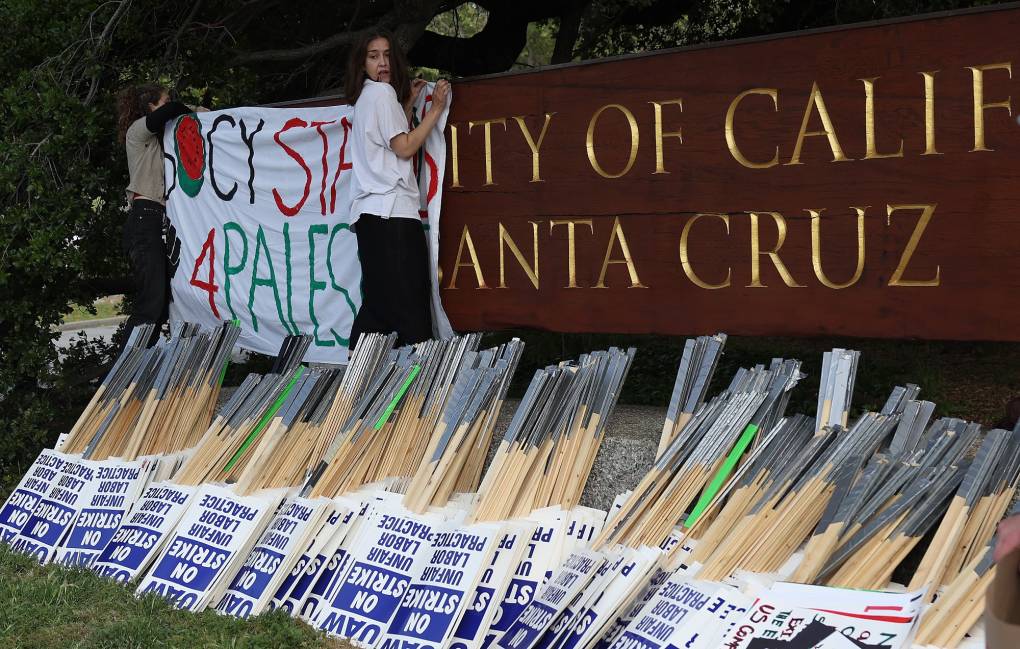
"caption": "Protesters set up a sign in front of the UC Santa Cruz campus on May 20, 2024, in Santa Cruz, California. Academic workers at the University of California, Santa Cruz, walked off the job Monday morning to strike in protest of the UC system’s handling of pro-Palestinian demonstrations. Organizers say the walkout will not last beyond June 30.",
"credit": "Justin Sullivan/Getty Images",
"altTag": null,
"description": null,
"imgSizes": {
"medium": {
"file": "https://cdn.kqed.org/wp-content/uploads/sites/10/2024/10/UCSantaCruzWalkoutMayGetty-800x509.jpg",
"width": 800,
"height": 509,
"mimeType": "image/jpeg"
},
"large": {
"file": "https://cdn.kqed.org/wp-content/uploads/sites/10/2024/10/UCSantaCruzWalkoutMayGetty-1020x649.jpg",
"width": 1020,
"height": 649,
"mimeType": "image/jpeg"
},
"thumbnail": {
"file": "https://cdn.kqed.org/wp-content/uploads/sites/10/2024/10/UCSantaCruzWalkoutMayGetty-160x102.jpg",
"width": 160,
"height": 102,
"mimeType": "image/jpeg"
},
"1536x1536": {
"file": "https://cdn.kqed.org/wp-content/uploads/sites/10/2024/10/UCSantaCruzWalkoutMayGetty-1536x978.jpg",
"width": 1536,
"height": 978,
"mimeType": "image/jpeg"
},
"post-thumbnail": {
"file": "https://cdn.kqed.org/wp-content/uploads/sites/10/2024/10/UCSantaCruzWalkoutMayGetty-672x372.jpg",
"width": 672,
"height": 372,
"mimeType": "image/jpeg"
},
"twentyfourteen-full-width": {
"file": "https://cdn.kqed.org/wp-content/uploads/sites/10/2024/10/UCSantaCruzWalkoutMayGetty-1038x576.jpg",
"width": 1038,
"height": 576,
"mimeType": "image/jpeg"
},
"full-width": {
"file": "https://cdn.kqed.org/wp-content/uploads/sites/10/2024/10/UCSantaCruzWalkoutMayGetty-1920x1222.jpg",
"width": 1920,
"height": 1222,
"mimeType": "image/jpeg"
},
"kqedFullSize": {
"file": "https://cdn.kqed.org/wp-content/uploads/sites/10/2024/10/UCSantaCruzWalkoutMayGetty.jpg",
"width": 2000,
"height": 1273
}
},
"isLoading": false,
"fetchFailed": false
},
"news_12008879": {
"type": "attachments",
"id": "news_12008879",
"meta": {
"index": "attachments_1716263798",
"site": "news",
"id": "12008879",
"found": true
},
"title": "240111-TransitFile-19-BL_qed",
"publishDate": 1728583167,
"status": "inherit",
"parent": 12008877,
"modified": 1728583182,
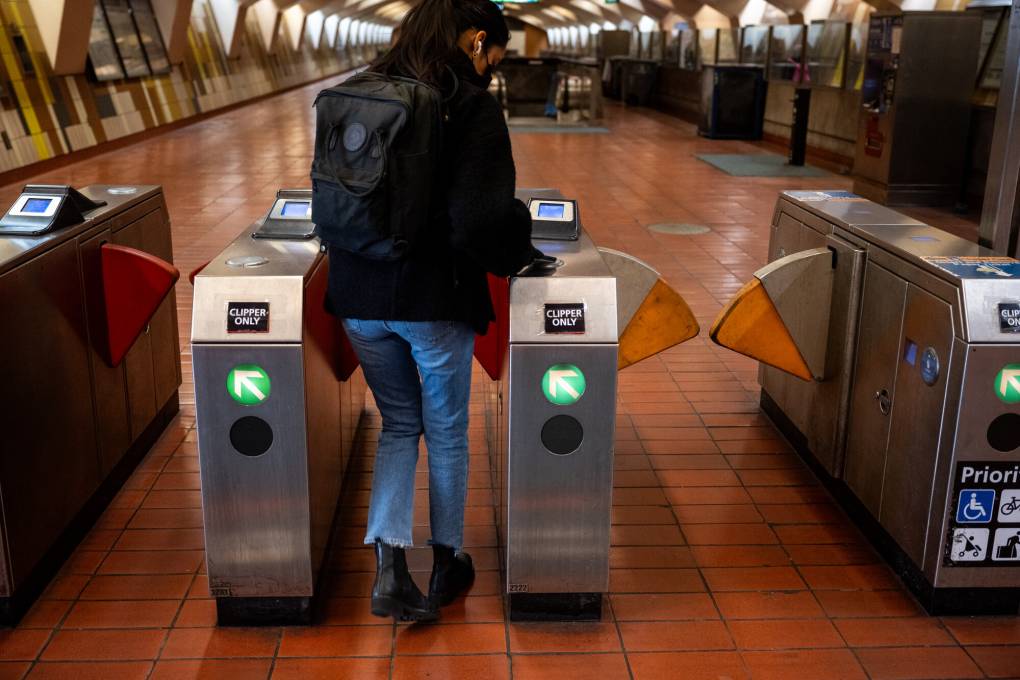
"caption": "BART fare gates at the 24th Street Mission station in San Francisco on Jan. 11, 2024.",
"credit": "Beth LaBerge/KQED",
"altTag": null,
"description": null,
"imgSizes": {
"medium": {
"file": "https://cdn.kqed.org/wp-content/uploads/sites/10/2024/10/240111-TransitFile-19-BL_qed-800x533.jpg",
"width": 800,
"height": 533,
"mimeType": "image/jpeg"
},
"large": {
"file": "https://cdn.kqed.org/wp-content/uploads/sites/10/2024/10/240111-TransitFile-19-BL_qed-1020x680.jpg",
"width": 1020,
"height": 680,
"mimeType": "image/jpeg"
},
"thumbnail": {
"file": "https://cdn.kqed.org/wp-content/uploads/sites/10/2024/10/240111-TransitFile-19-BL_qed-160x107.jpg",
"width": 160,
"height": 107,
"mimeType": "image/jpeg"
},
"1536x1536": {
"file": "https://cdn.kqed.org/wp-content/uploads/sites/10/2024/10/240111-TransitFile-19-BL_qed-1536x1024.jpg",
"width": 1536,
"height": 1024,
"mimeType": "image/jpeg"
},
"post-thumbnail": {
"file": "https://cdn.kqed.org/wp-content/uploads/sites/10/2024/10/240111-TransitFile-19-BL_qed-672x372.jpg",
"width": 672,
"height": 372,
"mimeType": "image/jpeg"
},
"twentyfourteen-full-width": {
"file": "https://cdn.kqed.org/wp-content/uploads/sites/10/2024/10/240111-TransitFile-19-BL_qed-1038x576.jpg",
"width": 1038,
"height": 576,
"mimeType": "image/jpeg"
},
"full-width": {
"file": "https://cdn.kqed.org/wp-content/uploads/sites/10/2024/10/240111-TransitFile-19-BL_qed-1920x1280.jpg",
"width": 1920,
"height": 1280,
"mimeType": "image/jpeg"
},
"kqedFullSize": {
"file": "https://cdn.kqed.org/wp-content/uploads/sites/10/2024/10/240111-TransitFile-19-BL_qed.jpg",
"width": 2000,
"height": 1333
}
},
"isLoading": false,
"fetchFailed": false
},
"news_12006905": {
"type": "attachments",
"id": "news_12006905",
"meta": {
"index": "attachments_1716263798",
"site": "news",
"id": "12006905",
"found": true
},
"title": "002_KQED_ElectionStockPhotos_TikaHall_10062020_qed",
"publishDate": 1727470265,
"status": "inherit",
"parent": 12003469,
"modified": 1727470295,
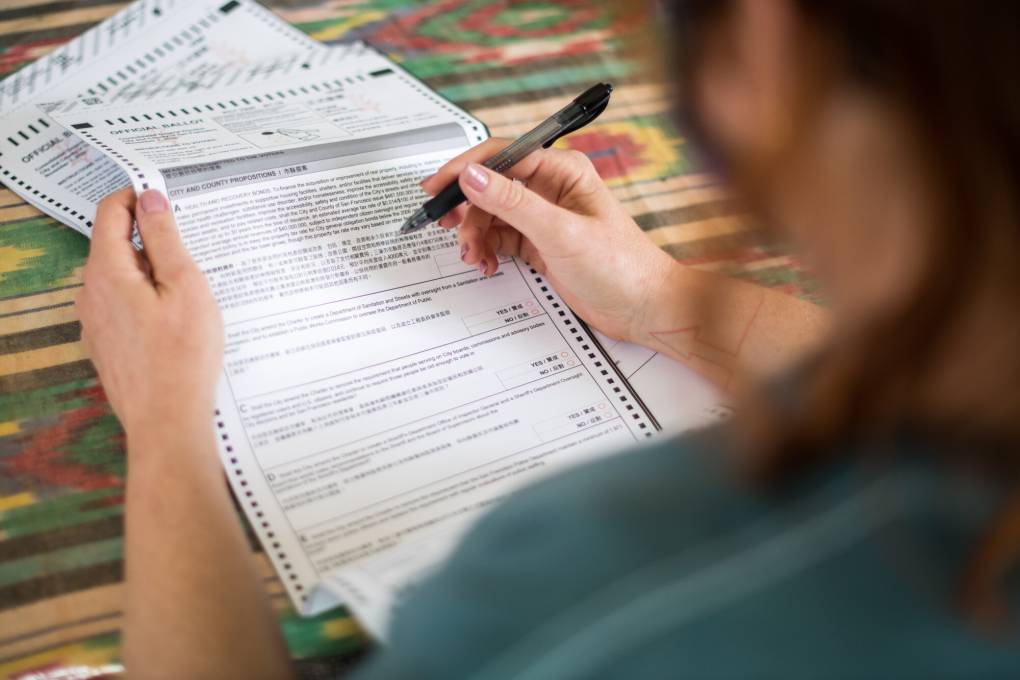
"caption": "A San Francisco resident fills out their mail-in ballot.",
"credit": "Beth LaBerge/KQED",
"altTag": null,
"description": null,
"imgSizes": {
"medium": {
"file": "https://cdn.kqed.org/wp-content/uploads/sites/10/2024/09/002_KQED_ElectionStockPhotos_TikaHall_10062020_qed-800x533.jpg",
"width": 800,
"height": 533,
"mimeType": "image/jpeg"
},
"large": {
"file": "https://cdn.kqed.org/wp-content/uploads/sites/10/2024/09/002_KQED_ElectionStockPhotos_TikaHall_10062020_qed-1020x680.jpg",
"width": 1020,
"height": 680,
"mimeType": "image/jpeg"
},
"thumbnail": {
"file": "https://cdn.kqed.org/wp-content/uploads/sites/10/2024/09/002_KQED_ElectionStockPhotos_TikaHall_10062020_qed-160x107.jpg",
"width": 160,
"height": 107,
"mimeType": "image/jpeg"
},
"1536x1536": {
"file": "https://cdn.kqed.org/wp-content/uploads/sites/10/2024/09/002_KQED_ElectionStockPhotos_TikaHall_10062020_qed-1536x1024.jpg",
"width": 1536,
"height": 1024,
"mimeType": "image/jpeg"
},
"post-thumbnail": {
"file": "https://cdn.kqed.org/wp-content/uploads/sites/10/2024/09/002_KQED_ElectionStockPhotos_TikaHall_10062020_qed-672x372.jpg",
"width": 672,
"height": 372,
"mimeType": "image/jpeg"
},
"twentyfourteen-full-width": {
"file": "https://cdn.kqed.org/wp-content/uploads/sites/10/2024/09/002_KQED_ElectionStockPhotos_TikaHall_10062020_qed-1038x576.jpg",
"width": 1038,
"height": 576,
"mimeType": "image/jpeg"
},
"full-width": {
"file": "https://cdn.kqed.org/wp-content/uploads/sites/10/2024/09/002_KQED_ElectionStockPhotos_TikaHall_10062020_qed-1920x1280.jpg",
"width": 1920,
"height": 1280,
"mimeType": "image/jpeg"
},
"kqedFullSize": {
"file": "https://cdn.kqed.org/wp-content/uploads/sites/10/2024/09/002_KQED_ElectionStockPhotos_TikaHall_10062020_qed.jpg",
"width": 2000,
"height": 1333
}
},
"isLoading": false,
"fetchFailed": false
}
},
"audioPlayerReducer": {
"postId": "stream_live",
"isPaused": true,
"isPlaying": false,
"pfsActive": false,
"pledgeModalIsOpen": true,
"playerDrawerIsOpen": false,
"liveAudioPlayStartedAt": 0,
"liveAudioPlayContext": ""
},
"authorsReducer": {
"byline_news_12010022": {
"type": "authors",
"id": "byline_news_12010022",
"meta": {
"override": true
},
"slug": "byline_news_12010022",
"name": "Yue Stella Yu, CalMatters",
"isLoading": false
},
"byline_news_12009493": {
"type": "authors",
"id": "byline_news_12009493",
"meta": {
"override": true
},
"slug": "byline_news_12009493",
"name": "Samantha Kennedy",
"isLoading": false
},
"gmarzorati": {
"type": "authors",
"id": "227",
"meta": {
"index": "authors_1716337520",
"id": "227",
"found": true
},
"name": "Guy Marzorati",
"firstName": "Guy",
"lastName": "Marzorati",
"slug": "gmarzorati",
"email": "gmarzorati@KQED.org",
"display_author_email": true,
"staff_mastheads": [
"news"
],
"title": "Correspondent",
"bio": "Guy Marzorati is a correspondent on KQED's California Politics and Government Desk, based in San Jose. A graduate of Santa Clara University, Guy joined KQED in 2013. He reports on state and local politics and produces KQED's digital voter guide.",
"avatar": "https://secure.gravatar.com/avatar/e7038b8dbfd55b104369b76b1cd0b9de?s=600&d=blank&r=g",
"twitter": "guymarzorati",
"facebook": null,
"instagram": null,
"linkedin": null,
"sites": [
{
"site": "",
"roles": [
"editor"
]
},
{
"site": "news",
"roles": [
"editor"
]
},
{
"site": "science",
"roles": [
"editor"
]
},
{
"site": "forum",
"roles": [
"editor"
]
},
{
"site": "elections",
"roles": [
"editor"
]
},
{
"site": "liveblog",
"roles": [
"editor"
]
}
],
"headData": {
"title": "Guy Marzorati | KQED",
"description": "Correspondent",
"ogImgSrc": "https://secure.gravatar.com/avatar/e7038b8dbfd55b104369b76b1cd0b9de?s=600&d=blank&r=g",
"twImgSrc": "https://secure.gravatar.com/avatar/e7038b8dbfd55b104369b76b1cd0b9de?s=600&d=blank&r=g"
},
"isLoading": false,
"link": "/author/gmarzorati"
},
"scottshafer": {
"type": "authors",
"id": "255",
"meta": {
"index": "authors_1716337520",
"id": "255",
"found": true
},
"name": "Scott Shafer",
"firstName": "Scott",
"lastName": "Shafer",
"slug": "scottshafer",
"email": "sshafer@kqed.org",
"display_author_email": false,
"staff_mastheads": [
"news"
],
"title": "KQED Contributor",
"bio": "Scott Shafer is a senior editor with the KQED Politics and Government desk. He is co-host of Political Breakdown, the award-winning radio show and podcast with a personal take on the world of politics. Scott came to KQED in 1998 to host the statewide\u003cem> California Report\u003c/em>. Prior to that he had extended stints in politics and government\u003cem>.\u003c/em> He uses that inside experience at KQED in his, reporting, hosting and analysis for the politics desk. Scott collaborated \u003cem>Political Breakdown a\u003c/em>nd on \u003cem>The Political Mind of Jerry Brown, \u003c/em>an eight-part series about the life and extraordinary political career of the former governor. For fun, he plays water polo with the San Francisco Tsunami.",
"avatar": "https://secure.gravatar.com/avatar/a62ebae45b79d7aed1a39a0e3bf68104?s=600&d=blank&r=g",
"twitter": "scottshafer",
"bluesky": null,
"facebook": null,
"instagram": null,
"linkedin": null,
"sites": [
{
"site": "news",
"roles": [
"editor"
]
},
{
"site": "stateofhealth",
"roles": [
"author"
]
},
{
"site": "science",
"roles": [
"author"
]
},
{
"site": "forum",
"roles": [
"subscriber"
]
},
{
"site": "liveblog",
"roles": [
"author"
]
}
],
"headData": {
"title": "Scott Shafer | KQED",
"description": "KQED Contributor",
"ogImgSrc": "https://secure.gravatar.com/avatar/a62ebae45b79d7aed1a39a0e3bf68104?s=600&d=blank&r=g",
"twImgSrc": "https://secure.gravatar.com/avatar/a62ebae45b79d7aed1a39a0e3bf68104?s=600&d=blank&r=g"
},
"isLoading": false,
"link": "/author/scottshafer"
},
"shossaini": {
"type": "authors",
"id": "3214",
"meta": {
"index": "authors_1716337520",
"id": "3214",
"found": true
},
"name": "Sara Hossaini",
"firstName": "Sara",
"lastName": "Hossaini",
"slug": "shossaini",
"email": "shossaini@kqed.org",
"display_author_email": true,
"staff_mastheads": [
"news"
],
"title": "KQED Reporter",
"bio": "Sara Hossaini came to general assignment reporting at KQED in 2013 after two winters reporting at Wyoming Public Radio. She holds a bachelor's degree in broadcast journalism from the University of Nebraska-Lincoln. Her radio romance began after a bitter breakup with documentary film (Ok, maybe it's still complicated). Her first simultaneous jobs in San Francisco were as Associate Producer on a PBS film series through the Center for Asian American Media and as a butler. She likes to trot, plot and make things with her hands.",
"avatar": "https://secure.gravatar.com/avatar/060e9f56b9554e17942e89f413242774?s=600&d=blank&r=g",
"twitter": "mshossaini",
"facebook": null,
"instagram": null,
"linkedin": null,
"sites": [
{
"site": "news",
"roles": [
"author"
]
},
{
"site": "stateofhealth",
"roles": [
"author"
]
}
],
"headData": {
"title": "Sara Hossaini | KQED",
"description": "KQED Reporter",
"ogImgSrc": "https://secure.gravatar.com/avatar/060e9f56b9554e17942e89f413242774?s=600&d=blank&r=g",
"twImgSrc": "https://secure.gravatar.com/avatar/060e9f56b9554e17942e89f413242774?s=600&d=blank&r=g"
},
"isLoading": false,
"link": "/author/shossaini"
},
"carlysevern": {
"type": "authors",
"id": "3243",
"meta": {
"index": "authors_1716337520",
"id": "3243",
"found": true
},
"name": "Carly Severn",
"firstName": "Carly",
"lastName": "Severn",
"slug": "carlysevern",
"email": "csevern@kqed.org",
"display_author_email": false,
"staff_mastheads": [
"news"
],
"title": "Senior Editor, Audience News ",
"bio": "Carly is KQED's Senior Editor of Audience News on the Digital News team, and has reported for the California Report Magazine, Bay Curious and KQED Arts. She's formerly the host of \u003ca href=\"http://ww2.kqed.org/pop/category/the-cooler/\" rel=\"noopener noreferrer\">The Cooler\u003c/a> podcast.",
"avatar": "https://secure.gravatar.com/avatar/2d8d6765f186e64c798cf7f0c8088a41?s=600&d=blank&r=g",
"twitter": "teacupinthebay",
"facebook": null,
"instagram": null,
"linkedin": null,
"sites": [
{
"site": "",
"roles": [
"editor"
]
},
{
"site": "arts",
"roles": [
"editor"
]
},
{
"site": "news",
"roles": [
"administrator"
]
},
{
"site": "pop",
"roles": [
"editor"
]
},
{
"site": "futureofyou",
"roles": [
"editor"
]
},
{
"site": "about",
"roles": [
"administrator"
]
},
{
"site": "mindshift",
"roles": [
"editor"
]
},
{
"site": "bayareabites",
"roles": [
"editor"
]
},
{
"site": "stateofhealth",
"roles": [
"editor"
]
},
{
"site": "science",
"roles": [
"editor"
]
},
{
"site": "food",
"roles": [
"contributor"
]
},
{
"site": "forum",
"roles": [
"editor"
]
},
{
"site": "perspectives",
"roles": [
"administrator"
]
},
{
"site": "liveblog",
"roles": [
"editor"
]
}
],
"headData": {
"title": "Carly Severn | KQED",
"description": "Senior Editor, Audience News ",
"ogImgSrc": "https://secure.gravatar.com/avatar/2d8d6765f186e64c798cf7f0c8088a41?s=600&d=blank&r=g",
"twImgSrc": "https://secure.gravatar.com/avatar/2d8d6765f186e64c798cf7f0c8088a41?s=600&d=blank&r=g"
},
"isLoading": false,
"link": "/author/carlysevern"
},
"fjhabvala": {
"type": "authors",
"id": "8659",
"meta": {
"index": "authors_1716337520",
"id": "8659",
"found": true
},
"name": "Farida Jhabvala Romero",
"firstName": "Farida",
"lastName": "Jhabvala Romero",
"slug": "fjhabvala",
"email": "fjhabvala@kqed.org",
"display_author_email": true,
"staff_mastheads": [
"news"
],
"title": "KQED Contributor",
"bio": "Farida Jhabvala Romero is a Labor Correspondent for KQED. She previously covered immigration. Farida was \u003ca href=\"https://www.ccnma.org/2022-most-influential-latina-journalists\">named\u003c/a> one of the 10 Most Influential Latina Journalists in California in 2022 by the California Chicano News Media Association. Her work has won awards from the Society of Professional Journalists (Northern California), as well as a national and regional Edward M. Murrow Award for the collaborative reporting projects “Dangerous Air” and “Graying California.” Before joining KQED, Farida worked as a producer at Radio Bilingüe, a national public radio network. Farida earned her master’s degree in journalism from Stanford University.",
"avatar": "https://secure.gravatar.com/avatar/f9f022d4e2609741874222a1e9d41f48fea74011aa7c615eef91d9a50c944ebe?s=600&d=blank&r=g",
"twitter": "FaridaJhabvala",
"bluesky": null,
"facebook": null,
"instagram": null,
"linkedin": "https://www.linkedin.com/in/faridajhabvala/",
"sites": [
{
"site": "news",
"roles": [
"editor"
]
},
{
"site": "stateofhealth",
"roles": [
"author"
]
},
{
"site": "liveblog",
"roles": [
"author"
]
}
],
"headData": {
"title": "Farida Jhabvala Romero | KQED",
"description": "KQED Contributor",
"ogImgSrc": "https://secure.gravatar.com/avatar/f9f022d4e2609741874222a1e9d41f48fea74011aa7c615eef91d9a50c944ebe?s=600&d=blank&r=g",
"twImgSrc": "https://secure.gravatar.com/avatar/f9f022d4e2609741874222a1e9d41f48fea74011aa7c615eef91d9a50c944ebe?s=600&d=blank&r=g"
},
"isLoading": false,
"link": "/author/fjhabvala"
},
"lesleymcclurg": {
"type": "authors",
"id": "11229",
"meta": {
"index": "authors_1716337520",
"id": "11229",
"found": true
},
"name": "Lesley McClurg",
"firstName": "Lesley",
"lastName": "McClurg",
"slug": "lesleymcclurg",
"email": "lmcclurg@KQED.org",
"display_author_email": false,
"staff_mastheads": [
"news",
"science"
],
"title": "KQED Health Correspondent",
"bio": "Lesley McClurg is a health correspondent and fill-in host whose work is regularly rebroadcast on NPR and PBS programs. She’s earned multiple regional Emmy awards, a national and a regional Edward R. Murrow award, and was named Best Beat Reporter by the Association of Health Care Journalists. The Society of Professional Journalists has recognized her work several times, and the Society of Environmental Journalists spotlighted her coverage of California’s historic drought.\r\n\r\nBefore joining KQED in 2016, Lesley covered food and sustainability for Capital Public Radio, environmental issues for Colorado Public Radio, and reported for KUOW and KCTS 9 in Seattle. Away from the newsroom, she loves skiing with her daughter, mountain biking with her partner, and playing with Ollie, the family’s goldendoodle. On deadline, she runs almost entirely on chocolate chips.\r\n\r\n ",
"avatar": "https://secure.gravatar.com/avatar/bab49e972ea10c774fe0f5e29dba1722b158f7c0d58a360923d1389d380b2978?s=600&d=blank&r=g",
"twitter": "lesleywmcclurg",
"bluesky": null,
"facebook": null,
"instagram": null,
"linkedin": null,
"sites": [
{
"site": "arts",
"roles": [
"author"
]
},
{
"site": "news",
"roles": [
"editor"
]
},
{
"site": "futureofyou",
"roles": [
"editor"
]
},
{
"site": "stateofhealth",
"roles": [
"author"
]
},
{
"site": "science",
"roles": [
"editor"
]
},
{
"site": "quest",
"roles": [
"subscriber"
]
},
{
"site": "forum",
"roles": [
"administrator"
]
},
{
"site": "liveblog",
"roles": [
"author"
]
}
],
"headData": {
"title": "Lesley McClurg | KQED",
"description": "KQED Health Correspondent",
"ogImgSrc": "https://secure.gravatar.com/avatar/bab49e972ea10c774fe0f5e29dba1722b158f7c0d58a360923d1389d380b2978?s=600&d=blank&r=g",
"twImgSrc": "https://secure.gravatar.com/avatar/bab49e972ea10c774fe0f5e29dba1722b158f7c0d58a360923d1389d380b2978?s=600&d=blank&r=g"
},
"isLoading": false,
"link": "/author/lesleymcclurg"
},
"sjohnson": {
"type": "authors",
"id": "11840",
"meta": {
"index": "authors_1716337520",
"id": "11840",
"found": true
},
"name": "Sydney Johnson",
"firstName": "Sydney",
"lastName": "Johnson",
"slug": "sjohnson",
"email": "sjohnson@kqed.org",
"display_author_email": false,
"staff_mastheads": [
"news"
],
"title": "KQED Reporter",
"bio": "Sydney Johnson is a general assignment reporter at KQED. She previously reported on public health and city government at the San Francisco Examiner, and before that, she covered statewide education policy for EdSource. Her reporting has won multiple local, state and national awards. Sydney is a graduate of the University of California, Berkeley and lives in San Francisco.",
"avatar": "https://secure.gravatar.com/avatar/97855f2719b72ad6190b7c535fe642c8?s=600&d=blank&r=g",
"twitter": "sydneyfjohnson",
"facebook": null,
"instagram": null,
"linkedin": null,
"sites": [
{
"site": "news",
"roles": [
"editor"
]
}
],
"headData": {
"title": "Sydney Johnson | KQED",
"description": "KQED Reporter",
"ogImgSrc": "https://secure.gravatar.com/avatar/97855f2719b72ad6190b7c535fe642c8?s=600&d=blank&r=g",
"twImgSrc": "https://secure.gravatar.com/avatar/97855f2719b72ad6190b7c535fe642c8?s=600&d=blank&r=g"
},
"isLoading": false,
"link": "/author/sjohnson"
},
"kmonahan": {
"type": "authors",
"id": "11842",
"meta": {
"index": "authors_1716337520",
"id": "11842",
"found": true
},
"name": "Katherine Monahan",
"firstName": "Katherine",
"lastName": "Monahan",
"slug": "kmonahan",
"email": "kmonahan@kqed.org",
"display_author_email": true,
"staff_mastheads": [],
"title": "Reporter / Sound Engineer",
"bio": "I cover state and local news. I’m also a sound engineer at the station, mixing stories and running live broadcasts. I link to source materials so that readers can draw their own conclusions, and seek comment from a range of perspectives, including from people directly affected by events. Awards received include from the Society of Professional Journalists, Northern California chapter and the Alaska Press Club. I speak multiple languages and have reported and engineered in the Bay Area, Alaska, West Africa and Latin America.",
"avatar": "https://secure.gravatar.com/avatar/ff257b3a5da88893781a3d3266904b2d2f91c7f0e1bbf728f61f5fb81b74a669?s=600&d=blank&r=g",
"twitter": null,
"bluesky": null,
"facebook": null,
"instagram": null,
"linkedin": null,
"sites": [
{
"site": "news",
"roles": [
"editor"
]
},
{
"site": "science",
"roles": [
"contributor"
]
}
],
"headData": {
"title": "Katherine Monahan | KQED",
"description": "Reporter / Sound Engineer",
"ogImgSrc": "https://secure.gravatar.com/avatar/ff257b3a5da88893781a3d3266904b2d2f91c7f0e1bbf728f61f5fb81b74a669?s=600&d=blank&r=g",
"twImgSrc": "https://secure.gravatar.com/avatar/ff257b3a5da88893781a3d3266904b2d2f91c7f0e1bbf728f61f5fb81b74a669?s=600&d=blank&r=g"
},
"isLoading": false,
"link": "/author/kmonahan"
},
"kdebenedetti": {
"type": "authors",
"id": "11913",
"meta": {
"index": "authors_1716337520",
"id": "11913",
"found": true
},
"name": "Katie DeBenedetti",
"firstName": "Katie",
"lastName": "DeBenedetti",
"slug": "kdebenedetti",
"email": "kdebenedetti@kqed.org",
"display_author_email": false,
"staff_mastheads": [
"news",
"science"
],
"title": "KQED Contributor",
"bio": "Katie DeBenedetti is a digital reporter covering daily news for the Express Desk. Prior to joining KQED as a culture reporting intern in January 2024, she covered education and city government for the Napa Valley Register.",
"avatar": "https://secure.gravatar.com/avatar/6e31073cb8f7e4214ab03f42771d0f45?s=600&d=blank&r=g",
"twitter": null,
"facebook": null,
"instagram": null,
"linkedin": null,
"sites": [
{
"site": "news",
"roles": [
"author"
]
},
{
"site": "science",
"roles": [
"author"
]
},
{
"site": "liveblog",
"roles": [
"author"
]
}
],
"headData": {
"title": "Katie DeBenedetti | KQED",
"description": "KQED Contributor",
"ogImgSrc": "https://secure.gravatar.com/avatar/6e31073cb8f7e4214ab03f42771d0f45?s=600&d=blank&r=g",
"twImgSrc": "https://secure.gravatar.com/avatar/6e31073cb8f7e4214ab03f42771d0f45?s=600&d=blank&r=g"
},
"isLoading": false,
"link": "/author/kdebenedetti"
},
"bkrans": {
"type": "authors",
"id": "11923",
"meta": {
"index": "authors_1716337520",
"id": "11923",
"found": true
},
"name": "Brian Krans",
"firstName": "Brian",
"lastName": "Krans",
"slug": "bkrans",
"email": "bkrans@kqed.org",
"display_author_email": false,
"staff_mastheads": [
"news"
],
"title": "KQED Contributing Reporter",
"bio": "Brian Krans is an award-winning local news and investigative reporter who has been proudly working as a general assignment reporter for KQED since August 2023. He lives in Richmond, where he also reports on air pollution for Richmondside. He is also a founding member of the Vallejo Sun.",
"avatar": "https://secure.gravatar.com/avatar/d1014d604089314a94807d2c4f2d3e06?s=600&d=blank&r=g",
"twitter": "citizenkrans",
"facebook": null,
"instagram": null,
"linkedin": null,
"sites": [
{
"site": "news",
"roles": [
"editor"
]
}
],
"headData": {
"title": "Brian Krans | KQED",
"description": "KQED Contributing Reporter",
"ogImgSrc": "https://secure.gravatar.com/avatar/d1014d604089314a94807d2c4f2d3e06?s=600&d=blank&r=g",
"twImgSrc": "https://secure.gravatar.com/avatar/d1014d604089314a94807d2c4f2d3e06?s=600&d=blank&r=g"
},
"isLoading": false,
"link": "/author/bkrans"
},
"gzada": {
"type": "authors",
"id": "11929",
"meta": {
"index": "authors_1716337520",
"id": "11929",
"found": true
},
"name": "Gilare Zada",
"firstName": "Gilare",
"lastName": "Zada",
"slug": "gzada",
"email": "gzada@kqed.org",
"display_author_email": true,
"staff_mastheads": [
"news"
],
"title": null,
"bio": "Gilare Zada is a Kurdish-American from San Diego, CA. Storytelling, fitness, and binge reading are some of her passions outside of news reporting. Her work has appeared in Mission Local, the Peninsula Press, the San Francisco Press Club, and more. She also writes as a class correspondent for the Stanford Magazine - go Card!",
"avatar": "https://secure.gravatar.com/avatar/33a75f2b947669a488a805edec3fbf3838c1cedaedda710e983770633b4d6a75?s=600&d=blank&r=g",
"twitter": null,
"bluesky": null,
"facebook": null,
"instagram": null,
"linkedin": null,
"sites": [
{
"site": "arts",
"roles": [
"editor"
]
},
{
"site": "news",
"roles": [
"editor",
"contributor"
]
},
{
"site": "science",
"roles": [
"editor"
]
}
],
"headData": {
"title": "Gilare Zada | KQED",
"description": null,
"ogImgSrc": "https://secure.gravatar.com/avatar/33a75f2b947669a488a805edec3fbf3838c1cedaedda710e983770633b4d6a75?s=600&d=blank&r=g",
"twImgSrc": "https://secure.gravatar.com/avatar/33a75f2b947669a488a805edec3fbf3838c1cedaedda710e983770633b4d6a75?s=600&d=blank&r=g"
},
"isLoading": false,
"link": "/author/gzada"
}
},
"pagesReducer": {
"news_tag_california": {
"type": "terms",
"id": "news_18538",
"meta": {
"index": "terms_1716263798",
"site": "news",
"id": "18538",
"score": 6.8457103
},
"featImg": null,
"name": "California",
"description": null,
"taxonomy": "tag",
"headData": {
"twImgId": null,
"twTitle": null,
"ogTitle": null,
"ogImgId": null,
"twDescription": null,
"description": null,
"title": "California Archives | KQED News",
"ogDescription": null
},
"ttid": 31,
"slug": "california",
"isLoading": false,
"title": "California",
"pageMeta": {
"site": "news",
"WpPageTemplate": "page-topic-editorial",
"currentPage": 125
},
"blocks": [
{
"blockName": "kqed/post-list",
"attrs": {
"layout": "cardArticle2",
"query": "posts/news?tag=california",
"seeMore": false,
"paginated": true,
"page": 125
}
},
{
"blockName": "kqed/ad"
}
]
}
},
"pfsSessionReducer": {},
"postsReducer": {
"stream_live": {
"type": "live",
"id": "stream_live",
"audioUrl": "https://streams.kqed.org/kqedradio",
"title": "Live Stream",
"excerpt": "Live Stream information currently unavailable.",
"link": "/radio",
"featImg": "",
"label": {
"name": "KQED Live",
"link": "/"
}
},
"stream_kqedNewscast": {
"type": "posts",
"id": "stream_kqedNewscast",
"audioUrl": "https://www.kqed.org/.stream/anon/radio/RDnews/newscast.mp3?_=1",
"title": "KQED Newscast",
"featImg": "",
"label": {
"name": "88.5 FM",
"link": "/"
}
},
"news_12010022": {
"type": "posts",
"id": "news_12010022",
"meta": {
"index": "posts_1716263798",
"site": "news",
"id": "12010022",
"score": null,
"sort": [
1729364430000
]
},
"guestAuthors": [],
"slug": "outside-groups-are-spending-millions-in-californias-u-s-house-races-will-it-make-a-difference",
"title": "Outside Groups Are Spending Millions in California's U.S. House Races. Will it Make a Difference?",
"publishDate": 1729364430,
"format": "standard",
"headTitle": "Outside Groups Are Spending Millions in California’s U.S. House Races. Will it Make a Difference? | KQED",
"labelTerm": {},
"content": "\u003cp>Voters began seeing dueling ads last month in one of California’s most contested congressional districts — a rematch between former Democratic Assemblymember Rudy Salas and GOP Rep. David Valadao.\u003c/p>\n\u003cp>Only a sliver of those ads were paid for by their own campaigns.\u003c/p>\n\u003cp>The candidates have each released a 30-second spot, touting their \u003ca href=\"https://www.facebook.com/watch/?v=1830883550772996\">farming roots\u003c/a> and \u003ca href=\"https://www.facebook.com/watch/?v=3801391993407244&ref=sharing\">their pledge to represent working families\u003c/a>. But in far more TV ads, funded by other political groups, they are \u003ca href=\"https://www.youtube.com/watch?v=Iylxvx63WPo\">portrayed as out of touch with the working class\u003c/a> and cast in \u003ca href=\"https://www.youtube.com/watch?v=qkl-eqLEb0U\">gloomy monotone color\u003c/a>.\u003c/p>\n\u003cp>Outside political organizations, independent from candidates’ campaigns, are buying airtime and \u003ca href=\"https://www.opensecrets.org/outside-spending/outvscand/2024?chrt=2022&disp=O&type=\">driving the spending war\u003c/a> between Democratic and Republican candidates in five of \u003ca href=\"https://calmatters.org/california-voter-guide-2024/us-house/\">California’s tightest congressional races\u003c/a>, campaign finance records show.\u003c/p>\n\u003cp>In those close contests from the Central Valley to Southern California, outside groups spent a total of $71 million as of Thursday — almost twice the amount candidates themselves have spent this election, according to data from OpenSecrets, a Washington, D.C.-based campaign finance watchdog group.\u003c/p>\n\u003cp>[ad fullwidth]\u003c/p>\n\u003cp>That money war highlights the importance of California to \u003ca href=\"https://calmatters.org/explainers/california-election-results/#bb309280-b755-4f9a-8e25-836216d3ce2b\">control of the U.S. House\u003c/a>, even though the state is overall safely Democratic, said Jack Pitney, a politics professor at Claremont McKenna College.\u003c/p>\n\u003cp>“The path to the speakership runs through California,” Pitney said.\u003c/p>\n\u003cp>The spending blitz comes as Republicans try to fend off Democratic challengers and defend their \u003ca href=\"https://pressgallery.house.gov/member-data/party-breakdown\">eight-seat House majority\u003c/a>. Both GOP House Speaker Mike Johnson and House Democratic leader Hakeem Jeffries \u003ca href=\"https://www.latimes.com/politics/story/2024-10-13/california-house-races-congress-hakeem-jeffries-mike-johnson-rollins-calvert-whitesides-garcia\">campaigned for swing district candidates in California this week\u003c/a>.\u003c/p>\n\u003cp>But in six of the most competitive California districts, Republicans were outraised by Democrats by almost 300% between July and September, according to the latest federal campaign finance filings.\u003c/p>\n\u003cp>Salas, for example, raised $1.8 million from individuals and political committees, while Valadao raised just $727,000, records show. In another competitive Central Valley seat, Democratic businessman Adam Gray raised $2.3 million while incumbent GOP Rep. John Duarte raised just shy of $500,000.\u003c/p>\n\u003cp>[aside label=\"2024 California Voter Guide\" link1='https://www.kqed.org/voterguide,Learn everything you need to cast an informed ballot for the 2024 general election' hero=https://cdn.kqed.org/wp-content/uploads/sites/80/2024/09/Aside-California-Voter-Guide-2024-General-Election-1200x1200-1.png]\u003c/p>\n\u003cp>Similarly, in southern California’s \u003ca href=\"https://calmatters.org/california-voter-guide-2024/us-house/#district-27\">27th\u003c/a>, \u003ca href=\"https://calmatters.org/california-voter-guide-2024/us-house/#district-41\">41st\u003c/a> and \u003ca href=\"https://calmatters.org/california-voter-guide-2024/us-house/#district-47\">47th\u003c/a> congressional districts, Democrats more than doubled Republicans’ fundraising for the third quarter. In Orange County’s \u003ca href=\"https://calmatters.org/california-voter-guide-2024/us-house/#district-45\">45th\u003c/a> District, Derek Tran — a Democratic workers rights advocate — raised almost $2 million, while GOP Rep. Michelle Steel reported raising $1.3 million, including \u003ca href=\"https://docquery.fec.gov/cgi-bin/forms/C00704981/1829515/sa/13A\">$1 million\u003c/a> from herself.\u003c/p>\n\u003cp>That shows the waning influence of \u003ca href=\"https://www.kqed.org/news/11996144/from-sacramento-to-washington-gop-rep-vince-fong-on-following-kevin-mccarthy-to-the-house\">former GOP House Speaker Kevin McCarthy\u003c/a> of Bakersfield and the rise of California’s Democratic Reps. Peter Aguilar and Ted Lieu as chairperson and vice chairperson of the \u003ca href=\"https://www.dems.gov/who-we-are\">House Democratic Caucus\u003c/a>, respectively, said Democratic strategist Garry South.\u003c/p>\n\u003cp>“These are the seats that Democrats are going to have to flip … if they are going to take back the House,” he said.\u003c/p>\n\u003cp>But fundraising by candidates is only part of the money game.\u003c/p>\n\u003cp>Congressional Leadership Fund, a juggernaut Republican political action committee tied to House Speaker Johnson, plans to spend a total $40 million in California’s battleground districts — more than in any other state, a spokesperson confirmed to CalMatters.\u003c/p>\n\u003cp>“California remains an essential battleground for holding the House majority, which is why we’ve made such substantial and comprehensive investments in the state,” Dan Conston, president of the group, said in a statement.\u003c/p>\n\u003cp>House Majority PAC, its Democratic counterpart, has also booked more than $40 million in ads across the state, according to press secretary Alisha Heng.\u003c/p>\n\u003cp>“House Democrats are well-positioned and have the momentum, and we will flip the House blue and elect Hakeem Jeffries as Speaker in November,” she said in a statement.\u003c/p>\n\u003cfigure id=\"attachment_12010282\" class=\"wp-caption aligncenter\" style=\"max-width: 1568px\">\u003cimg loading=\"lazy\" decoding=\"async\" class=\"size-full wp-image-12010282\" src=\"https://cdn.kqed.org/wp-content/uploads/sites/10/2024/10/101922_Rudy_Salas_Bakersfield_LV_CM__30.jpg\" alt=\"\" width=\"1568\" height=\"1045\" srcset=\"https://cdn.kqed.org/wp-content/uploads/sites/10/2024/10/101922_Rudy_Salas_Bakersfield_LV_CM__30.jpg 1568w, https://cdn.kqed.org/wp-content/uploads/sites/10/2024/10/101922_Rudy_Salas_Bakersfield_LV_CM__30-800x533.jpg 800w, https://cdn.kqed.org/wp-content/uploads/sites/10/2024/10/101922_Rudy_Salas_Bakersfield_LV_CM__30-1020x680.jpg 1020w, https://cdn.kqed.org/wp-content/uploads/sites/10/2024/10/101922_Rudy_Salas_Bakersfield_LV_CM__30-160x107.jpg 160w, https://cdn.kqed.org/wp-content/uploads/sites/10/2024/10/101922_Rudy_Salas_Bakersfield_LV_CM__30-1536x1024.jpg 1536w\" sizes=\"(max-width: 1568px) 100vw, 1568px\">\u003cfigcaption class=\"wp-caption-text\">Democratic congressional candidate Rudy Salas speaks to a crowd of volunteers at the International Brotherhood of Electrical Workers in Bakersfield on Oct. 15, 2022. \u003ccite>(Larry Valenzuela, CalMatters/CatchLight Local)\u003c/cite>\u003c/figcaption>\u003c/figure>\n\u003cp>A similar rivalry is playing out between the Democratic Congressional Campaign Committee and the National Republican Congressional Committee, the campaign arms of House Democrats and Republicans.\u003c/p>\n\u003cp>As of last week, the House Democratic campaign \u003ca href=\"https://www.fec.gov/data/committee/C00000935/?tab=spending#independent-expenditures\">had spent $6.3 million\u003c/a> airing ads in California’s Central Valley districts and has since launched a mobile billboard campaign across 27 swing districts nationwide — including \u003ca href=\"https://dccc.org/dccc-launches-billboard-campaign-targeting-house-republicans-project-2025/\">six in California\u003c/a> — to target the conservative \u003ca href=\"https://www.kqed.org/news/11998288/what-is-project-2025-donald-trump-heritage-foundation-director-steps-down\">“Project 2025”\u003c/a> policy playbook.\u003c/p>\n\u003cp>“Our California challengers are lapping the competition in fundraising and meeting voters where they are,” Dan Gottlieb, spokesperson for the Democratic Congressional Campaign Committee, said in a statement.\u003c/p>\n\u003cp>Its GOP counterpart had spent \u003ca href=\"https://www.fec.gov/data/committee/C00075820/?tab=filings#notices\">$4 million\u003c/a> as of last week running ads in four districts in the Central Valley and northern Los Angeles County, according to federal campaign finance filings.\u003c/p>\n\u003cp>“California House Republicans built strong fundraising totals this cycle, our message is resonating with voters and we have significant investments to reach voters in the final stretch,” said spokesperson Ben Petersen.\u003c/p>\n\u003cp>Others are also jumping into the fray.\u003c/p>\n\u003cp>[aside label='More Election Coverage' tag='election-2024']\u003c/p>\n\u003cp>America PAC, a pro-Donald Trump super PAC created by Tesla CEO Elon Musk, has spent $3 million boosting Republicans in three California House races — more than any other state, \u003ca href=\"https://www.opensecrets.org/political-action-committees-pacs//C00879510/independent-expenditures/2024\">according to data from OpenSecrets\u003c/a>. And cryptocurrency-linked super PACs have also invested millions of dollars supporting Republican incumbents in \u003ca href=\"https://www.politico.com/news/2024/10/15/crypto-election-ads-fairshake-00183700\">three swing districts in California\u003c/a>: $2.8 million for Steel, $1.3 million for Valadao, and $1 million for Rep. Mike Garcia, POLITICO reported.\u003c/p>\n\u003cp>The ad blitzes by outside groups, however, aren’t always as cost-effective as candidates’ own spending, experts say. Non-candidate political groups must pay higher ad rates — sometimes in California’s most expensive TV markets, they noted.\u003c/p>\n\u003cp>“You talk about advertising in L.A., one week of television for a super PAC buy for a congressional race can be $2.5 million,” said GOP consultant Jon Fleischman.\u003c/p>\n\u003cp>And attack ads funded by outside organizations could be so negative that they risk turning voters off, strategists say.\u003c/p>\n\u003cp>\u003c/p>\n\u003cp>“Voters don’t read the fine print. They don’t read the disclaimers on the ads,” South said. “All of that negative advertising is basically attributed by the voters to the candidate, not to some outside PAC they’ve never heard of.”\u003c/p>\n\n",
"blocks": [],
"excerpt": "Campaigns in California’s hottest congressional races are being boosted by outside groups. That money is on top of fundraising by the candidates, where Democrats are besting Republicans.",
"status": "publish",
"parent": 0,
"modified": 1729358910,
"stats": {
"hasAudio": false,
"hasVideo": false,
"hasChartOrMap": false,
"iframeSrcs": [],
"hasGoogleForm": false,
"hasGallery": false,
"hasHearkenModule": false,
"hasPolis": false,
"paragraphCount": 33,
"wordCount": 1085
},
"headData": {
"title": "Outside Groups Are Spending Millions in California's U.S. House Races. Will it Make a Difference? | KQED",
"description": "Campaigns in California’s hottest congressional races are being boosted by outside groups. That money is on top of fundraising by the candidates, where Democrats are besting Republicans.",
"ogTitle": "",
"ogDescription": "",
"ogImgId": "",
"twTitle": "",
"twDescription": "",
"twImgId": "",
"schema": {
"@context": "https://schema.org",
"@type": "NewsArticle",
"headline": "Outside Groups Are Spending Millions in California's U.S. House Races. Will it Make a Difference?",
"datePublished": "2024-10-19T12:00:30-07:00",
"dateModified": "2024-10-19T10:28:30-07:00",
"image": "https://cdn.kqed.org/wp-content/uploads/2020/02/KQED-OG-Image@1x.png",
"isAccessibleForFree": "True",
"publisher": {
"@type": "NewsMediaOrganization",
"@id": "https://www.kqed.org/#organization",
"name": "KQED",
"logo": "https://cdn.kqed.org/wp-content/uploads/2020/02/KQED-OG-Image@1x.png",
"url": "https://www.kqed.org",
"sameAs": [
"https://www.facebook.com/KQED",
"https://twitter.com/KQED",
"https://www.instagram.com/kqed/",
"https://www.tiktok.com/@kqedofficial",
"https://www.linkedin.com/company/kqed",
"https://www.youtube.com/channel/UCeC0IOo7i1P_61zVUWbJ4nw"
]
}
}
},
"source": "CalMatters",
"sourceUrl": "https://calmatters.org/",
"sticky": false,
"nprByline": "Yue Stella Yu, CalMatters",
"excludeFromSiteSearch": "Include",
"showOnAuthorArchivePages": "No",
"articleAge": "0",
"path": "/news/12010022/outside-groups-are-spending-millions-in-californias-u-s-house-races-will-it-make-a-difference",
"audioTrackLength": null,
"parsedContent": [
{
"type": "contentString",
"content": "\u003cdiv class=\"post-body\">\u003cp>\u003cp>Voters began seeing dueling ads last month in one of California’s most contested congressional districts — a rematch between former Democratic Assemblymember Rudy Salas and GOP Rep. David Valadao.\u003c/p>\n\u003cp>Only a sliver of those ads were paid for by their own campaigns.\u003c/p>\n\u003cp>The candidates have each released a 30-second spot, touting their \u003ca href=\"https://www.facebook.com/watch/?v=1830883550772996\">farming roots\u003c/a> and \u003ca href=\"https://www.facebook.com/watch/?v=3801391993407244&ref=sharing\">their pledge to represent working families\u003c/a>. But in far more TV ads, funded by other political groups, they are \u003ca href=\"https://www.youtube.com/watch?v=Iylxvx63WPo\">portrayed as out of touch with the working class\u003c/a> and cast in \u003ca href=\"https://www.youtube.com/watch?v=qkl-eqLEb0U\">gloomy monotone color\u003c/a>.\u003c/p>\n\u003cp>Outside political organizations, independent from candidates’ campaigns, are buying airtime and \u003ca href=\"https://www.opensecrets.org/outside-spending/outvscand/2024?chrt=2022&disp=O&type=\">driving the spending war\u003c/a> between Democratic and Republican candidates in five of \u003ca href=\"https://calmatters.org/california-voter-guide-2024/us-house/\">California’s tightest congressional races\u003c/a>, campaign finance records show.\u003c/p>\n\u003cp>In those close contests from the Central Valley to Southern California, outside groups spent a total of $71 million as of Thursday — almost twice the amount candidates themselves have spent this election, according to data from OpenSecrets, a Washington, D.C.-based campaign finance watchdog group.\u003c/p>\n\u003cp>\u003c/p>\u003c/div>",
"attributes": {
"named": {},
"numeric": []
}
},
{
"type": "component",
"content": "",
"name": "ad",
"attributes": {
"named": {
"label": "fullwidth"
},
"numeric": [
"fullwidth"
]
}
},
{
"type": "contentString",
"content": "\u003cdiv class=\"post-body\">\u003cp>\u003c/p>\n\u003cp>That money war highlights the importance of California to \u003ca href=\"https://calmatters.org/explainers/california-election-results/#bb309280-b755-4f9a-8e25-836216d3ce2b\">control of the U.S. House\u003c/a>, even though the state is overall safely Democratic, said Jack Pitney, a politics professor at Claremont McKenna College.\u003c/p>\n\u003cp>“The path to the speakership runs through California,” Pitney said.\u003c/p>\n\u003cp>The spending blitz comes as Republicans try to fend off Democratic challengers and defend their \u003ca href=\"https://pressgallery.house.gov/member-data/party-breakdown\">eight-seat House majority\u003c/a>. Both GOP House Speaker Mike Johnson and House Democratic leader Hakeem Jeffries \u003ca href=\"https://www.latimes.com/politics/story/2024-10-13/california-house-races-congress-hakeem-jeffries-mike-johnson-rollins-calvert-whitesides-garcia\">campaigned for swing district candidates in California this week\u003c/a>.\u003c/p>\n\u003cp>But in six of the most competitive California districts, Republicans were outraised by Democrats by almost 300% between July and September, according to the latest federal campaign finance filings.\u003c/p>\n\u003cp>Salas, for example, raised $1.8 million from individuals and political committees, while Valadao raised just $727,000, records show. In another competitive Central Valley seat, Democratic businessman Adam Gray raised $2.3 million while incumbent GOP Rep. John Duarte raised just shy of $500,000.\u003c/p>\n\u003cp>\u003c/p>\u003c/div>",
"attributes": {
"named": {},
"numeric": []
}
},
{
"type": "component",
"content": "",
"name": "aside",
"attributes": {
"named": {
"label": "2024 California Voter Guide ",
"link1": "https://www.kqed.org/voterguide,Learn everything you need to cast an informed ballot for the 2024 general election",
"hero": "https://cdn.kqed.org/wp-content/uploads/sites/80/2024/09/Aside-California-Voter-Guide-2024-General-Election-1200x1200-1.png"
},
"numeric": []
}
},
{
"type": "contentString",
"content": "\u003cdiv class=\"post-body\">\u003cp>\u003c/p>\n\u003cp>Similarly, in southern California’s \u003ca href=\"https://calmatters.org/california-voter-guide-2024/us-house/#district-27\">27th\u003c/a>, \u003ca href=\"https://calmatters.org/california-voter-guide-2024/us-house/#district-41\">41st\u003c/a> and \u003ca href=\"https://calmatters.org/california-voter-guide-2024/us-house/#district-47\">47th\u003c/a> congressional districts, Democrats more than doubled Republicans’ fundraising for the third quarter. In Orange County’s \u003ca href=\"https://calmatters.org/california-voter-guide-2024/us-house/#district-45\">45th\u003c/a> District, Derek Tran — a Democratic workers rights advocate — raised almost $2 million, while GOP Rep. Michelle Steel reported raising $1.3 million, including \u003ca href=\"https://docquery.fec.gov/cgi-bin/forms/C00704981/1829515/sa/13A\">$1 million\u003c/a> from herself.\u003c/p>\n\u003cp>That shows the waning influence of \u003ca href=\"https://www.kqed.org/news/11996144/from-sacramento-to-washington-gop-rep-vince-fong-on-following-kevin-mccarthy-to-the-house\">former GOP House Speaker Kevin McCarthy\u003c/a> of Bakersfield and the rise of California’s Democratic Reps. Peter Aguilar and Ted Lieu as chairperson and vice chairperson of the \u003ca href=\"https://www.dems.gov/who-we-are\">House Democratic Caucus\u003c/a>, respectively, said Democratic strategist Garry South.\u003c/p>\n\u003cp>“These are the seats that Democrats are going to have to flip … if they are going to take back the House,” he said.\u003c/p>\n\u003cp>But fundraising by candidates is only part of the money game.\u003c/p>\n\u003cp>Congressional Leadership Fund, a juggernaut Republican political action committee tied to House Speaker Johnson, plans to spend a total $40 million in California’s battleground districts — more than in any other state, a spokesperson confirmed to CalMatters.\u003c/p>\n\u003cp>“California remains an essential battleground for holding the House majority, which is why we’ve made such substantial and comprehensive investments in the state,” Dan Conston, president of the group, said in a statement.\u003c/p>\n\u003cp>House Majority PAC, its Democratic counterpart, has also booked more than $40 million in ads across the state, according to press secretary Alisha Heng.\u003c/p>\n\u003cp>“House Democrats are well-positioned and have the momentum, and we will flip the House blue and elect Hakeem Jeffries as Speaker in November,” she said in a statement.\u003c/p>\n\u003cfigure id=\"attachment_12010282\" class=\"wp-caption aligncenter\" style=\"max-width: 1568px\">\u003cimg loading=\"lazy\" decoding=\"async\" class=\"size-full wp-image-12010282\" src=\"https://cdn.kqed.org/wp-content/uploads/sites/10/2024/10/101922_Rudy_Salas_Bakersfield_LV_CM__30.jpg\" alt=\"\" width=\"1568\" height=\"1045\" srcset=\"https://cdn.kqed.org/wp-content/uploads/sites/10/2024/10/101922_Rudy_Salas_Bakersfield_LV_CM__30.jpg 1568w, https://cdn.kqed.org/wp-content/uploads/sites/10/2024/10/101922_Rudy_Salas_Bakersfield_LV_CM__30-800x533.jpg 800w, https://cdn.kqed.org/wp-content/uploads/sites/10/2024/10/101922_Rudy_Salas_Bakersfield_LV_CM__30-1020x680.jpg 1020w, https://cdn.kqed.org/wp-content/uploads/sites/10/2024/10/101922_Rudy_Salas_Bakersfield_LV_CM__30-160x107.jpg 160w, https://cdn.kqed.org/wp-content/uploads/sites/10/2024/10/101922_Rudy_Salas_Bakersfield_LV_CM__30-1536x1024.jpg 1536w\" sizes=\"(max-width: 1568px) 100vw, 1568px\">\u003cfigcaption class=\"wp-caption-text\">Democratic congressional candidate Rudy Salas speaks to a crowd of volunteers at the International Brotherhood of Electrical Workers in Bakersfield on Oct. 15, 2022. \u003ccite>(Larry Valenzuela, CalMatters/CatchLight Local)\u003c/cite>\u003c/figcaption>\u003c/figure>\n\u003cp>A similar rivalry is playing out between the Democratic Congressional Campaign Committee and the National Republican Congressional Committee, the campaign arms of House Democrats and Republicans.\u003c/p>\n\u003cp>As of last week, the House Democratic campaign \u003ca href=\"https://www.fec.gov/data/committee/C00000935/?tab=spending#independent-expenditures\">had spent $6.3 million\u003c/a> airing ads in California’s Central Valley districts and has since launched a mobile billboard campaign across 27 swing districts nationwide — including \u003ca href=\"https://dccc.org/dccc-launches-billboard-campaign-targeting-house-republicans-project-2025/\">six in California\u003c/a> — to target the conservative \u003ca href=\"https://www.kqed.org/news/11998288/what-is-project-2025-donald-trump-heritage-foundation-director-steps-down\">“Project 2025”\u003c/a> policy playbook.\u003c/p>\n\u003cp>“Our California challengers are lapping the competition in fundraising and meeting voters where they are,” Dan Gottlieb, spokesperson for the Democratic Congressional Campaign Committee, said in a statement.\u003c/p>\n\u003cp>Its GOP counterpart had spent \u003ca href=\"https://www.fec.gov/data/committee/C00075820/?tab=filings#notices\">$4 million\u003c/a> as of last week running ads in four districts in the Central Valley and northern Los Angeles County, according to federal campaign finance filings.\u003c/p>\n\u003cp>“California House Republicans built strong fundraising totals this cycle, our message is resonating with voters and we have significant investments to reach voters in the final stretch,” said spokesperson Ben Petersen.\u003c/p>\n\u003cp>Others are also jumping into the fray.\u003c/p>\n\u003cp>\u003c/p>\u003c/div>",
"attributes": {
"named": {},
"numeric": []
}
},
{
"type": "component",
"content": "",
"name": "aside",
"attributes": {
"named": {
"label": "More Election Coverage ",
"tag": "election-2024"
},
"numeric": []
}
},
{
"type": "contentString",
"content": "\u003cdiv class=\"post-body\">\u003cp>\u003c/p>\n\u003cp>America PAC, a pro-Donald Trump super PAC created by Tesla CEO Elon Musk, has spent $3 million boosting Republicans in three California House races — more than any other state, \u003ca href=\"https://www.opensecrets.org/political-action-committees-pacs//C00879510/independent-expenditures/2024\">according to data from OpenSecrets\u003c/a>. And cryptocurrency-linked super PACs have also invested millions of dollars supporting Republican incumbents in \u003ca href=\"https://www.politico.com/news/2024/10/15/crypto-election-ads-fairshake-00183700\">three swing districts in California\u003c/a>: $2.8 million for Steel, $1.3 million for Valadao, and $1 million for Rep. Mike Garcia, POLITICO reported.\u003c/p>\n\u003cp>The ad blitzes by outside groups, however, aren’t always as cost-effective as candidates’ own spending, experts say. Non-candidate political groups must pay higher ad rates — sometimes in California’s most expensive TV markets, they noted.\u003c/p>\n\u003cp>“You talk about advertising in L.A., one week of television for a super PAC buy for a congressional race can be $2.5 million,” said GOP consultant Jon Fleischman.\u003c/p>\n\u003cp>And attack ads funded by outside organizations could be so negative that they risk turning voters off, strategists say.\u003c/p>\n\u003cp>\u003c/p>\n\u003cp>“Voters don’t read the fine print. They don’t read the disclaimers on the ads,” South said. “All of that negative advertising is basically attributed by the voters to the candidate, not to some outside PAC they’ve never heard of.”\u003c/p>\n\n\u003c/div>\u003c/p>",
"attributes": {
"named": {},
"numeric": []
}
}
],
"link": "/news/12010022/outside-groups-are-spending-millions-in-californias-u-s-house-races-will-it-make-a-difference",
"authors": [
"byline_news_12010022"
],
"categories": [
"news_31795",
"news_8",
"news_13"
],
"tags": [
"news_18538",
"news_20251",
"news_3976",
"news_32839",
"news_17968"
],
"featImg": "news_12010091",
"label": "source_news_12010022"
},
"news_12009802": {
"type": "posts",
"id": "news_12009802",
"meta": {
"index": "posts_1716263798",
"site": "news",
"id": "12009802",
"score": null,
"sort": [
1729207867000
]
},
"guestAuthors": [],
"slug": "state-commission-investigate-complaints-vallejo-police-shootings",
"title": "State Commission to Investigate Complaints About Vallejo Police Shootings",
"publishDate": 1729207867,
"format": "standard",
"headTitle": "State Commission to Investigate Complaints About Vallejo Police Shootings | KQED",
"labelTerm": {
"site": "news"
},
"content": "\u003cp>The state commission with the power to remove law enforcement certification will investigate complaints against nine \u003ca href=\"https://www.kqed.org/news/tag/vallejo\">Vallejo\u003c/a> police officers who fatally shot people in cases going back more than a decade after family members of those killed asked for help at a public meeting on Thursday.\u003c/p>\n\u003cp>The American Civil Liberties Union of Northern California filed a \u003ca href=\"https://www.aclunc.org/sites/default/files/Vallejo%20POST%20Complaint.10.11.24.pdf\">49-page complaint\u003c/a> to the California Commission on Peace Officer Standards and Training (POST) earlier this week, detailing seven police killings dating from 2012 to 2020.\u003c/p>\n\u003cp>The ACLU and family members want POST to decertify five current Vallejo police officers – Colin Eaton, Jordon Patzer, Bryan Glick, Mark Thompson, and Jarrett Tonn – and four former Vallejo officers: Anthony Romero-Cano, Ryan McMahon, Sean Kenney and Dustin Joseph.\u003c/p>\n\u003cp>[ad fullwidth]\u003c/p>\n\u003cp>“We understand that the politics in place provide protections for these officers as far as truly giving accountability for their actions,” said Kori McCoy, older brother of Willie McCoy Jr., who six Vallejo police officers shot and killed in 2019. “But what you all can do is protect people in the future from not allowing these officers to relocate and appear in another community when their true agenda is to hurt people. ”\u003c/p>\n\u003cp>The Vallejo Police Department was an outlier for police violence and misconduct for several years. Some officers \u003ca href=\"https://www.vallejosun.com/how-badge-bending-became-a-ritual-among-vallejo-police/\">admitted in court testimony\u003c/a> to bending the tips of their star-shaped badges to commemorate shooting someone. Despite public outcry, few have faced discipline. The State Department of Justice \u003ca href=\"https://www.nbcnews.com/news/us-news/california-ag-will-review-vallejo-police-department-after-history-fatal-n1226196\">launched a review\u003c/a> of the department just days after the department’s last fatal shooting in June 2020. Attorney General Rob Bonta ended the \u003ca href=\"https://www.vallejosun.com/state-doj-ends-court-oversight-of-vallejo-police-after-conflict-with-judge/\">DOJ’s oversight of the department\u003c/a> earlier this year, \u003ca href=\"https://oag.ca.gov/news/press-releases/attorney-general-bonta-secures-settlement-agreement-vallejo-police-department\">entering into an agreement\u003c/a> with the department over a series of reforms and steps toward accountability.\u003c/p>\n\u003cfigure id=\"attachment_12009878\" class=\"wp-caption aligncenter\" style=\"max-width: 2000px\">\u003cimg loading=\"lazy\" decoding=\"async\" class=\"size-full wp-image-12009878\" src=\"https://cdn.kqed.org/wp-content/uploads/sites/10/2024/10/241017-VALLEJOPOST-01-BL-KQED-1.jpg\" alt=\"\" width=\"2000\" height=\"1333\" srcset=\"https://cdn.kqed.org/wp-content/uploads/sites/10/2024/10/241017-VALLEJOPOST-01-BL-KQED-1.jpg 2000w, https://cdn.kqed.org/wp-content/uploads/sites/10/2024/10/241017-VALLEJOPOST-01-BL-KQED-1-800x533.jpg 800w, https://cdn.kqed.org/wp-content/uploads/sites/10/2024/10/241017-VALLEJOPOST-01-BL-KQED-1-1020x680.jpg 1020w, https://cdn.kqed.org/wp-content/uploads/sites/10/2024/10/241017-VALLEJOPOST-01-BL-KQED-1-160x107.jpg 160w, https://cdn.kqed.org/wp-content/uploads/sites/10/2024/10/241017-VALLEJOPOST-01-BL-KQED-1-1536x1024.jpg 1536w, https://cdn.kqed.org/wp-content/uploads/sites/10/2024/10/241017-VALLEJOPOST-01-BL-KQED-1-1920x1280.jpg 1920w\" sizes=\"(max-width: 2000px) 100vw, 2000px\">\u003cfigcaption class=\"wp-caption-text\">Board chair Joyce Dudley speaks before opening public comment at a California Commission on Peace Officer Standards and Training (POST) meeting at the Peace Officer Standards offices in West Sacramento on Oct. 17, 2024. \u003ccite>(Beth LaBerge/KQED)\u003c/cite>\u003c/figcaption>\u003c/figure>\n\u003cp>“Everything that’s in this 49-page document that we were handed by the ACLU is or will be investigated,” Joyce Dudley, the commission’s chair, told those in attendance Thursday.\u003c/p>\n\u003cp>Under SB 2, passed in 2021, POST can start an investigatory process and ultimately suspend or revoke an officer’s certification for \u003ca href=\"https://post.ca.gov/Decertification\">serious misconduct\u003c/a>, preventing them from working in law enforcement anywhere in the state. To date, no officer whose last agency of employment was in Vallejo has been brought up for POST discipline, \u003ca href=\"https://post.ca.gov/Peace-Officer-Certification-Actions\">according to POST’s website\u003c/a>.\u003c/p>\n\u003cp>For more than an hour, family members of those killed by police used the public comment portion of the public meeting to tell commissioners how the loss of their family members has impacted their lives. And they raised ongoing concerns about these officers continuing to patrol the streets of Vallejo and other California cities.\u003c/p>\n\u003cfigure id=\"attachment_12009882\" class=\"wp-caption aligncenter\" style=\"max-width: 2000px\">\u003cimg loading=\"lazy\" decoding=\"async\" class=\"size-full wp-image-12009882\" src=\"https://cdn.kqed.org/wp-content/uploads/sites/10/2024/10/241017-VALLEJOPOST-44-BL-KQED-1.jpg\" alt=\"\" width=\"2000\" height=\"1333\" srcset=\"https://cdn.kqed.org/wp-content/uploads/sites/10/2024/10/241017-VALLEJOPOST-44-BL-KQED-1.jpg 2000w, https://cdn.kqed.org/wp-content/uploads/sites/10/2024/10/241017-VALLEJOPOST-44-BL-KQED-1-800x533.jpg 800w, https://cdn.kqed.org/wp-content/uploads/sites/10/2024/10/241017-VALLEJOPOST-44-BL-KQED-1-1020x680.jpg 1020w, https://cdn.kqed.org/wp-content/uploads/sites/10/2024/10/241017-VALLEJOPOST-44-BL-KQED-1-160x107.jpg 160w, https://cdn.kqed.org/wp-content/uploads/sites/10/2024/10/241017-VALLEJOPOST-44-BL-KQED-1-1536x1024.jpg 1536w, https://cdn.kqed.org/wp-content/uploads/sites/10/2024/10/241017-VALLEJOPOST-44-BL-KQED-1-1920x1280.jpg 1920w\" sizes=\"(max-width: 2000px) 100vw, 2000px\">\u003cfigcaption class=\"wp-caption-text\">Ashley (left) and Michelle Monterrosa, sisters of Sean Monterrosa, who was shot and killed by a Vallejo police officer in 2020, give personal testimony during public comment at a California Commission on Peace Officer Standards and Training (POST) meeting at the Peace Officer Standards offices in West Sacramento on Oct. 17, 2024. \u003ccite>(Beth LaBerge/KQED)\u003c/cite>\u003c/figcaption>\u003c/figure>\n\u003cp>Some of the families have been on a sustained campaign for accountability, from large-scale protests in Vallejo and on the steps of the capitol in Sacramento, including Sean Monterrosa’s sisters getting arrested while protesting outside the governor’s home. Several elected officials assured them that their concerns would be investigated, but no such investigation has yielded sufficient results for them.\u003c/p>\n\u003cp>Vallejo’s internal investigations found officers’ use of deadly force was within policy in all of the cases raised in the ACLU complaint. Reviews by the prosecutors concluded in all cases that officers should not be criminally charged.\u003c/p>\n\u003cp>Marshal Arnwine Jr., a legal policy advocate with the ACLU speaking with the family members, said POST is an administrative body that can determine whether an officer should lose their law enforcement certification in California.\u003c/p>\n\u003cp>“Just because someone may have not been criminally liable or not civilly liable, that’s totally separate,” he told KQED. “POST focuses solely on, does this officer’s conduct rise to a level that we could take their badge?”\u003c/p>\n\u003cfigure id=\"attachment_12009881\" class=\"wp-caption aligncenter\" style=\"max-width: 2000px\">\u003cimg loading=\"lazy\" decoding=\"async\" class=\"size-full wp-image-12009881\" src=\"https://cdn.kqed.org/wp-content/uploads/sites/10/2024/10/241017-VALLEJOPOST-32-BL-KQED-1.jpg\" alt=\"\" width=\"2000\" height=\"1333\" srcset=\"https://cdn.kqed.org/wp-content/uploads/sites/10/2024/10/241017-VALLEJOPOST-32-BL-KQED-1.jpg 2000w, https://cdn.kqed.org/wp-content/uploads/sites/10/2024/10/241017-VALLEJOPOST-32-BL-KQED-1-800x533.jpg 800w, https://cdn.kqed.org/wp-content/uploads/sites/10/2024/10/241017-VALLEJOPOST-32-BL-KQED-1-1020x680.jpg 1020w, https://cdn.kqed.org/wp-content/uploads/sites/10/2024/10/241017-VALLEJOPOST-32-BL-KQED-1-160x107.jpg 160w, https://cdn.kqed.org/wp-content/uploads/sites/10/2024/10/241017-VALLEJOPOST-32-BL-KQED-1-1536x1024.jpg 1536w, https://cdn.kqed.org/wp-content/uploads/sites/10/2024/10/241017-VALLEJOPOST-32-BL-KQED-1-1920x1280.jpg 1920w\" sizes=\"(max-width: 2000px) 100vw, 2000px\">\u003cfigcaption class=\"wp-caption-text\">Kori McCoy gives Angela Sullivan, the aunt of Ronell Foster, who was shot and killed by a Vallejo police officer in 2018, a hug after giving personal testimony during public comment at a California Commission on Peace Officer Standards and Training (POST) meeting at the Peace Officer Standards offices in West Sacramento on Oct. 17, 2024. \u003ccite>(Beth LaBerge/KQED)\u003c/cite>\u003c/figcaption>\u003c/figure>\n\u003cp>Lawsuits in response to those officer’s actions have cost the city of Vallejo more than $13 million since 2011.\u003c/p>\n\u003cp>Many of the families have exhausted any other options to demand accountability for officers, including the family of Jeremiah Moore, one of three people shot and killed over five months by then-Vallejo Police Officer Sean Kenney.\u003c/p>\n\u003cp>Eugene and Lisa Moore, Jeremiah Moore’s parents, said they don’t believe their son pointed a weapon at police.\u003c/p>\n\u003cp>Holding a picture of Jeremiah before the commission, the Moores said their son had autism, and they want better training for police for people who are neurodivergent.\u003c/p>\n\u003cfigure id=\"attachment_12009879\" class=\"wp-caption aligncenter\" style=\"max-width: 2000px\">\u003cimg loading=\"lazy\" decoding=\"async\" class=\"size-full wp-image-12009879\" src=\"https://cdn.kqed.org/wp-content/uploads/sites/10/2024/10/241017-VALLEJOPOST-09-BL-KQED-1.jpg\" alt=\"\" width=\"2000\" height=\"1333\" srcset=\"https://cdn.kqed.org/wp-content/uploads/sites/10/2024/10/241017-VALLEJOPOST-09-BL-KQED-1.jpg 2000w, https://cdn.kqed.org/wp-content/uploads/sites/10/2024/10/241017-VALLEJOPOST-09-BL-KQED-1-800x533.jpg 800w, https://cdn.kqed.org/wp-content/uploads/sites/10/2024/10/241017-VALLEJOPOST-09-BL-KQED-1-1020x680.jpg 1020w, https://cdn.kqed.org/wp-content/uploads/sites/10/2024/10/241017-VALLEJOPOST-09-BL-KQED-1-160x107.jpg 160w, https://cdn.kqed.org/wp-content/uploads/sites/10/2024/10/241017-VALLEJOPOST-09-BL-KQED-1-1536x1024.jpg 1536w, https://cdn.kqed.org/wp-content/uploads/sites/10/2024/10/241017-VALLEJOPOST-09-BL-KQED-1-1920x1280.jpg 1920w\" sizes=\"(max-width: 2000px) 100vw, 2000px\">\u003cfigcaption class=\"wp-caption-text\">Lisa and Eugene Moore, the parents of Jeremiah Moore, who was shot and killed by a Vallejo police officer in 2012, give personal testimony during public comment at a California Commission on Peace Officer Standards and Training (POST) meeting at the Peace Officer Standards offices in West Sacramento on Oct. 17, 2024. \u003ccite>(Beth LaBerge/KQED)\u003c/cite>\u003c/figcaption>\u003c/figure>\n\u003cp>“There is a steady pattern of disregard for human life at the hands of the VPD. All of these officers deserve to be in prison for murder,” Lisa Moore said. “However, we appreciate your thoughtful consideration of this complaint. Our family and those families of other murdered children are hopeful that their pain will be mitigated somewhat by your action.”\u003c/p>\n\u003cp>Kenney also shot and killed Anton Barrett Sr. and Mario Romero in 2012, a year when the Vallejo Police Department’s deadly use of force was \u003ca href=\"https://www.kqed.org/news/135682/amid-a-series-of-vallejo-police-shootings-one-officers-name-stands-out\">dozens of times higher\u003c/a> than the national average. Anton Barrett Sr. was holding a wallet when Kenney shot him. Mario Romero was killed in his parked car in front of his family’s home. Then-Vallejo police officer Dustin Joseph was also involved in that shooting.\u003c/p>\n\u003cp>“I sit here today and all these families and people behind me who have lost so much in the city of Vallejo. They sit on my shoulders. They sit on my heart,” Romero’s sister Kris Kelly told the commission in an emotional testimony.\u003c/p>\n\u003cfigure id=\"attachment_12009884\" class=\"wp-caption aligncenter\" style=\"max-width: 2000px\">\u003cimg loading=\"lazy\" decoding=\"async\" class=\"size-full wp-image-12009884\" src=\"https://cdn.kqed.org/wp-content/uploads/sites/10/2024/10/241017-VALLEJOPOST-57-BL-KQED-1.jpg\" alt=\"\" width=\"2000\" height=\"1333\" srcset=\"https://cdn.kqed.org/wp-content/uploads/sites/10/2024/10/241017-VALLEJOPOST-57-BL-KQED-1.jpg 2000w, https://cdn.kqed.org/wp-content/uploads/sites/10/2024/10/241017-VALLEJOPOST-57-BL-KQED-1-800x533.jpg 800w, https://cdn.kqed.org/wp-content/uploads/sites/10/2024/10/241017-VALLEJOPOST-57-BL-KQED-1-1020x680.jpg 1020w, https://cdn.kqed.org/wp-content/uploads/sites/10/2024/10/241017-VALLEJOPOST-57-BL-KQED-1-160x107.jpg 160w, https://cdn.kqed.org/wp-content/uploads/sites/10/2024/10/241017-VALLEJOPOST-57-BL-KQED-1-1536x1024.jpg 1536w, https://cdn.kqed.org/wp-content/uploads/sites/10/2024/10/241017-VALLEJOPOST-57-BL-KQED-1-1920x1280.jpg 1920w\" sizes=\"(max-width: 2000px) 100vw, 2000px\">\u003cfigcaption class=\"wp-caption-text\">Nanearl Touson, the daughter of Kris Kelly, holds a photo of Mario Romero, who was shot and killed by Vallejo police officers in 2012, while Kelly gives personal testimony during public comment at a California Commission on Peace Officer Standards and Training (POST) meeting at the Peace Officer Standards offices in West Sacramento on Oct. 17, 2024. \u003ccite>(Beth LaBerge/KQED)\u003c/cite>\u003c/figcaption>\u003c/figure>\n\u003cp>In 2017, Vallejo hired Ryan McMahon, a Sausalito police officer who was on a ride-along with Kenney the night he killed Jeremiah Moore.\u003c/p>\n\u003cp>The following February, McMahon shot and killed Ronell Foster during a traffic stop that started because Foster was riding a bike at night without a light. Foster fled, McMahon caught up to him, and in the ensuing struggle, McMahon beat Foster with a flashlight, Tased him and shot him seven times, once in the back of the head.\u003c/p>\n\u003cp>“Decertification is just the start, but Ryan McMahon would be the first one, and the best one for you to start with,” Angela Sullivan, Foster’s aunt, told the commission. “It’d be the easiest case. Murder is murder.”\u003c/p>\n\u003cfigure id=\"attachment_12009880\" class=\"wp-caption aligncenter\" style=\"max-width: 2000px\">\u003cimg loading=\"lazy\" decoding=\"async\" class=\"size-full wp-image-12009880\" src=\"https://cdn.kqed.org/wp-content/uploads/sites/10/2024/10/241017-VALLEJOPOST-23-BL-KQED-1.jpg\" alt=\"\" width=\"2000\" height=\"1333\" srcset=\"https://cdn.kqed.org/wp-content/uploads/sites/10/2024/10/241017-VALLEJOPOST-23-BL-KQED-1.jpg 2000w, https://cdn.kqed.org/wp-content/uploads/sites/10/2024/10/241017-VALLEJOPOST-23-BL-KQED-1-800x533.jpg 800w, https://cdn.kqed.org/wp-content/uploads/sites/10/2024/10/241017-VALLEJOPOST-23-BL-KQED-1-1020x680.jpg 1020w, https://cdn.kqed.org/wp-content/uploads/sites/10/2024/10/241017-VALLEJOPOST-23-BL-KQED-1-160x107.jpg 160w, https://cdn.kqed.org/wp-content/uploads/sites/10/2024/10/241017-VALLEJOPOST-23-BL-KQED-1-1536x1024.jpg 1536w, https://cdn.kqed.org/wp-content/uploads/sites/10/2024/10/241017-VALLEJOPOST-23-BL-KQED-1-1920x1280.jpg 1920w\" sizes=\"(max-width: 2000px) 100vw, 2000px\">\u003cfigcaption class=\"wp-caption-text\">David Harrison and Kori McCoy, family members of Willie McCoy, who was killed by Vallejo police in 2019, listen as people give personal testimony during public comment at a California Commission on Peace Officer Standards and Training (POST) meeting at the Peace Officer Standards offices in West Sacramento on Oct. 17, 2024. \u003ccite>(Beth LaBerge/KQED)\u003c/cite>\u003c/figcaption>\u003c/figure>\n\u003cp>Not more than a year later, McMahon, along with five other officers, would fire a total of 55 times at Willie McCoy Jr., who was unresponsive behind the wheel of a car in a Taco Bell drive-thru with a handgun in his lap. McMahon was the only officer disciplined in that shooting, eventually being fired for endangering another officer.\u003c/p>\n\u003cp>[aside postID=news_11964674 hero='https://ww2.kqed.org/app/uploads/sites/10/2023/10/231016-RobBontaVallejoPolice-005-BL-KQED-1020x680.jpg']\u003c/p>\n\u003cp>That firing was \u003ca href=\"https://www.vallejosun.com/arbitrator-upholds-termination-of-former-vallejo-officer-for-willie-mccoy-shooting/\">eventually sustained in mandatory arbitration\u003c/a>, making it the only successful termination of an officer in Vallejo in recent years. During that time, McMahon was hired by the Broadmoor Police Department in San Mateo County. He later left that job following \u003ca href=\"https://www.vallejosun.com/vallejo-officer-fired-after-two-fatal-shootings-had-history-of-subpar-police-work-records-show/\">reporting\u003c/a> on the extent of his poor job performance in Vallejo.\u003c/p>\n\u003cp>Vallejo attempted to fire Det. Jarrett Tonn, who shot and killed Sean Monterrosa amid protests and looting after the police murder of George Flyod in Minnesota days earlier. Tonn was fired a year after the shooting, but that decision was reversed in arbitration.\u003c/p>\n\u003cp>Since their brother’s killing in 2020, Ashley and Michelle Monterrosa have become advocates for police reform and advocated for SB 2, which created the commission they spoke to Thursday.\u003c/p>\n\u003cp>“None of us want the officers who harmed our loved ones to continue to harm our communities and our families,” Michelle Monterrosa said.\u003c/p>\n\u003cp>After each family member spoke, Dudley thanked them, offering words of support. In between testimony, she reached out to Lisa Moore, placing her hand on her arm as a gesture of empathy.\u003c/p>\n\u003cp>“I did feel listened to,” Lisa Moore said. “I believe that they’re taking their mission seriously. This is something that definitely needed to happen.”\u003c/p>\n\u003cp>[ad floatright]\u003c/p>\n",
"blocks": [],
"excerpt": "The chair of the California Commission on Peace Officer Standards and Training says the office is investigating complaints about controversial police killings in Vallejo stretching back over a decade.",
"status": "publish",
"parent": 0,
"modified": 1729277664,
"stats": {
"hasAudio": false,
"hasVideo": false,
"hasChartOrMap": false,
"iframeSrcs": [],
"hasGoogleForm": false,
"hasGallery": false,
"hasHearkenModule": false,
"hasPolis": false,
"paragraphCount": 32,
"wordCount": 1671
},
"headData": {
"title": "State Commission to Investigate Complaints About Vallejo Police Shootings | KQED",
"description": "The chair of the California Commission on Peace Officer Standards and Training says the office is investigating complaints about controversial police killings in Vallejo stretching back over a decade.",
"ogTitle": "",
"ogDescription": "",
"ogImgId": "",
"twTitle": "",
"twDescription": "",
"twImgId": "",
"schema": {
"@context": "https://schema.org",
"@type": "NewsArticle",
"headline": "State Commission to Investigate Complaints About Vallejo Police Shootings",
"datePublished": "2024-10-17T16:31:07-07:00",
"dateModified": "2024-10-18T11:54:24-07:00",
"image": "https://cdn.kqed.org/wp-content/uploads/2020/02/KQED-OG-Image@1x.png",
"isAccessibleForFree": "True",
"publisher": {
"@type": "NewsMediaOrganization",
"@id": "https://www.kqed.org/#organization",
"name": "KQED",
"logo": "https://cdn.kqed.org/wp-content/uploads/2020/02/KQED-OG-Image@1x.png",
"url": "https://www.kqed.org",
"sameAs": [
"https://www.facebook.com/KQED",
"https://twitter.com/KQED",
"https://www.instagram.com/kqed/",
"https://www.tiktok.com/@kqedofficial",
"https://www.linkedin.com/company/kqed",
"https://www.youtube.com/channel/UCeC0IOo7i1P_61zVUWbJ4nw"
]
}
}
},
"sticky": false,
"nprStoryId": "kqed-12009802",
"excludeFromSiteSearch": "Include",
"articleAge": "0",
"path": "/news/12009802/state-commission-investigate-complaints-vallejo-police-shootings",
"audioTrackLength": null,
"parsedContent": [
{
"type": "contentString",
"content": "\u003cdiv class=\"post-body\">\u003cp>\u003cp>The state commission with the power to remove law enforcement certification will investigate complaints against nine \u003ca href=\"https://www.kqed.org/news/tag/vallejo\">Vallejo\u003c/a> police officers who fatally shot people in cases going back more than a decade after family members of those killed asked for help at a public meeting on Thursday.\u003c/p>\n\u003cp>The American Civil Liberties Union of Northern California filed a \u003ca href=\"https://www.aclunc.org/sites/default/files/Vallejo%20POST%20Complaint.10.11.24.pdf\">49-page complaint\u003c/a> to the California Commission on Peace Officer Standards and Training (POST) earlier this week, detailing seven police killings dating from 2012 to 2020.\u003c/p>\n\u003cp>The ACLU and family members want POST to decertify five current Vallejo police officers – Colin Eaton, Jordon Patzer, Bryan Glick, Mark Thompson, and Jarrett Tonn – and four former Vallejo officers: Anthony Romero-Cano, Ryan McMahon, Sean Kenney and Dustin Joseph.\u003c/p>\n\u003cp>\u003c/p>\u003c/div>",
"attributes": {
"named": {},
"numeric": []
}
},
{
"type": "component",
"content": "",
"name": "ad",
"attributes": {
"named": {
"label": "fullwidth"
},
"numeric": [
"fullwidth"
]
}
},
{
"type": "contentString",
"content": "\u003cdiv class=\"post-body\">\u003cp>\u003c/p>\n\u003cp>“We understand that the politics in place provide protections for these officers as far as truly giving accountability for their actions,” said Kori McCoy, older brother of Willie McCoy Jr., who six Vallejo police officers shot and killed in 2019. “But what you all can do is protect people in the future from not allowing these officers to relocate and appear in another community when their true agenda is to hurt people. ”\u003c/p>\n\u003cp>The Vallejo Police Department was an outlier for police violence and misconduct for several years. Some officers \u003ca href=\"https://www.vallejosun.com/how-badge-bending-became-a-ritual-among-vallejo-police/\">admitted in court testimony\u003c/a> to bending the tips of their star-shaped badges to commemorate shooting someone. Despite public outcry, few have faced discipline. The State Department of Justice \u003ca href=\"https://www.nbcnews.com/news/us-news/california-ag-will-review-vallejo-police-department-after-history-fatal-n1226196\">launched a review\u003c/a> of the department just days after the department’s last fatal shooting in June 2020. Attorney General Rob Bonta ended the \u003ca href=\"https://www.vallejosun.com/state-doj-ends-court-oversight-of-vallejo-police-after-conflict-with-judge/\">DOJ’s oversight of the department\u003c/a> earlier this year, \u003ca href=\"https://oag.ca.gov/news/press-releases/attorney-general-bonta-secures-settlement-agreement-vallejo-police-department\">entering into an agreement\u003c/a> with the department over a series of reforms and steps toward accountability.\u003c/p>\n\u003cfigure id=\"attachment_12009878\" class=\"wp-caption aligncenter\" style=\"max-width: 2000px\">\u003cimg loading=\"lazy\" decoding=\"async\" class=\"size-full wp-image-12009878\" src=\"https://cdn.kqed.org/wp-content/uploads/sites/10/2024/10/241017-VALLEJOPOST-01-BL-KQED-1.jpg\" alt=\"\" width=\"2000\" height=\"1333\" srcset=\"https://cdn.kqed.org/wp-content/uploads/sites/10/2024/10/241017-VALLEJOPOST-01-BL-KQED-1.jpg 2000w, https://cdn.kqed.org/wp-content/uploads/sites/10/2024/10/241017-VALLEJOPOST-01-BL-KQED-1-800x533.jpg 800w, https://cdn.kqed.org/wp-content/uploads/sites/10/2024/10/241017-VALLEJOPOST-01-BL-KQED-1-1020x680.jpg 1020w, https://cdn.kqed.org/wp-content/uploads/sites/10/2024/10/241017-VALLEJOPOST-01-BL-KQED-1-160x107.jpg 160w, https://cdn.kqed.org/wp-content/uploads/sites/10/2024/10/241017-VALLEJOPOST-01-BL-KQED-1-1536x1024.jpg 1536w, https://cdn.kqed.org/wp-content/uploads/sites/10/2024/10/241017-VALLEJOPOST-01-BL-KQED-1-1920x1280.jpg 1920w\" sizes=\"(max-width: 2000px) 100vw, 2000px\">\u003cfigcaption class=\"wp-caption-text\">Board chair Joyce Dudley speaks before opening public comment at a California Commission on Peace Officer Standards and Training (POST) meeting at the Peace Officer Standards offices in West Sacramento on Oct. 17, 2024. \u003ccite>(Beth LaBerge/KQED)\u003c/cite>\u003c/figcaption>\u003c/figure>\n\u003cp>“Everything that’s in this 49-page document that we were handed by the ACLU is or will be investigated,” Joyce Dudley, the commission’s chair, told those in attendance Thursday.\u003c/p>\n\u003cp>Under SB 2, passed in 2021, POST can start an investigatory process and ultimately suspend or revoke an officer’s certification for \u003ca href=\"https://post.ca.gov/Decertification\">serious misconduct\u003c/a>, preventing them from working in law enforcement anywhere in the state. To date, no officer whose last agency of employment was in Vallejo has been brought up for POST discipline, \u003ca href=\"https://post.ca.gov/Peace-Officer-Certification-Actions\">according to POST’s website\u003c/a>.\u003c/p>\n\u003cp>For more than an hour, family members of those killed by police used the public comment portion of the public meeting to tell commissioners how the loss of their family members has impacted their lives. And they raised ongoing concerns about these officers continuing to patrol the streets of Vallejo and other California cities.\u003c/p>\n\u003cfigure id=\"attachment_12009882\" class=\"wp-caption aligncenter\" style=\"max-width: 2000px\">\u003cimg loading=\"lazy\" decoding=\"async\" class=\"size-full wp-image-12009882\" src=\"https://cdn.kqed.org/wp-content/uploads/sites/10/2024/10/241017-VALLEJOPOST-44-BL-KQED-1.jpg\" alt=\"\" width=\"2000\" height=\"1333\" srcset=\"https://cdn.kqed.org/wp-content/uploads/sites/10/2024/10/241017-VALLEJOPOST-44-BL-KQED-1.jpg 2000w, https://cdn.kqed.org/wp-content/uploads/sites/10/2024/10/241017-VALLEJOPOST-44-BL-KQED-1-800x533.jpg 800w, https://cdn.kqed.org/wp-content/uploads/sites/10/2024/10/241017-VALLEJOPOST-44-BL-KQED-1-1020x680.jpg 1020w, https://cdn.kqed.org/wp-content/uploads/sites/10/2024/10/241017-VALLEJOPOST-44-BL-KQED-1-160x107.jpg 160w, https://cdn.kqed.org/wp-content/uploads/sites/10/2024/10/241017-VALLEJOPOST-44-BL-KQED-1-1536x1024.jpg 1536w, https://cdn.kqed.org/wp-content/uploads/sites/10/2024/10/241017-VALLEJOPOST-44-BL-KQED-1-1920x1280.jpg 1920w\" sizes=\"(max-width: 2000px) 100vw, 2000px\">\u003cfigcaption class=\"wp-caption-text\">Ashley (left) and Michelle Monterrosa, sisters of Sean Monterrosa, who was shot and killed by a Vallejo police officer in 2020, give personal testimony during public comment at a California Commission on Peace Officer Standards and Training (POST) meeting at the Peace Officer Standards offices in West Sacramento on Oct. 17, 2024. \u003ccite>(Beth LaBerge/KQED)\u003c/cite>\u003c/figcaption>\u003c/figure>\n\u003cp>Some of the families have been on a sustained campaign for accountability, from large-scale protests in Vallejo and on the steps of the capitol in Sacramento, including Sean Monterrosa’s sisters getting arrested while protesting outside the governor’s home. Several elected officials assured them that their concerns would be investigated, but no such investigation has yielded sufficient results for them.\u003c/p>\n\u003cp>Vallejo’s internal investigations found officers’ use of deadly force was within policy in all of the cases raised in the ACLU complaint. Reviews by the prosecutors concluded in all cases that officers should not be criminally charged.\u003c/p>\n\u003cp>Marshal Arnwine Jr., a legal policy advocate with the ACLU speaking with the family members, said POST is an administrative body that can determine whether an officer should lose their law enforcement certification in California.\u003c/p>\n\u003cp>“Just because someone may have not been criminally liable or not civilly liable, that’s totally separate,” he told KQED. “POST focuses solely on, does this officer’s conduct rise to a level that we could take their badge?”\u003c/p>\n\u003cfigure id=\"attachment_12009881\" class=\"wp-caption aligncenter\" style=\"max-width: 2000px\">\u003cimg loading=\"lazy\" decoding=\"async\" class=\"size-full wp-image-12009881\" src=\"https://cdn.kqed.org/wp-content/uploads/sites/10/2024/10/241017-VALLEJOPOST-32-BL-KQED-1.jpg\" alt=\"\" width=\"2000\" height=\"1333\" srcset=\"https://cdn.kqed.org/wp-content/uploads/sites/10/2024/10/241017-VALLEJOPOST-32-BL-KQED-1.jpg 2000w, https://cdn.kqed.org/wp-content/uploads/sites/10/2024/10/241017-VALLEJOPOST-32-BL-KQED-1-800x533.jpg 800w, https://cdn.kqed.org/wp-content/uploads/sites/10/2024/10/241017-VALLEJOPOST-32-BL-KQED-1-1020x680.jpg 1020w, https://cdn.kqed.org/wp-content/uploads/sites/10/2024/10/241017-VALLEJOPOST-32-BL-KQED-1-160x107.jpg 160w, https://cdn.kqed.org/wp-content/uploads/sites/10/2024/10/241017-VALLEJOPOST-32-BL-KQED-1-1536x1024.jpg 1536w, https://cdn.kqed.org/wp-content/uploads/sites/10/2024/10/241017-VALLEJOPOST-32-BL-KQED-1-1920x1280.jpg 1920w\" sizes=\"(max-width: 2000px) 100vw, 2000px\">\u003cfigcaption class=\"wp-caption-text\">Kori McCoy gives Angela Sullivan, the aunt of Ronell Foster, who was shot and killed by a Vallejo police officer in 2018, a hug after giving personal testimony during public comment at a California Commission on Peace Officer Standards and Training (POST) meeting at the Peace Officer Standards offices in West Sacramento on Oct. 17, 2024. \u003ccite>(Beth LaBerge/KQED)\u003c/cite>\u003c/figcaption>\u003c/figure>\n\u003cp>Lawsuits in response to those officer’s actions have cost the city of Vallejo more than $13 million since 2011.\u003c/p>\n\u003cp>Many of the families have exhausted any other options to demand accountability for officers, including the family of Jeremiah Moore, one of three people shot and killed over five months by then-Vallejo Police Officer Sean Kenney.\u003c/p>\n\u003cp>Eugene and Lisa Moore, Jeremiah Moore’s parents, said they don’t believe their son pointed a weapon at police.\u003c/p>\n\u003cp>Holding a picture of Jeremiah before the commission, the Moores said their son had autism, and they want better training for police for people who are neurodivergent.\u003c/p>\n\u003cfigure id=\"attachment_12009879\" class=\"wp-caption aligncenter\" style=\"max-width: 2000px\">\u003cimg loading=\"lazy\" decoding=\"async\" class=\"size-full wp-image-12009879\" src=\"https://cdn.kqed.org/wp-content/uploads/sites/10/2024/10/241017-VALLEJOPOST-09-BL-KQED-1.jpg\" alt=\"\" width=\"2000\" height=\"1333\" srcset=\"https://cdn.kqed.org/wp-content/uploads/sites/10/2024/10/241017-VALLEJOPOST-09-BL-KQED-1.jpg 2000w, https://cdn.kqed.org/wp-content/uploads/sites/10/2024/10/241017-VALLEJOPOST-09-BL-KQED-1-800x533.jpg 800w, https://cdn.kqed.org/wp-content/uploads/sites/10/2024/10/241017-VALLEJOPOST-09-BL-KQED-1-1020x680.jpg 1020w, https://cdn.kqed.org/wp-content/uploads/sites/10/2024/10/241017-VALLEJOPOST-09-BL-KQED-1-160x107.jpg 160w, https://cdn.kqed.org/wp-content/uploads/sites/10/2024/10/241017-VALLEJOPOST-09-BL-KQED-1-1536x1024.jpg 1536w, https://cdn.kqed.org/wp-content/uploads/sites/10/2024/10/241017-VALLEJOPOST-09-BL-KQED-1-1920x1280.jpg 1920w\" sizes=\"(max-width: 2000px) 100vw, 2000px\">\u003cfigcaption class=\"wp-caption-text\">Lisa and Eugene Moore, the parents of Jeremiah Moore, who was shot and killed by a Vallejo police officer in 2012, give personal testimony during public comment at a California Commission on Peace Officer Standards and Training (POST) meeting at the Peace Officer Standards offices in West Sacramento on Oct. 17, 2024. \u003ccite>(Beth LaBerge/KQED)\u003c/cite>\u003c/figcaption>\u003c/figure>\n\u003cp>“There is a steady pattern of disregard for human life at the hands of the VPD. All of these officers deserve to be in prison for murder,” Lisa Moore said. “However, we appreciate your thoughtful consideration of this complaint. Our family and those families of other murdered children are hopeful that their pain will be mitigated somewhat by your action.”\u003c/p>\n\u003cp>Kenney also shot and killed Anton Barrett Sr. and Mario Romero in 2012, a year when the Vallejo Police Department’s deadly use of force was \u003ca href=\"https://www.kqed.org/news/135682/amid-a-series-of-vallejo-police-shootings-one-officers-name-stands-out\">dozens of times higher\u003c/a> than the national average. Anton Barrett Sr. was holding a wallet when Kenney shot him. Mario Romero was killed in his parked car in front of his family’s home. Then-Vallejo police officer Dustin Joseph was also involved in that shooting.\u003c/p>\n\u003cp>“I sit here today and all these families and people behind me who have lost so much in the city of Vallejo. They sit on my shoulders. They sit on my heart,” Romero’s sister Kris Kelly told the commission in an emotional testimony.\u003c/p>\n\u003cfigure id=\"attachment_12009884\" class=\"wp-caption aligncenter\" style=\"max-width: 2000px\">\u003cimg loading=\"lazy\" decoding=\"async\" class=\"size-full wp-image-12009884\" src=\"https://cdn.kqed.org/wp-content/uploads/sites/10/2024/10/241017-VALLEJOPOST-57-BL-KQED-1.jpg\" alt=\"\" width=\"2000\" height=\"1333\" srcset=\"https://cdn.kqed.org/wp-content/uploads/sites/10/2024/10/241017-VALLEJOPOST-57-BL-KQED-1.jpg 2000w, https://cdn.kqed.org/wp-content/uploads/sites/10/2024/10/241017-VALLEJOPOST-57-BL-KQED-1-800x533.jpg 800w, https://cdn.kqed.org/wp-content/uploads/sites/10/2024/10/241017-VALLEJOPOST-57-BL-KQED-1-1020x680.jpg 1020w, https://cdn.kqed.org/wp-content/uploads/sites/10/2024/10/241017-VALLEJOPOST-57-BL-KQED-1-160x107.jpg 160w, https://cdn.kqed.org/wp-content/uploads/sites/10/2024/10/241017-VALLEJOPOST-57-BL-KQED-1-1536x1024.jpg 1536w, https://cdn.kqed.org/wp-content/uploads/sites/10/2024/10/241017-VALLEJOPOST-57-BL-KQED-1-1920x1280.jpg 1920w\" sizes=\"(max-width: 2000px) 100vw, 2000px\">\u003cfigcaption class=\"wp-caption-text\">Nanearl Touson, the daughter of Kris Kelly, holds a photo of Mario Romero, who was shot and killed by Vallejo police officers in 2012, while Kelly gives personal testimony during public comment at a California Commission on Peace Officer Standards and Training (POST) meeting at the Peace Officer Standards offices in West Sacramento on Oct. 17, 2024. \u003ccite>(Beth LaBerge/KQED)\u003c/cite>\u003c/figcaption>\u003c/figure>\n\u003cp>In 2017, Vallejo hired Ryan McMahon, a Sausalito police officer who was on a ride-along with Kenney the night he killed Jeremiah Moore.\u003c/p>\n\u003cp>The following February, McMahon shot and killed Ronell Foster during a traffic stop that started because Foster was riding a bike at night without a light. Foster fled, McMahon caught up to him, and in the ensuing struggle, McMahon beat Foster with a flashlight, Tased him and shot him seven times, once in the back of the head.\u003c/p>\n\u003cp>“Decertification is just the start, but Ryan McMahon would be the first one, and the best one for you to start with,” Angela Sullivan, Foster’s aunt, told the commission. “It’d be the easiest case. Murder is murder.”\u003c/p>\n\u003cfigure id=\"attachment_12009880\" class=\"wp-caption aligncenter\" style=\"max-width: 2000px\">\u003cimg loading=\"lazy\" decoding=\"async\" class=\"size-full wp-image-12009880\" src=\"https://cdn.kqed.org/wp-content/uploads/sites/10/2024/10/241017-VALLEJOPOST-23-BL-KQED-1.jpg\" alt=\"\" width=\"2000\" height=\"1333\" srcset=\"https://cdn.kqed.org/wp-content/uploads/sites/10/2024/10/241017-VALLEJOPOST-23-BL-KQED-1.jpg 2000w, https://cdn.kqed.org/wp-content/uploads/sites/10/2024/10/241017-VALLEJOPOST-23-BL-KQED-1-800x533.jpg 800w, https://cdn.kqed.org/wp-content/uploads/sites/10/2024/10/241017-VALLEJOPOST-23-BL-KQED-1-1020x680.jpg 1020w, https://cdn.kqed.org/wp-content/uploads/sites/10/2024/10/241017-VALLEJOPOST-23-BL-KQED-1-160x107.jpg 160w, https://cdn.kqed.org/wp-content/uploads/sites/10/2024/10/241017-VALLEJOPOST-23-BL-KQED-1-1536x1024.jpg 1536w, https://cdn.kqed.org/wp-content/uploads/sites/10/2024/10/241017-VALLEJOPOST-23-BL-KQED-1-1920x1280.jpg 1920w\" sizes=\"(max-width: 2000px) 100vw, 2000px\">\u003cfigcaption class=\"wp-caption-text\">David Harrison and Kori McCoy, family members of Willie McCoy, who was killed by Vallejo police in 2019, listen as people give personal testimony during public comment at a California Commission on Peace Officer Standards and Training (POST) meeting at the Peace Officer Standards offices in West Sacramento on Oct. 17, 2024. \u003ccite>(Beth LaBerge/KQED)\u003c/cite>\u003c/figcaption>\u003c/figure>\n\u003cp>Not more than a year later, McMahon, along with five other officers, would fire a total of 55 times at Willie McCoy Jr., who was unresponsive behind the wheel of a car in a Taco Bell drive-thru with a handgun in his lap. McMahon was the only officer disciplined in that shooting, eventually being fired for endangering another officer.\u003c/p>\n\u003cp>\u003c/p>\u003c/div>",
"attributes": {
"named": {},
"numeric": []
}
},
{
"type": "component",
"content": "",
"name": "aside",
"attributes": {
"named": {
"postid": "news_11964674",
"hero": "https://ww2.kqed.org/app/uploads/sites/10/2023/10/231016-RobBontaVallejoPolice-005-BL-KQED-1020x680.jpg",
"label": ""
},
"numeric": []
}
},
{
"type": "contentString",
"content": "\u003cdiv class=\"post-body\">\u003cp>\u003c/p>\n\u003cp>That firing was \u003ca href=\"https://www.vallejosun.com/arbitrator-upholds-termination-of-former-vallejo-officer-for-willie-mccoy-shooting/\">eventually sustained in mandatory arbitration\u003c/a>, making it the only successful termination of an officer in Vallejo in recent years. During that time, McMahon was hired by the Broadmoor Police Department in San Mateo County. He later left that job following \u003ca href=\"https://www.vallejosun.com/vallejo-officer-fired-after-two-fatal-shootings-had-history-of-subpar-police-work-records-show/\">reporting\u003c/a> on the extent of his poor job performance in Vallejo.\u003c/p>\n\u003cp>Vallejo attempted to fire Det. Jarrett Tonn, who shot and killed Sean Monterrosa amid protests and looting after the police murder of George Flyod in Minnesota days earlier. Tonn was fired a year after the shooting, but that decision was reversed in arbitration.\u003c/p>\n\u003cp>Since their brother’s killing in 2020, Ashley and Michelle Monterrosa have become advocates for police reform and advocated for SB 2, which created the commission they spoke to Thursday.\u003c/p>\n\u003cp>“None of us want the officers who harmed our loved ones to continue to harm our communities and our families,” Michelle Monterrosa said.\u003c/p>\n\u003cp>After each family member spoke, Dudley thanked them, offering words of support. In between testimony, she reached out to Lisa Moore, placing her hand on her arm as a gesture of empathy.\u003c/p>\n\u003cp>“I did feel listened to,” Lisa Moore said. “I believe that they’re taking their mission seriously. This is something that definitely needed to happen.”\u003c/p>\n\u003cp>\u003c/p>\u003c/div>",
"attributes": {
"named": {},
"numeric": []
}
},
{
"type": "component",
"content": "",
"name": "ad",
"attributes": {
"named": {
"label": "floatright"
},
"numeric": [
"floatright"
]
}
},
{
"type": "contentString",
"content": "\u003cdiv class=\"post-body\">\u003cp>\u003c/p>\n\u003c/div>\u003c/p>",
"attributes": {
"named": {},
"numeric": []
}
}
],
"link": "/news/12009802/state-commission-investigate-complaints-vallejo-police-shootings",
"authors": [
"11923"
],
"categories": [
"news_31795",
"news_34167",
"news_8"
],
"tags": [
"news_1386",
"news_18538",
"news_17626",
"news_17725",
"news_27626",
"news_18563",
"news_273",
"news_25344",
"news_26464"
],
"featImg": "news_12009887",
"label": "news"
},
"news_12009797": {
"type": "posts",
"id": "news_12009797",
"meta": {
"index": "posts_1716263798",
"site": "news",
"id": "12009797",
"score": null,
"sort": [
1729188505000
]
},
"guestAuthors": [],
"slug": "california-health-care-employers-required-raise-minimum-pay",
"title": "California Health Care Employers Now Required to Raise Minimum Pay",
"publishDate": 1729188505,
"format": "standard",
"headTitle": "California Health Care Employers Now Required to Raise Minimum Pay | KQED",
"labelTerm": {
"site": "news"
},
"content": "\u003cp>Cristina Cortez keeps two fuzzy blankets and pillows in her car to nap during lunch breaks in the parking lot of the hospital where she works. On a recent afternoon, she opened her trunk to reveal instant ramen packages, a gym bag with clean clothes and soft plush toys her kids gave her so she wouldn’t feel alone.\u003c/p>\n\u003cp>The mother of three doesn’t have enough time to sleep, see her family or cook meals because she commutes, often seven days a week, between two demanding \u003ca href=\"https://www.kqed.org/news/tag/health-care\">health care\u003c/a> jobs to make ends meet.\u003c/p>\n\u003cp>“What hurts me the most, is being away from my family, having to do that with the cost of everything. It’s just so expensive,” said Cortez, 44, a Los Banos resident who starts work as a dialysis technician at 4:30 a.m. in Gilroy, 30 miles south of San José.\u003c/p>\n\u003cp>[ad fullwidth]\u003c/p>\n\u003cp>She picks shifts up as a medical assistant at a hospital emergency room in the afternoons or overnight in nearby Hollister, where she was raised. She’s trying to make enough money to afford to move her family back there.\u003c/p>\n\u003cp>“It’s just been really, really hard,” she said.\u003c/p>\n\u003cfigure id=\"attachment_12009757\" class=\"wp-caption aligncenter\" style=\"max-width: 2000px\">\u003cimg loading=\"lazy\" decoding=\"async\" class=\"size-full wp-image-12009757\" src=\"https://cdn.kqed.org/wp-content/uploads/sites/10/2024/10/241016-HEALTHCAREMINWAGERAISE-09-BL-KQED.jpg\" alt=\"\" width=\"2000\" height=\"1333\" srcset=\"https://cdn.kqed.org/wp-content/uploads/sites/10/2024/10/241016-HEALTHCAREMINWAGERAISE-09-BL-KQED.jpg 2000w, https://cdn.kqed.org/wp-content/uploads/sites/10/2024/10/241016-HEALTHCAREMINWAGERAISE-09-BL-KQED-800x533.jpg 800w, https://cdn.kqed.org/wp-content/uploads/sites/10/2024/10/241016-HEALTHCAREMINWAGERAISE-09-BL-KQED-1020x680.jpg 1020w, https://cdn.kqed.org/wp-content/uploads/sites/10/2024/10/241016-HEALTHCAREMINWAGERAISE-09-BL-KQED-160x107.jpg 160w, https://cdn.kqed.org/wp-content/uploads/sites/10/2024/10/241016-HEALTHCAREMINWAGERAISE-09-BL-KQED-1536x1024.jpg 1536w, https://cdn.kqed.org/wp-content/uploads/sites/10/2024/10/241016-HEALTHCAREMINWAGERAISE-09-BL-KQED-1920x1280.jpg 1920w\" sizes=\"auto, (max-width: 2000px) 100vw, 2000px\">\u003cfigcaption class=\"wp-caption-text\">Cristina Cortez, a dialysis technician, organizes items in her trunk outside Satellite Healthcare in Gilroy on Oct. 16, 2024. Due to working double shifts and having a long commute, Cortez carries a blanket and pillow to nap in her car, noodles for when she doesn’t have time for lunch, and two stuffed animals given to her by her children that remind her of them. \u003ccite>(Beth LaBerge/KQED)\u003c/cite>\u003c/figcaption>\u003c/figure>\n\u003cp>Cortez is one of hundreds of thousands of health care workers expected to see paycheck raises thanks to a California law that went into effect Wednesday. After months of delays, the mandated minimum wage increase, the first in the United States to target the health care industry, aims to alleviate workforce shortages and improve patient care. The raises could help health employers recruit and retain workers in often tough, frontline jobs.\u003c/p>\n\u003cp>The \u003ca href=\"https://leginfo.legislature.ca.gov/faces/billNavClient.xhtml?bill_id=202320240SB525\">law\u003c/a> requires most health care employers to gradually boost their lowest wage to reach $25 an hour in the coming years. According to the \u003ca href=\"https://www.dir.ca.gov/dlse/Health-Care-Worker-Minimum-Wage-FAQ.htm\">phased-in schedule\u003c/a>, large health systems must pay at least $25 an hour by mid-2026. Smaller ones will have more time to increase the pay of nursing assistants, pharmacy technicians, janitors, receptionists and other positions.\u003c/p>\n\u003cp>“This is a well-deserved increase,” said Tia Orr, executive director of the Service Employees International Union California, which sponsored SB 525. “This is going to prove to be more beneficial for patients, more beneficial for California, and hugely beneficial to the workers who sacrifice their lives literally every single day to provide us the health care that we all need.”\u003c/p>\n\u003cp>About 350,000 health care employees, most of them people of color and women, are projected to see an annual average increase of $6,400 in the first year of the policy, according to an \u003ca href=\"https://laborcenter.berkeley.edu/wp-content/uploads/2024/02/california-health-care-minimum-wage-new-estimates-february-2024.pdf\">analysis\u003c/a> by the UC Berkeley Labor Center. In earlier estimates, the labor center calculated up to 426,000 people would be impacted, but that figure included workers at skilled nursing facilities who are currently not covered by the law, according to Laurel Lucia, who directs the center’s health care program.\u003c/p>\n\u003cp>California already \u003ca href=\"https://www.kqed.org/news/12007150/californias-20-fast-food-minimum-wage-sees-no-job-loss-slight-price-hikes\">mandates most fast-food employers\u003c/a> pay at least $20 an hour. Fast food, as well as the retail industry, often compete with health care for workers, said Bianca Frogner, who directs the Center for Health Workforce Studies at the University of Washington School of Medicine.\u003c/p>\n\u003cp>“It gives health care maybe a fighting chance against other industries that might be raising wages and are competing for workers,” Frogner, a health economist, said.\u003c/p>\n\u003cfigure id=\"attachment_12009760\" class=\"wp-caption aligncenter\" style=\"max-width: 2000px\">\u003cimg loading=\"lazy\" decoding=\"async\" class=\"size-full wp-image-12009760\" src=\"https://cdn.kqed.org/wp-content/uploads/sites/10/2024/10/241016-HEALTHCAREMINWAGERAISE-28-BL-KQED.jpg\" alt=\"\" width=\"2000\" height=\"1333\" srcset=\"https://cdn.kqed.org/wp-content/uploads/sites/10/2024/10/241016-HEALTHCAREMINWAGERAISE-28-BL-KQED.jpg 2000w, https://cdn.kqed.org/wp-content/uploads/sites/10/2024/10/241016-HEALTHCAREMINWAGERAISE-28-BL-KQED-800x533.jpg 800w, https://cdn.kqed.org/wp-content/uploads/sites/10/2024/10/241016-HEALTHCAREMINWAGERAISE-28-BL-KQED-1020x680.jpg 1020w, https://cdn.kqed.org/wp-content/uploads/sites/10/2024/10/241016-HEALTHCAREMINWAGERAISE-28-BL-KQED-160x107.jpg 160w, https://cdn.kqed.org/wp-content/uploads/sites/10/2024/10/241016-HEALTHCAREMINWAGERAISE-28-BL-KQED-1536x1024.jpg 1536w, https://cdn.kqed.org/wp-content/uploads/sites/10/2024/10/241016-HEALTHCAREMINWAGERAISE-28-BL-KQED-1920x1280.jpg 1920w\" sizes=\"auto, (max-width: 2000px) 100vw, 2000px\">\u003cfigcaption class=\"wp-caption-text\">Cristina Cortez, a dialysis technician, displays a Dialysis Workers United sticker on her shirt of Satellite Healthcare in Gilroy on Oct. 16, 2024, where she and fellow health care workers were protesting unfair labor practices. \u003ccite>(Beth LaBerge/KQED)\u003c/cite>\u003c/figcaption>\u003c/figure>\n\u003cp>Gov. Gavin Newsom signed SB 525 last fall, with an original implementation date of June 1. However, Newsom and lawmakers agreed to \u003ca href=\"https://www.kqed.org/news/11992165/why-the-budget-deal-delaying-the-health-care-minimum-wage-hike-is-not-as-big-as-you-might-think\">defer the measure twice\u003c/a> due to concerns that costs would exacerbate a state budget deficit.\u003c/p>\n\u003cp>Cortez said she was crushed by the delays and kept checking social media for updates from the governor on whether the Oct. 16 implementation date would stick. Earning more at her dialysis job, she said, will allow her to spend time with her children. She said she might cry when she finally sees a paycheck from her employer, Satellite Healthcare, reflecting the raise.\u003c/p>\n\u003cp>“Going from $20 to $23 from one month to the next is, like, to me winning a lotto because, yeah, it’s $3, but that’s going to make a big difference for me and my family,” Cortez said.\u003c/p>\n\u003cfigure id=\"attachment_12009759\" class=\"wp-caption aligncenter\" style=\"max-width: 2000px\">\u003cimg loading=\"lazy\" decoding=\"async\" class=\"size-full wp-image-12009759\" src=\"https://cdn.kqed.org/wp-content/uploads/sites/10/2024/10/241016-HEALTHCAREMINWAGERAISE-25-BL-KQED.jpg\" alt=\"\" width=\"2000\" height=\"1333\" srcset=\"https://cdn.kqed.org/wp-content/uploads/sites/10/2024/10/241016-HEALTHCAREMINWAGERAISE-25-BL-KQED.jpg 2000w, https://cdn.kqed.org/wp-content/uploads/sites/10/2024/10/241016-HEALTHCAREMINWAGERAISE-25-BL-KQED-800x533.jpg 800w, https://cdn.kqed.org/wp-content/uploads/sites/10/2024/10/241016-HEALTHCAREMINWAGERAISE-25-BL-KQED-1020x680.jpg 1020w, https://cdn.kqed.org/wp-content/uploads/sites/10/2024/10/241016-HEALTHCAREMINWAGERAISE-25-BL-KQED-160x107.jpg 160w, https://cdn.kqed.org/wp-content/uploads/sites/10/2024/10/241016-HEALTHCAREMINWAGERAISE-25-BL-KQED-1536x1024.jpg 1536w, https://cdn.kqed.org/wp-content/uploads/sites/10/2024/10/241016-HEALTHCAREMINWAGERAISE-25-BL-KQED-1920x1280.jpg 1920w\" sizes=\"auto, (max-width: 2000px) 100vw, 2000px\">\u003cfigcaption class=\"wp-caption-text\">Cristina Cortez, a dialysis technician, speaks with a colleague outside of Satellite Healthcare in Gilroy on Oct. 16, 2024, where she and fellow health care workers were protesting unfair labor practices. \u003ccite>(Beth LaBerge/KQED)\u003c/cite>\u003c/figcaption>\u003c/figure>\n\u003cp>A long list of health care employers initially opposed the measure because they worried about how to pay for it. Some said that raising their wage floor could lead to cuts in jobs or services. But many ended up supporting the bill — or withdrew their opposition — after weighing in on amendments that gave them additional time to adjust to a more expensive payroll.\u003c/p>\n\u003cp>Most research on minimum wage increases shows they do not lead to big job losses, as opponents often argue. Some health care employers may initially reduce hours or lay off employees, but those measures will likely be temporary, according to Frogner.\u003c/p>\n\u003cp>“I’m hoping that in the long run, as they see the phased-in approach of wages, that they can build that into their plan, into the future,” she said. “So it might be a very short-term challenge for a long-term gain.”\u003c/p>\n\u003cp>The law has already had a big impact on some workplaces.\u003c/p>\n\u003cfigure id=\"attachment_12009756\" class=\"wp-caption aligncenter\" style=\"max-width: 2000px\">\u003cimg loading=\"lazy\" decoding=\"async\" class=\"size-full wp-image-12009756\" src=\"https://cdn.kqed.org/wp-content/uploads/sites/10/2024/10/241016-HEALTHCAREMINWAGERAISE-04-BL-KQED.jpg\" alt=\"\" width=\"2000\" height=\"1333\" srcset=\"https://cdn.kqed.org/wp-content/uploads/sites/10/2024/10/241016-HEALTHCAREMINWAGERAISE-04-BL-KQED.jpg 2000w, https://cdn.kqed.org/wp-content/uploads/sites/10/2024/10/241016-HEALTHCAREMINWAGERAISE-04-BL-KQED-800x533.jpg 800w, https://cdn.kqed.org/wp-content/uploads/sites/10/2024/10/241016-HEALTHCAREMINWAGERAISE-04-BL-KQED-1020x680.jpg 1020w, https://cdn.kqed.org/wp-content/uploads/sites/10/2024/10/241016-HEALTHCAREMINWAGERAISE-04-BL-KQED-160x107.jpg 160w, https://cdn.kqed.org/wp-content/uploads/sites/10/2024/10/241016-HEALTHCAREMINWAGERAISE-04-BL-KQED-1536x1024.jpg 1536w, https://cdn.kqed.org/wp-content/uploads/sites/10/2024/10/241016-HEALTHCAREMINWAGERAISE-04-BL-KQED-1920x1280.jpg 1920w\" sizes=\"auto, (max-width: 2000px) 100vw, 2000px\">\u003cfigcaption class=\"wp-caption-text\">Cristina Cortez, a dialysis technician, organizes the extra uniform in her trunk outside Satellite Healthcare in Gilroy on Oct. 16, 2024. \u003ccite>(Beth LaBerge/KQED)\u003c/cite>\u003c/figcaption>\u003c/figure>\n\u003cp>Scripps Health, which provides a significant amount of free or discounted medical care at its four hospitals and dozens of outpatient centers in San Diego, adjusted pay for more than half of its nearly \u003ca href=\"https://www.scripps.org/about-us/who-we-are\">17,000 employees\u003c/a>, spokesperson Steve Carpowich said.\u003c/p>\n\u003cp>Only about 700 of those workers earned below the now required $23 an hour for large health employers, but Scripps also raised wages for others to “ensure fair pay and equity.” The move will cost Scripps about $20 million in the first year of the law’s implementation, Carpowich said.\u003c/p>\n\u003cp>“Scripps having to absorb the cost of this unfunded mandate comes against a backdrop of serious financial challenges for health systems,” he said in a statement. “These include government and commercial insurance payers whose reimbursements often don’t cover the cost of the care we provide; increased costs for supplies, pharmaceuticals and energy; and other unfunded government mandates, like SB 1953, the Seismic Safety Act.”\u003c/p>\n\u003cp>[aside postID=news_12007779 hero='https://cdn.kqed.org/wp-content/uploads/sites/10/2024/10/241003-UCSF-CLINICAL-SOCIAL-WORKERS-MD-04-KQED-1020x680.jpg']\u003c/p>\n\u003cp>Large medical systems that serve more patients with private health insurance might have an easier time negotiating for higher rates to cover costs, according to Frogner and other health workforce experts. Community health centers, by comparison, rely heavily on more fixed reimbursements from Medi-Cal, the state’s public health insurance program.\u003c/p>\n\u003cp>Under the law, community and rural health clinics may apply to delay having to raise their wage floor. The Department of Industrial Relations, which issues the waivers, did not immediately respond to questions about how many clinics have applied for or received them.\u003c/p>\n\u003cp>The Newsom administration is considering changes to Medi-Cal rates as part of the budget process, but updates won’t be known until January, said H.D. Palmer, a spokesperson with the Department of Finance.\u003c/p>\n\u003cp>In its latest estimate, the department calculated the law would cost the state $1.4 billion in its first year and more later on, including higher Medi-Cal reimbursements for providers and wage hikes for about 26,000 state employees.\u003c/p>\n\u003cp>Katie Thompson, chief human resources officer at Clinica Sierra Vista, said the organization is dedicated to providing affordable health care to its primarily low-income patients in Fresno and Kern counties. To stay afloat, the community clinic, which started paying hundreds of its employees at least $21 per hour in May, hopes the state will increase Medi-Cal service rates.\u003c/p>\n\u003cp>“We’re not able to increase prices, nor do we want to,” Thompson said. “We do expect payments eventually to match the financial pressures that we are seeing. However, immediate state financial support is crucial.”\u003c/p>\n\u003cp>[ad floatright]\u003c/p>\n",
"blocks": [],
"excerpt": "The California law, which went into effect Wednesday after months of delays, aims to alleviate workforce shortages at clinics and hospitals and improve patient care.",
"status": "publish",
"parent": 0,
"modified": 1738186086,
"stats": {
"hasAudio": false,
"hasVideo": false,
"hasChartOrMap": false,
"iframeSrcs": [],
"hasGoogleForm": false,
"hasGallery": false,
"hasHearkenModule": false,
"hasPolis": false,
"paragraphCount": 30,
"wordCount": 1503
},
"headData": {
"title": "California Health Care Employers Now Required to Raise Minimum Pay | KQED",
"description": "The California law, which went into effect Wednesday after months of delays, aims to alleviate workforce shortages at clinics and hospitals and improve patient care.",
"ogTitle": "",
"ogDescription": "",
"ogImgId": "",
"twTitle": "",
"twDescription": "",
"twImgId": "",
"schema": {
"@context": "https://schema.org",
"@type": "NewsArticle",
"headline": "California Health Care Employers Now Required to Raise Minimum Pay",
"datePublished": "2024-10-17T11:08:25-07:00",
"dateModified": "2025-01-29T13:28:06-08:00",
"image": "https://cdn.kqed.org/wp-content/uploads/2020/02/KQED-OG-Image@1x.png",
"isAccessibleForFree": "True",
"publisher": {
"@type": "NewsMediaOrganization",
"@id": "https://www.kqed.org/#organization",
"name": "KQED",
"logo": "https://cdn.kqed.org/wp-content/uploads/2020/02/KQED-OG-Image@1x.png",
"url": "https://www.kqed.org",
"sameAs": [
"https://www.facebook.com/KQED",
"https://twitter.com/KQED",
"https://www.instagram.com/kqed/",
"https://www.tiktok.com/@kqedofficial",
"https://www.linkedin.com/company/kqed",
"https://www.youtube.com/channel/UCeC0IOo7i1P_61zVUWbJ4nw"
]
}
}
},
"audioUrl": "https://traffic.omny.fm/d/clips/0af137ef-751e-4b19-a055-aaef00d2d578/ffca7e9f-6831-41c5-bcaf-aaef00f5a073/98ded6ff-21a5-4243-88c9-b20b013f28da/audio.mp3",
"sticky": false,
"nprStoryId": "kqed-12009797",
"excludeFromSiteSearch": "Include",
"articleAge": "0",
"path": "/news/12009797/california-health-care-employers-required-raise-minimum-pay",
"audioTrackLength": null,
"parsedContent": [
{
"type": "contentString",
"content": "\u003cdiv class=\"post-body\">\u003cp>\u003cp>Cristina Cortez keeps two fuzzy blankets and pillows in her car to nap during lunch breaks in the parking lot of the hospital where she works. On a recent afternoon, she opened her trunk to reveal instant ramen packages, a gym bag with clean clothes and soft plush toys her kids gave her so she wouldn’t feel alone.\u003c/p>\n\u003cp>The mother of three doesn’t have enough time to sleep, see her family or cook meals because she commutes, often seven days a week, between two demanding \u003ca href=\"https://www.kqed.org/news/tag/health-care\">health care\u003c/a> jobs to make ends meet.\u003c/p>\n\u003cp>“What hurts me the most, is being away from my family, having to do that with the cost of everything. It’s just so expensive,” said Cortez, 44, a Los Banos resident who starts work as a dialysis technician at 4:30 a.m. in Gilroy, 30 miles south of San José.\u003c/p>\n\u003cp>\u003c/p>\u003c/div>",
"attributes": {
"named": {},
"numeric": []
}
},
{
"type": "component",
"content": "",
"name": "ad",
"attributes": {
"named": {
"label": "fullwidth"
},
"numeric": [
"fullwidth"
]
}
},
{
"type": "contentString",
"content": "\u003cdiv class=\"post-body\">\u003cp>\u003c/p>\n\u003cp>She picks shifts up as a medical assistant at a hospital emergency room in the afternoons or overnight in nearby Hollister, where she was raised. She’s trying to make enough money to afford to move her family back there.\u003c/p>\n\u003cp>“It’s just been really, really hard,” she said.\u003c/p>\n\u003cfigure id=\"attachment_12009757\" class=\"wp-caption aligncenter\" style=\"max-width: 2000px\">\u003cimg loading=\"lazy\" decoding=\"async\" class=\"size-full wp-image-12009757\" src=\"https://cdn.kqed.org/wp-content/uploads/sites/10/2024/10/241016-HEALTHCAREMINWAGERAISE-09-BL-KQED.jpg\" alt=\"\" width=\"2000\" height=\"1333\" srcset=\"https://cdn.kqed.org/wp-content/uploads/sites/10/2024/10/241016-HEALTHCAREMINWAGERAISE-09-BL-KQED.jpg 2000w, https://cdn.kqed.org/wp-content/uploads/sites/10/2024/10/241016-HEALTHCAREMINWAGERAISE-09-BL-KQED-800x533.jpg 800w, https://cdn.kqed.org/wp-content/uploads/sites/10/2024/10/241016-HEALTHCAREMINWAGERAISE-09-BL-KQED-1020x680.jpg 1020w, https://cdn.kqed.org/wp-content/uploads/sites/10/2024/10/241016-HEALTHCAREMINWAGERAISE-09-BL-KQED-160x107.jpg 160w, https://cdn.kqed.org/wp-content/uploads/sites/10/2024/10/241016-HEALTHCAREMINWAGERAISE-09-BL-KQED-1536x1024.jpg 1536w, https://cdn.kqed.org/wp-content/uploads/sites/10/2024/10/241016-HEALTHCAREMINWAGERAISE-09-BL-KQED-1920x1280.jpg 1920w\" sizes=\"auto, (max-width: 2000px) 100vw, 2000px\">\u003cfigcaption class=\"wp-caption-text\">Cristina Cortez, a dialysis technician, organizes items in her trunk outside Satellite Healthcare in Gilroy on Oct. 16, 2024. Due to working double shifts and having a long commute, Cortez carries a blanket and pillow to nap in her car, noodles for when she doesn’t have time for lunch, and two stuffed animals given to her by her children that remind her of them. \u003ccite>(Beth LaBerge/KQED)\u003c/cite>\u003c/figcaption>\u003c/figure>\n\u003cp>Cortez is one of hundreds of thousands of health care workers expected to see paycheck raises thanks to a California law that went into effect Wednesday. After months of delays, the mandated minimum wage increase, the first in the United States to target the health care industry, aims to alleviate workforce shortages and improve patient care. The raises could help health employers recruit and retain workers in often tough, frontline jobs.\u003c/p>\n\u003cp>The \u003ca href=\"https://leginfo.legislature.ca.gov/faces/billNavClient.xhtml?bill_id=202320240SB525\">law\u003c/a> requires most health care employers to gradually boost their lowest wage to reach $25 an hour in the coming years. According to the \u003ca href=\"https://www.dir.ca.gov/dlse/Health-Care-Worker-Minimum-Wage-FAQ.htm\">phased-in schedule\u003c/a>, large health systems must pay at least $25 an hour by mid-2026. Smaller ones will have more time to increase the pay of nursing assistants, pharmacy technicians, janitors, receptionists and other positions.\u003c/p>\n\u003cp>“This is a well-deserved increase,” said Tia Orr, executive director of the Service Employees International Union California, which sponsored SB 525. “This is going to prove to be more beneficial for patients, more beneficial for California, and hugely beneficial to the workers who sacrifice their lives literally every single day to provide us the health care that we all need.”\u003c/p>\n\u003cp>About 350,000 health care employees, most of them people of color and women, are projected to see an annual average increase of $6,400 in the first year of the policy, according to an \u003ca href=\"https://laborcenter.berkeley.edu/wp-content/uploads/2024/02/california-health-care-minimum-wage-new-estimates-february-2024.pdf\">analysis\u003c/a> by the UC Berkeley Labor Center. In earlier estimates, the labor center calculated up to 426,000 people would be impacted, but that figure included workers at skilled nursing facilities who are currently not covered by the law, according to Laurel Lucia, who directs the center’s health care program.\u003c/p>\n\u003cp>California already \u003ca href=\"https://www.kqed.org/news/12007150/californias-20-fast-food-minimum-wage-sees-no-job-loss-slight-price-hikes\">mandates most fast-food employers\u003c/a> pay at least $20 an hour. Fast food, as well as the retail industry, often compete with health care for workers, said Bianca Frogner, who directs the Center for Health Workforce Studies at the University of Washington School of Medicine.\u003c/p>\n\u003cp>“It gives health care maybe a fighting chance against other industries that might be raising wages and are competing for workers,” Frogner, a health economist, said.\u003c/p>\n\u003cfigure id=\"attachment_12009760\" class=\"wp-caption aligncenter\" style=\"max-width: 2000px\">\u003cimg loading=\"lazy\" decoding=\"async\" class=\"size-full wp-image-12009760\" src=\"https://cdn.kqed.org/wp-content/uploads/sites/10/2024/10/241016-HEALTHCAREMINWAGERAISE-28-BL-KQED.jpg\" alt=\"\" width=\"2000\" height=\"1333\" srcset=\"https://cdn.kqed.org/wp-content/uploads/sites/10/2024/10/241016-HEALTHCAREMINWAGERAISE-28-BL-KQED.jpg 2000w, https://cdn.kqed.org/wp-content/uploads/sites/10/2024/10/241016-HEALTHCAREMINWAGERAISE-28-BL-KQED-800x533.jpg 800w, https://cdn.kqed.org/wp-content/uploads/sites/10/2024/10/241016-HEALTHCAREMINWAGERAISE-28-BL-KQED-1020x680.jpg 1020w, https://cdn.kqed.org/wp-content/uploads/sites/10/2024/10/241016-HEALTHCAREMINWAGERAISE-28-BL-KQED-160x107.jpg 160w, https://cdn.kqed.org/wp-content/uploads/sites/10/2024/10/241016-HEALTHCAREMINWAGERAISE-28-BL-KQED-1536x1024.jpg 1536w, https://cdn.kqed.org/wp-content/uploads/sites/10/2024/10/241016-HEALTHCAREMINWAGERAISE-28-BL-KQED-1920x1280.jpg 1920w\" sizes=\"auto, (max-width: 2000px) 100vw, 2000px\">\u003cfigcaption class=\"wp-caption-text\">Cristina Cortez, a dialysis technician, displays a Dialysis Workers United sticker on her shirt of Satellite Healthcare in Gilroy on Oct. 16, 2024, where she and fellow health care workers were protesting unfair labor practices. \u003ccite>(Beth LaBerge/KQED)\u003c/cite>\u003c/figcaption>\u003c/figure>\n\u003cp>Gov. Gavin Newsom signed SB 525 last fall, with an original implementation date of June 1. However, Newsom and lawmakers agreed to \u003ca href=\"https://www.kqed.org/news/11992165/why-the-budget-deal-delaying-the-health-care-minimum-wage-hike-is-not-as-big-as-you-might-think\">defer the measure twice\u003c/a> due to concerns that costs would exacerbate a state budget deficit.\u003c/p>\n\u003cp>Cortez said she was crushed by the delays and kept checking social media for updates from the governor on whether the Oct. 16 implementation date would stick. Earning more at her dialysis job, she said, will allow her to spend time with her children. She said she might cry when she finally sees a paycheck from her employer, Satellite Healthcare, reflecting the raise.\u003c/p>\n\u003cp>“Going from $20 to $23 from one month to the next is, like, to me winning a lotto because, yeah, it’s $3, but that’s going to make a big difference for me and my family,” Cortez said.\u003c/p>\n\u003cfigure id=\"attachment_12009759\" class=\"wp-caption aligncenter\" style=\"max-width: 2000px\">\u003cimg loading=\"lazy\" decoding=\"async\" class=\"size-full wp-image-12009759\" src=\"https://cdn.kqed.org/wp-content/uploads/sites/10/2024/10/241016-HEALTHCAREMINWAGERAISE-25-BL-KQED.jpg\" alt=\"\" width=\"2000\" height=\"1333\" srcset=\"https://cdn.kqed.org/wp-content/uploads/sites/10/2024/10/241016-HEALTHCAREMINWAGERAISE-25-BL-KQED.jpg 2000w, https://cdn.kqed.org/wp-content/uploads/sites/10/2024/10/241016-HEALTHCAREMINWAGERAISE-25-BL-KQED-800x533.jpg 800w, https://cdn.kqed.org/wp-content/uploads/sites/10/2024/10/241016-HEALTHCAREMINWAGERAISE-25-BL-KQED-1020x680.jpg 1020w, https://cdn.kqed.org/wp-content/uploads/sites/10/2024/10/241016-HEALTHCAREMINWAGERAISE-25-BL-KQED-160x107.jpg 160w, https://cdn.kqed.org/wp-content/uploads/sites/10/2024/10/241016-HEALTHCAREMINWAGERAISE-25-BL-KQED-1536x1024.jpg 1536w, https://cdn.kqed.org/wp-content/uploads/sites/10/2024/10/241016-HEALTHCAREMINWAGERAISE-25-BL-KQED-1920x1280.jpg 1920w\" sizes=\"auto, (max-width: 2000px) 100vw, 2000px\">\u003cfigcaption class=\"wp-caption-text\">Cristina Cortez, a dialysis technician, speaks with a colleague outside of Satellite Healthcare in Gilroy on Oct. 16, 2024, where she and fellow health care workers were protesting unfair labor practices. \u003ccite>(Beth LaBerge/KQED)\u003c/cite>\u003c/figcaption>\u003c/figure>\n\u003cp>A long list of health care employers initially opposed the measure because they worried about how to pay for it. Some said that raising their wage floor could lead to cuts in jobs or services. But many ended up supporting the bill — or withdrew their opposition — after weighing in on amendments that gave them additional time to adjust to a more expensive payroll.\u003c/p>\n\u003cp>Most research on minimum wage increases shows they do not lead to big job losses, as opponents often argue. Some health care employers may initially reduce hours or lay off employees, but those measures will likely be temporary, according to Frogner.\u003c/p>\n\u003cp>“I’m hoping that in the long run, as they see the phased-in approach of wages, that they can build that into their plan, into the future,” she said. “So it might be a very short-term challenge for a long-term gain.”\u003c/p>\n\u003cp>The law has already had a big impact on some workplaces.\u003c/p>\n\u003cfigure id=\"attachment_12009756\" class=\"wp-caption aligncenter\" style=\"max-width: 2000px\">\u003cimg loading=\"lazy\" decoding=\"async\" class=\"size-full wp-image-12009756\" src=\"https://cdn.kqed.org/wp-content/uploads/sites/10/2024/10/241016-HEALTHCAREMINWAGERAISE-04-BL-KQED.jpg\" alt=\"\" width=\"2000\" height=\"1333\" srcset=\"https://cdn.kqed.org/wp-content/uploads/sites/10/2024/10/241016-HEALTHCAREMINWAGERAISE-04-BL-KQED.jpg 2000w, https://cdn.kqed.org/wp-content/uploads/sites/10/2024/10/241016-HEALTHCAREMINWAGERAISE-04-BL-KQED-800x533.jpg 800w, https://cdn.kqed.org/wp-content/uploads/sites/10/2024/10/241016-HEALTHCAREMINWAGERAISE-04-BL-KQED-1020x680.jpg 1020w, https://cdn.kqed.org/wp-content/uploads/sites/10/2024/10/241016-HEALTHCAREMINWAGERAISE-04-BL-KQED-160x107.jpg 160w, https://cdn.kqed.org/wp-content/uploads/sites/10/2024/10/241016-HEALTHCAREMINWAGERAISE-04-BL-KQED-1536x1024.jpg 1536w, https://cdn.kqed.org/wp-content/uploads/sites/10/2024/10/241016-HEALTHCAREMINWAGERAISE-04-BL-KQED-1920x1280.jpg 1920w\" sizes=\"auto, (max-width: 2000px) 100vw, 2000px\">\u003cfigcaption class=\"wp-caption-text\">Cristina Cortez, a dialysis technician, organizes the extra uniform in her trunk outside Satellite Healthcare in Gilroy on Oct. 16, 2024. \u003ccite>(Beth LaBerge/KQED)\u003c/cite>\u003c/figcaption>\u003c/figure>\n\u003cp>Scripps Health, which provides a significant amount of free or discounted medical care at its four hospitals and dozens of outpatient centers in San Diego, adjusted pay for more than half of its nearly \u003ca href=\"https://www.scripps.org/about-us/who-we-are\">17,000 employees\u003c/a>, spokesperson Steve Carpowich said.\u003c/p>\n\u003cp>Only about 700 of those workers earned below the now required $23 an hour for large health employers, but Scripps also raised wages for others to “ensure fair pay and equity.” The move will cost Scripps about $20 million in the first year of the law’s implementation, Carpowich said.\u003c/p>\n\u003cp>“Scripps having to absorb the cost of this unfunded mandate comes against a backdrop of serious financial challenges for health systems,” he said in a statement. “These include government and commercial insurance payers whose reimbursements often don’t cover the cost of the care we provide; increased costs for supplies, pharmaceuticals and energy; and other unfunded government mandates, like SB 1953, the Seismic Safety Act.”\u003c/p>\n\u003cp>\u003c/p>\u003c/div>",
"attributes": {
"named": {},
"numeric": []
}
},
{
"type": "component",
"content": "",
"name": "aside",
"attributes": {
"named": {
"postid": "news_12007779",
"hero": "https://cdn.kqed.org/wp-content/uploads/sites/10/2024/10/241003-UCSF-CLINICAL-SOCIAL-WORKERS-MD-04-KQED-1020x680.jpg",
"label": ""
},
"numeric": []
}
},
{
"type": "contentString",
"content": "\u003cdiv class=\"post-body\">\u003cp>\u003c/p>\n\u003cp>Large medical systems that serve more patients with private health insurance might have an easier time negotiating for higher rates to cover costs, according to Frogner and other health workforce experts. Community health centers, by comparison, rely heavily on more fixed reimbursements from Medi-Cal, the state’s public health insurance program.\u003c/p>\n\u003cp>Under the law, community and rural health clinics may apply to delay having to raise their wage floor. The Department of Industrial Relations, which issues the waivers, did not immediately respond to questions about how many clinics have applied for or received them.\u003c/p>\n\u003cp>The Newsom administration is considering changes to Medi-Cal rates as part of the budget process, but updates won’t be known until January, said H.D. Palmer, a spokesperson with the Department of Finance.\u003c/p>\n\u003cp>In its latest estimate, the department calculated the law would cost the state $1.4 billion in its first year and more later on, including higher Medi-Cal reimbursements for providers and wage hikes for about 26,000 state employees.\u003c/p>\n\u003cp>Katie Thompson, chief human resources officer at Clinica Sierra Vista, said the organization is dedicated to providing affordable health care to its primarily low-income patients in Fresno and Kern counties. To stay afloat, the community clinic, which started paying hundreds of its employees at least $21 per hour in May, hopes the state will increase Medi-Cal service rates.\u003c/p>\n\u003cp>“We’re not able to increase prices, nor do we want to,” Thompson said. “We do expect payments eventually to match the financial pressures that we are seeing. However, immediate state financial support is crucial.”\u003c/p>\n\u003cp>\u003c/p>\u003c/div>",
"attributes": {
"named": {},
"numeric": []
}
},
{
"type": "component",
"content": "",
"name": "ad",
"attributes": {
"named": {
"label": "floatright"
},
"numeric": [
"floatright"
]
}
},
{
"type": "contentString",
"content": "\u003cdiv class=\"post-body\">\u003cp>\u003c/p>\n\u003c/div>\u003c/p>",
"attributes": {
"named": {},
"numeric": []
}
}
],
"link": "/news/12009797/california-health-care-employers-required-raise-minimum-pay",
"authors": [
"8659"
],
"categories": [
"news_457",
"news_34551",
"news_8"
],
"tags": [
"news_18538",
"news_27626",
"news_18543",
"news_24939",
"news_32885",
"news_19904",
"news_2141",
"news_3733"
],
"featImg": "news_12009758",
"label": "news"
},
"news_12009603": {
"type": "posts",
"id": "news_12009603",
"meta": {
"index": "posts_1716263798",
"site": "news",
"id": "12009603",
"score": null,
"sort": [
1729121354000
]
},
"guestAuthors": [],
"slug": "oakland-nonprofit-urges-no-vote-on-prop-36-to-protect-rehabilitation-funding",
"title": "Oakland Nonprofit Urges No Vote on Proposition 36 to Protect Rehabilitation Funding",
"publishDate": 1729121354,
"format": "standard",
"headTitle": "Oakland Nonprofit Urges No Vote on Proposition 36 to Protect Rehabilitation Funding | KQED",
"labelTerm": {
"site": "news"
},
"content": "\u003cp>Oakland’s first trauma recovery center is urging the public to vote no on Proposition 36, a \u003ca href=\"https://lao.ca.gov/ballot/2024/prop36-110524.pdf\">ballot measure\u003c/a> that would slash millions in funding for rehabilitation centers and other treatment programs.\u003c/p>\n\u003cp>Proposition 36 would also toughen penalties and lengthen prison sentences for some low-level theft and drug possession crimes — reclassifying these misdemeanors as felonies if the measure is passed.\u003c/p>\n\u003cp>Building Opportunities for Self-Sufficiency (BOSS), a nonprofit funded by Proposition 47 grants, provides vital community services such as clinical psychology treatment and connections to employment and housing opportunities. That funding would be largely wiped out if voters approved Proposition 36.\u003c/p>\n\u003cp>“If Prop. 36 passes, it will impact all of the Prop. 47 funded programs that are in place to help individuals get their lives back,” said Donald Frazier, the founder and CEO of BOSS.\u003c/p>\n\u003cp>[ad fullwidth]\u003c/p>\n\u003cp>Proposition 47 allowed for the reclassification of felonies like theft and drug possession to misdemeanors and required that state funds be allocated to public agencies specializing in mental health, substance abuse, and other treatment programs – virtually reversive to the tenets of Proposition 36.\u003c/p>\n\u003cp>Frazier said that stripping programs like BOSS of its funding and instead reallocating those funds to incarceration centers would only perpetuate cycles of violent crime.\u003c/p>\n\u003cfigure id=\"attachment_12009715\" class=\"wp-caption aligncenter\" style=\"max-width: 2000px\">\u003cimg loading=\"lazy\" decoding=\"async\" class=\"size-full wp-image-12009715\" src=\"https://cdn.kqed.org/wp-content/uploads/sites/10/2024/10/BOSS1.jpg\" alt=\"\" width=\"2000\" height=\"1500\" srcset=\"https://cdn.kqed.org/wp-content/uploads/sites/10/2024/10/BOSS1.jpg 2000w, https://cdn.kqed.org/wp-content/uploads/sites/10/2024/10/BOSS1-800x600.jpg 800w, https://cdn.kqed.org/wp-content/uploads/sites/10/2024/10/BOSS1-1020x765.jpg 1020w, https://cdn.kqed.org/wp-content/uploads/sites/10/2024/10/BOSS1-160x120.jpg 160w, https://cdn.kqed.org/wp-content/uploads/sites/10/2024/10/BOSS1-1536x1152.jpg 1536w, https://cdn.kqed.org/wp-content/uploads/sites/10/2024/10/BOSS1-1920x1440.jpg 1920w\" sizes=\"(max-width: 2000px) 100vw, 2000px\">\u003cfigcaption class=\"wp-caption-text\">At BOSS’s ribbon-cutting ceremony on Wednesday, Oct. 16, 2024, several staffers, ACLU representatives and victim advocates stressed the importance of funding for centers that focus on rehabilitation and healing. \u003ccite>(Gilare Zada/KQED)\u003c/cite>\u003c/figcaption>\u003c/figure>\n\u003cp>He stressed that rehabilitation services benefit more than just victims — many of the nonprofit’s patients are also formerly incarcerated individuals.\u003c/p>\n\u003cp>“The taxpayers have to make a decision,” he said. “Do we want to continue funding incarceration and not funding services for people with the understanding that people will be released and be back in the community?”\u003c/p>\n\u003cp>Through grants from the California Victims Compensation Board and Proposition 47, BOSS provides a range of services, including licensed clinicians and psychiatrists, housing and employment opportunities and other support to help victims recover.\u003c/p>\n\u003cp>At its ribbon-cutting ceremony, several staffers, ACLU representatives and victim advocates stressed the importance of funding for centers like BOSS.\u003c/p>\n\u003cp>Latosha Spruell, a coordinator for Crime Survivors for Safety and Justice, spoke at the BOSS ceremony on Wednesday. She lost several family members and friends to violence and drug-related crimes.\u003c/p>\n\u003cp>[aside label=\"From the 2024 Voter Guide\" link1='https://www.kqed.org/voterguide/california,Learn about the California Propositions' hero=https://cdn.kqed.org/wp-content/uploads/sites/80/2024/09/Aside-California-Propositions-2024-General-Election-1200x1200-1.png]\u003c/p>\n\u003cp>“Prop. 36 undermines the core principles of restorative justice. It perpetuates a system that focuses solely on punishment rather than rehabilitation and healing for both victims and offenders,” Spruell said.\u003c/p>\n\u003cp>“I believe in a justice system that does more than punish — it should heal entire communities. Accountability must be paired with restoration and support,” she continued.\u003c/p>\n\u003cp>Philippe Kelly, a formerly incarcerated organizer for human rights, said that centers like BOSS are more effective in addressing the effects of violent crime than the criminal justice system is.\u003c/p>\n\u003cp>“We know the solutions that keep our people safe. Prop. 36 will not do that. Having recovery centers like this is what’s going to help our people,” Kelly said. “These are the folks who know what it means to overcome, but they also know what it means to keep us safe.”\u003c/p>\n\u003cp>If passed, Proposition 36 would direct millions of taxpayer dollars into prison costs over the next decade — a cycle BOSS staffers described as “the revolving door of locking people up and releasing them without rehabilitation.”\u003c/p>\n\u003cp>Tinisch Hollins, executive director of Californians for Safety and Justice, said that the measure would create “the worst outcomes” yet for East Oakland and other communities deeply impacted by violent crime.\u003c/p>\n\u003cp>“We have issues in our community that require a different response. You cannot use a screwdriver when you need a hammer,” Hollins said. “So while we have a bunch of hammers driving around our communities, there are some screws that need to be put in place\u003cem>.\u003c/em>”\u003c/p>\n\u003cp>\u003c/p>\n",
"blocks": [],
"excerpt": "Oakland nonprofit BOSS warns that Proposition 36, backed by law enforcement and major retailers like Home Depot and Target, could divert $26 billion in taxpayer funds to prisons, harming rehab services.",
"status": "publish",
"parent": 0,
"modified": 1729709559,
"stats": {
"hasAudio": false,
"hasVideo": false,
"hasChartOrMap": false,
"iframeSrcs": [],
"hasGoogleForm": false,
"hasGallery": false,
"hasHearkenModule": false,
"hasPolis": false,
"paragraphCount": 21,
"wordCount": 703
},
"headData": {
"title": "Oakland Nonprofit Urges No Vote on Proposition 36 to Protect Rehabilitation Funding | KQED",
"description": "Oakland nonprofit BOSS warns that Proposition 36, backed by law enforcement and major retailers like Home Depot and Target, could divert $26 billion in taxpayer funds to prisons, harming rehab services.",
"ogTitle": "",
"ogDescription": "",
"ogImgId": "",
"twTitle": "",
"twDescription": "",
"twImgId": "",
"schema": {
"@context": "https://schema.org",
"@type": "NewsArticle",
"headline": "Oakland Nonprofit Urges No Vote on Proposition 36 to Protect Rehabilitation Funding",
"datePublished": "2024-10-16T16:29:14-07:00",
"dateModified": "2024-10-23T11:52:39-07:00",
"image": "https://cdn.kqed.org/wp-content/uploads/2020/02/KQED-OG-Image@1x.png",
"isAccessibleForFree": "True",
"publisher": {
"@type": "NewsMediaOrganization",
"@id": "https://www.kqed.org/#organization",
"name": "KQED",
"logo": "https://cdn.kqed.org/wp-content/uploads/2020/02/KQED-OG-Image@1x.png",
"url": "https://www.kqed.org",
"sameAs": [
"https://www.facebook.com/KQED",
"https://twitter.com/KQED",
"https://www.instagram.com/kqed/",
"https://www.tiktok.com/@kqedofficial",
"https://www.linkedin.com/company/kqed",
"https://www.youtube.com/channel/UCeC0IOo7i1P_61zVUWbJ4nw"
]
}
}
},
"sticky": false,
"nprStoryId": "kqed-12009603",
"excludeFromSiteSearch": "Include",
"showOnAuthorArchivePages": "No",
"articleAge": "0",
"path": "/news/12009603/oakland-nonprofit-urges-no-vote-on-prop-36-to-protect-rehabilitation-funding",
"audioTrackLength": null,
"parsedContent": [
{
"type": "contentString",
"content": "\u003cdiv class=\"post-body\">\u003cp>\u003cp>Oakland’s first trauma recovery center is urging the public to vote no on Proposition 36, a \u003ca href=\"https://lao.ca.gov/ballot/2024/prop36-110524.pdf\">ballot measure\u003c/a> that would slash millions in funding for rehabilitation centers and other treatment programs.\u003c/p>\n\u003cp>Proposition 36 would also toughen penalties and lengthen prison sentences for some low-level theft and drug possession crimes — reclassifying these misdemeanors as felonies if the measure is passed.\u003c/p>\n\u003cp>Building Opportunities for Self-Sufficiency (BOSS), a nonprofit funded by Proposition 47 grants, provides vital community services such as clinical psychology treatment and connections to employment and housing opportunities. That funding would be largely wiped out if voters approved Proposition 36.\u003c/p>\n\u003cp>“If Prop. 36 passes, it will impact all of the Prop. 47 funded programs that are in place to help individuals get their lives back,” said Donald Frazier, the founder and CEO of BOSS.\u003c/p>\n\u003cp>\u003c/p>\u003c/div>",
"attributes": {
"named": {},
"numeric": []
}
},
{
"type": "component",
"content": "",
"name": "ad",
"attributes": {
"named": {
"label": "fullwidth"
},
"numeric": [
"fullwidth"
]
}
},
{
"type": "contentString",
"content": "\u003cdiv class=\"post-body\">\u003cp>\u003c/p>\n\u003cp>Proposition 47 allowed for the reclassification of felonies like theft and drug possession to misdemeanors and required that state funds be allocated to public agencies specializing in mental health, substance abuse, and other treatment programs – virtually reversive to the tenets of Proposition 36.\u003c/p>\n\u003cp>Frazier said that stripping programs like BOSS of its funding and instead reallocating those funds to incarceration centers would only perpetuate cycles of violent crime.\u003c/p>\n\u003cfigure id=\"attachment_12009715\" class=\"wp-caption aligncenter\" style=\"max-width: 2000px\">\u003cimg loading=\"lazy\" decoding=\"async\" class=\"size-full wp-image-12009715\" src=\"https://cdn.kqed.org/wp-content/uploads/sites/10/2024/10/BOSS1.jpg\" alt=\"\" width=\"2000\" height=\"1500\" srcset=\"https://cdn.kqed.org/wp-content/uploads/sites/10/2024/10/BOSS1.jpg 2000w, https://cdn.kqed.org/wp-content/uploads/sites/10/2024/10/BOSS1-800x600.jpg 800w, https://cdn.kqed.org/wp-content/uploads/sites/10/2024/10/BOSS1-1020x765.jpg 1020w, https://cdn.kqed.org/wp-content/uploads/sites/10/2024/10/BOSS1-160x120.jpg 160w, https://cdn.kqed.org/wp-content/uploads/sites/10/2024/10/BOSS1-1536x1152.jpg 1536w, https://cdn.kqed.org/wp-content/uploads/sites/10/2024/10/BOSS1-1920x1440.jpg 1920w\" sizes=\"(max-width: 2000px) 100vw, 2000px\">\u003cfigcaption class=\"wp-caption-text\">At BOSS’s ribbon-cutting ceremony on Wednesday, Oct. 16, 2024, several staffers, ACLU representatives and victim advocates stressed the importance of funding for centers that focus on rehabilitation and healing. \u003ccite>(Gilare Zada/KQED)\u003c/cite>\u003c/figcaption>\u003c/figure>\n\u003cp>He stressed that rehabilitation services benefit more than just victims — many of the nonprofit’s patients are also formerly incarcerated individuals.\u003c/p>\n\u003cp>“The taxpayers have to make a decision,” he said. “Do we want to continue funding incarceration and not funding services for people with the understanding that people will be released and be back in the community?”\u003c/p>\n\u003cp>Through grants from the California Victims Compensation Board and Proposition 47, BOSS provides a range of services, including licensed clinicians and psychiatrists, housing and employment opportunities and other support to help victims recover.\u003c/p>\n\u003cp>At its ribbon-cutting ceremony, several staffers, ACLU representatives and victim advocates stressed the importance of funding for centers like BOSS.\u003c/p>\n\u003cp>Latosha Spruell, a coordinator for Crime Survivors for Safety and Justice, spoke at the BOSS ceremony on Wednesday. She lost several family members and friends to violence and drug-related crimes.\u003c/p>\n\u003cp>\u003c/p>\u003c/div>",
"attributes": {
"named": {},
"numeric": []
}
},
{
"type": "component",
"content": "",
"name": "aside",
"attributes": {
"named": {
"label": "From the 2024 Voter Guide ",
"link1": "https://www.kqed.org/voterguide/california,Learn about the California Propositions",
"hero": "https://cdn.kqed.org/wp-content/uploads/sites/80/2024/09/Aside-California-Propositions-2024-General-Election-1200x1200-1.png"
},
"numeric": []
}
},
{
"type": "contentString",
"content": "\u003cdiv class=\"post-body\">\u003cp>\u003c/p>\n\u003cp>“Prop. 36 undermines the core principles of restorative justice. It perpetuates a system that focuses solely on punishment rather than rehabilitation and healing for both victims and offenders,” Spruell said.\u003c/p>\n\u003cp>“I believe in a justice system that does more than punish — it should heal entire communities. Accountability must be paired with restoration and support,” she continued.\u003c/p>\n\u003cp>Philippe Kelly, a formerly incarcerated organizer for human rights, said that centers like BOSS are more effective in addressing the effects of violent crime than the criminal justice system is.\u003c/p>\n\u003cp>“We know the solutions that keep our people safe. Prop. 36 will not do that. Having recovery centers like this is what’s going to help our people,” Kelly said. “These are the folks who know what it means to overcome, but they also know what it means to keep us safe.”\u003c/p>\n\u003cp>If passed, Proposition 36 would direct millions of taxpayer dollars into prison costs over the next decade — a cycle BOSS staffers described as “the revolving door of locking people up and releasing them without rehabilitation.”\u003c/p>\n\u003cp>Tinisch Hollins, executive director of Californians for Safety and Justice, said that the measure would create “the worst outcomes” yet for East Oakland and other communities deeply impacted by violent crime.\u003c/p>\n\u003cp>“We have issues in our community that require a different response. You cannot use a screwdriver when you need a hammer,” Hollins said. “So while we have a bunch of hammers driving around our communities, there are some screws that need to be put in place\u003cem>.\u003c/em>”\u003c/p>\n\u003cp>\u003c/p>\n\u003c/div>\u003c/p>",
"attributes": {
"named": {},
"numeric": []
}
}
],
"link": "/news/12009603/oakland-nonprofit-urges-no-vote-on-prop-36-to-protect-rehabilitation-funding",
"authors": [
"11929"
],
"categories": [
"news_34167",
"news_6188",
"news_8"
],
"tags": [
"news_1386",
"news_18538",
"news_17626",
"news_17725",
"news_25703",
"news_25968",
"news_2587",
"news_32839",
"news_34377",
"news_34054",
"news_17968",
"news_3611",
"news_18502",
"news_34195",
"news_4500"
],
"featImg": "news_12009716",
"label": "news"
},
"news_12009496": {
"type": "posts",
"id": "news_12009496",
"meta": {
"index": "posts_1716263798",
"site": "news",
"id": "12009496",
"score": null,
"sort": [
1729113329000
]
},
"guestAuthors": [],
"slug": "san-francisco-challenges-epa-in-supreme-court-over-water-pollution-standards",
"title": "San Francisco Takes on EPA at the Supreme Court, a Surprising Case for Green-Thinking City",
"publishDate": 1729113329,
"format": "standard",
"headTitle": "San Francisco Takes on EPA at the Supreme Court, a Surprising Case for Green-Thinking City | KQED",
"labelTerm": {
"site": "news"
},
"content": "\u003cp>\u003cem>Updated 2:44 p.m. Wednesday\u003c/em>\u003c/p>\n\u003cp>The \u003ca href=\"https://www.kqed.org/science/1993067/amid-long-and-costly-legal-battles-sf-urged-to-update-wastewater-system-fix-sewage-discharges\">Supreme Court heard arguments\u003c/a> on Wednesday in a significant environmental case brought by San Francisco — one that some city officials are \u003ca href=\"https://www.sfchronicle.com/politics/article/sf-epa-supreme-court-19821579.php\">surprisingly hoping to lose\u003c/a>.\u003c/p>\n\u003cp>San Francisco is \u003ca href=\"https://www.supremecourt.gov/docket/docketfiles/html/public/23-753.html\">suing the Environmental Protection Agency\u003c/a> because it argues that current law makes the city responsible for more than its share of water pollution, sparking a legal battle that environmentalists fear the court’s 6-3 conservative majority could use to roll back clean water protections on a national scale.\u003c/p>\n\u003cp>The city’s lawyer argued that San Francisco cannot control the water quality in the ocean or the bay and that being held accountable for it leaves the city vulnerable to unpredictable fines.\u003c/p>\n\u003cp>“San Francisco’s ask in this case is simple,” said Tara M. Steeley, deputy city attorney. “We simply want to understand our permit limitations so that we can comply with them.”\u003c/p>\n\u003cp>[ad fullwidth]\u003c/p>\n\u003cp>She said provisions of the Clean Water Act do not clarify how much untreated sewage can be released into local waterways.\u003c/p>\n\u003cp>“The city wants to limit [the EPA] to only regulating based on what comes out of the pipe,” said Eric Buescher, an attorney with the environmental group San Francisco Baykeeper. “And that just eliminates half of the tool kit that it uses.”\u003c/p>\n\u003cp>About 90 minutes into oral arguments Wednesday, Chief Justice John Roberts and Justice Brett Kavanaugh indicated they were behind San Francisco’s position. Kavanaugh read from an amicus brief by the Farm Bureau Federation arguing that current clean water standards “expose farmers to potentially devastating and unnecessarily costly consequences of government enforcement, action or citizen suit.”\u003c/p>\n\u003cp>But others — notably Justice Sonya Sotomayor — hinted they might prefer a narrower ruling than what the city is seeking.\u003c/p>\n\u003cp>The case began as a local dispute over San Francisco’s Oceanside wastewater discharge permit. San Francisco, along with Sacramento and New York City, is one of about 700 communities with a combined sewer, an older system that runs wastewater and stormwater through the same pipes. The systems regularly overflow during heavy rains. When San Francisco overflows — about 10 times per year, on average — it spills human waste into surrounding waters.\u003c/p>\n\u003cp>[aside postID=news_12005020 hero='https://cdn.kqed.org/wp-content/uploads/sites/10/2024/09/BolinasBeachMarinCountyGetty1-1020x680.jpg']\u003c/p>\n\u003cp>Under the Clean Water Act, San Francisco is required to have a \u003ca href=\"https://www.epa.gov/npdes/npdes-permit-basics\">permit\u003c/a> “to ensure that the discharge does not hurt water quality or people’s health.” San Francisco has been disputing the terms of its permit since 2019 — first in the 9th U.S. Circuit Court of Appeals, which \u003ca href=\"https://cdn.ca9.uscourts.gov/datastore/opinions/2023/07/31/21-70282.pdf\">ruled against\u003c/a> the city, and now at the Supreme Court.\u003c/p>\n\u003cp>The city has said upgrading its sewer system would cost ratepayers over $10 billion, estimating between 8,000-11,000 people would no longer earn enough to cover basic needs and be forced into poverty.\u003c/p>\n\u003cp>Trade groups representing industries from mining to pork production filed \u003ca href=\"https://www.supremecourt.gov/DocketPDF/23/23-753/300371/20240212132258538_23-753%20Amicus%20Brief.pdf\">briefs\u003c/a> with the Court stating that standards based on water quality could expose them to crippling penalties and litigation. Other cities with combined sewer systems, and facing costly upgrades, \u003ca href=\"https://www.supremecourt.gov/DocketPDF/23/23-753/300378/20240212135338902_NACWA%20et%20al%20Amicus%20Brief%2023-753.pdf\">wrote to the Court\u003c/a> in support of San Francisco.\u003c/p>\n\u003cp>In September, \u003ca href=\"https://www.supremecourt.gov/DocketPDF/23/23-753/323990/20240903170607131_SF%20v.%20EPA%20Amicus_Centered.pdf\">14 states\u003c/a> including \u003ca href=\"https://www.supremecourt.gov/DocketPDF/23/23-753/323960/20240903154714565_CCSF%20v.%20EPA%20Amicus%20Brief%20for%20State%20of%20California.pdf\">California\u003c/a> filed in support of the EPA, writing that state-defined water quality standards are a bedrock principle of the Clean Water Act.\u003c/p>\n\u003cp>San Francisco considers itself an environmentally progressive city and many, including within city government, were surprised to hear that it had sued the EPA.\u003c/p>\n\u003cp>“I was honestly not aware that we had a case that had worked its way up to the Supreme Court,” Supervisor Rafael Mandelman told KQED in an interview.\u003c/p>\n\u003cp>Earlier this month, the San Francisco Board of Supervisors approved a resolution urging the city to withdraw its lawsuit or seek mediation with the EPA. Mandelman voted no because he said the resolution came too late to make a difference.\u003c/p>\n\u003cp>“As far as I can tell, it was entirely symbolic and a declaration,” he added.\u003c/p>\n\u003cp>The Supreme Court will present a decision before its current term ends in June.\u003c/p>\n\u003cp>\u003c/p>\n",
"blocks": [],
"excerpt": "San Francisco’s case over water pollution standards that it says are unclear could lead the conservative-majority Supreme Court to weaken the Clean Water Act, environmentalists argue.",
"status": "publish",
"parent": 0,
"modified": 1729115070,
"stats": {
"hasAudio": false,
"hasVideo": false,
"hasChartOrMap": false,
"iframeSrcs": [],
"hasGoogleForm": false,
"hasGallery": false,
"hasHearkenModule": false,
"hasPolis": false,
"paragraphCount": 22,
"wordCount": 697
},
"headData": {
"title": "San Francisco Takes on EPA at the Supreme Court, a Surprising Case for Green-Thinking City | KQED",
"description": "San Francisco’s case over water pollution standards that it says are unclear could lead the conservative-majority Supreme Court to weaken the Clean Water Act, environmentalists argue.",
"ogTitle": "",
"ogDescription": "",
"ogImgId": "",
"twTitle": "",
"twDescription": "",
"twImgId": "",
"schema": {
"@context": "https://schema.org",
"@type": "NewsArticle",
"headline": "San Francisco Takes on EPA at the Supreme Court, a Surprising Case for Green-Thinking City",
"datePublished": "2024-10-16T14:15:29-07:00",
"dateModified": "2024-10-16T14:44:30-07:00",
"image": "https://cdn.kqed.org/wp-content/uploads/2020/02/KQED-OG-Image@1x.png",
"isAccessibleForFree": "True",
"publisher": {
"@type": "NewsMediaOrganization",
"@id": "https://www.kqed.org/#organization",
"name": "KQED",
"logo": "https://cdn.kqed.org/wp-content/uploads/2020/02/KQED-OG-Image@1x.png",
"url": "https://www.kqed.org",
"sameAs": [
"https://www.facebook.com/KQED",
"https://twitter.com/KQED",
"https://www.instagram.com/kqed/",
"https://www.tiktok.com/@kqedofficial",
"https://www.linkedin.com/company/kqed",
"https://www.youtube.com/channel/UCeC0IOo7i1P_61zVUWbJ4nw"
]
}
}
},
"sticky": false,
"nprStoryId": "kqed-12009496",
"excludeFromSiteSearch": "Include",
"articleAge": "0",
"path": "/news/12009496/san-francisco-challenges-epa-in-supreme-court-over-water-pollution-standards",
"audioTrackLength": null,
"parsedContent": [
{
"type": "contentString",
"content": "\u003cdiv class=\"post-body\">\u003cp>\u003cp>\u003cem>Updated 2:44 p.m. Wednesday\u003c/em>\u003c/p>\n\u003cp>The \u003ca href=\"https://www.kqed.org/science/1993067/amid-long-and-costly-legal-battles-sf-urged-to-update-wastewater-system-fix-sewage-discharges\">Supreme Court heard arguments\u003c/a> on Wednesday in a significant environmental case brought by San Francisco — one that some city officials are \u003ca href=\"https://www.sfchronicle.com/politics/article/sf-epa-supreme-court-19821579.php\">surprisingly hoping to lose\u003c/a>.\u003c/p>\n\u003cp>San Francisco is \u003ca href=\"https://www.supremecourt.gov/docket/docketfiles/html/public/23-753.html\">suing the Environmental Protection Agency\u003c/a> because it argues that current law makes the city responsible for more than its share of water pollution, sparking a legal battle that environmentalists fear the court’s 6-3 conservative majority could use to roll back clean water protections on a national scale.\u003c/p>\n\u003cp>The city’s lawyer argued that San Francisco cannot control the water quality in the ocean or the bay and that being held accountable for it leaves the city vulnerable to unpredictable fines.\u003c/p>\n\u003cp>“San Francisco’s ask in this case is simple,” said Tara M. Steeley, deputy city attorney. “We simply want to understand our permit limitations so that we can comply with them.”\u003c/p>\n\u003cp>\u003c/p>\u003c/div>",
"attributes": {
"named": {},
"numeric": []
}
},
{
"type": "component",
"content": "",
"name": "ad",
"attributes": {
"named": {
"label": "fullwidth"
},
"numeric": [
"fullwidth"
]
}
},
{
"type": "contentString",
"content": "\u003cdiv class=\"post-body\">\u003cp>\u003c/p>\n\u003cp>She said provisions of the Clean Water Act do not clarify how much untreated sewage can be released into local waterways.\u003c/p>\n\u003cp>“The city wants to limit [the EPA] to only regulating based on what comes out of the pipe,” said Eric Buescher, an attorney with the environmental group San Francisco Baykeeper. “And that just eliminates half of the tool kit that it uses.”\u003c/p>\n\u003cp>About 90 minutes into oral arguments Wednesday, Chief Justice John Roberts and Justice Brett Kavanaugh indicated they were behind San Francisco’s position. Kavanaugh read from an amicus brief by the Farm Bureau Federation arguing that current clean water standards “expose farmers to potentially devastating and unnecessarily costly consequences of government enforcement, action or citizen suit.”\u003c/p>\n\u003cp>But others — notably Justice Sonya Sotomayor — hinted they might prefer a narrower ruling than what the city is seeking.\u003c/p>\n\u003cp>The case began as a local dispute over San Francisco’s Oceanside wastewater discharge permit. San Francisco, along with Sacramento and New York City, is one of about 700 communities with a combined sewer, an older system that runs wastewater and stormwater through the same pipes. The systems regularly overflow during heavy rains. When San Francisco overflows — about 10 times per year, on average — it spills human waste into surrounding waters.\u003c/p>\n\u003cp>\u003c/p>\u003c/div>",
"attributes": {
"named": {},
"numeric": []
}
},
{
"type": "component",
"content": "",
"name": "aside",
"attributes": {
"named": {
"postid": "news_12005020",
"hero": "https://cdn.kqed.org/wp-content/uploads/sites/10/2024/09/BolinasBeachMarinCountyGetty1-1020x680.jpg",
"label": ""
},
"numeric": []
}
},
{
"type": "contentString",
"content": "\u003cdiv class=\"post-body\">\u003cp>\u003c/p>\n\u003cp>Under the Clean Water Act, San Francisco is required to have a \u003ca href=\"https://www.epa.gov/npdes/npdes-permit-basics\">permit\u003c/a> “to ensure that the discharge does not hurt water quality or people’s health.” San Francisco has been disputing the terms of its permit since 2019 — first in the 9th U.S. Circuit Court of Appeals, which \u003ca href=\"https://cdn.ca9.uscourts.gov/datastore/opinions/2023/07/31/21-70282.pdf\">ruled against\u003c/a> the city, and now at the Supreme Court.\u003c/p>\n\u003cp>The city has said upgrading its sewer system would cost ratepayers over $10 billion, estimating between 8,000-11,000 people would no longer earn enough to cover basic needs and be forced into poverty.\u003c/p>\n\u003cp>Trade groups representing industries from mining to pork production filed \u003ca href=\"https://www.supremecourt.gov/DocketPDF/23/23-753/300371/20240212132258538_23-753%20Amicus%20Brief.pdf\">briefs\u003c/a> with the Court stating that standards based on water quality could expose them to crippling penalties and litigation. Other cities with combined sewer systems, and facing costly upgrades, \u003ca href=\"https://www.supremecourt.gov/DocketPDF/23/23-753/300378/20240212135338902_NACWA%20et%20al%20Amicus%20Brief%2023-753.pdf\">wrote to the Court\u003c/a> in support of San Francisco.\u003c/p>\n\u003cp>In September, \u003ca href=\"https://www.supremecourt.gov/DocketPDF/23/23-753/323990/20240903170607131_SF%20v.%20EPA%20Amicus_Centered.pdf\">14 states\u003c/a> including \u003ca href=\"https://www.supremecourt.gov/DocketPDF/23/23-753/323960/20240903154714565_CCSF%20v.%20EPA%20Amicus%20Brief%20for%20State%20of%20California.pdf\">California\u003c/a> filed in support of the EPA, writing that state-defined water quality standards are a bedrock principle of the Clean Water Act.\u003c/p>\n\u003cp>San Francisco considers itself an environmentally progressive city and many, including within city government, were surprised to hear that it had sued the EPA.\u003c/p>\n\u003cp>“I was honestly not aware that we had a case that had worked its way up to the Supreme Court,” Supervisor Rafael Mandelman told KQED in an interview.\u003c/p>\n\u003cp>Earlier this month, the San Francisco Board of Supervisors approved a resolution urging the city to withdraw its lawsuit or seek mediation with the EPA. Mandelman voted no because he said the resolution came too late to make a difference.\u003c/p>\n\u003cp>“As far as I can tell, it was entirely symbolic and a declaration,” he added.\u003c/p>\n\u003cp>The Supreme Court will present a decision before its current term ends in June.\u003c/p>\n\u003cp>\u003c/p>\n\u003c/div>\u003c/p>",
"attributes": {
"named": {},
"numeric": []
}
}
],
"link": "/news/12009496/san-francisco-challenges-epa-in-supreme-court-over-water-pollution-standards",
"authors": [
"11842",
"11229"
],
"categories": [
"news_31795",
"news_19906",
"news_8"
],
"tags": [
"news_18538",
"news_19204",
"news_21506",
"news_5892",
"news_1172",
"news_20287"
],
"featImg": "news_12009556",
"label": "news"
},
"news_12009493": {
"type": "posts",
"id": "news_12009493",
"meta": {
"index": "posts_1716263798",
"site": "news",
"id": "12009493",
"score": null,
"sort": [
1729096149000
]
},
"guestAuthors": [],
"slug": "marin-county-eyes-future-all-electric-buildings-cut-greenhouse-gas-emissions",
"title": "Marin County Eyes a Future of All-Electric Buildings to Cut Greenhouse Gas Emissions",
"publishDate": 1729096149,
"format": "standard",
"headTitle": "Marin County Eyes a Future of All-Electric Buildings to Cut Greenhouse Gas Emissions | KQED",
"labelTerm": {
"site": "news"
},
"content": "\u003cp>\u003ca href=\"https://www.kqed.org/news/tag/marin-county\">Marin County\u003c/a> supervisors approved a countywide road map on Tuesday to reach its goal of an \u003ca href=\"https://www.kqed.org/science/1992348/is-it-time-for-an-essential-california-energy-code-to-get-a-climate-edit\">all-electric future\u003c/a>.\u003c/p>\n\u003cp>The plan, which comes after a 2022 Marin County Civil Grand Jury \u003ca href=\"https://www.marincounty.gov/sites/g/files/fdkgoe241/files/2024-01/electrifying-marins-buildingsa-countywide-approach.pdf\">report \u003c/a>noting the need for coordinated implementation to meet goals for reducing greenhouse gas emissions, makes 10 recommendations that include a neighborhood-scale electrification project, streamlining the permit process and offering permit discounts to reduce the cost of appliance upgrades.\u003c/p>\n\u003cp>The building electrification road map aligns with regional and \u003ca href=\"https://www.kqed.org/news/12003847/california-eyes-a-push-toward-electric-heat-pumps-instead-of-gas-powered-heaters\">state efforts to reduce carbon emissions\u003c/a>. In 2023, the Bay Area Air Quality Management District banned the sale of new gas-powered furnaces and water heaters starting in 2027 — a move that, \u003ca href=\"https://www.baaqmd.gov/news-and-events/page-resources/2023-news/031523-ba-rules\">according to the district\u003c/a>, would reduce health impacts by nearly $900 million annually in the region.\u003c/p>\n\u003cp>[ad fullwidth]\u003c/p>\n\u003cp>Last month, \u003ca href=\"https://www.kqed.org/news/12006711/newsom-signs-bill-to-help-california-neighborhoods-ditch-gas-and-go-all-electric\">Gov. Gavin Newsom signed Senate Bill 1221\u003c/a>, which seeks to help with the state’s goal of reaching carbon neutrality by 2045 by launching up to 30 neighborhood-scale electrification pilot projects as an alternative for certain communities needing new gas lines.\u003c/p>\n\u003cp>If implemented, the Marin County road map expects recommendations to be rolled out by local governments over the next six to seven years.\u003c/p>\n\u003cp>Dana Armanino, Marin’s sustainability planner, said at Tuesday’s Board of Supervisors meeting that the county has “not been resting and waiting” since the 2022 Grand Jury report, pointing to a recent allocation to the \u003ca href=\"https://www.marincounty.gov/departments/cda/sustainability/electrify-marin/electrify-marin-rebate-program\">Electrify Marin program\u003c/a>, which provides rebates to eligible households when they replace a gas or propane appliance, and an online resource hub for building electrification.\u003c/p>\n\u003cp>[aside postID=science_1984963 hero='https://ww2.kqed.org/app/uploads/sites/35/2023/10/102321-ELECTRIC-AVE-LEDE-2-KQED-1020x680.jpg']\u003c/p>\n\u003cp>The road map has the backing of the Marin Conservation League, which analyzes county environmental policy, board member Ken Strong said.\u003c/p>\n\u003cp>“We think it’s a great step, and we will be advocating in the local jurisdictions for this to be adopted,” Strong said.\u003c/p>\n\u003cp>The plan is “solely advisory,” according to staff, and requires the collaboration of not just local officials in each jurisdiction but also community members, including developers, community-based organizations, residents and real estate agents.\u003c/p>\n\u003cp>It’s “intended to be a shared endeavor,” Armanino told the board. “Much like all climate action strategies, a collective action will be required to successfully implement the actions identified in the road map.”\u003c/p>\n\u003cp>Supervisor Katie Rice said the county’s aging residential buildings — over 90% of them were built before 2000 — are a challenge to electrifying buildings across the county.\u003c/p>\n\u003cp>However, about 17,000 of those buildings, according to the plan, are in the “sweet spot for electrification opportunities” because of their likely aging appliances and systems that will need replacement.\u003c/p>\n\u003cp>Rice, who called the plan “excellent work,” suggested that an annual electrification fair be held to boost awareness and participation.\u003c/p>\n\u003cp>“We need folks to be planning ahead and anticipating replacing appliances,” Rice said. “I do think those hands-on fairs really make a difference for folks.”\u003c/p>\n\u003cp>\u003c/p>\n",
"blocks": [],
"excerpt": "Amid regional and state efforts to reduce emissions in the face of climate change, the Marin County Board of Supervisors approved a yearslong building electrification road map.",
"status": "publish",
"parent": 0,
"modified": 1731691148,
"stats": {
"hasAudio": false,
"hasVideo": false,
"hasChartOrMap": false,
"iframeSrcs": [],
"hasGoogleForm": false,
"hasGallery": false,
"hasHearkenModule": false,
"hasPolis": false,
"paragraphCount": 17,
"wordCount": 523
},
"headData": {
"title": "Marin County Eyes a Future of All-Electric Buildings to Cut Greenhouse Gas Emissions | KQED",
"description": "Amid regional and state efforts to reduce emissions in the face of climate change, the Marin County Board of Supervisors approved a yearslong building electrification road map.",
"ogTitle": "",
"ogDescription": "",
"ogImgId": "",
"twTitle": "",
"twDescription": "",
"twImgId": "",
"schema": {
"@context": "https://schema.org",
"@type": "NewsArticle",
"headline": "Marin County Eyes a Future of All-Electric Buildings to Cut Greenhouse Gas Emissions",
"datePublished": "2024-10-16T09:29:09-07:00",
"dateModified": "2024-11-15T09:19:08-08:00",
"image": "https://cdn.kqed.org/wp-content/uploads/2020/02/KQED-OG-Image@1x.png",
"isAccessibleForFree": "True",
"publisher": {
"@type": "NewsMediaOrganization",
"@id": "https://www.kqed.org/#organization",
"name": "KQED",
"logo": "https://cdn.kqed.org/wp-content/uploads/2020/02/KQED-OG-Image@1x.png",
"url": "https://www.kqed.org",
"sameAs": [
"https://www.facebook.com/KQED",
"https://twitter.com/KQED",
"https://www.instagram.com/kqed/",
"https://www.tiktok.com/@kqedofficial",
"https://www.linkedin.com/company/kqed",
"https://www.youtube.com/channel/UCeC0IOo7i1P_61zVUWbJ4nw"
]
}
}
},
"sticky": false,
"nprByline": "Samantha Kennedy",
"nprStoryId": "kqed-12009493",
"excludeFromSiteSearch": "Include",
"showOnAuthorArchivePages": "No",
"articleAge": "0",
"path": "/news/12009493/marin-county-eyes-future-all-electric-buildings-cut-greenhouse-gas-emissions",
"audioTrackLength": null,
"parsedContent": [
{
"type": "contentString",
"content": "\u003cdiv class=\"post-body\">\u003cp>\u003cp>\u003ca href=\"https://www.kqed.org/news/tag/marin-county\">Marin County\u003c/a> supervisors approved a countywide road map on Tuesday to reach its goal of an \u003ca href=\"https://www.kqed.org/science/1992348/is-it-time-for-an-essential-california-energy-code-to-get-a-climate-edit\">all-electric future\u003c/a>.\u003c/p>\n\u003cp>The plan, which comes after a 2022 Marin County Civil Grand Jury \u003ca href=\"https://www.marincounty.gov/sites/g/files/fdkgoe241/files/2024-01/electrifying-marins-buildingsa-countywide-approach.pdf\">report \u003c/a>noting the need for coordinated implementation to meet goals for reducing greenhouse gas emissions, makes 10 recommendations that include a neighborhood-scale electrification project, streamlining the permit process and offering permit discounts to reduce the cost of appliance upgrades.\u003c/p>\n\u003cp>The building electrification road map aligns with regional and \u003ca href=\"https://www.kqed.org/news/12003847/california-eyes-a-push-toward-electric-heat-pumps-instead-of-gas-powered-heaters\">state efforts to reduce carbon emissions\u003c/a>. In 2023, the Bay Area Air Quality Management District banned the sale of new gas-powered furnaces and water heaters starting in 2027 — a move that, \u003ca href=\"https://www.baaqmd.gov/news-and-events/page-resources/2023-news/031523-ba-rules\">according to the district\u003c/a>, would reduce health impacts by nearly $900 million annually in the region.\u003c/p>\n\u003cp>\u003c/p>\u003c/div>",
"attributes": {
"named": {},
"numeric": []
}
},
{
"type": "component",
"content": "",
"name": "ad",
"attributes": {
"named": {
"label": "fullwidth"
},
"numeric": [
"fullwidth"
]
}
},
{
"type": "contentString",
"content": "\u003cdiv class=\"post-body\">\u003cp>\u003c/p>\n\u003cp>Last month, \u003ca href=\"https://www.kqed.org/news/12006711/newsom-signs-bill-to-help-california-neighborhoods-ditch-gas-and-go-all-electric\">Gov. Gavin Newsom signed Senate Bill 1221\u003c/a>, which seeks to help with the state’s goal of reaching carbon neutrality by 2045 by launching up to 30 neighborhood-scale electrification pilot projects as an alternative for certain communities needing new gas lines.\u003c/p>\n\u003cp>If implemented, the Marin County road map expects recommendations to be rolled out by local governments over the next six to seven years.\u003c/p>\n\u003cp>Dana Armanino, Marin’s sustainability planner, said at Tuesday’s Board of Supervisors meeting that the county has “not been resting and waiting” since the 2022 Grand Jury report, pointing to a recent allocation to the \u003ca href=\"https://www.marincounty.gov/departments/cda/sustainability/electrify-marin/electrify-marin-rebate-program\">Electrify Marin program\u003c/a>, which provides rebates to eligible households when they replace a gas or propane appliance, and an online resource hub for building electrification.\u003c/p>\n\u003cp>\u003c/p>\u003c/div>",
"attributes": {
"named": {},
"numeric": []
}
},
{
"type": "component",
"content": "",
"name": "aside",
"attributes": {
"named": {
"postid": "science_1984963",
"hero": "https://ww2.kqed.org/app/uploads/sites/35/2023/10/102321-ELECTRIC-AVE-LEDE-2-KQED-1020x680.jpg",
"label": ""
},
"numeric": []
}
},
{
"type": "contentString",
"content": "\u003cdiv class=\"post-body\">\u003cp>\u003c/p>\n\u003cp>The road map has the backing of the Marin Conservation League, which analyzes county environmental policy, board member Ken Strong said.\u003c/p>\n\u003cp>“We think it’s a great step, and we will be advocating in the local jurisdictions for this to be adopted,” Strong said.\u003c/p>\n\u003cp>The plan is “solely advisory,” according to staff, and requires the collaboration of not just local officials in each jurisdiction but also community members, including developers, community-based organizations, residents and real estate agents.\u003c/p>\n\u003cp>It’s “intended to be a shared endeavor,” Armanino told the board. “Much like all climate action strategies, a collective action will be required to successfully implement the actions identified in the road map.”\u003c/p>\n\u003cp>Supervisor Katie Rice said the county’s aging residential buildings — over 90% of them were built before 2000 — are a challenge to electrifying buildings across the county.\u003c/p>\n\u003cp>However, about 17,000 of those buildings, according to the plan, are in the “sweet spot for electrification opportunities” because of their likely aging appliances and systems that will need replacement.\u003c/p>\n\u003cp>Rice, who called the plan “excellent work,” suggested that an annual electrification fair be held to boost awareness and participation.\u003c/p>\n\u003cp>“We need folks to be planning ahead and anticipating replacing appliances,” Rice said. “I do think those hands-on fairs really make a difference for folks.”\u003c/p>\n\u003cp>\u003c/p>\n\u003c/div>\u003c/p>",
"attributes": {
"named": {},
"numeric": []
}
}
],
"link": "/news/12009493/marin-county-eyes-future-all-electric-buildings-cut-greenhouse-gas-emissions",
"authors": [
"byline_news_12009493"
],
"categories": [
"news_31795",
"news_6266",
"news_8",
"news_248"
],
"tags": [
"news_18538",
"news_21349",
"news_255",
"news_30472",
"news_27626",
"news_1775",
"news_3729",
"news_31571",
"news_1631"
],
"featImg": "news_12009495",
"label": "news"
},
"news_12009311": {
"type": "posts",
"id": "news_12009311",
"meta": {
"index": "posts_1716263798",
"site": "news",
"id": "12009311",
"score": null,
"sort": [
1729000847000
]
},
"guestAuthors": [],
"slug": "sf-shaped-pelosi-feinstein-newsom-harris-global-political-leaders",
"title": "How SF Shaped Pelosi, Feinstein, Newsom and Harris Into Global Political Leaders",
"publishDate": 1729000847,
"format": "standard",
"headTitle": "How SF Shaped Pelosi, Feinstein, Newsom and Harris Into Global Political Leaders | KQED",
"labelTerm": {
"site": "news"
},
"content": "\u003cp>Vice President \u003ca href=\"https://www.kqed.org/news/12001412/kamala-harris-and-the-biggest-speech-of-her-life-5-takeaways-from-the-dnc\">Kamala Harris\u003c/a> proudly played up her East Bay roots at the Democratic National Convention, but her political career was launched in \u003ca href=\"https://www.kqed.org/news/tag/san-francisco\">San Francisco\u003c/a>.\u003c/p>\n\u003cp>In 2003, Harris, then a relatively unknown prosecutor, challenged the city’s incumbent district attorney. To the surprise of many, she won.\u003c/p>\n\u003cp>Harris’ rise from elected office in San Francisco is extraordinary. Next month, she could become the first Black and South Asian woman elected President of the United States. She reached the doorstep of the presidency by following a path forged by those who used the city’s cutthroat politics as a proving ground for seeking higher office.\u003c/p>\n\u003cp>[ad fullwidth]\u003c/p>\n\u003cp>Nancy Pelosi was the first female Speaker of the House.\u003c/p>\n\u003cp>Dianne Feinstein was the first woman to serve as San Francisco mayor before making her mark in the U.S. Senate.\u003c/p>\n\u003cfigure id=\"attachment_11996707\" class=\"wp-caption aligncenter\" style=\"max-width: 2000px\">\u003cimg loading=\"lazy\" decoding=\"async\" class=\"size-full wp-image-11996707\" src=\"https://cdn.kqed.org/wp-content/uploads/sites/10/2024/07/PelosiAP.jpg\" alt=\"\" width=\"2000\" height=\"1333\" srcset=\"https://cdn.kqed.org/wp-content/uploads/sites/10/2024/07/PelosiAP.jpg 2000w, https://cdn.kqed.org/wp-content/uploads/sites/10/2024/07/PelosiAP-800x533.jpg 800w, https://cdn.kqed.org/wp-content/uploads/sites/10/2024/07/PelosiAP-1020x680.jpg 1020w, https://cdn.kqed.org/wp-content/uploads/sites/10/2024/07/PelosiAP-160x107.jpg 160w, https://cdn.kqed.org/wp-content/uploads/sites/10/2024/07/PelosiAP-1536x1024.jpg 1536w, https://cdn.kqed.org/wp-content/uploads/sites/10/2024/07/PelosiAP-1920x1280.jpg 1920w\" sizes=\"(max-width: 2000px) 100vw, 2000px\">\u003cfigcaption class=\"wp-caption-text\">Democratic Speaker Emerita Nancy Pelosi speaks at the North Carolina Democratic Unity Dinner fundraiser in Raleigh, North Carolina, on July 20, 2024. \u003ccite>(Karl B DeBlaker/AP Photo)\u003c/cite>\u003c/figcaption>\u003c/figure>\n\u003cp>Gavin Newsom climbed the ladder from an obscure city commission to become mayor and now governor of California with a national megaphone. He was elected mayor the same year Harris defeated her former boss, San Francisco District Attorney Terence Hallinan.\u003c/p>\n\u003cp>[aside postID=news_11963548 hero='https://ww2.kqed.org/app/uploads/sites/10/2023/10/110A3835-scaled-e1696541380321-1020x680.jpg']\u003c/p>\n\u003cp>Politicians have emerged from other California cities to establish a national profile — notably former President Ronald Reagan and former Gov. Arnold Schwarzenegger — but they were launched from Hollywood, not the Los Angeles political scene.\u003c/p>\n\u003cp>San Francisco’s political legacy raises the question: How can a relatively small city of 800,000 produce so many politicians with national and international prominence?\u003c/p>\n\u003cp>“This city requires its elected officials to engage on a daily basis in complex discussions with informed constituents who will raise the most intricate of local issues, no matter if you are walking through the Presidio or attending an event at Delancey Street,” Harris said at the public memorial for Feinstein, who died in September 2023. “And this environment, I do believe, guided Dianne’s style of leadership, even after she reached the heights of national and global power.”\u003c/p>\n\u003cfigure id=\"attachment_11963600\" class=\"wp-caption aligncenter\" style=\"max-width: 2000px\">\u003cimg loading=\"lazy\" decoding=\"async\" class=\"size-full wp-image-11963600\" src=\"https://cdn.kqed.org/wp-content/uploads/sites/10/2023/10/feinstein-funeral1005-5-scaled-e1696542654619.jpg\" alt=\"Woman speaks at lectern in front of building\" width=\"2000\" height=\"1334\" srcset=\"https://cdn.kqed.org/wp-content/uploads/sites/10/2023/10/feinstein-funeral1005-5-scaled-e1696542654619.jpg 2000w, https://cdn.kqed.org/wp-content/uploads/sites/10/2023/10/feinstein-funeral1005-5-scaled-e1696542654619-800x534.jpg 800w, https://cdn.kqed.org/wp-content/uploads/sites/10/2023/10/feinstein-funeral1005-5-scaled-e1696542654619-1020x680.jpg 1020w, https://cdn.kqed.org/wp-content/uploads/sites/10/2023/10/feinstein-funeral1005-5-scaled-e1696542654619-160x107.jpg 160w, https://cdn.kqed.org/wp-content/uploads/sites/10/2023/10/feinstein-funeral1005-5-scaled-e1696542654619-1536x1025.jpg 1536w, https://cdn.kqed.org/wp-content/uploads/sites/10/2023/10/feinstein-funeral1005-5-scaled-e1696542654619-1920x1281.jpg 1920w\" sizes=\"(max-width: 2000px) 100vw, 2000px\">\u003cfigcaption class=\"wp-caption-text\">US Vice President Kamala Harris speaks as San Francisco Mayor London Breed listens during the funeral for California Sen. Dianne Feinstein at City Hall in San Francisco on Thursday, Oct. 5, 2023. \u003ccite>(The San Francisco Chronicle )\u003c/cite>\u003c/figcaption>\u003c/figure>\n\u003cp>Former state Assembly Speaker and San Francisco Mayor Willie Brown, who many would include on the city’s list of political titans, said the environment that launched Harris, Feinstein and many others can all be traced to one person.\u003c/p>\n\u003cp>“Phil Burton is the father of all of this — period. Literally,” Brown said recently, referring to the late Congressman who came within a vote of becoming House majority leader in 1976.\u003c/p>\n\u003cp>In the 1960s, Burton began assembling what became known in San Francisco political circles as “the Burton Machine,” a coalition of religious leaders, unions and community activists who fine-tuned the art of winning elections. His brother, \u003ca href=\"https://www.kqed.org/news/11465091/democratic-heavyweight-john-burton-exiting-the-political-stage%7Chttps://www.kqed.org/news/11465091/democratic-heavyweight-john-burton-exiting-the-political-stage\">John Burton\u003c/a>, an advocate for civil rights and environmental protections, served in the state Assembly and Congress.\u003c/p>\n\u003cp>Brown said Phil Burton expanded the city’s Democratic Party’s membership to include people who were largely ignored until the civil rights era. Burton, Brown said, “noticed that minorities were being left out. And he began to structure the world of politics that literally caused involvement by that collection of people.”\u003c/p>\n\u003cfigure id=\"attachment_11834223\" class=\"wp-caption alignleft\" style=\"max-width: 501px\">\u003cimg loading=\"lazy\" decoding=\"async\" class=\"wp-image-11834223 size-full\" src=\"https://cdn.kqed.org/wp-content/uploads/sites/10/2020/08/AAZ-0358.jpg\" alt=\"\" width=\"501\" height=\"400\" srcset=\"https://cdn.kqed.org/wp-content/uploads/sites/10/2020/08/AAZ-0358.jpg 501w, https://cdn.kqed.org/wp-content/uploads/sites/10/2020/08/AAZ-0358-160x128.jpg 160w\" sizes=\"(max-width: 501px) 100vw, 501px\">\u003cfigcaption class=\"wp-caption-text\">Assemblyman Leo T. McCarthy, Assemblyman Willie L. Brown, Congressman Phil Burton and Art Agnos in the early 1980s. \u003ccite>(San Francisco History Center, San Francisco Public Library)\u003c/cite>\u003c/figcaption>\u003c/figure>\n\u003cp>“We were all church and labor. Then we added ‘misfits’ — people who were pushed on the outside,” he added.\u003c/p>\n\u003cp>Burton was the first to invite Chinese American and gay communities to be in the Democratic coalition. Successfully navigating San Francisco’s multicultural communities, with all their complex, nuanced issues and concerns, helps prepare politicians for the national stage, Brown argued.\u003c/p>\n\u003cp>“The reason that the current vice president can be so effective during the course of dialog in a debate is that’s what she had to do to survive here,” he said.\u003cstrong>\u003cem> \u003c/em>\u003c/strong>\u003c/p>\n\u003cp>Burton was first elected to Congress in 1964. He used his political power to author landmark legislation, including the bill that created the Golden Gate National Recreation Area to protect the California coast — from northern Marin County to southern San Mateo County — from development.\u003c/p>\n\u003cp>In 1962, Burton urged Brown, then a young defense attorney, to run to represent San Francisco in the state Assembly, a race he lost before being elected two years later. Burton also recruited Pelosi, then a homemaker living in Pacific Heights, to host fundraisers in her home.\u003c/p>\n\u003cfigure id=\"attachment_12005996\" class=\"wp-caption aligncenter\" style=\"max-width: 2000px\">\u003cimg loading=\"lazy\" decoding=\"async\" class=\"size-full wp-image-12005996\" src=\"https://cdn.kqed.org/wp-content/uploads/sites/10/2024/09/012.jpg\" alt=\"A row of flagpoles displaying rainbow flags stands in front of San Francisco City Hall.\" width=\"2000\" height=\"1333\" srcset=\"https://cdn.kqed.org/wp-content/uploads/sites/10/2024/09/012.jpg 2000w, https://cdn.kqed.org/wp-content/uploads/sites/10/2024/09/012-800x533.jpg 800w, https://cdn.kqed.org/wp-content/uploads/sites/10/2024/09/012-1020x680.jpg 1020w, https://cdn.kqed.org/wp-content/uploads/sites/10/2024/09/012-160x107.jpg 160w, https://cdn.kqed.org/wp-content/uploads/sites/10/2024/09/012-1536x1024.jpg 1536w, https://cdn.kqed.org/wp-content/uploads/sites/10/2024/09/012-1920x1280.jpg 1920w\" sizes=\"(max-width: 2000px) 100vw, 2000px\">\u003cfigcaption class=\"wp-caption-text\">Rainbow flags line the plaza in front of the San Francisco City Hall following the rulings brought down by the Supreme Court on same-sex marriage. \u003ccite>(Deborah Svoboda/KQED)\u003c/cite>\u003c/figcaption>\u003c/figure>\n\u003cp>After Burton died suddenly in 1983, his widow, Sala, replaced him in Congress. Just before she died of cancer in 1987, she encouraged Pelosi to run for the seat. By then, Pelosi had become a prolific Democratic Party fundraiser but told KQED she had never really thought of running for office herself. In a special election to fill the seat, she faced more than a dozen opponents.\u003c/p>\n\u003cp>During a live debate at KQED, one opponent, city Supervisor Carol Ruth Silver, said Pelosi was out of touch with average San Franciscans.\u003c/p>\n\u003cp>“How can she relate to people like me, a single parent, working mother?”’ Silver asked.\u003c/p>\n\u003cp>Another opponent, Supervisor Harry Britt, criticized Pelosi during a campaign appearance for using her connections for national races and issues more than local politics.\u003c/p>\n\u003cp>“I would specifically challenge Nancy Pelosi to show one time in the last 20 years when those connections have been used, standing with the people of this community on issues of importance to this community,” Britt said. “One time.”\u003c/p>\n\u003cp>Once elected, Pelosi leveraged relationships she made in San Francisco business circles, including in the emerging tech community, to become a prolific fundraiser for Democrats across the country.\u003c/p>\n\u003cp>It all paved the way for her to become the first female Speaker of the House. Three years ago, \u003ca href=\"https://www.youtube.com/watch?v=Ag8XCVjDs_I\">Pelosi told KQED\u003c/a> that in her first race for Congress, she became the focus of all the other candidates once polls showed her leading the field.\u003c/p>\n\u003cfigure id=\"attachment_12002366\" class=\"wp-caption aligncenter\" style=\"max-width: 2000px\">\u003cimg loading=\"lazy\" decoding=\"async\" class=\"size-full wp-image-12002366\" src=\"https://cdn.kqed.org/wp-content/uploads/sites/10/2024/08/240829-NancyPelosiForum-03-BL.jpg\" alt=\"\" width=\"2000\" height=\"1333\" srcset=\"https://cdn.kqed.org/wp-content/uploads/sites/10/2024/08/240829-NancyPelosiForum-03-BL.jpg 2000w, https://cdn.kqed.org/wp-content/uploads/sites/10/2024/08/240829-NancyPelosiForum-03-BL-800x533.jpg 800w, https://cdn.kqed.org/wp-content/uploads/sites/10/2024/08/240829-NancyPelosiForum-03-BL-1020x680.jpg 1020w, https://cdn.kqed.org/wp-content/uploads/sites/10/2024/08/240829-NancyPelosiForum-03-BL-160x107.jpg 160w, https://cdn.kqed.org/wp-content/uploads/sites/10/2024/08/240829-NancyPelosiForum-03-BL-1536x1024.jpg 1536w, https://cdn.kqed.org/wp-content/uploads/sites/10/2024/08/240829-NancyPelosiForum-03-BL-1920x1280.jpg 1920w\" sizes=\"(max-width: 2000px) 100vw, 2000px\">\u003cfigcaption class=\"wp-caption-text\">San Francisco Rep. Nancy Pelosi, speaker emerita of the House, speaks with KQED Forum host Mina Kim at the KQED offices in San Francisco before a live broadcast on Aug. 29, 2024. \u003ccite>(Beth LaBerge/KQED)\u003c/cite>\u003c/figcaption>\u003c/figure>\n\u003cp>“Then I became the target by everybody, and they started saying all these things,” she recalled. “These are people I had in my home, that I had done events for, and all of a sudden, I didn’t know anything about anything, right?”\u003c/p>\n\u003cp>The race toughened up Pelosi for the rigors of Beltway politics in Washington, D.C.\u003c/p>\n\u003cp>The same could be said for Harris. She was a prosecutor in the Alameda County District Attorney’s office when she briefly dated Brown, then the Assembly speaker, in 1994 until after he was elected mayor of San Francisco in 1995. Brown was her political mentor and helped open doors for Harris to the circles that wielded a lot of influence.\u003c/p>\n\u003cp>Rebecca Prozan, who worked with Harris on her early campaigns, said San Francisco politics is like an episode of \u003cem>Survivor.\u003c/em>\u003c/p>\n\u003cp>“The caliber of people who run against each other have brass knuckles and are street fighters,” Prozan said. “And so when you have the kind of competition for elective office that you have in San Francisco, that prepares you for the next level and the next level and the next level.”\u003c/p>\n\u003cfigure id=\"attachment_12009320\" class=\"wp-caption aligncenter\" style=\"max-width: 1999px\">\u003cimg loading=\"lazy\" decoding=\"async\" class=\"size-full wp-image-12009320\" src=\"https://cdn.kqed.org/wp-content/uploads/sites/10/2024/10/240815-CityAttorneyDeepfakes-10-BL_qed.jpg\" alt=\"\" width=\"1999\" height=\"1333\" srcset=\"https://cdn.kqed.org/wp-content/uploads/sites/10/2024/10/240815-CityAttorneyDeepfakes-10-BL_qed.jpg 1999w, https://cdn.kqed.org/wp-content/uploads/sites/10/2024/10/240815-CityAttorneyDeepfakes-10-BL_qed-800x533.jpg 800w, https://cdn.kqed.org/wp-content/uploads/sites/10/2024/10/240815-CityAttorneyDeepfakes-10-BL_qed-1020x680.jpg 1020w, https://cdn.kqed.org/wp-content/uploads/sites/10/2024/10/240815-CityAttorneyDeepfakes-10-BL_qed-160x107.jpg 160w, https://cdn.kqed.org/wp-content/uploads/sites/10/2024/10/240815-CityAttorneyDeepfakes-10-BL_qed-1536x1024.jpg 1536w, https://cdn.kqed.org/wp-content/uploads/sites/10/2024/10/240815-CityAttorneyDeepfakes-10-BL_qed-1920x1280.jpg 1920w\" sizes=\"(max-width: 1999px) 100vw, 1999px\">\u003cfigcaption class=\"wp-caption-text\">City Attorney David Chiu speaks during a press conference at City Hall in San Francisco on Aug. 15, 2024. \u003ccite>(Beth LaBerge/KQED)\u003c/cite>\u003c/figcaption>\u003c/figure>\n\u003cp>San Francisco City Attorney David Chiu, who previously served on the Board of Supervisors and in the state Assembly, famously described the city’s politics as a “knife fight in a phone booth.”\u003c/p>\n\u003cp>“People are used to playing very hardball, rough and tumble politics. It is not genteel,” he said recently.\u003c/p>\n\u003cp>Chiu, who told KQED he encouraged Harris to run for DA, said the city’s size and liberal politics mean campaigns get nasty and personal fast.\u003c/p>\n\u003cp>“We’re just squished up against each other in the political spectrum and trying to carve minuscule distinctions between imperceptible shades of blue,” he added.\u003c/p>\n\u003cp>[aside label=\"2024 Bay Area Voter Guide\" link1='https://www.kqed.org/voterguide/bayarea,Learn about every single race and measure across the nine Bay Area counties' hero=https://cdn.kqed.org/wp-content/uploads/sites/80/2024/02/Aside-Bay-Area-Voter-Guide-2024-Primary-Election-1200x1200-1.png]\u003c/p>\n\u003cp>San Francisco’s vibrant and diverse Asian American communities have unique issues. For example, winning over Chinese American voters means campaigning in front of multiple political organizations, each with different priorities. Successful candidates in San Francisco have to navigate it all.\u003c/p>\n\u003cp>“Every single one of those constituencies, which in most other places would be a constituency, has a diversity of constituencies within those constituencies,” Chiu noted.\u003c/p>\n\u003cp>Political consultant Ace Smith, who worked on campaigns for both Harris and Newsom, said San Francisco is to politics what the Dominican Republic is to baseball — a relatively small island that produces big league stars.\u003c/p>\n\u003cp>“A huge amount of them make it to the majors and make a huge impact in the majors,” Smith said. “You had better be able to hit everything from the 100-mile-an-hour pitch to the nastiest curveball to the screwball and everything in between.”\u003c/p>\n\u003cp>Board of Supervisors President Aaron Peskin, currently running for mayor, said there’s no hiding because San Franciscans are so engaged in politics.\u003c/p>\n\u003cp>“You cannot get away with being mediocre in San Francisco,” Peskin said. “You have to be the best of the best.”\u003c/p>\n\u003cp>Former Sen. Barbara Boxer, who once represented a slice of San Francisco, along with Marin County, in Congress, noted that while the city is known as being extremely liberal by national standards, the politicians who climb the ladder don’t fit that mold.\u003c/p>\n\u003cp>“It’s a progressive place, but it’s not progressive crazy,” Boxer told KQED recently. “I think the people who wind up winning are progressive pragmatists, not progressive dreamers.”\u003c/p>\n\u003cp>Newsom said San Francisco requires more of its politicians.\u003c/p>\n\u003cp>“The recognition of competence and cultural competence — one size doesn’t fit all. Recognition of diversity, inclusivity,” he said. “And when you create an inclusive environment, you create an entrepreneurial environment, innovative environment. And inclusivity brings the best and the brightest from around the world.\u003c/p>\n\u003cp>“So you have that mashup of greatness as well. And I think the politicians have to apply all that.”\u003c/p>\n\u003cp>[ad floatright]\u003c/p>\n",
"blocks": [],
"excerpt": "Vice President Kamala Harris’ political career has followed the path of politicians who used San Francisco politics as a proving ground.",
"status": "publish",
"parent": 0,
"modified": 1729534262,
"stats": {
"hasAudio": false,
"hasVideo": false,
"hasChartOrMap": false,
"iframeSrcs": [],
"hasGoogleForm": false,
"hasGallery": false,
"hasHearkenModule": false,
"hasPolis": false,
"paragraphCount": 49,
"wordCount": 1876
},
"headData": {
"title": "How SF Shaped Pelosi, Feinstein, Newsom and Harris Into Global Political Leaders | KQED",
"description": "Vice President Kamala Harris’ political career has followed the path of politicians who used San Francisco politics as a proving ground.",
"ogTitle": "",
"ogDescription": "",
"ogImgId": "",
"twTitle": "",
"twDescription": "",
"twImgId": "",
"schema": {
"@context": "https://schema.org",
"@type": "NewsArticle",
"headline": "How SF Shaped Pelosi, Feinstein, Newsom and Harris Into Global Political Leaders",
"datePublished": "2024-10-15T07:00:47-07:00",
"dateModified": "2024-10-21T11:11:02-07:00",
"image": "https://cdn.kqed.org/wp-content/uploads/2020/02/KQED-OG-Image@1x.png",
"isAccessibleForFree": "True",
"publisher": {
"@type": "NewsMediaOrganization",
"@id": "https://www.kqed.org/#organization",
"name": "KQED",
"logo": "https://cdn.kqed.org/wp-content/uploads/2020/02/KQED-OG-Image@1x.png",
"url": "https://www.kqed.org",
"sameAs": [
"https://www.facebook.com/KQED",
"https://twitter.com/KQED",
"https://www.instagram.com/kqed/",
"https://www.tiktok.com/@kqedofficial",
"https://www.linkedin.com/company/kqed",
"https://www.youtube.com/channel/UCeC0IOo7i1P_61zVUWbJ4nw"
]
}
}
},
"audioUrl": "https://traffic.omny.fm/d/clips/0af137ef-751e-4b19-a055-aaef00d2d578/ffca7e9f-6831-41c5-bcaf-aaef00f5a073/cca19c93-2009-4a7c-80d3-b20a0105b456/audio.mp3",
"sticky": false,
"nprStoryId": "kqed-12009311",
"excludeFromSiteSearch": "Include",
"articleAge": "0",
"path": "/news/12009311/sf-shaped-pelosi-feinstein-newsom-harris-global-political-leaders",
"audioTrackLength": null,
"parsedContent": [
{
"type": "contentString",
"content": "\u003cdiv class=\"post-body\">\u003cp>\u003cp>Vice President \u003ca href=\"https://www.kqed.org/news/12001412/kamala-harris-and-the-biggest-speech-of-her-life-5-takeaways-from-the-dnc\">Kamala Harris\u003c/a> proudly played up her East Bay roots at the Democratic National Convention, but her political career was launched in \u003ca href=\"https://www.kqed.org/news/tag/san-francisco\">San Francisco\u003c/a>.\u003c/p>\n\u003cp>In 2003, Harris, then a relatively unknown prosecutor, challenged the city’s incumbent district attorney. To the surprise of many, she won.\u003c/p>\n\u003cp>Harris’ rise from elected office in San Francisco is extraordinary. Next month, she could become the first Black and South Asian woman elected President of the United States. She reached the doorstep of the presidency by following a path forged by those who used the city’s cutthroat politics as a proving ground for seeking higher office.\u003c/p>\n\u003cp>\u003c/p>\u003c/div>",
"attributes": {
"named": {},
"numeric": []
}
},
{
"type": "component",
"content": "",
"name": "ad",
"attributes": {
"named": {
"label": "fullwidth"
},
"numeric": [
"fullwidth"
]
}
},
{
"type": "contentString",
"content": "\u003cdiv class=\"post-body\">\u003cp>\u003c/p>\n\u003cp>Nancy Pelosi was the first female Speaker of the House.\u003c/p>\n\u003cp>Dianne Feinstein was the first woman to serve as San Francisco mayor before making her mark in the U.S. Senate.\u003c/p>\n\u003cfigure id=\"attachment_11996707\" class=\"wp-caption aligncenter\" style=\"max-width: 2000px\">\u003cimg loading=\"lazy\" decoding=\"async\" class=\"size-full wp-image-11996707\" src=\"https://cdn.kqed.org/wp-content/uploads/sites/10/2024/07/PelosiAP.jpg\" alt=\"\" width=\"2000\" height=\"1333\" srcset=\"https://cdn.kqed.org/wp-content/uploads/sites/10/2024/07/PelosiAP.jpg 2000w, https://cdn.kqed.org/wp-content/uploads/sites/10/2024/07/PelosiAP-800x533.jpg 800w, https://cdn.kqed.org/wp-content/uploads/sites/10/2024/07/PelosiAP-1020x680.jpg 1020w, https://cdn.kqed.org/wp-content/uploads/sites/10/2024/07/PelosiAP-160x107.jpg 160w, https://cdn.kqed.org/wp-content/uploads/sites/10/2024/07/PelosiAP-1536x1024.jpg 1536w, https://cdn.kqed.org/wp-content/uploads/sites/10/2024/07/PelosiAP-1920x1280.jpg 1920w\" sizes=\"(max-width: 2000px) 100vw, 2000px\">\u003cfigcaption class=\"wp-caption-text\">Democratic Speaker Emerita Nancy Pelosi speaks at the North Carolina Democratic Unity Dinner fundraiser in Raleigh, North Carolina, on July 20, 2024. \u003ccite>(Karl B DeBlaker/AP Photo)\u003c/cite>\u003c/figcaption>\u003c/figure>\n\u003cp>Gavin Newsom climbed the ladder from an obscure city commission to become mayor and now governor of California with a national megaphone. He was elected mayor the same year Harris defeated her former boss, San Francisco District Attorney Terence Hallinan.\u003c/p>\n\u003cp>\u003c/p>\u003c/div>",
"attributes": {
"named": {},
"numeric": []
}
},
{
"type": "component",
"content": "",
"name": "aside",
"attributes": {
"named": {
"postid": "news_11963548",
"hero": "https://ww2.kqed.org/app/uploads/sites/10/2023/10/110A3835-scaled-e1696541380321-1020x680.jpg",
"label": ""
},
"numeric": []
}
},
{
"type": "contentString",
"content": "\u003cdiv class=\"post-body\">\u003cp>\u003c/p>\n\u003cp>Politicians have emerged from other California cities to establish a national profile — notably former President Ronald Reagan and former Gov. Arnold Schwarzenegger — but they were launched from Hollywood, not the Los Angeles political scene.\u003c/p>\n\u003cp>San Francisco’s political legacy raises the question: How can a relatively small city of 800,000 produce so many politicians with national and international prominence?\u003c/p>\n\u003cp>“This city requires its elected officials to engage on a daily basis in complex discussions with informed constituents who will raise the most intricate of local issues, no matter if you are walking through the Presidio or attending an event at Delancey Street,” Harris said at the public memorial for Feinstein, who died in September 2023. “And this environment, I do believe, guided Dianne’s style of leadership, even after she reached the heights of national and global power.”\u003c/p>\n\u003cfigure id=\"attachment_11963600\" class=\"wp-caption aligncenter\" style=\"max-width: 2000px\">\u003cimg loading=\"lazy\" decoding=\"async\" class=\"size-full wp-image-11963600\" src=\"https://cdn.kqed.org/wp-content/uploads/sites/10/2023/10/feinstein-funeral1005-5-scaled-e1696542654619.jpg\" alt=\"Woman speaks at lectern in front of building\" width=\"2000\" height=\"1334\" srcset=\"https://cdn.kqed.org/wp-content/uploads/sites/10/2023/10/feinstein-funeral1005-5-scaled-e1696542654619.jpg 2000w, https://cdn.kqed.org/wp-content/uploads/sites/10/2023/10/feinstein-funeral1005-5-scaled-e1696542654619-800x534.jpg 800w, https://cdn.kqed.org/wp-content/uploads/sites/10/2023/10/feinstein-funeral1005-5-scaled-e1696542654619-1020x680.jpg 1020w, https://cdn.kqed.org/wp-content/uploads/sites/10/2023/10/feinstein-funeral1005-5-scaled-e1696542654619-160x107.jpg 160w, https://cdn.kqed.org/wp-content/uploads/sites/10/2023/10/feinstein-funeral1005-5-scaled-e1696542654619-1536x1025.jpg 1536w, https://cdn.kqed.org/wp-content/uploads/sites/10/2023/10/feinstein-funeral1005-5-scaled-e1696542654619-1920x1281.jpg 1920w\" sizes=\"(max-width: 2000px) 100vw, 2000px\">\u003cfigcaption class=\"wp-caption-text\">US Vice President Kamala Harris speaks as San Francisco Mayor London Breed listens during the funeral for California Sen. Dianne Feinstein at City Hall in San Francisco on Thursday, Oct. 5, 2023. \u003ccite>(The San Francisco Chronicle )\u003c/cite>\u003c/figcaption>\u003c/figure>\n\u003cp>Former state Assembly Speaker and San Francisco Mayor Willie Brown, who many would include on the city’s list of political titans, said the environment that launched Harris, Feinstein and many others can all be traced to one person.\u003c/p>\n\u003cp>“Phil Burton is the father of all of this — period. Literally,” Brown said recently, referring to the late Congressman who came within a vote of becoming House majority leader in 1976.\u003c/p>\n\u003cp>In the 1960s, Burton began assembling what became known in San Francisco political circles as “the Burton Machine,” a coalition of religious leaders, unions and community activists who fine-tuned the art of winning elections. His brother, \u003ca href=\"https://www.kqed.org/news/11465091/democratic-heavyweight-john-burton-exiting-the-political-stage%7Chttps://www.kqed.org/news/11465091/democratic-heavyweight-john-burton-exiting-the-political-stage\">John Burton\u003c/a>, an advocate for civil rights and environmental protections, served in the state Assembly and Congress.\u003c/p>\n\u003cp>Brown said Phil Burton expanded the city’s Democratic Party’s membership to include people who were largely ignored until the civil rights era. Burton, Brown said, “noticed that minorities were being left out. And he began to structure the world of politics that literally caused involvement by that collection of people.”\u003c/p>\n\u003cfigure id=\"attachment_11834223\" class=\"wp-caption alignleft\" style=\"max-width: 501px\">\u003cimg loading=\"lazy\" decoding=\"async\" class=\"wp-image-11834223 size-full\" src=\"https://cdn.kqed.org/wp-content/uploads/sites/10/2020/08/AAZ-0358.jpg\" alt=\"\" width=\"501\" height=\"400\" srcset=\"https://cdn.kqed.org/wp-content/uploads/sites/10/2020/08/AAZ-0358.jpg 501w, https://cdn.kqed.org/wp-content/uploads/sites/10/2020/08/AAZ-0358-160x128.jpg 160w\" sizes=\"(max-width: 501px) 100vw, 501px\">\u003cfigcaption class=\"wp-caption-text\">Assemblyman Leo T. McCarthy, Assemblyman Willie L. Brown, Congressman Phil Burton and Art Agnos in the early 1980s. \u003ccite>(San Francisco History Center, San Francisco Public Library)\u003c/cite>\u003c/figcaption>\u003c/figure>\n\u003cp>“We were all church and labor. Then we added ‘misfits’ — people who were pushed on the outside,” he added.\u003c/p>\n\u003cp>Burton was the first to invite Chinese American and gay communities to be in the Democratic coalition. Successfully navigating San Francisco’s multicultural communities, with all their complex, nuanced issues and concerns, helps prepare politicians for the national stage, Brown argued.\u003c/p>\n\u003cp>“The reason that the current vice president can be so effective during the course of dialog in a debate is that’s what she had to do to survive here,” he said.\u003cstrong>\u003cem> \u003c/em>\u003c/strong>\u003c/p>\n\u003cp>Burton was first elected to Congress in 1964. He used his political power to author landmark legislation, including the bill that created the Golden Gate National Recreation Area to protect the California coast — from northern Marin County to southern San Mateo County — from development.\u003c/p>\n\u003cp>In 1962, Burton urged Brown, then a young defense attorney, to run to represent San Francisco in the state Assembly, a race he lost before being elected two years later. Burton also recruited Pelosi, then a homemaker living in Pacific Heights, to host fundraisers in her home.\u003c/p>\n\u003cfigure id=\"attachment_12005996\" class=\"wp-caption aligncenter\" style=\"max-width: 2000px\">\u003cimg loading=\"lazy\" decoding=\"async\" class=\"size-full wp-image-12005996\" src=\"https://cdn.kqed.org/wp-content/uploads/sites/10/2024/09/012.jpg\" alt=\"A row of flagpoles displaying rainbow flags stands in front of San Francisco City Hall.\" width=\"2000\" height=\"1333\" srcset=\"https://cdn.kqed.org/wp-content/uploads/sites/10/2024/09/012.jpg 2000w, https://cdn.kqed.org/wp-content/uploads/sites/10/2024/09/012-800x533.jpg 800w, https://cdn.kqed.org/wp-content/uploads/sites/10/2024/09/012-1020x680.jpg 1020w, https://cdn.kqed.org/wp-content/uploads/sites/10/2024/09/012-160x107.jpg 160w, https://cdn.kqed.org/wp-content/uploads/sites/10/2024/09/012-1536x1024.jpg 1536w, https://cdn.kqed.org/wp-content/uploads/sites/10/2024/09/012-1920x1280.jpg 1920w\" sizes=\"(max-width: 2000px) 100vw, 2000px\">\u003cfigcaption class=\"wp-caption-text\">Rainbow flags line the plaza in front of the San Francisco City Hall following the rulings brought down by the Supreme Court on same-sex marriage. \u003ccite>(Deborah Svoboda/KQED)\u003c/cite>\u003c/figcaption>\u003c/figure>\n\u003cp>After Burton died suddenly in 1983, his widow, Sala, replaced him in Congress. Just before she died of cancer in 1987, she encouraged Pelosi to run for the seat. By then, Pelosi had become a prolific Democratic Party fundraiser but told KQED she had never really thought of running for office herself. In a special election to fill the seat, she faced more than a dozen opponents.\u003c/p>\n\u003cp>During a live debate at KQED, one opponent, city Supervisor Carol Ruth Silver, said Pelosi was out of touch with average San Franciscans.\u003c/p>\n\u003cp>“How can she relate to people like me, a single parent, working mother?”’ Silver asked.\u003c/p>\n\u003cp>Another opponent, Supervisor Harry Britt, criticized Pelosi during a campaign appearance for using her connections for national races and issues more than local politics.\u003c/p>\n\u003cp>“I would specifically challenge Nancy Pelosi to show one time in the last 20 years when those connections have been used, standing with the people of this community on issues of importance to this community,” Britt said. “One time.”\u003c/p>\n\u003cp>Once elected, Pelosi leveraged relationships she made in San Francisco business circles, including in the emerging tech community, to become a prolific fundraiser for Democrats across the country.\u003c/p>\n\u003cp>It all paved the way for her to become the first female Speaker of the House. Three years ago, \u003ca href=\"https://www.youtube.com/watch?v=Ag8XCVjDs_I\">Pelosi told KQED\u003c/a> that in her first race for Congress, she became the focus of all the other candidates once polls showed her leading the field.\u003c/p>\n\u003cfigure id=\"attachment_12002366\" class=\"wp-caption aligncenter\" style=\"max-width: 2000px\">\u003cimg loading=\"lazy\" decoding=\"async\" class=\"size-full wp-image-12002366\" src=\"https://cdn.kqed.org/wp-content/uploads/sites/10/2024/08/240829-NancyPelosiForum-03-BL.jpg\" alt=\"\" width=\"2000\" height=\"1333\" srcset=\"https://cdn.kqed.org/wp-content/uploads/sites/10/2024/08/240829-NancyPelosiForum-03-BL.jpg 2000w, https://cdn.kqed.org/wp-content/uploads/sites/10/2024/08/240829-NancyPelosiForum-03-BL-800x533.jpg 800w, https://cdn.kqed.org/wp-content/uploads/sites/10/2024/08/240829-NancyPelosiForum-03-BL-1020x680.jpg 1020w, https://cdn.kqed.org/wp-content/uploads/sites/10/2024/08/240829-NancyPelosiForum-03-BL-160x107.jpg 160w, https://cdn.kqed.org/wp-content/uploads/sites/10/2024/08/240829-NancyPelosiForum-03-BL-1536x1024.jpg 1536w, https://cdn.kqed.org/wp-content/uploads/sites/10/2024/08/240829-NancyPelosiForum-03-BL-1920x1280.jpg 1920w\" sizes=\"(max-width: 2000px) 100vw, 2000px\">\u003cfigcaption class=\"wp-caption-text\">San Francisco Rep. Nancy Pelosi, speaker emerita of the House, speaks with KQED Forum host Mina Kim at the KQED offices in San Francisco before a live broadcast on Aug. 29, 2024. \u003ccite>(Beth LaBerge/KQED)\u003c/cite>\u003c/figcaption>\u003c/figure>\n\u003cp>“Then I became the target by everybody, and they started saying all these things,” she recalled. “These are people I had in my home, that I had done events for, and all of a sudden, I didn’t know anything about anything, right?”\u003c/p>\n\u003cp>The race toughened up Pelosi for the rigors of Beltway politics in Washington, D.C.\u003c/p>\n\u003cp>The same could be said for Harris. She was a prosecutor in the Alameda County District Attorney’s office when she briefly dated Brown, then the Assembly speaker, in 1994 until after he was elected mayor of San Francisco in 1995. Brown was her political mentor and helped open doors for Harris to the circles that wielded a lot of influence.\u003c/p>\n\u003cp>Rebecca Prozan, who worked with Harris on her early campaigns, said San Francisco politics is like an episode of \u003cem>Survivor.\u003c/em>\u003c/p>\n\u003cp>“The caliber of people who run against each other have brass knuckles and are street fighters,” Prozan said. “And so when you have the kind of competition for elective office that you have in San Francisco, that prepares you for the next level and the next level and the next level.”\u003c/p>\n\u003cfigure id=\"attachment_12009320\" class=\"wp-caption aligncenter\" style=\"max-width: 1999px\">\u003cimg loading=\"lazy\" decoding=\"async\" class=\"size-full wp-image-12009320\" src=\"https://cdn.kqed.org/wp-content/uploads/sites/10/2024/10/240815-CityAttorneyDeepfakes-10-BL_qed.jpg\" alt=\"\" width=\"1999\" height=\"1333\" srcset=\"https://cdn.kqed.org/wp-content/uploads/sites/10/2024/10/240815-CityAttorneyDeepfakes-10-BL_qed.jpg 1999w, https://cdn.kqed.org/wp-content/uploads/sites/10/2024/10/240815-CityAttorneyDeepfakes-10-BL_qed-800x533.jpg 800w, https://cdn.kqed.org/wp-content/uploads/sites/10/2024/10/240815-CityAttorneyDeepfakes-10-BL_qed-1020x680.jpg 1020w, https://cdn.kqed.org/wp-content/uploads/sites/10/2024/10/240815-CityAttorneyDeepfakes-10-BL_qed-160x107.jpg 160w, https://cdn.kqed.org/wp-content/uploads/sites/10/2024/10/240815-CityAttorneyDeepfakes-10-BL_qed-1536x1024.jpg 1536w, https://cdn.kqed.org/wp-content/uploads/sites/10/2024/10/240815-CityAttorneyDeepfakes-10-BL_qed-1920x1280.jpg 1920w\" sizes=\"(max-width: 1999px) 100vw, 1999px\">\u003cfigcaption class=\"wp-caption-text\">City Attorney David Chiu speaks during a press conference at City Hall in San Francisco on Aug. 15, 2024. \u003ccite>(Beth LaBerge/KQED)\u003c/cite>\u003c/figcaption>\u003c/figure>\n\u003cp>San Francisco City Attorney David Chiu, who previously served on the Board of Supervisors and in the state Assembly, famously described the city’s politics as a “knife fight in a phone booth.”\u003c/p>\n\u003cp>“People are used to playing very hardball, rough and tumble politics. It is not genteel,” he said recently.\u003c/p>\n\u003cp>Chiu, who told KQED he encouraged Harris to run for DA, said the city’s size and liberal politics mean campaigns get nasty and personal fast.\u003c/p>\n\u003cp>“We’re just squished up against each other in the political spectrum and trying to carve minuscule distinctions between imperceptible shades of blue,” he added.\u003c/p>\n\u003cp>\u003c/p>\u003c/div>",
"attributes": {
"named": {},
"numeric": []
}
},
{
"type": "component",
"content": "",
"name": "aside",
"attributes": {
"named": {
"label": "2024 Bay Area Voter Guide ",
"link1": "https://www.kqed.org/voterguide/bayarea,Learn about every single race and measure across the nine Bay Area counties",
"hero": "https://cdn.kqed.org/wp-content/uploads/sites/80/2024/02/Aside-Bay-Area-Voter-Guide-2024-Primary-Election-1200x1200-1.png"
},
"numeric": []
}
},
{
"type": "contentString",
"content": "\u003cdiv class=\"post-body\">\u003cp>\u003c/p>\n\u003cp>San Francisco’s vibrant and diverse Asian American communities have unique issues. For example, winning over Chinese American voters means campaigning in front of multiple political organizations, each with different priorities. Successful candidates in San Francisco have to navigate it all.\u003c/p>\n\u003cp>“Every single one of those constituencies, which in most other places would be a constituency, has a diversity of constituencies within those constituencies,” Chiu noted.\u003c/p>\n\u003cp>Political consultant Ace Smith, who worked on campaigns for both Harris and Newsom, said San Francisco is to politics what the Dominican Republic is to baseball — a relatively small island that produces big league stars.\u003c/p>\n\u003cp>“A huge amount of them make it to the majors and make a huge impact in the majors,” Smith said. “You had better be able to hit everything from the 100-mile-an-hour pitch to the nastiest curveball to the screwball and everything in between.”\u003c/p>\n\u003cp>Board of Supervisors President Aaron Peskin, currently running for mayor, said there’s no hiding because San Franciscans are so engaged in politics.\u003c/p>\n\u003cp>“You cannot get away with being mediocre in San Francisco,” Peskin said. “You have to be the best of the best.”\u003c/p>\n\u003cp>Former Sen. Barbara Boxer, who once represented a slice of San Francisco, along with Marin County, in Congress, noted that while the city is known as being extremely liberal by national standards, the politicians who climb the ladder don’t fit that mold.\u003c/p>\n\u003cp>“It’s a progressive place, but it’s not progressive crazy,” Boxer told KQED recently. “I think the people who wind up winning are progressive pragmatists, not progressive dreamers.”\u003c/p>\n\u003cp>Newsom said San Francisco requires more of its politicians.\u003c/p>\n\u003cp>“The recognition of competence and cultural competence — one size doesn’t fit all. Recognition of diversity, inclusivity,” he said. “And when you create an inclusive environment, you create an entrepreneurial environment, innovative environment. And inclusivity brings the best and the brightest from around the world.\u003c/p>\n\u003cp>“So you have that mashup of greatness as well. And I think the politicians have to apply all that.”\u003c/p>\n\u003cp>\u003c/p>\u003c/div>",
"attributes": {
"named": {},
"numeric": []
}
},
{
"type": "component",
"content": "",
"name": "ad",
"attributes": {
"named": {
"label": "floatright"
},
"numeric": [
"floatright"
]
}
},
{
"type": "contentString",
"content": "\u003cdiv class=\"post-body\">\u003cp>\u003c/p>\n\u003c/div>\u003c/p>",
"attributes": {
"named": {},
"numeric": []
}
}
],
"link": "/news/12009311/sf-shaped-pelosi-feinstein-newsom-harris-global-political-leaders",
"authors": [
"255"
],
"categories": [
"news_31795",
"news_8",
"news_13"
],
"tags": [
"news_18538",
"news_176",
"news_32839",
"news_34377",
"news_152",
"news_61",
"news_17968",
"news_29111"
],
"featImg": "news_12009317",
"label": "news"
},
"news_12009333": {
"type": "posts",
"id": "news_12009333",
"meta": {
"index": "posts_1716263798",
"site": "news",
"id": "12009333",
"score": null,
"sort": [
1728945511000
]
},
"guestAuthors": [],
"slug": "california-plan-to-keep-gas-prices-stable-is-signed-into-law-by-newsom",
"title": "California Plan to Keep Gas Prices Stable Is Signed Into Law by Newsom",
"publishDate": 1728945511,
"format": "standard",
"headTitle": "California Plan to Keep Gas Prices Stable Is Signed Into Law by Newsom | KQED",
"labelTerm": {
"site": "news"
},
"content": "\u003cp>Gov. \u003ca href=\"https://www.kqed.org/news/tag/gavin-newsom\">Gavin Newsom\u003c/a> on Monday signed into law his \u003ca href=\"https://www.kqed.org/news/12006862/can-california-really-push-gas-prices-lower\">plan to prevent gas price spikes\u003c/a> after more than a month of a special legislative session.\u003c/p>\n\u003cp>Assembly Bill X2-1 will allow the California Energy Commission to require oil refiners to maintain a certain inventory of fuel to deliver during periods of maintenance that reduce refining capacity.\u003c/p>\n\u003cp>Proponents say it will lessen volatility in prices at the pump, ultimately saving Californians money. However, opposition groups, led by the oil industry, have questioned the need for a special session to address the bill and want to redirect focus to maintaining the state’s dwindling number of oil refiners.\u003c/p>\n\u003cp>Newsom said he was proud that the Assembly was able to get the bill through despite pushback from the oil industry, particularly the Western States Petroleum Association.\u003c/p>\n\u003cp>“Big oil that knowingly continues to lie to the people of this state, our nation, for that matter, around the world,” Newsom said. “They are the polluted heart of this climate crisis. They continue to lie and they continue to manipulate. And they’re taking advantage of you.”\u003c/p>\n\u003cp>[ad fullwidth]\u003c/p>\n\u003cp>Newsom had hoped to pass the bill at the end of this year’s regular session but wasn’t able to get it through. In a statement, he said he had called for a special session this fall to address gas price spikes after identifying the problem as a result of gas-related bills passed during a special session last year.\u003c/p>\n\u003cp>Assemblymember Alex Lee, one of the principal co-authors of ABX2-1, said that working through the bill in a special session has given lawmakers more time to focus on the oil industry.\u003c/p>\n\u003cp>“We are opening up the big oil and oil industry to more scrutiny by our public regulators, enabling us to understand more how they price gouge and set prices,” he told KQED. “The more and more we’ve learned from the sector, there are very few … actors who play a big part in why there are so many shocking price spikes at the pump.”\u003c/p>\n\u003cp>The WSPA criticized the special session as unnecessary. Catherine Reheis-Boyd, the industry association’s CEO, said the state should be focused on retaining its refiners, which have dropped from 30 to nine since the 1990s.\u003c/p>\n\u003cp>“We don’t need a rushed special session to address the needed infrastructure and investment that we should be talking about to keep refineries running and producers producing,” Reheis-Boyd told KQED. “In our opinion, the conversation should be focused on production, on pipelines, on ports and all that impact on refineries.”\u003c/p>\n\u003cp>As time ran out on the regular legislative session, Newsom had found himself \u003ca href=\"https://www.kqed.org/science/1994047/newsom-is-in-a-standoff-with-democrats-on-energy-bills-time-is-running-out\">locked in a stalemate with lawmakers\u003c/a> over his energy agenda and whether to call the special session, which Senate President Pro Tem Mike McGuire (D–Healdsburg) was initially firmly against.\u003c/p>\n\u003cp>Republicans and labor groups also opposed the bill, and it did not receive universal support from Newsom’s own party.\u003c/p>\n\u003cp>Almost a fourth of Senate Democrats did not support the bill — Sen. Melissa Hurtado (D–Sanger) joined Republicans in voting against it, and eight Democrats abstained or were absent. The bill \u003ca href=\"https://www.kqed.org/news/12009203/california-senate-passes-bill-aimed-at-preventing-gas-price-spikes\">passed the Senate\u003c/a> on Friday with a 23–9 majority.\u003c/p>\n\u003cp>In the \u003ca href=\"https://www.kqed.org/news/12007232/california-lawmakers-pass-legislation-prevent-gas-price-spikes\">previous Assembly vote\u003c/a>, Assemblymembers Jasmeet Bains (D–Delano) and Esmeralda Soria (D–Fresno) joined Republican lawmakers opposing the bill, while 44 voted in favor. The other 17 lawmakers abstained.\u003c/p>\n\u003cp>[aside label='Related Coverage' tag='gas-prices']\u003c/p>\n\u003cp>While Newsom has touted the bill as a way to protect consumers from surging gas prices, Reheis-Boyd argued that it could increase prices if refiners are forced to maintain a reserve. She said there should be more focus on the fees and taxes Californians pay on gas.\u003c/p>\n\u003cp>Lee, however, said that those costs don’t add to the volatility ABX2-1 is designed to address.\u003c/p>\n\u003cp>“Conservatives and the oil companies love to blame taxes and fees and regulations, but those things are very constant,” he said. “What isn’t constant is if the consumer goes to the pump one week and it’s one price and then another week, it’s 10% more, and another week it’s 5% less.”\u003c/p>\n\u003cp>Lee \u003ca href=\"https://www.kqed.org/news/12007232/california-lawmakers-pass-legislation-prevent-gas-price-spikes\">previously told KQED\u003c/a> that Assembly hearings throughout the session have shown that these spikes and dips are due to oil availability and that without inventory concerns, “there should be much lower prices” for Californians.\u003c/p>\n\u003cp>Assemblymember Gregg Hart (D–Santa Barbara), who introduced the bill, \u003ca href=\"https://www.kqed.org/news/12007232/california-lawmakers-pass-legislation-prevent-gas-price-spikes\">told KQED earlier this month\u003c/a> that part of the reason the bill is needed is because the number of refiners in California will only continue to decline as the state moves to phase out gas cars.\u003c/p>\n\u003cp>“We will have constraints that occur with fuel supply as these steps in the ladder go down and refineries are closed,” he said. “We have to manage this collaboratively with the oil industry and figure out a way to smooth that out and make it work for consumers.”\u003c/p>\n\u003cp>Newsom said that now, the CEC will meet to assess the oil market and supply demands, look at health and safety concerns raised by refinery workers, and more to ultimately come up with the right standards.\u003c/p>\n\u003cp>\u003c/p>\n\u003cp>“I don’t want to overstate, I don’t want to overpromise, but we now have the tools,” he said.\u003c/p>\n\n",
"blocks": [],
"excerpt": "Gov. Gavin Newsom called a special legislative session to pass the bill, which allowed California to require oil refiners to keep a certain level of fuel reserves.",
"status": "publish",
"parent": 0,
"modified": 1728950653,
"stats": {
"hasAudio": false,
"hasVideo": false,
"hasChartOrMap": false,
"iframeSrcs": [],
"hasGoogleForm": false,
"hasGallery": false,
"hasHearkenModule": false,
"hasPolis": false,
"paragraphCount": 25,
"wordCount": 924
},
"headData": {
"title": "California Plan to Keep Gas Prices Stable Is Signed Into Law by Newsom | KQED",
"description": "Gov. Gavin Newsom called a special legislative session to pass the bill, which allowed California to require oil refiners to keep a certain level of fuel reserves.",
"ogTitle": "",
"ogDescription": "",
"ogImgId": "",
"twTitle": "",
"twDescription": "",
"twImgId": "",
"schema": {
"@context": "https://schema.org",
"@type": "NewsArticle",
"headline": "California Plan to Keep Gas Prices Stable Is Signed Into Law by Newsom",
"datePublished": "2024-10-14T15:38:31-07:00",
"dateModified": "2024-10-14T17:04:13-07:00",
"image": "https://cdn.kqed.org/wp-content/uploads/2020/02/KQED-OG-Image@1x.png",
"isAccessibleForFree": "True",
"publisher": {
"@type": "NewsMediaOrganization",
"@id": "https://www.kqed.org/#organization",
"name": "KQED",
"logo": "https://cdn.kqed.org/wp-content/uploads/2020/02/KQED-OG-Image@1x.png",
"url": "https://www.kqed.org",
"sameAs": [
"https://www.facebook.com/KQED",
"https://twitter.com/KQED",
"https://www.instagram.com/kqed/",
"https://www.tiktok.com/@kqedofficial",
"https://www.linkedin.com/company/kqed",
"https://www.youtube.com/channel/UCeC0IOo7i1P_61zVUWbJ4nw"
]
}
}
},
"sticky": false,
"nprStoryId": "kqed-12009333",
"excludeFromSiteSearch": "Include",
"articleAge": "0",
"path": "/news/12009333/california-plan-to-keep-gas-prices-stable-is-signed-into-law-by-newsom",
"audioTrackLength": null,
"parsedContent": [
{
"type": "contentString",
"content": "\u003cdiv class=\"post-body\">\u003cp>\u003cp>Gov. \u003ca href=\"https://www.kqed.org/news/tag/gavin-newsom\">Gavin Newsom\u003c/a> on Monday signed into law his \u003ca href=\"https://www.kqed.org/news/12006862/can-california-really-push-gas-prices-lower\">plan to prevent gas price spikes\u003c/a> after more than a month of a special legislative session.\u003c/p>\n\u003cp>Assembly Bill X2-1 will allow the California Energy Commission to require oil refiners to maintain a certain inventory of fuel to deliver during periods of maintenance that reduce refining capacity.\u003c/p>\n\u003cp>Proponents say it will lessen volatility in prices at the pump, ultimately saving Californians money. However, opposition groups, led by the oil industry, have questioned the need for a special session to address the bill and want to redirect focus to maintaining the state’s dwindling number of oil refiners.\u003c/p>\n\u003cp>Newsom said he was proud that the Assembly was able to get the bill through despite pushback from the oil industry, particularly the Western States Petroleum Association.\u003c/p>\n\u003cp>“Big oil that knowingly continues to lie to the people of this state, our nation, for that matter, around the world,” Newsom said. “They are the polluted heart of this climate crisis. They continue to lie and they continue to manipulate. And they’re taking advantage of you.”\u003c/p>\n\u003cp>\u003c/p>\u003c/div>",
"attributes": {
"named": {},
"numeric": []
}
},
{
"type": "component",
"content": "",
"name": "ad",
"attributes": {
"named": {
"label": "fullwidth"
},
"numeric": [
"fullwidth"
]
}
},
{
"type": "contentString",
"content": "\u003cdiv class=\"post-body\">\u003cp>\u003c/p>\n\u003cp>Newsom had hoped to pass the bill at the end of this year’s regular session but wasn’t able to get it through. In a statement, he said he had called for a special session this fall to address gas price spikes after identifying the problem as a result of gas-related bills passed during a special session last year.\u003c/p>\n\u003cp>Assemblymember Alex Lee, one of the principal co-authors of ABX2-1, said that working through the bill in a special session has given lawmakers more time to focus on the oil industry.\u003c/p>\n\u003cp>“We are opening up the big oil and oil industry to more scrutiny by our public regulators, enabling us to understand more how they price gouge and set prices,” he told KQED. “The more and more we’ve learned from the sector, there are very few … actors who play a big part in why there are so many shocking price spikes at the pump.”\u003c/p>\n\u003cp>The WSPA criticized the special session as unnecessary. Catherine Reheis-Boyd, the industry association’s CEO, said the state should be focused on retaining its refiners, which have dropped from 30 to nine since the 1990s.\u003c/p>\n\u003cp>“We don’t need a rushed special session to address the needed infrastructure and investment that we should be talking about to keep refineries running and producers producing,” Reheis-Boyd told KQED. “In our opinion, the conversation should be focused on production, on pipelines, on ports and all that impact on refineries.”\u003c/p>\n\u003cp>As time ran out on the regular legislative session, Newsom had found himself \u003ca href=\"https://www.kqed.org/science/1994047/newsom-is-in-a-standoff-with-democrats-on-energy-bills-time-is-running-out\">locked in a stalemate with lawmakers\u003c/a> over his energy agenda and whether to call the special session, which Senate President Pro Tem Mike McGuire (D–Healdsburg) was initially firmly against.\u003c/p>\n\u003cp>Republicans and labor groups also opposed the bill, and it did not receive universal support from Newsom’s own party.\u003c/p>\n\u003cp>Almost a fourth of Senate Democrats did not support the bill — Sen. Melissa Hurtado (D–Sanger) joined Republicans in voting against it, and eight Democrats abstained or were absent. The bill \u003ca href=\"https://www.kqed.org/news/12009203/california-senate-passes-bill-aimed-at-preventing-gas-price-spikes\">passed the Senate\u003c/a> on Friday with a 23–9 majority.\u003c/p>\n\u003cp>In the \u003ca href=\"https://www.kqed.org/news/12007232/california-lawmakers-pass-legislation-prevent-gas-price-spikes\">previous Assembly vote\u003c/a>, Assemblymembers Jasmeet Bains (D–Delano) and Esmeralda Soria (D–Fresno) joined Republican lawmakers opposing the bill, while 44 voted in favor. The other 17 lawmakers abstained.\u003c/p>\n\u003cp>\u003c/p>\u003c/div>",
"attributes": {
"named": {},
"numeric": []
}
},
{
"type": "component",
"content": "",
"name": "aside",
"attributes": {
"named": {
"label": "Related Coverage ",
"tag": "gas-prices"
},
"numeric": []
}
},
{
"type": "contentString",
"content": "\u003cdiv class=\"post-body\">\u003cp>\u003c/p>\n\u003cp>While Newsom has touted the bill as a way to protect consumers from surging gas prices, Reheis-Boyd argued that it could increase prices if refiners are forced to maintain a reserve. She said there should be more focus on the fees and taxes Californians pay on gas.\u003c/p>\n\u003cp>Lee, however, said that those costs don’t add to the volatility ABX2-1 is designed to address.\u003c/p>\n\u003cp>“Conservatives and the oil companies love to blame taxes and fees and regulations, but those things are very constant,” he said. “What isn’t constant is if the consumer goes to the pump one week and it’s one price and then another week, it’s 10% more, and another week it’s 5% less.”\u003c/p>\n\u003cp>Lee \u003ca href=\"https://www.kqed.org/news/12007232/california-lawmakers-pass-legislation-prevent-gas-price-spikes\">previously told KQED\u003c/a> that Assembly hearings throughout the session have shown that these spikes and dips are due to oil availability and that without inventory concerns, “there should be much lower prices” for Californians.\u003c/p>\n\u003cp>Assemblymember Gregg Hart (D–Santa Barbara), who introduced the bill, \u003ca href=\"https://www.kqed.org/news/12007232/california-lawmakers-pass-legislation-prevent-gas-price-spikes\">told KQED earlier this month\u003c/a> that part of the reason the bill is needed is because the number of refiners in California will only continue to decline as the state moves to phase out gas cars.\u003c/p>\n\u003cp>“We will have constraints that occur with fuel supply as these steps in the ladder go down and refineries are closed,” he said. “We have to manage this collaboratively with the oil industry and figure out a way to smooth that out and make it work for consumers.”\u003c/p>\n\u003cp>Newsom said that now, the CEC will meet to assess the oil market and supply demands, look at health and safety concerns raised by refinery workers, and more to ultimately come up with the right standards.\u003c/p>\n\u003cp>\u003c/p>\n\u003cp>“I don’t want to overstate, I don’t want to overpromise, but we now have the tools,” he said.\u003c/p>\n\n\u003c/div>\u003c/p>",
"attributes": {
"named": {},
"numeric": []
}
}
],
"link": "/news/12009333/california-plan-to-keep-gas-prices-stable-is-signed-into-law-by-newsom",
"authors": [
"11913"
],
"categories": [
"news_31795",
"news_8",
"news_13"
],
"tags": [
"news_18538",
"news_3651",
"news_30069",
"news_19204",
"news_255",
"news_27626",
"news_641",
"news_3273",
"news_16"
],
"featImg": "news_12009337",
"label": "news"
},
"news_12009103": {
"type": "posts",
"id": "news_12009103",
"meta": {
"index": "posts_1716263798",
"site": "news",
"id": "12009103",
"score": null,
"sort": [
1728738013000
]
},
"guestAuthors": [],
"slug": "silicon-valley-house-candidates-sam-liccardo-evan-low-spar-in-congressional-debate",
"title": "Silicon Valley House Candidates Sam Liccardo, Evan Low Spar In Congressional Debate",
"publishDate": 1728738013,
"format": "standard",
"headTitle": "Silicon Valley House Candidates Sam Liccardo, Evan Low Spar In Congressional Debate | KQED",
"labelTerm": {
"site": "news"
},
"content": "\u003cp>Democrats competing for \u003ca href=\"https://stage.kqed.org/voterguide/california/congress-16th-district\">Silicon Valley’s congressional seat\u003c/a> clashed, snarled and bristled over campaign ethics, public safety and homelessness in Friday night’s debate.\u003c/p>\n\u003cp>The matchup between former San José Mayor Sam Liccardo and Assemblymember Evan Low was rescheduled from Oct. 2, when Liccardo \u003ca href=\"https://www.kqed.org/news/12007347/former-san-jose-mayor-sam-liccardo-drops-out-of-congressional-debate\">withdrew, citing laryngitis\u003c/a>. They are vying to replace Rep. Anna Eshoo, who announced last year that she would not \u003ca href=\"https://www.kqed.org/news/11975950/open-house-seat-in-silicon-valley-triggers-a-robust-race-to-replace-eshoo\">seek re-election\u003c/a> for California’s 16th Congressional District, a seat that represents Palo Alto, Half Moon Bay, Pacifica, and other cities in San Mateo and Santa Clara counties.\u003c/p>\n\u003cp>Liccardo is polling at 30.9%, compared to 20% for Low, according to \u003ca href=\"https://today.usc.edu/california-house-poll-democrats-hold-slim-leads-in-states-closest-races-2/\">polling\u003c/a> released in late September by USC, Cal Poly Pomona and CSU Long Beach.\u003c/p>\n\u003cp>Tensions between the two Democrats have been simmering for months. Low won a spot on the November ballot following a high-profile recount in May that was \u003ca href=\"https://www.kqed.org/news/11995771/heres-who-funded-the-controversial-recount-for-congress-in-silicon-valley\">largely funded by allies of Liccardo\u003c/a>.\u003c/p>\n\u003cp>[ad fullwidth]\u003c/p>\n\u003cp>Liccardo quickly put Low on the defensive about campaign ethics complaints, arguing that Low’s campaign has skirted a law prohibiting using state campaign funds on federal races. The voting rights group, Defend the Vote, which has endorsed Liccardo, \u003ca href=\"https://www.mercurynews.com/2024/10/02/evan-low-hit-with-fec-complaint-accusing-him-of-illegally-using-money-from-his-state-campaign-account-for-his-congressional-bid/\">filed a federal complaint\u003c/a> against Low over the issue.\u003c/p>\n\u003cp>“Only one of these candidates is under an FPPC investigation,” Liccardo said, referring to a \u003ca href=\"https://calmatters.org/projects/state-investigates-evan-low-tech-foundation-calmatters-report/\">separate investigation\u003c/a> by the California Fair Political Practices Commission.\u003c/p>\n\u003cp>Low defended his campaign’s approach. He repeatedly criticized Liccardo’s record on public safety during the debate hosted by KQED, NBC Bay Area and Telemundo 48.\u003c/p>\n\u003cp>“When he was mayor of San José, he implemented a plan that dismantled public employees and public safety. In fact, 500 police officers left,” Low said, adding that he has the sole endorsement from the San José Police Officers Association.\u003c/p>\n\u003cp>[aside label=\"From the 2024 Voter Guide\" link1='https://www.kqed.org/voterguide/california/congress-16th-district,Learn about the U.S. House of Representatives, District 16 Election' hero=https://cdn.kqed.org/wp-content/uploads/sites/80/2024/02/Aside-Bay-Area-Voter-Guide-2024-Primary-Election-1200x1200-1.png]\u003c/p>\n\u003cp>Low, mentioning that his brother, who is a police officer, was in the live audience, blasted Liccardo’s \u003ca href=\"https://www.kqed.org/news/40879/just-how-bad-is-san-joses-budget-situation-really\">support for pension reform and a decline in police staffing\u003c/a> when Liccardo served on the San José City Council and as mayor.\u003c/p>\n\u003cp>Liccardo slammed Low for blocking a police reform bill in 2018 that would have opened up police misconduct records around the state. Low said he still supports his decision.\u003c/p>\n\u003cp>“Sexual assault. Excessive use of force. Theft. These are all crimes. And when police officers commit these crimes, the public has a right to know about it,” Liccardo said.\u003c/p>\n\u003cp>Both candidates said they supported allowing for more immigration but also supported strengthening the border. However, the two diverged when asked if they would have changed President Joe Biden’s approach to immigration.\u003c/p>\n\u003cp>Low, who frequently invoked Vice President Kamala Harris, said, “No.” Liccardo said that the Biden Administration was “too slow to respond to the crisis at the border.”\u003c/p>\n\u003cp>Low said he supports comprehensive immigration reform at the national level.\u003c/p>\n\u003cp>“In Half Moon Bay, there are undocumented farmworkers who are struggling to put food on the table,” he said, adding that he wants to pass Biden and Harris’ immigration reform bill. “We also know there are highly-skilled workers that we need immigration reform for as well.”\u003c/p>\n\u003cfigure id=\"attachment_12009267\" class=\"wp-caption aligncenter\" style=\"max-width: 2000px\">\u003cimg loading=\"lazy\" decoding=\"async\" class=\"size-full wp-image-12009267\" src=\"https://cdn.kqed.org/wp-content/uploads/sites/10/2024/10/241011-CONGRESSIONALDEBATENBC_COHEN-02-KQED.jpg\" alt=\"\" width=\"2000\" height=\"1334\" srcset=\"https://cdn.kqed.org/wp-content/uploads/sites/10/2024/10/241011-CONGRESSIONALDEBATENBC_COHEN-02-KQED.jpg 2000w, https://cdn.kqed.org/wp-content/uploads/sites/10/2024/10/241011-CONGRESSIONALDEBATENBC_COHEN-02-KQED-800x534.jpg 800w, https://cdn.kqed.org/wp-content/uploads/sites/10/2024/10/241011-CONGRESSIONALDEBATENBC_COHEN-02-KQED-1020x680.jpg 1020w, https://cdn.kqed.org/wp-content/uploads/sites/10/2024/10/241011-CONGRESSIONALDEBATENBC_COHEN-02-KQED-160x107.jpg 160w, https://cdn.kqed.org/wp-content/uploads/sites/10/2024/10/241011-CONGRESSIONALDEBATENBC_COHEN-02-KQED-1536x1025.jpg 1536w, https://cdn.kqed.org/wp-content/uploads/sites/10/2024/10/241011-CONGRESSIONALDEBATENBC_COHEN-02-KQED-1920x1281.jpg 1920w\" sizes=\"(max-width: 2000px) 100vw, 2000px\">\u003cfigcaption class=\"wp-caption-text\">Former San José Mayor Sam Liccardo and Assemblymember Evan Low shake hands after their debate on Friday, Oct. 11, 2024. \u003ccite>(Camille Cohen for KQED/POOL)\u003c/cite>\u003c/figcaption>\u003c/figure>\n\u003cp>They took digs at each other on housing and homelessness. Liccardo said Low didn’t do enough in the state Assembly to curb the issue, while Low accused Liccardo of allowing homelessness to sprawl out of control during his time as mayor.\u003c/p>\n\u003cp>Liccardo said he supports removing barriers to Section 8 housing vouchers. Low said he thinks there needs to be stronger auditing and accountability around spending for homeless services and holding cities accountable for building enough affordable housing.\u003c/p>\n\u003cp>“The city missed the mark by 13,128 units during his tenure,” Low said, referring to state-mandated housing goals.\u003c/p>\n\u003cp>“Evan Low has demonstrated zero leadership on homelessness,” Liccardo responded.\u003c/p>\n\u003cp>Technology, which dominates big industry in the district, was one area where the two found some common ground. Both said they support increasing privacy protections online, in particular for children, and creating protections for workers whose jobs are threatened by automation.\u003c/p>\n\u003cp>“There is a lot we can do if we set a private industry standard — the best standard — to be the floor for liability,” Liccardo said.\u003c/p>\n\u003cp>\u003c/p>\n",
"blocks": [],
"excerpt": "The candidates for the next South Bay Congressional representative for San Mateo and Santa Clara counties traded barbs on housing, public safety and campaign ethics.",
"status": "publish",
"parent": 0,
"modified": 1730443640,
"stats": {
"hasAudio": false,
"hasVideo": false,
"hasChartOrMap": false,
"iframeSrcs": [],
"hasGoogleForm": false,
"hasGallery": false,
"hasHearkenModule": false,
"hasPolis": false,
"paragraphCount": 24,
"wordCount": 797
},
"headData": {
"title": "Silicon Valley House Candidates Sam Liccardo, Evan Low Spar In Congressional Debate | KQED",
"description": "The candidates for the next South Bay Congressional representative for San Mateo and Santa Clara counties traded barbs on housing, public safety and campaign ethics.",
"ogTitle": "",
"ogDescription": "",
"ogImgId": "",
"twTitle": "",
"twDescription": "",
"twImgId": "",
"schema": {
"@context": "https://schema.org",
"@type": "NewsArticle",
"headline": "Silicon Valley House Candidates Sam Liccardo, Evan Low Spar In Congressional Debate",
"datePublished": "2024-10-12T06:00:13-07:00",
"dateModified": "2024-10-31T23:47:20-07:00",
"image": "https://cdn.kqed.org/wp-content/uploads/2020/02/KQED-OG-Image@1x.png",
"isAccessibleForFree": "True",
"publisher": {
"@type": "NewsMediaOrganization",
"@id": "https://www.kqed.org/#organization",
"name": "KQED",
"logo": "https://cdn.kqed.org/wp-content/uploads/2020/02/KQED-OG-Image@1x.png",
"url": "https://www.kqed.org",
"sameAs": [
"https://www.facebook.com/KQED",
"https://twitter.com/KQED",
"https://www.instagram.com/kqed/",
"https://www.tiktok.com/@kqedofficial",
"https://www.linkedin.com/company/kqed",
"https://www.youtube.com/channel/UCeC0IOo7i1P_61zVUWbJ4nw"
]
}
}
},
"sticky": false,
"nprStoryId": "kqed-12009103",
"excludeFromSiteSearch": "Include",
"articleAge": "0",
"path": "/news/12009103/silicon-valley-house-candidates-sam-liccardo-evan-low-spar-in-congressional-debate",
"audioTrackLength": null,
"parsedContent": [
{
"type": "contentString",
"content": "\u003cdiv class=\"post-body\">\u003cp>\u003cp>Democrats competing for \u003ca href=\"https://stage.kqed.org/voterguide/california/congress-16th-district\">Silicon Valley’s congressional seat\u003c/a> clashed, snarled and bristled over campaign ethics, public safety and homelessness in Friday night’s debate.\u003c/p>\n\u003cp>The matchup between former San José Mayor Sam Liccardo and Assemblymember Evan Low was rescheduled from Oct. 2, when Liccardo \u003ca href=\"https://www.kqed.org/news/12007347/former-san-jose-mayor-sam-liccardo-drops-out-of-congressional-debate\">withdrew, citing laryngitis\u003c/a>. They are vying to replace Rep. Anna Eshoo, who announced last year that she would not \u003ca href=\"https://www.kqed.org/news/11975950/open-house-seat-in-silicon-valley-triggers-a-robust-race-to-replace-eshoo\">seek re-election\u003c/a> for California’s 16th Congressional District, a seat that represents Palo Alto, Half Moon Bay, Pacifica, and other cities in San Mateo and Santa Clara counties.\u003c/p>\n\u003cp>Liccardo is polling at 30.9%, compared to 20% for Low, according to \u003ca href=\"https://today.usc.edu/california-house-poll-democrats-hold-slim-leads-in-states-closest-races-2/\">polling\u003c/a> released in late September by USC, Cal Poly Pomona and CSU Long Beach.\u003c/p>\n\u003cp>Tensions between the two Democrats have been simmering for months. Low won a spot on the November ballot following a high-profile recount in May that was \u003ca href=\"https://www.kqed.org/news/11995771/heres-who-funded-the-controversial-recount-for-congress-in-silicon-valley\">largely funded by allies of Liccardo\u003c/a>.\u003c/p>\n\u003cp>\u003c/p>\u003c/div>",
"attributes": {
"named": {},
"numeric": []
}
},
{
"type": "component",
"content": "",
"name": "ad",
"attributes": {
"named": {
"label": "fullwidth"
},
"numeric": [
"fullwidth"
]
}
},
{
"type": "contentString",
"content": "\u003cdiv class=\"post-body\">\u003cp>\u003c/p>\n\u003cp>Liccardo quickly put Low on the defensive about campaign ethics complaints, arguing that Low’s campaign has skirted a law prohibiting using state campaign funds on federal races. The voting rights group, Defend the Vote, which has endorsed Liccardo, \u003ca href=\"https://www.mercurynews.com/2024/10/02/evan-low-hit-with-fec-complaint-accusing-him-of-illegally-using-money-from-his-state-campaign-account-for-his-congressional-bid/\">filed a federal complaint\u003c/a> against Low over the issue.\u003c/p>\n\u003cp>“Only one of these candidates is under an FPPC investigation,” Liccardo said, referring to a \u003ca href=\"https://calmatters.org/projects/state-investigates-evan-low-tech-foundation-calmatters-report/\">separate investigation\u003c/a> by the California Fair Political Practices Commission.\u003c/p>\n\u003cp>Low defended his campaign’s approach. He repeatedly criticized Liccardo’s record on public safety during the debate hosted by KQED, NBC Bay Area and Telemundo 48.\u003c/p>\n\u003cp>“When he was mayor of San José, he implemented a plan that dismantled public employees and public safety. In fact, 500 police officers left,” Low said, adding that he has the sole endorsement from the San José Police Officers Association.\u003c/p>\n\u003cp>\u003c/p>\u003c/div>",
"attributes": {
"named": {},
"numeric": []
}
},
{
"type": "component",
"content": "",
"name": "aside",
"attributes": {
"named": {
"label": "From the 2024 Voter Guide ",
"link1": "https://www.kqed.org/voterguide/california/congress-16th-district,Learn about the U.S. House of Representatives, District 16 Election",
"hero": "https://cdn.kqed.org/wp-content/uploads/sites/80/2024/02/Aside-Bay-Area-Voter-Guide-2024-Primary-Election-1200x1200-1.png"
},
"numeric": []
}
},
{
"type": "contentString",
"content": "\u003cdiv class=\"post-body\">\u003cp>\u003c/p>\n\u003cp>Low, mentioning that his brother, who is a police officer, was in the live audience, blasted Liccardo’s \u003ca href=\"https://www.kqed.org/news/40879/just-how-bad-is-san-joses-budget-situation-really\">support for pension reform and a decline in police staffing\u003c/a> when Liccardo served on the San José City Council and as mayor.\u003c/p>\n\u003cp>Liccardo slammed Low for blocking a police reform bill in 2018 that would have opened up police misconduct records around the state. Low said he still supports his decision.\u003c/p>\n\u003cp>“Sexual assault. Excessive use of force. Theft. These are all crimes. And when police officers commit these crimes, the public has a right to know about it,” Liccardo said.\u003c/p>\n\u003cp>Both candidates said they supported allowing for more immigration but also supported strengthening the border. However, the two diverged when asked if they would have changed President Joe Biden’s approach to immigration.\u003c/p>\n\u003cp>Low, who frequently invoked Vice President Kamala Harris, said, “No.” Liccardo said that the Biden Administration was “too slow to respond to the crisis at the border.”\u003c/p>\n\u003cp>Low said he supports comprehensive immigration reform at the national level.\u003c/p>\n\u003cp>“In Half Moon Bay, there are undocumented farmworkers who are struggling to put food on the table,” he said, adding that he wants to pass Biden and Harris’ immigration reform bill. “We also know there are highly-skilled workers that we need immigration reform for as well.”\u003c/p>\n\u003cfigure id=\"attachment_12009267\" class=\"wp-caption aligncenter\" style=\"max-width: 2000px\">\u003cimg loading=\"lazy\" decoding=\"async\" class=\"size-full wp-image-12009267\" src=\"https://cdn.kqed.org/wp-content/uploads/sites/10/2024/10/241011-CONGRESSIONALDEBATENBC_COHEN-02-KQED.jpg\" alt=\"\" width=\"2000\" height=\"1334\" srcset=\"https://cdn.kqed.org/wp-content/uploads/sites/10/2024/10/241011-CONGRESSIONALDEBATENBC_COHEN-02-KQED.jpg 2000w, https://cdn.kqed.org/wp-content/uploads/sites/10/2024/10/241011-CONGRESSIONALDEBATENBC_COHEN-02-KQED-800x534.jpg 800w, https://cdn.kqed.org/wp-content/uploads/sites/10/2024/10/241011-CONGRESSIONALDEBATENBC_COHEN-02-KQED-1020x680.jpg 1020w, https://cdn.kqed.org/wp-content/uploads/sites/10/2024/10/241011-CONGRESSIONALDEBATENBC_COHEN-02-KQED-160x107.jpg 160w, https://cdn.kqed.org/wp-content/uploads/sites/10/2024/10/241011-CONGRESSIONALDEBATENBC_COHEN-02-KQED-1536x1025.jpg 1536w, https://cdn.kqed.org/wp-content/uploads/sites/10/2024/10/241011-CONGRESSIONALDEBATENBC_COHEN-02-KQED-1920x1281.jpg 1920w\" sizes=\"(max-width: 2000px) 100vw, 2000px\">\u003cfigcaption class=\"wp-caption-text\">Former San José Mayor Sam Liccardo and Assemblymember Evan Low shake hands after their debate on Friday, Oct. 11, 2024. \u003ccite>(Camille Cohen for KQED/POOL)\u003c/cite>\u003c/figcaption>\u003c/figure>\n\u003cp>They took digs at each other on housing and homelessness. Liccardo said Low didn’t do enough in the state Assembly to curb the issue, while Low accused Liccardo of allowing homelessness to sprawl out of control during his time as mayor.\u003c/p>\n\u003cp>Liccardo said he supports removing barriers to Section 8 housing vouchers. Low said he thinks there needs to be stronger auditing and accountability around spending for homeless services and holding cities accountable for building enough affordable housing.\u003c/p>\n\u003cp>“The city missed the mark by 13,128 units during his tenure,” Low said, referring to state-mandated housing goals.\u003c/p>\n\u003cp>“Evan Low has demonstrated zero leadership on homelessness,” Liccardo responded.\u003c/p>\n\u003cp>Technology, which dominates big industry in the district, was one area where the two found some common ground. Both said they support increasing privacy protections online, in particular for children, and creating protections for workers whose jobs are threatened by automation.\u003c/p>\n\u003cp>“There is a lot we can do if we set a private industry standard — the best standard — to be the floor for liability,” Liccardo said.\u003c/p>\n\u003cp>\u003c/p>\n\u003c/div>\u003c/p>",
"attributes": {
"named": {},
"numeric": []
}
}
],
"link": "/news/12009103/silicon-valley-house-candidates-sam-liccardo-evan-low-spar-in-congressional-debate",
"authors": [
"11840"
],
"categories": [
"news_31795",
"news_8",
"news_13"
],
"tags": [
"news_18538",
"news_33959",
"news_34584",
"news_17968",
"news_6413"
],
"featImg": "news_12009269",
"label": "news"
},
"news_12009083": {
"type": "posts",
"id": "news_12009083",
"meta": {
"index": "posts_1716263798",
"site": "news",
"id": "12009083",
"score": null,
"sort": [
1728691807000
]
},
"guestAuthors": [],
"slug": "uc-santa-cruz-police-search-pro-palestinian-student-protester-civil-rights-lawsuit",
"title": "UC Santa Cruz Police Search of Student Protester’s Phone Raises Concern of Retaliation",
"publishDate": 1728691807,
"format": "standard",
"headTitle": "UC Santa Cruz Police Search of Student Protester’s Phone Raises Concern of Retaliation | KQED",
"labelTerm": {
"site": "news"
},
"content": "\u003cp>Attorneys for a student who is suing \u003ca href=\"https://www.kqed.org/news/tag/uc-santa-cruz\">UC Santa Cruz\u003c/a> over a temporary campus ban she received after last spring’s pro-Palestinian protests are accusing university police of targeting her with a retaliatory, overly broad search in an apparent effort to stifle her speech.\u003c/p>\n\u003cp>Laaila Irshad is the lead plaintiff in \u003ca href=\"https://www.kqed.org/news/12003855/uc-santa-cruz-students-professor-sue-over-campus-bans-after-pro-palestinian-protest\">a lawsuit filed last month\u003c/a> on behalf of two students and a professor who were temporarily barred from UCSC’s campus, saying their suspensions were illegal and \u003ca href=\"https://www.kqed.org/news/12006851/uc-santa-cruz-campus-bans-protesters-fundamentally-unfair\">caused great harm\u003c/a> during the last two weeks of the spring academic session.\u003c/p>\n\u003cp>Less than a week after instruction began this fall, attorneys said, Irshad had her phone seized by university police.\u003c/p>\n\u003cp>After a fire alarm went off early on Oct. 1, she was standing outside the dormitory where she serves as the resident advisor when police approached with a search warrant for her phone, according to Chessie Thacher, an ACLU of Northern California attorney representing Irshad.\u003c/p>\n\u003cp>[ad fullwidth]\u003c/p>\n\u003cp>The warrant was issued based on a sealed affidavit that allegedly outlines probable cause to believe the phone’s contents include evidence of a felony.\u003c/p>\n\u003cp>While the affidavit is sealed, Thacher said her team has reason to believe the warrant is unrelated to the protest that led to Irshad’s arrest and the separate but related civil rights lawsuit.\u003c/p>\n\u003cfigure id=\"attachment_11989566\" class=\"wp-caption aligncenter\" style=\"max-width: 1024px\">\u003cimg loading=\"lazy\" decoding=\"async\" class=\"size-full wp-image-11989566\" src=\"https://cdn.kqed.org/wp-content/uploads/sites/10/2024/06/GettyImages-2153876773.jpg\" alt=\"\" width=\"1024\" height=\"681\" srcset=\"https://cdn.kqed.org/wp-content/uploads/sites/10/2024/06/GettyImages-2153876773.jpg 1024w, https://cdn.kqed.org/wp-content/uploads/sites/10/2024/06/GettyImages-2153876773-800x532.jpg 800w, https://cdn.kqed.org/wp-content/uploads/sites/10/2024/06/GettyImages-2153876773-1020x678.jpg 1020w, https://cdn.kqed.org/wp-content/uploads/sites/10/2024/06/GettyImages-2153876773-160x106.jpg 160w\" sizes=\"auto, (max-width: 1024px) 100vw, 1024px\">\u003cfigcaption class=\"wp-caption-text\">UC Santa Cruz workers who are union members of UAW 4811, part of the United Auto Workers, and pro-Palestinian protesters carry signs as they demonstrate in front of the UC Santa Cruz campus on May 20, 2024, in Santa Cruz. \u003ccite>(Justin Sullivan/Getty Images)\u003c/cite>\u003c/figcaption>\u003c/figure>\n\u003cp>“The kicker for us was that this search warrant, served in such a public way, had a picture of Laila on it, and it wasn’t a picture of her student ID — it was a picture of her giving an interview to a news reporter about her involvement in the case,” Thacher told KQED. “This just feels like it has a retaliatory motive or intent, or an attempt to kind of say to Ms. Irshad: ‘Proceed with caution because we are intent on silencing your speech.’”\u003c/p>\n\u003cp>Attorneys filed a motion on Friday declaring that Irshad plans to petition the court to destroy or void the warrant, return her phone, order the destruction of all seized information and unseal the affidavit at a hearing in December. If the warrant isn’t voided, she is requesting that the court seal her phone until there can be a hearing about her claim that the warrant is overly broad and the phone contained communication that falls under attorney-client privilege.\u003c/p>\n\u003cp>Scott Hernandez Jason, a spokesperson for UC Santa Cruz, said in an email that the warrant was related to an “active investigation that began prior to the lawsuit” and could not share any additional information.\u003c/p>\n\u003cp>Last May, Irshad was among 112 protesters \u003ca href=\"https://www.kqed.org/news/11988397/many-protesters-arrested-at-uc-santa-cruz-pro-palestinian-encampment\">who were arrested\u003c/a> after police in riot gear were deployed to a pro-Palestinian encampment in a little-used parking lot near the base of UC Santa Cruz’s hilly campus. Rachel Lederman, another of the protesters’ attorneys, told KQED in September that throughout the night, officers squeezed in on the protesters and eventually detained many of them.\u003c/p>\n\u003cfigure id=\"attachment_11988048\" class=\"wp-caption aligncenter\" style=\"max-width: 1920px\">\u003cimg loading=\"lazy\" decoding=\"async\" class=\"size-full wp-image-11988048\" src=\"https://cdn.kqed.org/wp-content/uploads/sites/10/2024/05/GettyImages-2153876794.jpg\" alt=\"\" width=\"1920\" height=\"1250\" srcset=\"https://cdn.kqed.org/wp-content/uploads/sites/10/2024/05/GettyImages-2153876794.jpg 1920w, https://cdn.kqed.org/wp-content/uploads/sites/10/2024/05/GettyImages-2153876794-800x521.jpg 800w, https://cdn.kqed.org/wp-content/uploads/sites/10/2024/05/GettyImages-2153876794-1020x664.jpg 1020w, https://cdn.kqed.org/wp-content/uploads/sites/10/2024/05/GettyImages-2153876794-160x104.jpg 160w, https://cdn.kqed.org/wp-content/uploads/sites/10/2024/05/GettyImages-2153876794-1536x1000.jpg 1536w\" sizes=\"auto, (max-width: 1920px) 100vw, 1920px\">\u003cfigcaption class=\"wp-caption-text\">UC Santa Cruz academic workers represented by UAW 4811 and pro-Palestinian protesters carry signs as they demonstrate in front of the campus on May 20, 2024. \u003ccite>(Justin Sullivan/Getty Images)\u003c/cite>\u003c/figcaption>\u003c/figure>\n\u003cp>Irshad and others who were detained received temporary campus bans under Section 626.4 of the California Penal Code, which allows university officials to revoke consent for a person to be on campus for up to 14 days “whenever there is reasonable cause to believe that such person has willfully disrupted the orderly operation of such campus or facility.” Entering the campus while the ban is in place is a misdemeanor punishable by jail time or a fine.\u003c/p>\n\u003cp>Irshad, fellow student Elio Ellutzi and professor Christine Hong joined a lawsuit over their bans in September, accusing UC Santa Cruz of illegally applying Section 626.4. The bans were issued without a hearing, which is unlawful unless the person’s presence on campus constitutes a “substantial and material threat of significant injury to persons or property,” according to the lawsuit.\u003c/p>\n\u003cp>[aside postID=news_12008430 hero='https://cdn.kqed.org/wp-content/uploads/sites/10/2024/10/241008-UCB-CAMPUS-WALKOUT-MD-09-KQED-1020x680.jpg']\u003c/p>\n\u003cp>Although some students had hearings, they did not begin to take place until at least a week after the bans were issued, Lederman said in September.\u003c/p>\n\u003cp>The protesters are asking the court for an injunction to prevent UC Santa Cruz from issuing these bans and a declaration that doing so is illegal, as well as a preliminary injunction that would halt the university’s use of the tactic until the case is ultimately decided.\u003c/p>\n\u003cp>Irshad, who was a resident advisor last year as well, said she was compensated for her RA work with free campus housing and meal points — both of which she lost access to when she was barred from campus. She also said she could not access her computer, complete assignments or attend class, ultimately leading her to fail courses, according to a declaration filed in Santa Cruz Superior Court.\u003c/p>\n\u003cp>The search warrant for her phone was issued on Sept. 25, about two and a half weeks after her lawsuit was filed and five days after filing for the preliminary injunction. Thacher said the “series of events” is troubling to the attorneys.\u003c/p>\n\u003cp>She also believes that the warrant itself — which gives officers access to all data on Irshad’s phone since it first stored data — is overly broad because it does not define a time period and searches her entire digital history.\u003c/p>\n\u003cp>“If Ms. Irschad was not a plaintiff in a civil rights lawsuit against the UC Santa Cruz Police Department and others, this warrant would still be overbroad,” Thacher said. “But she is a plaintiff in a civil rights lawsuit against [UCSC], and the events here … are really troubling. It feels retaliatory. And we’re asking the court to help us understand what is going on here so that we can protect and defend Ms. Irschad’s rights to be a plaintiff in this lawsuit.”\u003c/p>\n\u003cp>Currently, the motion for a preliminary injunction in Irshad’s civil rights suit is slated for a hearing in November, and a hearing to decide whether to void or tighten the restrictions around her search warrant is set for Dec. 19.\u003c/p>\n\u003cp>[ad floatright]\u003c/p>\n",
"blocks": [],
"excerpt": "A pro-Palestinian protester leading a civil rights lawsuit against UC Santa Cruz had her phone seized by police in a search that attorneys said could be an effort to stifle her speech.",
"status": "publish",
"parent": 0,
"modified": 1740612809,
"stats": {
"hasAudio": false,
"hasVideo": false,
"hasChartOrMap": false,
"iframeSrcs": [],
"hasGoogleForm": false,
"hasGallery": false,
"hasHearkenModule": false,
"hasPolis": false,
"paragraphCount": 22,
"wordCount": 1110
},
"headData": {
"title": "UC Santa Cruz Police Search of Student Protester’s Phone Raises Concern of Retaliation | KQED",
"description": "A pro-Palestinian protester leading a civil rights lawsuit against UC Santa Cruz had her phone seized by police in a search that attorneys said could be an effort to stifle her speech.",
"ogTitle": "",
"ogDescription": "",
"ogImgId": "",
"twTitle": "",
"twDescription": "",
"twImgId": "",
"schema": {
"@context": "https://schema.org",
"@type": "NewsArticle",
"headline": "UC Santa Cruz Police Search of Student Protester’s Phone Raises Concern of Retaliation",
"datePublished": "2024-10-11T17:10:07-07:00",
"dateModified": "2025-02-26T15:33:29-08:00",
"image": "https://cdn.kqed.org/wp-content/uploads/2020/02/KQED-OG-Image@1x.png",
"isAccessibleForFree": "True",
"publisher": {
"@type": "NewsMediaOrganization",
"@id": "https://www.kqed.org/#organization",
"name": "KQED",
"logo": "https://cdn.kqed.org/wp-content/uploads/2020/02/KQED-OG-Image@1x.png",
"url": "https://www.kqed.org",
"sameAs": [
"https://www.facebook.com/KQED",
"https://twitter.com/KQED",
"https://www.instagram.com/kqed/",
"https://www.tiktok.com/@kqedofficial",
"https://www.linkedin.com/company/kqed",
"https://www.youtube.com/channel/UCeC0IOo7i1P_61zVUWbJ4nw"
]
}
}
},
"sticky": false,
"nprStoryId": "kqed-12009083",
"excludeFromSiteSearch": "Include",
"articleAge": "0",
"path": "/news/12009083/uc-santa-cruz-police-search-pro-palestinian-student-protester-civil-rights-lawsuit",
"audioTrackLength": null,
"parsedContent": [
{
"type": "contentString",
"content": "\u003cdiv class=\"post-body\">\u003cp>\u003cp>Attorneys for a student who is suing \u003ca href=\"https://www.kqed.org/news/tag/uc-santa-cruz\">UC Santa Cruz\u003c/a> over a temporary campus ban she received after last spring’s pro-Palestinian protests are accusing university police of targeting her with a retaliatory, overly broad search in an apparent effort to stifle her speech.\u003c/p>\n\u003cp>Laaila Irshad is the lead plaintiff in \u003ca href=\"https://www.kqed.org/news/12003855/uc-santa-cruz-students-professor-sue-over-campus-bans-after-pro-palestinian-protest\">a lawsuit filed last month\u003c/a> on behalf of two students and a professor who were temporarily barred from UCSC’s campus, saying their suspensions were illegal and \u003ca href=\"https://www.kqed.org/news/12006851/uc-santa-cruz-campus-bans-protesters-fundamentally-unfair\">caused great harm\u003c/a> during the last two weeks of the spring academic session.\u003c/p>\n\u003cp>Less than a week after instruction began this fall, attorneys said, Irshad had her phone seized by university police.\u003c/p>\n\u003cp>After a fire alarm went off early on Oct. 1, she was standing outside the dormitory where she serves as the resident advisor when police approached with a search warrant for her phone, according to Chessie Thacher, an ACLU of Northern California attorney representing Irshad.\u003c/p>\n\u003cp>\u003c/p>\u003c/div>",
"attributes": {
"named": {},
"numeric": []
}
},
{
"type": "component",
"content": "",
"name": "ad",
"attributes": {
"named": {
"label": "fullwidth"
},
"numeric": [
"fullwidth"
]
}
},
{
"type": "contentString",
"content": "\u003cdiv class=\"post-body\">\u003cp>\u003c/p>\n\u003cp>The warrant was issued based on a sealed affidavit that allegedly outlines probable cause to believe the phone’s contents include evidence of a felony.\u003c/p>\n\u003cp>While the affidavit is sealed, Thacher said her team has reason to believe the warrant is unrelated to the protest that led to Irshad’s arrest and the separate but related civil rights lawsuit.\u003c/p>\n\u003cfigure id=\"attachment_11989566\" class=\"wp-caption aligncenter\" style=\"max-width: 1024px\">\u003cimg loading=\"lazy\" decoding=\"async\" class=\"size-full wp-image-11989566\" src=\"https://cdn.kqed.org/wp-content/uploads/sites/10/2024/06/GettyImages-2153876773.jpg\" alt=\"\" width=\"1024\" height=\"681\" srcset=\"https://cdn.kqed.org/wp-content/uploads/sites/10/2024/06/GettyImages-2153876773.jpg 1024w, https://cdn.kqed.org/wp-content/uploads/sites/10/2024/06/GettyImages-2153876773-800x532.jpg 800w, https://cdn.kqed.org/wp-content/uploads/sites/10/2024/06/GettyImages-2153876773-1020x678.jpg 1020w, https://cdn.kqed.org/wp-content/uploads/sites/10/2024/06/GettyImages-2153876773-160x106.jpg 160w\" sizes=\"auto, (max-width: 1024px) 100vw, 1024px\">\u003cfigcaption class=\"wp-caption-text\">UC Santa Cruz workers who are union members of UAW 4811, part of the United Auto Workers, and pro-Palestinian protesters carry signs as they demonstrate in front of the UC Santa Cruz campus on May 20, 2024, in Santa Cruz. \u003ccite>(Justin Sullivan/Getty Images)\u003c/cite>\u003c/figcaption>\u003c/figure>\n\u003cp>“The kicker for us was that this search warrant, served in such a public way, had a picture of Laila on it, and it wasn’t a picture of her student ID — it was a picture of her giving an interview to a news reporter about her involvement in the case,” Thacher told KQED. “This just feels like it has a retaliatory motive or intent, or an attempt to kind of say to Ms. Irshad: ‘Proceed with caution because we are intent on silencing your speech.’”\u003c/p>\n\u003cp>Attorneys filed a motion on Friday declaring that Irshad plans to petition the court to destroy or void the warrant, return her phone, order the destruction of all seized information and unseal the affidavit at a hearing in December. If the warrant isn’t voided, she is requesting that the court seal her phone until there can be a hearing about her claim that the warrant is overly broad and the phone contained communication that falls under attorney-client privilege.\u003c/p>\n\u003cp>Scott Hernandez Jason, a spokesperson for UC Santa Cruz, said in an email that the warrant was related to an “active investigation that began prior to the lawsuit” and could not share any additional information.\u003c/p>\n\u003cp>Last May, Irshad was among 112 protesters \u003ca href=\"https://www.kqed.org/news/11988397/many-protesters-arrested-at-uc-santa-cruz-pro-palestinian-encampment\">who were arrested\u003c/a> after police in riot gear were deployed to a pro-Palestinian encampment in a little-used parking lot near the base of UC Santa Cruz’s hilly campus. Rachel Lederman, another of the protesters’ attorneys, told KQED in September that throughout the night, officers squeezed in on the protesters and eventually detained many of them.\u003c/p>\n\u003cfigure id=\"attachment_11988048\" class=\"wp-caption aligncenter\" style=\"max-width: 1920px\">\u003cimg loading=\"lazy\" decoding=\"async\" class=\"size-full wp-image-11988048\" src=\"https://cdn.kqed.org/wp-content/uploads/sites/10/2024/05/GettyImages-2153876794.jpg\" alt=\"\" width=\"1920\" height=\"1250\" srcset=\"https://cdn.kqed.org/wp-content/uploads/sites/10/2024/05/GettyImages-2153876794.jpg 1920w, https://cdn.kqed.org/wp-content/uploads/sites/10/2024/05/GettyImages-2153876794-800x521.jpg 800w, https://cdn.kqed.org/wp-content/uploads/sites/10/2024/05/GettyImages-2153876794-1020x664.jpg 1020w, https://cdn.kqed.org/wp-content/uploads/sites/10/2024/05/GettyImages-2153876794-160x104.jpg 160w, https://cdn.kqed.org/wp-content/uploads/sites/10/2024/05/GettyImages-2153876794-1536x1000.jpg 1536w\" sizes=\"auto, (max-width: 1920px) 100vw, 1920px\">\u003cfigcaption class=\"wp-caption-text\">UC Santa Cruz academic workers represented by UAW 4811 and pro-Palestinian protesters carry signs as they demonstrate in front of the campus on May 20, 2024. \u003ccite>(Justin Sullivan/Getty Images)\u003c/cite>\u003c/figcaption>\u003c/figure>\n\u003cp>Irshad and others who were detained received temporary campus bans under Section 626.4 of the California Penal Code, which allows university officials to revoke consent for a person to be on campus for up to 14 days “whenever there is reasonable cause to believe that such person has willfully disrupted the orderly operation of such campus or facility.” Entering the campus while the ban is in place is a misdemeanor punishable by jail time or a fine.\u003c/p>\n\u003cp>Irshad, fellow student Elio Ellutzi and professor Christine Hong joined a lawsuit over their bans in September, accusing UC Santa Cruz of illegally applying Section 626.4. The bans were issued without a hearing, which is unlawful unless the person’s presence on campus constitutes a “substantial and material threat of significant injury to persons or property,” according to the lawsuit.\u003c/p>\n\u003cp>\u003c/p>\u003c/div>",
"attributes": {
"named": {},
"numeric": []
}
},
{
"type": "component",
"content": "",
"name": "aside",
"attributes": {
"named": {
"postid": "news_12008430",
"hero": "https://cdn.kqed.org/wp-content/uploads/sites/10/2024/10/241008-UCB-CAMPUS-WALKOUT-MD-09-KQED-1020x680.jpg",
"label": ""
},
"numeric": []
}
},
{
"type": "contentString",
"content": "\u003cdiv class=\"post-body\">\u003cp>\u003c/p>\n\u003cp>Although some students had hearings, they did not begin to take place until at least a week after the bans were issued, Lederman said in September.\u003c/p>\n\u003cp>The protesters are asking the court for an injunction to prevent UC Santa Cruz from issuing these bans and a declaration that doing so is illegal, as well as a preliminary injunction that would halt the university’s use of the tactic until the case is ultimately decided.\u003c/p>\n\u003cp>Irshad, who was a resident advisor last year as well, said she was compensated for her RA work with free campus housing and meal points — both of which she lost access to when she was barred from campus. She also said she could not access her computer, complete assignments or attend class, ultimately leading her to fail courses, according to a declaration filed in Santa Cruz Superior Court.\u003c/p>\n\u003cp>The search warrant for her phone was issued on Sept. 25, about two and a half weeks after her lawsuit was filed and five days after filing for the preliminary injunction. Thacher said the “series of events” is troubling to the attorneys.\u003c/p>\n\u003cp>She also believes that the warrant itself — which gives officers access to all data on Irshad’s phone since it first stored data — is overly broad because it does not define a time period and searches her entire digital history.\u003c/p>\n\u003cp>“If Ms. Irschad was not a plaintiff in a civil rights lawsuit against the UC Santa Cruz Police Department and others, this warrant would still be overbroad,” Thacher said. “But she is a plaintiff in a civil rights lawsuit against [UCSC], and the events here … are really troubling. It feels retaliatory. And we’re asking the court to help us understand what is going on here so that we can protect and defend Ms. Irschad’s rights to be a plaintiff in this lawsuit.”\u003c/p>\n\u003cp>Currently, the motion for a preliminary injunction in Irshad’s civil rights suit is slated for a hearing in November, and a hearing to decide whether to void or tighten the restrictions around her search warrant is set for Dec. 19.\u003c/p>\n\u003cp>\u003c/p>\u003c/div>",
"attributes": {
"named": {},
"numeric": []
}
},
{
"type": "component",
"content": "",
"name": "ad",
"attributes": {
"named": {
"label": "floatright"
},
"numeric": [
"floatright"
]
}
},
{
"type": "contentString",
"content": "\u003cdiv class=\"post-body\">\u003cp>\u003c/p>\n\u003c/div>\u003c/p>",
"attributes": {
"named": {},
"numeric": []
}
}
],
"link": "/news/12009083/uc-santa-cruz-police-search-pro-palestinian-student-protester-civil-rights-lawsuit",
"authors": [
"11913"
],
"categories": [
"news_31795",
"news_18540",
"news_8"
],
"tags": [
"news_18538",
"news_22844",
"news_20013",
"news_6631",
"news_33333",
"news_17968",
"news_1859",
"news_33647",
"news_721",
"news_3457",
"news_25682"
],
"featImg": "news_12009086",
"label": "news"
},
"news_12009096": {
"type": "posts",
"id": "news_12009096",
"meta": {
"index": "posts_1716263798",
"site": "news",
"id": "12009096",
"score": null,
"sort": [
1728685635000
]
},
"guestAuthors": [],
"slug": "lawsuit-over-angelo-quintos-death-being-ruled-an-accident-could-be-tossed-by-judge",
"title": "Lawsuit Over Angelo Quinto’s Death Being Ruled an Accident Could Be Tossed by Judge",
"publishDate": 1728685635,
"format": "standard",
"headTitle": "Lawsuit Over Angelo Quinto’s Death Being Ruled an Accident Could Be Tossed by Judge | KQED",
"labelTerm": {
"site": "news"
},
"content": "\u003cp>A \u003ca href=\"https://www.kqed.org/news/tag/contra-costa-county\">Contra Costa County\u003c/a> judge is poised to consider dismissing a lawsuit filed by the family of \u003ca href=\"https://www.kqed.org/news/tag/angelo-quinto\">Angelo Quinto\u003c/a>, who died after being forcibly restrained by Antioch police in 2020, that sought to reverse the coroner’s ruling of his death as an accident.\u003c/p>\n\u003cp>The family’s lawsuit argues the cause of death should be asphyxiation and seeks a court order compelling the county to vacate the ruling of Quinto’s death as accidental and “amend the record to accurately designate Mr. Quinto’s death by presenting all the relevant evidence and medical findings.”\u003c/p>\n\u003cp>“Really, it’s about it’s a fight to make sure that the cover-up is not successful and that the truth is able to be unearthed in this situation,” Quinto’s father, Robert Collins, told KQED on Friday after a hearing at Superior Court in Martinez.\u003c/p>\n\u003cp>[ad fullwidth]\u003c/p>\n\u003cp>Quinto, a 30-year-old Navy veteran, was having a mental health emergency in his home on Dec. 23, 2020, when his family called police after he began to act paranoid and agitated, according to a separate civil rights lawsuit filed by his family.\u003c/p>\n\u003cp>Two officers arrived to find Quinto held in his mother’s arms and pulled him from her grasp, flipping him onto his stomach, according to the family’s claim. As they did, Quinto called out, “Please don’t kill me,” at least twice, the claim said.\u003c/p>\n\u003cfigure id=\"attachment_12009101\" class=\"wp-caption aligncenter\" style=\"max-width: 2000px\">\u003cimg loading=\"lazy\" decoding=\"async\" class=\"size-full wp-image-12009101\" src=\"https://cdn.kqed.org/wp-content/uploads/sites/10/2024/10/023_Antioch_AngeloQuintoMemorial_03102021_qed.jpg\" alt=\"\" width=\"2000\" height=\"1331\" srcset=\"https://cdn.kqed.org/wp-content/uploads/sites/10/2024/10/023_Antioch_AngeloQuintoMemorial_03102021_qed.jpg 2000w, https://cdn.kqed.org/wp-content/uploads/sites/10/2024/10/023_Antioch_AngeloQuintoMemorial_03102021_qed-800x532.jpg 800w, https://cdn.kqed.org/wp-content/uploads/sites/10/2024/10/023_Antioch_AngeloQuintoMemorial_03102021_qed-1020x679.jpg 1020w, https://cdn.kqed.org/wp-content/uploads/sites/10/2024/10/023_Antioch_AngeloQuintoMemorial_03102021_qed-160x106.jpg 160w, https://cdn.kqed.org/wp-content/uploads/sites/10/2024/10/023_Antioch_AngeloQuintoMemorial_03102021_qed-1536x1022.jpg 1536w, https://cdn.kqed.org/wp-content/uploads/sites/10/2024/10/023_Antioch_AngeloQuintoMemorial_03102021_qed-1920x1278.jpg 1920w\" sizes=\"(max-width: 2000px) 100vw, 2000px\">\u003cfigcaption class=\"wp-caption-text\">A sign reads, “Justice for Angelo Quinto,” during a candlelight vigil in remembrance of Quinto at Antioch City Park on March 10, 2021. \u003ccite>(Beth LaBerge/KQED)\u003c/cite>\u003c/figcaption>\u003c/figure>\n\u003cp>The officers crossed Quinto’s legs behind him and took turns kneeling on his neck, according to the claim, which said he started bleeding from his mouth after being restrained for nearly five minutes.\u003c/p>\n\u003cp>[aside postID=news_11986351 hero='https://cdn.kqed.org/wp-content/uploads/sites/10/2024/05/024_Antioch_AngeloQuintoMemorial_03102021_qut-1020x679.jpg']\u003c/p>\n\u003cp>Since then, Quinto’s family has successfully advocated for a statewide ban on a term initially listed by the coroner as the cause of death: “Excited delirium.” They are also pushing Contra Costa County to fully separate the county coroner’s office from the sheriff’s office to ensure objectivity in the determination of cause and manner of death.\u003c/p>\n\u003cp>At Friday’s hearing, the county argued the lawsuit over the classification of Quinto’s death as an accident should be dismissed because the family lacks legal standing, a position Judge Gina Dashman favored in a\u003ca href=\"https://www.cc-courts.org/civil/TR/Department%2018%20-%20Judge%20Douglas%20(Judge%20Dashman%20Eff.%20July%2015th)/18_101124.pdf\"> tentative ruling\u003c/a>.\u003c/p>\n\u003cp>The county also contends the family has access to other legal remedies, likely referencing their $7.5 million civil \u003ca href=\"https://www.kqed.org/news/11986351/family-of-man-suffocated-by-antioch-police-restraint-to-get-7-5-million-settlement\">settlement\u003c/a> agreement with the city of Antioch in May.\u003c/p>\n\u003cp>A final ruling is expected in the coming weeks.\u003c/p>\n\u003cp>\u003cem>KQED’s \u003ca href=\"https://www.kqed.org/author/kdebenedetti\">Katie DeBenedetti\u003c/a> contributed to this report.\u003c/em>\u003c/p>\n\u003cp>\u003c/p>\n",
"blocks": [],
"excerpt": "A Contra Costa County judge is poised to consider dismissing a lawsuit filed by the family of Angelo Quinto, who died after being forcibly restrained by Antioch police.",
"status": "publish",
"parent": 0,
"modified": 1728687192,
"stats": {
"hasAudio": false,
"hasVideo": false,
"hasChartOrMap": false,
"iframeSrcs": [],
"hasGoogleForm": false,
"hasGallery": false,
"hasHearkenModule": false,
"hasPolis": false,
"paragraphCount": 14,
"wordCount": 480
},
"headData": {
"title": "Lawsuit Over Angelo Quinto’s Death Being Ruled an Accident Could Be Tossed by Judge | KQED",
"description": "A Contra Costa County judge is poised to consider dismissing a lawsuit filed by the family of Angelo Quinto, who died after being forcibly restrained by Antioch police.",
"ogTitle": "",
"ogDescription": "",
"ogImgId": "",
"twTitle": "",
"twDescription": "",
"twImgId": "",
"schema": {
"@context": "https://schema.org",
"@type": "NewsArticle",
"headline": "Lawsuit Over Angelo Quinto’s Death Being Ruled an Accident Could Be Tossed by Judge",
"datePublished": "2024-10-11T15:27:15-07:00",
"dateModified": "2024-10-11T15:53:12-07:00",
"image": "https://cdn.kqed.org/wp-content/uploads/2020/02/KQED-OG-Image@1x.png",
"isAccessibleForFree": "True",
"publisher": {
"@type": "NewsMediaOrganization",
"@id": "https://www.kqed.org/#organization",
"name": "KQED",
"logo": "https://cdn.kqed.org/wp-content/uploads/2020/02/KQED-OG-Image@1x.png",
"url": "https://www.kqed.org",
"sameAs": [
"https://www.facebook.com/KQED",
"https://twitter.com/KQED",
"https://www.instagram.com/kqed/",
"https://www.tiktok.com/@kqedofficial",
"https://www.linkedin.com/company/kqed",
"https://www.youtube.com/channel/UCeC0IOo7i1P_61zVUWbJ4nw"
]
}
}
},
"sticky": false,
"nprStoryId": "kqed-12009096",
"excludeFromSiteSearch": "Include",
"articleAge": "0",
"path": "/news/12009096/lawsuit-over-angelo-quintos-death-being-ruled-an-accident-could-be-tossed-by-judge",
"audioTrackLength": null,
"parsedContent": [
{
"type": "contentString",
"content": "\u003cdiv class=\"post-body\">\u003cp>\u003cp>A \u003ca href=\"https://www.kqed.org/news/tag/contra-costa-county\">Contra Costa County\u003c/a> judge is poised to consider dismissing a lawsuit filed by the family of \u003ca href=\"https://www.kqed.org/news/tag/angelo-quinto\">Angelo Quinto\u003c/a>, who died after being forcibly restrained by Antioch police in 2020, that sought to reverse the coroner’s ruling of his death as an accident.\u003c/p>\n\u003cp>The family’s lawsuit argues the cause of death should be asphyxiation and seeks a court order compelling the county to vacate the ruling of Quinto’s death as accidental and “amend the record to accurately designate Mr. Quinto’s death by presenting all the relevant evidence and medical findings.”\u003c/p>\n\u003cp>“Really, it’s about it’s a fight to make sure that the cover-up is not successful and that the truth is able to be unearthed in this situation,” Quinto’s father, Robert Collins, told KQED on Friday after a hearing at Superior Court in Martinez.\u003c/p>\n\u003cp>\u003c/p>\u003c/div>",
"attributes": {
"named": {},
"numeric": []
}
},
{
"type": "component",
"content": "",
"name": "ad",
"attributes": {
"named": {
"label": "fullwidth"
},
"numeric": [
"fullwidth"
]
}
},
{
"type": "contentString",
"content": "\u003cdiv class=\"post-body\">\u003cp>\u003c/p>\n\u003cp>Quinto, a 30-year-old Navy veteran, was having a mental health emergency in his home on Dec. 23, 2020, when his family called police after he began to act paranoid and agitated, according to a separate civil rights lawsuit filed by his family.\u003c/p>\n\u003cp>Two officers arrived to find Quinto held in his mother’s arms and pulled him from her grasp, flipping him onto his stomach, according to the family’s claim. As they did, Quinto called out, “Please don’t kill me,” at least twice, the claim said.\u003c/p>\n\u003cfigure id=\"attachment_12009101\" class=\"wp-caption aligncenter\" style=\"max-width: 2000px\">\u003cimg loading=\"lazy\" decoding=\"async\" class=\"size-full wp-image-12009101\" src=\"https://cdn.kqed.org/wp-content/uploads/sites/10/2024/10/023_Antioch_AngeloQuintoMemorial_03102021_qed.jpg\" alt=\"\" width=\"2000\" height=\"1331\" srcset=\"https://cdn.kqed.org/wp-content/uploads/sites/10/2024/10/023_Antioch_AngeloQuintoMemorial_03102021_qed.jpg 2000w, https://cdn.kqed.org/wp-content/uploads/sites/10/2024/10/023_Antioch_AngeloQuintoMemorial_03102021_qed-800x532.jpg 800w, https://cdn.kqed.org/wp-content/uploads/sites/10/2024/10/023_Antioch_AngeloQuintoMemorial_03102021_qed-1020x679.jpg 1020w, https://cdn.kqed.org/wp-content/uploads/sites/10/2024/10/023_Antioch_AngeloQuintoMemorial_03102021_qed-160x106.jpg 160w, https://cdn.kqed.org/wp-content/uploads/sites/10/2024/10/023_Antioch_AngeloQuintoMemorial_03102021_qed-1536x1022.jpg 1536w, https://cdn.kqed.org/wp-content/uploads/sites/10/2024/10/023_Antioch_AngeloQuintoMemorial_03102021_qed-1920x1278.jpg 1920w\" sizes=\"(max-width: 2000px) 100vw, 2000px\">\u003cfigcaption class=\"wp-caption-text\">A sign reads, “Justice for Angelo Quinto,” during a candlelight vigil in remembrance of Quinto at Antioch City Park on March 10, 2021. \u003ccite>(Beth LaBerge/KQED)\u003c/cite>\u003c/figcaption>\u003c/figure>\n\u003cp>The officers crossed Quinto’s legs behind him and took turns kneeling on his neck, according to the claim, which said he started bleeding from his mouth after being restrained for nearly five minutes.\u003c/p>\n\u003cp>\u003c/p>\u003c/div>",
"attributes": {
"named": {},
"numeric": []
}
},
{
"type": "component",
"content": "",
"name": "aside",
"attributes": {
"named": {
"postid": "news_11986351",
"hero": "https://cdn.kqed.org/wp-content/uploads/sites/10/2024/05/024_Antioch_AngeloQuintoMemorial_03102021_qut-1020x679.jpg",
"label": ""
},
"numeric": []
}
},
{
"type": "contentString",
"content": "\u003cdiv class=\"post-body\">\u003cp>\u003c/p>\n\u003cp>Since then, Quinto’s family has successfully advocated for a statewide ban on a term initially listed by the coroner as the cause of death: “Excited delirium.” They are also pushing Contra Costa County to fully separate the county coroner’s office from the sheriff’s office to ensure objectivity in the determination of cause and manner of death.\u003c/p>\n\u003cp>At Friday’s hearing, the county argued the lawsuit over the classification of Quinto’s death as an accident should be dismissed because the family lacks legal standing, a position Judge Gina Dashman favored in a\u003ca href=\"https://www.cc-courts.org/civil/TR/Department%2018%20-%20Judge%20Douglas%20(Judge%20Dashman%20Eff.%20July%2015th)/18_101124.pdf\"> tentative ruling\u003c/a>.\u003c/p>\n\u003cp>The county also contends the family has access to other legal remedies, likely referencing their $7.5 million civil \u003ca href=\"https://www.kqed.org/news/11986351/family-of-man-suffocated-by-antioch-police-restraint-to-get-7-5-million-settlement\">settlement\u003c/a> agreement with the city of Antioch in May.\u003c/p>\n\u003cp>A final ruling is expected in the coming weeks.\u003c/p>\n\u003cp>\u003cem>KQED’s \u003ca href=\"https://www.kqed.org/author/kdebenedetti\">Katie DeBenedetti\u003c/a> contributed to this report.\u003c/em>\u003c/p>\n\u003cp>\u003c/p>\n\u003c/div>\u003c/p>",
"attributes": {
"named": {},
"numeric": []
}
}
],
"link": "/news/12009096/lawsuit-over-angelo-quintos-death-being-ruled-an-accident-could-be-tossed-by-judge",
"authors": [
"3214"
],
"categories": [
"news_31795",
"news_34167",
"news_8"
],
"tags": [
"news_29221",
"news_19122",
"news_32621",
"news_18538",
"news_1467",
"news_17626",
"news_17725",
"news_18352",
"news_18563",
"news_31168"
],
"featImg": "news_12008879",
"label": "news"
},
"news_12003469": {
"type": "posts",
"id": "news_12003469",
"meta": {
"index": "posts_1716263798",
"site": "news",
"id": "12003469",
"score": null,
"sort": [
1728599434000
]
},
"guestAuthors": [],
"slug": "election-2024-how-to-correct-a-mistake-on-your-ballot-correction",
"title": "Election 2024: How to Correct a Mistake on Your Ballot",
"publishDate": 1728599434,
"format": "image",
"headTitle": "Election 2024: How to Correct a Mistake on Your Ballot | KQED",
"labelTerm": {
"site": "news"
},
"content": "\u003cp>\u003cem>\u003ca href=\"https://www.kqed.org/news/12010256/elecciones-2024-cometio-un-error-al-llenar-su-boleta-electoral\">Leer en español\u003c/a>\u003c/em>\u003c/p>\n\u003cp>\u003cstrong>Update, 9:30 a.m. Nov. 5: Reading this on Election Day? Remember you have the option to \u003ca href=\"#how-to-get-new-ballot\">go to an open voting location before polls close at 8 p.m. and request a replacement ballot \u003c/a>if you’re really worried about a mistake you’ve made on your ballot. You can also \u003ca href=\"https://www.kqed.org/news/12011221/how-to-check-my-ballot-was-counted-results-election-2024-harris-trump\">sign up to track your ballot\u003c/a> after you submit it, to find out quickly whether there are any issues with it. \u003ca href=\"https://www.kqed.org/news/12012472/election-2024-where-do-i-vote-in-person-find-my-polling-place\">Find your polling place, closest secure ballot drop box or voting location.\u003c/a>\u003c/strong>\u003c/p>\n\u003cp>[dropcap]E[/dropcap]lection Day — your last day to vote — is on Tuesday, Nov. 5. And if you’re a registered California voter, your ballot should be arriving in your mailbox very soon, if it hasn’t already.\u003c/p>\n\u003cp>But what if you make a mistake on your ballot as you’re filling it out? Or are you just not sure how to fill it out in the first place?\u003c/p>\n\u003cp>Keep reading to learn how to fill out your ballot, how important your signature is and your options if you need to start again with a fresh ballot. Or jump straight to:\u003c/p>\n\u003cul>\n\u003cli>\u003cstrong>\u003ca href=\"#how-to-correct-mistake-ballot\">What are my Bay Area county’s rules on fixing ballot mistakes?\u003c/a>\u003c/strong>\u003c/li>\n\u003cli>\u003cstrong>\u003ca href=\"#signature-problem-ballot\">What happens if I messed up my signature on my ballot?\u003c/a>\u003c/strong>\u003c/li>\n\u003cli>\u003cstrong>\u003ca href=\"#date-on-ballot-envelope\">I’m worried I wrote the wrong date on my ballot’s envelope\u003c/a>\u003c/strong>\u003c/li>\n\u003c/ul>\n\u003cp>If you’re looking for information about what’s on your ballot, \u003ca href=\"https://www.kqed.org/voterguide\">take a look at KQED’s Voter Guide\u003c/a>, which unpacks ballot measures and compares candidates in every race in the Bay Area. (And if you want to make sure you’re actually registered to vote correctly, \u003ca href=\"https://www.kqed.org/news/12003124/how-do-i-know-if-im-registered-to-vote-heres-how-to-check\">read our guide to checking your voter registration \u003c/a>— including why you might need to re-register.)\u003c/p>\n\u003cfigure id=\"attachment_11841798\" class=\"wp-caption aligncenter\" style=\"max-width: 1920px\">\u003cimg loading=\"lazy\" decoding=\"async\" class=\"size-full wp-image-11841798\" src=\"https://ww2.kqed.org/app/uploads/sites/10/2020/10/RS45270_008_KQED_ElectionStockPhotos_TikaHall_10062020-qut.jpg\" alt=\"\" width=\"1920\" height=\"1280\" srcset=\"https://cdn.kqed.org/wp-content/uploads/sites/10/2020/10/RS45270_008_KQED_ElectionStockPhotos_TikaHall_10062020-qut.jpg 1920w, https://cdn.kqed.org/wp-content/uploads/sites/10/2020/10/RS45270_008_KQED_ElectionStockPhotos_TikaHall_10062020-qut-800x533.jpg 800w, https://cdn.kqed.org/wp-content/uploads/sites/10/2020/10/RS45270_008_KQED_ElectionStockPhotos_TikaHall_10062020-qut-1020x680.jpg 1020w, https://cdn.kqed.org/wp-content/uploads/sites/10/2020/10/RS45270_008_KQED_ElectionStockPhotos_TikaHall_10062020-qut-160x107.jpg 160w, https://cdn.kqed.org/wp-content/uploads/sites/10/2020/10/RS45270_008_KQED_ElectionStockPhotos_TikaHall_10062020-qut-1536x1024.jpg 1536w\" sizes=\"(max-width: 1920px) 100vw, 1920px\">\u003cfigcaption class=\"wp-caption-text\">A San Francisco resident drops their mail-in ballot into a mailbox. \u003ccite>(Beth LaBerge/KQED)\u003c/cite>\u003c/figcaption>\u003c/figure>\n\u003ch2>\u003ca id=\"how-to-correct-mistake-ballot\">\u003c/a>I messed up. How do I fix a mistake on my ballot?\u003c/h2>\n\u003cp>First, don’t panic.\u003c/p>\n\u003cp>People make mistakes on ballots, and they also find good ways to correct them. The job of county elections officials — once they’ve verified your signature — is to make sure your ballot can be read correctly. If that means that your corrections on your ballot have resulted in readability issues, officials working in teams of two will actually remake it for you according to the intent you’ve signaled with your corrections.\u003c/p>\n\u003cp>The main thing to know is that there’s no one-size-fits-all approach to correcting a mistake on your ballot in California — how a voter corrects a goof is up to the county, and sometimes those “how to fix it” instructions are different from county to county.\u003c/p>\n\u003cp>Your own county’s advice for how to fix a mistake on your ballot is almost certainly printed \u003cem>on\u003c/em> your ballot, so check there first. But here’s what each county’s registrar told KQED about fixing a mistake, so scroll down to find your county or use the quick links below. If they sent us a visual guide, we’ve included that, too.\u003c/p>\n\u003cp>And if you have a specific question about your ballot that isn’t answered here, you can always \u003ca href=\"#contact\">contact your local county elections office for advice and instructions\u003c/a>.\u003c/p>\n\u003cfigure id=\"attachment_11842571\" class=\"wp-caption alignnone\" style=\"max-width: 1920px\">\u003cimg loading=\"lazy\" decoding=\"async\" class=\"size-full wp-image-11842571\" src=\"https://ww2.kqed.org/app/uploads/sites/10/2020/10/RS45341_023_KQED_SanFrancisco_Election2020_TanyaYule_10092020-qut.jpg\" alt=\"\" width=\"1920\" height=\"1280\" srcset=\"https://cdn.kqed.org/wp-content/uploads/sites/10/2020/10/RS45341_023_KQED_SanFrancisco_Election2020_TanyaYule_10092020-qut.jpg 1920w, https://cdn.kqed.org/wp-content/uploads/sites/10/2020/10/RS45341_023_KQED_SanFrancisco_Election2020_TanyaYule_10092020-qut-800x533.jpg 800w, https://cdn.kqed.org/wp-content/uploads/sites/10/2020/10/RS45341_023_KQED_SanFrancisco_Election2020_TanyaYule_10092020-qut-1020x680.jpg 1020w, https://cdn.kqed.org/wp-content/uploads/sites/10/2020/10/RS45341_023_KQED_SanFrancisco_Election2020_TanyaYule_10092020-qut-160x107.jpg 160w, https://cdn.kqed.org/wp-content/uploads/sites/10/2020/10/RS45341_023_KQED_SanFrancisco_Election2020_TanyaYule_10092020-qut-1536x1024.jpg 1536w\" sizes=\"(max-width: 1920px) 100vw, 1920px\">\u003cfigcaption class=\"wp-caption-text\">A San Francisco resident hands their mail-in ballot to a US Postal Service employee. \u003ccite>(Beth LaBerge/KQED)\u003c/cite>\u003c/figcaption>\u003c/figure>\n\u003cp>\u003cstrong>Alameda\u003c/strong>\u003c/p>\n\u003cp>Alameda County did not respond to repeated requests about their instructions to voters who make a mistake on their ballot, but the county’s ballot instructs voters to request a fresh ballot if they make a mistake, rather than try to correct it.\u003c/p>\n\u003cp>\u003ca href=\"#how-to-get-new-ballot\">Jump straight to how you can get a new ballot\u003c/a>. You can also call the Alameda County Registrar of Voters at 510-267-8683 or 800-345-VOTE(8683) with questions about your individual ballot.\u003c/p>\n\u003cp>\u003cstrong>Contra Costa\u003c/strong>\u003c/p>\n\u003cp>If you make a mistake, Contra Costa County Registrar Kristin Connelly said, “A simple X through the oval of the incorrect choice and a filled-in oval on their correct choice is enough.”\u003c/p>\n\u003cp>“[A]s long as we can determine what the voter’s intent is, we can make sure we count their vote correctly,” Connelly said. But if you’re still worried about your vote, you can always \u003ca href=\"#how-to-get-new-ballot\">ask for a replacement ballot,\u003c/a> to either mail back or use to vote in person. “It’s totally up to the voter and what makes them comfortable and secure that their vote will be counted,” she said.\u003c/p>\n\u003cp>\u003cstrong>Santa Clara\u003c/strong>\u003c/p>\n\u003cp>Steve Goltiao, associate communications officer with Santa Clara County’s Registrar of Voters, said you can “correct it by crossing out the wrong choice and filling out the correct oval as shown in the picture” below. You should not sign or initial the correction, Goltiao said.\u003c/p>\n\u003cfigure id=\"attachment_12005425\" class=\"wp-caption alignnone\" style=\"max-width: 500px\">\u003cimg loading=\"lazy\" decoding=\"async\" class=\"size-full wp-image-12005425\" src=\"https://cdn.kqed.org/wp-content/uploads/sites/10/2024/09/Ballot-mistake-EDIT.png\" alt=\"\" width=\"500\" height=\"100\" srcset=\"https://cdn.kqed.org/wp-content/uploads/sites/10/2024/09/Ballot-mistake-EDIT.png 500w, https://cdn.kqed.org/wp-content/uploads/sites/10/2024/09/Ballot-mistake-EDIT-160x32.png 160w\" sizes=\"(max-width: 500px) 100vw, 500px\">\u003cfigcaption class=\"wp-caption-text\">How Santa Clara County recommends voters correct their ballot. \u003ccite>(Santa Clara Department of Elections)\u003c/cite>\u003c/figcaption>\u003c/figure>\n\u003cp>You can also \u003ca href=\"#how-to-get-new-ballot\">request a replacement ballot\u003c/a> by calling 408-299-VOTE [8683] or toll-free 866-430-VOTE [8683]. “Voters may also use the Remote Accessible Vote by Mail System (RAVBM) to download a copy of the ballot that can be printed and returned by mail,” Goltiao said. \u003ca href=\"https://vote.santaclaracounty.gov/vote-mail/how-mark-your-vote-mail-ballot\">Read more information for Santa Clara voters about marking and returning ballots.\u003c/a> [aside label=\"2024 California Voter Guide\" link1='https://www.kqed.org/voterguide,Learn everything you need to cast an informed ballot for the 2024 general election' hero=https://cdn.kqed.org/wp-content/uploads/sites/80/2024/09/Aside-California-Voter-Guide-2024-General-Election-1200x1200-1.png]\u003c/p>\n\u003cp>\u003cstrong>San Francisco\u003c/strong>\u003c/p>\n\u003cp>“[V]oters can \u003ca href=\"#how-to-get-new-ballot\">request replacement ballots\u003c/a> if they make a mistake marking a selection,” San Francisco Department of Elections Director John Arntz told KQED. You can request that new ballot in person at your polling place and, from the San Francisco elections office at City Hall, and by \u003ca href=\"https://www.sf.gov/departments/department-elections\">calling or emailing the Department of Election (scroll to the bottom of this link for contact details.) \u003c/a>You can also use their \u003ca href=\"https://sfelections.org/tools/portal/\">Voter Portal\u003c/a> online to request a replacement ballot.\u003c/p>\n\u003cp>But if a voter doesn’t want to (or can’t) request a replacement ballot, Arntz said, “We tell them they can also cross out the incorrect selection, fill in the correct oval, and note on the card they made a mistake.” The reason this is OK, Artnz said, is because the vote-counting machines will recognize and flag any ballot that contains more than the allowed number of votes for a particular race. The ballot is then “moved to manual review or adjudication,” and elections staffers will personally look at the ballot to work out what that voter, in fact, meant.\u003c/p>\n\u003cp>“When voters indicate they made a mistake, our personnel will remedy the overvote to reflect the voters’ intent, and the card is then tabulated,” Artnz said.\u003c/p>\n\u003cp>\u003cstrong>San Mateo\u003c/strong>\u003c/p>\n\u003cfigure id=\"attachment_12006099\" class=\"wp-caption alignnone\" style=\"max-width: 1920px\">\u003cimg loading=\"lazy\" decoding=\"async\" class=\"size-full wp-image-12006099\" src=\"https://cdn.kqed.org/wp-content/uploads/sites/10/2024/09/San-Mateo-voting.png\" alt=\"\" width=\"1920\" height=\"431\" srcset=\"https://cdn.kqed.org/wp-content/uploads/sites/10/2024/09/San-Mateo-voting.png 1920w, https://cdn.kqed.org/wp-content/uploads/sites/10/2024/09/San-Mateo-voting-800x180.png 800w, https://cdn.kqed.org/wp-content/uploads/sites/10/2024/09/San-Mateo-voting-1020x229.png 1020w, https://cdn.kqed.org/wp-content/uploads/sites/10/2024/09/San-Mateo-voting-160x36.png 160w, https://cdn.kqed.org/wp-content/uploads/sites/10/2024/09/San-Mateo-voting-1536x345.png 1536w\" sizes=\"(max-width: 1920px) 100vw, 1920px\">\u003cfigcaption class=\"wp-caption-text\">How San Mateo County recommends voters correct their ballot. \u003ccite>(San Mateo County)\u003c/cite>\u003c/figcaption>\u003c/figure>\n\u003cp>Mark Church, Assessor-County Clerk-Recorder and Chief Elections Officer for San Mateo County told KQED that “any additional markings a voter makes including an ‘X’ through a selection choice on the ballot” will mean your ballot gets flagged and placed in a “Challenged” state. Then, your ballot is forwarded to one of the county’s adjudication stations, where a staffer will determine how you meant to vote with your markings.\u003c/p>\n\u003cp>“Thus, it is preferred that a voter \u003ca href=\"#how-to-get-new-ballot\">request a replacement ballot\u003c/a> if they make a mistake in marking their ballot,” Church said — which you can do in person by \u003ca href=\"https://caearlyvoting.sos.ca.gov/\">visiting one of the county’s 49 Vote Centers\u003c/a> or calling the Elections Office at 650-312-5222.\u003c/p>\n\u003cp>\u003cstrong>Marin\u003c/strong>\u003c/p>\n\u003cp>Marin County voters “can X out the mistake and mark the correct vote,” Lynda Roberts, Registrar of Voters, told KQED. “As long as we can see their intent, we can count the vote.”\u003c/p>\n\u003cp>Marin voters “should not initial or write their name next to the change, however, since ballots are to remain anonymous,” Roberts said.\u003c/p>\n\u003cp>\u003cstrong>Napa\u003c/strong>\u003c/p>\n\u003cp>John Tuteur, Napa County Registrar of Voters, said that if someone makes a mistake on their ballot, like marking “yes” when they meant to mark “no,” “they should circle the correct choice and draw an arrow to it.” The county’s vote-counting machines — technically known as “optical scanner ballot tabulators” — will automatically flag and forward any ballot that shows an “overvote” like this (i.e., when a race has more answers than is permitted) to staff who are trained to adjudicate these things, and work out what that voter intended with their correction.\u003c/p>\n\u003cp>This process is all documented, Tuteur said, so elections staff always know which adjudicator reviewed which ballot and what they decided.\u003c/p>\n\u003cp>\u003cstrong>Solano\u003c/strong>\u003c/p>\n\u003cp>“[L]ike lots of things, it kind of depends on the case and how close to election day it is,” Solano County Assistant Registrar of Voters John Gardner told KQED. But as a general rule, he encourages Solano voters to \u003ca href=\"https://www.solanocounty.com/depts/rov/contact_us.asp\">“call our office and talk to staff so we can go through the options” or email them. \u003c/a>\u003c/p>\n\u003cp>Your options, which an elections staffer can go over with you, include writing notes on your ballot to make your intention clear (“i.e., add arrows to the correct choice and write ‘I want this one’ next to it or something like that,” Gardner said, so the human reviewing your ballot can understand it), along with ways to \u003ca href=\"#how-to-get-new-ballot\">receive a new ballot\u003c/a> which include requesting a totally fresh one, using a sample ballot or printing a new ballot themselves from a secure site.\u003c/p>\n\u003cp>“[W]e do have a lot of options for voters, but it’s really best for them to get in touch with us to help them understand all the possibilities based on their situation and needs,” Gardner said.\u003c/p>\n\u003cp>\u003cstrong>Sonoma\u003c/strong>\u003c/p>\n\u003cp>“Voters should put an X over the incorrect choice and mark the correct one,” said Deva Proto, Clerk-Recorder-Assessor and Registrar of Voters of Sonoma County.\u003c/p>\n\u003cp>“Voters can also \u003ca href=\"#how-to-get-new-ballot\">request a replacement ballot\u003c/a>, if they feel more comfortable with that, or go to any in-person location to vote or get a replacement ballot,” she said.\u003c/p>\n\u003cul>\n\u003cli>\u003cstrong>\u003ca href=\"#tellus\">Tell us: What else do you need to know about voting in 2024?\u003c/a>\u003c/strong>\u003c/li>\n\u003c/ul>\n\u003cp>And remember, there’s \u003cem>always\u003c/em> this option …\u003c/p>\n\u003ch2>\u003ca id=\"how-to-get-new-ballot\">\u003c/a>What if I just want a new ballot?\u003c/h2>\n\u003cp>If you’ve made a big mistake on your ballot — too big to fix — your best plan of action may be to focus on getting a new one. You can:\u003c/p>\n\u003cul>\n\u003cli>Call your county elections office and ask them to cancel that ballot and issue a new one to you\u003c/li>\n\u003cli>Go to your county elections office with your spoiled ballot during business hours and vote right there at the counter\u003c/li>\n\u003cli>Take advantage of the early voting options available in many counties\u003c/li>\n\u003cli>Go to a voting site on Election Day, Nov. 5, turn in your spoiled ballot there and get a new ballot\u003c/li>\n\u003c/ul>\n\u003cp>You can also do this if you’ve accidentally damaged your ballot in some way (coffee spills happen).\u003c/p>\n\u003cfigure id=\"attachment_11843241\" class=\"wp-caption alignnone\" style=\"max-width: 1920px\">\u003cimg loading=\"lazy\" decoding=\"async\" class=\"size-full wp-image-11843241\" src=\"https://ww2.kqed.org/app/uploads/sites/10/2020/10/RS45338_019_KQED_SanFrancisco_Election2020_TanyaYule_10092020-qut.jpg\" alt=\"\" width=\"1920\" height=\"1280\" srcset=\"https://cdn.kqed.org/wp-content/uploads/sites/10/2020/10/RS45338_019_KQED_SanFrancisco_Election2020_TanyaYule_10092020-qut.jpg 1920w, https://cdn.kqed.org/wp-content/uploads/sites/10/2020/10/RS45338_019_KQED_SanFrancisco_Election2020_TanyaYule_10092020-qut-800x533.jpg 800w, https://cdn.kqed.org/wp-content/uploads/sites/10/2020/10/RS45338_019_KQED_SanFrancisco_Election2020_TanyaYule_10092020-qut-1020x680.jpg 1020w, https://cdn.kqed.org/wp-content/uploads/sites/10/2020/10/RS45338_019_KQED_SanFrancisco_Election2020_TanyaYule_10092020-qut-160x107.jpg 160w, https://cdn.kqed.org/wp-content/uploads/sites/10/2020/10/RS45338_019_KQED_SanFrancisco_Election2020_TanyaYule_10092020-qut-1536x1024.jpg 1536w\" sizes=\"(max-width: 1920px) 100vw, 1920px\">\u003cfigcaption class=\"wp-caption-text\">A San Francisco resident puts on an ‘I Voted!’ sticker after completing their mail-in ballot. \u003ccite>(Beth LaBerge/KQED)\u003c/cite>\u003c/figcaption>\u003c/figure>\n\u003ch2>\u003ca id=\"signature-problem-ballot\">\u003c/a>What if I have problems with my signature?\u003c/h2>\n\u003cp>When you’re done filling out your ballot, you must sign the envelope (\u003cem>not\u003c/em> the ballot itself, as these are meant to stay anonymous.)\u003c/p>\n\u003cp>But a few big mistakes people can make with their signatures are:\u003c/p>\n\u003cul>\n\u003cli>Forgetting to sign their ballot envelope entirely\u003c/li>\n\u003cli>Accidentally signing the wrong ballot envelope in their household (i.e., mixing up your ballot with your partner’s or roommate’s ballot) or\u003c/li>\n\u003cli>Making a signature that doesn’t match the signature they made when they registered to vote\u003c/li>\n\u003c/ul>\n\u003cp>Why \u003cem>wouldn’t\u003c/em> your signature match the one on file? If you registered to vote at a young age, maybe your signature has changed over time. Or perhaps you registered to vote at the DMV and provided your signature on a screen with a stylus, which doesn’t quite replicate how you’d make your signature with a pen on paper.\u003c/p>\n\u003cp>If you registered this way, one simple way to avoid any signature problems is to take a quick glance at the signature that’s on your driver’s license or state ID — because that’s the one you want your ballot signature to match.\u003c/p>\n\u003cp>Even if you didn’t register at the DMV, that signature on your most recent license or state ID is still very likely the one to emulate. That’s because when you register to vote online, your county elections office electronically requests a copy of the signature the DMV \u003cem>currently\u003c/em> has for you, and this information is regularly updated.\u003c/p>\n\u003cp>To further set your mind at rest, know that California isn’t an “exact match” state and doesn’t demand voters’ signatures 100% replicate the signature that’s on file.\u003c/p>\n\u003ch2>\u003cstrong>What if I just don’t know my ‘correct’ signature I’m registered to vote with?\u003c/strong>\u003c/h2>\n\u003cp>If you’re \u003cem>really\u003c/em> worried about the signature on your envelope not matching the signature you’re registered to vote with, there are two good solutions.\u003c/p>\n\u003cp>One: If it’s on or before Oct. 21, you can \u003ca href=\"https://www.kqed.org/news/12003124/how-do-i-know-if-im-registered-to-vote-heres-how-to-check\">re-register to vote with your current signature\u003c/a> to be sure that the state now has your most recent one on file. If you are re-registering after Oct. 21, you’d need to complete the \u003ca href=\"https://www.sos.ca.gov/elections/voter-registration/same-day-reg/\">same-day voter registration\u003c/a> process (also known as “conditional voting”) and request your ballot in person at your county elections office or polling location.\u003c/p>\n\u003cp>Two: In 2021, Kim Alexander, president of the nonpartisan \u003ca href=\"https://www.calvoter.org/\">California Voter Foundation\u003c/a>, told us there’s another solution if you’re worried about your signature: Go vote in person, if you’re able.\u003c/p>\n\u003cp>That’s because the signature only goes on your ballot’s \u003cem>envelope\u003c/em> — and if you’re voting in person, there’s no envelope because that ballot then goes straight into the ballot box without needing that envelope at all.\u003c/p>\n\u003cp>“So if you want that satisfaction of seeing your ballot drop in the box and know that it’s not going to get held up because of some signature issue, you can go and vote in person,” Alexander said.\u003c/p>\n\u003ch2>\u003cstrong>Thanks, KQED: I already mailed my ballot, but now I’m paranoid about my signature. What if I messed it up?\u003c/strong>\u003c/h2>\n\u003cp>Rest assured: There’s a whole system in place to help you correct your mistake.\u003c/p>\n\u003cp>If your county’s election office detects a signature mismatch on your ballot, they’ll reach out to you via mail to verify and work with you to correct it so that your ballot can be counted after all. It’s called “curing” a ballot.\u003c/p>\n\u003cp>This system is also applied when it looks like a member of a voter’s family might have signed their ballot instead of the voter. This happens a \u003cem>surprising\u003c/em> amount when one household has several voters who all receive a ballot in the mail.\u003c/p>\n\u003cp>One way to get peace of mind: \u003ca href=\"https://california.ballottrax.net/voter/\">Sign up to track your ballot\u003c/a>, and you’ll find out about any issues with your ballot or your signature quickly.\u003c/p>\n\u003ch2>\u003ca id=\"date-on-ballot-envelope\">\u003c/a>I think I put the wrong date on my envelope\u003c/h2>\n\u003cp>First off, that date should be the date you signed your envelope — not your date of birth. (We had many questions during the 2020 election about this.)\u003c/p>\n\u003cp>But if you’re worried you messed up the date, don’t worry. Elections officials said that the date they’re \u003cem>really\u003c/em> looking for is the date that the ballot is postmarked to make sure it was submitted on time.\u003c/p>\n\u003cp>Election officials will only truly scrutinize the date you’ve written if they receive your ballot \u003cem>after\u003c/em> Election Day.\u003c/p>\n\u003cp>“Like maybe you mailed it Monday before Election Day,” John Gardner, assistant registrar of voters for Solano County, told us in 2020. “That’s when we have to start looking at postmarks on the ballot, or date that the voter signed the envelope, to determine if we can count the ballot or not.”\u003c/p>\n\u003cp>And if you haven’t mailed your envelope yet, it’s an easy fix: Just clearly cross out the incorrect date on the envelope and write in the correct one above it.\u003c/p>\n\u003ch2>What if I use assistive technology to complete forms?\u003c/h2>\n\u003cp>Getting physical assistance with filling out your ballot from someone you trust is always fine, whether you’re voting at home or at a voting site. You just need to make sure your signature is your own and matches the one you’re registered to vote with.\u003c/p>\n\u003cp>Disabled voters can also choose to use the \u003ca href=\"https://www.sos.ca.gov/elections/voting-resources/remote-accessible-vote-mail\">Remote Accessible Vote-by-Mail \u003c/a>system to vote privately and independently at home, using their usual assistive device on their home computer to fill out the ballot on their screen and then print and mail it.\u003c/p>\n\u003cp>Every voting location in California is also equipped with an accessible voting unit. Here, voters with blindness or low vision or who have a disability that limits their dexterity will be able to use the assistive device of their choice that allows them to vote privately and independently.\u003c/p>\n\u003ch2>How can I make sure my mail-in ballot gets there on time?\u003c/h2>\n\u003cp>Remember, one big reason that ballots get disqualified in elections is that voters mail them too late: either too late on Election Day itself (after U.S. Postal Service mailboxes have already been collected) or after Election Day.\u003c/p>\n\u003cp>To be counted in this election, your ballot must be postmarked on Election Day, Nov. 5, at the latest. Your ballot has seven days — until Nov. 12. \u003ca href=\"https://www.sos.ca.gov/elections/upcoming-elections/pres-prim-march-2024?mc_cid=638980d345&mc_eid=b5c444f6a0\">— \u003c/a>\u003ca href=\"https://www.sos.ca.gov/elections/upcoming-elections/pres-prim-march-2024?mc_cid=638980d345&mc_eid=b5c444f6a0\">to reach your county elections office.\u003c/a>\u003c/p>\n\u003cp>So, in this election, it’s as crucial as ever to make sure you have a plan for voting on time — and if you’re not voting in person, that means making sure you get your ballot into a USPS mailbox or into \u003ca href=\"https://caearlyvoting.sos.ca.gov/\">a secure voting drop box, at a polling location\u003c/a> or your county elections office, by the time polls close on Nov. 5.\u003c/p>\n\u003cp>If you’re choosing to mail your ballot via USPS, keep in mind that the Postal Service must postmark your ballot envelope by the end of Election Day for your vote to count — and the last collection at many mailboxes is 5 p.m. So, if it’s getting late in the day on Nov. 5, consider using a county drop box instead of a USPS mailbox.\u003c/p>\n\u003cp>\u003ca href=\"https://www.kqed.org/news/12008419/ballot-drop-off-location-near-me-early-voting-site-election-2024\">Read more about how to return your ballot in the Bay Area.\u003c/a>\u003c/p>\n\u003ch2>A few other common ballot mistakes to watch out for …\u003c/h2>\n\u003cp>\u003cstrong>Make sure you use a black or blue pen:\u003c/strong> It reads better, and it doesn’t slow workers down when they have to check to see what voter intent was. (Don’t use a felt-tip or a Sharpie that bleeds through the paper and marks other pages on your ballot.)\u003c/p>\n\u003cp>\u003cstrong>Don’t mail an empty envelope:\u003c/strong> It does happen. Keeping your envelope and your ballot together in your home might be a helpful way of avoiding this problem. And, of course, when you’re ready to mail your ballot, make sure it’s actually inside the envelope before you seal it.\u003c/p>\n\u003cp>\u003cstrong>Don’t bother with a stamp:\u003c/strong> Your ballot envelope is postage-paid. You don’t need it.\u003c/p>\n\u003cp>\u003cstrong>And again, make sure you’re filling out the ballot — and signing the envelope — with \u003cem>your\u003c/em> name on it:\u003c/strong> It’s common to see roommates or family members accidentally mix up their ballot materials on the kitchen counter. So make sure you’re filling out the ballot and signing the envelope that bears your name.\u003c/p>\n\u003cfigure id=\"attachment_11879395\" class=\"wp-caption alignnone\" style=\"max-width: 1920px\">\u003cimg loading=\"lazy\" decoding=\"async\" class=\"size-full wp-image-11879395\" src=\"https://ww2.kqed.org/app/uploads/sites/10/2021/06/Oakland-by-Beth.jpg\" alt=\"\" width=\"1920\" height=\"1280\" srcset=\"https://cdn.kqed.org/wp-content/uploads/sites/10/2021/06/Oakland-by-Beth.jpg 1920w, https://cdn.kqed.org/wp-content/uploads/sites/10/2021/06/Oakland-by-Beth-800x533.jpg 800w, https://cdn.kqed.org/wp-content/uploads/sites/10/2021/06/Oakland-by-Beth-1020x680.jpg 1020w, https://cdn.kqed.org/wp-content/uploads/sites/10/2021/06/Oakland-by-Beth-160x107.jpg 160w, https://cdn.kqed.org/wp-content/uploads/sites/10/2021/06/Oakland-by-Beth-1536x1024.jpg 1536w\" sizes=\"(max-width: 1920px) 100vw, 1920px\">\u003cfigcaption class=\"wp-caption-text\">Bei Kao holds her ‘I Voted’ sticker after voting in Oakland on Oct. 27, 2020. \u003ccite>(Beth LaBerge/KQED)\u003c/cite>\u003c/figcaption>\u003c/figure>\n\u003cp>[ad fullwidth]\u003c/p>\n\u003ch2>And remember, you don’t \u003cem>have\u003c/em> to vote by mail\u003c/h2>\n\u003cp>Since 2020, \u003ca href=\"https://www.sos.ca.gov/elections/voter-registration/vote-mail\">every registered voter in California now receives a mail-in ballot by default, \u003c/a>without having to request it as in previous years. But voting by mail is still one option open to you.\u003c/p>\n\u003cp>You can still absolutely vote in person, either at an early voting location before or on Election Day (Nov. 5) itself. If you live in Alameda, Marin, Napa, San Mateo, Santa Clara or Sonoma, Vote Centers in your county open on Oct. 26 (or earlier in some cases), where you can go in person. Assigned voting locations will open a little later in San Francisco, Contra Costa or Solano for those counties’ voters, although some early voting sites will be available in those counties — for example, at your county elections office.\u003c/p>\n\u003cp>\u003ca href=\"https://caearlyvoting.sos.ca.gov/\">See where early voting will open in your county.\u003c/a>\u003c/p>\n\u003ch2>\u003ca id=\"contact\">\u003c/a>Contact your county directly\u003c/h2>\n\u003cp>Across the Bay Area, elections officials are encouraging voters to reach out — early — with any questions or concerns. Here’s the contact information for your county:\u003c/p>\n\u003cul>\n\u003cli>\u003cstrong>\u003ca href=\"https://www.acvote.org/index\">Alameda\u003c/a>\u003c/strong>: For information about voting by mail, registration and polling place lookup, call 510-267-8683.\u003c/li>\n\u003cli>\u003cstrong>\u003ca href=\"https://www.cocovote.us\">Contra Costa\u003c/a>\u003c/strong>: Call 925-335-7800 or email voter.services@vote.cccounty.us.\u003c/li>\n\u003cli>\u003cstrong>\u003ca href=\"https://www.marincounty.org/depts/rv\">Marin\u003c/a>\u003c/strong>: Call 415-473-6456 or go to the Marin County elections webpage to \u003ca href=\"https://www.marincounty.org/depts/rv/contact-us\">send a form email\u003c/a>.\u003c/li>\n\u003cli>\u003cstrong>\u003ca href=\"https://www.countyofnapa.org/396/Elections\">Napa\u003c/a>\u003c/strong>: Call 707-253-4321 or email the elections office at elections@countyofnapa.org.\u003c/li>\n\u003cli>\u003cstrong>\u003ca href=\"https://sfelections.sfgov.org\">San Francisco\u003c/a>\u003c/strong>: Call 415-554-4375 or email sfvote@sfgov.org.\u003c/li>\n\u003cli>\u003cstrong>\u003ca href=\"https://www.smcacre.org/elections\">San Mateo\u003c/a>\u003c/strong>: Call 888-762-8683 or email registrar@smcacre.org.\u003c/li>\n\u003cli>\u003ca href=\"https://www.sccgov.org/sites/rov/Pages/Registrar-of-Voters.aspx\">\u003cstrong>Santa Clara\u003c/strong>\u003c/a>: Call toll-free at 866-430-VOTE (8683) or email registrar@rov.sccgov.org.\u003c/li>\n\u003cli>\u003cstrong>\u003ca href=\"https://www.solanocounty.com/depts/rov/default.asp\">Solano\u003c/a>\u003c/strong>\u003cstrong>: \u003c/strong>Call 707-784-6675 or 888-933-VOTE (8683). You can also email elections@solanocounty.com.\u003c/li>\n\u003cli>\u003cstrong>\u003ca href=\"https://sonomacounty.ca.gov/CRA/Registrar-of-Voters/\">Sonoma\u003c/a>\u003c/strong>: Call 707-565-6800 or toll-free at 800-750-8683.\u003c/li>\n\u003c/ul>\n\u003cp>The state also has a full list of \u003ca href=\"https://www.sos.ca.gov/elections/voting-resources/county-elections-offices/\">every county elections office in California\u003c/a>.\u003c/p>\n\u003cp>Bookmark \u003ca href=\"https://www.sos.ca.gov/elections/voting-resources/voting-california/election-dates-and-resources\">the state’s full list of deadlines for the California Presidential Primary Election\u003c/a>.\u003c/p>\n\u003ch2>\u003ca id=\"tellus\">\u003c/a>Tell us: What else do you need information about?\u003c/h2>\n\u003cp>What do you need to know more about when it comes to voting? Tell us, and you could see your question answered online or on social media. We can’t respond to everyone who sends a question, but what you submit will make our reporting stronger and help us decide what to cover here on our site and on KQED Public Radio, too.\u003c/p>\n\u003cp>[hearken id=\"10483\" src=\"https://modules.wearehearken.com/kqed/embed/10483.js\"]\u003c/p>\n\u003cp>[ad floatright]\u003c/p>\n",
"blocks": [],
"excerpt": "You made a mistake on your ballot. What now? From signatures to how to correct an answer you didn't intend, we have answers to your questions about voting this fall.",
"status": "publish",
"parent": 0,
"modified": 1730828676,
"stats": {
"hasAudio": false,
"hasVideo": false,
"hasChartOrMap": false,
"iframeSrcs": [],
"hasGoogleForm": false,
"hasGallery": false,
"hasHearkenModule": true,
"hasPolis": false,
"paragraphCount": 85,
"wordCount": 3878
},
"headData": {
"title": "Election 2024: How to Correct a Mistake on Your Ballot | KQED",
"description": "You made a mistake on your ballot. What now? From signatures to how to correct an answer you didn't intend, we have answers to your questions about voting this fall.",
"ogTitle": "",
"ogDescription": "",
"ogImgId": "",
"twTitle": "",
"twDescription": "",
"twImgId": "",
"schema": {
"@context": "https://schema.org",
"@type": "NewsArticle",
"headline": "Election 2024: How to Correct a Mistake on Your Ballot",
"datePublished": "2024-10-10T15:30:34-07:00",
"dateModified": "2024-11-05T09:44:36-08:00",
"image": "https://cdn.kqed.org/wp-content/uploads/2020/02/KQED-OG-Image@1x.png",
"isAccessibleForFree": "True",
"publisher": {
"@type": "NewsMediaOrganization",
"@id": "https://www.kqed.org/#organization",
"name": "KQED",
"logo": "https://cdn.kqed.org/wp-content/uploads/2020/02/KQED-OG-Image@1x.png",
"url": "https://www.kqed.org",
"sameAs": [
"https://www.facebook.com/KQED",
"https://twitter.com/KQED",
"https://www.instagram.com/kqed/",
"https://www.tiktok.com/@kqedofficial",
"https://www.linkedin.com/company/kqed",
"https://www.youtube.com/channel/UCeC0IOo7i1P_61zVUWbJ4nw"
]
}
}
},
"sticky": false,
"excludeFromSiteSearch": "Include",
"articleAge": "0",
"path": "/news/12003469/election-2024-how-to-correct-a-mistake-on-your-ballot-correction",
"audioTrackLength": null,
"parsedContent": [
{
"type": "contentString",
"content": "\u003cdiv class=\"post-body\">\u003cp>\u003cp>\u003cem>\u003ca href=\"https://www.kqed.org/news/12010256/elecciones-2024-cometio-un-error-al-llenar-su-boleta-electoral\">Leer en español\u003c/a>\u003c/em>\u003c/p>\n\u003cp>\u003cstrong>Update, 9:30 a.m. Nov. 5: Reading this on Election Day? Remember you have the option to \u003ca href=\"#how-to-get-new-ballot\">go to an open voting location before polls close at 8 p.m. and request a replacement ballot \u003c/a>if you’re really worried about a mistake you’ve made on your ballot. You can also \u003ca href=\"https://www.kqed.org/news/12011221/how-to-check-my-ballot-was-counted-results-election-2024-harris-trump\">sign up to track your ballot\u003c/a> after you submit it, to find out quickly whether there are any issues with it. \u003ca href=\"https://www.kqed.org/news/12012472/election-2024-where-do-i-vote-in-person-find-my-polling-place\">Find your polling place, closest secure ballot drop box or voting location.\u003c/a>\u003c/strong>\u003c/p>\n\u003cp>\u003c/p>\u003cp>\u003cspan class=\"utils-parseShortcode-shortcodes-__dropcapShortcode__dropcap\">E\u003c/span>\u003c/p>\u003cp>lection Day — your last day to vote — is on Tuesday, Nov. 5. And if you’re a registered California voter, your ballot should be arriving in your mailbox very soon, if it hasn’t already.\u003c/p>\n\u003cp>But what if you make a mistake on your ballot as you’re filling it out? Or are you just not sure how to fill it out in the first place?\u003c/p>\n\u003cp>Keep reading to learn how to fill out your ballot, how important your signature is and your options if you need to start again with a fresh ballot. Or jump straight to:\u003c/p>\n\u003cul>\n\u003cli>\u003cstrong>\u003ca href=\"#how-to-correct-mistake-ballot\">What are my Bay Area county’s rules on fixing ballot mistakes?\u003c/a>\u003c/strong>\u003c/li>\n\u003cli>\u003cstrong>\u003ca href=\"#signature-problem-ballot\">What happens if I messed up my signature on my ballot?\u003c/a>\u003c/strong>\u003c/li>\n\u003cli>\u003cstrong>\u003ca href=\"#date-on-ballot-envelope\">I’m worried I wrote the wrong date on my ballot’s envelope\u003c/a>\u003c/strong>\u003c/li>\n\u003c/ul>\n\u003cp>If you’re looking for information about what’s on your ballot, \u003ca href=\"https://www.kqed.org/voterguide\">take a look at KQED’s Voter Guide\u003c/a>, which unpacks ballot measures and compares candidates in every race in the Bay Area. (And if you want to make sure you’re actually registered to vote correctly, \u003ca href=\"https://www.kqed.org/news/12003124/how-do-i-know-if-im-registered-to-vote-heres-how-to-check\">read our guide to checking your voter registration \u003c/a>— including why you might need to re-register.)\u003c/p>\n\u003cfigure id=\"attachment_11841798\" class=\"wp-caption aligncenter\" style=\"max-width: 1920px\">\u003cimg loading=\"lazy\" decoding=\"async\" class=\"size-full wp-image-11841798\" src=\"https://ww2.kqed.org/app/uploads/sites/10/2020/10/RS45270_008_KQED_ElectionStockPhotos_TikaHall_10062020-qut.jpg\" alt=\"\" width=\"1920\" height=\"1280\" srcset=\"https://cdn.kqed.org/wp-content/uploads/sites/10/2020/10/RS45270_008_KQED_ElectionStockPhotos_TikaHall_10062020-qut.jpg 1920w, https://cdn.kqed.org/wp-content/uploads/sites/10/2020/10/RS45270_008_KQED_ElectionStockPhotos_TikaHall_10062020-qut-800x533.jpg 800w, https://cdn.kqed.org/wp-content/uploads/sites/10/2020/10/RS45270_008_KQED_ElectionStockPhotos_TikaHall_10062020-qut-1020x680.jpg 1020w, https://cdn.kqed.org/wp-content/uploads/sites/10/2020/10/RS45270_008_KQED_ElectionStockPhotos_TikaHall_10062020-qut-160x107.jpg 160w, https://cdn.kqed.org/wp-content/uploads/sites/10/2020/10/RS45270_008_KQED_ElectionStockPhotos_TikaHall_10062020-qut-1536x1024.jpg 1536w\" sizes=\"(max-width: 1920px) 100vw, 1920px\">\u003cfigcaption class=\"wp-caption-text\">A San Francisco resident drops their mail-in ballot into a mailbox. \u003ccite>(Beth LaBerge/KQED)\u003c/cite>\u003c/figcaption>\u003c/figure>\n\u003ch2>\u003ca id=\"how-to-correct-mistake-ballot\">\u003c/a>I messed up. How do I fix a mistake on my ballot?\u003c/h2>\n\u003cp>First, don’t panic.\u003c/p>\n\u003cp>People make mistakes on ballots, and they also find good ways to correct them. The job of county elections officials — once they’ve verified your signature — is to make sure your ballot can be read correctly. If that means that your corrections on your ballot have resulted in readability issues, officials working in teams of two will actually remake it for you according to the intent you’ve signaled with your corrections.\u003c/p>\n\u003cp>The main thing to know is that there’s no one-size-fits-all approach to correcting a mistake on your ballot in California — how a voter corrects a goof is up to the county, and sometimes those “how to fix it” instructions are different from county to county.\u003c/p>\n\u003cp>Your own county’s advice for how to fix a mistake on your ballot is almost certainly printed \u003cem>on\u003c/em> your ballot, so check there first. But here’s what each county’s registrar told KQED about fixing a mistake, so scroll down to find your county or use the quick links below. If they sent us a visual guide, we’ve included that, too.\u003c/p>\n\u003cp>And if you have a specific question about your ballot that isn’t answered here, you can always \u003ca href=\"#contact\">contact your local county elections office for advice and instructions\u003c/a>.\u003c/p>\n\u003cfigure id=\"attachment_11842571\" class=\"wp-caption alignnone\" style=\"max-width: 1920px\">\u003cimg loading=\"lazy\" decoding=\"async\" class=\"size-full wp-image-11842571\" src=\"https://ww2.kqed.org/app/uploads/sites/10/2020/10/RS45341_023_KQED_SanFrancisco_Election2020_TanyaYule_10092020-qut.jpg\" alt=\"\" width=\"1920\" height=\"1280\" srcset=\"https://cdn.kqed.org/wp-content/uploads/sites/10/2020/10/RS45341_023_KQED_SanFrancisco_Election2020_TanyaYule_10092020-qut.jpg 1920w, https://cdn.kqed.org/wp-content/uploads/sites/10/2020/10/RS45341_023_KQED_SanFrancisco_Election2020_TanyaYule_10092020-qut-800x533.jpg 800w, https://cdn.kqed.org/wp-content/uploads/sites/10/2020/10/RS45341_023_KQED_SanFrancisco_Election2020_TanyaYule_10092020-qut-1020x680.jpg 1020w, https://cdn.kqed.org/wp-content/uploads/sites/10/2020/10/RS45341_023_KQED_SanFrancisco_Election2020_TanyaYule_10092020-qut-160x107.jpg 160w, https://cdn.kqed.org/wp-content/uploads/sites/10/2020/10/RS45341_023_KQED_SanFrancisco_Election2020_TanyaYule_10092020-qut-1536x1024.jpg 1536w\" sizes=\"(max-width: 1920px) 100vw, 1920px\">\u003cfigcaption class=\"wp-caption-text\">A San Francisco resident hands their mail-in ballot to a US Postal Service employee. \u003ccite>(Beth LaBerge/KQED)\u003c/cite>\u003c/figcaption>\u003c/figure>\n\u003cp>\u003cstrong>Alameda\u003c/strong>\u003c/p>\n\u003cp>Alameda County did not respond to repeated requests about their instructions to voters who make a mistake on their ballot, but the county’s ballot instructs voters to request a fresh ballot if they make a mistake, rather than try to correct it.\u003c/p>\n\u003cp>\u003ca href=\"#how-to-get-new-ballot\">Jump straight to how you can get a new ballot\u003c/a>. You can also call the Alameda County Registrar of Voters at 510-267-8683 or 800-345-VOTE(8683) with questions about your individual ballot.\u003c/p>\n\u003cp>\u003cstrong>Contra Costa\u003c/strong>\u003c/p>\n\u003cp>If you make a mistake, Contra Costa County Registrar Kristin Connelly said, “A simple X through the oval of the incorrect choice and a filled-in oval on their correct choice is enough.”\u003c/p>\n\u003cp>“[A]s long as we can determine what the voter’s intent is, we can make sure we count their vote correctly,” Connelly said. But if you’re still worried about your vote, you can always \u003ca href=\"#how-to-get-new-ballot\">ask for a replacement ballot,\u003c/a> to either mail back or use to vote in person. “It’s totally up to the voter and what makes them comfortable and secure that their vote will be counted,” she said.\u003c/p>\n\u003cp>\u003cstrong>Santa Clara\u003c/strong>\u003c/p>\n\u003cp>Steve Goltiao, associate communications officer with Santa Clara County’s Registrar of Voters, said you can “correct it by crossing out the wrong choice and filling out the correct oval as shown in the picture” below. You should not sign or initial the correction, Goltiao said.\u003c/p>\n\u003cfigure id=\"attachment_12005425\" class=\"wp-caption alignnone\" style=\"max-width: 500px\">\u003cimg loading=\"lazy\" decoding=\"async\" class=\"size-full wp-image-12005425\" src=\"https://cdn.kqed.org/wp-content/uploads/sites/10/2024/09/Ballot-mistake-EDIT.png\" alt=\"\" width=\"500\" height=\"100\" srcset=\"https://cdn.kqed.org/wp-content/uploads/sites/10/2024/09/Ballot-mistake-EDIT.png 500w, https://cdn.kqed.org/wp-content/uploads/sites/10/2024/09/Ballot-mistake-EDIT-160x32.png 160w\" sizes=\"(max-width: 500px) 100vw, 500px\">\u003cfigcaption class=\"wp-caption-text\">How Santa Clara County recommends voters correct their ballot. \u003ccite>(Santa Clara Department of Elections)\u003c/cite>\u003c/figcaption>\u003c/figure>\n\u003cp>You can also \u003ca href=\"#how-to-get-new-ballot\">request a replacement ballot\u003c/a> by calling 408-299-VOTE [8683] or toll-free 866-430-VOTE [8683]. “Voters may also use the Remote Accessible Vote by Mail System (RAVBM) to download a copy of the ballot that can be printed and returned by mail,” Goltiao said. \u003ca href=\"https://vote.santaclaracounty.gov/vote-mail/how-mark-your-vote-mail-ballot\">Read more information for Santa Clara voters about marking and returning ballots.\u003c/a> \u003c/p>\u003c/div>",
"attributes": {
"named": {},
"numeric": []
}
},
{
"type": "component",
"content": "",
"name": "aside",
"attributes": {
"named": {
"label": "2024 California Voter Guide ",
"link1": "https://www.kqed.org/voterguide,Learn everything you need to cast an informed ballot for the 2024 general election",
"hero": "https://cdn.kqed.org/wp-content/uploads/sites/80/2024/09/Aside-California-Voter-Guide-2024-General-Election-1200x1200-1.png"
},
"numeric": []
}
},
{
"type": "contentString",
"content": "\u003cdiv class=\"post-body\">\u003cp>\u003c/p>\n\u003cp>\u003cstrong>San Francisco\u003c/strong>\u003c/p>\n\u003cp>“[V]oters can \u003ca href=\"#how-to-get-new-ballot\">request replacement ballots\u003c/a> if they make a mistake marking a selection,” San Francisco Department of Elections Director John Arntz told KQED. You can request that new ballot in person at your polling place and, from the San Francisco elections office at City Hall, and by \u003ca href=\"https://www.sf.gov/departments/department-elections\">calling or emailing the Department of Election (scroll to the bottom of this link for contact details.) \u003c/a>You can also use their \u003ca href=\"https://sfelections.org/tools/portal/\">Voter Portal\u003c/a> online to request a replacement ballot.\u003c/p>\n\u003cp>But if a voter doesn’t want to (or can’t) request a replacement ballot, Arntz said, “We tell them they can also cross out the incorrect selection, fill in the correct oval, and note on the card they made a mistake.” The reason this is OK, Artnz said, is because the vote-counting machines will recognize and flag any ballot that contains more than the allowed number of votes for a particular race. The ballot is then “moved to manual review or adjudication,” and elections staffers will personally look at the ballot to work out what that voter, in fact, meant.\u003c/p>\n\u003cp>“When voters indicate they made a mistake, our personnel will remedy the overvote to reflect the voters’ intent, and the card is then tabulated,” Artnz said.\u003c/p>\n\u003cp>\u003cstrong>San Mateo\u003c/strong>\u003c/p>\n\u003cfigure id=\"attachment_12006099\" class=\"wp-caption alignnone\" style=\"max-width: 1920px\">\u003cimg loading=\"lazy\" decoding=\"async\" class=\"size-full wp-image-12006099\" src=\"https://cdn.kqed.org/wp-content/uploads/sites/10/2024/09/San-Mateo-voting.png\" alt=\"\" width=\"1920\" height=\"431\" srcset=\"https://cdn.kqed.org/wp-content/uploads/sites/10/2024/09/San-Mateo-voting.png 1920w, https://cdn.kqed.org/wp-content/uploads/sites/10/2024/09/San-Mateo-voting-800x180.png 800w, https://cdn.kqed.org/wp-content/uploads/sites/10/2024/09/San-Mateo-voting-1020x229.png 1020w, https://cdn.kqed.org/wp-content/uploads/sites/10/2024/09/San-Mateo-voting-160x36.png 160w, https://cdn.kqed.org/wp-content/uploads/sites/10/2024/09/San-Mateo-voting-1536x345.png 1536w\" sizes=\"(max-width: 1920px) 100vw, 1920px\">\u003cfigcaption class=\"wp-caption-text\">How San Mateo County recommends voters correct their ballot. \u003ccite>(San Mateo County)\u003c/cite>\u003c/figcaption>\u003c/figure>\n\u003cp>Mark Church, Assessor-County Clerk-Recorder and Chief Elections Officer for San Mateo County told KQED that “any additional markings a voter makes including an ‘X’ through a selection choice on the ballot” will mean your ballot gets flagged and placed in a “Challenged” state. Then, your ballot is forwarded to one of the county’s adjudication stations, where a staffer will determine how you meant to vote with your markings.\u003c/p>\n\u003cp>“Thus, it is preferred that a voter \u003ca href=\"#how-to-get-new-ballot\">request a replacement ballot\u003c/a> if they make a mistake in marking their ballot,” Church said — which you can do in person by \u003ca href=\"https://caearlyvoting.sos.ca.gov/\">visiting one of the county’s 49 Vote Centers\u003c/a> or calling the Elections Office at 650-312-5222.\u003c/p>\n\u003cp>\u003cstrong>Marin\u003c/strong>\u003c/p>\n\u003cp>Marin County voters “can X out the mistake and mark the correct vote,” Lynda Roberts, Registrar of Voters, told KQED. “As long as we can see their intent, we can count the vote.”\u003c/p>\n\u003cp>Marin voters “should not initial or write their name next to the change, however, since ballots are to remain anonymous,” Roberts said.\u003c/p>\n\u003cp>\u003cstrong>Napa\u003c/strong>\u003c/p>\n\u003cp>John Tuteur, Napa County Registrar of Voters, said that if someone makes a mistake on their ballot, like marking “yes” when they meant to mark “no,” “they should circle the correct choice and draw an arrow to it.” The county’s vote-counting machines — technically known as “optical scanner ballot tabulators” — will automatically flag and forward any ballot that shows an “overvote” like this (i.e., when a race has more answers than is permitted) to staff who are trained to adjudicate these things, and work out what that voter intended with their correction.\u003c/p>\n\u003cp>This process is all documented, Tuteur said, so elections staff always know which adjudicator reviewed which ballot and what they decided.\u003c/p>\n\u003cp>\u003cstrong>Solano\u003c/strong>\u003c/p>\n\u003cp>“[L]ike lots of things, it kind of depends on the case and how close to election day it is,” Solano County Assistant Registrar of Voters John Gardner told KQED. But as a general rule, he encourages Solano voters to \u003ca href=\"https://www.solanocounty.com/depts/rov/contact_us.asp\">“call our office and talk to staff so we can go through the options” or email them. \u003c/a>\u003c/p>\n\u003cp>Your options, which an elections staffer can go over with you, include writing notes on your ballot to make your intention clear (“i.e., add arrows to the correct choice and write ‘I want this one’ next to it or something like that,” Gardner said, so the human reviewing your ballot can understand it), along with ways to \u003ca href=\"#how-to-get-new-ballot\">receive a new ballot\u003c/a> which include requesting a totally fresh one, using a sample ballot or printing a new ballot themselves from a secure site.\u003c/p>\n\u003cp>“[W]e do have a lot of options for voters, but it’s really best for them to get in touch with us to help them understand all the possibilities based on their situation and needs,” Gardner said.\u003c/p>\n\u003cp>\u003cstrong>Sonoma\u003c/strong>\u003c/p>\n\u003cp>“Voters should put an X over the incorrect choice and mark the correct one,” said Deva Proto, Clerk-Recorder-Assessor and Registrar of Voters of Sonoma County.\u003c/p>\n\u003cp>“Voters can also \u003ca href=\"#how-to-get-new-ballot\">request a replacement ballot\u003c/a>, if they feel more comfortable with that, or go to any in-person location to vote or get a replacement ballot,” she said.\u003c/p>\n\u003cul>\n\u003cli>\u003cstrong>\u003ca href=\"#tellus\">Tell us: What else do you need to know about voting in 2024?\u003c/a>\u003c/strong>\u003c/li>\n\u003c/ul>\n\u003cp>And remember, there’s \u003cem>always\u003c/em> this option …\u003c/p>\n\u003ch2>\u003ca id=\"how-to-get-new-ballot\">\u003c/a>What if I just want a new ballot?\u003c/h2>\n\u003cp>If you’ve made a big mistake on your ballot — too big to fix — your best plan of action may be to focus on getting a new one. You can:\u003c/p>\n\u003cul>\n\u003cli>Call your county elections office and ask them to cancel that ballot and issue a new one to you\u003c/li>\n\u003cli>Go to your county elections office with your spoiled ballot during business hours and vote right there at the counter\u003c/li>\n\u003cli>Take advantage of the early voting options available in many counties\u003c/li>\n\u003cli>Go to a voting site on Election Day, Nov. 5, turn in your spoiled ballot there and get a new ballot\u003c/li>\n\u003c/ul>\n\u003cp>You can also do this if you’ve accidentally damaged your ballot in some way (coffee spills happen).\u003c/p>\n\u003cfigure id=\"attachment_11843241\" class=\"wp-caption alignnone\" style=\"max-width: 1920px\">\u003cimg loading=\"lazy\" decoding=\"async\" class=\"size-full wp-image-11843241\" src=\"https://ww2.kqed.org/app/uploads/sites/10/2020/10/RS45338_019_KQED_SanFrancisco_Election2020_TanyaYule_10092020-qut.jpg\" alt=\"\" width=\"1920\" height=\"1280\" srcset=\"https://cdn.kqed.org/wp-content/uploads/sites/10/2020/10/RS45338_019_KQED_SanFrancisco_Election2020_TanyaYule_10092020-qut.jpg 1920w, https://cdn.kqed.org/wp-content/uploads/sites/10/2020/10/RS45338_019_KQED_SanFrancisco_Election2020_TanyaYule_10092020-qut-800x533.jpg 800w, https://cdn.kqed.org/wp-content/uploads/sites/10/2020/10/RS45338_019_KQED_SanFrancisco_Election2020_TanyaYule_10092020-qut-1020x680.jpg 1020w, https://cdn.kqed.org/wp-content/uploads/sites/10/2020/10/RS45338_019_KQED_SanFrancisco_Election2020_TanyaYule_10092020-qut-160x107.jpg 160w, https://cdn.kqed.org/wp-content/uploads/sites/10/2020/10/RS45338_019_KQED_SanFrancisco_Election2020_TanyaYule_10092020-qut-1536x1024.jpg 1536w\" sizes=\"(max-width: 1920px) 100vw, 1920px\">\u003cfigcaption class=\"wp-caption-text\">A San Francisco resident puts on an ‘I Voted!’ sticker after completing their mail-in ballot. \u003ccite>(Beth LaBerge/KQED)\u003c/cite>\u003c/figcaption>\u003c/figure>\n\u003ch2>\u003ca id=\"signature-problem-ballot\">\u003c/a>What if I have problems with my signature?\u003c/h2>\n\u003cp>When you’re done filling out your ballot, you must sign the envelope (\u003cem>not\u003c/em> the ballot itself, as these are meant to stay anonymous.)\u003c/p>\n\u003cp>But a few big mistakes people can make with their signatures are:\u003c/p>\n\u003cul>\n\u003cli>Forgetting to sign their ballot envelope entirely\u003c/li>\n\u003cli>Accidentally signing the wrong ballot envelope in their household (i.e., mixing up your ballot with your partner’s or roommate’s ballot) or\u003c/li>\n\u003cli>Making a signature that doesn’t match the signature they made when they registered to vote\u003c/li>\n\u003c/ul>\n\u003cp>Why \u003cem>wouldn’t\u003c/em> your signature match the one on file? If you registered to vote at a young age, maybe your signature has changed over time. Or perhaps you registered to vote at the DMV and provided your signature on a screen with a stylus, which doesn’t quite replicate how you’d make your signature with a pen on paper.\u003c/p>\n\u003cp>If you registered this way, one simple way to avoid any signature problems is to take a quick glance at the signature that’s on your driver’s license or state ID — because that’s the one you want your ballot signature to match.\u003c/p>\n\u003cp>Even if you didn’t register at the DMV, that signature on your most recent license or state ID is still very likely the one to emulate. That’s because when you register to vote online, your county elections office electronically requests a copy of the signature the DMV \u003cem>currently\u003c/em> has for you, and this information is regularly updated.\u003c/p>\n\u003cp>To further set your mind at rest, know that California isn’t an “exact match” state and doesn’t demand voters’ signatures 100% replicate the signature that’s on file.\u003c/p>\n\u003ch2>\u003cstrong>What if I just don’t know my ‘correct’ signature I’m registered to vote with?\u003c/strong>\u003c/h2>\n\u003cp>If you’re \u003cem>really\u003c/em> worried about the signature on your envelope not matching the signature you’re registered to vote with, there are two good solutions.\u003c/p>\n\u003cp>One: If it’s on or before Oct. 21, you can \u003ca href=\"https://www.kqed.org/news/12003124/how-do-i-know-if-im-registered-to-vote-heres-how-to-check\">re-register to vote with your current signature\u003c/a> to be sure that the state now has your most recent one on file. If you are re-registering after Oct. 21, you’d need to complete the \u003ca href=\"https://www.sos.ca.gov/elections/voter-registration/same-day-reg/\">same-day voter registration\u003c/a> process (also known as “conditional voting”) and request your ballot in person at your county elections office or polling location.\u003c/p>\n\u003cp>Two: In 2021, Kim Alexander, president of the nonpartisan \u003ca href=\"https://www.calvoter.org/\">California Voter Foundation\u003c/a>, told us there’s another solution if you’re worried about your signature: Go vote in person, if you’re able.\u003c/p>\n\u003cp>That’s because the signature only goes on your ballot’s \u003cem>envelope\u003c/em> — and if you’re voting in person, there’s no envelope because that ballot then goes straight into the ballot box without needing that envelope at all.\u003c/p>\n\u003cp>“So if you want that satisfaction of seeing your ballot drop in the box and know that it’s not going to get held up because of some signature issue, you can go and vote in person,” Alexander said.\u003c/p>\n\u003ch2>\u003cstrong>Thanks, KQED: I already mailed my ballot, but now I’m paranoid about my signature. What if I messed it up?\u003c/strong>\u003c/h2>\n\u003cp>Rest assured: There’s a whole system in place to help you correct your mistake.\u003c/p>\n\u003cp>If your county’s election office detects a signature mismatch on your ballot, they’ll reach out to you via mail to verify and work with you to correct it so that your ballot can be counted after all. It’s called “curing” a ballot.\u003c/p>\n\u003cp>This system is also applied when it looks like a member of a voter’s family might have signed their ballot instead of the voter. This happens a \u003cem>surprising\u003c/em> amount when one household has several voters who all receive a ballot in the mail.\u003c/p>\n\u003cp>One way to get peace of mind: \u003ca href=\"https://california.ballottrax.net/voter/\">Sign up to track your ballot\u003c/a>, and you’ll find out about any issues with your ballot or your signature quickly.\u003c/p>\n\u003ch2>\u003ca id=\"date-on-ballot-envelope\">\u003c/a>I think I put the wrong date on my envelope\u003c/h2>\n\u003cp>First off, that date should be the date you signed your envelope — not your date of birth. (We had many questions during the 2020 election about this.)\u003c/p>\n\u003cp>But if you’re worried you messed up the date, don’t worry. Elections officials said that the date they’re \u003cem>really\u003c/em> looking for is the date that the ballot is postmarked to make sure it was submitted on time.\u003c/p>\n\u003cp>Election officials will only truly scrutinize the date you’ve written if they receive your ballot \u003cem>after\u003c/em> Election Day.\u003c/p>\n\u003cp>“Like maybe you mailed it Monday before Election Day,” John Gardner, assistant registrar of voters for Solano County, told us in 2020. “That’s when we have to start looking at postmarks on the ballot, or date that the voter signed the envelope, to determine if we can count the ballot or not.”\u003c/p>\n\u003cp>And if you haven’t mailed your envelope yet, it’s an easy fix: Just clearly cross out the incorrect date on the envelope and write in the correct one above it.\u003c/p>\n\u003ch2>What if I use assistive technology to complete forms?\u003c/h2>\n\u003cp>Getting physical assistance with filling out your ballot from someone you trust is always fine, whether you’re voting at home or at a voting site. You just need to make sure your signature is your own and matches the one you’re registered to vote with.\u003c/p>\n\u003cp>Disabled voters can also choose to use the \u003ca href=\"https://www.sos.ca.gov/elections/voting-resources/remote-accessible-vote-mail\">Remote Accessible Vote-by-Mail \u003c/a>system to vote privately and independently at home, using their usual assistive device on their home computer to fill out the ballot on their screen and then print and mail it.\u003c/p>\n\u003cp>Every voting location in California is also equipped with an accessible voting unit. Here, voters with blindness or low vision or who have a disability that limits their dexterity will be able to use the assistive device of their choice that allows them to vote privately and independently.\u003c/p>\n\u003ch2>How can I make sure my mail-in ballot gets there on time?\u003c/h2>\n\u003cp>Remember, one big reason that ballots get disqualified in elections is that voters mail them too late: either too late on Election Day itself (after U.S. Postal Service mailboxes have already been collected) or after Election Day.\u003c/p>\n\u003cp>To be counted in this election, your ballot must be postmarked on Election Day, Nov. 5, at the latest. Your ballot has seven days — until Nov. 12. \u003ca href=\"https://www.sos.ca.gov/elections/upcoming-elections/pres-prim-march-2024?mc_cid=638980d345&mc_eid=b5c444f6a0\">— \u003c/a>\u003ca href=\"https://www.sos.ca.gov/elections/upcoming-elections/pres-prim-march-2024?mc_cid=638980d345&mc_eid=b5c444f6a0\">to reach your county elections office.\u003c/a>\u003c/p>\n\u003cp>So, in this election, it’s as crucial as ever to make sure you have a plan for voting on time — and if you’re not voting in person, that means making sure you get your ballot into a USPS mailbox or into \u003ca href=\"https://caearlyvoting.sos.ca.gov/\">a secure voting drop box, at a polling location\u003c/a> or your county elections office, by the time polls close on Nov. 5.\u003c/p>\n\u003cp>If you’re choosing to mail your ballot via USPS, keep in mind that the Postal Service must postmark your ballot envelope by the end of Election Day for your vote to count — and the last collection at many mailboxes is 5 p.m. So, if it’s getting late in the day on Nov. 5, consider using a county drop box instead of a USPS mailbox.\u003c/p>\n\u003cp>\u003ca href=\"https://www.kqed.org/news/12008419/ballot-drop-off-location-near-me-early-voting-site-election-2024\">Read more about how to return your ballot in the Bay Area.\u003c/a>\u003c/p>\n\u003ch2>A few other common ballot mistakes to watch out for …\u003c/h2>\n\u003cp>\u003cstrong>Make sure you use a black or blue pen:\u003c/strong> It reads better, and it doesn’t slow workers down when they have to check to see what voter intent was. (Don’t use a felt-tip or a Sharpie that bleeds through the paper and marks other pages on your ballot.)\u003c/p>\n\u003cp>\u003cstrong>Don’t mail an empty envelope:\u003c/strong> It does happen. Keeping your envelope and your ballot together in your home might be a helpful way of avoiding this problem. And, of course, when you’re ready to mail your ballot, make sure it’s actually inside the envelope before you seal it.\u003c/p>\n\u003cp>\u003cstrong>Don’t bother with a stamp:\u003c/strong> Your ballot envelope is postage-paid. You don’t need it.\u003c/p>\n\u003cp>\u003cstrong>And again, make sure you’re filling out the ballot — and signing the envelope — with \u003cem>your\u003c/em> name on it:\u003c/strong> It’s common to see roommates or family members accidentally mix up their ballot materials on the kitchen counter. So make sure you’re filling out the ballot and signing the envelope that bears your name.\u003c/p>\n\u003cfigure id=\"attachment_11879395\" class=\"wp-caption alignnone\" style=\"max-width: 1920px\">\u003cimg loading=\"lazy\" decoding=\"async\" class=\"size-full wp-image-11879395\" src=\"https://ww2.kqed.org/app/uploads/sites/10/2021/06/Oakland-by-Beth.jpg\" alt=\"\" width=\"1920\" height=\"1280\" srcset=\"https://cdn.kqed.org/wp-content/uploads/sites/10/2021/06/Oakland-by-Beth.jpg 1920w, https://cdn.kqed.org/wp-content/uploads/sites/10/2021/06/Oakland-by-Beth-800x533.jpg 800w, https://cdn.kqed.org/wp-content/uploads/sites/10/2021/06/Oakland-by-Beth-1020x680.jpg 1020w, https://cdn.kqed.org/wp-content/uploads/sites/10/2021/06/Oakland-by-Beth-160x107.jpg 160w, https://cdn.kqed.org/wp-content/uploads/sites/10/2021/06/Oakland-by-Beth-1536x1024.jpg 1536w\" sizes=\"(max-width: 1920px) 100vw, 1920px\">\u003cfigcaption class=\"wp-caption-text\">Bei Kao holds her ‘I Voted’ sticker after voting in Oakland on Oct. 27, 2020. \u003ccite>(Beth LaBerge/KQED)\u003c/cite>\u003c/figcaption>\u003c/figure>\n\u003cp>\u003c/p>\u003c/div>",
"attributes": {
"named": {},
"numeric": []
}
},
{
"type": "component",
"content": "",
"name": "ad",
"attributes": {
"named": {
"label": "fullwidth"
},
"numeric": [
"fullwidth"
]
}
},
{
"type": "contentString",
"content": "\u003cdiv class=\"post-body\">\u003cp>\u003c/p>\n\u003ch2>And remember, you don’t \u003cem>have\u003c/em> to vote by mail\u003c/h2>\n\u003cp>Since 2020, \u003ca href=\"https://www.sos.ca.gov/elections/voter-registration/vote-mail\">every registered voter in California now receives a mail-in ballot by default, \u003c/a>without having to request it as in previous years. But voting by mail is still one option open to you.\u003c/p>\n\u003cp>You can still absolutely vote in person, either at an early voting location before or on Election Day (Nov. 5) itself. If you live in Alameda, Marin, Napa, San Mateo, Santa Clara or Sonoma, Vote Centers in your county open on Oct. 26 (or earlier in some cases), where you can go in person. Assigned voting locations will open a little later in San Francisco, Contra Costa or Solano for those counties’ voters, although some early voting sites will be available in those counties — for example, at your county elections office.\u003c/p>\n\u003cp>\u003ca href=\"https://caearlyvoting.sos.ca.gov/\">See where early voting will open in your county.\u003c/a>\u003c/p>\n\u003ch2>\u003ca id=\"contact\">\u003c/a>Contact your county directly\u003c/h2>\n\u003cp>Across the Bay Area, elections officials are encouraging voters to reach out — early — with any questions or concerns. Here’s the contact information for your county:\u003c/p>\n\u003cul>\n\u003cli>\u003cstrong>\u003ca href=\"https://www.acvote.org/index\">Alameda\u003c/a>\u003c/strong>: For information about voting by mail, registration and polling place lookup, call 510-267-8683.\u003c/li>\n\u003cli>\u003cstrong>\u003ca href=\"https://www.cocovote.us\">Contra Costa\u003c/a>\u003c/strong>: Call 925-335-7800 or email voter.services@vote.cccounty.us.\u003c/li>\n\u003cli>\u003cstrong>\u003ca href=\"https://www.marincounty.org/depts/rv\">Marin\u003c/a>\u003c/strong>: Call 415-473-6456 or go to the Marin County elections webpage to \u003ca href=\"https://www.marincounty.org/depts/rv/contact-us\">send a form email\u003c/a>.\u003c/li>\n\u003cli>\u003cstrong>\u003ca href=\"https://www.countyofnapa.org/396/Elections\">Napa\u003c/a>\u003c/strong>: Call 707-253-4321 or email the elections office at elections@countyofnapa.org.\u003c/li>\n\u003cli>\u003cstrong>\u003ca href=\"https://sfelections.sfgov.org\">San Francisco\u003c/a>\u003c/strong>: Call 415-554-4375 or email sfvote@sfgov.org.\u003c/li>\n\u003cli>\u003cstrong>\u003ca href=\"https://www.smcacre.org/elections\">San Mateo\u003c/a>\u003c/strong>: Call 888-762-8683 or email registrar@smcacre.org.\u003c/li>\n\u003cli>\u003ca href=\"https://www.sccgov.org/sites/rov/Pages/Registrar-of-Voters.aspx\">\u003cstrong>Santa Clara\u003c/strong>\u003c/a>: Call toll-free at 866-430-VOTE (8683) or email registrar@rov.sccgov.org.\u003c/li>\n\u003cli>\u003cstrong>\u003ca href=\"https://www.solanocounty.com/depts/rov/default.asp\">Solano\u003c/a>\u003c/strong>\u003cstrong>: \u003c/strong>Call 707-784-6675 or 888-933-VOTE (8683). You can also email elections@solanocounty.com.\u003c/li>\n\u003cli>\u003cstrong>\u003ca href=\"https://sonomacounty.ca.gov/CRA/Registrar-of-Voters/\">Sonoma\u003c/a>\u003c/strong>: Call 707-565-6800 or toll-free at 800-750-8683.\u003c/li>\n\u003c/ul>\n\u003cp>The state also has a full list of \u003ca href=\"https://www.sos.ca.gov/elections/voting-resources/county-elections-offices/\">every county elections office in California\u003c/a>.\u003c/p>\n\u003cp>Bookmark \u003ca href=\"https://www.sos.ca.gov/elections/voting-resources/voting-california/election-dates-and-resources\">the state’s full list of deadlines for the California Presidential Primary Election\u003c/a>.\u003c/p>\n\u003ch2>\u003ca id=\"tellus\">\u003c/a>Tell us: What else do you need information about?\u003c/h2>\n\u003cp>What do you need to know more about when it comes to voting? Tell us, and you could see your question answered online or on social media. We can’t respond to everyone who sends a question, but what you submit will make our reporting stronger and help us decide what to cover here on our site and on KQED Public Radio, too.\u003c/p>\n\u003cp>\u003c/p>\u003c/div>",
"attributes": {
"named": {},
"numeric": []
}
},
{
"type": "component",
"content": "",
"name": "hearken",
"attributes": {
"named": {
"id": "10483",
"src": "https://modules.wearehearken.com/kqed/embed/10483.js",
"label": ""
},
"numeric": []
}
},
{
"type": "contentString",
"content": "\u003cdiv class=\"post-body\">\u003cp>\u003c/p>\n\u003cp>\u003c/p>\u003c/div>",
"attributes": {
"named": {},
"numeric": []
}
},
{
"type": "component",
"content": "",
"name": "ad",
"attributes": {
"named": {
"label": "floatright"
},
"numeric": [
"floatright"
]
}
},
{
"type": "contentString",
"content": "\u003cdiv class=\"post-body\">\u003cp>\u003c/p>\n\u003c/div>\u003c/p>",
"attributes": {
"named": {},
"numeric": []
}
}
],
"link": "/news/12003469/election-2024-how-to-correct-a-mistake-on-your-ballot-correction",
"authors": [
"3243",
"227"
],
"categories": [
"news_34168",
"news_8",
"news_13"
],
"tags": [
"news_32707",
"news_18538",
"news_32839",
"news_28639",
"news_28403",
"news_23969",
"news_17968",
"news_2027"
],
"featImg": "news_12006905",
"label": "news"
}
},
"podcastsReducer": {
"isFetching": false,
"fetchFailed": false,
"hasFetched": false,
"podcasts": {}
},
"radioProgramsReducer": {
"isFetching": false,
"fetchFailed": false,
"hasFetched": false,
"radioPrograms": {}
},
"programsReducer": {
"all-things-considered": {
"id": "all-things-considered",
"title": "All Things Considered",
"info": "Every weekday, \u003cem>All Things Considered\u003c/em> hosts Robert Siegel, Audie Cornish, Ari Shapiro, and Kelly McEvers present the program's trademark mix of news, interviews, commentaries, reviews, and offbeat features. Michel Martin hosts on the weekends.",
"airtime": "MON-FRI 1pm-2pm, 4:30pm-6:30pm\u003cbr />SAT-SUN 5pm-6pm",
"imageSrc": "https://cdn.kqed.org/wp-content/uploads/2024/04/All-Things-Considered-Podcast-Tile-360x360-1.jpg",
"officialWebsiteLink": "https://www.npr.org/programs/all-things-considered/",
"meta": {
"site": "news",
"source": "npr"
},
"link": "/radio/program/all-things-considered"
},
"american-suburb-podcast": {
"id": "american-suburb-podcast",
"title": "American Suburb: The Podcast",
"tagline": "The flip side of gentrification, told through one town",
"info": "Gentrification is changing cities across America, forcing people from neighborhoods they have long called home. Call them the displaced. Now those priced out of the Bay Area are looking for a better life in an unlikely place. American Suburb follows this migration to one California town along the Delta, 45 miles from San Francisco. But is this once sleepy suburb ready for them?",
"imageSrc": "https://cdn.kqed.org/wp-content/uploads/2024/04/American-Suburb-Podcast-Tile-703x703-1.jpg",
"officialWebsiteLink": "/news/series/american-suburb-podcast",
"meta": {
"site": "news",
"source": "kqed",
"order": 19
},
"link": "/news/series/american-suburb-podcast/",
"subscribe": {
"npr": "https://rpb3r.app.goo.gl/RBrW",
"apple": "https://itunes.apple.com/WebObjects/MZStore.woa/wa/viewPodcast?mt=2&id=1287748328",
"tuneIn": "https://tunein.com/radio/American-Suburb-p1086805/",
"rss": "https://ww2.kqed.org/news/series/american-suburb-podcast/feed/podcast",
"google": "https://podcasts.google.com/feed/aHR0cHM6Ly9mZWVkcy5tZWdhcGhvbmUuZm0vS1FJTkMzMDExODgxNjA5"
}
},
"baycurious": {
"id": "baycurious",
"title": "Bay Curious",
"tagline": "Exploring the Bay Area, one question at a time",
"info": "KQED’s new podcast, Bay Curious, gets to the bottom of the mysteries — both profound and peculiar — that give the Bay Area its unique identity. And we’ll do it with your help! You ask the questions. You decide what Bay Curious investigates. And you join us on the journey to find the answers.",
"imageSrc": "https://cdn.kqed.org/wp-content/uploads/2024/04/Bay-Curious-Podcast-Tile-703x703-1.jpg",
"imageAlt": "KQED Bay Curious",
"officialWebsiteLink": "/news/series/baycurious",
"meta": {
"site": "news",
"source": "kqed",
"order": 3
},
"link": "/podcasts/baycurious",
"subscribe": {
"apple": "https://podcasts.apple.com/us/podcast/bay-curious/id1172473406",
"npr": "https://www.npr.org/podcasts/500557090/bay-curious",
"rss": "https://ww2.kqed.org/news/category/bay-curious-podcast/feed/podcast",
"amazon": "https://music.amazon.com/podcasts/9a90d476-aa04-455d-9a4c-0871ed6216d4/bay-curious",
"stitcher": "https://www.stitcher.com/podcast/kqed/bay-curious",
"spotify": "https://open.spotify.com/show/6O76IdmhixfijmhTZLIJ8k"
}
},
"bbc-world-service": {
"id": "bbc-world-service",
"title": "BBC World Service",
"info": "The day's top stories from BBC News compiled twice daily in the week, once at weekends.",
"airtime": "MON-FRI 9pm-10pm, TUE-FRI 1am-2am",
"imageSrc": "https://cdn.kqed.org/wp-content/uploads/2024/04/BBC-World-Service-Podcast-Tile-360x360-1.jpg",
"officialWebsiteLink": "https://www.bbc.co.uk/sounds/play/live:bbc_world_service",
"meta": {
"site": "news",
"source": "BBC World Service"
},
"link": "/radio/program/bbc-world-service",
"subscribe": {
"apple": "https://itunes.apple.com/us/podcast/global-news-podcast/id135067274?mt=2",
"tuneIn": "https://tunein.com/radio/BBC-World-Service-p455581/",
"rss": "https://podcasts.files.bbci.co.uk/p02nq0gn.rss"
}
},
"californiareport": {
"id": "californiareport",
"title": "The California Report",
"tagline": "California, day by day",
"info": "KQED’s statewide radio news program providing daily coverage of issues, trends and public policy decisions.",
"imageSrc": "https://cdn.kqed.org/wp-content/uploads/2024/04/The-California-Report-Podcast-Tile-703x703-1.jpg",
"imageAlt": "KQED The California Report",
"officialWebsiteLink": "/californiareport",
"meta": {
"site": "news",
"source": "kqed",
"order": 8
},
"link": "/californiareport",
"subscribe": {
"apple": "https://podcasts.apple.com/us/podcast/kqeds-the-california-report/id79681292",
"amazon": "https://music.amazon.com/podcasts/26099305-72af-4542-9dde-ac1807fe36d5/kqed-s-the-california-report",
"npr": "https://www.npr.org/podcasts/432285393/the-california-report",
"stitcher": "https://www.stitcher.com/podcast/kqedfm-kqeds-the-california-report-podcast-8838",
"rss": "https://ww2.kqed.org/news/tag/tcram/feed/podcast"
}
},
"californiareportmagazine": {
"id": "californiareportmagazine",
"title": "The California Report Magazine",
"tagline": "Your state, your stories",
"info": "Every week, The California Report Magazine takes you on a road trip for the ears: to visit the places and meet the people who make California unique. The in-depth storytelling podcast from the California Report.",
"airtime": "FRI 4:30pm-5pm, 6:30pm-7pm, 11pm-11:30pm",
"imageSrc": "https://cdn.kqed.org/wp-content/uploads/2024/04/The-California-Report-Magazine-Podcast-Tile-703x703-1.jpg",
"imageAlt": "KQED The California Report Magazine",
"officialWebsiteLink": "/californiareportmagazine",
"meta": {
"site": "news",
"source": "kqed",
"order": 10
},
"link": "/californiareportmagazine",
"subscribe": {
"apple": "https://podcasts.apple.com/us/podcast/the-california-report-magazine/id1314750545",
"google": "https://podcasts.google.com/feed/aHR0cHM6Ly9mZWVkcy5tZWdhcGhvbmUuZm0vS1FJTkM3NjkwNjk1OTAz",
"npr": "https://www.npr.org/podcasts/564733126/the-california-report-magazine",
"stitcher": "https://www.stitcher.com/podcast/kqed/the-california-report-magazine",
"rss": "https://ww2.kqed.org/news/tag/tcrmag/feed/podcast"
}
},
"city-arts": {
"id": "city-arts",
"title": "City Arts & Lectures",
"info": "A one-hour radio program to hear celebrated writers, artists and thinkers address contemporary ideas and values, often discussing the creative process. Please note: tapes or transcripts are not available",
"imageSrc": "https://ww2.kqed.org/radio/wp-content/uploads/sites/50/2018/05/cityartsandlecture-300x300.jpg",
"officialWebsiteLink": "https://www.cityarts.net/",
"airtime": "SUN 1pm-2pm, TUE 10pm, WED 1am",
"meta": {
"site": "news",
"source": "City Arts & Lectures"
},
"link": "https://www.cityarts.net",
"subscribe": {
"tuneIn": "https://tunein.com/radio/City-Arts-and-Lectures-p692/",
"rss": "https://www.cityarts.net/feed/"
}
},
"closealltabs": {
"id": "closealltabs",
"title": "Close All Tabs",
"tagline": "Your irreverent guide to the trends redefining our world",
"info": "Close All Tabs breaks down how digital culture shapes our world through thoughtful insights and irreverent humor.",
"imageSrc": "https://cdn.kqed.org/wp-content/uploads/2025/02/CAT_2_Tile-scaled.jpg",
"imageAlt": "KQED Close All Tabs",
"officialWebsiteLink": "/podcasts/closealltabs",
"meta": {
"site": "news",
"source": "kqed",
"order": 1
},
"link": "/podcasts/closealltabs",
"subscribe": {
"apple": "https://podcasts.apple.com/us/podcast/close-all-tabs/id214663465",
"rss": "https://feeds.megaphone.fm/KQINC6993880386",
"amazon": "https://music.amazon.com/podcasts/92d9d4ac-67a3-4eed-b10a-fb45d45b1ef2/close-all-tabs",
"spotify": "https://open.spotify.com/show/6LAJFHnGK1pYXYzv6SIol6?si=deb0cae19813417c"
}
},
"code-switch-life-kit": {
"id": "code-switch-life-kit",
"title": "Code Switch / Life Kit",
"info": "\u003cem>Code Switch\u003c/em>, which listeners will hear in the first part of the hour, has fearless and much-needed conversations about race. Hosted by journalists of color, the show tackles the subject of race head-on, exploring how it impacts every part of society — from politics and pop culture to history, sports and more.\u003cbr />\u003cbr />\u003cem>Life Kit\u003c/em>, which will be in the second part of the hour, guides you through spaces and feelings no one prepares you for — from finances to mental health, from workplace microaggressions to imposter syndrome, from relationships to parenting. The show features experts with real world experience and shares their knowledge. Because everyone needs a little help being human.\u003cbr />\u003cbr />\u003ca href=\"https://www.npr.org/podcasts/510312/codeswitch\">\u003cem>Code Switch\u003c/em> offical site and podcast\u003c/a>\u003cbr />\u003ca href=\"https://www.npr.org/lifekit\">\u003cem>Life Kit\u003c/em> offical site and podcast\u003c/a>\u003cbr />",
"airtime": "SUN 9pm-10pm",
"imageSrc": "https://cdn.kqed.org/wp-content/uploads/2024/04/Code-Switch-Life-Kit-Podcast-Tile-360x360-1.jpg",
"meta": {
"site": "radio",
"source": "npr"
},
"link": "/radio/program/code-switch-life-kit",
"subscribe": {
"apple": "https://podcasts.apple.com/podcast/1112190608?mt=2&at=11l79Y&ct=nprdirectory",
"google": "https://podcasts.google.com/feed/aHR0cHM6Ly93d3cubnByLm9yZy9yc3MvcG9kY2FzdC5waHA_aWQ9NTEwMzEy",
"spotify": "https://open.spotify.com/show/3bExJ9JQpkwNhoHvaIIuyV",
"rss": "https://feeds.npr.org/510312/podcast.xml"
}
},
"commonwealth-club": {
"id": "commonwealth-club",
"title": "Commonwealth Club of California Podcast",
"info": "The Commonwealth Club of California is the nation's oldest and largest public affairs forum. As a non-partisan forum, The Club brings to the public airwaves diverse viewpoints on important topics. The Club's weekly radio broadcast - the oldest in the U.S., dating back to 1924 - is carried across the nation on public radio stations and is now podcasting. Our website archive features audio of our recent programs, as well as selected speeches from our long and distinguished history. This podcast feed is usually updated twice a week and is always un-edited.",
"airtime": "THU 10pm, FRI 1am",
"imageSrc": "https://cdn.kqed.org/wp-content/uploads/2024/04/Commonwealth-Club-Podcast-Tile-360x360-1.jpg",
"officialWebsiteLink": "https://www.commonwealthclub.org/podcasts",
"meta": {
"site": "news",
"source": "Commonwealth Club of California"
},
"link": "/radio/program/commonwealth-club",
"subscribe": {
"apple": "https://itunes.apple.com/us/podcast/commonwealth-club-of-california-podcast/id976334034?mt=2",
"google": "https://podcasts.google.com/feed/aHR0cDovL3d3dy5jb21tb253ZWFsdGhjbHViLm9yZy9hdWRpby9wb2RjYXN0L3dlZWtseS54bWw",
"tuneIn": "https://tunein.com/radio/Commonwealth-Club-of-California-p1060/"
}
},
"forum": {
"id": "forum",
"title": "Forum",
"tagline": "The conversation starts here",
"info": "KQED’s live call-in program discussing local, state, national and international issues, as well as in-depth interviews.",
"airtime": "MON-FRI 9am-11am, 10pm-11pm",
"imageSrc": "https://cdn.kqed.org/wp-content/uploads/2024/04/Forum-Podcast-Tile-703x703-1.jpg",
"imageAlt": "KQED Forum with Mina Kim and Alexis Madrigal",
"officialWebsiteLink": "/forum",
"meta": {
"site": "news",
"source": "kqed",
"order": 9
},
"link": "/forum",
"subscribe": {
"apple": "https://podcasts.apple.com/us/podcast/kqeds-forum/id73329719",
"google": "https://podcasts.google.com/feed/aHR0cHM6Ly9mZWVkcy5tZWdhcGhvbmUuZm0vS1FJTkM5NTU3MzgxNjMz",
"npr": "https://www.npr.org/podcasts/432307980/forum",
"stitcher": "https://www.stitcher.com/podcast/kqedfm-kqeds-forum-podcast",
"rss": "https://feeds.megaphone.fm/KQINC9557381633"
}
},
"freakonomics-radio": {
"id": "freakonomics-radio",
"title": "Freakonomics Radio",
"info": "Freakonomics Radio is a one-hour award-winning podcast and public-radio project hosted by Stephen Dubner, with co-author Steve Levitt as a regular guest. It is produced in partnership with WNYC.",
"imageSrc": "https://ww2.kqed.org/news/wp-content/uploads/sites/10/2018/05/freakonomicsRadio.png",
"officialWebsiteLink": "http://freakonomics.com/",
"airtime": "SUN 1am-2am, SAT 3pm-4pm",
"meta": {
"site": "radio",
"source": "WNYC"
},
"link": "/radio/program/freakonomics-radio",
"subscribe": {
"npr": "https://rpb3r.app.goo.gl/4s8b",
"apple": "https://itunes.apple.com/us/podcast/freakonomics-radio/id354668519",
"tuneIn": "https://tunein.com/podcasts/WNYC-Podcasts/Freakonomics-Radio-p272293/",
"rss": "https://feeds.feedburner.com/freakonomicsradio"
}
},
"fresh-air": {
"id": "fresh-air",
"title": "Fresh Air",
"info": "Hosted by Terry Gross, \u003cem>Fresh Air from WHYY\u003c/em> is the Peabody Award-winning weekday magazine of contemporary arts and issues. One of public radio's most popular programs, Fresh Air features intimate conversations with today's biggest luminaries.",
"airtime": "MON-FRI 7pm-8pm",
"imageSrc": "https://cdn.kqed.org/wp-content/uploads/2024/04/Fresh-Air-Podcast-Tile-360x360-1.jpg",
"officialWebsiteLink": "https://www.npr.org/programs/fresh-air/",
"meta": {
"site": "radio",
"source": "npr"
},
"link": "/radio/program/fresh-air",
"subscribe": {
"npr": "https://rpb3r.app.goo.gl/4s8b",
"apple": "https://itunes.apple.com/WebObjects/MZStore.woa/wa/viewPodcast?s=143441&mt=2&id=214089682&at=11l79Y&ct=nprdirectory",
"tuneIn": "https://tunein.com/radio/Fresh-Air-p17/",
"rss": "https://feeds.npr.org/381444908/podcast.xml"
}
},
"here-and-now": {
"id": "here-and-now",
"title": "Here & Now",
"info": "A live production of NPR and WBUR Boston, in collaboration with stations across the country, Here & Now reflects the fluid world of news as it's happening in the middle of the day, with timely, in-depth news, interviews and conversation. Hosted by Robin Young, Jeremy Hobson and Tonya Mosley.",
"airtime": "MON-THU 11am-12pm",
"imageSrc": "https://cdn.kqed.org/wp-content/uploads/2024/04/Here-And-Now-Podcast-Tile-360x360-1.jpg",
"officialWebsiteLink": "http://www.wbur.org/hereandnow",
"meta": {
"site": "news",
"source": "npr"
},
"link": "/radio/program/here-and-now",
"subsdcribe": {
"apple": "https://itunes.apple.com/WebObjects/MZStore.woa/wa/viewPodcast?mt=2&id=426698661",
"tuneIn": "https://tunein.com/radio/Here--Now-p211/",
"rss": "https://feeds.npr.org/510051/podcast.xml"
}
},
"hidden-brain": {
"id": "hidden-brain",
"title": "Hidden Brain",
"info": "Shankar Vedantam uses science and storytelling to reveal the unconscious patterns that drive human behavior, shape our choices and direct our relationships.",
"imageSrc": "https://ww2.kqed.org/radio/wp-content/uploads/sites/50/2018/05/hiddenbrain.jpg",
"officialWebsiteLink": "https://www.npr.org/series/423302056/hidden-brain",
"airtime": "SUN 7pm-8pm",
"meta": {
"site": "news",
"source": "NPR"
},
"link": "/radio/program/hidden-brain",
"subscribe": {
"apple": "https://itunes.apple.com/us/podcast/hidden-brain/id1028908750?mt=2",
"tuneIn": "https://tunein.com/podcasts/Science-Podcasts/Hidden-Brain-p787503/",
"rss": "https://feeds.npr.org/510308/podcast.xml"
}
},
"how-i-built-this": {
"id": "how-i-built-this",
"title": "How I Built This with Guy Raz",
"info": "Guy Raz dives into the stories behind some of the world's best known companies. How I Built This weaves a narrative journey about innovators, entrepreneurs and idealists—and the movements they built.",
"imageSrc": "https://ww2.kqed.org/news/wp-content/uploads/sites/10/2018/05/howIBuiltThis.png",
"officialWebsiteLink": "https://www.npr.org/podcasts/510313/how-i-built-this",
"airtime": "SUN 7:30pm-8pm",
"meta": {
"site": "news",
"source": "npr"
},
"link": "/radio/program/how-i-built-this",
"subscribe": {
"npr": "https://rpb3r.app.goo.gl/3zxy",
"apple": "https://itunes.apple.com/us/podcast/how-i-built-this-with-guy-raz/id1150510297?mt=2",
"tuneIn": "https://tunein.com/podcasts/Arts--Culture-Podcasts/How-I-Built-This-p910896/",
"rss": "https://feeds.npr.org/510313/podcast.xml"
}
},
"hyphenacion": {
"id": "hyphenacion",
"title": "Hyphenación",
"tagline": "Where conversation and cultura meet",
"info": "What kind of no sabo word is Hyphenación? For us, it’s about living within a hyphenation. Like being a third-gen Mexican-American from the Texas border now living that Bay Area Chicano life. Like Xorje! Each week we bring together a couple of hyphenated Latinos to talk all about personal life choices: family, careers, relationships, belonging … everything is on the table. ",
"imageSrc": "https://cdn.kqed.org/wp-content/uploads/2025/03/Hyphenacion_FinalAssets_PodcastTile.png",
"imageAlt": "KQED Hyphenación",
"officialWebsiteLink": "/podcasts/hyphenacion",
"meta": {
"site": "news",
"source": "kqed",
"order": 15
},
"link": "/podcasts/hyphenacion",
"subscribe": {
"apple": "https://podcasts.apple.com/us/podcast/hyphenaci%C3%B3n/id1191591838",
"spotify": "https://open.spotify.com/show/2p3Fifq96nw9BPcmFdIq0o?si=39209f7b25774f38",
"youtube": "https://www.youtube.com/c/kqedarts",
"amazon": "https://music.amazon.com/podcasts/6c3dd23c-93fb-4aab-97ba-1725fa6315f1/hyphenaci%C3%B3n",
"rss": "https://feeds.megaphone.fm/KQINC2275451163"
}
},
"jerrybrown": {
"id": "jerrybrown",
"title": "The Political Mind of Jerry Brown",
"tagline": "Lessons from a lifetime in politics",
"info": "The Political Mind of Jerry Brown brings listeners the wisdom of the former Governor, Mayor, and presidential candidate. Scott Shafer interviewed Brown for more than 40 hours, covering the former governor's life and half-century in the political game – and Brown has some lessons he'd like to share. ",
"imageSrc": "https://cdn.kqed.org/wp-content/uploads/2024/04/The-Political-Mind-of-Jerry-Brown-Podcast-Tile-703x703-1.jpg",
"imageAlt": "KQED The Political Mind of Jerry Brown",
"officialWebsiteLink": "/podcasts/jerrybrown",
"meta": {
"site": "news",
"source": "kqed",
"order": 18
},
"link": "/podcasts/jerrybrown",
"subscribe": {
"npr": "https://www.npr.org/podcasts/790253322/the-political-mind-of-jerry-brown",
"apple": "https://itunes.apple.com/us/podcast/id1492194549",
"rss": "https://ww2.kqed.org/news/series/jerrybrown/feed/podcast/",
"tuneIn": "http://tun.in/pjGcK",
"stitcher": "https://www.stitcher.com/podcast/kqed/the-political-mind-of-jerry-brown",
"spotify": "https://open.spotify.com/show/54C1dmuyFyKMFttY6X2j6r?si=K8SgRCoISNK6ZbjpXrX5-w",
"amazon": "https://music.amazon.com/podcasts/44420f75-3b0e-4301-ab3b-16da6b09e543/the-political-mind-of-jerry-brown"
}
},
"latino-usa": {
"id": "latino-usa",
"title": "Latino USA",
"airtime": "MON 1am-2am, SUN 6pm-7pm",
"info": "Latino USA, the radio journal of news and culture, is the only national, English-language radio program produced from a Latino perspective.",
"imageSrc": "https://ww2.kqed.org/radio/wp-content/uploads/sites/50/2018/04/latinoUsa.jpg",
"officialWebsiteLink": "http://latinousa.org/",
"meta": {
"site": "news",
"source": "npr"
},
"link": "/radio/program/latino-usa",
"subscribe": {
"npr": "https://rpb3r.app.goo.gl/xtTd",
"apple": "https://itunes.apple.com/WebObjects/MZStore.woa/wa/viewPodcast?s=143441&mt=2&id=79681317&at=11l79Y&ct=nprdirectory",
"tuneIn": "https://tunein.com/radio/Latino-USA-p621/",
"rss": "https://feeds.npr.org/510016/podcast.xml"
}
},
"marketplace": {
"id": "marketplace",
"title": "Marketplace",
"info": "Our flagship program, helmed by Kai Ryssdal, examines what the day in money delivered, through stories, conversations, newsworthy numbers and more. Updated Monday through Friday at about 3:30 p.m. PT.",
"airtime": "MON-FRI 4pm-4:30pm, MON-WED 6:30pm-7pm",
"imageSrc": "https://cdn.kqed.org/wp-content/uploads/2024/04/Marketplace-Podcast-Tile-360x360-1.jpg",
"officialWebsiteLink": "https://www.marketplace.org/",
"meta": {
"site": "news",
"source": "American Public Media"
},
"link": "/radio/program/marketplace",
"subscribe": {
"apple": "https://itunes.apple.com/WebObjects/MZStore.woa/wa/viewPodcast?s=143441&mt=2&id=201853034&at=11l79Y&ct=nprdirectory",
"tuneIn": "https://tunein.com/radio/APM-Marketplace-p88/",
"rss": "https://feeds.publicradio.org/public_feeds/marketplace-pm/rss/rss"
}
},
"masters-of-scale": {
"id": "masters-of-scale",
"title": "Masters of Scale",
"info": "Masters of Scale is an original podcast in which LinkedIn co-founder and Greylock Partner Reid Hoffman sets out to describe and prove theories that explain how great entrepreneurs take their companies from zero to a gazillion in ingenious fashion.",
"airtime": "Every other Wednesday June 12 through October 16 at 8pm (repeats Thursdays at 2am)",
"imageSrc": "https://cdn.kqed.org/wp-content/uploads/2024/04/Masters-of-Scale-Podcast-Tile-360x360-1.jpg",
"officialWebsiteLink": "https://mastersofscale.com/",
"meta": {
"site": "radio",
"source": "WaitWhat"
},
"link": "/radio/program/masters-of-scale",
"subscribe": {
"apple": "http://mastersofscale.app.link/",
"rss": "https://rss.art19.com/masters-of-scale"
}
},
"mindshift": {
"id": "mindshift",
"title": "MindShift",
"tagline": "A podcast about the future of learning and how we raise our kids",
"info": "The MindShift podcast explores the innovations in education that are shaping how kids learn. Hosts Ki Sung and Katrina Schwartz introduce listeners to educators, researchers, parents and students who are developing effective ways to improve how kids learn. We cover topics like how fed-up administrators are developing surprising tactics to deal with classroom disruptions; how listening to podcasts are helping kids develop reading skills; the consequences of overparenting; and why interdisciplinary learning can engage students on all ends of the traditional achievement spectrum. This podcast is part of the MindShift education site, a division of KQED News. KQED is an NPR/PBS member station based in San Francisco. You can also visit the MindShift website for episodes and supplemental blog posts or tweet us \u003ca href=\"https://twitter.com/MindShiftKQED\">@MindShiftKQED\u003c/a> or visit us at \u003ca href=\"/mindshift\">MindShift.KQED.org\u003c/a>",
"imageSrc": "https://cdn.kqed.org/wp-content/uploads/2024/04/Mindshift-Podcast-Tile-703x703-1.jpg",
"imageAlt": "KQED MindShift: How We Will Learn",
"officialWebsiteLink": "/mindshift/",
"meta": {
"site": "news",
"source": "kqed",
"order": 12
},
"link": "/podcasts/mindshift",
"subscribe": {
"apple": "https://podcasts.apple.com/us/podcast/mindshift-podcast/id1078765985",
"google": "https://podcasts.google.com/feed/aHR0cHM6Ly9mZWVkcy5tZWdhcGhvbmUuZm0vS1FJTkM1NzY0NjAwNDI5",
"npr": "https://www.npr.org/podcasts/464615685/mind-shift-podcast",
"stitcher": "https://www.stitcher.com/podcast/kqed/stories-teachers-share",
"spotify": "https://open.spotify.com/show/0MxSpNYZKNprFLCl7eEtyx"
}
},
"morning-edition": {
"id": "morning-edition",
"title": "Morning Edition",
"info": "\u003cem>Morning Edition\u003c/em> takes listeners around the country and the world with multi-faceted stories and commentaries every weekday. Hosts Steve Inskeep, David Greene and Rachel Martin bring you the latest breaking news and features to prepare you for the day.",
"airtime": "MON-FRI 3am-9am",
"imageSrc": "https://cdn.kqed.org/wp-content/uploads/2024/04/Morning-Edition-Podcast-Tile-360x360-1.jpg",
"officialWebsiteLink": "https://www.npr.org/programs/morning-edition/",
"meta": {
"site": "news",
"source": "npr"
},
"link": "/radio/program/morning-edition"
},
"onourwatch": {
"id": "onourwatch",
"title": "On Our Watch",
"tagline": "Deeply-reported investigative journalism",
"info": "For decades, the process for how police police themselves has been inconsistent – if not opaque. In some states, like California, these proceedings were completely hidden. After a new police transparency law unsealed scores of internal affairs files, our reporters set out to examine these cases and the shadow world of police discipline. On Our Watch brings listeners into the rooms where officers are questioned and witnesses are interrogated to find out who this system is really protecting. Is it the officers, or the public they've sworn to serve?",
"imageSrc": "https://cdn.kqed.org/wp-content/uploads/2024/04/On-Our-Watch-Podcast-Tile-703x703-1.jpg",
"imageAlt": "On Our Watch from NPR and KQED",
"officialWebsiteLink": "/podcasts/onourwatch",
"meta": {
"site": "news",
"source": "kqed",
"order": 11
},
"link": "/podcasts/onourwatch",
"subscribe": {
"apple": "https://podcasts.apple.com/podcast/id1567098962",
"google": "https://podcasts.google.com/feed/aHR0cHM6Ly9mZWVkcy5ucHIub3JnLzUxMDM2MC9wb2RjYXN0LnhtbD9zYz1nb29nbGVwb2RjYXN0cw",
"npr": "https://rpb3r.app.goo.gl/onourwatch",
"spotify": "https://open.spotify.com/show/0OLWoyizopu6tY1XiuX70x",
"tuneIn": "https://tunein.com/radio/On-Our-Watch-p1436229/",
"stitcher": "https://www.stitcher.com/show/on-our-watch",
"rss": "https://feeds.npr.org/510360/podcast.xml"
}
},
"on-the-media": {
"id": "on-the-media",
"title": "On The Media",
"info": "Our weekly podcast explores how the media 'sausage' is made, casts an incisive eye on fluctuations in the marketplace of ideas, and examines threats to the freedom of information and expression in America and abroad. For one hour a week, the show tries to lift the veil from the process of \"making media,\" especially news media, because it's through that lens that we see the world and the world sees us",
"airtime": "SUN 2pm-3pm, MON 12am-1am",
"imageSrc": "https://ww2.kqed.org/radio/wp-content/uploads/sites/50/2018/04/onTheMedia.png",
"officialWebsiteLink": "https://www.wnycstudios.org/shows/otm",
"meta": {
"site": "news",
"source": "wnyc"
},
"link": "/radio/program/on-the-media",
"subscribe": {
"apple": "https://itunes.apple.com/us/podcast/on-the-media/id73330715?mt=2",
"tuneIn": "https://tunein.com/radio/On-the-Media-p69/",
"rss": "http://feeds.wnyc.org/onthemedia"
}
},
"pbs-newshour": {
"id": "pbs-newshour",
"title": "PBS NewsHour",
"info": "Analysis, background reports and updates from the PBS NewsHour putting today's news in context.",
"airtime": "MON-FRI 3pm-4pm",
"imageSrc": "https://cdn.kqed.org/wp-content/uploads/2024/04/PBS-News-Hour-Podcast-Tile-360x360-1.jpg",
"officialWebsiteLink": "https://www.pbs.org/newshour/",
"meta": {
"site": "news",
"source": "pbs"
},
"link": "/radio/program/pbs-newshour",
"subscribe": {
"apple": "https://itunes.apple.com/us/podcast/pbs-newshour-full-show/id394432287?mt=2",
"tuneIn": "https://tunein.com/radio/PBS-NewsHour---Full-Show-p425698/",
"rss": "https://www.pbs.org/newshour/feeds/rss/podcasts/show"
}
},
"perspectives": {
"id": "perspectives",
"title": "Perspectives",
"tagline": "KQED's series of daily listener commentaries since 1991",
"info": "KQED's series of daily listener commentaries since 1991.",
"imageSrc": "https://cdn.kqed.org/wp-content/uploads/2025/01/Perspectives_Tile_Final.jpg",
"imageAlt": "KQED Perspectives",
"officialWebsiteLink": "/perspectives/",
"meta": {
"site": "radio",
"source": "kqed",
"order": 14
},
"link": "/perspectives",
"subscribe": {
"apple": "https://podcasts.apple.com/us/podcast/id73801135",
"npr": "https://www.npr.org/podcasts/432309616/perspectives",
"rss": "https://ww2.kqed.org/perspectives/category/perspectives/feed/",
"google": "https://podcasts.google.com/feed/aHR0cHM6Ly93dzIua3FlZC5vcmcvcGVyc3BlY3RpdmVzL2NhdGVnb3J5L3BlcnNwZWN0aXZlcy9mZWVkLw"
}
},
"planet-money": {
"id": "planet-money",
"title": "Planet Money",
"info": "The economy explained. Imagine you could call up a friend and say, Meet me at the bar and tell me what's going on with the economy. Now imagine that's actually a fun evening.",
"airtime": "SUN 3pm-4pm",
"imageSrc": "https://ww2.kqed.org/radio/wp-content/uploads/sites/50/2018/04/planetmoney.jpg",
"officialWebsiteLink": "https://www.npr.org/sections/money/",
"meta": {
"site": "news",
"source": "npr"
},
"link": "/radio/program/planet-money",
"subscribe": {
"npr": "https://rpb3r.app.goo.gl/M4f5",
"apple": "https://itunes.apple.com/us/podcast/planet-money/id290783428?mt=2",
"tuneIn": "https://tunein.com/podcasts/Business--Economics-Podcasts/Planet-Money-p164680/",
"rss": "https://feeds.npr.org/510289/podcast.xml"
}
},
"politicalbreakdown": {
"id": "politicalbreakdown",
"title": "Political Breakdown",
"tagline": "Politics from a personal perspective",
"info": "Political Breakdown is a new series that explores the political intersection of California and the nation. Each week hosts Scott Shafer and Marisa Lagos are joined with a new special guest to unpack politics -- with personality — and offer an insider’s glimpse at how politics happens.",
"airtime": "THU 6:30pm-7pm",
"imageSrc": "https://cdn.kqed.org/wp-content/uploads/2024/04/Political-Breakdown-2024-Podcast-Tile-703x703-1.jpg",
"imageAlt": "KQED Political Breakdown",
"officialWebsiteLink": "/podcasts/politicalbreakdown",
"meta": {
"site": "radio",
"source": "kqed",
"order": 5
},
"link": "/podcasts/politicalbreakdown",
"subscribe": {
"apple": "https://podcasts.apple.com/us/podcast/political-breakdown/id1327641087",
"amazon": "https://music.amazon.com/podcasts/e0c2d153-ad36-4c8d-901d-f1da6a724824/political-breakdown",
"npr": "https://www.npr.org/podcasts/572155894/political-breakdown",
"stitcher": "https://www.stitcher.com/podcast/kqed/political-breakdown",
"spotify": "https://open.spotify.com/show/07RVyIjIdk2WDuVehvBMoN",
"rss": "https://ww2.kqed.org/news/tag/political-breakdown/feed/podcast"
}
},
"possible": {
"id": "possible",
"title": "Possible",
"info": "Possible is hosted by entrepreneur Reid Hoffman and writer Aria Finger. Together in Possible, Hoffman and Finger lead enlightening discussions about building a brighter collective future. The show features interviews with visionary guests like Trevor Noah, Sam Altman and Janette Sadik-Khan. Possible paints an optimistic portrait of the world we can create through science, policy, business, art and our shared humanity. It asks: What if everything goes right for once? How can we get there? Each episode also includes a short fiction story generated by advanced AI GPT-4, serving as a thought-provoking springboard to speculate how humanity could leverage technology for good.",
"airtime": "SUN 2pm",
"imageSrc": "https://cdn.kqed.org/wp-content/uploads/2024/04/Possible-Podcast-Tile-360x360-1.jpg",
"officialWebsiteLink": "https://www.possible.fm/",
"meta": {
"site": "news",
"source": "Possible"
},
"link": "/radio/program/possible",
"subscribe": {
"apple": "https://podcasts.apple.com/us/podcast/possible/id1677184070",
"spotify": "https://open.spotify.com/show/730YpdUSNlMyPQwNnyjp4k"
}
},
"pri-the-world": {
"id": "pri-the-world",
"title": "PRI's The World: Latest Edition",
"info": "Each weekday, host Marco Werman and his team of producers bring you the world's most interesting stories in an hour of radio that reminds us just how small our planet really is.",
"airtime": "MON-FRI 2pm-3pm",
"imageSrc": "https://cdn.kqed.org/wp-content/uploads/2024/04/The-World-Podcast-Tile-360x360-1.jpg",
"officialWebsiteLink": "https://www.pri.org/programs/the-world",
"meta": {
"site": "news",
"source": "PRI"
},
"link": "/radio/program/pri-the-world",
"subscribe": {
"apple": "https://itunes.apple.com/us/podcast/pris-the-world-latest-edition/id278196007?mt=2",
"tuneIn": "https://tunein.com/podcasts/News--Politics-Podcasts/PRIs-The-World-p24/",
"rss": "http://feeds.feedburner.com/pri/theworld"
}
},
"radiolab": {
"id": "radiolab",
"title": "Radiolab",
"info": "A two-time Peabody Award-winner, Radiolab is an investigation told through sounds and stories, and centered around one big idea. In the Radiolab world, information sounds like music and science and culture collide. Hosted by Jad Abumrad and Robert Krulwich, the show is designed for listeners who demand skepticism, but appreciate wonder. WNYC Studios is the producer of other leading podcasts including Freakonomics Radio, Death, Sex & Money, On the Media and many more.",
"airtime": "SUN 12am-1am, SAT 2pm-3pm",
"imageSrc": "https://ww2.kqed.org/radio/wp-content/uploads/sites/50/2018/04/radiolab1400.png",
"officialWebsiteLink": "https://www.wnycstudios.org/shows/radiolab/",
"meta": {
"site": "science",
"source": "WNYC"
},
"link": "/radio/program/radiolab",
"subscribe": {
"apple": "https://itunes.apple.com/us/podcast/radiolab/id152249110?mt=2",
"tuneIn": "https://tunein.com/radio/RadioLab-p68032/",
"rss": "https://feeds.wnyc.org/radiolab"
}
},
"reveal": {
"id": "reveal",
"title": "Reveal",
"info": "Created by The Center for Investigative Reporting and PRX, Reveal is public radios first one-hour weekly radio show and podcast dedicated to investigative reporting. Credible, fact based and without a partisan agenda, Reveal combines the power and artistry of driveway moment storytelling with data-rich reporting on critically important issues. The result is stories that inform and inspire, arming our listeners with information to right injustices, hold the powerful accountable and improve lives.Reveal is hosted by Al Letson and showcases the award-winning work of CIR and newsrooms large and small across the nation. In a radio and podcast market crowded with choices, Reveal focuses on important and often surprising stories that illuminate the world for our listeners.",
"airtime": "SAT 4pm-5pm",
"imageSrc": "https://ww2.kqed.org/radio/wp-content/uploads/sites/50/2018/04/reveal300px.png",
"officialWebsiteLink": "https://www.revealnews.org/episodes/",
"meta": {
"site": "news",
"source": "npr"
},
"link": "/radio/program/reveal",
"subscribe": {
"apple": "https://itunes.apple.com/us/podcast/reveal/id886009669",
"tuneIn": "https://tunein.com/radio/Reveal-p679597/",
"rss": "http://feeds.revealradio.org/revealpodcast"
}
},
"rightnowish": {
"id": "rightnowish",
"title": "Rightnowish",
"tagline": "Art is where you find it",
"info": "Rightnowish digs into life in the Bay Area right now… ish. Journalist Pendarvis Harshaw takes us to galleries painted on the sides of liquor stores in West Oakland. We'll dance in warehouses in the Bayview, make smoothies with kids in South Berkeley, and listen to classical music in a 1984 Cutlass Supreme in Richmond. Every week, Pen talks to movers and shakers about how the Bay Area shapes what they create, and how they shape the place we call home.",
"imageSrc": "https://cdn.kqed.org/wp-content/uploads/2024/04/Rightnowish-Podcast-Tile-500x500-1.jpg",
"imageAlt": "KQED Rightnowish with Pendarvis Harshaw",
"officialWebsiteLink": "/podcasts/rightnowish",
"meta": {
"site": "arts",
"source": "kqed",
"order": 16
},
"link": "/podcasts/rightnowish",
"subscribe": {
"npr": "https://www.npr.org/podcasts/721590300/rightnowish",
"rss": "https://ww2.kqed.org/arts/programs/rightnowish/feed/podcast",
"apple": "https://podcasts.apple.com/us/podcast/rightnowish/id1482187648",
"stitcher": "https://www.stitcher.com/podcast/kqed/rightnowish",
"google": "https://podcasts.google.com/feed/aHR0cHM6Ly9mZWVkcy5tZWdhcGhvbmUuZm0vS1FJTkMxMjU5MTY3NDc4",
"spotify": "https://open.spotify.com/show/7kEJuafTzTVan7B78ttz1I"
}
},
"science-friday": {
"id": "science-friday",
"title": "Science Friday",
"info": "Science Friday is a weekly science talk show, broadcast live over public radio stations nationwide. Each week, the show focuses on science topics that are in the news and tries to bring an educated, balanced discussion to bear on the scientific issues at hand. Panels of expert guests join host Ira Flatow, a veteran science journalist, to discuss science and to take questions from listeners during the call-in portion of the program.",
"airtime": "FRI 11am-1pm",
"imageSrc": "https://cdn.kqed.org/wp-content/uploads/2024/04/Science-Friday-Podcast-Tile-360x360-1.jpg",
"officialWebsiteLink": "https://www.wnycstudios.org/shows/science-friday",
"meta": {
"site": "news",
"source": "npr"
},
"link": "/radio/program/science-friday",
"subscribe": {
"apple": "https://itunes.apple.com/WebObjects/MZStore.woa/wa/viewPodcast?s=143441&mt=2&id=73329284&at=11l79Y&ct=nprdirectory",
"tuneIn": "https://tunein.com/radio/Science-Friday-p394/",
"rss": "http://feeds.wnyc.org/science-friday"
}
},
"snap-judgment": {
"id": "snap-judgment",
"title": "Snap Judgment",
"tagline": "Real stories with killer beats",
"info": "The Snap Judgment radio show and podcast mixes real stories with killer beats to produce cinematic, dramatic radio. Snap's musical brand of storytelling dares listeners to see the world through the eyes of another. This is storytelling... with a BEAT!! Snap first aired on public radio stations nationwide in July 2010. Today, Snap Judgment airs on over 450 public radio stations and is brought to the airwaves by KQED & PRX.",
"airtime": "SAT 1pm-2pm, 9pm-10pm",
"imageSrc": "https://cdn.kqed.org/wp-content/uploads/2024/05/Snap-Judgment-Podcast-Tile-703x703-1.jpg",
"imageAlt": "KQED Snap Judgment",
"officialWebsiteLink": "https://snapjudgment.org",
"meta": {
"site": "arts",
"source": "kqed",
"order": 4
},
"link": "https://snapjudgment.org",
"subscribe": {
"apple": "https://podcasts.apple.com/us/podcast/snap-judgment/id283657561",
"npr": "https://www.npr.org/podcasts/449018144/snap-judgment",
"stitcher": "https://www.pandora.com/podcast/snap-judgment/PC:241?source=stitcher-sunset",
"spotify": "https://open.spotify.com/show/3Cct7ZWmxHNAtLgBTqjC5v",
"rss": "https://snap.feed.snapjudgment.org/"
}
},
"soldout": {
"id": "soldout",
"title": "SOLD OUT: Rethinking Housing in America",
"tagline": "A new future for housing",
"info": "Sold Out: Rethinking Housing in America",
"imageSrc": "https://cdn.kqed.org/wp-content/uploads/2024/04/Sold-Out-Podcast-Tile-703x703-1.jpg",
"imageAlt": "KQED Sold Out: Rethinking Housing in America",
"officialWebsiteLink": "/podcasts/soldout",
"meta": {
"site": "news",
"source": "kqed",
"order": 13
},
"link": "/podcasts/soldout",
"subscribe": {
"npr": "https://www.npr.org/podcasts/911586047/s-o-l-d-o-u-t-a-new-future-for-housing",
"apple": "https://podcasts.apple.com/us/podcast/introducing-sold-out-rethinking-housing-in-america/id1531354937",
"rss": "https://feeds.megaphone.fm/soldout",
"spotify": "https://open.spotify.com/show/38dTBSk2ISFoPiyYNoKn1X",
"stitcher": "https://www.stitcher.com/podcast/kqed/sold-out-rethinking-housing-in-america",
"tunein": "https://tunein.com/radio/SOLD-OUT-Rethinking-Housing-in-America-p1365871/"
}
},
"spooked": {
"id": "spooked",
"title": "Spooked",
"tagline": "True-life supernatural stories",
"info": "",
"imageSrc": "https://cdn.kqed.org/wp-content/uploads/2024/10/Spooked-Podcast-Tile-703x703-1.jpg",
"imageAlt": "KQED Spooked",
"officialWebsiteLink": "https://spookedpodcast.org/",
"meta": {
"site": "news",
"source": "kqed",
"order": 7
},
"link": "https://spookedpodcast.org/",
"subscribe": {
"apple": "https://podcasts.apple.com/us/podcast/spooked/id1279361017",
"npr": "https://www.npr.org/podcasts/549547848/snap-judgment-presents-spooked",
"spotify": "https://open.spotify.com/show/76571Rfl3m7PLJQZKQIGCT",
"rss": "https://feeds.simplecast.com/TBotaapn"
}
},
"tech-nation": {
"id": "tech-nation",
"title": "Tech Nation Radio Podcast",
"info": "Tech Nation is a weekly public radio program, hosted by Dr. Moira Gunn. Founded in 1993, it has grown from a simple interview show to a multi-faceted production, featuring conversations with noted technology and science leaders, and a weekly science and technology-related commentary.",
"airtime": "FRI 10pm",
"imageSrc": "https://cdn.kqed.org/wp-content/uploads/2024/04/Tech-Nation-Radio-Podcast-Tile-360x360-1.jpg",
"officialWebsiteLink": "http://technation.podomatic.com/",
"meta": {
"site": "science",
"source": "Tech Nation Media"
},
"link": "/radio/program/tech-nation",
"subscribe": {
"rss": "https://technation.podomatic.com/rss2.xml"
}
},
"ted-radio-hour": {
"id": "ted-radio-hour",
"title": "TED Radio Hour",
"info": "The TED Radio Hour is a journey through fascinating ideas, astonishing inventions, fresh approaches to old problems, and new ways to think and create.",
"airtime": "SUN 3pm-4pm, SAT 10pm-11pm",
"imageSrc": "https://ww2.kqed.org/radio/wp-content/uploads/sites/50/2018/04/tedRadioHour.jpg",
"officialWebsiteLink": "https://www.npr.org/programs/ted-radio-hour/?showDate=2018-06-22",
"meta": {
"site": "news",
"source": "npr"
},
"link": "/radio/program/ted-radio-hour",
"subscribe": {
"npr": "https://rpb3r.app.goo.gl/8vsS",
"apple": "https://itunes.apple.com/WebObjects/MZStore.woa/wa/viewPodcast?s=143441&mt=2&id=523121474&at=11l79Y&ct=nprdirectory",
"tuneIn": "https://tunein.com/radio/TED-Radio-Hour-p418021/",
"rss": "https://feeds.npr.org/510298/podcast.xml"
}
},
"thebay": {
"id": "thebay",
"title": "The Bay",
"tagline": "Local news to keep you rooted",
"info": "Host Devin Katayama walks you through the biggest story of the day with reporters and newsmakers.",
"imageSrc": "https://cdn.kqed.org/wp-content/uploads/2024/04/The-Bay-Podcast-Tile-703x703-1.jpg",
"imageAlt": "KQED The Bay",
"officialWebsiteLink": "/podcasts/thebay",
"meta": {
"site": "radio",
"source": "kqed",
"order": 2
},
"link": "/podcasts/thebay",
"subscribe": {
"apple": "https://podcasts.apple.com/us/podcast/the-bay/id1350043452",
"amazon": "https://music.amazon.com/podcasts/d800ea4c-7a2c-42f2-b861-edaf78a5db0b/the-bay",
"npr": "https://www.npr.org/podcasts/586725995/the-bay",
"stitcher": "https://www.stitcher.com/podcast/kqed/the-bay",
"spotify": "https://open.spotify.com/show/4BIKBKIujizLHlIlBNaAqQ",
"rss": "https://feeds.megaphone.fm/KQINC8259786327"
}
},
"thelatest": {
"id": "thelatest",
"title": "The Latest",
"tagline": "Trusted local news in real time",
"info": "",
"imageSrc": "https://cdn.kqed.org/wp-content/uploads/2025/05/The-Latest-2025-Podcast-Tile-703x703-1.jpg",
"imageAlt": "KQED The Latest",
"officialWebsiteLink": "/thelatest",
"meta": {
"site": "news",
"source": "kqed",
"order": 6
},
"link": "/thelatest",
"subscribe": {
"apple": "https://podcasts.apple.com/us/podcast/the-latest-from-kqed/id1197721799",
"npr": "https://www.npr.org/podcasts/1257949365/the-latest-from-k-q-e-d",
"spotify": "https://open.spotify.com/show/5KIIXMgM9GTi5AepwOYvIZ?si=bd3053fec7244dba",
"rss": "https://feeds.megaphone.fm/KQINC9137121918"
}
},
"theleap": {
"id": "theleap",
"title": "The Leap",
"tagline": "What if you closed your eyes, and jumped?",
"info": "Stories about people making dramatic, risky changes, told by award-winning public radio reporter Judy Campbell.",
"imageSrc": "https://cdn.kqed.org/wp-content/uploads/2024/04/The-Leap-Podcast-Tile-703x703-1.jpg",
"imageAlt": "KQED The Leap",
"officialWebsiteLink": "/podcasts/theleap",
"meta": {
"site": "news",
"source": "kqed",
"order": 17
},
"link": "/podcasts/theleap",
"subscribe": {
"apple": "https://podcasts.apple.com/us/podcast/the-leap/id1046668171",
"npr": "https://www.npr.org/podcasts/447248267/the-leap",
"stitcher": "https://www.stitcher.com/podcast/kqed/the-leap",
"spotify": "https://open.spotify.com/show/3sSlVHHzU0ytLwuGs1SD1U",
"rss": "https://ww2.kqed.org/news/programs/the-leap/feed/podcast"
}
},
"the-moth-radio-hour": {
"id": "the-moth-radio-hour",
"title": "The Moth Radio Hour",
"info": "Since its launch in 1997, The Moth has presented thousands of true stories, told live and without notes, to standing-room-only crowds worldwide. Moth storytellers stand alone, under a spotlight, with only a microphone and a roomful of strangers. The storyteller and the audience embark on a high-wire act of shared experience which is both terrifying and exhilarating. Since 2008, The Moth podcast has featured many of our favorite stories told live on Moth stages around the country. For information on all of our programs and live events, visit themoth.org.",
"airtime": "SAT 8pm-9pm and SUN 11am-12pm",
"imageSrc": "https://ww2.kqed.org/radio/wp-content/uploads/sites/50/2018/04/theMoth.jpg",
"officialWebsiteLink": "https://themoth.org/",
"meta": {
"site": "arts",
"source": "prx"
},
"link": "/radio/program/the-moth-radio-hour",
"subscribe": {
"apple": "https://itunes.apple.com/us/podcast/the-moth-podcast/id275699983?mt=2",
"tuneIn": "https://tunein.com/radio/The-Moth-p273888/",
"rss": "http://feeds.themoth.org/themothpodcast"
}
},
"the-new-yorker-radio-hour": {
"id": "the-new-yorker-radio-hour",
"title": "The New Yorker Radio Hour",
"info": "The New Yorker Radio Hour is a weekly program presented by the magazine's editor, David Remnick, and produced by WNYC Studios and The New Yorker. Each episode features a diverse mix of interviews, profiles, storytelling, and an occasional burst of humor inspired by the magazine, and shaped by its writers, artists, and editors. This isn't a radio version of a magazine, but something all its own, reflecting the rich possibilities of audio storytelling and conversation. Theme music for the show was composed and performed by Merrill Garbus of tUnE-YArDs.",
"airtime": "SAT 10am-11am",
"imageSrc": "https://cdn.kqed.org/wp-content/uploads/2024/04/The-New-Yorker-Podcast-Tile-360x360-1.jpg",
"officialWebsiteLink": "https://www.wnycstudios.org/shows/tnyradiohour",
"meta": {
"site": "arts",
"source": "WNYC"
},
"link": "/radio/program/the-new-yorker-radio-hour",
"subscribe": {
"apple": "https://itunes.apple.com/us/podcast/id1050430296",
"tuneIn": "https://tunein.com/podcasts/WNYC-Podcasts/New-Yorker-Radio-Hour-p803804/",
"rss": "https://feeds.feedburner.com/newyorkerradiohour"
}
},
"the-sam-sanders-show": {
"id": "the-sam-sanders-show",
"title": "The Sam Sanders Show",
"info": "One of public radio's most dynamic voices, Sam Sanders helped launch The NPR Politics Podcast and hosted NPR's hit show It's Been A Minute. Now, the award-winning host returns with something brand new, The Sam Sanders Show. Every week, Sam Sanders and friends dig into the culture that shapes our lives: what's driving the biggest trends, how artists really think, and even the memes you can't stop scrolling past. Sam is beloved for his way of unpacking the world and bringing you up close to fresh currents and engaging conversations. The Sam Sanders Show is smart, funny and always a good time.",
"airtime": "FRI 12-1pm AND SAT 11am-12pm",
"imageSrc": "https://cdn.kqed.org/wp-content/uploads/2025/11/The-Sam-Sanders-Show-Podcast-Tile-400x400-1.jpg",
"officialWebsiteLink": "https://www.kcrw.com/shows/the-sam-sanders-show/latest",
"meta": {
"site": "arts",
"source": "KCRW"
},
"link": "https://www.kcrw.com/shows/the-sam-sanders-show/latest",
"subscribe": {
"rss": "https://feed.cdnstream1.com/zjb/feed/download/ac/28/59/ac28594c-e1d0-4231-8728-61865cdc80e8.xml"
}
},
"the-splendid-table": {
"id": "the-splendid-table",
"title": "The Splendid Table",
"info": "\u003cem>The Splendid Table\u003c/em> hosts our nation's conversations about cooking, sustainability and food culture.",
"imageSrc": "https://cdn.kqed.org/wp-content/uploads/2024/04/The-Splendid-Table-Podcast-Tile-360x360-1.jpg",
"officialWebsiteLink": "https://www.splendidtable.org/",
"airtime": "SUN 10-11 pm",
"meta": {
"site": "radio",
"source": "npr"
},
"link": "/radio/program/the-splendid-table"
},
"this-american-life": {
"id": "this-american-life",
"title": "This American Life",
"info": "This American Life is a weekly public radio show, heard by 2.2 million people on more than 500 stations. Another 2.5 million people download the weekly podcast. It is hosted by Ira Glass, produced in collaboration with Chicago Public Media, delivered to stations by PRX The Public Radio Exchange, and has won all of the major broadcasting awards.",
"airtime": "SAT 12pm-1pm, 7pm-8pm",
"imageSrc": "https://ww2.kqed.org/radio/wp-content/uploads/sites/50/2018/04/thisAmericanLife.png",
"officialWebsiteLink": "https://www.thisamericanlife.org/",
"meta": {
"site": "news",
"source": "wbez"
},
"link": "/radio/program/this-american-life",
"subscribe": {
"apple": "https://itunes.apple.com/WebObjects/MZStore.woa/wa/viewPodcast?s=143441&mt=2&id=201671138&at=11l79Y&ct=nprdirectory",
"rss": "https://www.thisamericanlife.org/podcast/rss.xml"
}
},
"tinydeskradio": {
"id": "tinydeskradio",
"title": "Tiny Desk Radio",
"info": "We're bringing the best of Tiny Desk to the airwaves, only on public radio.",
"airtime": "SUN 8pm and SAT 9pm",
"imageSrc": "https://cdn.kqed.org/wp-content/uploads/2025/04/300x300-For-Member-Station-Logo-Tiny-Desk-Radio-@2x.png",
"officialWebsiteLink": "https://www.npr.org/series/g-s1-52030/tiny-desk-radio",
"meta": {
"site": "news",
"source": "npr"
},
"link": "/radio/program/tinydeskradio",
"subscribe": {
"rss": "https://feeds.npr.org/g-s1-52030/rss.xml"
}
},
"wait-wait-dont-tell-me": {
"id": "wait-wait-dont-tell-me",
"title": "Wait Wait... Don't Tell Me!",
"info": "Peter Sagal and Bill Kurtis host the weekly NPR News quiz show alongside some of the best and brightest news and entertainment personalities.",
"airtime": "SUN 10am-11am, SAT 11am-12pm, SAT 6pm-7pm",
"imageSrc": "https://cdn.kqed.org/wp-content/uploads/2024/04/Wait-Wait-Podcast-Tile-300x300-1.jpg",
"officialWebsiteLink": "https://www.npr.org/programs/wait-wait-dont-tell-me/",
"meta": {
"site": "news",
"source": "npr"
},
"link": "/radio/program/wait-wait-dont-tell-me",
"subscribe": {
"npr": "https://rpb3r.app.goo.gl/Xogv",
"apple": "https://itunes.apple.com/WebObjects/MZStore.woa/wa/viewPodcast?s=143441&mt=2&id=121493804&at=11l79Y&ct=nprdirectory",
"tuneIn": "https://tunein.com/radio/Wait-Wait-Dont-Tell-Me-p46/",
"rss": "https://feeds.npr.org/344098539/podcast.xml"
}
},
"weekend-edition-saturday": {
"id": "weekend-edition-saturday",
"title": "Weekend Edition Saturday",
"info": "Weekend Edition Saturday wraps up the week's news and offers a mix of analysis and features on a wide range of topics, including arts, sports, entertainment, and human interest stories. The two-hour program is hosted by NPR's Peabody Award-winning Scott Simon.",
"airtime": "SAT 5am-10am",
"imageSrc": "https://cdn.kqed.org/wp-content/uploads/2024/04/Weekend-Edition-Podcast-Tile-360x360-1.jpg",
"officialWebsiteLink": "https://www.npr.org/programs/weekend-edition-saturday/",
"meta": {
"site": "news",
"source": "npr"
},
"link": "/radio/program/weekend-edition-saturday"
},
"weekend-edition-sunday": {
"id": "weekend-edition-sunday",
"title": "Weekend Edition Sunday",
"info": "Weekend Edition Sunday features interviews with newsmakers, artists, scientists, politicians, musicians, writers, theologians and historians. The program has covered news events from Nelson Mandela's 1990 release from a South African prison to the capture of Saddam Hussein.",
"airtime": "SUN 5am-10am",
"imageSrc": "https://cdn.kqed.org/wp-content/uploads/2024/04/Weekend-Edition-Podcast-Tile-360x360-1.jpg",
"officialWebsiteLink": "https://www.npr.org/programs/weekend-edition-sunday/",
"meta": {
"site": "news",
"source": "npr"
},
"link": "/radio/program/weekend-edition-sunday"
}
},
"racesReducer": {},
"racesGenElectionReducer": {},
"racesGenElection2026Reducer": {},
"radioSchedulesReducer": {},
"listsReducer": {
"posts/news?tag=california": {
"isFetching": false,
"latestQuery": {
"from": 1488,
"size": 12
},
"vitalsOnly": false,
"totalRequested": 12,
"isLoading": false,
"isLoadingMore": true,
"total": {
"value": 2773,
"relation": "eq"
},
"items": [
"news_12010022",
"news_12009802",
"news_12009797",
"news_12009603",
"news_12009496",
"news_12009493",
"news_12009311",
"news_12009333",
"news_12009103",
"news_12009083",
"news_12009096",
"news_12003469"
],
"complete": true
}
},
"recallGuideReducer": {
"intros": {},
"policy": {},
"candidates": {}
},
"savedArticleReducer": {
"articles": [],
"status": {}
},
"newslettersReducer": {
"isFetching": false,
"fetchFailed": false,
"hasFetched": false,
"newsletters": {},
"isSubscribing": false,
"isUnsubscribing": false,
"subscribedNewsletters": {}
},
"termsReducer": {
"about": {
"name": "About",
"type": "terms",
"id": "about",
"slug": "about",
"link": "/about",
"taxonomy": "site"
},
"arts": {
"name": "Arts & Culture",
"grouping": [
"arts",
"pop",
"trulyca"
],
"description": "KQED Arts provides daily in-depth coverage of the Bay Area's music, art, film, performing arts, literature and arts news, as well as cultural commentary and criticism.",
"type": "terms",
"id": "arts",
"slug": "arts",
"link": "/arts",
"taxonomy": "site"
},
"artschool": {
"name": "Art School",
"parent": "arts",
"type": "terms",
"id": "artschool",
"slug": "artschool",
"link": "/artschool",
"taxonomy": "site"
},
"bayareabites": {
"name": "KQED food",
"grouping": [
"food",
"bayareabites",
"checkplease"
],
"parent": "food",
"type": "terms",
"id": "bayareabites",
"slug": "bayareabites",
"link": "/food",
"taxonomy": "site"
},
"bayareahiphop": {
"name": "Bay Area Hiphop",
"type": "terms",
"id": "bayareahiphop",
"slug": "bayareahiphop",
"link": "/bayareahiphop",
"taxonomy": "site"
},
"campaign21": {
"name": "Campaign 21",
"type": "terms",
"id": "campaign21",
"slug": "campaign21",
"link": "/campaign21",
"taxonomy": "site"
},
"careers": {
"name": "Careers",
"type": "terms",
"id": "careers",
"slug": "careers",
"link": "/careers",
"taxonomy": "site"
},
"checkplease": {
"name": "KQED food",
"grouping": [
"food",
"bayareabites",
"checkplease"
],
"parent": "food",
"type": "terms",
"id": "checkplease",
"slug": "checkplease",
"link": "/food",
"taxonomy": "site"
},
"education": {
"name": "Education",
"grouping": [
"education"
],
"type": "terms",
"id": "education",
"slug": "education",
"link": "/education",
"taxonomy": "site"
},
"elections": {
"name": "Elections",
"type": "terms",
"id": "elections",
"slug": "elections",
"link": "/elections",
"taxonomy": "site"
},
"events": {
"name": "Events",
"type": "terms",
"id": "events",
"slug": "events",
"link": "/events",
"taxonomy": "site"
},
"event": {
"name": "Event",
"alias": "events",
"type": "terms",
"id": "event",
"slug": "event",
"link": "/event",
"taxonomy": "site"
},
"filmschoolshorts": {
"name": "Film School Shorts",
"type": "terms",
"id": "filmschoolshorts",
"slug": "filmschoolshorts",
"link": "/filmschoolshorts",
"taxonomy": "site"
},
"food": {
"name": "KQED food",
"grouping": [
"food",
"bayareabites",
"checkplease"
],
"type": "terms",
"id": "food",
"slug": "food",
"link": "/food",
"taxonomy": "site"
},
"forum": {
"name": "Forum",
"relatedContentQuery": "posts/forum?",
"parent": "news",
"type": "terms",
"id": "forum",
"slug": "forum",
"link": "/forum",
"taxonomy": "site"
},
"futureofyou": {
"name": "Future of You",
"grouping": [
"science",
"futureofyou"
],
"parent": "science",
"type": "terms",
"id": "futureofyou",
"slug": "futureofyou",
"link": "/futureofyou",
"taxonomy": "site"
},
"jpepinheart": {
"name": "KQED food",
"relatedContentQuery": "posts/food,bayareabites,checkplease",
"parent": "food",
"type": "terms",
"id": "jpepinheart",
"slug": "jpepinheart",
"link": "/food",
"taxonomy": "site"
},
"liveblog": {
"name": "Live Blog",
"type": "terms",
"id": "liveblog",
"slug": "liveblog",
"link": "/liveblog",
"taxonomy": "site"
},
"livetv": {
"name": "Live TV",
"parent": "tv",
"type": "terms",
"id": "livetv",
"slug": "livetv",
"link": "/livetv",
"taxonomy": "site"
},
"lowdown": {
"name": "The Lowdown",
"relatedContentQuery": "posts/lowdown?",
"parent": "news",
"type": "terms",
"id": "lowdown",
"slug": "lowdown",
"link": "/lowdown",
"taxonomy": "site"
},
"mindshift": {
"name": "Mindshift",
"parent": "news",
"description": "MindShift explores the future of education by highlighting the innovative – and sometimes counterintuitive – ways educators and parents are helping all children succeed.",
"type": "terms",
"id": "mindshift",
"slug": "mindshift",
"link": "/mindshift",
"taxonomy": "site"
},
"news": {
"name": "News",
"grouping": [
"news",
"forum"
],
"type": "terms",
"id": "news",
"slug": "news",
"link": "/news",
"taxonomy": "site"
},
"newsletters": {
"name": "newsletters",
"type": "terms",
"id": "newsletters",
"slug": "newsletters",
"link": "/newsletters",
"taxonomy": "site"
},
"perspectives": {
"name": "Perspectives",
"parent": "radio",
"type": "terms",
"id": "perspectives",
"slug": "perspectives",
"link": "/perspectives",
"taxonomy": "site"
},
"podcasts": {
"name": "Podcasts",
"type": "terms",
"id": "podcasts",
"slug": "podcasts",
"link": "/podcasts",
"taxonomy": "site"
},
"pop": {
"name": "Pop",
"parent": "arts",
"type": "terms",
"id": "pop",
"slug": "pop",
"link": "/pop",
"taxonomy": "site"
},
"pressroom": {
"name": "Pressroom",
"type": "terms",
"id": "pressroom",
"slug": "pressroom",
"link": "/pressroom",
"taxonomy": "site"
},
"quest": {
"name": "Quest",
"parent": "science",
"type": "terms",
"id": "quest",
"slug": "quest",
"link": "/quest",
"taxonomy": "site"
},
"radio": {
"name": "Radio",
"grouping": [
"forum",
"perspectives"
],
"description": "Listen to KQED Public Radio – home of Forum and The California Report – on 88.5 FM in San Francisco, 89.3 FM in Sacramento, 88.3 FM in Santa Rosa and 88.1 FM in Martinez.",
"type": "terms",
"id": "radio",
"slug": "radio",
"link": "/radio",
"taxonomy": "site"
},
"root": {
"name": "KQED",
"image": "https://ww2.kqed.org/app/uploads/2020/02/KQED-OG-Image@1x.png",
"imageWidth": 1200,
"imageHeight": 630,
"headData": {
"title": "KQED | News, Radio, Podcasts, TV | Public Media for Northern California",
"description": "KQED provides public radio, television, and independent reporting on issues that matter to the Bay Area. We’re the NPR and PBS member station for Northern California."
},
"type": "terms",
"id": "root",
"slug": "root",
"link": "/root",
"taxonomy": "site"
},
"science": {
"name": "Science",
"grouping": [
"science",
"futureofyou"
],
"description": "KQED Science brings you award-winning science and environment coverage from the Bay Area and beyond.",
"type": "terms",
"id": "science",
"slug": "science",
"link": "/science",
"taxonomy": "site"
},
"stateofhealth": {
"name": "State of Health",
"parent": "science",
"type": "terms",
"id": "stateofhealth",
"slug": "stateofhealth",
"link": "/stateofhealth",
"taxonomy": "site"
},
"support": {
"name": "Support",
"type": "terms",
"id": "support",
"slug": "support",
"link": "/support",
"taxonomy": "site"
},
"thedolist": {
"name": "The Do List",
"parent": "arts",
"type": "terms",
"id": "thedolist",
"slug": "thedolist",
"link": "/thedolist",
"taxonomy": "site"
},
"trulyca": {
"name": "Truly CA",
"grouping": [
"arts",
"pop",
"trulyca"
],
"parent": "arts",
"type": "terms",
"id": "trulyca",
"slug": "trulyca",
"link": "/trulyca",
"taxonomy": "site"
},
"tv": {
"name": "TV",
"type": "terms",
"id": "tv",
"slug": "tv",
"link": "/tv",
"taxonomy": "site"
},
"voterguide": {
"name": "Voter Guide",
"parent": "elections",
"alias": "elections",
"type": "terms",
"id": "voterguide",
"slug": "voterguide",
"link": "/voterguide",
"taxonomy": "site"
},
"guiaelectoral": {
"name": "Guia Electoral",
"parent": "elections",
"alias": "elections",
"type": "terms",
"id": "guiaelectoral",
"slug": "guiaelectoral",
"link": "/guiaelectoral",
"taxonomy": "site"
},
"news_tag_california": {
"isLoading": true
},
"news_18538": {
"type": "terms",
"id": "news_18538",
"meta": {
"index": "terms_1716263798",
"site": "news",
"id": "18538",
"found": true
},
"relationships": {},
"featImg": null,
"name": "California",
"description": null,
"taxonomy": "tag",
"headData": {
"twImgId": null,
"twTitle": null,
"ogTitle": null,
"ogImgId": null,
"twDescription": null,
"description": null,
"title": "California Archives | KQED News",
"ogDescription": null
},
"ttid": 31,
"slug": "california",
"isLoading": false,
"link": "/news/tag/california"
},
"source_news_12010022": {
"type": "terms",
"id": "source_news_12010022",
"meta": {
"override": true
},
"name": "CalMatters",
"link": "https://calmatters.org/",
"isLoading": false
},
"news_31795": {
"type": "terms",
"id": "news_31795",
"meta": {
"index": "terms_1716263798",
"site": "news",
"id": "31795",
"found": true
},
"relationships": {},
"featImg": null,
"name": "California",
"description": null,
"taxonomy": "category",
"headData": {
"twImgId": null,
"twTitle": null,
"ogTitle": null,
"ogImgId": null,
"twDescription": null,
"description": null,
"title": "California Archives | KQED News",
"ogDescription": null
},
"ttid": 31812,
"slug": "california",
"isLoading": false,
"link": "/news/category/california"
},
"news_8": {
"type": "terms",
"id": "news_8",
"meta": {
"index": "terms_1716263798",
"site": "news",
"id": "8",
"found": true
},
"relationships": {},
"featImg": null,
"name": "News",
"description": null,
"taxonomy": "category",
"headData": {
"twImgId": null,
"twTitle": null,
"ogTitle": null,
"ogImgId": null,
"twDescription": null,
"description": null,
"title": "News Archives | KQED News",
"ogDescription": null
},
"ttid": 8,
"slug": "news",
"isLoading": false,
"link": "/news/category/news"
},
"news_13": {
"type": "terms",
"id": "news_13",
"meta": {
"index": "terms_1716263798",
"site": "news",
"id": "13",
"found": true
},
"relationships": {},
"name": "Politics",
"slug": "politics",
"taxonomy": "category",
"description": null,
"featImg": null,
"headData": {
"title": "Politics | KQED News",
"description": null,
"ogTitle": null,
"ogDescription": null,
"ogImgId": null,
"twTitle": null,
"twDescription": null,
"twImgId": null
},
"ttid": 13,
"isLoading": false,
"link": "/news/category/politics"
},
"news_20251": {
"type": "terms",
"id": "news_20251",
"meta": {
"index": "terms_1716263798",
"site": "news",
"id": "20251",
"found": true
},
"relationships": {},
"featImg": null,
"name": "California Democrats",
"description": null,
"taxonomy": "tag",
"headData": {
"twImgId": null,
"twTitle": null,
"ogTitle": null,
"ogImgId": null,
"twDescription": null,
"description": null,
"title": "California Democrats Archives | KQED News",
"ogDescription": null
},
"ttid": 20268,
"slug": "california-democrats",
"isLoading": false,
"link": "/news/tag/california-democrats"
},
"news_3976": {
"type": "terms",
"id": "news_3976",
"meta": {
"index": "terms_1716263798",
"site": "news",
"id": "3976",
"found": true
},
"relationships": {},
"featImg": null,
"name": "California Republicans",
"description": null,
"taxonomy": "tag",
"headData": {
"twImgId": null,
"twTitle": null,
"ogTitle": null,
"ogImgId": null,
"twDescription": null,
"description": null,
"title": "California Republicans Archives | KQED News",
"ogDescription": null
},
"ttid": 3995,
"slug": "california-republicans",
"isLoading": false,
"link": "/news/tag/california-republicans"
},
"news_32839": {
"type": "terms",
"id": "news_32839",
"meta": {
"index": "terms_1716263798",
"site": "news",
"id": "32839",
"found": true
},
"relationships": {},
"featImg": null,
"name": "Election 2024",
"description": null,
"taxonomy": "tag",
"headData": {
"twImgId": null,
"twTitle": null,
"ogTitle": null,
"ogImgId": null,
"twDescription": null,
"description": null,
"title": "Election 2024 Archives | KQED News",
"ogDescription": null
},
"ttid": 32856,
"slug": "election-2024",
"isLoading": false,
"link": "/news/tag/election-2024"
},
"news_17968": {
"type": "terms",
"id": "news_17968",
"meta": {
"index": "terms_1716263798",
"site": "news",
"id": "17968",
"found": true
},
"relationships": {},
"name": "Politics",
"slug": "politics",
"taxonomy": "tag",
"description": null,
"featImg": null,
"headData": {
"title": "Politics | KQED News",
"description": null,
"ogTitle": null,
"ogDescription": null,
"ogImgId": null,
"twTitle": null,
"twDescription": null,
"twImgId": null
},
"ttid": 18002,
"isLoading": false,
"link": "/news/tag/politics"
},
"news_33738": {
"type": "terms",
"id": "news_33738",
"meta": {
"index": "terms_1716263798",
"site": "news",
"id": "33738",
"found": true
},
"relationships": {},
"featImg": null,
"name": "California",
"description": null,
"taxonomy": "interest",
"headData": {
"twImgId": null,
"twTitle": null,
"ogTitle": null,
"ogImgId": null,
"twDescription": null,
"description": null,
"title": "California Archives | KQED News",
"ogDescription": null
},
"ttid": 33755,
"slug": "california",
"isLoading": false,
"link": "/news/interest/california"
},
"news_33734": {
"type": "terms",
"id": "news_33734",
"meta": {
"index": "terms_1716263798",
"site": "news",
"id": "33734",
"found": true
},
"relationships": {},
"featImg": null,
"name": "Local Politics",
"description": null,
"taxonomy": "interest",
"headData": {
"twImgId": null,
"twTitle": null,
"ogTitle": null,
"ogImgId": null,
"twDescription": null,
"description": null,
"title": "Local Politics Archives | KQED News",
"ogDescription": null
},
"ttid": 33751,
"slug": "local-politics",
"isLoading": false,
"link": "/news/interest/local-politics"
},
"news_33733": {
"type": "terms",
"id": "news_33733",
"meta": {
"index": "terms_1716263798",
"site": "news",
"id": "33733",
"found": true
},
"relationships": {},
"featImg": null,
"name": "News",
"description": null,
"taxonomy": "interest",
"headData": {
"twImgId": null,
"twTitle": null,
"ogTitle": null,
"ogImgId": null,
"twDescription": null,
"description": null,
"title": "News Archives | KQED News",
"ogDescription": null
},
"ttid": 33750,
"slug": "news",
"isLoading": false,
"link": "/news/interest/news"
},
"news_34167": {
"type": "terms",
"id": "news_34167",
"meta": {
"index": "terms_1716263798",
"site": "news",
"id": "34167",
"found": true
},
"relationships": {},
"name": "Criminal Justice",
"slug": "criminal-justice",
"taxonomy": "category",
"description": null,
"featImg": null,
"headData": {
"title": "Criminal Justice Archives | KQED News",
"description": null,
"ogTitle": null,
"ogDescription": null,
"ogImgId": null,
"twTitle": null,
"twDescription": null,
"twImgId": null
},
"ttid": 34184,
"isLoading": false,
"link": "/news/category/criminal-justice"
},
"news_1386": {
"type": "terms",
"id": "news_1386",
"meta": {
"index": "terms_1716263798",
"site": "news",
"id": "1386",
"found": true
},
"relationships": {},
"featImg": null,
"name": "Bay Area",
"description": null,
"taxonomy": "tag",
"headData": {
"twImgId": null,
"twTitle": null,
"ogTitle": null,
"ogImgId": null,
"twDescription": null,
"description": null,
"title": "Bay Area Archives | KQED News",
"ogDescription": null
},
"ttid": 1398,
"slug": "bay-area",
"isLoading": false,
"link": "/news/tag/bay-area"
},
"news_17626": {
"type": "terms",
"id": "news_17626",
"meta": {
"index": "terms_1716263798",
"site": "news",
"id": "17626",
"found": true
},
"relationships": {},
"featImg": null,
"name": "crime",
"description": null,
"taxonomy": "tag",
"headData": {
"twImgId": null,
"twTitle": null,
"ogTitle": null,
"ogImgId": null,
"twDescription": null,
"description": null,
"title": "crime Archives | KQED News",
"ogDescription": null
},
"ttid": 17660,
"slug": "crime",
"isLoading": false,
"link": "/news/tag/crime"
},
"news_17725": {
"type": "terms",
"id": "news_17725",
"meta": {
"index": "terms_1716263798",
"site": "news",
"id": "17725",
"found": true
},
"relationships": {},
"featImg": null,
"name": "criminal justice",
"description": null,
"taxonomy": "tag",
"headData": {
"twImgId": null,
"twTitle": null,
"ogTitle": null,
"ogImgId": null,
"twDescription": null,
"description": null,
"title": "criminal justice Archives | KQED News",
"ogDescription": null
},
"ttid": 17759,
"slug": "criminal-justice",
"isLoading": false,
"link": "/news/tag/criminal-justice"
},
"news_27626": {
"type": "terms",
"id": "news_27626",
"meta": {
"index": "terms_1716263798",
"site": "news",
"id": "27626",
"found": true
},
"relationships": {},
"featImg": null,
"name": "featured-news",
"description": null,
"taxonomy": "tag",
"headData": {
"twImgId": null,
"twTitle": null,
"ogTitle": null,
"ogImgId": null,
"twDescription": null,
"description": null,
"title": "featured-news Archives | KQED News",
"ogDescription": null
},
"ttid": 27643,
"slug": "featured-news",
"isLoading": false,
"link": "/news/tag/featured-news"
},
"news_18563": {
"type": "terms",
"id": "news_18563",
"meta": {
"index": "terms_1716263798",
"site": "news",
"id": "18563",
"found": true
},
"relationships": {},
"featImg": null,
"name": "in-custody death",
"description": null,
"taxonomy": "tag",
"headData": {
"twImgId": null,
"twTitle": null,
"ogTitle": null,
"ogImgId": null,
"twDescription": null,
"description": null,
"title": "in-custody death Archives | KQED News",
"ogDescription": null
},
"ttid": 18580,
"slug": "in-custody-death",
"isLoading": false,
"link": "/news/tag/in-custody-death"
},
"news_273": {
"type": "terms",
"id": "news_273",
"meta": {
"index": "terms_1716263798",
"site": "news",
"id": "273",
"found": true
},
"relationships": {},
"featImg": null,
"name": "Vallejo",
"description": null,
"taxonomy": "tag",
"headData": {
"twImgId": null,
"twTitle": null,
"ogTitle": null,
"ogImgId": null,
"twDescription": null,
"description": null,
"title": "Vallejo Archives | KQED News",
"ogDescription": null
},
"ttid": 281,
"slug": "vallejo",
"isLoading": false,
"link": "/news/tag/vallejo"
},
"news_25344": {
"type": "terms",
"id": "news_25344",
"meta": {
"index": "terms_1716263798",
"site": "news",
"id": "25344",
"found": true
},
"relationships": {},
"featImg": null,
"name": "Vallejo Police Department",
"description": null,
"taxonomy": "tag",
"headData": {
"twImgId": null,
"twTitle": null,
"ogTitle": null,
"ogImgId": null,
"twDescription": null,
"description": null,
"title": "Vallejo Police Department Archives | KQED News",
"ogDescription": null
},
"ttid": 25361,
"slug": "vallejo-police-department",
"isLoading": false,
"link": "/news/tag/vallejo-police-department"
},
"news_26464": {
"type": "terms",
"id": "news_26464",
"meta": {
"index": "terms_1716263798",
"site": "news",
"id": "26464",
"found": true
},
"relationships": {},
"featImg": null,
"name": "Vallejo Police Shootings",
"description": null,
"taxonomy": "tag",
"headData": {
"twImgId": null,
"twTitle": null,
"ogTitle": null,
"ogImgId": null,
"twDescription": null,
"description": null,
"title": "Vallejo Police Shootings Archives | KQED News",
"ogDescription": null
},
"ttid": 26481,
"slug": "vallejo-police-shootings",
"isLoading": false,
"link": "/news/tag/vallejo-police-shootings"
},
"news_33745": {
"type": "terms",
"id": "news_33745",
"meta": {
"index": "terms_1716263798",
"site": "news",
"id": "33745",
"found": true
},
"relationships": {},
"featImg": null,
"name": "Criminal Justice",
"description": null,
"taxonomy": "interest",
"headData": {
"twImgId": null,
"twTitle": null,
"ogTitle": null,
"ogImgId": null,
"twDescription": null,
"description": null,
"title": "Criminal Justice Archives | KQED News",
"ogDescription": null
},
"ttid": 33762,
"slug": "criminal-justice",
"isLoading": false,
"link": "/news/interest/criminal-justice"
},
"news_457": {
"type": "terms",
"id": "news_457",
"meta": {
"index": "terms_1716263798",
"site": "news",
"id": "457",
"found": true
},
"relationships": {},
"featImg": null,
"name": "Health",
"description": null,
"taxonomy": "category",
"headData": {
"twImgId": null,
"twTitle": null,
"ogTitle": null,
"ogImgId": null,
"twDescription": null,
"description": null,
"title": "Health Archives | KQED News",
"ogDescription": null
},
"ttid": 16998,
"slug": "health",
"isLoading": false,
"link": "/news/category/health"
},
"news_34551": {
"type": "terms",
"id": "news_34551",
"meta": {
"index": "terms_1716263798",
"site": "news",
"id": "34551",
"found": true
},
"relationships": {},
"name": "Labor",
"slug": "labor",
"taxonomy": "category",
"description": "We examine worker safety, workplace regulation, employment trends and union organizing.",
"featImg": null,
"headData": {
"title": "Labor | KQED News",
"description": "We examine worker safety, workplace regulation, employment trends and union organizing.",
"ogTitle": null,
"ogDescription": null,
"ogImgId": null,
"twTitle": null,
"twDescription": null,
"twImgId": null
},
"ttid": 34568,
"isLoading": false,
"link": "/news/category/labor"
},
"news_18543": {
"type": "terms",
"id": "news_18543",
"meta": {
"index": "terms_1716263798",
"site": "news",
"id": "18543",
"found": true
},
"relationships": {},
"featImg": null,
"name": "Health",
"description": null,
"taxonomy": "tag",
"headData": {
"twImgId": null,
"twTitle": null,
"ogTitle": null,
"ogImgId": null,
"twDescription": null,
"description": null,
"title": "Health Archives | KQED News",
"ogDescription": null
},
"ttid": 466,
"slug": "health",
"isLoading": false,
"link": "/news/tag/health"
},
"news_24939": {
"type": "terms",
"id": "news_24939",
"meta": {
"index": "terms_1716263798",
"site": "news",
"id": "24939",
"found": true
},
"relationships": {},
"featImg": null,
"name": "health care workers",
"description": null,
"taxonomy": "tag",
"headData": {
"twImgId": null,
"twTitle": null,
"ogTitle": null,
"ogImgId": null,
"twDescription": null,
"description": null,
"title": "health care workers Archives | KQED News",
"ogDescription": null
},
"ttid": 24956,
"slug": "health-care-workers",
"isLoading": false,
"link": "/news/tag/health-care-workers"
},
"news_32885": {
"type": "terms",
"id": "news_32885",
"meta": {
"index": "terms_1716263798",
"site": "news",
"id": "32885",
"found": true
},
"relationships": {},
"featImg": null,
"name": "higher wages",
"description": null,
"taxonomy": "tag",
"headData": {
"twImgId": null,
"twTitle": null,
"ogTitle": null,
"ogImgId": null,
"twDescription": null,
"description": null,
"title": "higher wages Archives | KQED News",
"ogDescription": null
},
"ttid": 32902,
"slug": "higher-wages",
"isLoading": false,
"link": "/news/tag/higher-wages"
},
"news_19904": {
"type": "terms",
"id": "news_19904",
"meta": {
"index": "terms_1716263798",
"site": "news",
"id": "19904",
"found": true
},
"relationships": {},
"name": "Labor",
"slug": "labor",
"taxonomy": "tag",
"description": null,
"featImg": null,
"headData": {
"title": "Labor | KQED News",
"description": null,
"ogTitle": null,
"ogDescription": null,
"ogImgId": null,
"twTitle": null,
"twDescription": null,
"twImgId": null
},
"ttid": 19921,
"isLoading": false,
"link": "/news/tag/labor"
},
"news_2141": {
"type": "terms",
"id": "news_2141",
"meta": {
"index": "terms_1716263798",
"site": "news",
"id": "2141",
"found": true
},
"relationships": {},
"featImg": null,
"name": "minimum wage",
"description": null,
"taxonomy": "tag",
"headData": {
"twImgId": null,
"twTitle": null,
"ogTitle": null,
"ogImgId": null,
"twDescription": null,
"description": null,
"title": "minimum wage Archives | KQED News",
"ogDescription": null
},
"ttid": 2156,
"slug": "minimum-wage",
"isLoading": false,
"link": "/news/tag/minimum-wage"
},
"news_3733": {
"type": "terms",
"id": "news_3733",
"meta": {
"index": "terms_1716263798",
"site": "news",
"id": "3733",
"found": true
},
"relationships": {},
"featImg": null,
"name": "wages",
"description": null,
"taxonomy": "tag",
"headData": {
"twImgId": null,
"twTitle": null,
"ogTitle": null,
"ogImgId": null,
"twDescription": null,
"description": null,
"title": "wages Archives | KQED News",
"ogDescription": null
},
"ttid": 3751,
"slug": "wages",
"isLoading": false,
"link": "/news/tag/wages"
},
"news_33747": {
"type": "terms",
"id": "news_33747",
"meta": {
"index": "terms_1716263798",
"site": "news",
"id": "33747",
"found": true
},
"relationships": {},
"featImg": null,
"name": "Health",
"description": null,
"taxonomy": "interest",
"headData": {
"twImgId": null,
"twTitle": null,
"ogTitle": null,
"ogImgId": null,
"twDescription": null,
"description": null,
"title": "Health Archives | KQED News",
"ogDescription": null
},
"ttid": 33764,
"slug": "health",
"isLoading": false,
"link": "/news/interest/health"
},
"news_6188": {
"type": "terms",
"id": "news_6188",
"meta": {
"index": "terms_1716263798",
"site": "news",
"id": "6188",
"found": true
},
"relationships": {},
"featImg": null,
"name": "Law and Justice",
"description": null,
"taxonomy": "category",
"headData": {
"twImgId": null,
"twTitle": null,
"ogTitle": null,
"ogImgId": null,
"twDescription": null,
"description": null,
"title": "Law and Justice Archives | KQED News",
"ogDescription": null
},
"ttid": 6212,
"slug": "law-and-justice",
"isLoading": false,
"link": "/news/category/law-and-justice"
},
"news_25703": {
"type": "terms",
"id": "news_25703",
"meta": {
"index": "terms_1716263798",
"site": "news",
"id": "25703",
"found": true
},
"relationships": {},
"featImg": null,
"name": "drug abuse",
"description": null,
"taxonomy": "tag",
"headData": {
"twImgId": null,
"twTitle": null,
"ogTitle": null,
"ogImgId": null,
"twDescription": null,
"description": null,
"title": "drug abuse Archives | KQED News",
"ogDescription": null
},
"ttid": 25720,
"slug": "drug-abuse",
"isLoading": false,
"link": "/news/tag/drug-abuse"
},
"news_25968": {
"type": "terms",
"id": "news_25968",
"meta": {
"index": "terms_1716263798",
"site": "news",
"id": "25968",
"found": true
},
"relationships": {},
"featImg": null,
"name": "drug addiction",
"description": null,
"taxonomy": "tag",
"headData": {
"twImgId": null,
"twTitle": null,
"ogTitle": null,
"ogImgId": null,
"twDescription": null,
"description": null,
"title": "drug addiction Archives | KQED News",
"ogDescription": null
},
"ttid": 25985,
"slug": "drug-addiction",
"isLoading": false,
"link": "/news/tag/drug-addiction"
},
"news_2587": {
"type": "terms",
"id": "news_2587",
"meta": {
"index": "terms_1716263798",
"site": "news",
"id": "2587",
"found": true
},
"relationships": {},
"featImg": null,
"name": "drugs",
"description": null,
"taxonomy": "tag",
"headData": {
"twImgId": null,
"twTitle": null,
"ogTitle": null,
"ogImgId": null,
"twDescription": null,
"description": null,
"title": "drugs Archives | KQED News",
"ogDescription": null
},
"ttid": 2603,
"slug": "drugs",
"isLoading": false,
"link": "/news/tag/drugs"
},
"news_34377": {
"type": "terms",
"id": "news_34377",
"meta": {
"index": "terms_1716263798",
"site": "news",
"id": "34377",
"found": true
},
"relationships": {},
"name": "featured-politics",
"slug": "featured-politics",
"taxonomy": "tag",
"description": null,
"featImg": null,
"headData": {
"title": "featured-politics Archives | KQED News",
"description": null,
"ogTitle": null,
"ogDescription": null,
"ogImgId": null,
"twTitle": null,
"twDescription": null,
"twImgId": null
},
"ttid": 34394,
"isLoading": false,
"link": "/news/tag/featured-politics"
},
"news_34054": {
"type": "terms",
"id": "news_34054",
"meta": {
"index": "terms_1716263798",
"site": "news",
"id": "34054",
"found": true
},
"relationships": {},
"featImg": null,
"name": "oakland",
"description": null,
"taxonomy": "tag",
"headData": {
"twImgId": null,
"twTitle": null,
"ogTitle": null,
"ogImgId": null,
"twDescription": null,
"description": null,
"title": "oakland Archives | KQED News",
"ogDescription": null
},
"ttid": 34071,
"slug": "oakland",
"isLoading": false,
"link": "/news/tag/oakland"
},
"news_3611": {
"type": "terms",
"id": "news_3611",
"meta": {
"index": "terms_1716263798",
"site": "news",
"id": "3611",
"found": true
},
"relationships": {},
"featImg": null,
"name": "Proposition 36",
"description": null,
"taxonomy": "tag",
"headData": {
"twImgId": null,
"twTitle": null,
"ogTitle": null,
"ogImgId": null,
"twDescription": null,
"description": null,
"title": "Proposition 36 Archives | KQED News",
"ogDescription": null
},
"ttid": 3629,
"slug": "proposition-36",
"isLoading": false,
"link": "/news/tag/proposition-36"
},
"news_18502": {
"type": "terms",
"id": "news_18502",
"meta": {
"index": "terms_1716263798",
"site": "news",
"id": "18502",
"found": true
},
"relationships": {},
"featImg": null,
"name": "Proposition 47",
"description": null,
"taxonomy": "tag",
"headData": {
"twImgId": null,
"twTitle": null,
"ogTitle": null,
"ogImgId": null,
"twDescription": null,
"description": null,
"title": "Proposition 47 Archives | KQED News",
"ogDescription": null
},
"ttid": 18536,
"slug": "proposition-47",
"isLoading": false,
"link": "/news/tag/proposition-47"
},
"news_34195": {
"type": "terms",
"id": "news_34195",
"meta": {
"index": "terms_1716263798",
"site": "news",
"id": "34195",
"found": true
},
"relationships": {},
"name": "retail theft",
"slug": "retail-theft",
"taxonomy": "tag",
"description": null,
"featImg": null,
"headData": {
"title": "retail theft Archives | KQED News",
"description": null,
"ogTitle": null,
"ogDescription": null,
"ogImgId": null,
"twTitle": null,
"twDescription": null,
"twImgId": null
},
"ttid": 34212,
"isLoading": false,
"link": "/news/tag/retail-theft"
},
"news_4500": {
"type": "terms",
"id": "news_4500",
"meta": {
"index": "terms_1716263798",
"site": "news",
"id": "4500",
"found": true
},
"relationships": {},
"featImg": null,
"name": "theft",
"description": null,
"taxonomy": "tag",
"headData": {
"twImgId": null,
"twTitle": null,
"ogTitle": null,
"ogImgId": null,
"twDescription": null,
"description": null,
"title": "theft Archives | KQED News",
"ogDescription": null
},
"ttid": 4519,
"slug": "theft",
"isLoading": false,
"link": "/news/tag/theft"
},
"news_33730": {
"type": "terms",
"id": "news_33730",
"meta": {
"index": "terms_1716263798",
"site": "news",
"id": "33730",
"found": true
},
"relationships": {},
"featImg": null,
"name": "Oakland",
"description": null,
"taxonomy": "interest",
"headData": {
"twImgId": null,
"twTitle": null,
"ogTitle": null,
"ogImgId": null,
"twDescription": null,
"description": null,
"title": "Oakland Archives | KQED News",
"ogDescription": null
},
"ttid": 33747,
"slug": "oakland",
"isLoading": false,
"link": "/news/interest/oakland"
},
"news_19906": {
"type": "terms",
"id": "news_19906",
"meta": {
"index": "terms_1716263798",
"site": "news",
"id": "19906",
"found": true
},
"relationships": {},
"featImg": null,
"name": "Environment",
"description": null,
"taxonomy": "category",
"headData": {
"twImgId": null,
"twTitle": null,
"ogTitle": null,
"ogImgId": null,
"twDescription": null,
"description": null,
"title": "Environment Archives | KQED News",
"ogDescription": null
},
"ttid": 19923,
"slug": "environment",
"isLoading": false,
"link": "/news/category/environment"
},
"news_19204": {
"type": "terms",
"id": "news_19204",
"meta": {
"index": "terms_1716263798",
"site": "news",
"id": "19204",
"found": true
},
"relationships": {},
"featImg": null,
"name": "climate",
"description": null,
"taxonomy": "tag",
"headData": {
"twImgId": null,
"twTitle": null,
"ogTitle": null,
"ogImgId": null,
"twDescription": null,
"description": null,
"title": "climate Archives | KQED News",
"ogDescription": null
},
"ttid": 19221,
"slug": "climate",
"isLoading": false,
"link": "/news/tag/climate"
},
"news_21506": {
"type": "terms",
"id": "news_21506",
"meta": {
"index": "terms_1716263798",
"site": "news",
"id": "21506",
"found": true
},
"relationships": {},
"featImg": null,
"name": "Environmental Protection Agency",
"description": null,
"taxonomy": "tag",
"headData": {
"twImgId": null,
"twTitle": null,
"ogTitle": null,
"ogImgId": null,
"twDescription": null,
"description": null,
"title": "Environmental Protection Agency Archives | KQED News",
"ogDescription": null
},
"ttid": 21523,
"slug": "environmental-protection-agency",
"isLoading": false,
"link": "/news/tag/environmental-protection-agency"
},
"news_5892": {
"type": "terms",
"id": "news_5892",
"meta": {
"index": "terms_1716263798",
"site": "news",
"id": "5892",
"found": true
},
"relationships": {},
"featImg": null,
"name": "groundwater",
"description": null,
"taxonomy": "tag",
"headData": {
"twImgId": null,
"twTitle": null,
"ogTitle": null,
"ogImgId": null,
"twDescription": null,
"description": null,
"title": "groundwater Archives | KQED News",
"ogDescription": null
},
"ttid": 5916,
"slug": "groundwater",
"isLoading": false,
"link": "/news/tag/groundwater"
},
"news_1172": {
"type": "terms",
"id": "news_1172",
"meta": {
"index": "terms_1716263798",
"site": "news",
"id": "1172",
"found": true
},
"relationships": {},
"featImg": null,
"name": "U.S. Supreme Court",
"description": null,
"taxonomy": "tag",
"headData": {
"twImgId": null,
"twTitle": null,
"ogTitle": null,
"ogImgId": null,
"twDescription": null,
"description": null,
"title": "U.S. Supreme Court Archives | KQED News",
"ogDescription": null
},
"ttid": 1183,
"slug": "u-s-supreme-court",
"isLoading": false,
"link": "/news/tag/u-s-supreme-court"
},
"news_20287": {
"type": "terms",
"id": "news_20287",
"meta": {
"index": "terms_1716263798",
"site": "news",
"id": "20287",
"found": true
},
"relationships": {},
"featImg": null,
"name": "wastewater",
"description": null,
"taxonomy": "tag",
"headData": {
"twImgId": null,
"twTitle": null,
"ogTitle": null,
"ogImgId": null,
"twDescription": null,
"description": null,
"title": "wastewater Archives | KQED News",
"ogDescription": null
},
"ttid": 20304,
"slug": "wastewater",
"isLoading": false,
"link": "/news/tag/wastewater"
},
"news_33750": {
"type": "terms",
"id": "news_33750",
"meta": {
"index": "terms_1716263798",
"site": "news",
"id": "33750",
"found": true
},
"relationships": {},
"featImg": null,
"name": "Climate",
"description": null,
"taxonomy": "interest",
"headData": {
"twImgId": null,
"twTitle": null,
"ogTitle": null,
"ogImgId": null,
"twDescription": null,
"description": null,
"title": "Climate Archives | KQED News",
"ogDescription": null
},
"ttid": 33767,
"slug": "climate",
"isLoading": false,
"link": "/news/interest/climate"
},
"news_33729": {
"type": "terms",
"id": "news_33729",
"meta": {
"index": "terms_1716263798",
"site": "news",
"id": "33729",
"found": true
},
"relationships": {},
"featImg": null,
"name": "San Francisco",
"description": null,
"taxonomy": "interest",
"headData": {
"twImgId": null,
"twTitle": null,
"ogTitle": null,
"ogImgId": null,
"twDescription": null,
"description": null,
"title": "San Francisco Archives | KQED News",
"ogDescription": null
},
"ttid": 33746,
"slug": "san-francisco",
"isLoading": false,
"link": "/news/interest/san-francisco"
},
"news_6266": {
"type": "terms",
"id": "news_6266",
"meta": {
"index": "terms_1716263798",
"site": "news",
"id": "6266",
"found": true
},
"relationships": {},
"featImg": null,
"name": "Housing",
"description": null,
"taxonomy": "category",
"headData": {
"twImgId": null,
"twTitle": null,
"ogTitle": null,
"ogImgId": null,
"twDescription": null,
"description": null,
"title": "Housing Archives | KQED News",
"ogDescription": null
},
"ttid": 6290,
"slug": "housing",
"isLoading": false,
"link": "/news/category/housing"
},
"news_248": {
"type": "terms",
"id": "news_248",
"meta": {
"index": "terms_1716263798",
"site": "news",
"id": "248",
"found": true
},
"relationships": {},
"featImg": null,
"name": "Technology",
"description": null,
"taxonomy": "category",
"headData": {
"twImgId": null,
"twTitle": null,
"ogTitle": null,
"ogImgId": null,
"twDescription": null,
"description": null,
"title": "Technology Archives | KQED News",
"ogDescription": null
},
"ttid": 256,
"slug": "technology",
"isLoading": false,
"link": "/news/category/technology"
},
"news_21349": {
"type": "terms",
"id": "news_21349",
"meta": {
"index": "terms_1716263798",
"site": "news",
"id": "21349",
"found": true
},
"relationships": {},
"featImg": null,
"name": "clean energy",
"description": null,
"taxonomy": "tag",
"headData": {
"twImgId": null,
"twTitle": null,
"ogTitle": null,
"ogImgId": null,
"twDescription": null,
"description": null,
"title": "clean energy Archives | KQED News",
"ogDescription": null
},
"ttid": 21366,
"slug": "clean-energy",
"isLoading": false,
"link": "/news/tag/clean-energy"
},
"news_255": {
"type": "terms",
"id": "news_255",
"meta": {
"index": "terms_1716263798",
"site": "news",
"id": "255",
"found": true
},
"relationships": {},
"featImg": null,
"name": "climate change",
"description": null,
"taxonomy": "tag",
"headData": {
"twImgId": null,
"twTitle": null,
"ogTitle": null,
"ogImgId": null,
"twDescription": null,
"description": null,
"title": "climate change Archives | KQED News",
"ogDescription": null
},
"ttid": 263,
"slug": "climate-change",
"isLoading": false,
"link": "/news/tag/climate-change"
},
"news_30472": {
"type": "terms",
"id": "news_30472",
"meta": {
"index": "terms_1716263798",
"site": "news",
"id": "30472",
"found": true
},
"relationships": {},
"featImg": null,
"name": "electrical grid",
"description": null,
"taxonomy": "tag",
"headData": {
"twImgId": null,
"twTitle": null,
"ogTitle": null,
"ogImgId": null,
"twDescription": null,
"description": null,
"title": "electrical grid Archives | KQED News",
"ogDescription": null
},
"ttid": 30489,
"slug": "electrical-grid",
"isLoading": false,
"link": "/news/tag/electrical-grid"
},
"news_1775": {
"type": "terms",
"id": "news_1775",
"meta": {
"index": "terms_1716263798",
"site": "news",
"id": "1775",
"found": true
},
"relationships": {},
"featImg": null,
"name": "housing",
"description": null,
"taxonomy": "tag",
"headData": {
"twImgId": null,
"twTitle": null,
"ogTitle": null,
"ogImgId": null,
"twDescription": null,
"description": null,
"title": "housing Archives | KQED News",
"ogDescription": null
},
"ttid": 1790,
"slug": "housing",
"isLoading": false,
"link": "/news/tag/housing"
},
"news_3729": {
"type": "terms",
"id": "news_3729",
"meta": {
"index": "terms_1716263798",
"site": "news",
"id": "3729",
"found": true
},
"relationships": {},
"featImg": null,
"name": "Marin County",
"description": null,
"taxonomy": "tag",
"headData": {
"twImgId": null,
"twTitle": null,
"ogTitle": null,
"ogImgId": null,
"twDescription": null,
"description": null,
"title": "Marin County Archives | KQED News",
"ogDescription": null
},
"ttid": 3747,
"slug": "marin-county",
"isLoading": false,
"link": "/news/tag/marin-county"
},
"news_31571": {
"type": "terms",
"id": "news_31571",
"meta": {
"index": "terms_1716263798",
"site": "news",
"id": "31571",
"found": true
},
"relationships": {},
"featImg": null,
"name": "power electricity",
"description": null,
"taxonomy": "tag",
"headData": {
"twImgId": null,
"twTitle": null,
"ogTitle": null,
"ogImgId": null,
"twDescription": null,
"description": null,
"title": "power electricity Archives | KQED News",
"ogDescription": null
},
"ttid": 31588,
"slug": "power-electricity",
"isLoading": false,
"link": "/news/tag/power-electricity"
},
"news_1631": {
"type": "terms",
"id": "news_1631",
"meta": {
"index": "terms_1716263798",
"site": "news",
"id": "1631",
"found": true
},
"relationships": {},
"name": "Technology",
"slug": "technology",
"taxonomy": "tag",
"description": null,
"featImg": null,
"headData": {
"title": "Technology | KQED News",
"description": null,
"ogTitle": null,
"ogDescription": null,
"ogImgId": null,
"twTitle": null,
"twDescription": null,
"twImgId": null
},
"ttid": 1643,
"isLoading": false,
"link": "/news/tag/technology"
},
"news_33732": {
"type": "terms",
"id": "news_33732",
"meta": {
"index": "terms_1716263798",
"site": "news",
"id": "33732",
"found": true
},
"relationships": {},
"featImg": null,
"name": "Technology",
"description": null,
"taxonomy": "interest",
"headData": {
"twImgId": null,
"twTitle": null,
"ogTitle": null,
"ogImgId": null,
"twDescription": null,
"description": null,
"title": "Technology Archives | KQED News",
"ogDescription": null
},
"ttid": 33749,
"slug": "technology",
"isLoading": false,
"link": "/news/interest/technology"
},
"news_176": {
"type": "terms",
"id": "news_176",
"meta": {
"index": "terms_1716263798",
"site": "news",
"id": "176",
"found": true
},
"relationships": {},
"featImg": null,
"name": "Democrats",
"description": null,
"taxonomy": "tag",
"headData": {
"twImgId": null,
"twTitle": null,
"ogTitle": null,
"ogImgId": null,
"twDescription": null,
"description": null,
"title": "Democrats Archives | KQED News",
"ogDescription": null
},
"ttid": 183,
"slug": "democrats",
"isLoading": false,
"link": "/news/tag/democrats"
},
"news_152": {
"type": "terms",
"id": "news_152",
"meta": {
"index": "terms_1716263798",
"site": "news",
"id": "152",
"found": true
},
"relationships": {},
"featImg": null,
"name": "Government",
"description": null,
"taxonomy": "tag",
"headData": {
"twImgId": null,
"twTitle": null,
"ogTitle": null,
"ogImgId": null,
"twDescription": null,
"description": null,
"title": "Government Archives | KQED News",
"ogDescription": null
},
"ttid": 159,
"slug": "government",
"isLoading": false,
"link": "/news/tag/government"
},
"news_61": {
"type": "terms",
"id": "news_61",
"meta": {
"index": "terms_1716263798",
"site": "news",
"id": "61",
"found": true
},
"relationships": {},
"name": "Kamala Harris",
"slug": "kamala-harris",
"taxonomy": "tag",
"description": "Browse all our stories on Vice President Kamala Harris, including archive coverage of her accomplishments — and controversies — during her time in Bay Area and California politics before 2020.\r\n\r\nThe Oakland-born, Berkeley-raised Harris was San Francisco district attorney from 2004–10, California attorney general from 2011–17 and United States senator for California from 2017–21. In 2020, she became the first woman, the first Black woman and the first South Asian woman to be elected to vice president.",
"featImg": null,
"headData": {
"title": "Kamala Harris Archives | KQED News",
"description": "Browse all our stories on Vice President Kamala Harris, including archive coverage of her accomplishments — and controversies — during her time in Bay Area and California politics before 2020. The Oakland-born, Berkeley-raised Harris was San Francisco district attorney from 2004–10, California attorney general from 2011–17 and United States senator for California from 2017–21. In 2020, she became the first woman, the first Black woman and the first South Asian woman to be elected to vice president.",
"ogTitle": null,
"ogDescription": null,
"ogImgId": null,
"twTitle": null,
"twDescription": null,
"twImgId": null
},
"ttid": 62,
"isLoading": false,
"link": "/news/tag/kamala-harris"
},
"news_29111": {
"type": "terms",
"id": "news_29111",
"meta": {
"index": "terms_1716263798",
"site": "news",
"id": "29111",
"found": true
},
"relationships": {},
"name": "Presidential Election",
"slug": "presidential-election",
"taxonomy": "tag",
"description": null,
"featImg": null,
"headData": {
"title": "Presidential Election Archives | KQED News",
"description": null,
"ogTitle": null,
"ogDescription": null,
"ogImgId": null,
"twTitle": null,
"twDescription": null,
"twImgId": null
},
"ttid": 29128,
"isLoading": false,
"link": "/news/tag/presidential-election"
},
"news_3651": {
"type": "terms",
"id": "news_3651",
"meta": {
"index": "terms_1716263798",
"site": "news",
"id": "3651",
"found": true
},
"relationships": {},
"featImg": null,
"name": "California economy",
"description": null,
"taxonomy": "tag",
"headData": {
"twImgId": null,
"twTitle": null,
"ogTitle": null,
"ogImgId": null,
"twDescription": null,
"description": null,
"title": "California economy Archives | KQED News",
"ogDescription": null
},
"ttid": 3669,
"slug": "california-economy",
"isLoading": false,
"link": "/news/tag/california-economy"
},
"news_30069": {
"type": "terms",
"id": "news_30069",
"meta": {
"index": "terms_1716263798",
"site": "news",
"id": "30069",
"found": true
},
"relationships": {},
"featImg": null,
"name": "california law",
"description": null,
"taxonomy": "tag",
"headData": {
"twImgId": null,
"twTitle": null,
"ogTitle": null,
"ogImgId": null,
"twDescription": null,
"description": null,
"title": "california law Archives | KQED News",
"ogDescription": null
},
"ttid": 30086,
"slug": "california-law",
"isLoading": false,
"link": "/news/tag/california-law"
},
"news_641": {
"type": "terms",
"id": "news_641",
"meta": {
"index": "terms_1716263798",
"site": "news",
"id": "641",
"found": true
},
"relationships": {},
"featImg": null,
"name": "gas prices",
"description": null,
"taxonomy": "tag",
"headData": {
"twImgId": null,
"twTitle": null,
"ogTitle": null,
"ogImgId": null,
"twDescription": null,
"description": null,
"title": "gas prices Archives | KQED News",
"ogDescription": null
},
"ttid": 650,
"slug": "gas-prices",
"isLoading": false,
"link": "/news/tag/gas-prices"
},
"news_3273": {
"type": "terms",
"id": "news_3273",
"meta": {
"index": "terms_1716263798",
"site": "news",
"id": "3273",
"found": true
},
"relationships": {},
"featImg": null,
"name": "gasoline",
"description": null,
"taxonomy": "tag",
"headData": {
"twImgId": null,
"twTitle": null,
"ogTitle": null,
"ogImgId": null,
"twDescription": null,
"description": null,
"title": "gasoline Archives | KQED News",
"ogDescription": null
},
"ttid": 3291,
"slug": "gasoline",
"isLoading": false,
"link": "/news/tag/gasoline"
},
"news_16": {
"type": "terms",
"id": "news_16",
"meta": {
"index": "terms_1716263798",
"site": "news",
"id": "16",
"found": true
},
"relationships": {},
"featImg": null,
"name": "Gavin Newsom",
"description": null,
"taxonomy": "tag",
"headData": {
"twImgId": null,
"twTitle": null,
"ogTitle": null,
"ogImgId": null,
"twDescription": null,
"description": null,
"title": "Gavin Newsom Archives | KQED News",
"ogDescription": null
},
"ttid": 16,
"slug": "gavin-newsom",
"isLoading": false,
"link": "/news/tag/gavin-newsom"
},
"news_33959": {
"type": "terms",
"id": "news_33959",
"meta": {
"index": "terms_1716263798",
"site": "news",
"id": "33959",
"found": true
},
"relationships": {},
"name": "Congressional District 16",
"slug": "congressional-district-16",
"taxonomy": "tag",
"description": null,
"featImg": null,
"headData": {
"title": "Congressional District 16 | KQED News",
"description": null,
"ogTitle": null,
"ogDescription": null,
"ogImgId": null,
"twTitle": null,
"twDescription": null,
"twImgId": null
},
"ttid": 33976,
"isLoading": false,
"link": "/news/tag/congressional-district-16"
},
"news_34584": {
"type": "terms",
"id": "news_34584",
"meta": {
"index": "terms_1716263798",
"site": "news",
"id": "34584",
"found": true
},
"relationships": {},
"name": "Evan Low",
"slug": "evan-low",
"taxonomy": "tag",
"description": null,
"featImg": null,
"headData": {
"title": "Evan Low | KQED News",
"description": null,
"ogTitle": null,
"ogDescription": null,
"ogImgId": null,
"twTitle": null,
"twDescription": null,
"twImgId": null,
"metaRobotsNoIndex": "noindex"
},
"ttid": 34601,
"isLoading": false,
"link": "/news/tag/evan-low"
},
"news_6413": {
"type": "terms",
"id": "news_6413",
"meta": {
"index": "terms_1716263798",
"site": "news",
"id": "6413",
"found": true
},
"relationships": {},
"featImg": null,
"name": "Sam Liccardo",
"description": null,
"taxonomy": "tag",
"headData": {
"twImgId": null,
"twTitle": null,
"ogTitle": null,
"ogImgId": null,
"twDescription": null,
"description": null,
"title": "Sam Liccardo Archives | KQED News",
"ogDescription": null
},
"ttid": 6437,
"slug": "sam-liccardo",
"isLoading": false,
"link": "/news/tag/sam-liccardo"
},
"news_18540": {
"type": "terms",
"id": "news_18540",
"meta": {
"index": "terms_1716263798",
"site": "news",
"id": "18540",
"found": true
},
"relationships": {},
"featImg": null,
"name": "Education",
"description": null,
"taxonomy": "category",
"headData": {
"twImgId": null,
"twTitle": null,
"ogTitle": null,
"ogImgId": null,
"twDescription": null,
"description": null,
"title": "Education Archives | KQED News",
"ogDescription": null
},
"ttid": 2595,
"slug": "education",
"isLoading": false,
"link": "/news/category/education"
},
"news_22844": {
"type": "terms",
"id": "news_22844",
"meta": {
"index": "terms_1716263798",
"site": "news",
"id": "22844",
"found": true
},
"relationships": {},
"featImg": null,
"name": "Data Privacy",
"description": null,
"taxonomy": "tag",
"headData": {
"twImgId": null,
"twTitle": null,
"ogTitle": null,
"ogImgId": null,
"twDescription": null,
"description": null,
"title": "Data Privacy Archives | KQED News",
"ogDescription": null
},
"ttid": 22861,
"slug": "data-privacy",
"isLoading": false,
"link": "/news/tag/data-privacy"
},
"news_20013": {
"type": "terms",
"id": "news_20013",
"meta": {
"index": "terms_1716263798",
"site": "news",
"id": "20013",
"found": true
},
"relationships": {},
"featImg": null,
"name": "education",
"description": null,
"taxonomy": "tag",
"headData": {
"twImgId": null,
"twTitle": null,
"ogTitle": null,
"ogImgId": null,
"twDescription": null,
"description": null,
"title": "education Archives | KQED News",
"ogDescription": null
},
"ttid": 20030,
"slug": "education",
"isLoading": false,
"link": "/news/tag/education"
},
"news_6631": {
"type": "terms",
"id": "news_6631",
"meta": {
"index": "terms_1716263798",
"site": "news",
"id": "6631",
"found": true
},
"relationships": {},
"featImg": null,
"name": "Gaza",
"description": null,
"taxonomy": "tag",
"headData": {
"twImgId": null,
"twTitle": null,
"ogTitle": null,
"ogImgId": null,
"twDescription": null,
"description": null,
"title": "Gaza Archives | KQED News",
"ogDescription": null
},
"ttid": 6655,
"slug": "gaza",
"isLoading": false,
"link": "/news/tag/gaza"
},
"news_33333": {
"type": "terms",
"id": "news_33333",
"meta": {
"index": "terms_1716263798",
"site": "news",
"id": "33333",
"found": true
},
"relationships": {},
"featImg": null,
"name": "Israel-Hamas War",
"description": null,
"taxonomy": "tag",
"headData": {
"twImgId": null,
"twTitle": null,
"ogTitle": null,
"ogImgId": null,
"twDescription": null,
"description": null,
"title": "Israel-Hamas War Archives | KQED News",
"ogDescription": null
},
"ttid": 33350,
"slug": "israel-hamas-war",
"isLoading": false,
"link": "/news/tag/israel-hamas-war"
},
"news_1859": {
"type": "terms",
"id": "news_1859",
"meta": {
"index": "terms_1716263798",
"site": "news",
"id": "1859",
"found": true
},
"relationships": {},
"featImg": null,
"name": "privacy",
"description": null,
"taxonomy": "tag",
"headData": {
"twImgId": null,
"twTitle": null,
"ogTitle": null,
"ogImgId": null,
"twDescription": null,
"description": null,
"title": "privacy Archives | KQED News",
"ogDescription": null
},
"ttid": 1874,
"slug": "privacy",
"isLoading": false,
"link": "/news/tag/privacy"
},
"news_33647": {
"type": "terms",
"id": "news_33647",
"meta": {
"index": "terms_1716263798",
"site": "news",
"id": "33647",
"found": true
},
"relationships": {},
"featImg": null,
"name": "pro-palestinian protest",
"description": null,
"taxonomy": "tag",
"headData": {
"twImgId": null,
"twTitle": null,
"ogTitle": null,
"ogImgId": null,
"twDescription": null,
"description": null,
"title": "pro-palestinian protest Archives | KQED News",
"ogDescription": null
},
"ttid": 33664,
"slug": "pro-palestinian-protest",
"isLoading": false,
"link": "/news/tag/pro-palestinian-protest"
},
"news_721": {
"type": "terms",
"id": "news_721",
"meta": {
"index": "terms_1716263798",
"site": "news",
"id": "721",
"found": true
},
"relationships": {},
"featImg": null,
"name": "Santa Cruz",
"description": null,
"taxonomy": "tag",
"headData": {
"twImgId": null,
"twTitle": null,
"ogTitle": null,
"ogImgId": null,
"twDescription": null,
"description": null,
"title": "Santa Cruz Archives | KQED News",
"ogDescription": null
},
"ttid": 730,
"slug": "santa-cruz",
"isLoading": false,
"link": "/news/tag/santa-cruz"
},
"news_3457": {
"type": "terms",
"id": "news_3457",
"meta": {
"index": "terms_1716263798",
"site": "news",
"id": "3457",
"found": true
},
"relationships": {},
"name": "Students",
"slug": "students",
"taxonomy": "tag",
"description": null,
"featImg": null,
"headData": {
"title": "Students | KQED News",
"description": null,
"ogTitle": null,
"ogDescription": null,
"ogImgId": null,
"twTitle": null,
"twDescription": null,
"twImgId": null
},
"ttid": 3475,
"isLoading": false,
"link": "/news/tag/students"
},
"news_25682": {
"type": "terms",
"id": "news_25682",
"meta": {
"index": "terms_1716263798",
"site": "news",
"id": "25682",
"found": true
},
"relationships": {},
"featImg": null,
"name": "UC Santa Cruz",
"description": null,
"taxonomy": "tag",
"headData": {
"twImgId": null,
"twTitle": null,
"ogTitle": null,
"ogImgId": null,
"twDescription": null,
"description": null,
"title": "UC Santa Cruz Archives | KQED News",
"ogDescription": null
},
"ttid": 25699,
"slug": "uc-santa-cruz",
"isLoading": false,
"link": "/news/tag/uc-santa-cruz"
},
"news_33746": {
"type": "terms",
"id": "news_33746",
"meta": {
"index": "terms_1716263798",
"site": "news",
"id": "33746",
"found": true
},
"relationships": {},
"featImg": null,
"name": "Education",
"description": null,
"taxonomy": "interest",
"headData": {
"twImgId": null,
"twTitle": null,
"ogTitle": null,
"ogImgId": null,
"twDescription": null,
"description": null,
"title": "Education Archives | KQED News",
"ogDescription": null
},
"ttid": 33763,
"slug": "education",
"isLoading": false,
"link": "/news/interest/education"
},
"news_29221": {
"type": "terms",
"id": "news_29221",
"meta": {
"index": "terms_1716263798",
"site": "news",
"id": "29221",
"found": true
},
"relationships": {},
"featImg": null,
"name": "Angelo Quinto",
"description": null,
"taxonomy": "tag",
"headData": {
"twImgId": null,
"twTitle": null,
"ogTitle": null,
"ogImgId": null,
"twDescription": null,
"description": null,
"title": "Angelo Quinto Archives | KQED News",
"ogDescription": null
},
"ttid": 29238,
"slug": "angelo-quinto",
"isLoading": false,
"link": "/news/tag/angelo-quinto"
},
"news_19122": {
"type": "terms",
"id": "news_19122",
"meta": {
"index": "terms_1716263798",
"site": "news",
"id": "19122",
"found": true
},
"relationships": {},
"featImg": null,
"name": "Antioch",
"description": null,
"taxonomy": "tag",
"headData": {
"twImgId": null,
"twTitle": null,
"ogTitle": null,
"ogImgId": null,
"twDescription": null,
"description": null,
"title": "Antioch Archives | KQED News",
"ogDescription": null
},
"ttid": 19139,
"slug": "antioch",
"isLoading": false,
"link": "/news/tag/antioch"
},
"news_32621": {
"type": "terms",
"id": "news_32621",
"meta": {
"index": "terms_1716263798",
"site": "news",
"id": "32621",
"found": true
},
"relationships": {},
"featImg": null,
"name": "Antioch Police Department",
"description": null,
"taxonomy": "tag",
"headData": {
"twImgId": null,
"twTitle": null,
"ogTitle": null,
"ogImgId": null,
"twDescription": null,
"description": null,
"title": "Antioch Police Department Archives | KQED News",
"ogDescription": null
},
"ttid": 32638,
"slug": "antioch-police-department",
"isLoading": false,
"link": "/news/tag/antioch-police-department"
},
"news_1467": {
"type": "terms",
"id": "news_1467",
"meta": {
"index": "terms_1716263798",
"site": "news",
"id": "1467",
"found": true
},
"relationships": {},
"featImg": null,
"name": "Contra Costa County",
"description": null,
"taxonomy": "tag",
"headData": {
"twImgId": null,
"twTitle": null,
"ogTitle": null,
"ogImgId": null,
"twDescription": null,
"description": null,
"title": "Contra Costa County Archives | KQED News",
"ogDescription": null
},
"ttid": 1479,
"slug": "contra-costa-county",
"isLoading": false,
"link": "/news/tag/contra-costa-county"
},
"news_18352": {
"type": "terms",
"id": "news_18352",
"meta": {
"index": "terms_1716263798",
"site": "news",
"id": "18352",
"found": true
},
"relationships": {},
"featImg": null,
"name": "East Bay",
"description": null,
"taxonomy": "tag",
"headData": {
"twImgId": null,
"twTitle": null,
"ogTitle": null,
"ogImgId": null,
"twDescription": null,
"description": null,
"title": "East Bay Archives | KQED News",
"ogDescription": null
},
"ttid": 18386,
"slug": "east-bay",
"isLoading": false,
"link": "/news/tag/east-bay"
},
"news_31168": {
"type": "terms",
"id": "news_31168",
"meta": {
"index": "terms_1716263798",
"site": "news",
"id": "31168",
"found": true
},
"relationships": {},
"name": "Stop Asian Hate",
"slug": "stop-asian-hate",
"taxonomy": "tag",
"description": null,
"featImg": null,
"headData": {
"title": "Stop Asian Hate | KQED News",
"description": null,
"ogTitle": null,
"ogDescription": null,
"ogImgId": null,
"twTitle": null,
"twDescription": null,
"twImgId": null,
"metaRobotsNoIndex": "noindex"
},
"ttid": 31185,
"isLoading": false,
"link": "/news/tag/stop-asian-hate"
},
"news_33741": {
"type": "terms",
"id": "news_33741",
"meta": {
"index": "terms_1716263798",
"site": "news",
"id": "33741",
"found": true
},
"relationships": {},
"featImg": null,
"name": "East Bay",
"description": null,
"taxonomy": "interest",
"headData": {
"twImgId": null,
"twTitle": null,
"ogTitle": null,
"ogImgId": null,
"twDescription": null,
"description": null,
"title": "East Bay Archives | KQED News",
"ogDescription": null
},
"ttid": 33758,
"slug": "east-bay",
"isLoading": false,
"link": "/news/interest/east-bay"
},
"news_34168": {
"type": "terms",
"id": "news_34168",
"meta": {
"index": "terms_1716263798",
"site": "news",
"id": "34168",
"found": true
},
"relationships": {},
"name": "Guides and Explainers",
"slug": "guides-and-explainers",
"taxonomy": "category",
"description": null,
"featImg": null,
"headData": {
"title": "Guides and Explainers Archives | KQED News",
"description": null,
"ogTitle": null,
"ogDescription": null,
"ogImgId": null,
"twTitle": null,
"twDescription": null,
"twImgId": null
},
"ttid": 34185,
"isLoading": false,
"link": "/news/category/guides-and-explainers"
},
"news_32707": {
"type": "terms",
"id": "news_32707",
"meta": {
"index": "terms_1716263798",
"site": "news",
"id": "32707",
"found": true
},
"relationships": {},
"featImg": null,
"name": "audience-news",
"description": null,
"taxonomy": "tag",
"headData": {
"twImgId": null,
"twTitle": null,
"ogTitle": null,
"ogImgId": null,
"twDescription": null,
"description": null,
"title": "audience-news Archives | KQED News",
"ogDescription": null
},
"ttid": 32724,
"slug": "audience-news",
"isLoading": false,
"link": "/news/tag/audience-news"
},
"news_28639": {
"type": "terms",
"id": "news_28639",
"meta": {
"index": "terms_1716263798",
"site": "news",
"id": "28639",
"found": true
},
"relationships": {},
"featImg": null,
"name": "Election Explainers",
"description": null,
"taxonomy": "tag",
"headData": {
"twImgId": null,
"twTitle": null,
"ogTitle": null,
"ogImgId": null,
"twDescription": null,
"description": null,
"title": "Election Explainers Archives | KQED News",
"ogDescription": null
},
"ttid": 28656,
"slug": "election-explainers",
"isLoading": false,
"link": "/news/tag/election-explainers"
},
"news_28403": {
"type": "terms",
"id": "news_28403",
"meta": {
"index": "terms_1716263798",
"site": "news",
"id": "28403",
"found": true
},
"relationships": {},
"featImg": null,
"name": "mail-in voting",
"description": null,
"taxonomy": "tag",
"headData": {
"twImgId": null,
"twTitle": null,
"ogTitle": null,
"ogImgId": null,
"twDescription": null,
"description": null,
"title": "mail-in voting Archives | KQED News",
"ogDescription": null
},
"ttid": 28420,
"slug": "mail-in-voting",
"isLoading": false,
"link": "/news/tag/mail-in-voting"
},
"news_23969": {
"type": "terms",
"id": "news_23969",
"meta": {
"index": "terms_1716263798",
"site": "news",
"id": "23969",
"found": true
},
"relationships": {},
"featImg": null,
"name": "midterms",
"description": null,
"taxonomy": "tag",
"headData": {
"twImgId": null,
"twTitle": null,
"ogTitle": null,
"ogImgId": null,
"twDescription": null,
"description": null,
"title": "midterms Archives | KQED News",
"ogDescription": null
},
"ttid": 23986,
"slug": "midterms",
"isLoading": false,
"link": "/news/tag/midterms"
},
"news_2027": {
"type": "terms",
"id": "news_2027",
"meta": {
"index": "terms_1716263798",
"site": "news",
"id": "2027",
"found": true
},
"relationships": {},
"featImg": null,
"name": "voting",
"description": null,
"taxonomy": "tag",
"headData": {
"twImgId": null,
"twTitle": null,
"ogTitle": null,
"ogImgId": null,
"twDescription": null,
"description": null,
"title": "voting Archives | KQED News",
"ogDescription": null
},
"ttid": 2042,
"slug": "voting",
"isLoading": false,
"link": "/news/tag/voting"
}
},
"userPermissionsReducer": {
"wpLoggedIn": false
},
"eventsReducer": {},
"fssReducer": {},
"tvDailyScheduleReducer": {},
"tvWeeklyScheduleReducer": {},
"tvPrimetimeScheduleReducer": {},
"tvMonthlyScheduleReducer": {},
"userAccountReducer": {
"user": {
"email": null,
"emailStatus": "EMAIL_UNVALIDATED",
"loggedStatus": "LOGGED_OUT",
"loggingChecked": false,
"articles": [],
"firstName": null,
"lastName": null,
"phoneNumber": null,
"fetchingMembership": false,
"membershipError": false,
"memberships": [
{
"id": null,
"startDate": null,
"firstName": null,
"lastName": null,
"familyNumber": null,
"memberNumber": null,
"memberSince": null,
"expirationDate": null,
"pfsEligible": false,
"isSustaining": false,
"membershipLevel": "Prospect",
"membershipStatus": "Non Member",
"lastGiftDate": null,
"renewalDate": null,
"lastDonationAmount": null
}
]
},
"authModal": {
"isOpen": false,
"view": "LANDING_VIEW"
},
"error": null
},
"youthMediaReducer": {},
"checkPleaseReducer": {
"filterData": {
"region": {
"key": "Restaurant Region",
"filters": [
"Any Region"
]
},
"cuisine": {
"key": "Restaurant Cuisine",
"filters": [
"Any Cuisine"
]
}
},
"restaurantDataById": {},
"restaurantIdsSorted": [],
"error": null
},
"userAgentReducer": {
"userAgent": "Mozilla/5.0 AppleWebKit/537.36 (KHTML, like Gecko; compatible; ClaudeBot/1.0; +claudebot@anthropic.com)",
"isBot": true
}
}