window.__IS_SSR__=true
window.__INITIAL_STATE__={
"attachmentsReducer": {
"audio_0": {
"type": "attachments",
"id": "audio_0",
"imgSizes": {
"kqedFullSize": {
"file": "https://ww2.kqed.org/news/wp-content/themes/KQED-unified/img/audio_bgs/background0.jpg"
}
}
},
"audio_1": {
"type": "attachments",
"id": "audio_1",
"imgSizes": {
"kqedFullSize": {
"file": "https://ww2.kqed.org/news/wp-content/themes/KQED-unified/img/audio_bgs/background1.jpg"
}
}
},
"audio_2": {
"type": "attachments",
"id": "audio_2",
"imgSizes": {
"kqedFullSize": {
"file": "https://ww2.kqed.org/news/wp-content/themes/KQED-unified/img/audio_bgs/background2.jpg"
}
}
},
"audio_3": {
"type": "attachments",
"id": "audio_3",
"imgSizes": {
"kqedFullSize": {
"file": "https://ww2.kqed.org/news/wp-content/themes/KQED-unified/img/audio_bgs/background3.jpg"
}
}
},
"audio_4": {
"type": "attachments",
"id": "audio_4",
"imgSizes": {
"kqedFullSize": {
"file": "https://ww2.kqed.org/news/wp-content/themes/KQED-unified/img/audio_bgs/background4.jpg"
}
}
},
"placeholder": {
"type": "attachments",
"id": "placeholder",
"imgSizes": {
"thumbnail": {
"file": "https://cdn.kqed.org/wp-content/uploads/2024/12/KQED-Default-Image-816638274-2000x1333-1-160x107.jpg",
"width": 160,
"height": 107,
"mimeType": "image/jpeg"
},
"medium": {
"file": "https://cdn.kqed.org/wp-content/uploads/2024/12/KQED-Default-Image-816638274-2000x1333-1-800x533.jpg",
"width": 800,
"height": 533,
"mimeType": "image/jpeg"
},
"medium_large": {
"file": "https://cdn.kqed.org/wp-content/uploads/2024/12/KQED-Default-Image-816638274-2000x1333-1-768x512.jpg",
"width": 768,
"height": 512,
"mimeType": "image/jpeg"
},
"large": {
"file": "https://cdn.kqed.org/wp-content/uploads/2024/12/KQED-Default-Image-816638274-2000x1333-1-1020x680.jpg",
"width": 1020,
"height": 680,
"mimeType": "image/jpeg"
},
"1536x1536": {
"file": "https://cdn.kqed.org/wp-content/uploads/2024/12/KQED-Default-Image-816638274-2000x1333-1-1536x1024.jpg",
"width": 1536,
"height": 1024,
"mimeType": "image/jpeg"
},
"fd-lrg": {
"file": "https://cdn.kqed.org/wp-content/uploads/2024/12/KQED-Default-Image-816638274-2000x1333-1-1536x1024.jpg",
"width": 1536,
"height": 1024,
"mimeType": "image/jpeg"
},
"fd-med": {
"file": "https://cdn.kqed.org/wp-content/uploads/2024/12/KQED-Default-Image-816638274-2000x1333-1-1020x680.jpg",
"width": 1020,
"height": 680,
"mimeType": "image/jpeg"
},
"fd-sm": {
"file": "https://cdn.kqed.org/wp-content/uploads/2024/12/KQED-Default-Image-816638274-2000x1333-1-800x533.jpg",
"width": 800,
"height": 533,
"mimeType": "image/jpeg"
},
"post-thumbnail": {
"file": "https://cdn.kqed.org/wp-content/uploads/2024/12/KQED-Default-Image-816638274-2000x1333-1-672x372.jpg",
"width": 672,
"height": 372,
"mimeType": "image/jpeg"
},
"twentyfourteen-full-width": {
"file": "https://cdn.kqed.org/wp-content/uploads/2024/12/KQED-Default-Image-816638274-2000x1333-1-1038x576.jpg",
"width": 1038,
"height": 576,
"mimeType": "image/jpeg"
},
"xxsmall": {
"file": "https://cdn.kqed.org/wp-content/uploads/2024/12/KQED-Default-Image-816638274-2000x1333-1-160x107.jpg",
"width": 160,
"height": 107,
"mimeType": "image/jpeg"
},
"xsmall": {
"file": "https://cdn.kqed.org/wp-content/uploads/2024/12/KQED-Default-Image-816638274-2000x1333-1-672x372.jpg",
"width": 672,
"height": 372,
"mimeType": "image/jpeg"
},
"small": {
"file": "https://cdn.kqed.org/wp-content/uploads/2024/12/KQED-Default-Image-816638274-2000x1333-1-672x372.jpg",
"width": 672,
"height": 372,
"mimeType": "image/jpeg"
},
"xlarge": {
"file": "https://cdn.kqed.org/wp-content/uploads/2024/12/KQED-Default-Image-816638274-2000x1333-1-1020x680.jpg",
"width": 1020,
"height": 680,
"mimeType": "image/jpeg"
},
"full-width": {
"file": "https://cdn.kqed.org/wp-content/uploads/2024/12/KQED-Default-Image-816638274-2000x1333-1-1920x1280.jpg",
"width": 1920,
"height": 1280,
"mimeType": "image/jpeg"
},
"guest-author-32": {
"file": "https://cdn.kqed.org/wp-content/uploads/2025/01/KQED-Default-Image-816638274-1333x1333-1-160x160.jpg",
"width": 32,
"height": 32,
"mimeType": "image/jpeg"
},
"guest-author-50": {
"file": "https://cdn.kqed.org/wp-content/uploads/2025/01/KQED-Default-Image-816638274-1333x1333-1-160x160.jpg",
"width": 50,
"height": 50,
"mimeType": "image/jpeg"
},
"guest-author-64": {
"file": "https://cdn.kqed.org/wp-content/uploads/2025/01/KQED-Default-Image-816638274-1333x1333-1-160x160.jpg",
"width": 64,
"height": 64,
"mimeType": "image/jpeg"
},
"guest-author-96": {
"file": "https://cdn.kqed.org/wp-content/uploads/2025/01/KQED-Default-Image-816638274-1333x1333-1-160x160.jpg",
"width": 96,
"height": 96,
"mimeType": "image/jpeg"
},
"guest-author-128": {
"file": "https://cdn.kqed.org/wp-content/uploads/2025/01/KQED-Default-Image-816638274-1333x1333-1-160x160.jpg",
"width": 128,
"height": 128,
"mimeType": "image/jpeg"
},
"detail": {
"file": "https://cdn.kqed.org/wp-content/uploads/2025/01/KQED-Default-Image-816638274-1333x1333-1-160x160.jpg",
"width": 160,
"height": 160,
"mimeType": "image/jpeg"
},
"kqedFullSize": {
"file": "https://cdn.kqed.org/wp-content/uploads/2024/12/KQED-Default-Image-816638274-2000x1333-1.jpg",
"width": 2000,
"height": 1333
}
}
},
"news_12009161": {
"type": "attachments",
"id": "news_12009161",
"meta": {
"index": "attachments_1716263798",
"site": "news",
"id": "12009161",
"found": true
},
"title": "where-do-i-vote",
"publishDate": 1728678128,
"status": "inherit",
"parent": 12008419,
"modified": 1730484462,
"caption": "A voter drops off his ballot in a box outside of the Santa Clara County Registrar of Voters office on Oct. 13, 2020, in San Jose, California. The Santa Clara County registrar of voters is preparing to take in and process thousands of ballots as early voting is underway in the state of California.",
"credit": "Justin Sullivan/Getty Images",
"altTag": null,
"description": null,
"imgSizes": {
"medium": {
"file": "https://cdn.kqed.org/wp-content/uploads/sites/10/2024/10/GettyImages-1280030498-800x533.jpg",
"width": 800,
"height": 533,
"mimeType": "image/jpeg"
},
"large": {
"file": "https://cdn.kqed.org/wp-content/uploads/sites/10/2024/10/GettyImages-1280030498-1020x680.jpg",
"width": 1020,
"height": 680,
"mimeType": "image/jpeg"
},
"thumbnail": {
"file": "https://cdn.kqed.org/wp-content/uploads/sites/10/2024/10/GettyImages-1280030498-160x107.jpg",
"width": 160,
"height": 107,
"mimeType": "image/jpeg"
},
"1536x1536": {
"file": "https://cdn.kqed.org/wp-content/uploads/sites/10/2024/10/GettyImages-1280030498-1536x1024.jpg",
"width": 1536,
"height": 1024,
"mimeType": "image/jpeg"
},
"post-thumbnail": {
"file": "https://cdn.kqed.org/wp-content/uploads/sites/10/2024/10/GettyImages-1280030498-672x372.jpg",
"width": 672,
"height": 372,
"mimeType": "image/jpeg"
},
"twentyfourteen-full-width": {
"file": "https://cdn.kqed.org/wp-content/uploads/sites/10/2024/10/GettyImages-1280030498-1038x576.jpg",
"width": 1038,
"height": 576,
"mimeType": "image/jpeg"
},
"kqedFullSize": {
"file": "https://cdn.kqed.org/wp-content/uploads/sites/10/2024/10/GettyImages-1280030498.jpg",
"width": 1920,
"height": 1280
}
},
"isLoading": false,
"fetchFailed": false
},
"news_11978435": {
"type": "attachments",
"id": "news_11978435",
"meta": {
"index": "attachments_1716263798",
"site": "news",
"id": "11978435",
"found": true
},
"title": "Voters Cast Ballots In States Across The Nation On Super Tuesday",
"publishDate": 1709757746,
"status": "inherit",
"parent": 12084631,
"modified": 1779384136,
"caption": "'I Voted' stickers at the ready atop a table at the Allen Temple Voting Center on March 5, 2024, in Oakland. Fifteen states and one U.S. territory hold their primary elections on Super Tuesday, awarding more delegates than any other day in the presidential nominating calendar. ",
"credit": "Philip Pacheco/Getty Images",
"altTag": null,
"description": null,
"imgSizes": {
"medium": {
"file": "https://cdn.kqed.org/wp-content/uploads/sites/10/2024/03/GETTYIMAGES-2053492564-KQED-e1729796821581-800x536.jpg",
"width": 800,
"height": 536,
"mimeType": "image/jpeg"
},
"large": {
"file": "https://cdn.kqed.org/wp-content/uploads/sites/10/2024/03/GETTYIMAGES-2053492564-KQED-e1729796821581-1020x683.jpg",
"width": 1020,
"height": 683,
"mimeType": "image/jpeg"
},
"thumbnail": {
"file": "https://cdn.kqed.org/wp-content/uploads/sites/10/2024/03/GETTYIMAGES-2053492564-KQED-e1729796821581-160x107.jpg",
"width": 160,
"height": 107,
"mimeType": "image/jpeg"
},
"1536x1536": {
"file": "https://cdn.kqed.org/wp-content/uploads/sites/10/2024/03/GETTYIMAGES-2053492564-KQED-e1729796821581-1536x1029.jpg",
"width": 1536,
"height": 1029,
"mimeType": "image/jpeg"
},
"post-thumbnail": {
"file": "https://cdn.kqed.org/wp-content/uploads/sites/10/2024/03/GETTYIMAGES-2053492564-KQED-e1729796821581-672x372.jpg",
"width": 672,
"height": 372,
"mimeType": "image/jpeg"
},
"twentyfourteen-full-width": {
"file": "https://cdn.kqed.org/wp-content/uploads/sites/10/2024/03/GETTYIMAGES-2053492564-KQED-e1729796821581-1038x576.jpg",
"width": 1038,
"height": 576,
"mimeType": "image/jpeg"
},
"full-width": {
"file": "https://cdn.kqed.org/wp-content/uploads/sites/10/2024/03/GETTYIMAGES-2053492564-KQED-e1729796821581-1920x1286.jpg",
"width": 1920,
"height": 1286,
"mimeType": "image/jpeg"
},
"kqedFullSize": {
"file": "https://cdn.kqed.org/wp-content/uploads/sites/10/2024/03/GETTYIMAGES-2053492564-KQED-e1729796821581.jpg",
"width": 1990,
"height": 1333
}
},
"isLoading": false,
"fetchFailed": false
},
"news_11954233": {
"type": "attachments",
"id": "news_11954233",
"meta": {
"index": "attachments_1716263798",
"site": "news",
"id": "11954233",
"found": true
},
"title": "RS46642_KQED_Oakland_McDonaldsStrike_01152021-11-qut",
"publishDate": 1687895609,
"status": "inherit",
"parent": 11954205,
"modified": 1729878043,
"caption": "Oakland fast food workers convened for a car caravan strike at a McDonald's restaurant in Oakland on Jan. 15, 2021, to demand better working conditions and higher minimum wage for fast food workers around the country.",
"credit": "Anna Vignet/KQED",
"altTag": "A McDonald's drive-thru is pictured, where several protesters are seen holding a large yellow banner with black and red writing that reads, \"Fast Food Worker Power!\" A maroon SUV is pulling out of the drive-thru.",
"description": null,
"imgSizes": {
"medium": {
"file": "https://cdn.kqed.org/wp-content/uploads/sites/10/2023/06/RS46642_KQED_Oakland_McDonaldsStrike_01152021-11-qut-800x534.jpg",
"width": 800,
"height": 534,
"mimeType": "image/jpeg"
},
"large": {
"file": "https://cdn.kqed.org/wp-content/uploads/sites/10/2023/06/RS46642_KQED_Oakland_McDonaldsStrike_01152021-11-qut-1020x681.jpg",
"width": 1020,
"height": 681,
"mimeType": "image/jpeg"
},
"thumbnail": {
"file": "https://cdn.kqed.org/wp-content/uploads/sites/10/2023/06/RS46642_KQED_Oakland_McDonaldsStrike_01152021-11-qut-160x107.jpg",
"width": 160,
"height": 107,
"mimeType": "image/jpeg"
},
"1536x1536": {
"file": "https://cdn.kqed.org/wp-content/uploads/sites/10/2023/06/RS46642_KQED_Oakland_McDonaldsStrike_01152021-11-qut-1536x1026.jpg",
"width": 1536,
"height": 1026,
"mimeType": "image/jpeg"
},
"post-thumbnail": {
"file": "https://cdn.kqed.org/wp-content/uploads/sites/10/2023/06/RS46642_KQED_Oakland_McDonaldsStrike_01152021-11-qut-672x372.jpg",
"width": 672,
"height": 372,
"mimeType": "image/jpeg"
},
"twentyfourteen-full-width": {
"file": "https://cdn.kqed.org/wp-content/uploads/sites/10/2023/06/RS46642_KQED_Oakland_McDonaldsStrike_01152021-11-qut-1038x576.jpg",
"width": 1038,
"height": 576,
"mimeType": "image/jpeg"
},
"kqedFullSize": {
"file": "https://cdn.kqed.org/wp-content/uploads/sites/10/2023/06/RS46642_KQED_Oakland_McDonaldsStrike_01152021-11-qut.jpg",
"width": 1920,
"height": 1282
}
},
"isLoading": false,
"fetchFailed": false
},
"news_12010850": {
"type": "attachments",
"id": "news_12010850",
"meta": {
"index": "attachments_1716263798",
"site": "news",
"id": "12010850",
"found": true
},
"title": "241022-JAILVOTING-14-BL-KQED",
"publishDate": 1729722879,
"status": "inherit",
"parent": 0,
"modified": 1729723038,
"caption": "Margaret Wilson (left) and Aurora Garza Jimenez, Cameo House program manager, review voting material for tabling events at Cameo House in San Francisco on Oct. 22, 2024.",
"credit": "Beth LaBerge/KQED",
"altTag": null,
"description": null,
"imgSizes": {
"medium": {
"file": "https://cdn.kqed.org/wp-content/uploads/sites/10/2024/10/241022-JAILVOTING-14-BL-KQED-800x533.jpg",
"width": 800,
"height": 533,
"mimeType": "image/jpeg"
},
"large": {
"file": "https://cdn.kqed.org/wp-content/uploads/sites/10/2024/10/241022-JAILVOTING-14-BL-KQED-1020x680.jpg",
"width": 1020,
"height": 680,
"mimeType": "image/jpeg"
},
"thumbnail": {
"file": "https://cdn.kqed.org/wp-content/uploads/sites/10/2024/10/241022-JAILVOTING-14-BL-KQED-160x107.jpg",
"width": 160,
"height": 107,
"mimeType": "image/jpeg"
},
"1536x1536": {
"file": "https://cdn.kqed.org/wp-content/uploads/sites/10/2024/10/241022-JAILVOTING-14-BL-KQED-1536x1024.jpg",
"width": 1536,
"height": 1024,
"mimeType": "image/jpeg"
},
"post-thumbnail": {
"file": "https://cdn.kqed.org/wp-content/uploads/sites/10/2024/10/241022-JAILVOTING-14-BL-KQED-672x372.jpg",
"width": 672,
"height": 372,
"mimeType": "image/jpeg"
},
"twentyfourteen-full-width": {
"file": "https://cdn.kqed.org/wp-content/uploads/sites/10/2024/10/241022-JAILVOTING-14-BL-KQED-1038x576.jpg",
"width": 1038,
"height": 576,
"mimeType": "image/jpeg"
},
"full-width": {
"file": "https://cdn.kqed.org/wp-content/uploads/sites/10/2024/10/241022-JAILVOTING-14-BL-KQED-1920x1280.jpg",
"width": 1920,
"height": 1280,
"mimeType": "image/jpeg"
},
"kqedFullSize": {
"file": "https://cdn.kqed.org/wp-content/uploads/sites/10/2024/10/241022-JAILVOTING-14-BL-KQED.jpg",
"width": 2000,
"height": 1333
}
},
"isLoading": false,
"fetchFailed": false
},
"news_12010929": {
"type": "attachments",
"id": "news_12010929",
"meta": {
"index": "attachments_1716263798",
"site": "news",
"id": "12010929",
"found": true
},
"title": "004_Oakland_ItzelDiazandFamily_09092021_qed",
"publishDate": 1729795242,
"status": "inherit",
"parent": 12008332,
"modified": 1729795304,
"caption": "A Bay Area resident prepares to fill out their mail-in ballot in 2021.",
"credit": "Beth LaBerge/KQED",
"altTag": null,
"description": null,
"imgSizes": {
"medium": {
"file": "https://cdn.kqed.org/wp-content/uploads/sites/10/2024/10/004_Oakland_ItzelDiazandFamily_09092021_qed-e1729796712493-800x531.jpg",
"width": 800,
"height": 531,
"mimeType": "image/jpeg"
},
"large": {
"file": "https://cdn.kqed.org/wp-content/uploads/sites/10/2024/10/004_Oakland_ItzelDiazandFamily_09092021_qed-e1729796712493-1020x677.jpg",
"width": 1020,
"height": 677,
"mimeType": "image/jpeg"
},
"thumbnail": {
"file": "https://cdn.kqed.org/wp-content/uploads/sites/10/2024/10/004_Oakland_ItzelDiazandFamily_09092021_qed-e1729796712493-160x106.jpg",
"width": 160,
"height": 106,
"mimeType": "image/jpeg"
},
"1536x1536": {
"file": "https://cdn.kqed.org/wp-content/uploads/sites/10/2024/10/004_Oakland_ItzelDiazandFamily_09092021_qed-e1729796712493-1536x1020.jpg",
"width": 1536,
"height": 1020,
"mimeType": "image/jpeg"
},
"post-thumbnail": {
"file": "https://cdn.kqed.org/wp-content/uploads/sites/10/2024/10/004_Oakland_ItzelDiazandFamily_09092021_qed-e1729796712493-672x372.jpg",
"width": 672,
"height": 372,
"mimeType": "image/jpeg"
},
"twentyfourteen-full-width": {
"file": "https://cdn.kqed.org/wp-content/uploads/sites/10/2024/10/004_Oakland_ItzelDiazandFamily_09092021_qed-e1729796712493-1038x576.jpg",
"width": 1038,
"height": 576,
"mimeType": "image/jpeg"
},
"full-width": {
"file": "https://cdn.kqed.org/wp-content/uploads/sites/10/2024/10/004_Oakland_ItzelDiazandFamily_09092021_qed-e1729796712493-1920x1275.jpg",
"width": 1920,
"height": 1275,
"mimeType": "image/jpeg"
},
"kqedFullSize": {
"file": "https://cdn.kqed.org/wp-content/uploads/sites/10/2024/10/004_Oakland_ItzelDiazandFamily_09092021_qed-e1729796712493.jpg",
"width": 1993,
"height": 1323
}
},
"isLoading": false,
"fetchFailed": false
},
"news_12010856": {
"type": "attachments",
"id": "news_12010856",
"meta": {
"index": "attachments_1716263798",
"site": "news",
"id": "12010856",
"found": true
},
"title": "Virulent Strain Of Bird Flu Spreads Among Cattle Herds In The U.S.",
"publishDate": 1729724541,
"status": "inherit",
"parent": 12010826,
"modified": 1729790232,
"caption": "Cows graze in a field at a dairy farm on April 26, 2024, in Petaluma, California.",
"credit": "Justin Sullivan/Getty Images",
"altTag": null,
"description": null,
"imgSizes": {
"medium": {
"file": "https://cdn.kqed.org/wp-content/uploads/sites/10/2024/10/PetalumaCowsGetty-800x540.jpg",
"width": 800,
"height": 540,
"mimeType": "image/jpeg"
},
"large": {
"file": "https://cdn.kqed.org/wp-content/uploads/sites/10/2024/10/PetalumaCowsGetty-1020x688.jpg",
"width": 1020,
"height": 688,
"mimeType": "image/jpeg"
},
"thumbnail": {
"file": "https://cdn.kqed.org/wp-content/uploads/sites/10/2024/10/PetalumaCowsGetty-160x108.jpg",
"width": 160,
"height": 108,
"mimeType": "image/jpeg"
},
"1536x1536": {
"file": "https://cdn.kqed.org/wp-content/uploads/sites/10/2024/10/PetalumaCowsGetty-1536x1036.jpg",
"width": 1536,
"height": 1036,
"mimeType": "image/jpeg"
},
"post-thumbnail": {
"file": "https://cdn.kqed.org/wp-content/uploads/sites/10/2024/10/PetalumaCowsGetty-672x372.jpg",
"width": 672,
"height": 372,
"mimeType": "image/jpeg"
},
"twentyfourteen-full-width": {
"file": "https://cdn.kqed.org/wp-content/uploads/sites/10/2024/10/PetalumaCowsGetty-1038x576.jpg",
"width": 1038,
"height": 576,
"mimeType": "image/jpeg"
},
"full-width": {
"file": "https://cdn.kqed.org/wp-content/uploads/sites/10/2024/10/PetalumaCowsGetty-1920x1295.jpg",
"width": 1920,
"height": 1295,
"mimeType": "image/jpeg"
},
"kqedFullSize": {
"file": "https://cdn.kqed.org/wp-content/uploads/sites/10/2024/10/PetalumaCowsGetty-e1729796249814.jpg",
"width": 2000,
"height": 1349
}
},
"isLoading": false,
"fetchFailed": false
},
"news_12009484": {
"type": "attachments",
"id": "news_12009484",
"meta": {
"index": "attachments_1716263798",
"site": "news",
"id": "12009484",
"found": true
},
"title": "241012-WEST BANK AID-MD-11-KQED",
"publishDate": 1729016627,
"status": "inherit",
"parent": 0,
"modified": 1729707770,
"caption": "David Hummel shows a photo of his injuries from his trip to the West Bank in July.",
"credit": "Martin do Nascimento/KQED",
"altTag": null,
"description": null,
"imgSizes": {
"medium": {
"file": "https://cdn.kqed.org/wp-content/uploads/sites/10/2024/10/241012-WEST-BANK-AID-MD-11-KQED-800x533.jpg",
"width": 800,
"height": 533,
"mimeType": "image/jpeg"
},
"large": {
"file": "https://cdn.kqed.org/wp-content/uploads/sites/10/2024/10/241012-WEST-BANK-AID-MD-11-KQED-1020x680.jpg",
"width": 1020,
"height": 680,
"mimeType": "image/jpeg"
},
"thumbnail": {
"file": "https://cdn.kqed.org/wp-content/uploads/sites/10/2024/10/241012-WEST-BANK-AID-MD-11-KQED-160x107.jpg",
"width": 160,
"height": 107,
"mimeType": "image/jpeg"
},
"1536x1536": {
"file": "https://cdn.kqed.org/wp-content/uploads/sites/10/2024/10/241012-WEST-BANK-AID-MD-11-KQED-1536x1024.jpg",
"width": 1536,
"height": 1024,
"mimeType": "image/jpeg"
},
"post-thumbnail": {
"file": "https://cdn.kqed.org/wp-content/uploads/sites/10/2024/10/241012-WEST-BANK-AID-MD-11-KQED-672x372.jpg",
"width": 672,
"height": 372,
"mimeType": "image/jpeg"
},
"twentyfourteen-full-width": {
"file": "https://cdn.kqed.org/wp-content/uploads/sites/10/2024/10/241012-WEST-BANK-AID-MD-11-KQED-1038x576.jpg",
"width": 1038,
"height": 576,
"mimeType": "image/jpeg"
},
"full-width": {
"file": "https://cdn.kqed.org/wp-content/uploads/sites/10/2024/10/241012-WEST-BANK-AID-MD-11-KQED-1920x1280.jpg",
"width": 1920,
"height": 1280,
"mimeType": "image/jpeg"
},
"kqedFullSize": {
"file": "https://cdn.kqed.org/wp-content/uploads/sites/10/2024/10/241012-WEST-BANK-AID-MD-11-KQED.jpg",
"width": 2000,
"height": 1333
}
},
"isLoading": false,
"fetchFailed": false
},
"news_12010714": {
"type": "attachments",
"id": "news_12010714",
"meta": {
"index": "attachments_1716263798",
"site": "news",
"id": "12010714",
"found": true
},
"title": "240129-KAMALA HARRIS SAN JOSE-MD-07_qed",
"publishDate": 1729709588,
"status": "inherit",
"parent": 12010706,
"modified": 1729710081,
"caption": "Sen. Alex Padilla speaks at Mexican Heritage Plaza in San José during the 'Fight for Reproductive Freedoms' tour on Jan. 29, 2024.",
"credit": "Martin do Nascimento/KQED",
"altTag": null,
"description": null,
"imgSizes": {
"medium": {
"file": "https://cdn.kqed.org/wp-content/uploads/sites/10/2024/10/240129-KAMALA-HARRIS-SAN-JOSE-MD-07_qed-800x533.jpg",
"width": 800,
"height": 533,
"mimeType": "image/jpeg"
},
"large": {
"file": "https://cdn.kqed.org/wp-content/uploads/sites/10/2024/10/240129-KAMALA-HARRIS-SAN-JOSE-MD-07_qed-1020x680.jpg",
"width": 1020,
"height": 680,
"mimeType": "image/jpeg"
},
"thumbnail": {
"file": "https://cdn.kqed.org/wp-content/uploads/sites/10/2024/10/240129-KAMALA-HARRIS-SAN-JOSE-MD-07_qed-160x107.jpg",
"width": 160,
"height": 107,
"mimeType": "image/jpeg"
},
"1536x1536": {
"file": "https://cdn.kqed.org/wp-content/uploads/sites/10/2024/10/240129-KAMALA-HARRIS-SAN-JOSE-MD-07_qed-1536x1024.jpg",
"width": 1536,
"height": 1024,
"mimeType": "image/jpeg"
},
"post-thumbnail": {
"file": "https://cdn.kqed.org/wp-content/uploads/sites/10/2024/10/240129-KAMALA-HARRIS-SAN-JOSE-MD-07_qed-672x372.jpg",
"width": 672,
"height": 372,
"mimeType": "image/jpeg"
},
"twentyfourteen-full-width": {
"file": "https://cdn.kqed.org/wp-content/uploads/sites/10/2024/10/240129-KAMALA-HARRIS-SAN-JOSE-MD-07_qed-1038x576.jpg",
"width": 1038,
"height": 576,
"mimeType": "image/jpeg"
},
"full-width": {
"file": "https://cdn.kqed.org/wp-content/uploads/sites/10/2024/10/240129-KAMALA-HARRIS-SAN-JOSE-MD-07_qed-1920x1280.jpg",
"width": 1920,
"height": 1280,
"mimeType": "image/jpeg"
},
"kqedFullSize": {
"file": "https://cdn.kqed.org/wp-content/uploads/sites/10/2024/10/240129-KAMALA-HARRIS-SAN-JOSE-MD-07_qed.jpg",
"width": 2000,
"height": 1333
}
},
"isLoading": false,
"fetchFailed": false
},
"news_12010374": {
"type": "attachments",
"id": "news_12010374",
"meta": {
"index": "attachments_1716263798",
"site": "news",
"id": "12010374",
"found": true
},
"title": "US-PALESTINIANS-ISRAEL-CONFLICT",
"publishDate": 1729529558,
"status": "inherit",
"parent": 12010363,
"modified": 1777579705,
"caption": "Pro-Palestinian demonstrators blocked San Francisco's Golden Gate Bridge on April 15, 2024, completely halting traffic for hours as part of a coordinated day of action against Israel's war in Gaza.",
"credit": "Paul Kuroda/AFP via Getty Images",
"altTag": null,
"description": null,
"imgSizes": {
"medium": {
"file": "https://cdn.kqed.org/wp-content/uploads/sites/10/2024/10/GGBridgeProtestAprilGetty-800x549.jpg",
"width": 800,
"height": 549,
"mimeType": "image/jpeg"
},
"large": {
"file": "https://cdn.kqed.org/wp-content/uploads/sites/10/2024/10/GGBridgeProtestAprilGetty-1020x700.jpg",
"width": 1020,
"height": 700,
"mimeType": "image/jpeg"
},
"thumbnail": {
"file": "https://cdn.kqed.org/wp-content/uploads/sites/10/2024/10/GGBridgeProtestAprilGetty-160x110.jpg",
"width": 160,
"height": 110,
"mimeType": "image/jpeg"
},
"1536x1536": {
"file": "https://cdn.kqed.org/wp-content/uploads/sites/10/2024/10/GGBridgeProtestAprilGetty-1536x1054.jpg",
"width": 1536,
"height": 1054,
"mimeType": "image/jpeg"
},
"post-thumbnail": {
"file": "https://cdn.kqed.org/wp-content/uploads/sites/10/2024/10/GGBridgeProtestAprilGetty-672x372.jpg",
"width": 672,
"height": 372,
"mimeType": "image/jpeg"
},
"twentyfourteen-full-width": {
"file": "https://cdn.kqed.org/wp-content/uploads/sites/10/2024/10/GGBridgeProtestAprilGetty-1038x576.jpg",
"width": 1038,
"height": 576,
"mimeType": "image/jpeg"
},
"full-width": {
"file": "https://cdn.kqed.org/wp-content/uploads/sites/10/2024/10/GGBridgeProtestAprilGetty-1920x1317.jpg",
"width": 1920,
"height": 1317,
"mimeType": "image/jpeg"
},
"kqedFullSize": {
"file": "https://cdn.kqed.org/wp-content/uploads/sites/10/2024/10/GGBridgeProtestAprilGetty.jpg",
"width": 2000,
"height": 1372
}
},
"isLoading": false,
"fetchFailed": false
},
"news_12010511": {
"type": "attachments",
"id": "news_12010511",
"meta": {
"index": "attachments_1716263798",
"site": "news",
"id": "12010511",
"found": true
},
"title": "Tower Bridge in Fog West Sacramento",
"publishDate": 1729614576,
"status": "inherit",
"parent": 12010451,
"modified": 1729614680,
"caption": "The Tower Bridge that connects Sacramento and West Sacramento on Jan. 12, 2021.",
"credit": "Getty Images",
"altTag": null,
"description": null,
"imgSizes": {
"medium": {
"file": "https://cdn.kqed.org/wp-content/uploads/sites/10/2024/10/WestSacGetty-800x532.jpg",
"width": 800,
"height": 532,
"mimeType": "image/jpeg"
},
"large": {
"file": "https://cdn.kqed.org/wp-content/uploads/sites/10/2024/10/WestSacGetty-1020x678.jpg",
"width": 1020,
"height": 678,
"mimeType": "image/jpeg"
},
"thumbnail": {
"file": "https://cdn.kqed.org/wp-content/uploads/sites/10/2024/10/WestSacGetty-160x106.jpg",
"width": 160,
"height": 106,
"mimeType": "image/jpeg"
},
"1536x1536": {
"file": "https://cdn.kqed.org/wp-content/uploads/sites/10/2024/10/WestSacGetty-1536x1021.jpg",
"width": 1536,
"height": 1021,
"mimeType": "image/jpeg"
},
"post-thumbnail": {
"file": "https://cdn.kqed.org/wp-content/uploads/sites/10/2024/10/WestSacGetty-672x372.jpg",
"width": 672,
"height": 372,
"mimeType": "image/jpeg"
},
"twentyfourteen-full-width": {
"file": "https://cdn.kqed.org/wp-content/uploads/sites/10/2024/10/WestSacGetty-1038x576.jpg",
"width": 1038,
"height": 576,
"mimeType": "image/jpeg"
},
"full-width": {
"file": "https://cdn.kqed.org/wp-content/uploads/sites/10/2024/10/WestSacGetty-1920x1277.jpg",
"width": 1920,
"height": 1277,
"mimeType": "image/jpeg"
},
"kqedFullSize": {
"file": "https://cdn.kqed.org/wp-content/uploads/sites/10/2024/10/WestSacGetty.jpg",
"width": 2000,
"height": 1330
}
},
"isLoading": false,
"fetchFailed": false
},
"news_12010461": {
"type": "attachments",
"id": "news_12010461",
"meta": {
"index": "attachments_1716263798",
"site": "news",
"id": "12010461",
"found": true
},
"title": "241021-OaklandPDDrunkDriving-33-BL_qed",
"publishDate": 1729543557,
"status": "inherit",
"parent": 0,
"modified": 1729718422,
"caption": "Alameda County District Attorney Pamela Price speaks at a press conference in Oakland on Oct. 21, 2024.",
"credit": "Beth LaBerge/KQED",
"altTag": null,
"description": null,
"imgSizes": {
"medium": {
"file": "https://cdn.kqed.org/wp-content/uploads/sites/10/2024/10/241021-OaklandPDDrunkDriving-33-BL_qed-800x533.jpg",
"width": 800,
"height": 533,
"mimeType": "image/jpeg"
},
"large": {
"file": "https://cdn.kqed.org/wp-content/uploads/sites/10/2024/10/241021-OaklandPDDrunkDriving-33-BL_qed-1020x680.jpg",
"width": 1020,
"height": 680,
"mimeType": "image/jpeg"
},
"thumbnail": {
"file": "https://cdn.kqed.org/wp-content/uploads/sites/10/2024/10/241021-OaklandPDDrunkDriving-33-BL_qed-160x107.jpg",
"width": 160,
"height": 107,
"mimeType": "image/jpeg"
},
"1536x1536": {
"file": "https://cdn.kqed.org/wp-content/uploads/sites/10/2024/10/241021-OaklandPDDrunkDriving-33-BL_qed-1536x1024.jpg",
"width": 1536,
"height": 1024,
"mimeType": "image/jpeg"
},
"post-thumbnail": {
"file": "https://cdn.kqed.org/wp-content/uploads/sites/10/2024/10/241021-OaklandPDDrunkDriving-33-BL_qed-672x372.jpg",
"width": 672,
"height": 372,
"mimeType": "image/jpeg"
},
"twentyfourteen-full-width": {
"file": "https://cdn.kqed.org/wp-content/uploads/sites/10/2024/10/241021-OaklandPDDrunkDriving-33-BL_qed-1038x576.jpg",
"width": 1038,
"height": 576,
"mimeType": "image/jpeg"
},
"full-width": {
"file": "https://cdn.kqed.org/wp-content/uploads/sites/10/2024/10/241021-OaklandPDDrunkDriving-33-BL_qed-1920x1280.jpg",
"width": 1920,
"height": 1280,
"mimeType": "image/jpeg"
},
"kqedFullSize": {
"file": "https://cdn.kqed.org/wp-content/uploads/sites/10/2024/10/241021-OaklandPDDrunkDriving-33-BL_qed.jpg",
"width": 2000,
"height": 1333
}
},
"isLoading": false,
"fetchFailed": false
},
"news_12008449": {
"type": "attachments",
"id": "news_12008449",
"meta": {
"index": "attachments_1716263798",
"site": "news",
"id": "12008449",
"found": true
},
"title": "Newsom",
"publishDate": 1728408466,
"status": "inherit",
"parent": 12007818,
"modified": 1728416870,
"caption": "Gov. Gavin Newsom speaks during a press conference in Los Angeles on Wednesday, Sept. 25, 2024.",
"credit": "Eric Thayer/AP Photo",
"altTag": null,
"description": null,
"imgSizes": {
"medium": {
"file": "https://cdn.kqed.org/wp-content/uploads/sites/10/2024/10/GavinNewsomAP3-800x533.jpg",
"width": 800,
"height": 533,
"mimeType": "image/jpeg"
},
"large": {
"file": "https://cdn.kqed.org/wp-content/uploads/sites/10/2024/10/GavinNewsomAP3-1020x680.jpg",
"width": 1020,
"height": 680,
"mimeType": "image/jpeg"
},
"thumbnail": {
"file": "https://cdn.kqed.org/wp-content/uploads/sites/10/2024/10/GavinNewsomAP3-160x107.jpg",
"width": 160,
"height": 107,
"mimeType": "image/jpeg"
},
"1536x1536": {
"file": "https://cdn.kqed.org/wp-content/uploads/sites/10/2024/10/GavinNewsomAP3-1536x1024.jpg",
"width": 1536,
"height": 1024,
"mimeType": "image/jpeg"
},
"post-thumbnail": {
"file": "https://cdn.kqed.org/wp-content/uploads/sites/10/2024/10/GavinNewsomAP3-672x372.jpg",
"width": 672,
"height": 372,
"mimeType": "image/jpeg"
},
"twentyfourteen-full-width": {
"file": "https://cdn.kqed.org/wp-content/uploads/sites/10/2024/10/GavinNewsomAP3-1038x576.jpg",
"width": 1038,
"height": 576,
"mimeType": "image/jpeg"
},
"full-width": {
"file": "https://cdn.kqed.org/wp-content/uploads/sites/10/2024/10/GavinNewsomAP3-1920x1280.jpg",
"width": 1920,
"height": 1280,
"mimeType": "image/jpeg"
},
"kqedFullSize": {
"file": "https://cdn.kqed.org/wp-content/uploads/sites/10/2024/10/GavinNewsomAP3.jpg",
"width": 2000,
"height": 1333
}
},
"isLoading": false,
"fetchFailed": false
}
},
"audioPlayerReducer": {
"postId": "stream_live",
"isPaused": true,
"isPlaying": false,
"pfsActive": false,
"pledgeModalIsOpen": true,
"playerDrawerIsOpen": false,
"liveAudioPlayStartedAt": 0,
"liveAudioPlayContext": ""
},
"authorsReducer": {
"byline_news_12010035": {
"type": "authors",
"id": "byline_news_12010035",
"meta": {
"override": true
},
"slug": "byline_news_12010035",
"name": "Annie Sciacca",
"isLoading": false
},
"gmarzorati": {
"type": "authors",
"id": "227",
"meta": {
"index": "authors_1716337520",
"id": "227",
"found": true
},
"name": "Guy Marzorati",
"firstName": "Guy",
"lastName": "Marzorati",
"slug": "gmarzorati",
"email": "gmarzorati@KQED.org",
"display_author_email": true,
"staff_mastheads": [
"news"
],
"title": "Correspondent",
"bio": "Guy Marzorati is a correspondent on KQED's California Politics and Government Desk, based in San Jose. A graduate of Santa Clara University, Guy joined KQED in 2013. He reports on state and local politics and produces KQED's digital voter guide.",
"avatar": "https://secure.gravatar.com/avatar/e7038b8dbfd55b104369b76b1cd0b9de?s=600&d=blank&r=g",
"twitter": "guymarzorati",
"facebook": null,
"instagram": null,
"linkedin": null,
"sites": [
{
"site": "",
"roles": [
"editor"
]
},
{
"site": "news",
"roles": [
"editor"
]
},
{
"site": "science",
"roles": [
"editor"
]
},
{
"site": "forum",
"roles": [
"editor"
]
},
{
"site": "elections",
"roles": [
"editor"
]
},
{
"site": "liveblog",
"roles": [
"editor"
]
}
],
"headData": {
"title": "Guy Marzorati | KQED",
"description": "Correspondent",
"ogImgSrc": "https://secure.gravatar.com/avatar/e7038b8dbfd55b104369b76b1cd0b9de?s=600&d=blank&r=g",
"twImgSrc": "https://secure.gravatar.com/avatar/e7038b8dbfd55b104369b76b1cd0b9de?s=600&d=blank&r=g"
},
"isLoading": false,
"link": "/author/gmarzorati"
},
"tgoldberg": {
"type": "authors",
"id": "258",
"meta": {
"index": "authors_1716337520",
"id": "258",
"found": true
},
"name": "Ted Goldberg",
"firstName": "Ted",
"lastName": "Goldberg",
"slug": "tgoldberg",
"email": "tgoldberg@kqed.org",
"display_author_email": true,
"staff_mastheads": [
"news"
],
"title": "KQED Managing Editor, News and Newscasts",
"bio": "Ted Goldberg is Managing Editor of News and Newscasts at KQED. His main reporting beat is the Bay Area's oil refining industry.\r\n\r\nPrior to joining KQED in 2014, Ted worked at CBS News and WCBS AM in New York and Bay City News and KCBS Radio in San Francisco. He graduated from Oberlin College in Ohio in 1998.",
"avatar": "https://secure.gravatar.com/avatar/30ce2e4fe89135e104f89be2394d16225b9d36c121b5b3cb7651ce642978b96f?s=600&d=blank&r=g",
"twitter": "TedrickG",
"bluesky": null,
"facebook": null,
"instagram": null,
"linkedin": null,
"sites": [
{
"site": "news",
"roles": [
"editor"
]
},
{
"site": "science",
"roles": [
"editor"
]
}
],
"headData": {
"title": "Ted Goldberg | KQED",
"description": "KQED Managing Editor, News and Newscasts",
"ogImgSrc": "https://secure.gravatar.com/avatar/30ce2e4fe89135e104f89be2394d16225b9d36c121b5b3cb7651ce642978b96f?s=600&d=blank&r=g",
"twImgSrc": "https://secure.gravatar.com/avatar/30ce2e4fe89135e104f89be2394d16225b9d36c121b5b3cb7651ce642978b96f?s=600&d=blank&r=g"
},
"isLoading": false,
"link": "/author/tgoldberg"
},
"shossaini": {
"type": "authors",
"id": "3214",
"meta": {
"index": "authors_1716337520",
"id": "3214",
"found": true
},
"name": "Sara Hossaini",
"firstName": "Sara",
"lastName": "Hossaini",
"slug": "shossaini",
"email": "shossaini@kqed.org",
"display_author_email": true,
"staff_mastheads": [
"news"
],
"title": "KQED Reporter",
"bio": "Sara Hossaini came to general assignment reporting at KQED in 2013 after two winters reporting at Wyoming Public Radio. She holds a bachelor's degree in broadcast journalism from the University of Nebraska-Lincoln. Her radio romance began after a bitter breakup with documentary film (Ok, maybe it's still complicated). Her first simultaneous jobs in San Francisco were as Associate Producer on a PBS film series through the Center for Asian American Media and as a butler. She likes to trot, plot and make things with her hands.",
"avatar": "https://secure.gravatar.com/avatar/060e9f56b9554e17942e89f413242774?s=600&d=blank&r=g",
"twitter": "mshossaini",
"facebook": null,
"instagram": null,
"linkedin": null,
"sites": [
{
"site": "news",
"roles": [
"author"
]
},
{
"site": "stateofhealth",
"roles": [
"author"
]
}
],
"headData": {
"title": "Sara Hossaini | KQED",
"description": "KQED Reporter",
"ogImgSrc": "https://secure.gravatar.com/avatar/060e9f56b9554e17942e89f413242774?s=600&d=blank&r=g",
"twImgSrc": "https://secure.gravatar.com/avatar/060e9f56b9554e17942e89f413242774?s=600&d=blank&r=g"
},
"isLoading": false,
"link": "/author/shossaini"
},
"carlysevern": {
"type": "authors",
"id": "3243",
"meta": {
"index": "authors_1716337520",
"id": "3243",
"found": true
},
"name": "Carly Severn",
"firstName": "Carly",
"lastName": "Severn",
"slug": "carlysevern",
"email": "csevern@kqed.org",
"display_author_email": false,
"staff_mastheads": [
"news"
],
"title": "Senior Editor, Audience News ",
"bio": "Carly is KQED's Senior Editor of Audience News on the Digital News team, and has reported for the California Report Magazine, Bay Curious and KQED Arts. She's formerly the host of \u003ca href=\"http://ww2.kqed.org/pop/category/the-cooler/\" rel=\"noopener noreferrer\">The Cooler\u003c/a> podcast.",
"avatar": "https://secure.gravatar.com/avatar/2d8d6765f186e64c798cf7f0c8088a41?s=600&d=blank&r=g",
"twitter": "teacupinthebay",
"facebook": null,
"instagram": null,
"linkedin": null,
"sites": [
{
"site": "",
"roles": [
"editor"
]
},
{
"site": "arts",
"roles": [
"editor"
]
},
{
"site": "news",
"roles": [
"administrator"
]
},
{
"site": "pop",
"roles": [
"editor"
]
},
{
"site": "futureofyou",
"roles": [
"editor"
]
},
{
"site": "about",
"roles": [
"administrator"
]
},
{
"site": "mindshift",
"roles": [
"editor"
]
},
{
"site": "bayareabites",
"roles": [
"editor"
]
},
{
"site": "stateofhealth",
"roles": [
"editor"
]
},
{
"site": "science",
"roles": [
"editor"
]
},
{
"site": "food",
"roles": [
"contributor"
]
},
{
"site": "forum",
"roles": [
"editor"
]
},
{
"site": "perspectives",
"roles": [
"administrator"
]
},
{
"site": "liveblog",
"roles": [
"editor"
]
}
],
"headData": {
"title": "Carly Severn | KQED",
"description": "Senior Editor, Audience News ",
"ogImgSrc": "https://secure.gravatar.com/avatar/2d8d6765f186e64c798cf7f0c8088a41?s=600&d=blank&r=g",
"twImgSrc": "https://secure.gravatar.com/avatar/2d8d6765f186e64c798cf7f0c8088a41?s=600&d=blank&r=g"
},
"isLoading": false,
"link": "/author/carlysevern"
},
"fjhabvala": {
"type": "authors",
"id": "8659",
"meta": {
"index": "authors_1716337520",
"id": "8659",
"found": true
},
"name": "Farida Jhabvala Romero",
"firstName": "Farida",
"lastName": "Jhabvala Romero",
"slug": "fjhabvala",
"email": "fjhabvala@kqed.org",
"display_author_email": true,
"staff_mastheads": [
"news"
],
"title": "KQED Contributor",
"bio": "Farida Jhabvala Romero is a Labor Correspondent for KQED. She previously covered immigration. Farida was \u003ca href=\"https://www.ccnma.org/2022-most-influential-latina-journalists\">named\u003c/a> one of the 10 Most Influential Latina Journalists in California in 2022 by the California Chicano News Media Association. Her work has won awards from the Society of Professional Journalists (Northern California), as well as a national and regional Edward M. Murrow Award for the collaborative reporting projects “Dangerous Air” and “Graying California.” Before joining KQED, Farida worked as a producer at Radio Bilingüe, a national public radio network. Farida earned her master’s degree in journalism from Stanford University.",
"avatar": "https://secure.gravatar.com/avatar/f9f022d4e2609741874222a1e9d41f48fea74011aa7c615eef91d9a50c944ebe?s=600&d=blank&r=g",
"twitter": "FaridaJhabvala",
"bluesky": null,
"facebook": null,
"instagram": null,
"linkedin": "https://www.linkedin.com/in/faridajhabvala/",
"sites": [
{
"site": "news",
"roles": [
"editor"
]
},
{
"site": "stateofhealth",
"roles": [
"author"
]
},
{
"site": "liveblog",
"roles": [
"author"
]
}
],
"headData": {
"title": "Farida Jhabvala Romero | KQED",
"description": "KQED Contributor",
"ogImgSrc": "https://secure.gravatar.com/avatar/f9f022d4e2609741874222a1e9d41f48fea74011aa7c615eef91d9a50c944ebe?s=600&d=blank&r=g",
"twImgSrc": "https://secure.gravatar.com/avatar/f9f022d4e2609741874222a1e9d41f48fea74011aa7c615eef91d9a50c944ebe?s=600&d=blank&r=g"
},
"isLoading": false,
"link": "/author/fjhabvala"
},
"nkhan": {
"type": "authors",
"id": "11867",
"meta": {
"index": "authors_1716337520",
"id": "11867",
"found": true
},
"name": "Nisa Khan",
"firstName": "Nisa",
"lastName": "Khan",
"slug": "nkhan",
"email": "nkhan@kqed.org",
"display_author_email": false,
"staff_mastheads": [],
"title": "KQED Contributor",
"bio": "Nisa Khan is a reporter for KQED's Audience News Desk. She was formerly a data reporter at Michigan Radio. She earned a Bachelor of Science in Information from the University of Michigan and a Master of Arts in Communication from Stanford University.",
"avatar": "https://secure.gravatar.com/avatar/a3bf1efcfbe7658d13a434cc54d0b2e3?s=600&d=blank&r=g",
"twitter": "mnisakhan",
"bluesky": null,
"facebook": null,
"instagram": null,
"linkedin": null,
"sites": [
{
"site": "arts",
"roles": [
"editor"
]
},
{
"site": "news",
"roles": [
"editor"
]
},
{
"site": "science",
"roles": [
"editor",
"author"
]
},
{
"site": "forum",
"roles": [
"editor"
]
},
{
"site": "liveblog",
"roles": [
"contributor"
]
}
],
"headData": {
"title": "Nisa Khan | KQED",
"description": "KQED Contributor",
"ogImgSrc": "https://secure.gravatar.com/avatar/a3bf1efcfbe7658d13a434cc54d0b2e3?s=600&d=blank&r=g",
"twImgSrc": "https://secure.gravatar.com/avatar/a3bf1efcfbe7658d13a434cc54d0b2e3?s=600&d=blank&r=g"
},
"isLoading": false,
"link": "/author/nkhan"
},
"kdebenedetti": {
"type": "authors",
"id": "11913",
"meta": {
"index": "authors_1716337520",
"id": "11913",
"found": true
},
"name": "Katie DeBenedetti",
"firstName": "Katie",
"lastName": "DeBenedetti",
"slug": "kdebenedetti",
"email": "kdebenedetti@kqed.org",
"display_author_email": false,
"staff_mastheads": [
"news",
"science"
],
"title": "KQED Contributor",
"bio": "Katie DeBenedetti is a digital reporter covering daily news for the Express Desk. Prior to joining KQED as a culture reporting intern in January 2024, she covered education and city government for the Napa Valley Register.",
"avatar": "https://secure.gravatar.com/avatar/6e31073cb8f7e4214ab03f42771d0f45?s=600&d=blank&r=g",
"twitter": null,
"facebook": null,
"instagram": null,
"linkedin": null,
"sites": [
{
"site": "news",
"roles": [
"author"
]
},
{
"site": "science",
"roles": [
"author"
]
},
{
"site": "liveblog",
"roles": [
"author"
]
}
],
"headData": {
"title": "Katie DeBenedetti | KQED",
"description": "KQED Contributor",
"ogImgSrc": "https://secure.gravatar.com/avatar/6e31073cb8f7e4214ab03f42771d0f45?s=600&d=blank&r=g",
"twImgSrc": "https://secure.gravatar.com/avatar/6e31073cb8f7e4214ab03f42771d0f45?s=600&d=blank&r=g"
},
"isLoading": false,
"link": "/author/kdebenedetti"
},
"rcooke": {
"type": "authors",
"id": "11921",
"meta": {
"index": "authors_1716337520",
"id": "11921",
"found": true
},
"name": "Riley Cooke",
"firstName": "Riley",
"lastName": "Cooke",
"slug": "rcooke",
"email": "rcooke@kqed.org",
"display_author_email": true,
"staff_mastheads": [
"news"
],
"title": "KQED Contributor",
"bio": "Riley is a senior at UC Berkeley, where she studies political science and journalism. Her work has appeared in SFGate, NBC Bay Area, Local News Matters and more. She enjoys reporting on politics, housing and homelessness — and using as many em dashes as her editors will allow.",
"avatar": "https://secure.gravatar.com/avatar/792f98c126cc5e270a8a96f77f7224ea?s=600&d=blank&r=g",
"twitter": "rrileycooke",
"facebook": null,
"instagram": null,
"linkedin": null,
"sites": [
{
"site": "arts",
"roles": [
"author"
]
},
{
"site": "news",
"roles": [
"author"
]
}
],
"headData": {
"title": "Riley Cooke | KQED",
"description": "KQED Contributor",
"ogImgSrc": "https://secure.gravatar.com/avatar/792f98c126cc5e270a8a96f77f7224ea?s=600&d=blank&r=g",
"twImgSrc": "https://secure.gravatar.com/avatar/792f98c126cc5e270a8a96f77f7224ea?s=600&d=blank&r=g"
},
"isLoading": false,
"link": "/author/rcooke"
},
"emanoukian": {
"type": "authors",
"id": "11925",
"meta": {
"index": "authors_1716337520",
"id": "11925",
"found": true
},
"name": "Elize Manoukian",
"firstName": "Elize",
"lastName": "Manoukian",
"slug": "emanoukian",
"email": "emanoukian@KQED.org",
"display_author_email": false,
"staff_mastheads": [
"news"
],
"title": "Digital Producer",
"bio": null,
"avatar": "https://secure.gravatar.com/avatar/4525f1a8e46ccb30933b32653d9772064cfefe3fa655eb45b3b3a80341f6bdad?s=600&d=blank&r=g",
"twitter": null,
"bluesky": null,
"facebook": null,
"instagram": null,
"linkedin": null,
"sites": [
{
"site": "arts",
"roles": [
"editor"
]
},
{
"site": "news",
"roles": [
"editor"
]
},
{
"site": "science",
"roles": [
"editor"
]
}
],
"headData": {
"title": "Elize Manoukian | KQED",
"description": "Digital Producer",
"ogImgSrc": "https://secure.gravatar.com/avatar/4525f1a8e46ccb30933b32653d9772064cfefe3fa655eb45b3b3a80341f6bdad?s=600&d=blank&r=g",
"twImgSrc": "https://secure.gravatar.com/avatar/4525f1a8e46ccb30933b32653d9772064cfefe3fa655eb45b3b3a80341f6bdad?s=600&d=blank&r=g"
},
"isLoading": false,
"link": "/author/emanoukian"
}
},
"pagesReducer": {
"news_tag_california": {
"type": "terms",
"id": "news_18538",
"meta": {
"index": "terms_1716263798",
"site": "news",
"id": "18538",
"score": 6.8457103
},
"featImg": null,
"name": "California",
"description": null,
"taxonomy": "tag",
"headData": {
"twImgId": null,
"twTitle": null,
"ogTitle": null,
"ogImgId": null,
"twDescription": null,
"description": null,
"title": "California Archives | KQED News",
"ogDescription": null
},
"ttid": 31,
"slug": "california",
"isLoading": false,
"title": "California",
"pageMeta": {
"site": "news",
"WpPageTemplate": "page-topic-editorial",
"currentPage": 124
},
"blocks": [
{
"blockName": "kqed/post-list",
"attrs": {
"layout": "cardArticle2",
"query": "posts/news?tag=california",
"seeMore": false,
"paginated": true,
"page": 124
}
},
{
"blockName": "kqed/ad"
}
]
}
},
"pfsSessionReducer": {},
"postsReducer": {
"stream_live": {
"type": "live",
"id": "stream_live",
"audioUrl": "https://streams.kqed.org/kqedradio",
"title": "Live Stream",
"excerpt": "Live Stream information currently unavailable.",
"link": "/radio",
"featImg": "",
"label": {
"name": "KQED Live",
"link": "/"
}
},
"stream_kqedNewscast": {
"type": "posts",
"id": "stream_kqedNewscast",
"audioUrl": "https://www.kqed.org/.stream/anon/radio/RDnews/newscast.mp3?_=1",
"title": "KQED Newscast",
"featImg": "",
"label": {
"name": "88.5 FM",
"link": "/"
}
},
"news_12008419": {
"type": "posts",
"id": "news_12008419",
"meta": {
"index": "posts_1716263798",
"site": "news",
"id": "12008419",
"score": null,
"sort": [
1729878305000
]
},
"guestAuthors": [],
"slug": "ballot-drop-off-location-near-me-early-voting-site-election-2024",
"title": "Election 2024: Find Your Early Voting Site or Ballot Drop-Off Location",
"publishDate": 1729878305,
"format": "standard",
"headTitle": "Election 2024: Find Your Early Voting Site or Ballot Drop-Off Location | KQED",
"labelTerm": {
"site": "news"
},
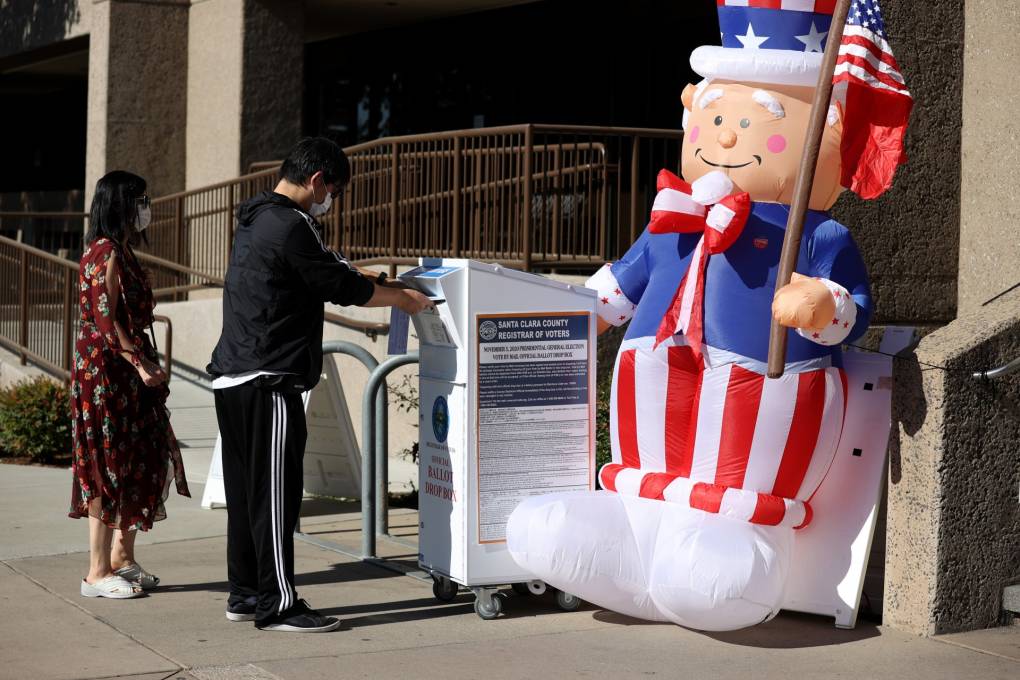
"content": "\u003cp>\u003ca href=\"https://www.kqed.org/news/12010236/elecciones-2024-sepa-donde-votar-o-entregar-su-boleta-en-california\">\u003cem>Leer en español\u003c/em>\u003c/a>\u003c/p>\n\u003cp>\u003ca href=\"https://www.kqed.org/voterguide\">The 2024 general election is almost upon us,\u003c/a> and your ballot should have arrived in your mailbox by now. (And if it hasn’t, \u003ca href=\"https://www.kqed.org/news/12008332/where-is-my-ballot-missing-presidential-election-2024\">read our guide to what to do if your ballot has gone missing\u003c/a>.)\u003c/p>\n\u003cp>While Election Day itself is Tuesday, Nov. 5, you have several options for where to vote before then — especially now that \u003ca href=\"#find\">early voting locations are opening up around the Bay Area\u003c/a> starting Saturday, Oct. 26.\u003c/p>\n\u003cp>So keep reading if you’re a Bay Area resident wondering where to drop off your completed mail-in ballot, where you can vote early in person or how to find your polling place on Election Day itself.\u003c/p>\n\u003cp>And if you’re looking for information about what’s on your ballot, \u003ca href=\"https://www.kqed.org/voterguide\">take a look at KQED’s Voter Guide\u003c/a>, which unpacks ballot measures and compares candidates in every race in the Bay Area.\u003c/p>\n\u003cp>\u003cstrong>Jump straight to: \u003c/strong>\u003c/p>\n\u003cul>\n\u003cli>\u003cstrong>\u003ca href=\"#where-early-vote-ballot-dropoff\">How to find my early voting site or ballot drop-off location\u003c/a>\u003c/strong>\u003c/li>\n\u003cli>\u003cstrong>\u003ca href=\"#where-is-my-polling-place\">How to find my polling place for Election Day\u003c/a>\u003c/strong>\u003c/li>\n\u003cli>\u003cstrong>\u003ca href=\"#contact-my-county-elections-office\">How to contact my county directly about voting\u003c/a>\u003c/strong>\u003c/li>\n\u003c/ul>\n\u003cp>If you’re concerned you might have made a mistake when filling out your ballot, you can also read our guide to \u003ca href=\"https://www.kqed.org/news/12003469/election-2024-how-to-correct-a-mistake-on-your-ballot-correction\">addressing common errors on your ballot (\u003cem>before\u003c/em> you mail it)\u003c/a> — and find out how to get a fresh ballot or vote in person if you really messed up.\u003c/p>\n\u003ch2>Can I mail my ballot through the Postal Service?\u003c/h2>\n\u003cp>Yes, you can mail your completed ballot via the U.S. Postal Service at any regular collection box. The envelope is postage paid, so it doesn’t require a stamp, and it’ll be counted as long as it’s \u003ca href=\"https://www.sos.ca.gov/elections\">postmarked by Election Day (Nov. 5) and arrives at your county registrar’s office by Nov. 12.\u003c/a>\u003c/p>\n\u003cul>\n\u003cli>\u003cstrong>\u003ca href=\"#tellus\">Tell us: What else do you need to know about voting in the 2024 general election right now?\u003c/a>\u003c/strong>\u003c/li>\n\u003c/ul>\n\u003cp>If you’re planning to mail your ballot on Election Day, be \u003cem>very\u003c/em> sure you don’t miss the last collection time for that specific mailbox (which at many locations is 5 p.m. or earlier). You also shouldn’t drop off your ballot on Election Day at a post office that’s already closed. Doing either will mean your ballot will not be postmarked on Election Day and won’t be counted when it reaches your county’s election office.\u003c/p>\n\u003ch2>Can I drop off my ballot in a drop box or at a voting location?\u003c/h2>\n\u003cp>Once you complete your mail-in ballot, you can drop it off at an official drop box or voting location instead of mailing it via a U.S. Postal Service collection box. \u003ca href=\"https://www.sos.ca.gov/elections\">Ballot drop boxes open on Oct. 8\u003c/a>.\u003c/p>\n\u003cp>\u003ca href=\"#where-early-vote-ballot-dropoff\">Find your nearest drop box or voting location\u003c/a>\u003ca href=\"#where-early-vote-ballot-dropoff\">.\u003c/a>[aside postID='news_12010355, news_12008419,news_12003469,news_12009039,news_12008332' label='More Election Explainers']\u003c/p>\n\u003cp>A few reasons you might prefer to hand-deliver your completed ballot:\u003c/p>\n\u003cul>\n\u003cli>\u003cstrong>Peace of mind:\u003c/strong> There’s a satisfaction that comes with knowing your ballot should now travel straight to your county elections office rather than going through USPS collection and sorting for delivery\u003c/li>\n\u003cli>\u003cstrong>Timing:\u003c/strong> If Election Day is drawing near, using a drop box or a voting location to drop off your ballot directly is the best way to be sure it’ll reach your county elections office in time to be counted\u003c/li>\n\u003cli>\u003cstrong>Assistance:\u003c/strong> If you drop off your ballot at a voting location during operating hours and you have a few lingering questions about your ballot or the process, chances are good that you’ll find someone there to help answer them\u003c/li>\n\u003c/ul>\n\u003cp>Regardless of how you deliver it, you can \u003ca href=\"https://california.ballottrax.net/voter/\">sign up to track your ballot’s progress with the “Where’s My Ballot?” online tool\u003c/a> and be reassured it’s on its way to being counted.\u003c/p>\n\u003cp>And if you’re still waiting to receive your ballot entirely, you can use that same tool to verify it was sent out or use \u003ca href=\"https://voterstatus.sos.ca.gov/\">voterstatus.sos.ca.gov\u003c/a>. \u003ca href=\"https://www.kqed.org/news/12008332/where-is-my-ballot-missing-presidential-election-2024\">Read more about what to do if your ballot has gone missing.\u003c/a>\u003c/p>\n\u003cfigure id=\"attachment_11841859\" class=\"wp-caption alignnone\" style=\"max-width: 1920px\">\u003cimg loading=\"lazy\" decoding=\"async\" class=\"wp-image-11841859 size-full\" src=\"https://ww2.kqed.org/app/uploads/sites/10/2020/10/RS45273_002_KQED_ElectionStockPhotos_JoshYule_10062020-qut.jpg\" alt=\"Hand holding ballot drops it in red cardboard ballot box\" width=\"1920\" height=\"1280\" srcset=\"https://cdn.kqed.org/wp-content/uploads/sites/10/2020/10/RS45273_002_KQED_ElectionStockPhotos_JoshYule_10062020-qut.jpg 1920w, https://cdn.kqed.org/wp-content/uploads/sites/10/2020/10/RS45273_002_KQED_ElectionStockPhotos_JoshYule_10062020-qut-800x533.jpg 800w, https://cdn.kqed.org/wp-content/uploads/sites/10/2020/10/RS45273_002_KQED_ElectionStockPhotos_JoshYule_10062020-qut-1020x680.jpg 1020w, https://cdn.kqed.org/wp-content/uploads/sites/10/2020/10/RS45273_002_KQED_ElectionStockPhotos_JoshYule_10062020-qut-160x107.jpg 160w, https://cdn.kqed.org/wp-content/uploads/sites/10/2020/10/RS45273_002_KQED_ElectionStockPhotos_JoshYule_10062020-qut-1536x1024.jpg 1536w\" sizes=\"(max-width: 1920px) 100vw, 1920px\">\u003cfigcaption class=\"wp-caption-text\">A San Francisco resident drops off a mail-in ballot at a voting center near City Hall on Oct. 6, 2020. \u003ccite>(Beth LaBerge/KQED)\u003c/cite>\u003c/figcaption>\u003c/figure>\n\u003ch2>I want to vote in person. When is early voting available in the Bay Area?\u003c/h2>\n\u003cp>As of Oct. 5, in-person voting is available at every county registrar’s office (also known as your county’s elections office) in the Bay Area. \u003ca href=\"https://www.sos.ca.gov/elections/voting-resources/county-elections-offices\">Find your county registrar’s office and opening hours.\u003c/a>\u003c/p>\n\u003cp>More \u003ca href=\"https://caearlyvoting.sos.ca.gov/\">early voting locations are open\u003c/a> across the Bay Area starting Oct. 26. \u003ca href=\"#where-early-vote-ballot-dropoff\">Find where to vote early in your county and when those locations open.\u003c/a>\u003c/p>\n\u003cp>Remember: If you’d like to cast a ballot in person, it’s a good idea to bring the blank ballot you were mailed, as some counties may require you to vote provisionally if you don’t bring it. If you’re issued a new ballot when you vote in person, any ballot you left at home will be canceled.\u003c/p>\n\u003cp>Provisional votes are subject to extra checks — confirming that you’re actually registered to vote in California, or that you didn’t already complete and mail your ballot — and this extra layer of confirmation takes time. That means that although your vote will eventually be counted, it might not be tallied on Election Day itself.\u003c/p>\n\u003cp>[aside label=\"2024 Bay Area Voter Guide\" link1='https://www.kqed.org/voterguide/bayarea,Learn about every single race and measure across the nine Bay Area counties' hero=https://cdn.kqed.org/wp-content/uploads/sites/80/2024/02/Aside-Bay-Area-Voter-Guide-2024-Primary-Election-1200x1200-1.png]\u003c/p>\n\u003cp>The deadline to register to vote online at \u003ca href=\"https://registertovote.ca.gov/\">registertovote.ca.gov\u003c/a> was Oct. 21, but if you missed it don’t worry: You can still \u003ca href=\"https://www.sos.ca.gov/elections/upcoming-elections/pres-prim-march-2024?mc_cid=638980d345&mc_eid=b5c444f6a0\">register in person\u003c/a> at your county elections office or an open voting location after that via \u003ca href=\"https://www.sos.ca.gov/elections/voter-registration/same-day-reg/\">same-day registration\u003c/a> (also known as conditional voter registration). This system enables you to fill out and submit your ballot then and there, up until when polls close at 8 p.m. on Election Day, Nov. 5. \u003ca href=\"https://www.kqed.org/news/12010355/last-chance-to-register-to-vote-california-deadline-election-2024-same-day-conditional-registration\">Read more about registering (or re-registering) to vote in person.\u003c/a>\u003c/p>\n\u003cp>In addition to voter registration, many voting locations also offer replacement ballots, accessible voting machines and language assistance.\u003c/p>\n\u003ch2>\u003ca id=\"where-early-vote-ballot-dropoff\">\u003c/a>\u003cstrong>How can I find my early voting site or ballot drop-off?\u003c/strong>\u003c/h2>\n\u003cul>\n\u003cli>Visit the \u003ca href=\"https://caearlyvoting.sos.ca.gov/\">state of California lookup tool\u003c/a>, where you will:\n\u003cul>\n\u003cli>Enter your county (adding your city or ZIP code will give more localized results, but it’s optional)\u003c/li>\n\u003cli>Check the “Early Voting” and/or “Drop Off Location” boxes\u003c/li>\n\u003cli>Hit “Search” to see all the early voting and drop-off locations in that area\u003c/li>\n\u003c/ul>\n\u003c/li>\n\u003c/ul>\n\u003cp>If you vote early in your county, remember that voting hours may differ by location, and some locations may not be open every day.\u003c/p>\n\u003cp>[ad fullwidth]\u003c/p>\n\u003ch2>\u003ca id=\"where-is-my-polling-place\">\u003c/a>\u003cstrong>Where can I vote in person on Election Day?\u003c/strong>\u003c/h2>\n\u003cp>If you live in San Francisco, Contra Costa or Solano counties, you are assigned a specific polling place, though Contra Costa County election officials say they can process your ballot no matter where you show up to vote. Voting at the county registrar’s office (at City Hall, in San Francisco’s case) is still an option on Election Day.\u003c/p>\n\u003cp>If you live in Alameda, Marin, Napa, San Mateo, Santa Clara or Sonoma counties, you can vote at any voting location, known as Vote Centers, including your county registrar’s office.\u003c/p>\n\u003cp>You can \u003ca href=\"https://caearlyvoting.sos.ca.gov/\">find your voting location through the state’s lookup tool\u003c/a>, although please note that this information may only become available closer to Election Day.\u003c/p>\n\u003cp>If you’re hoping to vote in person, be sure to check your mail-in ballot well before Election Day to see where you can vote and whether you’ve been assigned a specific polling place. And again, remember: Even if you live in a county that assigns you a particular polling place, you can still vote at \u003ca href=\"https://www.sos.ca.gov/elections/voting-resources/county-elections-offices\">your county registrar’s office\u003c/a>.\u003c/p>\n\u003ch2>\u003ca id=\"contact-my-county-elections-office\">\u003c/a>How can I contact my county directly about voting?\u003c/h2>\n\u003cp>Across the Bay Area, elections officials are encouraging voters to reach out — early — with any questions or concerns. Here’s the contact information for your county:\u003c/p>\n\u003cul>\n\u003cli>\u003cstrong>\u003ca href=\"https://www.acvote.org/index\">Alameda\u003c/a>\u003c/strong>: For information about voting by mail, registration and polling place lookup, call 510-267-8683.\u003c/li>\n\u003cli>\u003cstrong>\u003ca href=\"https://www.cocovote.us/\">Contra Costa\u003c/a>\u003c/strong>: Call 925-335-7800 or email voter.services@vote.cccounty.us.\u003c/li>\n\u003cli>\u003cstrong>\u003ca href=\"https://www.marincounty.org/depts/rv\">Marin\u003c/a>\u003c/strong>: Call 415-473-6456 or go to the Marin County elections webpage to \u003ca href=\"https://www.marincounty.org/depts/rv/contact-us\">send a form email\u003c/a>.\u003c/li>\n\u003cli>\u003cstrong>\u003ca href=\"https://www.countyofnapa.org/396/Elections\">Napa\u003c/a>\u003c/strong>: Call 707-253-4321 or email the elections office at elections@countyofnapa.org.\u003c/li>\n\u003cli>\u003cstrong>\u003ca href=\"https://sfelections.sfgov.org/\">San Francisco\u003c/a>\u003c/strong>: Call 415-554-4375 or email sfvote@sfgov.org.\u003c/li>\n\u003cli>\u003cstrong>\u003ca href=\"https://www.smcacre.org/elections\">San Mateo\u003c/a>\u003c/strong>: Call 888-762-8683 or email registrar@smcacre.org.\u003c/li>\n\u003cli>\u003ca href=\"https://www.sccgov.org/sites/rov/Pages/Registrar-of-Voters.aspx\">\u003cstrong>Santa Clara\u003c/strong>\u003c/a>: Call toll-free at 866-430-VOTE (8683) or email registrar@rov.sccgov.org.\u003c/li>\n\u003cli>\u003cstrong>\u003ca href=\"https://www.solanocounty.com/depts/rov/default.asp\">Solano\u003c/a>\u003c/strong>\u003cstrong>: \u003c/strong>Call 707-784-6675 or 888-933-VOTE (8683). You can also email elections@solanocounty.com.\u003c/li>\n\u003cli>\u003cstrong>\u003ca href=\"https://sonomacounty.ca.gov/CRA/Registrar-of-Voters/\">Sonoma\u003c/a>\u003c/strong>: Call 707-565-6800 or toll-free at 800-750-8683.\u003c/li>\n\u003c/ul>\n\u003cp>The state also has a full list of \u003ca href=\"https://www.sos.ca.gov/elections/voting-resources/county-elections-offices/\">every county elections office in California\u003c/a>.\u003c/p>\n\u003ch2>\u003ca id=\"tellus\">\u003c/a>Tell us: What else do you need information about?\u003c/h2>\n\u003cp>At KQED News, we know that it can sometimes be hard to track down the answers to navigate life in the Bay Area in 2024. We’ve published \u003ca href=\"https://www.kqed.org/news/tag/coronavirus-resources-and-explainers\">clear, practical explainers and guides about COVID-19\u003c/a>, \u003ca href=\"https://www.kqed.org/news/11936674/how-to-prepare-for-this-weeks-atmospheric-river-storm-sandbags-emergency-kits-and-more\">how to cope with intense winter weather\u003c/a>, and \u003ca href=\"https://www.kqed.org/news/11821950/how-to-safely-attend-a-protest-in-the-bay-area\">how to exercise your right to protest safely\u003c/a>.\u003c/p>\n\u003cp>So tell us: What do you need to know more about? Tell us, and you could see your question answered online or on social media. What you submit will make our reporting stronger and help us decide what to cover here on our site and on KQED Public Radio, too.\u003c/p>\n\u003cp>[hearken id=\"10483\" src=\"https://modules.wearehearken.com/kqed/embed/10483.js\"]\u003c/p>\n\u003cp>[ad floatright]\u003c/p>\n",
"blocks": [],
"excerpt": "The 2024 general election is almost here. Here's how to find your early voting location, where to drop off your mail-in ballot and what to do if your ballot takes a while to show up.",
"status": "publish",
"parent": 0,
"modified": 1730827955,
"stats": {
"hasAudio": false,
"hasVideo": false,
"hasChartOrMap": false,
"iframeSrcs": [],
"hasGoogleForm": false,
"hasGallery": false,
"hasHearkenModule": true,
"hasPolis": false,
"paragraphCount": 33,
"wordCount": 1686
},
"headData": {
"title": "Election 2024: Find Your Early Voting Site or Ballot Drop-Off Location | KQED",
"description": "Early voting in California has begun. Here's how to find your early voting location, or where to drop off your mail-in ballot.",
"ogTitle": "",
"ogDescription": "",
"ogImgId": "",
"twTitle": "",
"twDescription": "",
"twImgId": "",
"socialDescription": "Early voting in California has begun. Here's how to find your early voting location, or where to drop off your mail-in ballot.",
"schema": {
"@context": "https://schema.org",
"@type": "NewsArticle",
"headline": "Election 2024: Find Your Early Voting Site or Ballot Drop-Off Location",
"datePublished": "2024-10-25T10:45:05-07:00",
"dateModified": "2024-11-05T09:32:35-08:00",
"image": "https://cdn.kqed.org/wp-content/uploads/2020/02/KQED-OG-Image@1x.png",
"isAccessibleForFree": "True",
"publisher": {
"@type": "NewsMediaOrganization",
"@id": "https://www.kqed.org/#organization",
"name": "KQED",
"logo": "https://cdn.kqed.org/wp-content/uploads/2020/02/KQED-OG-Image@1x.png",
"url": "https://www.kqed.org",
"sameAs": [
"https://www.facebook.com/KQED",
"https://twitter.com/KQED",
"https://www.instagram.com/kqed/",
"https://www.tiktok.com/@kqedofficial",
"https://www.linkedin.com/company/kqed",
"https://www.youtube.com/channel/UCeC0IOo7i1P_61zVUWbJ4nw"
]
}
}
},
"sticky": false,
"excludeFromSiteSearch": "Include",
"articleAge": "0",
"path": "/news/12008419/ballot-drop-off-location-near-me-early-voting-site-election-2024",
"audioTrackLength": null,
"parsedContent": [
{
"type": "contentString",
"content": "\u003cdiv class=\"post-body\">\u003cp>\u003cp>\u003ca href=\"https://www.kqed.org/news/12010236/elecciones-2024-sepa-donde-votar-o-entregar-su-boleta-en-california\">\u003cem>Leer en español\u003c/em>\u003c/a>\u003c/p>\n\u003cp>\u003ca href=\"https://www.kqed.org/voterguide\">The 2024 general election is almost upon us,\u003c/a> and your ballot should have arrived in your mailbox by now. (And if it hasn’t, \u003ca href=\"https://www.kqed.org/news/12008332/where-is-my-ballot-missing-presidential-election-2024\">read our guide to what to do if your ballot has gone missing\u003c/a>.)\u003c/p>\n\u003cp>While Election Day itself is Tuesday, Nov. 5, you have several options for where to vote before then — especially now that \u003ca href=\"#find\">early voting locations are opening up around the Bay Area\u003c/a> starting Saturday, Oct. 26.\u003c/p>\n\u003cp>So keep reading if you’re a Bay Area resident wondering where to drop off your completed mail-in ballot, where you can vote early in person or how to find your polling place on Election Day itself.\u003c/p>\n\u003cp>And if you’re looking for information about what’s on your ballot, \u003ca href=\"https://www.kqed.org/voterguide\">take a look at KQED’s Voter Guide\u003c/a>, which unpacks ballot measures and compares candidates in every race in the Bay Area.\u003c/p>\n\u003cp>\u003cstrong>Jump straight to: \u003c/strong>\u003c/p>\n\u003cul>\n\u003cli>\u003cstrong>\u003ca href=\"#where-early-vote-ballot-dropoff\">How to find my early voting site or ballot drop-off location\u003c/a>\u003c/strong>\u003c/li>\n\u003cli>\u003cstrong>\u003ca href=\"#where-is-my-polling-place\">How to find my polling place for Election Day\u003c/a>\u003c/strong>\u003c/li>\n\u003cli>\u003cstrong>\u003ca href=\"#contact-my-county-elections-office\">How to contact my county directly about voting\u003c/a>\u003c/strong>\u003c/li>\n\u003c/ul>\n\u003cp>If you’re concerned you might have made a mistake when filling out your ballot, you can also read our guide to \u003ca href=\"https://www.kqed.org/news/12003469/election-2024-how-to-correct-a-mistake-on-your-ballot-correction\">addressing common errors on your ballot (\u003cem>before\u003c/em> you mail it)\u003c/a> — and find out how to get a fresh ballot or vote in person if you really messed up.\u003c/p>\n\u003ch2>Can I mail my ballot through the Postal Service?\u003c/h2>\n\u003cp>Yes, you can mail your completed ballot via the U.S. Postal Service at any regular collection box. The envelope is postage paid, so it doesn’t require a stamp, and it’ll be counted as long as it’s \u003ca href=\"https://www.sos.ca.gov/elections\">postmarked by Election Day (Nov. 5) and arrives at your county registrar’s office by Nov. 12.\u003c/a>\u003c/p>\n\u003cul>\n\u003cli>\u003cstrong>\u003ca href=\"#tellus\">Tell us: What else do you need to know about voting in the 2024 general election right now?\u003c/a>\u003c/strong>\u003c/li>\n\u003c/ul>\n\u003cp>If you’re planning to mail your ballot on Election Day, be \u003cem>very\u003c/em> sure you don’t miss the last collection time for that specific mailbox (which at many locations is 5 p.m. or earlier). You also shouldn’t drop off your ballot on Election Day at a post office that’s already closed. Doing either will mean your ballot will not be postmarked on Election Day and won’t be counted when it reaches your county’s election office.\u003c/p>\n\u003ch2>Can I drop off my ballot in a drop box or at a voting location?\u003c/h2>\n\u003cp>Once you complete your mail-in ballot, you can drop it off at an official drop box or voting location instead of mailing it via a U.S. Postal Service collection box. \u003ca href=\"https://www.sos.ca.gov/elections\">Ballot drop boxes open on Oct. 8\u003c/a>.\u003c/p>\n\u003cp>\u003ca href=\"#where-early-vote-ballot-dropoff\">Find your nearest drop box or voting location\u003c/a>\u003ca href=\"#where-early-vote-ballot-dropoff\">.\u003c/a>\u003c/p>\u003c/div>",
"attributes": {
"named": {},
"numeric": []
}
},
{
"type": "component",
"content": "",
"name": "aside",
"attributes": {
"named": {
"postid": "news_12010355, news_12008419,news_12003469,news_12009039,news_12008332",
"label": "More Election Explainers "
},
"numeric": []
}
},
{
"type": "contentString",
"content": "\u003cdiv class=\"post-body\">\u003cp>\u003c/p>\n\u003cp>A few reasons you might prefer to hand-deliver your completed ballot:\u003c/p>\n\u003cul>\n\u003cli>\u003cstrong>Peace of mind:\u003c/strong> There’s a satisfaction that comes with knowing your ballot should now travel straight to your county elections office rather than going through USPS collection and sorting for delivery\u003c/li>\n\u003cli>\u003cstrong>Timing:\u003c/strong> If Election Day is drawing near, using a drop box or a voting location to drop off your ballot directly is the best way to be sure it’ll reach your county elections office in time to be counted\u003c/li>\n\u003cli>\u003cstrong>Assistance:\u003c/strong> If you drop off your ballot at a voting location during operating hours and you have a few lingering questions about your ballot or the process, chances are good that you’ll find someone there to help answer them\u003c/li>\n\u003c/ul>\n\u003cp>Regardless of how you deliver it, you can \u003ca href=\"https://california.ballottrax.net/voter/\">sign up to track your ballot’s progress with the “Where’s My Ballot?” online tool\u003c/a> and be reassured it’s on its way to being counted.\u003c/p>\n\u003cp>And if you’re still waiting to receive your ballot entirely, you can use that same tool to verify it was sent out or use \u003ca href=\"https://voterstatus.sos.ca.gov/\">voterstatus.sos.ca.gov\u003c/a>. \u003ca href=\"https://www.kqed.org/news/12008332/where-is-my-ballot-missing-presidential-election-2024\">Read more about what to do if your ballot has gone missing.\u003c/a>\u003c/p>\n\u003cfigure id=\"attachment_11841859\" class=\"wp-caption alignnone\" style=\"max-width: 1920px\">\u003cimg loading=\"lazy\" decoding=\"async\" class=\"wp-image-11841859 size-full\" src=\"https://ww2.kqed.org/app/uploads/sites/10/2020/10/RS45273_002_KQED_ElectionStockPhotos_JoshYule_10062020-qut.jpg\" alt=\"Hand holding ballot drops it in red cardboard ballot box\" width=\"1920\" height=\"1280\" srcset=\"https://cdn.kqed.org/wp-content/uploads/sites/10/2020/10/RS45273_002_KQED_ElectionStockPhotos_JoshYule_10062020-qut.jpg 1920w, https://cdn.kqed.org/wp-content/uploads/sites/10/2020/10/RS45273_002_KQED_ElectionStockPhotos_JoshYule_10062020-qut-800x533.jpg 800w, https://cdn.kqed.org/wp-content/uploads/sites/10/2020/10/RS45273_002_KQED_ElectionStockPhotos_JoshYule_10062020-qut-1020x680.jpg 1020w, https://cdn.kqed.org/wp-content/uploads/sites/10/2020/10/RS45273_002_KQED_ElectionStockPhotos_JoshYule_10062020-qut-160x107.jpg 160w, https://cdn.kqed.org/wp-content/uploads/sites/10/2020/10/RS45273_002_KQED_ElectionStockPhotos_JoshYule_10062020-qut-1536x1024.jpg 1536w\" sizes=\"(max-width: 1920px) 100vw, 1920px\">\u003cfigcaption class=\"wp-caption-text\">A San Francisco resident drops off a mail-in ballot at a voting center near City Hall on Oct. 6, 2020. \u003ccite>(Beth LaBerge/KQED)\u003c/cite>\u003c/figcaption>\u003c/figure>\n\u003ch2>I want to vote in person. When is early voting available in the Bay Area?\u003c/h2>\n\u003cp>As of Oct. 5, in-person voting is available at every county registrar’s office (also known as your county’s elections office) in the Bay Area. \u003ca href=\"https://www.sos.ca.gov/elections/voting-resources/county-elections-offices\">Find your county registrar’s office and opening hours.\u003c/a>\u003c/p>\n\u003cp>More \u003ca href=\"https://caearlyvoting.sos.ca.gov/\">early voting locations are open\u003c/a> across the Bay Area starting Oct. 26. \u003ca href=\"#where-early-vote-ballot-dropoff\">Find where to vote early in your county and when those locations open.\u003c/a>\u003c/p>\n\u003cp>Remember: If you’d like to cast a ballot in person, it’s a good idea to bring the blank ballot you were mailed, as some counties may require you to vote provisionally if you don’t bring it. If you’re issued a new ballot when you vote in person, any ballot you left at home will be canceled.\u003c/p>\n\u003cp>Provisional votes are subject to extra checks — confirming that you’re actually registered to vote in California, or that you didn’t already complete and mail your ballot — and this extra layer of confirmation takes time. That means that although your vote will eventually be counted, it might not be tallied on Election Day itself.\u003c/p>\n\u003cp>\u003c/p>\u003c/div>",
"attributes": {
"named": {},
"numeric": []
}
},
{
"type": "component",
"content": "",
"name": "aside",
"attributes": {
"named": {
"label": "2024 Bay Area Voter Guide ",
"link1": "https://www.kqed.org/voterguide/bayarea,Learn about every single race and measure across the nine Bay Area counties",
"hero": "https://cdn.kqed.org/wp-content/uploads/sites/80/2024/02/Aside-Bay-Area-Voter-Guide-2024-Primary-Election-1200x1200-1.png"
},
"numeric": []
}
},
{
"type": "contentString",
"content": "\u003cdiv class=\"post-body\">\u003cp>\u003c/p>\n\u003cp>The deadline to register to vote online at \u003ca href=\"https://registertovote.ca.gov/\">registertovote.ca.gov\u003c/a> was Oct. 21, but if you missed it don’t worry: You can still \u003ca href=\"https://www.sos.ca.gov/elections/upcoming-elections/pres-prim-march-2024?mc_cid=638980d345&mc_eid=b5c444f6a0\">register in person\u003c/a> at your county elections office or an open voting location after that via \u003ca href=\"https://www.sos.ca.gov/elections/voter-registration/same-day-reg/\">same-day registration\u003c/a> (also known as conditional voter registration). This system enables you to fill out and submit your ballot then and there, up until when polls close at 8 p.m. on Election Day, Nov. 5. \u003ca href=\"https://www.kqed.org/news/12010355/last-chance-to-register-to-vote-california-deadline-election-2024-same-day-conditional-registration\">Read more about registering (or re-registering) to vote in person.\u003c/a>\u003c/p>\n\u003cp>In addition to voter registration, many voting locations also offer replacement ballots, accessible voting machines and language assistance.\u003c/p>\n\u003ch2>\u003ca id=\"where-early-vote-ballot-dropoff\">\u003c/a>\u003cstrong>How can I find my early voting site or ballot drop-off?\u003c/strong>\u003c/h2>\n\u003cul>\n\u003cli>Visit the \u003ca href=\"https://caearlyvoting.sos.ca.gov/\">state of California lookup tool\u003c/a>, where you will:\n\u003cul>\n\u003cli>Enter your county (adding your city or ZIP code will give more localized results, but it’s optional)\u003c/li>\n\u003cli>Check the “Early Voting” and/or “Drop Off Location” boxes\u003c/li>\n\u003cli>Hit “Search” to see all the early voting and drop-off locations in that area\u003c/li>\n\u003c/ul>\n\u003c/li>\n\u003c/ul>\n\u003cp>If you vote early in your county, remember that voting hours may differ by location, and some locations may not be open every day.\u003c/p>\n\u003cp>\u003c/p>\u003c/div>",
"attributes": {
"named": {},
"numeric": []
}
},
{
"type": "component",
"content": "",
"name": "ad",
"attributes": {
"named": {
"label": "fullwidth"
},
"numeric": [
"fullwidth"
]
}
},
{
"type": "contentString",
"content": "\u003cdiv class=\"post-body\">\u003cp>\u003c/p>\n\u003ch2>\u003ca id=\"where-is-my-polling-place\">\u003c/a>\u003cstrong>Where can I vote in person on Election Day?\u003c/strong>\u003c/h2>\n\u003cp>If you live in San Francisco, Contra Costa or Solano counties, you are assigned a specific polling place, though Contra Costa County election officials say they can process your ballot no matter where you show up to vote. Voting at the county registrar’s office (at City Hall, in San Francisco’s case) is still an option on Election Day.\u003c/p>\n\u003cp>If you live in Alameda, Marin, Napa, San Mateo, Santa Clara or Sonoma counties, you can vote at any voting location, known as Vote Centers, including your county registrar’s office.\u003c/p>\n\u003cp>You can \u003ca href=\"https://caearlyvoting.sos.ca.gov/\">find your voting location through the state’s lookup tool\u003c/a>, although please note that this information may only become available closer to Election Day.\u003c/p>\n\u003cp>If you’re hoping to vote in person, be sure to check your mail-in ballot well before Election Day to see where you can vote and whether you’ve been assigned a specific polling place. And again, remember: Even if you live in a county that assigns you a particular polling place, you can still vote at \u003ca href=\"https://www.sos.ca.gov/elections/voting-resources/county-elections-offices\">your county registrar’s office\u003c/a>.\u003c/p>\n\u003ch2>\u003ca id=\"contact-my-county-elections-office\">\u003c/a>How can I contact my county directly about voting?\u003c/h2>\n\u003cp>Across the Bay Area, elections officials are encouraging voters to reach out — early — with any questions or concerns. Here’s the contact information for your county:\u003c/p>\n\u003cul>\n\u003cli>\u003cstrong>\u003ca href=\"https://www.acvote.org/index\">Alameda\u003c/a>\u003c/strong>: For information about voting by mail, registration and polling place lookup, call 510-267-8683.\u003c/li>\n\u003cli>\u003cstrong>\u003ca href=\"https://www.cocovote.us/\">Contra Costa\u003c/a>\u003c/strong>: Call 925-335-7800 or email voter.services@vote.cccounty.us.\u003c/li>\n\u003cli>\u003cstrong>\u003ca href=\"https://www.marincounty.org/depts/rv\">Marin\u003c/a>\u003c/strong>: Call 415-473-6456 or go to the Marin County elections webpage to \u003ca href=\"https://www.marincounty.org/depts/rv/contact-us\">send a form email\u003c/a>.\u003c/li>\n\u003cli>\u003cstrong>\u003ca href=\"https://www.countyofnapa.org/396/Elections\">Napa\u003c/a>\u003c/strong>: Call 707-253-4321 or email the elections office at elections@countyofnapa.org.\u003c/li>\n\u003cli>\u003cstrong>\u003ca href=\"https://sfelections.sfgov.org/\">San Francisco\u003c/a>\u003c/strong>: Call 415-554-4375 or email sfvote@sfgov.org.\u003c/li>\n\u003cli>\u003cstrong>\u003ca href=\"https://www.smcacre.org/elections\">San Mateo\u003c/a>\u003c/strong>: Call 888-762-8683 or email registrar@smcacre.org.\u003c/li>\n\u003cli>\u003ca href=\"https://www.sccgov.org/sites/rov/Pages/Registrar-of-Voters.aspx\">\u003cstrong>Santa Clara\u003c/strong>\u003c/a>: Call toll-free at 866-430-VOTE (8683) or email registrar@rov.sccgov.org.\u003c/li>\n\u003cli>\u003cstrong>\u003ca href=\"https://www.solanocounty.com/depts/rov/default.asp\">Solano\u003c/a>\u003c/strong>\u003cstrong>: \u003c/strong>Call 707-784-6675 or 888-933-VOTE (8683). You can also email elections@solanocounty.com.\u003c/li>\n\u003cli>\u003cstrong>\u003ca href=\"https://sonomacounty.ca.gov/CRA/Registrar-of-Voters/\">Sonoma\u003c/a>\u003c/strong>: Call 707-565-6800 or toll-free at 800-750-8683.\u003c/li>\n\u003c/ul>\n\u003cp>The state also has a full list of \u003ca href=\"https://www.sos.ca.gov/elections/voting-resources/county-elections-offices/\">every county elections office in California\u003c/a>.\u003c/p>\n\u003ch2>\u003ca id=\"tellus\">\u003c/a>Tell us: What else do you need information about?\u003c/h2>\n\u003cp>At KQED News, we know that it can sometimes be hard to track down the answers to navigate life in the Bay Area in 2024. We’ve published \u003ca href=\"https://www.kqed.org/news/tag/coronavirus-resources-and-explainers\">clear, practical explainers and guides about COVID-19\u003c/a>, \u003ca href=\"https://www.kqed.org/news/11936674/how-to-prepare-for-this-weeks-atmospheric-river-storm-sandbags-emergency-kits-and-more\">how to cope with intense winter weather\u003c/a>, and \u003ca href=\"https://www.kqed.org/news/11821950/how-to-safely-attend-a-protest-in-the-bay-area\">how to exercise your right to protest safely\u003c/a>.\u003c/p>\n\u003cp>So tell us: What do you need to know more about? Tell us, and you could see your question answered online or on social media. What you submit will make our reporting stronger and help us decide what to cover here on our site and on KQED Public Radio, too.\u003c/p>\n\u003cp>\u003c/p>\u003c/div>",
"attributes": {
"named": {},
"numeric": []
}
},
{
"type": "component",
"content": "",
"name": "hearken",
"attributes": {
"named": {
"id": "10483",
"src": "https://modules.wearehearken.com/kqed/embed/10483.js",
"label": ""
},
"numeric": []
}
},
{
"type": "contentString",
"content": "\u003cdiv class=\"post-body\">\u003cp>\u003c/p>\n\u003cp>\u003c/p>\u003c/div>",
"attributes": {
"named": {},
"numeric": []
}
},
{
"type": "component",
"content": "",
"name": "ad",
"attributes": {
"named": {
"label": "floatright"
},
"numeric": [
"floatright"
]
}
},
{
"type": "contentString",
"content": "\u003cdiv class=\"post-body\">\u003cp>\u003c/p>\n\u003c/div>\u003c/p>",
"attributes": {
"named": {},
"numeric": []
}
}
],
"link": "/news/12008419/ballot-drop-off-location-near-me-early-voting-site-election-2024",
"authors": [
"3243",
"227"
],
"categories": [
"news_34168",
"news_8",
"news_13"
],
"tags": [
"news_32707",
"news_18538",
"news_32839",
"news_28639",
"news_17968",
"news_27808",
"news_2027"
],
"featImg": "news_12009161",
"label": "news"
},
"news_12010828": {
"type": "posts",
"id": "news_12010828",
"meta": {
"index": "posts_1716263798",
"site": "news",
"id": "12010828",
"score": null,
"sort": [
1729870759000
]
},
"guestAuthors": [],
"slug": "oil-industry-spends-thousands-on-local-bay-area-election-in-city-with-no-refineries",
"title": "Oil Industry Spends Thousands on Local Bay Area Election in City With No Refineries",
"publishDate": 1729870759,
"format": "standard",
"headTitle": "Oil Industry Spends Thousands on Local Bay Area Election in City With No Refineries | KQED",
"labelTerm": {
"site": "news"
},
"content": "\u003cp>The \u003ca href=\"https://www.kqed.org/science/tag/oil\">oil industry\u003c/a> is spending thousands of dollars on a local City Council race in an apparent effort to unseat an incumbent who leads the regional air district’s board.\u003c/p>\n\u003cp>An independent expenditure committee funded by Chevron, Phillips 66, Marathon Petroleum and PBF Energy has spent $23,545 supporting Belmont Councilmember Tom McCune, according to campaign disclosure forms filed with the city as of Tuesday.\u003c/p>\n\u003cp>Though the oil industry is known to spend big in election season, a \u003ca href=\"https://www.kqed.org/voterguide/sanmateo/belmont\">council race\u003c/a> in a small Peninsula city with no significant oil operations might seem an odd target.\u003c/p>\n\u003cp>But McCune’s main competitor for the District 4 seat — after Belmont recently transitioned from citywide, at-large elections to district contests — is fellow Councilmember Davina Hurt, the chair of the Bay Area Air Quality Management District board of directors. She also sits on the California Air Resources Board. Both agencies regulate refineries.\u003c/p>\n\u003cp>[ad fullwidth]\u003c/p>\n\u003cp>The oil industry’s spending on the race is not about policy in Belmont, Hurt said.\u003c/p>\n\u003cp>“They want to silence a voice on the air district board,” she said in an interview. “Big Oil is leaning in and trying to change a local election where there are no refineries.”\u003c/p>\n\u003cp>In the last 10 years, oil companies with refineries in the Bay Area have spent large amounts on local contests in the cities where they operate. In \u003ca href=\"https://www.npr.org/sections/thetwo-way/2014/11/05/361875792/chevron-spends-big-and-loses-big-in-a-city-council-race\">2014, Chevron spent $3 million\u003c/a> to support candidates in the Richmond City Council election. An independent expenditure committee funded in large part by \u003ca href=\"https://www.kqed.org/news/11843632/valero-funded-pac-pours-more-than-250000-into-benicia-mayors-race\">Valero spent hundreds of thousands of dollars\u003c/a> on City Council elections in Benicia in 2018 and 2020.\u003c/p>\n\u003cp>But Belmont, a city of 26,000 people, has no oil refining infrastructure.\u003c/p>\n\u003cp>Instead, the industry’s apparent interest in the race is Hurt, who was one of 19 air district board members who voted in 2021 in favor of one of the most stringent refinery pollution control rules in California history. Chevron and PBF gave up their legal attack on the new rule earlier this year, leading to a settlement worth tens of millions of dollars.\u003c/p>\n\u003cp>When the \u003ca href=\"https://www.baaqmd.gov/news-and-events/page-resources/2024-news/021324-announcement\">air district announced\u003c/a> the deal, the first quote came from Hurt. “The historic penalties and successful defense of our life-saving Rule 6-6 are a win for air quality in the Bay, especially those living in the Richmond and Martinez-area communities,” she said in the agency’s press release in February.\u003c/p>\n\u003cfigure id=\"attachment_11975694\" class=\"wp-caption aligncenter\" style=\"max-width: 2000px\">\u003cimg loading=\"lazy\" decoding=\"async\" class=\"size-full wp-image-11975694\" src=\"https://cdn.kqed.org/wp-content/uploads/sites/10/2024/02/231027-CHEVRON-RICHMOND-REFINERY-MD-01-KQED.jpg\" alt=\"\" width=\"2000\" height=\"1333\" srcset=\"https://cdn.kqed.org/wp-content/uploads/sites/10/2024/02/231027-CHEVRON-RICHMOND-REFINERY-MD-01-KQED.jpg 2000w, https://cdn.kqed.org/wp-content/uploads/sites/10/2024/02/231027-CHEVRON-RICHMOND-REFINERY-MD-01-KQED-800x533.jpg 800w, https://cdn.kqed.org/wp-content/uploads/sites/10/2024/02/231027-CHEVRON-RICHMOND-REFINERY-MD-01-KQED-1020x680.jpg 1020w, https://cdn.kqed.org/wp-content/uploads/sites/10/2024/02/231027-CHEVRON-RICHMOND-REFINERY-MD-01-KQED-160x107.jpg 160w, https://cdn.kqed.org/wp-content/uploads/sites/10/2024/02/231027-CHEVRON-RICHMOND-REFINERY-MD-01-KQED-1536x1024.jpg 1536w, https://cdn.kqed.org/wp-content/uploads/sites/10/2024/02/231027-CHEVRON-RICHMOND-REFINERY-MD-01-KQED-1920x1280.jpg 1920w\" sizes=\"(max-width: 2000px) 100vw, 2000px\">\u003cfigcaption class=\"wp-caption-text\">The Chevron refinery in Richmond on Oct. 27, 2023. \u003ccite>(Martin do Nascimento/KQED)\u003c/cite>\u003c/figcaption>\u003c/figure>\n\u003cp>In the last month, the oil industry super PAC — officially labeled the Committee for Jobs and the Economy, Sponsored by Energy Companies and Building Trades Unions Representing Working Men and Women — began sending out flyers in support of McCune, describing him as experienced, pragmatic and collaborative.\u003c/p>\n\u003cp>“I knew nothing about the mailers until they started arriving in mailboxes,” McCune said in an email.\u003c/p>\n\u003cp>“I did not request them, did not approve them, and did not pay for them,” he said, emphasizing that he has not received any money, support or endorsements from the political action committee.\u003c/p>\n\u003cp>The phone number on the committee’s most recent political filings is the main number for Bell, McAndrews & Hiltachk, a Sacramento-based law firm that has represented Republican and industry-based interests.\u003c/p>\n\u003cp>Neither the firm nor the four oil companies funding the committee responded to requests for comment.\u003c/p>\n\u003cp>The current election marks the first time the committee has filed campaign disclosures with the city of Belmont, according to City Clerk Jozi Plut.\u003c/p>\n\u003cp>McCune does not champion oil industry interests on his campaign \u003ca href=\"https://www.belmont.gov/home/showpublisheddocument/23503/638591407484370000\">statement\u003c/a> filed with the city or his \u003ca href=\"https://sites.google.com/view/mccune4belmont\">campaign website\u003c/a>.\u003c/p>\n\u003cp>“I think clean air is extremely important and that clean air regulations are a very important part of making it happen,” he said in an email, emphasizing that he and Hurt have not compared policies on energy and the environment.\u003c/p>\n\u003cp>McCune sits on the board of directors for Peninsula Clean Energy, a so-called community choice aggregator that provides electricity from renewable sources to San Mateo County customers.\u003c/p>\n\u003cp>“There simply isn’t enough new solar and wind generation capacity coming online fast enough to achieve 100% renewable and 100% carbon-free electrical generation as fast as we would like,” he said. “I believe we will get to that future state … but it is taking longer than desired.”\u003c/p>\n\u003cp>[aside postID=news_12009333 hero='https://cdn.kqed.org/wp-content/uploads/sites/10/2024/10/GavinNewsom2024AP-1020x680.jpg']\u003c/p>\n\u003cp>The oil industry, air quality and climate change have not been issues in the campaign so far. The \u003cem>San Mateo Daily Journal’\u003c/em>s report on a \u003ca href=\"https://www.smdailyjournal.com/news/local/incumbents-face-off-in-belmont-for-a-seat-in-district-4/article_6e3cacf6-7c80-11ef-ac08-7bb1915fd800.html\">debate \u003c/a>between Hurt and McCune focused mainly on housing, traffic congestion, youth sports and economic development. The forum touched on expanding electric vehicle and home electric appliance opportunities, but the candidates’ positions didn’t seem far apart.\u003c/p>\n\u003cp>Hurt said that while she and McCune had slight differences on climate policies, a lot of their priorities are similar.\u003c/p>\n\u003cp>The Belmont City Council race is one of two contests on the Peninsula the oil industry group has poured money into.\u003c/p>\n\u003cp>The committee, which is also funded by several unions that represent refinery workers, has spent close to $60,000 in support of East Palo Alto Councilmember Lisa Gauthier in her race against East Palo Alto Mayor Antonio Lopez for a seat on the San Mateo County Board of Supervisors, according to campaign reports filed with the county.\u003c/p>\n\u003cp>In 2022, the same committee spent $95,000 backing San Mateo County Supervisor Ray Mueller.\u003c/p>\n\u003cp>Industry groups are increasingly pouring money into local elections, according to Melissa Michelson, a political scientist at Menlo College.\u003c/p>\n\u003cp>“In a smaller election, the amount of money being spent is much smaller, so your money goes farther,” Michelson said.\u003c/p>\n\u003cp>And the transition away from at-large elections to district contests amplifies that trend. That’s especially true in Belmont’s Council District 4, which is home to just 4,505 registered voters in a residential area in the hills near Interstate 280, according to Mark Church, San Mateo County’s chief elections officer.\u003c/p>\n\u003cp>“For an outside group, it’s such a bargain to get involved because it’s just a few thousand votes,” Michelson said.\u003c/p>\n\u003cp>\u003c/p>\n",
"blocks": [],
"excerpt": "An energy-industry super PAC is pouring money into a Belmont City Council election in an apparent attempt to unseat an incumbent who is also a top Bay Area air regulator.",
"status": "publish",
"parent": 0,
"modified": 1729884281,
"stats": {
"hasAudio": false,
"hasVideo": false,
"hasChartOrMap": false,
"iframeSrcs": [],
"hasGoogleForm": false,
"hasGallery": false,
"hasHearkenModule": false,
"hasPolis": false,
"paragraphCount": 32,
"wordCount": 1065
},
"headData": {
"title": "Oil Industry Spends Thousands on Local Bay Area Election in City With No Refineries | KQED",
"description": "An energy-industry super PAC is pouring money into a Belmont City Council election in an apparent attempt to unseat an incumbent who is also a top Bay Area air regulator.",
"ogTitle": "",
"ogDescription": "",
"ogImgId": "",
"twTitle": "",
"twDescription": "",
"twImgId": "",
"schema": {
"@context": "https://schema.org",
"@type": "NewsArticle",
"headline": "Oil Industry Spends Thousands on Local Bay Area Election in City With No Refineries",
"datePublished": "2024-10-25T08:39:19-07:00",
"dateModified": "2024-10-25T12:24:41-07:00",
"image": "https://cdn.kqed.org/wp-content/uploads/2020/02/KQED-OG-Image@1x.png",
"isAccessibleForFree": "True",
"publisher": {
"@type": "NewsMediaOrganization",
"@id": "https://www.kqed.org/#organization",
"name": "KQED",
"logo": "https://cdn.kqed.org/wp-content/uploads/2020/02/KQED-OG-Image@1x.png",
"url": "https://www.kqed.org",
"sameAs": [
"https://www.facebook.com/KQED",
"https://twitter.com/KQED",
"https://www.instagram.com/kqed/",
"https://www.tiktok.com/@kqedofficial",
"https://www.linkedin.com/company/kqed",
"https://www.youtube.com/channel/UCeC0IOo7i1P_61zVUWbJ4nw"
]
}
}
},
"sticky": false,
"nprStoryId": "kqed-12010828",
"excludeFromSiteSearch": "Include",
"articleAge": "0",
"path": "/news/12010828/oil-industry-spends-thousands-on-local-bay-area-election-in-city-with-no-refineries",
"audioTrackLength": null,
"parsedContent": [
{
"type": "contentString",
"content": "\u003cdiv class=\"post-body\">\u003cp>\u003cp>The \u003ca href=\"https://www.kqed.org/science/tag/oil\">oil industry\u003c/a> is spending thousands of dollars on a local City Council race in an apparent effort to unseat an incumbent who leads the regional air district’s board.\u003c/p>\n\u003cp>An independent expenditure committee funded by Chevron, Phillips 66, Marathon Petroleum and PBF Energy has spent $23,545 supporting Belmont Councilmember Tom McCune, according to campaign disclosure forms filed with the city as of Tuesday.\u003c/p>\n\u003cp>Though the oil industry is known to spend big in election season, a \u003ca href=\"https://www.kqed.org/voterguide/sanmateo/belmont\">council race\u003c/a> in a small Peninsula city with no significant oil operations might seem an odd target.\u003c/p>\n\u003cp>But McCune’s main competitor for the District 4 seat — after Belmont recently transitioned from citywide, at-large elections to district contests — is fellow Councilmember Davina Hurt, the chair of the Bay Area Air Quality Management District board of directors. She also sits on the California Air Resources Board. Both agencies regulate refineries.\u003c/p>\n\u003cp>\u003c/p>\u003c/div>",
"attributes": {
"named": {},
"numeric": []
}
},
{
"type": "component",
"content": "",
"name": "ad",
"attributes": {
"named": {
"label": "fullwidth"
},
"numeric": [
"fullwidth"
]
}
},
{
"type": "contentString",
"content": "\u003cdiv class=\"post-body\">\u003cp>\u003c/p>\n\u003cp>The oil industry’s spending on the race is not about policy in Belmont, Hurt said.\u003c/p>\n\u003cp>“They want to silence a voice on the air district board,” she said in an interview. “Big Oil is leaning in and trying to change a local election where there are no refineries.”\u003c/p>\n\u003cp>In the last 10 years, oil companies with refineries in the Bay Area have spent large amounts on local contests in the cities where they operate. In \u003ca href=\"https://www.npr.org/sections/thetwo-way/2014/11/05/361875792/chevron-spends-big-and-loses-big-in-a-city-council-race\">2014, Chevron spent $3 million\u003c/a> to support candidates in the Richmond City Council election. An independent expenditure committee funded in large part by \u003ca href=\"https://www.kqed.org/news/11843632/valero-funded-pac-pours-more-than-250000-into-benicia-mayors-race\">Valero spent hundreds of thousands of dollars\u003c/a> on City Council elections in Benicia in 2018 and 2020.\u003c/p>\n\u003cp>But Belmont, a city of 26,000 people, has no oil refining infrastructure.\u003c/p>\n\u003cp>Instead, the industry’s apparent interest in the race is Hurt, who was one of 19 air district board members who voted in 2021 in favor of one of the most stringent refinery pollution control rules in California history. Chevron and PBF gave up their legal attack on the new rule earlier this year, leading to a settlement worth tens of millions of dollars.\u003c/p>\n\u003cp>When the \u003ca href=\"https://www.baaqmd.gov/news-and-events/page-resources/2024-news/021324-announcement\">air district announced\u003c/a> the deal, the first quote came from Hurt. “The historic penalties and successful defense of our life-saving Rule 6-6 are a win for air quality in the Bay, especially those living in the Richmond and Martinez-area communities,” she said in the agency’s press release in February.\u003c/p>\n\u003cfigure id=\"attachment_11975694\" class=\"wp-caption aligncenter\" style=\"max-width: 2000px\">\u003cimg loading=\"lazy\" decoding=\"async\" class=\"size-full wp-image-11975694\" src=\"https://cdn.kqed.org/wp-content/uploads/sites/10/2024/02/231027-CHEVRON-RICHMOND-REFINERY-MD-01-KQED.jpg\" alt=\"\" width=\"2000\" height=\"1333\" srcset=\"https://cdn.kqed.org/wp-content/uploads/sites/10/2024/02/231027-CHEVRON-RICHMOND-REFINERY-MD-01-KQED.jpg 2000w, https://cdn.kqed.org/wp-content/uploads/sites/10/2024/02/231027-CHEVRON-RICHMOND-REFINERY-MD-01-KQED-800x533.jpg 800w, https://cdn.kqed.org/wp-content/uploads/sites/10/2024/02/231027-CHEVRON-RICHMOND-REFINERY-MD-01-KQED-1020x680.jpg 1020w, https://cdn.kqed.org/wp-content/uploads/sites/10/2024/02/231027-CHEVRON-RICHMOND-REFINERY-MD-01-KQED-160x107.jpg 160w, https://cdn.kqed.org/wp-content/uploads/sites/10/2024/02/231027-CHEVRON-RICHMOND-REFINERY-MD-01-KQED-1536x1024.jpg 1536w, https://cdn.kqed.org/wp-content/uploads/sites/10/2024/02/231027-CHEVRON-RICHMOND-REFINERY-MD-01-KQED-1920x1280.jpg 1920w\" sizes=\"(max-width: 2000px) 100vw, 2000px\">\u003cfigcaption class=\"wp-caption-text\">The Chevron refinery in Richmond on Oct. 27, 2023. \u003ccite>(Martin do Nascimento/KQED)\u003c/cite>\u003c/figcaption>\u003c/figure>\n\u003cp>In the last month, the oil industry super PAC — officially labeled the Committee for Jobs and the Economy, Sponsored by Energy Companies and Building Trades Unions Representing Working Men and Women — began sending out flyers in support of McCune, describing him as experienced, pragmatic and collaborative.\u003c/p>\n\u003cp>“I knew nothing about the mailers until they started arriving in mailboxes,” McCune said in an email.\u003c/p>\n\u003cp>“I did not request them, did not approve them, and did not pay for them,” he said, emphasizing that he has not received any money, support or endorsements from the political action committee.\u003c/p>\n\u003cp>The phone number on the committee’s most recent political filings is the main number for Bell, McAndrews & Hiltachk, a Sacramento-based law firm that has represented Republican and industry-based interests.\u003c/p>\n\u003cp>Neither the firm nor the four oil companies funding the committee responded to requests for comment.\u003c/p>\n\u003cp>The current election marks the first time the committee has filed campaign disclosures with the city of Belmont, according to City Clerk Jozi Plut.\u003c/p>\n\u003cp>McCune does not champion oil industry interests on his campaign \u003ca href=\"https://www.belmont.gov/home/showpublisheddocument/23503/638591407484370000\">statement\u003c/a> filed with the city or his \u003ca href=\"https://sites.google.com/view/mccune4belmont\">campaign website\u003c/a>.\u003c/p>\n\u003cp>“I think clean air is extremely important and that clean air regulations are a very important part of making it happen,” he said in an email, emphasizing that he and Hurt have not compared policies on energy and the environment.\u003c/p>\n\u003cp>McCune sits on the board of directors for Peninsula Clean Energy, a so-called community choice aggregator that provides electricity from renewable sources to San Mateo County customers.\u003c/p>\n\u003cp>“There simply isn’t enough new solar and wind generation capacity coming online fast enough to achieve 100% renewable and 100% carbon-free electrical generation as fast as we would like,” he said. “I believe we will get to that future state … but it is taking longer than desired.”\u003c/p>\n\u003cp>\u003c/p>\u003c/div>",
"attributes": {
"named": {},
"numeric": []
}
},
{
"type": "component",
"content": "",
"name": "aside",
"attributes": {
"named": {
"postid": "news_12009333",
"hero": "https://cdn.kqed.org/wp-content/uploads/sites/10/2024/10/GavinNewsom2024AP-1020x680.jpg",
"label": ""
},
"numeric": []
}
},
{
"type": "contentString",
"content": "\u003cdiv class=\"post-body\">\u003cp>\u003c/p>\n\u003cp>The oil industry, air quality and climate change have not been issues in the campaign so far. The \u003cem>San Mateo Daily Journal’\u003c/em>s report on a \u003ca href=\"https://www.smdailyjournal.com/news/local/incumbents-face-off-in-belmont-for-a-seat-in-district-4/article_6e3cacf6-7c80-11ef-ac08-7bb1915fd800.html\">debate \u003c/a>between Hurt and McCune focused mainly on housing, traffic congestion, youth sports and economic development. The forum touched on expanding electric vehicle and home electric appliance opportunities, but the candidates’ positions didn’t seem far apart.\u003c/p>\n\u003cp>Hurt said that while she and McCune had slight differences on climate policies, a lot of their priorities are similar.\u003c/p>\n\u003cp>The Belmont City Council race is one of two contests on the Peninsula the oil industry group has poured money into.\u003c/p>\n\u003cp>The committee, which is also funded by several unions that represent refinery workers, has spent close to $60,000 in support of East Palo Alto Councilmember Lisa Gauthier in her race against East Palo Alto Mayor Antonio Lopez for a seat on the San Mateo County Board of Supervisors, according to campaign reports filed with the county.\u003c/p>\n\u003cp>In 2022, the same committee spent $95,000 backing San Mateo County Supervisor Ray Mueller.\u003c/p>\n\u003cp>Industry groups are increasingly pouring money into local elections, according to Melissa Michelson, a political scientist at Menlo College.\u003c/p>\n\u003cp>“In a smaller election, the amount of money being spent is much smaller, so your money goes farther,” Michelson said.\u003c/p>\n\u003cp>And the transition away from at-large elections to district contests amplifies that trend. That’s especially true in Belmont’s Council District 4, which is home to just 4,505 registered voters in a residential area in the hills near Interstate 280, according to Mark Church, San Mateo County’s chief elections officer.\u003c/p>\n\u003cp>“For an outside group, it’s such a bargain to get involved because it’s just a few thousand votes,” Michelson said.\u003c/p>\n\u003cp>\u003c/p>\n\u003c/div>\u003c/p>",
"attributes": {
"named": {},
"numeric": []
}
}
],
"link": "/news/12010828/oil-industry-spends-thousands-on-local-bay-area-election-in-city-with-no-refineries",
"authors": [
"258"
],
"categories": [
"news_31795",
"news_8",
"news_13"
],
"tags": [
"news_1386",
"news_20628",
"news_983",
"news_18538",
"news_424",
"news_32839",
"news_34377",
"news_28351",
"news_3111",
"news_21390",
"news_29527",
"news_20084",
"news_17968"
],
"featImg": "news_11978435",
"label": "news"
},
"news_12010912": {
"type": "posts",
"id": "news_12010912",
"meta": {
"index": "posts_1716263798",
"site": "news",
"id": "12010912",
"score": null,
"sort": [
1729857619000
]
},
"guestAuthors": [],
"slug": "california-minimum-wage-voter-support-falters-as-inflation-worries-linger",
"title": "California Minimum Wage Voter Support Falters as Inflation Worries Linger",
"publishDate": 1729857619,
"format": "standard",
"headTitle": "California Minimum Wage Voter Support Falters as Inflation Worries Linger | KQED",
"labelTerm": {
"site": "news"
},
"content": "\u003cp>As many voters remain anxious about inflation, support for a \u003ca href=\"https://www.kqed.org/news/tag/california\">California\u003c/a> ballot measure that would gradually raise the \u003ca href=\"https://www.kqed.org/news/tag/minimum-wage\">minimum wage\u003c/a> statewide appears to be waning, according to new survey data.\u003c/p>\n\u003cp>The \u003ca href=\"https://www.ppic.org/publication/ppic-statewide-survey-californians-and-their-government-october-2024/\">statewide poll\u003c/a> by the Public Policy Institute of California found only about 44% of likely voters backed \u003ca href=\"https://www.kqed.org/news/12006890/transcript-prop-32-raises-the-minimum-wage-to-18-an-hour\">Proposition 32\u003c/a>, compared to 50% in September.\u003c/p>\n\u003cp>Supporters say the measure, which would require employers to pay a minimum of $18 an hour by 2026, could help an estimated 2 million working Californians better afford basic necessities. The lowest-paid jobs in the state include farmworkers, home health care aides and cashiers.\u003c/p>\n\u003cp>But arguments by business trade groups that employers would be forced to absorb a more expensive payroll by raising prices and cutting jobs — and exacerbate the state’s cost of living — seem to be sticking in the current election climate.\u003c/p>\n\u003cp>“Voters are smart and inflation fatigued,” Jot Condie, president and CEO of the California Restaurant Association, said in a statement. “The recent poll showing a majority of voters would vote no on Prop. 32 is encouraging given the devastating impacts it will have on family budgets and on small businesses.”\u003c/p>\n\u003cp>[ad fullwidth]\u003c/p>\n\u003cp>While some businesses may struggle temporarily to pay for higher wages, most economic studies show minimum wage raises have \u003ca href=\"https://www.kqed.org/news/12007150/californias-20-fast-food-minimum-wage-sees-no-job-loss-slight-price-hikes\">little to no impact on employment overall\u003c/a>, though they can lead to small price increases.\u003c/p>\n\u003cp>In California’s fast food industry, where a state law required most employers to \u003ca href=\"https://www.kqed.org/news/12001133/california-governor-touts-fast-food-job-growth-with-higher-minimum-wage\">pay at least $20 an hour\u003c/a>, researchers at UC Berkeley, \u003ca href=\"https://shift.hks.harvard.edu/early-effects-of-californias-20-fast-food-minimum-wage-large-wage-increases-with-no-effects-on-hours-scheduling-or-benefits/\">Harvard\u003c/a> and other institutions found no job losses, as opponents in the restaurant industry had warned. Menu prices increased, but only by about 15 cents on a $4 hamburger, according to the \u003ca href=\"https://irle.berkeley.edu/publications/working-papers/sectoral-wage-setting-in-california/\">study\u003c/a> published last month by the UC Berkeley Institute for Research on Labor and Employment.\u003c/p>\n\u003cp>The campaign opposed to Proposition 32 has scared some voters, said Saru Jayaraman, president of the nonprofit One Fair Wage.\u003c/p>\n\u003cp>“None of the doom and gloom that they predicted turned out to be true,” Jayaraman, who is part of the Yes on 32 campaign, said, referring to the \u003ca href=\"https://www.kqed.org/news/11985277/impact-of-california-fast-food-worker-wage-increase-still-too-early-to-gauge\">fast food minimum wage increase\u003c/a>. “At some point, we have to realize that this is big business willing to put money into lying to people rather than put money into paying workers.”\u003c/p>\n\u003cp>If Proposition 32 passes, large businesses with 26 or more employees must raise their minimum pay immediately to $17 an hour and to $18 by 2025. Smaller employers would have until Jan. 1, 2026, to make the adjustment.\u003c/p>\n\u003cp>[aside postID=news_12006890 hero='https://cdn.kqed.org/wp-content/uploads/sites/10/2015/04/RS2826_cashregister20120522-e1430162029879.jpg']\u003c/p>\n\u003cp>Supporters aimed to qualify the measure for the ballot in 2022 but missed a key deadline. In the current economic landscape, an $18 hourly wage is woefully insufficient but a step in the right direction, Jayaraman said.\u003c/p>\n\u003cp>“I still hope we can win,” she added. “There are lots of people in California struggling, living in their car, working multiple jobs, who need a raise to feed their family. And we have to keep fighting for more because 18 is not enough.”\u003c/p>\n\u003cp>The U.S. economy has largely rebounded from the pandemic, according to experts. Unemployment remains relatively low. Inflation, which is at a three-year low, is expected to continue decreasing, and consumer spending has been stronger than expected. Still, concerns about consumer prices remain top of mind, and a majority of Californians \u003ca href=\"https://www.ppic.org/publication/ppic-statewide-survey-californians-and-their-economic-well-being-november-2023/\">believe\u003c/a> the state’s economy could experience a downturn in the next year, according to the PPIC.\u003c/p>\n\u003cp>About two-thirds of Democrats said they would vote for Proposition 32 in the most recent PPIC poll, with the highest levels of support in the San Francisco Bay Area. But that’s not enough to overcome opposition by a majority of Republicans and independents elsewhere in the state, said Mark Baldassare, who directs the statewide survey.\u003c/p>\n\u003cp>Last November, the non-profit research institution reported that 67% of likely voters said they would \u003ca href=\"https://www.ppic.org/wp-content/uploads/crosstabs-likely-voters-1123.pdf\">back\u003c/a> a policy to raise the hourly minimum to $18, but that hasn’t translated into approval for this particular proposition, Baldassare added.\u003c/p>\n\u003cp>\u003c/p>\n\u003cp>“The burden of proof is always on the proponents. It’s the easiest thing for people to say, ‘If I’m not sure, I’m going to vote no,’” he said, adding that about two in three ballot propositions fail. “So the proponents have work to do in this case to get to the majority vote.”\u003c/p>\n\n",
"blocks": [],
"excerpt": "A new statewide survey published by Public Policy Institute of California found less than 50% of voters support Proposition 32, which would raise the minimum wage to $18 by 2026.",
"status": "publish",
"parent": 0,
"modified": 1730158425,
"stats": {
"hasAudio": false,
"hasVideo": false,
"hasChartOrMap": false,
"iframeSrcs": [],
"hasGoogleForm": false,
"hasGallery": false,
"hasHearkenModule": false,
"hasPolis": false,
"paragraphCount": 19,
"wordCount": 763
},
"headData": {
"title": "California Minimum Wage Voter Support Falters as Inflation Worries Linger | KQED",
"description": "A new statewide survey published by Public Policy Institute of California found less than 50% of voters support Proposition 32, which would raise the minimum wage to $18 by 2026.",
"ogTitle": "",
"ogDescription": "",
"ogImgId": "",
"twTitle": "",
"twDescription": "",
"twImgId": "",
"schema": {
"@context": "https://schema.org",
"@type": "NewsArticle",
"headline": "California Minimum Wage Voter Support Falters as Inflation Worries Linger",
"datePublished": "2024-10-25T05:00:19-07:00",
"dateModified": "2024-10-28T16:33:45-07:00",
"image": "https://cdn.kqed.org/wp-content/uploads/2020/02/KQED-OG-Image@1x.png",
"isAccessibleForFree": "True",
"publisher": {
"@type": "NewsMediaOrganization",
"@id": "https://www.kqed.org/#organization",
"name": "KQED",
"logo": "https://cdn.kqed.org/wp-content/uploads/2020/02/KQED-OG-Image@1x.png",
"url": "https://www.kqed.org",
"sameAs": [
"https://www.facebook.com/KQED",
"https://twitter.com/KQED",
"https://www.instagram.com/kqed/",
"https://www.tiktok.com/@kqedofficial",
"https://www.linkedin.com/company/kqed",
"https://www.youtube.com/channel/UCeC0IOo7i1P_61zVUWbJ4nw"
]
}
}
},
"audioUrl": "https://traffic.omny.fm/d/clips/0af137ef-751e-4b19-a055-aaef00d2d578/ffca7e9f-6831-4[…]f-aaef00f5a073/27497b81-4176-402f-a2a2-b21400ee6560/audio.mp3",
"sticky": false,
"nprStoryId": "kqed-12010912",
"excludeFromSiteSearch": "Include",
"articleAge": "0",
"path": "/news/12010912/california-minimum-wage-voter-support-falters-as-inflation-worries-linger",
"audioTrackLength": null,
"parsedContent": [
{
"type": "contentString",
"content": "\u003cdiv class=\"post-body\">\u003cp>\u003cp>As many voters remain anxious about inflation, support for a \u003ca href=\"https://www.kqed.org/news/tag/california\">California\u003c/a> ballot measure that would gradually raise the \u003ca href=\"https://www.kqed.org/news/tag/minimum-wage\">minimum wage\u003c/a> statewide appears to be waning, according to new survey data.\u003c/p>\n\u003cp>The \u003ca href=\"https://www.ppic.org/publication/ppic-statewide-survey-californians-and-their-government-october-2024/\">statewide poll\u003c/a> by the Public Policy Institute of California found only about 44% of likely voters backed \u003ca href=\"https://www.kqed.org/news/12006890/transcript-prop-32-raises-the-minimum-wage-to-18-an-hour\">Proposition 32\u003c/a>, compared to 50% in September.\u003c/p>\n\u003cp>Supporters say the measure, which would require employers to pay a minimum of $18 an hour by 2026, could help an estimated 2 million working Californians better afford basic necessities. The lowest-paid jobs in the state include farmworkers, home health care aides and cashiers.\u003c/p>\n\u003cp>But arguments by business trade groups that employers would be forced to absorb a more expensive payroll by raising prices and cutting jobs — and exacerbate the state’s cost of living — seem to be sticking in the current election climate.\u003c/p>\n\u003cp>“Voters are smart and inflation fatigued,” Jot Condie, president and CEO of the California Restaurant Association, said in a statement. “The recent poll showing a majority of voters would vote no on Prop. 32 is encouraging given the devastating impacts it will have on family budgets and on small businesses.”\u003c/p>\n\u003cp>\u003c/p>\u003c/div>",
"attributes": {
"named": {},
"numeric": []
}
},
{
"type": "component",
"content": "",
"name": "ad",
"attributes": {
"named": {
"label": "fullwidth"
},
"numeric": [
"fullwidth"
]
}
},
{
"type": "contentString",
"content": "\u003cdiv class=\"post-body\">\u003cp>\u003c/p>\n\u003cp>While some businesses may struggle temporarily to pay for higher wages, most economic studies show minimum wage raises have \u003ca href=\"https://www.kqed.org/news/12007150/californias-20-fast-food-minimum-wage-sees-no-job-loss-slight-price-hikes\">little to no impact on employment overall\u003c/a>, though they can lead to small price increases.\u003c/p>\n\u003cp>In California’s fast food industry, where a state law required most employers to \u003ca href=\"https://www.kqed.org/news/12001133/california-governor-touts-fast-food-job-growth-with-higher-minimum-wage\">pay at least $20 an hour\u003c/a>, researchers at UC Berkeley, \u003ca href=\"https://shift.hks.harvard.edu/early-effects-of-californias-20-fast-food-minimum-wage-large-wage-increases-with-no-effects-on-hours-scheduling-or-benefits/\">Harvard\u003c/a> and other institutions found no job losses, as opponents in the restaurant industry had warned. Menu prices increased, but only by about 15 cents on a $4 hamburger, according to the \u003ca href=\"https://irle.berkeley.edu/publications/working-papers/sectoral-wage-setting-in-california/\">study\u003c/a> published last month by the UC Berkeley Institute for Research on Labor and Employment.\u003c/p>\n\u003cp>The campaign opposed to Proposition 32 has scared some voters, said Saru Jayaraman, president of the nonprofit One Fair Wage.\u003c/p>\n\u003cp>“None of the doom and gloom that they predicted turned out to be true,” Jayaraman, who is part of the Yes on 32 campaign, said, referring to the \u003ca href=\"https://www.kqed.org/news/11985277/impact-of-california-fast-food-worker-wage-increase-still-too-early-to-gauge\">fast food minimum wage increase\u003c/a>. “At some point, we have to realize that this is big business willing to put money into lying to people rather than put money into paying workers.”\u003c/p>\n\u003cp>If Proposition 32 passes, large businesses with 26 or more employees must raise their minimum pay immediately to $17 an hour and to $18 by 2025. Smaller employers would have until Jan. 1, 2026, to make the adjustment.\u003c/p>\n\u003cp>\u003c/p>\u003c/div>",
"attributes": {
"named": {},
"numeric": []
}
},
{
"type": "component",
"content": "",
"name": "aside",
"attributes": {
"named": {
"postid": "news_12006890",
"hero": "https://cdn.kqed.org/wp-content/uploads/sites/10/2015/04/RS2826_cashregister20120522-e1430162029879.jpg",
"label": ""
},
"numeric": []
}
},
{
"type": "contentString",
"content": "\u003cdiv class=\"post-body\">\u003cp>\u003c/p>\n\u003cp>Supporters aimed to qualify the measure for the ballot in 2022 but missed a key deadline. In the current economic landscape, an $18 hourly wage is woefully insufficient but a step in the right direction, Jayaraman said.\u003c/p>\n\u003cp>“I still hope we can win,” she added. “There are lots of people in California struggling, living in their car, working multiple jobs, who need a raise to feed their family. And we have to keep fighting for more because 18 is not enough.”\u003c/p>\n\u003cp>The U.S. economy has largely rebounded from the pandemic, according to experts. Unemployment remains relatively low. Inflation, which is at a three-year low, is expected to continue decreasing, and consumer spending has been stronger than expected. Still, concerns about consumer prices remain top of mind, and a majority of Californians \u003ca href=\"https://www.ppic.org/publication/ppic-statewide-survey-californians-and-their-economic-well-being-november-2023/\">believe\u003c/a> the state’s economy could experience a downturn in the next year, according to the PPIC.\u003c/p>\n\u003cp>About two-thirds of Democrats said they would vote for Proposition 32 in the most recent PPIC poll, with the highest levels of support in the San Francisco Bay Area. But that’s not enough to overcome opposition by a majority of Republicans and independents elsewhere in the state, said Mark Baldassare, who directs the statewide survey.\u003c/p>\n\u003cp>Last November, the non-profit research institution reported that 67% of likely voters said they would \u003ca href=\"https://www.ppic.org/wp-content/uploads/crosstabs-likely-voters-1123.pdf\">back\u003c/a> a policy to raise the hourly minimum to $18, but that hasn’t translated into approval for this particular proposition, Baldassare added.\u003c/p>\n\u003cp>\u003c/p>\n\u003cp>“The burden of proof is always on the proponents. It’s the easiest thing for people to say, ‘If I’m not sure, I’m going to vote no,’” he said, adding that about two in three ballot propositions fail. “So the proponents have work to do in this case to get to the majority vote.”\u003c/p>\n\n\u003c/div>\u003c/p>",
"attributes": {
"named": {},
"numeric": []
}
}
],
"link": "/news/12010912/california-minimum-wage-voter-support-falters-as-inflation-worries-linger",
"authors": [
"8659"
],
"categories": [
"news_31795",
"news_34551",
"news_8",
"news_13"
],
"tags": [
"news_18538",
"news_32839",
"news_27626",
"news_34377",
"news_19904",
"news_17968",
"news_6675",
"news_20147",
"news_3733"
],
"featImg": "news_11954233",
"label": "news"
},
"news_12009162": {
"type": "posts",
"id": "news_12009162",
"meta": {
"index": "posts_1716263798",
"site": "news",
"id": "12009162",
"score": null,
"sort": [
1729803313000
]
},
"guestAuthors": [],
"slug": "election-2024-what-are-the-voting-rights-of-current-and-formerly-incarcerated-californians",
"title": "What to Know About Your Voting Rights If You Are Currently or Formerly Incarcerated in California",
"publishDate": 1729803313,
"format": "standard",
"headTitle": "What to Know About Your Voting Rights If You Are Currently or Formerly Incarcerated in California | KQED",
"labelTerm": {
"site": "news"
},
"content": "\u003cp>When Margaret Wilson was in a California jail in 2022, county officials came in to talk about the midterm election. The women in her housing unit — known as a pod — didn’t want to attend the talk however, telling Wilson that if they couldn’t vote themselves, it wasn’t of relevance.\u003c/p>\n\u003cp>But for many of them, that was not actually accurate. \u003ca href=\"https://www.kqed.org/news/12004883/thousands-in-california-jails-have-the-right-to-vote-heres-why-many-wont\">Since 2016\u003c/a>, with some exceptions, Californians like Wilson \u003cem>can \u003c/em>vote while they are in jail.\u003c/p>\n\u003cp>“A lot of the people just didn’t have awareness,” Wilson recalled. Discovering this disconnect prompted her to reach out to family members, asking them to print news articles and resources for her and the people in her pod. “Little by little, they just started to surround me and ask questions,’” she said.\u003c/p>\n\u003cp>\u003cstrong>Jump straight to:\u003c/strong>\u003c/p>\n\u003cul>\n\u003cli>\u003cstrong>\u003ca href=\"#who\">Who can vote if they’re currently or formerly incarcerated?\u003c/a>\u003c/strong>\u003c/li>\n\u003cli>\u003cstrong>\u003ca href=\"#felony\">How can people previously convicted of a felony vote?\u003c/a>\u003c/strong>\u003c/li>\n\u003cli>\u003cstrong>\u003ca href=\"#assist\">How can family and friends on the outside assist someone in being able to vote?\u003c/a>\u003c/strong>\u003c/li>\n\u003c/ul>\n\u003cp>The experience left its mark on Wilson after she left jail, and she now works with the \u003ca href=\"https://www.cjcj.org/our-programs/cjcj-voter-restoration-outreach-project\">Voter Restoration Project\u003c/a>, which is run by the San Francisco-based Center on Juvenile and Criminal Justice’s \u003ca href=\"https://www.cjcj.org/our-programs/cameo-house\">Cameo House\u003c/a>. With Cameo House, Wilson attends events for formerly incarcerated individuals, setting up voter registration booths and trying to get the word out about people’s right to vote.\u003c/p>\n\u003cfigure id=\"attachment_12010849\" class=\"wp-caption alignnone\" style=\"max-width: 2000px\">\u003cimg loading=\"lazy\" decoding=\"async\" class=\"size-full wp-image-12010849\" src=\"https://cdn.kqed.org/wp-content/uploads/sites/10/2024/10/241022-JAILVOTING-02-BL-KQED.jpg\" alt=\"\" width=\"2000\" height=\"1333\" srcset=\"https://cdn.kqed.org/wp-content/uploads/sites/10/2024/10/241022-JAILVOTING-02-BL-KQED.jpg 2000w, https://cdn.kqed.org/wp-content/uploads/sites/10/2024/10/241022-JAILVOTING-02-BL-KQED-800x533.jpg 800w, https://cdn.kqed.org/wp-content/uploads/sites/10/2024/10/241022-JAILVOTING-02-BL-KQED-1020x680.jpg 1020w, https://cdn.kqed.org/wp-content/uploads/sites/10/2024/10/241022-JAILVOTING-02-BL-KQED-160x107.jpg 160w, https://cdn.kqed.org/wp-content/uploads/sites/10/2024/10/241022-JAILVOTING-02-BL-KQED-1536x1024.jpg 1536w, https://cdn.kqed.org/wp-content/uploads/sites/10/2024/10/241022-JAILVOTING-02-BL-KQED-1920x1280.jpg 1920w\" sizes=\"(max-width: 2000px) 100vw, 2000px\">\u003cfigcaption class=\"wp-caption-text\">Margaret Wilson, a formerly incarcerated person, works on her computer in her room at Cameo House in San Francisco on Oct. 22, 2024. Cameo House, run by the Center on Juvenile and Criminal Justice (CJCJ), provides a residential alternative to incarceration, offering a supportive environment where participants can live with their children while receiving comprehensive support services. \u003ccite>(Beth LaBerge/KQED)\u003c/cite>\u003c/figcaption>\u003c/figure>\n\u003cp>Many of the people she spoke with at a recent reentry conference in the Bay Area were hesitant about the idea of voting, Wilson said — but opened up once they realized she had been “in our shoes” as a person also newly out of the system.\u003c/p>\n\u003cp>\u003ca href=\"https://digitaldemocracy.calmatters.org/bills/ca_202320240ab544?slug=CA_202320240AB544\">Many advocates\u003c/a> are \u003ca href=\"https://calmatters.org/newsletters/whatmatters/2023/02/california-voting-prison-inmates/\">trying\u003c/a> to\u003ca href=\"https://www.kqed.org/news/12004883/thousands-in-california-jails-have-the-right-to-vote-heres-why-many-wont\"> streamline and expand accessibility for people in jail\u003c/a>, but the details of voter eligibility for those involved with the justice system can be confusing for many. According to \u003ca href=\"https://www.kqed.org/news/12004883/thousands-in-california-jails-have-the-right-to-vote-heres-why-many-wont\">a CalMatters report\u003c/a>, many people in the system won’t be given sufficient time \u003cem>to\u003c/em> vote.\u003c/p>\n\u003cp>Keep reading for what people who have interacted with the justice system need to know about voting — and how friends and family members outside can be of assistance.\u003c/p>\n\u003cfigure id=\"attachment_12010854\" class=\"wp-caption alignnone\" style=\"max-width: 2000px\">\u003cimg loading=\"lazy\" decoding=\"async\" class=\"size-full wp-image-12010854\" src=\"https://cdn.kqed.org/wp-content/uploads/sites/10/2024/10/241022-JAILVOTING-28-BL-KQED.jpg\" alt=\"\" width=\"2000\" height=\"1333\" srcset=\"https://cdn.kqed.org/wp-content/uploads/sites/10/2024/10/241022-JAILVOTING-28-BL-KQED.jpg 2000w, https://cdn.kqed.org/wp-content/uploads/sites/10/2024/10/241022-JAILVOTING-28-BL-KQED-800x533.jpg 800w, https://cdn.kqed.org/wp-content/uploads/sites/10/2024/10/241022-JAILVOTING-28-BL-KQED-1020x680.jpg 1020w, https://cdn.kqed.org/wp-content/uploads/sites/10/2024/10/241022-JAILVOTING-28-BL-KQED-160x107.jpg 160w, https://cdn.kqed.org/wp-content/uploads/sites/10/2024/10/241022-JAILVOTING-28-BL-KQED-1536x1024.jpg 1536w, https://cdn.kqed.org/wp-content/uploads/sites/10/2024/10/241022-JAILVOTING-28-BL-KQED-1920x1280.jpg 1920w\" sizes=\"(max-width: 2000px) 100vw, 2000px\">\u003cfigcaption class=\"wp-caption-text\">Aurora Garza Jimenez (left), Cameo House program manager, and resident Margaret Wilson pose for a photo at Cameo House in San Francisco on Oct. 22, 2024. \u003ccite>(Beth LaBerge/KQED)\u003c/cite>\u003c/figcaption>\u003c/figure>\n\u003ch2>\u003ca id=\"who\">\u003c/a>\u003cstrong>Can someone vote if they were involved with the justice system?\u003c/strong>\u003c/h2>\n\u003cp>Short answer: Yes, with some exceptions.\u003c/p>\n\u003cp>Aurora Jimenez — Cameo House’s program manager who runs the \u003ca href=\"https://www.cjcj.org/our-programs/cjcj-voter-restoration-outreach-project\">Voter Restoration Project\u003c/a> and worked with Wilson at the reentry conference — said she spent a lot of time combatting people’s assumptions about voting.\u003c/p>\n\u003cp>“A lot of people have the misconception of thinking, ‘I can’t do it because I have a record. I can’t do it because I’m on parole or probation or I was in prison,’” Jimenez said. “‘Can I register [to vote] even if I have a misdemeanor, or even if I was in jail?’” is a particular question she “kept hearing.”[aside postID=news_11841345 hero='https://cdn.kqed.org/wp-content/uploads/sites/10/2020/10/RS45273_002_KQED_ElectionStockPhotos_JoshYule_10062020-qut-1020x680.jpg']\u003c/p>\n\u003cp>However, there are some factors that could prevent someone from voting. In general, someone can vote as long as they are not currently incarcerated with a felony for a state or federal prison sentence. If a person is \u003ca href=\"https://sfelections.org/tools/criminalhistory/\">serving a felony jail sentence in a county jail\u003c/a> and it’s not a state prison sentence, they can still vote.\u003c/p>\n\u003cp>San Francisco’s Department of Elections even has \u003ca href=\"https://sfelections.org/tools/criminalhistory/\">a quick quiz\u003c/a> where you can look up specific scenarios.\u003c/p>\n\u003cp>\u003ca href=\"https://www.sf.gov/voters-involved-justice-system\">The following circumstances\u003c/a> will \u003cem>not\u003c/em> impact someone’s access to voting:\u003c/p>\n\u003cul>\n\u003cli>Being in a \u003cem>local\u003c/em> detention facility (jail) and:\n\u003cul>\n\u003cli>Serving a misdemeanor sentence\u003c/li>\n\u003cli>Serving jail time as a condition of probation\u003c/li>\n\u003cli>Awaiting trial\u003c/li>\n\u003c/ul>\n\u003c/li>\n\u003cli>Being on parole or probation (California voters helped this happen with \u003ca href=\"https://www.kqed.org/news/11841345/proposition-17-and-the-history-of-voting-rights-for-formerly-incarcerated-californians\">Prop 17, which was on the 2020 ballot\u003c/a>.)\u003c/li>\n\u003cli>Being on mandatory supervision\u003c/li>\n\u003cli>Being on post-release community supervision\u003c/li>\n\u003cli>Being on federal supervised release\u003c/li>\n\u003cli>Having a \u003ca href=\"https://selfhelp.courts.ca.gov/juvenile-justice/court-process\">juvenile wardship adjudication\u003c/a>\u003c/li>\n\u003c/ul>\n\u003cp>The state of California has this information in \u003ca href=\"https://www.sos.ca.gov/elections/voting-resources/voting-california/who-can-vote-california/voting-rights-californians\">several other languages\u003c/a>, including \u003ca href=\"https://elections.cdn.sos.ca.gov//pdfs/voting-rights-persons-with-prior-felony-flyer-sp.pdf\">Spanish\u003c/a>, \u003ca href=\"https://elections.cdn.sos.ca.gov//pdfs/voting-rights-persons-with-prior-felony-flyer-zht.pdf\">Chinese\u003c/a>, \u003ca href=\"https://elections.cdn.sos.ca.gov//pdfs/voting-rights-persons-with-prior-felony-flyer-hi.pdf\">Hindi\u003c/a>, and \u003ca href=\"https://elections.cdn.sos.ca.gov//pdfs/voting-rights-persons-with-prior-felony-flyer-ja.pdf\">Japanese\u003c/a>.\u003c/p>\n\u003cfigure id=\"attachment_12010851\" class=\"wp-caption alignnone\" style=\"max-width: 2000px\">\u003cimg loading=\"lazy\" decoding=\"async\" class=\"size-full wp-image-12010851\" src=\"https://cdn.kqed.org/wp-content/uploads/sites/10/2024/10/241022-JAILVOTING-15-BL-KQED.jpg\" alt=\"\" width=\"2000\" height=\"1333\" srcset=\"https://cdn.kqed.org/wp-content/uploads/sites/10/2024/10/241022-JAILVOTING-15-BL-KQED.jpg 2000w, https://cdn.kqed.org/wp-content/uploads/sites/10/2024/10/241022-JAILVOTING-15-BL-KQED-800x533.jpg 800w, https://cdn.kqed.org/wp-content/uploads/sites/10/2024/10/241022-JAILVOTING-15-BL-KQED-1020x680.jpg 1020w, https://cdn.kqed.org/wp-content/uploads/sites/10/2024/10/241022-JAILVOTING-15-BL-KQED-160x107.jpg 160w, https://cdn.kqed.org/wp-content/uploads/sites/10/2024/10/241022-JAILVOTING-15-BL-KQED-1536x1024.jpg 1536w, https://cdn.kqed.org/wp-content/uploads/sites/10/2024/10/241022-JAILVOTING-15-BL-KQED-1920x1280.jpg 1920w\" sizes=\"(max-width: 2000px) 100vw, 2000px\">\u003cfigcaption class=\"wp-caption-text\">Aurora Garza Jimenez (left), Cameo House program manager, and Margaret Wilson review voting material for tabling events at Cameo House in San Francisco on Oct. 22, 2024. \u003ccite>(Beth LaBerge/KQED)\u003c/cite>\u003c/figcaption>\u003c/figure>\n\u003ch2>\u003ca id=\"felony\">\u003c/a>\u003cstrong>What if someone in California has previously served a felony?\u003c/strong>\u003c/h2>\n\u003cp>If a person has completed their felony sentence, they can register to vote after they are released.\u003c/p>\n\u003cp>A person’s right to vote is \u003ca href=\"https://www.cjcj.org/our-programs/cjcj-voter-restoration-outreach-project\">restored immediately\u003c/a> after they leave prison. If a person is released before Election Day (Nov. 5), they can register at their new address. The deadline to register to vote online is Oct. 21, but a person can still register to vote in person up until the polls close on Election Day (called “conditional registration” or “provisional registration”).\u003c/p>\n\u003cp>Read more in \u003ca href=\"https://www.kqed.org/news/12003124/how-do-i-know-if-im-registered-to-vote-heres-how-to-check\">KQED’s guide to making sure you are registered in California\u003c/a>.\u003c/p>\n\u003cp>[ad fullwidth]\u003c/p>\n\u003ch2>\u003cstrong>Someone I know is in jail. How can they vote?\u003c/strong>\u003c/h2>\n\u003cp>Some jails partner with local organizations — or have the county’s election department — \u003ca href=\"https://www.aclunc.org/sites/default/files/2021%20Update_ACLU%20Jail%20Voting%20Toolkit_English.pdf\">go into facilities\u003c/a> to explain voting rights to incarcerated people, as well as provide voting registration and materials. And some — but not all — justice systems have \u003ca href=\"https://www.sfsheriff.com/services/jail-services/prisoner-legal-services\">a dedicated office\u003c/a> to which you can reach out about the electoral process.[aside label=\"Related Stories\" tag=\"election-explainers\"]\u003c/p>\n\u003cp>An example of how this works in Santa Cruz County, according to the \u003ca href=\"https://www.aclunc.org/sites/default/files/2021%20Update_ACLU%20Jail%20Voting%20Toolkit_English.pdf\">American Civil Liberties Union Nor Cal’s Community Toolkit\u003c/a>: The County Election Office partners with the sheriff’s office to conduct several trips for voter information and registration before the election. Election officials track registration among these voters, creating a list to hand to the sheriff’s office, which in turn is responsible for distributing election material. \u003ca href=\"https://www.aclunc.org/sites/default/files/2021%20Update_ACLU%20Jail%20Voting%20Toolkit_English.pdf\">Election outreach staff then work with vote-by-mail program staff at the jail “to arrange for the hand delivery of voter information guides and ballots and time return of ballots.”\u003c/a>\u003c/p>\n\u003cp>San Francisco jails also have a similar program, said Melinda Benson from \u003ca href=\"https://www.sfsheriff.com/services/jail-services/prisoner-legal-services\">Prisoner Legal Services in San Francisco\u003c/a>. Program staff go cell to cell to help with voter registration, handing out ballots and collecting them to return to the city’s elections department. A sealed ballot drop-off box in each house is open until 8 p.m. on Election Day.\u003c/p>\n\u003cp>But this work is not a seamless process across all jails. A \u003ca href=\"https://www.kqed.org/news/12004883/thousands-in-california-jails-have-the-right-to-vote-heres-why-many-wont\">CalMatters investigation\u003c/a> found that some incarcerated people don’t get their voter guides in time — or can’t get their guides at all because their mail may have a page limit. And while some advocates and representatives are trying to make casting one’s ballot easier, Newsom \u003ca href=\"https://digitaldemocracy.calmatters.org/bills/ca_202320240ab544?slug=CA_202320240AB544\">recently vetoed a bill\u003c/a> that would have allowed a pilot program to try in-person voting at county jails.\u003c/p>\n\u003cp>The \u003ca href=\"https://www.aclunc.org/sites/default/files/2021%20Update_ACLU%20Jail%20Voting%20Toolkit_English.pdf\">ACLU guide\u003c/a> also suggested that ahead of time, family members or friends should make a plan to communicate clearly with their loved ones inside about all of their voter information so they can fully prepare to cast their ballot. This includes making sure the person has information like their driver’s license or state ID number if it’s their first time voting.\u003c/p>\n\u003cfigure id=\"attachment_12010853\" class=\"wp-caption alignnone\" style=\"max-width: 2000px\">\u003cimg loading=\"lazy\" decoding=\"async\" class=\"size-full wp-image-12010853\" src=\"https://cdn.kqed.org/wp-content/uploads/sites/10/2024/10/241022-JAILVOTING-23-BL-KQED.jpg\" alt=\"\" width=\"2000\" height=\"1333\" srcset=\"https://cdn.kqed.org/wp-content/uploads/sites/10/2024/10/241022-JAILVOTING-23-BL-KQED.jpg 2000w, https://cdn.kqed.org/wp-content/uploads/sites/10/2024/10/241022-JAILVOTING-23-BL-KQED-800x533.jpg 800w, https://cdn.kqed.org/wp-content/uploads/sites/10/2024/10/241022-JAILVOTING-23-BL-KQED-1020x680.jpg 1020w, https://cdn.kqed.org/wp-content/uploads/sites/10/2024/10/241022-JAILVOTING-23-BL-KQED-160x107.jpg 160w, https://cdn.kqed.org/wp-content/uploads/sites/10/2024/10/241022-JAILVOTING-23-BL-KQED-1536x1024.jpg 1536w, https://cdn.kqed.org/wp-content/uploads/sites/10/2024/10/241022-JAILVOTING-23-BL-KQED-1920x1280.jpg 1920w\" sizes=\"(max-width: 2000px) 100vw, 2000px\">\u003cfigcaption class=\"wp-caption-text\">Educational voting materials sit on a desk at Cameo House in San Francisco on Oct. 22, 2024. \u003ccite>(Beth LaBerge/KQED)\u003c/cite>\u003c/figcaption>\u003c/figure>\n\u003ch2>\u003cstrong>Which address should an eligible voter in jail use?\u003c/strong>\u003c/h2>\n\u003cp>For a person’s voter registration, the ACLU suggests people \u003ca href=\"https://www.aclunc.org/sites/default/files/2021%20Update_ACLU%20Jail%20Voting%20Toolkit_English.pdf\">use their most permanent home address\u003c/a> — or note their cross streets if they were unhoused before entering jail.\u003c/p>\n\u003cp>They should then work with family outside and representatives in the jail ahead of time to make sure they get a ballot from their home county to vote on issues and for candidates in their local community.\u003c/p>\n\u003cp>\u003ca href=\"https://www.aclunc.org/sites/default/files/2021%20Update_ACLU%20Jail%20Voting%20Toolkit_English.pdf\">For receiving voting materials like their voter guide\u003c/a>, however, a person should use the address of the jail as their mailing address. They \u003ca href=\"https://www.aclunc.org/sites/default/files/2021%20Update_ACLU%20Jail%20Voting%20Toolkit_English.pdf\">should include their booking number\u003c/a> to make things easier to track, in case they are transferred to a different jail.\u003c/p>\n\u003ch2>\u003ca id=\"assist\">\u003c/a>\u003cstrong>Can I mail voter information to people in jail?\u003c/strong>\u003c/h2>\n\u003cp>People held in \u003ca href=\"https://www.cdcr.ca.gov/insidecdcr/2021/03/01/tablet-project-enhances-communications-for-incarcerated-population/\">prison and jails\u003c/a> \u003ca href=\"https://www.cdcr.ca.gov/family-resources/tablets/\">have access to tablets\u003c/a> (although costs for \u003ca href=\"https://www.gettingout.com/mobile/\">messaging and calls\u003c/a> can add up over time, making access prohibitive for many.) People would also have to pay for \u003ca href=\"https://web.connectnetwork.com/inmate-devices-content/newsfeed/\">access to a newsfeed\u003c/a> while inside, and there is \u003ca href=\"https://www.capradio.org/articles/2023/07/19/almost-all-people-incarcerated-in-california-now-have-free-tablets/\">no permitted way to get on social media or an Internet browser\u003c/a>.\u003c/p>\n\u003cp>Wilson said during her time in jail in 2022, she and the women in her pod were able to see limited news content using jail-issued tablets. However, Wilson also asked her family and kids to print out more thorough articles about criminal justice and advocacy and mail them to her inside — so she could then show the women around her that “people are fighting for us on the outside.”[aside postID=news_12004883 hero='https://cdn.kqed.org/wp-content/uploads/sites/10/2024/09/091124_InmateVoting_FM_CM-08-1020x680.jpeg']\u003c/p>\n\u003cp>Mailing voting information directly to people was also the ACLU of Southern California’s strategy when \u003ca href=\"https://www.aclunc.org/sites/default/files/2021%20Update_ACLU%20Jail%20Voting%20Toolkit_English.pdf\">the Orange County sheriff’s\u003c/a> office denied their entry into jails for voter registration and providing voter information.\u003c/p>\n\u003cp>It’s worth emphasizing that \u003ca href=\"https://www.venturasheriff.org/inmate-information/inmate-mail/\">mail going into jails is screened\u003c/a>. If you’re hoping to send mail to a facility, you should first check with your specific local county jail on what is or is not allowed to be mailed and how to address said mail. For example, \u003ca href=\"https://www.sfsheriff.com/services/jail-services/send-mail-or-order-commissary-items-person-jail\">in San Francisco\u003c/a>, a person cannot mail in an entire magazine or newspaper or anything larger than 8 1/2 inches by 14 inches.\u003c/p>\n\u003cp>You should also not send anything with \u003ca href=\"https://www.aclunc.org/sites/default/files/2021%20Update_ACLU%20Jail%20Voting%20Toolkit_English.pdf\">paper clips or staples\u003c/a> since this could be considered contraband. You should also not forward \u003ca href=\"https://www.sfsheriff.com/services/jail-services/send-mail-or-order-commissary-items-person-jail\">stationery items or postage\u003c/a>.\u003c/p>\n\u003cp>California — \u003ca href=\"https://www.prisonpolicy.org/blog/2022/10/25/jail_voting/\">like the rest of the United States\u003c/a> — still has a \u003ca href=\"https://calmatters.org/politics/elections/2024/09/california-voters-jails-barriers/\">ways to go\u003c/a> in expanding voter accessibility, Jimenez said. However, she emphasized the importance of people being able to contribute their opinions on local and national issues.\u003c/p>\n\u003cp>“A lot of people have the misconception of thinking, ‘My voice doesn’t count.’ And it really does,” Jimenez said. “They add up. It really does make a difference.”\u003c/p>\n\u003cp>\u003cem>This story was originally published on October 13.\u003c/em>\u003c/p>\n\u003cp>[ad floatright]\u003c/p>\n",
"blocks": [],
"excerpt": "In general, a person can vote in California as long as they are not currently incarcerated with a felony for a state or federal prison sentence.",
"status": "publish",
"parent": 0,
"modified": 1729803929,
"stats": {
"hasAudio": false,
"hasVideo": false,
"hasChartOrMap": false,
"iframeSrcs": [],
"hasGoogleForm": false,
"hasGallery": false,
"hasHearkenModule": false,
"hasPolis": false,
"paragraphCount": 36,
"wordCount": 1835
},
"headData": {
"title": "What to Know About Your Voting Rights If You Are Currently or Formerly Incarcerated in California | KQED",
"description": "In general, a person can vote in California as long as they are not currently incarcerated with a felony for a state or federal prison sentence.",
"ogTitle": "",
"ogDescription": "",
"ogImgId": "",
"twTitle": "",
"twDescription": "",
"twImgId": "",
"schema": {
"@context": "https://schema.org",
"@type": "NewsArticle",
"headline": "What to Know About Your Voting Rights If You Are Currently or Formerly Incarcerated in California",
"datePublished": "2024-10-24T13:55:13-07:00",
"dateModified": "2024-10-24T14:05:29-07:00",
"image": "https://cdn.kqed.org/wp-content/uploads/2020/02/KQED-OG-Image@1x.png",
"isAccessibleForFree": "True",
"publisher": {
"@type": "NewsMediaOrganization",
"@id": "https://www.kqed.org/#organization",
"name": "KQED",
"logo": "https://cdn.kqed.org/wp-content/uploads/2020/02/KQED-OG-Image@1x.png",
"url": "https://www.kqed.org",
"sameAs": [
"https://www.facebook.com/KQED",
"https://twitter.com/KQED",
"https://www.instagram.com/kqed/",
"https://www.tiktok.com/@kqedofficial",
"https://www.linkedin.com/company/kqed",
"https://www.youtube.com/channel/UCeC0IOo7i1P_61zVUWbJ4nw"
]
}
}
},
"sticky": false,
"nprStoryId": "kqed-12009162",
"excludeFromSiteSearch": "Include",
"articleAge": "0",
"path": "/news/12009162/election-2024-what-are-the-voting-rights-of-current-and-formerly-incarcerated-californians",
"audioTrackLength": null,
"parsedContent": [
{
"type": "contentString",
"content": "\u003cdiv class=\"post-body\">\u003cp>\u003cp>When Margaret Wilson was in a California jail in 2022, county officials came in to talk about the midterm election. The women in her housing unit — known as a pod — didn’t want to attend the talk however, telling Wilson that if they couldn’t vote themselves, it wasn’t of relevance.\u003c/p>\n\u003cp>But for many of them, that was not actually accurate. \u003ca href=\"https://www.kqed.org/news/12004883/thousands-in-california-jails-have-the-right-to-vote-heres-why-many-wont\">Since 2016\u003c/a>, with some exceptions, Californians like Wilson \u003cem>can \u003c/em>vote while they are in jail.\u003c/p>\n\u003cp>“A lot of the people just didn’t have awareness,” Wilson recalled. Discovering this disconnect prompted her to reach out to family members, asking them to print news articles and resources for her and the people in her pod. “Little by little, they just started to surround me and ask questions,’” she said.\u003c/p>\n\u003cp>\u003cstrong>Jump straight to:\u003c/strong>\u003c/p>\n\u003cul>\n\u003cli>\u003cstrong>\u003ca href=\"#who\">Who can vote if they’re currently or formerly incarcerated?\u003c/a>\u003c/strong>\u003c/li>\n\u003cli>\u003cstrong>\u003ca href=\"#felony\">How can people previously convicted of a felony vote?\u003c/a>\u003c/strong>\u003c/li>\n\u003cli>\u003cstrong>\u003ca href=\"#assist\">How can family and friends on the outside assist someone in being able to vote?\u003c/a>\u003c/strong>\u003c/li>\n\u003c/ul>\n\u003cp>The experience left its mark on Wilson after she left jail, and she now works with the \u003ca href=\"https://www.cjcj.org/our-programs/cjcj-voter-restoration-outreach-project\">Voter Restoration Project\u003c/a>, which is run by the San Francisco-based Center on Juvenile and Criminal Justice’s \u003ca href=\"https://www.cjcj.org/our-programs/cameo-house\">Cameo House\u003c/a>. With Cameo House, Wilson attends events for formerly incarcerated individuals, setting up voter registration booths and trying to get the word out about people’s right to vote.\u003c/p>\n\u003cfigure id=\"attachment_12010849\" class=\"wp-caption alignnone\" style=\"max-width: 2000px\">\u003cimg loading=\"lazy\" decoding=\"async\" class=\"size-full wp-image-12010849\" src=\"https://cdn.kqed.org/wp-content/uploads/sites/10/2024/10/241022-JAILVOTING-02-BL-KQED.jpg\" alt=\"\" width=\"2000\" height=\"1333\" srcset=\"https://cdn.kqed.org/wp-content/uploads/sites/10/2024/10/241022-JAILVOTING-02-BL-KQED.jpg 2000w, https://cdn.kqed.org/wp-content/uploads/sites/10/2024/10/241022-JAILVOTING-02-BL-KQED-800x533.jpg 800w, https://cdn.kqed.org/wp-content/uploads/sites/10/2024/10/241022-JAILVOTING-02-BL-KQED-1020x680.jpg 1020w, https://cdn.kqed.org/wp-content/uploads/sites/10/2024/10/241022-JAILVOTING-02-BL-KQED-160x107.jpg 160w, https://cdn.kqed.org/wp-content/uploads/sites/10/2024/10/241022-JAILVOTING-02-BL-KQED-1536x1024.jpg 1536w, https://cdn.kqed.org/wp-content/uploads/sites/10/2024/10/241022-JAILVOTING-02-BL-KQED-1920x1280.jpg 1920w\" sizes=\"(max-width: 2000px) 100vw, 2000px\">\u003cfigcaption class=\"wp-caption-text\">Margaret Wilson, a formerly incarcerated person, works on her computer in her room at Cameo House in San Francisco on Oct. 22, 2024. Cameo House, run by the Center on Juvenile and Criminal Justice (CJCJ), provides a residential alternative to incarceration, offering a supportive environment where participants can live with their children while receiving comprehensive support services. \u003ccite>(Beth LaBerge/KQED)\u003c/cite>\u003c/figcaption>\u003c/figure>\n\u003cp>Many of the people she spoke with at a recent reentry conference in the Bay Area were hesitant about the idea of voting, Wilson said — but opened up once they realized she had been “in our shoes” as a person also newly out of the system.\u003c/p>\n\u003cp>\u003ca href=\"https://digitaldemocracy.calmatters.org/bills/ca_202320240ab544?slug=CA_202320240AB544\">Many advocates\u003c/a> are \u003ca href=\"https://calmatters.org/newsletters/whatmatters/2023/02/california-voting-prison-inmates/\">trying\u003c/a> to\u003ca href=\"https://www.kqed.org/news/12004883/thousands-in-california-jails-have-the-right-to-vote-heres-why-many-wont\"> streamline and expand accessibility for people in jail\u003c/a>, but the details of voter eligibility for those involved with the justice system can be confusing for many. According to \u003ca href=\"https://www.kqed.org/news/12004883/thousands-in-california-jails-have-the-right-to-vote-heres-why-many-wont\">a CalMatters report\u003c/a>, many people in the system won’t be given sufficient time \u003cem>to\u003c/em> vote.\u003c/p>\n\u003cp>Keep reading for what people who have interacted with the justice system need to know about voting — and how friends and family members outside can be of assistance.\u003c/p>\n\u003cfigure id=\"attachment_12010854\" class=\"wp-caption alignnone\" style=\"max-width: 2000px\">\u003cimg loading=\"lazy\" decoding=\"async\" class=\"size-full wp-image-12010854\" src=\"https://cdn.kqed.org/wp-content/uploads/sites/10/2024/10/241022-JAILVOTING-28-BL-KQED.jpg\" alt=\"\" width=\"2000\" height=\"1333\" srcset=\"https://cdn.kqed.org/wp-content/uploads/sites/10/2024/10/241022-JAILVOTING-28-BL-KQED.jpg 2000w, https://cdn.kqed.org/wp-content/uploads/sites/10/2024/10/241022-JAILVOTING-28-BL-KQED-800x533.jpg 800w, https://cdn.kqed.org/wp-content/uploads/sites/10/2024/10/241022-JAILVOTING-28-BL-KQED-1020x680.jpg 1020w, https://cdn.kqed.org/wp-content/uploads/sites/10/2024/10/241022-JAILVOTING-28-BL-KQED-160x107.jpg 160w, https://cdn.kqed.org/wp-content/uploads/sites/10/2024/10/241022-JAILVOTING-28-BL-KQED-1536x1024.jpg 1536w, https://cdn.kqed.org/wp-content/uploads/sites/10/2024/10/241022-JAILVOTING-28-BL-KQED-1920x1280.jpg 1920w\" sizes=\"(max-width: 2000px) 100vw, 2000px\">\u003cfigcaption class=\"wp-caption-text\">Aurora Garza Jimenez (left), Cameo House program manager, and resident Margaret Wilson pose for a photo at Cameo House in San Francisco on Oct. 22, 2024. \u003ccite>(Beth LaBerge/KQED)\u003c/cite>\u003c/figcaption>\u003c/figure>\n\u003ch2>\u003ca id=\"who\">\u003c/a>\u003cstrong>Can someone vote if they were involved with the justice system?\u003c/strong>\u003c/h2>\n\u003cp>Short answer: Yes, with some exceptions.\u003c/p>\n\u003cp>Aurora Jimenez — Cameo House’s program manager who runs the \u003ca href=\"https://www.cjcj.org/our-programs/cjcj-voter-restoration-outreach-project\">Voter Restoration Project\u003c/a> and worked with Wilson at the reentry conference — said she spent a lot of time combatting people’s assumptions about voting.\u003c/p>\n\u003cp>“A lot of people have the misconception of thinking, ‘I can’t do it because I have a record. I can’t do it because I’m on parole or probation or I was in prison,’” Jimenez said. “‘Can I register [to vote] even if I have a misdemeanor, or even if I was in jail?’” is a particular question she “kept hearing.”\u003c/p>\u003c/div>",
"attributes": {
"named": {},
"numeric": []
}
},
{
"type": "component",
"content": "",
"name": "aside",
"attributes": {
"named": {
"postid": "news_11841345",
"hero": "https://cdn.kqed.org/wp-content/uploads/sites/10/2020/10/RS45273_002_KQED_ElectionStockPhotos_JoshYule_10062020-qut-1020x680.jpg",
"label": ""
},
"numeric": []
}
},
{
"type": "contentString",
"content": "\u003cdiv class=\"post-body\">\u003cp>\u003c/p>\n\u003cp>However, there are some factors that could prevent someone from voting. In general, someone can vote as long as they are not currently incarcerated with a felony for a state or federal prison sentence. If a person is \u003ca href=\"https://sfelections.org/tools/criminalhistory/\">serving a felony jail sentence in a county jail\u003c/a> and it’s not a state prison sentence, they can still vote.\u003c/p>\n\u003cp>San Francisco’s Department of Elections even has \u003ca href=\"https://sfelections.org/tools/criminalhistory/\">a quick quiz\u003c/a> where you can look up specific scenarios.\u003c/p>\n\u003cp>\u003ca href=\"https://www.sf.gov/voters-involved-justice-system\">The following circumstances\u003c/a> will \u003cem>not\u003c/em> impact someone’s access to voting:\u003c/p>\n\u003cul>\n\u003cli>Being in a \u003cem>local\u003c/em> detention facility (jail) and:\n\u003cul>\n\u003cli>Serving a misdemeanor sentence\u003c/li>\n\u003cli>Serving jail time as a condition of probation\u003c/li>\n\u003cli>Awaiting trial\u003c/li>\n\u003c/ul>\n\u003c/li>\n\u003cli>Being on parole or probation (California voters helped this happen with \u003ca href=\"https://www.kqed.org/news/11841345/proposition-17-and-the-history-of-voting-rights-for-formerly-incarcerated-californians\">Prop 17, which was on the 2020 ballot\u003c/a>.)\u003c/li>\n\u003cli>Being on mandatory supervision\u003c/li>\n\u003cli>Being on post-release community supervision\u003c/li>\n\u003cli>Being on federal supervised release\u003c/li>\n\u003cli>Having a \u003ca href=\"https://selfhelp.courts.ca.gov/juvenile-justice/court-process\">juvenile wardship adjudication\u003c/a>\u003c/li>\n\u003c/ul>\n\u003cp>The state of California has this information in \u003ca href=\"https://www.sos.ca.gov/elections/voting-resources/voting-california/who-can-vote-california/voting-rights-californians\">several other languages\u003c/a>, including \u003ca href=\"https://elections.cdn.sos.ca.gov//pdfs/voting-rights-persons-with-prior-felony-flyer-sp.pdf\">Spanish\u003c/a>, \u003ca href=\"https://elections.cdn.sos.ca.gov//pdfs/voting-rights-persons-with-prior-felony-flyer-zht.pdf\">Chinese\u003c/a>, \u003ca href=\"https://elections.cdn.sos.ca.gov//pdfs/voting-rights-persons-with-prior-felony-flyer-hi.pdf\">Hindi\u003c/a>, and \u003ca href=\"https://elections.cdn.sos.ca.gov//pdfs/voting-rights-persons-with-prior-felony-flyer-ja.pdf\">Japanese\u003c/a>.\u003c/p>\n\u003cfigure id=\"attachment_12010851\" class=\"wp-caption alignnone\" style=\"max-width: 2000px\">\u003cimg loading=\"lazy\" decoding=\"async\" class=\"size-full wp-image-12010851\" src=\"https://cdn.kqed.org/wp-content/uploads/sites/10/2024/10/241022-JAILVOTING-15-BL-KQED.jpg\" alt=\"\" width=\"2000\" height=\"1333\" srcset=\"https://cdn.kqed.org/wp-content/uploads/sites/10/2024/10/241022-JAILVOTING-15-BL-KQED.jpg 2000w, https://cdn.kqed.org/wp-content/uploads/sites/10/2024/10/241022-JAILVOTING-15-BL-KQED-800x533.jpg 800w, https://cdn.kqed.org/wp-content/uploads/sites/10/2024/10/241022-JAILVOTING-15-BL-KQED-1020x680.jpg 1020w, https://cdn.kqed.org/wp-content/uploads/sites/10/2024/10/241022-JAILVOTING-15-BL-KQED-160x107.jpg 160w, https://cdn.kqed.org/wp-content/uploads/sites/10/2024/10/241022-JAILVOTING-15-BL-KQED-1536x1024.jpg 1536w, https://cdn.kqed.org/wp-content/uploads/sites/10/2024/10/241022-JAILVOTING-15-BL-KQED-1920x1280.jpg 1920w\" sizes=\"(max-width: 2000px) 100vw, 2000px\">\u003cfigcaption class=\"wp-caption-text\">Aurora Garza Jimenez (left), Cameo House program manager, and Margaret Wilson review voting material for tabling events at Cameo House in San Francisco on Oct. 22, 2024. \u003ccite>(Beth LaBerge/KQED)\u003c/cite>\u003c/figcaption>\u003c/figure>\n\u003ch2>\u003ca id=\"felony\">\u003c/a>\u003cstrong>What if someone in California has previously served a felony?\u003c/strong>\u003c/h2>\n\u003cp>If a person has completed their felony sentence, they can register to vote after they are released.\u003c/p>\n\u003cp>A person’s right to vote is \u003ca href=\"https://www.cjcj.org/our-programs/cjcj-voter-restoration-outreach-project\">restored immediately\u003c/a> after they leave prison. If a person is released before Election Day (Nov. 5), they can register at their new address. The deadline to register to vote online is Oct. 21, but a person can still register to vote in person up until the polls close on Election Day (called “conditional registration” or “provisional registration”).\u003c/p>\n\u003cp>Read more in \u003ca href=\"https://www.kqed.org/news/12003124/how-do-i-know-if-im-registered-to-vote-heres-how-to-check\">KQED’s guide to making sure you are registered in California\u003c/a>.\u003c/p>\n\u003cp>\u003c/p>\u003c/div>",
"attributes": {
"named": {},
"numeric": []
}
},
{
"type": "component",
"content": "",
"name": "ad",
"attributes": {
"named": {
"label": "fullwidth"
},
"numeric": [
"fullwidth"
]
}
},
{
"type": "contentString",
"content": "\u003cdiv class=\"post-body\">\u003cp>\u003c/p>\n\u003ch2>\u003cstrong>Someone I know is in jail. How can they vote?\u003c/strong>\u003c/h2>\n\u003cp>Some jails partner with local organizations — or have the county’s election department — \u003ca href=\"https://www.aclunc.org/sites/default/files/2021%20Update_ACLU%20Jail%20Voting%20Toolkit_English.pdf\">go into facilities\u003c/a> to explain voting rights to incarcerated people, as well as provide voting registration and materials. And some — but not all — justice systems have \u003ca href=\"https://www.sfsheriff.com/services/jail-services/prisoner-legal-services\">a dedicated office\u003c/a> to which you can reach out about the electoral process.\u003c/p>\u003c/div>",
"attributes": {
"named": {},
"numeric": []
}
},
{
"type": "component",
"content": "",
"name": "aside",
"attributes": {
"named": {
"label": "Related Stories ",
"tag": "election-explainers"
},
"numeric": []
}
},
{
"type": "contentString",
"content": "\u003cdiv class=\"post-body\">\u003cp>\u003c/p>\n\u003cp>An example of how this works in Santa Cruz County, according to the \u003ca href=\"https://www.aclunc.org/sites/default/files/2021%20Update_ACLU%20Jail%20Voting%20Toolkit_English.pdf\">American Civil Liberties Union Nor Cal’s Community Toolkit\u003c/a>: The County Election Office partners with the sheriff’s office to conduct several trips for voter information and registration before the election. Election officials track registration among these voters, creating a list to hand to the sheriff’s office, which in turn is responsible for distributing election material. \u003ca href=\"https://www.aclunc.org/sites/default/files/2021%20Update_ACLU%20Jail%20Voting%20Toolkit_English.pdf\">Election outreach staff then work with vote-by-mail program staff at the jail “to arrange for the hand delivery of voter information guides and ballots and time return of ballots.”\u003c/a>\u003c/p>\n\u003cp>San Francisco jails also have a similar program, said Melinda Benson from \u003ca href=\"https://www.sfsheriff.com/services/jail-services/prisoner-legal-services\">Prisoner Legal Services in San Francisco\u003c/a>. Program staff go cell to cell to help with voter registration, handing out ballots and collecting them to return to the city’s elections department. A sealed ballot drop-off box in each house is open until 8 p.m. on Election Day.\u003c/p>\n\u003cp>But this work is not a seamless process across all jails. A \u003ca href=\"https://www.kqed.org/news/12004883/thousands-in-california-jails-have-the-right-to-vote-heres-why-many-wont\">CalMatters investigation\u003c/a> found that some incarcerated people don’t get their voter guides in time — or can’t get their guides at all because their mail may have a page limit. And while some advocates and representatives are trying to make casting one’s ballot easier, Newsom \u003ca href=\"https://digitaldemocracy.calmatters.org/bills/ca_202320240ab544?slug=CA_202320240AB544\">recently vetoed a bill\u003c/a> that would have allowed a pilot program to try in-person voting at county jails.\u003c/p>\n\u003cp>The \u003ca href=\"https://www.aclunc.org/sites/default/files/2021%20Update_ACLU%20Jail%20Voting%20Toolkit_English.pdf\">ACLU guide\u003c/a> also suggested that ahead of time, family members or friends should make a plan to communicate clearly with their loved ones inside about all of their voter information so they can fully prepare to cast their ballot. This includes making sure the person has information like their driver’s license or state ID number if it’s their first time voting.\u003c/p>\n\u003cfigure id=\"attachment_12010853\" class=\"wp-caption alignnone\" style=\"max-width: 2000px\">\u003cimg loading=\"lazy\" decoding=\"async\" class=\"size-full wp-image-12010853\" src=\"https://cdn.kqed.org/wp-content/uploads/sites/10/2024/10/241022-JAILVOTING-23-BL-KQED.jpg\" alt=\"\" width=\"2000\" height=\"1333\" srcset=\"https://cdn.kqed.org/wp-content/uploads/sites/10/2024/10/241022-JAILVOTING-23-BL-KQED.jpg 2000w, https://cdn.kqed.org/wp-content/uploads/sites/10/2024/10/241022-JAILVOTING-23-BL-KQED-800x533.jpg 800w, https://cdn.kqed.org/wp-content/uploads/sites/10/2024/10/241022-JAILVOTING-23-BL-KQED-1020x680.jpg 1020w, https://cdn.kqed.org/wp-content/uploads/sites/10/2024/10/241022-JAILVOTING-23-BL-KQED-160x107.jpg 160w, https://cdn.kqed.org/wp-content/uploads/sites/10/2024/10/241022-JAILVOTING-23-BL-KQED-1536x1024.jpg 1536w, https://cdn.kqed.org/wp-content/uploads/sites/10/2024/10/241022-JAILVOTING-23-BL-KQED-1920x1280.jpg 1920w\" sizes=\"(max-width: 2000px) 100vw, 2000px\">\u003cfigcaption class=\"wp-caption-text\">Educational voting materials sit on a desk at Cameo House in San Francisco on Oct. 22, 2024. \u003ccite>(Beth LaBerge/KQED)\u003c/cite>\u003c/figcaption>\u003c/figure>\n\u003ch2>\u003cstrong>Which address should an eligible voter in jail use?\u003c/strong>\u003c/h2>\n\u003cp>For a person’s voter registration, the ACLU suggests people \u003ca href=\"https://www.aclunc.org/sites/default/files/2021%20Update_ACLU%20Jail%20Voting%20Toolkit_English.pdf\">use their most permanent home address\u003c/a> — or note their cross streets if they were unhoused before entering jail.\u003c/p>\n\u003cp>They should then work with family outside and representatives in the jail ahead of time to make sure they get a ballot from their home county to vote on issues and for candidates in their local community.\u003c/p>\n\u003cp>\u003ca href=\"https://www.aclunc.org/sites/default/files/2021%20Update_ACLU%20Jail%20Voting%20Toolkit_English.pdf\">For receiving voting materials like their voter guide\u003c/a>, however, a person should use the address of the jail as their mailing address. They \u003ca href=\"https://www.aclunc.org/sites/default/files/2021%20Update_ACLU%20Jail%20Voting%20Toolkit_English.pdf\">should include their booking number\u003c/a> to make things easier to track, in case they are transferred to a different jail.\u003c/p>\n\u003ch2>\u003ca id=\"assist\">\u003c/a>\u003cstrong>Can I mail voter information to people in jail?\u003c/strong>\u003c/h2>\n\u003cp>People held in \u003ca href=\"https://www.cdcr.ca.gov/insidecdcr/2021/03/01/tablet-project-enhances-communications-for-incarcerated-population/\">prison and jails\u003c/a> \u003ca href=\"https://www.cdcr.ca.gov/family-resources/tablets/\">have access to tablets\u003c/a> (although costs for \u003ca href=\"https://www.gettingout.com/mobile/\">messaging and calls\u003c/a> can add up over time, making access prohibitive for many.) People would also have to pay for \u003ca href=\"https://web.connectnetwork.com/inmate-devices-content/newsfeed/\">access to a newsfeed\u003c/a> while inside, and there is \u003ca href=\"https://www.capradio.org/articles/2023/07/19/almost-all-people-incarcerated-in-california-now-have-free-tablets/\">no permitted way to get on social media or an Internet browser\u003c/a>.\u003c/p>\n\u003cp>Wilson said during her time in jail in 2022, she and the women in her pod were able to see limited news content using jail-issued tablets. However, Wilson also asked her family and kids to print out more thorough articles about criminal justice and advocacy and mail them to her inside — so she could then show the women around her that “people are fighting for us on the outside.”\u003c/p>\u003c/div>",
"attributes": {
"named": {},
"numeric": []
}
},
{
"type": "component",
"content": "",
"name": "aside",
"attributes": {
"named": {
"postid": "news_12004883",
"hero": "https://cdn.kqed.org/wp-content/uploads/sites/10/2024/09/091124_InmateVoting_FM_CM-08-1020x680.jpeg",
"label": ""
},
"numeric": []
}
},
{
"type": "contentString",
"content": "\u003cdiv class=\"post-body\">\u003cp>\u003c/p>\n\u003cp>Mailing voting information directly to people was also the ACLU of Southern California’s strategy when \u003ca href=\"https://www.aclunc.org/sites/default/files/2021%20Update_ACLU%20Jail%20Voting%20Toolkit_English.pdf\">the Orange County sheriff’s\u003c/a> office denied their entry into jails for voter registration and providing voter information.\u003c/p>\n\u003cp>It’s worth emphasizing that \u003ca href=\"https://www.venturasheriff.org/inmate-information/inmate-mail/\">mail going into jails is screened\u003c/a>. If you’re hoping to send mail to a facility, you should first check with your specific local county jail on what is or is not allowed to be mailed and how to address said mail. For example, \u003ca href=\"https://www.sfsheriff.com/services/jail-services/send-mail-or-order-commissary-items-person-jail\">in San Francisco\u003c/a>, a person cannot mail in an entire magazine or newspaper or anything larger than 8 1/2 inches by 14 inches.\u003c/p>\n\u003cp>You should also not send anything with \u003ca href=\"https://www.aclunc.org/sites/default/files/2021%20Update_ACLU%20Jail%20Voting%20Toolkit_English.pdf\">paper clips or staples\u003c/a> since this could be considered contraband. You should also not forward \u003ca href=\"https://www.sfsheriff.com/services/jail-services/send-mail-or-order-commissary-items-person-jail\">stationery items or postage\u003c/a>.\u003c/p>\n\u003cp>California — \u003ca href=\"https://www.prisonpolicy.org/blog/2022/10/25/jail_voting/\">like the rest of the United States\u003c/a> — still has a \u003ca href=\"https://calmatters.org/politics/elections/2024/09/california-voters-jails-barriers/\">ways to go\u003c/a> in expanding voter accessibility, Jimenez said. However, she emphasized the importance of people being able to contribute their opinions on local and national issues.\u003c/p>\n\u003cp>“A lot of people have the misconception of thinking, ‘My voice doesn’t count.’ And it really does,” Jimenez said. “They add up. It really does make a difference.”\u003c/p>\n\u003cp>\u003cem>This story was originally published on October 13.\u003c/em>\u003c/p>\n\u003cp>\u003c/p>\u003c/div>",
"attributes": {
"named": {},
"numeric": []
}
},
{
"type": "component",
"content": "",
"name": "ad",
"attributes": {
"named": {
"label": "floatright"
},
"numeric": [
"floatright"
]
}
},
{
"type": "contentString",
"content": "\u003cdiv class=\"post-body\">\u003cp>\u003c/p>\n\u003c/div>\u003c/p>",
"attributes": {
"named": {},
"numeric": []
}
}
],
"link": "/news/12009162/election-2024-what-are-the-voting-rights-of-current-and-formerly-incarcerated-californians",
"authors": [
"11867"
],
"categories": [
"news_34168",
"news_8",
"news_13"
],
"tags": [
"news_32707",
"news_18538",
"news_32839",
"news_28639",
"news_32212",
"news_28654",
"news_17968",
"news_2027"
],
"featImg": "news_12010850",
"label": "news"
},
"news_12008332": {
"type": "posts",
"id": "news_12008332",
"meta": {
"index": "posts_1716263798",
"site": "news",
"id": "12008332",
"score": null,
"sort": [
1729794619000
]
},
"guestAuthors": [],
"slug": "where-is-my-ballot-missing-presidential-election-2024",
"title": "My Election 2024 Ballot Hasn't Arrived Yet. What Should I Do?",
"publishDate": 1729794619,
"format": "standard",
"headTitle": "My Election 2024 Ballot Hasn’t Arrived Yet. What Should I Do? | KQED",
"labelTerm": {
"site": "news"
},
"content": "\u003cp>Election Day — your last day to \u003ca href=\"https://www.kqed.org/voterguide/california\">vote\u003c/a> — is less than two weeks away, on Tuesday, Nov. 5. And at this point, every registered California voter should have automatically received their mail-in ballot.\u003c/p>\n\u003cp>But what if your ballot still hasn’t shown up yet?\u003c/p>\n\u003cp>The deadline for Bay Area counties to start mailing out their ballots was Oct. 7, but don’t panic if there’s no sign of your ballot in your mailbox. Even if something’s gone wrong, you have time — and several options — to fix things and make sure you get to cast your vote by the time polls close at 8 p.m. on Nov. 5.\u003c/p>\n\u003cp>(Looking for information about what’s on your ballot? \u003ca href=\"https://www.kqed.org/voterguide\">Take a look at KQED’s Voter Guide\u003c/a>, which unpacks ballot measures and compares candidates in every race in the Bay Area. And if you’ve made a mistake on your ballot, we have a guide to \u003ca href=\"https://www.kqed.org/news/12003469/election-2024-how-to-correct-a-mistake-on-your-ballot-correction\">how to address different kinds of ballot — and signature — goofs.\u003c/a> )\u003c/p>\n\u003cp>\u003cstrong>Jump straight to:\u003c/strong>\u003c/p>\n\u003cul>\n\u003cli>\u003cstrong>\u003ca href=\"#ballot-sent-wrong-address\">My ballot was sent to the wrong address\u003c/a>\u003c/strong>\u003c/li>\n\u003cli>\u003cstrong>\u003ca href=\"#ballot-missing\">I think my ballot got lost in the mail\u003c/a>\u003c/strong>\u003c/li>\n\u003c/ul>\n\u003cp>[aside postID='news_12010355, news_12008419,news_12003469,news_12009039,news_12008332' label='More Election Explainers']\u003c/p>\n\u003ch2>First, check if your voter registration is correct — and if your ballot was actually sent out\u003c/h2>\n\u003cp>\u003ca href=\"https://voterstatus.sos.ca.gov/\">Input your details on the secretary of state’s voter status page\u003c/a> to check your registration status.\u003c/p>\n\u003cp>This site will show whether you’re correctly registered to vote and to which address. It should also show whether your ballot was mailed out. \u003ca href=\"https://www.kqed.org/news/12003124/how-do-i-know-if-im-registered-to-vote-heres-how-to-check\">Read our guide to making sure you’re correctly registered to vote.\u003c/a>\u003c/p>\n\u003cp>You can also use \u003ca href=\"https://california.ballottrax.net/voter/\">the Where’s My Ballot? Tool\u003c/a> to check whether your ballot has been sent.\u003c/p>\n\u003cp>Finding out if your voter registration is correct will help you determine next steps in getting your ballot.\u003c/p>\n\u003cul>\n\u003cli>\u003cstrong>\u003ca href=\"#tellus\">Tell us: What else do you need to know about voting in 2024?\u003c/a>\u003c/strong>\u003c/li>\n\u003c/ul>\n\u003ch2>\u003ca id=\"ballot-sent-wrong-address\">\u003c/a>If your ballot was sent to the wrong address\u003c/h2>\n\u003cp>If it turns out your ballot was missing because your voter registration wasn’t updated, don’t feel bad — people move all the time and forget to update their registrations accordingly.\u003c/p>\n\u003cp>The deadline to update your voter registration online using \u003ca href=\"https://voterstatus.sos.ca.gov/\">the secretary of state’s voter status page\u003c/a> was Oct. 21, so now you’ll need to \u003ca href=\"https://www.kqed.org/news/12010355/last-chance-to-register-to-vote-california-deadline-election-2024-same-day-conditional-registration#deadline-to-register-to-vote\">re-register with your new address in person through Same Day Registration (also called “conditional registration”.) \u003c/a>You can do this in person right up until when polls close on 8 p.m. on Election Day, Nov. 5.\u003c/p>\n\u003cp>You can re-register to vote at\u003ca href=\"https://www.kqed.org/news/12010355/last-chance-to-register-to-vote-california-deadline-election-2024-same-day-conditional-registration#countylist\"> your county elections office during business hours\u003c/a>, which is now open for early voting. You can also ask for Same Day Registration at an open voting location near you when many early voting locations open around the Bay Area on Oct. 26. \u003ca href=\"https://www.kqed.org/news/12008419/ballot-drop-off-location-near-me-early-voting-site-election-2024\">Read more about how to find your closest voting location.\u003c/a>\u003c/p>\n\u003cp>When you do this, your county will cancel the ballot that went to your old address and give you a new one to vote with.\u003c/p>\n\u003cp>\u003ca href=\"https://www.kqed.org/news/12010355/last-chance-to-register-to-vote-california-deadline-election-2024-same-day-conditional-registration#deadline-to-register-to-vote\">Read more about registering (or re-registering) to vote in person.\u003c/a>\u003c/p>\n\u003ch2>\u003ca id=\"ballot-missing\">\u003c/a>If your voter registration address was correct but your ballot never showed up\u003c/h2>\n\u003cp>If it’s more than six days before Election Day, you can \u003ca href=\"https://www.sos.ca.gov/elections/voting-resources/county-elections-offices\">call your county elections office \u003c/a>and ask them to send a new ballot. \u003ca href=\"https://www.kqed.org/news/11973915/11973915-revision-v1#countylist\">Jump straight to our list of Bay Area county elections offices\u003c/a>.\u003c/p>\n\u003cp>Your county elections office won’t mail you a ballot six days or less before Election Day because it can’t be sure the ballot will reach you in time. So, if you’re trying to get a ballot in the immediate run-up to Election Day, go to your county elections office in person and request one at the counter.\u003c/p>\n\u003cp>Your county elections office is also open as of Oct. 7 for early voting through Election Day on Nov. 5, so you could also go there and vote in person at the same time. \u003ca href=\"https://caearlyvoting.sos.ca.gov/\">More early voting locations will be opening throughout October.\u003c/a>[aside label=\"2024 California Voter Guide\" link1='https://www.kqed.org/voterguide,Learn everything you need to cast an informed ballot for the 2024 general election' hero=https://cdn.kqed.org/wp-content/uploads/sites/80/2024/09/Aside-California-Voter-Guide-2024-General-Election-1200x1200-1.png]\u003c/p>\n\u003cp>And remember, if you’re \u003cem>not\u003c/em> actually registered to vote or need to re-register to update details like your address or your legal name, you always have the option of \u003ca href=\"https://www.sos.ca.gov/elections/voter-registration/same-day-reg\">Same Day Registration\u003c/a> at an open voting location, where you can then fill out and submit your ballot, too.\u003c/p>\n\u003ch2>If your ballot showed up but it has your former name on it\u003c/h2>\n\u003cp>If you’ve legally changed your name since you last voted in California, you’ll need to re-register to vote with your current (new) name.\u003c/p>\n\u003cp>The deadline to update your voter registration online using \u003ca href=\"https://voterstatus.sos.ca.gov/\">the secretary of state’s voter status page\u003c/a> was Oct. 21, so now you’ll need to \u003ca href=\"https://www.kqed.org/news/12010355/last-chance-to-register-to-vote-california-deadline-election-2024-same-day-conditional-registration#deadline-to-register-to-vote\">re-register with your new address in person through Same Day Registration (also called “conditional registration”.) \u003c/a>You can do this in person right up until when polls close on 8 p.m. on Election Day, Nov. 5.\u003c/p>\n\u003cp>You can re-register to vote at\u003ca href=\"https://www.kqed.org/news/12010355/last-chance-to-register-to-vote-california-deadline-election-2024-same-day-conditional-registration#countylist\"> your county elections office during business hours\u003c/a>, which is now open for early voting. You can also ask for Same Day Registration at an open voting location near you when many early voting locations open around the Bay Area on Oct. 26. \u003ca href=\"https://www.kqed.org/news/12008419/ballot-drop-off-location-near-me-early-voting-site-election-2024\">Read more about how to find your closest voting location.\u003c/a>\u003c/p>\n\u003cp>When you do this, your county will cancel the ballot that went to your old address and give you a new one to vote with.\u003c/p>\n\u003cp>\u003ca href=\"https://www.kqed.org/news/12010355/last-chance-to-register-to-vote-california-deadline-election-2024-same-day-conditional-registration#deadline-to-register-to-vote\">Read more about registering (or re-registering) to vote in person.\u003c/a>\u003c/p>\n\u003cp>[ad fullwidth]\u003c/p>\n\u003ch2>\u003ca id=\"contact\">\u003c/a>How to contact your county directly\u003c/h2>\n\u003cp>Across the Bay Area, elections officials are encouraging voters to reach out — early — with any questions or concerns. Here’s the contact information for your county:\u003c/p>\n\u003cul>\n\u003cli>\u003cstrong>\u003ca href=\"https://www.acvote.org/index\">Alameda\u003c/a>\u003c/strong>: For information about voting by mail, registration and polling place lookup, call 510-267-8683.\u003c/li>\n\u003cli>\u003cstrong>\u003ca href=\"https://www.cocovote.us\">Contra Costa\u003c/a>\u003c/strong>: Call 925-335-7800 or email voter.services@vote.cccounty.us.\u003c/li>\n\u003cli>\u003cstrong>\u003ca href=\"https://www.marincounty.org/depts/rv\">Marin\u003c/a>\u003c/strong>: Call 415-473-6456 or go to the Marin County elections webpage to \u003ca href=\"https://www.marincounty.org/depts/rv/contact-us\">send a form email\u003c/a>.\u003c/li>\n\u003cli>\u003cstrong>\u003ca href=\"https://www.countyofnapa.org/396/Elections\">Napa\u003c/a>\u003c/strong>: Call 707-253-4321 or email the elections office at elections@countyofnapa.org.\u003c/li>\n\u003cli>\u003cstrong>\u003ca href=\"https://sfelections.sfgov.org\">San Francisco\u003c/a>\u003c/strong>: Call 415-554-4375 or email sfvote@sfgov.org.\u003c/li>\n\u003cli>\u003cstrong>\u003ca href=\"https://www.smcacre.org/elections\">San Mateo\u003c/a>\u003c/strong>: Call 888-762-8683 or email registrar@smcacre.org.\u003c/li>\n\u003cli>\u003ca href=\"https://www.sccgov.org/sites/rov/Pages/Registrar-of-Voters.aspx\">\u003cstrong>Santa Clara\u003c/strong>\u003c/a>: Call toll-free at 866-430-VOTE (8683) or email registrar@rov.sccgov.org.\u003c/li>\n\u003cli>\u003cstrong>\u003ca href=\"https://www.solanocounty.com/depts/rov/default.asp\">Solano\u003c/a>\u003c/strong>\u003cstrong>: \u003c/strong>Call 707-784-6675 or 888-933-VOTE (8683). You can also email elections@solanocounty.com.\u003c/li>\n\u003cli>\u003cstrong>\u003ca href=\"https://sonomacounty.ca.gov/CRA/Registrar-of-Voters/\">Sonoma\u003c/a>\u003c/strong>: Call 707-565-6800 or toll-free at 800-750-8683.\u003c/li>\n\u003c/ul>\n\u003cp>The state also has a full list of \u003ca href=\"https://www.sos.ca.gov/elections/voting-resources/county-elections-offices/\">every county elections office in California\u003c/a>.\u003c/p>\n\u003cp>Bookmark \u003ca href=\"https://www.sos.ca.gov/elections/upcoming-elections/pres-prim-march-2024?mc_cid=638980d345&mc_eid=b5c444f6a0\">the state’s full list of deadlines for the California Presidential Primary Election\u003c/a>.\u003c/p>\n\u003ch2>\u003ca id=\"tellus\">\u003c/a>Tell us: What else do you need information about?\u003c/h2>\n\u003cp>At KQED News, we’ve published \u003ca href=\"https://www.kqed.org/news/tag/election-explainers\">many guides to voting in California elections\u003c/a>. So tell us below: What do you need to know more about when it comes to voting?\u003c/p>\n\u003cp>You could see your question answered online or on social media. What you submit will make our reporting stronger and help us decide what to cover here on our site and on KQED Public Radio, too.\u003c/p>\n\u003cp>[hearken id=\"10483\" src=\"https://modules.wearehearken.com/kqed/embed/10483.js\"]\u003c/p>\n\u003cp>\u003cem>A version of this story originally published on Oct. 11.\u003c/em>\u003c/p>\n\u003cp>[ad floatright]\u003c/p>\n",
"blocks": [],
"excerpt": "If you're worried your mail-in ballot has gone missing, here's how to check — and how to make sure your vote is counted in Election 2024.",
"status": "publish",
"parent": 0,
"modified": 1729796740,
"stats": {
"hasAudio": false,
"hasVideo": false,
"hasChartOrMap": false,
"iframeSrcs": [],
"hasGoogleForm": false,
"hasGallery": false,
"hasHearkenModule": true,
"hasPolis": false,
"paragraphCount": 33,
"wordCount": 1306
},
"headData": {
"title": "My Election 2024 Ballot Hasn't Arrived Yet. What Should I Do? | KQED",
"description": "If you're worried your mail-in ballot has gone missing, here's how to check — and how to make sure your vote is counted in Election 2024.",
"ogTitle": "",
"ogDescription": "",
"ogImgId": "",
"twTitle": "",
"twDescription": "",
"twImgId": "",
"schema": {
"@context": "https://schema.org",
"@type": "NewsArticle",
"headline": "My Election 2024 Ballot Hasn't Arrived Yet. What Should I Do?",
"datePublished": "2024-10-24T11:30:19-07:00",
"dateModified": "2024-10-24T12:05:40-07:00",
"image": "https://cdn.kqed.org/wp-content/uploads/2020/02/KQED-OG-Image@1x.png",
"isAccessibleForFree": "True",
"publisher": {
"@type": "NewsMediaOrganization",
"@id": "https://www.kqed.org/#organization",
"name": "KQED",
"logo": "https://cdn.kqed.org/wp-content/uploads/2020/02/KQED-OG-Image@1x.png",
"url": "https://www.kqed.org",
"sameAs": [
"https://www.facebook.com/KQED",
"https://twitter.com/KQED",
"https://www.instagram.com/kqed/",
"https://www.tiktok.com/@kqedofficial",
"https://www.linkedin.com/company/kqed",
"https://www.youtube.com/channel/UCeC0IOo7i1P_61zVUWbJ4nw"
]
}
}
},
"sticky": false,
"excludeFromSiteSearch": "Include",
"articleAge": "0",
"path": "/news/12008332/where-is-my-ballot-missing-presidential-election-2024",
"audioTrackLength": null,
"parsedContent": [
{
"type": "contentString",
"content": "\u003cdiv class=\"post-body\">\u003cp>\u003cp>Election Day — your last day to \u003ca href=\"https://www.kqed.org/voterguide/california\">vote\u003c/a> — is less than two weeks away, on Tuesday, Nov. 5. And at this point, every registered California voter should have automatically received their mail-in ballot.\u003c/p>\n\u003cp>But what if your ballot still hasn’t shown up yet?\u003c/p>\n\u003cp>The deadline for Bay Area counties to start mailing out their ballots was Oct. 7, but don’t panic if there’s no sign of your ballot in your mailbox. Even if something’s gone wrong, you have time — and several options — to fix things and make sure you get to cast your vote by the time polls close at 8 p.m. on Nov. 5.\u003c/p>\n\u003cp>(Looking for information about what’s on your ballot? \u003ca href=\"https://www.kqed.org/voterguide\">Take a look at KQED’s Voter Guide\u003c/a>, which unpacks ballot measures and compares candidates in every race in the Bay Area. And if you’ve made a mistake on your ballot, we have a guide to \u003ca href=\"https://www.kqed.org/news/12003469/election-2024-how-to-correct-a-mistake-on-your-ballot-correction\">how to address different kinds of ballot — and signature — goofs.\u003c/a> )\u003c/p>\n\u003cp>\u003cstrong>Jump straight to:\u003c/strong>\u003c/p>\n\u003cul>\n\u003cli>\u003cstrong>\u003ca href=\"#ballot-sent-wrong-address\">My ballot was sent to the wrong address\u003c/a>\u003c/strong>\u003c/li>\n\u003cli>\u003cstrong>\u003ca href=\"#ballot-missing\">I think my ballot got lost in the mail\u003c/a>\u003c/strong>\u003c/li>\n\u003c/ul>\n\u003cp>\u003c/p>\u003c/div>",
"attributes": {
"named": {},
"numeric": []
}
},
{
"type": "component",
"content": "",
"name": "aside",
"attributes": {
"named": {
"postid": "news_12010355, news_12008419,news_12003469,news_12009039,news_12008332",
"label": "More Election Explainers "
},
"numeric": []
}
},
{
"type": "contentString",
"content": "\u003cdiv class=\"post-body\">\u003cp>\u003c/p>\n\u003ch2>First, check if your voter registration is correct — and if your ballot was actually sent out\u003c/h2>\n\u003cp>\u003ca href=\"https://voterstatus.sos.ca.gov/\">Input your details on the secretary of state’s voter status page\u003c/a> to check your registration status.\u003c/p>\n\u003cp>This site will show whether you’re correctly registered to vote and to which address. It should also show whether your ballot was mailed out. \u003ca href=\"https://www.kqed.org/news/12003124/how-do-i-know-if-im-registered-to-vote-heres-how-to-check\">Read our guide to making sure you’re correctly registered to vote.\u003c/a>\u003c/p>\n\u003cp>You can also use \u003ca href=\"https://california.ballottrax.net/voter/\">the Where’s My Ballot? Tool\u003c/a> to check whether your ballot has been sent.\u003c/p>\n\u003cp>Finding out if your voter registration is correct will help you determine next steps in getting your ballot.\u003c/p>\n\u003cul>\n\u003cli>\u003cstrong>\u003ca href=\"#tellus\">Tell us: What else do you need to know about voting in 2024?\u003c/a>\u003c/strong>\u003c/li>\n\u003c/ul>\n\u003ch2>\u003ca id=\"ballot-sent-wrong-address\">\u003c/a>If your ballot was sent to the wrong address\u003c/h2>\n\u003cp>If it turns out your ballot was missing because your voter registration wasn’t updated, don’t feel bad — people move all the time and forget to update their registrations accordingly.\u003c/p>\n\u003cp>The deadline to update your voter registration online using \u003ca href=\"https://voterstatus.sos.ca.gov/\">the secretary of state’s voter status page\u003c/a> was Oct. 21, so now you’ll need to \u003ca href=\"https://www.kqed.org/news/12010355/last-chance-to-register-to-vote-california-deadline-election-2024-same-day-conditional-registration#deadline-to-register-to-vote\">re-register with your new address in person through Same Day Registration (also called “conditional registration”.) \u003c/a>You can do this in person right up until when polls close on 8 p.m. on Election Day, Nov. 5.\u003c/p>\n\u003cp>You can re-register to vote at\u003ca href=\"https://www.kqed.org/news/12010355/last-chance-to-register-to-vote-california-deadline-election-2024-same-day-conditional-registration#countylist\"> your county elections office during business hours\u003c/a>, which is now open for early voting. You can also ask for Same Day Registration at an open voting location near you when many early voting locations open around the Bay Area on Oct. 26. \u003ca href=\"https://www.kqed.org/news/12008419/ballot-drop-off-location-near-me-early-voting-site-election-2024\">Read more about how to find your closest voting location.\u003c/a>\u003c/p>\n\u003cp>When you do this, your county will cancel the ballot that went to your old address and give you a new one to vote with.\u003c/p>\n\u003cp>\u003ca href=\"https://www.kqed.org/news/12010355/last-chance-to-register-to-vote-california-deadline-election-2024-same-day-conditional-registration#deadline-to-register-to-vote\">Read more about registering (or re-registering) to vote in person.\u003c/a>\u003c/p>\n\u003ch2>\u003ca id=\"ballot-missing\">\u003c/a>If your voter registration address was correct but your ballot never showed up\u003c/h2>\n\u003cp>If it’s more than six days before Election Day, you can \u003ca href=\"https://www.sos.ca.gov/elections/voting-resources/county-elections-offices\">call your county elections office \u003c/a>and ask them to send a new ballot. \u003ca href=\"https://www.kqed.org/news/11973915/11973915-revision-v1#countylist\">Jump straight to our list of Bay Area county elections offices\u003c/a>.\u003c/p>\n\u003cp>Your county elections office won’t mail you a ballot six days or less before Election Day because it can’t be sure the ballot will reach you in time. So, if you’re trying to get a ballot in the immediate run-up to Election Day, go to your county elections office in person and request one at the counter.\u003c/p>\n\u003cp>Your county elections office is also open as of Oct. 7 for early voting through Election Day on Nov. 5, so you could also go there and vote in person at the same time. \u003ca href=\"https://caearlyvoting.sos.ca.gov/\">More early voting locations will be opening throughout October.\u003c/a>\u003c/p>\u003c/div>",
"attributes": {
"named": {},
"numeric": []
}
},
{
"type": "component",
"content": "",
"name": "aside",
"attributes": {
"named": {
"label": "2024 California Voter Guide ",
"link1": "https://www.kqed.org/voterguide,Learn everything you need to cast an informed ballot for the 2024 general election",
"hero": "https://cdn.kqed.org/wp-content/uploads/sites/80/2024/09/Aside-California-Voter-Guide-2024-General-Election-1200x1200-1.png"
},
"numeric": []
}
},
{
"type": "contentString",
"content": "\u003cdiv class=\"post-body\">\u003cp>\u003c/p>\n\u003cp>And remember, if you’re \u003cem>not\u003c/em> actually registered to vote or need to re-register to update details like your address or your legal name, you always have the option of \u003ca href=\"https://www.sos.ca.gov/elections/voter-registration/same-day-reg\">Same Day Registration\u003c/a> at an open voting location, where you can then fill out and submit your ballot, too.\u003c/p>\n\u003ch2>If your ballot showed up but it has your former name on it\u003c/h2>\n\u003cp>If you’ve legally changed your name since you last voted in California, you’ll need to re-register to vote with your current (new) name.\u003c/p>\n\u003cp>The deadline to update your voter registration online using \u003ca href=\"https://voterstatus.sos.ca.gov/\">the secretary of state’s voter status page\u003c/a> was Oct. 21, so now you’ll need to \u003ca href=\"https://www.kqed.org/news/12010355/last-chance-to-register-to-vote-california-deadline-election-2024-same-day-conditional-registration#deadline-to-register-to-vote\">re-register with your new address in person through Same Day Registration (also called “conditional registration”.) \u003c/a>You can do this in person right up until when polls close on 8 p.m. on Election Day, Nov. 5.\u003c/p>\n\u003cp>You can re-register to vote at\u003ca href=\"https://www.kqed.org/news/12010355/last-chance-to-register-to-vote-california-deadline-election-2024-same-day-conditional-registration#countylist\"> your county elections office during business hours\u003c/a>, which is now open for early voting. You can also ask for Same Day Registration at an open voting location near you when many early voting locations open around the Bay Area on Oct. 26. \u003ca href=\"https://www.kqed.org/news/12008419/ballot-drop-off-location-near-me-early-voting-site-election-2024\">Read more about how to find your closest voting location.\u003c/a>\u003c/p>\n\u003cp>When you do this, your county will cancel the ballot that went to your old address and give you a new one to vote with.\u003c/p>\n\u003cp>\u003ca href=\"https://www.kqed.org/news/12010355/last-chance-to-register-to-vote-california-deadline-election-2024-same-day-conditional-registration#deadline-to-register-to-vote\">Read more about registering (or re-registering) to vote in person.\u003c/a>\u003c/p>\n\u003cp>\u003c/p>\u003c/div>",
"attributes": {
"named": {},
"numeric": []
}
},
{
"type": "component",
"content": "",
"name": "ad",
"attributes": {
"named": {
"label": "fullwidth"
},
"numeric": [
"fullwidth"
]
}
},
{
"type": "contentString",
"content": "\u003cdiv class=\"post-body\">\u003cp>\u003c/p>\n\u003ch2>\u003ca id=\"contact\">\u003c/a>How to contact your county directly\u003c/h2>\n\u003cp>Across the Bay Area, elections officials are encouraging voters to reach out — early — with any questions or concerns. Here’s the contact information for your county:\u003c/p>\n\u003cul>\n\u003cli>\u003cstrong>\u003ca href=\"https://www.acvote.org/index\">Alameda\u003c/a>\u003c/strong>: For information about voting by mail, registration and polling place lookup, call 510-267-8683.\u003c/li>\n\u003cli>\u003cstrong>\u003ca href=\"https://www.cocovote.us\">Contra Costa\u003c/a>\u003c/strong>: Call 925-335-7800 or email voter.services@vote.cccounty.us.\u003c/li>\n\u003cli>\u003cstrong>\u003ca href=\"https://www.marincounty.org/depts/rv\">Marin\u003c/a>\u003c/strong>: Call 415-473-6456 or go to the Marin County elections webpage to \u003ca href=\"https://www.marincounty.org/depts/rv/contact-us\">send a form email\u003c/a>.\u003c/li>\n\u003cli>\u003cstrong>\u003ca href=\"https://www.countyofnapa.org/396/Elections\">Napa\u003c/a>\u003c/strong>: Call 707-253-4321 or email the elections office at elections@countyofnapa.org.\u003c/li>\n\u003cli>\u003cstrong>\u003ca href=\"https://sfelections.sfgov.org\">San Francisco\u003c/a>\u003c/strong>: Call 415-554-4375 or email sfvote@sfgov.org.\u003c/li>\n\u003cli>\u003cstrong>\u003ca href=\"https://www.smcacre.org/elections\">San Mateo\u003c/a>\u003c/strong>: Call 888-762-8683 or email registrar@smcacre.org.\u003c/li>\n\u003cli>\u003ca href=\"https://www.sccgov.org/sites/rov/Pages/Registrar-of-Voters.aspx\">\u003cstrong>Santa Clara\u003c/strong>\u003c/a>: Call toll-free at 866-430-VOTE (8683) or email registrar@rov.sccgov.org.\u003c/li>\n\u003cli>\u003cstrong>\u003ca href=\"https://www.solanocounty.com/depts/rov/default.asp\">Solano\u003c/a>\u003c/strong>\u003cstrong>: \u003c/strong>Call 707-784-6675 or 888-933-VOTE (8683). You can also email elections@solanocounty.com.\u003c/li>\n\u003cli>\u003cstrong>\u003ca href=\"https://sonomacounty.ca.gov/CRA/Registrar-of-Voters/\">Sonoma\u003c/a>\u003c/strong>: Call 707-565-6800 or toll-free at 800-750-8683.\u003c/li>\n\u003c/ul>\n\u003cp>The state also has a full list of \u003ca href=\"https://www.sos.ca.gov/elections/voting-resources/county-elections-offices/\">every county elections office in California\u003c/a>.\u003c/p>\n\u003cp>Bookmark \u003ca href=\"https://www.sos.ca.gov/elections/upcoming-elections/pres-prim-march-2024?mc_cid=638980d345&mc_eid=b5c444f6a0\">the state’s full list of deadlines for the California Presidential Primary Election\u003c/a>.\u003c/p>\n\u003ch2>\u003ca id=\"tellus\">\u003c/a>Tell us: What else do you need information about?\u003c/h2>\n\u003cp>At KQED News, we’ve published \u003ca href=\"https://www.kqed.org/news/tag/election-explainers\">many guides to voting in California elections\u003c/a>. So tell us below: What do you need to know more about when it comes to voting?\u003c/p>\n\u003cp>You could see your question answered online or on social media. What you submit will make our reporting stronger and help us decide what to cover here on our site and on KQED Public Radio, too.\u003c/p>\n\u003cp>\u003c/p>\u003c/div>",
"attributes": {
"named": {},
"numeric": []
}
},
{
"type": "component",
"content": "",
"name": "hearken",
"attributes": {
"named": {
"id": "10483",
"src": "https://modules.wearehearken.com/kqed/embed/10483.js",
"label": ""
},
"numeric": []
}
},
{
"type": "contentString",
"content": "\u003cdiv class=\"post-body\">\u003cp>\u003c/p>\n\u003cp>\u003cem>A version of this story originally published on Oct. 11.\u003c/em>\u003c/p>\n\u003cp>\u003c/p>\u003c/div>",
"attributes": {
"named": {},
"numeric": []
}
},
{
"type": "component",
"content": "",
"name": "ad",
"attributes": {
"named": {
"label": "floatright"
},
"numeric": [
"floatright"
]
}
},
{
"type": "contentString",
"content": "\u003cdiv class=\"post-body\">\u003cp>\u003c/p>\n\u003c/div>\u003c/p>",
"attributes": {
"named": {},
"numeric": []
}
}
],
"link": "/news/12008332/where-is-my-ballot-missing-presidential-election-2024",
"authors": [
"3243",
"227"
],
"categories": [
"news_34168",
"news_8",
"news_13"
],
"tags": [
"news_32707",
"news_18538",
"news_32839",
"news_28639",
"news_28403",
"news_23969",
"news_17968",
"news_2027"
],
"featImg": "news_12010929",
"label": "news"
},
"news_12010826": {
"type": "posts",
"id": "news_12010826",
"meta": {
"index": "posts_1716263798",
"site": "news",
"id": "12010826",
"score": null,
"sort": [
1729771211000
]
},
"guestAuthors": [],
"slug": "sonoma-county-farm-bureau-tightens-security-after-violent-email-tied-to-measure-j",
"title": "Sonoma County Farm Bureau Tightens Security After Violent Email Tied to Measure J",
"publishDate": 1729771211,
"format": "standard",
"headTitle": "Sonoma County Farm Bureau Tightens Security After Violent Email Tied to Measure J | KQED",
"labelTerm": {
"site": "news"
},
"content": "\u003cp>The \u003ca href=\"https://www.kqed.org/news/tag/sonoma-county\">Sonoma County\u003c/a> Farm Bureau is beefing up security after an anonymous person sent a violent threat on Monday.\u003c/p>\n\u003cp>The author of the email wrote that they were frustrated with the bureau’s mailers opposing \u003ca href=\"https://www.kqed.org/news/12010140/sonoma-measure-j-thebay\">Measure J\u003c/a>, the controversial factory farm ballot measure, and threatened to come to the office “with a gun and resolve the issue.” \u003c/p>\n\u003cp>The bureau, an advocacy group for farmers and ranchers, is the primary sponsor of opposition to the measure, which would limit the size of poultry and dairy farms throughout the county. If it passes, farms that are too big would be forced to downsize or shut down over the next three years.\u003c/p>\n\u003cp>“We basically received a threat from somebody who said they were tired of receiving our effing postal mail ads, and if we were to send another that they would come down to our office with a gun and resolve the issue by putting a bullet in every one of our heads,” Dayna Ghirardelli, executive director of the Sonoma County Farm Bureau, said.\u003c/p>\n\u003cp>Supporters say the measure will prohibit “concentrated animal feeding operations,” which they refer to as factory farms. But farmers say it will drive them out of business without actually improving animal welfare.\u003c/p>\n\u003cp>“It is a major push toward ending an economically significant industry in Sonoma County,” said Terry Sanders, who manages the No on Measure J campaign. “We’re talking about the livelihood of a lot of people. Not just farmers but folks who service the farm industry. They all lose out.”\u003c/p>\n\u003cp>[ad fullwidth]\u003c/p>\n\u003cp>While the measure has drawn controversy since its introduction, Ghirardelli said the level of vitriol in the recent email was new.\u003c/p>\n\u003cp>“We received other threats. You could tell people didn’t want mailings or something like that, but nothing of this magnitude. It’s really extreme,” she said.\u003c/p>\n\u003cp>The additional security measures include locking the front door during the day and not answering for people whom employees aren’t expecting or don’t recognize.\u003c/p>\n\u003cp>[aside postID=news_12010140 hero='https://cdn.kqed.org/wp-content/uploads/sites/10/2024/10/GettyImages-1367862091-e1729285943276.jpg']\u003c/p>\n\u003cp>The Sonoma County Sheriff’s Office is investigating the email, but no suspects had been identified as of press time, according to spokesperson Rob Dillion.\u003c/p>\n\u003cp>“It’s very disappointing that a small number of people on both sides are resorting to threats of violence and intimidation when what we need is open and compassionate dialogue,” Yes on J campaign spokesperson Cassie King said in an email.\u003c/p>\n\u003cp>King added that volunteers have been harassed and threatened as well. She shared a video with a KQED reporter that showed people flipping off volunteers.\u003c/p>\n\u003cp>“Motherfuckers like you go missing nationwide all the time,” one man said.\u003c/p>\n\u003cp>Ghirardelli said she doesn’t believe officials with Yes on J are behind the threat to the farm bureau.\u003c/p>\n\u003cp>“We, like them, cannot control the people who support our efforts, but I sure as heck would take somebody flipping me off and calling me a bad name over being told I was going to have a gun put to my head,” Ghirardelli said. “To compare those two — there is no comparison.”\u003c/p>\n\u003cp>\u003c/p>\n",
"blocks": [],
"excerpt": "Security heightened after the farmer and rancher advocacy group received a threatening email over mailers opposing Measure J, raising safety concerns in Sonoma County. ",
"status": "publish",
"parent": 0,
"modified": 1729796259,
"stats": {
"hasAudio": false,
"hasVideo": false,
"hasChartOrMap": false,
"iframeSrcs": [],
"hasGoogleForm": false,
"hasGallery": false,
"hasHearkenModule": false,
"hasPolis": false,
"paragraphCount": 18,
"wordCount": 552
},
"headData": {
"title": "Sonoma County Farm Bureau Tightens Security After Violent Email Tied to Measure J | KQED",
"description": "Security heightened after the farmer and rancher advocacy group received a threatening email over mailers opposing Measure J, raising safety concerns in Sonoma County. ",
"ogTitle": "",
"ogDescription": "",
"ogImgId": "",
"twTitle": "",
"twDescription": "",
"twImgId": "",
"schema": {
"@context": "https://schema.org",
"@type": "NewsArticle",
"headline": "Sonoma County Farm Bureau Tightens Security After Violent Email Tied to Measure J",
"datePublished": "2024-10-24T05:00:11-07:00",
"dateModified": "2024-10-24T11:57:39-07:00",
"image": "https://cdn.kqed.org/wp-content/uploads/2020/02/KQED-OG-Image@1x.png",
"isAccessibleForFree": "True",
"publisher": {
"@type": "NewsMediaOrganization",
"@id": "https://www.kqed.org/#organization",
"name": "KQED",
"logo": "https://cdn.kqed.org/wp-content/uploads/2020/02/KQED-OG-Image@1x.png",
"url": "https://www.kqed.org",
"sameAs": [
"https://www.facebook.com/KQED",
"https://twitter.com/KQED",
"https://www.instagram.com/kqed/",
"https://www.tiktok.com/@kqedofficial",
"https://www.linkedin.com/company/kqed",
"https://www.youtube.com/channel/UCeC0IOo7i1P_61zVUWbJ4nw"
]
}
}
},
"sticky": false,
"nprStoryId": "kqed-12010826",
"templateType": "standard",
"featuredImageType": "standard",
"excludeFromSiteSearch": "Include",
"articleAge": "0",
"path": "/news/12010826/sonoma-county-farm-bureau-tightens-security-after-violent-email-tied-to-measure-j",
"audioTrackLength": null,
"parsedContent": [
{
"type": "contentString",
"content": "\u003cdiv class=\"post-body\">\u003cp>\u003cp>The \u003ca href=\"https://www.kqed.org/news/tag/sonoma-county\">Sonoma County\u003c/a> Farm Bureau is beefing up security after an anonymous person sent a violent threat on Monday.\u003c/p>\n\u003cp>The author of the email wrote that they were frustrated with the bureau’s mailers opposing \u003ca href=\"https://www.kqed.org/news/12010140/sonoma-measure-j-thebay\">Measure J\u003c/a>, the controversial factory farm ballot measure, and threatened to come to the office “with a gun and resolve the issue.” \u003c/p>\n\u003cp>The bureau, an advocacy group for farmers and ranchers, is the primary sponsor of opposition to the measure, which would limit the size of poultry and dairy farms throughout the county. If it passes, farms that are too big would be forced to downsize or shut down over the next three years.\u003c/p>\n\u003cp>“We basically received a threat from somebody who said they were tired of receiving our effing postal mail ads, and if we were to send another that they would come down to our office with a gun and resolve the issue by putting a bullet in every one of our heads,” Dayna Ghirardelli, executive director of the Sonoma County Farm Bureau, said.\u003c/p>\n\u003cp>Supporters say the measure will prohibit “concentrated animal feeding operations,” which they refer to as factory farms. But farmers say it will drive them out of business without actually improving animal welfare.\u003c/p>\n\u003cp>“It is a major push toward ending an economically significant industry in Sonoma County,” said Terry Sanders, who manages the No on Measure J campaign. “We’re talking about the livelihood of a lot of people. Not just farmers but folks who service the farm industry. They all lose out.”\u003c/p>\n\u003cp>\u003c/p>\u003c/div>",
"attributes": {
"named": {},
"numeric": []
}
},
{
"type": "component",
"content": "",
"name": "ad",
"attributes": {
"named": {
"label": "fullwidth"
},
"numeric": [
"fullwidth"
]
}
},
{
"type": "contentString",
"content": "\u003cdiv class=\"post-body\">\u003cp>\u003c/p>\n\u003cp>While the measure has drawn controversy since its introduction, Ghirardelli said the level of vitriol in the recent email was new.\u003c/p>\n\u003cp>“We received other threats. You could tell people didn’t want mailings or something like that, but nothing of this magnitude. It’s really extreme,” she said.\u003c/p>\n\u003cp>The additional security measures include locking the front door during the day and not answering for people whom employees aren’t expecting or don’t recognize.\u003c/p>\n\u003cp>\u003c/p>\u003c/div>",
"attributes": {
"named": {},
"numeric": []
}
},
{
"type": "component",
"content": "",
"name": "aside",
"attributes": {
"named": {
"postid": "news_12010140",
"hero": "https://cdn.kqed.org/wp-content/uploads/sites/10/2024/10/GettyImages-1367862091-e1729285943276.jpg",
"label": ""
},
"numeric": []
}
},
{
"type": "contentString",
"content": "\u003cdiv class=\"post-body\">\u003cp>\u003c/p>\n\u003cp>The Sonoma County Sheriff’s Office is investigating the email, but no suspects had been identified as of press time, according to spokesperson Rob Dillion.\u003c/p>\n\u003cp>“It’s very disappointing that a small number of people on both sides are resorting to threats of violence and intimidation when what we need is open and compassionate dialogue,” Yes on J campaign spokesperson Cassie King said in an email.\u003c/p>\n\u003cp>King added that volunteers have been harassed and threatened as well. She shared a video with a KQED reporter that showed people flipping off volunteers.\u003c/p>\n\u003cp>“Motherfuckers like you go missing nationwide all the time,” one man said.\u003c/p>\n\u003cp>Ghirardelli said she doesn’t believe officials with Yes on J are behind the threat to the farm bureau.\u003c/p>\n\u003cp>“We, like them, cannot control the people who support our efforts, but I sure as heck would take somebody flipping me off and calling me a bad name over being told I was going to have a gun put to my head,” Ghirardelli said. “To compare those two — there is no comparison.”\u003c/p>\n\u003cp>\u003c/p>\n\u003c/div>\u003c/p>",
"attributes": {
"named": {},
"numeric": []
}
}
],
"link": "/news/12010826/sonoma-county-farm-bureau-tightens-security-after-violent-email-tied-to-measure-j",
"authors": [
"11921"
],
"categories": [
"news_31795",
"news_8",
"news_13"
],
"tags": [
"news_18538",
"news_34575",
"news_34377",
"news_34574",
"news_17968",
"news_21766",
"news_4981"
],
"featImg": "news_12010856",
"label": "news"
},
"news_12010352": {
"type": "posts",
"id": "news_12010352",
"meta": {
"index": "posts_1716263798",
"site": "news",
"id": "12010352",
"score": null,
"sort": [
1729767616000
]
},
"guestAuthors": [],
"slug": "apocalyptic-horror-movie-what-bay-area-volunteers-witnessed-gaza-west-bank",
"title": "‘Apocalyptic Horror Movie’: What Bay Area Volunteers Witnessed in Gaza, the West Bank",
"publishDate": 1729767616,
"format": "standard",
"headTitle": "‘Apocalyptic Horror Movie’: What Bay Area Volunteers Witnessed in Gaza, the West Bank | KQED",
"labelTerm": {
"site": "news"
},
"content": "\u003cp>David Hummel, a Berkeley City College student, attended the \u003ca href=\"https://www.kqed.org/news/12007970/1-year-later-the-impact-of-oct-7-siege-of-gaza-on-life-in-the-bay-area#Campuslife\">pro-Palestinian demonstrations\u003c/a> that were part of a national protest movement on school campuses, and he was looking to do more.\u003c/p>\n\u003cp>“I think it’s just about being human, really,” Hummel, 20, said. “To be blind to the suffering of people just because they happen to be born in other places in the world. If you do know about it and decide to just do nothing, then I don’t think I could live with myself.”\u003c/p>\n\u003cp>Israel’s military assault on Gaza began after the Oct. 7, 2023, attack in southern Israel by Hamas-led militants, who killed roughly 1,200 people and took about 240 hostages, according to Israeli authorities. More than 100 hostages have been released or rescued.\u003c/p>\n\u003cp>[ad fullwidth]\u003c/p>\n\u003cp>Israel’s retaliation has killed more than \u003ca href=\"https://www.ochaopt.org/\">42,000 Palestinians\u003c/a>, according to Gaza health officials. \u003ca href=\"https://www.reuters.com/world/middle-east/gaza-death-toll-how-many-palestinians-has-israels-campaign-killed-2024-07-25/\">U.N. human rights officials say\u003c/a> the number is likely an undercount. The bombardment of Gaza sparked protests demanding a cease-fire. In the Bay Area, residents have organized and joined a flurry of spirited protests and marches critical of \u003ca href=\"https://watson.brown.edu/costsofwar/papers/2024/USspendingIsrael\">the United States’ support of Israel.\u003c/a>\u003c/p>\n\u003cp>The war has impacted Bay Area life, \u003ca href=\"https://www.kqed.org/news/12007970/1-year-later-the-impact-of-oct-7-siege-of-gaza-on-life-in-the-bay-area\">from politics to Silicon Valley to campus culture\u003c/a>.\u003c/p>\n\u003cp>Hummel is just one of the Bay Area residents who moved by the protests, traveled to the West Bank to volunteer. Through other activists, Hummel heard about the \u003ca href=\"https://www.defendpalestine.org/\">advocacy group Faz3a\u003c/a>, which trains people for organized trips to the West Bank to provide \u003ca href=\"https://www.defendpalestine.org/\">“a mass presence of internationals on the ground, providing direct protection for Palestinians, under local Palestinian guidance.”\u003c/a>\u003c/p>\n\u003cfigure id=\"attachment_12009485\" class=\"wp-caption aligncenter\" style=\"max-width: 843px\">\u003cimg loading=\"lazy\" decoding=\"async\" class=\"size-full wp-image-12009485\" src=\"https://cdn.kqed.org/wp-content/uploads/sites/10/2024/10/241013-WEST-BANK-AID-SL-01-KQED.jpg\" alt=\"\" width=\"843\" height=\"562\" srcset=\"https://cdn.kqed.org/wp-content/uploads/sites/10/2024/10/241013-WEST-BANK-AID-SL-01-KQED.jpg 843w, https://cdn.kqed.org/wp-content/uploads/sites/10/2024/10/241013-WEST-BANK-AID-SL-01-KQED-800x533.jpg 800w, https://cdn.kqed.org/wp-content/uploads/sites/10/2024/10/241013-WEST-BANK-AID-SL-01-KQED-160x107.jpg 160w\" sizes=\"auto, (max-width: 843px) 100vw, 843px\">\u003cfigcaption class=\"wp-caption-text\">A photo by Sydney Levy from a visit to the West Bank that he said shows four Israeli settlers harassing and threatening a Palestinian woman and her family in the village of Susya in the South Hebron Hills on Aug. 4, 2024. \u003ccite>(Courtesy of Sydney Levy)\u003c/cite>\u003c/figcaption>\u003c/figure>\n\u003cp>“Once I heard about the opportunity to go to the West Bank, I really couldn’t take my eyes and mind off of it, really,” he said.\u003c/p>\n\u003cp>He arrived in the Middle East in early July. He traveled with Faz3a to Qusra, a village north of Jerusalem, where he spent most of his time. On July 21, Hummel and eight other volunteers were walking with a Palestinian farmer to his olive groves in an area that was cut off to Palestinians. The farmer hadn’t seen the trees in eight months.\u003c/p>\n\u003cp>While they were in the olive groves, Hummel said a group of Israeli settlers drove near the fields. More joined them, roaming the groves on foot. Hummel described the settlers, who wielded metal sticks and wooden bats, as “relatively young looking.”\u003c/p>\n\u003cp>Hummel and the volunteers recorded the settlers while the Palestinian farmer slipped away. Then, Hummel said, one settler took charge.\u003c/p>\n\u003cp>“I was hit in the face by these wooden bats, and I had significant swelling, and as well on my arm,” he said. “The other volunteers were also badly beaten. One woman, she couldn’t walk for a few days after.”\u003c/p>\n\u003cfigure id=\"attachment_12009483\" class=\"wp-caption aligncenter\" style=\"max-width: 2000px\">\u003cimg loading=\"lazy\" decoding=\"async\" class=\"size-full wp-image-12009483\" src=\"https://cdn.kqed.org/wp-content/uploads/sites/10/2024/10/241012-WEST-BANK-AID-MD-10-KQED.jpg\" alt=\"\" width=\"2000\" height=\"1333\" srcset=\"https://cdn.kqed.org/wp-content/uploads/sites/10/2024/10/241012-WEST-BANK-AID-MD-10-KQED.jpg 2000w, https://cdn.kqed.org/wp-content/uploads/sites/10/2024/10/241012-WEST-BANK-AID-MD-10-KQED-800x533.jpg 800w, https://cdn.kqed.org/wp-content/uploads/sites/10/2024/10/241012-WEST-BANK-AID-MD-10-KQED-1020x680.jpg 1020w, https://cdn.kqed.org/wp-content/uploads/sites/10/2024/10/241012-WEST-BANK-AID-MD-10-KQED-160x107.jpg 160w, https://cdn.kqed.org/wp-content/uploads/sites/10/2024/10/241012-WEST-BANK-AID-MD-10-KQED-1536x1024.jpg 1536w, https://cdn.kqed.org/wp-content/uploads/sites/10/2024/10/241012-WEST-BANK-AID-MD-10-KQED-1920x1280.jpg 1920w\" sizes=\"auto, (max-width: 2000px) 100vw, 2000px\">\u003cfigcaption class=\"wp-caption-text\">David Hummel outside the student housing where he lives in Berkeley on Oct. 15, 2024. \u003ccite>(Martin do Nascimento/KQED)\u003c/cite>\u003c/figcaption>\u003c/figure>\n\u003cp>Hummel said the Israeli army arrived soon after but did not pursue the attackers, instead firing shots in the direction of the Palestinian man who was with the volunteers.\u003c/p>\n\u003cp>Faz3a confirmed the incident to KQED and other \u003ca href=\"https://www.france24.com/en/live-news/20240721-israeli-settlers-beat-foreign-volunteers-in-occupied-west-bank\">news outlets\u003c/a>. CNN \u003ca href=\"https://www.cnn.com/2024/07/22/middleeast/west-bank-attacks-qusra-intl/index.html\">reported that the Israeli military acknowledged\u003c/a> that “a number of masked Israeli civilians assaulted a group of foreign citizens while they were planting trees in the area.”\u003c/p>\n\u003cp>On July 24, Hummel filed a report, viewed by KQED, with Israeli law enforcement but said there was no response. During his weeks in the West Bank, Hummel heard story after story from Palestinians about life under Israeli surveillance. He said what he endured was “just a small fraction” of what Palestinians experienced.\u003c/p>\n\u003ch2>Volunteering in the Middle East\u003c/h2>\n\u003cp>Israel’s unrelenting assault on Gaza has injured more than \u003ca href=\"https://www.ochaopt.org/\">97,000 Palestinians\u003c/a> and displaced 1.9 million people, almost the entire population of Gaza. With \u003ca href=\"https://www.kqed.org/news/11981650/world-central-kitchen-has-fed-crisis-zones-for-years-including-in-california\">Israeli strikes killing aid workers\u003c/a> and destroying hospitals, \u003ca href=\"https://www.csis.org/analysis/famine-gaza\">a humanitarian crisis\u003c/a>, including sickness and starvation, has unfolded.\u003c/p>\n\u003cp>On Sept. 30, Israel launched a ground invasion into Southern Lebanon it described as targeting Iran-backed Hezbollah. According to the Lebanese health ministry’s \u003ca href=\"https://www.bbc.com/news/articles/c93p3g1v1z4o\">most recent figures\u003c/a>, around 2,400 people have been killed in Lebanon since October 2023, many in the past month.\u003c/p>\n\u003cfigure id=\"attachment_11981878\" class=\"wp-caption aligncenter\" style=\"max-width: 2000px\">\u003cimg loading=\"lazy\" decoding=\"async\" class=\"size-full wp-image-11981878\" src=\"https://cdn.kqed.org/wp-content/uploads/sites/10/2024/04/240403-DRSUBEH-005-BL-KQED.jpg\" alt=\"\" width=\"2000\" height=\"1333\" srcset=\"https://cdn.kqed.org/wp-content/uploads/sites/10/2024/04/240403-DRSUBEH-005-BL-KQED.jpg 2000w, https://cdn.kqed.org/wp-content/uploads/sites/10/2024/04/240403-DRSUBEH-005-BL-KQED-800x533.jpg 800w, https://cdn.kqed.org/wp-content/uploads/sites/10/2024/04/240403-DRSUBEH-005-BL-KQED-1020x680.jpg 1020w, https://cdn.kqed.org/wp-content/uploads/sites/10/2024/04/240403-DRSUBEH-005-BL-KQED-160x107.jpg 160w, https://cdn.kqed.org/wp-content/uploads/sites/10/2024/04/240403-DRSUBEH-005-BL-KQED-1536x1024.jpg 1536w, https://cdn.kqed.org/wp-content/uploads/sites/10/2024/04/240403-DRSUBEH-005-BL-KQED-1920x1280.jpg 1920w\" sizes=\"auto, (max-width: 2000px) 100vw, 2000px\">\u003cfigcaption class=\"wp-caption-text\">Dr. Mohammad Subeh poses for a portrait in San Francisco on April 3, 2024, after a medical mission in Gaza. \u003ccite>(Beth LaBerge/KQED)\u003c/cite>\u003c/figcaption>\u003c/figure>\n\u003cp>The strikes in Lebanon have also killed \u003ca href=\"https://www.theguardian.com/world/2024/oct/03/lebanese-healthcare-workers-fearful-as-growing-numbers-killed-in-strikes\">paramedics and health care workers\u003c/a> and closed \u003ca href=\"https://www.youtube.com/watch?v=G0J5HbBlPu4\">major hospitals\u003c/a>, driving South Bay resident Mohammad Subeh to get on a plane.\u003c/p>\n\u003cp>“Safety is not guaranteed,” Subeh, an emergency room physician, told reporters on Oct. 4 in front of San Francisco International Airport before he left for Lebanon. “I don’t let that kind of overwhelm me too much because, ultimately, we’re there to help the people on the ground. They have nothing, no other alternatives available to them.”\u003c/p>\n\u003cp>Subeh, who is Palestinian and has family in Gaza, said he would be leading a team of six doctors and surgeons assisting with treating the injuries — amputations, head wounds, burns and more — of survivors. He also was in Gaza earlier this year.\u003c/p>\n\u003cfigure id=\"attachment_11981877\" class=\"wp-caption aligncenter\" style=\"max-width: 2000px\">\u003cimg loading=\"lazy\" decoding=\"async\" class=\"size-full wp-image-11981877\" src=\"https://cdn.kqed.org/wp-content/uploads/sites/10/2024/04/240403-DRSUBEH-002-BL-KQED.jpg\" alt=\"\" width=\"2000\" height=\"1333\" srcset=\"https://cdn.kqed.org/wp-content/uploads/sites/10/2024/04/240403-DRSUBEH-002-BL-KQED.jpg 2000w, https://cdn.kqed.org/wp-content/uploads/sites/10/2024/04/240403-DRSUBEH-002-BL-KQED-800x533.jpg 800w, https://cdn.kqed.org/wp-content/uploads/sites/10/2024/04/240403-DRSUBEH-002-BL-KQED-1020x680.jpg 1020w, https://cdn.kqed.org/wp-content/uploads/sites/10/2024/04/240403-DRSUBEH-002-BL-KQED-160x107.jpg 160w, https://cdn.kqed.org/wp-content/uploads/sites/10/2024/04/240403-DRSUBEH-002-BL-KQED-1536x1024.jpg 1536w, https://cdn.kqed.org/wp-content/uploads/sites/10/2024/04/240403-DRSUBEH-002-BL-KQED-1920x1280.jpg 1920w\" sizes=\"auto, (max-width: 2000px) 100vw, 2000px\">\u003cfigcaption class=\"wp-caption-text\">Dr. Mohammad Subeh holds a photo of two children he met in Gaza during a medical mission in San Francisco on April 3, 2024. \u003ccite>(Beth LaBerge/KQED)\u003c/cite>\u003c/figcaption>\u003c/figure>\n\u003cp>“After going through the process of entering into my first drive through the encampments, you feel like you’ve entered this apocalyptic horror movie. It’s like, ‘Is this really 2024? Is this earth right now?’” he said on \u003ca href=\"https://www.kqed.org/news/11981941/hopeandlossingaza\">KQED’s \u003cem>The Bay\u003c/em> in April\u003c/a>. “You start hearing missile strike after missile strike, and it just shakes the whole vehicle.\u003c/p>\n\u003cp>“For me, it was very startling. It took me almost a week to actually kind of drown out the missile strikes.”\u003c/p>\n\u003cp>He recalled operating on a young girl named Reema, who had been shot. She was screaming in pain after the surgery because they didn’t have pain medicine.\u003c/p>\n\u003cp>“I never imagined seeing so many dead children in front of me,” Subeh said. “Mothers, family members screaming, crying. There was so much that I was seeing that I was not used to. I wasn’t prepared to see.”\u003c/p>\n\u003ch2>Protective presence in the West Bank\u003c/h2>\n\u003cp>Not all volunteers can enter Gaza. Some, like Hummel, joined groups that assist Palestinians in the West Bank through what is called protective presence work.\u003c/p>\n\u003cp>The Center for Jewish Nonviolence organized protective presence volunteers. The center has partnered with Palestinian families living in the West Bank for over a decade.\u003c/p>\n\u003cp>The West Bank is divided into three sections — \u003ca href=\"https://www.anera.org/what-are-area-a-area-b-and-area-c-in-the-west-bank/\">A, B and C\u003c/a> — and center volunteers tend to go to Area C since it is fully controlled by Israel. In July, the International Court of Justice, the world court in The Hague that was first established in \u003ca href=\"https://www.icj-cij.org/history\">San Francisco in 1945\u003c/a>, ruled that \u003ca href=\"https://www.theguardian.com/world/live/2024/jul/19/israel-gaza-war-live-idf-explosion-tel-aviv-benjamin-netanyahu-visit-rafah\">Israel’s settlement policies in the Palestinian territories\u003c/a> violated international law.\u003c/p>\n\u003cp>[aside postID=news_12007970 hero='https://cdn.kqed.org/wp-content/uploads/sites/10/2024/10/RS49114_037_SanFrancisco_PalestineRally_05182021-qut-1020x680.jpg']\u003c/p>\n\u003cp>“Protective presence work is when basically activists accompany Palestinians in the West Bank,” explained Chase Carter, a San Francisco resident who works with the center. “The reason this accompanying work is needed is because these communities are really vulnerable to attacks from Israeli settlers, as well as harassment, arrests and violence from soldiers that are also trying to prevent them from living their daily lives.”\u003c/p>\n\u003cp>According to the UN, since Oct. 7, \u003ca href=\"https://www.ochaopt.org/data/casualties\">more than 700 Palestinians and 40 Israelis have been killed\u003c/a> in the West Bank, with \u003ca href=\"https://www.npr.org/2024/10/12/g-s1-27704/west-bank-palestinians-violence-israel-settlers\">increased instances\u003c/a> of Israeli settler violence against Palestinians. A \u003ca href=\"https://news.gallup.com/poll/651098/palestinian-life-west-bank-east-jerusalem-oct.aspx\">recent Gallup poll\u003c/a> shows that Palestinians living in the West Bank say their lives are worse than ever before.\u003c/p>\n\u003cp>Volunteers from places like the United States, Canada and Europe are often asked to do presence work because of certain privileges they have as international citizens, Chase said. Author Ta-Nehisi Coates noted the restrictions in \u003ca href=\"https://www.youtube.com/watch?v=qgWt-QcPYMo\">his recent appearance on CBS\u003c/a>, where he described his time in the West Bank.\u003c/p>\n\u003cp>“The person that is guiding me is a Palestinian whose father — whose grandfather and grandmother — were born in this town, and I have more freedom to walk than he does,” Coates said. “He can’t ride on certain roads. He can’t get water in the same way that Israeli citizens who live less than a mile away from him can. Why is that OK?”\u003c/p>\n\u003cp>Carter said volunteers also aim to document any possible human rights abuses to submit to experts or lawyers “that can then lead, potentially, to repercussions for the individuals or the organizations that sponsor this kind of extremist violence.”\u003c/p>\n\u003cp>For example, on Oct. 1, the U.S. sanctioned \u003ca href=\"https://home.treasury.gov/news/press-releases/jy2622\">Hilltop Youth\u003c/a>, a \u003ca href=\"https://www.youtube.com/watch?app=desktop&v=GqSfrluRGAc\">far-right group\u003c/a> that, according to \u003ca href=\"https://home.treasury.gov/news/press-releases/jy2622\">the federal government\u003c/a>, “repeatedly attacked Palestinians and destroyed Palestinian homes and property in the West Bank.”\u003c/p>\n\u003cp>Like in Hummel’s case, there are immense risks.\u003c/p>\n\u003cp>In September, Israeli troops in the West Bank shot and killed \u003ca href=\"https://www.aljazeera.com/news/2024/9/13/whats-being-said-about-israel-killing-aysenur-turkish-american-activist\">26-year-old Aysenur Ezgi Eygi\u003c/a> of Seattle. Eygi was working with the \u003ca href=\"https://palsolidarity.org/2024/09/israeli-army-kills-turkish-american-citizen-during-demonstration-in-beita-nablus/https:/palsolidarity.org/2024/09/israeli-army-kills-turkish-american-citizen-during-demonstration-in-beita-nablus/\">International Solidarity Movement\u003c/a>, which also does protective presence work.\u003c/p>\n\u003cfigure id=\"attachment_12009481\" class=\"wp-caption aligncenter\" style=\"max-width: 2000px\">\u003cimg loading=\"lazy\" decoding=\"async\" class=\"size-full wp-image-12009481\" src=\"https://cdn.kqed.org/wp-content/uploads/sites/10/2024/10/241012-WEST-BANK-AID-MD-04-KQED.jpg\" alt=\"\" width=\"2000\" height=\"1333\" srcset=\"https://cdn.kqed.org/wp-content/uploads/sites/10/2024/10/241012-WEST-BANK-AID-MD-04-KQED.jpg 2000w, https://cdn.kqed.org/wp-content/uploads/sites/10/2024/10/241012-WEST-BANK-AID-MD-04-KQED-800x533.jpg 800w, https://cdn.kqed.org/wp-content/uploads/sites/10/2024/10/241012-WEST-BANK-AID-MD-04-KQED-1020x680.jpg 1020w, https://cdn.kqed.org/wp-content/uploads/sites/10/2024/10/241012-WEST-BANK-AID-MD-04-KQED-160x107.jpg 160w, https://cdn.kqed.org/wp-content/uploads/sites/10/2024/10/241012-WEST-BANK-AID-MD-04-KQED-1536x1024.jpg 1536w, https://cdn.kqed.org/wp-content/uploads/sites/10/2024/10/241012-WEST-BANK-AID-MD-04-KQED-1920x1280.jpg 1920w\" sizes=\"auto, (max-width: 2000px) 100vw, 2000px\">\u003cfigcaption class=\"wp-caption-text\">Sydney Levy outside his home in Oakland on Oct. 12, 2024. \u003ccite>(Martin do Nascimento/KQED)\u003c/cite>\u003c/figcaption>\u003c/figure>\n\u003cp>Sydney Levy was preparing to go to the West Bank when he heard about Hummel’s experience.\u003c/p>\n\u003cp>“I had to discuss it with my husband just before going, saying, ‘Hey, you know, what do you think? What should I do?’” Levy, an Oakland resident, recalled.\u003c/p>\n\u003cp>He has been involved with pro-Palestinian activism for more than two decades and has lived in Jerusalem. He ultimately decided to go through the Center for Jewish Nonviolence and was there for over a week in the summer.\u003c/p>\n\u003cp>[aside postID=news_11981941 hero='https://cdn.kqed.org/wp-content/uploads/sites/10/2024/04/240403-DRSUBEH-005-BL-KQED-1020x680.jpg']\u003c/p>\n\u003cp>Levy, who is Jewish American and speaks Hebrew, said he felt a sense of futility when communicating with Israeli police or the Israeli army. He saw homes demolished and a lack of action from the justice system.\u003c/p>\n\u003cp>“It was relentless,” he said. “It was almost every two to three hours, the same story repeated again and again. The police would never come. Or when they came, they would never side with the Palestinian villagers.”\u003c/p>\n\u003cp>Levy said he has been “speaking with all of my friends, saying we need to go again and again because we cannot let these tactics of intimidation stop us from standing in solidarity with Palestinians.”\u003c/p>\n\u003cp>Hummel was similarly emboldened, especially as he shared his experiences with his classmates this fall.\u003c/p>\n\u003cp>“I’ve gotten a lot of requests from people asking, ‘How do I get involved in this as well?’” he said. “And so, that’s been powerful to bring this type of work or this organization to more people.\u003c/p>\n\u003cp>“I’m looking to go back as soon as possible.”\u003c/p>\n\u003cp>\u003cem>KQED’s \u003c/em>\u003ca href=\"https://www.kqed.org/author/slim\">\u003cem>Samantha Lim\u003c/em>\u003c/a>\u003cem> contributed to this story.\u003c/em>\u003c/p>\n\u003cp>[ad floatright]\u003c/p>\n",
"blocks": [],
"excerpt": "As the Israel-Hamas war enters its second year, Bay Area activists continue to travel to the West Bank to support humanitarian efforts in Gaza. The work carries grave risks.",
"status": "publish",
"parent": 0,
"modified": 1753391479,
"stats": {
"hasAudio": false,
"hasVideo": false,
"hasChartOrMap": false,
"iframeSrcs": [],
"hasGoogleForm": false,
"hasGallery": false,
"hasHearkenModule": false,
"hasPolis": false,
"paragraphCount": 48,
"wordCount": 1943
},
"headData": {
"title": "‘Apocalyptic Horror Movie’: What Bay Area Volunteers Witnessed in Gaza, the West Bank | KQED",
"description": "As the Israel-Hamas war enters its second year, Bay Area activists continue to travel to the West Bank to support humanitarian efforts in Gaza. The work carries grave risks.",
"ogTitle": "",
"ogDescription": "",
"ogImgId": "",
"twTitle": "",
"twDescription": "",
"twImgId": "",
"schema": {
"@context": "https://schema.org",
"@type": "NewsArticle",
"headline": "‘Apocalyptic Horror Movie’: What Bay Area Volunteers Witnessed in Gaza, the West Bank",
"datePublished": "2024-10-24T04:00:16-07:00",
"dateModified": "2025-07-24T14:11:19-07:00",
"image": "https://cdn.kqed.org/wp-content/uploads/2020/02/KQED-OG-Image@1x.png",
"isAccessibleForFree": "True",
"publisher": {
"@type": "NewsMediaOrganization",
"@id": "https://www.kqed.org/#organization",
"name": "KQED",
"logo": "https://cdn.kqed.org/wp-content/uploads/2020/02/KQED-OG-Image@1x.png",
"url": "https://www.kqed.org",
"sameAs": [
"https://www.facebook.com/KQED",
"https://twitter.com/KQED",
"https://www.instagram.com/kqed/",
"https://www.tiktok.com/@kqedofficial",
"https://www.linkedin.com/company/kqed",
"https://www.youtube.com/channel/UCeC0IOo7i1P_61zVUWbJ4nw"
]
}
}
},
"primaryCategory": {
"termId": 8,
"slug": "news",
"name": "News"
},
"audioUrl": "https://traffic.omny.fm/d/clips/0af137ef-751e-4b19-a055-aaef00d2d578/ffca7e9f-6831-41c5-bcaf-aaef00f5a073/6efb1493-406b-4c49-a6ac-b20501080c43/audio.mp3?accessToken=eyJhbGciOiJIUzI1NiIsImtpZCI6IjlzYTZ6N20wdUVtT0VhcnZBUGdxVHciLCJ0eXAiOiJKV1QifQ.eyJjbGlwIjoiNmVmYjE0OTMtNDA2Yi00YzQ5LWE2YWMtYjIwNTAxMDgwYzQzIiwiYWRzIjowfQ.YTaC5zEo76ymFVFmnI_z5hQC1d_YfRl8V433TRLlhK4",
"sticky": false,
"nprStoryId": "kqed-12010352",
"templateType": "standard",
"featuredImageType": "standard",
"excludeFromSiteSearch": "Include",
"articleAge": "0",
"path": "/news/12010352/apocalyptic-horror-movie-what-bay-area-volunteers-witnessed-gaza-west-bank",
"audioTrackLength": null,
"parsedContent": [
{
"type": "contentString",
"content": "\u003cdiv class=\"post-body\">\u003cp>\u003cp>David Hummel, a Berkeley City College student, attended the \u003ca href=\"https://www.kqed.org/news/12007970/1-year-later-the-impact-of-oct-7-siege-of-gaza-on-life-in-the-bay-area#Campuslife\">pro-Palestinian demonstrations\u003c/a> that were part of a national protest movement on school campuses, and he was looking to do more.\u003c/p>\n\u003cp>“I think it’s just about being human, really,” Hummel, 20, said. “To be blind to the suffering of people just because they happen to be born in other places in the world. If you do know about it and decide to just do nothing, then I don’t think I could live with myself.”\u003c/p>\n\u003cp>Israel’s military assault on Gaza began after the Oct. 7, 2023, attack in southern Israel by Hamas-led militants, who killed roughly 1,200 people and took about 240 hostages, according to Israeli authorities. More than 100 hostages have been released or rescued.\u003c/p>\n\u003cp>\u003c/p>\u003c/div>",
"attributes": {
"named": {},
"numeric": []
}
},
{
"type": "component",
"content": "",
"name": "ad",
"attributes": {
"named": {
"label": "fullwidth"
},
"numeric": [
"fullwidth"
]
}
},
{
"type": "contentString",
"content": "\u003cdiv class=\"post-body\">\u003cp>\u003c/p>\n\u003cp>Israel’s retaliation has killed more than \u003ca href=\"https://www.ochaopt.org/\">42,000 Palestinians\u003c/a>, according to Gaza health officials. \u003ca href=\"https://www.reuters.com/world/middle-east/gaza-death-toll-how-many-palestinians-has-israels-campaign-killed-2024-07-25/\">U.N. human rights officials say\u003c/a> the number is likely an undercount. The bombardment of Gaza sparked protests demanding a cease-fire. In the Bay Area, residents have organized and joined a flurry of spirited protests and marches critical of \u003ca href=\"https://watson.brown.edu/costsofwar/papers/2024/USspendingIsrael\">the United States’ support of Israel.\u003c/a>\u003c/p>\n\u003cp>The war has impacted Bay Area life, \u003ca href=\"https://www.kqed.org/news/12007970/1-year-later-the-impact-of-oct-7-siege-of-gaza-on-life-in-the-bay-area\">from politics to Silicon Valley to campus culture\u003c/a>.\u003c/p>\n\u003cp>Hummel is just one of the Bay Area residents who moved by the protests, traveled to the West Bank to volunteer. Through other activists, Hummel heard about the \u003ca href=\"https://www.defendpalestine.org/\">advocacy group Faz3a\u003c/a>, which trains people for organized trips to the West Bank to provide \u003ca href=\"https://www.defendpalestine.org/\">“a mass presence of internationals on the ground, providing direct protection for Palestinians, under local Palestinian guidance.”\u003c/a>\u003c/p>\n\u003cfigure id=\"attachment_12009485\" class=\"wp-caption aligncenter\" style=\"max-width: 843px\">\u003cimg loading=\"lazy\" decoding=\"async\" class=\"size-full wp-image-12009485\" src=\"https://cdn.kqed.org/wp-content/uploads/sites/10/2024/10/241013-WEST-BANK-AID-SL-01-KQED.jpg\" alt=\"\" width=\"843\" height=\"562\" srcset=\"https://cdn.kqed.org/wp-content/uploads/sites/10/2024/10/241013-WEST-BANK-AID-SL-01-KQED.jpg 843w, https://cdn.kqed.org/wp-content/uploads/sites/10/2024/10/241013-WEST-BANK-AID-SL-01-KQED-800x533.jpg 800w, https://cdn.kqed.org/wp-content/uploads/sites/10/2024/10/241013-WEST-BANK-AID-SL-01-KQED-160x107.jpg 160w\" sizes=\"auto, (max-width: 843px) 100vw, 843px\">\u003cfigcaption class=\"wp-caption-text\">A photo by Sydney Levy from a visit to the West Bank that he said shows four Israeli settlers harassing and threatening a Palestinian woman and her family in the village of Susya in the South Hebron Hills on Aug. 4, 2024. \u003ccite>(Courtesy of Sydney Levy)\u003c/cite>\u003c/figcaption>\u003c/figure>\n\u003cp>“Once I heard about the opportunity to go to the West Bank, I really couldn’t take my eyes and mind off of it, really,” he said.\u003c/p>\n\u003cp>He arrived in the Middle East in early July. He traveled with Faz3a to Qusra, a village north of Jerusalem, where he spent most of his time. On July 21, Hummel and eight other volunteers were walking with a Palestinian farmer to his olive groves in an area that was cut off to Palestinians. The farmer hadn’t seen the trees in eight months.\u003c/p>\n\u003cp>While they were in the olive groves, Hummel said a group of Israeli settlers drove near the fields. More joined them, roaming the groves on foot. Hummel described the settlers, who wielded metal sticks and wooden bats, as “relatively young looking.”\u003c/p>\n\u003cp>Hummel and the volunteers recorded the settlers while the Palestinian farmer slipped away. Then, Hummel said, one settler took charge.\u003c/p>\n\u003cp>“I was hit in the face by these wooden bats, and I had significant swelling, and as well on my arm,” he said. “The other volunteers were also badly beaten. One woman, she couldn’t walk for a few days after.”\u003c/p>\n\u003cfigure id=\"attachment_12009483\" class=\"wp-caption aligncenter\" style=\"max-width: 2000px\">\u003cimg loading=\"lazy\" decoding=\"async\" class=\"size-full wp-image-12009483\" src=\"https://cdn.kqed.org/wp-content/uploads/sites/10/2024/10/241012-WEST-BANK-AID-MD-10-KQED.jpg\" alt=\"\" width=\"2000\" height=\"1333\" srcset=\"https://cdn.kqed.org/wp-content/uploads/sites/10/2024/10/241012-WEST-BANK-AID-MD-10-KQED.jpg 2000w, https://cdn.kqed.org/wp-content/uploads/sites/10/2024/10/241012-WEST-BANK-AID-MD-10-KQED-800x533.jpg 800w, https://cdn.kqed.org/wp-content/uploads/sites/10/2024/10/241012-WEST-BANK-AID-MD-10-KQED-1020x680.jpg 1020w, https://cdn.kqed.org/wp-content/uploads/sites/10/2024/10/241012-WEST-BANK-AID-MD-10-KQED-160x107.jpg 160w, https://cdn.kqed.org/wp-content/uploads/sites/10/2024/10/241012-WEST-BANK-AID-MD-10-KQED-1536x1024.jpg 1536w, https://cdn.kqed.org/wp-content/uploads/sites/10/2024/10/241012-WEST-BANK-AID-MD-10-KQED-1920x1280.jpg 1920w\" sizes=\"auto, (max-width: 2000px) 100vw, 2000px\">\u003cfigcaption class=\"wp-caption-text\">David Hummel outside the student housing where he lives in Berkeley on Oct. 15, 2024. \u003ccite>(Martin do Nascimento/KQED)\u003c/cite>\u003c/figcaption>\u003c/figure>\n\u003cp>Hummel said the Israeli army arrived soon after but did not pursue the attackers, instead firing shots in the direction of the Palestinian man who was with the volunteers.\u003c/p>\n\u003cp>Faz3a confirmed the incident to KQED and other \u003ca href=\"https://www.france24.com/en/live-news/20240721-israeli-settlers-beat-foreign-volunteers-in-occupied-west-bank\">news outlets\u003c/a>. CNN \u003ca href=\"https://www.cnn.com/2024/07/22/middleeast/west-bank-attacks-qusra-intl/index.html\">reported that the Israeli military acknowledged\u003c/a> that “a number of masked Israeli civilians assaulted a group of foreign citizens while they were planting trees in the area.”\u003c/p>\n\u003cp>On July 24, Hummel filed a report, viewed by KQED, with Israeli law enforcement but said there was no response. During his weeks in the West Bank, Hummel heard story after story from Palestinians about life under Israeli surveillance. He said what he endured was “just a small fraction” of what Palestinians experienced.\u003c/p>\n\u003ch2>Volunteering in the Middle East\u003c/h2>\n\u003cp>Israel’s unrelenting assault on Gaza has injured more than \u003ca href=\"https://www.ochaopt.org/\">97,000 Palestinians\u003c/a> and displaced 1.9 million people, almost the entire population of Gaza. With \u003ca href=\"https://www.kqed.org/news/11981650/world-central-kitchen-has-fed-crisis-zones-for-years-including-in-california\">Israeli strikes killing aid workers\u003c/a> and destroying hospitals, \u003ca href=\"https://www.csis.org/analysis/famine-gaza\">a humanitarian crisis\u003c/a>, including sickness and starvation, has unfolded.\u003c/p>\n\u003cp>On Sept. 30, Israel launched a ground invasion into Southern Lebanon it described as targeting Iran-backed Hezbollah. According to the Lebanese health ministry’s \u003ca href=\"https://www.bbc.com/news/articles/c93p3g1v1z4o\">most recent figures\u003c/a>, around 2,400 people have been killed in Lebanon since October 2023, many in the past month.\u003c/p>\n\u003cfigure id=\"attachment_11981878\" class=\"wp-caption aligncenter\" style=\"max-width: 2000px\">\u003cimg loading=\"lazy\" decoding=\"async\" class=\"size-full wp-image-11981878\" src=\"https://cdn.kqed.org/wp-content/uploads/sites/10/2024/04/240403-DRSUBEH-005-BL-KQED.jpg\" alt=\"\" width=\"2000\" height=\"1333\" srcset=\"https://cdn.kqed.org/wp-content/uploads/sites/10/2024/04/240403-DRSUBEH-005-BL-KQED.jpg 2000w, https://cdn.kqed.org/wp-content/uploads/sites/10/2024/04/240403-DRSUBEH-005-BL-KQED-800x533.jpg 800w, https://cdn.kqed.org/wp-content/uploads/sites/10/2024/04/240403-DRSUBEH-005-BL-KQED-1020x680.jpg 1020w, https://cdn.kqed.org/wp-content/uploads/sites/10/2024/04/240403-DRSUBEH-005-BL-KQED-160x107.jpg 160w, https://cdn.kqed.org/wp-content/uploads/sites/10/2024/04/240403-DRSUBEH-005-BL-KQED-1536x1024.jpg 1536w, https://cdn.kqed.org/wp-content/uploads/sites/10/2024/04/240403-DRSUBEH-005-BL-KQED-1920x1280.jpg 1920w\" sizes=\"auto, (max-width: 2000px) 100vw, 2000px\">\u003cfigcaption class=\"wp-caption-text\">Dr. Mohammad Subeh poses for a portrait in San Francisco on April 3, 2024, after a medical mission in Gaza. \u003ccite>(Beth LaBerge/KQED)\u003c/cite>\u003c/figcaption>\u003c/figure>\n\u003cp>The strikes in Lebanon have also killed \u003ca href=\"https://www.theguardian.com/world/2024/oct/03/lebanese-healthcare-workers-fearful-as-growing-numbers-killed-in-strikes\">paramedics and health care workers\u003c/a> and closed \u003ca href=\"https://www.youtube.com/watch?v=G0J5HbBlPu4\">major hospitals\u003c/a>, driving South Bay resident Mohammad Subeh to get on a plane.\u003c/p>\n\u003cp>“Safety is not guaranteed,” Subeh, an emergency room physician, told reporters on Oct. 4 in front of San Francisco International Airport before he left for Lebanon. “I don’t let that kind of overwhelm me too much because, ultimately, we’re there to help the people on the ground. They have nothing, no other alternatives available to them.”\u003c/p>\n\u003cp>Subeh, who is Palestinian and has family in Gaza, said he would be leading a team of six doctors and surgeons assisting with treating the injuries — amputations, head wounds, burns and more — of survivors. He also was in Gaza earlier this year.\u003c/p>\n\u003cfigure id=\"attachment_11981877\" class=\"wp-caption aligncenter\" style=\"max-width: 2000px\">\u003cimg loading=\"lazy\" decoding=\"async\" class=\"size-full wp-image-11981877\" src=\"https://cdn.kqed.org/wp-content/uploads/sites/10/2024/04/240403-DRSUBEH-002-BL-KQED.jpg\" alt=\"\" width=\"2000\" height=\"1333\" srcset=\"https://cdn.kqed.org/wp-content/uploads/sites/10/2024/04/240403-DRSUBEH-002-BL-KQED.jpg 2000w, https://cdn.kqed.org/wp-content/uploads/sites/10/2024/04/240403-DRSUBEH-002-BL-KQED-800x533.jpg 800w, https://cdn.kqed.org/wp-content/uploads/sites/10/2024/04/240403-DRSUBEH-002-BL-KQED-1020x680.jpg 1020w, https://cdn.kqed.org/wp-content/uploads/sites/10/2024/04/240403-DRSUBEH-002-BL-KQED-160x107.jpg 160w, https://cdn.kqed.org/wp-content/uploads/sites/10/2024/04/240403-DRSUBEH-002-BL-KQED-1536x1024.jpg 1536w, https://cdn.kqed.org/wp-content/uploads/sites/10/2024/04/240403-DRSUBEH-002-BL-KQED-1920x1280.jpg 1920w\" sizes=\"auto, (max-width: 2000px) 100vw, 2000px\">\u003cfigcaption class=\"wp-caption-text\">Dr. Mohammad Subeh holds a photo of two children he met in Gaza during a medical mission in San Francisco on April 3, 2024. \u003ccite>(Beth LaBerge/KQED)\u003c/cite>\u003c/figcaption>\u003c/figure>\n\u003cp>“After going through the process of entering into my first drive through the encampments, you feel like you’ve entered this apocalyptic horror movie. It’s like, ‘Is this really 2024? Is this earth right now?’” he said on \u003ca href=\"https://www.kqed.org/news/11981941/hopeandlossingaza\">KQED’s \u003cem>The Bay\u003c/em> in April\u003c/a>. “You start hearing missile strike after missile strike, and it just shakes the whole vehicle.\u003c/p>\n\u003cp>“For me, it was very startling. It took me almost a week to actually kind of drown out the missile strikes.”\u003c/p>\n\u003cp>He recalled operating on a young girl named Reema, who had been shot. She was screaming in pain after the surgery because they didn’t have pain medicine.\u003c/p>\n\u003cp>“I never imagined seeing so many dead children in front of me,” Subeh said. “Mothers, family members screaming, crying. There was so much that I was seeing that I was not used to. I wasn’t prepared to see.”\u003c/p>\n\u003ch2>Protective presence in the West Bank\u003c/h2>\n\u003cp>Not all volunteers can enter Gaza. Some, like Hummel, joined groups that assist Palestinians in the West Bank through what is called protective presence work.\u003c/p>\n\u003cp>The Center for Jewish Nonviolence organized protective presence volunteers. The center has partnered with Palestinian families living in the West Bank for over a decade.\u003c/p>\n\u003cp>The West Bank is divided into three sections — \u003ca href=\"https://www.anera.org/what-are-area-a-area-b-and-area-c-in-the-west-bank/\">A, B and C\u003c/a> — and center volunteers tend to go to Area C since it is fully controlled by Israel. In July, the International Court of Justice, the world court in The Hague that was first established in \u003ca href=\"https://www.icj-cij.org/history\">San Francisco in 1945\u003c/a>, ruled that \u003ca href=\"https://www.theguardian.com/world/live/2024/jul/19/israel-gaza-war-live-idf-explosion-tel-aviv-benjamin-netanyahu-visit-rafah\">Israel’s settlement policies in the Palestinian territories\u003c/a> violated international law.\u003c/p>\n\u003cp>\u003c/p>\u003c/div>",
"attributes": {
"named": {},
"numeric": []
}
},
{
"type": "component",
"content": "",
"name": "aside",
"attributes": {
"named": {
"postid": "news_12007970",
"hero": "https://cdn.kqed.org/wp-content/uploads/sites/10/2024/10/RS49114_037_SanFrancisco_PalestineRally_05182021-qut-1020x680.jpg",
"label": ""
},
"numeric": []
}
},
{
"type": "contentString",
"content": "\u003cdiv class=\"post-body\">\u003cp>\u003c/p>\n\u003cp>“Protective presence work is when basically activists accompany Palestinians in the West Bank,” explained Chase Carter, a San Francisco resident who works with the center. “The reason this accompanying work is needed is because these communities are really vulnerable to attacks from Israeli settlers, as well as harassment, arrests and violence from soldiers that are also trying to prevent them from living their daily lives.”\u003c/p>\n\u003cp>According to the UN, since Oct. 7, \u003ca href=\"https://www.ochaopt.org/data/casualties\">more than 700 Palestinians and 40 Israelis have been killed\u003c/a> in the West Bank, with \u003ca href=\"https://www.npr.org/2024/10/12/g-s1-27704/west-bank-palestinians-violence-israel-settlers\">increased instances\u003c/a> of Israeli settler violence against Palestinians. A \u003ca href=\"https://news.gallup.com/poll/651098/palestinian-life-west-bank-east-jerusalem-oct.aspx\">recent Gallup poll\u003c/a> shows that Palestinians living in the West Bank say their lives are worse than ever before.\u003c/p>\n\u003cp>Volunteers from places like the United States, Canada and Europe are often asked to do presence work because of certain privileges they have as international citizens, Chase said. Author Ta-Nehisi Coates noted the restrictions in \u003ca href=\"https://www.youtube.com/watch?v=qgWt-QcPYMo\">his recent appearance on CBS\u003c/a>, where he described his time in the West Bank.\u003c/p>\n\u003cp>“The person that is guiding me is a Palestinian whose father — whose grandfather and grandmother — were born in this town, and I have more freedom to walk than he does,” Coates said. “He can’t ride on certain roads. He can’t get water in the same way that Israeli citizens who live less than a mile away from him can. Why is that OK?”\u003c/p>\n\u003cp>Carter said volunteers also aim to document any possible human rights abuses to submit to experts or lawyers “that can then lead, potentially, to repercussions for the individuals or the organizations that sponsor this kind of extremist violence.”\u003c/p>\n\u003cp>For example, on Oct. 1, the U.S. sanctioned \u003ca href=\"https://home.treasury.gov/news/press-releases/jy2622\">Hilltop Youth\u003c/a>, a \u003ca href=\"https://www.youtube.com/watch?app=desktop&v=GqSfrluRGAc\">far-right group\u003c/a> that, according to \u003ca href=\"https://home.treasury.gov/news/press-releases/jy2622\">the federal government\u003c/a>, “repeatedly attacked Palestinians and destroyed Palestinian homes and property in the West Bank.”\u003c/p>\n\u003cp>Like in Hummel’s case, there are immense risks.\u003c/p>\n\u003cp>In September, Israeli troops in the West Bank shot and killed \u003ca href=\"https://www.aljazeera.com/news/2024/9/13/whats-being-said-about-israel-killing-aysenur-turkish-american-activist\">26-year-old Aysenur Ezgi Eygi\u003c/a> of Seattle. Eygi was working with the \u003ca href=\"https://palsolidarity.org/2024/09/israeli-army-kills-turkish-american-citizen-during-demonstration-in-beita-nablus/https:/palsolidarity.org/2024/09/israeli-army-kills-turkish-american-citizen-during-demonstration-in-beita-nablus/\">International Solidarity Movement\u003c/a>, which also does protective presence work.\u003c/p>\n\u003cfigure id=\"attachment_12009481\" class=\"wp-caption aligncenter\" style=\"max-width: 2000px\">\u003cimg loading=\"lazy\" decoding=\"async\" class=\"size-full wp-image-12009481\" src=\"https://cdn.kqed.org/wp-content/uploads/sites/10/2024/10/241012-WEST-BANK-AID-MD-04-KQED.jpg\" alt=\"\" width=\"2000\" height=\"1333\" srcset=\"https://cdn.kqed.org/wp-content/uploads/sites/10/2024/10/241012-WEST-BANK-AID-MD-04-KQED.jpg 2000w, https://cdn.kqed.org/wp-content/uploads/sites/10/2024/10/241012-WEST-BANK-AID-MD-04-KQED-800x533.jpg 800w, https://cdn.kqed.org/wp-content/uploads/sites/10/2024/10/241012-WEST-BANK-AID-MD-04-KQED-1020x680.jpg 1020w, https://cdn.kqed.org/wp-content/uploads/sites/10/2024/10/241012-WEST-BANK-AID-MD-04-KQED-160x107.jpg 160w, https://cdn.kqed.org/wp-content/uploads/sites/10/2024/10/241012-WEST-BANK-AID-MD-04-KQED-1536x1024.jpg 1536w, https://cdn.kqed.org/wp-content/uploads/sites/10/2024/10/241012-WEST-BANK-AID-MD-04-KQED-1920x1280.jpg 1920w\" sizes=\"auto, (max-width: 2000px) 100vw, 2000px\">\u003cfigcaption class=\"wp-caption-text\">Sydney Levy outside his home in Oakland on Oct. 12, 2024. \u003ccite>(Martin do Nascimento/KQED)\u003c/cite>\u003c/figcaption>\u003c/figure>\n\u003cp>Sydney Levy was preparing to go to the West Bank when he heard about Hummel’s experience.\u003c/p>\n\u003cp>“I had to discuss it with my husband just before going, saying, ‘Hey, you know, what do you think? What should I do?’” Levy, an Oakland resident, recalled.\u003c/p>\n\u003cp>He has been involved with pro-Palestinian activism for more than two decades and has lived in Jerusalem. He ultimately decided to go through the Center for Jewish Nonviolence and was there for over a week in the summer.\u003c/p>\n\u003cp>\u003c/p>\u003c/div>",
"attributes": {
"named": {},
"numeric": []
}
},
{
"type": "component",
"content": "",
"name": "aside",
"attributes": {
"named": {
"postid": "news_11981941",
"hero": "https://cdn.kqed.org/wp-content/uploads/sites/10/2024/04/240403-DRSUBEH-005-BL-KQED-1020x680.jpg",
"label": ""
},
"numeric": []
}
},
{
"type": "contentString",
"content": "\u003cdiv class=\"post-body\">\u003cp>\u003c/p>\n\u003cp>Levy, who is Jewish American and speaks Hebrew, said he felt a sense of futility when communicating with Israeli police or the Israeli army. He saw homes demolished and a lack of action from the justice system.\u003c/p>\n\u003cp>“It was relentless,” he said. “It was almost every two to three hours, the same story repeated again and again. The police would never come. Or when they came, they would never side with the Palestinian villagers.”\u003c/p>\n\u003cp>Levy said he has been “speaking with all of my friends, saying we need to go again and again because we cannot let these tactics of intimidation stop us from standing in solidarity with Palestinians.”\u003c/p>\n\u003cp>Hummel was similarly emboldened, especially as he shared his experiences with his classmates this fall.\u003c/p>\n\u003cp>“I’ve gotten a lot of requests from people asking, ‘How do I get involved in this as well?’” he said. “And so, that’s been powerful to bring this type of work or this organization to more people.\u003c/p>\n\u003cp>“I’m looking to go back as soon as possible.”\u003c/p>\n\u003cp>\u003cem>KQED’s \u003c/em>\u003ca href=\"https://www.kqed.org/author/slim\">\u003cem>Samantha Lim\u003c/em>\u003c/a>\u003cem> contributed to this story.\u003c/em>\u003c/p>\n\u003cp>\u003c/p>\u003c/div>",
"attributes": {
"named": {},
"numeric": []
}
},
{
"type": "component",
"content": "",
"name": "ad",
"attributes": {
"named": {
"label": "floatright"
},
"numeric": [
"floatright"
]
}
},
{
"type": "contentString",
"content": "\u003cdiv class=\"post-body\">\u003cp>\u003c/p>\n\u003c/div>\u003c/p>",
"attributes": {
"named": {},
"numeric": []
}
}
],
"link": "/news/12010352/apocalyptic-horror-movie-what-bay-area-volunteers-witnessed-gaza-west-bank",
"authors": [
"11867"
],
"categories": [
"news_31795",
"news_8",
"news_13"
],
"tags": [
"news_21077",
"news_129",
"news_18538",
"news_27626",
"news_34377",
"news_6631",
"news_1741",
"news_34054",
"news_33440",
"news_17968"
],
"featImg": "news_12009484",
"label": "news"
},
"news_12010706": {
"type": "posts",
"id": "news_12010706",
"meta": {
"index": "posts_1716263798",
"site": "news",
"id": "12010706",
"score": null,
"sort": [
1729710227000
]
},
"guestAuthors": [],
"slug": "latino-voters-key-california-padilla-wants-steer-them-away-from-trump",
"title": "Latino Voters Are Key. California Sen. Padilla Wants to Steer Them Away From Trump",
"publishDate": 1729710227,
"format": "standard",
"headTitle": "Latino Voters Are Key. California Sen. Padilla Wants to Steer Them Away From Trump | KQED",
"labelTerm": {
"site": "news"
},
"content": "\u003cp>With less than two weeks left until \u003ca href=\"https://www.kqed.org/voterguide\">Election Day\u003c/a>, California’s Sen. Alex Padilla is hitting the campaign trail in key swing states to make the Democrats’ case to Latino voters, who will be crucial in deciding the \u003ca href=\"https://www.kqed.org/voterguide/president\">tight presidential race\u003c/a>.\u003c/p>\n\u003cp>Recent polling shows \u003ca href=\"https://www.kqed.org/news/tag/kamala-harris\">Vice President Kamala Harris\u003c/a> with less support from Latinos, specifically men, than President Joe Biden received in 2020. But Padilla, who became \u003ca href=\"https://www.kqed.org/news/11852543/alex-padilla-will-be-californias-first-latino-senator\">California’s first Latino senator\u003c/a> after succeeding Harris when she became vice president, said the case for her presidency is clear.\u003c/p>\n\u003cp>“There are plans for investing in the middle class, making it easier for people to achieve the American dream, better-paying jobs, access to health care, investments in education, everything that Latinos want for their families to be able to get ahead,” he told KQED. “The contrast — what we hear from \u003ca href=\"https://www.kqed.org/news/tag/donald-trump\">Donald Trump\u003c/a> and Republicans — continues to be vindictiveness, bitterness, attacks, anger.”\u003c/p>\n\u003cp>[ad fullwidth]\u003c/p>\n\u003cp>Padilla has visited Nevada, Arizona and Pennsylvania in the last two weeks and plans to hit more swing states in the home stretch. He said that Latino voters, 59% of whom cast their votes for Biden in 2020, according to a \u003ca href=\"https://www.pewresearch.org/politics/2021/06/30/behind-bidens-2020-victory/\">Pew analysis\u003c/a> of validated voters, should not be taken for granted.\u003c/p>\n\u003cp>Both the Harris and Trump campaigns have been \u003ca href=\"https://www.npr.org/2024/10/22/nx-s1-5161557/2024-election-updates-kamala-harris-donald-trump\">ramping up outreach to Latino voters\u003c/a>, and while Harris still leads in the demographic, some polls have shown her underperforming compared to recent Democratic presidential campaigns.\u003c/p>\n\u003cp>[aside label=\"From the 2024 Voter Guide\" link1='https://www.kqed.org/voterguide/president,Learn about the U.S. Presidential Election' hero=https://cdn.kqed.org/wp-content/uploads/sites/80/2024/09/Aside-Presidential-2024-General-Election-1200x1200-1.png]\u003c/p>\n\u003cp>In conversations with potential Trump voters in the swing states, Padilla said he’s been trying to challenge perceptions of the former president, whom he said many have described as a “strong personality” who will make a “firm, strong leader.”\u003c/p>\n\u003cp>“When you stop and say, ‘Well, it may come across that way, but what is he actually saying?’ When you dissect what his positions are, his proposals are, that’s not going to benefit our community,” Padilla said.\u003c/p>\n\u003cp>He pointed to the Biden administration’s \u003ca href=\"https://www.kqed.org/news/11895630/infrastructure-bill-to-bring-jobs-fund-projects-in-california\">bipartisan infrastructure plan\u003c/a>, as well as Harris’ focus on inflation and the rising cost of housing. Padilla is also leaning into discussions about reproductive rights with Latino men.\u003c/p>\n\u003cp>“For men, having a conversation about how to respect our spouses and defend our daughters’ rights into the future — the contrast couldn’t be clearer,” he said.\u003c/p>\n\u003cp>Immigration is also top of mind. Padilla said escalating rhetoric from Trump and Republican candidates down the ballot has had real consequences for Latinos in the U.S.\u003c/p>\n\u003cp>He pointed to the 2019 \u003ca href=\"https://www.kqed.org/news/11766631/an-attack-on-all-of-us-el-paso-shooting-targeting-latinos-stirs-fear-in-california-communities\">mass shooting at a Walmart in El Paso, Texas\u003c/a>, by a man who was targeting Latinos and wrote an anti-immigration manifesto echoing Trump’s rhetoric — “the type of language that he used, the type of anger he demonstrated when he was in office,” Padilla said.\u003c/p>\n\u003cp>“As a Latino father of three school-aged children, I can’t help but take that personally,” he said. “I know the consequences of the type of rhetoric Donald Trump is using.”\u003c/p>\n\u003cfigure id=\"attachment_10629987\" class=\"wp-caption aligncenter\" style=\"max-width: 1920px\">\u003cimg loading=\"lazy\" decoding=\"async\" class=\"size-full wp-image-10629987\" src=\"https://cdn.kqed.org/wp-content/uploads/sites/10/2015/08/3925_transform.jpg\" alt=\"\" width=\"1920\" height=\"1282\" srcset=\"https://cdn.kqed.org/wp-content/uploads/sites/10/2015/08/3925_transform.jpg 1920w, https://cdn.kqed.org/wp-content/uploads/sites/10/2015/08/3925_transform-400x267.jpg 400w, https://cdn.kqed.org/wp-content/uploads/sites/10/2015/08/3925_transform-800x534.jpg 800w, https://cdn.kqed.org/wp-content/uploads/sites/10/2015/08/3925_transform-1440x962.jpg 1440w, https://cdn.kqed.org/wp-content/uploads/sites/10/2015/08/3925_transform-1180x788.jpg 1180w, https://cdn.kqed.org/wp-content/uploads/sites/10/2015/08/3925_transform-960x641.jpg 960w\" sizes=\"(max-width: 1920px) 100vw, 1920px\">\u003cfigcaption class=\"wp-caption-text\">Kamala Harris leads among likely Latino voters in Arizona and Pennsylvania, according to a GQR poll for Voto Latino, but is losing ground in Nevada. Sen. Alex Padilla stressed the importance of tailoring political strategies to each state’s local concerns. \u003ccite>(Brendan Smialowski/AFP/Getty Images)\u003c/cite>\u003c/figcaption>\u003c/figure>\n\u003cp>The presidential race for president remains tight, and while Harris leads in polling of likely Latino voters in \u003ca href=\"https://thehill.com/latino/4944585-harris-leads-trump-battleground-latino-voters-poll/\">Arizona and Pennsylvania\u003c/a>, according to a poll conducted by GQR for the nonprofit Voto Latino, she is losing ground in \u003ca href=\"https://www.usatoday.com/story/news/politics/elections/2024/10/07/harris-trump-latino-voters-nevada-arizona/75530730007/\">Nevada\u003c/a>.\u003c/p>\n\u003cp>Padilla said visiting these states is important because politics is local, and appealing to voters varies between the states.\u003c/p>\n\u003cp>“Latinos are open in large part due to the disinformation that is coming from Donald Trump and his Republican support base and allies,” Padilla told KQED. “It’s been even more imperative for Democrats to get out there and communicate with the voters, answer questions, lay out the plans, lay out the specifics, and make the contrast as clear as it is for anybody who’s paying attention.”\u003c/p>\n\u003cp>\u003cem>KQED’s \u003c/em>\u003ca href=\"https://www.kqed.org/author/nnavarro\">\u003cem>Natalia Navarro\u003c/em>\u003c/a>\u003cem> contributed to this report.\u003c/em>\u003c/p>\n\u003cp>\u003c/p>\n",
"blocks": [],
"excerpt": "Election Day is less than two weeks away, and Sen. Alex Padilla is hitting key swing states to make the case for Vice President Kamala Harris to Latino voters.",
"status": "publish",
"parent": 0,
"modified": 1729718886,
"stats": {
"hasAudio": false,
"hasVideo": false,
"hasChartOrMap": false,
"iframeSrcs": [],
"hasGoogleForm": false,
"hasGallery": false,
"hasHearkenModule": false,
"hasPolis": false,
"paragraphCount": 19,
"wordCount": 752
},
"headData": {
"title": "Latino Voters Are Key. California Sen. Padilla Wants to Steer Them Away From Trump | KQED",
"description": "Election Day is less than two weeks away, and Sen. Alex Padilla is hitting key swing states to make the case for Vice President Kamala Harris to Latino voters.",
"ogTitle": "",
"ogDescription": "",
"ogImgId": "",
"twTitle": "",
"twDescription": "",
"twImgId": "",
"schema": {
"@context": "https://schema.org",
"@type": "NewsArticle",
"headline": "Latino Voters Are Key. California Sen. Padilla Wants to Steer Them Away From Trump",
"datePublished": "2024-10-23T12:03:47-07:00",
"dateModified": "2024-10-23T14:28:06-07:00",
"image": "https://cdn.kqed.org/wp-content/uploads/2020/02/KQED-OG-Image@1x.png",
"isAccessibleForFree": "True",
"publisher": {
"@type": "NewsMediaOrganization",
"@id": "https://www.kqed.org/#organization",
"name": "KQED",
"logo": "https://cdn.kqed.org/wp-content/uploads/2020/02/KQED-OG-Image@1x.png",
"url": "https://www.kqed.org",
"sameAs": [
"https://www.facebook.com/KQED",
"https://twitter.com/KQED",
"https://www.instagram.com/kqed/",
"https://www.tiktok.com/@kqedofficial",
"https://www.linkedin.com/company/kqed",
"https://www.youtube.com/channel/UCeC0IOo7i1P_61zVUWbJ4nw"
]
}
}
},
"audioUrl": "https://traffic.omny.fm/d/clips/0af137ef-751e-4b19-a055-aaef00d2d578/ffca7e9f-6831-41c5-bcaf-aaef00f5a073/be37d0bd-c3c6-49b5-93d8-b21200129b6c/audio.mp3",
"sticky": false,
"nprStoryId": "kqed-12010706",
"excludeFromSiteSearch": "Include",
"articleAge": "0",
"path": "/news/12010706/latino-voters-key-california-padilla-wants-steer-them-away-from-trump",
"audioTrackLength": null,
"parsedContent": [
{
"type": "contentString",
"content": "\u003cdiv class=\"post-body\">\u003cp>\u003cp>With less than two weeks left until \u003ca href=\"https://www.kqed.org/voterguide\">Election Day\u003c/a>, California’s Sen. Alex Padilla is hitting the campaign trail in key swing states to make the Democrats’ case to Latino voters, who will be crucial in deciding the \u003ca href=\"https://www.kqed.org/voterguide/president\">tight presidential race\u003c/a>.\u003c/p>\n\u003cp>Recent polling shows \u003ca href=\"https://www.kqed.org/news/tag/kamala-harris\">Vice President Kamala Harris\u003c/a> with less support from Latinos, specifically men, than President Joe Biden received in 2020. But Padilla, who became \u003ca href=\"https://www.kqed.org/news/11852543/alex-padilla-will-be-californias-first-latino-senator\">California’s first Latino senator\u003c/a> after succeeding Harris when she became vice president, said the case for her presidency is clear.\u003c/p>\n\u003cp>“There are plans for investing in the middle class, making it easier for people to achieve the American dream, better-paying jobs, access to health care, investments in education, everything that Latinos want for their families to be able to get ahead,” he told KQED. “The contrast — what we hear from \u003ca href=\"https://www.kqed.org/news/tag/donald-trump\">Donald Trump\u003c/a> and Republicans — continues to be vindictiveness, bitterness, attacks, anger.”\u003c/p>\n\u003cp>\u003c/p>\u003c/div>",
"attributes": {
"named": {},
"numeric": []
}
},
{
"type": "component",
"content": "",
"name": "ad",
"attributes": {
"named": {
"label": "fullwidth"
},
"numeric": [
"fullwidth"
]
}
},
{
"type": "contentString",
"content": "\u003cdiv class=\"post-body\">\u003cp>\u003c/p>\n\u003cp>Padilla has visited Nevada, Arizona and Pennsylvania in the last two weeks and plans to hit more swing states in the home stretch. He said that Latino voters, 59% of whom cast their votes for Biden in 2020, according to a \u003ca href=\"https://www.pewresearch.org/politics/2021/06/30/behind-bidens-2020-victory/\">Pew analysis\u003c/a> of validated voters, should not be taken for granted.\u003c/p>\n\u003cp>Both the Harris and Trump campaigns have been \u003ca href=\"https://www.npr.org/2024/10/22/nx-s1-5161557/2024-election-updates-kamala-harris-donald-trump\">ramping up outreach to Latino voters\u003c/a>, and while Harris still leads in the demographic, some polls have shown her underperforming compared to recent Democratic presidential campaigns.\u003c/p>\n\u003cp>\u003c/p>\u003c/div>",
"attributes": {
"named": {},
"numeric": []
}
},
{
"type": "component",
"content": "",
"name": "aside",
"attributes": {
"named": {
"label": "From the 2024 Voter Guide ",
"link1": "https://www.kqed.org/voterguide/president,Learn about the U.S. Presidential Election",
"hero": "https://cdn.kqed.org/wp-content/uploads/sites/80/2024/09/Aside-Presidential-2024-General-Election-1200x1200-1.png"
},
"numeric": []
}
},
{
"type": "contentString",
"content": "\u003cdiv class=\"post-body\">\u003cp>\u003c/p>\n\u003cp>In conversations with potential Trump voters in the swing states, Padilla said he’s been trying to challenge perceptions of the former president, whom he said many have described as a “strong personality” who will make a “firm, strong leader.”\u003c/p>\n\u003cp>“When you stop and say, ‘Well, it may come across that way, but what is he actually saying?’ When you dissect what his positions are, his proposals are, that’s not going to benefit our community,” Padilla said.\u003c/p>\n\u003cp>He pointed to the Biden administration’s \u003ca href=\"https://www.kqed.org/news/11895630/infrastructure-bill-to-bring-jobs-fund-projects-in-california\">bipartisan infrastructure plan\u003c/a>, as well as Harris’ focus on inflation and the rising cost of housing. Padilla is also leaning into discussions about reproductive rights with Latino men.\u003c/p>\n\u003cp>“For men, having a conversation about how to respect our spouses and defend our daughters’ rights into the future — the contrast couldn’t be clearer,” he said.\u003c/p>\n\u003cp>Immigration is also top of mind. Padilla said escalating rhetoric from Trump and Republican candidates down the ballot has had real consequences for Latinos in the U.S.\u003c/p>\n\u003cp>He pointed to the 2019 \u003ca href=\"https://www.kqed.org/news/11766631/an-attack-on-all-of-us-el-paso-shooting-targeting-latinos-stirs-fear-in-california-communities\">mass shooting at a Walmart in El Paso, Texas\u003c/a>, by a man who was targeting Latinos and wrote an anti-immigration manifesto echoing Trump’s rhetoric — “the type of language that he used, the type of anger he demonstrated when he was in office,” Padilla said.\u003c/p>\n\u003cp>“As a Latino father of three school-aged children, I can’t help but take that personally,” he said. “I know the consequences of the type of rhetoric Donald Trump is using.”\u003c/p>\n\u003cfigure id=\"attachment_10629987\" class=\"wp-caption aligncenter\" style=\"max-width: 1920px\">\u003cimg loading=\"lazy\" decoding=\"async\" class=\"size-full wp-image-10629987\" src=\"https://cdn.kqed.org/wp-content/uploads/sites/10/2015/08/3925_transform.jpg\" alt=\"\" width=\"1920\" height=\"1282\" srcset=\"https://cdn.kqed.org/wp-content/uploads/sites/10/2015/08/3925_transform.jpg 1920w, https://cdn.kqed.org/wp-content/uploads/sites/10/2015/08/3925_transform-400x267.jpg 400w, https://cdn.kqed.org/wp-content/uploads/sites/10/2015/08/3925_transform-800x534.jpg 800w, https://cdn.kqed.org/wp-content/uploads/sites/10/2015/08/3925_transform-1440x962.jpg 1440w, https://cdn.kqed.org/wp-content/uploads/sites/10/2015/08/3925_transform-1180x788.jpg 1180w, https://cdn.kqed.org/wp-content/uploads/sites/10/2015/08/3925_transform-960x641.jpg 960w\" sizes=\"(max-width: 1920px) 100vw, 1920px\">\u003cfigcaption class=\"wp-caption-text\">Kamala Harris leads among likely Latino voters in Arizona and Pennsylvania, according to a GQR poll for Voto Latino, but is losing ground in Nevada. Sen. Alex Padilla stressed the importance of tailoring political strategies to each state’s local concerns. \u003ccite>(Brendan Smialowski/AFP/Getty Images)\u003c/cite>\u003c/figcaption>\u003c/figure>\n\u003cp>The presidential race for president remains tight, and while Harris leads in polling of likely Latino voters in \u003ca href=\"https://thehill.com/latino/4944585-harris-leads-trump-battleground-latino-voters-poll/\">Arizona and Pennsylvania\u003c/a>, according to a poll conducted by GQR for the nonprofit Voto Latino, she is losing ground in \u003ca href=\"https://www.usatoday.com/story/news/politics/elections/2024/10/07/harris-trump-latino-voters-nevada-arizona/75530730007/\">Nevada\u003c/a>.\u003c/p>\n\u003cp>Padilla said visiting these states is important because politics is local, and appealing to voters varies between the states.\u003c/p>\n\u003cp>“Latinos are open in large part due to the disinformation that is coming from Donald Trump and his Republican support base and allies,” Padilla told KQED. “It’s been even more imperative for Democrats to get out there and communicate with the voters, answer questions, lay out the plans, lay out the specifics, and make the contrast as clear as it is for anybody who’s paying attention.”\u003c/p>\n\u003cp>\u003cem>KQED’s \u003c/em>\u003ca href=\"https://www.kqed.org/author/nnavarro\">\u003cem>Natalia Navarro\u003c/em>\u003c/a>\u003cem> contributed to this report.\u003c/em>\u003c/p>\n\u003cp>\u003c/p>\n\u003c/div>\u003c/p>",
"attributes": {
"named": {},
"numeric": []
}
}
],
"link": "/news/12010706/latino-voters-key-california-padilla-wants-steer-them-away-from-trump",
"authors": [
"11913"
],
"categories": [
"news_31795",
"news_8",
"news_13"
],
"tags": [
"news_18538",
"news_34377",
"news_18142",
"news_25409",
"news_17968"
],
"featImg": "news_12010714",
"label": "news"
},
"news_12010363": {
"type": "posts",
"id": "news_12010363",
"meta": {
"index": "posts_1716263798",
"site": "news",
"id": "12010363",
"score": null,
"sort": [
1729688450000
]
},
"guestAuthors": [],
"slug": "golden-gate-bridge-protesters-await-judicial-ruling-on-felony-charges",
"title": "Golden Gate Bridge Protesters Await Judicial Ruling on Felony Charges",
"publishDate": 1729688450,
"format": "standard",
"headTitle": "Golden Gate Bridge Protesters Await Judicial Ruling on Felony Charges | KQED",
"labelTerm": {
"site": "news"
},
"content": "\u003cp>A Superior Court judge will decide whether \u003ca href=\"https://www.kqed.org/news/tag/brooke-jenkins\">San Francisco District Attorney Brooke Jenkins\u003c/a> has enough evidence to try felony cases against eight antiwar protesters who allegedly \u003ca href=\"https://www.kqed.org/news/11982940/protesters-shut-down-880-freeway-in-oakland-as-part-of-economic-blockade-for-gaza\">shut down the Golden Gate Bridge\u003c/a> on Tax Day.\u003c/p>\n\u003cp>In a preliminary hearing on Tuesday at the Hall of Justice, Assistant District Attorney Angela Roze presented evidence and witness testimony the prosecution plans to use to paint a picture of trespassing, felony conspiracy and false imprisonment of early morning commuters.\u003c/p>\n\u003cp>The eight activists \u003ca href=\"https://www.kqed.org/news/11999854/golden-gate-bridge-protesters-surrender-to-face-controversial-false-imprisonment-charges\">face the most significant charges of the 26 people arrested\u003c/a> for allegedly shutting down the bridge as part of a worldwide economic blockade. Around 7:30 a.m. on April 15, protesters shut down traffic across the Golden Gate Bridge, chaining themselves to stopped vehicles. Organizers said they were demanding that the U.S. stop funding Israel in the war in Gaza, which it launched after Hamas’ attack on Israel on Oct. 7, 2023.\u003c/p>\n\u003cp>Judge Brendan P. Conroy is expected to decide later this week whether the felony cases can proceed.\u003c/p>\n\u003cp>Criminal defense attorneys and legal experts have \u003ca href=\"https://www.kqed.org/news/11983413/could-protesters-who-shut-down-golden-gate-bridge-be-charged-with-false-imprisonment\">questioned prosecuting the protesters\u003c/a>, especially the controversial false imprisonment charges, which defined delayed motorists as victims. In past mass prosecutions, protesters have typically faced misdemeanor charges for blocking a roadway and for disobeying the orders of law enforcement.\u003c/p>\n\u003cp>“We think that there are lots of issues with their evidence from a legal standpoint and that a vast majority of the charges will be dismissed,” Jeff Wozniak, an attorney representing the defendants, told KQED after Tuesday’s hearing.\u003c/p>\n\u003cp>[ad fullwidth]\u003c/p>\n\u003cp>Supporters and friends of the protesters in the courtroom donned keffiyehs, the patterned scarves that have become symbolic of solidarity with Palestinians.\u003c/p>\n\u003cp>The prosecution’s first witness was Officer Roger Elarua, the bridge’s captain and the first responder on the scene. Elarua described sitting in his office at the toll plaza and talking on the phone with local agencies about potential protests happening that day in the Bay Area.\u003c/p>\n\u003cp>That’s when he looked up at the camera feed and saw traffic stopped in the southbound lanes heading toward San Francisco. The demonstration shut down traffic across the bridge in both directions for about four hours. Protesters also shut down traffic on I-880 in Oakland.\u003c/p>\n\u003cfigure id=\"attachment_12000887\" class=\"wp-caption aligncenter\" style=\"max-width: 2000px\">\u003cimg loading=\"lazy\" decoding=\"async\" class=\"size-full wp-image-12000887\" src=\"https://cdn.kqed.org/wp-content/uploads/sites/10/2024/08/240415-880GazaProtest-020-BL_qed.jpg\" alt=\"\" width=\"2000\" height=\"1333\" srcset=\"https://cdn.kqed.org/wp-content/uploads/sites/10/2024/08/240415-880GazaProtest-020-BL_qed.jpg 2000w, https://cdn.kqed.org/wp-content/uploads/sites/10/2024/08/240415-880GazaProtest-020-BL_qed-800x533.jpg 800w, https://cdn.kqed.org/wp-content/uploads/sites/10/2024/08/240415-880GazaProtest-020-BL_qed-1020x680.jpg 1020w, https://cdn.kqed.org/wp-content/uploads/sites/10/2024/08/240415-880GazaProtest-020-BL_qed-160x107.jpg 160w, https://cdn.kqed.org/wp-content/uploads/sites/10/2024/08/240415-880GazaProtest-020-BL_qed-1536x1024.jpg 1536w, https://cdn.kqed.org/wp-content/uploads/sites/10/2024/08/240415-880GazaProtest-020-BL_qed-1920x1280.jpg 1920w\" sizes=\"(max-width: 2000px) 100vw, 2000px\">\u003cfigcaption class=\"wp-caption-text\">Demonstrators shut down the southbound lanes of I-880 on the morning of April 15, 2024, in West Oakland. The protesters, engaging in an economic blockade in solidarity with Palestine, marched from the West Oakland BART Station to the freeway. \u003ccite>(Beth LaBerge/KQED)\u003c/cite>\u003c/figcaption>\u003c/figure>\n\u003cp>Elarua, who is not a sworn law enforcement officer, can’t make arrests. He handles administrative duties, like issuing bridge permits for “expressive actions.” He noted that there was no permit request for that day.\u003c/p>\n\u003cp>Elarua’s jurisdiction includes the Golden Gate Bridge Highway and Transportation District, which has control over the \u003ca href=\"https://www.goldengate.org/bridge/bridge-operations/moveable-median-barrier/\">moveable barrier\u003c/a> that separates north and southbound traffic. During cross-examination, the defense repeatedly questioned why Elarua and California Highway Patrol Officer Erik Egide, who was not present, decided not to open another lane of traffic to help break the gridlock.\u003c/p>\n\u003cp>“If there was a fourth lane, the cars could have gone around the protest,” Elizabeth Camacho, the felony manager for the San Francisco Public Defender’s office, said to Elarua during questioning.\u003c/p>\n\u003cp>“In theory, yes,” he responded.\u003c/p>\n\u003cp>“What’s becoming clear through the testimony of these officers is that they made a lot of decisions that led to the traffic jam; that there were options that they had; and that they could have taken other approaches that wouldn’t have resulted in such a long delay,” Wozniak told KQED after the hearing.\u003c/p>\n\u003cp>[aside postID=news_11983413 hero='https://cdn.kqed.org/wp-content/uploads/sites/10/2024/04/DSC_0201.jpg']\u003c/p>\n\u003cp>In his testimony, Elarua said he called for support from other agencies. Capt. Taylor Carlton of the CHP testified that he had to fight intense traffic on the north side of the bridge.\u003c/p>\n\u003cp>After informing the group that they were part of an unlawful assembly, Carlton said he spoke to a protester who was wearing a neon pink safety vest labeled “Police Liaison.” According to Carlton, protesters had formed a human chain and some had locked their hands inside metal tubes, a tactic known as the “sleeping dragon.”\u003c/p>\n\u003cp>The police liaison allegedly told Carlton that the fire department would need to cut the demonstrators free and that none of them would speak to law enforcement apart from her. Carlton arrested her and the other protesters.\u003c/p>\n\u003cp>“I was concerned about the health and safety of everyone being impeded [on the bridge],” Carlton said.\u003c/p>\n\u003cp>In addition to the eight who face felony charges, 18 people were charged with misdemeanors. The protesters, known as the Golden Gate 26, \u003ca href=\"https://www.kqed.org/news/12004860/golden-gate-bridge-protesters-plead-not-guilty-to-felony-and-misdemeanor-charges\">pleaded not guilty in September\u003c/a>.\u003c/p>\n\u003cp>Jenkins has previously said that the protest compromised public safety and caused “extreme threats” to those trapped on the bridge during the morning commute.\u003c/p>\n\u003cp>The preliminary hearing is expected to continue until Thursday. If found guilty at trial, the protesters could face years in prison.\u003c/p>\n\u003cp>\u003c/p>\n",
"blocks": [],
"excerpt": "Eight activists charged with a felony for allegedly shutting down the Golden Gate Bridge to protest the Israel-Hamas war will learn this week if the San Francisco district attorney’s case will proceed. \r\n",
"status": "publish",
"parent": 0,
"modified": 1729873785,
"stats": {
"hasAudio": false,
"hasVideo": false,
"hasChartOrMap": false,
"iframeSrcs": [],
"hasGoogleForm": false,
"hasGallery": false,
"hasHearkenModule": false,
"hasPolis": false,
"paragraphCount": 24,
"wordCount": 861
},
"headData": {
"title": "Golden Gate Bridge Protesters Await Judicial Ruling on Felony Charges | KQED",
"description": "Eight activists charged with a felony for allegedly shutting down the Golden Gate Bridge to protest the Israel-Hamas war will learn this week if the San Francisco district attorney’s case will proceed. \r\n",
"ogTitle": "",
"ogDescription": "",
"ogImgId": "",
"twTitle": "",
"twDescription": "",
"twImgId": "",
"schema": {
"@context": "https://schema.org",
"@type": "NewsArticle",
"headline": "Golden Gate Bridge Protesters Await Judicial Ruling on Felony Charges",
"datePublished": "2024-10-23T06:00:50-07:00",
"dateModified": "2024-10-25T09:29:45-07:00",
"image": "https://cdn.kqed.org/wp-content/uploads/2020/02/KQED-OG-Image@1x.png",
"isAccessibleForFree": "True",
"publisher": {
"@type": "NewsMediaOrganization",
"@id": "https://www.kqed.org/#organization",
"name": "KQED",
"logo": "https://cdn.kqed.org/wp-content/uploads/2020/02/KQED-OG-Image@1x.png",
"url": "https://www.kqed.org",
"sameAs": [
"https://www.facebook.com/KQED",
"https://twitter.com/KQED",
"https://www.instagram.com/kqed/",
"https://www.tiktok.com/@kqedofficial",
"https://www.linkedin.com/company/kqed",
"https://www.youtube.com/channel/UCeC0IOo7i1P_61zVUWbJ4nw"
]
}
}
},
"sticky": false,
"nprStoryId": "kqed-12010363",
"excludeFromSiteSearch": "Include",
"articleAge": "0",
"path": "/news/12010363/golden-gate-bridge-protesters-await-judicial-ruling-on-felony-charges",
"audioTrackLength": null,
"parsedContent": [
{
"type": "contentString",
"content": "\u003cdiv class=\"post-body\">\u003cp>\u003cp>A Superior Court judge will decide whether \u003ca href=\"https://www.kqed.org/news/tag/brooke-jenkins\">San Francisco District Attorney Brooke Jenkins\u003c/a> has enough evidence to try felony cases against eight antiwar protesters who allegedly \u003ca href=\"https://www.kqed.org/news/11982940/protesters-shut-down-880-freeway-in-oakland-as-part-of-economic-blockade-for-gaza\">shut down the Golden Gate Bridge\u003c/a> on Tax Day.\u003c/p>\n\u003cp>In a preliminary hearing on Tuesday at the Hall of Justice, Assistant District Attorney Angela Roze presented evidence and witness testimony the prosecution plans to use to paint a picture of trespassing, felony conspiracy and false imprisonment of early morning commuters.\u003c/p>\n\u003cp>The eight activists \u003ca href=\"https://www.kqed.org/news/11999854/golden-gate-bridge-protesters-surrender-to-face-controversial-false-imprisonment-charges\">face the most significant charges of the 26 people arrested\u003c/a> for allegedly shutting down the bridge as part of a worldwide economic blockade. Around 7:30 a.m. on April 15, protesters shut down traffic across the Golden Gate Bridge, chaining themselves to stopped vehicles. Organizers said they were demanding that the U.S. stop funding Israel in the war in Gaza, which it launched after Hamas’ attack on Israel on Oct. 7, 2023.\u003c/p>\n\u003cp>Judge Brendan P. Conroy is expected to decide later this week whether the felony cases can proceed.\u003c/p>\n\u003cp>Criminal defense attorneys and legal experts have \u003ca href=\"https://www.kqed.org/news/11983413/could-protesters-who-shut-down-golden-gate-bridge-be-charged-with-false-imprisonment\">questioned prosecuting the protesters\u003c/a>, especially the controversial false imprisonment charges, which defined delayed motorists as victims. In past mass prosecutions, protesters have typically faced misdemeanor charges for blocking a roadway and for disobeying the orders of law enforcement.\u003c/p>\n\u003cp>“We think that there are lots of issues with their evidence from a legal standpoint and that a vast majority of the charges will be dismissed,” Jeff Wozniak, an attorney representing the defendants, told KQED after Tuesday’s hearing.\u003c/p>\n\u003cp>\u003c/p>\u003c/div>",
"attributes": {
"named": {},
"numeric": []
}
},
{
"type": "component",
"content": "",
"name": "ad",
"attributes": {
"named": {
"label": "fullwidth"
},
"numeric": [
"fullwidth"
]
}
},
{
"type": "contentString",
"content": "\u003cdiv class=\"post-body\">\u003cp>\u003c/p>\n\u003cp>Supporters and friends of the protesters in the courtroom donned keffiyehs, the patterned scarves that have become symbolic of solidarity with Palestinians.\u003c/p>\n\u003cp>The prosecution’s first witness was Officer Roger Elarua, the bridge’s captain and the first responder on the scene. Elarua described sitting in his office at the toll plaza and talking on the phone with local agencies about potential protests happening that day in the Bay Area.\u003c/p>\n\u003cp>That’s when he looked up at the camera feed and saw traffic stopped in the southbound lanes heading toward San Francisco. The demonstration shut down traffic across the bridge in both directions for about four hours. Protesters also shut down traffic on I-880 in Oakland.\u003c/p>\n\u003cfigure id=\"attachment_12000887\" class=\"wp-caption aligncenter\" style=\"max-width: 2000px\">\u003cimg loading=\"lazy\" decoding=\"async\" class=\"size-full wp-image-12000887\" src=\"https://cdn.kqed.org/wp-content/uploads/sites/10/2024/08/240415-880GazaProtest-020-BL_qed.jpg\" alt=\"\" width=\"2000\" height=\"1333\" srcset=\"https://cdn.kqed.org/wp-content/uploads/sites/10/2024/08/240415-880GazaProtest-020-BL_qed.jpg 2000w, https://cdn.kqed.org/wp-content/uploads/sites/10/2024/08/240415-880GazaProtest-020-BL_qed-800x533.jpg 800w, https://cdn.kqed.org/wp-content/uploads/sites/10/2024/08/240415-880GazaProtest-020-BL_qed-1020x680.jpg 1020w, https://cdn.kqed.org/wp-content/uploads/sites/10/2024/08/240415-880GazaProtest-020-BL_qed-160x107.jpg 160w, https://cdn.kqed.org/wp-content/uploads/sites/10/2024/08/240415-880GazaProtest-020-BL_qed-1536x1024.jpg 1536w, https://cdn.kqed.org/wp-content/uploads/sites/10/2024/08/240415-880GazaProtest-020-BL_qed-1920x1280.jpg 1920w\" sizes=\"(max-width: 2000px) 100vw, 2000px\">\u003cfigcaption class=\"wp-caption-text\">Demonstrators shut down the southbound lanes of I-880 on the morning of April 15, 2024, in West Oakland. The protesters, engaging in an economic blockade in solidarity with Palestine, marched from the West Oakland BART Station to the freeway. \u003ccite>(Beth LaBerge/KQED)\u003c/cite>\u003c/figcaption>\u003c/figure>\n\u003cp>Elarua, who is not a sworn law enforcement officer, can’t make arrests. He handles administrative duties, like issuing bridge permits for “expressive actions.” He noted that there was no permit request for that day.\u003c/p>\n\u003cp>Elarua’s jurisdiction includes the Golden Gate Bridge Highway and Transportation District, which has control over the \u003ca href=\"https://www.goldengate.org/bridge/bridge-operations/moveable-median-barrier/\">moveable barrier\u003c/a> that separates north and southbound traffic. During cross-examination, the defense repeatedly questioned why Elarua and California Highway Patrol Officer Erik Egide, who was not present, decided not to open another lane of traffic to help break the gridlock.\u003c/p>\n\u003cp>“If there was a fourth lane, the cars could have gone around the protest,” Elizabeth Camacho, the felony manager for the San Francisco Public Defender’s office, said to Elarua during questioning.\u003c/p>\n\u003cp>“In theory, yes,” he responded.\u003c/p>\n\u003cp>“What’s becoming clear through the testimony of these officers is that they made a lot of decisions that led to the traffic jam; that there were options that they had; and that they could have taken other approaches that wouldn’t have resulted in such a long delay,” Wozniak told KQED after the hearing.\u003c/p>\n\u003cp>\u003c/p>\u003c/div>",
"attributes": {
"named": {},
"numeric": []
}
},
{
"type": "component",
"content": "",
"name": "aside",
"attributes": {
"named": {
"postid": "news_11983413",
"hero": "https://cdn.kqed.org/wp-content/uploads/sites/10/2024/04/DSC_0201.jpg",
"label": ""
},
"numeric": []
}
},
{
"type": "contentString",
"content": "\u003cdiv class=\"post-body\">\u003cp>\u003c/p>\n\u003cp>In his testimony, Elarua said he called for support from other agencies. Capt. Taylor Carlton of the CHP testified that he had to fight intense traffic on the north side of the bridge.\u003c/p>\n\u003cp>After informing the group that they were part of an unlawful assembly, Carlton said he spoke to a protester who was wearing a neon pink safety vest labeled “Police Liaison.” According to Carlton, protesters had formed a human chain and some had locked their hands inside metal tubes, a tactic known as the “sleeping dragon.”\u003c/p>\n\u003cp>The police liaison allegedly told Carlton that the fire department would need to cut the demonstrators free and that none of them would speak to law enforcement apart from her. Carlton arrested her and the other protesters.\u003c/p>\n\u003cp>“I was concerned about the health and safety of everyone being impeded [on the bridge],” Carlton said.\u003c/p>\n\u003cp>In addition to the eight who face felony charges, 18 people were charged with misdemeanors. The protesters, known as the Golden Gate 26, \u003ca href=\"https://www.kqed.org/news/12004860/golden-gate-bridge-protesters-plead-not-guilty-to-felony-and-misdemeanor-charges\">pleaded not guilty in September\u003c/a>.\u003c/p>\n\u003cp>Jenkins has previously said that the protest compromised public safety and caused “extreme threats” to those trapped on the bridge during the morning commute.\u003c/p>\n\u003cp>The preliminary hearing is expected to continue until Thursday. If found guilty at trial, the protesters could face years in prison.\u003c/p>\n\u003cp>\u003c/p>\n\u003c/div>\u003c/p>",
"attributes": {
"named": {},
"numeric": []
}
}
],
"link": "/news/12010363/golden-gate-bridge-protesters-await-judicial-ruling-on-felony-charges",
"authors": [
"11925"
],
"categories": [
"news_31795",
"news_34167",
"news_8",
"news_13"
],
"tags": [
"news_18538",
"news_17626",
"news_17725",
"news_27626",
"news_6631",
"news_17968",
"news_33647"
],
"featImg": "news_12010374",
"label": "news"
},
"news_12010451": {
"type": "posts",
"id": "news_12010451",
"meta": {
"index": "posts_1716263798",
"site": "news",
"id": "12010451",
"score": null,
"sort": [
1729615222000
]
},
"guestAuthors": [],
"slug": "west-sacramento-unhoused-man-killed-fire-engine-runs-over-2-people",
"title": "West Sacramento Unhoused Man Killed After Fire Engine Runs Over 2 People",
"publishDate": 1729615222,
"format": "standard",
"headTitle": "West Sacramento Unhoused Man Killed After Fire Engine Runs Over 2 People | KQED",
"labelTerm": {
"site": "news"
},
"content": "\u003cp>Advocates for \u003ca href=\"https://www.kqed.org/news/tag/unhoused-people\">unhoused people\u003c/a> in Yolo County have raised alarms about a housing crisis that has forced residents to seek shelter in dangerous places after a West Sacramento fire truck ran over two people sleeping outside on Friday morning, killing one.\u003c/p>\n\u003cp>The fire truck was responding to reports of a brush fire in an open area. The engine was on a dirt trail when it drove over a carpet with Glenn Stark and Katie Delgado inside.\u003c/p>\n\u003cp>The Yolo County Sheriff’s Office Coroner Section pronounced Stark dead at the scene, according to West Sacramento police spokesperson Taylor Nelson. Delgado is being treated at UC Davis Medical Center and is in stable condition. Both Stark and Delgado were unhoused.\u003c/p>\n\u003cp>[ad fullwidth]\u003c/p>\n\u003cp>This tragedy follows a string of high-profile accidents involving unhoused people. In April, an SUV crashed into a tent after jumping a \u003ca href=\"https://www.cbsnews.com/sacramento/news/video-suv-hits-pedestrians-sacramento/\">curb in Sacramento\u003c/a>, sending three people to the hospital. And last summer, a \u003ca href=\"https://kmph.com/news/local/family-wants-justice-for-woman-killed-in-lawn-mower-accident-in-modesto\">woman in Modesto\u003c/a> died after getting run over by a lawnmower while sleeping in tall grass.\u003c/p>\n\u003cp>“We’re seeing these tragedies happen because people are living on our streets and not in housing and in safe places,” said Crystal Sanchez, founder and president of the Sacramento Homeless Union.\u003c/p>\n\u003cp>Gov. Gavin Newsom has \u003ca href=\"https://www.kqed.org/news/12007934/california-homelessness-funds-come-with-a-catch-cities-must-follow-housing-laws\">increased pressure on cities\u003c/a> to clear encampments following a \u003ca href=\"https://www.kqed.org/news/11991340/supreme-court-says-laws-criminalizing-homeless-camping-do-not-violate-constitution\">Supreme Court decision\u003c/a> in June that gave them the green light to enforce camping bans by citing and arresting people, whether or not there are shelter beds available. In July, he issued an executive order directing state officials to dismantle homeless encampments from public areas, urging cities to take similar action. One month later, he \u003ca href=\"https://www.kqed.org/news/11999607/newsom-vows-to-take-away-funding-from-cities-and-counties-for-not-clearing-encampments\">vowed to take away funding\u003c/a> from cities and counties for not clearing encampments.\u003c/p>\n\u003cp>[aside postID=news_12009858 hero='https://cdn.kqed.org/wp-content/uploads/sites/10/2024/10/241017-GLIDE-COMMUNITY-AMBASSADORS-MD-09-KQED-1020x680.jpg']\u003c/p>\n\u003cp>Sanchez and other advocates said policies pushing unhoused people “out of sight” and into less conspicuous spaces have created new dangers, especially during fire and flood season.\u003c/p>\n\u003cp>“If they’re not on the sidewalks, they’re being pushed out into rivers and these secluded areas,” Sanchez said.\u003c/p>\n\u003cp>According to the 2024 Point-in-Time Count, there are roughly 1,000 homeless people experiencing homelessness in the county, a roughly 26% increase over two years.\u003c/p>\n\u003cp>Londell V. Earls Sr. is the executive director of Yolo County’s Homeless and Poverty Action Coalition, which conducted the homelessness survey. Earls attributed the increase to the rising cost of living in Yolo and Sacramento counties, as well as the end of eviction moratoriums, rent relief and other emergency benefit services that helped people straddling the poverty line cover expenses during the pandemic.\u003c/p>\n\u003cp>Earls and Sanchez also cited Newsom’s executive order directing state agencies to remove encampments. Earls said the order had created confusion for service providers in small communities with fewer resources, like Yolo County.\u003c/p>\n\u003cp>“It just gave us the steps to clear encampments versus saying, ‘Look at your own independent community and see how this is needed,’” he added.\u003c/p>\n\u003cp>According to Earls, the order accelerated a growing trend of unhoused people “camouflaging in places they feel are safe, where they won’t be interrupted or aggressively removed.” He doesn’t blame the fire department for Stark’s death.\u003c/p>\n\u003cp>“As long as people are being treated differently for being homeless, incidents like the one over the past weekend will continue to happen,” Earls said.\u003c/p>\n\u003cp>The California Highway Patrol is investigating the incident, and the personnel involved have been placed on leave, according to a West Sacramento Police Department statement.\u003c/p>\n\u003cp>“We are grieved any time that an emergency response results in a death or injury of someone we are sworn to assist,” West Sacramento Fire Chief Steve Binns said. “We will fully cooperate with the CHP to help determine exactly what happened. We provide exceptional training and resources to our firefighters and will assist each firefighter who responded through this tragic situation, including with grief counseling.”\u003c/p>\n\u003cp>\u003c/p>\n",
"blocks": [],
"excerpt": "Yolo County homeless advocates warn that the accident in West Sacramento highlights critical flaws in California’s homelessness policies.",
"status": "publish",
"parent": 0,
"modified": 1740521501,
"stats": {
"hasAudio": false,
"hasVideo": false,
"hasChartOrMap": false,
"iframeSrcs": [],
"hasGoogleForm": false,
"hasGallery": false,
"hasHearkenModule": false,
"hasPolis": false,
"paragraphCount": 19,
"wordCount": 688
},
"headData": {
"title": "West Sacramento Unhoused Man Killed After Fire Engine Runs Over 2 People | KQED",
"description": "Yolo County homeless advocates warn that the accident in West Sacramento highlights critical flaws in California’s homelessness policies.",
"ogTitle": "",
"ogDescription": "",
"ogImgId": "",
"twTitle": "",
"twDescription": "",
"twImgId": "",
"schema": {
"@context": "https://schema.org",
"@type": "NewsArticle",
"headline": "West Sacramento Unhoused Man Killed After Fire Engine Runs Over 2 People",
"datePublished": "2024-10-22T09:40:22-07:00",
"dateModified": "2025-02-25T14:11:41-08:00",
"image": "https://cdn.kqed.org/wp-content/uploads/2020/02/KQED-OG-Image@1x.png",
"isAccessibleForFree": "True",
"publisher": {
"@type": "NewsMediaOrganization",
"@id": "https://www.kqed.org/#organization",
"name": "KQED",
"logo": "https://cdn.kqed.org/wp-content/uploads/2020/02/KQED-OG-Image@1x.png",
"url": "https://www.kqed.org",
"sameAs": [
"https://www.facebook.com/KQED",
"https://twitter.com/KQED",
"https://www.instagram.com/kqed/",
"https://www.tiktok.com/@kqedofficial",
"https://www.linkedin.com/company/kqed",
"https://www.youtube.com/channel/UCeC0IOo7i1P_61zVUWbJ4nw"
]
}
}
},
"sticky": false,
"nprStoryId": "kqed-12010451",
"excludeFromSiteSearch": "Include",
"articleAge": "0",
"path": "/news/12010451/west-sacramento-unhoused-man-killed-fire-engine-runs-over-2-people",
"audioTrackLength": null,
"parsedContent": [
{
"type": "contentString",
"content": "\u003cdiv class=\"post-body\">\u003cp>\u003cp>Advocates for \u003ca href=\"https://www.kqed.org/news/tag/unhoused-people\">unhoused people\u003c/a> in Yolo County have raised alarms about a housing crisis that has forced residents to seek shelter in dangerous places after a West Sacramento fire truck ran over two people sleeping outside on Friday morning, killing one.\u003c/p>\n\u003cp>The fire truck was responding to reports of a brush fire in an open area. The engine was on a dirt trail when it drove over a carpet with Glenn Stark and Katie Delgado inside.\u003c/p>\n\u003cp>The Yolo County Sheriff’s Office Coroner Section pronounced Stark dead at the scene, according to West Sacramento police spokesperson Taylor Nelson. Delgado is being treated at UC Davis Medical Center and is in stable condition. Both Stark and Delgado were unhoused.\u003c/p>\n\u003cp>\u003c/p>\u003c/div>",
"attributes": {
"named": {},
"numeric": []
}
},
{
"type": "component",
"content": "",
"name": "ad",
"attributes": {
"named": {
"label": "fullwidth"
},
"numeric": [
"fullwidth"
]
}
},
{
"type": "contentString",
"content": "\u003cdiv class=\"post-body\">\u003cp>\u003c/p>\n\u003cp>This tragedy follows a string of high-profile accidents involving unhoused people. In April, an SUV crashed into a tent after jumping a \u003ca href=\"https://www.cbsnews.com/sacramento/news/video-suv-hits-pedestrians-sacramento/\">curb in Sacramento\u003c/a>, sending three people to the hospital. And last summer, a \u003ca href=\"https://kmph.com/news/local/family-wants-justice-for-woman-killed-in-lawn-mower-accident-in-modesto\">woman in Modesto\u003c/a> died after getting run over by a lawnmower while sleeping in tall grass.\u003c/p>\n\u003cp>“We’re seeing these tragedies happen because people are living on our streets and not in housing and in safe places,” said Crystal Sanchez, founder and president of the Sacramento Homeless Union.\u003c/p>\n\u003cp>Gov. Gavin Newsom has \u003ca href=\"https://www.kqed.org/news/12007934/california-homelessness-funds-come-with-a-catch-cities-must-follow-housing-laws\">increased pressure on cities\u003c/a> to clear encampments following a \u003ca href=\"https://www.kqed.org/news/11991340/supreme-court-says-laws-criminalizing-homeless-camping-do-not-violate-constitution\">Supreme Court decision\u003c/a> in June that gave them the green light to enforce camping bans by citing and arresting people, whether or not there are shelter beds available. In July, he issued an executive order directing state officials to dismantle homeless encampments from public areas, urging cities to take similar action. One month later, he \u003ca href=\"https://www.kqed.org/news/11999607/newsom-vows-to-take-away-funding-from-cities-and-counties-for-not-clearing-encampments\">vowed to take away funding\u003c/a> from cities and counties for not clearing encampments.\u003c/p>\n\u003cp>\u003c/p>\u003c/div>",
"attributes": {
"named": {},
"numeric": []
}
},
{
"type": "component",
"content": "",
"name": "aside",
"attributes": {
"named": {
"postid": "news_12009858",
"hero": "https://cdn.kqed.org/wp-content/uploads/sites/10/2024/10/241017-GLIDE-COMMUNITY-AMBASSADORS-MD-09-KQED-1020x680.jpg",
"label": ""
},
"numeric": []
}
},
{
"type": "contentString",
"content": "\u003cdiv class=\"post-body\">\u003cp>\u003c/p>\n\u003cp>Sanchez and other advocates said policies pushing unhoused people “out of sight” and into less conspicuous spaces have created new dangers, especially during fire and flood season.\u003c/p>\n\u003cp>“If they’re not on the sidewalks, they’re being pushed out into rivers and these secluded areas,” Sanchez said.\u003c/p>\n\u003cp>According to the 2024 Point-in-Time Count, there are roughly 1,000 homeless people experiencing homelessness in the county, a roughly 26% increase over two years.\u003c/p>\n\u003cp>Londell V. Earls Sr. is the executive director of Yolo County’s Homeless and Poverty Action Coalition, which conducted the homelessness survey. Earls attributed the increase to the rising cost of living in Yolo and Sacramento counties, as well as the end of eviction moratoriums, rent relief and other emergency benefit services that helped people straddling the poverty line cover expenses during the pandemic.\u003c/p>\n\u003cp>Earls and Sanchez also cited Newsom’s executive order directing state agencies to remove encampments. Earls said the order had created confusion for service providers in small communities with fewer resources, like Yolo County.\u003c/p>\n\u003cp>“It just gave us the steps to clear encampments versus saying, ‘Look at your own independent community and see how this is needed,’” he added.\u003c/p>\n\u003cp>According to Earls, the order accelerated a growing trend of unhoused people “camouflaging in places they feel are safe, where they won’t be interrupted or aggressively removed.” He doesn’t blame the fire department for Stark’s death.\u003c/p>\n\u003cp>“As long as people are being treated differently for being homeless, incidents like the one over the past weekend will continue to happen,” Earls said.\u003c/p>\n\u003cp>The California Highway Patrol is investigating the incident, and the personnel involved have been placed on leave, according to a West Sacramento Police Department statement.\u003c/p>\n\u003cp>“We are grieved any time that an emergency response results in a death or injury of someone we are sworn to assist,” West Sacramento Fire Chief Steve Binns said. “We will fully cooperate with the CHP to help determine exactly what happened. We provide exceptional training and resources to our firefighters and will assist each firefighter who responded through this tragic situation, including with grief counseling.”\u003c/p>\n\u003cp>\u003c/p>\n\u003c/div>\u003c/p>",
"attributes": {
"named": {},
"numeric": []
}
}
],
"link": "/news/12010451/west-sacramento-unhoused-man-killed-fire-engine-runs-over-2-people",
"authors": [
"11925"
],
"categories": [
"news_31795",
"news_6266",
"news_8"
],
"tags": [
"news_18538",
"news_17626",
"news_21214",
"news_1775",
"news_21358",
"news_95",
"news_29607",
"news_23623"
],
"featImg": "news_12010511",
"label": "news"
},
"news_12010377": {
"type": "posts",
"id": "news_12010377",
"meta": {
"index": "posts_1716263798",
"site": "news",
"id": "12010377",
"score": null,
"sort": [
1729548878000
]
},
"guestAuthors": [],
"slug": "2-oakland-police-officers-face-on-duty-dui-charges-drawing-concerns-from-da",
"title": "2 Oakland Police Officers Face On-Duty DUI Charges, Drawing Concerns From DA",
"publishDate": 1729548878,
"format": "standard",
"headTitle": "2 Oakland Police Officers Face On-Duty DUI Charges, Drawing Concerns From DA | KQED",
"labelTerm": {
"site": "news"
},
"content": "\u003cp>\u003cem>Updated 4:40 p.m. Monday\u003c/em>\u003c/p>\n\u003cp>After filing DUI charges against two Oakland police officers, \u003ca href=\"https://www.kqed.org/news/tag/pamela-price\">Alameda County District Attorney Pamela Price\u003c/a> is asking the city’s new police chief to step up to address what she describes as a spike in officers driving drunk on the job.\u003c/p>\n\u003cp>At a press conference on Monday, Price confirmed the charges against the officers, whose cases are pending, and read from a new letter in which she urged department leaders to address officer behavior, saying the on-duty arrests are a “substantial and sudden increase and represent an alarming trend within the Oakland Police Department.” Her focus on police misconduct is intensifying alongside \u003ca href=\"https://www.kqed.org/news/12008868/east-bay-politicians-speak-out-against-recall-of-alameda-county-da-pamela-price\">discord\u003c/a> with the county’s police unions, all 14 of which have come out in support of her recall this November.\u003c/p>\n\u003cp>Price spoke generally and declined to share specifics about the incidents, which came to light in news \u003ca href=\"https://oaklandside.org/2024/10/18/2-oakland-police-officers-were-arrested-for-on-duty-duis-last-year/\">reports\u003c/a> last week describing the arrests of Officers Nathaniel Walker and Trevor Harley.\u003c/p>\n\u003cp>In the most recent complaint, filed Sept. 19, the district attorney’s office accuses Harley of driving with an open container and a blood-alcohol level of 0.08% or more in October 2023.\u003c/p>\n\u003cp>[ad fullwidth]\u003c/p>\n\u003cp>Prosecutors accuse Walker of two incidents; the first in March 2023, in which California Highway Patrol officers allegedly stopped him after observing him driving more than 95 mph without tail lights on. Walker allegedly told them he was an OPD officer driving home after getting off from work. During field sobriety tests, law enforcement observed “red and watery eyes, slow and slurred speech, and a noticeable odor of alcohol emanating from his breath and person,” according to court documents. His blood alcohol was recorded at 0.28%.\u003c/p>\n\u003cp>The following month, he was stopped again — this time while driving a patrol vehicle — and again failed field and blood-alcohol level tests, according to Price’s office.\u003c/p>\n\u003cp>[aside label='Related Coverage' tag='pamela-price']\u003c/p>\n\u003cp>In her letter to Chief Floyd Mitchell, who was \u003ca href=\"https://www.kqed.org/news/11980455/oakland-mayor-sheng-thao-appoints-floyd-mitchell-as-new-police-chief\">hired\u003c/a> in the spring after more than a yearlong search, and Acting Chief James Beere, who is temporarily leading the department while Mitchell completes state-mandated training, Price said she wants them to develop and implement clear policies related to on- and off-duty intoxication, citing OPD’s “documented history of mishandling disciplinary matters.”\u003c/p>\n\u003cp>“As you know, my office cannot act to hold officers appropriately accountable if the responsible agency does not conduct a prompt and thorough investigation of the officers’ behavior,” Price said. “Having police officers intoxicated while on or off-duty represents a clear and present danger to the officer and the public.”\u003c/p>\n\u003cp>Last month, in the latest chapter of OPD’s more than 20-year struggle to emerge from federal oversight following a police misconduct settlement in the \u003ca href=\"https://www.kqed.org/news/11910447/from-scandal-to-scrutiny-how-vigilant-citizen-oversight-helped-reshape-oaklands-police-force\">Riders case\u003c/a>, a court ordered the chief of police to personally oversee the department’s investigations into OPD officers. In the order, U.S. District Judge William Orrick said he could “no longer tolerate the lack of integrity, consistency, and transparency with which Internal Affairs has operated.”\u003c/p>\n\u003cp>The police chief is now required to discuss how the department is policing itself with city leaders every two weeks, alongside regular updates to the court. OPD still has yet to complete the last two of 55 court-ordered reforms related to the internal affairs investigations of officers suspected of on-the-job misconduct and ensuring that officers are disciplined consistently regardless of their race.\u003c/p>\n\u003cp>Price has said tension with the county’s police unions stems from her bringing \u003ca href=\"https://www.kqed.org/news/12009076/mario-gonzalez-supporters-call-das-error-a-shame-as-2-officers-avoid-charges\">criminal charges against law enforcement officers\u003c/a> who killed civilians in the line of duty, something Price’s predecessor Nancy O’Malley did once during her nearly 14 years in office. Police unions have accused her of failing to hold criminals accountable for their actions.\u003c/p>\n\u003cp>In a statement, an OPD spokesperson said neither Chief Mitchell nor Assistant Chief Beere had received the letter from the Alameda County District Attorney’s Office. The department said it’s aware of the allegations made against its members and is cooperating with our outside law enforcement agencies on each case.\u003c/p>\n\u003cp>“The employees in question were placed on administrative leave in June of 2023 and October of 2023, and the matters are under investigation,” the statement read.\u003c/p>\n\u003cp>The Oakland Police Officers Association did not immediately respond to a request for comment.\u003c/p>\n\u003cp>\u003c/p>\n\u003cp>Court records show Harley is due in court on Oct. 31 for arraignment. Walker next appears on Nov. 8 for a pretrial hearing related to his two DUIs, which have been consolidated into one case.\u003c/p>\n\n",
"blocks": [],
"excerpt": "Alameda County District Attorney Pamela Price urged Oakland police leaders to address officer behavior, saying the arrests “represent an alarming trend” within the department. ",
"status": "publish",
"parent": 0,
"modified": 1729555249,
"stats": {
"hasAudio": false,
"hasVideo": false,
"hasChartOrMap": false,
"iframeSrcs": [],
"hasGoogleForm": false,
"hasGallery": false,
"hasHearkenModule": false,
"hasPolis": false,
"paragraphCount": 19,
"wordCount": 781
},
"headData": {
"title": "2 Oakland Police Officers Face On-Duty DUI Charges, Drawing Concerns From DA | KQED",
"description": "Alameda County District Attorney Pamela Price urged Oakland police leaders to address officer behavior, saying the arrests “represent an alarming trend” within the department. ",
"ogTitle": "",
"ogDescription": "",
"ogImgId": "",
"twTitle": "",
"twDescription": "",
"twImgId": "",
"schema": {
"@context": "https://schema.org",
"@type": "NewsArticle",
"headline": "2 Oakland Police Officers Face On-Duty DUI Charges, Drawing Concerns From DA",
"datePublished": "2024-10-21T15:14:38-07:00",
"dateModified": "2024-10-21T17:00:49-07:00",
"image": "https://cdn.kqed.org/wp-content/uploads/2020/02/KQED-OG-Image@1x.png",
"isAccessibleForFree": "True",
"publisher": {
"@type": "NewsMediaOrganization",
"@id": "https://www.kqed.org/#organization",
"name": "KQED",
"logo": "https://cdn.kqed.org/wp-content/uploads/2020/02/KQED-OG-Image@1x.png",
"url": "https://www.kqed.org",
"sameAs": [
"https://www.facebook.com/KQED",
"https://twitter.com/KQED",
"https://www.instagram.com/kqed/",
"https://www.tiktok.com/@kqedofficial",
"https://www.linkedin.com/company/kqed",
"https://www.youtube.com/channel/UCeC0IOo7i1P_61zVUWbJ4nw"
]
}
}
},
"sticky": false,
"nprStoryId": "kqed-12010377",
"excludeFromSiteSearch": "Include",
"articleAge": "0",
"path": "/news/12010377/2-oakland-police-officers-face-on-duty-dui-charges-drawing-concerns-from-da",
"audioTrackLength": null,
"parsedContent": [
{
"type": "contentString",
"content": "\u003cdiv class=\"post-body\">\u003cp>\u003cp>\u003cem>Updated 4:40 p.m. Monday\u003c/em>\u003c/p>\n\u003cp>After filing DUI charges against two Oakland police officers, \u003ca href=\"https://www.kqed.org/news/tag/pamela-price\">Alameda County District Attorney Pamela Price\u003c/a> is asking the city’s new police chief to step up to address what she describes as a spike in officers driving drunk on the job.\u003c/p>\n\u003cp>At a press conference on Monday, Price confirmed the charges against the officers, whose cases are pending, and read from a new letter in which she urged department leaders to address officer behavior, saying the on-duty arrests are a “substantial and sudden increase and represent an alarming trend within the Oakland Police Department.” Her focus on police misconduct is intensifying alongside \u003ca href=\"https://www.kqed.org/news/12008868/east-bay-politicians-speak-out-against-recall-of-alameda-county-da-pamela-price\">discord\u003c/a> with the county’s police unions, all 14 of which have come out in support of her recall this November.\u003c/p>\n\u003cp>Price spoke generally and declined to share specifics about the incidents, which came to light in news \u003ca href=\"https://oaklandside.org/2024/10/18/2-oakland-police-officers-were-arrested-for-on-duty-duis-last-year/\">reports\u003c/a> last week describing the arrests of Officers Nathaniel Walker and Trevor Harley.\u003c/p>\n\u003cp>In the most recent complaint, filed Sept. 19, the district attorney’s office accuses Harley of driving with an open container and a blood-alcohol level of 0.08% or more in October 2023.\u003c/p>\n\u003cp>\u003c/p>\u003c/div>",
"attributes": {
"named": {},
"numeric": []
}
},
{
"type": "component",
"content": "",
"name": "ad",
"attributes": {
"named": {
"label": "fullwidth"
},
"numeric": [
"fullwidth"
]
}
},
{
"type": "contentString",
"content": "\u003cdiv class=\"post-body\">\u003cp>\u003c/p>\n\u003cp>Prosecutors accuse Walker of two incidents; the first in March 2023, in which California Highway Patrol officers allegedly stopped him after observing him driving more than 95 mph without tail lights on. Walker allegedly told them he was an OPD officer driving home after getting off from work. During field sobriety tests, law enforcement observed “red and watery eyes, slow and slurred speech, and a noticeable odor of alcohol emanating from his breath and person,” according to court documents. His blood alcohol was recorded at 0.28%.\u003c/p>\n\u003cp>The following month, he was stopped again — this time while driving a patrol vehicle — and again failed field and blood-alcohol level tests, according to Price’s office.\u003c/p>\n\u003cp>\u003c/p>\u003c/div>",
"attributes": {
"named": {},
"numeric": []
}
},
{
"type": "component",
"content": "",
"name": "aside",
"attributes": {
"named": {
"label": "Related Coverage ",
"tag": "pamela-price"
},
"numeric": []
}
},
{
"type": "contentString",
"content": "\u003cdiv class=\"post-body\">\u003cp>\u003c/p>\n\u003cp>In her letter to Chief Floyd Mitchell, who was \u003ca href=\"https://www.kqed.org/news/11980455/oakland-mayor-sheng-thao-appoints-floyd-mitchell-as-new-police-chief\">hired\u003c/a> in the spring after more than a yearlong search, and Acting Chief James Beere, who is temporarily leading the department while Mitchell completes state-mandated training, Price said she wants them to develop and implement clear policies related to on- and off-duty intoxication, citing OPD’s “documented history of mishandling disciplinary matters.”\u003c/p>\n\u003cp>“As you know, my office cannot act to hold officers appropriately accountable if the responsible agency does not conduct a prompt and thorough investigation of the officers’ behavior,” Price said. “Having police officers intoxicated while on or off-duty represents a clear and present danger to the officer and the public.”\u003c/p>\n\u003cp>Last month, in the latest chapter of OPD’s more than 20-year struggle to emerge from federal oversight following a police misconduct settlement in the \u003ca href=\"https://www.kqed.org/news/11910447/from-scandal-to-scrutiny-how-vigilant-citizen-oversight-helped-reshape-oaklands-police-force\">Riders case\u003c/a>, a court ordered the chief of police to personally oversee the department’s investigations into OPD officers. In the order, U.S. District Judge William Orrick said he could “no longer tolerate the lack of integrity, consistency, and transparency with which Internal Affairs has operated.”\u003c/p>\n\u003cp>The police chief is now required to discuss how the department is policing itself with city leaders every two weeks, alongside regular updates to the court. OPD still has yet to complete the last two of 55 court-ordered reforms related to the internal affairs investigations of officers suspected of on-the-job misconduct and ensuring that officers are disciplined consistently regardless of their race.\u003c/p>\n\u003cp>Price has said tension with the county’s police unions stems from her bringing \u003ca href=\"https://www.kqed.org/news/12009076/mario-gonzalez-supporters-call-das-error-a-shame-as-2-officers-avoid-charges\">criminal charges against law enforcement officers\u003c/a> who killed civilians in the line of duty, something Price’s predecessor Nancy O’Malley did once during her nearly 14 years in office. Police unions have accused her of failing to hold criminals accountable for their actions.\u003c/p>\n\u003cp>In a statement, an OPD spokesperson said neither Chief Mitchell nor Assistant Chief Beere had received the letter from the Alameda County District Attorney’s Office. The department said it’s aware of the allegations made against its members and is cooperating with our outside law enforcement agencies on each case.\u003c/p>\n\u003cp>“The employees in question were placed on administrative leave in June of 2023 and October of 2023, and the matters are under investigation,” the statement read.\u003c/p>\n\u003cp>The Oakland Police Officers Association did not immediately respond to a request for comment.\u003c/p>\n\u003cp>\u003c/p>\n\u003cp>Court records show Harley is due in court on Oct. 31 for arraignment. Walker next appears on Nov. 8 for a pretrial hearing related to his two DUIs, which have been consolidated into one case.\u003c/p>\n\n\u003c/div>\u003c/p>",
"attributes": {
"named": {},
"numeric": []
}
}
],
"link": "/news/12010377/2-oakland-police-officers-face-on-duty-dui-charges-drawing-concerns-from-da",
"authors": [
"3214"
],
"categories": [
"news_34167",
"news_28250",
"news_8"
],
"tags": [
"news_1386",
"news_18538",
"news_17626",
"news_27626",
"news_34054",
"news_412",
"news_416"
],
"featImg": "news_12010461",
"label": "news"
},
"news_12010035": {
"type": "posts",
"id": "news_12010035",
"meta": {
"index": "posts_1716263798",
"site": "news",
"id": "12010035",
"score": null,
"sort": [
1729434640000
]
},
"guestAuthors": [],
"slug": "alameda-hospital-among-those-scrambling-to-meet-earthquake-retrofit-deadline",
"title": "Alameda Hospital Among Those Scrambling to Meet Earthquake Retrofit Deadline",
"publishDate": 1729434640,
"format": "standard",
"headTitle": "Alameda Hospital Among Those Scrambling to Meet Earthquake Retrofit Deadline | KQED",
"labelTerm": {
"term": 20286,
"site": "news"
},
"content": "\u003cp>More than half of the 410 hospitals in California have at least one building that likely wouldn’t be able to operate after a major earthquake hit their region, and with many institutions claiming they don’t have the money to meet a 2030 legal deadline for earthquake retrofits, the state is now granting relief to some while ramping up pressure on others to get the work done.\u003c/p>\n\u003cp>Gov. Gavin Newsom in September vetoed legislation championed by the California Hospital Association that would have allowed all hospitals to apply for an extension of the deadline for up to five years. Instead, the Democratic governor signed a more narrowly tailored bill that allows small, rural, or “distressed” hospitals to get an extension of up to three years.\u003c/p>\n\u003cp>“It’s an expensive thing and a complicated thing for hospitals — independent hospitals in particular,” said Elizabeth Mahler, an associate chief medical officer for Alameda Health System, which is undertaking a $25 million retrofit of its hospital in Alameda.\u003c/p>\n\u003cp>The debate over how seismically safe California hospitals should be dates to the 1971 Sylmar quake near Los Angeles, which prompted a law requiring new hospitals to be built to withstand an earthquake and continue operating. In 1994, after the magnitude 6.7 Northridge quake killed at least 57 people, lawmakers required existing facilities to be upgraded.\u003c/p>\n\u003cp>The two laws have left California hospitals with two sets of standards to meet. The first — which originally had a deadline of 2008 but was pushed to 2020 — required hospital buildings to stay standing after an earthquake. About 20 facilities have yet to meet that requirement for at least one of their buildings, although some have received extensions from the state.\u003c/p>\n\u003cp>[ad fullwidth]\u003c/p>\n\u003cp>Many more — 674 buildings spread across 251 licensed hospitals — do not meet the second set of standards, which require hospital facilities to remain functional in the event of a major earthquake. That work is supposed to be done by 2030.\u003c/p>\n\u003cp>“The importance of it is hard to argue with,” said Jonathan Stewart, a professor at UCLA’s Samueli School of Engineering, citing a 2023 earthquake in Turkey that damaged or destroyed multiple hospitals. “There were a number of hospitals that were intact but not usable. That’s better than a collapsed structure. But still not what you need at a time of emergency like that.”\u003c/p>\n\u003cp>The influential hospital industry has unsuccessfully lobbied lawmakers for years to extend the 2030 deadline, though the state has granted various extensions to specific facilities. Newsom’s signature on one of the three bills addressing the issue this year represents a partial victory for the industry.\u003c/p>\n\u003cp>Hospital administrators have long complained about the steep cost of seismic retrofits.\u003c/p>\n\u003cp>“While hospitals are working to meet these requirements, many will simply not make the 2030 deadline and be forced by state law to close,” wrote Carmela Coyle, president and CEO of the California Hospital Association, in a letter to Newsom before he vetoed the CHA bill. A \u003ca href=\"https://www.rand.org/news/press/2019/03/28.html\">2019 Rand Corp. study\u003c/a> paid for by the CHA pinned the price of meeting the 2030 standards at between $34 billion and $143 billion statewide.\u003c/p>\n\u003cp>[aside label='Related Coverage' tag='health']\u003c/p>\n\u003cp>Labor unions representing nurses and other medical workers, however, say the hospitals have had plenty of time to get their buildings into compliance and that most have the money to do so.\u003c/p>\n\u003cp>“They’ve had 30 years to do this,” Cathy Kennedy, a nurse in Roseville and one of the presidents of the California Nurses Association, said in an interview prior to the governor’s action. “We are kicking the can down the road year after year, and unfortunately, lives are going to be lost.”\u003c/p>\n\u003cp>In his veto message on the CHA bill, Newsom wrote that a blanket five-year extension wasn’t justified and that any extension “should be limited in scope, granted only on a case-by-case basis to hospitals with demonstrated need and a clear path to compliance, and in combination with strong accountability and enforcement mechanisms.”\u003c/p>\n\u003cp>He also vetoed a bill directed specifically at helping several hospitals operated by Providence, a Catholic hospital chain.\u003c/p>\n\u003cp>But he signed a third bill, which allows small, rural, and “critical access” hospitals, and some others, to apply for a three-year extension and directs the Department of Health Care Access and Information to offer them “technical assistance” in meeting the deadline.\u003c/p>\n\u003cp>The state designates 37 hospitals as providing “critical access,” while 56 are considered “small,” meaning they have fewer than 50 beds, 59 are considered “rural,” and 32 are “district” hospitals, meaning special government entities fund them called “health care districts.” They can seek a three-year extension as long as they submit a seismic compliance plan and identify milestones for implementing it.\u003c/p>\n\u003cp>Debi Stebbins, executive director of the Alameda Health Care District, which owns the Alameda Hospital buildings, said small hospitals face a big challenge. Even though Alameda is very close to San Francisco and Oakland, the tunnels, bridges, and ferries that connect it to the mainland could easily be shut in an emergency, making the island’s hospital a lifeline.\u003c/p>\n\u003cp>“It’s an unfunded mandate,” Stebbins said of the state’s 2030 deadline.\u003c/p>\n\u003cp>The Rand study estimated the average cost of a retrofit at \u003ca href=\"https://www.rand.org/pubs/research_reports/RR3059.html\">more than $92 million\u003c/a> per building, but the amount could vary greatly depending on whether it’s a building that houses hospital beds.\u003c/p>\n\u003cp>Small and rural hospitals can get some aid from the state via grants financed by the California Electronic Cigarette Excise Tax, but HCAI spokesperson Andrew DiLuccia said it would yield just $2-3 million total annually. He added that the Small and Rural Hospital Relief Program has also received a one-time infusion of $50 million from a tax on health insurers to help with the seismic work.\u003c/p>\n\u003cp>Labor unions and critics of the extensions often point to the large profits that some hospitals reap: A California Health Care Foundation report published in August found that California’s hospitals made $3.2 billion in profit during the first quarter of 2024. The study notes that there “continues to be wide variation in financial performance among hospitals, with the bottom quartile showing a net income margin of -5%, compared to +13% for the top quartile.”\u003c/p>\n\u003cp>Stebbins has had to help her district figure out a plan.\u003c/p>\n\u003cfigure id=\"attachment_11937937\" class=\"wp-caption alignnone\" style=\"max-width: 800px\">\u003cimg loading=\"lazy\" decoding=\"async\" class=\"size-medium wp-image-11937937\" src=\"https://cdn.kqed.org/wp-content/uploads/sites/10/2023/01/010323-ALAMEDA-HOSPITAL-MHN-05-CM-2-copy-800x533.jpg\" alt='A beige building with \"Alameda Hospital\" written on it in blue lettering and a carpark in the foreground.' width=\"800\" height=\"533\" srcset=\"https://cdn.kqed.org/wp-content/uploads/sites/10/2023/01/010323-ALAMEDA-HOSPITAL-MHN-05-CM-2-copy-800x533.jpg 800w, https://cdn.kqed.org/wp-content/uploads/sites/10/2023/01/010323-ALAMEDA-HOSPITAL-MHN-05-CM-2-copy-1020x680.jpg 1020w, https://cdn.kqed.org/wp-content/uploads/sites/10/2023/01/010323-ALAMEDA-HOSPITAL-MHN-05-CM-2-copy-160x107.jpg 160w, https://cdn.kqed.org/wp-content/uploads/sites/10/2023/01/010323-ALAMEDA-HOSPITAL-MHN-05-CM-2-copy-1536x1024.jpg 1536w, https://cdn.kqed.org/wp-content/uploads/sites/10/2023/01/010323-ALAMEDA-HOSPITAL-MHN-05-CM-2-copy.jpg 1568w\" sizes=\"auto, (max-width: 800px) 100vw, 800px\">\u003cfigcaption class=\"wp-caption-text\">A view of Alameda Hospital, which serves the city of Alameda, on Jan. 3, 2023. Alameda Hospital sought a 2-year extension for seismic retrofits in 2022, but Gov. Gavin Newsom vetoed it. \u003ccite>(Martin do Nascimento for CalMatters)\u003c/cite>\u003c/figcaption>\u003c/figure>\n\u003cp>After Newsom vetoed a bill in 2022 that would have granted an extension on the seismic retrofit deadline specifically for Alameda Hospital, the hospital system and its partner health care district used parcel tax money to help back \u003ca href=\"https://www.alamedahealthsystem.org/alameda-hospital-seismic-updates-and-faqs/\">a loan\u003c/a>.\u003c/p>\n\u003cp>The cost to retrofit will be about $25 million, and the system is also investing millions more into other projects, such as a new skilled nursing facility. The construction work is set to be completed in 2027.\u003c/p>\n\u003cp>“No one wants things crashing in an earthquake or anything else, but at the same time, it’s a burden,” Mahler, the Alameda Health System associate chief medical officer, said. “How do we make sure that they get what they need to stay open?”\u003c/p>\n\u003cp>[ad floatright]\u003c/p>\n\u003cp>\u003cem>This article was produced by \u003c/em>\u003ca href=\"https://kffhealthnews.org/about-us\">\u003cem>KFF Health News\u003c/em>\u003c/a>\u003cem>, which publishes \u003c/em>\u003ca href=\"http://www.californiahealthline.org/\">\u003cem>California Healthline\u003c/em>\u003c/a>\u003cem>, an editorially independent service of the \u003c/em>\u003ca href=\"http://www.chcf.org/\">\u003cem>California Health Care Foundation\u003c/em>\u003c/a>\u003cem>.\u003c/em>\u003c/p>\n\n",
"blocks": [],
"excerpt": "Alameda Health System's facility is among the California hospitals that would take major damage during a large earthquake, as state lawmakers pressure hospital systems to meet a 2030 deadline for retrofits.",
"status": "publish",
"parent": 0,
"modified": 1738186080,
"stats": {
"hasAudio": false,
"hasVideo": false,
"hasChartOrMap": false,
"iframeSrcs": [],
"hasGoogleForm": false,
"hasGallery": false,
"hasHearkenModule": false,
"hasPolis": false,
"paragraphCount": 29,
"wordCount": 1299
},
"headData": {
"title": "Alameda Hospital Among Those Scrambling to Meet Earthquake Retrofit Deadline | KQED",
"description": "Alameda Health System's facility is among the California hospitals that would take major damage during a large earthquake, as state lawmakers pressure hospital systems to meet a 2030 deadline for retrofits.",
"ogTitle": "",
"ogDescription": "",
"ogImgId": "",
"twTitle": "",
"twDescription": "",
"twImgId": "",
"schema": {
"@context": "https://schema.org",
"@type": "NewsArticle",
"headline": "Alameda Hospital Among Those Scrambling to Meet Earthquake Retrofit Deadline",
"datePublished": "2024-10-20T07:30:40-07:00",
"dateModified": "2025-01-29T13:28:00-08:00",
"image": "https://cdn.kqed.org/wp-content/uploads/2020/02/KQED-OG-Image@1x.png",
"isAccessibleForFree": "True",
"publisher": {
"@type": "NewsMediaOrganization",
"@id": "https://www.kqed.org/#organization",
"name": "KQED",
"logo": "https://cdn.kqed.org/wp-content/uploads/2020/02/KQED-OG-Image@1x.png",
"url": "https://www.kqed.org",
"sameAs": [
"https://www.facebook.com/KQED",
"https://twitter.com/KQED",
"https://www.instagram.com/kqed/",
"https://www.tiktok.com/@kqedofficial",
"https://www.linkedin.com/company/kqed",
"https://www.youtube.com/channel/UCeC0IOo7i1P_61zVUWbJ4nw"
]
}
}
},
"sticky": false,
"nprByline": "Annie Sciacca",
"excludeFromSiteSearch": "Include",
"showOnAuthorArchivePages": "No",
"articleAge": "0",
"path": "/news/12010035/alameda-hospital-among-those-scrambling-to-meet-earthquake-retrofit-deadline",
"audioTrackLength": null,
"parsedContent": [
{
"type": "contentString",
"content": "\u003cdiv class=\"post-body\">\u003cp>\u003cp>More than half of the 410 hospitals in California have at least one building that likely wouldn’t be able to operate after a major earthquake hit their region, and with many institutions claiming they don’t have the money to meet a 2030 legal deadline for earthquake retrofits, the state is now granting relief to some while ramping up pressure on others to get the work done.\u003c/p>\n\u003cp>Gov. Gavin Newsom in September vetoed legislation championed by the California Hospital Association that would have allowed all hospitals to apply for an extension of the deadline for up to five years. Instead, the Democratic governor signed a more narrowly tailored bill that allows small, rural, or “distressed” hospitals to get an extension of up to three years.\u003c/p>\n\u003cp>“It’s an expensive thing and a complicated thing for hospitals — independent hospitals in particular,” said Elizabeth Mahler, an associate chief medical officer for Alameda Health System, which is undertaking a $25 million retrofit of its hospital in Alameda.\u003c/p>\n\u003cp>The debate over how seismically safe California hospitals should be dates to the 1971 Sylmar quake near Los Angeles, which prompted a law requiring new hospitals to be built to withstand an earthquake and continue operating. In 1994, after the magnitude 6.7 Northridge quake killed at least 57 people, lawmakers required existing facilities to be upgraded.\u003c/p>\n\u003cp>The two laws have left California hospitals with two sets of standards to meet. The first — which originally had a deadline of 2008 but was pushed to 2020 — required hospital buildings to stay standing after an earthquake. About 20 facilities have yet to meet that requirement for at least one of their buildings, although some have received extensions from the state.\u003c/p>\n\u003cp>\u003c/p>\u003c/div>",
"attributes": {
"named": {},
"numeric": []
}
},
{
"type": "component",
"content": "",
"name": "ad",
"attributes": {
"named": {
"label": "fullwidth"
},
"numeric": [
"fullwidth"
]
}
},
{
"type": "contentString",
"content": "\u003cdiv class=\"post-body\">\u003cp>\u003c/p>\n\u003cp>Many more — 674 buildings spread across 251 licensed hospitals — do not meet the second set of standards, which require hospital facilities to remain functional in the event of a major earthquake. That work is supposed to be done by 2030.\u003c/p>\n\u003cp>“The importance of it is hard to argue with,” said Jonathan Stewart, a professor at UCLA’s Samueli School of Engineering, citing a 2023 earthquake in Turkey that damaged or destroyed multiple hospitals. “There were a number of hospitals that were intact but not usable. That’s better than a collapsed structure. But still not what you need at a time of emergency like that.”\u003c/p>\n\u003cp>The influential hospital industry has unsuccessfully lobbied lawmakers for years to extend the 2030 deadline, though the state has granted various extensions to specific facilities. Newsom’s signature on one of the three bills addressing the issue this year represents a partial victory for the industry.\u003c/p>\n\u003cp>Hospital administrators have long complained about the steep cost of seismic retrofits.\u003c/p>\n\u003cp>“While hospitals are working to meet these requirements, many will simply not make the 2030 deadline and be forced by state law to close,” wrote Carmela Coyle, president and CEO of the California Hospital Association, in a letter to Newsom before he vetoed the CHA bill. A \u003ca href=\"https://www.rand.org/news/press/2019/03/28.html\">2019 Rand Corp. study\u003c/a> paid for by the CHA pinned the price of meeting the 2030 standards at between $34 billion and $143 billion statewide.\u003c/p>\n\u003cp>\u003c/p>\u003c/div>",
"attributes": {
"named": {},
"numeric": []
}
},
{
"type": "component",
"content": "",
"name": "aside",
"attributes": {
"named": {
"label": "Related Coverage ",
"tag": "health"
},
"numeric": []
}
},
{
"type": "contentString",
"content": "\u003cdiv class=\"post-body\">\u003cp>\u003c/p>\n\u003cp>Labor unions representing nurses and other medical workers, however, say the hospitals have had plenty of time to get their buildings into compliance and that most have the money to do so.\u003c/p>\n\u003cp>“They’ve had 30 years to do this,” Cathy Kennedy, a nurse in Roseville and one of the presidents of the California Nurses Association, said in an interview prior to the governor’s action. “We are kicking the can down the road year after year, and unfortunately, lives are going to be lost.”\u003c/p>\n\u003cp>In his veto message on the CHA bill, Newsom wrote that a blanket five-year extension wasn’t justified and that any extension “should be limited in scope, granted only on a case-by-case basis to hospitals with demonstrated need and a clear path to compliance, and in combination with strong accountability and enforcement mechanisms.”\u003c/p>\n\u003cp>He also vetoed a bill directed specifically at helping several hospitals operated by Providence, a Catholic hospital chain.\u003c/p>\n\u003cp>But he signed a third bill, which allows small, rural, and “critical access” hospitals, and some others, to apply for a three-year extension and directs the Department of Health Care Access and Information to offer them “technical assistance” in meeting the deadline.\u003c/p>\n\u003cp>The state designates 37 hospitals as providing “critical access,” while 56 are considered “small,” meaning they have fewer than 50 beds, 59 are considered “rural,” and 32 are “district” hospitals, meaning special government entities fund them called “health care districts.” They can seek a three-year extension as long as they submit a seismic compliance plan and identify milestones for implementing it.\u003c/p>\n\u003cp>Debi Stebbins, executive director of the Alameda Health Care District, which owns the Alameda Hospital buildings, said small hospitals face a big challenge. Even though Alameda is very close to San Francisco and Oakland, the tunnels, bridges, and ferries that connect it to the mainland could easily be shut in an emergency, making the island’s hospital a lifeline.\u003c/p>\n\u003cp>“It’s an unfunded mandate,” Stebbins said of the state’s 2030 deadline.\u003c/p>\n\u003cp>The Rand study estimated the average cost of a retrofit at \u003ca href=\"https://www.rand.org/pubs/research_reports/RR3059.html\">more than $92 million\u003c/a> per building, but the amount could vary greatly depending on whether it’s a building that houses hospital beds.\u003c/p>\n\u003cp>Small and rural hospitals can get some aid from the state via grants financed by the California Electronic Cigarette Excise Tax, but HCAI spokesperson Andrew DiLuccia said it would yield just $2-3 million total annually. He added that the Small and Rural Hospital Relief Program has also received a one-time infusion of $50 million from a tax on health insurers to help with the seismic work.\u003c/p>\n\u003cp>Labor unions and critics of the extensions often point to the large profits that some hospitals reap: A California Health Care Foundation report published in August found that California’s hospitals made $3.2 billion in profit during the first quarter of 2024. The study notes that there “continues to be wide variation in financial performance among hospitals, with the bottom quartile showing a net income margin of -5%, compared to +13% for the top quartile.”\u003c/p>\n\u003cp>Stebbins has had to help her district figure out a plan.\u003c/p>\n\u003cfigure id=\"attachment_11937937\" class=\"wp-caption alignnone\" style=\"max-width: 800px\">\u003cimg loading=\"lazy\" decoding=\"async\" class=\"size-medium wp-image-11937937\" src=\"https://cdn.kqed.org/wp-content/uploads/sites/10/2023/01/010323-ALAMEDA-HOSPITAL-MHN-05-CM-2-copy-800x533.jpg\" alt='A beige building with \"Alameda Hospital\" written on it in blue lettering and a carpark in the foreground.' width=\"800\" height=\"533\" srcset=\"https://cdn.kqed.org/wp-content/uploads/sites/10/2023/01/010323-ALAMEDA-HOSPITAL-MHN-05-CM-2-copy-800x533.jpg 800w, https://cdn.kqed.org/wp-content/uploads/sites/10/2023/01/010323-ALAMEDA-HOSPITAL-MHN-05-CM-2-copy-1020x680.jpg 1020w, https://cdn.kqed.org/wp-content/uploads/sites/10/2023/01/010323-ALAMEDA-HOSPITAL-MHN-05-CM-2-copy-160x107.jpg 160w, https://cdn.kqed.org/wp-content/uploads/sites/10/2023/01/010323-ALAMEDA-HOSPITAL-MHN-05-CM-2-copy-1536x1024.jpg 1536w, https://cdn.kqed.org/wp-content/uploads/sites/10/2023/01/010323-ALAMEDA-HOSPITAL-MHN-05-CM-2-copy.jpg 1568w\" sizes=\"auto, (max-width: 800px) 100vw, 800px\">\u003cfigcaption class=\"wp-caption-text\">A view of Alameda Hospital, which serves the city of Alameda, on Jan. 3, 2023. Alameda Hospital sought a 2-year extension for seismic retrofits in 2022, but Gov. Gavin Newsom vetoed it. \u003ccite>(Martin do Nascimento for CalMatters)\u003c/cite>\u003c/figcaption>\u003c/figure>\n\u003cp>After Newsom vetoed a bill in 2022 that would have granted an extension on the seismic retrofit deadline specifically for Alameda Hospital, the hospital system and its partner health care district used parcel tax money to help back \u003ca href=\"https://www.alamedahealthsystem.org/alameda-hospital-seismic-updates-and-faqs/\">a loan\u003c/a>.\u003c/p>\n\u003cp>The cost to retrofit will be about $25 million, and the system is also investing millions more into other projects, such as a new skilled nursing facility. The construction work is set to be completed in 2027.\u003c/p>\n\u003cp>“No one wants things crashing in an earthquake or anything else, but at the same time, it’s a burden,” Mahler, the Alameda Health System associate chief medical officer, said. “How do we make sure that they get what they need to stay open?”\u003c/p>\n\u003cp>\u003c/p>\u003c/div>",
"attributes": {
"named": {},
"numeric": []
}
},
{
"type": "component",
"content": "",
"name": "ad",
"attributes": {
"named": {
"label": "floatright"
},
"numeric": [
"floatright"
]
}
},
{
"type": "contentString",
"content": "\u003cdiv class=\"post-body\">\u003cp>\u003c/p>\n\u003cp>\u003cem>This article was produced by \u003c/em>\u003ca href=\"https://kffhealthnews.org/about-us\">\u003cem>KFF Health News\u003c/em>\u003c/a>\u003cem>, which publishes \u003c/em>\u003ca href=\"http://www.californiahealthline.org/\">\u003cem>California Healthline\u003c/em>\u003c/a>\u003cem>, an editorially independent service of the \u003c/em>\u003ca href=\"http://www.chcf.org/\">\u003cem>California Health Care Foundation\u003c/em>\u003c/a>\u003cem>.\u003c/em>\u003c/p>\n\n\u003c/div>\u003c/p>",
"attributes": {
"named": {},
"numeric": []
}
}
],
"link": "/news/12010035/alameda-hospital-among-those-scrambling-to-meet-earthquake-retrofit-deadline",
"authors": [
"byline_news_12010035"
],
"categories": [
"news_31795",
"news_1758",
"news_457",
"news_34551",
"news_8"
],
"tags": [
"news_18848",
"news_34682",
"news_18538",
"news_28920",
"news_17826",
"news_16",
"news_152",
"news_18543",
"news_24939"
],
"affiliates": [
"news_20286"
],
"featImg": "news_12008449",
"label": "news_20286"
}
},
"podcastsReducer": {
"isFetching": false,
"fetchFailed": false,
"hasFetched": false,
"podcasts": {}
},
"radioProgramsReducer": {
"isFetching": false,
"fetchFailed": false,
"hasFetched": false,
"radioPrograms": {}
},
"programsReducer": {
"all-things-considered": {
"id": "all-things-considered",
"title": "All Things Considered",
"info": "Every weekday, \u003cem>All Things Considered\u003c/em> hosts Robert Siegel, Audie Cornish, Ari Shapiro, and Kelly McEvers present the program's trademark mix of news, interviews, commentaries, reviews, and offbeat features. Michel Martin hosts on the weekends.",
"airtime": "MON-FRI 1pm-2pm, 4:30pm-6:30pm\u003cbr />SAT-SUN 5pm-6pm",
"imageSrc": "https://cdn.kqed.org/wp-content/uploads/2024/04/All-Things-Considered-Podcast-Tile-360x360-1.jpg",
"officialWebsiteLink": "https://www.npr.org/programs/all-things-considered/",
"meta": {
"site": "news",
"source": "npr"
},
"link": "/radio/program/all-things-considered"
},
"american-suburb-podcast": {
"id": "american-suburb-podcast",
"title": "American Suburb: The Podcast",
"tagline": "The flip side of gentrification, told through one town",
"info": "Gentrification is changing cities across America, forcing people from neighborhoods they have long called home. Call them the displaced. Now those priced out of the Bay Area are looking for a better life in an unlikely place. American Suburb follows this migration to one California town along the Delta, 45 miles from San Francisco. But is this once sleepy suburb ready for them?",
"imageSrc": "https://cdn.kqed.org/wp-content/uploads/2024/04/American-Suburb-Podcast-Tile-703x703-1.jpg",
"officialWebsiteLink": "/news/series/american-suburb-podcast",
"meta": {
"site": "news",
"source": "kqed",
"order": 19
},
"link": "/news/series/american-suburb-podcast/",
"subscribe": {
"npr": "https://rpb3r.app.goo.gl/RBrW",
"apple": "https://itunes.apple.com/WebObjects/MZStore.woa/wa/viewPodcast?mt=2&id=1287748328",
"tuneIn": "https://tunein.com/radio/American-Suburb-p1086805/",
"rss": "https://ww2.kqed.org/news/series/american-suburb-podcast/feed/podcast",
"google": "https://podcasts.google.com/feed/aHR0cHM6Ly9mZWVkcy5tZWdhcGhvbmUuZm0vS1FJTkMzMDExODgxNjA5"
}
},
"baycurious": {
"id": "baycurious",
"title": "Bay Curious",
"tagline": "Exploring the Bay Area, one question at a time",
"info": "KQED’s new podcast, Bay Curious, gets to the bottom of the mysteries — both profound and peculiar — that give the Bay Area its unique identity. And we’ll do it with your help! You ask the questions. You decide what Bay Curious investigates. And you join us on the journey to find the answers.",
"imageSrc": "https://cdn.kqed.org/wp-content/uploads/2024/04/Bay-Curious-Podcast-Tile-703x703-1.jpg",
"imageAlt": "KQED Bay Curious",
"officialWebsiteLink": "/news/series/baycurious",
"meta": {
"site": "news",
"source": "kqed",
"order": 3
},
"link": "/podcasts/baycurious",
"subscribe": {
"apple": "https://podcasts.apple.com/us/podcast/bay-curious/id1172473406",
"npr": "https://www.npr.org/podcasts/500557090/bay-curious",
"rss": "https://ww2.kqed.org/news/category/bay-curious-podcast/feed/podcast",
"amazon": "https://music.amazon.com/podcasts/9a90d476-aa04-455d-9a4c-0871ed6216d4/bay-curious",
"stitcher": "https://www.stitcher.com/podcast/kqed/bay-curious",
"spotify": "https://open.spotify.com/show/6O76IdmhixfijmhTZLIJ8k"
}
},
"bbc-world-service": {
"id": "bbc-world-service",
"title": "BBC World Service",
"info": "The day's top stories from BBC News compiled twice daily in the week, once at weekends.",
"airtime": "MON-FRI 9pm-10pm, TUE-FRI 1am-2am",
"imageSrc": "https://cdn.kqed.org/wp-content/uploads/2024/04/BBC-World-Service-Podcast-Tile-360x360-1.jpg",
"officialWebsiteLink": "https://www.bbc.co.uk/sounds/play/live:bbc_world_service",
"meta": {
"site": "news",
"source": "BBC World Service"
},
"link": "/radio/program/bbc-world-service",
"subscribe": {
"apple": "https://itunes.apple.com/us/podcast/global-news-podcast/id135067274?mt=2",
"tuneIn": "https://tunein.com/radio/BBC-World-Service-p455581/",
"rss": "https://podcasts.files.bbci.co.uk/p02nq0gn.rss"
}
},
"californiareport": {
"id": "californiareport",
"title": "The California Report",
"tagline": "California, day by day",
"info": "KQED’s statewide radio news program providing daily coverage of issues, trends and public policy decisions.",
"imageSrc": "https://cdn.kqed.org/wp-content/uploads/2024/04/The-California-Report-Podcast-Tile-703x703-1.jpg",
"imageAlt": "KQED The California Report",
"officialWebsiteLink": "/californiareport",
"meta": {
"site": "news",
"source": "kqed",
"order": 8
},
"link": "/californiareport",
"subscribe": {
"apple": "https://podcasts.apple.com/us/podcast/kqeds-the-california-report/id79681292",
"amazon": "https://music.amazon.com/podcasts/26099305-72af-4542-9dde-ac1807fe36d5/kqed-s-the-california-report",
"npr": "https://www.npr.org/podcasts/432285393/the-california-report",
"stitcher": "https://www.stitcher.com/podcast/kqedfm-kqeds-the-california-report-podcast-8838",
"rss": "https://ww2.kqed.org/news/tag/tcram/feed/podcast"
}
},
"californiareportmagazine": {
"id": "californiareportmagazine",
"title": "The California Report Magazine",
"tagline": "Your state, your stories",
"info": "Every week, The California Report Magazine takes you on a road trip for the ears: to visit the places and meet the people who make California unique. The in-depth storytelling podcast from the California Report.",
"airtime": "FRI 4:30pm-5pm, 6:30pm-7pm, 11pm-11:30pm",
"imageSrc": "https://cdn.kqed.org/wp-content/uploads/2024/04/The-California-Report-Magazine-Podcast-Tile-703x703-1.jpg",
"imageAlt": "KQED The California Report Magazine",
"officialWebsiteLink": "/californiareportmagazine",
"meta": {
"site": "news",
"source": "kqed",
"order": 10
},
"link": "/californiareportmagazine",
"subscribe": {
"apple": "https://podcasts.apple.com/us/podcast/the-california-report-magazine/id1314750545",
"google": "https://podcasts.google.com/feed/aHR0cHM6Ly9mZWVkcy5tZWdhcGhvbmUuZm0vS1FJTkM3NjkwNjk1OTAz",
"npr": "https://www.npr.org/podcasts/564733126/the-california-report-magazine",
"stitcher": "https://www.stitcher.com/podcast/kqed/the-california-report-magazine",
"rss": "https://ww2.kqed.org/news/tag/tcrmag/feed/podcast"
}
},
"city-arts": {
"id": "city-arts",
"title": "City Arts & Lectures",
"info": "A one-hour radio program to hear celebrated writers, artists and thinkers address contemporary ideas and values, often discussing the creative process. Please note: tapes or transcripts are not available",
"imageSrc": "https://ww2.kqed.org/radio/wp-content/uploads/sites/50/2018/05/cityartsandlecture-300x300.jpg",
"officialWebsiteLink": "https://www.cityarts.net/",
"airtime": "SUN 1pm-2pm, TUE 10pm, WED 1am",
"meta": {
"site": "news",
"source": "City Arts & Lectures"
},
"link": "https://www.cityarts.net",
"subscribe": {
"tuneIn": "https://tunein.com/radio/City-Arts-and-Lectures-p692/",
"rss": "https://www.cityarts.net/feed/"
}
},
"closealltabs": {
"id": "closealltabs",
"title": "Close All Tabs",
"tagline": "Your irreverent guide to the trends redefining our world",
"info": "Close All Tabs breaks down how digital culture shapes our world through thoughtful insights and irreverent humor.",
"imageSrc": "https://cdn.kqed.org/wp-content/uploads/2025/02/CAT_2_Tile-scaled.jpg",
"imageAlt": "KQED Close All Tabs",
"officialWebsiteLink": "/podcasts/closealltabs",
"meta": {
"site": "news",
"source": "kqed",
"order": 1
},
"link": "/podcasts/closealltabs",
"subscribe": {
"apple": "https://podcasts.apple.com/us/podcast/close-all-tabs/id214663465",
"rss": "https://feeds.megaphone.fm/KQINC6993880386",
"amazon": "https://music.amazon.com/podcasts/92d9d4ac-67a3-4eed-b10a-fb45d45b1ef2/close-all-tabs",
"spotify": "https://open.spotify.com/show/6LAJFHnGK1pYXYzv6SIol6?si=deb0cae19813417c"
}
},
"code-switch-life-kit": {
"id": "code-switch-life-kit",
"title": "Code Switch / Life Kit",
"info": "\u003cem>Code Switch\u003c/em>, which listeners will hear in the first part of the hour, has fearless and much-needed conversations about race. Hosted by journalists of color, the show tackles the subject of race head-on, exploring how it impacts every part of society — from politics and pop culture to history, sports and more.\u003cbr />\u003cbr />\u003cem>Life Kit\u003c/em>, which will be in the second part of the hour, guides you through spaces and feelings no one prepares you for — from finances to mental health, from workplace microaggressions to imposter syndrome, from relationships to parenting. The show features experts with real world experience and shares their knowledge. Because everyone needs a little help being human.\u003cbr />\u003cbr />\u003ca href=\"https://www.npr.org/podcasts/510312/codeswitch\">\u003cem>Code Switch\u003c/em> offical site and podcast\u003c/a>\u003cbr />\u003ca href=\"https://www.npr.org/lifekit\">\u003cem>Life Kit\u003c/em> offical site and podcast\u003c/a>\u003cbr />",
"airtime": "SUN 9pm-10pm",
"imageSrc": "https://cdn.kqed.org/wp-content/uploads/2024/04/Code-Switch-Life-Kit-Podcast-Tile-360x360-1.jpg",
"meta": {
"site": "radio",
"source": "npr"
},
"link": "/radio/program/code-switch-life-kit",
"subscribe": {
"apple": "https://podcasts.apple.com/podcast/1112190608?mt=2&at=11l79Y&ct=nprdirectory",
"google": "https://podcasts.google.com/feed/aHR0cHM6Ly93d3cubnByLm9yZy9yc3MvcG9kY2FzdC5waHA_aWQ9NTEwMzEy",
"spotify": "https://open.spotify.com/show/3bExJ9JQpkwNhoHvaIIuyV",
"rss": "https://feeds.npr.org/510312/podcast.xml"
}
},
"commonwealth-club": {
"id": "commonwealth-club",
"title": "Commonwealth Club of California Podcast",
"info": "The Commonwealth Club of California is the nation's oldest and largest public affairs forum. As a non-partisan forum, The Club brings to the public airwaves diverse viewpoints on important topics. The Club's weekly radio broadcast - the oldest in the U.S., dating back to 1924 - is carried across the nation on public radio stations and is now podcasting. Our website archive features audio of our recent programs, as well as selected speeches from our long and distinguished history. This podcast feed is usually updated twice a week and is always un-edited.",
"airtime": "THU 10pm, FRI 1am",
"imageSrc": "https://cdn.kqed.org/wp-content/uploads/2024/04/Commonwealth-Club-Podcast-Tile-360x360-1.jpg",
"officialWebsiteLink": "https://www.commonwealthclub.org/podcasts",
"meta": {
"site": "news",
"source": "Commonwealth Club of California"
},
"link": "/radio/program/commonwealth-club",
"subscribe": {
"apple": "https://itunes.apple.com/us/podcast/commonwealth-club-of-california-podcast/id976334034?mt=2",
"google": "https://podcasts.google.com/feed/aHR0cDovL3d3dy5jb21tb253ZWFsdGhjbHViLm9yZy9hdWRpby9wb2RjYXN0L3dlZWtseS54bWw",
"tuneIn": "https://tunein.com/radio/Commonwealth-Club-of-California-p1060/"
}
},
"forum": {
"id": "forum",
"title": "Forum",
"tagline": "The conversation starts here",
"info": "KQED’s live call-in program discussing local, state, national and international issues, as well as in-depth interviews.",
"airtime": "MON-FRI 9am-11am, 10pm-11pm",
"imageSrc": "https://cdn.kqed.org/wp-content/uploads/2024/04/Forum-Podcast-Tile-703x703-1.jpg",
"imageAlt": "KQED Forum with Mina Kim and Alexis Madrigal",
"officialWebsiteLink": "/forum",
"meta": {
"site": "news",
"source": "kqed",
"order": 9
},
"link": "/forum",
"subscribe": {
"apple": "https://podcasts.apple.com/us/podcast/kqeds-forum/id73329719",
"google": "https://podcasts.google.com/feed/aHR0cHM6Ly9mZWVkcy5tZWdhcGhvbmUuZm0vS1FJTkM5NTU3MzgxNjMz",
"npr": "https://www.npr.org/podcasts/432307980/forum",
"stitcher": "https://www.stitcher.com/podcast/kqedfm-kqeds-forum-podcast",
"rss": "https://feeds.megaphone.fm/KQINC9557381633"
}
},
"freakonomics-radio": {
"id": "freakonomics-radio",
"title": "Freakonomics Radio",
"info": "Freakonomics Radio is a one-hour award-winning podcast and public-radio project hosted by Stephen Dubner, with co-author Steve Levitt as a regular guest. It is produced in partnership with WNYC.",
"imageSrc": "https://ww2.kqed.org/news/wp-content/uploads/sites/10/2018/05/freakonomicsRadio.png",
"officialWebsiteLink": "http://freakonomics.com/",
"airtime": "SUN 1am-2am, SAT 3pm-4pm",
"meta": {
"site": "radio",
"source": "WNYC"
},
"link": "/radio/program/freakonomics-radio",
"subscribe": {
"npr": "https://rpb3r.app.goo.gl/4s8b",
"apple": "https://itunes.apple.com/us/podcast/freakonomics-radio/id354668519",
"tuneIn": "https://tunein.com/podcasts/WNYC-Podcasts/Freakonomics-Radio-p272293/",
"rss": "https://feeds.feedburner.com/freakonomicsradio"
}
},
"fresh-air": {
"id": "fresh-air",
"title": "Fresh Air",
"info": "Hosted by Terry Gross, \u003cem>Fresh Air from WHYY\u003c/em> is the Peabody Award-winning weekday magazine of contemporary arts and issues. One of public radio's most popular programs, Fresh Air features intimate conversations with today's biggest luminaries.",
"airtime": "MON-FRI 7pm-8pm",
"imageSrc": "https://cdn.kqed.org/wp-content/uploads/2024/04/Fresh-Air-Podcast-Tile-360x360-1.jpg",
"officialWebsiteLink": "https://www.npr.org/programs/fresh-air/",
"meta": {
"site": "radio",
"source": "npr"
},
"link": "/radio/program/fresh-air",
"subscribe": {
"npr": "https://rpb3r.app.goo.gl/4s8b",
"apple": "https://itunes.apple.com/WebObjects/MZStore.woa/wa/viewPodcast?s=143441&mt=2&id=214089682&at=11l79Y&ct=nprdirectory",
"tuneIn": "https://tunein.com/radio/Fresh-Air-p17/",
"rss": "https://feeds.npr.org/381444908/podcast.xml"
}
},
"here-and-now": {
"id": "here-and-now",
"title": "Here & Now",
"info": "A live production of NPR and WBUR Boston, in collaboration with stations across the country, Here & Now reflects the fluid world of news as it's happening in the middle of the day, with timely, in-depth news, interviews and conversation. Hosted by Robin Young, Jeremy Hobson and Tonya Mosley.",
"airtime": "MON-THU 11am-12pm",
"imageSrc": "https://cdn.kqed.org/wp-content/uploads/2024/04/Here-And-Now-Podcast-Tile-360x360-1.jpg",
"officialWebsiteLink": "http://www.wbur.org/hereandnow",
"meta": {
"site": "news",
"source": "npr"
},
"link": "/radio/program/here-and-now",
"subsdcribe": {
"apple": "https://itunes.apple.com/WebObjects/MZStore.woa/wa/viewPodcast?mt=2&id=426698661",
"tuneIn": "https://tunein.com/radio/Here--Now-p211/",
"rss": "https://feeds.npr.org/510051/podcast.xml"
}
},
"hidden-brain": {
"id": "hidden-brain",
"title": "Hidden Brain",
"info": "Shankar Vedantam uses science and storytelling to reveal the unconscious patterns that drive human behavior, shape our choices and direct our relationships.",
"imageSrc": "https://ww2.kqed.org/radio/wp-content/uploads/sites/50/2018/05/hiddenbrain.jpg",
"officialWebsiteLink": "https://www.npr.org/series/423302056/hidden-brain",
"airtime": "SUN 7pm-8pm",
"meta": {
"site": "news",
"source": "NPR"
},
"link": "/radio/program/hidden-brain",
"subscribe": {
"apple": "https://itunes.apple.com/us/podcast/hidden-brain/id1028908750?mt=2",
"tuneIn": "https://tunein.com/podcasts/Science-Podcasts/Hidden-Brain-p787503/",
"rss": "https://feeds.npr.org/510308/podcast.xml"
}
},
"how-i-built-this": {
"id": "how-i-built-this",
"title": "How I Built This with Guy Raz",
"info": "Guy Raz dives into the stories behind some of the world's best known companies. How I Built This weaves a narrative journey about innovators, entrepreneurs and idealists—and the movements they built.",
"imageSrc": "https://ww2.kqed.org/news/wp-content/uploads/sites/10/2018/05/howIBuiltThis.png",
"officialWebsiteLink": "https://www.npr.org/podcasts/510313/how-i-built-this",
"airtime": "SUN 7:30pm-8pm",
"meta": {
"site": "news",
"source": "npr"
},
"link": "/radio/program/how-i-built-this",
"subscribe": {
"npr": "https://rpb3r.app.goo.gl/3zxy",
"apple": "https://itunes.apple.com/us/podcast/how-i-built-this-with-guy-raz/id1150510297?mt=2",
"tuneIn": "https://tunein.com/podcasts/Arts--Culture-Podcasts/How-I-Built-This-p910896/",
"rss": "https://feeds.npr.org/510313/podcast.xml"
}
},
"hyphenacion": {
"id": "hyphenacion",
"title": "Hyphenación",
"tagline": "Where conversation and cultura meet",
"info": "What kind of no sabo word is Hyphenación? For us, it’s about living within a hyphenation. Like being a third-gen Mexican-American from the Texas border now living that Bay Area Chicano life. Like Xorje! Each week we bring together a couple of hyphenated Latinos to talk all about personal life choices: family, careers, relationships, belonging … everything is on the table. ",
"imageSrc": "https://cdn.kqed.org/wp-content/uploads/2025/03/Hyphenacion_FinalAssets_PodcastTile.png",
"imageAlt": "KQED Hyphenación",
"officialWebsiteLink": "/podcasts/hyphenacion",
"meta": {
"site": "news",
"source": "kqed",
"order": 15
},
"link": "/podcasts/hyphenacion",
"subscribe": {
"apple": "https://podcasts.apple.com/us/podcast/hyphenaci%C3%B3n/id1191591838",
"spotify": "https://open.spotify.com/show/2p3Fifq96nw9BPcmFdIq0o?si=39209f7b25774f38",
"youtube": "https://www.youtube.com/c/kqedarts",
"amazon": "https://music.amazon.com/podcasts/6c3dd23c-93fb-4aab-97ba-1725fa6315f1/hyphenaci%C3%B3n",
"rss": "https://feeds.megaphone.fm/KQINC2275451163"
}
},
"jerrybrown": {
"id": "jerrybrown",
"title": "The Political Mind of Jerry Brown",
"tagline": "Lessons from a lifetime in politics",
"info": "The Political Mind of Jerry Brown brings listeners the wisdom of the former Governor, Mayor, and presidential candidate. Scott Shafer interviewed Brown for more than 40 hours, covering the former governor's life and half-century in the political game – and Brown has some lessons he'd like to share. ",
"imageSrc": "https://cdn.kqed.org/wp-content/uploads/2024/04/The-Political-Mind-of-Jerry-Brown-Podcast-Tile-703x703-1.jpg",
"imageAlt": "KQED The Political Mind of Jerry Brown",
"officialWebsiteLink": "/podcasts/jerrybrown",
"meta": {
"site": "news",
"source": "kqed",
"order": 18
},
"link": "/podcasts/jerrybrown",
"subscribe": {
"npr": "https://www.npr.org/podcasts/790253322/the-political-mind-of-jerry-brown",
"apple": "https://itunes.apple.com/us/podcast/id1492194549",
"rss": "https://ww2.kqed.org/news/series/jerrybrown/feed/podcast/",
"tuneIn": "http://tun.in/pjGcK",
"stitcher": "https://www.stitcher.com/podcast/kqed/the-political-mind-of-jerry-brown",
"spotify": "https://open.spotify.com/show/54C1dmuyFyKMFttY6X2j6r?si=K8SgRCoISNK6ZbjpXrX5-w",
"amazon": "https://music.amazon.com/podcasts/44420f75-3b0e-4301-ab3b-16da6b09e543/the-political-mind-of-jerry-brown"
}
},
"latino-usa": {
"id": "latino-usa",
"title": "Latino USA",
"airtime": "MON 1am-2am, SUN 6pm-7pm",
"info": "Latino USA, the radio journal of news and culture, is the only national, English-language radio program produced from a Latino perspective.",
"imageSrc": "https://ww2.kqed.org/radio/wp-content/uploads/sites/50/2018/04/latinoUsa.jpg",
"officialWebsiteLink": "http://latinousa.org/",
"meta": {
"site": "news",
"source": "npr"
},
"link": "/radio/program/latino-usa",
"subscribe": {
"npr": "https://rpb3r.app.goo.gl/xtTd",
"apple": "https://itunes.apple.com/WebObjects/MZStore.woa/wa/viewPodcast?s=143441&mt=2&id=79681317&at=11l79Y&ct=nprdirectory",
"tuneIn": "https://tunein.com/radio/Latino-USA-p621/",
"rss": "https://feeds.npr.org/510016/podcast.xml"
}
},
"marketplace": {
"id": "marketplace",
"title": "Marketplace",
"info": "Our flagship program, helmed by Kai Ryssdal, examines what the day in money delivered, through stories, conversations, newsworthy numbers and more. Updated Monday through Friday at about 3:30 p.m. PT.",
"airtime": "MON-FRI 4pm-4:30pm, MON-WED 6:30pm-7pm",
"imageSrc": "https://cdn.kqed.org/wp-content/uploads/2024/04/Marketplace-Podcast-Tile-360x360-1.jpg",
"officialWebsiteLink": "https://www.marketplace.org/",
"meta": {
"site": "news",
"source": "American Public Media"
},
"link": "/radio/program/marketplace",
"subscribe": {
"apple": "https://itunes.apple.com/WebObjects/MZStore.woa/wa/viewPodcast?s=143441&mt=2&id=201853034&at=11l79Y&ct=nprdirectory",
"tuneIn": "https://tunein.com/radio/APM-Marketplace-p88/",
"rss": "https://feeds.publicradio.org/public_feeds/marketplace-pm/rss/rss"
}
},
"masters-of-scale": {
"id": "masters-of-scale",
"title": "Masters of Scale",
"info": "Masters of Scale is an original podcast in which LinkedIn co-founder and Greylock Partner Reid Hoffman sets out to describe and prove theories that explain how great entrepreneurs take their companies from zero to a gazillion in ingenious fashion.",
"airtime": "Every other Wednesday June 12 through October 16 at 8pm (repeats Thursdays at 2am)",
"imageSrc": "https://cdn.kqed.org/wp-content/uploads/2024/04/Masters-of-Scale-Podcast-Tile-360x360-1.jpg",
"officialWebsiteLink": "https://mastersofscale.com/",
"meta": {
"site": "radio",
"source": "WaitWhat"
},
"link": "/radio/program/masters-of-scale",
"subscribe": {
"apple": "http://mastersofscale.app.link/",
"rss": "https://rss.art19.com/masters-of-scale"
}
},
"mindshift": {
"id": "mindshift",
"title": "MindShift",
"tagline": "A podcast about the future of learning and how we raise our kids",
"info": "The MindShift podcast explores the innovations in education that are shaping how kids learn. Hosts Ki Sung and Katrina Schwartz introduce listeners to educators, researchers, parents and students who are developing effective ways to improve how kids learn. We cover topics like how fed-up administrators are developing surprising tactics to deal with classroom disruptions; how listening to podcasts are helping kids develop reading skills; the consequences of overparenting; and why interdisciplinary learning can engage students on all ends of the traditional achievement spectrum. This podcast is part of the MindShift education site, a division of KQED News. KQED is an NPR/PBS member station based in San Francisco. You can also visit the MindShift website for episodes and supplemental blog posts or tweet us \u003ca href=\"https://twitter.com/MindShiftKQED\">@MindShiftKQED\u003c/a> or visit us at \u003ca href=\"/mindshift\">MindShift.KQED.org\u003c/a>",
"imageSrc": "https://cdn.kqed.org/wp-content/uploads/2024/04/Mindshift-Podcast-Tile-703x703-1.jpg",
"imageAlt": "KQED MindShift: How We Will Learn",
"officialWebsiteLink": "/mindshift/",
"meta": {
"site": "news",
"source": "kqed",
"order": 12
},
"link": "/podcasts/mindshift",
"subscribe": {
"apple": "https://podcasts.apple.com/us/podcast/mindshift-podcast/id1078765985",
"google": "https://podcasts.google.com/feed/aHR0cHM6Ly9mZWVkcy5tZWdhcGhvbmUuZm0vS1FJTkM1NzY0NjAwNDI5",
"npr": "https://www.npr.org/podcasts/464615685/mind-shift-podcast",
"stitcher": "https://www.stitcher.com/podcast/kqed/stories-teachers-share",
"spotify": "https://open.spotify.com/show/0MxSpNYZKNprFLCl7eEtyx"
}
},
"morning-edition": {
"id": "morning-edition",
"title": "Morning Edition",
"info": "\u003cem>Morning Edition\u003c/em> takes listeners around the country and the world with multi-faceted stories and commentaries every weekday. Hosts Steve Inskeep, David Greene and Rachel Martin bring you the latest breaking news and features to prepare you for the day.",
"airtime": "MON-FRI 3am-9am",
"imageSrc": "https://cdn.kqed.org/wp-content/uploads/2024/04/Morning-Edition-Podcast-Tile-360x360-1.jpg",
"officialWebsiteLink": "https://www.npr.org/programs/morning-edition/",
"meta": {
"site": "news",
"source": "npr"
},
"link": "/radio/program/morning-edition"
},
"onourwatch": {
"id": "onourwatch",
"title": "On Our Watch",
"tagline": "Deeply-reported investigative journalism",
"info": "For decades, the process for how police police themselves has been inconsistent – if not opaque. In some states, like California, these proceedings were completely hidden. After a new police transparency law unsealed scores of internal affairs files, our reporters set out to examine these cases and the shadow world of police discipline. On Our Watch brings listeners into the rooms where officers are questioned and witnesses are interrogated to find out who this system is really protecting. Is it the officers, or the public they've sworn to serve?",
"imageSrc": "https://cdn.kqed.org/wp-content/uploads/2024/04/On-Our-Watch-Podcast-Tile-703x703-1.jpg",
"imageAlt": "On Our Watch from NPR and KQED",
"officialWebsiteLink": "/podcasts/onourwatch",
"meta": {
"site": "news",
"source": "kqed",
"order": 11
},
"link": "/podcasts/onourwatch",
"subscribe": {
"apple": "https://podcasts.apple.com/podcast/id1567098962",
"google": "https://podcasts.google.com/feed/aHR0cHM6Ly9mZWVkcy5ucHIub3JnLzUxMDM2MC9wb2RjYXN0LnhtbD9zYz1nb29nbGVwb2RjYXN0cw",
"npr": "https://rpb3r.app.goo.gl/onourwatch",
"spotify": "https://open.spotify.com/show/0OLWoyizopu6tY1XiuX70x",
"tuneIn": "https://tunein.com/radio/On-Our-Watch-p1436229/",
"stitcher": "https://www.stitcher.com/show/on-our-watch",
"rss": "https://feeds.npr.org/510360/podcast.xml"
}
},
"on-the-media": {
"id": "on-the-media",
"title": "On The Media",
"info": "Our weekly podcast explores how the media 'sausage' is made, casts an incisive eye on fluctuations in the marketplace of ideas, and examines threats to the freedom of information and expression in America and abroad. For one hour a week, the show tries to lift the veil from the process of \"making media,\" especially news media, because it's through that lens that we see the world and the world sees us",
"airtime": "SUN 2pm-3pm, MON 12am-1am",
"imageSrc": "https://ww2.kqed.org/radio/wp-content/uploads/sites/50/2018/04/onTheMedia.png",
"officialWebsiteLink": "https://www.wnycstudios.org/shows/otm",
"meta": {
"site": "news",
"source": "wnyc"
},
"link": "/radio/program/on-the-media",
"subscribe": {
"apple": "https://itunes.apple.com/us/podcast/on-the-media/id73330715?mt=2",
"tuneIn": "https://tunein.com/radio/On-the-Media-p69/",
"rss": "http://feeds.wnyc.org/onthemedia"
}
},
"pbs-newshour": {
"id": "pbs-newshour",
"title": "PBS NewsHour",
"info": "Analysis, background reports and updates from the PBS NewsHour putting today's news in context.",
"airtime": "MON-FRI 3pm-4pm",
"imageSrc": "https://cdn.kqed.org/wp-content/uploads/2024/04/PBS-News-Hour-Podcast-Tile-360x360-1.jpg",
"officialWebsiteLink": "https://www.pbs.org/newshour/",
"meta": {
"site": "news",
"source": "pbs"
},
"link": "/radio/program/pbs-newshour",
"subscribe": {
"apple": "https://itunes.apple.com/us/podcast/pbs-newshour-full-show/id394432287?mt=2",
"tuneIn": "https://tunein.com/radio/PBS-NewsHour---Full-Show-p425698/",
"rss": "https://www.pbs.org/newshour/feeds/rss/podcasts/show"
}
},
"perspectives": {
"id": "perspectives",
"title": "Perspectives",
"tagline": "KQED's series of daily listener commentaries since 1991",
"info": "KQED's series of daily listener commentaries since 1991.",
"imageSrc": "https://cdn.kqed.org/wp-content/uploads/2025/01/Perspectives_Tile_Final.jpg",
"imageAlt": "KQED Perspectives",
"officialWebsiteLink": "/perspectives/",
"meta": {
"site": "radio",
"source": "kqed",
"order": 14
},
"link": "/perspectives",
"subscribe": {
"apple": "https://podcasts.apple.com/us/podcast/id73801135",
"npr": "https://www.npr.org/podcasts/432309616/perspectives",
"rss": "https://ww2.kqed.org/perspectives/category/perspectives/feed/",
"google": "https://podcasts.google.com/feed/aHR0cHM6Ly93dzIua3FlZC5vcmcvcGVyc3BlY3RpdmVzL2NhdGVnb3J5L3BlcnNwZWN0aXZlcy9mZWVkLw"
}
},
"planet-money": {
"id": "planet-money",
"title": "Planet Money",
"info": "The economy explained. Imagine you could call up a friend and say, Meet me at the bar and tell me what's going on with the economy. Now imagine that's actually a fun evening.",
"airtime": "SUN 3pm-4pm",
"imageSrc": "https://ww2.kqed.org/radio/wp-content/uploads/sites/50/2018/04/planetmoney.jpg",
"officialWebsiteLink": "https://www.npr.org/sections/money/",
"meta": {
"site": "news",
"source": "npr"
},
"link": "/radio/program/planet-money",
"subscribe": {
"npr": "https://rpb3r.app.goo.gl/M4f5",
"apple": "https://itunes.apple.com/us/podcast/planet-money/id290783428?mt=2",
"tuneIn": "https://tunein.com/podcasts/Business--Economics-Podcasts/Planet-Money-p164680/",
"rss": "https://feeds.npr.org/510289/podcast.xml"
}
},
"politicalbreakdown": {
"id": "politicalbreakdown",
"title": "Political Breakdown",
"tagline": "Politics from a personal perspective",
"info": "Political Breakdown is a new series that explores the political intersection of California and the nation. Each week hosts Scott Shafer and Marisa Lagos are joined with a new special guest to unpack politics -- with personality — and offer an insider’s glimpse at how politics happens.",
"airtime": "THU 6:30pm-7pm",
"imageSrc": "https://cdn.kqed.org/wp-content/uploads/2024/04/Political-Breakdown-2024-Podcast-Tile-703x703-1.jpg",
"imageAlt": "KQED Political Breakdown",
"officialWebsiteLink": "/podcasts/politicalbreakdown",
"meta": {
"site": "radio",
"source": "kqed",
"order": 5
},
"link": "/podcasts/politicalbreakdown",
"subscribe": {
"apple": "https://podcasts.apple.com/us/podcast/political-breakdown/id1327641087",
"amazon": "https://music.amazon.com/podcasts/e0c2d153-ad36-4c8d-901d-f1da6a724824/political-breakdown",
"npr": "https://www.npr.org/podcasts/572155894/political-breakdown",
"stitcher": "https://www.stitcher.com/podcast/kqed/political-breakdown",
"spotify": "https://open.spotify.com/show/07RVyIjIdk2WDuVehvBMoN",
"rss": "https://ww2.kqed.org/news/tag/political-breakdown/feed/podcast"
}
},
"possible": {
"id": "possible",
"title": "Possible",
"info": "Possible is hosted by entrepreneur Reid Hoffman and writer Aria Finger. Together in Possible, Hoffman and Finger lead enlightening discussions about building a brighter collective future. The show features interviews with visionary guests like Trevor Noah, Sam Altman and Janette Sadik-Khan. Possible paints an optimistic portrait of the world we can create through science, policy, business, art and our shared humanity. It asks: What if everything goes right for once? How can we get there? Each episode also includes a short fiction story generated by advanced AI GPT-4, serving as a thought-provoking springboard to speculate how humanity could leverage technology for good.",
"airtime": "SUN 2pm",
"imageSrc": "https://cdn.kqed.org/wp-content/uploads/2024/04/Possible-Podcast-Tile-360x360-1.jpg",
"officialWebsiteLink": "https://www.possible.fm/",
"meta": {
"site": "news",
"source": "Possible"
},
"link": "/radio/program/possible",
"subscribe": {
"apple": "https://podcasts.apple.com/us/podcast/possible/id1677184070",
"spotify": "https://open.spotify.com/show/730YpdUSNlMyPQwNnyjp4k"
}
},
"pri-the-world": {
"id": "pri-the-world",
"title": "PRI's The World: Latest Edition",
"info": "Each weekday, host Marco Werman and his team of producers bring you the world's most interesting stories in an hour of radio that reminds us just how small our planet really is.",
"airtime": "MON-FRI 2pm-3pm",
"imageSrc": "https://cdn.kqed.org/wp-content/uploads/2024/04/The-World-Podcast-Tile-360x360-1.jpg",
"officialWebsiteLink": "https://www.pri.org/programs/the-world",
"meta": {
"site": "news",
"source": "PRI"
},
"link": "/radio/program/pri-the-world",
"subscribe": {
"apple": "https://itunes.apple.com/us/podcast/pris-the-world-latest-edition/id278196007?mt=2",
"tuneIn": "https://tunein.com/podcasts/News--Politics-Podcasts/PRIs-The-World-p24/",
"rss": "http://feeds.feedburner.com/pri/theworld"
}
},
"radiolab": {
"id": "radiolab",
"title": "Radiolab",
"info": "A two-time Peabody Award-winner, Radiolab is an investigation told through sounds and stories, and centered around one big idea. In the Radiolab world, information sounds like music and science and culture collide. Hosted by Jad Abumrad and Robert Krulwich, the show is designed for listeners who demand skepticism, but appreciate wonder. WNYC Studios is the producer of other leading podcasts including Freakonomics Radio, Death, Sex & Money, On the Media and many more.",
"airtime": "SUN 12am-1am, SAT 2pm-3pm",
"imageSrc": "https://ww2.kqed.org/radio/wp-content/uploads/sites/50/2018/04/radiolab1400.png",
"officialWebsiteLink": "https://www.wnycstudios.org/shows/radiolab/",
"meta": {
"site": "science",
"source": "WNYC"
},
"link": "/radio/program/radiolab",
"subscribe": {
"apple": "https://itunes.apple.com/us/podcast/radiolab/id152249110?mt=2",
"tuneIn": "https://tunein.com/radio/RadioLab-p68032/",
"rss": "https://feeds.wnyc.org/radiolab"
}
},
"reveal": {
"id": "reveal",
"title": "Reveal",
"info": "Created by The Center for Investigative Reporting and PRX, Reveal is public radios first one-hour weekly radio show and podcast dedicated to investigative reporting. Credible, fact based and without a partisan agenda, Reveal combines the power and artistry of driveway moment storytelling with data-rich reporting on critically important issues. The result is stories that inform and inspire, arming our listeners with information to right injustices, hold the powerful accountable and improve lives.Reveal is hosted by Al Letson and showcases the award-winning work of CIR and newsrooms large and small across the nation. In a radio and podcast market crowded with choices, Reveal focuses on important and often surprising stories that illuminate the world for our listeners.",
"airtime": "SAT 4pm-5pm",
"imageSrc": "https://ww2.kqed.org/radio/wp-content/uploads/sites/50/2018/04/reveal300px.png",
"officialWebsiteLink": "https://www.revealnews.org/episodes/",
"meta": {
"site": "news",
"source": "npr"
},
"link": "/radio/program/reveal",
"subscribe": {
"apple": "https://itunes.apple.com/us/podcast/reveal/id886009669",
"tuneIn": "https://tunein.com/radio/Reveal-p679597/",
"rss": "http://feeds.revealradio.org/revealpodcast"
}
},
"rightnowish": {
"id": "rightnowish",
"title": "Rightnowish",
"tagline": "Art is where you find it",
"info": "Rightnowish digs into life in the Bay Area right now… ish. Journalist Pendarvis Harshaw takes us to galleries painted on the sides of liquor stores in West Oakland. We'll dance in warehouses in the Bayview, make smoothies with kids in South Berkeley, and listen to classical music in a 1984 Cutlass Supreme in Richmond. Every week, Pen talks to movers and shakers about how the Bay Area shapes what they create, and how they shape the place we call home.",
"imageSrc": "https://cdn.kqed.org/wp-content/uploads/2024/04/Rightnowish-Podcast-Tile-500x500-1.jpg",
"imageAlt": "KQED Rightnowish with Pendarvis Harshaw",
"officialWebsiteLink": "/podcasts/rightnowish",
"meta": {
"site": "arts",
"source": "kqed",
"order": 16
},
"link": "/podcasts/rightnowish",
"subscribe": {
"npr": "https://www.npr.org/podcasts/721590300/rightnowish",
"rss": "https://ww2.kqed.org/arts/programs/rightnowish/feed/podcast",
"apple": "https://podcasts.apple.com/us/podcast/rightnowish/id1482187648",
"stitcher": "https://www.stitcher.com/podcast/kqed/rightnowish",
"google": "https://podcasts.google.com/feed/aHR0cHM6Ly9mZWVkcy5tZWdhcGhvbmUuZm0vS1FJTkMxMjU5MTY3NDc4",
"spotify": "https://open.spotify.com/show/7kEJuafTzTVan7B78ttz1I"
}
},
"science-friday": {
"id": "science-friday",
"title": "Science Friday",
"info": "Science Friday is a weekly science talk show, broadcast live over public radio stations nationwide. Each week, the show focuses on science topics that are in the news and tries to bring an educated, balanced discussion to bear on the scientific issues at hand. Panels of expert guests join host Ira Flatow, a veteran science journalist, to discuss science and to take questions from listeners during the call-in portion of the program.",
"airtime": "FRI 11am-1pm",
"imageSrc": "https://cdn.kqed.org/wp-content/uploads/2024/04/Science-Friday-Podcast-Tile-360x360-1.jpg",
"officialWebsiteLink": "https://www.wnycstudios.org/shows/science-friday",
"meta": {
"site": "news",
"source": "npr"
},
"link": "/radio/program/science-friday",
"subscribe": {
"apple": "https://itunes.apple.com/WebObjects/MZStore.woa/wa/viewPodcast?s=143441&mt=2&id=73329284&at=11l79Y&ct=nprdirectory",
"tuneIn": "https://tunein.com/radio/Science-Friday-p394/",
"rss": "http://feeds.wnyc.org/science-friday"
}
},
"snap-judgment": {
"id": "snap-judgment",
"title": "Snap Judgment",
"tagline": "Real stories with killer beats",
"info": "The Snap Judgment radio show and podcast mixes real stories with killer beats to produce cinematic, dramatic radio. Snap's musical brand of storytelling dares listeners to see the world through the eyes of another. This is storytelling... with a BEAT!! Snap first aired on public radio stations nationwide in July 2010. Today, Snap Judgment airs on over 450 public radio stations and is brought to the airwaves by KQED & PRX.",
"airtime": "SAT 1pm-2pm, 9pm-10pm",
"imageSrc": "https://cdn.kqed.org/wp-content/uploads/2024/05/Snap-Judgment-Podcast-Tile-703x703-1.jpg",
"imageAlt": "KQED Snap Judgment",
"officialWebsiteLink": "https://snapjudgment.org",
"meta": {
"site": "arts",
"source": "kqed",
"order": 4
},
"link": "https://snapjudgment.org",
"subscribe": {
"apple": "https://podcasts.apple.com/us/podcast/snap-judgment/id283657561",
"npr": "https://www.npr.org/podcasts/449018144/snap-judgment",
"stitcher": "https://www.pandora.com/podcast/snap-judgment/PC:241?source=stitcher-sunset",
"spotify": "https://open.spotify.com/show/3Cct7ZWmxHNAtLgBTqjC5v",
"rss": "https://snap.feed.snapjudgment.org/"
}
},
"soldout": {
"id": "soldout",
"title": "SOLD OUT: Rethinking Housing in America",
"tagline": "A new future for housing",
"info": "Sold Out: Rethinking Housing in America",
"imageSrc": "https://cdn.kqed.org/wp-content/uploads/2024/04/Sold-Out-Podcast-Tile-703x703-1.jpg",
"imageAlt": "KQED Sold Out: Rethinking Housing in America",
"officialWebsiteLink": "/podcasts/soldout",
"meta": {
"site": "news",
"source": "kqed",
"order": 13
},
"link": "/podcasts/soldout",
"subscribe": {
"npr": "https://www.npr.org/podcasts/911586047/s-o-l-d-o-u-t-a-new-future-for-housing",
"apple": "https://podcasts.apple.com/us/podcast/introducing-sold-out-rethinking-housing-in-america/id1531354937",
"rss": "https://feeds.megaphone.fm/soldout",
"spotify": "https://open.spotify.com/show/38dTBSk2ISFoPiyYNoKn1X",
"stitcher": "https://www.stitcher.com/podcast/kqed/sold-out-rethinking-housing-in-america",
"tunein": "https://tunein.com/radio/SOLD-OUT-Rethinking-Housing-in-America-p1365871/"
}
},
"spooked": {
"id": "spooked",
"title": "Spooked",
"tagline": "True-life supernatural stories",
"info": "",
"imageSrc": "https://cdn.kqed.org/wp-content/uploads/2024/10/Spooked-Podcast-Tile-703x703-1.jpg",
"imageAlt": "KQED Spooked",
"officialWebsiteLink": "https://spookedpodcast.org/",
"meta": {
"site": "news",
"source": "kqed",
"order": 7
},
"link": "https://spookedpodcast.org/",
"subscribe": {
"apple": "https://podcasts.apple.com/us/podcast/spooked/id1279361017",
"npr": "https://www.npr.org/podcasts/549547848/snap-judgment-presents-spooked",
"spotify": "https://open.spotify.com/show/76571Rfl3m7PLJQZKQIGCT",
"rss": "https://feeds.simplecast.com/TBotaapn"
}
},
"tech-nation": {
"id": "tech-nation",
"title": "Tech Nation Radio Podcast",
"info": "Tech Nation is a weekly public radio program, hosted by Dr. Moira Gunn. Founded in 1993, it has grown from a simple interview show to a multi-faceted production, featuring conversations with noted technology and science leaders, and a weekly science and technology-related commentary.",
"airtime": "FRI 10pm",
"imageSrc": "https://cdn.kqed.org/wp-content/uploads/2024/04/Tech-Nation-Radio-Podcast-Tile-360x360-1.jpg",
"officialWebsiteLink": "http://technation.podomatic.com/",
"meta": {
"site": "science",
"source": "Tech Nation Media"
},
"link": "/radio/program/tech-nation",
"subscribe": {
"rss": "https://technation.podomatic.com/rss2.xml"
}
},
"ted-radio-hour": {
"id": "ted-radio-hour",
"title": "TED Radio Hour",
"info": "The TED Radio Hour is a journey through fascinating ideas, astonishing inventions, fresh approaches to old problems, and new ways to think and create.",
"airtime": "SUN 3pm-4pm, SAT 10pm-11pm",
"imageSrc": "https://ww2.kqed.org/radio/wp-content/uploads/sites/50/2018/04/tedRadioHour.jpg",
"officialWebsiteLink": "https://www.npr.org/programs/ted-radio-hour/?showDate=2018-06-22",
"meta": {
"site": "news",
"source": "npr"
},
"link": "/radio/program/ted-radio-hour",
"subscribe": {
"npr": "https://rpb3r.app.goo.gl/8vsS",
"apple": "https://itunes.apple.com/WebObjects/MZStore.woa/wa/viewPodcast?s=143441&mt=2&id=523121474&at=11l79Y&ct=nprdirectory",
"tuneIn": "https://tunein.com/radio/TED-Radio-Hour-p418021/",
"rss": "https://feeds.npr.org/510298/podcast.xml"
}
},
"thebay": {
"id": "thebay",
"title": "The Bay",
"tagline": "Local news to keep you rooted",
"info": "Host Devin Katayama walks you through the biggest story of the day with reporters and newsmakers.",
"imageSrc": "https://cdn.kqed.org/wp-content/uploads/2024/04/The-Bay-Podcast-Tile-703x703-1.jpg",
"imageAlt": "KQED The Bay",
"officialWebsiteLink": "/podcasts/thebay",
"meta": {
"site": "radio",
"source": "kqed",
"order": 2
},
"link": "/podcasts/thebay",
"subscribe": {
"apple": "https://podcasts.apple.com/us/podcast/the-bay/id1350043452",
"amazon": "https://music.amazon.com/podcasts/d800ea4c-7a2c-42f2-b861-edaf78a5db0b/the-bay",
"npr": "https://www.npr.org/podcasts/586725995/the-bay",
"stitcher": "https://www.stitcher.com/podcast/kqed/the-bay",
"spotify": "https://open.spotify.com/show/4BIKBKIujizLHlIlBNaAqQ",
"rss": "https://feeds.megaphone.fm/KQINC8259786327"
}
},
"thelatest": {
"id": "thelatest",
"title": "The Latest",
"tagline": "Trusted local news in real time",
"info": "",
"imageSrc": "https://cdn.kqed.org/wp-content/uploads/2025/05/The-Latest-2025-Podcast-Tile-703x703-1.jpg",
"imageAlt": "KQED The Latest",
"officialWebsiteLink": "/thelatest",
"meta": {
"site": "news",
"source": "kqed",
"order": 6
},
"link": "/thelatest",
"subscribe": {
"apple": "https://podcasts.apple.com/us/podcast/the-latest-from-kqed/id1197721799",
"npr": "https://www.npr.org/podcasts/1257949365/the-latest-from-k-q-e-d",
"spotify": "https://open.spotify.com/show/5KIIXMgM9GTi5AepwOYvIZ?si=bd3053fec7244dba",
"rss": "https://feeds.megaphone.fm/KQINC9137121918"
}
},
"theleap": {
"id": "theleap",
"title": "The Leap",
"tagline": "What if you closed your eyes, and jumped?",
"info": "Stories about people making dramatic, risky changes, told by award-winning public radio reporter Judy Campbell.",
"imageSrc": "https://cdn.kqed.org/wp-content/uploads/2024/04/The-Leap-Podcast-Tile-703x703-1.jpg",
"imageAlt": "KQED The Leap",
"officialWebsiteLink": "/podcasts/theleap",
"meta": {
"site": "news",
"source": "kqed",
"order": 17
},
"link": "/podcasts/theleap",
"subscribe": {
"apple": "https://podcasts.apple.com/us/podcast/the-leap/id1046668171",
"npr": "https://www.npr.org/podcasts/447248267/the-leap",
"stitcher": "https://www.stitcher.com/podcast/kqed/the-leap",
"spotify": "https://open.spotify.com/show/3sSlVHHzU0ytLwuGs1SD1U",
"rss": "https://ww2.kqed.org/news/programs/the-leap/feed/podcast"
}
},
"the-moth-radio-hour": {
"id": "the-moth-radio-hour",
"title": "The Moth Radio Hour",
"info": "Since its launch in 1997, The Moth has presented thousands of true stories, told live and without notes, to standing-room-only crowds worldwide. Moth storytellers stand alone, under a spotlight, with only a microphone and a roomful of strangers. The storyteller and the audience embark on a high-wire act of shared experience which is both terrifying and exhilarating. Since 2008, The Moth podcast has featured many of our favorite stories told live on Moth stages around the country. For information on all of our programs and live events, visit themoth.org.",
"airtime": "SAT 8pm-9pm and SUN 11am-12pm",
"imageSrc": "https://ww2.kqed.org/radio/wp-content/uploads/sites/50/2018/04/theMoth.jpg",
"officialWebsiteLink": "https://themoth.org/",
"meta": {
"site": "arts",
"source": "prx"
},
"link": "/radio/program/the-moth-radio-hour",
"subscribe": {
"apple": "https://itunes.apple.com/us/podcast/the-moth-podcast/id275699983?mt=2",
"tuneIn": "https://tunein.com/radio/The-Moth-p273888/",
"rss": "http://feeds.themoth.org/themothpodcast"
}
},
"the-new-yorker-radio-hour": {
"id": "the-new-yorker-radio-hour",
"title": "The New Yorker Radio Hour",
"info": "The New Yorker Radio Hour is a weekly program presented by the magazine's editor, David Remnick, and produced by WNYC Studios and The New Yorker. Each episode features a diverse mix of interviews, profiles, storytelling, and an occasional burst of humor inspired by the magazine, and shaped by its writers, artists, and editors. This isn't a radio version of a magazine, but something all its own, reflecting the rich possibilities of audio storytelling and conversation. Theme music for the show was composed and performed by Merrill Garbus of tUnE-YArDs.",
"airtime": "SAT 10am-11am",
"imageSrc": "https://cdn.kqed.org/wp-content/uploads/2024/04/The-New-Yorker-Podcast-Tile-360x360-1.jpg",
"officialWebsiteLink": "https://www.wnycstudios.org/shows/tnyradiohour",
"meta": {
"site": "arts",
"source": "WNYC"
},
"link": "/radio/program/the-new-yorker-radio-hour",
"subscribe": {
"apple": "https://itunes.apple.com/us/podcast/id1050430296",
"tuneIn": "https://tunein.com/podcasts/WNYC-Podcasts/New-Yorker-Radio-Hour-p803804/",
"rss": "https://feeds.feedburner.com/newyorkerradiohour"
}
},
"the-sam-sanders-show": {
"id": "the-sam-sanders-show",
"title": "The Sam Sanders Show",
"info": "One of public radio's most dynamic voices, Sam Sanders helped launch The NPR Politics Podcast and hosted NPR's hit show It's Been A Minute. Now, the award-winning host returns with something brand new, The Sam Sanders Show. Every week, Sam Sanders and friends dig into the culture that shapes our lives: what's driving the biggest trends, how artists really think, and even the memes you can't stop scrolling past. Sam is beloved for his way of unpacking the world and bringing you up close to fresh currents and engaging conversations. The Sam Sanders Show is smart, funny and always a good time.",
"airtime": "FRI 12-1pm AND SAT 11am-12pm",
"imageSrc": "https://cdn.kqed.org/wp-content/uploads/2025/11/The-Sam-Sanders-Show-Podcast-Tile-400x400-1.jpg",
"officialWebsiteLink": "https://www.kcrw.com/shows/the-sam-sanders-show/latest",
"meta": {
"site": "arts",
"source": "KCRW"
},
"link": "https://www.kcrw.com/shows/the-sam-sanders-show/latest",
"subscribe": {
"rss": "https://feed.cdnstream1.com/zjb/feed/download/ac/28/59/ac28594c-e1d0-4231-8728-61865cdc80e8.xml"
}
},
"the-splendid-table": {
"id": "the-splendid-table",
"title": "The Splendid Table",
"info": "\u003cem>The Splendid Table\u003c/em> hosts our nation's conversations about cooking, sustainability and food culture.",
"imageSrc": "https://cdn.kqed.org/wp-content/uploads/2024/04/The-Splendid-Table-Podcast-Tile-360x360-1.jpg",
"officialWebsiteLink": "https://www.splendidtable.org/",
"airtime": "SUN 10-11 pm",
"meta": {
"site": "radio",
"source": "npr"
},
"link": "/radio/program/the-splendid-table"
},
"this-american-life": {
"id": "this-american-life",
"title": "This American Life",
"info": "This American Life is a weekly public radio show, heard by 2.2 million people on more than 500 stations. Another 2.5 million people download the weekly podcast. It is hosted by Ira Glass, produced in collaboration with Chicago Public Media, delivered to stations by PRX The Public Radio Exchange, and has won all of the major broadcasting awards.",
"airtime": "SAT 12pm-1pm, 7pm-8pm",
"imageSrc": "https://ww2.kqed.org/radio/wp-content/uploads/sites/50/2018/04/thisAmericanLife.png",
"officialWebsiteLink": "https://www.thisamericanlife.org/",
"meta": {
"site": "news",
"source": "wbez"
},
"link": "/radio/program/this-american-life",
"subscribe": {
"apple": "https://itunes.apple.com/WebObjects/MZStore.woa/wa/viewPodcast?s=143441&mt=2&id=201671138&at=11l79Y&ct=nprdirectory",
"rss": "https://www.thisamericanlife.org/podcast/rss.xml"
}
},
"tinydeskradio": {
"id": "tinydeskradio",
"title": "Tiny Desk Radio",
"info": "We're bringing the best of Tiny Desk to the airwaves, only on public radio.",
"airtime": "SUN 8pm and SAT 9pm",
"imageSrc": "https://cdn.kqed.org/wp-content/uploads/2025/04/300x300-For-Member-Station-Logo-Tiny-Desk-Radio-@2x.png",
"officialWebsiteLink": "https://www.npr.org/series/g-s1-52030/tiny-desk-radio",
"meta": {
"site": "news",
"source": "npr"
},
"link": "/radio/program/tinydeskradio",
"subscribe": {
"rss": "https://feeds.npr.org/g-s1-52030/rss.xml"
}
},
"wait-wait-dont-tell-me": {
"id": "wait-wait-dont-tell-me",
"title": "Wait Wait... Don't Tell Me!",
"info": "Peter Sagal and Bill Kurtis host the weekly NPR News quiz show alongside some of the best and brightest news and entertainment personalities.",
"airtime": "SUN 10am-11am, SAT 11am-12pm, SAT 6pm-7pm",
"imageSrc": "https://cdn.kqed.org/wp-content/uploads/2024/04/Wait-Wait-Podcast-Tile-300x300-1.jpg",
"officialWebsiteLink": "https://www.npr.org/programs/wait-wait-dont-tell-me/",
"meta": {
"site": "news",
"source": "npr"
},
"link": "/radio/program/wait-wait-dont-tell-me",
"subscribe": {
"npr": "https://rpb3r.app.goo.gl/Xogv",
"apple": "https://itunes.apple.com/WebObjects/MZStore.woa/wa/viewPodcast?s=143441&mt=2&id=121493804&at=11l79Y&ct=nprdirectory",
"tuneIn": "https://tunein.com/radio/Wait-Wait-Dont-Tell-Me-p46/",
"rss": "https://feeds.npr.org/344098539/podcast.xml"
}
},
"weekend-edition-saturday": {
"id": "weekend-edition-saturday",
"title": "Weekend Edition Saturday",
"info": "Weekend Edition Saturday wraps up the week's news and offers a mix of analysis and features on a wide range of topics, including arts, sports, entertainment, and human interest stories. The two-hour program is hosted by NPR's Peabody Award-winning Scott Simon.",
"airtime": "SAT 5am-10am",
"imageSrc": "https://cdn.kqed.org/wp-content/uploads/2024/04/Weekend-Edition-Podcast-Tile-360x360-1.jpg",
"officialWebsiteLink": "https://www.npr.org/programs/weekend-edition-saturday/",
"meta": {
"site": "news",
"source": "npr"
},
"link": "/radio/program/weekend-edition-saturday"
},
"weekend-edition-sunday": {
"id": "weekend-edition-sunday",
"title": "Weekend Edition Sunday",
"info": "Weekend Edition Sunday features interviews with newsmakers, artists, scientists, politicians, musicians, writers, theologians and historians. The program has covered news events from Nelson Mandela's 1990 release from a South African prison to the capture of Saddam Hussein.",
"airtime": "SUN 5am-10am",
"imageSrc": "https://cdn.kqed.org/wp-content/uploads/2024/04/Weekend-Edition-Podcast-Tile-360x360-1.jpg",
"officialWebsiteLink": "https://www.npr.org/programs/weekend-edition-sunday/",
"meta": {
"site": "news",
"source": "npr"
},
"link": "/radio/program/weekend-edition-sunday"
}
},
"racesReducer": {},
"racesGenElectionReducer": {},
"racesGenElection2026Reducer": {},
"radioSchedulesReducer": {},
"listsReducer": {
"posts/news?tag=california": {
"isFetching": false,
"latestQuery": {
"from": 1476,
"size": 12
},
"vitalsOnly": false,
"totalRequested": 12,
"isLoading": false,
"isLoadingMore": true,
"total": {
"value": 2773,
"relation": "eq"
},
"items": [
"news_12008419",
"news_12010828",
"news_12010912",
"news_12009162",
"news_12008332",
"news_12010826",
"news_12010352",
"news_12010706",
"news_12010363",
"news_12010451",
"news_12010377",
"news_12010035"
],
"complete": true
}
},
"recallGuideReducer": {
"intros": {},
"policy": {},
"candidates": {}
},
"savedArticleReducer": {
"articles": [],
"status": {}
},
"newslettersReducer": {
"isFetching": false,
"fetchFailed": false,
"hasFetched": false,
"newsletters": {},
"isSubscribing": false,
"isUnsubscribing": false,
"subscribedNewsletters": {}
},
"termsReducer": {
"about": {
"name": "About",
"type": "terms",
"id": "about",
"slug": "about",
"link": "/about",
"taxonomy": "site"
},
"arts": {
"name": "Arts & Culture",
"grouping": [
"arts",
"pop",
"trulyca"
],
"description": "KQED Arts provides daily in-depth coverage of the Bay Area's music, art, film, performing arts, literature and arts news, as well as cultural commentary and criticism.",
"type": "terms",
"id": "arts",
"slug": "arts",
"link": "/arts",
"taxonomy": "site"
},
"artschool": {
"name": "Art School",
"parent": "arts",
"type": "terms",
"id": "artschool",
"slug": "artschool",
"link": "/artschool",
"taxonomy": "site"
},
"bayareabites": {
"name": "KQED food",
"grouping": [
"food",
"bayareabites",
"checkplease"
],
"parent": "food",
"type": "terms",
"id": "bayareabites",
"slug": "bayareabites",
"link": "/food",
"taxonomy": "site"
},
"bayareahiphop": {
"name": "Bay Area Hiphop",
"type": "terms",
"id": "bayareahiphop",
"slug": "bayareahiphop",
"link": "/bayareahiphop",
"taxonomy": "site"
},
"campaign21": {
"name": "Campaign 21",
"type": "terms",
"id": "campaign21",
"slug": "campaign21",
"link": "/campaign21",
"taxonomy": "site"
},
"careers": {
"name": "Careers",
"type": "terms",
"id": "careers",
"slug": "careers",
"link": "/careers",
"taxonomy": "site"
},
"checkplease": {
"name": "KQED food",
"grouping": [
"food",
"bayareabites",
"checkplease"
],
"parent": "food",
"type": "terms",
"id": "checkplease",
"slug": "checkplease",
"link": "/food",
"taxonomy": "site"
},
"education": {
"name": "Education",
"grouping": [
"education"
],
"type": "terms",
"id": "education",
"slug": "education",
"link": "/education",
"taxonomy": "site"
},
"elections": {
"name": "Elections",
"type": "terms",
"id": "elections",
"slug": "elections",
"link": "/elections",
"taxonomy": "site"
},
"events": {
"name": "Events",
"type": "terms",
"id": "events",
"slug": "events",
"link": "/events",
"taxonomy": "site"
},
"event": {
"name": "Event",
"alias": "events",
"type": "terms",
"id": "event",
"slug": "event",
"link": "/event",
"taxonomy": "site"
},
"filmschoolshorts": {
"name": "Film School Shorts",
"type": "terms",
"id": "filmschoolshorts",
"slug": "filmschoolshorts",
"link": "/filmschoolshorts",
"taxonomy": "site"
},
"food": {
"name": "KQED food",
"grouping": [
"food",
"bayareabites",
"checkplease"
],
"type": "terms",
"id": "food",
"slug": "food",
"link": "/food",
"taxonomy": "site"
},
"forum": {
"name": "Forum",
"relatedContentQuery": "posts/forum?",
"parent": "news",
"type": "terms",
"id": "forum",
"slug": "forum",
"link": "/forum",
"taxonomy": "site"
},
"futureofyou": {
"name": "Future of You",
"grouping": [
"science",
"futureofyou"
],
"parent": "science",
"type": "terms",
"id": "futureofyou",
"slug": "futureofyou",
"link": "/futureofyou",
"taxonomy": "site"
},
"jpepinheart": {
"name": "KQED food",
"relatedContentQuery": "posts/food,bayareabites,checkplease",
"parent": "food",
"type": "terms",
"id": "jpepinheart",
"slug": "jpepinheart",
"link": "/food",
"taxonomy": "site"
},
"liveblog": {
"name": "Live Blog",
"type": "terms",
"id": "liveblog",
"slug": "liveblog",
"link": "/liveblog",
"taxonomy": "site"
},
"livetv": {
"name": "Live TV",
"parent": "tv",
"type": "terms",
"id": "livetv",
"slug": "livetv",
"link": "/livetv",
"taxonomy": "site"
},
"lowdown": {
"name": "The Lowdown",
"relatedContentQuery": "posts/lowdown?",
"parent": "news",
"type": "terms",
"id": "lowdown",
"slug": "lowdown",
"link": "/lowdown",
"taxonomy": "site"
},
"mindshift": {
"name": "Mindshift",
"parent": "news",
"description": "MindShift explores the future of education by highlighting the innovative – and sometimes counterintuitive – ways educators and parents are helping all children succeed.",
"type": "terms",
"id": "mindshift",
"slug": "mindshift",
"link": "/mindshift",
"taxonomy": "site"
},
"news": {
"name": "News",
"grouping": [
"news",
"forum"
],
"type": "terms",
"id": "news",
"slug": "news",
"link": "/news",
"taxonomy": "site"
},
"newsletters": {
"name": "newsletters",
"type": "terms",
"id": "newsletters",
"slug": "newsletters",
"link": "/newsletters",
"taxonomy": "site"
},
"perspectives": {
"name": "Perspectives",
"parent": "radio",
"type": "terms",
"id": "perspectives",
"slug": "perspectives",
"link": "/perspectives",
"taxonomy": "site"
},
"podcasts": {
"name": "Podcasts",
"type": "terms",
"id": "podcasts",
"slug": "podcasts",
"link": "/podcasts",
"taxonomy": "site"
},
"pop": {
"name": "Pop",
"parent": "arts",
"type": "terms",
"id": "pop",
"slug": "pop",
"link": "/pop",
"taxonomy": "site"
},
"pressroom": {
"name": "Pressroom",
"type": "terms",
"id": "pressroom",
"slug": "pressroom",
"link": "/pressroom",
"taxonomy": "site"
},
"quest": {
"name": "Quest",
"parent": "science",
"type": "terms",
"id": "quest",
"slug": "quest",
"link": "/quest",
"taxonomy": "site"
},
"radio": {
"name": "Radio",
"grouping": [
"forum",
"perspectives"
],
"description": "Listen to KQED Public Radio – home of Forum and The California Report – on 88.5 FM in San Francisco, 89.3 FM in Sacramento, 88.3 FM in Santa Rosa and 88.1 FM in Martinez.",
"type": "terms",
"id": "radio",
"slug": "radio",
"link": "/radio",
"taxonomy": "site"
},
"root": {
"name": "KQED",
"image": "https://ww2.kqed.org/app/uploads/2020/02/KQED-OG-Image@1x.png",
"imageWidth": 1200,
"imageHeight": 630,
"headData": {
"title": "KQED | News, Radio, Podcasts, TV | Public Media for Northern California",
"description": "KQED provides public radio, television, and independent reporting on issues that matter to the Bay Area. We’re the NPR and PBS member station for Northern California."
},
"type": "terms",
"id": "root",
"slug": "root",
"link": "/root",
"taxonomy": "site"
},
"science": {
"name": "Science",
"grouping": [
"science",
"futureofyou"
],
"description": "KQED Science brings you award-winning science and environment coverage from the Bay Area and beyond.",
"type": "terms",
"id": "science",
"slug": "science",
"link": "/science",
"taxonomy": "site"
},
"stateofhealth": {
"name": "State of Health",
"parent": "science",
"type": "terms",
"id": "stateofhealth",
"slug": "stateofhealth",
"link": "/stateofhealth",
"taxonomy": "site"
},
"support": {
"name": "Support",
"type": "terms",
"id": "support",
"slug": "support",
"link": "/support",
"taxonomy": "site"
},
"thedolist": {
"name": "The Do List",
"parent": "arts",
"type": "terms",
"id": "thedolist",
"slug": "thedolist",
"link": "/thedolist",
"taxonomy": "site"
},
"trulyca": {
"name": "Truly CA",
"grouping": [
"arts",
"pop",
"trulyca"
],
"parent": "arts",
"type": "terms",
"id": "trulyca",
"slug": "trulyca",
"link": "/trulyca",
"taxonomy": "site"
},
"tv": {
"name": "TV",
"type": "terms",
"id": "tv",
"slug": "tv",
"link": "/tv",
"taxonomy": "site"
},
"voterguide": {
"name": "Voter Guide",
"parent": "elections",
"alias": "elections",
"type": "terms",
"id": "voterguide",
"slug": "voterguide",
"link": "/voterguide",
"taxonomy": "site"
},
"guiaelectoral": {
"name": "Guia Electoral",
"parent": "elections",
"alias": "elections",
"type": "terms",
"id": "guiaelectoral",
"slug": "guiaelectoral",
"link": "/guiaelectoral",
"taxonomy": "site"
},
"news_tag_california": {
"isLoading": true
},
"news_18538": {
"type": "terms",
"id": "news_18538",
"meta": {
"index": "terms_1716263798",
"site": "news",
"id": "18538",
"found": true
},
"relationships": {},
"featImg": null,
"name": "California",
"description": null,
"taxonomy": "tag",
"headData": {
"twImgId": null,
"twTitle": null,
"ogTitle": null,
"ogImgId": null,
"twDescription": null,
"description": null,
"title": "California Archives | KQED News",
"ogDescription": null
},
"ttid": 31,
"slug": "california",
"isLoading": false,
"link": "/news/tag/california"
},
"news_34168": {
"type": "terms",
"id": "news_34168",
"meta": {
"index": "terms_1716263798",
"site": "news",
"id": "34168",
"found": true
},
"relationships": {},
"name": "Guides and Explainers",
"slug": "guides-and-explainers",
"taxonomy": "category",
"description": null,
"featImg": null,
"headData": {
"title": "Guides and Explainers Archives | KQED News",
"description": null,
"ogTitle": null,
"ogDescription": null,
"ogImgId": null,
"twTitle": null,
"twDescription": null,
"twImgId": null
},
"ttid": 34185,
"isLoading": false,
"link": "/news/category/guides-and-explainers"
},
"news_8": {
"type": "terms",
"id": "news_8",
"meta": {
"index": "terms_1716263798",
"site": "news",
"id": "8",
"found": true
},
"relationships": {},
"featImg": null,
"name": "News",
"description": null,
"taxonomy": "category",
"headData": {
"twImgId": null,
"twTitle": null,
"ogTitle": null,
"ogImgId": null,
"twDescription": null,
"description": null,
"title": "News Archives | KQED News",
"ogDescription": null
},
"ttid": 8,
"slug": "news",
"isLoading": false,
"link": "/news/category/news"
},
"news_13": {
"type": "terms",
"id": "news_13",
"meta": {
"index": "terms_1716263798",
"site": "news",
"id": "13",
"found": true
},
"relationships": {},
"name": "Politics",
"slug": "politics",
"taxonomy": "category",
"description": null,
"featImg": null,
"headData": {
"title": "Politics | KQED News",
"description": null,
"ogTitle": null,
"ogDescription": null,
"ogImgId": null,
"twTitle": null,
"twDescription": null,
"twImgId": null
},
"ttid": 13,
"isLoading": false,
"link": "/news/category/politics"
},
"news_32707": {
"type": "terms",
"id": "news_32707",
"meta": {
"index": "terms_1716263798",
"site": "news",
"id": "32707",
"found": true
},
"relationships": {},
"featImg": null,
"name": "audience-news",
"description": null,
"taxonomy": "tag",
"headData": {
"twImgId": null,
"twTitle": null,
"ogTitle": null,
"ogImgId": null,
"twDescription": null,
"description": null,
"title": "audience-news Archives | KQED News",
"ogDescription": null
},
"ttid": 32724,
"slug": "audience-news",
"isLoading": false,
"link": "/news/tag/audience-news"
},
"news_32839": {
"type": "terms",
"id": "news_32839",
"meta": {
"index": "terms_1716263798",
"site": "news",
"id": "32839",
"found": true
},
"relationships": {},
"featImg": null,
"name": "Election 2024",
"description": null,
"taxonomy": "tag",
"headData": {
"twImgId": null,
"twTitle": null,
"ogTitle": null,
"ogImgId": null,
"twDescription": null,
"description": null,
"title": "Election 2024 Archives | KQED News",
"ogDescription": null
},
"ttid": 32856,
"slug": "election-2024",
"isLoading": false,
"link": "/news/tag/election-2024"
},
"news_28639": {
"type": "terms",
"id": "news_28639",
"meta": {
"index": "terms_1716263798",
"site": "news",
"id": "28639",
"found": true
},
"relationships": {},
"featImg": null,
"name": "Election Explainers",
"description": null,
"taxonomy": "tag",
"headData": {
"twImgId": null,
"twTitle": null,
"ogTitle": null,
"ogImgId": null,
"twDescription": null,
"description": null,
"title": "Election Explainers Archives | KQED News",
"ogDescription": null
},
"ttid": 28656,
"slug": "election-explainers",
"isLoading": false,
"link": "/news/tag/election-explainers"
},
"news_17968": {
"type": "terms",
"id": "news_17968",
"meta": {
"index": "terms_1716263798",
"site": "news",
"id": "17968",
"found": true
},
"relationships": {},
"name": "Politics",
"slug": "politics",
"taxonomy": "tag",
"description": null,
"featImg": null,
"headData": {
"title": "Politics | KQED News",
"description": null,
"ogTitle": null,
"ogDescription": null,
"ogImgId": null,
"twTitle": null,
"twDescription": null,
"twImgId": null
},
"ttid": 18002,
"isLoading": false,
"link": "/news/tag/politics"
},
"news_27808": {
"type": "terms",
"id": "news_27808",
"meta": {
"index": "terms_1716263798",
"site": "news",
"id": "27808",
"found": true
},
"relationships": {},
"featImg": null,
"name": "resource",
"description": null,
"taxonomy": "tag",
"headData": {
"twImgId": null,
"twTitle": null,
"ogTitle": null,
"ogImgId": null,
"twDescription": null,
"description": null,
"title": "resource Archives | KQED News",
"ogDescription": null
},
"ttid": 27825,
"slug": "resource",
"isLoading": false,
"link": "/news/tag/resource"
},
"news_2027": {
"type": "terms",
"id": "news_2027",
"meta": {
"index": "terms_1716263798",
"site": "news",
"id": "2027",
"found": true
},
"relationships": {},
"featImg": null,
"name": "voting",
"description": null,
"taxonomy": "tag",
"headData": {
"twImgId": null,
"twTitle": null,
"ogTitle": null,
"ogImgId": null,
"twDescription": null,
"description": null,
"title": "voting Archives | KQED News",
"ogDescription": null
},
"ttid": 2042,
"slug": "voting",
"isLoading": false,
"link": "/news/tag/voting"
},
"news_33738": {
"type": "terms",
"id": "news_33738",
"meta": {
"index": "terms_1716263798",
"site": "news",
"id": "33738",
"found": true
},
"relationships": {},
"featImg": null,
"name": "California",
"description": null,
"taxonomy": "interest",
"headData": {
"twImgId": null,
"twTitle": null,
"ogTitle": null,
"ogImgId": null,
"twDescription": null,
"description": null,
"title": "California Archives | KQED News",
"ogDescription": null
},
"ttid": 33755,
"slug": "california",
"isLoading": false,
"link": "/news/interest/california"
},
"news_33734": {
"type": "terms",
"id": "news_33734",
"meta": {
"index": "terms_1716263798",
"site": "news",
"id": "33734",
"found": true
},
"relationships": {},
"featImg": null,
"name": "Local Politics",
"description": null,
"taxonomy": "interest",
"headData": {
"twImgId": null,
"twTitle": null,
"ogTitle": null,
"ogImgId": null,
"twDescription": null,
"description": null,
"title": "Local Politics Archives | KQED News",
"ogDescription": null
},
"ttid": 33751,
"slug": "local-politics",
"isLoading": false,
"link": "/news/interest/local-politics"
},
"news_33733": {
"type": "terms",
"id": "news_33733",
"meta": {
"index": "terms_1716263798",
"site": "news",
"id": "33733",
"found": true
},
"relationships": {},
"featImg": null,
"name": "News",
"description": null,
"taxonomy": "interest",
"headData": {
"twImgId": null,
"twTitle": null,
"ogTitle": null,
"ogImgId": null,
"twDescription": null,
"description": null,
"title": "News Archives | KQED News",
"ogDescription": null
},
"ttid": 33750,
"slug": "news",
"isLoading": false,
"link": "/news/interest/news"
},
"news_31795": {
"type": "terms",
"id": "news_31795",
"meta": {
"index": "terms_1716263798",
"site": "news",
"id": "31795",
"found": true
},
"relationships": {},
"featImg": null,
"name": "California",
"description": null,
"taxonomy": "category",
"headData": {
"twImgId": null,
"twTitle": null,
"ogTitle": null,
"ogImgId": null,
"twDescription": null,
"description": null,
"title": "California Archives | KQED News",
"ogDescription": null
},
"ttid": 31812,
"slug": "california",
"isLoading": false,
"link": "/news/category/california"
},
"news_1386": {
"type": "terms",
"id": "news_1386",
"meta": {
"index": "terms_1716263798",
"site": "news",
"id": "1386",
"found": true
},
"relationships": {},
"featImg": null,
"name": "Bay Area",
"description": null,
"taxonomy": "tag",
"headData": {
"twImgId": null,
"twTitle": null,
"ogTitle": null,
"ogImgId": null,
"twDescription": null,
"description": null,
"title": "Bay Area Archives | KQED News",
"ogDescription": null
},
"ttid": 1398,
"slug": "bay-area",
"isLoading": false,
"link": "/news/tag/bay-area"
},
"news_20628": {
"type": "terms",
"id": "news_20628",
"meta": {
"index": "terms_1716263798",
"site": "news",
"id": "20628",
"found": true
},
"relationships": {},
"featImg": null,
"name": "Bay Area Air Quality Management District",
"description": null,
"taxonomy": "tag",
"headData": {
"twImgId": null,
"twTitle": null,
"ogTitle": null,
"ogImgId": null,
"twDescription": null,
"description": null,
"title": "Bay Area Air Quality Management District Archives | KQED News",
"ogDescription": null
},
"ttid": 20645,
"slug": "bay-area-air-quality-management-district",
"isLoading": false,
"link": "/news/tag/bay-area-air-quality-management-district"
},
"news_983": {
"type": "terms",
"id": "news_983",
"meta": {
"index": "terms_1716263798",
"site": "news",
"id": "983",
"found": true
},
"relationships": {},
"featImg": null,
"name": "Belmont",
"description": null,
"taxonomy": "tag",
"headData": {
"twImgId": null,
"twTitle": null,
"ogTitle": null,
"ogImgId": null,
"twDescription": null,
"description": null,
"title": "Belmont Archives | KQED News",
"ogDescription": null
},
"ttid": 993,
"slug": "belmont",
"isLoading": false,
"link": "/news/tag/belmont"
},
"news_424": {
"type": "terms",
"id": "news_424",
"meta": {
"index": "terms_1716263798",
"site": "news",
"id": "424",
"found": true
},
"relationships": {},
"featImg": null,
"name": "Chevron",
"description": null,
"taxonomy": "tag",
"headData": {
"twImgId": null,
"twTitle": null,
"ogTitle": null,
"ogImgId": null,
"twDescription": null,
"description": null,
"title": "Chevron Archives | KQED News",
"ogDescription": null
},
"ttid": 433,
"slug": "chevron",
"isLoading": false,
"link": "/news/tag/chevron"
},
"news_34377": {
"type": "terms",
"id": "news_34377",
"meta": {
"index": "terms_1716263798",
"site": "news",
"id": "34377",
"found": true
},
"relationships": {},
"name": "featured-politics",
"slug": "featured-politics",
"taxonomy": "tag",
"description": null,
"featImg": null,
"headData": {
"title": "featured-politics Archives | KQED News",
"description": null,
"ogTitle": null,
"ogDescription": null,
"ogImgId": null,
"twTitle": null,
"twDescription": null,
"twImgId": null
},
"ttid": 34394,
"isLoading": false,
"link": "/news/tag/featured-politics"
},
"news_28351": {
"type": "terms",
"id": "news_28351",
"meta": {
"index": "terms_1716263798",
"site": "news",
"id": "28351",
"found": true
},
"relationships": {},
"name": "Marathon Petroleum",
"slug": "marathon-petroleum",
"taxonomy": "tag",
"description": null,
"featImg": null,
"headData": {
"title": "Marathon Petroleum | KQED News",
"description": null,
"ogTitle": null,
"ogDescription": null,
"ogImgId": null,
"twTitle": null,
"twDescription": null,
"twImgId": null,
"metaRobotsNoIndex": "noindex"
},
"ttid": 28368,
"isLoading": false,
"link": "/news/tag/marathon-petroleum"
},
"news_3111": {
"type": "terms",
"id": "news_3111",
"meta": {
"index": "terms_1716263798",
"site": "news",
"id": "3111",
"found": true
},
"relationships": {},
"featImg": null,
"name": "oil",
"description": null,
"taxonomy": "tag",
"headData": {
"twImgId": null,
"twTitle": null,
"ogTitle": null,
"ogImgId": null,
"twDescription": null,
"description": null,
"title": "oil Archives | KQED News",
"ogDescription": null
},
"ttid": 3129,
"slug": "oil",
"isLoading": false,
"link": "/news/tag/oil"
},
"news_21390": {
"type": "terms",
"id": "news_21390",
"meta": {
"index": "terms_1716263798",
"site": "news",
"id": "21390",
"found": true
},
"relationships": {},
"featImg": null,
"name": "oil industry",
"description": null,
"taxonomy": "tag",
"headData": {
"twImgId": null,
"twTitle": null,
"ogTitle": null,
"ogImgId": null,
"twDescription": null,
"description": null,
"title": "oil industry Archives | KQED News",
"ogDescription": null
},
"ttid": 21407,
"slug": "oil-industry",
"isLoading": false,
"link": "/news/tag/oil-industry"
},
"news_29527": {
"type": "terms",
"id": "news_29527",
"meta": {
"index": "terms_1716263798",
"site": "news",
"id": "29527",
"found": true
},
"relationships": {},
"featImg": null,
"name": "PBF Energy",
"description": null,
"taxonomy": "tag",
"headData": {
"twImgId": null,
"twTitle": null,
"ogTitle": null,
"ogImgId": null,
"twDescription": null,
"description": null,
"title": "PBF Energy Archives | KQED News",
"ogDescription": null
},
"ttid": 29544,
"slug": "pbf-energy",
"isLoading": false,
"link": "/news/tag/pbf-energy"
},
"news_20084": {
"type": "terms",
"id": "news_20084",
"meta": {
"index": "terms_1716263798",
"site": "news",
"id": "20084",
"found": true
},
"relationships": {},
"featImg": null,
"name": "Phillips 66",
"description": null,
"taxonomy": "tag",
"headData": {
"twImgId": null,
"twTitle": null,
"ogTitle": null,
"ogImgId": null,
"twDescription": null,
"description": null,
"title": "Phillips 66 Archives | KQED News",
"ogDescription": null
},
"ttid": 20101,
"slug": "phillips-66",
"isLoading": false,
"link": "/news/tag/phillips-66"
},
"news_33744": {
"type": "terms",
"id": "news_33744",
"meta": {
"index": "terms_1716263798",
"site": "news",
"id": "33744",
"found": true
},
"relationships": {},
"featImg": null,
"name": "Peninsula",
"description": null,
"taxonomy": "interest",
"headData": {
"twImgId": null,
"twTitle": null,
"ogTitle": null,
"ogImgId": null,
"twDescription": null,
"description": null,
"title": "Peninsula Archives | KQED News",
"ogDescription": null
},
"ttid": 33761,
"slug": "peninsula",
"isLoading": false,
"link": "/news/interest/peninsula"
},
"news_34551": {
"type": "terms",
"id": "news_34551",
"meta": {
"index": "terms_1716263798",
"site": "news",
"id": "34551",
"found": true
},
"relationships": {},
"name": "Labor",
"slug": "labor",
"taxonomy": "category",
"description": "We examine worker safety, workplace regulation, employment trends and union organizing.",
"featImg": null,
"headData": {
"title": "Labor | KQED News",
"description": "We examine worker safety, workplace regulation, employment trends and union organizing.",
"ogTitle": null,
"ogDescription": null,
"ogImgId": null,
"twTitle": null,
"twDescription": null,
"twImgId": null
},
"ttid": 34568,
"isLoading": false,
"link": "/news/category/labor"
},
"news_27626": {
"type": "terms",
"id": "news_27626",
"meta": {
"index": "terms_1716263798",
"site": "news",
"id": "27626",
"found": true
},
"relationships": {},
"featImg": null,
"name": "featured-news",
"description": null,
"taxonomy": "tag",
"headData": {
"twImgId": null,
"twTitle": null,
"ogTitle": null,
"ogImgId": null,
"twDescription": null,
"description": null,
"title": "featured-news Archives | KQED News",
"ogDescription": null
},
"ttid": 27643,
"slug": "featured-news",
"isLoading": false,
"link": "/news/tag/featured-news"
},
"news_19904": {
"type": "terms",
"id": "news_19904",
"meta": {
"index": "terms_1716263798",
"site": "news",
"id": "19904",
"found": true
},
"relationships": {},
"name": "Labor",
"slug": "labor",
"taxonomy": "tag",
"description": null,
"featImg": null,
"headData": {
"title": "Labor | KQED News",
"description": null,
"ogTitle": null,
"ogDescription": null,
"ogImgId": null,
"twTitle": null,
"twDescription": null,
"twImgId": null
},
"ttid": 19921,
"isLoading": false,
"link": "/news/tag/labor"
},
"news_6675": {
"type": "terms",
"id": "news_6675",
"meta": {
"index": "terms_1716263798",
"site": "news",
"id": "6675",
"found": true
},
"relationships": {},
"name": "proposition 32",
"slug": "proposition-32",
"taxonomy": "tag",
"description": null,
"featImg": null,
"headData": {
"title": "proposition 32 | KQED News",
"description": null,
"ogTitle": null,
"ogDescription": null,
"ogImgId": null,
"twTitle": null,
"twDescription": null,
"twImgId": null,
"metaRobotsNoIndex": "noindex"
},
"ttid": 6699,
"isLoading": false,
"link": "/news/tag/proposition-32"
},
"news_20147": {
"type": "terms",
"id": "news_20147",
"meta": {
"index": "terms_1716263798",
"site": "news",
"id": "20147",
"found": true
},
"relationships": {},
"featImg": null,
"name": "voters",
"description": null,
"taxonomy": "tag",
"headData": {
"twImgId": null,
"twTitle": null,
"ogTitle": null,
"ogImgId": null,
"twDescription": null,
"description": null,
"title": "voters Archives | KQED News",
"ogDescription": null
},
"ttid": 20164,
"slug": "voters",
"isLoading": false,
"link": "/news/tag/voters"
},
"news_3733": {
"type": "terms",
"id": "news_3733",
"meta": {
"index": "terms_1716263798",
"site": "news",
"id": "3733",
"found": true
},
"relationships": {},
"featImg": null,
"name": "wages",
"description": null,
"taxonomy": "tag",
"headData": {
"twImgId": null,
"twTitle": null,
"ogTitle": null,
"ogImgId": null,
"twDescription": null,
"description": null,
"title": "wages Archives | KQED News",
"ogDescription": null
},
"ttid": 3751,
"slug": "wages",
"isLoading": false,
"link": "/news/tag/wages"
},
"news_32212": {
"type": "terms",
"id": "news_32212",
"meta": {
"index": "terms_1716263798",
"site": "news",
"id": "32212",
"found": true
},
"relationships": {},
"featImg": null,
"name": "formerly incarcerated",
"description": null,
"taxonomy": "tag",
"headData": {
"twImgId": null,
"twTitle": null,
"ogTitle": null,
"ogImgId": null,
"twDescription": null,
"description": null,
"title": "formerly incarcerated Archives | KQED News",
"ogDescription": null
},
"ttid": 32229,
"slug": "formerly-incarcerated",
"isLoading": false,
"link": "/news/tag/formerly-incarcerated"
},
"news_28654": {
"type": "terms",
"id": "news_28654",
"meta": {
"index": "terms_1716263798",
"site": "news",
"id": "28654",
"found": true
},
"relationships": {},
"featImg": null,
"name": "incarcerated",
"description": null,
"taxonomy": "tag",
"headData": {
"twImgId": null,
"twTitle": null,
"ogTitle": null,
"ogImgId": null,
"twDescription": null,
"description": null,
"title": "incarcerated Archives | KQED News",
"ogDescription": null
},
"ttid": 28671,
"slug": "incarcerated",
"isLoading": false,
"link": "/news/tag/incarcerated"
},
"news_33745": {
"type": "terms",
"id": "news_33745",
"meta": {
"index": "terms_1716263798",
"site": "news",
"id": "33745",
"found": true
},
"relationships": {},
"featImg": null,
"name": "Criminal Justice",
"description": null,
"taxonomy": "interest",
"headData": {
"twImgId": null,
"twTitle": null,
"ogTitle": null,
"ogImgId": null,
"twDescription": null,
"description": null,
"title": "Criminal Justice Archives | KQED News",
"ogDescription": null
},
"ttid": 33762,
"slug": "criminal-justice",
"isLoading": false,
"link": "/news/interest/criminal-justice"
},
"news_28403": {
"type": "terms",
"id": "news_28403",
"meta": {
"index": "terms_1716263798",
"site": "news",
"id": "28403",
"found": true
},
"relationships": {},
"featImg": null,
"name": "mail-in voting",
"description": null,
"taxonomy": "tag",
"headData": {
"twImgId": null,
"twTitle": null,
"ogTitle": null,
"ogImgId": null,
"twDescription": null,
"description": null,
"title": "mail-in voting Archives | KQED News",
"ogDescription": null
},
"ttid": 28420,
"slug": "mail-in-voting",
"isLoading": false,
"link": "/news/tag/mail-in-voting"
},
"news_23969": {
"type": "terms",
"id": "news_23969",
"meta": {
"index": "terms_1716263798",
"site": "news",
"id": "23969",
"found": true
},
"relationships": {},
"featImg": null,
"name": "midterms",
"description": null,
"taxonomy": "tag",
"headData": {
"twImgId": null,
"twTitle": null,
"ogTitle": null,
"ogImgId": null,
"twDescription": null,
"description": null,
"title": "midterms Archives | KQED News",
"ogDescription": null
},
"ttid": 23986,
"slug": "midterms",
"isLoading": false,
"link": "/news/tag/midterms"
},
"news_34575": {
"type": "terms",
"id": "news_34575",
"meta": {
"index": "terms_1716263798",
"site": "news",
"id": "34575",
"found": true
},
"relationships": {},
"name": "factory farms",
"slug": "factory-farms",
"taxonomy": "tag",
"description": null,
"featImg": null,
"headData": {
"title": "factory farms | KQED News",
"description": null,
"ogTitle": null,
"ogDescription": null,
"ogImgId": null,
"twTitle": null,
"twDescription": null,
"twImgId": null,
"metaRobotsNoIndex": "noindex"
},
"ttid": 34592,
"isLoading": false,
"link": "/news/tag/factory-farms"
},
"news_34574": {
"type": "terms",
"id": "news_34574",
"meta": {
"index": "terms_1716263798",
"site": "news",
"id": "34574",
"found": true
},
"relationships": {},
"name": "measure j",
"slug": "measure-j",
"taxonomy": "tag",
"description": null,
"featImg": null,
"headData": {
"title": "measure j | KQED News",
"description": null,
"ogTitle": null,
"ogDescription": null,
"ogImgId": null,
"twTitle": null,
"twDescription": null,
"twImgId": null,
"metaRobotsNoIndex": "noindex"
},
"ttid": 34591,
"isLoading": false,
"link": "/news/tag/measure-j"
},
"news_21766": {
"type": "terms",
"id": "news_21766",
"meta": {
"index": "terms_1716263798",
"site": "news",
"id": "21766",
"found": true
},
"relationships": {},
"featImg": null,
"name": "Sonoma",
"description": null,
"taxonomy": "tag",
"headData": {
"twImgId": null,
"twTitle": null,
"ogTitle": null,
"ogImgId": null,
"twDescription": null,
"description": null,
"title": "Sonoma Archives | KQED News",
"ogDescription": null
},
"ttid": 21783,
"slug": "sonoma",
"isLoading": false,
"link": "/news/tag/sonoma"
},
"news_4981": {
"type": "terms",
"id": "news_4981",
"meta": {
"index": "terms_1716263798",
"site": "news",
"id": "4981",
"found": true
},
"relationships": {},
"featImg": null,
"name": "Sonoma County",
"description": null,
"taxonomy": "tag",
"headData": {
"twImgId": null,
"twTitle": null,
"ogTitle": null,
"ogImgId": null,
"twDescription": null,
"description": null,
"title": "Sonoma County Archives | KQED News",
"ogDescription": null
},
"ttid": 5000,
"slug": "sonoma-county",
"isLoading": false,
"link": "/news/tag/sonoma-county"
},
"news_21077": {
"type": "terms",
"id": "news_21077",
"meta": {
"index": "terms_1716263798",
"site": "news",
"id": "21077",
"found": true
},
"relationships": {},
"featImg": null,
"name": "activism",
"description": null,
"taxonomy": "tag",
"headData": {
"twImgId": null,
"twTitle": null,
"ogTitle": null,
"ogImgId": null,
"twDescription": null,
"description": null,
"title": "activism Archives | KQED News",
"ogDescription": null
},
"ttid": 21094,
"slug": "activism",
"isLoading": false,
"link": "/news/tag/activism"
},
"news_129": {
"type": "terms",
"id": "news_129",
"meta": {
"index": "terms_1716263798",
"site": "news",
"id": "129",
"found": true
},
"relationships": {},
"featImg": null,
"name": "Berkeley",
"description": null,
"taxonomy": "tag",
"headData": {
"twImgId": null,
"twTitle": null,
"ogTitle": null,
"ogImgId": null,
"twDescription": null,
"description": null,
"title": "Berkeley Archives | KQED News",
"ogDescription": null
},
"ttid": 133,
"slug": "berkeley",
"isLoading": false,
"link": "/news/tag/berkeley"
},
"news_6631": {
"type": "terms",
"id": "news_6631",
"meta": {
"index": "terms_1716263798",
"site": "news",
"id": "6631",
"found": true
},
"relationships": {},
"featImg": null,
"name": "Gaza",
"description": null,
"taxonomy": "tag",
"headData": {
"twImgId": null,
"twTitle": null,
"ogTitle": null,
"ogImgId": null,
"twDescription": null,
"description": null,
"title": "Gaza Archives | KQED News",
"ogDescription": null
},
"ttid": 6655,
"slug": "gaza",
"isLoading": false,
"link": "/news/tag/gaza"
},
"news_1741": {
"type": "terms",
"id": "news_1741",
"meta": {
"index": "terms_1716263798",
"site": "news",
"id": "1741",
"found": true
},
"relationships": {},
"featImg": null,
"name": "Israel",
"description": null,
"taxonomy": "tag",
"headData": {
"twImgId": null,
"twTitle": null,
"ogTitle": null,
"ogImgId": null,
"twDescription": null,
"description": null,
"title": "Israel Archives | KQED News",
"ogDescription": null
},
"ttid": 1753,
"slug": "israel",
"isLoading": false,
"link": "/news/tag/israel"
},
"news_34054": {
"type": "terms",
"id": "news_34054",
"meta": {
"index": "terms_1716263798",
"site": "news",
"id": "34054",
"found": true
},
"relationships": {},
"featImg": null,
"name": "oakland",
"description": null,
"taxonomy": "tag",
"headData": {
"twImgId": null,
"twTitle": null,
"ogTitle": null,
"ogImgId": null,
"twDescription": null,
"description": null,
"title": "oakland Archives | KQED News",
"ogDescription": null
},
"ttid": 34071,
"slug": "oakland",
"isLoading": false,
"link": "/news/tag/oakland"
},
"news_33440": {
"type": "terms",
"id": "news_33440",
"meta": {
"index": "terms_1716263798",
"site": "news",
"id": "33440",
"found": true
},
"relationships": {},
"featImg": null,
"name": "Palestinians",
"description": null,
"taxonomy": "tag",
"headData": {
"twImgId": null,
"twTitle": null,
"ogTitle": null,
"ogImgId": null,
"twDescription": null,
"description": null,
"title": "Palestinians Archives | KQED News",
"ogDescription": null
},
"ttid": 33457,
"slug": "palestinians",
"isLoading": false,
"link": "/news/tag/palestinians"
},
"news_18142": {
"type": "terms",
"id": "news_18142",
"meta": {
"index": "terms_1716263798",
"site": "news",
"id": "18142",
"found": true
},
"relationships": {},
"featImg": null,
"name": "Latinos",
"description": null,
"taxonomy": "tag",
"headData": {
"twImgId": null,
"twTitle": null,
"ogTitle": null,
"ogImgId": null,
"twDescription": null,
"description": null,
"title": "Latinos Archives | KQED News",
"ogDescription": null
},
"ttid": 18176,
"slug": "latinos",
"isLoading": false,
"link": "/news/tag/latinos"
},
"news_25409": {
"type": "terms",
"id": "news_25409",
"meta": {
"index": "terms_1716263798",
"site": "news",
"id": "25409",
"found": true
},
"relationships": {},
"featImg": null,
"name": "Latinx",
"description": null,
"taxonomy": "tag",
"headData": {
"twImgId": null,
"twTitle": null,
"ogTitle": null,
"ogImgId": null,
"twDescription": null,
"description": null,
"title": "Latinx Archives | KQED News",
"ogDescription": null
},
"ttid": 25426,
"slug": "latinx",
"isLoading": false,
"link": "/news/tag/latinx"
},
"news_34167": {
"type": "terms",
"id": "news_34167",
"meta": {
"index": "terms_1716263798",
"site": "news",
"id": "34167",
"found": true
},
"relationships": {},
"name": "Criminal Justice",
"slug": "criminal-justice",
"taxonomy": "category",
"description": null,
"featImg": null,
"headData": {
"title": "Criminal Justice Archives | KQED News",
"description": null,
"ogTitle": null,
"ogDescription": null,
"ogImgId": null,
"twTitle": null,
"twDescription": null,
"twImgId": null
},
"ttid": 34184,
"isLoading": false,
"link": "/news/category/criminal-justice"
},
"news_17626": {
"type": "terms",
"id": "news_17626",
"meta": {
"index": "terms_1716263798",
"site": "news",
"id": "17626",
"found": true
},
"relationships": {},
"featImg": null,
"name": "crime",
"description": null,
"taxonomy": "tag",
"headData": {
"twImgId": null,
"twTitle": null,
"ogTitle": null,
"ogImgId": null,
"twDescription": null,
"description": null,
"title": "crime Archives | KQED News",
"ogDescription": null
},
"ttid": 17660,
"slug": "crime",
"isLoading": false,
"link": "/news/tag/crime"
},
"news_17725": {
"type": "terms",
"id": "news_17725",
"meta": {
"index": "terms_1716263798",
"site": "news",
"id": "17725",
"found": true
},
"relationships": {},
"featImg": null,
"name": "criminal justice",
"description": null,
"taxonomy": "tag",
"headData": {
"twImgId": null,
"twTitle": null,
"ogTitle": null,
"ogImgId": null,
"twDescription": null,
"description": null,
"title": "criminal justice Archives | KQED News",
"ogDescription": null
},
"ttid": 17759,
"slug": "criminal-justice",
"isLoading": false,
"link": "/news/tag/criminal-justice"
},
"news_33647": {
"type": "terms",
"id": "news_33647",
"meta": {
"index": "terms_1716263798",
"site": "news",
"id": "33647",
"found": true
},
"relationships": {},
"featImg": null,
"name": "pro-palestinian protest",
"description": null,
"taxonomy": "tag",
"headData": {
"twImgId": null,
"twTitle": null,
"ogTitle": null,
"ogImgId": null,
"twDescription": null,
"description": null,
"title": "pro-palestinian protest Archives | KQED News",
"ogDescription": null
},
"ttid": 33664,
"slug": "pro-palestinian-protest",
"isLoading": false,
"link": "/news/tag/pro-palestinian-protest"
},
"news_33729": {
"type": "terms",
"id": "news_33729",
"meta": {
"index": "terms_1716263798",
"site": "news",
"id": "33729",
"found": true
},
"relationships": {},
"featImg": null,
"name": "San Francisco",
"description": null,
"taxonomy": "interest",
"headData": {
"twImgId": null,
"twTitle": null,
"ogTitle": null,
"ogImgId": null,
"twDescription": null,
"description": null,
"title": "San Francisco Archives | KQED News",
"ogDescription": null
},
"ttid": 33746,
"slug": "san-francisco",
"isLoading": false,
"link": "/news/interest/san-francisco"
},
"news_6266": {
"type": "terms",
"id": "news_6266",
"meta": {
"index": "terms_1716263798",
"site": "news",
"id": "6266",
"found": true
},
"relationships": {},
"featImg": null,
"name": "Housing",
"description": null,
"taxonomy": "category",
"headData": {
"twImgId": null,
"twTitle": null,
"ogTitle": null,
"ogImgId": null,
"twDescription": null,
"description": null,
"title": "Housing Archives | KQED News",
"ogDescription": null
},
"ttid": 6290,
"slug": "housing",
"isLoading": false,
"link": "/news/category/housing"
},
"news_21214": {
"type": "terms",
"id": "news_21214",
"meta": {
"index": "terms_1716263798",
"site": "news",
"id": "21214",
"found": true
},
"relationships": {},
"featImg": null,
"name": "homeless encampments",
"description": null,
"taxonomy": "tag",
"headData": {
"twImgId": null,
"twTitle": null,
"ogTitle": null,
"ogImgId": null,
"twDescription": null,
"description": null,
"title": "homeless encampments Archives | KQED News",
"ogDescription": null
},
"ttid": 21231,
"slug": "homeless-encampments",
"isLoading": false,
"link": "/news/tag/homeless-encampments"
},
"news_1775": {
"type": "terms",
"id": "news_1775",
"meta": {
"index": "terms_1716263798",
"site": "news",
"id": "1775",
"found": true
},
"relationships": {},
"featImg": null,
"name": "housing",
"description": null,
"taxonomy": "tag",
"headData": {
"twImgId": null,
"twTitle": null,
"ogTitle": null,
"ogImgId": null,
"twDescription": null,
"description": null,
"title": "housing Archives | KQED News",
"ogDescription": null
},
"ttid": 1790,
"slug": "housing",
"isLoading": false,
"link": "/news/tag/housing"
},
"news_21358": {
"type": "terms",
"id": "news_21358",
"meta": {
"index": "terms_1716263798",
"site": "news",
"id": "21358",
"found": true
},
"relationships": {},
"featImg": null,
"name": "housing crisis",
"description": null,
"taxonomy": "tag",
"headData": {
"twImgId": null,
"twTitle": null,
"ogTitle": null,
"ogImgId": null,
"twDescription": null,
"description": null,
"title": "housing crisis Archives | KQED News",
"ogDescription": null
},
"ttid": 21375,
"slug": "housing-crisis",
"isLoading": false,
"link": "/news/tag/housing-crisis"
},
"news_95": {
"type": "terms",
"id": "news_95",
"meta": {
"index": "terms_1716263798",
"site": "news",
"id": "95",
"found": true
},
"relationships": {},
"featImg": null,
"name": "Sacramento",
"description": null,
"taxonomy": "tag",
"headData": {
"twImgId": null,
"twTitle": null,
"ogTitle": null,
"ogImgId": null,
"twDescription": null,
"description": null,
"title": "Sacramento Archives | KQED News",
"ogDescription": null
},
"ttid": 411,
"slug": "sacramento",
"isLoading": false,
"link": "/news/tag/sacramento"
},
"news_29607": {
"type": "terms",
"id": "news_29607",
"meta": {
"index": "terms_1716263798",
"site": "news",
"id": "29607",
"found": true
},
"relationships": {},
"featImg": null,
"name": "unhoused",
"description": null,
"taxonomy": "tag",
"headData": {
"twImgId": null,
"twTitle": null,
"ogTitle": null,
"ogImgId": null,
"twDescription": null,
"description": null,
"title": "unhoused Archives | KQED News",
"ogDescription": null
},
"ttid": 29624,
"slug": "unhoused",
"isLoading": false,
"link": "/news/tag/unhoused"
},
"news_23623": {
"type": "terms",
"id": "news_23623",
"meta": {
"index": "terms_1716263798",
"site": "news",
"id": "23623",
"found": true
},
"relationships": {},
"featImg": null,
"name": "yolo county",
"description": null,
"taxonomy": "tag",
"headData": {
"twImgId": null,
"twTitle": null,
"ogTitle": null,
"ogImgId": null,
"twDescription": null,
"description": null,
"title": "yolo county Archives | KQED News",
"ogDescription": null
},
"ttid": 23640,
"slug": "yolo-county",
"isLoading": false,
"link": "/news/tag/yolo-county"
},
"news_33739": {
"type": "terms",
"id": "news_33739",
"meta": {
"index": "terms_1716263798",
"site": "news",
"id": "33739",
"found": true
},
"relationships": {},
"featImg": null,
"name": "Housing",
"description": null,
"taxonomy": "interest",
"headData": {
"twImgId": null,
"twTitle": null,
"ogTitle": null,
"ogImgId": null,
"twDescription": null,
"description": null,
"title": "Housing Archives | KQED News",
"ogDescription": null
},
"ttid": 33756,
"slug": "housing",
"isLoading": false,
"link": "/news/interest/housing"
},
"news_28250": {
"type": "terms",
"id": "news_28250",
"meta": {
"index": "terms_1716263798",
"site": "news",
"id": "28250",
"found": true
},
"relationships": {},
"featImg": null,
"name": "Local",
"description": null,
"taxonomy": "category",
"headData": {
"twImgId": null,
"twTitle": null,
"ogTitle": null,
"ogImgId": null,
"twDescription": null,
"description": null,
"title": "Local Archives | KQED News",
"ogDescription": null
},
"ttid": 28267,
"slug": "local",
"isLoading": false,
"link": "/news/category/local"
},
"news_412": {
"type": "terms",
"id": "news_412",
"meta": {
"index": "terms_1716263798",
"site": "news",
"id": "412",
"found": true
},
"relationships": {},
"featImg": null,
"name": "Oakland police",
"description": null,
"taxonomy": "tag",
"headData": {
"twImgId": null,
"twTitle": null,
"ogTitle": null,
"ogImgId": null,
"twDescription": null,
"description": null,
"title": "Oakland police Archives | KQED News",
"ogDescription": null
},
"ttid": 421,
"slug": "oakland-police",
"isLoading": false,
"link": "/news/tag/oakland-police"
},
"news_416": {
"type": "terms",
"id": "news_416",
"meta": {
"index": "terms_1716263798",
"site": "news",
"id": "416",
"found": true
},
"relationships": {},
"featImg": null,
"name": "Oakland Police Department",
"description": null,
"taxonomy": "tag",
"headData": {
"twImgId": null,
"twTitle": null,
"ogTitle": null,
"ogImgId": null,
"twDescription": null,
"description": null,
"title": "Oakland Police Department Archives | KQED News",
"ogDescription": null
},
"ttid": 425,
"slug": "oakland-police-department",
"isLoading": false,
"link": "/news/tag/oakland-police-department"
},
"news_33730": {
"type": "terms",
"id": "news_33730",
"meta": {
"index": "terms_1716263798",
"site": "news",
"id": "33730",
"found": true
},
"relationships": {},
"featImg": null,
"name": "Oakland",
"description": null,
"taxonomy": "interest",
"headData": {
"twImgId": null,
"twTitle": null,
"ogTitle": null,
"ogImgId": null,
"twDescription": null,
"description": null,
"title": "Oakland Archives | KQED News",
"ogDescription": null
},
"ttid": 33747,
"slug": "oakland",
"isLoading": false,
"link": "/news/interest/oakland"
},
"news_1758": {
"type": "terms",
"id": "news_1758",
"meta": {
"index": "terms_1716263798",
"site": "news",
"id": "1758",
"found": true
},
"relationships": {},
"featImg": null,
"name": "Economy",
"description": null,
"taxonomy": "category",
"headData": {
"twImgId": null,
"twTitle": null,
"ogTitle": null,
"ogImgId": null,
"twDescription": null,
"description": "Full coverage of the economy",
"title": "Economy Archives | KQED News",
"ogDescription": null
},
"ttid": 2648,
"slug": "economy",
"isLoading": false,
"link": "/news/category/economy"
},
"news_457": {
"type": "terms",
"id": "news_457",
"meta": {
"index": "terms_1716263798",
"site": "news",
"id": "457",
"found": true
},
"relationships": {},
"featImg": null,
"name": "Health",
"description": null,
"taxonomy": "category",
"headData": {
"twImgId": null,
"twTitle": null,
"ogTitle": null,
"ogImgId": null,
"twDescription": null,
"description": null,
"title": "Health Archives | KQED News",
"ogDescription": null
},
"ttid": 16998,
"slug": "health",
"isLoading": false,
"link": "/news/category/health"
},
"news_18848": {
"type": "terms",
"id": "news_18848",
"meta": {
"index": "terms_1716263798",
"site": "news",
"id": "18848",
"found": true
},
"relationships": {},
"featImg": null,
"name": "Alameda",
"description": null,
"taxonomy": "tag",
"headData": {
"twImgId": null,
"twTitle": null,
"ogTitle": null,
"ogImgId": null,
"twDescription": null,
"description": null,
"title": "Alameda Archives | KQED News",
"ogDescription": null
},
"ttid": 18865,
"slug": "alameda",
"isLoading": false,
"link": "/news/tag/alameda"
},
"news_34682": {
"type": "terms",
"id": "news_34682",
"meta": {
"index": "terms_1716263798",
"site": "news",
"id": "34682",
"found": true
},
"relationships": {},
"name": "Alameda Hospital",
"slug": "alameda-hospital",
"taxonomy": "tag",
"description": null,
"featImg": null,
"headData": {
"title": "Alameda Hospital | KQED News",
"description": null,
"ogTitle": null,
"ogDescription": null,
"ogImgId": null,
"twTitle": null,
"twDescription": null,
"twImgId": null,
"metaRobotsNoIndex": "noindex"
},
"ttid": 34699,
"isLoading": false,
"link": "/news/tag/alameda-hospital"
},
"news_28920": {
"type": "terms",
"id": "news_28920",
"meta": {
"index": "terms_1716263798",
"site": "news",
"id": "28920",
"found": true
},
"relationships": {},
"name": "california hospital association",
"slug": "california-hospital-association",
"taxonomy": "tag",
"description": null,
"featImg": null,
"headData": {
"title": "california hospital association | KQED News",
"description": null,
"ogTitle": null,
"ogDescription": null,
"ogImgId": null,
"twTitle": null,
"twDescription": null,
"twImgId": null,
"metaRobotsNoIndex": "noindex"
},
"ttid": 28937,
"isLoading": false,
"link": "/news/tag/california-hospital-association"
},
"news_17826": {
"type": "terms",
"id": "news_17826",
"meta": {
"index": "terms_1716263798",
"site": "news",
"id": "17826",
"found": true
},
"relationships": {},
"featImg": null,
"name": "earthquakes",
"description": null,
"taxonomy": "tag",
"headData": {
"twImgId": null,
"twTitle": null,
"ogTitle": null,
"ogImgId": null,
"twDescription": null,
"description": null,
"title": "earthquakes Archives | KQED News",
"ogDescription": null
},
"ttid": 17860,
"slug": "earthquakes",
"isLoading": false,
"link": "/news/tag/earthquakes"
},
"news_16": {
"type": "terms",
"id": "news_16",
"meta": {
"index": "terms_1716263798",
"site": "news",
"id": "16",
"found": true
},
"relationships": {},
"featImg": null,
"name": "Gavin Newsom",
"description": null,
"taxonomy": "tag",
"headData": {
"twImgId": null,
"twTitle": null,
"ogTitle": null,
"ogImgId": null,
"twDescription": null,
"description": null,
"title": "Gavin Newsom Archives | KQED News",
"ogDescription": null
},
"ttid": 16,
"slug": "gavin-newsom",
"isLoading": false,
"link": "/news/tag/gavin-newsom"
},
"news_152": {
"type": "terms",
"id": "news_152",
"meta": {
"index": "terms_1716263798",
"site": "news",
"id": "152",
"found": true
},
"relationships": {},
"featImg": null,
"name": "Government",
"description": null,
"taxonomy": "tag",
"headData": {
"twImgId": null,
"twTitle": null,
"ogTitle": null,
"ogImgId": null,
"twDescription": null,
"description": null,
"title": "Government Archives | KQED News",
"ogDescription": null
},
"ttid": 159,
"slug": "government",
"isLoading": false,
"link": "/news/tag/government"
},
"news_18543": {
"type": "terms",
"id": "news_18543",
"meta": {
"index": "terms_1716263798",
"site": "news",
"id": "18543",
"found": true
},
"relationships": {},
"featImg": null,
"name": "Health",
"description": null,
"taxonomy": "tag",
"headData": {
"twImgId": null,
"twTitle": null,
"ogTitle": null,
"ogImgId": null,
"twDescription": null,
"description": null,
"title": "Health Archives | KQED News",
"ogDescription": null
},
"ttid": 466,
"slug": "health",
"isLoading": false,
"link": "/news/tag/health"
},
"news_24939": {
"type": "terms",
"id": "news_24939",
"meta": {
"index": "terms_1716263798",
"site": "news",
"id": "24939",
"found": true
},
"relationships": {},
"featImg": null,
"name": "health care workers",
"description": null,
"taxonomy": "tag",
"headData": {
"twImgId": null,
"twTitle": null,
"ogTitle": null,
"ogImgId": null,
"twDescription": null,
"description": null,
"title": "health care workers Archives | KQED News",
"ogDescription": null
},
"ttid": 24956,
"slug": "health-care-workers",
"isLoading": false,
"link": "/news/tag/health-care-workers"
},
"news_20286": {
"type": "terms",
"id": "news_20286",
"meta": {
"index": "terms_1716263798",
"site": "news",
"id": "20286",
"found": true
},
"relationships": {},
"featImg": null,
"name": "California Healthline",
"description": null,
"taxonomy": "affiliate",
"headData": {
"twImgId": null,
"twTitle": null,
"ogTitle": null,
"ogImgId": null,
"twDescription": null,
"description": null,
"title": "California Healthline Archives | KQED Arts",
"ogDescription": null
},
"ttid": 20303,
"slug": "california-healthline",
"isLoading": false,
"link": "/news/affiliate/california-healthline"
},
"news_33741": {
"type": "terms",
"id": "news_33741",
"meta": {
"index": "terms_1716263798",
"site": "news",
"id": "33741",
"found": true
},
"relationships": {},
"featImg": null,
"name": "East Bay",
"description": null,
"taxonomy": "interest",
"headData": {
"twImgId": null,
"twTitle": null,
"ogTitle": null,
"ogImgId": null,
"twDescription": null,
"description": null,
"title": "East Bay Archives | KQED News",
"ogDescription": null
},
"ttid": 33758,
"slug": "east-bay",
"isLoading": false,
"link": "/news/interest/east-bay"
},
"news_33747": {
"type": "terms",
"id": "news_33747",
"meta": {
"index": "terms_1716263798",
"site": "news",
"id": "33747",
"found": true
},
"relationships": {},
"featImg": null,
"name": "Health",
"description": null,
"taxonomy": "interest",
"headData": {
"twImgId": null,
"twTitle": null,
"ogTitle": null,
"ogImgId": null,
"twDescription": null,
"description": null,
"title": "Health Archives | KQED News",
"ogDescription": null
},
"ttid": 33764,
"slug": "health",
"isLoading": false,
"link": "/news/interest/health"
}
},
"userPermissionsReducer": {
"wpLoggedIn": false
},
"eventsReducer": {},
"fssReducer": {},
"tvDailyScheduleReducer": {},
"tvWeeklyScheduleReducer": {},
"tvPrimetimeScheduleReducer": {},
"tvMonthlyScheduleReducer": {},
"userAccountReducer": {
"user": {
"email": null,
"emailStatus": "EMAIL_UNVALIDATED",
"loggedStatus": "LOGGED_OUT",
"loggingChecked": false,
"articles": [],
"firstName": null,
"lastName": null,
"phoneNumber": null,
"fetchingMembership": false,
"membershipError": false,
"memberships": [
{
"id": null,
"startDate": null,
"firstName": null,
"lastName": null,
"familyNumber": null,
"memberNumber": null,
"memberSince": null,
"expirationDate": null,
"pfsEligible": false,
"isSustaining": false,
"membershipLevel": "Prospect",
"membershipStatus": "Non Member",
"lastGiftDate": null,
"renewalDate": null,
"lastDonationAmount": null
}
]
},
"authModal": {
"isOpen": false,
"view": "LANDING_VIEW"
},
"error": null
},
"youthMediaReducer": {},
"checkPleaseReducer": {
"filterData": {
"region": {
"key": "Restaurant Region",
"filters": [
"Any Region"
]
},
"cuisine": {
"key": "Restaurant Cuisine",
"filters": [
"Any Cuisine"
]
}
},
"restaurantDataById": {},
"restaurantIdsSorted": [],
"error": null
},
"userAgentReducer": {
"userAgent": "Mozilla/5.0 AppleWebKit/537.36 (KHTML, like Gecko; compatible; ClaudeBot/1.0; +claudebot@anthropic.com)",
"isBot": true
}
}