window.__IS_SSR__=true
window.__INITIAL_STATE__={
"attachmentsReducer": {
"audio_0": {
"type": "attachments",
"id": "audio_0",
"imgSizes": {
"kqedFullSize": {
"file": "https://ww2.kqed.org/news/wp-content/themes/KQED-unified/img/audio_bgs/background0.jpg"
}
}
},
"audio_1": {
"type": "attachments",
"id": "audio_1",
"imgSizes": {
"kqedFullSize": {
"file": "https://ww2.kqed.org/news/wp-content/themes/KQED-unified/img/audio_bgs/background1.jpg"
}
}
},
"audio_2": {
"type": "attachments",
"id": "audio_2",
"imgSizes": {
"kqedFullSize": {
"file": "https://ww2.kqed.org/news/wp-content/themes/KQED-unified/img/audio_bgs/background2.jpg"
}
}
},
"audio_3": {
"type": "attachments",
"id": "audio_3",
"imgSizes": {
"kqedFullSize": {
"file": "https://ww2.kqed.org/news/wp-content/themes/KQED-unified/img/audio_bgs/background3.jpg"
}
}
},
"audio_4": {
"type": "attachments",
"id": "audio_4",
"imgSizes": {
"kqedFullSize": {
"file": "https://ww2.kqed.org/news/wp-content/themes/KQED-unified/img/audio_bgs/background4.jpg"
}
}
},
"placeholder": {
"type": "attachments",
"id": "placeholder",
"imgSizes": {
"thumbnail": {
"file": "https://cdn.kqed.org/wp-content/uploads/2024/12/KQED-Default-Image-816638274-2000x1333-1-160x107.jpg",
"width": 160,
"height": 107,
"mimeType": "image/jpeg"
},
"medium": {
"file": "https://cdn.kqed.org/wp-content/uploads/2024/12/KQED-Default-Image-816638274-2000x1333-1-800x533.jpg",
"width": 800,
"height": 533,
"mimeType": "image/jpeg"
},
"medium_large": {
"file": "https://cdn.kqed.org/wp-content/uploads/2024/12/KQED-Default-Image-816638274-2000x1333-1-768x512.jpg",
"width": 768,
"height": 512,
"mimeType": "image/jpeg"
},
"large": {
"file": "https://cdn.kqed.org/wp-content/uploads/2024/12/KQED-Default-Image-816638274-2000x1333-1-1020x680.jpg",
"width": 1020,
"height": 680,
"mimeType": "image/jpeg"
},
"1536x1536": {
"file": "https://cdn.kqed.org/wp-content/uploads/2024/12/KQED-Default-Image-816638274-2000x1333-1-1536x1024.jpg",
"width": 1536,
"height": 1024,
"mimeType": "image/jpeg"
},
"fd-lrg": {
"file": "https://cdn.kqed.org/wp-content/uploads/2024/12/KQED-Default-Image-816638274-2000x1333-1-1536x1024.jpg",
"width": 1536,
"height": 1024,
"mimeType": "image/jpeg"
},
"fd-med": {
"file": "https://cdn.kqed.org/wp-content/uploads/2024/12/KQED-Default-Image-816638274-2000x1333-1-1020x680.jpg",
"width": 1020,
"height": 680,
"mimeType": "image/jpeg"
},
"fd-sm": {
"file": "https://cdn.kqed.org/wp-content/uploads/2024/12/KQED-Default-Image-816638274-2000x1333-1-800x533.jpg",
"width": 800,
"height": 533,
"mimeType": "image/jpeg"
},
"post-thumbnail": {
"file": "https://cdn.kqed.org/wp-content/uploads/2024/12/KQED-Default-Image-816638274-2000x1333-1-672x372.jpg",
"width": 672,
"height": 372,
"mimeType": "image/jpeg"
},
"twentyfourteen-full-width": {
"file": "https://cdn.kqed.org/wp-content/uploads/2024/12/KQED-Default-Image-816638274-2000x1333-1-1038x576.jpg",
"width": 1038,
"height": 576,
"mimeType": "image/jpeg"
},
"xxsmall": {
"file": "https://cdn.kqed.org/wp-content/uploads/2024/12/KQED-Default-Image-816638274-2000x1333-1-160x107.jpg",
"width": 160,
"height": 107,
"mimeType": "image/jpeg"
},
"xsmall": {
"file": "https://cdn.kqed.org/wp-content/uploads/2024/12/KQED-Default-Image-816638274-2000x1333-1-672x372.jpg",
"width": 672,
"height": 372,
"mimeType": "image/jpeg"
},
"small": {
"file": "https://cdn.kqed.org/wp-content/uploads/2024/12/KQED-Default-Image-816638274-2000x1333-1-672x372.jpg",
"width": 672,
"height": 372,
"mimeType": "image/jpeg"
},
"xlarge": {
"file": "https://cdn.kqed.org/wp-content/uploads/2024/12/KQED-Default-Image-816638274-2000x1333-1-1020x680.jpg",
"width": 1020,
"height": 680,
"mimeType": "image/jpeg"
},
"full-width": {
"file": "https://cdn.kqed.org/wp-content/uploads/2024/12/KQED-Default-Image-816638274-2000x1333-1-1920x1280.jpg",
"width": 1920,
"height": 1280,
"mimeType": "image/jpeg"
},
"guest-author-32": {
"file": "https://cdn.kqed.org/wp-content/uploads/2025/01/KQED-Default-Image-816638274-1333x1333-1-160x160.jpg",
"width": 32,
"height": 32,
"mimeType": "image/jpeg"
},
"guest-author-50": {
"file": "https://cdn.kqed.org/wp-content/uploads/2025/01/KQED-Default-Image-816638274-1333x1333-1-160x160.jpg",
"width": 50,
"height": 50,
"mimeType": "image/jpeg"
},
"guest-author-64": {
"file": "https://cdn.kqed.org/wp-content/uploads/2025/01/KQED-Default-Image-816638274-1333x1333-1-160x160.jpg",
"width": 64,
"height": 64,
"mimeType": "image/jpeg"
},
"guest-author-96": {
"file": "https://cdn.kqed.org/wp-content/uploads/2025/01/KQED-Default-Image-816638274-1333x1333-1-160x160.jpg",
"width": 96,
"height": 96,
"mimeType": "image/jpeg"
},
"guest-author-128": {
"file": "https://cdn.kqed.org/wp-content/uploads/2025/01/KQED-Default-Image-816638274-1333x1333-1-160x160.jpg",
"width": 128,
"height": 128,
"mimeType": "image/jpeg"
},
"detail": {
"file": "https://cdn.kqed.org/wp-content/uploads/2025/01/KQED-Default-Image-816638274-1333x1333-1-160x160.jpg",
"width": 160,
"height": 160,
"mimeType": "image/jpeg"
},
"kqedFullSize": {
"file": "https://cdn.kqed.org/wp-content/uploads/2024/12/KQED-Default-Image-816638274-2000x1333-1.jpg",
"width": 2000,
"height": 1333
}
}
},
"news_12012609": {
"type": "attachments",
"id": "news_12012609",
"meta": {
"index": "attachments_1716263798",
"site": "news",
"id": "12012609",
"found": true
},
"title": "TOPSHOT-US-HEALTH-VIRUS",
"publishDate": 1730765223,
"status": "inherit",
"parent": 12012604,
"modified": 1730874196,
"caption": "Registered nurse Christie Lindog works at the Cardiovascular Intensive Care Unit at Providence Cedars-Sinai Tarzana Medical Center in Tarzana, California on Sept. 2, 2021. ",
"credit": "APU GOMES/AFP via Getty Images",
"altTag": "A nurse in blue scrubs seen through a small door window with a red cross posted on it.",
"description": null,
"imgSizes": {
"medium": {
"file": "https://cdn.kqed.org/wp-content/uploads/sites/10/2024/11/GettyImages-1235025123_qed-800x533.jpg",
"width": 800,
"height": 533,
"mimeType": "image/jpeg"
},
"large": {
"file": "https://cdn.kqed.org/wp-content/uploads/sites/10/2024/11/GettyImages-1235025123_qed-1020x680.jpg",
"width": 1020,
"height": 680,
"mimeType": "image/jpeg"
},
"thumbnail": {
"file": "https://cdn.kqed.org/wp-content/uploads/sites/10/2024/11/GettyImages-1235025123_qed-160x107.jpg",
"width": 160,
"height": 107,
"mimeType": "image/jpeg"
},
"1536x1536": {
"file": "https://cdn.kqed.org/wp-content/uploads/sites/10/2024/11/GettyImages-1235025123_qed-1536x1024.jpg",
"width": 1536,
"height": 1024,
"mimeType": "image/jpeg"
},
"post-thumbnail": {
"file": "https://cdn.kqed.org/wp-content/uploads/sites/10/2024/11/GettyImages-1235025123_qed-672x372.jpg",
"width": 672,
"height": 372,
"mimeType": "image/jpeg"
},
"twentyfourteen-full-width": {
"file": "https://cdn.kqed.org/wp-content/uploads/sites/10/2024/11/GettyImages-1235025123_qed-1038x576.jpg",
"width": 1038,
"height": 576,
"mimeType": "image/jpeg"
},
"full-width": {
"file": "https://cdn.kqed.org/wp-content/uploads/sites/10/2024/11/GettyImages-1235025123_qed-1920x1280.jpg",
"width": 1920,
"height": 1280,
"mimeType": "image/jpeg"
},
"kqedFullSize": {
"file": "https://cdn.kqed.org/wp-content/uploads/sites/10/2024/11/GettyImages-1235025123_qed.jpg",
"width": 1999,
"height": 1333
}
},
"isLoading": false,
"fetchFailed": false
},
"news_12012681": {
"type": "attachments",
"id": "news_12012681",
"meta": {
"index": "attachments_1716263798",
"site": "news",
"id": "12012681",
"found": true
},
"title": "Bay FC v Houston Dash",
"publishDate": 1730828892,
"status": "inherit",
"parent": 12012676,
"modified": 1730841625,
"caption": "Dorian Bailey, #19 of Bay FC, and Sophie Schmidt, #13 of the Houston Dash, go for the ball during the first half at Shell Energy Stadium on Nov. 2, 2024, in Houston.",
"credit": "Alex Slitz/Getty Images",
"altTag": null,
"description": null,
"imgSizes": {
"medium": {
"file": "https://cdn.kqed.org/wp-content/uploads/sites/10/2024/11/BayFCPlayoffsGetty1-800x533.jpg",
"width": 800,
"height": 533,
"mimeType": "image/jpeg"
},
"large": {
"file": "https://cdn.kqed.org/wp-content/uploads/sites/10/2024/11/BayFCPlayoffsGetty1-1020x680.jpg",
"width": 1020,
"height": 680,
"mimeType": "image/jpeg"
},
"thumbnail": {
"file": "https://cdn.kqed.org/wp-content/uploads/sites/10/2024/11/BayFCPlayoffsGetty1-160x107.jpg",
"width": 160,
"height": 107,
"mimeType": "image/jpeg"
},
"1536x1536": {
"file": "https://cdn.kqed.org/wp-content/uploads/sites/10/2024/11/BayFCPlayoffsGetty1-1536x1024.jpg",
"width": 1536,
"height": 1024,
"mimeType": "image/jpeg"
},
"post-thumbnail": {
"file": "https://cdn.kqed.org/wp-content/uploads/sites/10/2024/11/BayFCPlayoffsGetty1-672x372.jpg",
"width": 672,
"height": 372,
"mimeType": "image/jpeg"
},
"twentyfourteen-full-width": {
"file": "https://cdn.kqed.org/wp-content/uploads/sites/10/2024/11/BayFCPlayoffsGetty1-1038x576.jpg",
"width": 1038,
"height": 576,
"mimeType": "image/jpeg"
},
"full-width": {
"file": "https://cdn.kqed.org/wp-content/uploads/sites/10/2024/11/BayFCPlayoffsGetty1-1920x1280.jpg",
"width": 1920,
"height": 1280,
"mimeType": "image/jpeg"
},
"kqedFullSize": {
"file": "https://cdn.kqed.org/wp-content/uploads/sites/10/2024/11/BayFCPlayoffsGetty1.jpg",
"width": 2000,
"height": 1333
}
},
"isLoading": false,
"fetchFailed": false
},
"news_11887351": {
"type": "attachments",
"id": "news_11887351",
"meta": {
"index": "attachments_1716263798",
"site": "news",
"id": "11887351",
"found": true
},
"title": "when-will-election-results-arrive-2024",
"publishDate": 1630546435,
"status": "inherit",
"parent": 11887225,
"modified": 1730865578,
"caption": "Workers sort through mail-in ballots at the Santa Clara County registrar of voters office on Aug. 25, 2021, in San José. The Santa Clara County registrar of voters is preparing to take in and process thousands of ballots in the recall election of Gov. Gavin Newsom as early voting is underway across California.",
"credit": "Justin Sullivan/Getty Images",
"altTag": "A woman wearing a face mask and gloves sits at her desk with dozens of envelopes in front of her. Other staff members work nearby.",
"description": "Workers sort through mail-in-ballots at the Santa Clara County registrar of voters office on August 25, 2021 in San Jose, California.",
"imgSizes": {
"medium": {
"file": "https://cdn.kqed.org/wp-content/uploads/sites/10/2021/09/GettyImages-1336372849-800x533.jpg",
"width": 800,
"height": 533,
"mimeType": "image/jpeg"
},
"large": {
"file": "https://cdn.kqed.org/wp-content/uploads/sites/10/2021/09/GettyImages-1336372849-1020x680.jpg",
"width": 1020,
"height": 680,
"mimeType": "image/jpeg"
},
"thumbnail": {
"file": "https://cdn.kqed.org/wp-content/uploads/sites/10/2021/09/GettyImages-1336372849-160x107.jpg",
"width": 160,
"height": 107,
"mimeType": "image/jpeg"
},
"1536x1536": {
"file": "https://cdn.kqed.org/wp-content/uploads/sites/10/2021/09/GettyImages-1336372849-1536x1024.jpg",
"width": 1536,
"height": 1024,
"mimeType": "image/jpeg"
},
"2048x2048": {
"file": "https://cdn.kqed.org/wp-content/uploads/sites/10/2021/09/GettyImages-1336372849-2048x1365.jpg",
"width": 2048,
"height": 1365,
"mimeType": "image/jpeg"
},
"post-thumbnail": {
"file": "https://cdn.kqed.org/wp-content/uploads/sites/10/2021/09/GettyImages-1336372849-672x372.jpg",
"width": 672,
"height": 372,
"mimeType": "image/jpeg"
},
"twentyfourteen-full-width": {
"file": "https://cdn.kqed.org/wp-content/uploads/sites/10/2021/09/GettyImages-1336372849-1038x576.jpg",
"width": 1038,
"height": 576,
"mimeType": "image/jpeg"
},
"full-width": {
"file": "https://cdn.kqed.org/wp-content/uploads/sites/10/2021/09/GettyImages-1336372849-1920x1280.jpg",
"width": 1920,
"height": 1280,
"mimeType": "image/jpeg"
},
"kqedFullSize": {
"file": "https://cdn.kqed.org/wp-content/uploads/sites/10/2021/09/GettyImages-1336372849-scaled.jpg",
"width": 2560,
"height": 1707
}
},
"isLoading": false,
"fetchFailed": false
},
"news_11907152": {
"type": "attachments",
"id": "news_11907152",
"meta": {
"index": "attachments_1716263798",
"site": "news",
"id": "11907152",
"found": true
},
"title": "where-to-vote-today",
"publishDate": 1646357766,
"status": "inherit",
"parent": 11907125,
"modified": 1730762246,
"caption": "Dax Strane drops off his mail-in ballot at the Alameda County Registrar of Voters in Oakland on Oct. 27, 2020. Alameda was one of the dozens of counties that consolidated voting locations in 2020. ",
"credit": "Beth LaBerge/KQED",
"altTag": null,
"description": null,
"imgSizes": {
"medium": {
"file": "https://cdn.kqed.org/wp-content/uploads/sites/10/2022/03/RS45463_011_KQED_Oakland_RegistrarofVoters_10272020-qut-800x533.jpg",
"width": 800,
"height": 533,
"mimeType": "image/jpeg"
},
"large": {
"file": "https://cdn.kqed.org/wp-content/uploads/sites/10/2022/03/RS45463_011_KQED_Oakland_RegistrarofVoters_10272020-qut-1020x680.jpg",
"width": 1020,
"height": 680,
"mimeType": "image/jpeg"
},
"thumbnail": {
"file": "https://cdn.kqed.org/wp-content/uploads/sites/10/2022/03/RS45463_011_KQED_Oakland_RegistrarofVoters_10272020-qut-160x107.jpg",
"width": 160,
"height": 107,
"mimeType": "image/jpeg"
},
"1536x1536": {
"file": "https://cdn.kqed.org/wp-content/uploads/sites/10/2022/03/RS45463_011_KQED_Oakland_RegistrarofVoters_10272020-qut-1536x1024.jpg",
"width": 1536,
"height": 1024,
"mimeType": "image/jpeg"
},
"post-thumbnail": {
"file": "https://cdn.kqed.org/wp-content/uploads/sites/10/2022/03/RS45463_011_KQED_Oakland_RegistrarofVoters_10272020-qut-672x372.jpg",
"width": 672,
"height": 372,
"mimeType": "image/jpeg"
},
"twentyfourteen-full-width": {
"file": "https://cdn.kqed.org/wp-content/uploads/sites/10/2022/03/RS45463_011_KQED_Oakland_RegistrarofVoters_10272020-qut-1038x576.jpg",
"width": 1038,
"height": 576,
"mimeType": "image/jpeg"
},
"kqedFullSize": {
"file": "https://cdn.kqed.org/wp-content/uploads/sites/10/2022/03/RS45463_011_KQED_Oakland_RegistrarofVoters_10272020-qut.jpg",
"width": 1920,
"height": 1280
}
},
"isLoading": false,
"fetchFailed": false
},
"news_12012473": {
"type": "attachments",
"id": "news_12012473",
"meta": {
"index": "attachments_1716263798",
"site": "news",
"id": "12012473",
"found": true
},
"title": "Rep. Adam Schiff at the KQED offices in San Francisco on Nov. 4, 2024.",
"publishDate": 1730752276,
"status": "inherit",
"parent": 12031373,
"modified": 1742243704,
"caption": "Rep. Adam Schiff at the KQED offices in San Francisco on Nov. 4, 2024.",
"credit": "Beth LaBerge/KQED",
"altTag": null,
"description": null,
"imgSizes": {
"medium": {
"file": "https://cdn.kqed.org/wp-content/uploads/sites/10/2024/11/241104-AdamSchiffCampaign-18-BL_qed-800x533.jpg",
"width": 800,
"height": 533,
"mimeType": "image/jpeg"
},
"large": {
"file": "https://cdn.kqed.org/wp-content/uploads/sites/10/2024/11/241104-AdamSchiffCampaign-18-BL_qed-1020x680.jpg",
"width": 1020,
"height": 680,
"mimeType": "image/jpeg"
},
"thumbnail": {
"file": "https://cdn.kqed.org/wp-content/uploads/sites/10/2024/11/241104-AdamSchiffCampaign-18-BL_qed-160x107.jpg",
"width": 160,
"height": 107,
"mimeType": "image/jpeg"
},
"1536x1536": {
"file": "https://cdn.kqed.org/wp-content/uploads/sites/10/2024/11/241104-AdamSchiffCampaign-18-BL_qed-1536x1024.jpg",
"width": 1536,
"height": 1024,
"mimeType": "image/jpeg"
},
"post-thumbnail": {
"file": "https://cdn.kqed.org/wp-content/uploads/sites/10/2024/11/241104-AdamSchiffCampaign-18-BL_qed-672x372.jpg",
"width": 672,
"height": 372,
"mimeType": "image/jpeg"
},
"twentyfourteen-full-width": {
"file": "https://cdn.kqed.org/wp-content/uploads/sites/10/2024/11/241104-AdamSchiffCampaign-18-BL_qed-1038x576.jpg",
"width": 1038,
"height": 576,
"mimeType": "image/jpeg"
},
"full-width": {
"file": "https://cdn.kqed.org/wp-content/uploads/sites/10/2024/11/241104-AdamSchiffCampaign-18-BL_qed-1920x1280.jpg",
"width": 1920,
"height": 1280,
"mimeType": "image/jpeg"
},
"kqedFullSize": {
"file": "https://cdn.kqed.org/wp-content/uploads/sites/10/2024/11/241104-AdamSchiffCampaign-18-BL_qed.jpg",
"width": 2000,
"height": 1333
}
},
"isLoading": false,
"fetchFailed": false
},
"news_12011650": {
"type": "attachments",
"id": "news_12011650",
"meta": {
"index": "attachments_1716263798",
"site": "news",
"id": "12011650",
"found": true
},
"title": "241030-JULIA-PRACTICING-KQED",
"publishDate": 1730309144,
"status": "inherit",
"parent": 0,
"modified": 1730309164,
"caption": "Julia Bullock (center), soprano who plays Louise Clappe in the opera Girls of the Golden West, practices a scene from the opera with dancers.",
"credit": "Courtesy of Jon Else",
"altTag": null,
"description": null,
"imgSizes": {
"medium": {
"file": "https://cdn.kqed.org/wp-content/uploads/sites/10/2024/10/241030-JULIA-PRACTICING-KQED-800x450.jpg",
"width": 800,
"height": 450,
"mimeType": "image/jpeg"
},
"large": {
"file": "https://cdn.kqed.org/wp-content/uploads/sites/10/2024/10/241030-JULIA-PRACTICING-KQED-1020x574.jpg",
"width": 1020,
"height": 574,
"mimeType": "image/jpeg"
},
"thumbnail": {
"file": "https://cdn.kqed.org/wp-content/uploads/sites/10/2024/10/241030-JULIA-PRACTICING-KQED-160x90.jpg",
"width": 160,
"height": 90,
"mimeType": "image/jpeg"
},
"1536x1536": {
"file": "https://cdn.kqed.org/wp-content/uploads/sites/10/2024/10/241030-JULIA-PRACTICING-KQED-1536x864.jpg",
"width": 1536,
"height": 864,
"mimeType": "image/jpeg"
},
"post-thumbnail": {
"file": "https://cdn.kqed.org/wp-content/uploads/sites/10/2024/10/241030-JULIA-PRACTICING-KQED-672x372.jpg",
"width": 672,
"height": 372,
"mimeType": "image/jpeg"
},
"twentyfourteen-full-width": {
"file": "https://cdn.kqed.org/wp-content/uploads/sites/10/2024/10/241030-JULIA-PRACTICING-KQED-1038x576.jpg",
"width": 1038,
"height": 576,
"mimeType": "image/jpeg"
},
"full-width": {
"file": "https://cdn.kqed.org/wp-content/uploads/sites/10/2024/10/241030-JULIA-PRACTICING-KQED-1920x1080.jpg",
"width": 1920,
"height": 1080,
"mimeType": "image/jpeg"
},
"kqedFullSize": {
"file": "https://cdn.kqed.org/wp-content/uploads/sites/10/2024/10/241030-JULIA-PRACTICING-KQED.jpg",
"width": 2000,
"height": 1125
}
},
"isLoading": false,
"fetchFailed": false
},
"news_12011901": {
"type": "attachments",
"id": "news_12011901",
"meta": {
"index": "attachments_1716263798",
"site": "news",
"id": "12011901",
"found": true
},
"title": "Early voting process ahead of presidential election in San Francisco",
"publishDate": 1730399191,
"status": "inherit",
"parent": 12011898,
"modified": 1730490547,
"caption": "A view of an official ballot drop box next to the Department of Elections at City Hall in San Francisco on Oct. 24, 2024. ",
"credit": "Tayfun Coskun/Anadolu via Getty Images",
"altTag": null,
"description": null,
"imgSizes": {
"medium": {
"file": "https://cdn.kqed.org/wp-content/uploads/sites/10/2025/10/GettyImages-2180061713_qed-800x533.jpg",
"width": 800,
"height": 533,
"mimeType": "image/jpeg"
},
"large": {
"file": "https://cdn.kqed.org/wp-content/uploads/sites/10/2025/10/GettyImages-2180061713_qed-1020x680.jpg",
"width": 1020,
"height": 680,
"mimeType": "image/jpeg"
},
"thumbnail": {
"file": "https://cdn.kqed.org/wp-content/uploads/sites/10/2025/10/GettyImages-2180061713_qed-160x107.jpg",
"width": 160,
"height": 107,
"mimeType": "image/jpeg"
},
"1536x1536": {
"file": "https://cdn.kqed.org/wp-content/uploads/sites/10/2025/10/GettyImages-2180061713_qed-1536x1024.jpg",
"width": 1536,
"height": 1024,
"mimeType": "image/jpeg"
},
"post-thumbnail": {
"file": "https://cdn.kqed.org/wp-content/uploads/sites/10/2025/10/GettyImages-2180061713_qed-672x372.jpg",
"width": 672,
"height": 372,
"mimeType": "image/jpeg"
},
"twentyfourteen-full-width": {
"file": "https://cdn.kqed.org/wp-content/uploads/sites/10/2025/10/GettyImages-2180061713_qed-1038x576.jpg",
"width": 1038,
"height": 576,
"mimeType": "image/jpeg"
},
"full-width": {
"file": "https://cdn.kqed.org/wp-content/uploads/sites/10/2025/10/GettyImages-2180061713_qed-1920x1280.jpg",
"width": 1920,
"height": 1280,
"mimeType": "image/jpeg"
},
"kqedFullSize": {
"file": "https://cdn.kqed.org/wp-content/uploads/sites/10/2025/10/GettyImages-2180061713_qed.jpg",
"width": 2000,
"height": 1333
}
},
"isLoading": false,
"fetchFailed": false
},
"news_12011934": {
"type": "attachments",
"id": "news_12011934",
"meta": {
"index": "attachments_1716263798",
"site": "news",
"id": "12011934",
"found": true
},
"title": "241031-BORDER CROSSINGS-ZM-02-KQED",
"publishDate": 1730402820,
"status": "inherit",
"parent": 12084687,
"modified": 1780098414,
"caption": "The heavily fortified U.S.-Mexico border fence ends in the Pacific Ocean between the Playas de Tijuana neighborhood and Border Field State Park in San Diego, Sept. 16, 2024.",
"credit": "Zoë Meyers for KQED",
"altTag": null,
"description": null,
"imgSizes": {
"medium": {
"file": "https://cdn.kqed.org/wp-content/uploads/sites/10/2024/10/241031-BORDER-CROSSINGS-ZM-02-KQED-800x533.jpg",
"width": 800,
"height": 533,
"mimeType": "image/jpeg"
},
"large": {
"file": "https://cdn.kqed.org/wp-content/uploads/sites/10/2024/10/241031-BORDER-CROSSINGS-ZM-02-KQED-1020x680.jpg",
"width": 1020,
"height": 680,
"mimeType": "image/jpeg"
},
"thumbnail": {
"file": "https://cdn.kqed.org/wp-content/uploads/sites/10/2024/10/241031-BORDER-CROSSINGS-ZM-02-KQED-160x107.jpg",
"width": 160,
"height": 107,
"mimeType": "image/jpeg"
},
"1536x1536": {
"file": "https://cdn.kqed.org/wp-content/uploads/sites/10/2024/10/241031-BORDER-CROSSINGS-ZM-02-KQED-1536x1024.jpg",
"width": 1536,
"height": 1024,
"mimeType": "image/jpeg"
},
"post-thumbnail": {
"file": "https://cdn.kqed.org/wp-content/uploads/sites/10/2024/10/241031-BORDER-CROSSINGS-ZM-02-KQED-672x372.jpg",
"width": 672,
"height": 372,
"mimeType": "image/jpeg"
},
"twentyfourteen-full-width": {
"file": "https://cdn.kqed.org/wp-content/uploads/sites/10/2024/10/241031-BORDER-CROSSINGS-ZM-02-KQED-1038x576.jpg",
"width": 1038,
"height": 576,
"mimeType": "image/jpeg"
},
"full-width": {
"file": "https://cdn.kqed.org/wp-content/uploads/sites/10/2024/10/241031-BORDER-CROSSINGS-ZM-02-KQED-1920x1280.jpg",
"width": 1920,
"height": 1280,
"mimeType": "image/jpeg"
},
"kqedFullSize": {
"file": "https://cdn.kqed.org/wp-content/uploads/sites/10/2024/10/241031-BORDER-CROSSINGS-ZM-02-KQED.jpg",
"width": 2000,
"height": 1333
}
},
"isLoading": false,
"fetchFailed": false
},
"news_11991871": {
"type": "attachments",
"id": "news_11991871",
"meta": {
"index": "attachments_1716263798",
"site": "news",
"id": "11991871",
"found": true
},
"title": "005_KQED_SanFrancisco_SafeSleepingVillage_05142020",
"publishDate": 1719343564,
"status": "inherit",
"parent": 11991834,
"modified": 1719343645,
"caption": "The Bay Area needs an additional $9.5 billion to reduce street homelessness by 75% over the next five years, according to a report released Tuesday by the research nonprofit All Home. ",
"credit": "Beth LaBerge/KQED",
"altTag": null,
"description": null,
"imgSizes": {
"medium": {
"file": "https://cdn.kqed.org/wp-content/uploads/sites/10/2024/06/005_KQED_SanFrancisco_SafeSleepingVillage_05142020-800x533.jpg",
"width": 800,
"height": 533,
"mimeType": "image/jpeg"
},
"large": {
"file": "https://cdn.kqed.org/wp-content/uploads/sites/10/2024/06/005_KQED_SanFrancisco_SafeSleepingVillage_05142020-1020x680.jpg",
"width": 1020,
"height": 680,
"mimeType": "image/jpeg"
},
"thumbnail": {
"file": "https://cdn.kqed.org/wp-content/uploads/sites/10/2024/06/005_KQED_SanFrancisco_SafeSleepingVillage_05142020-160x107.jpg",
"width": 160,
"height": 107,
"mimeType": "image/jpeg"
},
"1536x1536": {
"file": "https://cdn.kqed.org/wp-content/uploads/sites/10/2024/06/005_KQED_SanFrancisco_SafeSleepingVillage_05142020-1536x1024.jpg",
"width": 1536,
"height": 1024,
"mimeType": "image/jpeg"
},
"post-thumbnail": {
"file": "https://cdn.kqed.org/wp-content/uploads/sites/10/2024/06/005_KQED_SanFrancisco_SafeSleepingVillage_05142020-672x372.jpg",
"width": 672,
"height": 372,
"mimeType": "image/jpeg"
},
"twentyfourteen-full-width": {
"file": "https://cdn.kqed.org/wp-content/uploads/sites/10/2024/06/005_KQED_SanFrancisco_SafeSleepingVillage_05142020-1038x576.jpg",
"width": 1038,
"height": 576,
"mimeType": "image/jpeg"
},
"kqedFullSize": {
"file": "https://cdn.kqed.org/wp-content/uploads/sites/10/2024/06/005_KQED_SanFrancisco_SafeSleepingVillage_05142020.jpg",
"width": 1920,
"height": 1280
}
},
"isLoading": false,
"fetchFailed": false
},
"news_12010614": {
"type": "attachments",
"id": "news_12010614",
"meta": {
"index": "attachments_1716263798",
"site": "news",
"id": "12010614",
"found": true
},
"title": "241022-HOTEL STRIKE ONE MONTH-MD-07-KQED",
"publishDate": 1729638577,
"status": "inherit",
"parent": 0,
"modified": 1729638738,
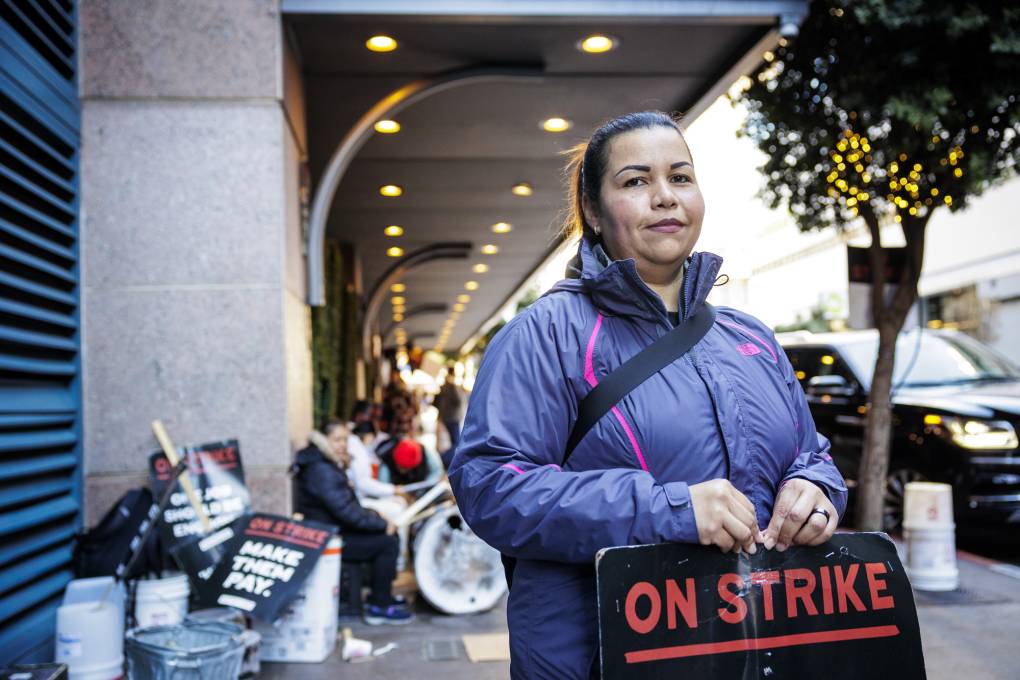
"caption": "Tannia Turcios stands outside the Hilton San Francisco Union Square hotel on Oct. 22, 2024.",
"credit": "Martin do Nascimento/KQED",
"altTag": null,
"description": null,
"imgSizes": {
"medium": {
"file": "https://cdn.kqed.org/wp-content/uploads/sites/10/2024/10/241022-HOTEL-STRIKE-ONE-MONTH-MD-07-KQED-800x533.jpg",
"width": 800,
"height": 533,
"mimeType": "image/jpeg"
},
"large": {
"file": "https://cdn.kqed.org/wp-content/uploads/sites/10/2024/10/241022-HOTEL-STRIKE-ONE-MONTH-MD-07-KQED-1020x680.jpg",
"width": 1020,
"height": 680,
"mimeType": "image/jpeg"
},
"thumbnail": {
"file": "https://cdn.kqed.org/wp-content/uploads/sites/10/2024/10/241022-HOTEL-STRIKE-ONE-MONTH-MD-07-KQED-160x107.jpg",
"width": 160,
"height": 107,
"mimeType": "image/jpeg"
},
"1536x1536": {
"file": "https://cdn.kqed.org/wp-content/uploads/sites/10/2024/10/241022-HOTEL-STRIKE-ONE-MONTH-MD-07-KQED-1536x1024.jpg",
"width": 1536,
"height": 1024,
"mimeType": "image/jpeg"
},
"post-thumbnail": {
"file": "https://cdn.kqed.org/wp-content/uploads/sites/10/2024/10/241022-HOTEL-STRIKE-ONE-MONTH-MD-07-KQED-672x372.jpg",
"width": 672,
"height": 372,
"mimeType": "image/jpeg"
},
"twentyfourteen-full-width": {
"file": "https://cdn.kqed.org/wp-content/uploads/sites/10/2024/10/241022-HOTEL-STRIKE-ONE-MONTH-MD-07-KQED-1038x576.jpg",
"width": 1038,
"height": 576,
"mimeType": "image/jpeg"
},
"full-width": {
"file": "https://cdn.kqed.org/wp-content/uploads/sites/10/2024/10/241022-HOTEL-STRIKE-ONE-MONTH-MD-07-KQED-1920x1280.jpg",
"width": 1920,
"height": 1280,
"mimeType": "image/jpeg"
},
"kqedFullSize": {
"file": "https://cdn.kqed.org/wp-content/uploads/sites/10/2024/10/241022-HOTEL-STRIKE-ONE-MONTH-MD-07-KQED.jpg",
"width": 2000,
"height": 1333
}
},
"isLoading": false,
"fetchFailed": false
},
"news_12008025": {
"type": "attachments",
"id": "news_12008025",
"meta": {
"index": "attachments_1716263798",
"site": "news",
"id": "12008025",
"found": true
},
"title": "Annie's Annuals 3",
"publishDate": 1728073680,
"status": "inherit",
"parent": 12007947,
"modified": 1728086819,
"caption": "Sarah Hundley took over ownership of Annie’s Annuals and Perennials in 2021 after founder Annie Hayes' 30-year tenure.",
"credit": "Courtesy Kaylan Segev",
"altTag": null,
"description": null,
"imgSizes": {
"medium": {
"file": "https://cdn.kqed.org/wp-content/uploads/sites/10/2024/10/Annies-Annuals-3-800x600.jpg",
"width": 800,
"height": 600,
"mimeType": "image/jpeg"
},
"large": {
"file": "https://cdn.kqed.org/wp-content/uploads/sites/10/2024/10/Annies-Annuals-3-1020x765.jpg",
"width": 1020,
"height": 765,
"mimeType": "image/jpeg"
},
"thumbnail": {
"file": "https://cdn.kqed.org/wp-content/uploads/sites/10/2024/10/Annies-Annuals-3-160x120.jpg",
"width": 160,
"height": 120,
"mimeType": "image/jpeg"
},
"1536x1536": {
"file": "https://cdn.kqed.org/wp-content/uploads/sites/10/2024/10/Annies-Annuals-3-1536x1152.jpg",
"width": 1536,
"height": 1152,
"mimeType": "image/jpeg"
},
"post-thumbnail": {
"file": "https://cdn.kqed.org/wp-content/uploads/sites/10/2024/10/Annies-Annuals-3-672x372.jpg",
"width": 672,
"height": 372,
"mimeType": "image/jpeg"
},
"twentyfourteen-full-width": {
"file": "https://cdn.kqed.org/wp-content/uploads/sites/10/2024/10/Annies-Annuals-3-1038x576.jpg",
"width": 1038,
"height": 576,
"mimeType": "image/jpeg"
},
"full-width": {
"file": "https://cdn.kqed.org/wp-content/uploads/sites/10/2024/10/Annies-Annuals-3-1920x1440.jpg",
"width": 1920,
"height": 1440,
"mimeType": "image/jpeg"
},
"kqedFullSize": {
"file": "https://cdn.kqed.org/wp-content/uploads/sites/10/2024/10/Annies-Annuals-3.jpg",
"width": 2000,
"height": 1500
}
},
"isLoading": false,
"fetchFailed": false
},
"news_11870697": {
"type": "attachments",
"id": "news_11870697",
"meta": {
"index": "attachments_1716263798",
"site": "news",
"id": "11870697",
"found": true
},
"parent": 11870691,
"imgSizes": {
"twentyfourteen-full-width": {
"file": "https://ww2.kqed.org/app/uploads/sites/10/2021/04/RS48718_037_Alameda_MarioGonzalezVigil_04212021-qut-1038x576.jpg",
"width": 1038,
"mimeType": "image/jpeg",
"height": 576
},
"thumbnail": {
"file": "https://ww2.kqed.org/app/uploads/sites/10/2021/04/RS48718_037_Alameda_MarioGonzalezVigil_04212021-qut-160x107.jpg",
"width": 160,
"mimeType": "image/jpeg",
"height": 107
},
"post-thumbnail": {
"file": "https://ww2.kqed.org/app/uploads/sites/10/2021/04/RS48718_037_Alameda_MarioGonzalezVigil_04212021-qut-672x372.jpg",
"width": 672,
"mimeType": "image/jpeg",
"height": 372
},
"kqedFullSize": {
"file": "https://ww2.kqed.org/app/uploads/sites/10/2021/04/RS48718_037_Alameda_MarioGonzalezVigil_04212021-qut.jpg",
"width": 1920,
"height": 1280
},
"large": {
"file": "https://ww2.kqed.org/app/uploads/sites/10/2021/04/RS48718_037_Alameda_MarioGonzalezVigil_04212021-qut-1020x680.jpg",
"width": 1020,
"mimeType": "image/jpeg",
"height": 680
},
"1536x1536": {
"file": "https://ww2.kqed.org/app/uploads/sites/10/2021/04/RS48718_037_Alameda_MarioGonzalezVigil_04212021-qut-1536x1024.jpg",
"width": 1536,
"mimeType": "image/jpeg",
"height": 1024
},
"medium": {
"file": "https://ww2.kqed.org/app/uploads/sites/10/2021/04/RS48718_037_Alameda_MarioGonzalezVigil_04212021-qut-800x533.jpg",
"width": 800,
"mimeType": "image/jpeg",
"height": 533
}
},
"publishDate": 1619115148,
"modified": 1619128499,
"caption": "A memorial for Mario Gonzalez during a vigil in his honor in Alameda on April 21, 2021.",
"description": null,
"title": "RS48718_037_Alameda_MarioGonzalezVigil_04212021-qut",
"credit": "Beth LaBerge/KQED",
"status": "inherit",
"altTag": null,
"isLoading": false,
"fetchFailed": false
}
},
"audioPlayerReducer": {
"postId": "stream_live",
"isPaused": true,
"isPlaying": false,
"pfsActive": false,
"pledgeModalIsOpen": true,
"playerDrawerIsOpen": false,
"liveAudioPlayStartedAt": 0,
"liveAudioPlayContext": ""
},
"authorsReducer": {
"byline_news_12011929": {
"type": "authors",
"id": "byline_news_12011929",
"meta": {
"override": true
},
"slug": "byline_news_12011929",
"name": "Lusen Mendel",
"isLoading": false
},
"gmarzorati": {
"type": "authors",
"id": "227",
"meta": {
"index": "authors_1716337520",
"id": "227",
"found": true
},
"name": "Guy Marzorati",
"firstName": "Guy",
"lastName": "Marzorati",
"slug": "gmarzorati",
"email": "gmarzorati@KQED.org",
"display_author_email": true,
"staff_mastheads": [
"news"
],
"title": "Correspondent",
"bio": "Guy Marzorati is a correspondent on KQED's California Politics and Government Desk, based in San Jose. A graduate of Santa Clara University, Guy joined KQED in 2013. He reports on state and local politics and produces KQED's digital voter guide.",
"avatar": "https://secure.gravatar.com/avatar/e7038b8dbfd55b104369b76b1cd0b9de?s=600&d=blank&r=g",
"twitter": "guymarzorati",
"facebook": null,
"instagram": null,
"linkedin": null,
"sites": [
{
"site": "",
"roles": [
"editor"
]
},
{
"site": "news",
"roles": [
"editor"
]
},
{
"site": "science",
"roles": [
"editor"
]
},
{
"site": "forum",
"roles": [
"editor"
]
},
{
"site": "elections",
"roles": [
"editor"
]
},
{
"site": "liveblog",
"roles": [
"editor"
]
}
],
"headData": {
"title": "Guy Marzorati | KQED",
"description": "Correspondent",
"ogImgSrc": "https://secure.gravatar.com/avatar/e7038b8dbfd55b104369b76b1cd0b9de?s=600&d=blank&r=g",
"twImgSrc": "https://secure.gravatar.com/avatar/e7038b8dbfd55b104369b76b1cd0b9de?s=600&d=blank&r=g"
},
"isLoading": false,
"link": "/author/gmarzorati"
},
"scottshafer": {
"type": "authors",
"id": "255",
"meta": {
"index": "authors_1716337520",
"id": "255",
"found": true
},
"name": "Scott Shafer",
"firstName": "Scott",
"lastName": "Shafer",
"slug": "scottshafer",
"email": "sshafer@kqed.org",
"display_author_email": false,
"staff_mastheads": [
"news"
],
"title": "KQED Contributor",
"bio": "Scott Shafer is a senior editor with the KQED Politics and Government desk. He is co-host of Political Breakdown, the award-winning radio show and podcast with a personal take on the world of politics. Scott came to KQED in 1998 to host the statewide\u003cem> California Report\u003c/em>. Prior to that he had extended stints in politics and government\u003cem>.\u003c/em> He uses that inside experience at KQED in his, reporting, hosting and analysis for the politics desk. Scott collaborated \u003cem>Political Breakdown a\u003c/em>nd on \u003cem>The Political Mind of Jerry Brown, \u003c/em>an eight-part series about the life and extraordinary political career of the former governor. For fun, he plays water polo with the San Francisco Tsunami.",
"avatar": "https://secure.gravatar.com/avatar/a62ebae45b79d7aed1a39a0e3bf68104?s=600&d=blank&r=g",
"twitter": "scottshafer",
"bluesky": null,
"facebook": null,
"instagram": null,
"linkedin": null,
"sites": [
{
"site": "news",
"roles": [
"editor"
]
},
{
"site": "stateofhealth",
"roles": [
"author"
]
},
{
"site": "science",
"roles": [
"author"
]
},
{
"site": "forum",
"roles": [
"subscriber"
]
},
{
"site": "liveblog",
"roles": [
"author"
]
}
],
"headData": {
"title": "Scott Shafer | KQED",
"description": "KQED Contributor",
"ogImgSrc": "https://secure.gravatar.com/avatar/a62ebae45b79d7aed1a39a0e3bf68104?s=600&d=blank&r=g",
"twImgSrc": "https://secure.gravatar.com/avatar/a62ebae45b79d7aed1a39a0e3bf68104?s=600&d=blank&r=g"
},
"isLoading": false,
"link": "/author/scottshafer"
},
"tychehendricks": {
"type": "authors",
"id": "259",
"meta": {
"index": "authors_1716337520",
"id": "259",
"found": true
},
"name": "Tyche Hendricks",
"firstName": "Tyche",
"lastName": "Hendricks",
"slug": "tychehendricks",
"email": "thendricks@kqed.org",
"display_author_email": true,
"staff_mastheads": [
"news"
],
"title": "KQED Senior Editor, Immigration",
"bio": "\u003cspan style=\"font-weight: 400;\">Tyche Hendricks is KQED’s senior editor for immigration, leading coverage of the policy and politics that affect California’s immigrant communities. Her work for KQED’s radio and online audiences is also carried on NPR and other national outlets. She has been recognized with awards from the Radio and Television News Directors Association, the Society for Professional Journalists; the Education Writers Association; the Best of the West and the National Federation of Community Broadcasters. Before joining KQED in 2010, Tyche spent more than a dozen years as a newspaper reporter, notably at the \u003c/span>\u003ci>\u003cspan style=\"font-weight: 400;\">San Francisco Chronicle\u003c/span>\u003c/i>\u003cspan style=\"font-weight: 400;\">. At different times she has covered criminal justice, government and politics and urban planning. Tyche has taught in the MFA Creative Writing program at the University of San Francisco and at UC Berkeley’s Graduate School of Journalism, where she was co-director of a national immigration symposium for professional journalists. She is the author of \u003c/span>\u003ci>\u003cspan style=\"font-weight: 400;\">The Wind Doesn't Need a Passport: Stories from the U.S.-Mexico Borderlands\u003c/span>\u003c/i>\u003cspan style=\"font-weight: 400;\"> (University of California Press). \u003c/span>",
"avatar": "https://secure.gravatar.com/avatar/b8ee458e2731c2d43df86882ce17267e?s=600&d=blank&r=g",
"twitter": "tychehendricks",
"facebook": null,
"instagram": null,
"linkedin": null,
"sites": [
{
"site": "news",
"roles": [
"editor"
]
},
{
"site": "stateofhealth",
"roles": [
"editor"
]
}
],
"headData": {
"title": "Tyche Hendricks | KQED",
"description": "KQED Senior Editor, Immigration",
"ogImgSrc": "https://secure.gravatar.com/avatar/b8ee458e2731c2d43df86882ce17267e?s=600&d=blank&r=g",
"twImgSrc": "https://secure.gravatar.com/avatar/b8ee458e2731c2d43df86882ce17267e?s=600&d=blank&r=g"
},
"isLoading": false,
"link": "/author/tychehendricks"
},
"carlysevern": {
"type": "authors",
"id": "3243",
"meta": {
"index": "authors_1716337520",
"id": "3243",
"found": true
},
"name": "Carly Severn",
"firstName": "Carly",
"lastName": "Severn",
"slug": "carlysevern",
"email": "csevern@kqed.org",
"display_author_email": false,
"staff_mastheads": [
"news"
],
"title": "Senior Editor, Audience News ",
"bio": "Carly is KQED's Senior Editor of Audience News on the Digital News team, and has reported for the California Report Magazine, Bay Curious and KQED Arts. She's formerly the host of \u003ca href=\"http://ww2.kqed.org/pop/category/the-cooler/\" rel=\"noopener noreferrer\">The Cooler\u003c/a> podcast.",
"avatar": "https://secure.gravatar.com/avatar/2d8d6765f186e64c798cf7f0c8088a41?s=600&d=blank&r=g",
"twitter": "teacupinthebay",
"facebook": null,
"instagram": null,
"linkedin": null,
"sites": [
{
"site": "",
"roles": [
"editor"
]
},
{
"site": "arts",
"roles": [
"editor"
]
},
{
"site": "news",
"roles": [
"administrator"
]
},
{
"site": "pop",
"roles": [
"editor"
]
},
{
"site": "futureofyou",
"roles": [
"editor"
]
},
{
"site": "about",
"roles": [
"administrator"
]
},
{
"site": "mindshift",
"roles": [
"editor"
]
},
{
"site": "bayareabites",
"roles": [
"editor"
]
},
{
"site": "stateofhealth",
"roles": [
"editor"
]
},
{
"site": "science",
"roles": [
"editor"
]
},
{
"site": "food",
"roles": [
"contributor"
]
},
{
"site": "forum",
"roles": [
"editor"
]
},
{
"site": "perspectives",
"roles": [
"administrator"
]
},
{
"site": "liveblog",
"roles": [
"editor"
]
}
],
"headData": {
"title": "Carly Severn | KQED",
"description": "Senior Editor, Audience News ",
"ogImgSrc": "https://secure.gravatar.com/avatar/2d8d6765f186e64c798cf7f0c8088a41?s=600&d=blank&r=g",
"twImgSrc": "https://secure.gravatar.com/avatar/2d8d6765f186e64c798cf7f0c8088a41?s=600&d=blank&r=g"
},
"isLoading": false,
"link": "/author/carlysevern"
},
"fjhabvala": {
"type": "authors",
"id": "8659",
"meta": {
"index": "authors_1716337520",
"id": "8659",
"found": true
},
"name": "Farida Jhabvala Romero",
"firstName": "Farida",
"lastName": "Jhabvala Romero",
"slug": "fjhabvala",
"email": "fjhabvala@kqed.org",
"display_author_email": true,
"staff_mastheads": [
"news"
],
"title": "KQED Contributor",
"bio": "Farida Jhabvala Romero is a Labor Correspondent for KQED. She previously covered immigration. Farida was \u003ca href=\"https://www.ccnma.org/2022-most-influential-latina-journalists\">named\u003c/a> one of the 10 Most Influential Latina Journalists in California in 2022 by the California Chicano News Media Association. Her work has won awards from the Society of Professional Journalists (Northern California), as well as a national and regional Edward M. Murrow Award for the collaborative reporting projects “Dangerous Air” and “Graying California.” Before joining KQED, Farida worked as a producer at Radio Bilingüe, a national public radio network. Farida earned her master’s degree in journalism from Stanford University.",
"avatar": "https://secure.gravatar.com/avatar/f9f022d4e2609741874222a1e9d41f48fea74011aa7c615eef91d9a50c944ebe?s=600&d=blank&r=g",
"twitter": "FaridaJhabvala",
"bluesky": null,
"facebook": null,
"instagram": null,
"linkedin": "https://www.linkedin.com/in/faridajhabvala/",
"sites": [
{
"site": "news",
"roles": [
"editor"
]
},
{
"site": "stateofhealth",
"roles": [
"author"
]
},
{
"site": "liveblog",
"roles": [
"author"
]
}
],
"headData": {
"title": "Farida Jhabvala Romero | KQED",
"description": "KQED Contributor",
"ogImgSrc": "https://secure.gravatar.com/avatar/f9f022d4e2609741874222a1e9d41f48fea74011aa7c615eef91d9a50c944ebe?s=600&d=blank&r=g",
"twImgSrc": "https://secure.gravatar.com/avatar/f9f022d4e2609741874222a1e9d41f48fea74011aa7c615eef91d9a50c944ebe?s=600&d=blank&r=g"
},
"isLoading": false,
"link": "/author/fjhabvala"
},
"lesleymcclurg": {
"type": "authors",
"id": "11229",
"meta": {
"index": "authors_1716337520",
"id": "11229",
"found": true
},
"name": "Lesley McClurg",
"firstName": "Lesley",
"lastName": "McClurg",
"slug": "lesleymcclurg",
"email": "lmcclurg@KQED.org",
"display_author_email": false,
"staff_mastheads": [
"news",
"science"
],
"title": "KQED Health Correspondent",
"bio": "Lesley McClurg is a health correspondent and fill-in host whose work is regularly rebroadcast on NPR and PBS programs. She’s earned multiple regional Emmy awards, a national and a regional Edward R. Murrow award, and was named Best Beat Reporter by the Association of Health Care Journalists. The Society of Professional Journalists has recognized her work several times, and the Society of Environmental Journalists spotlighted her coverage of California’s historic drought.\r\n\r\nBefore joining KQED in 2016, Lesley covered food and sustainability for Capital Public Radio, environmental issues for Colorado Public Radio, and reported for KUOW and KCTS 9 in Seattle. Away from the newsroom, she loves skiing with her daughter, mountain biking with her partner, and playing with Ollie, the family’s goldendoodle. On deadline, she runs almost entirely on chocolate chips.\r\n\r\n ",
"avatar": "https://secure.gravatar.com/avatar/bab49e972ea10c774fe0f5e29dba1722b158f7c0d58a360923d1389d380b2978?s=600&d=blank&r=g",
"twitter": "lesleywmcclurg",
"bluesky": null,
"facebook": null,
"instagram": null,
"linkedin": null,
"sites": [
{
"site": "arts",
"roles": [
"author"
]
},
{
"site": "news",
"roles": [
"editor"
]
},
{
"site": "futureofyou",
"roles": [
"editor"
]
},
{
"site": "stateofhealth",
"roles": [
"author"
]
},
{
"site": "science",
"roles": [
"editor"
]
},
{
"site": "quest",
"roles": [
"subscriber"
]
},
{
"site": "forum",
"roles": [
"administrator"
]
},
{
"site": "liveblog",
"roles": [
"author"
]
}
],
"headData": {
"title": "Lesley McClurg | KQED",
"description": "KQED Health Correspondent",
"ogImgSrc": "https://secure.gravatar.com/avatar/bab49e972ea10c774fe0f5e29dba1722b158f7c0d58a360923d1389d380b2978?s=600&d=blank&r=g",
"twImgSrc": "https://secure.gravatar.com/avatar/bab49e972ea10c774fe0f5e29dba1722b158f7c0d58a360923d1389d380b2978?s=600&d=blank&r=g"
},
"isLoading": false,
"link": "/author/lesleymcclurg"
},
"vrancano": {
"type": "authors",
"id": "11276",
"meta": {
"index": "authors_1716337520",
"id": "11276",
"found": true
},
"name": "Vanessa Rancaño",
"firstName": "Vanessa",
"lastName": "Rancaño",
"slug": "vrancano",
"email": "vrancano@kqed.org",
"display_author_email": false,
"staff_mastheads": [
"news"
],
"title": "Reporter",
"bio": "Vanessa Rancaño is a features reporter for KQED. She’s also covered homelessness and education for the station and reported from the Central Valley. Her work has aired across public radio, from flagship national news shows to longform narrative podcasts. Before taking up a mic, she worked as a freelance print journalist. She’s been recognized with a number of national and regional awards. Vanessa grew up in California's Central Valley. She's a former NPR Kroc Fellow, and a graduate of the UC Berkeley Graduate School of Journalism.",
"avatar": "https://secure.gravatar.com/avatar/b3a383dfb0e7ee1c17568f2cf067904ab654d6e3de9743fc661f3c788ade1bed?s=600&d=blank&r=g",
"twitter": "vanessarancano",
"bluesky": null,
"facebook": null,
"instagram": null,
"linkedin": null,
"sites": [
{
"site": "arts",
"roles": [
"editor"
]
},
{
"site": "news",
"roles": [
"editor"
]
},
{
"site": "liveblog",
"roles": [
"contributor"
]
}
],
"headData": {
"title": "Vanessa Rancaño | KQED",
"description": "Reporter",
"ogImgSrc": "https://secure.gravatar.com/avatar/b3a383dfb0e7ee1c17568f2cf067904ab654d6e3de9743fc661f3c788ade1bed?s=600&d=blank&r=g",
"twImgSrc": "https://secure.gravatar.com/avatar/b3a383dfb0e7ee1c17568f2cf067904ab654d6e3de9743fc661f3c788ade1bed?s=600&d=blank&r=g"
},
"isLoading": false,
"link": "/author/vrancano"
},
"nnavarro": {
"type": "authors",
"id": "11756",
"meta": {
"index": "authors_1716337520",
"id": "11756",
"found": true
},
"name": "Natalia Navarro",
"firstName": "Natalia",
"lastName": "Navarro",
"slug": "nnavarro",
"email": "nnavarro@kqed.org",
"display_author_email": true,
"staff_mastheads": [
"news"
],
"title": "Afternoon News Anchor",
"bio": "Natalia Navarro is KQED's afternoon radio news anchor. She came to KQED in 2021 from Colorado Public Radio, where she was a reporter and host. She has received several awards for her work covering daily and breaking news from professional organizations such as the San Francisco Press Club, Society of Professional Journalists and the Colorado Broadcasters Association. Natalia is originally from Tucson, Arizona, where she got her start in journalism writing for the Arizona Daily Star, Arizona Public Media and the Tucson Weekly. Natalia earned her bachelor's degree in journalism and economics, and her master's degree in journalism from the University of Arizona.",
"avatar": "https://secure.gravatar.com/avatar/45f866ea8b5c52bf1fa4c236dd0c03c2?s=600&d=blank&r=g",
"twitter": "@NataliaVNavarro",
"facebook": null,
"instagram": null,
"linkedin": null,
"sites": [
{
"site": "news",
"roles": [
"editor"
]
}
],
"headData": {
"title": "Natalia Navarro | KQED",
"description": "Afternoon News Anchor",
"ogImgSrc": "https://secure.gravatar.com/avatar/45f866ea8b5c52bf1fa4c236dd0c03c2?s=600&d=blank&r=g",
"twImgSrc": "https://secure.gravatar.com/avatar/45f866ea8b5c52bf1fa4c236dd0c03c2?s=600&d=blank&r=g"
},
"isLoading": false,
"link": "/author/nnavarro"
},
"kdebenedetti": {
"type": "authors",
"id": "11913",
"meta": {
"index": "authors_1716337520",
"id": "11913",
"found": true
},
"name": "Katie DeBenedetti",
"firstName": "Katie",
"lastName": "DeBenedetti",
"slug": "kdebenedetti",
"email": "kdebenedetti@kqed.org",
"display_author_email": false,
"staff_mastheads": [
"news",
"science"
],
"title": "KQED Contributor",
"bio": "Katie DeBenedetti is a digital reporter covering daily news for the Express Desk. Prior to joining KQED as a culture reporting intern in January 2024, she covered education and city government for the Napa Valley Register.",
"avatar": "https://secure.gravatar.com/avatar/6e31073cb8f7e4214ab03f42771d0f45?s=600&d=blank&r=g",
"twitter": null,
"facebook": null,
"instagram": null,
"linkedin": null,
"sites": [
{
"site": "news",
"roles": [
"author"
]
},
{
"site": "science",
"roles": [
"author"
]
},
{
"site": "liveblog",
"roles": [
"author"
]
}
],
"headData": {
"title": "Katie DeBenedetti | KQED",
"description": "KQED Contributor",
"ogImgSrc": "https://secure.gravatar.com/avatar/6e31073cb8f7e4214ab03f42771d0f45?s=600&d=blank&r=g",
"twImgSrc": "https://secure.gravatar.com/avatar/6e31073cb8f7e4214ab03f42771d0f45?s=600&d=blank&r=g"
},
"isLoading": false,
"link": "/author/kdebenedetti"
},
"slim": {
"type": "authors",
"id": "11920",
"meta": {
"index": "authors_1716337520",
"id": "11920",
"found": true
},
"name": "Samantha Lim",
"firstName": "Samantha",
"lastName": "Lim",
"slug": "slim",
"email": "slim@KQED.org",
"display_author_email": false,
"staff_mastheads": [],
"title": "KQED Contributor",
"bio": null,
"avatar": "https://secure.gravatar.com/avatar/82e592e6c15fe1a04d385e8ad0fb0b4e?s=600&d=blank&r=g",
"twitter": null,
"facebook": null,
"instagram": null,
"linkedin": null,
"sites": [
{
"site": "news",
"roles": []
}
],
"headData": {
"title": "Samantha Lim | KQED",
"description": "KQED Contributor",
"ogImgSrc": "https://secure.gravatar.com/avatar/82e592e6c15fe1a04d385e8ad0fb0b4e?s=600&d=blank&r=g",
"twImgSrc": "https://secure.gravatar.com/avatar/82e592e6c15fe1a04d385e8ad0fb0b4e?s=600&d=blank&r=g"
},
"isLoading": false,
"link": "/author/slim"
}
},
"pagesReducer": {
"news_tag_california": {
"type": "terms",
"id": "news_18538",
"meta": {
"index": "terms_1716263798",
"site": "news",
"id": "18538",
"score": 6.8457103
},
"featImg": null,
"name": "California",
"description": null,
"taxonomy": "tag",
"headData": {
"twImgId": null,
"twTitle": null,
"ogTitle": null,
"ogImgId": null,
"twDescription": null,
"description": null,
"title": "California Archives | KQED News",
"ogDescription": null
},
"ttid": 31,
"slug": "california",
"isLoading": false,
"title": "California",
"pageMeta": {
"site": "news",
"WpPageTemplate": "page-topic-editorial",
"currentPage": 123
},
"blocks": [
{
"blockName": "kqed/post-list",
"attrs": {
"layout": "cardArticle2",
"query": "posts/news?tag=california",
"seeMore": false,
"paginated": true,
"page": 123
}
},
{
"blockName": "kqed/ad"
}
]
}
},
"pfsSessionReducer": {},
"postsReducer": {
"stream_live": {
"type": "live",
"id": "stream_live",
"audioUrl": "https://streams.kqed.org/kqedradio",
"title": "Live Stream",
"excerpt": "Live Stream information currently unavailable.",
"link": "/radio",
"featImg": "",
"label": {
"name": "KQED Live",
"link": "/"
}
},
"stream_kqedNewscast": {
"type": "posts",
"id": "stream_kqedNewscast",
"audioUrl": "https://www.kqed.org/.stream/anon/radio/RDnews/newscast.mp3?_=1",
"title": "KQED Newscast",
"featImg": "",
"label": {
"name": "88.5 FM",
"link": "/"
}
},
"news_12012604": {
"type": "posts",
"id": "news_12012604",
"meta": {
"index": "posts_1716263798",
"site": "news",
"id": "12012604",
"score": null,
"sort": [
1730871055000
]
},
"guestAuthors": [],
"slug": "voters-approve-prop-35-choosing-medi-cal-funding-over-budget-flexibility",
"title": "Voters Approve Proposition 35, Choosing Medi-Cal Funding Over Budget Flexibility",
"publishDate": 1730871055,
"format": "standard",
"headTitle": "Voters Approve Proposition 35, Choosing Medi-Cal Funding Over Budget Flexibility | KQED",
"labelTerm": {
"site": "news"
},
"content": "\u003cp>\u003cb>\u003ci>\u003ca href=\"https://www.kqed.org/liveblog/election-2024\">Follow KQED’s live blog for the latest election updates\u003c/a>\u003c/i>\u003c/b>\u003c/p>\n\u003cp>In essence, Proposition 35 promised to secure Medi-Cal funding but left voters to weigh the trade-offs of budget stability and flexibility.\u003c/p>\n\u003cp>Californians took that deal and passed it, cementing the state’s tax on managed-care organizations and directing an estimated $7 billion to $8 billion each year exclusively to Medi-Cal.\u003c/p>\n\u003cp>The funds are meant to improve access to primary care, specialty care, mental health services and prescription drugs, as well as enhance provider availability and reduce patient wait times.\u003c/p>\n\u003cp>Lawmakers, however, are limited in reassigning these funds, and the measure remains contingent on federal approval for continued matching funds.\u003c/p>\n\u003cp>[ad fullwidth]\u003c/p>\n\u003cp>The Associated Press called the race at 9:28 p.m. with 67.5% of voters approving.\u003c/p>\n\u003cp>Proponents of the measure quickly celebrated what they called an overwhelming victory. Jodi Hicks, president and CEO of Planned Parenthood Affiliates of California and the campaign’s co-chair called it a “victory for patients across California” in a quickly emailed press release.\u003c/p>\n\u003cp>“Nearly 85% of patients at Planned Parenthood health centers rely on Medi-Cal for health insurance and now, with a dedicated source of funding for the program, there will be a future that provides more stability and expanded access to care for those who need it most,” she said. “Planned Parenthood is proud to have supported Prop. 35 to help achieve a more equitable health care delivery system that all Californians will benefit from.”\u003c/p>\n\u003cp>The No on Prop. 35 campaign released a statement that said the vote made it clear that Californians support the Medi-Cal program and “want to improve access to health care for the most vulnerable.”\u003c/p>\n\u003cp>“While we opposed Prop. 35 because of the details, state leaders now have a mandate to improve Medi-Cal and must fulfill that obligation,” the statement said.\u003c/p>\n\u003cp>Despite Proposition 35’s innocuous and seemingly straightforward title — “Provides permanent funding for Medi-Cal health care services” — the measure is one the most complex on California’s ballot. At its core is an obscure tax that most voters have never heard of. Basically, California levies a tax on managed-care organizations — otherwise known as health insurers like Anthem Blue Cross and Kaiser Permanente. The state uses the tax revenue to draw federal matching funds, effectively doubling its impact, and applies it toward Medi-Cal services.[aside label='More Election Coverage' tag='election-2024']Under the proposition, tax revenue from managed-care organizations would be strictly reserved for Medi-Cal, expanding access to services like mental health, primary care, and prescription drugs. Supporters argue this dedicated funding will improve access for the 2 in 5 Californians reliant on Medi-Cal, with funds directed to providers like hospitals and emergency services. With many patients currently facing prolonged wait times and few physicians accepting Medi-Cal’s lower reimbursement rates, proponents said it would help alleviate these pressures by increasing provider compensation.\u003c/p>\n\u003cp>However, critics warn that the proposition’s rigid spending mandates may constrain California’s fiscal flexibility, potentially intensifying the state’s budget challenges. The measure’s reliance on federal approval for matching funds also raises concerns, as changes to federal policy could jeopardize future funding.\u003c/p>\n\u003cp>Opponents argue that such budgeting restrictions should be managed by policymakers, who can adjust them as needed, rather than by voters through a ballot measure, which would be challenging to amend in future elections.\u003c/p>\n\u003cp>The proposition drew support from a broad coalition, including the California Democratic and Republican parties, health care associations, labor unions and Planned Parenthood.\u003c/p>\n\u003cp>Opposition comes from groups like the California Pan-Ethnic Health Network and the California Alliance of Retired Americans, who fear the financial risks and loss of budgetary adaptability.\u003c/p>\n\u003cp>Proposition 35 created unusual political devisions and its intricate funding mechanism and spending restrictions fragmented the medical community — even among those who share the same goals of improving health care access.\u003c/p>\n\u003cp>\u003c/p>\n",
"blocks": [],
"excerpt": "Proposition 35 promised to secure Medi-Cal funding but left voters to weigh the trade-offs of budget stability and flexibility.",
"status": "publish",
"parent": 0,
"modified": 1738185264,
"stats": {
"hasAudio": false,
"hasVideo": false,
"hasChartOrMap": false,
"iframeSrcs": [],
"hasGoogleForm": false,
"hasGallery": false,
"hasHearkenModule": false,
"hasPolis": false,
"paragraphCount": 18,
"wordCount": 678
},
"headData": {
"title": "Voters Approve Proposition 35, Choosing Medi-Cal Funding Over Budget Flexibility | KQED",
"description": "Proposition 35 promised to secure Medi-Cal funding but left voters to weigh the trade-offs of budget stability and flexibility.",
"ogTitle": "",
"ogDescription": "",
"ogImgId": "",
"twTitle": "",
"twDescription": "",
"twImgId": "",
"schema": {
"@context": "https://schema.org",
"@type": "NewsArticle",
"headline": "Voters Approve Proposition 35, Choosing Medi-Cal Funding Over Budget Flexibility",
"datePublished": "2024-11-05T21:30:55-08:00",
"dateModified": "2025-01-29T13:14:24-08:00",
"image": "https://cdn.kqed.org/wp-content/uploads/2020/02/KQED-OG-Image@1x.png",
"isAccessibleForFree": "True",
"publisher": {
"@type": "NewsMediaOrganization",
"@id": "https://www.kqed.org/#organization",
"name": "KQED",
"logo": "https://cdn.kqed.org/wp-content/uploads/2020/02/KQED-OG-Image@1x.png",
"url": "https://www.kqed.org",
"sameAs": [
"https://www.facebook.com/KQED",
"https://twitter.com/KQED",
"https://www.instagram.com/kqed/",
"https://www.tiktok.com/@kqedofficial",
"https://www.linkedin.com/company/kqed",
"https://www.youtube.com/channel/UCeC0IOo7i1P_61zVUWbJ4nw"
]
}
}
},
"sticky": false,
"nprStoryId": "kqed-12012604",
"excludeFromSiteSearch": "Include",
"articleAge": "0",
"path": "/news/12012604/voters-approve-prop-35-choosing-medi-cal-funding-over-budget-flexibility",
"audioTrackLength": null,
"parsedContent": [
{
"type": "contentString",
"content": "\u003cdiv class=\"post-body\">\u003cp>\u003cp>\u003cb>\u003ci>\u003ca href=\"https://www.kqed.org/liveblog/election-2024\">Follow KQED’s live blog for the latest election updates\u003c/a>\u003c/i>\u003c/b>\u003c/p>\n\u003cp>In essence, Proposition 35 promised to secure Medi-Cal funding but left voters to weigh the trade-offs of budget stability and flexibility.\u003c/p>\n\u003cp>Californians took that deal and passed it, cementing the state’s tax on managed-care organizations and directing an estimated $7 billion to $8 billion each year exclusively to Medi-Cal.\u003c/p>\n\u003cp>The funds are meant to improve access to primary care, specialty care, mental health services and prescription drugs, as well as enhance provider availability and reduce patient wait times.\u003c/p>\n\u003cp>Lawmakers, however, are limited in reassigning these funds, and the measure remains contingent on federal approval for continued matching funds.\u003c/p>\n\u003cp>\u003c/p>\u003c/div>",
"attributes": {
"named": {},
"numeric": []
}
},
{
"type": "component",
"content": "",
"name": "ad",
"attributes": {
"named": {
"label": "fullwidth"
},
"numeric": [
"fullwidth"
]
}
},
{
"type": "contentString",
"content": "\u003cdiv class=\"post-body\">\u003cp>\u003c/p>\n\u003cp>The Associated Press called the race at 9:28 p.m. with 67.5% of voters approving.\u003c/p>\n\u003cp>Proponents of the measure quickly celebrated what they called an overwhelming victory. Jodi Hicks, president and CEO of Planned Parenthood Affiliates of California and the campaign’s co-chair called it a “victory for patients across California” in a quickly emailed press release.\u003c/p>\n\u003cp>“Nearly 85% of patients at Planned Parenthood health centers rely on Medi-Cal for health insurance and now, with a dedicated source of funding for the program, there will be a future that provides more stability and expanded access to care for those who need it most,” she said. “Planned Parenthood is proud to have supported Prop. 35 to help achieve a more equitable health care delivery system that all Californians will benefit from.”\u003c/p>\n\u003cp>The No on Prop. 35 campaign released a statement that said the vote made it clear that Californians support the Medi-Cal program and “want to improve access to health care for the most vulnerable.”\u003c/p>\n\u003cp>“While we opposed Prop. 35 because of the details, state leaders now have a mandate to improve Medi-Cal and must fulfill that obligation,” the statement said.\u003c/p>\n\u003cp>Despite Proposition 35’s innocuous and seemingly straightforward title — “Provides permanent funding for Medi-Cal health care services” — the measure is one the most complex on California’s ballot. At its core is an obscure tax that most voters have never heard of. Basically, California levies a tax on managed-care organizations — otherwise known as health insurers like Anthem Blue Cross and Kaiser Permanente. The state uses the tax revenue to draw federal matching funds, effectively doubling its impact, and applies it toward Medi-Cal services.\u003c/p>\u003c/div>",
"attributes": {
"named": {},
"numeric": []
}
},
{
"type": "component",
"content": "",
"name": "aside",
"attributes": {
"named": {
"label": "More Election Coverage ",
"tag": "election-2024"
},
"numeric": []
}
},
{
"type": "contentString",
"content": "\u003cdiv class=\"post-body\">\u003cp>Under the proposition, tax revenue from managed-care organizations would be strictly reserved for Medi-Cal, expanding access to services like mental health, primary care, and prescription drugs. Supporters argue this dedicated funding will improve access for the 2 in 5 Californians reliant on Medi-Cal, with funds directed to providers like hospitals and emergency services. With many patients currently facing prolonged wait times and few physicians accepting Medi-Cal’s lower reimbursement rates, proponents said it would help alleviate these pressures by increasing provider compensation.\u003c/p>\n\u003cp>However, critics warn that the proposition’s rigid spending mandates may constrain California’s fiscal flexibility, potentially intensifying the state’s budget challenges. The measure’s reliance on federal approval for matching funds also raises concerns, as changes to federal policy could jeopardize future funding.\u003c/p>\n\u003cp>Opponents argue that such budgeting restrictions should be managed by policymakers, who can adjust them as needed, rather than by voters through a ballot measure, which would be challenging to amend in future elections.\u003c/p>\n\u003cp>The proposition drew support from a broad coalition, including the California Democratic and Republican parties, health care associations, labor unions and Planned Parenthood.\u003c/p>\n\u003cp>Opposition comes from groups like the California Pan-Ethnic Health Network and the California Alliance of Retired Americans, who fear the financial risks and loss of budgetary adaptability.\u003c/p>\n\u003cp>Proposition 35 created unusual political devisions and its intricate funding mechanism and spending restrictions fragmented the medical community — even among those who share the same goals of improving health care access.\u003c/p>\n\u003cp>\u003c/p>\n\u003c/div>\u003c/p>",
"attributes": {
"named": {},
"numeric": []
}
}
],
"link": "/news/12012604/voters-approve-prop-35-choosing-medi-cal-funding-over-budget-flexibility",
"authors": [
"11229"
],
"categories": [
"news_8",
"news_356"
],
"tags": [
"news_18538",
"news_27626",
"news_18543"
],
"featImg": "news_12012609",
"label": "news"
},
"news_12012676": {
"type": "posts",
"id": "news_12012676",
"meta": {
"index": "posts_1716263798",
"site": "news",
"id": "12012676",
"score": null,
"sort": [
1730841261000
]
},
"guestAuthors": [],
"slug": "election-distraction-bay-fc-playoff-bound",
"title": "Here’s an Election Distraction: Bay FC Is Playoff-Bound",
"publishDate": 1730841261,
"format": "standard",
"headTitle": "Here’s an Election Distraction: Bay FC Is Playoff-Bound | KQED",
"labelTerm": {
"site": "news"
},
"content": "\u003cp>The Bay Area’s professional women’s soccer team, \u003ca href=\"https://www.kqed.org/news/11980330/a-new-pro-womens-soccer-team-kicks-off-in-the-bay\">Bay FC\u003c/a>, is preparing this week for their first playoff game after an exciting win to clinch their spot in the postseason.\u003c/p>\n\u003cp>Bay FC is only the second expansion team of the National Women’s Soccer League to make the playoffs in their first season.\u003c/p>\n\u003cp>It typically takes new teams about a year to perfect the alchemy on the pitch and off, but head coach Albertin Montoya said the club took about half that time to get “in sync.”\u003c/p>\n\u003cp>“When you have all these players believing and playing for the cause, it’s going to change things around. And the fact that we’ve been able to do this six months into it has been very impressive,” Montoya said.\u003c/p>\n\u003cp>[ad fullwidth]\u003c/p>\n\u003cp>After clinching their postseason berth in their final game Saturday — a 3–2 win in Houston — Bay FC is clicking at the right time.\u003c/p>\n\u003cp>“It’s not easy starting up a new team, like, it was so difficult for us just to win a game,” striker Racheal Kundananji said at the post-game press conference. “As time goes on, we started knowing one another, knowing our strength and supporting one another, trying to lift one another. I think that’s why we had a powerful ending.”\u003c/p>\n\u003cfigure id=\"attachment_11956860\" class=\"wp-caption aligncenter\" style=\"max-width: 1920px\">\u003cimg loading=\"lazy\" decoding=\"async\" class=\"size-full wp-image-11956860\" src=\"https://cdn.kqed.org/wp-content/uploads/sites/10/2023/07/RS66033_06032023_bayfc-405-qut.jpg\" alt=\"A row of people smile at the camera, they are all wearing items of clothing with the logo for a women's soccer team called "Bay FC."\" width=\"1920\" height=\"1277\" srcset=\"https://cdn.kqed.org/wp-content/uploads/sites/10/2023/07/RS66033_06032023_bayfc-405-qut.jpg 1920w, https://cdn.kqed.org/wp-content/uploads/sites/10/2023/07/RS66033_06032023_bayfc-405-qut-800x532.jpg 800w, https://cdn.kqed.org/wp-content/uploads/sites/10/2023/07/RS66033_06032023_bayfc-405-qut-1020x678.jpg 1020w, https://cdn.kqed.org/wp-content/uploads/sites/10/2023/07/RS66033_06032023_bayfc-405-qut-160x106.jpg 160w, https://cdn.kqed.org/wp-content/uploads/sites/10/2023/07/RS66033_06032023_bayfc-405-qut-1536x1022.jpg 1536w\" sizes=\"(max-width: 1920px) 100vw, 1920px\">\u003cfigcaption class=\"wp-caption-text\">Sheryl Sandberg, Danielle Slaton, Brandi Chastain, Leslie Osborne and Aly Wagner pose for a photo with other attendees at a kickoff event for Bay FC, the Bay Area’s first team in the National Women’s Soccer League, at the Presidio in San Francisco, on June 3, 2023. \u003ccite>(Kori Suzuki/KQED)\u003c/cite>\u003c/figcaption>\u003c/figure>\n\u003cp>Kundananji scored twice, including the goal that won the game in the second half for Bay FC (11-14-1).\u003c/p>\n\u003cp>The team also benefited from an uncharacteristic own goal from Houston Dash defender Paige Nielsen.\u003c/p>\n\u003cp>The win set the team up for another record among NWSL expansion teams, with the most wins for any team in their inaugural season.\u003c/p>\n\u003cp>And Kansas City’s victory against Chicago this weekend finalized standings going into playoffs, meaning Bay FC, seventh in the league, will play number two seed Washington Spirit.\u003c/p>\n\u003cp>[aside postID=arts_13963597 hero='https://cdn.kqed.org/wp-content/uploads/sites/2/2024/09/FairOaksPark_SoccerSession-4-1020x680.jpg']\u003c/p>\n\u003cp>“We’ve got a very good opponent that we’re playing against,” Montoya said. “We lost both games of the season with them, but we played both of those games the first half of the season. I think we’re a very different team in the second half of the season than we were in the first half.”\u003c/p>\n\u003cp>Part of that change is due to the acquisition of national team veteran Abby Dahlkemper. Raised in Menlo Park, Dahlkemper came to the Bay from San Diego Wave FC in August.\u003c/p>\n\u003cp>“The addition of Abby Dahlkemper — someone that has so much experience. National team experience, she’s won championships,” Montoya said. “She brings this kind of sense of belief and a winning mentality has really helped us. It’s like a perfect storm in our favor.”\u003c/p>\n\u003cp>According to forward Rachel Hill, the team’s success in the second half of the season is also due to Montoya’s unique approach to coaching a fresh group.\u003c/p>\n\u003cp>“I think a lot of teams would come in and say we’re going to focus on our defensive shape and how we’re going to defend, and he really came in from day one and said, ‘We’re going to possess the ball,’” Hill said at the press conference. “At the end of the day, we all just have to buy in, and we have to believe in that.”\u003c/p>\n\u003cp>In the days before the quarterfinals, there will be no big celebrations, just business as usual, Montoya said — analyzing last week’s game, improving what needs improving and focusing on the fresh start the playoffs bring.\u003c/p>\n\u003cp>“Even when we’re away, we talk about our fans and how we want to play for them and just the support that they’ve had for us,” Montoya said. “It means the world to our players and our staff. It’s only going to get better.”\u003c/p>\n\u003cp>Bay FC plays the Washington Spirit at Audi Field in Washington, D.C., on Sunday at 9:30 a.m.\u003c/p>\n\u003cp>\u003c/p>\n",
"blocks": [],
"excerpt": "The Bay Area’s professional women’s soccer team, Bay FC, is clicking at the right time as they prepare for their first playoff game in their inaugural season of play.",
"status": "publish",
"parent": 0,
"modified": 1730859139,
"stats": {
"hasAudio": false,
"hasVideo": false,
"hasChartOrMap": false,
"iframeSrcs": [],
"hasGoogleForm": false,
"hasGallery": false,
"hasHearkenModule": false,
"hasPolis": false,
"paragraphCount": 21,
"wordCount": 764
},
"headData": {
"title": "Here’s an Election Distraction: Bay FC Is Playoff-Bound | KQED",
"description": "The Bay Area’s professional women’s soccer team, Bay FC, is clicking at the right time as they prepare for their first playoff game in their inaugural season of play.",
"ogTitle": "",
"ogDescription": "",
"ogImgId": "",
"twTitle": "",
"twDescription": "",
"twImgId": "",
"schema": {
"@context": "https://schema.org",
"@type": "NewsArticle",
"headline": "Here’s an Election Distraction: Bay FC Is Playoff-Bound",
"datePublished": "2024-11-05T13:14:21-08:00",
"dateModified": "2024-11-05T18:12:19-08:00",
"image": "https://cdn.kqed.org/wp-content/uploads/2020/02/KQED-OG-Image@1x.png",
"isAccessibleForFree": "True",
"publisher": {
"@type": "NewsMediaOrganization",
"@id": "https://www.kqed.org/#organization",
"name": "KQED",
"logo": "https://cdn.kqed.org/wp-content/uploads/2020/02/KQED-OG-Image@1x.png",
"url": "https://www.kqed.org",
"sameAs": [
"https://www.facebook.com/KQED",
"https://twitter.com/KQED",
"https://www.instagram.com/kqed/",
"https://www.tiktok.com/@kqedofficial",
"https://www.linkedin.com/company/kqed",
"https://www.youtube.com/channel/UCeC0IOo7i1P_61zVUWbJ4nw"
]
}
}
},
"sticky": false,
"nprStoryId": "kqed-12012676",
"excludeFromSiteSearch": "Include",
"articleAge": "0",
"path": "/news/12012676/election-distraction-bay-fc-playoff-bound",
"audioTrackLength": null,
"parsedContent": [
{
"type": "contentString",
"content": "\u003cdiv class=\"post-body\">\u003cp>\u003cp>The Bay Area’s professional women’s soccer team, \u003ca href=\"https://www.kqed.org/news/11980330/a-new-pro-womens-soccer-team-kicks-off-in-the-bay\">Bay FC\u003c/a>, is preparing this week for their first playoff game after an exciting win to clinch their spot in the postseason.\u003c/p>\n\u003cp>Bay FC is only the second expansion team of the National Women’s Soccer League to make the playoffs in their first season.\u003c/p>\n\u003cp>It typically takes new teams about a year to perfect the alchemy on the pitch and off, but head coach Albertin Montoya said the club took about half that time to get “in sync.”\u003c/p>\n\u003cp>“When you have all these players believing and playing for the cause, it’s going to change things around. And the fact that we’ve been able to do this six months into it has been very impressive,” Montoya said.\u003c/p>\n\u003cp>\u003c/p>\u003c/div>",
"attributes": {
"named": {},
"numeric": []
}
},
{
"type": "component",
"content": "",
"name": "ad",
"attributes": {
"named": {
"label": "fullwidth"
},
"numeric": [
"fullwidth"
]
}
},
{
"type": "contentString",
"content": "\u003cdiv class=\"post-body\">\u003cp>\u003c/p>\n\u003cp>After clinching their postseason berth in their final game Saturday — a 3–2 win in Houston — Bay FC is clicking at the right time.\u003c/p>\n\u003cp>“It’s not easy starting up a new team, like, it was so difficult for us just to win a game,” striker Racheal Kundananji said at the post-game press conference. “As time goes on, we started knowing one another, knowing our strength and supporting one another, trying to lift one another. I think that’s why we had a powerful ending.”\u003c/p>\n\u003cfigure id=\"attachment_11956860\" class=\"wp-caption aligncenter\" style=\"max-width: 1920px\">\u003cimg loading=\"lazy\" decoding=\"async\" class=\"size-full wp-image-11956860\" src=\"https://cdn.kqed.org/wp-content/uploads/sites/10/2023/07/RS66033_06032023_bayfc-405-qut.jpg\" alt=\"A row of people smile at the camera, they are all wearing items of clothing with the logo for a women's soccer team called "Bay FC."\" width=\"1920\" height=\"1277\" srcset=\"https://cdn.kqed.org/wp-content/uploads/sites/10/2023/07/RS66033_06032023_bayfc-405-qut.jpg 1920w, https://cdn.kqed.org/wp-content/uploads/sites/10/2023/07/RS66033_06032023_bayfc-405-qut-800x532.jpg 800w, https://cdn.kqed.org/wp-content/uploads/sites/10/2023/07/RS66033_06032023_bayfc-405-qut-1020x678.jpg 1020w, https://cdn.kqed.org/wp-content/uploads/sites/10/2023/07/RS66033_06032023_bayfc-405-qut-160x106.jpg 160w, https://cdn.kqed.org/wp-content/uploads/sites/10/2023/07/RS66033_06032023_bayfc-405-qut-1536x1022.jpg 1536w\" sizes=\"(max-width: 1920px) 100vw, 1920px\">\u003cfigcaption class=\"wp-caption-text\">Sheryl Sandberg, Danielle Slaton, Brandi Chastain, Leslie Osborne and Aly Wagner pose for a photo with other attendees at a kickoff event for Bay FC, the Bay Area’s first team in the National Women’s Soccer League, at the Presidio in San Francisco, on June 3, 2023. \u003ccite>(Kori Suzuki/KQED)\u003c/cite>\u003c/figcaption>\u003c/figure>\n\u003cp>Kundananji scored twice, including the goal that won the game in the second half for Bay FC (11-14-1).\u003c/p>\n\u003cp>The team also benefited from an uncharacteristic own goal from Houston Dash defender Paige Nielsen.\u003c/p>\n\u003cp>The win set the team up for another record among NWSL expansion teams, with the most wins for any team in their inaugural season.\u003c/p>\n\u003cp>And Kansas City’s victory against Chicago this weekend finalized standings going into playoffs, meaning Bay FC, seventh in the league, will play number two seed Washington Spirit.\u003c/p>\n\u003cp>\u003c/p>\u003c/div>",
"attributes": {
"named": {},
"numeric": []
}
},
{
"type": "component",
"content": "",
"name": "aside",
"attributes": {
"named": {
"postid": "arts_13963597",
"hero": "https://cdn.kqed.org/wp-content/uploads/sites/2/2024/09/FairOaksPark_SoccerSession-4-1020x680.jpg",
"label": ""
},
"numeric": []
}
},
{
"type": "contentString",
"content": "\u003cdiv class=\"post-body\">\u003cp>\u003c/p>\n\u003cp>“We’ve got a very good opponent that we’re playing against,” Montoya said. “We lost both games of the season with them, but we played both of those games the first half of the season. I think we’re a very different team in the second half of the season than we were in the first half.”\u003c/p>\n\u003cp>Part of that change is due to the acquisition of national team veteran Abby Dahlkemper. Raised in Menlo Park, Dahlkemper came to the Bay from San Diego Wave FC in August.\u003c/p>\n\u003cp>“The addition of Abby Dahlkemper — someone that has so much experience. National team experience, she’s won championships,” Montoya said. “She brings this kind of sense of belief and a winning mentality has really helped us. It’s like a perfect storm in our favor.”\u003c/p>\n\u003cp>According to forward Rachel Hill, the team’s success in the second half of the season is also due to Montoya’s unique approach to coaching a fresh group.\u003c/p>\n\u003cp>“I think a lot of teams would come in and say we’re going to focus on our defensive shape and how we’re going to defend, and he really came in from day one and said, ‘We’re going to possess the ball,’” Hill said at the press conference. “At the end of the day, we all just have to buy in, and we have to believe in that.”\u003c/p>\n\u003cp>In the days before the quarterfinals, there will be no big celebrations, just business as usual, Montoya said — analyzing last week’s game, improving what needs improving and focusing on the fresh start the playoffs bring.\u003c/p>\n\u003cp>“Even when we’re away, we talk about our fans and how we want to play for them and just the support that they’ve had for us,” Montoya said. “It means the world to our players and our staff. It’s only going to get better.”\u003c/p>\n\u003cp>Bay FC plays the Washington Spirit at Audi Field in Washington, D.C., on Sunday at 9:30 a.m.\u003c/p>\n\u003cp>\u003c/p>\n\u003c/div>\u003c/p>",
"attributes": {
"named": {},
"numeric": []
}
}
],
"link": "/news/12012676/election-distraction-bay-fc-playoff-bound",
"authors": [
"11756"
],
"categories": [
"news_28250",
"news_8",
"news_10"
],
"tags": [
"news_32793",
"news_33130",
"news_32791",
"news_18538",
"news_105",
"news_1489",
"news_34078",
"news_28623",
"news_25293"
],
"featImg": "news_12012681",
"label": "news"
},
"news_12012418": {
"type": "posts",
"id": "news_12012418",
"meta": {
"index": "posts_1716263798",
"site": "news",
"id": "12012418",
"score": null,
"sort": [
1730808040000
]
},
"guestAuthors": [],
"slug": "when-election-results-2024-california-presidential-race",
"title": "When Will We Get Election Results in California?",
"publishDate": 1730808040,
"format": "standard",
"headTitle": "When Will We Get Election Results in California? | KQED",
"labelTerm": {
"site": "news"
},
"content": "\u003cp>\u003cem>\u003cstrong>\u003ca href=\"https://www.kqed.org/elections/results\">Follow KQED’s election results for California and the Bay Area as they come in\u003c/a>\u003c/strong>\u003c/em>\u003c/p>\n\u003cp>We’ve finally made it. It’s\u003ca href=\"https://www.kqed.org/voterguide\"> Election Day in California\u003c/a> and just a few hours remain to cast your ballot. \u003ca href=\"https://www.kqed.org/news/12012472/election-2024-where-do-i-vote-in-person-find-my-polling-place\">Voting locations and ballot drop boxes\u003c/a> close at 8:00 p.m. PST.\u003c/p>\n\u003cp>If you’ve already voted, keep reading for a guide to what will happen next when it comes to when results will be announced, how votes are counted and more.\u003c/p>\n\u003cp>[aside label=\"2024 California Voter Guide\" link1='https://www.kqed.org/voterguide,Learn everything you need to cast an informed ballot for the 2024 general election' hero=https://cdn.kqed.org/wp-content/uploads/sites/80/2024/09/Aside-California-Voter-Guide-2024-General-Election-1200x1200-1.png]\u003c/p>\n\u003cp>Still need to vote or just submit your ballot? \u003ca href=\"https://www.kqed.org/voterguide\">Take a look at KQED’s Voter Guide\u003c/a> for information on every race and ballot measure in the Bay Area, find out how you can \u003ca href=\"https://www.kqed.org/news/12010355/last-chance-to-register-to-vote-california-deadline-election-2024-same-day-conditional-registration\">register to vote\u003c/a> at the last minute and \u003ca href=\"https://www.kqed.org/news/12003469/election-2024-how-to-correct-a-mistake-on-your-ballot-correction\">what to do if you made a mistake on your ballot\u003c/a>. And remember: At this stage, it’s best to\u003ca href=\"https://www.kqed.org/news/12011386/why-is-my-county-saying-i-should-mail-in-my-ballot-a-whole-week-before-election-day\"> submit your ballot by hand in your nearest official drop box or at a voting location\u003c/a> rather than mailing it via USPS.\u003c/p>\n\u003cp>\u003cb>Jump straight to:\u003c/b>\u003c/p>\n\u003cul>\n\u003cli>\u003cstrong>\u003ca href=\"#when-results-president-election\">When will we know the results of the presidential election?\u003c/a>\u003c/strong>\u003c/li>\n\u003cli>\u003cstrong>\u003ca href=\"#who-calls-results-election-2024\">Who calls the winner of an election?\u003c/a>\u003c/strong>\u003c/li>\n\u003c/ul>\n\u003ch2>\u003cb>When will we get results for California races? \u003c/b>\u003c/h2>\n\u003cp>Results will be reported by county election officials minutes after 8:00 p.m. The first batch of results posted are typically mail-in ballots received before Election Day.\u003c/p>\n\u003cp>“Those early arriving vote-by-mail ballots are what we see on live election results on the Secretary of State and county election websites as soon as polls close,” Kim Alexander, president of the California Voter Foundation, said on \u003ca href=\"https://www.kqed.org/forum/2010101907667/your-last-minute-voting-questions-answered\">KQED Forum\u003c/a>.\u003c/p>\n\u003cp>As the night goes on, some counties will begin to add ballots cast in person on Tuesday to the results. Vote-by-mail ballots returned through the postal service or drop boxes will be added in the days and weeks to come.\u003c/p>\n\u003cp>[ad fullwidth]\u003c/p>\n\u003ch2>\u003cb>How can election offices know results so quickly? \u003c/b>\u003c/h2>\n\u003cp>In California, election officials are allowed to process ballots when they are received — or to prepare them to be counted once polls close.\u003c/p>\n\u003cp>In Sonoma, as in many counties, that process begins before Election Day, when ballots received early are placed through a sorting machine and review of the signature the voter wrote on their ballot envelope begins.\u003c/p>\n\u003cp>[aside postID=news_12012096]“In Sonoma County, you sign underneath the flap of the envelope, and then you seal it closed,” said Deva Marie Proto, the county’s registrar of voters. “Our machine will actually laser off the portion of the envelope above that signature while still leaving it sealed.”\u003c/p>\n\u003cp>After signatures are reviewed by a machine and compared to the voter’s signature on file, Proto said election workers still then manually review those signatures.\u003c/p>\n\u003cp>“We have humans in our office, staff members that are trained in signature checking, and they will check every signature against the voter registration signature, as well as previous voter registration signatures and previous vote-by-mail signatures,” she added. \u003ca href=\"https://www.kqed.org/news/12003469/election-2024-how-to-correct-a-mistake-on-your-ballot-correction#signature-problem-ballot\">Read more about how signatures are verified and how your county elections office resolves issues\u003c/a>.\u003c/p>\n\u003cp>Once the voters’ information is verified, the ballots are loaded into a machine for counting and results are tabulated when polls close.\u003c/p>\n\u003cfigure id=\"attachment_11931364\" class=\"wp-caption alignnone\" style=\"max-width: 2560px\">\u003cimg loading=\"lazy\" decoding=\"async\" class=\"size-full wp-image-11931364\" src=\"https://cdn.kqed.org/wp-content/uploads/sites/10/2022/11/gettyimages-1244492905_slide-5deaa0568f592af447cda2eb7a316911f783700e-scaled.jpg\" alt=\"A stack of green and white envelopes on a table.\" width=\"2560\" height=\"1707\" srcset=\"https://cdn.kqed.org/wp-content/uploads/sites/10/2022/11/gettyimages-1244492905_slide-5deaa0568f592af447cda2eb7a316911f783700e-scaled.jpg 2560w, https://cdn.kqed.org/wp-content/uploads/sites/10/2022/11/gettyimages-1244492905_slide-5deaa0568f592af447cda2eb7a316911f783700e-800x533.jpg 800w, https://cdn.kqed.org/wp-content/uploads/sites/10/2022/11/gettyimages-1244492905_slide-5deaa0568f592af447cda2eb7a316911f783700e-1020x680.jpg 1020w, https://cdn.kqed.org/wp-content/uploads/sites/10/2022/11/gettyimages-1244492905_slide-5deaa0568f592af447cda2eb7a316911f783700e-160x107.jpg 160w, https://cdn.kqed.org/wp-content/uploads/sites/10/2022/11/gettyimages-1244492905_slide-5deaa0568f592af447cda2eb7a316911f783700e-1536x1024.jpg 1536w, https://cdn.kqed.org/wp-content/uploads/sites/10/2022/11/gettyimages-1244492905_slide-5deaa0568f592af447cda2eb7a316911f783700e-2048x1365.jpg 2048w, https://cdn.kqed.org/wp-content/uploads/sites/10/2022/11/gettyimages-1244492905_slide-5deaa0568f592af447cda2eb7a316911f783700e-1920x1280.jpg 1920w\" sizes=\"(max-width: 2560px) 100vw, 2560px\">\u003cfigcaption class=\"wp-caption-text\">Early voting ballots move through a ballot and signature verification machine at the Utah County Election offices in Provo, Utah, on Nov. 4, 2022. \u003ccite>(George Frey/ AFP via Getty Images)\u003c/cite>\u003c/figcaption>\u003c/figure>\n\u003ch2>\u003ca id=\"who-calls-results-election-2024\">\u003c/a>How does KQED call the winner of an election?\u003c/h2>\n\u003cp>KQED does not independently call a winner in elections.\u003c/p>\n\u003cp>Instead, for state and federal races (Senate, Congress, state Legislature and state propositions), KQED relies on election services provided by the Associated Press to call a winner. This year, the AP is also providing a race call in the election for San Francisco mayor and the recall elections against the Oakland mayor and Alameda County district attorney.\u003cbr>\n[aside postID=news_12008419]When the AP calls a winner, you’ll see a check mark next to the candidate or measure’s name on our \u003ca href=\"https://www.kqed.org/voterguide\">KQED elections results page\u003c/a>. The AP will only make a call when it has the utmost confidence a race has been won, which the organization defines as “the moment the trailing candidates no longer have a path to victory.”\u003c/p>\n\u003cp>Election analysts at the AP are looking at the incoming vote totals and the estimated number of ballots left to be counted — along with pre-election voter surveys — to make their call.\u003c/p>\n\u003ch2>\u003cb>Will down-ballot races such as local measures, city council and school board be ‘called’? \u003c/b>\u003c/h2>\n\u003cp>No. For local races, KQED will retrieve vote results directly from county elections offices. So, in these elections, we won’t declare a winner. Instead, you may read or hear our reporters describe a measure as “appearing to pass” or a candidate “leading” a race.\u003c/p>\n\u003cp>[aside postID=news_12008332]We’ll report on campaign reactions to the \u003ca href=\"https://www.kqed.org/voterguide\">results\u003c/a>, such as if a candidate issues a concession. But we \u003ci>won’t \u003c/i>add a checkmark next to local candidates or measure results, except in the three races mentioned above that the AP is following: the San Francisco mayoral contest and the recall elections against the Oakland mayor and Alameda County district attorney.\u003c/p>\n\u003cp>We will continue to update \u003ca href=\"https://www.kqed.org/voterguide\">election results on our website\u003c/a> until Dec. 5, which is the deadline for county election officials to certify the election results.\u003c/p>\n\u003cfigure id=\"attachment_10346835\" class=\"wp-caption alignnone\" style=\"max-width: 1280px\">\u003cimg loading=\"lazy\" decoding=\"async\" class=\"size-full wp-image-10346835\" src=\"https://cdn.kqed.org/wp-content/uploads/sites/10/2014/11/pic-1.jpg\" alt=\"By state law, the registrar of voters can start counting returned vote by mail ballots 11 days before the election. (Beth Willon/KQED)\" width=\"1280\" height=\"960\" srcset=\"https://cdn.kqed.org/wp-content/uploads/sites/10/2014/11/pic-1.jpg 1280w, https://cdn.kqed.org/wp-content/uploads/sites/10/2014/11/pic-1-400x300.jpg 400w, https://cdn.kqed.org/wp-content/uploads/sites/10/2014/11/pic-1-800x600.jpg 800w\" sizes=\"(max-width: 1280px) 100vw, 1280px\">\u003cfigcaption class=\"wp-caption-text\">By state law, the registrar of voters can start counting returned vote-by-mail ballots 11 days before the election. (Beth Willon/KQED)\u003c/figcaption>\u003c/figure>\n\u003ch2>\u003cb>The results say ‘100% of precincts are reporting.’ What does that mean? \u003c/b>\u003c/h2>\n\u003cp>Following “precincts reporting” used to be a good way of measuring the progress of vote counting, but the widespread adoption of vote-by-mail has changed that.\u003c/p>\n\u003cp>A race with 100% of precincts reporting may just mean that some early vote-by-mail ballots have been counted in every precinct.\u003c/p>\n\u003cp>Some other counties don’t include vote-by-mail ballots at all in their precinct count, so early returns could show results with “0% of precincts reporting.” Don’t worry: Those aren’t “zombie” ballots.\u003c/p>\n\u003ch2>\u003cb>How long will vote counting take? \u003c/b>\u003c/h2>\n\u003cp>It could take days or weeks for conclusive results in many closely watched races. In 2022, winners weren’t called in competitive races for Congress in the Central Valley and Southern California until mid-November and early December.\u003c/p>\n\u003cp>[aside postID=news_12011916]We likely won’t even have a clear picture of how many ballots are left to count until Wednesday or Thursday this week. Even then, the number of uncounted ballots is just an estimate, as ballots postmarked before polls close can still be counted if they arrive before Nov. 12.\u003c/p>\n\u003cp>\u003cb>“\u003c/b>One of the things that I think is challenging for people is election results are reported in this river of information,” the California Voter Foundation’s Alexander said. “It’s very dynamic, and the number of ballots that counties have that can be counted can fluctuate after the election as they get more ballots in from the U.S. [Postal Service] that are postmarked by Election Day.”\u003c/p>\n\u003cp>Officially, vote counting will continue until late November or early December as election officials work to resolve any issues with ballots cast before the deadline. For example, \u003ca href=\"https://www.kqed.org/news/12003469/election-2024-how-to-correct-a-mistake-on-your-ballot-correction#signature-problem-ballot\">if a voter’s signature does not match the signature on their voter file\u003c/a>, election officials will reach out to the voter and seek to resolve the issue before votes are certified.\u003c/p>\n\u003ch2>\u003ca id=\"when-results-president-election\">\u003c/a>And finally … when will we know the results of the presidential election?\u003c/h2>\n\u003cp>Election Day in the United States is now often considered election week as each state follows its own rules and practices for counting ballots — not to mention the legal challenges — that can delay the results.\u003c/p>\n\u003cp>But the truth is, nobody knows how long it will take for the winner to be announced this time.\u003cbr>\n[aside postID=news_12010355]In 2020, \u003ca href=\"https://blog.ap.org/behind-the-news/calling-the-2020-presidential-race-state-by-state\">the Associated Press declared President Joe Biden the winner\u003c/a> on Saturday afternoon — four days after polls closed. But even then, the AP called North Carolina for Trump 10 days after Election Day and Georgia for Biden 16 days later after hand recounts.\u003c/p>\n\u003cp>Four years earlier, the 2016 election was decided just hours after most polls closed. The AP declared Trump the winner on election night at 2:29 a.m. EST.\u003c/p>\n\u003cp>This time, both campaigns believe the race is extremely close across the seven swing states that are expected to decide the election, barring a major surprise: Arizona, Georgia, Michigan, Nevada, North Carolina, Pennsylvania and Wisconsin.\u003c/p>\n\u003cp>The large number of swing states and the tightness of the race make it hard to predict when a winner could be declared.\u003c/p>\n\u003cp>\u003cem>This story includes reporting from the Associated Press’ Steve Peoples.\u003c/em>\u003c/p>\n\u003cp>[ad floatright]\u003c/p>\n",
"blocks": [],
"excerpt": "Here’s how long it could take to count all those Election 2024 ballots and how races are called after polls close.",
"status": "publish",
"parent": 0,
"modified": 1730868897,
"stats": {
"hasAudio": false,
"hasVideo": false,
"hasChartOrMap": false,
"iframeSrcs": [],
"hasGoogleForm": false,
"hasGallery": false,
"hasHearkenModule": false,
"hasPolis": false,
"paragraphCount": 36,
"wordCount": 1535
},
"headData": {
"title": "When Will We Get Election Results in California? | KQED",
"description": "Here’s how long it could take to count all those Election 2024 ballots and how races are called after polls close.",
"ogTitle": "",
"ogDescription": "",
"ogImgId": "",
"twTitle": "",
"twDescription": "",
"twImgId": "",
"schema": {
"@context": "https://schema.org",
"@type": "NewsArticle",
"headline": "When Will We Get Election Results in California?",
"datePublished": "2024-11-05T04:00:40-08:00",
"dateModified": "2024-11-05T20:54:57-08:00",
"image": "https://cdn.kqed.org/wp-content/uploads/2020/02/KQED-OG-Image@1x.png",
"isAccessibleForFree": "True",
"publisher": {
"@type": "NewsMediaOrganization",
"@id": "https://www.kqed.org/#organization",
"name": "KQED",
"logo": "https://cdn.kqed.org/wp-content/uploads/2020/02/KQED-OG-Image@1x.png",
"url": "https://www.kqed.org",
"sameAs": [
"https://www.facebook.com/KQED",
"https://twitter.com/KQED",
"https://www.instagram.com/kqed/",
"https://www.tiktok.com/@kqedofficial",
"https://www.linkedin.com/company/kqed",
"https://www.youtube.com/channel/UCeC0IOo7i1P_61zVUWbJ4nw"
]
}
}
},
"sticky": false,
"nprStoryId": "kqed-12012418",
"excludeFromSiteSearch": "Include",
"articleAge": "0",
"path": "/news/12012418/when-election-results-2024-california-presidential-race",
"audioTrackLength": null,
"parsedContent": [
{
"type": "contentString",
"content": "\u003cdiv class=\"post-body\">\u003cp>\u003cp>\u003cem>\u003cstrong>\u003ca href=\"https://www.kqed.org/elections/results\">Follow KQED’s election results for California and the Bay Area as they come in\u003c/a>\u003c/strong>\u003c/em>\u003c/p>\n\u003cp>We’ve finally made it. It’s\u003ca href=\"https://www.kqed.org/voterguide\"> Election Day in California\u003c/a> and just a few hours remain to cast your ballot. \u003ca href=\"https://www.kqed.org/news/12012472/election-2024-where-do-i-vote-in-person-find-my-polling-place\">Voting locations and ballot drop boxes\u003c/a> close at 8:00 p.m. PST.\u003c/p>\n\u003cp>If you’ve already voted, keep reading for a guide to what will happen next when it comes to when results will be announced, how votes are counted and more.\u003c/p>\n\u003cp>\u003c/p>\u003c/div>",
"attributes": {
"named": {},
"numeric": []
}
},
{
"type": "component",
"content": "",
"name": "aside",
"attributes": {
"named": {
"label": "2024 California Voter Guide ",
"link1": "https://www.kqed.org/voterguide,Learn everything you need to cast an informed ballot for the 2024 general election",
"hero": "https://cdn.kqed.org/wp-content/uploads/sites/80/2024/09/Aside-California-Voter-Guide-2024-General-Election-1200x1200-1.png"
},
"numeric": []
}
},
{
"type": "contentString",
"content": "\u003cdiv class=\"post-body\">\u003cp>\u003c/p>\n\u003cp>Still need to vote or just submit your ballot? \u003ca href=\"https://www.kqed.org/voterguide\">Take a look at KQED’s Voter Guide\u003c/a> for information on every race and ballot measure in the Bay Area, find out how you can \u003ca href=\"https://www.kqed.org/news/12010355/last-chance-to-register-to-vote-california-deadline-election-2024-same-day-conditional-registration\">register to vote\u003c/a> at the last minute and \u003ca href=\"https://www.kqed.org/news/12003469/election-2024-how-to-correct-a-mistake-on-your-ballot-correction\">what to do if you made a mistake on your ballot\u003c/a>. And remember: At this stage, it’s best to\u003ca href=\"https://www.kqed.org/news/12011386/why-is-my-county-saying-i-should-mail-in-my-ballot-a-whole-week-before-election-day\"> submit your ballot by hand in your nearest official drop box or at a voting location\u003c/a> rather than mailing it via USPS.\u003c/p>\n\u003cp>\u003cb>Jump straight to:\u003c/b>\u003c/p>\n\u003cul>\n\u003cli>\u003cstrong>\u003ca href=\"#when-results-president-election\">When will we know the results of the presidential election?\u003c/a>\u003c/strong>\u003c/li>\n\u003cli>\u003cstrong>\u003ca href=\"#who-calls-results-election-2024\">Who calls the winner of an election?\u003c/a>\u003c/strong>\u003c/li>\n\u003c/ul>\n\u003ch2>\u003cb>When will we get results for California races? \u003c/b>\u003c/h2>\n\u003cp>Results will be reported by county election officials minutes after 8:00 p.m. The first batch of results posted are typically mail-in ballots received before Election Day.\u003c/p>\n\u003cp>“Those early arriving vote-by-mail ballots are what we see on live election results on the Secretary of State and county election websites as soon as polls close,” Kim Alexander, president of the California Voter Foundation, said on \u003ca href=\"https://www.kqed.org/forum/2010101907667/your-last-minute-voting-questions-answered\">KQED Forum\u003c/a>.\u003c/p>\n\u003cp>As the night goes on, some counties will begin to add ballots cast in person on Tuesday to the results. Vote-by-mail ballots returned through the postal service or drop boxes will be added in the days and weeks to come.\u003c/p>\n\u003cp>\u003c/p>\u003c/div>",
"attributes": {
"named": {},
"numeric": []
}
},
{
"type": "component",
"content": "",
"name": "ad",
"attributes": {
"named": {
"label": "fullwidth"
},
"numeric": [
"fullwidth"
]
}
},
{
"type": "contentString",
"content": "\u003cdiv class=\"post-body\">\u003cp>\u003c/p>\n\u003ch2>\u003cb>How can election offices know results so quickly? \u003c/b>\u003c/h2>\n\u003cp>In California, election officials are allowed to process ballots when they are received — or to prepare them to be counted once polls close.\u003c/p>\n\u003cp>In Sonoma, as in many counties, that process begins before Election Day, when ballots received early are placed through a sorting machine and review of the signature the voter wrote on their ballot envelope begins.\u003c/p>\n\u003cp>\u003c/p>\u003c/div>",
"attributes": {
"named": {},
"numeric": []
}
},
{
"type": "component",
"content": "",
"name": "aside",
"attributes": {
"named": {
"postid": "news_12012096",
"label": ""
},
"numeric": []
}
},
{
"type": "contentString",
"content": "\u003cdiv class=\"post-body\">\u003cp>“In Sonoma County, you sign underneath the flap of the envelope, and then you seal it closed,” said Deva Marie Proto, the county’s registrar of voters. “Our machine will actually laser off the portion of the envelope above that signature while still leaving it sealed.”\u003c/p>\n\u003cp>After signatures are reviewed by a machine and compared to the voter’s signature on file, Proto said election workers still then manually review those signatures.\u003c/p>\n\u003cp>“We have humans in our office, staff members that are trained in signature checking, and they will check every signature against the voter registration signature, as well as previous voter registration signatures and previous vote-by-mail signatures,” she added. \u003ca href=\"https://www.kqed.org/news/12003469/election-2024-how-to-correct-a-mistake-on-your-ballot-correction#signature-problem-ballot\">Read more about how signatures are verified and how your county elections office resolves issues\u003c/a>.\u003c/p>\n\u003cp>Once the voters’ information is verified, the ballots are loaded into a machine for counting and results are tabulated when polls close.\u003c/p>\n\u003cfigure id=\"attachment_11931364\" class=\"wp-caption alignnone\" style=\"max-width: 2560px\">\u003cimg loading=\"lazy\" decoding=\"async\" class=\"size-full wp-image-11931364\" src=\"https://cdn.kqed.org/wp-content/uploads/sites/10/2022/11/gettyimages-1244492905_slide-5deaa0568f592af447cda2eb7a316911f783700e-scaled.jpg\" alt=\"A stack of green and white envelopes on a table.\" width=\"2560\" height=\"1707\" srcset=\"https://cdn.kqed.org/wp-content/uploads/sites/10/2022/11/gettyimages-1244492905_slide-5deaa0568f592af447cda2eb7a316911f783700e-scaled.jpg 2560w, https://cdn.kqed.org/wp-content/uploads/sites/10/2022/11/gettyimages-1244492905_slide-5deaa0568f592af447cda2eb7a316911f783700e-800x533.jpg 800w, https://cdn.kqed.org/wp-content/uploads/sites/10/2022/11/gettyimages-1244492905_slide-5deaa0568f592af447cda2eb7a316911f783700e-1020x680.jpg 1020w, https://cdn.kqed.org/wp-content/uploads/sites/10/2022/11/gettyimages-1244492905_slide-5deaa0568f592af447cda2eb7a316911f783700e-160x107.jpg 160w, https://cdn.kqed.org/wp-content/uploads/sites/10/2022/11/gettyimages-1244492905_slide-5deaa0568f592af447cda2eb7a316911f783700e-1536x1024.jpg 1536w, https://cdn.kqed.org/wp-content/uploads/sites/10/2022/11/gettyimages-1244492905_slide-5deaa0568f592af447cda2eb7a316911f783700e-2048x1365.jpg 2048w, https://cdn.kqed.org/wp-content/uploads/sites/10/2022/11/gettyimages-1244492905_slide-5deaa0568f592af447cda2eb7a316911f783700e-1920x1280.jpg 1920w\" sizes=\"(max-width: 2560px) 100vw, 2560px\">\u003cfigcaption class=\"wp-caption-text\">Early voting ballots move through a ballot and signature verification machine at the Utah County Election offices in Provo, Utah, on Nov. 4, 2022. \u003ccite>(George Frey/ AFP via Getty Images)\u003c/cite>\u003c/figcaption>\u003c/figure>\n\u003ch2>\u003ca id=\"who-calls-results-election-2024\">\u003c/a>How does KQED call the winner of an election?\u003c/h2>\n\u003cp>KQED does not independently call a winner in elections.\u003c/p>\n\u003cp>Instead, for state and federal races (Senate, Congress, state Legislature and state propositions), KQED relies on election services provided by the Associated Press to call a winner. This year, the AP is also providing a race call in the election for San Francisco mayor and the recall elections against the Oakland mayor and Alameda County district attorney.\u003cbr>\n\u003c/p>\u003c/div>",
"attributes": {
"named": {},
"numeric": []
}
},
{
"type": "component",
"content": "",
"name": "aside",
"attributes": {
"named": {
"postid": "news_12008419",
"label": ""
},
"numeric": []
}
},
{
"type": "contentString",
"content": "\u003cdiv class=\"post-body\">\u003cp>When the AP calls a winner, you’ll see a check mark next to the candidate or measure’s name on our \u003ca href=\"https://www.kqed.org/voterguide\">KQED elections results page\u003c/a>. The AP will only make a call when it has the utmost confidence a race has been won, which the organization defines as “the moment the trailing candidates no longer have a path to victory.”\u003c/p>\n\u003cp>Election analysts at the AP are looking at the incoming vote totals and the estimated number of ballots left to be counted — along with pre-election voter surveys — to make their call.\u003c/p>\n\u003ch2>\u003cb>Will down-ballot races such as local measures, city council and school board be ‘called’? \u003c/b>\u003c/h2>\n\u003cp>No. For local races, KQED will retrieve vote results directly from county elections offices. So, in these elections, we won’t declare a winner. Instead, you may read or hear our reporters describe a measure as “appearing to pass” or a candidate “leading” a race.\u003c/p>\n\u003cp>\u003c/p>\u003c/div>",
"attributes": {
"named": {},
"numeric": []
}
},
{
"type": "component",
"content": "",
"name": "aside",
"attributes": {
"named": {
"postid": "news_12008332",
"label": ""
},
"numeric": []
}
},
{
"type": "contentString",
"content": "\u003cdiv class=\"post-body\">\u003cp>We’ll report on campaign reactions to the \u003ca href=\"https://www.kqed.org/voterguide\">results\u003c/a>, such as if a candidate issues a concession. But we \u003ci>won’t \u003c/i>add a checkmark next to local candidates or measure results, except in the three races mentioned above that the AP is following: the San Francisco mayoral contest and the recall elections against the Oakland mayor and Alameda County district attorney.\u003c/p>\n\u003cp>We will continue to update \u003ca href=\"https://www.kqed.org/voterguide\">election results on our website\u003c/a> until Dec. 5, which is the deadline for county election officials to certify the election results.\u003c/p>\n\u003cfigure id=\"attachment_10346835\" class=\"wp-caption alignnone\" style=\"max-width: 1280px\">\u003cimg loading=\"lazy\" decoding=\"async\" class=\"size-full wp-image-10346835\" src=\"https://cdn.kqed.org/wp-content/uploads/sites/10/2014/11/pic-1.jpg\" alt=\"By state law, the registrar of voters can start counting returned vote by mail ballots 11 days before the election. (Beth Willon/KQED)\" width=\"1280\" height=\"960\" srcset=\"https://cdn.kqed.org/wp-content/uploads/sites/10/2014/11/pic-1.jpg 1280w, https://cdn.kqed.org/wp-content/uploads/sites/10/2014/11/pic-1-400x300.jpg 400w, https://cdn.kqed.org/wp-content/uploads/sites/10/2014/11/pic-1-800x600.jpg 800w\" sizes=\"(max-width: 1280px) 100vw, 1280px\">\u003cfigcaption class=\"wp-caption-text\">By state law, the registrar of voters can start counting returned vote-by-mail ballots 11 days before the election. (Beth Willon/KQED)\u003c/figcaption>\u003c/figure>\n\u003ch2>\u003cb>The results say ‘100% of precincts are reporting.’ What does that mean? \u003c/b>\u003c/h2>\n\u003cp>Following “precincts reporting” used to be a good way of measuring the progress of vote counting, but the widespread adoption of vote-by-mail has changed that.\u003c/p>\n\u003cp>A race with 100% of precincts reporting may just mean that some early vote-by-mail ballots have been counted in every precinct.\u003c/p>\n\u003cp>Some other counties don’t include vote-by-mail ballots at all in their precinct count, so early returns could show results with “0% of precincts reporting.” Don’t worry: Those aren’t “zombie” ballots.\u003c/p>\n\u003ch2>\u003cb>How long will vote counting take? \u003c/b>\u003c/h2>\n\u003cp>It could take days or weeks for conclusive results in many closely watched races. In 2022, winners weren’t called in competitive races for Congress in the Central Valley and Southern California until mid-November and early December.\u003c/p>\n\u003cp>\u003c/p>\u003c/div>",
"attributes": {
"named": {},
"numeric": []
}
},
{
"type": "component",
"content": "",
"name": "aside",
"attributes": {
"named": {
"postid": "news_12011916",
"label": ""
},
"numeric": []
}
},
{
"type": "contentString",
"content": "\u003cdiv class=\"post-body\">\u003cp>We likely won’t even have a clear picture of how many ballots are left to count until Wednesday or Thursday this week. Even then, the number of uncounted ballots is just an estimate, as ballots postmarked before polls close can still be counted if they arrive before Nov. 12.\u003c/p>\n\u003cp>\u003cb>“\u003c/b>One of the things that I think is challenging for people is election results are reported in this river of information,” the California Voter Foundation’s Alexander said. “It’s very dynamic, and the number of ballots that counties have that can be counted can fluctuate after the election as they get more ballots in from the U.S. [Postal Service] that are postmarked by Election Day.”\u003c/p>\n\u003cp>Officially, vote counting will continue until late November or early December as election officials work to resolve any issues with ballots cast before the deadline. For example, \u003ca href=\"https://www.kqed.org/news/12003469/election-2024-how-to-correct-a-mistake-on-your-ballot-correction#signature-problem-ballot\">if a voter’s signature does not match the signature on their voter file\u003c/a>, election officials will reach out to the voter and seek to resolve the issue before votes are certified.\u003c/p>\n\u003ch2>\u003ca id=\"when-results-president-election\">\u003c/a>And finally … when will we know the results of the presidential election?\u003c/h2>\n\u003cp>Election Day in the United States is now often considered election week as each state follows its own rules and practices for counting ballots — not to mention the legal challenges — that can delay the results.\u003c/p>\n\u003cp>But the truth is, nobody knows how long it will take for the winner to be announced this time.\u003cbr>\n\u003c/p>\u003c/div>",
"attributes": {
"named": {},
"numeric": []
}
},
{
"type": "component",
"content": "",
"name": "aside",
"attributes": {
"named": {
"postid": "news_12010355",
"label": ""
},
"numeric": []
}
},
{
"type": "contentString",
"content": "\u003cdiv class=\"post-body\">\u003cp>In 2020, \u003ca href=\"https://blog.ap.org/behind-the-news/calling-the-2020-presidential-race-state-by-state\">the Associated Press declared President Joe Biden the winner\u003c/a> on Saturday afternoon — four days after polls closed. But even then, the AP called North Carolina for Trump 10 days after Election Day and Georgia for Biden 16 days later after hand recounts.\u003c/p>\n\u003cp>Four years earlier, the 2016 election was decided just hours after most polls closed. The AP declared Trump the winner on election night at 2:29 a.m. EST.\u003c/p>\n\u003cp>This time, both campaigns believe the race is extremely close across the seven swing states that are expected to decide the election, barring a major surprise: Arizona, Georgia, Michigan, Nevada, North Carolina, Pennsylvania and Wisconsin.\u003c/p>\n\u003cp>The large number of swing states and the tightness of the race make it hard to predict when a winner could be declared.\u003c/p>\n\u003cp>\u003cem>This story includes reporting from the Associated Press’ Steve Peoples.\u003c/em>\u003c/p>\n\u003cp>\u003c/p>\u003c/div>",
"attributes": {
"named": {},
"numeric": []
}
},
{
"type": "component",
"content": "",
"name": "ad",
"attributes": {
"named": {
"label": "floatright"
},
"numeric": [
"floatright"
]
}
},
{
"type": "contentString",
"content": "\u003cdiv class=\"post-body\">\u003cp>\u003c/p>\n\u003c/div>\u003c/p>",
"attributes": {
"named": {},
"numeric": []
}
}
],
"link": "/news/12012418/when-election-results-2024-california-presidential-race",
"authors": [
"227"
],
"categories": [
"news_31795",
"news_8",
"news_13"
],
"tags": [
"news_32707",
"news_18538",
"news_30830",
"news_32839",
"news_28639",
"news_27626",
"news_28403",
"news_34661",
"news_29647",
"news_21766",
"news_2027"
],
"featImg": "news_11887351",
"label": "news"
},
"news_12012472": {
"type": "posts",
"id": "news_12012472",
"meta": {
"index": "posts_1716263798",
"site": "news",
"id": "12012472",
"score": null,
"sort": [
1730808002000
]
},
"guestAuthors": [],
"slug": "election-2024-where-do-i-vote-in-person-find-my-polling-place",
"title": "Still Need to Vote on Election Day? How to Find Your Polling Place or Drop Off Your Ballot",
"publishDate": 1730808002,
"format": "standard",
"headTitle": "Still Need to Vote on Election Day? How to Find Your Polling Place or Drop Off Your Ballot | KQED",
"labelTerm": {
"site": "news"
},
"content": "\u003cp>It’s finally Election Day: your last day to vote.\u003c/p>\n\u003cp>If you haven’t already voted, keep reading for everything you need to know about where you can vote in person today, where to drop off your ballot before polls close at 8 p.m. PST today and how to get a new ballot if you need one.\u003c/p>\n\u003cp>\u003cstrong>Jump straight to: \u003c/strong>\u003c/p>\n\u003cul>\n\u003cli>\u003cstrong>\u003ca href=\"#where-is-my-polling-place\">Where can I find my polling place on Election Day?\u003c/a>\u003c/strong>\u003c/li>\n\u003cli>\u003cstrong>\u003ca href=\"#mail-ballot-usps\">Should I mail my ballot today or use a drop box?\u003c/a>\u003c/strong>\u003c/li>\n\u003cli>\u003cstrong>\u003ca href=\"#contact-my-county-elections-office\">How can I contact my county directly about voting?\u003c/a>\u003c/strong>\u003c/li>\n\u003c/ul>\n\u003cp>Or maybe you’re looking for last-minute information about what’s on your ballot before you submit it? \u003ca href=\"https://www.kqed.org/voterguide\">Take a look at KQED’s Voter Guide\u003c/a>, which unpacks ballot measures and compares candidates in every race in the Bay Area. It’ll be online until 8 p.m. tonight, after which time \u003ca href=\"https://www.kqed.org/voterguide\">it’ll become our election results page\u003c/a>.\u003c/p>\n\u003ch2>\u003ca id=\"where-early-vote-ballot-dropoff\">\u003c/a>Where should I drop off my completed ballot on Election Day?\u003c/h2>\n\u003cp>Dropping your ballot into a secure official ballot drop box means from there, it’ll go straight to your county elections office \u003cspan style=\"font-weight: 400;\">—\u003c/span> and it’ll be processed and counted quicker.[aside label=\"2024 Bay Area Voter Guide\" link1='https://www.kqed.org/voterguide/bayarea,Learn about every single race and measure across the nine Bay Area counties' hero=https://cdn.kqed.org/wp-content/uploads/sites/80/2024/02/Aside-Bay-Area-Voter-Guide-2024-Primary-Election-1200x1200-1.png]\u003c/p>\n\u003cp>You can also return your ballot in person to your county election office, any voting site or a drive-through ballot drop-off location up to 8 p.m. on Nov. 5.\u003c/p>\n\u003cp>To find your nearest ballot drop box or voting location, visit the \u003ca href=\"https://caearlyvoting.sos.ca.gov/\">state of California lookup tool:\u003c/a>\u003c/p>\n\u003cul>\n\u003cli>Enter your county (adding your city or ZIP code will give more localized results, but it’s optional)\u003c/li>\n\u003cli>Check the “Early Voting” and/or “Drop Off Location” boxes\u003c/li>\n\u003cli>Hit “Search” to see all the drop-off locations in that area, as well as the voting locations where you can vote in person or drop off a ballot.\u003c/li>\n\u003c/ul>\n\u003cp>(In 2020, we had a lot of people asking us if you could drop off your ballot in a drop box that isn’t actually in your county if that’s more convenient to you. And the answer is: “Yes, you can.”\u003c/p>\n\u003cp>California election officials say they have eight days after receiving your ballot to forward it to your actual county to be processed. This will, of course, give your ballot another journey to make and will mean it doesn’t get to your own county’s election officials as fast as it could — which may affect your decision.)\u003c/p>\n\u003ch2>\u003ca id=\"mail-ballot-usps\">\u003c/a>Can’t I still use a USPS collection box to submit my ballot?\u003c/h2>\n\u003cp>Yes, you \u003cem>could\u003c/em> still mail your completed ballot via the USPS at any collection box. The envelope doesn’t require a stamp, and it’ll be counted as long as it’s postmarked by Nov. 5 (i.e., it makes the last postal collection on Election Day.)\u003c/p>\n\u003cp>But in order to count your ballot, your county elections office must receive it no later than Nov. 12, one week after Election Day. And sometimes, even ballots mailed through USPS on time don’t make it to the county elections office by that “one week after Election Day” deadline to be counted.\u003c/p>\n\u003cp>While USPS is not reporting any particular delays, the agency said it “anticipates similar service performance as demonstrated in the 2020 general election,” in which 99.89% of ballots mailed from voters nationwide to election officials were delivered within a week. This, of course, means that 0.11% nationwide — around 715,000 ballots — were \u003cem>not \u003c/em>successfully delivered to county elections offices in time to be counted, according to \u003ca href=\"https://www.pewresearch.org/short-reads/2020/11/10/most-mail-and-provisional-ballots-got-counted-in-past-u-s-elections-but-many-did-not/\" target=\"_blank\" rel=\"noopener\">the number of overall ballots cast that year\u003c/a>.\u003c/p>\n\u003cp>Also, some people who mail their ballot on Election Day before 8 p.m. may \u003ci>think \u003c/i>they’ve successfully gotten it in on time but have accidentally placed it in a USPS collection box that’s past its last collection for the day — which in many places is 5 p.m. or earlier. That means your ballot won’t be postmarked on Nov. 5, and your county elections office won’t count your vote.\u003c/p>\n\u003cp>All in all, \u003ca href=\"https://www.kqed.org/news/12008419/ballot-drop-off-location-near-me-early-voting-site-election-2024\">delivering your ballot by hand via a drop-box or at a voting location\u003c/a> by 8 p.m. on Nov. 5 guarantees it’ll reach your county elections office, bringing you peace of mind that you’ve made the deadline.\u003c/p>\n\u003cul>\n\u003cli>\u003cstrong>\u003ca href=\"#tellus\">Tell us: What else do you need to know about voting in the 2024 general election right now?\u003c/a>\u003c/strong>\u003c/li>\n\u003c/ul>\n\u003cp>[aside postID='news_12010355, news_12008419,news_12003469,news_12009039,news_12008332' label='More Election Explainers']\u003c/p>\n\u003ch2>\u003ca id=\"where-is-my-polling-place\">\u003c/a>\u003cstrong>Where can I vote in person on Election Day?\u003c/strong>\u003c/h2>\n\u003cp>If you live in San Francisco, Contra Costa or Solano counties, you are assigned a specific polling place, though Contra Costa County election officials say they can process your ballot no matter where you show up to vote. Voting at the county registrar’s office (at City Hall, in San Francisco’s case) is still an option on Election Day, even if you live in a county that assigns you a particular polling place.\u003c/p>\n\u003cp>If you live in Alameda, Marin, Napa, San Mateo, Santa Clara or Sonoma counties, you can vote at any voting location, known as Vote Centers, including your county registrar’s office.\u003c/p>\n\u003cp>\u003ca href=\"https://caearlyvoting.sos.ca.gov/\">Wherever you live, find your voting location or your polling place through the state’s lookup tool:\u003c/a>\u003c/p>\n\u003cul>\n\u003cli>Enter your county (adding your city or ZIP code will give more localized results, but it’s optional)\u003c/li>\n\u003cli>Check the “Early Voting” and/or “Drop Off Location” boxes\u003c/li>\n\u003cli>Hit “Search” to see where you can vote in person, as well as drop off a ballot.\u003c/li>\n\u003c/ul>\n\u003cp>You can also check the mail-in ballot you were sent to see where you can vote and whether you’ve been assigned a specific polling place. If in doubt, you can\u003ca href=\"#contact-my-county-elections-office\"> call your county directly about voting on Election Day.\u003c/a>\u003c/p>\n\u003cp>If you choose to vote in person on Nov. 5, make a plan to ensure you don’t run out of time or arrive at your voting location after polls close at 8 p.m. Otherwise, you’ll be turned away and unable to vote. \u003ca href=\"https://laist.com/news/vote-before-8-pm-if-in-line-at-polls-california\">As long as you’re in line to vote before 8 p.m., you can stay in line and vote.\u003c/a>\u003c/p>\n\u003ch2>Do I have to bring my mail-in ballot with me to vote IRL?\u003c/h2>\n\u003cp>Yes, it’s a good idea to bring the blank ballot you were mailed, as some counties may require you to vote provisionally if you don’t bring it. If you’re issued a new ballot when you vote in person, any ballot you left at home will be canceled.\u003c/p>\n\u003cp>Provisional votes are subject to extra checks — confirming that you’re actually registered to vote in California or that you didn’t already complete and mail your ballot — and this extra layer of confirmation takes time. That means that although your vote will eventually be counted, it might not be tallied on Election Day itself.\u003c/p>\n\u003cp>[ad fullwidth]\u003c/p>\n\u003ch2>My ballot never showed up. Can I still vote?\u003c/h2>\n\u003cp>First, look up your voter registration at \u003ca href=\"https://voterstatus.sos.ca.gov/\">voterstatus.sos.ca.gov\u003c/a> to check your registration status, which will show you whether you’re correctly registered to vote and to which address. It should also show whether your ballot was mailed out.\u003c/p>\n\u003cp>If you’re correctly registered to the right address, your county elections office won’t mail you a ballot six days or less before Election Day (because it can’t be sure the ballot will reach you in time.) So go to your county elections office or your voting location in person, explain what’s happened and request a replacement ballot. \u003ca href=\"https://caearlyvoting.sos.ca.gov/\">Find your voting location or your polling place through the state’s lookup tool.\u003c/a>\u003c/p>\n\u003cp>If it turns out you were not actually registered to vote or need to re-register to update details like your address or your legal name, you always have the option of Same Day Registration at an open voting location, where you can then fill out and submit your ballot, too.\u003c/p>\n\u003ch2>I made a mistake on my ballot, and now it’s Election Day. What do I do?\u003c/h2>\n\u003cp>There’s no one-size-fits-all approach to correcting a mistake on your ballot in California — how a voter corrects a mistake is up to your county, and their advice for how to fix a mistake on your ballot is almost certainly printed on the ballot itself. So check there first.\u003c/p>\n\u003cp>In the Bay Area, the advice ranges from “X out the incorrect choice and fill in the oval of your actual choice” to “get a new ballot entirely.” \u003ca href=\"https://www.kqed.org/news/12003469/election-2024-how-to-correct-a-mistake-on-your-ballot-correction#how-to-correct-mistake-ballot\">See what your county said here.\u003c/a>\u003c/p>\n\u003cp>And if you’ve really messed up your ballot (coffee spills happen), remember you can go to \u003ca href=\"https://caearlyvoting.sos.ca.gov/\">your county elections office or a voting location\u003c/a> on Nov. 5 to turn in your spoiled ballot there and get a new one before polls close at 8 p.m.\u003c/p>\n\u003ch2>Is it too late to register to vote?\u003c/h2>\n\u003cp>No. If you’re eligible to vote, \u003ca href=\"https://www.kqed.org/news/12010355/last-chance-to-register-to-vote-california-deadline-election-2024-same-day-conditional-registration\">you can register in person and cast your vote all the way up until polls close\u003c/a> at 8 p.m. on Election Day.\u003c/p>\n\u003cp>This is possible through \u003ca href=\"https://www.sos.ca.gov/elections/voter-registration/same-day-reg\">Same Day Voter Registration\u003c/a> (also known as conditional voter registration), and you can also \u003ca href=\"https://www.kqed.org/news/12010355/last-chance-to-register-to-vote-california-deadline-election-2024-same-day-conditional-registration\">use this to re-register\u003c/a> if you need to update your address or your legal name. \u003ca href=\"https://www.kqed.org/news/12008419/ballot-drop-off-location-near-me-early-voting-site-election-2024\">Find your nearest polling place or voting location.\u003c/a>\u003c/p>\n\u003cp>Regardless of how you deliver it, you can \u003ca href=\"https://california.ballottrax.net/voter/\">sign up to track your ballot’s progress with the “Where’s My Ballot?” online tool\u003c/a> and be reassured it’s on its way to being counted.\u003c/p>\n\u003cp>If you’re still waiting to receive your ballot entirely, you can use that same tool to verify it was sent out or use \u003ca href=\"https://voterstatus.sos.ca.gov/\">voterstatus.sos.ca.gov\u003c/a>. \u003ca href=\"https://www.kqed.org/news/12008332/where-is-my-ballot-missing-presidential-election-2024\">Read more about what to do if your ballot has gone missing.\u003c/a>\u003c/p>\n\u003ch2>\u003cstrong>If I’m voting at the last minute, do I have to fill out the whole ballot?\u003c/strong>\u003c/h2>\n\u003cp>No. In an ideal world, you’d have the time to read up on every measure and candidate on your ballot and make an informed choice about your vote on every single race. (This is the part where we remind you of \u003ca href=\"https://www.kqed.org/voterguide\">the KQED Voter Guide\u003c/a>, which breaks down every race in the Bay Area and will be available online until polls close at 8 p.m. on Tuesday.)\u003c/p>\n\u003cp>But sometimes, things don’t work out that way — and while you might \u003ca href=\"https://www.kqed.org/voterguide/president\">know your choice for president\u003c/a> or how you want to vote in the U.S. Senate contest, perhaps you’re less certain about \u003ca href=\"https://www.kqed.org/voterguide/california\">the statewide propositions\u003c/a> or water district, and you’re running out of time to vote.\u003c/p>\n\u003cp>In this case, remember: You can vote in as many or as few races on your ballot as you want, and leaving certain races blank won’t invalidate your ballot or the other things you \u003cem>have \u003c/em>voted on.\u003c/p>\n\u003ch2>\u003ca id=\"contact-my-county-elections-office\">\u003c/a>How can I contact my county directly about voting?\u003c/h2>\n\u003cp>Across the Bay Area, elections officials are encouraging voters to reach out — early — with any questions or concerns. Here’s the contact information for your county:\u003c/p>\n\u003cul>\n\u003cli>\u003cstrong>\u003ca href=\"https://www.acvote.org/index\">Alameda\u003c/a>\u003c/strong>: For information about voting by mail, registration and polling place lookup, call 510-267-8683.\u003c/li>\n\u003cli>\u003cstrong>\u003ca href=\"https://www.cocovote.us/\">Contra Costa\u003c/a>\u003c/strong>: Call 925-335-7800 or email voter.services@vote.cccounty.us.\u003c/li>\n\u003cli>\u003cstrong>\u003ca href=\"https://www.marincounty.org/depts/rv\">Marin\u003c/a>\u003c/strong>: Call 415-473-6456 or go to the Marin County elections webpage to \u003ca href=\"https://www.marincounty.org/depts/rv/contact-us\">send a form email\u003c/a>.\u003c/li>\n\u003cli>\u003cstrong>\u003ca href=\"https://www.countyofnapa.org/396/Elections\">Napa\u003c/a>\u003c/strong>: Call 707-253-4321 or email the elections office at elections@countyofnapa.org.\u003c/li>\n\u003cli>\u003cstrong>\u003ca href=\"https://sfelections.sfgov.org/\">San Francisco\u003c/a>\u003c/strong>: Call 415-554-4375 or email sfvote@sfgov.org.\u003c/li>\n\u003cli>\u003cstrong>\u003ca href=\"https://www.smcacre.org/elections\">San Mateo\u003c/a>\u003c/strong>: Call toll-free at 888-762-8683 or email registrar@smcacre.org.\u003c/li>\n\u003cli>\u003ca href=\"https://www.sccgov.org/sites/rov/Pages/Registrar-of-Voters.aspx\">\u003cstrong>Santa Clara\u003c/strong>\u003c/a>: Call toll-free at 866-430-VOTE (8683) or email registrar@rov.sccgov.org.\u003c/li>\n\u003cli>\u003cstrong>\u003ca href=\"https://www.solanocounty.com/depts/rov/default.asp\">Solano\u003c/a>\u003c/strong>\u003cstrong>: \u003c/strong>Call 707-784-6675 or toll-free at 888-933-VOTE (8683). You can also email elections@solanocounty.com.\u003c/li>\n\u003cli>\u003cstrong>\u003ca href=\"https://sonomacounty.ca.gov/CRA/Registrar-of-Voters/\">Sonoma\u003c/a>\u003c/strong>: Call 707-565-6800 or toll-free at 800-750-8683.\u003c/li>\n\u003c/ul>\n\u003cp>The state also has a full list of \u003ca href=\"https://www.sos.ca.gov/elections/voting-resources/county-elections-offices/\">every county elections office in California\u003c/a>.\u003c/p>\n\u003ch2>\u003ca id=\"tellus\">\u003c/a>Tell us: What else do you need information about?\u003c/h2>\n\u003cp>At KQED News, we know that it can sometimes be hard to track down the answers to navigate life in the Bay Area in 2024. We’ve published \u003ca href=\"https://www.kqed.org/news/tag/coronavirus-resources-and-explainers\">clear, practical explainers and guides about COVID-19\u003c/a>, \u003ca href=\"https://www.kqed.org/news/11936674/how-to-prepare-for-this-weeks-atmospheric-river-storm-sandbags-emergency-kits-and-more\">coping with intense winter weather\u003c/a>, and \u003ca href=\"https://www.kqed.org/news/11821950/how-to-safely-attend-a-protest-in-the-bay-area\">exercising your right to protest safely\u003c/a>.\u003c/p>\n\u003cp>So tell us: What do you need to know more about? Tell us, and you could see your question answered online or on social media. What you submit will make our reporting stronger and help us decide what to cover here on our site and on KQED Public Radio, too.\u003c/p>\n\u003cp>[hearken id=\"10483\" src=\"https://modules.wearehearken.com/kqed/embed/10483.js\"]\u003c/p>\n\u003cp>[ad floatright]\u003c/p>\n",
"blocks": [],
"excerpt": "Everything you need to know about voting on Election Day (Nov. 5), from where to drop off your mail-in ballot to how to find your polling place.",
"status": "publish",
"parent": 0,
"modified": 1730856745,
"stats": {
"hasAudio": false,
"hasVideo": false,
"hasChartOrMap": false,
"iframeSrcs": [],
"hasGoogleForm": false,
"hasGallery": false,
"hasHearkenModule": true,
"hasPolis": false,
"paragraphCount": 42,
"wordCount": 2251
},
"headData": {
"title": "Still Need to Vote on Election Day? How to Find Your Polling Place or Drop Off Your Ballot | KQED",
"description": "Early voting in California has begun. Here's how to find your early voting location, or where to drop off your mail-in ballot.",
"ogTitle": "",
"ogDescription": "",
"ogImgId": "",
"twTitle": "",
"twDescription": "",
"twImgId": "",
"socialDescription": "Early voting in California has begun. Here's how to find your early voting location, or where to drop off your mail-in ballot.",
"schema": {
"@context": "https://schema.org",
"@type": "NewsArticle",
"headline": "Still Need to Vote on Election Day? How to Find Your Polling Place or Drop Off Your Ballot",
"datePublished": "2024-11-05T04:00:02-08:00",
"dateModified": "2024-11-05T17:32:25-08:00",
"image": "https://cdn.kqed.org/wp-content/uploads/2020/02/KQED-OG-Image@1x.png",
"isAccessibleForFree": "True",
"publisher": {
"@type": "NewsMediaOrganization",
"@id": "https://www.kqed.org/#organization",
"name": "KQED",
"logo": "https://cdn.kqed.org/wp-content/uploads/2020/02/KQED-OG-Image@1x.png",
"url": "https://www.kqed.org",
"sameAs": [
"https://www.facebook.com/KQED",
"https://twitter.com/KQED",
"https://www.instagram.com/kqed/",
"https://www.tiktok.com/@kqedofficial",
"https://www.linkedin.com/company/kqed",
"https://www.youtube.com/channel/UCeC0IOo7i1P_61zVUWbJ4nw"
]
}
}
},
"sticky": false,
"excludeFromSiteSearch": "Include",
"articleAge": "0",
"path": "/news/12012472/election-2024-where-do-i-vote-in-person-find-my-polling-place",
"audioTrackLength": null,
"parsedContent": [
{
"type": "contentString",
"content": "\u003cdiv class=\"post-body\">\u003cp>\u003cp>It’s finally Election Day: your last day to vote.\u003c/p>\n\u003cp>If you haven’t already voted, keep reading for everything you need to know about where you can vote in person today, where to drop off your ballot before polls close at 8 p.m. PST today and how to get a new ballot if you need one.\u003c/p>\n\u003cp>\u003cstrong>Jump straight to: \u003c/strong>\u003c/p>\n\u003cul>\n\u003cli>\u003cstrong>\u003ca href=\"#where-is-my-polling-place\">Where can I find my polling place on Election Day?\u003c/a>\u003c/strong>\u003c/li>\n\u003cli>\u003cstrong>\u003ca href=\"#mail-ballot-usps\">Should I mail my ballot today or use a drop box?\u003c/a>\u003c/strong>\u003c/li>\n\u003cli>\u003cstrong>\u003ca href=\"#contact-my-county-elections-office\">How can I contact my county directly about voting?\u003c/a>\u003c/strong>\u003c/li>\n\u003c/ul>\n\u003cp>Or maybe you’re looking for last-minute information about what’s on your ballot before you submit it? \u003ca href=\"https://www.kqed.org/voterguide\">Take a look at KQED’s Voter Guide\u003c/a>, which unpacks ballot measures and compares candidates in every race in the Bay Area. It’ll be online until 8 p.m. tonight, after which time \u003ca href=\"https://www.kqed.org/voterguide\">it’ll become our election results page\u003c/a>.\u003c/p>\n\u003ch2>\u003ca id=\"where-early-vote-ballot-dropoff\">\u003c/a>Where should I drop off my completed ballot on Election Day?\u003c/h2>\n\u003cp>Dropping your ballot into a secure official ballot drop box means from there, it’ll go straight to your county elections office \u003cspan style=\"font-weight: 400;\">—\u003c/span> and it’ll be processed and counted quicker.\u003c/p>\u003c/div>",
"attributes": {
"named": {},
"numeric": []
}
},
{
"type": "component",
"content": "",
"name": "aside",
"attributes": {
"named": {
"label": "2024 Bay Area Voter Guide ",
"link1": "https://www.kqed.org/voterguide/bayarea,Learn about every single race and measure across the nine Bay Area counties",
"hero": "https://cdn.kqed.org/wp-content/uploads/sites/80/2024/02/Aside-Bay-Area-Voter-Guide-2024-Primary-Election-1200x1200-1.png"
},
"numeric": []
}
},
{
"type": "contentString",
"content": "\u003cdiv class=\"post-body\">\u003cp>\u003c/p>\n\u003cp>You can also return your ballot in person to your county election office, any voting site or a drive-through ballot drop-off location up to 8 p.m. on Nov. 5.\u003c/p>\n\u003cp>To find your nearest ballot drop box or voting location, visit the \u003ca href=\"https://caearlyvoting.sos.ca.gov/\">state of California lookup tool:\u003c/a>\u003c/p>\n\u003cul>\n\u003cli>Enter your county (adding your city or ZIP code will give more localized results, but it’s optional)\u003c/li>\n\u003cli>Check the “Early Voting” and/or “Drop Off Location” boxes\u003c/li>\n\u003cli>Hit “Search” to see all the drop-off locations in that area, as well as the voting locations where you can vote in person or drop off a ballot.\u003c/li>\n\u003c/ul>\n\u003cp>(In 2020, we had a lot of people asking us if you could drop off your ballot in a drop box that isn’t actually in your county if that’s more convenient to you. And the answer is: “Yes, you can.”\u003c/p>\n\u003cp>California election officials say they have eight days after receiving your ballot to forward it to your actual county to be processed. This will, of course, give your ballot another journey to make and will mean it doesn’t get to your own county’s election officials as fast as it could — which may affect your decision.)\u003c/p>\n\u003ch2>\u003ca id=\"mail-ballot-usps\">\u003c/a>Can’t I still use a USPS collection box to submit my ballot?\u003c/h2>\n\u003cp>Yes, you \u003cem>could\u003c/em> still mail your completed ballot via the USPS at any collection box. The envelope doesn’t require a stamp, and it’ll be counted as long as it’s postmarked by Nov. 5 (i.e., it makes the last postal collection on Election Day.)\u003c/p>\n\u003cp>But in order to count your ballot, your county elections office must receive it no later than Nov. 12, one week after Election Day. And sometimes, even ballots mailed through USPS on time don’t make it to the county elections office by that “one week after Election Day” deadline to be counted.\u003c/p>\n\u003cp>While USPS is not reporting any particular delays, the agency said it “anticipates similar service performance as demonstrated in the 2020 general election,” in which 99.89% of ballots mailed from voters nationwide to election officials were delivered within a week. This, of course, means that 0.11% nationwide — around 715,000 ballots — were \u003cem>not \u003c/em>successfully delivered to county elections offices in time to be counted, according to \u003ca href=\"https://www.pewresearch.org/short-reads/2020/11/10/most-mail-and-provisional-ballots-got-counted-in-past-u-s-elections-but-many-did-not/\" target=\"_blank\" rel=\"noopener\">the number of overall ballots cast that year\u003c/a>.\u003c/p>\n\u003cp>Also, some people who mail their ballot on Election Day before 8 p.m. may \u003ci>think \u003c/i>they’ve successfully gotten it in on time but have accidentally placed it in a USPS collection box that’s past its last collection for the day — which in many places is 5 p.m. or earlier. That means your ballot won’t be postmarked on Nov. 5, and your county elections office won’t count your vote.\u003c/p>\n\u003cp>All in all, \u003ca href=\"https://www.kqed.org/news/12008419/ballot-drop-off-location-near-me-early-voting-site-election-2024\">delivering your ballot by hand via a drop-box or at a voting location\u003c/a> by 8 p.m. on Nov. 5 guarantees it’ll reach your county elections office, bringing you peace of mind that you’ve made the deadline.\u003c/p>\n\u003cul>\n\u003cli>\u003cstrong>\u003ca href=\"#tellus\">Tell us: What else do you need to know about voting in the 2024 general election right now?\u003c/a>\u003c/strong>\u003c/li>\n\u003c/ul>\n\u003cp>\u003c/p>\u003c/div>",
"attributes": {
"named": {},
"numeric": []
}
},
{
"type": "component",
"content": "",
"name": "aside",
"attributes": {
"named": {
"postid": "news_12010355, news_12008419,news_12003469,news_12009039,news_12008332",
"label": "More Election Explainers "
},
"numeric": []
}
},
{
"type": "contentString",
"content": "\u003cdiv class=\"post-body\">\u003cp>\u003c/p>\n\u003ch2>\u003ca id=\"where-is-my-polling-place\">\u003c/a>\u003cstrong>Where can I vote in person on Election Day?\u003c/strong>\u003c/h2>\n\u003cp>If you live in San Francisco, Contra Costa or Solano counties, you are assigned a specific polling place, though Contra Costa County election officials say they can process your ballot no matter where you show up to vote. Voting at the county registrar’s office (at City Hall, in San Francisco’s case) is still an option on Election Day, even if you live in a county that assigns you a particular polling place.\u003c/p>\n\u003cp>If you live in Alameda, Marin, Napa, San Mateo, Santa Clara or Sonoma counties, you can vote at any voting location, known as Vote Centers, including your county registrar’s office.\u003c/p>\n\u003cp>\u003ca href=\"https://caearlyvoting.sos.ca.gov/\">Wherever you live, find your voting location or your polling place through the state’s lookup tool:\u003c/a>\u003c/p>\n\u003cul>\n\u003cli>Enter your county (adding your city or ZIP code will give more localized results, but it’s optional)\u003c/li>\n\u003cli>Check the “Early Voting” and/or “Drop Off Location” boxes\u003c/li>\n\u003cli>Hit “Search” to see where you can vote in person, as well as drop off a ballot.\u003c/li>\n\u003c/ul>\n\u003cp>You can also check the mail-in ballot you were sent to see where you can vote and whether you’ve been assigned a specific polling place. If in doubt, you can\u003ca href=\"#contact-my-county-elections-office\"> call your county directly about voting on Election Day.\u003c/a>\u003c/p>\n\u003cp>If you choose to vote in person on Nov. 5, make a plan to ensure you don’t run out of time or arrive at your voting location after polls close at 8 p.m. Otherwise, you’ll be turned away and unable to vote. \u003ca href=\"https://laist.com/news/vote-before-8-pm-if-in-line-at-polls-california\">As long as you’re in line to vote before 8 p.m., you can stay in line and vote.\u003c/a>\u003c/p>\n\u003ch2>Do I have to bring my mail-in ballot with me to vote IRL?\u003c/h2>\n\u003cp>Yes, it’s a good idea to bring the blank ballot you were mailed, as some counties may require you to vote provisionally if you don’t bring it. If you’re issued a new ballot when you vote in person, any ballot you left at home will be canceled.\u003c/p>\n\u003cp>Provisional votes are subject to extra checks — confirming that you’re actually registered to vote in California or that you didn’t already complete and mail your ballot — and this extra layer of confirmation takes time. That means that although your vote will eventually be counted, it might not be tallied on Election Day itself.\u003c/p>\n\u003cp>\u003c/p>\u003c/div>",
"attributes": {
"named": {},
"numeric": []
}
},
{
"type": "component",
"content": "",
"name": "ad",
"attributes": {
"named": {
"label": "fullwidth"
},
"numeric": [
"fullwidth"
]
}
},
{
"type": "contentString",
"content": "\u003cdiv class=\"post-body\">\u003cp>\u003c/p>\n\u003ch2>My ballot never showed up. Can I still vote?\u003c/h2>\n\u003cp>First, look up your voter registration at \u003ca href=\"https://voterstatus.sos.ca.gov/\">voterstatus.sos.ca.gov\u003c/a> to check your registration status, which will show you whether you’re correctly registered to vote and to which address. It should also show whether your ballot was mailed out.\u003c/p>\n\u003cp>If you’re correctly registered to the right address, your county elections office won’t mail you a ballot six days or less before Election Day (because it can’t be sure the ballot will reach you in time.) So go to your county elections office or your voting location in person, explain what’s happened and request a replacement ballot. \u003ca href=\"https://caearlyvoting.sos.ca.gov/\">Find your voting location or your polling place through the state’s lookup tool.\u003c/a>\u003c/p>\n\u003cp>If it turns out you were not actually registered to vote or need to re-register to update details like your address or your legal name, you always have the option of Same Day Registration at an open voting location, where you can then fill out and submit your ballot, too.\u003c/p>\n\u003ch2>I made a mistake on my ballot, and now it’s Election Day. What do I do?\u003c/h2>\n\u003cp>There’s no one-size-fits-all approach to correcting a mistake on your ballot in California — how a voter corrects a mistake is up to your county, and their advice for how to fix a mistake on your ballot is almost certainly printed on the ballot itself. So check there first.\u003c/p>\n\u003cp>In the Bay Area, the advice ranges from “X out the incorrect choice and fill in the oval of your actual choice” to “get a new ballot entirely.” \u003ca href=\"https://www.kqed.org/news/12003469/election-2024-how-to-correct-a-mistake-on-your-ballot-correction#how-to-correct-mistake-ballot\">See what your county said here.\u003c/a>\u003c/p>\n\u003cp>And if you’ve really messed up your ballot (coffee spills happen), remember you can go to \u003ca href=\"https://caearlyvoting.sos.ca.gov/\">your county elections office or a voting location\u003c/a> on Nov. 5 to turn in your spoiled ballot there and get a new one before polls close at 8 p.m.\u003c/p>\n\u003ch2>Is it too late to register to vote?\u003c/h2>\n\u003cp>No. If you’re eligible to vote, \u003ca href=\"https://www.kqed.org/news/12010355/last-chance-to-register-to-vote-california-deadline-election-2024-same-day-conditional-registration\">you can register in person and cast your vote all the way up until polls close\u003c/a> at 8 p.m. on Election Day.\u003c/p>\n\u003cp>This is possible through \u003ca href=\"https://www.sos.ca.gov/elections/voter-registration/same-day-reg\">Same Day Voter Registration\u003c/a> (also known as conditional voter registration), and you can also \u003ca href=\"https://www.kqed.org/news/12010355/last-chance-to-register-to-vote-california-deadline-election-2024-same-day-conditional-registration\">use this to re-register\u003c/a> if you need to update your address or your legal name. \u003ca href=\"https://www.kqed.org/news/12008419/ballot-drop-off-location-near-me-early-voting-site-election-2024\">Find your nearest polling place or voting location.\u003c/a>\u003c/p>\n\u003cp>Regardless of how you deliver it, you can \u003ca href=\"https://california.ballottrax.net/voter/\">sign up to track your ballot’s progress with the “Where’s My Ballot?” online tool\u003c/a> and be reassured it’s on its way to being counted.\u003c/p>\n\u003cp>If you’re still waiting to receive your ballot entirely, you can use that same tool to verify it was sent out or use \u003ca href=\"https://voterstatus.sos.ca.gov/\">voterstatus.sos.ca.gov\u003c/a>. \u003ca href=\"https://www.kqed.org/news/12008332/where-is-my-ballot-missing-presidential-election-2024\">Read more about what to do if your ballot has gone missing.\u003c/a>\u003c/p>\n\u003ch2>\u003cstrong>If I’m voting at the last minute, do I have to fill out the whole ballot?\u003c/strong>\u003c/h2>\n\u003cp>No. In an ideal world, you’d have the time to read up on every measure and candidate on your ballot and make an informed choice about your vote on every single race. (This is the part where we remind you of \u003ca href=\"https://www.kqed.org/voterguide\">the KQED Voter Guide\u003c/a>, which breaks down every race in the Bay Area and will be available online until polls close at 8 p.m. on Tuesday.)\u003c/p>\n\u003cp>But sometimes, things don’t work out that way — and while you might \u003ca href=\"https://www.kqed.org/voterguide/president\">know your choice for president\u003c/a> or how you want to vote in the U.S. Senate contest, perhaps you’re less certain about \u003ca href=\"https://www.kqed.org/voterguide/california\">the statewide propositions\u003c/a> or water district, and you’re running out of time to vote.\u003c/p>\n\u003cp>In this case, remember: You can vote in as many or as few races on your ballot as you want, and leaving certain races blank won’t invalidate your ballot or the other things you \u003cem>have \u003c/em>voted on.\u003c/p>\n\u003ch2>\u003ca id=\"contact-my-county-elections-office\">\u003c/a>How can I contact my county directly about voting?\u003c/h2>\n\u003cp>Across the Bay Area, elections officials are encouraging voters to reach out — early — with any questions or concerns. Here’s the contact information for your county:\u003c/p>\n\u003cul>\n\u003cli>\u003cstrong>\u003ca href=\"https://www.acvote.org/index\">Alameda\u003c/a>\u003c/strong>: For information about voting by mail, registration and polling place lookup, call 510-267-8683.\u003c/li>\n\u003cli>\u003cstrong>\u003ca href=\"https://www.cocovote.us/\">Contra Costa\u003c/a>\u003c/strong>: Call 925-335-7800 or email voter.services@vote.cccounty.us.\u003c/li>\n\u003cli>\u003cstrong>\u003ca href=\"https://www.marincounty.org/depts/rv\">Marin\u003c/a>\u003c/strong>: Call 415-473-6456 or go to the Marin County elections webpage to \u003ca href=\"https://www.marincounty.org/depts/rv/contact-us\">send a form email\u003c/a>.\u003c/li>\n\u003cli>\u003cstrong>\u003ca href=\"https://www.countyofnapa.org/396/Elections\">Napa\u003c/a>\u003c/strong>: Call 707-253-4321 or email the elections office at elections@countyofnapa.org.\u003c/li>\n\u003cli>\u003cstrong>\u003ca href=\"https://sfelections.sfgov.org/\">San Francisco\u003c/a>\u003c/strong>: Call 415-554-4375 or email sfvote@sfgov.org.\u003c/li>\n\u003cli>\u003cstrong>\u003ca href=\"https://www.smcacre.org/elections\">San Mateo\u003c/a>\u003c/strong>: Call toll-free at 888-762-8683 or email registrar@smcacre.org.\u003c/li>\n\u003cli>\u003ca href=\"https://www.sccgov.org/sites/rov/Pages/Registrar-of-Voters.aspx\">\u003cstrong>Santa Clara\u003c/strong>\u003c/a>: Call toll-free at 866-430-VOTE (8683) or email registrar@rov.sccgov.org.\u003c/li>\n\u003cli>\u003cstrong>\u003ca href=\"https://www.solanocounty.com/depts/rov/default.asp\">Solano\u003c/a>\u003c/strong>\u003cstrong>: \u003c/strong>Call 707-784-6675 or toll-free at 888-933-VOTE (8683). You can also email elections@solanocounty.com.\u003c/li>\n\u003cli>\u003cstrong>\u003ca href=\"https://sonomacounty.ca.gov/CRA/Registrar-of-Voters/\">Sonoma\u003c/a>\u003c/strong>: Call 707-565-6800 or toll-free at 800-750-8683.\u003c/li>\n\u003c/ul>\n\u003cp>The state also has a full list of \u003ca href=\"https://www.sos.ca.gov/elections/voting-resources/county-elections-offices/\">every county elections office in California\u003c/a>.\u003c/p>\n\u003ch2>\u003ca id=\"tellus\">\u003c/a>Tell us: What else do you need information about?\u003c/h2>\n\u003cp>At KQED News, we know that it can sometimes be hard to track down the answers to navigate life in the Bay Area in 2024. We’ve published \u003ca href=\"https://www.kqed.org/news/tag/coronavirus-resources-and-explainers\">clear, practical explainers and guides about COVID-19\u003c/a>, \u003ca href=\"https://www.kqed.org/news/11936674/how-to-prepare-for-this-weeks-atmospheric-river-storm-sandbags-emergency-kits-and-more\">coping with intense winter weather\u003c/a>, and \u003ca href=\"https://www.kqed.org/news/11821950/how-to-safely-attend-a-protest-in-the-bay-area\">exercising your right to protest safely\u003c/a>.\u003c/p>\n\u003cp>So tell us: What do you need to know more about? Tell us, and you could see your question answered online or on social media. What you submit will make our reporting stronger and help us decide what to cover here on our site and on KQED Public Radio, too.\u003c/p>\n\u003cp>\u003c/p>\u003c/div>",
"attributes": {
"named": {},
"numeric": []
}
},
{
"type": "component",
"content": "",
"name": "hearken",
"attributes": {
"named": {
"id": "10483",
"src": "https://modules.wearehearken.com/kqed/embed/10483.js",
"label": ""
},
"numeric": []
}
},
{
"type": "contentString",
"content": "\u003cdiv class=\"post-body\">\u003cp>\u003c/p>\n\u003cp>\u003c/p>\u003c/div>",
"attributes": {
"named": {},
"numeric": []
}
},
{
"type": "component",
"content": "",
"name": "ad",
"attributes": {
"named": {
"label": "floatright"
},
"numeric": [
"floatright"
]
}
},
{
"type": "contentString",
"content": "\u003cdiv class=\"post-body\">\u003cp>\u003c/p>\n\u003c/div>\u003c/p>",
"attributes": {
"named": {},
"numeric": []
}
}
],
"link": "/news/12012472/election-2024-where-do-i-vote-in-person-find-my-polling-place",
"authors": [
"3243"
],
"categories": [
"news_34168",
"news_8",
"news_13"
],
"tags": [
"news_32707",
"news_18538",
"news_32839",
"news_28639",
"news_27626",
"news_17968",
"news_27808",
"news_2027"
],
"featImg": "news_11907152",
"label": "news"
},
"news_12012408": {
"type": "posts",
"id": "news_12012408",
"meta": {
"index": "posts_1716263798",
"site": "news",
"id": "12012408",
"score": null,
"sort": [
1730753199000
]
},
"guestAuthors": [],
"slug": "adam-schiff-is-confident-harris-will-win-but-worried-about-maga-election-deniers",
"title": "Adam Schiff Is Confident Harris Will Win, But Worried About ‘MAGA Election Deniers’",
"publishDate": 1730753199,
"format": "standard",
"headTitle": "Adam Schiff Is Confident Harris Will Win, But Worried About ‘MAGA Election Deniers’ | KQED",
"labelTerm": {
"site": "news"
},
"content": "\u003cp>U.S. Senate candidate \u003ca href=\"https://www.kqed.org/news/tag/adam-schiff\">Adam Schiff\u003c/a> is ready to “turn the page on this pretty dark chapter,” and he’s confident Tuesday’s election will go in Democrats’ favor.\u003c/p>\n\u003cp>But it could be a bumpy road to victory, the Los Angeles-area representative said in an interview with KQED.\u003c/p>\n\u003cp>Regardless of official vote counts, Republican nominee \u003ca href=\"https://www.kqed.org/news/tag/donald-trump\">Donald Trump\u003c/a> is likely to declare victory, Schiff said — raising stark concerns over the former president’s \u003ca href=\"https://www.kqed.org/news/11983070/how-trump-election-deniers-and-barriers-to-voting-threaten-our-democracy\">refusal to accept the results of the 2020 election\u003c/a> and the violent insurrection that followed.\u003c/p>\n\u003cp>[ad fullwidth]\u003c/p>\n\u003cp>“He has already been propagating that same big lie that he did four years ago, and we saw where that led on January 6th,” Schiff said. “So I am profoundly concerned about it.”\u003c/p>\n\u003cp>Though \u003cspan style=\"margin: 0px;padding: 0px\">\u003ca href=\"https://campaignlegal.org/results-lawsuits-regarding-2020-elections\">dozens of judges threw out\u003c/a> Republican legal challenges to the 2020 election\u003c/span>, Schiff said that this time, the GOP’s litigation could be more sophisticated.\u003c/p>\n\u003cfigure id=\"attachment_12012474\" class=\"wp-caption aligncenter\" style=\"max-width: 1999px\">\u003cimg loading=\"lazy\" decoding=\"async\" class=\"size-full wp-image-12012474\" src=\"https://cdn.kqed.org/wp-content/uploads/sites/10/2024/11/241104-AdamSchiffCampaign-07-BL_qed.jpg\" alt=\"\" width=\"1999\" height=\"1333\" srcset=\"https://cdn.kqed.org/wp-content/uploads/sites/10/2024/11/241104-AdamSchiffCampaign-07-BL_qed.jpg 1999w, https://cdn.kqed.org/wp-content/uploads/sites/10/2024/11/241104-AdamSchiffCampaign-07-BL_qed-800x533.jpg 800w, https://cdn.kqed.org/wp-content/uploads/sites/10/2024/11/241104-AdamSchiffCampaign-07-BL_qed-1020x680.jpg 1020w, https://cdn.kqed.org/wp-content/uploads/sites/10/2024/11/241104-AdamSchiffCampaign-07-BL_qed-160x107.jpg 160w, https://cdn.kqed.org/wp-content/uploads/sites/10/2024/11/241104-AdamSchiffCampaign-07-BL_qed-1536x1024.jpg 1536w, https://cdn.kqed.org/wp-content/uploads/sites/10/2024/11/241104-AdamSchiffCampaign-07-BL_qed-1920x1280.jpg 1920w\" sizes=\"(max-width: 1999px) 100vw, 1999px\">\u003cfigcaption class=\"wp-caption-text\">Rep. Adam Schiff speaks with KQED politics reporter Scott Shafer at the KQED offices in San Francisco on Nov. 4, 2024. \u003ccite>(Beth LaBerge/KQED)\u003c/cite>\u003c/figcaption>\u003c/figure>\n\u003cp>“They have seeded some of these local elections boards with MAGA election deniers. They have tried to change the law in certain states and thankfully been unsuccessful in many cases because we have litigated against them,” Schiff said. “But the biggest concern, frankly, is we are dealing with a very different Supreme Court now where Americans just can’t have confidence in that court anymore.”\u003c/p>\n\u003cp>Schiff does not look or act like a candidate worried about winning \u003ca href=\"https://www.kqed.org/voterguide/california/senator\">his U.S. Senate race\u003c/a> on Tuesday. The 64-year-old has spent the last few weeks traveling the state and country campaigning with Democrats locked in tough fights for the Senate and House.\u003c/p>\n\u003cp>Over the weekend, Schiff campaigned with Democratic House candidates \u003ca href=\"https://www.kqed.org/news/12010811/balance-of-power-democrats-are-hoping-an-aerospace-executive-can-beat-a-republican-navy-combat-pilot\">George Whitesides\u003c/a> in Los Angeles County, \u003ca href=\"https://www.kqed.org/news/12007594/democrats-are-hoping-to-flip-this-central-valley-house-seat-it-wont-be-easy\">Rudy Salas\u003c/a> in the Bakersfield area and \u003ca href=\"https://www.kqed.org/news/12011869/young-voters-could-decide-key-central-valley-congressional-race\">Adam Gray\u003c/a> in the Central Valley. He has also campaigned in Orange County with Democrat \u003ca href=\"https://www.kqed.org/news/12008573/asian-american-voters-are-key-in-this-orange-county-congressional-race\">Derek Tran\u003c/a>, who is challenging Republican incumbent Michelle Steel, and \u003ca href=\"https://www.kqed.org/news/12011642/how-the-diploma-divide-is-reshaping-politics-in-a-key-california-house-race\">Dave Min\u003c/a>, who is vying to succeed Katie Porter after she gave up the seat to run against Schiff in the Senate primary.\u003c/p>\n\u003cp>“They’re all ahead at the moment, so I’m pretty optimistic about all of them,” he said.\u003c/p>\n\u003cp>[aside label=\"2024 California Voter Guide\" link1='https://www.kqed.org/voterguide,Learn everything you need to cast an informed ballot for the 2024 general election' hero=https://cdn.kqed.org/wp-content/uploads/sites/80/2024/09/Aside-California-Voter-Guide-2024-General-Election-1200x1200-1.png]\u003c/p>\n\u003cp>In addition to helping fellow Democrats in California win their election, Schiff is also making friends with people he hopes will be his colleagues in the Senate come January.\u003c/p>\n\u003cp>In the past week, he has appeared with U.S. Senators Jacky Rosen in Nevada and Tammy Baldwin in Wisconsin, in addition to making a swing through Arizona to help Senate candidate Ruben Gallego. Gallego hopes to replace Kyrsten Sinema, the former Democrat who became an independent in 2022 and chose not to run for reelection. Schiff also attended a Democratic fundraiser in Minneapolis with Sen. Amy Klobuchar.\u003c/p>\n\u003cp>And he’ll need allies if, as expected, he wins this race. The 2016 retirement of \u003ca href=\"https://www.kqed.org/news/12006391/barbara-boxer-is-retired-but-still-deeply-engaged-in-politics\">Sen. Barbara Boxer\u003c/a>, Harris’ vacating her Senate seat to \u003ca href=\"https://www.kqed.org/news/11855838/vice-president-elect-harris-formally-resigns-senate-seat-gov-newsom-appoints-replacement\">become President Biden’s vice president\u003c/a>, and the \u003ca href=\"https://www.kqed.org/news/11946670/dianne-feinstein-californias-longest-serving-us-senator-dies-at-age-90\">death of Sen. Dianne Feinstein\u003c/a> have left California with two relatively junior senators in a chamber where seniority helps determine committee assignments and overall clout.\u003c/p>\n\u003cp>Schiff said that if he wins, his top priority in the Senate will be addressing the “twin” issues facing Californians: \u003ca href=\"https://www.kqed.org/housing\">housing and homelessness\u003c/a>.\u003c/p>\n\u003cp>“We need to be building hundreds of thousands of units every year. We need to be able to build them quickly. We need to be able to build them affordably,” he said.\u003c/p>\n\u003cp>A \u003ca href=\"https://escholarship.org/uc/item/42b060s9\" target=\"_blank\" rel=\"noopener\">Berkeley IGS Poll\u003c/a> published Friday showed him holding a 21-point lead over his Republican opponent, Steve Garvey, 55% to 34%, with 11% undecided, a margin similar to the last two IGS polls since the March primary. He’s also vastly outraised Garvey, 75, since the March primary.\u003c/p>\n\u003cp>\u003cem>KQED’s \u003c/em>\u003ca href=\"https://www.kqed.org/author/dcronin\">\u003cem>Dana Cronin\u003c/em>\u003c/a>\u003cem> contributed to this report.\u003c/em>\u003c/p>\n\u003cp>\u003c/p>\n",
"blocks": [],
"excerpt": "On the eve of Election Day, U.S. Senate candidate Adam Schiff told KQED that Kamala Harris has the momentum to win. But he’s worried about election denialism and potential lawsuits.",
"status": "publish",
"parent": 0,
"modified": 1730759199,
"stats": {
"hasAudio": false,
"hasVideo": false,
"hasChartOrMap": false,
"iframeSrcs": [],
"hasGoogleForm": false,
"hasGallery": false,
"hasHearkenModule": false,
"hasPolis": false,
"paragraphCount": 19,
"wordCount": 720
},
"headData": {
"title": "Adam Schiff Is Confident Harris Will Win, But Worried About ‘MAGA Election Deniers’ | KQED",
"description": "On the eve of Election Day, U.S. Senate candidate Adam Schiff told KQED that Kamala Harris has the momentum to win. But he’s worried about election denialism and potential lawsuits.",
"ogTitle": "",
"ogDescription": "",
"ogImgId": "",
"twTitle": "",
"twDescription": "",
"twImgId": "",
"schema": {
"@context": "https://schema.org",
"@type": "NewsArticle",
"headline": "Adam Schiff Is Confident Harris Will Win, But Worried About ‘MAGA Election Deniers’",
"datePublished": "2024-11-04T12:46:39-08:00",
"dateModified": "2024-11-04T14:26:39-08:00",
"image": "https://cdn.kqed.org/wp-content/uploads/2020/02/KQED-OG-Image@1x.png",
"isAccessibleForFree": "True",
"publisher": {
"@type": "NewsMediaOrganization",
"@id": "https://www.kqed.org/#organization",
"name": "KQED",
"logo": "https://cdn.kqed.org/wp-content/uploads/2020/02/KQED-OG-Image@1x.png",
"url": "https://www.kqed.org",
"sameAs": [
"https://www.facebook.com/KQED",
"https://twitter.com/KQED",
"https://www.instagram.com/kqed/",
"https://www.tiktok.com/@kqedofficial",
"https://www.linkedin.com/company/kqed",
"https://www.youtube.com/channel/UCeC0IOo7i1P_61zVUWbJ4nw"
]
}
}
},
"sticky": false,
"nprStoryId": "kqed-12012408",
"excludeFromSiteSearch": "Include",
"articleAge": "0",
"path": "/news/12012408/adam-schiff-is-confident-harris-will-win-but-worried-about-maga-election-deniers",
"audioTrackLength": null,
"parsedContent": [
{
"type": "contentString",
"content": "\u003cdiv class=\"post-body\">\u003cp>\u003cp>U.S. Senate candidate \u003ca href=\"https://www.kqed.org/news/tag/adam-schiff\">Adam Schiff\u003c/a> is ready to “turn the page on this pretty dark chapter,” and he’s confident Tuesday’s election will go in Democrats’ favor.\u003c/p>\n\u003cp>But it could be a bumpy road to victory, the Los Angeles-area representative said in an interview with KQED.\u003c/p>\n\u003cp>Regardless of official vote counts, Republican nominee \u003ca href=\"https://www.kqed.org/news/tag/donald-trump\">Donald Trump\u003c/a> is likely to declare victory, Schiff said — raising stark concerns over the former president’s \u003ca href=\"https://www.kqed.org/news/11983070/how-trump-election-deniers-and-barriers-to-voting-threaten-our-democracy\">refusal to accept the results of the 2020 election\u003c/a> and the violent insurrection that followed.\u003c/p>\n\u003cp>\u003c/p>\u003c/div>",
"attributes": {
"named": {},
"numeric": []
}
},
{
"type": "component",
"content": "",
"name": "ad",
"attributes": {
"named": {
"label": "fullwidth"
},
"numeric": [
"fullwidth"
]
}
},
{
"type": "contentString",
"content": "\u003cdiv class=\"post-body\">\u003cp>\u003c/p>\n\u003cp>“He has already been propagating that same big lie that he did four years ago, and we saw where that led on January 6th,” Schiff said. “So I am profoundly concerned about it.”\u003c/p>\n\u003cp>Though \u003cspan style=\"margin: 0px;padding: 0px\">\u003ca href=\"https://campaignlegal.org/results-lawsuits-regarding-2020-elections\">dozens of judges threw out\u003c/a> Republican legal challenges to the 2020 election\u003c/span>, Schiff said that this time, the GOP’s litigation could be more sophisticated.\u003c/p>\n\u003cfigure id=\"attachment_12012474\" class=\"wp-caption aligncenter\" style=\"max-width: 1999px\">\u003cimg loading=\"lazy\" decoding=\"async\" class=\"size-full wp-image-12012474\" src=\"https://cdn.kqed.org/wp-content/uploads/sites/10/2024/11/241104-AdamSchiffCampaign-07-BL_qed.jpg\" alt=\"\" width=\"1999\" height=\"1333\" srcset=\"https://cdn.kqed.org/wp-content/uploads/sites/10/2024/11/241104-AdamSchiffCampaign-07-BL_qed.jpg 1999w, https://cdn.kqed.org/wp-content/uploads/sites/10/2024/11/241104-AdamSchiffCampaign-07-BL_qed-800x533.jpg 800w, https://cdn.kqed.org/wp-content/uploads/sites/10/2024/11/241104-AdamSchiffCampaign-07-BL_qed-1020x680.jpg 1020w, https://cdn.kqed.org/wp-content/uploads/sites/10/2024/11/241104-AdamSchiffCampaign-07-BL_qed-160x107.jpg 160w, https://cdn.kqed.org/wp-content/uploads/sites/10/2024/11/241104-AdamSchiffCampaign-07-BL_qed-1536x1024.jpg 1536w, https://cdn.kqed.org/wp-content/uploads/sites/10/2024/11/241104-AdamSchiffCampaign-07-BL_qed-1920x1280.jpg 1920w\" sizes=\"(max-width: 1999px) 100vw, 1999px\">\u003cfigcaption class=\"wp-caption-text\">Rep. Adam Schiff speaks with KQED politics reporter Scott Shafer at the KQED offices in San Francisco on Nov. 4, 2024. \u003ccite>(Beth LaBerge/KQED)\u003c/cite>\u003c/figcaption>\u003c/figure>\n\u003cp>“They have seeded some of these local elections boards with MAGA election deniers. They have tried to change the law in certain states and thankfully been unsuccessful in many cases because we have litigated against them,” Schiff said. “But the biggest concern, frankly, is we are dealing with a very different Supreme Court now where Americans just can’t have confidence in that court anymore.”\u003c/p>\n\u003cp>Schiff does not look or act like a candidate worried about winning \u003ca href=\"https://www.kqed.org/voterguide/california/senator\">his U.S. Senate race\u003c/a> on Tuesday. The 64-year-old has spent the last few weeks traveling the state and country campaigning with Democrats locked in tough fights for the Senate and House.\u003c/p>\n\u003cp>Over the weekend, Schiff campaigned with Democratic House candidates \u003ca href=\"https://www.kqed.org/news/12010811/balance-of-power-democrats-are-hoping-an-aerospace-executive-can-beat-a-republican-navy-combat-pilot\">George Whitesides\u003c/a> in Los Angeles County, \u003ca href=\"https://www.kqed.org/news/12007594/democrats-are-hoping-to-flip-this-central-valley-house-seat-it-wont-be-easy\">Rudy Salas\u003c/a> in the Bakersfield area and \u003ca href=\"https://www.kqed.org/news/12011869/young-voters-could-decide-key-central-valley-congressional-race\">Adam Gray\u003c/a> in the Central Valley. He has also campaigned in Orange County with Democrat \u003ca href=\"https://www.kqed.org/news/12008573/asian-american-voters-are-key-in-this-orange-county-congressional-race\">Derek Tran\u003c/a>, who is challenging Republican incumbent Michelle Steel, and \u003ca href=\"https://www.kqed.org/news/12011642/how-the-diploma-divide-is-reshaping-politics-in-a-key-california-house-race\">Dave Min\u003c/a>, who is vying to succeed Katie Porter after she gave up the seat to run against Schiff in the Senate primary.\u003c/p>\n\u003cp>“They’re all ahead at the moment, so I’m pretty optimistic about all of them,” he said.\u003c/p>\n\u003cp>\u003c/p>\u003c/div>",
"attributes": {
"named": {},
"numeric": []
}
},
{
"type": "component",
"content": "",
"name": "aside",
"attributes": {
"named": {
"label": "2024 California Voter Guide ",
"link1": "https://www.kqed.org/voterguide,Learn everything you need to cast an informed ballot for the 2024 general election",
"hero": "https://cdn.kqed.org/wp-content/uploads/sites/80/2024/09/Aside-California-Voter-Guide-2024-General-Election-1200x1200-1.png"
},
"numeric": []
}
},
{
"type": "contentString",
"content": "\u003cdiv class=\"post-body\">\u003cp>\u003c/p>\n\u003cp>In addition to helping fellow Democrats in California win their election, Schiff is also making friends with people he hopes will be his colleagues in the Senate come January.\u003c/p>\n\u003cp>In the past week, he has appeared with U.S. Senators Jacky Rosen in Nevada and Tammy Baldwin in Wisconsin, in addition to making a swing through Arizona to help Senate candidate Ruben Gallego. Gallego hopes to replace Kyrsten Sinema, the former Democrat who became an independent in 2022 and chose not to run for reelection. Schiff also attended a Democratic fundraiser in Minneapolis with Sen. Amy Klobuchar.\u003c/p>\n\u003cp>And he’ll need allies if, as expected, he wins this race. The 2016 retirement of \u003ca href=\"https://www.kqed.org/news/12006391/barbara-boxer-is-retired-but-still-deeply-engaged-in-politics\">Sen. Barbara Boxer\u003c/a>, Harris’ vacating her Senate seat to \u003ca href=\"https://www.kqed.org/news/11855838/vice-president-elect-harris-formally-resigns-senate-seat-gov-newsom-appoints-replacement\">become President Biden’s vice president\u003c/a>, and the \u003ca href=\"https://www.kqed.org/news/11946670/dianne-feinstein-californias-longest-serving-us-senator-dies-at-age-90\">death of Sen. Dianne Feinstein\u003c/a> have left California with two relatively junior senators in a chamber where seniority helps determine committee assignments and overall clout.\u003c/p>\n\u003cp>Schiff said that if he wins, his top priority in the Senate will be addressing the “twin” issues facing Californians: \u003ca href=\"https://www.kqed.org/housing\">housing and homelessness\u003c/a>.\u003c/p>\n\u003cp>“We need to be building hundreds of thousands of units every year. We need to be able to build them quickly. We need to be able to build them affordably,” he said.\u003c/p>\n\u003cp>A \u003ca href=\"https://escholarship.org/uc/item/42b060s9\" target=\"_blank\" rel=\"noopener\">Berkeley IGS Poll\u003c/a> published Friday showed him holding a 21-point lead over his Republican opponent, Steve Garvey, 55% to 34%, with 11% undecided, a margin similar to the last two IGS polls since the March primary. He’s also vastly outraised Garvey, 75, since the March primary.\u003c/p>\n\u003cp>\u003cem>KQED’s \u003c/em>\u003ca href=\"https://www.kqed.org/author/dcronin\">\u003cem>Dana Cronin\u003c/em>\u003c/a>\u003cem> contributed to this report.\u003c/em>\u003c/p>\n\u003cp>\u003c/p>\n\u003c/div>\u003c/p>",
"attributes": {
"named": {},
"numeric": []
}
}
],
"link": "/news/12012408/adam-schiff-is-confident-harris-will-win-but-worried-about-maga-election-deniers",
"authors": [
"255"
],
"categories": [
"news_31795",
"news_8",
"news_13"
],
"tags": [
"news_20716",
"news_18538",
"news_32839",
"news_34377",
"news_61",
"news_17968",
"news_29111",
"news_19379"
],
"featImg": "news_12012473",
"label": "news"
},
"news_12011929": {
"type": "posts",
"id": "news_12011929",
"meta": {
"index": "posts_1716263798",
"site": "news",
"id": "12011929",
"score": null,
"sort": [
1730494810000
]
},
"guestAuthors": [],
"slug": "new-land-of-gold-film-digs-deep-into-californias-troubled-gold-rush-origins",
"title": "New ‘Land of Gold’ Film Digs Deep Into California’s Troubled Gold Rush Origins",
"publishDate": 1730494810,
"format": "standard",
"headTitle": "New ‘Land of Gold’ Film Digs Deep Into California’s Troubled Gold Rush Origins | KQED",
"labelTerm": {
"term": 26731,
"site": "news"
},
"content": "\u003cp>\u003cspan style=\"font-weight: 400\">Emmy Award-winning filmmaker and MacArthur fellow \u003c/span>\u003ca href=\"https://en.wikipedia.org/wiki/Jon_H._Else\">\u003cspan style=\"font-weight: 400\">Jon Else\u003c/span>\u003c/a>\u003cspan style=\"font-weight: 400\"> is known for films like \u003c/span>\u003ca href=\"https://en.wikipedia.org/wiki/The_Day_After_Trinity\">\u003ci>\u003cspan style=\"font-weight: 400\">T\u003c/span>\u003c/i>\u003ci>\u003cspan style=\"font-weight: 400\">he Day After Trinity: J. Robert Oppenheimer and the Atomic Bomb\u003c/span>\u003c/i>\u003c/a>\u003cspan style=\"font-weight: 400\">, \u003c/span>\u003ca href=\"https://www.imdb.com/title/tt0098693/\">\u003ci>\u003cspan style=\"font-weight: 400\">Yosemite\u003c/span>\u003c/i>\u003cspan style=\"font-weight: 400\">: \u003c/span>\u003ci>\u003cspan style=\"font-weight: 400\">The Fate of Heaven\u003c/span>\u003c/i>\u003c/a>\u003cspan style=\"font-weight: 400\"> and \u003c/span>\u003ca href=\"https://en.wikipedia.org/wiki/Cadillac_Desert_(film)\">\u003ci>\u003cspan style=\"font-weight: 400\">Cadillac Desert\u003c/span>\u003c/i>\u003c/a>\u003cspan style=\"font-weight: 400\">. Else’s new film, \u003c/span>\u003ci>\u003cspan style=\"font-weight: 400\">Land of Gold\u003c/span>\u003c/i>\u003cspan style=\"font-weight: 400\">, is a behind-the-scenes documentary about what it takes to bring an opera to the stage. It’s also the complicated story of \u003c/span>\u003ci>\u003cspan style=\"font-weight: 400\">Girls of the Golden West\u003c/span>\u003c/i>\u003cspan style=\"font-weight: 400\">, an opera whose plot hinges on the true story of Josefa Segovia, a Mexican American woman who killed a gold miner in self-defense in 1851. On July 4th of that year, an angry mob lynched Segovia over the Yuba River in Downieville. \u003c/span>\u003c/p>\n\u003cp>\u003cspan style=\"font-weight: 400\">The California Report Magazine’s host, Sasha Khokha, sat down with filmmaker Jon Else to talk about \u003c/span>\u003ca href=\"https://www.pbs.org/wnet/gperf/land-of-gold-about/15923/\">\u003cspan style=\"font-weight: 400\">Land of Gold\u003c/span>\u003c/a>\u003cspan style=\"font-weight: 400\">, which premieres on the PBS series \u003c/span>\u003ci>\u003cspan style=\"font-weight: 400\">Great Performances\u003c/span>\u003c/i>\u003cspan style=\"font-weight: 400\"> this week.\u003c/span>\u003c/p>\n\u003cp>\u003ci>\u003cspan style=\"font-weight: 400\">Below are excerpts from their conversation. For the full interview on The California Report Magazine, listen to the audio at the top of this story.\u003c/span>\u003c/i>\u003c/p>\n\u003cfigure id=\"attachment_12011552\" class=\"wp-caption alignnone\" style=\"max-width: 800px\">\u003cimg loading=\"lazy\" decoding=\"async\" class=\"size-medium wp-image-12011552\" src=\"https://cdn.kqed.org/wp-content/uploads/sites/10/2024/10/241029-BEHIND-THE-SCENES-KQED-800x450.jpg\" alt=\"\" width=\"800\" height=\"450\" srcset=\"https://cdn.kqed.org/wp-content/uploads/sites/10/2024/10/241029-BEHIND-THE-SCENES-KQED-800x450.jpg 800w, https://cdn.kqed.org/wp-content/uploads/sites/10/2024/10/241029-BEHIND-THE-SCENES-KQED-1020x574.jpg 1020w, https://cdn.kqed.org/wp-content/uploads/sites/10/2024/10/241029-BEHIND-THE-SCENES-KQED-160x90.jpg 160w, https://cdn.kqed.org/wp-content/uploads/sites/10/2024/10/241029-BEHIND-THE-SCENES-KQED-1536x864.jpg 1536w, https://cdn.kqed.org/wp-content/uploads/sites/10/2024/10/241029-BEHIND-THE-SCENES-KQED-1920x1080.jpg 1920w, https://cdn.kqed.org/wp-content/uploads/sites/10/2024/10/241029-BEHIND-THE-SCENES-KQED.jpg 2000w\" sizes=\"(max-width: 800px) 100vw, 800px\">\u003cfigcaption class=\"wp-caption-text\">Behind the scenes in the making of \u003cem>Girls of the Golden West\u003c/em>. \u003ccite>(Courtesy of Jon Else)\u003c/cite>\u003c/figcaption>\u003c/figure>\n\u003ch2>\u003cb>On deciding to make \u003c/b>\u003cb>\u003ci>Land of Gold\u003c/i>\u003c/b>\u003c/h2>\n\u003cp>\u003cspan style=\"font-weight: 400\">\u003cstrong>Jon Else\u003c/strong>: I had done films before with the composer John Adams, and John contacted me and said, “I’m going to do an opera about the Gold Rush. Do you want to make a movie about it?” I was not interested! I grew up in Sacramento in Gold Rush country. I was heavily schooled in the cleansed version of the Gold Rush. I thought I knew it all — kind of been there, done that — and I was just not interested. \u003c/span>\u003c/p>\n\u003cfigure id=\"attachment_12011556\" class=\"wp-caption alignnone\" style=\"max-width: 800px\">\u003cimg loading=\"lazy\" decoding=\"async\" class=\"size-medium wp-image-12011556\" src=\"https://cdn.kqed.org/wp-content/uploads/sites/10/2024/10/241029-JOHN-ADAMS-KQED-800x450.jpg\" alt=\"\" width=\"800\" height=\"450\" srcset=\"https://cdn.kqed.org/wp-content/uploads/sites/10/2024/10/241029-JOHN-ADAMS-KQED-800x450.jpg 800w, https://cdn.kqed.org/wp-content/uploads/sites/10/2024/10/241029-JOHN-ADAMS-KQED-1020x574.jpg 1020w, https://cdn.kqed.org/wp-content/uploads/sites/10/2024/10/241029-JOHN-ADAMS-KQED-160x90.jpg 160w, https://cdn.kqed.org/wp-content/uploads/sites/10/2024/10/241029-JOHN-ADAMS-KQED-1536x864.jpg 1536w, https://cdn.kqed.org/wp-content/uploads/sites/10/2024/10/241029-JOHN-ADAMS-KQED-1920x1080.jpg 1920w, https://cdn.kqed.org/wp-content/uploads/sites/10/2024/10/241029-JOHN-ADAMS-KQED.jpg 2000w\" sizes=\"(max-width: 800px) 100vw, 800px\">\u003cfigcaption class=\"wp-caption-text\">John Adams, composer for \u003cem>Girls of the Golden West\u003c/em>. \u003ccite>(Courtesy of Jon Else)\u003c/cite>\u003c/figcaption>\u003c/figure>\n\u003cp>\u003cspan style=\"font-weight: 400\">Then John said, “Well, we’re basing it on a diary by a woman named Louise Clappe, who was one of the very few women in the gold fields during the Gold Rush in a hardscrabble, rough-and-tumble little mining settlement called Rich Bar.” John said, “Why don’t you read the diary?”\u003c/span>\u003c/p>\n\u003cfigure id=\"attachment_12011688\" class=\"wp-caption alignnone\" style=\"max-width: 800px\">\u003cimg loading=\"lazy\" decoding=\"async\" class=\"size-medium wp-image-12011688\" src=\"https://cdn.kqed.org/wp-content/uploads/sites/10/2024/10/241030-SHIRLEY-LETTER-19-PAGE-261-KQED-800x800.jpg\" alt=\"\" width=\"800\" height=\"800\" srcset=\"https://cdn.kqed.org/wp-content/uploads/sites/10/2024/10/241030-SHIRLEY-LETTER-19-PAGE-261-KQED-800x800.jpg 800w, https://cdn.kqed.org/wp-content/uploads/sites/10/2024/10/241030-SHIRLEY-LETTER-19-PAGE-261-KQED-160x160.jpg 160w, https://cdn.kqed.org/wp-content/uploads/sites/10/2024/10/241030-SHIRLEY-LETTER-19-PAGE-261-KQED.jpg 821w\" sizes=\"(max-width: 800px) 100vw, 800px\">\u003cfigcaption class=\"wp-caption-text\">Excerpt from Louise Clappe’s letter explaining the drama that occurred in Rich Bar: ‘In the short space of 24 days we have had murders, fearful accidents, bloody deaths, a mob, whippings, a hanging, an attempt at suicide and a fatal duel.’ \u003ccite>(Courtesy of Harvard Library)\u003c/cite>\u003c/figcaption>\u003c/figure>\n\u003cp>\u003cspan style=\"font-weight: 400\">I read the diary, and I was flabbergasted. It was all the history I had not been taught in my public school in Sacramento. It turns out it was hell for most of the people involved who were not white Anglos. It was terrible for women. It was terrible, of course, for Native Americans. \u003c/span>\u003c/p>\n\u003cfigure id=\"attachment_12011560\" class=\"wp-caption alignnone\" style=\"max-width: 800px\">\u003cimg loading=\"lazy\" decoding=\"async\" class=\"size-medium wp-image-12011560\" src=\"https://cdn.kqed.org/wp-content/uploads/sites/10/2024/10/241029-SHIRLEY-LETTER-GOLD-WASHING-KQED-800x506.jpg\" alt=\"\" width=\"800\" height=\"506\" srcset=\"https://cdn.kqed.org/wp-content/uploads/sites/10/2024/10/241029-SHIRLEY-LETTER-GOLD-WASHING-KQED-800x506.jpg 800w, https://cdn.kqed.org/wp-content/uploads/sites/10/2024/10/241029-SHIRLEY-LETTER-GOLD-WASHING-KQED-1020x645.jpg 1020w, https://cdn.kqed.org/wp-content/uploads/sites/10/2024/10/241029-SHIRLEY-LETTER-GOLD-WASHING-KQED-160x101.jpg 160w, https://cdn.kqed.org/wp-content/uploads/sites/10/2024/10/241029-SHIRLEY-LETTER-GOLD-WASHING-KQED-1536x972.jpg 1536w, https://cdn.kqed.org/wp-content/uploads/sites/10/2024/10/241029-SHIRLEY-LETTER-GOLD-WASHING-KQED-1920x1214.jpg 1920w, https://cdn.kqed.org/wp-content/uploads/sites/10/2024/10/241029-SHIRLEY-LETTER-GOLD-WASHING-KQED.jpg 2000w\" sizes=\"(max-width: 800px) 100vw, 800px\">\u003cfigcaption class=\"wp-caption-text\">Illustration of gold washing from Thomas C. Russell’s 1922 reprinting of Louise Clappe’s letter. \u003ccite>(Courtesy of Harvard Library)\u003c/cite>\u003c/figcaption>\u003c/figure>\n\u003cp>\u003cspan style=\"font-weight: 400\">Also, what was new to me was the notion that the Gold Rush was this tremendously diverse migration. Miners came from Polynesia, they came from France, from Germany, from Mexico, from China. There were a lot of Canadians. There were freed slaves. The California gold fields were this huge rainbow of folks. Now, it was not a rainbow of equity. The white guys were in charge, and it was very, very tough on everyone else. \u003c/span>\u003c/p>\n\u003cp>[ad fullwidth]\u003c/p>\n\u003cp>\u003cspan style=\"font-weight: 400\">So, I read the diary, and I called John Adams back, and I said, “Wow, when do we start?”\u003c/span>\u003c/p>\n\u003ch2>\u003cb>On the drama of Girls of the Golden West\u003c/b>\u003c/h2>\n\u003cfigure id=\"attachment_12011555\" class=\"wp-caption alignnone\" style=\"max-width: 800px\">\u003cimg loading=\"lazy\" decoding=\"async\" class=\"size-medium wp-image-12011555\" src=\"https://cdn.kqed.org/wp-content/uploads/sites/10/2024/10/241029-JNAI-PRACTICES-KQED-800x450.jpg\" alt=\"\" width=\"800\" height=\"450\" srcset=\"https://cdn.kqed.org/wp-content/uploads/sites/10/2024/10/241029-JNAI-PRACTICES-KQED-800x450.jpg 800w, https://cdn.kqed.org/wp-content/uploads/sites/10/2024/10/241029-JNAI-PRACTICES-KQED-1020x574.jpg 1020w, https://cdn.kqed.org/wp-content/uploads/sites/10/2024/10/241029-JNAI-PRACTICES-KQED-160x90.jpg 160w, https://cdn.kqed.org/wp-content/uploads/sites/10/2024/10/241029-JNAI-PRACTICES-KQED-1536x864.jpg 1536w, https://cdn.kqed.org/wp-content/uploads/sites/10/2024/10/241029-JNAI-PRACTICES-KQED-1920x1080.jpg 1920w, https://cdn.kqed.org/wp-content/uploads/sites/10/2024/10/241029-JNAI-PRACTICES-KQED.jpg 2000w\" sizes=\"(max-width: 800px) 100vw, 800px\">\u003cfigcaption class=\"wp-caption-text\">J’Nai Bridges practicing for her role as Josefa Segovia in the opera \u003cem>Girls of the Golden West\u003c/em>. \u003ccite>(Courtesy of Jon Else)\u003c/cite>\u003c/figcaption>\u003c/figure>\n\u003cp>\u003cspan style=\"font-weight: 400\">The film and the opera both track a collision course between Josefa Segovia and this fellow Joe Cannon, who’s a mean drunk, a demonic loser, 49-er miner. You can just feel Joe getting more and more unhinged as the opera goes on. You know this is going to end badly. You know that Joe and Josefa are going to collide at the end. \u003c/span>\u003c/p>\n\u003cfigure id=\"attachment_12011690\" class=\"wp-caption alignnone\" style=\"max-width: 800px\">\u003cimg loading=\"lazy\" decoding=\"async\" class=\"size-medium wp-image-12011690\" src=\"https://cdn.kqed.org/wp-content/uploads/sites/10/2024/10/241030-SHIRLEY-LETTER-SALOON-PIC-PAGE323-KQED-800x522.jpg\" alt=\"\" width=\"800\" height=\"522\" srcset=\"https://cdn.kqed.org/wp-content/uploads/sites/10/2024/10/241030-SHIRLEY-LETTER-SALOON-PIC-PAGE323-KQED-800x522.jpg 800w, https://cdn.kqed.org/wp-content/uploads/sites/10/2024/10/241030-SHIRLEY-LETTER-SALOON-PIC-PAGE323-KQED-1020x666.jpg 1020w, https://cdn.kqed.org/wp-content/uploads/sites/10/2024/10/241030-SHIRLEY-LETTER-SALOON-PIC-PAGE323-KQED-160x104.jpg 160w, https://cdn.kqed.org/wp-content/uploads/sites/10/2024/10/241030-SHIRLEY-LETTER-SALOON-PIC-PAGE323-KQED-1536x1003.jpg 1536w, https://cdn.kqed.org/wp-content/uploads/sites/10/2024/10/241030-SHIRLEY-LETTER-SALOON-PIC-PAGE323-KQED-1920x1254.jpg 1920w, https://cdn.kqed.org/wp-content/uploads/sites/10/2024/10/241030-SHIRLEY-LETTER-SALOON-PIC-PAGE323-KQED.jpg 2000w\" sizes=\"(max-width: 800px) 100vw, 800px\">\u003cfigcaption class=\"wp-caption-text\">Illustration of a mining saloon from Thomas C. Russell’s 1922 reprinting of Louise Clappe’s letter. The woman at the bar in the background is armed and wearing pants; Clappe mentions seeing Mexican women dressed like this in her letters. \u003ccite>(Courtesy of Harvard Library)\u003c/cite>\u003c/figcaption>\u003c/figure>\n\u003cp>\u003cspan style=\"font-weight: 400\">There actually was a woman named \u003c/span>\u003ca href=\"https://en.wikipedia.org/wiki/Josefa_Segovia\">\u003cspan style=\"font-weight: 400\">Josefa Segovia\u003c/span>\u003c/a>\u003cspan style=\"font-weight: 400\"> who [stabbed a miner in self-defense and was then] lynched from a bridge by a mob [of angry men] in Downieville, California, on July 4, 1851. She’s the \u003c/span>\u003ca href=\"https://www.latimes.com/california/story/2019-12-05/downieville-california-mexican-woman-hanging\">\u003cspan style=\"font-weight: 400\">only woman ever lynched in California\u003c/span>\u003c/a>\u003cspan style=\"font-weight: 400\">.\u003c/span>\u003c/p>\n\u003ch2>\u003cb>On releasing this film just before the 2024 election\u003c/b>\u003c/h2>\n\u003cp>\u003cspan style=\"font-weight: 400\">I don’t know whether it’s ironic or tragic, but we were editing [the scene of Josefa’s lynching by the Downieville mob] on the day that the mob assaulted the Capitol. What was happening in America changed drastically during the making of this film. We never imagined that a mob of miners would resonate with a mob of real American men assaulting the Capitol. I mean, who knew? History caught up with history.\u003c/span>\u003c/p>\n\u003cp>\u003cspan style=\"font-weight: 400\">I never imagined when we started this film almost ten years ago that it would be airing on the eve of what is the most contested election in my lifetime by the most divided population in my time. If people can look back at the struggles that America went through more than 100 years ago and say, “Listen, let’s not do this again. Didn’t we learn something from the havoc of the Gold Rush?”\u003c/span>\u003c/p>\n\u003cp>\u003cspan style=\"font-weight: 400\">For me, the main political message of this film is to look at these incredible, diverse young people in the present who are trying to make sense out of this horrible history in the past — and succeeding! That’s the lesson for me. That’s what gave me joy and hope every time I went to work with these guys. \u003c/span>\u003c/p>\n\u003cfigure id=\"attachment_12011554\" class=\"wp-caption alignnone\" style=\"max-width: 800px\">\u003cimg loading=\"lazy\" decoding=\"async\" class=\"size-medium wp-image-12011554\" src=\"https://cdn.kqed.org/wp-content/uploads/sites/10/2024/10/241029-JNAI-JULIA-PRACTICING-TOGETHER-KQED-800x450.jpg\" alt=\"\" width=\"800\" height=\"450\" srcset=\"https://cdn.kqed.org/wp-content/uploads/sites/10/2024/10/241029-JNAI-JULIA-PRACTICING-TOGETHER-KQED-800x450.jpg 800w, https://cdn.kqed.org/wp-content/uploads/sites/10/2024/10/241029-JNAI-JULIA-PRACTICING-TOGETHER-KQED-1020x574.jpg 1020w, https://cdn.kqed.org/wp-content/uploads/sites/10/2024/10/241029-JNAI-JULIA-PRACTICING-TOGETHER-KQED-160x90.jpg 160w, https://cdn.kqed.org/wp-content/uploads/sites/10/2024/10/241029-JNAI-JULIA-PRACTICING-TOGETHER-KQED-1536x864.jpg 1536w, https://cdn.kqed.org/wp-content/uploads/sites/10/2024/10/241029-JNAI-JULIA-PRACTICING-TOGETHER-KQED-1920x1080.jpg 1920w, https://cdn.kqed.org/wp-content/uploads/sites/10/2024/10/241029-JNAI-JULIA-PRACTICING-TOGETHER-KQED.jpg 2000w\" sizes=\"(max-width: 800px) 100vw, 800px\">\u003cfigcaption class=\"wp-caption-text\">\u003cspan style=\"margin: 0px;padding: 0px\">Julia Bullock (left), a soprano who plays Louise Clappe, practices with J’Nai Bridges (right), a mezzo-soprano who plays Josefa Segovia in the opera \u003cem>Girls of the Golden West\u003c/em>.\u003c/span> \u003ccite>(Courtesy of Jon Else)\u003c/cite>\u003c/figcaption>\u003c/figure>\n\u003cp>\u003cspan style=\"font-weight: 400\">On the surface, the film is about the making of an opera. It is also about the actual history behind the opera and the excavation of this darker, grotesquely flamboyant side of the Gold Rush that I never knew. But it’s also a story of a hundred and some years later, these incredible young people coming together and having a great creative time telling this history. The more time we spent with the artists, the more I realized that what’s important here is the contradiction between the darkness of the history that they’re playing and the exuberance and hope and joy of the people who are doing it. \u003c/span>\u003c/p>\n\u003ch2>\u003cb>On what the opera’s story tells us about California\u003c/b>\u003c/h2>\n\u003cfigure id=\"attachment_12011681\" class=\"wp-caption alignnone\" style=\"max-width: 800px\">\u003cimg loading=\"lazy\" decoding=\"async\" class=\"size-medium wp-image-12011681\" src=\"https://cdn.kqed.org/wp-content/uploads/sites/10/2024/10/241030-bookofwordsofhut00hutc_banks_of_sacremento-KQED-800x413.jpg\" alt=\"\" width=\"800\" height=\"413\" srcset=\"https://cdn.kqed.org/wp-content/uploads/sites/10/2024/10/241030-bookofwordsofhut00hutc_banks_of_sacremento-KQED-800x413.jpg 800w, https://cdn.kqed.org/wp-content/uploads/sites/10/2024/10/241030-bookofwordsofhut00hutc_banks_of_sacremento-KQED-1020x526.jpg 1020w, https://cdn.kqed.org/wp-content/uploads/sites/10/2024/10/241030-bookofwordsofhut00hutc_banks_of_sacremento-KQED-160x83.jpg 160w, https://cdn.kqed.org/wp-content/uploads/sites/10/2024/10/241030-bookofwordsofhut00hutc_banks_of_sacremento-KQED-1536x793.jpg 1536w, https://cdn.kqed.org/wp-content/uploads/sites/10/2024/10/241030-bookofwordsofhut00hutc_banks_of_sacremento-KQED-1920x991.jpg 1920w, https://cdn.kqed.org/wp-content/uploads/sites/10/2024/10/241030-bookofwordsofhut00hutc_banks_of_sacremento-KQED.jpg 2025w\" sizes=\"(max-width: 800px) 100vw, 800px\">\u003cfigcaption class=\"wp-caption-text\">Excerpt of the song Ho! for California!, composed in 1849 for gold miners heading to California overland. The verse about plenty of gold on the banks of the Sacramento may have been adopted by sailors transporting gold miners by boat, which is why the song Banks of Sacramento is a sea shanty about gold mining. \u003ccite>(The Hutchinson’s Family Book of Words)\u003c/cite>\u003c/figcaption>\u003c/figure>\n\u003cp>\u003cspan style=\"font-weight: 400\">I think this story tells us a lot about present-day California. The DNA of California was spawned in the Gold Rush. I came to California as a 5-year-old and drove out across the Great Plains from New York with my parents. We sang 49-er songs in the car when I was a little kid. We sang some of the songs that are in this documentary, actually, such as “\u003c/span>\u003ci>\u003cspan style=\"font-weight: 400\">Plenty of gold. So I’ve been told on the banks of the Sacramento.\u003c/span>\u003c/i>\u003cspan style=\"font-weight: 400\">”\u003c/span>\u003c/p>\n\u003cp>\u003cspan style=\"font-weight: 400\">The ethos of the Gold Rush was very much part of the national sensibility about California. It’s very often cited in reference to Silicon Valley. And I think the parallels were very much in our mind when we were doing this film about Silicon Valley. I mean, Silicon Valley, in many ways, is the Gold Rush without the violence. It’s a lot of mostly young, mostly white men making a lot of money really fast. \u003c/span>\u003c/p>\n\u003cp>[ad floatright]\u003c/p>\n\u003cp>\u003cspan style=\"font-weight: 400\">The curse and the blessing of California is that it’s the land of unlimited opportunity. You can do what you want. There was no law in California in the Gold Rush. And I think a lot of that spirit has lived on in California.\u003c/span>\u003c/p>\n\n",
"blocks": [],
"excerpt": "A new documentary from filmmaker Jon Else examines the harsh realities for women and people of color during California’s famed Gold Rush through the lens of an opera centering on the only woman to be lynched in state history. ",
"status": "publish",
"parent": 0,
"modified": 1730998920,
"stats": {
"hasAudio": false,
"hasVideo": false,
"hasChartOrMap": false,
"iframeSrcs": [],
"hasGoogleForm": false,
"hasGallery": false,
"hasHearkenModule": false,
"hasPolis": false,
"paragraphCount": 19,
"wordCount": 1443
},
"headData": {
"title": "New ‘Land of Gold’ Film Digs Deep Into California’s Troubled Gold Rush Origins | KQED",
"description": "A new documentary from filmmaker Jon Else examines the harsh realities for women and people of color during California’s famed Gold Rush through the lens of an opera centering on the only woman to be lynched in state history. ",
"ogTitle": "",
"ogDescription": "",
"ogImgId": "",
"twTitle": "",
"twDescription": "",
"twImgId": "",
"schema": {
"@context": "https://schema.org",
"@type": "NewsArticle",
"headline": "New ‘Land of Gold’ Film Digs Deep Into California’s Troubled Gold Rush Origins",
"datePublished": "2024-11-01T14:00:10-07:00",
"dateModified": "2024-11-07T09:02:00-08:00",
"image": "https://cdn.kqed.org/wp-content/uploads/2020/02/KQED-OG-Image@1x.png",
"isAccessibleForFree": "True",
"publisher": {
"@type": "NewsMediaOrganization",
"@id": "https://www.kqed.org/#organization",
"name": "KQED",
"logo": "https://cdn.kqed.org/wp-content/uploads/2020/02/KQED-OG-Image@1x.png",
"url": "https://www.kqed.org",
"sameAs": [
"https://www.facebook.com/KQED",
"https://twitter.com/KQED",
"https://www.instagram.com/kqed/",
"https://www.tiktok.com/@kqedofficial",
"https://www.linkedin.com/company/kqed",
"https://www.youtube.com/channel/UCeC0IOo7i1P_61zVUWbJ4nw"
]
}
}
},
"audioUrl": "https://traffic.omny.fm/d/clips/0af137ef-751e-4b19-a055-aaef00d2d578/ffca7e9f-6831-41c5-bcaf-aaef00f5a073/565a8b20-5d21-4007-8560-b218013d5175/audio.mp3",
"sticky": false,
"nprByline": "Lusen Mendel",
"nprStoryId": "kqed-12011929",
"excludeFromSiteSearch": "Include",
"showOnAuthorArchivePages": "No",
"articleAge": "0",
"path": "/news/12011929/new-land-of-gold-film-digs-deep-into-californias-troubled-gold-rush-origins",
"audioTrackLength": null,
"parsedContent": [
{
"type": "contentString",
"content": "\u003cdiv class=\"post-body\">\u003cp>\u003cp>\u003cspan style=\"font-weight: 400\">Emmy Award-winning filmmaker and MacArthur fellow \u003c/span>\u003ca href=\"https://en.wikipedia.org/wiki/Jon_H._Else\">\u003cspan style=\"font-weight: 400\">Jon Else\u003c/span>\u003c/a>\u003cspan style=\"font-weight: 400\"> is known for films like \u003c/span>\u003ca href=\"https://en.wikipedia.org/wiki/The_Day_After_Trinity\">\u003ci>\u003cspan style=\"font-weight: 400\">T\u003c/span>\u003c/i>\u003ci>\u003cspan style=\"font-weight: 400\">he Day After Trinity: J. Robert Oppenheimer and the Atomic Bomb\u003c/span>\u003c/i>\u003c/a>\u003cspan style=\"font-weight: 400\">, \u003c/span>\u003ca href=\"https://www.imdb.com/title/tt0098693/\">\u003ci>\u003cspan style=\"font-weight: 400\">Yosemite\u003c/span>\u003c/i>\u003cspan style=\"font-weight: 400\">: \u003c/span>\u003ci>\u003cspan style=\"font-weight: 400\">The Fate of Heaven\u003c/span>\u003c/i>\u003c/a>\u003cspan style=\"font-weight: 400\"> and \u003c/span>\u003ca href=\"https://en.wikipedia.org/wiki/Cadillac_Desert_(film)\">\u003ci>\u003cspan style=\"font-weight: 400\">Cadillac Desert\u003c/span>\u003c/i>\u003c/a>\u003cspan style=\"font-weight: 400\">. Else’s new film, \u003c/span>\u003ci>\u003cspan style=\"font-weight: 400\">Land of Gold\u003c/span>\u003c/i>\u003cspan style=\"font-weight: 400\">, is a behind-the-scenes documentary about what it takes to bring an opera to the stage. It’s also the complicated story of \u003c/span>\u003ci>\u003cspan style=\"font-weight: 400\">Girls of the Golden West\u003c/span>\u003c/i>\u003cspan style=\"font-weight: 400\">, an opera whose plot hinges on the true story of Josefa Segovia, a Mexican American woman who killed a gold miner in self-defense in 1851. On July 4th of that year, an angry mob lynched Segovia over the Yuba River in Downieville. \u003c/span>\u003c/p>\n\u003cp>\u003cspan style=\"font-weight: 400\">The California Report Magazine’s host, Sasha Khokha, sat down with filmmaker Jon Else to talk about \u003c/span>\u003ca href=\"https://www.pbs.org/wnet/gperf/land-of-gold-about/15923/\">\u003cspan style=\"font-weight: 400\">Land of Gold\u003c/span>\u003c/a>\u003cspan style=\"font-weight: 400\">, which premieres on the PBS series \u003c/span>\u003ci>\u003cspan style=\"font-weight: 400\">Great Performances\u003c/span>\u003c/i>\u003cspan style=\"font-weight: 400\"> this week.\u003c/span>\u003c/p>\n\u003cp>\u003ci>\u003cspan style=\"font-weight: 400\">Below are excerpts from their conversation. For the full interview on The California Report Magazine, listen to the audio at the top of this story.\u003c/span>\u003c/i>\u003c/p>\n\u003cfigure id=\"attachment_12011552\" class=\"wp-caption alignnone\" style=\"max-width: 800px\">\u003cimg loading=\"lazy\" decoding=\"async\" class=\"size-medium wp-image-12011552\" src=\"https://cdn.kqed.org/wp-content/uploads/sites/10/2024/10/241029-BEHIND-THE-SCENES-KQED-800x450.jpg\" alt=\"\" width=\"800\" height=\"450\" srcset=\"https://cdn.kqed.org/wp-content/uploads/sites/10/2024/10/241029-BEHIND-THE-SCENES-KQED-800x450.jpg 800w, https://cdn.kqed.org/wp-content/uploads/sites/10/2024/10/241029-BEHIND-THE-SCENES-KQED-1020x574.jpg 1020w, https://cdn.kqed.org/wp-content/uploads/sites/10/2024/10/241029-BEHIND-THE-SCENES-KQED-160x90.jpg 160w, https://cdn.kqed.org/wp-content/uploads/sites/10/2024/10/241029-BEHIND-THE-SCENES-KQED-1536x864.jpg 1536w, https://cdn.kqed.org/wp-content/uploads/sites/10/2024/10/241029-BEHIND-THE-SCENES-KQED-1920x1080.jpg 1920w, https://cdn.kqed.org/wp-content/uploads/sites/10/2024/10/241029-BEHIND-THE-SCENES-KQED.jpg 2000w\" sizes=\"(max-width: 800px) 100vw, 800px\">\u003cfigcaption class=\"wp-caption-text\">Behind the scenes in the making of \u003cem>Girls of the Golden West\u003c/em>. \u003ccite>(Courtesy of Jon Else)\u003c/cite>\u003c/figcaption>\u003c/figure>\n\u003ch2>\u003cb>On deciding to make \u003c/b>\u003cb>\u003ci>Land of Gold\u003c/i>\u003c/b>\u003c/h2>\n\u003cp>\u003cspan style=\"font-weight: 400\">\u003cstrong>Jon Else\u003c/strong>: I had done films before with the composer John Adams, and John contacted me and said, “I’m going to do an opera about the Gold Rush. Do you want to make a movie about it?” I was not interested! I grew up in Sacramento in Gold Rush country. I was heavily schooled in the cleansed version of the Gold Rush. I thought I knew it all — kind of been there, done that — and I was just not interested. \u003c/span>\u003c/p>\n\u003cfigure id=\"attachment_12011556\" class=\"wp-caption alignnone\" style=\"max-width: 800px\">\u003cimg loading=\"lazy\" decoding=\"async\" class=\"size-medium wp-image-12011556\" src=\"https://cdn.kqed.org/wp-content/uploads/sites/10/2024/10/241029-JOHN-ADAMS-KQED-800x450.jpg\" alt=\"\" width=\"800\" height=\"450\" srcset=\"https://cdn.kqed.org/wp-content/uploads/sites/10/2024/10/241029-JOHN-ADAMS-KQED-800x450.jpg 800w, https://cdn.kqed.org/wp-content/uploads/sites/10/2024/10/241029-JOHN-ADAMS-KQED-1020x574.jpg 1020w, https://cdn.kqed.org/wp-content/uploads/sites/10/2024/10/241029-JOHN-ADAMS-KQED-160x90.jpg 160w, https://cdn.kqed.org/wp-content/uploads/sites/10/2024/10/241029-JOHN-ADAMS-KQED-1536x864.jpg 1536w, https://cdn.kqed.org/wp-content/uploads/sites/10/2024/10/241029-JOHN-ADAMS-KQED-1920x1080.jpg 1920w, https://cdn.kqed.org/wp-content/uploads/sites/10/2024/10/241029-JOHN-ADAMS-KQED.jpg 2000w\" sizes=\"(max-width: 800px) 100vw, 800px\">\u003cfigcaption class=\"wp-caption-text\">John Adams, composer for \u003cem>Girls of the Golden West\u003c/em>. \u003ccite>(Courtesy of Jon Else)\u003c/cite>\u003c/figcaption>\u003c/figure>\n\u003cp>\u003cspan style=\"font-weight: 400\">Then John said, “Well, we’re basing it on a diary by a woman named Louise Clappe, who was one of the very few women in the gold fields during the Gold Rush in a hardscrabble, rough-and-tumble little mining settlement called Rich Bar.” John said, “Why don’t you read the diary?”\u003c/span>\u003c/p>\n\u003cfigure id=\"attachment_12011688\" class=\"wp-caption alignnone\" style=\"max-width: 800px\">\u003cimg loading=\"lazy\" decoding=\"async\" class=\"size-medium wp-image-12011688\" src=\"https://cdn.kqed.org/wp-content/uploads/sites/10/2024/10/241030-SHIRLEY-LETTER-19-PAGE-261-KQED-800x800.jpg\" alt=\"\" width=\"800\" height=\"800\" srcset=\"https://cdn.kqed.org/wp-content/uploads/sites/10/2024/10/241030-SHIRLEY-LETTER-19-PAGE-261-KQED-800x800.jpg 800w, https://cdn.kqed.org/wp-content/uploads/sites/10/2024/10/241030-SHIRLEY-LETTER-19-PAGE-261-KQED-160x160.jpg 160w, https://cdn.kqed.org/wp-content/uploads/sites/10/2024/10/241030-SHIRLEY-LETTER-19-PAGE-261-KQED.jpg 821w\" sizes=\"(max-width: 800px) 100vw, 800px\">\u003cfigcaption class=\"wp-caption-text\">Excerpt from Louise Clappe’s letter explaining the drama that occurred in Rich Bar: ‘In the short space of 24 days we have had murders, fearful accidents, bloody deaths, a mob, whippings, a hanging, an attempt at suicide and a fatal duel.’ \u003ccite>(Courtesy of Harvard Library)\u003c/cite>\u003c/figcaption>\u003c/figure>\n\u003cp>\u003cspan style=\"font-weight: 400\">I read the diary, and I was flabbergasted. It was all the history I had not been taught in my public school in Sacramento. It turns out it was hell for most of the people involved who were not white Anglos. It was terrible for women. It was terrible, of course, for Native Americans. \u003c/span>\u003c/p>\n\u003cfigure id=\"attachment_12011560\" class=\"wp-caption alignnone\" style=\"max-width: 800px\">\u003cimg loading=\"lazy\" decoding=\"async\" class=\"size-medium wp-image-12011560\" src=\"https://cdn.kqed.org/wp-content/uploads/sites/10/2024/10/241029-SHIRLEY-LETTER-GOLD-WASHING-KQED-800x506.jpg\" alt=\"\" width=\"800\" height=\"506\" srcset=\"https://cdn.kqed.org/wp-content/uploads/sites/10/2024/10/241029-SHIRLEY-LETTER-GOLD-WASHING-KQED-800x506.jpg 800w, https://cdn.kqed.org/wp-content/uploads/sites/10/2024/10/241029-SHIRLEY-LETTER-GOLD-WASHING-KQED-1020x645.jpg 1020w, https://cdn.kqed.org/wp-content/uploads/sites/10/2024/10/241029-SHIRLEY-LETTER-GOLD-WASHING-KQED-160x101.jpg 160w, https://cdn.kqed.org/wp-content/uploads/sites/10/2024/10/241029-SHIRLEY-LETTER-GOLD-WASHING-KQED-1536x972.jpg 1536w, https://cdn.kqed.org/wp-content/uploads/sites/10/2024/10/241029-SHIRLEY-LETTER-GOLD-WASHING-KQED-1920x1214.jpg 1920w, https://cdn.kqed.org/wp-content/uploads/sites/10/2024/10/241029-SHIRLEY-LETTER-GOLD-WASHING-KQED.jpg 2000w\" sizes=\"(max-width: 800px) 100vw, 800px\">\u003cfigcaption class=\"wp-caption-text\">Illustration of gold washing from Thomas C. Russell’s 1922 reprinting of Louise Clappe’s letter. \u003ccite>(Courtesy of Harvard Library)\u003c/cite>\u003c/figcaption>\u003c/figure>\n\u003cp>\u003cspan style=\"font-weight: 400\">Also, what was new to me was the notion that the Gold Rush was this tremendously diverse migration. Miners came from Polynesia, they came from France, from Germany, from Mexico, from China. There were a lot of Canadians. There were freed slaves. The California gold fields were this huge rainbow of folks. Now, it was not a rainbow of equity. The white guys were in charge, and it was very, very tough on everyone else. \u003c/span>\u003c/p>\n\u003cp>\u003c/p>\u003c/div>",
"attributes": {
"named": {},
"numeric": []
}
},
{
"type": "component",
"content": "",
"name": "ad",
"attributes": {
"named": {
"label": "fullwidth"
},
"numeric": [
"fullwidth"
]
}
},
{
"type": "contentString",
"content": "\u003cdiv class=\"post-body\">\u003cp>\u003c/p>\n\u003cp>\u003cspan style=\"font-weight: 400\">So, I read the diary, and I called John Adams back, and I said, “Wow, when do we start?”\u003c/span>\u003c/p>\n\u003ch2>\u003cb>On the drama of Girls of the Golden West\u003c/b>\u003c/h2>\n\u003cfigure id=\"attachment_12011555\" class=\"wp-caption alignnone\" style=\"max-width: 800px\">\u003cimg loading=\"lazy\" decoding=\"async\" class=\"size-medium wp-image-12011555\" src=\"https://cdn.kqed.org/wp-content/uploads/sites/10/2024/10/241029-JNAI-PRACTICES-KQED-800x450.jpg\" alt=\"\" width=\"800\" height=\"450\" srcset=\"https://cdn.kqed.org/wp-content/uploads/sites/10/2024/10/241029-JNAI-PRACTICES-KQED-800x450.jpg 800w, https://cdn.kqed.org/wp-content/uploads/sites/10/2024/10/241029-JNAI-PRACTICES-KQED-1020x574.jpg 1020w, https://cdn.kqed.org/wp-content/uploads/sites/10/2024/10/241029-JNAI-PRACTICES-KQED-160x90.jpg 160w, https://cdn.kqed.org/wp-content/uploads/sites/10/2024/10/241029-JNAI-PRACTICES-KQED-1536x864.jpg 1536w, https://cdn.kqed.org/wp-content/uploads/sites/10/2024/10/241029-JNAI-PRACTICES-KQED-1920x1080.jpg 1920w, https://cdn.kqed.org/wp-content/uploads/sites/10/2024/10/241029-JNAI-PRACTICES-KQED.jpg 2000w\" sizes=\"(max-width: 800px) 100vw, 800px\">\u003cfigcaption class=\"wp-caption-text\">J’Nai Bridges practicing for her role as Josefa Segovia in the opera \u003cem>Girls of the Golden West\u003c/em>. \u003ccite>(Courtesy of Jon Else)\u003c/cite>\u003c/figcaption>\u003c/figure>\n\u003cp>\u003cspan style=\"font-weight: 400\">The film and the opera both track a collision course between Josefa Segovia and this fellow Joe Cannon, who’s a mean drunk, a demonic loser, 49-er miner. You can just feel Joe getting more and more unhinged as the opera goes on. You know this is going to end badly. You know that Joe and Josefa are going to collide at the end. \u003c/span>\u003c/p>\n\u003cfigure id=\"attachment_12011690\" class=\"wp-caption alignnone\" style=\"max-width: 800px\">\u003cimg loading=\"lazy\" decoding=\"async\" class=\"size-medium wp-image-12011690\" src=\"https://cdn.kqed.org/wp-content/uploads/sites/10/2024/10/241030-SHIRLEY-LETTER-SALOON-PIC-PAGE323-KQED-800x522.jpg\" alt=\"\" width=\"800\" height=\"522\" srcset=\"https://cdn.kqed.org/wp-content/uploads/sites/10/2024/10/241030-SHIRLEY-LETTER-SALOON-PIC-PAGE323-KQED-800x522.jpg 800w, https://cdn.kqed.org/wp-content/uploads/sites/10/2024/10/241030-SHIRLEY-LETTER-SALOON-PIC-PAGE323-KQED-1020x666.jpg 1020w, https://cdn.kqed.org/wp-content/uploads/sites/10/2024/10/241030-SHIRLEY-LETTER-SALOON-PIC-PAGE323-KQED-160x104.jpg 160w, https://cdn.kqed.org/wp-content/uploads/sites/10/2024/10/241030-SHIRLEY-LETTER-SALOON-PIC-PAGE323-KQED-1536x1003.jpg 1536w, https://cdn.kqed.org/wp-content/uploads/sites/10/2024/10/241030-SHIRLEY-LETTER-SALOON-PIC-PAGE323-KQED-1920x1254.jpg 1920w, https://cdn.kqed.org/wp-content/uploads/sites/10/2024/10/241030-SHIRLEY-LETTER-SALOON-PIC-PAGE323-KQED.jpg 2000w\" sizes=\"(max-width: 800px) 100vw, 800px\">\u003cfigcaption class=\"wp-caption-text\">Illustration of a mining saloon from Thomas C. Russell’s 1922 reprinting of Louise Clappe’s letter. The woman at the bar in the background is armed and wearing pants; Clappe mentions seeing Mexican women dressed like this in her letters. \u003ccite>(Courtesy of Harvard Library)\u003c/cite>\u003c/figcaption>\u003c/figure>\n\u003cp>\u003cspan style=\"font-weight: 400\">There actually was a woman named \u003c/span>\u003ca href=\"https://en.wikipedia.org/wiki/Josefa_Segovia\">\u003cspan style=\"font-weight: 400\">Josefa Segovia\u003c/span>\u003c/a>\u003cspan style=\"font-weight: 400\"> who [stabbed a miner in self-defense and was then] lynched from a bridge by a mob [of angry men] in Downieville, California, on July 4, 1851. She’s the \u003c/span>\u003ca href=\"https://www.latimes.com/california/story/2019-12-05/downieville-california-mexican-woman-hanging\">\u003cspan style=\"font-weight: 400\">only woman ever lynched in California\u003c/span>\u003c/a>\u003cspan style=\"font-weight: 400\">.\u003c/span>\u003c/p>\n\u003ch2>\u003cb>On releasing this film just before the 2024 election\u003c/b>\u003c/h2>\n\u003cp>\u003cspan style=\"font-weight: 400\">I don’t know whether it’s ironic or tragic, but we were editing [the scene of Josefa’s lynching by the Downieville mob] on the day that the mob assaulted the Capitol. What was happening in America changed drastically during the making of this film. We never imagined that a mob of miners would resonate with a mob of real American men assaulting the Capitol. I mean, who knew? History caught up with history.\u003c/span>\u003c/p>\n\u003cp>\u003cspan style=\"font-weight: 400\">I never imagined when we started this film almost ten years ago that it would be airing on the eve of what is the most contested election in my lifetime by the most divided population in my time. If people can look back at the struggles that America went through more than 100 years ago and say, “Listen, let’s not do this again. Didn’t we learn something from the havoc of the Gold Rush?”\u003c/span>\u003c/p>\n\u003cp>\u003cspan style=\"font-weight: 400\">For me, the main political message of this film is to look at these incredible, diverse young people in the present who are trying to make sense out of this horrible history in the past — and succeeding! That’s the lesson for me. That’s what gave me joy and hope every time I went to work with these guys. \u003c/span>\u003c/p>\n\u003cfigure id=\"attachment_12011554\" class=\"wp-caption alignnone\" style=\"max-width: 800px\">\u003cimg loading=\"lazy\" decoding=\"async\" class=\"size-medium wp-image-12011554\" src=\"https://cdn.kqed.org/wp-content/uploads/sites/10/2024/10/241029-JNAI-JULIA-PRACTICING-TOGETHER-KQED-800x450.jpg\" alt=\"\" width=\"800\" height=\"450\" srcset=\"https://cdn.kqed.org/wp-content/uploads/sites/10/2024/10/241029-JNAI-JULIA-PRACTICING-TOGETHER-KQED-800x450.jpg 800w, https://cdn.kqed.org/wp-content/uploads/sites/10/2024/10/241029-JNAI-JULIA-PRACTICING-TOGETHER-KQED-1020x574.jpg 1020w, https://cdn.kqed.org/wp-content/uploads/sites/10/2024/10/241029-JNAI-JULIA-PRACTICING-TOGETHER-KQED-160x90.jpg 160w, https://cdn.kqed.org/wp-content/uploads/sites/10/2024/10/241029-JNAI-JULIA-PRACTICING-TOGETHER-KQED-1536x864.jpg 1536w, https://cdn.kqed.org/wp-content/uploads/sites/10/2024/10/241029-JNAI-JULIA-PRACTICING-TOGETHER-KQED-1920x1080.jpg 1920w, https://cdn.kqed.org/wp-content/uploads/sites/10/2024/10/241029-JNAI-JULIA-PRACTICING-TOGETHER-KQED.jpg 2000w\" sizes=\"(max-width: 800px) 100vw, 800px\">\u003cfigcaption class=\"wp-caption-text\">\u003cspan style=\"margin: 0px;padding: 0px\">Julia Bullock (left), a soprano who plays Louise Clappe, practices with J’Nai Bridges (right), a mezzo-soprano who plays Josefa Segovia in the opera \u003cem>Girls of the Golden West\u003c/em>.\u003c/span> \u003ccite>(Courtesy of Jon Else)\u003c/cite>\u003c/figcaption>\u003c/figure>\n\u003cp>\u003cspan style=\"font-weight: 400\">On the surface, the film is about the making of an opera. It is also about the actual history behind the opera and the excavation of this darker, grotesquely flamboyant side of the Gold Rush that I never knew. But it’s also a story of a hundred and some years later, these incredible young people coming together and having a great creative time telling this history. The more time we spent with the artists, the more I realized that what’s important here is the contradiction between the darkness of the history that they’re playing and the exuberance and hope and joy of the people who are doing it. \u003c/span>\u003c/p>\n\u003ch2>\u003cb>On what the opera’s story tells us about California\u003c/b>\u003c/h2>\n\u003cfigure id=\"attachment_12011681\" class=\"wp-caption alignnone\" style=\"max-width: 800px\">\u003cimg loading=\"lazy\" decoding=\"async\" class=\"size-medium wp-image-12011681\" src=\"https://cdn.kqed.org/wp-content/uploads/sites/10/2024/10/241030-bookofwordsofhut00hutc_banks_of_sacremento-KQED-800x413.jpg\" alt=\"\" width=\"800\" height=\"413\" srcset=\"https://cdn.kqed.org/wp-content/uploads/sites/10/2024/10/241030-bookofwordsofhut00hutc_banks_of_sacremento-KQED-800x413.jpg 800w, https://cdn.kqed.org/wp-content/uploads/sites/10/2024/10/241030-bookofwordsofhut00hutc_banks_of_sacremento-KQED-1020x526.jpg 1020w, https://cdn.kqed.org/wp-content/uploads/sites/10/2024/10/241030-bookofwordsofhut00hutc_banks_of_sacremento-KQED-160x83.jpg 160w, https://cdn.kqed.org/wp-content/uploads/sites/10/2024/10/241030-bookofwordsofhut00hutc_banks_of_sacremento-KQED-1536x793.jpg 1536w, https://cdn.kqed.org/wp-content/uploads/sites/10/2024/10/241030-bookofwordsofhut00hutc_banks_of_sacremento-KQED-1920x991.jpg 1920w, https://cdn.kqed.org/wp-content/uploads/sites/10/2024/10/241030-bookofwordsofhut00hutc_banks_of_sacremento-KQED.jpg 2025w\" sizes=\"(max-width: 800px) 100vw, 800px\">\u003cfigcaption class=\"wp-caption-text\">Excerpt of the song Ho! for California!, composed in 1849 for gold miners heading to California overland. The verse about plenty of gold on the banks of the Sacramento may have been adopted by sailors transporting gold miners by boat, which is why the song Banks of Sacramento is a sea shanty about gold mining. \u003ccite>(The Hutchinson’s Family Book of Words)\u003c/cite>\u003c/figcaption>\u003c/figure>\n\u003cp>\u003cspan style=\"font-weight: 400\">I think this story tells us a lot about present-day California. The DNA of California was spawned in the Gold Rush. I came to California as a 5-year-old and drove out across the Great Plains from New York with my parents. We sang 49-er songs in the car when I was a little kid. We sang some of the songs that are in this documentary, actually, such as “\u003c/span>\u003ci>\u003cspan style=\"font-weight: 400\">Plenty of gold. So I’ve been told on the banks of the Sacramento.\u003c/span>\u003c/i>\u003cspan style=\"font-weight: 400\">”\u003c/span>\u003c/p>\n\u003cp>\u003cspan style=\"font-weight: 400\">The ethos of the Gold Rush was very much part of the national sensibility about California. It’s very often cited in reference to Silicon Valley. And I think the parallels were very much in our mind when we were doing this film about Silicon Valley. I mean, Silicon Valley, in many ways, is the Gold Rush without the violence. It’s a lot of mostly young, mostly white men making a lot of money really fast. \u003c/span>\u003c/p>\n\u003cp>\u003c/p>\u003c/div>",
"attributes": {
"named": {},
"numeric": []
}
},
{
"type": "component",
"content": "",
"name": "ad",
"attributes": {
"named": {
"label": "floatright"
},
"numeric": [
"floatright"
]
}
},
{
"type": "contentString",
"content": "\u003cdiv class=\"post-body\">\u003cp>\u003c/p>\n\u003cp>\u003cspan style=\"font-weight: 400\">The curse and the blessing of California is that it’s the land of unlimited opportunity. You can do what you want. There was no law in California in the Gold Rush. And I think a lot of that spirit has lived on in California.\u003c/span>\u003c/p>\n\n\u003c/div>\u003c/p>",
"attributes": {
"named": {},
"numeric": []
}
}
],
"link": "/news/12011929/new-land-of-gold-film-digs-deep-into-californias-troubled-gold-rush-origins",
"authors": [
"byline_news_12011929"
],
"programs": [
"news_72",
"news_26731"
],
"categories": [
"news_29992",
"news_223",
"news_31795",
"news_8"
],
"tags": [
"news_18538",
"news_17286",
"news_21998",
"news_22761"
],
"featImg": "news_12011650",
"label": "news_26731"
},
"news_12011898": {
"type": "posts",
"id": "news_12011898",
"meta": {
"index": "posts_1716263798",
"site": "news",
"id": "12011898",
"score": null,
"sort": [
1730487914000
]
},
"guestAuthors": [],
"slug": "after-ballot-box-fires-elsewhere-bay-area-elections-officials-urge-trust-in-the-vote",
"title": "After Ballot Box Fires Elsewhere, Bay Area Elections Officials Urge Trust in the Vote",
"publishDate": 1730487914,
"format": "standard",
"headTitle": "After Ballot Box Fires Elsewhere, Bay Area Elections Officials Urge Trust in the Vote | KQED",
"labelTerm": {
"site": "news"
},
"content": "\u003cp>After three \u003ca href=\"https://www.npr.org/2024/10/28/nx-s1-5168404/oregon-washington-arizona-ballots-drop-boxes-fires\">ballot boxes were set on fire\u003c/a> in the Pacific Northwest in recent weeks, raising concerns about voting safety, local elections officials are seeking to reassure voters that they can trust the protections in place.\u003c/p>\n\u003cp>In the Bay Area, registrars have enhanced security measures to ensure that, even in this tense time, voters and poll workers can participate in a safe and fair election cycle.\u003c/p>\n\u003cp>Several officials said they anticipated increased risks ahead of \u003ca href=\"https://www.kqed.org/voterguide\">this election\u003c/a>, which could be the result of the last four years of stoked fears around voting — including \u003ca href=\"https://www.kqed.org/news/tag/donald-trump\">former President Donald Trump\u003c/a> and running mate JD Vance’s refusal to accept the outcome of the 2020 election, and the 2021 insurrection on the day Congress certified its result.\u003c/p>\n\u003cp>“We’ve become increasingly aware of the security risks to the voting process,” said Matt Moreles, Santa Clara County’s acting registrar of voters. “We’ve been taking steps going into this year and into this election to try to strengthen the security so that we can provide all of our voters with a safe and secure election process that’s free from any interference and intimidation.”\u003c/p>\n\u003cp>[ad fullwidth]\u003c/p>\n\u003cp>In Santa Clara, that included adding security to high-turnout polling places and increasing collaboration with local law enforcement to develop escalation and incident response plans.\u003c/p>\n\u003cp>“If anything happens, we have direct lines out to all of our partners,” he said. “We’ve got plans for how to respond so that we can ensure continuity.”\u003c/p>\n\u003cp>Ballot drop boxes are a particular area of concern for voters after the recent fires. On Oct. 8, the first was lit in Vancouver, Washington. On Monday, another fire was set at one of the city’s ballot drop-off locations, as well as at another in Portland, Oregon.[aside postID=news_12011743 hero='https://cdn.kqed.org/wp-content/uploads/sites/10/2024/10/GETTYIMAGES-1244661030-KQED.jpg']\u003c/p>\n\u003cp>Authorities believe the incidents are related. The \u003cem>\u003ca href=\"https://www.nytimes.com/2024/10/29/us/ballot-box-fires-oregon-washington-gaza.html\">New York Times\u003c/a>\u003c/em> has reported that at all three sites, devices placed outside the drop boxes had “Free Gaza” written on them, though investigators are trying to determine whether the suspect was a pro-Palestinian activist or using the phrase to sow division.\u003c/p>\n\u003cp>According to a September bulletin from the Department of Homeland Security, \u003ca href=\"https://propertyofthepeople.org/document-detail/?doc-id=25255596\">obtained by the watchdog group Property of the People\u003c/a>, plans to destroy ballot drop boxes had been swirling on social media for about six months.\u003c/p>\n\u003cp>“Some social media users are discussing and encouraging various methods of sabotaging ballot drop boxes and avoiding detection, likely heightening the potential for targeting of this election infrastructure through the 2024 election cycle,” it reads.\u003c/p>\n\u003cp>The bulletin specifically said that people on forums frequented by “domestic violence extremists” discussed methods to destroy the boxes with petroleum fuel, road flares and fireworks.\u003c/p>\n\u003cp>“We knew going into this election that drop boxes were going to be an area of concern for security,” Moreles said.\u003c/p>\n\u003cp>California requires local elections officials to pick up ballots from boxes every other day in the 10 days before the election, but Santa Clara County has increased the frequency of pickups at its 109 drop-off locations to every day, and as Nov. 5 gets closer, Moreles said they will be picking up three to four times a day.\u003c/p>\n\u003cp>Elections workers have been instructed to inspect the boxes on pickup runs to make sure nothing has been tampered with and that all of their seals are in place, and local law enforcement agencies have been asked to increase patrols near the boxes when possible.\u003c/p>\n\u003cp>Lynda Roberts, Marin County’s chief election officer, said that the county is installing fire suppression equipment to its 26 drop box locations. It is also increasing patrols in the areas, and is closing ballot boxes at polling places overnight, though they have traditionally been accessible 24 hours a day.\u003c/p>\n\u003cp>The 14 drop boxes that are still open at all times are all in the vicinity of government and law enforcement agencies’ buildings.\u003c/p>\n\u003cp>Many Bay Area counties plan to activate their emergency operation centers to centralize communication with voting locations and law enforcement officials, Roberts said.\u003c/p>\n\u003cp>While Kristin Connelly, Contra Costa County’s registrar of voters, said she couldn’t comment on specifics, she said that the elections office had been in communication with local law enforcement and was doing “everything we can to keep a safe and secure election.”\u003c/p>\n\u003cp>Many registrars are telling voters to sign up for \u003ca href=\"https://www.sos.ca.gov/elections/ballot-status/wheres-my-ballot\">ballot tracking\u003c/a> so that they can see when their ballot has been received.[aside postID=news_12011896 hero='https://cdn.kqed.org/wp-content/uploads/sites/10/2024/10/241031-Recycling-Campaign-Flyers-JCL-02-KQED-1.jpg']\u003c/p>\n\u003cp>“The best thing that voters can do is to sign up for ballot tracks,” Roberts said. “It’s a free ballot tracking service through the Secretary of State that will tell the voter when we’ve received their ballot… Then they can have that assurance.”\u003c/p>\n\u003cp>Most counties in the Bay Area have details about their work to ensure a safe election, along with information on deadlines for mail-in ballots and the link to ballot tracking on their websites.\u003c/p>\n\u003cp>Moreles said that one of the best ways to ensure your ballot arrives safely is to vote early and track its progress. Santa Clara County, which has a little over a million registered voters, has already received 275,000 ballots. If your ballot hasn’t arrived after two to three days, he said it might be time to reach out to your elections office to see about a replacement or go to an in-person vote center.\u003c/p>\n\u003cp>According to all three of the officials, their counties are in good positions to have safe and secure elections next week.\u003c/p>\n\u003cp>“We’ve been working tirelessly with all of our local, state and even federal partners to make sure that we have good plans in place to ensure a secure election,” Moreles said.\u003c/p>\n\u003cp>\u003c/p>\n",
"blocks": [],
"excerpt": "In the Bay Area, registrars said they anticipated increased risks around this election and have enhanced security measures to ensure a safe and fair voting process.",
"status": "publish",
"parent": 0,
"modified": 1730491229,
"stats": {
"hasAudio": false,
"hasVideo": false,
"hasChartOrMap": false,
"iframeSrcs": [],
"hasGoogleForm": false,
"hasGallery": false,
"hasHearkenModule": false,
"hasPolis": false,
"paragraphCount": 26,
"wordCount": 1023
},
"headData": {
"title": "After Ballot Box Fires Elsewhere, Bay Area Elections Officials Urge Trust in the Vote | KQED",
"description": "In the Bay Area, registrars said they anticipated increased risks around this election and have enhanced security measures to ensure a safe and fair voting process.",
"ogTitle": "",
"ogDescription": "",
"ogImgId": "",
"twTitle": "",
"twDescription": "",
"twImgId": "",
"schema": {
"@context": "https://schema.org",
"@type": "NewsArticle",
"headline": "After Ballot Box Fires Elsewhere, Bay Area Elections Officials Urge Trust in the Vote",
"datePublished": "2024-11-01T12:05:14-07:00",
"dateModified": "2024-11-01T13:00:29-07:00",
"image": "https://cdn.kqed.org/wp-content/uploads/2020/02/KQED-OG-Image@1x.png",
"isAccessibleForFree": "True",
"publisher": {
"@type": "NewsMediaOrganization",
"@id": "https://www.kqed.org/#organization",
"name": "KQED",
"logo": "https://cdn.kqed.org/wp-content/uploads/2020/02/KQED-OG-Image@1x.png",
"url": "https://www.kqed.org",
"sameAs": [
"https://www.facebook.com/KQED",
"https://twitter.com/KQED",
"https://www.instagram.com/kqed/",
"https://www.tiktok.com/@kqedofficial",
"https://www.linkedin.com/company/kqed",
"https://www.youtube.com/channel/UCeC0IOo7i1P_61zVUWbJ4nw"
]
}
}
},
"sticky": false,
"nprStoryId": "kqed-12011898",
"excludeFromSiteSearch": "Include",
"articleAge": "0",
"path": "/news/12011898/after-ballot-box-fires-elsewhere-bay-area-elections-officials-urge-trust-in-the-vote",
"audioTrackLength": null,
"parsedContent": [
{
"type": "contentString",
"content": "\u003cdiv class=\"post-body\">\u003cp>\u003cp>After three \u003ca href=\"https://www.npr.org/2024/10/28/nx-s1-5168404/oregon-washington-arizona-ballots-drop-boxes-fires\">ballot boxes were set on fire\u003c/a> in the Pacific Northwest in recent weeks, raising concerns about voting safety, local elections officials are seeking to reassure voters that they can trust the protections in place.\u003c/p>\n\u003cp>In the Bay Area, registrars have enhanced security measures to ensure that, even in this tense time, voters and poll workers can participate in a safe and fair election cycle.\u003c/p>\n\u003cp>Several officials said they anticipated increased risks ahead of \u003ca href=\"https://www.kqed.org/voterguide\">this election\u003c/a>, which could be the result of the last four years of stoked fears around voting — including \u003ca href=\"https://www.kqed.org/news/tag/donald-trump\">former President Donald Trump\u003c/a> and running mate JD Vance’s refusal to accept the outcome of the 2020 election, and the 2021 insurrection on the day Congress certified its result.\u003c/p>\n\u003cp>“We’ve become increasingly aware of the security risks to the voting process,” said Matt Moreles, Santa Clara County’s acting registrar of voters. “We’ve been taking steps going into this year and into this election to try to strengthen the security so that we can provide all of our voters with a safe and secure election process that’s free from any interference and intimidation.”\u003c/p>\n\u003cp>\u003c/p>\u003c/div>",
"attributes": {
"named": {},
"numeric": []
}
},
{
"type": "component",
"content": "",
"name": "ad",
"attributes": {
"named": {
"label": "fullwidth"
},
"numeric": [
"fullwidth"
]
}
},
{
"type": "contentString",
"content": "\u003cdiv class=\"post-body\">\u003cp>\u003c/p>\n\u003cp>In Santa Clara, that included adding security to high-turnout polling places and increasing collaboration with local law enforcement to develop escalation and incident response plans.\u003c/p>\n\u003cp>“If anything happens, we have direct lines out to all of our partners,” he said. “We’ve got plans for how to respond so that we can ensure continuity.”\u003c/p>\n\u003cp>Ballot drop boxes are a particular area of concern for voters after the recent fires. On Oct. 8, the first was lit in Vancouver, Washington. On Monday, another fire was set at one of the city’s ballot drop-off locations, as well as at another in Portland, Oregon.\u003c/p>\u003c/div>",
"attributes": {
"named": {},
"numeric": []
}
},
{
"type": "component",
"content": "",
"name": "aside",
"attributes": {
"named": {
"postid": "news_12011743",
"hero": "https://cdn.kqed.org/wp-content/uploads/sites/10/2024/10/GETTYIMAGES-1244661030-KQED.jpg",
"label": ""
},
"numeric": []
}
},
{
"type": "contentString",
"content": "\u003cdiv class=\"post-body\">\u003cp>\u003c/p>\n\u003cp>Authorities believe the incidents are related. The \u003cem>\u003ca href=\"https://www.nytimes.com/2024/10/29/us/ballot-box-fires-oregon-washington-gaza.html\">New York Times\u003c/a>\u003c/em> has reported that at all three sites, devices placed outside the drop boxes had “Free Gaza” written on them, though investigators are trying to determine whether the suspect was a pro-Palestinian activist or using the phrase to sow division.\u003c/p>\n\u003cp>According to a September bulletin from the Department of Homeland Security, \u003ca href=\"https://propertyofthepeople.org/document-detail/?doc-id=25255596\">obtained by the watchdog group Property of the People\u003c/a>, plans to destroy ballot drop boxes had been swirling on social media for about six months.\u003c/p>\n\u003cp>“Some social media users are discussing and encouraging various methods of sabotaging ballot drop boxes and avoiding detection, likely heightening the potential for targeting of this election infrastructure through the 2024 election cycle,” it reads.\u003c/p>\n\u003cp>The bulletin specifically said that people on forums frequented by “domestic violence extremists” discussed methods to destroy the boxes with petroleum fuel, road flares and fireworks.\u003c/p>\n\u003cp>“We knew going into this election that drop boxes were going to be an area of concern for security,” Moreles said.\u003c/p>\n\u003cp>California requires local elections officials to pick up ballots from boxes every other day in the 10 days before the election, but Santa Clara County has increased the frequency of pickups at its 109 drop-off locations to every day, and as Nov. 5 gets closer, Moreles said they will be picking up three to four times a day.\u003c/p>\n\u003cp>Elections workers have been instructed to inspect the boxes on pickup runs to make sure nothing has been tampered with and that all of their seals are in place, and local law enforcement agencies have been asked to increase patrols near the boxes when possible.\u003c/p>\n\u003cp>Lynda Roberts, Marin County’s chief election officer, said that the county is installing fire suppression equipment to its 26 drop box locations. It is also increasing patrols in the areas, and is closing ballot boxes at polling places overnight, though they have traditionally been accessible 24 hours a day.\u003c/p>\n\u003cp>The 14 drop boxes that are still open at all times are all in the vicinity of government and law enforcement agencies’ buildings.\u003c/p>\n\u003cp>Many Bay Area counties plan to activate their emergency operation centers to centralize communication with voting locations and law enforcement officials, Roberts said.\u003c/p>\n\u003cp>While Kristin Connelly, Contra Costa County’s registrar of voters, said she couldn’t comment on specifics, she said that the elections office had been in communication with local law enforcement and was doing “everything we can to keep a safe and secure election.”\u003c/p>\n\u003cp>Many registrars are telling voters to sign up for \u003ca href=\"https://www.sos.ca.gov/elections/ballot-status/wheres-my-ballot\">ballot tracking\u003c/a> so that they can see when their ballot has been received.\u003c/p>\u003c/div>",
"attributes": {
"named": {},
"numeric": []
}
},
{
"type": "component",
"content": "",
"name": "aside",
"attributes": {
"named": {
"postid": "news_12011896",
"hero": "https://cdn.kqed.org/wp-content/uploads/sites/10/2024/10/241031-Recycling-Campaign-Flyers-JCL-02-KQED-1.jpg",
"label": ""
},
"numeric": []
}
},
{
"type": "contentString",
"content": "\u003cdiv class=\"post-body\">\u003cp>\u003c/p>\n\u003cp>“The best thing that voters can do is to sign up for ballot tracks,” Roberts said. “It’s a free ballot tracking service through the Secretary of State that will tell the voter when we’ve received their ballot… Then they can have that assurance.”\u003c/p>\n\u003cp>Most counties in the Bay Area have details about their work to ensure a safe election, along with information on deadlines for mail-in ballots and the link to ballot tracking on their websites.\u003c/p>\n\u003cp>Moreles said that one of the best ways to ensure your ballot arrives safely is to vote early and track its progress. Santa Clara County, which has a little over a million registered voters, has already received 275,000 ballots. If your ballot hasn’t arrived after two to three days, he said it might be time to reach out to your elections office to see about a replacement or go to an in-person vote center.\u003c/p>\n\u003cp>According to all three of the officials, their counties are in good positions to have safe and secure elections next week.\u003c/p>\n\u003cp>“We’ve been working tirelessly with all of our local, state and even federal partners to make sure that we have good plans in place to ensure a secure election,” Moreles said.\u003c/p>\n\u003cp>\u003c/p>\n\u003c/div>\u003c/p>",
"attributes": {
"named": {},
"numeric": []
}
}
],
"link": "/news/12011898/after-ballot-box-fires-elsewhere-bay-area-elections-officials-urge-trust-in-the-vote",
"authors": [
"11913"
],
"categories": [
"news_31795",
"news_28250",
"news_8",
"news_13"
],
"tags": [
"news_18538",
"news_23394",
"news_17968",
"news_2027"
],
"featImg": "news_12011901",
"label": "news"
},
"news_12011983": {
"type": "posts",
"id": "news_12011983",
"meta": {
"index": "posts_1716263798",
"site": "news",
"id": "12011983",
"score": null,
"sort": [
1730458906000
]
},
"guestAuthors": [],
"slug": "despite-election-rhetoric-illegal-border-crossings-sit-at-4-year-low",
"title": "Despite Election Rhetoric, Illegal Border Crossings Sit at 4-Year Low",
"publishDate": 1730458906,
"format": "standard",
"headTitle": "Despite Election Rhetoric, Illegal Border Crossings Sit at 4-Year Low | KQED",
"labelTerm": {
"site": "news"
},
"content": "\u003cp>[dropcap]I[/dropcap]n the final days of the presidential campaign, immigration at the U.S.-Mexico border remains one of the most heated topics of the election. Former President Donald Trump calls it an “invasion,” crudely disparages immigrants and threatens mass deportations. Vice President Kamala Harris, in tacit recognition of the Biden administration’s border challenges, also vows tougher enforcement. \u003c/p>\n\u003cp>Yet illegal border crossings have \u003ca href=\"https://www.migrationpolicy.org/news/fy2024-us-border-encounters-plunge\">plunged to the lowest level in four years\u003c/a>, according to \u003ca href=\"https://www.cbp.gov/newsroom/national-media-release/cbp-releases-september-2024-monthly-update\">new data\u003c/a> released by U.S. Customs and Border Protection. To understand how that fact squares with the fraught political rhetoric, KQED looked at the current dynamics of migration at California’s border with Mexico.\u003c/p>\n\u003cp>As the Pacific Ocean crashed against the beach nearby, Customs and Border Patrol spokesman Michael Scappechio stood on a well-maintained road flanked by a pair of formidable fences — 18-feet and 30-feet high — dividing the streets of Tijuana from a deserted state park in San Diego.\u003c/p>\n\u003cp>“Just in the last two months, this region has seen an approximate 50% decline in illegal entries,” Scappechio said. “Nationwide numbers have declined as well.”\u003c/p>\n\u003cp>The U.S. government first began erecting a metal fence along the border here 30 years ago this fall. Today, it’s more fortified than ever, with lighting, motion detectors, cameras, drones and other technology — as well as manpower — augmenting the fence. It’s all been reinforced under both Trump and President Joe Biden.\u003c/p>\n\u003cp>[ad fullwidth]\u003c/p>\n\u003cp>Yet, in the wake of the coronavirus pandemic, as a \u003ca href=\"https://www.iom.int/news/world-migration-report-2024-reveals-latest-global-trends-and-challenges-human-mobility\">global migration crisis\u003c/a> grew, the Biden administration confronted rising numbers of people arriving at the U.S.-Mexico border. Monthly Border Patrol migrant encounters \u003ca href=\"https://www.cbp.gov/newsroom/stats/southwest-land-border-encounters\">hit a record high\u003c/a> of nearly 250,000 last December.\u003c/p>\n\u003cp>In response, the administration ramped up a set of tough measures meant to deter unauthorized border crossings, reversing course from the more compassionate approach of the early years of Biden’s presidency. \u003c/p>\n\u003cp>The results have been striking. In September, Border Patrol encounters fell to 54,000 nationally, just 22% of December’s peak. The San Diego sector had the largest share of those encounters, with 13,000, but that too was down from a peak of 37,000 in April.\u003c/p>\n\u003cp>Several factors are contributing to the turnaround. For one, since the beginning of the year, Mexico has cracked down on migrants heading for the U.S. border. And in June, Biden issued an executive order barring access to the asylum process for those who enter illegally when crossings are high. \u003c/p>\n\u003cp>And, Scappechio said, a sharp \u003ca href=\"https://www.cbp.gov/newsroom/national-media-release/cbp-releases-september-2024-monthly-update\">increase in expedited removals\u003c/a> and repatriation flights — or flying people to their home country — is sending a message to would-be migrants before they make the journey “that the borders are, in fact, not open.”\u003c/p>\n\u003cp>“Partnerships with Mexico have enhanced. Policies have changed,” he said. “Messaging, I think, plays a key role because a lot of migration is oftentimes fueled by misinformation.”\u003c/p>\n\u003ch2>Smartphone app aids in vetting migrants\u003c/h2>\n\u003cfigure id=\"attachment_12011958\" class=\"wp-caption alignnone\" style=\"max-width: 2000px\">\u003cimg loading=\"lazy\" decoding=\"async\" class=\"wp-image-12011958 size-full\" src=\"https://cdn.kqed.org/wp-content/uploads/sites/10/2024/10/241031-BORDER-CROSSINGS-ZM-18-KQED.jpg\" alt=\"\" width=\"2000\" height=\"1333\" srcset=\"https://cdn.kqed.org/wp-content/uploads/sites/10/2024/10/241031-BORDER-CROSSINGS-ZM-18-KQED.jpg 2000w, https://cdn.kqed.org/wp-content/uploads/sites/10/2024/10/241031-BORDER-CROSSINGS-ZM-18-KQED-800x533.jpg 800w, https://cdn.kqed.org/wp-content/uploads/sites/10/2024/10/241031-BORDER-CROSSINGS-ZM-18-KQED-1020x680.jpg 1020w, https://cdn.kqed.org/wp-content/uploads/sites/10/2024/10/241031-BORDER-CROSSINGS-ZM-18-KQED-160x107.jpg 160w, https://cdn.kqed.org/wp-content/uploads/sites/10/2024/10/241031-BORDER-CROSSINGS-ZM-18-KQED-1536x1024.jpg 1536w, https://cdn.kqed.org/wp-content/uploads/sites/10/2024/10/241031-BORDER-CROSSINGS-ZM-18-KQED-1920x1280.jpg 1920w\" sizes=\"(max-width: 2000px) 100vw, 2000px\">\u003cfigcaption class=\"wp-caption-text\">David Boniface of the Haitian Bridge Alliance assists Gregory Montilla, a migrant from Venezuela, at San Diego International Airport on Sept. 16, 2024. \u003ccite>(Zoë Meyers for KQED)\u003c/cite>\u003c/figcaption>\u003c/figure>\n\u003cp>In addition to preventing unauthorized border crossings, the Biden administration has also created a process for migrants without a visa to come in lawfully. They can make an appointment using a smartphone app called CBP One, get vetted at a port of entry and then enter with a temporary \u003ca href=\"https://www.americanimmigrationcouncil.org/research/use-parole-under-immigration-law\">humanitarian parole\u003c/a>. \u003c/p>\n\u003cp>Immigrant advocates strongly criticize the CBP One app as unreliable, and \u003ca href=\"https://cgrs.uclawsf.edu/our-work/litigation/al-otro-lado-and-haitian-bridge-alliance-v-mayorkas\">they’ve sued to block its use\u003c/a>, saying asylum seekers who lack appointments have wrongly been turned away from ports of entry. \u003c/p>\n\u003cp>However, since it began in January 2023, the process has provided more than 850,000 migrants a way to reach the U.S. legally. The parole status lasts just two years, but parolees are eligible for a work permit and can apply for asylum or another form of legal status once on U.S. soil. \u003c/p>\n\u003cp>But the appointments are scarce — 1,450 per day nationwide — compared to the number of migrants who want them. And advocates say people often spend months of insecurity in Mexican shelters, trying daily to schedule a slot.\u003c/p>\n\u003cp>At the San Diego airport one recent afternoon, about a dozen families who entered through the CBP One process — most from Haiti, Venezuela and Honduras — sat quietly in a designated area near the baggage claim. Volunteers from the Haitian Bridge Alliance handed out snacks and helped people make travel arrangements. \u003c/p>\n\u003cfigure id=\"attachment_12011963\" class=\"wp-caption alignnone\" style=\"max-width: 2000px\">\u003cimg loading=\"lazy\" decoding=\"async\" class=\"wp-image-12011963 size-full\" src=\"https://cdn.kqed.org/wp-content/uploads/sites/10/2024/10/241031-BORDER-CROSSINGS-ZM-19-KQED.jpg\" alt=\"\" width=\"2000\" height=\"1333\" srcset=\"https://cdn.kqed.org/wp-content/uploads/sites/10/2024/10/241031-BORDER-CROSSINGS-ZM-19-KQED.jpg 2000w, https://cdn.kqed.org/wp-content/uploads/sites/10/2024/10/241031-BORDER-CROSSINGS-ZM-19-KQED-800x533.jpg 800w, https://cdn.kqed.org/wp-content/uploads/sites/10/2024/10/241031-BORDER-CROSSINGS-ZM-19-KQED-1020x680.jpg 1020w, https://cdn.kqed.org/wp-content/uploads/sites/10/2024/10/241031-BORDER-CROSSINGS-ZM-19-KQED-160x107.jpg 160w, https://cdn.kqed.org/wp-content/uploads/sites/10/2024/10/241031-BORDER-CROSSINGS-ZM-19-KQED-1536x1024.jpg 1536w, https://cdn.kqed.org/wp-content/uploads/sites/10/2024/10/241031-BORDER-CROSSINGS-ZM-19-KQED-1920x1280.jpg 1920w\" sizes=\"(max-width: 2000px) 100vw, 2000px\">\u003cfigcaption class=\"wp-caption-text\">Gabriel Herrera, right, and Josie Mejia from Honduras wait with their two children for an evening flight at San Diego International Airport on Sept. 16, 2024. They were paroled into the U.S. after a screening scheduled through the CBP One smartphone app. \u003ccite>(Zoë Meyers for KQED)\u003c/cite>\u003c/figcaption>\u003c/figure>\n\u003cp>Gabriel Herrera and his wife, Josie Mejía, entertained their two small children, ages 6 and 3, with markers and cell phone video games. They’d spent the night in the airport after they were granted permission to enter the U.S. the day before. \u003c/p>\n\u003cp>Herrera, 33, said they’d waited seven months, mostly in Mexico City, for their turn.\u003c/p>\n\u003cp>“Thank God we’ve arrived, and this country is giving us an opportunity. We should all appreciate the effort they’re making to receive us,” he said in a voice that expressed strain as well as relief. “We’re here because we really, really need it — not to make money, but to live where there’s safety and justice.”\u003c/p>\n\u003cp>Mejía, 28, said they were going to Charleston, South Carolina, where her sister lives. They have an appointment to appear in immigration court next March, she said.\u003c/p>\n\u003cp>Her husband said the odyssey that led them here began more than two years earlier, when his business partner’s wife was murdered after their auto repair shop in Tegucigalpa failed to pay the monthly extortion fee demanded by a criminal group. \u003c/p>\n\u003cp>They took off for Spain with people who promised them jobs, said Herrera, but found themselves in the hands of labor traffickers who threatened them and took their pay. It took a year to escape, he said, but as soon as they made it back to Honduras, they faced threats again. \u003c/p>\n\u003cp>“Our only hope was to get to the U.S.,” Herrera said. \u003c/p>\n\u003cfigure id=\"attachment_12011953\" class=\"wp-caption alignnone\" style=\"max-width: 2000px\">\u003cimg loading=\"lazy\" decoding=\"async\" class=\"wp-image-12011953 size-full\" src=\"https://cdn.kqed.org/wp-content/uploads/sites/10/2024/10/241031-BORDER-CROSSINGS-ZM-17-KQED.jpg\" alt=\"\" width=\"2000\" height=\"1333\" srcset=\"https://cdn.kqed.org/wp-content/uploads/sites/10/2024/10/241031-BORDER-CROSSINGS-ZM-17-KQED.jpg 2000w, https://cdn.kqed.org/wp-content/uploads/sites/10/2024/10/241031-BORDER-CROSSINGS-ZM-17-KQED-800x533.jpg 800w, https://cdn.kqed.org/wp-content/uploads/sites/10/2024/10/241031-BORDER-CROSSINGS-ZM-17-KQED-1020x680.jpg 1020w, https://cdn.kqed.org/wp-content/uploads/sites/10/2024/10/241031-BORDER-CROSSINGS-ZM-17-KQED-160x107.jpg 160w, https://cdn.kqed.org/wp-content/uploads/sites/10/2024/10/241031-BORDER-CROSSINGS-ZM-17-KQED-1536x1024.jpg 1536w, https://cdn.kqed.org/wp-content/uploads/sites/10/2024/10/241031-BORDER-CROSSINGS-ZM-17-KQED-1920x1280.jpg 1920w\" sizes=\"(max-width: 2000px) 100vw, 2000px\">\u003cfigcaption class=\"wp-caption-text\">Gabriel Herrera sits with his daughter at San Diego International Airport, Sept. 16, 2024. He, his wife and two children were traveling to unite with family after being paroled into the U.S. at a border interview scheduled through the CBP One smartphone app. \u003ccite>(Zoë Meyers for KQED)\u003c/cite>\u003c/figcaption>\u003c/figure>\n\u003cp>But on the journey north through Guatemala and Mexico, Herrera said they were repeatedly robbed and mistreated — by both criminals and law enforcement. In one Guatemalan town, police stripped his 6-year-old daughter naked and touched her body, he said, leaving the girl traumatized.\u003c/p>\n\u003cp>“I came here so we could live without fear,” he said. “I want my daughter to finally be able to go to school and make friends. To have a normal life.”\u003c/p>\n\u003cfigure id=\"attachment_12011941\" class=\"wp-caption alignnone\" style=\"max-width: 2000px\">\u003cimg loading=\"lazy\" decoding=\"async\" class=\"wp-image-12011941 size-full\" src=\"https://cdn.kqed.org/wp-content/uploads/sites/10/2024/10/241031-BORDER-CROSSINGS-ZM-08-KQED.jpg\" alt=\"\" width=\"2000\" height=\"1333\" srcset=\"https://cdn.kqed.org/wp-content/uploads/sites/10/2024/10/241031-BORDER-CROSSINGS-ZM-08-KQED.jpg 2000w, https://cdn.kqed.org/wp-content/uploads/sites/10/2024/10/241031-BORDER-CROSSINGS-ZM-08-KQED-800x533.jpg 800w, https://cdn.kqed.org/wp-content/uploads/sites/10/2024/10/241031-BORDER-CROSSINGS-ZM-08-KQED-1020x680.jpg 1020w, https://cdn.kqed.org/wp-content/uploads/sites/10/2024/10/241031-BORDER-CROSSINGS-ZM-08-KQED-160x107.jpg 160w, https://cdn.kqed.org/wp-content/uploads/sites/10/2024/10/241031-BORDER-CROSSINGS-ZM-08-KQED-1536x1024.jpg 1536w, https://cdn.kqed.org/wp-content/uploads/sites/10/2024/10/241031-BORDER-CROSSINGS-ZM-08-KQED-1920x1280.jpg 1920w\" sizes=\"(max-width: 2000px) 100vw, 2000px\">\u003cfigcaption class=\"wp-caption-text\">Asylum seekers Gabriel Herrera and Josie Mejia head to their flight with their two children at San Diego International Airport on Sept. 16, 2024. They were traveling to unite with family after entering the U.S. lawfully using the CBP One app. \u003ccite>(Zoë Meyers for KQED)\u003c/cite>\u003c/figcaption>\u003c/figure>\n\u003cp>Then Herrera and Mejía packed up the markers and helped the children into their small jackets. It was time for their flight to Charleston. Carrying their belongings in one daypack each, they took their kids by the hand and headed up the escalator to the security line.\u003c/p>\n\u003ch2>San Diego as a national model: ‘It’s about dignity’\u003c/h2>\n\u003cfigure id=\"attachment_12011951\" class=\"wp-caption alignnone\" style=\"max-width: 2000px\">\u003cimg loading=\"lazy\" decoding=\"async\" class=\"wp-image-12011951 size-full\" src=\"https://cdn.kqed.org/wp-content/uploads/sites/10/2024/10/241031-BORDER-CROSSINGS-ZM-16-KQED.jpg\" alt=\"\" width=\"2000\" height=\"1334\" srcset=\"https://cdn.kqed.org/wp-content/uploads/sites/10/2024/10/241031-BORDER-CROSSINGS-ZM-16-KQED.jpg 2000w, https://cdn.kqed.org/wp-content/uploads/sites/10/2024/10/241031-BORDER-CROSSINGS-ZM-16-KQED-800x534.jpg 800w, https://cdn.kqed.org/wp-content/uploads/sites/10/2024/10/241031-BORDER-CROSSINGS-ZM-16-KQED-1020x680.jpg 1020w, https://cdn.kqed.org/wp-content/uploads/sites/10/2024/10/241031-BORDER-CROSSINGS-ZM-16-KQED-160x107.jpg 160w, https://cdn.kqed.org/wp-content/uploads/sites/10/2024/10/241031-BORDER-CROSSINGS-ZM-16-KQED-1536x1025.jpg 1536w, https://cdn.kqed.org/wp-content/uploads/sites/10/2024/10/241031-BORDER-CROSSINGS-ZM-16-KQED-1920x1281.jpg 1920w\" sizes=\"(max-width: 2000px) 100vw, 2000px\">\u003cfigcaption class=\"wp-caption-text\">Children play outside at the Jewish Family Service shelter for migrants in San Diego, Sept. 19, 2024. \u003ccite>(Zoë Meyers for KQED)\u003c/cite>\u003c/figcaption>\u003c/figure>\n\u003cp>Stories like Herrera’s are common, said Dana Toppel, the CEO of Jewish Family Service of San Diego, which runs a shelter serving about 1,200 migrants a week — mostly families who entered using the CBP One app.\u003c/p>\n\u003cp>“To us, it’s about dignity. It’s really about centering the individual and being very trauma-informed,” she said, as a bus pulled up at the shelter with dozens of migrants that JFS staff had met at the San Ysidro port of entry. “They’ve gone through a lot on their journey. So anything we can do to make it easy, to make it understandable and calm, is our focus.”\u003c/p>\n\u003cp>Inside, everyone received meals, a warm bed and a place for the children to play. The shelter also provided a medical screening and help refilling prescriptions, a legal orientation about the asylum process and help applying for a work permit, and assistance making travel plans. \u003c/p>\n\u003cp>The vast majority of migrants don’t stay in San Diego long, most spending no more than a night or two at the JFS shelter before traveling on to other parts of the country to reunite with family members, Toppel said.\u003c/p>\n\u003cfigure id=\"attachment_12011950\" class=\"wp-caption alignnone\" style=\"max-width: 2000px\">\u003cimg loading=\"lazy\" decoding=\"async\" class=\"wp-image-12011950 size-full\" src=\"https://cdn.kqed.org/wp-content/uploads/sites/10/2024/10/241031-BORDER-CROSSINGS-ZM-15-KQED.jpg\" alt=\"\" width=\"2000\" height=\"1334\" srcset=\"https://cdn.kqed.org/wp-content/uploads/sites/10/2024/10/241031-BORDER-CROSSINGS-ZM-15-KQED.jpg 2000w, https://cdn.kqed.org/wp-content/uploads/sites/10/2024/10/241031-BORDER-CROSSINGS-ZM-15-KQED-800x534.jpg 800w, https://cdn.kqed.org/wp-content/uploads/sites/10/2024/10/241031-BORDER-CROSSINGS-ZM-15-KQED-1020x680.jpg 1020w, https://cdn.kqed.org/wp-content/uploads/sites/10/2024/10/241031-BORDER-CROSSINGS-ZM-15-KQED-160x107.jpg 160w, https://cdn.kqed.org/wp-content/uploads/sites/10/2024/10/241031-BORDER-CROSSINGS-ZM-15-KQED-1536x1025.jpg 1536w, https://cdn.kqed.org/wp-content/uploads/sites/10/2024/10/241031-BORDER-CROSSINGS-ZM-15-KQED-1920x1281.jpg 1920w\" sizes=\"(max-width: 2000px) 100vw, 2000px\">\u003cfigcaption class=\"wp-caption-text\">Migrants collect luggage after arriving on a bus at the Jewish Family Service shelter for migrants in San Diego, Sept. 19, 2024. \u003ccite>(Zoë Meyers for KQED)\u003c/cite>\u003c/figcaption>\u003c/figure>\n\u003cp>Groups like JFS and the Haitian Bridge Alliance are part of a \u003ca href=\"https://rapidresponsesd.org\">robust network of local nonprofits\u003c/a> responding to the needs of immigrants in the border region. Though they’re always looking for more resources, they say the San Diego community has stepped up and the region is not facing a migrant crisis.\u003c/p>\n\u003cfigure id=\"attachment_12011935\" class=\"wp-caption alignnone\" style=\"max-width: 2000px\">\u003cimg loading=\"lazy\" decoding=\"async\" class=\"wp-image-12011935 size-full\" src=\"https://cdn.kqed.org/wp-content/uploads/sites/10/2024/10/241031-BORDER-CROSSINGS-ZM-03-KQED.jpg\" alt=\"\" width=\"2000\" height=\"1333\" srcset=\"https://cdn.kqed.org/wp-content/uploads/sites/10/2024/10/241031-BORDER-CROSSINGS-ZM-03-KQED.jpg 2000w, https://cdn.kqed.org/wp-content/uploads/sites/10/2024/10/241031-BORDER-CROSSINGS-ZM-03-KQED-800x533.jpg 800w, https://cdn.kqed.org/wp-content/uploads/sites/10/2024/10/241031-BORDER-CROSSINGS-ZM-03-KQED-1020x680.jpg 1020w, https://cdn.kqed.org/wp-content/uploads/sites/10/2024/10/241031-BORDER-CROSSINGS-ZM-03-KQED-160x107.jpg 160w, https://cdn.kqed.org/wp-content/uploads/sites/10/2024/10/241031-BORDER-CROSSINGS-ZM-03-KQED-1536x1024.jpg 1536w, https://cdn.kqed.org/wp-content/uploads/sites/10/2024/10/241031-BORDER-CROSSINGS-ZM-03-KQED-1920x1280.jpg 1920w\" sizes=\"(max-width: 2000px) 100vw, 2000px\">\u003cfigcaption class=\"wp-caption-text\">A U.S. Border Patrol agent drives east between the primary and secondary fences at the U.S.-Mexico border in San Diego, Sept. 16, 2024. \u003ccite>(Zoë Meyers for KQED)\u003c/cite>\u003c/figcaption>\u003c/figure>\n\u003cp>San Diego County Supervisor Nora Vargas said the county has become a national model for reducing Border Patrol releases of migrants onto the streets and treating asylum seekers with dignity. The county recently won nearly $20 million from the federal Shelter and Services Program for a migrant transition center, she said.\u003c/p>\n\u003cp>“There’s still a lot of work to be done, but we’ve been able to allocate resources from the federal government specifically for this,” she said. “The partnership with Governor Newsom and the Biden administration has really been one that we have not had before from previous administrations.” \u003c/p>\n\u003cp>Toppel added that Gov. Gavin Newsom and the state legislature have been stalwart in providing funds for her group and others, including backfilling with state dollars when federal grants have gotten tied up in red tape.\u003c/p>\n\u003cp>“We are so lucky to be in the state of California,” she said.\u003c/p>\n\u003cp>But the humanitarian work of welcoming asylum seekers is at risk, Toppel said, as Trump has centered his campaign on the message that immigrants are criminal “animals” who are \u003ca href=\"https://www.youtube.com/watch?v=RKPFjAhd3KQ\">“poisoning the blood”\u003c/a> of the country. \u003c/p>\n\u003cp>“With the election coming up and the narrative that’s out there, it’s all getting mixed up,” she said. “As we head up towards November, I would say that it has created an opportunity to tell the stories of the people that we’re serving, to try to change hearts and minds around who’s actually coming and that these folks are not dangerous.”\u003c/p>\n\u003ch2>‘It’s more difficult to travel across Mexico’\u003c/h2>\n\u003cfigure id=\"attachment_12011949\" class=\"wp-caption alignnone\" style=\"max-width: 2000px\">\u003cimg loading=\"lazy\" decoding=\"async\" class=\"wp-image-12011949 size-full\" src=\"https://cdn.kqed.org/wp-content/uploads/sites/10/2024/10/241031-BORDER-CROSSINGS-ZM-14-KQED.jpg\" alt=\"\" width=\"2000\" height=\"1334\" srcset=\"https://cdn.kqed.org/wp-content/uploads/sites/10/2024/10/241031-BORDER-CROSSINGS-ZM-14-KQED.jpg 2000w, https://cdn.kqed.org/wp-content/uploads/sites/10/2024/10/241031-BORDER-CROSSINGS-ZM-14-KQED-800x534.jpg 800w, https://cdn.kqed.org/wp-content/uploads/sites/10/2024/10/241031-BORDER-CROSSINGS-ZM-14-KQED-1020x680.jpg 1020w, https://cdn.kqed.org/wp-content/uploads/sites/10/2024/10/241031-BORDER-CROSSINGS-ZM-14-KQED-160x107.jpg 160w, https://cdn.kqed.org/wp-content/uploads/sites/10/2024/10/241031-BORDER-CROSSINGS-ZM-14-KQED-1536x1025.jpg 1536w, https://cdn.kqed.org/wp-content/uploads/sites/10/2024/10/241031-BORDER-CROSSINGS-ZM-14-KQED-1920x1281.jpg 1920w\" sizes=\"(max-width: 2000px) 100vw, 2000px\">\u003cfigcaption class=\"wp-caption-text\">Wendy Betance walks to dinner with her two daughters at a migrant shelter in Tijuana, Sept. 18, 2024. Migrants who hope to enter the U.S. lawfully using the CBP One app often wait months for an appointment. \u003ccite>(Zoë Meyers for KQED)\u003c/cite>\u003c/figcaption>\u003c/figure>\n\u003cp>Across the border in Tijuana, the number of migrants waiting for their CBP One appointments or preparing to cross the border illegally has also diminished. Roughly 2,000 of the city’s shelter beds were available in September, according to Enrique Lucero, who recently stepped down as Tijuana’s head of migrant affairs.\u003c/p>\n\u003cp>That’s partly because migrants can now \u003ca href=\"https://www.cbp.gov/about/mobile-apps-directory/cbpone\">access the CBP One app\u003c/a> from central and southern Mexico. Appointments are set 21 days in advance, giving people time to reach the U.S. border. And the Mexican government will issue a 20-day transit permit to those with proof of a CBP One appointment, Lucero said.\u003c/p>\n\u003cp>“It’s harder and harder to get to the north if you don’t have an appointment or a visa,” he said. “Tijuana’s not getting the foreign migrants we used to because it’s more difficult to travel across Mexico.”\u003c/p>\n\u003cp>That difficulty is largely due to the fact that Mexican authorities are transporting non-Mexican migrants south to the state of Tabasco and containing them in southern Mexico, said Lucero. \u003c/p>\n\u003cp>“There’s pressure, or at least a request, from the United States to help put the brakes on the number of migrants reaching the border. It’s a political question, with an election underway,” Lucero said. “We need migration controls because we can’t turn a blind eye to the smuggling operations. And also it affects the binational relationship.” \u003c/p>\n\u003ch2>Fewer people navigate the harsh terrain to reach the U.S.\u003c/h2>\n\u003cfigure id=\"attachment_12011948\" class=\"wp-caption alignnone\" style=\"max-width: 2000px\">\u003cimg loading=\"lazy\" decoding=\"async\" class=\"wp-image-12011948 size-full\" src=\"https://cdn.kqed.org/wp-content/uploads/sites/10/2024/10/241031-BORDER-CROSSINGS-ZM-13-KQED.jpg\" alt=\"\" width=\"2000\" height=\"1334\" srcset=\"https://cdn.kqed.org/wp-content/uploads/sites/10/2024/10/241031-BORDER-CROSSINGS-ZM-13-KQED.jpg 2000w, https://cdn.kqed.org/wp-content/uploads/sites/10/2024/10/241031-BORDER-CROSSINGS-ZM-13-KQED-800x534.jpg 800w, https://cdn.kqed.org/wp-content/uploads/sites/10/2024/10/241031-BORDER-CROSSINGS-ZM-13-KQED-1020x680.jpg 1020w, https://cdn.kqed.org/wp-content/uploads/sites/10/2024/10/241031-BORDER-CROSSINGS-ZM-13-KQED-160x107.jpg 160w, https://cdn.kqed.org/wp-content/uploads/sites/10/2024/10/241031-BORDER-CROSSINGS-ZM-13-KQED-1536x1025.jpg 1536w, https://cdn.kqed.org/wp-content/uploads/sites/10/2024/10/241031-BORDER-CROSSINGS-ZM-13-KQED-1920x1281.jpg 1920w\" sizes=\"(max-width: 2000px) 100vw, 2000px\">\u003cfigcaption class=\"wp-caption-text\">Alejandro Salinas of Grupo Beta (L) sits with Irving Ortiz, as he calls his mother, on Sept. 17, 2024. Ortiz was picked up and offered assistance by Grupo Beta when he was walking along Highway 2D between Tijuana and Tecate. \u003ccite>(Zoë Meyers for KQED)\u003c/cite>\u003c/figcaption>\u003c/figure>\n\u003cp>Alejandro Salinas, the head of the Baja California office of Grupo Beta, the Mexican immigration agency’s search and rescue arm, said that when his teams go out to locate migrants in distress, they encounter fewer people trying to sneak into the U.S.\u003c/p>\n\u003cp>“We’re seeing fewer migrants trying to cross the mountains or the desert,” he said. “But, unfortunately, we’ve had four deaths this year from heat stroke, just in Baja California.” \u003c/p>\n\u003cp>Driving east from Tijuana along Highway 2 with the border fence in sight, Salinas said he’s seen more policing underway by his counterparts in the enforcement arm of \u003ca href=\"https://www.gob.mx/inm/que-hacemos\">Mexico’s National Immigration Institute\u003c/a>, or INM. Though they’re both part of the same agency, he emphasized that Grupo Beta’s work is strictly humanitarian.\u003c/p>\n\u003cfigure id=\"attachment_12011945\" class=\"wp-caption alignnone\" style=\"max-width: 2000px\">\u003cimg loading=\"lazy\" decoding=\"async\" class=\"wp-image-12011945 size-full\" src=\"https://cdn.kqed.org/wp-content/uploads/sites/10/2024/10/241031-BORDER-CROSSINGS-ZM-11-KQED.jpg\" alt=\"\" width=\"2000\" height=\"1334\" srcset=\"https://cdn.kqed.org/wp-content/uploads/sites/10/2024/10/241031-BORDER-CROSSINGS-ZM-11-KQED.jpg 2000w, https://cdn.kqed.org/wp-content/uploads/sites/10/2024/10/241031-BORDER-CROSSINGS-ZM-11-KQED-800x534.jpg 800w, https://cdn.kqed.org/wp-content/uploads/sites/10/2024/10/241031-BORDER-CROSSINGS-ZM-11-KQED-1020x680.jpg 1020w, https://cdn.kqed.org/wp-content/uploads/sites/10/2024/10/241031-BORDER-CROSSINGS-ZM-11-KQED-160x107.jpg 160w, https://cdn.kqed.org/wp-content/uploads/sites/10/2024/10/241031-BORDER-CROSSINGS-ZM-11-KQED-1536x1025.jpg 1536w, https://cdn.kqed.org/wp-content/uploads/sites/10/2024/10/241031-BORDER-CROSSINGS-ZM-11-KQED-1920x1281.jpg 1920w\" sizes=\"(max-width: 2000px) 100vw, 2000px\">\u003cfigcaption class=\"wp-caption-text\">A member of the Mexican army keeps watch outside a camp along the U.S.-Mexico border in Tecate, Sept. 17, 2024. The camps were established along the border earlier this year to deter migrant crossings. \u003ccite>(Zoë Meyers for KQED)\u003c/cite>\u003c/figcaption>\u003c/figure>\n\u003cp>Salinas and his team stopped at one of several bases that the INM established in rural stretches along the border earlier this year. With soldiers from the Mexican Armed Forces to protect against criminal smuggling organizations, INM agents patrol the remote rural areas to intercept non-Mexicans. \u003c/p>\n\u003cp>INM enforcement agent Abraham Basurto said they had been out before dawn and encountered an Uzbek man with a broken ankle.\u003c/p>\n\u003cp>“We provided first aid and transferred him to Tijuana,” Basurto said. “We make sure migrants are okay. After that, the most important thing is to check whether they’re in the country legally.”\u003c/p>\n\u003cfigure id=\"attachment_12011937\" class=\"wp-caption alignnone\" style=\"max-width: 2000px\">\u003cimg loading=\"lazy\" decoding=\"async\" class=\"wp-image-12011937 size-full\" src=\"https://cdn.kqed.org/wp-content/uploads/sites/10/2024/10/241031-BORDER-CROSSINGS-ZM-05-KQED.jpg\" alt=\"\" width=\"2000\" height=\"1334\" srcset=\"https://cdn.kqed.org/wp-content/uploads/sites/10/2024/10/241031-BORDER-CROSSINGS-ZM-05-KQED.jpg 2000w, https://cdn.kqed.org/wp-content/uploads/sites/10/2024/10/241031-BORDER-CROSSINGS-ZM-05-KQED-800x534.jpg 800w, https://cdn.kqed.org/wp-content/uploads/sites/10/2024/10/241031-BORDER-CROSSINGS-ZM-05-KQED-1020x680.jpg 1020w, https://cdn.kqed.org/wp-content/uploads/sites/10/2024/10/241031-BORDER-CROSSINGS-ZM-05-KQED-160x107.jpg 160w, https://cdn.kqed.org/wp-content/uploads/sites/10/2024/10/241031-BORDER-CROSSINGS-ZM-05-KQED-1536x1025.jpg 1536w, https://cdn.kqed.org/wp-content/uploads/sites/10/2024/10/241031-BORDER-CROSSINGS-ZM-05-KQED-1920x1281.jpg 1920w\" sizes=\"(max-width: 2000px) 100vw, 2000px\">\u003cfigcaption class=\"wp-caption-text\">The U.S.-Mexico border fence runs west between the eastern outskirts of Tijuana and the Otay Mountain Wilderness, Sept. 16, 2024. \u003ccite>(Zoë Meyers for KQED)\u003c/cite>\u003c/figcaption>\u003c/figure>\n\u003cp>He said the patrols commonly encounter groups of 10 to 20 migrants. And they’re coming from countries outside the hemisphere. Those migrants often cross the border illegally and turn themselves in to Border Patrol agents to request asylum, but in recent months, the number of people from those nationalities reaching the U.S. has dropped dramatically. \u003c/p>\n\u003cp>“We see people out here from many countries — Uzbekistan, Mauritania, China, Cameroon, Tajikistan — but not from Latin America,” he said. “With groups like this, we obviously have to check what they’re doing out here.”\u003c/p>\n\u003cp>Then the Grupo Beta team drove on to La Rumorosa, a forbidding mountainous region at 4,000 feet elevation, studded with boulders and cactus and known for its howling winds. \u003c/p>\n\u003cfigure id=\"attachment_12011947\" class=\"wp-caption alignnone\" style=\"max-width: 2000px\">\u003cimg loading=\"lazy\" decoding=\"async\" class=\"wp-image-12011947 size-full\" src=\"https://cdn.kqed.org/wp-content/uploads/sites/10/2024/10/241031-BORDER-CROSSINGS-ZM-12-KQED.jpg\" alt=\"\" width=\"2000\" height=\"1334\" srcset=\"https://cdn.kqed.org/wp-content/uploads/sites/10/2024/10/241031-BORDER-CROSSINGS-ZM-12-KQED.jpg 2000w, https://cdn.kqed.org/wp-content/uploads/sites/10/2024/10/241031-BORDER-CROSSINGS-ZM-12-KQED-800x534.jpg 800w, https://cdn.kqed.org/wp-content/uploads/sites/10/2024/10/241031-BORDER-CROSSINGS-ZM-12-KQED-1020x680.jpg 1020w, https://cdn.kqed.org/wp-content/uploads/sites/10/2024/10/241031-BORDER-CROSSINGS-ZM-12-KQED-160x107.jpg 160w, https://cdn.kqed.org/wp-content/uploads/sites/10/2024/10/241031-BORDER-CROSSINGS-ZM-12-KQED-1536x1025.jpg 1536w, https://cdn.kqed.org/wp-content/uploads/sites/10/2024/10/241031-BORDER-CROSSINGS-ZM-12-KQED-1920x1281.jpg 1920w\" sizes=\"(max-width: 2000px) 100vw, 2000px\">\u003cfigcaption class=\"wp-caption-text\">Migrants attempting to cross the U.S.-Mexico border illegally frequently travel through the rugged and dangerous terrain in La Rumorosa, Mexico, Sept. 17, 2024. \u003ccite>(Zoë Meyers for KQED)\u003c/cite>\u003c/figcaption>\u003c/figure>\n\u003cp>Salinas and his three colleagues, in their trademark orange jackets, left their trucks on a highway turnout and started down through the rocks. It’s a common smuggling route, so they typically hike through there every couple of days on the lookout for stranded migrants. They’ve even marked certain boulders with large numerals to help navigate the bleak terrain where migrants are often abandoned.\u003cb>\u003cbr>\n\u003c/b>\u003cb>\u003cbr>\n\u003c/b>“The smuggler just points north — toward a U.S. wind farm or the border fence — and they say, ‘Just walk and you’ll reach the United States,’” he said. “But they don’t say that you have to descend this mountain and climb the next one. They don’t say how dangerous it is or how easily a person can get lost out here.”\u003c/p>\n\u003cfigure id=\"attachment_12011964\" class=\"wp-caption alignnone\" style=\"max-width: 2000px\">\u003cimg loading=\"lazy\" decoding=\"async\" class=\"wp-image-12011964 size-full\" src=\"https://cdn.kqed.org/wp-content/uploads/sites/10/2024/10/241031-BORDER-CROSSINGS-ZM-20-KQED.jpg\" alt=\"\" width=\"2000\" height=\"1334\" srcset=\"https://cdn.kqed.org/wp-content/uploads/sites/10/2024/10/241031-BORDER-CROSSINGS-ZM-20-KQED.jpg 2000w, https://cdn.kqed.org/wp-content/uploads/sites/10/2024/10/241031-BORDER-CROSSINGS-ZM-20-KQED-800x534.jpg 800w, https://cdn.kqed.org/wp-content/uploads/sites/10/2024/10/241031-BORDER-CROSSINGS-ZM-20-KQED-1020x680.jpg 1020w, https://cdn.kqed.org/wp-content/uploads/sites/10/2024/10/241031-BORDER-CROSSINGS-ZM-20-KQED-160x107.jpg 160w, https://cdn.kqed.org/wp-content/uploads/sites/10/2024/10/241031-BORDER-CROSSINGS-ZM-20-KQED-1536x1025.jpg 1536w, https://cdn.kqed.org/wp-content/uploads/sites/10/2024/10/241031-BORDER-CROSSINGS-ZM-20-KQED-1920x1281.jpg 1920w\" sizes=\"(max-width: 2000px) 100vw, 2000px\">\u003cfigcaption class=\"wp-caption-text\">Perla Godínez from Grupo Beta looks out across the rugged terrain of La Rumorosa, a desolate area traversed by migrants crossing the U.S.-Mexico border illegally, on Sept. 17, 2024. \u003ccite>(Zoë Meyers for KQED)\u003c/cite>\u003c/figcaption>\u003c/figure>\n\u003cp>To emphasize the point, one of the other agents, Perla Godínez, pulled out her phone and opened up a video of a recent rescue. In it, a man is sobbing.\u003c/p>\n\u003cp>“It took a long time to find this group. There were five of them, including a child,” she said. “The rescue took 18 hours because we had no cell phone signal, so we went from one place to another, looking. They were really weak when we found them, and one guy was crying because he thought they were going to die.”\u003c/p>\n\u003cp>Godínez said she first learned about Grupo Beta when she worked as a 911 dispatcher.\u003c/p>\n\u003cp>“I took the calls from migrants who were lost, and I passed the reports to Grupo Beta,” she said. “I decided to change jobs because I wanted to know that the migrants who called for help were being found.”\u003c/p>\n\u003cfigure id=\"attachment_12011943\" class=\"wp-caption alignnone\" style=\"max-width: 2000px\">\u003cimg loading=\"lazy\" decoding=\"async\" class=\"wp-image-12011943 size-full\" src=\"https://cdn.kqed.org/wp-content/uploads/sites/10/2024/10/241031-BORDER-CROSSINGS-ZM-09-KQED.jpg\" alt=\"\" width=\"2000\" height=\"1334\" srcset=\"https://cdn.kqed.org/wp-content/uploads/sites/10/2024/10/241031-BORDER-CROSSINGS-ZM-09-KQED.jpg 2000w, https://cdn.kqed.org/wp-content/uploads/sites/10/2024/10/241031-BORDER-CROSSINGS-ZM-09-KQED-800x534.jpg 800w, https://cdn.kqed.org/wp-content/uploads/sites/10/2024/10/241031-BORDER-CROSSINGS-ZM-09-KQED-1020x680.jpg 1020w, https://cdn.kqed.org/wp-content/uploads/sites/10/2024/10/241031-BORDER-CROSSINGS-ZM-09-KQED-160x107.jpg 160w, https://cdn.kqed.org/wp-content/uploads/sites/10/2024/10/241031-BORDER-CROSSINGS-ZM-09-KQED-1536x1025.jpg 1536w, https://cdn.kqed.org/wp-content/uploads/sites/10/2024/10/241031-BORDER-CROSSINGS-ZM-09-KQED-1920x1281.jpg 1920w\" sizes=\"(max-width: 2000px) 100vw, 2000px\">\u003cfigcaption class=\"wp-caption-text\">Maribel Moreno, left, and Carlos Parra from a Grupo Beta search and rescue team walk along old train tracks that are a common route for migrants crossing the U.S.-Mexico border outside Tecate, Sept. 17, 2024. \u003ccite>(Zoë Meyers for KQED)\u003c/cite>\u003c/figcaption>\u003c/figure>\n\u003cp>All the fencing and the policing by both countries, the asylum restrictions and the lawful pathways to humanitarian parole have vastly reduced the number of people entering the U.S. illegally. But they don’t get at the root causes of why people migrate, so some will keep trying, said Lucero, the former Tijuana migrant affairs director.\u003c/p>\n\u003cp>[ad floatright]\u003c/p>\n\u003cp>“It’s not as if things are all better in Venezuela, or the war in Ukraine is over, or there’s no more poverty in southern Africa,” he said. “This calm that we’re seeing may be temporary. We don’t know how long it’s going to last.”\u003c/p>\n\n",
"blocks": [],
"excerpt": "Border Patrol encounters with unauthorized migrants at the U.S.-Mexico border are the lowest in four years, while San Diego emerges as a national model for aiding those seeking refuge.",
"status": "publish",
"parent": 0,
"modified": 1732133906,
"stats": {
"hasAudio": false,
"hasVideo": false,
"hasChartOrMap": false,
"iframeSrcs": [],
"hasGoogleForm": false,
"hasGallery": false,
"hasHearkenModule": false,
"hasPolis": false,
"paragraphCount": 60,
"wordCount": 3271
},
"headData": {
"title": "Despite Election Rhetoric, Illegal Border Crossings Sit at 4-Year Low | KQED",
"description": "Border Patrol encounters with unauthorized migrants at the U.S.-Mexico border are the lowest in four years, while San Diego emerges as a national model for aiding those seeking refuge.",
"ogTitle": "",
"ogDescription": "",
"ogImgId": "",
"twTitle": "",
"twDescription": "",
"twImgId": "",
"schema": {
"@context": "https://schema.org",
"@type": "NewsArticle",
"headline": "Despite Election Rhetoric, Illegal Border Crossings Sit at 4-Year Low",
"datePublished": "2024-11-01T04:01:46-07:00",
"dateModified": "2024-11-20T12:18:26-08:00",
"image": "https://cdn.kqed.org/wp-content/uploads/2020/02/KQED-OG-Image@1x.png",
"isAccessibleForFree": "True",
"publisher": {
"@type": "NewsMediaOrganization",
"@id": "https://www.kqed.org/#organization",
"name": "KQED",
"logo": "https://cdn.kqed.org/wp-content/uploads/2020/02/KQED-OG-Image@1x.png",
"url": "https://www.kqed.org",
"sameAs": [
"https://www.facebook.com/KQED",
"https://twitter.com/KQED",
"https://www.instagram.com/kqed/",
"https://www.tiktok.com/@kqedofficial",
"https://www.linkedin.com/company/kqed",
"https://www.youtube.com/channel/UCeC0IOo7i1P_61zVUWbJ4nw"
]
}
}
},
"audioUrl": "https://traffic.omny.fm/d/clips/0af137ef-751e-4b19-a055-aaef00d2d578/ffca7e9f-6831-4[…]f-aaef00f5a073/df147072-ef80-4ef0-b572-b2130102d4c6/audio.mp3",
"sticky": false,
"nprStoryId": "kqed-12011983",
"excludeFromSiteSearch": "Include",
"showOnAuthorArchivePages": "No",
"articleAge": "0",
"path": "/news/12011983/despite-election-rhetoric-illegal-border-crossings-sit-at-4-year-low",
"audioTrackLength": null,
"parsedContent": [
{
"type": "contentString",
"content": "\u003cdiv class=\"post-body\">\u003cp>\u003cp>\u003c/p>\u003cp>\u003cspan class=\"utils-parseShortcode-shortcodes-__dropcapShortcode__dropcap\">I\u003c/span>\u003c/p>\u003cp>n the final days of the presidential campaign, immigration at the U.S.-Mexico border remains one of the most heated topics of the election. Former President Donald Trump calls it an “invasion,” crudely disparages immigrants and threatens mass deportations. Vice President Kamala Harris, in tacit recognition of the Biden administration’s border challenges, also vows tougher enforcement. \u003c/p>\n\u003cp>Yet illegal border crossings have \u003ca href=\"https://www.migrationpolicy.org/news/fy2024-us-border-encounters-plunge\">plunged to the lowest level in four years\u003c/a>, according to \u003ca href=\"https://www.cbp.gov/newsroom/national-media-release/cbp-releases-september-2024-monthly-update\">new data\u003c/a> released by U.S. Customs and Border Protection. To understand how that fact squares with the fraught political rhetoric, KQED looked at the current dynamics of migration at California’s border with Mexico.\u003c/p>\n\u003cp>As the Pacific Ocean crashed against the beach nearby, Customs and Border Patrol spokesman Michael Scappechio stood on a well-maintained road flanked by a pair of formidable fences — 18-feet and 30-feet high — dividing the streets of Tijuana from a deserted state park in San Diego.\u003c/p>\n\u003cp>“Just in the last two months, this region has seen an approximate 50% decline in illegal entries,” Scappechio said. “Nationwide numbers have declined as well.”\u003c/p>\n\u003cp>The U.S. government first began erecting a metal fence along the border here 30 years ago this fall. Today, it’s more fortified than ever, with lighting, motion detectors, cameras, drones and other technology — as well as manpower — augmenting the fence. It’s all been reinforced under both Trump and President Joe Biden.\u003c/p>\n\u003cp>\u003c/p>\u003c/div>",
"attributes": {
"named": {},
"numeric": []
}
},
{
"type": "component",
"content": "",
"name": "ad",
"attributes": {
"named": {
"label": "fullwidth"
},
"numeric": [
"fullwidth"
]
}
},
{
"type": "contentString",
"content": "\u003cdiv class=\"post-body\">\u003cp>\u003c/p>\n\u003cp>Yet, in the wake of the coronavirus pandemic, as a \u003ca href=\"https://www.iom.int/news/world-migration-report-2024-reveals-latest-global-trends-and-challenges-human-mobility\">global migration crisis\u003c/a> grew, the Biden administration confronted rising numbers of people arriving at the U.S.-Mexico border. Monthly Border Patrol migrant encounters \u003ca href=\"https://www.cbp.gov/newsroom/stats/southwest-land-border-encounters\">hit a record high\u003c/a> of nearly 250,000 last December.\u003c/p>\n\u003cp>In response, the administration ramped up a set of tough measures meant to deter unauthorized border crossings, reversing course from the more compassionate approach of the early years of Biden’s presidency. \u003c/p>\n\u003cp>The results have been striking. In September, Border Patrol encounters fell to 54,000 nationally, just 22% of December’s peak. The San Diego sector had the largest share of those encounters, with 13,000, but that too was down from a peak of 37,000 in April.\u003c/p>\n\u003cp>Several factors are contributing to the turnaround. For one, since the beginning of the year, Mexico has cracked down on migrants heading for the U.S. border. And in June, Biden issued an executive order barring access to the asylum process for those who enter illegally when crossings are high. \u003c/p>\n\u003cp>And, Scappechio said, a sharp \u003ca href=\"https://www.cbp.gov/newsroom/national-media-release/cbp-releases-september-2024-monthly-update\">increase in expedited removals\u003c/a> and repatriation flights — or flying people to their home country — is sending a message to would-be migrants before they make the journey “that the borders are, in fact, not open.”\u003c/p>\n\u003cp>“Partnerships with Mexico have enhanced. Policies have changed,” he said. “Messaging, I think, plays a key role because a lot of migration is oftentimes fueled by misinformation.”\u003c/p>\n\u003ch2>Smartphone app aids in vetting migrants\u003c/h2>\n\u003cfigure id=\"attachment_12011958\" class=\"wp-caption alignnone\" style=\"max-width: 2000px\">\u003cimg loading=\"lazy\" decoding=\"async\" class=\"wp-image-12011958 size-full\" src=\"https://cdn.kqed.org/wp-content/uploads/sites/10/2024/10/241031-BORDER-CROSSINGS-ZM-18-KQED.jpg\" alt=\"\" width=\"2000\" height=\"1333\" srcset=\"https://cdn.kqed.org/wp-content/uploads/sites/10/2024/10/241031-BORDER-CROSSINGS-ZM-18-KQED.jpg 2000w, https://cdn.kqed.org/wp-content/uploads/sites/10/2024/10/241031-BORDER-CROSSINGS-ZM-18-KQED-800x533.jpg 800w, https://cdn.kqed.org/wp-content/uploads/sites/10/2024/10/241031-BORDER-CROSSINGS-ZM-18-KQED-1020x680.jpg 1020w, https://cdn.kqed.org/wp-content/uploads/sites/10/2024/10/241031-BORDER-CROSSINGS-ZM-18-KQED-160x107.jpg 160w, https://cdn.kqed.org/wp-content/uploads/sites/10/2024/10/241031-BORDER-CROSSINGS-ZM-18-KQED-1536x1024.jpg 1536w, https://cdn.kqed.org/wp-content/uploads/sites/10/2024/10/241031-BORDER-CROSSINGS-ZM-18-KQED-1920x1280.jpg 1920w\" sizes=\"(max-width: 2000px) 100vw, 2000px\">\u003cfigcaption class=\"wp-caption-text\">David Boniface of the Haitian Bridge Alliance assists Gregory Montilla, a migrant from Venezuela, at San Diego International Airport on Sept. 16, 2024. \u003ccite>(Zoë Meyers for KQED)\u003c/cite>\u003c/figcaption>\u003c/figure>\n\u003cp>In addition to preventing unauthorized border crossings, the Biden administration has also created a process for migrants without a visa to come in lawfully. They can make an appointment using a smartphone app called CBP One, get vetted at a port of entry and then enter with a temporary \u003ca href=\"https://www.americanimmigrationcouncil.org/research/use-parole-under-immigration-law\">humanitarian parole\u003c/a>. \u003c/p>\n\u003cp>Immigrant advocates strongly criticize the CBP One app as unreliable, and \u003ca href=\"https://cgrs.uclawsf.edu/our-work/litigation/al-otro-lado-and-haitian-bridge-alliance-v-mayorkas\">they’ve sued to block its use\u003c/a>, saying asylum seekers who lack appointments have wrongly been turned away from ports of entry. \u003c/p>\n\u003cp>However, since it began in January 2023, the process has provided more than 850,000 migrants a way to reach the U.S. legally. The parole status lasts just two years, but parolees are eligible for a work permit and can apply for asylum or another form of legal status once on U.S. soil. \u003c/p>\n\u003cp>But the appointments are scarce — 1,450 per day nationwide — compared to the number of migrants who want them. And advocates say people often spend months of insecurity in Mexican shelters, trying daily to schedule a slot.\u003c/p>\n\u003cp>At the San Diego airport one recent afternoon, about a dozen families who entered through the CBP One process — most from Haiti, Venezuela and Honduras — sat quietly in a designated area near the baggage claim. Volunteers from the Haitian Bridge Alliance handed out snacks and helped people make travel arrangements. \u003c/p>\n\u003cfigure id=\"attachment_12011963\" class=\"wp-caption alignnone\" style=\"max-width: 2000px\">\u003cimg loading=\"lazy\" decoding=\"async\" class=\"wp-image-12011963 size-full\" src=\"https://cdn.kqed.org/wp-content/uploads/sites/10/2024/10/241031-BORDER-CROSSINGS-ZM-19-KQED.jpg\" alt=\"\" width=\"2000\" height=\"1333\" srcset=\"https://cdn.kqed.org/wp-content/uploads/sites/10/2024/10/241031-BORDER-CROSSINGS-ZM-19-KQED.jpg 2000w, https://cdn.kqed.org/wp-content/uploads/sites/10/2024/10/241031-BORDER-CROSSINGS-ZM-19-KQED-800x533.jpg 800w, https://cdn.kqed.org/wp-content/uploads/sites/10/2024/10/241031-BORDER-CROSSINGS-ZM-19-KQED-1020x680.jpg 1020w, https://cdn.kqed.org/wp-content/uploads/sites/10/2024/10/241031-BORDER-CROSSINGS-ZM-19-KQED-160x107.jpg 160w, https://cdn.kqed.org/wp-content/uploads/sites/10/2024/10/241031-BORDER-CROSSINGS-ZM-19-KQED-1536x1024.jpg 1536w, https://cdn.kqed.org/wp-content/uploads/sites/10/2024/10/241031-BORDER-CROSSINGS-ZM-19-KQED-1920x1280.jpg 1920w\" sizes=\"(max-width: 2000px) 100vw, 2000px\">\u003cfigcaption class=\"wp-caption-text\">Gabriel Herrera, right, and Josie Mejia from Honduras wait with their two children for an evening flight at San Diego International Airport on Sept. 16, 2024. They were paroled into the U.S. after a screening scheduled through the CBP One smartphone app. \u003ccite>(Zoë Meyers for KQED)\u003c/cite>\u003c/figcaption>\u003c/figure>\n\u003cp>Gabriel Herrera and his wife, Josie Mejía, entertained their two small children, ages 6 and 3, with markers and cell phone video games. They’d spent the night in the airport after they were granted permission to enter the U.S. the day before. \u003c/p>\n\u003cp>Herrera, 33, said they’d waited seven months, mostly in Mexico City, for their turn.\u003c/p>\n\u003cp>“Thank God we’ve arrived, and this country is giving us an opportunity. We should all appreciate the effort they’re making to receive us,” he said in a voice that expressed strain as well as relief. “We’re here because we really, really need it — not to make money, but to live where there’s safety and justice.”\u003c/p>\n\u003cp>Mejía, 28, said they were going to Charleston, South Carolina, where her sister lives. They have an appointment to appear in immigration court next March, she said.\u003c/p>\n\u003cp>Her husband said the odyssey that led them here began more than two years earlier, when his business partner’s wife was murdered after their auto repair shop in Tegucigalpa failed to pay the monthly extortion fee demanded by a criminal group. \u003c/p>\n\u003cp>They took off for Spain with people who promised them jobs, said Herrera, but found themselves in the hands of labor traffickers who threatened them and took their pay. It took a year to escape, he said, but as soon as they made it back to Honduras, they faced threats again. \u003c/p>\n\u003cp>“Our only hope was to get to the U.S.,” Herrera said. \u003c/p>\n\u003cfigure id=\"attachment_12011953\" class=\"wp-caption alignnone\" style=\"max-width: 2000px\">\u003cimg loading=\"lazy\" decoding=\"async\" class=\"wp-image-12011953 size-full\" src=\"https://cdn.kqed.org/wp-content/uploads/sites/10/2024/10/241031-BORDER-CROSSINGS-ZM-17-KQED.jpg\" alt=\"\" width=\"2000\" height=\"1333\" srcset=\"https://cdn.kqed.org/wp-content/uploads/sites/10/2024/10/241031-BORDER-CROSSINGS-ZM-17-KQED.jpg 2000w, https://cdn.kqed.org/wp-content/uploads/sites/10/2024/10/241031-BORDER-CROSSINGS-ZM-17-KQED-800x533.jpg 800w, https://cdn.kqed.org/wp-content/uploads/sites/10/2024/10/241031-BORDER-CROSSINGS-ZM-17-KQED-1020x680.jpg 1020w, https://cdn.kqed.org/wp-content/uploads/sites/10/2024/10/241031-BORDER-CROSSINGS-ZM-17-KQED-160x107.jpg 160w, https://cdn.kqed.org/wp-content/uploads/sites/10/2024/10/241031-BORDER-CROSSINGS-ZM-17-KQED-1536x1024.jpg 1536w, https://cdn.kqed.org/wp-content/uploads/sites/10/2024/10/241031-BORDER-CROSSINGS-ZM-17-KQED-1920x1280.jpg 1920w\" sizes=\"(max-width: 2000px) 100vw, 2000px\">\u003cfigcaption class=\"wp-caption-text\">Gabriel Herrera sits with his daughter at San Diego International Airport, Sept. 16, 2024. He, his wife and two children were traveling to unite with family after being paroled into the U.S. at a border interview scheduled through the CBP One smartphone app. \u003ccite>(Zoë Meyers for KQED)\u003c/cite>\u003c/figcaption>\u003c/figure>\n\u003cp>But on the journey north through Guatemala and Mexico, Herrera said they were repeatedly robbed and mistreated — by both criminals and law enforcement. In one Guatemalan town, police stripped his 6-year-old daughter naked and touched her body, he said, leaving the girl traumatized.\u003c/p>\n\u003cp>“I came here so we could live without fear,” he said. “I want my daughter to finally be able to go to school and make friends. To have a normal life.”\u003c/p>\n\u003cfigure id=\"attachment_12011941\" class=\"wp-caption alignnone\" style=\"max-width: 2000px\">\u003cimg loading=\"lazy\" decoding=\"async\" class=\"wp-image-12011941 size-full\" src=\"https://cdn.kqed.org/wp-content/uploads/sites/10/2024/10/241031-BORDER-CROSSINGS-ZM-08-KQED.jpg\" alt=\"\" width=\"2000\" height=\"1333\" srcset=\"https://cdn.kqed.org/wp-content/uploads/sites/10/2024/10/241031-BORDER-CROSSINGS-ZM-08-KQED.jpg 2000w, https://cdn.kqed.org/wp-content/uploads/sites/10/2024/10/241031-BORDER-CROSSINGS-ZM-08-KQED-800x533.jpg 800w, https://cdn.kqed.org/wp-content/uploads/sites/10/2024/10/241031-BORDER-CROSSINGS-ZM-08-KQED-1020x680.jpg 1020w, https://cdn.kqed.org/wp-content/uploads/sites/10/2024/10/241031-BORDER-CROSSINGS-ZM-08-KQED-160x107.jpg 160w, https://cdn.kqed.org/wp-content/uploads/sites/10/2024/10/241031-BORDER-CROSSINGS-ZM-08-KQED-1536x1024.jpg 1536w, https://cdn.kqed.org/wp-content/uploads/sites/10/2024/10/241031-BORDER-CROSSINGS-ZM-08-KQED-1920x1280.jpg 1920w\" sizes=\"(max-width: 2000px) 100vw, 2000px\">\u003cfigcaption class=\"wp-caption-text\">Asylum seekers Gabriel Herrera and Josie Mejia head to their flight with their two children at San Diego International Airport on Sept. 16, 2024. They were traveling to unite with family after entering the U.S. lawfully using the CBP One app. \u003ccite>(Zoë Meyers for KQED)\u003c/cite>\u003c/figcaption>\u003c/figure>\n\u003cp>Then Herrera and Mejía packed up the markers and helped the children into their small jackets. It was time for their flight to Charleston. Carrying their belongings in one daypack each, they took their kids by the hand and headed up the escalator to the security line.\u003c/p>\n\u003ch2>San Diego as a national model: ‘It’s about dignity’\u003c/h2>\n\u003cfigure id=\"attachment_12011951\" class=\"wp-caption alignnone\" style=\"max-width: 2000px\">\u003cimg loading=\"lazy\" decoding=\"async\" class=\"wp-image-12011951 size-full\" src=\"https://cdn.kqed.org/wp-content/uploads/sites/10/2024/10/241031-BORDER-CROSSINGS-ZM-16-KQED.jpg\" alt=\"\" width=\"2000\" height=\"1334\" srcset=\"https://cdn.kqed.org/wp-content/uploads/sites/10/2024/10/241031-BORDER-CROSSINGS-ZM-16-KQED.jpg 2000w, https://cdn.kqed.org/wp-content/uploads/sites/10/2024/10/241031-BORDER-CROSSINGS-ZM-16-KQED-800x534.jpg 800w, https://cdn.kqed.org/wp-content/uploads/sites/10/2024/10/241031-BORDER-CROSSINGS-ZM-16-KQED-1020x680.jpg 1020w, https://cdn.kqed.org/wp-content/uploads/sites/10/2024/10/241031-BORDER-CROSSINGS-ZM-16-KQED-160x107.jpg 160w, https://cdn.kqed.org/wp-content/uploads/sites/10/2024/10/241031-BORDER-CROSSINGS-ZM-16-KQED-1536x1025.jpg 1536w, https://cdn.kqed.org/wp-content/uploads/sites/10/2024/10/241031-BORDER-CROSSINGS-ZM-16-KQED-1920x1281.jpg 1920w\" sizes=\"(max-width: 2000px) 100vw, 2000px\">\u003cfigcaption class=\"wp-caption-text\">Children play outside at the Jewish Family Service shelter for migrants in San Diego, Sept. 19, 2024. \u003ccite>(Zoë Meyers for KQED)\u003c/cite>\u003c/figcaption>\u003c/figure>\n\u003cp>Stories like Herrera’s are common, said Dana Toppel, the CEO of Jewish Family Service of San Diego, which runs a shelter serving about 1,200 migrants a week — mostly families who entered using the CBP One app.\u003c/p>\n\u003cp>“To us, it’s about dignity. It’s really about centering the individual and being very trauma-informed,” she said, as a bus pulled up at the shelter with dozens of migrants that JFS staff had met at the San Ysidro port of entry. “They’ve gone through a lot on their journey. So anything we can do to make it easy, to make it understandable and calm, is our focus.”\u003c/p>\n\u003cp>Inside, everyone received meals, a warm bed and a place for the children to play. The shelter also provided a medical screening and help refilling prescriptions, a legal orientation about the asylum process and help applying for a work permit, and assistance making travel plans. \u003c/p>\n\u003cp>The vast majority of migrants don’t stay in San Diego long, most spending no more than a night or two at the JFS shelter before traveling on to other parts of the country to reunite with family members, Toppel said.\u003c/p>\n\u003cfigure id=\"attachment_12011950\" class=\"wp-caption alignnone\" style=\"max-width: 2000px\">\u003cimg loading=\"lazy\" decoding=\"async\" class=\"wp-image-12011950 size-full\" src=\"https://cdn.kqed.org/wp-content/uploads/sites/10/2024/10/241031-BORDER-CROSSINGS-ZM-15-KQED.jpg\" alt=\"\" width=\"2000\" height=\"1334\" srcset=\"https://cdn.kqed.org/wp-content/uploads/sites/10/2024/10/241031-BORDER-CROSSINGS-ZM-15-KQED.jpg 2000w, https://cdn.kqed.org/wp-content/uploads/sites/10/2024/10/241031-BORDER-CROSSINGS-ZM-15-KQED-800x534.jpg 800w, https://cdn.kqed.org/wp-content/uploads/sites/10/2024/10/241031-BORDER-CROSSINGS-ZM-15-KQED-1020x680.jpg 1020w, https://cdn.kqed.org/wp-content/uploads/sites/10/2024/10/241031-BORDER-CROSSINGS-ZM-15-KQED-160x107.jpg 160w, https://cdn.kqed.org/wp-content/uploads/sites/10/2024/10/241031-BORDER-CROSSINGS-ZM-15-KQED-1536x1025.jpg 1536w, https://cdn.kqed.org/wp-content/uploads/sites/10/2024/10/241031-BORDER-CROSSINGS-ZM-15-KQED-1920x1281.jpg 1920w\" sizes=\"(max-width: 2000px) 100vw, 2000px\">\u003cfigcaption class=\"wp-caption-text\">Migrants collect luggage after arriving on a bus at the Jewish Family Service shelter for migrants in San Diego, Sept. 19, 2024. \u003ccite>(Zoë Meyers for KQED)\u003c/cite>\u003c/figcaption>\u003c/figure>\n\u003cp>Groups like JFS and the Haitian Bridge Alliance are part of a \u003ca href=\"https://rapidresponsesd.org\">robust network of local nonprofits\u003c/a> responding to the needs of immigrants in the border region. Though they’re always looking for more resources, they say the San Diego community has stepped up and the region is not facing a migrant crisis.\u003c/p>\n\u003cfigure id=\"attachment_12011935\" class=\"wp-caption alignnone\" style=\"max-width: 2000px\">\u003cimg loading=\"lazy\" decoding=\"async\" class=\"wp-image-12011935 size-full\" src=\"https://cdn.kqed.org/wp-content/uploads/sites/10/2024/10/241031-BORDER-CROSSINGS-ZM-03-KQED.jpg\" alt=\"\" width=\"2000\" height=\"1333\" srcset=\"https://cdn.kqed.org/wp-content/uploads/sites/10/2024/10/241031-BORDER-CROSSINGS-ZM-03-KQED.jpg 2000w, https://cdn.kqed.org/wp-content/uploads/sites/10/2024/10/241031-BORDER-CROSSINGS-ZM-03-KQED-800x533.jpg 800w, https://cdn.kqed.org/wp-content/uploads/sites/10/2024/10/241031-BORDER-CROSSINGS-ZM-03-KQED-1020x680.jpg 1020w, https://cdn.kqed.org/wp-content/uploads/sites/10/2024/10/241031-BORDER-CROSSINGS-ZM-03-KQED-160x107.jpg 160w, https://cdn.kqed.org/wp-content/uploads/sites/10/2024/10/241031-BORDER-CROSSINGS-ZM-03-KQED-1536x1024.jpg 1536w, https://cdn.kqed.org/wp-content/uploads/sites/10/2024/10/241031-BORDER-CROSSINGS-ZM-03-KQED-1920x1280.jpg 1920w\" sizes=\"(max-width: 2000px) 100vw, 2000px\">\u003cfigcaption class=\"wp-caption-text\">A U.S. Border Patrol agent drives east between the primary and secondary fences at the U.S.-Mexico border in San Diego, Sept. 16, 2024. \u003ccite>(Zoë Meyers for KQED)\u003c/cite>\u003c/figcaption>\u003c/figure>\n\u003cp>San Diego County Supervisor Nora Vargas said the county has become a national model for reducing Border Patrol releases of migrants onto the streets and treating asylum seekers with dignity. The county recently won nearly $20 million from the federal Shelter and Services Program for a migrant transition center, she said.\u003c/p>\n\u003cp>“There’s still a lot of work to be done, but we’ve been able to allocate resources from the federal government specifically for this,” she said. “The partnership with Governor Newsom and the Biden administration has really been one that we have not had before from previous administrations.” \u003c/p>\n\u003cp>Toppel added that Gov. Gavin Newsom and the state legislature have been stalwart in providing funds for her group and others, including backfilling with state dollars when federal grants have gotten tied up in red tape.\u003c/p>\n\u003cp>“We are so lucky to be in the state of California,” she said.\u003c/p>\n\u003cp>But the humanitarian work of welcoming asylum seekers is at risk, Toppel said, as Trump has centered his campaign on the message that immigrants are criminal “animals” who are \u003ca href=\"https://www.youtube.com/watch?v=RKPFjAhd3KQ\">“poisoning the blood”\u003c/a> of the country. \u003c/p>\n\u003cp>“With the election coming up and the narrative that’s out there, it’s all getting mixed up,” she said. “As we head up towards November, I would say that it has created an opportunity to tell the stories of the people that we’re serving, to try to change hearts and minds around who’s actually coming and that these folks are not dangerous.”\u003c/p>\n\u003ch2>‘It’s more difficult to travel across Mexico’\u003c/h2>\n\u003cfigure id=\"attachment_12011949\" class=\"wp-caption alignnone\" style=\"max-width: 2000px\">\u003cimg loading=\"lazy\" decoding=\"async\" class=\"wp-image-12011949 size-full\" src=\"https://cdn.kqed.org/wp-content/uploads/sites/10/2024/10/241031-BORDER-CROSSINGS-ZM-14-KQED.jpg\" alt=\"\" width=\"2000\" height=\"1334\" srcset=\"https://cdn.kqed.org/wp-content/uploads/sites/10/2024/10/241031-BORDER-CROSSINGS-ZM-14-KQED.jpg 2000w, https://cdn.kqed.org/wp-content/uploads/sites/10/2024/10/241031-BORDER-CROSSINGS-ZM-14-KQED-800x534.jpg 800w, https://cdn.kqed.org/wp-content/uploads/sites/10/2024/10/241031-BORDER-CROSSINGS-ZM-14-KQED-1020x680.jpg 1020w, https://cdn.kqed.org/wp-content/uploads/sites/10/2024/10/241031-BORDER-CROSSINGS-ZM-14-KQED-160x107.jpg 160w, https://cdn.kqed.org/wp-content/uploads/sites/10/2024/10/241031-BORDER-CROSSINGS-ZM-14-KQED-1536x1025.jpg 1536w, https://cdn.kqed.org/wp-content/uploads/sites/10/2024/10/241031-BORDER-CROSSINGS-ZM-14-KQED-1920x1281.jpg 1920w\" sizes=\"(max-width: 2000px) 100vw, 2000px\">\u003cfigcaption class=\"wp-caption-text\">Wendy Betance walks to dinner with her two daughters at a migrant shelter in Tijuana, Sept. 18, 2024. Migrants who hope to enter the U.S. lawfully using the CBP One app often wait months for an appointment. \u003ccite>(Zoë Meyers for KQED)\u003c/cite>\u003c/figcaption>\u003c/figure>\n\u003cp>Across the border in Tijuana, the number of migrants waiting for their CBP One appointments or preparing to cross the border illegally has also diminished. Roughly 2,000 of the city’s shelter beds were available in September, according to Enrique Lucero, who recently stepped down as Tijuana’s head of migrant affairs.\u003c/p>\n\u003cp>That’s partly because migrants can now \u003ca href=\"https://www.cbp.gov/about/mobile-apps-directory/cbpone\">access the CBP One app\u003c/a> from central and southern Mexico. Appointments are set 21 days in advance, giving people time to reach the U.S. border. And the Mexican government will issue a 20-day transit permit to those with proof of a CBP One appointment, Lucero said.\u003c/p>\n\u003cp>“It’s harder and harder to get to the north if you don’t have an appointment or a visa,” he said. “Tijuana’s not getting the foreign migrants we used to because it’s more difficult to travel across Mexico.”\u003c/p>\n\u003cp>That difficulty is largely due to the fact that Mexican authorities are transporting non-Mexican migrants south to the state of Tabasco and containing them in southern Mexico, said Lucero. \u003c/p>\n\u003cp>“There’s pressure, or at least a request, from the United States to help put the brakes on the number of migrants reaching the border. It’s a political question, with an election underway,” Lucero said. “We need migration controls because we can’t turn a blind eye to the smuggling operations. And also it affects the binational relationship.” \u003c/p>\n\u003ch2>Fewer people navigate the harsh terrain to reach the U.S.\u003c/h2>\n\u003cfigure id=\"attachment_12011948\" class=\"wp-caption alignnone\" style=\"max-width: 2000px\">\u003cimg loading=\"lazy\" decoding=\"async\" class=\"wp-image-12011948 size-full\" src=\"https://cdn.kqed.org/wp-content/uploads/sites/10/2024/10/241031-BORDER-CROSSINGS-ZM-13-KQED.jpg\" alt=\"\" width=\"2000\" height=\"1334\" srcset=\"https://cdn.kqed.org/wp-content/uploads/sites/10/2024/10/241031-BORDER-CROSSINGS-ZM-13-KQED.jpg 2000w, https://cdn.kqed.org/wp-content/uploads/sites/10/2024/10/241031-BORDER-CROSSINGS-ZM-13-KQED-800x534.jpg 800w, https://cdn.kqed.org/wp-content/uploads/sites/10/2024/10/241031-BORDER-CROSSINGS-ZM-13-KQED-1020x680.jpg 1020w, https://cdn.kqed.org/wp-content/uploads/sites/10/2024/10/241031-BORDER-CROSSINGS-ZM-13-KQED-160x107.jpg 160w, https://cdn.kqed.org/wp-content/uploads/sites/10/2024/10/241031-BORDER-CROSSINGS-ZM-13-KQED-1536x1025.jpg 1536w, https://cdn.kqed.org/wp-content/uploads/sites/10/2024/10/241031-BORDER-CROSSINGS-ZM-13-KQED-1920x1281.jpg 1920w\" sizes=\"(max-width: 2000px) 100vw, 2000px\">\u003cfigcaption class=\"wp-caption-text\">Alejandro Salinas of Grupo Beta (L) sits with Irving Ortiz, as he calls his mother, on Sept. 17, 2024. Ortiz was picked up and offered assistance by Grupo Beta when he was walking along Highway 2D between Tijuana and Tecate. \u003ccite>(Zoë Meyers for KQED)\u003c/cite>\u003c/figcaption>\u003c/figure>\n\u003cp>Alejandro Salinas, the head of the Baja California office of Grupo Beta, the Mexican immigration agency’s search and rescue arm, said that when his teams go out to locate migrants in distress, they encounter fewer people trying to sneak into the U.S.\u003c/p>\n\u003cp>“We’re seeing fewer migrants trying to cross the mountains or the desert,” he said. “But, unfortunately, we’ve had four deaths this year from heat stroke, just in Baja California.” \u003c/p>\n\u003cp>Driving east from Tijuana along Highway 2 with the border fence in sight, Salinas said he’s seen more policing underway by his counterparts in the enforcement arm of \u003ca href=\"https://www.gob.mx/inm/que-hacemos\">Mexico’s National Immigration Institute\u003c/a>, or INM. Though they’re both part of the same agency, he emphasized that Grupo Beta’s work is strictly humanitarian.\u003c/p>\n\u003cfigure id=\"attachment_12011945\" class=\"wp-caption alignnone\" style=\"max-width: 2000px\">\u003cimg loading=\"lazy\" decoding=\"async\" class=\"wp-image-12011945 size-full\" src=\"https://cdn.kqed.org/wp-content/uploads/sites/10/2024/10/241031-BORDER-CROSSINGS-ZM-11-KQED.jpg\" alt=\"\" width=\"2000\" height=\"1334\" srcset=\"https://cdn.kqed.org/wp-content/uploads/sites/10/2024/10/241031-BORDER-CROSSINGS-ZM-11-KQED.jpg 2000w, https://cdn.kqed.org/wp-content/uploads/sites/10/2024/10/241031-BORDER-CROSSINGS-ZM-11-KQED-800x534.jpg 800w, https://cdn.kqed.org/wp-content/uploads/sites/10/2024/10/241031-BORDER-CROSSINGS-ZM-11-KQED-1020x680.jpg 1020w, https://cdn.kqed.org/wp-content/uploads/sites/10/2024/10/241031-BORDER-CROSSINGS-ZM-11-KQED-160x107.jpg 160w, https://cdn.kqed.org/wp-content/uploads/sites/10/2024/10/241031-BORDER-CROSSINGS-ZM-11-KQED-1536x1025.jpg 1536w, https://cdn.kqed.org/wp-content/uploads/sites/10/2024/10/241031-BORDER-CROSSINGS-ZM-11-KQED-1920x1281.jpg 1920w\" sizes=\"(max-width: 2000px) 100vw, 2000px\">\u003cfigcaption class=\"wp-caption-text\">A member of the Mexican army keeps watch outside a camp along the U.S.-Mexico border in Tecate, Sept. 17, 2024. The camps were established along the border earlier this year to deter migrant crossings. \u003ccite>(Zoë Meyers for KQED)\u003c/cite>\u003c/figcaption>\u003c/figure>\n\u003cp>Salinas and his team stopped at one of several bases that the INM established in rural stretches along the border earlier this year. With soldiers from the Mexican Armed Forces to protect against criminal smuggling organizations, INM agents patrol the remote rural areas to intercept non-Mexicans. \u003c/p>\n\u003cp>INM enforcement agent Abraham Basurto said they had been out before dawn and encountered an Uzbek man with a broken ankle.\u003c/p>\n\u003cp>“We provided first aid and transferred him to Tijuana,” Basurto said. “We make sure migrants are okay. After that, the most important thing is to check whether they’re in the country legally.”\u003c/p>\n\u003cfigure id=\"attachment_12011937\" class=\"wp-caption alignnone\" style=\"max-width: 2000px\">\u003cimg loading=\"lazy\" decoding=\"async\" class=\"wp-image-12011937 size-full\" src=\"https://cdn.kqed.org/wp-content/uploads/sites/10/2024/10/241031-BORDER-CROSSINGS-ZM-05-KQED.jpg\" alt=\"\" width=\"2000\" height=\"1334\" srcset=\"https://cdn.kqed.org/wp-content/uploads/sites/10/2024/10/241031-BORDER-CROSSINGS-ZM-05-KQED.jpg 2000w, https://cdn.kqed.org/wp-content/uploads/sites/10/2024/10/241031-BORDER-CROSSINGS-ZM-05-KQED-800x534.jpg 800w, https://cdn.kqed.org/wp-content/uploads/sites/10/2024/10/241031-BORDER-CROSSINGS-ZM-05-KQED-1020x680.jpg 1020w, https://cdn.kqed.org/wp-content/uploads/sites/10/2024/10/241031-BORDER-CROSSINGS-ZM-05-KQED-160x107.jpg 160w, https://cdn.kqed.org/wp-content/uploads/sites/10/2024/10/241031-BORDER-CROSSINGS-ZM-05-KQED-1536x1025.jpg 1536w, https://cdn.kqed.org/wp-content/uploads/sites/10/2024/10/241031-BORDER-CROSSINGS-ZM-05-KQED-1920x1281.jpg 1920w\" sizes=\"(max-width: 2000px) 100vw, 2000px\">\u003cfigcaption class=\"wp-caption-text\">The U.S.-Mexico border fence runs west between the eastern outskirts of Tijuana and the Otay Mountain Wilderness, Sept. 16, 2024. \u003ccite>(Zoë Meyers for KQED)\u003c/cite>\u003c/figcaption>\u003c/figure>\n\u003cp>He said the patrols commonly encounter groups of 10 to 20 migrants. And they’re coming from countries outside the hemisphere. Those migrants often cross the border illegally and turn themselves in to Border Patrol agents to request asylum, but in recent months, the number of people from those nationalities reaching the U.S. has dropped dramatically. \u003c/p>\n\u003cp>“We see people out here from many countries — Uzbekistan, Mauritania, China, Cameroon, Tajikistan — but not from Latin America,” he said. “With groups like this, we obviously have to check what they’re doing out here.”\u003c/p>\n\u003cp>Then the Grupo Beta team drove on to La Rumorosa, a forbidding mountainous region at 4,000 feet elevation, studded with boulders and cactus and known for its howling winds. \u003c/p>\n\u003cfigure id=\"attachment_12011947\" class=\"wp-caption alignnone\" style=\"max-width: 2000px\">\u003cimg loading=\"lazy\" decoding=\"async\" class=\"wp-image-12011947 size-full\" src=\"https://cdn.kqed.org/wp-content/uploads/sites/10/2024/10/241031-BORDER-CROSSINGS-ZM-12-KQED.jpg\" alt=\"\" width=\"2000\" height=\"1334\" srcset=\"https://cdn.kqed.org/wp-content/uploads/sites/10/2024/10/241031-BORDER-CROSSINGS-ZM-12-KQED.jpg 2000w, https://cdn.kqed.org/wp-content/uploads/sites/10/2024/10/241031-BORDER-CROSSINGS-ZM-12-KQED-800x534.jpg 800w, https://cdn.kqed.org/wp-content/uploads/sites/10/2024/10/241031-BORDER-CROSSINGS-ZM-12-KQED-1020x680.jpg 1020w, https://cdn.kqed.org/wp-content/uploads/sites/10/2024/10/241031-BORDER-CROSSINGS-ZM-12-KQED-160x107.jpg 160w, https://cdn.kqed.org/wp-content/uploads/sites/10/2024/10/241031-BORDER-CROSSINGS-ZM-12-KQED-1536x1025.jpg 1536w, https://cdn.kqed.org/wp-content/uploads/sites/10/2024/10/241031-BORDER-CROSSINGS-ZM-12-KQED-1920x1281.jpg 1920w\" sizes=\"(max-width: 2000px) 100vw, 2000px\">\u003cfigcaption class=\"wp-caption-text\">Migrants attempting to cross the U.S.-Mexico border illegally frequently travel through the rugged and dangerous terrain in La Rumorosa, Mexico, Sept. 17, 2024. \u003ccite>(Zoë Meyers for KQED)\u003c/cite>\u003c/figcaption>\u003c/figure>\n\u003cp>Salinas and his three colleagues, in their trademark orange jackets, left their trucks on a highway turnout and started down through the rocks. It’s a common smuggling route, so they typically hike through there every couple of days on the lookout for stranded migrants. They’ve even marked certain boulders with large numerals to help navigate the bleak terrain where migrants are often abandoned.\u003cb>\u003cbr>\n\u003c/b>\u003cb>\u003cbr>\n\u003c/b>“The smuggler just points north — toward a U.S. wind farm or the border fence — and they say, ‘Just walk and you’ll reach the United States,’” he said. “But they don’t say that you have to descend this mountain and climb the next one. They don’t say how dangerous it is or how easily a person can get lost out here.”\u003c/p>\n\u003cfigure id=\"attachment_12011964\" class=\"wp-caption alignnone\" style=\"max-width: 2000px\">\u003cimg loading=\"lazy\" decoding=\"async\" class=\"wp-image-12011964 size-full\" src=\"https://cdn.kqed.org/wp-content/uploads/sites/10/2024/10/241031-BORDER-CROSSINGS-ZM-20-KQED.jpg\" alt=\"\" width=\"2000\" height=\"1334\" srcset=\"https://cdn.kqed.org/wp-content/uploads/sites/10/2024/10/241031-BORDER-CROSSINGS-ZM-20-KQED.jpg 2000w, https://cdn.kqed.org/wp-content/uploads/sites/10/2024/10/241031-BORDER-CROSSINGS-ZM-20-KQED-800x534.jpg 800w, https://cdn.kqed.org/wp-content/uploads/sites/10/2024/10/241031-BORDER-CROSSINGS-ZM-20-KQED-1020x680.jpg 1020w, https://cdn.kqed.org/wp-content/uploads/sites/10/2024/10/241031-BORDER-CROSSINGS-ZM-20-KQED-160x107.jpg 160w, https://cdn.kqed.org/wp-content/uploads/sites/10/2024/10/241031-BORDER-CROSSINGS-ZM-20-KQED-1536x1025.jpg 1536w, https://cdn.kqed.org/wp-content/uploads/sites/10/2024/10/241031-BORDER-CROSSINGS-ZM-20-KQED-1920x1281.jpg 1920w\" sizes=\"(max-width: 2000px) 100vw, 2000px\">\u003cfigcaption class=\"wp-caption-text\">Perla Godínez from Grupo Beta looks out across the rugged terrain of La Rumorosa, a desolate area traversed by migrants crossing the U.S.-Mexico border illegally, on Sept. 17, 2024. \u003ccite>(Zoë Meyers for KQED)\u003c/cite>\u003c/figcaption>\u003c/figure>\n\u003cp>To emphasize the point, one of the other agents, Perla Godínez, pulled out her phone and opened up a video of a recent rescue. In it, a man is sobbing.\u003c/p>\n\u003cp>“It took a long time to find this group. There were five of them, including a child,” she said. “The rescue took 18 hours because we had no cell phone signal, so we went from one place to another, looking. They were really weak when we found them, and one guy was crying because he thought they were going to die.”\u003c/p>\n\u003cp>Godínez said she first learned about Grupo Beta when she worked as a 911 dispatcher.\u003c/p>\n\u003cp>“I took the calls from migrants who were lost, and I passed the reports to Grupo Beta,” she said. “I decided to change jobs because I wanted to know that the migrants who called for help were being found.”\u003c/p>\n\u003cfigure id=\"attachment_12011943\" class=\"wp-caption alignnone\" style=\"max-width: 2000px\">\u003cimg loading=\"lazy\" decoding=\"async\" class=\"wp-image-12011943 size-full\" src=\"https://cdn.kqed.org/wp-content/uploads/sites/10/2024/10/241031-BORDER-CROSSINGS-ZM-09-KQED.jpg\" alt=\"\" width=\"2000\" height=\"1334\" srcset=\"https://cdn.kqed.org/wp-content/uploads/sites/10/2024/10/241031-BORDER-CROSSINGS-ZM-09-KQED.jpg 2000w, https://cdn.kqed.org/wp-content/uploads/sites/10/2024/10/241031-BORDER-CROSSINGS-ZM-09-KQED-800x534.jpg 800w, https://cdn.kqed.org/wp-content/uploads/sites/10/2024/10/241031-BORDER-CROSSINGS-ZM-09-KQED-1020x680.jpg 1020w, https://cdn.kqed.org/wp-content/uploads/sites/10/2024/10/241031-BORDER-CROSSINGS-ZM-09-KQED-160x107.jpg 160w, https://cdn.kqed.org/wp-content/uploads/sites/10/2024/10/241031-BORDER-CROSSINGS-ZM-09-KQED-1536x1025.jpg 1536w, https://cdn.kqed.org/wp-content/uploads/sites/10/2024/10/241031-BORDER-CROSSINGS-ZM-09-KQED-1920x1281.jpg 1920w\" sizes=\"(max-width: 2000px) 100vw, 2000px\">\u003cfigcaption class=\"wp-caption-text\">Maribel Moreno, left, and Carlos Parra from a Grupo Beta search and rescue team walk along old train tracks that are a common route for migrants crossing the U.S.-Mexico border outside Tecate, Sept. 17, 2024. \u003ccite>(Zoë Meyers for KQED)\u003c/cite>\u003c/figcaption>\u003c/figure>\n\u003cp>All the fencing and the policing by both countries, the asylum restrictions and the lawful pathways to humanitarian parole have vastly reduced the number of people entering the U.S. illegally. But they don’t get at the root causes of why people migrate, so some will keep trying, said Lucero, the former Tijuana migrant affairs director.\u003c/p>\n\u003cp>\u003c/p>\u003c/div>",
"attributes": {
"named": {},
"numeric": []
}
},
{
"type": "component",
"content": "",
"name": "ad",
"attributes": {
"named": {
"label": "floatright"
},
"numeric": [
"floatright"
]
}
},
{
"type": "contentString",
"content": "\u003cdiv class=\"post-body\">\u003cp>\u003c/p>\n\u003cp>“It’s not as if things are all better in Venezuela, or the war in Ukraine is over, or there’s no more poverty in southern Africa,” he said. “This calm that we’re seeing may be temporary. We don’t know how long it’s going to last.”\u003c/p>\n\n\u003c/div>\u003c/p>",
"attributes": {
"named": {},
"numeric": []
}
}
],
"link": "/news/12011983/despite-election-rhetoric-illegal-border-crossings-sit-at-4-year-low",
"authors": [
"259"
],
"categories": [
"news_31795",
"news_1169",
"news_8",
"news_13"
],
"tags": [
"news_18538",
"news_27626",
"news_20202"
],
"featImg": "news_12011934",
"label": "news"
},
"news_12011525": {
"type": "posts",
"id": "news_12011525",
"meta": {
"index": "posts_1716263798",
"site": "news",
"id": "12011525",
"score": null,
"sort": [
1730240076000
]
},
"guestAuthors": [],
"slug": "newsom-announces-830-million-in-homelessness-spending-with-strings",
"title": "Newsom Announces $830 Million in Homelessness Spending — With Strings",
"publishDate": 1730240076,
"format": "standard",
"headTitle": "Newsom Announces $830 Million in Homelessness Spending — With Strings | KQED",
"labelTerm": {
"site": "news"
},
"content": "\u003cp>Nearly $830 million in state funding for shelter and services to address homelessness will come with new accountability and reporting requirements, Gov. Gavin Newsom announced Tuesday.\u003c/p>\n\u003cp>The announcement comes nearly three months after the governor \u003ca href=\"https://www.kqed.org/news/11997352/newsom-orders-state-agencies-to-dismantle-homeless-encampments-across-california\">issued an executive order\u003c/a> urging local governments to crack down on homeless encampments, which in turn followed a \u003ca href=\"https://www.kqed.org/news/11991340/supreme-court-says-laws-criminalizing-homeless-camping-do-not-violate-constitution\">June Supreme Court ruling\u003c/a> that expanded cities’ ability to fine and jail people camping outside, even when no shelter is available.\u003c/p>\n\u003cp>The Bay Area is set to receive a significant tranche of the new funds, which were awarded regionally. The Alameda and Santa Clara regions were awarded $56 million each, while San Francisco got $43 million. The San Mateo, Marin, Napa and Solano regions also received smaller grants.\u003c/p>\n\u003cp>California allocated nearly $24 billion to housing and services between 2019 and 2023, but earlier this year, \u003ca href=\"https://www.kqed.org/news/11982237/california-audit-questions-state-homelessness-spending-san-jose\">a state audit\u003c/a> found it has little data on how well its homelessness spending is working.\u003c/p>\n\u003cp>“No one is naive about the public’s perception of our progress on this issue. No one is denying how angry people are, how frustrated they are, and how heartbroken they are,” Newsom said.\u003c/p>\n\u003cp>[ad fullwidth]\u003c/p>\n\u003cp>The funding is the latest installment of the Homeless Housing Assistance and Prevention (HHAP) grant program, which can be used to build new shelters and housing and provide services to people experiencing homelessness.\u003c/p>\n\u003cp>[aside postID=news_12011454 hero='https://cdn.kqed.org/wp-content/uploads/sites/10/2024/10/IMG_9984.JPG_qed.jpg']\u003c/p>\n\u003cp>To get the money, recipients had to sign on to new transparency and compliance requirements aimed at better tracking outcomes. They’re expected to make regular reports on spending, which will be publicly available, and quarterly reports on the success of their programs. Cities, counties and coordinating agencies also had to commit to working together to lay out a plan for tackling homelessness regionally.\u003c/p>\n\u003cp>Newsom on Tuesday also announced new \u003ca href=\"https://bcsh.ca.gov/calich/\">guidance to cities\u003c/a> from the California Interagency Council on Homelessness on how to carry out homeless encampment sweeps. The recommendations include giving camp residents at least 48 hours notice, establishing clear policies for handling people’s belongings, keeping tabs on immediately available shelter options and making “every effort” to offer shelter to residents before clearing an encampment.\u003c/p>\n\u003cp>If no shelter is available, the guidance instructs local governments to make sure “reasonably accessible” locations are available where people can sleep without breaking the law.\u003c/p>\n\u003cp>Speaking at the press conference on Tuesday, Los Angeles Mayor Karen Bass lauded the new approach, saying that “bickering and finger-pointing” between cities, counties and the state had historically bogged down the homelessness response.\u003c/p>\n\u003cp>“This is the type of collaboration, the type of financial support, and the type of regulatory change that we need to finally solve homelessness,” she said.\u003c/p>\n\u003cp>Other conditions include prioritizing permanent housing over temporary shelter, working to address racial inequities in homelessness and using the expertise of people with lived experience to help design programs.\u003c/p>\n\u003cp>\u003c/p>\n\u003cp>Newsom said the sixth round of HHAP funding — an additional $1 billion, for which applications are expected to open next year — will come with even more stringent accountability requirements.\u003c/p>\n\n",
"blocks": [],
"excerpt": "The money from a California grant program can be used to build housing and shelter and to provide services to people experiencing homelessness. The Bay Area has a hefty sum coming its way.",
"status": "publish",
"parent": 0,
"modified": 1740521031,
"stats": {
"hasAudio": false,
"hasVideo": false,
"hasChartOrMap": false,
"iframeSrcs": [],
"hasGoogleForm": false,
"hasGallery": false,
"hasHearkenModule": false,
"hasPolis": false,
"paragraphCount": 16,
"wordCount": 529
},
"headData": {
"title": "Newsom Announces $830 Million in Homelessness Spending — With Strings | KQED",
"description": "The money from a California grant program can be used to build housing and shelter and to provide services to people experiencing homelessness. The Bay Area has a hefty sum coming its way.",
"ogTitle": "",
"ogDescription": "",
"ogImgId": "",
"twTitle": "",
"twDescription": "",
"twImgId": "",
"schema": {
"@context": "https://schema.org",
"@type": "NewsArticle",
"headline": "Newsom Announces $830 Million in Homelessness Spending — With Strings",
"datePublished": "2024-10-29T15:14:36-07:00",
"dateModified": "2025-02-25T14:03:51-08:00",
"image": "https://cdn.kqed.org/wp-content/uploads/2020/02/KQED-OG-Image@1x.png",
"isAccessibleForFree": "True",
"publisher": {
"@type": "NewsMediaOrganization",
"@id": "https://www.kqed.org/#organization",
"name": "KQED",
"logo": "https://cdn.kqed.org/wp-content/uploads/2020/02/KQED-OG-Image@1x.png",
"url": "https://www.kqed.org",
"sameAs": [
"https://www.facebook.com/KQED",
"https://twitter.com/KQED",
"https://www.instagram.com/kqed/",
"https://www.tiktok.com/@kqedofficial",
"https://www.linkedin.com/company/kqed",
"https://www.youtube.com/channel/UCeC0IOo7i1P_61zVUWbJ4nw"
]
}
}
},
"sticky": false,
"nprStoryId": "kqed-12011525",
"excludeFromSiteSearch": "Include",
"articleAge": "0",
"path": "/news/12011525/newsom-announces-830-million-in-homelessness-spending-with-strings",
"audioTrackLength": null,
"parsedContent": [
{
"type": "contentString",
"content": "\u003cdiv class=\"post-body\">\u003cp>\u003cp>Nearly $830 million in state funding for shelter and services to address homelessness will come with new accountability and reporting requirements, Gov. Gavin Newsom announced Tuesday.\u003c/p>\n\u003cp>The announcement comes nearly three months after the governor \u003ca href=\"https://www.kqed.org/news/11997352/newsom-orders-state-agencies-to-dismantle-homeless-encampments-across-california\">issued an executive order\u003c/a> urging local governments to crack down on homeless encampments, which in turn followed a \u003ca href=\"https://www.kqed.org/news/11991340/supreme-court-says-laws-criminalizing-homeless-camping-do-not-violate-constitution\">June Supreme Court ruling\u003c/a> that expanded cities’ ability to fine and jail people camping outside, even when no shelter is available.\u003c/p>\n\u003cp>The Bay Area is set to receive a significant tranche of the new funds, which were awarded regionally. The Alameda and Santa Clara regions were awarded $56 million each, while San Francisco got $43 million. The San Mateo, Marin, Napa and Solano regions also received smaller grants.\u003c/p>\n\u003cp>California allocated nearly $24 billion to housing and services between 2019 and 2023, but earlier this year, \u003ca href=\"https://www.kqed.org/news/11982237/california-audit-questions-state-homelessness-spending-san-jose\">a state audit\u003c/a> found it has little data on how well its homelessness spending is working.\u003c/p>\n\u003cp>“No one is naive about the public’s perception of our progress on this issue. No one is denying how angry people are, how frustrated they are, and how heartbroken they are,” Newsom said.\u003c/p>\n\u003cp>\u003c/p>\u003c/div>",
"attributes": {
"named": {},
"numeric": []
}
},
{
"type": "component",
"content": "",
"name": "ad",
"attributes": {
"named": {
"label": "fullwidth"
},
"numeric": [
"fullwidth"
]
}
},
{
"type": "contentString",
"content": "\u003cdiv class=\"post-body\">\u003cp>\u003c/p>\n\u003cp>The funding is the latest installment of the Homeless Housing Assistance and Prevention (HHAP) grant program, which can be used to build new shelters and housing and provide services to people experiencing homelessness.\u003c/p>\n\u003cp>\u003c/p>\u003c/div>",
"attributes": {
"named": {},
"numeric": []
}
},
{
"type": "component",
"content": "",
"name": "aside",
"attributes": {
"named": {
"postid": "news_12011454",
"hero": "https://cdn.kqed.org/wp-content/uploads/sites/10/2024/10/IMG_9984.JPG_qed.jpg",
"label": ""
},
"numeric": []
}
},
{
"type": "contentString",
"content": "\u003cdiv class=\"post-body\">\u003cp>\u003c/p>\n\u003cp>To get the money, recipients had to sign on to new transparency and compliance requirements aimed at better tracking outcomes. They’re expected to make regular reports on spending, which will be publicly available, and quarterly reports on the success of their programs. Cities, counties and coordinating agencies also had to commit to working together to lay out a plan for tackling homelessness regionally.\u003c/p>\n\u003cp>Newsom on Tuesday also announced new \u003ca href=\"https://bcsh.ca.gov/calich/\">guidance to cities\u003c/a> from the California Interagency Council on Homelessness on how to carry out homeless encampment sweeps. The recommendations include giving camp residents at least 48 hours notice, establishing clear policies for handling people’s belongings, keeping tabs on immediately available shelter options and making “every effort” to offer shelter to residents before clearing an encampment.\u003c/p>\n\u003cp>If no shelter is available, the guidance instructs local governments to make sure “reasonably accessible” locations are available where people can sleep without breaking the law.\u003c/p>\n\u003cp>Speaking at the press conference on Tuesday, Los Angeles Mayor Karen Bass lauded the new approach, saying that “bickering and finger-pointing” between cities, counties and the state had historically bogged down the homelessness response.\u003c/p>\n\u003cp>“This is the type of collaboration, the type of financial support, and the type of regulatory change that we need to finally solve homelessness,” she said.\u003c/p>\n\u003cp>Other conditions include prioritizing permanent housing over temporary shelter, working to address racial inequities in homelessness and using the expertise of people with lived experience to help design programs.\u003c/p>\n\u003cp>\u003c/p>\n\u003cp>Newsom said the sixth round of HHAP funding — an additional $1 billion, for which applications are expected to open next year — will come with even more stringent accountability requirements.\u003c/p>\n\n\u003c/div>\u003c/p>",
"attributes": {
"named": {},
"numeric": []
}
}
],
"link": "/news/12011525/newsom-announces-830-million-in-homelessness-spending-with-strings",
"authors": [
"11276"
],
"categories": [
"news_31795",
"news_6266",
"news_28250",
"news_8"
],
"tags": [
"news_24805",
"news_18538",
"news_27626",
"news_16",
"news_21214",
"news_4020",
"news_1775",
"news_38"
],
"featImg": "news_11991871",
"label": "news"
},
"news_12011319": {
"type": "posts",
"id": "news_12011319",
"meta": {
"index": "posts_1716263798",
"site": "news",
"id": "12011319",
"score": null,
"sort": [
1730136659000
]
},
"guestAuthors": [],
"slug": "sf-hotel-worker-strike-enters-sixth-week-no-deal-in-sight",
"title": "SF Hotel Worker Strike Enters 6th Week, No Deal in Sight",
"publishDate": 1730136659,
"format": "standard",
"headTitle": "SF Hotel Worker Strike Enters 6th Week, No Deal in Sight | KQED",
"labelTerm": {
"site": "news"
},
"content": "\u003cp>Tannia Turcios Brizuela picked up a megaphone on a recent morning and joined the loud chants of \u003ca href=\"https://www.kqed.org/news/11999702/san-francisco-hotel-workers-vote-yes-to-potential-strike\">striking workers\u003c/a> — “Contract now! Contract now!” — near the \u003ca href=\"https://www.kqed.org/news/tag/san-francisco\">San Francisco\u003c/a> hotel where she has set up banquets for more than a decade.\u003c/p>\n\u003cp>Her co-workers took turns drumming, stocking a sidewalk tent with water and snacks, and cooking pupusas and quesadillas to sustain the picket line during six-hour shifts, five days a week.\u003c/p>\n\u003cp>“It’s really difficult. Today it’s cold, it’s windy. I’d rather be inside working,” Turcios Brizuela said in Spanish outside the Hilton San Francisco Union Square hotel. “But we’ve got to be strong and hold out for better benefits for us and our families.”\u003c/p>\n\u003cp>The \u003ca href=\"https://www.kqed.org/news/12005938/over-1500-san-francisco-hotel-workers-strike-in-2nd-walkout-this-month\">strike against three of the industry’s most iconic global brands\u003c/a> has expanded to include nearly 2,000 workers. Most are entering their sixth week on the picket line. The employees at five Hilton, Hyatt and Marriott hotels near Union Square want \u003ca href=\"https://www.kqed.org/news/12010145/were-going-to-fight-more-than-100-sf-marriott-workers-go-on-strike-joining-other-hotel-walkouts-across-city\">wage increases and pensions\u003c/a> that keep up with the cost of living. Additional demands include maintaining health benefits and the reversal of COVID-era staffing cuts that exacerbate workloads when there are surges of guests, according to the hospitality union Unite Here.\u003c/p>\n\u003cp>The walkout comes during a wave of strikes across the country by Unite Here members. In Honolulu, more than 1,800 Hilton staffers at Hawaii’s largest resort walked off the job more than a month ago. In Boston, a picket line by 600 workers has continued for over three weeks.\u003c/p>\n\u003cp>[ad fullwidth]\u003c/p>\n\u003cp>For Turcios, the work stoppage poses additional challenges as her husband, Marcos, is also a Hilton employee on strike. The couple, who have two children ages 10 and 12, rely on financial aid from Unite Here Local 2, which amounts to just a fraction of their usual earnings. The family has dipped into savings to keep up with mortgage payments for their home in Richmond.\u003c/p>\n\u003cp>“It’s stressful to think how much longer we are going to be outside,” said Turcios, 40, who is originally from El Salvador. “We feel a little disappointed because we’ve been here for a month now, and there’s not much we’ve seen from the company of wanting to sit down, to negotiate, to offer us a fair contract.”\u003c/p>\n\u003cp>In separate statements, spokespeople for Hilton, Hyatt and Marriott emphasized their commitment to negotiating fair agreements and noted that their hotels are working to minimize strike-related disruptions for guests.\u003c/p>\n\u003cp>“Hilton makes every effort to maintain a cooperative and productive relationship with the unions that represent some of our Team Members, including Team Members at Hilton San Francisco Union Square,” a Hilton spokesperson said. “Our hotels have contingency plans in place to ensure operations continue to run as smoothly as possible, and hotel teams are engaging with guests to ensure they are taken care of during their stay with us.”\u003c/p>\n\u003cfigure id=\"attachment_12010663\" class=\"wp-caption aligncenter\" style=\"max-width: 2000px\">\u003cimg loading=\"lazy\" decoding=\"async\" class=\"size-full wp-image-12010663\" src=\"https://cdn.kqed.org/wp-content/uploads/sites/10/2024/10/241022-HOTEL-STRIKE-ONE-MONTH-MD-09-KQED.jpg\" alt=\"\" width=\"2000\" height=\"1333\" srcset=\"https://cdn.kqed.org/wp-content/uploads/sites/10/2024/10/241022-HOTEL-STRIKE-ONE-MONTH-MD-09-KQED.jpg 2000w, https://cdn.kqed.org/wp-content/uploads/sites/10/2024/10/241022-HOTEL-STRIKE-ONE-MONTH-MD-09-KQED-800x533.jpg 800w, https://cdn.kqed.org/wp-content/uploads/sites/10/2024/10/241022-HOTEL-STRIKE-ONE-MONTH-MD-09-KQED-1020x680.jpg 1020w, https://cdn.kqed.org/wp-content/uploads/sites/10/2024/10/241022-HOTEL-STRIKE-ONE-MONTH-MD-09-KQED-160x107.jpg 160w, https://cdn.kqed.org/wp-content/uploads/sites/10/2024/10/241022-HOTEL-STRIKE-ONE-MONTH-MD-09-KQED-1536x1024.jpg 1536w, https://cdn.kqed.org/wp-content/uploads/sites/10/2024/10/241022-HOTEL-STRIKE-ONE-MONTH-MD-09-KQED-1920x1280.jpg 1920w\" sizes=\"(max-width: 2000px) 100vw, 2000px\">\u003cfigcaption class=\"wp-caption-text\">Hotel workers picket outside the Hilton San Francisco Union Square hotel on Oct. 22, 2024.\u003c/figcaption>\u003c/figure>\n\u003cp>Hyatt touted a long history of cooperating with their employees’ unions. Michael D’Angelo, head of labor relations for Hyatt in the Americas, said the company is disappointed the walkout continues in San Francisco.\u003c/p>\n\u003cp>“UNITE HERE Local 2 has not reached out to us to continue bargaining since the strike started,” he said. “We have offered competitive wages, health care and retirement benefits at the hotel that is on strike at this time, including an economic package that maintains no-cost health care for our colleagues.”\u003c/p>\n\u003cp>Lizzy Tapia, president of Unite Here Local 2, countered that Hyatt’s proposed pay and benefits are insufficient, and the company has not yet responded to an offer made by the union in August before the strike, which included making pay increases contingent on hotel profits.\u003c/p>\n\u003cp>“When they’re ready to engage in real negotiations, they should reach out to us because we’re not going to waste our time if they’re just going to maintain the same — refusing to contribute to our health care plans and no real wage increases,” Tapia said, adding that the two parties remain far apart.\u003c/p>\n\u003cp>Hotel occupancy rates in the city remain lower than in 2019. San Francisco collected $414 million in hotel tax revenue in the 2018-2019 fiscal year but just over two-thirds of that amount in 2022–2023, according to Ted Egan, the city’s chief economist.\u003c/p>\n\u003cp>The forecast looks brighter next year, with a projected increase in visitors and gains in lodging and tourism spending, according to the nonprofit San Francisco Travel Association, the city’s official tourism marketing organization.\u003c/p>\n\u003cfigure id=\"attachment_12010616\" class=\"wp-caption aligncenter\" style=\"max-width: 2000px\">\u003cimg loading=\"lazy\" decoding=\"async\" class=\"size-full wp-image-12010616\" src=\"https://cdn.kqed.org/wp-content/uploads/sites/10/2024/10/241022-HOTEL-STRIKE-ONE-MONTH-MD-08-KQED.jpg\" alt=\"\" width=\"2000\" height=\"1333\" srcset=\"https://cdn.kqed.org/wp-content/uploads/sites/10/2024/10/241022-HOTEL-STRIKE-ONE-MONTH-MD-08-KQED.jpg 2000w, https://cdn.kqed.org/wp-content/uploads/sites/10/2024/10/241022-HOTEL-STRIKE-ONE-MONTH-MD-08-KQED-800x533.jpg 800w, https://cdn.kqed.org/wp-content/uploads/sites/10/2024/10/241022-HOTEL-STRIKE-ONE-MONTH-MD-08-KQED-1020x680.jpg 1020w, https://cdn.kqed.org/wp-content/uploads/sites/10/2024/10/241022-HOTEL-STRIKE-ONE-MONTH-MD-08-KQED-160x107.jpg 160w, https://cdn.kqed.org/wp-content/uploads/sites/10/2024/10/241022-HOTEL-STRIKE-ONE-MONTH-MD-08-KQED-1536x1024.jpg 1536w, https://cdn.kqed.org/wp-content/uploads/sites/10/2024/10/241022-HOTEL-STRIKE-ONE-MONTH-MD-08-KQED-1920x1280.jpg 1920w\" sizes=\"(max-width: 2000px) 100vw, 2000px\">\u003cfigcaption class=\"wp-caption-text\">Striking hotel workers use pots, buckets and metallic barrels as drums beside an entrance to the Hilton San Francisco Union Square hotel as part of the hotel workers strike on Oct. 22, 2024. \u003ccite>(Martin do Nascimento/KQED)\u003c/cite>\u003c/figcaption>\u003c/figure>\n\u003cp>Most strikes tend to last less than a week, in large part because workers sacrifice some or all of their pay during the work stoppage. The longer a labor disruption continues, the more pressure can grow for employers as well, said Johnnie Kallas, who directs the \u003ca href=\"https://striketracker.ilr.cornell.edu/\">Labor Action Tracker\u003c/a>, documenting work stoppages of all sizes since 2021.\u003c/p>\n\u003cp>“Employers are going to have a difficult time finding replacement workers, paying for replacement workers, keeping operations going, potentially having some pressure from external stakeholders in the community or maybe potentially even from guests,” said Kallas, an assistant professor at the University of Illinois School of Labor and Employment Relations.\u003c/p>\n\u003cp>[aside postID=news_12010145 hero='https://cdn.kqed.org/wp-content/uploads/sites/10/2024/09/SFHotelWorkersGetty1.jpg']\u003c/p>\n\u003cp>Strike activity has intensified as workers contend with wages that haven’t kept up with inflation. Meanwhile, low unemployment gives unions some leverage, as it’s harder for some industries to attract and retain workers, said John Logan, who directs labor and employment studies at San Francisco State University.\u003c/p>\n\u003cp>Large, successful walkouts, such as the United Auto Workers against three major manufacturers last fall, have also emboldened union members, he added. The UAW strike lasted six weeks and resulted in a deal with pay increases of \u003ca href=\"https://uaw.org/uaw-members-ratify-historic-contracts-at-ford-gm-and-stellantis/\">at least 33%\u003c/a> over a four-and-a-half-year contract.\u003c/p>\n\u003cp>“We are seeing an increase in the willingness of unions to threaten strikes and to go out and strike in support of major pay increases because of the cost of living,” Logan said.\u003c/p>\n\u003cp>Logan believes the hotel workers will likely hold out for the kind of substantial pay raises Unite Here achieved with 73 hotels in Southern California and Arizona over the last year. According to Unite Here Local 11, the intermittent strikes involving 10,000 workers secured average wage increases of $11.25 an hour over four years.\u003c/p>\n\u003cp>[ad floatright]\u003c/p>\n\u003cp>“There’s just a new sort of confidence within the labor movement at this moment,” Logan said. “You just get a sort of feeling that, ‘This is our moment to make up for losses of the past decade, particularly since the pandemic. So if we don’t strike now to get a big pay increase, then we might not have a better opportunity.”\u003c/p>\n\n",
"blocks": [],
"excerpt": "Striking San Francisco hotel workers want wage increases and pensions that keep up with the cost of living from five Hilton, Hyatt and Marriott hotels near Union Square.",
"status": "publish",
"parent": 0,
"modified": 1730330343,
"stats": {
"hasAudio": false,
"hasVideo": false,
"hasChartOrMap": false,
"iframeSrcs": [],
"hasGoogleForm": false,
"hasGallery": false,
"hasHearkenModule": false,
"hasPolis": false,
"paragraphCount": 25,
"wordCount": 1234
},
"headData": {
"title": "SF Hotel Worker Strike Enters 6th Week, No Deal in Sight | KQED",
"description": "Striking San Francisco hotel workers want wage increases and pensions that keep up with the cost of living from five Hilton, Hyatt and Marriott hotels near Union Square.",
"ogTitle": "",
"ogDescription": "",
"ogImgId": "",
"twTitle": "",
"twDescription": "",
"twImgId": "",
"schema": {
"@context": "https://schema.org",
"@type": "NewsArticle",
"headline": "SF Hotel Worker Strike Enters 6th Week, No Deal in Sight",
"datePublished": "2024-10-28T10:30:59-07:00",
"dateModified": "2024-10-30T16:19:03-07:00",
"image": "https://cdn.kqed.org/wp-content/uploads/2020/02/KQED-OG-Image@1x.png",
"isAccessibleForFree": "True",
"publisher": {
"@type": "NewsMediaOrganization",
"@id": "https://www.kqed.org/#organization",
"name": "KQED",
"logo": "https://cdn.kqed.org/wp-content/uploads/2020/02/KQED-OG-Image@1x.png",
"url": "https://www.kqed.org",
"sameAs": [
"https://www.facebook.com/KQED",
"https://twitter.com/KQED",
"https://www.instagram.com/kqed/",
"https://www.tiktok.com/@kqedofficial",
"https://www.linkedin.com/company/kqed",
"https://www.youtube.com/channel/UCeC0IOo7i1P_61zVUWbJ4nw"
]
}
}
},
"audioUrl": "https://traffic.omny.fm/d/clips/0af137ef-751e-4b19-a055-aaef00d2d578/ffca7e9f-6831-4[…]f-aaef00f5a073/430b47bd-d1e3-4f98-9cdb-b213010818c4/audio.mp3",
"sticky": false,
"nprStoryId": "kqed-12011319",
"excludeFromSiteSearch": "Include",
"articleAge": "0",
"path": "/news/12011319/sf-hotel-worker-strike-enters-sixth-week-no-deal-in-sight",
"audioTrackLength": null,
"parsedContent": [
{
"type": "contentString",
"content": "\u003cdiv class=\"post-body\">\u003cp>\u003cp>Tannia Turcios Brizuela picked up a megaphone on a recent morning and joined the loud chants of \u003ca href=\"https://www.kqed.org/news/11999702/san-francisco-hotel-workers-vote-yes-to-potential-strike\">striking workers\u003c/a> — “Contract now! Contract now!” — near the \u003ca href=\"https://www.kqed.org/news/tag/san-francisco\">San Francisco\u003c/a> hotel where she has set up banquets for more than a decade.\u003c/p>\n\u003cp>Her co-workers took turns drumming, stocking a sidewalk tent with water and snacks, and cooking pupusas and quesadillas to sustain the picket line during six-hour shifts, five days a week.\u003c/p>\n\u003cp>“It’s really difficult. Today it’s cold, it’s windy. I’d rather be inside working,” Turcios Brizuela said in Spanish outside the Hilton San Francisco Union Square hotel. “But we’ve got to be strong and hold out for better benefits for us and our families.”\u003c/p>\n\u003cp>The \u003ca href=\"https://www.kqed.org/news/12005938/over-1500-san-francisco-hotel-workers-strike-in-2nd-walkout-this-month\">strike against three of the industry’s most iconic global brands\u003c/a> has expanded to include nearly 2,000 workers. Most are entering their sixth week on the picket line. The employees at five Hilton, Hyatt and Marriott hotels near Union Square want \u003ca href=\"https://www.kqed.org/news/12010145/were-going-to-fight-more-than-100-sf-marriott-workers-go-on-strike-joining-other-hotel-walkouts-across-city\">wage increases and pensions\u003c/a> that keep up with the cost of living. Additional demands include maintaining health benefits and the reversal of COVID-era staffing cuts that exacerbate workloads when there are surges of guests, according to the hospitality union Unite Here.\u003c/p>\n\u003cp>The walkout comes during a wave of strikes across the country by Unite Here members. In Honolulu, more than 1,800 Hilton staffers at Hawaii’s largest resort walked off the job more than a month ago. In Boston, a picket line by 600 workers has continued for over three weeks.\u003c/p>\n\u003cp>\u003c/p>\u003c/div>",
"attributes": {
"named": {},
"numeric": []
}
},
{
"type": "component",
"content": "",
"name": "ad",
"attributes": {
"named": {
"label": "fullwidth"
},
"numeric": [
"fullwidth"
]
}
},
{
"type": "contentString",
"content": "\u003cdiv class=\"post-body\">\u003cp>\u003c/p>\n\u003cp>For Turcios, the work stoppage poses additional challenges as her husband, Marcos, is also a Hilton employee on strike. The couple, who have two children ages 10 and 12, rely on financial aid from Unite Here Local 2, which amounts to just a fraction of their usual earnings. The family has dipped into savings to keep up with mortgage payments for their home in Richmond.\u003c/p>\n\u003cp>“It’s stressful to think how much longer we are going to be outside,” said Turcios, 40, who is originally from El Salvador. “We feel a little disappointed because we’ve been here for a month now, and there’s not much we’ve seen from the company of wanting to sit down, to negotiate, to offer us a fair contract.”\u003c/p>\n\u003cp>In separate statements, spokespeople for Hilton, Hyatt and Marriott emphasized their commitment to negotiating fair agreements and noted that their hotels are working to minimize strike-related disruptions for guests.\u003c/p>\n\u003cp>“Hilton makes every effort to maintain a cooperative and productive relationship with the unions that represent some of our Team Members, including Team Members at Hilton San Francisco Union Square,” a Hilton spokesperson said. “Our hotels have contingency plans in place to ensure operations continue to run as smoothly as possible, and hotel teams are engaging with guests to ensure they are taken care of during their stay with us.”\u003c/p>\n\u003cfigure id=\"attachment_12010663\" class=\"wp-caption aligncenter\" style=\"max-width: 2000px\">\u003cimg loading=\"lazy\" decoding=\"async\" class=\"size-full wp-image-12010663\" src=\"https://cdn.kqed.org/wp-content/uploads/sites/10/2024/10/241022-HOTEL-STRIKE-ONE-MONTH-MD-09-KQED.jpg\" alt=\"\" width=\"2000\" height=\"1333\" srcset=\"https://cdn.kqed.org/wp-content/uploads/sites/10/2024/10/241022-HOTEL-STRIKE-ONE-MONTH-MD-09-KQED.jpg 2000w, https://cdn.kqed.org/wp-content/uploads/sites/10/2024/10/241022-HOTEL-STRIKE-ONE-MONTH-MD-09-KQED-800x533.jpg 800w, https://cdn.kqed.org/wp-content/uploads/sites/10/2024/10/241022-HOTEL-STRIKE-ONE-MONTH-MD-09-KQED-1020x680.jpg 1020w, https://cdn.kqed.org/wp-content/uploads/sites/10/2024/10/241022-HOTEL-STRIKE-ONE-MONTH-MD-09-KQED-160x107.jpg 160w, https://cdn.kqed.org/wp-content/uploads/sites/10/2024/10/241022-HOTEL-STRIKE-ONE-MONTH-MD-09-KQED-1536x1024.jpg 1536w, https://cdn.kqed.org/wp-content/uploads/sites/10/2024/10/241022-HOTEL-STRIKE-ONE-MONTH-MD-09-KQED-1920x1280.jpg 1920w\" sizes=\"(max-width: 2000px) 100vw, 2000px\">\u003cfigcaption class=\"wp-caption-text\">Hotel workers picket outside the Hilton San Francisco Union Square hotel on Oct. 22, 2024.\u003c/figcaption>\u003c/figure>\n\u003cp>Hyatt touted a long history of cooperating with their employees’ unions. Michael D’Angelo, head of labor relations for Hyatt in the Americas, said the company is disappointed the walkout continues in San Francisco.\u003c/p>\n\u003cp>“UNITE HERE Local 2 has not reached out to us to continue bargaining since the strike started,” he said. “We have offered competitive wages, health care and retirement benefits at the hotel that is on strike at this time, including an economic package that maintains no-cost health care for our colleagues.”\u003c/p>\n\u003cp>Lizzy Tapia, president of Unite Here Local 2, countered that Hyatt’s proposed pay and benefits are insufficient, and the company has not yet responded to an offer made by the union in August before the strike, which included making pay increases contingent on hotel profits.\u003c/p>\n\u003cp>“When they’re ready to engage in real negotiations, they should reach out to us because we’re not going to waste our time if they’re just going to maintain the same — refusing to contribute to our health care plans and no real wage increases,” Tapia said, adding that the two parties remain far apart.\u003c/p>\n\u003cp>Hotel occupancy rates in the city remain lower than in 2019. San Francisco collected $414 million in hotel tax revenue in the 2018-2019 fiscal year but just over two-thirds of that amount in 2022–2023, according to Ted Egan, the city’s chief economist.\u003c/p>\n\u003cp>The forecast looks brighter next year, with a projected increase in visitors and gains in lodging and tourism spending, according to the nonprofit San Francisco Travel Association, the city’s official tourism marketing organization.\u003c/p>\n\u003cfigure id=\"attachment_12010616\" class=\"wp-caption aligncenter\" style=\"max-width: 2000px\">\u003cimg loading=\"lazy\" decoding=\"async\" class=\"size-full wp-image-12010616\" src=\"https://cdn.kqed.org/wp-content/uploads/sites/10/2024/10/241022-HOTEL-STRIKE-ONE-MONTH-MD-08-KQED.jpg\" alt=\"\" width=\"2000\" height=\"1333\" srcset=\"https://cdn.kqed.org/wp-content/uploads/sites/10/2024/10/241022-HOTEL-STRIKE-ONE-MONTH-MD-08-KQED.jpg 2000w, https://cdn.kqed.org/wp-content/uploads/sites/10/2024/10/241022-HOTEL-STRIKE-ONE-MONTH-MD-08-KQED-800x533.jpg 800w, https://cdn.kqed.org/wp-content/uploads/sites/10/2024/10/241022-HOTEL-STRIKE-ONE-MONTH-MD-08-KQED-1020x680.jpg 1020w, https://cdn.kqed.org/wp-content/uploads/sites/10/2024/10/241022-HOTEL-STRIKE-ONE-MONTH-MD-08-KQED-160x107.jpg 160w, https://cdn.kqed.org/wp-content/uploads/sites/10/2024/10/241022-HOTEL-STRIKE-ONE-MONTH-MD-08-KQED-1536x1024.jpg 1536w, https://cdn.kqed.org/wp-content/uploads/sites/10/2024/10/241022-HOTEL-STRIKE-ONE-MONTH-MD-08-KQED-1920x1280.jpg 1920w\" sizes=\"(max-width: 2000px) 100vw, 2000px\">\u003cfigcaption class=\"wp-caption-text\">Striking hotel workers use pots, buckets and metallic barrels as drums beside an entrance to the Hilton San Francisco Union Square hotel as part of the hotel workers strike on Oct. 22, 2024. \u003ccite>(Martin do Nascimento/KQED)\u003c/cite>\u003c/figcaption>\u003c/figure>\n\u003cp>Most strikes tend to last less than a week, in large part because workers sacrifice some or all of their pay during the work stoppage. The longer a labor disruption continues, the more pressure can grow for employers as well, said Johnnie Kallas, who directs the \u003ca href=\"https://striketracker.ilr.cornell.edu/\">Labor Action Tracker\u003c/a>, documenting work stoppages of all sizes since 2021.\u003c/p>\n\u003cp>“Employers are going to have a difficult time finding replacement workers, paying for replacement workers, keeping operations going, potentially having some pressure from external stakeholders in the community or maybe potentially even from guests,” said Kallas, an assistant professor at the University of Illinois School of Labor and Employment Relations.\u003c/p>\n\u003cp>\u003c/p>\u003c/div>",
"attributes": {
"named": {},
"numeric": []
}
},
{
"type": "component",
"content": "",
"name": "aside",
"attributes": {
"named": {
"postid": "news_12010145",
"hero": "https://cdn.kqed.org/wp-content/uploads/sites/10/2024/09/SFHotelWorkersGetty1.jpg",
"label": ""
},
"numeric": []
}
},
{
"type": "contentString",
"content": "\u003cdiv class=\"post-body\">\u003cp>\u003c/p>\n\u003cp>Strike activity has intensified as workers contend with wages that haven’t kept up with inflation. Meanwhile, low unemployment gives unions some leverage, as it’s harder for some industries to attract and retain workers, said John Logan, who directs labor and employment studies at San Francisco State University.\u003c/p>\n\u003cp>Large, successful walkouts, such as the United Auto Workers against three major manufacturers last fall, have also emboldened union members, he added. The UAW strike lasted six weeks and resulted in a deal with pay increases of \u003ca href=\"https://uaw.org/uaw-members-ratify-historic-contracts-at-ford-gm-and-stellantis/\">at least 33%\u003c/a> over a four-and-a-half-year contract.\u003c/p>\n\u003cp>“We are seeing an increase in the willingness of unions to threaten strikes and to go out and strike in support of major pay increases because of the cost of living,” Logan said.\u003c/p>\n\u003cp>Logan believes the hotel workers will likely hold out for the kind of substantial pay raises Unite Here achieved with 73 hotels in Southern California and Arizona over the last year. According to Unite Here Local 11, the intermittent strikes involving 10,000 workers secured average wage increases of $11.25 an hour over four years.\u003c/p>\n\u003cp>\u003c/p>\u003c/div>",
"attributes": {
"named": {},
"numeric": []
}
},
{
"type": "component",
"content": "",
"name": "ad",
"attributes": {
"named": {
"label": "floatright"
},
"numeric": [
"floatright"
]
}
},
{
"type": "contentString",
"content": "\u003cdiv class=\"post-body\">\u003cp>\u003c/p>\n\u003cp>“There’s just a new sort of confidence within the labor movement at this moment,” Logan said. “You just get a sort of feeling that, ‘This is our moment to make up for losses of the past decade, particularly since the pandemic. So if we don’t strike now to get a big pay increase, then we might not have a better opportunity.”\u003c/p>\n\n\u003c/div>\u003c/p>",
"attributes": {
"named": {},
"numeric": []
}
}
],
"link": "/news/12011319/sf-hotel-worker-strike-enters-sixth-week-no-deal-in-sight",
"authors": [
"8659"
],
"categories": [
"news_31795",
"news_1758",
"news_8"
],
"tags": [
"news_18538",
"news_27626",
"news_6114"
],
"featImg": "news_12010614",
"label": "news"
},
"news_12011111": {
"type": "posts",
"id": "news_12011111",
"meta": {
"index": "posts_1716263798",
"site": "news",
"id": "12011111",
"score": null,
"sort": [
1729886529000
]
},
"guestAuthors": [],
"slug": "beloved-richmond-nursery-to-reopen-under-employee-ownership-after-abrupt-closure",
"title": "Annie’s Annuals in Richmond to Reopen as Employee-Owned Nursery After Abrupt Closure",
"publishDate": 1729886529,
"format": "standard",
"headTitle": "Annie’s Annuals in Richmond to Reopen as Employee-Owned Nursery After Abrupt Closure | KQED",
"labelTerm": {
"site": "news"
},
"content": "\u003cp>\u003cem>Updated 2:05 p.m. Friday\u003c/em>\u003c/p>\n\u003cp>A popular Richmond nursery that \u003ca href=\"https://www.kqed.org/news/12007947/richmond-nursery-employees-allege-owners-bullying-abrupt-closure\">shut down abruptly last month\u003c/a> amid employees’ concerns about its management will reopen under a new name — but plans to get back to its roots, according to its new owner.\u003c/p>\n\u003cp>Colleen Wheeler, who was the head of research and development at Annie’s Annuals and Perennials when it shut down, has purchased the Richmond nursery and its stock of plants, she said. While other owners bought the name and online services, Wheeler said she and a team of about 15 former Annie’s employees plan to continue the legacy started by Annie Hayes three decades ago.\u003c/p>\n\u003cp>“It’s such a lovely expression of the joy that [Hayes] imparted on everybody who walked through these gates, and all we can hope to do is do right by that legacy, continue it on inside of this space, and provide further inspiration to people,” Wheeler said. “And continue to fill Bay Area gardens with the plants that have really defined gardening and horticulture in the broader Bay Area.”\u003c/p>\n\u003cp>Wheeler was one of a few employees held over after former owner Sarah Hundley announced earlier this month that she would close Annie’s due to medical issues. Multiple former employees, however, \u003ca href=\"https://www.kqed.org/news/12007947/richmond-nursery-employees-allege-owners-bullying-abrupt-closure\">told KQED\u003c/a> that since Hundley took over the nursery from Hayes in 2021, she had berated and bullied managers as business went downhill.\u003c/p>\n\u003cp>[ad fullwidth]\u003c/p>\n\u003cp>Hundley has denied the allegations.\u003c/p>\n\u003cp>After the closure, Wheeler was tasked with keeping the plants alive while Hundley worked out a sale of the space and stock. She and the other staff members still employed realized that by combining their assets — with the help of Wheeler’s mother, Penny Orland — they could purchase the space.\u003c/p>\n\u003cp>“Everything that we needed was here, and it was within our reach,” Wheeler said. She and her mother are co-owners of the new nursery, which will be called Curious Flora Nursery.\u003c/p>\n\u003cfigure id=\"attachment_12008026\" class=\"wp-caption alignleft\" style=\"max-width: 800px\">\u003cimg loading=\"lazy\" decoding=\"async\" class=\"size-medium wp-image-12008026\" src=\"https://cdn.kqed.org/wp-content/uploads/sites/10/2024/10/Annies-Annuals-4-800x1066.jpg\" alt=\"\" width=\"800\" height=\"1066\" srcset=\"https://cdn.kqed.org/wp-content/uploads/sites/10/2024/10/Annies-Annuals-4-800x1066.jpg 800w, https://cdn.kqed.org/wp-content/uploads/sites/10/2024/10/Annies-Annuals-4-1020x1360.jpg 1020w, https://cdn.kqed.org/wp-content/uploads/sites/10/2024/10/Annies-Annuals-4-160x213.jpg 160w, https://cdn.kqed.org/wp-content/uploads/sites/10/2024/10/Annies-Annuals-4-1152x1536.jpg 1152w, https://cdn.kqed.org/wp-content/uploads/sites/10/2024/10/Annies-Annuals-4-1536x2048.jpg 1536w, https://cdn.kqed.org/wp-content/uploads/sites/10/2024/10/Annies-Annuals-4-scaled.jpg 1920w\" sizes=\"(max-width: 800px) 100vw, 800px\">\u003cfigcaption class=\"wp-caption-text\">Annie’s Annuals, known for rare and beautiful plants, is certified as a wildlife habitat by the National Wildlife Federation. \u003ccite>(Courtesy Kaylan Segev)\u003c/cite>\u003c/figcaption>\u003c/figure>\n\u003cp>“It’s just been a roller coaster of three weeks, putting everything in place to do that,” Wheeler continued.\u003c/p>\n\u003cp>Along with Wheeler, Curious Flora will be led by Memo Galarza and Carlos Castillo, two of Hayes’ earliest employees. Together, they hope to get back to the Annie’s that Wheeler said she began making “pilgrimages up to” when she was first studying horticulture in Southern California.\u003c/p>\n\u003cp>“I heard about this wild and crazy nursery where they had to have these huge parties, and they would play these amazing games and people would dance,” Wheeler said. “There was like a ‘Supermarket Sweep’ where somebody would have 15 minutes with a little red wagon to fill up with as many plants as they could.”\u003c/p>\n\u003cp>Wheeler said people can expect more parties with gogo dancers, community events and rare plants in the future.\u003c/p>\n\u003cp>Curious Flora plans to open Nov. 2, less than a month after Hundley announced Annie’s would close immediately — shocking and saddening longtime fans, some of whom had traveled from as far as Colorado to peruse the curated selection of rare and native plants over the years.\u003c/p>\n\u003cp>Others questioned whether Hundley was closing the beloved business fairly.\u003c/p>\n\u003cp>Gift cards were voided, and returns weren’t allowed upon the store’s closing — the same day it was announced. Employees said they only found out the day before, many through managers or other co-workers.\u003c/p>\n\u003cp>About 10, including Melanie Williams, who started working at Annie’s in 2013, accused Hundley of bullying. Many said she did not run the business efficiently.\u003c/p>\n\u003cp>[aside postID=news_12007947 hero='https://cdn.kqed.org/wp-content/uploads/sites/10/2024/10/Annies-Annuals-1-1020x765.jpg']\u003c/p>\n\u003cp>At the time, Hundley told KQED in an email that she “closed the business in a way that I could best take care of them one last time by providing them with severance.”\u003c/p>\n\u003cp>She said Thursday that she was thrilled the business would now be owned by people who have loved Annie’s for years.\u003c/p>\n\u003cp>“Having a group of employees who love the nursery continue its legacy is very special, and I am excited to see Annie’s live on for them and the community,” Hundley said via email.\u003c/p>\n\u003cp>Williams said she was “elated” for the future of the business under Wheeler and the others.\u003c/p>\n\u003cp>Curious Flora will not be able to bring back all employees let go by Hundley, Wheeler said, since the business is not going to be doing mail orders just yet.\u003c/p>\n\u003cp>“We’re going to have to be a little lean and just wait for the public to find their way back to us,” Wheeler said. “But we have every intention of offering all of the great elements that have defined this space.”\u003c/p>\n\u003cp>The Hageman family, who owns one of the largest independent organic farm and garden suppliers, has acquired Annie’s name, logos, website and online ordering, Wheeler said. According to an Instagram post, its collections will be available online for shipping again next spring.\u003c/p>\n\u003cp>According to a post on their site, people with outstanding gift cards, pending purchases or returns can file a claim with \u003ca href=\"https://sites.google.com/view/faqs-regarding-apisregina-inc\">ApisRegina\u003c/a>, which is doing business for Annie’s Annuals and Perennials.\u003c/p>\n\u003cp>Wheeler said building up Curious Flora isn’t going to be easy, but it will be guided by wisdom from Hayes.\u003c/p>\n\u003cp>“Through all of the years when they had struggles, and they didn’t know how they were going to make it work, she would just remind everybody that the nursery wants to live and that the nursery has always wanted to live,” Wheeler said. “Knowing that [Galarza] and [Castillo] are here to guide the nursery going forward … us doing this would allow the nursery to continue to live.”\u003c/p>\n\u003cp>\u003c/p>\n",
"blocks": [],
"excerpt": "When Annie’s Annuals shut down, multiple workers accused its owner of the last three years of bullying. She has now sold the nursery, which will reopen as Curious Flora Nursery.",
"status": "publish",
"parent": 0,
"modified": 1729890454,
"stats": {
"hasAudio": false,
"hasVideo": false,
"hasChartOrMap": false,
"iframeSrcs": [],
"hasGoogleForm": false,
"hasGallery": false,
"hasHearkenModule": false,
"hasPolis": false,
"paragraphCount": 29,
"wordCount": 1020
},
"headData": {
"title": "Annie’s Annuals in Richmond to Reopen as Employee-Owned Nursery After Abrupt Closure | KQED",
"description": "When Annie’s Annuals shut down, multiple workers accused its owner of the last three years of bullying. She has now sold the nursery, which will reopen as Curious Flora Nursery.",
"ogTitle": "",
"ogDescription": "",
"ogImgId": "",
"twTitle": "",
"twDescription": "",
"twImgId": "",
"schema": {
"@context": "https://schema.org",
"@type": "NewsArticle",
"headline": "Annie’s Annuals in Richmond to Reopen as Employee-Owned Nursery After Abrupt Closure",
"datePublished": "2024-10-25T13:02:09-07:00",
"dateModified": "2024-10-25T14:07:34-07:00",
"image": "https://cdn.kqed.org/wp-content/uploads/2020/02/KQED-OG-Image@1x.png",
"isAccessibleForFree": "True",
"publisher": {
"@type": "NewsMediaOrganization",
"@id": "https://www.kqed.org/#organization",
"name": "KQED",
"logo": "https://cdn.kqed.org/wp-content/uploads/2020/02/KQED-OG-Image@1x.png",
"url": "https://www.kqed.org",
"sameAs": [
"https://www.facebook.com/KQED",
"https://twitter.com/KQED",
"https://www.instagram.com/kqed/",
"https://www.tiktok.com/@kqedofficial",
"https://www.linkedin.com/company/kqed",
"https://www.youtube.com/channel/UCeC0IOo7i1P_61zVUWbJ4nw"
]
}
}
},
"sticky": false,
"nprStoryId": "kqed-12011111",
"excludeFromSiteSearch": "Include",
"articleAge": "0",
"path": "/news/12011111/beloved-richmond-nursery-to-reopen-under-employee-ownership-after-abrupt-closure",
"audioTrackLength": null,
"parsedContent": [
{
"type": "contentString",
"content": "\u003cdiv class=\"post-body\">\u003cp>\u003cp>\u003cem>Updated 2:05 p.m. Friday\u003c/em>\u003c/p>\n\u003cp>A popular Richmond nursery that \u003ca href=\"https://www.kqed.org/news/12007947/richmond-nursery-employees-allege-owners-bullying-abrupt-closure\">shut down abruptly last month\u003c/a> amid employees’ concerns about its management will reopen under a new name — but plans to get back to its roots, according to its new owner.\u003c/p>\n\u003cp>Colleen Wheeler, who was the head of research and development at Annie’s Annuals and Perennials when it shut down, has purchased the Richmond nursery and its stock of plants, she said. While other owners bought the name and online services, Wheeler said she and a team of about 15 former Annie’s employees plan to continue the legacy started by Annie Hayes three decades ago.\u003c/p>\n\u003cp>“It’s such a lovely expression of the joy that [Hayes] imparted on everybody who walked through these gates, and all we can hope to do is do right by that legacy, continue it on inside of this space, and provide further inspiration to people,” Wheeler said. “And continue to fill Bay Area gardens with the plants that have really defined gardening and horticulture in the broader Bay Area.”\u003c/p>\n\u003cp>Wheeler was one of a few employees held over after former owner Sarah Hundley announced earlier this month that she would close Annie’s due to medical issues. Multiple former employees, however, \u003ca href=\"https://www.kqed.org/news/12007947/richmond-nursery-employees-allege-owners-bullying-abrupt-closure\">told KQED\u003c/a> that since Hundley took over the nursery from Hayes in 2021, she had berated and bullied managers as business went downhill.\u003c/p>\n\u003cp>\u003c/p>\u003c/div>",
"attributes": {
"named": {},
"numeric": []
}
},
{
"type": "component",
"content": "",
"name": "ad",
"attributes": {
"named": {
"label": "fullwidth"
},
"numeric": [
"fullwidth"
]
}
},
{
"type": "contentString",
"content": "\u003cdiv class=\"post-body\">\u003cp>\u003c/p>\n\u003cp>Hundley has denied the allegations.\u003c/p>\n\u003cp>After the closure, Wheeler was tasked with keeping the plants alive while Hundley worked out a sale of the space and stock. She and the other staff members still employed realized that by combining their assets — with the help of Wheeler’s mother, Penny Orland — they could purchase the space.\u003c/p>\n\u003cp>“Everything that we needed was here, and it was within our reach,” Wheeler said. She and her mother are co-owners of the new nursery, which will be called Curious Flora Nursery.\u003c/p>\n\u003cfigure id=\"attachment_12008026\" class=\"wp-caption alignleft\" style=\"max-width: 800px\">\u003cimg loading=\"lazy\" decoding=\"async\" class=\"size-medium wp-image-12008026\" src=\"https://cdn.kqed.org/wp-content/uploads/sites/10/2024/10/Annies-Annuals-4-800x1066.jpg\" alt=\"\" width=\"800\" height=\"1066\" srcset=\"https://cdn.kqed.org/wp-content/uploads/sites/10/2024/10/Annies-Annuals-4-800x1066.jpg 800w, https://cdn.kqed.org/wp-content/uploads/sites/10/2024/10/Annies-Annuals-4-1020x1360.jpg 1020w, https://cdn.kqed.org/wp-content/uploads/sites/10/2024/10/Annies-Annuals-4-160x213.jpg 160w, https://cdn.kqed.org/wp-content/uploads/sites/10/2024/10/Annies-Annuals-4-1152x1536.jpg 1152w, https://cdn.kqed.org/wp-content/uploads/sites/10/2024/10/Annies-Annuals-4-1536x2048.jpg 1536w, https://cdn.kqed.org/wp-content/uploads/sites/10/2024/10/Annies-Annuals-4-scaled.jpg 1920w\" sizes=\"(max-width: 800px) 100vw, 800px\">\u003cfigcaption class=\"wp-caption-text\">Annie’s Annuals, known for rare and beautiful plants, is certified as a wildlife habitat by the National Wildlife Federation. \u003ccite>(Courtesy Kaylan Segev)\u003c/cite>\u003c/figcaption>\u003c/figure>\n\u003cp>“It’s just been a roller coaster of three weeks, putting everything in place to do that,” Wheeler continued.\u003c/p>\n\u003cp>Along with Wheeler, Curious Flora will be led by Memo Galarza and Carlos Castillo, two of Hayes’ earliest employees. Together, they hope to get back to the Annie’s that Wheeler said she began making “pilgrimages up to” when she was first studying horticulture in Southern California.\u003c/p>\n\u003cp>“I heard about this wild and crazy nursery where they had to have these huge parties, and they would play these amazing games and people would dance,” Wheeler said. “There was like a ‘Supermarket Sweep’ where somebody would have 15 minutes with a little red wagon to fill up with as many plants as they could.”\u003c/p>\n\u003cp>Wheeler said people can expect more parties with gogo dancers, community events and rare plants in the future.\u003c/p>\n\u003cp>Curious Flora plans to open Nov. 2, less than a month after Hundley announced Annie’s would close immediately — shocking and saddening longtime fans, some of whom had traveled from as far as Colorado to peruse the curated selection of rare and native plants over the years.\u003c/p>\n\u003cp>Others questioned whether Hundley was closing the beloved business fairly.\u003c/p>\n\u003cp>Gift cards were voided, and returns weren’t allowed upon the store’s closing — the same day it was announced. Employees said they only found out the day before, many through managers or other co-workers.\u003c/p>\n\u003cp>About 10, including Melanie Williams, who started working at Annie’s in 2013, accused Hundley of bullying. Many said she did not run the business efficiently.\u003c/p>\n\u003cp>\u003c/p>\u003c/div>",
"attributes": {
"named": {},
"numeric": []
}
},
{
"type": "component",
"content": "",
"name": "aside",
"attributes": {
"named": {
"postid": "news_12007947",
"hero": "https://cdn.kqed.org/wp-content/uploads/sites/10/2024/10/Annies-Annuals-1-1020x765.jpg",
"label": ""
},
"numeric": []
}
},
{
"type": "contentString",
"content": "\u003cdiv class=\"post-body\">\u003cp>\u003c/p>\n\u003cp>At the time, Hundley told KQED in an email that she “closed the business in a way that I could best take care of them one last time by providing them with severance.”\u003c/p>\n\u003cp>She said Thursday that she was thrilled the business would now be owned by people who have loved Annie’s for years.\u003c/p>\n\u003cp>“Having a group of employees who love the nursery continue its legacy is very special, and I am excited to see Annie’s live on for them and the community,” Hundley said via email.\u003c/p>\n\u003cp>Williams said she was “elated” for the future of the business under Wheeler and the others.\u003c/p>\n\u003cp>Curious Flora will not be able to bring back all employees let go by Hundley, Wheeler said, since the business is not going to be doing mail orders just yet.\u003c/p>\n\u003cp>“We’re going to have to be a little lean and just wait for the public to find their way back to us,” Wheeler said. “But we have every intention of offering all of the great elements that have defined this space.”\u003c/p>\n\u003cp>The Hageman family, who owns one of the largest independent organic farm and garden suppliers, has acquired Annie’s name, logos, website and online ordering, Wheeler said. According to an Instagram post, its collections will be available online for shipping again next spring.\u003c/p>\n\u003cp>According to a post on their site, people with outstanding gift cards, pending purchases or returns can file a claim with \u003ca href=\"https://sites.google.com/view/faqs-regarding-apisregina-inc\">ApisRegina\u003c/a>, which is doing business for Annie’s Annuals and Perennials.\u003c/p>\n\u003cp>Wheeler said building up Curious Flora isn’t going to be easy, but it will be guided by wisdom from Hayes.\u003c/p>\n\u003cp>“Through all of the years when they had struggles, and they didn’t know how they were going to make it work, she would just remind everybody that the nursery wants to live and that the nursery has always wanted to live,” Wheeler said. “Knowing that [Galarza] and [Castillo] are here to guide the nursery going forward … us doing this would allow the nursery to continue to live.”\u003c/p>\n\u003cp>\u003c/p>\n\u003c/div>\u003c/p>",
"attributes": {
"named": {},
"numeric": []
}
}
],
"link": "/news/12011111/beloved-richmond-nursery-to-reopen-under-employee-ownership-after-abrupt-closure",
"authors": [
"11913"
],
"categories": [
"news_31795",
"news_28250",
"news_8"
],
"tags": [
"news_1386",
"news_18538",
"news_18352",
"news_27626",
"news_23518",
"news_579",
"news_27734"
],
"featImg": "news_12008025",
"label": "news"
},
"news_12011106": {
"type": "posts",
"id": "news_12011106",
"meta": {
"index": "posts_1716263798",
"site": "news",
"id": "12011106",
"score": null,
"sort": [
1729881938000
]
},
"guestAuthors": [],
"slug": "alameda-officer-facing-charges-mario-gonzalez-death-pleads-not-guilty",
"title": "Lone Alameda Officer Still Facing Charges in Mario Gonzalez Death Pleads Not Guilty",
"publishDate": 1729881938,
"format": "standard",
"headTitle": "Lone Alameda Officer Still Facing Charges in Mario Gonzalez Death Pleads Not Guilty | KQED",
"labelTerm": {
"site": "news"
},
"content": "\u003cp>The only one of three Alameda police officers still facing prosecution in the 2021 death of \u003ca href=\"https://www.kqed.org/news/tag/mario-gonzalez\">Mario Gonzalez\u003c/a> pleaded not guilty Friday morning at the Wiley W. Manuel Courthouse in Oakland.\u003c/p>\n\u003cp>Officer Eric McKinley is charged with felony involuntary manslaughter. Charges against the other two officers were \u003ca href=\"https://www.kqed.org/news/12008407/2-of-3-alameda-officers-charged-in-mario-gonzalez-death-have-their-case-dismissed\">dismissed this month\u003c/a> after a judge ruled that the \u003ca href=\"https://www.kqed.org/news/tag/alameda-county\">Alameda County\u003c/a> district attorney’s office failed to file necessary paperwork within the three-year statute of limitations.\u003c/p>\n\u003cp>Family and supporters of Gonzalez rallied Friday outside the courthouse, demanding justice for Gonzalez’s death.\u003c/p>\n\u003cp>[ad fullwidth]\u003c/p>\n\u003cp>“This type of oppression to our own communities and the excuse after excuse of letting these cops free is no longer going to be the ordinary. This is not normal, this is not humane, this is not recognizing our humanity,” Ericson Amaya, a family supporter and organizer with Oakland youth activism group 67 Sueños, said during the rally after the plea hearing.\u003c/p>\n\u003cp>Advocates had earlier \u003ca href=\"https://www.kqed.org/news/12009076/mario-gonzalez-supporters-call-das-error-a-shame-as-2-officers-avoid-charges\">criticized the district attorney’s office\u003c/a> for its filing error, saying it allowed officers who should have been held accountable to walk free.\u003c/p>\n\u003cfigure id=\"attachment_12011131\" class=\"wp-caption aligncenter\" style=\"max-width: 2000px\">\u003cimg loading=\"lazy\" decoding=\"async\" class=\"size-full wp-image-12011131\" src=\"https://cdn.kqed.org/wp-content/uploads/sites/10/2024/10/MarioGonzalez1.jpg\" alt=\"\" width=\"2000\" height=\"1500\" srcset=\"https://cdn.kqed.org/wp-content/uploads/sites/10/2024/10/MarioGonzalez1.jpg 2000w, https://cdn.kqed.org/wp-content/uploads/sites/10/2024/10/MarioGonzalez1-800x600.jpg 800w, https://cdn.kqed.org/wp-content/uploads/sites/10/2024/10/MarioGonzalez1-1020x765.jpg 1020w, https://cdn.kqed.org/wp-content/uploads/sites/10/2024/10/MarioGonzalez1-160x120.jpg 160w, https://cdn.kqed.org/wp-content/uploads/sites/10/2024/10/MarioGonzalez1-1536x1152.jpg 1536w, https://cdn.kqed.org/wp-content/uploads/sites/10/2024/10/MarioGonzalez1-1920x1440.jpg 1920w\" sizes=\"(max-width: 2000px) 100vw, 2000px\">\u003cfigcaption class=\"wp-caption-text\">Edith Arenales, the mother of Mario Gonzalez, speaks on Friday, Oct. 25, 2024, outside the Wiley W. Manuel Courthouse in Oakland with a group of community organizers and supporters calling for justice for Gonzalez’s death.\u003c/figcaption>\u003c/figure>\n\u003cp>Gonzalez, 26, died after police pinned him to the ground in an Alameda park on April 19, 2021. He was unarmed when officers responded to a 911 call of a man behaving strangely.\u003c/p>\n\u003cp>“He seems like he’s tweaking. But he’s not doing anything wrong. He’s just scaring my wife,” a 911 caller said in dispatch audio recordings.\u003c/p>\n\u003cp>Body camera footage \u003ca href=\"https://www.kqed.org/news/11871345/city-of-alameda-releases-police-body-cam-footage-of-mario-gonzalez-death\">released by the city\u003c/a> shows the officers pin down Gonzalez, who is mumbling and appears not to be fully lucid after he resists being handcuffed.\u003c/p>\n\u003cp>[aside postID=news_12009076 hero='https://cdn.kqed.org/wp-content/uploads/sites/10/2024/10/012_Alameda_MarioGonzalezPressConf_04272021_qed-1020x680.jpg']\u003c/p>\n\u003cp>At least one officer pressed an elbow and knee into Gonzalez’s back and shoulder.\u003c/p>\n\u003cp>After about five minutes, the officers rolled Gonzalez onto his side, saying he was becoming unresponsive. About eight minutes after they began to arrest Gonzalez, he stopped breathing. The officers administered CPR and at least two doses of Narcan before Gonzalez was taken to a hospital, where he was later declared dead.\u003c/p>\n\u003cp>Gonzalez’s family called his death a clear case of police brutality. An initial autopsy by the Alameda County coroner classified Gonzalez’s death as a homicide but noted contributing factors to his cardiac arrest were the “toxic effects of methamphetamine,” stress related to altercation and restraint, obesity and alcoholism. A second, independent autopsy, requested by attorneys representing Gonzalez’s family, found that his death had been “a result of restraint asphyxiation.”\u003c/p>\n\u003cp>McKinley is next scheduled to appear in court for a preliminary hearing on Nov. 7.\u003c/p>\n\u003cp>\u003cem>KQED’s \u003c/em>\u003ca href=\"https://www.kqed.org/author/slim\">\u003cem>Samantha Lim\u003c/em>\u003c/a>\u003cem>, \u003c/em>\u003ca href=\"https://www.kqed.org/author/kdebenedetti\">\u003cem>Katie DeBenedetti\u003c/em>\u003c/a>\u003cem> and \u003c/em>\u003ca href=\"https://www.kqed.org/author/emanoukian\">\u003cem>Elize Manoukian\u003c/em>\u003c/a>\u003cem> contributed to this report.\u003c/em>\u003c/p>\n\u003cp>\u003c/p>\n",
"blocks": [],
"excerpt": "Supporters of Mario Gonzalez, who died in 2021, called for justice after manslaughter charges against the two other Alameda police officers were dropped this month.",
"status": "publish",
"parent": 0,
"modified": 1729883266,
"stats": {
"hasAudio": false,
"hasVideo": false,
"hasChartOrMap": false,
"iframeSrcs": [],
"hasGoogleForm": false,
"hasGallery": false,
"hasHearkenModule": false,
"hasPolis": false,
"paragraphCount": 16,
"wordCount": 511
},
"headData": {
"title": "Lone Alameda Officer Still Facing Charges in Mario Gonzalez Death Pleads Not Guilty | KQED",
"description": "Supporters of Mario Gonzalez, who died in 2021, called for justice after manslaughter charges against the two other Alameda police officers were dropped this month.",
"ogTitle": "",
"ogDescription": "",
"ogImgId": "",
"twTitle": "",
"twDescription": "",
"twImgId": "",
"schema": {
"@context": "https://schema.org",
"@type": "NewsArticle",
"headline": "Lone Alameda Officer Still Facing Charges in Mario Gonzalez Death Pleads Not Guilty",
"datePublished": "2024-10-25T11:45:38-07:00",
"dateModified": "2024-10-25T12:07:46-07:00",
"image": "https://cdn.kqed.org/wp-content/uploads/2020/02/KQED-OG-Image@1x.png",
"isAccessibleForFree": "True",
"publisher": {
"@type": "NewsMediaOrganization",
"@id": "https://www.kqed.org/#organization",
"name": "KQED",
"logo": "https://cdn.kqed.org/wp-content/uploads/2020/02/KQED-OG-Image@1x.png",
"url": "https://www.kqed.org",
"sameAs": [
"https://www.facebook.com/KQED",
"https://twitter.com/KQED",
"https://www.instagram.com/kqed/",
"https://www.tiktok.com/@kqedofficial",
"https://www.linkedin.com/company/kqed",
"https://www.youtube.com/channel/UCeC0IOo7i1P_61zVUWbJ4nw"
]
}
}
},
"sticky": false,
"nprStoryId": "kqed-12011106",
"excludeFromSiteSearch": "Include",
"articleAge": "0",
"path": "/news/12011106/alameda-officer-facing-charges-mario-gonzalez-death-pleads-not-guilty",
"audioTrackLength": null,
"parsedContent": [
{
"type": "contentString",
"content": "\u003cdiv class=\"post-body\">\u003cp>\u003cp>The only one of three Alameda police officers still facing prosecution in the 2021 death of \u003ca href=\"https://www.kqed.org/news/tag/mario-gonzalez\">Mario Gonzalez\u003c/a> pleaded not guilty Friday morning at the Wiley W. Manuel Courthouse in Oakland.\u003c/p>\n\u003cp>Officer Eric McKinley is charged with felony involuntary manslaughter. Charges against the other two officers were \u003ca href=\"https://www.kqed.org/news/12008407/2-of-3-alameda-officers-charged-in-mario-gonzalez-death-have-their-case-dismissed\">dismissed this month\u003c/a> after a judge ruled that the \u003ca href=\"https://www.kqed.org/news/tag/alameda-county\">Alameda County\u003c/a> district attorney’s office failed to file necessary paperwork within the three-year statute of limitations.\u003c/p>\n\u003cp>Family and supporters of Gonzalez rallied Friday outside the courthouse, demanding justice for Gonzalez’s death.\u003c/p>\n\u003cp>\u003c/p>\u003c/div>",
"attributes": {
"named": {},
"numeric": []
}
},
{
"type": "component",
"content": "",
"name": "ad",
"attributes": {
"named": {
"label": "fullwidth"
},
"numeric": [
"fullwidth"
]
}
},
{
"type": "contentString",
"content": "\u003cdiv class=\"post-body\">\u003cp>\u003c/p>\n\u003cp>“This type of oppression to our own communities and the excuse after excuse of letting these cops free is no longer going to be the ordinary. This is not normal, this is not humane, this is not recognizing our humanity,” Ericson Amaya, a family supporter and organizer with Oakland youth activism group 67 Sueños, said during the rally after the plea hearing.\u003c/p>\n\u003cp>Advocates had earlier \u003ca href=\"https://www.kqed.org/news/12009076/mario-gonzalez-supporters-call-das-error-a-shame-as-2-officers-avoid-charges\">criticized the district attorney’s office\u003c/a> for its filing error, saying it allowed officers who should have been held accountable to walk free.\u003c/p>\n\u003cfigure id=\"attachment_12011131\" class=\"wp-caption aligncenter\" style=\"max-width: 2000px\">\u003cimg loading=\"lazy\" decoding=\"async\" class=\"size-full wp-image-12011131\" src=\"https://cdn.kqed.org/wp-content/uploads/sites/10/2024/10/MarioGonzalez1.jpg\" alt=\"\" width=\"2000\" height=\"1500\" srcset=\"https://cdn.kqed.org/wp-content/uploads/sites/10/2024/10/MarioGonzalez1.jpg 2000w, https://cdn.kqed.org/wp-content/uploads/sites/10/2024/10/MarioGonzalez1-800x600.jpg 800w, https://cdn.kqed.org/wp-content/uploads/sites/10/2024/10/MarioGonzalez1-1020x765.jpg 1020w, https://cdn.kqed.org/wp-content/uploads/sites/10/2024/10/MarioGonzalez1-160x120.jpg 160w, https://cdn.kqed.org/wp-content/uploads/sites/10/2024/10/MarioGonzalez1-1536x1152.jpg 1536w, https://cdn.kqed.org/wp-content/uploads/sites/10/2024/10/MarioGonzalez1-1920x1440.jpg 1920w\" sizes=\"(max-width: 2000px) 100vw, 2000px\">\u003cfigcaption class=\"wp-caption-text\">Edith Arenales, the mother of Mario Gonzalez, speaks on Friday, Oct. 25, 2024, outside the Wiley W. Manuel Courthouse in Oakland with a group of community organizers and supporters calling for justice for Gonzalez’s death.\u003c/figcaption>\u003c/figure>\n\u003cp>Gonzalez, 26, died after police pinned him to the ground in an Alameda park on April 19, 2021. He was unarmed when officers responded to a 911 call of a man behaving strangely.\u003c/p>\n\u003cp>“He seems like he’s tweaking. But he’s not doing anything wrong. He’s just scaring my wife,” a 911 caller said in dispatch audio recordings.\u003c/p>\n\u003cp>Body camera footage \u003ca href=\"https://www.kqed.org/news/11871345/city-of-alameda-releases-police-body-cam-footage-of-mario-gonzalez-death\">released by the city\u003c/a> shows the officers pin down Gonzalez, who is mumbling and appears not to be fully lucid after he resists being handcuffed.\u003c/p>\n\u003cp>\u003c/p>\u003c/div>",
"attributes": {
"named": {},
"numeric": []
}
},
{
"type": "component",
"content": "",
"name": "aside",
"attributes": {
"named": {
"postid": "news_12009076",
"hero": "https://cdn.kqed.org/wp-content/uploads/sites/10/2024/10/012_Alameda_MarioGonzalezPressConf_04272021_qed-1020x680.jpg",
"label": ""
},
"numeric": []
}
},
{
"type": "contentString",
"content": "\u003cdiv class=\"post-body\">\u003cp>\u003c/p>\n\u003cp>At least one officer pressed an elbow and knee into Gonzalez’s back and shoulder.\u003c/p>\n\u003cp>After about five minutes, the officers rolled Gonzalez onto his side, saying he was becoming unresponsive. About eight minutes after they began to arrest Gonzalez, he stopped breathing. The officers administered CPR and at least two doses of Narcan before Gonzalez was taken to a hospital, where he was later declared dead.\u003c/p>\n\u003cp>Gonzalez’s family called his death a clear case of police brutality. An initial autopsy by the Alameda County coroner classified Gonzalez’s death as a homicide but noted contributing factors to his cardiac arrest were the “toxic effects of methamphetamine,” stress related to altercation and restraint, obesity and alcoholism. A second, independent autopsy, requested by attorneys representing Gonzalez’s family, found that his death had been “a result of restraint asphyxiation.”\u003c/p>\n\u003cp>McKinley is next scheduled to appear in court for a preliminary hearing on Nov. 7.\u003c/p>\n\u003cp>\u003cem>KQED’s \u003c/em>\u003ca href=\"https://www.kqed.org/author/slim\">\u003cem>Samantha Lim\u003c/em>\u003c/a>\u003cem>, \u003c/em>\u003ca href=\"https://www.kqed.org/author/kdebenedetti\">\u003cem>Katie DeBenedetti\u003c/em>\u003c/a>\u003cem> and \u003c/em>\u003ca href=\"https://www.kqed.org/author/emanoukian\">\u003cem>Elize Manoukian\u003c/em>\u003c/a>\u003cem> contributed to this report.\u003c/em>\u003c/p>\n\u003cp>\u003c/p>\n\u003c/div>\u003c/p>",
"attributes": {
"named": {},
"numeric": []
}
}
],
"link": "/news/12011106/alameda-officer-facing-charges-mario-gonzalez-death-pleads-not-guilty",
"authors": [
"11920"
],
"categories": [
"news_31795",
"news_34167",
"news_8"
],
"tags": [
"news_18848",
"news_260",
"news_1386",
"news_18538",
"news_17725",
"news_22434",
"news_18563",
"news_19954",
"news_29381"
],
"featImg": "news_11870697",
"label": "news"
}
},
"podcastsReducer": {
"isFetching": false,
"fetchFailed": false,
"hasFetched": false,
"podcasts": {}
},
"radioProgramsReducer": {
"isFetching": false,
"fetchFailed": false,
"hasFetched": false,
"radioPrograms": {}
},
"programsReducer": {
"all-things-considered": {
"id": "all-things-considered",
"title": "All Things Considered",
"info": "Every weekday, \u003cem>All Things Considered\u003c/em> hosts Robert Siegel, Audie Cornish, Ari Shapiro, and Kelly McEvers present the program's trademark mix of news, interviews, commentaries, reviews, and offbeat features. Michel Martin hosts on the weekends.",
"airtime": "MON-FRI 1pm-2pm, 4:30pm-6:30pm\u003cbr />SAT-SUN 5pm-6pm",
"imageSrc": "https://cdn.kqed.org/wp-content/uploads/2024/04/All-Things-Considered-Podcast-Tile-360x360-1.jpg",
"officialWebsiteLink": "https://www.npr.org/programs/all-things-considered/",
"meta": {
"site": "news",
"source": "npr"
},
"link": "/radio/program/all-things-considered"
},
"american-suburb-podcast": {
"id": "american-suburb-podcast",
"title": "American Suburb: The Podcast",
"tagline": "The flip side of gentrification, told through one town",
"info": "Gentrification is changing cities across America, forcing people from neighborhoods they have long called home. Call them the displaced. Now those priced out of the Bay Area are looking for a better life in an unlikely place. American Suburb follows this migration to one California town along the Delta, 45 miles from San Francisco. But is this once sleepy suburb ready for them?",
"imageSrc": "https://cdn.kqed.org/wp-content/uploads/2024/04/American-Suburb-Podcast-Tile-703x703-1.jpg",
"officialWebsiteLink": "/news/series/american-suburb-podcast",
"meta": {
"site": "news",
"source": "kqed",
"order": 19
},
"link": "/news/series/american-suburb-podcast/",
"subscribe": {
"npr": "https://rpb3r.app.goo.gl/RBrW",
"apple": "https://itunes.apple.com/WebObjects/MZStore.woa/wa/viewPodcast?mt=2&id=1287748328",
"tuneIn": "https://tunein.com/radio/American-Suburb-p1086805/",
"rss": "https://ww2.kqed.org/news/series/american-suburb-podcast/feed/podcast",
"google": "https://podcasts.google.com/feed/aHR0cHM6Ly9mZWVkcy5tZWdhcGhvbmUuZm0vS1FJTkMzMDExODgxNjA5"
}
},
"baycurious": {
"id": "baycurious",
"title": "Bay Curious",
"tagline": "Exploring the Bay Area, one question at a time",
"info": "KQED’s new podcast, Bay Curious, gets to the bottom of the mysteries — both profound and peculiar — that give the Bay Area its unique identity. And we’ll do it with your help! You ask the questions. You decide what Bay Curious investigates. And you join us on the journey to find the answers.",
"imageSrc": "https://cdn.kqed.org/wp-content/uploads/2024/04/Bay-Curious-Podcast-Tile-703x703-1.jpg",
"imageAlt": "KQED Bay Curious",
"officialWebsiteLink": "/news/series/baycurious",
"meta": {
"site": "news",
"source": "kqed",
"order": 3
},
"link": "/podcasts/baycurious",
"subscribe": {
"apple": "https://podcasts.apple.com/us/podcast/bay-curious/id1172473406",
"npr": "https://www.npr.org/podcasts/500557090/bay-curious",
"rss": "https://ww2.kqed.org/news/category/bay-curious-podcast/feed/podcast",
"amazon": "https://music.amazon.com/podcasts/9a90d476-aa04-455d-9a4c-0871ed6216d4/bay-curious",
"stitcher": "https://www.stitcher.com/podcast/kqed/bay-curious",
"spotify": "https://open.spotify.com/show/6O76IdmhixfijmhTZLIJ8k"
}
},
"bbc-world-service": {
"id": "bbc-world-service",
"title": "BBC World Service",
"info": "The day's top stories from BBC News compiled twice daily in the week, once at weekends.",
"airtime": "MON-FRI 9pm-10pm, TUE-FRI 1am-2am",
"imageSrc": "https://cdn.kqed.org/wp-content/uploads/2024/04/BBC-World-Service-Podcast-Tile-360x360-1.jpg",
"officialWebsiteLink": "https://www.bbc.co.uk/sounds/play/live:bbc_world_service",
"meta": {
"site": "news",
"source": "BBC World Service"
},
"link": "/radio/program/bbc-world-service",
"subscribe": {
"apple": "https://itunes.apple.com/us/podcast/global-news-podcast/id135067274?mt=2",
"tuneIn": "https://tunein.com/radio/BBC-World-Service-p455581/",
"rss": "https://podcasts.files.bbci.co.uk/p02nq0gn.rss"
}
},
"californiareport": {
"id": "californiareport",
"title": "The California Report",
"tagline": "California, day by day",
"info": "KQED’s statewide radio news program providing daily coverage of issues, trends and public policy decisions.",
"imageSrc": "https://cdn.kqed.org/wp-content/uploads/2024/04/The-California-Report-Podcast-Tile-703x703-1.jpg",
"imageAlt": "KQED The California Report",
"officialWebsiteLink": "/californiareport",
"meta": {
"site": "news",
"source": "kqed",
"order": 8
},
"link": "/californiareport",
"subscribe": {
"apple": "https://podcasts.apple.com/us/podcast/kqeds-the-california-report/id79681292",
"amazon": "https://music.amazon.com/podcasts/26099305-72af-4542-9dde-ac1807fe36d5/kqed-s-the-california-report",
"npr": "https://www.npr.org/podcasts/432285393/the-california-report",
"stitcher": "https://www.stitcher.com/podcast/kqedfm-kqeds-the-california-report-podcast-8838",
"rss": "https://ww2.kqed.org/news/tag/tcram/feed/podcast"
}
},
"californiareportmagazine": {
"id": "californiareportmagazine",
"title": "The California Report Magazine",
"tagline": "Your state, your stories",
"info": "Every week, The California Report Magazine takes you on a road trip for the ears: to visit the places and meet the people who make California unique. The in-depth storytelling podcast from the California Report.",
"airtime": "FRI 4:30pm-5pm, 6:30pm-7pm, 11pm-11:30pm",
"imageSrc": "https://cdn.kqed.org/wp-content/uploads/2024/04/The-California-Report-Magazine-Podcast-Tile-703x703-1.jpg",
"imageAlt": "KQED The California Report Magazine",
"officialWebsiteLink": "/californiareportmagazine",
"meta": {
"site": "news",
"source": "kqed",
"order": 10
},
"link": "/californiareportmagazine",
"subscribe": {
"apple": "https://podcasts.apple.com/us/podcast/the-california-report-magazine/id1314750545",
"google": "https://podcasts.google.com/feed/aHR0cHM6Ly9mZWVkcy5tZWdhcGhvbmUuZm0vS1FJTkM3NjkwNjk1OTAz",
"npr": "https://www.npr.org/podcasts/564733126/the-california-report-magazine",
"stitcher": "https://www.stitcher.com/podcast/kqed/the-california-report-magazine",
"rss": "https://ww2.kqed.org/news/tag/tcrmag/feed/podcast"
}
},
"city-arts": {
"id": "city-arts",
"title": "City Arts & Lectures",
"info": "A one-hour radio program to hear celebrated writers, artists and thinkers address contemporary ideas and values, often discussing the creative process. Please note: tapes or transcripts are not available",
"imageSrc": "https://ww2.kqed.org/radio/wp-content/uploads/sites/50/2018/05/cityartsandlecture-300x300.jpg",
"officialWebsiteLink": "https://www.cityarts.net/",
"airtime": "SUN 1pm-2pm, TUE 10pm, WED 1am",
"meta": {
"site": "news",
"source": "City Arts & Lectures"
},
"link": "https://www.cityarts.net",
"subscribe": {
"tuneIn": "https://tunein.com/radio/City-Arts-and-Lectures-p692/",
"rss": "https://www.cityarts.net/feed/"
}
},
"closealltabs": {
"id": "closealltabs",
"title": "Close All Tabs",
"tagline": "Your irreverent guide to the trends redefining our world",
"info": "Close All Tabs breaks down how digital culture shapes our world through thoughtful insights and irreverent humor.",
"imageSrc": "https://cdn.kqed.org/wp-content/uploads/2025/02/CAT_2_Tile-scaled.jpg",
"imageAlt": "KQED Close All Tabs",
"officialWebsiteLink": "/podcasts/closealltabs",
"meta": {
"site": "news",
"source": "kqed",
"order": 1
},
"link": "/podcasts/closealltabs",
"subscribe": {
"apple": "https://podcasts.apple.com/us/podcast/close-all-tabs/id214663465",
"rss": "https://feeds.megaphone.fm/KQINC6993880386",
"amazon": "https://music.amazon.com/podcasts/92d9d4ac-67a3-4eed-b10a-fb45d45b1ef2/close-all-tabs",
"spotify": "https://open.spotify.com/show/6LAJFHnGK1pYXYzv6SIol6?si=deb0cae19813417c"
}
},
"code-switch-life-kit": {
"id": "code-switch-life-kit",
"title": "Code Switch / Life Kit",
"info": "\u003cem>Code Switch\u003c/em>, which listeners will hear in the first part of the hour, has fearless and much-needed conversations about race. Hosted by journalists of color, the show tackles the subject of race head-on, exploring how it impacts every part of society — from politics and pop culture to history, sports and more.\u003cbr />\u003cbr />\u003cem>Life Kit\u003c/em>, which will be in the second part of the hour, guides you through spaces and feelings no one prepares you for — from finances to mental health, from workplace microaggressions to imposter syndrome, from relationships to parenting. The show features experts with real world experience and shares their knowledge. Because everyone needs a little help being human.\u003cbr />\u003cbr />\u003ca href=\"https://www.npr.org/podcasts/510312/codeswitch\">\u003cem>Code Switch\u003c/em> offical site and podcast\u003c/a>\u003cbr />\u003ca href=\"https://www.npr.org/lifekit\">\u003cem>Life Kit\u003c/em> offical site and podcast\u003c/a>\u003cbr />",
"airtime": "SUN 9pm-10pm",
"imageSrc": "https://cdn.kqed.org/wp-content/uploads/2024/04/Code-Switch-Life-Kit-Podcast-Tile-360x360-1.jpg",
"meta": {
"site": "radio",
"source": "npr"
},
"link": "/radio/program/code-switch-life-kit",
"subscribe": {
"apple": "https://podcasts.apple.com/podcast/1112190608?mt=2&at=11l79Y&ct=nprdirectory",
"google": "https://podcasts.google.com/feed/aHR0cHM6Ly93d3cubnByLm9yZy9yc3MvcG9kY2FzdC5waHA_aWQ9NTEwMzEy",
"spotify": "https://open.spotify.com/show/3bExJ9JQpkwNhoHvaIIuyV",
"rss": "https://feeds.npr.org/510312/podcast.xml"
}
},
"commonwealth-club": {
"id": "commonwealth-club",
"title": "Commonwealth Club of California Podcast",
"info": "The Commonwealth Club of California is the nation's oldest and largest public affairs forum. As a non-partisan forum, The Club brings to the public airwaves diverse viewpoints on important topics. The Club's weekly radio broadcast - the oldest in the U.S., dating back to 1924 - is carried across the nation on public radio stations and is now podcasting. Our website archive features audio of our recent programs, as well as selected speeches from our long and distinguished history. This podcast feed is usually updated twice a week and is always un-edited.",
"airtime": "THU 10pm, FRI 1am",
"imageSrc": "https://cdn.kqed.org/wp-content/uploads/2024/04/Commonwealth-Club-Podcast-Tile-360x360-1.jpg",
"officialWebsiteLink": "https://www.commonwealthclub.org/podcasts",
"meta": {
"site": "news",
"source": "Commonwealth Club of California"
},
"link": "/radio/program/commonwealth-club",
"subscribe": {
"apple": "https://itunes.apple.com/us/podcast/commonwealth-club-of-california-podcast/id976334034?mt=2",
"google": "https://podcasts.google.com/feed/aHR0cDovL3d3dy5jb21tb253ZWFsdGhjbHViLm9yZy9hdWRpby9wb2RjYXN0L3dlZWtseS54bWw",
"tuneIn": "https://tunein.com/radio/Commonwealth-Club-of-California-p1060/"
}
},
"forum": {
"id": "forum",
"title": "Forum",
"tagline": "The conversation starts here",
"info": "KQED’s live call-in program discussing local, state, national and international issues, as well as in-depth interviews.",
"airtime": "MON-FRI 9am-11am, 10pm-11pm",
"imageSrc": "https://cdn.kqed.org/wp-content/uploads/2024/04/Forum-Podcast-Tile-703x703-1.jpg",
"imageAlt": "KQED Forum with Mina Kim and Alexis Madrigal",
"officialWebsiteLink": "/forum",
"meta": {
"site": "news",
"source": "kqed",
"order": 9
},
"link": "/forum",
"subscribe": {
"apple": "https://podcasts.apple.com/us/podcast/kqeds-forum/id73329719",
"google": "https://podcasts.google.com/feed/aHR0cHM6Ly9mZWVkcy5tZWdhcGhvbmUuZm0vS1FJTkM5NTU3MzgxNjMz",
"npr": "https://www.npr.org/podcasts/432307980/forum",
"stitcher": "https://www.stitcher.com/podcast/kqedfm-kqeds-forum-podcast",
"rss": "https://feeds.megaphone.fm/KQINC9557381633"
}
},
"freakonomics-radio": {
"id": "freakonomics-radio",
"title": "Freakonomics Radio",
"info": "Freakonomics Radio is a one-hour award-winning podcast and public-radio project hosted by Stephen Dubner, with co-author Steve Levitt as a regular guest. It is produced in partnership with WNYC.",
"imageSrc": "https://ww2.kqed.org/news/wp-content/uploads/sites/10/2018/05/freakonomicsRadio.png",
"officialWebsiteLink": "http://freakonomics.com/",
"airtime": "SUN 1am-2am, SAT 3pm-4pm",
"meta": {
"site": "radio",
"source": "WNYC"
},
"link": "/radio/program/freakonomics-radio",
"subscribe": {
"npr": "https://rpb3r.app.goo.gl/4s8b",
"apple": "https://itunes.apple.com/us/podcast/freakonomics-radio/id354668519",
"tuneIn": "https://tunein.com/podcasts/WNYC-Podcasts/Freakonomics-Radio-p272293/",
"rss": "https://feeds.feedburner.com/freakonomicsradio"
}
},
"fresh-air": {
"id": "fresh-air",
"title": "Fresh Air",
"info": "Hosted by Terry Gross, \u003cem>Fresh Air from WHYY\u003c/em> is the Peabody Award-winning weekday magazine of contemporary arts and issues. One of public radio's most popular programs, Fresh Air features intimate conversations with today's biggest luminaries.",
"airtime": "MON-FRI 7pm-8pm",
"imageSrc": "https://cdn.kqed.org/wp-content/uploads/2024/04/Fresh-Air-Podcast-Tile-360x360-1.jpg",
"officialWebsiteLink": "https://www.npr.org/programs/fresh-air/",
"meta": {
"site": "radio",
"source": "npr"
},
"link": "/radio/program/fresh-air",
"subscribe": {
"npr": "https://rpb3r.app.goo.gl/4s8b",
"apple": "https://itunes.apple.com/WebObjects/MZStore.woa/wa/viewPodcast?s=143441&mt=2&id=214089682&at=11l79Y&ct=nprdirectory",
"tuneIn": "https://tunein.com/radio/Fresh-Air-p17/",
"rss": "https://feeds.npr.org/381444908/podcast.xml"
}
},
"here-and-now": {
"id": "here-and-now",
"title": "Here & Now",
"info": "A live production of NPR and WBUR Boston, in collaboration with stations across the country, Here & Now reflects the fluid world of news as it's happening in the middle of the day, with timely, in-depth news, interviews and conversation. Hosted by Robin Young, Jeremy Hobson and Tonya Mosley.",
"airtime": "MON-THU 11am-12pm",
"imageSrc": "https://cdn.kqed.org/wp-content/uploads/2024/04/Here-And-Now-Podcast-Tile-360x360-1.jpg",
"officialWebsiteLink": "http://www.wbur.org/hereandnow",
"meta": {
"site": "news",
"source": "npr"
},
"link": "/radio/program/here-and-now",
"subsdcribe": {
"apple": "https://itunes.apple.com/WebObjects/MZStore.woa/wa/viewPodcast?mt=2&id=426698661",
"tuneIn": "https://tunein.com/radio/Here--Now-p211/",
"rss": "https://feeds.npr.org/510051/podcast.xml"
}
},
"hidden-brain": {
"id": "hidden-brain",
"title": "Hidden Brain",
"info": "Shankar Vedantam uses science and storytelling to reveal the unconscious patterns that drive human behavior, shape our choices and direct our relationships.",
"imageSrc": "https://ww2.kqed.org/radio/wp-content/uploads/sites/50/2018/05/hiddenbrain.jpg",
"officialWebsiteLink": "https://www.npr.org/series/423302056/hidden-brain",
"airtime": "SUN 7pm-8pm",
"meta": {
"site": "news",
"source": "NPR"
},
"link": "/radio/program/hidden-brain",
"subscribe": {
"apple": "https://itunes.apple.com/us/podcast/hidden-brain/id1028908750?mt=2",
"tuneIn": "https://tunein.com/podcasts/Science-Podcasts/Hidden-Brain-p787503/",
"rss": "https://feeds.npr.org/510308/podcast.xml"
}
},
"how-i-built-this": {
"id": "how-i-built-this",
"title": "How I Built This with Guy Raz",
"info": "Guy Raz dives into the stories behind some of the world's best known companies. How I Built This weaves a narrative journey about innovators, entrepreneurs and idealists—and the movements they built.",
"imageSrc": "https://ww2.kqed.org/news/wp-content/uploads/sites/10/2018/05/howIBuiltThis.png",
"officialWebsiteLink": "https://www.npr.org/podcasts/510313/how-i-built-this",
"airtime": "SUN 7:30pm-8pm",
"meta": {
"site": "news",
"source": "npr"
},
"link": "/radio/program/how-i-built-this",
"subscribe": {
"npr": "https://rpb3r.app.goo.gl/3zxy",
"apple": "https://itunes.apple.com/us/podcast/how-i-built-this-with-guy-raz/id1150510297?mt=2",
"tuneIn": "https://tunein.com/podcasts/Arts--Culture-Podcasts/How-I-Built-This-p910896/",
"rss": "https://feeds.npr.org/510313/podcast.xml"
}
},
"hyphenacion": {
"id": "hyphenacion",
"title": "Hyphenación",
"tagline": "Where conversation and cultura meet",
"info": "What kind of no sabo word is Hyphenación? For us, it’s about living within a hyphenation. Like being a third-gen Mexican-American from the Texas border now living that Bay Area Chicano life. Like Xorje! Each week we bring together a couple of hyphenated Latinos to talk all about personal life choices: family, careers, relationships, belonging … everything is on the table. ",
"imageSrc": "https://cdn.kqed.org/wp-content/uploads/2025/03/Hyphenacion_FinalAssets_PodcastTile.png",
"imageAlt": "KQED Hyphenación",
"officialWebsiteLink": "/podcasts/hyphenacion",
"meta": {
"site": "news",
"source": "kqed",
"order": 15
},
"link": "/podcasts/hyphenacion",
"subscribe": {
"apple": "https://podcasts.apple.com/us/podcast/hyphenaci%C3%B3n/id1191591838",
"spotify": "https://open.spotify.com/show/2p3Fifq96nw9BPcmFdIq0o?si=39209f7b25774f38",
"youtube": "https://www.youtube.com/c/kqedarts",
"amazon": "https://music.amazon.com/podcasts/6c3dd23c-93fb-4aab-97ba-1725fa6315f1/hyphenaci%C3%B3n",
"rss": "https://feeds.megaphone.fm/KQINC2275451163"
}
},
"jerrybrown": {
"id": "jerrybrown",
"title": "The Political Mind of Jerry Brown",
"tagline": "Lessons from a lifetime in politics",
"info": "The Political Mind of Jerry Brown brings listeners the wisdom of the former Governor, Mayor, and presidential candidate. Scott Shafer interviewed Brown for more than 40 hours, covering the former governor's life and half-century in the political game – and Brown has some lessons he'd like to share. ",
"imageSrc": "https://cdn.kqed.org/wp-content/uploads/2024/04/The-Political-Mind-of-Jerry-Brown-Podcast-Tile-703x703-1.jpg",
"imageAlt": "KQED The Political Mind of Jerry Brown",
"officialWebsiteLink": "/podcasts/jerrybrown",
"meta": {
"site": "news",
"source": "kqed",
"order": 18
},
"link": "/podcasts/jerrybrown",
"subscribe": {
"npr": "https://www.npr.org/podcasts/790253322/the-political-mind-of-jerry-brown",
"apple": "https://itunes.apple.com/us/podcast/id1492194549",
"rss": "https://ww2.kqed.org/news/series/jerrybrown/feed/podcast/",
"tuneIn": "http://tun.in/pjGcK",
"stitcher": "https://www.stitcher.com/podcast/kqed/the-political-mind-of-jerry-brown",
"spotify": "https://open.spotify.com/show/54C1dmuyFyKMFttY6X2j6r?si=K8SgRCoISNK6ZbjpXrX5-w",
"amazon": "https://music.amazon.com/podcasts/44420f75-3b0e-4301-ab3b-16da6b09e543/the-political-mind-of-jerry-brown"
}
},
"latino-usa": {
"id": "latino-usa",
"title": "Latino USA",
"airtime": "MON 1am-2am, SUN 6pm-7pm",
"info": "Latino USA, the radio journal of news and culture, is the only national, English-language radio program produced from a Latino perspective.",
"imageSrc": "https://ww2.kqed.org/radio/wp-content/uploads/sites/50/2018/04/latinoUsa.jpg",
"officialWebsiteLink": "http://latinousa.org/",
"meta": {
"site": "news",
"source": "npr"
},
"link": "/radio/program/latino-usa",
"subscribe": {
"npr": "https://rpb3r.app.goo.gl/xtTd",
"apple": "https://itunes.apple.com/WebObjects/MZStore.woa/wa/viewPodcast?s=143441&mt=2&id=79681317&at=11l79Y&ct=nprdirectory",
"tuneIn": "https://tunein.com/radio/Latino-USA-p621/",
"rss": "https://feeds.npr.org/510016/podcast.xml"
}
},
"marketplace": {
"id": "marketplace",
"title": "Marketplace",
"info": "Our flagship program, helmed by Kai Ryssdal, examines what the day in money delivered, through stories, conversations, newsworthy numbers and more. Updated Monday through Friday at about 3:30 p.m. PT.",
"airtime": "MON-FRI 4pm-4:30pm, MON-WED 6:30pm-7pm",
"imageSrc": "https://cdn.kqed.org/wp-content/uploads/2024/04/Marketplace-Podcast-Tile-360x360-1.jpg",
"officialWebsiteLink": "https://www.marketplace.org/",
"meta": {
"site": "news",
"source": "American Public Media"
},
"link": "/radio/program/marketplace",
"subscribe": {
"apple": "https://itunes.apple.com/WebObjects/MZStore.woa/wa/viewPodcast?s=143441&mt=2&id=201853034&at=11l79Y&ct=nprdirectory",
"tuneIn": "https://tunein.com/radio/APM-Marketplace-p88/",
"rss": "https://feeds.publicradio.org/public_feeds/marketplace-pm/rss/rss"
}
},
"masters-of-scale": {
"id": "masters-of-scale",
"title": "Masters of Scale",
"info": "Masters of Scale is an original podcast in which LinkedIn co-founder and Greylock Partner Reid Hoffman sets out to describe and prove theories that explain how great entrepreneurs take their companies from zero to a gazillion in ingenious fashion.",
"airtime": "Every other Wednesday June 12 through October 16 at 8pm (repeats Thursdays at 2am)",
"imageSrc": "https://cdn.kqed.org/wp-content/uploads/2024/04/Masters-of-Scale-Podcast-Tile-360x360-1.jpg",
"officialWebsiteLink": "https://mastersofscale.com/",
"meta": {
"site": "radio",
"source": "WaitWhat"
},
"link": "/radio/program/masters-of-scale",
"subscribe": {
"apple": "http://mastersofscale.app.link/",
"rss": "https://rss.art19.com/masters-of-scale"
}
},
"mindshift": {
"id": "mindshift",
"title": "MindShift",
"tagline": "A podcast about the future of learning and how we raise our kids",
"info": "The MindShift podcast explores the innovations in education that are shaping how kids learn. Hosts Ki Sung and Katrina Schwartz introduce listeners to educators, researchers, parents and students who are developing effective ways to improve how kids learn. We cover topics like how fed-up administrators are developing surprising tactics to deal with classroom disruptions; how listening to podcasts are helping kids develop reading skills; the consequences of overparenting; and why interdisciplinary learning can engage students on all ends of the traditional achievement spectrum. This podcast is part of the MindShift education site, a division of KQED News. KQED is an NPR/PBS member station based in San Francisco. You can also visit the MindShift website for episodes and supplemental blog posts or tweet us \u003ca href=\"https://twitter.com/MindShiftKQED\">@MindShiftKQED\u003c/a> or visit us at \u003ca href=\"/mindshift\">MindShift.KQED.org\u003c/a>",
"imageSrc": "https://cdn.kqed.org/wp-content/uploads/2024/04/Mindshift-Podcast-Tile-703x703-1.jpg",
"imageAlt": "KQED MindShift: How We Will Learn",
"officialWebsiteLink": "/mindshift/",
"meta": {
"site": "news",
"source": "kqed",
"order": 12
},
"link": "/podcasts/mindshift",
"subscribe": {
"apple": "https://podcasts.apple.com/us/podcast/mindshift-podcast/id1078765985",
"google": "https://podcasts.google.com/feed/aHR0cHM6Ly9mZWVkcy5tZWdhcGhvbmUuZm0vS1FJTkM1NzY0NjAwNDI5",
"npr": "https://www.npr.org/podcasts/464615685/mind-shift-podcast",
"stitcher": "https://www.stitcher.com/podcast/kqed/stories-teachers-share",
"spotify": "https://open.spotify.com/show/0MxSpNYZKNprFLCl7eEtyx"
}
},
"morning-edition": {
"id": "morning-edition",
"title": "Morning Edition",
"info": "\u003cem>Morning Edition\u003c/em> takes listeners around the country and the world with multi-faceted stories and commentaries every weekday. Hosts Steve Inskeep, David Greene and Rachel Martin bring you the latest breaking news and features to prepare you for the day.",
"airtime": "MON-FRI 3am-9am",
"imageSrc": "https://cdn.kqed.org/wp-content/uploads/2024/04/Morning-Edition-Podcast-Tile-360x360-1.jpg",
"officialWebsiteLink": "https://www.npr.org/programs/morning-edition/",
"meta": {
"site": "news",
"source": "npr"
},
"link": "/radio/program/morning-edition"
},
"onourwatch": {
"id": "onourwatch",
"title": "On Our Watch",
"tagline": "Deeply-reported investigative journalism",
"info": "For decades, the process for how police police themselves has been inconsistent – if not opaque. In some states, like California, these proceedings were completely hidden. After a new police transparency law unsealed scores of internal affairs files, our reporters set out to examine these cases and the shadow world of police discipline. On Our Watch brings listeners into the rooms where officers are questioned and witnesses are interrogated to find out who this system is really protecting. Is it the officers, or the public they've sworn to serve?",
"imageSrc": "https://cdn.kqed.org/wp-content/uploads/2024/04/On-Our-Watch-Podcast-Tile-703x703-1.jpg",
"imageAlt": "On Our Watch from NPR and KQED",
"officialWebsiteLink": "/podcasts/onourwatch",
"meta": {
"site": "news",
"source": "kqed",
"order": 11
},
"link": "/podcasts/onourwatch",
"subscribe": {
"apple": "https://podcasts.apple.com/podcast/id1567098962",
"google": "https://podcasts.google.com/feed/aHR0cHM6Ly9mZWVkcy5ucHIub3JnLzUxMDM2MC9wb2RjYXN0LnhtbD9zYz1nb29nbGVwb2RjYXN0cw",
"npr": "https://rpb3r.app.goo.gl/onourwatch",
"spotify": "https://open.spotify.com/show/0OLWoyizopu6tY1XiuX70x",
"tuneIn": "https://tunein.com/radio/On-Our-Watch-p1436229/",
"stitcher": "https://www.stitcher.com/show/on-our-watch",
"rss": "https://feeds.npr.org/510360/podcast.xml"
}
},
"on-the-media": {
"id": "on-the-media",
"title": "On The Media",
"info": "Our weekly podcast explores how the media 'sausage' is made, casts an incisive eye on fluctuations in the marketplace of ideas, and examines threats to the freedom of information and expression in America and abroad. For one hour a week, the show tries to lift the veil from the process of \"making media,\" especially news media, because it's through that lens that we see the world and the world sees us",
"airtime": "SUN 2pm-3pm, MON 12am-1am",
"imageSrc": "https://ww2.kqed.org/radio/wp-content/uploads/sites/50/2018/04/onTheMedia.png",
"officialWebsiteLink": "https://www.wnycstudios.org/shows/otm",
"meta": {
"site": "news",
"source": "wnyc"
},
"link": "/radio/program/on-the-media",
"subscribe": {
"apple": "https://itunes.apple.com/us/podcast/on-the-media/id73330715?mt=2",
"tuneIn": "https://tunein.com/radio/On-the-Media-p69/",
"rss": "http://feeds.wnyc.org/onthemedia"
}
},
"pbs-newshour": {
"id": "pbs-newshour",
"title": "PBS NewsHour",
"info": "Analysis, background reports and updates from the PBS NewsHour putting today's news in context.",
"airtime": "MON-FRI 3pm-4pm",
"imageSrc": "https://cdn.kqed.org/wp-content/uploads/2024/04/PBS-News-Hour-Podcast-Tile-360x360-1.jpg",
"officialWebsiteLink": "https://www.pbs.org/newshour/",
"meta": {
"site": "news",
"source": "pbs"
},
"link": "/radio/program/pbs-newshour",
"subscribe": {
"apple": "https://itunes.apple.com/us/podcast/pbs-newshour-full-show/id394432287?mt=2",
"tuneIn": "https://tunein.com/radio/PBS-NewsHour---Full-Show-p425698/",
"rss": "https://www.pbs.org/newshour/feeds/rss/podcasts/show"
}
},
"perspectives": {
"id": "perspectives",
"title": "Perspectives",
"tagline": "KQED's series of daily listener commentaries since 1991",
"info": "KQED's series of daily listener commentaries since 1991.",
"imageSrc": "https://cdn.kqed.org/wp-content/uploads/2025/01/Perspectives_Tile_Final.jpg",
"imageAlt": "KQED Perspectives",
"officialWebsiteLink": "/perspectives/",
"meta": {
"site": "radio",
"source": "kqed",
"order": 14
},
"link": "/perspectives",
"subscribe": {
"apple": "https://podcasts.apple.com/us/podcast/id73801135",
"npr": "https://www.npr.org/podcasts/432309616/perspectives",
"rss": "https://ww2.kqed.org/perspectives/category/perspectives/feed/",
"google": "https://podcasts.google.com/feed/aHR0cHM6Ly93dzIua3FlZC5vcmcvcGVyc3BlY3RpdmVzL2NhdGVnb3J5L3BlcnNwZWN0aXZlcy9mZWVkLw"
}
},
"planet-money": {
"id": "planet-money",
"title": "Planet Money",
"info": "The economy explained. Imagine you could call up a friend and say, Meet me at the bar and tell me what's going on with the economy. Now imagine that's actually a fun evening.",
"airtime": "SUN 3pm-4pm",
"imageSrc": "https://ww2.kqed.org/radio/wp-content/uploads/sites/50/2018/04/planetmoney.jpg",
"officialWebsiteLink": "https://www.npr.org/sections/money/",
"meta": {
"site": "news",
"source": "npr"
},
"link": "/radio/program/planet-money",
"subscribe": {
"npr": "https://rpb3r.app.goo.gl/M4f5",
"apple": "https://itunes.apple.com/us/podcast/planet-money/id290783428?mt=2",
"tuneIn": "https://tunein.com/podcasts/Business--Economics-Podcasts/Planet-Money-p164680/",
"rss": "https://feeds.npr.org/510289/podcast.xml"
}
},
"politicalbreakdown": {
"id": "politicalbreakdown",
"title": "Political Breakdown",
"tagline": "Politics from a personal perspective",
"info": "Political Breakdown is a new series that explores the political intersection of California and the nation. Each week hosts Scott Shafer and Marisa Lagos are joined with a new special guest to unpack politics -- with personality — and offer an insider’s glimpse at how politics happens.",
"airtime": "THU 6:30pm-7pm",
"imageSrc": "https://cdn.kqed.org/wp-content/uploads/2024/04/Political-Breakdown-2024-Podcast-Tile-703x703-1.jpg",
"imageAlt": "KQED Political Breakdown",
"officialWebsiteLink": "/podcasts/politicalbreakdown",
"meta": {
"site": "radio",
"source": "kqed",
"order": 5
},
"link": "/podcasts/politicalbreakdown",
"subscribe": {
"apple": "https://podcasts.apple.com/us/podcast/political-breakdown/id1327641087",
"amazon": "https://music.amazon.com/podcasts/e0c2d153-ad36-4c8d-901d-f1da6a724824/political-breakdown",
"npr": "https://www.npr.org/podcasts/572155894/political-breakdown",
"stitcher": "https://www.stitcher.com/podcast/kqed/political-breakdown",
"spotify": "https://open.spotify.com/show/07RVyIjIdk2WDuVehvBMoN",
"rss": "https://ww2.kqed.org/news/tag/political-breakdown/feed/podcast"
}
},
"possible": {
"id": "possible",
"title": "Possible",
"info": "Possible is hosted by entrepreneur Reid Hoffman and writer Aria Finger. Together in Possible, Hoffman and Finger lead enlightening discussions about building a brighter collective future. The show features interviews with visionary guests like Trevor Noah, Sam Altman and Janette Sadik-Khan. Possible paints an optimistic portrait of the world we can create through science, policy, business, art and our shared humanity. It asks: What if everything goes right for once? How can we get there? Each episode also includes a short fiction story generated by advanced AI GPT-4, serving as a thought-provoking springboard to speculate how humanity could leverage technology for good.",
"airtime": "SUN 2pm",
"imageSrc": "https://cdn.kqed.org/wp-content/uploads/2024/04/Possible-Podcast-Tile-360x360-1.jpg",
"officialWebsiteLink": "https://www.possible.fm/",
"meta": {
"site": "news",
"source": "Possible"
},
"link": "/radio/program/possible",
"subscribe": {
"apple": "https://podcasts.apple.com/us/podcast/possible/id1677184070",
"spotify": "https://open.spotify.com/show/730YpdUSNlMyPQwNnyjp4k"
}
},
"pri-the-world": {
"id": "pri-the-world",
"title": "PRI's The World: Latest Edition",
"info": "Each weekday, host Marco Werman and his team of producers bring you the world's most interesting stories in an hour of radio that reminds us just how small our planet really is.",
"airtime": "MON-FRI 2pm-3pm",
"imageSrc": "https://cdn.kqed.org/wp-content/uploads/2024/04/The-World-Podcast-Tile-360x360-1.jpg",
"officialWebsiteLink": "https://www.pri.org/programs/the-world",
"meta": {
"site": "news",
"source": "PRI"
},
"link": "/radio/program/pri-the-world",
"subscribe": {
"apple": "https://itunes.apple.com/us/podcast/pris-the-world-latest-edition/id278196007?mt=2",
"tuneIn": "https://tunein.com/podcasts/News--Politics-Podcasts/PRIs-The-World-p24/",
"rss": "http://feeds.feedburner.com/pri/theworld"
}
},
"radiolab": {
"id": "radiolab",
"title": "Radiolab",
"info": "A two-time Peabody Award-winner, Radiolab is an investigation told through sounds and stories, and centered around one big idea. In the Radiolab world, information sounds like music and science and culture collide. Hosted by Jad Abumrad and Robert Krulwich, the show is designed for listeners who demand skepticism, but appreciate wonder. WNYC Studios is the producer of other leading podcasts including Freakonomics Radio, Death, Sex & Money, On the Media and many more.",
"airtime": "SUN 12am-1am, SAT 2pm-3pm",
"imageSrc": "https://ww2.kqed.org/radio/wp-content/uploads/sites/50/2018/04/radiolab1400.png",
"officialWebsiteLink": "https://www.wnycstudios.org/shows/radiolab/",
"meta": {
"site": "science",
"source": "WNYC"
},
"link": "/radio/program/radiolab",
"subscribe": {
"apple": "https://itunes.apple.com/us/podcast/radiolab/id152249110?mt=2",
"tuneIn": "https://tunein.com/radio/RadioLab-p68032/",
"rss": "https://feeds.wnyc.org/radiolab"
}
},
"reveal": {
"id": "reveal",
"title": "Reveal",
"info": "Created by The Center for Investigative Reporting and PRX, Reveal is public radios first one-hour weekly radio show and podcast dedicated to investigative reporting. Credible, fact based and without a partisan agenda, Reveal combines the power and artistry of driveway moment storytelling with data-rich reporting on critically important issues. The result is stories that inform and inspire, arming our listeners with information to right injustices, hold the powerful accountable and improve lives.Reveal is hosted by Al Letson and showcases the award-winning work of CIR and newsrooms large and small across the nation. In a radio and podcast market crowded with choices, Reveal focuses on important and often surprising stories that illuminate the world for our listeners.",
"airtime": "SAT 4pm-5pm",
"imageSrc": "https://ww2.kqed.org/radio/wp-content/uploads/sites/50/2018/04/reveal300px.png",
"officialWebsiteLink": "https://www.revealnews.org/episodes/",
"meta": {
"site": "news",
"source": "npr"
},
"link": "/radio/program/reveal",
"subscribe": {
"apple": "https://itunes.apple.com/us/podcast/reveal/id886009669",
"tuneIn": "https://tunein.com/radio/Reveal-p679597/",
"rss": "http://feeds.revealradio.org/revealpodcast"
}
},
"rightnowish": {
"id": "rightnowish",
"title": "Rightnowish",
"tagline": "Art is where you find it",
"info": "Rightnowish digs into life in the Bay Area right now… ish. Journalist Pendarvis Harshaw takes us to galleries painted on the sides of liquor stores in West Oakland. We'll dance in warehouses in the Bayview, make smoothies with kids in South Berkeley, and listen to classical music in a 1984 Cutlass Supreme in Richmond. Every week, Pen talks to movers and shakers about how the Bay Area shapes what they create, and how they shape the place we call home.",
"imageSrc": "https://cdn.kqed.org/wp-content/uploads/2024/04/Rightnowish-Podcast-Tile-500x500-1.jpg",
"imageAlt": "KQED Rightnowish with Pendarvis Harshaw",
"officialWebsiteLink": "/podcasts/rightnowish",
"meta": {
"site": "arts",
"source": "kqed",
"order": 16
},
"link": "/podcasts/rightnowish",
"subscribe": {
"npr": "https://www.npr.org/podcasts/721590300/rightnowish",
"rss": "https://ww2.kqed.org/arts/programs/rightnowish/feed/podcast",
"apple": "https://podcasts.apple.com/us/podcast/rightnowish/id1482187648",
"stitcher": "https://www.stitcher.com/podcast/kqed/rightnowish",
"google": "https://podcasts.google.com/feed/aHR0cHM6Ly9mZWVkcy5tZWdhcGhvbmUuZm0vS1FJTkMxMjU5MTY3NDc4",
"spotify": "https://open.spotify.com/show/7kEJuafTzTVan7B78ttz1I"
}
},
"science-friday": {
"id": "science-friday",
"title": "Science Friday",
"info": "Science Friday is a weekly science talk show, broadcast live over public radio stations nationwide. Each week, the show focuses on science topics that are in the news and tries to bring an educated, balanced discussion to bear on the scientific issues at hand. Panels of expert guests join host Ira Flatow, a veteran science journalist, to discuss science and to take questions from listeners during the call-in portion of the program.",
"airtime": "FRI 11am-1pm",
"imageSrc": "https://cdn.kqed.org/wp-content/uploads/2024/04/Science-Friday-Podcast-Tile-360x360-1.jpg",
"officialWebsiteLink": "https://www.wnycstudios.org/shows/science-friday",
"meta": {
"site": "news",
"source": "npr"
},
"link": "/radio/program/science-friday",
"subscribe": {
"apple": "https://itunes.apple.com/WebObjects/MZStore.woa/wa/viewPodcast?s=143441&mt=2&id=73329284&at=11l79Y&ct=nprdirectory",
"tuneIn": "https://tunein.com/radio/Science-Friday-p394/",
"rss": "http://feeds.wnyc.org/science-friday"
}
},
"snap-judgment": {
"id": "snap-judgment",
"title": "Snap Judgment",
"tagline": "Real stories with killer beats",
"info": "The Snap Judgment radio show and podcast mixes real stories with killer beats to produce cinematic, dramatic radio. Snap's musical brand of storytelling dares listeners to see the world through the eyes of another. This is storytelling... with a BEAT!! Snap first aired on public radio stations nationwide in July 2010. Today, Snap Judgment airs on over 450 public radio stations and is brought to the airwaves by KQED & PRX.",
"airtime": "SAT 1pm-2pm, 9pm-10pm",
"imageSrc": "https://cdn.kqed.org/wp-content/uploads/2024/05/Snap-Judgment-Podcast-Tile-703x703-1.jpg",
"imageAlt": "KQED Snap Judgment",
"officialWebsiteLink": "https://snapjudgment.org",
"meta": {
"site": "arts",
"source": "kqed",
"order": 4
},
"link": "https://snapjudgment.org",
"subscribe": {
"apple": "https://podcasts.apple.com/us/podcast/snap-judgment/id283657561",
"npr": "https://www.npr.org/podcasts/449018144/snap-judgment",
"stitcher": "https://www.pandora.com/podcast/snap-judgment/PC:241?source=stitcher-sunset",
"spotify": "https://open.spotify.com/show/3Cct7ZWmxHNAtLgBTqjC5v",
"rss": "https://snap.feed.snapjudgment.org/"
}
},
"soldout": {
"id": "soldout",
"title": "SOLD OUT: Rethinking Housing in America",
"tagline": "A new future for housing",
"info": "Sold Out: Rethinking Housing in America",
"imageSrc": "https://cdn.kqed.org/wp-content/uploads/2024/04/Sold-Out-Podcast-Tile-703x703-1.jpg",
"imageAlt": "KQED Sold Out: Rethinking Housing in America",
"officialWebsiteLink": "/podcasts/soldout",
"meta": {
"site": "news",
"source": "kqed",
"order": 13
},
"link": "/podcasts/soldout",
"subscribe": {
"npr": "https://www.npr.org/podcasts/911586047/s-o-l-d-o-u-t-a-new-future-for-housing",
"apple": "https://podcasts.apple.com/us/podcast/introducing-sold-out-rethinking-housing-in-america/id1531354937",
"rss": "https://feeds.megaphone.fm/soldout",
"spotify": "https://open.spotify.com/show/38dTBSk2ISFoPiyYNoKn1X",
"stitcher": "https://www.stitcher.com/podcast/kqed/sold-out-rethinking-housing-in-america",
"tunein": "https://tunein.com/radio/SOLD-OUT-Rethinking-Housing-in-America-p1365871/"
}
},
"spooked": {
"id": "spooked",
"title": "Spooked",
"tagline": "True-life supernatural stories",
"info": "",
"imageSrc": "https://cdn.kqed.org/wp-content/uploads/2024/10/Spooked-Podcast-Tile-703x703-1.jpg",
"imageAlt": "KQED Spooked",
"officialWebsiteLink": "https://spookedpodcast.org/",
"meta": {
"site": "news",
"source": "kqed",
"order": 7
},
"link": "https://spookedpodcast.org/",
"subscribe": {
"apple": "https://podcasts.apple.com/us/podcast/spooked/id1279361017",
"npr": "https://www.npr.org/podcasts/549547848/snap-judgment-presents-spooked",
"spotify": "https://open.spotify.com/show/76571Rfl3m7PLJQZKQIGCT",
"rss": "https://feeds.simplecast.com/TBotaapn"
}
},
"tech-nation": {
"id": "tech-nation",
"title": "Tech Nation Radio Podcast",
"info": "Tech Nation is a weekly public radio program, hosted by Dr. Moira Gunn. Founded in 1993, it has grown from a simple interview show to a multi-faceted production, featuring conversations with noted technology and science leaders, and a weekly science and technology-related commentary.",
"airtime": "FRI 10pm",
"imageSrc": "https://cdn.kqed.org/wp-content/uploads/2024/04/Tech-Nation-Radio-Podcast-Tile-360x360-1.jpg",
"officialWebsiteLink": "http://technation.podomatic.com/",
"meta": {
"site": "science",
"source": "Tech Nation Media"
},
"link": "/radio/program/tech-nation",
"subscribe": {
"rss": "https://technation.podomatic.com/rss2.xml"
}
},
"ted-radio-hour": {
"id": "ted-radio-hour",
"title": "TED Radio Hour",
"info": "The TED Radio Hour is a journey through fascinating ideas, astonishing inventions, fresh approaches to old problems, and new ways to think and create.",
"airtime": "SUN 3pm-4pm, SAT 10pm-11pm",
"imageSrc": "https://ww2.kqed.org/radio/wp-content/uploads/sites/50/2018/04/tedRadioHour.jpg",
"officialWebsiteLink": "https://www.npr.org/programs/ted-radio-hour/?showDate=2018-06-22",
"meta": {
"site": "news",
"source": "npr"
},
"link": "/radio/program/ted-radio-hour",
"subscribe": {
"npr": "https://rpb3r.app.goo.gl/8vsS",
"apple": "https://itunes.apple.com/WebObjects/MZStore.woa/wa/viewPodcast?s=143441&mt=2&id=523121474&at=11l79Y&ct=nprdirectory",
"tuneIn": "https://tunein.com/radio/TED-Radio-Hour-p418021/",
"rss": "https://feeds.npr.org/510298/podcast.xml"
}
},
"thebay": {
"id": "thebay",
"title": "The Bay",
"tagline": "Local news to keep you rooted",
"info": "Host Devin Katayama walks you through the biggest story of the day with reporters and newsmakers.",
"imageSrc": "https://cdn.kqed.org/wp-content/uploads/2024/04/The-Bay-Podcast-Tile-703x703-1.jpg",
"imageAlt": "KQED The Bay",
"officialWebsiteLink": "/podcasts/thebay",
"meta": {
"site": "radio",
"source": "kqed",
"order": 2
},
"link": "/podcasts/thebay",
"subscribe": {
"apple": "https://podcasts.apple.com/us/podcast/the-bay/id1350043452",
"amazon": "https://music.amazon.com/podcasts/d800ea4c-7a2c-42f2-b861-edaf78a5db0b/the-bay",
"npr": "https://www.npr.org/podcasts/586725995/the-bay",
"stitcher": "https://www.stitcher.com/podcast/kqed/the-bay",
"spotify": "https://open.spotify.com/show/4BIKBKIujizLHlIlBNaAqQ",
"rss": "https://feeds.megaphone.fm/KQINC8259786327"
}
},
"thelatest": {
"id": "thelatest",
"title": "The Latest",
"tagline": "Trusted local news in real time",
"info": "",
"imageSrc": "https://cdn.kqed.org/wp-content/uploads/2025/05/The-Latest-2025-Podcast-Tile-703x703-1.jpg",
"imageAlt": "KQED The Latest",
"officialWebsiteLink": "/thelatest",
"meta": {
"site": "news",
"source": "kqed",
"order": 6
},
"link": "/thelatest",
"subscribe": {
"apple": "https://podcasts.apple.com/us/podcast/the-latest-from-kqed/id1197721799",
"npr": "https://www.npr.org/podcasts/1257949365/the-latest-from-k-q-e-d",
"spotify": "https://open.spotify.com/show/5KIIXMgM9GTi5AepwOYvIZ?si=bd3053fec7244dba",
"rss": "https://feeds.megaphone.fm/KQINC9137121918"
}
},
"theleap": {
"id": "theleap",
"title": "The Leap",
"tagline": "What if you closed your eyes, and jumped?",
"info": "Stories about people making dramatic, risky changes, told by award-winning public radio reporter Judy Campbell.",
"imageSrc": "https://cdn.kqed.org/wp-content/uploads/2024/04/The-Leap-Podcast-Tile-703x703-1.jpg",
"imageAlt": "KQED The Leap",
"officialWebsiteLink": "/podcasts/theleap",
"meta": {
"site": "news",
"source": "kqed",
"order": 17
},
"link": "/podcasts/theleap",
"subscribe": {
"apple": "https://podcasts.apple.com/us/podcast/the-leap/id1046668171",
"npr": "https://www.npr.org/podcasts/447248267/the-leap",
"stitcher": "https://www.stitcher.com/podcast/kqed/the-leap",
"spotify": "https://open.spotify.com/show/3sSlVHHzU0ytLwuGs1SD1U",
"rss": "https://ww2.kqed.org/news/programs/the-leap/feed/podcast"
}
},
"the-moth-radio-hour": {
"id": "the-moth-radio-hour",
"title": "The Moth Radio Hour",
"info": "Since its launch in 1997, The Moth has presented thousands of true stories, told live and without notes, to standing-room-only crowds worldwide. Moth storytellers stand alone, under a spotlight, with only a microphone and a roomful of strangers. The storyteller and the audience embark on a high-wire act of shared experience which is both terrifying and exhilarating. Since 2008, The Moth podcast has featured many of our favorite stories told live on Moth stages around the country. For information on all of our programs and live events, visit themoth.org.",
"airtime": "SAT 8pm-9pm and SUN 11am-12pm",
"imageSrc": "https://ww2.kqed.org/radio/wp-content/uploads/sites/50/2018/04/theMoth.jpg",
"officialWebsiteLink": "https://themoth.org/",
"meta": {
"site": "arts",
"source": "prx"
},
"link": "/radio/program/the-moth-radio-hour",
"subscribe": {
"apple": "https://itunes.apple.com/us/podcast/the-moth-podcast/id275699983?mt=2",
"tuneIn": "https://tunein.com/radio/The-Moth-p273888/",
"rss": "http://feeds.themoth.org/themothpodcast"
}
},
"the-new-yorker-radio-hour": {
"id": "the-new-yorker-radio-hour",
"title": "The New Yorker Radio Hour",
"info": "The New Yorker Radio Hour is a weekly program presented by the magazine's editor, David Remnick, and produced by WNYC Studios and The New Yorker. Each episode features a diverse mix of interviews, profiles, storytelling, and an occasional burst of humor inspired by the magazine, and shaped by its writers, artists, and editors. This isn't a radio version of a magazine, but something all its own, reflecting the rich possibilities of audio storytelling and conversation. Theme music for the show was composed and performed by Merrill Garbus of tUnE-YArDs.",
"airtime": "SAT 10am-11am",
"imageSrc": "https://cdn.kqed.org/wp-content/uploads/2024/04/The-New-Yorker-Podcast-Tile-360x360-1.jpg",
"officialWebsiteLink": "https://www.wnycstudios.org/shows/tnyradiohour",
"meta": {
"site": "arts",
"source": "WNYC"
},
"link": "/radio/program/the-new-yorker-radio-hour",
"subscribe": {
"apple": "https://itunes.apple.com/us/podcast/id1050430296",
"tuneIn": "https://tunein.com/podcasts/WNYC-Podcasts/New-Yorker-Radio-Hour-p803804/",
"rss": "https://feeds.feedburner.com/newyorkerradiohour"
}
},
"the-sam-sanders-show": {
"id": "the-sam-sanders-show",
"title": "The Sam Sanders Show",
"info": "One of public radio's most dynamic voices, Sam Sanders helped launch The NPR Politics Podcast and hosted NPR's hit show It's Been A Minute. Now, the award-winning host returns with something brand new, The Sam Sanders Show. Every week, Sam Sanders and friends dig into the culture that shapes our lives: what's driving the biggest trends, how artists really think, and even the memes you can't stop scrolling past. Sam is beloved for his way of unpacking the world and bringing you up close to fresh currents and engaging conversations. The Sam Sanders Show is smart, funny and always a good time.",
"airtime": "FRI 12-1pm AND SAT 11am-12pm",
"imageSrc": "https://cdn.kqed.org/wp-content/uploads/2025/11/The-Sam-Sanders-Show-Podcast-Tile-400x400-1.jpg",
"officialWebsiteLink": "https://www.kcrw.com/shows/the-sam-sanders-show/latest",
"meta": {
"site": "arts",
"source": "KCRW"
},
"link": "https://www.kcrw.com/shows/the-sam-sanders-show/latest",
"subscribe": {
"rss": "https://feed.cdnstream1.com/zjb/feed/download/ac/28/59/ac28594c-e1d0-4231-8728-61865cdc80e8.xml"
}
},
"the-splendid-table": {
"id": "the-splendid-table",
"title": "The Splendid Table",
"info": "\u003cem>The Splendid Table\u003c/em> hosts our nation's conversations about cooking, sustainability and food culture.",
"imageSrc": "https://cdn.kqed.org/wp-content/uploads/2024/04/The-Splendid-Table-Podcast-Tile-360x360-1.jpg",
"officialWebsiteLink": "https://www.splendidtable.org/",
"airtime": "SUN 10-11 pm",
"meta": {
"site": "radio",
"source": "npr"
},
"link": "/radio/program/the-splendid-table"
},
"this-american-life": {
"id": "this-american-life",
"title": "This American Life",
"info": "This American Life is a weekly public radio show, heard by 2.2 million people on more than 500 stations. Another 2.5 million people download the weekly podcast. It is hosted by Ira Glass, produced in collaboration with Chicago Public Media, delivered to stations by PRX The Public Radio Exchange, and has won all of the major broadcasting awards.",
"airtime": "SAT 12pm-1pm, 7pm-8pm",
"imageSrc": "https://ww2.kqed.org/radio/wp-content/uploads/sites/50/2018/04/thisAmericanLife.png",
"officialWebsiteLink": "https://www.thisamericanlife.org/",
"meta": {
"site": "news",
"source": "wbez"
},
"link": "/radio/program/this-american-life",
"subscribe": {
"apple": "https://itunes.apple.com/WebObjects/MZStore.woa/wa/viewPodcast?s=143441&mt=2&id=201671138&at=11l79Y&ct=nprdirectory",
"rss": "https://www.thisamericanlife.org/podcast/rss.xml"
}
},
"tinydeskradio": {
"id": "tinydeskradio",
"title": "Tiny Desk Radio",
"info": "We're bringing the best of Tiny Desk to the airwaves, only on public radio.",
"airtime": "SUN 8pm and SAT 9pm",
"imageSrc": "https://cdn.kqed.org/wp-content/uploads/2025/04/300x300-For-Member-Station-Logo-Tiny-Desk-Radio-@2x.png",
"officialWebsiteLink": "https://www.npr.org/series/g-s1-52030/tiny-desk-radio",
"meta": {
"site": "news",
"source": "npr"
},
"link": "/radio/program/tinydeskradio",
"subscribe": {
"rss": "https://feeds.npr.org/g-s1-52030/rss.xml"
}
},
"wait-wait-dont-tell-me": {
"id": "wait-wait-dont-tell-me",
"title": "Wait Wait... Don't Tell Me!",
"info": "Peter Sagal and Bill Kurtis host the weekly NPR News quiz show alongside some of the best and brightest news and entertainment personalities.",
"airtime": "SUN 10am-11am, SAT 11am-12pm, SAT 6pm-7pm",
"imageSrc": "https://cdn.kqed.org/wp-content/uploads/2024/04/Wait-Wait-Podcast-Tile-300x300-1.jpg",
"officialWebsiteLink": "https://www.npr.org/programs/wait-wait-dont-tell-me/",
"meta": {
"site": "news",
"source": "npr"
},
"link": "/radio/program/wait-wait-dont-tell-me",
"subscribe": {
"npr": "https://rpb3r.app.goo.gl/Xogv",
"apple": "https://itunes.apple.com/WebObjects/MZStore.woa/wa/viewPodcast?s=143441&mt=2&id=121493804&at=11l79Y&ct=nprdirectory",
"tuneIn": "https://tunein.com/radio/Wait-Wait-Dont-Tell-Me-p46/",
"rss": "https://feeds.npr.org/344098539/podcast.xml"
}
},
"weekend-edition-saturday": {
"id": "weekend-edition-saturday",
"title": "Weekend Edition Saturday",
"info": "Weekend Edition Saturday wraps up the week's news and offers a mix of analysis and features on a wide range of topics, including arts, sports, entertainment, and human interest stories. The two-hour program is hosted by NPR's Peabody Award-winning Scott Simon.",
"airtime": "SAT 5am-10am",
"imageSrc": "https://cdn.kqed.org/wp-content/uploads/2024/04/Weekend-Edition-Podcast-Tile-360x360-1.jpg",
"officialWebsiteLink": "https://www.npr.org/programs/weekend-edition-saturday/",
"meta": {
"site": "news",
"source": "npr"
},
"link": "/radio/program/weekend-edition-saturday"
},
"weekend-edition-sunday": {
"id": "weekend-edition-sunday",
"title": "Weekend Edition Sunday",
"info": "Weekend Edition Sunday features interviews with newsmakers, artists, scientists, politicians, musicians, writers, theologians and historians. The program has covered news events from Nelson Mandela's 1990 release from a South African prison to the capture of Saddam Hussein.",
"airtime": "SUN 5am-10am",
"imageSrc": "https://cdn.kqed.org/wp-content/uploads/2024/04/Weekend-Edition-Podcast-Tile-360x360-1.jpg",
"officialWebsiteLink": "https://www.npr.org/programs/weekend-edition-sunday/",
"meta": {
"site": "news",
"source": "npr"
},
"link": "/radio/program/weekend-edition-sunday"
}
},
"racesReducer": {},
"racesGenElectionReducer": {},
"racesGenElection2026Reducer": {},
"radioSchedulesReducer": {},
"listsReducer": {
"posts/news?tag=california": {
"isFetching": false,
"latestQuery": {
"from": 1464,
"size": 12
},
"vitalsOnly": false,
"totalRequested": 12,
"isLoading": false,
"isLoadingMore": true,
"total": {
"value": 2773,
"relation": "eq"
},
"items": [
"news_12012604",
"news_12012676",
"news_12012418",
"news_12012472",
"news_12012408",
"news_12011929",
"news_12011898",
"news_12011983",
"news_12011525",
"news_12011319",
"news_12011111",
"news_12011106"
],
"complete": true
}
},
"recallGuideReducer": {
"intros": {},
"policy": {},
"candidates": {}
},
"savedArticleReducer": {
"articles": [],
"status": {}
},
"newslettersReducer": {
"isFetching": false,
"fetchFailed": false,
"hasFetched": false,
"newsletters": {},
"isSubscribing": false,
"isUnsubscribing": false,
"subscribedNewsletters": {}
},
"termsReducer": {
"about": {
"name": "About",
"type": "terms",
"id": "about",
"slug": "about",
"link": "/about",
"taxonomy": "site"
},
"arts": {
"name": "Arts & Culture",
"grouping": [
"arts",
"pop",
"trulyca"
],
"description": "KQED Arts provides daily in-depth coverage of the Bay Area's music, art, film, performing arts, literature and arts news, as well as cultural commentary and criticism.",
"type": "terms",
"id": "arts",
"slug": "arts",
"link": "/arts",
"taxonomy": "site"
},
"artschool": {
"name": "Art School",
"parent": "arts",
"type": "terms",
"id": "artschool",
"slug": "artschool",
"link": "/artschool",
"taxonomy": "site"
},
"bayareabites": {
"name": "KQED food",
"grouping": [
"food",
"bayareabites",
"checkplease"
],
"parent": "food",
"type": "terms",
"id": "bayareabites",
"slug": "bayareabites",
"link": "/food",
"taxonomy": "site"
},
"bayareahiphop": {
"name": "Bay Area Hiphop",
"type": "terms",
"id": "bayareahiphop",
"slug": "bayareahiphop",
"link": "/bayareahiphop",
"taxonomy": "site"
},
"campaign21": {
"name": "Campaign 21",
"type": "terms",
"id": "campaign21",
"slug": "campaign21",
"link": "/campaign21",
"taxonomy": "site"
},
"careers": {
"name": "Careers",
"type": "terms",
"id": "careers",
"slug": "careers",
"link": "/careers",
"taxonomy": "site"
},
"checkplease": {
"name": "KQED food",
"grouping": [
"food",
"bayareabites",
"checkplease"
],
"parent": "food",
"type": "terms",
"id": "checkplease",
"slug": "checkplease",
"link": "/food",
"taxonomy": "site"
},
"education": {
"name": "Education",
"grouping": [
"education"
],
"type": "terms",
"id": "education",
"slug": "education",
"link": "/education",
"taxonomy": "site"
},
"elections": {
"name": "Elections",
"type": "terms",
"id": "elections",
"slug": "elections",
"link": "/elections",
"taxonomy": "site"
},
"events": {
"name": "Events",
"type": "terms",
"id": "events",
"slug": "events",
"link": "/events",
"taxonomy": "site"
},
"event": {
"name": "Event",
"alias": "events",
"type": "terms",
"id": "event",
"slug": "event",
"link": "/event",
"taxonomy": "site"
},
"filmschoolshorts": {
"name": "Film School Shorts",
"type": "terms",
"id": "filmschoolshorts",
"slug": "filmschoolshorts",
"link": "/filmschoolshorts",
"taxonomy": "site"
},
"food": {
"name": "KQED food",
"grouping": [
"food",
"bayareabites",
"checkplease"
],
"type": "terms",
"id": "food",
"slug": "food",
"link": "/food",
"taxonomy": "site"
},
"forum": {
"name": "Forum",
"relatedContentQuery": "posts/forum?",
"parent": "news",
"type": "terms",
"id": "forum",
"slug": "forum",
"link": "/forum",
"taxonomy": "site"
},
"futureofyou": {
"name": "Future of You",
"grouping": [
"science",
"futureofyou"
],
"parent": "science",
"type": "terms",
"id": "futureofyou",
"slug": "futureofyou",
"link": "/futureofyou",
"taxonomy": "site"
},
"jpepinheart": {
"name": "KQED food",
"relatedContentQuery": "posts/food,bayareabites,checkplease",
"parent": "food",
"type": "terms",
"id": "jpepinheart",
"slug": "jpepinheart",
"link": "/food",
"taxonomy": "site"
},
"liveblog": {
"name": "Live Blog",
"type": "terms",
"id": "liveblog",
"slug": "liveblog",
"link": "/liveblog",
"taxonomy": "site"
},
"livetv": {
"name": "Live TV",
"parent": "tv",
"type": "terms",
"id": "livetv",
"slug": "livetv",
"link": "/livetv",
"taxonomy": "site"
},
"lowdown": {
"name": "The Lowdown",
"relatedContentQuery": "posts/lowdown?",
"parent": "news",
"type": "terms",
"id": "lowdown",
"slug": "lowdown",
"link": "/lowdown",
"taxonomy": "site"
},
"mindshift": {
"name": "Mindshift",
"parent": "news",
"description": "MindShift explores the future of education by highlighting the innovative – and sometimes counterintuitive – ways educators and parents are helping all children succeed.",
"type": "terms",
"id": "mindshift",
"slug": "mindshift",
"link": "/mindshift",
"taxonomy": "site"
},
"news": {
"name": "News",
"grouping": [
"news",
"forum"
],
"type": "terms",
"id": "news",
"slug": "news",
"link": "/news",
"taxonomy": "site"
},
"newsletters": {
"name": "newsletters",
"type": "terms",
"id": "newsletters",
"slug": "newsletters",
"link": "/newsletters",
"taxonomy": "site"
},
"perspectives": {
"name": "Perspectives",
"parent": "radio",
"type": "terms",
"id": "perspectives",
"slug": "perspectives",
"link": "/perspectives",
"taxonomy": "site"
},
"podcasts": {
"name": "Podcasts",
"type": "terms",
"id": "podcasts",
"slug": "podcasts",
"link": "/podcasts",
"taxonomy": "site"
},
"pop": {
"name": "Pop",
"parent": "arts",
"type": "terms",
"id": "pop",
"slug": "pop",
"link": "/pop",
"taxonomy": "site"
},
"pressroom": {
"name": "Pressroom",
"type": "terms",
"id": "pressroom",
"slug": "pressroom",
"link": "/pressroom",
"taxonomy": "site"
},
"quest": {
"name": "Quest",
"parent": "science",
"type": "terms",
"id": "quest",
"slug": "quest",
"link": "/quest",
"taxonomy": "site"
},
"radio": {
"name": "Radio",
"grouping": [
"forum",
"perspectives"
],
"description": "Listen to KQED Public Radio – home of Forum and The California Report – on 88.5 FM in San Francisco, 89.3 FM in Sacramento, 88.3 FM in Santa Rosa and 88.1 FM in Martinez.",
"type": "terms",
"id": "radio",
"slug": "radio",
"link": "/radio",
"taxonomy": "site"
},
"root": {
"name": "KQED",
"image": "https://ww2.kqed.org/app/uploads/2020/02/KQED-OG-Image@1x.png",
"imageWidth": 1200,
"imageHeight": 630,
"headData": {
"title": "KQED | News, Radio, Podcasts, TV | Public Media for Northern California",
"description": "KQED provides public radio, television, and independent reporting on issues that matter to the Bay Area. We’re the NPR and PBS member station for Northern California."
},
"type": "terms",
"id": "root",
"slug": "root",
"link": "/root",
"taxonomy": "site"
},
"science": {
"name": "Science",
"grouping": [
"science",
"futureofyou"
],
"description": "KQED Science brings you award-winning science and environment coverage from the Bay Area and beyond.",
"type": "terms",
"id": "science",
"slug": "science",
"link": "/science",
"taxonomy": "site"
},
"stateofhealth": {
"name": "State of Health",
"parent": "science",
"type": "terms",
"id": "stateofhealth",
"slug": "stateofhealth",
"link": "/stateofhealth",
"taxonomy": "site"
},
"support": {
"name": "Support",
"type": "terms",
"id": "support",
"slug": "support",
"link": "/support",
"taxonomy": "site"
},
"thedolist": {
"name": "The Do List",
"parent": "arts",
"type": "terms",
"id": "thedolist",
"slug": "thedolist",
"link": "/thedolist",
"taxonomy": "site"
},
"trulyca": {
"name": "Truly CA",
"grouping": [
"arts",
"pop",
"trulyca"
],
"parent": "arts",
"type": "terms",
"id": "trulyca",
"slug": "trulyca",
"link": "/trulyca",
"taxonomy": "site"
},
"tv": {
"name": "TV",
"type": "terms",
"id": "tv",
"slug": "tv",
"link": "/tv",
"taxonomy": "site"
},
"voterguide": {
"name": "Voter Guide",
"parent": "elections",
"alias": "elections",
"type": "terms",
"id": "voterguide",
"slug": "voterguide",
"link": "/voterguide",
"taxonomy": "site"
},
"guiaelectoral": {
"name": "Guia Electoral",
"parent": "elections",
"alias": "elections",
"type": "terms",
"id": "guiaelectoral",
"slug": "guiaelectoral",
"link": "/guiaelectoral",
"taxonomy": "site"
},
"news_tag_california": {
"isLoading": true
},
"news_18538": {
"type": "terms",
"id": "news_18538",
"meta": {
"index": "terms_1716263798",
"site": "news",
"id": "18538",
"found": true
},
"relationships": {},
"featImg": null,
"name": "California",
"description": null,
"taxonomy": "tag",
"headData": {
"twImgId": null,
"twTitle": null,
"ogTitle": null,
"ogImgId": null,
"twDescription": null,
"description": null,
"title": "California Archives | KQED News",
"ogDescription": null
},
"ttid": 31,
"slug": "california",
"isLoading": false,
"link": "/news/tag/california"
},
"news_8": {
"type": "terms",
"id": "news_8",
"meta": {
"index": "terms_1716263798",
"site": "news",
"id": "8",
"found": true
},
"relationships": {},
"featImg": null,
"name": "News",
"description": null,
"taxonomy": "category",
"headData": {
"twImgId": null,
"twTitle": null,
"ogTitle": null,
"ogImgId": null,
"twDescription": null,
"description": null,
"title": "News Archives | KQED News",
"ogDescription": null
},
"ttid": 8,
"slug": "news",
"isLoading": false,
"link": "/news/category/news"
},
"news_356": {
"type": "terms",
"id": "news_356",
"meta": {
"index": "terms_1716263798",
"site": "news",
"id": "356",
"found": true
},
"relationships": {},
"featImg": null,
"name": "Science",
"description": null,
"taxonomy": "category",
"headData": {
"twImgId": null,
"twTitle": null,
"ogTitle": null,
"ogImgId": null,
"twDescription": null,
"description": null,
"title": "Science Archives | KQED News",
"ogDescription": null
},
"ttid": 364,
"slug": "science",
"isLoading": false,
"link": "/news/category/science"
},
"news_27626": {
"type": "terms",
"id": "news_27626",
"meta": {
"index": "terms_1716263798",
"site": "news",
"id": "27626",
"found": true
},
"relationships": {},
"featImg": null,
"name": "featured-news",
"description": null,
"taxonomy": "tag",
"headData": {
"twImgId": null,
"twTitle": null,
"ogTitle": null,
"ogImgId": null,
"twDescription": null,
"description": null,
"title": "featured-news Archives | KQED News",
"ogDescription": null
},
"ttid": 27643,
"slug": "featured-news",
"isLoading": false,
"link": "/news/tag/featured-news"
},
"news_18543": {
"type": "terms",
"id": "news_18543",
"meta": {
"index": "terms_1716263798",
"site": "news",
"id": "18543",
"found": true
},
"relationships": {},
"featImg": null,
"name": "Health",
"description": null,
"taxonomy": "tag",
"headData": {
"twImgId": null,
"twTitle": null,
"ogTitle": null,
"ogImgId": null,
"twDescription": null,
"description": null,
"title": "Health Archives | KQED News",
"ogDescription": null
},
"ttid": 466,
"slug": "health",
"isLoading": false,
"link": "/news/tag/health"
},
"news_33738": {
"type": "terms",
"id": "news_33738",
"meta": {
"index": "terms_1716263798",
"site": "news",
"id": "33738",
"found": true
},
"relationships": {},
"featImg": null,
"name": "California",
"description": null,
"taxonomy": "interest",
"headData": {
"twImgId": null,
"twTitle": null,
"ogTitle": null,
"ogImgId": null,
"twDescription": null,
"description": null,
"title": "California Archives | KQED News",
"ogDescription": null
},
"ttid": 33755,
"slug": "california",
"isLoading": false,
"link": "/news/interest/california"
},
"news_33747": {
"type": "terms",
"id": "news_33747",
"meta": {
"index": "terms_1716263798",
"site": "news",
"id": "33747",
"found": true
},
"relationships": {},
"featImg": null,
"name": "Health",
"description": null,
"taxonomy": "interest",
"headData": {
"twImgId": null,
"twTitle": null,
"ogTitle": null,
"ogImgId": null,
"twDescription": null,
"description": null,
"title": "Health Archives | KQED News",
"ogDescription": null
},
"ttid": 33764,
"slug": "health",
"isLoading": false,
"link": "/news/interest/health"
},
"news_33733": {
"type": "terms",
"id": "news_33733",
"meta": {
"index": "terms_1716263798",
"site": "news",
"id": "33733",
"found": true
},
"relationships": {},
"featImg": null,
"name": "News",
"description": null,
"taxonomy": "interest",
"headData": {
"twImgId": null,
"twTitle": null,
"ogTitle": null,
"ogImgId": null,
"twDescription": null,
"description": null,
"title": "News Archives | KQED News",
"ogDescription": null
},
"ttid": 33750,
"slug": "news",
"isLoading": false,
"link": "/news/interest/news"
},
"news_33737": {
"type": "terms",
"id": "news_33737",
"meta": {
"index": "terms_1716263798",
"site": "news",
"id": "33737",
"found": true
},
"relationships": {},
"featImg": null,
"name": "Science",
"description": null,
"taxonomy": "interest",
"headData": {
"twImgId": null,
"twTitle": null,
"ogTitle": null,
"ogImgId": null,
"twDescription": null,
"description": null,
"title": "Science Archives | KQED News",
"ogDescription": null
},
"ttid": 33754,
"slug": "science",
"isLoading": false,
"link": "/news/interest/science"
},
"news_28250": {
"type": "terms",
"id": "news_28250",
"meta": {
"index": "terms_1716263798",
"site": "news",
"id": "28250",
"found": true
},
"relationships": {},
"featImg": null,
"name": "Local",
"description": null,
"taxonomy": "category",
"headData": {
"twImgId": null,
"twTitle": null,
"ogTitle": null,
"ogImgId": null,
"twDescription": null,
"description": null,
"title": "Local Archives | KQED News",
"ogDescription": null
},
"ttid": 28267,
"slug": "local",
"isLoading": false,
"link": "/news/category/local"
},
"news_10": {
"type": "terms",
"id": "news_10",
"meta": {
"index": "terms_1716263798",
"site": "news",
"id": "10",
"found": true
},
"relationships": {},
"featImg": null,
"name": "Sports",
"description": null,
"taxonomy": "category",
"headData": {
"twImgId": null,
"twTitle": null,
"ogTitle": null,
"ogImgId": null,
"twDescription": null,
"description": null,
"title": "Sports Archives | KQED News",
"ogDescription": null
},
"ttid": 10,
"slug": "sports",
"isLoading": false,
"link": "/news/category/sports"
},
"news_32793": {
"type": "terms",
"id": "news_32793",
"meta": {
"index": "terms_1716263798",
"site": "news",
"id": "32793",
"found": true
},
"relationships": {},
"featImg": null,
"name": "Bay Area soccer",
"description": null,
"taxonomy": "tag",
"headData": {
"twImgId": null,
"twTitle": null,
"ogTitle": null,
"ogImgId": null,
"twDescription": null,
"description": null,
"title": "Bay Area soccer Archives | KQED News",
"ogDescription": null
},
"ttid": 32810,
"slug": "bay-area-soccer",
"isLoading": false,
"link": "/news/tag/bay-area-soccer"
},
"news_33130": {
"type": "terms",
"id": "news_33130",
"meta": {
"index": "terms_1716263798",
"site": "news",
"id": "33130",
"found": true
},
"relationships": {},
"featImg": null,
"name": "Bay Area sports",
"description": null,
"taxonomy": "tag",
"headData": {
"twImgId": null,
"twTitle": null,
"ogTitle": null,
"ogImgId": null,
"twDescription": null,
"description": null,
"title": "Bay Area sports Archives | KQED News",
"ogDescription": null
},
"ttid": 33147,
"slug": "bay-area-sports",
"isLoading": false,
"link": "/news/tag/bay-area-sports"
},
"news_32791": {
"type": "terms",
"id": "news_32791",
"meta": {
"index": "terms_1716263798",
"site": "news",
"id": "32791",
"found": true
},
"relationships": {},
"name": "Bay FC",
"slug": "bay-fc",
"taxonomy": "tag",
"description": null,
"featImg": null,
"headData": {
"title": "Bay FC | KQED News",
"description": null,
"ogTitle": null,
"ogDescription": null,
"ogImgId": null,
"twTitle": null,
"twDescription": null,
"twImgId": null,
"metaRobotsNoIndex": "noindex"
},
"ttid": 32808,
"isLoading": false,
"link": "/news/tag/bay-fc"
},
"news_105": {
"type": "terms",
"id": "news_105",
"meta": {
"index": "terms_1716263798",
"site": "news",
"id": "105",
"found": true
},
"relationships": {},
"featImg": null,
"name": "playoffs",
"description": null,
"taxonomy": "tag",
"headData": {
"twImgId": null,
"twTitle": null,
"ogTitle": null,
"ogImgId": null,
"twDescription": null,
"description": null,
"title": "playoffs Archives | KQED News",
"ogDescription": null
},
"ttid": 109,
"slug": "playoffs",
"isLoading": false,
"link": "/news/tag/playoffs"
},
"news_1489": {
"type": "terms",
"id": "news_1489",
"meta": {
"index": "terms_1716263798",
"site": "news",
"id": "1489",
"found": true
},
"relationships": {},
"featImg": null,
"name": "soccer",
"description": null,
"taxonomy": "tag",
"headData": {
"twImgId": null,
"twTitle": null,
"ogTitle": null,
"ogImgId": null,
"twDescription": null,
"description": null,
"title": "soccer Archives | KQED News",
"ogDescription": null
},
"ttid": 1501,
"slug": "soccer",
"isLoading": false,
"link": "/news/tag/soccer"
},
"news_34078": {
"type": "terms",
"id": "news_34078",
"meta": {
"index": "terms_1716263798",
"site": "news",
"id": "34078",
"found": true
},
"relationships": {},
"featImg": null,
"name": "sports",
"description": null,
"taxonomy": "tag",
"headData": {
"twImgId": null,
"twTitle": null,
"ogTitle": null,
"ogImgId": null,
"twDescription": null,
"description": null,
"title": "sports Archives | KQED News",
"ogDescription": null
},
"ttid": 34095,
"slug": "sports",
"isLoading": false,
"link": "/news/tag/sports"
},
"news_28623": {
"type": "terms",
"id": "news_28623",
"meta": {
"index": "terms_1716263798",
"site": "news",
"id": "28623",
"found": true
},
"relationships": {},
"featImg": null,
"name": "women's soccer",
"description": null,
"taxonomy": "tag",
"headData": {
"twImgId": null,
"twTitle": null,
"ogTitle": null,
"ogImgId": null,
"twDescription": null,
"description": null,
"title": "women's soccer Archives | KQED News",
"ogDescription": null
},
"ttid": 28640,
"slug": "womens-soccer",
"isLoading": false,
"link": "/news/tag/womens-soccer"
},
"news_25293": {
"type": "terms",
"id": "news_25293",
"meta": {
"index": "terms_1716263798",
"site": "news",
"id": "25293",
"found": true
},
"relationships": {},
"featImg": null,
"name": "women's sports",
"description": null,
"taxonomy": "tag",
"headData": {
"twImgId": null,
"twTitle": null,
"ogTitle": null,
"ogImgId": null,
"twDescription": null,
"description": null,
"title": "women's sports Archives | KQED News",
"ogDescription": null
},
"ttid": 25310,
"slug": "womens-sports",
"isLoading": false,
"link": "/news/tag/womens-sports"
},
"news_33749": {
"type": "terms",
"id": "news_33749",
"meta": {
"index": "terms_1716263798",
"site": "news",
"id": "33749",
"found": true
},
"relationships": {},
"featImg": null,
"name": "Entertainment",
"description": null,
"taxonomy": "interest",
"headData": {
"twImgId": null,
"twTitle": null,
"ogTitle": null,
"ogImgId": null,
"twDescription": null,
"description": null,
"title": "Entertainment Archives | KQED News",
"ogDescription": null
},
"ttid": 33766,
"slug": "entertainment",
"isLoading": false,
"link": "/news/interest/entertainment"
},
"news_31795": {
"type": "terms",
"id": "news_31795",
"meta": {
"index": "terms_1716263798",
"site": "news",
"id": "31795",
"found": true
},
"relationships": {},
"featImg": null,
"name": "California",
"description": null,
"taxonomy": "category",
"headData": {
"twImgId": null,
"twTitle": null,
"ogTitle": null,
"ogImgId": null,
"twDescription": null,
"description": null,
"title": "California Archives | KQED News",
"ogDescription": null
},
"ttid": 31812,
"slug": "california",
"isLoading": false,
"link": "/news/category/california"
},
"news_13": {
"type": "terms",
"id": "news_13",
"meta": {
"index": "terms_1716263798",
"site": "news",
"id": "13",
"found": true
},
"relationships": {},
"name": "Politics",
"slug": "politics",
"taxonomy": "category",
"description": null,
"featImg": null,
"headData": {
"title": "Politics | KQED News",
"description": null,
"ogTitle": null,
"ogDescription": null,
"ogImgId": null,
"twTitle": null,
"twDescription": null,
"twImgId": null
},
"ttid": 13,
"isLoading": false,
"link": "/news/category/politics"
},
"news_32707": {
"type": "terms",
"id": "news_32707",
"meta": {
"index": "terms_1716263798",
"site": "news",
"id": "32707",
"found": true
},
"relationships": {},
"featImg": null,
"name": "audience-news",
"description": null,
"taxonomy": "tag",
"headData": {
"twImgId": null,
"twTitle": null,
"ogTitle": null,
"ogImgId": null,
"twDescription": null,
"description": null,
"title": "audience-news Archives | KQED News",
"ogDescription": null
},
"ttid": 32724,
"slug": "audience-news",
"isLoading": false,
"link": "/news/tag/audience-news"
},
"news_30830": {
"type": "terms",
"id": "news_30830",
"meta": {
"index": "terms_1716263798",
"site": "news",
"id": "30830",
"found": true
},
"relationships": {},
"featImg": null,
"name": "District Attorney recall",
"description": null,
"taxonomy": "tag",
"headData": {
"twImgId": null,
"twTitle": null,
"ogTitle": null,
"ogImgId": null,
"twDescription": null,
"description": null,
"title": "District Attorney recall Archives | KQED News",
"ogDescription": null
},
"ttid": 30847,
"slug": "district-attorney-recall",
"isLoading": false,
"link": "/news/tag/district-attorney-recall"
},
"news_32839": {
"type": "terms",
"id": "news_32839",
"meta": {
"index": "terms_1716263798",
"site": "news",
"id": "32839",
"found": true
},
"relationships": {},
"featImg": null,
"name": "Election 2024",
"description": null,
"taxonomy": "tag",
"headData": {
"twImgId": null,
"twTitle": null,
"ogTitle": null,
"ogImgId": null,
"twDescription": null,
"description": null,
"title": "Election 2024 Archives | KQED News",
"ogDescription": null
},
"ttid": 32856,
"slug": "election-2024",
"isLoading": false,
"link": "/news/tag/election-2024"
},
"news_28639": {
"type": "terms",
"id": "news_28639",
"meta": {
"index": "terms_1716263798",
"site": "news",
"id": "28639",
"found": true
},
"relationships": {},
"featImg": null,
"name": "Election Explainers",
"description": null,
"taxonomy": "tag",
"headData": {
"twImgId": null,
"twTitle": null,
"ogTitle": null,
"ogImgId": null,
"twDescription": null,
"description": null,
"title": "Election Explainers Archives | KQED News",
"ogDescription": null
},
"ttid": 28656,
"slug": "election-explainers",
"isLoading": false,
"link": "/news/tag/election-explainers"
},
"news_28403": {
"type": "terms",
"id": "news_28403",
"meta": {
"index": "terms_1716263798",
"site": "news",
"id": "28403",
"found": true
},
"relationships": {},
"featImg": null,
"name": "mail-in voting",
"description": null,
"taxonomy": "tag",
"headData": {
"twImgId": null,
"twTitle": null,
"ogTitle": null,
"ogImgId": null,
"twDescription": null,
"description": null,
"title": "mail-in voting Archives | KQED News",
"ogDescription": null
},
"ttid": 28420,
"slug": "mail-in-voting",
"isLoading": false,
"link": "/news/tag/mail-in-voting"
},
"news_34661": {
"type": "terms",
"id": "news_34661",
"meta": {
"index": "terms_1716263798",
"site": "news",
"id": "34661",
"found": true
},
"relationships": {},
"name": "Oakland Mayor",
"slug": "oakland-mayor",
"taxonomy": "tag",
"description": null,
"featImg": null,
"headData": {
"title": "Oakland Mayor | KQED News",
"description": null,
"ogTitle": null,
"ogDescription": null,
"ogImgId": null,
"twTitle": null,
"twDescription": null,
"twImgId": null
},
"ttid": 34678,
"isLoading": false,
"link": "/news/tag/oakland-mayor"
},
"news_29647": {
"type": "terms",
"id": "news_29647",
"meta": {
"index": "terms_1716263798",
"site": "news",
"id": "29647",
"found": true
},
"relationships": {},
"featImg": null,
"name": "Recall election",
"description": null,
"taxonomy": "tag",
"headData": {
"twImgId": null,
"twTitle": null,
"ogTitle": null,
"ogImgId": null,
"twDescription": null,
"description": null,
"title": "Recall election Archives | KQED News",
"ogDescription": null
},
"ttid": 29664,
"slug": "recall-election",
"isLoading": false,
"link": "/news/tag/recall-election"
},
"news_21766": {
"type": "terms",
"id": "news_21766",
"meta": {
"index": "terms_1716263798",
"site": "news",
"id": "21766",
"found": true
},
"relationships": {},
"featImg": null,
"name": "Sonoma",
"description": null,
"taxonomy": "tag",
"headData": {
"twImgId": null,
"twTitle": null,
"ogTitle": null,
"ogImgId": null,
"twDescription": null,
"description": null,
"title": "Sonoma Archives | KQED News",
"ogDescription": null
},
"ttid": 21783,
"slug": "sonoma",
"isLoading": false,
"link": "/news/tag/sonoma"
},
"news_2027": {
"type": "terms",
"id": "news_2027",
"meta": {
"index": "terms_1716263798",
"site": "news",
"id": "2027",
"found": true
},
"relationships": {},
"featImg": null,
"name": "voting",
"description": null,
"taxonomy": "tag",
"headData": {
"twImgId": null,
"twTitle": null,
"ogTitle": null,
"ogImgId": null,
"twDescription": null,
"description": null,
"title": "voting Archives | KQED News",
"ogDescription": null
},
"ttid": 2042,
"slug": "voting",
"isLoading": false,
"link": "/news/tag/voting"
},
"news_33742": {
"type": "terms",
"id": "news_33742",
"meta": {
"index": "terms_1716263798",
"site": "news",
"id": "33742",
"found": true
},
"relationships": {},
"featImg": null,
"name": "Berkeley",
"description": null,
"taxonomy": "interest",
"headData": {
"twImgId": null,
"twTitle": null,
"ogTitle": null,
"ogImgId": null,
"twDescription": null,
"description": null,
"title": "Berkeley Archives | KQED News",
"ogDescription": null
},
"ttid": 33759,
"slug": "berkeley",
"isLoading": false,
"link": "/news/interest/berkeley"
},
"news_33741": {
"type": "terms",
"id": "news_33741",
"meta": {
"index": "terms_1716263798",
"site": "news",
"id": "33741",
"found": true
},
"relationships": {},
"featImg": null,
"name": "East Bay",
"description": null,
"taxonomy": "interest",
"headData": {
"twImgId": null,
"twTitle": null,
"ogTitle": null,
"ogImgId": null,
"twDescription": null,
"description": null,
"title": "East Bay Archives | KQED News",
"ogDescription": null
},
"ttid": 33758,
"slug": "east-bay",
"isLoading": false,
"link": "/news/interest/east-bay"
},
"news_33734": {
"type": "terms",
"id": "news_33734",
"meta": {
"index": "terms_1716263798",
"site": "news",
"id": "33734",
"found": true
},
"relationships": {},
"featImg": null,
"name": "Local Politics",
"description": null,
"taxonomy": "interest",
"headData": {
"twImgId": null,
"twTitle": null,
"ogTitle": null,
"ogImgId": null,
"twDescription": null,
"description": null,
"title": "Local Politics Archives | KQED News",
"ogDescription": null
},
"ttid": 33751,
"slug": "local-politics",
"isLoading": false,
"link": "/news/interest/local-politics"
},
"news_33743": {
"type": "terms",
"id": "news_33743",
"meta": {
"index": "terms_1716263798",
"site": "news",
"id": "33743",
"found": true
},
"relationships": {},
"featImg": null,
"name": "North Bay",
"description": null,
"taxonomy": "interest",
"headData": {
"twImgId": null,
"twTitle": null,
"ogTitle": null,
"ogImgId": null,
"twDescription": null,
"description": null,
"title": "North Bay Archives | KQED News",
"ogDescription": null
},
"ttid": 33760,
"slug": "north-bay",
"isLoading": false,
"link": "/news/interest/north-bay"
},
"news_33730": {
"type": "terms",
"id": "news_33730",
"meta": {
"index": "terms_1716263798",
"site": "news",
"id": "33730",
"found": true
},
"relationships": {},
"featImg": null,
"name": "Oakland",
"description": null,
"taxonomy": "interest",
"headData": {
"twImgId": null,
"twTitle": null,
"ogTitle": null,
"ogImgId": null,
"twDescription": null,
"description": null,
"title": "Oakland Archives | KQED News",
"ogDescription": null
},
"ttid": 33747,
"slug": "oakland",
"isLoading": false,
"link": "/news/interest/oakland"
},
"news_33729": {
"type": "terms",
"id": "news_33729",
"meta": {
"index": "terms_1716263798",
"site": "news",
"id": "33729",
"found": true
},
"relationships": {},
"featImg": null,
"name": "San Francisco",
"description": null,
"taxonomy": "interest",
"headData": {
"twImgId": null,
"twTitle": null,
"ogTitle": null,
"ogImgId": null,
"twDescription": null,
"description": null,
"title": "San Francisco Archives | KQED News",
"ogDescription": null
},
"ttid": 33746,
"slug": "san-francisco",
"isLoading": false,
"link": "/news/interest/san-francisco"
},
"news_33731": {
"type": "terms",
"id": "news_33731",
"meta": {
"index": "terms_1716263798",
"site": "news",
"id": "33731",
"found": true
},
"relationships": {},
"featImg": null,
"name": "South Bay",
"description": null,
"taxonomy": "interest",
"headData": {
"twImgId": null,
"twTitle": null,
"ogTitle": null,
"ogImgId": null,
"twDescription": null,
"description": null,
"title": "South Bay Archives | KQED News",
"ogDescription": null
},
"ttid": 33748,
"slug": "south-bay",
"isLoading": false,
"link": "/news/interest/south-bay"
},
"news_34168": {
"type": "terms",
"id": "news_34168",
"meta": {
"index": "terms_1716263798",
"site": "news",
"id": "34168",
"found": true
},
"relationships": {},
"name": "Guides and Explainers",
"slug": "guides-and-explainers",
"taxonomy": "category",
"description": null,
"featImg": null,
"headData": {
"title": "Guides and Explainers Archives | KQED News",
"description": null,
"ogTitle": null,
"ogDescription": null,
"ogImgId": null,
"twTitle": null,
"twDescription": null,
"twImgId": null
},
"ttid": 34185,
"isLoading": false,
"link": "/news/category/guides-and-explainers"
},
"news_17968": {
"type": "terms",
"id": "news_17968",
"meta": {
"index": "terms_1716263798",
"site": "news",
"id": "17968",
"found": true
},
"relationships": {},
"name": "Politics",
"slug": "politics",
"taxonomy": "tag",
"description": null,
"featImg": null,
"headData": {
"title": "Politics | KQED News",
"description": null,
"ogTitle": null,
"ogDescription": null,
"ogImgId": null,
"twTitle": null,
"twDescription": null,
"twImgId": null
},
"ttid": 18002,
"isLoading": false,
"link": "/news/tag/politics"
},
"news_27808": {
"type": "terms",
"id": "news_27808",
"meta": {
"index": "terms_1716263798",
"site": "news",
"id": "27808",
"found": true
},
"relationships": {},
"featImg": null,
"name": "resource",
"description": null,
"taxonomy": "tag",
"headData": {
"twImgId": null,
"twTitle": null,
"ogTitle": null,
"ogImgId": null,
"twDescription": null,
"description": null,
"title": "resource Archives | KQED News",
"ogDescription": null
},
"ttid": 27825,
"slug": "resource",
"isLoading": false,
"link": "/news/tag/resource"
},
"news_20716": {
"type": "terms",
"id": "news_20716",
"meta": {
"index": "terms_1716263798",
"site": "news",
"id": "20716",
"found": true
},
"relationships": {},
"featImg": null,
"name": "Adam Schiff",
"description": null,
"taxonomy": "tag",
"headData": {
"twImgId": null,
"twTitle": null,
"ogTitle": null,
"ogImgId": null,
"twDescription": null,
"description": null,
"title": "Adam Schiff Archives | KQED News",
"ogDescription": null
},
"ttid": 20733,
"slug": "adam-schiff",
"isLoading": false,
"link": "/news/tag/adam-schiff"
},
"news_34377": {
"type": "terms",
"id": "news_34377",
"meta": {
"index": "terms_1716263798",
"site": "news",
"id": "34377",
"found": true
},
"relationships": {},
"name": "featured-politics",
"slug": "featured-politics",
"taxonomy": "tag",
"description": null,
"featImg": null,
"headData": {
"title": "featured-politics Archives | KQED News",
"description": null,
"ogTitle": null,
"ogDescription": null,
"ogImgId": null,
"twTitle": null,
"twDescription": null,
"twImgId": null
},
"ttid": 34394,
"isLoading": false,
"link": "/news/tag/featured-politics"
},
"news_61": {
"type": "terms",
"id": "news_61",
"meta": {
"index": "terms_1716263798",
"site": "news",
"id": "61",
"found": true
},
"relationships": {},
"name": "Kamala Harris",
"slug": "kamala-harris",
"taxonomy": "tag",
"description": "Browse all our stories on Vice President Kamala Harris, including archive coverage of her accomplishments — and controversies — during her time in Bay Area and California politics before 2020.\r\n\r\nThe Oakland-born, Berkeley-raised Harris was San Francisco district attorney from 2004–10, California attorney general from 2011–17 and United States senator for California from 2017–21. In 2020, she became the first woman, the first Black woman and the first South Asian woman to be elected to vice president.",
"featImg": null,
"headData": {
"title": "Kamala Harris Archives | KQED News",
"description": "Browse all our stories on Vice President Kamala Harris, including archive coverage of her accomplishments — and controversies — during her time in Bay Area and California politics before 2020. The Oakland-born, Berkeley-raised Harris was San Francisco district attorney from 2004–10, California attorney general from 2011–17 and United States senator for California from 2017–21. In 2020, she became the first woman, the first Black woman and the first South Asian woman to be elected to vice president.",
"ogTitle": null,
"ogDescription": null,
"ogImgId": null,
"twTitle": null,
"twDescription": null,
"twImgId": null
},
"ttid": 62,
"isLoading": false,
"link": "/news/tag/kamala-harris"
},
"news_29111": {
"type": "terms",
"id": "news_29111",
"meta": {
"index": "terms_1716263798",
"site": "news",
"id": "29111",
"found": true
},
"relationships": {},
"name": "Presidential Election",
"slug": "presidential-election",
"taxonomy": "tag",
"description": null,
"featImg": null,
"headData": {
"title": "Presidential Election Archives | KQED News",
"description": null,
"ogTitle": null,
"ogDescription": null,
"ogImgId": null,
"twTitle": null,
"twDescription": null,
"twImgId": null
},
"ttid": 29128,
"isLoading": false,
"link": "/news/tag/presidential-election"
},
"news_19379": {
"type": "terms",
"id": "news_19379",
"meta": {
"index": "terms_1716263798",
"site": "news",
"id": "19379",
"found": true
},
"relationships": {},
"featImg": null,
"name": "U.S. Senate race",
"description": null,
"taxonomy": "tag",
"headData": {
"twImgId": null,
"twTitle": null,
"ogTitle": null,
"ogImgId": null,
"twDescription": null,
"description": null,
"title": "U.S. Senate race Archives | KQED News",
"ogDescription": null
},
"ttid": 19396,
"slug": "u-s-senate-race",
"isLoading": false,
"link": "/news/tag/u-s-senate-race"
},
"news_72": {
"type": "terms",
"id": "news_72",
"meta": {
"index": "terms_1716263798",
"site": "news",
"id": "72",
"found": true
},
"relationships": {},
"featImg": "https://ww2.kqed.org/app/uploads/sites/10/2014/10/TCR-2-Logo-Web-Banners-03.png",
"name": "The California Report",
"description": null,
"taxonomy": "program",
"headData": {
"twImgId": null,
"twTitle": null,
"ogTitle": null,
"ogImgId": null,
"twDescription": null,
"description": null,
"title": "The California Report Archives | KQED News",
"ogDescription": null
},
"ttid": 6969,
"slug": "the-california-report",
"isLoading": false,
"link": "/news/program/the-california-report"
},
"news_26731": {
"type": "terms",
"id": "news_26731",
"meta": {
"index": "terms_1716263798",
"site": "news",
"id": "26731",
"found": true
},
"relationships": {},
"featImg": null,
"name": "The California Report Magazine",
"description": null,
"taxonomy": "program",
"headData": {
"twImgId": null,
"twTitle": null,
"ogTitle": null,
"ogImgId": null,
"twDescription": null,
"description": null,
"title": "The California Report Magazine Archives | KQED News",
"ogDescription": null
},
"ttid": 26748,
"slug": "the-california-report-magazine",
"isLoading": false,
"link": "/news/program/the-california-report-magazine"
},
"news_29992": {
"type": "terms",
"id": "news_29992",
"meta": {
"index": "terms_1716263798",
"site": "news",
"id": "29992",
"found": true
},
"relationships": {},
"featImg": null,
"name": "Arts",
"description": null,
"taxonomy": "category",
"headData": {
"twImgId": null,
"twTitle": null,
"ogTitle": null,
"ogImgId": null,
"twDescription": null,
"description": null,
"title": "Arts Archives | KQED News",
"ogDescription": null
},
"ttid": 30009,
"slug": "arts",
"isLoading": false,
"link": "/news/category/arts"
},
"news_223": {
"type": "terms",
"id": "news_223",
"meta": {
"index": "terms_1716263798",
"site": "news",
"id": "223",
"found": true
},
"relationships": {},
"featImg": null,
"name": "Arts and Culture",
"description": null,
"taxonomy": "category",
"headData": {
"twImgId": null,
"twTitle": null,
"ogTitle": null,
"ogImgId": null,
"twDescription": null,
"description": null,
"title": "Arts and Culture Archives | KQED News",
"ogDescription": null
},
"ttid": 231,
"slug": "arts-and-culture",
"isLoading": false,
"link": "/news/category/arts-and-culture"
},
"news_17286": {
"type": "terms",
"id": "news_17286",
"meta": {
"index": "terms_1716263798",
"site": "news",
"id": "17286",
"found": true
},
"relationships": {},
"featImg": null,
"name": "tcr",
"description": null,
"taxonomy": "tag",
"headData": {
"twImgId": null,
"twTitle": null,
"ogTitle": null,
"ogImgId": null,
"twDescription": null,
"description": null,
"title": "tcr Archives | KQED News",
"ogDescription": null
},
"ttid": 17318,
"slug": "tcr",
"isLoading": false,
"link": "/news/tag/tcr"
},
"news_21998": {
"type": "terms",
"id": "news_21998",
"meta": {
"index": "terms_1716263798",
"site": "news",
"id": "21998",
"found": true
},
"relationships": {},
"featImg": null,
"name": "TCRAM",
"description": null,
"taxonomy": "tag",
"headData": {
"twImgId": null,
"twTitle": null,
"ogTitle": null,
"ogImgId": null,
"twDescription": null,
"description": null,
"title": "TCRAM Archives | KQED News",
"ogDescription": null
},
"ttid": 22015,
"slug": "tcram",
"isLoading": false,
"link": "/news/tag/tcram"
},
"news_22761": {
"type": "terms",
"id": "news_22761",
"meta": {
"index": "terms_1716263798",
"site": "news",
"id": "22761",
"found": true
},
"relationships": {},
"featImg": null,
"name": "The Gold Rush",
"description": null,
"taxonomy": "tag",
"headData": {
"twImgId": null,
"twTitle": null,
"ogTitle": null,
"ogImgId": null,
"twDescription": null,
"description": null,
"title": "The Gold Rush Archives | KQED News",
"ogDescription": null
},
"ttid": 22778,
"slug": "the-gold-rush",
"isLoading": false,
"link": "/news/tag/the-gold-rush"
},
"news_23394": {
"type": "terms",
"id": "news_23394",
"meta": {
"index": "terms_1716263798",
"site": "news",
"id": "23394",
"found": true
},
"relationships": {},
"featImg": null,
"name": "elections",
"description": null,
"taxonomy": "tag",
"headData": {
"twImgId": null,
"twTitle": null,
"ogTitle": null,
"ogImgId": null,
"twDescription": null,
"description": null,
"title": "elections Archives | KQED News",
"ogDescription": null
},
"ttid": 23411,
"slug": "elections",
"isLoading": false,
"link": "/news/tag/elections"
},
"news_33744": {
"type": "terms",
"id": "news_33744",
"meta": {
"index": "terms_1716263798",
"site": "news",
"id": "33744",
"found": true
},
"relationships": {},
"featImg": null,
"name": "Peninsula",
"description": null,
"taxonomy": "interest",
"headData": {
"twImgId": null,
"twTitle": null,
"ogTitle": null,
"ogImgId": null,
"twDescription": null,
"description": null,
"title": "Peninsula Archives | KQED News",
"ogDescription": null
},
"ttid": 33761,
"slug": "peninsula",
"isLoading": false,
"link": "/news/interest/peninsula"
},
"news_1169": {
"type": "terms",
"id": "news_1169",
"meta": {
"index": "terms_1716263798",
"site": "news",
"id": "1169",
"found": true
},
"relationships": {},
"featImg": null,
"name": "Immigration",
"description": null,
"taxonomy": "category",
"headData": {
"twImgId": null,
"twTitle": null,
"ogTitle": null,
"ogImgId": null,
"twDescription": null,
"description": null,
"title": "Immigration Archives | KQED News",
"ogDescription": null
},
"ttid": 1180,
"slug": "immigration",
"isLoading": false,
"link": "/news/category/immigration"
},
"news_20202": {
"type": "terms",
"id": "news_20202",
"meta": {
"index": "terms_1716263798",
"site": "news",
"id": "20202",
"found": true
},
"relationships": {},
"featImg": null,
"name": "immigration",
"description": null,
"taxonomy": "tag",
"headData": {
"twImgId": null,
"twTitle": null,
"ogTitle": null,
"ogImgId": null,
"twDescription": null,
"description": null,
"title": "immigration Archives | KQED News",
"ogDescription": null
},
"ttid": 20219,
"slug": "immigration",
"isLoading": false,
"link": "/news/tag/immigration"
},
"news_33748": {
"type": "terms",
"id": "news_33748",
"meta": {
"index": "terms_1716263798",
"site": "news",
"id": "33748",
"found": true
},
"relationships": {},
"featImg": null,
"name": "Immigration",
"description": null,
"taxonomy": "interest",
"headData": {
"twImgId": null,
"twTitle": null,
"ogTitle": null,
"ogImgId": null,
"twDescription": null,
"description": null,
"title": "Immigration Archives | KQED News",
"ogDescription": null
},
"ttid": 33765,
"slug": "immigration",
"isLoading": false,
"link": "/news/interest/immigration"
},
"news_6266": {
"type": "terms",
"id": "news_6266",
"meta": {
"index": "terms_1716263798",
"site": "news",
"id": "6266",
"found": true
},
"relationships": {},
"featImg": null,
"name": "Housing",
"description": null,
"taxonomy": "category",
"headData": {
"twImgId": null,
"twTitle": null,
"ogTitle": null,
"ogImgId": null,
"twDescription": null,
"description": null,
"title": "Housing Archives | KQED News",
"ogDescription": null
},
"ttid": 6290,
"slug": "housing",
"isLoading": false,
"link": "/news/category/housing"
},
"news_24805": {
"type": "terms",
"id": "news_24805",
"meta": {
"index": "terms_1716263798",
"site": "news",
"id": "24805",
"found": true
},
"relationships": {},
"featImg": null,
"name": "affordable housing crisis",
"description": null,
"taxonomy": "tag",
"headData": {
"twImgId": null,
"twTitle": null,
"ogTitle": null,
"ogImgId": null,
"twDescription": null,
"description": null,
"title": "affordable housing crisis Archives | KQED News",
"ogDescription": null
},
"ttid": 24822,
"slug": "affordable-housing-crisis",
"isLoading": false,
"link": "/news/tag/affordable-housing-crisis"
},
"news_16": {
"type": "terms",
"id": "news_16",
"meta": {
"index": "terms_1716263798",
"site": "news",
"id": "16",
"found": true
},
"relationships": {},
"featImg": null,
"name": "Gavin Newsom",
"description": null,
"taxonomy": "tag",
"headData": {
"twImgId": null,
"twTitle": null,
"ogTitle": null,
"ogImgId": null,
"twDescription": null,
"description": null,
"title": "Gavin Newsom Archives | KQED News",
"ogDescription": null
},
"ttid": 16,
"slug": "gavin-newsom",
"isLoading": false,
"link": "/news/tag/gavin-newsom"
},
"news_21214": {
"type": "terms",
"id": "news_21214",
"meta": {
"index": "terms_1716263798",
"site": "news",
"id": "21214",
"found": true
},
"relationships": {},
"featImg": null,
"name": "homeless encampments",
"description": null,
"taxonomy": "tag",
"headData": {
"twImgId": null,
"twTitle": null,
"ogTitle": null,
"ogImgId": null,
"twDescription": null,
"description": null,
"title": "homeless encampments Archives | KQED News",
"ogDescription": null
},
"ttid": 21231,
"slug": "homeless-encampments",
"isLoading": false,
"link": "/news/tag/homeless-encampments"
},
"news_4020": {
"type": "terms",
"id": "news_4020",
"meta": {
"index": "terms_1716263798",
"site": "news",
"id": "4020",
"found": true
},
"relationships": {},
"name": "Homelessness",
"slug": "homelessness",
"taxonomy": "tag",
"description": null,
"featImg": null,
"headData": {
"title": "Homelessness | KQED News",
"description": null,
"ogTitle": null,
"ogDescription": null,
"ogImgId": null,
"twTitle": null,
"twDescription": null,
"twImgId": null,
"metaRobotsNoIndex": "index"
},
"ttid": 4039,
"isLoading": false,
"link": "/news/tag/homelessness"
},
"news_1775": {
"type": "terms",
"id": "news_1775",
"meta": {
"index": "terms_1716263798",
"site": "news",
"id": "1775",
"found": true
},
"relationships": {},
"featImg": null,
"name": "housing",
"description": null,
"taxonomy": "tag",
"headData": {
"twImgId": null,
"twTitle": null,
"ogTitle": null,
"ogImgId": null,
"twDescription": null,
"description": null,
"title": "housing Archives | KQED News",
"ogDescription": null
},
"ttid": 1790,
"slug": "housing",
"isLoading": false,
"link": "/news/tag/housing"
},
"news_38": {
"type": "terms",
"id": "news_38",
"meta": {
"index": "terms_1716263798",
"site": "news",
"id": "38",
"found": true
},
"relationships": {},
"featImg": null,
"name": "San Francisco",
"description": null,
"taxonomy": "tag",
"headData": {
"twImgId": null,
"twTitle": null,
"ogTitle": null,
"ogImgId": null,
"twDescription": null,
"description": null,
"title": "San Francisco Archives | KQED News",
"ogDescription": null
},
"ttid": 58,
"slug": "san-francisco",
"isLoading": false,
"link": "/news/tag/san-francisco"
},
"news_33739": {
"type": "terms",
"id": "news_33739",
"meta": {
"index": "terms_1716263798",
"site": "news",
"id": "33739",
"found": true
},
"relationships": {},
"featImg": null,
"name": "Housing",
"description": null,
"taxonomy": "interest",
"headData": {
"twImgId": null,
"twTitle": null,
"ogTitle": null,
"ogImgId": null,
"twDescription": null,
"description": null,
"title": "Housing Archives | KQED News",
"ogDescription": null
},
"ttid": 33756,
"slug": "housing",
"isLoading": false,
"link": "/news/interest/housing"
},
"news_1758": {
"type": "terms",
"id": "news_1758",
"meta": {
"index": "terms_1716263798",
"site": "news",
"id": "1758",
"found": true
},
"relationships": {},
"featImg": null,
"name": "Economy",
"description": null,
"taxonomy": "category",
"headData": {
"twImgId": null,
"twTitle": null,
"ogTitle": null,
"ogImgId": null,
"twDescription": null,
"description": "Full coverage of the economy",
"title": "Economy Archives | KQED News",
"ogDescription": null
},
"ttid": 2648,
"slug": "economy",
"isLoading": false,
"link": "/news/category/economy"
},
"news_6114": {
"type": "terms",
"id": "news_6114",
"meta": {
"index": "terms_1716263798",
"site": "news",
"id": "6114",
"found": true
},
"relationships": {},
"featImg": null,
"name": "hotels",
"description": null,
"taxonomy": "tag",
"headData": {
"twImgId": null,
"twTitle": null,
"ogTitle": null,
"ogImgId": null,
"twDescription": null,
"description": null,
"title": "hotels Archives | KQED News",
"ogDescription": null
},
"ttid": 6138,
"slug": "hotels",
"isLoading": false,
"link": "/news/tag/hotels"
},
"news_1386": {
"type": "terms",
"id": "news_1386",
"meta": {
"index": "terms_1716263798",
"site": "news",
"id": "1386",
"found": true
},
"relationships": {},
"featImg": null,
"name": "Bay Area",
"description": null,
"taxonomy": "tag",
"headData": {
"twImgId": null,
"twTitle": null,
"ogTitle": null,
"ogImgId": null,
"twDescription": null,
"description": null,
"title": "Bay Area Archives | KQED News",
"ogDescription": null
},
"ttid": 1398,
"slug": "bay-area",
"isLoading": false,
"link": "/news/tag/bay-area"
},
"news_18352": {
"type": "terms",
"id": "news_18352",
"meta": {
"index": "terms_1716263798",
"site": "news",
"id": "18352",
"found": true
},
"relationships": {},
"featImg": null,
"name": "East Bay",
"description": null,
"taxonomy": "tag",
"headData": {
"twImgId": null,
"twTitle": null,
"ogTitle": null,
"ogImgId": null,
"twDescription": null,
"description": null,
"title": "East Bay Archives | KQED News",
"ogDescription": null
},
"ttid": 18386,
"slug": "east-bay",
"isLoading": false,
"link": "/news/tag/east-bay"
},
"news_23518": {
"type": "terms",
"id": "news_23518",
"meta": {
"index": "terms_1716263798",
"site": "news",
"id": "23518",
"found": true
},
"relationships": {},
"featImg": null,
"name": "plants",
"description": null,
"taxonomy": "tag",
"headData": {
"twImgId": null,
"twTitle": null,
"ogTitle": null,
"ogImgId": null,
"twDescription": null,
"description": null,
"title": "plants Archives | KQED News",
"ogDescription": null
},
"ttid": 23535,
"slug": "plants",
"isLoading": false,
"link": "/news/tag/plants"
},
"news_579": {
"type": "terms",
"id": "news_579",
"meta": {
"index": "terms_1716263798",
"site": "news",
"id": "579",
"found": true
},
"relationships": {},
"featImg": null,
"name": "Richmond",
"description": null,
"taxonomy": "tag",
"headData": {
"twImgId": null,
"twTitle": null,
"ogTitle": null,
"ogImgId": null,
"twDescription": null,
"description": null,
"title": "Richmond Archives | KQED News",
"ogDescription": null
},
"ttid": 2717,
"slug": "richmond",
"isLoading": false,
"link": "/news/tag/richmond"
},
"news_27734": {
"type": "terms",
"id": "news_27734",
"meta": {
"index": "terms_1716263798",
"site": "news",
"id": "27734",
"found": true
},
"relationships": {},
"featImg": null,
"name": "small businesses",
"description": null,
"taxonomy": "tag",
"headData": {
"twImgId": null,
"twTitle": null,
"ogTitle": null,
"ogImgId": null,
"twDescription": null,
"description": null,
"title": "small businesses Archives | KQED News",
"ogDescription": null
},
"ttid": 27751,
"slug": "small-businesses",
"isLoading": false,
"link": "/news/tag/small-businesses"
},
"news_34167": {
"type": "terms",
"id": "news_34167",
"meta": {
"index": "terms_1716263798",
"site": "news",
"id": "34167",
"found": true
},
"relationships": {},
"name": "Criminal Justice",
"slug": "criminal-justice",
"taxonomy": "category",
"description": null,
"featImg": null,
"headData": {
"title": "Criminal Justice Archives | KQED News",
"description": null,
"ogTitle": null,
"ogDescription": null,
"ogImgId": null,
"twTitle": null,
"twDescription": null,
"twImgId": null
},
"ttid": 34184,
"isLoading": false,
"link": "/news/category/criminal-justice"
},
"news_18848": {
"type": "terms",
"id": "news_18848",
"meta": {
"index": "terms_1716263798",
"site": "news",
"id": "18848",
"found": true
},
"relationships": {},
"featImg": null,
"name": "Alameda",
"description": null,
"taxonomy": "tag",
"headData": {
"twImgId": null,
"twTitle": null,
"ogTitle": null,
"ogImgId": null,
"twDescription": null,
"description": null,
"title": "Alameda Archives | KQED News",
"ogDescription": null
},
"ttid": 18865,
"slug": "alameda",
"isLoading": false,
"link": "/news/tag/alameda"
},
"news_260": {
"type": "terms",
"id": "news_260",
"meta": {
"index": "terms_1716263798",
"site": "news",
"id": "260",
"found": true
},
"relationships": {},
"featImg": null,
"name": "Alameda County",
"description": null,
"taxonomy": "tag",
"headData": {
"twImgId": null,
"twTitle": null,
"ogTitle": null,
"ogImgId": null,
"twDescription": null,
"description": null,
"title": "Alameda County Archives | KQED News",
"ogDescription": null
},
"ttid": 268,
"slug": "alameda-county",
"isLoading": false,
"link": "/news/tag/alameda-county"
},
"news_17725": {
"type": "terms",
"id": "news_17725",
"meta": {
"index": "terms_1716263798",
"site": "news",
"id": "17725",
"found": true
},
"relationships": {},
"featImg": null,
"name": "criminal justice",
"description": null,
"taxonomy": "tag",
"headData": {
"twImgId": null,
"twTitle": null,
"ogTitle": null,
"ogImgId": null,
"twDescription": null,
"description": null,
"title": "criminal justice Archives | KQED News",
"ogDescription": null
},
"ttid": 17759,
"slug": "criminal-justice",
"isLoading": false,
"link": "/news/tag/criminal-justice"
},
"news_22434": {
"type": "terms",
"id": "news_22434",
"meta": {
"index": "terms_1716263798",
"site": "news",
"id": "22434",
"found": true
},
"relationships": {},
"featImg": null,
"name": "death",
"description": null,
"taxonomy": "tag",
"headData": {
"twImgId": null,
"twTitle": null,
"ogTitle": null,
"ogImgId": null,
"twDescription": null,
"description": null,
"title": "death Archives | KQED News",
"ogDescription": null
},
"ttid": 22451,
"slug": "death",
"isLoading": false,
"link": "/news/tag/death"
},
"news_18563": {
"type": "terms",
"id": "news_18563",
"meta": {
"index": "terms_1716263798",
"site": "news",
"id": "18563",
"found": true
},
"relationships": {},
"featImg": null,
"name": "in-custody death",
"description": null,
"taxonomy": "tag",
"headData": {
"twImgId": null,
"twTitle": null,
"ogTitle": null,
"ogImgId": null,
"twDescription": null,
"description": null,
"title": "in-custody death Archives | KQED News",
"ogDescription": null
},
"ttid": 18580,
"slug": "in-custody-death",
"isLoading": false,
"link": "/news/tag/in-custody-death"
},
"news_19954": {
"type": "terms",
"id": "news_19954",
"meta": {
"index": "terms_1716263798",
"site": "news",
"id": "19954",
"found": true
},
"relationships": {},
"featImg": null,
"name": "Law and Justice",
"description": null,
"taxonomy": "tag",
"headData": {
"twImgId": null,
"twTitle": null,
"ogTitle": null,
"ogImgId": null,
"twDescription": null,
"description": null,
"title": "Law and Justice Archives | KQED News",
"ogDescription": null
},
"ttid": 19971,
"slug": "law-and-justice",
"isLoading": false,
"link": "/news/tag/law-and-justice"
},
"news_29381": {
"type": "terms",
"id": "news_29381",
"meta": {
"index": "terms_1716263798",
"site": "news",
"id": "29381",
"found": true
},
"relationships": {},
"featImg": null,
"name": "Mario Gonzalez",
"description": null,
"taxonomy": "tag",
"headData": {
"twImgId": null,
"twTitle": null,
"ogTitle": null,
"ogImgId": null,
"twDescription": null,
"description": null,
"title": "Mario Gonzalez Archives | KQED News",
"ogDescription": null
},
"ttid": 29398,
"slug": "mario-gonzalez",
"isLoading": false,
"link": "/news/tag/mario-gonzalez"
},
"news_33745": {
"type": "terms",
"id": "news_33745",
"meta": {
"index": "terms_1716263798",
"site": "news",
"id": "33745",
"found": true
},
"relationships": {},
"featImg": null,
"name": "Criminal Justice",
"description": null,
"taxonomy": "interest",
"headData": {
"twImgId": null,
"twTitle": null,
"ogTitle": null,
"ogImgId": null,
"twDescription": null,
"description": null,
"title": "Criminal Justice Archives | KQED News",
"ogDescription": null
},
"ttid": 33762,
"slug": "criminal-justice",
"isLoading": false,
"link": "/news/interest/criminal-justice"
}
},
"userPermissionsReducer": {
"wpLoggedIn": false
},
"eventsReducer": {},
"fssReducer": {},
"tvDailyScheduleReducer": {},
"tvWeeklyScheduleReducer": {},
"tvPrimetimeScheduleReducer": {},
"tvMonthlyScheduleReducer": {},
"userAccountReducer": {
"user": {
"email": null,
"emailStatus": "EMAIL_UNVALIDATED",
"loggedStatus": "LOGGED_OUT",
"loggingChecked": false,
"articles": [],
"firstName": null,
"lastName": null,
"phoneNumber": null,
"fetchingMembership": false,
"membershipError": false,
"memberships": [
{
"id": null,
"startDate": null,
"firstName": null,
"lastName": null,
"familyNumber": null,
"memberNumber": null,
"memberSince": null,
"expirationDate": null,
"pfsEligible": false,
"isSustaining": false,
"membershipLevel": "Prospect",
"membershipStatus": "Non Member",
"lastGiftDate": null,
"renewalDate": null,
"lastDonationAmount": null
}
]
},
"authModal": {
"isOpen": false,
"view": "LANDING_VIEW"
},
"error": null
},
"youthMediaReducer": {},
"checkPleaseReducer": {
"filterData": {
"region": {
"key": "Restaurant Region",
"filters": [
"Any Region"
]
},
"cuisine": {
"key": "Restaurant Cuisine",
"filters": [
"Any Cuisine"
]
}
},
"restaurantDataById": {},
"restaurantIdsSorted": [],
"error": null
},
"userAgentReducer": {
"userAgent": "Mozilla/5.0 AppleWebKit/537.36 (KHTML, like Gecko; compatible; ClaudeBot/1.0; +claudebot@anthropic.com)",
"isBot": true
}
}