window.__IS_SSR__=true
window.__INITIAL_STATE__={
"attachmentsReducer": {
"audio_0": {
"type": "attachments",
"id": "audio_0",
"imgSizes": {
"kqedFullSize": {
"file": "https://ww2.kqed.org/news/wp-content/themes/KQED-unified/img/audio_bgs/background0.jpg"
}
}
},
"audio_1": {
"type": "attachments",
"id": "audio_1",
"imgSizes": {
"kqedFullSize": {
"file": "https://ww2.kqed.org/news/wp-content/themes/KQED-unified/img/audio_bgs/background1.jpg"
}
}
},
"audio_2": {
"type": "attachments",
"id": "audio_2",
"imgSizes": {
"kqedFullSize": {
"file": "https://ww2.kqed.org/news/wp-content/themes/KQED-unified/img/audio_bgs/background2.jpg"
}
}
},
"audio_3": {
"type": "attachments",
"id": "audio_3",
"imgSizes": {
"kqedFullSize": {
"file": "https://ww2.kqed.org/news/wp-content/themes/KQED-unified/img/audio_bgs/background3.jpg"
}
}
},
"audio_4": {
"type": "attachments",
"id": "audio_4",
"imgSizes": {
"kqedFullSize": {
"file": "https://ww2.kqed.org/news/wp-content/themes/KQED-unified/img/audio_bgs/background4.jpg"
}
}
},
"placeholder": {
"type": "attachments",
"id": "placeholder",
"imgSizes": {
"thumbnail": {
"file": "https://cdn.kqed.org/wp-content/uploads/2024/12/KQED-Default-Image-816638274-2000x1333-1-160x107.jpg",
"width": 160,
"height": 107,
"mimeType": "image/jpeg"
},
"medium": {
"file": "https://cdn.kqed.org/wp-content/uploads/2024/12/KQED-Default-Image-816638274-2000x1333-1-800x533.jpg",
"width": 800,
"height": 533,
"mimeType": "image/jpeg"
},
"medium_large": {
"file": "https://cdn.kqed.org/wp-content/uploads/2024/12/KQED-Default-Image-816638274-2000x1333-1-768x512.jpg",
"width": 768,
"height": 512,
"mimeType": "image/jpeg"
},
"large": {
"file": "https://cdn.kqed.org/wp-content/uploads/2024/12/KQED-Default-Image-816638274-2000x1333-1-1020x680.jpg",
"width": 1020,
"height": 680,
"mimeType": "image/jpeg"
},
"1536x1536": {
"file": "https://cdn.kqed.org/wp-content/uploads/2024/12/KQED-Default-Image-816638274-2000x1333-1-1536x1024.jpg",
"width": 1536,
"height": 1024,
"mimeType": "image/jpeg"
},
"fd-lrg": {
"file": "https://cdn.kqed.org/wp-content/uploads/2024/12/KQED-Default-Image-816638274-2000x1333-1-1536x1024.jpg",
"width": 1536,
"height": 1024,
"mimeType": "image/jpeg"
},
"fd-med": {
"file": "https://cdn.kqed.org/wp-content/uploads/2024/12/KQED-Default-Image-816638274-2000x1333-1-1020x680.jpg",
"width": 1020,
"height": 680,
"mimeType": "image/jpeg"
},
"fd-sm": {
"file": "https://cdn.kqed.org/wp-content/uploads/2024/12/KQED-Default-Image-816638274-2000x1333-1-800x533.jpg",
"width": 800,
"height": 533,
"mimeType": "image/jpeg"
},
"post-thumbnail": {
"file": "https://cdn.kqed.org/wp-content/uploads/2024/12/KQED-Default-Image-816638274-2000x1333-1-672x372.jpg",
"width": 672,
"height": 372,
"mimeType": "image/jpeg"
},
"twentyfourteen-full-width": {
"file": "https://cdn.kqed.org/wp-content/uploads/2024/12/KQED-Default-Image-816638274-2000x1333-1-1038x576.jpg",
"width": 1038,
"height": 576,
"mimeType": "image/jpeg"
},
"xxsmall": {
"file": "https://cdn.kqed.org/wp-content/uploads/2024/12/KQED-Default-Image-816638274-2000x1333-1-160x107.jpg",
"width": 160,
"height": 107,
"mimeType": "image/jpeg"
},
"xsmall": {
"file": "https://cdn.kqed.org/wp-content/uploads/2024/12/KQED-Default-Image-816638274-2000x1333-1-672x372.jpg",
"width": 672,
"height": 372,
"mimeType": "image/jpeg"
},
"small": {
"file": "https://cdn.kqed.org/wp-content/uploads/2024/12/KQED-Default-Image-816638274-2000x1333-1-672x372.jpg",
"width": 672,
"height": 372,
"mimeType": "image/jpeg"
},
"xlarge": {
"file": "https://cdn.kqed.org/wp-content/uploads/2024/12/KQED-Default-Image-816638274-2000x1333-1-1020x680.jpg",
"width": 1020,
"height": 680,
"mimeType": "image/jpeg"
},
"full-width": {
"file": "https://cdn.kqed.org/wp-content/uploads/2024/12/KQED-Default-Image-816638274-2000x1333-1-1920x1280.jpg",
"width": 1920,
"height": 1280,
"mimeType": "image/jpeg"
},
"guest-author-32": {
"file": "https://cdn.kqed.org/wp-content/uploads/2025/01/KQED-Default-Image-816638274-1333x1333-1-160x160.jpg",
"width": 32,
"height": 32,
"mimeType": "image/jpeg"
},
"guest-author-50": {
"file": "https://cdn.kqed.org/wp-content/uploads/2025/01/KQED-Default-Image-816638274-1333x1333-1-160x160.jpg",
"width": 50,
"height": 50,
"mimeType": "image/jpeg"
},
"guest-author-64": {
"file": "https://cdn.kqed.org/wp-content/uploads/2025/01/KQED-Default-Image-816638274-1333x1333-1-160x160.jpg",
"width": 64,
"height": 64,
"mimeType": "image/jpeg"
},
"guest-author-96": {
"file": "https://cdn.kqed.org/wp-content/uploads/2025/01/KQED-Default-Image-816638274-1333x1333-1-160x160.jpg",
"width": 96,
"height": 96,
"mimeType": "image/jpeg"
},
"guest-author-128": {
"file": "https://cdn.kqed.org/wp-content/uploads/2025/01/KQED-Default-Image-816638274-1333x1333-1-160x160.jpg",
"width": 128,
"height": 128,
"mimeType": "image/jpeg"
},
"detail": {
"file": "https://cdn.kqed.org/wp-content/uploads/2025/01/KQED-Default-Image-816638274-1333x1333-1-160x160.jpg",
"width": 160,
"height": 160,
"mimeType": "image/jpeg"
},
"kqedFullSize": {
"file": "https://cdn.kqed.org/wp-content/uploads/2024/12/KQED-Default-Image-816638274-2000x1333-1.jpg",
"width": 2000,
"height": 1333
}
}
},
"news_12008512": {
"type": "attachments",
"id": "news_12008512",
"meta": {
"index": "attachments_1716263798",
"site": "news",
"id": "12008512",
"found": true
},
"title": "Rob Bonta",
"publishDate": 1728416477,
"status": "inherit",
"parent": 12008456,
"modified": 1728416519,
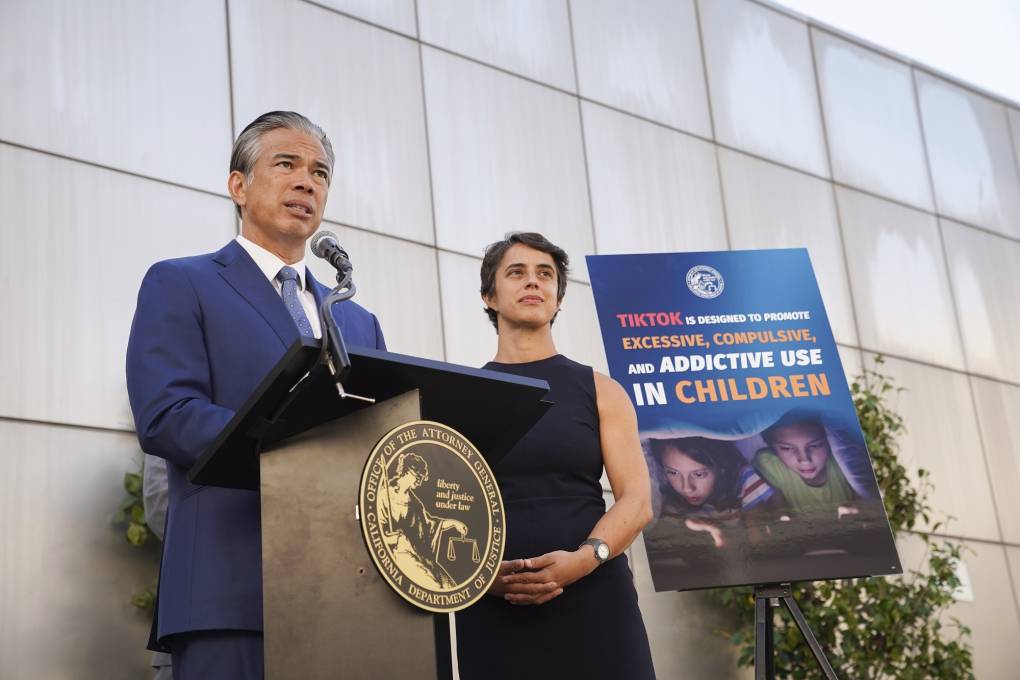
"caption": "California Attorney General Rob Bonta speaks during a press conference announcing a bipartisan coalition of attorney generals filing lawsuits against TikTok for violation of state consumer protection laws on Tuesday, Oct. 8, 2024, in San Francisco.",
"credit": "Minh Connors/AP Photo",
"altTag": null,
"description": null,
"imgSizes": {
"medium": {
"file": "https://cdn.kqed.org/wp-content/uploads/sites/10/2024/10/CATikTokLawsuitAP1-800x533.jpg",
"width": 800,
"height": 533,
"mimeType": "image/jpeg"
},
"large": {
"file": "https://cdn.kqed.org/wp-content/uploads/sites/10/2024/10/CATikTokLawsuitAP1-1020x680.jpg",
"width": 1020,
"height": 680,
"mimeType": "image/jpeg"
},
"thumbnail": {
"file": "https://cdn.kqed.org/wp-content/uploads/sites/10/2024/10/CATikTokLawsuitAP1-160x107.jpg",
"width": 160,
"height": 107,
"mimeType": "image/jpeg"
},
"1536x1536": {
"file": "https://cdn.kqed.org/wp-content/uploads/sites/10/2024/10/CATikTokLawsuitAP1-1536x1024.jpg",
"width": 1536,
"height": 1024,
"mimeType": "image/jpeg"
},
"post-thumbnail": {
"file": "https://cdn.kqed.org/wp-content/uploads/sites/10/2024/10/CATikTokLawsuitAP1-672x372.jpg",
"width": 672,
"height": 372,
"mimeType": "image/jpeg"
},
"twentyfourteen-full-width": {
"file": "https://cdn.kqed.org/wp-content/uploads/sites/10/2024/10/CATikTokLawsuitAP1-1038x576.jpg",
"width": 1038,
"height": 576,
"mimeType": "image/jpeg"
},
"full-width": {
"file": "https://cdn.kqed.org/wp-content/uploads/sites/10/2024/10/CATikTokLawsuitAP1-1920x1280.jpg",
"width": 1920,
"height": 1280,
"mimeType": "image/jpeg"
},
"kqedFullSize": {
"file": "https://cdn.kqed.org/wp-content/uploads/sites/10/2024/10/CATikTokLawsuitAP1.jpg",
"width": 2000,
"height": 1333
}
},
"isLoading": false,
"fetchFailed": false
},
"news_11963692": {
"type": "attachments",
"id": "news_11963692",
"meta": {
"index": "attachments_1716263798",
"site": "news",
"id": "11963692",
"found": true
},
"title": "Patricia Moran stands in her child care facility in San Jose on Oct. 2, 2023.",
"publishDate": 1696612045,
"status": "inherit",
"parent": 11964236,
"modified": 1728416027,
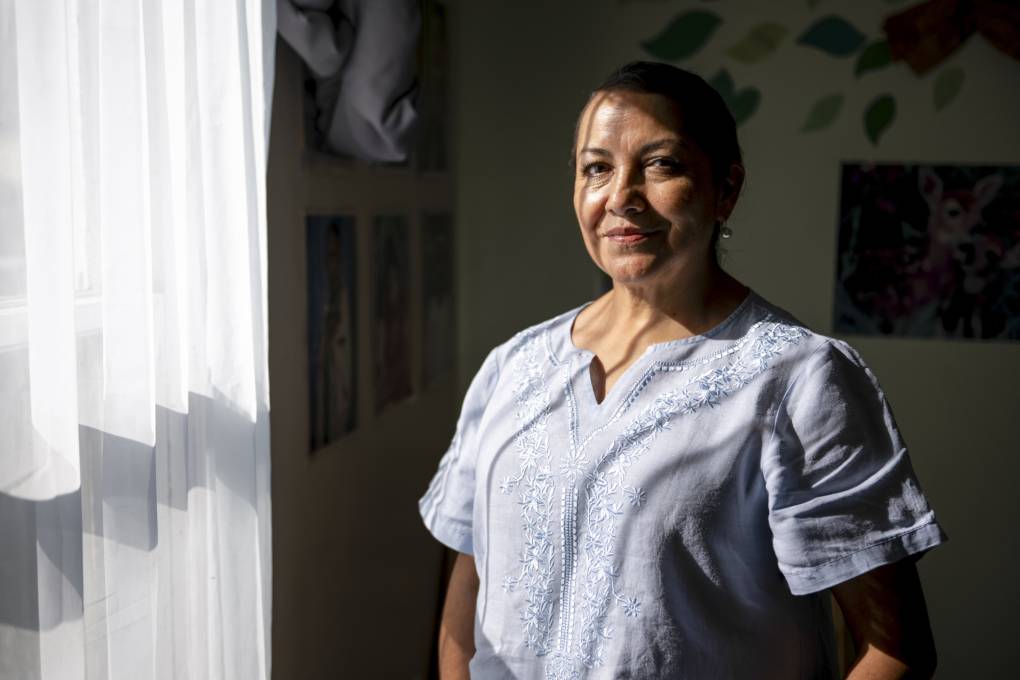
"caption": "Patricia Moran stands in her child care facility in San José on Oct. 2, 2023.",
"credit": "Beth LaBerge/KQED",
"altTag": "A person stands by a window and looks at the camera.",
"description": null,
"imgSizes": {
"medium": {
"file": "https://cdn.kqed.org/wp-content/uploads/sites/10/2023/10/231002-ChildCareLaborMovement-003-BL-KQED-800x533.jpg",
"width": 800,
"height": 533,
"mimeType": "image/jpeg"
},
"large": {
"file": "https://cdn.kqed.org/wp-content/uploads/sites/10/2023/10/231002-ChildCareLaborMovement-003-BL-KQED-1020x680.jpg",
"width": 1020,
"height": 680,
"mimeType": "image/jpeg"
},
"thumbnail": {
"file": "https://cdn.kqed.org/wp-content/uploads/sites/10/2023/10/231002-ChildCareLaborMovement-003-BL-KQED-160x107.jpg",
"width": 160,
"height": 107,
"mimeType": "image/jpeg"
},
"1536x1536": {
"file": "https://cdn.kqed.org/wp-content/uploads/sites/10/2023/10/231002-ChildCareLaborMovement-003-BL-KQED-1536x1024.jpg",
"width": 1536,
"height": 1024,
"mimeType": "image/jpeg"
},
"post-thumbnail": {
"file": "https://cdn.kqed.org/wp-content/uploads/sites/10/2023/10/231002-ChildCareLaborMovement-003-BL-KQED-672x372.jpg",
"width": 672,
"height": 372,
"mimeType": "image/jpeg"
},
"twentyfourteen-full-width": {
"file": "https://cdn.kqed.org/wp-content/uploads/sites/10/2023/10/231002-ChildCareLaborMovement-003-BL-KQED-1038x576.jpg",
"width": 1038,
"height": 576,
"mimeType": "image/jpeg"
},
"full-width": {
"file": "https://cdn.kqed.org/wp-content/uploads/sites/10/2023/10/231002-ChildCareLaborMovement-003-BL-KQED-1920x1280.jpg",
"width": 1920,
"height": 1280,
"mimeType": "image/jpeg"
},
"kqedFullSize": {
"file": "https://cdn.kqed.org/wp-content/uploads/sites/10/2023/10/231002-ChildCareLaborMovement-003-BL-KQED.jpg",
"width": 2000,
"height": 1333
}
},
"isLoading": false,
"fetchFailed": false
},
"news_12008542": {
"type": "attachments",
"id": "news_12008542",
"meta": {
"index": "attachments_1716263798",
"site": "news",
"id": "12008542",
"found": true
},
"title": "002_qed",
"publishDate": 1728420375,
"status": "inherit",
"parent": 12008531,
"modified": 1728431205,
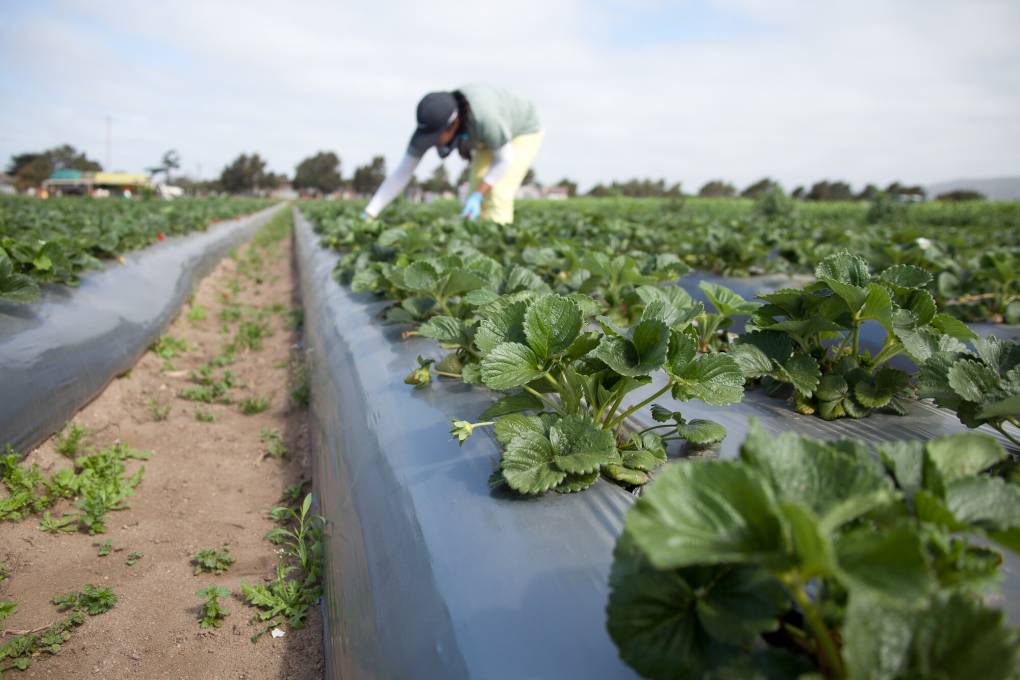
"caption": "A Salinas farmworker pulls weeds and trims strawberry runners to focus the crop’s energy on producing flavorful berries on April 13, 2017. Cal/OSHA announced yesterday it cited a California farm labor contractor for not protecting employees from heat illness. Farmworkers pushed for a bill that would have made getting workers' compensation for heat-related illnesses easier. But that bill, SB 1299, was vetoed by Gov. Gavin Newsom a few days ago.",
"credit": "Deborah Svoboda/KQED",
"altTag": null,
"description": null,
"imgSizes": {
"medium": {
"file": "https://cdn.kqed.org/wp-content/uploads/sites/10/2024/10/002_qed-800x533.jpg",
"width": 800,
"height": 533,
"mimeType": "image/jpeg"
},
"large": {
"file": "https://cdn.kqed.org/wp-content/uploads/sites/10/2024/10/002_qed-1020x680.jpg",
"width": 1020,
"height": 680,
"mimeType": "image/jpeg"
},
"thumbnail": {
"file": "https://cdn.kqed.org/wp-content/uploads/sites/10/2024/10/002_qed-160x107.jpg",
"width": 160,
"height": 107,
"mimeType": "image/jpeg"
},
"1536x1536": {
"file": "https://cdn.kqed.org/wp-content/uploads/sites/10/2024/10/002_qed-1536x1024.jpg",
"width": 1536,
"height": 1024,
"mimeType": "image/jpeg"
},
"post-thumbnail": {
"file": "https://cdn.kqed.org/wp-content/uploads/sites/10/2024/10/002_qed-672x372.jpg",
"width": 672,
"height": 372,
"mimeType": "image/jpeg"
},
"twentyfourteen-full-width": {
"file": "https://cdn.kqed.org/wp-content/uploads/sites/10/2024/10/002_qed-1038x576.jpg",
"width": 1038,
"height": 576,
"mimeType": "image/jpeg"
},
"full-width": {
"file": "https://cdn.kqed.org/wp-content/uploads/sites/10/2024/10/002_qed-1920x1280.jpg",
"width": 1920,
"height": 1280,
"mimeType": "image/jpeg"
},
"kqedFullSize": {
"file": "https://cdn.kqed.org/wp-content/uploads/sites/10/2024/10/002_qed.jpg",
"width": 2000,
"height": 1333
}
},
"isLoading": false,
"fetchFailed": false
},
"news_12008663": {
"type": "attachments",
"id": "news_12008663",
"meta": {
"index": "attachments_1716263798",
"site": "news",
"id": "12008663",
"found": true
},
"title": "241008-UCB CAMPUS WALKOUT-MD-09-KQED",
"publishDate": 1728431201,
"status": "inherit",
"parent": 12032046,
"modified": 1742415507,
"caption": "A walkout and rally for Gaza and Lebanon at the University of California, Berkeley, on Oct. 8, 2024.",
"credit": "Martin do Nascimento/KQED",
"altTag": null,
"description": null,
"imgSizes": {
"medium": {
"file": "https://cdn.kqed.org/wp-content/uploads/sites/10/2024/10/241008-UCB-CAMPUS-WALKOUT-MD-09-KQED-800x533.jpg",
"width": 800,
"height": 533,
"mimeType": "image/jpeg"
},
"large": {
"file": "https://cdn.kqed.org/wp-content/uploads/sites/10/2024/10/241008-UCB-CAMPUS-WALKOUT-MD-09-KQED-1020x680.jpg",
"width": 1020,
"height": 680,
"mimeType": "image/jpeg"
},
"thumbnail": {
"file": "https://cdn.kqed.org/wp-content/uploads/sites/10/2024/10/241008-UCB-CAMPUS-WALKOUT-MD-09-KQED-160x107.jpg",
"width": 160,
"height": 107,
"mimeType": "image/jpeg"
},
"1536x1536": {
"file": "https://cdn.kqed.org/wp-content/uploads/sites/10/2024/10/241008-UCB-CAMPUS-WALKOUT-MD-09-KQED-1536x1024.jpg",
"width": 1536,
"height": 1024,
"mimeType": "image/jpeg"
},
"post-thumbnail": {
"file": "https://cdn.kqed.org/wp-content/uploads/sites/10/2024/10/241008-UCB-CAMPUS-WALKOUT-MD-09-KQED-672x372.jpg",
"width": 672,
"height": 372,
"mimeType": "image/jpeg"
},
"twentyfourteen-full-width": {
"file": "https://cdn.kqed.org/wp-content/uploads/sites/10/2024/10/241008-UCB-CAMPUS-WALKOUT-MD-09-KQED-1038x576.jpg",
"width": 1038,
"height": 576,
"mimeType": "image/jpeg"
},
"full-width": {
"file": "https://cdn.kqed.org/wp-content/uploads/sites/10/2024/10/241008-UCB-CAMPUS-WALKOUT-MD-09-KQED-1920x1280.jpg",
"width": 1920,
"height": 1280,
"mimeType": "image/jpeg"
},
"kqedFullSize": {
"file": "https://cdn.kqed.org/wp-content/uploads/sites/10/2024/10/241008-UCB-CAMPUS-WALKOUT-MD-09-KQED.jpg",
"width": 2000,
"height": 1333
}
},
"isLoading": false,
"fetchFailed": false
},
"news_12008449": {
"type": "attachments",
"id": "news_12008449",
"meta": {
"index": "attachments_1716263798",
"site": "news",
"id": "12008449",
"found": true
},
"title": "Newsom",
"publishDate": 1728408466,
"status": "inherit",
"parent": 12007818,
"modified": 1728416870,
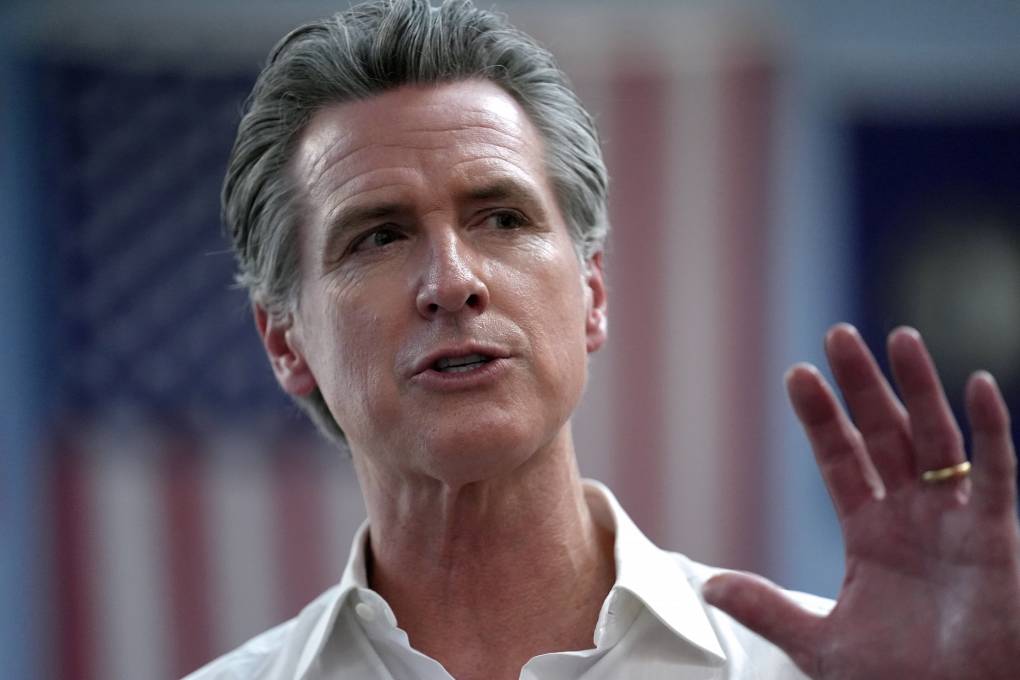
"caption": "Gov. Gavin Newsom speaks during a press conference in Los Angeles on Wednesday, Sept. 25, 2024.",
"credit": "Eric Thayer/AP Photo",
"altTag": null,
"description": null,
"imgSizes": {
"medium": {
"file": "https://cdn.kqed.org/wp-content/uploads/sites/10/2024/10/GavinNewsomAP3-800x533.jpg",
"width": 800,
"height": 533,
"mimeType": "image/jpeg"
},
"large": {
"file": "https://cdn.kqed.org/wp-content/uploads/sites/10/2024/10/GavinNewsomAP3-1020x680.jpg",
"width": 1020,
"height": 680,
"mimeType": "image/jpeg"
},
"thumbnail": {
"file": "https://cdn.kqed.org/wp-content/uploads/sites/10/2024/10/GavinNewsomAP3-160x107.jpg",
"width": 160,
"height": 107,
"mimeType": "image/jpeg"
},
"1536x1536": {
"file": "https://cdn.kqed.org/wp-content/uploads/sites/10/2024/10/GavinNewsomAP3-1536x1024.jpg",
"width": 1536,
"height": 1024,
"mimeType": "image/jpeg"
},
"post-thumbnail": {
"file": "https://cdn.kqed.org/wp-content/uploads/sites/10/2024/10/GavinNewsomAP3-672x372.jpg",
"width": 672,
"height": 372,
"mimeType": "image/jpeg"
},
"twentyfourteen-full-width": {
"file": "https://cdn.kqed.org/wp-content/uploads/sites/10/2024/10/GavinNewsomAP3-1038x576.jpg",
"width": 1038,
"height": 576,
"mimeType": "image/jpeg"
},
"full-width": {
"file": "https://cdn.kqed.org/wp-content/uploads/sites/10/2024/10/GavinNewsomAP3-1920x1280.jpg",
"width": 1920,
"height": 1280,
"mimeType": "image/jpeg"
},
"kqedFullSize": {
"file": "https://cdn.kqed.org/wp-content/uploads/sites/10/2024/10/GavinNewsomAP3.jpg",
"width": 2000,
"height": 1333
}
},
"isLoading": false,
"fetchFailed": false
},
"news_12008321": {
"type": "attachments",
"id": "news_12008321",
"meta": {
"index": "attachments_1716263798",
"site": "news",
"id": "12008321",
"found": true
},
"title": "San Francisco Ride Hailing Lawsuit",
"publishDate": 1728334457,
"status": "inherit",
"parent": 12008292,
"modified": 1744762102,
"caption": "A Lyft car crosses Market Street in San Francisco on Feb. 8, 2018. ",
"credit": "Jeff Chiu/AP Photo",
"altTag": null,
"description": null,
"imgSizes": {
"medium": {
"file": "https://cdn.kqed.org/wp-content/uploads/sites/10/2024/10/SFLyftDriverAP-800x496.jpg",
"width": 800,
"height": 496,
"mimeType": "image/jpeg"
},
"large": {
"file": "https://cdn.kqed.org/wp-content/uploads/sites/10/2024/10/SFLyftDriverAP-1020x632.jpg",
"width": 1020,
"height": 632,
"mimeType": "image/jpeg"
},
"thumbnail": {
"file": "https://cdn.kqed.org/wp-content/uploads/sites/10/2024/10/SFLyftDriverAP-160x99.jpg",
"width": 160,
"height": 99,
"mimeType": "image/jpeg"
},
"1536x1536": {
"file": "https://cdn.kqed.org/wp-content/uploads/sites/10/2024/10/SFLyftDriverAP-1536x952.jpg",
"width": 1536,
"height": 952,
"mimeType": "image/jpeg"
},
"post-thumbnail": {
"file": "https://cdn.kqed.org/wp-content/uploads/sites/10/2024/10/SFLyftDriverAP-672x372.jpg",
"width": 672,
"height": 372,
"mimeType": "image/jpeg"
},
"twentyfourteen-full-width": {
"file": "https://cdn.kqed.org/wp-content/uploads/sites/10/2024/10/SFLyftDriverAP-1038x576.jpg",
"width": 1038,
"height": 576,
"mimeType": "image/jpeg"
},
"full-width": {
"file": "https://cdn.kqed.org/wp-content/uploads/sites/10/2024/10/SFLyftDriverAP-1920x1190.jpg",
"width": 1920,
"height": 1190,
"mimeType": "image/jpeg"
},
"kqedFullSize": {
"file": "https://cdn.kqed.org/wp-content/uploads/sites/10/2024/10/SFLyftDriverAP.jpg",
"width": 2000,
"height": 1240
}
},
"isLoading": false,
"fetchFailed": false
},
"news_12007966": {
"type": "attachments",
"id": "news_12007966",
"meta": {
"index": "attachments_1716263798",
"site": "news",
"id": "12007966",
"found": true
},
"title": "School Hallway at Bayard Rustin Educational Complex",
"publishDate": 1728064512,
"status": "inherit",
"parent": 12007955,
"modified": 1728083207,
"caption": "Santa Clara County schools Superintendent Mary Ann Dewan was fired suddenly during a closed-door board meeting this week, sparking a press conference on Friday where school board member Tara Sreekrishnan and others condemned the move, citing the lack of cause or explanation behind her termination.",
"credit": "Getty Images",
"altTag": null,
"description": null,
"imgSizes": {
"medium": {
"file": "https://cdn.kqed.org/wp-content/uploads/sites/10/2024/10/EmptySchoolHallwayGetty-800x520.jpg",
"width": 800,
"height": 520,
"mimeType": "image/jpeg"
},
"large": {
"file": "https://cdn.kqed.org/wp-content/uploads/sites/10/2024/10/EmptySchoolHallwayGetty-1020x663.jpg",
"width": 1020,
"height": 663,
"mimeType": "image/jpeg"
},
"thumbnail": {
"file": "https://cdn.kqed.org/wp-content/uploads/sites/10/2024/10/EmptySchoolHallwayGetty-160x104.jpg",
"width": 160,
"height": 104,
"mimeType": "image/jpeg"
},
"1536x1536": {
"file": "https://cdn.kqed.org/wp-content/uploads/sites/10/2024/10/EmptySchoolHallwayGetty-1536x998.jpg",
"width": 1536,
"height": 998,
"mimeType": "image/jpeg"
},
"post-thumbnail": {
"file": "https://cdn.kqed.org/wp-content/uploads/sites/10/2024/10/EmptySchoolHallwayGetty-672x372.jpg",
"width": 672,
"height": 372,
"mimeType": "image/jpeg"
},
"twentyfourteen-full-width": {
"file": "https://cdn.kqed.org/wp-content/uploads/sites/10/2024/10/EmptySchoolHallwayGetty-1038x576.jpg",
"width": 1038,
"height": 576,
"mimeType": "image/jpeg"
},
"full-width": {
"file": "https://cdn.kqed.org/wp-content/uploads/sites/10/2024/10/EmptySchoolHallwayGetty-1920x1248.jpg",
"width": 1920,
"height": 1248,
"mimeType": "image/jpeg"
},
"kqedFullSize": {
"file": "https://cdn.kqed.org/wp-content/uploads/sites/10/2024/10/EmptySchoolHallwayGetty.jpg",
"width": 2000,
"height": 1300
}
},
"isLoading": false,
"fetchFailed": false
},
"news_12007942": {
"type": "attachments",
"id": "news_12007942",
"meta": {
"index": "attachments_1716263798",
"site": "news",
"id": "12007942",
"found": true
},
"title": "Amys-Kitchen-products",
"publishDate": 1728060249,
"status": "inherit",
"parent": 12007940,
"modified": 1728060352,
"caption": "Amy's Kitchen products are displayed at the company's facilities in Santa Rosa Calif., on May 16, 2022.",
"credit": "Farida Jhabvala Romero/KQED",
"altTag": null,
"description": null,
"imgSizes": {
"medium": {
"file": "https://cdn.kqed.org/wp-content/uploads/sites/10/2024/10/Amys-Kitchen-products-800x600.jpg",
"width": 800,
"height": 600,
"mimeType": "image/jpeg"
},
"large": {
"file": "https://cdn.kqed.org/wp-content/uploads/sites/10/2024/10/Amys-Kitchen-products-1020x765.jpg",
"width": 1020,
"height": 765,
"mimeType": "image/jpeg"
},
"thumbnail": {
"file": "https://cdn.kqed.org/wp-content/uploads/sites/10/2024/10/Amys-Kitchen-products-160x120.jpg",
"width": 160,
"height": 120,
"mimeType": "image/jpeg"
},
"1536x1536": {
"file": "https://cdn.kqed.org/wp-content/uploads/sites/10/2024/10/Amys-Kitchen-products-1536x1152.jpg",
"width": 1536,
"height": 1152,
"mimeType": "image/jpeg"
},
"post-thumbnail": {
"file": "https://cdn.kqed.org/wp-content/uploads/sites/10/2024/10/Amys-Kitchen-products-672x372.jpg",
"width": 672,
"height": 372,
"mimeType": "image/jpeg"
},
"twentyfourteen-full-width": {
"file": "https://cdn.kqed.org/wp-content/uploads/sites/10/2024/10/Amys-Kitchen-products-1038x576.jpg",
"width": 1038,
"height": 576,
"mimeType": "image/jpeg"
},
"full-width": {
"file": "https://cdn.kqed.org/wp-content/uploads/sites/10/2024/10/Amys-Kitchen-products-1920x1440.jpg",
"width": 1920,
"height": 1440,
"mimeType": "image/jpeg"
},
"kqedFullSize": {
"file": "https://cdn.kqed.org/wp-content/uploads/sites/10/2024/10/Amys-Kitchen-products.jpg",
"width": 2000,
"height": 1500
}
},
"isLoading": false,
"fetchFailed": false
},
"news_12000524": {
"type": "attachments",
"id": "news_12000524",
"meta": {
"index": "attachments_1716263798",
"site": "news",
"id": "12000524",
"found": true
},
"title": "California-Homeless",
"publishDate": 1723830664,
"status": "inherit",
"parent": 12000513,
"modified": 1723833367,
"caption": "California Gov. Gavin Newsom greets people on July 8, 2024, near the Common Man Roadside Market and Deli in Hooksett, New Hampshire. Newsom issued an executive order Thursday, July 25, to remove homeless encampments in his state.",
"credit": "Steven Senne/AP Photo",
"altTag": null,
"description": null,
"imgSizes": {
"medium": {
"file": "https://cdn.kqed.org/wp-content/uploads/sites/10/2024/08/AP24207558088069-800x533.jpg",
"width": 800,
"height": 533,
"mimeType": "image/jpeg"
},
"large": {
"file": "https://cdn.kqed.org/wp-content/uploads/sites/10/2024/08/AP24207558088069-1020x680.jpg",
"width": 1020,
"height": 680,
"mimeType": "image/jpeg"
},
"thumbnail": {
"file": "https://cdn.kqed.org/wp-content/uploads/sites/10/2024/08/AP24207558088069-160x107.jpg",
"width": 160,
"height": 107,
"mimeType": "image/jpeg"
},
"1536x1536": {
"file": "https://cdn.kqed.org/wp-content/uploads/sites/10/2024/08/AP24207558088069-1536x1024.jpg",
"width": 1536,
"height": 1024,
"mimeType": "image/jpeg"
},
"post-thumbnail": {
"file": "https://cdn.kqed.org/wp-content/uploads/sites/10/2024/08/AP24207558088069-672x372.jpg",
"width": 672,
"height": 372,
"mimeType": "image/jpeg"
},
"twentyfourteen-full-width": {
"file": "https://cdn.kqed.org/wp-content/uploads/sites/10/2024/08/AP24207558088069-1038x576.jpg",
"width": 1038,
"height": 576,
"mimeType": "image/jpeg"
},
"full-width": {
"file": "https://cdn.kqed.org/wp-content/uploads/sites/10/2024/08/AP24207558088069-1920x1280.jpg",
"width": 1920,
"height": 1280,
"mimeType": "image/jpeg"
},
"kqedFullSize": {
"file": "https://cdn.kqed.org/wp-content/uploads/sites/10/2024/08/AP24207558088069.jpg",
"width": 2000,
"height": 1333
}
},
"isLoading": false,
"fetchFailed": false
},
"news_11949857": {
"type": "attachments",
"id": "news_11949857",
"meta": {
"index": "attachments_1716263798",
"site": "news",
"id": "11949857",
"found": true
},
"title": "RS36032__M6A0599-qut",
"publishDate": 1684350746,
"status": "inherit",
"parent": 11949797,
"modified": 1728062194,
"caption": "San José City Hall on March 20, 2019.",
"credit": "Sruti Mamidanna/KQED",
"altTag": "Outside of a tan and gray government building, a large metal sign reads, \"San Jose City Hall.\" An art sculpture in the background depicts the large letters, \"XO.\" A California State flag with a brown bear is waving from a flagpole in the background.",
"description": null,
"imgSizes": {
"medium": {
"file": "https://cdn.kqed.org/wp-content/uploads/sites/10/2023/05/RS36032__M6A0599-qut-800x533.jpg",
"width": 800,
"height": 533,
"mimeType": "image/jpeg"
},
"large": {
"file": "https://cdn.kqed.org/wp-content/uploads/sites/10/2023/05/RS36032__M6A0599-qut-1020x680.jpg",
"width": 1020,
"height": 680,
"mimeType": "image/jpeg"
},
"thumbnail": {
"file": "https://cdn.kqed.org/wp-content/uploads/sites/10/2023/05/RS36032__M6A0599-qut-160x107.jpg",
"width": 160,
"height": 107,
"mimeType": "image/jpeg"
},
"1536x1536": {
"file": "https://cdn.kqed.org/wp-content/uploads/sites/10/2023/05/RS36032__M6A0599-qut-1536x1024.jpg",
"width": 1536,
"height": 1024,
"mimeType": "image/jpeg"
},
"post-thumbnail": {
"file": "https://cdn.kqed.org/wp-content/uploads/sites/10/2023/05/RS36032__M6A0599-qut-672x372.jpg",
"width": 672,
"height": 372,
"mimeType": "image/jpeg"
},
"twentyfourteen-full-width": {
"file": "https://cdn.kqed.org/wp-content/uploads/sites/10/2023/05/RS36032__M6A0599-qut-1038x576.jpg",
"width": 1038,
"height": 576,
"mimeType": "image/jpeg"
},
"kqedFullSize": {
"file": "https://cdn.kqed.org/wp-content/uploads/sites/10/2023/05/RS36032__M6A0599-qut.jpg",
"width": 1920,
"height": 1280
}
},
"isLoading": false,
"fetchFailed": false
},
"news_12007683": {
"type": "attachments",
"id": "news_12007683",
"meta": {
"index": "attachments_1716263798",
"site": "news",
"id": "12007683",
"found": true
},
"title": "Empty classroom at elementary school!",
"publishDate": 1727974066,
"status": "inherit",
"parent": 12007681,
"modified": 1727974159,
"caption": "Santa Clara County Superintendent of Schools, Mary Ann Dewan, was dismissed during an overnight Board of Education meeting.",
"credit": "Getty Images",
"altTag": null,
"description": null,
"imgSizes": {
"medium": {
"file": "https://cdn.kqed.org/wp-content/uploads/sites/10/2024/10/GettyImages-1792528853-800x534.jpg",
"width": 800,
"height": 534,
"mimeType": "image/jpeg"
},
"large": {
"file": "https://cdn.kqed.org/wp-content/uploads/sites/10/2024/10/GettyImages-1792528853-1020x680.jpg",
"width": 1020,
"height": 680,
"mimeType": "image/jpeg"
},
"thumbnail": {
"file": "https://cdn.kqed.org/wp-content/uploads/sites/10/2024/10/GettyImages-1792528853-160x107.jpg",
"width": 160,
"height": 107,
"mimeType": "image/jpeg"
},
"1536x1536": {
"file": "https://cdn.kqed.org/wp-content/uploads/sites/10/2024/10/GettyImages-1792528853-1536x1025.jpg",
"width": 1536,
"height": 1025,
"mimeType": "image/jpeg"
},
"post-thumbnail": {
"file": "https://cdn.kqed.org/wp-content/uploads/sites/10/2024/10/GettyImages-1792528853-672x372.jpg",
"width": 672,
"height": 372,
"mimeType": "image/jpeg"
},
"twentyfourteen-full-width": {
"file": "https://cdn.kqed.org/wp-content/uploads/sites/10/2024/10/GettyImages-1792528853-1038x576.jpg",
"width": 1038,
"height": 576,
"mimeType": "image/jpeg"
},
"full-width": {
"file": "https://cdn.kqed.org/wp-content/uploads/sites/10/2024/10/GettyImages-1792528853-1920x1281.jpg",
"width": 1920,
"height": 1281,
"mimeType": "image/jpeg"
},
"kqedFullSize": {
"file": "https://cdn.kqed.org/wp-content/uploads/sites/10/2024/10/GettyImages-1792528853.jpg",
"width": 2000,
"height": 1334
}
},
"isLoading": false,
"fetchFailed": false
},
"news_12007676": {
"type": "attachments",
"id": "news_12007676",
"meta": {
"index": "attachments_1716263798",
"site": "news",
"id": "12007676",
"found": true
},
"title": "New York, LA Have Most Polluted Air",
"publishDate": 1727972227,
"status": "inherit",
"parent": 12007473,
"modified": 1727972466,
"caption": "A UC Davis research team analyzed 40 studies linking outdoor air pollution to differences in children's brain development, including white matter volume, brain connectivity and early markers of Alzheimer’s.",
"credit": "David McNew/Getty Images",
"altTag": null,
"description": null,
"imgSizes": {
"medium": {
"file": "https://cdn.kqed.org/wp-content/uploads/sites/10/2024/10/AirPollutionGetty1-800x532.jpg",
"width": 800,
"height": 532,
"mimeType": "image/jpeg"
},
"large": {
"file": "https://cdn.kqed.org/wp-content/uploads/sites/10/2024/10/AirPollutionGetty1-1020x678.jpg",
"width": 1020,
"height": 678,
"mimeType": "image/jpeg"
},
"thumbnail": {
"file": "https://cdn.kqed.org/wp-content/uploads/sites/10/2024/10/AirPollutionGetty1-160x106.jpg",
"width": 160,
"height": 106,
"mimeType": "image/jpeg"
},
"1536x1536": {
"file": "https://cdn.kqed.org/wp-content/uploads/sites/10/2024/10/AirPollutionGetty1-1536x1021.jpg",
"width": 1536,
"height": 1021,
"mimeType": "image/jpeg"
},
"post-thumbnail": {
"file": "https://cdn.kqed.org/wp-content/uploads/sites/10/2024/10/AirPollutionGetty1-672x372.jpg",
"width": 672,
"height": 372,
"mimeType": "image/jpeg"
},
"twentyfourteen-full-width": {
"file": "https://cdn.kqed.org/wp-content/uploads/sites/10/2024/10/AirPollutionGetty1-1038x576.jpg",
"width": 1038,
"height": 576,
"mimeType": "image/jpeg"
},
"full-width": {
"file": "https://cdn.kqed.org/wp-content/uploads/sites/10/2024/10/AirPollutionGetty1-1920x1277.jpg",
"width": 1920,
"height": 1277,
"mimeType": "image/jpeg"
},
"kqedFullSize": {
"file": "https://cdn.kqed.org/wp-content/uploads/sites/10/2024/10/AirPollutionGetty1.jpg",
"width": 2000,
"height": 1330
}
},
"isLoading": false,
"fetchFailed": false
}
},
"audioPlayerReducer": {
"postId": "stream_live",
"isPaused": true,
"isPlaying": false,
"pfsActive": false,
"pledgeModalIsOpen": true,
"playerDrawerIsOpen": false,
"liveAudioPlayStartedAt": 0,
"liveAudioPlayContext": ""
},
"authorsReducer": {
"kqed": {
"type": "authors",
"id": "236",
"meta": {
"index": "authors_1716337520",
"id": "236",
"found": true
},
"name": "KQED News Staff",
"firstName": "KQED News Staff",
"lastName": null,
"slug": "kqed",
"email": "faq@kqed.org",
"display_author_email": false,
"staff_mastheads": [],
"title": null,
"bio": null,
"avatar": "https://secure.gravatar.com/avatar/ef0e801a68c4c54afa9180db14084167?s=600&d=blank&r=g",
"twitter": null,
"facebook": null,
"instagram": null,
"linkedin": null,
"sites": [
{
"site": "arts",
"roles": [
"contributor"
]
},
{
"site": "news",
"roles": [
"editor"
]
},
{
"site": "futureofyou",
"roles": [
"author"
]
}
],
"headData": {
"title": "KQED News Staff | KQED",
"description": null,
"ogImgSrc": "https://secure.gravatar.com/avatar/ef0e801a68c4c54afa9180db14084167?s=600&d=blank&r=g",
"twImgSrc": "https://secure.gravatar.com/avatar/ef0e801a68c4c54afa9180db14084167?s=600&d=blank&r=g"
},
"isLoading": false,
"link": "/author/kqed"
},
"rachael-myrow": {
"type": "authors",
"id": "251",
"meta": {
"index": "authors_1716337520",
"id": "251",
"found": true
},
"name": "Rachael Myrow",
"firstName": "Rachael",
"lastName": "Myrow",
"slug": "rachael-myrow",
"email": "rmyrow@kqed.org",
"display_author_email": true,
"staff_mastheads": [
"news"
],
"title": "Senior Editor of KQED's Silicon Valley News Desk",
"bio": "• I write and edit stories about how Silicon Valley power and policies shape everyday life in California. I’m also passionate about making Bay Area history and culture more accessible to a broad public. • I’ve been a journalist for most of my life, starting in high school with The Franklin Press in Los Angeles, where I grew up. While earning my first degree in English at UC Berkeley, I got my start in public radio at KALX-FM. After completing a second degree in journalism at Cal, I landed my first professional job at Marketplace, then moved on to KPCC (now LAist), and then KQED, where I hosted The California Report for more than seven years. • My reporting has appeared on NPR, The World, WBUR’s \u003ci>Here & Now\u003c/i>, and the BBC. I also guest host for KQED’s \u003ci>Forum\u003c/i>, as well as the Commonwealth Club in San Francisco. • I speak periodically on media, democracy and technology issues, and do voiceover work for documentaries and educational video projects. • Outside of the studio, you'll find me hiking Bay Area trails and whipping up Insta-ready meals in my kitchen. • I do not accept gifts, money, or favors from anyone connected to my reporting, I don't pay people for information, and I do not support or donate to political causes. • I strive to treat the people I report on with fairness, honesty, and respect. I also recognize there are often multiple sides to a story and work to verify information through multiple sources and documentation. If I get something wrong, I correct it.",
"avatar": "https://secure.gravatar.com/avatar/87bf8cb5874e045cdff430523a6d48b1?s=600&d=blank&r=g",
"twitter": "rachaelmyrow",
"facebook": null,
"instagram": null,
"linkedin": "https://www.linkedin.com/in/rachaelmyrow/",
"sites": [
{
"site": "arts",
"roles": [
"administrator"
]
},
{
"site": "news",
"roles": [
"edit_others_posts",
"editor"
]
},
{
"site": "futureofyou",
"roles": [
"editor"
]
},
{
"site": "bayareabites",
"roles": [
"editor"
]
},
{
"site": "stateofhealth",
"roles": [
"editor"
]
},
{
"site": "science",
"roles": [
"editor"
]
},
{
"site": "food",
"roles": [
"editor"
]
},
{
"site": "forum",
"roles": [
"editor"
]
},
{
"site": "liveblog",
"roles": [
"author"
]
}
],
"headData": {
"title": "Rachael Myrow | KQED",
"description": "Senior Editor of KQED's Silicon Valley News Desk",
"ogImgSrc": "https://secure.gravatar.com/avatar/87bf8cb5874e045cdff430523a6d48b1?s=600&d=blank&r=g",
"twImgSrc": "https://secure.gravatar.com/avatar/87bf8cb5874e045cdff430523a6d48b1?s=600&d=blank&r=g"
},
"isLoading": false,
"link": "/author/rachael-myrow"
},
"shossaini": {
"type": "authors",
"id": "3214",
"meta": {
"index": "authors_1716337520",
"id": "3214",
"found": true
},
"name": "Sara Hossaini",
"firstName": "Sara",
"lastName": "Hossaini",
"slug": "shossaini",
"email": "shossaini@kqed.org",
"display_author_email": true,
"staff_mastheads": [
"news"
],
"title": "KQED Reporter",
"bio": "Sara Hossaini came to general assignment reporting at KQED in 2013 after two winters reporting at Wyoming Public Radio. She holds a bachelor's degree in broadcast journalism from the University of Nebraska-Lincoln. Her radio romance began after a bitter breakup with documentary film (Ok, maybe it's still complicated). Her first simultaneous jobs in San Francisco were as Associate Producer on a PBS film series through the Center for Asian American Media and as a butler. She likes to trot, plot and make things with her hands.",
"avatar": "https://secure.gravatar.com/avatar/060e9f56b9554e17942e89f413242774?s=600&d=blank&r=g",
"twitter": "mshossaini",
"facebook": null,
"instagram": null,
"linkedin": null,
"sites": [
{
"site": "news",
"roles": [
"author"
]
},
{
"site": "stateofhealth",
"roles": [
"author"
]
}
],
"headData": {
"title": "Sara Hossaini | KQED",
"description": "KQED Reporter",
"ogImgSrc": "https://secure.gravatar.com/avatar/060e9f56b9554e17942e89f413242774?s=600&d=blank&r=g",
"twImgSrc": "https://secure.gravatar.com/avatar/060e9f56b9554e17942e89f413242774?s=600&d=blank&r=g"
},
"isLoading": false,
"link": "/author/shossaini"
},
"fjhabvala": {
"type": "authors",
"id": "8659",
"meta": {
"index": "authors_1716337520",
"id": "8659",
"found": true
},
"name": "Farida Jhabvala Romero",
"firstName": "Farida",
"lastName": "Jhabvala Romero",
"slug": "fjhabvala",
"email": "fjhabvala@kqed.org",
"display_author_email": true,
"staff_mastheads": [
"news"
],
"title": "KQED Contributor",
"bio": "Farida Jhabvala Romero is a Labor Correspondent for KQED. She previously covered immigration. Farida was \u003ca href=\"https://www.ccnma.org/2022-most-influential-latina-journalists\">named\u003c/a> one of the 10 Most Influential Latina Journalists in California in 2022 by the California Chicano News Media Association. Her work has won awards from the Society of Professional Journalists (Northern California), as well as a national and regional Edward M. Murrow Award for the collaborative reporting projects “Dangerous Air” and “Graying California.” Before joining KQED, Farida worked as a producer at Radio Bilingüe, a national public radio network. Farida earned her master’s degree in journalism from Stanford University.",
"avatar": "https://secure.gravatar.com/avatar/f9f022d4e2609741874222a1e9d41f48fea74011aa7c615eef91d9a50c944ebe?s=600&d=blank&r=g",
"twitter": "FaridaJhabvala",
"bluesky": null,
"facebook": null,
"instagram": null,
"linkedin": "https://www.linkedin.com/in/faridajhabvala/",
"sites": [
{
"site": "news",
"roles": [
"editor"
]
},
{
"site": "stateofhealth",
"roles": [
"author"
]
},
{
"site": "liveblog",
"roles": [
"author"
]
}
],
"headData": {
"title": "Farida Jhabvala Romero | KQED",
"description": "KQED Contributor",
"ogImgSrc": "https://secure.gravatar.com/avatar/f9f022d4e2609741874222a1e9d41f48fea74011aa7c615eef91d9a50c944ebe?s=600&d=blank&r=g",
"twImgSrc": "https://secure.gravatar.com/avatar/f9f022d4e2609741874222a1e9d41f48fea74011aa7c615eef91d9a50c944ebe?s=600&d=blank&r=g"
},
"isLoading": false,
"link": "/author/fjhabvala"
},
"lesleymcclurg": {
"type": "authors",
"id": "11229",
"meta": {
"index": "authors_1716337520",
"id": "11229",
"found": true
},
"name": "Lesley McClurg",
"firstName": "Lesley",
"lastName": "McClurg",
"slug": "lesleymcclurg",
"email": "lmcclurg@KQED.org",
"display_author_email": false,
"staff_mastheads": [
"news",
"science"
],
"title": "KQED Health Correspondent",
"bio": "Lesley McClurg is a health correspondent and fill-in host whose work is regularly rebroadcast on NPR and PBS programs. She’s earned multiple regional Emmy awards, a national and a regional Edward R. Murrow award, and was named Best Beat Reporter by the Association of Health Care Journalists. The Society of Professional Journalists has recognized her work several times, and the Society of Environmental Journalists spotlighted her coverage of California’s historic drought.\r\n\r\nBefore joining KQED in 2016, Lesley covered food and sustainability for Capital Public Radio, environmental issues for Colorado Public Radio, and reported for KUOW and KCTS 9 in Seattle. Away from the newsroom, she loves skiing with her daughter, mountain biking with her partner, and playing with Ollie, the family’s goldendoodle. On deadline, she runs almost entirely on chocolate chips.\r\n\r\n ",
"avatar": "https://secure.gravatar.com/avatar/bab49e972ea10c774fe0f5e29dba1722b158f7c0d58a360923d1389d380b2978?s=600&d=blank&r=g",
"twitter": "lesleywmcclurg",
"bluesky": null,
"facebook": null,
"instagram": null,
"linkedin": null,
"sites": [
{
"site": "arts",
"roles": [
"author"
]
},
{
"site": "news",
"roles": [
"editor"
]
},
{
"site": "futureofyou",
"roles": [
"editor"
]
},
{
"site": "stateofhealth",
"roles": [
"author"
]
},
{
"site": "science",
"roles": [
"editor"
]
},
{
"site": "quest",
"roles": [
"subscriber"
]
},
{
"site": "forum",
"roles": [
"administrator"
]
},
{
"site": "liveblog",
"roles": [
"author"
]
}
],
"headData": {
"title": "Lesley McClurg | KQED",
"description": "KQED Health Correspondent",
"ogImgSrc": "https://secure.gravatar.com/avatar/bab49e972ea10c774fe0f5e29dba1722b158f7c0d58a360923d1389d380b2978?s=600&d=blank&r=g",
"twImgSrc": "https://secure.gravatar.com/avatar/bab49e972ea10c774fe0f5e29dba1722b158f7c0d58a360923d1389d380b2978?s=600&d=blank&r=g"
},
"isLoading": false,
"link": "/author/lesleymcclurg"
},
"vrancano": {
"type": "authors",
"id": "11276",
"meta": {
"index": "authors_1716337520",
"id": "11276",
"found": true
},
"name": "Vanessa Rancaño",
"firstName": "Vanessa",
"lastName": "Rancaño",
"slug": "vrancano",
"email": "vrancano@kqed.org",
"display_author_email": false,
"staff_mastheads": [
"news"
],
"title": "Reporter",
"bio": "Vanessa Rancaño is a features reporter for KQED. She’s also covered homelessness and education for the station and reported from the Central Valley. Her work has aired across public radio, from flagship national news shows to longform narrative podcasts. Before taking up a mic, she worked as a freelance print journalist. She’s been recognized with a number of national and regional awards. Vanessa grew up in California's Central Valley. She's a former NPR Kroc Fellow, and a graduate of the UC Berkeley Graduate School of Journalism.",
"avatar": "https://secure.gravatar.com/avatar/b3a383dfb0e7ee1c17568f2cf067904ab654d6e3de9743fc661f3c788ade1bed?s=600&d=blank&r=g",
"twitter": "vanessarancano",
"bluesky": null,
"facebook": null,
"instagram": null,
"linkedin": null,
"sites": [
{
"site": "arts",
"roles": [
"editor"
]
},
{
"site": "news",
"roles": [
"editor"
]
},
{
"site": "liveblog",
"roles": [
"contributor"
]
}
],
"headData": {
"title": "Vanessa Rancaño | KQED",
"description": "Reporter",
"ogImgSrc": "https://secure.gravatar.com/avatar/b3a383dfb0e7ee1c17568f2cf067904ab654d6e3de9743fc661f3c788ade1bed?s=600&d=blank&r=g",
"twImgSrc": "https://secure.gravatar.com/avatar/b3a383dfb0e7ee1c17568f2cf067904ab654d6e3de9743fc661f3c788ade1bed?s=600&d=blank&r=g"
},
"isLoading": false,
"link": "/author/vrancano"
},
"abandlamudi": {
"type": "authors",
"id": "11672",
"meta": {
"index": "authors_1716337520",
"id": "11672",
"found": true
},
"name": "Adhiti Bandlamudi",
"firstName": "Adhiti",
"lastName": "Bandlamudi",
"slug": "abandlamudi",
"email": "abandlamudi@kqed.org",
"display_author_email": false,
"staff_mastheads": [
"news"
],
"title": "KQED Housing Reporter",
"bio": "Adhiti Bandlamudi reports for KQED's Housing desk. She focuses on how housing gets built across the Bay Area. Before joining KQED in 2020, she reported for WUNC in Durham, North Carolina, WABE in Atlanta, Georgia and Capital Public Radio in Sacramento. In 2017, she was awarded a Kroc Fellowship at NPR where she reported on everything from sprinkles to the Golden State Killer's arrest. When she's not reporting, she's baking new recipes in her kitchen or watching movies with friends and family. She's originally from Georgia and has strong opinions about Great British Bake Off.",
"avatar": "https://secure.gravatar.com/avatar/868129c8b257bb99a3500e2c86a65400?s=600&d=mm&r=g",
"twitter": "oddity_adhiti",
"facebook": null,
"instagram": null,
"linkedin": null,
"sites": [
{
"site": "arts",
"roles": [
"author"
]
},
{
"site": "news",
"roles": [
"editor"
]
},
{
"site": "liveblog",
"roles": [
"author"
]
}
],
"headData": {
"title": "Adhiti Bandlamudi | KQED",
"description": "KQED Housing Reporter",
"ogImgSrc": "https://secure.gravatar.com/avatar/868129c8b257bb99a3500e2c86a65400?s=600&d=mm&r=g",
"twImgSrc": "https://secure.gravatar.com/avatar/868129c8b257bb99a3500e2c86a65400?s=600&d=mm&r=g"
},
"isLoading": false,
"link": "/author/abandlamudi"
},
"daisynguyen": {
"type": "authors",
"id": "11829",
"meta": {
"index": "authors_1716337520",
"id": "11829",
"found": true
},
"name": "Daisy Nguyen",
"firstName": "Daisy",
"lastName": "Nguyen",
"slug": "daisynguyen",
"email": "daisynguyen@kqed.org",
"display_author_email": true,
"staff_mastheads": [
"news"
],
"title": "KQED Contributor",
"bio": "I have covered early childhood education and child care for KQED since 2022. I focus on policies aimed at increasing access to early care and education and how they shape individual lives. I've been a journalist for more than two decades, with most of that time devoted to covering breaking news throughout California for The Associated Press. I grew up in San Francisco and studied at UC Davis and Columbia University's Graduate School of Journalism. I live in Oakland with my husband and two kids.",
"avatar": "https://secure.gravatar.com/avatar/2da2127c27f7143b53ebd419800fd55f?s=600&d=blank&r=g",
"twitter": null,
"facebook": null,
"instagram": null,
"linkedin": "https://www.linkedin.com/in/daisynguyen/",
"sites": [
{
"site": "news",
"roles": [
"author"
]
},
{
"site": "liveblog",
"roles": [
"author"
]
}
],
"headData": {
"title": "Daisy Nguyen | KQED",
"description": "KQED Contributor",
"ogImgSrc": "https://secure.gravatar.com/avatar/2da2127c27f7143b53ebd419800fd55f?s=600&d=blank&r=g",
"twImgSrc": "https://secure.gravatar.com/avatar/2da2127c27f7143b53ebd419800fd55f?s=600&d=blank&r=g"
},
"isLoading": false,
"link": "/author/daisynguyen"
},
"kdebenedetti": {
"type": "authors",
"id": "11913",
"meta": {
"index": "authors_1716337520",
"id": "11913",
"found": true
},
"name": "Katie DeBenedetti",
"firstName": "Katie",
"lastName": "DeBenedetti",
"slug": "kdebenedetti",
"email": "kdebenedetti@kqed.org",
"display_author_email": false,
"staff_mastheads": [
"news",
"science"
],
"title": "KQED Contributor",
"bio": "Katie DeBenedetti is a digital reporter covering daily news for the Express Desk. Prior to joining KQED as a culture reporting intern in January 2024, she covered education and city government for the Napa Valley Register.",
"avatar": "https://secure.gravatar.com/avatar/6e31073cb8f7e4214ab03f42771d0f45?s=600&d=blank&r=g",
"twitter": null,
"facebook": null,
"instagram": null,
"linkedin": null,
"sites": [
{
"site": "news",
"roles": [
"author"
]
},
{
"site": "science",
"roles": [
"author"
]
},
{
"site": "liveblog",
"roles": [
"author"
]
}
],
"headData": {
"title": "Katie DeBenedetti | KQED",
"description": "KQED Contributor",
"ogImgSrc": "https://secure.gravatar.com/avatar/6e31073cb8f7e4214ab03f42771d0f45?s=600&d=blank&r=g",
"twImgSrc": "https://secure.gravatar.com/avatar/6e31073cb8f7e4214ab03f42771d0f45?s=600&d=blank&r=g"
},
"isLoading": false,
"link": "/author/kdebenedetti"
},
"rcooke": {
"type": "authors",
"id": "11921",
"meta": {
"index": "authors_1716337520",
"id": "11921",
"found": true
},
"name": "Riley Cooke",
"firstName": "Riley",
"lastName": "Cooke",
"slug": "rcooke",
"email": "rcooke@kqed.org",
"display_author_email": true,
"staff_mastheads": [
"news"
],
"title": "KQED Contributor",
"bio": "Riley is a senior at UC Berkeley, where she studies political science and journalism. Her work has appeared in SFGate, NBC Bay Area, Local News Matters and more. She enjoys reporting on politics, housing and homelessness — and using as many em dashes as her editors will allow.",
"avatar": "https://secure.gravatar.com/avatar/792f98c126cc5e270a8a96f77f7224ea?s=600&d=blank&r=g",
"twitter": "rrileycooke",
"facebook": null,
"instagram": null,
"linkedin": null,
"sites": [
{
"site": "arts",
"roles": [
"author"
]
},
{
"site": "news",
"roles": [
"author"
]
}
],
"headData": {
"title": "Riley Cooke | KQED",
"description": "KQED Contributor",
"ogImgSrc": "https://secure.gravatar.com/avatar/792f98c126cc5e270a8a96f77f7224ea?s=600&d=blank&r=g",
"twImgSrc": "https://secure.gravatar.com/avatar/792f98c126cc5e270a8a96f77f7224ea?s=600&d=blank&r=g"
},
"isLoading": false,
"link": "/author/rcooke"
},
"emanoukian": {
"type": "authors",
"id": "11925",
"meta": {
"index": "authors_1716337520",
"id": "11925",
"found": true
},
"name": "Elize Manoukian",
"firstName": "Elize",
"lastName": "Manoukian",
"slug": "emanoukian",
"email": "emanoukian@KQED.org",
"display_author_email": false,
"staff_mastheads": [
"news"
],
"title": "Digital Producer",
"bio": null,
"avatar": "https://secure.gravatar.com/avatar/4525f1a8e46ccb30933b32653d9772064cfefe3fa655eb45b3b3a80341f6bdad?s=600&d=blank&r=g",
"twitter": null,
"bluesky": null,
"facebook": null,
"instagram": null,
"linkedin": null,
"sites": [
{
"site": "arts",
"roles": [
"editor"
]
},
{
"site": "news",
"roles": [
"editor"
]
},
{
"site": "science",
"roles": [
"editor"
]
}
],
"headData": {
"title": "Elize Manoukian | KQED",
"description": "Digital Producer",
"ogImgSrc": "https://secure.gravatar.com/avatar/4525f1a8e46ccb30933b32653d9772064cfefe3fa655eb45b3b3a80341f6bdad?s=600&d=blank&r=g",
"twImgSrc": "https://secure.gravatar.com/avatar/4525f1a8e46ccb30933b32653d9772064cfefe3fa655eb45b3b3a80341f6bdad?s=600&d=blank&r=g"
},
"isLoading": false,
"link": "/author/emanoukian"
}
},
"pagesReducer": {
"news_tag_california": {
"type": "terms",
"id": "news_18538",
"meta": {
"index": "terms_1716263798",
"site": "news",
"id": "18538",
"score": 6.845124
},
"featImg": null,
"name": "California",
"description": null,
"taxonomy": "tag",
"headData": {
"twImgId": null,
"twTitle": null,
"ogTitle": null,
"ogImgId": null,
"twDescription": null,
"description": null,
"title": "California Archives | KQED News",
"ogDescription": null
},
"ttid": 31,
"slug": "california",
"isLoading": false,
"title": "California",
"pageMeta": {
"site": "news",
"WpPageTemplate": "page-topic-editorial",
"currentPage": 126
},
"blocks": [
{
"blockName": "kqed/post-list",
"attrs": {
"layout": "cardArticle2",
"query": "posts/news?tag=california",
"seeMore": false,
"paginated": true,
"page": 126
}
},
{
"blockName": "kqed/ad"
}
]
}
},
"pfsSessionReducer": {},
"postsReducer": {
"stream_live": {
"type": "live",
"id": "stream_live",
"audioUrl": "https://streams.kqed.org/kqedradio",
"title": "Live Stream",
"excerpt": "Live Stream information currently unavailable.",
"link": "/radio",
"featImg": "",
"label": {
"name": "KQED Live",
"link": "/"
}
},
"stream_kqedNewscast": {
"type": "posts",
"id": "stream_kqedNewscast",
"audioUrl": "https://www.kqed.org/.stream/anon/radio/RDnews/newscast.mp3?_=1",
"title": "KQED Newscast",
"featImg": "",
"label": {
"name": "88.5 FM",
"link": "/"
}
},
"news_12008456": {
"type": "posts",
"id": "news_12008456",
"meta": {
"index": "posts_1716263798",
"site": "news",
"id": "12008456",
"score": null,
"sort": [
1728480608000
]
},
"guestAuthors": [],
"slug": "california-sues-tiktok-in-major-lawsuit-alleges-it-exploits-young-users",
"title": "California Sues TikTok in Major Lawsuit, Alleges It Exploits Young Users",
"publishDate": 1728480608,
"format": "standard",
"headTitle": "California Sues TikTok in Major Lawsuit, Alleges It Exploits Young Users | KQED",
"labelTerm": {
"site": "news"
},
"content": "\u003cp>\u003ca href=\"https://www.kqed.org/news/tag/california\">California\u003c/a> and New York are leading the charge of more than a dozen states suing\u003ca href=\"https://www.kqed.org/news/tag/tiktok\"> TikTok\u003c/a>, accusing the social media giant of designing addictive features to keep kids hooked on the platform.\u003c/p>\n\u003cp>The 81-page, heavily redacted complaint filed by California Attorney General Rob Bonta in Santa Clara County on Tuesday alleges that TikTok violated California’s Unfair Competition Law and False Advertising Law by collecting the personal information of young users. It also claims that the company’s scheme of purported safety features and tools misled the public about the app’s dangers and instead promoted harmful content to children.\u003c/p>\n\u003cp>Bonta and New York Attorney General Letitia Brown co-led the coalition of attorneys general from 13 states and the District of Columbia, with each filing its own lawsuit alleging that TikTok violated consumer laws and damaged the mental health of children.\u003c/p>\n\u003cp>[ad fullwidth]\u003c/p>\n\u003cp>Bonta’s office started investigating TikTok’s potential harms in 2022. California filed a similar lawsuit against Facebook’s parent company, Meta, last year.\u003c/p>\n\u003cp>In a Tuesday press conference at the San Francisco Public Library, Bonta called youth addiction “a key and central pillar to TikTok’s business model.”\u003c/p>\n\u003cp>“They specifically prey on young people’s vulnerabilities and their developing brains,” Bonta said. “They have an algorithm that’s designed to suck our kids in and keep them on.”\u003c/p>\n\u003cfigure id=\"attachment_12008466\" class=\"wp-caption aligncenter\" style=\"max-width: 2000px\">\u003cimg loading=\"lazy\" decoding=\"async\" class=\"size-full wp-image-12008466\" src=\"https://cdn.kqed.org/wp-content/uploads/sites/10/2024/10/TikTokGetty.jpg\" alt=\"\" width=\"2000\" height=\"1498\" srcset=\"https://cdn.kqed.org/wp-content/uploads/sites/10/2024/10/TikTokGetty.jpg 2000w, https://cdn.kqed.org/wp-content/uploads/sites/10/2024/10/TikTokGetty-800x599.jpg 800w, https://cdn.kqed.org/wp-content/uploads/sites/10/2024/10/TikTokGetty-1020x764.jpg 1020w, https://cdn.kqed.org/wp-content/uploads/sites/10/2024/10/TikTokGetty-160x120.jpg 160w, https://cdn.kqed.org/wp-content/uploads/sites/10/2024/10/TikTokGetty-1536x1150.jpg 1536w, https://cdn.kqed.org/wp-content/uploads/sites/10/2024/10/TikTokGetty-1920x1438.jpg 1920w\" sizes=\"auto, (max-width: 2000px) 100vw, 2000px\">\u003cfigcaption class=\"wp-caption-text\">California Attorney General Rob Bonta is leading a multi-state lawsuit against TikTok, accusing the company of exploiting and harming young users. Bonta filed the suit in Santa Clara County Superior Court and announced the action at San Francisco’s main library on Tuesday. \u003ccite>(Dan Kitwood/Getty Images)\u003c/cite>\u003c/figcaption>\u003c/figure>\n\u003cp>Bonta outlined several features of the app that state regulators say harm the mental health of young people — especially girls — including beauty filters, infinite scrolling, push notifications and likes.\u003c/p>\n\u003cp>“The use of these features, which are manipulative and harmful, is intentional,” Bonta said.\u003c/p>\n\u003cp>TikTok spokesperson Jason Grosse told KQED the company strongly disagrees with the claims made by Bonta, which he called “inaccurate and misleading.”\u003c/p>\n\u003cp>“We’re proud of and remain deeply committed to the work we’ve done to protect teens, and we will continue to update and improve our product,” he said.\u003c/p>\n\u003cp>Grosse noted that the lawsuit followed more than two years of negotiations with the 12 states.\u003c/p>\n\u003cp>“It is incredibly disappointing they have taken this step rather than work with us on constructive solutions to industry-wide challenges,” he said.\u003c/p>\n\u003cp>[aside postID=news_11999273 hero='https://cdn.kqed.org/wp-content/uploads/sites/10/2024/08/TikTokGetty-1020x706.jpg']\u003c/p>\n\u003cp>TikTok faced Congressional scrutiny last year when CEO Shou Zi Chew was grilled by lawmakers about the safety and security of the immensely popular app. Chew testified that while the vast majority of TikTok users are over 18, the company has invested in measures to protect young people who use the app.\u003c/p>\n\u003cp>TikTok also faces legal threats at the federal level. In April, President Joe Biden signed into law legislation to ban or force a sale of TikTok by ByteDance, the app’s parent company. TikTok has 16 million users in California and an outsized influence in Silicon Valley, where it expanded its offices in San Jose earlier this year. According to California’s complaint, San Jose and neighboring Mountain View are “the hub” for the app’s Trust and Safety Team, which protects user data and is intended to specialize in youth safety.\u003c/p>\n\u003cp>A 2022 Pew Research Center \u003ca href=\"https://www.pewresearch.org/internet/2022/08/10/teens-social-media-and-technology-2022/\">report\u003c/a> found that 67% of U.S. teens ages 13-17 use TikTok, and 16% of all teens said they use the app almost constantly.\u003c/p>\n\u003cp>A \u003ca href=\"https://www.ucsf.edu/news/2024/10/428581/preteens-more-screen-time-tied-depression-anxiety-later\">UCSF study\u003c/a> published Monday found that for preteens, longer screen time increases the likelihood that nine- and 10-year-olds will develop symptoms of mental illness. The lead author, Dr. Jason Nagata, an associate professor of pediatrics at UCSF, pointed out that even though the minimum age requirement for social media use, including TikTok, is 13, the study found that two-thirds of the students had social media accounts.\u003c/p>\n\u003cp>“Robust age verification is not currently present, and many kids are able to lie about their age and get TikTok accounts,” Nagata said.\u003c/p>\n\u003cp>The UCSF study also found that the impact on mental health also varied by race, with Black and Asian youth reporting weaker associations between screen time use and mental health than their white peers.\u003c/p>\n\u003cp>“I think it is also possible that through social media, minority groups — whether it’s racial or ethnic minorities or even LGBT youth — may be able to connect with others on social media, even if they don’t have that community in their immediate in-person environment,” Nagata said.\u003c/p>\n\u003cp>\u003cem>KQED’s \u003ca href=\"https://www.kqed.org/author/lesleymcclurg\">Leslie McClurg\u003c/a> contributed to this report.\u003c/em>\u003c/p>\n\u003cp>\u003c/p>\n",
"blocks": [],
"excerpt": "Attorney General Rob Bonta announced the lawsuit on Tuesday against the social media company for misleading the public and getting kids addicted to the app. ",
"status": "publish",
"parent": 0,
"modified": 1740181244,
"stats": {
"hasAudio": false,
"hasVideo": false,
"hasChartOrMap": false,
"iframeSrcs": [],
"hasGoogleForm": false,
"hasGallery": false,
"hasHearkenModule": false,
"hasPolis": false,
"paragraphCount": 23,
"wordCount": 823
},
"headData": {
"title": "California Sues TikTok in Major Lawsuit, Alleges It Exploits Young Users | KQED",
"description": "Attorney General Rob Bonta announced the lawsuit on Tuesday against the social media company for misleading the public and getting kids addicted to the app. ",
"ogTitle": "",
"ogDescription": "",
"ogImgId": "",
"twTitle": "",
"twDescription": "",
"twImgId": "",
"schema": {
"@context": "https://schema.org",
"@type": "NewsArticle",
"headline": "California Sues TikTok in Major Lawsuit, Alleges It Exploits Young Users",
"datePublished": "2024-10-09T06:30:08-07:00",
"dateModified": "2025-02-21T15:40:44-08:00",
"image": "https://cdn.kqed.org/wp-content/uploads/2020/02/KQED-OG-Image@1x.png",
"isAccessibleForFree": "True",
"publisher": {
"@type": "NewsMediaOrganization",
"@id": "https://www.kqed.org/#organization",
"name": "KQED",
"logo": "https://cdn.kqed.org/wp-content/uploads/2020/02/KQED-OG-Image@1x.png",
"url": "https://www.kqed.org",
"sameAs": [
"https://www.facebook.com/KQED",
"https://twitter.com/KQED",
"https://www.instagram.com/kqed/",
"https://www.tiktok.com/@kqedofficial",
"https://www.linkedin.com/company/kqed",
"https://www.youtube.com/channel/UCeC0IOo7i1P_61zVUWbJ4nw"
]
}
}
},
"sticky": false,
"nprStoryId": "kqed-12008456",
"excludeFromSiteSearch": "Include",
"articleAge": "0",
"path": "/news/12008456/california-sues-tiktok-in-major-lawsuit-alleges-it-exploits-young-users",
"audioTrackLength": null,
"parsedContent": [
{
"type": "contentString",
"content": "\u003cdiv class=\"post-body\">\u003cp>\u003cp>\u003ca href=\"https://www.kqed.org/news/tag/california\">California\u003c/a> and New York are leading the charge of more than a dozen states suing\u003ca href=\"https://www.kqed.org/news/tag/tiktok\"> TikTok\u003c/a>, accusing the social media giant of designing addictive features to keep kids hooked on the platform.\u003c/p>\n\u003cp>The 81-page, heavily redacted complaint filed by California Attorney General Rob Bonta in Santa Clara County on Tuesday alleges that TikTok violated California’s Unfair Competition Law and False Advertising Law by collecting the personal information of young users. It also claims that the company’s scheme of purported safety features and tools misled the public about the app’s dangers and instead promoted harmful content to children.\u003c/p>\n\u003cp>Bonta and New York Attorney General Letitia Brown co-led the coalition of attorneys general from 13 states and the District of Columbia, with each filing its own lawsuit alleging that TikTok violated consumer laws and damaged the mental health of children.\u003c/p>\n\u003cp>\u003c/p>\u003c/div>",
"attributes": {
"named": {},
"numeric": []
}
},
{
"type": "component",
"content": "",
"name": "ad",
"attributes": {
"named": {
"label": "fullwidth"
},
"numeric": [
"fullwidth"
]
}
},
{
"type": "contentString",
"content": "\u003cdiv class=\"post-body\">\u003cp>\u003c/p>\n\u003cp>Bonta’s office started investigating TikTok’s potential harms in 2022. California filed a similar lawsuit against Facebook’s parent company, Meta, last year.\u003c/p>\n\u003cp>In a Tuesday press conference at the San Francisco Public Library, Bonta called youth addiction “a key and central pillar to TikTok’s business model.”\u003c/p>\n\u003cp>“They specifically prey on young people’s vulnerabilities and their developing brains,” Bonta said. “They have an algorithm that’s designed to suck our kids in and keep them on.”\u003c/p>\n\u003cfigure id=\"attachment_12008466\" class=\"wp-caption aligncenter\" style=\"max-width: 2000px\">\u003cimg loading=\"lazy\" decoding=\"async\" class=\"size-full wp-image-12008466\" src=\"https://cdn.kqed.org/wp-content/uploads/sites/10/2024/10/TikTokGetty.jpg\" alt=\"\" width=\"2000\" height=\"1498\" srcset=\"https://cdn.kqed.org/wp-content/uploads/sites/10/2024/10/TikTokGetty.jpg 2000w, https://cdn.kqed.org/wp-content/uploads/sites/10/2024/10/TikTokGetty-800x599.jpg 800w, https://cdn.kqed.org/wp-content/uploads/sites/10/2024/10/TikTokGetty-1020x764.jpg 1020w, https://cdn.kqed.org/wp-content/uploads/sites/10/2024/10/TikTokGetty-160x120.jpg 160w, https://cdn.kqed.org/wp-content/uploads/sites/10/2024/10/TikTokGetty-1536x1150.jpg 1536w, https://cdn.kqed.org/wp-content/uploads/sites/10/2024/10/TikTokGetty-1920x1438.jpg 1920w\" sizes=\"auto, (max-width: 2000px) 100vw, 2000px\">\u003cfigcaption class=\"wp-caption-text\">California Attorney General Rob Bonta is leading a multi-state lawsuit against TikTok, accusing the company of exploiting and harming young users. Bonta filed the suit in Santa Clara County Superior Court and announced the action at San Francisco’s main library on Tuesday. \u003ccite>(Dan Kitwood/Getty Images)\u003c/cite>\u003c/figcaption>\u003c/figure>\n\u003cp>Bonta outlined several features of the app that state regulators say harm the mental health of young people — especially girls — including beauty filters, infinite scrolling, push notifications and likes.\u003c/p>\n\u003cp>“The use of these features, which are manipulative and harmful, is intentional,” Bonta said.\u003c/p>\n\u003cp>TikTok spokesperson Jason Grosse told KQED the company strongly disagrees with the claims made by Bonta, which he called “inaccurate and misleading.”\u003c/p>\n\u003cp>“We’re proud of and remain deeply committed to the work we’ve done to protect teens, and we will continue to update and improve our product,” he said.\u003c/p>\n\u003cp>Grosse noted that the lawsuit followed more than two years of negotiations with the 12 states.\u003c/p>\n\u003cp>“It is incredibly disappointing they have taken this step rather than work with us on constructive solutions to industry-wide challenges,” he said.\u003c/p>\n\u003cp>\u003c/p>\u003c/div>",
"attributes": {
"named": {},
"numeric": []
}
},
{
"type": "component",
"content": "",
"name": "aside",
"attributes": {
"named": {
"postid": "news_11999273",
"hero": "https://cdn.kqed.org/wp-content/uploads/sites/10/2024/08/TikTokGetty-1020x706.jpg",
"label": ""
},
"numeric": []
}
},
{
"type": "contentString",
"content": "\u003cdiv class=\"post-body\">\u003cp>\u003c/p>\n\u003cp>TikTok faced Congressional scrutiny last year when CEO Shou Zi Chew was grilled by lawmakers about the safety and security of the immensely popular app. Chew testified that while the vast majority of TikTok users are over 18, the company has invested in measures to protect young people who use the app.\u003c/p>\n\u003cp>TikTok also faces legal threats at the federal level. In April, President Joe Biden signed into law legislation to ban or force a sale of TikTok by ByteDance, the app’s parent company. TikTok has 16 million users in California and an outsized influence in Silicon Valley, where it expanded its offices in San Jose earlier this year. According to California’s complaint, San Jose and neighboring Mountain View are “the hub” for the app’s Trust and Safety Team, which protects user data and is intended to specialize in youth safety.\u003c/p>\n\u003cp>A 2022 Pew Research Center \u003ca href=\"https://www.pewresearch.org/internet/2022/08/10/teens-social-media-and-technology-2022/\">report\u003c/a> found that 67% of U.S. teens ages 13-17 use TikTok, and 16% of all teens said they use the app almost constantly.\u003c/p>\n\u003cp>A \u003ca href=\"https://www.ucsf.edu/news/2024/10/428581/preteens-more-screen-time-tied-depression-anxiety-later\">UCSF study\u003c/a> published Monday found that for preteens, longer screen time increases the likelihood that nine- and 10-year-olds will develop symptoms of mental illness. The lead author, Dr. Jason Nagata, an associate professor of pediatrics at UCSF, pointed out that even though the minimum age requirement for social media use, including TikTok, is 13, the study found that two-thirds of the students had social media accounts.\u003c/p>\n\u003cp>“Robust age verification is not currently present, and many kids are able to lie about their age and get TikTok accounts,” Nagata said.\u003c/p>\n\u003cp>The UCSF study also found that the impact on mental health also varied by race, with Black and Asian youth reporting weaker associations between screen time use and mental health than their white peers.\u003c/p>\n\u003cp>“I think it is also possible that through social media, minority groups — whether it’s racial or ethnic minorities or even LGBT youth — may be able to connect with others on social media, even if they don’t have that community in their immediate in-person environment,” Nagata said.\u003c/p>\n\u003cp>\u003cem>KQED’s \u003ca href=\"https://www.kqed.org/author/lesleymcclurg\">Leslie McClurg\u003c/a> contributed to this report.\u003c/em>\u003c/p>\n\u003cp>\u003c/p>\n\u003c/div>\u003c/p>",
"attributes": {
"named": {},
"numeric": []
}
}
],
"link": "/news/12008456/california-sues-tiktok-in-major-lawsuit-alleges-it-exploits-young-users",
"authors": [
"11925"
],
"categories": [
"news_457",
"news_8",
"news_248"
],
"tags": [
"news_18538",
"news_18543",
"news_34586",
"news_1631",
"news_21121",
"news_29435",
"news_98"
],
"featImg": "news_12008512",
"label": "news"
},
"news_12008467": {
"type": "posts",
"id": "news_12008467",
"meta": {
"index": "posts_1716263798",
"site": "news",
"id": "12008467",
"score": null,
"sort": [
1728471611000
]
},
"guestAuthors": [],
"slug": "uc-berkeley-study-reveals-early-educators-still-among-lowest-paid-workers",
"title": "UC Berkeley Study Reveals Early Educators Still Among Lowest-Paid Workers",
"publishDate": 1728471611,
"format": "standard",
"headTitle": "UC Berkeley Study Reveals Early Educators Still Among Lowest-Paid Workers | KQED",
"labelTerm": {
"site": "news"
},
"content": "\u003cp>\u003ca href=\"https://www.kqed.org/news/tag/early-childhood-education-and-care\">Early childhood\u003c/a> educators still have one of the lowest-paying jobs in the nation despite unprecedented public funding to help programs that teach and care for young kids recover from the pandemic, \u003ca href=\"https://cscce.berkeley.edu/workforce-index-2024/\">according to a new study released Wednesday\u003c/a>.\u003c/p>\n\u003cp>The low hourly pay puts these workers, who are disproportionately women of color, in the bottom three percent of occupations. Although their wages increased slightly from an average of $11.65 per hour in 2019 to $13.07 per hour in 2022, their wage growth lags behind fast food workers and retail workers, the study by UC Berkeley’s Center for the Study of Child Care Employment found.\u003c/p>\n\u003cp>In California, the median wage for early educators was slightly higher than the national average at $15.66 per hour, but the study’s authors say that’s still below the state’s living wage of $19.97 for a single adult.\u003c/p>\n\u003cp>[ad fullwidth]\u003c/p>\n\u003cp>Researchers said unprecedented public funding, particularly from the federal American Rescue Plan Act (ARPA), helped keep the early education and child care system from collapsing, but didn’t do enough to sustain its workers long-term.\u003c/p>\n\u003cp>“The system has always been fragile even before COVID-19 brought it to its knees,” said Lea Austin, executive director of the center and co-author of the report.\u003c/p>\n\u003cp>Experts have long described child care as \u003ca href=\"https://home.treasury.gov/news/press-releases/jy0355\">an example of a broken market\u003c/a> because of a number of issues: child care costs more than what most families can afford, and yet child care programs, which operate on razor-thin margins, can’t afford to raise wages without raising tuition.\u003c/p>\n\u003cp>[aside postID=news_12004431 hero='https://cdn.kqed.org/wp-content/uploads/sites/10/2024/09/240910-CHILDCARE-REAX-MD-04-KQED-1020x680.jpg']\u003c/p>\n\u003cp>“The people who provide early care and education services have long subsidized the cost by the poverty-level wages that are paid to them,” Austin said.\u003c/p>\n\u003cp>Low wages lead to high staff turnover and shortages in the system, she said.\u003c/p>\n\u003cp>The study highlighted state and local programs designed to bolster their systems, including California’s \u003ca href=\"https://www.kqed.org/news/11964236/how-a-california-child-care-workers-union-fought-for-living-wages-and-won\">first-in-the-nation retirement fund\u003c/a> for home-based child care providers.\u003c/p>\n\u003cp>In San Francisco, a child care provider tapped into \u003ca href=\"https://www.kqed.org/news/11988490/under-sf-mayors-plan-more-middle-income-families-would-qualify-for-subsidized-child-care\">local funding to pay its early educators\u003c/a> between $28 to $45 per hour, depending on their qualifications, and it used federal pandemic aid money to pay workers another $100 per day in hazard pay.\u003c/p>\n\u003cp>“We are seeing the benefits of these investments,” said Yohana Quiroz, director of the Felton Institute’s early care and education program.\u003c/p>\n\u003cp>“We’re seeing a significant retention rate that we have not seen in the past,” she said. She said that 30 out of 100 early educator jobs remain open at the start of each school year, but this fall, she only had four vacancies.\u003c/p>\n\u003cp>But local funding alone can’t support the high cost of providing child care in an expensive city like San Francisco, Quiroz said, adding that she relies on a combination of federal, state and local funds to run her program.\u003c/p>\n\u003cp>States like Utah and Mississippi used COVID-19 relief funds to boost early educators’ pay, but their support stopped when those funds dried up last month.\u003c/p>\n\u003cp>The programs helped stabilize the workforce in those states and showed that public investments to support them could lead to more abundant and affordable child care, said Caitlin McLean, the report’s lead author and director of the center’s multistate and international programs.\u003c/p>\n\u003cp>“This is a critical time for national, state and local leaders to step up, not back, for these skilled educators whose support is so crucial for children, families and the economy,” McLean said.\u003c/p>\n\u003cp>\u003c/p>\n",
"blocks": [],
"excerpt": "Public funding helped the early education and child care system survive COVID-19, but pay still lags behind retail and fast food.",
"status": "publish",
"parent": 0,
"modified": 1728942483,
"stats": {
"hasAudio": false,
"hasVideo": false,
"hasChartOrMap": false,
"iframeSrcs": [],
"hasGoogleForm": false,
"hasGallery": false,
"hasHearkenModule": false,
"hasPolis": false,
"paragraphCount": 19,
"wordCount": 630
},
"headData": {
"title": "UC Berkeley Study Reveals Early Educators Still Among Lowest-Paid Workers | KQED",
"description": "Public funding helped the early education and child care system survive COVID-19, but pay still lags behind retail and fast food.",
"ogTitle": "",
"ogDescription": "",
"ogImgId": "",
"twTitle": "",
"twDescription": "",
"twImgId": "",
"schema": {
"@context": "https://schema.org",
"@type": "NewsArticle",
"headline": "UC Berkeley Study Reveals Early Educators Still Among Lowest-Paid Workers",
"datePublished": "2024-10-09T04:00:11-07:00",
"dateModified": "2024-10-14T14:48:03-07:00",
"image": "https://cdn.kqed.org/wp-content/uploads/2020/02/KQED-OG-Image@1x.png",
"isAccessibleForFree": "True",
"publisher": {
"@type": "NewsMediaOrganization",
"@id": "https://www.kqed.org/#organization",
"name": "KQED",
"logo": "https://cdn.kqed.org/wp-content/uploads/2020/02/KQED-OG-Image@1x.png",
"url": "https://www.kqed.org",
"sameAs": [
"https://www.facebook.com/KQED",
"https://twitter.com/KQED",
"https://www.instagram.com/kqed/",
"https://www.tiktok.com/@kqedofficial",
"https://www.linkedin.com/company/kqed",
"https://www.youtube.com/channel/UCeC0IOo7i1P_61zVUWbJ4nw"
]
}
}
},
"sticky": false,
"nprStoryId": "kqed-12008467",
"excludeFromSiteSearch": "Include",
"articleAge": "0",
"path": "/news/12008467/uc-berkeley-study-reveals-early-educators-still-among-lowest-paid-workers",
"audioTrackLength": null,
"parsedContent": [
{
"type": "contentString",
"content": "\u003cdiv class=\"post-body\">\u003cp>\u003cp>\u003ca href=\"https://www.kqed.org/news/tag/early-childhood-education-and-care\">Early childhood\u003c/a> educators still have one of the lowest-paying jobs in the nation despite unprecedented public funding to help programs that teach and care for young kids recover from the pandemic, \u003ca href=\"https://cscce.berkeley.edu/workforce-index-2024/\">according to a new study released Wednesday\u003c/a>.\u003c/p>\n\u003cp>The low hourly pay puts these workers, who are disproportionately women of color, in the bottom three percent of occupations. Although their wages increased slightly from an average of $11.65 per hour in 2019 to $13.07 per hour in 2022, their wage growth lags behind fast food workers and retail workers, the study by UC Berkeley’s Center for the Study of Child Care Employment found.\u003c/p>\n\u003cp>In California, the median wage for early educators was slightly higher than the national average at $15.66 per hour, but the study’s authors say that’s still below the state’s living wage of $19.97 for a single adult.\u003c/p>\n\u003cp>\u003c/p>\u003c/div>",
"attributes": {
"named": {},
"numeric": []
}
},
{
"type": "component",
"content": "",
"name": "ad",
"attributes": {
"named": {
"label": "fullwidth"
},
"numeric": [
"fullwidth"
]
}
},
{
"type": "contentString",
"content": "\u003cdiv class=\"post-body\">\u003cp>\u003c/p>\n\u003cp>Researchers said unprecedented public funding, particularly from the federal American Rescue Plan Act (ARPA), helped keep the early education and child care system from collapsing, but didn’t do enough to sustain its workers long-term.\u003c/p>\n\u003cp>“The system has always been fragile even before COVID-19 brought it to its knees,” said Lea Austin, executive director of the center and co-author of the report.\u003c/p>\n\u003cp>Experts have long described child care as \u003ca href=\"https://home.treasury.gov/news/press-releases/jy0355\">an example of a broken market\u003c/a> because of a number of issues: child care costs more than what most families can afford, and yet child care programs, which operate on razor-thin margins, can’t afford to raise wages without raising tuition.\u003c/p>\n\u003cp>\u003c/p>\u003c/div>",
"attributes": {
"named": {},
"numeric": []
}
},
{
"type": "component",
"content": "",
"name": "aside",
"attributes": {
"named": {
"postid": "news_12004431",
"hero": "https://cdn.kqed.org/wp-content/uploads/sites/10/2024/09/240910-CHILDCARE-REAX-MD-04-KQED-1020x680.jpg",
"label": ""
},
"numeric": []
}
},
{
"type": "contentString",
"content": "\u003cdiv class=\"post-body\">\u003cp>\u003c/p>\n\u003cp>“The people who provide early care and education services have long subsidized the cost by the poverty-level wages that are paid to them,” Austin said.\u003c/p>\n\u003cp>Low wages lead to high staff turnover and shortages in the system, she said.\u003c/p>\n\u003cp>The study highlighted state and local programs designed to bolster their systems, including California’s \u003ca href=\"https://www.kqed.org/news/11964236/how-a-california-child-care-workers-union-fought-for-living-wages-and-won\">first-in-the-nation retirement fund\u003c/a> for home-based child care providers.\u003c/p>\n\u003cp>In San Francisco, a child care provider tapped into \u003ca href=\"https://www.kqed.org/news/11988490/under-sf-mayors-plan-more-middle-income-families-would-qualify-for-subsidized-child-care\">local funding to pay its early educators\u003c/a> between $28 to $45 per hour, depending on their qualifications, and it used federal pandemic aid money to pay workers another $100 per day in hazard pay.\u003c/p>\n\u003cp>“We are seeing the benefits of these investments,” said Yohana Quiroz, director of the Felton Institute’s early care and education program.\u003c/p>\n\u003cp>“We’re seeing a significant retention rate that we have not seen in the past,” she said. She said that 30 out of 100 early educator jobs remain open at the start of each school year, but this fall, she only had four vacancies.\u003c/p>\n\u003cp>But local funding alone can’t support the high cost of providing child care in an expensive city like San Francisco, Quiroz said, adding that she relies on a combination of federal, state and local funds to run her program.\u003c/p>\n\u003cp>States like Utah and Mississippi used COVID-19 relief funds to boost early educators’ pay, but their support stopped when those funds dried up last month.\u003c/p>\n\u003cp>The programs helped stabilize the workforce in those states and showed that public investments to support them could lead to more abundant and affordable child care, said Caitlin McLean, the report’s lead author and director of the center’s multistate and international programs.\u003c/p>\n\u003cp>“This is a critical time for national, state and local leaders to step up, not back, for these skilled educators whose support is so crucial for children, families and the economy,” McLean said.\u003c/p>\n\u003cp>\u003c/p>\n\u003c/div>\u003c/p>",
"attributes": {
"named": {},
"numeric": []
}
}
],
"link": "/news/12008467/uc-berkeley-study-reveals-early-educators-still-among-lowest-paid-workers",
"authors": [
"11829"
],
"categories": [
"news_18540",
"news_34551",
"news_8"
],
"tags": [
"news_18538",
"news_32102",
"news_20013",
"news_27626",
"news_3733"
],
"featImg": "news_11963692",
"label": "news"
},
"news_12008531": {
"type": "posts",
"id": "news_12008531",
"meta": {
"index": "posts_1716263798",
"site": "news",
"id": "12008531",
"score": null,
"sort": [
1728429974000
]
},
"guestAuthors": [],
"slug": "california-contractor-accused-of-firing-farmworkers-who-suffered-in-extreme-heat-is-fined",
"title": "California Contractor Accused of Firing Farmworkers Who Suffered in Extreme Heat Is Fined",
"publishDate": 1728429974,
"format": "standard",
"headTitle": "California Contractor Accused of Firing Farmworkers Who Suffered in Extreme Heat Is Fined | KQED",
"labelTerm": {
"term": 72,
"site": "news"
},
"content": "\u003cp>\u003ca href=\"https://www.kqed.org/news/tag/california\">California\u003c/a> workplace safety regulators have fined a farm labor contractor for heat-related issues, months after former employees alleged they were fired for walking out amid extreme temperatures and called out the contractor as an example of the need for bolstering heat-illness protections for farmworkers.\u003c/p>\n\u003cp>The Division of Occupational Safety and Health, known as Cal/OSHA, \u003ca href=\"https://www.dir.ca.gov/DIRNews/2024/2024-85.html\">issued nearly $17,600\u003c/a> in initial penalties against Ruiz Farm Labor on Monday for three serious heat-related safety violations, including failing to train employees on steps to prevent overheating.\u003c/p>\n\u003cp>“Employees deserve a safe work environment, especially in extreme conditions, and businesses that fail to follow the rules will be held accountable,” Cal/OSHA Chief Debra Lee said in a statement. “Every worker should be treated with dignity and respect, and no one should face retaliation for protecting their health.”\u003c/p>\n\u003cp>[ad fullwidth]\u003c/p>\n\u003cp>Six workers who picked tomatoes for Ruiz Farm Labor \u003ca href=\"https://www.kqed.org/news/11999978/california-farmworkers-call-for-more-employers-to-comply-with-heat-illness-prevention\">said they were fired\u003c/a> in June after leaving their shifts early during triple-digit heat in Yolo County. Erika Barros, one of the farmworkers now known as the “Yolo Six,” said she experienced heat stroke symptoms, such as nausea and shivering, but didn’t know that she had the right to rest in the shade while on the job.\u003c/p>\n\u003cp>Barros told KQED she’s hopeful that the Cal/OSHA citations will push her former employer to improve conditions for current and future employees as heat waves continue.\u003c/p>\n\u003cfigure id=\"attachment_12008547\" class=\"wp-caption aligncenter\" style=\"max-width: 2000px\">\u003cimg loading=\"lazy\" decoding=\"async\" class=\"size-full wp-image-12008547\" src=\"https://cdn.kqed.org/wp-content/uploads/sites/10/2024/10/Carrillo-1_qed.jpg\" alt=\"\" width=\"2000\" height=\"1333\" srcset=\"https://cdn.kqed.org/wp-content/uploads/sites/10/2024/10/Carrillo-1_qed.jpg 2000w, https://cdn.kqed.org/wp-content/uploads/sites/10/2024/10/Carrillo-1_qed-800x533.jpg 800w, https://cdn.kqed.org/wp-content/uploads/sites/10/2024/10/Carrillo-1_qed-1020x680.jpg 1020w, https://cdn.kqed.org/wp-content/uploads/sites/10/2024/10/Carrillo-1_qed-160x107.jpg 160w, https://cdn.kqed.org/wp-content/uploads/sites/10/2024/10/Carrillo-1_qed-1536x1024.jpg 1536w, https://cdn.kqed.org/wp-content/uploads/sites/10/2024/10/Carrillo-1_qed-1920x1280.jpg 1920w\" sizes=\"(max-width: 2000px) 100vw, 2000px\">\u003cfigcaption class=\"wp-caption-text\">A farmworker harvests mandarins in an orchard west of Fresno on March 21, 2017. \u003ccite>(Alexandra Hall/KQED)\u003c/cite>\u003c/figcaption>\u003c/figure>\n\u003cp>“The lack of shade, the lack of water, it was just something he wasn’t doing right,” Barros, a 32-year-old single mother of three who lives in Davis, said in Spanish. “One way or another, he’s going to have to comply with the law.”\u003c/p>\n\u003cp>Ruiz Farm Labor, based in Dixon, near Sacramento, has appealed the initial penalties. The company, which also contested a Cal/OSHA fine of more than \u003ca href=\"https://www.osha.gov/ords/imis/establishment.inspection_detail?id=1483044.015\">$7,800\u003c/a> in 2020, could not be reached for comment.\u003c/p>\n\u003cp>California employers \u003ca href=\"https://www.dir.ca.gov/dosh/heatillnessinfo.html#:~:text=On%20June%2020%2C%202024%2C%20the,both%20indoor%20and%20outdoor%20workplaces.\">are required\u003c/a> to allow outdoor workers to take cool-down breaks in the shade when temperatures exceed 80 degrees Fahrenheit and provide clean drinking water.\u003c/p>\n\u003cp>[aside postID=news_11999978 hero='https://cdn.kqed.org/wp-content/uploads/sites/10/2024/10/SFUSDStudentsGetty-1020x681.jpg']\u003c/p>\n\u003cp>Agricultural laborers, who often do strenuous physical labor in direct sun, are \u003ca href=\"https://www.lung.org/blog/climate-change-impacts-farmworkers#:~:text=As%20outdoor%20workers%2C%20they%20are,harmful%20exposures%20to%20wildfire%20smoke.\">more likely to die\u003c/a> from heat-related stress than workers in other industries. The federal government estimates that roughly \u003ca href=\"https://www.ers.usda.gov/topics/farm-economy/farm-labor/#legalstatus\">half of the farmworkers\u003c/a> in the U.S. are undocumented. Many don’t know about their rights or worry that they could be fired if they complain about problems at their worksite.\u003c/p>\n\u003cp>Last month, Gov. Gavin Newsom \u003ca href=\"https://leginfo.legislature.ca.gov/faces/billStatusClient.xhtml?bill_id=202320240SB1299\">vetoed\u003c/a> a bill supported by the Yolo Six as well as the United Farm Workers. SB 1299 would have made it easier for agricultural laborers to win workers’ compensation insurance if they were hurt by heat.\u003c/p>\n\u003cp>The proposed measure, opposed by a long list of agricultural and business groups, created a presumption that a farmworker’s heat-related injury or death arose from their job if the employer was shown to have violated heat safety rules. Newsom concluded that it was not an effective way to protect farmworkers from increasing heat hazards.\u003c/p>\n\u003cp>“I stand firmly committed to continuing to work with the Legislature and worker advocates on strengthening safety and health enforcement strategies to ensure aggrieved workers can come forward without fear of retaliation,” Newsom wrote in his veto message. “However, conditioning a workers’ compensation presumption on compliance with standards set and enforced by another regulatory division is not an effective way to improve working conditions.”\u003c/p>\n\u003cp>The California Labor Commissioner’s Office continues investigating the allegation of retaliation against Ruiz Farm Labor involving the Yolo Six. If the contractor is found guilty, remedies may include lost wages for the workers and other penalties.\u003c/p>\n\u003cp>Meanwhile, Barros said she hasn’t been able to find steady work to support her family, working only a couple of weeks in recent months.\u003c/p>\n\u003cp>“It’s been a really complicated and difficult situation,” she said. “But we are trying. Surviving day by day.”\u003c/p>\n\u003cp>\u003c/p>\n",
"blocks": [],
"excerpt": "California regulators issued nearly $17,600 in initial penalties against Ruiz Farm Labor, months after former employees said they were fired for walking out amid triple-digit heat.",
"status": "publish",
"parent": 0,
"modified": 1728493329,
"stats": {
"hasAudio": false,
"hasVideo": false,
"hasChartOrMap": false,
"iframeSrcs": [],
"hasGoogleForm": false,
"hasGallery": false,
"hasHearkenModule": false,
"hasPolis": false,
"paragraphCount": 18,
"wordCount": 713
},
"headData": {
"title": "California Contractor Accused of Firing Farmworkers Who Suffered in Extreme Heat Is Fined | KQED",
"description": "California regulators issued nearly $17,600 in initial penalties against Ruiz Farm Labor, months after former employees said they were fired for walking out amid triple-digit heat.",
"ogTitle": "",
"ogDescription": "",
"ogImgId": "",
"twTitle": "",
"twDescription": "",
"twImgId": "",
"schema": {
"@context": "https://schema.org",
"@type": "NewsArticle",
"headline": "California Contractor Accused of Firing Farmworkers Who Suffered in Extreme Heat Is Fined",
"datePublished": "2024-10-08T16:26:14-07:00",
"dateModified": "2024-10-09T10:02:09-07:00",
"image": "https://cdn.kqed.org/wp-content/uploads/2020/02/KQED-OG-Image@1x.png",
"isAccessibleForFree": "True",
"publisher": {
"@type": "NewsMediaOrganization",
"@id": "https://www.kqed.org/#organization",
"name": "KQED",
"logo": "https://cdn.kqed.org/wp-content/uploads/2020/02/KQED-OG-Image@1x.png",
"url": "https://www.kqed.org",
"sameAs": [
"https://www.facebook.com/KQED",
"https://twitter.com/KQED",
"https://www.instagram.com/kqed/",
"https://www.tiktok.com/@kqedofficial",
"https://www.linkedin.com/company/kqed",
"https://www.youtube.com/channel/UCeC0IOo7i1P_61zVUWbJ4nw"
]
}
}
},
"audioUrl": "https://traffic.omny.fm/d/clips/0af137ef-751e-4b19-a055-aaef00d2d578/ffca7e9f-6831-41c5-bcaf-aaef00f5a073/8afbefdc-1bb3-4afb-b493-b2040104f66f/audio.mp3",
"sticky": false,
"nprStoryId": "kqed-12008531",
"excludeFromSiteSearch": "Include",
"articleAge": "0",
"path": "/news/12008531/california-contractor-accused-of-firing-farmworkers-who-suffered-in-extreme-heat-is-fined",
"audioTrackLength": null,
"parsedContent": [
{
"type": "contentString",
"content": "\u003cdiv class=\"post-body\">\u003cp>\u003cp>\u003ca href=\"https://www.kqed.org/news/tag/california\">California\u003c/a> workplace safety regulators have fined a farm labor contractor for heat-related issues, months after former employees alleged they were fired for walking out amid extreme temperatures and called out the contractor as an example of the need for bolstering heat-illness protections for farmworkers.\u003c/p>\n\u003cp>The Division of Occupational Safety and Health, known as Cal/OSHA, \u003ca href=\"https://www.dir.ca.gov/DIRNews/2024/2024-85.html\">issued nearly $17,600\u003c/a> in initial penalties against Ruiz Farm Labor on Monday for three serious heat-related safety violations, including failing to train employees on steps to prevent overheating.\u003c/p>\n\u003cp>“Employees deserve a safe work environment, especially in extreme conditions, and businesses that fail to follow the rules will be held accountable,” Cal/OSHA Chief Debra Lee said in a statement. “Every worker should be treated with dignity and respect, and no one should face retaliation for protecting their health.”\u003c/p>\n\u003cp>\u003c/p>\u003c/div>",
"attributes": {
"named": {},
"numeric": []
}
},
{
"type": "component",
"content": "",
"name": "ad",
"attributes": {
"named": {
"label": "fullwidth"
},
"numeric": [
"fullwidth"
]
}
},
{
"type": "contentString",
"content": "\u003cdiv class=\"post-body\">\u003cp>\u003c/p>\n\u003cp>Six workers who picked tomatoes for Ruiz Farm Labor \u003ca href=\"https://www.kqed.org/news/11999978/california-farmworkers-call-for-more-employers-to-comply-with-heat-illness-prevention\">said they were fired\u003c/a> in June after leaving their shifts early during triple-digit heat in Yolo County. Erika Barros, one of the farmworkers now known as the “Yolo Six,” said she experienced heat stroke symptoms, such as nausea and shivering, but didn’t know that she had the right to rest in the shade while on the job.\u003c/p>\n\u003cp>Barros told KQED she’s hopeful that the Cal/OSHA citations will push her former employer to improve conditions for current and future employees as heat waves continue.\u003c/p>\n\u003cfigure id=\"attachment_12008547\" class=\"wp-caption aligncenter\" style=\"max-width: 2000px\">\u003cimg loading=\"lazy\" decoding=\"async\" class=\"size-full wp-image-12008547\" src=\"https://cdn.kqed.org/wp-content/uploads/sites/10/2024/10/Carrillo-1_qed.jpg\" alt=\"\" width=\"2000\" height=\"1333\" srcset=\"https://cdn.kqed.org/wp-content/uploads/sites/10/2024/10/Carrillo-1_qed.jpg 2000w, https://cdn.kqed.org/wp-content/uploads/sites/10/2024/10/Carrillo-1_qed-800x533.jpg 800w, https://cdn.kqed.org/wp-content/uploads/sites/10/2024/10/Carrillo-1_qed-1020x680.jpg 1020w, https://cdn.kqed.org/wp-content/uploads/sites/10/2024/10/Carrillo-1_qed-160x107.jpg 160w, https://cdn.kqed.org/wp-content/uploads/sites/10/2024/10/Carrillo-1_qed-1536x1024.jpg 1536w, https://cdn.kqed.org/wp-content/uploads/sites/10/2024/10/Carrillo-1_qed-1920x1280.jpg 1920w\" sizes=\"(max-width: 2000px) 100vw, 2000px\">\u003cfigcaption class=\"wp-caption-text\">A farmworker harvests mandarins in an orchard west of Fresno on March 21, 2017. \u003ccite>(Alexandra Hall/KQED)\u003c/cite>\u003c/figcaption>\u003c/figure>\n\u003cp>“The lack of shade, the lack of water, it was just something he wasn’t doing right,” Barros, a 32-year-old single mother of three who lives in Davis, said in Spanish. “One way or another, he’s going to have to comply with the law.”\u003c/p>\n\u003cp>Ruiz Farm Labor, based in Dixon, near Sacramento, has appealed the initial penalties. The company, which also contested a Cal/OSHA fine of more than \u003ca href=\"https://www.osha.gov/ords/imis/establishment.inspection_detail?id=1483044.015\">$7,800\u003c/a> in 2020, could not be reached for comment.\u003c/p>\n\u003cp>California employers \u003ca href=\"https://www.dir.ca.gov/dosh/heatillnessinfo.html#:~:text=On%20June%2020%2C%202024%2C%20the,both%20indoor%20and%20outdoor%20workplaces.\">are required\u003c/a> to allow outdoor workers to take cool-down breaks in the shade when temperatures exceed 80 degrees Fahrenheit and provide clean drinking water.\u003c/p>\n\u003cp>\u003c/p>\u003c/div>",
"attributes": {
"named": {},
"numeric": []
}
},
{
"type": "component",
"content": "",
"name": "aside",
"attributes": {
"named": {
"postid": "news_11999978",
"hero": "https://cdn.kqed.org/wp-content/uploads/sites/10/2024/10/SFUSDStudentsGetty-1020x681.jpg",
"label": ""
},
"numeric": []
}
},
{
"type": "contentString",
"content": "\u003cdiv class=\"post-body\">\u003cp>\u003c/p>\n\u003cp>Agricultural laborers, who often do strenuous physical labor in direct sun, are \u003ca href=\"https://www.lung.org/blog/climate-change-impacts-farmworkers#:~:text=As%20outdoor%20workers%2C%20they%20are,harmful%20exposures%20to%20wildfire%20smoke.\">more likely to die\u003c/a> from heat-related stress than workers in other industries. The federal government estimates that roughly \u003ca href=\"https://www.ers.usda.gov/topics/farm-economy/farm-labor/#legalstatus\">half of the farmworkers\u003c/a> in the U.S. are undocumented. Many don’t know about their rights or worry that they could be fired if they complain about problems at their worksite.\u003c/p>\n\u003cp>Last month, Gov. Gavin Newsom \u003ca href=\"https://leginfo.legislature.ca.gov/faces/billStatusClient.xhtml?bill_id=202320240SB1299\">vetoed\u003c/a> a bill supported by the Yolo Six as well as the United Farm Workers. SB 1299 would have made it easier for agricultural laborers to win workers’ compensation insurance if they were hurt by heat.\u003c/p>\n\u003cp>The proposed measure, opposed by a long list of agricultural and business groups, created a presumption that a farmworker’s heat-related injury or death arose from their job if the employer was shown to have violated heat safety rules. Newsom concluded that it was not an effective way to protect farmworkers from increasing heat hazards.\u003c/p>\n\u003cp>“I stand firmly committed to continuing to work with the Legislature and worker advocates on strengthening safety and health enforcement strategies to ensure aggrieved workers can come forward without fear of retaliation,” Newsom wrote in his veto message. “However, conditioning a workers’ compensation presumption on compliance with standards set and enforced by another regulatory division is not an effective way to improve working conditions.”\u003c/p>\n\u003cp>The California Labor Commissioner’s Office continues investigating the allegation of retaliation against Ruiz Farm Labor involving the Yolo Six. If the contractor is found guilty, remedies may include lost wages for the workers and other penalties.\u003c/p>\n\u003cp>Meanwhile, Barros said she hasn’t been able to find steady work to support her family, working only a couple of weeks in recent months.\u003c/p>\n\u003cp>“It’s been a really complicated and difficult situation,” she said. “But we are trying. Surviving day by day.”\u003c/p>\n\u003cp>\u003c/p>\n\u003c/div>\u003c/p>",
"attributes": {
"named": {},
"numeric": []
}
}
],
"link": "/news/12008531/california-contractor-accused-of-firing-farmworkers-who-suffered-in-extreme-heat-is-fined",
"authors": [
"8659"
],
"programs": [
"news_72"
],
"categories": [
"news_31795",
"news_34551",
"news_8"
],
"tags": [
"news_18538",
"news_18269",
"news_31551",
"news_32889",
"news_19904",
"news_29865",
"news_3733"
],
"featImg": "news_12008542",
"label": "news_72"
},
"news_12008430": {
"type": "posts",
"id": "news_12008430",
"meta": {
"index": "posts_1716263798",
"site": "news",
"id": "12008430",
"score": null,
"sort": [
1728429352000
]
},
"guestAuthors": [],
"slug": "uc-berkeley-walkout-grows-tense-bay-area-college-students-mark-1-year-war-gaza",
"title": "UC Berkeley Walkout Grows Tense as Bay Area College Students Mark 1 Year of War in Gaza",
"publishDate": 1728429352,
"format": "standard",
"headTitle": "UC Berkeley Walkout Grows Tense as Bay Area College Students Mark 1 Year of War in Gaza | KQED",
"labelTerm": {
"site": "news"
},
"content": "\u003cp>\u003cem>Updated 5:25 p.m. Tuesday\u003c/em>\u003c/p>\n\u003cp>A walkout at \u003ca href=\"https://www.kqed.org/news/tag/uc-berkeley\">UC Berkeley\u003c/a> in support of the Palestinian people, one year into the deadly siege that followed Hamas’ surprise attacks in \u003ca href=\"https://www.kqed.org/news/tag/israel\">Israel\u003c/a> last October, grew tense on Tuesday afternoon amid a standoff with pro-Israel counterprotesters.\u003c/p>\n\u003cp>As hundreds of people gathered at Sproul Plaza, the site of last school year’s pro-Palestinian encampment, a group of about half a dozen counterprotesters draped in Israeli flags walked across the steps behind the speakers and started shouting things like, “Bring them home.”\u003c/p>\n\u003cp>Some of the pro-Palestinian protesters formed a circle around them, and both sides shouted at each other.\u003c/p>\n\u003cp>[ad fullwidth]\u003c/p>\n\u003cp>Despite the tense mood, students like Yousuf Abubakr of Students for Justice in Palestine were undeterred. He said although he doesn’t believe student protests will be enough to “free Palestine,” he believes it will help move the needle.\u003c/p>\n\u003cp>“We enjoy the fact that, you know, we piss off university officials,” Abubakr said. “The fact that they had these new encampment and new masking policies, I smile because it’s like … we have their attention.”\u003c/p>\n\u003cfigure id=\"attachment_12008683\" class=\"wp-caption aligncenter\" style=\"max-width: 2000px\">\u003cimg loading=\"lazy\" decoding=\"async\" class=\"wp-image-12008683 size-full\" src=\"https://cdn.kqed.org/wp-content/uploads/sites/10/2024/10/1W9A8664-KQED.jpg\" alt=\"\" width=\"2000\" height=\"1333\" srcset=\"https://cdn.kqed.org/wp-content/uploads/sites/10/2024/10/1W9A8664-KQED.jpg 2000w, https://cdn.kqed.org/wp-content/uploads/sites/10/2024/10/1W9A8664-KQED-800x533.jpg 800w, https://cdn.kqed.org/wp-content/uploads/sites/10/2024/10/1W9A8664-KQED-1020x680.jpg 1020w, https://cdn.kqed.org/wp-content/uploads/sites/10/2024/10/1W9A8664-KQED-160x107.jpg 160w, https://cdn.kqed.org/wp-content/uploads/sites/10/2024/10/1W9A8664-KQED-1536x1024.jpg 1536w, https://cdn.kqed.org/wp-content/uploads/sites/10/2024/10/1W9A8664-KQED-1920x1280.jpg 1920w\" sizes=\"(max-width: 2000px) 100vw, 2000px\">\u003cfigcaption class=\"wp-caption-text\">Students cheer at a rally for Gaza and Lebanon at the University of California, Berkeley on Oct. 8, 2024. \u003ccite>(Martin do Nascimento/KQED)\u003c/cite>\u003c/figcaption>\u003c/figure>\n\u003cp>As a man chanted, “No Zionist racists,” Jewish transfer student Ethan Tallman said he came out to show his support for the Israeli community.\u003c/p>\n\u003cp>“[My] reasons are for the hostages, for their families, and for the world to see that they matter,” Tallman said, adding that he found the crowd overwhelming.\u003c/p>\n\u003cp>Signs carried by the protesters included messages like “No Votes for Genocide,” featuring the image of Democratic presidential nominee Kamala Harris.\u003c/p>\n\u003cfigure id=\"attachment_12008657\" class=\"wp-caption alignnone\" style=\"max-width: 2000px\">\u003cimg loading=\"lazy\" decoding=\"async\" class=\"wp-image-12008657 size-full\" src=\"https://cdn.kqed.org/wp-content/uploads/sites/10/2024/10/241008-UCB-CAMPUS-WALKOUT-MD-03-KQED.jpg\" alt=\"\" width=\"2000\" height=\"1333\" srcset=\"https://cdn.kqed.org/wp-content/uploads/sites/10/2024/10/241008-UCB-CAMPUS-WALKOUT-MD-03-KQED.jpg 2000w, https://cdn.kqed.org/wp-content/uploads/sites/10/2024/10/241008-UCB-CAMPUS-WALKOUT-MD-03-KQED-800x533.jpg 800w, https://cdn.kqed.org/wp-content/uploads/sites/10/2024/10/241008-UCB-CAMPUS-WALKOUT-MD-03-KQED-1020x680.jpg 1020w, https://cdn.kqed.org/wp-content/uploads/sites/10/2024/10/241008-UCB-CAMPUS-WALKOUT-MD-03-KQED-160x107.jpg 160w, https://cdn.kqed.org/wp-content/uploads/sites/10/2024/10/241008-UCB-CAMPUS-WALKOUT-MD-03-KQED-1536x1024.jpg 1536w, https://cdn.kqed.org/wp-content/uploads/sites/10/2024/10/241008-UCB-CAMPUS-WALKOUT-MD-03-KQED-1920x1280.jpg 1920w\" sizes=\"(max-width: 2000px) 100vw, 2000px\">\u003cfigcaption class=\"wp-caption-text\">Rally attendees hold signs that read “No Votes for Genocide” at a walkout and rally for Gaza and Lebanon at the University of California, Berkeley on Oct. 8, 2024. \u003ccite>(Martin do Nascimento/KQED)\u003c/cite>\u003c/figcaption>\u003c/figure>\n\u003cp>Sameeha Ahmed, who studies cognitive science and public health at Berkeley, said Tuesday morning that she planned to take time away from the busy midterm season to participate in the walkout.\u003c/p>\n\u003cp>\u003cstrong>“\u003c/strong>We’ve gotten to a point in the movement where I think people are able to sort of turn a blind eye toward the horrors that are happening in Gaza just because this has been going on for so long. People are becoming so desensitized to all of the injustice that’s been occurring,” said Ahmed, who added that she is focused on the call for the University of California to divest from Israel and its war effort.\u003c/p>\n\u003cp>“I think that makes it all the more imperative for us to … continue showing that we are not going to stand for this any longer,” Ahmed said.\u003c/p>\n\u003cfigure id=\"attachment_12008655\" class=\"wp-caption alignnone\" style=\"max-width: 2000px\">\u003cimg loading=\"lazy\" decoding=\"async\" class=\"wp-image-12008655 size-full\" src=\"https://cdn.kqed.org/wp-content/uploads/sites/10/2024/10/241008-UCB-CAMPUS-WALKOUT-MD-01-KQED.jpg\" alt=\"\" width=\"2000\" height=\"1333\" srcset=\"https://cdn.kqed.org/wp-content/uploads/sites/10/2024/10/241008-UCB-CAMPUS-WALKOUT-MD-01-KQED.jpg 2000w, https://cdn.kqed.org/wp-content/uploads/sites/10/2024/10/241008-UCB-CAMPUS-WALKOUT-MD-01-KQED-800x533.jpg 800w, https://cdn.kqed.org/wp-content/uploads/sites/10/2024/10/241008-UCB-CAMPUS-WALKOUT-MD-01-KQED-1020x680.jpg 1020w, https://cdn.kqed.org/wp-content/uploads/sites/10/2024/10/241008-UCB-CAMPUS-WALKOUT-MD-01-KQED-160x107.jpg 160w, https://cdn.kqed.org/wp-content/uploads/sites/10/2024/10/241008-UCB-CAMPUS-WALKOUT-MD-01-KQED-1536x1024.jpg 1536w, https://cdn.kqed.org/wp-content/uploads/sites/10/2024/10/241008-UCB-CAMPUS-WALKOUT-MD-01-KQED-1920x1280.jpg 1920w\" sizes=\"(max-width: 2000px) 100vw, 2000px\">\u003cfigcaption class=\"wp-caption-text\">A walkout and rally for Gaza and Lebanon on the steps of Sproul Hall at the University of California, Berkeley on Oct. 8, 2024. \u003ccite>(Martin do Nascimento/KQED)\u003c/cite>\u003c/figcaption>\u003c/figure>\n\u003cp>In a social media \u003ca href=\"https://www.instagram.com/p/DA1CDoLPVJa/?img_index=1\">post\u003c/a>, a group calling itself UC Berkeley Faculty and Staff for Justice in Palestine wrote “The university, too, has blood on its hands. The University of California system has long committed to war and destruction through research and development of nuclear weapons, drones and other military technologies — as well as investments in weapons manufacturing, fossil fuel, and settler industries profiting from this atrocity.”\u003c/p>\n\u003cp>The group also cited accusations that the UC has supported the firing, arrests and investigations of professors, the approval of military surplus for UC police forces, and the chilling of \u003ca href=\"https://www.kqed.org/news/12005478/university-of-california-is-accused-of-trying-to-silence-faculty-speech-about-war-in-gaza\">free speech\u003c/a>.\u003c/p>\n\u003cp>In a statement, Stett Holbrook, a UC Office of the President spokesperson, said while most protests over the past year were peaceful and lawful, administrators have had to take steps to address some that were not.\u003c/p>\n\u003cp>“In some instances, campuses faced significant disruptions due to protests that resulted in violence, vandalism, class and research interruption, and restricted access to public spaces,” he said. “While we provide many opportunities and venues for the expression of diverse viewpoints at UC campuses, activities that violate the law, University policy, or both, will not be tolerated.”\u003c/p>\n\u003cp>Holbrook added that UCPD’s equipment is not military surplus, military-grade nor designed for military use.\u003c/p>\n\u003cp>“The University’s use of this equipment provides UC police officers with non-lethal alternatives to standard-issue firearms, enabling them to de-escalate situations and respond without the use of deadly force,” he said.\u003c/p>\n\u003cfigure id=\"attachment_12008658\" class=\"wp-caption alignnone\" style=\"max-width: 2000px\">\u003cimg loading=\"lazy\" decoding=\"async\" class=\"wp-image-12008658 size-full\" src=\"https://cdn.kqed.org/wp-content/uploads/sites/10/2024/10/241008-UCB-CAMPUS-WALKOUT-MD-04-KQED.jpg\" alt=\"\" width=\"2000\" height=\"1333\" srcset=\"https://cdn.kqed.org/wp-content/uploads/sites/10/2024/10/241008-UCB-CAMPUS-WALKOUT-MD-04-KQED.jpg 2000w, https://cdn.kqed.org/wp-content/uploads/sites/10/2024/10/241008-UCB-CAMPUS-WALKOUT-MD-04-KQED-800x533.jpg 800w, https://cdn.kqed.org/wp-content/uploads/sites/10/2024/10/241008-UCB-CAMPUS-WALKOUT-MD-04-KQED-1020x680.jpg 1020w, https://cdn.kqed.org/wp-content/uploads/sites/10/2024/10/241008-UCB-CAMPUS-WALKOUT-MD-04-KQED-160x107.jpg 160w, https://cdn.kqed.org/wp-content/uploads/sites/10/2024/10/241008-UCB-CAMPUS-WALKOUT-MD-04-KQED-1536x1024.jpg 1536w, https://cdn.kqed.org/wp-content/uploads/sites/10/2024/10/241008-UCB-CAMPUS-WALKOUT-MD-04-KQED-1920x1280.jpg 1920w\" sizes=\"(max-width: 2000px) 100vw, 2000px\">\u003cfigcaption class=\"wp-caption-text\">Ethan Tallman (center), a pro-Israel student at Berkeley, counter-protests a walkout and rally for Gaza and Lebanon at the University of California, Berkeley on Oct. 8, 2024. \u003ccite>(Martin do Nascimento/KQED)\u003c/cite>\u003c/figcaption>\u003c/figure>\n\u003cp>UC Berkeley spokesperson Dan Mogulof said the campus had been planning for walkouts and other events since July. “We’re aware what moment in time we’re in,” said Mogulof.\u003c/p>\n\u003cp>Meanwhile, at San Francisco State University, protesters were back at the picket lines and faculty-led teachouts after a midday rally.\u003c/p>\n\u003cp>During the event, a crowd of about 200 broke into chants like, “Not another penny, not another dollar, we won’t pay for Israel’s slaughter,” and “I can’t even pay my rent; still more bombs are being sent.”\u003c/p>\n\u003cfigure id=\"attachment_12008656\" class=\"wp-caption alignnone\" style=\"max-width: 2000px\">\u003cimg loading=\"lazy\" decoding=\"async\" class=\"wp-image-12008656 size-full\" src=\"https://cdn.kqed.org/wp-content/uploads/sites/10/2024/10/241008-UCB-CAMPUS-WALKOUT-MD-02-KQED.jpg\" alt=\"\" width=\"2000\" height=\"1333\" srcset=\"https://cdn.kqed.org/wp-content/uploads/sites/10/2024/10/241008-UCB-CAMPUS-WALKOUT-MD-02-KQED.jpg 2000w, https://cdn.kqed.org/wp-content/uploads/sites/10/2024/10/241008-UCB-CAMPUS-WALKOUT-MD-02-KQED-800x533.jpg 800w, https://cdn.kqed.org/wp-content/uploads/sites/10/2024/10/241008-UCB-CAMPUS-WALKOUT-MD-02-KQED-1020x680.jpg 1020w, https://cdn.kqed.org/wp-content/uploads/sites/10/2024/10/241008-UCB-CAMPUS-WALKOUT-MD-02-KQED-160x107.jpg 160w, https://cdn.kqed.org/wp-content/uploads/sites/10/2024/10/241008-UCB-CAMPUS-WALKOUT-MD-02-KQED-1536x1024.jpg 1536w, https://cdn.kqed.org/wp-content/uploads/sites/10/2024/10/241008-UCB-CAMPUS-WALKOUT-MD-02-KQED-1920x1280.jpg 1920w\" sizes=\"(max-width: 2000px) 100vw, 2000px\">\u003cfigcaption class=\"wp-caption-text\">Harry Singh (center), a pro-Israel student at Berkeley, counter-protests a walkout and rally for Gaza and Lebanon at the University of California, Berkeley on Oct. 8, 2024. \u003ccite>(Martin do Nascimento/KQED)\u003c/cite>\u003c/figcaption>\u003c/figure>\n\u003cp>Speaker Omar Zahzah told the demonstrators that enough was enough.\u003c/p>\n\u003cp>“We are here because we feel the connection because we’re suffering through the connections,” Zahzah said. “So long as they keep putting money towards genocide, we say no. We are here to do a critical education project where all of us are united as students and as teachers and as people embodying multiple roles. And this work that we’re starting today on Oct. 8 is just the beginning.”\u003c/p>\n\u003cp>[aside postID=news_12008405 hero='https://cdn.kqed.org/wp-content/uploads/sites/10/2024/10/SFUSDStudentsGetty-1020x681.jpg']\u003c/p>\n\u003cp>SFSU student Rithik Hemanth came to support the Students for Gaza picket, in part because he sees conditions for Palestinians and students on campus as connected. He cited Gov. Gavin Newsom’s recent signing of \u003ca href=\"https://www.dailycal.org/news/uc/newsom-approves-bill-to-prevent-hostile-protest-environments-on-college-campuses/article_c5316348-8217-11ef-8828-5bba697a269a.html\">SB1287\u003c/a>, the “Equity in Higher Education Act: prohibition on violence, harassment, intimidation, and discrimination,” which \u003ca href=\"https://www.kqed.org/news/12001778/students-suspended-over-pro-palestinian-protests-tread-a-fine-line-as-fall-semester-begins-at-bay-area-universities\">some see\u003c/a> as an assault on free speech and student protests.\u003c/p>\n\u003cp>“We’re out here to demand that our money, our taxpayer dollars goes to our education, towards these classrooms that are falling apart — every single one that have mold in them and everything — instead of the genocide that’s currently occurring and the war machine across the world,” Hemanth said.\u003c/p>\n\u003cp>In August, pro-Palestinian student organizers announced they had worked with SFSU to \u003ca href=\"https://www.kqed.org/news/12002307/san-francisco-state-divests-from-weapons-makers-after-working-with-student-activists\">identify for divestment\u003c/a> four companies tied to weapons manufacturing or the war in Gaza.\u003c/p>\n\u003cp>Bobby King, an SFSU spokesperson, said the university was not engaged in any unusual planning for Tuesday’s events but said he had not heard of any disruptions to operations at the school.\u003c/p>\n\u003cp>“SF State has a long tradition of honoring the rights of its community members to peacefully protest while preserving a safe campus environment, and we expect that will continue today,” King said.\u003c/p>\n\u003cp>\u003cem>KQED’s \u003c/em>\u003ca href=\"https://www.kqed.org/author/adahlstromeckman\">\u003cem>Azul Dahlstrom-Eckman\u003c/em>\u003c/a>\u003cem> and Samantha Kennedy contributed to this report.\u003c/em>\u003c/p>\n\u003cp>[ad floatright]\u003c/p>\n",
"blocks": [],
"excerpt": "Walkouts at UC Berkeley and San Francisco State come months after the spring’s pro-Palestinian encampments and protests.",
"status": "publish",
"parent": 0,
"modified": 1728600809,
"stats": {
"hasAudio": false,
"hasVideo": false,
"hasChartOrMap": false,
"iframeSrcs": [],
"hasGoogleForm": false,
"hasGallery": false,
"hasHearkenModule": false,
"hasPolis": false,
"paragraphCount": 32,
"wordCount": 1260
},
"headData": {
"title": "UC Berkeley Walkout Grows Tense as Bay Area College Students Mark 1 Year of War in Gaza | KQED",
"description": "Walkouts at UC Berkeley and San Francisco State come months after the spring’s pro-Palestinian encampments and protests.",
"ogTitle": "",
"ogDescription": "",
"ogImgId": "",
"twTitle": "",
"twDescription": "",
"twImgId": "",
"schema": {
"@context": "https://schema.org",
"@type": "NewsArticle",
"headline": "UC Berkeley Walkout Grows Tense as Bay Area College Students Mark 1 Year of War in Gaza",
"datePublished": "2024-10-08T16:15:52-07:00",
"dateModified": "2024-10-10T15:53:29-07:00",
"image": "https://cdn.kqed.org/wp-content/uploads/2020/02/KQED-OG-Image@1x.png",
"isAccessibleForFree": "True",
"publisher": {
"@type": "NewsMediaOrganization",
"@id": "https://www.kqed.org/#organization",
"name": "KQED",
"logo": "https://cdn.kqed.org/wp-content/uploads/2020/02/KQED-OG-Image@1x.png",
"url": "https://www.kqed.org",
"sameAs": [
"https://www.facebook.com/KQED",
"https://twitter.com/KQED",
"https://www.instagram.com/kqed/",
"https://www.tiktok.com/@kqedofficial",
"https://www.linkedin.com/company/kqed",
"https://www.youtube.com/channel/UCeC0IOo7i1P_61zVUWbJ4nw"
]
}
}
},
"audioUrl": "https://traffic.omny.fm/d/clips/0af137ef-751e-4b19-a055-aaef00d2d578/ffca7e9f-6831-41c5-bcaf-aaef00f5a073/82b6b1e8-c712-4ee0-aa81-b204010899a6/audio.mp3",
"sticky": false,
"WpOldSlug": "bay-area-college-students-walk-out-mark-1-year-war-gaza",
"nprStoryId": "kqed-12008430",
"excludeFromSiteSearch": "Include",
"articleAge": "0",
"path": "/news/12008430/uc-berkeley-walkout-grows-tense-bay-area-college-students-mark-1-year-war-gaza",
"audioTrackLength": null,
"parsedContent": [
{
"type": "contentString",
"content": "\u003cdiv class=\"post-body\">\u003cp>\u003cp>\u003cem>Updated 5:25 p.m. Tuesday\u003c/em>\u003c/p>\n\u003cp>A walkout at \u003ca href=\"https://www.kqed.org/news/tag/uc-berkeley\">UC Berkeley\u003c/a> in support of the Palestinian people, one year into the deadly siege that followed Hamas’ surprise attacks in \u003ca href=\"https://www.kqed.org/news/tag/israel\">Israel\u003c/a> last October, grew tense on Tuesday afternoon amid a standoff with pro-Israel counterprotesters.\u003c/p>\n\u003cp>As hundreds of people gathered at Sproul Plaza, the site of last school year’s pro-Palestinian encampment, a group of about half a dozen counterprotesters draped in Israeli flags walked across the steps behind the speakers and started shouting things like, “Bring them home.”\u003c/p>\n\u003cp>Some of the pro-Palestinian protesters formed a circle around them, and both sides shouted at each other.\u003c/p>\n\u003cp>\u003c/p>\u003c/div>",
"attributes": {
"named": {},
"numeric": []
}
},
{
"type": "component",
"content": "",
"name": "ad",
"attributes": {
"named": {
"label": "fullwidth"
},
"numeric": [
"fullwidth"
]
}
},
{
"type": "contentString",
"content": "\u003cdiv class=\"post-body\">\u003cp>\u003c/p>\n\u003cp>Despite the tense mood, students like Yousuf Abubakr of Students for Justice in Palestine were undeterred. He said although he doesn’t believe student protests will be enough to “free Palestine,” he believes it will help move the needle.\u003c/p>\n\u003cp>“We enjoy the fact that, you know, we piss off university officials,” Abubakr said. “The fact that they had these new encampment and new masking policies, I smile because it’s like … we have their attention.”\u003c/p>\n\u003cfigure id=\"attachment_12008683\" class=\"wp-caption aligncenter\" style=\"max-width: 2000px\">\u003cimg loading=\"lazy\" decoding=\"async\" class=\"wp-image-12008683 size-full\" src=\"https://cdn.kqed.org/wp-content/uploads/sites/10/2024/10/1W9A8664-KQED.jpg\" alt=\"\" width=\"2000\" height=\"1333\" srcset=\"https://cdn.kqed.org/wp-content/uploads/sites/10/2024/10/1W9A8664-KQED.jpg 2000w, https://cdn.kqed.org/wp-content/uploads/sites/10/2024/10/1W9A8664-KQED-800x533.jpg 800w, https://cdn.kqed.org/wp-content/uploads/sites/10/2024/10/1W9A8664-KQED-1020x680.jpg 1020w, https://cdn.kqed.org/wp-content/uploads/sites/10/2024/10/1W9A8664-KQED-160x107.jpg 160w, https://cdn.kqed.org/wp-content/uploads/sites/10/2024/10/1W9A8664-KQED-1536x1024.jpg 1536w, https://cdn.kqed.org/wp-content/uploads/sites/10/2024/10/1W9A8664-KQED-1920x1280.jpg 1920w\" sizes=\"(max-width: 2000px) 100vw, 2000px\">\u003cfigcaption class=\"wp-caption-text\">Students cheer at a rally for Gaza and Lebanon at the University of California, Berkeley on Oct. 8, 2024. \u003ccite>(Martin do Nascimento/KQED)\u003c/cite>\u003c/figcaption>\u003c/figure>\n\u003cp>As a man chanted, “No Zionist racists,” Jewish transfer student Ethan Tallman said he came out to show his support for the Israeli community.\u003c/p>\n\u003cp>“[My] reasons are for the hostages, for their families, and for the world to see that they matter,” Tallman said, adding that he found the crowd overwhelming.\u003c/p>\n\u003cp>Signs carried by the protesters included messages like “No Votes for Genocide,” featuring the image of Democratic presidential nominee Kamala Harris.\u003c/p>\n\u003cfigure id=\"attachment_12008657\" class=\"wp-caption alignnone\" style=\"max-width: 2000px\">\u003cimg loading=\"lazy\" decoding=\"async\" class=\"wp-image-12008657 size-full\" src=\"https://cdn.kqed.org/wp-content/uploads/sites/10/2024/10/241008-UCB-CAMPUS-WALKOUT-MD-03-KQED.jpg\" alt=\"\" width=\"2000\" height=\"1333\" srcset=\"https://cdn.kqed.org/wp-content/uploads/sites/10/2024/10/241008-UCB-CAMPUS-WALKOUT-MD-03-KQED.jpg 2000w, https://cdn.kqed.org/wp-content/uploads/sites/10/2024/10/241008-UCB-CAMPUS-WALKOUT-MD-03-KQED-800x533.jpg 800w, https://cdn.kqed.org/wp-content/uploads/sites/10/2024/10/241008-UCB-CAMPUS-WALKOUT-MD-03-KQED-1020x680.jpg 1020w, https://cdn.kqed.org/wp-content/uploads/sites/10/2024/10/241008-UCB-CAMPUS-WALKOUT-MD-03-KQED-160x107.jpg 160w, https://cdn.kqed.org/wp-content/uploads/sites/10/2024/10/241008-UCB-CAMPUS-WALKOUT-MD-03-KQED-1536x1024.jpg 1536w, https://cdn.kqed.org/wp-content/uploads/sites/10/2024/10/241008-UCB-CAMPUS-WALKOUT-MD-03-KQED-1920x1280.jpg 1920w\" sizes=\"(max-width: 2000px) 100vw, 2000px\">\u003cfigcaption class=\"wp-caption-text\">Rally attendees hold signs that read “No Votes for Genocide” at a walkout and rally for Gaza and Lebanon at the University of California, Berkeley on Oct. 8, 2024. \u003ccite>(Martin do Nascimento/KQED)\u003c/cite>\u003c/figcaption>\u003c/figure>\n\u003cp>Sameeha Ahmed, who studies cognitive science and public health at Berkeley, said Tuesday morning that she planned to take time away from the busy midterm season to participate in the walkout.\u003c/p>\n\u003cp>\u003cstrong>“\u003c/strong>We’ve gotten to a point in the movement where I think people are able to sort of turn a blind eye toward the horrors that are happening in Gaza just because this has been going on for so long. People are becoming so desensitized to all of the injustice that’s been occurring,” said Ahmed, who added that she is focused on the call for the University of California to divest from Israel and its war effort.\u003c/p>\n\u003cp>“I think that makes it all the more imperative for us to … continue showing that we are not going to stand for this any longer,” Ahmed said.\u003c/p>\n\u003cfigure id=\"attachment_12008655\" class=\"wp-caption alignnone\" style=\"max-width: 2000px\">\u003cimg loading=\"lazy\" decoding=\"async\" class=\"wp-image-12008655 size-full\" src=\"https://cdn.kqed.org/wp-content/uploads/sites/10/2024/10/241008-UCB-CAMPUS-WALKOUT-MD-01-KQED.jpg\" alt=\"\" width=\"2000\" height=\"1333\" srcset=\"https://cdn.kqed.org/wp-content/uploads/sites/10/2024/10/241008-UCB-CAMPUS-WALKOUT-MD-01-KQED.jpg 2000w, https://cdn.kqed.org/wp-content/uploads/sites/10/2024/10/241008-UCB-CAMPUS-WALKOUT-MD-01-KQED-800x533.jpg 800w, https://cdn.kqed.org/wp-content/uploads/sites/10/2024/10/241008-UCB-CAMPUS-WALKOUT-MD-01-KQED-1020x680.jpg 1020w, https://cdn.kqed.org/wp-content/uploads/sites/10/2024/10/241008-UCB-CAMPUS-WALKOUT-MD-01-KQED-160x107.jpg 160w, https://cdn.kqed.org/wp-content/uploads/sites/10/2024/10/241008-UCB-CAMPUS-WALKOUT-MD-01-KQED-1536x1024.jpg 1536w, https://cdn.kqed.org/wp-content/uploads/sites/10/2024/10/241008-UCB-CAMPUS-WALKOUT-MD-01-KQED-1920x1280.jpg 1920w\" sizes=\"(max-width: 2000px) 100vw, 2000px\">\u003cfigcaption class=\"wp-caption-text\">A walkout and rally for Gaza and Lebanon on the steps of Sproul Hall at the University of California, Berkeley on Oct. 8, 2024. \u003ccite>(Martin do Nascimento/KQED)\u003c/cite>\u003c/figcaption>\u003c/figure>\n\u003cp>In a social media \u003ca href=\"https://www.instagram.com/p/DA1CDoLPVJa/?img_index=1\">post\u003c/a>, a group calling itself UC Berkeley Faculty and Staff for Justice in Palestine wrote “The university, too, has blood on its hands. The University of California system has long committed to war and destruction through research and development of nuclear weapons, drones and other military technologies — as well as investments in weapons manufacturing, fossil fuel, and settler industries profiting from this atrocity.”\u003c/p>\n\u003cp>The group also cited accusations that the UC has supported the firing, arrests and investigations of professors, the approval of military surplus for UC police forces, and the chilling of \u003ca href=\"https://www.kqed.org/news/12005478/university-of-california-is-accused-of-trying-to-silence-faculty-speech-about-war-in-gaza\">free speech\u003c/a>.\u003c/p>\n\u003cp>In a statement, Stett Holbrook, a UC Office of the President spokesperson, said while most protests over the past year were peaceful and lawful, administrators have had to take steps to address some that were not.\u003c/p>\n\u003cp>“In some instances, campuses faced significant disruptions due to protests that resulted in violence, vandalism, class and research interruption, and restricted access to public spaces,” he said. “While we provide many opportunities and venues for the expression of diverse viewpoints at UC campuses, activities that violate the law, University policy, or both, will not be tolerated.”\u003c/p>\n\u003cp>Holbrook added that UCPD’s equipment is not military surplus, military-grade nor designed for military use.\u003c/p>\n\u003cp>“The University’s use of this equipment provides UC police officers with non-lethal alternatives to standard-issue firearms, enabling them to de-escalate situations and respond without the use of deadly force,” he said.\u003c/p>\n\u003cfigure id=\"attachment_12008658\" class=\"wp-caption alignnone\" style=\"max-width: 2000px\">\u003cimg loading=\"lazy\" decoding=\"async\" class=\"wp-image-12008658 size-full\" src=\"https://cdn.kqed.org/wp-content/uploads/sites/10/2024/10/241008-UCB-CAMPUS-WALKOUT-MD-04-KQED.jpg\" alt=\"\" width=\"2000\" height=\"1333\" srcset=\"https://cdn.kqed.org/wp-content/uploads/sites/10/2024/10/241008-UCB-CAMPUS-WALKOUT-MD-04-KQED.jpg 2000w, https://cdn.kqed.org/wp-content/uploads/sites/10/2024/10/241008-UCB-CAMPUS-WALKOUT-MD-04-KQED-800x533.jpg 800w, https://cdn.kqed.org/wp-content/uploads/sites/10/2024/10/241008-UCB-CAMPUS-WALKOUT-MD-04-KQED-1020x680.jpg 1020w, https://cdn.kqed.org/wp-content/uploads/sites/10/2024/10/241008-UCB-CAMPUS-WALKOUT-MD-04-KQED-160x107.jpg 160w, https://cdn.kqed.org/wp-content/uploads/sites/10/2024/10/241008-UCB-CAMPUS-WALKOUT-MD-04-KQED-1536x1024.jpg 1536w, https://cdn.kqed.org/wp-content/uploads/sites/10/2024/10/241008-UCB-CAMPUS-WALKOUT-MD-04-KQED-1920x1280.jpg 1920w\" sizes=\"(max-width: 2000px) 100vw, 2000px\">\u003cfigcaption class=\"wp-caption-text\">Ethan Tallman (center), a pro-Israel student at Berkeley, counter-protests a walkout and rally for Gaza and Lebanon at the University of California, Berkeley on Oct. 8, 2024. \u003ccite>(Martin do Nascimento/KQED)\u003c/cite>\u003c/figcaption>\u003c/figure>\n\u003cp>UC Berkeley spokesperson Dan Mogulof said the campus had been planning for walkouts and other events since July. “We’re aware what moment in time we’re in,” said Mogulof.\u003c/p>\n\u003cp>Meanwhile, at San Francisco State University, protesters were back at the picket lines and faculty-led teachouts after a midday rally.\u003c/p>\n\u003cp>During the event, a crowd of about 200 broke into chants like, “Not another penny, not another dollar, we won’t pay for Israel’s slaughter,” and “I can’t even pay my rent; still more bombs are being sent.”\u003c/p>\n\u003cfigure id=\"attachment_12008656\" class=\"wp-caption alignnone\" style=\"max-width: 2000px\">\u003cimg loading=\"lazy\" decoding=\"async\" class=\"wp-image-12008656 size-full\" src=\"https://cdn.kqed.org/wp-content/uploads/sites/10/2024/10/241008-UCB-CAMPUS-WALKOUT-MD-02-KQED.jpg\" alt=\"\" width=\"2000\" height=\"1333\" srcset=\"https://cdn.kqed.org/wp-content/uploads/sites/10/2024/10/241008-UCB-CAMPUS-WALKOUT-MD-02-KQED.jpg 2000w, https://cdn.kqed.org/wp-content/uploads/sites/10/2024/10/241008-UCB-CAMPUS-WALKOUT-MD-02-KQED-800x533.jpg 800w, https://cdn.kqed.org/wp-content/uploads/sites/10/2024/10/241008-UCB-CAMPUS-WALKOUT-MD-02-KQED-1020x680.jpg 1020w, https://cdn.kqed.org/wp-content/uploads/sites/10/2024/10/241008-UCB-CAMPUS-WALKOUT-MD-02-KQED-160x107.jpg 160w, https://cdn.kqed.org/wp-content/uploads/sites/10/2024/10/241008-UCB-CAMPUS-WALKOUT-MD-02-KQED-1536x1024.jpg 1536w, https://cdn.kqed.org/wp-content/uploads/sites/10/2024/10/241008-UCB-CAMPUS-WALKOUT-MD-02-KQED-1920x1280.jpg 1920w\" sizes=\"(max-width: 2000px) 100vw, 2000px\">\u003cfigcaption class=\"wp-caption-text\">Harry Singh (center), a pro-Israel student at Berkeley, counter-protests a walkout and rally for Gaza and Lebanon at the University of California, Berkeley on Oct. 8, 2024. \u003ccite>(Martin do Nascimento/KQED)\u003c/cite>\u003c/figcaption>\u003c/figure>\n\u003cp>Speaker Omar Zahzah told the demonstrators that enough was enough.\u003c/p>\n\u003cp>“We are here because we feel the connection because we’re suffering through the connections,” Zahzah said. “So long as they keep putting money towards genocide, we say no. We are here to do a critical education project where all of us are united as students and as teachers and as people embodying multiple roles. And this work that we’re starting today on Oct. 8 is just the beginning.”\u003c/p>\n\u003cp>\u003c/p>\u003c/div>",
"attributes": {
"named": {},
"numeric": []
}
},
{
"type": "component",
"content": "",
"name": "aside",
"attributes": {
"named": {
"postid": "news_12008405",
"hero": "https://cdn.kqed.org/wp-content/uploads/sites/10/2024/10/SFUSDStudentsGetty-1020x681.jpg",
"label": ""
},
"numeric": []
}
},
{
"type": "contentString",
"content": "\u003cdiv class=\"post-body\">\u003cp>\u003c/p>\n\u003cp>SFSU student Rithik Hemanth came to support the Students for Gaza picket, in part because he sees conditions for Palestinians and students on campus as connected. He cited Gov. Gavin Newsom’s recent signing of \u003ca href=\"https://www.dailycal.org/news/uc/newsom-approves-bill-to-prevent-hostile-protest-environments-on-college-campuses/article_c5316348-8217-11ef-8828-5bba697a269a.html\">SB1287\u003c/a>, the “Equity in Higher Education Act: prohibition on violence, harassment, intimidation, and discrimination,” which \u003ca href=\"https://www.kqed.org/news/12001778/students-suspended-over-pro-palestinian-protests-tread-a-fine-line-as-fall-semester-begins-at-bay-area-universities\">some see\u003c/a> as an assault on free speech and student protests.\u003c/p>\n\u003cp>“We’re out here to demand that our money, our taxpayer dollars goes to our education, towards these classrooms that are falling apart — every single one that have mold in them and everything — instead of the genocide that’s currently occurring and the war machine across the world,” Hemanth said.\u003c/p>\n\u003cp>In August, pro-Palestinian student organizers announced they had worked with SFSU to \u003ca href=\"https://www.kqed.org/news/12002307/san-francisco-state-divests-from-weapons-makers-after-working-with-student-activists\">identify for divestment\u003c/a> four companies tied to weapons manufacturing or the war in Gaza.\u003c/p>\n\u003cp>Bobby King, an SFSU spokesperson, said the university was not engaged in any unusual planning for Tuesday’s events but said he had not heard of any disruptions to operations at the school.\u003c/p>\n\u003cp>“SF State has a long tradition of honoring the rights of its community members to peacefully protest while preserving a safe campus environment, and we expect that will continue today,” King said.\u003c/p>\n\u003cp>\u003cem>KQED’s \u003c/em>\u003ca href=\"https://www.kqed.org/author/adahlstromeckman\">\u003cem>Azul Dahlstrom-Eckman\u003c/em>\u003c/a>\u003cem> and Samantha Kennedy contributed to this report.\u003c/em>\u003c/p>\n\u003cp>\u003c/p>\u003c/div>",
"attributes": {
"named": {},
"numeric": []
}
},
{
"type": "component",
"content": "",
"name": "ad",
"attributes": {
"named": {
"label": "floatright"
},
"numeric": [
"floatright"
]
}
},
{
"type": "contentString",
"content": "\u003cdiv class=\"post-body\">\u003cp>\u003c/p>\n\u003c/div>\u003c/p>",
"attributes": {
"named": {},
"numeric": []
}
}
],
"link": "/news/12008430/uc-berkeley-walkout-grows-tense-bay-area-college-students-mark-1-year-war-gaza",
"authors": [
"3214"
],
"categories": [
"news_31795",
"news_18540",
"news_8",
"news_13"
],
"tags": [
"news_129",
"news_18538",
"news_20013",
"news_6631",
"news_33333",
"news_17968",
"news_33647",
"news_38",
"news_1260",
"news_2200",
"news_17597"
],
"featImg": "news_12008663",
"label": "news"
},
"news_12007818": {
"type": "posts",
"id": "news_12007818",
"meta": {
"index": "posts_1716263798",
"site": "news",
"id": "12007818",
"score": null,
"sort": [
1728415421000
]
},
"guestAuthors": [],
"slug": "newsom-vowed-to-build-housing-on-surplus-state-property-99-of-the-land-will-stay-vacant",
"title": "Newsom Vowed to Build Housing on Excess State Property. Here's How It's Going.",
"publishDate": 1728415421,
"format": "standard",
"headTitle": "Newsom Vowed to Build Housing on Excess State Property. Here’s How It’s Going. | KQED",
"labelTerm": {
"site": "news"
},
"content": "\u003cp>\u003cem>Oct. 10: An earlier version of the headline for this story incorrectly identified the percentage of state-owned excess land that would stay vacant. The actual percentage is unknown. The headline has been edited. The story was also edited to clarify that the Department of General Services analyzed 44,000 parcels, which includes all state-owned land.\u003c/em>\u003c/p>\n\u003cp>Before \u003ca href=\"https://www.kqed.org/news/tag/gavin-newsom\">Gavin Newsom\u003c/a> became governor of California, \u003ca href=\"https://www.hklaw.com/en/insights/publications/2019/09/new-california-surplus-lands-maps-and-legislation\">he campaigned\u003c/a> on a promise to make excess state-owned land available for affordable housing.\u003c/p>\n\u003cp>Shortly after he entered office, he made good on that promise, \u003ca href=\"https://www.gov.ca.gov/wp-content/uploads/2019/01/EO-N-06-19.pdf\">issuing an executive order\u003c/a> that directed state agencies to assess more than \u003ca href=\"https://www.dgs.ca.gov/RESD/Projects/Page-Content/Projects-List-Folder/Executive-Order-N-06-19-Affordable-Housing-Development#@ViewBag.JumpTo\">44,000 parcels to determine their suitability for development\u003c/a>.\u003c/p>\n\u003cp>The order reads, in part, that “state agencies own thousands of parcels of land throughout the state, some of which exceed those agencies’ foreseeable needs,” and that “state land is often located in or near urban areas where the need for new housing is acute.”\u003c/p>\n\u003cp>But as it turned out, only 46 of those 44,000 parcels, which represent all of the state’s land, were found to be both in excess of the state’s needs and suitable for housing.\u003c/p>\n\u003cp>[ad fullwidth]\u003c/p>\n\u003cp>Of those, 19\u003ca href=\"https://www.dgs.ca.gov/RESD/Projects/Page-Content/Projects-List-Folder/Executive-Order-N-06-19-Affordable-Housing-Development#@ViewBag.JumpTo\"> have concrete plans\u003c/a> for development, and one has finished construction. Last week, Newsom announced the most recent project under his executive order: a 372-unit apartment building that will be built on top of an \u003ca href=\"https://www.hcd.ca.gov/about-hcd/newsroom/outdated-san-francisco-dmv-will-soon-become-site-over-370-new-homes\">outdated San Francisco DMV office\u003c/a>. Once construction is complete, the DMV office will be renovated and will continue to operate as it did before, but with tenants living above.\u003c/p>\n\u003cp>Together, the properties propose adding an estimated 4,200 units of new housing — a not insignificant amount that is nonetheless dwarfed by the state’s goal of planning for some \u003ca href=\"https://statewide-housing-plan-cahcd.hub.arcgis.com/\">2.5 million new homes\u003c/a> by 2031.\u003c/p>\n\u003cp>\u003c!-- iframe plugin v.4.3 wordpress.org/plugins/iframe/ -->\u003cbr>\n\u003ciframe loading=\"lazy\" title=\"Affordable Housing\" aria-label=\"Interactive area chart\" id=\"datawrapper-chart-NJdtu\" src=\"https://experience.arcgis.com/experience/f9b1ccf48e864ac8af8014cbb89371b8/\" scrolling=\"no\" frameborder=\"0\" style=\"width: 2000; min-width: 100% !important; border: none;\" height=\"1000\" data-external=\"1\" width=\"100%\" class=\"iframe-class\">\u003c/iframe>\u003cbr>\n \u003cem>A map of \u003ca href=\"https://experience.arcgis.com/experience/f9b1ccf48e864ac8af8014cbb89371b8/\">California’s excess sites\u003c/a>. (California Department of General Services)\u003c/em>\u003c/p>\n\u003cp>The vast majority of the state’s excess land was disqualified for housing because it’s located in forests, on beaches or far from cities and existing infrastructure required for people to live there.\u003c/p>\n\u003cp>“Where you have ‘vacant land’ that folks refer to, that land is not [actually] available,” said Ana Lasso, director of California’s Department of General Services. “It doesn’t have the utilities or the infrastructure to accept housing.”\u003c/p>\n\u003cp>For affordable housing developers, the dearth of buildable excess land underscores a point they’ve long argued with state leaders: Quick-fix solutions to the housing crisis are usually neither quick nor a real fix.\u003c/p>\n\u003cp>JT Harechmak, policy director of the Non-Profit Housing Association of Northern California, said finding available land is only one part of the problem. The bigger issue is getting the funding to construct housing on it. While the state has invested an estimated \u003ca href=\"https://www.gov.ca.gov/2024/08/23/governor-newsom-awards-more-than-789-million-to-build-thousands-of-sustainable-homes-for-californians/#:~:text=Since%20taking%20office%2C%20Governor%20Newsom,%2427%20billion%20to%20address%20homelessness.\">$40 billion\u003c/a> in affordable housing, most of that funding represents one-time allocations as opposed to ongoing support.\u003c/p>\n\u003cp>“Many of our developers have a backlog of projects — many of them are shovel-ready and ready to go,” he said. “They just lack the final amount of funding that they need to cross the finish line.”\u003c/p>\n\u003cfigure id=\"attachment_12008493\" class=\"wp-caption aligncenter\" style=\"max-width: 1200px\">\u003cimg loading=\"lazy\" decoding=\"async\" class=\"size-full wp-image-12008493\" src=\"https://cdn.kqed.org/wp-content/uploads/sites/10/2024/10/StateSurplusLand1.jpg\" alt=\"\" width=\"1200\" height=\"800\" srcset=\"https://cdn.kqed.org/wp-content/uploads/sites/10/2024/10/StateSurplusLand1.jpg 1200w, https://cdn.kqed.org/wp-content/uploads/sites/10/2024/10/StateSurplusLand1-800x533.jpg 800w, https://cdn.kqed.org/wp-content/uploads/sites/10/2024/10/StateSurplusLand1-1020x680.jpg 1020w, https://cdn.kqed.org/wp-content/uploads/sites/10/2024/10/StateSurplusLand1-160x107.jpg 160w\" sizes=\"(max-width: 1200px) 100vw, 1200px\">\u003cfigcaption class=\"wp-caption-text\">The Sonrisa, a 58-unit building in downtown Sacramento that provides affordable housing for individuals earning up to $56,000 annually. Completed under Gov. Gavin Newsom’s 2019 executive order, the project broke ground in June 2021, with tenants moving in last year. \u003ccite>(Courtesy Sonrisa Studio Apartments)\u003c/cite>\u003c/figcaption>\u003c/figure>\n\u003cp>\u003ca href=\"https://www.sonrisadowntown.com/\">Sonrisa\u003c/a>, a 58-unit apartment building in downtown Sacramento, is the first project to be completed under Newsom’s 2019 executive order and offers housing to people earning up to $56,000 annually. The project broke ground in June 2021, and tenants moved in last year.\u003c/p>\n\u003cp>Danielle Foster, executive director of the Capitol Area Development Authority (CADA), said Newsom’s executive order helped speed construction. By allowing CADA to lease the land for practically pennies, the state helped her organization reduce construction costs.\u003c/p>\n\u003cp>“It’s a great help to have parcels that are primed for affordable housing development,” she said.\u003c/p>\n\u003cp>The property, located on just a quarter of an acre of land, also forced her organization to think more creatively about building infill housing — new homes and apartments built within an existing city — so CADA sought to maximize the number of units it could build.\u003c/p>\n\u003cfigure id=\"attachment_12008492\" class=\"wp-caption aligncenter\" style=\"max-width: 1000px\">\u003cimg loading=\"lazy\" decoding=\"async\" class=\"size-full wp-image-12008492\" src=\"https://cdn.kqed.org/wp-content/uploads/sites/10/2024/10/SonrisaInterior1.jpg\" alt=\"\" width=\"1000\" height=\"667\" srcset=\"https://cdn.kqed.org/wp-content/uploads/sites/10/2024/10/SonrisaInterior1.jpg 1000w, https://cdn.kqed.org/wp-content/uploads/sites/10/2024/10/SonrisaInterior1-800x534.jpg 800w, https://cdn.kqed.org/wp-content/uploads/sites/10/2024/10/SonrisaInterior1-160x107.jpg 160w\" sizes=\"(max-width: 1000px) 100vw, 1000px\">\u003cfigcaption class=\"wp-caption-text\">The interior of an apartment at Sonrisa, a 58-unit building in downtown Sacramento. \u003ccite>(Courtesy Sonrisa Studio Apartments)\u003c/cite>\u003c/figcaption>\u003c/figure>\n\u003cp>Sonrisa’s 58 apartments are micro-units: small studio apartments that fit within 267 square feet. Each unit has a small kitchenette with a stove and fridge and an area that doubles as both a living room and bedroom. A Murphy bed folds into the wall so tenants can prop a couch against the wall during the day. Tenants receive a free local transit pass and access to onsite bike storage.\u003c/p>\n\u003cp>“We showed how we could create livability in small spaces,” Foster said. “We have private developers also building like this now. It’s fun to see how this work contributes to the affordable housing stock.”\u003c/p>\n\u003cp>State Sen. Scott Wiener said projects like these are not a silver bullet for the housing crisis but rather one piece of the puzzle.\u003c/p>\n\u003cp>[aside postID=news_12007934 hero='https://cdn.kqed.org/wp-content/uploads/sites/10/2024/08/AP24207558088069-1020x680.jpg']\u003c/p>\n\u003cp>“Historically, we’ve not had nearly enough money, and many cities have made it impossible to zone for and approve this kind of housing, so we’ve been methodically resolving permitting and zoning issues,” he said.\u003c/p>\n\u003cp>But he reiterated affordable housing developers’ concerns that freeing up excess state land isn’t the biggest piece of that puzzle: “The funding issue remains.”\u003c/p>\n\u003cp>Some housing experts have likened the budget for an affordable housing project to a lasagna, with many layers often overlapping to hold up the project. Developers have long complained that without a permanent statewide source of funding, financing affordable housing will continue to be convoluted and inefficient.\u003c/p>\n\u003cp>Many affordable housing developers relied on two multibillion-dollar bond measures to fund their projects — a \u003ca href=\"https://www.kqed.org/news/12000157/bay-areas-20-billion-housing-bond-pulled-from-ballots-leaving-advocates-heartbroken\">$20 billion Bay Area-wide bond\u003c/a> and a \u003ca href=\"https://www.kqed.org/news/11993185/why-a-10-billion-california-housing-bond-wont-be-on-novembers-ballot\">$10 billion statewide bond\u003c/a>. Both failed to make it to the voters this November. \u003ca href=\"https://www.kqed.org/news/12007340/how-prop-5-would-impact-affordable-housing-and-property-taxes\">Proposition 5\u003c/a>, which would make it easier for local governments to pass bond measures for affordable housing and public infrastructure, is seen by some developers as the best bet to secure future funding.\u003c/p>\n\u003cp>Welton Jordan, chief real estate development officer for affordable housing developer EAH Housing, said his company has submitted a proposal for one project on an excess state-owned site. Though EAH’s proposal was not ultimately chosen, the nonprofit is interested in submitting proposals for other sites in the future.\u003c/p>\n\u003cp>But as construction costs soar and demand grows, it only becomes more expensive to build, Jordan said. He hopes the state can dedicate more subsidies to actually build affordable housing.\u003c/p>\n\u003cp>“It’s never enough,” Jordan said. “While every little bit helps, and you don’t want to sound ungrateful, you really need a permanent source at the state level for affordable housing, and that hasn’t happened quite yet.”\u003c/p>\n\u003cp>There are 26 excess sites the state identified as suitable for housing that have not yet been offered to developers. Some are in high-fire risk zones, regulatory floodways, or on steep slopes. Others are within a quarter-mile of hazardous waste sites.\u003c/p>\n\u003cp>Tara Gallegos, a spokesperson for the governor’s office, said all of those parcels are “gearing up for development.”\u003c/p>\n\u003cp>https://docs.google.com/forms/d/e/1FAIpQLSfZ-ZKtuSHdeWqxooQwfEcr-oiOpdpJcf2RLZInU7aqjjQlRQ/viewform?embedded=true\u003c/p>\n\u003cp>[ad floatright]\u003c/p>\n",
"blocks": [],
"excerpt": "A push to put affordable housing on excess land owned by California, like a project at an outdated San Francisco DMV office, faces obstacles, including infrastructure and funding issues.",
"status": "publish",
"parent": 0,
"modified": 1728605732,
"stats": {
"hasAudio": false,
"hasVideo": false,
"hasChartOrMap": true,
"iframeSrcs": [
"https://experience.arcgis.com/experience/f9b1ccf48e864ac8af8014cbb89371b8/"
],
"hasGoogleForm": true,
"hasGallery": false,
"hasHearkenModule": false,
"hasPolis": false,
"paragraphCount": 32,
"wordCount": 1309
},
"headData": {
"title": "Newsom Vowed to Build Housing on Excess State Property. Here's How It's Going. | KQED",
"description": "A push to put affordable housing on excess land owned by California, like a project at an outdated San Francisco DMV office, faces obstacles, including infrastructure and funding issues.",
"ogTitle": "",
"ogDescription": "",
"ogImgId": "",
"twTitle": "",
"twDescription": "",
"twImgId": "",
"schema": {
"@context": "https://schema.org",
"@type": "NewsArticle",
"headline": "Newsom Vowed to Build Housing on Excess State Property. Here's How It's Going.",
"datePublished": "2024-10-08T12:23:41-07:00",
"dateModified": "2024-10-10T17:15:32-07:00",
"image": "https://cdn.kqed.org/wp-content/uploads/2020/02/KQED-OG-Image@1x.png",
"isAccessibleForFree": "True",
"publisher": {
"@type": "NewsMediaOrganization",
"@id": "https://www.kqed.org/#organization",
"name": "KQED",
"logo": "https://cdn.kqed.org/wp-content/uploads/2020/02/KQED-OG-Image@1x.png",
"url": "https://www.kqed.org",
"sameAs": [
"https://www.facebook.com/KQED",
"https://twitter.com/KQED",
"https://www.instagram.com/kqed/",
"https://www.tiktok.com/@kqedofficial",
"https://www.linkedin.com/company/kqed",
"https://www.youtube.com/channel/UCeC0IOo7i1P_61zVUWbJ4nw"
]
}
}
},
"sticky": false,
"WpOldSlug": "newsom-vowed-to-build-housing-on-state-property-99-of-the-land-will-stay-vacant",
"nprStoryId": "kqed-12007818",
"excludeFromSiteSearch": "Include",
"articleAge": "0",
"path": "/news/12007818/newsom-vowed-to-build-housing-on-surplus-state-property-99-of-the-land-will-stay-vacant",
"audioTrackLength": null,
"parsedContent": [
{
"type": "contentString",
"content": "\u003cdiv class=\"post-body\">\u003cp>\u003cp>\u003cem>Oct. 10: An earlier version of the headline for this story incorrectly identified the percentage of state-owned excess land that would stay vacant. The actual percentage is unknown. The headline has been edited. The story was also edited to clarify that the Department of General Services analyzed 44,000 parcels, which includes all state-owned land.\u003c/em>\u003c/p>\n\u003cp>Before \u003ca href=\"https://www.kqed.org/news/tag/gavin-newsom\">Gavin Newsom\u003c/a> became governor of California, \u003ca href=\"https://www.hklaw.com/en/insights/publications/2019/09/new-california-surplus-lands-maps-and-legislation\">he campaigned\u003c/a> on a promise to make excess state-owned land available for affordable housing.\u003c/p>\n\u003cp>Shortly after he entered office, he made good on that promise, \u003ca href=\"https://www.gov.ca.gov/wp-content/uploads/2019/01/EO-N-06-19.pdf\">issuing an executive order\u003c/a> that directed state agencies to assess more than \u003ca href=\"https://www.dgs.ca.gov/RESD/Projects/Page-Content/Projects-List-Folder/Executive-Order-N-06-19-Affordable-Housing-Development#@ViewBag.JumpTo\">44,000 parcels to determine their suitability for development\u003c/a>.\u003c/p>\n\u003cp>The order reads, in part, that “state agencies own thousands of parcels of land throughout the state, some of which exceed those agencies’ foreseeable needs,” and that “state land is often located in or near urban areas where the need for new housing is acute.”\u003c/p>\n\u003cp>But as it turned out, only 46 of those 44,000 parcels, which represent all of the state’s land, were found to be both in excess of the state’s needs and suitable for housing.\u003c/p>\n\u003cp>\u003c/p>\u003c/div>",
"attributes": {
"named": {},
"numeric": []
}
},
{
"type": "component",
"content": "",
"name": "ad",
"attributes": {
"named": {
"label": "fullwidth"
},
"numeric": [
"fullwidth"
]
}
},
{
"type": "contentString",
"content": "\u003cdiv class=\"post-body\">\u003cp>\u003c/p>\n\u003cp>Of those, 19\u003ca href=\"https://www.dgs.ca.gov/RESD/Projects/Page-Content/Projects-List-Folder/Executive-Order-N-06-19-Affordable-Housing-Development#@ViewBag.JumpTo\"> have concrete plans\u003c/a> for development, and one has finished construction. Last week, Newsom announced the most recent project under his executive order: a 372-unit apartment building that will be built on top of an \u003ca href=\"https://www.hcd.ca.gov/about-hcd/newsroom/outdated-san-francisco-dmv-will-soon-become-site-over-370-new-homes\">outdated San Francisco DMV office\u003c/a>. Once construction is complete, the DMV office will be renovated and will continue to operate as it did before, but with tenants living above.\u003c/p>\n\u003cp>Together, the properties propose adding an estimated 4,200 units of new housing — a not insignificant amount that is nonetheless dwarfed by the state’s goal of planning for some \u003ca href=\"https://statewide-housing-plan-cahcd.hub.arcgis.com/\">2.5 million new homes\u003c/a> by 2031.\u003c/p>\n\u003cp>\u003c!-- iframe plugin v.4.3 wordpress.org/plugins/iframe/ -->\u003cbr>\n\u003ciframe loading=\"lazy\" title=\"Affordable Housing\" aria-label=\"Interactive area chart\" id=\"datawrapper-chart-NJdtu\" src=\"https://experience.arcgis.com/experience/f9b1ccf48e864ac8af8014cbb89371b8/\" scrolling=\"no\" frameborder=\"0\" style=\"width: 2000; min-width: 100% !important; border: none;\" height=\"1000\" data-external=\"1\" width=\"100%\" class=\"iframe-class\">\u003c/iframe>\u003cbr>\n \u003cem>A map of \u003ca href=\"https://experience.arcgis.com/experience/f9b1ccf48e864ac8af8014cbb89371b8/\">California’s excess sites\u003c/a>. (California Department of General Services)\u003c/em>\u003c/p>\n\u003cp>The vast majority of the state’s excess land was disqualified for housing because it’s located in forests, on beaches or far from cities and existing infrastructure required for people to live there.\u003c/p>\n\u003cp>“Where you have ‘vacant land’ that folks refer to, that land is not [actually] available,” said Ana Lasso, director of California’s Department of General Services. “It doesn’t have the utilities or the infrastructure to accept housing.”\u003c/p>\n\u003cp>For affordable housing developers, the dearth of buildable excess land underscores a point they’ve long argued with state leaders: Quick-fix solutions to the housing crisis are usually neither quick nor a real fix.\u003c/p>\n\u003cp>JT Harechmak, policy director of the Non-Profit Housing Association of Northern California, said finding available land is only one part of the problem. The bigger issue is getting the funding to construct housing on it. While the state has invested an estimated \u003ca href=\"https://www.gov.ca.gov/2024/08/23/governor-newsom-awards-more-than-789-million-to-build-thousands-of-sustainable-homes-for-californians/#:~:text=Since%20taking%20office%2C%20Governor%20Newsom,%2427%20billion%20to%20address%20homelessness.\">$40 billion\u003c/a> in affordable housing, most of that funding represents one-time allocations as opposed to ongoing support.\u003c/p>\n\u003cp>“Many of our developers have a backlog of projects — many of them are shovel-ready and ready to go,” he said. “They just lack the final amount of funding that they need to cross the finish line.”\u003c/p>\n\u003cfigure id=\"attachment_12008493\" class=\"wp-caption aligncenter\" style=\"max-width: 1200px\">\u003cimg loading=\"lazy\" decoding=\"async\" class=\"size-full wp-image-12008493\" src=\"https://cdn.kqed.org/wp-content/uploads/sites/10/2024/10/StateSurplusLand1.jpg\" alt=\"\" width=\"1200\" height=\"800\" srcset=\"https://cdn.kqed.org/wp-content/uploads/sites/10/2024/10/StateSurplusLand1.jpg 1200w, https://cdn.kqed.org/wp-content/uploads/sites/10/2024/10/StateSurplusLand1-800x533.jpg 800w, https://cdn.kqed.org/wp-content/uploads/sites/10/2024/10/StateSurplusLand1-1020x680.jpg 1020w, https://cdn.kqed.org/wp-content/uploads/sites/10/2024/10/StateSurplusLand1-160x107.jpg 160w\" sizes=\"(max-width: 1200px) 100vw, 1200px\">\u003cfigcaption class=\"wp-caption-text\">The Sonrisa, a 58-unit building in downtown Sacramento that provides affordable housing for individuals earning up to $56,000 annually. Completed under Gov. Gavin Newsom’s 2019 executive order, the project broke ground in June 2021, with tenants moving in last year. \u003ccite>(Courtesy Sonrisa Studio Apartments)\u003c/cite>\u003c/figcaption>\u003c/figure>\n\u003cp>\u003ca href=\"https://www.sonrisadowntown.com/\">Sonrisa\u003c/a>, a 58-unit apartment building in downtown Sacramento, is the first project to be completed under Newsom’s 2019 executive order and offers housing to people earning up to $56,000 annually. The project broke ground in June 2021, and tenants moved in last year.\u003c/p>\n\u003cp>Danielle Foster, executive director of the Capitol Area Development Authority (CADA), said Newsom’s executive order helped speed construction. By allowing CADA to lease the land for practically pennies, the state helped her organization reduce construction costs.\u003c/p>\n\u003cp>“It’s a great help to have parcels that are primed for affordable housing development,” she said.\u003c/p>\n\u003cp>The property, located on just a quarter of an acre of land, also forced her organization to think more creatively about building infill housing — new homes and apartments built within an existing city — so CADA sought to maximize the number of units it could build.\u003c/p>\n\u003cfigure id=\"attachment_12008492\" class=\"wp-caption aligncenter\" style=\"max-width: 1000px\">\u003cimg loading=\"lazy\" decoding=\"async\" class=\"size-full wp-image-12008492\" src=\"https://cdn.kqed.org/wp-content/uploads/sites/10/2024/10/SonrisaInterior1.jpg\" alt=\"\" width=\"1000\" height=\"667\" srcset=\"https://cdn.kqed.org/wp-content/uploads/sites/10/2024/10/SonrisaInterior1.jpg 1000w, https://cdn.kqed.org/wp-content/uploads/sites/10/2024/10/SonrisaInterior1-800x534.jpg 800w, https://cdn.kqed.org/wp-content/uploads/sites/10/2024/10/SonrisaInterior1-160x107.jpg 160w\" sizes=\"(max-width: 1000px) 100vw, 1000px\">\u003cfigcaption class=\"wp-caption-text\">The interior of an apartment at Sonrisa, a 58-unit building in downtown Sacramento. \u003ccite>(Courtesy Sonrisa Studio Apartments)\u003c/cite>\u003c/figcaption>\u003c/figure>\n\u003cp>Sonrisa’s 58 apartments are micro-units: small studio apartments that fit within 267 square feet. Each unit has a small kitchenette with a stove and fridge and an area that doubles as both a living room and bedroom. A Murphy bed folds into the wall so tenants can prop a couch against the wall during the day. Tenants receive a free local transit pass and access to onsite bike storage.\u003c/p>\n\u003cp>“We showed how we could create livability in small spaces,” Foster said. “We have private developers also building like this now. It’s fun to see how this work contributes to the affordable housing stock.”\u003c/p>\n\u003cp>State Sen. Scott Wiener said projects like these are not a silver bullet for the housing crisis but rather one piece of the puzzle.\u003c/p>\n\u003cp>\u003c/p>\u003c/div>",
"attributes": {
"named": {},
"numeric": []
}
},
{
"type": "component",
"content": "",
"name": "aside",
"attributes": {
"named": {
"postid": "news_12007934",
"hero": "https://cdn.kqed.org/wp-content/uploads/sites/10/2024/08/AP24207558088069-1020x680.jpg",
"label": ""
},
"numeric": []
}
},
{
"type": "contentString",
"content": "\u003cdiv class=\"post-body\">\u003cp>\u003c/p>\n\u003cp>“Historically, we’ve not had nearly enough money, and many cities have made it impossible to zone for and approve this kind of housing, so we’ve been methodically resolving permitting and zoning issues,” he said.\u003c/p>\n\u003cp>But he reiterated affordable housing developers’ concerns that freeing up excess state land isn’t the biggest piece of that puzzle: “The funding issue remains.”\u003c/p>\n\u003cp>Some housing experts have likened the budget for an affordable housing project to a lasagna, with many layers often overlapping to hold up the project. Developers have long complained that without a permanent statewide source of funding, financing affordable housing will continue to be convoluted and inefficient.\u003c/p>\n\u003cp>Many affordable housing developers relied on two multibillion-dollar bond measures to fund their projects — a \u003ca href=\"https://www.kqed.org/news/12000157/bay-areas-20-billion-housing-bond-pulled-from-ballots-leaving-advocates-heartbroken\">$20 billion Bay Area-wide bond\u003c/a> and a \u003ca href=\"https://www.kqed.org/news/11993185/why-a-10-billion-california-housing-bond-wont-be-on-novembers-ballot\">$10 billion statewide bond\u003c/a>. Both failed to make it to the voters this November. \u003ca href=\"https://www.kqed.org/news/12007340/how-prop-5-would-impact-affordable-housing-and-property-taxes\">Proposition 5\u003c/a>, which would make it easier for local governments to pass bond measures for affordable housing and public infrastructure, is seen by some developers as the best bet to secure future funding.\u003c/p>\n\u003cp>Welton Jordan, chief real estate development officer for affordable housing developer EAH Housing, said his company has submitted a proposal for one project on an excess state-owned site. Though EAH’s proposal was not ultimately chosen, the nonprofit is interested in submitting proposals for other sites in the future.\u003c/p>\n\u003cp>But as construction costs soar and demand grows, it only becomes more expensive to build, Jordan said. He hopes the state can dedicate more subsidies to actually build affordable housing.\u003c/p>\n\u003cp>“It’s never enough,” Jordan said. “While every little bit helps, and you don’t want to sound ungrateful, you really need a permanent source at the state level for affordable housing, and that hasn’t happened quite yet.”\u003c/p>\n\u003cp>There are 26 excess sites the state identified as suitable for housing that have not yet been offered to developers. Some are in high-fire risk zones, regulatory floodways, or on steep slopes. Others are within a quarter-mile of hazardous waste sites.\u003c/p>\n\u003cp>Tara Gallegos, a spokesperson for the governor’s office, said all of those parcels are “gearing up for development.”\u003c/p>\u003c/p>\u003cp>\u003cdiv class='utils-parseShortcode-shortcodes-__shortcodes__shortcodeWrapper'>\n \u003ciframe\n src='https://docs.google.com/forms/d/e/1FAIpQLSfZ-ZKtuSHdeWqxooQwfEcr-oiOpdpJcf2RLZInU7aqjjQlRQ/viewform?embedded=true?embedded=true'\n title='https://docs.google.com/forms/d/e/1FAIpQLSfZ-ZKtuSHdeWqxooQwfEcr-oiOpdpJcf2RLZInU7aqjjQlRQ/viewform?embedded=true'\n width='760' height='500'\n frameborder='0'\n marginheight='0' marginwidth='0'>\u003c/iframe>\u003c/div>\u003c/p>\u003cp>\u003cp>\u003c/p>\u003c/div>",
"attributes": {
"named": {},
"numeric": []
}
},
{
"type": "component",
"content": "",
"name": "ad",
"attributes": {
"named": {
"label": "floatright"
},
"numeric": [
"floatright"
]
}
},
{
"type": "contentString",
"content": "\u003cdiv class=\"post-body\">\u003cp>\u003c/p>\n\u003c/div>\u003c/p>",
"attributes": {
"named": {},
"numeric": []
}
}
],
"link": "/news/12007818/newsom-vowed-to-build-housing-on-surplus-state-property-99-of-the-land-will-stay-vacant",
"authors": [
"11672"
],
"categories": [
"news_31795",
"news_6266",
"news_8"
],
"tags": [
"news_3921",
"news_24805",
"news_18538",
"news_20472",
"news_27626",
"news_16",
"news_1775",
"news_95"
],
"featImg": "news_12008449",
"label": "news"
},
"news_12008292": {
"type": "posts",
"id": "news_12008292",
"meta": {
"index": "posts_1716263798",
"site": "news",
"id": "12008292",
"score": null,
"sort": [
1728335044000
]
},
"guestAuthors": [],
"slug": "uber-and-lyfts-appeal-in-california-labor-case-wont-be-heard-by-supreme-court",
"title": "Uber and Lyft’s Appeal in California Labor Case Won’t Be Heard by Supreme Court",
"publishDate": 1728335044,
"format": "standard",
"headTitle": "Uber and Lyft’s Appeal in California Labor Case Won’t Be Heard by Supreme Court | KQED",
"labelTerm": {
"site": "news"
},
"content": "\u003cp>U.S. Supreme Court justices on Monday declined to hear an appeal from \u003ca href=\"https://www.kqed.org/news/tag/uber\">Uber\u003c/a> and \u003ca href=\"https://www.kqed.org/news/tag/lyft\">Lyft\u003c/a> that sought to block California state labor lawsuits over back pay for drivers.\u003c/p>\n\u003cp>The decision — or lack thereof — let stand a California appeals court ruling from 2023 that allowed the state lawsuits to proceed because state officials never agreed to be bound by employer arbitration agreements.\u003c/p>\n\u003cp>“The California Court of Appeal basically said, look, these state agencies, they get to go into court, and they have the authority to undertake enforcement actions to enforce the law,” said Cheryl Sabnis, who practices employer-side labor law in San Francisco for Vedder Price.\u003c/p>\n\u003cp>“This is not a private dispute necessarily between an individual and a company where you would definitely see a motion to compel arbitration. You know, often those are granted. This is a very different animal,” she added.\u003c/p>\n\u003cp>[ad fullwidth]\u003c/p>\n\u003ch2>Here’s what you need to know:\u003c/h2>\n\u003cp>Four years ago, California Atty. Gen. Rob Bonta and Labor Commissioner Lilia Garcia-Brower sued the ride-hailing companies for the “misclassification of drivers as independent contractors” rather than as employees. The suit sought money “for unpaid wages and penalties owed to workers which will be distributed to all drivers who worked for Uber or Lyft during the time period covered by the lawsuits.”\u003c/p>\n\u003cp>The lawsuit continued even after voters approved Proposition 22 in 2020 to uphold the authority of companies to classify drivers as independent contractors. Uber, Lyft and DoorDash, among other companies, spent more than $200 million to back the ballot measure, which was approved by 59% of voters in November 2020. The initiative was in response to \u003ca href=\"https://www.kqed.org/news/tag/ab5\">Assembly Bill 5\u003c/a>, a state law that made it more difficult to classify drivers as independent contractors.\u003c/p>\n\u003cfigure id=\"attachment_11959050\" class=\"wp-caption aligncenter\" style=\"max-width: 2000px\">\u003cimg loading=\"lazy\" decoding=\"async\" class=\"size-full wp-image-11959050\" src=\"https://cdn.kqed.org/wp-content/uploads/sites/10/2023/08/230824-UBER-Getty-RB-KQED.jpg\" alt='A white bumpersticker with the word \"Uber\" written on it on a car bumper.' width=\"2000\" height=\"1333\" srcset=\"https://cdn.kqed.org/wp-content/uploads/sites/10/2023/08/230824-UBER-Getty-RB-KQED.jpg 2000w, https://cdn.kqed.org/wp-content/uploads/sites/10/2023/08/230824-UBER-Getty-RB-KQED-800x533.jpg 800w, https://cdn.kqed.org/wp-content/uploads/sites/10/2023/08/230824-UBER-Getty-RB-KQED-1020x680.jpg 1020w, https://cdn.kqed.org/wp-content/uploads/sites/10/2023/08/230824-UBER-Getty-RB-KQED-160x107.jpg 160w, https://cdn.kqed.org/wp-content/uploads/sites/10/2023/08/230824-UBER-Getty-RB-KQED-1536x1024.jpg 1536w, https://cdn.kqed.org/wp-content/uploads/sites/10/2023/08/230824-UBER-Getty-RB-KQED-1920x1280.jpg 1920w\" sizes=\"(max-width: 2000px) 100vw, 2000px\">\u003cfigcaption class=\"wp-caption-text\">An Uber sticker is seen on a car on Aug. 20, 2020 in Los Angeles. \u003ccite>(Robyn Beck/AFP via Getty Images)\u003c/cite>\u003c/figcaption>\u003c/figure>\n\u003cp>In its ruling last year, the state appeals court in San Francisco said California officials were not suing on behalf of drivers so much as enforcing state labor laws. “The public officials who brought these actions do not derive their authority from individual drivers but from their independent statutory authority to bring civil enforcement actions,” \u003ca href=\"https://casetext.com/case/in-re-uber-techs-wage-hour-cases\">Justice Jon Streeter wrote\u003c/a> for the California Court of Appeal.\u003c/p>\n\u003cp>In January, the state Supreme Court refused to hear an appeal. Uber and Lyft then asked the U.S. Supreme Court to weigh in.\u003c/p>\n\u003cp>The California attorney general’s office applauded the high court’s move on Monday. “We’re pleased by the U.S. Supreme Court’s decision to deny certiorari in this case, allowing the case to proceed in the California Superior Court,” the office said in a statement, adding that it “remains committed to defending the rights of California workers to receive the benefits and protections to which they are legally entitled.”\u003c/p>\n\u003ch2>Driving the story\u003c/h2>\n\u003cp>Uber and Lyft have been locked in a years-long battle with the state of California over how to classify gig workers. In their\u003ca href=\"https://www.scotusblog.com/case-files/cases/uber-technologies-inc-v-california/\"> appeal to the Supreme Court, lawyers for Uber\u003c/a> and Lyft, joined by a coalition of California employers, contended that the Federal Arbitration Act overrides state laws and blocks state lawsuits seeking money for employees who already agreed to arbitrate claims as individuals.\u003c/p>\n\u003cp>[aside postID=news_12007450 hero='https://ww2.kqed.org/app/uploads/sites/10/2017/10/RS27783_GettyImages-461843616-qut-1180x782.jpg']\u003c/p>\n\u003cp>The U.S. Supreme Court \u003ca href=\"https://www.supremecourt.gov/docket/docketfiles/html/public/23-1130.html\">provided no explanatio\u003c/a>n along with its determination not to hear appeals from\u003ca href=\"https://www.kqed.org/news/tag/uber\"> Uber\u003c/a> and\u003ca href=\"https://www.kqed.org/news/tag/lyft\"> Lyft\u003c/a> asking to block state labor lawsuits over back pay for drivers. That kicks the case back to state courts, but it means there’s a continuing lack of clarity, according to UC Santa Cruz sociology professor Steve McKay, who directs the university’s Center for Labor and Community.\u003c/p>\n\u003cp>“When we have a system where employers pay for a lot of the benefits, who’s covered and how? And that’s actually falling more and more to the state to provide that then if employers aren’t doing it,” McKay said.\u003c/p>\n\u003cp>There’s a lot of money at stake, he explained.\u003c/p>\n\u003cp>“When you’re an independent contractor, you’re not covered by worker protections such as wage and hour laws, anti-discrimination laws, and laws providing the ability for collective bargaining. If you’re a contractor, you don’t receive unemployment benefits. When you’re temporarily jobless, you don’t get worker’s comp if you’re injured, and you’re responsible for paying all the payroll tax,” McKay said.\u003c/p>\n\u003ch2>The company take\u003c/h2>\n\u003cp>Two years ago, the justices struck down part of California state law that\u003ca href=\"https://www.supremecourt.gov/opinions/21pdf/20-1573_8p6h.pdf\"> authorized private attorneys to sue\u003c/a> on behalf of a group of employees, even though they had agreed to be bound by individual arbitration.\u003c/p>\n\u003cp>Theane Evangelis, counsel for Uber, wrote in a statement to KQED, “While the Supreme Court did not take this opportunity to weigh in now, it should do so in the future, holding once again that the FAA preempts state efforts to undermine arbitration agreements.”\u003c/p>\n\u003cp>“It is also important to note that the Supreme Court is still considering our constitutional challenge to AB5,” she continued. “As we explained in detail in our complaint in that case — and to which a three-judge panel of the Ninth Circuit unanimously agreed — in enacting AB5, the California legislature unfairly targeted my clients out of animus rather than reason. We’re asking the U.S. Supreme Court to grant review and give us our day in court.”\u003c/p>\n\u003cp>\u003c/p>\n",
"blocks": [],
"excerpt": "The U.S. Supreme Court declined to hear an appeal from Uber and Lyft, letting a California appeals court decision stand in a labor lawsuit that sought back pay for drivers.",
"status": "publish",
"parent": 0,
"modified": 1729026954,
"stats": {
"hasAudio": false,
"hasVideo": false,
"hasChartOrMap": false,
"iframeSrcs": [],
"hasGoogleForm": false,
"hasGallery": false,
"hasHearkenModule": false,
"hasPolis": false,
"paragraphCount": 20,
"wordCount": 959
},
"headData": {
"title": "Uber and Lyft’s Appeal in California Labor Case Won’t Be Heard by Supreme Court | KQED",
"description": "The U.S. Supreme Court declined to hear an appeal from Uber and Lyft, letting a California appeals court decision stand in a labor lawsuit that sought back pay for drivers.",
"ogTitle": "",
"ogDescription": "",
"ogImgId": "",
"twTitle": "",
"twDescription": "",
"twImgId": "",
"schema": {
"@context": "https://schema.org",
"@type": "NewsArticle",
"headline": "Uber and Lyft’s Appeal in California Labor Case Won’t Be Heard by Supreme Court",
"datePublished": "2024-10-07T14:04:04-07:00",
"dateModified": "2024-10-15T14:15:54-07:00",
"image": "https://cdn.kqed.org/wp-content/uploads/2020/02/KQED-OG-Image@1x.png",
"isAccessibleForFree": "True",
"publisher": {
"@type": "NewsMediaOrganization",
"@id": "https://www.kqed.org/#organization",
"name": "KQED",
"logo": "https://cdn.kqed.org/wp-content/uploads/2020/02/KQED-OG-Image@1x.png",
"url": "https://www.kqed.org",
"sameAs": [
"https://www.facebook.com/KQED",
"https://twitter.com/KQED",
"https://www.instagram.com/kqed/",
"https://www.tiktok.com/@kqedofficial",
"https://www.linkedin.com/company/kqed",
"https://www.youtube.com/channel/UCeC0IOo7i1P_61zVUWbJ4nw"
]
}
}
},
"audioUrl": "https://traffic.omny.fm/d/clips/0af137ef-751e-4b19-a055-aaef00d2d578/ffca7e9f-6831-41c5-bcaf-aaef00f5a073/96a3a249-242b-4d68-9074-b2030109a695/audio.mp3",
"sticky": false,
"nprStoryId": "kqed-12008292",
"excludeFromSiteSearch": "Include",
"articleAge": "0",
"path": "/news/12008292/uber-and-lyfts-appeal-in-california-labor-case-wont-be-heard-by-supreme-court",
"audioTrackLength": null,
"parsedContent": [
{
"type": "contentString",
"content": "\u003cdiv class=\"post-body\">\u003cp>\u003cp>U.S. Supreme Court justices on Monday declined to hear an appeal from \u003ca href=\"https://www.kqed.org/news/tag/uber\">Uber\u003c/a> and \u003ca href=\"https://www.kqed.org/news/tag/lyft\">Lyft\u003c/a> that sought to block California state labor lawsuits over back pay for drivers.\u003c/p>\n\u003cp>The decision — or lack thereof — let stand a California appeals court ruling from 2023 that allowed the state lawsuits to proceed because state officials never agreed to be bound by employer arbitration agreements.\u003c/p>\n\u003cp>“The California Court of Appeal basically said, look, these state agencies, they get to go into court, and they have the authority to undertake enforcement actions to enforce the law,” said Cheryl Sabnis, who practices employer-side labor law in San Francisco for Vedder Price.\u003c/p>\n\u003cp>“This is not a private dispute necessarily between an individual and a company where you would definitely see a motion to compel arbitration. You know, often those are granted. This is a very different animal,” she added.\u003c/p>\n\u003cp>\u003c/p>\u003c/div>",
"attributes": {
"named": {},
"numeric": []
}
},
{
"type": "component",
"content": "",
"name": "ad",
"attributes": {
"named": {
"label": "fullwidth"
},
"numeric": [
"fullwidth"
]
}
},
{
"type": "contentString",
"content": "\u003cdiv class=\"post-body\">\u003cp>\u003c/p>\n\u003ch2>Here’s what you need to know:\u003c/h2>\n\u003cp>Four years ago, California Atty. Gen. Rob Bonta and Labor Commissioner Lilia Garcia-Brower sued the ride-hailing companies for the “misclassification of drivers as independent contractors” rather than as employees. The suit sought money “for unpaid wages and penalties owed to workers which will be distributed to all drivers who worked for Uber or Lyft during the time period covered by the lawsuits.”\u003c/p>\n\u003cp>The lawsuit continued even after voters approved Proposition 22 in 2020 to uphold the authority of companies to classify drivers as independent contractors. Uber, Lyft and DoorDash, among other companies, spent more than $200 million to back the ballot measure, which was approved by 59% of voters in November 2020. The initiative was in response to \u003ca href=\"https://www.kqed.org/news/tag/ab5\">Assembly Bill 5\u003c/a>, a state law that made it more difficult to classify drivers as independent contractors.\u003c/p>\n\u003cfigure id=\"attachment_11959050\" class=\"wp-caption aligncenter\" style=\"max-width: 2000px\">\u003cimg loading=\"lazy\" decoding=\"async\" class=\"size-full wp-image-11959050\" src=\"https://cdn.kqed.org/wp-content/uploads/sites/10/2023/08/230824-UBER-Getty-RB-KQED.jpg\" alt='A white bumpersticker with the word \"Uber\" written on it on a car bumper.' width=\"2000\" height=\"1333\" srcset=\"https://cdn.kqed.org/wp-content/uploads/sites/10/2023/08/230824-UBER-Getty-RB-KQED.jpg 2000w, https://cdn.kqed.org/wp-content/uploads/sites/10/2023/08/230824-UBER-Getty-RB-KQED-800x533.jpg 800w, https://cdn.kqed.org/wp-content/uploads/sites/10/2023/08/230824-UBER-Getty-RB-KQED-1020x680.jpg 1020w, https://cdn.kqed.org/wp-content/uploads/sites/10/2023/08/230824-UBER-Getty-RB-KQED-160x107.jpg 160w, https://cdn.kqed.org/wp-content/uploads/sites/10/2023/08/230824-UBER-Getty-RB-KQED-1536x1024.jpg 1536w, https://cdn.kqed.org/wp-content/uploads/sites/10/2023/08/230824-UBER-Getty-RB-KQED-1920x1280.jpg 1920w\" sizes=\"(max-width: 2000px) 100vw, 2000px\">\u003cfigcaption class=\"wp-caption-text\">An Uber sticker is seen on a car on Aug. 20, 2020 in Los Angeles. \u003ccite>(Robyn Beck/AFP via Getty Images)\u003c/cite>\u003c/figcaption>\u003c/figure>\n\u003cp>In its ruling last year, the state appeals court in San Francisco said California officials were not suing on behalf of drivers so much as enforcing state labor laws. “The public officials who brought these actions do not derive their authority from individual drivers but from their independent statutory authority to bring civil enforcement actions,” \u003ca href=\"https://casetext.com/case/in-re-uber-techs-wage-hour-cases\">Justice Jon Streeter wrote\u003c/a> for the California Court of Appeal.\u003c/p>\n\u003cp>In January, the state Supreme Court refused to hear an appeal. Uber and Lyft then asked the U.S. Supreme Court to weigh in.\u003c/p>\n\u003cp>The California attorney general’s office applauded the high court’s move on Monday. “We’re pleased by the U.S. Supreme Court’s decision to deny certiorari in this case, allowing the case to proceed in the California Superior Court,” the office said in a statement, adding that it “remains committed to defending the rights of California workers to receive the benefits and protections to which they are legally entitled.”\u003c/p>\n\u003ch2>Driving the story\u003c/h2>\n\u003cp>Uber and Lyft have been locked in a years-long battle with the state of California over how to classify gig workers. In their\u003ca href=\"https://www.scotusblog.com/case-files/cases/uber-technologies-inc-v-california/\"> appeal to the Supreme Court, lawyers for Uber\u003c/a> and Lyft, joined by a coalition of California employers, contended that the Federal Arbitration Act overrides state laws and blocks state lawsuits seeking money for employees who already agreed to arbitrate claims as individuals.\u003c/p>\n\u003cp>\u003c/p>\u003c/div>",
"attributes": {
"named": {},
"numeric": []
}
},
{
"type": "component",
"content": "",
"name": "aside",
"attributes": {
"named": {
"postid": "news_12007450",
"hero": "https://ww2.kqed.org/app/uploads/sites/10/2017/10/RS27783_GettyImages-461843616-qut-1180x782.jpg",
"label": ""
},
"numeric": []
}
},
{
"type": "contentString",
"content": "\u003cdiv class=\"post-body\">\u003cp>\u003c/p>\n\u003cp>The U.S. Supreme Court \u003ca href=\"https://www.supremecourt.gov/docket/docketfiles/html/public/23-1130.html\">provided no explanatio\u003c/a>n along with its determination not to hear appeals from\u003ca href=\"https://www.kqed.org/news/tag/uber\"> Uber\u003c/a> and\u003ca href=\"https://www.kqed.org/news/tag/lyft\"> Lyft\u003c/a> asking to block state labor lawsuits over back pay for drivers. That kicks the case back to state courts, but it means there’s a continuing lack of clarity, according to UC Santa Cruz sociology professor Steve McKay, who directs the university’s Center for Labor and Community.\u003c/p>\n\u003cp>“When we have a system where employers pay for a lot of the benefits, who’s covered and how? And that’s actually falling more and more to the state to provide that then if employers aren’t doing it,” McKay said.\u003c/p>\n\u003cp>There’s a lot of money at stake, he explained.\u003c/p>\n\u003cp>“When you’re an independent contractor, you’re not covered by worker protections such as wage and hour laws, anti-discrimination laws, and laws providing the ability for collective bargaining. If you’re a contractor, you don’t receive unemployment benefits. When you’re temporarily jobless, you don’t get worker’s comp if you’re injured, and you’re responsible for paying all the payroll tax,” McKay said.\u003c/p>\n\u003ch2>The company take\u003c/h2>\n\u003cp>Two years ago, the justices struck down part of California state law that\u003ca href=\"https://www.supremecourt.gov/opinions/21pdf/20-1573_8p6h.pdf\"> authorized private attorneys to sue\u003c/a> on behalf of a group of employees, even though they had agreed to be bound by individual arbitration.\u003c/p>\n\u003cp>Theane Evangelis, counsel for Uber, wrote in a statement to KQED, “While the Supreme Court did not take this opportunity to weigh in now, it should do so in the future, holding once again that the FAA preempts state efforts to undermine arbitration agreements.”\u003c/p>\n\u003cp>“It is also important to note that the Supreme Court is still considering our constitutional challenge to AB5,” she continued. “As we explained in detail in our complaint in that case — and to which a three-judge panel of the Ninth Circuit unanimously agreed — in enacting AB5, the California legislature unfairly targeted my clients out of animus rather than reason. We’re asking the U.S. Supreme Court to grant review and give us our day in court.”\u003c/p>\n\u003cp>\u003c/p>\n\u003c/div>\u003c/p>",
"attributes": {
"named": {},
"numeric": []
}
}
],
"link": "/news/12008292/uber-and-lyfts-appeal-in-california-labor-case-wont-be-heard-by-supreme-court",
"authors": [
"251"
],
"categories": [
"news_34551",
"news_8",
"news_248"
],
"tags": [
"news_18538",
"news_27626",
"news_34164",
"news_17994",
"news_26585",
"news_19904",
"news_21891",
"news_4524",
"news_18183",
"news_23667",
"news_201",
"news_34586",
"news_1631",
"news_1172",
"news_4523"
],
"featImg": "news_12008321",
"label": "news"
},
"news_12007955": {
"type": "posts",
"id": "news_12007955",
"meta": {
"index": "posts_1716263798",
"site": "news",
"id": "12007955",
"score": null,
"sort": [
1728083025000
]
},
"guestAuthors": [],
"slug": "santa-clara-schools-chief-was-fired-in-illegal-closed-door-meeting-attorneys-allege",
"title": "Santa Clara Schools Chief Was Fired in Illegal Closed-Door Meeting, Attorneys Allege",
"publishDate": 1728083025,
"format": "standard",
"headTitle": "Santa Clara Schools Chief Was Fired in Illegal Closed-Door Meeting, Attorneys Allege | KQED",
"labelTerm": {
"site": "news"
},
"content": "\u003cp>\u003ca href=\"https://www.kqed.org/news/tag/santa-clara-county\">Santa Clara County\u003c/a>’s former superintendent of schools is accusing the county Board of Education of violating California’s open meetings law with the closed-door vote that led to her firing this week.\u003c/p>\n\u003cp>Mary Ann Dewan, who’s been with the county for more than a decade, was fired following a 4–2 vote on Wednesday night during the second closed-door meeting this year to review her performance. In a notice sent to the county school board on Friday, lawyers representing Dewan said the board “met in closed session with Attorney Ash Pirayou reputedly to discuss anticipated litigation” on five separate occasions, but no litigation was anticipated or followed.\u003c/p>\n\u003cp>Instead, Steven Ellenberg and Richard M. Noack of the Lathrop GPM firm alleged the closed-session meetings resulted in Dewan’s firing.\u003c/p>\n\u003cp>“When the [board] met on October 2, 2024, in an improper and unlawful closed session, it was a foregone conclusion that the [board] would, in fact, take action to terminate Dr. Dewan,” they wrote in a notice sent to school board members on Friday.\u003c/p>\n\u003cp>[ad fullwidth]\u003c/p>\n\u003cp>The state’s open meetings law, known as the Brown Act, prevents a majority of a legislative body from using any form of communication to discuss matters that are within its jurisdiction outside of an authorized meeting. The meetings at which the lawyers allege Dewan’s employment status was discussed were not authorized for that purpose, they say.\u003c/p>\n\u003cp>The attorneys also allege that the closed session meeting when board members voted on Dewan’s employment was illegal because the agenda called for discussion of a public employee’s employment status. Ellenber and Noack say that Dewan was “an appointed constitutional officer of the State of California and not a public employee.”\u003c/p>\n\u003cp>Dewan’s firing has proved divisive.\u003c/p>\n\u003cp>At a press conference on Friday morning, a school board representative who voted against Dewan’s termination gathered with employees from various districts around the county to support Dewan and demand transparency about her termination. Nearby, another group cheered the firing, saying “justice” had been served.\u003c/p>\n\u003cp>Board member Tara Sreekrishnan called for a public hearing next week to address concerns about the circumstances of Dewan’s firing and ensure transparency in the future.\u003c/p>\n\u003cp>[aside postID=news_12007681 hero='https://cdn.kqed.org/wp-content/uploads/sites/10/2024/10/GettyImages-1792528853-1020x680.jpg']\u003c/p>\n\u003cp>“It is deeply harmful to our children’s education that this decision was made behind closed doors,” said Sreekrishnan, who is also a candidate for state Assembly. “The public deserves to be part of these discussions, and it’s wrong to exclude them from such an important process.”\u003c/p>\n\u003cp>She said the decision led some staff members to walk out, and she demanded transparency and accountability from the board.\u003c/p>\n\u003cp>Jessica Speiser, a current candidate for the school board, called the decision politically motivated.\u003c/p>\n\u003cp>“Instead of focusing on ensuring that all kids, no matter their background or personal experience, get the best education possible, for just over a year, the majority of a divided board decided to put political differences at the center of the narrative and ultimately fire … an award-winning, collaborative, high-performing, beloved superintendent,” Speiser said.\u003c/p>\n\u003cp>Chants of “justice was served” rang out multiple times throughout the rally’s speaker lineup from a group seeming to suggest that Dewan’s firing was justified.\u003c/p>\n\u003cp>That came after a handful of speakers raised concerns about Dewan’s leadership during the public portion of Wednesday night’s meeting. One parent said that Dewan’s support only seemed so strong because employees feared retaliation if they spoke out against her.\u003c/p>\n\u003cp>Sreekrishnan said that there were some concerns members of the board have voiced, but could not elaborate since they were discussed in the closed meeting, which is private.\u003c/p>\n\u003cp>“The lack of transparency around this process shows that the public isn’t aware about the criticisms of our superintendent,” she told KQED.\u003c/p>\n\u003cp>In November 2022, the union representing Santa Clara public schools’ special education workers filed a workplace violence complaint against the county’s Board of Education, alleging incidents of preventable injuries to both students and workers, asking federal officials to launch an investigation.\u003c/p>\n\u003cp>Multiple students and their family members also spoke about the lack of attention to and resources for special education students, especially those with hearing impairments.\u003c/p>\n\u003cp>The reason for Dewan’s termination is unclear.\u003c/p>\n\u003cp>“During her 6 years of service, Superintendent Dewan has placed a high value on cultivating systems for communication and collaboration, championing a culture that was focused on teaching and learning, as well as promoting social-emotional well-being, and health and wellness both in and out the classroom,” the Board of Education said in a statement on Friday.\u003c/p>\n\u003cp>It said four board members — President Maimona Afzal Berta and trustees Don Rocha, Joseph Di Salvo and Grace Mah — voted for Dewan’s firing, while trustees Victoria Chon and Sreekrishnan voted against it. One member, trustee Raeena Lari, abstained.\u003c/p>\n\u003cp>The county’s associate superintendent, Jessica Bonduris, will take on the role of acting superintendent until an interim or permanent superintendent is assigned, which the board plans to do in a special session as soon as possible, according to a statement.\u003c/p>\n\u003cp>\u003c/p>\n",
"blocks": [],
"excerpt": "Mary Ann Dewan was fired in a closed session of the county school board this week. In a letter sent to the board, attorneys say the vote violated California’s Brown Act.",
"status": "publish",
"parent": 0,
"modified": 1728084778,
"stats": {
"hasAudio": false,
"hasVideo": false,
"hasChartOrMap": false,
"iframeSrcs": [],
"hasGoogleForm": false,
"hasGallery": false,
"hasHearkenModule": false,
"hasPolis": false,
"paragraphCount": 26,
"wordCount": 907
},
"headData": {
"title": "Santa Clara Schools Chief Was Fired in Illegal Closed-Door Meeting, Attorneys Allege | KQED",
"description": "Mary Ann Dewan was fired in a closed session of the county school board this week. In a letter sent to the board, attorneys say the vote violated California’s Brown Act.",
"ogTitle": "",
"ogDescription": "",
"ogImgId": "",
"twTitle": "",
"twDescription": "",
"twImgId": "",
"schema": {
"@context": "https://schema.org",
"@type": "NewsArticle",
"headline": "Santa Clara Schools Chief Was Fired in Illegal Closed-Door Meeting, Attorneys Allege",
"datePublished": "2024-10-04T16:03:45-07:00",
"dateModified": "2024-10-04T16:32:58-07:00",
"image": "https://cdn.kqed.org/wp-content/uploads/2020/02/KQED-OG-Image@1x.png",
"isAccessibleForFree": "True",
"publisher": {
"@type": "NewsMediaOrganization",
"@id": "https://www.kqed.org/#organization",
"name": "KQED",
"logo": "https://cdn.kqed.org/wp-content/uploads/2020/02/KQED-OG-Image@1x.png",
"url": "https://www.kqed.org",
"sameAs": [
"https://www.facebook.com/KQED",
"https://twitter.com/KQED",
"https://www.instagram.com/kqed/",
"https://www.tiktok.com/@kqedofficial",
"https://www.linkedin.com/company/kqed",
"https://www.youtube.com/channel/UCeC0IOo7i1P_61zVUWbJ4nw"
]
}
}
},
"sticky": false,
"nprStoryId": "kqed-12007955",
"excludeFromSiteSearch": "Include",
"articleAge": "0",
"path": "/news/12007955/santa-clara-schools-chief-was-fired-in-illegal-closed-door-meeting-attorneys-allege",
"audioTrackLength": null,
"parsedContent": [
{
"type": "contentString",
"content": "\u003cdiv class=\"post-body\">\u003cp>\u003cp>\u003ca href=\"https://www.kqed.org/news/tag/santa-clara-county\">Santa Clara County\u003c/a>’s former superintendent of schools is accusing the county Board of Education of violating California’s open meetings law with the closed-door vote that led to her firing this week.\u003c/p>\n\u003cp>Mary Ann Dewan, who’s been with the county for more than a decade, was fired following a 4–2 vote on Wednesday night during the second closed-door meeting this year to review her performance. In a notice sent to the county school board on Friday, lawyers representing Dewan said the board “met in closed session with Attorney Ash Pirayou reputedly to discuss anticipated litigation” on five separate occasions, but no litigation was anticipated or followed.\u003c/p>\n\u003cp>Instead, Steven Ellenberg and Richard M. Noack of the Lathrop GPM firm alleged the closed-session meetings resulted in Dewan’s firing.\u003c/p>\n\u003cp>“When the [board] met on October 2, 2024, in an improper and unlawful closed session, it was a foregone conclusion that the [board] would, in fact, take action to terminate Dr. Dewan,” they wrote in a notice sent to school board members on Friday.\u003c/p>\n\u003cp>\u003c/p>\u003c/div>",
"attributes": {
"named": {},
"numeric": []
}
},
{
"type": "component",
"content": "",
"name": "ad",
"attributes": {
"named": {
"label": "fullwidth"
},
"numeric": [
"fullwidth"
]
}
},
{
"type": "contentString",
"content": "\u003cdiv class=\"post-body\">\u003cp>\u003c/p>\n\u003cp>The state’s open meetings law, known as the Brown Act, prevents a majority of a legislative body from using any form of communication to discuss matters that are within its jurisdiction outside of an authorized meeting. The meetings at which the lawyers allege Dewan’s employment status was discussed were not authorized for that purpose, they say.\u003c/p>\n\u003cp>The attorneys also allege that the closed session meeting when board members voted on Dewan’s employment was illegal because the agenda called for discussion of a public employee’s employment status. Ellenber and Noack say that Dewan was “an appointed constitutional officer of the State of California and not a public employee.”\u003c/p>\n\u003cp>Dewan’s firing has proved divisive.\u003c/p>\n\u003cp>At a press conference on Friday morning, a school board representative who voted against Dewan’s termination gathered with employees from various districts around the county to support Dewan and demand transparency about her termination. Nearby, another group cheered the firing, saying “justice” had been served.\u003c/p>\n\u003cp>Board member Tara Sreekrishnan called for a public hearing next week to address concerns about the circumstances of Dewan’s firing and ensure transparency in the future.\u003c/p>\n\u003cp>\u003c/p>\u003c/div>",
"attributes": {
"named": {},
"numeric": []
}
},
{
"type": "component",
"content": "",
"name": "aside",
"attributes": {
"named": {
"postid": "news_12007681",
"hero": "https://cdn.kqed.org/wp-content/uploads/sites/10/2024/10/GettyImages-1792528853-1020x680.jpg",
"label": ""
},
"numeric": []
}
},
{
"type": "contentString",
"content": "\u003cdiv class=\"post-body\">\u003cp>\u003c/p>\n\u003cp>“It is deeply harmful to our children’s education that this decision was made behind closed doors,” said Sreekrishnan, who is also a candidate for state Assembly. “The public deserves to be part of these discussions, and it’s wrong to exclude them from such an important process.”\u003c/p>\n\u003cp>She said the decision led some staff members to walk out, and she demanded transparency and accountability from the board.\u003c/p>\n\u003cp>Jessica Speiser, a current candidate for the school board, called the decision politically motivated.\u003c/p>\n\u003cp>“Instead of focusing on ensuring that all kids, no matter their background or personal experience, get the best education possible, for just over a year, the majority of a divided board decided to put political differences at the center of the narrative and ultimately fire … an award-winning, collaborative, high-performing, beloved superintendent,” Speiser said.\u003c/p>\n\u003cp>Chants of “justice was served” rang out multiple times throughout the rally’s speaker lineup from a group seeming to suggest that Dewan’s firing was justified.\u003c/p>\n\u003cp>That came after a handful of speakers raised concerns about Dewan’s leadership during the public portion of Wednesday night’s meeting. One parent said that Dewan’s support only seemed so strong because employees feared retaliation if they spoke out against her.\u003c/p>\n\u003cp>Sreekrishnan said that there were some concerns members of the board have voiced, but could not elaborate since they were discussed in the closed meeting, which is private.\u003c/p>\n\u003cp>“The lack of transparency around this process shows that the public isn’t aware about the criticisms of our superintendent,” she told KQED.\u003c/p>\n\u003cp>In November 2022, the union representing Santa Clara public schools’ special education workers filed a workplace violence complaint against the county’s Board of Education, alleging incidents of preventable injuries to both students and workers, asking federal officials to launch an investigation.\u003c/p>\n\u003cp>Multiple students and their family members also spoke about the lack of attention to and resources for special education students, especially those with hearing impairments.\u003c/p>\n\u003cp>The reason for Dewan’s termination is unclear.\u003c/p>\n\u003cp>“During her 6 years of service, Superintendent Dewan has placed a high value on cultivating systems for communication and collaboration, championing a culture that was focused on teaching and learning, as well as promoting social-emotional well-being, and health and wellness both in and out the classroom,” the Board of Education said in a statement on Friday.\u003c/p>\n\u003cp>It said four board members — President Maimona Afzal Berta and trustees Don Rocha, Joseph Di Salvo and Grace Mah — voted for Dewan’s firing, while trustees Victoria Chon and Sreekrishnan voted against it. One member, trustee Raeena Lari, abstained.\u003c/p>\n\u003cp>The county’s associate superintendent, Jessica Bonduris, will take on the role of acting superintendent until an interim or permanent superintendent is assigned, which the board plans to do in a special session as soon as possible, according to a statement.\u003c/p>\n\u003cp>\u003c/p>\n\u003c/div>\u003c/p>",
"attributes": {
"named": {},
"numeric": []
}
}
],
"link": "/news/12007955/santa-clara-schools-chief-was-fired-in-illegal-closed-door-meeting-attorneys-allege",
"authors": [
"11913"
],
"categories": [
"news_31795",
"news_18540",
"news_8"
],
"tags": [
"news_18538",
"news_30911",
"news_20013",
"news_1749",
"news_18188",
"news_25766"
],
"featImg": "news_12007966",
"label": "news"
},
"news_12007940": {
"type": "posts",
"id": "news_12007940",
"meta": {
"index": "posts_1716263798",
"site": "news",
"id": "12007940",
"score": null,
"sort": [
1728079573000
]
},
"guestAuthors": [],
"slug": "bay-area-organic-food-company-amys-kitchen-to-lay-off-over-300-employees",
"title": "Bay Area Organic Food Company Amy’s Kitchen to Lay Off Over 300 Employees",
"publishDate": 1728079573,
"format": "standard",
"headTitle": "Bay Area Organic Food Company Amy’s Kitchen to Lay Off Over 300 Employees | KQED",
"labelTerm": {
"site": "news"
},
"content": "\u003cp>The North Bay-based organic food company \u003ca href=\"https://www.kqed.org/news/tag/amys-kitchen\">Amy’s Kitchen\u003c/a> will lay off 311 employees — nearly 15% of its workforce — just months after the end of a two-year boycott over unsafe working conditions.\u003c/p>\n\u003cp>Employees at the company’s Petaluma headquarters, Santa Rosa plant and remote workers will be affected. Amy’s said in a statement that the decision was based on “industry headwinds” to “rebalance the business.”\u003c/p>\n\u003cp>“Yesterday’s decision was difficult and we are saddened to have to say goodbye to some of our valued team members,” the statement reads.\u003c/p>\n\u003cp>[ad fullwidth]\u003c/p>\n\u003cp>Amy’s said it will provide severance packages and mental health resources to all laid-off employees. The company \u003ca href=\"https://www.northbaybusinessjournal.com/article/industrynews/amys-kitchen-layoffs-reorganization/\">told the \u003cem>North Bay Business Journal\u003c/em>\u003c/a> that managers, clerical staff and assembly line workers are all affected and that layoffs will be staggered.\u003c/p>\n\u003cp>“This is absolutely the outcome that, if we could have avoided, we would have. It’s heartbreaking and sad,” Amy’s President, Paul Schiefer, told the Business Journal.\u003c/p>\n\u003cfigure id=\"attachment_11999044\" class=\"wp-caption aligncenter\" style=\"max-width: 2000px\">\u003cimg loading=\"lazy\" decoding=\"async\" class=\"size-full wp-image-11999044\" src=\"https://cdn.kqed.org/wp-content/uploads/sites/10/2024/08/IMG_2471-headline-photo_qed.jpg\" alt=\"\" width=\"2000\" height=\"1333\" srcset=\"https://cdn.kqed.org/wp-content/uploads/sites/10/2024/08/IMG_2471-headline-photo_qed.jpg 2000w, https://cdn.kqed.org/wp-content/uploads/sites/10/2024/08/IMG_2471-headline-photo_qed-800x533.jpg 800w, https://cdn.kqed.org/wp-content/uploads/sites/10/2024/08/IMG_2471-headline-photo_qed-1020x680.jpg 1020w, https://cdn.kqed.org/wp-content/uploads/sites/10/2024/08/IMG_2471-headline-photo_qed-160x107.jpg 160w, https://cdn.kqed.org/wp-content/uploads/sites/10/2024/08/IMG_2471-headline-photo_qed-1536x1024.jpg 1536w, https://cdn.kqed.org/wp-content/uploads/sites/10/2024/08/IMG_2471-headline-photo_qed-1920x1280.jpg 1920w\" sizes=\"auto, (max-width: 2000px) 100vw, 2000px\">\u003cfigcaption class=\"wp-caption-text\">Workers assemble frozen meals at Amy’s Kitchen in Santa Rosa in 2022. California heat protections for indoor workers include guidelines for those who must wear full-body clothing. \u003ccite>(Farida Jhabvala Romero/KQED)\u003c/cite>\u003c/figcaption>\u003c/figure>\n\u003cp>Amy’s Kitchen is known for its organic and family-owned approach to soups and frozen meals. Founded in 1987, the company boasts on its website that it was organic “before organic was a thing.”\u003c/p>\n\u003cp>Two years ago, Amy’s laid off a similar number of employees after abruptly closing its San José facility amid a union organizing drive.\u003c/p>\n\u003cp>[aside postID=news_11990197 hero='https://cdn.kqed.org/wp-content/uploads/sites/10/2024/06/GettyImages-1298939246-1020x680.jpg']\u003c/p>\n\u003cp>That came months after a fierce two-year boycott began over working conditions and alleged union-busting practices. The boycott, led by the food justice nonprofit Food Empowerment Project, \u003ca href=\"https://www.kqed.org/news/11990197/there-is-such-optimism-activists-workers-welcome-deal-ending-boycott-of-amys-kitchen-products\">ended in June\u003c/a> after Amy’s agreed to a number of improvements for workers, from increased wages to bilingual service representatives.\u003c/p>\n\u003cp>The agreements followed eight months of negotiations between Amy’s and the Food Empowerment Project.\u003c/p>\n\u003cp>“These are workers who love their job. They just want to be treated with respect and paid a living wage,” Food Empowerment Project founder Lauren Ornelas previously told KQED.\u003c/p>\n\u003cp>After the boycott ended, Schiefer said in a statement published on the FEP website that closing the San Jose plant was “a difficult decision in response to a challenging economic climate following the pandemic.”\u003c/p>\n\u003cp>“We have learned valuable lessons from this experience and are committed to improvement going forward,” he added.\u003c/p>\n\u003cp>\u003c/p>\n",
"blocks": [],
"excerpt": "The layoffs come just months after the end of a two-year boycott of Amy’s Kitchen over unsafe working conditions and alleged union-busting practices.",
"status": "publish",
"parent": 0,
"modified": 1740182165,
"stats": {
"hasAudio": false,
"hasVideo": false,
"hasChartOrMap": false,
"iframeSrcs": [],
"hasGoogleForm": false,
"hasGallery": false,
"hasHearkenModule": false,
"hasPolis": false,
"paragraphCount": 15,
"wordCount": 451
},
"headData": {
"title": "Bay Area Organic Food Company Amy’s Kitchen to Lay Off Over 300 Employees | KQED",
"description": "The layoffs come just months after the end of a two-year boycott of Amy’s Kitchen over unsafe working conditions and alleged union-busting practices.",
"ogTitle": "",
"ogDescription": "",
"ogImgId": "",
"twTitle": "",
"twDescription": "",
"twImgId": "",
"schema": {
"@context": "https://schema.org",
"@type": "NewsArticle",
"headline": "Bay Area Organic Food Company Amy’s Kitchen to Lay Off Over 300 Employees",
"datePublished": "2024-10-04T15:06:13-07:00",
"dateModified": "2025-02-21T15:56:05-08:00",
"image": "https://cdn.kqed.org/wp-content/uploads/2020/02/KQED-OG-Image@1x.png",
"isAccessibleForFree": "True",
"publisher": {
"@type": "NewsMediaOrganization",
"@id": "https://www.kqed.org/#organization",
"name": "KQED",
"logo": "https://cdn.kqed.org/wp-content/uploads/2020/02/KQED-OG-Image@1x.png",
"url": "https://www.kqed.org",
"sameAs": [
"https://www.facebook.com/KQED",
"https://twitter.com/KQED",
"https://www.instagram.com/kqed/",
"https://www.tiktok.com/@kqedofficial",
"https://www.linkedin.com/company/kqed",
"https://www.youtube.com/channel/UCeC0IOo7i1P_61zVUWbJ4nw"
]
}
}
},
"sticky": false,
"nprStoryId": "kqed-12007940",
"excludeFromSiteSearch": "Include",
"articleAge": "0",
"path": "/news/12007940/bay-area-organic-food-company-amys-kitchen-to-lay-off-over-300-employees",
"audioTrackLength": null,
"parsedContent": [
{
"type": "contentString",
"content": "\u003cdiv class=\"post-body\">\u003cp>\u003cp>The North Bay-based organic food company \u003ca href=\"https://www.kqed.org/news/tag/amys-kitchen\">Amy’s Kitchen\u003c/a> will lay off 311 employees — nearly 15% of its workforce — just months after the end of a two-year boycott over unsafe working conditions.\u003c/p>\n\u003cp>Employees at the company’s Petaluma headquarters, Santa Rosa plant and remote workers will be affected. Amy’s said in a statement that the decision was based on “industry headwinds” to “rebalance the business.”\u003c/p>\n\u003cp>“Yesterday’s decision was difficult and we are saddened to have to say goodbye to some of our valued team members,” the statement reads.\u003c/p>\n\u003cp>\u003c/p>\u003c/div>",
"attributes": {
"named": {},
"numeric": []
}
},
{
"type": "component",
"content": "",
"name": "ad",
"attributes": {
"named": {
"label": "fullwidth"
},
"numeric": [
"fullwidth"
]
}
},
{
"type": "contentString",
"content": "\u003cdiv class=\"post-body\">\u003cp>\u003c/p>\n\u003cp>Amy’s said it will provide severance packages and mental health resources to all laid-off employees. The company \u003ca href=\"https://www.northbaybusinessjournal.com/article/industrynews/amys-kitchen-layoffs-reorganization/\">told the \u003cem>North Bay Business Journal\u003c/em>\u003c/a> that managers, clerical staff and assembly line workers are all affected and that layoffs will be staggered.\u003c/p>\n\u003cp>“This is absolutely the outcome that, if we could have avoided, we would have. It’s heartbreaking and sad,” Amy’s President, Paul Schiefer, told the Business Journal.\u003c/p>\n\u003cfigure id=\"attachment_11999044\" class=\"wp-caption aligncenter\" style=\"max-width: 2000px\">\u003cimg loading=\"lazy\" decoding=\"async\" class=\"size-full wp-image-11999044\" src=\"https://cdn.kqed.org/wp-content/uploads/sites/10/2024/08/IMG_2471-headline-photo_qed.jpg\" alt=\"\" width=\"2000\" height=\"1333\" srcset=\"https://cdn.kqed.org/wp-content/uploads/sites/10/2024/08/IMG_2471-headline-photo_qed.jpg 2000w, https://cdn.kqed.org/wp-content/uploads/sites/10/2024/08/IMG_2471-headline-photo_qed-800x533.jpg 800w, https://cdn.kqed.org/wp-content/uploads/sites/10/2024/08/IMG_2471-headline-photo_qed-1020x680.jpg 1020w, https://cdn.kqed.org/wp-content/uploads/sites/10/2024/08/IMG_2471-headline-photo_qed-160x107.jpg 160w, https://cdn.kqed.org/wp-content/uploads/sites/10/2024/08/IMG_2471-headline-photo_qed-1536x1024.jpg 1536w, https://cdn.kqed.org/wp-content/uploads/sites/10/2024/08/IMG_2471-headline-photo_qed-1920x1280.jpg 1920w\" sizes=\"auto, (max-width: 2000px) 100vw, 2000px\">\u003cfigcaption class=\"wp-caption-text\">Workers assemble frozen meals at Amy’s Kitchen in Santa Rosa in 2022. California heat protections for indoor workers include guidelines for those who must wear full-body clothing. \u003ccite>(Farida Jhabvala Romero/KQED)\u003c/cite>\u003c/figcaption>\u003c/figure>\n\u003cp>Amy’s Kitchen is known for its organic and family-owned approach to soups and frozen meals. Founded in 1987, the company boasts on its website that it was organic “before organic was a thing.”\u003c/p>\n\u003cp>Two years ago, Amy’s laid off a similar number of employees after abruptly closing its San José facility amid a union organizing drive.\u003c/p>\n\u003cp>\u003c/p>\u003c/div>",
"attributes": {
"named": {},
"numeric": []
}
},
{
"type": "component",
"content": "",
"name": "aside",
"attributes": {
"named": {
"postid": "news_11990197",
"hero": "https://cdn.kqed.org/wp-content/uploads/sites/10/2024/06/GettyImages-1298939246-1020x680.jpg",
"label": ""
},
"numeric": []
}
},
{
"type": "contentString",
"content": "\u003cdiv class=\"post-body\">\u003cp>\u003c/p>\n\u003cp>That came months after a fierce two-year boycott began over working conditions and alleged union-busting practices. The boycott, led by the food justice nonprofit Food Empowerment Project, \u003ca href=\"https://www.kqed.org/news/11990197/there-is-such-optimism-activists-workers-welcome-deal-ending-boycott-of-amys-kitchen-products\">ended in June\u003c/a> after Amy’s agreed to a number of improvements for workers, from increased wages to bilingual service representatives.\u003c/p>\n\u003cp>The agreements followed eight months of negotiations between Amy’s and the Food Empowerment Project.\u003c/p>\n\u003cp>“These are workers who love their job. They just want to be treated with respect and paid a living wage,” Food Empowerment Project founder Lauren Ornelas previously told KQED.\u003c/p>\n\u003cp>After the boycott ended, Schiefer said in a statement published on the FEP website that closing the San Jose plant was “a difficult decision in response to a challenging economic climate following the pandemic.”\u003c/p>\n\u003cp>“We have learned valuable lessons from this experience and are committed to improvement going forward,” he added.\u003c/p>\n\u003cp>\u003c/p>\n\u003c/div>\u003c/p>",
"attributes": {
"named": {},
"numeric": []
}
}
],
"link": "/news/12007940/bay-area-organic-food-company-amys-kitchen-to-lay-off-over-300-employees",
"authors": [
"11921"
],
"categories": [
"news_31795",
"news_34551",
"news_8"
],
"tags": [
"news_18538",
"news_27626",
"news_333",
"news_19904",
"news_352",
"news_6615",
"news_2509",
"news_474"
],
"featImg": "news_12007942",
"label": "news"
},
"news_12007934": {
"type": "posts",
"id": "news_12007934",
"meta": {
"index": "posts_1716263798",
"site": "news",
"id": "12007934",
"score": null,
"sort": [
1728077210000
]
},
"guestAuthors": [],
"slug": "california-homelessness-funds-come-with-a-catch-cities-must-follow-housing-laws",
"title": "California Homelessness Funds Come With a Catch: Cities Must Follow Housing Laws",
"publishDate": 1728077210,
"format": "standard",
"headTitle": "California Homelessness Funds Come With a Catch: Cities Must Follow Housing Laws | KQED",
"labelTerm": {
"site": "news"
},
"content": "\u003cp>Gov. Gavin Newsom on Friday dangled a new carrot in front of cities looking to \u003ca href=\"https://www.kqed.org/news/tag/encampment-sweeps\">clean up homeless encampments\u003c/a>: money in exchange for compliance with state housing laws.\u003c/p>\n\u003cp>Newsom said the $131 million in new \u003ca href=\"https://www.hcd.ca.gov/grants-and-funding/programs-active/encampment-resolution-funding-program\">Encampment Resolution Funding Program\u003c/a> dollars would be available to 18 cities and counties across the state, including seven in the Bay Area, representing a nearly $50 million investment in the region.\u003c/p>\n\u003cp>But the money comes with new conditions, including that local governments maintain a compliant housing element — a state-mandated document detailing where cities propose to permit new housing — and follow all state housing laws. If they fail to do so, the state could revoke the grants.\u003c/p>\n\u003cp>“We want to provide carrots, not just sticks,” Newsom said. But, he warned, “We will claw back funds. … If you’re out of compliance, we’re no longer interested in funding failure.”\u003c/p>\n\u003cp>[ad fullwidth]\u003c/p>\n\u003cp>The announcement comes after Newsom on Thursday said the city of Norwalk, southeast of Los Angeles, was far behind on its housing element and violated state law by imposing a shelter moratorium, making it ineligible for state housing and homelessness funds.\u003c/p>\n\u003cp>The governor has increased pressure on cities to clear encampments following a \u003ca href=\"https://www.kqed.org/news/11991340/supreme-court-says-laws-criminalizing-homeless-camping-do-not-violate-constitution\">Supreme Court decision\u003c/a> in June that gave them the green light to enforce camping bans by citing and arresting people, whether or not there are shelter beds available. In a \u003ca href=\"https://www.kqed.org/news/11997352/newsom-orders-state-agencies-to-dismantle-homeless-encampments-across-california\">July executive order\u003c/a>, he directed state agencies to dismantle camps on their land and urged cities to follow suit.\u003c/p>\n\u003cfigure id=\"attachment_11959131\" class=\"wp-caption aligncenter\" style=\"max-width: 1920px\">\u003cimg loading=\"lazy\" decoding=\"async\" class=\"size-full wp-image-11959131\" src=\"https://cdn.kqed.org/wp-content/uploads/sites/10/2023/08/RS43040_011_KQED_SanFrancisco_TentEncampments_05052020-qut.jpg\" alt=\"a row of tents in a plaza in front of city hall\" width=\"1920\" height=\"1280\" srcset=\"https://cdn.kqed.org/wp-content/uploads/sites/10/2023/08/RS43040_011_KQED_SanFrancisco_TentEncampments_05052020-qut.jpg 1920w, https://cdn.kqed.org/wp-content/uploads/sites/10/2023/08/RS43040_011_KQED_SanFrancisco_TentEncampments_05052020-qut-800x533.jpg 800w, https://cdn.kqed.org/wp-content/uploads/sites/10/2023/08/RS43040_011_KQED_SanFrancisco_TentEncampments_05052020-qut-1020x680.jpg 1020w, https://cdn.kqed.org/wp-content/uploads/sites/10/2023/08/RS43040_011_KQED_SanFrancisco_TentEncampments_05052020-qut-160x107.jpg 160w, https://cdn.kqed.org/wp-content/uploads/sites/10/2023/08/RS43040_011_KQED_SanFrancisco_TentEncampments_05052020-qut-1536x1024.jpg 1536w\" sizes=\"auto, (max-width: 1920px) 100vw, 1920px\">\u003cfigcaption class=\"wp-caption-text\">Tents line Fulton Street near San Francisco City Hall in 2020. \u003ccite>(Beth LaBerge/KQED)\u003c/cite>\u003c/figcaption>\u003c/figure>\n\u003cp>Since then, at least 18 jurisdictions around the state have enacted anti-camping laws, according to a tally maintained by the National Homelessness Law Center.\u003c/p>\n\u003cp>Meanwhile, Newsom said that since the beginning of July, California has cleared 991 encampments and 18,771 cubic yards of debris on state-owned land, while 12,200 camps have been removed since 2021.\u003c/p>\n\u003cp>President and CEO Jim Wunderman of Bay Area Council, a business-backed advocacy organization, said he was encouraged to see the governor maintain a focus on clearing encampments and provide “real money to cities to make that possible.”\u003c/p>\n\u003cp>He said there’s been tremendous frustration in the business community in recent years over the lack of progress on homelessness. “Now,” he said, “we’re seeing that happen,” thanks to the opening provided by the Supreme Court. “It really enables cities now to take control of their destiny.”\u003c/p>\n\u003cfigure id=\"attachment_12000360\" class=\"wp-caption aligncenter\" style=\"max-width: 2000px\">\u003cimg loading=\"lazy\" decoding=\"async\" class=\"size-full wp-image-12000360\" src=\"https://cdn.kqed.org/wp-content/uploads/sites/10/2024/08/240814-ENCAMPMENTSWEEP-45-BL-KQED.jpg\" alt=\"\" width=\"2000\" height=\"1333\" srcset=\"https://cdn.kqed.org/wp-content/uploads/sites/10/2024/08/240814-ENCAMPMENTSWEEP-45-BL-KQED.jpg 2000w, https://cdn.kqed.org/wp-content/uploads/sites/10/2024/08/240814-ENCAMPMENTSWEEP-45-BL-KQED-800x533.jpg 800w, https://cdn.kqed.org/wp-content/uploads/sites/10/2024/08/240814-ENCAMPMENTSWEEP-45-BL-KQED-1020x680.jpg 1020w, https://cdn.kqed.org/wp-content/uploads/sites/10/2024/08/240814-ENCAMPMENTSWEEP-45-BL-KQED-160x107.jpg 160w, https://cdn.kqed.org/wp-content/uploads/sites/10/2024/08/240814-ENCAMPMENTSWEEP-45-BL-KQED-1536x1024.jpg 1536w, https://cdn.kqed.org/wp-content/uploads/sites/10/2024/08/240814-ENCAMPMENTSWEEP-45-BL-KQED-1920x1280.jpg 1920w\" sizes=\"auto, (max-width: 2000px) 100vw, 2000px\">\u003cfigcaption class=\"wp-caption-text\">Public Works employees clear debris left under Highway 101 near Cesar Chavez Street. \u003ccite>(Beth LaBerge/KQED)\u003c/cite>\u003c/figcaption>\u003c/figure>\n\u003cp>The governor also announced a new effort to streamline encampment sweeps by allowing local communities to get reimbursed by the state for clearing encampments on state-owned land in their jurisdictions.\u003c/p>\n\u003cp>Alex Visotzky, senior California policy fellow for the National Alliance to End Homelessness, welcomed that emphasis on shared responsibility.\u003c/p>\n\u003cp>“Communities can only address homelessness when all levels of government are working together and leveraging each other’s resources,” he said.\u003c/p>\n\u003cp>[aside postID=news_12007425 hero='https://cdn.kqed.org/wp-content/uploads/sites/10/2023/10/231017-LakeMercedRVs-023-BL-KQED-1020x680.jpg']\u003c/p>\n\u003cp>This marked a change in tone for the governor, who’s struck a more combative note in the recent past, blaming cities for making excuses and not doing enough to address the crisis. “He talked about sharing responsibility with cities, which felt important,” Visotzky said. “He was stepping away from some of the finger-pointing.”\u003c/p>\n\u003cp>Since Newsom took office in 2019, the state has funneled more than $27 billion toward the homelessness crisis. Despite that, the number of homeless Californians has risen nearly 20% in that time, \u003ca href=\"https://www.huduser.gov/portal/sites/default/files/pdf/2023-ahar-part-1.Pdf\">surpassing 180,000 at last count\u003c/a> — with nearly 70% of those unsheltered.\u003c/p>\n\u003cp>While the state’s investment is unprecedented, researchers at the policy nonprofit All Home said it doesn’t come close to what’s needed. The organization \u003ca href=\"https://www.kqed.org/news/11991834/slashing-bay-area-homelessness-would-cost-9-5-billion-report-says\">estimates\u003c/a> that slashing homelessness in the Bay Area alone would require an additional $9.5 billion on top of current spending.\u003c/p>\n\u003cp>The state has disbursed $737 million through the Encampment Resolution Funding Program since 2021, according to Newsom’s office.\u003c/p>\n\u003cp>\u003cstrong>Here’s a list of the latest Encampment Resolution Fund recipients:\u003c/strong>\u003c/p>\n\u003cul>\n\u003cli>City of Antioch: $6,812,686\u003c/li>\n\u003cli>City of Berkeley: $5,395,637\u003c/li>\n\u003cli>City of Carlsbad: $2,994,225\u003c/li>\n\u003cli>City of Los Angeles: $11,351,281\u003c/li>\n\u003cli>City of Palm Springs: $5,106,731\u003c/li>\n\u003cli>City of Petaluma: $8,098,978\u003c/li>\n\u003cli>City of Redlands: $5,341,800\u003c/li>\n\u003cli>City of Richmond: $9,336,746\u003c/li>\n\u003cli>City of Sacramento: $18,199,661\u003c/li>\n\u003cli>City of San José: $4,821,083\u003c/li>\n\u003cli>City of Victorville: $6,365,070\u003c/li>\n\u003cli>City of Visalia: $3,000,000\u003c/li>\n\u003cli>County of Contra Costa: $5,708,516\u003c/li>\n\u003cli>County of Riverside: $12,612,779\u003c/li>\n\u003cli>County of San Bernardino: $11,000,000\u003c/li>\n\u003cli>City and County of San Francisco: $7,975,486\u003c/li>\n\u003cli>Humboldt County — Continuum of Care: $3,784,294\u003c/li>\n\u003cli>Pasadena — Continuum of Care: $2,772,801\u003c/li>\n\u003c/ul>\n\u003cp>\u003c/p>\n",
"blocks": [],
"excerpt": "Gov. Gavin Newsom said the $131 million to clean up homeless encampments can be clawed back if cities fail to comply with state law, including standards on planning for new housing.",
"status": "publish",
"parent": 0,
"modified": 1740527422,
"stats": {
"hasAudio": false,
"hasVideo": false,
"hasChartOrMap": false,
"iframeSrcs": [],
"hasGoogleForm": false,
"hasGallery": false,
"hasHearkenModule": false,
"hasPolis": false,
"paragraphCount": 21,
"wordCount": 848
},
"headData": {
"title": "California Homelessness Funds Come With a Catch: Cities Must Follow Housing Laws | KQED",
"description": "Gov. Gavin Newsom said the $131 million to clean up homeless encampments can be clawed back if cities fail to comply with state law, including standards on planning for new housing.",
"ogTitle": "",
"ogDescription": "",
"ogImgId": "",
"twTitle": "",
"twDescription": "",
"twImgId": "",
"schema": {
"@context": "https://schema.org",
"@type": "NewsArticle",
"headline": "California Homelessness Funds Come With a Catch: Cities Must Follow Housing Laws",
"datePublished": "2024-10-04T14:26:50-07:00",
"dateModified": "2025-02-25T15:50:22-08:00",
"image": "https://cdn.kqed.org/wp-content/uploads/2020/02/KQED-OG-Image@1x.png",
"isAccessibleForFree": "True",
"publisher": {
"@type": "NewsMediaOrganization",
"@id": "https://www.kqed.org/#organization",
"name": "KQED",
"logo": "https://cdn.kqed.org/wp-content/uploads/2020/02/KQED-OG-Image@1x.png",
"url": "https://www.kqed.org",
"sameAs": [
"https://www.facebook.com/KQED",
"https://twitter.com/KQED",
"https://www.instagram.com/kqed/",
"https://www.tiktok.com/@kqedofficial",
"https://www.linkedin.com/company/kqed",
"https://www.youtube.com/channel/UCeC0IOo7i1P_61zVUWbJ4nw"
]
}
}
},
"sticky": false,
"nprStoryId": "kqed-12007934",
"excludeFromSiteSearch": "Include",
"articleAge": "0",
"path": "/news/12007934/california-homelessness-funds-come-with-a-catch-cities-must-follow-housing-laws",
"audioTrackLength": null,
"parsedContent": [
{
"type": "contentString",
"content": "\u003cdiv class=\"post-body\">\u003cp>\u003cp>Gov. Gavin Newsom on Friday dangled a new carrot in front of cities looking to \u003ca href=\"https://www.kqed.org/news/tag/encampment-sweeps\">clean up homeless encampments\u003c/a>: money in exchange for compliance with state housing laws.\u003c/p>\n\u003cp>Newsom said the $131 million in new \u003ca href=\"https://www.hcd.ca.gov/grants-and-funding/programs-active/encampment-resolution-funding-program\">Encampment Resolution Funding Program\u003c/a> dollars would be available to 18 cities and counties across the state, including seven in the Bay Area, representing a nearly $50 million investment in the region.\u003c/p>\n\u003cp>But the money comes with new conditions, including that local governments maintain a compliant housing element — a state-mandated document detailing where cities propose to permit new housing — and follow all state housing laws. If they fail to do so, the state could revoke the grants.\u003c/p>\n\u003cp>“We want to provide carrots, not just sticks,” Newsom said. But, he warned, “We will claw back funds. … If you’re out of compliance, we’re no longer interested in funding failure.”\u003c/p>\n\u003cp>\u003c/p>\u003c/div>",
"attributes": {
"named": {},
"numeric": []
}
},
{
"type": "component",
"content": "",
"name": "ad",
"attributes": {
"named": {
"label": "fullwidth"
},
"numeric": [
"fullwidth"
]
}
},
{
"type": "contentString",
"content": "\u003cdiv class=\"post-body\">\u003cp>\u003c/p>\n\u003cp>The announcement comes after Newsom on Thursday said the city of Norwalk, southeast of Los Angeles, was far behind on its housing element and violated state law by imposing a shelter moratorium, making it ineligible for state housing and homelessness funds.\u003c/p>\n\u003cp>The governor has increased pressure on cities to clear encampments following a \u003ca href=\"https://www.kqed.org/news/11991340/supreme-court-says-laws-criminalizing-homeless-camping-do-not-violate-constitution\">Supreme Court decision\u003c/a> in June that gave them the green light to enforce camping bans by citing and arresting people, whether or not there are shelter beds available. In a \u003ca href=\"https://www.kqed.org/news/11997352/newsom-orders-state-agencies-to-dismantle-homeless-encampments-across-california\">July executive order\u003c/a>, he directed state agencies to dismantle camps on their land and urged cities to follow suit.\u003c/p>\n\u003cfigure id=\"attachment_11959131\" class=\"wp-caption aligncenter\" style=\"max-width: 1920px\">\u003cimg loading=\"lazy\" decoding=\"async\" class=\"size-full wp-image-11959131\" src=\"https://cdn.kqed.org/wp-content/uploads/sites/10/2023/08/RS43040_011_KQED_SanFrancisco_TentEncampments_05052020-qut.jpg\" alt=\"a row of tents in a plaza in front of city hall\" width=\"1920\" height=\"1280\" srcset=\"https://cdn.kqed.org/wp-content/uploads/sites/10/2023/08/RS43040_011_KQED_SanFrancisco_TentEncampments_05052020-qut.jpg 1920w, https://cdn.kqed.org/wp-content/uploads/sites/10/2023/08/RS43040_011_KQED_SanFrancisco_TentEncampments_05052020-qut-800x533.jpg 800w, https://cdn.kqed.org/wp-content/uploads/sites/10/2023/08/RS43040_011_KQED_SanFrancisco_TentEncampments_05052020-qut-1020x680.jpg 1020w, https://cdn.kqed.org/wp-content/uploads/sites/10/2023/08/RS43040_011_KQED_SanFrancisco_TentEncampments_05052020-qut-160x107.jpg 160w, https://cdn.kqed.org/wp-content/uploads/sites/10/2023/08/RS43040_011_KQED_SanFrancisco_TentEncampments_05052020-qut-1536x1024.jpg 1536w\" sizes=\"auto, (max-width: 1920px) 100vw, 1920px\">\u003cfigcaption class=\"wp-caption-text\">Tents line Fulton Street near San Francisco City Hall in 2020. \u003ccite>(Beth LaBerge/KQED)\u003c/cite>\u003c/figcaption>\u003c/figure>\n\u003cp>Since then, at least 18 jurisdictions around the state have enacted anti-camping laws, according to a tally maintained by the National Homelessness Law Center.\u003c/p>\n\u003cp>Meanwhile, Newsom said that since the beginning of July, California has cleared 991 encampments and 18,771 cubic yards of debris on state-owned land, while 12,200 camps have been removed since 2021.\u003c/p>\n\u003cp>President and CEO Jim Wunderman of Bay Area Council, a business-backed advocacy organization, said he was encouraged to see the governor maintain a focus on clearing encampments and provide “real money to cities to make that possible.”\u003c/p>\n\u003cp>He said there’s been tremendous frustration in the business community in recent years over the lack of progress on homelessness. “Now,” he said, “we’re seeing that happen,” thanks to the opening provided by the Supreme Court. “It really enables cities now to take control of their destiny.”\u003c/p>\n\u003cfigure id=\"attachment_12000360\" class=\"wp-caption aligncenter\" style=\"max-width: 2000px\">\u003cimg loading=\"lazy\" decoding=\"async\" class=\"size-full wp-image-12000360\" src=\"https://cdn.kqed.org/wp-content/uploads/sites/10/2024/08/240814-ENCAMPMENTSWEEP-45-BL-KQED.jpg\" alt=\"\" width=\"2000\" height=\"1333\" srcset=\"https://cdn.kqed.org/wp-content/uploads/sites/10/2024/08/240814-ENCAMPMENTSWEEP-45-BL-KQED.jpg 2000w, https://cdn.kqed.org/wp-content/uploads/sites/10/2024/08/240814-ENCAMPMENTSWEEP-45-BL-KQED-800x533.jpg 800w, https://cdn.kqed.org/wp-content/uploads/sites/10/2024/08/240814-ENCAMPMENTSWEEP-45-BL-KQED-1020x680.jpg 1020w, https://cdn.kqed.org/wp-content/uploads/sites/10/2024/08/240814-ENCAMPMENTSWEEP-45-BL-KQED-160x107.jpg 160w, https://cdn.kqed.org/wp-content/uploads/sites/10/2024/08/240814-ENCAMPMENTSWEEP-45-BL-KQED-1536x1024.jpg 1536w, https://cdn.kqed.org/wp-content/uploads/sites/10/2024/08/240814-ENCAMPMENTSWEEP-45-BL-KQED-1920x1280.jpg 1920w\" sizes=\"auto, (max-width: 2000px) 100vw, 2000px\">\u003cfigcaption class=\"wp-caption-text\">Public Works employees clear debris left under Highway 101 near Cesar Chavez Street. \u003ccite>(Beth LaBerge/KQED)\u003c/cite>\u003c/figcaption>\u003c/figure>\n\u003cp>The governor also announced a new effort to streamline encampment sweeps by allowing local communities to get reimbursed by the state for clearing encampments on state-owned land in their jurisdictions.\u003c/p>\n\u003cp>Alex Visotzky, senior California policy fellow for the National Alliance to End Homelessness, welcomed that emphasis on shared responsibility.\u003c/p>\n\u003cp>“Communities can only address homelessness when all levels of government are working together and leveraging each other’s resources,” he said.\u003c/p>\n\u003cp>\u003c/p>\u003c/div>",
"attributes": {
"named": {},
"numeric": []
}
},
{
"type": "component",
"content": "",
"name": "aside",
"attributes": {
"named": {
"postid": "news_12007425",
"hero": "https://cdn.kqed.org/wp-content/uploads/sites/10/2023/10/231017-LakeMercedRVs-023-BL-KQED-1020x680.jpg",
"label": ""
},
"numeric": []
}
},
{
"type": "contentString",
"content": "\u003cdiv class=\"post-body\">\u003cp>\u003c/p>\n\u003cp>This marked a change in tone for the governor, who’s struck a more combative note in the recent past, blaming cities for making excuses and not doing enough to address the crisis. “He talked about sharing responsibility with cities, which felt important,” Visotzky said. “He was stepping away from some of the finger-pointing.”\u003c/p>\n\u003cp>Since Newsom took office in 2019, the state has funneled more than $27 billion toward the homelessness crisis. Despite that, the number of homeless Californians has risen nearly 20% in that time, \u003ca href=\"https://www.huduser.gov/portal/sites/default/files/pdf/2023-ahar-part-1.Pdf\">surpassing 180,000 at last count\u003c/a> — with nearly 70% of those unsheltered.\u003c/p>\n\u003cp>While the state’s investment is unprecedented, researchers at the policy nonprofit All Home said it doesn’t come close to what’s needed. The organization \u003ca href=\"https://www.kqed.org/news/11991834/slashing-bay-area-homelessness-would-cost-9-5-billion-report-says\">estimates\u003c/a> that slashing homelessness in the Bay Area alone would require an additional $9.5 billion on top of current spending.\u003c/p>\n\u003cp>The state has disbursed $737 million through the Encampment Resolution Funding Program since 2021, according to Newsom’s office.\u003c/p>\n\u003cp>\u003cstrong>Here’s a list of the latest Encampment Resolution Fund recipients:\u003c/strong>\u003c/p>\n\u003cul>\n\u003cli>City of Antioch: $6,812,686\u003c/li>\n\u003cli>City of Berkeley: $5,395,637\u003c/li>\n\u003cli>City of Carlsbad: $2,994,225\u003c/li>\n\u003cli>City of Los Angeles: $11,351,281\u003c/li>\n\u003cli>City of Palm Springs: $5,106,731\u003c/li>\n\u003cli>City of Petaluma: $8,098,978\u003c/li>\n\u003cli>City of Redlands: $5,341,800\u003c/li>\n\u003cli>City of Richmond: $9,336,746\u003c/li>\n\u003cli>City of Sacramento: $18,199,661\u003c/li>\n\u003cli>City of San José: $4,821,083\u003c/li>\n\u003cli>City of Victorville: $6,365,070\u003c/li>\n\u003cli>City of Visalia: $3,000,000\u003c/li>\n\u003cli>County of Contra Costa: $5,708,516\u003c/li>\n\u003cli>County of Riverside: $12,612,779\u003c/li>\n\u003cli>County of San Bernardino: $11,000,000\u003c/li>\n\u003cli>City and County of San Francisco: $7,975,486\u003c/li>\n\u003cli>Humboldt County — Continuum of Care: $3,784,294\u003c/li>\n\u003cli>Pasadena — Continuum of Care: $2,772,801\u003c/li>\n\u003c/ul>\n\u003cp>\u003c/p>\n\u003c/div>\u003c/p>",
"attributes": {
"named": {},
"numeric": []
}
}
],
"link": "/news/12007934/california-homelessness-funds-come-with-a-catch-cities-must-follow-housing-laws",
"authors": [
"11276"
],
"categories": [
"news_31795",
"news_6266",
"news_8"
],
"tags": [
"news_3921",
"news_18538",
"news_16",
"news_21214",
"news_4020",
"news_1775"
],
"featImg": "news_12000524",
"label": "news"
},
"news_12007943": {
"type": "posts",
"id": "news_12007943",
"meta": {
"index": "posts_1716263798",
"site": "news",
"id": "12007943",
"score": null,
"sort": [
1728062529000
]
},
"guestAuthors": [],
"slug": "san-jose-councilmember-is-reportedly-target-of-child-sexual-misconduct-investigation",
"title": "San José Council Member Is Reportedly Target of Child Sexual Misconduct Investigation",
"publishDate": 1728062529,
"format": "standard",
"headTitle": "San José Council Member Is Reportedly Target of Child Sexual Misconduct Investigation | KQED",
"labelTerm": {
"site": "news"
},
"content": "\u003cp>\u003cem>Updated 3:15 p.m. Friday\u003c/em>\u003c/p>\n\u003cp>\u003ca href=\"https://www.kqed.org/news/tag/san-jose\">San José\u003c/a> Councilmember Omar Torres is denying all allegations against him after police executed a search warrant on his electronics.\u003c/p>\n\u003cp>San José police will only confirm they’re investigating a City Council member, but in a statement on official city letterhead, Torres said detectives detained and questioned him “regarding baseless allegations” on Thursday.\u003c/p>\n\u003cp>While Torres didn’t specify the allegations, police sources tell the \u003cem>Mercury News\u003c/em>, \u003cem>San José Spotlight\u003c/em> and \u003cem>NBC Bay Area\u003c/em> that they include alleged sexually explicit images of a minor in connection with travel to Chicago for the Democratic National Convention.\u003c/p>\n\u003cp>[ad fullwidth]\u003c/p>\n\u003cp>Torres rejected the foundation of the investigation, saying it stemmed from “misinformation provided to law enforcement” in “a clear act of retaliation” by someone whom he had reported to police for extortion and stalking.\u003c/p>\n\u003cp>“Let me be absolutely clear — these accusations are entirely false,” Torres said in the statement. “I cooperated fully with SJPD and turned over my passwords without issue as I have nothing to hide.”\u003c/p>\n\u003cp>[aside postID=news_12007485 hero='https://cdn.kqed.org/wp-content/uploads/sites/10/2024/10/SanJoseStateUniversityGetty1-1020x573.jpg']\u003c/p>\n\u003cp>His attorney, Nelson McElmurry, told KQED that Torres was detained while police executed a search warrant on his electronics and has not been formally arrested. Torres expects a response from police on the investigation as soon as next week.\u003c/p>\n\u003cp>“Understanding what they took and what they’re looking for, that does seem to be an appropriate timeline,” McElmurry said.\u003c/p>\n\u003cp>Torres was elected to the council in 2022. KQED reached out to his fellow council members, but those who responded declined to comment on the ongoing investigation.\u003c/p>\n\u003cp>\u003cem>KQED’s \u003ca href=\"https://www.kqed.org/author/bkrans\">Brian Krans\u003c/a> contributed to this report.\u003c/em>\u003c/p>\n\u003cp>\u003c/p>\n",
"blocks": [],
"excerpt": "San José police served a search warrant on San José Councilmember Omar Torres, who calls the accusations “baseless.”",
"status": "publish",
"parent": 0,
"modified": 1728080507,
"stats": {
"hasAudio": false,
"hasVideo": false,
"hasChartOrMap": false,
"iframeSrcs": [],
"hasGoogleForm": false,
"hasGallery": false,
"hasHearkenModule": false,
"hasPolis": false,
"paragraphCount": 13,
"wordCount": 301
},
"headData": {
"title": "San José Council Member Is Reportedly Target of Child Sexual Misconduct Investigation | KQED",
"description": "San José police served a search warrant on San José Councilmember Omar Torres, who calls the accusations “baseless.”",
"ogTitle": "",
"ogDescription": "",
"ogImgId": "",
"twTitle": "",
"twDescription": "",
"twImgId": "",
"schema": {
"@context": "https://schema.org",
"@type": "NewsArticle",
"headline": "San José Council Member Is Reportedly Target of Child Sexual Misconduct Investigation",
"datePublished": "2024-10-04T10:22:09-07:00",
"dateModified": "2024-10-04T15:21:47-07:00",
"image": "https://cdn.kqed.org/wp-content/uploads/2020/02/KQED-OG-Image@1x.png",
"isAccessibleForFree": "True",
"publisher": {
"@type": "NewsMediaOrganization",
"@id": "https://www.kqed.org/#organization",
"name": "KQED",
"logo": "https://cdn.kqed.org/wp-content/uploads/2020/02/KQED-OG-Image@1x.png",
"url": "https://www.kqed.org",
"sameAs": [
"https://www.facebook.com/KQED",
"https://twitter.com/KQED",
"https://www.instagram.com/kqed/",
"https://www.tiktok.com/@kqedofficial",
"https://www.linkedin.com/company/kqed",
"https://www.youtube.com/channel/UCeC0IOo7i1P_61zVUWbJ4nw"
]
}
}
},
"sticky": false,
"nprStoryId": "kqed-12007943",
"excludeFromSiteSearch": "Include",
"articleAge": "0",
"path": "/news/12007943/san-jose-councilmember-is-reportedly-target-of-child-sexual-misconduct-investigation",
"audioTrackLength": null,
"parsedContent": [
{
"type": "contentString",
"content": "\u003cdiv class=\"post-body\">\u003cp>\u003cp>\u003cem>Updated 3:15 p.m. Friday\u003c/em>\u003c/p>\n\u003cp>\u003ca href=\"https://www.kqed.org/news/tag/san-jose\">San José\u003c/a> Councilmember Omar Torres is denying all allegations against him after police executed a search warrant on his electronics.\u003c/p>\n\u003cp>San José police will only confirm they’re investigating a City Council member, but in a statement on official city letterhead, Torres said detectives detained and questioned him “regarding baseless allegations” on Thursday.\u003c/p>\n\u003cp>While Torres didn’t specify the allegations, police sources tell the \u003cem>Mercury News\u003c/em>, \u003cem>San José Spotlight\u003c/em> and \u003cem>NBC Bay Area\u003c/em> that they include alleged sexually explicit images of a minor in connection with travel to Chicago for the Democratic National Convention.\u003c/p>\n\u003cp>\u003c/p>\u003c/div>",
"attributes": {
"named": {},
"numeric": []
}
},
{
"type": "component",
"content": "",
"name": "ad",
"attributes": {
"named": {
"label": "fullwidth"
},
"numeric": [
"fullwidth"
]
}
},
{
"type": "contentString",
"content": "\u003cdiv class=\"post-body\">\u003cp>\u003c/p>\n\u003cp>Torres rejected the foundation of the investigation, saying it stemmed from “misinformation provided to law enforcement” in “a clear act of retaliation” by someone whom he had reported to police for extortion and stalking.\u003c/p>\n\u003cp>“Let me be absolutely clear — these accusations are entirely false,” Torres said in the statement. “I cooperated fully with SJPD and turned over my passwords without issue as I have nothing to hide.”\u003c/p>\n\u003cp>\u003c/p>\u003c/div>",
"attributes": {
"named": {},
"numeric": []
}
},
{
"type": "component",
"content": "",
"name": "aside",
"attributes": {
"named": {
"postid": "news_12007485",
"hero": "https://cdn.kqed.org/wp-content/uploads/sites/10/2024/10/SanJoseStateUniversityGetty1-1020x573.jpg",
"label": ""
},
"numeric": []
}
},
{
"type": "contentString",
"content": "\u003cdiv class=\"post-body\">\u003cp>\u003c/p>\n\u003cp>His attorney, Nelson McElmurry, told KQED that Torres was detained while police executed a search warrant on his electronics and has not been formally arrested. Torres expects a response from police on the investigation as soon as next week.\u003c/p>\n\u003cp>“Understanding what they took and what they’re looking for, that does seem to be an appropriate timeline,” McElmurry said.\u003c/p>\n\u003cp>Torres was elected to the council in 2022. KQED reached out to his fellow council members, but those who responded declined to comment on the ongoing investigation.\u003c/p>\n\u003cp>\u003cem>KQED’s \u003ca href=\"https://www.kqed.org/author/bkrans\">Brian Krans\u003c/a> contributed to this report.\u003c/em>\u003c/p>\n\u003cp>\u003c/p>\n\u003c/div>\u003c/p>",
"attributes": {
"named": {},
"numeric": []
}
}
],
"link": "/news/12007943/san-jose-councilmember-is-reportedly-target-of-child-sexual-misconduct-investigation",
"authors": [
"236"
],
"categories": [
"news_34167",
"news_8",
"news_13"
],
"tags": [
"news_18538",
"news_17626",
"news_34377",
"news_17968"
],
"featImg": "news_11949857",
"label": "news"
},
"news_12007681": {
"type": "posts",
"id": "news_12007681",
"meta": {
"index": "posts_1716263798",
"site": "news",
"id": "12007681",
"score": null,
"sort": [
1727977043000
]
},
"guestAuthors": [],
"slug": "santa-clara-countys-top-school-official-is-fired-with-little-explanation",
"title": "Santa Clara County’s Top School Official Is Fired With Little Explanation",
"publishDate": 1727977043,
"format": "standard",
"headTitle": "Santa Clara County’s Top School Official Is Fired With Little Explanation | KQED",
"labelTerm": {
"site": "news"
},
"content": "\u003cp>\u003ca href=\"https://www.kqed.org/news/tag/santa-clara-county\">Santa Clara County’s\u003c/a> superintendent of schools was fired overnight after more than six years in the role.\u003c/p>\n\u003cp>School board members voted to terminate Mary Ann Dewan from her role without cause during a closed session meeting on Wednesday night. It was the second board discussion this year evaluating her employment.\u003c/p>\n\u003cp>“It has been a complete honor and privilege to serve Santa Clara County, its schools, community, staff and students,” Dewan said in a statement. “I have dedicated my life to service of our community and hold the work of the County Office of Education in high esteem. I am incredibly proud of all we have done together to advance equity, inclusion, diversity and partnership.”\u003c/p>\n\u003cp>[ad fullwidth]\u003c/p>\n\u003cp>Dewan has worked for the Santa Clara County Office of Education since 2013, acting as the superintendent since February 2018.\u003c/p>\n\u003cp>In February of this year, the county board of education held a closed session meeting to discuss Dewan’s performance, spurring questions about why her performance review had taken months and whether she would keep her job, \u003ca href=\"https://sanjosespotlight.com/is-santa-clara-county-office-of-education-school-superintendents-job-on-the-line/\">the \u003cem>San José Spotlight\u003c/em> reported\u003c/a>.\u003c/p>\n\u003cp>On Wednesday night, many people praised Dewan during public comment.\u003c/p>\n\u003cp>Brittney O’Brien, literacy coordinator for learning acceleration at the county Office of Education, said Dewan’s “leadership has had a huge profound impact not on me, but on our entire community.”\u003c/p>\n\u003cp>[aside postID=news_12007485 hero='https://cdn.kqed.org/wp-content/uploads/sites/10/2024/10/SanJoseStateUniversityGetty1-1020x573.jpg']\u003c/p>\n\u003cp>However, Anna Mendoza, a parent, questioned how much the words of support reflect feelings among county education staffers.\u003c/p>\n\u003cp>“We have a lot of good sayings about Dr. Dewan,” Mendoza said. “But if you had all staff who would come here and state how they feel or present, they get retaliated against. Their position gets removed, so that’s the reason you see that. It’s all people in higher positions that come and speak highly of you because of the political power you hold.”\u003c/p>\n\u003cp>In November 2022, the union representing special education workers in Santa Clara schools filed a workplace safety complaint against the county’s Office of Education. In February, the \u003cem>Spotlight\u003c/em> reported that Sarah Gianocaro, the president of SEIU’s Santa Clara County Office of Education chapter, said there had been multiple preventable injuries to both staff and students.\u003c/p>\n\u003cp>On Wednesday, multiple students and their family members also spoke about a lack of resources for special education students, specifically those with hearing impairments.\u003c/p>\n\u003cp>“I am stressed about my future and depressed. I cannot begin to stress how important this situation is,” said Ebraheem Berry, who is in an adult transition program. Berry said there has been mixed information about whether he can go through the program, which is integral to his success.\u003c/p>\n\u003cp>It is unclear what the reason for Dewan’s termination is. Neither she nor the Office of Education responded immediately to a request for comment.\u003c/p>\n\u003cp>\u003c/p>\n",
"blocks": [],
"excerpt": "The South Bay county’s school board voted to terminate Mary Ann Dewan overnight in the second meeting this year to evaluate her employment.",
"status": "publish",
"parent": 0,
"modified": 1727978487,
"stats": {
"hasAudio": false,
"hasVideo": false,
"hasChartOrMap": false,
"iframeSrcs": [],
"hasGoogleForm": false,
"hasGallery": false,
"hasHearkenModule": false,
"hasPolis": false,
"paragraphCount": 16,
"wordCount": 500
},
"headData": {
"title": "Santa Clara County’s Top School Official Is Fired With Little Explanation | KQED",
"description": "The South Bay county’s school board voted to terminate Mary Ann Dewan overnight in the second meeting this year to evaluate her employment.",
"ogTitle": "",
"ogDescription": "",
"ogImgId": "",
"twTitle": "",
"twDescription": "",
"twImgId": "",
"schema": {
"@context": "https://schema.org",
"@type": "NewsArticle",
"headline": "Santa Clara County’s Top School Official Is Fired With Little Explanation",
"datePublished": "2024-10-03T10:37:23-07:00",
"dateModified": "2024-10-03T11:01:27-07:00",
"image": "https://cdn.kqed.org/wp-content/uploads/2020/02/KQED-OG-Image@1x.png",
"isAccessibleForFree": "True",
"publisher": {
"@type": "NewsMediaOrganization",
"@id": "https://www.kqed.org/#organization",
"name": "KQED",
"logo": "https://cdn.kqed.org/wp-content/uploads/2020/02/KQED-OG-Image@1x.png",
"url": "https://www.kqed.org",
"sameAs": [
"https://www.facebook.com/KQED",
"https://twitter.com/KQED",
"https://www.instagram.com/kqed/",
"https://www.tiktok.com/@kqedofficial",
"https://www.linkedin.com/company/kqed",
"https://www.youtube.com/channel/UCeC0IOo7i1P_61zVUWbJ4nw"
]
}
}
},
"sticky": false,
"nprStoryId": "kqed-12007681",
"excludeFromSiteSearch": "Include",
"articleAge": "0",
"path": "/news/12007681/santa-clara-countys-top-school-official-is-fired-with-little-explanation",
"audioTrackLength": null,
"parsedContent": [
{
"type": "contentString",
"content": "\u003cdiv class=\"post-body\">\u003cp>\u003cp>\u003ca href=\"https://www.kqed.org/news/tag/santa-clara-county\">Santa Clara County’s\u003c/a> superintendent of schools was fired overnight after more than six years in the role.\u003c/p>\n\u003cp>School board members voted to terminate Mary Ann Dewan from her role without cause during a closed session meeting on Wednesday night. It was the second board discussion this year evaluating her employment.\u003c/p>\n\u003cp>“It has been a complete honor and privilege to serve Santa Clara County, its schools, community, staff and students,” Dewan said in a statement. “I have dedicated my life to service of our community and hold the work of the County Office of Education in high esteem. I am incredibly proud of all we have done together to advance equity, inclusion, diversity and partnership.”\u003c/p>\n\u003cp>\u003c/p>\u003c/div>",
"attributes": {
"named": {},
"numeric": []
}
},
{
"type": "component",
"content": "",
"name": "ad",
"attributes": {
"named": {
"label": "fullwidth"
},
"numeric": [
"fullwidth"
]
}
},
{
"type": "contentString",
"content": "\u003cdiv class=\"post-body\">\u003cp>\u003c/p>\n\u003cp>Dewan has worked for the Santa Clara County Office of Education since 2013, acting as the superintendent since February 2018.\u003c/p>\n\u003cp>In February of this year, the county board of education held a closed session meeting to discuss Dewan’s performance, spurring questions about why her performance review had taken months and whether she would keep her job, \u003ca href=\"https://sanjosespotlight.com/is-santa-clara-county-office-of-education-school-superintendents-job-on-the-line/\">the \u003cem>San José Spotlight\u003c/em> reported\u003c/a>.\u003c/p>\n\u003cp>On Wednesday night, many people praised Dewan during public comment.\u003c/p>\n\u003cp>Brittney O’Brien, literacy coordinator for learning acceleration at the county Office of Education, said Dewan’s “leadership has had a huge profound impact not on me, but on our entire community.”\u003c/p>\n\u003cp>\u003c/p>\u003c/div>",
"attributes": {
"named": {},
"numeric": []
}
},
{
"type": "component",
"content": "",
"name": "aside",
"attributes": {
"named": {
"postid": "news_12007485",
"hero": "https://cdn.kqed.org/wp-content/uploads/sites/10/2024/10/SanJoseStateUniversityGetty1-1020x573.jpg",
"label": ""
},
"numeric": []
}
},
{
"type": "contentString",
"content": "\u003cdiv class=\"post-body\">\u003cp>\u003c/p>\n\u003cp>However, Anna Mendoza, a parent, questioned how much the words of support reflect feelings among county education staffers.\u003c/p>\n\u003cp>“We have a lot of good sayings about Dr. Dewan,” Mendoza said. “But if you had all staff who would come here and state how they feel or present, they get retaliated against. Their position gets removed, so that’s the reason you see that. It’s all people in higher positions that come and speak highly of you because of the political power you hold.”\u003c/p>\n\u003cp>In November 2022, the union representing special education workers in Santa Clara schools filed a workplace safety complaint against the county’s Office of Education. In February, the \u003cem>Spotlight\u003c/em> reported that Sarah Gianocaro, the president of SEIU’s Santa Clara County Office of Education chapter, said there had been multiple preventable injuries to both staff and students.\u003c/p>\n\u003cp>On Wednesday, multiple students and their family members also spoke about a lack of resources for special education students, specifically those with hearing impairments.\u003c/p>\n\u003cp>“I am stressed about my future and depressed. I cannot begin to stress how important this situation is,” said Ebraheem Berry, who is in an adult transition program. Berry said there has been mixed information about whether he can go through the program, which is integral to his success.\u003c/p>\n\u003cp>It is unclear what the reason for Dewan’s termination is. Neither she nor the Office of Education responded immediately to a request for comment.\u003c/p>\n\u003cp>\u003c/p>\n\u003c/div>\u003c/p>",
"attributes": {
"named": {},
"numeric": []
}
}
],
"link": "/news/12007681/santa-clara-countys-top-school-official-is-fired-with-little-explanation",
"authors": [
"11913"
],
"categories": [
"news_31795",
"news_18540",
"news_8"
],
"tags": [
"news_18538",
"news_20013",
"news_1749",
"news_18188",
"news_21285"
],
"featImg": "news_12007683",
"label": "news"
},
"news_12007473": {
"type": "posts",
"id": "news_12007473",
"meta": {
"index": "posts_1716263798",
"site": "news",
"id": "12007473",
"score": null,
"sort": [
1727974765000
]
},
"guestAuthors": [],
"slug": "mounting-evidence-shows-air-pollution-threatens-childrens-cognitive-development",
"title": "Mounting Evidence Shows Air Pollution Threatens Children's Cognitive Development",
"publishDate": 1727974765,
"format": "standard",
"headTitle": "Mounting Evidence Shows Air Pollution Threatens Children’s Cognitive Development | KQED",
"labelTerm": {
"site": "news"
},
"content": "\u003cp>When we think about air pollution, most of us focus on its effects on our lungs and maybe our hearts. But new \u003ca href=\"https://www.sciencedirect.com/science/article/pii/S1878929324000975?via%3Dihub\">research\u003c/a> reveals something more troubling: the air we breathe may affect \u003ca href=\"https://www.kqed.org/news/tag/children\">children’s\u003c/a> brains.\u003c/p>\n\u003cp>A team of \u003ca href=\"https://www.kqed.org/news/tag/uc-davis\">UC Davis\u003c/a> scientists systematically reviewed 40 different studies looking at how outdoor air pollution impacts the development of children’s brains. The research linked exposure to pollutants to changes in the brain. This includes differences in white matter, crucial for things like memory and learning, and even early signs of neurodegenerative diseases like Alzheimer’s.\u003c/p>\n\u003cp>“We’re seeing notable differences in brain outcomes between kids exposed to higher pollution levels and those with lower exposure,” said Camelia Hostinar, associate professor of psychology at UC Davis and the study’s corresponding author.\u003c/p>\n\u003cp>[ad fullwidth]\u003c/p>\n\u003cp>Children are especially vulnerable to air pollution for a few reasons. Their bodies and brains are still developing, and they breathe faster than adults, meaning they take in more air (and more pollutants) relative to their body size. And they spend a lot of time outside — whether that’s playing in the yard, walking to school, or just hanging out with friends. That outdoor time increases their exposure, particularly in cities or near freeways where pollution levels can spike.\u003c/p>\n\u003cp>“What should concern us in these studies and what they show is that fossil fuel pollution is literally damaging, not only things like the vasculature of infants and children’s brains but also what we call the cortical thickness, which is associated with cognitive capacities or cognitive deficits,” said Dr. Lisa Patel, a pediatrician for Stanford Children’s Health, who was not involved in the study.\u003c/p>\n\u003ch2>The impact of pollution on young brains\u003c/h2>\n\u003cp>Pollutants like fine particulate matter, what researchers refer to as PM2.5, and nitrogen dioxide from car exhaust, power plants and wildfires can penetrate deep into the lungs and bloodstream. From there, they can travel to the brain, where they can trigger inflammation, which contributes to cell loss within the central nervous system. This process may trigger \u003ca href=\"https://www.researchgate.net/publication/299999970_How_Air_Pollution_Alters_Brain_Development_The_Role_of_Neuroinflammation\">cognitive decline, an increased risk for dementia\u003c/a>, \u003ca href=\"https://www.sciencedirect.com/science/article/abs/pii/S0197018619305078\">autism\u003c/a> and \u003ca href=\"https://www.sciencedirect.com/science/article/abs/pii/S0013935119307273\">attention deficit hyperactivity disorder\u003c/a>.\u003c/p>\n\u003cp>The UC Davis research team examined studies primarily from the U.S., Mexico and Europe, with one each from Asia and Australia. Some used advanced imaging techniques like MRI scans, while others tested chemical compounds or even looked for signs of brain tumors.\u003c/p>\n\u003cp>[aside postID=news_12000147 hero='https://cdn.kqed.org/wp-content/uploads/sites/10/2024/08/iStock-515594796_qed-1020x680.jpg']\u003c/p>\n\u003cp>“These are observational studies, so we can’t definitively say air pollution causes these brain changes,” said Dr. John Balmes, a physician-scientist at UCSF and UC Berkeley, whose \u003ca href=\"https://ehp.niehs.nih.gov/doi/10.1289/EHP10812\">research\u003c/a> has shown links between early-life pollution exposure and reduced IQ by age 10. He was not involved in the UC Davis study. “But when so many studies show consistent results, the association becomes strong — strong enough to move toward causality.”\u003c/p>\n\u003cp>Researchers also looked at animal models to explore potential causal links. In these models, exposure to pollution led to brain changes similar to what’s observed in human children.\u003c/p>\n\u003cp>“Between what the animal models show, what these pathology results show, and what we know from the adult literature, connecting what we know from animal studies to humans is a reasonable assertion,” Patel said.\u003c/p>\n\u003ch2>Reducing the risks\u003c/h2>\n\u003cp>On days like Wednesday and Thursday, when the air district issues a Spare the Air Alert for the Bay Area due to unhealthy smog levels, health officials urge people, especially children and sensitive groups, to limit outdoor activities.\u003c/p>\n\u003cp>“Kids should probably not be exercising vigorously outside if they don’t have to,” Balmes said.\u003c/p>\n\u003cp>Patel suggested several other steps to reduce exposure to air pollution, particularly for children. Installing portable air purifiers in homes and schools can significantly improve indoor air quality, especially near high-traffic areas. If you’re looking for a new home, try to avoid areas near major roads or industrial zones. For those already living near pollution sources, weatherizing your home by sealing cracks and gaps to prevent dirty air from sneaking in.\u003c/p>\n\u003cp>The UC Davis researchers also encouraged other scientists to include air pollution data in studies related to brain health.\u003c/p>\n\u003cp>“Anyone researching brain development or health outcomes should be asking about air pollution exposure,” said Sally Hang, a Ph.D. student at UC Davis and the study’s first co-author. “It’s a simple yet critical factor that could deepen our understanding of how to protect future generations.”\u003c/p>\n\u003cp>As research mounts on connecting air pollution to poorer neurodevelopment, policymakers may need to rethink what they consider safe levels of pollution, particularly when it comes to the most vulnerable among us — our children.\u003c/p>\n\u003cp>\u003c/p>\n",
"blocks": [],
"excerpt": "Pollutants from cars and power plants can travel to children's brains, causing inflammation and potential long-term neurodevelopmental damage.",
"status": "publish",
"parent": 0,
"modified": 1727979211,
"stats": {
"hasAudio": false,
"hasVideo": false,
"hasChartOrMap": false,
"iframeSrcs": [],
"hasGoogleForm": false,
"hasGallery": false,
"hasHearkenModule": false,
"hasPolis": false,
"paragraphCount": 19,
"wordCount": 815
},
"headData": {
"title": "Mounting Evidence Shows Air Pollution Threatens Children's Cognitive Development | KQED",
"description": "Pollutants from cars and power plants can travel to children's brains, causing inflammation and potential long-term neurodevelopmental damage.",
"ogTitle": "",
"ogDescription": "",
"ogImgId": "",
"twTitle": "",
"twDescription": "",
"twImgId": "",
"schema": {
"@context": "https://schema.org",
"@type": "NewsArticle",
"headline": "Mounting Evidence Shows Air Pollution Threatens Children's Cognitive Development",
"datePublished": "2024-10-03T09:59:25-07:00",
"dateModified": "2024-10-03T11:13:31-07:00",
"image": "https://cdn.kqed.org/wp-content/uploads/2020/02/KQED-OG-Image@1x.png",
"isAccessibleForFree": "True",
"publisher": {
"@type": "NewsMediaOrganization",
"@id": "https://www.kqed.org/#organization",
"name": "KQED",
"logo": "https://cdn.kqed.org/wp-content/uploads/2020/02/KQED-OG-Image@1x.png",
"url": "https://www.kqed.org",
"sameAs": [
"https://www.facebook.com/KQED",
"https://twitter.com/KQED",
"https://www.instagram.com/kqed/",
"https://www.tiktok.com/@kqedofficial",
"https://www.linkedin.com/company/kqed",
"https://www.youtube.com/channel/UCeC0IOo7i1P_61zVUWbJ4nw"
]
}
}
},
"sticky": false,
"nprStoryId": "kqed-12007473",
"excludeFromSiteSearch": "Include",
"articleAge": "0",
"path": "/news/12007473/mounting-evidence-shows-air-pollution-threatens-childrens-cognitive-development",
"audioTrackLength": null,
"parsedContent": [
{
"type": "contentString",
"content": "\u003cdiv class=\"post-body\">\u003cp>\u003cp>When we think about air pollution, most of us focus on its effects on our lungs and maybe our hearts. But new \u003ca href=\"https://www.sciencedirect.com/science/article/pii/S1878929324000975?via%3Dihub\">research\u003c/a> reveals something more troubling: the air we breathe may affect \u003ca href=\"https://www.kqed.org/news/tag/children\">children’s\u003c/a> brains.\u003c/p>\n\u003cp>A team of \u003ca href=\"https://www.kqed.org/news/tag/uc-davis\">UC Davis\u003c/a> scientists systematically reviewed 40 different studies looking at how outdoor air pollution impacts the development of children’s brains. The research linked exposure to pollutants to changes in the brain. This includes differences in white matter, crucial for things like memory and learning, and even early signs of neurodegenerative diseases like Alzheimer’s.\u003c/p>\n\u003cp>“We’re seeing notable differences in brain outcomes between kids exposed to higher pollution levels and those with lower exposure,” said Camelia Hostinar, associate professor of psychology at UC Davis and the study’s corresponding author.\u003c/p>\n\u003cp>\u003c/p>\u003c/div>",
"attributes": {
"named": {},
"numeric": []
}
},
{
"type": "component",
"content": "",
"name": "ad",
"attributes": {
"named": {
"label": "fullwidth"
},
"numeric": [
"fullwidth"
]
}
},
{
"type": "contentString",
"content": "\u003cdiv class=\"post-body\">\u003cp>\u003c/p>\n\u003cp>Children are especially vulnerable to air pollution for a few reasons. Their bodies and brains are still developing, and they breathe faster than adults, meaning they take in more air (and more pollutants) relative to their body size. And they spend a lot of time outside — whether that’s playing in the yard, walking to school, or just hanging out with friends. That outdoor time increases their exposure, particularly in cities or near freeways where pollution levels can spike.\u003c/p>\n\u003cp>“What should concern us in these studies and what they show is that fossil fuel pollution is literally damaging, not only things like the vasculature of infants and children’s brains but also what we call the cortical thickness, which is associated with cognitive capacities or cognitive deficits,” said Dr. Lisa Patel, a pediatrician for Stanford Children’s Health, who was not involved in the study.\u003c/p>\n\u003ch2>The impact of pollution on young brains\u003c/h2>\n\u003cp>Pollutants like fine particulate matter, what researchers refer to as PM2.5, and nitrogen dioxide from car exhaust, power plants and wildfires can penetrate deep into the lungs and bloodstream. From there, they can travel to the brain, where they can trigger inflammation, which contributes to cell loss within the central nervous system. This process may trigger \u003ca href=\"https://www.researchgate.net/publication/299999970_How_Air_Pollution_Alters_Brain_Development_The_Role_of_Neuroinflammation\">cognitive decline, an increased risk for dementia\u003c/a>, \u003ca href=\"https://www.sciencedirect.com/science/article/abs/pii/S0197018619305078\">autism\u003c/a> and \u003ca href=\"https://www.sciencedirect.com/science/article/abs/pii/S0013935119307273\">attention deficit hyperactivity disorder\u003c/a>.\u003c/p>\n\u003cp>The UC Davis research team examined studies primarily from the U.S., Mexico and Europe, with one each from Asia and Australia. Some used advanced imaging techniques like MRI scans, while others tested chemical compounds or even looked for signs of brain tumors.\u003c/p>\n\u003cp>\u003c/p>\u003c/div>",
"attributes": {
"named": {},
"numeric": []
}
},
{
"type": "component",
"content": "",
"name": "aside",
"attributes": {
"named": {
"postid": "news_12000147",
"hero": "https://cdn.kqed.org/wp-content/uploads/sites/10/2024/08/iStock-515594796_qed-1020x680.jpg",
"label": ""
},
"numeric": []
}
},
{
"type": "contentString",
"content": "\u003cdiv class=\"post-body\">\u003cp>\u003c/p>\n\u003cp>“These are observational studies, so we can’t definitively say air pollution causes these brain changes,” said Dr. John Balmes, a physician-scientist at UCSF and UC Berkeley, whose \u003ca href=\"https://ehp.niehs.nih.gov/doi/10.1289/EHP10812\">research\u003c/a> has shown links between early-life pollution exposure and reduced IQ by age 10. He was not involved in the UC Davis study. “But when so many studies show consistent results, the association becomes strong — strong enough to move toward causality.”\u003c/p>\n\u003cp>Researchers also looked at animal models to explore potential causal links. In these models, exposure to pollution led to brain changes similar to what’s observed in human children.\u003c/p>\n\u003cp>“Between what the animal models show, what these pathology results show, and what we know from the adult literature, connecting what we know from animal studies to humans is a reasonable assertion,” Patel said.\u003c/p>\n\u003ch2>Reducing the risks\u003c/h2>\n\u003cp>On days like Wednesday and Thursday, when the air district issues a Spare the Air Alert for the Bay Area due to unhealthy smog levels, health officials urge people, especially children and sensitive groups, to limit outdoor activities.\u003c/p>\n\u003cp>“Kids should probably not be exercising vigorously outside if they don’t have to,” Balmes said.\u003c/p>\n\u003cp>Patel suggested several other steps to reduce exposure to air pollution, particularly for children. Installing portable air purifiers in homes and schools can significantly improve indoor air quality, especially near high-traffic areas. If you’re looking for a new home, try to avoid areas near major roads or industrial zones. For those already living near pollution sources, weatherizing your home by sealing cracks and gaps to prevent dirty air from sneaking in.\u003c/p>\n\u003cp>The UC Davis researchers also encouraged other scientists to include air pollution data in studies related to brain health.\u003c/p>\n\u003cp>“Anyone researching brain development or health outcomes should be asking about air pollution exposure,” said Sally Hang, a Ph.D. student at UC Davis and the study’s first co-author. “It’s a simple yet critical factor that could deepen our understanding of how to protect future generations.”\u003c/p>\n\u003cp>As research mounts on connecting air pollution to poorer neurodevelopment, policymakers may need to rethink what they consider safe levels of pollution, particularly when it comes to the most vulnerable among us — our children.\u003c/p>\n\u003cp>\u003c/p>\n\u003c/div>\u003c/p>",
"attributes": {
"named": {},
"numeric": []
}
}
],
"link": "/news/12007473/mounting-evidence-shows-air-pollution-threatens-childrens-cognitive-development",
"authors": [
"11229"
],
"categories": [
"news_31795",
"news_457",
"news_8"
],
"tags": [
"news_2036",
"news_18538",
"news_23716",
"news_29886",
"news_27626",
"news_28199",
"news_30247",
"news_18543",
"news_17762",
"news_19960",
"news_3187"
],
"featImg": "news_12007676",
"label": "news"
}
},
"podcastsReducer": {
"isFetching": false,
"fetchFailed": false,
"hasFetched": false,
"podcasts": {}
},
"radioProgramsReducer": {
"isFetching": false,
"fetchFailed": false,
"hasFetched": false,
"radioPrograms": {}
},
"programsReducer": {
"all-things-considered": {
"id": "all-things-considered",
"title": "All Things Considered",
"info": "Every weekday, \u003cem>All Things Considered\u003c/em> hosts Robert Siegel, Audie Cornish, Ari Shapiro, and Kelly McEvers present the program's trademark mix of news, interviews, commentaries, reviews, and offbeat features. Michel Martin hosts on the weekends.",
"airtime": "MON-FRI 1pm-2pm, 4:30pm-6:30pm\u003cbr />SAT-SUN 5pm-6pm",
"imageSrc": "https://cdn.kqed.org/wp-content/uploads/2024/04/All-Things-Considered-Podcast-Tile-360x360-1.jpg",
"officialWebsiteLink": "https://www.npr.org/programs/all-things-considered/",
"meta": {
"site": "news",
"source": "npr"
},
"link": "/radio/program/all-things-considered"
},
"american-suburb-podcast": {
"id": "american-suburb-podcast",
"title": "American Suburb: The Podcast",
"tagline": "The flip side of gentrification, told through one town",
"info": "Gentrification is changing cities across America, forcing people from neighborhoods they have long called home. Call them the displaced. Now those priced out of the Bay Area are looking for a better life in an unlikely place. American Suburb follows this migration to one California town along the Delta, 45 miles from San Francisco. But is this once sleepy suburb ready for them?",
"imageSrc": "https://cdn.kqed.org/wp-content/uploads/2024/04/American-Suburb-Podcast-Tile-703x703-1.jpg",
"officialWebsiteLink": "/news/series/american-suburb-podcast",
"meta": {
"site": "news",
"source": "kqed",
"order": 19
},
"link": "/news/series/american-suburb-podcast/",
"subscribe": {
"npr": "https://rpb3r.app.goo.gl/RBrW",
"apple": "https://itunes.apple.com/WebObjects/MZStore.woa/wa/viewPodcast?mt=2&id=1287748328",
"tuneIn": "https://tunein.com/radio/American-Suburb-p1086805/",
"rss": "https://ww2.kqed.org/news/series/american-suburb-podcast/feed/podcast",
"google": "https://podcasts.google.com/feed/aHR0cHM6Ly9mZWVkcy5tZWdhcGhvbmUuZm0vS1FJTkMzMDExODgxNjA5"
}
},
"baycurious": {
"id": "baycurious",
"title": "Bay Curious",
"tagline": "Exploring the Bay Area, one question at a time",
"info": "KQED’s new podcast, Bay Curious, gets to the bottom of the mysteries — both profound and peculiar — that give the Bay Area its unique identity. And we’ll do it with your help! You ask the questions. You decide what Bay Curious investigates. And you join us on the journey to find the answers.",
"imageSrc": "https://cdn.kqed.org/wp-content/uploads/2024/04/Bay-Curious-Podcast-Tile-703x703-1.jpg",
"imageAlt": "KQED Bay Curious",
"officialWebsiteLink": "/news/series/baycurious",
"meta": {
"site": "news",
"source": "kqed",
"order": 3
},
"link": "/podcasts/baycurious",
"subscribe": {
"apple": "https://podcasts.apple.com/us/podcast/bay-curious/id1172473406",
"npr": "https://www.npr.org/podcasts/500557090/bay-curious",
"rss": "https://ww2.kqed.org/news/category/bay-curious-podcast/feed/podcast",
"amazon": "https://music.amazon.com/podcasts/9a90d476-aa04-455d-9a4c-0871ed6216d4/bay-curious",
"stitcher": "https://www.stitcher.com/podcast/kqed/bay-curious",
"spotify": "https://open.spotify.com/show/6O76IdmhixfijmhTZLIJ8k"
}
},
"bbc-world-service": {
"id": "bbc-world-service",
"title": "BBC World Service",
"info": "The day's top stories from BBC News compiled twice daily in the week, once at weekends.",
"airtime": "MON-FRI 9pm-10pm, TUE-FRI 1am-2am",
"imageSrc": "https://cdn.kqed.org/wp-content/uploads/2024/04/BBC-World-Service-Podcast-Tile-360x360-1.jpg",
"officialWebsiteLink": "https://www.bbc.co.uk/sounds/play/live:bbc_world_service",
"meta": {
"site": "news",
"source": "BBC World Service"
},
"link": "/radio/program/bbc-world-service",
"subscribe": {
"apple": "https://itunes.apple.com/us/podcast/global-news-podcast/id135067274?mt=2",
"tuneIn": "https://tunein.com/radio/BBC-World-Service-p455581/",
"rss": "https://podcasts.files.bbci.co.uk/p02nq0gn.rss"
}
},
"californiareport": {
"id": "californiareport",
"title": "The California Report",
"tagline": "California, day by day",
"info": "KQED’s statewide radio news program providing daily coverage of issues, trends and public policy decisions.",
"imageSrc": "https://cdn.kqed.org/wp-content/uploads/2024/04/The-California-Report-Podcast-Tile-703x703-1.jpg",
"imageAlt": "KQED The California Report",
"officialWebsiteLink": "/californiareport",
"meta": {
"site": "news",
"source": "kqed",
"order": 8
},
"link": "/californiareport",
"subscribe": {
"apple": "https://podcasts.apple.com/us/podcast/kqeds-the-california-report/id79681292",
"amazon": "https://music.amazon.com/podcasts/26099305-72af-4542-9dde-ac1807fe36d5/kqed-s-the-california-report",
"npr": "https://www.npr.org/podcasts/432285393/the-california-report",
"stitcher": "https://www.stitcher.com/podcast/kqedfm-kqeds-the-california-report-podcast-8838",
"rss": "https://ww2.kqed.org/news/tag/tcram/feed/podcast"
}
},
"californiareportmagazine": {
"id": "californiareportmagazine",
"title": "The California Report Magazine",
"tagline": "Your state, your stories",
"info": "Every week, The California Report Magazine takes you on a road trip for the ears: to visit the places and meet the people who make California unique. The in-depth storytelling podcast from the California Report.",
"airtime": "FRI 4:30pm-5pm, 6:30pm-7pm, 11pm-11:30pm",
"imageSrc": "https://cdn.kqed.org/wp-content/uploads/2024/04/The-California-Report-Magazine-Podcast-Tile-703x703-1.jpg",
"imageAlt": "KQED The California Report Magazine",
"officialWebsiteLink": "/californiareportmagazine",
"meta": {
"site": "news",
"source": "kqed",
"order": 10
},
"link": "/californiareportmagazine",
"subscribe": {
"apple": "https://podcasts.apple.com/us/podcast/the-california-report-magazine/id1314750545",
"google": "https://podcasts.google.com/feed/aHR0cHM6Ly9mZWVkcy5tZWdhcGhvbmUuZm0vS1FJTkM3NjkwNjk1OTAz",
"npr": "https://www.npr.org/podcasts/564733126/the-california-report-magazine",
"stitcher": "https://www.stitcher.com/podcast/kqed/the-california-report-magazine",
"rss": "https://ww2.kqed.org/news/tag/tcrmag/feed/podcast"
}
},
"city-arts": {
"id": "city-arts",
"title": "City Arts & Lectures",
"info": "A one-hour radio program to hear celebrated writers, artists and thinkers address contemporary ideas and values, often discussing the creative process. Please note: tapes or transcripts are not available",
"imageSrc": "https://ww2.kqed.org/radio/wp-content/uploads/sites/50/2018/05/cityartsandlecture-300x300.jpg",
"officialWebsiteLink": "https://www.cityarts.net/",
"airtime": "SUN 1pm-2pm, TUE 10pm, WED 1am",
"meta": {
"site": "news",
"source": "City Arts & Lectures"
},
"link": "https://www.cityarts.net",
"subscribe": {
"tuneIn": "https://tunein.com/radio/City-Arts-and-Lectures-p692/",
"rss": "https://www.cityarts.net/feed/"
}
},
"closealltabs": {
"id": "closealltabs",
"title": "Close All Tabs",
"tagline": "Your irreverent guide to the trends redefining our world",
"info": "Close All Tabs breaks down how digital culture shapes our world through thoughtful insights and irreverent humor.",
"imageSrc": "https://cdn.kqed.org/wp-content/uploads/2025/02/CAT_2_Tile-scaled.jpg",
"imageAlt": "KQED Close All Tabs",
"officialWebsiteLink": "/podcasts/closealltabs",
"meta": {
"site": "news",
"source": "kqed",
"order": 1
},
"link": "/podcasts/closealltabs",
"subscribe": {
"apple": "https://podcasts.apple.com/us/podcast/close-all-tabs/id214663465",
"rss": "https://feeds.megaphone.fm/KQINC6993880386",
"amazon": "https://music.amazon.com/podcasts/92d9d4ac-67a3-4eed-b10a-fb45d45b1ef2/close-all-tabs",
"spotify": "https://open.spotify.com/show/6LAJFHnGK1pYXYzv6SIol6?si=deb0cae19813417c"
}
},
"code-switch-life-kit": {
"id": "code-switch-life-kit",
"title": "Code Switch / Life Kit",
"info": "\u003cem>Code Switch\u003c/em>, which listeners will hear in the first part of the hour, has fearless and much-needed conversations about race. Hosted by journalists of color, the show tackles the subject of race head-on, exploring how it impacts every part of society — from politics and pop culture to history, sports and more.\u003cbr />\u003cbr />\u003cem>Life Kit\u003c/em>, which will be in the second part of the hour, guides you through spaces and feelings no one prepares you for — from finances to mental health, from workplace microaggressions to imposter syndrome, from relationships to parenting. The show features experts with real world experience and shares their knowledge. Because everyone needs a little help being human.\u003cbr />\u003cbr />\u003ca href=\"https://www.npr.org/podcasts/510312/codeswitch\">\u003cem>Code Switch\u003c/em> offical site and podcast\u003c/a>\u003cbr />\u003ca href=\"https://www.npr.org/lifekit\">\u003cem>Life Kit\u003c/em> offical site and podcast\u003c/a>\u003cbr />",
"airtime": "SUN 9pm-10pm",
"imageSrc": "https://cdn.kqed.org/wp-content/uploads/2024/04/Code-Switch-Life-Kit-Podcast-Tile-360x360-1.jpg",
"meta": {
"site": "radio",
"source": "npr"
},
"link": "/radio/program/code-switch-life-kit",
"subscribe": {
"apple": "https://podcasts.apple.com/podcast/1112190608?mt=2&at=11l79Y&ct=nprdirectory",
"google": "https://podcasts.google.com/feed/aHR0cHM6Ly93d3cubnByLm9yZy9yc3MvcG9kY2FzdC5waHA_aWQ9NTEwMzEy",
"spotify": "https://open.spotify.com/show/3bExJ9JQpkwNhoHvaIIuyV",
"rss": "https://feeds.npr.org/510312/podcast.xml"
}
},
"commonwealth-club": {
"id": "commonwealth-club",
"title": "Commonwealth Club of California Podcast",
"info": "The Commonwealth Club of California is the nation's oldest and largest public affairs forum. As a non-partisan forum, The Club brings to the public airwaves diverse viewpoints on important topics. The Club's weekly radio broadcast - the oldest in the U.S., dating back to 1924 - is carried across the nation on public radio stations and is now podcasting. Our website archive features audio of our recent programs, as well as selected speeches from our long and distinguished history. This podcast feed is usually updated twice a week and is always un-edited.",
"airtime": "THU 10pm, FRI 1am",
"imageSrc": "https://cdn.kqed.org/wp-content/uploads/2024/04/Commonwealth-Club-Podcast-Tile-360x360-1.jpg",
"officialWebsiteLink": "https://www.commonwealthclub.org/podcasts",
"meta": {
"site": "news",
"source": "Commonwealth Club of California"
},
"link": "/radio/program/commonwealth-club",
"subscribe": {
"apple": "https://itunes.apple.com/us/podcast/commonwealth-club-of-california-podcast/id976334034?mt=2",
"google": "https://podcasts.google.com/feed/aHR0cDovL3d3dy5jb21tb253ZWFsdGhjbHViLm9yZy9hdWRpby9wb2RjYXN0L3dlZWtseS54bWw",
"tuneIn": "https://tunein.com/radio/Commonwealth-Club-of-California-p1060/"
}
},
"forum": {
"id": "forum",
"title": "Forum",
"tagline": "The conversation starts here",
"info": "KQED’s live call-in program discussing local, state, national and international issues, as well as in-depth interviews.",
"airtime": "MON-FRI 9am-11am, 10pm-11pm",
"imageSrc": "https://cdn.kqed.org/wp-content/uploads/2024/04/Forum-Podcast-Tile-703x703-1.jpg",
"imageAlt": "KQED Forum with Mina Kim and Alexis Madrigal",
"officialWebsiteLink": "/forum",
"meta": {
"site": "news",
"source": "kqed",
"order": 9
},
"link": "/forum",
"subscribe": {
"apple": "https://podcasts.apple.com/us/podcast/kqeds-forum/id73329719",
"google": "https://podcasts.google.com/feed/aHR0cHM6Ly9mZWVkcy5tZWdhcGhvbmUuZm0vS1FJTkM5NTU3MzgxNjMz",
"npr": "https://www.npr.org/podcasts/432307980/forum",
"stitcher": "https://www.stitcher.com/podcast/kqedfm-kqeds-forum-podcast",
"rss": "https://feeds.megaphone.fm/KQINC9557381633"
}
},
"freakonomics-radio": {
"id": "freakonomics-radio",
"title": "Freakonomics Radio",
"info": "Freakonomics Radio is a one-hour award-winning podcast and public-radio project hosted by Stephen Dubner, with co-author Steve Levitt as a regular guest. It is produced in partnership with WNYC.",
"imageSrc": "https://ww2.kqed.org/news/wp-content/uploads/sites/10/2018/05/freakonomicsRadio.png",
"officialWebsiteLink": "http://freakonomics.com/",
"airtime": "SUN 1am-2am, SAT 3pm-4pm",
"meta": {
"site": "radio",
"source": "WNYC"
},
"link": "/radio/program/freakonomics-radio",
"subscribe": {
"npr": "https://rpb3r.app.goo.gl/4s8b",
"apple": "https://itunes.apple.com/us/podcast/freakonomics-radio/id354668519",
"tuneIn": "https://tunein.com/podcasts/WNYC-Podcasts/Freakonomics-Radio-p272293/",
"rss": "https://feeds.feedburner.com/freakonomicsradio"
}
},
"fresh-air": {
"id": "fresh-air",
"title": "Fresh Air",
"info": "Hosted by Terry Gross, \u003cem>Fresh Air from WHYY\u003c/em> is the Peabody Award-winning weekday magazine of contemporary arts and issues. One of public radio's most popular programs, Fresh Air features intimate conversations with today's biggest luminaries.",
"airtime": "MON-FRI 7pm-8pm",
"imageSrc": "https://cdn.kqed.org/wp-content/uploads/2024/04/Fresh-Air-Podcast-Tile-360x360-1.jpg",
"officialWebsiteLink": "https://www.npr.org/programs/fresh-air/",
"meta": {
"site": "radio",
"source": "npr"
},
"link": "/radio/program/fresh-air",
"subscribe": {
"npr": "https://rpb3r.app.goo.gl/4s8b",
"apple": "https://itunes.apple.com/WebObjects/MZStore.woa/wa/viewPodcast?s=143441&mt=2&id=214089682&at=11l79Y&ct=nprdirectory",
"tuneIn": "https://tunein.com/radio/Fresh-Air-p17/",
"rss": "https://feeds.npr.org/381444908/podcast.xml"
}
},
"here-and-now": {
"id": "here-and-now",
"title": "Here & Now",
"info": "A live production of NPR and WBUR Boston, in collaboration with stations across the country, Here & Now reflects the fluid world of news as it's happening in the middle of the day, with timely, in-depth news, interviews and conversation. Hosted by Robin Young, Jeremy Hobson and Tonya Mosley.",
"airtime": "MON-THU 11am-12pm",
"imageSrc": "https://cdn.kqed.org/wp-content/uploads/2024/04/Here-And-Now-Podcast-Tile-360x360-1.jpg",
"officialWebsiteLink": "http://www.wbur.org/hereandnow",
"meta": {
"site": "news",
"source": "npr"
},
"link": "/radio/program/here-and-now",
"subsdcribe": {
"apple": "https://itunes.apple.com/WebObjects/MZStore.woa/wa/viewPodcast?mt=2&id=426698661",
"tuneIn": "https://tunein.com/radio/Here--Now-p211/",
"rss": "https://feeds.npr.org/510051/podcast.xml"
}
},
"hidden-brain": {
"id": "hidden-brain",
"title": "Hidden Brain",
"info": "Shankar Vedantam uses science and storytelling to reveal the unconscious patterns that drive human behavior, shape our choices and direct our relationships.",
"imageSrc": "https://ww2.kqed.org/radio/wp-content/uploads/sites/50/2018/05/hiddenbrain.jpg",
"officialWebsiteLink": "https://www.npr.org/series/423302056/hidden-brain",
"airtime": "SUN 7pm-8pm",
"meta": {
"site": "news",
"source": "NPR"
},
"link": "/radio/program/hidden-brain",
"subscribe": {
"apple": "https://itunes.apple.com/us/podcast/hidden-brain/id1028908750?mt=2",
"tuneIn": "https://tunein.com/podcasts/Science-Podcasts/Hidden-Brain-p787503/",
"rss": "https://feeds.npr.org/510308/podcast.xml"
}
},
"how-i-built-this": {
"id": "how-i-built-this",
"title": "How I Built This with Guy Raz",
"info": "Guy Raz dives into the stories behind some of the world's best known companies. How I Built This weaves a narrative journey about innovators, entrepreneurs and idealists—and the movements they built.",
"imageSrc": "https://ww2.kqed.org/news/wp-content/uploads/sites/10/2018/05/howIBuiltThis.png",
"officialWebsiteLink": "https://www.npr.org/podcasts/510313/how-i-built-this",
"airtime": "SUN 7:30pm-8pm",
"meta": {
"site": "news",
"source": "npr"
},
"link": "/radio/program/how-i-built-this",
"subscribe": {
"npr": "https://rpb3r.app.goo.gl/3zxy",
"apple": "https://itunes.apple.com/us/podcast/how-i-built-this-with-guy-raz/id1150510297?mt=2",
"tuneIn": "https://tunein.com/podcasts/Arts--Culture-Podcasts/How-I-Built-This-p910896/",
"rss": "https://feeds.npr.org/510313/podcast.xml"
}
},
"hyphenacion": {
"id": "hyphenacion",
"title": "Hyphenación",
"tagline": "Where conversation and cultura meet",
"info": "What kind of no sabo word is Hyphenación? For us, it’s about living within a hyphenation. Like being a third-gen Mexican-American from the Texas border now living that Bay Area Chicano life. Like Xorje! Each week we bring together a couple of hyphenated Latinos to talk all about personal life choices: family, careers, relationships, belonging … everything is on the table. ",
"imageSrc": "https://cdn.kqed.org/wp-content/uploads/2025/03/Hyphenacion_FinalAssets_PodcastTile.png",
"imageAlt": "KQED Hyphenación",
"officialWebsiteLink": "/podcasts/hyphenacion",
"meta": {
"site": "news",
"source": "kqed",
"order": 15
},
"link": "/podcasts/hyphenacion",
"subscribe": {
"apple": "https://podcasts.apple.com/us/podcast/hyphenaci%C3%B3n/id1191591838",
"spotify": "https://open.spotify.com/show/2p3Fifq96nw9BPcmFdIq0o?si=39209f7b25774f38",
"youtube": "https://www.youtube.com/c/kqedarts",
"amazon": "https://music.amazon.com/podcasts/6c3dd23c-93fb-4aab-97ba-1725fa6315f1/hyphenaci%C3%B3n",
"rss": "https://feeds.megaphone.fm/KQINC2275451163"
}
},
"jerrybrown": {
"id": "jerrybrown",
"title": "The Political Mind of Jerry Brown",
"tagline": "Lessons from a lifetime in politics",
"info": "The Political Mind of Jerry Brown brings listeners the wisdom of the former Governor, Mayor, and presidential candidate. Scott Shafer interviewed Brown for more than 40 hours, covering the former governor's life and half-century in the political game – and Brown has some lessons he'd like to share. ",
"imageSrc": "https://cdn.kqed.org/wp-content/uploads/2024/04/The-Political-Mind-of-Jerry-Brown-Podcast-Tile-703x703-1.jpg",
"imageAlt": "KQED The Political Mind of Jerry Brown",
"officialWebsiteLink": "/podcasts/jerrybrown",
"meta": {
"site": "news",
"source": "kqed",
"order": 18
},
"link": "/podcasts/jerrybrown",
"subscribe": {
"npr": "https://www.npr.org/podcasts/790253322/the-political-mind-of-jerry-brown",
"apple": "https://itunes.apple.com/us/podcast/id1492194549",
"rss": "https://ww2.kqed.org/news/series/jerrybrown/feed/podcast/",
"tuneIn": "http://tun.in/pjGcK",
"stitcher": "https://www.stitcher.com/podcast/kqed/the-political-mind-of-jerry-brown",
"spotify": "https://open.spotify.com/show/54C1dmuyFyKMFttY6X2j6r?si=K8SgRCoISNK6ZbjpXrX5-w",
"amazon": "https://music.amazon.com/podcasts/44420f75-3b0e-4301-ab3b-16da6b09e543/the-political-mind-of-jerry-brown"
}
},
"latino-usa": {
"id": "latino-usa",
"title": "Latino USA",
"airtime": "MON 1am-2am, SUN 6pm-7pm",
"info": "Latino USA, the radio journal of news and culture, is the only national, English-language radio program produced from a Latino perspective.",
"imageSrc": "https://ww2.kqed.org/radio/wp-content/uploads/sites/50/2018/04/latinoUsa.jpg",
"officialWebsiteLink": "http://latinousa.org/",
"meta": {
"site": "news",
"source": "npr"
},
"link": "/radio/program/latino-usa",
"subscribe": {
"npr": "https://rpb3r.app.goo.gl/xtTd",
"apple": "https://itunes.apple.com/WebObjects/MZStore.woa/wa/viewPodcast?s=143441&mt=2&id=79681317&at=11l79Y&ct=nprdirectory",
"tuneIn": "https://tunein.com/radio/Latino-USA-p621/",
"rss": "https://feeds.npr.org/510016/podcast.xml"
}
},
"marketplace": {
"id": "marketplace",
"title": "Marketplace",
"info": "Our flagship program, helmed by Kai Ryssdal, examines what the day in money delivered, through stories, conversations, newsworthy numbers and more. Updated Monday through Friday at about 3:30 p.m. PT.",
"airtime": "MON-FRI 4pm-4:30pm, MON-WED 6:30pm-7pm",
"imageSrc": "https://cdn.kqed.org/wp-content/uploads/2024/04/Marketplace-Podcast-Tile-360x360-1.jpg",
"officialWebsiteLink": "https://www.marketplace.org/",
"meta": {
"site": "news",
"source": "American Public Media"
},
"link": "/radio/program/marketplace",
"subscribe": {
"apple": "https://itunes.apple.com/WebObjects/MZStore.woa/wa/viewPodcast?s=143441&mt=2&id=201853034&at=11l79Y&ct=nprdirectory",
"tuneIn": "https://tunein.com/radio/APM-Marketplace-p88/",
"rss": "https://feeds.publicradio.org/public_feeds/marketplace-pm/rss/rss"
}
},
"masters-of-scale": {
"id": "masters-of-scale",
"title": "Masters of Scale",
"info": "Masters of Scale is an original podcast in which LinkedIn co-founder and Greylock Partner Reid Hoffman sets out to describe and prove theories that explain how great entrepreneurs take their companies from zero to a gazillion in ingenious fashion.",
"airtime": "Every other Wednesday June 12 through October 16 at 8pm (repeats Thursdays at 2am)",
"imageSrc": "https://cdn.kqed.org/wp-content/uploads/2024/04/Masters-of-Scale-Podcast-Tile-360x360-1.jpg",
"officialWebsiteLink": "https://mastersofscale.com/",
"meta": {
"site": "radio",
"source": "WaitWhat"
},
"link": "/radio/program/masters-of-scale",
"subscribe": {
"apple": "http://mastersofscale.app.link/",
"rss": "https://rss.art19.com/masters-of-scale"
}
},
"mindshift": {
"id": "mindshift",
"title": "MindShift",
"tagline": "A podcast about the future of learning and how we raise our kids",
"info": "The MindShift podcast explores the innovations in education that are shaping how kids learn. Hosts Ki Sung and Katrina Schwartz introduce listeners to educators, researchers, parents and students who are developing effective ways to improve how kids learn. We cover topics like how fed-up administrators are developing surprising tactics to deal with classroom disruptions; how listening to podcasts are helping kids develop reading skills; the consequences of overparenting; and why interdisciplinary learning can engage students on all ends of the traditional achievement spectrum. This podcast is part of the MindShift education site, a division of KQED News. KQED is an NPR/PBS member station based in San Francisco. You can also visit the MindShift website for episodes and supplemental blog posts or tweet us \u003ca href=\"https://twitter.com/MindShiftKQED\">@MindShiftKQED\u003c/a> or visit us at \u003ca href=\"/mindshift\">MindShift.KQED.org\u003c/a>",
"imageSrc": "https://cdn.kqed.org/wp-content/uploads/2024/04/Mindshift-Podcast-Tile-703x703-1.jpg",
"imageAlt": "KQED MindShift: How We Will Learn",
"officialWebsiteLink": "/mindshift/",
"meta": {
"site": "news",
"source": "kqed",
"order": 12
},
"link": "/podcasts/mindshift",
"subscribe": {
"apple": "https://podcasts.apple.com/us/podcast/mindshift-podcast/id1078765985",
"google": "https://podcasts.google.com/feed/aHR0cHM6Ly9mZWVkcy5tZWdhcGhvbmUuZm0vS1FJTkM1NzY0NjAwNDI5",
"npr": "https://www.npr.org/podcasts/464615685/mind-shift-podcast",
"stitcher": "https://www.stitcher.com/podcast/kqed/stories-teachers-share",
"spotify": "https://open.spotify.com/show/0MxSpNYZKNprFLCl7eEtyx"
}
},
"morning-edition": {
"id": "morning-edition",
"title": "Morning Edition",
"info": "\u003cem>Morning Edition\u003c/em> takes listeners around the country and the world with multi-faceted stories and commentaries every weekday. Hosts Steve Inskeep, David Greene and Rachel Martin bring you the latest breaking news and features to prepare you for the day.",
"airtime": "MON-FRI 3am-9am",
"imageSrc": "https://cdn.kqed.org/wp-content/uploads/2024/04/Morning-Edition-Podcast-Tile-360x360-1.jpg",
"officialWebsiteLink": "https://www.npr.org/programs/morning-edition/",
"meta": {
"site": "news",
"source": "npr"
},
"link": "/radio/program/morning-edition"
},
"onourwatch": {
"id": "onourwatch",
"title": "On Our Watch",
"tagline": "Deeply-reported investigative journalism",
"info": "For decades, the process for how police police themselves has been inconsistent – if not opaque. In some states, like California, these proceedings were completely hidden. After a new police transparency law unsealed scores of internal affairs files, our reporters set out to examine these cases and the shadow world of police discipline. On Our Watch brings listeners into the rooms where officers are questioned and witnesses are interrogated to find out who this system is really protecting. Is it the officers, or the public they've sworn to serve?",
"imageSrc": "https://cdn.kqed.org/wp-content/uploads/2024/04/On-Our-Watch-Podcast-Tile-703x703-1.jpg",
"imageAlt": "On Our Watch from NPR and KQED",
"officialWebsiteLink": "/podcasts/onourwatch",
"meta": {
"site": "news",
"source": "kqed",
"order": 11
},
"link": "/podcasts/onourwatch",
"subscribe": {
"apple": "https://podcasts.apple.com/podcast/id1567098962",
"google": "https://podcasts.google.com/feed/aHR0cHM6Ly9mZWVkcy5ucHIub3JnLzUxMDM2MC9wb2RjYXN0LnhtbD9zYz1nb29nbGVwb2RjYXN0cw",
"npr": "https://rpb3r.app.goo.gl/onourwatch",
"spotify": "https://open.spotify.com/show/0OLWoyizopu6tY1XiuX70x",
"tuneIn": "https://tunein.com/radio/On-Our-Watch-p1436229/",
"stitcher": "https://www.stitcher.com/show/on-our-watch",
"rss": "https://feeds.npr.org/510360/podcast.xml"
}
},
"on-the-media": {
"id": "on-the-media",
"title": "On The Media",
"info": "Our weekly podcast explores how the media 'sausage' is made, casts an incisive eye on fluctuations in the marketplace of ideas, and examines threats to the freedom of information and expression in America and abroad. For one hour a week, the show tries to lift the veil from the process of \"making media,\" especially news media, because it's through that lens that we see the world and the world sees us",
"airtime": "SUN 2pm-3pm, MON 12am-1am",
"imageSrc": "https://ww2.kqed.org/radio/wp-content/uploads/sites/50/2018/04/onTheMedia.png",
"officialWebsiteLink": "https://www.wnycstudios.org/shows/otm",
"meta": {
"site": "news",
"source": "wnyc"
},
"link": "/radio/program/on-the-media",
"subscribe": {
"apple": "https://itunes.apple.com/us/podcast/on-the-media/id73330715?mt=2",
"tuneIn": "https://tunein.com/radio/On-the-Media-p69/",
"rss": "http://feeds.wnyc.org/onthemedia"
}
},
"pbs-newshour": {
"id": "pbs-newshour",
"title": "PBS NewsHour",
"info": "Analysis, background reports and updates from the PBS NewsHour putting today's news in context.",
"airtime": "MON-FRI 3pm-4pm",
"imageSrc": "https://cdn.kqed.org/wp-content/uploads/2024/04/PBS-News-Hour-Podcast-Tile-360x360-1.jpg",
"officialWebsiteLink": "https://www.pbs.org/newshour/",
"meta": {
"site": "news",
"source": "pbs"
},
"link": "/radio/program/pbs-newshour",
"subscribe": {
"apple": "https://itunes.apple.com/us/podcast/pbs-newshour-full-show/id394432287?mt=2",
"tuneIn": "https://tunein.com/radio/PBS-NewsHour---Full-Show-p425698/",
"rss": "https://www.pbs.org/newshour/feeds/rss/podcasts/show"
}
},
"perspectives": {
"id": "perspectives",
"title": "Perspectives",
"tagline": "KQED's series of daily listener commentaries since 1991",
"info": "KQED's series of daily listener commentaries since 1991.",
"imageSrc": "https://cdn.kqed.org/wp-content/uploads/2025/01/Perspectives_Tile_Final.jpg",
"imageAlt": "KQED Perspectives",
"officialWebsiteLink": "/perspectives/",
"meta": {
"site": "radio",
"source": "kqed",
"order": 14
},
"link": "/perspectives",
"subscribe": {
"apple": "https://podcasts.apple.com/us/podcast/id73801135",
"npr": "https://www.npr.org/podcasts/432309616/perspectives",
"rss": "https://ww2.kqed.org/perspectives/category/perspectives/feed/",
"google": "https://podcasts.google.com/feed/aHR0cHM6Ly93dzIua3FlZC5vcmcvcGVyc3BlY3RpdmVzL2NhdGVnb3J5L3BlcnNwZWN0aXZlcy9mZWVkLw"
}
},
"planet-money": {
"id": "planet-money",
"title": "Planet Money",
"info": "The economy explained. Imagine you could call up a friend and say, Meet me at the bar and tell me what's going on with the economy. Now imagine that's actually a fun evening.",
"airtime": "SUN 3pm-4pm",
"imageSrc": "https://ww2.kqed.org/radio/wp-content/uploads/sites/50/2018/04/planetmoney.jpg",
"officialWebsiteLink": "https://www.npr.org/sections/money/",
"meta": {
"site": "news",
"source": "npr"
},
"link": "/radio/program/planet-money",
"subscribe": {
"npr": "https://rpb3r.app.goo.gl/M4f5",
"apple": "https://itunes.apple.com/us/podcast/planet-money/id290783428?mt=2",
"tuneIn": "https://tunein.com/podcasts/Business--Economics-Podcasts/Planet-Money-p164680/",
"rss": "https://feeds.npr.org/510289/podcast.xml"
}
},
"politicalbreakdown": {
"id": "politicalbreakdown",
"title": "Political Breakdown",
"tagline": "Politics from a personal perspective",
"info": "Political Breakdown is a new series that explores the political intersection of California and the nation. Each week hosts Scott Shafer and Marisa Lagos are joined with a new special guest to unpack politics -- with personality — and offer an insider’s glimpse at how politics happens.",
"airtime": "THU 6:30pm-7pm",
"imageSrc": "https://cdn.kqed.org/wp-content/uploads/2024/04/Political-Breakdown-2024-Podcast-Tile-703x703-1.jpg",
"imageAlt": "KQED Political Breakdown",
"officialWebsiteLink": "/podcasts/politicalbreakdown",
"meta": {
"site": "radio",
"source": "kqed",
"order": 5
},
"link": "/podcasts/politicalbreakdown",
"subscribe": {
"apple": "https://podcasts.apple.com/us/podcast/political-breakdown/id1327641087",
"amazon": "https://music.amazon.com/podcasts/e0c2d153-ad36-4c8d-901d-f1da6a724824/political-breakdown",
"npr": "https://www.npr.org/podcasts/572155894/political-breakdown",
"stitcher": "https://www.stitcher.com/podcast/kqed/political-breakdown",
"spotify": "https://open.spotify.com/show/07RVyIjIdk2WDuVehvBMoN",
"rss": "https://ww2.kqed.org/news/tag/political-breakdown/feed/podcast"
}
},
"possible": {
"id": "possible",
"title": "Possible",
"info": "Possible is hosted by entrepreneur Reid Hoffman and writer Aria Finger. Together in Possible, Hoffman and Finger lead enlightening discussions about building a brighter collective future. The show features interviews with visionary guests like Trevor Noah, Sam Altman and Janette Sadik-Khan. Possible paints an optimistic portrait of the world we can create through science, policy, business, art and our shared humanity. It asks: What if everything goes right for once? How can we get there? Each episode also includes a short fiction story generated by advanced AI GPT-4, serving as a thought-provoking springboard to speculate how humanity could leverage technology for good.",
"airtime": "SUN 2pm",
"imageSrc": "https://cdn.kqed.org/wp-content/uploads/2024/04/Possible-Podcast-Tile-360x360-1.jpg",
"officialWebsiteLink": "https://www.possible.fm/",
"meta": {
"site": "news",
"source": "Possible"
},
"link": "/radio/program/possible",
"subscribe": {
"apple": "https://podcasts.apple.com/us/podcast/possible/id1677184070",
"spotify": "https://open.spotify.com/show/730YpdUSNlMyPQwNnyjp4k"
}
},
"pri-the-world": {
"id": "pri-the-world",
"title": "PRI's The World: Latest Edition",
"info": "Each weekday, host Marco Werman and his team of producers bring you the world's most interesting stories in an hour of radio that reminds us just how small our planet really is.",
"airtime": "MON-FRI 2pm-3pm",
"imageSrc": "https://cdn.kqed.org/wp-content/uploads/2024/04/The-World-Podcast-Tile-360x360-1.jpg",
"officialWebsiteLink": "https://www.pri.org/programs/the-world",
"meta": {
"site": "news",
"source": "PRI"
},
"link": "/radio/program/pri-the-world",
"subscribe": {
"apple": "https://itunes.apple.com/us/podcast/pris-the-world-latest-edition/id278196007?mt=2",
"tuneIn": "https://tunein.com/podcasts/News--Politics-Podcasts/PRIs-The-World-p24/",
"rss": "http://feeds.feedburner.com/pri/theworld"
}
},
"radiolab": {
"id": "radiolab",
"title": "Radiolab",
"info": "A two-time Peabody Award-winner, Radiolab is an investigation told through sounds and stories, and centered around one big idea. In the Radiolab world, information sounds like music and science and culture collide. Hosted by Jad Abumrad and Robert Krulwich, the show is designed for listeners who demand skepticism, but appreciate wonder. WNYC Studios is the producer of other leading podcasts including Freakonomics Radio, Death, Sex & Money, On the Media and many more.",
"airtime": "SUN 12am-1am, SAT 2pm-3pm",
"imageSrc": "https://ww2.kqed.org/radio/wp-content/uploads/sites/50/2018/04/radiolab1400.png",
"officialWebsiteLink": "https://www.wnycstudios.org/shows/radiolab/",
"meta": {
"site": "science",
"source": "WNYC"
},
"link": "/radio/program/radiolab",
"subscribe": {
"apple": "https://itunes.apple.com/us/podcast/radiolab/id152249110?mt=2",
"tuneIn": "https://tunein.com/radio/RadioLab-p68032/",
"rss": "https://feeds.wnyc.org/radiolab"
}
},
"reveal": {
"id": "reveal",
"title": "Reveal",
"info": "Created by The Center for Investigative Reporting and PRX, Reveal is public radios first one-hour weekly radio show and podcast dedicated to investigative reporting. Credible, fact based and without a partisan agenda, Reveal combines the power and artistry of driveway moment storytelling with data-rich reporting on critically important issues. The result is stories that inform and inspire, arming our listeners with information to right injustices, hold the powerful accountable and improve lives.Reveal is hosted by Al Letson and showcases the award-winning work of CIR and newsrooms large and small across the nation. In a radio and podcast market crowded with choices, Reveal focuses on important and often surprising stories that illuminate the world for our listeners.",
"airtime": "SAT 4pm-5pm",
"imageSrc": "https://ww2.kqed.org/radio/wp-content/uploads/sites/50/2018/04/reveal300px.png",
"officialWebsiteLink": "https://www.revealnews.org/episodes/",
"meta": {
"site": "news",
"source": "npr"
},
"link": "/radio/program/reveal",
"subscribe": {
"apple": "https://itunes.apple.com/us/podcast/reveal/id886009669",
"tuneIn": "https://tunein.com/radio/Reveal-p679597/",
"rss": "http://feeds.revealradio.org/revealpodcast"
}
},
"rightnowish": {
"id": "rightnowish",
"title": "Rightnowish",
"tagline": "Art is where you find it",
"info": "Rightnowish digs into life in the Bay Area right now… ish. Journalist Pendarvis Harshaw takes us to galleries painted on the sides of liquor stores in West Oakland. We'll dance in warehouses in the Bayview, make smoothies with kids in South Berkeley, and listen to classical music in a 1984 Cutlass Supreme in Richmond. Every week, Pen talks to movers and shakers about how the Bay Area shapes what they create, and how they shape the place we call home.",
"imageSrc": "https://cdn.kqed.org/wp-content/uploads/2024/04/Rightnowish-Podcast-Tile-500x500-1.jpg",
"imageAlt": "KQED Rightnowish with Pendarvis Harshaw",
"officialWebsiteLink": "/podcasts/rightnowish",
"meta": {
"site": "arts",
"source": "kqed",
"order": 16
},
"link": "/podcasts/rightnowish",
"subscribe": {
"npr": "https://www.npr.org/podcasts/721590300/rightnowish",
"rss": "https://ww2.kqed.org/arts/programs/rightnowish/feed/podcast",
"apple": "https://podcasts.apple.com/us/podcast/rightnowish/id1482187648",
"stitcher": "https://www.stitcher.com/podcast/kqed/rightnowish",
"google": "https://podcasts.google.com/feed/aHR0cHM6Ly9mZWVkcy5tZWdhcGhvbmUuZm0vS1FJTkMxMjU5MTY3NDc4",
"spotify": "https://open.spotify.com/show/7kEJuafTzTVan7B78ttz1I"
}
},
"science-friday": {
"id": "science-friday",
"title": "Science Friday",
"info": "Science Friday is a weekly science talk show, broadcast live over public radio stations nationwide. Each week, the show focuses on science topics that are in the news and tries to bring an educated, balanced discussion to bear on the scientific issues at hand. Panels of expert guests join host Ira Flatow, a veteran science journalist, to discuss science and to take questions from listeners during the call-in portion of the program.",
"airtime": "FRI 11am-1pm",
"imageSrc": "https://cdn.kqed.org/wp-content/uploads/2024/04/Science-Friday-Podcast-Tile-360x360-1.jpg",
"officialWebsiteLink": "https://www.wnycstudios.org/shows/science-friday",
"meta": {
"site": "news",
"source": "npr"
},
"link": "/radio/program/science-friday",
"subscribe": {
"apple": "https://itunes.apple.com/WebObjects/MZStore.woa/wa/viewPodcast?s=143441&mt=2&id=73329284&at=11l79Y&ct=nprdirectory",
"tuneIn": "https://tunein.com/radio/Science-Friday-p394/",
"rss": "http://feeds.wnyc.org/science-friday"
}
},
"snap-judgment": {
"id": "snap-judgment",
"title": "Snap Judgment",
"tagline": "Real stories with killer beats",
"info": "The Snap Judgment radio show and podcast mixes real stories with killer beats to produce cinematic, dramatic radio. Snap's musical brand of storytelling dares listeners to see the world through the eyes of another. This is storytelling... with a BEAT!! Snap first aired on public radio stations nationwide in July 2010. Today, Snap Judgment airs on over 450 public radio stations and is brought to the airwaves by KQED & PRX.",
"airtime": "SAT 1pm-2pm, 9pm-10pm",
"imageSrc": "https://cdn.kqed.org/wp-content/uploads/2024/05/Snap-Judgment-Podcast-Tile-703x703-1.jpg",
"imageAlt": "KQED Snap Judgment",
"officialWebsiteLink": "https://snapjudgment.org",
"meta": {
"site": "arts",
"source": "kqed",
"order": 4
},
"link": "https://snapjudgment.org",
"subscribe": {
"apple": "https://podcasts.apple.com/us/podcast/snap-judgment/id283657561",
"npr": "https://www.npr.org/podcasts/449018144/snap-judgment",
"stitcher": "https://www.pandora.com/podcast/snap-judgment/PC:241?source=stitcher-sunset",
"spotify": "https://open.spotify.com/show/3Cct7ZWmxHNAtLgBTqjC5v",
"rss": "https://snap.feed.snapjudgment.org/"
}
},
"soldout": {
"id": "soldout",
"title": "SOLD OUT: Rethinking Housing in America",
"tagline": "A new future for housing",
"info": "Sold Out: Rethinking Housing in America",
"imageSrc": "https://cdn.kqed.org/wp-content/uploads/2024/04/Sold-Out-Podcast-Tile-703x703-1.jpg",
"imageAlt": "KQED Sold Out: Rethinking Housing in America",
"officialWebsiteLink": "/podcasts/soldout",
"meta": {
"site": "news",
"source": "kqed",
"order": 13
},
"link": "/podcasts/soldout",
"subscribe": {
"npr": "https://www.npr.org/podcasts/911586047/s-o-l-d-o-u-t-a-new-future-for-housing",
"apple": "https://podcasts.apple.com/us/podcast/introducing-sold-out-rethinking-housing-in-america/id1531354937",
"rss": "https://feeds.megaphone.fm/soldout",
"spotify": "https://open.spotify.com/show/38dTBSk2ISFoPiyYNoKn1X",
"stitcher": "https://www.stitcher.com/podcast/kqed/sold-out-rethinking-housing-in-america",
"tunein": "https://tunein.com/radio/SOLD-OUT-Rethinking-Housing-in-America-p1365871/"
}
},
"spooked": {
"id": "spooked",
"title": "Spooked",
"tagline": "True-life supernatural stories",
"info": "",
"imageSrc": "https://cdn.kqed.org/wp-content/uploads/2024/10/Spooked-Podcast-Tile-703x703-1.jpg",
"imageAlt": "KQED Spooked",
"officialWebsiteLink": "https://spookedpodcast.org/",
"meta": {
"site": "news",
"source": "kqed",
"order": 7
},
"link": "https://spookedpodcast.org/",
"subscribe": {
"apple": "https://podcasts.apple.com/us/podcast/spooked/id1279361017",
"npr": "https://www.npr.org/podcasts/549547848/snap-judgment-presents-spooked",
"spotify": "https://open.spotify.com/show/76571Rfl3m7PLJQZKQIGCT",
"rss": "https://feeds.simplecast.com/TBotaapn"
}
},
"tech-nation": {
"id": "tech-nation",
"title": "Tech Nation Radio Podcast",
"info": "Tech Nation is a weekly public radio program, hosted by Dr. Moira Gunn. Founded in 1993, it has grown from a simple interview show to a multi-faceted production, featuring conversations with noted technology and science leaders, and a weekly science and technology-related commentary.",
"airtime": "FRI 10pm",
"imageSrc": "https://cdn.kqed.org/wp-content/uploads/2024/04/Tech-Nation-Radio-Podcast-Tile-360x360-1.jpg",
"officialWebsiteLink": "http://technation.podomatic.com/",
"meta": {
"site": "science",
"source": "Tech Nation Media"
},
"link": "/radio/program/tech-nation",
"subscribe": {
"rss": "https://technation.podomatic.com/rss2.xml"
}
},
"ted-radio-hour": {
"id": "ted-radio-hour",
"title": "TED Radio Hour",
"info": "The TED Radio Hour is a journey through fascinating ideas, astonishing inventions, fresh approaches to old problems, and new ways to think and create.",
"airtime": "SUN 3pm-4pm, SAT 10pm-11pm",
"imageSrc": "https://ww2.kqed.org/radio/wp-content/uploads/sites/50/2018/04/tedRadioHour.jpg",
"officialWebsiteLink": "https://www.npr.org/programs/ted-radio-hour/?showDate=2018-06-22",
"meta": {
"site": "news",
"source": "npr"
},
"link": "/radio/program/ted-radio-hour",
"subscribe": {
"npr": "https://rpb3r.app.goo.gl/8vsS",
"apple": "https://itunes.apple.com/WebObjects/MZStore.woa/wa/viewPodcast?s=143441&mt=2&id=523121474&at=11l79Y&ct=nprdirectory",
"tuneIn": "https://tunein.com/radio/TED-Radio-Hour-p418021/",
"rss": "https://feeds.npr.org/510298/podcast.xml"
}
},
"thebay": {
"id": "thebay",
"title": "The Bay",
"tagline": "Local news to keep you rooted",
"info": "Host Devin Katayama walks you through the biggest story of the day with reporters and newsmakers.",
"imageSrc": "https://cdn.kqed.org/wp-content/uploads/2024/04/The-Bay-Podcast-Tile-703x703-1.jpg",
"imageAlt": "KQED The Bay",
"officialWebsiteLink": "/podcasts/thebay",
"meta": {
"site": "radio",
"source": "kqed",
"order": 2
},
"link": "/podcasts/thebay",
"subscribe": {
"apple": "https://podcasts.apple.com/us/podcast/the-bay/id1350043452",
"amazon": "https://music.amazon.com/podcasts/d800ea4c-7a2c-42f2-b861-edaf78a5db0b/the-bay",
"npr": "https://www.npr.org/podcasts/586725995/the-bay",
"stitcher": "https://www.stitcher.com/podcast/kqed/the-bay",
"spotify": "https://open.spotify.com/show/4BIKBKIujizLHlIlBNaAqQ",
"rss": "https://feeds.megaphone.fm/KQINC8259786327"
}
},
"thelatest": {
"id": "thelatest",
"title": "The Latest",
"tagline": "Trusted local news in real time",
"info": "",
"imageSrc": "https://cdn.kqed.org/wp-content/uploads/2025/05/The-Latest-2025-Podcast-Tile-703x703-1.jpg",
"imageAlt": "KQED The Latest",
"officialWebsiteLink": "/thelatest",
"meta": {
"site": "news",
"source": "kqed",
"order": 6
},
"link": "/thelatest",
"subscribe": {
"apple": "https://podcasts.apple.com/us/podcast/the-latest-from-kqed/id1197721799",
"npr": "https://www.npr.org/podcasts/1257949365/the-latest-from-k-q-e-d",
"spotify": "https://open.spotify.com/show/5KIIXMgM9GTi5AepwOYvIZ?si=bd3053fec7244dba",
"rss": "https://feeds.megaphone.fm/KQINC9137121918"
}
},
"theleap": {
"id": "theleap",
"title": "The Leap",
"tagline": "What if you closed your eyes, and jumped?",
"info": "Stories about people making dramatic, risky changes, told by award-winning public radio reporter Judy Campbell.",
"imageSrc": "https://cdn.kqed.org/wp-content/uploads/2024/04/The-Leap-Podcast-Tile-703x703-1.jpg",
"imageAlt": "KQED The Leap",
"officialWebsiteLink": "/podcasts/theleap",
"meta": {
"site": "news",
"source": "kqed",
"order": 17
},
"link": "/podcasts/theleap",
"subscribe": {
"apple": "https://podcasts.apple.com/us/podcast/the-leap/id1046668171",
"npr": "https://www.npr.org/podcasts/447248267/the-leap",
"stitcher": "https://www.stitcher.com/podcast/kqed/the-leap",
"spotify": "https://open.spotify.com/show/3sSlVHHzU0ytLwuGs1SD1U",
"rss": "https://ww2.kqed.org/news/programs/the-leap/feed/podcast"
}
},
"the-moth-radio-hour": {
"id": "the-moth-radio-hour",
"title": "The Moth Radio Hour",
"info": "Since its launch in 1997, The Moth has presented thousands of true stories, told live and without notes, to standing-room-only crowds worldwide. Moth storytellers stand alone, under a spotlight, with only a microphone and a roomful of strangers. The storyteller and the audience embark on a high-wire act of shared experience which is both terrifying and exhilarating. Since 2008, The Moth podcast has featured many of our favorite stories told live on Moth stages around the country. For information on all of our programs and live events, visit themoth.org.",
"airtime": "SAT 8pm-9pm and SUN 11am-12pm",
"imageSrc": "https://ww2.kqed.org/radio/wp-content/uploads/sites/50/2018/04/theMoth.jpg",
"officialWebsiteLink": "https://themoth.org/",
"meta": {
"site": "arts",
"source": "prx"
},
"link": "/radio/program/the-moth-radio-hour",
"subscribe": {
"apple": "https://itunes.apple.com/us/podcast/the-moth-podcast/id275699983?mt=2",
"tuneIn": "https://tunein.com/radio/The-Moth-p273888/",
"rss": "http://feeds.themoth.org/themothpodcast"
}
},
"the-new-yorker-radio-hour": {
"id": "the-new-yorker-radio-hour",
"title": "The New Yorker Radio Hour",
"info": "The New Yorker Radio Hour is a weekly program presented by the magazine's editor, David Remnick, and produced by WNYC Studios and The New Yorker. Each episode features a diverse mix of interviews, profiles, storytelling, and an occasional burst of humor inspired by the magazine, and shaped by its writers, artists, and editors. This isn't a radio version of a magazine, but something all its own, reflecting the rich possibilities of audio storytelling and conversation. Theme music for the show was composed and performed by Merrill Garbus of tUnE-YArDs.",
"airtime": "SAT 10am-11am",
"imageSrc": "https://cdn.kqed.org/wp-content/uploads/2024/04/The-New-Yorker-Podcast-Tile-360x360-1.jpg",
"officialWebsiteLink": "https://www.wnycstudios.org/shows/tnyradiohour",
"meta": {
"site": "arts",
"source": "WNYC"
},
"link": "/radio/program/the-new-yorker-radio-hour",
"subscribe": {
"apple": "https://itunes.apple.com/us/podcast/id1050430296",
"tuneIn": "https://tunein.com/podcasts/WNYC-Podcasts/New-Yorker-Radio-Hour-p803804/",
"rss": "https://feeds.feedburner.com/newyorkerradiohour"
}
},
"the-sam-sanders-show": {
"id": "the-sam-sanders-show",
"title": "The Sam Sanders Show",
"info": "One of public radio's most dynamic voices, Sam Sanders helped launch The NPR Politics Podcast and hosted NPR's hit show It's Been A Minute. Now, the award-winning host returns with something brand new, The Sam Sanders Show. Every week, Sam Sanders and friends dig into the culture that shapes our lives: what's driving the biggest trends, how artists really think, and even the memes you can't stop scrolling past. Sam is beloved for his way of unpacking the world and bringing you up close to fresh currents and engaging conversations. The Sam Sanders Show is smart, funny and always a good time.",
"airtime": "FRI 12-1pm AND SAT 11am-12pm",
"imageSrc": "https://cdn.kqed.org/wp-content/uploads/2025/11/The-Sam-Sanders-Show-Podcast-Tile-400x400-1.jpg",
"officialWebsiteLink": "https://www.kcrw.com/shows/the-sam-sanders-show/latest",
"meta": {
"site": "arts",
"source": "KCRW"
},
"link": "https://www.kcrw.com/shows/the-sam-sanders-show/latest",
"subscribe": {
"rss": "https://feed.cdnstream1.com/zjb/feed/download/ac/28/59/ac28594c-e1d0-4231-8728-61865cdc80e8.xml"
}
},
"the-splendid-table": {
"id": "the-splendid-table",
"title": "The Splendid Table",
"info": "\u003cem>The Splendid Table\u003c/em> hosts our nation's conversations about cooking, sustainability and food culture.",
"imageSrc": "https://cdn.kqed.org/wp-content/uploads/2024/04/The-Splendid-Table-Podcast-Tile-360x360-1.jpg",
"officialWebsiteLink": "https://www.splendidtable.org/",
"airtime": "SUN 10-11 pm",
"meta": {
"site": "radio",
"source": "npr"
},
"link": "/radio/program/the-splendid-table"
},
"this-american-life": {
"id": "this-american-life",
"title": "This American Life",
"info": "This American Life is a weekly public radio show, heard by 2.2 million people on more than 500 stations. Another 2.5 million people download the weekly podcast. It is hosted by Ira Glass, produced in collaboration with Chicago Public Media, delivered to stations by PRX The Public Radio Exchange, and has won all of the major broadcasting awards.",
"airtime": "SAT 12pm-1pm, 7pm-8pm",
"imageSrc": "https://ww2.kqed.org/radio/wp-content/uploads/sites/50/2018/04/thisAmericanLife.png",
"officialWebsiteLink": "https://www.thisamericanlife.org/",
"meta": {
"site": "news",
"source": "wbez"
},
"link": "/radio/program/this-american-life",
"subscribe": {
"apple": "https://itunes.apple.com/WebObjects/MZStore.woa/wa/viewPodcast?s=143441&mt=2&id=201671138&at=11l79Y&ct=nprdirectory",
"rss": "https://www.thisamericanlife.org/podcast/rss.xml"
}
},
"tinydeskradio": {
"id": "tinydeskradio",
"title": "Tiny Desk Radio",
"info": "We're bringing the best of Tiny Desk to the airwaves, only on public radio.",
"airtime": "SUN 8pm and SAT 9pm",
"imageSrc": "https://cdn.kqed.org/wp-content/uploads/2025/04/300x300-For-Member-Station-Logo-Tiny-Desk-Radio-@2x.png",
"officialWebsiteLink": "https://www.npr.org/series/g-s1-52030/tiny-desk-radio",
"meta": {
"site": "news",
"source": "npr"
},
"link": "/radio/program/tinydeskradio",
"subscribe": {
"rss": "https://feeds.npr.org/g-s1-52030/rss.xml"
}
},
"wait-wait-dont-tell-me": {
"id": "wait-wait-dont-tell-me",
"title": "Wait Wait... Don't Tell Me!",
"info": "Peter Sagal and Bill Kurtis host the weekly NPR News quiz show alongside some of the best and brightest news and entertainment personalities.",
"airtime": "SUN 10am-11am, SAT 11am-12pm, SAT 6pm-7pm",
"imageSrc": "https://cdn.kqed.org/wp-content/uploads/2024/04/Wait-Wait-Podcast-Tile-300x300-1.jpg",
"officialWebsiteLink": "https://www.npr.org/programs/wait-wait-dont-tell-me/",
"meta": {
"site": "news",
"source": "npr"
},
"link": "/radio/program/wait-wait-dont-tell-me",
"subscribe": {
"npr": "https://rpb3r.app.goo.gl/Xogv",
"apple": "https://itunes.apple.com/WebObjects/MZStore.woa/wa/viewPodcast?s=143441&mt=2&id=121493804&at=11l79Y&ct=nprdirectory",
"tuneIn": "https://tunein.com/radio/Wait-Wait-Dont-Tell-Me-p46/",
"rss": "https://feeds.npr.org/344098539/podcast.xml"
}
},
"weekend-edition-saturday": {
"id": "weekend-edition-saturday",
"title": "Weekend Edition Saturday",
"info": "Weekend Edition Saturday wraps up the week's news and offers a mix of analysis and features on a wide range of topics, including arts, sports, entertainment, and human interest stories. The two-hour program is hosted by NPR's Peabody Award-winning Scott Simon.",
"airtime": "SAT 5am-10am",
"imageSrc": "https://cdn.kqed.org/wp-content/uploads/2024/04/Weekend-Edition-Podcast-Tile-360x360-1.jpg",
"officialWebsiteLink": "https://www.npr.org/programs/weekend-edition-saturday/",
"meta": {
"site": "news",
"source": "npr"
},
"link": "/radio/program/weekend-edition-saturday"
},
"weekend-edition-sunday": {
"id": "weekend-edition-sunday",
"title": "Weekend Edition Sunday",
"info": "Weekend Edition Sunday features interviews with newsmakers, artists, scientists, politicians, musicians, writers, theologians and historians. The program has covered news events from Nelson Mandela's 1990 release from a South African prison to the capture of Saddam Hussein.",
"airtime": "SUN 5am-10am",
"imageSrc": "https://cdn.kqed.org/wp-content/uploads/2024/04/Weekend-Edition-Podcast-Tile-360x360-1.jpg",
"officialWebsiteLink": "https://www.npr.org/programs/weekend-edition-sunday/",
"meta": {
"site": "news",
"source": "npr"
},
"link": "/radio/program/weekend-edition-sunday"
}
},
"racesReducer": {},
"racesGenElectionReducer": {},
"racesGenElection2026Reducer": {},
"radioSchedulesReducer": {},
"listsReducer": {
"posts/news?tag=california": {
"isFetching": false,
"latestQuery": {
"from": 1500,
"size": 12
},
"vitalsOnly": false,
"totalRequested": 12,
"isLoading": false,
"isLoadingMore": true,
"total": {
"value": 2773,
"relation": "eq"
},
"items": [
"news_12008456",
"news_12008467",
"news_12008531",
"news_12008430",
"news_12007818",
"news_12008292",
"news_12007955",
"news_12007940",
"news_12007934",
"news_12007943",
"news_12007681",
"news_12007473"
],
"complete": true
}
},
"recallGuideReducer": {
"intros": {},
"policy": {},
"candidates": {}
},
"savedArticleReducer": {
"articles": [],
"status": {}
},
"newslettersReducer": {
"isFetching": false,
"fetchFailed": false,
"hasFetched": false,
"newsletters": {},
"isSubscribing": false,
"isUnsubscribing": false,
"subscribedNewsletters": {}
},
"termsReducer": {
"about": {
"name": "About",
"type": "terms",
"id": "about",
"slug": "about",
"link": "/about",
"taxonomy": "site"
},
"arts": {
"name": "Arts & Culture",
"grouping": [
"arts",
"pop",
"trulyca"
],
"description": "KQED Arts provides daily in-depth coverage of the Bay Area's music, art, film, performing arts, literature and arts news, as well as cultural commentary and criticism.",
"type": "terms",
"id": "arts",
"slug": "arts",
"link": "/arts",
"taxonomy": "site"
},
"artschool": {
"name": "Art School",
"parent": "arts",
"type": "terms",
"id": "artschool",
"slug": "artschool",
"link": "/artschool",
"taxonomy": "site"
},
"bayareabites": {
"name": "KQED food",
"grouping": [
"food",
"bayareabites",
"checkplease"
],
"parent": "food",
"type": "terms",
"id": "bayareabites",
"slug": "bayareabites",
"link": "/food",
"taxonomy": "site"
},
"bayareahiphop": {
"name": "Bay Area Hiphop",
"type": "terms",
"id": "bayareahiphop",
"slug": "bayareahiphop",
"link": "/bayareahiphop",
"taxonomy": "site"
},
"campaign21": {
"name": "Campaign 21",
"type": "terms",
"id": "campaign21",
"slug": "campaign21",
"link": "/campaign21",
"taxonomy": "site"
},
"careers": {
"name": "Careers",
"type": "terms",
"id": "careers",
"slug": "careers",
"link": "/careers",
"taxonomy": "site"
},
"checkplease": {
"name": "KQED food",
"grouping": [
"food",
"bayareabites",
"checkplease"
],
"parent": "food",
"type": "terms",
"id": "checkplease",
"slug": "checkplease",
"link": "/food",
"taxonomy": "site"
},
"education": {
"name": "Education",
"grouping": [
"education"
],
"type": "terms",
"id": "education",
"slug": "education",
"link": "/education",
"taxonomy": "site"
},
"elections": {
"name": "Elections",
"type": "terms",
"id": "elections",
"slug": "elections",
"link": "/elections",
"taxonomy": "site"
},
"events": {
"name": "Events",
"type": "terms",
"id": "events",
"slug": "events",
"link": "/events",
"taxonomy": "site"
},
"event": {
"name": "Event",
"alias": "events",
"type": "terms",
"id": "event",
"slug": "event",
"link": "/event",
"taxonomy": "site"
},
"filmschoolshorts": {
"name": "Film School Shorts",
"type": "terms",
"id": "filmschoolshorts",
"slug": "filmschoolshorts",
"link": "/filmschoolshorts",
"taxonomy": "site"
},
"food": {
"name": "KQED food",
"grouping": [
"food",
"bayareabites",
"checkplease"
],
"type": "terms",
"id": "food",
"slug": "food",
"link": "/food",
"taxonomy": "site"
},
"forum": {
"name": "Forum",
"relatedContentQuery": "posts/forum?",
"parent": "news",
"type": "terms",
"id": "forum",
"slug": "forum",
"link": "/forum",
"taxonomy": "site"
},
"futureofyou": {
"name": "Future of You",
"grouping": [
"science",
"futureofyou"
],
"parent": "science",
"type": "terms",
"id": "futureofyou",
"slug": "futureofyou",
"link": "/futureofyou",
"taxonomy": "site"
},
"jpepinheart": {
"name": "KQED food",
"relatedContentQuery": "posts/food,bayareabites,checkplease",
"parent": "food",
"type": "terms",
"id": "jpepinheart",
"slug": "jpepinheart",
"link": "/food",
"taxonomy": "site"
},
"liveblog": {
"name": "Live Blog",
"type": "terms",
"id": "liveblog",
"slug": "liveblog",
"link": "/liveblog",
"taxonomy": "site"
},
"livetv": {
"name": "Live TV",
"parent": "tv",
"type": "terms",
"id": "livetv",
"slug": "livetv",
"link": "/livetv",
"taxonomy": "site"
},
"lowdown": {
"name": "The Lowdown",
"relatedContentQuery": "posts/lowdown?",
"parent": "news",
"type": "terms",
"id": "lowdown",
"slug": "lowdown",
"link": "/lowdown",
"taxonomy": "site"
},
"mindshift": {
"name": "Mindshift",
"parent": "news",
"description": "MindShift explores the future of education by highlighting the innovative – and sometimes counterintuitive – ways educators and parents are helping all children succeed.",
"type": "terms",
"id": "mindshift",
"slug": "mindshift",
"link": "/mindshift",
"taxonomy": "site"
},
"news": {
"name": "News",
"grouping": [
"news",
"forum"
],
"type": "terms",
"id": "news",
"slug": "news",
"link": "/news",
"taxonomy": "site"
},
"newsletters": {
"name": "newsletters",
"type": "terms",
"id": "newsletters",
"slug": "newsletters",
"link": "/newsletters",
"taxonomy": "site"
},
"perspectives": {
"name": "Perspectives",
"parent": "radio",
"type": "terms",
"id": "perspectives",
"slug": "perspectives",
"link": "/perspectives",
"taxonomy": "site"
},
"podcasts": {
"name": "Podcasts",
"type": "terms",
"id": "podcasts",
"slug": "podcasts",
"link": "/podcasts",
"taxonomy": "site"
},
"pop": {
"name": "Pop",
"parent": "arts",
"type": "terms",
"id": "pop",
"slug": "pop",
"link": "/pop",
"taxonomy": "site"
},
"pressroom": {
"name": "Pressroom",
"type": "terms",
"id": "pressroom",
"slug": "pressroom",
"link": "/pressroom",
"taxonomy": "site"
},
"quest": {
"name": "Quest",
"parent": "science",
"type": "terms",
"id": "quest",
"slug": "quest",
"link": "/quest",
"taxonomy": "site"
},
"radio": {
"name": "Radio",
"grouping": [
"forum",
"perspectives"
],
"description": "Listen to KQED Public Radio – home of Forum and The California Report – on 88.5 FM in San Francisco, 89.3 FM in Sacramento, 88.3 FM in Santa Rosa and 88.1 FM in Martinez.",
"type": "terms",
"id": "radio",
"slug": "radio",
"link": "/radio",
"taxonomy": "site"
},
"root": {
"name": "KQED",
"image": "https://ww2.kqed.org/app/uploads/2020/02/KQED-OG-Image@1x.png",
"imageWidth": 1200,
"imageHeight": 630,
"headData": {
"title": "KQED | News, Radio, Podcasts, TV | Public Media for Northern California",
"description": "KQED provides public radio, television, and independent reporting on issues that matter to the Bay Area. We’re the NPR and PBS member station for Northern California."
},
"type": "terms",
"id": "root",
"slug": "root",
"link": "/root",
"taxonomy": "site"
},
"science": {
"name": "Science",
"grouping": [
"science",
"futureofyou"
],
"description": "KQED Science brings you award-winning science and environment coverage from the Bay Area and beyond.",
"type": "terms",
"id": "science",
"slug": "science",
"link": "/science",
"taxonomy": "site"
},
"stateofhealth": {
"name": "State of Health",
"parent": "science",
"type": "terms",
"id": "stateofhealth",
"slug": "stateofhealth",
"link": "/stateofhealth",
"taxonomy": "site"
},
"support": {
"name": "Support",
"type": "terms",
"id": "support",
"slug": "support",
"link": "/support",
"taxonomy": "site"
},
"thedolist": {
"name": "The Do List",
"parent": "arts",
"type": "terms",
"id": "thedolist",
"slug": "thedolist",
"link": "/thedolist",
"taxonomy": "site"
},
"trulyca": {
"name": "Truly CA",
"grouping": [
"arts",
"pop",
"trulyca"
],
"parent": "arts",
"type": "terms",
"id": "trulyca",
"slug": "trulyca",
"link": "/trulyca",
"taxonomy": "site"
},
"tv": {
"name": "TV",
"type": "terms",
"id": "tv",
"slug": "tv",
"link": "/tv",
"taxonomy": "site"
},
"voterguide": {
"name": "Voter Guide",
"parent": "elections",
"alias": "elections",
"type": "terms",
"id": "voterguide",
"slug": "voterguide",
"link": "/voterguide",
"taxonomy": "site"
},
"guiaelectoral": {
"name": "Guia Electoral",
"parent": "elections",
"alias": "elections",
"type": "terms",
"id": "guiaelectoral",
"slug": "guiaelectoral",
"link": "/guiaelectoral",
"taxonomy": "site"
},
"news_tag_california": {
"isLoading": true
},
"news_18538": {
"type": "terms",
"id": "news_18538",
"meta": {
"index": "terms_1716263798",
"site": "news",
"id": "18538",
"found": true
},
"relationships": {},
"featImg": null,
"name": "California",
"description": null,
"taxonomy": "tag",
"headData": {
"twImgId": null,
"twTitle": null,
"ogTitle": null,
"ogImgId": null,
"twDescription": null,
"description": null,
"title": "California Archives | KQED News",
"ogDescription": null
},
"ttid": 31,
"slug": "california",
"isLoading": false,
"link": "/news/tag/california"
},
"news_457": {
"type": "terms",
"id": "news_457",
"meta": {
"index": "terms_1716263798",
"site": "news",
"id": "457",
"found": true
},
"relationships": {},
"featImg": null,
"name": "Health",
"description": null,
"taxonomy": "category",
"headData": {
"twImgId": null,
"twTitle": null,
"ogTitle": null,
"ogImgId": null,
"twDescription": null,
"description": null,
"title": "Health Archives | KQED News",
"ogDescription": null
},
"ttid": 16998,
"slug": "health",
"isLoading": false,
"link": "/news/category/health"
},
"news_8": {
"type": "terms",
"id": "news_8",
"meta": {
"index": "terms_1716263798",
"site": "news",
"id": "8",
"found": true
},
"relationships": {},
"featImg": null,
"name": "News",
"description": null,
"taxonomy": "category",
"headData": {
"twImgId": null,
"twTitle": null,
"ogTitle": null,
"ogImgId": null,
"twDescription": null,
"description": null,
"title": "News Archives | KQED News",
"ogDescription": null
},
"ttid": 8,
"slug": "news",
"isLoading": false,
"link": "/news/category/news"
},
"news_248": {
"type": "terms",
"id": "news_248",
"meta": {
"index": "terms_1716263798",
"site": "news",
"id": "248",
"found": true
},
"relationships": {},
"featImg": null,
"name": "Technology",
"description": null,
"taxonomy": "category",
"headData": {
"twImgId": null,
"twTitle": null,
"ogTitle": null,
"ogImgId": null,
"twDescription": null,
"description": null,
"title": "Technology Archives | KQED News",
"ogDescription": null
},
"ttid": 256,
"slug": "technology",
"isLoading": false,
"link": "/news/category/technology"
},
"news_18543": {
"type": "terms",
"id": "news_18543",
"meta": {
"index": "terms_1716263798",
"site": "news",
"id": "18543",
"found": true
},
"relationships": {},
"featImg": null,
"name": "Health",
"description": null,
"taxonomy": "tag",
"headData": {
"twImgId": null,
"twTitle": null,
"ogTitle": null,
"ogImgId": null,
"twDescription": null,
"description": null,
"title": "Health Archives | KQED News",
"ogDescription": null
},
"ttid": 466,
"slug": "health",
"isLoading": false,
"link": "/news/tag/health"
},
"news_34586": {
"type": "terms",
"id": "news_34586",
"meta": {
"index": "terms_1716263798",
"site": "news",
"id": "34586",
"found": true
},
"relationships": {},
"name": "Silicon Valley",
"slug": "silicon-valley",
"taxonomy": "tag",
"description": null,
"featImg": null,
"headData": {
"title": "Silicon Valley | KQED News",
"description": null,
"ogTitle": null,
"ogDescription": null,
"ogImgId": null,
"twTitle": null,
"twDescription": null,
"twImgId": null
},
"ttid": 34603,
"isLoading": false,
"link": "/news/tag/silicon-valley"
},
"news_1631": {
"type": "terms",
"id": "news_1631",
"meta": {
"index": "terms_1716263798",
"site": "news",
"id": "1631",
"found": true
},
"relationships": {},
"name": "Technology",
"slug": "technology",
"taxonomy": "tag",
"description": null,
"featImg": null,
"headData": {
"title": "Technology | KQED News",
"description": null,
"ogTitle": null,
"ogDescription": null,
"ogImgId": null,
"twTitle": null,
"twDescription": null,
"twImgId": null
},
"ttid": 1643,
"isLoading": false,
"link": "/news/tag/technology"
},
"news_21121": {
"type": "terms",
"id": "news_21121",
"meta": {
"index": "terms_1716263798",
"site": "news",
"id": "21121",
"found": true
},
"relationships": {},
"featImg": null,
"name": "Teenagers",
"description": null,
"taxonomy": "tag",
"headData": {
"twImgId": null,
"twTitle": null,
"ogTitle": null,
"ogImgId": null,
"twDescription": null,
"description": null,
"title": "Teenagers Archives | KQED News",
"ogDescription": null
},
"ttid": 21138,
"slug": "teenagers",
"isLoading": false,
"link": "/news/tag/teenagers"
},
"news_29435": {
"type": "terms",
"id": "news_29435",
"meta": {
"index": "terms_1716263798",
"site": "news",
"id": "29435",
"found": true
},
"relationships": {},
"featImg": null,
"name": "tiktok",
"description": null,
"taxonomy": "tag",
"headData": {
"twImgId": null,
"twTitle": null,
"ogTitle": null,
"ogImgId": null,
"twDescription": null,
"description": null,
"title": "tiktok Archives | KQED News",
"ogDescription": null
},
"ttid": 29452,
"slug": "tiktok",
"isLoading": false,
"link": "/news/tag/tiktok"
},
"news_98": {
"type": "terms",
"id": "news_98",
"meta": {
"index": "terms_1716263798",
"site": "news",
"id": "98",
"found": true
},
"relationships": {},
"featImg": null,
"name": "Youth",
"description": null,
"taxonomy": "tag",
"headData": {
"twImgId": null,
"twTitle": null,
"ogTitle": null,
"ogImgId": null,
"twDescription": null,
"description": null,
"title": "Youth Archives | KQED News",
"ogDescription": null
},
"ttid": 101,
"slug": "youth",
"isLoading": false,
"link": "/news/tag/youth"
},
"news_33747": {
"type": "terms",
"id": "news_33747",
"meta": {
"index": "terms_1716263798",
"site": "news",
"id": "33747",
"found": true
},
"relationships": {},
"featImg": null,
"name": "Health",
"description": null,
"taxonomy": "interest",
"headData": {
"twImgId": null,
"twTitle": null,
"ogTitle": null,
"ogImgId": null,
"twDescription": null,
"description": null,
"title": "Health Archives | KQED News",
"ogDescription": null
},
"ttid": 33764,
"slug": "health",
"isLoading": false,
"link": "/news/interest/health"
},
"news_33733": {
"type": "terms",
"id": "news_33733",
"meta": {
"index": "terms_1716263798",
"site": "news",
"id": "33733",
"found": true
},
"relationships": {},
"featImg": null,
"name": "News",
"description": null,
"taxonomy": "interest",
"headData": {
"twImgId": null,
"twTitle": null,
"ogTitle": null,
"ogImgId": null,
"twDescription": null,
"description": null,
"title": "News Archives | KQED News",
"ogDescription": null
},
"ttid": 33750,
"slug": "news",
"isLoading": false,
"link": "/news/interest/news"
},
"news_33732": {
"type": "terms",
"id": "news_33732",
"meta": {
"index": "terms_1716263798",
"site": "news",
"id": "33732",
"found": true
},
"relationships": {},
"featImg": null,
"name": "Technology",
"description": null,
"taxonomy": "interest",
"headData": {
"twImgId": null,
"twTitle": null,
"ogTitle": null,
"ogImgId": null,
"twDescription": null,
"description": null,
"title": "Technology Archives | KQED News",
"ogDescription": null
},
"ttid": 33749,
"slug": "technology",
"isLoading": false,
"link": "/news/interest/technology"
},
"news_18540": {
"type": "terms",
"id": "news_18540",
"meta": {
"index": "terms_1716263798",
"site": "news",
"id": "18540",
"found": true
},
"relationships": {},
"featImg": null,
"name": "Education",
"description": null,
"taxonomy": "category",
"headData": {
"twImgId": null,
"twTitle": null,
"ogTitle": null,
"ogImgId": null,
"twDescription": null,
"description": null,
"title": "Education Archives | KQED News",
"ogDescription": null
},
"ttid": 2595,
"slug": "education",
"isLoading": false,
"link": "/news/category/education"
},
"news_34551": {
"type": "terms",
"id": "news_34551",
"meta": {
"index": "terms_1716263798",
"site": "news",
"id": "34551",
"found": true
},
"relationships": {},
"name": "Labor",
"slug": "labor",
"taxonomy": "category",
"description": "We examine worker safety, workplace regulation, employment trends and union organizing.",
"featImg": null,
"headData": {
"title": "Labor | KQED News",
"description": "We examine worker safety, workplace regulation, employment trends and union organizing.",
"ogTitle": null,
"ogDescription": null,
"ogImgId": null,
"twTitle": null,
"twDescription": null,
"twImgId": null
},
"ttid": 34568,
"isLoading": false,
"link": "/news/category/labor"
},
"news_32102": {
"type": "terms",
"id": "news_32102",
"meta": {
"index": "terms_1716263798",
"site": "news",
"id": "32102",
"found": true
},
"relationships": {},
"featImg": null,
"name": "early childhood education and care",
"description": null,
"taxonomy": "tag",
"headData": {
"twImgId": null,
"twTitle": null,
"ogTitle": null,
"ogImgId": null,
"twDescription": null,
"description": null,
"title": "early childhood education and care Archives | KQED News",
"ogDescription": null
},
"ttid": 32119,
"slug": "early-childhood-education-and-care",
"isLoading": false,
"link": "/news/tag/early-childhood-education-and-care"
},
"news_20013": {
"type": "terms",
"id": "news_20013",
"meta": {
"index": "terms_1716263798",
"site": "news",
"id": "20013",
"found": true
},
"relationships": {},
"featImg": null,
"name": "education",
"description": null,
"taxonomy": "tag",
"headData": {
"twImgId": null,
"twTitle": null,
"ogTitle": null,
"ogImgId": null,
"twDescription": null,
"description": null,
"title": "education Archives | KQED News",
"ogDescription": null
},
"ttid": 20030,
"slug": "education",
"isLoading": false,
"link": "/news/tag/education"
},
"news_27626": {
"type": "terms",
"id": "news_27626",
"meta": {
"index": "terms_1716263798",
"site": "news",
"id": "27626",
"found": true
},
"relationships": {},
"featImg": null,
"name": "featured-news",
"description": null,
"taxonomy": "tag",
"headData": {
"twImgId": null,
"twTitle": null,
"ogTitle": null,
"ogImgId": null,
"twDescription": null,
"description": null,
"title": "featured-news Archives | KQED News",
"ogDescription": null
},
"ttid": 27643,
"slug": "featured-news",
"isLoading": false,
"link": "/news/tag/featured-news"
},
"news_3733": {
"type": "terms",
"id": "news_3733",
"meta": {
"index": "terms_1716263798",
"site": "news",
"id": "3733",
"found": true
},
"relationships": {},
"featImg": null,
"name": "wages",
"description": null,
"taxonomy": "tag",
"headData": {
"twImgId": null,
"twTitle": null,
"ogTitle": null,
"ogImgId": null,
"twDescription": null,
"description": null,
"title": "wages Archives | KQED News",
"ogDescription": null
},
"ttid": 3751,
"slug": "wages",
"isLoading": false,
"link": "/news/tag/wages"
},
"news_33738": {
"type": "terms",
"id": "news_33738",
"meta": {
"index": "terms_1716263798",
"site": "news",
"id": "33738",
"found": true
},
"relationships": {},
"featImg": null,
"name": "California",
"description": null,
"taxonomy": "interest",
"headData": {
"twImgId": null,
"twTitle": null,
"ogTitle": null,
"ogImgId": null,
"twDescription": null,
"description": null,
"title": "California Archives | KQED News",
"ogDescription": null
},
"ttid": 33755,
"slug": "california",
"isLoading": false,
"link": "/news/interest/california"
},
"news_33746": {
"type": "terms",
"id": "news_33746",
"meta": {
"index": "terms_1716263798",
"site": "news",
"id": "33746",
"found": true
},
"relationships": {},
"featImg": null,
"name": "Education",
"description": null,
"taxonomy": "interest",
"headData": {
"twImgId": null,
"twTitle": null,
"ogTitle": null,
"ogImgId": null,
"twDescription": null,
"description": null,
"title": "Education Archives | KQED News",
"ogDescription": null
},
"ttid": 33763,
"slug": "education",
"isLoading": false,
"link": "/news/interest/education"
},
"news_72": {
"type": "terms",
"id": "news_72",
"meta": {
"index": "terms_1716263798",
"site": "news",
"id": "72",
"found": true
},
"relationships": {},
"featImg": "https://ww2.kqed.org/app/uploads/sites/10/2014/10/TCR-2-Logo-Web-Banners-03.png",
"name": "The California Report",
"description": null,
"taxonomy": "program",
"headData": {
"twImgId": null,
"twTitle": null,
"ogTitle": null,
"ogImgId": null,
"twDescription": null,
"description": null,
"title": "The California Report Archives | KQED News",
"ogDescription": null
},
"ttid": 6969,
"slug": "the-california-report",
"isLoading": false,
"link": "/news/program/the-california-report"
},
"news_31795": {
"type": "terms",
"id": "news_31795",
"meta": {
"index": "terms_1716263798",
"site": "news",
"id": "31795",
"found": true
},
"relationships": {},
"featImg": null,
"name": "California",
"description": null,
"taxonomy": "category",
"headData": {
"twImgId": null,
"twTitle": null,
"ogTitle": null,
"ogImgId": null,
"twDescription": null,
"description": null,
"title": "California Archives | KQED News",
"ogDescription": null
},
"ttid": 31812,
"slug": "california",
"isLoading": false,
"link": "/news/category/california"
},
"news_18269": {
"type": "terms",
"id": "news_18269",
"meta": {
"index": "terms_1716263798",
"site": "news",
"id": "18269",
"found": true
},
"relationships": {},
"featImg": null,
"name": "farmworkers",
"description": null,
"taxonomy": "tag",
"headData": {
"twImgId": null,
"twTitle": null,
"ogTitle": null,
"ogImgId": null,
"twDescription": null,
"description": null,
"title": "farmworkers Archives | KQED News",
"ogDescription": null
},
"ttid": 18303,
"slug": "farmworkers",
"isLoading": false,
"link": "/news/tag/farmworkers"
},
"news_31551": {
"type": "terms",
"id": "news_31551",
"meta": {
"index": "terms_1716263798",
"site": "news",
"id": "31551",
"found": true
},
"relationships": {},
"featImg": null,
"name": "heat illness",
"description": null,
"taxonomy": "tag",
"headData": {
"twImgId": null,
"twTitle": null,
"ogTitle": null,
"ogImgId": null,
"twDescription": null,
"description": null,
"title": "heat illness Archives | KQED News",
"ogDescription": null
},
"ttid": 31568,
"slug": "heat-illness",
"isLoading": false,
"link": "/news/tag/heat-illness"
},
"news_32889": {
"type": "terms",
"id": "news_32889",
"meta": {
"index": "terms_1716263798",
"site": "news",
"id": "32889",
"found": true
},
"relationships": {},
"featImg": null,
"name": "immigrant farmworkers",
"description": null,
"taxonomy": "tag",
"headData": {
"twImgId": null,
"twTitle": null,
"ogTitle": null,
"ogImgId": null,
"twDescription": null,
"description": null,
"title": "immigrant farmworkers Archives | KQED News",
"ogDescription": null
},
"ttid": 32906,
"slug": "immigrant-farmworkers",
"isLoading": false,
"link": "/news/tag/immigrant-farmworkers"
},
"news_19904": {
"type": "terms",
"id": "news_19904",
"meta": {
"index": "terms_1716263798",
"site": "news",
"id": "19904",
"found": true
},
"relationships": {},
"name": "Labor",
"slug": "labor",
"taxonomy": "tag",
"description": null,
"featImg": null,
"headData": {
"title": "Labor | KQED News",
"description": null,
"ogTitle": null,
"ogDescription": null,
"ogImgId": null,
"twTitle": null,
"twDescription": null,
"twImgId": null
},
"ttid": 19921,
"isLoading": false,
"link": "/news/tag/labor"
},
"news_29865": {
"type": "terms",
"id": "news_29865",
"meta": {
"index": "terms_1716263798",
"site": "news",
"id": "29865",
"found": true
},
"relationships": {},
"featImg": null,
"name": "labor rights",
"description": null,
"taxonomy": "tag",
"headData": {
"twImgId": null,
"twTitle": null,
"ogTitle": null,
"ogImgId": null,
"twDescription": null,
"description": null,
"title": "labor rights Archives | KQED News",
"ogDescription": null
},
"ttid": 29882,
"slug": "labor-rights",
"isLoading": false,
"link": "/news/tag/labor-rights"
},
"news_33748": {
"type": "terms",
"id": "news_33748",
"meta": {
"index": "terms_1716263798",
"site": "news",
"id": "33748",
"found": true
},
"relationships": {},
"featImg": null,
"name": "Immigration",
"description": null,
"taxonomy": "interest",
"headData": {
"twImgId": null,
"twTitle": null,
"ogTitle": null,
"ogImgId": null,
"twDescription": null,
"description": null,
"title": "Immigration Archives | KQED News",
"ogDescription": null
},
"ttid": 33765,
"slug": "immigration",
"isLoading": false,
"link": "/news/interest/immigration"
},
"news_13": {
"type": "terms",
"id": "news_13",
"meta": {
"index": "terms_1716263798",
"site": "news",
"id": "13",
"found": true
},
"relationships": {},
"name": "Politics",
"slug": "politics",
"taxonomy": "category",
"description": null,
"featImg": null,
"headData": {
"title": "Politics | KQED News",
"description": null,
"ogTitle": null,
"ogDescription": null,
"ogImgId": null,
"twTitle": null,
"twDescription": null,
"twImgId": null
},
"ttid": 13,
"isLoading": false,
"link": "/news/category/politics"
},
"news_129": {
"type": "terms",
"id": "news_129",
"meta": {
"index": "terms_1716263798",
"site": "news",
"id": "129",
"found": true
},
"relationships": {},
"featImg": null,
"name": "Berkeley",
"description": null,
"taxonomy": "tag",
"headData": {
"twImgId": null,
"twTitle": null,
"ogTitle": null,
"ogImgId": null,
"twDescription": null,
"description": null,
"title": "Berkeley Archives | KQED News",
"ogDescription": null
},
"ttid": 133,
"slug": "berkeley",
"isLoading": false,
"link": "/news/tag/berkeley"
},
"news_6631": {
"type": "terms",
"id": "news_6631",
"meta": {
"index": "terms_1716263798",
"site": "news",
"id": "6631",
"found": true
},
"relationships": {},
"featImg": null,
"name": "Gaza",
"description": null,
"taxonomy": "tag",
"headData": {
"twImgId": null,
"twTitle": null,
"ogTitle": null,
"ogImgId": null,
"twDescription": null,
"description": null,
"title": "Gaza Archives | KQED News",
"ogDescription": null
},
"ttid": 6655,
"slug": "gaza",
"isLoading": false,
"link": "/news/tag/gaza"
},
"news_33333": {
"type": "terms",
"id": "news_33333",
"meta": {
"index": "terms_1716263798",
"site": "news",
"id": "33333",
"found": true
},
"relationships": {},
"featImg": null,
"name": "Israel-Hamas War",
"description": null,
"taxonomy": "tag",
"headData": {
"twImgId": null,
"twTitle": null,
"ogTitle": null,
"ogImgId": null,
"twDescription": null,
"description": null,
"title": "Israel-Hamas War Archives | KQED News",
"ogDescription": null
},
"ttid": 33350,
"slug": "israel-hamas-war",
"isLoading": false,
"link": "/news/tag/israel-hamas-war"
},
"news_17968": {
"type": "terms",
"id": "news_17968",
"meta": {
"index": "terms_1716263798",
"site": "news",
"id": "17968",
"found": true
},
"relationships": {},
"name": "Politics",
"slug": "politics",
"taxonomy": "tag",
"description": null,
"featImg": null,
"headData": {
"title": "Politics | KQED News",
"description": null,
"ogTitle": null,
"ogDescription": null,
"ogImgId": null,
"twTitle": null,
"twDescription": null,
"twImgId": null
},
"ttid": 18002,
"isLoading": false,
"link": "/news/tag/politics"
},
"news_33647": {
"type": "terms",
"id": "news_33647",
"meta": {
"index": "terms_1716263798",
"site": "news",
"id": "33647",
"found": true
},
"relationships": {},
"featImg": null,
"name": "pro-palestinian protest",
"description": null,
"taxonomy": "tag",
"headData": {
"twImgId": null,
"twTitle": null,
"ogTitle": null,
"ogImgId": null,
"twDescription": null,
"description": null,
"title": "pro-palestinian protest Archives | KQED News",
"ogDescription": null
},
"ttid": 33664,
"slug": "pro-palestinian-protest",
"isLoading": false,
"link": "/news/tag/pro-palestinian-protest"
},
"news_38": {
"type": "terms",
"id": "news_38",
"meta": {
"index": "terms_1716263798",
"site": "news",
"id": "38",
"found": true
},
"relationships": {},
"featImg": null,
"name": "San Francisco",
"description": null,
"taxonomy": "tag",
"headData": {
"twImgId": null,
"twTitle": null,
"ogTitle": null,
"ogImgId": null,
"twDescription": null,
"description": null,
"title": "San Francisco Archives | KQED News",
"ogDescription": null
},
"ttid": 58,
"slug": "san-francisco",
"isLoading": false,
"link": "/news/tag/san-francisco"
},
"news_1260": {
"type": "terms",
"id": "news_1260",
"meta": {
"index": "terms_1716263798",
"site": "news",
"id": "1260",
"found": true
},
"relationships": {},
"featImg": null,
"name": "San Francisco State",
"description": null,
"taxonomy": "tag",
"headData": {
"twImgId": null,
"twTitle": null,
"ogTitle": null,
"ogImgId": null,
"twDescription": null,
"description": null,
"title": "San Francisco State Archives | KQED News",
"ogDescription": null
},
"ttid": 1272,
"slug": "san-francisco-state",
"isLoading": false,
"link": "/news/tag/san-francisco-state"
},
"news_2200": {
"type": "terms",
"id": "news_2200",
"meta": {
"index": "terms_1716263798",
"site": "news",
"id": "2200",
"found": true
},
"relationships": {},
"featImg": null,
"name": "San Francisco State University",
"description": null,
"taxonomy": "tag",
"headData": {
"twImgId": null,
"twTitle": null,
"ogTitle": null,
"ogImgId": null,
"twDescription": null,
"description": null,
"title": "San Francisco State University Archives | KQED News",
"ogDescription": null
},
"ttid": 2215,
"slug": "san-francisco-state-university",
"isLoading": false,
"link": "/news/tag/san-francisco-state-university"
},
"news_17597": {
"type": "terms",
"id": "news_17597",
"meta": {
"index": "terms_1716263798",
"site": "news",
"id": "17597",
"found": true
},
"relationships": {},
"featImg": null,
"name": "UC Berkeley",
"description": null,
"taxonomy": "tag",
"headData": {
"twImgId": null,
"twTitle": null,
"ogTitle": null,
"ogImgId": null,
"twDescription": null,
"description": null,
"title": "UC Berkeley Archives | KQED News",
"ogDescription": null
},
"ttid": 17631,
"slug": "uc-berkeley",
"isLoading": false,
"link": "/news/tag/uc-berkeley"
},
"news_33742": {
"type": "terms",
"id": "news_33742",
"meta": {
"index": "terms_1716263798",
"site": "news",
"id": "33742",
"found": true
},
"relationships": {},
"featImg": null,
"name": "Berkeley",
"description": null,
"taxonomy": "interest",
"headData": {
"twImgId": null,
"twTitle": null,
"ogTitle": null,
"ogImgId": null,
"twDescription": null,
"description": null,
"title": "Berkeley Archives | KQED News",
"ogDescription": null
},
"ttid": 33759,
"slug": "berkeley",
"isLoading": false,
"link": "/news/interest/berkeley"
},
"news_33729": {
"type": "terms",
"id": "news_33729",
"meta": {
"index": "terms_1716263798",
"site": "news",
"id": "33729",
"found": true
},
"relationships": {},
"featImg": null,
"name": "San Francisco",
"description": null,
"taxonomy": "interest",
"headData": {
"twImgId": null,
"twTitle": null,
"ogTitle": null,
"ogImgId": null,
"twDescription": null,
"description": null,
"title": "San Francisco Archives | KQED News",
"ogDescription": null
},
"ttid": 33746,
"slug": "san-francisco",
"isLoading": false,
"link": "/news/interest/san-francisco"
},
"news_6266": {
"type": "terms",
"id": "news_6266",
"meta": {
"index": "terms_1716263798",
"site": "news",
"id": "6266",
"found": true
},
"relationships": {},
"featImg": null,
"name": "Housing",
"description": null,
"taxonomy": "category",
"headData": {
"twImgId": null,
"twTitle": null,
"ogTitle": null,
"ogImgId": null,
"twDescription": null,
"description": null,
"title": "Housing Archives | KQED News",
"ogDescription": null
},
"ttid": 6290,
"slug": "housing",
"isLoading": false,
"link": "/news/category/housing"
},
"news_3921": {
"type": "terms",
"id": "news_3921",
"meta": {
"index": "terms_1716263798",
"site": "news",
"id": "3921",
"found": true
},
"relationships": {},
"featImg": null,
"name": "affordable housing",
"description": null,
"taxonomy": "tag",
"headData": {
"twImgId": null,
"twTitle": null,
"ogTitle": null,
"ogImgId": null,
"twDescription": null,
"description": null,
"title": "affordable housing Archives | KQED News",
"ogDescription": null
},
"ttid": 3940,
"slug": "affordable-housing",
"isLoading": false,
"link": "/news/tag/affordable-housing"
},
"news_24805": {
"type": "terms",
"id": "news_24805",
"meta": {
"index": "terms_1716263798",
"site": "news",
"id": "24805",
"found": true
},
"relationships": {},
"featImg": null,
"name": "affordable housing crisis",
"description": null,
"taxonomy": "tag",
"headData": {
"twImgId": null,
"twTitle": null,
"ogTitle": null,
"ogImgId": null,
"twDescription": null,
"description": null,
"title": "affordable housing crisis Archives | KQED News",
"ogDescription": null
},
"ttid": 24822,
"slug": "affordable-housing-crisis",
"isLoading": false,
"link": "/news/tag/affordable-housing-crisis"
},
"news_20472": {
"type": "terms",
"id": "news_20472",
"meta": {
"index": "terms_1716263798",
"site": "news",
"id": "20472",
"found": true
},
"relationships": {},
"featImg": null,
"name": "california housing",
"description": null,
"taxonomy": "tag",
"headData": {
"twImgId": null,
"twTitle": null,
"ogTitle": null,
"ogImgId": null,
"twDescription": null,
"description": null,
"title": "california housing Archives | KQED News",
"ogDescription": null
},
"ttid": 20489,
"slug": "california-housing",
"isLoading": false,
"link": "/news/tag/california-housing"
},
"news_16": {
"type": "terms",
"id": "news_16",
"meta": {
"index": "terms_1716263798",
"site": "news",
"id": "16",
"found": true
},
"relationships": {},
"featImg": null,
"name": "Gavin Newsom",
"description": null,
"taxonomy": "tag",
"headData": {
"twImgId": null,
"twTitle": null,
"ogTitle": null,
"ogImgId": null,
"twDescription": null,
"description": null,
"title": "Gavin Newsom Archives | KQED News",
"ogDescription": null
},
"ttid": 16,
"slug": "gavin-newsom",
"isLoading": false,
"link": "/news/tag/gavin-newsom"
},
"news_1775": {
"type": "terms",
"id": "news_1775",
"meta": {
"index": "terms_1716263798",
"site": "news",
"id": "1775",
"found": true
},
"relationships": {},
"featImg": null,
"name": "housing",
"description": null,
"taxonomy": "tag",
"headData": {
"twImgId": null,
"twTitle": null,
"ogTitle": null,
"ogImgId": null,
"twDescription": null,
"description": null,
"title": "housing Archives | KQED News",
"ogDescription": null
},
"ttid": 1790,
"slug": "housing",
"isLoading": false,
"link": "/news/tag/housing"
},
"news_95": {
"type": "terms",
"id": "news_95",
"meta": {
"index": "terms_1716263798",
"site": "news",
"id": "95",
"found": true
},
"relationships": {},
"featImg": null,
"name": "Sacramento",
"description": null,
"taxonomy": "tag",
"headData": {
"twImgId": null,
"twTitle": null,
"ogTitle": null,
"ogImgId": null,
"twDescription": null,
"description": null,
"title": "Sacramento Archives | KQED News",
"ogDescription": null
},
"ttid": 411,
"slug": "sacramento",
"isLoading": false,
"link": "/news/tag/sacramento"
},
"news_33739": {
"type": "terms",
"id": "news_33739",
"meta": {
"index": "terms_1716263798",
"site": "news",
"id": "33739",
"found": true
},
"relationships": {},
"featImg": null,
"name": "Housing",
"description": null,
"taxonomy": "interest",
"headData": {
"twImgId": null,
"twTitle": null,
"ogTitle": null,
"ogImgId": null,
"twDescription": null,
"description": null,
"title": "Housing Archives | KQED News",
"ogDescription": null
},
"ttid": 33756,
"slug": "housing",
"isLoading": false,
"link": "/news/interest/housing"
},
"news_34164": {
"type": "terms",
"id": "news_34164",
"meta": {
"index": "terms_1716263798",
"site": "news",
"id": "34164",
"found": true
},
"relationships": {},
"name": "gig companies",
"slug": "gig-companies",
"taxonomy": "tag",
"description": null,
"featImg": null,
"headData": {
"title": "gig companies Archives | KQED News",
"description": null,
"ogTitle": null,
"ogDescription": null,
"ogImgId": null,
"twTitle": null,
"twDescription": null,
"twImgId": null
},
"ttid": 34181,
"isLoading": false,
"link": "/news/tag/gig-companies"
},
"news_17994": {
"type": "terms",
"id": "news_17994",
"meta": {
"index": "terms_1716263798",
"site": "news",
"id": "17994",
"found": true
},
"relationships": {},
"featImg": null,
"name": "gig economy",
"description": null,
"taxonomy": "tag",
"headData": {
"twImgId": null,
"twTitle": null,
"ogTitle": null,
"ogImgId": null,
"twDescription": null,
"description": null,
"title": "gig economy Archives | KQED News",
"ogDescription": null
},
"ttid": 18028,
"slug": "gig-economy",
"isLoading": false,
"link": "/news/tag/gig-economy"
},
"news_26585": {
"type": "terms",
"id": "news_26585",
"meta": {
"index": "terms_1716263798",
"site": "news",
"id": "26585",
"found": true
},
"relationships": {},
"featImg": null,
"name": "gig workers",
"description": null,
"taxonomy": "tag",
"headData": {
"twImgId": null,
"twTitle": null,
"ogTitle": null,
"ogImgId": null,
"twDescription": null,
"description": null,
"title": "gig workers Archives | KQED News",
"ogDescription": null
},
"ttid": 26602,
"slug": "gig-workers",
"isLoading": false,
"link": "/news/tag/gig-workers"
},
"news_21891": {
"type": "terms",
"id": "news_21891",
"meta": {
"index": "terms_1716263798",
"site": "news",
"id": "21891",
"found": true
},
"relationships": {},
"featImg": null,
"name": "lawsuits",
"description": null,
"taxonomy": "tag",
"headData": {
"twImgId": null,
"twTitle": null,
"ogTitle": null,
"ogImgId": null,
"twDescription": null,
"description": null,
"title": "lawsuits Archives | KQED News",
"ogDescription": null
},
"ttid": 21908,
"slug": "lawsuits",
"isLoading": false,
"link": "/news/tag/lawsuits"
},
"news_4524": {
"type": "terms",
"id": "news_4524",
"meta": {
"index": "terms_1716263798",
"site": "news",
"id": "4524",
"found": true
},
"relationships": {},
"featImg": null,
"name": "Lyft",
"description": null,
"taxonomy": "tag",
"headData": {
"twImgId": null,
"twTitle": null,
"ogTitle": null,
"ogImgId": null,
"twDescription": null,
"description": null,
"title": "Lyft Archives | KQED News",
"ogDescription": null
},
"ttid": 4543,
"slug": "lyft",
"isLoading": false,
"link": "/news/tag/lyft"
},
"news_18183": {
"type": "terms",
"id": "news_18183",
"meta": {
"index": "terms_1716263798",
"site": "news",
"id": "18183",
"found": true
},
"relationships": {},
"featImg": null,
"name": "ride services",
"description": null,
"taxonomy": "tag",
"headData": {
"twImgId": null,
"twTitle": null,
"ogTitle": null,
"ogImgId": null,
"twDescription": null,
"description": null,
"title": "ride services Archives | KQED News",
"ogDescription": null
},
"ttid": 18217,
"slug": "ride-services",
"isLoading": false,
"link": "/news/tag/ride-services"
},
"news_23667": {
"type": "terms",
"id": "news_23667",
"meta": {
"index": "terms_1716263798",
"site": "news",
"id": "23667",
"found": true
},
"relationships": {},
"featImg": null,
"name": "ride-hailing",
"description": null,
"taxonomy": "tag",
"headData": {
"twImgId": null,
"twTitle": null,
"ogTitle": null,
"ogImgId": null,
"twDescription": null,
"description": null,
"title": "ride-hailing Archives | KQED News",
"ogDescription": null
},
"ttid": 23684,
"slug": "ride-hailing",
"isLoading": false,
"link": "/news/tag/ride-hailing"
},
"news_201": {
"type": "terms",
"id": "news_201",
"meta": {
"index": "terms_1716263798",
"site": "news",
"id": "201",
"found": true
},
"relationships": {},
"featImg": null,
"name": "SCOTUS",
"description": null,
"taxonomy": "tag",
"headData": {
"twImgId": null,
"twTitle": null,
"ogTitle": null,
"ogImgId": null,
"twDescription": null,
"description": null,
"title": "SCOTUS Archives | KQED News",
"ogDescription": null
},
"ttid": 209,
"slug": "scotus",
"isLoading": false,
"link": "/news/tag/scotus"
},
"news_1172": {
"type": "terms",
"id": "news_1172",
"meta": {
"index": "terms_1716263798",
"site": "news",
"id": "1172",
"found": true
},
"relationships": {},
"featImg": null,
"name": "U.S. Supreme Court",
"description": null,
"taxonomy": "tag",
"headData": {
"twImgId": null,
"twTitle": null,
"ogTitle": null,
"ogImgId": null,
"twDescription": null,
"description": null,
"title": "U.S. Supreme Court Archives | KQED News",
"ogDescription": null
},
"ttid": 1183,
"slug": "u-s-supreme-court",
"isLoading": false,
"link": "/news/tag/u-s-supreme-court"
},
"news_4523": {
"type": "terms",
"id": "news_4523",
"meta": {
"index": "terms_1716263798",
"site": "news",
"id": "4523",
"found": true
},
"relationships": {},
"featImg": null,
"name": "Uber",
"description": null,
"taxonomy": "tag",
"headData": {
"twImgId": null,
"twTitle": null,
"ogTitle": null,
"ogImgId": null,
"twDescription": null,
"description": null,
"title": "Uber Archives | KQED News",
"ogDescription": null
},
"ttid": 4542,
"slug": "uber",
"isLoading": false,
"link": "/news/tag/uber"
},
"news_30911": {
"type": "terms",
"id": "news_30911",
"meta": {
"index": "terms_1716263798",
"site": "news",
"id": "30911",
"found": true
},
"relationships": {},
"featImg": null,
"name": "california schools",
"description": null,
"taxonomy": "tag",
"headData": {
"twImgId": null,
"twTitle": null,
"ogTitle": null,
"ogImgId": null,
"twDescription": null,
"description": null,
"title": "california schools Archives | KQED News",
"ogDescription": null
},
"ttid": 30928,
"slug": "california-schools",
"isLoading": false,
"link": "/news/tag/california-schools"
},
"news_1749": {
"type": "terms",
"id": "news_1749",
"meta": {
"index": "terms_1716263798",
"site": "news",
"id": "1749",
"found": true
},
"relationships": {},
"featImg": null,
"name": "Santa Clara",
"description": null,
"taxonomy": "tag",
"headData": {
"twImgId": null,
"twTitle": null,
"ogTitle": null,
"ogImgId": null,
"twDescription": null,
"description": null,
"title": "Santa Clara Archives | KQED News",
"ogDescription": null
},
"ttid": 1761,
"slug": "santa-clara",
"isLoading": false,
"link": "/news/tag/santa-clara"
},
"news_18188": {
"type": "terms",
"id": "news_18188",
"meta": {
"index": "terms_1716263798",
"site": "news",
"id": "18188",
"found": true
},
"relationships": {},
"featImg": null,
"name": "Santa Clara County",
"description": null,
"taxonomy": "tag",
"headData": {
"twImgId": null,
"twTitle": null,
"ogTitle": null,
"ogImgId": null,
"twDescription": null,
"description": null,
"title": "Santa Clara County Archives | KQED News",
"ogDescription": null
},
"ttid": 18222,
"slug": "santa-clara-county",
"isLoading": false,
"link": "/news/tag/santa-clara-county"
},
"news_25766": {
"type": "terms",
"id": "news_25766",
"meta": {
"index": "terms_1716263798",
"site": "news",
"id": "25766",
"found": true
},
"relationships": {},
"featImg": null,
"name": "Santa Clara County Board of Supervisors",
"description": null,
"taxonomy": "tag",
"headData": {
"twImgId": null,
"twTitle": null,
"ogTitle": null,
"ogImgId": null,
"twDescription": null,
"description": null,
"title": "Santa Clara County Board of Supervisors Archives | KQED News",
"ogDescription": null
},
"ttid": 25783,
"slug": "santa-clara-county-board-of-supervisors",
"isLoading": false,
"link": "/news/tag/santa-clara-county-board-of-supervisors"
},
"news_33731": {
"type": "terms",
"id": "news_33731",
"meta": {
"index": "terms_1716263798",
"site": "news",
"id": "33731",
"found": true
},
"relationships": {},
"featImg": null,
"name": "South Bay",
"description": null,
"taxonomy": "interest",
"headData": {
"twImgId": null,
"twTitle": null,
"ogTitle": null,
"ogImgId": null,
"twDescription": null,
"description": null,
"title": "South Bay Archives | KQED News",
"ogDescription": null
},
"ttid": 33748,
"slug": "south-bay",
"isLoading": false,
"link": "/news/interest/south-bay"
},
"news_333": {
"type": "terms",
"id": "news_333",
"meta": {
"index": "terms_1716263798",
"site": "news",
"id": "333",
"found": true
},
"relationships": {},
"featImg": null,
"name": "Food",
"description": null,
"taxonomy": "tag",
"headData": {
"twImgId": null,
"twTitle": null,
"ogTitle": null,
"ogImgId": null,
"twDescription": null,
"description": null,
"title": "Food Archives | KQED News",
"ogDescription": null
},
"ttid": 341,
"slug": "food",
"isLoading": false,
"link": "/news/tag/food"
},
"news_352": {
"type": "terms",
"id": "news_352",
"meta": {
"index": "terms_1716263798",
"site": "news",
"id": "352",
"found": true
},
"relationships": {},
"featImg": null,
"name": "layoffs",
"description": null,
"taxonomy": "tag",
"headData": {
"twImgId": null,
"twTitle": null,
"ogTitle": null,
"ogImgId": null,
"twDescription": null,
"description": null,
"title": "layoffs Archives | KQED News",
"ogDescription": null
},
"ttid": 360,
"slug": "layoffs",
"isLoading": false,
"link": "/news/tag/layoffs"
},
"news_6615": {
"type": "terms",
"id": "news_6615",
"meta": {
"index": "terms_1716263798",
"site": "news",
"id": "6615",
"found": true
},
"relationships": {},
"featImg": null,
"name": "North Bay",
"description": null,
"taxonomy": "tag",
"headData": {
"twImgId": null,
"twTitle": null,
"ogTitle": null,
"ogImgId": null,
"twDescription": null,
"description": null,
"title": "North Bay Archives | KQED News",
"ogDescription": null
},
"ttid": 6639,
"slug": "north-bay",
"isLoading": false,
"link": "/news/tag/north-bay"
},
"news_2509": {
"type": "terms",
"id": "news_2509",
"meta": {
"index": "terms_1716263798",
"site": "news",
"id": "2509",
"found": true
},
"relationships": {},
"featImg": null,
"name": "Petaluma",
"description": null,
"taxonomy": "tag",
"headData": {
"twImgId": null,
"twTitle": null,
"ogTitle": null,
"ogImgId": null,
"twDescription": null,
"description": null,
"title": "Petaluma Archives | KQED News",
"ogDescription": null
},
"ttid": 2524,
"slug": "petaluma",
"isLoading": false,
"link": "/news/tag/petaluma"
},
"news_474": {
"type": "terms",
"id": "news_474",
"meta": {
"index": "terms_1716263798",
"site": "news",
"id": "474",
"found": true
},
"relationships": {},
"featImg": null,
"name": "Santa Rosa",
"description": null,
"taxonomy": "tag",
"headData": {
"twImgId": null,
"twTitle": null,
"ogTitle": null,
"ogImgId": null,
"twDescription": null,
"description": null,
"title": "Santa Rosa Archives | KQED News",
"ogDescription": null
},
"ttid": 483,
"slug": "santa-rosa",
"isLoading": false,
"link": "/news/tag/santa-rosa"
},
"news_33735": {
"type": "terms",
"id": "news_33735",
"meta": {
"index": "terms_1716263798",
"site": "news",
"id": "33735",
"found": true
},
"relationships": {},
"featImg": null,
"name": "Food and Drink",
"description": null,
"taxonomy": "interest",
"headData": {
"twImgId": null,
"twTitle": null,
"ogTitle": null,
"ogImgId": null,
"twDescription": null,
"description": null,
"title": "Food and Drink Archives | KQED News",
"ogDescription": null
},
"ttid": 33752,
"slug": "food-and-drink",
"isLoading": false,
"link": "/news/interest/food-and-drink"
},
"news_21214": {
"type": "terms",
"id": "news_21214",
"meta": {
"index": "terms_1716263798",
"site": "news",
"id": "21214",
"found": true
},
"relationships": {},
"featImg": null,
"name": "homeless encampments",
"description": null,
"taxonomy": "tag",
"headData": {
"twImgId": null,
"twTitle": null,
"ogTitle": null,
"ogImgId": null,
"twDescription": null,
"description": null,
"title": "homeless encampments Archives | KQED News",
"ogDescription": null
},
"ttid": 21231,
"slug": "homeless-encampments",
"isLoading": false,
"link": "/news/tag/homeless-encampments"
},
"news_4020": {
"type": "terms",
"id": "news_4020",
"meta": {
"index": "terms_1716263798",
"site": "news",
"id": "4020",
"found": true
},
"relationships": {},
"name": "Homelessness",
"slug": "homelessness",
"taxonomy": "tag",
"description": null,
"featImg": null,
"headData": {
"title": "Homelessness | KQED News",
"description": null,
"ogTitle": null,
"ogDescription": null,
"ogImgId": null,
"twTitle": null,
"twDescription": null,
"twImgId": null,
"metaRobotsNoIndex": "index"
},
"ttid": 4039,
"isLoading": false,
"link": "/news/tag/homelessness"
},
"news_34167": {
"type": "terms",
"id": "news_34167",
"meta": {
"index": "terms_1716263798",
"site": "news",
"id": "34167",
"found": true
},
"relationships": {},
"name": "Criminal Justice",
"slug": "criminal-justice",
"taxonomy": "category",
"description": null,
"featImg": null,
"headData": {
"title": "Criminal Justice Archives | KQED News",
"description": null,
"ogTitle": null,
"ogDescription": null,
"ogImgId": null,
"twTitle": null,
"twDescription": null,
"twImgId": null
},
"ttid": 34184,
"isLoading": false,
"link": "/news/category/criminal-justice"
},
"news_17626": {
"type": "terms",
"id": "news_17626",
"meta": {
"index": "terms_1716263798",
"site": "news",
"id": "17626",
"found": true
},
"relationships": {},
"featImg": null,
"name": "crime",
"description": null,
"taxonomy": "tag",
"headData": {
"twImgId": null,
"twTitle": null,
"ogTitle": null,
"ogImgId": null,
"twDescription": null,
"description": null,
"title": "crime Archives | KQED News",
"ogDescription": null
},
"ttid": 17660,
"slug": "crime",
"isLoading": false,
"link": "/news/tag/crime"
},
"news_34377": {
"type": "terms",
"id": "news_34377",
"meta": {
"index": "terms_1716263798",
"site": "news",
"id": "34377",
"found": true
},
"relationships": {},
"name": "featured-politics",
"slug": "featured-politics",
"taxonomy": "tag",
"description": null,
"featImg": null,
"headData": {
"title": "featured-politics Archives | KQED News",
"description": null,
"ogTitle": null,
"ogDescription": null,
"ogImgId": null,
"twTitle": null,
"twDescription": null,
"twImgId": null
},
"ttid": 34394,
"isLoading": false,
"link": "/news/tag/featured-politics"
},
"news_33745": {
"type": "terms",
"id": "news_33745",
"meta": {
"index": "terms_1716263798",
"site": "news",
"id": "33745",
"found": true
},
"relationships": {},
"featImg": null,
"name": "Criminal Justice",
"description": null,
"taxonomy": "interest",
"headData": {
"twImgId": null,
"twTitle": null,
"ogTitle": null,
"ogImgId": null,
"twDescription": null,
"description": null,
"title": "Criminal Justice Archives | KQED News",
"ogDescription": null
},
"ttid": 33762,
"slug": "criminal-justice",
"isLoading": false,
"link": "/news/interest/criminal-justice"
},
"news_21285": {
"type": "terms",
"id": "news_21285",
"meta": {
"index": "terms_1716263798",
"site": "news",
"id": "21285",
"found": true
},
"relationships": {},
"featImg": null,
"name": "South Bay",
"description": null,
"taxonomy": "tag",
"headData": {
"twImgId": null,
"twTitle": null,
"ogTitle": null,
"ogImgId": null,
"twDescription": null,
"description": null,
"title": "South Bay Archives | KQED News",
"ogDescription": null
},
"ttid": 21302,
"slug": "south-bay",
"isLoading": false,
"link": "/news/tag/south-bay"
},
"news_2036": {
"type": "terms",
"id": "news_2036",
"meta": {
"index": "terms_1716263798",
"site": "news",
"id": "2036",
"found": true
},
"relationships": {},
"featImg": null,
"name": "air pollution",
"description": null,
"taxonomy": "tag",
"headData": {
"twImgId": null,
"twTitle": null,
"ogTitle": null,
"ogImgId": null,
"twDescription": null,
"description": null,
"title": "air pollution Archives | KQED News",
"ogDescription": null
},
"ttid": 2051,
"slug": "air-pollution",
"isLoading": false,
"link": "/news/tag/air-pollution"
},
"news_23716": {
"type": "terms",
"id": "news_23716",
"meta": {
"index": "terms_1716263798",
"site": "news",
"id": "23716",
"found": true
},
"relationships": {},
"featImg": null,
"name": "carbon emissions",
"description": null,
"taxonomy": "tag",
"headData": {
"twImgId": null,
"twTitle": null,
"ogTitle": null,
"ogImgId": null,
"twDescription": null,
"description": null,
"title": "carbon emissions Archives | KQED News",
"ogDescription": null
},
"ttid": 23733,
"slug": "carbon-emissions",
"isLoading": false,
"link": "/news/tag/carbon-emissions"
},
"news_29886": {
"type": "terms",
"id": "news_29886",
"meta": {
"index": "terms_1716263798",
"site": "news",
"id": "29886",
"found": true
},
"relationships": {},
"featImg": null,
"name": "children's health",
"description": null,
"taxonomy": "tag",
"headData": {
"twImgId": null,
"twTitle": null,
"ogTitle": null,
"ogImgId": null,
"twDescription": null,
"description": null,
"title": "children's health Archives | KQED News",
"ogDescription": null
},
"ttid": 29903,
"slug": "childrens-health",
"isLoading": false,
"link": "/news/tag/childrens-health"
},
"news_28199": {
"type": "terms",
"id": "news_28199",
"meta": {
"index": "terms_1716263798",
"site": "news",
"id": "28199",
"found": true
},
"relationships": {},
"featImg": null,
"name": "featured-science",
"description": null,
"taxonomy": "tag",
"headData": {
"twImgId": null,
"twTitle": null,
"ogTitle": null,
"ogImgId": null,
"twDescription": null,
"description": null,
"title": "featured-science Archives | KQED News",
"ogDescription": null
},
"ttid": 28216,
"slug": "featured-science",
"isLoading": false,
"link": "/news/tag/featured-science"
},
"news_30247": {
"type": "terms",
"id": "news_30247",
"meta": {
"index": "terms_1716263798",
"site": "news",
"id": "30247",
"found": true
},
"relationships": {},
"featImg": null,
"name": "fossil fuels",
"description": null,
"taxonomy": "tag",
"headData": {
"twImgId": null,
"twTitle": null,
"ogTitle": null,
"ogImgId": null,
"twDescription": null,
"description": null,
"title": "fossil fuels Archives | KQED News",
"ogDescription": null
},
"ttid": 30264,
"slug": "fossil-fuels",
"isLoading": false,
"link": "/news/tag/fossil-fuels"
},
"news_17762": {
"type": "terms",
"id": "news_17762",
"meta": {
"index": "terms_1716263798",
"site": "news",
"id": "17762",
"found": true
},
"relationships": {},
"featImg": null,
"name": "kids",
"description": null,
"taxonomy": "tag",
"headData": {
"twImgId": null,
"twTitle": null,
"ogTitle": null,
"ogImgId": null,
"twDescription": null,
"description": null,
"title": "kids Archives | KQED News",
"ogDescription": null
},
"ttid": 17796,
"slug": "kids",
"isLoading": false,
"link": "/news/tag/kids"
},
"news_19960": {
"type": "terms",
"id": "news_19960",
"meta": {
"index": "terms_1716263798",
"site": "news",
"id": "19960",
"found": true
},
"relationships": {},
"featImg": null,
"name": "public health",
"description": null,
"taxonomy": "tag",
"headData": {
"twImgId": null,
"twTitle": null,
"ogTitle": null,
"ogImgId": null,
"twDescription": null,
"description": null,
"title": "public health Archives | KQED News",
"ogDescription": null
},
"ttid": 19977,
"slug": "public-health",
"isLoading": false,
"link": "/news/tag/public-health"
},
"news_3187": {
"type": "terms",
"id": "news_3187",
"meta": {
"index": "terms_1716263798",
"site": "news",
"id": "3187",
"found": true
},
"relationships": {},
"featImg": null,
"name": "science",
"description": null,
"taxonomy": "tag",
"headData": {
"twImgId": null,
"twTitle": null,
"ogTitle": null,
"ogImgId": null,
"twDescription": null,
"description": null,
"title": "science Archives | KQED News",
"ogDescription": null
},
"ttid": 3205,
"slug": "science-2",
"isLoading": false,
"link": "/news/tag/science-2"
}
},
"userPermissionsReducer": {
"wpLoggedIn": false
},
"eventsReducer": {},
"fssReducer": {},
"tvDailyScheduleReducer": {},
"tvWeeklyScheduleReducer": {},
"tvPrimetimeScheduleReducer": {},
"tvMonthlyScheduleReducer": {},
"userAccountReducer": {
"user": {
"email": null,
"emailStatus": "EMAIL_UNVALIDATED",
"loggedStatus": "LOGGED_OUT",
"loggingChecked": false,
"articles": [],
"firstName": null,
"lastName": null,
"phoneNumber": null,
"fetchingMembership": false,
"membershipError": false,
"memberships": [
{
"id": null,
"startDate": null,
"firstName": null,
"lastName": null,
"familyNumber": null,
"memberNumber": null,
"memberSince": null,
"expirationDate": null,
"pfsEligible": false,
"isSustaining": false,
"membershipLevel": "Prospect",
"membershipStatus": "Non Member",
"lastGiftDate": null,
"renewalDate": null,
"lastDonationAmount": null
}
]
},
"authModal": {
"isOpen": false,
"view": "LANDING_VIEW"
},
"error": null
},
"youthMediaReducer": {},
"checkPleaseReducer": {
"filterData": {
"region": {
"key": "Restaurant Region",
"filters": [
"Any Region"
]
},
"cuisine": {
"key": "Restaurant Cuisine",
"filters": [
"Any Cuisine"
]
}
},
"restaurantDataById": {},
"restaurantIdsSorted": [],
"error": null
},
"userAgentReducer": {
"userAgent": "Mozilla/5.0 AppleWebKit/537.36 (KHTML, like Gecko; compatible; ClaudeBot/1.0; +claudebot@anthropic.com)",
"isBot": true
}
}