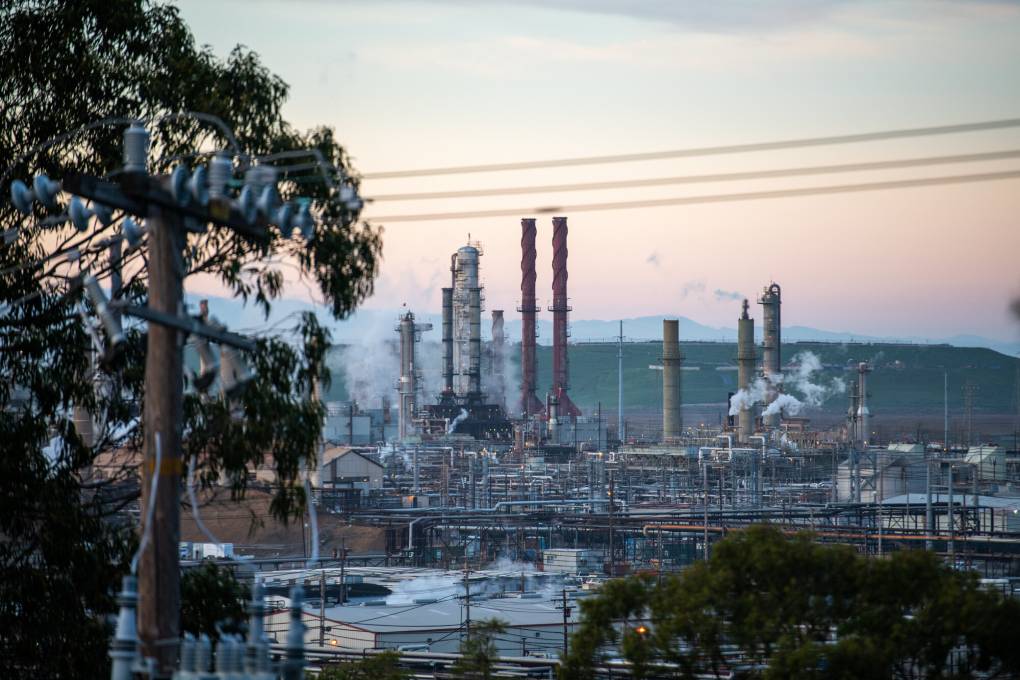
window.__IS_SSR__=true
window.__INITIAL_STATE__={
"attachmentsReducer": {
"audio_0": {
"type": "attachments",
"id": "audio_0",
"imgSizes": {
"kqedFullSize": {
"file": "https://ww2.kqed.org/news/wp-content/themes/KQED-unified/img/audio_bgs/background0.jpg"
}
}
},
"audio_1": {
"type": "attachments",
"id": "audio_1",
"imgSizes": {
"kqedFullSize": {
"file": "https://ww2.kqed.org/news/wp-content/themes/KQED-unified/img/audio_bgs/background1.jpg"
}
}
},
"audio_2": {
"type": "attachments",
"id": "audio_2",
"imgSizes": {
"kqedFullSize": {
"file": "https://ww2.kqed.org/news/wp-content/themes/KQED-unified/img/audio_bgs/background2.jpg"
}
}
},
"audio_3": {
"type": "attachments",
"id": "audio_3",
"imgSizes": {
"kqedFullSize": {
"file": "https://ww2.kqed.org/news/wp-content/themes/KQED-unified/img/audio_bgs/background3.jpg"
}
}
},
"audio_4": {
"type": "attachments",
"id": "audio_4",
"imgSizes": {
"kqedFullSize": {
"file": "https://ww2.kqed.org/news/wp-content/themes/KQED-unified/img/audio_bgs/background4.jpg"
}
}
},
"placeholder": {
"type": "attachments",
"id": "placeholder",
"imgSizes": {
"thumbnail": {
"file": "https://cdn.kqed.org/wp-content/uploads/2024/12/KQED-Default-Image-816638274-2000x1333-1-160x107.jpg",
"width": 160,
"height": 107,
"mimeType": "image/jpeg"
},
"medium": {
"file": "https://cdn.kqed.org/wp-content/uploads/2024/12/KQED-Default-Image-816638274-2000x1333-1-800x533.jpg",
"width": 800,
"height": 533,
"mimeType": "image/jpeg"
},
"medium_large": {
"file": "https://cdn.kqed.org/wp-content/uploads/2024/12/KQED-Default-Image-816638274-2000x1333-1-768x512.jpg",
"width": 768,
"height": 512,
"mimeType": "image/jpeg"
},
"large": {
"file": "https://cdn.kqed.org/wp-content/uploads/2024/12/KQED-Default-Image-816638274-2000x1333-1-1020x680.jpg",
"width": 1020,
"height": 680,
"mimeType": "image/jpeg"
},
"1536x1536": {
"file": "https://cdn.kqed.org/wp-content/uploads/2024/12/KQED-Default-Image-816638274-2000x1333-1-1536x1024.jpg",
"width": 1536,
"height": 1024,
"mimeType": "image/jpeg"
},
"fd-lrg": {
"file": "https://cdn.kqed.org/wp-content/uploads/2024/12/KQED-Default-Image-816638274-2000x1333-1-1536x1024.jpg",
"width": 1536,
"height": 1024,
"mimeType": "image/jpeg"
},
"fd-med": {
"file": "https://cdn.kqed.org/wp-content/uploads/2024/12/KQED-Default-Image-816638274-2000x1333-1-1020x680.jpg",
"width": 1020,
"height": 680,
"mimeType": "image/jpeg"
},
"fd-sm": {
"file": "https://cdn.kqed.org/wp-content/uploads/2024/12/KQED-Default-Image-816638274-2000x1333-1-800x533.jpg",
"width": 800,
"height": 533,
"mimeType": "image/jpeg"
},
"post-thumbnail": {
"file": "https://cdn.kqed.org/wp-content/uploads/2024/12/KQED-Default-Image-816638274-2000x1333-1-672x372.jpg",
"width": 672,
"height": 372,
"mimeType": "image/jpeg"
},
"twentyfourteen-full-width": {
"file": "https://cdn.kqed.org/wp-content/uploads/2024/12/KQED-Default-Image-816638274-2000x1333-1-1038x576.jpg",
"width": 1038,
"height": 576,
"mimeType": "image/jpeg"
},
"xxsmall": {
"file": "https://cdn.kqed.org/wp-content/uploads/2024/12/KQED-Default-Image-816638274-2000x1333-1-160x107.jpg",
"width": 160,
"height": 107,
"mimeType": "image/jpeg"
},
"xsmall": {
"file": "https://cdn.kqed.org/wp-content/uploads/2024/12/KQED-Default-Image-816638274-2000x1333-1-672x372.jpg",
"width": 672,
"height": 372,
"mimeType": "image/jpeg"
},
"small": {
"file": "https://cdn.kqed.org/wp-content/uploads/2024/12/KQED-Default-Image-816638274-2000x1333-1-672x372.jpg",
"width": 672,
"height": 372,
"mimeType": "image/jpeg"
},
"xlarge": {
"file": "https://cdn.kqed.org/wp-content/uploads/2024/12/KQED-Default-Image-816638274-2000x1333-1-1020x680.jpg",
"width": 1020,
"height": 680,
"mimeType": "image/jpeg"
},
"full-width": {
"file": "https://cdn.kqed.org/wp-content/uploads/2024/12/KQED-Default-Image-816638274-2000x1333-1-1920x1280.jpg",
"width": 1920,
"height": 1280,
"mimeType": "image/jpeg"
},
"guest-author-32": {
"file": "https://cdn.kqed.org/wp-content/uploads/2025/01/KQED-Default-Image-816638274-1333x1333-1-160x160.jpg",
"width": 32,
"height": 32,
"mimeType": "image/jpeg"
},
"guest-author-50": {
"file": "https://cdn.kqed.org/wp-content/uploads/2025/01/KQED-Default-Image-816638274-1333x1333-1-160x160.jpg",
"width": 50,
"height": 50,
"mimeType": "image/jpeg"
},
"guest-author-64": {
"file": "https://cdn.kqed.org/wp-content/uploads/2025/01/KQED-Default-Image-816638274-1333x1333-1-160x160.jpg",
"width": 64,
"height": 64,
"mimeType": "image/jpeg"
},
"guest-author-96": {
"file": "https://cdn.kqed.org/wp-content/uploads/2025/01/KQED-Default-Image-816638274-1333x1333-1-160x160.jpg",
"width": 96,
"height": 96,
"mimeType": "image/jpeg"
},
"guest-author-128": {
"file": "https://cdn.kqed.org/wp-content/uploads/2025/01/KQED-Default-Image-816638274-1333x1333-1-160x160.jpg",
"width": 128,
"height": 128,
"mimeType": "image/jpeg"
},
"detail": {
"file": "https://cdn.kqed.org/wp-content/uploads/2025/01/KQED-Default-Image-816638274-1333x1333-1-160x160.jpg",
"width": 160,
"height": 160,
"mimeType": "image/jpeg"
},
"kqedFullSize": {
"file": "https://cdn.kqed.org/wp-content/uploads/2024/12/KQED-Default-Image-816638274-2000x1333-1.jpg",
"width": 2000,
"height": 1333
}
}
},
"news_12007638": {
"type": "attachments",
"id": "news_12007638",
"meta": {
"index": "attachments_1716263798",
"site": "news",
"id": "12007638",
"found": true
},
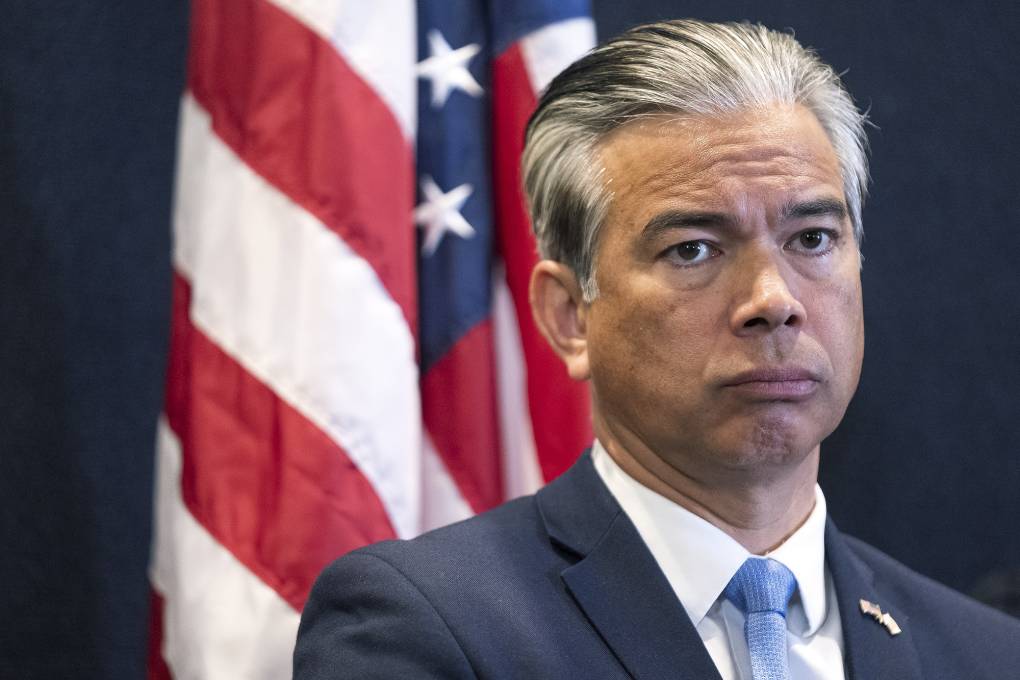
"title": "Rob Bonta",
"publishDate": 1727912412,
"status": "inherit",
"parent": 12007627,
"modified": 1727912460,
"caption": "Attorney General Rob Bonta takes questions from the media at a news conference in Los Angeles on March 19, 2024. On Monday, Bonta announced a lawsuit against Providence St. Joseph Hospital in Eureka, accusing it of denying Dr. Anna Nusslock a potentially life-saving emergency abortion, though the Department of Justice signaled Wednesday it may be open to settling.",
"credit": "Damian Dovarganes/AP Photo",
"altTag": null,
"description": null,
"imgSizes": {
"medium": {
"file": "https://cdn.kqed.org/wp-content/uploads/sites/10/2024/10/AGBontaAP1-800x533.jpg",
"width": 800,
"height": 533,
"mimeType": "image/jpeg"
},
"large": {
"file": "https://cdn.kqed.org/wp-content/uploads/sites/10/2024/10/AGBontaAP1-1020x680.jpg",
"width": 1020,
"height": 680,
"mimeType": "image/jpeg"
},
"thumbnail": {
"file": "https://cdn.kqed.org/wp-content/uploads/sites/10/2024/10/AGBontaAP1-160x107.jpg",
"width": 160,
"height": 107,
"mimeType": "image/jpeg"
},
"1536x1536": {
"file": "https://cdn.kqed.org/wp-content/uploads/sites/10/2024/10/AGBontaAP1-1536x1024.jpg",
"width": 1536,
"height": 1024,
"mimeType": "image/jpeg"
},
"post-thumbnail": {
"file": "https://cdn.kqed.org/wp-content/uploads/sites/10/2024/10/AGBontaAP1-672x372.jpg",
"width": 672,
"height": 372,
"mimeType": "image/jpeg"
},
"twentyfourteen-full-width": {
"file": "https://cdn.kqed.org/wp-content/uploads/sites/10/2024/10/AGBontaAP1-1038x576.jpg",
"width": 1038,
"height": 576,
"mimeType": "image/jpeg"
},
"full-width": {
"file": "https://cdn.kqed.org/wp-content/uploads/sites/10/2024/10/AGBontaAP1-1920x1280.jpg",
"width": 1920,
"height": 1280,
"mimeType": "image/jpeg"
},
"kqedFullSize": {
"file": "https://cdn.kqed.org/wp-content/uploads/sites/10/2024/10/AGBontaAP1.jpg",
"width": 2000,
"height": 1333
}
},
"isLoading": false,
"fetchFailed": false
},
"news_12007621": {
"type": "attachments",
"id": "news_12007621",
"meta": {
"index": "attachments_1716263798",
"site": "news",
"id": "12007621",
"found": true
},
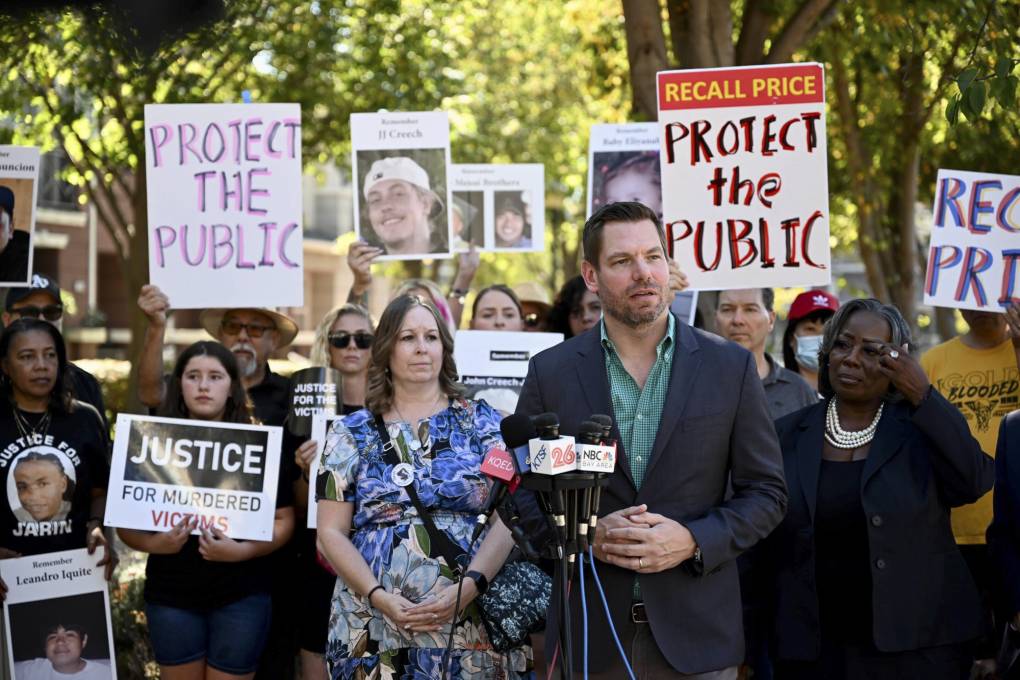
"title": "241002-SWALWELL PRICE RECALL-BL-02-KQED",
"publishDate": 1727910466,
"status": "inherit",
"parent": 12079856,
"modified": 1776188669,
"caption": "Rep. Eric Swalwell speaks during a press conference outside of Hayward City Hall in Hayward on Oct. 2, 2024, announcing support for the recall of Alameda County District Attorney Pamela Price.",
"credit": "Beth LaBerge/KQED",
"altTag": null,
"description": null,
"imgSizes": {
"medium": {
"file": "https://cdn.kqed.org/wp-content/uploads/sites/10/2024/10/241002-SWALWELL-PRICE-RECALL-BL-02-KQED-800x533.jpg",
"width": 800,
"height": 533,
"mimeType": "image/jpeg"
},
"large": {
"file": "https://cdn.kqed.org/wp-content/uploads/sites/10/2024/10/241002-SWALWELL-PRICE-RECALL-BL-02-KQED-1020x680.jpg",
"width": 1020,
"height": 680,
"mimeType": "image/jpeg"
},
"thumbnail": {
"file": "https://cdn.kqed.org/wp-content/uploads/sites/10/2024/10/241002-SWALWELL-PRICE-RECALL-BL-02-KQED-160x107.jpg",
"width": 160,
"height": 107,
"mimeType": "image/jpeg"
},
"1536x1536": {
"file": "https://cdn.kqed.org/wp-content/uploads/sites/10/2024/10/241002-SWALWELL-PRICE-RECALL-BL-02-KQED-1536x1024.jpg",
"width": 1536,
"height": 1024,
"mimeType": "image/jpeg"
},
"post-thumbnail": {
"file": "https://cdn.kqed.org/wp-content/uploads/sites/10/2024/10/241002-SWALWELL-PRICE-RECALL-BL-02-KQED-672x372.jpg",
"width": 672,
"height": 372,
"mimeType": "image/jpeg"
},
"twentyfourteen-full-width": {
"file": "https://cdn.kqed.org/wp-content/uploads/sites/10/2024/10/241002-SWALWELL-PRICE-RECALL-BL-02-KQED-1038x576.jpg",
"width": 1038,
"height": 576,
"mimeType": "image/jpeg"
},
"full-width": {
"file": "https://cdn.kqed.org/wp-content/uploads/sites/10/2024/10/241002-SWALWELL-PRICE-RECALL-BL-02-KQED-1920x1280.jpg",
"width": 1920,
"height": 1280,
"mimeType": "image/jpeg"
},
"kqedFullSize": {
"file": "https://cdn.kqed.org/wp-content/uploads/sites/10/2024/10/241002-SWALWELL-PRICE-RECALL-BL-02-KQED.jpg",
"width": 2000,
"height": 1333
}
},
"isLoading": false,
"fetchFailed": false
},
"news_11966666": {
"type": "attachments",
"id": "news_11966666",
"meta": {
"index": "attachments_1716263798",
"site": "news",
"id": "11966666",
"found": true
},
"parent": 11966517,
"imgSizes": {
"twentyfourteen-full-width": {
"file": "https://cdn.kqed.org/wp-content/uploads/sites/10/2023/11/230921-TaxiDriver-10-BL-1038x576.jpg",
"width": 1038,
"mimeType": "image/jpeg",
"height": 576
},
"thumbnail": {
"file": "https://cdn.kqed.org/wp-content/uploads/sites/10/2023/11/230921-TaxiDriver-10-BL-160x107.jpg",
"width": 160,
"mimeType": "image/jpeg",
"height": 107
},
"post-thumbnail": {
"file": "https://cdn.kqed.org/wp-content/uploads/sites/10/2023/11/230921-TaxiDriver-10-BL-672x372.jpg",
"width": 672,
"mimeType": "image/jpeg",
"height": 372
},
"kqedFullSize": {
"file": "https://cdn.kqed.org/wp-content/uploads/sites/10/2023/11/230921-TaxiDriver-10-BL.jpg",
"width": 1920,
"height": 1280
},
"large": {
"file": "https://cdn.kqed.org/wp-content/uploads/sites/10/2023/11/230921-TaxiDriver-10-BL-1020x680.jpg",
"width": 1020,
"mimeType": "image/jpeg",
"height": 680
},
"1536x1536": {
"file": "https://cdn.kqed.org/wp-content/uploads/sites/10/2023/11/230921-TaxiDriver-10-BL-1536x1024.jpg",
"width": 1536,
"mimeType": "image/jpeg",
"height": 1024
},
"medium": {
"file": "https://cdn.kqed.org/wp-content/uploads/sites/10/2023/11/230921-TaxiDriver-10-BL-800x533.jpg",
"width": 800,
"mimeType": "image/jpeg",
"height": 533
}
},
"publishDate": 1699389847,
"modified": 1706648308,
"caption": "A Waymo vehicle drives through downtown San Francisco on Nov. 2, 2023.",
"description": null,
"title": "231102-TaxiDriver-BethLaBerge-11",
"credit": "Beth LaBerge/KQED",
"status": "inherit",
"altTag": "A white driverless vehicle drives on a city street.",
"isLoading": false,
"fetchFailed": false
},
"news_11948099": {
"type": "attachments",
"id": "news_11948099",
"meta": {
"index": "attachments_1716263798",
"site": "news",
"id": "11948099",
"found": true
},
"title": "California Gubernatorial Candidate Gavin Newsom Holds Primary Night Event In San Francisco",
"publishDate": 1682723951,
"status": "inherit",
"parent": 11948062,
"modified": 1727899329,
"caption": "Gov. Gavin Newsom announced on Friday, April 28, that a new team of officers from the California Highway Patrol and the California National Guard will step in to train and assist San Francisco Police in disrupting fentanyl dealing and trafficking. ",
"credit": "Justin Sullivan/Getty Images",
"altTag": "A photo of a politician in a navy blue suit with a navy and white tie stands speaking from a podium with the U.S. and California state flags behind him.",
"description": null,
"imgSizes": {
"medium": {
"file": "https://cdn.kqed.org/wp-content/uploads/sites/10/2023/04/RS31296_GettyImages-968048630-qut-800x533.jpg",
"width": 800,
"height": 533,
"mimeType": "image/jpeg"
},
"large": {
"file": "https://cdn.kqed.org/wp-content/uploads/sites/10/2023/04/RS31296_GettyImages-968048630-qut-1020x680.jpg",
"width": 1020,
"height": 680,
"mimeType": "image/jpeg"
},
"thumbnail": {
"file": "https://cdn.kqed.org/wp-content/uploads/sites/10/2023/04/RS31296_GettyImages-968048630-qut-160x107.jpg",
"width": 160,
"height": 107,
"mimeType": "image/jpeg"
},
"1536x1536": {
"file": "https://cdn.kqed.org/wp-content/uploads/sites/10/2023/04/RS31296_GettyImages-968048630-qut-1536x1024.jpg",
"width": 1536,
"height": 1024,
"mimeType": "image/jpeg"
},
"post-thumbnail": {
"file": "https://cdn.kqed.org/wp-content/uploads/sites/10/2023/04/RS31296_GettyImages-968048630-qut-672x372.jpg",
"width": 672,
"height": 372,
"mimeType": "image/jpeg"
},
"twentyfourteen-full-width": {
"file": "https://cdn.kqed.org/wp-content/uploads/sites/10/2023/04/RS31296_GettyImages-968048630-qut-1038x576.jpg",
"width": 1038,
"height": 576,
"mimeType": "image/jpeg"
},
"kqedFullSize": {
"file": "https://cdn.kqed.org/wp-content/uploads/sites/10/2023/04/RS31296_GettyImages-968048630-qut.jpg",
"width": 1920,
"height": 1280
}
},
"isLoading": false,
"fetchFailed": false
},
"news_12007155": {
"type": "attachments",
"id": "news_12007155",
"meta": {
"index": "attachments_1716263798",
"site": "news",
"id": "12007155",
"found": true
},
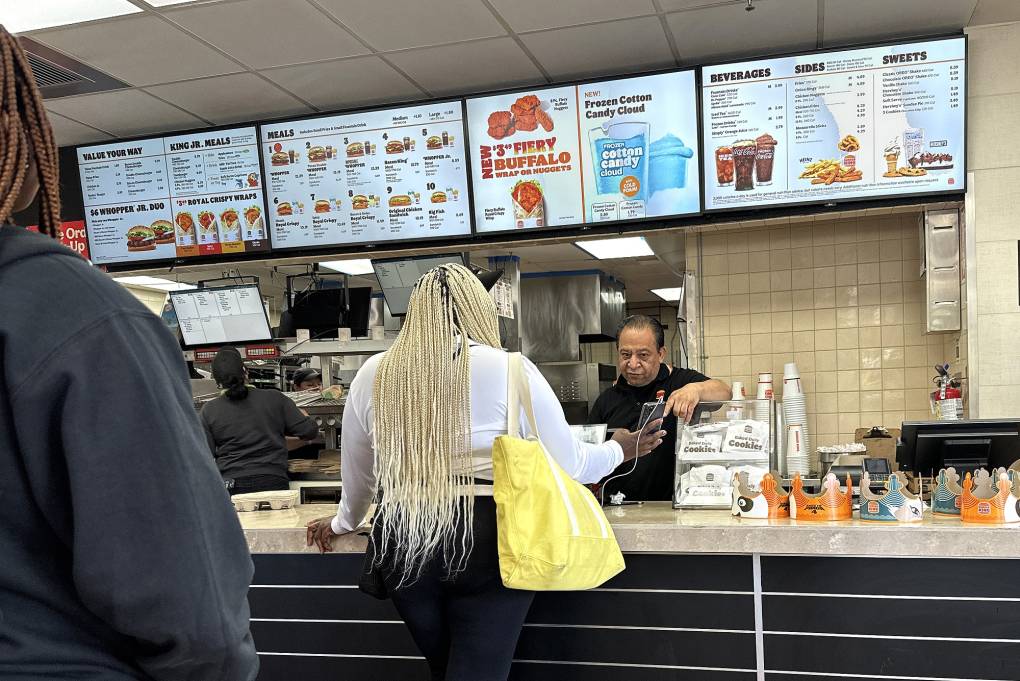
"title": "Increase In Minimum Wage For California Fast Food Workers Is Having Impact On Price Of Food",
"publishDate": 1727723289,
"status": "inherit",
"parent": 12007150,
"modified": 1727723347,
"caption": "A worker helps a customer at a Burger King restaurant on May 8, 2024 in San Rafael, California. ",
"credit": "Justin Sullivan/Getty Images",
"altTag": null,
"description": null,
"imgSizes": {
"medium": {
"file": "https://cdn.kqed.org/wp-content/uploads/sites/10/2024/09/CAMinimumWageGetty1-800x534.jpg",
"width": 800,
"height": 534,
"mimeType": "image/jpeg"
},
"large": {
"file": "https://cdn.kqed.org/wp-content/uploads/sites/10/2024/09/CAMinimumWageGetty1-1020x681.jpg",
"width": 1020,
"height": 681,
"mimeType": "image/jpeg"
},
"thumbnail": {
"file": "https://cdn.kqed.org/wp-content/uploads/sites/10/2024/09/CAMinimumWageGetty1-160x107.jpg",
"width": 160,
"height": 107,
"mimeType": "image/jpeg"
},
"1536x1536": {
"file": "https://cdn.kqed.org/wp-content/uploads/sites/10/2024/09/CAMinimumWageGetty1-1536x1025.jpg",
"width": 1536,
"height": 1025,
"mimeType": "image/jpeg"
},
"post-thumbnail": {
"file": "https://cdn.kqed.org/wp-content/uploads/sites/10/2024/09/CAMinimumWageGetty1-672x372.jpg",
"width": 672,
"height": 372,
"mimeType": "image/jpeg"
},
"twentyfourteen-full-width": {
"file": "https://cdn.kqed.org/wp-content/uploads/sites/10/2024/09/CAMinimumWageGetty1-1038x576.jpg",
"width": 1038,
"height": 576,
"mimeType": "image/jpeg"
},
"full-width": {
"file": "https://cdn.kqed.org/wp-content/uploads/sites/10/2024/09/CAMinimumWageGetty1-1920x1282.jpg",
"width": 1920,
"height": 1282,
"mimeType": "image/jpeg"
},
"kqedFullSize": {
"file": "https://cdn.kqed.org/wp-content/uploads/sites/10/2024/09/CAMinimumWageGetty1.jpg",
"width": 2000,
"height": 1335
}
},
"isLoading": false,
"fetchFailed": false
},
"news_12007166": {
"type": "attachments",
"id": "news_12007166",
"meta": {
"index": "attachments_1716263798",
"site": "news",
"id": "12007166",
"found": true
},
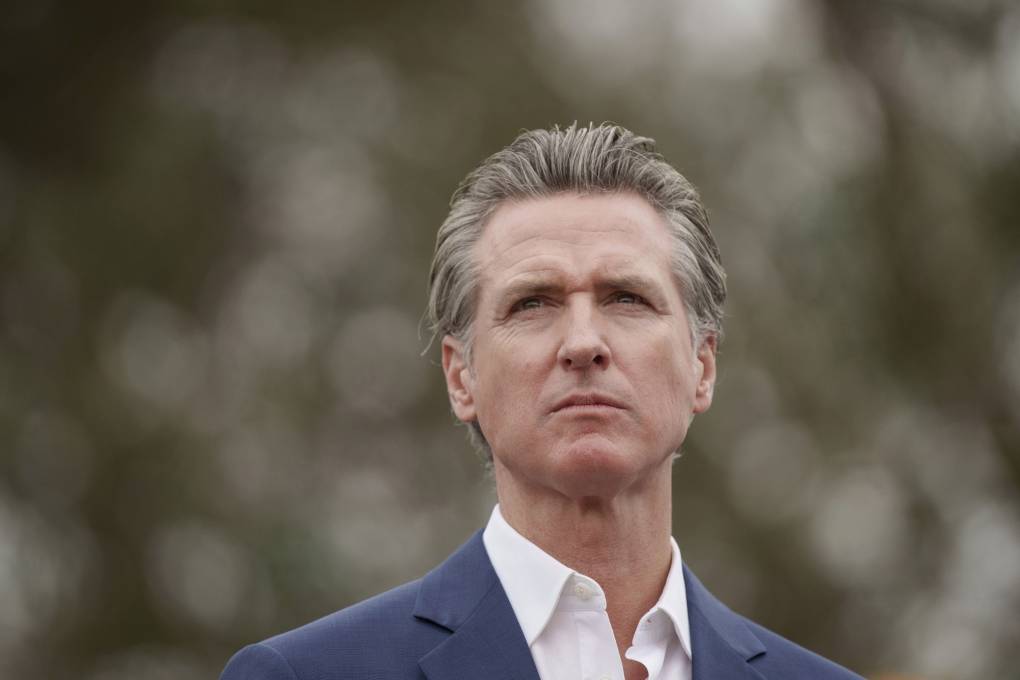
"title": "Gavin Newsom",
"publishDate": 1727724857,
"status": "inherit",
"parent": 12007157,
"modified": 1727725501,
"caption": "Gov. Gavin Newsom speaks during a press conference in Los Angeles on Sept. 25, 2024. Gov. Gavin Newsom vetoed a bill on Monday that would have allowed California to block private equity acquisitions of healthcare facilities. ",
"credit": "Eric Thayer/AP Photo",
"altTag": null,
"description": null,
"imgSizes": {
"medium": {
"file": "https://cdn.kqed.org/wp-content/uploads/sites/10/2024/09/GavinNewsomAP2-800x533.jpg",
"width": 800,
"height": 533,
"mimeType": "image/jpeg"
},
"large": {
"file": "https://cdn.kqed.org/wp-content/uploads/sites/10/2024/09/GavinNewsomAP2-1020x680.jpg",
"width": 1020,
"height": 680,
"mimeType": "image/jpeg"
},
"thumbnail": {
"file": "https://cdn.kqed.org/wp-content/uploads/sites/10/2024/09/GavinNewsomAP2-160x107.jpg",
"width": 160,
"height": 107,
"mimeType": "image/jpeg"
},
"1536x1536": {
"file": "https://cdn.kqed.org/wp-content/uploads/sites/10/2024/09/GavinNewsomAP2-1536x1024.jpg",
"width": 1536,
"height": 1024,
"mimeType": "image/jpeg"
},
"post-thumbnail": {
"file": "https://cdn.kqed.org/wp-content/uploads/sites/10/2024/09/GavinNewsomAP2-672x372.jpg",
"width": 672,
"height": 372,
"mimeType": "image/jpeg"
},
"twentyfourteen-full-width": {
"file": "https://cdn.kqed.org/wp-content/uploads/sites/10/2024/09/GavinNewsomAP2-1038x576.jpg",
"width": 1038,
"height": 576,
"mimeType": "image/jpeg"
},
"full-width": {
"file": "https://cdn.kqed.org/wp-content/uploads/sites/10/2024/09/GavinNewsomAP2-1920x1280.jpg",
"width": 1920,
"height": 1280,
"mimeType": "image/jpeg"
},
"kqedFullSize": {
"file": "https://cdn.kqed.org/wp-content/uploads/sites/10/2024/09/GavinNewsomAP2.jpg",
"width": 2000,
"height": 1333
}
},
"isLoading": false,
"fetchFailed": false
},
"news_12006891": {
"type": "attachments",
"id": "news_12006891",
"meta": {
"index": "attachments_1716263798",
"site": "news",
"id": "12006891",
"found": true
},
"title": "California Reparations Veto",
"publishDate": 1727467632,
"status": "inherit",
"parent": 12006872,
"modified": 1727480845,
"caption": "Morris Griffin holds up a sign during a meeting by the Task Force to Study and Develop Reparation Proposals for African Americans in Oakland, Dec. 14, 2022. The Alameda County Reparations Commission has made little progress in over a year. Last week, the county extended its mandate for two years but allocated only $92,000 — less than 2% of the requested budget. With these limited funds primarily for historical research and community outreach, the commission must reassess its achievable goals.",
"credit": "Jeff Chiu/AP Photo",
"altTag": null,
"description": null,
"imgSizes": {
"medium": {
"file": "https://cdn.kqed.org/wp-content/uploads/sites/10/2024/09/ReparationsOaklandAP-800x533.jpg",
"width": 800,
"height": 533,
"mimeType": "image/jpeg"
},
"large": {
"file": "https://cdn.kqed.org/wp-content/uploads/sites/10/2024/09/ReparationsOaklandAP-1020x680.jpg",
"width": 1020,
"height": 680,
"mimeType": "image/jpeg"
},
"thumbnail": {
"file": "https://cdn.kqed.org/wp-content/uploads/sites/10/2024/09/ReparationsOaklandAP-160x107.jpg",
"width": 160,
"height": 107,
"mimeType": "image/jpeg"
},
"1536x1536": {
"file": "https://cdn.kqed.org/wp-content/uploads/sites/10/2024/09/ReparationsOaklandAP-1536x1024.jpg",
"width": 1536,
"height": 1024,
"mimeType": "image/jpeg"
},
"post-thumbnail": {
"file": "https://cdn.kqed.org/wp-content/uploads/sites/10/2024/09/ReparationsOaklandAP-672x372.jpg",
"width": 672,
"height": 372,
"mimeType": "image/jpeg"
},
"twentyfourteen-full-width": {
"file": "https://cdn.kqed.org/wp-content/uploads/sites/10/2024/09/ReparationsOaklandAP-1038x576.jpg",
"width": 1038,
"height": 576,
"mimeType": "image/jpeg"
},
"full-width": {
"file": "https://cdn.kqed.org/wp-content/uploads/sites/10/2024/09/ReparationsOaklandAP-1920x1280.jpg",
"width": 1920,
"height": 1280,
"mimeType": "image/jpeg"
},
"kqedFullSize": {
"file": "https://cdn.kqed.org/wp-content/uploads/sites/10/2024/09/ReparationsOaklandAP.jpg",
"width": 2000,
"height": 1333
}
},
"isLoading": false,
"fetchFailed": false
},
"news_12006544": {
"type": "attachments",
"id": "news_12006544",
"meta": {
"index": "attachments_1716263798",
"site": "news",
"id": "12006544",
"found": true
},
"title": "240405-District5BOSRedistricting-001-BL_qed",
"publishDate": 1727371352,
"status": "inherit",
"parent": 12006541,
"modified": 1727371363,
"caption": "A tourist bus passes through the Tenderloin neighborhood, a part of the 5th Supervisorial District, in San Francisco on April 5, 2024.",
"credit": "Beth LaBerge/KQED",
"altTag": null,
"description": null,
"imgSizes": {
"medium": {
"file": "https://cdn.kqed.org/wp-content/uploads/sites/10/2024/09/240405-District5BOSRedistricting-001-BL_qed-800x533.jpg",
"width": 800,
"height": 533,
"mimeType": "image/jpeg"
},
"large": {
"file": "https://cdn.kqed.org/wp-content/uploads/sites/10/2024/09/240405-District5BOSRedistricting-001-BL_qed-1020x680.jpg",
"width": 1020,
"height": 680,
"mimeType": "image/jpeg"
},
"thumbnail": {
"file": "https://cdn.kqed.org/wp-content/uploads/sites/10/2024/09/240405-District5BOSRedistricting-001-BL_qed-160x107.jpg",
"width": 160,
"height": 107,
"mimeType": "image/jpeg"
},
"1536x1536": {
"file": "https://cdn.kqed.org/wp-content/uploads/sites/10/2024/09/240405-District5BOSRedistricting-001-BL_qed-1536x1024.jpg",
"width": 1536,
"height": 1024,
"mimeType": "image/jpeg"
},
"post-thumbnail": {
"file": "https://cdn.kqed.org/wp-content/uploads/sites/10/2024/09/240405-District5BOSRedistricting-001-BL_qed-672x372.jpg",
"width": 672,
"height": 372,
"mimeType": "image/jpeg"
},
"twentyfourteen-full-width": {
"file": "https://cdn.kqed.org/wp-content/uploads/sites/10/2024/09/240405-District5BOSRedistricting-001-BL_qed-1038x576.jpg",
"width": 1038,
"height": 576,
"mimeType": "image/jpeg"
},
"full-width": {
"file": "https://cdn.kqed.org/wp-content/uploads/sites/10/2024/09/240405-District5BOSRedistricting-001-BL_qed-1920x1280.jpg",
"width": 1920,
"height": 1280,
"mimeType": "image/jpeg"
},
"kqedFullSize": {
"file": "https://cdn.kqed.org/wp-content/uploads/sites/10/2024/09/240405-District5BOSRedistricting-001-BL_qed.jpg",
"width": 2000,
"height": 1333
}
},
"isLoading": false,
"fetchFailed": false
},
"news_11988048": {
"type": "attachments",
"id": "news_11988048",
"meta": {
"index": "attachments_1716263798",
"site": "news",
"id": "11988048",
"found": true
},
"title": "UC Santa Cruz Workers Strike Over Treatment Of Pro-Palestinian Protesters",
"publishDate": 1717006217,
"status": "inherit",
"parent": 11988039,
"modified": 1717006276,
"caption": "UC Santa Cruz academic workers represented by UAW 4811 and pro-Palestinian protesters carry signs as they demonstrate in front of the campus on May 20, 2024.",
"credit": "Justin Sullivan/Getty Images",
"altTag": null,
"description": null,
"imgSizes": {
"medium": {
"file": "https://cdn.kqed.org/wp-content/uploads/sites/10/2024/05/GettyImages-2153876794-800x521.jpg",
"width": 800,
"height": 521,
"mimeType": "image/jpeg"
},
"large": {
"file": "https://cdn.kqed.org/wp-content/uploads/sites/10/2024/05/GettyImages-2153876794-1020x664.jpg",
"width": 1020,
"height": 664,
"mimeType": "image/jpeg"
},
"thumbnail": {
"file": "https://cdn.kqed.org/wp-content/uploads/sites/10/2024/05/GettyImages-2153876794-160x104.jpg",
"width": 160,
"height": 104,
"mimeType": "image/jpeg"
},
"1536x1536": {
"file": "https://cdn.kqed.org/wp-content/uploads/sites/10/2024/05/GettyImages-2153876794-1536x1000.jpg",
"width": 1536,
"height": 1000,
"mimeType": "image/jpeg"
},
"post-thumbnail": {
"file": "https://cdn.kqed.org/wp-content/uploads/sites/10/2024/05/GettyImages-2153876794-672x372.jpg",
"width": 672,
"height": 372,
"mimeType": "image/jpeg"
},
"twentyfourteen-full-width": {
"file": "https://cdn.kqed.org/wp-content/uploads/sites/10/2024/05/GettyImages-2153876794-1038x576.jpg",
"width": 1038,
"height": 576,
"mimeType": "image/jpeg"
},
"kqedFullSize": {
"file": "https://cdn.kqed.org/wp-content/uploads/sites/10/2024/05/GettyImages-2153876794.jpg",
"width": 1920,
"height": 1250
}
},
"isLoading": false,
"fetchFailed": false
},
"news_12006825": {
"type": "attachments",
"id": "news_12006825",
"meta": {
"index": "attachments_1716263798",
"site": "news",
"id": "12006825",
"found": true
},
"title": "California Reparations",
"publishDate": 1727458654,
"status": "inherit",
"parent": 12006819,
"modified": 1727459893,
"caption": "People listen during a rally in support of reparations for African Americans outside City Hall in San Francisco on Tuesday, Sept. 19, 2023. Some advocates believe the first-year effort to provide reparations to Black Californians failed to live up to expectations, but voters will have the final word in November. ",
"credit": "Eric Risberg/AP Photo",
"altTag": null,
"description": null,
"imgSizes": {
"medium": {
"file": "https://cdn.kqed.org/wp-content/uploads/sites/10/2024/09/ReparationsAP-800x533.jpg",
"width": 800,
"height": 533,
"mimeType": "image/jpeg"
},
"large": {
"file": "https://cdn.kqed.org/wp-content/uploads/sites/10/2024/09/ReparationsAP-1020x680.jpg",
"width": 1020,
"height": 680,
"mimeType": "image/jpeg"
},
"thumbnail": {
"file": "https://cdn.kqed.org/wp-content/uploads/sites/10/2024/09/ReparationsAP-160x107.jpg",
"width": 160,
"height": 107,
"mimeType": "image/jpeg"
},
"1536x1536": {
"file": "https://cdn.kqed.org/wp-content/uploads/sites/10/2024/09/ReparationsAP-1536x1024.jpg",
"width": 1536,
"height": 1024,
"mimeType": "image/jpeg"
},
"post-thumbnail": {
"file": "https://cdn.kqed.org/wp-content/uploads/sites/10/2024/09/ReparationsAP-672x372.jpg",
"width": 672,
"height": 372,
"mimeType": "image/jpeg"
},
"twentyfourteen-full-width": {
"file": "https://cdn.kqed.org/wp-content/uploads/sites/10/2024/09/ReparationsAP-1038x576.jpg",
"width": 1038,
"height": 576,
"mimeType": "image/jpeg"
},
"full-width": {
"file": "https://cdn.kqed.org/wp-content/uploads/sites/10/2024/09/ReparationsAP-1920x1280.jpg",
"width": 1920,
"height": 1280,
"mimeType": "image/jpeg"
},
"kqedFullSize": {
"file": "https://cdn.kqed.org/wp-content/uploads/sites/10/2024/09/ReparationsAP.jpg",
"width": 2000,
"height": 1333
}
},
"isLoading": false,
"fetchFailed": false
},
"news_12006696": {
"type": "attachments",
"id": "news_12006696",
"meta": {
"index": "attachments_1716263798",
"site": "news",
"id": "12006696",
"found": true
},
"title": "covid-nimbus-variant-razor-blade-throat",
"publishDate": 1727387407,
"status": "inherit",
"parent": 12006600,
"modified": 1752685623,
"caption": "What to know about COVID symptoms, testing and incubation in 2025. ",
"credit": "Jens Kalaene/picture alliance via Getty Images",
"altTag": "An antigen test to detect COVID-19 for self-testing is on a red FFP-2 mask.",
"description": null,
"imgSizes": {
"medium": {
"file": "https://cdn.kqed.org/wp-content/uploads/sites/10/2024/09/GettyImages-1668874864-800x507.jpg",
"width": 800,
"height": 507,
"mimeType": "image/jpeg"
},
"large": {
"file": "https://cdn.kqed.org/wp-content/uploads/sites/10/2024/09/GettyImages-1668874864-1020x646.jpg",
"width": 1020,
"height": 646,
"mimeType": "image/jpeg"
},
"thumbnail": {
"file": "https://cdn.kqed.org/wp-content/uploads/sites/10/2024/09/GettyImages-1668874864-160x101.jpg",
"width": 160,
"height": 101,
"mimeType": "image/jpeg"
},
"post-thumbnail": {
"file": "https://cdn.kqed.org/wp-content/uploads/sites/10/2024/09/GettyImages-1668874864-672x372.jpg",
"width": 672,
"height": 372,
"mimeType": "image/jpeg"
},
"twentyfourteen-full-width": {
"file": "https://cdn.kqed.org/wp-content/uploads/sites/10/2024/09/GettyImages-1668874864-1024x576.jpg",
"width": 1024,
"height": 576,
"mimeType": "image/jpeg"
},
"kqedFullSize": {
"file": "https://cdn.kqed.org/wp-content/uploads/sites/10/2024/09/GettyImages-1668874864.jpg",
"width": 1024,
"height": 649
}
},
"isLoading": false,
"fetchFailed": false
},
"news_12000181": {
"type": "attachments",
"id": "news_12000181",
"meta": {
"index": "attachments_1716263798",
"site": "news",
"id": "12000181",
"found": true
},
"title": "017_Richmond_ChevronRefinery_01132022_qed",
"publishDate": 1723663991,
"status": "inherit",
"parent": 12000170,
"modified": 1723664016,
"caption": "The Chevron Refinery, a petroleum refinery, can be seen from Point Richmond on Jan. 13, 2022.",
"credit": "Beth LaBerge/KQED",
"altTag": null,
"description": null,
"imgSizes": {
"medium": {
"file": "https://cdn.kqed.org/wp-content/uploads/sites/10/2024/08/017_Richmond_ChevronRefinery_01132022_qed-800x533.jpg",
"width": 800,
"height": 533,
"mimeType": "image/jpeg"
},
"large": {
"file": "https://cdn.kqed.org/wp-content/uploads/sites/10/2024/08/017_Richmond_ChevronRefinery_01132022_qed-1020x680.jpg",
"width": 1020,
"height": 680,
"mimeType": "image/jpeg"
},
"thumbnail": {
"file": "https://cdn.kqed.org/wp-content/uploads/sites/10/2024/08/017_Richmond_ChevronRefinery_01132022_qed-160x107.jpg",
"width": 160,
"height": 107,
"mimeType": "image/jpeg"
},
"1536x1536": {
"file": "https://cdn.kqed.org/wp-content/uploads/sites/10/2024/08/017_Richmond_ChevronRefinery_01132022_qed-1536x1024.jpg",
"width": 1536,
"height": 1024,
"mimeType": "image/jpeg"
},
"post-thumbnail": {
"file": "https://cdn.kqed.org/wp-content/uploads/sites/10/2024/08/017_Richmond_ChevronRefinery_01132022_qed-672x372.jpg",
"width": 672,
"height": 372,
"mimeType": "image/jpeg"
},
"twentyfourteen-full-width": {
"file": "https://cdn.kqed.org/wp-content/uploads/sites/10/2024/08/017_Richmond_ChevronRefinery_01132022_qed-1038x576.jpg",
"width": 1038,
"height": 576,
"mimeType": "image/jpeg"
},
"full-width": {
"file": "https://cdn.kqed.org/wp-content/uploads/sites/10/2024/08/017_Richmond_ChevronRefinery_01132022_qed-1920x1280.jpg",
"width": 1920,
"height": 1280,
"mimeType": "image/jpeg"
},
"kqedFullSize": {
"file": "https://cdn.kqed.org/wp-content/uploads/sites/10/2024/08/017_Richmond_ChevronRefinery_01132022_qed.jpg",
"width": 2000,
"height": 1333
}
},
"isLoading": false,
"fetchFailed": false
}
},
"audioPlayerReducer": {
"postId": "stream_live",
"isPaused": true,
"isPlaying": false,
"pfsActive": false,
"pledgeModalIsOpen": true,
"playerDrawerIsOpen": false,
"liveAudioPlayStartedAt": 0,
"liveAudioPlayContext": ""
},
"authorsReducer": {
"gmarzorati": {
"type": "authors",
"id": "227",
"meta": {
"index": "authors_1716337520",
"id": "227",
"found": true
},
"name": "Guy Marzorati",
"firstName": "Guy",
"lastName": "Marzorati",
"slug": "gmarzorati",
"email": "gmarzorati@KQED.org",
"display_author_email": true,
"staff_mastheads": [
"news"
],
"title": "Correspondent",
"bio": "Guy Marzorati is a correspondent on KQED's California Politics and Government Desk, based in San Jose. A graduate of Santa Clara University, Guy joined KQED in 2013. He reports on state and local politics and produces KQED's digital voter guide.",
"avatar": "https://secure.gravatar.com/avatar/e7038b8dbfd55b104369b76b1cd0b9de?s=600&d=blank&r=g",
"twitter": "guymarzorati",
"facebook": null,
"instagram": null,
"linkedin": null,
"sites": [
{
"site": "",
"roles": [
"editor"
]
},
{
"site": "news",
"roles": [
"editor"
]
},
{
"site": "science",
"roles": [
"editor"
]
},
{
"site": "forum",
"roles": [
"editor"
]
},
{
"site": "elections",
"roles": [
"editor"
]
},
{
"site": "liveblog",
"roles": [
"editor"
]
}
],
"headData": {
"title": "Guy Marzorati | KQED",
"description": "Correspondent",
"ogImgSrc": "https://secure.gravatar.com/avatar/e7038b8dbfd55b104369b76b1cd0b9de?s=600&d=blank&r=g",
"twImgSrc": "https://secure.gravatar.com/avatar/e7038b8dbfd55b104369b76b1cd0b9de?s=600&d=blank&r=g"
},
"isLoading": false,
"link": "/author/gmarzorati"
},
"carlysevern": {
"type": "authors",
"id": "3243",
"meta": {
"index": "authors_1716337520",
"id": "3243",
"found": true
},
"name": "Carly Severn",
"firstName": "Carly",
"lastName": "Severn",
"slug": "carlysevern",
"email": "csevern@kqed.org",
"display_author_email": false,
"staff_mastheads": [
"news"
],
"title": "Senior Editor, Audience News ",
"bio": "Carly is KQED's Senior Editor of Audience News on the Digital News team, and has reported for the California Report Magazine, Bay Curious and KQED Arts. She's formerly the host of \u003ca href=\"http://ww2.kqed.org/pop/category/the-cooler/\" rel=\"noopener noreferrer\">The Cooler\u003c/a> podcast.",
"avatar": "https://secure.gravatar.com/avatar/2d8d6765f186e64c798cf7f0c8088a41?s=600&d=blank&r=g",
"twitter": "teacupinthebay",
"facebook": null,
"instagram": null,
"linkedin": null,
"sites": [
{
"site": "",
"roles": [
"editor"
]
},
{
"site": "arts",
"roles": [
"editor"
]
},
{
"site": "news",
"roles": [
"administrator"
]
},
{
"site": "pop",
"roles": [
"editor"
]
},
{
"site": "futureofyou",
"roles": [
"editor"
]
},
{
"site": "about",
"roles": [
"administrator"
]
},
{
"site": "mindshift",
"roles": [
"editor"
]
},
{
"site": "bayareabites",
"roles": [
"editor"
]
},
{
"site": "stateofhealth",
"roles": [
"editor"
]
},
{
"site": "science",
"roles": [
"editor"
]
},
{
"site": "food",
"roles": [
"contributor"
]
},
{
"site": "forum",
"roles": [
"editor"
]
},
{
"site": "perspectives",
"roles": [
"administrator"
]
},
{
"site": "liveblog",
"roles": [
"editor"
]
}
],
"headData": {
"title": "Carly Severn | KQED",
"description": "Senior Editor, Audience News ",
"ogImgSrc": "https://secure.gravatar.com/avatar/2d8d6765f186e64c798cf7f0c8088a41?s=600&d=blank&r=g",
"twImgSrc": "https://secure.gravatar.com/avatar/2d8d6765f186e64c798cf7f0c8088a41?s=600&d=blank&r=g"
},
"isLoading": false,
"link": "/author/carlysevern"
},
"lklivans": {
"type": "authors",
"id": "8648",
"meta": {
"index": "authors_1716337520",
"id": "8648",
"found": true
},
"name": "Laura Klivans",
"firstName": "Laura",
"lastName": "Klivans",
"slug": "lklivans",
"email": "lklivans@kqed.org",
"display_author_email": true,
"staff_mastheads": [
"news",
"science"
],
"title": "Reporter",
"bio": "Laura Klivans is an award-winning science reporter for KQED News, where she covers climate change with an eye on both groundbreaking progress and gaps in action. She is the former host of KQED's blockbuster video series about tiny, amazing animals, \u003cem>Deep Look\u003c/em>. Her work reaches national audiences through NPR, \u003cem>Here & Now, \u003c/em>PRI, and other major outlets. \r\n\r\nLaura’s won five Northern California Area Emmy Awards for Deep Look and First Place in the Greater Bay Area Journalism Awards for a podcast exploring how one Oakland neighborhood teamed up to reduce planet-heating pollution.\r\n\r\nBeyond her reporting, she hosts and moderates events. In the past, she taught audio storytelling at the UC Berkeley Graduate School of Journalism, led international education programs, worked with immigrants and refugees along the Thai-Burmese border, taught high schoolers sex ed, and was an actress. \r\n\r\nShe's a former UC Berkeley Human Rights Fellow, USC Center for Health Journalism's California Fellow and Coro Fellow in Public Affairs. Laura has a master’s in journalism from UC Berkeley, a master’s in education from Harvard, and an undergraduate degree from Northwestern University.\r\n\r\nShe loves trying to riddle the meaning out of vanity license plates.",
"avatar": "https://secure.gravatar.com/avatar/af8e757bb8ce7b7fee6160ba66e37327?s=600&d=blank&r=g",
"twitter": "lauraklivans",
"facebook": null,
"instagram": null,
"linkedin": null,
"sites": [
{
"site": "news",
"roles": [
"editor"
]
},
{
"site": "stateofhealth",
"roles": [
"contributor",
"editor"
]
},
{
"site": "science",
"roles": [
"editor"
]
},
{
"site": "forum",
"roles": [
"editor"
]
}
],
"headData": {
"title": "Laura Klivans | KQED",
"description": "Reporter",
"ogImgSrc": "https://secure.gravatar.com/avatar/af8e757bb8ce7b7fee6160ba66e37327?s=600&d=blank&r=g",
"twImgSrc": "https://secure.gravatar.com/avatar/af8e757bb8ce7b7fee6160ba66e37327?s=600&d=blank&r=g"
},
"isLoading": false,
"link": "/author/lklivans"
},
"fjhabvala": {
"type": "authors",
"id": "8659",
"meta": {
"index": "authors_1716337520",
"id": "8659",
"found": true
},
"name": "Farida Jhabvala Romero",
"firstName": "Farida",
"lastName": "Jhabvala Romero",
"slug": "fjhabvala",
"email": "fjhabvala@kqed.org",
"display_author_email": true,
"staff_mastheads": [
"news"
],
"title": "KQED Contributor",
"bio": "Farida Jhabvala Romero is a Labor Correspondent for KQED. She previously covered immigration. Farida was \u003ca href=\"https://www.ccnma.org/2022-most-influential-latina-journalists\">named\u003c/a> one of the 10 Most Influential Latina Journalists in California in 2022 by the California Chicano News Media Association. Her work has won awards from the Society of Professional Journalists (Northern California), as well as a national and regional Edward M. Murrow Award for the collaborative reporting projects “Dangerous Air” and “Graying California.” Before joining KQED, Farida worked as a producer at Radio Bilingüe, a national public radio network. Farida earned her master’s degree in journalism from Stanford University.",
"avatar": "https://secure.gravatar.com/avatar/f9f022d4e2609741874222a1e9d41f48fea74011aa7c615eef91d9a50c944ebe?s=600&d=blank&r=g",
"twitter": "FaridaJhabvala",
"bluesky": null,
"facebook": null,
"instagram": null,
"linkedin": "https://www.linkedin.com/in/faridajhabvala/",
"sites": [
{
"site": "news",
"roles": [
"editor"
]
},
{
"site": "stateofhealth",
"roles": [
"author"
]
},
{
"site": "liveblog",
"roles": [
"author"
]
}
],
"headData": {
"title": "Farida Jhabvala Romero | KQED",
"description": "KQED Contributor",
"ogImgSrc": "https://secure.gravatar.com/avatar/f9f022d4e2609741874222a1e9d41f48fea74011aa7c615eef91d9a50c944ebe?s=600&d=blank&r=g",
"twImgSrc": "https://secure.gravatar.com/avatar/f9f022d4e2609741874222a1e9d41f48fea74011aa7c615eef91d9a50c944ebe?s=600&d=blank&r=g"
},
"isLoading": false,
"link": "/author/fjhabvala"
},
"lesleymcclurg": {
"type": "authors",
"id": "11229",
"meta": {
"index": "authors_1716337520",
"id": "11229",
"found": true
},
"name": "Lesley McClurg",
"firstName": "Lesley",
"lastName": "McClurg",
"slug": "lesleymcclurg",
"email": "lmcclurg@KQED.org",
"display_author_email": false,
"staff_mastheads": [
"news",
"science"
],
"title": "KQED Health Correspondent",
"bio": "Lesley McClurg is a health correspondent and fill-in host whose work is regularly rebroadcast on NPR and PBS programs. She’s earned multiple regional Emmy awards, a national and a regional Edward R. Murrow award, and was named Best Beat Reporter by the Association of Health Care Journalists. The Society of Professional Journalists has recognized her work several times, and the Society of Environmental Journalists spotlighted her coverage of California’s historic drought.\r\n\r\nBefore joining KQED in 2016, Lesley covered food and sustainability for Capital Public Radio, environmental issues for Colorado Public Radio, and reported for KUOW and KCTS 9 in Seattle. Away from the newsroom, she loves skiing with her daughter, mountain biking with her partner, and playing with Ollie, the family’s goldendoodle. On deadline, she runs almost entirely on chocolate chips.\r\n\r\n ",
"avatar": "https://secure.gravatar.com/avatar/bab49e972ea10c774fe0f5e29dba1722b158f7c0d58a360923d1389d380b2978?s=600&d=blank&r=g",
"twitter": "lesleywmcclurg",
"bluesky": null,
"facebook": null,
"instagram": null,
"linkedin": null,
"sites": [
{
"site": "arts",
"roles": [
"author"
]
},
{
"site": "news",
"roles": [
"editor"
]
},
{
"site": "futureofyou",
"roles": [
"editor"
]
},
{
"site": "stateofhealth",
"roles": [
"author"
]
},
{
"site": "science",
"roles": [
"editor"
]
},
{
"site": "quest",
"roles": [
"subscriber"
]
},
{
"site": "forum",
"roles": [
"administrator"
]
},
{
"site": "liveblog",
"roles": [
"author"
]
}
],
"headData": {
"title": "Lesley McClurg | KQED",
"description": "KQED Health Correspondent",
"ogImgSrc": "https://secure.gravatar.com/avatar/bab49e972ea10c774fe0f5e29dba1722b158f7c0d58a360923d1389d380b2978?s=600&d=blank&r=g",
"twImgSrc": "https://secure.gravatar.com/avatar/bab49e972ea10c774fe0f5e29dba1722b158f7c0d58a360923d1389d380b2978?s=600&d=blank&r=g"
},
"isLoading": false,
"link": "/author/lesleymcclurg"
},
"afinney": {
"type": "authors",
"id": "11772",
"meta": {
"index": "authors_1716337520",
"id": "11772",
"found": true
},
"name": "Annelise Finney",
"firstName": "Annelise",
"lastName": "Finney",
"slug": "afinney",
"email": "afinney@kqed.org",
"display_author_email": true,
"staff_mastheads": [
"news"
],
"title": "Reporter",
"bio": "Annelise reports on reparations in California and East Bay politics. She co-produced the Sunday Music Drop, a limited-term radio series featuring Bay Area musicians that aired between Sept 2022 and Oct 2024. She joined KQED in 2021 as a general assignment reporter and is an alumna of KALW's Audio Academy. She was born and raised in the East Bay. She is currently away from KQED completing a year-long reporting project in Berlin, Germany as a Alexander Von Humboldt German Chancellor Fellow.",
"avatar": "https://secure.gravatar.com/avatar/5fded66cae47704cdfc5021cde0f3aa4?s=600&d=blank&r=g",
"twitter": null,
"facebook": null,
"instagram": null,
"linkedin": null,
"sites": [
{
"site": "news",
"roles": [
"editor"
]
},
{
"site": "liveblog",
"roles": [
"author"
]
}
],
"headData": {
"title": "Annelise Finney | KQED",
"description": "Reporter",
"ogImgSrc": "https://secure.gravatar.com/avatar/5fded66cae47704cdfc5021cde0f3aa4?s=600&d=blank&r=g",
"twImgSrc": "https://secure.gravatar.com/avatar/5fded66cae47704cdfc5021cde0f3aa4?s=600&d=blank&r=g"
},
"isLoading": false,
"link": "/author/afinney"
},
"sjohnson": {
"type": "authors",
"id": "11840",
"meta": {
"index": "authors_1716337520",
"id": "11840",
"found": true
},
"name": "Sydney Johnson",
"firstName": "Sydney",
"lastName": "Johnson",
"slug": "sjohnson",
"email": "sjohnson@kqed.org",
"display_author_email": false,
"staff_mastheads": [
"news"
],
"title": "KQED Reporter",
"bio": "Sydney Johnson is a general assignment reporter at KQED. She previously reported on public health and city government at the San Francisco Examiner, and before that, she covered statewide education policy for EdSource. Her reporting has won multiple local, state and national awards. Sydney is a graduate of the University of California, Berkeley and lives in San Francisco.",
"avatar": "https://secure.gravatar.com/avatar/97855f2719b72ad6190b7c535fe642c8?s=600&d=blank&r=g",
"twitter": "sydneyfjohnson",
"facebook": null,
"instagram": null,
"linkedin": null,
"sites": [
{
"site": "news",
"roles": [
"editor"
]
}
],
"headData": {
"title": "Sydney Johnson | KQED",
"description": "KQED Reporter",
"ogImgSrc": "https://secure.gravatar.com/avatar/97855f2719b72ad6190b7c535fe642c8?s=600&d=blank&r=g",
"twImgSrc": "https://secure.gravatar.com/avatar/97855f2719b72ad6190b7c535fe642c8?s=600&d=blank&r=g"
},
"isLoading": false,
"link": "/author/sjohnson"
},
"kdebenedetti": {
"type": "authors",
"id": "11913",
"meta": {
"index": "authors_1716337520",
"id": "11913",
"found": true
},
"name": "Katie DeBenedetti",
"firstName": "Katie",
"lastName": "DeBenedetti",
"slug": "kdebenedetti",
"email": "kdebenedetti@kqed.org",
"display_author_email": false,
"staff_mastheads": [
"news",
"science"
],
"title": "KQED Contributor",
"bio": "Katie DeBenedetti is a digital reporter covering daily news for the Express Desk. Prior to joining KQED as a culture reporting intern in January 2024, she covered education and city government for the Napa Valley Register.",
"avatar": "https://secure.gravatar.com/avatar/6e31073cb8f7e4214ab03f42771d0f45?s=600&d=blank&r=g",
"twitter": null,
"facebook": null,
"instagram": null,
"linkedin": null,
"sites": [
{
"site": "news",
"roles": [
"author"
]
},
{
"site": "science",
"roles": [
"author"
]
},
{
"site": "liveblog",
"roles": [
"author"
]
}
],
"headData": {
"title": "Katie DeBenedetti | KQED",
"description": "KQED Contributor",
"ogImgSrc": "https://secure.gravatar.com/avatar/6e31073cb8f7e4214ab03f42771d0f45?s=600&d=blank&r=g",
"twImgSrc": "https://secure.gravatar.com/avatar/6e31073cb8f7e4214ab03f42771d0f45?s=600&d=blank&r=g"
},
"isLoading": false,
"link": "/author/kdebenedetti"
}
},
"pagesReducer": {
"news_tag_california": {
"type": "terms",
"id": "news_18538",
"meta": {
"index": "terms_1716263798",
"site": "news",
"id": "18538",
"score": 6.8457103
},
"featImg": null,
"name": "California",
"description": null,
"taxonomy": "tag",
"headData": {
"twImgId": null,
"twTitle": null,
"ogTitle": null,
"ogImgId": null,
"twDescription": null,
"description": null,
"title": "California Archives | KQED News",
"ogDescription": null
},
"ttid": 31,
"slug": "california",
"isLoading": false,
"title": "California",
"pageMeta": {
"site": "news",
"WpPageTemplate": "page-topic-editorial",
"currentPage": 127
},
"blocks": [
{
"blockName": "kqed/post-list",
"attrs": {
"layout": "cardArticle2",
"query": "posts/news?tag=california",
"seeMore": false,
"paginated": true,
"page": 127
}
},
{
"blockName": "kqed/ad"
}
]
}
},
"pfsSessionReducer": {},
"postsReducer": {
"stream_live": {
"type": "live",
"id": "stream_live",
"audioUrl": "https://streams.kqed.org/kqedradio",
"title": "Live Stream",
"excerpt": "Live Stream information currently unavailable.",
"link": "/radio",
"featImg": "",
"label": {
"name": "KQED Live",
"link": "/"
}
},
"stream_kqedNewscast": {
"type": "posts",
"id": "stream_kqedNewscast",
"audioUrl": "https://www.kqed.org/.stream/anon/radio/RDnews/newscast.mp3?_=1",
"title": "KQED Newscast",
"featImg": "",
"label": {
"name": "88.5 FM",
"link": "/"
}
},
"news_12007627": {
"type": "posts",
"id": "news_12007627",
"meta": {
"index": "posts_1716263798",
"site": "news",
"id": "12007627",
"score": null,
"sort": [
1727912906000
]
},
"guestAuthors": [],
"slug": "california-open-to-resolving-suit-against-catholic-hospital-over-emergency-abortion-care",
"title": "California Open to Resolving Suit Against Catholic Hospital Over Emergency Abortion Care",
"publishDate": 1727912906,
"format": "standard",
"headTitle": "California Open to Resolving Suit Against Catholic Hospital Over Emergency Abortion Care | KQED",
"labelTerm": {
"site": "news"
},
"content": "\u003cp>The state’s Department of Justice on Wednesday appeared to suggest it was open to settling its lawsuit against a Catholic hospital in \u003ca href=\"https://www.kqed.org/news/tag/northern-california\">Northern California\u003c/a> accused of denying a pregnant woman emergency abortion care.\u003c/p>\n\u003cp>Attorney General Rob Bonta announced the \u003ca href=\"https://www.kqed.org/news/12007119/california-sues-a-catholic-hospital-for-denying-patient-an-emergency-abortion\">lawsuit\u003c/a> on Monday, alleging that policy at Providence St. Joseph Hospital in Eureka prevented doctors from performing a potentially life-saving emergency abortion on Dr. Anna Nusslock, who was 15 weeks pregnant with twins when her water broke, so long as “fetal heart tones” were present.\u003c/p>\n\u003cp>Garry Olney, chief executive for Providence’s Northern California service area, apologized in a statement to employees, saying Nusslock’s treatment did not meet Providence’s “high standards for safe, quality, compassionate care.” A spokesperson pointed to the Catholic Church’s U.S. health care directives that allow for “operations, treatments, and medications that have as their direct purpose the cure of a proportionately serious pathological condition of a pregnant woman” that cannot be safely postponed until the child is viable, “even if they will result in the death of the unborn child.”\u003c/p>\n\u003cp>[ad fullwidth]\u003c/p>\n\u003cp>“We are immediately revisiting our training, education and escalation processes in emergency medical situations to ensure that this does not happen again and to ensure that our care teams have the training and support they need to deliver the best possible care for each patient we serve,” Olney’s message reads.\u003c/p>\n\u003cp>The hospital did not clarify whether it has a policy that bans medical intervention when a fetal heartbeat can be detected unless the patient’s life is sufficiently at risk. According to the lawsuit, a doctor at Providence St. Joseph told Nusslock that she could not perform an in-clinic abortion procedure known as dilation and evacuation unless Nusslock’s life was at risk, nor could she induce contractions with misoprostol while the fetuses still had a heartbeat.\u003c/p>\n\u003cp>“If Providence is committed to changing its policies to comply with the law and ensuring this never happens again, our office is prepared to work constructively with them to resolve this litigation and to protect patients,” a spokesperson for the California Department of Justice said.\u003c/p>\n\u003cp>According to the lawsuit, Nusslock was experiencing contractions and bleeding and was told that her twins would not survive — and that her health would also be at risk if she did not receive an emergency abortion. But a Providence St. Joseph doctor, the suit alleges, told Nusslock the only care she could provide was expectant management or closely monitoring her symptoms for changes that would allow intervention. She suggested that Nusslock travel to another hospital to receive care.\u003c/p>\n\u003cp>[aside postID=news_12007157 hero='https://cdn.kqed.org/wp-content/uploads/sites/10/2024/09/GavinNewsomAP2-1020x680.jpg']\u003c/p>\n\u003cp>Nusslock ultimately drove — with towels and buckets, “in case something happen[ed] in the car” — to Mad River Community Hospital 12 miles away in Arcata, where a doctor performed an emergency abortion. They said Nusslock was “actively hemorrhaging” on the operating table.\u003c/p>\n\u003cp>The suit claims that though Providence “will ostensibly intervene” if a pregnant patient is “on the verge of death,” California law requires that, as a licensed facility, it must act in the event of serious injury or illness as well. It also alleges that Providence discriminates against pregnant patients by not giving them comprehensive emergency care as it would others.\u003c/p>\n\u003cp>The attorney general’s office said it believes that others might have had experiences similar to Nusslock, and is asking that they share their experiences with the Department of Justice.\u003c/p>\n\u003cp>“We don’t yet know the full scope of this problem or how many patients have suffered, but we do know that unless we act, this will happen again and again,” Bonta said.\u003c/p>\n\u003cp>He asked the court to issue an injunction prohibiting the hospital and its affiliates from violating the state laws it says required them to provide Nusslock with care, along with requiring them to pay monetary damages.\u003c/p>\n\u003cp>“Even in California, a champion for reproductive freedom, we are not immune from practices like the one we’re seeing today, and we will not stand by as it occurs,” Bonta said during a press conference on Monday. “We will take action as we’re doing today and move to end it immediately.”\u003c/p>\n\u003cp>\u003cem>KQED’s \u003ca href=\"https://www.kqed.org/author/carlysevern\">Carly Severn\u003c/a> contributed to this report.\u003c/em>\u003c/p>\n\u003cp>\u003c/p>\n",
"blocks": [],
"excerpt": "Providence St. Joseph Hospital, accused of denying a pregnant woman emergency abortion care, said it was revisiting its processes “to ensure that this does not happen again.”",
"status": "publish",
"parent": 0,
"modified": 1727915240,
"stats": {
"hasAudio": false,
"hasVideo": false,
"hasChartOrMap": false,
"iframeSrcs": [],
"hasGoogleForm": false,
"hasGallery": false,
"hasHearkenModule": false,
"hasPolis": false,
"paragraphCount": 17,
"wordCount": 755
},
"headData": {
"title": "California Open to Resolving Suit Against Catholic Hospital Over Emergency Abortion Care | KQED",
"description": "Providence St. Joseph Hospital, accused of denying a pregnant woman emergency abortion care, said it was revisiting its processes “to ensure that this does not happen again.”",
"ogTitle": "",
"ogDescription": "",
"ogImgId": "",
"twTitle": "",
"twDescription": "",
"twImgId": "",
"schema": {
"@context": "https://schema.org",
"@type": "NewsArticle",
"headline": "California Open to Resolving Suit Against Catholic Hospital Over Emergency Abortion Care",
"datePublished": "2024-10-02T16:48:26-07:00",
"dateModified": "2024-10-02T17:27:20-07:00",
"image": "https://cdn.kqed.org/wp-content/uploads/2020/02/KQED-OG-Image@1x.png",
"isAccessibleForFree": "True",
"publisher": {
"@type": "NewsMediaOrganization",
"@id": "https://www.kqed.org/#organization",
"name": "KQED",
"logo": "https://cdn.kqed.org/wp-content/uploads/2020/02/KQED-OG-Image@1x.png",
"url": "https://www.kqed.org",
"sameAs": [
"https://www.facebook.com/KQED",
"https://twitter.com/KQED",
"https://www.instagram.com/kqed/",
"https://www.tiktok.com/@kqedofficial",
"https://www.linkedin.com/company/kqed",
"https://www.youtube.com/channel/UCeC0IOo7i1P_61zVUWbJ4nw"
]
}
}
},
"sticky": false,
"nprStoryId": "kqed-12007627",
"excludeFromSiteSearch": "Include",
"articleAge": "0",
"path": "/news/12007627/california-open-to-resolving-suit-against-catholic-hospital-over-emergency-abortion-care",
"audioTrackLength": null,
"parsedContent": [
{
"type": "contentString",
"content": "\u003cdiv class=\"post-body\">\u003cp>\u003cp>The state’s Department of Justice on Wednesday appeared to suggest it was open to settling its lawsuit against a Catholic hospital in \u003ca href=\"https://www.kqed.org/news/tag/northern-california\">Northern California\u003c/a> accused of denying a pregnant woman emergency abortion care.\u003c/p>\n\u003cp>Attorney General Rob Bonta announced the \u003ca href=\"https://www.kqed.org/news/12007119/california-sues-a-catholic-hospital-for-denying-patient-an-emergency-abortion\">lawsuit\u003c/a> on Monday, alleging that policy at Providence St. Joseph Hospital in Eureka prevented doctors from performing a potentially life-saving emergency abortion on Dr. Anna Nusslock, who was 15 weeks pregnant with twins when her water broke, so long as “fetal heart tones” were present.\u003c/p>\n\u003cp>Garry Olney, chief executive for Providence’s Northern California service area, apologized in a statement to employees, saying Nusslock’s treatment did not meet Providence’s “high standards for safe, quality, compassionate care.” A spokesperson pointed to the Catholic Church’s U.S. health care directives that allow for “operations, treatments, and medications that have as their direct purpose the cure of a proportionately serious pathological condition of a pregnant woman” that cannot be safely postponed until the child is viable, “even if they will result in the death of the unborn child.”\u003c/p>\n\u003cp>\u003c/p>\u003c/div>",
"attributes": {
"named": {},
"numeric": []
}
},
{
"type": "component",
"content": "",
"name": "ad",
"attributes": {
"named": {
"label": "fullwidth"
},
"numeric": [
"fullwidth"
]
}
},
{
"type": "contentString",
"content": "\u003cdiv class=\"post-body\">\u003cp>\u003c/p>\n\u003cp>“We are immediately revisiting our training, education and escalation processes in emergency medical situations to ensure that this does not happen again and to ensure that our care teams have the training and support they need to deliver the best possible care for each patient we serve,” Olney’s message reads.\u003c/p>\n\u003cp>The hospital did not clarify whether it has a policy that bans medical intervention when a fetal heartbeat can be detected unless the patient’s life is sufficiently at risk. According to the lawsuit, a doctor at Providence St. Joseph told Nusslock that she could not perform an in-clinic abortion procedure known as dilation and evacuation unless Nusslock’s life was at risk, nor could she induce contractions with misoprostol while the fetuses still had a heartbeat.\u003c/p>\n\u003cp>“If Providence is committed to changing its policies to comply with the law and ensuring this never happens again, our office is prepared to work constructively with them to resolve this litigation and to protect patients,” a spokesperson for the California Department of Justice said.\u003c/p>\n\u003cp>According to the lawsuit, Nusslock was experiencing contractions and bleeding and was told that her twins would not survive — and that her health would also be at risk if she did not receive an emergency abortion. But a Providence St. Joseph doctor, the suit alleges, told Nusslock the only care she could provide was expectant management or closely monitoring her symptoms for changes that would allow intervention. She suggested that Nusslock travel to another hospital to receive care.\u003c/p>\n\u003cp>\u003c/p>\u003c/div>",
"attributes": {
"named": {},
"numeric": []
}
},
{
"type": "component",
"content": "",
"name": "aside",
"attributes": {
"named": {
"postid": "news_12007157",
"hero": "https://cdn.kqed.org/wp-content/uploads/sites/10/2024/09/GavinNewsomAP2-1020x680.jpg",
"label": ""
},
"numeric": []
}
},
{
"type": "contentString",
"content": "\u003cdiv class=\"post-body\">\u003cp>\u003c/p>\n\u003cp>Nusslock ultimately drove — with towels and buckets, “in case something happen[ed] in the car” — to Mad River Community Hospital 12 miles away in Arcata, where a doctor performed an emergency abortion. They said Nusslock was “actively hemorrhaging” on the operating table.\u003c/p>\n\u003cp>The suit claims that though Providence “will ostensibly intervene” if a pregnant patient is “on the verge of death,” California law requires that, as a licensed facility, it must act in the event of serious injury or illness as well. It also alleges that Providence discriminates against pregnant patients by not giving them comprehensive emergency care as it would others.\u003c/p>\n\u003cp>The attorney general’s office said it believes that others might have had experiences similar to Nusslock, and is asking that they share their experiences with the Department of Justice.\u003c/p>\n\u003cp>“We don’t yet know the full scope of this problem or how many patients have suffered, but we do know that unless we act, this will happen again and again,” Bonta said.\u003c/p>\n\u003cp>He asked the court to issue an injunction prohibiting the hospital and its affiliates from violating the state laws it says required them to provide Nusslock with care, along with requiring them to pay monetary damages.\u003c/p>\n\u003cp>“Even in California, a champion for reproductive freedom, we are not immune from practices like the one we’re seeing today, and we will not stand by as it occurs,” Bonta said during a press conference on Monday. “We will take action as we’re doing today and move to end it immediately.”\u003c/p>\n\u003cp>\u003cem>KQED’s \u003ca href=\"https://www.kqed.org/author/carlysevern\">Carly Severn\u003c/a> contributed to this report.\u003c/em>\u003c/p>\n\u003cp>\u003c/p>\n\u003c/div>\u003c/p>",
"attributes": {
"named": {},
"numeric": []
}
}
],
"link": "/news/12007627/california-open-to-resolving-suit-against-catholic-hospital-over-emergency-abortion-care",
"authors": [
"11913"
],
"categories": [
"news_31795",
"news_457",
"news_8"
],
"tags": [
"news_866",
"news_30251",
"news_18538",
"news_30275",
"news_1177",
"news_18543",
"news_20199",
"news_34540",
"news_33578",
"news_5930",
"news_19960",
"news_3674",
"news_18077",
"news_1917"
],
"featImg": "news_12007638",
"label": "news"
},
"news_12007542": {
"type": "posts",
"id": "news_12007542",
"meta": {
"index": "posts_1716263798",
"site": "news",
"id": "12007542",
"score": null,
"sort": [
1727907190000
]
},
"guestAuthors": [],
"slug": "recall-targeting-alameda-county-da-is-endorsed-by-east-bay-congressman",
"title": "Recall Targeting Alameda County DA Is Endorsed by East Bay Congressman",
"publishDate": 1727907190,
"format": "standard",
"headTitle": "Recall Targeting Alameda County DA Is Endorsed by East Bay Congressman | KQED",
"labelTerm": {
"site": "news"
},
"content": "\u003cp>\u003cem>Updated 5:30 p.m. Wednesday\u003c/em>\u003c/p>\n\u003cp>The recall effort against Alameda County District Attorney Pamela Price gained the backing of a prominent East Bay politician ahead of \u003ca href=\"https://www.kqed.org/voterguide/alameda/races#district-attorney-recall\">November’s election\u003c/a> with the endorsement of Rep. Eric Swalwell (D-Dublin).\u003c/p>\n\u003cp>“District Attorney Pam Price has failed the residents of Alameda County,” Swalwell told KQED on Wednesday. “She has essentially put in place pro-criminal policies where the cops catch the bad guys and she releases them back into the community, and that has made us less safe and has created anxiety among citizens. And you see the effects of this all throughout the county.”\u003c/p>\n\u003cp>Price was elected in 2022 on a platform focused on reducing incarceration and racial disparities in the criminal legal system. Her policies include not charging some types of sentencing enhancements and not charging minors as adults.\u003c/p>\n\u003cp>[ad fullwidth]\u003c/p>\n\u003cp>Swalwell specifically pointed out Price’s refusal to seek gun enhancements, saying that “if you’re taking an approach of not going after violent criminals, people who use guns — if that’s your baseline, the most dangerous people who have access to the most dangerous weapons are not being charged with that.”\u003c/p>\n\u003cp>A spokesperson for Price said gun enhancements are applied on a case-by-case basis, as outlined by office \u003ca href=\"https://www.alcoda.org/wp-content/uploads/2023/04/SPECIAL-DIRECTIVE-23-01-FAQ.04142023.pdf\">policy\u003c/a>.\u003c/p>\n\u003cp>The effort to recall Price says her policies led to a \u003ca href=\"https://openjustice.doj.ca.gov/exploration/crime-statistics/crimes-clearances\">spike in crime in the county in 2023\u003c/a>. So far this year, available \u003ca href=\"https://cityofoakland2.app.box.com/s/sjiq7usfy27gy9dfe51hp8arz5l1ixad/file/1638302557778\">crime data\u003c/a> for Oakland shows the rate there has been declining, mirroring a \u003ca href=\"https://oaklandside.org/2024/08/13/violent-crime-oakland-and-nationwide-declining-2024/#:~:text=Between%20Jan.,Shootings%20are%20down%2023%25.\">national downtrend\u003c/a>. \u003ca href=\"https://nij.ojp.gov/topics/articles/five-things-about-deterrence\">Research from the National Institute of Justice\u003c/a>, meanwhile, suggests that more severe jail and prison sentences are not an effective deterrent of crime.\u003c/p>\n\u003cfigure id=\"attachment_12007624\" class=\"wp-caption aligncenter\" style=\"max-width: 2000px\">\u003cimg loading=\"lazy\" decoding=\"async\" class=\"size-full wp-image-12007624\" src=\"https://cdn.kqed.org/wp-content/uploads/sites/10/2024/10/241002-SWALWELL-PRICE-RECALL-BL-05-KQED.jpg\" alt=\"\" width=\"2000\" height=\"1333\" srcset=\"https://cdn.kqed.org/wp-content/uploads/sites/10/2024/10/241002-SWALWELL-PRICE-RECALL-BL-05-KQED.jpg 2000w, https://cdn.kqed.org/wp-content/uploads/sites/10/2024/10/241002-SWALWELL-PRICE-RECALL-BL-05-KQED-800x533.jpg 800w, https://cdn.kqed.org/wp-content/uploads/sites/10/2024/10/241002-SWALWELL-PRICE-RECALL-BL-05-KQED-1020x680.jpg 1020w, https://cdn.kqed.org/wp-content/uploads/sites/10/2024/10/241002-SWALWELL-PRICE-RECALL-BL-05-KQED-160x107.jpg 160w, https://cdn.kqed.org/wp-content/uploads/sites/10/2024/10/241002-SWALWELL-PRICE-RECALL-BL-05-KQED-1536x1024.jpg 1536w, https://cdn.kqed.org/wp-content/uploads/sites/10/2024/10/241002-SWALWELL-PRICE-RECALL-BL-05-KQED-1920x1280.jpg 1920w\" sizes=\"(max-width: 2000px) 100vw, 2000px\">\u003cfigcaption class=\"wp-caption-text\">Brenda Grisham, victim’s advocate and leader of the recall campaign, speaks during a press conference outside of Hayward City Hall in Hayward on Oct. 2, 2024, announcing Congressman Eric Swalwell’s support for the recall of Alameda County District Attorney Pamela Price. \u003ccite>(Beth LaBerge/KQED)\u003c/cite>\u003c/figcaption>\u003c/figure>\n\u003cp>At a press conference in Hayward Wednesday, Swalwell, who represents southeastern Alameda County in the House of Representatives, said he saw the need for criminal justice reforms, pointing out that sentences for people whose crimes stem from addiction or mental health should be minimized. He also said Price’s policies are too friendly to people accused of crimes.\u003c/p>\n\u003cp>Swalwell has long been a critic of Price. When Price ran for office in 2022, he donated to her opponent. Last May, \u003ca href=\"https://www.sfchronicle.com/politics/article/eric-swalwell-pamela-price-19458135.php\">they squabbled online\u003c/a>, with Swalwell, a former Alameda County prosecutor, accusing Price of being “\u003ca href=\"https://x.com/RepSwalwell/status/1788945467868635556\">soft on crime\u003c/a>” after the robbery of a Dublin mail carrier.\u003c/p>\n\u003cp>Price’s campaign \u003ca href=\"https://x.com/PPrice_Cares/status/1790070830900064588\">retorted by accusing Swalwell\u003c/a> of holding Price to a higher standard than her predecessor — Swalwell’s former boss, Nancy O’Malley — and pointed out that \u003ca href=\"https://www.ktvu.com/news/thieves-targeting-mail-keys-in-east-bay-usps-carrier-robberies\">robberies targeting mail carriers are a longstanding problem\u003c/a> that Swalwell only started blaming the district attorney’s office for after a Black woman was elected.\u003c/p>\n\u003cp>Price has been highly critical of O’Malley, \u003ca href=\"https://oaklandside.org/2024/09/12/pamela-price-alameda-county-district-attorney-interview-recall/\">accusing her\u003c/a> of leaving behind an office in disarray. In 2019, O’Malley gave the introductory remarks at the campaign launch of Swalwell’s short-lived run for president.\u003c/p>\n\u003cp>According to its 2023 Annual Report, Price’s office \u003ca href=\"https://www.kqed.org/news/11985311/alameda-county-district-attorneys-report-shows-prosecution-rates-remain-steady\">took action on approximately the same percentage of cases\u003c/a> brought to it by police as in the previous four years under O’Malley.\u003c/p>\n\u003cp>[aside postID='elections_2775' label='Alameda County 2024 Elections: Your Voter Guide to Navigate the Candidates & Issues on Your Ballot' hero='https://cdn.kqed.org/wp-content/uploads/sites/80/2024/02/Aside-Voter-Guide-Local-Elections-Alameda-County-1200x1200-1.png' herolink='https://www.kqed.org/voterguide/alameda']\u003c/p>\n\u003cp>Swalwell gained national attention when he became the House manager leading the second impeachment proceedings against former President Donald Trump in 2021. He later \u003ca href=\"https://www.cnn.com/2021/03/05/politics/trump-lawsuit-insurrection-eric-swalwell/index.html\">sued Trump\u003c/a> over the Jan. 6 insurrection. That case is ongoing. Since then, Swalwell has kept up a drumbeat of media critiques of Trump.\u003c/p>\n\u003cp>He appears to be the first elected official from the county to endorse the recall effort against Price. \u003ca href=\"https://www.protectthewin.org/endorsements\">A handful\u003c/a> of local leaders and the \u003ca href=\"https://www.sfchronicle.com/politics/joegarofoli/article/sheng-thao-pamela-price-recalls-19761967.php\">Alameda County Democratic Party Central Committee\u003c/a> have endorsed the campaign to keep Price in office.\u003c/p>\n\u003cp>In a statement on Wednesday, the pro-Price campaign questioned the motives of Swalwell’s endorsement and sought to frame it as out of step with the Democratic Party.\u003c/p>\n\u003cp>“Congressman Swalwell’s actions have raised questions about whom he truly represents and what impact his support may have on Democratic values in our community,” a spokesperson for the campaign said. “His support for an effort that undermines a fellow Democrat and rejects the position of local Democrats has left many of his constituents feeling betrayed.”\u003c/p>\n\u003cp>The endorsement comes as both the recall campaign and the anti-recall effort kick into high gear in the last month before the election.\u003c/p>\n\u003cp>This past week, one of the recall campaign committees, called Supporters of Recall Pamela Price, received $152,500 in donations from the San Leandro Police Officers Association, the Deputy Sheriffs’ Association of Alameda County and a San Rafael-based group called Revitalize East Bay. Meanwhile, yard signs opposing the recall are popping up in front of houses and roadway medians across the county.\u003c/p>\n\u003cp>\u003c/p>\n",
"blocks": [],
"excerpt": "Rep. Eric Swalwell (D-Dublin) has long opposed embattled District Attorney Pamela Price. Now, he’s made his endorsement of her recall official.",
"status": "publish",
"parent": 0,
"modified": 1727988237,
"stats": {
"hasAudio": false,
"hasVideo": false,
"hasChartOrMap": false,
"iframeSrcs": [],
"hasGoogleForm": false,
"hasGallery": false,
"hasHearkenModule": false,
"hasPolis": false,
"paragraphCount": 21,
"wordCount": 891
},
"headData": {
"title": "Recall Targeting Alameda County DA Is Endorsed by East Bay Congressman | KQED",
"description": "Rep. Eric Swalwell (D-Dublin) has long opposed embattled District Attorney Pamela Price. Now, he’s made his endorsement of her recall official.",
"ogTitle": "",
"ogDescription": "",
"ogImgId": "",
"twTitle": "",
"twDescription": "",
"twImgId": "",
"schema": {
"@context": "https://schema.org",
"@type": "NewsArticle",
"headline": "Recall Targeting Alameda County DA Is Endorsed by East Bay Congressman",
"datePublished": "2024-10-02T15:13:10-07:00",
"dateModified": "2024-10-03T13:43:57-07:00",
"image": "https://cdn.kqed.org/wp-content/uploads/2020/02/KQED-OG-Image@1x.png",
"isAccessibleForFree": "True",
"publisher": {
"@type": "NewsMediaOrganization",
"@id": "https://www.kqed.org/#organization",
"name": "KQED",
"logo": "https://cdn.kqed.org/wp-content/uploads/2020/02/KQED-OG-Image@1x.png",
"url": "https://www.kqed.org",
"sameAs": [
"https://www.facebook.com/KQED",
"https://twitter.com/KQED",
"https://www.instagram.com/kqed/",
"https://www.tiktok.com/@kqedofficial",
"https://www.linkedin.com/company/kqed",
"https://www.youtube.com/channel/UCeC0IOo7i1P_61zVUWbJ4nw"
]
}
}
},
"sticky": false,
"nprStoryId": "kqed-12007542",
"excludeFromSiteSearch": "Include",
"articleAge": "0",
"path": "/news/12007542/recall-targeting-alameda-county-da-is-endorsed-by-east-bay-congressman",
"audioTrackLength": null,
"parsedContent": [
{
"type": "contentString",
"content": "\u003cdiv class=\"post-body\">\u003cp>\u003cp>\u003cem>Updated 5:30 p.m. Wednesday\u003c/em>\u003c/p>\n\u003cp>The recall effort against Alameda County District Attorney Pamela Price gained the backing of a prominent East Bay politician ahead of \u003ca href=\"https://www.kqed.org/voterguide/alameda/races#district-attorney-recall\">November’s election\u003c/a> with the endorsement of Rep. Eric Swalwell (D-Dublin).\u003c/p>\n\u003cp>“District Attorney Pam Price has failed the residents of Alameda County,” Swalwell told KQED on Wednesday. “She has essentially put in place pro-criminal policies where the cops catch the bad guys and she releases them back into the community, and that has made us less safe and has created anxiety among citizens. And you see the effects of this all throughout the county.”\u003c/p>\n\u003cp>Price was elected in 2022 on a platform focused on reducing incarceration and racial disparities in the criminal legal system. Her policies include not charging some types of sentencing enhancements and not charging minors as adults.\u003c/p>\n\u003cp>\u003c/p>\u003c/div>",
"attributes": {
"named": {},
"numeric": []
}
},
{
"type": "component",
"content": "",
"name": "ad",
"attributes": {
"named": {
"label": "fullwidth"
},
"numeric": [
"fullwidth"
]
}
},
{
"type": "contentString",
"content": "\u003cdiv class=\"post-body\">\u003cp>\u003c/p>\n\u003cp>Swalwell specifically pointed out Price’s refusal to seek gun enhancements, saying that “if you’re taking an approach of not going after violent criminals, people who use guns — if that’s your baseline, the most dangerous people who have access to the most dangerous weapons are not being charged with that.”\u003c/p>\n\u003cp>A spokesperson for Price said gun enhancements are applied on a case-by-case basis, as outlined by office \u003ca href=\"https://www.alcoda.org/wp-content/uploads/2023/04/SPECIAL-DIRECTIVE-23-01-FAQ.04142023.pdf\">policy\u003c/a>.\u003c/p>\n\u003cp>The effort to recall Price says her policies led to a \u003ca href=\"https://openjustice.doj.ca.gov/exploration/crime-statistics/crimes-clearances\">spike in crime in the county in 2023\u003c/a>. So far this year, available \u003ca href=\"https://cityofoakland2.app.box.com/s/sjiq7usfy27gy9dfe51hp8arz5l1ixad/file/1638302557778\">crime data\u003c/a> for Oakland shows the rate there has been declining, mirroring a \u003ca href=\"https://oaklandside.org/2024/08/13/violent-crime-oakland-and-nationwide-declining-2024/#:~:text=Between%20Jan.,Shootings%20are%20down%2023%25.\">national downtrend\u003c/a>. \u003ca href=\"https://nij.ojp.gov/topics/articles/five-things-about-deterrence\">Research from the National Institute of Justice\u003c/a>, meanwhile, suggests that more severe jail and prison sentences are not an effective deterrent of crime.\u003c/p>\n\u003cfigure id=\"attachment_12007624\" class=\"wp-caption aligncenter\" style=\"max-width: 2000px\">\u003cimg loading=\"lazy\" decoding=\"async\" class=\"size-full wp-image-12007624\" src=\"https://cdn.kqed.org/wp-content/uploads/sites/10/2024/10/241002-SWALWELL-PRICE-RECALL-BL-05-KQED.jpg\" alt=\"\" width=\"2000\" height=\"1333\" srcset=\"https://cdn.kqed.org/wp-content/uploads/sites/10/2024/10/241002-SWALWELL-PRICE-RECALL-BL-05-KQED.jpg 2000w, https://cdn.kqed.org/wp-content/uploads/sites/10/2024/10/241002-SWALWELL-PRICE-RECALL-BL-05-KQED-800x533.jpg 800w, https://cdn.kqed.org/wp-content/uploads/sites/10/2024/10/241002-SWALWELL-PRICE-RECALL-BL-05-KQED-1020x680.jpg 1020w, https://cdn.kqed.org/wp-content/uploads/sites/10/2024/10/241002-SWALWELL-PRICE-RECALL-BL-05-KQED-160x107.jpg 160w, https://cdn.kqed.org/wp-content/uploads/sites/10/2024/10/241002-SWALWELL-PRICE-RECALL-BL-05-KQED-1536x1024.jpg 1536w, https://cdn.kqed.org/wp-content/uploads/sites/10/2024/10/241002-SWALWELL-PRICE-RECALL-BL-05-KQED-1920x1280.jpg 1920w\" sizes=\"(max-width: 2000px) 100vw, 2000px\">\u003cfigcaption class=\"wp-caption-text\">Brenda Grisham, victim’s advocate and leader of the recall campaign, speaks during a press conference outside of Hayward City Hall in Hayward on Oct. 2, 2024, announcing Congressman Eric Swalwell’s support for the recall of Alameda County District Attorney Pamela Price. \u003ccite>(Beth LaBerge/KQED)\u003c/cite>\u003c/figcaption>\u003c/figure>\n\u003cp>At a press conference in Hayward Wednesday, Swalwell, who represents southeastern Alameda County in the House of Representatives, said he saw the need for criminal justice reforms, pointing out that sentences for people whose crimes stem from addiction or mental health should be minimized. He also said Price’s policies are too friendly to people accused of crimes.\u003c/p>\n\u003cp>Swalwell has long been a critic of Price. When Price ran for office in 2022, he donated to her opponent. Last May, \u003ca href=\"https://www.sfchronicle.com/politics/article/eric-swalwell-pamela-price-19458135.php\">they squabbled online\u003c/a>, with Swalwell, a former Alameda County prosecutor, accusing Price of being “\u003ca href=\"https://x.com/RepSwalwell/status/1788945467868635556\">soft on crime\u003c/a>” after the robbery of a Dublin mail carrier.\u003c/p>\n\u003cp>Price’s campaign \u003ca href=\"https://x.com/PPrice_Cares/status/1790070830900064588\">retorted by accusing Swalwell\u003c/a> of holding Price to a higher standard than her predecessor — Swalwell’s former boss, Nancy O’Malley — and pointed out that \u003ca href=\"https://www.ktvu.com/news/thieves-targeting-mail-keys-in-east-bay-usps-carrier-robberies\">robberies targeting mail carriers are a longstanding problem\u003c/a> that Swalwell only started blaming the district attorney’s office for after a Black woman was elected.\u003c/p>\n\u003cp>Price has been highly critical of O’Malley, \u003ca href=\"https://oaklandside.org/2024/09/12/pamela-price-alameda-county-district-attorney-interview-recall/\">accusing her\u003c/a> of leaving behind an office in disarray. In 2019, O’Malley gave the introductory remarks at the campaign launch of Swalwell’s short-lived run for president.\u003c/p>\n\u003cp>According to its 2023 Annual Report, Price’s office \u003ca href=\"https://www.kqed.org/news/11985311/alameda-county-district-attorneys-report-shows-prosecution-rates-remain-steady\">took action on approximately the same percentage of cases\u003c/a> brought to it by police as in the previous four years under O’Malley.\u003c/p>\n\u003cp>\u003c/p>\u003c/div>",
"attributes": {
"named": {},
"numeric": []
}
},
{
"type": "component",
"content": "",
"name": "aside",
"attributes": {
"named": {
"postid": "elections_2775",
"label": "Alameda County 2024 Elections: Your Voter Guide to Navigate the Candidates & Issues on Your Ballot ",
"hero": "https://cdn.kqed.org/wp-content/uploads/sites/80/2024/02/Aside-Voter-Guide-Local-Elections-Alameda-County-1200x1200-1.png",
"herolink": "https://www.kqed.org/voterguide/alameda"
},
"numeric": []
}
},
{
"type": "contentString",
"content": "\u003cdiv class=\"post-body\">\u003cp>\u003c/p>\n\u003cp>Swalwell gained national attention when he became the House manager leading the second impeachment proceedings against former President Donald Trump in 2021. He later \u003ca href=\"https://www.cnn.com/2021/03/05/politics/trump-lawsuit-insurrection-eric-swalwell/index.html\">sued Trump\u003c/a> over the Jan. 6 insurrection. That case is ongoing. Since then, Swalwell has kept up a drumbeat of media critiques of Trump.\u003c/p>\n\u003cp>He appears to be the first elected official from the county to endorse the recall effort against Price. \u003ca href=\"https://www.protectthewin.org/endorsements\">A handful\u003c/a> of local leaders and the \u003ca href=\"https://www.sfchronicle.com/politics/joegarofoli/article/sheng-thao-pamela-price-recalls-19761967.php\">Alameda County Democratic Party Central Committee\u003c/a> have endorsed the campaign to keep Price in office.\u003c/p>\n\u003cp>In a statement on Wednesday, the pro-Price campaign questioned the motives of Swalwell’s endorsement and sought to frame it as out of step with the Democratic Party.\u003c/p>\n\u003cp>“Congressman Swalwell’s actions have raised questions about whom he truly represents and what impact his support may have on Democratic values in our community,” a spokesperson for the campaign said. “His support for an effort that undermines a fellow Democrat and rejects the position of local Democrats has left many of his constituents feeling betrayed.”\u003c/p>\n\u003cp>The endorsement comes as both the recall campaign and the anti-recall effort kick into high gear in the last month before the election.\u003c/p>\n\u003cp>This past week, one of the recall campaign committees, called Supporters of Recall Pamela Price, received $152,500 in donations from the San Leandro Police Officers Association, the Deputy Sheriffs’ Association of Alameda County and a San Rafael-based group called Revitalize East Bay. Meanwhile, yard signs opposing the recall are popping up in front of houses and roadway medians across the county.\u003c/p>\n\u003cp>\u003c/p>\n\u003c/div>\u003c/p>",
"attributes": {
"named": {},
"numeric": []
}
}
],
"link": "/news/12007542/recall-targeting-alameda-county-da-is-endorsed-by-east-bay-congressman",
"authors": [
"11772"
],
"categories": [
"news_31795",
"news_8",
"news_13"
],
"tags": [
"news_18538",
"news_32839",
"news_27626",
"news_34377",
"news_17968"
],
"featImg": "news_12007621",
"label": "news"
},
"news_12007471": {
"type": "posts",
"id": "news_12007471",
"meta": {
"index": "posts_1716263798",
"site": "news",
"id": "12007471",
"score": null,
"sort": [
1727900378000
]
},
"guestAuthors": [],
"slug": "sf-waymo-riders-viral-video-shows-men-blocking-her-car-to-demand-her-number",
"title": "SF Waymo Rider’s Viral Video Shows Men Blocking Her Car to Demand Her Number",
"publishDate": 1727900378,
"format": "standard",
"headTitle": "SF Waymo Rider’s Viral Video Shows Men Blocking Her Car to Demand Her Number | KQED",
"labelTerm": {
"site": "news"
},
"content": "\u003cp>San Franciscans have gotten fairly used to seeing driverless vehicles cruising in the lane next to them, but a viral video of a woman trapped in a Waymo by two men demanding her phone number is raising new concerns about passenger safety in the \u003ca href=\"https://www.kqed.org/news/tag/autonomous-vehicles\">autonomous vehicles\u003c/a>.\u003c/p>\n\u003cp>The woman, who identified herself as Amina V., posted the video of her frightening experience in the front passenger seat of a Waymo stalled on Mission Street after a man approached it at a red light.\u003c/p>\n\u003cp>“Warning to women in SF,” she wrote Monday in a \u003ca href=\"https://x.com/Amina_io/status/1840759345354809414\">post on social media platform X\u003c/a> accompanying the minute-long video, which shows two men standing in front of the car and gesturing to her, requesting her phone number. Amina asks them to move repeatedly, saying, “Get out of the way” and “Please stop. You’re holding traffic.”\u003c/p>\n\u003cp>[ad fullwidth]\u003c/p>\n\u003cp>She said via email that the whole exchange lasted a few minutes, during which a message appeared on the vehicle’s internal display that said something along the lines of “We will help you shortly.”\u003c/p>\n\u003cp>Amina said Waymo’s team reached out to her numerous times during and following the incident.\u003c/p>\n\u003cp>https://twitter.com/Amina_io/status/1840759345354809414\u003c/p>\n\u003cp>Waymo said in an email that “the trust and safety of our riders and community is our top priority, and we promptly connected with the rider to ensure their well-being.”\u003c/p>\n\u003cp>“In an instance like this, our riders have 24/7 access to Rider Support agents who will help them navigate the situation in real-time and coordinate closely with law enforcement officers to provide further assistance as needed,” Waymo said.\u003c/p>\n\u003cp>The company added that these situations are “exceedingly rare,” noting that it records about 100,000 rides a week in San Francisco, Los Angeles and Phoenix.\u003c/p>\n\u003cp>Amina’s experience is the second video of a San Francisco Waymo ride gone wrong to circulate in the past few weeks. Another video picked up by TikTok users \u003ca href=\"https://www.tiktok.com/@2urbangirls/video/7418298419674008875?q=waymo%20grafitti&t=1727882742484\">shows a man and his dog\u003c/a> in a stalled Waymo as two people tag the vehicle with markers.\u003c/p>\n\u003cp>Amina said that before she started filming, one of the two men in her video approached the vehicle and stood in front of it while she was stopped at a red light. He left and returned with a second man, and the two of them demanded her number.\u003c/p>\n\u003cp>[aside postID=news_12001637 hero='https://cdn.kqed.org/wp-content/uploads/sites/10/2024/08/231214-CRUISE-MD-06_qed-1020x680.jpg']\u003c/p>\n\u003cp>She said she was “afraid more men would crowd around, which thankfully didn’t happen.”\u003c/p>\n\u003cp>After the men moved, the car remained stalled, and Amina clicked an “in-car support” button.\u003c/p>\n\u003cp>“They seemed to be aware of the issue. They asked if I was OK, and the car began to drive towards my location. They asked if I needed police support, and I said no,” she said.\u003c/p>\n\u003cp>When she was nearing her destination, the support team called again to ask her if she was OK. She said she was in a rush to get to her hair appointment, which she was now running late to because of the incident, but assured them that she was fine. They reached out again hours later and let her know she would receive at least one free ride.\u003c/p>\n\u003cp>Amina said she is a fan of autonomous vehicles and might ride in one again despite the experience. She said she has anxiety about driving due to a serious car accident as a child and has been looking forward to this kind of technology for years.\u003c/p>\n\u003cp>How Waymo and other autonomous vehicle companies deal with “the human factor,” though, could be difficult, she told KQED.\u003c/p>\n\u003cp>“On Waymo’s side of things — they can encourage the cars to avoid driving in the Tenderloin or certain areas of SOMA. Having lived in SF for a while, I know that certain areas have a higher amount of people running in the streets, which would probably increase incidents like this happening,” she said.\u003c/p>\n\u003cp>\u003c/p>\n",
"blocks": [],
"excerpt": "The San Francisco woman’s video raises new concerns about passenger safety in driverless vehicles when they’re blocked.",
"status": "publish",
"parent": 0,
"modified": 1727901949,
"stats": {
"hasAudio": false,
"hasVideo": false,
"hasChartOrMap": false,
"iframeSrcs": [],
"hasGoogleForm": false,
"hasGallery": false,
"hasHearkenModule": false,
"hasPolis": false,
"paragraphCount": 20,
"wordCount": 696
},
"headData": {
"title": "SF Waymo Rider’s Viral Video Shows Men Blocking Her Car to Demand Her Number | KQED",
"description": "The San Francisco woman’s video raises new concerns about passenger safety in driverless vehicles when they’re blocked.",
"ogTitle": "",
"ogDescription": "",
"ogImgId": "",
"twTitle": "",
"twDescription": "",
"twImgId": "",
"schema": {
"@context": "https://schema.org",
"@type": "NewsArticle",
"headline": "SF Waymo Rider’s Viral Video Shows Men Blocking Her Car to Demand Her Number",
"datePublished": "2024-10-02T13:19:38-07:00",
"dateModified": "2024-10-02T13:45:49-07:00",
"image": "https://cdn.kqed.org/wp-content/uploads/2020/02/KQED-OG-Image@1x.png",
"isAccessibleForFree": "True",
"publisher": {
"@type": "NewsMediaOrganization",
"@id": "https://www.kqed.org/#organization",
"name": "KQED",
"logo": "https://cdn.kqed.org/wp-content/uploads/2020/02/KQED-OG-Image@1x.png",
"url": "https://www.kqed.org",
"sameAs": [
"https://www.facebook.com/KQED",
"https://twitter.com/KQED",
"https://www.instagram.com/kqed/",
"https://www.tiktok.com/@kqedofficial",
"https://www.linkedin.com/company/kqed",
"https://www.youtube.com/channel/UCeC0IOo7i1P_61zVUWbJ4nw"
]
}
}
},
"sticky": false,
"nprStoryId": "kqed-12007471",
"excludeFromSiteSearch": "Include",
"articleAge": "0",
"path": "/news/12007471/sf-waymo-riders-viral-video-shows-men-blocking-her-car-to-demand-her-number",
"audioTrackLength": null,
"parsedContent": [
{
"type": "contentString",
"content": "\u003cdiv class=\"post-body\">\u003cp>\u003cp>San Franciscans have gotten fairly used to seeing driverless vehicles cruising in the lane next to them, but a viral video of a woman trapped in a Waymo by two men demanding her phone number is raising new concerns about passenger safety in the \u003ca href=\"https://www.kqed.org/news/tag/autonomous-vehicles\">autonomous vehicles\u003c/a>.\u003c/p>\n\u003cp>The woman, who identified herself as Amina V., posted the video of her frightening experience in the front passenger seat of a Waymo stalled on Mission Street after a man approached it at a red light.\u003c/p>\n\u003cp>“Warning to women in SF,” she wrote Monday in a \u003ca href=\"https://x.com/Amina_io/status/1840759345354809414\">post on social media platform X\u003c/a> accompanying the minute-long video, which shows two men standing in front of the car and gesturing to her, requesting her phone number. Amina asks them to move repeatedly, saying, “Get out of the way” and “Please stop. You’re holding traffic.”\u003c/p>\n\u003cp>\u003c/p>\u003c/div>",
"attributes": {
"named": {},
"numeric": []
}
},
{
"type": "component",
"content": "",
"name": "ad",
"attributes": {
"named": {
"label": "fullwidth"
},
"numeric": [
"fullwidth"
]
}
},
{
"type": "contentString",
"content": "\u003cdiv class=\"post-body\">\u003cp>\u003c/p>\n\u003cp>She said via email that the whole exchange lasted a few minutes, during which a message appeared on the vehicle’s internal display that said something along the lines of “We will help you shortly.”\u003c/p>\n\u003cp>Amina said Waymo’s team reached out to her numerous times during and following the incident.\u003c/p>\u003c/p>\u003c/div>",
"attributes": {
"named": {},
"numeric": []
}
},
{
"type": "component",
"content": "",
"name": "singleTwitterStatus",
"attributes": {
"named": {
"id": "1840759345354809414"
},
"numeric": []
}
},
{
"type": "contentString",
"content": "\u003cdiv class=\"post-body\">\u003cp>\n\u003cp>Waymo said in an email that “the trust and safety of our riders and community is our top priority, and we promptly connected with the rider to ensure their well-being.”\u003c/p>\n\u003cp>“In an instance like this, our riders have 24/7 access to Rider Support agents who will help them navigate the situation in real-time and coordinate closely with law enforcement officers to provide further assistance as needed,” Waymo said.\u003c/p>\n\u003cp>The company added that these situations are “exceedingly rare,” noting that it records about 100,000 rides a week in San Francisco, Los Angeles and Phoenix.\u003c/p>\n\u003cp>Amina’s experience is the second video of a San Francisco Waymo ride gone wrong to circulate in the past few weeks. Another video picked up by TikTok users \u003ca href=\"https://www.tiktok.com/@2urbangirls/video/7418298419674008875?q=waymo%20grafitti&t=1727882742484\">shows a man and his dog\u003c/a> in a stalled Waymo as two people tag the vehicle with markers.\u003c/p>\n\u003cp>Amina said that before she started filming, one of the two men in her video approached the vehicle and stood in front of it while she was stopped at a red light. He left and returned with a second man, and the two of them demanded her number.\u003c/p>\n\u003cp>\u003c/p>\u003c/div>",
"attributes": {
"named": {},
"numeric": []
}
},
{
"type": "component",
"content": "",
"name": "aside",
"attributes": {
"named": {
"postid": "news_12001637",
"hero": "https://cdn.kqed.org/wp-content/uploads/sites/10/2024/08/231214-CRUISE-MD-06_qed-1020x680.jpg",
"label": ""
},
"numeric": []
}
},
{
"type": "contentString",
"content": "\u003cdiv class=\"post-body\">\u003cp>\u003c/p>\n\u003cp>She said she was “afraid more men would crowd around, which thankfully didn’t happen.”\u003c/p>\n\u003cp>After the men moved, the car remained stalled, and Amina clicked an “in-car support” button.\u003c/p>\n\u003cp>“They seemed to be aware of the issue. They asked if I was OK, and the car began to drive towards my location. They asked if I needed police support, and I said no,” she said.\u003c/p>\n\u003cp>When she was nearing her destination, the support team called again to ask her if she was OK. She said she was in a rush to get to her hair appointment, which she was now running late to because of the incident, but assured them that she was fine. They reached out again hours later and let her know she would receive at least one free ride.\u003c/p>\n\u003cp>Amina said she is a fan of autonomous vehicles and might ride in one again despite the experience. She said she has anxiety about driving due to a serious car accident as a child and has been looking forward to this kind of technology for years.\u003c/p>\n\u003cp>How Waymo and other autonomous vehicle companies deal with “the human factor,” though, could be difficult, she told KQED.\u003c/p>\n\u003cp>“On Waymo’s side of things — they can encourage the cars to avoid driving in the Tenderloin or certain areas of SOMA. Having lived in SF for a while, I know that certain areas have a higher amount of people running in the streets, which would probably increase incidents like this happening,” she said.\u003c/p>\n\u003cp>\u003c/p>\n\u003c/div>\u003c/p>",
"attributes": {
"named": {},
"numeric": []
}
}
],
"link": "/news/12007471/sf-waymo-riders-viral-video-shows-men-blocking-her-car-to-demand-her-number",
"authors": [
"11913"
],
"categories": [
"news_31795",
"news_8",
"news_248"
],
"tags": [
"news_34043",
"news_1386",
"news_18538",
"news_22456",
"news_34535",
"news_38",
"news_1631",
"news_20576"
],
"featImg": "news_11966666",
"label": "news"
},
"news_12007475": {
"type": "posts",
"id": "news_12007475",
"meta": {
"index": "posts_1716263798",
"site": "news",
"id": "12007475",
"score": null,
"sort": [
1727898978000
]
},
"guestAuthors": [],
"slug": "californias-bold-moves-to-curb-fentanyl-deaths-leave-experts-urging-for-more",
"title": "California’s Bold Moves to Curb Fentanyl Deaths Leave Experts Urging for More",
"publishDate": 1727898978,
"format": "standard",
"headTitle": "California’s Bold Moves to Curb Fentanyl Deaths Leave Experts Urging for More | KQED",
"labelTerm": {
"site": "news"
},
"content": "\u003cp>\u003ca href=\"https://www.kqed.org/news/tag/california\">California\u003c/a> is forging ahead with a series of new laws aimed at reducing overdose deaths, even as opioid overdose rates have started to decline slightly. The new measures signed by Gov. \u003ca href=\"https://www.kqed.org/news/tag/gavin-newsom\">Gavin Newsom\u003c/a> this week include expanded access to addiction treatment, life-saving overdose reversal medications, and more.\u003c/p>\n\u003cp>“California legislators have shown a serious commitment to addressing the fentanyl crisis,” said Dr. Keith Humphreys, a professor of psychiatry and behavioral sciences at Stanford University. While deaths remain higher than pre-pandemic levels, \u003ca href=\"https://www.cdc.gov/nchs/nvss/vsrr/drug-overdose-data.htm\">the Centers for Disease Control and Prevention\u003c/a> reports that fatal overdoses across the country have dropped to their lowest numbers in three years. California is just beginning to see a \u003ca href=\"https://skylab.cdph.ca.gov/ODdash/?tab=CA\">downward trend\u003c/a>.\u003c/p>\n\u003cp>The reasons for this shift remain unclear. “Why? The best answer is, ‘We don’t know,'” said Dr. Dan Ciccarone, a professor of addiction medicine at UCSF. “People will point to different interventions, whether it’s restoring public order, increasing access to naloxone, or expanding treatment options, but none of these happened swiftly or broadly enough to fully explain the drop.”\u003c/p>\n\u003cp>Fentanyl, the inexpensive opioid that’s 20–40 times stronger than heroin, has \u003ca href=\"https://www.kqed.org/news/11972898/2023-was-san-franciscos-deadliest-year-for-drug-overdoses-new-data-confirms\">flooded the drug market in San Francisco\u003c/a> and other cities in recent years, leading to record deaths.\u003c/p>\n\u003cp>[ad fullwidth]\u003c/p>\n\u003cp>“It’s not just about one law — it’s a coordinated suite of policies focused on prevention, treatment, and harm reduction. As both an addiction researcher and a resident, I feel California is moving in the right direction,” Humphreys said.\u003c/p>\n\u003cp>Among the newly signed bills is \u003ca href=\"https://leginfo.legislature.ca.gov/faces/billNavClient.xhtml?bill_id=202320240AB1842\">AB 1842\u003c/a>, which eliminates the need for insurers to require prior authorization before treating patients with opioid use disorder. Ciccarone called it a critical move, describing prior authorization as “a clinical barrier that frustrates both doctors and patients and ultimately stifles care.”\u003c/p>\n\u003cfigure id=\"attachment_11998108\" class=\"wp-caption aligncenter\" style=\"max-width: 1999px\">\u003cimg loading=\"lazy\" decoding=\"async\" class=\"size-full wp-image-11998108\" src=\"https://cdn.kqed.org/wp-content/uploads/sites/10/2024/07/240617-SyringeExchange-35-BL_qed.jpg\" alt=\"\" width=\"1999\" height=\"1333\" srcset=\"https://cdn.kqed.org/wp-content/uploads/sites/10/2024/07/240617-SyringeExchange-35-BL_qed.jpg 1999w, https://cdn.kqed.org/wp-content/uploads/sites/10/2024/07/240617-SyringeExchange-35-BL_qed-800x533.jpg 800w, https://cdn.kqed.org/wp-content/uploads/sites/10/2024/07/240617-SyringeExchange-35-BL_qed-1020x680.jpg 1020w, https://cdn.kqed.org/wp-content/uploads/sites/10/2024/07/240617-SyringeExchange-35-BL_qed-160x107.jpg 160w, https://cdn.kqed.org/wp-content/uploads/sites/10/2024/07/240617-SyringeExchange-35-BL_qed-1536x1024.jpg 1536w, https://cdn.kqed.org/wp-content/uploads/sites/10/2024/07/240617-SyringeExchange-35-BL_qed-1920x1280.jpg 1920w\" sizes=\"auto, (max-width: 1999px) 100vw, 1999px\">\u003cfigcaption class=\"wp-caption-text\">Contents of a harm reduction kit on June 17, 2024. The kit includes new syringes, fentanyl test strips and Narcan. \u003ccite>(Beth LaBerge/KQED)\u003c/cite>\u003c/figcaption>\u003c/figure>\n\u003cp>Another key piece of legislation, \u003ca href=\"https://leginfo.legislature.ca.gov/faces/billTextClient.xhtml?bill_id=202320240AB1976\">AB 1976\u003c/a>, will require businesses to stock naloxone, a medication that can instantly reverse opioid overdoses, in their first-aid kits by 2027. Meanwhile, \u003ca href=\"https://leginfo.legislature.ca.gov/faces/billTextClient.xhtml?bill_id=202320240AB1841\">AB 1841\u003c/a> will provide two doses of naloxone to resident advisors at public colleges in California.\u003c/p>\n\u003cp>Access to methadone, a medication used to treat opioid addiction, will also be broadened under \u003ca href=\"https://www.kqed.org/science/1992298/a-bay-area-lawmaker-pushes-to-expand-access-to-methadone\">AB 2115\u003c/a>, which allows patients to take home more doses and increases the number of practitioners permitted to prescribe it. Current regulations require most patients to visit clinics daily to receive a single dose.\u003c/p>\n\u003cp>“I support most of these bills and believe each will contribute in small but meaningful ways,” Ciccarone said. He singled out the elimination of prior authorization requirements as particularly impactful and praised the expansion of naloxone access into schools and workplaces as “a great package of ideas.”\u003c/p>\n\u003cp>Yet, Ciccarone noted the absence of a more controversial measure: supervised drug consumption sites, where individuals can use illicit drugs under the supervision of trained staff. \u003ca href=\"https://www.kqed.org/science/1979220/debate-heats-up-over-effort-to-pilot-safe-injection-sites-in-california\">Research\u003c/a> shows that such sites reduce hospitalizations, lower public costs, and save lives. Gov. Newsom vetoed a bill in 2022 that would have allowed a limited number of California cities to pilot these facilities.\u003c/p>\n\u003cp>[aside postID=news_12006134 hero='https://cdn.kqed.org/wp-content/uploads/sites/10/2022/09/RS57150_037_KQED_DABrookeJenkins_07072022-qut-1020x680.jpg']\u003c/p>\n\u003cp>“The most effective solutions are often the ones people fear the most,” Ciccarone said. “What we need now is the courage and political will to take bolder steps.”\u003c/p>\n\u003cp>Another critical policy gap, according to Humphreys, is the failure to pass a \u003ca href=\"https://legiscan.com/CA/text/AB3073/id/2966699\">bill\u003c/a> that would have mandated wastewater testing for illicit drugs. This measure died in committee earlier this year.\u003c/p>\n\u003cp>“Wastewater testing reveals where drugs are being used and what’s circulating in the community,” Humphreys said. “It’s an early warning system for dangerous substances, and it also shows whether investments in treatment, prevention, and law enforcement are actually making a difference.”\u003c/p>\n\u003cp>Last year, 7,748 Californians died from fentanyl overdoses, more than double the number just five years ago, according to the CDC. While the new laws represent significant progress, addiction experts caution that the road to reversing the opioid crisis remains long.\u003c/p>\n\u003cp>Several additional bills signed by Newsom are aimed at curbing fentanyl use and saving lives:\u003c/p>\n\u003cul>\n\u003cli>\u003cstrong>AB 2429\u003c/strong>: Expands high school health education to include lessons on the dangers of fentanyl use.\u003c/li>\n\u003cli>\u003cstrong>AB 2136\u003c/strong>: Prevents law enforcement from arresting individuals who allow harm reduction service providers to test their drugs.\u003c/li>\n\u003cli>\u003cstrong>SB 997\u003c/strong>: Authorizes middle and high school students to carry naloxone and requires schools to stock and distribute fentanyl test strips.\u003c/li>\n\u003cli>\u003cstrong>SB 908\u003c/strong>: Directs the state’s health department to investigate fentanyl-related deaths among children ages 0 to 5.\u003c/li>\n\u003cli>\u003cstrong>SB 1468\u003c/strong>: Encourages providers to prescribe a three-day supply of narcotic medication to begin detoxification or maintenance treatment for people using opioids.\u003c/li>\n\u003cli>\u003cstrong>SB 910\u003c/strong>: Enhances programming, drug testing, and medication-assisted treatment for individuals in the criminal justice system.\u003c/li>\n\u003c/ul>\n\u003cp>\u003c/p>\n",
"blocks": [],
"excerpt": "Gov. Gavin Newsom signs new laws expanding access to addiction treatment and naloxone to combat California's fentanyl crisis, with experts urging bolder actions.",
"status": "publish",
"parent": 0,
"modified": 1738095626,
"stats": {
"hasAudio": false,
"hasVideo": false,
"hasChartOrMap": false,
"iframeSrcs": [],
"hasGoogleForm": false,
"hasGallery": false,
"hasHearkenModule": false,
"hasPolis": false,
"paragraphCount": 18,
"wordCount": 843
},
"headData": {
"title": "California’s Bold Moves to Curb Fentanyl Deaths Leave Experts Urging for More | KQED",
"description": "Gov. Gavin Newsom signs new laws expanding access to addiction treatment and naloxone to combat California's fentanyl crisis, with experts urging bolder actions.",
"ogTitle": "",
"ogDescription": "",
"ogImgId": "",
"twTitle": "",
"twDescription": "",
"twImgId": "",
"schema": {
"@context": "https://schema.org",
"@type": "NewsArticle",
"headline": "California’s Bold Moves to Curb Fentanyl Deaths Leave Experts Urging for More",
"datePublished": "2024-10-02T12:56:18-07:00",
"dateModified": "2025-01-28T12:20:26-08:00",
"image": "https://cdn.kqed.org/wp-content/uploads/2020/02/KQED-OG-Image@1x.png",
"isAccessibleForFree": "True",
"publisher": {
"@type": "NewsMediaOrganization",
"@id": "https://www.kqed.org/#organization",
"name": "KQED",
"logo": "https://cdn.kqed.org/wp-content/uploads/2020/02/KQED-OG-Image@1x.png",
"url": "https://www.kqed.org",
"sameAs": [
"https://www.facebook.com/KQED",
"https://twitter.com/KQED",
"https://www.instagram.com/kqed/",
"https://www.tiktok.com/@kqedofficial",
"https://www.linkedin.com/company/kqed",
"https://www.youtube.com/channel/UCeC0IOo7i1P_61zVUWbJ4nw"
]
}
}
},
"sticky": false,
"nprStoryId": "kqed-12007475",
"excludeFromSiteSearch": "Include",
"articleAge": "0",
"path": "/news/12007475/californias-bold-moves-to-curb-fentanyl-deaths-leave-experts-urging-for-more",
"audioTrackLength": null,
"parsedContent": [
{
"type": "contentString",
"content": "\u003cdiv class=\"post-body\">\u003cp>\u003cp>\u003ca href=\"https://www.kqed.org/news/tag/california\">California\u003c/a> is forging ahead with a series of new laws aimed at reducing overdose deaths, even as opioid overdose rates have started to decline slightly. The new measures signed by Gov. \u003ca href=\"https://www.kqed.org/news/tag/gavin-newsom\">Gavin Newsom\u003c/a> this week include expanded access to addiction treatment, life-saving overdose reversal medications, and more.\u003c/p>\n\u003cp>“California legislators have shown a serious commitment to addressing the fentanyl crisis,” said Dr. Keith Humphreys, a professor of psychiatry and behavioral sciences at Stanford University. While deaths remain higher than pre-pandemic levels, \u003ca href=\"https://www.cdc.gov/nchs/nvss/vsrr/drug-overdose-data.htm\">the Centers for Disease Control and Prevention\u003c/a> reports that fatal overdoses across the country have dropped to their lowest numbers in three years. California is just beginning to see a \u003ca href=\"https://skylab.cdph.ca.gov/ODdash/?tab=CA\">downward trend\u003c/a>.\u003c/p>\n\u003cp>The reasons for this shift remain unclear. “Why? The best answer is, ‘We don’t know,'” said Dr. Dan Ciccarone, a professor of addiction medicine at UCSF. “People will point to different interventions, whether it’s restoring public order, increasing access to naloxone, or expanding treatment options, but none of these happened swiftly or broadly enough to fully explain the drop.”\u003c/p>\n\u003cp>Fentanyl, the inexpensive opioid that’s 20–40 times stronger than heroin, has \u003ca href=\"https://www.kqed.org/news/11972898/2023-was-san-franciscos-deadliest-year-for-drug-overdoses-new-data-confirms\">flooded the drug market in San Francisco\u003c/a> and other cities in recent years, leading to record deaths.\u003c/p>\n\u003cp>\u003c/p>\u003c/div>",
"attributes": {
"named": {},
"numeric": []
}
},
{
"type": "component",
"content": "",
"name": "ad",
"attributes": {
"named": {
"label": "fullwidth"
},
"numeric": [
"fullwidth"
]
}
},
{
"type": "contentString",
"content": "\u003cdiv class=\"post-body\">\u003cp>\u003c/p>\n\u003cp>“It’s not just about one law — it’s a coordinated suite of policies focused on prevention, treatment, and harm reduction. As both an addiction researcher and a resident, I feel California is moving in the right direction,” Humphreys said.\u003c/p>\n\u003cp>Among the newly signed bills is \u003ca href=\"https://leginfo.legislature.ca.gov/faces/billNavClient.xhtml?bill_id=202320240AB1842\">AB 1842\u003c/a>, which eliminates the need for insurers to require prior authorization before treating patients with opioid use disorder. Ciccarone called it a critical move, describing prior authorization as “a clinical barrier that frustrates both doctors and patients and ultimately stifles care.”\u003c/p>\n\u003cfigure id=\"attachment_11998108\" class=\"wp-caption aligncenter\" style=\"max-width: 1999px\">\u003cimg loading=\"lazy\" decoding=\"async\" class=\"size-full wp-image-11998108\" src=\"https://cdn.kqed.org/wp-content/uploads/sites/10/2024/07/240617-SyringeExchange-35-BL_qed.jpg\" alt=\"\" width=\"1999\" height=\"1333\" srcset=\"https://cdn.kqed.org/wp-content/uploads/sites/10/2024/07/240617-SyringeExchange-35-BL_qed.jpg 1999w, https://cdn.kqed.org/wp-content/uploads/sites/10/2024/07/240617-SyringeExchange-35-BL_qed-800x533.jpg 800w, https://cdn.kqed.org/wp-content/uploads/sites/10/2024/07/240617-SyringeExchange-35-BL_qed-1020x680.jpg 1020w, https://cdn.kqed.org/wp-content/uploads/sites/10/2024/07/240617-SyringeExchange-35-BL_qed-160x107.jpg 160w, https://cdn.kqed.org/wp-content/uploads/sites/10/2024/07/240617-SyringeExchange-35-BL_qed-1536x1024.jpg 1536w, https://cdn.kqed.org/wp-content/uploads/sites/10/2024/07/240617-SyringeExchange-35-BL_qed-1920x1280.jpg 1920w\" sizes=\"auto, (max-width: 1999px) 100vw, 1999px\">\u003cfigcaption class=\"wp-caption-text\">Contents of a harm reduction kit on June 17, 2024. The kit includes new syringes, fentanyl test strips and Narcan. \u003ccite>(Beth LaBerge/KQED)\u003c/cite>\u003c/figcaption>\u003c/figure>\n\u003cp>Another key piece of legislation, \u003ca href=\"https://leginfo.legislature.ca.gov/faces/billTextClient.xhtml?bill_id=202320240AB1976\">AB 1976\u003c/a>, will require businesses to stock naloxone, a medication that can instantly reverse opioid overdoses, in their first-aid kits by 2027. Meanwhile, \u003ca href=\"https://leginfo.legislature.ca.gov/faces/billTextClient.xhtml?bill_id=202320240AB1841\">AB 1841\u003c/a> will provide two doses of naloxone to resident advisors at public colleges in California.\u003c/p>\n\u003cp>Access to methadone, a medication used to treat opioid addiction, will also be broadened under \u003ca href=\"https://www.kqed.org/science/1992298/a-bay-area-lawmaker-pushes-to-expand-access-to-methadone\">AB 2115\u003c/a>, which allows patients to take home more doses and increases the number of practitioners permitted to prescribe it. Current regulations require most patients to visit clinics daily to receive a single dose.\u003c/p>\n\u003cp>“I support most of these bills and believe each will contribute in small but meaningful ways,” Ciccarone said. He singled out the elimination of prior authorization requirements as particularly impactful and praised the expansion of naloxone access into schools and workplaces as “a great package of ideas.”\u003c/p>\n\u003cp>Yet, Ciccarone noted the absence of a more controversial measure: supervised drug consumption sites, where individuals can use illicit drugs under the supervision of trained staff. \u003ca href=\"https://www.kqed.org/science/1979220/debate-heats-up-over-effort-to-pilot-safe-injection-sites-in-california\">Research\u003c/a> shows that such sites reduce hospitalizations, lower public costs, and save lives. Gov. Newsom vetoed a bill in 2022 that would have allowed a limited number of California cities to pilot these facilities.\u003c/p>\n\u003cp>\u003c/p>\u003c/div>",
"attributes": {
"named": {},
"numeric": []
}
},
{
"type": "component",
"content": "",
"name": "aside",
"attributes": {
"named": {
"postid": "news_12006134",
"hero": "https://cdn.kqed.org/wp-content/uploads/sites/10/2022/09/RS57150_037_KQED_DABrookeJenkins_07072022-qut-1020x680.jpg",
"label": ""
},
"numeric": []
}
},
{
"type": "contentString",
"content": "\u003cdiv class=\"post-body\">\u003cp>\u003c/p>\n\u003cp>“The most effective solutions are often the ones people fear the most,” Ciccarone said. “What we need now is the courage and political will to take bolder steps.”\u003c/p>\n\u003cp>Another critical policy gap, according to Humphreys, is the failure to pass a \u003ca href=\"https://legiscan.com/CA/text/AB3073/id/2966699\">bill\u003c/a> that would have mandated wastewater testing for illicit drugs. This measure died in committee earlier this year.\u003c/p>\n\u003cp>“Wastewater testing reveals where drugs are being used and what’s circulating in the community,” Humphreys said. “It’s an early warning system for dangerous substances, and it also shows whether investments in treatment, prevention, and law enforcement are actually making a difference.”\u003c/p>\n\u003cp>Last year, 7,748 Californians died from fentanyl overdoses, more than double the number just five years ago, according to the CDC. While the new laws represent significant progress, addiction experts caution that the road to reversing the opioid crisis remains long.\u003c/p>\n\u003cp>Several additional bills signed by Newsom are aimed at curbing fentanyl use and saving lives:\u003c/p>\n\u003cul>\n\u003cli>\u003cstrong>AB 2429\u003c/strong>: Expands high school health education to include lessons on the dangers of fentanyl use.\u003c/li>\n\u003cli>\u003cstrong>AB 2136\u003c/strong>: Prevents law enforcement from arresting individuals who allow harm reduction service providers to test their drugs.\u003c/li>\n\u003cli>\u003cstrong>SB 997\u003c/strong>: Authorizes middle and high school students to carry naloxone and requires schools to stock and distribute fentanyl test strips.\u003c/li>\n\u003cli>\u003cstrong>SB 908\u003c/strong>: Directs the state’s health department to investigate fentanyl-related deaths among children ages 0 to 5.\u003c/li>\n\u003cli>\u003cstrong>SB 1468\u003c/strong>: Encourages providers to prescribe a three-day supply of narcotic medication to begin detoxification or maintenance treatment for people using opioids.\u003c/li>\n\u003cli>\u003cstrong>SB 910\u003c/strong>: Enhances programming, drug testing, and medication-assisted treatment for individuals in the criminal justice system.\u003c/li>\n\u003c/ul>\n\u003cp>\u003c/p>\n\u003c/div>\u003c/p>",
"attributes": {
"named": {},
"numeric": []
}
}
],
"link": "/news/12007475/californias-bold-moves-to-curb-fentanyl-deaths-leave-experts-urging-for-more",
"authors": [
"11229"
],
"categories": [
"news_31795",
"news_457",
"news_8"
],
"tags": [
"news_18538",
"news_30069",
"news_23051",
"news_33045",
"news_29524",
"news_16",
"news_18543",
"news_22774",
"news_19960"
],
"featImg": "news_11948099",
"label": "news"
},
"news_12007150": {
"type": "posts",
"id": "news_12007150",
"meta": {
"index": "posts_1716263798",
"site": "news",
"id": "12007150",
"score": null,
"sort": [
1727736305000
]
},
"guestAuthors": [],
"slug": "californias-20-fast-food-minimum-wage-sees-no-job-loss-slight-price-hikes",
"title": "California’s $20 Fast Food Minimum Wage Sees No Job Loss, Slight Price Hikes",
"publishDate": 1727736305,
"format": "standard",
"headTitle": "California’s $20 Fast Food Minimum Wage Sees No Job Loss, Slight Price Hikes | KQED",
"labelTerm": {
"site": "news"
},
"content": "\u003cp>California’s $20-an-hour\u003ca href=\"https://www.kqed.org/news/tag/minimum-wage\"> minimum wage\u003c/a> for larger fast food chains has not led to overall job losses, according to a new report by UC Berkeley’s Institute for Research on Labor and Employment.\u003c/p>\n\u003cp>The new wage floor, the highest in the U.S., went into effect on April 1. According to research by economists Michael Reich of UC Berkeley and Denis Sosinskiy of UC Davis, menu prices have only slightly increased.\u003c/p>\n\u003cp>The \u003ca href=\"https://irle.berkeley.edu/publications/working-papers/sectoral-wage-setting-in-california/\">study\u003c/a> found that hundreds of thousands of fast-food workers saw their hourly pay rise by an average of 18%, yet the wage hike did not reduce employment, as industry groups had warned. Menu prices grew by about 15 cents on a $4 hamburger.\u003c/p>\n\u003cp>[ad fullwidth]\u003c/p>\n\u003cp>“The policy did not affect employment adversely. It did increase fast food prices, on a one-time basis only, by about 3.7%,” the authors concluded.\u003c/p>\n\u003cp>The results are consistent with the bulk of minimum wage studies, which find “minimal employment effects,” Reich and Sosinskiy wrote.\u003c/p>\n\u003cp>To assess the policy’s effect on industry employment, Reich and Sosinskiy used the U.S. Bureau of Labor Statistics’ Current Employment Statistics. In a category of businesses dominated by fast food, the data show about 750,000 jobs statewide in July 2024 and July 2023.\u003c/p>\n\u003cfigure id=\"attachment_11983537\" class=\"wp-caption aligncenter\" style=\"max-width: 1920px\">\u003cimg loading=\"lazy\" decoding=\"async\" class=\"size-full wp-image-11983537\" src=\"https://cdn.kqed.org/wp-content/uploads/sites/10/2024/04/240228-NewsomPoliticalBreakdown-16-BL_qut.jpg\" alt=\"\" width=\"1920\" height=\"1280\" srcset=\"https://cdn.kqed.org/wp-content/uploads/sites/10/2024/04/240228-NewsomPoliticalBreakdown-16-BL_qut.jpg 1920w, https://cdn.kqed.org/wp-content/uploads/sites/10/2024/04/240228-NewsomPoliticalBreakdown-16-BL_qut-800x533.jpg 800w, https://cdn.kqed.org/wp-content/uploads/sites/10/2024/04/240228-NewsomPoliticalBreakdown-16-BL_qut-1020x680.jpg 1020w, https://cdn.kqed.org/wp-content/uploads/sites/10/2024/04/240228-NewsomPoliticalBreakdown-16-BL_qut-160x107.jpg 160w, https://cdn.kqed.org/wp-content/uploads/sites/10/2024/04/240228-NewsomPoliticalBreakdown-16-BL_qut-1536x1024.jpg 1536w\" sizes=\"auto, (max-width: 1920px) 100vw, 1920px\">\u003cfigcaption class=\"wp-caption-text\">Gov. Gavin Newsom poses for a portrait in the Sacramento KQED offices on Feb. 28, 2024. \u003ccite>(Beth LaBerge/KQED)\u003c/cite>\u003c/figcaption>\u003c/figure>\n\u003cp>The report comes as California voters will decide the fate of a minimum wage bump to $18 an hour by 2026 for all employees. Opponents of Proposition 32, which is on the November ballot, argue that businesses adjusting to a more costly payroll would be forced to raise consumer prices and slash jobs, a position similar to those who fought the fast food wage hike when it was being considered.\u003c/p>\n\u003cp>Proposition 32 would not impact higher pay floors already set by dozens of cities and counties or in certain industries, such as fast food and health care. Most health care facilities will be required \u003ca href=\"https://www.dir.ca.gov/dlse/Health-Care-Worker-Minimum-Wage-FAQ.htm#:~:text=When%20does%20the%20minimum%20wage,in%20the%202024%20Budget%2C%20or\">to start\u003c/a> gradually increasing the hourly minimum wage to $25 as early as Oct. 15.\u003c/p>\n\u003cp>[aside postID=news_12001133 hero='https://cdn.kqed.org/wp-content/uploads/sites/10/2024/08/FastFoodWorkersGetty1-1020x712.jpg']\u003c/p>\n\u003cp>Last month, Gov. Gavin Newsom, who signed the state law enacting the fast food wage hike last September, \u003ca href=\"https://www.kqed.org/news/12001133/california-governor-touts-fast-food-job-growth-with-higher-minimum-wage\">touted federal jobs data\u003c/a> pointing to industry growth despite higher payroll expenses. Critics responded by highlighting a separate federal data set adjusted for seasonal variations, which shows relatively small job losses of about 2,200 from April through August in quick-service restaurants.\u003c/p>\n\u003cp>Statewide, there were approximately 737,000 \u003ca href=\"https://fred.stlouisfed.org/series/SMU06000007072259001SA\">fast food jobs\u003c/a> as of last month, according to the U.S. Bureau of Labor Statistics. Most fast-food employees in California are adult women of color who, in 2022, made an hourly \u003ca href=\"https://www.gov.ca.gov/2023/09/28/california-increases-minimum-wage-protections-for-fast-food-workers/\">average\u003c/a> of $16.21.\u003c/p>\n\u003cp>To mitigate the impacts on smaller businesses, the law Newsom signed in 2023 only applies to fast food restaurants in chains that have 60 or more locations nationwide to mitigate the impacts on smaller businesses.\u003c/p>\n\u003cp>The legislation also established a first-of-its-kind Fast Food Council made up of worker and employer representatives. It has the authority to keep increasing the industry’s minimum wage by up to 3.5% annually. At a council meeting in Los Angeles earlier this month, dozens of franchise restaurant owners requested the nine-member council hold off from mandating another increase.\u003c/p>\n\u003cp>Many said they struggled financially to cope with the current pay of at least $20 an hour, had reduced work hours or jobs and even closed stores.\u003c/p>\n\u003cp>\u003c/p>\n",
"blocks": [],
"excerpt": "Despite concerns, California’s fast food industry maintained stable employment, though consumers are experiencing modest price increases, new research shows.",
"status": "publish",
"parent": 0,
"modified": 1740182171,
"stats": {
"hasAudio": false,
"hasVideo": false,
"hasChartOrMap": false,
"iframeSrcs": [],
"hasGoogleForm": false,
"hasGallery": false,
"hasHearkenModule": false,
"hasPolis": false,
"paragraphCount": 16,
"wordCount": 606
},
"headData": {
"title": "California’s $20 Fast Food Minimum Wage Sees No Job Loss, Slight Price Hikes | KQED",
"description": "Despite concerns, California’s fast food industry maintained stable employment, though consumers are experiencing modest price increases, new research shows.",
"ogTitle": "",
"ogDescription": "",
"ogImgId": "",
"twTitle": "",
"twDescription": "",
"twImgId": "",
"schema": {
"@context": "https://schema.org",
"@type": "NewsArticle",
"headline": "California’s $20 Fast Food Minimum Wage Sees No Job Loss, Slight Price Hikes",
"datePublished": "2024-09-30T15:45:05-07:00",
"dateModified": "2025-02-21T15:56:11-08:00",
"image": "https://cdn.kqed.org/wp-content/uploads/2020/02/KQED-OG-Image@1x.png",
"isAccessibleForFree": "True",
"publisher": {
"@type": "NewsMediaOrganization",
"@id": "https://www.kqed.org/#organization",
"name": "KQED",
"logo": "https://cdn.kqed.org/wp-content/uploads/2020/02/KQED-OG-Image@1x.png",
"url": "https://www.kqed.org",
"sameAs": [
"https://www.facebook.com/KQED",
"https://twitter.com/KQED",
"https://www.instagram.com/kqed/",
"https://www.tiktok.com/@kqedofficial",
"https://www.linkedin.com/company/kqed",
"https://www.youtube.com/channel/UCeC0IOo7i1P_61zVUWbJ4nw"
]
}
}
},
"sticky": false,
"nprStoryId": "kqed-12007150",
"excludeFromSiteSearch": "Include",
"articleAge": "0",
"path": "/news/12007150/californias-20-fast-food-minimum-wage-sees-no-job-loss-slight-price-hikes",
"audioTrackLength": null,
"parsedContent": [
{
"type": "contentString",
"content": "\u003cdiv class=\"post-body\">\u003cp>\u003cp>California’s $20-an-hour\u003ca href=\"https://www.kqed.org/news/tag/minimum-wage\"> minimum wage\u003c/a> for larger fast food chains has not led to overall job losses, according to a new report by UC Berkeley’s Institute for Research on Labor and Employment.\u003c/p>\n\u003cp>The new wage floor, the highest in the U.S., went into effect on April 1. According to research by economists Michael Reich of UC Berkeley and Denis Sosinskiy of UC Davis, menu prices have only slightly increased.\u003c/p>\n\u003cp>The \u003ca href=\"https://irle.berkeley.edu/publications/working-papers/sectoral-wage-setting-in-california/\">study\u003c/a> found that hundreds of thousands of fast-food workers saw their hourly pay rise by an average of 18%, yet the wage hike did not reduce employment, as industry groups had warned. Menu prices grew by about 15 cents on a $4 hamburger.\u003c/p>\n\u003cp>\u003c/p>\u003c/div>",
"attributes": {
"named": {},
"numeric": []
}
},
{
"type": "component",
"content": "",
"name": "ad",
"attributes": {
"named": {
"label": "fullwidth"
},
"numeric": [
"fullwidth"
]
}
},
{
"type": "contentString",
"content": "\u003cdiv class=\"post-body\">\u003cp>\u003c/p>\n\u003cp>“The policy did not affect employment adversely. It did increase fast food prices, on a one-time basis only, by about 3.7%,” the authors concluded.\u003c/p>\n\u003cp>The results are consistent with the bulk of minimum wage studies, which find “minimal employment effects,” Reich and Sosinskiy wrote.\u003c/p>\n\u003cp>To assess the policy’s effect on industry employment, Reich and Sosinskiy used the U.S. Bureau of Labor Statistics’ Current Employment Statistics. In a category of businesses dominated by fast food, the data show about 750,000 jobs statewide in July 2024 and July 2023.\u003c/p>\n\u003cfigure id=\"attachment_11983537\" class=\"wp-caption aligncenter\" style=\"max-width: 1920px\">\u003cimg loading=\"lazy\" decoding=\"async\" class=\"size-full wp-image-11983537\" src=\"https://cdn.kqed.org/wp-content/uploads/sites/10/2024/04/240228-NewsomPoliticalBreakdown-16-BL_qut.jpg\" alt=\"\" width=\"1920\" height=\"1280\" srcset=\"https://cdn.kqed.org/wp-content/uploads/sites/10/2024/04/240228-NewsomPoliticalBreakdown-16-BL_qut.jpg 1920w, https://cdn.kqed.org/wp-content/uploads/sites/10/2024/04/240228-NewsomPoliticalBreakdown-16-BL_qut-800x533.jpg 800w, https://cdn.kqed.org/wp-content/uploads/sites/10/2024/04/240228-NewsomPoliticalBreakdown-16-BL_qut-1020x680.jpg 1020w, https://cdn.kqed.org/wp-content/uploads/sites/10/2024/04/240228-NewsomPoliticalBreakdown-16-BL_qut-160x107.jpg 160w, https://cdn.kqed.org/wp-content/uploads/sites/10/2024/04/240228-NewsomPoliticalBreakdown-16-BL_qut-1536x1024.jpg 1536w\" sizes=\"auto, (max-width: 1920px) 100vw, 1920px\">\u003cfigcaption class=\"wp-caption-text\">Gov. Gavin Newsom poses for a portrait in the Sacramento KQED offices on Feb. 28, 2024. \u003ccite>(Beth LaBerge/KQED)\u003c/cite>\u003c/figcaption>\u003c/figure>\n\u003cp>The report comes as California voters will decide the fate of a minimum wage bump to $18 an hour by 2026 for all employees. Opponents of Proposition 32, which is on the November ballot, argue that businesses adjusting to a more costly payroll would be forced to raise consumer prices and slash jobs, a position similar to those who fought the fast food wage hike when it was being considered.\u003c/p>\n\u003cp>Proposition 32 would not impact higher pay floors already set by dozens of cities and counties or in certain industries, such as fast food and health care. Most health care facilities will be required \u003ca href=\"https://www.dir.ca.gov/dlse/Health-Care-Worker-Minimum-Wage-FAQ.htm#:~:text=When%20does%20the%20minimum%20wage,in%20the%202024%20Budget%2C%20or\">to start\u003c/a> gradually increasing the hourly minimum wage to $25 as early as Oct. 15.\u003c/p>\n\u003cp>\u003c/p>\u003c/div>",
"attributes": {
"named": {},
"numeric": []
}
},
{
"type": "component",
"content": "",
"name": "aside",
"attributes": {
"named": {
"postid": "news_12001133",
"hero": "https://cdn.kqed.org/wp-content/uploads/sites/10/2024/08/FastFoodWorkersGetty1-1020x712.jpg",
"label": ""
},
"numeric": []
}
},
{
"type": "contentString",
"content": "\u003cdiv class=\"post-body\">\u003cp>\u003c/p>\n\u003cp>Last month, Gov. Gavin Newsom, who signed the state law enacting the fast food wage hike last September, \u003ca href=\"https://www.kqed.org/news/12001133/california-governor-touts-fast-food-job-growth-with-higher-minimum-wage\">touted federal jobs data\u003c/a> pointing to industry growth despite higher payroll expenses. Critics responded by highlighting a separate federal data set adjusted for seasonal variations, which shows relatively small job losses of about 2,200 from April through August in quick-service restaurants.\u003c/p>\n\u003cp>Statewide, there were approximately 737,000 \u003ca href=\"https://fred.stlouisfed.org/series/SMU06000007072259001SA\">fast food jobs\u003c/a> as of last month, according to the U.S. Bureau of Labor Statistics. Most fast-food employees in California are adult women of color who, in 2022, made an hourly \u003ca href=\"https://www.gov.ca.gov/2023/09/28/california-increases-minimum-wage-protections-for-fast-food-workers/\">average\u003c/a> of $16.21.\u003c/p>\n\u003cp>To mitigate the impacts on smaller businesses, the law Newsom signed in 2023 only applies to fast food restaurants in chains that have 60 or more locations nationwide to mitigate the impacts on smaller businesses.\u003c/p>\n\u003cp>The legislation also established a first-of-its-kind Fast Food Council made up of worker and employer representatives. It has the authority to keep increasing the industry’s minimum wage by up to 3.5% annually. At a council meeting in Los Angeles earlier this month, dozens of franchise restaurant owners requested the nine-member council hold off from mandating another increase.\u003c/p>\n\u003cp>Many said they struggled financially to cope with the current pay of at least $20 an hour, had reduced work hours or jobs and even closed stores.\u003c/p>\n\u003cp>\u003c/p>\n\u003c/div>\u003c/p>",
"attributes": {
"named": {},
"numeric": []
}
}
],
"link": "/news/12007150/californias-20-fast-food-minimum-wage-sees-no-job-loss-slight-price-hikes",
"authors": [
"8659"
],
"categories": [
"news_31795",
"news_34551",
"news_8"
],
"tags": [
"news_18538",
"news_32236",
"news_29044",
"news_16",
"news_19904",
"news_2141"
],
"featImg": "news_12007155",
"label": "news"
},
"news_12007157": {
"type": "posts",
"id": "news_12007157",
"meta": {
"index": "posts_1716263798",
"site": "news",
"id": "12007157",
"score": null,
"sort": [
1727725132000
]
},
"guestAuthors": [],
"slug": "newsom-vetoes-california-bill-against-private-equity-firms-health-care-takeovers",
"title": "Newsom Vetoes California Bill Against Private Equity Firms’ Health Care Takeovers",
"publishDate": 1727725132,
"format": "standard",
"headTitle": "Newsom Vetoes California Bill Against Private Equity Firms’ Health Care Takeovers | KQED",
"labelTerm": {
"site": "news"
},
"content": "\u003cp>Gov. Gavin Newsom vetoed a \u003ca href=\"https://leginfo.legislature.ca.gov/faces/billNavClient.xhtml?bill_id=202320240AB3129\">bill\u003c/a> that would have given \u003ca href=\"https://www.kqed.org/news/tag/california\">California\u003c/a> the ability to block private equity acquisitions of health care facilities.\u003c/p>\n\u003cp>The proposed legislation would have empowered the state’s attorney general to review and veto deals garnered by private equity firms deemed bad for consumers and patients. It covered transactions involving public hospitals, health systems, physician groups and long-term care facilities operating in California.\u003c/p>\n\u003cp>A key provision aimed to prevent investors from meddling in health care decisions, ensuring that physicians and medical professionals retain autonomy over patient care.\u003c/p>\n\u003cp>Newsom said the bill was redundant because the \u003ca href=\"https://hcai.ca.gov/affordability/ohca/\">Office of Health Care Affordability\u003c/a> already has the authority to review and evaluate health care transactions in the state.\u003c/p>\n\u003cp>[ad fullwidth]\u003c/p>\n\u003cp>Private equity firms spend about \u003ca href=\"https://www.chcf.org/publication/private-equity-in-health-care-prevalence-impact-and-policy-options-for-california-and-the-u-s/#:~:text=View%20the%20Report&text=At%20its%20most%20recent%20peak,and%20%2420%20billion%20in%20California.\">$20 billion\u003c/a> a year on health care transactions in California alone and $83 billion nationally. Physician practices are particularly appealing targets, with the number of transactions increasing \u003ca href=\"https://www.antitrustinstitute.org/wp-content/uploads/2023/07/AAI-UCB-EG_Private-Equity-I-Physician-Practice-Report_FINAL.pdf\">sixfold over the past decade\u003c/a>. While financial firms promise operational efficiency and management expertise, critics said the need for rapid returns — typically within three to seven years — could lead to aggressive cost-cutting measures.\u003c/p>\n\u003cp>“Investors often decrease staffing ratios, increase prices and buy up multiple health care entities in the same region or specialty to use that market power to hike prices,” said Dr. Christopher Cai, a physician at Brigham and Women’s Hospital and a Harvard Medical School researcher specializing in pharmacoeconomics.\u003c/p>\n\u003cp>According to a 2021 \u003ca href=\"https://www.antitrustinstitute.org/wp-content/uploads/2023/07/AAI-UCB-EG_Private-Equity-I-Physician-Practice-Report_FINAL.pdf\">report\u003c/a> from UC Berkeley, the financial pressures created by private equity ownership can push physicians to meet patient quotas, prioritize more lucrative procedures or cut back on less profitable services. Over time, this can erode the quality of care patients receive.\u003c/p>\n\u003cp>[aside postID=science_1994424 hero='https://cdn.kqed.org/wp-content/uploads/sites/35/2024/09/240617-HealthcareMinWage-14-BL-1020x680.jpg']\u003c/p>\n\u003cp>Consumer advocates, labor unions and the California Medical Association called the measure crucial to patient care.\u003c/p>\n\u003cp>“Today is a sad day for health care consumers,” said Assemblymember Jim Wood (D-Healdsburg), the bill’s sponsor, in a statement. “When we look across the nation, we see private equity’s encroachment into health care growing by leaps and bounds — and I had hoped California would be the first state to provide a preventive and reasonable initial review to protect health care consumers from being the victims of profit-driven investors who are not interested in ensuring that Californians get quality care where they need it and at an affordable price.”\u003c/p>\n\u003cp>The bill faced fierce opposition from the California Hospital Association and industry groups such as the American Investment Council (AIC) that argued the extra regulation could discourage investment in health care and limit innovation and access to capital.\u003c/p>\n\u003cp>“The Governor’s well-reasoned decision will help patients and communities continue to have access to quality care,” said Drew Maloney, the Council’s CEO.\u003c/p>\n\u003cp>Newsom’s veto may negatively influence support for a \u003ca href=\"https://www.markey.senate.gov/HealthOverWealth\">similar proposal\u003c/a> at the national level, where it was introduced by Sen. Ed Markey (D-Massachusetts).\u003c/p>\n\u003cp>\u003c/p>\n",
"blocks": [],
"excerpt": "Gov. Gavin Newsom vetoed a bill that would have allowed California to block private equity takeovers of health care facilities, saying existing laws already cover such transactions.",
"status": "publish",
"parent": 0,
"modified": 1738185294,
"stats": {
"hasAudio": false,
"hasVideo": false,
"hasChartOrMap": false,
"iframeSrcs": [],
"hasGoogleForm": false,
"hasGallery": false,
"hasHearkenModule": false,
"hasPolis": false,
"paragraphCount": 15,
"wordCount": 516
},
"headData": {
"title": "Newsom Vetoes California Bill Against Private Equity Firms’ Health Care Takeovers | KQED",
"description": "Gov. Gavin Newsom vetoed a bill that would have allowed California to block private equity takeovers of health care facilities, saying existing laws already cover such transactions.",
"ogTitle": "",
"ogDescription": "",
"ogImgId": "",
"twTitle": "",
"twDescription": "",
"twImgId": "",
"schema": {
"@context": "https://schema.org",
"@type": "NewsArticle",
"headline": "Newsom Vetoes California Bill Against Private Equity Firms’ Health Care Takeovers",
"datePublished": "2024-09-30T12:38:52-07:00",
"dateModified": "2025-01-29T13:14:54-08:00",
"image": "https://cdn.kqed.org/wp-content/uploads/2020/02/KQED-OG-Image@1x.png",
"isAccessibleForFree": "True",
"publisher": {
"@type": "NewsMediaOrganization",
"@id": "https://www.kqed.org/#organization",
"name": "KQED",
"logo": "https://cdn.kqed.org/wp-content/uploads/2020/02/KQED-OG-Image@1x.png",
"url": "https://www.kqed.org",
"sameAs": [
"https://www.facebook.com/KQED",
"https://twitter.com/KQED",
"https://www.instagram.com/kqed/",
"https://www.tiktok.com/@kqedofficial",
"https://www.linkedin.com/company/kqed",
"https://www.youtube.com/channel/UCeC0IOo7i1P_61zVUWbJ4nw"
]
}
}
},
"sticky": false,
"nprStoryId": "kqed-12007157",
"excludeFromSiteSearch": "Include",
"articleAge": "0",
"path": "/news/12007157/newsom-vetoes-california-bill-against-private-equity-firms-health-care-takeovers",
"audioTrackLength": null,
"parsedContent": [
{
"type": "contentString",
"content": "\u003cdiv class=\"post-body\">\u003cp>\u003cp>Gov. Gavin Newsom vetoed a \u003ca href=\"https://leginfo.legislature.ca.gov/faces/billNavClient.xhtml?bill_id=202320240AB3129\">bill\u003c/a> that would have given \u003ca href=\"https://www.kqed.org/news/tag/california\">California\u003c/a> the ability to block private equity acquisitions of health care facilities.\u003c/p>\n\u003cp>The proposed legislation would have empowered the state’s attorney general to review and veto deals garnered by private equity firms deemed bad for consumers and patients. It covered transactions involving public hospitals, health systems, physician groups and long-term care facilities operating in California.\u003c/p>\n\u003cp>A key provision aimed to prevent investors from meddling in health care decisions, ensuring that physicians and medical professionals retain autonomy over patient care.\u003c/p>\n\u003cp>Newsom said the bill was redundant because the \u003ca href=\"https://hcai.ca.gov/affordability/ohca/\">Office of Health Care Affordability\u003c/a> already has the authority to review and evaluate health care transactions in the state.\u003c/p>\n\u003cp>\u003c/p>\u003c/div>",
"attributes": {
"named": {},
"numeric": []
}
},
{
"type": "component",
"content": "",
"name": "ad",
"attributes": {
"named": {
"label": "fullwidth"
},
"numeric": [
"fullwidth"
]
}
},
{
"type": "contentString",
"content": "\u003cdiv class=\"post-body\">\u003cp>\u003c/p>\n\u003cp>Private equity firms spend about \u003ca href=\"https://www.chcf.org/publication/private-equity-in-health-care-prevalence-impact-and-policy-options-for-california-and-the-u-s/#:~:text=View%20the%20Report&text=At%20its%20most%20recent%20peak,and%20%2420%20billion%20in%20California.\">$20 billion\u003c/a> a year on health care transactions in California alone and $83 billion nationally. Physician practices are particularly appealing targets, with the number of transactions increasing \u003ca href=\"https://www.antitrustinstitute.org/wp-content/uploads/2023/07/AAI-UCB-EG_Private-Equity-I-Physician-Practice-Report_FINAL.pdf\">sixfold over the past decade\u003c/a>. While financial firms promise operational efficiency and management expertise, critics said the need for rapid returns — typically within three to seven years — could lead to aggressive cost-cutting measures.\u003c/p>\n\u003cp>“Investors often decrease staffing ratios, increase prices and buy up multiple health care entities in the same region or specialty to use that market power to hike prices,” said Dr. Christopher Cai, a physician at Brigham and Women’s Hospital and a Harvard Medical School researcher specializing in pharmacoeconomics.\u003c/p>\n\u003cp>According to a 2021 \u003ca href=\"https://www.antitrustinstitute.org/wp-content/uploads/2023/07/AAI-UCB-EG_Private-Equity-I-Physician-Practice-Report_FINAL.pdf\">report\u003c/a> from UC Berkeley, the financial pressures created by private equity ownership can push physicians to meet patient quotas, prioritize more lucrative procedures or cut back on less profitable services. Over time, this can erode the quality of care patients receive.\u003c/p>\n\u003cp>\u003c/p>\u003c/div>",
"attributes": {
"named": {},
"numeric": []
}
},
{
"type": "component",
"content": "",
"name": "aside",
"attributes": {
"named": {
"postid": "science_1994424",
"hero": "https://cdn.kqed.org/wp-content/uploads/sites/35/2024/09/240617-HealthcareMinWage-14-BL-1020x680.jpg",
"label": ""
},
"numeric": []
}
},
{
"type": "contentString",
"content": "\u003cdiv class=\"post-body\">\u003cp>\u003c/p>\n\u003cp>Consumer advocates, labor unions and the California Medical Association called the measure crucial to patient care.\u003c/p>\n\u003cp>“Today is a sad day for health care consumers,” said Assemblymember Jim Wood (D-Healdsburg), the bill’s sponsor, in a statement. “When we look across the nation, we see private equity’s encroachment into health care growing by leaps and bounds — and I had hoped California would be the first state to provide a preventive and reasonable initial review to protect health care consumers from being the victims of profit-driven investors who are not interested in ensuring that Californians get quality care where they need it and at an affordable price.”\u003c/p>\n\u003cp>The bill faced fierce opposition from the California Hospital Association and industry groups such as the American Investment Council (AIC) that argued the extra regulation could discourage investment in health care and limit innovation and access to capital.\u003c/p>\n\u003cp>“The Governor’s well-reasoned decision will help patients and communities continue to have access to quality care,” said Drew Maloney, the Council’s CEO.\u003c/p>\n\u003cp>Newsom’s veto may negatively influence support for a \u003ca href=\"https://www.markey.senate.gov/HealthOverWealth\">similar proposal\u003c/a> at the national level, where it was introduced by Sen. Ed Markey (D-Massachusetts).\u003c/p>\n\u003cp>\u003c/p>\n\u003c/div>\u003c/p>",
"attributes": {
"named": {},
"numeric": []
}
}
],
"link": "/news/12007157/newsom-vetoes-california-bill-against-private-equity-firms-health-care-takeovers",
"authors": [
"11229"
],
"categories": [
"news_31795",
"news_457",
"news_8"
],
"tags": [
"news_18538",
"news_18543",
"news_18659",
"news_17968"
],
"featImg": "news_12007166",
"label": "news"
},
"news_12006872": {
"type": "posts",
"id": "news_12006872",
"meta": {
"index": "posts_1716263798",
"site": "news",
"id": "12006872",
"score": null,
"sort": [
1727476434000
]
},
"guestAuthors": [],
"slug": "alameda-county-reparations-commission-extended-2-years-slashed-budget",
"title": "Alameda County Reparations Commission Extended 2 Years With Slashed Budget",
"publishDate": 1727476434,
"format": "standard",
"headTitle": "Alameda County Reparations Commission Extended 2 Years With Slashed Budget | KQED",
"labelTerm": {
"site": "news"
},
"content": "\u003cp>\u003cem>[\u003cstrong>Editor’s Note:\u003c/strong> In an earlier version of this story, the role of graduate students from the UC Berkeley Goldman School of Public Policy and Mills College was erroneously characterized. The students will be paid by Alameda County. The story has been updated.]\u003c/em>\u003c/p>\n\u003cp>If the \u003ca href=\"https://www.kqed.org/news/11989301/reparations-efforts-in-alameda-county-stumble-and-try-to-pick-themselves-up\">Alameda County Reparations Commission was stalled before\u003c/a>, the commission now has the vehicle to address racial inequities and harm in neutral and is trying to push it down the road itself.\u003c/p>\n\u003cp>Initially, the 15-member body was supposed to complete its review of anti-Black policy throughout Alameda County’s county history and design an action plan to remedy the harm by July 2024.\u003c/p>\n\u003cp>Instead, the county extended the group’s mandate for two years last week and followed with a budget grant. The group will receive \u003ca href=\"https://www.acgov.org/board/bos_calendar/documents/DocsAgendaReg_9_26_24/GENERAL%20ADMINISTRATION/Regular%20Calendar/Item_28_1_Reparations_Miley_Marquez.pdf\">$92,340.10\u003c/a> over the two years, less than 2% of the $5 million that was requested.\u003c/p>\n\u003cp>The money includes a $50-per-meeting stipend for the commissioners, the commission’s clerk, the room rental and printing costs.\u003c/p>\n\u003cp>[ad fullwidth]\u003c/p>\n\u003cp>“Just enough for us to meet and keep the door open,” Debra Gore-Mann, the commission chair, said at a meeting on Thursday.\u003c/p>\n\u003cp>The commission asked for $5 million to fund community surveys on residents’ experiences of discrimination and their visions for what meaningful repair could look like. The $5 million would have also funded researchers to collect records on discriminatory policy and data on its impact.\u003c/p>\n\u003cp>At a Board of Supervisors meeting on Sept. 17, Shadrick Small, a researcher at UC Berkeley’s Othering & Belonging Institute who is on the commission, urged the board to grant the request.\u003c/p>\n\u003cp>“We’re not a research body. We’re a deliberative body,” he said during public comment. “We’re meant to aggregate all the data and public thought to create good solutions, but we need resources to do that.”\u003c/p>\n\u003cp>[aside postID=news_12006819 hero='https://cdn.kqed.org/wp-content/uploads/sites/10/2024/09/ReparationsAP-1020x680.jpg']\u003c/p>\n\u003cp>Board President Nate Miley, who advises the commission along with Supervisor Elisa Márquez, previously warned that county money is in short supply. This past summer, the county managed to close a $68 million hole in its $4.6 billion annual budget by reducing spending and digging into savings.\u003c/p>\n\u003cp>Erika Weissinger, a UC Berkeley professor, served on the Berkeley Unified School District Reparations Task Force, which similarly had no funding for research.\u003c/p>\n\u003cp>She said white members of the commission, including herself, provided volunteer labor to help move the task force forward. She said, expecting Alameda County’s predominantly Black commission to do the same hits differently.\u003c/p>\n\u003cp>“When you have Black unpaid labor trying to figure out how to remedy Black unpaid labor, we have a problem,” Weissinger told KQED.\u003c/p>\n\u003cp>At Thursday’s meeting, Weissinger and Dr. Ashley Adams, co-directors of the Black Reparations Project, advised the commission to seek technical assistance from local graduate students and reparations advocacy groups, and to adjust it’s strategy to account for the lack of research funding.\u003c/p>\n\u003cp>The California Reparations Task Force, which was budgeted $4.7 million over two years, held a series of community listening sessions, hired a team of economists and researchers and produced a \u003ca href=\"https://oag.ca.gov/ab3121/report\">final report\u003c/a>. The report detailed anti-Black policy throughout California’s history and made more than 100 policy recommendations, some of which were \u003ca href=\"https://www.kqed.org/news/12006819/california-to-issue-apology-for-slavery-as-newsom-signs-reparations-bills\">signed into law\u003c/a>.\u003c/p>\n\u003cp>In contrast, the BUSD task force heard presentations from experts, conducted a community survey, and, in its \u003ca href=\"https://simbli.eboardsolutions.com/meetings/TempFolder/Meetings/BUSD%20Reparations%20Task%20Force%20Report%20and%20Recommendations%20(Final)_821671ylu0zqgzdowparvivpz0jyfr.pdf\">final report\u003c/a>, made three policy recommendations, including advising the district to hire a consultant to conduct a review of policies and their impact on Black students.\u003c/p>\n\u003cp>Gore-Mann, who is also the president and CEO of The Greenlining Institute, said she is looking for private donations to augment county funding. The commission is now sponsored by the county library system, an arrangement that doesn’t provide funding but allows the group to accept philanthropic donations.\u003c/p>\n\u003cp>She said the commission tried to work with students at UC Berkeley’s Goldman School of Public Policy last year, but the effort was hampered by county red tape.\u003c/p>\n\u003cp>At Thursday’s meeting, she asked Miley whether the commission would benefit from advocating for their cause with individual supervisors.\u003c/p>\n\u003cp>“I don’t think there is a lack of commitment,” Miley said. “We just have a lot coming at us.”\u003c/p>\n\u003cp>County officials said additional funding could be approved down the line and asked the commission to resubmit a more detailed budget request.\u003c/p>\n\u003cp>Frustration with the county over the budget allocation was palpable at the meeting, but Commissioner Larry McClendon tried to keep the group positive. He said the group could build awareness about the county’s reparations process by doing outreach in their personal and professional networks.\u003c/p>\n\u003cp>“We are in a really good position to hit the ground running if we can get some assistance,” McClendon said. “Maybe ‘cause I’m a Raiders fan, I know how to deal with losses and remain positive.”\u003c/p>\n\u003cp>\u003c/p>\n",
"blocks": [],
"excerpt": "Alameda County extended the group’s mandate for two years, but the budget is less than 2% of what commissioners requested. With more time, the group is now reconsidering its goals.",
"status": "publish",
"parent": 0,
"modified": 1727880545,
"stats": {
"hasAudio": false,
"hasVideo": false,
"hasChartOrMap": false,
"iframeSrcs": [],
"hasGoogleForm": false,
"hasGallery": false,
"hasHearkenModule": false,
"hasPolis": false,
"paragraphCount": 26,
"wordCount": 861
},
"headData": {
"title": "Alameda County Reparations Commission Extended 2 Years With Slashed Budget | KQED",
"description": "Alameda County extended the group’s mandate for two years, but the budget is less than 2% of what commissioners requested. With more time, the group is now reconsidering its goals.",
"ogTitle": "",
"ogDescription": "",
"ogImgId": "",
"twTitle": "",
"twDescription": "",
"twImgId": "",
"schema": {
"@context": "https://schema.org",
"@type": "NewsArticle",
"headline": "Alameda County Reparations Commission Extended 2 Years With Slashed Budget",
"datePublished": "2024-09-27T15:33:54-07:00",
"dateModified": "2024-10-02T07:49:05-07:00",
"image": "https://cdn.kqed.org/wp-content/uploads/2020/02/KQED-OG-Image@1x.png",
"isAccessibleForFree": "True",
"publisher": {
"@type": "NewsMediaOrganization",
"@id": "https://www.kqed.org/#organization",
"name": "KQED",
"logo": "https://cdn.kqed.org/wp-content/uploads/2020/02/KQED-OG-Image@1x.png",
"url": "https://www.kqed.org",
"sameAs": [
"https://www.facebook.com/KQED",
"https://twitter.com/KQED",
"https://www.instagram.com/kqed/",
"https://www.tiktok.com/@kqedofficial",
"https://www.linkedin.com/company/kqed",
"https://www.youtube.com/channel/UCeC0IOo7i1P_61zVUWbJ4nw"
]
}
}
},
"sticky": false,
"nprStoryId": "kqed-12006872",
"excludeFromSiteSearch": "Include",
"articleAge": "0",
"path": "/news/12006872/alameda-county-reparations-commission-extended-2-years-slashed-budget",
"audioTrackLength": null,
"parsedContent": [
{
"type": "contentString",
"content": "\u003cdiv class=\"post-body\">\u003cp>\u003cp>\u003cem>[\u003cstrong>Editor’s Note:\u003c/strong> In an earlier version of this story, the role of graduate students from the UC Berkeley Goldman School of Public Policy and Mills College was erroneously characterized. The students will be paid by Alameda County. The story has been updated.]\u003c/em>\u003c/p>\n\u003cp>If the \u003ca href=\"https://www.kqed.org/news/11989301/reparations-efforts-in-alameda-county-stumble-and-try-to-pick-themselves-up\">Alameda County Reparations Commission was stalled before\u003c/a>, the commission now has the vehicle to address racial inequities and harm in neutral and is trying to push it down the road itself.\u003c/p>\n\u003cp>Initially, the 15-member body was supposed to complete its review of anti-Black policy throughout Alameda County’s county history and design an action plan to remedy the harm by July 2024.\u003c/p>\n\u003cp>Instead, the county extended the group’s mandate for two years last week and followed with a budget grant. The group will receive \u003ca href=\"https://www.acgov.org/board/bos_calendar/documents/DocsAgendaReg_9_26_24/GENERAL%20ADMINISTRATION/Regular%20Calendar/Item_28_1_Reparations_Miley_Marquez.pdf\">$92,340.10\u003c/a> over the two years, less than 2% of the $5 million that was requested.\u003c/p>\n\u003cp>The money includes a $50-per-meeting stipend for the commissioners, the commission’s clerk, the room rental and printing costs.\u003c/p>\n\u003cp>\u003c/p>\u003c/div>",
"attributes": {
"named": {},
"numeric": []
}
},
{
"type": "component",
"content": "",
"name": "ad",
"attributes": {
"named": {
"label": "fullwidth"
},
"numeric": [
"fullwidth"
]
}
},
{
"type": "contentString",
"content": "\u003cdiv class=\"post-body\">\u003cp>\u003c/p>\n\u003cp>“Just enough for us to meet and keep the door open,” Debra Gore-Mann, the commission chair, said at a meeting on Thursday.\u003c/p>\n\u003cp>The commission asked for $5 million to fund community surveys on residents’ experiences of discrimination and their visions for what meaningful repair could look like. The $5 million would have also funded researchers to collect records on discriminatory policy and data on its impact.\u003c/p>\n\u003cp>At a Board of Supervisors meeting on Sept. 17, Shadrick Small, a researcher at UC Berkeley’s Othering & Belonging Institute who is on the commission, urged the board to grant the request.\u003c/p>\n\u003cp>“We’re not a research body. We’re a deliberative body,” he said during public comment. “We’re meant to aggregate all the data and public thought to create good solutions, but we need resources to do that.”\u003c/p>\n\u003cp>\u003c/p>\u003c/div>",
"attributes": {
"named": {},
"numeric": []
}
},
{
"type": "component",
"content": "",
"name": "aside",
"attributes": {
"named": {
"postid": "news_12006819",
"hero": "https://cdn.kqed.org/wp-content/uploads/sites/10/2024/09/ReparationsAP-1020x680.jpg",
"label": ""
},
"numeric": []
}
},
{
"type": "contentString",
"content": "\u003cdiv class=\"post-body\">\u003cp>\u003c/p>\n\u003cp>Board President Nate Miley, who advises the commission along with Supervisor Elisa Márquez, previously warned that county money is in short supply. This past summer, the county managed to close a $68 million hole in its $4.6 billion annual budget by reducing spending and digging into savings.\u003c/p>\n\u003cp>Erika Weissinger, a UC Berkeley professor, served on the Berkeley Unified School District Reparations Task Force, which similarly had no funding for research.\u003c/p>\n\u003cp>She said white members of the commission, including herself, provided volunteer labor to help move the task force forward. She said, expecting Alameda County’s predominantly Black commission to do the same hits differently.\u003c/p>\n\u003cp>“When you have Black unpaid labor trying to figure out how to remedy Black unpaid labor, we have a problem,” Weissinger told KQED.\u003c/p>\n\u003cp>At Thursday’s meeting, Weissinger and Dr. Ashley Adams, co-directors of the Black Reparations Project, advised the commission to seek technical assistance from local graduate students and reparations advocacy groups, and to adjust it’s strategy to account for the lack of research funding.\u003c/p>\n\u003cp>The California Reparations Task Force, which was budgeted $4.7 million over two years, held a series of community listening sessions, hired a team of economists and researchers and produced a \u003ca href=\"https://oag.ca.gov/ab3121/report\">final report\u003c/a>. The report detailed anti-Black policy throughout California’s history and made more than 100 policy recommendations, some of which were \u003ca href=\"https://www.kqed.org/news/12006819/california-to-issue-apology-for-slavery-as-newsom-signs-reparations-bills\">signed into law\u003c/a>.\u003c/p>\n\u003cp>In contrast, the BUSD task force heard presentations from experts, conducted a community survey, and, in its \u003ca href=\"https://simbli.eboardsolutions.com/meetings/TempFolder/Meetings/BUSD%20Reparations%20Task%20Force%20Report%20and%20Recommendations%20(Final)_821671ylu0zqgzdowparvivpz0jyfr.pdf\">final report\u003c/a>, made three policy recommendations, including advising the district to hire a consultant to conduct a review of policies and their impact on Black students.\u003c/p>\n\u003cp>Gore-Mann, who is also the president and CEO of The Greenlining Institute, said she is looking for private donations to augment county funding. The commission is now sponsored by the county library system, an arrangement that doesn’t provide funding but allows the group to accept philanthropic donations.\u003c/p>\n\u003cp>She said the commission tried to work with students at UC Berkeley’s Goldman School of Public Policy last year, but the effort was hampered by county red tape.\u003c/p>\n\u003cp>At Thursday’s meeting, she asked Miley whether the commission would benefit from advocating for their cause with individual supervisors.\u003c/p>\n\u003cp>“I don’t think there is a lack of commitment,” Miley said. “We just have a lot coming at us.”\u003c/p>\n\u003cp>County officials said additional funding could be approved down the line and asked the commission to resubmit a more detailed budget request.\u003c/p>\n\u003cp>Frustration with the county over the budget allocation was palpable at the meeting, but Commissioner Larry McClendon tried to keep the group positive. He said the group could build awareness about the county’s reparations process by doing outreach in their personal and professional networks.\u003c/p>\n\u003cp>“We are in a really good position to hit the ground running if we can get some assistance,” McClendon said. “Maybe ‘cause I’m a Raiders fan, I know how to deal with losses and remain positive.”\u003c/p>\n\u003cp>\u003c/p>\n\u003c/div>\u003c/p>",
"attributes": {
"named": {},
"numeric": []
}
}
],
"link": "/news/12006872/alameda-county-reparations-commission-extended-2-years-slashed-budget",
"authors": [
"11772"
],
"categories": [
"news_31795",
"news_8",
"news_34199"
],
"tags": [
"news_260",
"news_18538",
"news_30652",
"news_34512",
"news_2923"
],
"featImg": "news_12006891",
"label": "news"
},
"news_12006541": {
"type": "posts",
"id": "news_12006541",
"meta": {
"index": "posts_1716263798",
"site": "news",
"id": "12006541",
"score": null,
"sort": [
1727475550000
]
},
"guestAuthors": [],
"slug": "sfs-homeless-sweeps-have-cleared-over-1200-tents-where-are-people-going",
"title": "SF's Homeless Sweeps Have Cleared Over 1,200 Tents. Where Are People Going?",
"publishDate": 1727475550,
"format": "standard",
"headTitle": "SF’s Homeless Sweeps Have Cleared Over 1,200 Tents. Where Are People Going? | KQED",
"labelTerm": {
"site": "news"
},
"content": "\u003cp>San Francisco’s \u003ca href=\"https://www.kqed.org/news/12000606/scenes-from-san-franciscos-unhoused-encampment-sweeps\">crackdown on encampments\u003c/a> is showing on the streets of the Tenderloin, according to one local service provider. But many unhoused residents might just have found more discreet places to stay.\u003c/p>\n\u003cp>According to Karl Robillard, the chief communications officer for Glide, which provides services to about 500 people in the Tenderloin daily, the \u003ca href=\"https://www.kqed.org/news/11998871/the-rhetoric-is-amplified-sf-homeless-sweeps-a-focal-point-of-mayors-race\">ramp-up of encampment sweeps\u003c/a> has had a marked effect on the neighborhood.\u003c/p>\n\u003cp>“Absolutely, there’s been a noticeable uptick in terms of tent removal,” he said. “You can see it when you’re walking up and down the streets. You can see it happening. There’s far fewer tents on the sidewalk. It’s very visually obvious and it’s a significant change for a neighborhood like the Tenderloin.”\u003c/p>\n\u003cp>It has been two months since San Francisco began \u003ca href=\"https://www.kqed.org/news/11996234/sf-mayor-says-very-aggressive-encampment-sweeps-will-start-in-august\">“aggressive” street sweeps\u003c/a> announced by Mayor London Breed following a \u003ca href=\"https://www.kqed.org/forum/2010101906733/post-grants-pass-how-are-california-cities-approaching-homelessness\">Supreme Court ruling\u003c/a> that loosened restrictions on cities’ ability to clear homeless encampments even when there is not ample shelter available.\u003c/p>\n\u003cp>[ad fullwidth]\u003c/p>\n\u003cp>In that time, the city has held to its word.\u003c/p>\n\u003cp>The Department of Emergency Management said it has removed 1,245 tents and structures between Aug. 1 and Sept. 15. Police have made 218 arrests since crackdowns began, according to the mayor’s office, though about 80% have been for illegal lodgings, for which individuals are cited and released at the scene. The remaining violations have mostly warranted arrests.\u003c/p>\n\u003cp>Of the 2,170 engagements the Department of Emergency Management has tallied, only a small percentage seem to be off the streets: 294 people have accepted shelter and 41 are already housed.\u003c/p>\n\u003cfigure id=\"attachment_11997276\" class=\"wp-caption aligncenter\" style=\"max-width: 2000px\">\u003cimg loading=\"lazy\" decoding=\"async\" class=\"size-full wp-image-11997276\" src=\"https://cdn.kqed.org/wp-content/uploads/sites/10/2024/07/TenderloinD5.jpg\" alt=\"\" width=\"2000\" height=\"1333\" srcset=\"https://cdn.kqed.org/wp-content/uploads/sites/10/2024/07/TenderloinD5.jpg 2000w, https://cdn.kqed.org/wp-content/uploads/sites/10/2024/07/TenderloinD5-800x533.jpg 800w, https://cdn.kqed.org/wp-content/uploads/sites/10/2024/07/TenderloinD5-1020x680.jpg 1020w, https://cdn.kqed.org/wp-content/uploads/sites/10/2024/07/TenderloinD5-160x107.jpg 160w, https://cdn.kqed.org/wp-content/uploads/sites/10/2024/07/TenderloinD5-1536x1024.jpg 1536w, https://cdn.kqed.org/wp-content/uploads/sites/10/2024/07/TenderloinD5-1920x1280.jpg 1920w\" sizes=\"auto, (max-width: 2000px) 100vw, 2000px\">\u003cfigcaption class=\"wp-caption-text\">People sit on the sidewalk in the Tenderloin neighborhood on April 5, 2024. \u003ccite>(Beth LaBerge/KQED)\u003c/cite>\u003c/figcaption>\u003c/figure>\n\u003cp>Still, the sight of the Tenderloin’s streets has changed. The \u003cem>San Francisco Standard \u003c/em>reported that the number of tents counted in one subsection of the neighborhood, where the Tenderloin Community Benefit District conducts a daily tally, hit a record low this week since it began in May.\u003c/p>\n\u003cp>The number fluctuates pretty significantly, according to the TLCBD, but lingered around the mid-20s most days of this week. It ticked back up to 40 on Thursday.\u003c/p>\n\u003cp>Robillard said that while it varies on an individual basis, a lot of people have \u003ca href=\"https://www.kqed.org/news/12000781/sf-encampment-crackdown-gets-tents-but-not-people-off-the-streets-neighbors-say\">found less visible locations to stay\u003c/a>.\u003c/p>\n\u003cp>[aside postID=news_12005898 hero='https://cdn.kqed.org/wp-content/uploads/sites/10/2023/07/230701-FRESNO-UNHOUSED-HEAT-MHN-01-KQED-1020x680.jpg']\u003c/p>\n\u003cp>“I’ve heard of folks who were able to find parcels of land that belong to the state, which may not have jurisdiction, like a Caltrans property,” he told KQED. “People may have resources or information to find somewhere else where they think they can feel safe. But I think probably the most common situation is people are finding more discreet ways to be, even though they remain unhoused.”\u003c/p>\n\u003cp>Robillard said that there are a number of reasons people do not accept services like housing assistance from the city — including mental health challenges and substance use disorders that can not be adequately addressed in some shelter situations, and not feeling comfortable in a communal environment, which many of the temporary housing offerings are.\u003c/p>\n\u003cp>“I know I feel [like] I want to go home and close my door at night, that’s what most of us want. Even though this person may not have a home, I think they have that feeling in a place where they may have been even living in a tent here on the sidewalk somewhere in the city,” Robillard said. “I do think there can be a natural resistance to wanting to be in a congregate situation.”\u003c/p>\n\u003cp>Glide has seen more people making use of its services, especially the three meals it serves daily, according to Robillard. He also believes that more people have utilized the nonprofit’s rental assistance program and low-threshold case management, like harm reduction services, which are offered within a 10-block radius.\u003c/p>\n\u003cp>But he said that getting people into housing and connected to the right resources can’t always happen immediately when someone loses the place they were living.\u003c/p>\n\u003cp>“I think about this situation on a personal level, this is someone’s home,” Robillard told KQED. “It may be a tent on the sidewalk, it may be a structure, but it is a person’s home. It’s what they have relied on for some of their emotional safety, so when that is gone, that’s a very significant point in a person’s life.”\u003c/p>\n\u003cp>\u003c/p>\n",
"blocks": [],
"excerpt": "San Francisco’s crackdown on encampments has had a noticeable effect on the Tenderloin, but many unhoused residents might have just moved to more discreet spots.",
"status": "publish",
"parent": 0,
"modified": 1740527428,
"stats": {
"hasAudio": false,
"hasVideo": false,
"hasChartOrMap": false,
"iframeSrcs": [],
"hasGoogleForm": false,
"hasGallery": false,
"hasHearkenModule": false,
"hasPolis": false,
"paragraphCount": 19,
"wordCount": 787
},
"headData": {
"title": "SF's Homeless Sweeps Have Cleared Over 1,200 Tents. Where Are People Going? | KQED",
"description": "San Francisco’s crackdown on encampments has had a noticeable effect on the Tenderloin, but many unhoused residents might have just moved to more discreet spots.",
"ogTitle": "",
"ogDescription": "",
"ogImgId": "",
"twTitle": "",
"twDescription": "",
"twImgId": "",
"schema": {
"@context": "https://schema.org",
"@type": "NewsArticle",
"headline": "SF's Homeless Sweeps Have Cleared Over 1,200 Tents. Where Are People Going?",
"datePublished": "2024-09-27T15:19:10-07:00",
"dateModified": "2025-02-25T15:50:28-08:00",
"image": "https://cdn.kqed.org/wp-content/uploads/2020/02/KQED-OG-Image@1x.png",
"isAccessibleForFree": "True",
"publisher": {
"@type": "NewsMediaOrganization",
"@id": "https://www.kqed.org/#organization",
"name": "KQED",
"logo": "https://cdn.kqed.org/wp-content/uploads/2020/02/KQED-OG-Image@1x.png",
"url": "https://www.kqed.org",
"sameAs": [
"https://www.facebook.com/KQED",
"https://twitter.com/KQED",
"https://www.instagram.com/kqed/",
"https://www.tiktok.com/@kqedofficial",
"https://www.linkedin.com/company/kqed",
"https://www.youtube.com/channel/UCeC0IOo7i1P_61zVUWbJ4nw"
]
}
}
},
"sticky": false,
"nprStoryId": "kqed-12006541",
"excludeFromSiteSearch": "Include",
"articleAge": "0",
"path": "/news/12006541/sfs-homeless-sweeps-have-cleared-over-1200-tents-where-are-people-going",
"audioTrackLength": null,
"parsedContent": [
{
"type": "contentString",
"content": "\u003cdiv class=\"post-body\">\u003cp>\u003cp>San Francisco’s \u003ca href=\"https://www.kqed.org/news/12000606/scenes-from-san-franciscos-unhoused-encampment-sweeps\">crackdown on encampments\u003c/a> is showing on the streets of the Tenderloin, according to one local service provider. But many unhoused residents might just have found more discreet places to stay.\u003c/p>\n\u003cp>According to Karl Robillard, the chief communications officer for Glide, which provides services to about 500 people in the Tenderloin daily, the \u003ca href=\"https://www.kqed.org/news/11998871/the-rhetoric-is-amplified-sf-homeless-sweeps-a-focal-point-of-mayors-race\">ramp-up of encampment sweeps\u003c/a> has had a marked effect on the neighborhood.\u003c/p>\n\u003cp>“Absolutely, there’s been a noticeable uptick in terms of tent removal,” he said. “You can see it when you’re walking up and down the streets. You can see it happening. There’s far fewer tents on the sidewalk. It’s very visually obvious and it’s a significant change for a neighborhood like the Tenderloin.”\u003c/p>\n\u003cp>It has been two months since San Francisco began \u003ca href=\"https://www.kqed.org/news/11996234/sf-mayor-says-very-aggressive-encampment-sweeps-will-start-in-august\">“aggressive” street sweeps\u003c/a> announced by Mayor London Breed following a \u003ca href=\"https://www.kqed.org/forum/2010101906733/post-grants-pass-how-are-california-cities-approaching-homelessness\">Supreme Court ruling\u003c/a> that loosened restrictions on cities’ ability to clear homeless encampments even when there is not ample shelter available.\u003c/p>\n\u003cp>\u003c/p>\u003c/div>",
"attributes": {
"named": {},
"numeric": []
}
},
{
"type": "component",
"content": "",
"name": "ad",
"attributes": {
"named": {
"label": "fullwidth"
},
"numeric": [
"fullwidth"
]
}
},
{
"type": "contentString",
"content": "\u003cdiv class=\"post-body\">\u003cp>\u003c/p>\n\u003cp>In that time, the city has held to its word.\u003c/p>\n\u003cp>The Department of Emergency Management said it has removed 1,245 tents and structures between Aug. 1 and Sept. 15. Police have made 218 arrests since crackdowns began, according to the mayor’s office, though about 80% have been for illegal lodgings, for which individuals are cited and released at the scene. The remaining violations have mostly warranted arrests.\u003c/p>\n\u003cp>Of the 2,170 engagements the Department of Emergency Management has tallied, only a small percentage seem to be off the streets: 294 people have accepted shelter and 41 are already housed.\u003c/p>\n\u003cfigure id=\"attachment_11997276\" class=\"wp-caption aligncenter\" style=\"max-width: 2000px\">\u003cimg loading=\"lazy\" decoding=\"async\" class=\"size-full wp-image-11997276\" src=\"https://cdn.kqed.org/wp-content/uploads/sites/10/2024/07/TenderloinD5.jpg\" alt=\"\" width=\"2000\" height=\"1333\" srcset=\"https://cdn.kqed.org/wp-content/uploads/sites/10/2024/07/TenderloinD5.jpg 2000w, https://cdn.kqed.org/wp-content/uploads/sites/10/2024/07/TenderloinD5-800x533.jpg 800w, https://cdn.kqed.org/wp-content/uploads/sites/10/2024/07/TenderloinD5-1020x680.jpg 1020w, https://cdn.kqed.org/wp-content/uploads/sites/10/2024/07/TenderloinD5-160x107.jpg 160w, https://cdn.kqed.org/wp-content/uploads/sites/10/2024/07/TenderloinD5-1536x1024.jpg 1536w, https://cdn.kqed.org/wp-content/uploads/sites/10/2024/07/TenderloinD5-1920x1280.jpg 1920w\" sizes=\"auto, (max-width: 2000px) 100vw, 2000px\">\u003cfigcaption class=\"wp-caption-text\">People sit on the sidewalk in the Tenderloin neighborhood on April 5, 2024. \u003ccite>(Beth LaBerge/KQED)\u003c/cite>\u003c/figcaption>\u003c/figure>\n\u003cp>Still, the sight of the Tenderloin’s streets has changed. The \u003cem>San Francisco Standard \u003c/em>reported that the number of tents counted in one subsection of the neighborhood, where the Tenderloin Community Benefit District conducts a daily tally, hit a record low this week since it began in May.\u003c/p>\n\u003cp>The number fluctuates pretty significantly, according to the TLCBD, but lingered around the mid-20s most days of this week. It ticked back up to 40 on Thursday.\u003c/p>\n\u003cp>Robillard said that while it varies on an individual basis, a lot of people have \u003ca href=\"https://www.kqed.org/news/12000781/sf-encampment-crackdown-gets-tents-but-not-people-off-the-streets-neighbors-say\">found less visible locations to stay\u003c/a>.\u003c/p>\n\u003cp>\u003c/p>\u003c/div>",
"attributes": {
"named": {},
"numeric": []
}
},
{
"type": "component",
"content": "",
"name": "aside",
"attributes": {
"named": {
"postid": "news_12005898",
"hero": "https://cdn.kqed.org/wp-content/uploads/sites/10/2023/07/230701-FRESNO-UNHOUSED-HEAT-MHN-01-KQED-1020x680.jpg",
"label": ""
},
"numeric": []
}
},
{
"type": "contentString",
"content": "\u003cdiv class=\"post-body\">\u003cp>\u003c/p>\n\u003cp>“I’ve heard of folks who were able to find parcels of land that belong to the state, which may not have jurisdiction, like a Caltrans property,” he told KQED. “People may have resources or information to find somewhere else where they think they can feel safe. But I think probably the most common situation is people are finding more discreet ways to be, even though they remain unhoused.”\u003c/p>\n\u003cp>Robillard said that there are a number of reasons people do not accept services like housing assistance from the city — including mental health challenges and substance use disorders that can not be adequately addressed in some shelter situations, and not feeling comfortable in a communal environment, which many of the temporary housing offerings are.\u003c/p>\n\u003cp>“I know I feel [like] I want to go home and close my door at night, that’s what most of us want. Even though this person may not have a home, I think they have that feeling in a place where they may have been even living in a tent here on the sidewalk somewhere in the city,” Robillard said. “I do think there can be a natural resistance to wanting to be in a congregate situation.”\u003c/p>\n\u003cp>Glide has seen more people making use of its services, especially the three meals it serves daily, according to Robillard. He also believes that more people have utilized the nonprofit’s rental assistance program and low-threshold case management, like harm reduction services, which are offered within a 10-block radius.\u003c/p>\n\u003cp>But he said that getting people into housing and connected to the right resources can’t always happen immediately when someone loses the place they were living.\u003c/p>\n\u003cp>“I think about this situation on a personal level, this is someone’s home,” Robillard told KQED. “It may be a tent on the sidewalk, it may be a structure, but it is a person’s home. It’s what they have relied on for some of their emotional safety, so when that is gone, that’s a very significant point in a person’s life.”\u003c/p>\n\u003cp>\u003c/p>\n\u003c/div>\u003c/p>",
"attributes": {
"named": {},
"numeric": []
}
}
],
"link": "/news/12006541/sfs-homeless-sweeps-have-cleared-over-1200-tents-where-are-people-going",
"authors": [
"11913"
],
"categories": [
"news_31795",
"news_6266",
"news_8"
],
"tags": [
"news_1386",
"news_18538",
"news_27626",
"news_21214",
"news_4020",
"news_1775",
"news_38"
],
"featImg": "news_12006544",
"label": "news"
},
"news_12006851": {
"type": "posts",
"id": "news_12006851",
"meta": {
"index": "posts_1716263798",
"site": "news",
"id": "12006851",
"score": null,
"sort": [
1727465524000
]
},
"guestAuthors": [],
"slug": "uc-santa-cruz-campus-bans-protesters-fundamentally-unfair",
"title": "UC Santa Cruz Campus Bans for Protesters Are ‘Fundamentally Unfair,’ Lawyers Say",
"publishDate": 1727465524,
"format": "standard",
"headTitle": "UC Santa Cruz Campus Bans for Protesters Are ‘Fundamentally Unfair,’ Lawyers Say | KQED",
"labelTerm": {
"site": "news"
},
"content": "\u003cp>Lawyers representing \u003ca href=\"https://www.kqed.org/news/12003855/uc-santa-cruz-students-professor-sue-over-campus-bans-after-pro-palestinian-protest\">pro-Palestinian protesters at UC Santa Cruz\u003c/a> who were temporarily banned from campus last spring are asking a judge to halt the practice, calling it illegal and “fundamentally unfair.”\u003c/p>\n\u003cp>The case seeks a court order declaring that the university cannot ban students without a hearing — except in situations where they find that the person’s presence poses a significant threat. In a motion filed Thursday night, lawyers asked the court to issue a preliminary injunction, preventing the school from doing so while the case works its way through the legal system.\u003c/p>\n\u003cp>Chessie Thacher, a senior attorney with the ACLU of Northern California, said the legal team felt it was important to stop the practice “as soon as possible” as students return to campus this week, expecting that there could be more protest activity.\u003c/p>\n\u003cp>“We are concerned that the school, if it thinks that it can use this section of penal code — 626.4 — indiscriminately, broadly, and just sort of gather everyone who’s in a spot protesting and ban them all instantly on the spot without due process, that’s a really big problem. And a lot of people will suffer,” she told KQED.\u003c/p>\n\u003cp>[ad fullwidth]\u003c/p>\n\u003cp>Section 626.4 of the California Penal Code allows university officials to revoke consent for a person to be on campus for up to 14 days “whenever there is reasonable cause to believe that such person has willfully disrupted the orderly operation of such campus or facility.” Entering the campus while the ban is in place is a misdemeanor punishable by jail time or a fine.\u003c/p>\n\u003cp>Last May, \u003ca href=\"https://www.kqed.org/news/11988397/many-protesters-arrested-at-uc-santa-cruz-pro-palestinian-encampment\">112 protesters were arrested\u003c/a> after police in riot gear were deployed to a pro-Palestinian encampment set up in a little-used parking lot near the base of UC Santa Cruz’s mountainous campus. Some of those arrested had their permission to be on campus withdrawn under Section 626.4 and were left unable to access housing, campus resources or ways to complete their final exams and assignments, attorneys said.\u003c/p>\n\u003cfigure id=\"attachment_11987500\" class=\"wp-caption aligncenter\" style=\"max-width: 1920px\">\u003cimg loading=\"lazy\" decoding=\"async\" class=\"size-full wp-image-11987500\" src=\"https://cdn.kqed.org/wp-content/uploads/sites/10/2024/05/GettyImages-2153861315_qut.jpg\" alt=\"Two people affix a large brown sign with red text reading 'Do UCLA next' to a school sign outdoors near a busy street.\" width=\"1920\" height=\"1330\" srcset=\"https://cdn.kqed.org/wp-content/uploads/sites/10/2024/05/GettyImages-2153861315_qut.jpg 1920w, https://cdn.kqed.org/wp-content/uploads/sites/10/2024/05/GettyImages-2153861315_qut-800x554.jpg 800w, https://cdn.kqed.org/wp-content/uploads/sites/10/2024/05/GettyImages-2153861315_qut-1020x707.jpg 1020w, https://cdn.kqed.org/wp-content/uploads/sites/10/2024/05/GettyImages-2153861315_qut-160x111.jpg 160w, https://cdn.kqed.org/wp-content/uploads/sites/10/2024/05/GettyImages-2153861315_qut-1536x1064.jpg 1536w\" sizes=\"(max-width: 1920px) 100vw, 1920px\">\u003cfigcaption class=\"wp-caption-text\">UC Santa Cruz workers who are union members of UAW 4811 set up a sign in front of the university’s campus on May 20. Academic workers at UCSC walked off the job to strike in protest of the UC system’s handling of pro-Palestinian demonstrations. \u003ccite>(Justin Sullivan/Getty Images)\u003c/cite>\u003c/figcaption>\u003c/figure>\n\u003cp>Thacher and a legal team representing two students and one professor who were arrested \u003ca href=\"https://www.kqed.org/news/12003855/uc-santa-cruz-students-professor-sue-over-campus-bans-after-pro-palestinian-protest\">sued the university\u003c/a> this month for what they said were illegal campus bans.\u003c/p>\n\u003cp>The protesters’ lawyers argue that California’s Supreme Court has previously limited the scope of the legal code so that such bans can only be imposed without a hearing if a person’s presence on campus constitutes a “substantial and material threat of significant injury to persons or property,” and the students should have had due process.\u003c/p>\n\u003cp>“They didn’t present any such threat,” Rachel Lederman, another member of the legal team, told KQED earlier this month. “There was no violence or disruption caused by this protest. The only disruption was caused by these bans that instantly banished students from campus.”\u003c/p>\n\u003cp>[aside postID=news_12006193 hero='https://cdn.kqed.org/wp-content/uploads/sites/10/2024/09/231031-UCSFGazaPresser-22-BL_qed-1020x680.jpg']\u003c/p>\n\u003cp>Some students did have hearings, but those did not begin to take place until at least a week after the bans were issued, she said.\u003c/p>\n\u003cp>Representatives for UC Santa Cruz did not immediately respond to requests for comment.\u003c/p>\n\u003cp>On the day of the protest, Lederman said, many students and staff had come to stand in solidarity after they found out that police were arriving, and throughout the night, police surrounded and squeezed in on demonstrators before making the eventual arrests.\u003c/p>\n\u003cp>Among those arrested was professor Christine Hong, who said she joined around 11 p.m.\u003c/p>\n\u003cp>“In the past, faculty have served as a buffer between students and the police at different protests. We’ve also been there to witness what has happened, and I also went because I also was joining in the protest,” Hong, who directs the campus Center for Racial Justice, said earlier this month.\u003c/p>\n\u003cp>She received a campus ban and was unable to access her office and personal library or record asynchronous lecture videos she needed to prepare for an upcoming summer course.\u003c/p>\n\u003cp>Students Elio Ellutzi and Laaila Irshad are also joining the suit over their bans. Both reported in declarations filed with the court that they lost access to housing when they were barred from campus.\u003c/p>\n\u003cp>Irshad worked as a resident adviser, for which she was compensated with free housing and access to meal points.\u003c/p>\n\u003cp>“She didn’t really have a way to get food. She doesn’t receive parental support; she depends on the meal points that she receives in compensation for her R.A. job,” Lederman said. “She also couldn’t do her R.A. job, even though residents were still contacting her for help.”\u003c/p>\n\u003cp>Students reportedly lost access to their belongings, missed exams and failed courses while they could not go on campus — which aligned with the last two weeks of spring quarter. Hong said it was up to individual instructors to decide whether to offer students a remote option for their final exams.\u003c/p>\n\u003cp>The hearing for a preliminary injunction has been set for Nov. 19, Thacher said.\u003c/p>\n\u003cp>\u003c/p>\n",
"blocks": [],
"excerpt": "After some pro-Palestinian protesters were temporarily banned from campus last spring, attorneys are seeking a court order to halt the practice as classes start.",
"status": "publish",
"parent": 0,
"modified": 1727472478,
"stats": {
"hasAudio": false,
"hasVideo": false,
"hasChartOrMap": false,
"iframeSrcs": [],
"hasGoogleForm": false,
"hasGallery": false,
"hasHearkenModule": false,
"hasPolis": false,
"paragraphCount": 23,
"wordCount": 919
},
"headData": {
"title": "UC Santa Cruz Campus Bans for Protesters Are ‘Fundamentally Unfair,’ Lawyers Say | KQED",
"description": "After some pro-Palestinian protesters were temporarily banned from campus last spring, attorneys are seeking a court order to halt the practice as classes start.",
"ogTitle": "",
"ogDescription": "",
"ogImgId": "",
"twTitle": "",
"twDescription": "",
"twImgId": "",
"schema": {
"@context": "https://schema.org",
"@type": "NewsArticle",
"headline": "UC Santa Cruz Campus Bans for Protesters Are ‘Fundamentally Unfair,’ Lawyers Say",
"datePublished": "2024-09-27T12:32:04-07:00",
"dateModified": "2024-09-27T14:27:58-07:00",
"image": "https://cdn.kqed.org/wp-content/uploads/2020/02/KQED-OG-Image@1x.png",
"isAccessibleForFree": "True",
"publisher": {
"@type": "NewsMediaOrganization",
"@id": "https://www.kqed.org/#organization",
"name": "KQED",
"logo": "https://cdn.kqed.org/wp-content/uploads/2020/02/KQED-OG-Image@1x.png",
"url": "https://www.kqed.org",
"sameAs": [
"https://www.facebook.com/KQED",
"https://twitter.com/KQED",
"https://www.instagram.com/kqed/",
"https://www.tiktok.com/@kqedofficial",
"https://www.linkedin.com/company/kqed",
"https://www.youtube.com/channel/UCeC0IOo7i1P_61zVUWbJ4nw"
]
}
}
},
"sticky": false,
"nprStoryId": "kqed-12006851",
"excludeFromSiteSearch": "Include",
"articleAge": "0",
"path": "/news/12006851/uc-santa-cruz-campus-bans-protesters-fundamentally-unfair",
"audioTrackLength": null,
"parsedContent": [
{
"type": "contentString",
"content": "\u003cdiv class=\"post-body\">\u003cp>\u003cp>Lawyers representing \u003ca href=\"https://www.kqed.org/news/12003855/uc-santa-cruz-students-professor-sue-over-campus-bans-after-pro-palestinian-protest\">pro-Palestinian protesters at UC Santa Cruz\u003c/a> who were temporarily banned from campus last spring are asking a judge to halt the practice, calling it illegal and “fundamentally unfair.”\u003c/p>\n\u003cp>The case seeks a court order declaring that the university cannot ban students without a hearing — except in situations where they find that the person’s presence poses a significant threat. In a motion filed Thursday night, lawyers asked the court to issue a preliminary injunction, preventing the school from doing so while the case works its way through the legal system.\u003c/p>\n\u003cp>Chessie Thacher, a senior attorney with the ACLU of Northern California, said the legal team felt it was important to stop the practice “as soon as possible” as students return to campus this week, expecting that there could be more protest activity.\u003c/p>\n\u003cp>“We are concerned that the school, if it thinks that it can use this section of penal code — 626.4 — indiscriminately, broadly, and just sort of gather everyone who’s in a spot protesting and ban them all instantly on the spot without due process, that’s a really big problem. And a lot of people will suffer,” she told KQED.\u003c/p>\n\u003cp>\u003c/p>\u003c/div>",
"attributes": {
"named": {},
"numeric": []
}
},
{
"type": "component",
"content": "",
"name": "ad",
"attributes": {
"named": {
"label": "fullwidth"
},
"numeric": [
"fullwidth"
]
}
},
{
"type": "contentString",
"content": "\u003cdiv class=\"post-body\">\u003cp>\u003c/p>\n\u003cp>Section 626.4 of the California Penal Code allows university officials to revoke consent for a person to be on campus for up to 14 days “whenever there is reasonable cause to believe that such person has willfully disrupted the orderly operation of such campus or facility.” Entering the campus while the ban is in place is a misdemeanor punishable by jail time or a fine.\u003c/p>\n\u003cp>Last May, \u003ca href=\"https://www.kqed.org/news/11988397/many-protesters-arrested-at-uc-santa-cruz-pro-palestinian-encampment\">112 protesters were arrested\u003c/a> after police in riot gear were deployed to a pro-Palestinian encampment set up in a little-used parking lot near the base of UC Santa Cruz’s mountainous campus. Some of those arrested had their permission to be on campus withdrawn under Section 626.4 and were left unable to access housing, campus resources or ways to complete their final exams and assignments, attorneys said.\u003c/p>\n\u003cfigure id=\"attachment_11987500\" class=\"wp-caption aligncenter\" style=\"max-width: 1920px\">\u003cimg loading=\"lazy\" decoding=\"async\" class=\"size-full wp-image-11987500\" src=\"https://cdn.kqed.org/wp-content/uploads/sites/10/2024/05/GettyImages-2153861315_qut.jpg\" alt=\"Two people affix a large brown sign with red text reading 'Do UCLA next' to a school sign outdoors near a busy street.\" width=\"1920\" height=\"1330\" srcset=\"https://cdn.kqed.org/wp-content/uploads/sites/10/2024/05/GettyImages-2153861315_qut.jpg 1920w, https://cdn.kqed.org/wp-content/uploads/sites/10/2024/05/GettyImages-2153861315_qut-800x554.jpg 800w, https://cdn.kqed.org/wp-content/uploads/sites/10/2024/05/GettyImages-2153861315_qut-1020x707.jpg 1020w, https://cdn.kqed.org/wp-content/uploads/sites/10/2024/05/GettyImages-2153861315_qut-160x111.jpg 160w, https://cdn.kqed.org/wp-content/uploads/sites/10/2024/05/GettyImages-2153861315_qut-1536x1064.jpg 1536w\" sizes=\"(max-width: 1920px) 100vw, 1920px\">\u003cfigcaption class=\"wp-caption-text\">UC Santa Cruz workers who are union members of UAW 4811 set up a sign in front of the university’s campus on May 20. Academic workers at UCSC walked off the job to strike in protest of the UC system’s handling of pro-Palestinian demonstrations. \u003ccite>(Justin Sullivan/Getty Images)\u003c/cite>\u003c/figcaption>\u003c/figure>\n\u003cp>Thacher and a legal team representing two students and one professor who were arrested \u003ca href=\"https://www.kqed.org/news/12003855/uc-santa-cruz-students-professor-sue-over-campus-bans-after-pro-palestinian-protest\">sued the university\u003c/a> this month for what they said were illegal campus bans.\u003c/p>\n\u003cp>The protesters’ lawyers argue that California’s Supreme Court has previously limited the scope of the legal code so that such bans can only be imposed without a hearing if a person’s presence on campus constitutes a “substantial and material threat of significant injury to persons or property,” and the students should have had due process.\u003c/p>\n\u003cp>“They didn’t present any such threat,” Rachel Lederman, another member of the legal team, told KQED earlier this month. “There was no violence or disruption caused by this protest. The only disruption was caused by these bans that instantly banished students from campus.”\u003c/p>\n\u003cp>\u003c/p>\u003c/div>",
"attributes": {
"named": {},
"numeric": []
}
},
{
"type": "component",
"content": "",
"name": "aside",
"attributes": {
"named": {
"postid": "news_12006193",
"hero": "https://cdn.kqed.org/wp-content/uploads/sites/10/2024/09/231031-UCSFGazaPresser-22-BL_qed-1020x680.jpg",
"label": ""
},
"numeric": []
}
},
{
"type": "contentString",
"content": "\u003cdiv class=\"post-body\">\u003cp>\u003c/p>\n\u003cp>Some students did have hearings, but those did not begin to take place until at least a week after the bans were issued, she said.\u003c/p>\n\u003cp>Representatives for UC Santa Cruz did not immediately respond to requests for comment.\u003c/p>\n\u003cp>On the day of the protest, Lederman said, many students and staff had come to stand in solidarity after they found out that police were arriving, and throughout the night, police surrounded and squeezed in on demonstrators before making the eventual arrests.\u003c/p>\n\u003cp>Among those arrested was professor Christine Hong, who said she joined around 11 p.m.\u003c/p>\n\u003cp>“In the past, faculty have served as a buffer between students and the police at different protests. We’ve also been there to witness what has happened, and I also went because I also was joining in the protest,” Hong, who directs the campus Center for Racial Justice, said earlier this month.\u003c/p>\n\u003cp>She received a campus ban and was unable to access her office and personal library or record asynchronous lecture videos she needed to prepare for an upcoming summer course.\u003c/p>\n\u003cp>Students Elio Ellutzi and Laaila Irshad are also joining the suit over their bans. Both reported in declarations filed with the court that they lost access to housing when they were barred from campus.\u003c/p>\n\u003cp>Irshad worked as a resident adviser, for which she was compensated with free housing and access to meal points.\u003c/p>\n\u003cp>“She didn’t really have a way to get food. She doesn’t receive parental support; she depends on the meal points that she receives in compensation for her R.A. job,” Lederman said. “She also couldn’t do her R.A. job, even though residents were still contacting her for help.”\u003c/p>\n\u003cp>Students reportedly lost access to their belongings, missed exams and failed courses while they could not go on campus — which aligned with the last two weeks of spring quarter. Hong said it was up to individual instructors to decide whether to offer students a remote option for their final exams.\u003c/p>\n\u003cp>The hearing for a preliminary injunction has been set for Nov. 19, Thacher said.\u003c/p>\n\u003cp>\u003c/p>\n\u003c/div>\u003c/p>",
"attributes": {
"named": {},
"numeric": []
}
}
],
"link": "/news/12006851/uc-santa-cruz-campus-bans-protesters-fundamentally-unfair",
"authors": [
"11913"
],
"categories": [
"news_31795",
"news_18540",
"news_8"
],
"tags": [
"news_18538",
"news_20013",
"news_27626",
"news_6631",
"news_33333",
"news_33647",
"news_25682"
],
"featImg": "news_11988048",
"label": "news"
},
"news_12006819": {
"type": "posts",
"id": "news_12006819",
"meta": {
"index": "posts_1716263798",
"site": "news",
"id": "12006819",
"score": null,
"sort": [
1727459441000
]
},
"guestAuthors": [],
"slug": "california-to-issue-apology-for-slavery-as-newsom-signs-reparations-bills",
"title": "California to Issue Apology for Slavery as Newsom Signs Reparations Bills",
"publishDate": 1727459441,
"format": "standard",
"headTitle": "California to Issue Apology for Slavery as Newsom Signs Reparations Bills | KQED",
"labelTerm": {
"site": "news"
},
"content": "\u003cp>\u003ca href=\"https://www.kqed.org/news/tag/california\">California\u003c/a> will offer a formal apology for the state government’s role in advancing slavery.\u003c/p>\n\u003cp>Gov. Gavin Newsom signed a handful of bills on Thursday \u003ca href=\"https://www.kqed.org/reparations\">seeking to make amends for the treatment\u003c/a> of African Americans in the state. The ambitious effort to provide reparations for \u003ca href=\"https://www.kqed.org/news/tag/black-californians\">Black Californians\u003c/a> emanated from a \u003ca href=\"https://oag.ca.gov/ab3121/report\">2023 report\u003c/a> by the California Reparations Task Force on the state’s role in advancing slavery and inflicting harm on Black residents.\u003c/p>\n\u003cp>“Together with Gov. Newsom, we are sending a powerful message that California is leading the way in repairing harm done to Black communities,” Lori Wilson (D-Suisun City) said. “Today marks a victory, but only the first in the continued fight for justice.”\u003c/p>\n\u003cp>[ad fullwidth]\u003c/p>\n\u003cp>Overall, though, the first year of reparations proposals failed to live up to the expectations of many reparations supporters. The bill that many reparations advocates \u003ca href=\"https://www.kqed.org/news/12002804/centerpiece-reparations-bill-derailed-by-newsoms-late-request-heres-why\">considered the centerpiece of California’s initial attempt to repair harm\u003c/a> endured by Black Californians failed to reach Newsom’s desk. SB 1403 would have formed the California American Freedman’s Affairs Agency to administer reparations programs.\u003c/p>\n\u003cp>At the beginning of the legislative session, Wilson and the leadership of the California Legislative Black Caucus prioritized achievability over ambition. The caucus pursued meaningful and realizable measures, not controversial and potentially transformative ideas like direct cash payments.\u003c/p>\n\u003cfigure id=\"attachment_11937953\" class=\"wp-caption aligncenter\" style=\"max-width: 1920px\">\u003cimg loading=\"lazy\" decoding=\"async\" class=\"size-full wp-image-11937953\" src=\"https://cdn.kqed.org/wp-content/uploads/sites/10/2023/01/RS54511_005_KQED_LoriWilson_03172022-qut.jpg\" alt=\"\" width=\"1920\" height=\"1280\" srcset=\"https://cdn.kqed.org/wp-content/uploads/sites/10/2023/01/RS54511_005_KQED_LoriWilson_03172022-qut.jpg 1920w, https://cdn.kqed.org/wp-content/uploads/sites/10/2023/01/RS54511_005_KQED_LoriWilson_03172022-qut-800x533.jpg 800w, https://cdn.kqed.org/wp-content/uploads/sites/10/2023/01/RS54511_005_KQED_LoriWilson_03172022-qut-1020x680.jpg 1020w, https://cdn.kqed.org/wp-content/uploads/sites/10/2023/01/RS54511_005_KQED_LoriWilson_03172022-qut-160x107.jpg 160w, https://cdn.kqed.org/wp-content/uploads/sites/10/2023/01/RS54511_005_KQED_LoriWilson_03172022-qut-1536x1024.jpg 1536w\" sizes=\"(max-width: 1920px) 100vw, 1920px\">\u003cfigcaption class=\"wp-caption-text\">California Assemblymember Lori D. Wilson, representing the 11th District, is also the chair of the California Legislative Black Caucus. \u003ccite>(Beth LaBerge/KQED)\u003c/cite>\u003c/figcaption>\u003c/figure>\n\u003cp>Success, Wilson said in the spring, would mean winning approval for all 14 of the CLBC’s original reparations bills in the Legislature. Nine bills ultimately passed the Assembly and Senate.\u003c/p>\n\u003cp>Newsom signed six into law, including AB 3089, an official apology for state officials who promoted and advanced slavery in California’s earliest days and for “perpetuating the harms African Americans have faced.”\u003c/p>\n\u003cp>“The State of California accepts responsibility for the role we played in promoting, facilitating, and permitting the institution of slavery, as well as its enduring legacy of persistent racial disparities,” Newsom said in a statement. “Building on decades of work, California is now taking another important step forward in recognizing the grave injustices of the past — and making amends for the harms caused.”\u003c/p>\n\u003cp>While California entered the nation as a free state, \u003ca href=\"https://www.kqed.org/news/11942302/californias-legislature-has-roots-in-slavery-are-lawmakers-ready-to-confront-that\">many of the state’s early leaders supported chattel slavery and passed laws\u003c/a> to help slave owners recapture free Black people in the state. Multiple enslavers even served in the Legislature.\u003c/p>\n\u003cfigure id=\"attachment_11986628\" class=\"wp-caption aligncenter\" style=\"max-width: 1920px\">\u003cimg loading=\"lazy\" decoding=\"async\" class=\"size-full wp-image-11986628\" src=\"https://cdn.kqed.org/wp-content/uploads/sites/10/2024/05/IMG_5293_qut.jpg\" alt=\"A man in a suite sits next to a microphone.\" width=\"1920\" height=\"1250\" srcset=\"https://cdn.kqed.org/wp-content/uploads/sites/10/2024/05/IMG_5293_qut.jpg 1920w, https://cdn.kqed.org/wp-content/uploads/sites/10/2024/05/IMG_5293_qut-800x521.jpg 800w, https://cdn.kqed.org/wp-content/uploads/sites/10/2024/05/IMG_5293_qut-1020x664.jpg 1020w, https://cdn.kqed.org/wp-content/uploads/sites/10/2024/05/IMG_5293_qut-160x104.jpg 160w, https://cdn.kqed.org/wp-content/uploads/sites/10/2024/05/IMG_5293_qut-1536x1000.jpg 1536w\" sizes=\"(max-width: 1920px) 100vw, 1920px\">\u003cfigcaption class=\"wp-caption-text\">Assemblymember Reggie Jones-Sawyer (D-Los Angeles), author of AB 3089, during an interview on KQED’s Political Breakdown on Sept. 7, 2023 in Sacramento. \u003ccite>(Guy Marzorati/KQED)\u003c/cite>\u003c/figcaption>\u003c/figure>\n\u003cp>“Healing can only begin with an apology,” said Assemblymember Reggie Jones-Sawyer (D-Los Angeles), who served on the reparations task force, in a statement. “The State of California acknowledges its past actions and is taking this bold step to correct them, recognizing its role in hindering the pursuit of life, liberty, and happiness for Black individuals through racially motivated punitive laws.”\u003c/p>\n\u003cp>On Thursday, Newsom signed AB 1815, which expands the definition of race in some state laws to include traits associated with race, such as hairstyles, to widen protections against discrimination. SB 1089 will require supermarkets and pharmacies to provide advanced notice of closures to employees and the surrounding community.\u003c/p>\n\u003cp>AB 1986 gives the state’s Office of the Inspector General the power to publish a list of books banned in state prisons. But the bill, like others in the CLBC’s reparations package, was watered down before reaching Newsom’s desk.\u003c/p>\n\u003cp>[aside postID=news_11981271 hero='https://cdn.kqed.org/wp-content/uploads/sites/10/2024/02/AP24032786348814-1020x680.jpg']\u003c/p>\n\u003cp>Earlier versions of AB 1986 would have given the Inspector General the ability to reverse prison book bans, an idea met with resistance by the California Department of Corrections and Rehabilitation. Notification requirements in SB 1089 were narrowed as the bill moved through the Legislature.\u003c/p>\n\u003cp>The bill to create the California American Freedmen Affairs Agency to advance reparations work failed to pass the Assembly. SB 1403 had the support of advocates who believed an agency that would determine eligibility was necessary to establish a viable reparations program. \u003ca href=\"https://www.kqed.org/news/11999415/california-reparations-bill-for-racist-land-seizures-advances-to-newsoms-desk\">Last-minute pressure from Newsom’s staff to change SB 1403\u003c/a> divided Black lawmakers and stalled the bill.\u003c/p>\n\u003cp>On Wednesday, Newsom vetoed two other reparations proposals. One would have required Medi-Cal to cover food interventions, such as grocery boxes or nutrition education, an idea Newsom argued was too expensive. He also \u003ca href=\"https://www.kqed.org/news/11999415/california-reparations-bill-for-racist-land-seizures-advances-to-newsoms-desk\">rejected a bill that would have created a state process\u003c/a> for reviewing claims of racist land-takings because the bill relied on the creation of the California American Freedmen Affairs Agency.\u003c/p>\n\u003cp>The last word on this year’s reparations proposals will go to California voters in November.\u003c/p>\n\u003cp>\u003ca href=\"https://www.kqed.org/voterguide/california/proposition-6\">Proposition 6, placed on the ballot by the Legislature\u003c/a>, would remove California’s allowance of involuntary servitude as a punishment for a crime by banning state prisons from punishing inmates who refuse to work.\u003c/p>\n\u003cp>\u003c/p>\n",
"blocks": [],
"excerpt": "Advocates say California's first-year reparations plan for Black residents fell short of expectations, but voters will decide its future in November.",
"status": "publish",
"parent": 0,
"modified": 1727460215,
"stats": {
"hasAudio": false,
"hasVideo": false,
"hasChartOrMap": false,
"iframeSrcs": [],
"hasGoogleForm": false,
"hasGallery": false,
"hasHearkenModule": false,
"hasPolis": false,
"paragraphCount": 20,
"wordCount": 855
},
"headData": {
"title": "California to Issue Apology for Slavery as Newsom Signs Reparations Bills | KQED",
"description": "Advocates say California's first-year reparations plan for Black residents fell short of expectations, but voters will decide its future in November.",
"ogTitle": "",
"ogDescription": "",
"ogImgId": "",
"twTitle": "",
"twDescription": "",
"twImgId": "",
"schema": {
"@context": "https://schema.org",
"@type": "NewsArticle",
"headline": "California to Issue Apology for Slavery as Newsom Signs Reparations Bills",
"datePublished": "2024-09-27T10:50:41-07:00",
"dateModified": "2024-09-27T11:03:35-07:00",
"image": "https://cdn.kqed.org/wp-content/uploads/2020/02/KQED-OG-Image@1x.png",
"isAccessibleForFree": "True",
"publisher": {
"@type": "NewsMediaOrganization",
"@id": "https://www.kqed.org/#organization",
"name": "KQED",
"logo": "https://cdn.kqed.org/wp-content/uploads/2020/02/KQED-OG-Image@1x.png",
"url": "https://www.kqed.org",
"sameAs": [
"https://www.facebook.com/KQED",
"https://twitter.com/KQED",
"https://www.instagram.com/kqed/",
"https://www.tiktok.com/@kqedofficial",
"https://www.linkedin.com/company/kqed",
"https://www.youtube.com/channel/UCeC0IOo7i1P_61zVUWbJ4nw"
]
}
}
},
"sticky": false,
"nprStoryId": "kqed-12006819",
"excludeFromSiteSearch": "Include",
"articleAge": "0",
"path": "/news/12006819/california-to-issue-apology-for-slavery-as-newsom-signs-reparations-bills",
"audioTrackLength": null,
"parsedContent": [
{
"type": "contentString",
"content": "\u003cdiv class=\"post-body\">\u003cp>\u003cp>\u003ca href=\"https://www.kqed.org/news/tag/california\">California\u003c/a> will offer a formal apology for the state government’s role in advancing slavery.\u003c/p>\n\u003cp>Gov. Gavin Newsom signed a handful of bills on Thursday \u003ca href=\"https://www.kqed.org/reparations\">seeking to make amends for the treatment\u003c/a> of African Americans in the state. The ambitious effort to provide reparations for \u003ca href=\"https://www.kqed.org/news/tag/black-californians\">Black Californians\u003c/a> emanated from a \u003ca href=\"https://oag.ca.gov/ab3121/report\">2023 report\u003c/a> by the California Reparations Task Force on the state’s role in advancing slavery and inflicting harm on Black residents.\u003c/p>\n\u003cp>“Together with Gov. Newsom, we are sending a powerful message that California is leading the way in repairing harm done to Black communities,” Lori Wilson (D-Suisun City) said. “Today marks a victory, but only the first in the continued fight for justice.”\u003c/p>\n\u003cp>\u003c/p>\u003c/div>",
"attributes": {
"named": {},
"numeric": []
}
},
{
"type": "component",
"content": "",
"name": "ad",
"attributes": {
"named": {
"label": "fullwidth"
},
"numeric": [
"fullwidth"
]
}
},
{
"type": "contentString",
"content": "\u003cdiv class=\"post-body\">\u003cp>\u003c/p>\n\u003cp>Overall, though, the first year of reparations proposals failed to live up to the expectations of many reparations supporters. The bill that many reparations advocates \u003ca href=\"https://www.kqed.org/news/12002804/centerpiece-reparations-bill-derailed-by-newsoms-late-request-heres-why\">considered the centerpiece of California’s initial attempt to repair harm\u003c/a> endured by Black Californians failed to reach Newsom’s desk. SB 1403 would have formed the California American Freedman’s Affairs Agency to administer reparations programs.\u003c/p>\n\u003cp>At the beginning of the legislative session, Wilson and the leadership of the California Legislative Black Caucus prioritized achievability over ambition. The caucus pursued meaningful and realizable measures, not controversial and potentially transformative ideas like direct cash payments.\u003c/p>\n\u003cfigure id=\"attachment_11937953\" class=\"wp-caption aligncenter\" style=\"max-width: 1920px\">\u003cimg loading=\"lazy\" decoding=\"async\" class=\"size-full wp-image-11937953\" src=\"https://cdn.kqed.org/wp-content/uploads/sites/10/2023/01/RS54511_005_KQED_LoriWilson_03172022-qut.jpg\" alt=\"\" width=\"1920\" height=\"1280\" srcset=\"https://cdn.kqed.org/wp-content/uploads/sites/10/2023/01/RS54511_005_KQED_LoriWilson_03172022-qut.jpg 1920w, https://cdn.kqed.org/wp-content/uploads/sites/10/2023/01/RS54511_005_KQED_LoriWilson_03172022-qut-800x533.jpg 800w, https://cdn.kqed.org/wp-content/uploads/sites/10/2023/01/RS54511_005_KQED_LoriWilson_03172022-qut-1020x680.jpg 1020w, https://cdn.kqed.org/wp-content/uploads/sites/10/2023/01/RS54511_005_KQED_LoriWilson_03172022-qut-160x107.jpg 160w, https://cdn.kqed.org/wp-content/uploads/sites/10/2023/01/RS54511_005_KQED_LoriWilson_03172022-qut-1536x1024.jpg 1536w\" sizes=\"(max-width: 1920px) 100vw, 1920px\">\u003cfigcaption class=\"wp-caption-text\">California Assemblymember Lori D. Wilson, representing the 11th District, is also the chair of the California Legislative Black Caucus. \u003ccite>(Beth LaBerge/KQED)\u003c/cite>\u003c/figcaption>\u003c/figure>\n\u003cp>Success, Wilson said in the spring, would mean winning approval for all 14 of the CLBC’s original reparations bills in the Legislature. Nine bills ultimately passed the Assembly and Senate.\u003c/p>\n\u003cp>Newsom signed six into law, including AB 3089, an official apology for state officials who promoted and advanced slavery in California’s earliest days and for “perpetuating the harms African Americans have faced.”\u003c/p>\n\u003cp>“The State of California accepts responsibility for the role we played in promoting, facilitating, and permitting the institution of slavery, as well as its enduring legacy of persistent racial disparities,” Newsom said in a statement. “Building on decades of work, California is now taking another important step forward in recognizing the grave injustices of the past — and making amends for the harms caused.”\u003c/p>\n\u003cp>While California entered the nation as a free state, \u003ca href=\"https://www.kqed.org/news/11942302/californias-legislature-has-roots-in-slavery-are-lawmakers-ready-to-confront-that\">many of the state’s early leaders supported chattel slavery and passed laws\u003c/a> to help slave owners recapture free Black people in the state. Multiple enslavers even served in the Legislature.\u003c/p>\n\u003cfigure id=\"attachment_11986628\" class=\"wp-caption aligncenter\" style=\"max-width: 1920px\">\u003cimg loading=\"lazy\" decoding=\"async\" class=\"size-full wp-image-11986628\" src=\"https://cdn.kqed.org/wp-content/uploads/sites/10/2024/05/IMG_5293_qut.jpg\" alt=\"A man in a suite sits next to a microphone.\" width=\"1920\" height=\"1250\" srcset=\"https://cdn.kqed.org/wp-content/uploads/sites/10/2024/05/IMG_5293_qut.jpg 1920w, https://cdn.kqed.org/wp-content/uploads/sites/10/2024/05/IMG_5293_qut-800x521.jpg 800w, https://cdn.kqed.org/wp-content/uploads/sites/10/2024/05/IMG_5293_qut-1020x664.jpg 1020w, https://cdn.kqed.org/wp-content/uploads/sites/10/2024/05/IMG_5293_qut-160x104.jpg 160w, https://cdn.kqed.org/wp-content/uploads/sites/10/2024/05/IMG_5293_qut-1536x1000.jpg 1536w\" sizes=\"(max-width: 1920px) 100vw, 1920px\">\u003cfigcaption class=\"wp-caption-text\">Assemblymember Reggie Jones-Sawyer (D-Los Angeles), author of AB 3089, during an interview on KQED’s Political Breakdown on Sept. 7, 2023 in Sacramento. \u003ccite>(Guy Marzorati/KQED)\u003c/cite>\u003c/figcaption>\u003c/figure>\n\u003cp>“Healing can only begin with an apology,” said Assemblymember Reggie Jones-Sawyer (D-Los Angeles), who served on the reparations task force, in a statement. “The State of California acknowledges its past actions and is taking this bold step to correct them, recognizing its role in hindering the pursuit of life, liberty, and happiness for Black individuals through racially motivated punitive laws.”\u003c/p>\n\u003cp>On Thursday, Newsom signed AB 1815, which expands the definition of race in some state laws to include traits associated with race, such as hairstyles, to widen protections against discrimination. SB 1089 will require supermarkets and pharmacies to provide advanced notice of closures to employees and the surrounding community.\u003c/p>\n\u003cp>AB 1986 gives the state’s Office of the Inspector General the power to publish a list of books banned in state prisons. But the bill, like others in the CLBC’s reparations package, was watered down before reaching Newsom’s desk.\u003c/p>\n\u003cp>\u003c/p>\u003c/div>",
"attributes": {
"named": {},
"numeric": []
}
},
{
"type": "component",
"content": "",
"name": "aside",
"attributes": {
"named": {
"postid": "news_11981271",
"hero": "https://cdn.kqed.org/wp-content/uploads/sites/10/2024/02/AP24032786348814-1020x680.jpg",
"label": ""
},
"numeric": []
}
},
{
"type": "contentString",
"content": "\u003cdiv class=\"post-body\">\u003cp>\u003c/p>\n\u003cp>Earlier versions of AB 1986 would have given the Inspector General the ability to reverse prison book bans, an idea met with resistance by the California Department of Corrections and Rehabilitation. Notification requirements in SB 1089 were narrowed as the bill moved through the Legislature.\u003c/p>\n\u003cp>The bill to create the California American Freedmen Affairs Agency to advance reparations work failed to pass the Assembly. SB 1403 had the support of advocates who believed an agency that would determine eligibility was necessary to establish a viable reparations program. \u003ca href=\"https://www.kqed.org/news/11999415/california-reparations-bill-for-racist-land-seizures-advances-to-newsoms-desk\">Last-minute pressure from Newsom’s staff to change SB 1403\u003c/a> divided Black lawmakers and stalled the bill.\u003c/p>\n\u003cp>On Wednesday, Newsom vetoed two other reparations proposals. One would have required Medi-Cal to cover food interventions, such as grocery boxes or nutrition education, an idea Newsom argued was too expensive. He also \u003ca href=\"https://www.kqed.org/news/11999415/california-reparations-bill-for-racist-land-seizures-advances-to-newsoms-desk\">rejected a bill that would have created a state process\u003c/a> for reviewing claims of racist land-takings because the bill relied on the creation of the California American Freedmen Affairs Agency.\u003c/p>\n\u003cp>The last word on this year’s reparations proposals will go to California voters in November.\u003c/p>\n\u003cp>\u003ca href=\"https://www.kqed.org/voterguide/california/proposition-6\">Proposition 6, placed on the ballot by the Legislature\u003c/a>, would remove California’s allowance of involuntary servitude as a punishment for a crime by banning state prisons from punishing inmates who refuse to work.\u003c/p>\n\u003cp>\u003c/p>\n\u003c/div>\u003c/p>",
"attributes": {
"named": {},
"numeric": []
}
}
],
"link": "/news/12006819/california-to-issue-apology-for-slavery-as-newsom-signs-reparations-bills",
"authors": [
"227"
],
"categories": [
"news_31795",
"news_8",
"news_34199"
],
"tags": [
"news_18538",
"news_30069",
"news_30345",
"news_30652",
"news_27626",
"news_34377",
"news_34512",
"news_16",
"news_17968",
"news_2923"
],
"featImg": "news_12006825",
"label": "news"
},
"news_12006600": {
"type": "posts",
"id": "news_12006600",
"meta": {
"index": "posts_1716263798",
"site": "news",
"id": "12006600",
"score": null,
"sort": [
1727388059000
]
},
"guestAuthors": [],
"slug": "free-covid-tests-antigen-usps-order-2024-september",
"title": "More Free COVID Tests via USPS Are Now Available to Order",
"publishDate": 1727388059,
"format": "standard",
"headTitle": "More Free COVID Tests via USPS Are Now Available to Order | KQED",
"labelTerm": {
"site": "news"
},
"content": "\u003cp>You can once again order four free at-home \u003ca href=\"https://www.kqed.org/news/tag/coronavirus-resources-and-explainers\">COVID-19\u003c/a> tests from the federal government through the United States Postal Service (USPS) at\u003ca href=\"https://covidtests.gov/\"> covidtests.gov\u003c/a>.\u003c/p>\n\u003cp>The White House program reopened Thursday in the wake of a nationwide surge in COVID-19 infections this summer. Keep reading for how to order your four new tests, or jump straight to how you can:\u003c/p>\n\u003cul>\n\u003cli>\u003cstrong>\u003ca href=\"#USPSCOVIDtests\">Order more at-home COVID tests via USPS\u003c/a>\u003c/strong>\u003c/li>\n\u003cli>\u003cstrong>\u003ca href=\"#findtests\">Find another free or low-cost COVID test near you\u003c/a>\u003c/strong>\u003c/li>\n\u003cli>\u003cstrong>\u003ca href=\"#covidincubationtime\">Learn about current COVID-19 incubation times and the latest CDC isolation guidance\u003c/a> \u003c/strong>\u003c/li>\n\u003c/ul>\n\u003cp>And remember, \u003ca href=\"https://www.kqed.org/news/12001396/where-can-i-get-new-covid-vaccine-near-me-2024\">a new updated version of the COVID-19 vaccine from Pfizer, Moderna and now Novavax\u003c/a> is currently available across the state at pharmacies, health providers and clinics, ahead of a predicted winter rise in infections. \u003ca href=\"https://www.kqed.org/news/12001396/where-can-i-get-new-covid-vaccine-near-me-2024\">Read more on how to find your 2024 COVID-19 vaccine.\u003c/a>\u003c/p>\n\u003ch2>Why have these free COVID tests returned? Are infection rates that bad?\u003c/h2>\n\u003cp>This is the first time that these free COVID-19 tests have been made available again this year since the White House program shut down on March 8.\u003c/p>\n\u003cp>It also marks the second time that the program has been reopened in the fall on the heels of a national rise in infections: First, in 2023 with \u003ca href=\"https://www.kqed.org/news/11957790/the-new-covid-eris-variant-and-rising-cases-what-you-need-to-know\">the EG.5 “Eris” variant\u003c/a>, and now this year, after \u003ca href=\"https://www.kqed.org/news/11987343/covid-bay-area-wastewater-variant-symptoms-isolation-guidance\">a nationwide surge fueled by the so-called “FLiRT” variants\u003c/a> KP.1.1, KP.2 and KP.3.\u003c/p>\n\u003cp>After a summer surge that saw COVID-19 infections soar nationwide, levels in the Bay Area have fallen, says Amanda Bidwell at Stanford University’s WastewaterSCAN team, which monitors viral levels in human sewage locally.\u003c/p>\n\u003cfigure id=\"attachment_12006655\" class=\"wp-caption alignnone\" style=\"max-width: 1920px\">\u003cimg loading=\"lazy\" decoding=\"async\" class=\"size-full wp-image-12006655\" src=\"https://cdn.kqed.org/wp-content/uploads/sites/10/2024/09/WWSCAN_SARS-CoV-2_BayArea_092424.png\" alt=\"\" width=\"1920\" height=\"897\" srcset=\"https://cdn.kqed.org/wp-content/uploads/sites/10/2024/09/WWSCAN_SARS-CoV-2_BayArea_092424.png 1920w, https://cdn.kqed.org/wp-content/uploads/sites/10/2024/09/WWSCAN_SARS-CoV-2_BayArea_092424-800x374.png 800w, https://cdn.kqed.org/wp-content/uploads/sites/10/2024/09/WWSCAN_SARS-CoV-2_BayArea_092424-1020x477.png 1020w, https://cdn.kqed.org/wp-content/uploads/sites/10/2024/09/WWSCAN_SARS-CoV-2_BayArea_092424-160x75.png 160w, https://cdn.kqed.org/wp-content/uploads/sites/10/2024/09/WWSCAN_SARS-CoV-2_BayArea_092424-1536x718.png 1536w\" sizes=\"(max-width: 1920px) 100vw, 1920px\">\u003cfigcaption class=\"wp-caption-text\">A snapshot of the levels of COVID-19 detected in Bay Area wastewater as of Sept. 24. \u003ccite>(WastewaterSCAN, Stanford University)\u003c/cite>\u003c/figcaption>\u003c/figure>\n\u003cp>But a new omicron subvariant, XEC, has fast been spreading across Europe, and has \u003ca href=\"https://www.abc10.com/article/news/local/new-covid-variant-catches-doctors-attention/103-aa480605-d45c-417e-9b56-dac9d4000ee6\">already been detected in several U.S. states, including California\u003c/a>. And while the CDC isn’t ranking XEC among\u003ca href=\"https://covid.cdc.gov/covid-data-tracker/#variant-proportions\"> the top COVID-19 variants nationwide\u003c/a>, and WastewaterSCAN isn’t testing for it in the Bay just yet, each new subvariant rises because of how much more transmissible it is — meaning that \u003ca href=\"https://www.latimes.com/california/story/2024-09-23/new-covid-subvariant-xec-a-potential-threat-for-winter-as-doctors-urge-vaccinations\">XEC could be poised to fuel a likely winter surge.\u003c/a>\u003c/p>\n\u003cp>WastewaterSCAN’s Bidwell says her team is already watching for signs of a rise in COVID-19 levels in Bay Area wastewater heading into the fall/winter respiratory virus season, which last year began in late October.\u003c/p>\n\u003cp>Back in spring, \u003ca href=\"https://www.kqed.org/news/11973108/how-long-to-isolate-with-covid-in-2024-california-now-says-that-depends-on-symptoms\">the Centers for Disease Control and Prevention (CDC) also released new guidelines on isolating with COVID-19 \u003c/a>that de-emphasize testing in favor of people monitoring their symptoms to judge when they should leave isolation. \u003ca href=\"https://www.kqed.org/news/11973108/how-long-to-isolate-with-covid-in-2024-california-now-says-that-depends-on-symptoms\">Read more about how long you might be contagious with COVID-19 and the CDC’s new isolation guidelines.\u003c/a>\u003c/p>\n\u003cp>[aside postID=news_11973108 hero='https://cdn.kqed.org/wp-content/uploads/sites/10/2024/01/GettyImages-1361590305-1-1020x680.jpg']\u003c/p>\n\u003cp>\u003ca href=\"https://www.kqed.org/news/12001396/where-can-i-get-new-covid-vaccine-near-me-2024\">A new updated version of the COVID-19 vaccine\u003c/a> is now available across the state at pharmacies, health providers and clinics, ahead of this predicted winter rise. \u003ca href=\"https://www.kqed.org/news/12001396/where-can-i-get-new-covid-vaccine-near-me-2024\">Read more on how to find your 2024 COVID-19 vaccine.\u003c/a>\u003c/p>\n\u003cp>All of this means having extra COVID-19 antigen tests in your household over the next few months could be a good idea, to help you swiftly identify any infection, and \u003ca href=\"https://www.kqed.org/news/11973108/how-long-to-isolate-with-covid-in-2024-california-now-says-that-depends-on-symptoms\">know when to isolate from others. \u003c/a>But in Year 5 of COVID-19, if you’ve been finding it increasingly hard to find a low-cost antigen test more generally, you’re not alone. Use the links below to \u003ca href=\"#COVIDtestsinsurance\">find a free or low-cost COVID-19 test near you\u003c/a>, or keep reading to find out more about these latest USPS test kits.\u003c/p>\n\u003ch2>\u003ca id=\"USPSCOVIDtests\">\u003c/a>Order free at-home COVID tests from the US government via USPS\u003c/h2>\n\u003cp>Starting Sept. 26, you can once again \u003ca href=\"https://www.kqed.org/news/11901928/you-can-now-order-free-covid-at-home-tests-via-usps\">order four free at-home COVID-19 antigen tests from covidtests.gov.\u003c/a> No payment or credit card details will be required to place an order. You also won’t need to provide any ID or health insurance information.\u003c/p>\n\u003cp>(This program is separate from the one that allows folks with private health insurance to get reimbursed for the cost of at-home COVID-19 tests. \u003ca href=\"https://www.kqed.org/news/11901928/you-can-now-order-free-covid-at-home-tests-via-usps#reimburse\">Read more about getting reimbursed by your health insurer for at-home tests.\u003c/a>)\u003c/p>\n\u003cp>You can \u003ca href=\"https://special.usps.com/testkits\">place your order for these four free COVID-19 tests online at USPS.com (the direct link from covidtests.gov)\u003c/a> or order from USPS by phone at 800-232-0233.\u003c/p>\n\u003cp>At \u003ca href=\"https://www.kqed.org/news/11901928/you-can-now-order-free-covid-at-home-tests-via-usps\">covidtests.gov\u003c/a> and after placing an order, you’ll also see a message that the Food and Drug Administration (FDA) has extended the expiration dates on these tests. So don’t worry if you see “expired” on any box of tests you receive — you can still use them, but check \u003ca href=\"https://www.fda.gov/medical-devices/coronavirus-covid-19-and-medical-devices/home-otc-covid-19-diagnostic-tests#list\">the FDA’s full list of expiration date extensions\u003c/a> first to be sure.\u003c/p>\n\u003cfigure id=\"attachment_11909889\" class=\"wp-caption alignnone\" style=\"max-width: 2560px\">\u003cimg loading=\"lazy\" decoding=\"async\" class=\"wp-image-11909889 size-full\" src=\"https://ww2.kqed.org/app/uploads/sites/10/2022/03/gettyimages-1239245283-17cffb6eec48649d7f7d32a186d471e0213b6ffa-scaled.jpg\" alt='A woman with black hair and dark brown skin, wearing a black skirt and bright pink sweater walks across a stone plaza in the background. In the foreground is a blue sign saying \"No Cost To You\" COVID-19 Testing. A pink swirl wraps around the words: No Cost To You.' width=\"2560\" height=\"1920\" srcset=\"https://cdn.kqed.org/wp-content/uploads/sites/10/2022/03/gettyimages-1239245283-17cffb6eec48649d7f7d32a186d471e0213b6ffa-scaled.jpg 2560w, https://cdn.kqed.org/wp-content/uploads/sites/10/2022/03/gettyimages-1239245283-17cffb6eec48649d7f7d32a186d471e0213b6ffa-800x600.jpg 800w, https://cdn.kqed.org/wp-content/uploads/sites/10/2022/03/gettyimages-1239245283-17cffb6eec48649d7f7d32a186d471e0213b6ffa-1020x765.jpg 1020w, https://cdn.kqed.org/wp-content/uploads/sites/10/2022/03/gettyimages-1239245283-17cffb6eec48649d7f7d32a186d471e0213b6ffa-160x120.jpg 160w, https://cdn.kqed.org/wp-content/uploads/sites/10/2022/03/gettyimages-1239245283-17cffb6eec48649d7f7d32a186d471e0213b6ffa-1536x1152.jpg 1536w, https://cdn.kqed.org/wp-content/uploads/sites/10/2022/03/gettyimages-1239245283-17cffb6eec48649d7f7d32a186d471e0213b6ffa-2048x1536.jpg 2048w, https://cdn.kqed.org/wp-content/uploads/sites/10/2022/03/gettyimages-1239245283-17cffb6eec48649d7f7d32a186d471e0213b6ffa-1920x1440.jpg 1920w\" sizes=\"(max-width: 2560px) 100vw, 2560px\">\u003cfigcaption class=\"wp-caption-text\">COVID-19 testing has changed hugely over the course of the pandemic. \u003ccite>(Stefani Reynolds/AFP via Getty Images)\u003c/cite>\u003c/figcaption>\u003c/figure>\n\u003cp>Every residential address (and \u003ca href=\"https://faq.usps.com/s/article/At-Home-COVID-19-Test-Kits\">residential P.O. box\u003c/a>) in the United States is eligible to receive one order of four at-home COVID-19 tests — not every person or every family. This means multiple orders to the same address under different names won’t be processed.\u003c/p>\n\u003cp>For example, if you live with several roommates or in a large multigenerational household, only one person can place an order for that address. Realistically, this might mean that the tests you receive are not enough to cover everyone in your household.\u003c/p>\n\u003ch2>\u003ca id=\"COVIDtestsinsurance\">\u003c/a>Find a COVID test through your health care provider\u003c/h2>\n\u003cp>If you are insured with major Bay Area providers such as Kaiser Permanente or Sutter Health, the easiest option to secure a COVID-19 test may be to make an appointment through that particular provider. Most providers offer sign-ups online through a member’s login, and appointments can also be made by phone.\u003c/p>\n\u003cp>Remember that people with private insurance may experience new out-of-pocket costs for PCR tests after the end of the emergency orders last year, depending on the provider.\u003c/p>\n\u003cp>\u003ca href=\"https://www.medicare.gov/coverage/coronavirus-disease-2019-covid-19-diagnostic-tests\">Medicare will continue to cover PCR test costs.\u003c/a> And under the American Rescue Plan, \u003ca href=\"https://www.cdph.ca.gov/Programs/CID/DCDC/CDPH%20Document%20Library/COVID-19/Simple-COVID-19-Coverage-Change.pdf\">people on Medicaid can continue to get free at-home tests until Sept. 30, 2024\u003c/a>.\u003c/p>\n\u003cp>Most people, regardless of insurance coverage, will have to pay for over-the-counter rapid at-home COVID-19 tests after the federal emergency order ends. Thanks to a state bill passed in October 2021, \u003ca href=\"https://www.kqed.org/news/11902122/at-home-covid-test-reimbursement-from-blue-shield-to-kaiser-how-to-get-your-health-insurance-to-pay-you-back\">Californians can still claim reimbursement from their health insurer for rapid antigen tests\u003c/a>, although as of last year, those tests have to be obtained “in-network.”\u003c/p>\n\u003ch2>Find a COVID test through California’s statewide testing map\u003c/h2>\n\u003cp>\u003ca href=\"https://myturn.ca.gov/testing.html\">California’s map of COVID-19 testing and treatment sites\u003c/a> will still show you a list of testing sites, where you can also find locations offering tests for flu and RSV.\u003c/p>\n\u003cp>Since so many vaccination sites closed in 2023 with the end of the COVID-19 federal emergency orders, call ahead before making the trip for a drop-in, just in case a site closure isn’t reflected on this map.\u003c/p>\n\u003cfigure id=\"attachment_11902349\" class=\"wp-caption alignnone\" style=\"max-width: 1920px\">\u003cimg loading=\"lazy\" decoding=\"async\" class=\"wp-image-11902349 size-full\" src=\"https://ww2.kqed.org/app/uploads/sites/10/2022/01/RS53252_GettyImages-1237291550-qut.jpg\" alt=\"A hand holds an at-home COVID test, while another person's hand points to the test.\" width=\"1920\" height=\"1280\" srcset=\"https://cdn.kqed.org/wp-content/uploads/sites/10/2022/01/RS53252_GettyImages-1237291550-qut.jpg 1920w, https://cdn.kqed.org/wp-content/uploads/sites/10/2022/01/RS53252_GettyImages-1237291550-qut-800x533.jpg 800w, https://cdn.kqed.org/wp-content/uploads/sites/10/2022/01/RS53252_GettyImages-1237291550-qut-1020x680.jpg 1020w, https://cdn.kqed.org/wp-content/uploads/sites/10/2022/01/RS53252_GettyImages-1237291550-qut-160x107.jpg 160w, https://cdn.kqed.org/wp-content/uploads/sites/10/2022/01/RS53252_GettyImages-1237291550-qut-1536x1024.jpg 1536w\" sizes=\"(max-width: 1920px) 100vw, 1920px\">\u003cfigcaption class=\"wp-caption-text\">Free COVID-19 tests are much harder to find in 2023. \u003ccite>(Joseph Prezioso/AFP via Getty Images)\u003c/cite>\u003c/figcaption>\u003c/figure>\n\u003ch2>\u003ca id=\"findtests\">\u003c/a>Find a COVID test through the CDC’s No-Cost Testing Locator\u003c/h2>\n\u003cp>The CDC still maintains\u003ca href=\"https://testinglocator.cdc.gov/\"> a nationwide map of COVID-19 testing locations at testinglocator.cdc.gov,\u003c/a> and all testing facilities listed on the site “are available at no cost for people without health insurance” through the Increasing Community Access to Testing (ICATT) program.\u003c/p>\n\u003cp>In the Bay Area, you’ll find that the locations returned when you \u003ca href=\"https://testinglocator.cdc.gov/Search\">search for a free COVID-19 test through testinglocator.cdc.gov\u003c/a> are primarily pharmacies like CVS and Walgreens, and Quest Patient Service Centers.\u003c/p>\n\u003ch2>\u003ca id=\"COVIDtestscounty\">\u003c/a>Find a COVID test through your Bay Area county\u003c/h2>\n\u003cp>The majority of the county testing sites you saw at the height of the pandemic have now shut down — but your county may have several sites still operating, often in partnership with community groups.\u003c/p>\n\u003cp>Updated testing site locations can be found at each county’s testing webpage below, although you may find some of these pages redirect you to the state or U.S. testing location finders instead.\u003c/p>\n\u003cul>\n\u003cli>\u003cstrong>\u003ca href=\"https://covid-19.acgov.org/testing.page\">Alameda County COVID-19 tests\u003c/a>\u003c/strong>\u003c/li>\n\u003cli>\u003cstrong>\u003ca href=\"https://berkeleyca.gov/safety-health/covid-19/get-tested-covid-19\">City of Berkeley COVID-19 tests\u003c/a>\u003c/strong>\u003c/li>\n\u003cli>\u003cstrong>\u003ca href=\"https://cchealth.org/covid19/testing/\">Contra Costa County COVID-19 tests\u003c/a>\u003c/strong>\u003c/li>\n\u003cli>\u003cstrong>\u003ca href=\"https://coronavirus.marinhhs.org/testing\">Marin County COVID-19 tests\u003c/a>\u003c/strong>\u003c/li>\n\u003cli>\u003cstrong>\u003ca href=\"https://www.countyofnapa.org/2776/Testing\">Napa County COVID-19 tests\u003c/a>\u003c/strong>\u003c/li>\n\u003cli>\u003cstrong>\u003ca href=\"https://sf.gov/find-out-about-your-covid-19-testing-options\">San Francisco city and county COVID-19 tests\u003c/a>\u003c/strong>\u003c/li>\n\u003cli>\u003cstrong>\u003ca href=\"https://covid19.sccgov.org/covid-19-testing\">Santa Clara County COVID-19 tests\u003c/a>\u003c/strong>\u003c/li>\n\u003cli>\u003cstrong>\u003ca href=\"https://www.solanocounty.com/depts/ph/coronavirus_links/faq___community_testing_sites.asp\">Solano County COVID-19 tests\u003c/a>\u003c/strong>\u003c/li>\n\u003cli>\u003cstrong>\u003ca href=\"https://socoemergency.org/emergency/novel-coronavirus/testing-and-tracing/\">Sonoma County COVID-19 tests\u003c/a>\u003c/strong>\u003c/li>\n\u003c/ul>\n\u003cp>\u003ca href=\"https://www.smcgov.org/covid-19-testing\">San Mateo COVID-19 testing page\u003c/a> now says that “State-sponsored COVID-19 testing has ended in San Mateo County” and that PCR and antigen tests “remain widely available through health care providers and pharmacies.” \u003ca href=\"https://sonomacounty.ca.gov/health-and-human-services/health-services/divisions/public-health/disease-control/covid-19\">Sonoma County’s COVID-19 testing page\u003c/a> does not offer county residents any free or low-cost testing locations or resources without insurance and instead says that you should “request a test from your health care provider or use an over-the-counter antigen test purchased at a local pharmacy.”\u003c/p>\n\u003ch2>\u003ca id=\"COVIDtestsprivate\">\u003c/a>Find a COVID test through private providers\u003c/h2>\n\u003cp>\u003cem>Always\u003c/em> check to see how much you might be charged for a COVID-19 test at these private testing facilities before your visit. Below are some of the private providers still offering COVID-19 testing in the Bay Area:\u003c/p>\n\u003cul>\n\u003cli>\u003cstrong>\u003ca href=\"https://carbonhealth.com/covid-testing\">Carbon Health COVID testing\u003c/a>\u003c/strong>\u003c/li>\n\u003cli>\u003cstrong>\u003ca href=\"https://care.cityhealth.com/\">CityHealth COVID testing\u003c/a>\u003c/strong>\u003c/li>\n\u003c/ul>\n\u003cp>[ad fullwidth]\u003c/p>\n\u003ch2>\u003ca id=\"COVIDtestspharmacy\">\u003c/a>Find a COVID test at your local pharmacy\u003c/h2>\n\u003cp>\u003ca href=\"https://www.walgreens.com/findcare/covid19/pcrpickup\">Walgreens offers PCR tests to take home and mail in\u003c/a>, with results in about two days. If you have insurance, the pharmacist will confirm whether you can bill your test to your insurer. Walgreens says that uninsured people who meet federal eligibility criteria “may qualify for no cost testing.” Be sure to ask questions about cost and billing \u003cem>before\u003c/em> taking your test at a pharmacy to make sure you won’t get hit with an unexpected bill.\u003c/p>\n\u003cp>Other pharmacies that previously offered free COVID-19 testing on-site, in a pharmacy location, have started charging for those same tests after the end of the federal emergency. Be careful to read the billing details if you are uninsured and it is marked as “free” or “no-cost.” Check the following pharmacy websites to see what’s available in your area:\u003c/p>\n\u003cul>\n\u003cli>\u003ca href=\"https://www.walgreens.com/findcare/covid19/testing?ban=covid_vanity_testing\">Walgreens COVID-19 testing\u003c/a>\u003c/li>\n\u003cli>\u003ca href=\"https://www.cvs.com/minuteclinic/covid-19-testing\">CVS COVID-19 testing\u003c/a>\u003c/li>\n\u003cli>\u003ca href=\"https://www.riteaid.com/pharmacy/services/covid-19-testing\">Rite Aid COVID-19 testing\u003c/a>\u003c/li>\n\u003c/ul>\n\u003cp>If you have health insurance, you can also purchase at-home COVID-19 testing kits from a pharmacy and request reimbursement from your insurer. \u003ca href=\"https://www.kqed.org/news/11902122/at-home-covid-test-reimbursement-from-blue-shield-to-kaiser-how-to-get-your-health-insurance-to-pay-you-back\">Find out how to claim reimbursement from your insurer for rapid antigen tests.\u003c/a>\u003c/p>\n\u003ch2>\u003ca id=\"COVIDtestsschool\">\u003c/a>Find a COVID test from your school district\u003c/h2>\n\u003cp>Many Bay Area school districts have offered COVID-19 testing for students and staff — and sometimes the families of students — during the pandemic, and some may have continued their programs into this school year.\u003c/p>\n\u003cp>Check directly with your child’s school.\u003c/p>\n\u003ch2>\u003ca id=\"covidincubationtime\">\u003c/a>A reminder on \u003cem>when\u003c/em> to test for COVID\u003c/h2>\n\u003cp>Regardless of your vaccination status, if you’re experiencing COVID-19 symptoms, you should get tested.\u003c/p>\n\u003cp>As for the best time to test, if you’ve heard that incubation times for the virus are getting shorter — that is, the amount of time between getting exposed to COVID-19 and testing positive — it’s true. People are testing positive for COVID-19 more quickly than in 2020 when the average incubation period was five days because the incubation period has changed with each new variant, confirms Dr. Peter Chin-Hong, an infectious disease expert at UCSF. In 2024, he says, it now makes sense to take a test as early as two days after a possible exposure if you’re experiencing symptoms.\u003c/p>\n\u003cp>But there’s another wrinkle: Some medical experts say they’ve noticed that at this stage of the pandemic, it’s often taking much \u003cem>longer\u003c/em> for people to get a positive test result on an at-home antigen test. In other words, they’re observing that people with COVID-19 symptoms are taking an antigen test and getting a negative result — only to get a positive result on a different test several days later. This means that many people could wrongly assume they don’t have COVID-19 after that first negative test and then inadvertently spread the virus to friends and family. \u003ca href=\"https://www.kqed.org/news/11972313/negative-covid-test-incubation-period\">Read more about why your COVID-19 symptoms might start earlier and what to do if you initially test negative.\u003c/a>\u003c/p>\n\u003cp>\u003cstrong>And if you do test positive for COVID-19…\u003c/strong>\u003c/p>\n\u003cp>“How long am I contagious with COVID?” is a question on a lot of people’s minds in 2024. Back in spring, \u003ca href=\"https://www.kqed.org/news/11973108/how-long-to-isolate-with-covid-in-2024-california-now-says-that-depends-on-symptoms\">the Centers for Disease Control and Prevention (CDC) released new guidelines on isolating with COVID-19 \u003c/a>that de-emphasize testing in favor of people monitoring their symptoms to judge when they should leave isolation.\u003c/p>\n\u003cp>According to the CDC, you should isolate from other people for as long as you’re experiencing COVID-19 symptoms that aren’t improving. Once your symptoms start improving, \u003cem>and\u003c/em> any fever you’ve had has been gone for 24 hours without the aid of fever-reducing medication, the CDC says that you can exit isolation.\u003c/p>\n\u003cp>But you’ll need both of these things — symptoms improving for at least 24 hours \u003cem>and\u003c/em> the absence of fever for at least 24 hours — to happen before you can leave isolation. So if your fever has been gone more than a day but your other symptoms haven’t improved, you still need to keep isolating until they do improve, the CDC says. And if your other symptoms get better but you get a new fever, you need to keep isolating (or go back into isolation) until that fever has been gone for 24 hours.\u003c/p>\n\u003cp>It’s not exactly intuitive, so \u003ca href=\"https://www.kqed.org/news/11973108/how-long-to-isolate-with-covid-in-2024-california-now-says-that-depends-on-symptoms\">read our full guide to how long you might be contagious with COVID-19 and the CDC’s new isolation guidelines.\u003c/a> And remember, if you get COVID-19, there’s nothing stopping you — if you’re able — from continuing to use at-home antigen testing and leaving isolation only when you get that negative result. (In fact, t\u003ca href=\"http://publichealth.lacounty.gov/acd/ncorona2019/covidcommunity/\">he Los Angeles County Department of Public Health still recommends that you “test negative\u003c/a> before leaving isolation.”)\u003c/p>\n\u003cp>[ad floatright]\u003c/p>\n",
"blocks": [],
"excerpt": "You can once again order free COVID-19 tests via USPS. Here's how to order yours and where to find other kinds of free COVID-19 tests near you in the Bay Area.",
"status": "publish",
"parent": 0,
"modified": 1728600091,
"stats": {
"hasAudio": false,
"hasVideo": false,
"hasChartOrMap": false,
"iframeSrcs": [],
"hasGoogleForm": false,
"hasGallery": false,
"hasHearkenModule": false,
"hasPolis": false,
"paragraphCount": 45,
"wordCount": 2433
},
"headData": {
"title": "More Free COVID Tests via USPS Are Now Available to Order | KQED",
"description": "You can once again order free COVID-19 tests via USPS. Here's how to order yours and where to find other kinds of free COVID-19 tests near you in the Bay Area.",
"ogTitle": "",
"ogDescription": "",
"ogImgId": "",
"twTitle": "",
"twDescription": "",
"twImgId": "",
"schema": {
"@context": "https://schema.org",
"@type": "NewsArticle",
"headline": "More Free COVID Tests via USPS Are Now Available to Order",
"datePublished": "2024-09-26T15:00:59-07:00",
"dateModified": "2024-10-10T15:41:31-07:00",
"image": "https://cdn.kqed.org/wp-content/uploads/2020/02/KQED-OG-Image@1x.png",
"isAccessibleForFree": "True",
"publisher": {
"@type": "NewsMediaOrganization",
"@id": "https://www.kqed.org/#organization",
"name": "KQED",
"logo": "https://cdn.kqed.org/wp-content/uploads/2020/02/KQED-OG-Image@1x.png",
"url": "https://www.kqed.org",
"sameAs": [
"https://www.facebook.com/KQED",
"https://twitter.com/KQED",
"https://www.instagram.com/kqed/",
"https://www.tiktok.com/@kqedofficial",
"https://www.linkedin.com/company/kqed",
"https://www.youtube.com/channel/UCeC0IOo7i1P_61zVUWbJ4nw"
]
}
}
},
"sticky": false,
"excludeFromSiteSearch": "Include",
"articleAge": "0",
"path": "/news/12006600/free-covid-tests-antigen-usps-order-2024-september",
"audioTrackLength": null,
"parsedContent": [
{
"type": "contentString",
"content": "\u003cdiv class=\"post-body\">\u003cp>\u003cp>You can once again order four free at-home \u003ca href=\"https://www.kqed.org/news/tag/coronavirus-resources-and-explainers\">COVID-19\u003c/a> tests from the federal government through the United States Postal Service (USPS) at\u003ca href=\"https://covidtests.gov/\"> covidtests.gov\u003c/a>.\u003c/p>\n\u003cp>The White House program reopened Thursday in the wake of a nationwide surge in COVID-19 infections this summer. Keep reading for how to order your four new tests, or jump straight to how you can:\u003c/p>\n\u003cul>\n\u003cli>\u003cstrong>\u003ca href=\"#USPSCOVIDtests\">Order more at-home COVID tests via USPS\u003c/a>\u003c/strong>\u003c/li>\n\u003cli>\u003cstrong>\u003ca href=\"#findtests\">Find another free or low-cost COVID test near you\u003c/a>\u003c/strong>\u003c/li>\n\u003cli>\u003cstrong>\u003ca href=\"#covidincubationtime\">Learn about current COVID-19 incubation times and the latest CDC isolation guidance\u003c/a> \u003c/strong>\u003c/li>\n\u003c/ul>\n\u003cp>And remember, \u003ca href=\"https://www.kqed.org/news/12001396/where-can-i-get-new-covid-vaccine-near-me-2024\">a new updated version of the COVID-19 vaccine from Pfizer, Moderna and now Novavax\u003c/a> is currently available across the state at pharmacies, health providers and clinics, ahead of a predicted winter rise in infections. \u003ca href=\"https://www.kqed.org/news/12001396/where-can-i-get-new-covid-vaccine-near-me-2024\">Read more on how to find your 2024 COVID-19 vaccine.\u003c/a>\u003c/p>\n\u003ch2>Why have these free COVID tests returned? Are infection rates that bad?\u003c/h2>\n\u003cp>This is the first time that these free COVID-19 tests have been made available again this year since the White House program shut down on March 8.\u003c/p>\n\u003cp>It also marks the second time that the program has been reopened in the fall on the heels of a national rise in infections: First, in 2023 with \u003ca href=\"https://www.kqed.org/news/11957790/the-new-covid-eris-variant-and-rising-cases-what-you-need-to-know\">the EG.5 “Eris” variant\u003c/a>, and now this year, after \u003ca href=\"https://www.kqed.org/news/11987343/covid-bay-area-wastewater-variant-symptoms-isolation-guidance\">a nationwide surge fueled by the so-called “FLiRT” variants\u003c/a> KP.1.1, KP.2 and KP.3.\u003c/p>\n\u003cp>After a summer surge that saw COVID-19 infections soar nationwide, levels in the Bay Area have fallen, says Amanda Bidwell at Stanford University’s WastewaterSCAN team, which monitors viral levels in human sewage locally.\u003c/p>\n\u003cfigure id=\"attachment_12006655\" class=\"wp-caption alignnone\" style=\"max-width: 1920px\">\u003cimg loading=\"lazy\" decoding=\"async\" class=\"size-full wp-image-12006655\" src=\"https://cdn.kqed.org/wp-content/uploads/sites/10/2024/09/WWSCAN_SARS-CoV-2_BayArea_092424.png\" alt=\"\" width=\"1920\" height=\"897\" srcset=\"https://cdn.kqed.org/wp-content/uploads/sites/10/2024/09/WWSCAN_SARS-CoV-2_BayArea_092424.png 1920w, https://cdn.kqed.org/wp-content/uploads/sites/10/2024/09/WWSCAN_SARS-CoV-2_BayArea_092424-800x374.png 800w, https://cdn.kqed.org/wp-content/uploads/sites/10/2024/09/WWSCAN_SARS-CoV-2_BayArea_092424-1020x477.png 1020w, https://cdn.kqed.org/wp-content/uploads/sites/10/2024/09/WWSCAN_SARS-CoV-2_BayArea_092424-160x75.png 160w, https://cdn.kqed.org/wp-content/uploads/sites/10/2024/09/WWSCAN_SARS-CoV-2_BayArea_092424-1536x718.png 1536w\" sizes=\"(max-width: 1920px) 100vw, 1920px\">\u003cfigcaption class=\"wp-caption-text\">A snapshot of the levels of COVID-19 detected in Bay Area wastewater as of Sept. 24. \u003ccite>(WastewaterSCAN, Stanford University)\u003c/cite>\u003c/figcaption>\u003c/figure>\n\u003cp>But a new omicron subvariant, XEC, has fast been spreading across Europe, and has \u003ca href=\"https://www.abc10.com/article/news/local/new-covid-variant-catches-doctors-attention/103-aa480605-d45c-417e-9b56-dac9d4000ee6\">already been detected in several U.S. states, including California\u003c/a>. And while the CDC isn’t ranking XEC among\u003ca href=\"https://covid.cdc.gov/covid-data-tracker/#variant-proportions\"> the top COVID-19 variants nationwide\u003c/a>, and WastewaterSCAN isn’t testing for it in the Bay just yet, each new subvariant rises because of how much more transmissible it is — meaning that \u003ca href=\"https://www.latimes.com/california/story/2024-09-23/new-covid-subvariant-xec-a-potential-threat-for-winter-as-doctors-urge-vaccinations\">XEC could be poised to fuel a likely winter surge.\u003c/a>\u003c/p>\n\u003cp>WastewaterSCAN’s Bidwell says her team is already watching for signs of a rise in COVID-19 levels in Bay Area wastewater heading into the fall/winter respiratory virus season, which last year began in late October.\u003c/p>\n\u003cp>Back in spring, \u003ca href=\"https://www.kqed.org/news/11973108/how-long-to-isolate-with-covid-in-2024-california-now-says-that-depends-on-symptoms\">the Centers for Disease Control and Prevention (CDC) also released new guidelines on isolating with COVID-19 \u003c/a>that de-emphasize testing in favor of people monitoring their symptoms to judge when they should leave isolation. \u003ca href=\"https://www.kqed.org/news/11973108/how-long-to-isolate-with-covid-in-2024-california-now-says-that-depends-on-symptoms\">Read more about how long you might be contagious with COVID-19 and the CDC’s new isolation guidelines.\u003c/a>\u003c/p>\n\u003cp>\u003c/p>\u003c/div>",
"attributes": {
"named": {},
"numeric": []
}
},
{
"type": "component",
"content": "",
"name": "aside",
"attributes": {
"named": {
"postid": "news_11973108",
"hero": "https://cdn.kqed.org/wp-content/uploads/sites/10/2024/01/GettyImages-1361590305-1-1020x680.jpg",
"label": ""
},
"numeric": []
}
},
{
"type": "contentString",
"content": "\u003cdiv class=\"post-body\">\u003cp>\u003c/p>\n\u003cp>\u003ca href=\"https://www.kqed.org/news/12001396/where-can-i-get-new-covid-vaccine-near-me-2024\">A new updated version of the COVID-19 vaccine\u003c/a> is now available across the state at pharmacies, health providers and clinics, ahead of this predicted winter rise. \u003ca href=\"https://www.kqed.org/news/12001396/where-can-i-get-new-covid-vaccine-near-me-2024\">Read more on how to find your 2024 COVID-19 vaccine.\u003c/a>\u003c/p>\n\u003cp>All of this means having extra COVID-19 antigen tests in your household over the next few months could be a good idea, to help you swiftly identify any infection, and \u003ca href=\"https://www.kqed.org/news/11973108/how-long-to-isolate-with-covid-in-2024-california-now-says-that-depends-on-symptoms\">know when to isolate from others. \u003c/a>But in Year 5 of COVID-19, if you’ve been finding it increasingly hard to find a low-cost antigen test more generally, you’re not alone. Use the links below to \u003ca href=\"#COVIDtestsinsurance\">find a free or low-cost COVID-19 test near you\u003c/a>, or keep reading to find out more about these latest USPS test kits.\u003c/p>\n\u003ch2>\u003ca id=\"USPSCOVIDtests\">\u003c/a>Order free at-home COVID tests from the US government via USPS\u003c/h2>\n\u003cp>Starting Sept. 26, you can once again \u003ca href=\"https://www.kqed.org/news/11901928/you-can-now-order-free-covid-at-home-tests-via-usps\">order four free at-home COVID-19 antigen tests from covidtests.gov.\u003c/a> No payment or credit card details will be required to place an order. You also won’t need to provide any ID or health insurance information.\u003c/p>\n\u003cp>(This program is separate from the one that allows folks with private health insurance to get reimbursed for the cost of at-home COVID-19 tests. \u003ca href=\"https://www.kqed.org/news/11901928/you-can-now-order-free-covid-at-home-tests-via-usps#reimburse\">Read more about getting reimbursed by your health insurer for at-home tests.\u003c/a>)\u003c/p>\n\u003cp>You can \u003ca href=\"https://special.usps.com/testkits\">place your order for these four free COVID-19 tests online at USPS.com (the direct link from covidtests.gov)\u003c/a> or order from USPS by phone at 800-232-0233.\u003c/p>\n\u003cp>At \u003ca href=\"https://www.kqed.org/news/11901928/you-can-now-order-free-covid-at-home-tests-via-usps\">covidtests.gov\u003c/a> and after placing an order, you’ll also see a message that the Food and Drug Administration (FDA) has extended the expiration dates on these tests. So don’t worry if you see “expired” on any box of tests you receive — you can still use them, but check \u003ca href=\"https://www.fda.gov/medical-devices/coronavirus-covid-19-and-medical-devices/home-otc-covid-19-diagnostic-tests#list\">the FDA’s full list of expiration date extensions\u003c/a> first to be sure.\u003c/p>\n\u003cfigure id=\"attachment_11909889\" class=\"wp-caption alignnone\" style=\"max-width: 2560px\">\u003cimg loading=\"lazy\" decoding=\"async\" class=\"wp-image-11909889 size-full\" src=\"https://ww2.kqed.org/app/uploads/sites/10/2022/03/gettyimages-1239245283-17cffb6eec48649d7f7d32a186d471e0213b6ffa-scaled.jpg\" alt='A woman with black hair and dark brown skin, wearing a black skirt and bright pink sweater walks across a stone plaza in the background. In the foreground is a blue sign saying \"No Cost To You\" COVID-19 Testing. A pink swirl wraps around the words: No Cost To You.' width=\"2560\" height=\"1920\" srcset=\"https://cdn.kqed.org/wp-content/uploads/sites/10/2022/03/gettyimages-1239245283-17cffb6eec48649d7f7d32a186d471e0213b6ffa-scaled.jpg 2560w, https://cdn.kqed.org/wp-content/uploads/sites/10/2022/03/gettyimages-1239245283-17cffb6eec48649d7f7d32a186d471e0213b6ffa-800x600.jpg 800w, https://cdn.kqed.org/wp-content/uploads/sites/10/2022/03/gettyimages-1239245283-17cffb6eec48649d7f7d32a186d471e0213b6ffa-1020x765.jpg 1020w, https://cdn.kqed.org/wp-content/uploads/sites/10/2022/03/gettyimages-1239245283-17cffb6eec48649d7f7d32a186d471e0213b6ffa-160x120.jpg 160w, https://cdn.kqed.org/wp-content/uploads/sites/10/2022/03/gettyimages-1239245283-17cffb6eec48649d7f7d32a186d471e0213b6ffa-1536x1152.jpg 1536w, https://cdn.kqed.org/wp-content/uploads/sites/10/2022/03/gettyimages-1239245283-17cffb6eec48649d7f7d32a186d471e0213b6ffa-2048x1536.jpg 2048w, https://cdn.kqed.org/wp-content/uploads/sites/10/2022/03/gettyimages-1239245283-17cffb6eec48649d7f7d32a186d471e0213b6ffa-1920x1440.jpg 1920w\" sizes=\"(max-width: 2560px) 100vw, 2560px\">\u003cfigcaption class=\"wp-caption-text\">COVID-19 testing has changed hugely over the course of the pandemic. \u003ccite>(Stefani Reynolds/AFP via Getty Images)\u003c/cite>\u003c/figcaption>\u003c/figure>\n\u003cp>Every residential address (and \u003ca href=\"https://faq.usps.com/s/article/At-Home-COVID-19-Test-Kits\">residential P.O. box\u003c/a>) in the United States is eligible to receive one order of four at-home COVID-19 tests — not every person or every family. This means multiple orders to the same address under different names won’t be processed.\u003c/p>\n\u003cp>For example, if you live with several roommates or in a large multigenerational household, only one person can place an order for that address. Realistically, this might mean that the tests you receive are not enough to cover everyone in your household.\u003c/p>\n\u003ch2>\u003ca id=\"COVIDtestsinsurance\">\u003c/a>Find a COVID test through your health care provider\u003c/h2>\n\u003cp>If you are insured with major Bay Area providers such as Kaiser Permanente or Sutter Health, the easiest option to secure a COVID-19 test may be to make an appointment through that particular provider. Most providers offer sign-ups online through a member’s login, and appointments can also be made by phone.\u003c/p>\n\u003cp>Remember that people with private insurance may experience new out-of-pocket costs for PCR tests after the end of the emergency orders last year, depending on the provider.\u003c/p>\n\u003cp>\u003ca href=\"https://www.medicare.gov/coverage/coronavirus-disease-2019-covid-19-diagnostic-tests\">Medicare will continue to cover PCR test costs.\u003c/a> And under the American Rescue Plan, \u003ca href=\"https://www.cdph.ca.gov/Programs/CID/DCDC/CDPH%20Document%20Library/COVID-19/Simple-COVID-19-Coverage-Change.pdf\">people on Medicaid can continue to get free at-home tests until Sept. 30, 2024\u003c/a>.\u003c/p>\n\u003cp>Most people, regardless of insurance coverage, will have to pay for over-the-counter rapid at-home COVID-19 tests after the federal emergency order ends. Thanks to a state bill passed in October 2021, \u003ca href=\"https://www.kqed.org/news/11902122/at-home-covid-test-reimbursement-from-blue-shield-to-kaiser-how-to-get-your-health-insurance-to-pay-you-back\">Californians can still claim reimbursement from their health insurer for rapid antigen tests\u003c/a>, although as of last year, those tests have to be obtained “in-network.”\u003c/p>\n\u003ch2>Find a COVID test through California’s statewide testing map\u003c/h2>\n\u003cp>\u003ca href=\"https://myturn.ca.gov/testing.html\">California’s map of COVID-19 testing and treatment sites\u003c/a> will still show you a list of testing sites, where you can also find locations offering tests for flu and RSV.\u003c/p>\n\u003cp>Since so many vaccination sites closed in 2023 with the end of the COVID-19 federal emergency orders, call ahead before making the trip for a drop-in, just in case a site closure isn’t reflected on this map.\u003c/p>\n\u003cfigure id=\"attachment_11902349\" class=\"wp-caption alignnone\" style=\"max-width: 1920px\">\u003cimg loading=\"lazy\" decoding=\"async\" class=\"wp-image-11902349 size-full\" src=\"https://ww2.kqed.org/app/uploads/sites/10/2022/01/RS53252_GettyImages-1237291550-qut.jpg\" alt=\"A hand holds an at-home COVID test, while another person's hand points to the test.\" width=\"1920\" height=\"1280\" srcset=\"https://cdn.kqed.org/wp-content/uploads/sites/10/2022/01/RS53252_GettyImages-1237291550-qut.jpg 1920w, https://cdn.kqed.org/wp-content/uploads/sites/10/2022/01/RS53252_GettyImages-1237291550-qut-800x533.jpg 800w, https://cdn.kqed.org/wp-content/uploads/sites/10/2022/01/RS53252_GettyImages-1237291550-qut-1020x680.jpg 1020w, https://cdn.kqed.org/wp-content/uploads/sites/10/2022/01/RS53252_GettyImages-1237291550-qut-160x107.jpg 160w, https://cdn.kqed.org/wp-content/uploads/sites/10/2022/01/RS53252_GettyImages-1237291550-qut-1536x1024.jpg 1536w\" sizes=\"(max-width: 1920px) 100vw, 1920px\">\u003cfigcaption class=\"wp-caption-text\">Free COVID-19 tests are much harder to find in 2023. \u003ccite>(Joseph Prezioso/AFP via Getty Images)\u003c/cite>\u003c/figcaption>\u003c/figure>\n\u003ch2>\u003ca id=\"findtests\">\u003c/a>Find a COVID test through the CDC’s No-Cost Testing Locator\u003c/h2>\n\u003cp>The CDC still maintains\u003ca href=\"https://testinglocator.cdc.gov/\"> a nationwide map of COVID-19 testing locations at testinglocator.cdc.gov,\u003c/a> and all testing facilities listed on the site “are available at no cost for people without health insurance” through the Increasing Community Access to Testing (ICATT) program.\u003c/p>\n\u003cp>In the Bay Area, you’ll find that the locations returned when you \u003ca href=\"https://testinglocator.cdc.gov/Search\">search for a free COVID-19 test through testinglocator.cdc.gov\u003c/a> are primarily pharmacies like CVS and Walgreens, and Quest Patient Service Centers.\u003c/p>\n\u003ch2>\u003ca id=\"COVIDtestscounty\">\u003c/a>Find a COVID test through your Bay Area county\u003c/h2>\n\u003cp>The majority of the county testing sites you saw at the height of the pandemic have now shut down — but your county may have several sites still operating, often in partnership with community groups.\u003c/p>\n\u003cp>Updated testing site locations can be found at each county’s testing webpage below, although you may find some of these pages redirect you to the state or U.S. testing location finders instead.\u003c/p>\n\u003cul>\n\u003cli>\u003cstrong>\u003ca href=\"https://covid-19.acgov.org/testing.page\">Alameda County COVID-19 tests\u003c/a>\u003c/strong>\u003c/li>\n\u003cli>\u003cstrong>\u003ca href=\"https://berkeleyca.gov/safety-health/covid-19/get-tested-covid-19\">City of Berkeley COVID-19 tests\u003c/a>\u003c/strong>\u003c/li>\n\u003cli>\u003cstrong>\u003ca href=\"https://cchealth.org/covid19/testing/\">Contra Costa County COVID-19 tests\u003c/a>\u003c/strong>\u003c/li>\n\u003cli>\u003cstrong>\u003ca href=\"https://coronavirus.marinhhs.org/testing\">Marin County COVID-19 tests\u003c/a>\u003c/strong>\u003c/li>\n\u003cli>\u003cstrong>\u003ca href=\"https://www.countyofnapa.org/2776/Testing\">Napa County COVID-19 tests\u003c/a>\u003c/strong>\u003c/li>\n\u003cli>\u003cstrong>\u003ca href=\"https://sf.gov/find-out-about-your-covid-19-testing-options\">San Francisco city and county COVID-19 tests\u003c/a>\u003c/strong>\u003c/li>\n\u003cli>\u003cstrong>\u003ca href=\"https://covid19.sccgov.org/covid-19-testing\">Santa Clara County COVID-19 tests\u003c/a>\u003c/strong>\u003c/li>\n\u003cli>\u003cstrong>\u003ca href=\"https://www.solanocounty.com/depts/ph/coronavirus_links/faq___community_testing_sites.asp\">Solano County COVID-19 tests\u003c/a>\u003c/strong>\u003c/li>\n\u003cli>\u003cstrong>\u003ca href=\"https://socoemergency.org/emergency/novel-coronavirus/testing-and-tracing/\">Sonoma County COVID-19 tests\u003c/a>\u003c/strong>\u003c/li>\n\u003c/ul>\n\u003cp>\u003ca href=\"https://www.smcgov.org/covid-19-testing\">San Mateo COVID-19 testing page\u003c/a> now says that “State-sponsored COVID-19 testing has ended in San Mateo County” and that PCR and antigen tests “remain widely available through health care providers and pharmacies.” \u003ca href=\"https://sonomacounty.ca.gov/health-and-human-services/health-services/divisions/public-health/disease-control/covid-19\">Sonoma County’s COVID-19 testing page\u003c/a> does not offer county residents any free or low-cost testing locations or resources without insurance and instead says that you should “request a test from your health care provider or use an over-the-counter antigen test purchased at a local pharmacy.”\u003c/p>\n\u003ch2>\u003ca id=\"COVIDtestsprivate\">\u003c/a>Find a COVID test through private providers\u003c/h2>\n\u003cp>\u003cem>Always\u003c/em> check to see how much you might be charged for a COVID-19 test at these private testing facilities before your visit. Below are some of the private providers still offering COVID-19 testing in the Bay Area:\u003c/p>\n\u003cul>\n\u003cli>\u003cstrong>\u003ca href=\"https://carbonhealth.com/covid-testing\">Carbon Health COVID testing\u003c/a>\u003c/strong>\u003c/li>\n\u003cli>\u003cstrong>\u003ca href=\"https://care.cityhealth.com/\">CityHealth COVID testing\u003c/a>\u003c/strong>\u003c/li>\n\u003c/ul>\n\u003cp>\u003c/p>\u003c/div>",
"attributes": {
"named": {},
"numeric": []
}
},
{
"type": "component",
"content": "",
"name": "ad",
"attributes": {
"named": {
"label": "fullwidth"
},
"numeric": [
"fullwidth"
]
}
},
{
"type": "contentString",
"content": "\u003cdiv class=\"post-body\">\u003cp>\u003c/p>\n\u003ch2>\u003ca id=\"COVIDtestspharmacy\">\u003c/a>Find a COVID test at your local pharmacy\u003c/h2>\n\u003cp>\u003ca href=\"https://www.walgreens.com/findcare/covid19/pcrpickup\">Walgreens offers PCR tests to take home and mail in\u003c/a>, with results in about two days. If you have insurance, the pharmacist will confirm whether you can bill your test to your insurer. Walgreens says that uninsured people who meet federal eligibility criteria “may qualify for no cost testing.” Be sure to ask questions about cost and billing \u003cem>before\u003c/em> taking your test at a pharmacy to make sure you won’t get hit with an unexpected bill.\u003c/p>\n\u003cp>Other pharmacies that previously offered free COVID-19 testing on-site, in a pharmacy location, have started charging for those same tests after the end of the federal emergency. Be careful to read the billing details if you are uninsured and it is marked as “free” or “no-cost.” Check the following pharmacy websites to see what’s available in your area:\u003c/p>\n\u003cul>\n\u003cli>\u003ca href=\"https://www.walgreens.com/findcare/covid19/testing?ban=covid_vanity_testing\">Walgreens COVID-19 testing\u003c/a>\u003c/li>\n\u003cli>\u003ca href=\"https://www.cvs.com/minuteclinic/covid-19-testing\">CVS COVID-19 testing\u003c/a>\u003c/li>\n\u003cli>\u003ca href=\"https://www.riteaid.com/pharmacy/services/covid-19-testing\">Rite Aid COVID-19 testing\u003c/a>\u003c/li>\n\u003c/ul>\n\u003cp>If you have health insurance, you can also purchase at-home COVID-19 testing kits from a pharmacy and request reimbursement from your insurer. \u003ca href=\"https://www.kqed.org/news/11902122/at-home-covid-test-reimbursement-from-blue-shield-to-kaiser-how-to-get-your-health-insurance-to-pay-you-back\">Find out how to claim reimbursement from your insurer for rapid antigen tests.\u003c/a>\u003c/p>\n\u003ch2>\u003ca id=\"COVIDtestsschool\">\u003c/a>Find a COVID test from your school district\u003c/h2>\n\u003cp>Many Bay Area school districts have offered COVID-19 testing for students and staff — and sometimes the families of students — during the pandemic, and some may have continued their programs into this school year.\u003c/p>\n\u003cp>Check directly with your child’s school.\u003c/p>\n\u003ch2>\u003ca id=\"covidincubationtime\">\u003c/a>A reminder on \u003cem>when\u003c/em> to test for COVID\u003c/h2>\n\u003cp>Regardless of your vaccination status, if you’re experiencing COVID-19 symptoms, you should get tested.\u003c/p>\n\u003cp>As for the best time to test, if you’ve heard that incubation times for the virus are getting shorter — that is, the amount of time between getting exposed to COVID-19 and testing positive — it’s true. People are testing positive for COVID-19 more quickly than in 2020 when the average incubation period was five days because the incubation period has changed with each new variant, confirms Dr. Peter Chin-Hong, an infectious disease expert at UCSF. In 2024, he says, it now makes sense to take a test as early as two days after a possible exposure if you’re experiencing symptoms.\u003c/p>\n\u003cp>But there’s another wrinkle: Some medical experts say they’ve noticed that at this stage of the pandemic, it’s often taking much \u003cem>longer\u003c/em> for people to get a positive test result on an at-home antigen test. In other words, they’re observing that people with COVID-19 symptoms are taking an antigen test and getting a negative result — only to get a positive result on a different test several days later. This means that many people could wrongly assume they don’t have COVID-19 after that first negative test and then inadvertently spread the virus to friends and family. \u003ca href=\"https://www.kqed.org/news/11972313/negative-covid-test-incubation-period\">Read more about why your COVID-19 symptoms might start earlier and what to do if you initially test negative.\u003c/a>\u003c/p>\n\u003cp>\u003cstrong>And if you do test positive for COVID-19…\u003c/strong>\u003c/p>\n\u003cp>“How long am I contagious with COVID?” is a question on a lot of people’s minds in 2024. Back in spring, \u003ca href=\"https://www.kqed.org/news/11973108/how-long-to-isolate-with-covid-in-2024-california-now-says-that-depends-on-symptoms\">the Centers for Disease Control and Prevention (CDC) released new guidelines on isolating with COVID-19 \u003c/a>that de-emphasize testing in favor of people monitoring their symptoms to judge when they should leave isolation.\u003c/p>\n\u003cp>According to the CDC, you should isolate from other people for as long as you’re experiencing COVID-19 symptoms that aren’t improving. Once your symptoms start improving, \u003cem>and\u003c/em> any fever you’ve had has been gone for 24 hours without the aid of fever-reducing medication, the CDC says that you can exit isolation.\u003c/p>\n\u003cp>But you’ll need both of these things — symptoms improving for at least 24 hours \u003cem>and\u003c/em> the absence of fever for at least 24 hours — to happen before you can leave isolation. So if your fever has been gone more than a day but your other symptoms haven’t improved, you still need to keep isolating until they do improve, the CDC says. And if your other symptoms get better but you get a new fever, you need to keep isolating (or go back into isolation) until that fever has been gone for 24 hours.\u003c/p>\n\u003cp>It’s not exactly intuitive, so \u003ca href=\"https://www.kqed.org/news/11973108/how-long-to-isolate-with-covid-in-2024-california-now-says-that-depends-on-symptoms\">read our full guide to how long you might be contagious with COVID-19 and the CDC’s new isolation guidelines.\u003c/a> And remember, if you get COVID-19, there’s nothing stopping you — if you’re able — from continuing to use at-home antigen testing and leaving isolation only when you get that negative result. (In fact, t\u003ca href=\"http://publichealth.lacounty.gov/acd/ncorona2019/covidcommunity/\">he Los Angeles County Department of Public Health still recommends that you “test negative\u003c/a> before leaving isolation.”)\u003c/p>\n\u003cp>\u003c/p>\u003c/div>",
"attributes": {
"named": {},
"numeric": []
}
},
{
"type": "component",
"content": "",
"name": "ad",
"attributes": {
"named": {
"label": "floatright"
},
"numeric": [
"floatright"
]
}
},
{
"type": "contentString",
"content": "\u003cdiv class=\"post-body\">\u003cp>\u003c/p>\n\u003c/div>\u003c/p>",
"attributes": {
"named": {},
"numeric": []
}
}
],
"link": "/news/12006600/free-covid-tests-antigen-usps-order-2024-september",
"authors": [
"11840",
"3243"
],
"categories": [
"news_34168",
"news_457",
"news_8"
],
"tags": [
"news_32707",
"news_18538",
"news_29029",
"news_27989",
"news_29123",
"news_27504"
],
"featImg": "news_12006696",
"label": "news"
},
"news_12006203": {
"type": "posts",
"id": "news_12006203",
"meta": {
"index": "posts_1716263798",
"site": "news",
"id": "12006203",
"score": null,
"sort": [
1727301063000
]
},
"guestAuthors": [],
"slug": "richmonds-plan-to-spend-550-million-from-chevron-considers-a-future-without-the-oil-giant",
"title": "Richmond’s Plan to Spend $550 Million from Chevron Considers a Future Without the Oil Giant",
"publishDate": 1727301063,
"format": "standard",
"headTitle": "Richmond’s Plan to Spend $550 Million from Chevron Considers a Future Without the Oil Giant | KQED",
"labelTerm": {
"site": "news"
},
"content": "\u003cp>Richmond leaders are marching ahead with a plan to spend $550 million that the city is slated to receive over the next decade from an \u003ca href=\"https://www.kqed.org/news/12000170/richmond-drops-bid-for-chevron-refinery-tax-in-550-million-deal-with-company\">August settlement with Chevron\u003c/a>, eyeing upgrades to essential city services and preparations for a future less dependent on fossil fuels.\u003c/p>\n\u003cp>The City Council voted 6–1 Tuesday night to approve a \u003ca href=\"https://pub-richmond.escribemeetings.com/FileStream.ashx?DocumentId=55168\">resolution\u003c/a> roughly outlining how funds would be distributed. In addition to prioritizing services like maintaining roads, improving parks and building affordable housing, the resolution aims to prepare the city to weather the potential loss of its largest taxpayer in Chevron’s Richmond refinery.\u003c/p>\n\u003cp>“Let us not be Detroit when the auto industry crashed,” said Councilmember Doria Robinson, who helped craft the resolution. “We know the state of California has a mandate to stop selling combustion-fueled cars. That is going to impact the fossil fuel industry.”\u003c/p>\n\u003cp>[ad fullwidth]\u003c/p>\n\u003cp>Councilmember Gayle McLaughlin and Vice Mayor Claudia Jimenez worked with Robinson on the plan, which garnered significant support among those who publicly commented.\u003c/p>\n\u003cp>The resolution emphasizes “community-led” decision-making in how the funds will be used and lays out a plan to spend the money to develop Richmond’s local economy and workforce.\u003c/p>\n\u003cp>In its settlement last month, Chevron agreed to pay $550 million if Richmond dropped a November ballot measure that would have \u003ca href=\"https://www.kqed.org/science/1992910/richmond-oil-refining-tax-on-chevron-a-major-polluter-moves-closer-to-ballot\">imposed a new oil-refining tax on the company\u003c/a>. The measure appeared to be overwhelmingly popular among the public.\u003c/p>\n\u003cp>[aside postID=news_11998605 hero='https://cdn.kqed.org/wp-content/uploads/sites/10/2014/10/RS5929_008-lpr-1440x960.jpg']\u003c/p>\n\u003cp>“Families living with the pollution of the Chevron refinery needed confirmation that hard-fought settlement funds would be invested in our health and well-being,” Richmond resident Sandy Saeteurn said in a statement. “With tonight’s vote, the city is committing to fund the services and infrastructure we need today while planning for a future beyond oil for Richmond when the refinery closes.” Saeteurn is Contra Costa’s political director for the environmental justice group Asian Pacific Environmental Network Action, which helped propose the initial oil-refining tax.\u003c/p>\n\u003cp>Councilmember Soheila Bana introduced a competing resolution on Tuesday to hire outside consultants to help plan fund distributions. The resolution did not draw much support from the public or other council members.\u003c/p>\n\u003cp>Under the settlement, Chevron will pay the city $50 million annually for the next five years and $60 million annually for the next five years.\u003c/p>\n\u003cp>“As the City’s largest employer and taxpayer, we have been enabling human progress in Richmond for over 100 years and remain invested in the continued progress and prosperity of the Richmond community we share,” a Chevron spokesperson said in a statement to KQED. “Our recent agreement with the City builds on this partnership, and we hope the associated funding will be used responsibly and transparently to help our Richmond community flourish.”\u003c/p>\n\u003cp>Payments to the city of Richmond will start July 30, 2025.\u003c/p>\n\u003cp>\u003c/p>\n",
"blocks": [],
"excerpt": "After a settlement with Chevron, Richmond officials outlined a plan that includes funding for essential city services and economic development.",
"status": "publish",
"parent": 0,
"modified": 1727302666,
"stats": {
"hasAudio": false,
"hasVideo": false,
"hasChartOrMap": false,
"iframeSrcs": [],
"hasGoogleForm": false,
"hasGallery": false,
"hasHearkenModule": false,
"hasPolis": false,
"paragraphCount": 14,
"wordCount": 505
},
"headData": {
"title": "Richmond’s Plan to Spend $550 Million from Chevron Considers a Future Without the Oil Giant | KQED",
"description": "After a settlement with Chevron, Richmond officials outlined a plan that includes funding for essential city services and economic development.",
"ogTitle": "",
"ogDescription": "",
"ogImgId": "",
"twTitle": "",
"twDescription": "",
"twImgId": "",
"schema": {
"@context": "https://schema.org",
"@type": "NewsArticle",
"headline": "Richmond’s Plan to Spend $550 Million from Chevron Considers a Future Without the Oil Giant",
"datePublished": "2024-09-25T14:51:03-07:00",
"dateModified": "2024-09-25T15:17:46-07:00",
"image": "https://cdn.kqed.org/wp-content/uploads/2020/02/KQED-OG-Image@1x.png",
"isAccessibleForFree": "True",
"publisher": {
"@type": "NewsMediaOrganization",
"@id": "https://www.kqed.org/#organization",
"name": "KQED",
"logo": "https://cdn.kqed.org/wp-content/uploads/2020/02/KQED-OG-Image@1x.png",
"url": "https://www.kqed.org",
"sameAs": [
"https://www.facebook.com/KQED",
"https://twitter.com/KQED",
"https://www.instagram.com/kqed/",
"https://www.tiktok.com/@kqedofficial",
"https://www.linkedin.com/company/kqed",
"https://www.youtube.com/channel/UCeC0IOo7i1P_61zVUWbJ4nw"
]
}
}
},
"sticky": false,
"nprStoryId": "kqed-12006203",
"excludeFromSiteSearch": "Include",
"articleAge": "0",
"path": "/news/12006203/richmonds-plan-to-spend-550-million-from-chevron-considers-a-future-without-the-oil-giant",
"audioTrackLength": null,
"parsedContent": [
{
"type": "contentString",
"content": "\u003cdiv class=\"post-body\">\u003cp>\u003cp>Richmond leaders are marching ahead with a plan to spend $550 million that the city is slated to receive over the next decade from an \u003ca href=\"https://www.kqed.org/news/12000170/richmond-drops-bid-for-chevron-refinery-tax-in-550-million-deal-with-company\">August settlement with Chevron\u003c/a>, eyeing upgrades to essential city services and preparations for a future less dependent on fossil fuels.\u003c/p>\n\u003cp>The City Council voted 6–1 Tuesday night to approve a \u003ca href=\"https://pub-richmond.escribemeetings.com/FileStream.ashx?DocumentId=55168\">resolution\u003c/a> roughly outlining how funds would be distributed. In addition to prioritizing services like maintaining roads, improving parks and building affordable housing, the resolution aims to prepare the city to weather the potential loss of its largest taxpayer in Chevron’s Richmond refinery.\u003c/p>\n\u003cp>“Let us not be Detroit when the auto industry crashed,” said Councilmember Doria Robinson, who helped craft the resolution. “We know the state of California has a mandate to stop selling combustion-fueled cars. That is going to impact the fossil fuel industry.”\u003c/p>\n\u003cp>\u003c/p>\u003c/div>",
"attributes": {
"named": {},
"numeric": []
}
},
{
"type": "component",
"content": "",
"name": "ad",
"attributes": {
"named": {
"label": "fullwidth"
},
"numeric": [
"fullwidth"
]
}
},
{
"type": "contentString",
"content": "\u003cdiv class=\"post-body\">\u003cp>\u003c/p>\n\u003cp>Councilmember Gayle McLaughlin and Vice Mayor Claudia Jimenez worked with Robinson on the plan, which garnered significant support among those who publicly commented.\u003c/p>\n\u003cp>The resolution emphasizes “community-led” decision-making in how the funds will be used and lays out a plan to spend the money to develop Richmond’s local economy and workforce.\u003c/p>\n\u003cp>In its settlement last month, Chevron agreed to pay $550 million if Richmond dropped a November ballot measure that would have \u003ca href=\"https://www.kqed.org/science/1992910/richmond-oil-refining-tax-on-chevron-a-major-polluter-moves-closer-to-ballot\">imposed a new oil-refining tax on the company\u003c/a>. The measure appeared to be overwhelmingly popular among the public.\u003c/p>\n\u003cp>\u003c/p>\u003c/div>",
"attributes": {
"named": {},
"numeric": []
}
},
{
"type": "component",
"content": "",
"name": "aside",
"attributes": {
"named": {
"postid": "news_11998605",
"hero": "https://cdn.kqed.org/wp-content/uploads/sites/10/2014/10/RS5929_008-lpr-1440x960.jpg",
"label": ""
},
"numeric": []
}
},
{
"type": "contentString",
"content": "\u003cdiv class=\"post-body\">\u003cp>\u003c/p>\n\u003cp>“Families living with the pollution of the Chevron refinery needed confirmation that hard-fought settlement funds would be invested in our health and well-being,” Richmond resident Sandy Saeteurn said in a statement. “With tonight’s vote, the city is committing to fund the services and infrastructure we need today while planning for a future beyond oil for Richmond when the refinery closes.” Saeteurn is Contra Costa’s political director for the environmental justice group Asian Pacific Environmental Network Action, which helped propose the initial oil-refining tax.\u003c/p>\n\u003cp>Councilmember Soheila Bana introduced a competing resolution on Tuesday to hire outside consultants to help plan fund distributions. The resolution did not draw much support from the public or other council members.\u003c/p>\n\u003cp>Under the settlement, Chevron will pay the city $50 million annually for the next five years and $60 million annually for the next five years.\u003c/p>\n\u003cp>“As the City’s largest employer and taxpayer, we have been enabling human progress in Richmond for over 100 years and remain invested in the continued progress and prosperity of the Richmond community we share,” a Chevron spokesperson said in a statement to KQED. “Our recent agreement with the City builds on this partnership, and we hope the associated funding will be used responsibly and transparently to help our Richmond community flourish.”\u003c/p>\n\u003cp>Payments to the city of Richmond will start July 30, 2025.\u003c/p>\n\u003cp>\u003c/p>\n\u003c/div>\u003c/p>",
"attributes": {
"named": {},
"numeric": []
}
}
],
"link": "/news/12006203/richmonds-plan-to-spend-550-million-from-chevron-considers-a-future-without-the-oil-giant",
"authors": [
"8648"
],
"categories": [
"news_31795",
"news_34165",
"news_8"
],
"tags": [
"news_18538",
"news_424",
"news_4223",
"news_29152",
"news_18352",
"news_20023",
"news_28199",
"news_19960",
"news_579"
],
"featImg": "news_12000181",
"label": "news"
}
},
"podcastsReducer": {
"isFetching": false,
"fetchFailed": false,
"hasFetched": false,
"podcasts": {}
},
"radioProgramsReducer": {
"isFetching": false,
"fetchFailed": false,
"hasFetched": false,
"radioPrograms": {}
},
"programsReducer": {
"all-things-considered": {
"id": "all-things-considered",
"title": "All Things Considered",
"info": "Every weekday, \u003cem>All Things Considered\u003c/em> hosts Robert Siegel, Audie Cornish, Ari Shapiro, and Kelly McEvers present the program's trademark mix of news, interviews, commentaries, reviews, and offbeat features. Michel Martin hosts on the weekends.",
"airtime": "MON-FRI 1pm-2pm, 4:30pm-6:30pm\u003cbr />SAT-SUN 5pm-6pm",
"imageSrc": "https://cdn.kqed.org/wp-content/uploads/2024/04/All-Things-Considered-Podcast-Tile-360x360-1.jpg",
"officialWebsiteLink": "https://www.npr.org/programs/all-things-considered/",
"meta": {
"site": "news",
"source": "npr"
},
"link": "/radio/program/all-things-considered"
},
"american-suburb-podcast": {
"id": "american-suburb-podcast",
"title": "American Suburb: The Podcast",
"tagline": "The flip side of gentrification, told through one town",
"info": "Gentrification is changing cities across America, forcing people from neighborhoods they have long called home. Call them the displaced. Now those priced out of the Bay Area are looking for a better life in an unlikely place. American Suburb follows this migration to one California town along the Delta, 45 miles from San Francisco. But is this once sleepy suburb ready for them?",
"imageSrc": "https://cdn.kqed.org/wp-content/uploads/2024/04/American-Suburb-Podcast-Tile-703x703-1.jpg",
"officialWebsiteLink": "/news/series/american-suburb-podcast",
"meta": {
"site": "news",
"source": "kqed",
"order": 19
},
"link": "/news/series/american-suburb-podcast/",
"subscribe": {
"npr": "https://rpb3r.app.goo.gl/RBrW",
"apple": "https://itunes.apple.com/WebObjects/MZStore.woa/wa/viewPodcast?mt=2&id=1287748328",
"tuneIn": "https://tunein.com/radio/American-Suburb-p1086805/",
"rss": "https://ww2.kqed.org/news/series/american-suburb-podcast/feed/podcast",
"google": "https://podcasts.google.com/feed/aHR0cHM6Ly9mZWVkcy5tZWdhcGhvbmUuZm0vS1FJTkMzMDExODgxNjA5"
}
},
"baycurious": {
"id": "baycurious",
"title": "Bay Curious",
"tagline": "Exploring the Bay Area, one question at a time",
"info": "KQED’s new podcast, Bay Curious, gets to the bottom of the mysteries — both profound and peculiar — that give the Bay Area its unique identity. And we’ll do it with your help! You ask the questions. You decide what Bay Curious investigates. And you join us on the journey to find the answers.",
"imageSrc": "https://cdn.kqed.org/wp-content/uploads/2024/04/Bay-Curious-Podcast-Tile-703x703-1.jpg",
"imageAlt": "KQED Bay Curious",
"officialWebsiteLink": "/news/series/baycurious",
"meta": {
"site": "news",
"source": "kqed",
"order": 3
},
"link": "/podcasts/baycurious",
"subscribe": {
"apple": "https://podcasts.apple.com/us/podcast/bay-curious/id1172473406",
"npr": "https://www.npr.org/podcasts/500557090/bay-curious",
"rss": "https://ww2.kqed.org/news/category/bay-curious-podcast/feed/podcast",
"amazon": "https://music.amazon.com/podcasts/9a90d476-aa04-455d-9a4c-0871ed6216d4/bay-curious",
"stitcher": "https://www.stitcher.com/podcast/kqed/bay-curious",
"spotify": "https://open.spotify.com/show/6O76IdmhixfijmhTZLIJ8k"
}
},
"bbc-world-service": {
"id": "bbc-world-service",
"title": "BBC World Service",
"info": "The day's top stories from BBC News compiled twice daily in the week, once at weekends.",
"airtime": "MON-FRI 9pm-10pm, TUE-FRI 1am-2am",
"imageSrc": "https://cdn.kqed.org/wp-content/uploads/2024/04/BBC-World-Service-Podcast-Tile-360x360-1.jpg",
"officialWebsiteLink": "https://www.bbc.co.uk/sounds/play/live:bbc_world_service",
"meta": {
"site": "news",
"source": "BBC World Service"
},
"link": "/radio/program/bbc-world-service",
"subscribe": {
"apple": "https://itunes.apple.com/us/podcast/global-news-podcast/id135067274?mt=2",
"tuneIn": "https://tunein.com/radio/BBC-World-Service-p455581/",
"rss": "https://podcasts.files.bbci.co.uk/p02nq0gn.rss"
}
},
"californiareport": {
"id": "californiareport",
"title": "The California Report",
"tagline": "California, day by day",
"info": "KQED’s statewide radio news program providing daily coverage of issues, trends and public policy decisions.",
"imageSrc": "https://cdn.kqed.org/wp-content/uploads/2024/04/The-California-Report-Podcast-Tile-703x703-1.jpg",
"imageAlt": "KQED The California Report",
"officialWebsiteLink": "/californiareport",
"meta": {
"site": "news",
"source": "kqed",
"order": 8
},
"link": "/californiareport",
"subscribe": {
"apple": "https://podcasts.apple.com/us/podcast/kqeds-the-california-report/id79681292",
"amazon": "https://music.amazon.com/podcasts/26099305-72af-4542-9dde-ac1807fe36d5/kqed-s-the-california-report",
"npr": "https://www.npr.org/podcasts/432285393/the-california-report",
"stitcher": "https://www.stitcher.com/podcast/kqedfm-kqeds-the-california-report-podcast-8838",
"rss": "https://ww2.kqed.org/news/tag/tcram/feed/podcast"
}
},
"californiareportmagazine": {
"id": "californiareportmagazine",
"title": "The California Report Magazine",
"tagline": "Your state, your stories",
"info": "Every week, The California Report Magazine takes you on a road trip for the ears: to visit the places and meet the people who make California unique. The in-depth storytelling podcast from the California Report.",
"airtime": "FRI 4:30pm-5pm, 6:30pm-7pm, 11pm-11:30pm",
"imageSrc": "https://cdn.kqed.org/wp-content/uploads/2024/04/The-California-Report-Magazine-Podcast-Tile-703x703-1.jpg",
"imageAlt": "KQED The California Report Magazine",
"officialWebsiteLink": "/californiareportmagazine",
"meta": {
"site": "news",
"source": "kqed",
"order": 10
},
"link": "/californiareportmagazine",
"subscribe": {
"apple": "https://podcasts.apple.com/us/podcast/the-california-report-magazine/id1314750545",
"google": "https://podcasts.google.com/feed/aHR0cHM6Ly9mZWVkcy5tZWdhcGhvbmUuZm0vS1FJTkM3NjkwNjk1OTAz",
"npr": "https://www.npr.org/podcasts/564733126/the-california-report-magazine",
"stitcher": "https://www.stitcher.com/podcast/kqed/the-california-report-magazine",
"rss": "https://ww2.kqed.org/news/tag/tcrmag/feed/podcast"
}
},
"city-arts": {
"id": "city-arts",
"title": "City Arts & Lectures",
"info": "A one-hour radio program to hear celebrated writers, artists and thinkers address contemporary ideas and values, often discussing the creative process. Please note: tapes or transcripts are not available",
"imageSrc": "https://ww2.kqed.org/radio/wp-content/uploads/sites/50/2018/05/cityartsandlecture-300x300.jpg",
"officialWebsiteLink": "https://www.cityarts.net/",
"airtime": "SUN 1pm-2pm, TUE 10pm, WED 1am",
"meta": {
"site": "news",
"source": "City Arts & Lectures"
},
"link": "https://www.cityarts.net",
"subscribe": {
"tuneIn": "https://tunein.com/radio/City-Arts-and-Lectures-p692/",
"rss": "https://www.cityarts.net/feed/"
}
},
"closealltabs": {
"id": "closealltabs",
"title": "Close All Tabs",
"tagline": "Your irreverent guide to the trends redefining our world",
"info": "Close All Tabs breaks down how digital culture shapes our world through thoughtful insights and irreverent humor.",
"imageSrc": "https://cdn.kqed.org/wp-content/uploads/2025/02/CAT_2_Tile-scaled.jpg",
"imageAlt": "KQED Close All Tabs",
"officialWebsiteLink": "/podcasts/closealltabs",
"meta": {
"site": "news",
"source": "kqed",
"order": 1
},
"link": "/podcasts/closealltabs",
"subscribe": {
"apple": "https://podcasts.apple.com/us/podcast/close-all-tabs/id214663465",
"rss": "https://feeds.megaphone.fm/KQINC6993880386",
"amazon": "https://music.amazon.com/podcasts/92d9d4ac-67a3-4eed-b10a-fb45d45b1ef2/close-all-tabs",
"spotify": "https://open.spotify.com/show/6LAJFHnGK1pYXYzv6SIol6?si=deb0cae19813417c"
}
},
"code-switch-life-kit": {
"id": "code-switch-life-kit",
"title": "Code Switch / Life Kit",
"info": "\u003cem>Code Switch\u003c/em>, which listeners will hear in the first part of the hour, has fearless and much-needed conversations about race. Hosted by journalists of color, the show tackles the subject of race head-on, exploring how it impacts every part of society — from politics and pop culture to history, sports and more.\u003cbr />\u003cbr />\u003cem>Life Kit\u003c/em>, which will be in the second part of the hour, guides you through spaces and feelings no one prepares you for — from finances to mental health, from workplace microaggressions to imposter syndrome, from relationships to parenting. The show features experts with real world experience and shares their knowledge. Because everyone needs a little help being human.\u003cbr />\u003cbr />\u003ca href=\"https://www.npr.org/podcasts/510312/codeswitch\">\u003cem>Code Switch\u003c/em> offical site and podcast\u003c/a>\u003cbr />\u003ca href=\"https://www.npr.org/lifekit\">\u003cem>Life Kit\u003c/em> offical site and podcast\u003c/a>\u003cbr />",
"airtime": "SUN 9pm-10pm",
"imageSrc": "https://cdn.kqed.org/wp-content/uploads/2024/04/Code-Switch-Life-Kit-Podcast-Tile-360x360-1.jpg",
"meta": {
"site": "radio",
"source": "npr"
},
"link": "/radio/program/code-switch-life-kit",
"subscribe": {
"apple": "https://podcasts.apple.com/podcast/1112190608?mt=2&at=11l79Y&ct=nprdirectory",
"google": "https://podcasts.google.com/feed/aHR0cHM6Ly93d3cubnByLm9yZy9yc3MvcG9kY2FzdC5waHA_aWQ9NTEwMzEy",
"spotify": "https://open.spotify.com/show/3bExJ9JQpkwNhoHvaIIuyV",
"rss": "https://feeds.npr.org/510312/podcast.xml"
}
},
"commonwealth-club": {
"id": "commonwealth-club",
"title": "Commonwealth Club of California Podcast",
"info": "The Commonwealth Club of California is the nation's oldest and largest public affairs forum. As a non-partisan forum, The Club brings to the public airwaves diverse viewpoints on important topics. The Club's weekly radio broadcast - the oldest in the U.S., dating back to 1924 - is carried across the nation on public radio stations and is now podcasting. Our website archive features audio of our recent programs, as well as selected speeches from our long and distinguished history. This podcast feed is usually updated twice a week and is always un-edited.",
"airtime": "THU 10pm, FRI 1am",
"imageSrc": "https://cdn.kqed.org/wp-content/uploads/2024/04/Commonwealth-Club-Podcast-Tile-360x360-1.jpg",
"officialWebsiteLink": "https://www.commonwealthclub.org/podcasts",
"meta": {
"site": "news",
"source": "Commonwealth Club of California"
},
"link": "/radio/program/commonwealth-club",
"subscribe": {
"apple": "https://itunes.apple.com/us/podcast/commonwealth-club-of-california-podcast/id976334034?mt=2",
"google": "https://podcasts.google.com/feed/aHR0cDovL3d3dy5jb21tb253ZWFsdGhjbHViLm9yZy9hdWRpby9wb2RjYXN0L3dlZWtseS54bWw",
"tuneIn": "https://tunein.com/radio/Commonwealth-Club-of-California-p1060/"
}
},
"forum": {
"id": "forum",
"title": "Forum",
"tagline": "The conversation starts here",
"info": "KQED’s live call-in program discussing local, state, national and international issues, as well as in-depth interviews.",
"airtime": "MON-FRI 9am-11am, 10pm-11pm",
"imageSrc": "https://cdn.kqed.org/wp-content/uploads/2024/04/Forum-Podcast-Tile-703x703-1.jpg",
"imageAlt": "KQED Forum with Mina Kim and Alexis Madrigal",
"officialWebsiteLink": "/forum",
"meta": {
"site": "news",
"source": "kqed",
"order": 9
},
"link": "/forum",
"subscribe": {
"apple": "https://podcasts.apple.com/us/podcast/kqeds-forum/id73329719",
"google": "https://podcasts.google.com/feed/aHR0cHM6Ly9mZWVkcy5tZWdhcGhvbmUuZm0vS1FJTkM5NTU3MzgxNjMz",
"npr": "https://www.npr.org/podcasts/432307980/forum",
"stitcher": "https://www.stitcher.com/podcast/kqedfm-kqeds-forum-podcast",
"rss": "https://feeds.megaphone.fm/KQINC9557381633"
}
},
"freakonomics-radio": {
"id": "freakonomics-radio",
"title": "Freakonomics Radio",
"info": "Freakonomics Radio is a one-hour award-winning podcast and public-radio project hosted by Stephen Dubner, with co-author Steve Levitt as a regular guest. It is produced in partnership with WNYC.",
"imageSrc": "https://ww2.kqed.org/news/wp-content/uploads/sites/10/2018/05/freakonomicsRadio.png",
"officialWebsiteLink": "http://freakonomics.com/",
"airtime": "SUN 1am-2am, SAT 3pm-4pm",
"meta": {
"site": "radio",
"source": "WNYC"
},
"link": "/radio/program/freakonomics-radio",
"subscribe": {
"npr": "https://rpb3r.app.goo.gl/4s8b",
"apple": "https://itunes.apple.com/us/podcast/freakonomics-radio/id354668519",
"tuneIn": "https://tunein.com/podcasts/WNYC-Podcasts/Freakonomics-Radio-p272293/",
"rss": "https://feeds.feedburner.com/freakonomicsradio"
}
},
"fresh-air": {
"id": "fresh-air",
"title": "Fresh Air",
"info": "Hosted by Terry Gross, \u003cem>Fresh Air from WHYY\u003c/em> is the Peabody Award-winning weekday magazine of contemporary arts and issues. One of public radio's most popular programs, Fresh Air features intimate conversations with today's biggest luminaries.",
"airtime": "MON-FRI 7pm-8pm",
"imageSrc": "https://cdn.kqed.org/wp-content/uploads/2024/04/Fresh-Air-Podcast-Tile-360x360-1.jpg",
"officialWebsiteLink": "https://www.npr.org/programs/fresh-air/",
"meta": {
"site": "radio",
"source": "npr"
},
"link": "/radio/program/fresh-air",
"subscribe": {
"npr": "https://rpb3r.app.goo.gl/4s8b",
"apple": "https://itunes.apple.com/WebObjects/MZStore.woa/wa/viewPodcast?s=143441&mt=2&id=214089682&at=11l79Y&ct=nprdirectory",
"tuneIn": "https://tunein.com/radio/Fresh-Air-p17/",
"rss": "https://feeds.npr.org/381444908/podcast.xml"
}
},
"here-and-now": {
"id": "here-and-now",
"title": "Here & Now",
"info": "A live production of NPR and WBUR Boston, in collaboration with stations across the country, Here & Now reflects the fluid world of news as it's happening in the middle of the day, with timely, in-depth news, interviews and conversation. Hosted by Robin Young, Jeremy Hobson and Tonya Mosley.",
"airtime": "MON-THU 11am-12pm",
"imageSrc": "https://cdn.kqed.org/wp-content/uploads/2024/04/Here-And-Now-Podcast-Tile-360x360-1.jpg",
"officialWebsiteLink": "http://www.wbur.org/hereandnow",
"meta": {
"site": "news",
"source": "npr"
},
"link": "/radio/program/here-and-now",
"subsdcribe": {
"apple": "https://itunes.apple.com/WebObjects/MZStore.woa/wa/viewPodcast?mt=2&id=426698661",
"tuneIn": "https://tunein.com/radio/Here--Now-p211/",
"rss": "https://feeds.npr.org/510051/podcast.xml"
}
},
"hidden-brain": {
"id": "hidden-brain",
"title": "Hidden Brain",
"info": "Shankar Vedantam uses science and storytelling to reveal the unconscious patterns that drive human behavior, shape our choices and direct our relationships.",
"imageSrc": "https://ww2.kqed.org/radio/wp-content/uploads/sites/50/2018/05/hiddenbrain.jpg",
"officialWebsiteLink": "https://www.npr.org/series/423302056/hidden-brain",
"airtime": "SUN 7pm-8pm",
"meta": {
"site": "news",
"source": "NPR"
},
"link": "/radio/program/hidden-brain",
"subscribe": {
"apple": "https://itunes.apple.com/us/podcast/hidden-brain/id1028908750?mt=2",
"tuneIn": "https://tunein.com/podcasts/Science-Podcasts/Hidden-Brain-p787503/",
"rss": "https://feeds.npr.org/510308/podcast.xml"
}
},
"how-i-built-this": {
"id": "how-i-built-this",
"title": "How I Built This with Guy Raz",
"info": "Guy Raz dives into the stories behind some of the world's best known companies. How I Built This weaves a narrative journey about innovators, entrepreneurs and idealists—and the movements they built.",
"imageSrc": "https://ww2.kqed.org/news/wp-content/uploads/sites/10/2018/05/howIBuiltThis.png",
"officialWebsiteLink": "https://www.npr.org/podcasts/510313/how-i-built-this",
"airtime": "SUN 7:30pm-8pm",
"meta": {
"site": "news",
"source": "npr"
},
"link": "/radio/program/how-i-built-this",
"subscribe": {
"npr": "https://rpb3r.app.goo.gl/3zxy",
"apple": "https://itunes.apple.com/us/podcast/how-i-built-this-with-guy-raz/id1150510297?mt=2",
"tuneIn": "https://tunein.com/podcasts/Arts--Culture-Podcasts/How-I-Built-This-p910896/",
"rss": "https://feeds.npr.org/510313/podcast.xml"
}
},
"hyphenacion": {
"id": "hyphenacion",
"title": "Hyphenación",
"tagline": "Where conversation and cultura meet",
"info": "What kind of no sabo word is Hyphenación? For us, it’s about living within a hyphenation. Like being a third-gen Mexican-American from the Texas border now living that Bay Area Chicano life. Like Xorje! Each week we bring together a couple of hyphenated Latinos to talk all about personal life choices: family, careers, relationships, belonging … everything is on the table. ",
"imageSrc": "https://cdn.kqed.org/wp-content/uploads/2025/03/Hyphenacion_FinalAssets_PodcastTile.png",
"imageAlt": "KQED Hyphenación",
"officialWebsiteLink": "/podcasts/hyphenacion",
"meta": {
"site": "news",
"source": "kqed",
"order": 15
},
"link": "/podcasts/hyphenacion",
"subscribe": {
"apple": "https://podcasts.apple.com/us/podcast/hyphenaci%C3%B3n/id1191591838",
"spotify": "https://open.spotify.com/show/2p3Fifq96nw9BPcmFdIq0o?si=39209f7b25774f38",
"youtube": "https://www.youtube.com/c/kqedarts",
"amazon": "https://music.amazon.com/podcasts/6c3dd23c-93fb-4aab-97ba-1725fa6315f1/hyphenaci%C3%B3n",
"rss": "https://feeds.megaphone.fm/KQINC2275451163"
}
},
"jerrybrown": {
"id": "jerrybrown",
"title": "The Political Mind of Jerry Brown",
"tagline": "Lessons from a lifetime in politics",
"info": "The Political Mind of Jerry Brown brings listeners the wisdom of the former Governor, Mayor, and presidential candidate. Scott Shafer interviewed Brown for more than 40 hours, covering the former governor's life and half-century in the political game – and Brown has some lessons he'd like to share. ",
"imageSrc": "https://cdn.kqed.org/wp-content/uploads/2024/04/The-Political-Mind-of-Jerry-Brown-Podcast-Tile-703x703-1.jpg",
"imageAlt": "KQED The Political Mind of Jerry Brown",
"officialWebsiteLink": "/podcasts/jerrybrown",
"meta": {
"site": "news",
"source": "kqed",
"order": 18
},
"link": "/podcasts/jerrybrown",
"subscribe": {
"npr": "https://www.npr.org/podcasts/790253322/the-political-mind-of-jerry-brown",
"apple": "https://itunes.apple.com/us/podcast/id1492194549",
"rss": "https://ww2.kqed.org/news/series/jerrybrown/feed/podcast/",
"tuneIn": "http://tun.in/pjGcK",
"stitcher": "https://www.stitcher.com/podcast/kqed/the-political-mind-of-jerry-brown",
"spotify": "https://open.spotify.com/show/54C1dmuyFyKMFttY6X2j6r?si=K8SgRCoISNK6ZbjpXrX5-w",
"amazon": "https://music.amazon.com/podcasts/44420f75-3b0e-4301-ab3b-16da6b09e543/the-political-mind-of-jerry-brown"
}
},
"latino-usa": {
"id": "latino-usa",
"title": "Latino USA",
"airtime": "MON 1am-2am, SUN 6pm-7pm",
"info": "Latino USA, the radio journal of news and culture, is the only national, English-language radio program produced from a Latino perspective.",
"imageSrc": "https://ww2.kqed.org/radio/wp-content/uploads/sites/50/2018/04/latinoUsa.jpg",
"officialWebsiteLink": "http://latinousa.org/",
"meta": {
"site": "news",
"source": "npr"
},
"link": "/radio/program/latino-usa",
"subscribe": {
"npr": "https://rpb3r.app.goo.gl/xtTd",
"apple": "https://itunes.apple.com/WebObjects/MZStore.woa/wa/viewPodcast?s=143441&mt=2&id=79681317&at=11l79Y&ct=nprdirectory",
"tuneIn": "https://tunein.com/radio/Latino-USA-p621/",
"rss": "https://feeds.npr.org/510016/podcast.xml"
}
},
"marketplace": {
"id": "marketplace",
"title": "Marketplace",
"info": "Our flagship program, helmed by Kai Ryssdal, examines what the day in money delivered, through stories, conversations, newsworthy numbers and more. Updated Monday through Friday at about 3:30 p.m. PT.",
"airtime": "MON-FRI 4pm-4:30pm, MON-WED 6:30pm-7pm",
"imageSrc": "https://cdn.kqed.org/wp-content/uploads/2024/04/Marketplace-Podcast-Tile-360x360-1.jpg",
"officialWebsiteLink": "https://www.marketplace.org/",
"meta": {
"site": "news",
"source": "American Public Media"
},
"link": "/radio/program/marketplace",
"subscribe": {
"apple": "https://itunes.apple.com/WebObjects/MZStore.woa/wa/viewPodcast?s=143441&mt=2&id=201853034&at=11l79Y&ct=nprdirectory",
"tuneIn": "https://tunein.com/radio/APM-Marketplace-p88/",
"rss": "https://feeds.publicradio.org/public_feeds/marketplace-pm/rss/rss"
}
},
"masters-of-scale": {
"id": "masters-of-scale",
"title": "Masters of Scale",
"info": "Masters of Scale is an original podcast in which LinkedIn co-founder and Greylock Partner Reid Hoffman sets out to describe and prove theories that explain how great entrepreneurs take their companies from zero to a gazillion in ingenious fashion.",
"airtime": "Every other Wednesday June 12 through October 16 at 8pm (repeats Thursdays at 2am)",
"imageSrc": "https://cdn.kqed.org/wp-content/uploads/2024/04/Masters-of-Scale-Podcast-Tile-360x360-1.jpg",
"officialWebsiteLink": "https://mastersofscale.com/",
"meta": {
"site": "radio",
"source": "WaitWhat"
},
"link": "/radio/program/masters-of-scale",
"subscribe": {
"apple": "http://mastersofscale.app.link/",
"rss": "https://rss.art19.com/masters-of-scale"
}
},
"mindshift": {
"id": "mindshift",
"title": "MindShift",
"tagline": "A podcast about the future of learning and how we raise our kids",
"info": "The MindShift podcast explores the innovations in education that are shaping how kids learn. Hosts Ki Sung and Katrina Schwartz introduce listeners to educators, researchers, parents and students who are developing effective ways to improve how kids learn. We cover topics like how fed-up administrators are developing surprising tactics to deal with classroom disruptions; how listening to podcasts are helping kids develop reading skills; the consequences of overparenting; and why interdisciplinary learning can engage students on all ends of the traditional achievement spectrum. This podcast is part of the MindShift education site, a division of KQED News. KQED is an NPR/PBS member station based in San Francisco. You can also visit the MindShift website for episodes and supplemental blog posts or tweet us \u003ca href=\"https://twitter.com/MindShiftKQED\">@MindShiftKQED\u003c/a> or visit us at \u003ca href=\"/mindshift\">MindShift.KQED.org\u003c/a>",
"imageSrc": "https://cdn.kqed.org/wp-content/uploads/2024/04/Mindshift-Podcast-Tile-703x703-1.jpg",
"imageAlt": "KQED MindShift: How We Will Learn",
"officialWebsiteLink": "/mindshift/",
"meta": {
"site": "news",
"source": "kqed",
"order": 12
},
"link": "/podcasts/mindshift",
"subscribe": {
"apple": "https://podcasts.apple.com/us/podcast/mindshift-podcast/id1078765985",
"google": "https://podcasts.google.com/feed/aHR0cHM6Ly9mZWVkcy5tZWdhcGhvbmUuZm0vS1FJTkM1NzY0NjAwNDI5",
"npr": "https://www.npr.org/podcasts/464615685/mind-shift-podcast",
"stitcher": "https://www.stitcher.com/podcast/kqed/stories-teachers-share",
"spotify": "https://open.spotify.com/show/0MxSpNYZKNprFLCl7eEtyx"
}
},
"morning-edition": {
"id": "morning-edition",
"title": "Morning Edition",
"info": "\u003cem>Morning Edition\u003c/em> takes listeners around the country and the world with multi-faceted stories and commentaries every weekday. Hosts Steve Inskeep, David Greene and Rachel Martin bring you the latest breaking news and features to prepare you for the day.",
"airtime": "MON-FRI 3am-9am",
"imageSrc": "https://cdn.kqed.org/wp-content/uploads/2024/04/Morning-Edition-Podcast-Tile-360x360-1.jpg",
"officialWebsiteLink": "https://www.npr.org/programs/morning-edition/",
"meta": {
"site": "news",
"source": "npr"
},
"link": "/radio/program/morning-edition"
},
"onourwatch": {
"id": "onourwatch",
"title": "On Our Watch",
"tagline": "Deeply-reported investigative journalism",
"info": "For decades, the process for how police police themselves has been inconsistent – if not opaque. In some states, like California, these proceedings were completely hidden. After a new police transparency law unsealed scores of internal affairs files, our reporters set out to examine these cases and the shadow world of police discipline. On Our Watch brings listeners into the rooms where officers are questioned and witnesses are interrogated to find out who this system is really protecting. Is it the officers, or the public they've sworn to serve?",
"imageSrc": "https://cdn.kqed.org/wp-content/uploads/2024/04/On-Our-Watch-Podcast-Tile-703x703-1.jpg",
"imageAlt": "On Our Watch from NPR and KQED",
"officialWebsiteLink": "/podcasts/onourwatch",
"meta": {
"site": "news",
"source": "kqed",
"order": 11
},
"link": "/podcasts/onourwatch",
"subscribe": {
"apple": "https://podcasts.apple.com/podcast/id1567098962",
"google": "https://podcasts.google.com/feed/aHR0cHM6Ly9mZWVkcy5ucHIub3JnLzUxMDM2MC9wb2RjYXN0LnhtbD9zYz1nb29nbGVwb2RjYXN0cw",
"npr": "https://rpb3r.app.goo.gl/onourwatch",
"spotify": "https://open.spotify.com/show/0OLWoyizopu6tY1XiuX70x",
"tuneIn": "https://tunein.com/radio/On-Our-Watch-p1436229/",
"stitcher": "https://www.stitcher.com/show/on-our-watch",
"rss": "https://feeds.npr.org/510360/podcast.xml"
}
},
"on-the-media": {
"id": "on-the-media",
"title": "On The Media",
"info": "Our weekly podcast explores how the media 'sausage' is made, casts an incisive eye on fluctuations in the marketplace of ideas, and examines threats to the freedom of information and expression in America and abroad. For one hour a week, the show tries to lift the veil from the process of \"making media,\" especially news media, because it's through that lens that we see the world and the world sees us",
"airtime": "SUN 2pm-3pm, MON 12am-1am",
"imageSrc": "https://ww2.kqed.org/radio/wp-content/uploads/sites/50/2018/04/onTheMedia.png",
"officialWebsiteLink": "https://www.wnycstudios.org/shows/otm",
"meta": {
"site": "news",
"source": "wnyc"
},
"link": "/radio/program/on-the-media",
"subscribe": {
"apple": "https://itunes.apple.com/us/podcast/on-the-media/id73330715?mt=2",
"tuneIn": "https://tunein.com/radio/On-the-Media-p69/",
"rss": "http://feeds.wnyc.org/onthemedia"
}
},
"pbs-newshour": {
"id": "pbs-newshour",
"title": "PBS NewsHour",
"info": "Analysis, background reports and updates from the PBS NewsHour putting today's news in context.",
"airtime": "MON-FRI 3pm-4pm",
"imageSrc": "https://cdn.kqed.org/wp-content/uploads/2024/04/PBS-News-Hour-Podcast-Tile-360x360-1.jpg",
"officialWebsiteLink": "https://www.pbs.org/newshour/",
"meta": {
"site": "news",
"source": "pbs"
},
"link": "/radio/program/pbs-newshour",
"subscribe": {
"apple": "https://itunes.apple.com/us/podcast/pbs-newshour-full-show/id394432287?mt=2",
"tuneIn": "https://tunein.com/radio/PBS-NewsHour---Full-Show-p425698/",
"rss": "https://www.pbs.org/newshour/feeds/rss/podcasts/show"
}
},
"perspectives": {
"id": "perspectives",
"title": "Perspectives",
"tagline": "KQED's series of daily listener commentaries since 1991",
"info": "KQED's series of daily listener commentaries since 1991.",
"imageSrc": "https://cdn.kqed.org/wp-content/uploads/2025/01/Perspectives_Tile_Final.jpg",
"imageAlt": "KQED Perspectives",
"officialWebsiteLink": "/perspectives/",
"meta": {
"site": "radio",
"source": "kqed",
"order": 14
},
"link": "/perspectives",
"subscribe": {
"apple": "https://podcasts.apple.com/us/podcast/id73801135",
"npr": "https://www.npr.org/podcasts/432309616/perspectives",
"rss": "https://ww2.kqed.org/perspectives/category/perspectives/feed/",
"google": "https://podcasts.google.com/feed/aHR0cHM6Ly93dzIua3FlZC5vcmcvcGVyc3BlY3RpdmVzL2NhdGVnb3J5L3BlcnNwZWN0aXZlcy9mZWVkLw"
}
},
"planet-money": {
"id": "planet-money",
"title": "Planet Money",
"info": "The economy explained. Imagine you could call up a friend and say, Meet me at the bar and tell me what's going on with the economy. Now imagine that's actually a fun evening.",
"airtime": "SUN 3pm-4pm",
"imageSrc": "https://ww2.kqed.org/radio/wp-content/uploads/sites/50/2018/04/planetmoney.jpg",
"officialWebsiteLink": "https://www.npr.org/sections/money/",
"meta": {
"site": "news",
"source": "npr"
},
"link": "/radio/program/planet-money",
"subscribe": {
"npr": "https://rpb3r.app.goo.gl/M4f5",
"apple": "https://itunes.apple.com/us/podcast/planet-money/id290783428?mt=2",
"tuneIn": "https://tunein.com/podcasts/Business--Economics-Podcasts/Planet-Money-p164680/",
"rss": "https://feeds.npr.org/510289/podcast.xml"
}
},
"politicalbreakdown": {
"id": "politicalbreakdown",
"title": "Political Breakdown",
"tagline": "Politics from a personal perspective",
"info": "Political Breakdown is a new series that explores the political intersection of California and the nation. Each week hosts Scott Shafer and Marisa Lagos are joined with a new special guest to unpack politics -- with personality — and offer an insider’s glimpse at how politics happens.",
"airtime": "THU 6:30pm-7pm",
"imageSrc": "https://cdn.kqed.org/wp-content/uploads/2024/04/Political-Breakdown-2024-Podcast-Tile-703x703-1.jpg",
"imageAlt": "KQED Political Breakdown",
"officialWebsiteLink": "/podcasts/politicalbreakdown",
"meta": {
"site": "radio",
"source": "kqed",
"order": 5
},
"link": "/podcasts/politicalbreakdown",
"subscribe": {
"apple": "https://podcasts.apple.com/us/podcast/political-breakdown/id1327641087",
"amazon": "https://music.amazon.com/podcasts/e0c2d153-ad36-4c8d-901d-f1da6a724824/political-breakdown",
"npr": "https://www.npr.org/podcasts/572155894/political-breakdown",
"stitcher": "https://www.stitcher.com/podcast/kqed/political-breakdown",
"spotify": "https://open.spotify.com/show/07RVyIjIdk2WDuVehvBMoN",
"rss": "https://ww2.kqed.org/news/tag/political-breakdown/feed/podcast"
}
},
"possible": {
"id": "possible",
"title": "Possible",
"info": "Possible is hosted by entrepreneur Reid Hoffman and writer Aria Finger. Together in Possible, Hoffman and Finger lead enlightening discussions about building a brighter collective future. The show features interviews with visionary guests like Trevor Noah, Sam Altman and Janette Sadik-Khan. Possible paints an optimistic portrait of the world we can create through science, policy, business, art and our shared humanity. It asks: What if everything goes right for once? How can we get there? Each episode also includes a short fiction story generated by advanced AI GPT-4, serving as a thought-provoking springboard to speculate how humanity could leverage technology for good.",
"airtime": "SUN 2pm",
"imageSrc": "https://cdn.kqed.org/wp-content/uploads/2024/04/Possible-Podcast-Tile-360x360-1.jpg",
"officialWebsiteLink": "https://www.possible.fm/",
"meta": {
"site": "news",
"source": "Possible"
},
"link": "/radio/program/possible",
"subscribe": {
"apple": "https://podcasts.apple.com/us/podcast/possible/id1677184070",
"spotify": "https://open.spotify.com/show/730YpdUSNlMyPQwNnyjp4k"
}
},
"pri-the-world": {
"id": "pri-the-world",
"title": "PRI's The World: Latest Edition",
"info": "Each weekday, host Marco Werman and his team of producers bring you the world's most interesting stories in an hour of radio that reminds us just how small our planet really is.",
"airtime": "MON-FRI 2pm-3pm",
"imageSrc": "https://cdn.kqed.org/wp-content/uploads/2024/04/The-World-Podcast-Tile-360x360-1.jpg",
"officialWebsiteLink": "https://www.pri.org/programs/the-world",
"meta": {
"site": "news",
"source": "PRI"
},
"link": "/radio/program/pri-the-world",
"subscribe": {
"apple": "https://itunes.apple.com/us/podcast/pris-the-world-latest-edition/id278196007?mt=2",
"tuneIn": "https://tunein.com/podcasts/News--Politics-Podcasts/PRIs-The-World-p24/",
"rss": "http://feeds.feedburner.com/pri/theworld"
}
},
"radiolab": {
"id": "radiolab",
"title": "Radiolab",
"info": "A two-time Peabody Award-winner, Radiolab is an investigation told through sounds and stories, and centered around one big idea. In the Radiolab world, information sounds like music and science and culture collide. Hosted by Jad Abumrad and Robert Krulwich, the show is designed for listeners who demand skepticism, but appreciate wonder. WNYC Studios is the producer of other leading podcasts including Freakonomics Radio, Death, Sex & Money, On the Media and many more.",
"airtime": "SUN 12am-1am, SAT 2pm-3pm",
"imageSrc": "https://ww2.kqed.org/radio/wp-content/uploads/sites/50/2018/04/radiolab1400.png",
"officialWebsiteLink": "https://www.wnycstudios.org/shows/radiolab/",
"meta": {
"site": "science",
"source": "WNYC"
},
"link": "/radio/program/radiolab",
"subscribe": {
"apple": "https://itunes.apple.com/us/podcast/radiolab/id152249110?mt=2",
"tuneIn": "https://tunein.com/radio/RadioLab-p68032/",
"rss": "https://feeds.wnyc.org/radiolab"
}
},
"reveal": {
"id": "reveal",
"title": "Reveal",
"info": "Created by The Center for Investigative Reporting and PRX, Reveal is public radios first one-hour weekly radio show and podcast dedicated to investigative reporting. Credible, fact based and without a partisan agenda, Reveal combines the power and artistry of driveway moment storytelling with data-rich reporting on critically important issues. The result is stories that inform and inspire, arming our listeners with information to right injustices, hold the powerful accountable and improve lives.Reveal is hosted by Al Letson and showcases the award-winning work of CIR and newsrooms large and small across the nation. In a radio and podcast market crowded with choices, Reveal focuses on important and often surprising stories that illuminate the world for our listeners.",
"airtime": "SAT 4pm-5pm",
"imageSrc": "https://ww2.kqed.org/radio/wp-content/uploads/sites/50/2018/04/reveal300px.png",
"officialWebsiteLink": "https://www.revealnews.org/episodes/",
"meta": {
"site": "news",
"source": "npr"
},
"link": "/radio/program/reveal",
"subscribe": {
"apple": "https://itunes.apple.com/us/podcast/reveal/id886009669",
"tuneIn": "https://tunein.com/radio/Reveal-p679597/",
"rss": "http://feeds.revealradio.org/revealpodcast"
}
},
"rightnowish": {
"id": "rightnowish",
"title": "Rightnowish",
"tagline": "Art is where you find it",
"info": "Rightnowish digs into life in the Bay Area right now… ish. Journalist Pendarvis Harshaw takes us to galleries painted on the sides of liquor stores in West Oakland. We'll dance in warehouses in the Bayview, make smoothies with kids in South Berkeley, and listen to classical music in a 1984 Cutlass Supreme in Richmond. Every week, Pen talks to movers and shakers about how the Bay Area shapes what they create, and how they shape the place we call home.",
"imageSrc": "https://cdn.kqed.org/wp-content/uploads/2024/04/Rightnowish-Podcast-Tile-500x500-1.jpg",
"imageAlt": "KQED Rightnowish with Pendarvis Harshaw",
"officialWebsiteLink": "/podcasts/rightnowish",
"meta": {
"site": "arts",
"source": "kqed",
"order": 16
},
"link": "/podcasts/rightnowish",
"subscribe": {
"npr": "https://www.npr.org/podcasts/721590300/rightnowish",
"rss": "https://ww2.kqed.org/arts/programs/rightnowish/feed/podcast",
"apple": "https://podcasts.apple.com/us/podcast/rightnowish/id1482187648",
"stitcher": "https://www.stitcher.com/podcast/kqed/rightnowish",
"google": "https://podcasts.google.com/feed/aHR0cHM6Ly9mZWVkcy5tZWdhcGhvbmUuZm0vS1FJTkMxMjU5MTY3NDc4",
"spotify": "https://open.spotify.com/show/7kEJuafTzTVan7B78ttz1I"
}
},
"science-friday": {
"id": "science-friday",
"title": "Science Friday",
"info": "Science Friday is a weekly science talk show, broadcast live over public radio stations nationwide. Each week, the show focuses on science topics that are in the news and tries to bring an educated, balanced discussion to bear on the scientific issues at hand. Panels of expert guests join host Ira Flatow, a veteran science journalist, to discuss science and to take questions from listeners during the call-in portion of the program.",
"airtime": "FRI 11am-1pm",
"imageSrc": "https://cdn.kqed.org/wp-content/uploads/2024/04/Science-Friday-Podcast-Tile-360x360-1.jpg",
"officialWebsiteLink": "https://www.wnycstudios.org/shows/science-friday",
"meta": {
"site": "news",
"source": "npr"
},
"link": "/radio/program/science-friday",
"subscribe": {
"apple": "https://itunes.apple.com/WebObjects/MZStore.woa/wa/viewPodcast?s=143441&mt=2&id=73329284&at=11l79Y&ct=nprdirectory",
"tuneIn": "https://tunein.com/radio/Science-Friday-p394/",
"rss": "http://feeds.wnyc.org/science-friday"
}
},
"snap-judgment": {
"id": "snap-judgment",
"title": "Snap Judgment",
"tagline": "Real stories with killer beats",
"info": "The Snap Judgment radio show and podcast mixes real stories with killer beats to produce cinematic, dramatic radio. Snap's musical brand of storytelling dares listeners to see the world through the eyes of another. This is storytelling... with a BEAT!! Snap first aired on public radio stations nationwide in July 2010. Today, Snap Judgment airs on over 450 public radio stations and is brought to the airwaves by KQED & PRX.",
"airtime": "SAT 1pm-2pm, 9pm-10pm",
"imageSrc": "https://cdn.kqed.org/wp-content/uploads/2024/05/Snap-Judgment-Podcast-Tile-703x703-1.jpg",
"imageAlt": "KQED Snap Judgment",
"officialWebsiteLink": "https://snapjudgment.org",
"meta": {
"site": "arts",
"source": "kqed",
"order": 4
},
"link": "https://snapjudgment.org",
"subscribe": {
"apple": "https://podcasts.apple.com/us/podcast/snap-judgment/id283657561",
"npr": "https://www.npr.org/podcasts/449018144/snap-judgment",
"stitcher": "https://www.pandora.com/podcast/snap-judgment/PC:241?source=stitcher-sunset",
"spotify": "https://open.spotify.com/show/3Cct7ZWmxHNAtLgBTqjC5v",
"rss": "https://snap.feed.snapjudgment.org/"
}
},
"soldout": {
"id": "soldout",
"title": "SOLD OUT: Rethinking Housing in America",
"tagline": "A new future for housing",
"info": "Sold Out: Rethinking Housing in America",
"imageSrc": "https://cdn.kqed.org/wp-content/uploads/2024/04/Sold-Out-Podcast-Tile-703x703-1.jpg",
"imageAlt": "KQED Sold Out: Rethinking Housing in America",
"officialWebsiteLink": "/podcasts/soldout",
"meta": {
"site": "news",
"source": "kqed",
"order": 13
},
"link": "/podcasts/soldout",
"subscribe": {
"npr": "https://www.npr.org/podcasts/911586047/s-o-l-d-o-u-t-a-new-future-for-housing",
"apple": "https://podcasts.apple.com/us/podcast/introducing-sold-out-rethinking-housing-in-america/id1531354937",
"rss": "https://feeds.megaphone.fm/soldout",
"spotify": "https://open.spotify.com/show/38dTBSk2ISFoPiyYNoKn1X",
"stitcher": "https://www.stitcher.com/podcast/kqed/sold-out-rethinking-housing-in-america",
"tunein": "https://tunein.com/radio/SOLD-OUT-Rethinking-Housing-in-America-p1365871/"
}
},
"spooked": {
"id": "spooked",
"title": "Spooked",
"tagline": "True-life supernatural stories",
"info": "",
"imageSrc": "https://cdn.kqed.org/wp-content/uploads/2024/10/Spooked-Podcast-Tile-703x703-1.jpg",
"imageAlt": "KQED Spooked",
"officialWebsiteLink": "https://spookedpodcast.org/",
"meta": {
"site": "news",
"source": "kqed",
"order": 7
},
"link": "https://spookedpodcast.org/",
"subscribe": {
"apple": "https://podcasts.apple.com/us/podcast/spooked/id1279361017",
"npr": "https://www.npr.org/podcasts/549547848/snap-judgment-presents-spooked",
"spotify": "https://open.spotify.com/show/76571Rfl3m7PLJQZKQIGCT",
"rss": "https://feeds.simplecast.com/TBotaapn"
}
},
"tech-nation": {
"id": "tech-nation",
"title": "Tech Nation Radio Podcast",
"info": "Tech Nation is a weekly public radio program, hosted by Dr. Moira Gunn. Founded in 1993, it has grown from a simple interview show to a multi-faceted production, featuring conversations with noted technology and science leaders, and a weekly science and technology-related commentary.",
"airtime": "FRI 10pm",
"imageSrc": "https://cdn.kqed.org/wp-content/uploads/2024/04/Tech-Nation-Radio-Podcast-Tile-360x360-1.jpg",
"officialWebsiteLink": "http://technation.podomatic.com/",
"meta": {
"site": "science",
"source": "Tech Nation Media"
},
"link": "/radio/program/tech-nation",
"subscribe": {
"rss": "https://technation.podomatic.com/rss2.xml"
}
},
"ted-radio-hour": {
"id": "ted-radio-hour",
"title": "TED Radio Hour",
"info": "The TED Radio Hour is a journey through fascinating ideas, astonishing inventions, fresh approaches to old problems, and new ways to think and create.",
"airtime": "SUN 3pm-4pm, SAT 10pm-11pm",
"imageSrc": "https://ww2.kqed.org/radio/wp-content/uploads/sites/50/2018/04/tedRadioHour.jpg",
"officialWebsiteLink": "https://www.npr.org/programs/ted-radio-hour/?showDate=2018-06-22",
"meta": {
"site": "news",
"source": "npr"
},
"link": "/radio/program/ted-radio-hour",
"subscribe": {
"npr": "https://rpb3r.app.goo.gl/8vsS",
"apple": "https://itunes.apple.com/WebObjects/MZStore.woa/wa/viewPodcast?s=143441&mt=2&id=523121474&at=11l79Y&ct=nprdirectory",
"tuneIn": "https://tunein.com/radio/TED-Radio-Hour-p418021/",
"rss": "https://feeds.npr.org/510298/podcast.xml"
}
},
"thebay": {
"id": "thebay",
"title": "The Bay",
"tagline": "Local news to keep you rooted",
"info": "Host Devin Katayama walks you through the biggest story of the day with reporters and newsmakers.",
"imageSrc": "https://cdn.kqed.org/wp-content/uploads/2024/04/The-Bay-Podcast-Tile-703x703-1.jpg",
"imageAlt": "KQED The Bay",
"officialWebsiteLink": "/podcasts/thebay",
"meta": {
"site": "radio",
"source": "kqed",
"order": 2
},
"link": "/podcasts/thebay",
"subscribe": {
"apple": "https://podcasts.apple.com/us/podcast/the-bay/id1350043452",
"amazon": "https://music.amazon.com/podcasts/d800ea4c-7a2c-42f2-b861-edaf78a5db0b/the-bay",
"npr": "https://www.npr.org/podcasts/586725995/the-bay",
"stitcher": "https://www.stitcher.com/podcast/kqed/the-bay",
"spotify": "https://open.spotify.com/show/4BIKBKIujizLHlIlBNaAqQ",
"rss": "https://feeds.megaphone.fm/KQINC8259786327"
}
},
"thelatest": {
"id": "thelatest",
"title": "The Latest",
"tagline": "Trusted local news in real time",
"info": "",
"imageSrc": "https://cdn.kqed.org/wp-content/uploads/2025/05/The-Latest-2025-Podcast-Tile-703x703-1.jpg",
"imageAlt": "KQED The Latest",
"officialWebsiteLink": "/thelatest",
"meta": {
"site": "news",
"source": "kqed",
"order": 6
},
"link": "/thelatest",
"subscribe": {
"apple": "https://podcasts.apple.com/us/podcast/the-latest-from-kqed/id1197721799",
"npr": "https://www.npr.org/podcasts/1257949365/the-latest-from-k-q-e-d",
"spotify": "https://open.spotify.com/show/5KIIXMgM9GTi5AepwOYvIZ?si=bd3053fec7244dba",
"rss": "https://feeds.megaphone.fm/KQINC9137121918"
}
},
"theleap": {
"id": "theleap",
"title": "The Leap",
"tagline": "What if you closed your eyes, and jumped?",
"info": "Stories about people making dramatic, risky changes, told by award-winning public radio reporter Judy Campbell.",
"imageSrc": "https://cdn.kqed.org/wp-content/uploads/2024/04/The-Leap-Podcast-Tile-703x703-1.jpg",
"imageAlt": "KQED The Leap",
"officialWebsiteLink": "/podcasts/theleap",
"meta": {
"site": "news",
"source": "kqed",
"order": 17
},
"link": "/podcasts/theleap",
"subscribe": {
"apple": "https://podcasts.apple.com/us/podcast/the-leap/id1046668171",
"npr": "https://www.npr.org/podcasts/447248267/the-leap",
"stitcher": "https://www.stitcher.com/podcast/kqed/the-leap",
"spotify": "https://open.spotify.com/show/3sSlVHHzU0ytLwuGs1SD1U",
"rss": "https://ww2.kqed.org/news/programs/the-leap/feed/podcast"
}
},
"the-moth-radio-hour": {
"id": "the-moth-radio-hour",
"title": "The Moth Radio Hour",
"info": "Since its launch in 1997, The Moth has presented thousands of true stories, told live and without notes, to standing-room-only crowds worldwide. Moth storytellers stand alone, under a spotlight, with only a microphone and a roomful of strangers. The storyteller and the audience embark on a high-wire act of shared experience which is both terrifying and exhilarating. Since 2008, The Moth podcast has featured many of our favorite stories told live on Moth stages around the country. For information on all of our programs and live events, visit themoth.org.",
"airtime": "SAT 8pm-9pm and SUN 11am-12pm",
"imageSrc": "https://ww2.kqed.org/radio/wp-content/uploads/sites/50/2018/04/theMoth.jpg",
"officialWebsiteLink": "https://themoth.org/",
"meta": {
"site": "arts",
"source": "prx"
},
"link": "/radio/program/the-moth-radio-hour",
"subscribe": {
"apple": "https://itunes.apple.com/us/podcast/the-moth-podcast/id275699983?mt=2",
"tuneIn": "https://tunein.com/radio/The-Moth-p273888/",
"rss": "http://feeds.themoth.org/themothpodcast"
}
},
"the-new-yorker-radio-hour": {
"id": "the-new-yorker-radio-hour",
"title": "The New Yorker Radio Hour",
"info": "The New Yorker Radio Hour is a weekly program presented by the magazine's editor, David Remnick, and produced by WNYC Studios and The New Yorker. Each episode features a diverse mix of interviews, profiles, storytelling, and an occasional burst of humor inspired by the magazine, and shaped by its writers, artists, and editors. This isn't a radio version of a magazine, but something all its own, reflecting the rich possibilities of audio storytelling and conversation. Theme music for the show was composed and performed by Merrill Garbus of tUnE-YArDs.",
"airtime": "SAT 10am-11am",
"imageSrc": "https://cdn.kqed.org/wp-content/uploads/2024/04/The-New-Yorker-Podcast-Tile-360x360-1.jpg",
"officialWebsiteLink": "https://www.wnycstudios.org/shows/tnyradiohour",
"meta": {
"site": "arts",
"source": "WNYC"
},
"link": "/radio/program/the-new-yorker-radio-hour",
"subscribe": {
"apple": "https://itunes.apple.com/us/podcast/id1050430296",
"tuneIn": "https://tunein.com/podcasts/WNYC-Podcasts/New-Yorker-Radio-Hour-p803804/",
"rss": "https://feeds.feedburner.com/newyorkerradiohour"
}
},
"the-sam-sanders-show": {
"id": "the-sam-sanders-show",
"title": "The Sam Sanders Show",
"info": "One of public radio's most dynamic voices, Sam Sanders helped launch The NPR Politics Podcast and hosted NPR's hit show It's Been A Minute. Now, the award-winning host returns with something brand new, The Sam Sanders Show. Every week, Sam Sanders and friends dig into the culture that shapes our lives: what's driving the biggest trends, how artists really think, and even the memes you can't stop scrolling past. Sam is beloved for his way of unpacking the world and bringing you up close to fresh currents and engaging conversations. The Sam Sanders Show is smart, funny and always a good time.",
"airtime": "FRI 12-1pm AND SAT 11am-12pm",
"imageSrc": "https://cdn.kqed.org/wp-content/uploads/2025/11/The-Sam-Sanders-Show-Podcast-Tile-400x400-1.jpg",
"officialWebsiteLink": "https://www.kcrw.com/shows/the-sam-sanders-show/latest",
"meta": {
"site": "arts",
"source": "KCRW"
},
"link": "https://www.kcrw.com/shows/the-sam-sanders-show/latest",
"subscribe": {
"rss": "https://feed.cdnstream1.com/zjb/feed/download/ac/28/59/ac28594c-e1d0-4231-8728-61865cdc80e8.xml"
}
},
"the-splendid-table": {
"id": "the-splendid-table",
"title": "The Splendid Table",
"info": "\u003cem>The Splendid Table\u003c/em> hosts our nation's conversations about cooking, sustainability and food culture.",
"imageSrc": "https://cdn.kqed.org/wp-content/uploads/2024/04/The-Splendid-Table-Podcast-Tile-360x360-1.jpg",
"officialWebsiteLink": "https://www.splendidtable.org/",
"airtime": "SUN 10-11 pm",
"meta": {
"site": "radio",
"source": "npr"
},
"link": "/radio/program/the-splendid-table"
},
"this-american-life": {
"id": "this-american-life",
"title": "This American Life",
"info": "This American Life is a weekly public radio show, heard by 2.2 million people on more than 500 stations. Another 2.5 million people download the weekly podcast. It is hosted by Ira Glass, produced in collaboration with Chicago Public Media, delivered to stations by PRX The Public Radio Exchange, and has won all of the major broadcasting awards.",
"airtime": "SAT 12pm-1pm, 7pm-8pm",
"imageSrc": "https://ww2.kqed.org/radio/wp-content/uploads/sites/50/2018/04/thisAmericanLife.png",
"officialWebsiteLink": "https://www.thisamericanlife.org/",
"meta": {
"site": "news",
"source": "wbez"
},
"link": "/radio/program/this-american-life",
"subscribe": {
"apple": "https://itunes.apple.com/WebObjects/MZStore.woa/wa/viewPodcast?s=143441&mt=2&id=201671138&at=11l79Y&ct=nprdirectory",
"rss": "https://www.thisamericanlife.org/podcast/rss.xml"
}
},
"tinydeskradio": {
"id": "tinydeskradio",
"title": "Tiny Desk Radio",
"info": "We're bringing the best of Tiny Desk to the airwaves, only on public radio.",
"airtime": "SUN 8pm and SAT 9pm",
"imageSrc": "https://cdn.kqed.org/wp-content/uploads/2025/04/300x300-For-Member-Station-Logo-Tiny-Desk-Radio-@2x.png",
"officialWebsiteLink": "https://www.npr.org/series/g-s1-52030/tiny-desk-radio",
"meta": {
"site": "news",
"source": "npr"
},
"link": "/radio/program/tinydeskradio",
"subscribe": {
"rss": "https://feeds.npr.org/g-s1-52030/rss.xml"
}
},
"wait-wait-dont-tell-me": {
"id": "wait-wait-dont-tell-me",
"title": "Wait Wait... Don't Tell Me!",
"info": "Peter Sagal and Bill Kurtis host the weekly NPR News quiz show alongside some of the best and brightest news and entertainment personalities.",
"airtime": "SUN 10am-11am, SAT 11am-12pm, SAT 6pm-7pm",
"imageSrc": "https://cdn.kqed.org/wp-content/uploads/2024/04/Wait-Wait-Podcast-Tile-300x300-1.jpg",
"officialWebsiteLink": "https://www.npr.org/programs/wait-wait-dont-tell-me/",
"meta": {
"site": "news",
"source": "npr"
},
"link": "/radio/program/wait-wait-dont-tell-me",
"subscribe": {
"npr": "https://rpb3r.app.goo.gl/Xogv",
"apple": "https://itunes.apple.com/WebObjects/MZStore.woa/wa/viewPodcast?s=143441&mt=2&id=121493804&at=11l79Y&ct=nprdirectory",
"tuneIn": "https://tunein.com/radio/Wait-Wait-Dont-Tell-Me-p46/",
"rss": "https://feeds.npr.org/344098539/podcast.xml"
}
},
"weekend-edition-saturday": {
"id": "weekend-edition-saturday",
"title": "Weekend Edition Saturday",
"info": "Weekend Edition Saturday wraps up the week's news and offers a mix of analysis and features on a wide range of topics, including arts, sports, entertainment, and human interest stories. The two-hour program is hosted by NPR's Peabody Award-winning Scott Simon.",
"airtime": "SAT 5am-10am",
"imageSrc": "https://cdn.kqed.org/wp-content/uploads/2024/04/Weekend-Edition-Podcast-Tile-360x360-1.jpg",
"officialWebsiteLink": "https://www.npr.org/programs/weekend-edition-saturday/",
"meta": {
"site": "news",
"source": "npr"
},
"link": "/radio/program/weekend-edition-saturday"
},
"weekend-edition-sunday": {
"id": "weekend-edition-sunday",
"title": "Weekend Edition Sunday",
"info": "Weekend Edition Sunday features interviews with newsmakers, artists, scientists, politicians, musicians, writers, theologians and historians. The program has covered news events from Nelson Mandela's 1990 release from a South African prison to the capture of Saddam Hussein.",
"airtime": "SUN 5am-10am",
"imageSrc": "https://cdn.kqed.org/wp-content/uploads/2024/04/Weekend-Edition-Podcast-Tile-360x360-1.jpg",
"officialWebsiteLink": "https://www.npr.org/programs/weekend-edition-sunday/",
"meta": {
"site": "news",
"source": "npr"
},
"link": "/radio/program/weekend-edition-sunday"
}
},
"racesReducer": {},
"racesGenElectionReducer": {},
"racesGenElection2026Reducer": {},
"radioSchedulesReducer": {},
"listsReducer": {
"posts/news?tag=california": {
"isFetching": false,
"latestQuery": {
"from": 1512,
"size": 12
},
"vitalsOnly": false,
"totalRequested": 12,
"isLoading": false,
"isLoadingMore": true,
"total": {
"value": 2773,
"relation": "eq"
},
"items": [
"news_12007627",
"news_12007542",
"news_12007471",
"news_12007475",
"news_12007150",
"news_12007157",
"news_12006872",
"news_12006541",
"news_12006851",
"news_12006819",
"news_12006600",
"news_12006203"
],
"complete": true
}
},
"recallGuideReducer": {
"intros": {},
"policy": {},
"candidates": {}
},
"savedArticleReducer": {
"articles": [],
"status": {}
},
"newslettersReducer": {
"isFetching": false,
"fetchFailed": false,
"hasFetched": false,
"newsletters": {},
"isSubscribing": false,
"isUnsubscribing": false,
"subscribedNewsletters": {}
},
"termsReducer": {
"about": {
"name": "About",
"type": "terms",
"id": "about",
"slug": "about",
"link": "/about",
"taxonomy": "site"
},
"arts": {
"name": "Arts & Culture",
"grouping": [
"arts",
"pop",
"trulyca"
],
"description": "KQED Arts provides daily in-depth coverage of the Bay Area's music, art, film, performing arts, literature and arts news, as well as cultural commentary and criticism.",
"type": "terms",
"id": "arts",
"slug": "arts",
"link": "/arts",
"taxonomy": "site"
},
"artschool": {
"name": "Art School",
"parent": "arts",
"type": "terms",
"id": "artschool",
"slug": "artschool",
"link": "/artschool",
"taxonomy": "site"
},
"bayareabites": {
"name": "KQED food",
"grouping": [
"food",
"bayareabites",
"checkplease"
],
"parent": "food",
"type": "terms",
"id": "bayareabites",
"slug": "bayareabites",
"link": "/food",
"taxonomy": "site"
},
"bayareahiphop": {
"name": "Bay Area Hiphop",
"type": "terms",
"id": "bayareahiphop",
"slug": "bayareahiphop",
"link": "/bayareahiphop",
"taxonomy": "site"
},
"campaign21": {
"name": "Campaign 21",
"type": "terms",
"id": "campaign21",
"slug": "campaign21",
"link": "/campaign21",
"taxonomy": "site"
},
"careers": {
"name": "Careers",
"type": "terms",
"id": "careers",
"slug": "careers",
"link": "/careers",
"taxonomy": "site"
},
"checkplease": {
"name": "KQED food",
"grouping": [
"food",
"bayareabites",
"checkplease"
],
"parent": "food",
"type": "terms",
"id": "checkplease",
"slug": "checkplease",
"link": "/food",
"taxonomy": "site"
},
"education": {
"name": "Education",
"grouping": [
"education"
],
"type": "terms",
"id": "education",
"slug": "education",
"link": "/education",
"taxonomy": "site"
},
"elections": {
"name": "Elections",
"type": "terms",
"id": "elections",
"slug": "elections",
"link": "/elections",
"taxonomy": "site"
},
"events": {
"name": "Events",
"type": "terms",
"id": "events",
"slug": "events",
"link": "/events",
"taxonomy": "site"
},
"event": {
"name": "Event",
"alias": "events",
"type": "terms",
"id": "event",
"slug": "event",
"link": "/event",
"taxonomy": "site"
},
"filmschoolshorts": {
"name": "Film School Shorts",
"type": "terms",
"id": "filmschoolshorts",
"slug": "filmschoolshorts",
"link": "/filmschoolshorts",
"taxonomy": "site"
},
"food": {
"name": "KQED food",
"grouping": [
"food",
"bayareabites",
"checkplease"
],
"type": "terms",
"id": "food",
"slug": "food",
"link": "/food",
"taxonomy": "site"
},
"forum": {
"name": "Forum",
"relatedContentQuery": "posts/forum?",
"parent": "news",
"type": "terms",
"id": "forum",
"slug": "forum",
"link": "/forum",
"taxonomy": "site"
},
"futureofyou": {
"name": "Future of You",
"grouping": [
"science",
"futureofyou"
],
"parent": "science",
"type": "terms",
"id": "futureofyou",
"slug": "futureofyou",
"link": "/futureofyou",
"taxonomy": "site"
},
"jpepinheart": {
"name": "KQED food",
"relatedContentQuery": "posts/food,bayareabites,checkplease",
"parent": "food",
"type": "terms",
"id": "jpepinheart",
"slug": "jpepinheart",
"link": "/food",
"taxonomy": "site"
},
"liveblog": {
"name": "Live Blog",
"type": "terms",
"id": "liveblog",
"slug": "liveblog",
"link": "/liveblog",
"taxonomy": "site"
},
"livetv": {
"name": "Live TV",
"parent": "tv",
"type": "terms",
"id": "livetv",
"slug": "livetv",
"link": "/livetv",
"taxonomy": "site"
},
"lowdown": {
"name": "The Lowdown",
"relatedContentQuery": "posts/lowdown?",
"parent": "news",
"type": "terms",
"id": "lowdown",
"slug": "lowdown",
"link": "/lowdown",
"taxonomy": "site"
},
"mindshift": {
"name": "Mindshift",
"parent": "news",
"description": "MindShift explores the future of education by highlighting the innovative – and sometimes counterintuitive – ways educators and parents are helping all children succeed.",
"type": "terms",
"id": "mindshift",
"slug": "mindshift",
"link": "/mindshift",
"taxonomy": "site"
},
"news": {
"name": "News",
"grouping": [
"news",
"forum"
],
"type": "terms",
"id": "news",
"slug": "news",
"link": "/news",
"taxonomy": "site"
},
"newsletters": {
"name": "newsletters",
"type": "terms",
"id": "newsletters",
"slug": "newsletters",
"link": "/newsletters",
"taxonomy": "site"
},
"perspectives": {
"name": "Perspectives",
"parent": "radio",
"type": "terms",
"id": "perspectives",
"slug": "perspectives",
"link": "/perspectives",
"taxonomy": "site"
},
"podcasts": {
"name": "Podcasts",
"type": "terms",
"id": "podcasts",
"slug": "podcasts",
"link": "/podcasts",
"taxonomy": "site"
},
"pop": {
"name": "Pop",
"parent": "arts",
"type": "terms",
"id": "pop",
"slug": "pop",
"link": "/pop",
"taxonomy": "site"
},
"pressroom": {
"name": "Pressroom",
"type": "terms",
"id": "pressroom",
"slug": "pressroom",
"link": "/pressroom",
"taxonomy": "site"
},
"quest": {
"name": "Quest",
"parent": "science",
"type": "terms",
"id": "quest",
"slug": "quest",
"link": "/quest",
"taxonomy": "site"
},
"radio": {
"name": "Radio",
"grouping": [
"forum",
"perspectives"
],
"description": "Listen to KQED Public Radio – home of Forum and The California Report – on 88.5 FM in San Francisco, 89.3 FM in Sacramento, 88.3 FM in Santa Rosa and 88.1 FM in Martinez.",
"type": "terms",
"id": "radio",
"slug": "radio",
"link": "/radio",
"taxonomy": "site"
},
"root": {
"name": "KQED",
"image": "https://ww2.kqed.org/app/uploads/2020/02/KQED-OG-Image@1x.png",
"imageWidth": 1200,
"imageHeight": 630,
"headData": {
"title": "KQED | News, Radio, Podcasts, TV | Public Media for Northern California",
"description": "KQED provides public radio, television, and independent reporting on issues that matter to the Bay Area. We’re the NPR and PBS member station for Northern California."
},
"type": "terms",
"id": "root",
"slug": "root",
"link": "/root",
"taxonomy": "site"
},
"science": {
"name": "Science",
"grouping": [
"science",
"futureofyou"
],
"description": "KQED Science brings you award-winning science and environment coverage from the Bay Area and beyond.",
"type": "terms",
"id": "science",
"slug": "science",
"link": "/science",
"taxonomy": "site"
},
"stateofhealth": {
"name": "State of Health",
"parent": "science",
"type": "terms",
"id": "stateofhealth",
"slug": "stateofhealth",
"link": "/stateofhealth",
"taxonomy": "site"
},
"support": {
"name": "Support",
"type": "terms",
"id": "support",
"slug": "support",
"link": "/support",
"taxonomy": "site"
},
"thedolist": {
"name": "The Do List",
"parent": "arts",
"type": "terms",
"id": "thedolist",
"slug": "thedolist",
"link": "/thedolist",
"taxonomy": "site"
},
"trulyca": {
"name": "Truly CA",
"grouping": [
"arts",
"pop",
"trulyca"
],
"parent": "arts",
"type": "terms",
"id": "trulyca",
"slug": "trulyca",
"link": "/trulyca",
"taxonomy": "site"
},
"tv": {
"name": "TV",
"type": "terms",
"id": "tv",
"slug": "tv",
"link": "/tv",
"taxonomy": "site"
},
"voterguide": {
"name": "Voter Guide",
"parent": "elections",
"alias": "elections",
"type": "terms",
"id": "voterguide",
"slug": "voterguide",
"link": "/voterguide",
"taxonomy": "site"
},
"guiaelectoral": {
"name": "Guia Electoral",
"parent": "elections",
"alias": "elections",
"type": "terms",
"id": "guiaelectoral",
"slug": "guiaelectoral",
"link": "/guiaelectoral",
"taxonomy": "site"
},
"news_tag_california": {
"isLoading": true
},
"news_18538": {
"type": "terms",
"id": "news_18538",
"meta": {
"index": "terms_1716263798",
"site": "news",
"id": "18538",
"found": true
},
"relationships": {},
"featImg": null,
"name": "California",
"description": null,
"taxonomy": "tag",
"headData": {
"twImgId": null,
"twTitle": null,
"ogTitle": null,
"ogImgId": null,
"twDescription": null,
"description": null,
"title": "California Archives | KQED News",
"ogDescription": null
},
"ttid": 31,
"slug": "california",
"isLoading": false,
"link": "/news/tag/california"
},
"news_31795": {
"type": "terms",
"id": "news_31795",
"meta": {
"index": "terms_1716263798",
"site": "news",
"id": "31795",
"found": true
},
"relationships": {},
"featImg": null,
"name": "California",
"description": null,
"taxonomy": "category",
"headData": {
"twImgId": null,
"twTitle": null,
"ogTitle": null,
"ogImgId": null,
"twDescription": null,
"description": null,
"title": "California Archives | KQED News",
"ogDescription": null
},
"ttid": 31812,
"slug": "california",
"isLoading": false,
"link": "/news/category/california"
},
"news_457": {
"type": "terms",
"id": "news_457",
"meta": {
"index": "terms_1716263798",
"site": "news",
"id": "457",
"found": true
},
"relationships": {},
"featImg": null,
"name": "Health",
"description": null,
"taxonomy": "category",
"headData": {
"twImgId": null,
"twTitle": null,
"ogTitle": null,
"ogImgId": null,
"twDescription": null,
"description": null,
"title": "Health Archives | KQED News",
"ogDescription": null
},
"ttid": 16998,
"slug": "health",
"isLoading": false,
"link": "/news/category/health"
},
"news_8": {
"type": "terms",
"id": "news_8",
"meta": {
"index": "terms_1716263798",
"site": "news",
"id": "8",
"found": true
},
"relationships": {},
"featImg": null,
"name": "News",
"description": null,
"taxonomy": "category",
"headData": {
"twImgId": null,
"twTitle": null,
"ogTitle": null,
"ogImgId": null,
"twDescription": null,
"description": null,
"title": "News Archives | KQED News",
"ogDescription": null
},
"ttid": 8,
"slug": "news",
"isLoading": false,
"link": "/news/category/news"
},
"news_866": {
"type": "terms",
"id": "news_866",
"meta": {
"index": "terms_1716263798",
"site": "news",
"id": "866",
"found": true
},
"relationships": {},
"featImg": null,
"name": "abortion",
"description": null,
"taxonomy": "tag",
"headData": {
"twImgId": null,
"twTitle": null,
"ogTitle": null,
"ogImgId": null,
"twDescription": null,
"description": null,
"title": "abortion Archives | KQED News",
"ogDescription": null
},
"ttid": 876,
"slug": "abortion",
"isLoading": false,
"link": "/news/tag/abortion"
},
"news_30251": {
"type": "terms",
"id": "news_30251",
"meta": {
"index": "terms_1716263798",
"site": "news",
"id": "30251",
"found": true
},
"relationships": {},
"featImg": null,
"name": "abortion access",
"description": null,
"taxonomy": "tag",
"headData": {
"twImgId": null,
"twTitle": null,
"ogTitle": null,
"ogImgId": null,
"twDescription": null,
"description": null,
"title": "abortion access Archives | KQED News",
"ogDescription": null
},
"ttid": 30268,
"slug": "abortion-access",
"isLoading": false,
"link": "/news/tag/abortion-access"
},
"news_30275": {
"type": "terms",
"id": "news_30275",
"meta": {
"index": "terms_1716263798",
"site": "news",
"id": "30275",
"found": true
},
"relationships": {},
"featImg": null,
"name": "California abortion laws",
"description": null,
"taxonomy": "tag",
"headData": {
"twImgId": null,
"twTitle": null,
"ogTitle": null,
"ogImgId": null,
"twDescription": null,
"description": null,
"title": "California abortion laws Archives | KQED News",
"ogDescription": null
},
"ttid": 30292,
"slug": "california-abortion-laws",
"isLoading": false,
"link": "/news/tag/california-abortion-laws"
},
"news_1177": {
"type": "terms",
"id": "news_1177",
"meta": {
"index": "terms_1716263798",
"site": "news",
"id": "1177",
"found": true
},
"relationships": {},
"featImg": null,
"name": "Catholic Church",
"description": null,
"taxonomy": "tag",
"headData": {
"twImgId": null,
"twTitle": null,
"ogTitle": null,
"ogImgId": null,
"twDescription": null,
"description": null,
"title": "Catholic Church Archives | KQED News",
"ogDescription": null
},
"ttid": 1188,
"slug": "catholic-church",
"isLoading": false,
"link": "/news/tag/catholic-church"
},
"news_18543": {
"type": "terms",
"id": "news_18543",
"meta": {
"index": "terms_1716263798",
"site": "news",
"id": "18543",
"found": true
},
"relationships": {},
"featImg": null,
"name": "Health",
"description": null,
"taxonomy": "tag",
"headData": {
"twImgId": null,
"twTitle": null,
"ogTitle": null,
"ogImgId": null,
"twDescription": null,
"description": null,
"title": "Health Archives | KQED News",
"ogDescription": null
},
"ttid": 466,
"slug": "health",
"isLoading": false,
"link": "/news/tag/health"
},
"news_20199": {
"type": "terms",
"id": "news_20199",
"meta": {
"index": "terms_1716263798",
"site": "news",
"id": "20199",
"found": true
},
"relationships": {},
"featImg": null,
"name": "lawsuit",
"description": null,
"taxonomy": "tag",
"headData": {
"twImgId": null,
"twTitle": null,
"ogTitle": null,
"ogImgId": null,
"twDescription": null,
"description": null,
"title": "lawsuit Archives | KQED News",
"ogDescription": null
},
"ttid": 20216,
"slug": "lawsuit",
"isLoading": false,
"link": "/news/tag/lawsuit"
},
"news_34540": {
"type": "terms",
"id": "news_34540",
"meta": {
"index": "terms_1716263798",
"site": "news",
"id": "34540",
"found": true
},
"relationships": {},
"name": "maternal mortality",
"slug": "maternal-mortality",
"taxonomy": "tag",
"description": null,
"featImg": null,
"headData": {
"title": "maternal mortality | KQED News",
"description": null,
"ogTitle": null,
"ogDescription": null,
"ogImgId": null,
"twTitle": null,
"twDescription": null,
"twImgId": null,
"metaRobotsNoIndex": "noindex"
},
"ttid": 34557,
"isLoading": false,
"link": "/news/tag/maternal-mortality"
},
"news_33578": {
"type": "terms",
"id": "news_33578",
"meta": {
"index": "terms_1716263798",
"site": "news",
"id": "33578",
"found": true
},
"relationships": {},
"featImg": null,
"name": "maternity care",
"description": null,
"taxonomy": "tag",
"headData": {
"twImgId": null,
"twTitle": null,
"ogTitle": null,
"ogImgId": null,
"twDescription": null,
"description": null,
"title": "maternity care Archives | KQED News",
"ogDescription": null
},
"ttid": 33595,
"slug": "maternity-care",
"isLoading": false,
"link": "/news/tag/maternity-care"
},
"news_5930": {
"type": "terms",
"id": "news_5930",
"meta": {
"index": "terms_1716263798",
"site": "news",
"id": "5930",
"found": true
},
"relationships": {},
"featImg": null,
"name": "Northern California",
"description": null,
"taxonomy": "tag",
"headData": {
"twImgId": null,
"twTitle": null,
"ogTitle": null,
"ogImgId": null,
"twDescription": null,
"description": null,
"title": "Northern California Archives | KQED News",
"ogDescription": null
},
"ttid": 5954,
"slug": "northern-california",
"isLoading": false,
"link": "/news/tag/northern-california"
},
"news_19960": {
"type": "terms",
"id": "news_19960",
"meta": {
"index": "terms_1716263798",
"site": "news",
"id": "19960",
"found": true
},
"relationships": {},
"featImg": null,
"name": "public health",
"description": null,
"taxonomy": "tag",
"headData": {
"twImgId": null,
"twTitle": null,
"ogTitle": null,
"ogImgId": null,
"twDescription": null,
"description": null,
"title": "public health Archives | KQED News",
"ogDescription": null
},
"ttid": 19977,
"slug": "public-health",
"isLoading": false,
"link": "/news/tag/public-health"
},
"news_3674": {
"type": "terms",
"id": "news_3674",
"meta": {
"index": "terms_1716263798",
"site": "news",
"id": "3674",
"found": true
},
"relationships": {},
"featImg": null,
"name": "Rob Bonta",
"description": null,
"taxonomy": "tag",
"headData": {
"twImgId": null,
"twTitle": null,
"ogTitle": null,
"ogImgId": null,
"twDescription": null,
"description": null,
"title": "Rob Bonta Archives | KQED News",
"ogDescription": null
},
"ttid": 3692,
"slug": "rob-bonta",
"isLoading": false,
"link": "/news/tag/rob-bonta"
},
"news_18077": {
"type": "terms",
"id": "news_18077",
"meta": {
"index": "terms_1716263798",
"site": "news",
"id": "18077",
"found": true
},
"relationships": {},
"featImg": null,
"name": "Women's Health",
"description": null,
"taxonomy": "tag",
"headData": {
"twImgId": null,
"twTitle": null,
"ogTitle": null,
"ogImgId": null,
"twDescription": null,
"description": null,
"title": "Women's Health Archives | KQED News",
"ogDescription": null
},
"ttid": 18111,
"slug": "womens-health",
"isLoading": false,
"link": "/news/tag/womens-health"
},
"news_1917": {
"type": "terms",
"id": "news_1917",
"meta": {
"index": "terms_1716263798",
"site": "news",
"id": "1917",
"found": true
},
"relationships": {},
"featImg": null,
"name": "women's rights",
"description": null,
"taxonomy": "tag",
"headData": {
"twImgId": null,
"twTitle": null,
"ogTitle": null,
"ogImgId": null,
"twDescription": null,
"description": null,
"title": "women's rights Archives | KQED News",
"ogDescription": null
},
"ttid": 1932,
"slug": "womens-rights",
"isLoading": false,
"link": "/news/tag/womens-rights"
},
"news_33738": {
"type": "terms",
"id": "news_33738",
"meta": {
"index": "terms_1716263798",
"site": "news",
"id": "33738",
"found": true
},
"relationships": {},
"featImg": null,
"name": "California",
"description": null,
"taxonomy": "interest",
"headData": {
"twImgId": null,
"twTitle": null,
"ogTitle": null,
"ogImgId": null,
"twDescription": null,
"description": null,
"title": "California Archives | KQED News",
"ogDescription": null
},
"ttid": 33755,
"slug": "california",
"isLoading": false,
"link": "/news/interest/california"
},
"news_33747": {
"type": "terms",
"id": "news_33747",
"meta": {
"index": "terms_1716263798",
"site": "news",
"id": "33747",
"found": true
},
"relationships": {},
"featImg": null,
"name": "Health",
"description": null,
"taxonomy": "interest",
"headData": {
"twImgId": null,
"twTitle": null,
"ogTitle": null,
"ogImgId": null,
"twDescription": null,
"description": null,
"title": "Health Archives | KQED News",
"ogDescription": null
},
"ttid": 33764,
"slug": "health",
"isLoading": false,
"link": "/news/interest/health"
},
"news_33733": {
"type": "terms",
"id": "news_33733",
"meta": {
"index": "terms_1716263798",
"site": "news",
"id": "33733",
"found": true
},
"relationships": {},
"featImg": null,
"name": "News",
"description": null,
"taxonomy": "interest",
"headData": {
"twImgId": null,
"twTitle": null,
"ogTitle": null,
"ogImgId": null,
"twDescription": null,
"description": null,
"title": "News Archives | KQED News",
"ogDescription": null
},
"ttid": 33750,
"slug": "news",
"isLoading": false,
"link": "/news/interest/news"
},
"news_13": {
"type": "terms",
"id": "news_13",
"meta": {
"index": "terms_1716263798",
"site": "news",
"id": "13",
"found": true
},
"relationships": {},
"name": "Politics",
"slug": "politics",
"taxonomy": "category",
"description": null,
"featImg": null,
"headData": {
"title": "Politics | KQED News",
"description": null,
"ogTitle": null,
"ogDescription": null,
"ogImgId": null,
"twTitle": null,
"twDescription": null,
"twImgId": null
},
"ttid": 13,
"isLoading": false,
"link": "/news/category/politics"
},
"news_32839": {
"type": "terms",
"id": "news_32839",
"meta": {
"index": "terms_1716263798",
"site": "news",
"id": "32839",
"found": true
},
"relationships": {},
"featImg": null,
"name": "Election 2024",
"description": null,
"taxonomy": "tag",
"headData": {
"twImgId": null,
"twTitle": null,
"ogTitle": null,
"ogImgId": null,
"twDescription": null,
"description": null,
"title": "Election 2024 Archives | KQED News",
"ogDescription": null
},
"ttid": 32856,
"slug": "election-2024",
"isLoading": false,
"link": "/news/tag/election-2024"
},
"news_27626": {
"type": "terms",
"id": "news_27626",
"meta": {
"index": "terms_1716263798",
"site": "news",
"id": "27626",
"found": true
},
"relationships": {},
"featImg": null,
"name": "featured-news",
"description": null,
"taxonomy": "tag",
"headData": {
"twImgId": null,
"twTitle": null,
"ogTitle": null,
"ogImgId": null,
"twDescription": null,
"description": null,
"title": "featured-news Archives | KQED News",
"ogDescription": null
},
"ttid": 27643,
"slug": "featured-news",
"isLoading": false,
"link": "/news/tag/featured-news"
},
"news_34377": {
"type": "terms",
"id": "news_34377",
"meta": {
"index": "terms_1716263798",
"site": "news",
"id": "34377",
"found": true
},
"relationships": {},
"name": "featured-politics",
"slug": "featured-politics",
"taxonomy": "tag",
"description": null,
"featImg": null,
"headData": {
"title": "featured-politics Archives | KQED News",
"description": null,
"ogTitle": null,
"ogDescription": null,
"ogImgId": null,
"twTitle": null,
"twDescription": null,
"twImgId": null
},
"ttid": 34394,
"isLoading": false,
"link": "/news/tag/featured-politics"
},
"news_17968": {
"type": "terms",
"id": "news_17968",
"meta": {
"index": "terms_1716263798",
"site": "news",
"id": "17968",
"found": true
},
"relationships": {},
"name": "Politics",
"slug": "politics",
"taxonomy": "tag",
"description": null,
"featImg": null,
"headData": {
"title": "Politics | KQED News",
"description": null,
"ogTitle": null,
"ogDescription": null,
"ogImgId": null,
"twTitle": null,
"twDescription": null,
"twImgId": null
},
"ttid": 18002,
"isLoading": false,
"link": "/news/tag/politics"
},
"news_33741": {
"type": "terms",
"id": "news_33741",
"meta": {
"index": "terms_1716263798",
"site": "news",
"id": "33741",
"found": true
},
"relationships": {},
"featImg": null,
"name": "East Bay",
"description": null,
"taxonomy": "interest",
"headData": {
"twImgId": null,
"twTitle": null,
"ogTitle": null,
"ogImgId": null,
"twDescription": null,
"description": null,
"title": "East Bay Archives | KQED News",
"ogDescription": null
},
"ttid": 33758,
"slug": "east-bay",
"isLoading": false,
"link": "/news/interest/east-bay"
},
"news_33734": {
"type": "terms",
"id": "news_33734",
"meta": {
"index": "terms_1716263798",
"site": "news",
"id": "33734",
"found": true
},
"relationships": {},
"featImg": null,
"name": "Local Politics",
"description": null,
"taxonomy": "interest",
"headData": {
"twImgId": null,
"twTitle": null,
"ogTitle": null,
"ogImgId": null,
"twDescription": null,
"description": null,
"title": "Local Politics Archives | KQED News",
"ogDescription": null
},
"ttid": 33751,
"slug": "local-politics",
"isLoading": false,
"link": "/news/interest/local-politics"
},
"news_248": {
"type": "terms",
"id": "news_248",
"meta": {
"index": "terms_1716263798",
"site": "news",
"id": "248",
"found": true
},
"relationships": {},
"featImg": null,
"name": "Technology",
"description": null,
"taxonomy": "category",
"headData": {
"twImgId": null,
"twTitle": null,
"ogTitle": null,
"ogImgId": null,
"twDescription": null,
"description": null,
"title": "Technology Archives | KQED News",
"ogDescription": null
},
"ttid": 256,
"slug": "technology",
"isLoading": false,
"link": "/news/category/technology"
},
"news_34043": {
"type": "terms",
"id": "news_34043",
"meta": {
"index": "terms_1716263798",
"site": "news",
"id": "34043",
"found": true
},
"relationships": {},
"featImg": null,
"name": "autonomous vehicles",
"description": null,
"taxonomy": "tag",
"headData": {
"twImgId": null,
"twTitle": null,
"ogTitle": null,
"ogImgId": null,
"twDescription": null,
"description": null,
"title": "autonomous vehicles Archives | KQED News",
"ogDescription": null
},
"ttid": 34060,
"slug": "autonomous-vehicles",
"isLoading": false,
"link": "/news/tag/autonomous-vehicles"
},
"news_1386": {
"type": "terms",
"id": "news_1386",
"meta": {
"index": "terms_1716263798",
"site": "news",
"id": "1386",
"found": true
},
"relationships": {},
"featImg": null,
"name": "Bay Area",
"description": null,
"taxonomy": "tag",
"headData": {
"twImgId": null,
"twTitle": null,
"ogTitle": null,
"ogImgId": null,
"twDescription": null,
"description": null,
"title": "Bay Area Archives | KQED News",
"ogDescription": null
},
"ttid": 1398,
"slug": "bay-area",
"isLoading": false,
"link": "/news/tag/bay-area"
},
"news_22456": {
"type": "terms",
"id": "news_22456",
"meta": {
"index": "terms_1716263798",
"site": "news",
"id": "22456",
"found": true
},
"relationships": {},
"featImg": null,
"name": "public safety",
"description": null,
"taxonomy": "tag",
"headData": {
"twImgId": null,
"twTitle": null,
"ogTitle": null,
"ogImgId": null,
"twDescription": null,
"description": null,
"title": "public safety Archives | KQED News",
"ogDescription": null
},
"ttid": 22473,
"slug": "public-safety",
"isLoading": false,
"link": "/news/tag/public-safety"
},
"news_34535": {
"type": "terms",
"id": "news_34535",
"meta": {
"index": "terms_1716263798",
"site": "news",
"id": "34535",
"found": true
},
"relationships": {},
"name": "road safety",
"slug": "road-safety",
"taxonomy": "tag",
"description": null,
"featImg": null,
"headData": {
"title": "road safety | KQED News",
"description": null,
"ogTitle": null,
"ogDescription": null,
"ogImgId": null,
"twTitle": null,
"twDescription": null,
"twImgId": null,
"metaRobotsNoIndex": "noindex"
},
"ttid": 34552,
"isLoading": false,
"link": "/news/tag/road-safety"
},
"news_38": {
"type": "terms",
"id": "news_38",
"meta": {
"index": "terms_1716263798",
"site": "news",
"id": "38",
"found": true
},
"relationships": {},
"featImg": null,
"name": "San Francisco",
"description": null,
"taxonomy": "tag",
"headData": {
"twImgId": null,
"twTitle": null,
"ogTitle": null,
"ogImgId": null,
"twDescription": null,
"description": null,
"title": "San Francisco Archives | KQED News",
"ogDescription": null
},
"ttid": 58,
"slug": "san-francisco",
"isLoading": false,
"link": "/news/tag/san-francisco"
},
"news_1631": {
"type": "terms",
"id": "news_1631",
"meta": {
"index": "terms_1716263798",
"site": "news",
"id": "1631",
"found": true
},
"relationships": {},
"name": "Technology",
"slug": "technology",
"taxonomy": "tag",
"description": null,
"featImg": null,
"headData": {
"title": "Technology | KQED News",
"description": null,
"ogTitle": null,
"ogDescription": null,
"ogImgId": null,
"twTitle": null,
"twDescription": null,
"twImgId": null
},
"ttid": 1643,
"isLoading": false,
"link": "/news/tag/technology"
},
"news_20576": {
"type": "terms",
"id": "news_20576",
"meta": {
"index": "terms_1716263798",
"site": "news",
"id": "20576",
"found": true
},
"relationships": {},
"featImg": null,
"name": "Waymo",
"description": null,
"taxonomy": "tag",
"headData": {
"twImgId": null,
"twTitle": null,
"ogTitle": null,
"ogImgId": null,
"twDescription": null,
"description": null,
"title": "Waymo Archives | KQED News",
"ogDescription": null
},
"ttid": 20593,
"slug": "waymo",
"isLoading": false,
"link": "/news/tag/waymo"
},
"news_33729": {
"type": "terms",
"id": "news_33729",
"meta": {
"index": "terms_1716263798",
"site": "news",
"id": "33729",
"found": true
},
"relationships": {},
"featImg": null,
"name": "San Francisco",
"description": null,
"taxonomy": "interest",
"headData": {
"twImgId": null,
"twTitle": null,
"ogTitle": null,
"ogImgId": null,
"twDescription": null,
"description": null,
"title": "San Francisco Archives | KQED News",
"ogDescription": null
},
"ttid": 33746,
"slug": "san-francisco",
"isLoading": false,
"link": "/news/interest/san-francisco"
},
"news_33732": {
"type": "terms",
"id": "news_33732",
"meta": {
"index": "terms_1716263798",
"site": "news",
"id": "33732",
"found": true
},
"relationships": {},
"featImg": null,
"name": "Technology",
"description": null,
"taxonomy": "interest",
"headData": {
"twImgId": null,
"twTitle": null,
"ogTitle": null,
"ogImgId": null,
"twDescription": null,
"description": null,
"title": "Technology Archives | KQED News",
"ogDescription": null
},
"ttid": 33749,
"slug": "technology",
"isLoading": false,
"link": "/news/interest/technology"
},
"news_30069": {
"type": "terms",
"id": "news_30069",
"meta": {
"index": "terms_1716263798",
"site": "news",
"id": "30069",
"found": true
},
"relationships": {},
"featImg": null,
"name": "california law",
"description": null,
"taxonomy": "tag",
"headData": {
"twImgId": null,
"twTitle": null,
"ogTitle": null,
"ogImgId": null,
"twDescription": null,
"description": null,
"title": "california law Archives | KQED News",
"ogDescription": null
},
"ttid": 30086,
"slug": "california-law",
"isLoading": false,
"link": "/news/tag/california-law"
},
"news_23051": {
"type": "terms",
"id": "news_23051",
"meta": {
"index": "terms_1716263798",
"site": "news",
"id": "23051",
"found": true
},
"relationships": {},
"featImg": null,
"name": "fentanyl",
"description": null,
"taxonomy": "tag",
"headData": {
"twImgId": null,
"twTitle": null,
"ogTitle": null,
"ogImgId": null,
"twDescription": null,
"description": null,
"title": "fentanyl Archives | KQED News",
"ogDescription": null
},
"ttid": 23068,
"slug": "fentanyl",
"isLoading": false,
"link": "/news/tag/fentanyl"
},
"news_33045": {
"type": "terms",
"id": "news_33045",
"meta": {
"index": "terms_1716263798",
"site": "news",
"id": "33045",
"found": true
},
"relationships": {},
"featImg": null,
"name": "fentanyl crisis",
"description": null,
"taxonomy": "tag",
"headData": {
"twImgId": null,
"twTitle": null,
"ogTitle": null,
"ogImgId": null,
"twDescription": null,
"description": null,
"title": "fentanyl crisis Archives | KQED News",
"ogDescription": null
},
"ttid": 33062,
"slug": "fentanyl-crisis",
"isLoading": false,
"link": "/news/tag/fentanyl-crisis"
},
"news_29524": {
"type": "terms",
"id": "news_29524",
"meta": {
"index": "terms_1716263798",
"site": "news",
"id": "29524",
"found": true
},
"relationships": {},
"featImg": null,
"name": "Fentanyl overdoses",
"description": null,
"taxonomy": "tag",
"headData": {
"twImgId": null,
"twTitle": null,
"ogTitle": null,
"ogImgId": null,
"twDescription": null,
"description": null,
"title": "Fentanyl overdoses Archives | KQED News",
"ogDescription": null
},
"ttid": 29541,
"slug": "fentanyl-overdoses",
"isLoading": false,
"link": "/news/tag/fentanyl-overdoses"
},
"news_16": {
"type": "terms",
"id": "news_16",
"meta": {
"index": "terms_1716263798",
"site": "news",
"id": "16",
"found": true
},
"relationships": {},
"featImg": null,
"name": "Gavin Newsom",
"description": null,
"taxonomy": "tag",
"headData": {
"twImgId": null,
"twTitle": null,
"ogTitle": null,
"ogImgId": null,
"twDescription": null,
"description": null,
"title": "Gavin Newsom Archives | KQED News",
"ogDescription": null
},
"ttid": 16,
"slug": "gavin-newsom",
"isLoading": false,
"link": "/news/tag/gavin-newsom"
},
"news_22774": {
"type": "terms",
"id": "news_22774",
"meta": {
"index": "terms_1716263798",
"site": "news",
"id": "22774",
"found": true
},
"relationships": {},
"featImg": null,
"name": "opioids",
"description": null,
"taxonomy": "tag",
"headData": {
"twImgId": null,
"twTitle": null,
"ogTitle": null,
"ogImgId": null,
"twDescription": null,
"description": null,
"title": "opioids Archives | KQED News",
"ogDescription": null
},
"ttid": 22791,
"slug": "opioids",
"isLoading": false,
"link": "/news/tag/opioids"
},
"news_34551": {
"type": "terms",
"id": "news_34551",
"meta": {
"index": "terms_1716263798",
"site": "news",
"id": "34551",
"found": true
},
"relationships": {},
"name": "Labor",
"slug": "labor",
"taxonomy": "category",
"description": "We examine worker safety, workplace regulation, employment trends and union organizing.",
"featImg": null,
"headData": {
"title": "Labor | KQED News",
"description": "We examine worker safety, workplace regulation, employment trends and union organizing.",
"ogTitle": null,
"ogDescription": null,
"ogImgId": null,
"twTitle": null,
"twDescription": null,
"twImgId": null
},
"ttid": 34568,
"isLoading": false,
"link": "/news/category/labor"
},
"news_32236": {
"type": "terms",
"id": "news_32236",
"meta": {
"index": "terms_1716263798",
"site": "news",
"id": "32236",
"found": true
},
"relationships": {},
"featImg": null,
"name": "fast food wages",
"description": null,
"taxonomy": "tag",
"headData": {
"twImgId": null,
"twTitle": null,
"ogTitle": null,
"ogImgId": null,
"twDescription": null,
"description": null,
"title": "fast food wages Archives | KQED News",
"ogDescription": null
},
"ttid": 32253,
"slug": "fast-food-wages",
"isLoading": false,
"link": "/news/tag/fast-food-wages"
},
"news_29044": {
"type": "terms",
"id": "news_29044",
"meta": {
"index": "terms_1716263798",
"site": "news",
"id": "29044",
"found": true
},
"relationships": {},
"featImg": null,
"name": "fast food workers",
"description": null,
"taxonomy": "tag",
"headData": {
"twImgId": null,
"twTitle": null,
"ogTitle": null,
"ogImgId": null,
"twDescription": null,
"description": null,
"title": "fast food workers Archives | KQED News",
"ogDescription": null
},
"ttid": 29061,
"slug": "fast-food-workers",
"isLoading": false,
"link": "/news/tag/fast-food-workers"
},
"news_19904": {
"type": "terms",
"id": "news_19904",
"meta": {
"index": "terms_1716263798",
"site": "news",
"id": "19904",
"found": true
},
"relationships": {},
"name": "Labor",
"slug": "labor",
"taxonomy": "tag",
"description": null,
"featImg": null,
"headData": {
"title": "Labor | KQED News",
"description": null,
"ogTitle": null,
"ogDescription": null,
"ogImgId": null,
"twTitle": null,
"twDescription": null,
"twImgId": null
},
"ttid": 19921,
"isLoading": false,
"link": "/news/tag/labor"
},
"news_2141": {
"type": "terms",
"id": "news_2141",
"meta": {
"index": "terms_1716263798",
"site": "news",
"id": "2141",
"found": true
},
"relationships": {},
"featImg": null,
"name": "minimum wage",
"description": null,
"taxonomy": "tag",
"headData": {
"twImgId": null,
"twTitle": null,
"ogTitle": null,
"ogImgId": null,
"twDescription": null,
"description": null,
"title": "minimum wage Archives | KQED News",
"ogDescription": null
},
"ttid": 2156,
"slug": "minimum-wage",
"isLoading": false,
"link": "/news/tag/minimum-wage"
},
"news_33735": {
"type": "terms",
"id": "news_33735",
"meta": {
"index": "terms_1716263798",
"site": "news",
"id": "33735",
"found": true
},
"relationships": {},
"featImg": null,
"name": "Food and Drink",
"description": null,
"taxonomy": "interest",
"headData": {
"twImgId": null,
"twTitle": null,
"ogTitle": null,
"ogImgId": null,
"twDescription": null,
"description": null,
"title": "Food and Drink Archives | KQED News",
"ogDescription": null
},
"ttid": 33752,
"slug": "food-and-drink",
"isLoading": false,
"link": "/news/interest/food-and-drink"
},
"news_18659": {
"type": "terms",
"id": "news_18659",
"meta": {
"index": "terms_1716263798",
"site": "news",
"id": "18659",
"found": true
},
"relationships": {},
"featImg": null,
"name": "hospitals",
"description": null,
"taxonomy": "tag",
"headData": {
"twImgId": null,
"twTitle": null,
"ogTitle": null,
"ogImgId": null,
"twDescription": null,
"description": null,
"title": "hospitals Archives | KQED News",
"ogDescription": null
},
"ttid": 18676,
"slug": "hospitals",
"isLoading": false,
"link": "/news/tag/hospitals"
},
"news_34199": {
"type": "terms",
"id": "news_34199",
"meta": {
"index": "terms_1716263798",
"site": "news",
"id": "34199",
"found": true
},
"relationships": {},
"name": "Reparations",
"slug": "reparations",
"taxonomy": "category",
"description": null,
"featImg": null,
"headData": {
"title": "Reparations Archives | KQED News",
"description": null,
"ogTitle": null,
"ogDescription": null,
"ogImgId": null,
"twTitle": null,
"twDescription": null,
"twImgId": null
},
"ttid": 34216,
"isLoading": false,
"link": "/news/category/reparations"
},
"news_260": {
"type": "terms",
"id": "news_260",
"meta": {
"index": "terms_1716263798",
"site": "news",
"id": "260",
"found": true
},
"relationships": {},
"featImg": null,
"name": "Alameda County",
"description": null,
"taxonomy": "tag",
"headData": {
"twImgId": null,
"twTitle": null,
"ogTitle": null,
"ogImgId": null,
"twDescription": null,
"description": null,
"title": "Alameda County Archives | KQED News",
"ogDescription": null
},
"ttid": 268,
"slug": "alameda-county",
"isLoading": false,
"link": "/news/tag/alameda-county"
},
"news_30652": {
"type": "terms",
"id": "news_30652",
"meta": {
"index": "terms_1716263798",
"site": "news",
"id": "30652",
"found": true
},
"relationships": {},
"featImg": null,
"name": "california-reparations",
"description": null,
"taxonomy": "tag",
"headData": {
"twImgId": null,
"twTitle": null,
"ogTitle": null,
"ogImgId": null,
"twDescription": null,
"description": null,
"title": "california-reparations Archives | KQED News",
"ogDescription": null
},
"ttid": 30669,
"slug": "california-reparations",
"isLoading": false,
"link": "/news/tag/california-reparations"
},
"news_34512": {
"type": "terms",
"id": "news_34512",
"meta": {
"index": "terms_1716263798",
"site": "news",
"id": "34512",
"found": true
},
"relationships": {},
"name": "featured-reparations",
"slug": "featured-reparations",
"taxonomy": "tag",
"description": null,
"featImg": null,
"headData": {
"title": "featured-reparations | KQED News",
"description": null,
"ogTitle": null,
"ogDescription": null,
"ogImgId": null,
"twTitle": null,
"twDescription": null,
"twImgId": null
},
"ttid": 34529,
"isLoading": false,
"link": "/news/tag/featured-reparations"
},
"news_2923": {
"type": "terms",
"id": "news_2923",
"meta": {
"index": "terms_1716263798",
"site": "news",
"id": "2923",
"found": true
},
"relationships": {},
"featImg": null,
"name": "reparations",
"description": null,
"taxonomy": "tag",
"headData": {
"twImgId": null,
"twTitle": null,
"ogTitle": null,
"ogImgId": null,
"twDescription": null,
"description": null,
"title": "reparations Archives | KQED News",
"ogDescription": null
},
"ttid": 2941,
"slug": "reparations",
"isLoading": false,
"link": "/news/tag/reparations"
},
"news_6266": {
"type": "terms",
"id": "news_6266",
"meta": {
"index": "terms_1716263798",
"site": "news",
"id": "6266",
"found": true
},
"relationships": {},
"featImg": null,
"name": "Housing",
"description": null,
"taxonomy": "category",
"headData": {
"twImgId": null,
"twTitle": null,
"ogTitle": null,
"ogImgId": null,
"twDescription": null,
"description": null,
"title": "Housing Archives | KQED News",
"ogDescription": null
},
"ttid": 6290,
"slug": "housing",
"isLoading": false,
"link": "/news/category/housing"
},
"news_21214": {
"type": "terms",
"id": "news_21214",
"meta": {
"index": "terms_1716263798",
"site": "news",
"id": "21214",
"found": true
},
"relationships": {},
"featImg": null,
"name": "homeless encampments",
"description": null,
"taxonomy": "tag",
"headData": {
"twImgId": null,
"twTitle": null,
"ogTitle": null,
"ogImgId": null,
"twDescription": null,
"description": null,
"title": "homeless encampments Archives | KQED News",
"ogDescription": null
},
"ttid": 21231,
"slug": "homeless-encampments",
"isLoading": false,
"link": "/news/tag/homeless-encampments"
},
"news_4020": {
"type": "terms",
"id": "news_4020",
"meta": {
"index": "terms_1716263798",
"site": "news",
"id": "4020",
"found": true
},
"relationships": {},
"name": "Homelessness",
"slug": "homelessness",
"taxonomy": "tag",
"description": null,
"featImg": null,
"headData": {
"title": "Homelessness | KQED News",
"description": null,
"ogTitle": null,
"ogDescription": null,
"ogImgId": null,
"twTitle": null,
"twDescription": null,
"twImgId": null,
"metaRobotsNoIndex": "index"
},
"ttid": 4039,
"isLoading": false,
"link": "/news/tag/homelessness"
},
"news_1775": {
"type": "terms",
"id": "news_1775",
"meta": {
"index": "terms_1716263798",
"site": "news",
"id": "1775",
"found": true
},
"relationships": {},
"featImg": null,
"name": "housing",
"description": null,
"taxonomy": "tag",
"headData": {
"twImgId": null,
"twTitle": null,
"ogTitle": null,
"ogImgId": null,
"twDescription": null,
"description": null,
"title": "housing Archives | KQED News",
"ogDescription": null
},
"ttid": 1790,
"slug": "housing",
"isLoading": false,
"link": "/news/tag/housing"
},
"news_33739": {
"type": "terms",
"id": "news_33739",
"meta": {
"index": "terms_1716263798",
"site": "news",
"id": "33739",
"found": true
},
"relationships": {},
"featImg": null,
"name": "Housing",
"description": null,
"taxonomy": "interest",
"headData": {
"twImgId": null,
"twTitle": null,
"ogTitle": null,
"ogImgId": null,
"twDescription": null,
"description": null,
"title": "Housing Archives | KQED News",
"ogDescription": null
},
"ttid": 33756,
"slug": "housing",
"isLoading": false,
"link": "/news/interest/housing"
},
"news_18540": {
"type": "terms",
"id": "news_18540",
"meta": {
"index": "terms_1716263798",
"site": "news",
"id": "18540",
"found": true
},
"relationships": {},
"featImg": null,
"name": "Education",
"description": null,
"taxonomy": "category",
"headData": {
"twImgId": null,
"twTitle": null,
"ogTitle": null,
"ogImgId": null,
"twDescription": null,
"description": null,
"title": "Education Archives | KQED News",
"ogDescription": null
},
"ttid": 2595,
"slug": "education",
"isLoading": false,
"link": "/news/category/education"
},
"news_20013": {
"type": "terms",
"id": "news_20013",
"meta": {
"index": "terms_1716263798",
"site": "news",
"id": "20013",
"found": true
},
"relationships": {},
"featImg": null,
"name": "education",
"description": null,
"taxonomy": "tag",
"headData": {
"twImgId": null,
"twTitle": null,
"ogTitle": null,
"ogImgId": null,
"twDescription": null,
"description": null,
"title": "education Archives | KQED News",
"ogDescription": null
},
"ttid": 20030,
"slug": "education",
"isLoading": false,
"link": "/news/tag/education"
},
"news_6631": {
"type": "terms",
"id": "news_6631",
"meta": {
"index": "terms_1716263798",
"site": "news",
"id": "6631",
"found": true
},
"relationships": {},
"featImg": null,
"name": "Gaza",
"description": null,
"taxonomy": "tag",
"headData": {
"twImgId": null,
"twTitle": null,
"ogTitle": null,
"ogImgId": null,
"twDescription": null,
"description": null,
"title": "Gaza Archives | KQED News",
"ogDescription": null
},
"ttid": 6655,
"slug": "gaza",
"isLoading": false,
"link": "/news/tag/gaza"
},
"news_33333": {
"type": "terms",
"id": "news_33333",
"meta": {
"index": "terms_1716263798",
"site": "news",
"id": "33333",
"found": true
},
"relationships": {},
"featImg": null,
"name": "Israel-Hamas War",
"description": null,
"taxonomy": "tag",
"headData": {
"twImgId": null,
"twTitle": null,
"ogTitle": null,
"ogImgId": null,
"twDescription": null,
"description": null,
"title": "Israel-Hamas War Archives | KQED News",
"ogDescription": null
},
"ttid": 33350,
"slug": "israel-hamas-war",
"isLoading": false,
"link": "/news/tag/israel-hamas-war"
},
"news_33647": {
"type": "terms",
"id": "news_33647",
"meta": {
"index": "terms_1716263798",
"site": "news",
"id": "33647",
"found": true
},
"relationships": {},
"featImg": null,
"name": "pro-palestinian protest",
"description": null,
"taxonomy": "tag",
"headData": {
"twImgId": null,
"twTitle": null,
"ogTitle": null,
"ogImgId": null,
"twDescription": null,
"description": null,
"title": "pro-palestinian protest Archives | KQED News",
"ogDescription": null
},
"ttid": 33664,
"slug": "pro-palestinian-protest",
"isLoading": false,
"link": "/news/tag/pro-palestinian-protest"
},
"news_25682": {
"type": "terms",
"id": "news_25682",
"meta": {
"index": "terms_1716263798",
"site": "news",
"id": "25682",
"found": true
},
"relationships": {},
"featImg": null,
"name": "UC Santa Cruz",
"description": null,
"taxonomy": "tag",
"headData": {
"twImgId": null,
"twTitle": null,
"ogTitle": null,
"ogImgId": null,
"twDescription": null,
"description": null,
"title": "UC Santa Cruz Archives | KQED News",
"ogDescription": null
},
"ttid": 25699,
"slug": "uc-santa-cruz",
"isLoading": false,
"link": "/news/tag/uc-santa-cruz"
},
"news_33746": {
"type": "terms",
"id": "news_33746",
"meta": {
"index": "terms_1716263798",
"site": "news",
"id": "33746",
"found": true
},
"relationships": {},
"featImg": null,
"name": "Education",
"description": null,
"taxonomy": "interest",
"headData": {
"twImgId": null,
"twTitle": null,
"ogTitle": null,
"ogImgId": null,
"twDescription": null,
"description": null,
"title": "Education Archives | KQED News",
"ogDescription": null
},
"ttid": 33763,
"slug": "education",
"isLoading": false,
"link": "/news/interest/education"
},
"news_30345": {
"type": "terms",
"id": "news_30345",
"meta": {
"index": "terms_1716263798",
"site": "news",
"id": "30345",
"found": true
},
"relationships": {},
"featImg": null,
"name": "California reparations task force",
"description": null,
"taxonomy": "tag",
"headData": {
"twImgId": null,
"twTitle": null,
"ogTitle": null,
"ogImgId": null,
"twDescription": null,
"description": null,
"title": "California reparations task force Archives | KQED News",
"ogDescription": null
},
"ttid": 30362,
"slug": "california-reparations-task-force",
"isLoading": false,
"link": "/news/tag/california-reparations-task-force"
},
"news_34168": {
"type": "terms",
"id": "news_34168",
"meta": {
"index": "terms_1716263798",
"site": "news",
"id": "34168",
"found": true
},
"relationships": {},
"name": "Guides and Explainers",
"slug": "guides-and-explainers",
"taxonomy": "category",
"description": null,
"featImg": null,
"headData": {
"title": "Guides and Explainers Archives | KQED News",
"description": null,
"ogTitle": null,
"ogDescription": null,
"ogImgId": null,
"twTitle": null,
"twDescription": null,
"twImgId": null
},
"ttid": 34185,
"isLoading": false,
"link": "/news/category/guides-and-explainers"
},
"news_32707": {
"type": "terms",
"id": "news_32707",
"meta": {
"index": "terms_1716263798",
"site": "news",
"id": "32707",
"found": true
},
"relationships": {},
"featImg": null,
"name": "audience-news",
"description": null,
"taxonomy": "tag",
"headData": {
"twImgId": null,
"twTitle": null,
"ogTitle": null,
"ogImgId": null,
"twDescription": null,
"description": null,
"title": "audience-news Archives | KQED News",
"ogDescription": null
},
"ttid": 32724,
"slug": "audience-news",
"isLoading": false,
"link": "/news/tag/audience-news"
},
"news_29029": {
"type": "terms",
"id": "news_29029",
"meta": {
"index": "terms_1716263798",
"site": "news",
"id": "29029",
"found": true
},
"relationships": {},
"featImg": null,
"name": "Coronavirus Resources and Explainers",
"description": null,
"taxonomy": "tag",
"headData": {
"twImgId": null,
"twTitle": null,
"ogTitle": null,
"ogImgId": null,
"twDescription": null,
"description": null,
"title": "Coronavirus Resources and Explainers Archives | KQED News",
"ogDescription": null
},
"ttid": 29046,
"slug": "coronavirus-resources-and-explainers",
"isLoading": false,
"link": "/news/tag/coronavirus-resources-and-explainers"
},
"news_27989": {
"type": "terms",
"id": "news_27989",
"meta": {
"index": "terms_1716263798",
"site": "news",
"id": "27989",
"found": true
},
"relationships": {},
"featImg": null,
"name": "covid",
"description": null,
"taxonomy": "tag",
"headData": {
"twImgId": null,
"twTitle": null,
"ogTitle": null,
"ogImgId": null,
"twDescription": null,
"description": null,
"title": "covid Archives | KQED News",
"ogDescription": null
},
"ttid": 28006,
"slug": "covid",
"isLoading": false,
"link": "/news/tag/covid"
},
"news_29123": {
"type": "terms",
"id": "news_29123",
"meta": {
"index": "terms_1716263798",
"site": "news",
"id": "29123",
"found": true
},
"relationships": {},
"featImg": null,
"name": "covid testing",
"description": null,
"taxonomy": "tag",
"headData": {
"twImgId": null,
"twTitle": null,
"ogTitle": null,
"ogImgId": null,
"twDescription": null,
"description": null,
"title": "covid testing Archives | KQED News",
"ogDescription": null
},
"ttid": 29140,
"slug": "covid-testing",
"isLoading": false,
"link": "/news/tag/covid-testing"
},
"news_27504": {
"type": "terms",
"id": "news_27504",
"meta": {
"index": "terms_1716263798",
"site": "news",
"id": "27504",
"found": true
},
"relationships": {},
"featImg": null,
"name": "covid-19",
"description": null,
"taxonomy": "tag",
"headData": {
"twImgId": null,
"twTitle": null,
"ogTitle": null,
"ogImgId": null,
"twDescription": null,
"description": null,
"title": "covid-19 Archives | KQED News",
"ogDescription": null
},
"ttid": 27521,
"slug": "covid-19",
"isLoading": false,
"link": "/news/tag/covid-19"
},
"news_34165": {
"type": "terms",
"id": "news_34165",
"meta": {
"index": "terms_1716263798",
"site": "news",
"id": "34165",
"found": true
},
"relationships": {},
"name": "Climate",
"slug": "climate",
"taxonomy": "category",
"description": null,
"featImg": null,
"headData": {
"title": "Climate Archives | KQED News",
"description": null,
"ogTitle": null,
"ogDescription": null,
"ogImgId": null,
"twTitle": null,
"twDescription": null,
"twImgId": null
},
"ttid": 34182,
"isLoading": false,
"link": "/news/category/climate"
},
"news_424": {
"type": "terms",
"id": "news_424",
"meta": {
"index": "terms_1716263798",
"site": "news",
"id": "424",
"found": true
},
"relationships": {},
"featImg": null,
"name": "Chevron",
"description": null,
"taxonomy": "tag",
"headData": {
"twImgId": null,
"twTitle": null,
"ogTitle": null,
"ogImgId": null,
"twDescription": null,
"description": null,
"title": "Chevron Archives | KQED News",
"ogDescription": null
},
"ttid": 433,
"slug": "chevron",
"isLoading": false,
"link": "/news/tag/chevron"
},
"news_4223": {
"type": "terms",
"id": "news_4223",
"meta": {
"index": "terms_1716263798",
"site": "news",
"id": "4223",
"found": true
},
"relationships": {},
"featImg": null,
"name": "Chevron refinery",
"description": null,
"taxonomy": "tag",
"headData": {
"twImgId": null,
"twTitle": null,
"ogTitle": null,
"ogImgId": null,
"twDescription": null,
"description": null,
"title": "Chevron refinery Archives | KQED News",
"ogDescription": null
},
"ttid": 4242,
"slug": "chevron-refinery",
"isLoading": false,
"link": "/news/tag/chevron-refinery"
},
"news_29152": {
"type": "terms",
"id": "news_29152",
"meta": {
"index": "terms_1716263798",
"site": "news",
"id": "29152",
"found": true
},
"relationships": {},
"featImg": null,
"name": "Chevron Richmond refinery",
"description": null,
"taxonomy": "tag",
"headData": {
"twImgId": null,
"twTitle": null,
"ogTitle": null,
"ogImgId": null,
"twDescription": null,
"description": null,
"title": "Chevron Richmond refinery Archives | KQED News",
"ogDescription": null
},
"ttid": 29169,
"slug": "chevron-richmond-refinery",
"isLoading": false,
"link": "/news/tag/chevron-richmond-refinery"
},
"news_18352": {
"type": "terms",
"id": "news_18352",
"meta": {
"index": "terms_1716263798",
"site": "news",
"id": "18352",
"found": true
},
"relationships": {},
"featImg": null,
"name": "East Bay",
"description": null,
"taxonomy": "tag",
"headData": {
"twImgId": null,
"twTitle": null,
"ogTitle": null,
"ogImgId": null,
"twDescription": null,
"description": null,
"title": "East Bay Archives | KQED News",
"ogDescription": null
},
"ttid": 18386,
"slug": "east-bay",
"isLoading": false,
"link": "/news/tag/east-bay"
},
"news_20023": {
"type": "terms",
"id": "news_20023",
"meta": {
"index": "terms_1716263798",
"site": "news",
"id": "20023",
"found": true
},
"relationships": {},
"featImg": null,
"name": "environment",
"description": null,
"taxonomy": "tag",
"headData": {
"twImgId": null,
"twTitle": null,
"ogTitle": null,
"ogImgId": null,
"twDescription": null,
"description": null,
"title": "environment Archives | KQED News",
"ogDescription": null
},
"ttid": 20040,
"slug": "environment",
"isLoading": false,
"link": "/news/tag/environment"
},
"news_28199": {
"type": "terms",
"id": "news_28199",
"meta": {
"index": "terms_1716263798",
"site": "news",
"id": "28199",
"found": true
},
"relationships": {},
"featImg": null,
"name": "featured-science",
"description": null,
"taxonomy": "tag",
"headData": {
"twImgId": null,
"twTitle": null,
"ogTitle": null,
"ogImgId": null,
"twDescription": null,
"description": null,
"title": "featured-science Archives | KQED News",
"ogDescription": null
},
"ttid": 28216,
"slug": "featured-science",
"isLoading": false,
"link": "/news/tag/featured-science"
},
"news_579": {
"type": "terms",
"id": "news_579",
"meta": {
"index": "terms_1716263798",
"site": "news",
"id": "579",
"found": true
},
"relationships": {},
"featImg": null,
"name": "Richmond",
"description": null,
"taxonomy": "tag",
"headData": {
"twImgId": null,
"twTitle": null,
"ogTitle": null,
"ogImgId": null,
"twDescription": null,
"description": null,
"title": "Richmond Archives | KQED News",
"ogDescription": null
},
"ttid": 2717,
"slug": "richmond",
"isLoading": false,
"link": "/news/tag/richmond"
}
},
"userPermissionsReducer": {
"wpLoggedIn": false
},
"eventsReducer": {},
"fssReducer": {},
"tvDailyScheduleReducer": {},
"tvWeeklyScheduleReducer": {},
"tvPrimetimeScheduleReducer": {},
"tvMonthlyScheduleReducer": {},
"userAccountReducer": {
"user": {
"email": null,
"emailStatus": "EMAIL_UNVALIDATED",
"loggedStatus": "LOGGED_OUT",
"loggingChecked": false,
"articles": [],
"firstName": null,
"lastName": null,
"phoneNumber": null,
"fetchingMembership": false,
"membershipError": false,
"memberships": [
{
"id": null,
"startDate": null,
"firstName": null,
"lastName": null,
"familyNumber": null,
"memberNumber": null,
"memberSince": null,
"expirationDate": null,
"pfsEligible": false,
"isSustaining": false,
"membershipLevel": "Prospect",
"membershipStatus": "Non Member",
"lastGiftDate": null,
"renewalDate": null,
"lastDonationAmount": null
}
]
},
"authModal": {
"isOpen": false,
"view": "LANDING_VIEW"
},
"error": null
},
"youthMediaReducer": {},
"checkPleaseReducer": {
"filterData": {
"region": {
"key": "Restaurant Region",
"filters": [
"Any Region"
]
},
"cuisine": {
"key": "Restaurant Cuisine",
"filters": [
"Any Cuisine"
]
}
},
"restaurantDataById": {},
"restaurantIdsSorted": [],
"error": null
},
"userAgentReducer": {
"userAgent": "Mozilla/5.0 AppleWebKit/537.36 (KHTML, like Gecko; compatible; ClaudeBot/1.0; +claudebot@anthropic.com)",
"isBot": true
}
}