California Report MagazineCalifornia Report Magazine
'Bad Indians': Tribal Memoir Challenges Romanticization of California Missions
An Apology and a Star: Belated Recognition for Two Hollywood Women of Color
How I Met My Husband Despite the Global Pandemic
'Come on Papi, La Vacuna!': A New Arts Campaign Aims to Boost Vaccination Rates in San Joaquin Valley
Owls, Swallows and Bluebirds: The Secret Allies of Farmers
The Year When Singing Became Dangerous
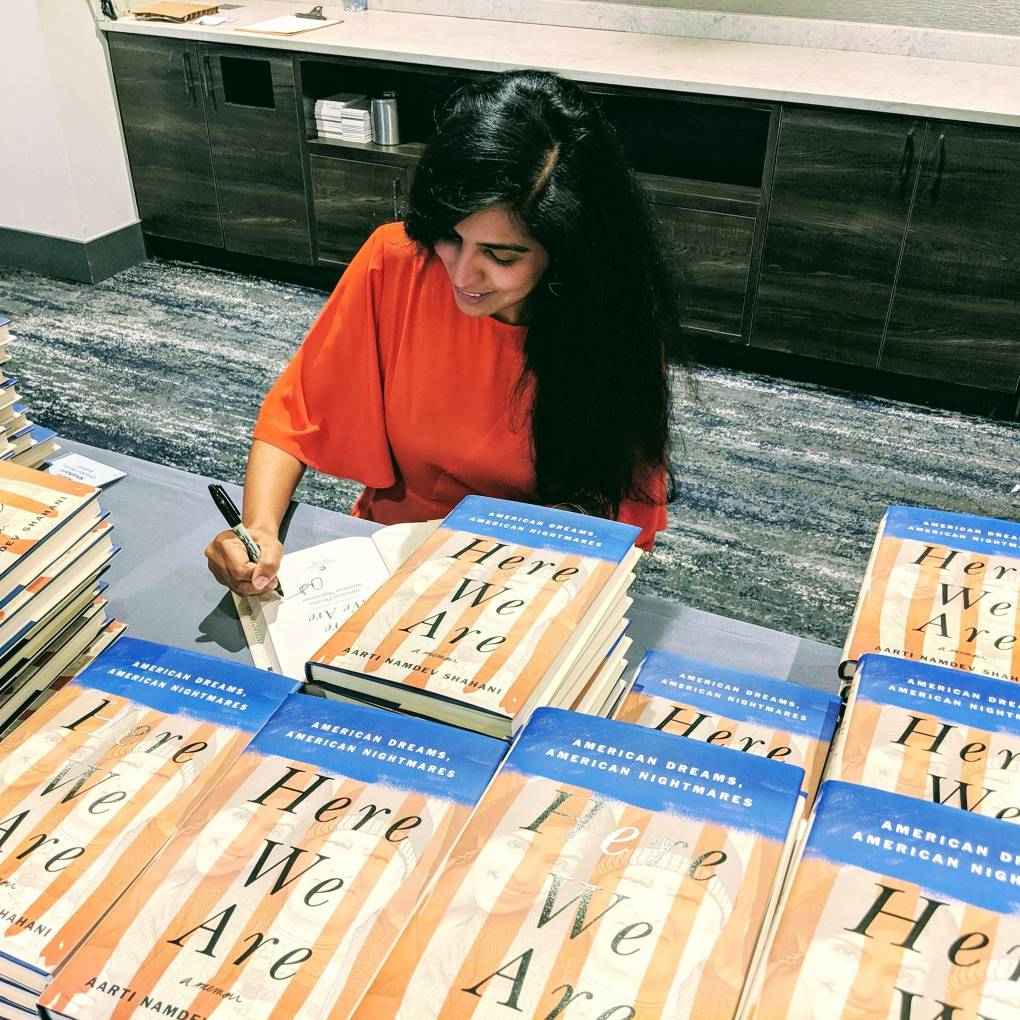
Rethinking Power With Aarti Shahani's New Podcast
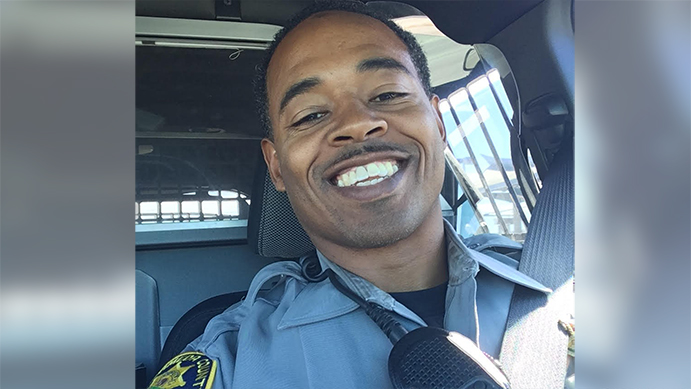
From Protesting Police to Becoming a Cop Himself
Sponsored
Player sponsored by
window.__IS_SSR__=true
window.__INITIAL_STATE__={
"attachmentsReducer": {
"audio_0": {
"type": "attachments",
"id": "audio_0",
"imgSizes": {
"kqedFullSize": {
"file": "https://ww2.kqed.org/news/wp-content/themes/KQED-unified/img/audio_bgs/background0.jpg"
}
}
},
"audio_1": {
"type": "attachments",
"id": "audio_1",
"imgSizes": {
"kqedFullSize": {
"file": "https://ww2.kqed.org/news/wp-content/themes/KQED-unified/img/audio_bgs/background1.jpg"
}
}
},
"audio_2": {
"type": "attachments",
"id": "audio_2",
"imgSizes": {
"kqedFullSize": {
"file": "https://ww2.kqed.org/news/wp-content/themes/KQED-unified/img/audio_bgs/background2.jpg"
}
}
},
"audio_3": {
"type": "attachments",
"id": "audio_3",
"imgSizes": {
"kqedFullSize": {
"file": "https://ww2.kqed.org/news/wp-content/themes/KQED-unified/img/audio_bgs/background3.jpg"
}
}
},
"audio_4": {
"type": "attachments",
"id": "audio_4",
"imgSizes": {
"kqedFullSize": {
"file": "https://ww2.kqed.org/news/wp-content/themes/KQED-unified/img/audio_bgs/background4.jpg"
}
}
},
"placeholder": {
"type": "attachments",
"id": "placeholder",
"imgSizes": {
"thumbnail": {
"file": "https://cdn.kqed.org/wp-content/uploads/2024/12/KQED-Default-Image-816638274-2000x1333-1-160x107.jpg",
"width": 160,
"height": 107,
"mimeType": "image/jpeg"
},
"medium": {
"file": "https://cdn.kqed.org/wp-content/uploads/2024/12/KQED-Default-Image-816638274-2000x1333-1-800x533.jpg",
"width": 800,
"height": 533,
"mimeType": "image/jpeg"
},
"medium_large": {
"file": "https://cdn.kqed.org/wp-content/uploads/2024/12/KQED-Default-Image-816638274-2000x1333-1-768x512.jpg",
"width": 768,
"height": 512,
"mimeType": "image/jpeg"
},
"large": {
"file": "https://cdn.kqed.org/wp-content/uploads/2024/12/KQED-Default-Image-816638274-2000x1333-1-1020x680.jpg",
"width": 1020,
"height": 680,
"mimeType": "image/jpeg"
},
"1536x1536": {
"file": "https://cdn.kqed.org/wp-content/uploads/2024/12/KQED-Default-Image-816638274-2000x1333-1-1536x1024.jpg",
"width": 1536,
"height": 1024,
"mimeType": "image/jpeg"
},
"fd-lrg": {
"file": "https://cdn.kqed.org/wp-content/uploads/2024/12/KQED-Default-Image-816638274-2000x1333-1-1536x1024.jpg",
"width": 1536,
"height": 1024,
"mimeType": "image/jpeg"
},
"fd-med": {
"file": "https://cdn.kqed.org/wp-content/uploads/2024/12/KQED-Default-Image-816638274-2000x1333-1-1020x680.jpg",
"width": 1020,
"height": 680,
"mimeType": "image/jpeg"
},
"fd-sm": {
"file": "https://cdn.kqed.org/wp-content/uploads/2024/12/KQED-Default-Image-816638274-2000x1333-1-800x533.jpg",
"width": 800,
"height": 533,
"mimeType": "image/jpeg"
},
"post-thumbnail": {
"file": "https://cdn.kqed.org/wp-content/uploads/2024/12/KQED-Default-Image-816638274-2000x1333-1-672x372.jpg",
"width": 672,
"height": 372,
"mimeType": "image/jpeg"
},
"twentyfourteen-full-width": {
"file": "https://cdn.kqed.org/wp-content/uploads/2024/12/KQED-Default-Image-816638274-2000x1333-1-1038x576.jpg",
"width": 1038,
"height": 576,
"mimeType": "image/jpeg"
},
"xxsmall": {
"file": "https://cdn.kqed.org/wp-content/uploads/2024/12/KQED-Default-Image-816638274-2000x1333-1-160x107.jpg",
"width": 160,
"height": 107,
"mimeType": "image/jpeg"
},
"xsmall": {
"file": "https://cdn.kqed.org/wp-content/uploads/2024/12/KQED-Default-Image-816638274-2000x1333-1-672x372.jpg",
"width": 672,
"height": 372,
"mimeType": "image/jpeg"
},
"small": {
"file": "https://cdn.kqed.org/wp-content/uploads/2024/12/KQED-Default-Image-816638274-2000x1333-1-672x372.jpg",
"width": 672,
"height": 372,
"mimeType": "image/jpeg"
},
"xlarge": {
"file": "https://cdn.kqed.org/wp-content/uploads/2024/12/KQED-Default-Image-816638274-2000x1333-1-1020x680.jpg",
"width": 1020,
"height": 680,
"mimeType": "image/jpeg"
},
"full-width": {
"file": "https://cdn.kqed.org/wp-content/uploads/2024/12/KQED-Default-Image-816638274-2000x1333-1-1920x1280.jpg",
"width": 1920,
"height": 1280,
"mimeType": "image/jpeg"
},
"guest-author-32": {
"file": "https://cdn.kqed.org/wp-content/uploads/2025/01/KQED-Default-Image-816638274-1333x1333-1-160x160.jpg",
"width": 32,
"height": 32,
"mimeType": "image/jpeg"
},
"guest-author-50": {
"file": "https://cdn.kqed.org/wp-content/uploads/2025/01/KQED-Default-Image-816638274-1333x1333-1-160x160.jpg",
"width": 50,
"height": 50,
"mimeType": "image/jpeg"
},
"guest-author-64": {
"file": "https://cdn.kqed.org/wp-content/uploads/2025/01/KQED-Default-Image-816638274-1333x1333-1-160x160.jpg",
"width": 64,
"height": 64,
"mimeType": "image/jpeg"
},
"guest-author-96": {
"file": "https://cdn.kqed.org/wp-content/uploads/2025/01/KQED-Default-Image-816638274-1333x1333-1-160x160.jpg",
"width": 96,
"height": 96,
"mimeType": "image/jpeg"
},
"guest-author-128": {
"file": "https://cdn.kqed.org/wp-content/uploads/2025/01/KQED-Default-Image-816638274-1333x1333-1-160x160.jpg",
"width": 128,
"height": 128,
"mimeType": "image/jpeg"
},
"detail": {
"file": "https://cdn.kqed.org/wp-content/uploads/2025/01/KQED-Default-Image-816638274-1333x1333-1-160x160.jpg",
"width": 160,
"height": 160,
"mimeType": "image/jpeg"
},
"kqedFullSize": {
"file": "https://cdn.kqed.org/wp-content/uploads/2024/12/KQED-Default-Image-816638274-2000x1333-1.jpg",
"width": 2000,
"height": 1333
}
}
},
"news_11933862": {
"type": "attachments",
"id": "news_11933862",
"meta": {
"index": "attachments_1716263798",
"site": "news",
"id": "11933862",
"found": true
},
"parent": 11933852,
"imgSizes": {
"twentyfourteen-full-width": {
"file": "https://ww2.kqed.org/app/uploads/sites/10/2022/12/02.13-carmel-gathering-1038x576.jpg",
"width": 1038,
"mimeType": "image/jpeg",
"height": 576
},
"thumbnail": {
"file": "https://ww2.kqed.org/app/uploads/sites/10/2022/12/02.13-carmel-gathering-160x95.jpg",
"width": 160,
"mimeType": "image/jpeg",
"height": 95
},
"post-thumbnail": {
"file": "https://ww2.kqed.org/app/uploads/sites/10/2022/12/02.13-carmel-gathering-672x372.jpg",
"width": 672,
"mimeType": "image/jpeg",
"height": 372
},
"kqedFullSize": {
"file": "https://ww2.kqed.org/app/uploads/sites/10/2022/12/02.13-carmel-gathering.jpg",
"width": 1202,
"height": 713
},
"large": {
"file": "https://ww2.kqed.org/app/uploads/sites/10/2022/12/02.13-carmel-gathering-1020x605.jpg",
"width": 1020,
"mimeType": "image/jpeg",
"height": 605
},
"medium": {
"file": "https://ww2.kqed.org/app/uploads/sites/10/2022/12/02.13-carmel-gathering-800x475.jpg",
"width": 800,
"mimeType": "image/jpeg",
"height": 475
}
},
"publishDate": 1670008812,
"modified": 1670009023,
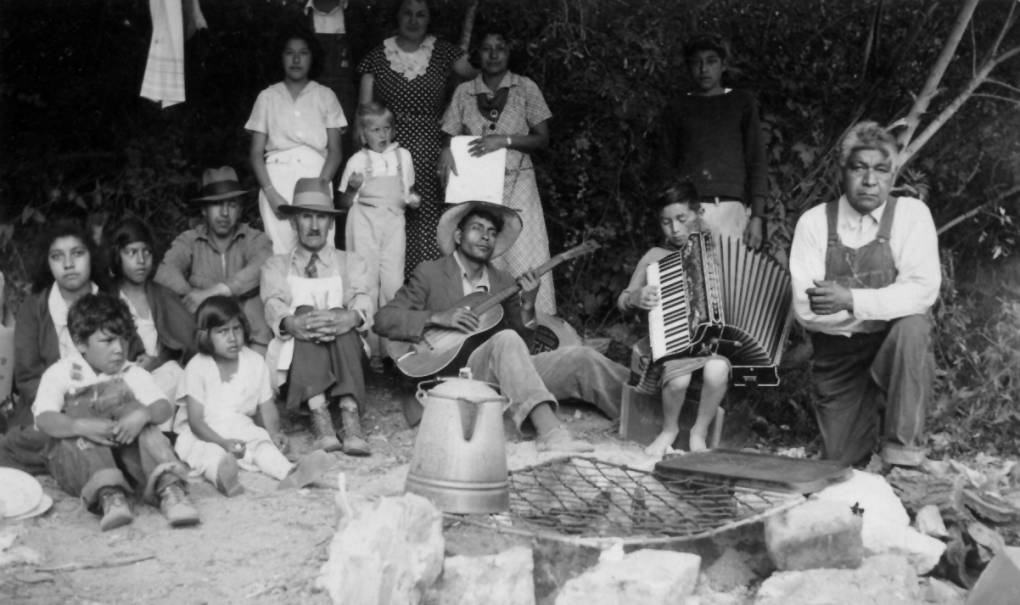
"caption": "Miranda family portrait in Carmel circa 1930s. (Tómas Santos Miranda, far right, is Deborah’s great-grandfather, whose generation she says represented 'the bridge between missionization and post-secularization.')",
"description": null,
"title": "02.13-carmel-gathering",
"credit": "Courtesy Deborah Miranda",
"status": "inherit",
"altTag": "a black and white photograph of a large Native American family circa 1930s, with musical instruments",
"fetchFailed": false,
"isLoading": false
},
"news_11923741": {
"type": "attachments",
"id": "news_11923741",
"meta": {
"index": "attachments_1716263798",
"site": "news",
"id": "11923741",
"found": true
},
"parent": 11923738,
"imgSizes": {
"twentyfourteen-full-width": {
"file": "https://ww2.kqed.org/app/uploads/sites/10/2022/08/Littlefeather_Moore-1038x576.png",
"width": 1038,
"mimeType": "image/png",
"height": 576
},
"thumbnail": {
"file": "https://ww2.kqed.org/app/uploads/sites/10/2022/08/Littlefeather_Moore-160x111.png",
"width": 160,
"mimeType": "image/png",
"height": 111
},
"post-thumbnail": {
"file": "https://ww2.kqed.org/app/uploads/sites/10/2022/08/Littlefeather_Moore-672x372.png",
"width": 672,
"mimeType": "image/png",
"height": 372
},
"kqedFullSize": {
"file": "https://ww2.kqed.org/app/uploads/sites/10/2022/08/Littlefeather_Moore.png",
"width": 1517,
"height": 1049
},
"large": {
"file": "https://ww2.kqed.org/app/uploads/sites/10/2022/08/Littlefeather_Moore-1020x705.png",
"width": 1020,
"mimeType": "image/png",
"height": 705
},
"medium": {
"file": "https://ww2.kqed.org/app/uploads/sites/10/2022/08/Littlefeather_Moore-800x553.png",
"width": 800,
"mimeType": "image/png",
"height": 553
}
},
"publishDate": 1661548797,
"modified": 1661555290,
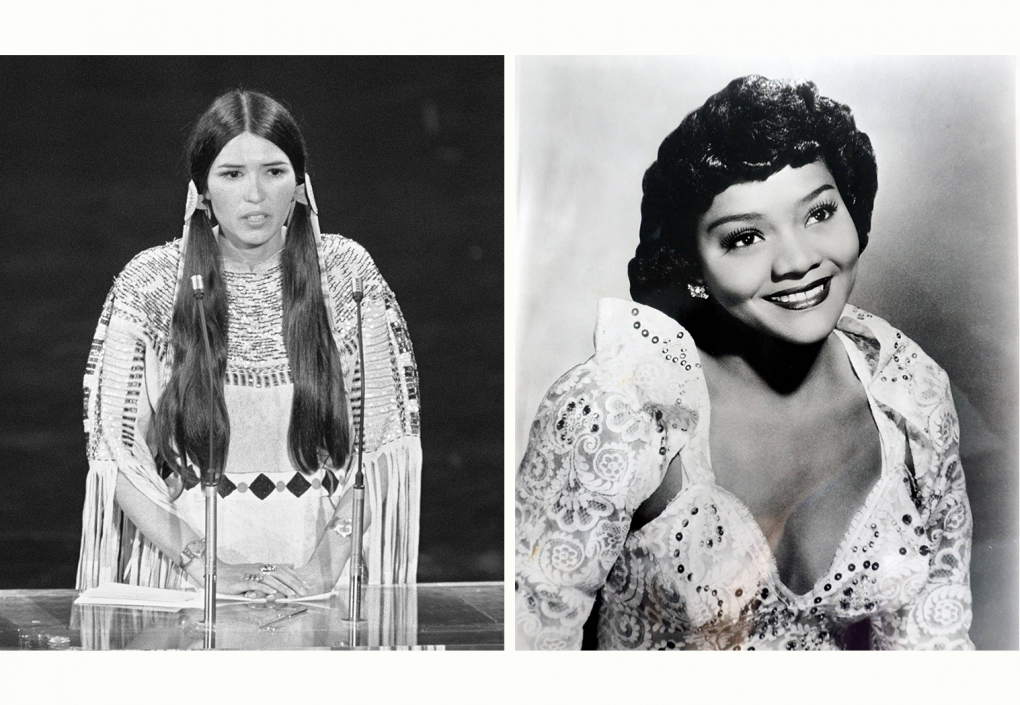
"caption": "Sacheen Littlefeather (left) speaking on behalf of Marlon Brando, at the 45th Academy Awards in 1973; Brando refused to accept the Best Actor award he received for his role in 'The Godfather' in protest over US treatment of Native Americans. Juanita Moore (left), who in 1959 became the fifth Black actor in moviemaking history to be nominated for an Oscar.",
"description": "Left: Actress Sacheen Littlefeather speaking on behalf of Marlon Brando, at the 45th Academy Awards in 1973. Brando refused to accept the Best Actor award he received for his role in Godfather in protest over U.S. treatment of Native Americans. Right: A portrait of actress Juanita Moore. In 1959, Moore became the fifth Black actor in movie-making history to be nominated for an Oscar.",
"title": "Littlefeather_Moore",
"credit": "Courtesy of Bettmann via Getty Images, and Arnett Moore",
"status": "inherit",
"altTag": "Two woman appear in the image. On the left is a Native American woman wearing a buckskin dress with elaborate beading around the collar and arms, her hair held clasped on each side of her head in two beaded bands. On the right is a Black woman with dark curly hair wearing a white gown with a sweetheart neckline, embroidered in patterns of spirals and petals and studded with jewels. Her face glows with a brilliant smile and her eyes sparkle.",
"fetchFailed": false,
"isLoading": false
},
"news_11896069": {
"type": "attachments",
"id": "news_11896069",
"meta": {
"index": "attachments_1716263798",
"site": "news",
"id": "11896069",
"found": true
},
"parent": 11895000,
"imgSizes": {
"twentyfourteen-full-width": {
"file": "https://ww2.kqed.org/app/uploads/sites/10/2021/11/004_SanFrancisco_AdhitiShaishav_09162021-1038x576.jpg",
"width": 1038,
"mimeType": "image/jpeg",
"height": 576
},
"thumbnail": {
"file": "https://ww2.kqed.org/app/uploads/sites/10/2021/11/004_SanFrancisco_AdhitiShaishav_09162021-160x107.jpg",
"width": 160,
"mimeType": "image/jpeg",
"height": 107
},
"post-thumbnail": {
"file": "https://ww2.kqed.org/app/uploads/sites/10/2021/11/004_SanFrancisco_AdhitiShaishav_09162021-672x372.jpg",
"width": 672,
"mimeType": "image/jpeg",
"height": 372
},
"kqedFullSize": {
"file": "https://ww2.kqed.org/app/uploads/sites/10/2021/11/004_SanFrancisco_AdhitiShaishav_09162021.jpg",
"width": 1920,
"height": 1280
},
"large": {
"file": "https://ww2.kqed.org/app/uploads/sites/10/2021/11/004_SanFrancisco_AdhitiShaishav_09162021-1020x680.jpg",
"width": 1020,
"mimeType": "image/jpeg",
"height": 680
},
"1536x1536": {
"file": "https://ww2.kqed.org/app/uploads/sites/10/2021/11/004_SanFrancisco_AdhitiShaishav_09162021-1536x1024.jpg",
"width": 1536,
"mimeType": "image/jpeg",
"height": 1024
},
"medium": {
"file": "https://ww2.kqed.org/app/uploads/sites/10/2021/11/004_SanFrancisco_AdhitiShaishav_09162021-800x533.jpg",
"width": 800,
"mimeType": "image/jpeg",
"height": 533
}
},
"publishDate": 1636743302,
"modified": 1636768014,
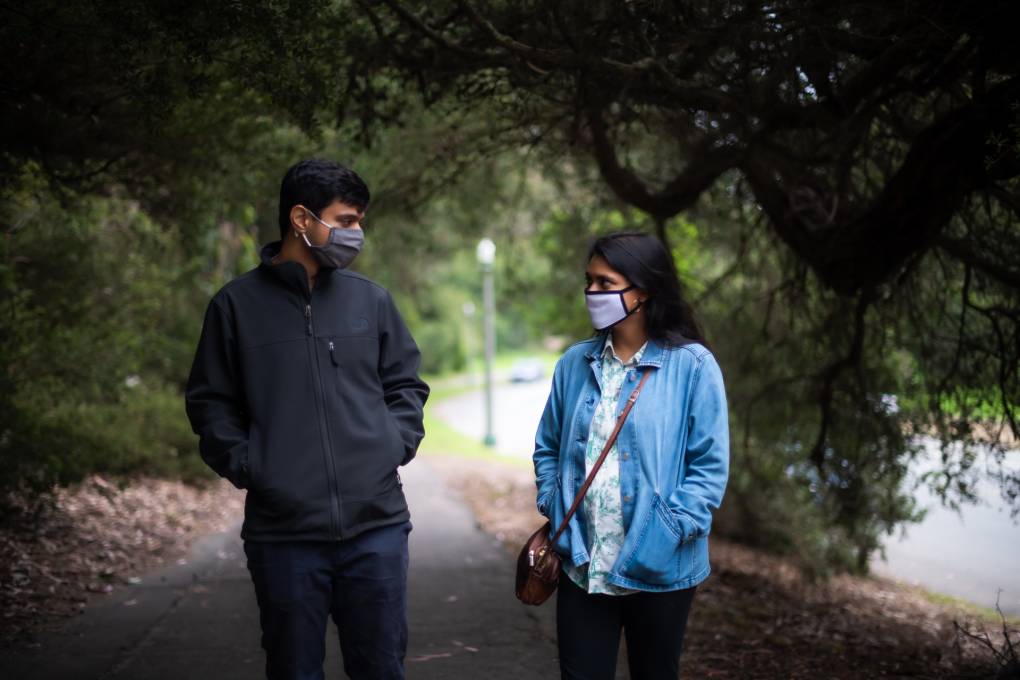
"caption": "Shaishav and I met in August 2020 through Hinge, a popular dating app. We had to get creative for safe, outdoor date activities, but it led to a meaningful relationship. ",
"description": "Shaishav and I met in August 2020 through a Hinge, a popular dating app. We had to get creative for safe, outdoor date activities, but it led to a meaningful relationship. ",
"title": "004_SanFrancisco_Adhiti+Shaishav_09162021",
"credit": "Beth LaBerge/KQED News",
"status": "inherit",
"altTag": "A man and woman walk through a park wearing COVID masks. He's in a black jacket and pants, she's in a blue jacket and white top.",
"fetchFailed": false,
"isLoading": false
},
"news_11879940": {
"type": "attachments",
"id": "news_11879940",
"meta": {
"index": "attachments_1716263798",
"site": "news",
"id": "11879940",
"found": true
},
"parent": 11879912,
"imgSizes": {
"twentyfourteen-full-width": {
"file": "https://ww2.kqed.org/app/uploads/sites/10/2021/06/ACTA_ContraCovid_Madera124-1038x576.jpg",
"width": 1038,
"mimeType": "image/jpeg",
"height": 576
},
"thumbnail": {
"file": "https://ww2.kqed.org/app/uploads/sites/10/2021/06/ACTA_ContraCovid_Madera124-160x111.jpg",
"width": 160,
"mimeType": "image/jpeg",
"height": 111
},
"post-thumbnail": {
"file": "https://ww2.kqed.org/app/uploads/sites/10/2021/06/ACTA_ContraCovid_Madera124-672x372.jpg",
"width": 672,
"mimeType": "image/jpeg",
"height": 372
},
"kqedFullSize": {
"file": "https://ww2.kqed.org/app/uploads/sites/10/2021/06/ACTA_ContraCovid_Madera124.jpg",
"width": 2000,
"height": 1385
},
"large": {
"file": "https://ww2.kqed.org/app/uploads/sites/10/2021/06/ACTA_ContraCovid_Madera124-1020x706.jpg",
"width": 1020,
"mimeType": "image/jpeg",
"height": 706
},
"1536x1536": {
"file": "https://ww2.kqed.org/app/uploads/sites/10/2021/06/ACTA_ContraCovid_Madera124-1536x1064.jpg",
"width": 1536,
"mimeType": "image/jpeg",
"height": 1064
},
"full-width": {
"file": "https://ww2.kqed.org/app/uploads/sites/10/2021/06/ACTA_ContraCovid_Madera124-1920x1330.jpg",
"width": 1920,
"mimeType": "image/jpeg",
"height": 1330
},
"medium": {
"file": "https://ww2.kqed.org/app/uploads/sites/10/2021/06/ACTA_ContraCovid_Madera124-800x554.jpg",
"width": 800,
"mimeType": "image/jpeg",
"height": 554
}
},
"publishDate": 1625079730,
"modified": 1625250988,
"caption": "Juan Felipe Herrera and his former students performing for an ACTAVANDO Contra COVID event at the Madera Flea Market on June 13, 2021.",
"description": "Juan Felipe Herrera and his former students performing for an ACTAVANDO Contra COVID event at the Madera Flea Market on June 13, 2021.",
"title": "ACTA_ContraCovid_Madera124",
"credit": "Courtesy of Jenn Emerling/ACTA",
"status": "inherit",
"altTag": "A group of artists, all dressed in colorful gear, pose for a photo.",
"fetchFailed": false,
"isLoading": false
},
"news_11880216": {
"type": "attachments",
"id": "news_11880216",
"meta": {
"index": "attachments_1716263798",
"site": "news",
"id": "11880216",
"found": true
},
"parent": 11879719,
"imgSizes": {
"twentyfourteen-full-width": {
"file": "https://ww2.kqed.org/app/uploads/sites/10/2021/07/received_949030718975633-1038x576.jpeg",
"width": 1038,
"mimeType": "image/jpeg",
"height": 576
},
"thumbnail": {
"file": "https://ww2.kqed.org/app/uploads/sites/10/2021/07/received_949030718975633-160x107.jpeg",
"width": 160,
"mimeType": "image/jpeg",
"height": 107
},
"post-thumbnail": {
"file": "https://ww2.kqed.org/app/uploads/sites/10/2021/07/received_949030718975633-672x372.jpeg",
"width": 672,
"mimeType": "image/jpeg",
"height": 372
},
"kqedFullSize": {
"file": "https://ww2.kqed.org/app/uploads/sites/10/2021/07/received_949030718975633.jpeg",
"width": 1740,
"height": 1160
},
"large": {
"file": "https://ww2.kqed.org/app/uploads/sites/10/2021/07/received_949030718975633-1020x680.jpeg",
"width": 1020,
"mimeType": "image/jpeg",
"height": 680
},
"1536x1536": {
"file": "https://ww2.kqed.org/app/uploads/sites/10/2021/07/received_949030718975633-1536x1024.jpeg",
"width": 1536,
"mimeType": "image/jpeg",
"height": 1024
},
"medium": {
"file": "https://ww2.kqed.org/app/uploads/sites/10/2021/07/received_949030718975633-800x533.jpeg",
"width": 800,
"mimeType": "image/jpeg",
"height": 533
}
},
"publishDate": 1625185825,
"modified": 1625186271,
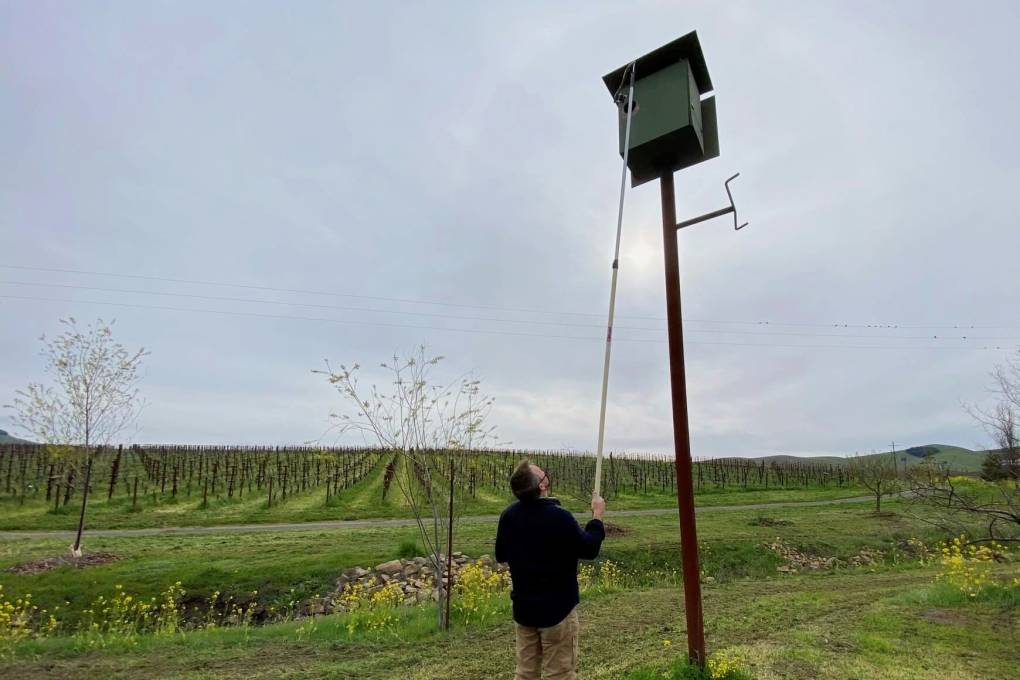
"caption": "Researcher Matt Johnson uses a painter's pole that is attached to a GoPro camera connected to his phone to check for nests and eggs in a barn owl box. There are 20 similar boxes on this Napa County vineyard. By tracking the behavior of the owls in each box, Johnson can better understand where to place more boxes.",
"description": "Researcher Matt Johnson uses a painter's pole that is attached to a GoPro camera connected to his phone to check for nests and eggs in a barn owl box. There are 20 similar boxes on this Napa County vineyard.",
"title": "received_949030718975633",
"credit": "Lisa Morehouse/KQED",
"status": "inherit",
"altTag": "A person holds a painter's pole and GoPro camera connected to his phone to check for nests and eggs in a barn owl box. Behind this person, there are files covered in vineyards.",
"fetchFailed": false,
"isLoading": false
},
"news_11873249": {
"type": "attachments",
"id": "news_11873249",
"meta": {
"index": "attachments_1716263798",
"site": "news",
"id": "11873249",
"found": true
},
"parent": 11873038,
"imgSizes": {
"twentyfourteen-full-width": {
"file": "https://ww2.kqed.org/app/uploads/sites/10/2021/05/RS48979_IMG_1077-qut-1038x576.jpg",
"width": 1038,
"mimeType": "image/jpeg",
"height": 576
},
"thumbnail": {
"file": "https://ww2.kqed.org/app/uploads/sites/10/2021/05/RS48979_IMG_1077-qut-160x92.jpg",
"width": 160,
"mimeType": "image/jpeg",
"height": 92
},
"post-thumbnail": {
"file": "https://ww2.kqed.org/app/uploads/sites/10/2021/05/RS48979_IMG_1077-qut-672x372.jpg",
"width": 672,
"mimeType": "image/jpeg",
"height": 372
},
"kqedFullSize": {
"file": "https://ww2.kqed.org/app/uploads/sites/10/2021/05/RS48979_IMG_1077-qut.jpg",
"width": 1920,
"height": 1107
},
"large": {
"file": "https://ww2.kqed.org/app/uploads/sites/10/2021/05/RS48979_IMG_1077-qut-1020x588.jpg",
"width": 1020,
"mimeType": "image/jpeg",
"height": 588
},
"1536x1536": {
"file": "https://ww2.kqed.org/app/uploads/sites/10/2021/05/RS48979_IMG_1077-qut-1536x886.jpg",
"width": 1536,
"mimeType": "image/jpeg",
"height": 886
},
"medium": {
"file": "https://ww2.kqed.org/app/uploads/sites/10/2021/05/RS48979_IMG_1077-qut-800x461.jpg",
"width": 800,
"mimeType": "image/jpeg",
"height": 461
}
},
"publishDate": 1620780205,
"modified": 1621016746,
"caption": "Karaoke fan Alyse Whitney (seen here holding dog and mic) belts out a song in her Los Angeles apartment with her neighbors during the COVID-19 pandemic. ",
"description": "Karaoke fan Alyse Whitney (seen here holding dog and mic) belts out a song in her Los Angeles apartment with her neighbors during the COVID-19 pandemic. ",
"title": "RS48979_IMG_1077-qut",
"credit": "Photo courtesy of Alyse Whitney",
"status": "inherit",
"altTag": null,
"fetchFailed": false,
"isLoading": false
},
"news_11871274": {
"type": "attachments",
"id": "news_11871274",
"meta": {
"index": "attachments_1716263798",
"site": "news",
"id": "11871274",
"found": true
},
"parent": 11871136,
"imgSizes": {
"twentyfourteen-full-width": {
"file": "https://ww2.kqed.org/app/uploads/sites/10/2021/04/70667518_10157662293591085_3249648414513692672_o-1038x576.jpg",
"width": 1038,
"mimeType": "image/jpeg",
"height": 576
},
"thumbnail": {
"file": "https://ww2.kqed.org/app/uploads/sites/10/2021/04/70667518_10157662293591085_3249648414513692672_o-160x160.jpg",
"width": 160,
"mimeType": "image/jpeg",
"height": 160
},
"post-thumbnail": {
"file": "https://ww2.kqed.org/app/uploads/sites/10/2021/04/70667518_10157662293591085_3249648414513692672_o-672x372.jpg",
"width": 672,
"mimeType": "image/jpeg",
"height": 372
},
"kqedFullSize": {
"file": "https://ww2.kqed.org/app/uploads/sites/10/2021/04/70667518_10157662293591085_3249648414513692672_o-e1620333933295.jpg",
"width": 1920,
"height": 1920
},
"large": {
"file": "https://ww2.kqed.org/app/uploads/sites/10/2021/04/70667518_10157662293591085_3249648414513692672_o-1020x1020.jpg",
"width": 1020,
"mimeType": "image/jpeg",
"height": 1020
},
"1536x1536": {
"file": "https://ww2.kqed.org/app/uploads/sites/10/2021/04/70667518_10157662293591085_3249648414513692672_o-1536x1536.jpg",
"width": 1536,
"mimeType": "image/jpeg",
"height": 1536
},
"full-width": {
"file": "https://ww2.kqed.org/app/uploads/sites/10/2021/04/70667518_10157662293591085_3249648414513692672_o-1920x1920.jpg",
"width": 1920,
"mimeType": "image/jpeg",
"height": 1920
},
"medium": {
"file": "https://ww2.kqed.org/app/uploads/sites/10/2021/04/70667518_10157662293591085_3249648414513692672_o-800x800.jpg",
"width": 800,
"mimeType": "image/jpeg",
"height": 800
}
},
"publishDate": 1619479289,
"modified": 1620337815,
"caption": "Shahani signs copies of her memoir, 'Here We Are: American Dreams, American Nightmares.'",
"description": null,
"title": "70667518_10157662293591085_3249648414513692672_o",
"credit": "Courtesy of Aarti Shahani",
"status": "inherit",
"altTag": null,
"fetchFailed": false,
"isLoading": false
},
"news_11837643": {
"type": "attachments",
"id": "news_11837643",
"meta": {
"index": "attachments_1716263798",
"site": "news",
"id": "11837643",
"found": true
},
"parent": 11837439,
"imgSizes": {
"apple_news_ca_square_4_0": {
"file": "https://ww2.kqed.org/app/uploads/sites/10/2020/09/Jinho_72dpi-470x389.jpg",
"width": 470,
"mimeType": "image/jpeg",
"height": 389
},
"thumbnail": {
"file": "https://ww2.kqed.org/app/uploads/sites/10/2020/09/Jinho_72dpi-160x90.jpg",
"width": 160,
"mimeType": "image/jpeg",
"height": 90
},
"post-thumbnail": {
"file": "https://ww2.kqed.org/app/uploads/sites/10/2020/09/Jinho_72dpi-672x372.jpg",
"width": 672,
"mimeType": "image/jpeg",
"height": 372
},
"kqedFullSize": {
"file": "https://ww2.kqed.org/app/uploads/sites/10/2020/09/Jinho_72dpi.jpg",
"width": 691,
"height": 389
},
"apple_news_ca_landscape_4_7": {
"file": "https://ww2.kqed.org/app/uploads/sites/10/2020/09/Jinho_72dpi-632x389.jpg",
"width": 632,
"mimeType": "image/jpeg",
"height": 389
},
"apple_news_ca_portrait_4_7": {
"file": "https://ww2.kqed.org/app/uploads/sites/10/2020/09/Jinho_72dpi-414x389.jpg",
"width": 414,
"mimeType": "image/jpeg",
"height": 389
},
"apple_news_ca_portrait_5_5": {
"file": "https://ww2.kqed.org/app/uploads/sites/10/2020/09/Jinho_72dpi-687x389.jpg",
"width": 687,
"mimeType": "image/jpeg",
"height": 389
},
"apple_news_ca_square_4_7": {
"file": "https://ww2.kqed.org/app/uploads/sites/10/2020/09/Jinho_72dpi-550x389.jpg",
"width": 550,
"mimeType": "image/jpeg",
"height": 389
},
"apple_news_ca_landscape_4_0": {
"file": "https://ww2.kqed.org/app/uploads/sites/10/2020/09/Jinho_72dpi-536x389.jpg",
"width": 536,
"mimeType": "image/jpeg",
"height": 389
},
"apple_news_ca_portrait_4_0": {
"file": "https://ww2.kqed.org/app/uploads/sites/10/2020/09/Jinho_72dpi-354x389.jpg",
"width": 354,
"mimeType": "image/jpeg",
"height": 389
}
},
"publishDate": 1599860082,
"modified": 1599860234,
"caption": "After touring the world with Snoop Dogg and the Black Eyed Peas, Jinho Ferreira served as an Alameda County sheriff's deputy for eight years. He said he wanted to fight police violence from the inside.",
"description": "After touring the world with Snoop Dogg and the Black Eyed Peas, Jinho Ferreira served as an Alameda County sheriff's deputy for eight years. He said he wanted to fight police violence from the inside.",
"title": "Jinho_72dpi",
"credit": "Courtesy of Jinho Ferreira",
"status": "inherit",
"fetchFailed": false,
"isLoading": false
}
},
"audioPlayerReducer": {
"postId": "stream_live",
"isPaused": true,
"isPlaying": false,
"pfsActive": false,
"pledgeModalIsOpen": true,
"playerDrawerIsOpen": false
},
"authorsReducer": {
"byline_news_11837439": {
"type": "authors",
"id": "byline_news_11837439",
"meta": {
"override": true
},
"slug": "byline_news_11837439",
"name": "\u003ca href=\"https://twitter.com/tessacotsirilos\">Teresa Cotsirilos\u003c/a>",
"isLoading": false
},
"sasha-khokha": {
"type": "authors",
"id": "254",
"meta": {
"index": "authors_1716337520",
"id": "254",
"found": true
},
"name": "Sasha Khokha",
"firstName": "Sasha",
"lastName": "Khokha",
"slug": "sasha-khokha",
"email": "skhokha@kqed.org",
"display_author_email": true,
"staff_mastheads": [
"news"
],
"title": "Host, The California Report Magazine",
"bio": "Sasha Khokha is the host of \u003cem>The California Report's \u003c/em> weekly magazine program, which takes listeners on sound-rich excursions to meet the people that make the Golden State unique -- through audio documentaries and long-form stories. As \u003cem>The California Report's\u003c/em> Central Valley Bureau Chief based in Fresno for nearly a dozen years, Sasha brought the lives and concerns of rural Californians to listeners around the state. Her reporting helped expose the hidden price immigrant women janitors and farmworkers may pay to keep their jobs: sexual assault at work. It inspired two new California laws to protect them from sexual harassment. She was a key member of the reporting team for the Frontline film \u003cem>Rape on the Night Shift, \u003c/em>which was nominated for two national Emmys. Sasha has also won a national Edward R. Murrow and a national PRNDI award for investigative reporting, as well as multiple prizes from the Society for Professional Journalists. Sasha is a proud alum of the UC Berkeley Graduate School of Journalism and Brown University and a member of the South Asian Journalists Association.",
"avatar": "https://secure.gravatar.com/avatar/e4b5e1541aaeea2aa356aa1fb2a68950?s=600&d=blank&r=g",
"twitter": "KQEDSashaKhokha",
"facebook": null,
"instagram": null,
"linkedin": null,
"sites": [
{
"site": "news",
"roles": [
"editor"
]
},
{
"site": "stateofhealth",
"roles": [
"author"
]
},
{
"site": "science",
"roles": [
"author"
]
},
{
"site": "quest",
"roles": [
"subscriber"
]
}
],
"headData": {
"title": "Sasha Khokha | KQED",
"description": "Host, The California Report Magazine",
"ogImgSrc": "https://secure.gravatar.com/avatar/e4b5e1541aaeea2aa356aa1fb2a68950?s=600&d=blank&r=g",
"twImgSrc": "https://secure.gravatar.com/avatar/e4b5e1541aaeea2aa356aa1fb2a68950?s=600&d=blank&r=g"
},
"isLoading": false,
"link": "/author/sasha-khokha"
},
"lmorehouse": {
"type": "authors",
"id": "3229",
"meta": {
"index": "authors_1716337520",
"id": "3229",
"found": true
},
"name": "Lisa Morehouse",
"firstName": "Lisa",
"lastName": "Morehouse",
"slug": "lmorehouse",
"email": "morehouse.lisa@gmail.com",
"display_author_email": false,
"staff_mastheads": [],
"title": "KQED Contributor",
"bio": "Lisa Morehouse is an award-winning public radio and print journalist, who has filed for National Public Radio, American Public Media, KQED Public Radio, Edutopia, and McSweeney’s. Her reporting has taken her from Samoan traveling circuses to Mississippi Delta classrooms to the homes of Lao refugees in rural Iowa. In addition to reporting, she teaches radio production to at-risk youth in the Bay Area. Her series \u003ca href=\"http://afterthegoldrushradio.com/\">After the Gold Rush\u003c/a> featured the changing industries, populations and identities of rural towns throughout California. She’s now producing \u003ca href=\"http://www.californiafoodways.com/\">California Foodways\u003c/a>, a series exploring the intersections of food, culture, economics, history and labor. Follow along on the \u003ca href=\"https://www.facebook.com/californiafoodways?ref=hl\">Facebook page\u003c/a> or on Twitter @cafoodways.",
"avatar": "https://secure.gravatar.com/avatar/dae74b002a6e256f39abb19d6f5acaea?s=600&d=blank&r=g",
"twitter": null,
"facebook": null,
"instagram": null,
"linkedin": null,
"sites": [
{
"site": "",
"roles": [
"editor"
]
},
{
"site": "news",
"roles": [
"author"
]
}
],
"headData": {
"title": "Lisa Morehouse | KQED",
"description": "KQED Contributor",
"ogImgSrc": "https://secure.gravatar.com/avatar/dae74b002a6e256f39abb19d6f5acaea?s=600&d=blank&r=g",
"twImgSrc": "https://secure.gravatar.com/avatar/dae74b002a6e256f39abb19d6f5acaea?s=600&d=blank&r=g"
},
"isLoading": false,
"link": "/author/lmorehouse"
},
"cveltman": {
"type": "authors",
"id": "8608",
"meta": {
"index": "authors_1716337520",
"id": "8608",
"found": true
},
"name": "Chloe Veltman",
"firstName": "Chloe",
"lastName": "Veltman",
"slug": "cveltman",
"email": "cveltman@kqed.org",
"display_author_email": true,
"staff_mastheads": [],
"title": "Arts and Culture Reporter",
"bio": "Chloe Veltman is a former arts and culture reporter for KQED. Prior to joining the organization, she launched and led the arts bureau at Colorado Public Radio, served as the Bay Area's culture columnist for the New York Times, and was the founder, host and executive producer of VoiceBox, a national award-winning weekly podcast/radio show and live events series all about the human voice. Chloe is the recipient of numerous prizes, grants and fellowships including a Webby Award for her work on interactive storytelling, both the John S Knight Journalism Fellowship and Humanities Center Fellowship at Stanford University, the Sundance Arts Writing Fellowship and a Library of Congress Research Fellowship. She is the author of the book \"On Acting\" and has appeared as a guest lecturer at Yale University and the San Francisco Conservatory of Music among other institutions. She holds a BA in english literature from King's College, Cambridge, and a Masters in Dramaturgy from the Central School of Speech and Drama/Harvard Institute for Advanced Theater Training.\r\n\u003ca href=\"https://www.chloeveltman.com\">www.chloeveltman.com\u003c/a>",
"avatar": "https://secure.gravatar.com/avatar/55403394b00a1ddab683952c2eb2cf85?s=600&d=blank&r=g",
"twitter": "chloeveltman",
"facebook": null,
"instagram": null,
"linkedin": null,
"sites": [
{
"site": "arts",
"roles": []
},
{
"site": "news",
"roles": [
"author"
]
},
{
"site": "pop",
"roles": [
"editor"
]
},
{
"site": "science",
"roles": []
}
],
"headData": {
"title": "Chloe Veltman | KQED",
"description": "Arts and Culture Reporter",
"ogImgSrc": "https://secure.gravatar.com/avatar/55403394b00a1ddab683952c2eb2cf85?s=600&d=blank&r=g",
"twImgSrc": "https://secure.gravatar.com/avatar/55403394b00a1ddab683952c2eb2cf85?s=600&d=blank&r=g"
},
"isLoading": false,
"link": "/author/cveltman"
},
"ahall": {
"type": "authors",
"id": "11490",
"meta": {
"index": "authors_1716337520",
"id": "11490",
"found": true
},
"name": "Alex Hall",
"firstName": "Alex",
"lastName": "Hall",
"slug": "ahall",
"email": "ahall@kqed.org",
"display_author_email": false,
"staff_mastheads": [
"news"
],
"title": "KQED Enterprise & Accountability Reporter",
"bio": "Alex Hall is KQED's Enterprise and Accountability Reporter. She previously covered the Central Valley for five years from KQED's bureau in Fresno. Before joining KQED, Alex was an investigative reporting fellow at Wisconsin Public Radio and the Wisconsin Center for Investigative Journalism. She has also worked as a bilingual producer for NPR's investigative unit and freelance video producer for Reuters TV on the Latin America desk. She got her start in journalism in South America, where she worked as a radio producer and Spanish-English translator for CNN Chile. Her documentary and investigation into the series of deadly COVID-19 outbreaks at Foster Farms won a national Edward R. Murrow award and was named an Investigative Reporters & Editors award finalist. Alex's reporting for Reveal on the Wisconsin dairy industry's reliance on undocumented immigrant labor was made into a film, Los Lecheros, which won a regional Edward R. Murrow award for best news documentary.",
"avatar": "https://secure.gravatar.com/avatar/defcbeb88b0bf591ff9af41f22644051?s=600&d=blank&r=g",
"twitter": "@chalexhall",
"facebook": null,
"instagram": null,
"linkedin": null,
"sites": [
{
"site": "news",
"roles": [
"editor"
]
},
{
"site": "liveblog",
"roles": [
"author"
]
}
],
"headData": {
"title": "Alex Hall | KQED",
"description": "KQED Enterprise & Accountability Reporter",
"ogImgSrc": "https://secure.gravatar.com/avatar/defcbeb88b0bf591ff9af41f22644051?s=600&d=blank&r=g",
"twImgSrc": "https://secure.gravatar.com/avatar/defcbeb88b0bf591ff9af41f22644051?s=600&d=blank&r=g"
},
"isLoading": false,
"link": "/author/ahall"
},
"abandlamudi": {
"type": "authors",
"id": "11672",
"meta": {
"index": "authors_1716337520",
"id": "11672",
"found": true
},
"name": "Adhiti Bandlamudi",
"firstName": "Adhiti",
"lastName": "Bandlamudi",
"slug": "abandlamudi",
"email": "abandlamudi@kqed.org",
"display_author_email": false,
"staff_mastheads": [
"news"
],
"title": "KQED Housing Reporter",
"bio": "Adhiti Bandlamudi reports for KQED's Housing desk. She focuses on how housing gets built across the Bay Area. Before joining KQED in 2020, she reported for WUNC in Durham, North Carolina, WABE in Atlanta, Georgia and Capital Public Radio in Sacramento. In 2017, she was awarded a Kroc Fellowship at NPR where she reported on everything from sprinkles to the Golden State Killer's arrest. When she's not reporting, she's baking new recipes in her kitchen or watching movies with friends and family. She's originally from Georgia and has strong opinions about Great British Bake Off.",
"avatar": "https://secure.gravatar.com/avatar/868129c8b257bb99a3500e2c86a65400?s=600&d=mm&r=g",
"twitter": "oddity_adhiti",
"facebook": null,
"instagram": null,
"linkedin": null,
"sites": [
{
"site": "arts",
"roles": [
"author"
]
},
{
"site": "news",
"roles": [
"editor"
]
},
{
"site": "liveblog",
"roles": [
"author"
]
}
],
"headData": {
"title": "Adhiti Bandlamudi | KQED",
"description": "KQED Housing Reporter",
"ogImgSrc": "https://secure.gravatar.com/avatar/868129c8b257bb99a3500e2c86a65400?s=600&d=mm&r=g",
"twImgSrc": "https://secure.gravatar.com/avatar/868129c8b257bb99a3500e2c86a65400?s=600&d=mm&r=g"
},
"isLoading": false,
"link": "/author/abandlamudi"
},
"harzate": {
"type": "authors",
"id": "11727",
"meta": {
"index": "authors_1716337520",
"id": "11727",
"found": true
},
"name": "Héctor Alejandro Arzate",
"firstName": "Héctor Alejandro",
"lastName": "Arzate",
"slug": "harzate",
"email": "harzate@kqed.org",
"display_author_email": false,
"staff_mastheads": [],
"title": "KQED Contributor",
"bio": null,
"avatar": "https://secure.gravatar.com/avatar/23c72c3afa19f2c6801c5db997a908d8?s=600&d=blank&r=g",
"twitter": null,
"facebook": null,
"instagram": null,
"linkedin": null,
"sites": [
{
"site": "news",
"roles": [
"author"
]
}
],
"headData": {
"title": "Héctor Alejandro Arzate | KQED",
"description": "KQED Contributor",
"ogImgSrc": "https://secure.gravatar.com/avatar/23c72c3afa19f2c6801c5db997a908d8?s=600&d=blank&r=g",
"twImgSrc": "https://secure.gravatar.com/avatar/23c72c3afa19f2c6801c5db997a908d8?s=600&d=blank&r=g"
},
"isLoading": false,
"link": "/author/harzate"
}
},
"breakingNewsReducer": {},
"pagesReducer": {},
"postsReducer": {
"stream_live": {
"type": "live",
"id": "stream_live",
"audioUrl": "https://streams.kqed.org/kqedradio",
"title": "Live Stream",
"excerpt": "Live Stream information currently unavailable.",
"link": "/radio",
"featImg": "",
"label": {
"name": "KQED Live",
"link": "/"
}
},
"stream_kqedNewscast": {
"type": "posts",
"id": "stream_kqedNewscast",
"audioUrl": "https://www.kqed.org/.stream/anon/radio/RDnews/newscast.mp3?_=1",
"title": "KQED Newscast",
"featImg": "",
"label": {
"name": "88.5 FM",
"link": "/"
}
},
"news_11933852": {
"type": "posts",
"id": "news_11933852",
"meta": {
"index": "posts_1716263798",
"site": "news",
"id": "11933852",
"score": null,
"sort": [
1670020127000
]
},
"guestAuthors": [],
"slug": "bad-indians-tribal-memoir-challenges-romanticization-of-california-missions",
"title": "'Bad Indians': Tribal Memoir Challenges Romanticization of California Missions",
"publishDate": 1670020127,
"format": "standard",
"headTitle": "‘Bad Indians’: Tribal Memoir Challenges Romanticization of California Missions | KQED",
"labelTerm": {
"term": 26731,
"site": "news"
},
"content": "\u003cp>If you attended public elementary school in California, you probably remember a popular fourth grade social studies assignment: build a model of a California mission, using popsicle sticks, sugar cubes or clay to mimic the adobe bricks and chapel bell towers.\u003c/p>\n\u003cfigure id=\"attachment_11933870\" class=\"wp-caption alignright\" style=\"max-width: 200px\">\u003ca href=\"https://ww2.kqed.org/app/uploads/sites/10/2022/12/BIND10cover_web800px.jpg\">\u003cimg loading=\"lazy\" decoding=\"async\" class=\"size-full wp-image-11933870\" src=\"https://ww2.kqed.org/app/uploads/sites/10/2022/12/BIND10cover_web800px.jpg\" alt=\"a book cover with a kid on a horse, the book title is 'Bad Indians' by Deborah A. Miranda\" width=\"200\" height=\"300\" srcset=\"https://cdn.kqed.org/wp-content/uploads/sites/10/2022/12/BIND10cover_web800px.jpg 200w, https://cdn.kqed.org/wp-content/uploads/sites/10/2022/12/BIND10cover_web800px-160x240.jpg 160w\" sizes=\"(max-width: 200px) 100vw, 200px\">\u003c/a>\u003cfigcaption class=\"wp-caption-text\">The 10th anniversary edition of ‘Bad Indians.’ \u003ccite>(Courtesy of Heyday Books)\u003c/cite>\u003c/figcaption>\u003c/figure>\n\u003cp>In her groundbreaking 2013 book, \u003ca href=\"https://www.google.com/url?q=https://www.heydaybooks.com/catalog/bad-indians-a-tribal-memoir/&sa=D&source=docs&ust=1670006843779136&usg=AOvVaw3zbKSv1cZkTvXiRWilGpor\">\u003ci>Bad Indians: A Tribal Memoir\u003c/i>\u003c/a>, poet Deborah A. Miranda argued those missions were built on enslavement and forced labor. They were places where her ancestors had little choice but to work, and where they endured brutal punishment and exposure to disease in order to enrich the Spanish empire. So she turned that elementary school assignment on its head.\u003c/p>\n\u003cp>“What if children were asked to build a model of a Southern plantation with people in the fields being whipped, or a concentration camp model with enslaved Jews being pushed into ovens?” asks Miranda, echoing a challenge she presents in the book.\u003c/p>\n\u003cp>“What if those lessons were presented in the same way California Indigenous people are presented? As something of the past, something of a curiosity, something that a fourth grader could easily research and write a report and build a model of? I think that by framing it this way as a thought experiment, it has jolted a lot of readers.”\u003c/p>\n\u003cfigure id=\"attachment_11933865\" class=\"wp-caption aligncenter\" style=\"max-width: 510px\">\u003ca href=\"https://ww2.kqed.org/app/uploads/sites/10/2022/12/Surfing_Facebook_Post.png\">\u003cimg loading=\"lazy\" decoding=\"async\" class=\"size-full wp-image-11933865\" src=\"https://ww2.kqed.org/app/uploads/sites/10/2022/12/Surfing_Facebook_Post.png\" alt=\"a facebook post displaying a toy mission with an explanation of how the student's thinking around California missions changed after reading 'Bad Indians' by Deborah Miranda\" width=\"510\" height=\"480\" srcset=\"https://cdn.kqed.org/wp-content/uploads/sites/10/2022/12/Surfing_Facebook_Post.png 510w, https://cdn.kqed.org/wp-content/uploads/sites/10/2022/12/Surfing_Facebook_Post-160x151.png 160w\" sizes=\"(max-width: 510px) 100vw, 510px\">\u003c/a>\u003cfigcaption class=\"wp-caption-text\">A Facebook post from University of Washington, Seattle professor Sarah Culpepper Stroup illustrates the impact of Deborah Miranda’s work. \u003ccite>(Facebook/Courtesy of Deborah Miranda)\u003c/cite>\u003c/figcaption>\u003c/figure>\n\u003cp>Miranda is an award-winning poet, writer and professor and an enrolled member of the Ohlone/Costanoan-Esselen Nation of the Greater Monterey Bay Area, with Santa Ynez Chumash ancestry. \u003ci>Bad Indians\u003c/i>, which has just been released as an expanded \u003ca href=\"https://www.heydaybooks.com/catalog/bad-indians-10th-anniversary/\">10th anniversary edition\u003c/a>, explores the history of Central Coast tribes through the records of Miranda’s own ancestors, including wax-cylinder recordings dating back more than a century. She also draws on the treasures she discovered in listening to a garbage bag full of cassette tapes from her grandfather, Tom Miranda, who hid his regalia and love of traditional dance in an era when many California Indians tried to assimilate or mask their Indigenous heritage.\u003c/p>\n\u003cfigure id=\"attachment_11933884\" class=\"wp-caption aligncenter\" style=\"max-width: 800px\">\u003ca href=\"https://ww2.kqed.org/app/uploads/sites/10/2022/12/Corrections-to-Cookbook.png\">\u003cimg loading=\"lazy\" decoding=\"async\" class=\"size-medium wp-image-11933884\" src=\"https://ww2.kqed.org/app/uploads/sites/10/2022/12/Corrections-to-Cookbook-800x1018.png\" alt=\"a page with factual corrections to a child's coloring book about Native Americans and Spanish settlers\" width=\"800\" height=\"1018\" srcset=\"https://cdn.kqed.org/wp-content/uploads/sites/10/2022/12/Corrections-to-Cookbook-800x1018.png 800w, https://cdn.kqed.org/wp-content/uploads/sites/10/2022/12/Corrections-to-Cookbook-1020x1297.png 1020w, https://cdn.kqed.org/wp-content/uploads/sites/10/2022/12/Corrections-to-Cookbook-160x204.png 160w, https://cdn.kqed.org/wp-content/uploads/sites/10/2022/12/Corrections-to-Cookbook-1208x1536.png 1208w, https://cdn.kqed.org/wp-content/uploads/sites/10/2022/12/Corrections-to-Cookbook.png 1280w\" sizes=\"(max-width: 800px) 100vw, 800px\">\u003c/a>\u003cfigcaption class=\"wp-caption-text\">In a new addition to the 10th anniversary edition of ‘Bad Indians,’ Deborah Miranda annotates her daughter’s coloring book with historically accurate information. \u003ccite>(Heyday Books)\u003c/cite>\u003c/figcaption>\u003c/figure>\n\u003cp>The 10th anniversary edition features a rich array of drawings, poems, newspaper clippings, photos and prose, as well as sample “mock” lesson plans that challenge the fourth grade mission-building assignment — which, due in part to Miranda’s scathing critique, has largely been made optional in California public schools.\u003c/p>\n\u003cfigure id=\"attachment_11933886\" class=\"wp-caption alignright\" style=\"max-width: 500px\">\u003ca href=\"https://ww2.kqed.org/app/uploads/sites/10/2022/12/Miranda-author-photo-_-Credit-Margo-Solod-sq.png\">\u003cimg loading=\"lazy\" decoding=\"async\" class=\"size-full wp-image-11933886\" src=\"https://ww2.kqed.org/app/uploads/sites/10/2022/12/Miranda-author-photo-_-Credit-Margo-Solod-sq.png\" alt=\"a portrait of a woman with Native American ancestry wearing glasses and a black coat over a blue shirt\" width=\"500\" height=\"500\" srcset=\"https://cdn.kqed.org/wp-content/uploads/sites/10/2022/12/Miranda-author-photo-_-Credit-Margo-Solod-sq.png 500w, https://cdn.kqed.org/wp-content/uploads/sites/10/2022/12/Miranda-author-photo-_-Credit-Margo-Solod-sq-160x160.png 160w\" sizes=\"(max-width: 500px) 100vw, 500px\">\u003c/a>\u003cfigcaption class=\"wp-caption-text\">Deborah Miranda \u003ccite>(Margo Solod)\u003c/cite>\u003c/figcaption>\u003c/figure>\n\u003cp>Other new additions include essays and poems about the 2015 canonization of Father Junipero Serra, the Spanish priest known as the “Father of California Missions.” Miranda and other California Indians were active in protesting the Catholic Church’s decision to make him an official saint.\u003c/p>\n\u003cp>[ad fullwidth]\u003c/p>\n\u003cp>“I saw this canonization as just a continued repetition of the erasure of California Indian lives and voices,” says Miranda. “That our history in California was someone else’s to manipulate. California Indians were really just being used as ‘canonization fodder.’ We were the people who ‘made’ Serra a saint. And yet we were not allowed to have a voice in protesting the canonization, [sharing] the truth of why the missions were there: to create a place for Spain to colonize and get rich from.”\u003c/p>\n\u003cp>\u003c/p>\n\u003cp>Miranda spoke with host Sasha Khokha about the book and its impact for an episode of The California Report Magazine.\u003c/p>\n\n",
"blocks": [],
"excerpt": "Deborah Miranda's 2013 book revolutionized the way California public school students are taught about Native Americans and Spanish missions. In a new 10th anniversary edition, the author reflects and expounds on her ancestors' true story.",
"status": "publish",
"parent": 0,
"modified": 1728933377,
"stats": {
"hasAudio": false,
"hasVideo": false,
"hasChartOrMap": false,
"iframeSrcs": [],
"hasGoogleForm": false,
"hasGallery": false,
"hasHearkenModule": false,
"hasPolis": false,
"paragraphCount": 11,
"wordCount": 615
},
"headData": {
"title": "'Bad Indians': Tribal Memoir Challenges Romanticization of California Missions | KQED",
"description": "Deborah Miranda's 2013 book revolutionized the way California public school students are taught about Native Americans and Spanish missions. In a new 10th anniversary edition, the author reflects and expounds on her ancestors' true story.",
"ogTitle": "",
"ogDescription": "",
"ogImgId": "",
"twTitle": "",
"twDescription": "",
"twImgId": "",
"schema": {
"@context": "https://schema.org",
"@type": "NewsArticle",
"headline": "'Bad Indians': Tribal Memoir Challenges Romanticization of California Missions",
"datePublished": "2022-12-02T14:28:47-08:00",
"dateModified": "2024-10-14T12:16:17-07:00",
"image": "https://cdn.kqed.org/wp-content/uploads/2020/02/KQED-OG-Image@1x.png",
"isAccessibleForFree": "True",
"publisher": {
"@type": "NewsMediaOrganization",
"@id": "https://www.kqed.org/#organization",
"name": "KQED",
"logo": "https://cdn.kqed.org/wp-content/uploads/2020/02/KQED-OG-Image@1x.png",
"url": "https://www.kqed.org",
"sameAs": [
"https://www.facebook.com/KQED",
"https://twitter.com/KQED",
"https://www.instagram.com/kqed/",
"https://www.tiktok.com/@kqedofficial",
"https://www.linkedin.com/company/kqed",
"https://www.youtube.com/channel/UCeC0IOo7i1P_61zVUWbJ4nw"
]
}
}
},
"audioUrl": "https://www.podtrac.com/pts/redirect.mp3/traffic.megaphone.fm/KQINC5379116911.mp3",
"sticky": false,
"excludeFromSiteSearch": "Include",
"path": "/news/11933852/bad-indians-tribal-memoir-challenges-romanticization-of-california-missions",
"audioTrackLength": null,
"parsedContent": [
{
"type": "contentString",
"content": "\u003cdiv class=\"post-body\">\u003cp>\u003cp>If you attended public elementary school in California, you probably remember a popular fourth grade social studies assignment: build a model of a California mission, using popsicle sticks, sugar cubes or clay to mimic the adobe bricks and chapel bell towers.\u003c/p>\n\u003cfigure id=\"attachment_11933870\" class=\"wp-caption alignright\" style=\"max-width: 200px\">\u003ca href=\"https://ww2.kqed.org/app/uploads/sites/10/2022/12/BIND10cover_web800px.jpg\">\u003cimg loading=\"lazy\" decoding=\"async\" class=\"size-full wp-image-11933870\" src=\"https://ww2.kqed.org/app/uploads/sites/10/2022/12/BIND10cover_web800px.jpg\" alt=\"a book cover with a kid on a horse, the book title is 'Bad Indians' by Deborah A. Miranda\" width=\"200\" height=\"300\" srcset=\"https://cdn.kqed.org/wp-content/uploads/sites/10/2022/12/BIND10cover_web800px.jpg 200w, https://cdn.kqed.org/wp-content/uploads/sites/10/2022/12/BIND10cover_web800px-160x240.jpg 160w\" sizes=\"(max-width: 200px) 100vw, 200px\">\u003c/a>\u003cfigcaption class=\"wp-caption-text\">The 10th anniversary edition of ‘Bad Indians.’ \u003ccite>(Courtesy of Heyday Books)\u003c/cite>\u003c/figcaption>\u003c/figure>\n\u003cp>In her groundbreaking 2013 book, \u003ca href=\"https://www.google.com/url?q=https://www.heydaybooks.com/catalog/bad-indians-a-tribal-memoir/&sa=D&source=docs&ust=1670006843779136&usg=AOvVaw3zbKSv1cZkTvXiRWilGpor\">\u003ci>Bad Indians: A Tribal Memoir\u003c/i>\u003c/a>, poet Deborah A. Miranda argued those missions were built on enslavement and forced labor. They were places where her ancestors had little choice but to work, and where they endured brutal punishment and exposure to disease in order to enrich the Spanish empire. So she turned that elementary school assignment on its head.\u003c/p>\n\u003cp>“What if children were asked to build a model of a Southern plantation with people in the fields being whipped, or a concentration camp model with enslaved Jews being pushed into ovens?” asks Miranda, echoing a challenge she presents in the book.\u003c/p>\n\u003cp>“What if those lessons were presented in the same way California Indigenous people are presented? As something of the past, something of a curiosity, something that a fourth grader could easily research and write a report and build a model of? I think that by framing it this way as a thought experiment, it has jolted a lot of readers.”\u003c/p>\n\u003cfigure id=\"attachment_11933865\" class=\"wp-caption aligncenter\" style=\"max-width: 510px\">\u003ca href=\"https://ww2.kqed.org/app/uploads/sites/10/2022/12/Surfing_Facebook_Post.png\">\u003cimg loading=\"lazy\" decoding=\"async\" class=\"size-full wp-image-11933865\" src=\"https://ww2.kqed.org/app/uploads/sites/10/2022/12/Surfing_Facebook_Post.png\" alt=\"a facebook post displaying a toy mission with an explanation of how the student's thinking around California missions changed after reading 'Bad Indians' by Deborah Miranda\" width=\"510\" height=\"480\" srcset=\"https://cdn.kqed.org/wp-content/uploads/sites/10/2022/12/Surfing_Facebook_Post.png 510w, https://cdn.kqed.org/wp-content/uploads/sites/10/2022/12/Surfing_Facebook_Post-160x151.png 160w\" sizes=\"(max-width: 510px) 100vw, 510px\">\u003c/a>\u003cfigcaption class=\"wp-caption-text\">A Facebook post from University of Washington, Seattle professor Sarah Culpepper Stroup illustrates the impact of Deborah Miranda’s work. \u003ccite>(Facebook/Courtesy of Deborah Miranda)\u003c/cite>\u003c/figcaption>\u003c/figure>\n\u003cp>Miranda is an award-winning poet, writer and professor and an enrolled member of the Ohlone/Costanoan-Esselen Nation of the Greater Monterey Bay Area, with Santa Ynez Chumash ancestry. \u003ci>Bad Indians\u003c/i>, which has just been released as an expanded \u003ca href=\"https://www.heydaybooks.com/catalog/bad-indians-10th-anniversary/\">10th anniversary edition\u003c/a>, explores the history of Central Coast tribes through the records of Miranda’s own ancestors, including wax-cylinder recordings dating back more than a century. She also draws on the treasures she discovered in listening to a garbage bag full of cassette tapes from her grandfather, Tom Miranda, who hid his regalia and love of traditional dance in an era when many California Indians tried to assimilate or mask their Indigenous heritage.\u003c/p>\n\u003cfigure id=\"attachment_11933884\" class=\"wp-caption aligncenter\" style=\"max-width: 800px\">\u003ca href=\"https://ww2.kqed.org/app/uploads/sites/10/2022/12/Corrections-to-Cookbook.png\">\u003cimg loading=\"lazy\" decoding=\"async\" class=\"size-medium wp-image-11933884\" src=\"https://ww2.kqed.org/app/uploads/sites/10/2022/12/Corrections-to-Cookbook-800x1018.png\" alt=\"a page with factual corrections to a child's coloring book about Native Americans and Spanish settlers\" width=\"800\" height=\"1018\" srcset=\"https://cdn.kqed.org/wp-content/uploads/sites/10/2022/12/Corrections-to-Cookbook-800x1018.png 800w, https://cdn.kqed.org/wp-content/uploads/sites/10/2022/12/Corrections-to-Cookbook-1020x1297.png 1020w, https://cdn.kqed.org/wp-content/uploads/sites/10/2022/12/Corrections-to-Cookbook-160x204.png 160w, https://cdn.kqed.org/wp-content/uploads/sites/10/2022/12/Corrections-to-Cookbook-1208x1536.png 1208w, https://cdn.kqed.org/wp-content/uploads/sites/10/2022/12/Corrections-to-Cookbook.png 1280w\" sizes=\"(max-width: 800px) 100vw, 800px\">\u003c/a>\u003cfigcaption class=\"wp-caption-text\">In a new addition to the 10th anniversary edition of ‘Bad Indians,’ Deborah Miranda annotates her daughter’s coloring book with historically accurate information. \u003ccite>(Heyday Books)\u003c/cite>\u003c/figcaption>\u003c/figure>\n\u003cp>The 10th anniversary edition features a rich array of drawings, poems, newspaper clippings, photos and prose, as well as sample “mock” lesson plans that challenge the fourth grade mission-building assignment — which, due in part to Miranda’s scathing critique, has largely been made optional in California public schools.\u003c/p>\n\u003cfigure id=\"attachment_11933886\" class=\"wp-caption alignright\" style=\"max-width: 500px\">\u003ca href=\"https://ww2.kqed.org/app/uploads/sites/10/2022/12/Miranda-author-photo-_-Credit-Margo-Solod-sq.png\">\u003cimg loading=\"lazy\" decoding=\"async\" class=\"size-full wp-image-11933886\" src=\"https://ww2.kqed.org/app/uploads/sites/10/2022/12/Miranda-author-photo-_-Credit-Margo-Solod-sq.png\" alt=\"a portrait of a woman with Native American ancestry wearing glasses and a black coat over a blue shirt\" width=\"500\" height=\"500\" srcset=\"https://cdn.kqed.org/wp-content/uploads/sites/10/2022/12/Miranda-author-photo-_-Credit-Margo-Solod-sq.png 500w, https://cdn.kqed.org/wp-content/uploads/sites/10/2022/12/Miranda-author-photo-_-Credit-Margo-Solod-sq-160x160.png 160w\" sizes=\"(max-width: 500px) 100vw, 500px\">\u003c/a>\u003cfigcaption class=\"wp-caption-text\">Deborah Miranda \u003ccite>(Margo Solod)\u003c/cite>\u003c/figcaption>\u003c/figure>\n\u003cp>Other new additions include essays and poems about the 2015 canonization of Father Junipero Serra, the Spanish priest known as the “Father of California Missions.” Miranda and other California Indians were active in protesting the Catholic Church’s decision to make him an official saint.\u003c/p>\n\u003cp>\u003c/p>\u003c/div>",
"attributes": {
"named": {},
"numeric": []
}
},
{
"type": "component",
"content": "",
"name": "ad",
"attributes": {
"named": {
"label": "fullwidth"
},
"numeric": [
"fullwidth"
]
}
},
{
"type": "contentString",
"content": "\u003cdiv class=\"post-body\">\u003cp>\u003c/p>\n\u003cp>“I saw this canonization as just a continued repetition of the erasure of California Indian lives and voices,” says Miranda. “That our history in California was someone else’s to manipulate. California Indians were really just being used as ‘canonization fodder.’ We were the people who ‘made’ Serra a saint. And yet we were not allowed to have a voice in protesting the canonization, [sharing] the truth of why the missions were there: to create a place for Spain to colonize and get rich from.”\u003c/p>\n\u003cp>\u003c/p>\n\u003cp>Miranda spoke with host Sasha Khokha about the book and its impact for an episode of The California Report Magazine.\u003c/p>\n\n\u003c/div>\u003c/p>",
"attributes": {
"named": {},
"numeric": []
}
}
],
"link": "/news/11933852/bad-indians-tribal-memoir-challenges-romanticization-of-california-missions",
"authors": [
"254"
],
"programs": [
"news_26731"
],
"categories": [
"news_31795",
"news_18540",
"news_8"
],
"tags": [
"news_18880",
"news_20397",
"news_28519",
"news_27966",
"news_25717"
],
"featImg": "news_11933862",
"label": "news_26731"
},
"news_11923738": {
"type": "posts",
"id": "news_11923738",
"meta": {
"index": "posts_1716263798",
"site": "news",
"id": "11923738",
"score": null,
"sort": [
1661556175000
]
},
"guestAuthors": [],
"slug": "an-apology-and-a-star-belated-recognition-for-two-hollywood-women-of-color",
"title": "An Apology and a Star: Belated Recognition for Two Hollywood Women of Color",
"publishDate": 1661556175,
"format": "standard",
"headTitle": "An Apology and a Star: Belated Recognition for Two Hollywood Women of Color | KQED",
"labelTerm": {},
"content": "\u003cp>Two women of color who struggled for recognition in Hollywood have finally received it.\u003c/p>\n\u003cp>Native American actress Sacheen Littlefeather \u003ca href=\"https://www.oscars.org/news/academy-museum-welcomes-sacheen-littlefeather-evening-conversation-healing-and-celebration\">\u003cspan style=\"font-weight: 400\">received an official apology for harassment and the destruction of her career\u003c/span>\u003c/a>\u003cspan style=\"font-weight: 400\">, \u003c/span>and revolutionary Black actress Juanita Moore was granted a posthumous star on the iconic Hollywood Walk of Fame.\u003c/p>\n\u003cp>Littlefeather rocketed to fame during 60 seconds of the 1973 Academy Awards ceremony. That year, Marlon Brando was nominated for Best Actor for his portrayal of Don Vito Corleone in the 1972 film “The Godfather.” Littlefeather and Brando had planned that if he won, she would announce his refusal to accept the award in protest of the treatment of Native Americans.\u003c/p>\n\u003cp>Brando stayed away from the ceremony and Littlefeather, an Apache and president of the Native American Affirmative Image Committee, attended on his behalf. \u003ca href=\"https://www.youtube.com/watch?v=2QUacU0I4yU\">\u003cspan style=\"font-weight: 400\">When Brando’s win was announced, Littlefeather came to the stage \u003c/span>\u003c/a> in tribal dress, her long black hair held in beaded bands.\u003c/p>\n\u003cp>[aside postID='news_11800021,news_11874704']She did not take the Oscar, and said that Brando “very regretfully cannot accept this very generous award. And the reasons for this being, are the treatment of American Indians today by the film industry — excuse me,” Littlefeather paused as her speech was interrupted by boos — and applause.\u003c/p>\n\u003cp>\u003ca href=\"http://aaspeechesdb.oscars.org/link/045-1/\">\u003cspan style=\"font-weight: 400\">Littlefeather continued\u003c/span>\u003c/a>, “And on television in movie reruns, and also with recent happenings at Wounded Knee. I beg at this time that I have not intruded upon this evening and that we will in the future, our hearts and our understandings will meet with love and generosity. Thank you on behalf of Marlon Brando.”\u003c/p>\n\u003cp>After the Oscars, Littlefeather was boycotted and her TV and movie career floundered.\u003c/p>\n\u003cp>Almost 50 years later, in June of this year, Littlefeather was presented with a statement of apology, signed by former president of the Academy of Motion Picture Arts and Sciences David Rubin, stating that the abuse she experienced was “unwarranted and unjustified.”\u003c/p>\n\u003cp>“The emotional burden you have lived through and the cost to your own career in our industry are irreparable,” Rubin wrote. “For too long the courage you showed has been unacknowledged. For this, we offer both our deepest apologies and our sincere admiration.”\u003c/p>\n\u003cp>[aside postID='arts_13869074']Despite the damage caused by that night at the Oscars, Littlefeather’s work as an activist took off.\u003c/p>\n\u003cp>“The more that Native American Indian people like myself speak out, the more understanding that there becomes,” Littlefeather told KQED reporter Chloe Veltman two years ago from her home in Marin County. “The truth has got to win out above all the lies that have been told about us by the dominant society.”\u003c/p>\n\u003cp>The Academy Museum of Motion Picture will host a special event with Sacheen Littlefeather featuring a public apology and a celebration of Indigenous culture on September 17.\u003c/p>\n\u003cp>Also in June, the Walk of Fame Selection Panel of the Hollywood Chamber of Commerce announced that Juanita Moore, a revolutionary Black actor featured in bit parts, guest appearances and starring roles from the 1930s through the early 2000s, \u003ca href=\"https://walkoffame.com/press_releases/walkoffameclassof2023/\">\u003cspan style=\"font-weight: 400\">will be honored with a posthumous star on the Hollywood Walk of Fame\u003c/span>\u003c/a>.\u003c/p>\n\u003cp>Moore was a film, TV and stage actress who was born in Greenwood, Mississippi, and grew up in Los Angeles. Although she appeared in more than 80 films and TV shows, her name didn’t even appear in the credits for many of the movies she was in.\u003c/p>\n\u003cp>Her portrayal of Annie Johnson in the 1959 film “Imitation of Life” earned her an Oscar nomination for Best Supporting Actress, making her the fifth Black actor in moviemaking history to be nominated for an Academy Award. In the film, Annie is a mother whose light-skinned daughter, Sarah Jane, rejects her Black identity and tries to pass as white.\u003c/p>\n\u003cp>Following Juanita Moore’s death eight years ago, Moore’s nephew, Arnett Moore, began pushing for his aunt to be commemorated with a Hollywood star on the iconic Walk of Fame.\u003c/p>\n\u003cp>“She was a trailblazer. She opened doors and today, a lot of the actors of color are not having to deal with some of the things she dealt with,” Arnett Moore\u003cspan style=\"font-weight: 400\"> \u003c/span>\u003ca href=\"https://www.kqed.org/news/11874704/a-star-without-a-star-an-oakland-mans-mission-to-get-his-aunt-on-the-hollywood-walk-of-fame\">\u003cspan style=\"font-weight: 400\">told The California Report Magazine last year\u003c/span>\u003c/a>.\u003c/p>\n\u003cp>Moore also was recently \u003ca href=\"https://www.wtok.com/2022/02/06/juanita-moore-honored-by-max/\">\u003cspan style=\"font-weight: 400\">given a star on the \u003c/span>\u003cspan style=\"font-weight: 400\">The Mississippi Arts and Entertainment Experience (MAX) \u003c/span>\u003cspan style=\"font-weight: 400\">Walk of Fame\u003c/span>\u003c/a> in Meridian, Mississippi, which features performance artists born in that state.\u003c/p>\n\u003cp>Her star on the Hollywood Walk of Fame will be placed in October 2023.\u003c/p>\n\u003cp>[ad fullwidth]\u003c/p>\n\u003cp>\u003c/p>\n",
"blocks": [],
"excerpt": "Sacheen Littlefeather and Juanita Moore faced racism and dismissal in the film industry. Now executives are trying to right a wrong.",
"status": "publish",
"parent": 0,
"modified": 1721157276,
"stats": {
"hasAudio": false,
"hasVideo": false,
"hasChartOrMap": false,
"iframeSrcs": [],
"hasGoogleForm": false,
"hasGallery": false,
"hasHearkenModule": false,
"hasPolis": false,
"paragraphCount": 21,
"wordCount": 763
},
"headData": {
"title": "An Apology and a Star: Belated Recognition for Two Hollywood Women of Color | KQED",
"description": "Sacheen Littlefeather and Juanita Moore faced racism and dismissal in the film industry. Now executives are trying to right a wrong.",
"ogTitle": "",
"ogDescription": "",
"ogImgId": "",
"twTitle": "",
"twDescription": "",
"twImgId": "",
"schema": {
"@context": "https://schema.org",
"@type": "NewsArticle",
"headline": "An Apology and a Star: Belated Recognition for Two Hollywood Women of Color",
"datePublished": "2022-08-26T16:22:55-07:00",
"dateModified": "2024-07-16T12:14:36-07:00",
"image": "https://cdn.kqed.org/wp-content/uploads/2020/02/KQED-OG-Image@1x.png",
"isAccessibleForFree": "True",
"publisher": {
"@type": "NewsMediaOrganization",
"@id": "https://www.kqed.org/#organization",
"name": "KQED",
"logo": "https://cdn.kqed.org/wp-content/uploads/2020/02/KQED-OG-Image@1x.png",
"url": "https://www.kqed.org",
"sameAs": [
"https://www.facebook.com/KQED",
"https://twitter.com/KQED",
"https://www.instagram.com/kqed/",
"https://www.tiktok.com/@kqedofficial",
"https://www.linkedin.com/company/kqed",
"https://www.youtube.com/channel/UCeC0IOo7i1P_61zVUWbJ4nw"
]
}
}
},
"source": "The California Report Magazine",
"sticky": false,
"excludeFromSiteSearch": "Include",
"path": "/news/11923738/an-apology-and-a-star-belated-recognition-for-two-hollywood-women-of-color",
"audioTrackLength": null,
"parsedContent": [
{
"type": "contentString",
"content": "\u003cdiv class=\"post-body\">\u003cp>\u003cp>Two women of color who struggled for recognition in Hollywood have finally received it.\u003c/p>\n\u003cp>Native American actress Sacheen Littlefeather \u003ca href=\"https://www.oscars.org/news/academy-museum-welcomes-sacheen-littlefeather-evening-conversation-healing-and-celebration\">\u003cspan style=\"font-weight: 400\">received an official apology for harassment and the destruction of her career\u003c/span>\u003c/a>\u003cspan style=\"font-weight: 400\">, \u003c/span>and revolutionary Black actress Juanita Moore was granted a posthumous star on the iconic Hollywood Walk of Fame.\u003c/p>\n\u003cp>Littlefeather rocketed to fame during 60 seconds of the 1973 Academy Awards ceremony. That year, Marlon Brando was nominated for Best Actor for his portrayal of Don Vito Corleone in the 1972 film “The Godfather.” Littlefeather and Brando had planned that if he won, she would announce his refusal to accept the award in protest of the treatment of Native Americans.\u003c/p>\n\u003cp>Brando stayed away from the ceremony and Littlefeather, an Apache and president of the Native American Affirmative Image Committee, attended on his behalf. \u003ca href=\"https://www.youtube.com/watch?v=2QUacU0I4yU\">\u003cspan style=\"font-weight: 400\">When Brando’s win was announced, Littlefeather came to the stage \u003c/span>\u003c/a> in tribal dress, her long black hair held in beaded bands.\u003c/p>\n\u003cp>\u003c/p>\u003c/div>",
"attributes": {
"named": {},
"numeric": []
}
},
{
"type": "component",
"content": "",
"name": "aside",
"attributes": {
"named": {
"postid": "news_11800021,news_11874704",
"label": ""
},
"numeric": []
}
},
{
"type": "contentString",
"content": "\u003cdiv class=\"post-body\">\u003cp>She did not take the Oscar, and said that Brando “very regretfully cannot accept this very generous award. And the reasons for this being, are the treatment of American Indians today by the film industry — excuse me,” Littlefeather paused as her speech was interrupted by boos — and applause.\u003c/p>\n\u003cp>\u003ca href=\"http://aaspeechesdb.oscars.org/link/045-1/\">\u003cspan style=\"font-weight: 400\">Littlefeather continued\u003c/span>\u003c/a>, “And on television in movie reruns, and also with recent happenings at Wounded Knee. I beg at this time that I have not intruded upon this evening and that we will in the future, our hearts and our understandings will meet with love and generosity. Thank you on behalf of Marlon Brando.”\u003c/p>\n\u003cp>After the Oscars, Littlefeather was boycotted and her TV and movie career floundered.\u003c/p>\n\u003cp>Almost 50 years later, in June of this year, Littlefeather was presented with a statement of apology, signed by former president of the Academy of Motion Picture Arts and Sciences David Rubin, stating that the abuse she experienced was “unwarranted and unjustified.”\u003c/p>\n\u003cp>“The emotional burden you have lived through and the cost to your own career in our industry are irreparable,” Rubin wrote. “For too long the courage you showed has been unacknowledged. For this, we offer both our deepest apologies and our sincere admiration.”\u003c/p>\n\u003cp>\u003c/p>\u003c/div>",
"attributes": {
"named": {},
"numeric": []
}
},
{
"type": "component",
"content": "",
"name": "aside",
"attributes": {
"named": {
"postid": "arts_13869074",
"label": ""
},
"numeric": []
}
},
{
"type": "contentString",
"content": "\u003cdiv class=\"post-body\">\u003cp>Despite the damage caused by that night at the Oscars, Littlefeather’s work as an activist took off.\u003c/p>\n\u003cp>“The more that Native American Indian people like myself speak out, the more understanding that there becomes,” Littlefeather told KQED reporter Chloe Veltman two years ago from her home in Marin County. “The truth has got to win out above all the lies that have been told about us by the dominant society.”\u003c/p>\n\u003cp>The Academy Museum of Motion Picture will host a special event with Sacheen Littlefeather featuring a public apology and a celebration of Indigenous culture on September 17.\u003c/p>\n\u003cp>Also in June, the Walk of Fame Selection Panel of the Hollywood Chamber of Commerce announced that Juanita Moore, a revolutionary Black actor featured in bit parts, guest appearances and starring roles from the 1930s through the early 2000s, \u003ca href=\"https://walkoffame.com/press_releases/walkoffameclassof2023/\">\u003cspan style=\"font-weight: 400\">will be honored with a posthumous star on the Hollywood Walk of Fame\u003c/span>\u003c/a>.\u003c/p>\n\u003cp>Moore was a film, TV and stage actress who was born in Greenwood, Mississippi, and grew up in Los Angeles. Although she appeared in more than 80 films and TV shows, her name didn’t even appear in the credits for many of the movies she was in.\u003c/p>\n\u003cp>Her portrayal of Annie Johnson in the 1959 film “Imitation of Life” earned her an Oscar nomination for Best Supporting Actress, making her the fifth Black actor in moviemaking history to be nominated for an Academy Award. In the film, Annie is a mother whose light-skinned daughter, Sarah Jane, rejects her Black identity and tries to pass as white.\u003c/p>\n\u003cp>Following Juanita Moore’s death eight years ago, Moore’s nephew, Arnett Moore, began pushing for his aunt to be commemorated with a Hollywood star on the iconic Walk of Fame.\u003c/p>\n\u003cp>“She was a trailblazer. She opened doors and today, a lot of the actors of color are not having to deal with some of the things she dealt with,” Arnett Moore\u003cspan style=\"font-weight: 400\"> \u003c/span>\u003ca href=\"https://www.kqed.org/news/11874704/a-star-without-a-star-an-oakland-mans-mission-to-get-his-aunt-on-the-hollywood-walk-of-fame\">\u003cspan style=\"font-weight: 400\">told The California Report Magazine last year\u003c/span>\u003c/a>.\u003c/p>\n\u003cp>Moore also was recently \u003ca href=\"https://www.wtok.com/2022/02/06/juanita-moore-honored-by-max/\">\u003cspan style=\"font-weight: 400\">given a star on the \u003c/span>\u003cspan style=\"font-weight: 400\">The Mississippi Arts and Entertainment Experience (MAX) \u003c/span>\u003cspan style=\"font-weight: 400\">Walk of Fame\u003c/span>\u003c/a> in Meridian, Mississippi, which features performance artists born in that state.\u003c/p>\n\u003cp>Her star on the Hollywood Walk of Fame will be placed in October 2023.\u003c/p>\n\u003cp>\u003c/p>\u003c/div>",
"attributes": {
"named": {},
"numeric": []
}
},
{
"type": "component",
"content": "",
"name": "ad",
"attributes": {
"named": {
"label": "fullwidth"
},
"numeric": [
"fullwidth"
]
}
},
{
"type": "contentString",
"content": "\u003cdiv class=\"post-body\">\u003cp>\u003c/p>\n\u003cp>\u003c/p>\n\u003c/div>\u003c/p>",
"attributes": {
"named": {},
"numeric": []
}
}
],
"link": "/news/11923738/an-apology-and-a-star-belated-recognition-for-two-hollywood-women-of-color",
"authors": [
"11490"
],
"programs": [
"news_72",
"news_26731"
],
"categories": [
"news_223",
"news_8"
],
"tags": [
"news_917",
"news_19133",
"news_28519",
"news_1262"
],
"featImg": "news_11923741",
"label": "source_news_11923738"
},
"news_11895000": {
"type": "posts",
"id": "news_11895000",
"meta": {
"index": "posts_1716263798",
"site": "news",
"id": "11895000",
"score": null,
"sort": [
1636763402000
]
},
"guestAuthors": [],
"slug": "how-i-met-my-husband-despite-the-global-pandemic",
"title": "How I Met My Husband Despite the Global Pandemic",
"publishDate": 1636763402,
"format": "standard",
"headTitle": "How I Met My Husband Despite the Global Pandemic | KQED",
"labelTerm": {
"term": 26731,
"site": "news"
},
"content": "\u003cp>I moved to the Bay Area in January 2020, before the pandemic was a glimmer in our collective eye. I had left most of my friends and family back home on the East Coast and grew lonely soon after moving out West. Then the pandemic hit and we all started sheltering in place, which didn’t make things easier.\u003c/p>\n\u003cp>Over the next few months of isolation, I hung out with my new California roommates and spent lots of digital FaceTime with my family and friends, but I longed to be in a relationship.\u003c/p>\n\u003cp>In August 2020, a recently married cousin suggested I download Hinge, a popular dating app. I was skeptical. Were people still dating in lockdown? How would we go on a date with everything closed? What if I got COVID? With so many questions, I decided to create some ground rules.\u003c/p>\n\u003cp>First, I would have to meet any guy over FaceTime first. Not only did FaceTime provide a safe meeting option, but it allowed me to see how the guy responded to potentially awkward situations. Video chats can be clumsy and tiring, but I figured if the guy could carry on a conversation and it didn’t feel like yet another Zoom meeting for work, maybe there was something there.\u003c/p>\n\u003cp>Second, I was going to pay close attention to how each guy interacted with me through the app. I even created a spreadsheet. I found it hard, after swiping left and right on countless profiles, to keep track of who was genuinely interested in me and, more importantly, who I was genuinely interested in. I kept notes on what we talked about, whether we talked throughout the week, and of course, whether the man I was talking to was open to meeting over FaceTime first.\u003c/p>\n\u003cp>[ad fullwidth]\u003c/p>\n\u003cp>Some guys disqualified themselves by insisting on meeting in person first. Other guys who did agree to meet on FaceTime clearly hadn’t showered for days and weren’t taking care of themselves in the pandemic. A third subset didn’t actually want to talk to me — they wanted a person to talk \u003ci>at\u003c/i>, not \u003ci>with\u003c/i>.\u003c/p>\n\u003cp>Finally, after about 30 duds, I met Shaishav. He DM’d me on the app, exclaiming how brave I appeared to be in one of my pictures where \u003ca href=\"https://www.wunc.org/environment/2019-10-29/reporters-notebook-spider-season-doesnt-have-to-be-scary\">I’m holding a tarantula and conquering my fears\u003c/a>. We exchanged pleasantries and small talk, and the conversation began to flow effortlessly.\u003c/p>\n\u003cfigure id=\"attachment_11896070\" class=\"wp-caption alignnone\" style=\"max-width: 800px\">\u003cimg loading=\"lazy\" decoding=\"async\" class=\"wp-image-11896070 size-medium\" src=\"https://ww2.kqed.org/app/uploads/sites/10/2021/11/022_SanFrancisco_AdhitiShaishav_09162021-800x533.jpg\" alt=\"A shot over the shoulder of a woman who was holding up a cell phone, talking on a video camera app with a man who is smiling.\" width=\"800\" height=\"533\" srcset=\"https://cdn.kqed.org/wp-content/uploads/sites/10/2021/11/022_SanFrancisco_AdhitiShaishav_09162021-800x533.jpg 800w, https://cdn.kqed.org/wp-content/uploads/sites/10/2021/11/022_SanFrancisco_AdhitiShaishav_09162021-1020x680.jpg 1020w, https://cdn.kqed.org/wp-content/uploads/sites/10/2021/11/022_SanFrancisco_AdhitiShaishav_09162021-160x107.jpg 160w, https://cdn.kqed.org/wp-content/uploads/sites/10/2021/11/022_SanFrancisco_AdhitiShaishav_09162021-1536x1024.jpg 1536w, https://cdn.kqed.org/wp-content/uploads/sites/10/2021/11/022_SanFrancisco_AdhitiShaishav_09162021.jpg 1920w\" sizes=\"(max-width: 800px) 100vw, 800px\">\u003cfigcaption class=\"wp-caption-text\">I was wary of meeting strangers in person when I started dating in a pandemic, so my first date with Shaishav was over a FaceTime call. To our surprise, the conversation flowed effortlessly. \u003ccite>(Beth LaBerge/ KQED News)\u003c/cite>\u003c/figcaption>\u003c/figure>\n\u003cp>He played the guitar, was a fan of the Beatles, Simon & Garfunkel and Pink Floyd, and was an avid reader, just like me. He had immigrated from Mumbai five years ago to work for a tech company in San Francisco. Above all, he was warm and put me at ease. At times, I forgot I was on a date.\u003c/p>\n\u003cp>I learned that he lived with his family, who had also recently moved here, and had to be careful about COVID because he didn’t want to infect his parents. We agreed to meet up in person a few days after our video chat, but we wanted to remain masked and meet outdoors. He suggested a hike in Golden Gate Park.\u003c/p>\n\u003cfigure id=\"attachment_11896071\" class=\"wp-caption alignnone\" style=\"max-width: 800px\">\u003cimg loading=\"lazy\" decoding=\"async\" class=\"wp-image-11896071 size-medium\" src=\"https://ww2.kqed.org/app/uploads/sites/10/2021/11/010_SanFrancisco_AdhitiShaishav_09162021-800x533.jpg\" alt=\"A man in a black jacket and dark pants waves as he walks. He has black hair and wears a COVID mask, with grass and trees behind him. A woman is in the front right of the frame turned away from the camera, blurred.\" width=\"800\" height=\"533\" srcset=\"https://cdn.kqed.org/wp-content/uploads/sites/10/2021/11/010_SanFrancisco_AdhitiShaishav_09162021-800x533.jpg 800w, https://cdn.kqed.org/wp-content/uploads/sites/10/2021/11/010_SanFrancisco_AdhitiShaishav_09162021-1020x680.jpg 1020w, https://cdn.kqed.org/wp-content/uploads/sites/10/2021/11/010_SanFrancisco_AdhitiShaishav_09162021-160x107.jpg 160w, https://cdn.kqed.org/wp-content/uploads/sites/10/2021/11/010_SanFrancisco_AdhitiShaishav_09162021-1536x1024.jpg 1536w, https://cdn.kqed.org/wp-content/uploads/sites/10/2021/11/010_SanFrancisco_AdhitiShaishav_09162021.jpg 1920w\" sizes=\"(max-width: 800px) 100vw, 800px\">\u003cfigcaption class=\"wp-caption-text\">On a fall afternoon in 2020, I met Shaishav for a first date in Golden Gate Park. We couldn’t see each other clearly through our masks, but I was already attracted to him. \u003ccite>(Beth LaBerge/KQED News)\u003c/cite>\u003c/figcaption>\u003c/figure>\n\u003cp>Our date just happened to be on one of the hottest days of the 2020 summer heat wave. I showed up in biker shorts, an old T-shirt and good hiking shoes. To my horror, he wore a T-shirt and slacks. But if Shaishav was appalled or surprised by the dress code mismatch, he said nothing about it.\u003c/p>\n\u003cp>We walked throughout the park and talked about everything: our families, how we ended up in the Bay Area, our work, hobbies and passions. Soon, it was dusk and he suggested we watch the sunset at Lands End, not too far from where we were. The lookout spot was incredibly romantic, teeming with couples holding each other. I expected Shaishav to make a move, to grasp my hand or put his arm around my shoulders. But he didn’t. He didn’t try anything and I found it so refreshing. We watched the sunset together as if we were old friends watching the sunset after a long walk.\u003c/p>\n\u003cp>Toward the end of the date, we decided to grab a burrito for dinner and eat outside, six feet apart. It was only then I saw his full face under the glow of a streetlamp. Months after that date, I asked Shaishav how he felt after that date.\u003c/p>\n\u003cp>“I was like, ‘Man, I have to wait a whole week — eight days to see her again?’” he said. “Because I wanted to see you again, just to get to know you, to talk to you.”\u003c/p>\n\u003cp>I drove back home feeling giddy and excited, but tried to keep my expectations low. After so many years of failed relationships and heartaches, I didn’t want to fall too fast or move too quickly.\u003c/p>\n\u003cp>This is why I believe the pandemic worked in our favor.\u003c/p>\n\u003cp>Dating in a pandemic means you have to be honest with yourself about whether the person you’re talking to is worth risking your health to hang out with. Keeping our distance, Shaishav and I had to rely on conversation to keep the mood going.\u003c/p>\n\u003cp>We shared embarrassing stories from our past and were vulnerable with each other quickly into our relationship. We talked about our past relationships, what went wrong and what we were looking for. And we had to get creative to find safe, \u003ci>outdoor\u003c/i> activities to do together, like going for a walk in Shoreline Park in Mountain View or going to the farmers market in the San Francisco Ferry Building.\u003c/p>\n\u003cfigure id=\"attachment_11896072\" class=\"wp-caption alignnone\" style=\"max-width: 800px\">\u003cimg loading=\"lazy\" decoding=\"async\" class=\"wp-image-11896072 size-medium\" src=\"https://ww2.kqed.org/app/uploads/sites/10/2021/11/012_SanFrancisco_AdhitiShaishav_09162021-800x533.jpg\" alt=\"A man and woman stand, backs turned to the camera, in front of a pond. The couple are turned to each other as if they're talking.\" width=\"800\" height=\"533\" srcset=\"https://cdn.kqed.org/wp-content/uploads/sites/10/2021/11/012_SanFrancisco_AdhitiShaishav_09162021-800x533.jpg 800w, https://cdn.kqed.org/wp-content/uploads/sites/10/2021/11/012_SanFrancisco_AdhitiShaishav_09162021-1020x680.jpg 1020w, https://cdn.kqed.org/wp-content/uploads/sites/10/2021/11/012_SanFrancisco_AdhitiShaishav_09162021-160x107.jpg 160w, https://cdn.kqed.org/wp-content/uploads/sites/10/2021/11/012_SanFrancisco_AdhitiShaishav_09162021-1536x1024.jpg 1536w, https://cdn.kqed.org/wp-content/uploads/sites/10/2021/11/012_SanFrancisco_AdhitiShaishav_09162021.jpg 1920w\" sizes=\"(max-width: 800px) 100vw, 800px\">\u003cfigcaption class=\"wp-caption-text\">Shaishav and I became exclusive a couple months after our first date. We felt it was safer to hang out outdoors, so we had to get creative for date-night activities, like walking around a park or going to a farmers market. \u003ccite>(Beth LaBerge/KQED News)\u003c/cite>\u003c/figcaption>\u003c/figure>\n\u003cp>“As we started talking about music and our lives and you being genuinely interested in my background, that’s when it started to solidify for me,” Shaishav said.\u003c/p>\n\u003ch3>Telling the parents\u003c/h3>\n\u003cp>A couple months in, we became exclusive — and started talking about the future. Both sets of parents were first-generation Indian immigrants. My parents immigrated back in the ’80s and Shaishav’s parents just five years ago. We were fully aware that the minute we told our parents about each other, they would start planning the wedding.\u003c/p>\n\u003cp>Sure enough, when I traveled back to Georgia in November to tell my parents about him, the planning began.\u003c/p>\n\u003cp>“All said and done, I’m an Asian parent,” my mother told me. “You tell me you met someone in your life who is special to you, I’m three steps ahead of you!”\u003c/p>\n\u003cp>My parents had a million questions: Where is he from? Is he employed? How tall is he? Is he a vegetarian? My mom, Aarati, says the fact that Shaishav was Indian was not a huge selling point for her, but she was impressed he had immigrated here, pulled himself up and was supporting himself.\u003c/p>\n\u003ch3>Then COVID surged\u003c/h3>\n\u003cp>After Thanksgiving, I traveled back to the Bay Are,a where COVID infection rates were rising. Remember, this was a time before vaccines were widely available. Shaishav and I decided to be more careful spending time together because we didn’t want to infect each other. That, and my roommate started throwing unmasked holiday parties in our apartment. Eventually, perhaps inevitably, \u003ca href=\"https://www.kqed.org/news/11857567/how-to-talk-to-your-roommates-about-covid-19-when-theyre-still-hosting-parties\">I contracted COVID\u003c/a>.\u003c/p>\n\u003cp>I was sick for two weeks after New Year’s, but the symptoms seemed to last forever. I got winded standing up, and walking down the hall to the bathroom felt like a trek up Mount Everest. The body aches kept me up at night, and I had trouble breathing deeply because my chest felt so heavy.\u003c/p>\n\u003cp>Shaishav wanted to come to my apartment and nurse me back to health, but given that his parents were living with him, I couldn’t risk him getting sick, too, and infecting the whole family. Instead, he insisted on dropping off groceries and food to my apartment. He drove down from San Francisco to San José every other day to bring me food and wave to me from outside my window. When he wasn’t driving to see me, he was calling day and night asking me to check my temperature and making sure I was eating properly.\u003c/p>\n\u003cp>By the time I recovered, I felt we had gone through something monumental together. It was a make-or-break experience that made me sure I wanted to move forward. In February, I decided to introduce Shaishav to my parents over FaceTime.\u003c/p>\n\u003cp>The FaceTime chat went spectacularly well. My mom and Shaishav grew up in Mumbai and swapped stories about the streets they walked down, the train stations they used to commute and the street foods you could only find in the city. Soon after that video chat, I was taking a COVID test and waiting for a negative result to meet Shaishav’s parents in San Francisco.\u003c/p>\n\u003cp>Inevitably, the conversation between all six of us turned to marriage. Now that their children had found someone special, both sets of parents wanted to find an auspicious date to perform an engagement ceremony.\u003c/p>\n\u003cp>In Hindu tradition, setting a date for an important event like an engagement or wedding is not so simple as to pick which dates the desired venue is available. You have to consult a priest who will provide a set of dates based on a calculation of the changing constellation patterns of my birthplace and date, and Shaishav’s birthplace and date.\u003c/p>\n\u003cp>The priest chose June 20 for the engagement ceremony.\u003c/p>\n\u003cp>But at this point, my parents had yet to meet Shaishav in person, and I wanted to get my parents’ blessing before making the ultimate decision of making him my husband.\u003c/p>\n\u003cfigure id=\"attachment_11896073\" class=\"wp-caption alignnone\" style=\"max-width: 800px\">\u003cimg loading=\"lazy\" decoding=\"async\" class=\"wp-image-11896073 size-medium\" src=\"https://ww2.kqed.org/app/uploads/sites/10/2021/11/026_SanFrancisco_AdhitiShaishav_09162021-800x533.jpg\" alt=\"A portrait of an engagement ring sitting atop a black covid mask, laying on grass. \" width=\"800\" height=\"533\" srcset=\"https://cdn.kqed.org/wp-content/uploads/sites/10/2021/11/026_SanFrancisco_AdhitiShaishav_09162021-800x533.jpg 800w, https://cdn.kqed.org/wp-content/uploads/sites/10/2021/11/026_SanFrancisco_AdhitiShaishav_09162021-1020x680.jpg 1020w, https://cdn.kqed.org/wp-content/uploads/sites/10/2021/11/026_SanFrancisco_AdhitiShaishav_09162021-160x107.jpg 160w, https://cdn.kqed.org/wp-content/uploads/sites/10/2021/11/026_SanFrancisco_AdhitiShaishav_09162021-1536x1024.jpg 1536w, https://cdn.kqed.org/wp-content/uploads/sites/10/2021/11/026_SanFrancisco_AdhitiShaishav_09162021.jpg 1920w\" sizes=\"(max-width: 800px) 100vw, 800px\">\u003cfigcaption class=\"wp-caption-text\">My relationship with Shaishav was moving at light speed and he hadn’t even met my parents yet. I wanted them to meet Shaishav in person and give me their blessing before moving forward with an engagement. \u003ccite>(Beth LaBerge/ KQED News)\u003c/cite>\u003c/figcaption>\u003c/figure>\n\u003cp>So in April, about seven months after Shaishav and I started dating, we took COVID tests and got on a plane to Georgia. We created a COVID-safe plan. We would meet my parents briefly in the airport and then drive to my parents’ cabin in the North Georgia mountains to quarantine. Only after getting a negative COVID result would we drive back down to the Atlanta suburbs, where my parents live, so Shaishav could meet them and spend time with my family.\u003c/p>\n\u003cp>Shaishav and I both realized our relationship was moving quickly — so quickly that it was hard to take stock of exactly how we felt about each other — and whether we were sure we wanted to move forward. I talked to Shaishav that afternoon, after arriving in the cabin.\u003c/p>\n\u003cp>“Who you spend your life with is a really big question and one question I always had was, ‘How will I know when I’m sure?’” Shaishav said. “And interestingly, I feel like I never had that question with you. That was a real seal of approval that if I don’t feel like asking that question when I’m with you, that probably means I’m so comfortable.”\u003c/p>\n\u003cp>The feeling was mutual. Even though we’d only known each other for half a year, I could see so clearly that I wanted to marry him, that when I was with him, I wanted to stay with him. He met my parents, brother and sister in April and they all loved him. We received their blessing to move forward.\u003c/p>\n\u003cp>On a windy Saturday afternoon in May, Shaishav and I were back in the Bay Area and we returned to our first date spot at Lands End for a hike. He led me to a small alcove off the side of the trail, got down on one knee and proposed.\u003c/p>\n\u003cfigure id=\"attachment_11896074\" class=\"wp-caption alignnone\" style=\"max-width: 800px\">\u003cimg loading=\"lazy\" decoding=\"async\" class=\"wp-image-11896074 size-medium\" src=\"https://ww2.kqed.org/app/uploads/sites/10/2021/11/Engagement-800x1067.jpg\" alt=\"The happy couple pose in a vertical seflie, smiling at the camera, with Adhiti brandishing her engagement ring on her hand for the camera.\" width=\"800\" height=\"1067\" srcset=\"https://cdn.kqed.org/wp-content/uploads/sites/10/2021/11/Engagement-800x1067.jpg 800w, https://cdn.kqed.org/wp-content/uploads/sites/10/2021/11/Engagement-1020x1360.jpg 1020w, https://cdn.kqed.org/wp-content/uploads/sites/10/2021/11/Engagement-160x213.jpg 160w, https://cdn.kqed.org/wp-content/uploads/sites/10/2021/11/Engagement-1152x1536.jpg 1152w, https://cdn.kqed.org/wp-content/uploads/sites/10/2021/11/Engagement-1536x2048.jpg 1536w, https://cdn.kqed.org/wp-content/uploads/sites/10/2021/11/Engagement-scaled.jpg 1920w\" sizes=\"(max-width: 800px) 100vw, 800px\">\u003cfigcaption class=\"wp-caption-text\">Shaishav and I got engaged on May 22, 2021, at Lands End in San Francisco. \u003ccite>(Adhiti Bandlamudi/ KQED News)\u003c/cite>\u003c/figcaption>\u003c/figure>\n\u003cp>Our families, elated, consulted with a priest to set our marriage date, which will be on Memorial Day weekend of 2022. But before that ceremony, which will feature traditions from my family’s Andhra heritage and Shaishav’s Gujarati heritage, we got married in San Francisco City Hall on Nov. 15.\u003c/p>\n\u003cp>Now that we’re vaccinated, we have started carefully stepping out into the world for the first time together, as husband and wife. It feels … strange.\u003c/p>\n\u003cp>[ad floatright]\u003c/p>\n\u003cp>There are so many experiences we’ve never shared because of the pandemic: concerts, dining in a restaurant, going to the movies and parties. It’s all new to us, but now we get to explore it all together.\u003c/p>\n\n",
"blocks": [],
"excerpt": "When KQED reporter Adhiti Bandlamudi started dating someone new during lockdown, she found deep connection, one she never expected.",
"status": "publish",
"parent": 0,
"modified": 1729027792,
"stats": {
"hasAudio": false,
"hasVideo": false,
"hasChartOrMap": false,
"iframeSrcs": [],
"hasGoogleForm": false,
"hasGallery": false,
"hasHearkenModule": false,
"hasPolis": false,
"paragraphCount": 41,
"wordCount": 2270
},
"headData": {
"title": "How I Met My Husband Despite the Global Pandemic | KQED",
"description": "When KQED reporter Adhiti Bandlamudi started dating someone new during lockdown, she found deep connection, one she never expected.",
"ogTitle": "",
"ogDescription": "",
"ogImgId": "",
"twTitle": "",
"twDescription": "",
"twImgId": "",
"schema": {
"@context": "https://schema.org",
"@type": "NewsArticle",
"headline": "How I Met My Husband Despite the Global Pandemic",
"datePublished": "2021-11-12T16:30:02-08:00",
"dateModified": "2024-10-15T14:29:52-07:00",
"image": "https://cdn.kqed.org/wp-content/uploads/2020/02/KQED-OG-Image@1x.png",
"isAccessibleForFree": "True",
"publisher": {
"@type": "NewsMediaOrganization",
"@id": "https://www.kqed.org/#organization",
"name": "KQED",
"logo": "https://cdn.kqed.org/wp-content/uploads/2020/02/KQED-OG-Image@1x.png",
"url": "https://www.kqed.org",
"sameAs": [
"https://www.facebook.com/KQED",
"https://twitter.com/KQED",
"https://www.instagram.com/kqed/",
"https://www.tiktok.com/@kqedofficial",
"https://www.linkedin.com/company/kqed",
"https://www.youtube.com/channel/UCeC0IOo7i1P_61zVUWbJ4nw"
]
}
}
},
"audioUrl": "https://traffic.omny.fm/d/clips/0af137ef-751e-4b19-a055-aaef00d2d578/ffca7e9f-6831-4[…]f-aaef00f5a073/188b62c0-5d83-4dcb-aab4-addf00054df6/audio.mp3",
"sticky": false,
"excludeFromSiteSearch": "Include",
"path": "/news/11895000/how-i-met-my-husband-despite-the-global-pandemic",
"audioTrackLength": null,
"parsedContent": [
{
"type": "contentString",
"content": "\u003cdiv class=\"post-body\">\u003cp>\u003cp>I moved to the Bay Area in January 2020, before the pandemic was a glimmer in our collective eye. I had left most of my friends and family back home on the East Coast and grew lonely soon after moving out West. Then the pandemic hit and we all started sheltering in place, which didn’t make things easier.\u003c/p>\n\u003cp>Over the next few months of isolation, I hung out with my new California roommates and spent lots of digital FaceTime with my family and friends, but I longed to be in a relationship.\u003c/p>\n\u003cp>In August 2020, a recently married cousin suggested I download Hinge, a popular dating app. I was skeptical. Were people still dating in lockdown? How would we go on a date with everything closed? What if I got COVID? With so many questions, I decided to create some ground rules.\u003c/p>\n\u003cp>First, I would have to meet any guy over FaceTime first. Not only did FaceTime provide a safe meeting option, but it allowed me to see how the guy responded to potentially awkward situations. Video chats can be clumsy and tiring, but I figured if the guy could carry on a conversation and it didn’t feel like yet another Zoom meeting for work, maybe there was something there.\u003c/p>\n\u003cp>Second, I was going to pay close attention to how each guy interacted with me through the app. I even created a spreadsheet. I found it hard, after swiping left and right on countless profiles, to keep track of who was genuinely interested in me and, more importantly, who I was genuinely interested in. I kept notes on what we talked about, whether we talked throughout the week, and of course, whether the man I was talking to was open to meeting over FaceTime first.\u003c/p>\n\u003cp>\u003c/p>\u003c/div>",
"attributes": {
"named": {},
"numeric": []
}
},
{
"type": "component",
"content": "",
"name": "ad",
"attributes": {
"named": {
"label": "fullwidth"
},
"numeric": [
"fullwidth"
]
}
},
{
"type": "contentString",
"content": "\u003cdiv class=\"post-body\">\u003cp>\u003c/p>\n\u003cp>Some guys disqualified themselves by insisting on meeting in person first. Other guys who did agree to meet on FaceTime clearly hadn’t showered for days and weren’t taking care of themselves in the pandemic. A third subset didn’t actually want to talk to me — they wanted a person to talk \u003ci>at\u003c/i>, not \u003ci>with\u003c/i>.\u003c/p>\n\u003cp>Finally, after about 30 duds, I met Shaishav. He DM’d me on the app, exclaiming how brave I appeared to be in one of my pictures where \u003ca href=\"https://www.wunc.org/environment/2019-10-29/reporters-notebook-spider-season-doesnt-have-to-be-scary\">I’m holding a tarantula and conquering my fears\u003c/a>. We exchanged pleasantries and small talk, and the conversation began to flow effortlessly.\u003c/p>\n\u003cfigure id=\"attachment_11896070\" class=\"wp-caption alignnone\" style=\"max-width: 800px\">\u003cimg loading=\"lazy\" decoding=\"async\" class=\"wp-image-11896070 size-medium\" src=\"https://ww2.kqed.org/app/uploads/sites/10/2021/11/022_SanFrancisco_AdhitiShaishav_09162021-800x533.jpg\" alt=\"A shot over the shoulder of a woman who was holding up a cell phone, talking on a video camera app with a man who is smiling.\" width=\"800\" height=\"533\" srcset=\"https://cdn.kqed.org/wp-content/uploads/sites/10/2021/11/022_SanFrancisco_AdhitiShaishav_09162021-800x533.jpg 800w, https://cdn.kqed.org/wp-content/uploads/sites/10/2021/11/022_SanFrancisco_AdhitiShaishav_09162021-1020x680.jpg 1020w, https://cdn.kqed.org/wp-content/uploads/sites/10/2021/11/022_SanFrancisco_AdhitiShaishav_09162021-160x107.jpg 160w, https://cdn.kqed.org/wp-content/uploads/sites/10/2021/11/022_SanFrancisco_AdhitiShaishav_09162021-1536x1024.jpg 1536w, https://cdn.kqed.org/wp-content/uploads/sites/10/2021/11/022_SanFrancisco_AdhitiShaishav_09162021.jpg 1920w\" sizes=\"(max-width: 800px) 100vw, 800px\">\u003cfigcaption class=\"wp-caption-text\">I was wary of meeting strangers in person when I started dating in a pandemic, so my first date with Shaishav was over a FaceTime call. To our surprise, the conversation flowed effortlessly. \u003ccite>(Beth LaBerge/ KQED News)\u003c/cite>\u003c/figcaption>\u003c/figure>\n\u003cp>He played the guitar, was a fan of the Beatles, Simon & Garfunkel and Pink Floyd, and was an avid reader, just like me. He had immigrated from Mumbai five years ago to work for a tech company in San Francisco. Above all, he was warm and put me at ease. At times, I forgot I was on a date.\u003c/p>\n\u003cp>I learned that he lived with his family, who had also recently moved here, and had to be careful about COVID because he didn’t want to infect his parents. We agreed to meet up in person a few days after our video chat, but we wanted to remain masked and meet outdoors. He suggested a hike in Golden Gate Park.\u003c/p>\n\u003cfigure id=\"attachment_11896071\" class=\"wp-caption alignnone\" style=\"max-width: 800px\">\u003cimg loading=\"lazy\" decoding=\"async\" class=\"wp-image-11896071 size-medium\" src=\"https://ww2.kqed.org/app/uploads/sites/10/2021/11/010_SanFrancisco_AdhitiShaishav_09162021-800x533.jpg\" alt=\"A man in a black jacket and dark pants waves as he walks. He has black hair and wears a COVID mask, with grass and trees behind him. A woman is in the front right of the frame turned away from the camera, blurred.\" width=\"800\" height=\"533\" srcset=\"https://cdn.kqed.org/wp-content/uploads/sites/10/2021/11/010_SanFrancisco_AdhitiShaishav_09162021-800x533.jpg 800w, https://cdn.kqed.org/wp-content/uploads/sites/10/2021/11/010_SanFrancisco_AdhitiShaishav_09162021-1020x680.jpg 1020w, https://cdn.kqed.org/wp-content/uploads/sites/10/2021/11/010_SanFrancisco_AdhitiShaishav_09162021-160x107.jpg 160w, https://cdn.kqed.org/wp-content/uploads/sites/10/2021/11/010_SanFrancisco_AdhitiShaishav_09162021-1536x1024.jpg 1536w, https://cdn.kqed.org/wp-content/uploads/sites/10/2021/11/010_SanFrancisco_AdhitiShaishav_09162021.jpg 1920w\" sizes=\"(max-width: 800px) 100vw, 800px\">\u003cfigcaption class=\"wp-caption-text\">On a fall afternoon in 2020, I met Shaishav for a first date in Golden Gate Park. We couldn’t see each other clearly through our masks, but I was already attracted to him. \u003ccite>(Beth LaBerge/KQED News)\u003c/cite>\u003c/figcaption>\u003c/figure>\n\u003cp>Our date just happened to be on one of the hottest days of the 2020 summer heat wave. I showed up in biker shorts, an old T-shirt and good hiking shoes. To my horror, he wore a T-shirt and slacks. But if Shaishav was appalled or surprised by the dress code mismatch, he said nothing about it.\u003c/p>\n\u003cp>We walked throughout the park and talked about everything: our families, how we ended up in the Bay Area, our work, hobbies and passions. Soon, it was dusk and he suggested we watch the sunset at Lands End, not too far from where we were. The lookout spot was incredibly romantic, teeming with couples holding each other. I expected Shaishav to make a move, to grasp my hand or put his arm around my shoulders. But he didn’t. He didn’t try anything and I found it so refreshing. We watched the sunset together as if we were old friends watching the sunset after a long walk.\u003c/p>\n\u003cp>Toward the end of the date, we decided to grab a burrito for dinner and eat outside, six feet apart. It was only then I saw his full face under the glow of a streetlamp. Months after that date, I asked Shaishav how he felt after that date.\u003c/p>\n\u003cp>“I was like, ‘Man, I have to wait a whole week — eight days to see her again?’” he said. “Because I wanted to see you again, just to get to know you, to talk to you.”\u003c/p>\n\u003cp>I drove back home feeling giddy and excited, but tried to keep my expectations low. After so many years of failed relationships and heartaches, I didn’t want to fall too fast or move too quickly.\u003c/p>\n\u003cp>This is why I believe the pandemic worked in our favor.\u003c/p>\n\u003cp>Dating in a pandemic means you have to be honest with yourself about whether the person you’re talking to is worth risking your health to hang out with. Keeping our distance, Shaishav and I had to rely on conversation to keep the mood going.\u003c/p>\n\u003cp>We shared embarrassing stories from our past and were vulnerable with each other quickly into our relationship. We talked about our past relationships, what went wrong and what we were looking for. And we had to get creative to find safe, \u003ci>outdoor\u003c/i> activities to do together, like going for a walk in Shoreline Park in Mountain View or going to the farmers market in the San Francisco Ferry Building.\u003c/p>\n\u003cfigure id=\"attachment_11896072\" class=\"wp-caption alignnone\" style=\"max-width: 800px\">\u003cimg loading=\"lazy\" decoding=\"async\" class=\"wp-image-11896072 size-medium\" src=\"https://ww2.kqed.org/app/uploads/sites/10/2021/11/012_SanFrancisco_AdhitiShaishav_09162021-800x533.jpg\" alt=\"A man and woman stand, backs turned to the camera, in front of a pond. The couple are turned to each other as if they're talking.\" width=\"800\" height=\"533\" srcset=\"https://cdn.kqed.org/wp-content/uploads/sites/10/2021/11/012_SanFrancisco_AdhitiShaishav_09162021-800x533.jpg 800w, https://cdn.kqed.org/wp-content/uploads/sites/10/2021/11/012_SanFrancisco_AdhitiShaishav_09162021-1020x680.jpg 1020w, https://cdn.kqed.org/wp-content/uploads/sites/10/2021/11/012_SanFrancisco_AdhitiShaishav_09162021-160x107.jpg 160w, https://cdn.kqed.org/wp-content/uploads/sites/10/2021/11/012_SanFrancisco_AdhitiShaishav_09162021-1536x1024.jpg 1536w, https://cdn.kqed.org/wp-content/uploads/sites/10/2021/11/012_SanFrancisco_AdhitiShaishav_09162021.jpg 1920w\" sizes=\"(max-width: 800px) 100vw, 800px\">\u003cfigcaption class=\"wp-caption-text\">Shaishav and I became exclusive a couple months after our first date. We felt it was safer to hang out outdoors, so we had to get creative for date-night activities, like walking around a park or going to a farmers market. \u003ccite>(Beth LaBerge/KQED News)\u003c/cite>\u003c/figcaption>\u003c/figure>\n\u003cp>“As we started talking about music and our lives and you being genuinely interested in my background, that’s when it started to solidify for me,” Shaishav said.\u003c/p>\n\u003ch3>Telling the parents\u003c/h3>\n\u003cp>A couple months in, we became exclusive — and started talking about the future. Both sets of parents were first-generation Indian immigrants. My parents immigrated back in the ’80s and Shaishav’s parents just five years ago. We were fully aware that the minute we told our parents about each other, they would start planning the wedding.\u003c/p>\n\u003cp>Sure enough, when I traveled back to Georgia in November to tell my parents about him, the planning began.\u003c/p>\n\u003cp>“All said and done, I’m an Asian parent,” my mother told me. “You tell me you met someone in your life who is special to you, I’m three steps ahead of you!”\u003c/p>\n\u003cp>My parents had a million questions: Where is he from? Is he employed? How tall is he? Is he a vegetarian? My mom, Aarati, says the fact that Shaishav was Indian was not a huge selling point for her, but she was impressed he had immigrated here, pulled himself up and was supporting himself.\u003c/p>\n\u003ch3>Then COVID surged\u003c/h3>\n\u003cp>After Thanksgiving, I traveled back to the Bay Are,a where COVID infection rates were rising. Remember, this was a time before vaccines were widely available. Shaishav and I decided to be more careful spending time together because we didn’t want to infect each other. That, and my roommate started throwing unmasked holiday parties in our apartment. Eventually, perhaps inevitably, \u003ca href=\"https://www.kqed.org/news/11857567/how-to-talk-to-your-roommates-about-covid-19-when-theyre-still-hosting-parties\">I contracted COVID\u003c/a>.\u003c/p>\n\u003cp>I was sick for two weeks after New Year’s, but the symptoms seemed to last forever. I got winded standing up, and walking down the hall to the bathroom felt like a trek up Mount Everest. The body aches kept me up at night, and I had trouble breathing deeply because my chest felt so heavy.\u003c/p>\n\u003cp>Shaishav wanted to come to my apartment and nurse me back to health, but given that his parents were living with him, I couldn’t risk him getting sick, too, and infecting the whole family. Instead, he insisted on dropping off groceries and food to my apartment. He drove down from San Francisco to San José every other day to bring me food and wave to me from outside my window. When he wasn’t driving to see me, he was calling day and night asking me to check my temperature and making sure I was eating properly.\u003c/p>\n\u003cp>By the time I recovered, I felt we had gone through something monumental together. It was a make-or-break experience that made me sure I wanted to move forward. In February, I decided to introduce Shaishav to my parents over FaceTime.\u003c/p>\n\u003cp>The FaceTime chat went spectacularly well. My mom and Shaishav grew up in Mumbai and swapped stories about the streets they walked down, the train stations they used to commute and the street foods you could only find in the city. Soon after that video chat, I was taking a COVID test and waiting for a negative result to meet Shaishav’s parents in San Francisco.\u003c/p>\n\u003cp>Inevitably, the conversation between all six of us turned to marriage. Now that their children had found someone special, both sets of parents wanted to find an auspicious date to perform an engagement ceremony.\u003c/p>\n\u003cp>In Hindu tradition, setting a date for an important event like an engagement or wedding is not so simple as to pick which dates the desired venue is available. You have to consult a priest who will provide a set of dates based on a calculation of the changing constellation patterns of my birthplace and date, and Shaishav’s birthplace and date.\u003c/p>\n\u003cp>The priest chose June 20 for the engagement ceremony.\u003c/p>\n\u003cp>But at this point, my parents had yet to meet Shaishav in person, and I wanted to get my parents’ blessing before making the ultimate decision of making him my husband.\u003c/p>\n\u003cfigure id=\"attachment_11896073\" class=\"wp-caption alignnone\" style=\"max-width: 800px\">\u003cimg loading=\"lazy\" decoding=\"async\" class=\"wp-image-11896073 size-medium\" src=\"https://ww2.kqed.org/app/uploads/sites/10/2021/11/026_SanFrancisco_AdhitiShaishav_09162021-800x533.jpg\" alt=\"A portrait of an engagement ring sitting atop a black covid mask, laying on grass. \" width=\"800\" height=\"533\" srcset=\"https://cdn.kqed.org/wp-content/uploads/sites/10/2021/11/026_SanFrancisco_AdhitiShaishav_09162021-800x533.jpg 800w, https://cdn.kqed.org/wp-content/uploads/sites/10/2021/11/026_SanFrancisco_AdhitiShaishav_09162021-1020x680.jpg 1020w, https://cdn.kqed.org/wp-content/uploads/sites/10/2021/11/026_SanFrancisco_AdhitiShaishav_09162021-160x107.jpg 160w, https://cdn.kqed.org/wp-content/uploads/sites/10/2021/11/026_SanFrancisco_AdhitiShaishav_09162021-1536x1024.jpg 1536w, https://cdn.kqed.org/wp-content/uploads/sites/10/2021/11/026_SanFrancisco_AdhitiShaishav_09162021.jpg 1920w\" sizes=\"(max-width: 800px) 100vw, 800px\">\u003cfigcaption class=\"wp-caption-text\">My relationship with Shaishav was moving at light speed and he hadn’t even met my parents yet. I wanted them to meet Shaishav in person and give me their blessing before moving forward with an engagement. \u003ccite>(Beth LaBerge/ KQED News)\u003c/cite>\u003c/figcaption>\u003c/figure>\n\u003cp>So in April, about seven months after Shaishav and I started dating, we took COVID tests and got on a plane to Georgia. We created a COVID-safe plan. We would meet my parents briefly in the airport and then drive to my parents’ cabin in the North Georgia mountains to quarantine. Only after getting a negative COVID result would we drive back down to the Atlanta suburbs, where my parents live, so Shaishav could meet them and spend time with my family.\u003c/p>\n\u003cp>Shaishav and I both realized our relationship was moving quickly — so quickly that it was hard to take stock of exactly how we felt about each other — and whether we were sure we wanted to move forward. I talked to Shaishav that afternoon, after arriving in the cabin.\u003c/p>\n\u003cp>“Who you spend your life with is a really big question and one question I always had was, ‘How will I know when I’m sure?’” Shaishav said. “And interestingly, I feel like I never had that question with you. That was a real seal of approval that if I don’t feel like asking that question when I’m with you, that probably means I’m so comfortable.”\u003c/p>\n\u003cp>The feeling was mutual. Even though we’d only known each other for half a year, I could see so clearly that I wanted to marry him, that when I was with him, I wanted to stay with him. He met my parents, brother and sister in April and they all loved him. We received their blessing to move forward.\u003c/p>\n\u003cp>On a windy Saturday afternoon in May, Shaishav and I were back in the Bay Area and we returned to our first date spot at Lands End for a hike. He led me to a small alcove off the side of the trail, got down on one knee and proposed.\u003c/p>\n\u003cfigure id=\"attachment_11896074\" class=\"wp-caption alignnone\" style=\"max-width: 800px\">\u003cimg loading=\"lazy\" decoding=\"async\" class=\"wp-image-11896074 size-medium\" src=\"https://ww2.kqed.org/app/uploads/sites/10/2021/11/Engagement-800x1067.jpg\" alt=\"The happy couple pose in a vertical seflie, smiling at the camera, with Adhiti brandishing her engagement ring on her hand for the camera.\" width=\"800\" height=\"1067\" srcset=\"https://cdn.kqed.org/wp-content/uploads/sites/10/2021/11/Engagement-800x1067.jpg 800w, https://cdn.kqed.org/wp-content/uploads/sites/10/2021/11/Engagement-1020x1360.jpg 1020w, https://cdn.kqed.org/wp-content/uploads/sites/10/2021/11/Engagement-160x213.jpg 160w, https://cdn.kqed.org/wp-content/uploads/sites/10/2021/11/Engagement-1152x1536.jpg 1152w, https://cdn.kqed.org/wp-content/uploads/sites/10/2021/11/Engagement-1536x2048.jpg 1536w, https://cdn.kqed.org/wp-content/uploads/sites/10/2021/11/Engagement-scaled.jpg 1920w\" sizes=\"(max-width: 800px) 100vw, 800px\">\u003cfigcaption class=\"wp-caption-text\">Shaishav and I got engaged on May 22, 2021, at Lands End in San Francisco. \u003ccite>(Adhiti Bandlamudi/ KQED News)\u003c/cite>\u003c/figcaption>\u003c/figure>\n\u003cp>Our families, elated, consulted with a priest to set our marriage date, which will be on Memorial Day weekend of 2022. But before that ceremony, which will feature traditions from my family’s Andhra heritage and Shaishav’s Gujarati heritage, we got married in San Francisco City Hall on Nov. 15.\u003c/p>\n\u003cp>Now that we’re vaccinated, we have started carefully stepping out into the world for the first time together, as husband and wife. It feels … strange.\u003c/p>\n\u003cp>\u003c/p>\u003c/div>",
"attributes": {
"named": {},
"numeric": []
}
},
{
"type": "component",
"content": "",
"name": "ad",
"attributes": {
"named": {
"label": "floatright"
},
"numeric": [
"floatright"
]
}
},
{
"type": "contentString",
"content": "\u003cdiv class=\"post-body\">\u003cp>\u003c/p>\n\u003cp>There are so many experiences we’ve never shared because of the pandemic: concerts, dining in a restaurant, going to the movies and parties. It’s all new to us, but now we get to explore it all together.\u003c/p>\n\n\u003c/div>\u003c/p>",
"attributes": {
"named": {},
"numeric": []
}
}
],
"link": "/news/11895000/how-i-met-my-husband-despite-the-global-pandemic",
"authors": [
"11672"
],
"programs": [
"news_72",
"news_26731"
],
"categories": [
"news_8",
"news_33520",
"news_248"
],
"tags": [
"news_27510",
"news_28519",
"news_28161",
"news_2947",
"news_1631"
],
"featImg": "news_11896069",
"label": "news_26731"
},
"news_11879912": {
"type": "posts",
"id": "news_11879912",
"meta": {
"index": "posts_1716263798",
"site": "news",
"id": "11879912",
"score": null,
"sort": [
1625252448000
]
},
"guestAuthors": [],
"slug": "come-on-papi-la-vacuna-a-new-arts-campaign-aims-to-boost-vaccination-rates-in-san-joaquin-valley",
"title": "'Come on Papi, La Vacuna!': A New Arts Campaign Aims to Boost Vaccination Rates in San Joaquin Valley",
"publishDate": 1625252448,
"format": "standard",
"headTitle": "‘Come on Papi, La Vacuna!’: A New Arts Campaign Aims to Boost Vaccination Rates in San Joaquin Valley | KQED",
"labelTerm": {},
"content": "\u003cp>“Together, so many years,” writes \u003ca href=\"https://www.kqed.org/news/10683695/californias-juan-felipe-herrera-inaugurates-term-as-u-s-poet-laureate\">Juan Felipe Herrera, former U.S. poet laureate\u003c/a>, in his recent poem “\u003ca href=\"https://actaonline.org/wp-content/uploads/2021/06/Tantos-An%CC%83os-Juntos_Bilingual.pdf\">Tantos Años Juntos\u003c/a>,” created to encourage farmworkers to get vaccinated.\u003c/p>\n\u003cp>“I do not want you to leave my side.”\u003c/p>\n\u003cp>Herrera has performed this poem at events throughout the Central Valley as part of a new cultural campaign called ACTAvando Contra COVID that is bringing songs, poems and radio dramas to farmworkers and other Spanish-speaking audiences. It’s a collaboration between the \u003ca href=\"http://actaonline.org\">Alliance for California Traditional Arts\u003c/a> (ACTA) and \u003ca href=\"http://radiobilingue.org/en/\">Radio Bilingüe\u003c/a>, the national Latino public radio network.\u003c/p>\n\u003cp>“Take the vaccine, I do not want you to leave my side,” the poem continues. “Nothing is stronger than our family and our love.”\u003c/p>\n\u003cfigure id=\"attachment_11879938\" class=\"wp-caption alignnone\" style=\"max-width: 2560px\">\u003cimg loading=\"lazy\" decoding=\"async\" class=\"wp-image-11879938 size-full\" src=\"https://ww2.kqed.org/app/uploads/sites/10/2021/06/ACTA_ContraCovid_Madera018-scaled.jpg\" alt=\"A person wearing a hat reads a poem and smiles in an open-air space.\" width=\"2560\" height=\"1680\" srcset=\"https://cdn.kqed.org/wp-content/uploads/sites/10/2021/06/ACTA_ContraCovid_Madera018-scaled.jpg 2560w, https://cdn.kqed.org/wp-content/uploads/sites/10/2021/06/ACTA_ContraCovid_Madera018-800x525.jpg 800w, https://cdn.kqed.org/wp-content/uploads/sites/10/2021/06/ACTA_ContraCovid_Madera018-1020x669.jpg 1020w, https://cdn.kqed.org/wp-content/uploads/sites/10/2021/06/ACTA_ContraCovid_Madera018-160x105.jpg 160w, https://cdn.kqed.org/wp-content/uploads/sites/10/2021/06/ACTA_ContraCovid_Madera018-1536x1008.jpg 1536w, https://cdn.kqed.org/wp-content/uploads/sites/10/2021/06/ACTA_ContraCovid_Madera018-2048x1344.jpg 2048w, https://cdn.kqed.org/wp-content/uploads/sites/10/2021/06/ACTA_ContraCovid_Madera018-1920x1260.jpg 1920w\" sizes=\"(max-width: 2560px) 100vw, 2560px\">\u003cfigcaption class=\"wp-caption-text\">Juan Felipe Herrera, former poet laureate of the United States, performs with Los Originarios del Plan at the Madera Flea Market on June 13, 2021. \u003ccite>(Courtesy of Jenn Emerling/ACTA.)\u003c/cite>\u003c/figcaption>\u003c/figure>\n\u003cp>Since the beginning of the pandemic, farmworkers throughout the Central Valley have been \u003ca href=\"https://www.cirsinc.org/phocadownload/farmworker_vulnerability_covid-19_research-report_final_villarejo_07-26-2020.pdf\">hard hit by COVID infections\u003c/a>.\u003c/p>\n\u003cp>“The farmworkers had to be out there,” said Hugo Morales, executive director and co-founder of Radio Bilingüe. “Because they had to eat, they had to feed their families. They had to earn an income. \u003cspan style=\"font-weight: 400\">Many of them are undocumented, so there was essentially no assistance for them.”\u003c/span>\u003c/p>\n\u003cp>[pullquote align=\"right\" size=\"medium\" citation=\"Hugo Morales, Radio Bilingüe\"]‘The farmworkers had to be out there … because they had to eat, they had to feed their families. They had to earn an income.’[/pullquote]But the vaccination rate among farmworkers still lags far behind the rest of the state.\u003c/p>\n\u003cp>Nearly\u003ca href=\"https://covid19.ca.gov/vaccination-progress-data/\"> 60% of \u003c/a>Californians are fully vaccinated, but health experts warn that some regions, like the San Joaquin Valley, still have dramatically low vaccination rates. In Kings County, for example, \u003ca href=\"https://covid19.ca.gov/vaccination-progress-data/\">nearly three-quarters of Latino residents have yet to get a shot.\u003c/a>\u003c/p>\n\u003cp>One of the key challenges for boosting vaccinations rates has been the spread of misinformation on social media platforms.\u003c/p>\n\u003cp>Morales explains that the historic mistreatment of migrant workers has led to a mistrust of Western medicine — like when migrants who arrived as part of the Bracero program in the 1950s and 1960s were \u003ca href=\"https://thebraceroprogram.weebly.com/dehumanization.html\">sprayed with DDT.\u003c/a>\u003c/p>\n\u003cp>[aside postID=\"news_10341616\" hero=\"https://ww2.kqed.org/app/uploads/sites/10/2014/09/morenocrop1.jpeg\"]“Unfortunately, [misinformation] plays on the fears,” he said. “There’s a history there that is very concrete.”\u003c/p>\n\u003cp>But Morales and the other organizers of the campaign hope that art can help address these concerns.\u003c/p>\n\u003cp>Along with Herrera, ACTA has commissioned other celebrated artists, like Carmencristina Moreno, known as the \u003ca href=\"https://www.kqed.org/news/10341616/the-chicana-first-lady-of-song\">Chicana First Lady of Song\u003c/a>, who has written original works encouraging vulnerable communities like farmworkers to stay safe by utilizing face masks, washing their hands and getting vaccinated.\u003c/p>\n\u003cp>https://youtu.be/9GFBkDwh9rY\u003c/p>\n\u003cp>The campaign is also relying on musicians with deep ties to the immigrant community, like Leonel Mendoza Acevedo. His acoustic string ensemble, \u003ca href=\"https://www.facebook.com/pages/category/Musician-Band/Originarios-del-Plan-149320349234548/\">Los Originarios del Plan,\u003c/a> has roots in the Mexican state of Michoacán.\u003c/p>\n\u003cp>“When we talked about what kind of song would they compose for this, Leonel immediately said, ‘We should we should use the form of a Valona,’ ” said Amy Kitchener, ACTA’s executive director. “It’s like lyric poetry, for expressing social concerns.”\u003c/p>\n\u003cfigure id=\"attachment_11879939\" class=\"wp-caption alignnone\" style=\"max-width: 2560px\">\u003cimg loading=\"lazy\" decoding=\"async\" class=\"wp-image-11879939 size-full\" src=\"https://ww2.kqed.org/app/uploads/sites/10/2021/06/ACTA_ContraCovid_Madera029-scaled.jpg\" alt=\"A band, including a pair of violinists, a harpist and a guitarist, perform on a stage.\" width=\"2560\" height=\"1693\" srcset=\"https://cdn.kqed.org/wp-content/uploads/sites/10/2021/06/ACTA_ContraCovid_Madera029-scaled.jpg 2560w, https://cdn.kqed.org/wp-content/uploads/sites/10/2021/06/ACTA_ContraCovid_Madera029-800x529.jpg 800w, https://cdn.kqed.org/wp-content/uploads/sites/10/2021/06/ACTA_ContraCovid_Madera029-1020x675.jpg 1020w, https://cdn.kqed.org/wp-content/uploads/sites/10/2021/06/ACTA_ContraCovid_Madera029-160x106.jpg 160w, https://cdn.kqed.org/wp-content/uploads/sites/10/2021/06/ACTA_ContraCovid_Madera029-1536x1016.jpg 1536w, https://cdn.kqed.org/wp-content/uploads/sites/10/2021/06/ACTA_ContraCovid_Madera029-2048x1354.jpg 2048w, https://cdn.kqed.org/wp-content/uploads/sites/10/2021/06/ACTA_ContraCovid_Madera029-1920x1270.jpg 1920w\" sizes=\"(max-width: 2560px) 100vw, 2560px\">\u003cfigcaption class=\"wp-caption-text\">Los Originarios del Plan perform at the Madera Flea Market on June 13, 2021. \u003ccite>(Courtesy of Jenn Emerling/ACTA.)\u003c/cite>\u003c/figcaption>\u003c/figure>\n\u003cp>Mendoza thought it was really important to use the very traditional form from his area because it was a way to call his community into action. “When people hear the Valona, they know I’m talking to them,” he said.\u003c/p>\n\u003cp>“We were all hit by the pandemic, with the death of two good friends,” added Mendoza. “We know how important it is to get vaccinated and we don’t want any more deaths. The longer it takes for us to all get vaccinated, death may be waiting for us around the corner.”\u003c/p>\n\u003cp>https://www.youtube.com/watch?v=dUR9R09a6wM\u003c/p>\n\u003cp>Meanwhile, artists like \u003ca href=\"https://www.facebook.com/Gruporecreacion\">Grupo Recreación Musical\u003c/a> are increasing messaging to Spanish and Mixteco-speaking communities by writing and composing songs in both languages.\u003c/p>\n\u003cp>“One of the communities that is most vulnerable to this pandemic has been the Indigenous community,” said Morales, a Mixteco immigrant himself who pioneered radio programming in Indigenous languages spoken in Mexico.\u003c/p>\n\u003cp>“Those that are dying under the age of 50 are often Mexican-Americans and Indigenous people,” he said. “So it’s not over for the essential workers.”\u003c/p>\n\u003cfigure id=\"attachment_11879937\" class=\"wp-caption alignnone\" style=\"max-width: 2000px\">\u003cimg loading=\"lazy\" decoding=\"async\" class=\"wp-image-11879937 size-full\" src=\"https://ww2.kqed.org/app/uploads/sites/10/2021/06/ACTA_ContraCovid_Madera014.jpg\" alt=\"A small child gets tested for COVID-19 by a nurse.\" width=\"2000\" height=\"1363\" srcset=\"https://cdn.kqed.org/wp-content/uploads/sites/10/2021/06/ACTA_ContraCovid_Madera014.jpg 2000w, https://cdn.kqed.org/wp-content/uploads/sites/10/2021/06/ACTA_ContraCovid_Madera014-800x545.jpg 800w, https://cdn.kqed.org/wp-content/uploads/sites/10/2021/06/ACTA_ContraCovid_Madera014-1020x695.jpg 1020w, https://cdn.kqed.org/wp-content/uploads/sites/10/2021/06/ACTA_ContraCovid_Madera014-160x109.jpg 160w, https://cdn.kqed.org/wp-content/uploads/sites/10/2021/06/ACTA_ContraCovid_Madera014-1536x1047.jpg 1536w, https://cdn.kqed.org/wp-content/uploads/sites/10/2021/06/ACTA_ContraCovid_Madera014-1920x1308.jpg 1920w\" sizes=\"(max-width: 2000px) 100vw, 2000px\">\u003cfigcaption class=\"wp-caption-text\">A child being tested for COVID-19 during an ACTAvando Contra COVID event at the Madera Flea Market on June 13, 2021. Visitors could get tested and sign up for vaccines while musicians played. \u003ccite>(Courtesy of Jenn Emerling/ACTA.)\u003c/cite>\u003c/figcaption>\u003c/figure>\n\u003cp>Radio drama is another tool artists are using to to get the word out.\u003c/p>\n\u003cp>Former Poet Laureate Herrera wrote and directed “¡Vacúnate Prudencio!,” a radio drama inspired by a weekly radio-comedy program from the 1930s called “La Familia Feliz” in Ciudad Juárez.\u003c/p>\n\u003cp>[aside postID=\"news_10683695\" hero=\"https://ww2.kqed.org/app/uploads/sites/10/2015/09/Herrera-1440x1080.jpg\"]“The style is similar to Teatro Campesino, and farmworkers’ theater,” said Herrera. “A beautiful form, because it is so familiar, funny, exaggerated and real all at the same time.”\u003c/p>\n\u003cp>“It’s for the people. With all our love. The actors are from the San Joaquin Valley, my former students. It is an embrace for our communities.”\u003c/p>\n\u003cp>The story follows Prudencio, a father and husband who refuses to get vaccinated out of pride.\u003c/p>\n\u003cp>“He’s fairly sure that he’s so strong,” Kitchener from ACTA explained. “He’s strong like iron and like a tree, like he’s not going to need the vaccine. So his son in middle school comes in and starts to urge him [to get vaccinated] based on his information.”\u003c/p>\n\u003cp>“Come on papi, la vacuna! Just a shot in the arm and a cool mask, dad,” says Prudencio’s son in the story. “Tenemos que usarla, papi.”\u003c/p>\n\u003cp>[ad fullwidth]\u003c/p>\n\u003cp>\u003c/p>\n",
"blocks": [],
"excerpt": "San Joaquin Valley musicians and poets launch a new campaign to push farmworkers to get the vaccine.",
"status": "publish",
"parent": 0,
"modified": 1721150596,
"stats": {
"hasAudio": false,
"hasVideo": true,
"hasChartOrMap": false,
"iframeSrcs": [],
"hasGoogleForm": false,
"hasGallery": false,
"hasHearkenModule": false,
"hasPolis": false,
"paragraphCount": 29,
"wordCount": 1079
},
"headData": {
"title": "'Come on Papi, La Vacuna!': A New Arts Campaign Aims to Boost Vaccination Rates in San Joaquin Valley | KQED",
"description": "San Joaquin Valley musicians and poets launch a new campaign to push farmworkers to get the vaccine.",
"ogTitle": "",
"ogDescription": "",
"ogImgId": "",
"twTitle": "",
"twDescription": "",
"twImgId": "",
"schema": {
"@context": "https://schema.org",
"@type": "NewsArticle",
"headline": "'Come on Papi, La Vacuna!': A New Arts Campaign Aims to Boost Vaccination Rates in San Joaquin Valley",
"datePublished": "2021-07-02T12:00:48-07:00",
"dateModified": "2024-07-16T10:23:16-07:00",
"image": "https://cdn.kqed.org/wp-content/uploads/2020/02/KQED-OG-Image@1x.png",
"isAccessibleForFree": "True",
"publisher": {
"@type": "NewsMediaOrganization",
"@id": "https://www.kqed.org/#organization",
"name": "KQED",
"logo": "https://cdn.kqed.org/wp-content/uploads/2020/02/KQED-OG-Image@1x.png",
"url": "https://www.kqed.org",
"sameAs": [
"https://www.facebook.com/KQED",
"https://twitter.com/KQED",
"https://www.instagram.com/kqed/",
"https://www.tiktok.com/@kqedofficial",
"https://www.linkedin.com/company/kqed",
"https://www.youtube.com/channel/UCeC0IOo7i1P_61zVUWbJ4nw"
]
}
}
},
"source": "The California Report Magazine",
"sourceUrl": "https://www.kqed.org/news/program/the-california-report-magazine",
"audioUrl": "https://traffic.omny.fm/d/clips/0af137ef-751e-4b19-a055-aaef00d2d578/ffca7e9f-6831-41c5-bcaf-aaef00f5a073/6d9715c5-bf18-46db-bac8-ad59017fd409/audio.mp3",
"sticky": false,
"path": "/news/11879912/come-on-papi-la-vacuna-a-new-arts-campaign-aims-to-boost-vaccination-rates-in-san-joaquin-valley",
"audioTrackLength": null,
"parsedContent": [
{
"type": "contentString",
"content": "\u003cdiv class=\"post-body\">\u003cp>\u003cp>“Together, so many years,” writes \u003ca href=\"https://www.kqed.org/news/10683695/californias-juan-felipe-herrera-inaugurates-term-as-u-s-poet-laureate\">Juan Felipe Herrera, former U.S. poet laureate\u003c/a>, in his recent poem “\u003ca href=\"https://actaonline.org/wp-content/uploads/2021/06/Tantos-An%CC%83os-Juntos_Bilingual.pdf\">Tantos Años Juntos\u003c/a>,” created to encourage farmworkers to get vaccinated.\u003c/p>\n\u003cp>“I do not want you to leave my side.”\u003c/p>\n\u003cp>Herrera has performed this poem at events throughout the Central Valley as part of a new cultural campaign called ACTAvando Contra COVID that is bringing songs, poems and radio dramas to farmworkers and other Spanish-speaking audiences. It’s a collaboration between the \u003ca href=\"http://actaonline.org\">Alliance for California Traditional Arts\u003c/a> (ACTA) and \u003ca href=\"http://radiobilingue.org/en/\">Radio Bilingüe\u003c/a>, the national Latino public radio network.\u003c/p>\n\u003cp>“Take the vaccine, I do not want you to leave my side,” the poem continues. “Nothing is stronger than our family and our love.”\u003c/p>\n\u003cfigure id=\"attachment_11879938\" class=\"wp-caption alignnone\" style=\"max-width: 2560px\">\u003cimg loading=\"lazy\" decoding=\"async\" class=\"wp-image-11879938 size-full\" src=\"https://ww2.kqed.org/app/uploads/sites/10/2021/06/ACTA_ContraCovid_Madera018-scaled.jpg\" alt=\"A person wearing a hat reads a poem and smiles in an open-air space.\" width=\"2560\" height=\"1680\" srcset=\"https://cdn.kqed.org/wp-content/uploads/sites/10/2021/06/ACTA_ContraCovid_Madera018-scaled.jpg 2560w, https://cdn.kqed.org/wp-content/uploads/sites/10/2021/06/ACTA_ContraCovid_Madera018-800x525.jpg 800w, https://cdn.kqed.org/wp-content/uploads/sites/10/2021/06/ACTA_ContraCovid_Madera018-1020x669.jpg 1020w, https://cdn.kqed.org/wp-content/uploads/sites/10/2021/06/ACTA_ContraCovid_Madera018-160x105.jpg 160w, https://cdn.kqed.org/wp-content/uploads/sites/10/2021/06/ACTA_ContraCovid_Madera018-1536x1008.jpg 1536w, https://cdn.kqed.org/wp-content/uploads/sites/10/2021/06/ACTA_ContraCovid_Madera018-2048x1344.jpg 2048w, https://cdn.kqed.org/wp-content/uploads/sites/10/2021/06/ACTA_ContraCovid_Madera018-1920x1260.jpg 1920w\" sizes=\"(max-width: 2560px) 100vw, 2560px\">\u003cfigcaption class=\"wp-caption-text\">Juan Felipe Herrera, former poet laureate of the United States, performs with Los Originarios del Plan at the Madera Flea Market on June 13, 2021. \u003ccite>(Courtesy of Jenn Emerling/ACTA.)\u003c/cite>\u003c/figcaption>\u003c/figure>\n\u003cp>Since the beginning of the pandemic, farmworkers throughout the Central Valley have been \u003ca href=\"https://www.cirsinc.org/phocadownload/farmworker_vulnerability_covid-19_research-report_final_villarejo_07-26-2020.pdf\">hard hit by COVID infections\u003c/a>.\u003c/p>\n\u003cp>“The farmworkers had to be out there,” said Hugo Morales, executive director and co-founder of Radio Bilingüe. “Because they had to eat, they had to feed their families. They had to earn an income. \u003cspan style=\"font-weight: 400\">Many of them are undocumented, so there was essentially no assistance for them.”\u003c/span>\u003c/p>\n\u003cp>\u003c/p>\u003c/div>",
"attributes": {
"named": {},
"numeric": []
}
},
{
"type": "component",
"content": "‘The farmworkers had to be out there … because they had to eat, they had to feed their families. They had to earn an income.’",
"name": "pullquote",
"attributes": {
"named": {
"align": "right",
"size": "medium",
"citation": "Hugo Morales, Radio Bilingüe",
"label": ""
},
"numeric": []
}
},
{
"type": "contentString",
"content": "\u003cdiv class=\"post-body\">\u003cp>But the vaccination rate among farmworkers still lags far behind the rest of the state.\u003c/p>\n\u003cp>Nearly\u003ca href=\"https://covid19.ca.gov/vaccination-progress-data/\"> 60% of \u003c/a>Californians are fully vaccinated, but health experts warn that some regions, like the San Joaquin Valley, still have dramatically low vaccination rates. In Kings County, for example, \u003ca href=\"https://covid19.ca.gov/vaccination-progress-data/\">nearly three-quarters of Latino residents have yet to get a shot.\u003c/a>\u003c/p>\n\u003cp>One of the key challenges for boosting vaccinations rates has been the spread of misinformation on social media platforms.\u003c/p>\n\u003cp>Morales explains that the historic mistreatment of migrant workers has led to a mistrust of Western medicine — like when migrants who arrived as part of the Bracero program in the 1950s and 1960s were \u003ca href=\"https://thebraceroprogram.weebly.com/dehumanization.html\">sprayed with DDT.\u003c/a>\u003c/p>\n\u003cp>\u003c/p>\u003c/div>",
"attributes": {
"named": {},
"numeric": []
}
},
{
"type": "component",
"content": "",
"name": "aside",
"attributes": {
"named": {
"postid": "news_10341616",
"hero": "https://ww2.kqed.org/app/uploads/sites/10/2014/09/morenocrop1.jpeg",
"label": ""
},
"numeric": []
}
},
{
"type": "contentString",
"content": "\u003cdiv class=\"post-body\">\u003cp>“Unfortunately, [misinformation] plays on the fears,” he said. “There’s a history there that is very concrete.”\u003c/p>\n\u003cp>But Morales and the other organizers of the campaign hope that art can help address these concerns.\u003c/p>\n\u003cp>Along with Herrera, ACTA has commissioned other celebrated artists, like Carmencristina Moreno, known as the \u003ca href=\"https://www.kqed.org/news/10341616/the-chicana-first-lady-of-song\">Chicana First Lady of Song\u003c/a>, who has written original works encouraging vulnerable communities like farmworkers to stay safe by utilizing face masks, washing their hands and getting vaccinated.\u003c/p>\u003c/p>\u003cp>\u003cspan class='utils-parseShortcode-shortcodes-__youtubeShortcode__embedYoutube'>\n \u003cspan class='utils-parseShortcode-shortcodes-__youtubeShortcode__embedYoutubeInside'>\n \u003ciframe\n loading='lazy'\n class='utils-parseShortcode-shortcodes-__youtubeShortcode__youtubePlayer'\n type='text/html'\n src='//www.youtube.com/embed/9GFBkDwh9rY'\n title='//www.youtube.com/embed/9GFBkDwh9rY'\n allowfullscreen='true'\n style='border:0;'>\u003c/iframe>\n \u003c/span>\n \u003c/span>\u003c/p>\u003cp>\u003cp>The campaign is also relying on musicians with deep ties to the immigrant community, like Leonel Mendoza Acevedo. His acoustic string ensemble, \u003ca href=\"https://www.facebook.com/pages/category/Musician-Band/Originarios-del-Plan-149320349234548/\">Los Originarios del Plan,\u003c/a> has roots in the Mexican state of Michoacán.\u003c/p>\n\u003cp>“When we talked about what kind of song would they compose for this, Leonel immediately said, ‘We should we should use the form of a Valona,’ ” said Amy Kitchener, ACTA’s executive director. “It’s like lyric poetry, for expressing social concerns.”\u003c/p>\n\u003cfigure id=\"attachment_11879939\" class=\"wp-caption alignnone\" style=\"max-width: 2560px\">\u003cimg loading=\"lazy\" decoding=\"async\" class=\"wp-image-11879939 size-full\" src=\"https://ww2.kqed.org/app/uploads/sites/10/2021/06/ACTA_ContraCovid_Madera029-scaled.jpg\" alt=\"A band, including a pair of violinists, a harpist and a guitarist, perform on a stage.\" width=\"2560\" height=\"1693\" srcset=\"https://cdn.kqed.org/wp-content/uploads/sites/10/2021/06/ACTA_ContraCovid_Madera029-scaled.jpg 2560w, https://cdn.kqed.org/wp-content/uploads/sites/10/2021/06/ACTA_ContraCovid_Madera029-800x529.jpg 800w, https://cdn.kqed.org/wp-content/uploads/sites/10/2021/06/ACTA_ContraCovid_Madera029-1020x675.jpg 1020w, https://cdn.kqed.org/wp-content/uploads/sites/10/2021/06/ACTA_ContraCovid_Madera029-160x106.jpg 160w, https://cdn.kqed.org/wp-content/uploads/sites/10/2021/06/ACTA_ContraCovid_Madera029-1536x1016.jpg 1536w, https://cdn.kqed.org/wp-content/uploads/sites/10/2021/06/ACTA_ContraCovid_Madera029-2048x1354.jpg 2048w, https://cdn.kqed.org/wp-content/uploads/sites/10/2021/06/ACTA_ContraCovid_Madera029-1920x1270.jpg 1920w\" sizes=\"(max-width: 2560px) 100vw, 2560px\">\u003cfigcaption class=\"wp-caption-text\">Los Originarios del Plan perform at the Madera Flea Market on June 13, 2021. \u003ccite>(Courtesy of Jenn Emerling/ACTA.)\u003c/cite>\u003c/figcaption>\u003c/figure>\n\u003cp>Mendoza thought it was really important to use the very traditional form from his area because it was a way to call his community into action. “When people hear the Valona, they know I’m talking to them,” he said.\u003c/p>\n\u003cp>“We were all hit by the pandemic, with the death of two good friends,” added Mendoza. “We know how important it is to get vaccinated and we don’t want any more deaths. The longer it takes for us to all get vaccinated, death may be waiting for us around the corner.”\u003c/p>\u003c/p>\u003cp>\u003cspan class='utils-parseShortcode-shortcodes-__youtubeShortcode__embedYoutube'>\n \u003cspan class='utils-parseShortcode-shortcodes-__youtubeShortcode__embedYoutubeInside'>\n \u003ciframe\n loading='lazy'\n class='utils-parseShortcode-shortcodes-__youtubeShortcode__youtubePlayer'\n type='text/html'\n src='//www.youtube.com/embed/dUR9R09a6wM'\n title='//www.youtube.com/embed/dUR9R09a6wM'\n allowfullscreen='true'\n style='border:0;'>\u003c/iframe>\n \u003c/span>\n \u003c/span>\u003c/p>\u003cp>\u003cp>Meanwhile, artists like \u003ca href=\"https://www.facebook.com/Gruporecreacion\">Grupo Recreación Musical\u003c/a> are increasing messaging to Spanish and Mixteco-speaking communities by writing and composing songs in both languages.\u003c/p>\n\u003cp>“One of the communities that is most vulnerable to this pandemic has been the Indigenous community,” said Morales, a Mixteco immigrant himself who pioneered radio programming in Indigenous languages spoken in Mexico.\u003c/p>\n\u003cp>“Those that are dying under the age of 50 are often Mexican-Americans and Indigenous people,” he said. “So it’s not over for the essential workers.”\u003c/p>\n\u003cfigure id=\"attachment_11879937\" class=\"wp-caption alignnone\" style=\"max-width: 2000px\">\u003cimg loading=\"lazy\" decoding=\"async\" class=\"wp-image-11879937 size-full\" src=\"https://ww2.kqed.org/app/uploads/sites/10/2021/06/ACTA_ContraCovid_Madera014.jpg\" alt=\"A small child gets tested for COVID-19 by a nurse.\" width=\"2000\" height=\"1363\" srcset=\"https://cdn.kqed.org/wp-content/uploads/sites/10/2021/06/ACTA_ContraCovid_Madera014.jpg 2000w, https://cdn.kqed.org/wp-content/uploads/sites/10/2021/06/ACTA_ContraCovid_Madera014-800x545.jpg 800w, https://cdn.kqed.org/wp-content/uploads/sites/10/2021/06/ACTA_ContraCovid_Madera014-1020x695.jpg 1020w, https://cdn.kqed.org/wp-content/uploads/sites/10/2021/06/ACTA_ContraCovid_Madera014-160x109.jpg 160w, https://cdn.kqed.org/wp-content/uploads/sites/10/2021/06/ACTA_ContraCovid_Madera014-1536x1047.jpg 1536w, https://cdn.kqed.org/wp-content/uploads/sites/10/2021/06/ACTA_ContraCovid_Madera014-1920x1308.jpg 1920w\" sizes=\"(max-width: 2000px) 100vw, 2000px\">\u003cfigcaption class=\"wp-caption-text\">A child being tested for COVID-19 during an ACTAvando Contra COVID event at the Madera Flea Market on June 13, 2021. Visitors could get tested and sign up for vaccines while musicians played. \u003ccite>(Courtesy of Jenn Emerling/ACTA.)\u003c/cite>\u003c/figcaption>\u003c/figure>\n\u003cp>Radio drama is another tool artists are using to to get the word out.\u003c/p>\n\u003cp>Former Poet Laureate Herrera wrote and directed “¡Vacúnate Prudencio!,” a radio drama inspired by a weekly radio-comedy program from the 1930s called “La Familia Feliz” in Ciudad Juárez.\u003c/p>\n\u003cp>\u003c/p>\u003c/div>",
"attributes": {
"named": {},
"numeric": []
}
},
{
"type": "component",
"content": "",
"name": "aside",
"attributes": {
"named": {
"postid": "news_10683695",
"hero": "https://ww2.kqed.org/app/uploads/sites/10/2015/09/Herrera-1440x1080.jpg",
"label": ""
},
"numeric": []
}
},
{
"type": "contentString",
"content": "\u003cdiv class=\"post-body\">\u003cp>“The style is similar to Teatro Campesino, and farmworkers’ theater,” said Herrera. “A beautiful form, because it is so familiar, funny, exaggerated and real all at the same time.”\u003c/p>\n\u003cp>“It’s for the people. With all our love. The actors are from the San Joaquin Valley, my former students. It is an embrace for our communities.”\u003c/p>\n\u003cp>The story follows Prudencio, a father and husband who refuses to get vaccinated out of pride.\u003c/p>\n\u003cp>“He’s fairly sure that he’s so strong,” Kitchener from ACTA explained. “He’s strong like iron and like a tree, like he’s not going to need the vaccine. So his son in middle school comes in and starts to urge him [to get vaccinated] based on his information.”\u003c/p>\n\u003cp>“Come on papi, la vacuna! Just a shot in the arm and a cool mask, dad,” says Prudencio’s son in the story. “Tenemos que usarla, papi.”\u003c/p>\n\u003cp>\u003c/p>\u003c/div>",
"attributes": {
"named": {},
"numeric": []
}
},
{
"type": "component",
"content": "",
"name": "ad",
"attributes": {
"named": {
"label": "fullwidth"
},
"numeric": [
"fullwidth"
]
}
},
{
"type": "contentString",
"content": "\u003cdiv class=\"post-body\">\u003cp>\u003c/p>\n\u003cp>\u003c/p>\n\u003c/div>\u003c/p>",
"attributes": {
"named": {},
"numeric": []
}
}
],
"link": "/news/11879912/come-on-papi-la-vacuna-a-new-arts-campaign-aims-to-boost-vaccination-rates-in-san-joaquin-valley",
"authors": [
"11727"
],
"programs": [
"news_72",
"news_26731"
],
"categories": [
"news_223",
"news_8"
],
"tags": [
"news_19133",
"news_28519",
"news_311",
"news_18269",
"news_1425",
"news_1222",
"news_312"
],
"featImg": "news_11879940",
"label": "source_news_11879912"
},
"news_11879719": {
"type": "posts",
"id": "news_11879719",
"meta": {
"index": "posts_1716263798",
"site": "news",
"id": "11879719",
"score": null,
"sort": [
1625230847000
]
},
"parent": 0,
"labelTerm": {},
"blocks": [],
"publishDate": 1625230847,
"format": "audio",
"title": "Owls, Swallows and Bluebirds: The Secret Allies of Farmers",
"headTitle": "Owls, Swallows and Bluebirds: The Secret Allies of Farmers | KQED",
"content": "\u003cp>Dennis Tamura never set out to be a bird-watcher.\u003c/p>\n\u003cp>He’s been a farmer for over 35 years, and he and his wife grow organic vegetables and flowers on Blue Heron Farms outside Watsonville. But birds have become a part of the farm’s ecosystem.\u003c/p>\n\u003cp>About 15 years ago, a bird-loving neighbor put up small wooden bird boxes on the fence posts that line Blue Heron Farms, and Tamura just started noticing the tree swallows and Western bluebirds that came to visit. Today, he points out a fluffy baby tree swallow, its comically large yellow mouth peeking out of a hole in the box.\u003c/p>\n\u003cp>“The parents come by and you’ll see that their mouth is always wide open. ‘Hey, come on! I’m hungry!’ ” he said with a laugh. “It’s always kind of fun to watch.”\u003c/p>\n\u003cfigure id=\"attachment_11880219\" class=\"wp-caption alignnone\" style=\"max-width: 1919px\">\u003cimg loading=\"lazy\" decoding=\"async\" class=\"wp-image-11880219 size-full\" src=\"https://ww2.kqed.org/app/uploads/sites/10/2021/07/RS50180_IMG_6868-qut.jpg\" alt=\"A person stands in a field looking off camera.\" width=\"1919\" height=\"1280\" srcset=\"https://cdn.kqed.org/wp-content/uploads/sites/10/2021/07/RS50180_IMG_6868-qut.jpg 1919w, https://cdn.kqed.org/wp-content/uploads/sites/10/2021/07/RS50180_IMG_6868-qut-800x534.jpg 800w, https://cdn.kqed.org/wp-content/uploads/sites/10/2021/07/RS50180_IMG_6868-qut-1020x680.jpg 1020w, https://cdn.kqed.org/wp-content/uploads/sites/10/2021/07/RS50180_IMG_6868-qut-160x107.jpg 160w, https://cdn.kqed.org/wp-content/uploads/sites/10/2021/07/RS50180_IMG_6868-qut-1536x1025.jpg 1536w\" sizes=\"(max-width: 1919px) 100vw, 1919px\">\u003cfigcaption class=\"wp-caption-text\">Farmer Dennis Tamura stands in one of his farm’s fields on June 10, 2021. Tamura says having the barn owls, tree swallows and Western bluebirds nest in boxes on his farm has done more than just offer pest control. They help him see his farm more deeply. \u003ccite>(Lisa Morehouse/KQED)\u003c/cite>\u003c/figcaption>\u003c/figure>\n\u003cp>“Their habit is to just fly and dart around pretty low because they’re snagging insects on the fly. And then they swoop in and feed — boom — immediately, and then they turn around and go back out,” he said.\u003c/p>\n\u003cp>Just like he described, a handsome tree swallow, with its white belly and iridescent blue back, flew low over the crops, then turned toward a bird box.\u003c/p>\n\u003cp>“They feed them instantaneously. It’s pretty interesting,” he said.\u003c/p>\n\u003cp>Without landing, the parent put an insect in the baby’s mouth.\u003c/p>\n\u003cp>One insect Tamura worries about is the flea beetle, which loves eating plants from the Brassica family, like broccoli and bok choy. Some of the damage caused by the flea beetles is just cosmetic, he said. “But sometimes they can outright kill plants.”\u003c/p>\n\u003cp>Right around this time of year, when the birds begin to leave, he said, “I notice that there’s a lot more flea beetle damage.”\u003c/p>\n\u003cp>So the birds help with pest insects, and they’re getting something back from the farm.\u003cbr>\n[ad fullwidth]\u003c/p>\n\u003ch3>Important Allies\u003c/h3>\n\u003cp>Those bird boxes are simple, but they’re important. \u003ca href=\"https://www.scientificamerican.com/article/silent-skies-billions-of-north-american-birds-have-vanished/\">Pesticide use and habitat\u003c/a> loss shrunk the bird population in North America by almost\u003ca href=\"https://science.sciencemag.org/content/366/6461/120\"> 3 billion\u003c/a> since 1970. That’s nearly a 30% drop. The whole ecosystem feels that loss, since birds pollinate plants, and, like on this farm, control pest insects.\u003c/p>\n\u003cp>Birds like tree swallows and Western bluebirds would naturally build nests in tree cavities, but the plywood boxes all over the farm are a good substitute.\u003c/p>\n\u003cp>They also work well for barn owls. In his barn, Tamura pointed out the one box where barn owls have nested the last eight years or so, and help control his top rodent problem.\u003c/p>\n\u003cp>“There are a lot of gophers. I mean, we trap them but there’s no way we’re going to get them all,” Tamura said.\u003c/p>\n\u003cfigure id=\"attachment_11880227\" class=\"wp-caption alignnone\" style=\"max-width: 1821px\">\u003cimg loading=\"lazy\" decoding=\"async\" class=\"size-full wp-image-11880227\" src=\"https://ww2.kqed.org/app/uploads/sites/10/2021/07/RS50182_IMG_6870-qut.jpg\" alt=\"A small colorful bird flies its way to a bird box.\" width=\"1821\" height=\"1215\" srcset=\"https://cdn.kqed.org/wp-content/uploads/sites/10/2021/07/RS50182_IMG_6870-qut.jpg 1821w, https://cdn.kqed.org/wp-content/uploads/sites/10/2021/07/RS50182_IMG_6870-qut-800x534.jpg 800w, https://cdn.kqed.org/wp-content/uploads/sites/10/2021/07/RS50182_IMG_6870-qut-1020x681.jpg 1020w, https://cdn.kqed.org/wp-content/uploads/sites/10/2021/07/RS50182_IMG_6870-qut-160x107.jpg 160w, https://cdn.kqed.org/wp-content/uploads/sites/10/2021/07/RS50182_IMG_6870-qut-1536x1025.jpg 1536w\" sizes=\"(max-width: 1821px) 100vw, 1821px\">\u003cfigcaption class=\"wp-caption-text\">On Blue Heron Farms, an adult tree swallow feeds its baby on June 10, 2021. The swallows swoop low over the fields picking off insects mid-flight. Often, they’re feeding their young flea beetles, insects that can cause damage to crops. \u003ccite>(Lisa Morehouse/KQED)\u003c/cite>\u003c/figcaption>\u003c/figure>\n\u003cp>White droppings and clumps of regurgitated gopher cover the barn floor. Owls eat their prey whole and cough up the fur and bones, which they can’t digest.\u003c/p>\n\u003cp>Taking a look at the mess left behind by the birds, Tamura said, “Well, they eat a lot of gophers. It’s pretty astounding.”\u003c/p>\n\u003cp>[aside label ='Related Coverage' tag='environment']Jo Ann Baumgartner runs \u003ca href=\"https://www.wildfarmalliance.org/\">Wild Farm Alliance\u003c/a>, a nonprofit that helps farmers support, and benefit from, wild nature. The organization has developed a \u003ca href=\"https://storymaps.arcgis.com/stories/5f2c1d71822c4cb8a9ebade1206fc0d5\">Songbird Farm Trail\u003c/a> to map locations with bird boxes, monitor changes in bird population and encourage more participation.\u003c/p>\n\u003cp>“We want to see a million bird boxes,” she said. She added little metal tags to the bird boxes on Blue Heron Farm, and will observe bird behavior here. Monitoring bird life in boxes will add to the growing citizen science and academic research about beneficial birds.\u003c/p>\n\u003cp>These studies used to be common, Baumgartner said. “Back in the 1880s, the precursor to the USDA started studying how important birds were for eating pest insects and rodents. They asked farmers to shoot birds, which you could never do today, and pickle their stomachs and mail them in.”\u003c/p>\n\u003cp>These researchers studied the birds’ stomach contents, she explains, which led to a flurry of research papers published afterward on this topic.\u003c/p>\n\u003cp>When pesticides gained wide use, Baumgartner said, these studies fell by the wayside. But, over the last two decades, researchers have started to study once again the benefits birds provide to farms.\u003c/p>\n\u003cp>Matt Johnson, professor at Humboldt State University, spends his days studying the relationship between birds and farms.\u003c/p>\n\u003cp>[pullquote align=\"right\" size=\"medium\" citation=\"Matt Johnson, professor at Humboldt State University\"]‘A lot of that habitat is gone and has been replaced by vineyards.’[/pullquote]He said that in Napa County, where he conducts his research, “the \u003ca href=\"https://www.suscolcouncil.org/about-us/firstpeopleshistory/\">Wappo\u003c/a> were the indigenous people here. They managed this place with a lot of traditional fire, keeping it an open grassland, with huge oaks that the first European colonizers waxed poetic about.”\u003c/p>\n\u003cp>But he added, “a lot of that habitat is gone and has been replaced by vineyards.”\u003c/p>\n\u003cfigure id=\"attachment_11880232\" class=\"wp-caption alignnone\" style=\"max-width: 1863px\">\u003cimg loading=\"lazy\" decoding=\"async\" class=\"size-full wp-image-11880232\" src=\"https://ww2.kqed.org/app/uploads/sites/10/2021/07/RS50177_IMG_5369-qut.jpg\" alt=\"A man stands outside, next to a bird box. On one hand, he has his cellphone, on the other one he holds a very long pole.\" width=\"1863\" height=\"1243\" srcset=\"https://cdn.kqed.org/wp-content/uploads/sites/10/2021/07/RS50177_IMG_5369-qut.jpg 1863w, https://cdn.kqed.org/wp-content/uploads/sites/10/2021/07/RS50177_IMG_5369-qut-800x534.jpg 800w, https://cdn.kqed.org/wp-content/uploads/sites/10/2021/07/RS50177_IMG_5369-qut-1020x681.jpg 1020w, https://cdn.kqed.org/wp-content/uploads/sites/10/2021/07/RS50177_IMG_5369-qut-160x107.jpg 160w, https://cdn.kqed.org/wp-content/uploads/sites/10/2021/07/RS50177_IMG_5369-qut-1536x1025.jpg 1536w\" sizes=\"(max-width: 1863px) 100vw, 1863px\">\u003cfigcaption class=\"wp-caption-text\">Matt Johnson checks on his phone the live images transmitted from a GoPro camera to monitor the activity of the barn owls inside the bird boxes on March 14, 2021. \u003ccite>(Lisa Morehouse/KQED)\u003c/cite>\u003c/figcaption>\u003c/figure>\n\u003cp>Johnson drove through a vineyard in American Canyon, stopping to check owl boxes for nests or eggs. He got out of his truck and walked towards an owl box about 15 feet off the ground and pointed out the scratches on the outside of the hole, a good sign that there’d been recent activity.\u003c/p>\n\u003cp>Quietly approaching the box, he extended a painter’s pole with a GoPro camera attached to the top, which connects to his phone. Slipping the GoPro into the box, Johnson looked at his phone to get a view of what’s inside.\u003c/p>\n\u003cp>“Male and female,” he whispered. “I can see an egg underneath the female. I’m going to get out of there.”\u003c/p>\n\u003cp>People have built birdhouses for centuries, and Johnson says that farmers from Chile to South Africa put up barn owl boxes because they’ve seen barn owls eat rodents on their farms.\u003c/p>\n\u003cp>“They don’t necessarily need a lot of scientific evidence to show that this is working. They’re seeing it on the ground,” he said. The academic research on the impact of owls on farms, however, was slim, so Johnson began the \u003ca href=\"https://www.owlresearchinstitute.org/barn-owl-research\">Barn Owl Research Project\u003c/a> in 2015.\u003c/p>\n\u003cp>“Now we have some scientific evidence,” he said.\u003c/p>\n\u003cfigure id=\"attachment_11880228\" class=\"wp-caption alignnone\" style=\"max-width: 1919px\">\u003cimg loading=\"lazy\" decoding=\"async\" class=\"wp-image-11880228 size-full\" src=\"https://ww2.kqed.org/app/uploads/sites/10/2021/07/RS50186_IMG_6722-qut.jpg\" alt=\"Images of barn owls in their boxes captured by the team at Barn Owl Research Humboldt State University.\" width=\"1919\" height=\"1279\" srcset=\"https://cdn.kqed.org/wp-content/uploads/sites/10/2021/07/RS50186_IMG_6722-qut.jpg 1919w, https://cdn.kqed.org/wp-content/uploads/sites/10/2021/07/RS50186_IMG_6722-qut-800x533.jpg 800w, https://cdn.kqed.org/wp-content/uploads/sites/10/2021/07/RS50186_IMG_6722-qut-1020x680.jpg 1020w, https://cdn.kqed.org/wp-content/uploads/sites/10/2021/07/RS50186_IMG_6722-qut-160x107.jpg 160w, https://cdn.kqed.org/wp-content/uploads/sites/10/2021/07/RS50186_IMG_6722-qut-1536x1024.jpg 1536w\" sizes=\"(max-width: 1919px) 100vw, 1919px\">\u003cfigcaption class=\"wp-caption-text\">Matt Johnson’s research team places cameras near the bird boxes it manages to keep track of the behavior of the birds. This is the inside of one of the boxes. \u003ccite>(Courtesy of Matt Johnson)\u003c/cite>\u003c/figcaption>\u003c/figure>\n\u003cp>Johnson’s team installed infrared cameras in owl boxes all over Napa Valley to monitor what owls hunted at night, and placed GPS trackers on owls to see where they hunted.\u003c/p>\n\u003cp>[pullquote align=\"right\" size=\"medium\" citation=\"Matt Johnson, professor at Humboldt State University\"]‘They don’t necessarily need a lot of scientific evidence to show that this is working. They’re seeing it on the ground.’[/pullquote]“Our estimate is that a family of barn owls removes 3,400 rodents from the landscape every year,” Johnson said. “So some of these farms, like this one that has 20 occupied boxes, you’re talking about 70,000 rodents removed every year.”\u003c/p>\n\u003cp>Their research showed that one-third of these rodents came directly from vineyards.\u003c/p>\n\u003cp>This vineyard was started by the man who helped put California wines on the map.\u003c/p>\n\u003cp>In the mid-’70s, Miljenko “Mike” Grgich was the winemaker for Chateau Montelena, \u003ca href=\"https://www.vivino.com/wine-news/the-day-california-wine-beat-the-french-and-shocked-the-world#:~:text=The%20Day%20California%20Wine%20Beat%20the%20French%20and%20Shocked%20the%20World,-By%20Michelle%20Locke&text=In%201976%2C%20Napa%20Valley's%20Chateau,wine%2C%E2%80%9D%20declared%20Robert%20Parker.\">the vineyard that beat French wine\u003c/a> in a taste test that became known as the Judgement of Paris. He went on to start \u003ca href=\"https://www.grgich.com/our-story/\">Grgich Hills Estate\u003c/a>, where his nephew, \u003ca href=\"https://www.grgich.com/our-story/people/\">Ivo Jeramaz\u003c/a>, continues the winemaking tradition.\u003c/p>\n\u003cp>While Johnson checked the barn owl boxes, Jeramaz walked by and said he’d love to add more to his vineyards. Johnson explained that after analyzing this season’s data, his team can point out new locations that owls would probably like.\u003c/p>\n\u003ch3>\u003cstrong>‘Conservation With People’\u003c/strong>\u003c/h3>\n\u003cp>A few weeks later, Johnson met up with three grad students at another Napa vineyard to collect data and place ID bands on barn owls to study them for years to come.\u003c/p>\n\u003cp>They walked down to a box, wearing headlamps. First, they checked the owl box. Next, they set a trap for an adult returning to feed its young. The box is designed, Johnson explained, so that when an owl enters it, a little door swings shut and LED lights turn on.\u003c/p>\n\u003cp>After a short wait, they all see movement. “So an adult owl flew in,” said Johnson. “We think it might be the female. She landed on the box and she’s … .”\u003c/p>\n\u003cp>Before he finished his sentence, the light turned on. “Oh, there she is. She’s inside! Let’s go!”\u003c/p>\n\u003cp>The team quickly walked down to the box, set up a ladder and listened in to the parent feeding baby owls.\u003c/p>\n\u003cp>Making sure the adult didn’t escape from the side door, Johnson asked one of the graduate students to shine a light inside the box while he reached in with a gloved hand to grab the owl’s feet and pull it from the box.\u003c/p>\n\u003cp>The owl appeared, with its white wings spread wide out from its heart-shaped face. They put a little hood over its head to calm it down.\u003c/p>\n\u003cfigure id=\"attachment_11880230\" class=\"wp-caption alignnone\" style=\"max-width: 1919px\">\u003cimg loading=\"lazy\" decoding=\"async\" class=\"wp-image-11880230 size-full\" src=\"https://ww2.kqed.org/app/uploads/sites/10/2021/07/RS50178_IMG_5447-qut.jpg\" alt=\"A person ties an ID band around the leg of a barn owl at night.\" width=\"1919\" height=\"1280\" srcset=\"https://cdn.kqed.org/wp-content/uploads/sites/10/2021/07/RS50178_IMG_5447-qut.jpg 1919w, https://cdn.kqed.org/wp-content/uploads/sites/10/2021/07/RS50178_IMG_5447-qut-800x534.jpg 800w, https://cdn.kqed.org/wp-content/uploads/sites/10/2021/07/RS50178_IMG_5447-qut-1020x680.jpg 1020w, https://cdn.kqed.org/wp-content/uploads/sites/10/2021/07/RS50178_IMG_5447-qut-160x107.jpg 160w, https://cdn.kqed.org/wp-content/uploads/sites/10/2021/07/RS50178_IMG_5447-qut-1536x1025.jpg 1536w\" sizes=\"(max-width: 1919px) 100vw, 1919px\">\u003cfigcaption class=\"wp-caption-text\">Laura Echávez, member of Matt Johnson’s research team, attaches a USGS metal ID band on a barn owl on March 30, 2021. After carefully taking measurements, the team makes sure to return each owl to its birdbox. \u003ccite>(Lisa Morehouse/KQED)\u003c/cite>\u003c/figcaption>\u003c/figure>\n\u003cp>When they got back to the truck, graduate student \u003ca href=\"https://wildlife.humboldt.edu/graduate-students/laura-ech%C3%A1vez\">Laura Echávez\u003c/a> said that the next step is to take a metal band issued by the U.S. Geological Survey and place it around the foot of the owl.\u003c/p>\n\u003cp>She held the owl with confidence and tenderness, talking to it softly as she secured the metal band. “Can you lift your head a little buddy?” she said. “There, perfect.”\u003c/p>\n\u003cp>Then, after about 20 minutes of taking measurements and photos for their research, the team returned the owl to the box.\u003c/p>\n\u003cp>Johnson hopes his team’s research can highlight the reciprocal relationship between farmers and wildlife.\u003c/p>\n\u003cp>Barn owls are one species that depend on oak trees, using the big cavities around the tree’s trunk to build nests. But with the growth of the vineyards and other development, many oak trees in this valley have disappeared.\u003c/p>\n\u003cp>“When farmers put up these nesting boxes, it’s amazing,” Johnson said.\u003c/p>\n\u003cp>“There’s an old conservation model where the idea is that we need to protect nature from people, and just lock it away and keep people out,” he explained. The flip side would be conserving nature exclusively for people.\u003c/p>\n\u003cp>“Neither of those is really quite right. I think we should think about conservation \u003ci>with\u003c/i> people, you know, understanding that we are part of the ecosystem and we do things that negatively affect some species,” Johnson said. “We can also do some things that help species survive and they in return can help us.”\u003c/p>\n\u003cfigure id=\"attachment_11880229\" class=\"wp-caption alignnone\" style=\"max-width: 1919px\">\u003cimg loading=\"lazy\" decoding=\"async\" class=\"wp-image-11880229 size-full\" src=\"https://ww2.kqed.org/app/uploads/sites/10/2021/07/RS50187_IMG_7141-qut.jpg\" alt=\"A group of infant owls gather inside a birdbox.\" width=\"1919\" height=\"1280\" srcset=\"https://cdn.kqed.org/wp-content/uploads/sites/10/2021/07/RS50187_IMG_7141-qut.jpg 1919w, https://cdn.kqed.org/wp-content/uploads/sites/10/2021/07/RS50187_IMG_7141-qut-800x534.jpg 800w, https://cdn.kqed.org/wp-content/uploads/sites/10/2021/07/RS50187_IMG_7141-qut-1020x680.jpg 1020w, https://cdn.kqed.org/wp-content/uploads/sites/10/2021/07/RS50187_IMG_7141-qut-160x107.jpg 160w, https://cdn.kqed.org/wp-content/uploads/sites/10/2021/07/RS50187_IMG_7141-qut-1536x1025.jpg 1536w\" sizes=\"(max-width: 1919px) 100vw, 1919px\">\u003cfigcaption class=\"wp-caption-text\">Researcher Matt Johnson explains that through his research he’s learned more about how much birds contribute to the well-being of humans, and ways humans can give back. A group of infant barn owls gather inside one of the bird boxes, in an image captured by the Humboldt State University barn owl research team. \u003ccite>(Courtesy of Matt Johnson)\u003c/cite>\u003c/figcaption>\u003c/figure>\n\u003ch3>‘They’re Welcome to Be Here’\u003c/h3>\n\u003cp>Back at Blue Heron Farms outside Watsonville, farmer Dennis Tamura says that having the barn owls, tree swallows and Western bluebirds nest in boxes on his farm has done more than just offer pest control — they help him see his farm more deeply.\u003c/p>\n\u003cp>“Seeing what you’re looking at, it’s different than just looking and watching,” he said.\u003c/p>\n\u003cp>“They’re welcome to be here because there’s plenty of food, as far as I can tell. For me, they just enhance the whole environment. And obviously they do some help for us.”\u003c/p>\n\u003cp>And, I pointed out, he provides a home for them.\u003c/p>\n\u003cp>“Yeah,” he said with a laugh, “I guess you could say that.”\u003c/p>\n\u003cp>That seems like a pretty fair trade.\u003c/p>\n\u003chr>\n\u003cp>\u003cem>This piece was produced in collaboration with the\u003ca href=\"http://thefern.org/\"> Food & Environment Reporting Network\u003c/a>, a nonprofit, investigative news organization. The author produced the story while in residence at \u003ca href=\"https://tskw.org/#\">The Studios of Key West\u003c/a>.\u003c/em>\u003cbr>\n[ad fullwidth]\u003c/p>\n\u003cp>[ad floatright]\u003c/p>\n",
"stats": {
"hasVideo": false,
"hasChartOrMap": false,
"hasAudio": false,
"hasPolis": false,
"wordCount": 2294,
"hasGoogleForm": false,
"hasGallery": false,
"hasHearkenModule": false,
"iframeSrcs": [],
"paragraphCount": 60
},
"modified": 1701974790,
"excerpt": "Both farmers and researchers are learning more about the role birds can play in farms, like controlling pests. ",
"headData": {
"twImgId": "",
"twTitle": "Owls, Swallows and Bluebirds: The Secret Allies of Farmers",
"ogTitle": "Owls, Swallows and Bluebirds: The Secret Allies of Farmers",
"ogImgId": "",
"twDescription": "",
"description": "Both farmers and researchers are learning more about the role birds can play in farms, like controlling pests. ",
"title": "Owls, Swallows and Bluebirds: The Secret Allies of Farmers | KQED",
"ogDescription": "",
"schema": {
"@context": "https://schema.org",
"@type": "NewsArticle",
"headline": "Owls, Swallows and Bluebirds: The Secret Allies of Farmers",
"datePublished": "2021-07-02T06:00:47-07:00",
"dateModified": "2023-12-07T10:46:30-08:00",
"image": "https://cdn.kqed.org/wp-content/uploads/2020/02/KQED-OG-Image@1x.png",
"isAccessibleForFree": "True",
"publisher": {
"@type": "NewsMediaOrganization",
"@id": "https://www.kqed.org/#organization",
"name": "KQED",
"logo": "https://cdn.kqed.org/wp-content/uploads/2020/02/KQED-OG-Image@1x.png",
"url": "https://www.kqed.org",
"sameAs": [
"https://www.facebook.com/KQED",
"https://twitter.com/KQED",
"https://www.instagram.com/kqed/",
"https://www.tiktok.com/@kqedofficial",
"https://www.linkedin.com/company/kqed",
"https://www.youtube.com/channel/UCeC0IOo7i1P_61zVUWbJ4nw"
]
}
}
},
"guestAuthors": [],
"slug": "owls-swallows-and-bluebirds-the-secret-allies-of-bay-area-farmers",
"status": "publish",
"sourceUrl": "https://www.kqed.org/news/program/the-california-report-magazine",
"audioUrl": "https://traffic.omny.fm/d/clips/0af137ef-751e-4b19-a055-aaef00d2d578/ffca7e9f-6831-41c5-bcaf-aaef00f5a073/437367f6-7cb4-43cf-b3fb-ad5901800b41/audio.mp3",
"sticky": false,
"source": "The California Report Magazine",
"path": "/news/11879719/owls-swallows-and-bluebirds-the-secret-allies-of-bay-area-farmers",
"audioTrackLength": null,
"parsedContent": [
{
"type": "contentString",
"content": "\u003cdiv class=\"post-body\">\u003cp>\u003cp>Dennis Tamura never set out to be a bird-watcher.\u003c/p>\n\u003cp>He’s been a farmer for over 35 years, and he and his wife grow organic vegetables and flowers on Blue Heron Farms outside Watsonville. But birds have become a part of the farm’s ecosystem.\u003c/p>\n\u003cp>About 15 years ago, a bird-loving neighbor put up small wooden bird boxes on the fence posts that line Blue Heron Farms, and Tamura just started noticing the tree swallows and Western bluebirds that came to visit. Today, he points out a fluffy baby tree swallow, its comically large yellow mouth peeking out of a hole in the box.\u003c/p>\n\u003cp>“The parents come by and you’ll see that their mouth is always wide open. ‘Hey, come on! I’m hungry!’ ” he said with a laugh. “It’s always kind of fun to watch.”\u003c/p>\n\u003cfigure id=\"attachment_11880219\" class=\"wp-caption alignnone\" style=\"max-width: 1919px\">\u003cimg loading=\"lazy\" decoding=\"async\" class=\"wp-image-11880219 size-full\" src=\"https://ww2.kqed.org/app/uploads/sites/10/2021/07/RS50180_IMG_6868-qut.jpg\" alt=\"A person stands in a field looking off camera.\" width=\"1919\" height=\"1280\" srcset=\"https://cdn.kqed.org/wp-content/uploads/sites/10/2021/07/RS50180_IMG_6868-qut.jpg 1919w, https://cdn.kqed.org/wp-content/uploads/sites/10/2021/07/RS50180_IMG_6868-qut-800x534.jpg 800w, https://cdn.kqed.org/wp-content/uploads/sites/10/2021/07/RS50180_IMG_6868-qut-1020x680.jpg 1020w, https://cdn.kqed.org/wp-content/uploads/sites/10/2021/07/RS50180_IMG_6868-qut-160x107.jpg 160w, https://cdn.kqed.org/wp-content/uploads/sites/10/2021/07/RS50180_IMG_6868-qut-1536x1025.jpg 1536w\" sizes=\"(max-width: 1919px) 100vw, 1919px\">\u003cfigcaption class=\"wp-caption-text\">Farmer Dennis Tamura stands in one of his farm’s fields on June 10, 2021. Tamura says having the barn owls, tree swallows and Western bluebirds nest in boxes on his farm has done more than just offer pest control. They help him see his farm more deeply. \u003ccite>(Lisa Morehouse/KQED)\u003c/cite>\u003c/figcaption>\u003c/figure>\n\u003cp>“Their habit is to just fly and dart around pretty low because they’re snagging insects on the fly. And then they swoop in and feed — boom — immediately, and then they turn around and go back out,” he said.\u003c/p>\n\u003cp>Just like he described, a handsome tree swallow, with its white belly and iridescent blue back, flew low over the crops, then turned toward a bird box.\u003c/p>\n\u003cp>“They feed them instantaneously. It’s pretty interesting,” he said.\u003c/p>\n\u003cp>Without landing, the parent put an insect in the baby’s mouth.\u003c/p>\n\u003cp>One insect Tamura worries about is the flea beetle, which loves eating plants from the Brassica family, like broccoli and bok choy. Some of the damage caused by the flea beetles is just cosmetic, he said. “But sometimes they can outright kill plants.”\u003c/p>\n\u003cp>Right around this time of year, when the birds begin to leave, he said, “I notice that there’s a lot more flea beetle damage.”\u003c/p>\n\u003cp>So the birds help with pest insects, and they’re getting something back from the farm.\u003cbr>\n\u003c/p>\u003c/div>",
"attributes": {
"named": {},
"numeric": []
}
},
{
"type": "component",
"content": "",
"name": "ad",
"attributes": {
"named": {
"label": "fullwidth"
},
"numeric": [
"fullwidth"
]
}
},
{
"type": "contentString",
"content": "\u003cdiv class=\"post-body\">\u003cp>\u003c/p>\n\u003ch3>Important Allies\u003c/h3>\n\u003cp>Those bird boxes are simple, but they’re important. \u003ca href=\"https://www.scientificamerican.com/article/silent-skies-billions-of-north-american-birds-have-vanished/\">Pesticide use and habitat\u003c/a> loss shrunk the bird population in North America by almost\u003ca href=\"https://science.sciencemag.org/content/366/6461/120\"> 3 billion\u003c/a> since 1970. That’s nearly a 30% drop. The whole ecosystem feels that loss, since birds pollinate plants, and, like on this farm, control pest insects.\u003c/p>\n\u003cp>Birds like tree swallows and Western bluebirds would naturally build nests in tree cavities, but the plywood boxes all over the farm are a good substitute.\u003c/p>\n\u003cp>They also work well for barn owls. In his barn, Tamura pointed out the one box where barn owls have nested the last eight years or so, and help control his top rodent problem.\u003c/p>\n\u003cp>“There are a lot of gophers. I mean, we trap them but there’s no way we’re going to get them all,” Tamura said.\u003c/p>\n\u003cfigure id=\"attachment_11880227\" class=\"wp-caption alignnone\" style=\"max-width: 1821px\">\u003cimg loading=\"lazy\" decoding=\"async\" class=\"size-full wp-image-11880227\" src=\"https://ww2.kqed.org/app/uploads/sites/10/2021/07/RS50182_IMG_6870-qut.jpg\" alt=\"A small colorful bird flies its way to a bird box.\" width=\"1821\" height=\"1215\" srcset=\"https://cdn.kqed.org/wp-content/uploads/sites/10/2021/07/RS50182_IMG_6870-qut.jpg 1821w, https://cdn.kqed.org/wp-content/uploads/sites/10/2021/07/RS50182_IMG_6870-qut-800x534.jpg 800w, https://cdn.kqed.org/wp-content/uploads/sites/10/2021/07/RS50182_IMG_6870-qut-1020x681.jpg 1020w, https://cdn.kqed.org/wp-content/uploads/sites/10/2021/07/RS50182_IMG_6870-qut-160x107.jpg 160w, https://cdn.kqed.org/wp-content/uploads/sites/10/2021/07/RS50182_IMG_6870-qut-1536x1025.jpg 1536w\" sizes=\"(max-width: 1821px) 100vw, 1821px\">\u003cfigcaption class=\"wp-caption-text\">On Blue Heron Farms, an adult tree swallow feeds its baby on June 10, 2021. The swallows swoop low over the fields picking off insects mid-flight. Often, they’re feeding their young flea beetles, insects that can cause damage to crops. \u003ccite>(Lisa Morehouse/KQED)\u003c/cite>\u003c/figcaption>\u003c/figure>\n\u003cp>White droppings and clumps of regurgitated gopher cover the barn floor. Owls eat their prey whole and cough up the fur and bones, which they can’t digest.\u003c/p>\n\u003cp>Taking a look at the mess left behind by the birds, Tamura said, “Well, they eat a lot of gophers. It’s pretty astounding.”\u003c/p>\n\u003cp>\u003c/p>\u003c/div>",
"attributes": {
"named": {},
"numeric": []
}
},
{
"type": "component",
"content": "",
"name": "aside",
"attributes": {
"named": {
"label": "Related Coverage ",
"tag": "environment"
},
"numeric": []
}
},
{
"type": "contentString",
"content": "\u003cdiv class=\"post-body\">\u003cp>Jo Ann Baumgartner runs \u003ca href=\"https://www.wildfarmalliance.org/\">Wild Farm Alliance\u003c/a>, a nonprofit that helps farmers support, and benefit from, wild nature. The organization has developed a \u003ca href=\"https://storymaps.arcgis.com/stories/5f2c1d71822c4cb8a9ebade1206fc0d5\">Songbird Farm Trail\u003c/a> to map locations with bird boxes, monitor changes in bird population and encourage more participation.\u003c/p>\n\u003cp>“We want to see a million bird boxes,” she said. She added little metal tags to the bird boxes on Blue Heron Farm, and will observe bird behavior here. Monitoring bird life in boxes will add to the growing citizen science and academic research about beneficial birds.\u003c/p>\n\u003cp>These studies used to be common, Baumgartner said. “Back in the 1880s, the precursor to the USDA started studying how important birds were for eating pest insects and rodents. They asked farmers to shoot birds, which you could never do today, and pickle their stomachs and mail them in.”\u003c/p>\n\u003cp>These researchers studied the birds’ stomach contents, she explains, which led to a flurry of research papers published afterward on this topic.\u003c/p>\n\u003cp>When pesticides gained wide use, Baumgartner said, these studies fell by the wayside. But, over the last two decades, researchers have started to study once again the benefits birds provide to farms.\u003c/p>\n\u003cp>Matt Johnson, professor at Humboldt State University, spends his days studying the relationship between birds and farms.\u003c/p>\n\u003cp>\u003c/p>\u003c/div>",
"attributes": {
"named": {},
"numeric": []
}
},
{
"type": "component",
"content": "‘A lot of that habitat is gone and has been replaced by vineyards.’",
"name": "pullquote",
"attributes": {
"named": {
"align": "right",
"size": "medium",
"citation": "Matt Johnson, professor at Humboldt State University",
"label": ""
},
"numeric": []
}
},
{
"type": "contentString",
"content": "\u003cdiv class=\"post-body\">\u003cp>He said that in Napa County, where he conducts his research, “the \u003ca href=\"https://www.suscolcouncil.org/about-us/firstpeopleshistory/\">Wappo\u003c/a> were the indigenous people here. They managed this place with a lot of traditional fire, keeping it an open grassland, with huge oaks that the first European colonizers waxed poetic about.”\u003c/p>\n\u003cp>But he added, “a lot of that habitat is gone and has been replaced by vineyards.”\u003c/p>\n\u003cfigure id=\"attachment_11880232\" class=\"wp-caption alignnone\" style=\"max-width: 1863px\">\u003cimg loading=\"lazy\" decoding=\"async\" class=\"size-full wp-image-11880232\" src=\"https://ww2.kqed.org/app/uploads/sites/10/2021/07/RS50177_IMG_5369-qut.jpg\" alt=\"A man stands outside, next to a bird box. On one hand, he has his cellphone, on the other one he holds a very long pole.\" width=\"1863\" height=\"1243\" srcset=\"https://cdn.kqed.org/wp-content/uploads/sites/10/2021/07/RS50177_IMG_5369-qut.jpg 1863w, https://cdn.kqed.org/wp-content/uploads/sites/10/2021/07/RS50177_IMG_5369-qut-800x534.jpg 800w, https://cdn.kqed.org/wp-content/uploads/sites/10/2021/07/RS50177_IMG_5369-qut-1020x681.jpg 1020w, https://cdn.kqed.org/wp-content/uploads/sites/10/2021/07/RS50177_IMG_5369-qut-160x107.jpg 160w, https://cdn.kqed.org/wp-content/uploads/sites/10/2021/07/RS50177_IMG_5369-qut-1536x1025.jpg 1536w\" sizes=\"(max-width: 1863px) 100vw, 1863px\">\u003cfigcaption class=\"wp-caption-text\">Matt Johnson checks on his phone the live images transmitted from a GoPro camera to monitor the activity of the barn owls inside the bird boxes on March 14, 2021. \u003ccite>(Lisa Morehouse/KQED)\u003c/cite>\u003c/figcaption>\u003c/figure>\n\u003cp>Johnson drove through a vineyard in American Canyon, stopping to check owl boxes for nests or eggs. He got out of his truck and walked towards an owl box about 15 feet off the ground and pointed out the scratches on the outside of the hole, a good sign that there’d been recent activity.\u003c/p>\n\u003cp>Quietly approaching the box, he extended a painter’s pole with a GoPro camera attached to the top, which connects to his phone. Slipping the GoPro into the box, Johnson looked at his phone to get a view of what’s inside.\u003c/p>\n\u003cp>“Male and female,” he whispered. “I can see an egg underneath the female. I’m going to get out of there.”\u003c/p>\n\u003cp>People have built birdhouses for centuries, and Johnson says that farmers from Chile to South Africa put up barn owl boxes because they’ve seen barn owls eat rodents on their farms.\u003c/p>\n\u003cp>“They don’t necessarily need a lot of scientific evidence to show that this is working. They’re seeing it on the ground,” he said. The academic research on the impact of owls on farms, however, was slim, so Johnson began the \u003ca href=\"https://www.owlresearchinstitute.org/barn-owl-research\">Barn Owl Research Project\u003c/a> in 2015.\u003c/p>\n\u003cp>“Now we have some scientific evidence,” he said.\u003c/p>\n\u003cfigure id=\"attachment_11880228\" class=\"wp-caption alignnone\" style=\"max-width: 1919px\">\u003cimg loading=\"lazy\" decoding=\"async\" class=\"wp-image-11880228 size-full\" src=\"https://ww2.kqed.org/app/uploads/sites/10/2021/07/RS50186_IMG_6722-qut.jpg\" alt=\"Images of barn owls in their boxes captured by the team at Barn Owl Research Humboldt State University.\" width=\"1919\" height=\"1279\" srcset=\"https://cdn.kqed.org/wp-content/uploads/sites/10/2021/07/RS50186_IMG_6722-qut.jpg 1919w, https://cdn.kqed.org/wp-content/uploads/sites/10/2021/07/RS50186_IMG_6722-qut-800x533.jpg 800w, https://cdn.kqed.org/wp-content/uploads/sites/10/2021/07/RS50186_IMG_6722-qut-1020x680.jpg 1020w, https://cdn.kqed.org/wp-content/uploads/sites/10/2021/07/RS50186_IMG_6722-qut-160x107.jpg 160w, https://cdn.kqed.org/wp-content/uploads/sites/10/2021/07/RS50186_IMG_6722-qut-1536x1024.jpg 1536w\" sizes=\"(max-width: 1919px) 100vw, 1919px\">\u003cfigcaption class=\"wp-caption-text\">Matt Johnson’s research team places cameras near the bird boxes it manages to keep track of the behavior of the birds. This is the inside of one of the boxes. \u003ccite>(Courtesy of Matt Johnson)\u003c/cite>\u003c/figcaption>\u003c/figure>\n\u003cp>Johnson’s team installed infrared cameras in owl boxes all over Napa Valley to monitor what owls hunted at night, and placed GPS trackers on owls to see where they hunted.\u003c/p>\n\u003cp>\u003c/p>\u003c/div>",
"attributes": {
"named": {},
"numeric": []
}
},
{
"type": "component",
"content": "‘They don’t necessarily need a lot of scientific evidence to show that this is working. They’re seeing it on the ground.’",
"name": "pullquote",
"attributes": {
"named": {
"align": "right",
"size": "medium",
"citation": "Matt Johnson, professor at Humboldt State University",
"label": ""
},
"numeric": []
}
},
{
"type": "contentString",
"content": "\u003cdiv class=\"post-body\">\u003cp>“Our estimate is that a family of barn owls removes 3,400 rodents from the landscape every year,” Johnson said. “So some of these farms, like this one that has 20 occupied boxes, you’re talking about 70,000 rodents removed every year.”\u003c/p>\n\u003cp>Their research showed that one-third of these rodents came directly from vineyards.\u003c/p>\n\u003cp>This vineyard was started by the man who helped put California wines on the map.\u003c/p>\n\u003cp>In the mid-’70s, Miljenko “Mike” Grgich was the winemaker for Chateau Montelena, \u003ca href=\"https://www.vivino.com/wine-news/the-day-california-wine-beat-the-french-and-shocked-the-world#:~:text=The%20Day%20California%20Wine%20Beat%20the%20French%20and%20Shocked%20the%20World,-By%20Michelle%20Locke&text=In%201976%2C%20Napa%20Valley's%20Chateau,wine%2C%E2%80%9D%20declared%20Robert%20Parker.\">the vineyard that beat French wine\u003c/a> in a taste test that became known as the Judgement of Paris. He went on to start \u003ca href=\"https://www.grgich.com/our-story/\">Grgich Hills Estate\u003c/a>, where his nephew, \u003ca href=\"https://www.grgich.com/our-story/people/\">Ivo Jeramaz\u003c/a>, continues the winemaking tradition.\u003c/p>\n\u003cp>While Johnson checked the barn owl boxes, Jeramaz walked by and said he’d love to add more to his vineyards. Johnson explained that after analyzing this season’s data, his team can point out new locations that owls would probably like.\u003c/p>\n\u003ch3>\u003cstrong>‘Conservation With People’\u003c/strong>\u003c/h3>\n\u003cp>A few weeks later, Johnson met up with three grad students at another Napa vineyard to collect data and place ID bands on barn owls to study them for years to come.\u003c/p>\n\u003cp>They walked down to a box, wearing headlamps. First, they checked the owl box. Next, they set a trap for an adult returning to feed its young. The box is designed, Johnson explained, so that when an owl enters it, a little door swings shut and LED lights turn on.\u003c/p>\n\u003cp>After a short wait, they all see movement. “So an adult owl flew in,” said Johnson. “We think it might be the female. She landed on the box and she’s … .”\u003c/p>\n\u003cp>Before he finished his sentence, the light turned on. “Oh, there she is. She’s inside! Let’s go!”\u003c/p>\n\u003cp>The team quickly walked down to the box, set up a ladder and listened in to the parent feeding baby owls.\u003c/p>\n\u003cp>Making sure the adult didn’t escape from the side door, Johnson asked one of the graduate students to shine a light inside the box while he reached in with a gloved hand to grab the owl’s feet and pull it from the box.\u003c/p>\n\u003cp>The owl appeared, with its white wings spread wide out from its heart-shaped face. They put a little hood over its head to calm it down.\u003c/p>\n\u003cfigure id=\"attachment_11880230\" class=\"wp-caption alignnone\" style=\"max-width: 1919px\">\u003cimg loading=\"lazy\" decoding=\"async\" class=\"wp-image-11880230 size-full\" src=\"https://ww2.kqed.org/app/uploads/sites/10/2021/07/RS50178_IMG_5447-qut.jpg\" alt=\"A person ties an ID band around the leg of a barn owl at night.\" width=\"1919\" height=\"1280\" srcset=\"https://cdn.kqed.org/wp-content/uploads/sites/10/2021/07/RS50178_IMG_5447-qut.jpg 1919w, https://cdn.kqed.org/wp-content/uploads/sites/10/2021/07/RS50178_IMG_5447-qut-800x534.jpg 800w, https://cdn.kqed.org/wp-content/uploads/sites/10/2021/07/RS50178_IMG_5447-qut-1020x680.jpg 1020w, https://cdn.kqed.org/wp-content/uploads/sites/10/2021/07/RS50178_IMG_5447-qut-160x107.jpg 160w, https://cdn.kqed.org/wp-content/uploads/sites/10/2021/07/RS50178_IMG_5447-qut-1536x1025.jpg 1536w\" sizes=\"(max-width: 1919px) 100vw, 1919px\">\u003cfigcaption class=\"wp-caption-text\">Laura Echávez, member of Matt Johnson’s research team, attaches a USGS metal ID band on a barn owl on March 30, 2021. After carefully taking measurements, the team makes sure to return each owl to its birdbox. \u003ccite>(Lisa Morehouse/KQED)\u003c/cite>\u003c/figcaption>\u003c/figure>\n\u003cp>When they got back to the truck, graduate student \u003ca href=\"https://wildlife.humboldt.edu/graduate-students/laura-ech%C3%A1vez\">Laura Echávez\u003c/a> said that the next step is to take a metal band issued by the U.S. Geological Survey and place it around the foot of the owl.\u003c/p>\n\u003cp>She held the owl with confidence and tenderness, talking to it softly as she secured the metal band. “Can you lift your head a little buddy?” she said. “There, perfect.”\u003c/p>\n\u003cp>Then, after about 20 minutes of taking measurements and photos for their research, the team returned the owl to the box.\u003c/p>\n\u003cp>Johnson hopes his team’s research can highlight the reciprocal relationship between farmers and wildlife.\u003c/p>\n\u003cp>Barn owls are one species that depend on oak trees, using the big cavities around the tree’s trunk to build nests. But with the growth of the vineyards and other development, many oak trees in this valley have disappeared.\u003c/p>\n\u003cp>“When farmers put up these nesting boxes, it’s amazing,” Johnson said.\u003c/p>\n\u003cp>“There’s an old conservation model where the idea is that we need to protect nature from people, and just lock it away and keep people out,” he explained. The flip side would be conserving nature exclusively for people.\u003c/p>\n\u003cp>“Neither of those is really quite right. I think we should think about conservation \u003ci>with\u003c/i> people, you know, understanding that we are part of the ecosystem and we do things that negatively affect some species,” Johnson said. “We can also do some things that help species survive and they in return can help us.”\u003c/p>\n\u003cfigure id=\"attachment_11880229\" class=\"wp-caption alignnone\" style=\"max-width: 1919px\">\u003cimg loading=\"lazy\" decoding=\"async\" class=\"wp-image-11880229 size-full\" src=\"https://ww2.kqed.org/app/uploads/sites/10/2021/07/RS50187_IMG_7141-qut.jpg\" alt=\"A group of infant owls gather inside a birdbox.\" width=\"1919\" height=\"1280\" srcset=\"https://cdn.kqed.org/wp-content/uploads/sites/10/2021/07/RS50187_IMG_7141-qut.jpg 1919w, https://cdn.kqed.org/wp-content/uploads/sites/10/2021/07/RS50187_IMG_7141-qut-800x534.jpg 800w, https://cdn.kqed.org/wp-content/uploads/sites/10/2021/07/RS50187_IMG_7141-qut-1020x680.jpg 1020w, https://cdn.kqed.org/wp-content/uploads/sites/10/2021/07/RS50187_IMG_7141-qut-160x107.jpg 160w, https://cdn.kqed.org/wp-content/uploads/sites/10/2021/07/RS50187_IMG_7141-qut-1536x1025.jpg 1536w\" sizes=\"(max-width: 1919px) 100vw, 1919px\">\u003cfigcaption class=\"wp-caption-text\">Researcher Matt Johnson explains that through his research he’s learned more about how much birds contribute to the well-being of humans, and ways humans can give back. A group of infant barn owls gather inside one of the bird boxes, in an image captured by the Humboldt State University barn owl research team. \u003ccite>(Courtesy of Matt Johnson)\u003c/cite>\u003c/figcaption>\u003c/figure>\n\u003ch3>‘They’re Welcome to Be Here’\u003c/h3>\n\u003cp>Back at Blue Heron Farms outside Watsonville, farmer Dennis Tamura says that having the barn owls, tree swallows and Western bluebirds nest in boxes on his farm has done more than just offer pest control — they help him see his farm more deeply.\u003c/p>\n\u003cp>“Seeing what you’re looking at, it’s different than just looking and watching,” he said.\u003c/p>\n\u003cp>“They’re welcome to be here because there’s plenty of food, as far as I can tell. For me, they just enhance the whole environment. And obviously they do some help for us.”\u003c/p>\n\u003cp>And, I pointed out, he provides a home for them.\u003c/p>\n\u003cp>“Yeah,” he said with a laugh, “I guess you could say that.”\u003c/p>\n\u003cp>That seems like a pretty fair trade.\u003c/p>\n\u003chr>\n\u003cp>\u003cem>This piece was produced in collaboration with the\u003ca href=\"http://thefern.org/\"> Food & Environment Reporting Network\u003c/a>, a nonprofit, investigative news organization. The author produced the story while in residence at \u003ca href=\"https://tskw.org/#\">The Studios of Key West\u003c/a>.\u003c/em>\u003cbr>\n\u003c/p>\u003c/div>",
"attributes": {
"named": {},
"numeric": []
}
},
{
"type": "component",
"content": "",
"name": "ad",
"attributes": {
"named": {
"label": "fullwidth"
},
"numeric": [
"fullwidth"
]
}
},
{
"type": "contentString",
"content": "\u003cdiv class=\"post-body\">\u003cp>\u003c/p>\n\u003cp>\u003c/p>\u003c/div>",
"attributes": {
"named": {},
"numeric": []
}
},
{
"type": "component",
"content": "",
"name": "ad",
"attributes": {
"named": {
"label": "floatright"
},
"numeric": [
"floatright"
]
}
},
{
"type": "contentString",
"content": "\u003cdiv class=\"post-body\">\u003cp>\u003c/p>\n\u003c/div>\u003c/p>",
"attributes": {
"named": {},
"numeric": []
}
}
],
"link": "/news/11879719/owls-swallows-and-bluebirds-the-secret-allies-of-bay-area-farmers",
"authors": [
"3229"
],
"programs": [
"news_72",
"news_26731"
],
"series": [
"news_17045"
],
"categories": [
"news_19906",
"news_24114",
"news_8",
"news_356"
],
"tags": [
"news_2426",
"news_18538",
"news_28519",
"news_21074",
"news_20023",
"news_18163",
"news_28199",
"news_6565",
"news_29648",
"news_20851",
"news_3800",
"news_1275"
],
"featImg": "news_11880216",
"label": "source_news_11879719"
},
"news_11873038": {
"type": "posts",
"id": "news_11873038",
"meta": {
"index": "posts_1716263798",
"site": "news",
"id": "11873038",
"score": null,
"sort": [
1621033706000
]
},
"guestAuthors": [],
"slug": "the-year-when-singing-became-dangerous",
"title": "The Year When Singing Became Dangerous",
"publishDate": 1621033706,
"format": "standard",
"headTitle": "The Year When Singing Became Dangerous | KQED",
"labelTerm": {
"term": 26731,
"site": "news"
},
"content": "\u003cp>There’s nothing Alyse Whitney likes to do more than hit a karaoke bar with her friends, have a few drinks and sing her heart out.\u003c/p>\n\u003cp>“Feeling the presence of being kind of a rock star for the night is really fun and makes me realize that, hey, I’m good at something. This is my thing,” the Los Angeles resident told KQED in a recent video interview.\u003c/p>\n\u003cp>The last time Whitney went out karaokeing was right before the pandemic shut down all the bars. She and her friend were the only customers in the place.\u003c/p>\n\u003cp>“We sang almost all of Celine’s [Dion] catalog. We changed the words to Enrique Iglesias’ ‘Escape’ to say, ‘You can run, you can hide, but you can’t escape COVID!’ ” recalled Whitney. “And we didn’t realize it was going to be such a big deal and how impactful that night would have been as a last hurrah.”\u003c/p>\n\u003cfigure id=\"attachment_11873303\" class=\"wp-caption aligncenter\" style=\"max-width: 800px\">\u003cimg loading=\"lazy\" decoding=\"async\" class=\"wp-image-11873303 size-medium\" src=\"https://ww2.kqed.org/app/uploads/sites/10/2021/05/RS48981_IMG_7026-qut-800x1067.jpg\" alt=\"\" width=\"800\" height=\"1067\" srcset=\"https://cdn.kqed.org/wp-content/uploads/sites/10/2021/05/RS48981_IMG_7026-qut-800x1067.jpg 800w, https://cdn.kqed.org/wp-content/uploads/sites/10/2021/05/RS48981_IMG_7026-qut-1020x1360.jpg 1020w, https://cdn.kqed.org/wp-content/uploads/sites/10/2021/05/RS48981_IMG_7026-qut-160x213.jpg 160w, https://cdn.kqed.org/wp-content/uploads/sites/10/2021/05/RS48981_IMG_7026-qut-1152x1536.jpg 1152w, https://cdn.kqed.org/wp-content/uploads/sites/10/2021/05/RS48981_IMG_7026-qut-1536x2048.jpg 1536w, https://cdn.kqed.org/wp-content/uploads/sites/10/2021/05/RS48981_IMG_7026-qut.jpg 1920w\" sizes=\"(max-width: 800px) 100vw, 800px\">\u003cfigcaption class=\"wp-caption-text\">Alyse Whitney enjoying a night out at a karaoke bar. \u003ccite>(Courtesy Alyse Whitney)\u003c/cite>\u003c/figcaption>\u003c/figure>\n\u003cp>Whitney and her friend staggered out of there at four in the morning. They closed the place down — literally, as it turned out.\u003c/p>\n\u003cp>[ad fullwidth]\u003c/p>\n\u003cp>“This was March 6, 2020,” Whitney said. “And my karaoke drought started March 7.”\u003c/p>\n\u003cp>The drought Whitney is talking about didn’t just affect people who like sing in karaoke bars. COVID-19 impacted vocalists across the state — both amateur and professional — in community centers, schools, churches, recording studios, theaters, clubs and concert halls.\u003c/p>\n\u003cp>“Last year was going to be a pretty big year in terms of my singing engagements,” said vocalist, singing teacher and actress \u003ca href=\"https://cjsings.com/\" target=\"_blank\" rel=\"noopener noreferrer\">Candace Johnson\u003c/a>. “So I was really looking forward to the [concert] calendar. And then — BOOM — it was all gone.”\u003c/p>\n\u003cfigure id=\"attachment_11873304\" class=\"wp-caption aligncenter\" style=\"max-width: 800px\">\u003cimg loading=\"lazy\" decoding=\"async\" class=\"wp-image-11873304 size-medium\" src=\"https://ww2.kqed.org/app/uploads/sites/10/2021/05/RS48985_candace-qut-800x441.jpg\" alt=\"\" width=\"800\" height=\"441\" srcset=\"https://cdn.kqed.org/wp-content/uploads/sites/10/2021/05/RS48985_candace-qut-800x441.jpg 800w, https://cdn.kqed.org/wp-content/uploads/sites/10/2021/05/RS48985_candace-qut-1020x563.jpg 1020w, https://cdn.kqed.org/wp-content/uploads/sites/10/2021/05/RS48985_candace-qut-160x88.jpg 160w, https://cdn.kqed.org/wp-content/uploads/sites/10/2021/05/RS48985_candace-qut-1536x847.jpg 1536w, https://cdn.kqed.org/wp-content/uploads/sites/10/2021/05/RS48985_candace-qut.jpg 1914w\" sizes=\"(max-width: 800px) 100vw, 800px\">\u003cfigcaption class=\"wp-caption-text\">Singer and teacher Candace Johnson leading a class on Zoom during the pandemic. \u003ccite>(Zoom screenshot)\u003c/cite>\u003c/figcaption>\u003c/figure>\n\u003cp>The blow to singers across the state wasn’t just financial as their gigs dried up. They also mourned the loss of connection and community. And on top of that, they were forced to confront a devastating truth: This beloved, healthy, everyday activity had become a killer.\u003c/p>\n\u003cp>“We know that COVID-19 is caused by a transmission of the virus primarily through aerosol particles, and about three times as many aerosols are emitted during singing compared to talking,” said \u003cspan style=\"font-weight: 400\">UC Davis \u003c/span>\u003cspan style=\"font-weight: 400\">civil and environmental engineering professor \u003c/span>\u003cspan style=\"font-weight: 400\">\u003ca href=\"https://faculty.engineering.ucdavis.edu/cappa/\" target=\"_blank\" rel=\"noopener noreferrer\">Chris Cappa\u003c/a>, who’s been studying how COVID-19 is spread. “\u003c/span>This means that singing is inherently a riskier activity.”\u003c/p>\n\u003cp>Most singing in public stopped. But it didn’t go away entirely.\u003c/p>\n\u003cp>Throughout this pandemic, KQED has been chronicling the journeys of individuals and singing groups across California. Read on to find out how singing transformed over the past year, and went from almost disappearing entirely, to helping many across the state maintain solidarity, social purpose and a sense of humor through these dark, dark times.\u003c/p>\n\u003ch3>\u003cstrong>March 2020\u003c/strong>\u003c/h3>\n\u003cp>On the morning of March 11, 2020, Americans awoke to the latest in a deluge of coffee-spilling headlines: Despite practicing social distancing, \u003ca href=\"https://www.cnn.com/2020/05/13/us/coronavirus-washington-choir-outbreak-trnd/index.html\" target=\"_blank\" rel=\"noopener noreferrer\">53 members of a community choir in Washington state\u003c/a> tested positive for COVID-19 and started showing symptoms of the coronavirus after attending a rehearsal the previous evening. Two members died.\u003c/p>\n\u003cp>At the time this superspreader event occurred, COVID-19 tests were hard to come by, and health officials didn’t truly know how the virus was spread. In the early days, public messaging focused on things like telling people to avoid shaking hands with others, disinfecting surfaces and keeping their fingers off their faces.\u003c/p>\n\u003cp>Regardless, the wildfire-like spread of the coronavirus over a couple of hours of choral singing inside a Washington church was enough to send shockwaves throughout the singing community in California.\u003c/p>\n\u003cfigure id=\"attachment_11873305\" class=\"wp-caption aligncenter\" style=\"max-width: 800px\">\u003cimg loading=\"lazy\" decoding=\"async\" class=\"size-medium wp-image-11873305\" src=\"https://ww2.kqed.org/app/uploads/sites/10/2021/05/RS48980_001-Sunrise-Jamie-Pham-qut-800x533.jpg\" alt=\"\" width=\"800\" height=\"533\" srcset=\"https://cdn.kqed.org/wp-content/uploads/sites/10/2021/05/RS48980_001-Sunrise-Jamie-Pham-qut-800x533.jpg 800w, https://cdn.kqed.org/wp-content/uploads/sites/10/2021/05/RS48980_001-Sunrise-Jamie-Pham-qut-1020x680.jpg 1020w, https://cdn.kqed.org/wp-content/uploads/sites/10/2021/05/RS48980_001-Sunrise-Jamie-Pham-qut-160x107.jpg 160w, https://cdn.kqed.org/wp-content/uploads/sites/10/2021/05/RS48980_001-Sunrise-Jamie-Pham-qut-1536x1024.jpg 1536w, https://cdn.kqed.org/wp-content/uploads/sites/10/2021/05/RS48980_001-Sunrise-Jamie-Pham-qut.jpg 1920w\" sizes=\"(max-width: 800px) 100vw, 800px\">\u003cfigcaption class=\"wp-caption-text\">The Los Angeles Master Chorale performed its last live concert on Jan. 26, 2020. \u003ccite>(Jamie Pham)\u003c/cite>\u003c/figcaption>\u003c/figure>\n\u003cp>“That was a real warning shot for us,” said \u003ca href=\"https://lamasterchorale.org/jean-davidson\" target=\"_blank\" rel=\"noopener noreferrer\">Jean Davidson\u003c/a>, president and CEO of the \u003ca href=\"https://lamasterchorale.org/\" target=\"_blank\" rel=\"noopener noreferrer\">Los Angeles Master Chorale\u003c/a>, one of the most high-profile classical vocal ensembles in the state. “And we erred on the side of caution and canceled all of our rehearsals and performances.”\u003c/p>\n\u003cp>The chorale’s last live, in-person concert took place on Jan. 26, 2020. Its last rehearsal was March 4, 2020.\u003c/p>\n\u003ch3>\u003cstrong>May 2020\u003c/strong>\u003c/h3>\n\u003cp>In those first desolate and bewildering months of lockdown, singing retreated almost entirely indoors and became mostly a solitary act.\u003c/p>\n\u003cp>But despite the extraordinary circumstances and significant health risks, singers weren’t completely willing to give up on the idea of rehearsing together or even singing in public. [pullquote size=\"medium\" align=\"right\" citation=\"J. T. Williams\"]‘The audience has helped me get through very dark and difficult days.’[/pullquote]\u003c/p>\n\u003cp>Last May, in San Francisco, bass-baritone J. T. Williams started appearing on their balcony most late afternoons to sing opera arias. They soon started streaming the concerts on \u003ca href=\"https://www.facebook.com/OperaFromTheBalcony/\" target=\"_blank\" rel=\"noopener noreferrer\">Facebook\u003c/a>.\u003c/p>\n\u003cp>J. T. said they’d been struggling with suicidal thoughts near the start of the pandemic. They found healing in the smiles, waves and applause of the people who listened from neighboring homes or stopped by while out walking their dogs.\u003c/p>\n\u003cfigure id=\"attachment_11873306\" class=\"wp-caption aligncenter\" style=\"max-width: 552px\">\u003cimg loading=\"lazy\" decoding=\"async\" class=\"wp-image-11873306 size-full\" src=\"https://ww2.kqed.org/app/uploads/sites/10/2021/05/RS48983_J-T-Williams-qut-e1621018557411.jpg\" alt=\"\" width=\"552\" height=\"599\" srcset=\"https://cdn.kqed.org/wp-content/uploads/sites/10/2021/05/RS48983_J-T-Williams-qut-e1621018557411.jpg 552w, https://cdn.kqed.org/wp-content/uploads/sites/10/2021/05/RS48983_J-T-Williams-qut-e1621018557411-160x174.jpg 160w\" sizes=\"(max-width: 552px) 100vw, 552px\">\u003cfigcaption class=\"wp-caption-text\">J. T. Williams started singing opera arias on their balcony soon after the pandemic hit. \u003ccite>(Zoom screenshot)\u003c/cite>\u003c/figcaption>\u003c/figure>\n\u003cp>“The audience has helped me get through very dark and difficult days,” Williams said.\u003c/p>\n\u003cp>Meanwhile, singers were starting to figure out how to make music together online.\u003c/p>\n\u003cp>Many turned to platforms like \u003ca href=\"https://zoom.us/\" target=\"_blank\" rel=\"noopener noreferrer\">Zoom\u003c/a> and \u003ca href=\"https://hangouts.google.com/\" target=\"_blank\" rel=\"noopener noreferrer\">Google Hangouts\u003c/a>. But they were not built for making music. The delays caused by varying data transfer speeds made it almost impossible for people in different locations to sing together in sync.\u003c/p>\n\u003cp>Groups like the \u003ca href=\"https://www.piedmontchoirs.org/\" target=\"_blank\" rel=\"noopener noreferrer\">Piedmont East Bay Children’s Choir\u003c/a> forged ahead with online rehearsals, even though it was slow going.\u003c/p>\n\u003cp>In a practice held via Zoom KQED sat in on in May 2020, the group’s artistic director, \u003ca href=\"https://www.piedmontchoirs.org/staff/eric-tuan\" target=\"_blank\" rel=\"noopener noreferrer\">Eric Tuan\u003c/a>, tried to get the young singers to build a chord from the bottom up. “Actually mute yourselves,” he was forced to admit. “It’s not going to work.”\u003c/p>\n\u003cfigure id=\"attachment_11810148\" class=\"wp-caption aligncenter\" style=\"max-width: 800px\">\u003cimg loading=\"lazy\" decoding=\"async\" class=\"size-medium wp-image-11810148\" src=\"https://ww2.kqed.org/app/uploads/sites/10/2020/04/RS42474_eric-leading-online-rehearsal-qut-800x537.jpg\" alt=\"Piedmont East Bay Children's Choir artistic director Eric Tuan leads a virtual rehearsal via Zoom on March 30, 2020.\" width=\"800\" height=\"537\" srcset=\"https://cdn.kqed.org/wp-content/uploads/sites/10/2020/04/RS42474_eric-leading-online-rehearsal-qut-800x537.jpg 800w, https://cdn.kqed.org/wp-content/uploads/sites/10/2020/04/RS42474_eric-leading-online-rehearsal-qut-160x107.jpg 160w, https://cdn.kqed.org/wp-content/uploads/sites/10/2020/04/RS42474_eric-leading-online-rehearsal-qut-1020x684.jpg 1020w, https://cdn.kqed.org/wp-content/uploads/sites/10/2020/04/RS42474_eric-leading-online-rehearsal-qut.jpg 1920w\" sizes=\"(max-width: 800px) 100vw, 800px\">\u003cfigcaption class=\"wp-caption-text\">Piedmont East Bay Children’s Choir Artistic Director Eric Tuan leads a virtual rehearsal via Zoom. \u003ccite>(Zoom screenshot)\u003c/cite>\u003c/figcaption>\u003c/figure>\n\u003cp>But for others, virtual collaboration wasn’t even an option.\u003c/p>\n\u003cp>Singing teacher \u003ca href=\"http://www.bethwilmurt.com/\" target=\"_blank\" rel=\"noopener noreferrer\">Beth Wilmurt\u003c/a> spent the early months of the COVID-19 stay-at-home orders making short instructional videos for the young members of the \u003ca href=\"https://sfcmc.org/youth/group-classes-and-ensembles/#childrens-chorus\" target=\"_blank\" rel=\"noopener noreferrer\">San Francisco Community Music Center Children’s Chorus\u003c/a> she leads.\u003c/p>\n\u003cp>“Hi everybody. It’s just me and my ukulele,” Wilmurt said at the top of one of her very first videos. “I thought you could sing with me.”\u003c/p>\n\u003cp>\u003ciframe loading=\"lazy\" title=\"CMC Children's Chorus: Warm-up and "Ride This Train" with Beth Wilmurt\" width=\"500\" height=\"281\" src=\"https://www.youtube.com/embed/7B7WCRSwt8I?start=223&feature=oembed\" frameborder=\"0\" allow=\"accelerometer; autoplay; clipboard-write; encrypted-media; gyroscope; picture-in-picture; web-share\" referrerpolicy=\"strict-origin-when-cross-origin\" allowfullscreen>\u003c/iframe>\u003c/p>\n\u003cp>Many of the 8-12 year-olds in Wilmurt’s group come from low-income households. They don’t all have access to internet connections fast enough for online meetups. In the absence of in-person get-togethers for singing, Wilmurt’s videos provided the students with a way to learn songs in their own time from home. [pullquote size=\"medium\" align=\"right\" citation=\"Beth Wilmurt\"]‘It’s palpable, the energy that choirs bring singing together, there’s just nothing like it. And, we can’t do it with the technology yet.’[/pullquote]\u003c/p>\n\u003cp>“Days can really blend one into the other here,” said Yaron Milgrom, the father of three young singers in Wilmurt’s chorus. “Music and singing songs, it’s just part of keeping a sense of normalcy.”\u003c/p>\n\u003cp>Wilmurt has been teaching this children’s choir for over 20 years. She said what keeps her sticking with it is the sense of connection the kids feel when they get to meet up in person to sing.\u003c/p>\n\u003cp>“It’s palpable, the energy that choirs bring singing together, there’s just nothing like it,” Wilmurt said. “And, we can’t do it with the technology yet.”\u003c/p>\n\u003ch3>\u003cstrong>June 2020\u003c/strong>\u003c/h3>\n\u003cp>As the pitiless Spring dragged on, it became increasingly clear that breaking into song around others was one of the most unsafe things a person could do.\u003c/p>\n\u003cp>Even though California was beginning to emerge from the shelter-in-place orders, infections were on the rise. The state’s \u003ca href=\"https://www.cdph.ca.gov/\" target=\"_blank\" rel=\"noopener noreferrer\">Department of Public Health\u003c/a> started \u003ca href=\"https://www.cdph.ca.gov/Programs/CID/DCDC/CDPH%20Document%20Library/COVID-19/Guidance-for-the-Prevention-of-COVID-19-Transmission-for-Gatherings--en.pdf#search=singing\" target=\"_blank\" rel=\"noopener noreferrer\">issuing warnings\u003c/a> against singing in public, and it continued to do this throughout the year.\u003c/p>\n\u003cp>But when Californians took to the streets in protest after George Floyd was murdered by a policeman in Minneapolis, they sang anyway.\u003c/p>\n\u003cp>In the San Francisco Bay Area, people marched to the late Oakland-born rapper Mac Dre’s “Feelin’ Myself.”\u003c/p>\n\u003cp>In L.A., they sang “Alright” by Kendrick Lamar. The song has been embraced at Black Lives Matter rallies around the country in recent years because it speaks to hope in difficult times.\u003c/p>\n\u003cp>\u003ciframe loading=\"lazy\" title=\"LA riots 2020 GOERGE Floyd Los Angeles protest Kendrick Lamar we’re gonna be all right turn up\" width=\"500\" height=\"375\" src=\"https://www.youtube.com/embed/M9sDwLV_eQc?feature=oembed\" frameborder=\"0\" allow=\"accelerometer; autoplay; clipboard-write; encrypted-media; gyroscope; picture-in-picture; web-share\" referrerpolicy=\"strict-origin-when-cross-origin\" allowfullscreen>\u003c/iframe>\u003c/p>\n\u003cp>Also in June, in the wake of Floyd’s death, Vallejo-born R&B artist \u003ca href=\"https://www.instagram.com/hermusicofficial/?hl=en\" target=\"_blank\" rel=\"noopener noreferrer\">H.E.R.\u003c/a> released the song “I Can’t Breathe.” The singer’s gut-wrenching performance won the \u003ca href=\"https://www.grammy.com/grammys/news/her-wins-song-of-the-year-2021-winner\" target=\"_blank\" rel=\"noopener noreferrer\">Song of the Year Award at this year’s Grammys\u003c/a>.\u003c/p>\n\u003cp>Around the same time as many Californians took to the streets, many others stayed indoors.\u003c/p>\n\u003cp>\u003ca href=\"https://www.novajimenez.com/\" target=\"_blank\" rel=\"noopener noreferrer\">Nova Jimenez\u003c/a> was among them. The singer and vocal music teacher said she felt so sad at the start of the pandemic that she just locked herself in her room and sang. “It felt like the end of the world,” she said.\u003c/p>\n\u003cp>One day, Jimenez had an idea.\u003c/p>\n\u003cp>“Here I am singing by myself, and I thought, well, maybe, maybe someone wants to hear me, I don’t know,” she said.\u003c/p>\n\u003cp>As a professional singer, Jimenez realized in that moment maybe she could use her talent to help others overcome their feelings of exhaustion, loneliness and despair. So she placed an online ad offering her services for free to front-line workers, or anyone homebound or isolated due to the pandemic, and in need of a little uplift.\u003c/p>\n\u003cp>The vocalist has performed nearly 100 “\u003ca href=\"https://www.novajimenez.com/news\" target=\"_blank\" rel=\"noopener noreferrer\">Sidewalk Serenades\u003c/a>” through the pandemic for front-line workers and people who are isolated in the Bay Area.\u003c/p>\n\u003cp>One Sunday, KQED caught up with Jimenez as she was serenading elders outside a retirement home called \u003ca href=\"https://channinghouse.org/\" target=\"_blank\" rel=\"noopener noreferrer\">Channing House\u003c/a> in Palo Alto.\u003c/p>\n\u003cfigure id=\"attachment_11873310\" class=\"wp-caption aligncenter\" style=\"max-width: 800px\">\u003cimg loading=\"lazy\" decoding=\"async\" class=\"size-medium wp-image-11873310\" src=\"https://ww2.kqed.org/app/uploads/sites/10/2021/05/RS47195_nova-1-qut-800x600.jpg\" alt=\"\" width=\"800\" height=\"600\" srcset=\"https://cdn.kqed.org/wp-content/uploads/sites/10/2021/05/RS47195_nova-1-qut-800x600.jpg 800w, https://cdn.kqed.org/wp-content/uploads/sites/10/2021/05/RS47195_nova-1-qut-1020x765.jpg 1020w, https://cdn.kqed.org/wp-content/uploads/sites/10/2021/05/RS47195_nova-1-qut-160x120.jpg 160w, https://cdn.kqed.org/wp-content/uploads/sites/10/2021/05/RS47195_nova-1-qut-1536x1152.jpg 1536w, https://cdn.kqed.org/wp-content/uploads/sites/10/2021/05/RS47195_nova-1-qut.jpg 1920w\" sizes=\"(max-width: 800px) 100vw, 800px\">\u003cfigcaption class=\"wp-caption-text\">Nova Jimenez performs a sidewalk serenade outside Channing House in Palo Alto. \u003ccite>(Chloe Veltman/KQED)\u003c/cite>\u003c/figcaption>\u003c/figure>\n\u003cp>“Hello, Channing House!” she said after setting up her microphone, music stand and portable amp on the sidewalk across from the drab concrete building. “Oh, dear friends, I’m so happy to see you!”\u003c/p>\n\u003cp>Dozens of residents appeared on their balconies and in the parking lot to listen. “It’s so exciting to have Nova come and sing for us,” said resident Nancy Fiene.\u003c/p>\n\u003cp>Wearing a dress emblazoned with red peonies and white daisies, Jimenez exuded the spirit of warmth and romance as she sang old-time favorites like “Solamente Una Vez” and “La Vie en Rose.”\u003c/p>\n\u003cp>Life has been far from rosy for the residents of Channing House this past year. They’ve been rocked by two COVID-19 outbreaks and five people have died. It’s been a time of loss and confinement. Fiene said Jimenez’s performances at Channing House have provided a break from all of that.\u003c/p>\n\u003cp>“She’s got a lot of pizzazz,” said Fiene. “It’s a little bit of a breath of fresh air from the outside world,” said Fiene’s husband, Tom. “We’ve been pretty well isolated here for months.”\u003c/p>\n\u003cfigure id=\"attachment_11873311\" class=\"wp-caption aligncenter\" style=\"max-width: 800px\">\u003cimg loading=\"lazy\" decoding=\"async\" class=\"size-medium wp-image-11873311\" src=\"https://ww2.kqed.org/app/uploads/sites/10/2021/05/RS47193_george-nancy-tom-qut-800x600.jpg\" alt=\"\" width=\"800\" height=\"600\" srcset=\"https://cdn.kqed.org/wp-content/uploads/sites/10/2021/05/RS47193_george-nancy-tom-qut-800x600.jpg 800w, https://cdn.kqed.org/wp-content/uploads/sites/10/2021/05/RS47193_george-nancy-tom-qut-1020x765.jpg 1020w, https://cdn.kqed.org/wp-content/uploads/sites/10/2021/05/RS47193_george-nancy-tom-qut-160x120.jpg 160w, https://cdn.kqed.org/wp-content/uploads/sites/10/2021/05/RS47193_george-nancy-tom-qut-1536x1152.jpg 1536w, https://cdn.kqed.org/wp-content/uploads/sites/10/2021/05/RS47193_george-nancy-tom-qut.jpg 1920w\" sizes=\"(max-width: 800px) 100vw, 800px\">\u003cfigcaption class=\"wp-caption-text\">Channing House residents Nancy Fiene, Tom Fiene and George Young. \u003ccite>(Chloe Veltman/KQED)\u003c/cite>\u003c/figcaption>\u003c/figure>\n\u003cp>To add to the sense of community, Jimenez’s concerts often end with singalongs.\u003c/p>\n\u003cp>“I want you to feel like you’re going to just let it out and sing to the heavens!” she said.\u003c/p>\n\u003cp>The singer launched into her rendition of “Brand New Day” from the musical “The Wiz.”\u003c/p>\n\u003cp>Nearly everyone joined in for the choruses. They waved their arms and clapped. Some even danced around in the parking lot.\u003c/p>\n\u003cp>Afterward, the Channing House parking lot erupted in claps, cheers and cries of “Encore! Encore!”\u003c/p>\n\u003cp>“Thank you Channing House. Te amo! Te amo! I love you!” said Jimenez. Then the performer packed up her gear and the residents went back inside, maybe feeling just a bit more hopeful about the future.\u003c/p>\n\u003ch3>\u003cstrong>July 2020\u003c/strong>\u003c/h3>\n\u003cp>In July, state officials put \u003ca href=\"https://files.covid19.ca.gov/pdf/guidance-places-of-worship.pdf\" target=\"_blank\" rel=\"noopener noreferrer\">limitations on places of worship\u003c/a> after they were the site of several superspreader events. Indoor services had to be restricted to a maximum of 25% capacity or 100 people, whichever is lower, and there was a total ban on singing.\u003c/p>\n\u003cp>The new rules incensed \u003ca href=\"https://www.actsfullgospel.org/bishop\" target=\"_blank\" rel=\"noopener noreferrer\">Robert L. Jackson\u003c/a>, senior pastor of \u003ca href=\"https://www.actsfullgospel.org/\" target=\"_blank\" rel=\"noopener noreferrer\">Acts Full Gospel Church\u003c/a> in Oakland.\u003c/p>\n\u003cfigure id=\"attachment_11873727\" class=\"wp-caption alignnone\" style=\"max-width: 800px\">\u003cimg loading=\"lazy\" decoding=\"async\" class=\"size-medium wp-image-11873727\" src=\"https://ww2.kqed.org/app/uploads/sites/10/2021/05/RS48990_bishop-bob-qut-800x534.jpg\" alt=\"\" width=\"800\" height=\"534\" srcset=\"https://cdn.kqed.org/wp-content/uploads/sites/10/2021/05/RS48990_bishop-bob-qut-800x534.jpg 800w, https://cdn.kqed.org/wp-content/uploads/sites/10/2021/05/RS48990_bishop-bob-qut-160x107.jpg 160w, https://cdn.kqed.org/wp-content/uploads/sites/10/2021/05/RS48990_bishop-bob-qut.jpg 1000w\" sizes=\"(max-width: 800px) 100vw, 800px\">\u003cfigcaption class=\"wp-caption-text\">Acts Full Gospel Church senior pastor Robert L. Jackson. \u003ccite>(Courtesy Acts Full Gospel Church)\u003c/cite>\u003c/figcaption>\u003c/figure>\n\u003cp>“It’s like trying to play basketball without a basketball. It’s like playing football without a football,” Jackson said. “You just can’t have a service, a worship service to God, without singing.”\u003c/p>\n\u003cp>Like many other faith leaders, Jackson moved his services online and outdoors. He said singing was a regular part of his Sunday “drive-in” services out in the church parking lot.\u003c/p>\n\u003cp>“People were singing in their cars,” said Jackson. “Most of them had the windows down.”\u003c/p>\n\u003ch3>\u003cstrong>August 2020\u003c/strong>\u003c/h3>\n\u003cp>Live vocal performances continued to be a rarity for the rest of last year.\u003c/p>\n\u003cp>But Californians started to come up with creative ways, often involving technology, to keep singing going as the pandemic restrictions dragged on.\u003c/p>\n\u003cp>\u003ca href=\"https://www.youtube.com/watch?v=j63FFPh-loo\">https://www.youtube.com/watch?v=j63FFPh-loo\u003c/a>\u003c/p>\n\u003cp>Starting last August, \u003ca href=\"https://www.fox.com/\" target=\"_blank\" rel=\"noopener noreferrer\">Fox\u003c/a> managed to tape two seasons of “\u003ca href=\"https://www.fox.com/the-masked-singer/\" target=\"_blank\" rel=\"noopener noreferrer\">The Masked Singer\u003c/a>” in Los Angeles using cleverly edited virtual audiences. The hit reality TV show turned out to be the ultimate entertainment for these pandemic times with its mask-wearing celebrity contestants, like an appearance by Long Beach native and Olympic snowboarder \u003ca href=\"https://www.teamusa.org/us-ski-and-snowboard/athletes/Chloe-Kim\" target=\"_blank\" rel=\"noopener noreferrer\">Chloe Kim\u003c/a>, disguised as a cute, green jellyfish.\u003c/p>\n\u003ch3>\u003cstrong>September 2020\u003c/strong>\u003c/h3>\n\u003cp>In September, the Silicon Valley-based \u003ca href=\"https://ragazzi.org/\" target=\"_blank\" rel=\"noopener noreferrer\">Ragazzi Boys Chorus\u003c/a> went from struggling to sing together during remote rehearsals to being able to sing perfectly in sync online.\u003c/p>\n\u003cp>\u003ciframe loading=\"lazy\" title=\"JackTrip Virtual Studio demo\" width=\"500\" height=\"281\" src=\"https://www.youtube.com/embed/N-tQy_hdJHk?feature=oembed\" frameborder=\"0\" allow=\"accelerometer; autoplay; clipboard-write; encrypted-media; gyroscope; picture-in-picture; web-share\" referrerpolicy=\"strict-origin-when-cross-origin\" allowfullscreen>\u003c/iframe>\u003c/p>\n\u003cp>The transformation happened because a of choir member’s parent. Watching his kid struggle with online rehearsals on Zoom inspired entrepreneur Mike Dickey to develop a new technology called \u003ca href=\"https://www.jacktrip.org/\" target=\"_blank\" rel=\"noopener noreferrer\">JackTrip\u003c/a>. The free, open-source software, created in partnership with \u003ca href=\"https://ccrma.stanford.edu/\" target=\"_blank\" rel=\"noopener noreferrer\">Stanford University\u003c/a>, allows singers to sync their voices online from their homes in real time.\u003c/p>\n\u003cp>Solutions to the latency problem for musicians have existed for years, but they’re complicated and expensive to set up. “The idea with JackTrip is to help make online music performance and education as easy and accessible as possible,” Dickey said.\u003c/p>\n\u003ch3>\u003cstrong>December 2020\u003c/strong>\u003c/h3>\n\u003cp>As the statewide COVID-19 daily case count was hitting an all-time high at the end of the year, a San Francisco theater company decided it would do whatever it took to put on a show. [pullquote size=\"medium\" align=\"right\" citation=\"J. P. Gonzalez, cast member\"]‘I can reach people with my voice. I love singing. I love music. It’s so healing and it’s so powerful. That’s like the ultimate goal for me is to make people feel good.’[/pullquote]\u003c/p>\n\u003cp>In December, \u003ca href=\"https://www.sfplayhouse.org/\" target=\"_blank\" rel=\"noopener noreferrer\">San Francisco Playhouse\u003c/a> became the first professional performing arts company on the west coast (one of only a couple in the entire country) to produce a musical with a full cast in an indoor venue.\u003c/p>\n\u003cp>The company’s production of “\u003ca href=\"https://www.sfplayhouse.org/sfph/2020-2021-season/songs-for-a-new-world/\" target=\"_blank\" rel=\"noopener noreferrer\">Songs for a New World\u003c/a>” was quite an undertaking.\u003c/p>\n\u003cp>\u003ca href=\"https://vimeo.com/491741601\">https://vimeo.com/491741601\u003c/a>\u003c/p>\n\u003cp>“We had to test three times before we even showed up,” said cast member \u003ca href=\"https://www.sfplayhouse.org/sfph/actor/john-paul-gonzalez/\" target=\"_blank\" rel=\"noopener noreferrer\">J. P. Gonzalez\u003c/a>, a native of Lompoc, north of Santa Barbara.\u003c/p>\n\u003cp>They all podded up — actors and stage management in one pod, director and designers in another. “So basically we never mixed,” said Gonzalez.\u003c/p>\n\u003cp>They prerecorded all of the songs. “We couldn’t sing live on stage,” Gonzalez said. “So we had two days to record all the music.”\u003c/p>\n\u003cp>Once on stage, they lip-synched their way through the performance. And the stage was partitioned to further protect cast members from the potential for flying aerosols even while lip-synching.\u003c/p>\n\u003cfigure id=\"attachment_11873316\" class=\"wp-caption aligncenter\" style=\"max-width: 800px\">\u003cimg loading=\"lazy\" decoding=\"async\" class=\"size-medium wp-image-11873316\" src=\"https://ww2.kqed.org/app/uploads/sites/10/2021/05/RS48984_phpto-by-Jessica-Palopoli-qut-800x533.jpg\" alt=\"\" width=\"800\" height=\"533\" srcset=\"https://cdn.kqed.org/wp-content/uploads/sites/10/2021/05/RS48984_phpto-by-Jessica-Palopoli-qut-800x533.jpg 800w, https://cdn.kqed.org/wp-content/uploads/sites/10/2021/05/RS48984_phpto-by-Jessica-Palopoli-qut-1020x680.jpg 1020w, https://cdn.kqed.org/wp-content/uploads/sites/10/2021/05/RS48984_phpto-by-Jessica-Palopoli-qut-160x107.jpg 160w, https://cdn.kqed.org/wp-content/uploads/sites/10/2021/05/RS48984_phpto-by-Jessica-Palopoli-qut-1536x1024.jpg 1536w, https://cdn.kqed.org/wp-content/uploads/sites/10/2021/05/RS48984_phpto-by-Jessica-Palopoli-qut.jpg 1920w\" sizes=\"(max-width: 800px) 100vw, 800px\">\u003cfigcaption class=\"wp-caption-text\">The cast of ‘Songs for a New World’ at SF Playhouse. \u003ccite>(Jessica Palopoli)\u003c/cite>\u003c/figcaption>\u003c/figure>\n\u003cp>“We had plexiglass dividers on stage,” said Gonzalez.\u003c/p>\n\u003cp>Also, they didn’t share dressing rooms and wore masks when not singing or filming. “We were masked completely the entire time,” Gonzalez said.\u003c/p>\n\u003cp>COVID spikes in December meant that there was no live audience in the theater. The entire production was filmed and distributed online.\u003c/p>\n\u003cp>Gonzalez said he was very glad to be part of the production, despite the unorthodox process.\u003c/p>\n\u003cp>“I can reach people with my voice. I love singing. I love music. It’s so healing and it’s so powerful,” said Gonzalez. “That’s like the ultimate goal for me is to make people feel good.”\u003c/p>\n\u003ch3>\u003cstrong>January 2021\u003c/strong>\u003c/h3>\n\u003cp>Before the pandemic, the \u003ca href=\"https://hospiceslo.org/services/threshold-singers\" target=\"_blank\" rel=\"noopener noreferrer\">Threshold Singers\u003c/a> in San Luis Obispo on the central coast (one of many “\u003ca href=\"https://thresholdchoir.org\" target=\"_blank\" rel=\"noopener noreferrer\">threshold choirs\u003c/a>” around the country) sang at the bedsides of terminally ill patients in hospices and homes.\u003c/p>\n\u003cp>In January of this year, even as COVID-19 cases continued to spike in California, and bedside singing had by then been out of the question for many months, the choir members figured out how to meet to sing together in person — from the safety of their own cars.\u003c/p>\n\u003cfigure id=\"attachment_11873317\" class=\"wp-caption aligncenter\" style=\"max-width: 800px\">\u003cimg loading=\"lazy\" decoding=\"async\" class=\"size-medium wp-image-11873317\" src=\"https://ww2.kqed.org/app/uploads/sites/10/2021/05/RS48987_unnamed-qut-800x558.jpg\" alt=\"\" width=\"800\" height=\"558\" srcset=\"https://cdn.kqed.org/wp-content/uploads/sites/10/2021/05/RS48987_unnamed-qut-800x558.jpg 800w, https://cdn.kqed.org/wp-content/uploads/sites/10/2021/05/RS48987_unnamed-qut-1020x712.jpg 1020w, https://cdn.kqed.org/wp-content/uploads/sites/10/2021/05/RS48987_unnamed-qut-160x112.jpg 160w, https://cdn.kqed.org/wp-content/uploads/sites/10/2021/05/RS48987_unnamed-qut.jpg 1280w\" sizes=\"(max-width: 800px) 100vw, 800px\">\u003cfigcaption class=\"wp-caption-text\">The members of the Threshold Singers of San Luis Obispo meet in the parking lot of the local hospice. \u003ccite>(Ruth Baillie)\u003c/cite>\u003c/figcaption>\u003c/figure>\n\u003cp>“This time when we sing it, I really want us to think about who we’re singing for,” said Ruth Baillie, the group’s director, speaking into the microphone from her vehicle parked outside the local hospice during a rehearsal. Half a dozen other cars were parked in a semi-circle opposite hers. “So let’s think about being at the bedside. Can you picture somebody you want us to sing this to?”\u003c/p>\n\u003cp>Then Baillie sounded the starting note of “Rest Easy,” a slow and soothing song by \u003ca href=\"https://gesundheitpublishing.com/about/\" target=\"_blank\" rel=\"noopener noreferrer\">Marilyn Power Scott\u003c/a>, and the singers started to sing in harmony, a cappella, from their cars.\u003c/p>\n\u003cp>\u003ca href=\"https://www.drivewaychoir.org/\" target=\"_blank\" rel=\"noopener noreferrer\">Driveway choirs\u003c/a> like this one have been springing up around the country during the pandemic.\u003c/p>\n\u003cp>Singers connect from their vehicles with the help of a cheap FM transmitter that hooks into a mixer. The participants use microphones and can hear each other when tuned to the same frequency on their car radios. Baillie said the person receiving the song in the hospice can join in, too.\u003c/p>\n\u003cp>“We can hand them a radio and they can listen to the radio,” Baillie said. “And if we give them a microphone, we can talk to them.”\u003c/p>\n\u003ch3>\u003cstrong>February 2021\u003c/strong>\u003c/h3>\n\u003cp>In February, the state health department restrictions on places of worship involving singing came to a head when \u003ca href=\"https://www.supremecourt.gov/opinions/20pdf/20a136_bq7c.pdf\" target=\"_blank\" rel=\"noopener noreferrer\">a case\u003c/a> brought by a \u003ca href=\"https://southbaypentecostal.com/\" target=\"_blank\" rel=\"noopener noreferrer\">San Diego church\u003c/a> reached the Supreme Court.\u003c/p>\n\u003cp>Churches in California had been hitting back against the rules imposed in July 2020 with a string of lawsuits, saying they infringed on their constitutional rights.\u003c/p>\n\u003cfigure id=\"attachment_11873790\" class=\"wp-caption alignnone\" style=\"max-width: 800px\">\u003cimg loading=\"lazy\" decoding=\"async\" class=\"size-medium wp-image-11873790\" src=\"https://ww2.kqed.org/app/uploads/sites/10/2021/05/RS49032_acts-full-gospel-church-choir-qut-800x450.jpg\" alt=\"\" width=\"800\" height=\"450\" srcset=\"https://cdn.kqed.org/wp-content/uploads/sites/10/2021/05/RS49032_acts-full-gospel-church-choir-qut-800x450.jpg 800w, https://cdn.kqed.org/wp-content/uploads/sites/10/2021/05/RS49032_acts-full-gospel-church-choir-qut-1020x574.jpg 1020w, https://cdn.kqed.org/wp-content/uploads/sites/10/2021/05/RS49032_acts-full-gospel-church-choir-qut-160x90.jpg 160w, https://cdn.kqed.org/wp-content/uploads/sites/10/2021/05/RS49032_acts-full-gospel-church-choir-qut-1536x864.jpg 1536w, https://cdn.kqed.org/wp-content/uploads/sites/10/2021/05/RS49032_acts-full-gospel-church-choir-qut.jpg 1600w\" sizes=\"(max-width: 800px) 100vw, 800px\">\u003cfigcaption class=\"wp-caption-text\">Acts Full Gospel Church praise choir singing in pre-pandemic times. \u003ccite>(Courtesy of Acts Full Gospel Church)\u003c/cite>\u003c/figcaption>\u003c/figure>\n\u003cp>The Supreme Court ruled in a 6-to-3 decision that California could no longer restrict indoor church services. But the justices upheld the state’s ban on singing and chanting, which angered faith leaders around the state.\u003c/p>\n\u003cp>“Even though we have all the safety precautions, they still say, ‘OK, you can assemble, according to the Supreme Court. But no singing and no chanting.’ And I’m saying, ‘Hey, we have to be able to sing,’ said Bishop Jackson of Ask Full Gospel Church in Oakland. “So now we’re trying to figure it out — how we can sing and still be in accordance with what the law is asking us to do.”\u003c/p>\n\u003ch3>\u003cstrong>April 2021\u003c/strong>\u003c/h3>\n\u003cp>On April 2, Acts Full Gospel went ahead with its Good Friday service. \u003ca href=\"https://www.facebook.com/watch/live/?v=197116925509640&ref=watch_permalink\" target=\"_blank\" rel=\"noopener noreferrer\">Viewers watching on Facebook\u003c/a> could see it was held indoors, in a masked, socially distanced setting complete with plexiglass barriers — and plenty of singing.\u003c/p>\n\u003cp>California has since reversed its ban on singing and chanting in places of worship. The state is still recommending religious groups don’t do these things though — especially indoors.\u003c/p>\n\u003ch3>\u003cstrong>May 2021\u003c/strong>\u003c/h3>\n\u003cp>At this point, \u003ca href=\"https://covid19.ca.gov/vaccination-progress-data/\" target=\"_blank\" rel=\"noopener noreferrer\">well over half\u003c/a> of California’s residents are now fully or partially vaccinated.\u003c/p>\n\u003cp>But even though California is reopening on many fronts, singing has been slower than most other activities to make a return to the public sphere, though groups like the \u003ca href=\"https://sfopera.com/on-stage/\" target=\"_blank\" rel=\"noopener noreferrer\">San Francisco Opera\u003c/a> have already started experimenting with live performances in socially distanced settings, like the recent drive-in production of “Barber of Seville” and concert series featuring members of the the company’s young artists program, the Adler Fellows.\u003c/p>\n\u003cfigure id=\"attachment_11873319\" class=\"wp-caption aligncenter\" style=\"max-width: 800px\">\u003cimg loading=\"lazy\" decoding=\"async\" class=\"size-medium wp-image-11873319\" src=\"https://ww2.kqed.org/app/uploads/sites/10/2021/05/RS48986_Adler_rehearsal_2_lores-qut-800x534.jpg\" alt=\"\" width=\"800\" height=\"534\" srcset=\"https://cdn.kqed.org/wp-content/uploads/sites/10/2021/05/RS48986_Adler_rehearsal_2_lores-qut-800x534.jpg 800w, https://cdn.kqed.org/wp-content/uploads/sites/10/2021/05/RS48986_Adler_rehearsal_2_lores-qut-1020x681.jpg 1020w, https://cdn.kqed.org/wp-content/uploads/sites/10/2021/05/RS48986_Adler_rehearsal_2_lores-qut-160x107.jpg 160w, https://cdn.kqed.org/wp-content/uploads/sites/10/2021/05/RS48986_Adler_rehearsal_2_lores-qut.jpg 1500w\" sizes=\"(max-width: 800px) 100vw, 800px\">\u003cfigcaption class=\"wp-caption-text\">The San Francisco Opera’s Adler Fellows rehearse for outdoor performances at the Marin Civic Center. \u003ccite>(Kristen Loken)\u003c/cite>\u003c/figcaption>\u003c/figure>\n\u003cp>One person who’s been waiting for a long time for singing to make a comeback is Alyse Whitney — the karaoke queen in L.A.\u003c/p>\n\u003cp>In an interview via Zoom from her apartment, Whitney recalled the day she tried karaoke for the very first time. It was on the east coast where she grew up, on a field trip to New York City for kids like her, who had been adopted from Korea. She was around 11 or 12 at the time.\u003c/p>\n\u003cp>“We went to a buffet of Korean food in Flushing. There was a karaoke private room. And I remember singing ‘N Sync. I believe it was ‘Bye Bye Bye,’ ” Whitney said. “We just had a really fun time and that memory stuck with me.”\u003c/p>\n\u003cp>After that, her adoptive parents bought Whitney a home karaoke machine.\u003c/p>\n\u003cp>“It had a tape deck and it was the hit of every party, every sleepover that I hosted as a kid,” she said.\u003cbr>\n[pullquote size=\"medium\" align=\"right\" citation=\"Alyse Whitney\"]‘Even though this year was really hard, there’s that light at the end of the tunnel … And I think it’s a disco light.’[/pullquote]\u003c/p>\n\u003cp>Whitney said that tape deck is still in her childhood bedroom at her parents’ house. She thought about bringing it with her when she moved to Los Angeles last September to work as managing editor for celebrity and entrepreneur Chrissy Teigen’s \u003ca href=\"https://cravingsbychrissyteigen.com/\" target=\"_blank\" rel=\"noopener noreferrer\">lifestyle and cooking website\u003c/a>. On top of the weirdness of starting a new job in a new city in the middle of the pandemic was the sadness of not being able to karaoke with her friends back east.\u003c/p>\n\u003cp>“I thought about hosting a karaoke virtually,” said Whitney. “I talked to friends about it, but we thought it was weird with the feedback on Zoom and the delays. It wouldn’t have worked.”\u003c/p>\n\u003cp>Since Whitney couldn’t get out and explore the karaoke scene in her new city during the pandemic, her mom treated her to some shiny new gear for her birthday last October.\u003c/p>\n\u003cp>“It’s a big gold karaoke machine that sits under my TV,” she said.\u003c/p>\n\u003cfigure id=\"attachment_11873318\" class=\"wp-caption aligncenter\" style=\"max-width: 800px\">\u003cimg loading=\"lazy\" decoding=\"async\" class=\"size-medium wp-image-11873318\" src=\"https://ww2.kqed.org/app/uploads/sites/10/2021/05/RS48982_IMG_8109-qut-800x600.jpg\" alt=\"\" width=\"800\" height=\"600\" srcset=\"https://cdn.kqed.org/wp-content/uploads/sites/10/2021/05/RS48982_IMG_8109-qut-800x600.jpg 800w, https://cdn.kqed.org/wp-content/uploads/sites/10/2021/05/RS48982_IMG_8109-qut-1020x765.jpg 1020w, https://cdn.kqed.org/wp-content/uploads/sites/10/2021/05/RS48982_IMG_8109-qut-160x120.jpg 160w, https://cdn.kqed.org/wp-content/uploads/sites/10/2021/05/RS48982_IMG_8109-qut-1536x1152.jpg 1536w, https://cdn.kqed.org/wp-content/uploads/sites/10/2021/05/RS48982_IMG_8109-qut.jpg 1920w\" sizes=\"(max-width: 800px) 100vw, 800px\">\u003cfigcaption class=\"wp-caption-text\">Snapshots from Alyse Whitney’s collection depicting many good times doing karaoke with friends. \u003ccite>(Courtesy Alyse Whitney)\u003c/cite>\u003c/figcaption>\u003c/figure>\n\u003cp>And in recent months, she’s been putting that big gold karaoke machine to good use, hosting karaoke parties in her apartment for her neighbors. They live in the same fourplex and included Whitney in their pod after she moved in.\u003c/p>\n\u003cp>“When I moved in my neighbors came over and they said, ‘Welcome to the neighborhood.’ They brought croissants and wine. They were so sweet,” Whitney said.\u003c/p>\n\u003cp>They even formed a band.\u003c/p>\n\u003cp>“We call ourselves D5. And we all have a pose and our position in the band,” said Whitney. “It’s a fun time.” [aside tag=\"singing, choir\" label=\"More Related Stories\"]\u003c/p>\n\u003cp>But she said singing at home isn’t the same.\u003c/p>\n\u003cp>“That’s what I’m looking forward to when I can emerge into the world and go back and do a karaoke room, and celebrate, and remember that even though this year was really hard, there’s that light at the end of the tunnel,” Whitney said. “And I think it’s a disco light.”\u003c/p>\n\u003cp>Earlier this month, Whitney was finally able to visit an L.A. karaoke bar for the first time: \u003ca href=\"https://maxkaraokestudio.com/\" target=\"_blank\" rel=\"noopener noreferrer\">Max Karaoke\u003c/a> in Little Tokyo.\u003c/p>\n\u003cp>The smiley, bespectacled 30-year-old wore her sparkly jumpsuit, did high kicks on the dance floor (which she said she regretted the following day) and sang her signature song — “Mr. Brightside” by The Killers.\u003c/p>\n\u003cp>[ad floatright]\u003c/p>\n\u003cp>“It was exhilarating,” Whitney said. “I can’t wait to go back.”\u003c/p>\n\n",
"blocks": [],
"excerpt": "Throughout the pandemic, KQED has been following what happened to singing across California — from karaoke to choir — and how it went from almost disappearing to helping people maintain solidarity, social purpose and a sense of humor through these dark times.",
"status": "publish",
"parent": 0,
"modified": 1721115758,
"stats": {
"hasAudio": false,
"hasVideo": true,
"hasChartOrMap": false,
"iframeSrcs": [],
"hasGoogleForm": false,
"hasGallery": false,
"hasHearkenModule": false,
"hasPolis": false,
"paragraphCount": 118,
"wordCount": 4315
},
"headData": {
"title": "The Year When Singing Became Dangerous | KQED",
"description": "Throughout the pandemic, KQED has been following what happened to singing across California — from karaoke to choir — and how it went from almost disappearing to helping people maintain solidarity, social purpose and a sense of humor through these dark times.",
"ogTitle": "",
"ogDescription": "",
"ogImgId": "",
"twTitle": "",
"twDescription": "",
"twImgId": "",
"schema": {
"@context": "https://schema.org",
"@type": "NewsArticle",
"headline": "The Year When Singing Became Dangerous",
"datePublished": "2021-05-14T16:08:26-07:00",
"dateModified": "2024-07-16T00:42:38-07:00",
"image": "https://cdn.kqed.org/wp-content/uploads/2020/02/KQED-OG-Image@1x.png",
"isAccessibleForFree": "True",
"publisher": {
"@type": "NewsMediaOrganization",
"@id": "https://www.kqed.org/#organization",
"name": "KQED",
"logo": "https://cdn.kqed.org/wp-content/uploads/2020/02/KQED-OG-Image@1x.png",
"url": "https://www.kqed.org",
"sameAs": [
"https://www.facebook.com/KQED",
"https://twitter.com/KQED",
"https://www.instagram.com/kqed/",
"https://www.tiktok.com/@kqedofficial",
"https://www.linkedin.com/company/kqed",
"https://www.youtube.com/channel/UCeC0IOo7i1P_61zVUWbJ4nw"
]
}
}
},
"audioUrl": "https://www.podtrac.com/pts/redirect.mp3/traffic.megaphone.fm/KQINC7220961002.mp3",
"sticky": false,
"path": "/news/11873038/the-year-when-singing-became-dangerous",
"audioTrackLength": null,
"parsedContent": [
{
"type": "contentString",
"content": "\u003cdiv class=\"post-body\">\u003cp>\u003cp>There’s nothing Alyse Whitney likes to do more than hit a karaoke bar with her friends, have a few drinks and sing her heart out.\u003c/p>\n\u003cp>“Feeling the presence of being kind of a rock star for the night is really fun and makes me realize that, hey, I’m good at something. This is my thing,” the Los Angeles resident told KQED in a recent video interview.\u003c/p>\n\u003cp>The last time Whitney went out karaokeing was right before the pandemic shut down all the bars. She and her friend were the only customers in the place.\u003c/p>\n\u003cp>“We sang almost all of Celine’s [Dion] catalog. We changed the words to Enrique Iglesias’ ‘Escape’ to say, ‘You can run, you can hide, but you can’t escape COVID!’ ” recalled Whitney. “And we didn’t realize it was going to be such a big deal and how impactful that night would have been as a last hurrah.”\u003c/p>\n\u003cfigure id=\"attachment_11873303\" class=\"wp-caption aligncenter\" style=\"max-width: 800px\">\u003cimg loading=\"lazy\" decoding=\"async\" class=\"wp-image-11873303 size-medium\" src=\"https://ww2.kqed.org/app/uploads/sites/10/2021/05/RS48981_IMG_7026-qut-800x1067.jpg\" alt=\"\" width=\"800\" height=\"1067\" srcset=\"https://cdn.kqed.org/wp-content/uploads/sites/10/2021/05/RS48981_IMG_7026-qut-800x1067.jpg 800w, https://cdn.kqed.org/wp-content/uploads/sites/10/2021/05/RS48981_IMG_7026-qut-1020x1360.jpg 1020w, https://cdn.kqed.org/wp-content/uploads/sites/10/2021/05/RS48981_IMG_7026-qut-160x213.jpg 160w, https://cdn.kqed.org/wp-content/uploads/sites/10/2021/05/RS48981_IMG_7026-qut-1152x1536.jpg 1152w, https://cdn.kqed.org/wp-content/uploads/sites/10/2021/05/RS48981_IMG_7026-qut-1536x2048.jpg 1536w, https://cdn.kqed.org/wp-content/uploads/sites/10/2021/05/RS48981_IMG_7026-qut.jpg 1920w\" sizes=\"(max-width: 800px) 100vw, 800px\">\u003cfigcaption class=\"wp-caption-text\">Alyse Whitney enjoying a night out at a karaoke bar. \u003ccite>(Courtesy Alyse Whitney)\u003c/cite>\u003c/figcaption>\u003c/figure>\n\u003cp>Whitney and her friend staggered out of there at four in the morning. They closed the place down — literally, as it turned out.\u003c/p>\n\u003cp>\u003c/p>\u003c/div>",
"attributes": {
"named": {},
"numeric": []
}
},
{
"type": "component",
"content": "",
"name": "ad",
"attributes": {
"named": {
"label": "fullwidth"
},
"numeric": [
"fullwidth"
]
}
},
{
"type": "contentString",
"content": "\u003cdiv class=\"post-body\">\u003cp>\u003c/p>\n\u003cp>“This was March 6, 2020,” Whitney said. “And my karaoke drought started March 7.”\u003c/p>\n\u003cp>The drought Whitney is talking about didn’t just affect people who like sing in karaoke bars. COVID-19 impacted vocalists across the state — both amateur and professional — in community centers, schools, churches, recording studios, theaters, clubs and concert halls.\u003c/p>\n\u003cp>“Last year was going to be a pretty big year in terms of my singing engagements,” said vocalist, singing teacher and actress \u003ca href=\"https://cjsings.com/\" target=\"_blank\" rel=\"noopener noreferrer\">Candace Johnson\u003c/a>. “So I was really looking forward to the [concert] calendar. And then — BOOM — it was all gone.”\u003c/p>\n\u003cfigure id=\"attachment_11873304\" class=\"wp-caption aligncenter\" style=\"max-width: 800px\">\u003cimg loading=\"lazy\" decoding=\"async\" class=\"wp-image-11873304 size-medium\" src=\"https://ww2.kqed.org/app/uploads/sites/10/2021/05/RS48985_candace-qut-800x441.jpg\" alt=\"\" width=\"800\" height=\"441\" srcset=\"https://cdn.kqed.org/wp-content/uploads/sites/10/2021/05/RS48985_candace-qut-800x441.jpg 800w, https://cdn.kqed.org/wp-content/uploads/sites/10/2021/05/RS48985_candace-qut-1020x563.jpg 1020w, https://cdn.kqed.org/wp-content/uploads/sites/10/2021/05/RS48985_candace-qut-160x88.jpg 160w, https://cdn.kqed.org/wp-content/uploads/sites/10/2021/05/RS48985_candace-qut-1536x847.jpg 1536w, https://cdn.kqed.org/wp-content/uploads/sites/10/2021/05/RS48985_candace-qut.jpg 1914w\" sizes=\"(max-width: 800px) 100vw, 800px\">\u003cfigcaption class=\"wp-caption-text\">Singer and teacher Candace Johnson leading a class on Zoom during the pandemic. \u003ccite>(Zoom screenshot)\u003c/cite>\u003c/figcaption>\u003c/figure>\n\u003cp>The blow to singers across the state wasn’t just financial as their gigs dried up. They also mourned the loss of connection and community. And on top of that, they were forced to confront a devastating truth: This beloved, healthy, everyday activity had become a killer.\u003c/p>\n\u003cp>“We know that COVID-19 is caused by a transmission of the virus primarily through aerosol particles, and about three times as many aerosols are emitted during singing compared to talking,” said \u003cspan style=\"font-weight: 400\">UC Davis \u003c/span>\u003cspan style=\"font-weight: 400\">civil and environmental engineering professor \u003c/span>\u003cspan style=\"font-weight: 400\">\u003ca href=\"https://faculty.engineering.ucdavis.edu/cappa/\" target=\"_blank\" rel=\"noopener noreferrer\">Chris Cappa\u003c/a>, who’s been studying how COVID-19 is spread. “\u003c/span>This means that singing is inherently a riskier activity.”\u003c/p>\n\u003cp>Most singing in public stopped. But it didn’t go away entirely.\u003c/p>\n\u003cp>Throughout this pandemic, KQED has been chronicling the journeys of individuals and singing groups across California. Read on to find out how singing transformed over the past year, and went from almost disappearing entirely, to helping many across the state maintain solidarity, social purpose and a sense of humor through these dark, dark times.\u003c/p>\n\u003ch3>\u003cstrong>March 2020\u003c/strong>\u003c/h3>\n\u003cp>On the morning of March 11, 2020, Americans awoke to the latest in a deluge of coffee-spilling headlines: Despite practicing social distancing, \u003ca href=\"https://www.cnn.com/2020/05/13/us/coronavirus-washington-choir-outbreak-trnd/index.html\" target=\"_blank\" rel=\"noopener noreferrer\">53 members of a community choir in Washington state\u003c/a> tested positive for COVID-19 and started showing symptoms of the coronavirus after attending a rehearsal the previous evening. Two members died.\u003c/p>\n\u003cp>At the time this superspreader event occurred, COVID-19 tests were hard to come by, and health officials didn’t truly know how the virus was spread. In the early days, public messaging focused on things like telling people to avoid shaking hands with others, disinfecting surfaces and keeping their fingers off their faces.\u003c/p>\n\u003cp>Regardless, the wildfire-like spread of the coronavirus over a couple of hours of choral singing inside a Washington church was enough to send shockwaves throughout the singing community in California.\u003c/p>\n\u003cfigure id=\"attachment_11873305\" class=\"wp-caption aligncenter\" style=\"max-width: 800px\">\u003cimg loading=\"lazy\" decoding=\"async\" class=\"size-medium wp-image-11873305\" src=\"https://ww2.kqed.org/app/uploads/sites/10/2021/05/RS48980_001-Sunrise-Jamie-Pham-qut-800x533.jpg\" alt=\"\" width=\"800\" height=\"533\" srcset=\"https://cdn.kqed.org/wp-content/uploads/sites/10/2021/05/RS48980_001-Sunrise-Jamie-Pham-qut-800x533.jpg 800w, https://cdn.kqed.org/wp-content/uploads/sites/10/2021/05/RS48980_001-Sunrise-Jamie-Pham-qut-1020x680.jpg 1020w, https://cdn.kqed.org/wp-content/uploads/sites/10/2021/05/RS48980_001-Sunrise-Jamie-Pham-qut-160x107.jpg 160w, https://cdn.kqed.org/wp-content/uploads/sites/10/2021/05/RS48980_001-Sunrise-Jamie-Pham-qut-1536x1024.jpg 1536w, https://cdn.kqed.org/wp-content/uploads/sites/10/2021/05/RS48980_001-Sunrise-Jamie-Pham-qut.jpg 1920w\" sizes=\"(max-width: 800px) 100vw, 800px\">\u003cfigcaption class=\"wp-caption-text\">The Los Angeles Master Chorale performed its last live concert on Jan. 26, 2020. \u003ccite>(Jamie Pham)\u003c/cite>\u003c/figcaption>\u003c/figure>\n\u003cp>“That was a real warning shot for us,” said \u003ca href=\"https://lamasterchorale.org/jean-davidson\" target=\"_blank\" rel=\"noopener noreferrer\">Jean Davidson\u003c/a>, president and CEO of the \u003ca href=\"https://lamasterchorale.org/\" target=\"_blank\" rel=\"noopener noreferrer\">Los Angeles Master Chorale\u003c/a>, one of the most high-profile classical vocal ensembles in the state. “And we erred on the side of caution and canceled all of our rehearsals and performances.”\u003c/p>\n\u003cp>The chorale’s last live, in-person concert took place on Jan. 26, 2020. Its last rehearsal was March 4, 2020.\u003c/p>\n\u003ch3>\u003cstrong>May 2020\u003c/strong>\u003c/h3>\n\u003cp>In those first desolate and bewildering months of lockdown, singing retreated almost entirely indoors and became mostly a solitary act.\u003c/p>\n\u003cp>But despite the extraordinary circumstances and significant health risks, singers weren’t completely willing to give up on the idea of rehearsing together or even singing in public. \u003c/p>\u003c/div>",
"attributes": {
"named": {},
"numeric": []
}
},
{
"type": "component",
"content": "‘The audience has helped me get through very dark and difficult days.’",
"name": "pullquote",
"attributes": {
"named": {
"size": "medium",
"align": "right",
"citation": "J. T. Williams",
"label": ""
},
"numeric": []
}
},
{
"type": "contentString",
"content": "\u003cdiv class=\"post-body\">\u003cp>\u003c/p>\n\u003cp>Last May, in San Francisco, bass-baritone J. T. Williams started appearing on their balcony most late afternoons to sing opera arias. They soon started streaming the concerts on \u003ca href=\"https://www.facebook.com/OperaFromTheBalcony/\" target=\"_blank\" rel=\"noopener noreferrer\">Facebook\u003c/a>.\u003c/p>\n\u003cp>J. T. said they’d been struggling with suicidal thoughts near the start of the pandemic. They found healing in the smiles, waves and applause of the people who listened from neighboring homes or stopped by while out walking their dogs.\u003c/p>\n\u003cfigure id=\"attachment_11873306\" class=\"wp-caption aligncenter\" style=\"max-width: 552px\">\u003cimg loading=\"lazy\" decoding=\"async\" class=\"wp-image-11873306 size-full\" src=\"https://ww2.kqed.org/app/uploads/sites/10/2021/05/RS48983_J-T-Williams-qut-e1621018557411.jpg\" alt=\"\" width=\"552\" height=\"599\" srcset=\"https://cdn.kqed.org/wp-content/uploads/sites/10/2021/05/RS48983_J-T-Williams-qut-e1621018557411.jpg 552w, https://cdn.kqed.org/wp-content/uploads/sites/10/2021/05/RS48983_J-T-Williams-qut-e1621018557411-160x174.jpg 160w\" sizes=\"(max-width: 552px) 100vw, 552px\">\u003cfigcaption class=\"wp-caption-text\">J. T. Williams started singing opera arias on their balcony soon after the pandemic hit. \u003ccite>(Zoom screenshot)\u003c/cite>\u003c/figcaption>\u003c/figure>\n\u003cp>“The audience has helped me get through very dark and difficult days,” Williams said.\u003c/p>\n\u003cp>Meanwhile, singers were starting to figure out how to make music together online.\u003c/p>\n\u003cp>Many turned to platforms like \u003ca href=\"https://zoom.us/\" target=\"_blank\" rel=\"noopener noreferrer\">Zoom\u003c/a> and \u003ca href=\"https://hangouts.google.com/\" target=\"_blank\" rel=\"noopener noreferrer\">Google Hangouts\u003c/a>. But they were not built for making music. The delays caused by varying data transfer speeds made it almost impossible for people in different locations to sing together in sync.\u003c/p>\n\u003cp>Groups like the \u003ca href=\"https://www.piedmontchoirs.org/\" target=\"_blank\" rel=\"noopener noreferrer\">Piedmont East Bay Children’s Choir\u003c/a> forged ahead with online rehearsals, even though it was slow going.\u003c/p>\n\u003cp>In a practice held via Zoom KQED sat in on in May 2020, the group’s artistic director, \u003ca href=\"https://www.piedmontchoirs.org/staff/eric-tuan\" target=\"_blank\" rel=\"noopener noreferrer\">Eric Tuan\u003c/a>, tried to get the young singers to build a chord from the bottom up. “Actually mute yourselves,” he was forced to admit. “It’s not going to work.”\u003c/p>\n\u003cfigure id=\"attachment_11810148\" class=\"wp-caption aligncenter\" style=\"max-width: 800px\">\u003cimg loading=\"lazy\" decoding=\"async\" class=\"size-medium wp-image-11810148\" src=\"https://ww2.kqed.org/app/uploads/sites/10/2020/04/RS42474_eric-leading-online-rehearsal-qut-800x537.jpg\" alt=\"Piedmont East Bay Children's Choir artistic director Eric Tuan leads a virtual rehearsal via Zoom on March 30, 2020.\" width=\"800\" height=\"537\" srcset=\"https://cdn.kqed.org/wp-content/uploads/sites/10/2020/04/RS42474_eric-leading-online-rehearsal-qut-800x537.jpg 800w, https://cdn.kqed.org/wp-content/uploads/sites/10/2020/04/RS42474_eric-leading-online-rehearsal-qut-160x107.jpg 160w, https://cdn.kqed.org/wp-content/uploads/sites/10/2020/04/RS42474_eric-leading-online-rehearsal-qut-1020x684.jpg 1020w, https://cdn.kqed.org/wp-content/uploads/sites/10/2020/04/RS42474_eric-leading-online-rehearsal-qut.jpg 1920w\" sizes=\"(max-width: 800px) 100vw, 800px\">\u003cfigcaption class=\"wp-caption-text\">Piedmont East Bay Children’s Choir Artistic Director Eric Tuan leads a virtual rehearsal via Zoom. \u003ccite>(Zoom screenshot)\u003c/cite>\u003c/figcaption>\u003c/figure>\n\u003cp>But for others, virtual collaboration wasn’t even an option.\u003c/p>\n\u003cp>Singing teacher \u003ca href=\"http://www.bethwilmurt.com/\" target=\"_blank\" rel=\"noopener noreferrer\">Beth Wilmurt\u003c/a> spent the early months of the COVID-19 stay-at-home orders making short instructional videos for the young members of the \u003ca href=\"https://sfcmc.org/youth/group-classes-and-ensembles/#childrens-chorus\" target=\"_blank\" rel=\"noopener noreferrer\">San Francisco Community Music Center Children’s Chorus\u003c/a> she leads.\u003c/p>\n\u003cp>“Hi everybody. It’s just me and my ukulele,” Wilmurt said at the top of one of her very first videos. “I thought you could sing with me.”\u003c/p>\n\u003cp>\u003ciframe loading=\"lazy\" title=\"CMC Children's Chorus: Warm-up and "Ride This Train" with Beth Wilmurt\" width=\"500\" height=\"281\" src=\"https://www.youtube.com/embed/7B7WCRSwt8I?start=223&feature=oembed\" frameborder=\"0\" allow=\"accelerometer; autoplay; clipboard-write; encrypted-media; gyroscope; picture-in-picture; web-share\" referrerpolicy=\"strict-origin-when-cross-origin\" allowfullscreen>\u003c/iframe>\u003c/p>\n\u003cp>Many of the 8-12 year-olds in Wilmurt’s group come from low-income households. They don’t all have access to internet connections fast enough for online meetups. In the absence of in-person get-togethers for singing, Wilmurt’s videos provided the students with a way to learn songs in their own time from home. \u003c/p>\u003c/div>",
"attributes": {
"named": {},
"numeric": []
}
},
{
"type": "component",
"content": "‘It’s palpable, the energy that choirs bring singing together, there’s just nothing like it. And, we can’t do it with the technology yet.’",
"name": "pullquote",
"attributes": {
"named": {
"size": "medium",
"align": "right",
"citation": "Beth Wilmurt",
"label": ""
},
"numeric": []
}
},
{
"type": "contentString",
"content": "\u003cdiv class=\"post-body\">\u003cp>\u003c/p>\n\u003cp>“Days can really blend one into the other here,” said Yaron Milgrom, the father of three young singers in Wilmurt’s chorus. “Music and singing songs, it’s just part of keeping a sense of normalcy.”\u003c/p>\n\u003cp>Wilmurt has been teaching this children’s choir for over 20 years. She said what keeps her sticking with it is the sense of connection the kids feel when they get to meet up in person to sing.\u003c/p>\n\u003cp>“It’s palpable, the energy that choirs bring singing together, there’s just nothing like it,” Wilmurt said. “And, we can’t do it with the technology yet.”\u003c/p>\n\u003ch3>\u003cstrong>June 2020\u003c/strong>\u003c/h3>\n\u003cp>As the pitiless Spring dragged on, it became increasingly clear that breaking into song around others was one of the most unsafe things a person could do.\u003c/p>\n\u003cp>Even though California was beginning to emerge from the shelter-in-place orders, infections were on the rise. The state’s \u003ca href=\"https://www.cdph.ca.gov/\" target=\"_blank\" rel=\"noopener noreferrer\">Department of Public Health\u003c/a> started \u003ca href=\"https://www.cdph.ca.gov/Programs/CID/DCDC/CDPH%20Document%20Library/COVID-19/Guidance-for-the-Prevention-of-COVID-19-Transmission-for-Gatherings--en.pdf#search=singing\" target=\"_blank\" rel=\"noopener noreferrer\">issuing warnings\u003c/a> against singing in public, and it continued to do this throughout the year.\u003c/p>\n\u003cp>But when Californians took to the streets in protest after George Floyd was murdered by a policeman in Minneapolis, they sang anyway.\u003c/p>\n\u003cp>In the San Francisco Bay Area, people marched to the late Oakland-born rapper Mac Dre’s “Feelin’ Myself.”\u003c/p>\n\u003cp>In L.A., they sang “Alright” by Kendrick Lamar. The song has been embraced at Black Lives Matter rallies around the country in recent years because it speaks to hope in difficult times.\u003c/p>\n\u003cp>\u003ciframe loading=\"lazy\" title=\"LA riots 2020 GOERGE Floyd Los Angeles protest Kendrick Lamar we’re gonna be all right turn up\" width=\"500\" height=\"375\" src=\"https://www.youtube.com/embed/M9sDwLV_eQc?feature=oembed\" frameborder=\"0\" allow=\"accelerometer; autoplay; clipboard-write; encrypted-media; gyroscope; picture-in-picture; web-share\" referrerpolicy=\"strict-origin-when-cross-origin\" allowfullscreen>\u003c/iframe>\u003c/p>\n\u003cp>Also in June, in the wake of Floyd’s death, Vallejo-born R&B artist \u003ca href=\"https://www.instagram.com/hermusicofficial/?hl=en\" target=\"_blank\" rel=\"noopener noreferrer\">H.E.R.\u003c/a> released the song “I Can’t Breathe.” The singer’s gut-wrenching performance won the \u003ca href=\"https://www.grammy.com/grammys/news/her-wins-song-of-the-year-2021-winner\" target=\"_blank\" rel=\"noopener noreferrer\">Song of the Year Award at this year’s Grammys\u003c/a>.\u003c/p>\n\u003cp>Around the same time as many Californians took to the streets, many others stayed indoors.\u003c/p>\n\u003cp>\u003ca href=\"https://www.novajimenez.com/\" target=\"_blank\" rel=\"noopener noreferrer\">Nova Jimenez\u003c/a> was among them. The singer and vocal music teacher said she felt so sad at the start of the pandemic that she just locked herself in her room and sang. “It felt like the end of the world,” she said.\u003c/p>\n\u003cp>One day, Jimenez had an idea.\u003c/p>\n\u003cp>“Here I am singing by myself, and I thought, well, maybe, maybe someone wants to hear me, I don’t know,” she said.\u003c/p>\n\u003cp>As a professional singer, Jimenez realized in that moment maybe she could use her talent to help others overcome their feelings of exhaustion, loneliness and despair. So she placed an online ad offering her services for free to front-line workers, or anyone homebound or isolated due to the pandemic, and in need of a little uplift.\u003c/p>\n\u003cp>The vocalist has performed nearly 100 “\u003ca href=\"https://www.novajimenez.com/news\" target=\"_blank\" rel=\"noopener noreferrer\">Sidewalk Serenades\u003c/a>” through the pandemic for front-line workers and people who are isolated in the Bay Area.\u003c/p>\n\u003cp>One Sunday, KQED caught up with Jimenez as she was serenading elders outside a retirement home called \u003ca href=\"https://channinghouse.org/\" target=\"_blank\" rel=\"noopener noreferrer\">Channing House\u003c/a> in Palo Alto.\u003c/p>\n\u003cfigure id=\"attachment_11873310\" class=\"wp-caption aligncenter\" style=\"max-width: 800px\">\u003cimg loading=\"lazy\" decoding=\"async\" class=\"size-medium wp-image-11873310\" src=\"https://ww2.kqed.org/app/uploads/sites/10/2021/05/RS47195_nova-1-qut-800x600.jpg\" alt=\"\" width=\"800\" height=\"600\" srcset=\"https://cdn.kqed.org/wp-content/uploads/sites/10/2021/05/RS47195_nova-1-qut-800x600.jpg 800w, https://cdn.kqed.org/wp-content/uploads/sites/10/2021/05/RS47195_nova-1-qut-1020x765.jpg 1020w, https://cdn.kqed.org/wp-content/uploads/sites/10/2021/05/RS47195_nova-1-qut-160x120.jpg 160w, https://cdn.kqed.org/wp-content/uploads/sites/10/2021/05/RS47195_nova-1-qut-1536x1152.jpg 1536w, https://cdn.kqed.org/wp-content/uploads/sites/10/2021/05/RS47195_nova-1-qut.jpg 1920w\" sizes=\"(max-width: 800px) 100vw, 800px\">\u003cfigcaption class=\"wp-caption-text\">Nova Jimenez performs a sidewalk serenade outside Channing House in Palo Alto. \u003ccite>(Chloe Veltman/KQED)\u003c/cite>\u003c/figcaption>\u003c/figure>\n\u003cp>“Hello, Channing House!” she said after setting up her microphone, music stand and portable amp on the sidewalk across from the drab concrete building. “Oh, dear friends, I’m so happy to see you!”\u003c/p>\n\u003cp>Dozens of residents appeared on their balconies and in the parking lot to listen. “It’s so exciting to have Nova come and sing for us,” said resident Nancy Fiene.\u003c/p>\n\u003cp>Wearing a dress emblazoned with red peonies and white daisies, Jimenez exuded the spirit of warmth and romance as she sang old-time favorites like “Solamente Una Vez” and “La Vie en Rose.”\u003c/p>\n\u003cp>Life has been far from rosy for the residents of Channing House this past year. They’ve been rocked by two COVID-19 outbreaks and five people have died. It’s been a time of loss and confinement. Fiene said Jimenez’s performances at Channing House have provided a break from all of that.\u003c/p>\n\u003cp>“She’s got a lot of pizzazz,” said Fiene. “It’s a little bit of a breath of fresh air from the outside world,” said Fiene’s husband, Tom. “We’ve been pretty well isolated here for months.”\u003c/p>\n\u003cfigure id=\"attachment_11873311\" class=\"wp-caption aligncenter\" style=\"max-width: 800px\">\u003cimg loading=\"lazy\" decoding=\"async\" class=\"size-medium wp-image-11873311\" src=\"https://ww2.kqed.org/app/uploads/sites/10/2021/05/RS47193_george-nancy-tom-qut-800x600.jpg\" alt=\"\" width=\"800\" height=\"600\" srcset=\"https://cdn.kqed.org/wp-content/uploads/sites/10/2021/05/RS47193_george-nancy-tom-qut-800x600.jpg 800w, https://cdn.kqed.org/wp-content/uploads/sites/10/2021/05/RS47193_george-nancy-tom-qut-1020x765.jpg 1020w, https://cdn.kqed.org/wp-content/uploads/sites/10/2021/05/RS47193_george-nancy-tom-qut-160x120.jpg 160w, https://cdn.kqed.org/wp-content/uploads/sites/10/2021/05/RS47193_george-nancy-tom-qut-1536x1152.jpg 1536w, https://cdn.kqed.org/wp-content/uploads/sites/10/2021/05/RS47193_george-nancy-tom-qut.jpg 1920w\" sizes=\"(max-width: 800px) 100vw, 800px\">\u003cfigcaption class=\"wp-caption-text\">Channing House residents Nancy Fiene, Tom Fiene and George Young. \u003ccite>(Chloe Veltman/KQED)\u003c/cite>\u003c/figcaption>\u003c/figure>\n\u003cp>To add to the sense of community, Jimenez’s concerts often end with singalongs.\u003c/p>\n\u003cp>“I want you to feel like you’re going to just let it out and sing to the heavens!” she said.\u003c/p>\n\u003cp>The singer launched into her rendition of “Brand New Day” from the musical “The Wiz.”\u003c/p>\n\u003cp>Nearly everyone joined in for the choruses. They waved their arms and clapped. Some even danced around in the parking lot.\u003c/p>\n\u003cp>Afterward, the Channing House parking lot erupted in claps, cheers and cries of “Encore! Encore!”\u003c/p>\n\u003cp>“Thank you Channing House. Te amo! Te amo! I love you!” said Jimenez. Then the performer packed up her gear and the residents went back inside, maybe feeling just a bit more hopeful about the future.\u003c/p>\n\u003ch3>\u003cstrong>July 2020\u003c/strong>\u003c/h3>\n\u003cp>In July, state officials put \u003ca href=\"https://files.covid19.ca.gov/pdf/guidance-places-of-worship.pdf\" target=\"_blank\" rel=\"noopener noreferrer\">limitations on places of worship\u003c/a> after they were the site of several superspreader events. Indoor services had to be restricted to a maximum of 25% capacity or 100 people, whichever is lower, and there was a total ban on singing.\u003c/p>\n\u003cp>The new rules incensed \u003ca href=\"https://www.actsfullgospel.org/bishop\" target=\"_blank\" rel=\"noopener noreferrer\">Robert L. Jackson\u003c/a>, senior pastor of \u003ca href=\"https://www.actsfullgospel.org/\" target=\"_blank\" rel=\"noopener noreferrer\">Acts Full Gospel Church\u003c/a> in Oakland.\u003c/p>\n\u003cfigure id=\"attachment_11873727\" class=\"wp-caption alignnone\" style=\"max-width: 800px\">\u003cimg loading=\"lazy\" decoding=\"async\" class=\"size-medium wp-image-11873727\" src=\"https://ww2.kqed.org/app/uploads/sites/10/2021/05/RS48990_bishop-bob-qut-800x534.jpg\" alt=\"\" width=\"800\" height=\"534\" srcset=\"https://cdn.kqed.org/wp-content/uploads/sites/10/2021/05/RS48990_bishop-bob-qut-800x534.jpg 800w, https://cdn.kqed.org/wp-content/uploads/sites/10/2021/05/RS48990_bishop-bob-qut-160x107.jpg 160w, https://cdn.kqed.org/wp-content/uploads/sites/10/2021/05/RS48990_bishop-bob-qut.jpg 1000w\" sizes=\"(max-width: 800px) 100vw, 800px\">\u003cfigcaption class=\"wp-caption-text\">Acts Full Gospel Church senior pastor Robert L. Jackson. \u003ccite>(Courtesy Acts Full Gospel Church)\u003c/cite>\u003c/figcaption>\u003c/figure>\n\u003cp>“It’s like trying to play basketball without a basketball. It’s like playing football without a football,” Jackson said. “You just can’t have a service, a worship service to God, without singing.”\u003c/p>\n\u003cp>Like many other faith leaders, Jackson moved his services online and outdoors. He said singing was a regular part of his Sunday “drive-in” services out in the church parking lot.\u003c/p>\n\u003cp>“People were singing in their cars,” said Jackson. “Most of them had the windows down.”\u003c/p>\n\u003ch3>\u003cstrong>August 2020\u003c/strong>\u003c/h3>\n\u003cp>Live vocal performances continued to be a rarity for the rest of last year.\u003c/p>\n\u003cp>But Californians started to come up with creative ways, often involving technology, to keep singing going as the pandemic restrictions dragged on.\u003c/p>\n\u003cp>\u003ca href=\"https://www.youtube.com/watch?v=j63FFPh-loo\">https://www.youtube.com/watch?v=j63FFPh-loo\u003c/a>\u003c/p>\n\u003cp>Starting last August, \u003ca href=\"https://www.fox.com/\" target=\"_blank\" rel=\"noopener noreferrer\">Fox\u003c/a> managed to tape two seasons of “\u003ca href=\"https://www.fox.com/the-masked-singer/\" target=\"_blank\" rel=\"noopener noreferrer\">The Masked Singer\u003c/a>” in Los Angeles using cleverly edited virtual audiences. The hit reality TV show turned out to be the ultimate entertainment for these pandemic times with its mask-wearing celebrity contestants, like an appearance by Long Beach native and Olympic snowboarder \u003ca href=\"https://www.teamusa.org/us-ski-and-snowboard/athletes/Chloe-Kim\" target=\"_blank\" rel=\"noopener noreferrer\">Chloe Kim\u003c/a>, disguised as a cute, green jellyfish.\u003c/p>\n\u003ch3>\u003cstrong>September 2020\u003c/strong>\u003c/h3>\n\u003cp>In September, the Silicon Valley-based \u003ca href=\"https://ragazzi.org/\" target=\"_blank\" rel=\"noopener noreferrer\">Ragazzi Boys Chorus\u003c/a> went from struggling to sing together during remote rehearsals to being able to sing perfectly in sync online.\u003c/p>\n\u003cp>\u003ciframe loading=\"lazy\" title=\"JackTrip Virtual Studio demo\" width=\"500\" height=\"281\" src=\"https://www.youtube.com/embed/N-tQy_hdJHk?feature=oembed\" frameborder=\"0\" allow=\"accelerometer; autoplay; clipboard-write; encrypted-media; gyroscope; picture-in-picture; web-share\" referrerpolicy=\"strict-origin-when-cross-origin\" allowfullscreen>\u003c/iframe>\u003c/p>\n\u003cp>The transformation happened because a of choir member’s parent. Watching his kid struggle with online rehearsals on Zoom inspired entrepreneur Mike Dickey to develop a new technology called \u003ca href=\"https://www.jacktrip.org/\" target=\"_blank\" rel=\"noopener noreferrer\">JackTrip\u003c/a>. The free, open-source software, created in partnership with \u003ca href=\"https://ccrma.stanford.edu/\" target=\"_blank\" rel=\"noopener noreferrer\">Stanford University\u003c/a>, allows singers to sync their voices online from their homes in real time.\u003c/p>\n\u003cp>Solutions to the latency problem for musicians have existed for years, but they’re complicated and expensive to set up. “The idea with JackTrip is to help make online music performance and education as easy and accessible as possible,” Dickey said.\u003c/p>\n\u003ch3>\u003cstrong>December 2020\u003c/strong>\u003c/h3>\n\u003cp>As the statewide COVID-19 daily case count was hitting an all-time high at the end of the year, a San Francisco theater company decided it would do whatever it took to put on a show. \u003c/p>\u003c/div>",
"attributes": {
"named": {},
"numeric": []
}
},
{
"type": "component",
"content": "‘I can reach people with my voice. I love singing. I love music. It’s so healing and it’s so powerful. That’s like the ultimate goal for me is to make people feel good.’",
"name": "pullquote",
"attributes": {
"named": {
"size": "medium",
"align": "right",
"citation": "J. P. Gonzalez, cast member",
"label": ""
},
"numeric": []
}
},
{
"type": "contentString",
"content": "\u003cdiv class=\"post-body\">\u003cp>\u003c/p>\n\u003cp>In December, \u003ca href=\"https://www.sfplayhouse.org/\" target=\"_blank\" rel=\"noopener noreferrer\">San Francisco Playhouse\u003c/a> became the first professional performing arts company on the west coast (one of only a couple in the entire country) to produce a musical with a full cast in an indoor venue.\u003c/p>\n\u003cp>The company’s production of “\u003ca href=\"https://www.sfplayhouse.org/sfph/2020-2021-season/songs-for-a-new-world/\" target=\"_blank\" rel=\"noopener noreferrer\">Songs for a New World\u003c/a>” was quite an undertaking.\u003c/p>\n\u003cp>\u003ca href=\"https://vimeo.com/491741601\">https://vimeo.com/491741601\u003c/a>\u003c/p>\n\u003cp>“We had to test three times before we even showed up,” said cast member \u003ca href=\"https://www.sfplayhouse.org/sfph/actor/john-paul-gonzalez/\" target=\"_blank\" rel=\"noopener noreferrer\">J. P. Gonzalez\u003c/a>, a native of Lompoc, north of Santa Barbara.\u003c/p>\n\u003cp>They all podded up — actors and stage management in one pod, director and designers in another. “So basically we never mixed,” said Gonzalez.\u003c/p>\n\u003cp>They prerecorded all of the songs. “We couldn’t sing live on stage,” Gonzalez said. “So we had two days to record all the music.”\u003c/p>\n\u003cp>Once on stage, they lip-synched their way through the performance. And the stage was partitioned to further protect cast members from the potential for flying aerosols even while lip-synching.\u003c/p>\n\u003cfigure id=\"attachment_11873316\" class=\"wp-caption aligncenter\" style=\"max-width: 800px\">\u003cimg loading=\"lazy\" decoding=\"async\" class=\"size-medium wp-image-11873316\" src=\"https://ww2.kqed.org/app/uploads/sites/10/2021/05/RS48984_phpto-by-Jessica-Palopoli-qut-800x533.jpg\" alt=\"\" width=\"800\" height=\"533\" srcset=\"https://cdn.kqed.org/wp-content/uploads/sites/10/2021/05/RS48984_phpto-by-Jessica-Palopoli-qut-800x533.jpg 800w, https://cdn.kqed.org/wp-content/uploads/sites/10/2021/05/RS48984_phpto-by-Jessica-Palopoli-qut-1020x680.jpg 1020w, https://cdn.kqed.org/wp-content/uploads/sites/10/2021/05/RS48984_phpto-by-Jessica-Palopoli-qut-160x107.jpg 160w, https://cdn.kqed.org/wp-content/uploads/sites/10/2021/05/RS48984_phpto-by-Jessica-Palopoli-qut-1536x1024.jpg 1536w, https://cdn.kqed.org/wp-content/uploads/sites/10/2021/05/RS48984_phpto-by-Jessica-Palopoli-qut.jpg 1920w\" sizes=\"(max-width: 800px) 100vw, 800px\">\u003cfigcaption class=\"wp-caption-text\">The cast of ‘Songs for a New World’ at SF Playhouse. \u003ccite>(Jessica Palopoli)\u003c/cite>\u003c/figcaption>\u003c/figure>\n\u003cp>“We had plexiglass dividers on stage,” said Gonzalez.\u003c/p>\n\u003cp>Also, they didn’t share dressing rooms and wore masks when not singing or filming. “We were masked completely the entire time,” Gonzalez said.\u003c/p>\n\u003cp>COVID spikes in December meant that there was no live audience in the theater. The entire production was filmed and distributed online.\u003c/p>\n\u003cp>Gonzalez said he was very glad to be part of the production, despite the unorthodox process.\u003c/p>\n\u003cp>“I can reach people with my voice. I love singing. I love music. It’s so healing and it’s so powerful,” said Gonzalez. “That’s like the ultimate goal for me is to make people feel good.”\u003c/p>\n\u003ch3>\u003cstrong>January 2021\u003c/strong>\u003c/h3>\n\u003cp>Before the pandemic, the \u003ca href=\"https://hospiceslo.org/services/threshold-singers\" target=\"_blank\" rel=\"noopener noreferrer\">Threshold Singers\u003c/a> in San Luis Obispo on the central coast (one of many “\u003ca href=\"https://thresholdchoir.org\" target=\"_blank\" rel=\"noopener noreferrer\">threshold choirs\u003c/a>” around the country) sang at the bedsides of terminally ill patients in hospices and homes.\u003c/p>\n\u003cp>In January of this year, even as COVID-19 cases continued to spike in California, and bedside singing had by then been out of the question for many months, the choir members figured out how to meet to sing together in person — from the safety of their own cars.\u003c/p>\n\u003cfigure id=\"attachment_11873317\" class=\"wp-caption aligncenter\" style=\"max-width: 800px\">\u003cimg loading=\"lazy\" decoding=\"async\" class=\"size-medium wp-image-11873317\" src=\"https://ww2.kqed.org/app/uploads/sites/10/2021/05/RS48987_unnamed-qut-800x558.jpg\" alt=\"\" width=\"800\" height=\"558\" srcset=\"https://cdn.kqed.org/wp-content/uploads/sites/10/2021/05/RS48987_unnamed-qut-800x558.jpg 800w, https://cdn.kqed.org/wp-content/uploads/sites/10/2021/05/RS48987_unnamed-qut-1020x712.jpg 1020w, https://cdn.kqed.org/wp-content/uploads/sites/10/2021/05/RS48987_unnamed-qut-160x112.jpg 160w, https://cdn.kqed.org/wp-content/uploads/sites/10/2021/05/RS48987_unnamed-qut.jpg 1280w\" sizes=\"(max-width: 800px) 100vw, 800px\">\u003cfigcaption class=\"wp-caption-text\">The members of the Threshold Singers of San Luis Obispo meet in the parking lot of the local hospice. \u003ccite>(Ruth Baillie)\u003c/cite>\u003c/figcaption>\u003c/figure>\n\u003cp>“This time when we sing it, I really want us to think about who we’re singing for,” said Ruth Baillie, the group’s director, speaking into the microphone from her vehicle parked outside the local hospice during a rehearsal. Half a dozen other cars were parked in a semi-circle opposite hers. “So let’s think about being at the bedside. Can you picture somebody you want us to sing this to?”\u003c/p>\n\u003cp>Then Baillie sounded the starting note of “Rest Easy,” a slow and soothing song by \u003ca href=\"https://gesundheitpublishing.com/about/\" target=\"_blank\" rel=\"noopener noreferrer\">Marilyn Power Scott\u003c/a>, and the singers started to sing in harmony, a cappella, from their cars.\u003c/p>\n\u003cp>\u003ca href=\"https://www.drivewaychoir.org/\" target=\"_blank\" rel=\"noopener noreferrer\">Driveway choirs\u003c/a> like this one have been springing up around the country during the pandemic.\u003c/p>\n\u003cp>Singers connect from their vehicles with the help of a cheap FM transmitter that hooks into a mixer. The participants use microphones and can hear each other when tuned to the same frequency on their car radios. Baillie said the person receiving the song in the hospice can join in, too.\u003c/p>\n\u003cp>“We can hand them a radio and they can listen to the radio,” Baillie said. “And if we give them a microphone, we can talk to them.”\u003c/p>\n\u003ch3>\u003cstrong>February 2021\u003c/strong>\u003c/h3>\n\u003cp>In February, the state health department restrictions on places of worship involving singing came to a head when \u003ca href=\"https://www.supremecourt.gov/opinions/20pdf/20a136_bq7c.pdf\" target=\"_blank\" rel=\"noopener noreferrer\">a case\u003c/a> brought by a \u003ca href=\"https://southbaypentecostal.com/\" target=\"_blank\" rel=\"noopener noreferrer\">San Diego church\u003c/a> reached the Supreme Court.\u003c/p>\n\u003cp>Churches in California had been hitting back against the rules imposed in July 2020 with a string of lawsuits, saying they infringed on their constitutional rights.\u003c/p>\n\u003cfigure id=\"attachment_11873790\" class=\"wp-caption alignnone\" style=\"max-width: 800px\">\u003cimg loading=\"lazy\" decoding=\"async\" class=\"size-medium wp-image-11873790\" src=\"https://ww2.kqed.org/app/uploads/sites/10/2021/05/RS49032_acts-full-gospel-church-choir-qut-800x450.jpg\" alt=\"\" width=\"800\" height=\"450\" srcset=\"https://cdn.kqed.org/wp-content/uploads/sites/10/2021/05/RS49032_acts-full-gospel-church-choir-qut-800x450.jpg 800w, https://cdn.kqed.org/wp-content/uploads/sites/10/2021/05/RS49032_acts-full-gospel-church-choir-qut-1020x574.jpg 1020w, https://cdn.kqed.org/wp-content/uploads/sites/10/2021/05/RS49032_acts-full-gospel-church-choir-qut-160x90.jpg 160w, https://cdn.kqed.org/wp-content/uploads/sites/10/2021/05/RS49032_acts-full-gospel-church-choir-qut-1536x864.jpg 1536w, https://cdn.kqed.org/wp-content/uploads/sites/10/2021/05/RS49032_acts-full-gospel-church-choir-qut.jpg 1600w\" sizes=\"(max-width: 800px) 100vw, 800px\">\u003cfigcaption class=\"wp-caption-text\">Acts Full Gospel Church praise choir singing in pre-pandemic times. \u003ccite>(Courtesy of Acts Full Gospel Church)\u003c/cite>\u003c/figcaption>\u003c/figure>\n\u003cp>The Supreme Court ruled in a 6-to-3 decision that California could no longer restrict indoor church services. But the justices upheld the state’s ban on singing and chanting, which angered faith leaders around the state.\u003c/p>\n\u003cp>“Even though we have all the safety precautions, they still say, ‘OK, you can assemble, according to the Supreme Court. But no singing and no chanting.’ And I’m saying, ‘Hey, we have to be able to sing,’ said Bishop Jackson of Ask Full Gospel Church in Oakland. “So now we’re trying to figure it out — how we can sing and still be in accordance with what the law is asking us to do.”\u003c/p>\n\u003ch3>\u003cstrong>April 2021\u003c/strong>\u003c/h3>\n\u003cp>On April 2, Acts Full Gospel went ahead with its Good Friday service. \u003ca href=\"https://www.facebook.com/watch/live/?v=197116925509640&ref=watch_permalink\" target=\"_blank\" rel=\"noopener noreferrer\">Viewers watching on Facebook\u003c/a> could see it was held indoors, in a masked, socially distanced setting complete with plexiglass barriers — and plenty of singing.\u003c/p>\n\u003cp>California has since reversed its ban on singing and chanting in places of worship. The state is still recommending religious groups don’t do these things though — especially indoors.\u003c/p>\n\u003ch3>\u003cstrong>May 2021\u003c/strong>\u003c/h3>\n\u003cp>At this point, \u003ca href=\"https://covid19.ca.gov/vaccination-progress-data/\" target=\"_blank\" rel=\"noopener noreferrer\">well over half\u003c/a> of California’s residents are now fully or partially vaccinated.\u003c/p>\n\u003cp>But even though California is reopening on many fronts, singing has been slower than most other activities to make a return to the public sphere, though groups like the \u003ca href=\"https://sfopera.com/on-stage/\" target=\"_blank\" rel=\"noopener noreferrer\">San Francisco Opera\u003c/a> have already started experimenting with live performances in socially distanced settings, like the recent drive-in production of “Barber of Seville” and concert series featuring members of the the company’s young artists program, the Adler Fellows.\u003c/p>\n\u003cfigure id=\"attachment_11873319\" class=\"wp-caption aligncenter\" style=\"max-width: 800px\">\u003cimg loading=\"lazy\" decoding=\"async\" class=\"size-medium wp-image-11873319\" src=\"https://ww2.kqed.org/app/uploads/sites/10/2021/05/RS48986_Adler_rehearsal_2_lores-qut-800x534.jpg\" alt=\"\" width=\"800\" height=\"534\" srcset=\"https://cdn.kqed.org/wp-content/uploads/sites/10/2021/05/RS48986_Adler_rehearsal_2_lores-qut-800x534.jpg 800w, https://cdn.kqed.org/wp-content/uploads/sites/10/2021/05/RS48986_Adler_rehearsal_2_lores-qut-1020x681.jpg 1020w, https://cdn.kqed.org/wp-content/uploads/sites/10/2021/05/RS48986_Adler_rehearsal_2_lores-qut-160x107.jpg 160w, https://cdn.kqed.org/wp-content/uploads/sites/10/2021/05/RS48986_Adler_rehearsal_2_lores-qut.jpg 1500w\" sizes=\"(max-width: 800px) 100vw, 800px\">\u003cfigcaption class=\"wp-caption-text\">The San Francisco Opera’s Adler Fellows rehearse for outdoor performances at the Marin Civic Center. \u003ccite>(Kristen Loken)\u003c/cite>\u003c/figcaption>\u003c/figure>\n\u003cp>One person who’s been waiting for a long time for singing to make a comeback is Alyse Whitney — the karaoke queen in L.A.\u003c/p>\n\u003cp>In an interview via Zoom from her apartment, Whitney recalled the day she tried karaoke for the very first time. It was on the east coast where she grew up, on a field trip to New York City for kids like her, who had been adopted from Korea. She was around 11 or 12 at the time.\u003c/p>\n\u003cp>“We went to a buffet of Korean food in Flushing. There was a karaoke private room. And I remember singing ‘N Sync. I believe it was ‘Bye Bye Bye,’ ” Whitney said. “We just had a really fun time and that memory stuck with me.”\u003c/p>\n\u003cp>After that, her adoptive parents bought Whitney a home karaoke machine.\u003c/p>\n\u003cp>“It had a tape deck and it was the hit of every party, every sleepover that I hosted as a kid,” she said.\u003cbr>\n\u003c/p>\u003c/div>",
"attributes": {
"named": {},
"numeric": []
}
},
{
"type": "component",
"content": "‘Even though this year was really hard, there’s that light at the end of the tunnel … And I think it’s a disco light.’",
"name": "pullquote",
"attributes": {
"named": {
"size": "medium",
"align": "right",
"citation": "Alyse Whitney",
"label": ""
},
"numeric": []
}
},
{
"type": "contentString",
"content": "\u003cdiv class=\"post-body\">\u003cp>\u003c/p>\n\u003cp>Whitney said that tape deck is still in her childhood bedroom at her parents’ house. She thought about bringing it with her when she moved to Los Angeles last September to work as managing editor for celebrity and entrepreneur Chrissy Teigen’s \u003ca href=\"https://cravingsbychrissyteigen.com/\" target=\"_blank\" rel=\"noopener noreferrer\">lifestyle and cooking website\u003c/a>. On top of the weirdness of starting a new job in a new city in the middle of the pandemic was the sadness of not being able to karaoke with her friends back east.\u003c/p>\n\u003cp>“I thought about hosting a karaoke virtually,” said Whitney. “I talked to friends about it, but we thought it was weird with the feedback on Zoom and the delays. It wouldn’t have worked.”\u003c/p>\n\u003cp>Since Whitney couldn’t get out and explore the karaoke scene in her new city during the pandemic, her mom treated her to some shiny new gear for her birthday last October.\u003c/p>\n\u003cp>“It’s a big gold karaoke machine that sits under my TV,” she said.\u003c/p>\n\u003cfigure id=\"attachment_11873318\" class=\"wp-caption aligncenter\" style=\"max-width: 800px\">\u003cimg loading=\"lazy\" decoding=\"async\" class=\"size-medium wp-image-11873318\" src=\"https://ww2.kqed.org/app/uploads/sites/10/2021/05/RS48982_IMG_8109-qut-800x600.jpg\" alt=\"\" width=\"800\" height=\"600\" srcset=\"https://cdn.kqed.org/wp-content/uploads/sites/10/2021/05/RS48982_IMG_8109-qut-800x600.jpg 800w, https://cdn.kqed.org/wp-content/uploads/sites/10/2021/05/RS48982_IMG_8109-qut-1020x765.jpg 1020w, https://cdn.kqed.org/wp-content/uploads/sites/10/2021/05/RS48982_IMG_8109-qut-160x120.jpg 160w, https://cdn.kqed.org/wp-content/uploads/sites/10/2021/05/RS48982_IMG_8109-qut-1536x1152.jpg 1536w, https://cdn.kqed.org/wp-content/uploads/sites/10/2021/05/RS48982_IMG_8109-qut.jpg 1920w\" sizes=\"(max-width: 800px) 100vw, 800px\">\u003cfigcaption class=\"wp-caption-text\">Snapshots from Alyse Whitney’s collection depicting many good times doing karaoke with friends. \u003ccite>(Courtesy Alyse Whitney)\u003c/cite>\u003c/figcaption>\u003c/figure>\n\u003cp>And in recent months, she’s been putting that big gold karaoke machine to good use, hosting karaoke parties in her apartment for her neighbors. They live in the same fourplex and included Whitney in their pod after she moved in.\u003c/p>\n\u003cp>“When I moved in my neighbors came over and they said, ‘Welcome to the neighborhood.’ They brought croissants and wine. They were so sweet,” Whitney said.\u003c/p>\n\u003cp>They even formed a band.\u003c/p>\n\u003cp>“We call ourselves D5. And we all have a pose and our position in the band,” said Whitney. “It’s a fun time.” \u003c/p>\u003c/div>",
"attributes": {
"named": {},
"numeric": []
}
},
{
"type": "component",
"content": "",
"name": "aside",
"attributes": {
"named": {
"tag": "singing, choir",
"label": "More Related Stories "
},
"numeric": []
}
},
{
"type": "contentString",
"content": "\u003cdiv class=\"post-body\">\u003cp>\u003c/p>\n\u003cp>But she said singing at home isn’t the same.\u003c/p>\n\u003cp>“That’s what I’m looking forward to when I can emerge into the world and go back and do a karaoke room, and celebrate, and remember that even though this year was really hard, there’s that light at the end of the tunnel,” Whitney said. “And I think it’s a disco light.”\u003c/p>\n\u003cp>Earlier this month, Whitney was finally able to visit an L.A. karaoke bar for the first time: \u003ca href=\"https://maxkaraokestudio.com/\" target=\"_blank\" rel=\"noopener noreferrer\">Max Karaoke\u003c/a> in Little Tokyo.\u003c/p>\n\u003cp>The smiley, bespectacled 30-year-old wore her sparkly jumpsuit, did high kicks on the dance floor (which she said she regretted the following day) and sang her signature song — “Mr. Brightside” by The Killers.\u003c/p>\n\u003cp>\u003c/p>\u003c/div>",
"attributes": {
"named": {},
"numeric": []
}
},
{
"type": "component",
"content": "",
"name": "ad",
"attributes": {
"named": {
"label": "floatright"
},
"numeric": [
"floatright"
]
}
},
{
"type": "contentString",
"content": "\u003cdiv class=\"post-body\">\u003cp>\u003c/p>\n\u003cp>“It was exhilarating,” Whitney said. “I can’t wait to go back.”\u003c/p>\n\n\u003c/div>\u003c/p>",
"attributes": {
"named": {},
"numeric": []
}
}
],
"link": "/news/11873038/the-year-when-singing-became-dangerous",
"authors": [
"8608"
],
"programs": [
"news_26731"
],
"categories": [
"news_223",
"news_457",
"news_28250",
"news_8"
],
"tags": [
"news_19133",
"news_28519",
"news_27350",
"news_27989",
"news_27504",
"news_1425",
"news_17286"
],
"featImg": "news_11873249",
"label": "news_26731"
},
"news_11871136": {
"type": "posts",
"id": "news_11871136",
"meta": {
"index": "posts_1716263798",
"site": "news",
"id": "11871136",
"score": null,
"sort": [
1620342944000
]
},
"guestAuthors": [],
"slug": "rethinking-power-with-aarti-shahanis-new-podcast",
"title": "Rethinking Power With Aarti Shahani's New Podcast",
"publishDate": 1620342944,
"format": "audio",
"headTitle": "Rethinking Power With Aarti Shahani’s New Podcast | KQED",
"labelTerm": {},
"content": "\u003cp>There’s formal power, the kind you can get by winning an election or being appointed CEO of a company, and then there’s also informal power, the kind that can be asserted on your own.\u003c/p>\n\u003cp>Aarti Shahani thinks power sits deep inside each one of us. It can be like a volcano, dormant most of the time, but brimming with energy. [pullquote size=\"medium\" align=\"right\" citation=\"Aarti Shahani, journalist and podcast host\"]‘I felt like when I first came into news, I was hiding who I was because I felt like I am only going to make it in this competitive industry if I whitewash myself.’[/pullquote]\u003c/p>\n\u003cp>“That kind of power is in everyone,” said Shahani, a former KQED and NPR reporter. “It just depends on how — and when — you let yourself erupt.”\u003c/p>\n\u003cp>Shahani’s new podcast, \u003ca href=\"https://podcasts.apple.com/us/podcast/art-of-power/id1557529681\" target=\"_blank\" rel=\"noopener noreferrer\">Art of Power\u003c/a> focuses on interviews about what power means to different kinds of leaders, from elected officials to artists and community organizers, and how they’ve been able to tap into it, to create change in the world.\u003c/p>\n\u003cfigure id=\"attachment_11871853\" class=\"wp-caption alignnone\" style=\"max-width: 800px\">\u003ca href=\"https://ww2.kqed.org/app/uploads/sites/10/2021/04/ArtofPower-Final_1920.jpg\">\u003cimg loading=\"lazy\" decoding=\"async\" class=\"wp-image-11871853 size-medium\" src=\"https://ww2.kqed.org/app/uploads/sites/10/2021/04/ArtofPower-Final_1920-800x800.jpg\" alt=\"\" width=\"800\" height=\"800\" srcset=\"https://cdn.kqed.org/wp-content/uploads/sites/10/2021/04/ArtofPower-Final_1920-800x800.jpg 800w, https://cdn.kqed.org/wp-content/uploads/sites/10/2021/04/ArtofPower-Final_1920-1020x1020.jpg 1020w, https://cdn.kqed.org/wp-content/uploads/sites/10/2021/04/ArtofPower-Final_1920-160x160.jpg 160w, https://cdn.kqed.org/wp-content/uploads/sites/10/2021/04/ArtofPower-Final_1920-1536x1536.jpg 1536w, https://cdn.kqed.org/wp-content/uploads/sites/10/2021/04/ArtofPower-Final_1920.jpg 1920w\" sizes=\"(max-width: 800px) 100vw, 800px\">\u003c/a>\u003cfigcaption class=\"wp-caption-text\">Art of Power, is Aarti Shahani’s new podcast (Image courtesy of WBEZ Chicago)\u003c/figcaption>\u003c/figure>\n\u003cp>Shahani’s understanding of power, and who wields it, was shaped by her youth as an undocumented kid and the daughter of working-class Indian immigrants. When her father faced deportation as a teenager, it changed her life.\u003c/p>\n\u003cp>[ad fullwidth]\u003c/p>\n\u003cp>She became a fighter, a community organizer, and eventually, a journalist. “I’ve gotten to experience what it’s like to vie for power when you’re excluded [by design],” Shahani said. “I spent a lot of my young life being part of the ‘powerless.’ The obsession with the practice of power, started very much out of family necessity and survival.”\u003c/p>\n\u003cp>She spent her twenties as an activist, meeting a lot of jailhouse lawyers, and in her thirties, she said she was curious to meet the architects of artificial intelligence. As she said, these tech powers are “temperamentally very different from jailhouse lawyers. But what they share is intensity.”\u003c/p>\n\u003cp>Later on, as NPR’s Silicon Valley correspondent, Shahani frequently alerted listeners to mega breaches and hacks, reminding them to change their passwords, among other things. “I lovingly, but comedically refer to that chapter of my life as being the Indian IT lady,” laughed Shahani.\u003c/p>\n\u003cfigure id=\"attachment_11871858\" class=\"wp-caption alignnone\" style=\"max-width: 800px\">\u003ca href=\"https://ww2.kqed.org/app/uploads/sites/10/2021/04/NPR-Portrait.jpg\">\u003cimg loading=\"lazy\" decoding=\"async\" class=\"wp-image-11871858 size-medium\" src=\"https://ww2.kqed.org/app/uploads/sites/10/2021/04/NPR-Portrait-800x533.jpg\" alt=\"\" width=\"800\" height=\"533\" srcset=\"https://cdn.kqed.org/wp-content/uploads/sites/10/2021/04/NPR-Portrait-800x533.jpg 800w, https://cdn.kqed.org/wp-content/uploads/sites/10/2021/04/NPR-Portrait-1020x680.jpg 1020w, https://cdn.kqed.org/wp-content/uploads/sites/10/2021/04/NPR-Portrait-160x107.jpg 160w, https://cdn.kqed.org/wp-content/uploads/sites/10/2021/04/NPR-Portrait-1536x1024.jpg 1536w, https://cdn.kqed.org/wp-content/uploads/sites/10/2021/04/NPR-Portrait.jpg 1920w\" sizes=\"(max-width: 800px) 100vw, 800px\">\u003c/a>\u003cfigcaption class=\"wp-caption-text\">‘It’s unfortunate that my way into the industry was playing into stereotypes that people around me had,’ Shahani told KQED. \u003ccite>(Courtesy of Aarti Shahani)\u003c/cite>\u003c/figcaption>\u003c/figure>\n\u003cp>“It’s unfortunate that my way into the industry was playing into stereotypes that people around me had,” Shahani said. “I felt like when I first came into news, I was hiding who I was because I felt like I am only going to make it in this competitive industry if I whitewash myself.”\u003c/p>\n\u003cp>Shahani was in the room when Elon Musk introduced the self-driving Tesla. During her time as a Silicon Valley reporter she had access to many big names. “My access to power, capital P, exploded and I just became a student of how it functions,” she said.\u003c/p>\n\u003cp>Shahani decided to share more of her own personal story in 2019, publishing \u003ca href=\"https://www.powells.com/book/here-we-are-american-dreams-american-nightmares-9781250204752\" target=\"_blank\" rel=\"noopener noreferrer\">Here We Are: American Dreams, American Nightmares\u003c/a>. The book is a memoir about the saga her family endured when her father’s electronics store was caught up in a sting targeting members of the Colombian Cali Cartel in the mid-1990s. Her father found himself facing deportation orders under a Clinton-era law that expanded the definition of deportable offenses for longtime green card holders.\u003c/p>\n\u003cp>After publishing the book, she said some South Asian Americans have asked her, “‘How did you feel writing about the skeletons in your family’s closet, the dirty laundry?’ Part of the burden of being a ‘model minority’ is that you have to be a model,” she said. “You’re not supposed to talk about family problems.” However, with so few examples of what modern migrants experience in the deportation system, she wanted to use her own story, “I just felt like, let me just do a true case study,” she said.\u003c/p>\n\u003cp>On her podcast, Shahani pushes her guests to talk about the ways their path to power may be unconventional, or unexpected. During one episode, she asked U.S. Surgeon General Vivek Murthy about his winding journey to becoming the nation’s top doctor.\u003c/p>\n\u003cp>Murthy told her about a moment as a college student when he was helping with HIV/AIDS education in India, standing in front of a group of students at an assembly.\u003c/p>\n\u003cp>“I felt this energy sort of rising like off my spine,” Murthy told Shahani. “It felt like this surreal but incredibly powerful moment of deep connection,” he said. He came out of that experience with a clearer sense of what he wanted to experience in life. “I want to work on things where I feel such a sense of flow that I feel like the universe is conspiring to help me and to guide me,” Murthy said.\u003c/p>\n\u003cp>Shahani believes every human who achieves extraordinary things has some sort of deep primal, emotional, or spiritual drive. But this moment in her interview with Murthy left her shaken. “Here we’ve got the top dog in medicine talking about his spiritual awakening. And I’m like, ‘Thank you. Now, I think I actually understand you.’ I’m proud that we have a show where people are delving deeper into themselves,” she said. [aside tag=\"migration\" label=\"More Related Stories\"]\u003c/p>\n\u003cp>Another episode of Art of Power features Carol Moseley Braun, the first Black woman elected to the U.S. Senate. “Look at the possibilities, not the limitations, because if you look at the limitations, you will not try anything new,” Moseley Braun told Shahani, “you’ll intimidate yourself and you’ll tell yourself no. And that is not how the world changes.”\u003c/p>\n\u003cp>Moseley Braun explained both what it takes to be the first — what it takes to break a glass ceiling, as well as “how it will cut you,” Shahani said.\u003c/p>\n\u003cp>Through her show, Shahani wants her audience to rethink deeply engrained concepts of power. She’s starting by taking to task the American myth of ‘picking yourself up by the bootstraps.’\u003c/p>\n\u003cp>Using her own position as a reference point, Shahani asks, “What does the conversation, about entrepreneurship look like when it’s hosted by the white guy who comes from a well-to-do family versus when it’s hosted by the woman of color who comes from a poor family?”\u003c/p>\n\u003cp>[ad floatright]\u003c/p>\n\u003cp>She said when someone tells her, “‘I just built this thing out of my parents’ garage,’ I don’t think, ‘Oh wow, you just bootstrapped it all by yourself,’ I think, ‘Oh, your parents had a garage. What else do they have that they gave you?'”\u003c/p>\n\n",
"blocks": [],
"excerpt": "How can we each tap into our own power to change the world? A former KQED and NPR reporter's podcast called 'Art of Power' aims to find out.",
"status": "publish",
"parent": 0,
"modified": 1729027904,
"stats": {
"hasAudio": false,
"hasVideo": false,
"hasChartOrMap": false,
"iframeSrcs": [],
"hasGoogleForm": false,
"hasGallery": false,
"hasHearkenModule": false,
"hasPolis": false,
"paragraphCount": 23,
"wordCount": 1229
},
"headData": {
"title": "Rethinking Power With Aarti Shahani's New Podcast | KQED",
"description": "How can we each tap into our own power to change the world? A former KQED and NPR reporter's podcast called 'Art of Power' aims to find out.",
"ogTitle": "",
"ogDescription": "",
"ogImgId": "",
"twTitle": "",
"twDescription": "",
"twImgId": "",
"schema": {
"@context": "https://schema.org",
"@type": "NewsArticle",
"headline": "Rethinking Power With Aarti Shahani's New Podcast",
"datePublished": "2021-05-06T16:15:44-07:00",
"dateModified": "2024-10-15T14:31:44-07:00",
"image": "https://cdn.kqed.org/wp-content/uploads/2020/02/KQED-OG-Image@1x.png",
"isAccessibleForFree": "True",
"publisher": {
"@type": "NewsMediaOrganization",
"@id": "https://www.kqed.org/#organization",
"name": "KQED",
"logo": "https://cdn.kqed.org/wp-content/uploads/2020/02/KQED-OG-Image@1x.png",
"url": "https://www.kqed.org",
"sameAs": [
"https://www.facebook.com/KQED",
"https://twitter.com/KQED",
"https://www.instagram.com/kqed/",
"https://www.tiktok.com/@kqedofficial",
"https://www.linkedin.com/company/kqed",
"https://www.youtube.com/channel/UCeC0IOo7i1P_61zVUWbJ4nw"
]
}
}
},
"source": "The California Report",
"sourceUrl": "https://www.kqed.org/californiareport",
"audioUrl": "https://traffic.omny.fm/d/clips/0af137ef-751e-4b19-a055-aaef00d2d578/ffca7e9f-6831-41c5-bcaf-aaef00f5a073/e32cdca1-adca-4a36-a115-ad13018b0770/audio.mp3",
"sticky": false,
"path": "/news/11871136/rethinking-power-with-aarti-shahanis-new-podcast",
"audioTrackLength": null,
"parsedContent": [
{
"type": "contentString",
"content": "\u003cdiv class=\"post-body\">\u003cp>\u003cp>There’s formal power, the kind you can get by winning an election or being appointed CEO of a company, and then there’s also informal power, the kind that can be asserted on your own.\u003c/p>\n\u003cp>Aarti Shahani thinks power sits deep inside each one of us. It can be like a volcano, dormant most of the time, but brimming with energy. \u003c/p>\u003c/div>",
"attributes": {
"named": {},
"numeric": []
}
},
{
"type": "component",
"content": "‘I felt like when I first came into news, I was hiding who I was because I felt like I am only going to make it in this competitive industry if I whitewash myself.’",
"name": "pullquote",
"attributes": {
"named": {
"size": "medium",
"align": "right",
"citation": "Aarti Shahani, journalist and podcast host",
"label": ""
},
"numeric": []
}
},
{
"type": "contentString",
"content": "\u003cdiv class=\"post-body\">\u003cp>\u003c/p>\n\u003cp>“That kind of power is in everyone,” said Shahani, a former KQED and NPR reporter. “It just depends on how — and when — you let yourself erupt.”\u003c/p>\n\u003cp>Shahani’s new podcast, \u003ca href=\"https://podcasts.apple.com/us/podcast/art-of-power/id1557529681\" target=\"_blank\" rel=\"noopener noreferrer\">Art of Power\u003c/a> focuses on interviews about what power means to different kinds of leaders, from elected officials to artists and community organizers, and how they’ve been able to tap into it, to create change in the world.\u003c/p>\n\u003cfigure id=\"attachment_11871853\" class=\"wp-caption alignnone\" style=\"max-width: 800px\">\u003ca href=\"https://ww2.kqed.org/app/uploads/sites/10/2021/04/ArtofPower-Final_1920.jpg\">\u003cimg loading=\"lazy\" decoding=\"async\" class=\"wp-image-11871853 size-medium\" src=\"https://ww2.kqed.org/app/uploads/sites/10/2021/04/ArtofPower-Final_1920-800x800.jpg\" alt=\"\" width=\"800\" height=\"800\" srcset=\"https://cdn.kqed.org/wp-content/uploads/sites/10/2021/04/ArtofPower-Final_1920-800x800.jpg 800w, https://cdn.kqed.org/wp-content/uploads/sites/10/2021/04/ArtofPower-Final_1920-1020x1020.jpg 1020w, https://cdn.kqed.org/wp-content/uploads/sites/10/2021/04/ArtofPower-Final_1920-160x160.jpg 160w, https://cdn.kqed.org/wp-content/uploads/sites/10/2021/04/ArtofPower-Final_1920-1536x1536.jpg 1536w, https://cdn.kqed.org/wp-content/uploads/sites/10/2021/04/ArtofPower-Final_1920.jpg 1920w\" sizes=\"(max-width: 800px) 100vw, 800px\">\u003c/a>\u003cfigcaption class=\"wp-caption-text\">Art of Power, is Aarti Shahani’s new podcast (Image courtesy of WBEZ Chicago)\u003c/figcaption>\u003c/figure>\n\u003cp>Shahani’s understanding of power, and who wields it, was shaped by her youth as an undocumented kid and the daughter of working-class Indian immigrants. When her father faced deportation as a teenager, it changed her life.\u003c/p>\n\u003cp>\u003c/p>\u003c/div>",
"attributes": {
"named": {},
"numeric": []
}
},
{
"type": "component",
"content": "",
"name": "ad",
"attributes": {
"named": {
"label": "fullwidth"
},
"numeric": [
"fullwidth"
]
}
},
{
"type": "contentString",
"content": "\u003cdiv class=\"post-body\">\u003cp>\u003c/p>\n\u003cp>She became a fighter, a community organizer, and eventually, a journalist. “I’ve gotten to experience what it’s like to vie for power when you’re excluded [by design],” Shahani said. “I spent a lot of my young life being part of the ‘powerless.’ The obsession with the practice of power, started very much out of family necessity and survival.”\u003c/p>\n\u003cp>She spent her twenties as an activist, meeting a lot of jailhouse lawyers, and in her thirties, she said she was curious to meet the architects of artificial intelligence. As she said, these tech powers are “temperamentally very different from jailhouse lawyers. But what they share is intensity.”\u003c/p>\n\u003cp>Later on, as NPR’s Silicon Valley correspondent, Shahani frequently alerted listeners to mega breaches and hacks, reminding them to change their passwords, among other things. “I lovingly, but comedically refer to that chapter of my life as being the Indian IT lady,” laughed Shahani.\u003c/p>\n\u003cfigure id=\"attachment_11871858\" class=\"wp-caption alignnone\" style=\"max-width: 800px\">\u003ca href=\"https://ww2.kqed.org/app/uploads/sites/10/2021/04/NPR-Portrait.jpg\">\u003cimg loading=\"lazy\" decoding=\"async\" class=\"wp-image-11871858 size-medium\" src=\"https://ww2.kqed.org/app/uploads/sites/10/2021/04/NPR-Portrait-800x533.jpg\" alt=\"\" width=\"800\" height=\"533\" srcset=\"https://cdn.kqed.org/wp-content/uploads/sites/10/2021/04/NPR-Portrait-800x533.jpg 800w, https://cdn.kqed.org/wp-content/uploads/sites/10/2021/04/NPR-Portrait-1020x680.jpg 1020w, https://cdn.kqed.org/wp-content/uploads/sites/10/2021/04/NPR-Portrait-160x107.jpg 160w, https://cdn.kqed.org/wp-content/uploads/sites/10/2021/04/NPR-Portrait-1536x1024.jpg 1536w, https://cdn.kqed.org/wp-content/uploads/sites/10/2021/04/NPR-Portrait.jpg 1920w\" sizes=\"(max-width: 800px) 100vw, 800px\">\u003c/a>\u003cfigcaption class=\"wp-caption-text\">‘It’s unfortunate that my way into the industry was playing into stereotypes that people around me had,’ Shahani told KQED. \u003ccite>(Courtesy of Aarti Shahani)\u003c/cite>\u003c/figcaption>\u003c/figure>\n\u003cp>“It’s unfortunate that my way into the industry was playing into stereotypes that people around me had,” Shahani said. “I felt like when I first came into news, I was hiding who I was because I felt like I am only going to make it in this competitive industry if I whitewash myself.”\u003c/p>\n\u003cp>Shahani was in the room when Elon Musk introduced the self-driving Tesla. During her time as a Silicon Valley reporter she had access to many big names. “My access to power, capital P, exploded and I just became a student of how it functions,” she said.\u003c/p>\n\u003cp>Shahani decided to share more of her own personal story in 2019, publishing \u003ca href=\"https://www.powells.com/book/here-we-are-american-dreams-american-nightmares-9781250204752\" target=\"_blank\" rel=\"noopener noreferrer\">Here We Are: American Dreams, American Nightmares\u003c/a>. The book is a memoir about the saga her family endured when her father’s electronics store was caught up in a sting targeting members of the Colombian Cali Cartel in the mid-1990s. Her father found himself facing deportation orders under a Clinton-era law that expanded the definition of deportable offenses for longtime green card holders.\u003c/p>\n\u003cp>After publishing the book, she said some South Asian Americans have asked her, “‘How did you feel writing about the skeletons in your family’s closet, the dirty laundry?’ Part of the burden of being a ‘model minority’ is that you have to be a model,” she said. “You’re not supposed to talk about family problems.” However, with so few examples of what modern migrants experience in the deportation system, she wanted to use her own story, “I just felt like, let me just do a true case study,” she said.\u003c/p>\n\u003cp>On her podcast, Shahani pushes her guests to talk about the ways their path to power may be unconventional, or unexpected. During one episode, she asked U.S. Surgeon General Vivek Murthy about his winding journey to becoming the nation’s top doctor.\u003c/p>\n\u003cp>Murthy told her about a moment as a college student when he was helping with HIV/AIDS education in India, standing in front of a group of students at an assembly.\u003c/p>\n\u003cp>“I felt this energy sort of rising like off my spine,” Murthy told Shahani. “It felt like this surreal but incredibly powerful moment of deep connection,” he said. He came out of that experience with a clearer sense of what he wanted to experience in life. “I want to work on things where I feel such a sense of flow that I feel like the universe is conspiring to help me and to guide me,” Murthy said.\u003c/p>\n\u003cp>Shahani believes every human who achieves extraordinary things has some sort of deep primal, emotional, or spiritual drive. But this moment in her interview with Murthy left her shaken. “Here we’ve got the top dog in medicine talking about his spiritual awakening. And I’m like, ‘Thank you. Now, I think I actually understand you.’ I’m proud that we have a show where people are delving deeper into themselves,” she said. \u003c/p>\u003c/div>",
"attributes": {
"named": {},
"numeric": []
}
},
{
"type": "component",
"content": "",
"name": "aside",
"attributes": {
"named": {
"tag": "migration",
"label": "More Related Stories "
},
"numeric": []
}
},
{
"type": "contentString",
"content": "\u003cdiv class=\"post-body\">\u003cp>\u003c/p>\n\u003cp>Another episode of Art of Power features Carol Moseley Braun, the first Black woman elected to the U.S. Senate. “Look at the possibilities, not the limitations, because if you look at the limitations, you will not try anything new,” Moseley Braun told Shahani, “you’ll intimidate yourself and you’ll tell yourself no. And that is not how the world changes.”\u003c/p>\n\u003cp>Moseley Braun explained both what it takes to be the first — what it takes to break a glass ceiling, as well as “how it will cut you,” Shahani said.\u003c/p>\n\u003cp>Through her show, Shahani wants her audience to rethink deeply engrained concepts of power. She’s starting by taking to task the American myth of ‘picking yourself up by the bootstraps.’\u003c/p>\n\u003cp>Using her own position as a reference point, Shahani asks, “What does the conversation, about entrepreneurship look like when it’s hosted by the white guy who comes from a well-to-do family versus when it’s hosted by the woman of color who comes from a poor family?”\u003c/p>\n\u003cp>\u003c/p>\u003c/div>",
"attributes": {
"named": {},
"numeric": []
}
},
{
"type": "component",
"content": "",
"name": "ad",
"attributes": {
"named": {
"label": "floatright"
},
"numeric": [
"floatright"
]
}
},
{
"type": "contentString",
"content": "\u003cdiv class=\"post-body\">\u003cp>\u003c/p>\n\u003cp>She said when someone tells her, “‘I just built this thing out of my parents’ garage,’ I don’t think, ‘Oh wow, you just bootstrapped it all by yourself,’ I think, ‘Oh, your parents had a garage. What else do they have that they gave you?'”\u003c/p>\n\n\u003c/div>\u003c/p>",
"attributes": {
"named": {},
"numeric": []
}
}
],
"link": "/news/11871136/rethinking-power-with-aarti-shahanis-new-podcast",
"authors": [
"11727"
],
"programs": [
"news_72",
"news_26731"
],
"categories": [
"news_8",
"news_33520",
"news_248"
],
"tags": [
"news_28519",
"news_18542",
"news_28426",
"news_1631"
],
"featImg": "news_11871274",
"label": "source_news_11871136"
},
"news_11837439": {
"type": "posts",
"id": "news_11837439",
"meta": {
"index": "posts_1716263798",
"site": "news",
"id": "11837439",
"score": null,
"sort": [
1599871390000
]
},
"guestAuthors": [],
"slug": "from-protesting-police-to-becoming-a-cop-himself",
"title": "From Protesting Police to Becoming a Cop Himself",
"publishDate": 1599871390,
"format": "audio",
"headTitle": "From Protesting Police to Becoming a Cop Himself | KQED",
"labelTerm": {
"term": 26731,
"site": "news"
},
"content": "\u003cp>\u003cspan style=\"font-weight: 400\">\u003cbr>\n\u003c!-- iframe plugin v.4.3 wordpress.org/plugins/iframe/ -->\u003cbr>\n\u003ciframe loading=\"lazy\" style=\"border: none\" src=\"//html5-player.libsyn.com/embed/episode/id/15909761/height/90/theme/custom/thumbnail/yes/direction/backward/render-playlist/no/custom-color/005eb8/\" height=\"90\" width=\"100%\" scrolling=\"no\" class=\"iframe-class\" frameborder=\"0\">\u003c/iframe>\u003cbr>\n\u003c/span>\u003c/p>\n\u003cp>When the call came in over the radio, Jinho Ferreira was on patrol in the outskirts of San Leandro, getting ready to end his shift.\u003c/p>\n\u003cp>“It was a call for shots fired,” he said. “I showed up, and there was a man dead in a parking lot.”\u003c/p>\n\u003cp>The man was Black, and he had been shot to death by several Alameda County sheriff’s deputies.\u003c/p>\n\u003cp>Ferreira felt apprehensive. A successful rapper who’d had run-ins with the police himself, Ferreira had joined law enforcement for one reason: to fight a white supremacist system from the inside.\u003c/p>\n\u003cp>“I was thinking about occupying a badge and a gun, and using it in accordance with my values,” he said. “I needed to know if that was impossible.”\u003c/p>\n\u003cp>As he started taking statements from bystanders, Ferreira said he thought, “I was blocks away from this when it happened. … What is this going to turn into?”\u003c/p>\n\u003ch3>Lesser of Two Evils\u003c/h3>\n\u003cp>Before he became a cop, Ferreira didn’t trust them very much.\u003c/p>\n\u003cp>He grew up in the 1980s and 1990s in West Oakland, the home of the Black Panthers. Ferreira’s mom was a former Nation of Islam teacher who worked for Pacific Gas & Electric, and she raised her son on a steady diet of Black revolutionary theory.\u003c/p>\n\u003cp>It was also the height of the crack epidemic, a public health crisis that fueled crime. Some people turned to the police, but as Ferreira put it, “you’re kind of choosing a lesser of two evils.”\u003c/p>\n\u003cp>In the late 1990s, a group of Oakland Police Department officers known as the Riders allegedly kidnapped, beat and falsely arrested countless West Oakland residents. The city eventually settled the case and agreed to pay nearly $11 million to 119 different plaintiffs.\u003c/p>\n\u003cp>When he got to high school, Ferreira tried to keep his head down. He focused on football. That’s where he met Jihad Akbar.\u003c/p>\n\u003cp>“He was pretty much getting straight A’s all through high school,” said Ferreira. “He was the most politically aware of any of us, and he was a leader.”\u003c/p>\n\u003cp>Akbar attended UC Berkeley and grew into a dedicated activist, devoting his time to AIDS prevention and juvenile justice. But as the years went by, Ferreira said his friend began struggling with mental health issues and started to self-medicate. Akbar tried to get help but had trouble getting into a residential treatment program. Sometimes he’d get high and get paranoid about law enforcement, and Ferreira would spend hours just sitting with him.\u003c/p>\n\u003cp>Then, in October 2002, Ferreira got a call from a friend.\u003c/p>\n\u003cp>“He told me that Jihad was dead and the police killed him,” Ferreira said.\u003c/p>\n\u003cfigure id=\"attachment_11837446\" class=\"wp-caption alignnone\" style=\"max-width: 800px\">\u003cimg loading=\"lazy\" decoding=\"async\" class=\"size-medium wp-image-11837446\" src=\"https://ww2.kqed.org/app/uploads/sites/10/2020/09/Cotsirilos_Jinhos-Journey_pic-2-800x450.jpg\" alt=\"At Berkeley High School, Jinho Ferreira (wearing a number 25 jersey in the second row) said he focused on football. That's where he met his friend, Jihad Akbar (in a number 40 jersey in the top row).\" width=\"800\" height=\"450\" srcset=\"https://cdn.kqed.org/wp-content/uploads/sites/10/2020/09/Cotsirilos_Jinhos-Journey_pic-2-800x450.jpg 800w, https://cdn.kqed.org/wp-content/uploads/sites/10/2020/09/Cotsirilos_Jinhos-Journey_pic-2-160x90.jpg 160w, https://cdn.kqed.org/wp-content/uploads/sites/10/2020/09/Cotsirilos_Jinhos-Journey_pic-2.jpg 960w\" sizes=\"(max-width: 800px) 100vw, 800px\">\u003cfigcaption class=\"wp-caption-text\">At Berkeley High School, Jinho Ferreira (wearing a number 25 jersey in the second row) said he focused on football. That’s where he met his friend, Jihad Akbar (in a number 40 jersey in the top row). \u003ccite>(Courtesy of Jinho Ferreira)\u003c/cite>\u003c/figcaption>\u003c/figure>\n\u003ch3>‘It’s My Job to Tell the World About Him’\u003c/h3>\n\u003cp>Ferreira found out the details later. Akbar allegedly ran into San Francisco’s Baghdad Cafe and stole several knives, then started dancing with them in the street outside.\u003c/p>\n\u003cp>“He was obviously having some type of mental breakdown,” Ferreira said. “Two cops showed up. He supposedly lunged at one of them, and they shot him, and he died.”\u003c/p>\n\u003cp>Akbar’s death made the news. Ferreira remembered one article describing his friend as a violent homeless man. He said it didn’t mention that Akbar had gone to UC Berkeley or been a straight-A student.\u003c/p>\n\u003cp>“I can’t leave it up to the guy that wrote that article about Jihad to tell the world about him,” he remembered thinking. “It’s literally my job to tell the world about him.”\u003c/p>\n\u003cp>At this point, Ferreira had been rapping for several years. In 2003, he got together with a singer and a guitarist at an Oakland recording studio and started a group called Flipsyde.\u003c/p>\n\u003cp>https://www.youtube.com/watch?v=e5QEAI_O2IA\u003c/p>\n\u003cp>“If you go back through all our songs, 90-95% of them deal with how this system victimizes people,” he said. “I’m carrying everything with me — all the people that have passed away with me — and I’m working as hard as I possibly can.”\u003c/p>\n\u003cp>The group took off. Flipsyde traveled the world with Snoop Dogg, Akon and the Black Eyed Peas. In 2006, NBC made their song “Someday” the theme song for their Winter Olympics coverage. But they were always a bigger deal abroad than they were back home.\u003c/p>\n\u003cp>“I needed to do more than just write a song,” Ferreira said.\u003c/p>\n\u003cp>For Ferreira, the turning point came on New Year’s Day in 2009. In the early hours of the morning, Oscar Grant was shot by a white police officer on the platform of Oakland’s Fruitvale BART Station. His death was filmed by bystanders. Ferreira watched the video and took to the streets.\u003c/p>\n\u003cp>“I go to the protest,” he said. “And I remember a journalist was interviewing artists. And he said, ‘What can we do as artists to make sure this never happens again?’ ”\u003c/p>\n\u003cp>[pullquote size=\"medium\" align=\"right\" citation=\"Jinho Ferreira, artist and former Alameda County sheriff's deputy\"]‘I was thinking about occupying a badge and a gun, and using it in accordance with my values.’[/pullquote]\u003c/p>\n\u003cp>The question left him reeling, then frustrated him.\u003c/p>\n\u003cp>“There’s one person that decided to pull the trigger to kill my partner, Jihad,” he said. “He was a cop. [And] if a miracle happens and we get rid of this cop, who’s going to replace him?”\u003c/p>\n\u003cp>Ferreira said he struggled with that question for a while. Then, he said, “I thought, ‘I should start thinking about going into law enforcement.’”\u003c/p>\n\u003ch3>Surviving the Battle\u003c/h3>\n\u003cp>When Ferreira first told his family he was thinking of becoming a cop, they were terrified for him — and a few relatives were angry. Ferreira wondered whether he would be allowed to join law enforcement at all.\u003c/p>\n\u003cp>“I’ve been all over the world, rapping in front of Snoop’s weed plants,” he said.\u003c/p>\n\u003cp>But in 2010, with a friend’s encouragement, Ferreira put down $5,000 and enrolled in the Alameda County Sheriff Academy. On his first day, he walked into a classroom with over 50 other recruits. Only five of them were Black men.\u003c/p>\n\u003cp>“When you’re in there, it’s eye opening,” Ferreira said. “You see all these people being trained, and a lot of them are good dudes. It’s like being on a football team.”\u003c/p>\n\u003cp>The officers who trained the recruits were tough and protective, he said.\u003c/p>\n\u003cp>“Their whole thing is, ‘My students will survive the battle. They will live,’” said Ferreira. “You watch videos of cops being killed, and they pick those videos apart.”\u003c/p>\n\u003cp>Ferreira doesn’t remember watching or analyzing any videos where the cops were the ones that killed people. According to Alameda County Sheriff’s Office spokesperson Sgt. Ray Kelly, the department now includes videos of officer-involved shootings in their trainings, but they didn’t when Ferreira was in the academy. Ferreira also said they didn’t really go into the history of the communities they’d be policing.\u003c/p>\n\u003cp>He expected to get kicked out of the Academy. Instead, he gave a speech at their graduation. By 2011, Ferreira was on the force, policing some of the same neighborhoods he was born and raised in.\u003c/p>\n\u003cp>[ad fullwidth]\u003c/p>\n\u003ch3>Good Cops and Bad Cops\u003c/h3>\n\u003cp>Some calls bothered him more than others. Like the one that came in about “a Black man with a knife at a bar.”\u003c/p>\n\u003cp>“He was threatening the bartender and wouldn’t pay,” Ferreira said. “I was the first dude on scene. The woman was screaming. I just ran in, and I saw him. We definitely made eye contact, and he kind of just paused, and he looked at me.”\u003c/p>\n\u003cp>Ferreira said he must have drawn his gun at some point, but he can’t remember doing it.\u003c/p>\n\u003cp>“He backed away from the bar,” he said. “And I just remember talking to him.”\u003c/p>\n\u003cp>Other cops arrived at the scene and put the man in handcuffs.\u003c/p>\n\u003cp>“It wasn’t until after that I thought about Jihad,” said Ferreira. “If I was that cop, would I have pulled the trigger?”\u003c/p>\n\u003cp>[aside tag=\"police-violence\" label=\"related stories\"]\u003c/p>\n\u003cp>Now that Ferreira was in law enforcement, certain details about his friend Akbar’s death stood out to him. The cop who shot Akbar said he lunged forward with a knife.\u003c/p>\n\u003cp>“I know how we were trained in the Academy,” Ferreira said. “I know what use-of-force laws matter, and I know how the reports are going to be written. [That] pretty much determines whether or not the cop is going to get off.”\u003c/p>\n\u003cp>“Cops can do a lot, legally,” he added. “Being in law enforcement … you’ll read an article where a cop shot somebody, or you’ll see it happen. And you’ll think to yourself, ‘That was legal, but he should not have done that.’ ”\u003c/p>\n\u003cp>These moments disturbed Ferreira. So during his off hours, he wrote a one-man theatrical performance called “Cops & Robbers.” He performed it at The Marsh Arts Center in Berkeley in 2014 and assumed he’d get fired for writing it. Instead, he was invited to join the Sheriff’s Office’s new Youth and Family Bureau Crime Prevention Unit, which runs after-school activities and works with therapists and neighborhood leaders.\u003c/p>\n\u003cp>Ferreira said his team was open-minded and worked hard. But as the years went by, other parts of the Sheriff’s Office were rocked by scandals. In 2015, two deputies were caught on video brutally beating a suspect. In 2018, a sergeant was charged with illegally recording conversations between juvenile suspects and their attorneys.\u003c/p>\n\u003cp>“So-called good cops and community policing cops around the country have done a terrible job of protecting the community from bad cops,” said Ferreira.\u003c/p>\n\u003cp>Ferreira said a lot of the community leaders he talked to didn’t trust law enforcement to run after-school activities or work with therapists. They just wanted them to go away.\u003c/p>\n\u003ch3>Turning in His Badge\u003c/h3>\n\u003cp>The night Ferreira responded to the call for shots fired and saw the man dead in the parking lot, he remembered thinking the shooting may have been justified. He also remembered thinking it might not have been.\u003c/p>\n\u003cp>It was March 2019 and he’d been a deputy for eight years. After the shooting, he turned in his badge.\u003c/p>\n\u003cp>When he looks back on his years in law enforcement, Ferreira feels conflicted.\u003c/p>\n\u003cp>“Working in law enforcement is hard,” he said. “I’m also proud of the time that I spent there.”\u003c/p>\n\u003cp>At the same time, he said, “There isn’t an American institution that doesn’t participate in anti-Blackness. Law enforcement is just the most visceral, the most impactful. It kills people. Now.”\u003c/p>\n\u003cp>Ferreira and Flipsyde have gotten back together again, and he’s working on a TV series about his experiences in law enforcement. He’s also protesting.\u003c/p>\n\u003cp>“I’m proud of the people in the streets,” he said. “To see these people out in the streets, demanding a different world? It’s humbling.”\u003c/p>\n\u003cp>\u003cem>This story originally aired on the radio program and podcast \u003ca href=\"https://www.worldaffairs.org/podcast\">WorldAffairs\u003c/a>.\u003c/em>\u003c/p>\n\u003cp>[ad floatright]\u003c/p>\n",
"blocks": [],
"excerpt": "After touring the world with Snoop Dogg and the Black Eyed Peas, Jinho Ferreira served as an Alameda County sheriff's deputy for eight years. He said he wanted to fight police violence from the inside.",
"status": "publish",
"parent": 0,
"modified": 1721156188,
"stats": {
"hasAudio": false,
"hasVideo": true,
"hasChartOrMap": true,
"iframeSrcs": [
"//html5-player.libsyn.com/embed/episode/id/15909761/height/90/theme/custom/thumbnail/yes/direction/backward/render-playlist/no/custom-color/005eb8/"
],
"hasGoogleForm": false,
"hasGallery": false,
"hasHearkenModule": false,
"hasPolis": false,
"paragraphCount": 62,
"wordCount": 2043
},
"headData": {
"title": "From Protesting Police to Becoming a Cop Himself | KQED",
"description": "After touring the world with Snoop Dogg and the Black Eyed Peas, Jinho Ferreira served as an Alameda County sheriff's deputy for eight years. He said he wanted to fight police violence from the inside.",
"ogTitle": "",
"ogDescription": "",
"ogImgId": "",
"twTitle": "",
"twDescription": "",
"twImgId": "",
"schema": {
"@context": "https://schema.org",
"@type": "NewsArticle",
"headline": "From Protesting Police to Becoming a Cop Himself",
"datePublished": "2020-09-11T17:43:10-07:00",
"dateModified": "2024-07-16T11:56:28-07:00",
"image": "https://cdn.kqed.org/wp-content/uploads/2020/02/KQED-OG-Image@1x.png",
"isAccessibleForFree": "True",
"publisher": {
"@type": "NewsMediaOrganization",
"@id": "https://www.kqed.org/#organization",
"name": "KQED",
"logo": "https://cdn.kqed.org/wp-content/uploads/2020/02/KQED-OG-Image@1x.png",
"url": "https://www.kqed.org",
"sameAs": [
"https://www.facebook.com/KQED",
"https://twitter.com/KQED",
"https://www.instagram.com/kqed/",
"https://www.tiktok.com/@kqedofficial",
"https://www.linkedin.com/company/kqed",
"https://www.youtube.com/channel/UCeC0IOo7i1P_61zVUWbJ4nw"
]
}
}
},
"audioUrl": "https://www.podtrac.com/pts/redirect.mp3/traffic.megaphone.fm/KQINC4520111610.mp3",
"sticky": false,
"nprByline": "\u003ca href=\"https://twitter.com/tessacotsirilos\">Teresa Cotsirilos\u003c/a>",
"path": "/news/11837439/from-protesting-police-to-becoming-a-cop-himself",
"audioTrackLength": null,
"parsedContent": [
{
"type": "contentString",
"content": "\u003cdiv class=\"post-body\">\u003cp>\u003cp>\u003cspan style=\"font-weight: 400\">\u003cbr>\n\u003c!-- iframe plugin v.4.3 wordpress.org/plugins/iframe/ -->\u003cbr>\n\u003ciframe loading=\"lazy\" style=\"border: none\" src=\"//html5-player.libsyn.com/embed/episode/id/15909761/height/90/theme/custom/thumbnail/yes/direction/backward/render-playlist/no/custom-color/005eb8/\" height=\"90\" width=\"100%\" scrolling=\"no\" class=\"iframe-class\" frameborder=\"0\">\u003c/iframe>\u003cbr>\n\u003c/span>\u003c/p>\n\u003cp>When the call came in over the radio, Jinho Ferreira was on patrol in the outskirts of San Leandro, getting ready to end his shift.\u003c/p>\n\u003cp>“It was a call for shots fired,” he said. “I showed up, and there was a man dead in a parking lot.”\u003c/p>\n\u003cp>The man was Black, and he had been shot to death by several Alameda County sheriff’s deputies.\u003c/p>\n\u003cp>Ferreira felt apprehensive. A successful rapper who’d had run-ins with the police himself, Ferreira had joined law enforcement for one reason: to fight a white supremacist system from the inside.\u003c/p>\n\u003cp>“I was thinking about occupying a badge and a gun, and using it in accordance with my values,” he said. “I needed to know if that was impossible.”\u003c/p>\n\u003cp>As he started taking statements from bystanders, Ferreira said he thought, “I was blocks away from this when it happened. … What is this going to turn into?”\u003c/p>\n\u003ch3>Lesser of Two Evils\u003c/h3>\n\u003cp>Before he became a cop, Ferreira didn’t trust them very much.\u003c/p>\n\u003cp>He grew up in the 1980s and 1990s in West Oakland, the home of the Black Panthers. Ferreira’s mom was a former Nation of Islam teacher who worked for Pacific Gas & Electric, and she raised her son on a steady diet of Black revolutionary theory.\u003c/p>\n\u003cp>It was also the height of the crack epidemic, a public health crisis that fueled crime. Some people turned to the police, but as Ferreira put it, “you’re kind of choosing a lesser of two evils.”\u003c/p>\n\u003cp>In the late 1990s, a group of Oakland Police Department officers known as the Riders allegedly kidnapped, beat and falsely arrested countless West Oakland residents. The city eventually settled the case and agreed to pay nearly $11 million to 119 different plaintiffs.\u003c/p>\n\u003cp>When he got to high school, Ferreira tried to keep his head down. He focused on football. That’s where he met Jihad Akbar.\u003c/p>\n\u003cp>“He was pretty much getting straight A’s all through high school,” said Ferreira. “He was the most politically aware of any of us, and he was a leader.”\u003c/p>\n\u003cp>Akbar attended UC Berkeley and grew into a dedicated activist, devoting his time to AIDS prevention and juvenile justice. But as the years went by, Ferreira said his friend began struggling with mental health issues and started to self-medicate. Akbar tried to get help but had trouble getting into a residential treatment program. Sometimes he’d get high and get paranoid about law enforcement, and Ferreira would spend hours just sitting with him.\u003c/p>\n\u003cp>Then, in October 2002, Ferreira got a call from a friend.\u003c/p>\n\u003cp>“He told me that Jihad was dead and the police killed him,” Ferreira said.\u003c/p>\n\u003cfigure id=\"attachment_11837446\" class=\"wp-caption alignnone\" style=\"max-width: 800px\">\u003cimg loading=\"lazy\" decoding=\"async\" class=\"size-medium wp-image-11837446\" src=\"https://ww2.kqed.org/app/uploads/sites/10/2020/09/Cotsirilos_Jinhos-Journey_pic-2-800x450.jpg\" alt=\"At Berkeley High School, Jinho Ferreira (wearing a number 25 jersey in the second row) said he focused on football. That's where he met his friend, Jihad Akbar (in a number 40 jersey in the top row).\" width=\"800\" height=\"450\" srcset=\"https://cdn.kqed.org/wp-content/uploads/sites/10/2020/09/Cotsirilos_Jinhos-Journey_pic-2-800x450.jpg 800w, https://cdn.kqed.org/wp-content/uploads/sites/10/2020/09/Cotsirilos_Jinhos-Journey_pic-2-160x90.jpg 160w, https://cdn.kqed.org/wp-content/uploads/sites/10/2020/09/Cotsirilos_Jinhos-Journey_pic-2.jpg 960w\" sizes=\"(max-width: 800px) 100vw, 800px\">\u003cfigcaption class=\"wp-caption-text\">At Berkeley High School, Jinho Ferreira (wearing a number 25 jersey in the second row) said he focused on football. That’s where he met his friend, Jihad Akbar (in a number 40 jersey in the top row). \u003ccite>(Courtesy of Jinho Ferreira)\u003c/cite>\u003c/figcaption>\u003c/figure>\n\u003ch3>‘It’s My Job to Tell the World About Him’\u003c/h3>\n\u003cp>Ferreira found out the details later. Akbar allegedly ran into San Francisco’s Baghdad Cafe and stole several knives, then started dancing with them in the street outside.\u003c/p>\n\u003cp>“He was obviously having some type of mental breakdown,” Ferreira said. “Two cops showed up. He supposedly lunged at one of them, and they shot him, and he died.”\u003c/p>\n\u003cp>Akbar’s death made the news. Ferreira remembered one article describing his friend as a violent homeless man. He said it didn’t mention that Akbar had gone to UC Berkeley or been a straight-A student.\u003c/p>\n\u003cp>“I can’t leave it up to the guy that wrote that article about Jihad to tell the world about him,” he remembered thinking. “It’s literally my job to tell the world about him.”\u003c/p>\n\u003cp>At this point, Ferreira had been rapping for several years. In 2003, he got together with a singer and a guitarist at an Oakland recording studio and started a group called Flipsyde.\u003c/p>\u003c/p>\u003cp>\u003cspan class='utils-parseShortcode-shortcodes-__youtubeShortcode__embedYoutube'>\n \u003cspan class='utils-parseShortcode-shortcodes-__youtubeShortcode__embedYoutubeInside'>\n \u003ciframe\n loading='lazy'\n class='utils-parseShortcode-shortcodes-__youtubeShortcode__youtubePlayer'\n type='text/html'\n src='//www.youtube.com/embed/e5QEAI_O2IA'\n title='//www.youtube.com/embed/e5QEAI_O2IA'\n allowfullscreen='true'\n style='border:0;'>\u003c/iframe>\n \u003c/span>\n \u003c/span>\u003c/p>\u003cp>\u003cp>“If you go back through all our songs, 90-95% of them deal with how this system victimizes people,” he said. “I’m carrying everything with me — all the people that have passed away with me — and I’m working as hard as I possibly can.”\u003c/p>\n\u003cp>The group took off. Flipsyde traveled the world with Snoop Dogg, Akon and the Black Eyed Peas. In 2006, NBC made their song “Someday” the theme song for their Winter Olympics coverage. But they were always a bigger deal abroad than they were back home.\u003c/p>\n\u003cp>“I needed to do more than just write a song,” Ferreira said.\u003c/p>\n\u003cp>For Ferreira, the turning point came on New Year’s Day in 2009. In the early hours of the morning, Oscar Grant was shot by a white police officer on the platform of Oakland’s Fruitvale BART Station. His death was filmed by bystanders. Ferreira watched the video and took to the streets.\u003c/p>\n\u003cp>“I go to the protest,” he said. “And I remember a journalist was interviewing artists. And he said, ‘What can we do as artists to make sure this never happens again?’ ”\u003c/p>\n\u003cp>\u003c/p>\u003c/div>",
"attributes": {
"named": {},
"numeric": []
}
},
{
"type": "component",
"content": "‘I was thinking about occupying a badge and a gun, and using it in accordance with my values.’",
"name": "pullquote",
"attributes": {
"named": {
"size": "medium",
"align": "right",
"citation": "Jinho Ferreira, artist and former Alameda County sheriff's deputy",
"label": ""
},
"numeric": []
}
},
{
"type": "contentString",
"content": "\u003cdiv class=\"post-body\">\u003cp>\u003c/p>\n\u003cp>The question left him reeling, then frustrated him.\u003c/p>\n\u003cp>“There’s one person that decided to pull the trigger to kill my partner, Jihad,” he said. “He was a cop. [And] if a miracle happens and we get rid of this cop, who’s going to replace him?”\u003c/p>\n\u003cp>Ferreira said he struggled with that question for a while. Then, he said, “I thought, ‘I should start thinking about going into law enforcement.’”\u003c/p>\n\u003ch3>Surviving the Battle\u003c/h3>\n\u003cp>When Ferreira first told his family he was thinking of becoming a cop, they were terrified for him — and a few relatives were angry. Ferreira wondered whether he would be allowed to join law enforcement at all.\u003c/p>\n\u003cp>“I’ve been all over the world, rapping in front of Snoop’s weed plants,” he said.\u003c/p>\n\u003cp>But in 2010, with a friend’s encouragement, Ferreira put down $5,000 and enrolled in the Alameda County Sheriff Academy. On his first day, he walked into a classroom with over 50 other recruits. Only five of them were Black men.\u003c/p>\n\u003cp>“When you’re in there, it’s eye opening,” Ferreira said. “You see all these people being trained, and a lot of them are good dudes. It’s like being on a football team.”\u003c/p>\n\u003cp>The officers who trained the recruits were tough and protective, he said.\u003c/p>\n\u003cp>“Their whole thing is, ‘My students will survive the battle. They will live,’” said Ferreira. “You watch videos of cops being killed, and they pick those videos apart.”\u003c/p>\n\u003cp>Ferreira doesn’t remember watching or analyzing any videos where the cops were the ones that killed people. According to Alameda County Sheriff’s Office spokesperson Sgt. Ray Kelly, the department now includes videos of officer-involved shootings in their trainings, but they didn’t when Ferreira was in the academy. Ferreira also said they didn’t really go into the history of the communities they’d be policing.\u003c/p>\n\u003cp>He expected to get kicked out of the Academy. Instead, he gave a speech at their graduation. By 2011, Ferreira was on the force, policing some of the same neighborhoods he was born and raised in.\u003c/p>\n\u003cp>\u003c/p>\u003c/div>",
"attributes": {
"named": {},
"numeric": []
}
},
{
"type": "component",
"content": "",
"name": "ad",
"attributes": {
"named": {
"label": "fullwidth"
},
"numeric": [
"fullwidth"
]
}
},
{
"type": "contentString",
"content": "\u003cdiv class=\"post-body\">\u003cp>\u003c/p>\n\u003ch3>Good Cops and Bad Cops\u003c/h3>\n\u003cp>Some calls bothered him more than others. Like the one that came in about “a Black man with a knife at a bar.”\u003c/p>\n\u003cp>“He was threatening the bartender and wouldn’t pay,” Ferreira said. “I was the first dude on scene. The woman was screaming. I just ran in, and I saw him. We definitely made eye contact, and he kind of just paused, and he looked at me.”\u003c/p>\n\u003cp>Ferreira said he must have drawn his gun at some point, but he can’t remember doing it.\u003c/p>\n\u003cp>“He backed away from the bar,” he said. “And I just remember talking to him.”\u003c/p>\n\u003cp>Other cops arrived at the scene and put the man in handcuffs.\u003c/p>\n\u003cp>“It wasn’t until after that I thought about Jihad,” said Ferreira. “If I was that cop, would I have pulled the trigger?”\u003c/p>\n\u003cp>\u003c/p>\u003c/div>",
"attributes": {
"named": {},
"numeric": []
}
},
{
"type": "component",
"content": "",
"name": "aside",
"attributes": {
"named": {
"tag": "police-violence",
"label": "related stories "
},
"numeric": []
}
},
{
"type": "contentString",
"content": "\u003cdiv class=\"post-body\">\u003cp>\u003c/p>\n\u003cp>Now that Ferreira was in law enforcement, certain details about his friend Akbar’s death stood out to him. The cop who shot Akbar said he lunged forward with a knife.\u003c/p>\n\u003cp>“I know how we were trained in the Academy,” Ferreira said. “I know what use-of-force laws matter, and I know how the reports are going to be written. [That] pretty much determines whether or not the cop is going to get off.”\u003c/p>\n\u003cp>“Cops can do a lot, legally,” he added. “Being in law enforcement … you’ll read an article where a cop shot somebody, or you’ll see it happen. And you’ll think to yourself, ‘That was legal, but he should not have done that.’ ”\u003c/p>\n\u003cp>These moments disturbed Ferreira. So during his off hours, he wrote a one-man theatrical performance called “Cops & Robbers.” He performed it at The Marsh Arts Center in Berkeley in 2014 and assumed he’d get fired for writing it. Instead, he was invited to join the Sheriff’s Office’s new Youth and Family Bureau Crime Prevention Unit, which runs after-school activities and works with therapists and neighborhood leaders.\u003c/p>\n\u003cp>Ferreira said his team was open-minded and worked hard. But as the years went by, other parts of the Sheriff’s Office were rocked by scandals. In 2015, two deputies were caught on video brutally beating a suspect. In 2018, a sergeant was charged with illegally recording conversations between juvenile suspects and their attorneys.\u003c/p>\n\u003cp>“So-called good cops and community policing cops around the country have done a terrible job of protecting the community from bad cops,” said Ferreira.\u003c/p>\n\u003cp>Ferreira said a lot of the community leaders he talked to didn’t trust law enforcement to run after-school activities or work with therapists. They just wanted them to go away.\u003c/p>\n\u003ch3>Turning in His Badge\u003c/h3>\n\u003cp>The night Ferreira responded to the call for shots fired and saw the man dead in the parking lot, he remembered thinking the shooting may have been justified. He also remembered thinking it might not have been.\u003c/p>\n\u003cp>It was March 2019 and he’d been a deputy for eight years. After the shooting, he turned in his badge.\u003c/p>\n\u003cp>When he looks back on his years in law enforcement, Ferreira feels conflicted.\u003c/p>\n\u003cp>“Working in law enforcement is hard,” he said. “I’m also proud of the time that I spent there.”\u003c/p>\n\u003cp>At the same time, he said, “There isn’t an American institution that doesn’t participate in anti-Blackness. Law enforcement is just the most visceral, the most impactful. It kills people. Now.”\u003c/p>\n\u003cp>Ferreira and Flipsyde have gotten back together again, and he’s working on a TV series about his experiences in law enforcement. He’s also protesting.\u003c/p>\n\u003cp>“I’m proud of the people in the streets,” he said. “To see these people out in the streets, demanding a different world? It’s humbling.”\u003c/p>\n\u003cp>\u003cem>This story originally aired on the radio program and podcast \u003ca href=\"https://www.worldaffairs.org/podcast\">WorldAffairs\u003c/a>.\u003c/em>\u003c/p>\n\u003cp>\u003c/p>\u003c/div>",
"attributes": {
"named": {},
"numeric": []
}
},
{
"type": "component",
"content": "",
"name": "ad",
"attributes": {
"named": {
"label": "floatright"
},
"numeric": [
"floatright"
]
}
},
{
"type": "contentString",
"content": "\u003cdiv class=\"post-body\">\u003cp>\u003c/p>\n\u003c/div>\u003c/p>",
"attributes": {
"named": {},
"numeric": []
}
}
],
"link": "/news/11837439/from-protesting-police-to-becoming-a-cop-himself",
"authors": [
"byline_news_11837439"
],
"programs": [
"news_26731"
],
"categories": [
"news_223",
"news_6188",
"news_8"
],
"tags": [
"news_18906",
"news_19971",
"news_28519",
"news_4379",
"news_18046"
],
"featImg": "news_11837643",
"label": "news_26731"
}
},
"programsReducer": {
"all-things-considered": {
"id": "all-things-considered",
"title": "All Things Considered",
"info": "Every weekday, \u003cem>All Things Considered\u003c/em> hosts Robert Siegel, Audie Cornish, Ari Shapiro, and Kelly McEvers present the program's trademark mix of news, interviews, commentaries, reviews, and offbeat features. Michel Martin hosts on the weekends.",
"airtime": "MON-FRI 1pm-2pm, 4:30pm-6:30pm\u003cbr />SAT-SUN 5pm-6pm",
"imageSrc": "https://cdn.kqed.org/wp-content/uploads/2024/04/All-Things-Considered-Podcast-Tile-360x360-1.jpg",
"officialWebsiteLink": "https://www.npr.org/programs/all-things-considered/",
"meta": {
"site": "news",
"source": "npr"
},
"link": "/radio/program/all-things-considered"
},
"american-suburb-podcast": {
"id": "american-suburb-podcast",
"title": "American Suburb: The Podcast",
"tagline": "The flip side of gentrification, told through one town",
"info": "Gentrification is changing cities across America, forcing people from neighborhoods they have long called home. Call them the displaced. Now those priced out of the Bay Area are looking for a better life in an unlikely place. American Suburb follows this migration to one California town along the Delta, 45 miles from San Francisco. But is this once sleepy suburb ready for them?",
"imageSrc": "https://cdn.kqed.org/wp-content/uploads/2024/04/American-Suburb-Podcast-Tile-703x703-1.jpg",
"officialWebsiteLink": "/news/series/american-suburb-podcast",
"meta": {
"site": "news",
"source": "kqed",
"order": 19
},
"link": "/news/series/american-suburb-podcast/",
"subscribe": {
"npr": "https://rpb3r.app.goo.gl/RBrW",
"apple": "https://itunes.apple.com/WebObjects/MZStore.woa/wa/viewPodcast?mt=2&id=1287748328",
"tuneIn": "https://tunein.com/radio/American-Suburb-p1086805/",
"rss": "https://ww2.kqed.org/news/series/american-suburb-podcast/feed/podcast",
"google": "https://podcasts.google.com/feed/aHR0cHM6Ly9mZWVkcy5tZWdhcGhvbmUuZm0vS1FJTkMzMDExODgxNjA5"
}
},
"baycurious": {
"id": "baycurious",
"title": "Bay Curious",
"tagline": "Exploring the Bay Area, one question at a time",
"info": "KQED’s new podcast, Bay Curious, gets to the bottom of the mysteries — both profound and peculiar — that give the Bay Area its unique identity. And we’ll do it with your help! You ask the questions. You decide what Bay Curious investigates. And you join us on the journey to find the answers.",
"imageSrc": "https://cdn.kqed.org/wp-content/uploads/2024/04/Bay-Curious-Podcast-Tile-703x703-1.jpg",
"imageAlt": "\"KQED Bay Curious",
"officialWebsiteLink": "/news/series/baycurious",
"meta": {
"site": "news",
"source": "kqed",
"order": 3
},
"link": "/podcasts/baycurious",
"subscribe": {
"apple": "https://podcasts.apple.com/us/podcast/bay-curious/id1172473406",
"npr": "https://www.npr.org/podcasts/500557090/bay-curious",
"rss": "https://ww2.kqed.org/news/category/bay-curious-podcast/feed/podcast",
"google": "https://podcasts.google.com/feed/aHR0cHM6Ly93dzIua3FlZC5vcmcvbmV3cy9jYXRlZ29yeS9iYXktY3VyaW91cy1wb2RjYXN0L2ZlZWQvcG9kY2FzdA",
"stitcher": "https://www.stitcher.com/podcast/kqed/bay-curious",
"spotify": "https://open.spotify.com/show/6O76IdmhixfijmhTZLIJ8k"
}
},
"bbc-world-service": {
"id": "bbc-world-service",
"title": "BBC World Service",
"info": "The day's top stories from BBC News compiled twice daily in the week, once at weekends.",
"airtime": "MON-FRI 9pm-10pm, TUE-FRI 1am-2am",
"imageSrc": "https://cdn.kqed.org/wp-content/uploads/2024/04/BBC-World-Service-Podcast-Tile-360x360-1.jpg",
"officialWebsiteLink": "https://www.bbc.co.uk/sounds/play/live:bbc_world_service",
"meta": {
"site": "news",
"source": "BBC World Service"
},
"link": "/radio/program/bbc-world-service",
"subscribe": {
"apple": "https://itunes.apple.com/us/podcast/global-news-podcast/id135067274?mt=2",
"tuneIn": "https://tunein.com/radio/BBC-World-Service-p455581/",
"rss": "https://podcasts.files.bbci.co.uk/p02nq0gn.rss"
}
},
"californiareport": {
"id": "californiareport",
"title": "The California Report",
"tagline": "California, day by day",
"info": "KQED’s statewide radio news program providing daily coverage of issues, trends and public policy decisions.",
"imageSrc": "https://cdn.kqed.org/wp-content/uploads/2024/04/The-California-Report-Podcast-Tile-703x703-1.jpg",
"imageAlt": "KQED The California Report",
"officialWebsiteLink": "/californiareport",
"meta": {
"site": "news",
"source": "kqed",
"order": 8
},
"link": "/californiareport",
"subscribe": {
"apple": "https://podcasts.apple.com/us/podcast/kqeds-the-california-report/id79681292",
"google": "https://podcasts.google.com/feed/aHR0cHM6Ly9mZWVkcy5tZWdhcGhvbmUuZm0vS1FJTkM1MDAyODE4NTgz",
"npr": "https://www.npr.org/podcasts/432285393/the-california-report",
"stitcher": "https://www.stitcher.com/podcast/kqedfm-kqeds-the-california-report-podcast-8838",
"rss": "https://ww2.kqed.org/news/tag/tcram/feed/podcast"
}
},
"californiareportmagazine": {
"id": "californiareportmagazine",
"title": "The California Report Magazine",
"tagline": "Your state, your stories",
"info": "Every week, The California Report Magazine takes you on a road trip for the ears: to visit the places and meet the people who make California unique. The in-depth storytelling podcast from the California Report.",
"airtime": "FRI 4:30pm-5pm, 6:30pm-7pm, 11pm-11:30pm",
"imageSrc": "https://cdn.kqed.org/wp-content/uploads/2024/04/The-California-Report-Magazine-Podcast-Tile-703x703-1.jpg",
"imageAlt": "KQED The California Report Magazine",
"officialWebsiteLink": "/californiareportmagazine",
"meta": {
"site": "news",
"source": "kqed",
"order": 10
},
"link": "/californiareportmagazine",
"subscribe": {
"apple": "https://podcasts.apple.com/us/podcast/the-california-report-magazine/id1314750545",
"google": "https://podcasts.google.com/feed/aHR0cHM6Ly9mZWVkcy5tZWdhcGhvbmUuZm0vS1FJTkM3NjkwNjk1OTAz",
"npr": "https://www.npr.org/podcasts/564733126/the-california-report-magazine",
"stitcher": "https://www.stitcher.com/podcast/kqed/the-california-report-magazine",
"rss": "https://ww2.kqed.org/news/tag/tcrmag/feed/podcast"
}
},
"city-arts": {
"id": "city-arts",
"title": "City Arts & Lectures",
"info": "A one-hour radio program to hear celebrated writers, artists and thinkers address contemporary ideas and values, often discussing the creative process. Please note: tapes or transcripts are not available",
"imageSrc": "https://ww2.kqed.org/radio/wp-content/uploads/sites/50/2018/05/cityartsandlecture-300x300.jpg",
"officialWebsiteLink": "https://www.cityarts.net/",
"airtime": "SUN 1pm-2pm, TUE 10pm, WED 1am",
"meta": {
"site": "news",
"source": "City Arts & Lectures"
},
"link": "https://www.cityarts.net",
"subscribe": {
"tuneIn": "https://tunein.com/radio/City-Arts-and-Lectures-p692/",
"rss": "https://www.cityarts.net/feed/"
}
},
"closealltabs": {
"id": "closealltabs",
"title": "Close All Tabs",
"tagline": "Your irreverent guide to the trends redefining our world",
"info": "Close All Tabs breaks down how digital culture shapes our world through thoughtful insights and irreverent humor.",
"imageSrc": "https://cdn.kqed.org/wp-content/uploads/2025/02/CAT_2_Tile-scaled.jpg",
"imageAlt": "\"KQED Close All Tabs",
"officialWebsiteLink": "/podcasts/closealltabs",
"meta": {
"site": "news",
"source": "kqed",
"order": 1
},
"link": "/podcasts/closealltabs",
"subscribe": {
"apple": "https://podcasts.apple.com/us/podcast/close-all-tabs/id214663465",
"rss": "https://feeds.megaphone.fm/KQINC6993880386",
"amazon": "https://music.amazon.com/podcasts/92d9d4ac-67a3-4eed-b10a-fb45d45b1ef2/close-all-tabs",
"spotify": "https://open.spotify.com/show/6LAJFHnGK1pYXYzv6SIol6?si=deb0cae19813417c"
}
},
"code-switch-life-kit": {
"id": "code-switch-life-kit",
"title": "Code Switch / Life Kit",
"info": "\u003cem>Code Switch\u003c/em>, which listeners will hear in the first part of the hour, has fearless and much-needed conversations about race. Hosted by journalists of color, the show tackles the subject of race head-on, exploring how it impacts every part of society — from politics and pop culture to history, sports and more.\u003cbr />\u003cbr />\u003cem>Life Kit\u003c/em>, which will be in the second part of the hour, guides you through spaces and feelings no one prepares you for — from finances to mental health, from workplace microaggressions to imposter syndrome, from relationships to parenting. The show features experts with real world experience and shares their knowledge. Because everyone needs a little help being human.\u003cbr />\u003cbr />\u003ca href=\"https://www.npr.org/podcasts/510312/codeswitch\">\u003cem>Code Switch\u003c/em> offical site and podcast\u003c/a>\u003cbr />\u003ca href=\"https://www.npr.org/lifekit\">\u003cem>Life Kit\u003c/em> offical site and podcast\u003c/a>\u003cbr />",
"airtime": "SUN 9pm-10pm",
"imageSrc": "https://cdn.kqed.org/wp-content/uploads/2024/04/Code-Switch-Life-Kit-Podcast-Tile-360x360-1.jpg",
"meta": {
"site": "radio",
"source": "npr"
},
"link": "/radio/program/code-switch-life-kit",
"subscribe": {
"apple": "https://podcasts.apple.com/podcast/1112190608?mt=2&at=11l79Y&ct=nprdirectory",
"google": "https://podcasts.google.com/feed/aHR0cHM6Ly93d3cubnByLm9yZy9yc3MvcG9kY2FzdC5waHA_aWQ9NTEwMzEy",
"spotify": "https://open.spotify.com/show/3bExJ9JQpkwNhoHvaIIuyV",
"rss": "https://feeds.npr.org/510312/podcast.xml"
}
},
"commonwealth-club": {
"id": "commonwealth-club",
"title": "Commonwealth Club of California Podcast",
"info": "The Commonwealth Club of California is the nation's oldest and largest public affairs forum. As a non-partisan forum, The Club brings to the public airwaves diverse viewpoints on important topics. The Club's weekly radio broadcast - the oldest in the U.S., dating back to 1924 - is carried across the nation on public radio stations and is now podcasting. Our website archive features audio of our recent programs, as well as selected speeches from our long and distinguished history. This podcast feed is usually updated twice a week and is always un-edited.",
"airtime": "THU 10pm, FRI 1am",
"imageSrc": "https://cdn.kqed.org/wp-content/uploads/2024/04/Commonwealth-Club-Podcast-Tile-360x360-1.jpg",
"officialWebsiteLink": "https://www.commonwealthclub.org/podcasts",
"meta": {
"site": "news",
"source": "Commonwealth Club of California"
},
"link": "/radio/program/commonwealth-club",
"subscribe": {
"apple": "https://itunes.apple.com/us/podcast/commonwealth-club-of-california-podcast/id976334034?mt=2",
"google": "https://podcasts.google.com/feed/aHR0cDovL3d3dy5jb21tb253ZWFsdGhjbHViLm9yZy9hdWRpby9wb2RjYXN0L3dlZWtseS54bWw",
"tuneIn": "https://tunein.com/radio/Commonwealth-Club-of-California-p1060/"
}
},
"forum": {
"id": "forum",
"title": "Forum",
"tagline": "The conversation starts here",
"info": "KQED’s live call-in program discussing local, state, national and international issues, as well as in-depth interviews.",
"airtime": "MON-FRI 9am-11am, 10pm-11pm",
"imageSrc": "https://cdn.kqed.org/wp-content/uploads/2024/04/Forum-Podcast-Tile-703x703-1.jpg",
"imageAlt": "KQED Forum with Mina Kim and Alexis Madrigal",
"officialWebsiteLink": "/forum",
"meta": {
"site": "news",
"source": "kqed",
"order": 9
},
"link": "/forum",
"subscribe": {
"apple": "https://podcasts.apple.com/us/podcast/kqeds-forum/id73329719",
"google": "https://podcasts.google.com/feed/aHR0cHM6Ly9mZWVkcy5tZWdhcGhvbmUuZm0vS1FJTkM5NTU3MzgxNjMz",
"npr": "https://www.npr.org/podcasts/432307980/forum",
"stitcher": "https://www.stitcher.com/podcast/kqedfm-kqeds-forum-podcast",
"rss": "https://feeds.megaphone.fm/KQINC9557381633"
}
},
"freakonomics-radio": {
"id": "freakonomics-radio",
"title": "Freakonomics Radio",
"info": "Freakonomics Radio is a one-hour award-winning podcast and public-radio project hosted by Stephen Dubner, with co-author Steve Levitt as a regular guest. It is produced in partnership with WNYC.",
"imageSrc": "https://ww2.kqed.org/news/wp-content/uploads/sites/10/2018/05/freakonomicsRadio.png",
"officialWebsiteLink": "http://freakonomics.com/",
"airtime": "SUN 1am-2am, SAT 3pm-4pm",
"meta": {
"site": "radio",
"source": "WNYC"
},
"link": "/radio/program/freakonomics-radio",
"subscribe": {
"npr": "https://rpb3r.app.goo.gl/4s8b",
"apple": "https://itunes.apple.com/us/podcast/freakonomics-radio/id354668519",
"tuneIn": "https://tunein.com/podcasts/WNYC-Podcasts/Freakonomics-Radio-p272293/",
"rss": "https://feeds.feedburner.com/freakonomicsradio"
}
},
"fresh-air": {
"id": "fresh-air",
"title": "Fresh Air",
"info": "Hosted by Terry Gross, \u003cem>Fresh Air from WHYY\u003c/em> is the Peabody Award-winning weekday magazine of contemporary arts and issues. One of public radio's most popular programs, Fresh Air features intimate conversations with today's biggest luminaries.",
"airtime": "MON-FRI 7pm-8pm",
"imageSrc": "https://cdn.kqed.org/wp-content/uploads/2024/04/Fresh-Air-Podcast-Tile-360x360-1.jpg",
"officialWebsiteLink": "https://www.npr.org/programs/fresh-air/",
"meta": {
"site": "radio",
"source": "npr"
},
"link": "/radio/program/fresh-air",
"subscribe": {
"npr": "https://rpb3r.app.goo.gl/4s8b",
"apple": "https://itunes.apple.com/WebObjects/MZStore.woa/wa/viewPodcast?s=143441&mt=2&id=214089682&at=11l79Y&ct=nprdirectory",
"tuneIn": "https://tunein.com/radio/Fresh-Air-p17/",
"rss": "https://feeds.npr.org/381444908/podcast.xml"
}
},
"here-and-now": {
"id": "here-and-now",
"title": "Here & Now",
"info": "A live production of NPR and WBUR Boston, in collaboration with stations across the country, Here & Now reflects the fluid world of news as it's happening in the middle of the day, with timely, in-depth news, interviews and conversation. Hosted by Robin Young, Jeremy Hobson and Tonya Mosley.",
"airtime": "MON-THU 11am-12pm",
"imageSrc": "https://cdn.kqed.org/wp-content/uploads/2024/04/Here-And-Now-Podcast-Tile-360x360-1.jpg",
"officialWebsiteLink": "http://www.wbur.org/hereandnow",
"meta": {
"site": "news",
"source": "npr"
},
"link": "/radio/program/here-and-now",
"subsdcribe": {
"apple": "https://itunes.apple.com/WebObjects/MZStore.woa/wa/viewPodcast?mt=2&id=426698661",
"tuneIn": "https://tunein.com/radio/Here--Now-p211/",
"rss": "https://feeds.npr.org/510051/podcast.xml"
}
},
"hidden-brain": {
"id": "hidden-brain",
"title": "Hidden Brain",
"info": "Shankar Vedantam uses science and storytelling to reveal the unconscious patterns that drive human behavior, shape our choices and direct our relationships.",
"imageSrc": "https://ww2.kqed.org/radio/wp-content/uploads/sites/50/2018/05/hiddenbrain.jpg",
"officialWebsiteLink": "https://www.npr.org/series/423302056/hidden-brain",
"airtime": "SUN 7pm-8pm",
"meta": {
"site": "news",
"source": "NPR"
},
"link": "/radio/program/hidden-brain",
"subscribe": {
"apple": "https://itunes.apple.com/us/podcast/hidden-brain/id1028908750?mt=2",
"tuneIn": "https://tunein.com/podcasts/Science-Podcasts/Hidden-Brain-p787503/",
"rss": "https://feeds.npr.org/510308/podcast.xml"
}
},
"how-i-built-this": {
"id": "how-i-built-this",
"title": "How I Built This with Guy Raz",
"info": "Guy Raz dives into the stories behind some of the world's best known companies. How I Built This weaves a narrative journey about innovators, entrepreneurs and idealists—and the movements they built.",
"imageSrc": "https://ww2.kqed.org/news/wp-content/uploads/sites/10/2018/05/howIBuiltThis.png",
"officialWebsiteLink": "https://www.npr.org/podcasts/510313/how-i-built-this",
"airtime": "SUN 7:30pm-8pm",
"meta": {
"site": "news",
"source": "npr"
},
"link": "/radio/program/how-i-built-this",
"subscribe": {
"npr": "https://rpb3r.app.goo.gl/3zxy",
"apple": "https://itunes.apple.com/us/podcast/how-i-built-this-with-guy-raz/id1150510297?mt=2",
"tuneIn": "https://tunein.com/podcasts/Arts--Culture-Podcasts/How-I-Built-This-p910896/",
"rss": "https://feeds.npr.org/510313/podcast.xml"
}
},
"hyphenacion": {
"id": "hyphenacion",
"title": "Hyphenación",
"tagline": "Where conversation and cultura meet",
"info": "What kind of no sabo word is Hyphenación? For us, it’s about living within a hyphenation. Like being a third-gen Mexican-American from the Texas border now living that Bay Area Chicano life. Like Xorje! Each week we bring together a couple of hyphenated Latinos to talk all about personal life choices: family, careers, relationships, belonging … everything is on the table. ",
"imageSrc": "https://cdn.kqed.org/wp-content/uploads/2025/03/Hyphenacion_FinalAssets_PodcastTile.png",
"imageAlt": "KQED Hyphenación",
"officialWebsiteLink": "/podcasts/hyphenacion",
"meta": {
"site": "news",
"source": "kqed",
"order": 15
},
"link": "/podcasts/hyphenacion",
"subscribe": {
"apple": "https://podcasts.apple.com/us/podcast/hyphenaci%C3%B3n/id1191591838",
"spotify": "https://open.spotify.com/show/2p3Fifq96nw9BPcmFdIq0o?si=39209f7b25774f38",
"youtube": "https://www.youtube.com/c/kqedarts",
"amazon": "https://music.amazon.com/podcasts/6c3dd23c-93fb-4aab-97ba-1725fa6315f1/hyphenaci%C3%B3n",
"rss": "https://feeds.megaphone.fm/KQINC2275451163"
}
},
"jerrybrown": {
"id": "jerrybrown",
"title": "The Political Mind of Jerry Brown",
"tagline": "Lessons from a lifetime in politics",
"info": "The Political Mind of Jerry Brown brings listeners the wisdom of the former Governor, Mayor, and presidential candidate. Scott Shafer interviewed Brown for more than 40 hours, covering the former governor's life and half-century in the political game – and Brown has some lessons he'd like to share. ",
"imageSrc": "https://cdn.kqed.org/wp-content/uploads/2024/04/The-Political-Mind-of-Jerry-Brown-Podcast-Tile-703x703-1.jpg",
"imageAlt": "KQED The Political Mind of Jerry Brown",
"officialWebsiteLink": "/podcasts/jerrybrown",
"meta": {
"site": "news",
"source": "kqed",
"order": 18
},
"link": "/podcasts/jerrybrown",
"subscribe": {
"npr": "https://www.npr.org/podcasts/790253322/the-political-mind-of-jerry-brown",
"apple": "https://itunes.apple.com/us/podcast/id1492194549",
"rss": "https://ww2.kqed.org/news/series/jerrybrown/feed/podcast/",
"tuneIn": "http://tun.in/pjGcK",
"stitcher": "https://www.stitcher.com/podcast/kqed/the-political-mind-of-jerry-brown",
"spotify": "https://open.spotify.com/show/54C1dmuyFyKMFttY6X2j6r?si=K8SgRCoISNK6ZbjpXrX5-w",
"google": "https://podcasts.google.com/feed/aHR0cHM6Ly93dzIua3FlZC5vcmcvbmV3cy9zZXJpZXMvamVycnlicm93bi9mZWVkL3BvZGNhc3Qv"
}
},
"latino-usa": {
"id": "latino-usa",
"title": "Latino USA",
"airtime": "MON 1am-2am, SUN 6pm-7pm",
"info": "Latino USA, the radio journal of news and culture, is the only national, English-language radio program produced from a Latino perspective.",
"imageSrc": "https://ww2.kqed.org/radio/wp-content/uploads/sites/50/2018/04/latinoUsa.jpg",
"officialWebsiteLink": "http://latinousa.org/",
"meta": {
"site": "news",
"source": "npr"
},
"link": "/radio/program/latino-usa",
"subscribe": {
"npr": "https://rpb3r.app.goo.gl/xtTd",
"apple": "https://itunes.apple.com/WebObjects/MZStore.woa/wa/viewPodcast?s=143441&mt=2&id=79681317&at=11l79Y&ct=nprdirectory",
"tuneIn": "https://tunein.com/radio/Latino-USA-p621/",
"rss": "https://feeds.npr.org/510016/podcast.xml"
}
},
"marketplace": {
"id": "marketplace",
"title": "Marketplace",
"info": "Our flagship program, helmed by Kai Ryssdal, examines what the day in money delivered, through stories, conversations, newsworthy numbers and more. Updated Monday through Friday at about 3:30 p.m. PT.",
"airtime": "MON-FRI 4pm-4:30pm, MON-WED 6:30pm-7pm",
"imageSrc": "https://cdn.kqed.org/wp-content/uploads/2024/04/Marketplace-Podcast-Tile-360x360-1.jpg",
"officialWebsiteLink": "https://www.marketplace.org/",
"meta": {
"site": "news",
"source": "American Public Media"
},
"link": "/radio/program/marketplace",
"subscribe": {
"apple": "https://itunes.apple.com/WebObjects/MZStore.woa/wa/viewPodcast?s=143441&mt=2&id=201853034&at=11l79Y&ct=nprdirectory",
"tuneIn": "https://tunein.com/radio/APM-Marketplace-p88/",
"rss": "https://feeds.publicradio.org/public_feeds/marketplace-pm/rss/rss"
}
},
"masters-of-scale": {
"id": "masters-of-scale",
"title": "Masters of Scale",
"info": "Masters of Scale is an original podcast in which LinkedIn co-founder and Greylock Partner Reid Hoffman sets out to describe and prove theories that explain how great entrepreneurs take their companies from zero to a gazillion in ingenious fashion.",
"airtime": "Every other Wednesday June 12 through October 16 at 8pm (repeats Thursdays at 2am)",
"imageSrc": "https://cdn.kqed.org/wp-content/uploads/2024/04/Masters-of-Scale-Podcast-Tile-360x360-1.jpg",
"officialWebsiteLink": "https://mastersofscale.com/",
"meta": {
"site": "radio",
"source": "WaitWhat"
},
"link": "/radio/program/masters-of-scale",
"subscribe": {
"apple": "http://mastersofscale.app.link/",
"rss": "https://rss.art19.com/masters-of-scale"
}
},
"mindshift": {
"id": "mindshift",
"title": "MindShift",
"tagline": "A podcast about the future of learning and how we raise our kids",
"info": "The MindShift podcast explores the innovations in education that are shaping how kids learn. Hosts Ki Sung and Katrina Schwartz introduce listeners to educators, researchers, parents and students who are developing effective ways to improve how kids learn. We cover topics like how fed-up administrators are developing surprising tactics to deal with classroom disruptions; how listening to podcasts are helping kids develop reading skills; the consequences of overparenting; and why interdisciplinary learning can engage students on all ends of the traditional achievement spectrum. This podcast is part of the MindShift education site, a division of KQED News. KQED is an NPR/PBS member station based in San Francisco. You can also visit the MindShift website for episodes and supplemental blog posts or tweet us \u003ca href=\"https://twitter.com/MindShiftKQED\">@MindShiftKQED\u003c/a> or visit us at \u003ca href=\"/mindshift\">MindShift.KQED.org\u003c/a>",
"imageSrc": "https://cdn.kqed.org/wp-content/uploads/2024/04/Mindshift-Podcast-Tile-703x703-1.jpg",
"imageAlt": "KQED MindShift: How We Will Learn",
"officialWebsiteLink": "/mindshift/",
"meta": {
"site": "news",
"source": "kqed",
"order": 12
},
"link": "/podcasts/mindshift",
"subscribe": {
"apple": "https://podcasts.apple.com/us/podcast/mindshift-podcast/id1078765985",
"google": "https://podcasts.google.com/feed/aHR0cHM6Ly9mZWVkcy5tZWdhcGhvbmUuZm0vS1FJTkM1NzY0NjAwNDI5",
"npr": "https://www.npr.org/podcasts/464615685/mind-shift-podcast",
"stitcher": "https://www.stitcher.com/podcast/kqed/stories-teachers-share",
"spotify": "https://open.spotify.com/show/0MxSpNYZKNprFLCl7eEtyx"
}
},
"morning-edition": {
"id": "morning-edition",
"title": "Morning Edition",
"info": "\u003cem>Morning Edition\u003c/em> takes listeners around the country and the world with multi-faceted stories and commentaries every weekday. Hosts Steve Inskeep, David Greene and Rachel Martin bring you the latest breaking news and features to prepare you for the day.",
"airtime": "MON-FRI 3am-9am",
"imageSrc": "https://cdn.kqed.org/wp-content/uploads/2024/04/Morning-Edition-Podcast-Tile-360x360-1.jpg",
"officialWebsiteLink": "https://www.npr.org/programs/morning-edition/",
"meta": {
"site": "news",
"source": "npr"
},
"link": "/radio/program/morning-edition"
},
"onourwatch": {
"id": "onourwatch",
"title": "On Our Watch",
"tagline": "Deeply-reported investigative journalism",
"info": "For decades, the process for how police police themselves has been inconsistent – if not opaque. In some states, like California, these proceedings were completely hidden. After a new police transparency law unsealed scores of internal affairs files, our reporters set out to examine these cases and the shadow world of police discipline. On Our Watch brings listeners into the rooms where officers are questioned and witnesses are interrogated to find out who this system is really protecting. Is it the officers, or the public they've sworn to serve?",
"imageSrc": "https://cdn.kqed.org/wp-content/uploads/2024/04/On-Our-Watch-Podcast-Tile-703x703-1.jpg",
"imageAlt": "On Our Watch from NPR and KQED",
"officialWebsiteLink": "/podcasts/onourwatch",
"meta": {
"site": "news",
"source": "kqed",
"order": 11
},
"link": "/podcasts/onourwatch",
"subscribe": {
"apple": "https://podcasts.apple.com/podcast/id1567098962",
"google": "https://podcasts.google.com/feed/aHR0cHM6Ly9mZWVkcy5ucHIub3JnLzUxMDM2MC9wb2RjYXN0LnhtbD9zYz1nb29nbGVwb2RjYXN0cw",
"npr": "https://rpb3r.app.goo.gl/onourwatch",
"spotify": "https://open.spotify.com/show/0OLWoyizopu6tY1XiuX70x",
"tuneIn": "https://tunein.com/radio/On-Our-Watch-p1436229/",
"stitcher": "https://www.stitcher.com/show/on-our-watch",
"rss": "https://feeds.npr.org/510360/podcast.xml"
}
},
"on-the-media": {
"id": "on-the-media",
"title": "On The Media",
"info": "Our weekly podcast explores how the media 'sausage' is made, casts an incisive eye on fluctuations in the marketplace of ideas, and examines threats to the freedom of information and expression in America and abroad. For one hour a week, the show tries to lift the veil from the process of \"making media,\" especially news media, because it's through that lens that we see the world and the world sees us",
"airtime": "SUN 2pm-3pm, MON 12am-1am",
"imageSrc": "https://ww2.kqed.org/radio/wp-content/uploads/sites/50/2018/04/onTheMedia.png",
"officialWebsiteLink": "https://www.wnycstudios.org/shows/otm",
"meta": {
"site": "news",
"source": "wnyc"
},
"link": "/radio/program/on-the-media",
"subscribe": {
"apple": "https://itunes.apple.com/us/podcast/on-the-media/id73330715?mt=2",
"tuneIn": "https://tunein.com/radio/On-the-Media-p69/",
"rss": "http://feeds.wnyc.org/onthemedia"
}
},
"pbs-newshour": {
"id": "pbs-newshour",
"title": "PBS NewsHour",
"info": "Analysis, background reports and updates from the PBS NewsHour putting today's news in context.",
"airtime": "MON-FRI 3pm-4pm",
"imageSrc": "https://cdn.kqed.org/wp-content/uploads/2024/04/PBS-News-Hour-Podcast-Tile-360x360-1.jpg",
"officialWebsiteLink": "https://www.pbs.org/newshour/",
"meta": {
"site": "news",
"source": "pbs"
},
"link": "/radio/program/pbs-newshour",
"subscribe": {
"apple": "https://itunes.apple.com/us/podcast/pbs-newshour-full-show/id394432287?mt=2",
"tuneIn": "https://tunein.com/radio/PBS-NewsHour---Full-Show-p425698/",
"rss": "https://www.pbs.org/newshour/feeds/rss/podcasts/show"
}
},
"perspectives": {
"id": "perspectives",
"title": "Perspectives",
"tagline": "KQED's series of daily listener commentaries since 1991",
"info": "KQED's series of daily listener commentaries since 1991.",
"imageSrc": "https://cdn.kqed.org/wp-content/uploads/2025/01/Perspectives_Tile_Final.jpg",
"officialWebsiteLink": "/perspectives/",
"meta": {
"site": "radio",
"source": "kqed",
"order": 14
},
"link": "/perspectives",
"subscribe": {
"apple": "https://podcasts.apple.com/us/podcast/id73801135",
"npr": "https://www.npr.org/podcasts/432309616/perspectives",
"rss": "https://ww2.kqed.org/perspectives/category/perspectives/feed/",
"google": "https://podcasts.google.com/feed/aHR0cHM6Ly93dzIua3FlZC5vcmcvcGVyc3BlY3RpdmVzL2NhdGVnb3J5L3BlcnNwZWN0aXZlcy9mZWVkLw"
}
},
"planet-money": {
"id": "planet-money",
"title": "Planet Money",
"info": "The economy explained. Imagine you could call up a friend and say, Meet me at the bar and tell me what's going on with the economy. Now imagine that's actually a fun evening.",
"airtime": "SUN 3pm-4pm",
"imageSrc": "https://ww2.kqed.org/radio/wp-content/uploads/sites/50/2018/04/planetmoney.jpg",
"officialWebsiteLink": "https://www.npr.org/sections/money/",
"meta": {
"site": "news",
"source": "npr"
},
"link": "/radio/program/planet-money",
"subscribe": {
"npr": "https://rpb3r.app.goo.gl/M4f5",
"apple": "https://itunes.apple.com/us/podcast/planet-money/id290783428?mt=2",
"tuneIn": "https://tunein.com/podcasts/Business--Economics-Podcasts/Planet-Money-p164680/",
"rss": "https://feeds.npr.org/510289/podcast.xml"
}
},
"politicalbreakdown": {
"id": "politicalbreakdown",
"title": "Political Breakdown",
"tagline": "Politics from a personal perspective",
"info": "Political Breakdown is a new series that explores the political intersection of California and the nation. Each week hosts Scott Shafer and Marisa Lagos are joined with a new special guest to unpack politics -- with personality — and offer an insider’s glimpse at how politics happens.",
"airtime": "THU 6:30pm-7pm",
"imageSrc": "https://cdn.kqed.org/wp-content/uploads/2024/04/Political-Breakdown-2024-Podcast-Tile-703x703-1.jpg",
"imageAlt": "KQED Political Breakdown",
"officialWebsiteLink": "/podcasts/politicalbreakdown",
"meta": {
"site": "radio",
"source": "kqed",
"order": 5
},
"link": "/podcasts/politicalbreakdown",
"subscribe": {
"apple": "https://podcasts.apple.com/us/podcast/political-breakdown/id1327641087",
"google": "https://podcasts.google.com/feed/aHR0cHM6Ly9mZWVkcy5tZWdhcGhvbmUuZm0vS1FJTkM5Nzk2MzI2MTEx",
"npr": "https://www.npr.org/podcasts/572155894/political-breakdown",
"stitcher": "https://www.stitcher.com/podcast/kqed/political-breakdown",
"spotify": "https://open.spotify.com/show/07RVyIjIdk2WDuVehvBMoN",
"rss": "https://ww2.kqed.org/news/tag/political-breakdown/feed/podcast"
}
},
"possible": {
"id": "possible",
"title": "Possible",
"info": "Possible is hosted by entrepreneur Reid Hoffman and writer Aria Finger. Together in Possible, Hoffman and Finger lead enlightening discussions about building a brighter collective future. The show features interviews with visionary guests like Trevor Noah, Sam Altman and Janette Sadik-Khan. Possible paints an optimistic portrait of the world we can create through science, policy, business, art and our shared humanity. It asks: What if everything goes right for once? How can we get there? Each episode also includes a short fiction story generated by advanced AI GPT-4, serving as a thought-provoking springboard to speculate how humanity could leverage technology for good.",
"airtime": "SUN 2pm",
"imageSrc": "https://cdn.kqed.org/wp-content/uploads/2024/04/Possible-Podcast-Tile-360x360-1.jpg",
"officialWebsiteLink": "https://www.possible.fm/",
"meta": {
"site": "news",
"source": "Possible"
},
"link": "/radio/program/possible",
"subscribe": {
"apple": "https://podcasts.apple.com/us/podcast/possible/id1677184070",
"spotify": "https://open.spotify.com/show/730YpdUSNlMyPQwNnyjp4k"
}
},
"pri-the-world": {
"id": "pri-the-world",
"title": "PRI's The World: Latest Edition",
"info": "Each weekday, host Marco Werman and his team of producers bring you the world's most interesting stories in an hour of radio that reminds us just how small our planet really is.",
"airtime": "MON-FRI 2pm-3pm",
"imageSrc": "https://cdn.kqed.org/wp-content/uploads/2024/04/The-World-Podcast-Tile-360x360-1.jpg",
"officialWebsiteLink": "https://www.pri.org/programs/the-world",
"meta": {
"site": "news",
"source": "PRI"
},
"link": "/radio/program/pri-the-world",
"subscribe": {
"apple": "https://itunes.apple.com/us/podcast/pris-the-world-latest-edition/id278196007?mt=2",
"tuneIn": "https://tunein.com/podcasts/News--Politics-Podcasts/PRIs-The-World-p24/",
"rss": "http://feeds.feedburner.com/pri/theworld"
}
},
"radiolab": {
"id": "radiolab",
"title": "Radiolab",
"info": "A two-time Peabody Award-winner, Radiolab is an investigation told through sounds and stories, and centered around one big idea. In the Radiolab world, information sounds like music and science and culture collide. Hosted by Jad Abumrad and Robert Krulwich, the show is designed for listeners who demand skepticism, but appreciate wonder. WNYC Studios is the producer of other leading podcasts including Freakonomics Radio, Death, Sex & Money, On the Media and many more.",
"airtime": "SUN 12am-1am, SAT 2pm-3pm",
"imageSrc": "https://ww2.kqed.org/radio/wp-content/uploads/sites/50/2018/04/radiolab1400.png",
"officialWebsiteLink": "https://www.wnycstudios.org/shows/radiolab/",
"meta": {
"site": "science",
"source": "WNYC"
},
"link": "/radio/program/radiolab",
"subscribe": {
"apple": "https://itunes.apple.com/us/podcast/radiolab/id152249110?mt=2",
"tuneIn": "https://tunein.com/radio/RadioLab-p68032/",
"rss": "https://feeds.wnyc.org/radiolab"
}
},
"reveal": {
"id": "reveal",
"title": "Reveal",
"info": "Created by The Center for Investigative Reporting and PRX, Reveal is public radios first one-hour weekly radio show and podcast dedicated to investigative reporting. Credible, fact based and without a partisan agenda, Reveal combines the power and artistry of driveway moment storytelling with data-rich reporting on critically important issues. The result is stories that inform and inspire, arming our listeners with information to right injustices, hold the powerful accountable and improve lives.Reveal is hosted by Al Letson and showcases the award-winning work of CIR and newsrooms large and small across the nation. In a radio and podcast market crowded with choices, Reveal focuses on important and often surprising stories that illuminate the world for our listeners.",
"airtime": "SAT 4pm-5pm",
"imageSrc": "https://ww2.kqed.org/radio/wp-content/uploads/sites/50/2018/04/reveal300px.png",
"officialWebsiteLink": "https://www.revealnews.org/episodes/",
"meta": {
"site": "news",
"source": "npr"
},
"link": "/radio/program/reveal",
"subscribe": {
"apple": "https://itunes.apple.com/us/podcast/reveal/id886009669",
"tuneIn": "https://tunein.com/radio/Reveal-p679597/",
"rss": "http://feeds.revealradio.org/revealpodcast"
}
},
"rightnowish": {
"id": "rightnowish",
"title": "Rightnowish",
"tagline": "Art is where you find it",
"info": "Rightnowish digs into life in the Bay Area right now… ish. Journalist Pendarvis Harshaw takes us to galleries painted on the sides of liquor stores in West Oakland. We'll dance in warehouses in the Bayview, make smoothies with kids in South Berkeley, and listen to classical music in a 1984 Cutlass Supreme in Richmond. Every week, Pen talks to movers and shakers about how the Bay Area shapes what they create, and how they shape the place we call home.",
"imageSrc": "https://cdn.kqed.org/wp-content/uploads/2024/04/Rightnowish-Podcast-Tile-500x500-1.jpg",
"imageAlt": "KQED Rightnowish with Pendarvis Harshaw",
"officialWebsiteLink": "/podcasts/rightnowish",
"meta": {
"site": "arts",
"source": "kqed",
"order": 16
},
"link": "/podcasts/rightnowish",
"subscribe": {
"npr": "https://www.npr.org/podcasts/721590300/rightnowish",
"rss": "https://ww2.kqed.org/arts/programs/rightnowish/feed/podcast",
"apple": "https://podcasts.apple.com/us/podcast/rightnowish/id1482187648",
"stitcher": "https://www.stitcher.com/podcast/kqed/rightnowish",
"google": "https://podcasts.google.com/feed/aHR0cHM6Ly9mZWVkcy5tZWdhcGhvbmUuZm0vS1FJTkMxMjU5MTY3NDc4",
"spotify": "https://open.spotify.com/show/7kEJuafTzTVan7B78ttz1I"
}
},
"science-friday": {
"id": "science-friday",
"title": "Science Friday",
"info": "Science Friday is a weekly science talk show, broadcast live over public radio stations nationwide. Each week, the show focuses on science topics that are in the news and tries to bring an educated, balanced discussion to bear on the scientific issues at hand. Panels of expert guests join host Ira Flatow, a veteran science journalist, to discuss science and to take questions from listeners during the call-in portion of the program.",
"airtime": "FRI 11am-1pm",
"imageSrc": "https://cdn.kqed.org/wp-content/uploads/2024/04/Science-Friday-Podcast-Tile-360x360-1.jpg",
"officialWebsiteLink": "https://www.wnycstudios.org/shows/science-friday",
"meta": {
"site": "news",
"source": "npr"
},
"link": "/radio/program/science-friday",
"subscribe": {
"apple": "https://itunes.apple.com/WebObjects/MZStore.woa/wa/viewPodcast?s=143441&mt=2&id=73329284&at=11l79Y&ct=nprdirectory",
"tuneIn": "https://tunein.com/radio/Science-Friday-p394/",
"rss": "http://feeds.wnyc.org/science-friday"
}
},
"snap-judgment": {
"id": "snap-judgment",
"title": "Snap Judgment",
"tagline": "Real stories with killer beats",
"info": "The Snap Judgment radio show and podcast mixes real stories with killer beats to produce cinematic, dramatic radio. Snap's musical brand of storytelling dares listeners to see the world through the eyes of another. This is storytelling... with a BEAT!! Snap first aired on public radio stations nationwide in July 2010. Today, Snap Judgment airs on over 450 public radio stations and is brought to the airwaves by KQED & PRX.",
"airtime": "SAT 1pm-2pm, 9pm-10pm",
"imageSrc": "https://cdn.kqed.org/wp-content/uploads/2024/05/Snap-Judgment-Podcast-Tile-703x703-1.jpg",
"officialWebsiteLink": "https://snapjudgment.org",
"meta": {
"site": "arts",
"source": "kqed",
"order": 4
},
"link": "https://snapjudgment.org",
"subscribe": {
"apple": "https://podcasts.apple.com/us/podcast/snap-judgment/id283657561",
"npr": "https://www.npr.org/podcasts/449018144/snap-judgment",
"stitcher": "https://www.pandora.com/podcast/snap-judgment/PC:241?source=stitcher-sunset",
"spotify": "https://open.spotify.com/show/3Cct7ZWmxHNAtLgBTqjC5v",
"rss": "https://snap.feed.snapjudgment.org/"
}
},
"soldout": {
"id": "soldout",
"title": "SOLD OUT: Rethinking Housing in America",
"tagline": "A new future for housing",
"info": "Sold Out: Rethinking Housing in America",
"imageSrc": "https://cdn.kqed.org/wp-content/uploads/2024/04/Sold-Out-Podcast-Tile-703x703-1.jpg",
"imageAlt": "KQED Sold Out: Rethinking Housing in America",
"officialWebsiteLink": "/podcasts/soldout",
"meta": {
"site": "news",
"source": "kqed",
"order": 13
},
"link": "/podcasts/soldout",
"subscribe": {
"npr": "https://www.npr.org/podcasts/911586047/s-o-l-d-o-u-t-a-new-future-for-housing",
"apple": "https://podcasts.apple.com/us/podcast/introducing-sold-out-rethinking-housing-in-america/id1531354937",
"rss": "https://feeds.megaphone.fm/soldout",
"spotify": "https://open.spotify.com/show/38dTBSk2ISFoPiyYNoKn1X",
"stitcher": "https://www.stitcher.com/podcast/kqed/sold-out-rethinking-housing-in-america",
"tunein": "https://tunein.com/radio/SOLD-OUT-Rethinking-Housing-in-America-p1365871/",
"google": "https://podcasts.google.com/feed/aHR0cHM6Ly9mZWVkcy5tZWdhcGhvbmUuZm0vc29sZG91dA"
}
},
"spooked": {
"id": "spooked",
"title": "Spooked",
"tagline": "True-life supernatural stories",
"info": "",
"imageSrc": "https://cdn.kqed.org/wp-content/uploads/2024/10/Spooked-Podcast-Tile-703x703-1.jpg",
"imageAlt": "",
"officialWebsiteLink": "https://spookedpodcast.org/",
"meta": {
"site": "news",
"source": "kqed",
"order": 7
},
"link": "https://spookedpodcast.org/",
"subscribe": {
"apple": "https://podcasts.apple.com/us/podcast/spooked/id1279361017",
"npr": "https://www.npr.org/podcasts/549547848/snap-judgment-presents-spooked",
"spotify": "https://open.spotify.com/show/76571Rfl3m7PLJQZKQIGCT",
"rss": "https://feeds.simplecast.com/TBotaapn"
}
},
"tech-nation": {
"id": "tech-nation",
"title": "Tech Nation Radio Podcast",
"info": "Tech Nation is a weekly public radio program, hosted by Dr. Moira Gunn. Founded in 1993, it has grown from a simple interview show to a multi-faceted production, featuring conversations with noted technology and science leaders, and a weekly science and technology-related commentary.",
"airtime": "FRI 10pm",
"imageSrc": "https://cdn.kqed.org/wp-content/uploads/2024/04/Tech-Nation-Radio-Podcast-Tile-360x360-1.jpg",
"officialWebsiteLink": "http://technation.podomatic.com/",
"meta": {
"site": "science",
"source": "Tech Nation Media"
},
"link": "/radio/program/tech-nation",
"subscribe": {
"rss": "https://technation.podomatic.com/rss2.xml"
}
},
"ted-radio-hour": {
"id": "ted-radio-hour",
"title": "TED Radio Hour",
"info": "The TED Radio Hour is a journey through fascinating ideas, astonishing inventions, fresh approaches to old problems, and new ways to think and create.",
"airtime": "SUN 3pm-4pm, SAT 10pm-11pm",
"imageSrc": "https://ww2.kqed.org/radio/wp-content/uploads/sites/50/2018/04/tedRadioHour.jpg",
"officialWebsiteLink": "https://www.npr.org/programs/ted-radio-hour/?showDate=2018-06-22",
"meta": {
"site": "news",
"source": "npr"
},
"link": "/radio/program/ted-radio-hour",
"subscribe": {
"npr": "https://rpb3r.app.goo.gl/8vsS",
"apple": "https://itunes.apple.com/WebObjects/MZStore.woa/wa/viewPodcast?s=143441&mt=2&id=523121474&at=11l79Y&ct=nprdirectory",
"tuneIn": "https://tunein.com/radio/TED-Radio-Hour-p418021/",
"rss": "https://feeds.npr.org/510298/podcast.xml"
}
},
"thebay": {
"id": "thebay",
"title": "The Bay",
"tagline": "Local news to keep you rooted",
"info": "Host Devin Katayama walks you through the biggest story of the day with reporters and newsmakers.",
"imageSrc": "https://cdn.kqed.org/wp-content/uploads/2024/04/The-Bay-Podcast-Tile-703x703-1.jpg",
"imageAlt": "KQED The Bay",
"officialWebsiteLink": "/podcasts/thebay",
"meta": {
"site": "radio",
"source": "kqed",
"order": 2
},
"link": "/podcasts/thebay",
"subscribe": {
"apple": "https://podcasts.apple.com/us/podcast/the-bay/id1350043452",
"google": "https://podcasts.google.com/feed/aHR0cHM6Ly9mZWVkcy5tZWdhcGhvbmUuZm0vS1FJTkM4MjU5Nzg2MzI3",
"npr": "https://www.npr.org/podcasts/586725995/the-bay",
"stitcher": "https://www.stitcher.com/podcast/kqed/the-bay",
"spotify": "https://open.spotify.com/show/4BIKBKIujizLHlIlBNaAqQ",
"rss": "https://feeds.megaphone.fm/KQINC8259786327"
}
},
"thelatest": {
"id": "thelatest",
"title": "The Latest",
"tagline": "Trusted local news in real time",
"info": "",
"imageSrc": "https://cdn.kqed.org/wp-content/uploads/2025/05/The-Latest-2025-Podcast-Tile-703x703-1.jpg",
"imageAlt": "KQED The Latest",
"officialWebsiteLink": "/thelatest",
"meta": {
"site": "news",
"source": "kqed",
"order": 6
},
"link": "/thelatest",
"subscribe": {
"apple": "https://podcasts.apple.com/us/podcast/the-latest-from-kqed/id1197721799",
"npr": "https://www.npr.org/podcasts/1257949365/the-latest-from-k-q-e-d",
"spotify": "https://open.spotify.com/show/5KIIXMgM9GTi5AepwOYvIZ?si=bd3053fec7244dba",
"rss": "https://feeds.megaphone.fm/KQINC9137121918"
}
},
"theleap": {
"id": "theleap",
"title": "The Leap",
"tagline": "What if you closed your eyes, and jumped?",
"info": "Stories about people making dramatic, risky changes, told by award-winning public radio reporter Judy Campbell.",
"imageSrc": "https://cdn.kqed.org/wp-content/uploads/2024/04/The-Leap-Podcast-Tile-703x703-1.jpg",
"imageAlt": "KQED The Leap",
"officialWebsiteLink": "/podcasts/theleap",
"meta": {
"site": "news",
"source": "kqed",
"order": 17
},
"link": "/podcasts/theleap",
"subscribe": {
"apple": "https://podcasts.apple.com/us/podcast/the-leap/id1046668171",
"google": "https://podcasts.google.com/feed/aHR0cHM6Ly9mZWVkcy5tZWdhcGhvbmUuZm0vS1FJTkM0NTcwODQ2MjY2",
"npr": "https://www.npr.org/podcasts/447248267/the-leap",
"stitcher": "https://www.stitcher.com/podcast/kqed/the-leap",
"spotify": "https://open.spotify.com/show/3sSlVHHzU0ytLwuGs1SD1U",
"rss": "https://ww2.kqed.org/news/programs/the-leap/feed/podcast"
}
},
"the-moth-radio-hour": {
"id": "the-moth-radio-hour",
"title": "The Moth Radio Hour",
"info": "Since its launch in 1997, The Moth has presented thousands of true stories, told live and without notes, to standing-room-only crowds worldwide. Moth storytellers stand alone, under a spotlight, with only a microphone and a roomful of strangers. The storyteller and the audience embark on a high-wire act of shared experience which is both terrifying and exhilarating. Since 2008, The Moth podcast has featured many of our favorite stories told live on Moth stages around the country. For information on all of our programs and live events, visit themoth.org.",
"airtime": "SAT 8pm-9pm and SUN 11am-12pm",
"imageSrc": "https://ww2.kqed.org/radio/wp-content/uploads/sites/50/2018/04/theMoth.jpg",
"officialWebsiteLink": "https://themoth.org/",
"meta": {
"site": "arts",
"source": "prx"
},
"link": "/radio/program/the-moth-radio-hour",
"subscribe": {
"apple": "https://itunes.apple.com/us/podcast/the-moth-podcast/id275699983?mt=2",
"tuneIn": "https://tunein.com/radio/The-Moth-p273888/",
"rss": "http://feeds.themoth.org/themothpodcast"
}
},
"the-new-yorker-radio-hour": {
"id": "the-new-yorker-radio-hour",
"title": "The New Yorker Radio Hour",
"info": "The New Yorker Radio Hour is a weekly program presented by the magazine's editor, David Remnick, and produced by WNYC Studios and The New Yorker. Each episode features a diverse mix of interviews, profiles, storytelling, and an occasional burst of humor inspired by the magazine, and shaped by its writers, artists, and editors. This isn't a radio version of a magazine, but something all its own, reflecting the rich possibilities of audio storytelling and conversation. Theme music for the show was composed and performed by Merrill Garbus of tUnE-YArDs.",
"airtime": "SAT 10am-11am",
"imageSrc": "https://cdn.kqed.org/wp-content/uploads/2024/04/The-New-Yorker-Podcast-Tile-360x360-1.jpg",
"officialWebsiteLink": "https://www.wnycstudios.org/shows/tnyradiohour",
"meta": {
"site": "arts",
"source": "WNYC"
},
"link": "/radio/program/the-new-yorker-radio-hour",
"subscribe": {
"apple": "https://itunes.apple.com/us/podcast/id1050430296",
"tuneIn": "https://tunein.com/podcasts/WNYC-Podcasts/New-Yorker-Radio-Hour-p803804/",
"rss": "https://feeds.feedburner.com/newyorkerradiohour"
}
},
"the-sam-sanders-show": {
"id": "the-sam-sanders-show",
"title": "The Sam Sanders Show",
"info": "One of public radio's most dynamic voices, Sam Sanders helped launch The NPR Politics Podcast and hosted NPR's hit show It's Been A Minute. Now, the award-winning host returns with something brand new, The Sam Sanders Show. Every week, Sam Sanders and friends dig into the culture that shapes our lives: what's driving the biggest trends, how artists really think, and even the memes you can't stop scrolling past. Sam is beloved for his way of unpacking the world and bringing you up close to fresh currents and engaging conversations. The Sam Sanders Show is smart, funny and always a good time.",
"airtime": "FRI 12-1pm AND SAT 11am-12pm",
"imageSrc": "https://cdn.kqed.org/wp-content/uploads/2025/11/The-Sam-Sanders-Show-Podcast-Tile-400x400-1.jpg",
"officialWebsiteLink": "https://www.kcrw.com/shows/the-sam-sanders-show/latest",
"meta": {
"site": "arts",
"source": "KCRW"
},
"link": "https://www.kcrw.com/shows/the-sam-sanders-show/latest",
"subscribe": {
"rss": "https://feed.cdnstream1.com/zjb/feed/download/ac/28/59/ac28594c-e1d0-4231-8728-61865cdc80e8.xml"
}
},
"the-splendid-table": {
"id": "the-splendid-table",
"title": "The Splendid Table",
"info": "\u003cem>The Splendid Table\u003c/em> hosts our nation's conversations about cooking, sustainability and food culture.",
"imageSrc": "https://cdn.kqed.org/wp-content/uploads/2024/04/The-Splendid-Table-Podcast-Tile-360x360-1.jpg",
"officialWebsiteLink": "https://www.splendidtable.org/",
"airtime": "SUN 10-11 pm",
"meta": {
"site": "radio",
"source": "npr"
},
"link": "/radio/program/the-splendid-table"
},
"this-american-life": {
"id": "this-american-life",
"title": "This American Life",
"info": "This American Life is a weekly public radio show, heard by 2.2 million people on more than 500 stations. Another 2.5 million people download the weekly podcast. It is hosted by Ira Glass, produced in collaboration with Chicago Public Media, delivered to stations by PRX The Public Radio Exchange, and has won all of the major broadcasting awards.",
"airtime": "SAT 12pm-1pm, 7pm-8pm",
"imageSrc": "https://ww2.kqed.org/radio/wp-content/uploads/sites/50/2018/04/thisAmericanLife.png",
"officialWebsiteLink": "https://www.thisamericanlife.org/",
"meta": {
"site": "news",
"source": "wbez"
},
"link": "/radio/program/this-american-life",
"subscribe": {
"apple": "https://itunes.apple.com/WebObjects/MZStore.woa/wa/viewPodcast?s=143441&mt=2&id=201671138&at=11l79Y&ct=nprdirectory",
"rss": "https://www.thisamericanlife.org/podcast/rss.xml"
}
},
"tinydeskradio": {
"id": "tinydeskradio",
"title": "Tiny Desk Radio",
"info": "We're bringing the best of Tiny Desk to the airwaves, only on public radio.",
"airtime": "SUN 8pm and SAT 9pm",
"imageSrc": "https://cdn.kqed.org/wp-content/uploads/2025/04/300x300-For-Member-Station-Logo-Tiny-Desk-Radio-@2x.png",
"officialWebsiteLink": "https://www.npr.org/series/g-s1-52030/tiny-desk-radio",
"meta": {
"site": "news",
"source": "npr"
},
"link": "/radio/program/tinydeskradio",
"subscribe": {
"rss": "https://feeds.npr.org/g-s1-52030/rss.xml"
}
},
"wait-wait-dont-tell-me": {
"id": "wait-wait-dont-tell-me",
"title": "Wait Wait... Don't Tell Me!",
"info": "Peter Sagal and Bill Kurtis host the weekly NPR News quiz show alongside some of the best and brightest news and entertainment personalities.",
"airtime": "SUN 10am-11am, SAT 11am-12pm, SAT 6pm-7pm",
"imageSrc": "https://cdn.kqed.org/wp-content/uploads/2024/04/Wait-Wait-Podcast-Tile-300x300-1.jpg",
"officialWebsiteLink": "https://www.npr.org/programs/wait-wait-dont-tell-me/",
"meta": {
"site": "news",
"source": "npr"
},
"link": "/radio/program/wait-wait-dont-tell-me",
"subscribe": {
"npr": "https://rpb3r.app.goo.gl/Xogv",
"apple": "https://itunes.apple.com/WebObjects/MZStore.woa/wa/viewPodcast?s=143441&mt=2&id=121493804&at=11l79Y&ct=nprdirectory",
"tuneIn": "https://tunein.com/radio/Wait-Wait-Dont-Tell-Me-p46/",
"rss": "https://feeds.npr.org/344098539/podcast.xml"
}
},
"weekend-edition-saturday": {
"id": "weekend-edition-saturday",
"title": "Weekend Edition Saturday",
"info": "Weekend Edition Saturday wraps up the week's news and offers a mix of analysis and features on a wide range of topics, including arts, sports, entertainment, and human interest stories. The two-hour program is hosted by NPR's Peabody Award-winning Scott Simon.",
"airtime": "SAT 5am-10am",
"imageSrc": "https://cdn.kqed.org/wp-content/uploads/2024/04/Weekend-Edition-Podcast-Tile-360x360-1.jpg",
"officialWebsiteLink": "https://www.npr.org/programs/weekend-edition-saturday/",
"meta": {
"site": "news",
"source": "npr"
},
"link": "/radio/program/weekend-edition-saturday"
},
"weekend-edition-sunday": {
"id": "weekend-edition-sunday",
"title": "Weekend Edition Sunday",
"info": "Weekend Edition Sunday features interviews with newsmakers, artists, scientists, politicians, musicians, writers, theologians and historians. The program has covered news events from Nelson Mandela's 1990 release from a South African prison to the capture of Saddam Hussein.",
"airtime": "SUN 5am-10am",
"imageSrc": "https://cdn.kqed.org/wp-content/uploads/2024/04/Weekend-Edition-Podcast-Tile-360x360-1.jpg",
"officialWebsiteLink": "https://www.npr.org/programs/weekend-edition-sunday/",
"meta": {
"site": "news",
"source": "npr"
},
"link": "/radio/program/weekend-edition-sunday"
}
},
"racesReducer": {},
"racesGenElectionReducer": {},
"radioSchedulesReducer": {},
"listsReducer": {
"posts/news?tag=california-report-magazine": {
"isFetching": false,
"latestQuery": {
"from": 0,
"postsToRender": 9
},
"tag": null,
"vitalsOnly": true,
"totalRequested": 8,
"isLoading": false,
"isLoadingMore": true,
"total": {
"value": 8,
"relation": "eq"
},
"items": [
"news_11933852",
"news_11923738",
"news_11895000",
"news_11879912",
"news_11879719",
"news_11873038",
"news_11871136",
"news_11837439"
]
}
},
"recallGuideReducer": {
"intros": {},
"policy": {},
"candidates": {}
},
"savedArticleReducer": {
"articles": [],
"status": {}
},
"pfsSessionReducer": {},
"subscriptionsReducer": {},
"termsReducer": {
"about": {
"name": "About",
"type": "terms",
"id": "about",
"slug": "about",
"link": "/about",
"taxonomy": "site"
},
"arts": {
"name": "Arts & Culture",
"grouping": [
"arts",
"pop",
"trulyca"
],
"description": "KQED Arts provides daily in-depth coverage of the Bay Area's music, art, film, performing arts, literature and arts news, as well as cultural commentary and criticism.",
"type": "terms",
"id": "arts",
"slug": "arts",
"link": "/arts",
"taxonomy": "site"
},
"artschool": {
"name": "Art School",
"parent": "arts",
"type": "terms",
"id": "artschool",
"slug": "artschool",
"link": "/artschool",
"taxonomy": "site"
},
"bayareabites": {
"name": "KQED food",
"grouping": [
"food",
"bayareabites",
"checkplease"
],
"parent": "food",
"type": "terms",
"id": "bayareabites",
"slug": "bayareabites",
"link": "/food",
"taxonomy": "site"
},
"bayareahiphop": {
"name": "Bay Area Hiphop",
"type": "terms",
"id": "bayareahiphop",
"slug": "bayareahiphop",
"link": "/bayareahiphop",
"taxonomy": "site"
},
"campaign21": {
"name": "Campaign 21",
"type": "terms",
"id": "campaign21",
"slug": "campaign21",
"link": "/campaign21",
"taxonomy": "site"
},
"checkplease": {
"name": "KQED food",
"grouping": [
"food",
"bayareabites",
"checkplease"
],
"parent": "food",
"type": "terms",
"id": "checkplease",
"slug": "checkplease",
"link": "/food",
"taxonomy": "site"
},
"education": {
"name": "Education",
"grouping": [
"education"
],
"type": "terms",
"id": "education",
"slug": "education",
"link": "/education",
"taxonomy": "site"
},
"elections": {
"name": "Elections",
"type": "terms",
"id": "elections",
"slug": "elections",
"link": "/elections",
"taxonomy": "site"
},
"events": {
"name": "Events",
"type": "terms",
"id": "events",
"slug": "events",
"link": "/events",
"taxonomy": "site"
},
"event": {
"name": "Event",
"alias": "events",
"type": "terms",
"id": "event",
"slug": "event",
"link": "/event",
"taxonomy": "site"
},
"filmschoolshorts": {
"name": "Film School Shorts",
"type": "terms",
"id": "filmschoolshorts",
"slug": "filmschoolshorts",
"link": "/filmschoolshorts",
"taxonomy": "site"
},
"food": {
"name": "KQED food",
"grouping": [
"food",
"bayareabites",
"checkplease"
],
"type": "terms",
"id": "food",
"slug": "food",
"link": "/food",
"taxonomy": "site"
},
"forum": {
"name": "Forum",
"relatedContentQuery": "posts/forum?",
"parent": "news",
"type": "terms",
"id": "forum",
"slug": "forum",
"link": "/forum",
"taxonomy": "site"
},
"futureofyou": {
"name": "Future of You",
"grouping": [
"science",
"futureofyou"
],
"parent": "science",
"type": "terms",
"id": "futureofyou",
"slug": "futureofyou",
"link": "/futureofyou",
"taxonomy": "site"
},
"jpepinheart": {
"name": "KQED food",
"relatedContentQuery": "posts/food,bayareabites,checkplease",
"parent": "food",
"type": "terms",
"id": "jpepinheart",
"slug": "jpepinheart",
"link": "/food",
"taxonomy": "site"
},
"liveblog": {
"name": "Live Blog",
"type": "terms",
"id": "liveblog",
"slug": "liveblog",
"link": "/liveblog",
"taxonomy": "site"
},
"livetv": {
"name": "Live TV",
"parent": "tv",
"type": "terms",
"id": "livetv",
"slug": "livetv",
"link": "/livetv",
"taxonomy": "site"
},
"lowdown": {
"name": "The Lowdown",
"relatedContentQuery": "posts/lowdown?",
"parent": "news",
"type": "terms",
"id": "lowdown",
"slug": "lowdown",
"link": "/lowdown",
"taxonomy": "site"
},
"mindshift": {
"name": "Mindshift",
"parent": "news",
"description": "MindShift explores the future of education by highlighting the innovative – and sometimes counterintuitive – ways educators and parents are helping all children succeed.",
"type": "terms",
"id": "mindshift",
"slug": "mindshift",
"link": "/mindshift",
"taxonomy": "site"
},
"news": {
"name": "News",
"grouping": [
"news",
"forum"
],
"type": "terms",
"id": "news",
"slug": "news",
"link": "/news",
"taxonomy": "site"
},
"perspectives": {
"name": "Perspectives",
"parent": "radio",
"type": "terms",
"id": "perspectives",
"slug": "perspectives",
"link": "/perspectives",
"taxonomy": "site"
},
"podcasts": {
"name": "Podcasts",
"type": "terms",
"id": "podcasts",
"slug": "podcasts",
"link": "/podcasts",
"taxonomy": "site"
},
"pop": {
"name": "Pop",
"parent": "arts",
"type": "terms",
"id": "pop",
"slug": "pop",
"link": "/pop",
"taxonomy": "site"
},
"pressroom": {
"name": "Pressroom",
"type": "terms",
"id": "pressroom",
"slug": "pressroom",
"link": "/pressroom",
"taxonomy": "site"
},
"quest": {
"name": "Quest",
"parent": "science",
"type": "terms",
"id": "quest",
"slug": "quest",
"link": "/quest",
"taxonomy": "site"
},
"radio": {
"name": "Radio",
"grouping": [
"forum",
"perspectives"
],
"description": "Listen to KQED Public Radio – home of Forum and The California Report – on 88.5 FM in San Francisco, 89.3 FM in Sacramento, 88.3 FM in Santa Rosa and 88.1 FM in Martinez.",
"type": "terms",
"id": "radio",
"slug": "radio",
"link": "/radio",
"taxonomy": "site"
},
"root": {
"name": "KQED",
"image": "https://ww2.kqed.org/app/uploads/2020/02/KQED-OG-Image@1x.png",
"imageWidth": 1200,
"imageHeight": 630,
"headData": {
"title": "KQED | News, Radio, Podcasts, TV | Public Media for Northern California",
"description": "KQED provides public radio, television, and independent reporting on issues that matter to the Bay Area. We’re the NPR and PBS member station for Northern California."
},
"type": "terms",
"id": "root",
"slug": "root",
"link": "/root",
"taxonomy": "site"
},
"science": {
"name": "Science",
"grouping": [
"science",
"futureofyou"
],
"description": "KQED Science brings you award-winning science and environment coverage from the Bay Area and beyond.",
"type": "terms",
"id": "science",
"slug": "science",
"link": "/science",
"taxonomy": "site"
},
"stateofhealth": {
"name": "State of Health",
"parent": "science",
"type": "terms",
"id": "stateofhealth",
"slug": "stateofhealth",
"link": "/stateofhealth",
"taxonomy": "site"
},
"support": {
"name": "Support",
"type": "terms",
"id": "support",
"slug": "support",
"link": "/support",
"taxonomy": "site"
},
"thedolist": {
"name": "The Do List",
"parent": "arts",
"type": "terms",
"id": "thedolist",
"slug": "thedolist",
"link": "/thedolist",
"taxonomy": "site"
},
"trulyca": {
"name": "Truly CA",
"grouping": [
"arts",
"pop",
"trulyca"
],
"parent": "arts",
"type": "terms",
"id": "trulyca",
"slug": "trulyca",
"link": "/trulyca",
"taxonomy": "site"
},
"tv": {
"name": "TV",
"type": "terms",
"id": "tv",
"slug": "tv",
"link": "/tv",
"taxonomy": "site"
},
"voterguide": {
"name": "Voter Guide",
"parent": "elections",
"alias": "elections",
"type": "terms",
"id": "voterguide",
"slug": "voterguide",
"link": "/voterguide",
"taxonomy": "site"
},
"guiaelectoral": {
"name": "Guia Electoral",
"parent": "elections",
"alias": "elections",
"type": "terms",
"id": "guiaelectoral",
"slug": "guiaelectoral",
"link": "/guiaelectoral",
"taxonomy": "site"
},
"news_28519": {
"type": "terms",
"id": "news_28519",
"meta": {
"index": "terms_1716263798",
"site": "news",
"id": "28519",
"found": true
},
"relationships": {},
"featImg": null,
"name": "California Report Magazine",
"description": null,
"taxonomy": "tag",
"headData": {
"twImgId": null,
"twTitle": null,
"ogTitle": null,
"ogImgId": null,
"twDescription": null,
"description": null,
"title": "California Report Magazine Archives | KQED News",
"ogDescription": null,
"imageData": {
"ogImageSize": {
"file": "https://cdn.kqed.org/wp-content/uploads/2020/02/KQED-OG-Image@1x.png",
"width": 1200,
"height": 630
},
"twImageSize": {
"file": "https://cdn.kqed.org/wp-content/uploads/2020/02/KQED-OG-Image@1x.png"
},
"twitterCard": "summary_large_image"
}
},
"ttid": 28536,
"slug": "california-report-magazine",
"isLoading": false,
"link": "/news/tag/california-report-magazine"
},
"source_news_11923738": {
"type": "terms",
"id": "source_news_11923738",
"meta": {
"override": true
},
"name": "The California Report Magazine",
"isLoading": false
},
"source_news_11879912": {
"type": "terms",
"id": "source_news_11879912",
"meta": {
"override": true
},
"name": "The California Report Magazine",
"link": "https://www.kqed.org/news/program/the-california-report-magazine",
"isLoading": false
},
"source_news_11879719": {
"type": "terms",
"id": "source_news_11879719",
"meta": {
"override": true
},
"name": "The California Report Magazine",
"link": "https://www.kqed.org/news/program/the-california-report-magazine",
"isLoading": false
},
"source_news_11871136": {
"type": "terms",
"id": "source_news_11871136",
"meta": {
"override": true
},
"name": "The California Report",
"link": "https://www.kqed.org/californiareport",
"isLoading": false
},
"news_26731": {
"type": "terms",
"id": "news_26731",
"meta": {
"index": "terms_1716263798",
"site": "news",
"id": "26731",
"found": true
},
"relationships": {},
"featImg": null,
"name": "The California Report Magazine",
"description": null,
"taxonomy": "program",
"headData": {
"twImgId": null,
"twTitle": null,
"ogTitle": null,
"ogImgId": null,
"twDescription": null,
"description": null,
"title": "The California Report Magazine Archives | KQED News",
"ogDescription": null
},
"ttid": 26748,
"slug": "the-california-report-magazine",
"isLoading": false,
"link": "/news/program/the-california-report-magazine"
},
"news_31795": {
"type": "terms",
"id": "news_31795",
"meta": {
"index": "terms_1716263798",
"site": "news",
"id": "31795",
"found": true
},
"relationships": {},
"featImg": null,
"name": "California",
"description": null,
"taxonomy": "category",
"headData": {
"twImgId": null,
"twTitle": null,
"ogTitle": null,
"ogImgId": null,
"twDescription": null,
"description": null,
"title": "California Archives | KQED News",
"ogDescription": null
},
"ttid": 31812,
"slug": "california",
"isLoading": false,
"link": "/news/category/california"
},
"news_18540": {
"type": "terms",
"id": "news_18540",
"meta": {
"index": "terms_1716263798",
"site": "news",
"id": "18540",
"found": true
},
"relationships": {},
"featImg": null,
"name": "Education",
"description": null,
"taxonomy": "category",
"headData": {
"twImgId": null,
"twTitle": null,
"ogTitle": null,
"ogImgId": null,
"twDescription": null,
"description": null,
"title": "Education Archives | KQED News",
"ogDescription": null
},
"ttid": 2595,
"slug": "education",
"isLoading": false,
"link": "/news/category/education"
},
"news_8": {
"type": "terms",
"id": "news_8",
"meta": {
"index": "terms_1716263798",
"site": "news",
"id": "8",
"found": true
},
"relationships": {},
"featImg": null,
"name": "News",
"description": null,
"taxonomy": "category",
"headData": {
"twImgId": null,
"twTitle": null,
"ogTitle": null,
"ogImgId": null,
"twDescription": null,
"description": null,
"title": "News Archives | KQED News",
"ogDescription": null
},
"ttid": 8,
"slug": "news",
"isLoading": false,
"link": "/news/category/news"
},
"news_18880": {
"type": "terms",
"id": "news_18880",
"meta": {
"index": "terms_1716263798",
"site": "news",
"id": "18880",
"found": true
},
"relationships": {},
"featImg": null,
"name": "books",
"description": null,
"taxonomy": "tag",
"headData": {
"twImgId": null,
"twTitle": null,
"ogTitle": null,
"ogImgId": null,
"twDescription": null,
"description": null,
"title": "books Archives | KQED News",
"ogDescription": null
},
"ttid": 18897,
"slug": "books",
"isLoading": false,
"link": "/news/tag/books"
},
"news_20397": {
"type": "terms",
"id": "news_20397",
"meta": {
"index": "terms_1716263798",
"site": "news",
"id": "20397",
"found": true
},
"relationships": {},
"featImg": null,
"name": "California history",
"description": null,
"taxonomy": "tag",
"headData": {
"twImgId": null,
"twTitle": null,
"ogTitle": null,
"ogImgId": null,
"twDescription": null,
"description": null,
"title": "California history Archives | KQED News",
"ogDescription": null
},
"ttid": 20414,
"slug": "california-history",
"isLoading": false,
"link": "/news/tag/california-history"
},
"news_27966": {
"type": "terms",
"id": "news_27966",
"meta": {
"index": "terms_1716263798",
"site": "news",
"id": "27966",
"found": true
},
"relationships": {},
"featImg": null,
"name": "indigenous",
"description": null,
"taxonomy": "tag",
"headData": {
"twImgId": null,
"twTitle": null,
"ogTitle": null,
"ogImgId": null,
"twDescription": null,
"description": null,
"title": "indigenous Archives | KQED News",
"ogDescription": null
},
"ttid": 27983,
"slug": "indigenous",
"isLoading": false,
"link": "/news/tag/indigenous"
},
"news_25717": {
"type": "terms",
"id": "news_25717",
"meta": {
"index": "terms_1716263798",
"site": "news",
"id": "25717",
"found": true
},
"relationships": {},
"featImg": null,
"name": "public education",
"description": null,
"taxonomy": "tag",
"headData": {
"twImgId": null,
"twTitle": null,
"ogTitle": null,
"ogImgId": null,
"twDescription": null,
"description": null,
"title": "public education Archives | KQED News",
"ogDescription": null
},
"ttid": 25734,
"slug": "public-education",
"isLoading": false,
"link": "/news/tag/public-education"
},
"news_72": {
"type": "terms",
"id": "news_72",
"meta": {
"index": "terms_1716263798",
"site": "news",
"id": "72",
"found": true
},
"relationships": {},
"featImg": "https://ww2.kqed.org/app/uploads/sites/10/2014/10/TCR-2-Logo-Web-Banners-03.png",
"name": "The California Report",
"description": null,
"taxonomy": "program",
"headData": {
"twImgId": null,
"twTitle": null,
"ogTitle": null,
"ogImgId": null,
"twDescription": null,
"description": null,
"title": "The California Report Archives | KQED News",
"ogDescription": null
},
"ttid": 6969,
"slug": "the-california-report",
"isLoading": false,
"link": "/news/program/the-california-report"
},
"news_223": {
"type": "terms",
"id": "news_223",
"meta": {
"index": "terms_1716263798",
"site": "news",
"id": "223",
"found": true
},
"relationships": {},
"featImg": null,
"name": "Arts and Culture",
"description": null,
"taxonomy": "category",
"headData": {
"twImgId": null,
"twTitle": null,
"ogTitle": null,
"ogImgId": null,
"twDescription": null,
"description": null,
"title": "Arts and Culture Archives | KQED News",
"ogDescription": null
},
"ttid": 231,
"slug": "arts-and-culture",
"isLoading": false,
"link": "/news/category/arts-and-culture"
},
"news_917": {
"type": "terms",
"id": "news_917",
"meta": {
"index": "terms_1716263798",
"site": "news",
"id": "917",
"found": true
},
"relationships": {},
"name": "Academy Awards",
"slug": "academy-awards",
"taxonomy": "tag",
"description": null,
"featImg": null,
"headData": {
"title": "Academy Awards | KQED News",
"description": null,
"ogTitle": null,
"ogDescription": null,
"ogImgId": null,
"twTitle": null,
"twDescription": null,
"twImgId": null,
"metaRobotsNoIndex": "noindex"
},
"ttid": 927,
"isLoading": false,
"link": "/news/tag/academy-awards"
},
"news_19133": {
"type": "terms",
"id": "news_19133",
"meta": {
"index": "terms_1716263798",
"site": "news",
"id": "19133",
"found": true
},
"relationships": {},
"featImg": null,
"name": "Arts",
"description": null,
"taxonomy": "tag",
"headData": {
"twImgId": null,
"twTitle": null,
"ogTitle": null,
"ogImgId": null,
"twDescription": null,
"description": null,
"title": "Arts Archives | KQED News",
"ogDescription": null
},
"ttid": 19150,
"slug": "arts",
"isLoading": false,
"link": "/news/tag/arts"
},
"news_1262": {
"type": "terms",
"id": "news_1262",
"meta": {
"index": "terms_1716263798",
"site": "news",
"id": "1262",
"found": true
},
"relationships": {},
"featImg": null,
"name": "native americans",
"description": null,
"taxonomy": "tag",
"headData": {
"twImgId": null,
"twTitle": null,
"ogTitle": null,
"ogImgId": null,
"twDescription": null,
"description": null,
"title": "native americans Archives | KQED News",
"ogDescription": null
},
"ttid": 1274,
"slug": "native-americans",
"isLoading": false,
"link": "/news/tag/native-americans"
},
"news_33520": {
"type": "terms",
"id": "news_33520",
"meta": {
"index": "terms_1716263798",
"site": "news",
"id": "33520",
"found": true
},
"relationships": {},
"featImg": null,
"name": "Podcast",
"description": null,
"taxonomy": "category",
"headData": {
"twImgId": null,
"twTitle": null,
"ogTitle": null,
"ogImgId": null,
"twDescription": null,
"description": null,
"title": "Podcast Archives | KQED News",
"ogDescription": null
},
"ttid": 33537,
"slug": "podcast",
"isLoading": false,
"link": "/news/category/podcast"
},
"news_248": {
"type": "terms",
"id": "news_248",
"meta": {
"index": "terms_1716263798",
"site": "news",
"id": "248",
"found": true
},
"relationships": {},
"featImg": null,
"name": "Technology",
"description": null,
"taxonomy": "category",
"headData": {
"twImgId": null,
"twTitle": null,
"ogTitle": null,
"ogImgId": null,
"twDescription": null,
"description": null,
"title": "Technology Archives | KQED News",
"ogDescription": null
},
"ttid": 256,
"slug": "technology",
"isLoading": false,
"link": "/news/category/technology"
},
"news_27510": {
"type": "terms",
"id": "news_27510",
"meta": {
"index": "terms_1716263798",
"site": "news",
"id": "27510",
"found": true
},
"relationships": {},
"featImg": null,
"name": "Adhiti Bandlamudi",
"description": null,
"taxonomy": "tag",
"headData": {
"twImgId": null,
"twTitle": null,
"ogTitle": null,
"ogImgId": null,
"twDescription": null,
"description": null,
"title": "Adhiti Bandlamudi Archives | KQED News",
"ogDescription": null
},
"ttid": 27527,
"slug": "adhiti-bandlamudi",
"isLoading": false,
"link": "/news/tag/adhiti-bandlamudi"
},
"news_28161": {
"type": "terms",
"id": "news_28161",
"meta": {
"index": "terms_1716263798",
"site": "news",
"id": "28161",
"found": true
},
"relationships": {},
"featImg": null,
"name": "dating",
"description": null,
"taxonomy": "tag",
"headData": {
"twImgId": null,
"twTitle": null,
"ogTitle": null,
"ogImgId": null,
"twDescription": null,
"description": null,
"title": "dating Archives | KQED News",
"ogDescription": null
},
"ttid": 28178,
"slug": "dating",
"isLoading": false,
"link": "/news/tag/dating"
},
"news_2947": {
"type": "terms",
"id": "news_2947",
"meta": {
"index": "terms_1716263798",
"site": "news",
"id": "2947",
"found": true
},
"relationships": {},
"featImg": null,
"name": "marriage",
"description": null,
"taxonomy": "tag",
"headData": {
"twImgId": null,
"twTitle": null,
"ogTitle": null,
"ogImgId": null,
"twDescription": null,
"description": null,
"title": "marriage Archives | KQED News",
"ogDescription": null
},
"ttid": 2965,
"slug": "marriage",
"isLoading": false,
"link": "/news/tag/marriage"
},
"news_1631": {
"type": "terms",
"id": "news_1631",
"meta": {
"index": "terms_1716263798",
"site": "news",
"id": "1631",
"found": true
},
"relationships": {},
"name": "Technology",
"slug": "technology",
"taxonomy": "tag",
"description": null,
"featImg": null,
"headData": {
"title": "Technology | KQED News",
"description": null,
"ogTitle": null,
"ogDescription": null,
"ogImgId": null,
"twTitle": null,
"twDescription": null,
"twImgId": null
},
"ttid": 1643,
"isLoading": false,
"link": "/news/tag/technology"
},
"news_311": {
"type": "terms",
"id": "news_311",
"meta": {
"index": "terms_1716263798",
"site": "news",
"id": "311",
"found": true
},
"relationships": {},
"featImg": null,
"name": "Central Valley",
"description": null,
"taxonomy": "tag",
"headData": {
"twImgId": null,
"twTitle": null,
"ogTitle": null,
"ogImgId": null,
"twDescription": null,
"description": null,
"title": "Central Valley Archives | KQED News",
"ogDescription": null
},
"ttid": 319,
"slug": "central-valley",
"isLoading": false,
"link": "/news/tag/central-valley"
},
"news_18269": {
"type": "terms",
"id": "news_18269",
"meta": {
"index": "terms_1716263798",
"site": "news",
"id": "18269",
"found": true
},
"relationships": {},
"featImg": null,
"name": "farmworkers",
"description": null,
"taxonomy": "tag",
"headData": {
"twImgId": null,
"twTitle": null,
"ogTitle": null,
"ogImgId": null,
"twDescription": null,
"description": null,
"title": "farmworkers Archives | KQED News",
"ogDescription": null
},
"ttid": 18303,
"slug": "farmworkers",
"isLoading": false,
"link": "/news/tag/farmworkers"
},
"news_1425": {
"type": "terms",
"id": "news_1425",
"meta": {
"index": "terms_1716263798",
"site": "news",
"id": "1425",
"found": true
},
"relationships": {},
"featImg": null,
"name": "music",
"description": null,
"taxonomy": "tag",
"headData": {
"twImgId": null,
"twTitle": null,
"ogTitle": null,
"ogImgId": null,
"twDescription": null,
"description": null,
"title": "music Archives | KQED News",
"ogDescription": null
},
"ttid": 1437,
"slug": "music",
"isLoading": false,
"link": "/news/tag/music"
},
"news_1222": {
"type": "terms",
"id": "news_1222",
"meta": {
"index": "terms_1716263798",
"site": "news",
"id": "1222",
"found": true
},
"relationships": {},
"featImg": null,
"name": "poetry",
"description": null,
"taxonomy": "tag",
"headData": {
"twImgId": null,
"twTitle": null,
"ogTitle": null,
"ogImgId": null,
"twDescription": null,
"description": null,
"title": "poetry Archives | KQED News",
"ogDescription": null
},
"ttid": 1234,
"slug": "poetry",
"isLoading": false,
"link": "/news/tag/poetry"
},
"news_312": {
"type": "terms",
"id": "news_312",
"meta": {
"index": "terms_1716263798",
"site": "news",
"id": "312",
"found": true
},
"relationships": {},
"featImg": null,
"name": "San Joaquin Valley",
"description": null,
"taxonomy": "tag",
"headData": {
"twImgId": null,
"twTitle": null,
"ogTitle": null,
"ogImgId": null,
"twDescription": null,
"description": null,
"title": "San Joaquin Valley Archives | KQED News",
"ogDescription": null
},
"ttid": 320,
"slug": "san-joaquin-valley",
"isLoading": false,
"link": "/news/tag/san-joaquin-valley"
},
"news_17045": {
"type": "terms",
"id": "news_17045",
"meta": {
"index": "terms_1716263798",
"site": "news",
"id": "17045",
"found": true
},
"relationships": {},
"featImg": null,
"name": "California Foodways",
"description": "\u003ca href=\"http://www.californiafoodways.com/\" target=\"_blank\">California Foodways\u003c/a> is a series by independent producer Lisa Morehouse. She's traveling county by county reporting on people and places at the intersection of food, culture, history and economy.\r\n\r\nFollow the series on \u003ca href=\"https://www.facebook.com/californiafoodways\">Facebook\u003c/a> and Twitter \u003ca href=\"https://twitter.com/cafoodways\">@cafoodways.\r\n\u003c/a>\r\n\u003cem>Funded in part by \u003ca href=\"http://www.calhum.org/\">Cal Humanities\u003c/a>.\u003c/em>",
"taxonomy": "series",
"headData": {
"twImgId": null,
"twTitle": null,
"ogTitle": null,
"ogImgId": null,
"twDescription": null,
"description": "California Foodways is a series by independent producer Lisa Morehouse. She's traveling county by county reporting on people and places at the intersection of food, culture, history and economy. Follow the series on Facebook and Twitter @cafoodways. Funded in part by Cal Humanities.",
"title": "California Foodways Archives | KQED News",
"ogDescription": null
},
"ttid": 17073,
"slug": "california-foodways",
"isLoading": false,
"link": "/news/series/california-foodways"
},
"news_19906": {
"type": "terms",
"id": "news_19906",
"meta": {
"index": "terms_1716263798",
"site": "news",
"id": "19906",
"found": true
},
"relationships": {},
"featImg": null,
"name": "Environment",
"description": null,
"taxonomy": "category",
"headData": {
"twImgId": null,
"twTitle": null,
"ogTitle": null,
"ogImgId": null,
"twDescription": null,
"description": null,
"title": "Environment Archives | KQED News",
"ogDescription": null
},
"ttid": 19923,
"slug": "environment",
"isLoading": false,
"link": "/news/category/environment"
},
"news_24114": {
"type": "terms",
"id": "news_24114",
"meta": {
"index": "terms_1716263798",
"site": "news",
"id": "24114",
"found": true
},
"relationships": {},
"featImg": null,
"name": "Food",
"description": null,
"taxonomy": "category",
"headData": {
"twImgId": null,
"twTitle": null,
"ogTitle": null,
"ogImgId": null,
"twDescription": null,
"description": null,
"title": "Food Archives | KQED News",
"ogDescription": null
},
"ttid": 24131,
"slug": "food",
"isLoading": false,
"link": "/news/category/food"
},
"news_356": {
"type": "terms",
"id": "news_356",
"meta": {
"index": "terms_1716263798",
"site": "news",
"id": "356",
"found": true
},
"relationships": {},
"featImg": null,
"name": "Science",
"description": null,
"taxonomy": "category",
"headData": {
"twImgId": null,
"twTitle": null,
"ogTitle": null,
"ogImgId": null,
"twDescription": null,
"description": null,
"title": "Science Archives | KQED News",
"ogDescription": null
},
"ttid": 364,
"slug": "science",
"isLoading": false,
"link": "/news/category/science"
},
"news_2426": {
"type": "terms",
"id": "news_2426",
"meta": {
"index": "terms_1716263798",
"site": "news",
"id": "2426",
"found": true
},
"relationships": {},
"featImg": null,
"name": "birds",
"description": null,
"taxonomy": "tag",
"headData": {
"twImgId": null,
"twTitle": null,
"ogTitle": null,
"ogImgId": null,
"twDescription": null,
"description": null,
"title": "birds Archives | KQED News",
"ogDescription": null
},
"ttid": 2441,
"slug": "birds",
"isLoading": false,
"link": "/news/tag/birds"
},
"news_18538": {
"type": "terms",
"id": "news_18538",
"meta": {
"index": "terms_1716263798",
"site": "news",
"id": "18538",
"found": true
},
"relationships": {},
"featImg": null,
"name": "California",
"description": null,
"taxonomy": "tag",
"headData": {
"twImgId": null,
"twTitle": null,
"ogTitle": null,
"ogImgId": null,
"twDescription": null,
"description": null,
"title": "California Archives | KQED News",
"ogDescription": null
},
"ttid": 31,
"slug": "california",
"isLoading": false,
"link": "/news/tag/california"
},
"news_21074": {
"type": "terms",
"id": "news_21074",
"meta": {
"index": "terms_1716263798",
"site": "news",
"id": "21074",
"found": true
},
"relationships": {},
"featImg": null,
"name": "Conservation",
"description": null,
"taxonomy": "tag",
"headData": {
"twImgId": null,
"twTitle": null,
"ogTitle": null,
"ogImgId": null,
"twDescription": null,
"description": null,
"title": "Conservation Archives | KQED News",
"ogDescription": null
},
"ttid": 21091,
"slug": "conservation",
"isLoading": false,
"link": "/news/tag/conservation"
},
"news_20023": {
"type": "terms",
"id": "news_20023",
"meta": {
"index": "terms_1716263798",
"site": "news",
"id": "20023",
"found": true
},
"relationships": {},
"featImg": null,
"name": "environment",
"description": null,
"taxonomy": "tag",
"headData": {
"twImgId": null,
"twTitle": null,
"ogTitle": null,
"ogImgId": null,
"twDescription": null,
"description": null,
"title": "environment Archives | KQED News",
"ogDescription": null
},
"ttid": 20040,
"slug": "environment",
"isLoading": false,
"link": "/news/tag/environment"
},
"news_18163": {
"type": "terms",
"id": "news_18163",
"meta": {
"index": "terms_1716263798",
"site": "news",
"id": "18163",
"found": true
},
"relationships": {},
"featImg": null,
"name": "Farmers",
"description": null,
"taxonomy": "tag",
"headData": {
"twImgId": null,
"twTitle": null,
"ogTitle": null,
"ogImgId": null,
"twDescription": null,
"description": null,
"title": "Farmers Archives | KQED News",
"ogDescription": null
},
"ttid": 18197,
"slug": "farmers",
"isLoading": false,
"link": "/news/tag/farmers"
},
"news_28199": {
"type": "terms",
"id": "news_28199",
"meta": {
"index": "terms_1716263798",
"site": "news",
"id": "28199",
"found": true
},
"relationships": {},
"featImg": null,
"name": "featured-science",
"description": null,
"taxonomy": "tag",
"headData": {
"twImgId": null,
"twTitle": null,
"ogTitle": null,
"ogImgId": null,
"twDescription": null,
"description": null,
"title": "featured-science Archives | KQED News",
"ogDescription": null
},
"ttid": 28216,
"slug": "featured-science",
"isLoading": false,
"link": "/news/tag/featured-science"
},
"news_6565": {
"type": "terms",
"id": "news_6565",
"meta": {
"index": "terms_1716263798",
"site": "news",
"id": "6565",
"found": true
},
"relationships": {},
"featImg": null,
"name": "Napa County",
"description": null,
"taxonomy": "tag",
"headData": {
"twImgId": null,
"twTitle": null,
"ogTitle": null,
"ogImgId": null,
"twDescription": null,
"description": null,
"title": "Napa County Archives | KQED News",
"ogDescription": null
},
"ttid": 6589,
"slug": "napa-county",
"isLoading": false,
"link": "/news/tag/napa-county"
},
"news_20851": {
"type": "terms",
"id": "news_20851",
"meta": {
"index": "terms_1716263798",
"site": "news",
"id": "20851",
"found": true
},
"relationships": {},
"featImg": null,
"name": "The California Report",
"description": null,
"taxonomy": "tag",
"headData": {
"twImgId": null,
"twTitle": null,
"ogTitle": null,
"ogImgId": null,
"twDescription": null,
"description": null,
"title": "The California Report Archives | KQED News",
"ogDescription": null
},
"ttid": 20868,
"slug": "the-california-report",
"isLoading": false,
"link": "/news/tag/the-california-report"
},
"news_3800": {
"type": "terms",
"id": "news_3800",
"meta": {
"index": "terms_1716263798",
"site": "news",
"id": "3800",
"found": true
},
"relationships": {},
"featImg": null,
"name": "vineyards",
"description": null,
"taxonomy": "tag",
"headData": {
"twImgId": null,
"twTitle": null,
"ogTitle": null,
"ogImgId": null,
"twDescription": null,
"description": null,
"title": "vineyards Archives | KQED News",
"ogDescription": null
},
"ttid": 3819,
"slug": "vineyards",
"isLoading": false,
"link": "/news/tag/vineyards"
},
"news_1275": {
"type": "terms",
"id": "news_1275",
"meta": {
"index": "terms_1716263798",
"site": "news",
"id": "1275",
"found": true
},
"relationships": {},
"featImg": null,
"name": "wine",
"description": null,
"taxonomy": "tag",
"headData": {
"twImgId": null,
"twTitle": null,
"ogTitle": null,
"ogImgId": null,
"twDescription": null,
"description": null,
"title": "wine Archives | KQED News",
"ogDescription": null
},
"ttid": 1287,
"slug": "wine",
"isLoading": false,
"link": "/news/tag/wine"
},
"news_457": {
"type": "terms",
"id": "news_457",
"meta": {
"index": "terms_1716263798",
"site": "news",
"id": "457",
"found": true
},
"relationships": {},
"featImg": null,
"name": "Health",
"description": null,
"taxonomy": "category",
"headData": {
"twImgId": null,
"twTitle": null,
"ogTitle": null,
"ogImgId": null,
"twDescription": null,
"description": null,
"title": "Health Archives | KQED News",
"ogDescription": null
},
"ttid": 16998,
"slug": "health",
"isLoading": false,
"link": "/news/category/health"
},
"news_28250": {
"type": "terms",
"id": "news_28250",
"meta": {
"index": "terms_1716263798",
"site": "news",
"id": "28250",
"found": true
},
"relationships": {},
"featImg": null,
"name": "Local",
"description": null,
"taxonomy": "category",
"headData": {
"twImgId": null,
"twTitle": null,
"ogTitle": null,
"ogImgId": null,
"twDescription": null,
"description": null,
"title": "Local Archives | KQED News",
"ogDescription": null
},
"ttid": 28267,
"slug": "local",
"isLoading": false,
"link": "/news/category/local"
},
"news_27350": {
"type": "terms",
"id": "news_27350",
"meta": {
"index": "terms_1716263798",
"site": "news",
"id": "27350",
"found": true
},
"relationships": {},
"featImg": null,
"name": "coronavirus",
"description": null,
"taxonomy": "tag",
"headData": {
"twImgId": null,
"twTitle": null,
"ogTitle": null,
"ogImgId": null,
"twDescription": null,
"description": null,
"title": "coronavirus Archives | KQED News",
"ogDescription": null
},
"ttid": 27367,
"slug": "coronavirus",
"isLoading": false,
"link": "/news/tag/coronavirus"
},
"news_27989": {
"type": "terms",
"id": "news_27989",
"meta": {
"index": "terms_1716263798",
"site": "news",
"id": "27989",
"found": true
},
"relationships": {},
"featImg": null,
"name": "covid",
"description": null,
"taxonomy": "tag",
"headData": {
"twImgId": null,
"twTitle": null,
"ogTitle": null,
"ogImgId": null,
"twDescription": null,
"description": null,
"title": "covid Archives | KQED News",
"ogDescription": null
},
"ttid": 28006,
"slug": "covid",
"isLoading": false,
"link": "/news/tag/covid"
},
"news_27504": {
"type": "terms",
"id": "news_27504",
"meta": {
"index": "terms_1716263798",
"site": "news",
"id": "27504",
"found": true
},
"relationships": {},
"featImg": null,
"name": "covid-19",
"description": null,
"taxonomy": "tag",
"headData": {
"twImgId": null,
"twTitle": null,
"ogTitle": null,
"ogImgId": null,
"twDescription": null,
"description": null,
"title": "covid-19 Archives | KQED News",
"ogDescription": null
},
"ttid": 27521,
"slug": "covid-19",
"isLoading": false,
"link": "/news/tag/covid-19"
},
"news_17286": {
"type": "terms",
"id": "news_17286",
"meta": {
"index": "terms_1716263798",
"site": "news",
"id": "17286",
"found": true
},
"relationships": {},
"featImg": null,
"name": "tcr",
"description": null,
"taxonomy": "tag",
"headData": {
"twImgId": null,
"twTitle": null,
"ogTitle": null,
"ogImgId": null,
"twDescription": null,
"description": null,
"title": "tcr Archives | KQED News",
"ogDescription": null
},
"ttid": 17318,
"slug": "tcr",
"isLoading": false,
"link": "/news/tag/tcr"
},
"news_18542": {
"type": "terms",
"id": "news_18542",
"meta": {
"index": "terms_1716263798",
"site": "news",
"id": "18542",
"found": true
},
"relationships": {},
"featImg": null,
"name": "NPR",
"description": null,
"taxonomy": "tag",
"headData": {
"twImgId": null,
"twTitle": null,
"ogTitle": null,
"ogImgId": null,
"twDescription": null,
"description": null,
"title": "NPR Archives | KQED News",
"ogDescription": null
},
"ttid": 261,
"slug": "npr",
"isLoading": false,
"link": "/news/tag/npr"
},
"news_28426": {
"type": "terms",
"id": "news_28426",
"meta": {
"index": "terms_1716263798",
"site": "news",
"id": "28426",
"found": true
},
"relationships": {},
"featImg": null,
"name": "podcast",
"description": null,
"taxonomy": "tag",
"headData": {
"twImgId": null,
"twTitle": null,
"ogTitle": null,
"ogImgId": null,
"twDescription": null,
"description": null,
"title": "podcast Archives | KQED News",
"ogDescription": null
},
"ttid": 28443,
"slug": "podcast",
"isLoading": false,
"link": "/news/tag/podcast"
},
"news_6188": {
"type": "terms",
"id": "news_6188",
"meta": {
"index": "terms_1716263798",
"site": "news",
"id": "6188",
"found": true
},
"relationships": {},
"featImg": null,
"name": "Law and Justice",
"description": null,
"taxonomy": "category",
"headData": {
"twImgId": null,
"twTitle": null,
"ogTitle": null,
"ogImgId": null,
"twDescription": null,
"description": null,
"title": "Law and Justice Archives | KQED News",
"ogDescription": null
},
"ttid": 6212,
"slug": "law-and-justice",
"isLoading": false,
"link": "/news/category/law-and-justice"
},
"news_18906": {
"type": "terms",
"id": "news_18906",
"meta": {
"index": "terms_1716263798",
"site": "news",
"id": "18906",
"found": true
},
"relationships": {},
"featImg": null,
"name": "Alameda County Sheriff's Office",
"description": null,
"taxonomy": "tag",
"headData": {
"twImgId": null,
"twTitle": null,
"ogTitle": null,
"ogImgId": null,
"twDescription": null,
"description": null,
"title": "Alameda County Sheriff's Office Archives | KQED News",
"ogDescription": null
},
"ttid": 18923,
"slug": "alameda-county-sheriffs-office",
"isLoading": false,
"link": "/news/tag/alameda-county-sheriffs-office"
},
"news_19971": {
"type": "terms",
"id": "news_19971",
"meta": {
"index": "terms_1716263798",
"site": "news",
"id": "19971",
"found": true
},
"relationships": {},
"featImg": null,
"name": "black lives matter",
"description": null,
"taxonomy": "tag",
"headData": {
"twImgId": null,
"twTitle": null,
"ogTitle": null,
"ogImgId": null,
"twDescription": null,
"description": null,
"title": "black lives matter Archives | KQED News",
"ogDescription": null
},
"ttid": 19988,
"slug": "black-lives-matter",
"isLoading": false,
"link": "/news/tag/black-lives-matter"
},
"news_4379": {
"type": "terms",
"id": "news_4379",
"meta": {
"index": "terms_1716263798",
"site": "news",
"id": "4379",
"found": true
},
"relationships": {},
"featImg": null,
"name": "police shootings",
"description": null,
"taxonomy": "tag",
"headData": {
"twImgId": null,
"twTitle": null,
"ogTitle": null,
"ogImgId": null,
"twDescription": null,
"description": null,
"title": "police shootings Archives | KQED News",
"ogDescription": null
},
"ttid": 4398,
"slug": "police-shootings",
"isLoading": false,
"link": "/news/tag/police-shootings"
},
"news_18046": {
"type": "terms",
"id": "news_18046",
"meta": {
"index": "terms_1716263798",
"site": "news",
"id": "18046",
"found": true
},
"relationships": {},
"featImg": null,
"name": "police violence",
"description": null,
"taxonomy": "tag",
"headData": {
"twImgId": null,
"twTitle": null,
"ogTitle": null,
"ogImgId": null,
"twDescription": null,
"description": null,
"title": "police violence Archives | KQED News",
"ogDescription": null
},
"ttid": 18080,
"slug": "police-violence",
"isLoading": false,
"link": "/news/tag/police-violence"
}
},
"userAgentReducer": {
"userAgent": "Mozilla/5.0 AppleWebKit/537.36 (KHTML, like Gecko; compatible; ClaudeBot/1.0; +claudebot@anthropic.com)",
"isBot": true
},
"userPermissionsReducer": {
"wpLoggedIn": false
},
"localStorageReducer": {},
"browserHistoryReducer": [],
"eventsReducer": {},
"fssReducer": {},
"tvDailyScheduleReducer": {},
"tvWeeklyScheduleReducer": {},
"tvPrimetimeScheduleReducer": {},
"tvMonthlyScheduleReducer": {},
"userAccountReducer": {
"user": {
"email": null,
"emailStatus": "EMAIL_UNVALIDATED",
"loggedStatus": "LOGGED_OUT",
"loggingChecked": false,
"articles": [],
"firstName": null,
"lastName": null,
"phoneNumber": null,
"fetchingMembership": false,
"membershipError": false,
"memberships": [
{
"id": null,
"startDate": null,
"firstName": null,
"lastName": null,
"familyNumber": null,
"memberNumber": null,
"memberSince": null,
"expirationDate": null,
"pfsEligible": false,
"isSustaining": false,
"membershipLevel": "Prospect",
"membershipStatus": "Non Member",
"lastGiftDate": null,
"renewalDate": null,
"lastDonationAmount": null
}
]
},
"authModal": {
"isOpen": false,
"view": "LANDING_VIEW"
},
"error": null
},
"youthMediaReducer": {},
"checkPleaseReducer": {
"filterData": {},
"restaurantData": []
},
"location": {
"pathname": "/news/tag/california-report-magazine",
"previousPathname": "/"
}
}