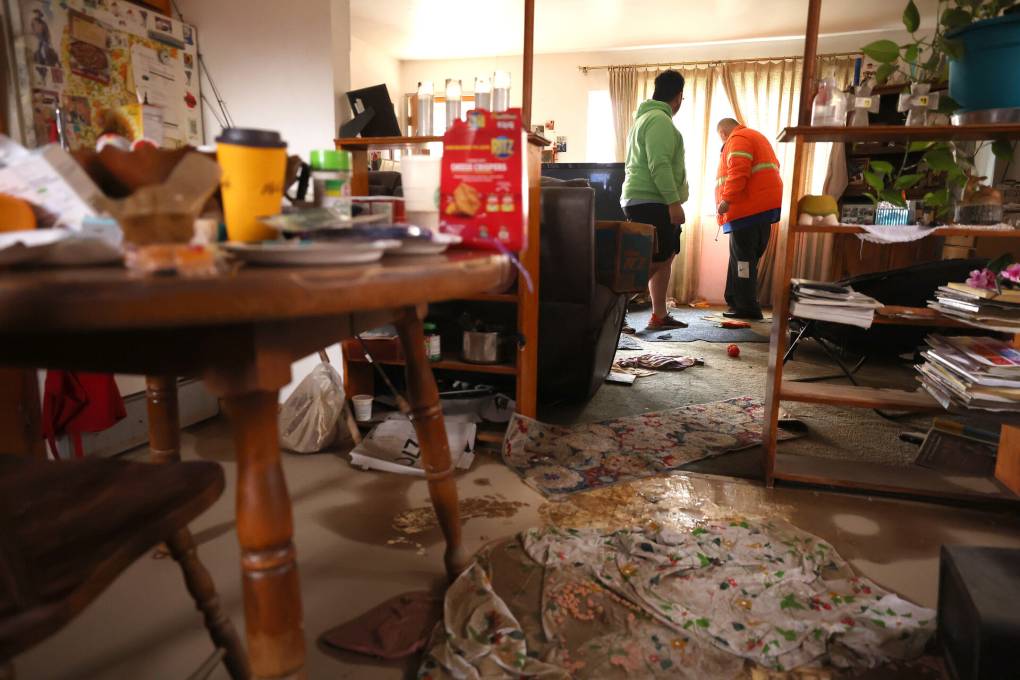
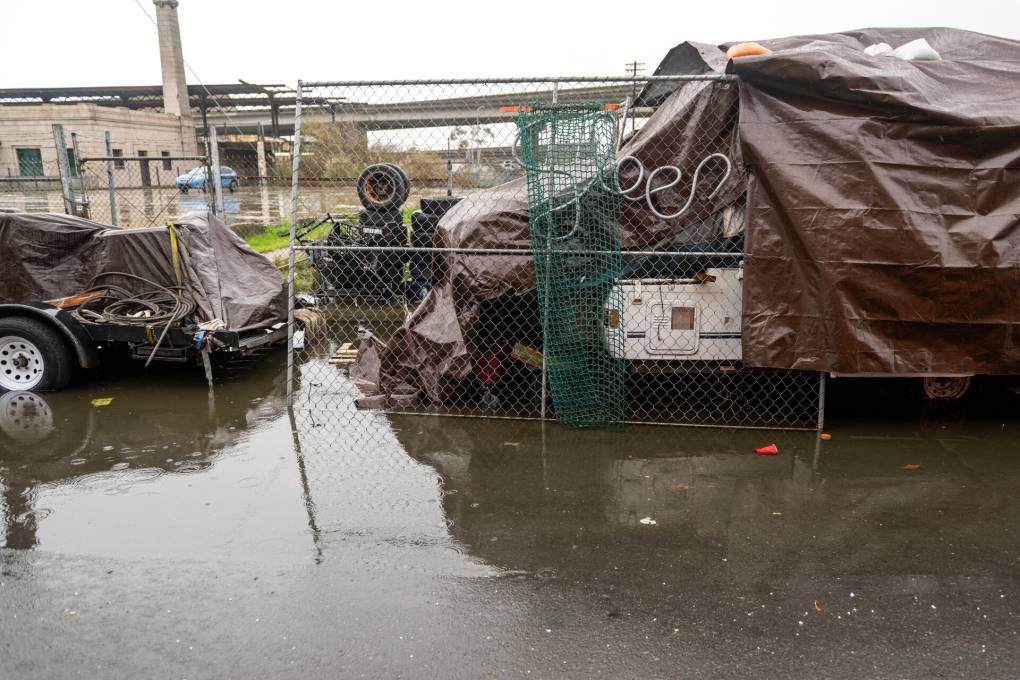
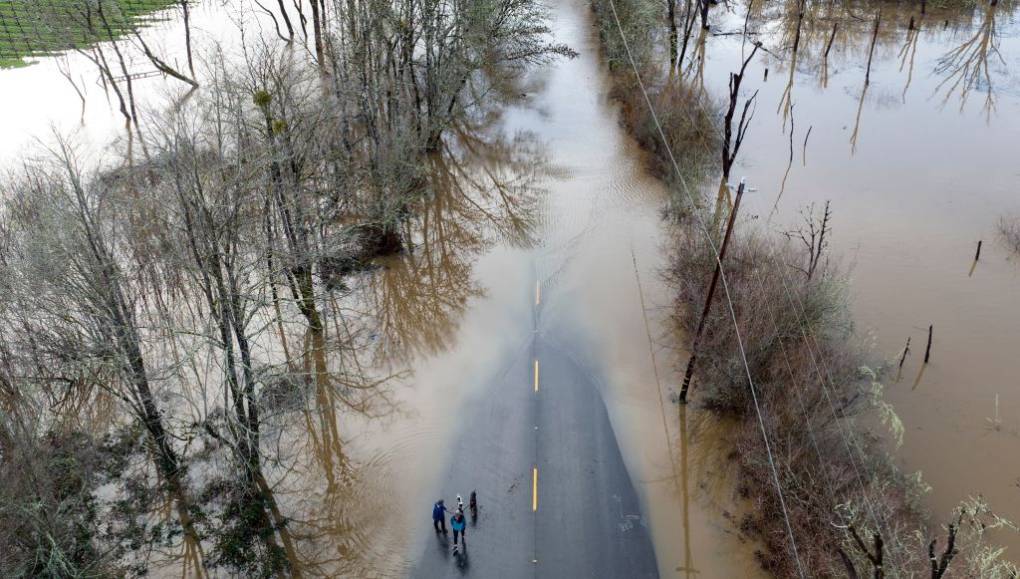
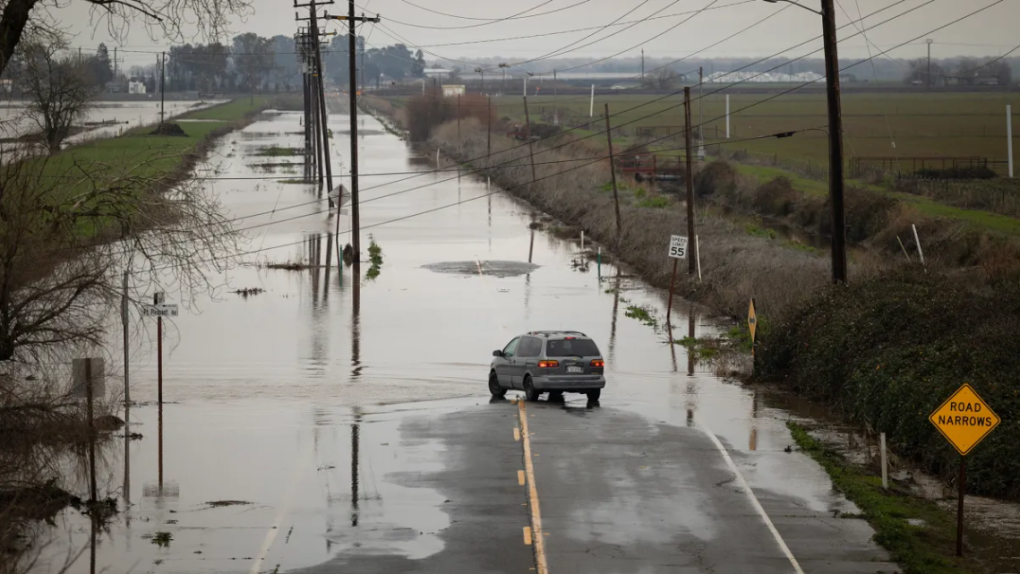
Renters’ Guide: What to Do If Your Home Is Damaged by Floods
Where to Find Shelter From Rain and Floods in the Bay Area
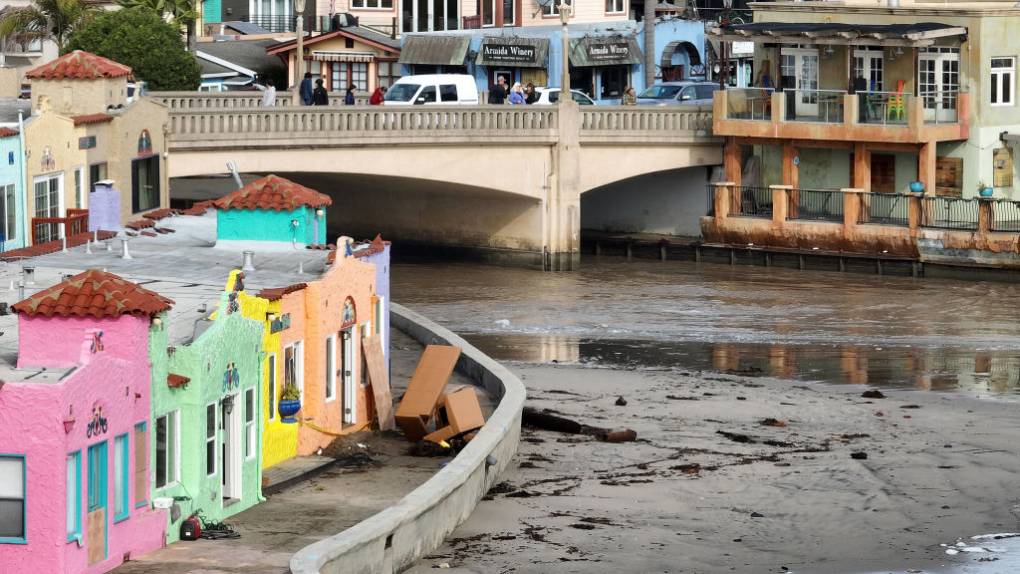
Hard-Hit Santa Cruz County Cleans Up From One Storm While Preparing for the Next
Calm Before the Next Storms: A Reeling California Braces for Back-to-Back Atmospheric Rivers
Rain and Wind Ease Up in Bay Area but Huge Waves Batter Coast and Flooding, Power Outages Continue
Sacramento Valley, Already Deluged, Braces for More Floods
When It Rains, It Pours
Sponsored
Player sponsored by
window.__IS_SSR__=true
window.__INITIAL_STATE__={
"attachmentsReducer": {
"audio_0": {
"type": "attachments",
"id": "audio_0",
"imgSizes": {
"kqedFullSize": {
"file": "https://ww2.kqed.org/news/wp-content/themes/KQED-unified/img/audio_bgs/background0.jpg"
}
}
},
"audio_1": {
"type": "attachments",
"id": "audio_1",
"imgSizes": {
"kqedFullSize": {
"file": "https://ww2.kqed.org/news/wp-content/themes/KQED-unified/img/audio_bgs/background1.jpg"
}
}
},
"audio_2": {
"type": "attachments",
"id": "audio_2",
"imgSizes": {
"kqedFullSize": {
"file": "https://ww2.kqed.org/news/wp-content/themes/KQED-unified/img/audio_bgs/background2.jpg"
}
}
},
"audio_3": {
"type": "attachments",
"id": "audio_3",
"imgSizes": {
"kqedFullSize": {
"file": "https://ww2.kqed.org/news/wp-content/themes/KQED-unified/img/audio_bgs/background3.jpg"
}
}
},
"audio_4": {
"type": "attachments",
"id": "audio_4",
"imgSizes": {
"kqedFullSize": {
"file": "https://ww2.kqed.org/news/wp-content/themes/KQED-unified/img/audio_bgs/background4.jpg"
}
}
},
"placeholder": {
"type": "attachments",
"id": "placeholder",
"imgSizes": {
"thumbnail": {
"file": "https://cdn.kqed.org/wp-content/uploads/2024/12/KQED-Default-Image-816638274-2000x1333-1-160x107.jpg",
"width": 160,
"height": 107,
"mimeType": "image/jpeg"
},
"medium": {
"file": "https://cdn.kqed.org/wp-content/uploads/2024/12/KQED-Default-Image-816638274-2000x1333-1-800x533.jpg",
"width": 800,
"height": 533,
"mimeType": "image/jpeg"
},
"medium_large": {
"file": "https://cdn.kqed.org/wp-content/uploads/2024/12/KQED-Default-Image-816638274-2000x1333-1-768x512.jpg",
"width": 768,
"height": 512,
"mimeType": "image/jpeg"
},
"large": {
"file": "https://cdn.kqed.org/wp-content/uploads/2024/12/KQED-Default-Image-816638274-2000x1333-1-1020x680.jpg",
"width": 1020,
"height": 680,
"mimeType": "image/jpeg"
},
"1536x1536": {
"file": "https://cdn.kqed.org/wp-content/uploads/2024/12/KQED-Default-Image-816638274-2000x1333-1-1536x1024.jpg",
"width": 1536,
"height": 1024,
"mimeType": "image/jpeg"
},
"fd-lrg": {
"file": "https://cdn.kqed.org/wp-content/uploads/2024/12/KQED-Default-Image-816638274-2000x1333-1-1536x1024.jpg",
"width": 1536,
"height": 1024,
"mimeType": "image/jpeg"
},
"fd-med": {
"file": "https://cdn.kqed.org/wp-content/uploads/2024/12/KQED-Default-Image-816638274-2000x1333-1-1020x680.jpg",
"width": 1020,
"height": 680,
"mimeType": "image/jpeg"
},
"fd-sm": {
"file": "https://cdn.kqed.org/wp-content/uploads/2024/12/KQED-Default-Image-816638274-2000x1333-1-800x533.jpg",
"width": 800,
"height": 533,
"mimeType": "image/jpeg"
},
"post-thumbnail": {
"file": "https://cdn.kqed.org/wp-content/uploads/2024/12/KQED-Default-Image-816638274-2000x1333-1-672x372.jpg",
"width": 672,
"height": 372,
"mimeType": "image/jpeg"
},
"twentyfourteen-full-width": {
"file": "https://cdn.kqed.org/wp-content/uploads/2024/12/KQED-Default-Image-816638274-2000x1333-1-1038x576.jpg",
"width": 1038,
"height": 576,
"mimeType": "image/jpeg"
},
"xxsmall": {
"file": "https://cdn.kqed.org/wp-content/uploads/2024/12/KQED-Default-Image-816638274-2000x1333-1-160x107.jpg",
"width": 160,
"height": 107,
"mimeType": "image/jpeg"
},
"xsmall": {
"file": "https://cdn.kqed.org/wp-content/uploads/2024/12/KQED-Default-Image-816638274-2000x1333-1-672x372.jpg",
"width": 672,
"height": 372,
"mimeType": "image/jpeg"
},
"small": {
"file": "https://cdn.kqed.org/wp-content/uploads/2024/12/KQED-Default-Image-816638274-2000x1333-1-672x372.jpg",
"width": 672,
"height": 372,
"mimeType": "image/jpeg"
},
"xlarge": {
"file": "https://cdn.kqed.org/wp-content/uploads/2024/12/KQED-Default-Image-816638274-2000x1333-1-1020x680.jpg",
"width": 1020,
"height": 680,
"mimeType": "image/jpeg"
},
"full-width": {
"file": "https://cdn.kqed.org/wp-content/uploads/2024/12/KQED-Default-Image-816638274-2000x1333-1-1920x1280.jpg",
"width": 1920,
"height": 1280,
"mimeType": "image/jpeg"
},
"guest-author-32": {
"file": "https://cdn.kqed.org/wp-content/uploads/2025/01/KQED-Default-Image-816638274-1333x1333-1-160x160.jpg",
"width": 32,
"height": 32,
"mimeType": "image/jpeg"
},
"guest-author-50": {
"file": "https://cdn.kqed.org/wp-content/uploads/2025/01/KQED-Default-Image-816638274-1333x1333-1-160x160.jpg",
"width": 50,
"height": 50,
"mimeType": "image/jpeg"
},
"guest-author-64": {
"file": "https://cdn.kqed.org/wp-content/uploads/2025/01/KQED-Default-Image-816638274-1333x1333-1-160x160.jpg",
"width": 64,
"height": 64,
"mimeType": "image/jpeg"
},
"guest-author-96": {
"file": "https://cdn.kqed.org/wp-content/uploads/2025/01/KQED-Default-Image-816638274-1333x1333-1-160x160.jpg",
"width": 96,
"height": 96,
"mimeType": "image/jpeg"
},
"guest-author-128": {
"file": "https://cdn.kqed.org/wp-content/uploads/2025/01/KQED-Default-Image-816638274-1333x1333-1-160x160.jpg",
"width": 128,
"height": 128,
"mimeType": "image/jpeg"
},
"detail": {
"file": "https://cdn.kqed.org/wp-content/uploads/2025/01/KQED-Default-Image-816638274-1333x1333-1-160x160.jpg",
"width": 160,
"height": 160,
"mimeType": "image/jpeg"
},
"kqedFullSize": {
"file": "https://cdn.kqed.org/wp-content/uploads/2024/12/KQED-Default-Image-816638274-2000x1333-1.jpg",
"width": 2000,
"height": 1333
}
}
},
"news_11938286": {
"type": "attachments",
"id": "news_11938286",
"meta": {
"index": "attachments_1716263798",
"site": "news",
"id": "11938286",
"found": true
},
"parent": 11938251,
"imgSizes": {
"twentyfourteen-full-width": {
"file": "https://ww2.kqed.org/app/uploads/sites/10/2023/01/RS62026_GettyImages-1455813510-qut-1038x576.jpg",
"width": 1038,
"mimeType": "image/jpeg",
"height": 576
},
"thumbnail": {
"file": "https://ww2.kqed.org/app/uploads/sites/10/2023/01/RS62026_GettyImages-1455813510-qut-160x107.jpg",
"width": 160,
"mimeType": "image/jpeg",
"height": 107
},
"post-thumbnail": {
"file": "https://ww2.kqed.org/app/uploads/sites/10/2023/01/RS62026_GettyImages-1455813510-qut-672x372.jpg",
"width": 672,
"mimeType": "image/jpeg",
"height": 372
},
"kqedFullSize": {
"file": "https://ww2.kqed.org/app/uploads/sites/10/2023/01/RS62026_GettyImages-1455813510-qut.jpg",
"width": 1920,
"height": 1280
},
"large": {
"file": "https://ww2.kqed.org/app/uploads/sites/10/2023/01/RS62026_GettyImages-1455813510-qut-1020x680.jpg",
"width": 1020,
"mimeType": "image/jpeg",
"height": 680
},
"1536x1536": {
"file": "https://ww2.kqed.org/app/uploads/sites/10/2023/01/RS62026_GettyImages-1455813510-qut-1536x1024.jpg",
"width": 1536,
"mimeType": "image/jpeg",
"height": 1024
},
"medium": {
"file": "https://ww2.kqed.org/app/uploads/sites/10/2023/01/RS62026_GettyImages-1455813510-qut-800x533.jpg",
"width": 800,
"mimeType": "image/jpeg",
"height": 533
}
},
"publishDate": 1673984678,
"modified": 1673992229,
"caption": "Donnie Young (right) and Alex Munoz (left) inspect their flooded home on Jan. 11, 2023, in Planada. The Central Valley town was devastated by widespread flooding after a severe atmospheric river event moved through the area earlier in the week.",
"description": null,
"title": "Multiple Storms Batter California With Flooding Rains",
"credit": "Justin Sullivan/Getty Images",
"status": "inherit",
"altTag": "A photograph showing the interior of a home, probably a living room, that has been damaged by flooding. Two people are in the back of the photo, examining the damage.",
"fetchFailed": false,
"isLoading": false
},
"news_11937119": {
"type": "attachments",
"id": "news_11937119",
"meta": {
"index": "attachments_1716263798",
"site": "news",
"id": "11937119",
"found": true
},
"parent": 11937103,
"imgSizes": {
"twentyfourteen-full-width": {
"file": "https://ww2.kqed.org/app/uploads/sites/10/2023/01/RS61892_008_KQED_WoodStreetFlooding_01052023-qut-1038x576.jpg",
"width": 1038,
"mimeType": "image/jpeg",
"height": 576
},
"thumbnail": {
"file": "https://ww2.kqed.org/app/uploads/sites/10/2023/01/RS61892_008_KQED_WoodStreetFlooding_01052023-qut-160x107.jpg",
"width": 160,
"mimeType": "image/jpeg",
"height": 107
},
"post-thumbnail": {
"file": "https://ww2.kqed.org/app/uploads/sites/10/2023/01/RS61892_008_KQED_WoodStreetFlooding_01052023-qut-672x372.jpg",
"width": 672,
"mimeType": "image/jpeg",
"height": 372
},
"kqedFullSize": {
"file": "https://ww2.kqed.org/app/uploads/sites/10/2023/01/RS61892_008_KQED_WoodStreetFlooding_01052023-qut.jpg",
"width": 1920,
"height": 1280
},
"large": {
"file": "https://ww2.kqed.org/app/uploads/sites/10/2023/01/RS61892_008_KQED_WoodStreetFlooding_01052023-qut-1020x680.jpg",
"width": 1020,
"mimeType": "image/jpeg",
"height": 680
},
"1536x1536": {
"file": "https://ww2.kqed.org/app/uploads/sites/10/2023/01/RS61892_008_KQED_WoodStreetFlooding_01052023-qut-1536x1024.jpg",
"width": 1536,
"mimeType": "image/jpeg",
"height": 1024
},
"medium": {
"file": "https://ww2.kqed.org/app/uploads/sites/10/2023/01/RS61892_008_KQED_WoodStreetFlooding_01052023-qut-800x533.jpg",
"width": 800,
"mimeType": "image/jpeg",
"height": 533
}
},
"publishDate": 1672968427,
"modified": 1672968582,
"caption": "An RV sits in water on Wood Street in Oakland on Jan. 5, 2023, after recent storms contributed to flooding in the area.",
"description": null,
"title": "shelter-homeless",
"credit": "Beth LaBerge/KQED",
"status": "inherit",
"altTag": null,
"fetchFailed": false,
"isLoading": false
},
"news_11937369": {
"type": "attachments",
"id": "news_11937369",
"meta": {
"index": "attachments_1716263798",
"site": "news",
"id": "11937369",
"found": true
},
"parent": 11937367,
"imgSizes": {
"thumbnail": {
"file": "https://ww2.kqed.org/app/uploads/sites/10/2023/01/GettyImages-1454693473-160x90.jpg",
"width": 160,
"mimeType": "image/jpeg",
"height": 90
},
"post-thumbnail": {
"file": "https://ww2.kqed.org/app/uploads/sites/10/2023/01/GettyImages-1454693473-672x372.jpg",
"width": 672,
"mimeType": "image/jpeg",
"height": 372
},
"kqedFullSize": {
"file": "https://ww2.kqed.org/app/uploads/sites/10/2023/01/GettyImages-1454693473.jpg",
"width": 1024,
"height": 576
},
"large": {
"file": "https://ww2.kqed.org/app/uploads/sites/10/2023/01/GettyImages-1454693473-1020x574.jpg",
"width": 1020,
"mimeType": "image/jpeg",
"height": 574
},
"medium": {
"file": "https://ww2.kqed.org/app/uploads/sites/10/2023/01/GettyImages-1454693473-800x450.jpg",
"width": 800,
"mimeType": "image/jpeg",
"height": 450
}
},
"publishDate": 1673150979,
"modified": 1673325086,
"caption": "In an aerial view, damage from a powerful storm is visible on Jan. 6, 2023, in Capitola, Santa Cruz County. A powerful storm pounded the West Coast this week, uprooting trees and cutting power for tens of thousands on the heels of record rainfall over the weekend.",
"description": null,
"title": "Massive Storm Brings Flooding Rains And Damaging Winds To California",
"credit": "Justin Sullivan/Getty Images",
"status": "inherit",
"altTag": "A view of damaged colorful houses along the shores of the river with a bridge in Capitola.",
"fetchFailed": false,
"isLoading": false
},
"news_11937228": {
"type": "attachments",
"id": "news_11937228",
"meta": {
"index": "attachments_1716263798",
"site": "news",
"id": "11937228",
"found": true
},
"parent": 11937216,
"imgSizes": {
"twentyfourteen-full-width": {
"file": "https://ww2.kqed.org/app/uploads/sites/10/2023/01/20230062356_GOES18-ABI-psw-GEOCOLOR-2400x2400-1-e1673050126635-1038x576.jpeg",
"width": 1038,
"mimeType": "image/jpeg",
"height": 576
},
"thumbnail": {
"file": "https://ww2.kqed.org/app/uploads/sites/10/2023/01/20230062356_GOES18-ABI-psw-GEOCOLOR-2400x2400-1-e1673050126635-160x115.jpeg",
"width": 160,
"mimeType": "image/jpeg",
"height": 115
},
"post-thumbnail": {
"file": "https://ww2.kqed.org/app/uploads/sites/10/2023/01/20230062356_GOES18-ABI-psw-GEOCOLOR-2400x2400-1-e1673050126635-672x372.jpeg",
"width": 672,
"mimeType": "image/jpeg",
"height": 372
},
"kqedFullSize": {
"file": "https://ww2.kqed.org/app/uploads/sites/10/2023/01/20230062356_GOES18-ABI-psw-GEOCOLOR-2400x2400-1-e1673050126635.jpeg",
"width": 2400,
"height": 1728
},
"2048x2048": {
"file": "https://ww2.kqed.org/app/uploads/sites/10/2023/01/20230062356_GOES18-ABI-psw-GEOCOLOR-2400x2400-1-e1673050126635-2048x1475.jpeg",
"width": 2048,
"mimeType": "image/jpeg",
"height": 1475
},
"large": {
"file": "https://ww2.kqed.org/app/uploads/sites/10/2023/01/20230062356_GOES18-ABI-psw-GEOCOLOR-2400x2400-1-e1673050126635-1020x734.jpeg",
"width": 1020,
"mimeType": "image/jpeg",
"height": 734
},
"1536x1536": {
"file": "https://ww2.kqed.org/app/uploads/sites/10/2023/01/20230062356_GOES18-ABI-psw-GEOCOLOR-2400x2400-1-e1673050126635-1536x1106.jpeg",
"width": 1536,
"mimeType": "image/jpeg",
"height": 1106
},
"full-width": {
"file": "https://ww2.kqed.org/app/uploads/sites/10/2023/01/20230062356_GOES18-ABI-psw-GEOCOLOR-2400x2400-1-e1673050126635-1920x1382.jpeg",
"width": 1920,
"mimeType": "image/jpeg",
"height": 1382
},
"medium": {
"file": "https://ww2.kqed.org/app/uploads/sites/10/2023/01/20230062356_GOES18-ABI-psw-GEOCOLOR-2400x2400-1-e1673050126635-800x576.jpeg",
"width": 800,
"mimeType": "image/jpeg",
"height": 576
}
},
"publishDate": 1673050071,
"modified": 1673050405,
"caption": "An NOAA satellite image shows clouds moving into California from the Pacific on Jan. 6, 2023.",
"description": null,
"title": "20230062356_GOES18-ABI-psw-GEOCOLOR-2400x2400",
"credit": "Courtesy of the National Oceanic and Atmospheric Administration",
"status": "inherit",
"altTag": "Satellite image of California outlined on a mad with white cloud systems covering the entire northern part of the state.",
"fetchFailed": false,
"isLoading": false
},
"news_11937114": {
"type": "attachments",
"id": "news_11937114",
"meta": {
"index": "attachments_1716263798",
"site": "news",
"id": "11937114",
"found": true
},
"parent": 11936812,
"imgSizes": {
"twentyfourteen-full-width": {
"file": "https://ww2.kqed.org/app/uploads/sites/10/2023/01/GettyImages-1246022461-1024x576.jpg",
"width": 1024,
"mimeType": "image/jpeg",
"height": 576
},
"thumbnail": {
"file": "https://ww2.kqed.org/app/uploads/sites/10/2023/01/GettyImages-1246022461-160x91.jpg",
"width": 160,
"mimeType": "image/jpeg",
"height": 91
},
"post-thumbnail": {
"file": "https://ww2.kqed.org/app/uploads/sites/10/2023/01/GettyImages-1246022461-672x372.jpg",
"width": 672,
"mimeType": "image/jpeg",
"height": 372
},
"kqedFullSize": {
"file": "https://ww2.kqed.org/app/uploads/sites/10/2023/01/GettyImages-1246022461.jpg",
"width": 1024,
"height": 581
},
"large": {
"file": "https://ww2.kqed.org/app/uploads/sites/10/2023/01/GettyImages-1246022461-1020x579.jpg",
"width": 1020,
"mimeType": "image/jpeg",
"height": 579
},
"medium": {
"file": "https://ww2.kqed.org/app/uploads/sites/10/2023/01/GettyImages-1246022461-800x454.jpg",
"width": 800,
"mimeType": "image/jpeg",
"height": 454
}
},
"publishDate": 1672967933,
"modified": 1672968051,
"caption": "Pedestrians walk along a flooded road in Sebastopol in Sonoma County on Jan. 5, 2023.",
"description": null,
"title": "US-WEATHER-CALIFORNIA",
"credit": "Josh Edelson/AFP via Getty Images",
"status": "inherit",
"altTag": "Pedestrians walk on a flooded road, surrounded by trees.",
"fetchFailed": false,
"isLoading": false
},
"news_11936796": {
"type": "attachments",
"id": "news_11936796",
"meta": {
"index": "attachments_1716263798",
"site": "news",
"id": "11936796",
"found": true
},
"parent": 11936742,
"imgSizes": {
"twentyfourteen-full-width": {
"file": "https://ww2.kqed.org/app/uploads/sites/10/2023/01/Calmatters_floods-1038x576.png",
"width": 1038,
"mimeType": "image/png",
"height": 576
},
"thumbnail": {
"file": "https://ww2.kqed.org/app/uploads/sites/10/2023/01/Calmatters_floods-160x90.png",
"width": 160,
"mimeType": "image/png",
"height": 90
},
"post-thumbnail": {
"file": "https://ww2.kqed.org/app/uploads/sites/10/2023/01/Calmatters_floods-672x372.png",
"width": 672,
"mimeType": "image/png",
"height": 372
},
"kqedFullSize": {
"file": "https://ww2.kqed.org/app/uploads/sites/10/2023/01/Calmatters_floods.png",
"width": 1139,
"height": 641
},
"large": {
"file": "https://ww2.kqed.org/app/uploads/sites/10/2023/01/Calmatters_floods-1020x574.png",
"width": 1020,
"mimeType": "image/png",
"height": 574
},
"medium": {
"file": "https://ww2.kqed.org/app/uploads/sites/10/2023/01/Calmatters_floods-800x450.png",
"width": 800,
"mimeType": "image/png",
"height": 450
}
},
"publishDate": 1672866126,
"modified": 1672887069,
"caption": "A car stops on a flooded Lambert Road off Interstate 5 in Sacramento County on Jan. 3, 2022. Northern California was hit by a major rainstorm that caused power outages, landslides and flooding over the New Year's holiday weekend.",
"description": null,
"title": "Calmatters_floods",
"credit": "Miguel Gutierrez Jr./CalMatters",
"status": "inherit",
"altTag": "I car stops before reaching a flooded area of the road",
"fetchFailed": false,
"isLoading": false
},
"news_11893671": {
"type": "attachments",
"id": "news_11893671",
"meta": {
"index": "attachments_1716263798",
"site": "news",
"id": "11893671",
"found": true
},
"parent": 11893660,
"imgSizes": {
"twentyfourteen-full-width": {
"file": "https://ww2.kqed.org/app/uploads/sites/10/2021/10/change_102521_final-1038x576.png",
"width": 1038,
"mimeType": "image/png",
"height": 576
},
"thumbnail": {
"file": "https://ww2.kqed.org/app/uploads/sites/10/2021/10/change_102521_final-160x111.png",
"width": 160,
"mimeType": "image/png",
"height": 111
},
"post-thumbnail": {
"file": "https://ww2.kqed.org/app/uploads/sites/10/2021/10/change_102521_final-672x372.png",
"width": 672,
"mimeType": "image/png",
"height": 372
},
"kqedFullSize": {
"file": "https://ww2.kqed.org/app/uploads/sites/10/2021/10/change_102521_final.png",
"width": 1920,
"height": 1337
},
"large": {
"file": "https://ww2.kqed.org/app/uploads/sites/10/2021/10/change_102521_final-1020x710.png",
"width": 1020,
"mimeType": "image/png",
"height": 710
},
"1536x1536": {
"file": "https://ww2.kqed.org/app/uploads/sites/10/2021/10/change_102521_final-1536x1070.png",
"width": 1536,
"mimeType": "image/png",
"height": 1070
},
"medium": {
"file": "https://ww2.kqed.org/app/uploads/sites/10/2021/10/change_102521_final-800x557.png",
"width": 800,
"mimeType": "image/png",
"height": 557
}
},
"publishDate": 1635196936,
"modified": 1635208769,
"caption": null,
"description": null,
"title": "change_102521_final",
"credit": null,
"status": "inherit",
"altTag": "Cartoon: Two National Park Service workers tread water above an \"extreme fire danger\" sign. One says, \"guess we can change the sign now.\"",
"fetchFailed": false,
"isLoading": false
}
},
"audioPlayerReducer": {
"postId": "stream_live",
"isPaused": true,
"isPlaying": false,
"pfsActive": false,
"pledgeModalIsOpen": true,
"playerDrawerIsOpen": false
},
"authorsReducer": {
"byline_news_11937216": {
"type": "authors",
"id": "byline_news_11937216",
"meta": {
"override": true
},
"slug": "byline_news_11937216",
"name": "Martha Mendoza, Brian Melley, John Antczak\u003cbr>The Associated Press",
"isLoading": false
},
"byline_news_11936742": {
"type": "authors",
"id": "byline_news_11936742",
"meta": {
"override": true
},
"slug": "byline_news_11936742",
"name": "Julie Cart and Alastair Bland",
"isLoading": false
},
"markfiore": {
"type": "authors",
"id": "3236",
"meta": {
"index": "authors_1716337520",
"id": "3236",
"found": true
},
"name": "Mark Fiore",
"firstName": "Mark",
"lastName": "Fiore",
"slug": "markfiore",
"email": "mark@markfiore.com",
"display_author_email": false,
"staff_mastheads": [
"news"
],
"title": "KQED News Cartoonist",
"bio": "\u003ca href=\"http://www.MarkFiore.com\">MarkFiore.com\u003c/a> | \u003ca href=\"https://twitter.com/markfiore\">Follow on Twitter\u003c/a> | \u003ca href=\"https://www.facebook.com/pages/Mark-Fiore-Animated-Political-Cartoons/94451707396?ref=bookmarks\">Facebook\u003c/a> | \u003ca href=\"mailto:mark@markfiore.com\">email\u003c/a>\r\n\r\nPulitzer Prize-winner, Mark Fiore, who the Wall Street Journal has called “the undisputed guru of the form,” creates animated political cartoons in San Francisco, where his work has been featured regularly on the San Francisco Chronicle’s web site, SFGate.com. His work has appeared on Newsweek.com, Slate.com, CBSNews.com, MotherJones.com, DailyKos.com and NPR’s web site. Fiore’s political animation has appeared on CNN, Frontline, Bill Moyers Journal, Salon.com and cable and broadcast outlets across the globe.\r\n\r\nBeginning his professional life by drawing traditional political cartoons for newspapers, Fiore’s work appeared in publications ranging from the Washington Post to the Los Angeles Times. In the late 1990s, he began to experiment with animating political cartoons and, after a short stint at the San Jose Mercury News as their staff cartoonist, Fiore devoted all his energies to animation.\r\nGrowing up in California, Fiore also spent a good portion of his life in the backwoods of Idaho. It was this combination that shaped him politically. Mark majored in political science at Colorado College, where, in a perfect send-off for a cartoonist, he received his diploma in 1991 as commencement speaker Dick Cheney smiled approvingly.\r\nMark Fiore was awarded the Pulitzer Prize for political cartooning in 2010, a Robert F. Kennedy Journalism Award in 2004 and has twice received an Online Journalism Award for commentary from the Online News Association (2002, 2008). Fiore has received two awards for his work in new media from the National Cartoonists Society (2001, 2002), and in 2006 received The James Madison Freedom of Information Award from The Society of Professional Journalists.",
"avatar": "https://secure.gravatar.com/avatar/fc4e2a612b15b67bad0c6f0e1db4ca9b?s=600&d=blank&r=g",
"twitter": "MarkFiore",
"facebook": null,
"instagram": "https://www.instagram.com/markfiore/?hl=en",
"linkedin": null,
"sites": [
{
"site": "arts",
"roles": [
"contributor"
]
},
{
"site": "news",
"roles": [
"editor"
]
},
{
"site": "futureofyou",
"roles": [
"editor"
]
},
{
"site": "science",
"roles": [
"editor"
]
}
],
"headData": {
"title": "Mark Fiore | KQED",
"description": "KQED News Cartoonist",
"ogImgSrc": "https://secure.gravatar.com/avatar/fc4e2a612b15b67bad0c6f0e1db4ca9b?s=600&d=blank&r=g",
"twImgSrc": "https://secure.gravatar.com/avatar/fc4e2a612b15b67bad0c6f0e1db4ca9b?s=600&d=blank&r=g"
},
"isLoading": false,
"link": "/author/markfiore"
},
"vrancano": {
"type": "authors",
"id": "11276",
"meta": {
"index": "authors_1716337520",
"id": "11276",
"found": true
},
"name": "Vanessa Rancaño",
"firstName": "Vanessa",
"lastName": "Rancaño",
"slug": "vrancano",
"email": "vrancano@kqed.org",
"display_author_email": false,
"staff_mastheads": [
"news"
],
"title": "Reporter, Housing",
"bio": "Vanessa Rancaño reports on housing and homelessness for KQED. She’s also covered education for the station and reported from the Central Valley. Her work has aired across public radio, from flagship national news shows to longform narrative podcasts. Before taking up a mic, she worked as a freelance print journalist. She’s been recognized with a number of national and regional awards. Vanessa grew up in California's Central Valley. She's a former NPR Kroc Fellow, and a graduate of the UC Berkeley Graduate School of Journalism.",
"avatar": "https://secure.gravatar.com/avatar/f6c0fc5d391c78710bcfc723f0636ef6?s=600&d=blank&r=g",
"twitter": "vanessarancano",
"facebook": null,
"instagram": null,
"linkedin": null,
"sites": [
{
"site": "arts",
"roles": [
"editor"
]
},
{
"site": "news",
"roles": [
"editor"
]
}
],
"headData": {
"title": "Vanessa Rancaño | KQED",
"description": "Reporter, Housing",
"ogImgSrc": "https://secure.gravatar.com/avatar/f6c0fc5d391c78710bcfc723f0636ef6?s=600&d=blank&r=g",
"twImgSrc": "https://secure.gravatar.com/avatar/f6c0fc5d391c78710bcfc723f0636ef6?s=600&d=blank&r=g"
},
"isLoading": false,
"link": "/author/vrancano"
},
"ebaldassari": {
"type": "authors",
"id": "11652",
"meta": {
"index": "authors_1716337520",
"id": "11652",
"found": true
},
"name": "Erin Baldassari",
"firstName": "Erin",
"lastName": "Baldassari",
"slug": "ebaldassari",
"email": "ebaldassari@KQED.org",
"display_author_email": true,
"staff_mastheads": [
"news"
],
"title": "Staff Writer",
"bio": "Erin Baldassari covers housing for KQED. She's a former print journalist and most recently worked as the transportation reporter for the \u003cem>Mercury News\u003c/em> and \u003cem>East Bay Times. \u003c/em>There, she focused on how the Bay Area’s housing shortage has changed the way people move around the region. She also served on the \u003cem>East Bay Times\u003c/em>’ 2017 Pulitzer Prize-winning team for coverage of the Ghost Ship Fire in Oakland. Prior to that, Erin worked as a breaking news and general assignment reporter for a variety of outlets in the Bay Area and the greater Boston area. A Tufts University alumna, Erin grew up in the foothills of the Sierra Nevada mountains and in Sonoma County. She is a life-long KQED listener.",
"avatar": "https://secure.gravatar.com/avatar/660ce35d088ca54ad606d7e941abc652?s=600&d=mm&r=g",
"twitter": "e_baldi",
"facebook": null,
"instagram": null,
"linkedin": null,
"sites": [
{
"site": "news",
"roles": [
"edit_others_posts",
"editor"
]
},
{
"site": "science",
"roles": [
"editor"
]
},
{
"site": "liveblog",
"roles": [
"editor"
]
}
],
"headData": {
"title": "Erin Baldassari | KQED",
"description": "Staff Writer",
"ogImgSrc": "https://secure.gravatar.com/avatar/660ce35d088ca54ad606d7e941abc652?s=600&d=mm&r=g",
"twImgSrc": "https://secure.gravatar.com/avatar/660ce35d088ca54ad606d7e941abc652?s=600&d=mm&r=g"
},
"isLoading": false,
"link": "/author/ebaldassari"
},
"ccabreralomeli": {
"type": "authors",
"id": "11708",
"meta": {
"index": "authors_1716337520",
"id": "11708",
"found": true
},
"name": "Carlos Cabrera-Lomelí",
"firstName": "Carlos",
"lastName": "Cabrera-Lomelí",
"slug": "ccabreralomeli",
"email": "ccabreralomeli@KQED.org",
"display_author_email": true,
"staff_mastheads": [
"news"
],
"title": "Community Reporter",
"bio": "Carlos Cabrera-Lomelí is a community reporter with KQED's digital engagement team. He also reports and co-produces for KQED's bilingual news hub KQED en Español. He grew up in San Francisco's Mission District and has previously worked with Univision, 48 Hills and REFORMA in Mexico City.",
"avatar": "https://secure.gravatar.com/avatar/e95ff80bb2eaf18a8f2af4dcf7ffb54b?s=600&d=mm&r=g",
"twitter": "@LomeliCabrera",
"facebook": null,
"instagram": null,
"linkedin": null,
"sites": [
{
"site": "arts",
"roles": [
"editor"
]
},
{
"site": "news",
"roles": [
"editor"
]
},
{
"site": "about",
"roles": [
"editor"
]
},
{
"site": "science",
"roles": [
"editor"
]
},
{
"site": "perspectives",
"roles": [
"editor"
]
},
{
"site": "elections",
"roles": [
"editor"
]
},
{
"site": "liveblog",
"roles": [
"contributor"
]
}
],
"headData": {
"title": "Carlos Cabrera-Lomelí | KQED",
"description": "Community Reporter",
"ogImgSrc": "https://secure.gravatar.com/avatar/e95ff80bb2eaf18a8f2af4dcf7ffb54b?s=600&d=mm&r=g",
"twImgSrc": "https://secure.gravatar.com/avatar/e95ff80bb2eaf18a8f2af4dcf7ffb54b?s=600&d=mm&r=g"
},
"isLoading": false,
"link": "/author/ccabreralomeli"
},
"nnavarro": {
"type": "authors",
"id": "11756",
"meta": {
"index": "authors_1716337520",
"id": "11756",
"found": true
},
"name": "Natalia Navarro",
"firstName": "Natalia",
"lastName": "Navarro",
"slug": "nnavarro",
"email": "nnavarro@kqed.org",
"display_author_email": true,
"staff_mastheads": [
"news"
],
"title": "Afternoon News Anchor",
"bio": "Natalia Navarro is KQED's afternoon radio news anchor. She came to KQED in 2021 from Colorado Public Radio, where she was a reporter and host. She has received several awards for her work covering daily and breaking news from professional organizations such as the San Francisco Press Club, Society of Professional Journalists and the Colorado Broadcasters Association. Natalia is originally from Tucson, Arizona, where she got her start in journalism writing for the Arizona Daily Star, Arizona Public Media and the Tucson Weekly. Natalia earned her bachelor's degree in journalism and economics, and her master's degree in journalism from the University of Arizona.",
"avatar": "https://secure.gravatar.com/avatar/45f866ea8b5c52bf1fa4c236dd0c03c2?s=600&d=blank&r=g",
"twitter": "@NataliaVNavarro",
"facebook": null,
"instagram": null,
"linkedin": null,
"sites": [
{
"site": "news",
"roles": [
"editor"
]
}
],
"headData": {
"title": "Natalia Navarro | KQED",
"description": "Afternoon News Anchor",
"ogImgSrc": "https://secure.gravatar.com/avatar/45f866ea8b5c52bf1fa4c236dd0c03c2?s=600&d=blank&r=g",
"twImgSrc": "https://secure.gravatar.com/avatar/45f866ea8b5c52bf1fa4c236dd0c03c2?s=600&d=blank&r=g"
},
"isLoading": false,
"link": "/author/nnavarro"
},
"adahlstromeckman": {
"type": "authors",
"id": "11785",
"meta": {
"index": "authors_1716337520",
"id": "11785",
"found": true
},
"name": "Azul Dahlstrom-Eckman",
"firstName": "Azul",
"lastName": "Dahlstrom-Eckman",
"slug": "adahlstromeckman",
"email": "adahlstrom-eckman@kqed.org",
"display_author_email": true,
"staff_mastheads": [],
"title": "Reporter",
"bio": "Azul is a reporter for KQED who focuses on producing sound-rich audio features for KQED's Morning Edition segment and digital features for KQED's online audiences. He previously worked as the Weekend News Editor at KQED, responsible for overseeing radio and digital news on the weekends. He joined KQED in 2021 as an alumna of KALW's Audio Academy radio journalism training program. He was born and raised on Potrero Hill in San Francisco and holds a B.A. in Environmental Studies from the University of Oregon.",
"avatar": "https://secure.gravatar.com/avatar/99c0cfc680078897572931b34e941e1e?s=600&d=blank&r=g",
"twitter": "@zuliemann",
"facebook": null,
"instagram": null,
"linkedin": null,
"sites": [
{
"site": "arts",
"roles": [
"editor"
]
},
{
"site": "news",
"roles": [
"editor"
]
},
{
"site": "science",
"roles": [
"editor"
]
}
],
"headData": {
"title": "Azul Dahlstrom-Eckman | KQED",
"description": "Reporter",
"ogImgSrc": "https://secure.gravatar.com/avatar/99c0cfc680078897572931b34e941e1e?s=600&d=blank&r=g",
"twImgSrc": "https://secure.gravatar.com/avatar/99c0cfc680078897572931b34e941e1e?s=600&d=blank&r=g"
},
"isLoading": false,
"link": "/author/adahlstromeckman"
},
"daisynguyen": {
"type": "authors",
"id": "11829",
"meta": {
"index": "authors_1716337520",
"id": "11829",
"found": true
},
"name": "Daisy Nguyen",
"firstName": "Daisy",
"lastName": "Nguyen",
"slug": "daisynguyen",
"email": "daisynguyen@kqed.org",
"display_author_email": true,
"staff_mastheads": [
"news"
],
"title": "KQED Contributor",
"bio": "Daisy Nguyen covers early childhood education and care. She focuses on the shortage of child care and how that affect families and the economy; and solutions to the problem. Before joining KQED in 2022, she covered breaking news throughout California for The Associated Press. She grew up in San Francisco and lives in Oakland with her family.",
"avatar": "https://secure.gravatar.com/avatar/2da2127c27f7143b53ebd419800fd55f?s=600&d=blank&r=g",
"twitter": "@daisynguyen",
"facebook": null,
"instagram": null,
"linkedin": null,
"sites": [
{
"site": "news",
"roles": [
"author"
]
}
],
"headData": {
"title": "Daisy Nguyen | KQED",
"description": "KQED Contributor",
"ogImgSrc": "https://secure.gravatar.com/avatar/2da2127c27f7143b53ebd419800fd55f?s=600&d=blank&r=g",
"twImgSrc": "https://secure.gravatar.com/avatar/2da2127c27f7143b53ebd419800fd55f?s=600&d=blank&r=g"
},
"isLoading": false,
"link": "/author/daisynguyen"
}
},
"breakingNewsReducer": {},
"pagesReducer": {},
"postsReducer": {
"stream_live": {
"type": "live",
"id": "stream_live",
"audioUrl": "https://streams.kqed.org/kqedradio",
"title": "Live Stream",
"excerpt": "Live Stream information currently unavailable.",
"link": "/radio",
"featImg": "",
"label": {
"name": "KQED Live",
"link": "/"
}
},
"stream_kqedNewscast": {
"type": "posts",
"id": "stream_kqedNewscast",
"audioUrl": "https://www.kqed.org/.stream/anon/radio/RDnews/newscast.mp3?_=1",
"title": "KQED Newscast",
"featImg": "",
"label": {
"name": "88.5 FM",
"link": "/"
}
},
"news_11938251": {
"type": "posts",
"id": "news_11938251",
"meta": {
"index": "posts_1716263798",
"site": "news",
"id": "11938251",
"score": null,
"sort": [
1732572049000
]
},
"guestAuthors": [],
"slug": "renters-was-your-home-damaged-by-rain-or-floods-heres-what-to-do",
"title": "Renters’ Guide: What to Do If Your Home Is Damaged by Floods",
"publishDate": 1732572049,
"format": "image",
"headTitle": "Renters’ Guide: What to Do If Your Home Is Damaged by Floods | KQED",
"labelTerm": {
"site": "news"
},
"content": "\u003cp>\u003ca href=\"https://www.kqed.org/news/11943887/que-hacer-si-su-hogar-sufrio-danos-por-las-tormentas-de-california\">\u003cem>Leer en español.\u003c/em>\u003c/a>\u003c/p>\n\u003cp>\u003ca href=\"https://www.kqed.org/news/12015754/more-bay-area-rain-could-spell-a-wet-thanksgiving-after-record-breaking-storm\">Yet another atmospheric river is set to hit California,\u003c/a> lasting into Thanksgiving.\u003c/p>\n\u003cp>It’s coming on the heels of last week’s \u003ca href=\"https://www.kqed.org/news/12015534/bay-area-record-breaking-rainfall-deluge-surprises-forecasters\">record-breaking rain\u003c/a>, which hit the North Bay the hardest, where mountain areas saw more than 20 inches. The foot of rain that fell in downtown Santa Rosa was \u003ca href=\"https://x.com/nwsbayarea/status/1860380861675503931?s=46&t=8L9OHVE58oUXKjH2wCBDtA\">a 1,000-year event\u003c/a>, according to the National Weather Service\u003c/p>\n\u003cdiv class=\"post-body\">\u003c/div>\n\u003cp>Local officials are getting ready for strong winds to bring down trees and power lines and are recommending residents to \u003ca href=\"https://www.kqed.org/news/11936674/how-to-prepare-for-this-weeks-atmospheric-river-storm-sandbags-emergency-kits-and-more\">prepare their homes\u003c/a> as well. \u003ca href=\"https://www.kqed.org/news/11936674/how-to-prepare-for-this-weeks-atmospheric-river-storm-sandbags-emergency-kits-and-more\">Read our guide on how protect yourself and your home against winter storms.\u003c/a>\u003c/p>\n\u003cp>Some good news: If you are a tenant and your home has experienced damages, California requires that your landlord provides repairs as soon as possible, regardless of whether you have a formal lease contract or not.\u003c/p>\n\u003cp>The bad news: For some tenants, it could be difficult to contact your landlord or make sure they move quickly to make the repairs your home needs.\u003c/p>\n\u003cp>KQED spoke to Leah Simon-Weisberg, legal director for tenants rights group \u003ca href=\"https://www.acceaction.org/renterhelp\">Alliance of Californians for Community Empowerment (ACCE)\u003c/a>, to better understand what rights tenants have during and after winter storms and how best to communicate with your landlord.\u003c/p>\n\u003cp>\u003cstrong>Jump straight to:\u003c/strong>\u003c/p>\n\u003cul>\n\u003cli>\u003cstrong>\u003ca href=\"#landlorddamage\">What do I do if my landlord isn’t responding?\u003c/a>\u003c/strong>\u003c/li>\n\u003cli>\u003cstrong>\u003ca href=\"#flooddamage\">The damage is very serious and I don’t think we can keep living here (at least for now). What can we do?\u003c/a>\u003c/strong>\u003c/li>\n\u003cli>\u003cstrong>\u003ca href=\"#nolease\">How does my situation change if I don’t have a lease?\u003c/a>\u003c/strong>\u003c/li>\n\u003cli>\u003cstrong>\u003ca href=\"#belongingsdamage\">What about my belongings — and what does renters insurance even cover?\u003c/a>\u003c/strong>\u003c/li>\n\u003cli>\u003cstrong>\u003ca href=\"#FEMA\">Can I apply for FEMA aid?\u003c/a>\u003c/strong>\u003c/li>\n\u003c/ul>\n\u003ch2>Storm damage: When and how should I report it?\u003c/h2>\n\u003cp>Regardless of where you live in California, \u003ca href=\"https://nchh.org/resource-library/HH_Codes_CA_9-9-07.pdf\">tenants are protected by a health and safety code (PDF)\u003c/a> in the state’s housing law that lays out how a home should be maintained.[pullquote size='medium' align='right' citation=\"Leah Simon-Weisberg, legal director, Alliance of Californians for Community Empowerment\"]‘A landlord is always responsible for maintaining a unit so that it is healthy and safe for the tenant.’[/pullquote]This regulation requires landlords to ensure their properties have things like working toilets and sinks, but it also prohibits homes from having walls, ceilings and floors that are deteriorating or damaged, along with leaks, mold and lack of heating. “Those are all things that have impacts on people’s health and are not considered lawful in California,” said Simon-Weisberg.\u003c/p>\n\u003cp>If you believe the conditions in your home have become unsafe after the storms and your life could be in danger, leave the house immediately and call 911, said Simon-Weisberg.\u003c/p>\n\u003cp>After that, call your landlord and explain the situation. She specifies you should only call 911 in extreme circumstances — your roof has fallen in, for example — echoing \u003ca href=\"https://www.kqed.org/news/11936674/how-to-prepare-for-this-weeks-atmospheric-river-storm-sandbags-emergency-kits-and-more\">what San Francisco officials have advised the public about when to call 911\u003c/a>: during 2023’s storms, Fire Chief Jeanine Nicholson asked city residents to only call 911 when there are life-threatening emergencies. “So if you have a little bit of flooding in your home, call 311. If someone is having a heart attack or if someone is being swept by water, call 911,” she said.\u003c/p>\n\u003cp>But if it’s something smaller, Simon-Weisberg said, “something you can contain with towels or a pot, call your landlord” — not 911.\u003c/p>\n\u003ch2>\u003ca id=\"nolease\">\u003c/a>How should I talk to my landlord about flood damage?\u003c/h2>\n\u003cp>“I really want to encourage people to have the courage to call their landlords,” Simon-Weisberg said, adding that it’s understandable that some tenants may feel nervous about these conversations, especially if they do not have a lease contract — or are afraid of some sort of ramification for speaking up.\u003c/p>\n\u003cp>“First off, \u003ca href=\"https://leginfo.legislature.ca.gov/faces/codes_displaySection.xhtml?sectionNum=1942.5.&lawCode=CIV\">it’s against the law to retaliate against a tenant\u003c/a> for speaking about repairs,” she said. “A landlord is always responsible for maintaining a unit so that it is healthy and safe for the tenant.”\u003c/p>\n\u003cp>These tenant protections apply even if you currently do not have a written lease contract. \u003ca href=\"https://www.dre.ca.gov/files/pdf/refbook/ref09.pdf\">California recognizes verbal agreements (PDF)\u003c/a>, and property owners cannot use damages caused by the storm as an excuse to evict tenants. “Once the landlord has accepted a dollar for rent, then you have a tenancy and [tenants] can’t be evicted without using the legal process,” Simon-Weisberg said.\u003c/p>\n\u003cp>Once you are ready to contact your landlord, keep in mind that a phone call works — but it’s best to accompany such a call with written communication, like email or text message, to have a record of what you talked about. In that written correspondence, make sure to include photos of the damage, the time it occurred and details on your personal belongings that may also have been damaged. \u003ca href=\"https://www.acceaction.org/flooding\">ACCE has created a sample email\u003c/a> that shows one way to document when you contacted your landlord.\u003c/p>\n\u003cp>As these storms have shown us, water can do an incredible amount of damage very quickly — so make it clear to your landlord that repairs are urgently needed.\u003c/p>\n\u003cp>“The sooner someone is in there to make repairs,” Simon-Weisberg said, “the safer you are and the less damage that’s going to happen both to where you’re living, but also to your belongings.”\u003c/p>\n\u003cfigure id=\"attachment_11974720\" class=\"wp-caption aligncenter\" style=\"max-width: 2560px\">\u003cimg loading=\"lazy\" decoding=\"async\" class=\"wp-image-11974720 size-full\" src=\"https://cdn.kqed.org/wp-content/uploads/sites/10/2024/02/AP24035841785066-scaled.jpg\" alt=\"Search and rescue workers investigate a car surrounded by floodwater\" width=\"2560\" height=\"1707\" srcset=\"https://cdn.kqed.org/wp-content/uploads/sites/10/2024/02/AP24035841785066-scaled.jpg 2560w, https://cdn.kqed.org/wp-content/uploads/sites/10/2024/02/AP24035841785066-800x533.jpg 800w, https://cdn.kqed.org/wp-content/uploads/sites/10/2024/02/AP24035841785066-1020x680.jpg 1020w, https://cdn.kqed.org/wp-content/uploads/sites/10/2024/02/AP24035841785066-160x107.jpg 160w, https://cdn.kqed.org/wp-content/uploads/sites/10/2024/02/AP24035841785066-1536x1024.jpg 1536w, https://cdn.kqed.org/wp-content/uploads/sites/10/2024/02/AP24035841785066-2048x1365.jpg 2048w, https://cdn.kqed.org/wp-content/uploads/sites/10/2024/02/AP24035841785066-1920x1280.jpg 1920w\" sizes=\"auto, (max-width: 2560px) 100vw, 2560px\">\u003cfigcaption class=\"wp-caption-text\">Search and rescue workers investigate a car surrounded by floodwater as heavy rains caused the Guadalupe River to swell, Sunday, Feb. 4, 2024, in San Jose, Calif. The vehicle was uninhabited. \u003ccite>(Noah Berger/AP Photo)\u003c/cite>\u003c/figcaption>\u003c/figure>\n\u003ch2>\u003ca id=\"landlorddamage\">\u003c/a>I’m having problems getting my landlord to make repairs\u003c/h2>\n\u003cp>What to do if your landlord pushes back and refuses to fix the damage caused by a storm?\u003c/p>\n\u003cp>In some instances, Simon-Weisberg said, landlords do push back and argue that it is not their responsibility to make repairs, claiming a natural disaster exemption. She rejects this argument and affirms that “what we’re experiencing right now is \u003cem>not\u003c/em> a natural disaster.” The natural disaster exemption can only be used when a natural phenomenon, like an earthquake or a tsunami, affects all houses in a city or region.[pullquote size='medium' align='right' citation=\"Leah Simon-Weisberg, legal director, ACCE\"]‘If people’s houses are flooding, it’s because they’re not being properly maintained.’[/pullquote]“If people’s houses are flooding, it’s because they’re not being properly maintained,” she said.\u003c/p>\n\u003cp>A landlord should let you know what repairs will be made and give you a time frame. If you’re still being rejected or not hearing back at all, that’s when you call the government, Simon-Weisberg said.\u003c/p>\n\u003cp>\u003cstrong>Option: Call your city’s code enforcement agency\u003c/strong>\u003c/p>\n\u003cp>Your city’s code enforcement agency is the office responsible for making sure all homes follow the state’s housing law. You can let them know about your situation and that your landlord has failed to resolve it.\u003c/p>\n\u003cp>A code enforcement team should visit your home and then contact the landlord if they find a safety code violation. Simon-Weisberg adds that this will put pressure on your landlord to make the repairs as soon as possible.\u003c/p>\n\u003cp>Below is the contact information for code enforcement agencies for several Bay Area cities. We’ll be constantly updating this list to add the contact information for more cities in the region. If the situation in your home has worsened and your life is in immediate danger, call 911.\u003c/p>\n\u003cul>\n\u003cli>San Francisco: Call 311 or \u003ca href=\"https://dbiweb02.sfgov.org/dbi_complaints/default.aspx?page=AddressQuery\">file a complaint about a San Francisco rental online\u003c/a>.\u003c/li>\n\u003cli>San José: Call (408) 535-7770 or \u003ca href=\"https://www.sanjoseca.gov/your-government/departments-offices/planning-building-code-enforcement/code-enforcement/request-service-check-status/code-service-request-form\">file a complaint about a San José rental online\u003c/a>.\u003c/li>\n\u003cli>Oakland: Call (510) 238-3444 or \u003ca href=\"https://aca-prod.accela.com/OAKLAND/Cap/CapApplyDisclaimer.aspx?module=Enforcement&TabName=Enforcement\">file a complaint about an Oakland rental online\u003c/a>.\u003c/li>\n\u003cli>Redwood City: Call (650) 780-7577\u003c/li>\n\u003cli>Santa Rosa: Email code@srcity.org or \u003ca href=\"https://www.srcity.org/DocumentCenter/View/21358\">file a complaint about a Santa Rosa rental online\u003c/a>.\u003c/li>\n\u003cli>Richmond: Call 311 or (804) 646-6398.\u003c/li>\n\u003cli>Vallejo: Call the city’s Building Division at (707) 648-4374.\u003c/li>\n\u003c/ul>\n\u003cp>\u003cstrong>Option: Take legal action\u003c/strong>\u003c/p>\n\u003cp>If code enforcement has already come over but your landlord is still not getting back to you, Simon-Weisberg said the next step is to take legal action. If you live in the Bay Area, there are several tenants rights groups that can help you in these situations:\u003c/p>\n\u003cul>\n\u003cli>ACCE hosts \u003ca href=\"https://www.acceaction.org/dyh\">bilingual English/Spanish statewide tenant clinics\u003c/a> every Thursday at 6:30 p.m. (\u003ca href=\"https://www.acceaction.org/dyh\">here’s how to register\u003c/a>).\u003c/li>\n\u003cli>There’s also an additional \u003ca href=\"https://calorganize-org.zoom.us/meeting/register/tZAtcuuppjstGd1rkLGgBX1wgoiyMLpX5ADj\">tenant clinic for Contra Costa County residents\u003c/a> every third Wednesday of the month at 6 p.m. (\u003ca href=\"https://calorganize-org.zoom.us/meeting/register/tZAtcuuppjstGd1rkLGgBX1wgoiyMLpX5ADj\">here’s how to register\u003c/a>).\u003c/li>\n\u003cli>In Oakland, \u003ca href=\"https://cjjc.org/\">Causa Justa/Just Cause\u003c/a> offers a website that \u003ca href=\"https://oaklandtenantrights.org/tenant-rights/repairs/\">walks you step-by-step on how to talk to your landlord\u003c/a>, how to file a complaint with city code enforcement and how to take legal action if needed.\u003c/li>\n\u003cli>\u003ca href=\"https://legalaidsc.org/\">Legal Aid of Sonoma County\u003c/a> has a housing hotline for tenants seeking legal assistance. Call them directly at (707) 843-4432.\u003c/li>\n\u003c/ul>\n\u003cp>[ad fullwidth]\u003c/p>\n\u003ch2>\u003ca id=\"flooddamage\">\u003c/a>I can no longer live in my home because of the damages. What can I do?\u003c/h2>\n\u003cp>If your landlord has scheduled repairs that require you to live somewhere else in the meantime, they are required to pay for your housing, which could be a hotel or another property.\u003c/p>\n\u003cp>“That being said,” Simon-Weisberg added, “you will probably need to be paying rent while they pay for those other things. You can’t both withhold rent \u003cem>and\u003c/em> have your hotel paid.”\u003c/p>\n\u003cp>However, cities and counties can differ on how long a landlord has to pay for this temporary accommodation. ACCE has partnered with the group TechEquity Collaborative to create \u003ca href=\"https://tenantprotections.org/eligibility\">TenantProtections.org\u003c/a>, a website where you can input your ZIP code and learn which additional local- and county-wide protections you have available.\u003c/p>\n\u003cp>Simon-Weisberg does note that there’s a loophole in many California cities that allows landlords to evict tenants if they have to make substantial repairs and the tenant cannot live on the property while these repairs are being made. In these instances, \u003ca href=\"https://www.kqed.org/news/11790591/new-sf-eviction-law-extends-protections-to-nearly-all-privately-owned-rental-units\">many Bay Area cities with protections against no-fault evictions, like San Francisco\u003c/a> and \u003ca href=\"http://www.oaklandtenantsunion.org/just-cause-for-eviction.html\">Oakland\u003c/a>, require landlords to offer tenants relocation payments.\u003c/p>\n\u003cp>If you are afraid this could happen to you, reach out to a tenants group for legal advice.\u003c/p>\n\u003ch2>\u003ca id=\"belongingsdamage\">\u003c/a>What if my belongings also were damaged by water?\u003c/h2>\n\u003cp>Is your landlord responsible for damage to your belongings if you’re a tenant? The answer is not always cut and dried.\u003c/p>\n\u003cp>Janet Ruiz, director of strategic communication for the \u003ca href=\"https://www.iii.org/\">Insurance Information Institute\u003c/a>, an industry group, told KQED that “\u003ca href=\"https://www.kqed.org/news/11937459/does-your-insurance-plan-cover-flood-and-storm-damage\">your landlord is not responsible for your belongings\u003c/a>” and that instead, “renters insurance or flood-renters insurance … would cover your belongings.”\u003c/p>\n\u003cp>But Simon-Weisberg says that property owners can be held responsible for damages of tenants’ belongings — and that your landlord may push back on this depending on the situation.\u003c/p>\n\u003cp>So what should you do? First of all, if water damage has destroyed your belongings, like a computer or furniture, make sure to document this and include the information when communicating with your landlord.\u003c/p>\n\u003cp>\u003cb>If you have renters insurance\u003c/b>\u003c/p>\n\u003cp>Check in with your agent to understand what your policy covers and what costs you (or your landlord) may have to cover.\u003c/p>\n\u003cp>\u003cb>If you don’t have renters insurance\u003c/b>\u003c/p>\n\u003cp>If you believe that your belongings were damaged due to your home not receiving necessary repairs prior to the storms, whether or not you have renters insurance, this may be something you bring up when talking to a renters rights group or legal aid clinic.\u003c/p>\n\u003cp>(If your heating, electricity or plumbing broke down and your rent payment includes any of these utilities, let them know this as well, including how long this happened for. You may be able to negotiate a temporary discount on your utilities payment.)\u003c/p>\n\u003cp>If you don’t have renters insurance and you are considering getting it after the storms, it’s important to mention that most policies come with a 30-day wait period for the benefits to begin — so a policy would not cover damages caused by past storms. Additionally, \u003ca href=\"https://www.fema.gov/press-release/20210318/yes-renters-can-buy-flood-insurance\">some tenants may have to pay higher premiums\u003c/a> due to where they live, how old their home is and even how many floors there are in their building.\u003c/p>\n\u003ch2>What if I lost food during a blackout?\u003c/h2>\n\u003cp>For families who receive CalFresh benefits, you can \u003ca href=\"https://www.cdss.ca.gov/Portals/9/Additional-Resources/Letters-and-Notices/ACLs/2019/19-95_ES.pdf\">receive replacement funds on your EBT card (PDF)\u003c/a> if you lost food due to flooding or a blackout.\u003c/p>\n\u003cp>To do this, contact the case manager or social worker who’s managing your CalFresh benefits within 10 days of losing your food to let them know.\u003c/p>\n\u003cp>KQED has confirmed with California’s Department of Social Services that this \u003cem>does\u003c/em> include having food spoiled or destroyed due to the winter storms.\u003c/p>\n\u003cp>\u003cem>A version of this story was originally published on March 10, 2023\u003c/em>.\u003c/p>\n\u003cp>[ad floatright]\u003c/p>\n",
"blocks": [],
"excerpt": "After the recent winter storms, what can tenants do if their rental home or belongings have been damaged? Here's our guide to communicating about your rights with your landlord.",
"status": "publish",
"parent": 0,
"modified": 1746516237,
"stats": {
"hasAudio": false,
"hasVideo": false,
"hasChartOrMap": false,
"iframeSrcs": [],
"hasGoogleForm": false,
"hasGallery": false,
"hasHearkenModule": false,
"hasPolis": false,
"paragraphCount": 48,
"wordCount": 2198
},
"headData": {
"title": "Flood Damage in Rentals: Essential Steps for Renters | KQED",
"description": "Identify crucial steps renters should take if their home is damaged by rain or floods. Protect your rights and manage repairs effectively.",
"ogTitle": "",
"ogDescription": "",
"ogImgId": "",
"twTitle": "",
"twDescription": "",
"twImgId": "",
"socialTitle": "Flood Damage in Rentals: Essential Steps for Renters | KQED",
"socialDescription": "Identify crucial steps renters should take if their home is damaged by rain or floods. Protect your rights and manage repairs effectively.",
"schema": {
"@context": "https://schema.org",
"@type": "NewsArticle",
"headline": "Renters’ Guide: What to Do If Your Home Is Damaged by Floods",
"datePublished": "2024-11-25T14:00:49-08:00",
"dateModified": "2025-05-06T00:23:57-07:00",
"image": "https://cdn.kqed.org/wp-content/uploads/2020/02/KQED-OG-Image@1x.png",
"isAccessibleForFree": "True",
"publisher": {
"@type": "NewsMediaOrganization",
"@id": "https://www.kqed.org/#organization",
"name": "KQED",
"logo": "https://cdn.kqed.org/wp-content/uploads/2020/02/KQED-OG-Image@1x.png",
"url": "https://www.kqed.org",
"sameAs": [
"https://www.facebook.com/KQED",
"https://twitter.com/KQED",
"https://www.instagram.com/kqed/",
"https://www.tiktok.com/@kqedofficial",
"https://www.linkedin.com/company/kqed",
"https://www.youtube.com/channel/UCeC0IOo7i1P_61zVUWbJ4nw"
]
}
}
},
"sticky": false,
"templateType": "standard",
"featuredImageType": "standard",
"excludeFromSiteSearch": "Include",
"articleAge": "0",
"path": "/news/11938251/renters-was-your-home-damaged-by-rain-or-floods-heres-what-to-do",
"audioTrackLength": null,
"parsedContent": [
{
"type": "contentString",
"content": "\u003cdiv class=\"post-body\">\u003cp>\u003cp>\u003ca href=\"https://www.kqed.org/news/11943887/que-hacer-si-su-hogar-sufrio-danos-por-las-tormentas-de-california\">\u003cem>Leer en español.\u003c/em>\u003c/a>\u003c/p>\n\u003cp>\u003ca href=\"https://www.kqed.org/news/12015754/more-bay-area-rain-could-spell-a-wet-thanksgiving-after-record-breaking-storm\">Yet another atmospheric river is set to hit California,\u003c/a> lasting into Thanksgiving.\u003c/p>\n\u003cp>It’s coming on the heels of last week’s \u003ca href=\"https://www.kqed.org/news/12015534/bay-area-record-breaking-rainfall-deluge-surprises-forecasters\">record-breaking rain\u003c/a>, which hit the North Bay the hardest, where mountain areas saw more than 20 inches. The foot of rain that fell in downtown Santa Rosa was \u003ca href=\"https://x.com/nwsbayarea/status/1860380861675503931?s=46&t=8L9OHVE58oUXKjH2wCBDtA\">a 1,000-year event\u003c/a>, according to the National Weather Service\u003c/p>\n\u003cdiv class=\"post-body\">\u003c/div>\n\u003cp>Local officials are getting ready for strong winds to bring down trees and power lines and are recommending residents to \u003ca href=\"https://www.kqed.org/news/11936674/how-to-prepare-for-this-weeks-atmospheric-river-storm-sandbags-emergency-kits-and-more\">prepare their homes\u003c/a> as well. \u003ca href=\"https://www.kqed.org/news/11936674/how-to-prepare-for-this-weeks-atmospheric-river-storm-sandbags-emergency-kits-and-more\">Read our guide on how protect yourself and your home against winter storms.\u003c/a>\u003c/p>\n\u003cp>Some good news: If you are a tenant and your home has experienced damages, California requires that your landlord provides repairs as soon as possible, regardless of whether you have a formal lease contract or not.\u003c/p>\n\u003cp>The bad news: For some tenants, it could be difficult to contact your landlord or make sure they move quickly to make the repairs your home needs.\u003c/p>\n\u003cp>KQED spoke to Leah Simon-Weisberg, legal director for tenants rights group \u003ca href=\"https://www.acceaction.org/renterhelp\">Alliance of Californians for Community Empowerment (ACCE)\u003c/a>, to better understand what rights tenants have during and after winter storms and how best to communicate with your landlord.\u003c/p>\n\u003cp>\u003cstrong>Jump straight to:\u003c/strong>\u003c/p>\n\u003cul>\n\u003cli>\u003cstrong>\u003ca href=\"#landlorddamage\">What do I do if my landlord isn’t responding?\u003c/a>\u003c/strong>\u003c/li>\n\u003cli>\u003cstrong>\u003ca href=\"#flooddamage\">The damage is very serious and I don’t think we can keep living here (at least for now). What can we do?\u003c/a>\u003c/strong>\u003c/li>\n\u003cli>\u003cstrong>\u003ca href=\"#nolease\">How does my situation change if I don’t have a lease?\u003c/a>\u003c/strong>\u003c/li>\n\u003cli>\u003cstrong>\u003ca href=\"#belongingsdamage\">What about my belongings — and what does renters insurance even cover?\u003c/a>\u003c/strong>\u003c/li>\n\u003cli>\u003cstrong>\u003ca href=\"#FEMA\">Can I apply for FEMA aid?\u003c/a>\u003c/strong>\u003c/li>\n\u003c/ul>\n\u003ch2>Storm damage: When and how should I report it?\u003c/h2>\n\u003cp>Regardless of where you live in California, \u003ca href=\"https://nchh.org/resource-library/HH_Codes_CA_9-9-07.pdf\">tenants are protected by a health and safety code (PDF)\u003c/a> in the state’s housing law that lays out how a home should be maintained.\u003c/p>\u003c/div>",
"attributes": {
"named": {},
"numeric": []
}
},
{
"type": "component",
"content": "‘A landlord is always responsible for maintaining a unit so that it is healthy and safe for the tenant.’",
"name": "pullquote",
"attributes": {
"named": {
"size": "medium",
"align": "right",
"citation": "Leah Simon-Weisberg, legal director, Alliance of Californians for Community Empowerment",
"label": ""
},
"numeric": []
}
},
{
"type": "contentString",
"content": "\u003cdiv class=\"post-body\">\u003cp>This regulation requires landlords to ensure their properties have things like working toilets and sinks, but it also prohibits homes from having walls, ceilings and floors that are deteriorating or damaged, along with leaks, mold and lack of heating. “Those are all things that have impacts on people’s health and are not considered lawful in California,” said Simon-Weisberg.\u003c/p>\n\u003cp>If you believe the conditions in your home have become unsafe after the storms and your life could be in danger, leave the house immediately and call 911, said Simon-Weisberg.\u003c/p>\n\u003cp>After that, call your landlord and explain the situation. She specifies you should only call 911 in extreme circumstances — your roof has fallen in, for example — echoing \u003ca href=\"https://www.kqed.org/news/11936674/how-to-prepare-for-this-weeks-atmospheric-river-storm-sandbags-emergency-kits-and-more\">what San Francisco officials have advised the public about when to call 911\u003c/a>: during 2023’s storms, Fire Chief Jeanine Nicholson asked city residents to only call 911 when there are life-threatening emergencies. “So if you have a little bit of flooding in your home, call 311. If someone is having a heart attack or if someone is being swept by water, call 911,” she said.\u003c/p>\n\u003cp>But if it’s something smaller, Simon-Weisberg said, “something you can contain with towels or a pot, call your landlord” — not 911.\u003c/p>\n\u003ch2>\u003ca id=\"nolease\">\u003c/a>How should I talk to my landlord about flood damage?\u003c/h2>\n\u003cp>“I really want to encourage people to have the courage to call their landlords,” Simon-Weisberg said, adding that it’s understandable that some tenants may feel nervous about these conversations, especially if they do not have a lease contract — or are afraid of some sort of ramification for speaking up.\u003c/p>\n\u003cp>“First off, \u003ca href=\"https://leginfo.legislature.ca.gov/faces/codes_displaySection.xhtml?sectionNum=1942.5.&lawCode=CIV\">it’s against the law to retaliate against a tenant\u003c/a> for speaking about repairs,” she said. “A landlord is always responsible for maintaining a unit so that it is healthy and safe for the tenant.”\u003c/p>\n\u003cp>These tenant protections apply even if you currently do not have a written lease contract. \u003ca href=\"https://www.dre.ca.gov/files/pdf/refbook/ref09.pdf\">California recognizes verbal agreements (PDF)\u003c/a>, and property owners cannot use damages caused by the storm as an excuse to evict tenants. “Once the landlord has accepted a dollar for rent, then you have a tenancy and [tenants] can’t be evicted without using the legal process,” Simon-Weisberg said.\u003c/p>\n\u003cp>Once you are ready to contact your landlord, keep in mind that a phone call works — but it’s best to accompany such a call with written communication, like email or text message, to have a record of what you talked about. In that written correspondence, make sure to include photos of the damage, the time it occurred and details on your personal belongings that may also have been damaged. \u003ca href=\"https://www.acceaction.org/flooding\">ACCE has created a sample email\u003c/a> that shows one way to document when you contacted your landlord.\u003c/p>\n\u003cp>As these storms have shown us, water can do an incredible amount of damage very quickly — so make it clear to your landlord that repairs are urgently needed.\u003c/p>\n\u003cp>“The sooner someone is in there to make repairs,” Simon-Weisberg said, “the safer you are and the less damage that’s going to happen both to where you’re living, but also to your belongings.”\u003c/p>\n\u003cfigure id=\"attachment_11974720\" class=\"wp-caption aligncenter\" style=\"max-width: 2560px\">\u003cimg loading=\"lazy\" decoding=\"async\" class=\"wp-image-11974720 size-full\" src=\"https://cdn.kqed.org/wp-content/uploads/sites/10/2024/02/AP24035841785066-scaled.jpg\" alt=\"Search and rescue workers investigate a car surrounded by floodwater\" width=\"2560\" height=\"1707\" srcset=\"https://cdn.kqed.org/wp-content/uploads/sites/10/2024/02/AP24035841785066-scaled.jpg 2560w, https://cdn.kqed.org/wp-content/uploads/sites/10/2024/02/AP24035841785066-800x533.jpg 800w, https://cdn.kqed.org/wp-content/uploads/sites/10/2024/02/AP24035841785066-1020x680.jpg 1020w, https://cdn.kqed.org/wp-content/uploads/sites/10/2024/02/AP24035841785066-160x107.jpg 160w, https://cdn.kqed.org/wp-content/uploads/sites/10/2024/02/AP24035841785066-1536x1024.jpg 1536w, https://cdn.kqed.org/wp-content/uploads/sites/10/2024/02/AP24035841785066-2048x1365.jpg 2048w, https://cdn.kqed.org/wp-content/uploads/sites/10/2024/02/AP24035841785066-1920x1280.jpg 1920w\" sizes=\"auto, (max-width: 2560px) 100vw, 2560px\">\u003cfigcaption class=\"wp-caption-text\">Search and rescue workers investigate a car surrounded by floodwater as heavy rains caused the Guadalupe River to swell, Sunday, Feb. 4, 2024, in San Jose, Calif. The vehicle was uninhabited. \u003ccite>(Noah Berger/AP Photo)\u003c/cite>\u003c/figcaption>\u003c/figure>\n\u003ch2>\u003ca id=\"landlorddamage\">\u003c/a>I’m having problems getting my landlord to make repairs\u003c/h2>\n\u003cp>What to do if your landlord pushes back and refuses to fix the damage caused by a storm?\u003c/p>\n\u003cp>In some instances, Simon-Weisberg said, landlords do push back and argue that it is not their responsibility to make repairs, claiming a natural disaster exemption. She rejects this argument and affirms that “what we’re experiencing right now is \u003cem>not\u003c/em> a natural disaster.” The natural disaster exemption can only be used when a natural phenomenon, like an earthquake or a tsunami, affects all houses in a city or region.\u003c/p>\u003c/div>",
"attributes": {
"named": {},
"numeric": []
}
},
{
"type": "component",
"content": "‘If people’s houses are flooding, it’s because they’re not being properly maintained.’",
"name": "pullquote",
"attributes": {
"named": {
"size": "medium",
"align": "right",
"citation": "Leah Simon-Weisberg, legal director, ACCE",
"label": ""
},
"numeric": []
}
},
{
"type": "contentString",
"content": "\u003cdiv class=\"post-body\">\u003cp>“If people’s houses are flooding, it’s because they’re not being properly maintained,” she said.\u003c/p>\n\u003cp>A landlord should let you know what repairs will be made and give you a time frame. If you’re still being rejected or not hearing back at all, that’s when you call the government, Simon-Weisberg said.\u003c/p>\n\u003cp>\u003cstrong>Option: Call your city’s code enforcement agency\u003c/strong>\u003c/p>\n\u003cp>Your city’s code enforcement agency is the office responsible for making sure all homes follow the state’s housing law. You can let them know about your situation and that your landlord has failed to resolve it.\u003c/p>\n\u003cp>A code enforcement team should visit your home and then contact the landlord if they find a safety code violation. Simon-Weisberg adds that this will put pressure on your landlord to make the repairs as soon as possible.\u003c/p>\n\u003cp>Below is the contact information for code enforcement agencies for several Bay Area cities. We’ll be constantly updating this list to add the contact information for more cities in the region. If the situation in your home has worsened and your life is in immediate danger, call 911.\u003c/p>\n\u003cul>\n\u003cli>San Francisco: Call 311 or \u003ca href=\"https://dbiweb02.sfgov.org/dbi_complaints/default.aspx?page=AddressQuery\">file a complaint about a San Francisco rental online\u003c/a>.\u003c/li>\n\u003cli>San José: Call (408) 535-7770 or \u003ca href=\"https://www.sanjoseca.gov/your-government/departments-offices/planning-building-code-enforcement/code-enforcement/request-service-check-status/code-service-request-form\">file a complaint about a San José rental online\u003c/a>.\u003c/li>\n\u003cli>Oakland: Call (510) 238-3444 or \u003ca href=\"https://aca-prod.accela.com/OAKLAND/Cap/CapApplyDisclaimer.aspx?module=Enforcement&TabName=Enforcement\">file a complaint about an Oakland rental online\u003c/a>.\u003c/li>\n\u003cli>Redwood City: Call (650) 780-7577\u003c/li>\n\u003cli>Santa Rosa: Email code@srcity.org or \u003ca href=\"https://www.srcity.org/DocumentCenter/View/21358\">file a complaint about a Santa Rosa rental online\u003c/a>.\u003c/li>\n\u003cli>Richmond: Call 311 or (804) 646-6398.\u003c/li>\n\u003cli>Vallejo: Call the city’s Building Division at (707) 648-4374.\u003c/li>\n\u003c/ul>\n\u003cp>\u003cstrong>Option: Take legal action\u003c/strong>\u003c/p>\n\u003cp>If code enforcement has already come over but your landlord is still not getting back to you, Simon-Weisberg said the next step is to take legal action. If you live in the Bay Area, there are several tenants rights groups that can help you in these situations:\u003c/p>\n\u003cul>\n\u003cli>ACCE hosts \u003ca href=\"https://www.acceaction.org/dyh\">bilingual English/Spanish statewide tenant clinics\u003c/a> every Thursday at 6:30 p.m. (\u003ca href=\"https://www.acceaction.org/dyh\">here’s how to register\u003c/a>).\u003c/li>\n\u003cli>There’s also an additional \u003ca href=\"https://calorganize-org.zoom.us/meeting/register/tZAtcuuppjstGd1rkLGgBX1wgoiyMLpX5ADj\">tenant clinic for Contra Costa County residents\u003c/a> every third Wednesday of the month at 6 p.m. (\u003ca href=\"https://calorganize-org.zoom.us/meeting/register/tZAtcuuppjstGd1rkLGgBX1wgoiyMLpX5ADj\">here’s how to register\u003c/a>).\u003c/li>\n\u003cli>In Oakland, \u003ca href=\"https://cjjc.org/\">Causa Justa/Just Cause\u003c/a> offers a website that \u003ca href=\"https://oaklandtenantrights.org/tenant-rights/repairs/\">walks you step-by-step on how to talk to your landlord\u003c/a>, how to file a complaint with city code enforcement and how to take legal action if needed.\u003c/li>\n\u003cli>\u003ca href=\"https://legalaidsc.org/\">Legal Aid of Sonoma County\u003c/a> has a housing hotline for tenants seeking legal assistance. Call them directly at (707) 843-4432.\u003c/li>\n\u003c/ul>\n\u003cp>\u003c/p>\u003c/div>",
"attributes": {
"named": {},
"numeric": []
}
},
{
"type": "component",
"content": "",
"name": "ad",
"attributes": {
"named": {
"label": "fullwidth"
},
"numeric": [
"fullwidth"
]
}
},
{
"type": "contentString",
"content": "\u003cdiv class=\"post-body\">\u003cp>\u003c/p>\n\u003ch2>\u003ca id=\"flooddamage\">\u003c/a>I can no longer live in my home because of the damages. What can I do?\u003c/h2>\n\u003cp>If your landlord has scheduled repairs that require you to live somewhere else in the meantime, they are required to pay for your housing, which could be a hotel or another property.\u003c/p>\n\u003cp>“That being said,” Simon-Weisberg added, “you will probably need to be paying rent while they pay for those other things. You can’t both withhold rent \u003cem>and\u003c/em> have your hotel paid.”\u003c/p>\n\u003cp>However, cities and counties can differ on how long a landlord has to pay for this temporary accommodation. ACCE has partnered with the group TechEquity Collaborative to create \u003ca href=\"https://tenantprotections.org/eligibility\">TenantProtections.org\u003c/a>, a website where you can input your ZIP code and learn which additional local- and county-wide protections you have available.\u003c/p>\n\u003cp>Simon-Weisberg does note that there’s a loophole in many California cities that allows landlords to evict tenants if they have to make substantial repairs and the tenant cannot live on the property while these repairs are being made. In these instances, \u003ca href=\"https://www.kqed.org/news/11790591/new-sf-eviction-law-extends-protections-to-nearly-all-privately-owned-rental-units\">many Bay Area cities with protections against no-fault evictions, like San Francisco\u003c/a> and \u003ca href=\"http://www.oaklandtenantsunion.org/just-cause-for-eviction.html\">Oakland\u003c/a>, require landlords to offer tenants relocation payments.\u003c/p>\n\u003cp>If you are afraid this could happen to you, reach out to a tenants group for legal advice.\u003c/p>\n\u003ch2>\u003ca id=\"belongingsdamage\">\u003c/a>What if my belongings also were damaged by water?\u003c/h2>\n\u003cp>Is your landlord responsible for damage to your belongings if you’re a tenant? The answer is not always cut and dried.\u003c/p>\n\u003cp>Janet Ruiz, director of strategic communication for the \u003ca href=\"https://www.iii.org/\">Insurance Information Institute\u003c/a>, an industry group, told KQED that “\u003ca href=\"https://www.kqed.org/news/11937459/does-your-insurance-plan-cover-flood-and-storm-damage\">your landlord is not responsible for your belongings\u003c/a>” and that instead, “renters insurance or flood-renters insurance … would cover your belongings.”\u003c/p>\n\u003cp>But Simon-Weisberg says that property owners can be held responsible for damages of tenants’ belongings — and that your landlord may push back on this depending on the situation.\u003c/p>\n\u003cp>So what should you do? First of all, if water damage has destroyed your belongings, like a computer or furniture, make sure to document this and include the information when communicating with your landlord.\u003c/p>\n\u003cp>\u003cb>If you have renters insurance\u003c/b>\u003c/p>\n\u003cp>Check in with your agent to understand what your policy covers and what costs you (or your landlord) may have to cover.\u003c/p>\n\u003cp>\u003cb>If you don’t have renters insurance\u003c/b>\u003c/p>\n\u003cp>If you believe that your belongings were damaged due to your home not receiving necessary repairs prior to the storms, whether or not you have renters insurance, this may be something you bring up when talking to a renters rights group or legal aid clinic.\u003c/p>\n\u003cp>(If your heating, electricity or plumbing broke down and your rent payment includes any of these utilities, let them know this as well, including how long this happened for. You may be able to negotiate a temporary discount on your utilities payment.)\u003c/p>\n\u003cp>If you don’t have renters insurance and you are considering getting it after the storms, it’s important to mention that most policies come with a 30-day wait period for the benefits to begin — so a policy would not cover damages caused by past storms. Additionally, \u003ca href=\"https://www.fema.gov/press-release/20210318/yes-renters-can-buy-flood-insurance\">some tenants may have to pay higher premiums\u003c/a> due to where they live, how old their home is and even how many floors there are in their building.\u003c/p>\n\u003ch2>What if I lost food during a blackout?\u003c/h2>\n\u003cp>For families who receive CalFresh benefits, you can \u003ca href=\"https://www.cdss.ca.gov/Portals/9/Additional-Resources/Letters-and-Notices/ACLs/2019/19-95_ES.pdf\">receive replacement funds on your EBT card (PDF)\u003c/a> if you lost food due to flooding or a blackout.\u003c/p>\n\u003cp>To do this, contact the case manager or social worker who’s managing your CalFresh benefits within 10 days of losing your food to let them know.\u003c/p>\n\u003cp>KQED has confirmed with California’s Department of Social Services that this \u003cem>does\u003c/em> include having food spoiled or destroyed due to the winter storms.\u003c/p>\n\u003cp>\u003cem>A version of this story was originally published on March 10, 2023\u003c/em>.\u003c/p>\n\u003cp>\u003c/p>\u003c/div>",
"attributes": {
"named": {},
"numeric": []
}
},
{
"type": "component",
"content": "",
"name": "ad",
"attributes": {
"named": {
"label": "floatright"
},
"numeric": [
"floatright"
]
}
},
{
"type": "contentString",
"content": "\u003cdiv class=\"post-body\">\u003cp>\u003c/p>\n\u003c/div>\u003c/p>",
"attributes": {
"named": {},
"numeric": []
}
}
],
"link": "/news/11938251/renters-was-your-home-damaged-by-rain-or-floods-heres-what-to-do",
"authors": [
"11708"
],
"categories": [
"news_19906",
"news_6266",
"news_8"
],
"tags": [
"news_20061",
"news_32707",
"news_30126",
"news_31961",
"news_27626",
"news_3431",
"news_18159",
"news_26702",
"news_20967",
"news_27707"
],
"featImg": "news_11938286",
"label": "news"
},
"news_11937103": {
"type": "posts",
"id": "news_11937103",
"meta": {
"index": "posts_1716263798",
"site": "news",
"id": "11937103",
"score": null,
"sort": [
1678743637000
]
},
"guestAuthors": [],
"slug": "warming-shelters-flood-bomb-cyclone-storm-bay-area",
"title": "Where to Find Shelter From Rain and Floods in the Bay Area",
"publishDate": 1678743637,
"format": "standard",
"headTitle": "Where to Find Shelter From Rain and Floods in the Bay Area | KQED",
"labelTerm": {
"site": "news"
},
"content": "\u003cp>Moderate to heavy rain is expected throughout the Bay Area beginning Monday evening as \u003ca href=\"https://www.kqed.org/news/11936674/how-to-prepare-for-this-weeks-atmospheric-river-storm-sandbags-emergency-kits-and-more\">yet another atmospheric river storm approaches\u003c/a>. The National Weather Service has \u003ca href=\"https://forecast.weather.gov/showsigwx.php?warnzone=CAZ006&warncounty=CAC075&firewxzone=CAZ006&local_place1=San%20Francisco%20CA&product1=Flood+Watch&lat=37.7452&lon=-122.4159#.ZA-PUnbMI2z\">issued a flood watch for the entire region\u003c/a> through late Tuesday night, along with a high wind warning.\u003c/p>\n\u003cp>https://twitter.com/NWSBayArea/status/1635254292637700098?s=20\u003c/p>\n\u003cp>Flooding concerns are especially serious just south of the Bay Area where late Friday night, the Pajaro River, which borders Monterey and Santa Cruz counties, \u003ca href=\"https://www.kqed.org/news/11943316/pajaro-river-levee-breached-where-to-find-evacuation-shelters\">breached a levee and flooded the Pajaro River Valley\u003c/a>. Evacuation orders remain in place for the roughly 1,700 residents of Pajaro as an incoming atmospheric river is set to bring more heavy rain and flooding concerns as early as Monday night, according to the National Weather Service. Here’s \u003ca href=\"https://www.kazu.org/kazu-news/2023-03-11/pajaro-river-levee-breached-where-to-find-evacuation-shelters\">where to find evacuation shelters\u003c/a>.\u003c/p>\n\u003cp>As many unhoused people in the Bay Area also struggle to stay dry, several warming centers are open this week, with year-round shelters continuing their operations.\u003c/p>\n\u003cp>\u003cstrong>Jump straight to shelters available during Bay Area storms in:\u003c/strong>\u003c/p>\n\u003cul>\n\u003cli style=\"list-style-type: none\">\n\u003cul>\n\u003cli>\u003cstrong>\u003ca href=\"#sanfranciscoshelters\">City and County of San Francisco\u003c/a>\u003c/strong>\u003c/li>\n\u003cli>\u003cstrong>\u003ca href=\"#alamedashelters\">Alameda County\u003c/a>\u003c/strong>\u003c/li>\n\u003cli>\u003cstrong>\u003ca href=\"#santaclarashelters\">Santa Clara County\u003c/a>\u003c/strong>\u003c/li>\n\u003cli>\u003cstrong>\u003ca href=\"#sonomashelters\">Sonoma County\u003c/a>\u003c/strong>\u003c/li>\n\u003cli>\u003cstrong>\u003ca href=\"#contracostashelters\">Contra Costa County\u003c/a>\u003c/strong>\u003c/li>\n\u003cli>\u003cstrong>\u003ca href=\"#sanmateoshelters\">San Mateo County\u003c/a>\u003c/strong>\u003c/li>\n\u003cli>\u003cstrong>\u003ca href=\"#santacruzshelters\">Santa Cruz County\u003c/a>\u003c/strong>\u003c/li>\n\u003c/ul>\n\u003c/li>\n\u003c/ul>\n\u003cp>[ad fullwidth]\u003c/p>\n\u003ch2>‘A nightmare’\u003c/h2>\n\u003cp>Cities across the region have opened warming shelters this winter to help get unhoused people inside. But many unhoused folks aren’t willing to leave their belongings exposed to the weather.\u003c/p>\n\u003cp>“It’s a nightmare, when it rains here,” said Lydia Blumberg, a resident of West Oakland’s Wood Street Commons encampment, after the New Year’s Eve storm. “My site is entirely flooded.”[aside postID=news_11936674 hero='https://ww2.kqed.org/app/uploads/sites/10/2023/01/E2081DCF-BC1D-480F-B27A-DBB7E0C45B3A-1020x680.jpg']\u003c/p>\n\u003cp>Advocates have expressed deep concern about residents’ safety.\u003c/p>\n\u003cp>Andrea Burton of \u003ca href=\"https://www.homefirstscc.org/\">HomeFirst\u003c/a>, one of the largest providers of services for people experiencing homelessness in Santa Clara County, told KQED’s Rachael Myrow on Monday that the organization is active, especially during storms.\u003c/p>\n\u003cp>“Our staff are literally in the rain and dark and flooding areas and at risk trying to get the word out there to educate people … then, we transport them, and the belongings that we can manage, to a safe place,” Burton said. “Oftentimes, that is a HomeFirst location. We are the largest provider of cold-weather shelter in the county going back over 20 years.”\u003c/p>\n\u003cp>Talya Husbands-Hankin, founder of the advocacy organization Love and Justice in the Streets, echoed the risks of being exposed to the elements.\u003c/p>\n\u003cp>“This really just exposes how dangerous it is to be living outside when we have a climate emergency going on and people have no way to dry off or get warm,” Husbands-Hankin told KQED in January. “It’s really, really frightening.”\u003c/p>\n\u003cp>She urged those who want to help to pass out tarps and share information with unhoused neighbors about where they can go for shelter. Other advocates have suggested warm blankets and clothes, socks, rain boots, rain jackets, tents, flashlights, batteries and other warm-weather gear.\u003c/p>\n\u003cp>Another way to help, said Husbands-Hankin, is to directly ask people what they need.\u003c/p>\n\u003cp>“And then figure out how to go and get it for them,” she said.\u003c/p>\n\u003cp>Keep reading for where residents can access warming shelters in the Bay Area.\u003c/p>\n\u003ch2>\u003ca id=\"sanfranciscoshelters\">\u003c/a>Shelters in San Francisco\u003c/h2>\n\u003cp>San Francisco has rotating shelters available through the \u003ca href=\"https://ecs-sf.org/interfaith-winter-shelter/\">Interfaith Winter Shelter Program\u003c/a>, which runs through March 26. \u003cem>Please note the shelters below have different opening and closing dates:\u003c/em>\u003c/p>\n\u003cp>\u003cstrong>Canon Kip Senior Center\u003c/strong>\u003cbr>\n705 Natoma Street, San Francisco, CA 94103\u003cbr>\nAvailable Friday, March 3 through Sunday, March 26.\u003c/p>\n\u003cul>\n\u003cli>Doors open at 6 p.m.; dinner at 7 p.m.; shelter closes at 7 a.m.\u003c/li>\n\u003c/ul>\n\u003cp>Public libraries around San Francisco are also available as warming centers. \u003ca href=\"https://sfpl.org/locations/#!/filters?sort_by=weight&sort_order=ASC\">Find a branch of the San Francisco Public Library near you.\u003c/a>\u003c/p>\n\u003ch2>\u003ca id=\"alamedashelters\">\u003c/a>Shelters in Alameda County\u003c/h2>\n\u003cp>\u003cstrong>St. Vincent de Paul\u003c/strong>\u003cbr>\n675 23rd Street, West Oakland, CA 94612\u003c/p>\n\u003cul>\n\u003cli>Open 6 p.m. to 8 a.m. Day programs five days a week, Tuesday through Saturday.\u003c/li>\n\u003cli>Shelter beds can be secured through referral, reservation and walk-up on a first-come, first-served basis during the hours above.\u003c/li>\n\u003cli>Capacity for up to 100 people.\u003c/li>\n\u003cli>Contact St. Vincent de Paul directly by phone: (510) 638-7600.\u003c/li>\n\u003c/ul>\n\u003cp>\u003cstrong>Alameda Warming Center\u003cbr>\n\u003c/strong>1700 Santa Clara Ave., Alameda, CA 94501\u003c/p>\n\u003cul>\n\u003cli>Shelter is located at Christ Episcopal Church.\u003c/li>\n\u003cli>Typically open every Monday, Wednesday and Friday evening 5 p.m.–7 a.m. (days and hours expanded during winter storms).\u003c/li>\n\u003cli>Dinner is provided at 6:30 p.m. and breakfast at 6:30 a.m. On Wednesdays and Fridays, showers are provided 6 p.m.–8 p.m.\u003c/li>\n\u003cli>Toiletries and clothes are available, along with limited overnight storage for belongings.\u003c/li>\n\u003cli>One approved and screened pet is welcome per guest. Space is limited.\u003c/li>\n\u003cli>Contact Marichelle Alcantara by phone: (510) 832-1382, ext. 123.\u003c/li>\n\u003c/ul>\n\u003cp>\u003cstrong>Livermore Warming Center, Veterans Memorial Building\u003c/strong>\u003cbr>\n522 S. L Street, Livermore, CA 94550\u003c/p>\n\u003cul>\n\u003cli>Open 6 p.m.–8 a.m. on a first-come, first-served basis, serving adults from Livermore, Pleasanton and Dublin.\u003c/li>\n\u003cli>Shelter is open through April 30, when there’s an expected forecast of overnight temperatures at or below 45 degrees and/or a 20% or higher chance of rain.\u003c/li>\n\u003cli>Open to anyone; expected to accommodate 15–20 people each evening.\u003c/li>\n\u003cli>CityServe does case management; Abode Services helps with street medical team.\u003c/li>\n\u003cli>No showers are available at this shelter.\u003c/li>\n\u003cli>Call (510) 224-3755 for preregistration.\u003c/li>\n\u003c/ul>\n\u003cp>\u003cstrong>First Presbyterian Church of Hayward in Castro Valley\u003c/strong>\u003cbr>\n2490 Grove Ave., Castro Valley, CA 94546\u003c/p>\n\u003cul>\n\u003cli>Open year-round. Doors open at 6:30 p.m., dinner is served. Check-in ends at 8 p.m.\u003c/li>\n\u003cli>Bagged breakfast served; you must be off the property by 7 a.m.\u003c/li>\n\u003cli>Possibility to park and live in your car on-site.\u003c/li>\n\u003cli>Guests must be able to care for themselves (i.e., transfer, toilet, eat and dress).\u003c/li>\n\u003cli>Pets will be admitted if they are on leash or in a crate.\u003c/li>\n\u003cli>Call first for availability: (510) 634-4750.\u003c/li>\n\u003c/ul>\n\u003cp>\u003cstrong>South Hayward Parish\u003c/strong>\u003cbr>\n27287 Patrick Avenue, Hayward, CA 94544\u003c/p>\n\u003cul>\n\u003cli>Open 6:30 p.m.–7 a.m., seven days a week.\u003c/li>\n\u003cli>\u003ca href=\"https://www.southhaywardparish.org/winter-shelter\">Shelter usually has capacity of 18 people per night\u003c/a>, and preregistration is required by calling (510) 634-2229.\u003c/li>\n\u003c/ul>\n\u003cp>In Hayward, community members living unsheltered or displaced due to flooding and other storm effects — or aware of someone in need of assistance — may contact the City of Hayward Emergency Operations Center by phone at (510) 583-2182.\u003c/p>\n\u003cp>Local service providers also are requesting donations of pocket warmers, ponchos, umbrellas, plastic and rubber shoe covers, and raincoats. Please direct donations to Bay Area Community Services (590 B Street, Hayward, CA 94541), open until 4:30 p.m. Monday–Friday.\u003c/p>\n\u003cp>\u003cstrong>Community Christian Church\u003c/strong>\u003cbr>\n17640 Crest Ave., Morgan Hill, CA 95037\u003c/p>\n\u003cul>\n\u003cli>Available from 7 p.m.–7 a.m.\u003c/li>\n\u003cli>Overnight warming center.\u003c/li>\n\u003c/ul>\n\u003cp>\u003cstrong>Sunnyvale Public Library\u003c/strong>\u003cbr>\n665 W. Olive Ave., Sunnyvale, CA 94086\u003c/p>\n\u003cul>\n\u003cli>Available March 9 from 10 a.m.–9 p.m.\u003c/li>\n\u003cli>Overnight warming center.\u003c/li>\n\u003c/ul>\n\u003cp>\u003cstrong>Central Park Library\u003c/strong>\u003cbr>\n2635 Homestead Rd., Santa Clara, CA 95051\u003c/p>\n\u003cul>\n\u003cli>Available Thursday, March 9 from noon–7 p.m.; Friday, March 10 from 10 a.m.–2 p.m.; Saturday, March 11 from 10 a.m.–2 p.m.\u003c/li>\n\u003c/ul>\n\u003cp>\u003cstrong>Cupertino Library\u003c/strong>\u003cbr>\n10800 Torre Ave., Cupertino, CA 95014\u003c/p>\n\u003cul>\n\u003cli>Available Thursday, March 9 from 10 a.m.–9 p.m., Friday, March 10 from 10 a.m.–9 p.m., Saturday, March 11 from 10 a.m.–6:30 p.m.\u003c/li>\n\u003c/ul>\n\u003cp>\u003cstrong>Gilroy Library\u003c/strong>\u003cbr>\n350 W. 6th St., Gilroy, CA 95020\u003c/p>\n\u003cul>\n\u003cli>Available Thursday, March 9 from 10 a.m.–9 p.m., Friday, March 10 from 10 a.m.–7 p.m., Saturday, March 11 from 10 a.m.–7 p.m.\u003c/li>\n\u003c/ul>\n\u003cp>\u003cstrong>Los Altos Library\u003c/strong>\u003cbr>\n13 S. San Antonio Rd., Los Altos, CA 94022\u003c/p>\n\u003cul>\n\u003cli>Available Thursday, March 9 from 10 a.m.–9 p.m., Friday, March 10 from 10 a.m.–7 p.m., Saturday, March 11 from 10 a.m.–7 p.m.\u003c/li>\n\u003c/ul>\n\u003cp>\u003cstrong>Milpitas Library\u003c/strong>\u003cbr>\n160 N. Main St., Milpitas, CA 95035\u003c/p>\n\u003cul>\n\u003cli>Available Thursday, March 9 from 10 a.m.–9 p.m., Friday, March 10 from 10 a.m.–7 p.m., Saturday, March 11 from 10 a.m.–7 p.m.\u003c/li>\n\u003c/ul>\n\u003cp>\u003cstrong>Mission Branch Library\u003c/strong>\u003cbr>\n1098 Lexington St., Santa Clara, CA 95050\u003c/p>\n\u003cul>\n\u003cli>Available Thursday, March 9 from 12 p.m.–5 p.m.\u003c/li>\n\u003c/ul>\n\u003cp>\u003cstrong>Morgan Hill Library\u003c/strong>\u003cbr>\n660 W. Main Ave., Morgan Hill, CA 95037\u003c/p>\n\u003cul>\n\u003cli>Available Thursday, March 9 from 10 a.m.–6 p.m., Friday, March 10 from 10 a.m.–6 p.m., Saturday, March 11 from 10 a.m.–6 p.m.\u003c/li>\n\u003c/ul>\n\u003cp>\u003cstrong>Northside Branch Library\u003c/strong>\u003cbr>\n695 Moreland Way, Santa Clara, CA 95054\u003c/p>\n\u003cul>\n\u003cli>Available Thursday, March 9 from 12 p.m.–7 p.m., Friday, March 10 from 10 a.m.–2 p.m., Saturday, March 11 from 10 a.m.–2 p.m.\u003c/li>\n\u003c/ul>\n\u003cp>\u003cstrong>Santa Clara Senior Center\u003c/strong>\u003cbr>\n1303 Fremont St., Santa Clara, CA 95050\u003c/p>\n\u003cul>\n\u003cli>Available Thursday, March 9 from 7 a.m.–3 p.m., Friday, March 10 from 7 a.m.–3 p.m.\u003c/li>\n\u003c/ul>\n\u003cp>\u003cstrong>Saratoga Library\u003c/strong>\u003cbr>\n13650 Saratoga Ave., Saratoga, CA 95070\u003c/p>\n\u003cul>\n\u003cli>Available Thursday, March 9 from 10 a.m.–6 p.m., Friday, March 10 from 10 a.m.–6 p.m., Saturday, March 11 from 10 a.m.–6 p.m.\u003c/li>\n\u003c/ul>\n\u003cp>\u003ca href=\"https://emergencymanagement.sccgov.org/residents/cold-weather-safety?utm_campaign=preparescc-vanity-redirect&utm_medium=redirect&utm_source=vanity\">Explore a list of warming centers in Santa Clara County\u003c/a> available during the day.\u003c/p>\n\u003cp>For shelter placements, Santa Clara’s Office of Supportive Housing asks that you contact the county’s Here4You Hotline at (408) 385-2400, staffed 9 a.m.–7 p.m., seven days a week.\u003c/p>\n\u003cp>Please note that the following shelters are unable to accept families with children:\u003c/p>\n\u003cp>\u003cstrong>CityTeam (for men)\u003c/strong>\u003cbr>\n1174 Old Bayshore Highway, San José, CA 95112\u003c/p>\n\u003cul>\n\u003cli>Call (408) 288-2153.\u003c/li>\n\u003cli>Intake begins 5:30 p.m., first-come, first-served.\u003c/li>\n\u003c/ul>\n\u003cp>\u003cstrong>HomeFirst – Boccardo Reception Center\u003c/strong>\u003cbr>\n2011 Little Orchard Street, San José, CA 95125\u003c/p>\n\u003cul>\n\u003cli>Call (408) 294-2100.\u003c/li>\n\u003cli>Intake begins 3:30 p.m., first-come, first-served.\u003c/li>\n\u003c/ul>\n\u003cp>\u003cstrong>LifeMoves – Georgia Travis House (for women)\u003cbr>\n\u003c/strong>260 Commercial Street, San José, CA 95112\u003c/p>\n\u003cul>\n\u003cli>Call (408) 271-1630 for more information.\u003c/li>\n\u003c/ul>\n\u003cp>\u003cstrong>LifeMoves – Montgomery Street Inn (for men)\u003c/strong>\u003cbr>\n358 North Montgomery Street, San José, CA 95110\u003c/p>\n\u003cul>\n\u003cli>Call (408) 271-5160.\u003c/li>\n\u003cli>Program assessments Monday through Friday at 12:30 p.m.\u003c/li>\n\u003c/ul>\n\u003cp>\u003cstrong>Salvation Army – Emmanuel House (for men)\u003c/strong>\u003cbr>\n405 North Fourth Street, San José, CA 95112\u003c/p>\n\u003cul>\n\u003cli>Call (408) 282-1175.\u003c/li>\n\u003cli>Suggested arrival time is between 1:30 p.m. and 2:30 p.m.\u003c/li>\n\u003c/ul>\n\u003cp>\u003cstrong>HomeFirst – Veterans Services\u003c/strong>\u003cbr>\n2011 Little Orchard Street, San José, CA 95125\u003c/p>\n\u003cul>\n\u003cli>Call (408) 510-7522.\u003c/li>\n\u003cli>Beds for veterans are on a first-come, first-served basis; check in at 3:30 p.m.\u003c/li>\n\u003c/ul>\n\u003ch2>\u003ca id=\"sonomashelters\">\u003c/a>Shelters in Sonoma County\u003c/h2>\n\u003cp>\u003cstrong>West County Community Services, Guerneville Veterans Memorial Building\u003c/strong>\u003cbr>\n16255 First Street, Guerneville, CA 95446\u003c/p>\n\u003cul>\n\u003cli>Contact this shelter by phone at (707) 823-1640, ext.115.\u003c/li>\n\u003c/ul>\n\u003cp>\u003cstrong>Social Advocates for Youth, Dream Center at Santa Rosa Junior College\u003c/strong>\u003cbr>\n2447 Summerfield Road, Santa Rosa, CA 95405\u003c/p>\n\u003cul>\n\u003cli>A nightly shelter reserved for youth ages 18–24 to escape the cold temperatures, open through March 31.\u003c/li>\n\u003cli>Call the crisis line before 5 p.m. at (888) 729-0012 to reserve a spot, or drop in at Coffee House Teen Shelter at 1243 Ripley Street, Santa Rosa, CA 95401, before 5 p.m. to reserve a spot.\u003c/li>\n\u003cli>After reserving a spot, youth must arrive at Coffee House Teen Shelter from 6 p.m.–7 p.m. for transportation to Dream Center.\u003c/li>\n\u003c/ul>\n\u003cp>\u003cstrong>Homeless Action Sonoma (HAS) Navigation Center and Warming Station\u003c/strong>\u003cbr>\n867 West Napa Street, CA 95476 (site of the former Community Café)\u003c/p>\n\u003cul>\n\u003cli>Open 2 p.m.–10 a.m., seven days a week.\u003c/li>\n\u003c/ul>\n\u003ch2>\u003ca id=\"contracostashelters\">\u003c/a>Shelters in Contra Costa County\u003c/h2>\n\u003cp>County officials say that anyone needing assistance with getting placed in a shelter should call the Contra Costa Crisis Center directly at 211. People in need of help finding resources in Contra Costa County also can text the word “HOPE” to 20121.\u003c/p>\n\u003cp>\u003cstrong>Concord Service Center Overnight Warming Center\u003c/strong>\u003cbr>\n2047 Arnold Industrial Way, Suite A, Concord, CA 94520\u003c/p>\n\u003cp>\u003cstrong>Greater Richmond Interfaith Program (GRIP)\u003c/strong>\u003cbr>\n165 22nd Street, Richmond, CA 94801\u003c/p>\n\u003cp>\u003cstrong>Trinity Center Winter Evening Program\u003c/strong>\u003cbr>\n1888 Trinity Ave., Walnut Creek, CA 94596\u003c/p>\n\u003cp>\u003cstrong>Delta Landing\u003c/strong>\u003cbr>\n2101 Loveridge Rd., Pittsburg, CA 94565\u003c/p>\n\u003cp>\u003cstrong>Bay Area Rescue Mission\u003c/strong>\u003cbr>\n200 Macdonald Ave., Richmond, CA 94801\u003c/p>\n\u003cp>Contra Costa County says its outreach teams are in need of sleeping bags, gloves and beanies, tarps and blankets (in order of importance). Donations can be dropped off at 2400 Bisso Lane, Suite D, Concord, CA 94520.\u003c/p>\n\u003ch2>\u003ca id=\"marinshelters\">\u003c/a>Shelters in Marin County\u003c/h2>\n\u003cp>Marin County is activating its severe weather emergency shelter for people experiencing homelessness.\u003c/p>\n\u003cp>\u003cstrong>Marin Health and Wellness Campus\u003c/strong>\u003cbr>\n3240 Kerner Boulevard, San Rafael, CA 94901\u003c/p>\n\u003cul>\n\u003cli>The warming center will be open for three nights, from Wednesday evening through Saturday morning, 5 p.m.–6:30 a.m.\u003c/li>\n\u003cli>Individuals are encouraged to sign in by 8 p.m.\u003c/li>\n\u003c/ul>\n\u003cp>People in need also may contact these agencies for services:\u003c/p>\n\u003cp>\u003cstrong>Family Center (shelter for families)\u003c/strong>\u003cbr>\n430 Mission Avenue, San Rafael, CA 94901\u003cbr>\nCall (415) 457-2115 for more information.\u003cbr>\nTTY English: (866) 660-4288\u003cbr>\nTTY Spanish: (866) 288-1311\u003c/p>\n\u003cp>\u003cstrong>Jonathan’s Place (shelter for adults)\u003cbr>\n\u003c/strong>190 Mill Street, San Rafael, CA 94901\u003cbr>\nCall (415) 457-9651 or (800) 428-1488 for more information.\u003cbr>\nTTY English: (866) 660-4288\u003cbr>\nTTY Spanish: (866) 288-1311\u003c/p>\n\u003cp>\u003cstrong>St. Vincent de Paul Society Free Dining Room\u003c/strong>\u003cbr>\n820 B Street, San Rafael, CA 94901\u003c/p>\n\u003cul>\n\u003cli>Open from 6 a.m. to 1 p.m., serving free breakfast and lunch.\u003c/li>\n\u003cli>Call (415) 454-3303 for more information.\u003c/li>\n\u003c/ul>\n\u003cp>\u003cstrong>Ritter Center\u003c/strong>\u003cbr>\n16 Ritter Street, San Rafael, CA 94912\u003c/p>\n\u003cul>\n\u003cli>Showers, information, emergency clothing and food, and laundry are available.\u003c/li>\n\u003cli>Call (415) 457-8182 for more information.\u003c/li>\n\u003c/ul>\n\u003cp>\u003cem>KQED’s Carly Severn and Spencer Whitney contributed to this story.\u003c/em>\u003c/p>\n\u003cp>\u003cem>An earlier version of this story was published on Jan. 5.\u003c/em>\u003c/p>\n\u003cp>[ad floatright]\u003c/p>\n",
"blocks": [],
"excerpt": "As the Bay Area braces for another storm, people living in tents, RVs and cars are struggling to stay dry. Find a warming shelter near you in our list.",
"status": "publish",
"parent": 0,
"modified": 1740517098,
"stats": {
"hasAudio": false,
"hasVideo": false,
"hasChartOrMap": false,
"iframeSrcs": [],
"hasGoogleForm": false,
"hasGallery": false,
"hasHearkenModule": false,
"hasPolis": false,
"paragraphCount": 67,
"wordCount": 2368
},
"headData": {
"title": "Where to Find Shelter From Rain and Floods in the Bay Area | KQED",
"description": "As the Bay Area braces for another storm, people living in tents, RVs and cars are struggling to stay dry. Find a warming shelter near you in our list.",
"ogTitle": "",
"ogDescription": "",
"ogImgId": "",
"twTitle": "",
"twDescription": "",
"twImgId": "",
"schema": {
"@context": "https://schema.org",
"@type": "NewsArticle",
"headline": "Where to Find Shelter From Rain and Floods in the Bay Area",
"datePublished": "2023-03-13T14:40:37-07:00",
"dateModified": "2025-02-25T12:58:18-08:00",
"image": "https://cdn.kqed.org/wp-content/uploads/2020/02/KQED-OG-Image@1x.png",
"isAccessibleForFree": "True",
"publisher": {
"@type": "NewsMediaOrganization",
"@id": "https://www.kqed.org/#organization",
"name": "KQED",
"logo": "https://cdn.kqed.org/wp-content/uploads/2020/02/KQED-OG-Image@1x.png",
"url": "https://www.kqed.org",
"sameAs": [
"https://www.facebook.com/KQED",
"https://twitter.com/KQED",
"https://www.instagram.com/kqed/",
"https://www.tiktok.com/@kqedofficial",
"https://www.linkedin.com/company/kqed",
"https://www.youtube.com/channel/UCeC0IOo7i1P_61zVUWbJ4nw"
]
}
}
},
"sticky": false,
"excludeFromSiteSearch": "Include",
"articleAge": "0",
"path": "/news/11937103/warming-shelters-flood-bomb-cyclone-storm-bay-area",
"audioTrackLength": null,
"parsedContent": [
{
"type": "contentString",
"content": "\u003cdiv class=\"post-body\">\u003cp>\u003cp>Moderate to heavy rain is expected throughout the Bay Area beginning Monday evening as \u003ca href=\"https://www.kqed.org/news/11936674/how-to-prepare-for-this-weeks-atmospheric-river-storm-sandbags-emergency-kits-and-more\">yet another atmospheric river storm approaches\u003c/a>. The National Weather Service has \u003ca href=\"https://forecast.weather.gov/showsigwx.php?warnzone=CAZ006&warncounty=CAC075&firewxzone=CAZ006&local_place1=San%20Francisco%20CA&product1=Flood+Watch&lat=37.7452&lon=-122.4159#.ZA-PUnbMI2z\">issued a flood watch for the entire region\u003c/a> through late Tuesday night, along with a high wind warning.\u003c/p>\u003c/p>\u003c/div>",
"attributes": {
"named": {},
"numeric": []
}
},
{
"type": "component",
"content": "",
"name": "singleTwitterStatus",
"attributes": {
"named": {
"id": "1635254292637700098"
},
"numeric": []
}
},
{
"type": "contentString",
"content": "\u003cdiv class=\"post-body\">\u003cp>\n\u003cp>Flooding concerns are especially serious just south of the Bay Area where late Friday night, the Pajaro River, which borders Monterey and Santa Cruz counties, \u003ca href=\"https://www.kqed.org/news/11943316/pajaro-river-levee-breached-where-to-find-evacuation-shelters\">breached a levee and flooded the Pajaro River Valley\u003c/a>. Evacuation orders remain in place for the roughly 1,700 residents of Pajaro as an incoming atmospheric river is set to bring more heavy rain and flooding concerns as early as Monday night, according to the National Weather Service. Here’s \u003ca href=\"https://www.kazu.org/kazu-news/2023-03-11/pajaro-river-levee-breached-where-to-find-evacuation-shelters\">where to find evacuation shelters\u003c/a>.\u003c/p>\n\u003cp>As many unhoused people in the Bay Area also struggle to stay dry, several warming centers are open this week, with year-round shelters continuing their operations.\u003c/p>\n\u003cp>\u003cstrong>Jump straight to shelters available during Bay Area storms in:\u003c/strong>\u003c/p>\n\u003cul>\n\u003cli style=\"list-style-type: none\">\n\u003cul>\n\u003cli>\u003cstrong>\u003ca href=\"#sanfranciscoshelters\">City and County of San Francisco\u003c/a>\u003c/strong>\u003c/li>\n\u003cli>\u003cstrong>\u003ca href=\"#alamedashelters\">Alameda County\u003c/a>\u003c/strong>\u003c/li>\n\u003cli>\u003cstrong>\u003ca href=\"#santaclarashelters\">Santa Clara County\u003c/a>\u003c/strong>\u003c/li>\n\u003cli>\u003cstrong>\u003ca href=\"#sonomashelters\">Sonoma County\u003c/a>\u003c/strong>\u003c/li>\n\u003cli>\u003cstrong>\u003ca href=\"#contracostashelters\">Contra Costa County\u003c/a>\u003c/strong>\u003c/li>\n\u003cli>\u003cstrong>\u003ca href=\"#sanmateoshelters\">San Mateo County\u003c/a>\u003c/strong>\u003c/li>\n\u003cli>\u003cstrong>\u003ca href=\"#santacruzshelters\">Santa Cruz County\u003c/a>\u003c/strong>\u003c/li>\n\u003c/ul>\n\u003c/li>\n\u003c/ul>\n\u003cp>\u003c/p>\u003c/div>",
"attributes": {
"named": {},
"numeric": []
}
},
{
"type": "component",
"content": "",
"name": "ad",
"attributes": {
"named": {
"label": "fullwidth"
},
"numeric": [
"fullwidth"
]
}
},
{
"type": "contentString",
"content": "\u003cdiv class=\"post-body\">\u003cp>\u003c/p>\n\u003ch2>‘A nightmare’\u003c/h2>\n\u003cp>Cities across the region have opened warming shelters this winter to help get unhoused people inside. But many unhoused folks aren’t willing to leave their belongings exposed to the weather.\u003c/p>\n\u003cp>“It’s a nightmare, when it rains here,” said Lydia Blumberg, a resident of West Oakland’s Wood Street Commons encampment, after the New Year’s Eve storm. “My site is entirely flooded.”\u003c/p>\u003c/div>",
"attributes": {
"named": {},
"numeric": []
}
},
{
"type": "component",
"content": "",
"name": "aside",
"attributes": {
"named": {
"postid": "news_11936674",
"hero": "https://ww2.kqed.org/app/uploads/sites/10/2023/01/E2081DCF-BC1D-480F-B27A-DBB7E0C45B3A-1020x680.jpg",
"label": ""
},
"numeric": []
}
},
{
"type": "contentString",
"content": "\u003cdiv class=\"post-body\">\u003cp>\u003c/p>\n\u003cp>Advocates have expressed deep concern about residents’ safety.\u003c/p>\n\u003cp>Andrea Burton of \u003ca href=\"https://www.homefirstscc.org/\">HomeFirst\u003c/a>, one of the largest providers of services for people experiencing homelessness in Santa Clara County, told KQED’s Rachael Myrow on Monday that the organization is active, especially during storms.\u003c/p>\n\u003cp>“Our staff are literally in the rain and dark and flooding areas and at risk trying to get the word out there to educate people … then, we transport them, and the belongings that we can manage, to a safe place,” Burton said. “Oftentimes, that is a HomeFirst location. We are the largest provider of cold-weather shelter in the county going back over 20 years.”\u003c/p>\n\u003cp>Talya Husbands-Hankin, founder of the advocacy organization Love and Justice in the Streets, echoed the risks of being exposed to the elements.\u003c/p>\n\u003cp>“This really just exposes how dangerous it is to be living outside when we have a climate emergency going on and people have no way to dry off or get warm,” Husbands-Hankin told KQED in January. “It’s really, really frightening.”\u003c/p>\n\u003cp>She urged those who want to help to pass out tarps and share information with unhoused neighbors about where they can go for shelter. Other advocates have suggested warm blankets and clothes, socks, rain boots, rain jackets, tents, flashlights, batteries and other warm-weather gear.\u003c/p>\n\u003cp>Another way to help, said Husbands-Hankin, is to directly ask people what they need.\u003c/p>\n\u003cp>“And then figure out how to go and get it for them,” she said.\u003c/p>\n\u003cp>Keep reading for where residents can access warming shelters in the Bay Area.\u003c/p>\n\u003ch2>\u003ca id=\"sanfranciscoshelters\">\u003c/a>Shelters in San Francisco\u003c/h2>\n\u003cp>San Francisco has rotating shelters available through the \u003ca href=\"https://ecs-sf.org/interfaith-winter-shelter/\">Interfaith Winter Shelter Program\u003c/a>, which runs through March 26. \u003cem>Please note the shelters below have different opening and closing dates:\u003c/em>\u003c/p>\n\u003cp>\u003cstrong>Canon Kip Senior Center\u003c/strong>\u003cbr>\n705 Natoma Street, San Francisco, CA 94103\u003cbr>\nAvailable Friday, March 3 through Sunday, March 26.\u003c/p>\n\u003cul>\n\u003cli>Doors open at 6 p.m.; dinner at 7 p.m.; shelter closes at 7 a.m.\u003c/li>\n\u003c/ul>\n\u003cp>Public libraries around San Francisco are also available as warming centers. \u003ca href=\"https://sfpl.org/locations/#!/filters?sort_by=weight&sort_order=ASC\">Find a branch of the San Francisco Public Library near you.\u003c/a>\u003c/p>\n\u003ch2>\u003ca id=\"alamedashelters\">\u003c/a>Shelters in Alameda County\u003c/h2>\n\u003cp>\u003cstrong>St. Vincent de Paul\u003c/strong>\u003cbr>\n675 23rd Street, West Oakland, CA 94612\u003c/p>\n\u003cul>\n\u003cli>Open 6 p.m. to 8 a.m. Day programs five days a week, Tuesday through Saturday.\u003c/li>\n\u003cli>Shelter beds can be secured through referral, reservation and walk-up on a first-come, first-served basis during the hours above.\u003c/li>\n\u003cli>Capacity for up to 100 people.\u003c/li>\n\u003cli>Contact St. Vincent de Paul directly by phone: (510) 638-7600.\u003c/li>\n\u003c/ul>\n\u003cp>\u003cstrong>Alameda Warming Center\u003cbr>\n\u003c/strong>1700 Santa Clara Ave., Alameda, CA 94501\u003c/p>\n\u003cul>\n\u003cli>Shelter is located at Christ Episcopal Church.\u003c/li>\n\u003cli>Typically open every Monday, Wednesday and Friday evening 5 p.m.–7 a.m. (days and hours expanded during winter storms).\u003c/li>\n\u003cli>Dinner is provided at 6:30 p.m. and breakfast at 6:30 a.m. On Wednesdays and Fridays, showers are provided 6 p.m.–8 p.m.\u003c/li>\n\u003cli>Toiletries and clothes are available, along with limited overnight storage for belongings.\u003c/li>\n\u003cli>One approved and screened pet is welcome per guest. Space is limited.\u003c/li>\n\u003cli>Contact Marichelle Alcantara by phone: (510) 832-1382, ext. 123.\u003c/li>\n\u003c/ul>\n\u003cp>\u003cstrong>Livermore Warming Center, Veterans Memorial Building\u003c/strong>\u003cbr>\n522 S. L Street, Livermore, CA 94550\u003c/p>\n\u003cul>\n\u003cli>Open 6 p.m.–8 a.m. on a first-come, first-served basis, serving adults from Livermore, Pleasanton and Dublin.\u003c/li>\n\u003cli>Shelter is open through April 30, when there’s an expected forecast of overnight temperatures at or below 45 degrees and/or a 20% or higher chance of rain.\u003c/li>\n\u003cli>Open to anyone; expected to accommodate 15–20 people each evening.\u003c/li>\n\u003cli>CityServe does case management; Abode Services helps with street medical team.\u003c/li>\n\u003cli>No showers are available at this shelter.\u003c/li>\n\u003cli>Call (510) 224-3755 for preregistration.\u003c/li>\n\u003c/ul>\n\u003cp>\u003cstrong>First Presbyterian Church of Hayward in Castro Valley\u003c/strong>\u003cbr>\n2490 Grove Ave., Castro Valley, CA 94546\u003c/p>\n\u003cul>\n\u003cli>Open year-round. Doors open at 6:30 p.m., dinner is served. Check-in ends at 8 p.m.\u003c/li>\n\u003cli>Bagged breakfast served; you must be off the property by 7 a.m.\u003c/li>\n\u003cli>Possibility to park and live in your car on-site.\u003c/li>\n\u003cli>Guests must be able to care for themselves (i.e., transfer, toilet, eat and dress).\u003c/li>\n\u003cli>Pets will be admitted if they are on leash or in a crate.\u003c/li>\n\u003cli>Call first for availability: (510) 634-4750.\u003c/li>\n\u003c/ul>\n\u003cp>\u003cstrong>South Hayward Parish\u003c/strong>\u003cbr>\n27287 Patrick Avenue, Hayward, CA 94544\u003c/p>\n\u003cul>\n\u003cli>Open 6:30 p.m.–7 a.m., seven days a week.\u003c/li>\n\u003cli>\u003ca href=\"https://www.southhaywardparish.org/winter-shelter\">Shelter usually has capacity of 18 people per night\u003c/a>, and preregistration is required by calling (510) 634-2229.\u003c/li>\n\u003c/ul>\n\u003cp>In Hayward, community members living unsheltered or displaced due to flooding and other storm effects — or aware of someone in need of assistance — may contact the City of Hayward Emergency Operations Center by phone at (510) 583-2182.\u003c/p>\n\u003cp>Local service providers also are requesting donations of pocket warmers, ponchos, umbrellas, plastic and rubber shoe covers, and raincoats. Please direct donations to Bay Area Community Services (590 B Street, Hayward, CA 94541), open until 4:30 p.m. Monday–Friday.\u003c/p>\n\u003cp>\u003cstrong>Community Christian Church\u003c/strong>\u003cbr>\n17640 Crest Ave., Morgan Hill, CA 95037\u003c/p>\n\u003cul>\n\u003cli>Available from 7 p.m.–7 a.m.\u003c/li>\n\u003cli>Overnight warming center.\u003c/li>\n\u003c/ul>\n\u003cp>\u003cstrong>Sunnyvale Public Library\u003c/strong>\u003cbr>\n665 W. Olive Ave., Sunnyvale, CA 94086\u003c/p>\n\u003cul>\n\u003cli>Available March 9 from 10 a.m.–9 p.m.\u003c/li>\n\u003cli>Overnight warming center.\u003c/li>\n\u003c/ul>\n\u003cp>\u003cstrong>Central Park Library\u003c/strong>\u003cbr>\n2635 Homestead Rd., Santa Clara, CA 95051\u003c/p>\n\u003cul>\n\u003cli>Available Thursday, March 9 from noon–7 p.m.; Friday, March 10 from 10 a.m.–2 p.m.; Saturday, March 11 from 10 a.m.–2 p.m.\u003c/li>\n\u003c/ul>\n\u003cp>\u003cstrong>Cupertino Library\u003c/strong>\u003cbr>\n10800 Torre Ave., Cupertino, CA 95014\u003c/p>\n\u003cul>\n\u003cli>Available Thursday, March 9 from 10 a.m.–9 p.m., Friday, March 10 from 10 a.m.–9 p.m., Saturday, March 11 from 10 a.m.–6:30 p.m.\u003c/li>\n\u003c/ul>\n\u003cp>\u003cstrong>Gilroy Library\u003c/strong>\u003cbr>\n350 W. 6th St., Gilroy, CA 95020\u003c/p>\n\u003cul>\n\u003cli>Available Thursday, March 9 from 10 a.m.–9 p.m., Friday, March 10 from 10 a.m.–7 p.m., Saturday, March 11 from 10 a.m.–7 p.m.\u003c/li>\n\u003c/ul>\n\u003cp>\u003cstrong>Los Altos Library\u003c/strong>\u003cbr>\n13 S. San Antonio Rd., Los Altos, CA 94022\u003c/p>\n\u003cul>\n\u003cli>Available Thursday, March 9 from 10 a.m.–9 p.m., Friday, March 10 from 10 a.m.–7 p.m., Saturday, March 11 from 10 a.m.–7 p.m.\u003c/li>\n\u003c/ul>\n\u003cp>\u003cstrong>Milpitas Library\u003c/strong>\u003cbr>\n160 N. Main St., Milpitas, CA 95035\u003c/p>\n\u003cul>\n\u003cli>Available Thursday, March 9 from 10 a.m.–9 p.m., Friday, March 10 from 10 a.m.–7 p.m., Saturday, March 11 from 10 a.m.–7 p.m.\u003c/li>\n\u003c/ul>\n\u003cp>\u003cstrong>Mission Branch Library\u003c/strong>\u003cbr>\n1098 Lexington St., Santa Clara, CA 95050\u003c/p>\n\u003cul>\n\u003cli>Available Thursday, March 9 from 12 p.m.–5 p.m.\u003c/li>\n\u003c/ul>\n\u003cp>\u003cstrong>Morgan Hill Library\u003c/strong>\u003cbr>\n660 W. Main Ave., Morgan Hill, CA 95037\u003c/p>\n\u003cul>\n\u003cli>Available Thursday, March 9 from 10 a.m.–6 p.m., Friday, March 10 from 10 a.m.–6 p.m., Saturday, March 11 from 10 a.m.–6 p.m.\u003c/li>\n\u003c/ul>\n\u003cp>\u003cstrong>Northside Branch Library\u003c/strong>\u003cbr>\n695 Moreland Way, Santa Clara, CA 95054\u003c/p>\n\u003cul>\n\u003cli>Available Thursday, March 9 from 12 p.m.–7 p.m., Friday, March 10 from 10 a.m.–2 p.m., Saturday, March 11 from 10 a.m.–2 p.m.\u003c/li>\n\u003c/ul>\n\u003cp>\u003cstrong>Santa Clara Senior Center\u003c/strong>\u003cbr>\n1303 Fremont St., Santa Clara, CA 95050\u003c/p>\n\u003cul>\n\u003cli>Available Thursday, March 9 from 7 a.m.–3 p.m., Friday, March 10 from 7 a.m.–3 p.m.\u003c/li>\n\u003c/ul>\n\u003cp>\u003cstrong>Saratoga Library\u003c/strong>\u003cbr>\n13650 Saratoga Ave., Saratoga, CA 95070\u003c/p>\n\u003cul>\n\u003cli>Available Thursday, March 9 from 10 a.m.–6 p.m., Friday, March 10 from 10 a.m.–6 p.m., Saturday, March 11 from 10 a.m.–6 p.m.\u003c/li>\n\u003c/ul>\n\u003cp>\u003ca href=\"https://emergencymanagement.sccgov.org/residents/cold-weather-safety?utm_campaign=preparescc-vanity-redirect&utm_medium=redirect&utm_source=vanity\">Explore a list of warming centers in Santa Clara County\u003c/a> available during the day.\u003c/p>\n\u003cp>For shelter placements, Santa Clara’s Office of Supportive Housing asks that you contact the county’s Here4You Hotline at (408) 385-2400, staffed 9 a.m.–7 p.m., seven days a week.\u003c/p>\n\u003cp>Please note that the following shelters are unable to accept families with children:\u003c/p>\n\u003cp>\u003cstrong>CityTeam (for men)\u003c/strong>\u003cbr>\n1174 Old Bayshore Highway, San José, CA 95112\u003c/p>\n\u003cul>\n\u003cli>Call (408) 288-2153.\u003c/li>\n\u003cli>Intake begins 5:30 p.m., first-come, first-served.\u003c/li>\n\u003c/ul>\n\u003cp>\u003cstrong>HomeFirst – Boccardo Reception Center\u003c/strong>\u003cbr>\n2011 Little Orchard Street, San José, CA 95125\u003c/p>\n\u003cul>\n\u003cli>Call (408) 294-2100.\u003c/li>\n\u003cli>Intake begins 3:30 p.m., first-come, first-served.\u003c/li>\n\u003c/ul>\n\u003cp>\u003cstrong>LifeMoves – Georgia Travis House (for women)\u003cbr>\n\u003c/strong>260 Commercial Street, San José, CA 95112\u003c/p>\n\u003cul>\n\u003cli>Call (408) 271-1630 for more information.\u003c/li>\n\u003c/ul>\n\u003cp>\u003cstrong>LifeMoves – Montgomery Street Inn (for men)\u003c/strong>\u003cbr>\n358 North Montgomery Street, San José, CA 95110\u003c/p>\n\u003cul>\n\u003cli>Call (408) 271-5160.\u003c/li>\n\u003cli>Program assessments Monday through Friday at 12:30 p.m.\u003c/li>\n\u003c/ul>\n\u003cp>\u003cstrong>Salvation Army – Emmanuel House (for men)\u003c/strong>\u003cbr>\n405 North Fourth Street, San José, CA 95112\u003c/p>\n\u003cul>\n\u003cli>Call (408) 282-1175.\u003c/li>\n\u003cli>Suggested arrival time is between 1:30 p.m. and 2:30 p.m.\u003c/li>\n\u003c/ul>\n\u003cp>\u003cstrong>HomeFirst – Veterans Services\u003c/strong>\u003cbr>\n2011 Little Orchard Street, San José, CA 95125\u003c/p>\n\u003cul>\n\u003cli>Call (408) 510-7522.\u003c/li>\n\u003cli>Beds for veterans are on a first-come, first-served basis; check in at 3:30 p.m.\u003c/li>\n\u003c/ul>\n\u003ch2>\u003ca id=\"sonomashelters\">\u003c/a>Shelters in Sonoma County\u003c/h2>\n\u003cp>\u003cstrong>West County Community Services, Guerneville Veterans Memorial Building\u003c/strong>\u003cbr>\n16255 First Street, Guerneville, CA 95446\u003c/p>\n\u003cul>\n\u003cli>Contact this shelter by phone at (707) 823-1640, ext.115.\u003c/li>\n\u003c/ul>\n\u003cp>\u003cstrong>Social Advocates for Youth, Dream Center at Santa Rosa Junior College\u003c/strong>\u003cbr>\n2447 Summerfield Road, Santa Rosa, CA 95405\u003c/p>\n\u003cul>\n\u003cli>A nightly shelter reserved for youth ages 18–24 to escape the cold temperatures, open through March 31.\u003c/li>\n\u003cli>Call the crisis line before 5 p.m. at (888) 729-0012 to reserve a spot, or drop in at Coffee House Teen Shelter at 1243 Ripley Street, Santa Rosa, CA 95401, before 5 p.m. to reserve a spot.\u003c/li>\n\u003cli>After reserving a spot, youth must arrive at Coffee House Teen Shelter from 6 p.m.–7 p.m. for transportation to Dream Center.\u003c/li>\n\u003c/ul>\n\u003cp>\u003cstrong>Homeless Action Sonoma (HAS) Navigation Center and Warming Station\u003c/strong>\u003cbr>\n867 West Napa Street, CA 95476 (site of the former Community Café)\u003c/p>\n\u003cul>\n\u003cli>Open 2 p.m.–10 a.m., seven days a week.\u003c/li>\n\u003c/ul>\n\u003ch2>\u003ca id=\"contracostashelters\">\u003c/a>Shelters in Contra Costa County\u003c/h2>\n\u003cp>County officials say that anyone needing assistance with getting placed in a shelter should call the Contra Costa Crisis Center directly at 211. People in need of help finding resources in Contra Costa County also can text the word “HOPE” to 20121.\u003c/p>\n\u003cp>\u003cstrong>Concord Service Center Overnight Warming Center\u003c/strong>\u003cbr>\n2047 Arnold Industrial Way, Suite A, Concord, CA 94520\u003c/p>\n\u003cp>\u003cstrong>Greater Richmond Interfaith Program (GRIP)\u003c/strong>\u003cbr>\n165 22nd Street, Richmond, CA 94801\u003c/p>\n\u003cp>\u003cstrong>Trinity Center Winter Evening Program\u003c/strong>\u003cbr>\n1888 Trinity Ave., Walnut Creek, CA 94596\u003c/p>\n\u003cp>\u003cstrong>Delta Landing\u003c/strong>\u003cbr>\n2101 Loveridge Rd., Pittsburg, CA 94565\u003c/p>\n\u003cp>\u003cstrong>Bay Area Rescue Mission\u003c/strong>\u003cbr>\n200 Macdonald Ave., Richmond, CA 94801\u003c/p>\n\u003cp>Contra Costa County says its outreach teams are in need of sleeping bags, gloves and beanies, tarps and blankets (in order of importance). Donations can be dropped off at 2400 Bisso Lane, Suite D, Concord, CA 94520.\u003c/p>\n\u003ch2>\u003ca id=\"marinshelters\">\u003c/a>Shelters in Marin County\u003c/h2>\n\u003cp>Marin County is activating its severe weather emergency shelter for people experiencing homelessness.\u003c/p>\n\u003cp>\u003cstrong>Marin Health and Wellness Campus\u003c/strong>\u003cbr>\n3240 Kerner Boulevard, San Rafael, CA 94901\u003c/p>\n\u003cul>\n\u003cli>The warming center will be open for three nights, from Wednesday evening through Saturday morning, 5 p.m.–6:30 a.m.\u003c/li>\n\u003cli>Individuals are encouraged to sign in by 8 p.m.\u003c/li>\n\u003c/ul>\n\u003cp>People in need also may contact these agencies for services:\u003c/p>\n\u003cp>\u003cstrong>Family Center (shelter for families)\u003c/strong>\u003cbr>\n430 Mission Avenue, San Rafael, CA 94901\u003cbr>\nCall (415) 457-2115 for more information.\u003cbr>\nTTY English: (866) 660-4288\u003cbr>\nTTY Spanish: (866) 288-1311\u003c/p>\n\u003cp>\u003cstrong>Jonathan’s Place (shelter for adults)\u003cbr>\n\u003c/strong>190 Mill Street, San Rafael, CA 94901\u003cbr>\nCall (415) 457-9651 or (800) 428-1488 for more information.\u003cbr>\nTTY English: (866) 660-4288\u003cbr>\nTTY Spanish: (866) 288-1311\u003c/p>\n\u003cp>\u003cstrong>St. Vincent de Paul Society Free Dining Room\u003c/strong>\u003cbr>\n820 B Street, San Rafael, CA 94901\u003c/p>\n\u003cul>\n\u003cli>Open from 6 a.m. to 1 p.m., serving free breakfast and lunch.\u003c/li>\n\u003cli>Call (415) 454-3303 for more information.\u003c/li>\n\u003c/ul>\n\u003cp>\u003cstrong>Ritter Center\u003c/strong>\u003cbr>\n16 Ritter Street, San Rafael, CA 94912\u003c/p>\n\u003cul>\n\u003cli>Showers, information, emergency clothing and food, and laundry are available.\u003c/li>\n\u003cli>Call (415) 457-8182 for more information.\u003c/li>\n\u003c/ul>\n\u003cp>\u003cem>KQED’s Carly Severn and Spencer Whitney contributed to this story.\u003c/em>\u003c/p>\n\u003cp>\u003cem>An earlier version of this story was published on Jan. 5.\u003c/em>\u003c/p>\n\u003cp>\u003c/p>\u003c/div>",
"attributes": {
"named": {},
"numeric": []
}
},
{
"type": "component",
"content": "",
"name": "ad",
"attributes": {
"named": {
"label": "floatright"
},
"numeric": [
"floatright"
]
}
},
{
"type": "contentString",
"content": "\u003cdiv class=\"post-body\">\u003cp>\u003c/p>\n\u003c/div>\u003c/p>",
"attributes": {
"named": {},
"numeric": []
}
}
],
"link": "/news/11937103/warming-shelters-flood-bomb-cyclone-storm-bay-area",
"authors": [
"11276"
],
"categories": [
"news_19906",
"news_6266",
"news_8"
],
"tags": [
"news_20061",
"news_1386",
"news_30126",
"news_4020",
"news_1775",
"news_1083",
"news_29607"
],
"featImg": "news_11937119",
"label": "news"
},
"news_11937367": {
"type": "posts",
"id": "news_11937367",
"meta": {
"index": "posts_1716263798",
"site": "news",
"id": "11937367",
"score": null,
"sort": [
1673215221000
]
},
"parent": 0,
"labelTerm": {
"site": "news"
},
"blocks": [],
"publishDate": 1673215221,
"format": "standard",
"title": "Hard-Hit Santa Cruz County Cleans Up From One Storm While Preparing for the Next",
"headTitle": "KQED News",
"content": "\u003cp>A series of atmospheric rivers has caused storm damage to infrastructure throughout Santa Cruz County. On Thursday, the wharf in Capitola was broken in half by a powerful storm surge. Currently over 5,000 people remain without power, and initial damage estimates from the storm are over $20 million. This all comes as another powerful storm is set to make landfall on Monday.\u003c/p>\n\u003cp>KQED's Natalia Navarro spoke with Dave Reid, director of the Santa Cruz County Office of Response, Recovery and Resilience, about the county’s efforts both to prepare for the next storms and clean up after the last one.\u003c/p>\n\u003cp>\u003cem>This story has been edited for clarity and brevity.\u003c/em>\u003c/p>\n\u003cp>\u003cb>Natalia Navarro: So Dave, we’re hearing that the damage in Santa Cruz County is really countywide. Can you give us an idea of the kinds of damage we are seeing and who it’s affecting?\u003c/b>\u003c/p>\n\u003cp>\u003cb>Dave Reid:\u003c/b> It’s a profound impact across our county. In our mountainous regions we’re seeing landslides and slope failures impacting our county-maintained road network as well as damaging homes and other critical infrastructure. Along our rivers and creeks and drainages, we’ve experienced flooding in our Soquel businesses and residences in mid-county and south county. And a lot of people saw on social media the power and impact of our ocean along our coastline. So it’s really a widespread impact from these storms over the last week.\u003c/p>\n\u003cp>\u003cb>Is the county spending more resources right now cleaning up from the last storm, or preparing for the next?\u003c/b>\u003c/p>\n\u003cp>There’s a balance there. What we’re trying to do in the cleanup and preparation side is to make sure to the best of our ability that our natural drainage systems and our engineered stormwater systems are clear and ready to try and take this next storm. So we’re trying to remove woody debris that may cause more harm or damage to the flooding potential. We’re trying to clear our drainage infrastructure so that our storm drains and culverts are clear. And we are trying to get out when we can to assess current damages to our community members ahead of this next storm.\u003c/p>\n\u003cfigure id=\"attachment_11937370\" class=\"wp-caption alignright\" style=\"max-width: 800px\">\u003cimg class=\"size-medium wp-image-11937370\" src=\"https://ww2.kqed.org/app/uploads/sites/10/2023/01/GettyImages-1246023656-800x534.jpg\" alt=\"A bulldozer in a flood battered neighborhood removes debris.\" width=\"800\" height=\"534\" srcset=\"https://ww2.kqed.org/app/uploads/sites/10/2023/01/GettyImages-1246023656-800x534.jpg 800w, https://ww2.kqed.org/app/uploads/sites/10/2023/01/GettyImages-1246023656-1020x680.jpg 1020w, https://ww2.kqed.org/app/uploads/sites/10/2023/01/GettyImages-1246023656-160x107.jpg 160w, https://ww2.kqed.org/app/uploads/sites/10/2023/01/GettyImages-1246023656.jpg 1024w\" sizes=\"(max-width: 800px) 100vw, 800px\">\u003cfigcaption class=\"wp-caption-text\">A bulldozer begins clearing debris from Capitola Village after massive waves pushed seawater and debris down the street, damaging bars and restaurants along Esplanade, in Capitola on Jan. 5, 2023. \u003ccite>(Dai Sugano/MediaNews Group/The Mercury News via Getty Images)\u003c/cite>\u003c/figcaption>\u003c/figure>\n\u003cp>\u003cb>One area of concern is the Pajaro River, on the border with Monterey County. Could you talk about what you’ll be watching for, and what steps you will take if the river reaches a flood stage?\u003c/b>\u003c/p>\n\u003cp>We’re going to be watching the storm in all our creeks and streams obviously, but the Pajaro and the potential impact there could be very significant. So we’re going to be watching as the water levels rise and interact with the very old levee system that we gratefully got funding to have repaired, but that has not been repaired yet. So as those water levels rise Monday evening into early Tuesday, we’ll be watching that closely, and well ahead of any of those concerns we may be issuing evacuation orders. But what we really want to make sure is that we’re watching the weather forecasting and that we have the best available data to make the most informed decisions to keep our community safe.\u003c/p>\n\u003cp>\u003cb>Are there specific areas in the county that you are anticipating may have evacuation orders in the coming few days?\u003c/b>\u003c/p>\n\u003cp>If the weather forecast holds, we will be issuing evacuation orders in most of our low-lying drainages — Soquel Creek, Aptos Creek, the Salsipuedes-Corralitos-Pajaro River and the San Lorenzo River. But this storm may also cause additional damages in our mountainous regions with additional landslides and slope failures, because the soils are so saturated already.[aside postID=news_11936674 hero='https://ww2.kqed.org/app/uploads/sites/10/2023/01/E2081DCF-BC1D-480F-B27A-DBB7E0C45B3A-1020x680.jpg']When we make a decision to issue an evacuation order, we want to make sure that there are resources available to folks who are being displaced for a place for them to stay. We always recommend the best place to stay is with family or friends out of harm's way. That's going to be the most comfortable solution for most people. But for folks who don't have those resources here locally, we're setting up shelter facilities where they can spend the night if they need to, and cots or a tent environment to try and give them a warm place to be while they're under an evacuation order.\u003c/p>\n\u003cp>\u003cb>When do you expect the worst part of the storm to be in the next few days?\u003c/b>\u003c/p>\n\u003cp>Depending on the hazard, it’s most likely going to be most of the day Monday and into Tuesday. The intensity of the rainfall would be the thing that causes slope failures and landslides. This storm has some wind associated with it, and with the volume of rain forecasted, we could see some additional landslides and slope failures throughout the county. The rivers react a little bit slower, so later into the day on Monday and into Tuesday we’ll be watching river levels. So we’ll be on high alert if the weather forecast holds from Sunday night late all the way to midday Tuesday.\u003c/p>\n\u003cp>\u003cb>What are you advising residents so far in terms of storm preparations?\u003c/b>\u003c/p>\n\u003cp>The best thing to do is to try and stay home, have all of your devices charged, have food that you can prepare for yourself if you're out of power for extended periods of time. Sheltering in place where it’s safe to do so is always the best solution. And there are certainly some places where it's not safe to do that. So we'll be asking those folks to try and get out of harm's way.\u003c/p>\n\u003cp>I’d also like to add that our \u003ca href=\"https://www.cfscc.org/\">Community Foundation of Santa Cruz County\u003c/a> has opened up a relief fund donation site. So if there are folks that haven't been impacted or have the financial means to support those impacted, they are collecting monetary donations. We have not set up any other donation system for supplies. We're not accepting material things at this time.\u003c/p>\n\u003cp>[ad fullwidth]\u003c/p>\n\u003cp>[ad floatright]\u003c/p>\n",
"stats": {
"hasVideo": false,
"hasChartOrMap": false,
"hasAudio": false,
"hasPolis": false,
"wordCount": 1089,
"hasGoogleForm": false,
"hasGallery": false,
"hasHearkenModule": false,
"iframeSrcs": [],
"paragraphCount": 18
},
"modified": 1673325336,
"excerpt": "KQED's Natalia Navarro talks to the Santa Cruz County Office of Response, Recovery and Resilience about the county's efforts to both prepare for the next storms and clean up after the last one.",
"headData": {
"twImgId": "",
"twTitle": "",
"ogTitle": "",
"ogImgId": "",
"twDescription": "",
"description": "KQED's Natalia Navarro talks to the Santa Cruz County Office of Response, Recovery and Resilience about the county's efforts to both prepare for the next storms and clean up after the last one.",
"title": "Hard-Hit Santa Cruz County Cleans Up From One Storm While Preparing for the Next | KQED",
"ogDescription": "",
"schema": {
"@context": "https://schema.org",
"@type": "NewsArticle",
"headline": "Hard-Hit Santa Cruz County Cleans Up From One Storm While Preparing for the Next",
"datePublished": "2023-01-08T14:00:21-08:00",
"dateModified": "2023-01-09T20:35:36-08:00",
"image": "https://cdn.kqed.org/wp-content/uploads/2020/02/KQED-OG-Image@1x.png",
"isAccessibleForFree": "True",
"publisher": {
"@type": "NewsMediaOrganization",
"@id": "https://www.kqed.org/#organization",
"name": "KQED",
"logo": "https://cdn.kqed.org/wp-content/uploads/2020/02/KQED-OG-Image@1x.png",
"url": "https://www.kqed.org",
"sameAs": [
"https://www.facebook.com/KQED",
"https://twitter.com/KQED",
"https://www.instagram.com/kqed/",
"https://www.tiktok.com/@kqedofficial",
"https://www.linkedin.com/company/kqed",
"https://www.youtube.com/channel/UCeC0IOo7i1P_61zVUWbJ4nw"
]
}
}
},
"guestAuthors": [],
"slug": "hard-hit-santa-cruz-county-cleans-up-from-one-storm-while-preparing-for-the-next",
"status": "publish",
"excludeFromSiteSearch": "Include",
"articleAge": "0",
"path": "/news/11937367/hard-hit-santa-cruz-county-cleans-up-from-one-storm-while-preparing-for-the-next",
"audioTrackLength": null,
"parsedContent": [
{
"type": "contentString",
"content": "\u003cdiv class=\"post-body\">\u003cp>\u003cp>A series of atmospheric rivers has caused storm damage to infrastructure throughout Santa Cruz County. On Thursday, the wharf in Capitola was broken in half by a powerful storm surge. Currently over 5,000 people remain without power, and initial damage estimates from the storm are over $20 million. This all comes as another powerful storm is set to make landfall on Monday.\u003c/p>\n\u003cp>KQED's Natalia Navarro spoke with Dave Reid, director of the Santa Cruz County Office of Response, Recovery and Resilience, about the county’s efforts both to prepare for the next storms and clean up after the last one.\u003c/p>\n\u003cp>\u003cem>This story has been edited for clarity and brevity.\u003c/em>\u003c/p>\n\u003cp>\u003cb>Natalia Navarro: So Dave, we’re hearing that the damage in Santa Cruz County is really countywide. Can you give us an idea of the kinds of damage we are seeing and who it’s affecting?\u003c/b>\u003c/p>\n\u003cp>\u003cb>Dave Reid:\u003c/b> It’s a profound impact across our county. In our mountainous regions we’re seeing landslides and slope failures impacting our county-maintained road network as well as damaging homes and other critical infrastructure. Along our rivers and creeks and drainages, we’ve experienced flooding in our Soquel businesses and residences in mid-county and south county. And a lot of people saw on social media the power and impact of our ocean along our coastline. So it’s really a widespread impact from these storms over the last week.\u003c/p>\n\u003cp>\u003cb>Is the county spending more resources right now cleaning up from the last storm, or preparing for the next?\u003c/b>\u003c/p>\n\u003cp>There’s a balance there. What we’re trying to do in the cleanup and preparation side is to make sure to the best of our ability that our natural drainage systems and our engineered stormwater systems are clear and ready to try and take this next storm. So we’re trying to remove woody debris that may cause more harm or damage to the flooding potential. We’re trying to clear our drainage infrastructure so that our storm drains and culverts are clear. And we are trying to get out when we can to assess current damages to our community members ahead of this next storm.\u003c/p>\n\u003cfigure id=\"attachment_11937370\" class=\"wp-caption alignright\" style=\"max-width: 800px\">\u003cimg class=\"size-medium wp-image-11937370\" src=\"https://ww2.kqed.org/app/uploads/sites/10/2023/01/GettyImages-1246023656-800x534.jpg\" alt=\"A bulldozer in a flood battered neighborhood removes debris.\" width=\"800\" height=\"534\" srcset=\"https://ww2.kqed.org/app/uploads/sites/10/2023/01/GettyImages-1246023656-800x534.jpg 800w, https://ww2.kqed.org/app/uploads/sites/10/2023/01/GettyImages-1246023656-1020x680.jpg 1020w, https://ww2.kqed.org/app/uploads/sites/10/2023/01/GettyImages-1246023656-160x107.jpg 160w, https://ww2.kqed.org/app/uploads/sites/10/2023/01/GettyImages-1246023656.jpg 1024w\" sizes=\"(max-width: 800px) 100vw, 800px\">\u003cfigcaption class=\"wp-caption-text\">A bulldozer begins clearing debris from Capitola Village after massive waves pushed seawater and debris down the street, damaging bars and restaurants along Esplanade, in Capitola on Jan. 5, 2023. \u003ccite>(Dai Sugano/MediaNews Group/The Mercury News via Getty Images)\u003c/cite>\u003c/figcaption>\u003c/figure>\n\u003cp>\u003cb>One area of concern is the Pajaro River, on the border with Monterey County. Could you talk about what you’ll be watching for, and what steps you will take if the river reaches a flood stage?\u003c/b>\u003c/p>\n\u003cp>We’re going to be watching the storm in all our creeks and streams obviously, but the Pajaro and the potential impact there could be very significant. So we’re going to be watching as the water levels rise and interact with the very old levee system that we gratefully got funding to have repaired, but that has not been repaired yet. So as those water levels rise Monday evening into early Tuesday, we’ll be watching that closely, and well ahead of any of those concerns we may be issuing evacuation orders. But what we really want to make sure is that we’re watching the weather forecasting and that we have the best available data to make the most informed decisions to keep our community safe.\u003c/p>\n\u003cp>\u003cb>Are there specific areas in the county that you are anticipating may have evacuation orders in the coming few days?\u003c/b>\u003c/p>\n\u003cp>If the weather forecast holds, we will be issuing evacuation orders in most of our low-lying drainages — Soquel Creek, Aptos Creek, the Salsipuedes-Corralitos-Pajaro River and the San Lorenzo River. But this storm may also cause additional damages in our mountainous regions with additional landslides and slope failures, because the soils are so saturated already.\u003c/p>\u003c/div>",
"attributes": {
"named": {},
"numeric": []
}
},
{
"type": "component",
"content": "",
"name": "aside",
"attributes": {
"named": {
"postid": "news_11936674",
"hero": "https://ww2.kqed.org/app/uploads/sites/10/2023/01/E2081DCF-BC1D-480F-B27A-DBB7E0C45B3A-1020x680.jpg",
"label": ""
},
"numeric": []
}
},
{
"type": "contentString",
"content": "\u003cdiv class=\"post-body\">\u003cp>When we make a decision to issue an evacuation order, we want to make sure that there are resources available to folks who are being displaced for a place for them to stay. We always recommend the best place to stay is with family or friends out of harm's way. That's going to be the most comfortable solution for most people. But for folks who don't have those resources here locally, we're setting up shelter facilities where they can spend the night if they need to, and cots or a tent environment to try and give them a warm place to be while they're under an evacuation order.\u003c/p>\n\u003cp>\u003cb>When do you expect the worst part of the storm to be in the next few days?\u003c/b>\u003c/p>\n\u003cp>Depending on the hazard, it’s most likely going to be most of the day Monday and into Tuesday. The intensity of the rainfall would be the thing that causes slope failures and landslides. This storm has some wind associated with it, and with the volume of rain forecasted, we could see some additional landslides and slope failures throughout the county. The rivers react a little bit slower, so later into the day on Monday and into Tuesday we’ll be watching river levels. So we’ll be on high alert if the weather forecast holds from Sunday night late all the way to midday Tuesday.\u003c/p>\n\u003cp>\u003cb>What are you advising residents so far in terms of storm preparations?\u003c/b>\u003c/p>\n\u003cp>The best thing to do is to try and stay home, have all of your devices charged, have food that you can prepare for yourself if you're out of power for extended periods of time. Sheltering in place where it’s safe to do so is always the best solution. And there are certainly some places where it's not safe to do that. So we'll be asking those folks to try and get out of harm's way.\u003c/p>\n\u003cp>I’d also like to add that our \u003ca href=\"https://www.cfscc.org/\">Community Foundation of Santa Cruz County\u003c/a> has opened up a relief fund donation site. So if there are folks that haven't been impacted or have the financial means to support those impacted, they are collecting monetary donations. We have not set up any other donation system for supplies. We're not accepting material things at this time.\u003c/p>\n\u003cp>\u003c/p>\u003c/div>",
"attributes": {
"named": {},
"numeric": []
}
},
{
"type": "component",
"content": "",
"name": "ad",
"attributes": {
"named": {
"label": "fullwidth"
},
"numeric": [
"fullwidth"
]
}
},
{
"type": "contentString",
"content": "\u003cdiv class=\"post-body\">\u003cp>\u003c/p>\n\u003cp>\u003c/p>\u003c/div>",
"attributes": {
"named": {},
"numeric": []
}
},
{
"type": "component",
"content": "",
"name": "ad",
"attributes": {
"named": {
"label": "floatright"
},
"numeric": [
"floatright"
]
}
},
{
"type": "contentString",
"content": "\u003cdiv class=\"post-body\">\u003cp>\u003c/p>\n\u003c/div>\u003c/p>",
"attributes": {
"named": {},
"numeric": []
}
}
],
"link": "/news/11937367/hard-hit-santa-cruz-county-cleans-up-from-one-storm-while-preparing-for-the-next",
"authors": [
"11756",
"11785"
],
"categories": [
"news_8"
],
"tags": [
"news_20061",
"news_30126",
"news_20534",
"news_3431",
"news_1142",
"news_20527",
"news_1083"
],
"featImg": "news_11937369",
"label": "news"
},
"news_11937216": {
"type": "posts",
"id": "news_11937216",
"meta": {
"index": "posts_1716263798",
"site": "news",
"id": "11937216",
"score": null,
"sort": [
1673055508000
]
},
"parent": 0,
"labelTerm": {
"site": "news"
},
"blocks": [],
"publishDate": 1673055508,
"format": "standard",
"title": "Calm Before the Next Storms: A Reeling California Braces for Back-to-Back Atmospheric Rivers",
"headTitle": "KQED News",
"content": "\u003cp>California weather calmed Friday but the lull was expected to be brief as more Pacific storms lined up to blast into the state, where successive powerful weather systems have knocked out power to thousands, battered the coastline, flooded streets, toppled trees and caused at least six deaths.\u003c/p>\n\u003cp>Remnant showers from the latest storm, a “bomb cyclone,” fell around the state and dangerous surf pounded the coast despite declining wave heights, while some areas enjoyed sunshine. A Southern California pier was damaged by high surf and winds overnight and will remain closed until it is repaired, officials said. Streets flooded in low-lying beach cities.[aside postID=news_11936674 hero='https://ww2.kqed.org/app/uploads/sites/10/2023/01/E2081DCF-BC1D-480F-B27A-DBB7E0C45B3A-1020x680.jpg']The next round of severe weather was predicted to arrive in Northern California on Friday night and spread south into the central region during the weekend, increasing flooding concerns due to already saturated soil. Heavy snow was forecast for the Sierra Nevada.\u003c/p>\n\u003cp>“A very active weather pattern across the Pacific Ocean will continue to push energetic and fast-moving low pressure systems toward the West Coast,” the National Weather Service said. “California continues to take the brunt of the heavy precipitation and strong winds associated with these systems as we head into the first full weekend of 2023.”\u003c/p>\n\u003cp>During the weekend, “the next moisture-laden Pacific cyclone is forecast to approach California with the next onslaught of heavy rain,” the service said.\u003c/p>\n\u003cp>The storms are atmospheric rivers, long plumes of moisture stretching far out into the Pacific, and capable of dropping staggering amounts of rain and snow.\u003c/p>\n\u003cp>Downtown San Francisco had its wettest 10-day period since 1871 between Dec. 26 and Jan. 4 when 10.33 inches of rain fell. The all-time 10-day record was 14.37 inches in January 1862.[pullquote align=\"right\" size=\"medium\" citation=\"National Weather Service\"]'A very active weather pattern across the Pacific Ocean will continue to push energetic and fast-moving low pressure systems toward the West Coast.'[/pullquote]The storms have also been piling up much-needed snow in the drought-stricken state’s mountains, where the snowpack supplies about a third of California’s water supply.\u003c/p>\n\u003cp>“It has been a deep week with almost 5 feet of snow (57.9 inches) falling in the last 7 days!” the UC Berkeley Central Sierra Snow Lab tweeted Friday.\u003c/p>\n\u003cp>The statewide snowpack was 191% of normal to date and 76% of the April 1 average, which is usually the peak, according to the California Department of Water Resources.\u003c/p>\n\u003cp>Storms have been arriving in California since early November. A powerful New Year’s weekend storm that caused extensive flooding in Northern California’s Sacramento County and four deaths was followed on Wednesday and Thursday by a “bomb cyclone,” a shorthand reference to a storm intensified by a rapid plunge in air pressure through a process called bombogenesis.[aside postID=news_11937103 hero='https://ww2.kqed.org/app/uploads/sites/10/2023/01/RS61892_008_KQED_WoodStreetFlooding_01052023-qut-1020x680.jpg']Two deaths were reported, including a 2-year-old boy killed when a redwood fell on a mobile home. The seaside village of Capitola in Santa Cruz County about 60 miles south of San Francisco suffered possibly the worst damage as waves that were forecast to top 25 feet crashed into homes and restaurants at the mouth of Soquel Creek and knocked out a section of its historic wooden pier.\u003c/p>\n\u003cp>Hurricane-strength gusts as high as 101 mph toppled trees onto buildings and roads, knocked out power lines and blew down a canopy over gas pumps in South San Francisco.\u003c/p>\n\u003cp>National Weather Service meteorologist Warren Blier said the wind speed, recorded on a Marin County hilltop, was among the highest he could recall in a 25-year career.\u003c/p>\n\u003cp>The storms won’t be enough to officially end the state’s ongoing drought, now entering its fourth year, but they have helped. Not including the latest deluge, recent storms moved parts of the state out of the “exceptional drought” category in the \u003ca href=\"https://droughtmonitor.unl.edu/CurrentMap/StateDroughtMonitor.aspx?West\">U.S. Drought Monitor\u003c/a>. Most of the state, though, remains in the extreme or severe drought categories.\u003c/p>\n\u003cp>[ad fullwidth]\u003c/p>\n\u003cp>\u003c/p>\n",
"stats": {
"hasVideo": false,
"hasChartOrMap": false,
"hasAudio": false,
"hasPolis": false,
"wordCount": 718,
"hasGoogleForm": false,
"hasGallery": false,
"hasHearkenModule": false,
"iframeSrcs": [],
"paragraphCount": 14
},
"modified": 1673055508,
"excerpt": "California weather has calmed, but the lull is expected to be brief as more Pacific storms are lined up to blast into the state, where successive powerful weather systems have knocked out power to thousands, battered the coastline, flooded streets, toppled trees and caused at least six deaths.",
"headData": {
"twImgId": "",
"twTitle": "",
"ogTitle": "",
"ogImgId": "",
"twDescription": "",
"description": "California weather has calmed, but the lull is expected to be brief as more Pacific storms are lined up to blast into the state, where successive powerful weather systems have knocked out power to thousands, battered the coastline, flooded streets, toppled trees and caused at least six deaths.",
"title": "Calm Before the Next Storms: A Reeling California Braces for Back-to-Back Atmospheric Rivers | KQED",
"ogDescription": "",
"schema": {
"@context": "https://schema.org",
"@type": "NewsArticle",
"headline": "Calm Before the Next Storms: A Reeling California Braces for Back-to-Back Atmospheric Rivers",
"datePublished": "2023-01-06T17:38:28-08:00",
"dateModified": "2023-01-06T17:38:28-08:00",
"image": "https://cdn.kqed.org/wp-content/uploads/2020/02/KQED-OG-Image@1x.png",
"isAccessibleForFree": "True",
"publisher": {
"@type": "NewsMediaOrganization",
"@id": "https://www.kqed.org/#organization",
"name": "KQED",
"logo": "https://cdn.kqed.org/wp-content/uploads/2020/02/KQED-OG-Image@1x.png",
"url": "https://www.kqed.org",
"sameAs": [
"https://www.facebook.com/KQED",
"https://twitter.com/KQED",
"https://www.instagram.com/kqed/",
"https://www.tiktok.com/@kqedofficial",
"https://www.linkedin.com/company/kqed",
"https://www.youtube.com/channel/UCeC0IOo7i1P_61zVUWbJ4nw"
]
}
}
},
"guestAuthors": [],
"slug": "calm-before-the-next-storms-a-reeling-california-braces-for-back-to-back-atmospheric-rivers",
"status": "publish",
"nprByline": "Martha Mendoza, Brian Melley, John Antczak\u003cbr>The Associated Press",
"excludeFromSiteSearch": "Include",
"showOnAuthorArchivePages": "No",
"articleAge": "0",
"path": "/news/11937216/calm-before-the-next-storms-a-reeling-california-braces-for-back-to-back-atmospheric-rivers",
"audioTrackLength": null,
"parsedContent": [
{
"type": "contentString",
"content": "\u003cdiv class=\"post-body\">\u003cp>\u003cp>California weather calmed Friday but the lull was expected to be brief as more Pacific storms lined up to blast into the state, where successive powerful weather systems have knocked out power to thousands, battered the coastline, flooded streets, toppled trees and caused at least six deaths.\u003c/p>\n\u003cp>Remnant showers from the latest storm, a “bomb cyclone,” fell around the state and dangerous surf pounded the coast despite declining wave heights, while some areas enjoyed sunshine. A Southern California pier was damaged by high surf and winds overnight and will remain closed until it is repaired, officials said. Streets flooded in low-lying beach cities.\u003c/p>\u003c/div>",
"attributes": {
"named": {},
"numeric": []
}
},
{
"type": "component",
"content": "",
"name": "aside",
"attributes": {
"named": {
"postid": "news_11936674",
"hero": "https://ww2.kqed.org/app/uploads/sites/10/2023/01/E2081DCF-BC1D-480F-B27A-DBB7E0C45B3A-1020x680.jpg",
"label": ""
},
"numeric": []
}
},
{
"type": "contentString",
"content": "\u003cdiv class=\"post-body\">\u003cp>The next round of severe weather was predicted to arrive in Northern California on Friday night and spread south into the central region during the weekend, increasing flooding concerns due to already saturated soil. Heavy snow was forecast for the Sierra Nevada.\u003c/p>\n\u003cp>“A very active weather pattern across the Pacific Ocean will continue to push energetic and fast-moving low pressure systems toward the West Coast,” the National Weather Service said. “California continues to take the brunt of the heavy precipitation and strong winds associated with these systems as we head into the first full weekend of 2023.”\u003c/p>\n\u003cp>During the weekend, “the next moisture-laden Pacific cyclone is forecast to approach California with the next onslaught of heavy rain,” the service said.\u003c/p>\n\u003cp>The storms are atmospheric rivers, long plumes of moisture stretching far out into the Pacific, and capable of dropping staggering amounts of rain and snow.\u003c/p>\n\u003cp>Downtown San Francisco had its wettest 10-day period since 1871 between Dec. 26 and Jan. 4 when 10.33 inches of rain fell. The all-time 10-day record was 14.37 inches in January 1862.\u003c/p>\u003c/div>",
"attributes": {
"named": {},
"numeric": []
}
},
{
"type": "component",
"content": "'A very active weather pattern across the Pacific Ocean will continue to push energetic and fast-moving low pressure systems toward the West Coast.'",
"name": "pullquote",
"attributes": {
"named": {
"align": "right",
"size": "medium",
"citation": "National Weather Service",
"label": ""
},
"numeric": []
}
},
{
"type": "contentString",
"content": "\u003cdiv class=\"post-body\">\u003cp>The storms have also been piling up much-needed snow in the drought-stricken state’s mountains, where the snowpack supplies about a third of California’s water supply.\u003c/p>\n\u003cp>“It has been a deep week with almost 5 feet of snow (57.9 inches) falling in the last 7 days!” the UC Berkeley Central Sierra Snow Lab tweeted Friday.\u003c/p>\n\u003cp>The statewide snowpack was 191% of normal to date and 76% of the April 1 average, which is usually the peak, according to the California Department of Water Resources.\u003c/p>\n\u003cp>Storms have been arriving in California since early November. A powerful New Year’s weekend storm that caused extensive flooding in Northern California’s Sacramento County and four deaths was followed on Wednesday and Thursday by a “bomb cyclone,” a shorthand reference to a storm intensified by a rapid plunge in air pressure through a process called bombogenesis.\u003c/p>\u003c/div>",
"attributes": {
"named": {},
"numeric": []
}
},
{
"type": "component",
"content": "",
"name": "aside",
"attributes": {
"named": {
"postid": "news_11937103",
"hero": "https://ww2.kqed.org/app/uploads/sites/10/2023/01/RS61892_008_KQED_WoodStreetFlooding_01052023-qut-1020x680.jpg",
"label": ""
},
"numeric": []
}
},
{
"type": "contentString",
"content": "\u003cdiv class=\"post-body\">\u003cp>Two deaths were reported, including a 2-year-old boy killed when a redwood fell on a mobile home. The seaside village of Capitola in Santa Cruz County about 60 miles south of San Francisco suffered possibly the worst damage as waves that were forecast to top 25 feet crashed into homes and restaurants at the mouth of Soquel Creek and knocked out a section of its historic wooden pier.\u003c/p>\n\u003cp>Hurricane-strength gusts as high as 101 mph toppled trees onto buildings and roads, knocked out power lines and blew down a canopy over gas pumps in South San Francisco.\u003c/p>\n\u003cp>National Weather Service meteorologist Warren Blier said the wind speed, recorded on a Marin County hilltop, was among the highest he could recall in a 25-year career.\u003c/p>\n\u003cp>The storms won’t be enough to officially end the state’s ongoing drought, now entering its fourth year, but they have helped. Not including the latest deluge, recent storms moved parts of the state out of the “exceptional drought” category in the \u003ca href=\"https://droughtmonitor.unl.edu/CurrentMap/StateDroughtMonitor.aspx?West\">U.S. Drought Monitor\u003c/a>. Most of the state, though, remains in the extreme or severe drought categories.\u003c/p>\n\u003cp>\u003c/p>\u003c/div>",
"attributes": {
"named": {},
"numeric": []
}
},
{
"type": "component",
"content": "",
"name": "ad",
"attributes": {
"named": {
"label": "fullwidth"
},
"numeric": [
"fullwidth"
]
}
},
{
"type": "contentString",
"content": "\u003cdiv class=\"post-body\">\u003cp>\u003c/p>\n\u003cp>\u003c/p>\n\u003c/div>\u003c/p>",
"attributes": {
"named": {},
"numeric": []
}
}
],
"link": "/news/11937216/calm-before-the-next-storms-a-reeling-california-braces-for-back-to-back-atmospheric-rivers",
"authors": [
"byline_news_11937216"
],
"categories": [
"news_8"
],
"tags": [
"news_20061",
"news_30126",
"news_32258",
"news_31961",
"news_3431",
"news_32257",
"news_26823"
],
"featImg": "news_11937228",
"label": "news"
},
"news_11936812": {
"type": "posts",
"id": "news_11936812",
"meta": {
"index": "posts_1716263798",
"site": "news",
"id": "11936812",
"score": null,
"sort": [
1672874025000
]
},
"guestAuthors": [],
"slug": "evacuation-orders-issued-as-storm-barrels-down-on-bay-area",
"title": "Rain and Wind Ease Up in Bay Area but Huge Waves Batter Coast and Flooding, Power Outages Continue",
"publishDate": 1672874025,
"format": "standard",
"headTitle": "Rain and Wind Ease Up in Bay Area but Huge Waves Batter Coast and Flooding, Power Outages Continue | KQED",
"labelTerm": {
"site": "news"
},
"content": "\u003cp>\u003ci>This post will no longer be updated.\u003c/i>\u003c/p>\n\u003cp>\u003cstrong>Update, 12 p.m. Friday:\u003c/strong> The weather in Northern California was significantly calmer on Friday, offering a brief respite before two more atmospheric rivers slam the region this weekend and into next week.\u003c/p>\n\u003cp>As of Friday morning, evacuation and shelter-in-place orders \u003ca href=\"https://www.saccounty.gov/news/latest-news/Pages/Orders-Lift-as-Storm-Calms-Stay-Vigilant.aspx\">had been lifted in Sacramento County\u003c/a>. In \u003ca href=\"https://socoemergency.org/emergency/warnings-and-updates/\">Sonoma County, the evacuation warning was still in effect\u003c/a> for all residents living near the Russian River floodway and its tributaries from Healdsburg to Jenner, where the river is likely to flood in the coming days. \u003ca href=\"https://emergency.marincounty.org/\">Marin County issued a flood watch\u003c/a> from 4 a.m. Saturday to 4 p.m. Tuesday. Various \u003ca href=\"https://www.acpwa.org/about-us/roadclosure.page\">roads also remained closed throughout Alameda and\u003c/a> \u003ca href=\"https://www.contracosta.ca.gov/CivicAlerts.aspx?AID=2811\">Contra Costa counties\u003c/a>.\u003c/p>\n\u003cp>In coastal areas on Friday, wave heights were significantly lower than in previous days, although the surf remained dangerous along much of the coast. As of Friday afternoon, an \u003ca href=\"https://aware.zonehaven.com/zones/US-CA-XCZ-CTL-E051?z=13.023867033084587&latlon=36.9666360309846%2C-121.89697355280151\">evacuation order was lifted \u003c/a>for the low-lying areas of the Rio Del Mar Esplanade in Santa Cruz County, but \u003ca href=\"https://aware.zonehaven.com/zones/US-CA-XCZ-CTL-E028?z=14.196877408496562&latlon=36.97848333718905%2C-121.95149665432541\">an evacuation warning remained in effect\u003c/a> for low-lying residences in sections of nearby Capitola.\u003c/p>\n\u003cp>As of Friday morning, Pacific Gas and Electric had restored power to more than 200,000 customers, but said that tens of thousands of residents in its service area were still without power, including up to 17,000 customers in the Bay Area, according to reporting from Bay City News. The utility reportedly mobilized 3,000 workers and contractors to continue repair work before the next storm.\u003c/p>\n\u003cp>The recent succession of storms have helped with \u003ca href=\"https://droughtmonitor.unl.edu/CurrentMap/StateDroughtMonitor.aspx?West\">California’s drought conditions\u003c/a>, moving the state out of the “exceptional drought” category, but the precipitation won’t be nearly enough to officially end the four-year drought.\u003c/p>\n\u003cp>\u003cb>Update, 4 p.m. Thursday:\u003c/b> Pacific Gas and Electric on Thursday afternoon said about 440,000 customers across its vast service area — including a number of schools — lost power at some point on Wednesday or Thursday morning. Roughly 325,000 have had their power restored, and another 40,000 should be back online by late Thursday, the utility said.\u003c/p>\n\u003cp>Customers who still don’t have power after today could be in for a long wait, said Janisse Quiñones, PG&E’s senior vice president of electric operations.\u003c/p>\n\u003cp>“Because we don’t have access to many of the areas, or the conditions are really dangerous for our crews, trees are falling around them, we have flooding and soil movement when they are trying to restore our service,” Quiñones said in an afternoon press briefing. She noted that winds late Wednesday reached close to 100 mph in some higher-elevation service areas. “Right now our [helicopters] are grounded. The weather is preventing us from bringing any aerial equipment up in the air.”\u003c/p>\n\u003cp>Quiñones said there are 369 PG&E restoration crews currently out in the field, along with about 25 crews from other West Coast utilities providing mutual aid. But the succession of storms and the short windows of time between them have made restoration efforts challenging, she added.\u003c/p>\n\u003cp>“We have a series of storms coming in the system. We got hit on New Year’s [Eve] with a storm, we got hit yesterday with a storm, we’re expecting a storm Saturday, and another storm system Monday, which creates a very limited window of opening for restoration for our crews,” she said.\u003c/p>\n\u003cp>Quiñones urged anyone who sees a downed power line to first call 911 and then contact PG&E — and to never touch or get near it.\u003c/p>\n\u003cp>\u003cb>Update, 2:30 p.m. Thursday: \u003c/b>Authorities have released more information about a 2-year-old boy who was killed by a falling tree in the Sonoma County community of Occidental on Wednesday.\u003c/p>\n\u003cp>The boy was sitting in his living room around 5 p.m. when the tree fell and landed on top of the mobile home, pinning him underneath, sheriff’s Sgt. Juan Valencia told KQED.[aside postID=news_11936674 hero=\"https://ww2.kqed.org/app/uploads/sites/10/2023/01/BL1_5579-1020x680.jpg\"]The boy’s father and some neighbors had pulled the boy from under the tree by the time first responders arrived, Valencia said. They performed CPR and the child was pronounced dead at 5:48 p.m.\u003c/p>\n\u003cp>The boy was one of at least two people who died in Wednesday’s storm. Fairfield police said a 19-year-old woman was killed when her car hydroplaned on a wet road and struck a pole.\u003c/p>\n\u003cp>Meanwhile, authorities shuttered numerous roadways due to downed trees, power lines and other hazards.\u003c/p>\n\u003cp>A rockslide closed a stretch of Highway 1 between Stinson Beach and Muir Beach, Marin County said on Twitter. Further down the coast, a section of the coastal highway in Carmel was closed due to massive waves reaching the roadway, and another section south of Big Sur was closed because of falling rock.\u003c/p>\n\u003cblockquote class=\"twitter-tweet\" data-width=\"550\" data-dnt=\"true\">\n\u003cp lang=\"en\" dir=\"ltr\">Picture of slide on \u003ca href=\"https://twitter.com/hashtag/Hwy1?src=hash&ref_src=twsrc%5Etfw\">#Hwy1\u003c/a> from this morning at Polar Star, one mile south of Ragged Point. Contractor engaged to help clear. Full closure remains in place. Assessments ongoing. Continue to ask public to please keep out of the closure area which will permit crews to work safely. \u003ca href=\"https://t.co/9TmAebtqJn\">pic.twitter.com/9TmAebtqJn\u003c/a>\u003c/p>\n\u003cp>— Caltrans District 5 (@CaltransD5) \u003ca href=\"https://twitter.com/CaltransD5/status/1611101375353716737?ref_src=twsrc%5Etfw\">January 5, 2023\u003c/a>\u003c/p>\u003c/blockquote>\n\u003cp>\u003cscript async src=\"https://platform.twitter.com/widgets.js\" charset=\"utf-8\">\u003c/script>\u003c/p>\n\u003cp>A landslide also blocked a lane of northbound Highway 1 in Pacifica, just past Manor Drive, police said.\u003c/p>\n\u003cp>\u003cb>Update, 1 p.m. Thursday: \u003c/b>Santa Cruz County authorities lifted evacuation orders Thursday morning for potential flood areas as the worst of the storm has passed, but huge waves and high tides from the atmospheric river remained a threat to residents in coastal areas.\u003c/p>\n\u003cp>“If you can evacuate safely, please do so immediately. If you are unable to evacuate, please shelter in place, move away from ocean facing windows,” the county sheriff’s office said in a statement.\u003c/p>\n\u003cp>The National Weather Service warned of dangerous swimming and surfing conditions as 20- to 30-foot-high waves hit the central California coastline. The waves broke apart two piers in Santa Cruz County, and flooded the picture-postcard town of Capitola. Dramatic eyewitness videos show water thrashing against waterfront restaurants and businesses.\u003c/p>\n\u003cblockquote class=\"twitter-tweet\" data-width=\"550\" data-dnt=\"true\">\n\u003cp lang=\"en\" dir=\"ltr\">Capitola Beach and Pier are under siege with tide and surf still rising. \u003ca href=\"https://t.co/89b1CAGfg6\">pic.twitter.com/89b1CAGfg6\u003c/a>\u003c/p>\n\u003cp>— sports business (@soulfocussports) \u003ca href=\"https://twitter.com/soulfocussports/status/1611025441808330756?ref_src=twsrc%5Etfw\">January 5, 2023\u003c/a>\u003c/p>\u003c/blockquote>\n\u003cp>\u003cscript async src=\"https://platform.twitter.com/widgets.js\" charset=\"utf-8\">\u003c/script>\u003c/p>\n\u003cp>Nearby, the California Highway Patrol urged people to avoid coming to Seacliff State Beach in Aptos because of coastal flooding. An old concrete ship broke away from the beach’s pier.\u003c/p>\n\u003cp>In low-lying areas of Marin County, a combination of the rain and tides flooded some roadways. Authorities closed Miller Avenue, a major thoroughfare, and urged drivers to slow down and avoid large bodies of standing water.\u003c/p>\n\u003cp>Meanwhile, forecasters dialed back flood predictions for the Russian River in Sonoma County. The National Weather Service previously projected the area could become inundated by Thursday afternoon, potentially causing minor flooding in Guerneville, Monte Rio and other parts of the popular vacation getaway.\u003c/p>\n\u003cp>The river is now forecast to \u003ca href=\"https://cnrfc.noaa.gov/graphicalRVF.php?id=GUEC1\">reach flood stage on Sunday afternoon\u003c/a>.\u003c/p>\n\u003cp>\u003cstrong>Update, 11 a.m. Thursday: \u003c/strong>Forecasters said lighter rain and isolated thunderstorms are expected to pass through the Bay Area the rest of Thursday, giving residents a bit of a break to clean up and assess damages before another storm arrives Saturday.\u003c/p>\n\u003cp>A flood watch remains in effect until 4 p.m. because additional rainfall to an already soaked region could lead to rapid rises along creeks, streams and flood-prone areas, the National Weather Service said.\u003c/p>\n\u003cp>“We’re not done with the water just yet,” said Brayden Murdock, a meteorologist with the weather service’s Bay Area office. “With our next pattern coming through, it’s going to be almost daily where we see some wet conditions. Luckily not seeing the rainfall amounts like we saw with the main rainband last night, but still we’re not done with this wet pattern.”\u003c/p>\n\u003cp>In the South Bay, gusty winds and towering waves split the Capitola wharf in half and flooded the Santa Cruz County seaside town. The waves also breached the seawall in Pacifica and prompted the weather service to issue a high surf warning until 3 a.m. Friday, urging beachgoers to stay off jetties and coastal rocks and stay out of the surf zone. Beaches could be hit by up to 30-foot waves.\u003c/p>\n\u003cblockquote class=\"twitter-tweet\" data-width=\"550\" data-dnt=\"true\">\n\u003cp lang=\"en\" dir=\"ltr\">The storm has caused significant damage throughout the county and along the coast, including heavy damage to piers in Capitola and Seacliff. High tide and large surf is a dangerous combination - avoid the coast. \u003ca href=\"https://t.co/XiyuJBQUFB\">pic.twitter.com/XiyuJBQUFB\u003c/a>\u003c/p>\n\u003cp>— Santa Cruz County (@sccounty) \u003ca href=\"https://twitter.com/sccounty/status/1611050779439419394?ref_src=twsrc%5Etfw\">January 5, 2023\u003c/a>\u003c/p>\u003c/blockquote>\n\u003cp>\u003cscript async src=\"https://platform.twitter.com/widgets.js\" charset=\"utf-8\">\u003c/script>\u003c/p>\n\u003cp>The latest in a series of atmospheric rivers slammed into the Bay Area late Wednesday, causing widespread flooding and power outages affecting nearly \u003ca href=\"https://pgealerts.alerts.pge.com/outagecenter/\">145,000 Pacific Gas and Electric customers\u003c/a>. The weather contributed to at least two deaths: a toddler who was killed after a tree fell onto a house in the Sonoma County town of Occidental, and a Fairfield woman whose car hydroplaned on a wet road and slammed into a pole.\u003c/p>\n\u003cp>In San Francisco, a family was rescued by firefighters Wednesday evening when a tree fell onto their car on Larkin Street. Near the zoo, another tree fell onto a person who had to be rushed to a trauma center in stable condition, the city’s Fire Department tweeted.\u003c/p>\n\u003cp>Firefighters responded to dozens of calls about downed trees and power lines. Winds gusting to 85 mph forced the cancellation of more than 70 flights at San Francisco International Airport.\u003c/p>\n\u003cp>Nearby in South San Francisco, the winds knocked over the roof of a Valero gas station’s canopy, damaging at least one fueling station. The city \u003ca href=\"https://www.ssf.net/home/showpublisheddocument/28668/638085077593622620\">opened a temporary evacuation center\u003c/a> for the more than 3,000 residents who were without power Thursday morning.\u003c/p>\n\u003cp>\u003cb>Update, 8:30 a.m. Thursday: \u003c/b>Heavy rain and damaging winds from the “bomb cyclone” knocked down trees, flooded roads and cut power to tens of thousands of homes and businesses as of Thursday morning, and contributed to the deaths of at least two people.\u003c/p>\n\u003cp>\u003ca href=\"https://www.pressdemocrat.com/article/news/toddler-dies-after-tree-lands-on-occidental-home/?ref=moststory\">A toddler was killed Wednesday night\u003c/a> after a tree fell and landed on a house in the Sonoma County town of Occidental, volunteer firefighters there told local media. In Fairfield, \u003ca href=\"https://www.facebook.com/FairfieldPolice\">a 19-year-old woman was killed \u003c/a>after she lost control of her vehicle on a flooded road and slammed into a utility pole, police said.\u003c/p>\n\u003cp>The storm dropped heavy rain in parts of the Bay Area. \u003ca href=\"https://forecast.weather.gov/product.php?site=mtr&issuedby=MTR&product=RR6\">A preliminary rainfall report \u003c/a>from the National Weather Service estimates that as much as 4 to 5 inches of rain fell over a 24-hour period in the mountains south of Monterey, while most of the rest of the region received 1 to 2 inches.\u003c/p>\n\u003cp>But any additional rain to areas already soaked by multiple storms since Christmas is prompting fears of mudslides, flooding and downed power lines and trees. California issued a state of emergency to support response to the storm and recovery efforts.\u003c/p>\n\u003cp>Nearly \u003ca href=\"https://poweroutage.us/area/state/california\">170,000 homes and businesses were without power in California Thursday morning\u003c/a>, according to poweroutage.us.\u003c/p>\n\u003cblockquote class=\"twitter-tweet\" data-width=\"550\" data-dnt=\"true\">\n\u003cp lang=\"en\" dir=\"ltr\">Radar Update 6:52 AM - Don't put away those umbrellas yet. Here's a radar loop over the last hour showing showers. Some showers may be heavy at times. Allow extra time for the commute. For the rest of today showers and even thunderstorms are still possible. \u003ca href=\"https://twitter.com/hashtag/cawx?src=hash&ref_src=twsrc%5Etfw\">#cawx\u003c/a> \u003ca href=\"https://t.co/WUq7TQGMDX\">pic.twitter.com/WUq7TQGMDX\u003c/a>\u003c/p>\n\u003cp>— NWS Bay Area (@NWSBayArea) \u003ca href=\"https://twitter.com/NWSBayArea/status/1611012763979231232?ref_src=twsrc%5Etfw\">January 5, 2023\u003c/a>\u003c/p>\u003c/blockquote>\n\u003cp>\u003cscript async src=\"https://platform.twitter.com/widgets.js\" charset=\"utf-8\">\u003c/script>\u003c/p>\n\u003cp>\u003cb>Original story, 8:45 p.m. Wednesday: \u003c/b>Gusting \u003ca href=\"https://twitter.com/NWSBayArea/status/1610799458618609666\">winds of up to 85 mph\u003c/a> in parts of the Bay Area bore down on the region Wednesday afternoon, and the \u003ca href=\"https://twitter.com/NWSBayArea/status/1610779204517498881\">heaviest rainfall of the “bomb cyclone” hit \u003c/a>in the early evening, with heavy rain and winds to continue into Thursday.\u003c/p>\n\u003cp>The storm prompted evacuation warnings, triggered landslides, closed roads and downed trees. But the morning rain totals were less than predicted, with about a half-inch falling in San Francisco, said Mary Ellen Carroll, executive director of San Francisco’s Department of Emergency Management.\u003c/p>\n\u003cp>“It has been a quiet day … until about an hour ago,” Carroll said as winds and rainfall picked up in the late afternoon. “The storm we have all been waiting for is here.”\u003c/p>\n\u003cp>https://twitter.com/NWSBayArea/status/1610779204517498881\u003c/p>\n\u003cp>She pleaded with residents to avoid calling 911, except for life-threatening emergencies, especially as rain totals continued to rise throughout the evening.\u003c/p>\n\u003cp>“911 is extremely busy right now,” she said. “For storm-related issues, that are not life-safety, please use 311. That is the fastest way for us to get the information and dispatch a response.”\u003c/p>\n\u003ch2>Warming centers open\u003c/h2>\n\u003cp>Warming centers and emergency shelters were open across the Bay Area for unhoused residents and those displaced by the storm.\u003c/p>\n\u003cp>In Santa Clara County, the Valley Transportation Authority is offering free rides to warming centers through Friday, Jan. 6. \u003ca href=\"https://emergencymanagement.sccgov.org/residents/cold-weather-safety\">A list of centers in Santa Clara County can be found here.\u003c/a>\u003c/p>\n\u003cp>The Red Cross also posted locations it manages or supports throughout the Bay Area.\u003c/p>\n\u003cp>https://twitter.com/RedCrossNorCal/status/1610831460264742912\u003c/p>\n\u003cp>In San Francisco, the Department of Homelessness and Supportive Housing is collaborating with various nonprofits to provide outreach services and shelter on a first-come, first-served basis at four locations through next week. \u003ca href=\"https://hsh.sfgov.org/services/how-to-get-services/accessing-temporary-shelter/\">A list of those SF locations can be found here.\u003c/a>\u003c/p>\n\u003cp>San Francisco residents experiencing homelessness and in need of support are encouraged to contact the Homeless Outreach Team dispatch line at (628) 652-8000.\u003c/p>\n\u003cp>In the East Bay, a number of warming centers and shelters are now open. Hayward secured additional hotel rooms and is prepared to open an emergency shelter at the Matt Jimenez Community Center in South Hayward for residents without housing or for those forced from home during rainstorms this week.\u003c/p>\n\u003cp>Community members living unsheltered or displaced due to flooding and other storm effects — or aware of someone in need of assistance — may contact the City of Hayward Emergency Operations Center at (510) 583-2182.\u003c/p>\n\u003cp>Oakland is partnering with its year-round shelter at St. Vincent de Paul, located at 675 23rd Street in West Oakland, to double their bed capacity to serve up to 100 people through Friday morning. Shelter beds can be secured through referral, reservation and walk-up on a first-come, first-served basis. People seeking shelter can contact St. Vincent de Paul directly at (510) 638-7600.\u003c/p>\n\u003cp>Oakland also is opening an additional emergency shelter at the Ira Jinkins Center at 9175 Edes Ave., near the Coliseum. This site will be able to accommodate all ages and families, and Oakland Animal Services will provide overnight shelter for pets. This shelter is currently anticipated to be open by 5:30 p.m. Wednesday and will remain open until noon on Friday and can shelter up to 75 people. No referrals are needed.\u003c/p>\n\u003cfigure id=\"attachment_11936995\" class=\"wp-caption alignright\" style=\"max-width: 800px\">\u003cimg loading=\"lazy\" decoding=\"async\" class=\"size-medium wp-image-11936995\" src=\"https://ww2.kqed.org/app/uploads/sites/10/2023/01/B45F2848-0627-4A90-85AA-68FEAAB98F36-800x534.jpg\" alt=\"\" width=\"800\" height=\"534\" srcset=\"https://cdn.kqed.org/wp-content/uploads/sites/10/2023/01/B45F2848-0627-4A90-85AA-68FEAAB98F36-800x534.jpg 800w, https://cdn.kqed.org/wp-content/uploads/sites/10/2023/01/B45F2848-0627-4A90-85AA-68FEAAB98F36-1020x680.jpg 1020w, https://cdn.kqed.org/wp-content/uploads/sites/10/2023/01/B45F2848-0627-4A90-85AA-68FEAAB98F36-160x107.jpg 160w, https://cdn.kqed.org/wp-content/uploads/sites/10/2023/01/B45F2848-0627-4A90-85AA-68FEAAB98F36.jpg 1384w\" sizes=\"auto, (max-width: 800px) 100vw, 800px\">\u003cfigcaption class=\"wp-caption-text\">Members of the San José Conservation Corps pile sandbags along the San Francisquito Creek in East Palo Alto on Jan. 4, 2023. \u003ccite>(Beth LaBerge/KQED)\u003c/cite>\u003c/figcaption>\u003c/figure>\n\u003cp>Fremont opened an emergency storm shelter for Wednesday through Friday at the Washington High School gymnasium, located at 38442 Fremont Boulevard. The shelter can accommodate pets. Warm meals, face masks and beverages will be provided. Winter supplies also are available while they last.\u003c/p>\n\u003cp>In the North Bay, Marin County and Santa Rosa both have opened emergency shelters and warming centers.\u003c/p>\n\u003cp>An emergency shelter at 3240 Kerner Boulevard in San Rafael will open from 5 p.m. on Wednesday until 6:30 a.m. Thursday. A warming center will be open at that location on Thursday from 9 a.m.–3 p.m.\u003c/p>\n\u003cp>And, in downtown Santa Rosa, a temporary warming center will be available Wednesday night at the Catholic Charities Caritas Center, at 301 6th Street, Suite 108. The center is a place to drop in and warm up, charge devices and get out of the storm, the city said. It is not a shelter, and no cots for sleeping will be available. Those seeking a place to sleep will be provided with a referral, officials said.\u003c/p>\n\u003ch2>Road fatality\u003c/h2>\n\u003cp>A \u003ca href=\"https://nixle.us/E6ZAH\">traffic fatality was reported in Fairfield\u003c/a> Wednesday morning when, according to investigators and witness statements, a 19-year-old driver collided with a utility pole after entering the partially flooded Vanden Road at One Lake. The vehicle hydroplaned, causing the driver to lose control of the vehicle. The victim’s name was not released by the Fairfield Police Department.\u003c/p>\n\u003ch2>Thunderstorm warning for Inverness\u003c/h2>\n\u003cp>A \u003ca href=\"https://twitter.com/NWSBayArea/status/1610861507532967936\">severe thunderstorm warning\u003c/a> was in effect for Inverness and Point Reyes Station until 9:30 p.m., according to the National Weather Service.\u003c/p>\n\u003cp>Winds of up to 60 mph were expected, along with hail.\u003c/p>\n\u003ch2>School closures in Sonoma County\u003c/h2>\n\u003cp>Officials in Sonoma County said Wednesday that some districts and school sites would be closed Thursday, Jan. 5, due to flooding, fallen trees, lack of electricity and other concerns related to the storm. \u003ca href=\"https://www.scoe.org/pub/htdocs/storm-update.html\">A full list of the affected schools in Sonoma County can be found here.\u003c/a>\u003c/p>\n\u003ch2>SFPW out of sandbags\u003c/h2>\n\u003cp>As of around 7 p.m., officials from San Francisco’s Department of Public Works said they were shutting down sandbag distribution for the day.\u003c/p>\n\u003cp>The department ran out of sandbags around 6 p.m., after giving away more than 3,400 bags. They were expecting another delivery Wednesday evening, but did not have an estimated arrival time.\u003c/p>\n\u003cp>They plan to reopen sandbag distribution around 6 a.m. on Thursday with a limited supply and will provide updates about any newly arrived supply.\u003c/p>\n\u003ch2>Flash flood warnings\u003c/h2>\n\u003cp>The National Weather Service issued flash flood warnings Wednesday for southwestern Monterey County and northwestern San Benito County.\u003c/p>\n\u003cp>As of around 8 p.m., dam operators \u003ca href=\"https://forecast.weather.gov/wwamap/wwatxtget.php?cwa=MTR&wwa=flash%20flood%20warning\">reported a spillway had been compromised\u003c/a> and that water could overtop the spillway by Thursday morning. The weather service warned that flash flooding may occur immediately downstream, near Lovers Lane, with increased water flows into Pacheco Creek also likely.\u003c/p>\n\u003cp>In Monterey County, doppler radar around 6 p.m. indicated between a quarter- and a half-inch of rain had already fallen, with another half-inch to one-and-a-quarter inches of rain within the next hour. \u003ca href=\"https://inws.ncep.noaa.gov/a/a.php?i=78320965\">Flash flooding was expected\u003c/a> to be ongoing or to begin shortly.\u003c/p>\n\u003cp>“Excessive rainfall over the burn area will result in debris flow moving through the Colorado and Dolan burn areas,” weather officials said in an advisory. “The debris flow can consist of rock, mud, vegetation and other loose materials.”\u003c/p>\n\u003ch2>Jurisdictions proclaim emergency status\u003c/h2>\n\u003cp>\u003ca href=\"https://www.sanjoseca.gov/news-stories/news/emergency-notifications\">San José\u003c/a>, \u003ca href=\"https://www.lovelafayette.org/Home/Components/News/News/9844/18?backlist=%2f\">Lafayette\u003c/a>, \u003ca href=\"https://www.oaklandca.gov/news/2023/city-of-oakland-declares-a-local-state-of-emergency-and-continues-to-provide-resources-to-community-members-impacted-by-the-winter-storm\">Oakland\u003c/a>, \u003ca href=\"https://www.livermoreca.gov/Home/Components/News/News/664/3774\">Livermore\u003c/a>, Santa Clara County and \u003ca href=\"https://sonomacounty.ca.gov/sonoma-county-opens-emergency-operations-center-in-response-to-storms-and-possible-flooding-issues-public-safety-advisory\">Sonoma County\u003c/a> all declared a state of emergency Wednesday in response to the storm.\u003c/p>\n\u003cp>The declarations allow the jurisdictions greater flexibility in contracting and procuring supplies to respond to the storm.\u003c/p>\n\u003ch2>First responders rescue SF family\u003c/h2>\n\u003cp>San Francisco police officers rescued a family trapped in a car that was hit by a falling tree, said San Francisco Fire Department spokesperson Jonathan Baxter.\u003c/p>\n\u003cp>The family, including two adults and one child, were driving near the intersection of Larkin and Grove streets around 6 p.m. Police officers arrived on the scene first and were able to extract the car’s occupants. Firefighters were then able to remove the tree.\u003c/p>\n\u003cp>The family suffered only minor injuries, and Baxter said, “Miraculously, the car only sustained minor damage.”\u003c/p>\n\u003cp>https://twitter.com/SFFDPIO/status/1610823123292786688\u003c/p>\n\u003ch2>Countywide flood emergency\u003c/h2>\n\u003cp>Santa Clara Valley Water District CEO Rick Callender signed a countywide flood emergency Wednesday, which allows the water agency to take immediate action to protect public life and property from flooding and high winds.\u003c/p>\n\u003cp>Localized flooding occurred along San Francisquito Creek, Upper Penitencia Creek, West Little Llagas Creek and Uvas Creek, agency officials said.\u003c/p>\n\u003cp>Uvas Reservoir spilled and is still spilling; spilling also has occurred in Almaden Reservoir. The County of Santa Clara issued evacuation warnings late Wednesday to community members residing in the watershed areas of the Uvas Reservoir and Pacheco Pass River Basin due to weather conditions and risks to the general public and property.\u003c/p>\n\u003ch2>Power outages\u003c/h2>\n\u003cp>As of around 7:45 p.m. Wednesday, more than \u003ca href=\"https://pgealerts.alerts.pge.com/outagecenter/\">96,000 PG&E customers were without power\u003c/a>. The greatest number of outages was on the Peninsula, with 41,189 customers in the dark, according to PG&E.\u003c/p>\n\u003cp>Another 13,861 customers were without power in the South Bay, along with 12,686 in the North Bay, 21,097 in the East Bay, and 6,722 in San Francisco.\u003c/p>\n\u003cp>\u003ca href=\"http://kqed.org/news/11936674/how-to-prepare-for-this-weeks-atmospheric-river-storm-sandbags-emergency-kits-and-more#poweroutages\">\u003cem>\u003cstrong>Check out our guide on how to be prepared for power outages.\u003c/strong>\u003c/em>\u003c/a>\u003c/p>\n\u003ch2>Road closures\u003c/h2>\n\u003cp>As of around 7:15 p.m., a fallen tree was blocking state Highway 1 in both directions in Bodega Bay, according to the California Highway Patrol.\u003c/p>\n\u003cp>The downed tree was reported at North Harbour Way and is blocking both the northbound and southbound lanes.\u003c/p>\n\u003cp>As of around 7 p.m. Wednesday, the \u003ca href=\"https://511.org/alerts/critical\">California Highway Patrol reported\u003c/a> landslides on CA Route 9 near Glengarry Road in Felton and on Route 84 at Mission Boulevard in Fremont, with traffic closed in both directions.\u003c/p>\n\u003cp>Downed wires closed Route 35 at Skeggs Point in San Mateo County and Route 116 at Route 121 in Sonoma County.\u003c/p>\n\u003cfigure id=\"attachment_11936994\" class=\"wp-caption alignright\" style=\"max-width: 800px\">\u003cimg loading=\"lazy\" decoding=\"async\" class=\"size-medium wp-image-11936994\" src=\"https://ww2.kqed.org/app/uploads/sites/10/2023/01/E2081DCF-BC1D-480F-B27A-DBB7E0C45B3A-800x533.jpg\" alt=\"\" width=\"800\" height=\"533\" srcset=\"https://cdn.kqed.org/wp-content/uploads/sites/10/2023/01/E2081DCF-BC1D-480F-B27A-DBB7E0C45B3A-800x533.jpg 800w, https://cdn.kqed.org/wp-content/uploads/sites/10/2023/01/E2081DCF-BC1D-480F-B27A-DBB7E0C45B3A-1020x680.jpg 1020w, https://cdn.kqed.org/wp-content/uploads/sites/10/2023/01/E2081DCF-BC1D-480F-B27A-DBB7E0C45B3A-160x107.jpg 160w, https://cdn.kqed.org/wp-content/uploads/sites/10/2023/01/E2081DCF-BC1D-480F-B27A-DBB7E0C45B3A.jpg 1478w\" sizes=\"auto, (max-width: 800px) 100vw, 800px\">\u003cfigcaption class=\"wp-caption-text\">Two cars are stuck in a flooded underpass at 34th and Webster streets in Oakland on Jan. 4, 2023. \u003ccite>(Beth LaBerge/KQED)\u003c/cite>\u003c/figcaption>\u003c/figure>\n\u003cp>Falling rocks, flooding and concerns about waterlogged soil and potential mudslides prompted Caltrans to close a portion of Highway 1 between Ragged Point in San Luis Obispo County and Deetjen’s Big Sur Inn in Monterey County.\u003c/p>\n\u003cp>The road was closed as of 5 p.m., and there was no estimated time for reopening. Caltrans officials said crews are monitoring water and debris falling from above the roadway at a location one mile south of Ragged Point.\u003c/p>\n\u003cp>\u003ca href=\"https://www.parks.ca.gov/?page_id=517\">Some roads at Mount Diablo State Park are closed\u003c/a> due to rockslides and erosion. North Gate, South Gate and Summit Roads will remain closed until further notice. The closure applies to all visitors including hikers, bicyclists and equestrians and those with campers and vehicles.\u003c/p>\n\u003cp>The Mitchell Canyon and Macedo Ranch entrances, backcountry trails and fire roads remain open, but visitors are asked to use caution and report trail issues to park staff.\u003c/p>\n\u003ch2>BART delays\u003c/h2>\n\u003cp>As of around 7:45 p.m., BART was reporting major systemwide delays due to wet weather conditions.\u003c/p>\n\u003cp>It was operating limited Green line service between Berryessa and Daly City. Passengers traveling from the San Francisco line can board a Dublin/Pleasanton train and transfer at Bayfair to a Berryessa train. Those traveling from the Berryessa line can board a Richmond train and transfer at Bayfair to a Daly City train.\u003c/p>\n\u003cp>There were also major delays between Concord and Pleasant Hill in the Antioch and SFO directions due to an obstruction on the track. And, BART was operating limited Red line service on the Richmond line in the Millbrae direction. Passengers traveling from Richmond can board a Berryessa train, transfer at MacArthur to an SFO train, then transfer to a Millbrae train at SFO.\u003c/p>\n\u003cp>More information can be found at \u003ca href=\"http://www.bart.gov\">www.bart.gov\u003c/a>.\u003c/p>\n\u003ch2>Russian River evacuation order\u003c/h2>\n\u003cp>The Sonoma County Sheriff’s Office issued evacuation orders Wednesday for residents living along the Russian River from Healdsburg to Jenner.\u003c/p>\n\u003cp>Forecasts for Wednesday and overnight into Thursday call for up to 5 inches of rain in the coastal hills and up to 4 inches in higher elevation inland areas. It’s expected that the river will crest at 33 feet by Thursday night and into the early hours on Friday.\u003c/p>\n\u003cp>The river is expected to recede below flood stage by Friday afternoon, but is forecasted to flood again at 40 feet on Sunday night and into Monday.\u003c/p>\n\u003cp>“For your safety, prepare to leave the areas below the 40-foot flood level along the Russian River,” the sheriff’s office said in an advisory. “Be sure to take essential items, such as medicines with you. If you live above the 40-foot level, your access may be reduced or eliminated due to flood waters.”\u003c/p>\n\u003cp>Additional information is available at \u003ca href=\"https://socoemergency.org/emergency/warnings-and-updates/\">www.socopsa.org\u003c/a>.\u003c/p>\n\u003ch2>Other evacuation orders\u003c/h2>\n\u003cp>Heavy rains, wind and runoff prompted an evacuation order earlier in the day for parts of Santa Cruz County, as did concerns about potential flooding, debris flow and other dangers in low-lying areas.\u003c/p>\n\u003cp>\u003ca href=\"https://twitter.com/AlamedaCoAlert/status/1610765768160907279\">Alameda County issued evacuation warnings\u003c/a> “due to the storms, saturated soils and current runoff” for residents on Kilkare Road, Palomares Road and Niles Canyon Road. And evacuation orders were issued for areas of Watsonville in Santa Cruz County, where Corralitos and Salsipuedes creeks were expected to rise above their banks, according to a statement from City Manager René Mendez.\u003c/p>\n\u003cp>Residents at 15 homes in the Seacliff development in Richmond had already evacuated Tuesday night and Wednesday after the hillside above them showed signs of mudslides.\u003c/p>\n\u003cp>A geologist was on-site at Seacliff Wednesday morning, as was a local contractor working to mitigate the damage, but there was no estimate for when the residents would be able to return home.\u003c/p>\n\u003cp>“It’s just a waiting game right now, with this atmospheric river coming in over the next few days,” said Richmond Police Sgt. Donald Patchin.\u003c/p>\n\u003cp>The storm, which began dumping rain Wednesday morning, has already closed several roads and prompted \u003ca href=\"https://aware.zonehaven.com/search?z=8.441138139187743&latlon=37.82682855490971%2C-122.0775452214562\">evacuation warnings and advisories in other parts of Santa Cruz and San Mateo counties\u003c/a>.\u003c/p>\n\u003cp>In Santa Cruz County, a temporary evacuation center was open at Pescadero High School in Pescadero, but as of Wednesday afternoon only a handful of evacuees had trickled in. Laurel Rodriguez-Mitton, an amateur radio emergency services volunteer, was getting ready for an expected increase in visitors later in the evening. The shelter is located inside the gym, where there are cots and tarps on the floor, along with water, snacks and other supplies.\u003c/p>\n\u003cp>“We’ve had a couple of visitors who got to help out, but nobody who needs to be here for hours on end,” Rodriquez-Mitton said. “We’re expecting probably more people coming in as the storm gets worse.”\u003c/p>\n\u003cp>Of particular concern in Santa Cruz County is Butano Canyon, where the CZU Lightning Complex fire scarred the mountainside in 2020, leaving the slopes vulnerable to mudslide, said Kathleen Moazed, president of the La Honda Fire Brigade.\u003c/p>\n\u003cp>“It’s very steep and hilly and wooded,” Moazed said, adding that there is only one road in and out. “I understand a number of people have already evacuated — a precautionary evacuation, just voluntary — in the past couple of days.”\u003c/p>\n\u003cp>\u003ca href=\"https://aware.zonehaven.com/search\">\u003cstrong>\u003cem>See a list of evacuation orders, warnings and advisories here.\u003c/em>\u003c/strong>\u003c/a>\u003c/p>\n\u003cp>Evacuation orders for multiple areas of Santa Cruz County were issued Wednesday afternoon as more rainfall hit the county, bringing higher flood risks. Evacuation orders in those areas are mandatory and the areas are closed to public access.\u003c/p>\n\u003cp>Additional locations that will see flooding include San Francisco, Santa Rosa, Richmond, Napa, Petaluma, San Rafael, Novato, Rohnert Park and Sebastopol, the National Weather Service said.\u003c/p>\n\u003ch2>State of emergency\u003c/h2>\n\u003cp>The evacuations follow a state of emergency issued Wednesday by the California Governor’s Office, along with the activation of the state’s Flood Operations Center. The center covers forecasting and reservoir operations coordination, and provides technical support and flood-fighting materials, such as sandbags, for local agencies.[pullquote align=\"right\" size=\"medium\" citation=\"Gov. Gavin Newsom\"]‘California is mobilizing to keep people safe from the impacts of the incoming storm. This state of emergency will allow the state to respond quickly as the storm develops and support local officials in their ongoing response.’[/pullquote]“California is mobilizing to keep people safe from the impacts of the incoming storm,” Gov. Gavin Newsom said in a statement. “This state of emergency will allow the state to respond quickly as the storm develops and support local officials in their ongoing response.”\u003c/p>\n\u003cp>The National Weather Service has forecast widespread flooding, along with washed-out roads, power outages, downed trees and the “likely loss of human life.”\u003c/p>\n\u003ch2>Flood watch\u003c/h2>\n\u003cp>Nearly all of Northern and Central California is under a flood watch and high-wind warning, and the agency took the unusual step of advising residents to prepare “go-bags” and insurance documentation in advance.\u003c/p>\n\u003cp>https://twitter.com/NWSBayArea/status/1610802122521735169\u003c/p>\n\u003ch2>Girding for the storm\u003c/h2>\n\u003cp>City officials across the region scrambled Wednesday to prepare for the latest storm, while also dealing with the aftereffects of another \u003ca href=\"https://www.kqed.org/news/11936581/please-stay-home-bay-area-sees-widespread-flooding-road-closures-and-evacuations\">massive deluge over New Year’s Eve\u003c/a>.\u003c/p>\n\u003cp>In East Palo Alto, workers on Wednesday built a 3-foot tarp wall and lined sandbags along the San Francisquito Creek, which overtopped a levee in the last storm and flooded apartments and garages.\u003c/p>\n\u003cp>East Palo Alto, like many Bay Area communities of color, has a long history of flooding. The creek serves as the dividing line between East Palo Alto and its affluent neighbors, Palo Alto and Menlo Park.\u003c/p>\n\u003cp>“The thing about the creek is that it’s a shared resource,” said East Palo Alto Vice Mayor Antonio López. “It’s a reminder [that] regardless of the different class, race or ZIP codes that we come from, we have this fault line that affects all of us.”\u003c/p>\n\u003cp>The city reserved 75 rooms at nearby hotels for people the floodwaters displace.\u003c/p>\n\u003cp>But Wednesday’s storm won’t be the end of the region’s wet weather. Residual flooding could extend into the weekend, along with additional storms lingering into next week.\u003c/p>\n\u003cp>\u003cem>Bay City News and KQED reporters Dana Cronin and Ezra David Romero contributed to this story. \u003c/em>\u003c/p>\n\u003cp>[ad fullwidth]\u003c/p>\n\u003cp>[ad floatright]\u003c/p>\n",
"blocks": [],
"excerpt": "Lighter conditions on Thursday afternoon offered a respite to a hard-hit Bay Area reeling from the latest storm, but flooding and mudslide dangers, high-surf warnings and evacuation orders remained in some coastal areas.",
"status": "publish",
"parent": 0,
"modified": 1738793711,
"stats": {
"hasAudio": false,
"hasVideo": false,
"hasChartOrMap": false,
"iframeSrcs": [],
"hasGoogleForm": false,
"hasGallery": false,
"hasHearkenModule": false,
"hasPolis": false,
"paragraphCount": 128,
"wordCount": 5003
},
"headData": {
"title": "Rain and Wind Ease Up in Bay Area but Huge Waves Batter Coast and Flooding, Power Outages Continue | KQED",
"description": "Lighter conditions on Thursday afternoon offered a respite to a hard-hit Bay Area reeling from the latest storm, but flooding and mudslide dangers, high-surf warnings and evacuation orders remained in some coastal areas.",
"ogTitle": "",
"ogDescription": "",
"ogImgId": "",
"twTitle": "",
"twDescription": "",
"twImgId": "",
"schema": {
"@context": "https://schema.org",
"@type": "NewsArticle",
"headline": "Rain and Wind Ease Up in Bay Area but Huge Waves Batter Coast and Flooding, Power Outages Continue",
"datePublished": "2023-01-04T15:13:45-08:00",
"dateModified": "2025-02-05T14:15:11-08:00",
"image": "https://cdn.kqed.org/wp-content/uploads/2020/02/KQED-OG-Image@1x.png",
"isAccessibleForFree": "True",
"publisher": {
"@type": "NewsMediaOrganization",
"@id": "https://www.kqed.org/#organization",
"name": "KQED",
"logo": "https://cdn.kqed.org/wp-content/uploads/2020/02/KQED-OG-Image@1x.png",
"url": "https://www.kqed.org",
"sameAs": [
"https://www.facebook.com/KQED",
"https://twitter.com/KQED",
"https://www.instagram.com/kqed/",
"https://www.tiktok.com/@kqedofficial",
"https://www.linkedin.com/company/kqed",
"https://www.youtube.com/channel/UCeC0IOo7i1P_61zVUWbJ4nw"
]
}
}
},
"sticky": false,
"excludeFromSiteSearch": "Include",
"articleAge": "0",
"path": "/news/11936812/evacuation-orders-issued-as-storm-barrels-down-on-bay-area",
"audioTrackLength": null,
"parsedContent": [
{
"type": "contentString",
"content": "\u003cdiv class=\"post-body\">\u003cp>\u003cp>\u003ci>This post will no longer be updated.\u003c/i>\u003c/p>\n\u003cp>\u003cstrong>Update, 12 p.m. Friday:\u003c/strong> The weather in Northern California was significantly calmer on Friday, offering a brief respite before two more atmospheric rivers slam the region this weekend and into next week.\u003c/p>\n\u003cp>As of Friday morning, evacuation and shelter-in-place orders \u003ca href=\"https://www.saccounty.gov/news/latest-news/Pages/Orders-Lift-as-Storm-Calms-Stay-Vigilant.aspx\">had been lifted in Sacramento County\u003c/a>. In \u003ca href=\"https://socoemergency.org/emergency/warnings-and-updates/\">Sonoma County, the evacuation warning was still in effect\u003c/a> for all residents living near the Russian River floodway and its tributaries from Healdsburg to Jenner, where the river is likely to flood in the coming days. \u003ca href=\"https://emergency.marincounty.org/\">Marin County issued a flood watch\u003c/a> from 4 a.m. Saturday to 4 p.m. Tuesday. Various \u003ca href=\"https://www.acpwa.org/about-us/roadclosure.page\">roads also remained closed throughout Alameda and\u003c/a> \u003ca href=\"https://www.contracosta.ca.gov/CivicAlerts.aspx?AID=2811\">Contra Costa counties\u003c/a>.\u003c/p>\n\u003cp>In coastal areas on Friday, wave heights were significantly lower than in previous days, although the surf remained dangerous along much of the coast. As of Friday afternoon, an \u003ca href=\"https://aware.zonehaven.com/zones/US-CA-XCZ-CTL-E051?z=13.023867033084587&latlon=36.9666360309846%2C-121.89697355280151\">evacuation order was lifted \u003c/a>for the low-lying areas of the Rio Del Mar Esplanade in Santa Cruz County, but \u003ca href=\"https://aware.zonehaven.com/zones/US-CA-XCZ-CTL-E028?z=14.196877408496562&latlon=36.97848333718905%2C-121.95149665432541\">an evacuation warning remained in effect\u003c/a> for low-lying residences in sections of nearby Capitola.\u003c/p>\n\u003cp>As of Friday morning, Pacific Gas and Electric had restored power to more than 200,000 customers, but said that tens of thousands of residents in its service area were still without power, including up to 17,000 customers in the Bay Area, according to reporting from Bay City News. The utility reportedly mobilized 3,000 workers and contractors to continue repair work before the next storm.\u003c/p>\n\u003cp>The recent succession of storms have helped with \u003ca href=\"https://droughtmonitor.unl.edu/CurrentMap/StateDroughtMonitor.aspx?West\">California’s drought conditions\u003c/a>, moving the state out of the “exceptional drought” category, but the precipitation won’t be nearly enough to officially end the four-year drought.\u003c/p>\n\u003cp>\u003cb>Update, 4 p.m. Thursday:\u003c/b> Pacific Gas and Electric on Thursday afternoon said about 440,000 customers across its vast service area — including a number of schools — lost power at some point on Wednesday or Thursday morning. Roughly 325,000 have had their power restored, and another 40,000 should be back online by late Thursday, the utility said.\u003c/p>\n\u003cp>Customers who still don’t have power after today could be in for a long wait, said Janisse Quiñones, PG&E’s senior vice president of electric operations.\u003c/p>\n\u003cp>“Because we don’t have access to many of the areas, or the conditions are really dangerous for our crews, trees are falling around them, we have flooding and soil movement when they are trying to restore our service,” Quiñones said in an afternoon press briefing. She noted that winds late Wednesday reached close to 100 mph in some higher-elevation service areas. “Right now our [helicopters] are grounded. The weather is preventing us from bringing any aerial equipment up in the air.”\u003c/p>\n\u003cp>Quiñones said there are 369 PG&E restoration crews currently out in the field, along with about 25 crews from other West Coast utilities providing mutual aid. But the succession of storms and the short windows of time between them have made restoration efforts challenging, she added.\u003c/p>\n\u003cp>“We have a series of storms coming in the system. We got hit on New Year’s [Eve] with a storm, we got hit yesterday with a storm, we’re expecting a storm Saturday, and another storm system Monday, which creates a very limited window of opening for restoration for our crews,” she said.\u003c/p>\n\u003cp>Quiñones urged anyone who sees a downed power line to first call 911 and then contact PG&E — and to never touch or get near it.\u003c/p>\n\u003cp>\u003cb>Update, 2:30 p.m. Thursday: \u003c/b>Authorities have released more information about a 2-year-old boy who was killed by a falling tree in the Sonoma County community of Occidental on Wednesday.\u003c/p>\n\u003cp>The boy was sitting in his living room around 5 p.m. when the tree fell and landed on top of the mobile home, pinning him underneath, sheriff’s Sgt. Juan Valencia told KQED.\u003c/p>\u003c/div>",
"attributes": {
"named": {},
"numeric": []
}
},
{
"type": "component",
"content": "",
"name": "aside",
"attributes": {
"named": {
"postid": "news_11936674",
"hero": "https://ww2.kqed.org/app/uploads/sites/10/2023/01/BL1_5579-1020x680.jpg",
"label": ""
},
"numeric": []
}
},
{
"type": "contentString",
"content": "\u003cdiv class=\"post-body\">\u003cp>The boy’s father and some neighbors had pulled the boy from under the tree by the time first responders arrived, Valencia said. They performed CPR and the child was pronounced dead at 5:48 p.m.\u003c/p>\n\u003cp>The boy was one of at least two people who died in Wednesday’s storm. Fairfield police said a 19-year-old woman was killed when her car hydroplaned on a wet road and struck a pole.\u003c/p>\n\u003cp>Meanwhile, authorities shuttered numerous roadways due to downed trees, power lines and other hazards.\u003c/p>\n\u003cp>A rockslide closed a stretch of Highway 1 between Stinson Beach and Muir Beach, Marin County said on Twitter. Further down the coast, a section of the coastal highway in Carmel was closed due to massive waves reaching the roadway, and another section south of Big Sur was closed because of falling rock.\u003c/p>\n\u003cblockquote class=\"twitter-tweet\" data-width=\"550\" data-dnt=\"true\">\n\u003cp lang=\"en\" dir=\"ltr\">Picture of slide on \u003ca href=\"https://twitter.com/hashtag/Hwy1?src=hash&ref_src=twsrc%5Etfw\">#Hwy1\u003c/a> from this morning at Polar Star, one mile south of Ragged Point. Contractor engaged to help clear. Full closure remains in place. Assessments ongoing. Continue to ask public to please keep out of the closure area which will permit crews to work safely. \u003ca href=\"https://t.co/9TmAebtqJn\">pic.twitter.com/9TmAebtqJn\u003c/a>\u003c/p>\n\u003cp>— Caltrans District 5 (@CaltransD5) \u003ca href=\"https://twitter.com/CaltransD5/status/1611101375353716737?ref_src=twsrc%5Etfw\">January 5, 2023\u003c/a>\u003c/p>\u003c/blockquote>\n\u003cp>\u003cscript async src=\"https://platform.twitter.com/widgets.js\" charset=\"utf-8\">\u003c/script>\u003c/p>\n\u003cp>A landslide also blocked a lane of northbound Highway 1 in Pacifica, just past Manor Drive, police said.\u003c/p>\n\u003cp>\u003cb>Update, 1 p.m. Thursday: \u003c/b>Santa Cruz County authorities lifted evacuation orders Thursday morning for potential flood areas as the worst of the storm has passed, but huge waves and high tides from the atmospheric river remained a threat to residents in coastal areas.\u003c/p>\n\u003cp>“If you can evacuate safely, please do so immediately. If you are unable to evacuate, please shelter in place, move away from ocean facing windows,” the county sheriff’s office said in a statement.\u003c/p>\n\u003cp>The National Weather Service warned of dangerous swimming and surfing conditions as 20- to 30-foot-high waves hit the central California coastline. The waves broke apart two piers in Santa Cruz County, and flooded the picture-postcard town of Capitola. Dramatic eyewitness videos show water thrashing against waterfront restaurants and businesses.\u003c/p>\n\u003cblockquote class=\"twitter-tweet\" data-width=\"550\" data-dnt=\"true\">\n\u003cp lang=\"en\" dir=\"ltr\">Capitola Beach and Pier are under siege with tide and surf still rising. \u003ca href=\"https://t.co/89b1CAGfg6\">pic.twitter.com/89b1CAGfg6\u003c/a>\u003c/p>\n\u003cp>— sports business (@soulfocussports) \u003ca href=\"https://twitter.com/soulfocussports/status/1611025441808330756?ref_src=twsrc%5Etfw\">January 5, 2023\u003c/a>\u003c/p>\u003c/blockquote>\n\u003cp>\u003cscript async src=\"https://platform.twitter.com/widgets.js\" charset=\"utf-8\">\u003c/script>\u003c/p>\n\u003cp>Nearby, the California Highway Patrol urged people to avoid coming to Seacliff State Beach in Aptos because of coastal flooding. An old concrete ship broke away from the beach’s pier.\u003c/p>\n\u003cp>In low-lying areas of Marin County, a combination of the rain and tides flooded some roadways. Authorities closed Miller Avenue, a major thoroughfare, and urged drivers to slow down and avoid large bodies of standing water.\u003c/p>\n\u003cp>Meanwhile, forecasters dialed back flood predictions for the Russian River in Sonoma County. The National Weather Service previously projected the area could become inundated by Thursday afternoon, potentially causing minor flooding in Guerneville, Monte Rio and other parts of the popular vacation getaway.\u003c/p>\n\u003cp>The river is now forecast to \u003ca href=\"https://cnrfc.noaa.gov/graphicalRVF.php?id=GUEC1\">reach flood stage on Sunday afternoon\u003c/a>.\u003c/p>\n\u003cp>\u003cstrong>Update, 11 a.m. Thursday: \u003c/strong>Forecasters said lighter rain and isolated thunderstorms are expected to pass through the Bay Area the rest of Thursday, giving residents a bit of a break to clean up and assess damages before another storm arrives Saturday.\u003c/p>\n\u003cp>A flood watch remains in effect until 4 p.m. because additional rainfall to an already soaked region could lead to rapid rises along creeks, streams and flood-prone areas, the National Weather Service said.\u003c/p>\n\u003cp>“We’re not done with the water just yet,” said Brayden Murdock, a meteorologist with the weather service’s Bay Area office. “With our next pattern coming through, it’s going to be almost daily where we see some wet conditions. Luckily not seeing the rainfall amounts like we saw with the main rainband last night, but still we’re not done with this wet pattern.”\u003c/p>\n\u003cp>In the South Bay, gusty winds and towering waves split the Capitola wharf in half and flooded the Santa Cruz County seaside town. The waves also breached the seawall in Pacifica and prompted the weather service to issue a high surf warning until 3 a.m. Friday, urging beachgoers to stay off jetties and coastal rocks and stay out of the surf zone. Beaches could be hit by up to 30-foot waves.\u003c/p>\n\u003cblockquote class=\"twitter-tweet\" data-width=\"550\" data-dnt=\"true\">\n\u003cp lang=\"en\" dir=\"ltr\">The storm has caused significant damage throughout the county and along the coast, including heavy damage to piers in Capitola and Seacliff. High tide and large surf is a dangerous combination - avoid the coast. \u003ca href=\"https://t.co/XiyuJBQUFB\">pic.twitter.com/XiyuJBQUFB\u003c/a>\u003c/p>\n\u003cp>— Santa Cruz County (@sccounty) \u003ca href=\"https://twitter.com/sccounty/status/1611050779439419394?ref_src=twsrc%5Etfw\">January 5, 2023\u003c/a>\u003c/p>\u003c/blockquote>\n\u003cp>\u003cscript async src=\"https://platform.twitter.com/widgets.js\" charset=\"utf-8\">\u003c/script>\u003c/p>\n\u003cp>The latest in a series of atmospheric rivers slammed into the Bay Area late Wednesday, causing widespread flooding and power outages affecting nearly \u003ca href=\"https://pgealerts.alerts.pge.com/outagecenter/\">145,000 Pacific Gas and Electric customers\u003c/a>. The weather contributed to at least two deaths: a toddler who was killed after a tree fell onto a house in the Sonoma County town of Occidental, and a Fairfield woman whose car hydroplaned on a wet road and slammed into a pole.\u003c/p>\n\u003cp>In San Francisco, a family was rescued by firefighters Wednesday evening when a tree fell onto their car on Larkin Street. Near the zoo, another tree fell onto a person who had to be rushed to a trauma center in stable condition, the city’s Fire Department tweeted.\u003c/p>\n\u003cp>Firefighters responded to dozens of calls about downed trees and power lines. Winds gusting to 85 mph forced the cancellation of more than 70 flights at San Francisco International Airport.\u003c/p>\n\u003cp>Nearby in South San Francisco, the winds knocked over the roof of a Valero gas station’s canopy, damaging at least one fueling station. The city \u003ca href=\"https://www.ssf.net/home/showpublisheddocument/28668/638085077593622620\">opened a temporary evacuation center\u003c/a> for the more than 3,000 residents who were without power Thursday morning.\u003c/p>\n\u003cp>\u003cb>Update, 8:30 a.m. Thursday: \u003c/b>Heavy rain and damaging winds from the “bomb cyclone” knocked down trees, flooded roads and cut power to tens of thousands of homes and businesses as of Thursday morning, and contributed to the deaths of at least two people.\u003c/p>\n\u003cp>\u003ca href=\"https://www.pressdemocrat.com/article/news/toddler-dies-after-tree-lands-on-occidental-home/?ref=moststory\">A toddler was killed Wednesday night\u003c/a> after a tree fell and landed on a house in the Sonoma County town of Occidental, volunteer firefighters there told local media. In Fairfield, \u003ca href=\"https://www.facebook.com/FairfieldPolice\">a 19-year-old woman was killed \u003c/a>after she lost control of her vehicle on a flooded road and slammed into a utility pole, police said.\u003c/p>\n\u003cp>The storm dropped heavy rain in parts of the Bay Area. \u003ca href=\"https://forecast.weather.gov/product.php?site=mtr&issuedby=MTR&product=RR6\">A preliminary rainfall report \u003c/a>from the National Weather Service estimates that as much as 4 to 5 inches of rain fell over a 24-hour period in the mountains south of Monterey, while most of the rest of the region received 1 to 2 inches.\u003c/p>\n\u003cp>But any additional rain to areas already soaked by multiple storms since Christmas is prompting fears of mudslides, flooding and downed power lines and trees. California issued a state of emergency to support response to the storm and recovery efforts.\u003c/p>\n\u003cp>Nearly \u003ca href=\"https://poweroutage.us/area/state/california\">170,000 homes and businesses were without power in California Thursday morning\u003c/a>, according to poweroutage.us.\u003c/p>\n\u003cblockquote class=\"twitter-tweet\" data-width=\"550\" data-dnt=\"true\">\n\u003cp lang=\"en\" dir=\"ltr\">Radar Update 6:52 AM - Don't put away those umbrellas yet. Here's a radar loop over the last hour showing showers. Some showers may be heavy at times. Allow extra time for the commute. For the rest of today showers and even thunderstorms are still possible. \u003ca href=\"https://twitter.com/hashtag/cawx?src=hash&ref_src=twsrc%5Etfw\">#cawx\u003c/a> \u003ca href=\"https://t.co/WUq7TQGMDX\">pic.twitter.com/WUq7TQGMDX\u003c/a>\u003c/p>\n\u003cp>— NWS Bay Area (@NWSBayArea) \u003ca href=\"https://twitter.com/NWSBayArea/status/1611012763979231232?ref_src=twsrc%5Etfw\">January 5, 2023\u003c/a>\u003c/p>\u003c/blockquote>\n\u003cp>\u003cscript async src=\"https://platform.twitter.com/widgets.js\" charset=\"utf-8\">\u003c/script>\u003c/p>\n\u003cp>\u003cb>Original story, 8:45 p.m. Wednesday: \u003c/b>Gusting \u003ca href=\"https://twitter.com/NWSBayArea/status/1610799458618609666\">winds of up to 85 mph\u003c/a> in parts of the Bay Area bore down on the region Wednesday afternoon, and the \u003ca href=\"https://twitter.com/NWSBayArea/status/1610779204517498881\">heaviest rainfall of the “bomb cyclone” hit \u003c/a>in the early evening, with heavy rain and winds to continue into Thursday.\u003c/p>\n\u003cp>The storm prompted evacuation warnings, triggered landslides, closed roads and downed trees. But the morning rain totals were less than predicted, with about a half-inch falling in San Francisco, said Mary Ellen Carroll, executive director of San Francisco’s Department of Emergency Management.\u003c/p>\n\u003cp>“It has been a quiet day … until about an hour ago,” Carroll said as winds and rainfall picked up in the late afternoon. “The storm we have all been waiting for is here.”\u003c/p>\u003c/p>\u003c/div>",
"attributes": {
"named": {},
"numeric": []
}
},
{
"type": "component",
"content": "",
"name": "singleTwitterStatus",
"attributes": {
"named": {
"id": "1610779204517498881"
},
"numeric": []
}
},
{
"type": "contentString",
"content": "\u003cdiv class=\"post-body\">\u003cp>\n\u003cp>She pleaded with residents to avoid calling 911, except for life-threatening emergencies, especially as rain totals continued to rise throughout the evening.\u003c/p>\n\u003cp>“911 is extremely busy right now,” she said. “For storm-related issues, that are not life-safety, please use 311. That is the fastest way for us to get the information and dispatch a response.”\u003c/p>\n\u003ch2>Warming centers open\u003c/h2>\n\u003cp>Warming centers and emergency shelters were open across the Bay Area for unhoused residents and those displaced by the storm.\u003c/p>\n\u003cp>In Santa Clara County, the Valley Transportation Authority is offering free rides to warming centers through Friday, Jan. 6. \u003ca href=\"https://emergencymanagement.sccgov.org/residents/cold-weather-safety\">A list of centers in Santa Clara County can be found here.\u003c/a>\u003c/p>\n\u003cp>The Red Cross also posted locations it manages or supports throughout the Bay Area.\u003c/p>\u003c/p>\u003c/div>",
"attributes": {
"named": {},
"numeric": []
}
},
{
"type": "component",
"content": "",
"name": "singleTwitterStatus",
"attributes": {
"named": {
"id": "1610831460264742912"
},
"numeric": []
}
},
{
"type": "contentString",
"content": "\u003cdiv class=\"post-body\">\u003cp>\n\u003cp>In San Francisco, the Department of Homelessness and Supportive Housing is collaborating with various nonprofits to provide outreach services and shelter on a first-come, first-served basis at four locations through next week. \u003ca href=\"https://hsh.sfgov.org/services/how-to-get-services/accessing-temporary-shelter/\">A list of those SF locations can be found here.\u003c/a>\u003c/p>\n\u003cp>San Francisco residents experiencing homelessness and in need of support are encouraged to contact the Homeless Outreach Team dispatch line at (628) 652-8000.\u003c/p>\n\u003cp>In the East Bay, a number of warming centers and shelters are now open. Hayward secured additional hotel rooms and is prepared to open an emergency shelter at the Matt Jimenez Community Center in South Hayward for residents without housing or for those forced from home during rainstorms this week.\u003c/p>\n\u003cp>Community members living unsheltered or displaced due to flooding and other storm effects — or aware of someone in need of assistance — may contact the City of Hayward Emergency Operations Center at (510) 583-2182.\u003c/p>\n\u003cp>Oakland is partnering with its year-round shelter at St. Vincent de Paul, located at 675 23rd Street in West Oakland, to double their bed capacity to serve up to 100 people through Friday morning. Shelter beds can be secured through referral, reservation and walk-up on a first-come, first-served basis. People seeking shelter can contact St. Vincent de Paul directly at (510) 638-7600.\u003c/p>\n\u003cp>Oakland also is opening an additional emergency shelter at the Ira Jinkins Center at 9175 Edes Ave., near the Coliseum. This site will be able to accommodate all ages and families, and Oakland Animal Services will provide overnight shelter for pets. This shelter is currently anticipated to be open by 5:30 p.m. Wednesday and will remain open until noon on Friday and can shelter up to 75 people. No referrals are needed.\u003c/p>\n\u003cfigure id=\"attachment_11936995\" class=\"wp-caption alignright\" style=\"max-width: 800px\">\u003cimg loading=\"lazy\" decoding=\"async\" class=\"size-medium wp-image-11936995\" src=\"https://ww2.kqed.org/app/uploads/sites/10/2023/01/B45F2848-0627-4A90-85AA-68FEAAB98F36-800x534.jpg\" alt=\"\" width=\"800\" height=\"534\" srcset=\"https://cdn.kqed.org/wp-content/uploads/sites/10/2023/01/B45F2848-0627-4A90-85AA-68FEAAB98F36-800x534.jpg 800w, https://cdn.kqed.org/wp-content/uploads/sites/10/2023/01/B45F2848-0627-4A90-85AA-68FEAAB98F36-1020x680.jpg 1020w, https://cdn.kqed.org/wp-content/uploads/sites/10/2023/01/B45F2848-0627-4A90-85AA-68FEAAB98F36-160x107.jpg 160w, https://cdn.kqed.org/wp-content/uploads/sites/10/2023/01/B45F2848-0627-4A90-85AA-68FEAAB98F36.jpg 1384w\" sizes=\"auto, (max-width: 800px) 100vw, 800px\">\u003cfigcaption class=\"wp-caption-text\">Members of the San José Conservation Corps pile sandbags along the San Francisquito Creek in East Palo Alto on Jan. 4, 2023. \u003ccite>(Beth LaBerge/KQED)\u003c/cite>\u003c/figcaption>\u003c/figure>\n\u003cp>Fremont opened an emergency storm shelter for Wednesday through Friday at the Washington High School gymnasium, located at 38442 Fremont Boulevard. The shelter can accommodate pets. Warm meals, face masks and beverages will be provided. Winter supplies also are available while they last.\u003c/p>\n\u003cp>In the North Bay, Marin County and Santa Rosa both have opened emergency shelters and warming centers.\u003c/p>\n\u003cp>An emergency shelter at 3240 Kerner Boulevard in San Rafael will open from 5 p.m. on Wednesday until 6:30 a.m. Thursday. A warming center will be open at that location on Thursday from 9 a.m.–3 p.m.\u003c/p>\n\u003cp>And, in downtown Santa Rosa, a temporary warming center will be available Wednesday night at the Catholic Charities Caritas Center, at 301 6th Street, Suite 108. The center is a place to drop in and warm up, charge devices and get out of the storm, the city said. It is not a shelter, and no cots for sleeping will be available. Those seeking a place to sleep will be provided with a referral, officials said.\u003c/p>\n\u003ch2>Road fatality\u003c/h2>\n\u003cp>A \u003ca href=\"https://nixle.us/E6ZAH\">traffic fatality was reported in Fairfield\u003c/a> Wednesday morning when, according to investigators and witness statements, a 19-year-old driver collided with a utility pole after entering the partially flooded Vanden Road at One Lake. The vehicle hydroplaned, causing the driver to lose control of the vehicle. The victim’s name was not released by the Fairfield Police Department.\u003c/p>\n\u003ch2>Thunderstorm warning for Inverness\u003c/h2>\n\u003cp>A \u003ca href=\"https://twitter.com/NWSBayArea/status/1610861507532967936\">severe thunderstorm warning\u003c/a> was in effect for Inverness and Point Reyes Station until 9:30 p.m., according to the National Weather Service.\u003c/p>\n\u003cp>Winds of up to 60 mph were expected, along with hail.\u003c/p>\n\u003ch2>School closures in Sonoma County\u003c/h2>\n\u003cp>Officials in Sonoma County said Wednesday that some districts and school sites would be closed Thursday, Jan. 5, due to flooding, fallen trees, lack of electricity and other concerns related to the storm. \u003ca href=\"https://www.scoe.org/pub/htdocs/storm-update.html\">A full list of the affected schools in Sonoma County can be found here.\u003c/a>\u003c/p>\n\u003ch2>SFPW out of sandbags\u003c/h2>\n\u003cp>As of around 7 p.m., officials from San Francisco’s Department of Public Works said they were shutting down sandbag distribution for the day.\u003c/p>\n\u003cp>The department ran out of sandbags around 6 p.m., after giving away more than 3,400 bags. They were expecting another delivery Wednesday evening, but did not have an estimated arrival time.\u003c/p>\n\u003cp>They plan to reopen sandbag distribution around 6 a.m. on Thursday with a limited supply and will provide updates about any newly arrived supply.\u003c/p>\n\u003ch2>Flash flood warnings\u003c/h2>\n\u003cp>The National Weather Service issued flash flood warnings Wednesday for southwestern Monterey County and northwestern San Benito County.\u003c/p>\n\u003cp>As of around 8 p.m., dam operators \u003ca href=\"https://forecast.weather.gov/wwamap/wwatxtget.php?cwa=MTR&wwa=flash%20flood%20warning\">reported a spillway had been compromised\u003c/a> and that water could overtop the spillway by Thursday morning. The weather service warned that flash flooding may occur immediately downstream, near Lovers Lane, with increased water flows into Pacheco Creek also likely.\u003c/p>\n\u003cp>In Monterey County, doppler radar around 6 p.m. indicated between a quarter- and a half-inch of rain had already fallen, with another half-inch to one-and-a-quarter inches of rain within the next hour. \u003ca href=\"https://inws.ncep.noaa.gov/a/a.php?i=78320965\">Flash flooding was expected\u003c/a> to be ongoing or to begin shortly.\u003c/p>\n\u003cp>“Excessive rainfall over the burn area will result in debris flow moving through the Colorado and Dolan burn areas,” weather officials said in an advisory. “The debris flow can consist of rock, mud, vegetation and other loose materials.”\u003c/p>\n\u003ch2>Jurisdictions proclaim emergency status\u003c/h2>\n\u003cp>\u003ca href=\"https://www.sanjoseca.gov/news-stories/news/emergency-notifications\">San José\u003c/a>, \u003ca href=\"https://www.lovelafayette.org/Home/Components/News/News/9844/18?backlist=%2f\">Lafayette\u003c/a>, \u003ca href=\"https://www.oaklandca.gov/news/2023/city-of-oakland-declares-a-local-state-of-emergency-and-continues-to-provide-resources-to-community-members-impacted-by-the-winter-storm\">Oakland\u003c/a>, \u003ca href=\"https://www.livermoreca.gov/Home/Components/News/News/664/3774\">Livermore\u003c/a>, Santa Clara County and \u003ca href=\"https://sonomacounty.ca.gov/sonoma-county-opens-emergency-operations-center-in-response-to-storms-and-possible-flooding-issues-public-safety-advisory\">Sonoma County\u003c/a> all declared a state of emergency Wednesday in response to the storm.\u003c/p>\n\u003cp>The declarations allow the jurisdictions greater flexibility in contracting and procuring supplies to respond to the storm.\u003c/p>\n\u003ch2>First responders rescue SF family\u003c/h2>\n\u003cp>San Francisco police officers rescued a family trapped in a car that was hit by a falling tree, said San Francisco Fire Department spokesperson Jonathan Baxter.\u003c/p>\n\u003cp>The family, including two adults and one child, were driving near the intersection of Larkin and Grove streets around 6 p.m. Police officers arrived on the scene first and were able to extract the car’s occupants. Firefighters were then able to remove the tree.\u003c/p>\n\u003cp>The family suffered only minor injuries, and Baxter said, “Miraculously, the car only sustained minor damage.”\u003c/p>\u003c/p>\u003c/div>",
"attributes": {
"named": {},
"numeric": []
}
},
{
"type": "component",
"content": "",
"name": "singleTwitterStatus",
"attributes": {
"named": {
"id": "1610823123292786688"
},
"numeric": []
}
},
{
"type": "contentString",
"content": "\u003cdiv class=\"post-body\">\u003cp>\n\u003ch2>Countywide flood emergency\u003c/h2>\n\u003cp>Santa Clara Valley Water District CEO Rick Callender signed a countywide flood emergency Wednesday, which allows the water agency to take immediate action to protect public life and property from flooding and high winds.\u003c/p>\n\u003cp>Localized flooding occurred along San Francisquito Creek, Upper Penitencia Creek, West Little Llagas Creek and Uvas Creek, agency officials said.\u003c/p>\n\u003cp>Uvas Reservoir spilled and is still spilling; spilling also has occurred in Almaden Reservoir. The County of Santa Clara issued evacuation warnings late Wednesday to community members residing in the watershed areas of the Uvas Reservoir and Pacheco Pass River Basin due to weather conditions and risks to the general public and property.\u003c/p>\n\u003ch2>Power outages\u003c/h2>\n\u003cp>As of around 7:45 p.m. Wednesday, more than \u003ca href=\"https://pgealerts.alerts.pge.com/outagecenter/\">96,000 PG&E customers were without power\u003c/a>. The greatest number of outages was on the Peninsula, with 41,189 customers in the dark, according to PG&E.\u003c/p>\n\u003cp>Another 13,861 customers were without power in the South Bay, along with 12,686 in the North Bay, 21,097 in the East Bay, and 6,722 in San Francisco.\u003c/p>\n\u003cp>\u003ca href=\"http://kqed.org/news/11936674/how-to-prepare-for-this-weeks-atmospheric-river-storm-sandbags-emergency-kits-and-more#poweroutages\">\u003cem>\u003cstrong>Check out our guide on how to be prepared for power outages.\u003c/strong>\u003c/em>\u003c/a>\u003c/p>\n\u003ch2>Road closures\u003c/h2>\n\u003cp>As of around 7:15 p.m., a fallen tree was blocking state Highway 1 in both directions in Bodega Bay, according to the California Highway Patrol.\u003c/p>\n\u003cp>The downed tree was reported at North Harbour Way and is blocking both the northbound and southbound lanes.\u003c/p>\n\u003cp>As of around 7 p.m. Wednesday, the \u003ca href=\"https://511.org/alerts/critical\">California Highway Patrol reported\u003c/a> landslides on CA Route 9 near Glengarry Road in Felton and on Route 84 at Mission Boulevard in Fremont, with traffic closed in both directions.\u003c/p>\n\u003cp>Downed wires closed Route 35 at Skeggs Point in San Mateo County and Route 116 at Route 121 in Sonoma County.\u003c/p>\n\u003cfigure id=\"attachment_11936994\" class=\"wp-caption alignright\" style=\"max-width: 800px\">\u003cimg loading=\"lazy\" decoding=\"async\" class=\"size-medium wp-image-11936994\" src=\"https://ww2.kqed.org/app/uploads/sites/10/2023/01/E2081DCF-BC1D-480F-B27A-DBB7E0C45B3A-800x533.jpg\" alt=\"\" width=\"800\" height=\"533\" srcset=\"https://cdn.kqed.org/wp-content/uploads/sites/10/2023/01/E2081DCF-BC1D-480F-B27A-DBB7E0C45B3A-800x533.jpg 800w, https://cdn.kqed.org/wp-content/uploads/sites/10/2023/01/E2081DCF-BC1D-480F-B27A-DBB7E0C45B3A-1020x680.jpg 1020w, https://cdn.kqed.org/wp-content/uploads/sites/10/2023/01/E2081DCF-BC1D-480F-B27A-DBB7E0C45B3A-160x107.jpg 160w, https://cdn.kqed.org/wp-content/uploads/sites/10/2023/01/E2081DCF-BC1D-480F-B27A-DBB7E0C45B3A.jpg 1478w\" sizes=\"auto, (max-width: 800px) 100vw, 800px\">\u003cfigcaption class=\"wp-caption-text\">Two cars are stuck in a flooded underpass at 34th and Webster streets in Oakland on Jan. 4, 2023. \u003ccite>(Beth LaBerge/KQED)\u003c/cite>\u003c/figcaption>\u003c/figure>\n\u003cp>Falling rocks, flooding and concerns about waterlogged soil and potential mudslides prompted Caltrans to close a portion of Highway 1 between Ragged Point in San Luis Obispo County and Deetjen’s Big Sur Inn in Monterey County.\u003c/p>\n\u003cp>The road was closed as of 5 p.m., and there was no estimated time for reopening. Caltrans officials said crews are monitoring water and debris falling from above the roadway at a location one mile south of Ragged Point.\u003c/p>\n\u003cp>\u003ca href=\"https://www.parks.ca.gov/?page_id=517\">Some roads at Mount Diablo State Park are closed\u003c/a> due to rockslides and erosion. North Gate, South Gate and Summit Roads will remain closed until further notice. The closure applies to all visitors including hikers, bicyclists and equestrians and those with campers and vehicles.\u003c/p>\n\u003cp>The Mitchell Canyon and Macedo Ranch entrances, backcountry trails and fire roads remain open, but visitors are asked to use caution and report trail issues to park staff.\u003c/p>\n\u003ch2>BART delays\u003c/h2>\n\u003cp>As of around 7:45 p.m., BART was reporting major systemwide delays due to wet weather conditions.\u003c/p>\n\u003cp>It was operating limited Green line service between Berryessa and Daly City. Passengers traveling from the San Francisco line can board a Dublin/Pleasanton train and transfer at Bayfair to a Berryessa train. Those traveling from the Berryessa line can board a Richmond train and transfer at Bayfair to a Daly City train.\u003c/p>\n\u003cp>There were also major delays between Concord and Pleasant Hill in the Antioch and SFO directions due to an obstruction on the track. And, BART was operating limited Red line service on the Richmond line in the Millbrae direction. Passengers traveling from Richmond can board a Berryessa train, transfer at MacArthur to an SFO train, then transfer to a Millbrae train at SFO.\u003c/p>\n\u003cp>More information can be found at \u003ca href=\"http://www.bart.gov\">www.bart.gov\u003c/a>.\u003c/p>\n\u003ch2>Russian River evacuation order\u003c/h2>\n\u003cp>The Sonoma County Sheriff’s Office issued evacuation orders Wednesday for residents living along the Russian River from Healdsburg to Jenner.\u003c/p>\n\u003cp>Forecasts for Wednesday and overnight into Thursday call for up to 5 inches of rain in the coastal hills and up to 4 inches in higher elevation inland areas. It’s expected that the river will crest at 33 feet by Thursday night and into the early hours on Friday.\u003c/p>\n\u003cp>The river is expected to recede below flood stage by Friday afternoon, but is forecasted to flood again at 40 feet on Sunday night and into Monday.\u003c/p>\n\u003cp>“For your safety, prepare to leave the areas below the 40-foot flood level along the Russian River,” the sheriff’s office said in an advisory. “Be sure to take essential items, such as medicines with you. If you live above the 40-foot level, your access may be reduced or eliminated due to flood waters.”\u003c/p>\n\u003cp>Additional information is available at \u003ca href=\"https://socoemergency.org/emergency/warnings-and-updates/\">www.socopsa.org\u003c/a>.\u003c/p>\n\u003ch2>Other evacuation orders\u003c/h2>\n\u003cp>Heavy rains, wind and runoff prompted an evacuation order earlier in the day for parts of Santa Cruz County, as did concerns about potential flooding, debris flow and other dangers in low-lying areas.\u003c/p>\n\u003cp>\u003ca href=\"https://twitter.com/AlamedaCoAlert/status/1610765768160907279\">Alameda County issued evacuation warnings\u003c/a> “due to the storms, saturated soils and current runoff” for residents on Kilkare Road, Palomares Road and Niles Canyon Road. And evacuation orders were issued for areas of Watsonville in Santa Cruz County, where Corralitos and Salsipuedes creeks were expected to rise above their banks, according to a statement from City Manager René Mendez.\u003c/p>\n\u003cp>Residents at 15 homes in the Seacliff development in Richmond had already evacuated Tuesday night and Wednesday after the hillside above them showed signs of mudslides.\u003c/p>\n\u003cp>A geologist was on-site at Seacliff Wednesday morning, as was a local contractor working to mitigate the damage, but there was no estimate for when the residents would be able to return home.\u003c/p>\n\u003cp>“It’s just a waiting game right now, with this atmospheric river coming in over the next few days,” said Richmond Police Sgt. Donald Patchin.\u003c/p>\n\u003cp>The storm, which began dumping rain Wednesday morning, has already closed several roads and prompted \u003ca href=\"https://aware.zonehaven.com/search?z=8.441138139187743&latlon=37.82682855490971%2C-122.0775452214562\">evacuation warnings and advisories in other parts of Santa Cruz and San Mateo counties\u003c/a>.\u003c/p>\n\u003cp>In Santa Cruz County, a temporary evacuation center was open at Pescadero High School in Pescadero, but as of Wednesday afternoon only a handful of evacuees had trickled in. Laurel Rodriguez-Mitton, an amateur radio emergency services volunteer, was getting ready for an expected increase in visitors later in the evening. The shelter is located inside the gym, where there are cots and tarps on the floor, along with water, snacks and other supplies.\u003c/p>\n\u003cp>“We’ve had a couple of visitors who got to help out, but nobody who needs to be here for hours on end,” Rodriquez-Mitton said. “We’re expecting probably more people coming in as the storm gets worse.”\u003c/p>\n\u003cp>Of particular concern in Santa Cruz County is Butano Canyon, where the CZU Lightning Complex fire scarred the mountainside in 2020, leaving the slopes vulnerable to mudslide, said Kathleen Moazed, president of the La Honda Fire Brigade.\u003c/p>\n\u003cp>“It’s very steep and hilly and wooded,” Moazed said, adding that there is only one road in and out. “I understand a number of people have already evacuated — a precautionary evacuation, just voluntary — in the past couple of days.”\u003c/p>\n\u003cp>\u003ca href=\"https://aware.zonehaven.com/search\">\u003cstrong>\u003cem>See a list of evacuation orders, warnings and advisories here.\u003c/em>\u003c/strong>\u003c/a>\u003c/p>\n\u003cp>Evacuation orders for multiple areas of Santa Cruz County were issued Wednesday afternoon as more rainfall hit the county, bringing higher flood risks. Evacuation orders in those areas are mandatory and the areas are closed to public access.\u003c/p>\n\u003cp>Additional locations that will see flooding include San Francisco, Santa Rosa, Richmond, Napa, Petaluma, San Rafael, Novato, Rohnert Park and Sebastopol, the National Weather Service said.\u003c/p>\n\u003ch2>State of emergency\u003c/h2>\n\u003cp>The evacuations follow a state of emergency issued Wednesday by the California Governor’s Office, along with the activation of the state’s Flood Operations Center. The center covers forecasting and reservoir operations coordination, and provides technical support and flood-fighting materials, such as sandbags, for local agencies.\u003c/p>\u003c/div>",
"attributes": {
"named": {},
"numeric": []
}
},
{
"type": "component",
"content": "‘California is mobilizing to keep people safe from the impacts of the incoming storm. This state of emergency will allow the state to respond quickly as the storm develops and support local officials in their ongoing response.’",
"name": "pullquote",
"attributes": {
"named": {
"align": "right",
"size": "medium",
"citation": "Gov. Gavin Newsom",
"label": ""
},
"numeric": []
}
},
{
"type": "contentString",
"content": "\u003cdiv class=\"post-body\">\u003cp>“California is mobilizing to keep people safe from the impacts of the incoming storm,” Gov. Gavin Newsom said in a statement. “This state of emergency will allow the state to respond quickly as the storm develops and support local officials in their ongoing response.”\u003c/p>\n\u003cp>The National Weather Service has forecast widespread flooding, along with washed-out roads, power outages, downed trees and the “likely loss of human life.”\u003c/p>\n\u003ch2>Flood watch\u003c/h2>\n\u003cp>Nearly all of Northern and Central California is under a flood watch and high-wind warning, and the agency took the unusual step of advising residents to prepare “go-bags” and insurance documentation in advance.\u003c/p>\u003c/p>\u003c/div>",
"attributes": {
"named": {},
"numeric": []
}
},
{
"type": "component",
"content": "",
"name": "singleTwitterStatus",
"attributes": {
"named": {
"id": "1610802122521735169"
},
"numeric": []
}
},
{
"type": "contentString",
"content": "\u003cdiv class=\"post-body\">\u003cp>\n\u003ch2>Girding for the storm\u003c/h2>\n\u003cp>City officials across the region scrambled Wednesday to prepare for the latest storm, while also dealing with the aftereffects of another \u003ca href=\"https://www.kqed.org/news/11936581/please-stay-home-bay-area-sees-widespread-flooding-road-closures-and-evacuations\">massive deluge over New Year’s Eve\u003c/a>.\u003c/p>\n\u003cp>In East Palo Alto, workers on Wednesday built a 3-foot tarp wall and lined sandbags along the San Francisquito Creek, which overtopped a levee in the last storm and flooded apartments and garages.\u003c/p>\n\u003cp>East Palo Alto, like many Bay Area communities of color, has a long history of flooding. The creek serves as the dividing line between East Palo Alto and its affluent neighbors, Palo Alto and Menlo Park.\u003c/p>\n\u003cp>“The thing about the creek is that it’s a shared resource,” said East Palo Alto Vice Mayor Antonio López. “It’s a reminder [that] regardless of the different class, race or ZIP codes that we come from, we have this fault line that affects all of us.”\u003c/p>\n\u003cp>The city reserved 75 rooms at nearby hotels for people the floodwaters displace.\u003c/p>\n\u003cp>But Wednesday’s storm won’t be the end of the region’s wet weather. Residual flooding could extend into the weekend, along with additional storms lingering into next week.\u003c/p>\n\u003cp>\u003cem>Bay City News and KQED reporters Dana Cronin and Ezra David Romero contributed to this story. \u003c/em>\u003c/p>\n\u003cp>\u003c/p>\u003c/div>",
"attributes": {
"named": {},
"numeric": []
}
},
{
"type": "component",
"content": "",
"name": "ad",
"attributes": {
"named": {
"label": "fullwidth"
},
"numeric": [
"fullwidth"
]
}
},
{
"type": "contentString",
"content": "\u003cdiv class=\"post-body\">\u003cp>\u003c/p>\n\u003cp>\u003c/p>\u003c/div>",
"attributes": {
"named": {},
"numeric": []
}
},
{
"type": "component",
"content": "",
"name": "ad",
"attributes": {
"named": {
"label": "floatright"
},
"numeric": [
"floatright"
]
}
},
{
"type": "contentString",
"content": "\u003cdiv class=\"post-body\">\u003cp>\u003c/p>\n\u003c/div>\u003c/p>",
"attributes": {
"named": {},
"numeric": []
}
}
],
"link": "/news/11936812/evacuation-orders-issued-as-storm-barrels-down-on-bay-area",
"authors": [
"11652",
"11829"
],
"categories": [
"news_457",
"news_8"
],
"tags": [
"news_20061",
"news_30126",
"news_31961",
"news_19542",
"news_27626",
"news_3431",
"news_18543",
"news_3"
],
"featImg": "news_11937114",
"label": "news"
},
"news_11936742": {
"type": "posts",
"id": "news_11936742",
"meta": {
"index": "posts_1716263798",
"site": "news",
"id": "11936742",
"score": null,
"sort": [
1672869788000
]
},
"guestAuthors": [],
"slug": "sacramento-valley-already-deluged-braces-for-more-floods",
"title": "Sacramento Valley, Already Deluged, Braces for More Floods",
"publishDate": 1672869788,
"format": "standard",
"headTitle": "Sacramento Valley, Already Deluged, Braces for More Floods | KQED",
"labelTerm": {},
"content": "\u003cp>Raising questions about whether California’s elaborate system of flood protections will hold, another dangerous storm is barreling toward the Sacramento Valley, where rains already punched through some levees, and floods killed at least one person.\u003c/p>\n\u003cp>Last weekend’s storms have already tested the flood-prevention infrastructure across the region, which sits at the confluence of two major rivers and bears the brunt of heavy rains. “It’s a bathtub, basically,” said Beth Salyers, deputy district engineer for the federal Army Corps of Engineers in Sacramento.\u003c/p>\n\u003cp>An estimated 1.3 million people and $223 billion worth of property in the Central Valley are protected by the state-federal systems of levees, dams and other structures.\u003c/p>\n\u003cp>California spends $48 million annually to operate flood protections but needs much more — “$3.2 billion over the next five years of implementation,” according to the state’s \u003ca href=\"http://cvfpb.ca.gov/wp-content/uploads/2022/12/Central_Valley_Flood_Protection_Plan_Update_2022_ADOPTED.pdf\">Central Valley Flood Protection Plan (PDF)\u003c/a>, a document produced in 2012 and updated last month. Of that, the state’s responsibility ranges from $1.8 billion to $2.8 billion.\u003c/p>\n\u003cp>An estimated $25 billion to $30 billion in funding over 30 years could help the state “avoid the astronomical cost of catastrophic flooding in the Central Valley estimated to be as high as $1 trillion, in addition to an incalculable toll on lives and public well-being,” the plan says.\u003c/p>\n\u003cfigure id=\"attachment_11936746\" class=\"wp-caption alignnone\" style=\"max-width: 800px\">\u003cimg loading=\"lazy\" decoding=\"async\" class=\"size-medium wp-image-11936746\" src=\"https://ww2.kqed.org/app/uploads/sites/10/2023/01/An-aerial-view-shows-flooded-fields-800x450.png\" alt=\"Flooding area aerial view\" width=\"800\" height=\"450\" srcset=\"https://cdn.kqed.org/wp-content/uploads/sites/10/2023/01/An-aerial-view-shows-flooded-fields-800x450.png 800w, https://cdn.kqed.org/wp-content/uploads/sites/10/2023/01/An-aerial-view-shows-flooded-fields-160x90.png 160w, https://cdn.kqed.org/wp-content/uploads/sites/10/2023/01/An-aerial-view-shows-flooded-fields.png 975w\" sizes=\"auto, (max-width: 800px) 100vw, 800px\">\u003cfigcaption class=\"wp-caption-text\">An aerial view shows flooded fields off River Road near Locke on Jan. 3, 2022. \u003ccite>(Miguel Gutierrez Jr./CalMatters)\u003c/cite>\u003c/figcaption>\u003c/figure>\n\u003cp>So far, this winter’s storms have been severe but not catastrophic: The New Year’s Eve storm “stalled out” over the watershed of the Cosumnes River. Portions of privately owned levees on the river gave way, flooding nearby areas. The levees, constructed to reclaim the land for agriculture, are generally rated only to handle a 10-year flood, according to Sacramento County officials. The breeching of the levees shut down Highway 99 and stranded motorists.\u003c/p>\n\u003cp>[ad fullwidth]\u003c/p>\n\u003cp>But the region’s two major reservoirs held, and the Sacramento and American rivers did not experience major floods.\u003c/p>\n\u003cp>“The investments we’ve made to the flood system have absolutely helped,” said Gary Lippner, the Department of Water Resources’ deputy director of flood management and dam safety. “At the larger scale, our system is much more ready for high-water events.”\u003c/p>\n\u003cp>The Central Valley has a long, painful history of deluges: \u003ca href=\"https://cw3e.ucsd.edu/wp-content/uploads/2013/10/Dettinger_Ingram_sciam13.pdf\">The Great Flood of 1861–2 (PDF)\u003c/a>, triggered by weeks of rain and snow, is still remembered as the worst disaster ever to befall California, inundating the entire valley, killing thousands of people statewide and devastating the economy.\u003c/p>\n\u003cp>The state’s capital city was built in a floodplain and requires an extensive system of dams and levees to protect it. Even now, federal, state and local authorities are in the midst of upgrading those defenses, particularly in the Sacramento region, where multiyear, multibillion-dollar projects are underway.\u003c/p>\n\u003cp>Major improvements have been made in the region and more also are underway, thanks to about $1.8 billion in state and federal funds. The Army Corps and state have been upgrading about 45 miles of levees over a five-year period, and work on the final 2.8 miles is scheduled to begin in the spring.\u003c/p>\n\u003cp>Among the structural upgrades are raising levee heights, boring as deep as 150 feet to reinforce levees to prevent seepage and piling rocks on riverbanks to reduce erosion.\u003c/p>\n\u003cp>“All of the work that we’ve done along the American and Sacramento rivers are helping the current situation. We are not seeing flooding off these rivers,” Salyers said. The completed projects are now weather-tested, she said, and “performing the way we wanted them to.”[pullquote size=\"medium\" align=\"right\" citation=\"Beth Salyers, deputy district engineer, US Army Corps of Engineers\"]‘All of the work that we’ve done along the American and Sacramento rivers are helping the current situation. We are not seeing flooding off these rivers.’ [/pullquote]\u003c/p>\n\u003cp>State officials expressed confidence that the Central Valley’s levees and bypasses will contain the deluges coming this week.\u003c/p>\n\u003cp>“We do have a significant amount of capacity within the bypass system in that 1,600 miles of levee, and I don’t anticipate … there to be emergency management needs,” Lippner said.\u003c/p>\n\u003cp>But every flood-protection system has its limits.\u003c/p>\n\u003cp>Last year, Daniel Swain, a UCLA climate scientist who studies extreme weather events, warned in a scientific report that \u003ca href=\"https://www.science.org/doi/10.1126/sciadv.abq0995\">a major atmospheric river-type flood event could, in the worst of scenarios, cause $1 trillion in damage in the Central Valley\u003c/a>.\u003c/p>\n\u003cp>Swain and his co-author, Xingying Huang of the National Center for Atmospheric Research, warned that a storm could station itself over the state for weeks on end, producing 3 feet or more of rain, inundating major population centers and disrupting economic activity.\u003c/p>\n\u003cp>Michael Anderson, a climatologist with the California Department of Water Resources, noted that impacts from the upcoming storm system could escalate to a “worst-case scenario” if it “becomes an unrelenting series of storms.”\u003c/p>\n\u003cp>Forecasters are warning residents in the Sacramento region and the Bay Area to prepare today for yet another assault, this time from a “\u003ca href=\"https://www.accuweather.com/en/weather-news/what-is-a-bomb-cyclone/433474\">bomb cyclone\u003c/a>” spinning in the Pacific that will not make landfall but will amplify rain, wind and frigid temperatures along the coast and foothills.\u003c/p>\n\u003cp>Forecasters today are expecting more \u003ca href=\"https://calmatters.org/environment/2020/02/california-drought-floods-atmospheric-rivers-reservoir-management-hurricane-hunters/\">atmospheric rivers\u003c/a> — the powerful streams of tropical moisture that deliver most of California’s winter rainfall.\u003c/p>\n\u003cp>“This will be a high-impact event, a pretty intense storm Wednesday night,” Swain said. “The stage is set for something potentially big to happen if the model trends toward the higher end.\u003c/p>\n\u003cp>“There will be some flooding. It’s a question of how much.”\u003c/p>\n\u003ch2>‘We like rain in California, but we love snow’\u003c/h2>\n\u003cp>In the mountains that supply these reservoirs, snow levels are now above average. The Department of Water Resources’ first snow survey of the season took place on Tuesday at Phillips Station, in the Sierra Nevada, west of Lake Tahoe. Scientists measured 55.5 inches of snow and a snow water equivalent of 17.5 inches. That’s 177% of average for this location. Statewide, snowpack levels are at 174% of average for that date.[aside tag=\"flood, atmospheroc-river\" label=\"More Related Stories\"]This is the best start to California’s snow season in 40 years, according to Department of Water Resources officials.\u003c/p>\n\u003cp>It would be hasty, though, to assume the ongoing storms and wet forecast mark an end to the prolonged drought. In 2021, record rains and heavy snowfall arrived between October and December. Then, California experienced its driest January-through-March — typically the state’s wettest months — in recorded history.\u003c/p>\n\u003cp>Experts say consecutive storms are made more dangerous by an already-soaked landscape’s inability to absorb more water. In addition to creating swollen creeks and mudslides, incessant rain reduces soil’s ability to hold vegetation, and California’s \u003ca href=\"https://calmatters.org/environment/2016/07/what-is-killing-californias-trees/\">millions of drought-ravaged trees\u003c/a> can easily fall over. Areas with wildfire burn scars are at risk of flash-flooding, officials said.\u003c/p>\n\u003cp>“The big wild card will be what happens next week,” Swain said. “There’s a wide range of uncertainty. If one or two of those events occur next week, then all bets are off.”\u003c/p>\n\u003cp>Although rain has fallen on Southern California, the area has largely been spared. The worst of the coming storm will mostly stop at the northern edge of Los Angeles County, Swain said.\u003c/p>\n\u003cp>\u003c!-- iframe plugin v.4.3 wordpress.org/plugins/iframe/ -->\u003cbr>\n\u003ciframe loading=\"lazy\" title=\"”More\" aria-label=\"”Map”\" id=\"”datawrapper-chart-X61ZG”\" src=\"%E2%80%9Dhttps://datawrapper.dwcdn.net/X61ZG/3/%E2%80%9D\" scrolling=\"”no”\" frameborder=\"”0″\" style=\"”width:\" height=\"”692″\" data-external=\"”1″>!function(){“use\" width=\"100%\" class=\"iframe-class\">\u003c/iframe> [datawrapper]\u003c/p>\n\u003cp>Jane Dolan, president of the Central Valley Flood Protection Board, advised residents throughout the Central Valley to stay on guard and take warnings and advisories to heart. “If you’re at an elevation below 200 feet, near a levee that’s older than you, pay attention to alerts,” she said.\u003c/p>\n\u003cp>The state has established \u003ca href=\"https://news.caloes.ca.gov/with-another-significant-storm-looming-cal-oes-continues-to-deploy-resources-personnel-to-impacted-counties/\">emergency shelters\u003c/a> in Sacramento and San Mateo counties and has stockpiled 3.7 million sandbags.\u003c/p>\n\u003cp>Some experts think the flooding from the incoming storms could be tempered by the fact that the developing system is relatively cold. This will translate into more snow and less rain, at least at high elevations.\u003c/p>\n\u003cp>Last weekend’s storm was relatively warm and produced rainfall at high elevations, where the liquid water fell on several feet of snow, melting it and magnifying the runoff into streams and rivers.\u003c/p>\n\u003cp>But today’s storm is colder. That means more precipitation will probably fall as snow.\u003c/p>\n\u003cp>“We like rain in California, but we love snow,” said \u003ca href=\"https://snri.ucmerced.edu/content/john-abatzoglou\">John Abatzoglou\u003c/a>, UC Merced professor of climatology. He said that over the weekend, rain fell at elevations of 8,000 feet or more and may have worsened lowland flooding.\u003c/p>\n\u003cp>Anderson said today’s storm will probably produce rainfall at no higher than 5,000 to 6,000 feet and snowfall above that, minimizing rain-on-snow flooding impacts.\u003c/p>\n\u003cp>“This will be a good mix of both heavy rain at the lower elevations, snowfall at the higher elevations,” he said.\u003c/p>\n\u003ch2>‘Need to act with renewed urgency’\u003c/h2>\n\u003cp>Climate modeling suggests that global warming is likely to make storms larger, stronger and more intense. It will also cause more precipitation to fall in liquid form. This translates into worsening floods just as the Central Valley’s system of levees, weirs and bypasses ages past its prime.\u003c/p>\n\u003cp>The flood board’s updated \u003ca href=\"http://cvfpb.ca.gov/wp-content/uploads/2022/12/Central_Valley_Flood_Protection_Plan_Update_2022_ADOPTED.pdf\">Central Valley Flood Protection Plan (PDF)\u003c/a>, released last month, warns of “1,000-year storm events … and the need to act with renewed urgency and purpose before the next large flood event occurs in the Central Valley.”\u003c/p>\n\u003cp>The plan calls on nature-based solutions, like restored floodplains, and infrastructural improvements, like fortified levees near urban areas, to help reduce the impacts of higher-energy storm systems expected as a result of the warming climate.\u003c/p>\n\u003cp>Most of the historic floodplains along the Central Valley’s rivers have been separated from the water by levees. Scientists now say that restoring floodplains can be an effective flood control strategy by allowing surging rivers to spill their banks and shed their energy on unpopulated flatlands, rather than bursting through aging levees surrounding populated areas. Floodplains also provide fish and wildlife habitat and serve as groundwater percolation beds.\u003c/p>\n\u003cfigure id=\"attachment_11936751\" class=\"wp-caption alignnone\" style=\"max-width: 800px\">\u003cimg loading=\"lazy\" decoding=\"async\" class=\"size-medium wp-image-11936751\" src=\"https://ww2.kqed.org/app/uploads/sites/10/2023/01/Flood_image3-800x450.png\" alt=\"View of flooding with some green grass amidst water\" width=\"800\" height=\"450\" srcset=\"https://cdn.kqed.org/wp-content/uploads/sites/10/2023/01/Flood_image3-800x450.png 800w, https://cdn.kqed.org/wp-content/uploads/sites/10/2023/01/Flood_image3-160x90.png 160w, https://cdn.kqed.org/wp-content/uploads/sites/10/2023/01/Flood_image3.png 975w\" sizes=\"auto, (max-width: 800px) 100vw, 800px\">\u003cfigcaption class=\"wp-caption-text\">A field off Interstate 5 near Mokelumne City is flooded on Jan. 3, 2022. \u003ccite>(Miguel Gutierrez Jr./CalMatters)\u003c/cite>\u003c/figcaption>\u003c/figure>\n\u003cp>When a lot of rain falls in a short span of time, it’s difficult for many regions to handle, especially low-lying coastal areas. Last weekend downtown San Francisco was drenched with nearly 6 inches of rain and incoming high tide.\u003c/p>\n\u003cp>“It takes a lot of time for that water to find a way out,” said Mark Dickman, associate director for data at the U.S. Geological Survey in Sacramento. “There’s just nowhere for it to go.”\u003c/p>\n\u003cp>It’s a persistent and familiar challenge: what to do with water when there’s too much and how to manage when there isn’t enough.\u003c/p>\n\u003cp>“We are built for this,” said Jeffrey Mount, a water specialist at the Public Policy Institute of California. “We built the system around the notion that we get occasionally wet years and mostly dry years. But, unlike the Colorado River Basin, where they can capture and control four years of runoff, we are full after one year. Our ability to store surface water is limited.\u003c/p>\n\u003cp>“It is the nature of a semi-arid climate that we will see this whiplash — the three driest years on record and, if this year continues, we will get a year like 2017, the wettest on record. We have not figured out how to better take advantage of these wet years to get us through the dry.”\u003c/p>\n\u003cp>While it takes decades to change traditional approaches to flood control, Mount said the current projects are a step in the right direction. “I see a lot of really good things coming out of this,” he said.\u003c/p>\n\u003ch2>Will it be a drought-buster?\u003c/h2>\n\u003cp>The ongoing rains are already boosting California’s water storage system. Major reservoirs are rising, some rapidly. Folsom Lake was 29% full on Dec. 20, and as of Jan. 2 it jumped to 61%. The much larger Lake Oroville jumped from 29% to 38% in the same window — an increase of more than 300,000 acre-feet.\u003c/p>\n\u003cp>But the drought isn’t over yet and the West Coast remains dominated by a “weak to moderate” La Niña system.\u003c/p>\n\u003cp>As recently as the fall, scientists predicted California was in for a fourth year of drought and predicted the rare occurrence of a third consecutive La Niña, the El Niño counterpart associated with dry Southern California weather and, generally, 50-50 odds of drought farther north.\u003c/p>\n\u003cp>Abatzoglou of UC Merced said he suspects more rain will fall this month than fell from January through June last year. But he noted that recent forecasts for dry weather have not proven perfectly accurate.\u003c/p>\n\u003cp>[ad floatright]\u003c/p>\n\u003cp>“Forecasts were anticipating a dry January, February and March,” he said. “January is now going to be wet.”\u003c/p>\n\n",
"blocks": [],
"excerpt": "As a 'bomb cyclone' descends on Northern California today, storms have already tested a region highly vulnerable to flooding. One report says the Central Valley needs $30 billion in improvements over 30 years.",
"status": "publish",
"parent": 0,
"modified": 1738793721,
"stats": {
"hasAudio": false,
"hasVideo": false,
"hasChartOrMap": true,
"iframeSrcs": [
"%E2%80%9Dhttps://datawrapper.dwcdn.net/X61ZG/3/%E2%80%9D"
],
"hasGoogleForm": false,
"hasGallery": false,
"hasHearkenModule": false,
"hasPolis": false,
"paragraphCount": 54,
"wordCount": 2262
},
"headData": {
"title": "Sacramento Valley, Already Deluged, Braces for More Floods | KQED",
"description": "As a 'bomb cyclone' descends on Northern California today, storms have already tested a region highly vulnerable to flooding. One report says the Central Valley needs $30 billion in improvements over 30 years.",
"ogTitle": "",
"ogDescription": "",
"ogImgId": "",
"twTitle": "",
"twDescription": "",
"twImgId": "",
"schema": {
"@context": "https://schema.org",
"@type": "NewsArticle",
"headline": "Sacramento Valley, Already Deluged, Braces for More Floods",
"datePublished": "2023-01-04T14:03:08-08:00",
"dateModified": "2025-02-05T14:15:21-08:00",
"image": "https://cdn.kqed.org/wp-content/uploads/2020/02/KQED-OG-Image@1x.png",
"isAccessibleForFree": "True",
"publisher": {
"@type": "NewsMediaOrganization",
"@id": "https://www.kqed.org/#organization",
"name": "KQED",
"logo": "https://cdn.kqed.org/wp-content/uploads/2020/02/KQED-OG-Image@1x.png",
"url": "https://www.kqed.org",
"sameAs": [
"https://www.facebook.com/KQED",
"https://twitter.com/KQED",
"https://www.instagram.com/kqed/",
"https://www.tiktok.com/@kqedofficial",
"https://www.linkedin.com/company/kqed",
"https://www.youtube.com/channel/UCeC0IOo7i1P_61zVUWbJ4nw"
]
}
}
},
"source": "CalMatters",
"sourceUrl": "https://calmatters.org/",
"sticky": false,
"nprByline": "Julie Cart and Alastair Bland",
"excludeFromSiteSearch": "Include",
"showOnAuthorArchivePages": "No",
"articleAge": "0",
"path": "/news/11936742/sacramento-valley-already-deluged-braces-for-more-floods",
"audioTrackLength": null,
"parsedContent": [
{
"type": "contentString",
"content": "\u003cdiv class=\"post-body\">\u003cp>\u003cp>Raising questions about whether California’s elaborate system of flood protections will hold, another dangerous storm is barreling toward the Sacramento Valley, where rains already punched through some levees, and floods killed at least one person.\u003c/p>\n\u003cp>Last weekend’s storms have already tested the flood-prevention infrastructure across the region, which sits at the confluence of two major rivers and bears the brunt of heavy rains. “It’s a bathtub, basically,” said Beth Salyers, deputy district engineer for the federal Army Corps of Engineers in Sacramento.\u003c/p>\n\u003cp>An estimated 1.3 million people and $223 billion worth of property in the Central Valley are protected by the state-federal systems of levees, dams and other structures.\u003c/p>\n\u003cp>California spends $48 million annually to operate flood protections but needs much more — “$3.2 billion over the next five years of implementation,” according to the state’s \u003ca href=\"http://cvfpb.ca.gov/wp-content/uploads/2022/12/Central_Valley_Flood_Protection_Plan_Update_2022_ADOPTED.pdf\">Central Valley Flood Protection Plan (PDF)\u003c/a>, a document produced in 2012 and updated last month. Of that, the state’s responsibility ranges from $1.8 billion to $2.8 billion.\u003c/p>\n\u003cp>An estimated $25 billion to $30 billion in funding over 30 years could help the state “avoid the astronomical cost of catastrophic flooding in the Central Valley estimated to be as high as $1 trillion, in addition to an incalculable toll on lives and public well-being,” the plan says.\u003c/p>\n\u003cfigure id=\"attachment_11936746\" class=\"wp-caption alignnone\" style=\"max-width: 800px\">\u003cimg loading=\"lazy\" decoding=\"async\" class=\"size-medium wp-image-11936746\" src=\"https://ww2.kqed.org/app/uploads/sites/10/2023/01/An-aerial-view-shows-flooded-fields-800x450.png\" alt=\"Flooding area aerial view\" width=\"800\" height=\"450\" srcset=\"https://cdn.kqed.org/wp-content/uploads/sites/10/2023/01/An-aerial-view-shows-flooded-fields-800x450.png 800w, https://cdn.kqed.org/wp-content/uploads/sites/10/2023/01/An-aerial-view-shows-flooded-fields-160x90.png 160w, https://cdn.kqed.org/wp-content/uploads/sites/10/2023/01/An-aerial-view-shows-flooded-fields.png 975w\" sizes=\"auto, (max-width: 800px) 100vw, 800px\">\u003cfigcaption class=\"wp-caption-text\">An aerial view shows flooded fields off River Road near Locke on Jan. 3, 2022. \u003ccite>(Miguel Gutierrez Jr./CalMatters)\u003c/cite>\u003c/figcaption>\u003c/figure>\n\u003cp>So far, this winter’s storms have been severe but not catastrophic: The New Year’s Eve storm “stalled out” over the watershed of the Cosumnes River. Portions of privately owned levees on the river gave way, flooding nearby areas. The levees, constructed to reclaim the land for agriculture, are generally rated only to handle a 10-year flood, according to Sacramento County officials. The breeching of the levees shut down Highway 99 and stranded motorists.\u003c/p>\n\u003cp>\u003c/p>\u003c/div>",
"attributes": {
"named": {},
"numeric": []
}
},
{
"type": "component",
"content": "",
"name": "ad",
"attributes": {
"named": {
"label": "fullwidth"
},
"numeric": [
"fullwidth"
]
}
},
{
"type": "contentString",
"content": "\u003cdiv class=\"post-body\">\u003cp>\u003c/p>\n\u003cp>But the region’s two major reservoirs held, and the Sacramento and American rivers did not experience major floods.\u003c/p>\n\u003cp>“The investments we’ve made to the flood system have absolutely helped,” said Gary Lippner, the Department of Water Resources’ deputy director of flood management and dam safety. “At the larger scale, our system is much more ready for high-water events.”\u003c/p>\n\u003cp>The Central Valley has a long, painful history of deluges: \u003ca href=\"https://cw3e.ucsd.edu/wp-content/uploads/2013/10/Dettinger_Ingram_sciam13.pdf\">The Great Flood of 1861–2 (PDF)\u003c/a>, triggered by weeks of rain and snow, is still remembered as the worst disaster ever to befall California, inundating the entire valley, killing thousands of people statewide and devastating the economy.\u003c/p>\n\u003cp>The state’s capital city was built in a floodplain and requires an extensive system of dams and levees to protect it. Even now, federal, state and local authorities are in the midst of upgrading those defenses, particularly in the Sacramento region, where multiyear, multibillion-dollar projects are underway.\u003c/p>\n\u003cp>Major improvements have been made in the region and more also are underway, thanks to about $1.8 billion in state and federal funds. The Army Corps and state have been upgrading about 45 miles of levees over a five-year period, and work on the final 2.8 miles is scheduled to begin in the spring.\u003c/p>\n\u003cp>Among the structural upgrades are raising levee heights, boring as deep as 150 feet to reinforce levees to prevent seepage and piling rocks on riverbanks to reduce erosion.\u003c/p>\n\u003cp>“All of the work that we’ve done along the American and Sacramento rivers are helping the current situation. We are not seeing flooding off these rivers,” Salyers said. The completed projects are now weather-tested, she said, and “performing the way we wanted them to.”\u003c/p>\u003c/div>",
"attributes": {
"named": {},
"numeric": []
}
},
{
"type": "component",
"content": "‘All of the work that we’ve done along the American and Sacramento rivers are helping the current situation. We are not seeing flooding off these rivers.’ ",
"name": "pullquote",
"attributes": {
"named": {
"size": "medium",
"align": "right",
"citation": "Beth Salyers, deputy district engineer, US Army Corps of Engineers",
"label": ""
},
"numeric": []
}
},
{
"type": "contentString",
"content": "\u003cdiv class=\"post-body\">\u003cp>\u003c/p>\n\u003cp>State officials expressed confidence that the Central Valley’s levees and bypasses will contain the deluges coming this week.\u003c/p>\n\u003cp>“We do have a significant amount of capacity within the bypass system in that 1,600 miles of levee, and I don’t anticipate … there to be emergency management needs,” Lippner said.\u003c/p>\n\u003cp>But every flood-protection system has its limits.\u003c/p>\n\u003cp>Last year, Daniel Swain, a UCLA climate scientist who studies extreme weather events, warned in a scientific report that \u003ca href=\"https://www.science.org/doi/10.1126/sciadv.abq0995\">a major atmospheric river-type flood event could, in the worst of scenarios, cause $1 trillion in damage in the Central Valley\u003c/a>.\u003c/p>\n\u003cp>Swain and his co-author, Xingying Huang of the National Center for Atmospheric Research, warned that a storm could station itself over the state for weeks on end, producing 3 feet or more of rain, inundating major population centers and disrupting economic activity.\u003c/p>\n\u003cp>Michael Anderson, a climatologist with the California Department of Water Resources, noted that impacts from the upcoming storm system could escalate to a “worst-case scenario” if it “becomes an unrelenting series of storms.”\u003c/p>\n\u003cp>Forecasters are warning residents in the Sacramento region and the Bay Area to prepare today for yet another assault, this time from a “\u003ca href=\"https://www.accuweather.com/en/weather-news/what-is-a-bomb-cyclone/433474\">bomb cyclone\u003c/a>” spinning in the Pacific that will not make landfall but will amplify rain, wind and frigid temperatures along the coast and foothills.\u003c/p>\n\u003cp>Forecasters today are expecting more \u003ca href=\"https://calmatters.org/environment/2020/02/california-drought-floods-atmospheric-rivers-reservoir-management-hurricane-hunters/\">atmospheric rivers\u003c/a> — the powerful streams of tropical moisture that deliver most of California’s winter rainfall.\u003c/p>\n\u003cp>“This will be a high-impact event, a pretty intense storm Wednesday night,” Swain said. “The stage is set for something potentially big to happen if the model trends toward the higher end.\u003c/p>\n\u003cp>“There will be some flooding. It’s a question of how much.”\u003c/p>\n\u003ch2>‘We like rain in California, but we love snow’\u003c/h2>\n\u003cp>In the mountains that supply these reservoirs, snow levels are now above average. The Department of Water Resources’ first snow survey of the season took place on Tuesday at Phillips Station, in the Sierra Nevada, west of Lake Tahoe. Scientists measured 55.5 inches of snow and a snow water equivalent of 17.5 inches. That’s 177% of average for this location. Statewide, snowpack levels are at 174% of average for that date.\u003c/p>\u003c/div>",
"attributes": {
"named": {},
"numeric": []
}
},
{
"type": "component",
"content": "",
"name": "aside",
"attributes": {
"named": {
"tag": "flood, atmospheroc-river",
"label": "More Related Stories "
},
"numeric": []
}
},
{
"type": "contentString",
"content": "\u003cdiv class=\"post-body\">\u003cp>This is the best start to California’s snow season in 40 years, according to Department of Water Resources officials.\u003c/p>\n\u003cp>It would be hasty, though, to assume the ongoing storms and wet forecast mark an end to the prolonged drought. In 2021, record rains and heavy snowfall arrived between October and December. Then, California experienced its driest January-through-March — typically the state’s wettest months — in recorded history.\u003c/p>\n\u003cp>Experts say consecutive storms are made more dangerous by an already-soaked landscape’s inability to absorb more water. In addition to creating swollen creeks and mudslides, incessant rain reduces soil’s ability to hold vegetation, and California’s \u003ca href=\"https://calmatters.org/environment/2016/07/what-is-killing-californias-trees/\">millions of drought-ravaged trees\u003c/a> can easily fall over. Areas with wildfire burn scars are at risk of flash-flooding, officials said.\u003c/p>\n\u003cp>“The big wild card will be what happens next week,” Swain said. “There’s a wide range of uncertainty. If one or two of those events occur next week, then all bets are off.”\u003c/p>\n\u003cp>Although rain has fallen on Southern California, the area has largely been spared. The worst of the coming storm will mostly stop at the northern edge of Los Angeles County, Swain said.\u003c/p>\n\u003cp>\u003c!-- iframe plugin v.4.3 wordpress.org/plugins/iframe/ -->\u003cbr>\n\u003ciframe loading=\"lazy\" title=\"”More\" aria-label=\"”Map”\" id=\"”datawrapper-chart-X61ZG”\" src=\"%E2%80%9Dhttps://datawrapper.dwcdn.net/X61ZG/3/%E2%80%9D\" scrolling=\"”no”\" frameborder=\"”0″\" style=\"”width:\" height=\"”692″\" data-external=\"”1″>!function(){“use\" width=\"100%\" class=\"iframe-class\">\u003c/iframe> \u003c/p>\u003c/div>",
"attributes": {
"named": {},
"numeric": []
}
},
{
"type": "component",
"content": "",
"name": "datawrapper",
"attributes": {
"named": {
"label": ""
},
"numeric": []
}
},
{
"type": "contentString",
"content": "\u003cdiv class=\"post-body\">\u003cp>\u003c/p>\n\u003cp>Jane Dolan, president of the Central Valley Flood Protection Board, advised residents throughout the Central Valley to stay on guard and take warnings and advisories to heart. “If you’re at an elevation below 200 feet, near a levee that’s older than you, pay attention to alerts,” she said.\u003c/p>\n\u003cp>The state has established \u003ca href=\"https://news.caloes.ca.gov/with-another-significant-storm-looming-cal-oes-continues-to-deploy-resources-personnel-to-impacted-counties/\">emergency shelters\u003c/a> in Sacramento and San Mateo counties and has stockpiled 3.7 million sandbags.\u003c/p>\n\u003cp>Some experts think the flooding from the incoming storms could be tempered by the fact that the developing system is relatively cold. This will translate into more snow and less rain, at least at high elevations.\u003c/p>\n\u003cp>Last weekend’s storm was relatively warm and produced rainfall at high elevations, where the liquid water fell on several feet of snow, melting it and magnifying the runoff into streams and rivers.\u003c/p>\n\u003cp>But today’s storm is colder. That means more precipitation will probably fall as snow.\u003c/p>\n\u003cp>“We like rain in California, but we love snow,” said \u003ca href=\"https://snri.ucmerced.edu/content/john-abatzoglou\">John Abatzoglou\u003c/a>, UC Merced professor of climatology. He said that over the weekend, rain fell at elevations of 8,000 feet or more and may have worsened lowland flooding.\u003c/p>\n\u003cp>Anderson said today’s storm will probably produce rainfall at no higher than 5,000 to 6,000 feet and snowfall above that, minimizing rain-on-snow flooding impacts.\u003c/p>\n\u003cp>“This will be a good mix of both heavy rain at the lower elevations, snowfall at the higher elevations,” he said.\u003c/p>\n\u003ch2>‘Need to act with renewed urgency’\u003c/h2>\n\u003cp>Climate modeling suggests that global warming is likely to make storms larger, stronger and more intense. It will also cause more precipitation to fall in liquid form. This translates into worsening floods just as the Central Valley’s system of levees, weirs and bypasses ages past its prime.\u003c/p>\n\u003cp>The flood board’s updated \u003ca href=\"http://cvfpb.ca.gov/wp-content/uploads/2022/12/Central_Valley_Flood_Protection_Plan_Update_2022_ADOPTED.pdf\">Central Valley Flood Protection Plan (PDF)\u003c/a>, released last month, warns of “1,000-year storm events … and the need to act with renewed urgency and purpose before the next large flood event occurs in the Central Valley.”\u003c/p>\n\u003cp>The plan calls on nature-based solutions, like restored floodplains, and infrastructural improvements, like fortified levees near urban areas, to help reduce the impacts of higher-energy storm systems expected as a result of the warming climate.\u003c/p>\n\u003cp>Most of the historic floodplains along the Central Valley’s rivers have been separated from the water by levees. Scientists now say that restoring floodplains can be an effective flood control strategy by allowing surging rivers to spill their banks and shed their energy on unpopulated flatlands, rather than bursting through aging levees surrounding populated areas. Floodplains also provide fish and wildlife habitat and serve as groundwater percolation beds.\u003c/p>\n\u003cfigure id=\"attachment_11936751\" class=\"wp-caption alignnone\" style=\"max-width: 800px\">\u003cimg loading=\"lazy\" decoding=\"async\" class=\"size-medium wp-image-11936751\" src=\"https://ww2.kqed.org/app/uploads/sites/10/2023/01/Flood_image3-800x450.png\" alt=\"View of flooding with some green grass amidst water\" width=\"800\" height=\"450\" srcset=\"https://cdn.kqed.org/wp-content/uploads/sites/10/2023/01/Flood_image3-800x450.png 800w, https://cdn.kqed.org/wp-content/uploads/sites/10/2023/01/Flood_image3-160x90.png 160w, https://cdn.kqed.org/wp-content/uploads/sites/10/2023/01/Flood_image3.png 975w\" sizes=\"auto, (max-width: 800px) 100vw, 800px\">\u003cfigcaption class=\"wp-caption-text\">A field off Interstate 5 near Mokelumne City is flooded on Jan. 3, 2022. \u003ccite>(Miguel Gutierrez Jr./CalMatters)\u003c/cite>\u003c/figcaption>\u003c/figure>\n\u003cp>When a lot of rain falls in a short span of time, it’s difficult for many regions to handle, especially low-lying coastal areas. Last weekend downtown San Francisco was drenched with nearly 6 inches of rain and incoming high tide.\u003c/p>\n\u003cp>“It takes a lot of time for that water to find a way out,” said Mark Dickman, associate director for data at the U.S. Geological Survey in Sacramento. “There’s just nowhere for it to go.”\u003c/p>\n\u003cp>It’s a persistent and familiar challenge: what to do with water when there’s too much and how to manage when there isn’t enough.\u003c/p>\n\u003cp>“We are built for this,” said Jeffrey Mount, a water specialist at the Public Policy Institute of California. “We built the system around the notion that we get occasionally wet years and mostly dry years. But, unlike the Colorado River Basin, where they can capture and control four years of runoff, we are full after one year. Our ability to store surface water is limited.\u003c/p>\n\u003cp>“It is the nature of a semi-arid climate that we will see this whiplash — the three driest years on record and, if this year continues, we will get a year like 2017, the wettest on record. We have not figured out how to better take advantage of these wet years to get us through the dry.”\u003c/p>\n\u003cp>While it takes decades to change traditional approaches to flood control, Mount said the current projects are a step in the right direction. “I see a lot of really good things coming out of this,” he said.\u003c/p>\n\u003ch2>Will it be a drought-buster?\u003c/h2>\n\u003cp>The ongoing rains are already boosting California’s water storage system. Major reservoirs are rising, some rapidly. Folsom Lake was 29% full on Dec. 20, and as of Jan. 2 it jumped to 61%. The much larger Lake Oroville jumped from 29% to 38% in the same window — an increase of more than 300,000 acre-feet.\u003c/p>\n\u003cp>But the drought isn’t over yet and the West Coast remains dominated by a “weak to moderate” La Niña system.\u003c/p>\n\u003cp>As recently as the fall, scientists predicted California was in for a fourth year of drought and predicted the rare occurrence of a third consecutive La Niña, the El Niño counterpart associated with dry Southern California weather and, generally, 50-50 odds of drought farther north.\u003c/p>\n\u003cp>Abatzoglou of UC Merced said he suspects more rain will fall this month than fell from January through June last year. But he noted that recent forecasts for dry weather have not proven perfectly accurate.\u003c/p>\n\u003cp>\u003c/p>\u003c/div>",
"attributes": {
"named": {},
"numeric": []
}
},
{
"type": "component",
"content": "",
"name": "ad",
"attributes": {
"named": {
"label": "floatright"
},
"numeric": [
"floatright"
]
}
},
{
"type": "contentString",
"content": "\u003cdiv class=\"post-body\">\u003cp>\u003c/p>\n\u003cp>“Forecasts were anticipating a dry January, February and March,” he said. “January is now going to be wet.”\u003c/p>\n\n\u003c/div>\u003c/p>",
"attributes": {
"named": {},
"numeric": []
}
}
],
"link": "/news/11936742/sacramento-valley-already-deluged-braces-for-more-floods",
"authors": [
"byline_news_11936742"
],
"categories": [
"news_19906",
"news_8",
"news_356"
],
"tags": [
"news_20061",
"news_30126",
"news_20023",
"news_3431",
"news_1730",
"news_465",
"news_3"
],
"featImg": "news_11936796",
"label": "source_news_11936742"
},
"news_11893660": {
"type": "posts",
"id": "news_11893660",
"meta": {
"index": "posts_1716263798",
"site": "news",
"id": "11893660",
"score": null,
"sort": [
1635199085000
]
},
"guestAuthors": [],
"slug": "when-it-rains-it-pours",
"title": "When It Rains, It Pours",
"publishDate": 1635199085,
"format": "aside",
"headTitle": "When It Rains, It Pours | KQED",
"labelTerm": {
"term": 18515,
"site": "news"
},
"content": "\u003cp>\u003ca href=\"https://ww2.kqed.org/app/uploads/sites/10/2021/10/change_102521_final.png\">\u003cimg loading=\"lazy\" decoding=\"async\" class=\"alignnone size-full wp-image-11893671\" src=\"https://ww2.kqed.org/app/uploads/sites/10/2021/10/change_102521_final.png\" alt='Cartoon: we see two National Park Service employees treading water above an \"extreme fire danger\" sign. One says, \"guess we can change the sign now.\"' width=\"1920\" height=\"1337\" srcset=\"https://cdn.kqed.org/wp-content/uploads/sites/10/2021/10/change_102521_final.png 1920w, https://cdn.kqed.org/wp-content/uploads/sites/10/2021/10/change_102521_final-800x557.png 800w, https://cdn.kqed.org/wp-content/uploads/sites/10/2021/10/change_102521_final-1020x710.png 1020w, https://cdn.kqed.org/wp-content/uploads/sites/10/2021/10/change_102521_final-160x111.png 160w, https://cdn.kqed.org/wp-content/uploads/sites/10/2021/10/change_102521_final-1536x1070.png 1536w\" sizes=\"(max-width: 1920px) 100vw, 1920px\">\u003c/a>While the \u003ca href=\"https://bit.ly/fioreweekendstorm\">deluge over the weekend may have put an end to wildfire season\u003c/a>, ending the drought is going to take a lot more than one atmospheric river.\u003c/p>\n\u003cp>Meteorologist Jan Null, a longtime weather guru, estimates that California will need more than 140% of our normal rainfall to end the drought.\u003c/p>\n\u003cp>Here’s hoping we get more atmospheric rivers, “\u003ca href=\"https://www.npr.org/2021/10/24/1048862514/powerful-storm-brings-heavy-rain-flooding-and-mud-flows-to-northern-california\">bomb cyclones\u003c/a>” or whatever develops as the latest wet, catchy term.\u003c/p>\n\u003cp>I, for one, am breathing a sigh of relief after months of being on hair-trigger fire alert.\u003c/p>\n\u003cp>[ad fullwidth]\u003c/p>\n\u003cp>\u003c/p>\n",
"blocks": [],
"excerpt": "While the deluge over the weekend may have put an end to wildfire season, ending the drought is going to take a lot more than one atmospheric river. ",
"status": "publish",
"parent": 0,
"modified": 1726000981,
"stats": {
"hasAudio": false,
"hasVideo": false,
"hasChartOrMap": false,
"iframeSrcs": [],
"hasGoogleForm": false,
"hasGallery": false,
"hasHearkenModule": false,
"hasPolis": false,
"paragraphCount": 6,
"wordCount": 93
},
"headData": {
"title": "When It Rains, It Pours | KQED",
"description": "While the deluge over the weekend may have put an end to wildfire season, ending the drought is going to take a lot more than one atmospheric river. ",
"ogTitle": "",
"ogDescription": "",
"ogImgId": "",
"twTitle": "",
"twDescription": "",
"twImgId": "",
"schema": {
"@context": "https://schema.org",
"@type": "NewsArticle",
"headline": "When It Rains, It Pours",
"datePublished": "2021-10-25T14:58:05-07:00",
"dateModified": "2024-09-10T13:43:01-07:00",
"image": "https://cdn.kqed.org/wp-content/uploads/2020/02/KQED-OG-Image@1x.png",
"isAccessibleForFree": "True",
"publisher": {
"@type": "NewsMediaOrganization",
"@id": "https://www.kqed.org/#organization",
"name": "KQED",
"logo": "https://cdn.kqed.org/wp-content/uploads/2020/02/KQED-OG-Image@1x.png",
"url": "https://www.kqed.org",
"sameAs": [
"https://www.facebook.com/KQED",
"https://twitter.com/KQED",
"https://www.instagram.com/kqed/",
"https://www.tiktok.com/@kqedofficial",
"https://www.linkedin.com/company/kqed",
"https://www.youtube.com/channel/UCeC0IOo7i1P_61zVUWbJ4nw"
]
}
}
},
"sticky": false,
"path": "/news/11893660/when-it-rains-it-pours",
"audioTrackLength": null,
"parsedContent": [
{
"type": "contentString",
"content": "\u003cdiv class=\"post-body\">\u003cp>\u003cp>\u003ca href=\"https://ww2.kqed.org/app/uploads/sites/10/2021/10/change_102521_final.png\">\u003cimg loading=\"lazy\" decoding=\"async\" class=\"alignnone size-full wp-image-11893671\" src=\"https://ww2.kqed.org/app/uploads/sites/10/2021/10/change_102521_final.png\" alt='Cartoon: we see two National Park Service employees treading water above an \"extreme fire danger\" sign. One says, \"guess we can change the sign now.\"' width=\"1920\" height=\"1337\" srcset=\"https://cdn.kqed.org/wp-content/uploads/sites/10/2021/10/change_102521_final.png 1920w, https://cdn.kqed.org/wp-content/uploads/sites/10/2021/10/change_102521_final-800x557.png 800w, https://cdn.kqed.org/wp-content/uploads/sites/10/2021/10/change_102521_final-1020x710.png 1020w, https://cdn.kqed.org/wp-content/uploads/sites/10/2021/10/change_102521_final-160x111.png 160w, https://cdn.kqed.org/wp-content/uploads/sites/10/2021/10/change_102521_final-1536x1070.png 1536w\" sizes=\"(max-width: 1920px) 100vw, 1920px\">\u003c/a>While the \u003ca href=\"https://bit.ly/fioreweekendstorm\">deluge over the weekend may have put an end to wildfire season\u003c/a>, ending the drought is going to take a lot more than one atmospheric river.\u003c/p>\n\u003cp>Meteorologist Jan Null, a longtime weather guru, estimates that California will need more than 140% of our normal rainfall to end the drought.\u003c/p>\n\u003cp>Here’s hoping we get more atmospheric rivers, “\u003ca href=\"https://www.npr.org/2021/10/24/1048862514/powerful-storm-brings-heavy-rain-flooding-and-mud-flows-to-northern-california\">bomb cyclones\u003c/a>” or whatever develops as the latest wet, catchy term.\u003c/p>\n\u003cp>I, for one, am breathing a sigh of relief after months of being on hair-trigger fire alert.\u003c/p>\n\u003cp>\u003c/p>\u003c/div>",
"attributes": {
"named": {},
"numeric": []
}
},
{
"type": "component",
"content": "",
"name": "ad",
"attributes": {
"named": {
"label": "fullwidth"
},
"numeric": [
"fullwidth"
]
}
},
{
"type": "contentString",
"content": "\u003cdiv class=\"post-body\">\u003cp>\u003c/p>\n\u003cp>\u003c/p>\n\u003c/div>\u003c/p>",
"attributes": {
"named": {},
"numeric": []
}
}
],
"link": "/news/11893660/when-it-rains-it-pours",
"authors": [
"3236"
],
"series": [
"news_18515"
],
"categories": [
"news_34165",
"news_19906",
"news_8"
],
"tags": [
"news_20061",
"news_30126",
"news_255",
"news_17601",
"news_20023",
"news_20949",
"news_29387",
"news_3"
],
"featImg": "news_11893671",
"label": "news_18515"
}
},
"programsReducer": {
"all-things-considered": {
"id": "all-things-considered",
"title": "All Things Considered",
"info": "Every weekday, \u003cem>All Things Considered\u003c/em> hosts Robert Siegel, Audie Cornish, Ari Shapiro, and Kelly McEvers present the program's trademark mix of news, interviews, commentaries, reviews, and offbeat features. Michel Martin hosts on the weekends.",
"airtime": "MON-FRI 1pm-2pm, 4:30pm-6:30pm\u003cbr />SAT-SUN 5pm-6pm",
"imageSrc": "https://cdn.kqed.org/wp-content/uploads/2024/04/All-Things-Considered-Podcast-Tile-360x360-1.jpg",
"officialWebsiteLink": "https://www.npr.org/programs/all-things-considered/",
"meta": {
"site": "news",
"source": "npr"
},
"link": "/radio/program/all-things-considered"
},
"american-suburb-podcast": {
"id": "american-suburb-podcast",
"title": "American Suburb: The Podcast",
"tagline": "The flip side of gentrification, told through one town",
"info": "Gentrification is changing cities across America, forcing people from neighborhoods they have long called home. Call them the displaced. Now those priced out of the Bay Area are looking for a better life in an unlikely place. American Suburb follows this migration to one California town along the Delta, 45 miles from San Francisco. But is this once sleepy suburb ready for them?",
"imageSrc": "https://cdn.kqed.org/wp-content/uploads/2024/04/American-Suburb-Podcast-Tile-703x703-1.jpg",
"officialWebsiteLink": "/news/series/american-suburb-podcast",
"meta": {
"site": "news",
"source": "kqed",
"order": 19
},
"link": "/news/series/american-suburb-podcast/",
"subscribe": {
"npr": "https://rpb3r.app.goo.gl/RBrW",
"apple": "https://itunes.apple.com/WebObjects/MZStore.woa/wa/viewPodcast?mt=2&id=1287748328",
"tuneIn": "https://tunein.com/radio/American-Suburb-p1086805/",
"rss": "https://ww2.kqed.org/news/series/american-suburb-podcast/feed/podcast",
"google": "https://podcasts.google.com/feed/aHR0cHM6Ly9mZWVkcy5tZWdhcGhvbmUuZm0vS1FJTkMzMDExODgxNjA5"
}
},
"baycurious": {
"id": "baycurious",
"title": "Bay Curious",
"tagline": "Exploring the Bay Area, one question at a time",
"info": "KQED’s new podcast, Bay Curious, gets to the bottom of the mysteries — both profound and peculiar — that give the Bay Area its unique identity. And we’ll do it with your help! You ask the questions. You decide what Bay Curious investigates. And you join us on the journey to find the answers.",
"imageSrc": "https://cdn.kqed.org/wp-content/uploads/2024/04/Bay-Curious-Podcast-Tile-703x703-1.jpg",
"imageAlt": "\"KQED Bay Curious",
"officialWebsiteLink": "/news/series/baycurious",
"meta": {
"site": "news",
"source": "kqed",
"order": 3
},
"link": "/podcasts/baycurious",
"subscribe": {
"apple": "https://podcasts.apple.com/us/podcast/bay-curious/id1172473406",
"npr": "https://www.npr.org/podcasts/500557090/bay-curious",
"rss": "https://ww2.kqed.org/news/category/bay-curious-podcast/feed/podcast",
"google": "https://podcasts.google.com/feed/aHR0cHM6Ly93dzIua3FlZC5vcmcvbmV3cy9jYXRlZ29yeS9iYXktY3VyaW91cy1wb2RjYXN0L2ZlZWQvcG9kY2FzdA",
"stitcher": "https://www.stitcher.com/podcast/kqed/bay-curious",
"spotify": "https://open.spotify.com/show/6O76IdmhixfijmhTZLIJ8k"
}
},
"bbc-world-service": {
"id": "bbc-world-service",
"title": "BBC World Service",
"info": "The day's top stories from BBC News compiled twice daily in the week, once at weekends.",
"airtime": "MON-FRI 9pm-10pm, TUE-FRI 1am-2am",
"imageSrc": "https://cdn.kqed.org/wp-content/uploads/2024/04/BBC-World-Service-Podcast-Tile-360x360-1.jpg",
"officialWebsiteLink": "https://www.bbc.co.uk/sounds/play/live:bbc_world_service",
"meta": {
"site": "news",
"source": "BBC World Service"
},
"link": "/radio/program/bbc-world-service",
"subscribe": {
"apple": "https://itunes.apple.com/us/podcast/global-news-podcast/id135067274?mt=2",
"tuneIn": "https://tunein.com/radio/BBC-World-Service-p455581/",
"rss": "https://podcasts.files.bbci.co.uk/p02nq0gn.rss"
}
},
"californiareport": {
"id": "californiareport",
"title": "The California Report",
"tagline": "California, day by day",
"info": "KQED’s statewide radio news program providing daily coverage of issues, trends and public policy decisions.",
"imageSrc": "https://cdn.kqed.org/wp-content/uploads/2024/04/The-California-Report-Podcast-Tile-703x703-1.jpg",
"imageAlt": "KQED The California Report",
"officialWebsiteLink": "/californiareport",
"meta": {
"site": "news",
"source": "kqed",
"order": 8
},
"link": "/californiareport",
"subscribe": {
"apple": "https://podcasts.apple.com/us/podcast/kqeds-the-california-report/id79681292",
"google": "https://podcasts.google.com/feed/aHR0cHM6Ly9mZWVkcy5tZWdhcGhvbmUuZm0vS1FJTkM1MDAyODE4NTgz",
"npr": "https://www.npr.org/podcasts/432285393/the-california-report",
"stitcher": "https://www.stitcher.com/podcast/kqedfm-kqeds-the-california-report-podcast-8838",
"rss": "https://ww2.kqed.org/news/tag/tcram/feed/podcast"
}
},
"californiareportmagazine": {
"id": "californiareportmagazine",
"title": "The California Report Magazine",
"tagline": "Your state, your stories",
"info": "Every week, The California Report Magazine takes you on a road trip for the ears: to visit the places and meet the people who make California unique. The in-depth storytelling podcast from the California Report.",
"airtime": "FRI 4:30pm-5pm, 6:30pm-7pm, 11pm-11:30pm",
"imageSrc": "https://cdn.kqed.org/wp-content/uploads/2024/04/The-California-Report-Magazine-Podcast-Tile-703x703-1.jpg",
"imageAlt": "KQED The California Report Magazine",
"officialWebsiteLink": "/californiareportmagazine",
"meta": {
"site": "news",
"source": "kqed",
"order": 10
},
"link": "/californiareportmagazine",
"subscribe": {
"apple": "https://podcasts.apple.com/us/podcast/the-california-report-magazine/id1314750545",
"google": "https://podcasts.google.com/feed/aHR0cHM6Ly9mZWVkcy5tZWdhcGhvbmUuZm0vS1FJTkM3NjkwNjk1OTAz",
"npr": "https://www.npr.org/podcasts/564733126/the-california-report-magazine",
"stitcher": "https://www.stitcher.com/podcast/kqed/the-california-report-magazine",
"rss": "https://ww2.kqed.org/news/tag/tcrmag/feed/podcast"
}
},
"city-arts": {
"id": "city-arts",
"title": "City Arts & Lectures",
"info": "A one-hour radio program to hear celebrated writers, artists and thinkers address contemporary ideas and values, often discussing the creative process. Please note: tapes or transcripts are not available",
"imageSrc": "https://ww2.kqed.org/radio/wp-content/uploads/sites/50/2018/05/cityartsandlecture-300x300.jpg",
"officialWebsiteLink": "https://www.cityarts.net/",
"airtime": "SUN 1pm-2pm, TUE 10pm, WED 1am",
"meta": {
"site": "news",
"source": "City Arts & Lectures"
},
"link": "https://www.cityarts.net",
"subscribe": {
"tuneIn": "https://tunein.com/radio/City-Arts-and-Lectures-p692/",
"rss": "https://www.cityarts.net/feed/"
}
},
"closealltabs": {
"id": "closealltabs",
"title": "Close All Tabs",
"tagline": "Your irreverent guide to the trends redefining our world",
"info": "Close All Tabs breaks down how digital culture shapes our world through thoughtful insights and irreverent humor.",
"imageSrc": "https://cdn.kqed.org/wp-content/uploads/2025/02/CAT_2_Tile-scaled.jpg",
"imageAlt": "\"KQED Close All Tabs",
"officialWebsiteLink": "/podcasts/closealltabs",
"meta": {
"site": "news",
"source": "kqed",
"order": 1
},
"link": "/podcasts/closealltabs",
"subscribe": {
"apple": "https://podcasts.apple.com/us/podcast/close-all-tabs/id214663465",
"rss": "https://feeds.megaphone.fm/KQINC6993880386",
"amazon": "https://music.amazon.com/podcasts/92d9d4ac-67a3-4eed-b10a-fb45d45b1ef2/close-all-tabs",
"spotify": "https://open.spotify.com/show/6LAJFHnGK1pYXYzv6SIol6?si=deb0cae19813417c"
}
},
"code-switch-life-kit": {
"id": "code-switch-life-kit",
"title": "Code Switch / Life Kit",
"info": "\u003cem>Code Switch\u003c/em>, which listeners will hear in the first part of the hour, has fearless and much-needed conversations about race. Hosted by journalists of color, the show tackles the subject of race head-on, exploring how it impacts every part of society — from politics and pop culture to history, sports and more.\u003cbr />\u003cbr />\u003cem>Life Kit\u003c/em>, which will be in the second part of the hour, guides you through spaces and feelings no one prepares you for — from finances to mental health, from workplace microaggressions to imposter syndrome, from relationships to parenting. The show features experts with real world experience and shares their knowledge. Because everyone needs a little help being human.\u003cbr />\u003cbr />\u003ca href=\"https://www.npr.org/podcasts/510312/codeswitch\">\u003cem>Code Switch\u003c/em> offical site and podcast\u003c/a>\u003cbr />\u003ca href=\"https://www.npr.org/lifekit\">\u003cem>Life Kit\u003c/em> offical site and podcast\u003c/a>\u003cbr />",
"airtime": "SUN 9pm-10pm",
"imageSrc": "https://cdn.kqed.org/wp-content/uploads/2024/04/Code-Switch-Life-Kit-Podcast-Tile-360x360-1.jpg",
"meta": {
"site": "radio",
"source": "npr"
},
"link": "/radio/program/code-switch-life-kit",
"subscribe": {
"apple": "https://podcasts.apple.com/podcast/1112190608?mt=2&at=11l79Y&ct=nprdirectory",
"google": "https://podcasts.google.com/feed/aHR0cHM6Ly93d3cubnByLm9yZy9yc3MvcG9kY2FzdC5waHA_aWQ9NTEwMzEy",
"spotify": "https://open.spotify.com/show/3bExJ9JQpkwNhoHvaIIuyV",
"rss": "https://feeds.npr.org/510312/podcast.xml"
}
},
"commonwealth-club": {
"id": "commonwealth-club",
"title": "Commonwealth Club of California Podcast",
"info": "The Commonwealth Club of California is the nation's oldest and largest public affairs forum. As a non-partisan forum, The Club brings to the public airwaves diverse viewpoints on important topics. The Club's weekly radio broadcast - the oldest in the U.S., dating back to 1924 - is carried across the nation on public radio stations and is now podcasting. Our website archive features audio of our recent programs, as well as selected speeches from our long and distinguished history. This podcast feed is usually updated twice a week and is always un-edited.",
"airtime": "THU 10pm, FRI 1am",
"imageSrc": "https://cdn.kqed.org/wp-content/uploads/2024/04/Commonwealth-Club-Podcast-Tile-360x360-1.jpg",
"officialWebsiteLink": "https://www.commonwealthclub.org/podcasts",
"meta": {
"site": "news",
"source": "Commonwealth Club of California"
},
"link": "/radio/program/commonwealth-club",
"subscribe": {
"apple": "https://itunes.apple.com/us/podcast/commonwealth-club-of-california-podcast/id976334034?mt=2",
"google": "https://podcasts.google.com/feed/aHR0cDovL3d3dy5jb21tb253ZWFsdGhjbHViLm9yZy9hdWRpby9wb2RjYXN0L3dlZWtseS54bWw",
"tuneIn": "https://tunein.com/radio/Commonwealth-Club-of-California-p1060/"
}
},
"forum": {
"id": "forum",
"title": "Forum",
"tagline": "The conversation starts here",
"info": "KQED’s live call-in program discussing local, state, national and international issues, as well as in-depth interviews.",
"airtime": "MON-FRI 9am-11am, 10pm-11pm",
"imageSrc": "https://cdn.kqed.org/wp-content/uploads/2024/04/Forum-Podcast-Tile-703x703-1.jpg",
"imageAlt": "KQED Forum with Mina Kim and Alexis Madrigal",
"officialWebsiteLink": "/forum",
"meta": {
"site": "news",
"source": "kqed",
"order": 9
},
"link": "/forum",
"subscribe": {
"apple": "https://podcasts.apple.com/us/podcast/kqeds-forum/id73329719",
"google": "https://podcasts.google.com/feed/aHR0cHM6Ly9mZWVkcy5tZWdhcGhvbmUuZm0vS1FJTkM5NTU3MzgxNjMz",
"npr": "https://www.npr.org/podcasts/432307980/forum",
"stitcher": "https://www.stitcher.com/podcast/kqedfm-kqeds-forum-podcast",
"rss": "https://feeds.megaphone.fm/KQINC9557381633"
}
},
"freakonomics-radio": {
"id": "freakonomics-radio",
"title": "Freakonomics Radio",
"info": "Freakonomics Radio is a one-hour award-winning podcast and public-radio project hosted by Stephen Dubner, with co-author Steve Levitt as a regular guest. It is produced in partnership with WNYC.",
"imageSrc": "https://ww2.kqed.org/news/wp-content/uploads/sites/10/2018/05/freakonomicsRadio.png",
"officialWebsiteLink": "http://freakonomics.com/",
"airtime": "SUN 1am-2am, SAT 3pm-4pm",
"meta": {
"site": "radio",
"source": "WNYC"
},
"link": "/radio/program/freakonomics-radio",
"subscribe": {
"npr": "https://rpb3r.app.goo.gl/4s8b",
"apple": "https://itunes.apple.com/us/podcast/freakonomics-radio/id354668519",
"tuneIn": "https://tunein.com/podcasts/WNYC-Podcasts/Freakonomics-Radio-p272293/",
"rss": "https://feeds.feedburner.com/freakonomicsradio"
}
},
"fresh-air": {
"id": "fresh-air",
"title": "Fresh Air",
"info": "Hosted by Terry Gross, \u003cem>Fresh Air from WHYY\u003c/em> is the Peabody Award-winning weekday magazine of contemporary arts and issues. One of public radio's most popular programs, Fresh Air features intimate conversations with today's biggest luminaries.",
"airtime": "MON-FRI 7pm-8pm",
"imageSrc": "https://cdn.kqed.org/wp-content/uploads/2024/04/Fresh-Air-Podcast-Tile-360x360-1.jpg",
"officialWebsiteLink": "https://www.npr.org/programs/fresh-air/",
"meta": {
"site": "radio",
"source": "npr"
},
"link": "/radio/program/fresh-air",
"subscribe": {
"npr": "https://rpb3r.app.goo.gl/4s8b",
"apple": "https://itunes.apple.com/WebObjects/MZStore.woa/wa/viewPodcast?s=143441&mt=2&id=214089682&at=11l79Y&ct=nprdirectory",
"tuneIn": "https://tunein.com/radio/Fresh-Air-p17/",
"rss": "https://feeds.npr.org/381444908/podcast.xml"
}
},
"here-and-now": {
"id": "here-and-now",
"title": "Here & Now",
"info": "A live production of NPR and WBUR Boston, in collaboration with stations across the country, Here & Now reflects the fluid world of news as it's happening in the middle of the day, with timely, in-depth news, interviews and conversation. Hosted by Robin Young, Jeremy Hobson and Tonya Mosley.",
"airtime": "MON-THU 11am-12pm",
"imageSrc": "https://cdn.kqed.org/wp-content/uploads/2024/04/Here-And-Now-Podcast-Tile-360x360-1.jpg",
"officialWebsiteLink": "http://www.wbur.org/hereandnow",
"meta": {
"site": "news",
"source": "npr"
},
"link": "/radio/program/here-and-now",
"subsdcribe": {
"apple": "https://itunes.apple.com/WebObjects/MZStore.woa/wa/viewPodcast?mt=2&id=426698661",
"tuneIn": "https://tunein.com/radio/Here--Now-p211/",
"rss": "https://feeds.npr.org/510051/podcast.xml"
}
},
"hidden-brain": {
"id": "hidden-brain",
"title": "Hidden Brain",
"info": "Shankar Vedantam uses science and storytelling to reveal the unconscious patterns that drive human behavior, shape our choices and direct our relationships.",
"imageSrc": "https://ww2.kqed.org/radio/wp-content/uploads/sites/50/2018/05/hiddenbrain.jpg",
"officialWebsiteLink": "https://www.npr.org/series/423302056/hidden-brain",
"airtime": "SUN 7pm-8pm",
"meta": {
"site": "news",
"source": "NPR"
},
"link": "/radio/program/hidden-brain",
"subscribe": {
"apple": "https://itunes.apple.com/us/podcast/hidden-brain/id1028908750?mt=2",
"tuneIn": "https://tunein.com/podcasts/Science-Podcasts/Hidden-Brain-p787503/",
"rss": "https://feeds.npr.org/510308/podcast.xml"
}
},
"how-i-built-this": {
"id": "how-i-built-this",
"title": "How I Built This with Guy Raz",
"info": "Guy Raz dives into the stories behind some of the world's best known companies. How I Built This weaves a narrative journey about innovators, entrepreneurs and idealists—and the movements they built.",
"imageSrc": "https://ww2.kqed.org/news/wp-content/uploads/sites/10/2018/05/howIBuiltThis.png",
"officialWebsiteLink": "https://www.npr.org/podcasts/510313/how-i-built-this",
"airtime": "SUN 7:30pm-8pm",
"meta": {
"site": "news",
"source": "npr"
},
"link": "/radio/program/how-i-built-this",
"subscribe": {
"npr": "https://rpb3r.app.goo.gl/3zxy",
"apple": "https://itunes.apple.com/us/podcast/how-i-built-this-with-guy-raz/id1150510297?mt=2",
"tuneIn": "https://tunein.com/podcasts/Arts--Culture-Podcasts/How-I-Built-This-p910896/",
"rss": "https://feeds.npr.org/510313/podcast.xml"
}
},
"hyphenacion": {
"id": "hyphenacion",
"title": "Hyphenación",
"tagline": "Where conversation and cultura meet",
"info": "What kind of no sabo word is Hyphenación? For us, it’s about living within a hyphenation. Like being a third-gen Mexican-American from the Texas border now living that Bay Area Chicano life. Like Xorje! Each week we bring together a couple of hyphenated Latinos to talk all about personal life choices: family, careers, relationships, belonging … everything is on the table. ",
"imageSrc": "https://cdn.kqed.org/wp-content/uploads/2025/03/Hyphenacion_FinalAssets_PodcastTile.png",
"imageAlt": "KQED Hyphenación",
"officialWebsiteLink": "/podcasts/hyphenacion",
"meta": {
"site": "news",
"source": "kqed",
"order": 15
},
"link": "/podcasts/hyphenacion",
"subscribe": {
"apple": "https://podcasts.apple.com/us/podcast/hyphenaci%C3%B3n/id1191591838",
"spotify": "https://open.spotify.com/show/2p3Fifq96nw9BPcmFdIq0o?si=39209f7b25774f38",
"youtube": "https://www.youtube.com/c/kqedarts",
"amazon": "https://music.amazon.com/podcasts/6c3dd23c-93fb-4aab-97ba-1725fa6315f1/hyphenaci%C3%B3n",
"rss": "https://feeds.megaphone.fm/KQINC2275451163"
}
},
"jerrybrown": {
"id": "jerrybrown",
"title": "The Political Mind of Jerry Brown",
"tagline": "Lessons from a lifetime in politics",
"info": "The Political Mind of Jerry Brown brings listeners the wisdom of the former Governor, Mayor, and presidential candidate. Scott Shafer interviewed Brown for more than 40 hours, covering the former governor's life and half-century in the political game – and Brown has some lessons he'd like to share. ",
"imageSrc": "https://cdn.kqed.org/wp-content/uploads/2024/04/The-Political-Mind-of-Jerry-Brown-Podcast-Tile-703x703-1.jpg",
"imageAlt": "KQED The Political Mind of Jerry Brown",
"officialWebsiteLink": "/podcasts/jerrybrown",
"meta": {
"site": "news",
"source": "kqed",
"order": 18
},
"link": "/podcasts/jerrybrown",
"subscribe": {
"npr": "https://www.npr.org/podcasts/790253322/the-political-mind-of-jerry-brown",
"apple": "https://itunes.apple.com/us/podcast/id1492194549",
"rss": "https://ww2.kqed.org/news/series/jerrybrown/feed/podcast/",
"tuneIn": "http://tun.in/pjGcK",
"stitcher": "https://www.stitcher.com/podcast/kqed/the-political-mind-of-jerry-brown",
"spotify": "https://open.spotify.com/show/54C1dmuyFyKMFttY6X2j6r?si=K8SgRCoISNK6ZbjpXrX5-w",
"google": "https://podcasts.google.com/feed/aHR0cHM6Ly93dzIua3FlZC5vcmcvbmV3cy9zZXJpZXMvamVycnlicm93bi9mZWVkL3BvZGNhc3Qv"
}
},
"latino-usa": {
"id": "latino-usa",
"title": "Latino USA",
"airtime": "MON 1am-2am, SUN 6pm-7pm",
"info": "Latino USA, the radio journal of news and culture, is the only national, English-language radio program produced from a Latino perspective.",
"imageSrc": "https://ww2.kqed.org/radio/wp-content/uploads/sites/50/2018/04/latinoUsa.jpg",
"officialWebsiteLink": "http://latinousa.org/",
"meta": {
"site": "news",
"source": "npr"
},
"link": "/radio/program/latino-usa",
"subscribe": {
"npr": "https://rpb3r.app.goo.gl/xtTd",
"apple": "https://itunes.apple.com/WebObjects/MZStore.woa/wa/viewPodcast?s=143441&mt=2&id=79681317&at=11l79Y&ct=nprdirectory",
"tuneIn": "https://tunein.com/radio/Latino-USA-p621/",
"rss": "https://feeds.npr.org/510016/podcast.xml"
}
},
"marketplace": {
"id": "marketplace",
"title": "Marketplace",
"info": "Our flagship program, helmed by Kai Ryssdal, examines what the day in money delivered, through stories, conversations, newsworthy numbers and more. Updated Monday through Friday at about 3:30 p.m. PT.",
"airtime": "MON-FRI 4pm-4:30pm, MON-WED 6:30pm-7pm",
"imageSrc": "https://cdn.kqed.org/wp-content/uploads/2024/04/Marketplace-Podcast-Tile-360x360-1.jpg",
"officialWebsiteLink": "https://www.marketplace.org/",
"meta": {
"site": "news",
"source": "American Public Media"
},
"link": "/radio/program/marketplace",
"subscribe": {
"apple": "https://itunes.apple.com/WebObjects/MZStore.woa/wa/viewPodcast?s=143441&mt=2&id=201853034&at=11l79Y&ct=nprdirectory",
"tuneIn": "https://tunein.com/radio/APM-Marketplace-p88/",
"rss": "https://feeds.publicradio.org/public_feeds/marketplace-pm/rss/rss"
}
},
"masters-of-scale": {
"id": "masters-of-scale",
"title": "Masters of Scale",
"info": "Masters of Scale is an original podcast in which LinkedIn co-founder and Greylock Partner Reid Hoffman sets out to describe and prove theories that explain how great entrepreneurs take their companies from zero to a gazillion in ingenious fashion.",
"airtime": "Every other Wednesday June 12 through October 16 at 8pm (repeats Thursdays at 2am)",
"imageSrc": "https://cdn.kqed.org/wp-content/uploads/2024/04/Masters-of-Scale-Podcast-Tile-360x360-1.jpg",
"officialWebsiteLink": "https://mastersofscale.com/",
"meta": {
"site": "radio",
"source": "WaitWhat"
},
"link": "/radio/program/masters-of-scale",
"subscribe": {
"apple": "http://mastersofscale.app.link/",
"rss": "https://rss.art19.com/masters-of-scale"
}
},
"mindshift": {
"id": "mindshift",
"title": "MindShift",
"tagline": "A podcast about the future of learning and how we raise our kids",
"info": "The MindShift podcast explores the innovations in education that are shaping how kids learn. Hosts Ki Sung and Katrina Schwartz introduce listeners to educators, researchers, parents and students who are developing effective ways to improve how kids learn. We cover topics like how fed-up administrators are developing surprising tactics to deal with classroom disruptions; how listening to podcasts are helping kids develop reading skills; the consequences of overparenting; and why interdisciplinary learning can engage students on all ends of the traditional achievement spectrum. This podcast is part of the MindShift education site, a division of KQED News. KQED is an NPR/PBS member station based in San Francisco. You can also visit the MindShift website for episodes and supplemental blog posts or tweet us \u003ca href=\"https://twitter.com/MindShiftKQED\">@MindShiftKQED\u003c/a> or visit us at \u003ca href=\"/mindshift\">MindShift.KQED.org\u003c/a>",
"imageSrc": "https://cdn.kqed.org/wp-content/uploads/2024/04/Mindshift-Podcast-Tile-703x703-1.jpg",
"imageAlt": "KQED MindShift: How We Will Learn",
"officialWebsiteLink": "/mindshift/",
"meta": {
"site": "news",
"source": "kqed",
"order": 12
},
"link": "/podcasts/mindshift",
"subscribe": {
"apple": "https://podcasts.apple.com/us/podcast/mindshift-podcast/id1078765985",
"google": "https://podcasts.google.com/feed/aHR0cHM6Ly9mZWVkcy5tZWdhcGhvbmUuZm0vS1FJTkM1NzY0NjAwNDI5",
"npr": "https://www.npr.org/podcasts/464615685/mind-shift-podcast",
"stitcher": "https://www.stitcher.com/podcast/kqed/stories-teachers-share",
"spotify": "https://open.spotify.com/show/0MxSpNYZKNprFLCl7eEtyx"
}
},
"morning-edition": {
"id": "morning-edition",
"title": "Morning Edition",
"info": "\u003cem>Morning Edition\u003c/em> takes listeners around the country and the world with multi-faceted stories and commentaries every weekday. Hosts Steve Inskeep, David Greene and Rachel Martin bring you the latest breaking news and features to prepare you for the day.",
"airtime": "MON-FRI 3am-9am",
"imageSrc": "https://cdn.kqed.org/wp-content/uploads/2024/04/Morning-Edition-Podcast-Tile-360x360-1.jpg",
"officialWebsiteLink": "https://www.npr.org/programs/morning-edition/",
"meta": {
"site": "news",
"source": "npr"
},
"link": "/radio/program/morning-edition"
},
"onourwatch": {
"id": "onourwatch",
"title": "On Our Watch",
"tagline": "Deeply-reported investigative journalism",
"info": "For decades, the process for how police police themselves has been inconsistent – if not opaque. In some states, like California, these proceedings were completely hidden. After a new police transparency law unsealed scores of internal affairs files, our reporters set out to examine these cases and the shadow world of police discipline. On Our Watch brings listeners into the rooms where officers are questioned and witnesses are interrogated to find out who this system is really protecting. Is it the officers, or the public they've sworn to serve?",
"imageSrc": "https://cdn.kqed.org/wp-content/uploads/2024/04/On-Our-Watch-Podcast-Tile-703x703-1.jpg",
"imageAlt": "On Our Watch from NPR and KQED",
"officialWebsiteLink": "/podcasts/onourwatch",
"meta": {
"site": "news",
"source": "kqed",
"order": 11
},
"link": "/podcasts/onourwatch",
"subscribe": {
"apple": "https://podcasts.apple.com/podcast/id1567098962",
"google": "https://podcasts.google.com/feed/aHR0cHM6Ly9mZWVkcy5ucHIub3JnLzUxMDM2MC9wb2RjYXN0LnhtbD9zYz1nb29nbGVwb2RjYXN0cw",
"npr": "https://rpb3r.app.goo.gl/onourwatch",
"spotify": "https://open.spotify.com/show/0OLWoyizopu6tY1XiuX70x",
"tuneIn": "https://tunein.com/radio/On-Our-Watch-p1436229/",
"stitcher": "https://www.stitcher.com/show/on-our-watch",
"rss": "https://feeds.npr.org/510360/podcast.xml"
}
},
"on-the-media": {
"id": "on-the-media",
"title": "On The Media",
"info": "Our weekly podcast explores how the media 'sausage' is made, casts an incisive eye on fluctuations in the marketplace of ideas, and examines threats to the freedom of information and expression in America and abroad. For one hour a week, the show tries to lift the veil from the process of \"making media,\" especially news media, because it's through that lens that we see the world and the world sees us",
"airtime": "SUN 2pm-3pm, MON 12am-1am",
"imageSrc": "https://ww2.kqed.org/radio/wp-content/uploads/sites/50/2018/04/onTheMedia.png",
"officialWebsiteLink": "https://www.wnycstudios.org/shows/otm",
"meta": {
"site": "news",
"source": "wnyc"
},
"link": "/radio/program/on-the-media",
"subscribe": {
"apple": "https://itunes.apple.com/us/podcast/on-the-media/id73330715?mt=2",
"tuneIn": "https://tunein.com/radio/On-the-Media-p69/",
"rss": "http://feeds.wnyc.org/onthemedia"
}
},
"pbs-newshour": {
"id": "pbs-newshour",
"title": "PBS NewsHour",
"info": "Analysis, background reports and updates from the PBS NewsHour putting today's news in context.",
"airtime": "MON-FRI 3pm-4pm",
"imageSrc": "https://cdn.kqed.org/wp-content/uploads/2024/04/PBS-News-Hour-Podcast-Tile-360x360-1.jpg",
"officialWebsiteLink": "https://www.pbs.org/newshour/",
"meta": {
"site": "news",
"source": "pbs"
},
"link": "/radio/program/pbs-newshour",
"subscribe": {
"apple": "https://itunes.apple.com/us/podcast/pbs-newshour-full-show/id394432287?mt=2",
"tuneIn": "https://tunein.com/radio/PBS-NewsHour---Full-Show-p425698/",
"rss": "https://www.pbs.org/newshour/feeds/rss/podcasts/show"
}
},
"perspectives": {
"id": "perspectives",
"title": "Perspectives",
"tagline": "KQED's series of daily listener commentaries since 1991",
"info": "KQED's series of daily listener commentaries since 1991.",
"imageSrc": "https://cdn.kqed.org/wp-content/uploads/2025/01/Perspectives_Tile_Final.jpg",
"officialWebsiteLink": "/perspectives/",
"meta": {
"site": "radio",
"source": "kqed",
"order": 14
},
"link": "/perspectives",
"subscribe": {
"apple": "https://podcasts.apple.com/us/podcast/id73801135",
"npr": "https://www.npr.org/podcasts/432309616/perspectives",
"rss": "https://ww2.kqed.org/perspectives/category/perspectives/feed/",
"google": "https://podcasts.google.com/feed/aHR0cHM6Ly93dzIua3FlZC5vcmcvcGVyc3BlY3RpdmVzL2NhdGVnb3J5L3BlcnNwZWN0aXZlcy9mZWVkLw"
}
},
"planet-money": {
"id": "planet-money",
"title": "Planet Money",
"info": "The economy explained. Imagine you could call up a friend and say, Meet me at the bar and tell me what's going on with the economy. Now imagine that's actually a fun evening.",
"airtime": "SUN 3pm-4pm",
"imageSrc": "https://ww2.kqed.org/radio/wp-content/uploads/sites/50/2018/04/planetmoney.jpg",
"officialWebsiteLink": "https://www.npr.org/sections/money/",
"meta": {
"site": "news",
"source": "npr"
},
"link": "/radio/program/planet-money",
"subscribe": {
"npr": "https://rpb3r.app.goo.gl/M4f5",
"apple": "https://itunes.apple.com/us/podcast/planet-money/id290783428?mt=2",
"tuneIn": "https://tunein.com/podcasts/Business--Economics-Podcasts/Planet-Money-p164680/",
"rss": "https://feeds.npr.org/510289/podcast.xml"
}
},
"politicalbreakdown": {
"id": "politicalbreakdown",
"title": "Political Breakdown",
"tagline": "Politics from a personal perspective",
"info": "Political Breakdown is a new series that explores the political intersection of California and the nation. Each week hosts Scott Shafer and Marisa Lagos are joined with a new special guest to unpack politics -- with personality — and offer an insider’s glimpse at how politics happens.",
"airtime": "THU 6:30pm-7pm",
"imageSrc": "https://cdn.kqed.org/wp-content/uploads/2024/04/Political-Breakdown-2024-Podcast-Tile-703x703-1.jpg",
"imageAlt": "KQED Political Breakdown",
"officialWebsiteLink": "/podcasts/politicalbreakdown",
"meta": {
"site": "radio",
"source": "kqed",
"order": 5
},
"link": "/podcasts/politicalbreakdown",
"subscribe": {
"apple": "https://podcasts.apple.com/us/podcast/political-breakdown/id1327641087",
"google": "https://podcasts.google.com/feed/aHR0cHM6Ly9mZWVkcy5tZWdhcGhvbmUuZm0vS1FJTkM5Nzk2MzI2MTEx",
"npr": "https://www.npr.org/podcasts/572155894/political-breakdown",
"stitcher": "https://www.stitcher.com/podcast/kqed/political-breakdown",
"spotify": "https://open.spotify.com/show/07RVyIjIdk2WDuVehvBMoN",
"rss": "https://ww2.kqed.org/news/tag/political-breakdown/feed/podcast"
}
},
"possible": {
"id": "possible",
"title": "Possible",
"info": "Possible is hosted by entrepreneur Reid Hoffman and writer Aria Finger. Together in Possible, Hoffman and Finger lead enlightening discussions about building a brighter collective future. The show features interviews with visionary guests like Trevor Noah, Sam Altman and Janette Sadik-Khan. Possible paints an optimistic portrait of the world we can create through science, policy, business, art and our shared humanity. It asks: What if everything goes right for once? How can we get there? Each episode also includes a short fiction story generated by advanced AI GPT-4, serving as a thought-provoking springboard to speculate how humanity could leverage technology for good.",
"airtime": "SUN 2pm",
"imageSrc": "https://cdn.kqed.org/wp-content/uploads/2024/04/Possible-Podcast-Tile-360x360-1.jpg",
"officialWebsiteLink": "https://www.possible.fm/",
"meta": {
"site": "news",
"source": "Possible"
},
"link": "/radio/program/possible",
"subscribe": {
"apple": "https://podcasts.apple.com/us/podcast/possible/id1677184070",
"spotify": "https://open.spotify.com/show/730YpdUSNlMyPQwNnyjp4k"
}
},
"pri-the-world": {
"id": "pri-the-world",
"title": "PRI's The World: Latest Edition",
"info": "Each weekday, host Marco Werman and his team of producers bring you the world's most interesting stories in an hour of radio that reminds us just how small our planet really is.",
"airtime": "MON-FRI 2pm-3pm",
"imageSrc": "https://cdn.kqed.org/wp-content/uploads/2024/04/The-World-Podcast-Tile-360x360-1.jpg",
"officialWebsiteLink": "https://www.pri.org/programs/the-world",
"meta": {
"site": "news",
"source": "PRI"
},
"link": "/radio/program/pri-the-world",
"subscribe": {
"apple": "https://itunes.apple.com/us/podcast/pris-the-world-latest-edition/id278196007?mt=2",
"tuneIn": "https://tunein.com/podcasts/News--Politics-Podcasts/PRIs-The-World-p24/",
"rss": "http://feeds.feedburner.com/pri/theworld"
}
},
"radiolab": {
"id": "radiolab",
"title": "Radiolab",
"info": "A two-time Peabody Award-winner, Radiolab is an investigation told through sounds and stories, and centered around one big idea. In the Radiolab world, information sounds like music and science and culture collide. Hosted by Jad Abumrad and Robert Krulwich, the show is designed for listeners who demand skepticism, but appreciate wonder. WNYC Studios is the producer of other leading podcasts including Freakonomics Radio, Death, Sex & Money, On the Media and many more.",
"airtime": "SUN 12am-1am, SAT 2pm-3pm",
"imageSrc": "https://ww2.kqed.org/radio/wp-content/uploads/sites/50/2018/04/radiolab1400.png",
"officialWebsiteLink": "https://www.wnycstudios.org/shows/radiolab/",
"meta": {
"site": "science",
"source": "WNYC"
},
"link": "/radio/program/radiolab",
"subscribe": {
"apple": "https://itunes.apple.com/us/podcast/radiolab/id152249110?mt=2",
"tuneIn": "https://tunein.com/radio/RadioLab-p68032/",
"rss": "https://feeds.wnyc.org/radiolab"
}
},
"reveal": {
"id": "reveal",
"title": "Reveal",
"info": "Created by The Center for Investigative Reporting and PRX, Reveal is public radios first one-hour weekly radio show and podcast dedicated to investigative reporting. Credible, fact based and without a partisan agenda, Reveal combines the power and artistry of driveway moment storytelling with data-rich reporting on critically important issues. The result is stories that inform and inspire, arming our listeners with information to right injustices, hold the powerful accountable and improve lives.Reveal is hosted by Al Letson and showcases the award-winning work of CIR and newsrooms large and small across the nation. In a radio and podcast market crowded with choices, Reveal focuses on important and often surprising stories that illuminate the world for our listeners.",
"airtime": "SAT 4pm-5pm",
"imageSrc": "https://ww2.kqed.org/radio/wp-content/uploads/sites/50/2018/04/reveal300px.png",
"officialWebsiteLink": "https://www.revealnews.org/episodes/",
"meta": {
"site": "news",
"source": "npr"
},
"link": "/radio/program/reveal",
"subscribe": {
"apple": "https://itunes.apple.com/us/podcast/reveal/id886009669",
"tuneIn": "https://tunein.com/radio/Reveal-p679597/",
"rss": "http://feeds.revealradio.org/revealpodcast"
}
},
"rightnowish": {
"id": "rightnowish",
"title": "Rightnowish",
"tagline": "Art is where you find it",
"info": "Rightnowish digs into life in the Bay Area right now… ish. Journalist Pendarvis Harshaw takes us to galleries painted on the sides of liquor stores in West Oakland. We'll dance in warehouses in the Bayview, make smoothies with kids in South Berkeley, and listen to classical music in a 1984 Cutlass Supreme in Richmond. Every week, Pen talks to movers and shakers about how the Bay Area shapes what they create, and how they shape the place we call home.",
"imageSrc": "https://cdn.kqed.org/wp-content/uploads/2024/04/Rightnowish-Podcast-Tile-500x500-1.jpg",
"imageAlt": "KQED Rightnowish with Pendarvis Harshaw",
"officialWebsiteLink": "/podcasts/rightnowish",
"meta": {
"site": "arts",
"source": "kqed",
"order": 16
},
"link": "/podcasts/rightnowish",
"subscribe": {
"npr": "https://www.npr.org/podcasts/721590300/rightnowish",
"rss": "https://ww2.kqed.org/arts/programs/rightnowish/feed/podcast",
"apple": "https://podcasts.apple.com/us/podcast/rightnowish/id1482187648",
"stitcher": "https://www.stitcher.com/podcast/kqed/rightnowish",
"google": "https://podcasts.google.com/feed/aHR0cHM6Ly9mZWVkcy5tZWdhcGhvbmUuZm0vS1FJTkMxMjU5MTY3NDc4",
"spotify": "https://open.spotify.com/show/7kEJuafTzTVan7B78ttz1I"
}
},
"science-friday": {
"id": "science-friday",
"title": "Science Friday",
"info": "Science Friday is a weekly science talk show, broadcast live over public radio stations nationwide. Each week, the show focuses on science topics that are in the news and tries to bring an educated, balanced discussion to bear on the scientific issues at hand. Panels of expert guests join host Ira Flatow, a veteran science journalist, to discuss science and to take questions from listeners during the call-in portion of the program.",
"airtime": "FRI 11am-1pm",
"imageSrc": "https://cdn.kqed.org/wp-content/uploads/2024/04/Science-Friday-Podcast-Tile-360x360-1.jpg",
"officialWebsiteLink": "https://www.wnycstudios.org/shows/science-friday",
"meta": {
"site": "news",
"source": "npr"
},
"link": "/radio/program/science-friday",
"subscribe": {
"apple": "https://itunes.apple.com/WebObjects/MZStore.woa/wa/viewPodcast?s=143441&mt=2&id=73329284&at=11l79Y&ct=nprdirectory",
"tuneIn": "https://tunein.com/radio/Science-Friday-p394/",
"rss": "http://feeds.wnyc.org/science-friday"
}
},
"snap-judgment": {
"id": "snap-judgment",
"title": "Snap Judgment",
"tagline": "Real stories with killer beats",
"info": "The Snap Judgment radio show and podcast mixes real stories with killer beats to produce cinematic, dramatic radio. Snap's musical brand of storytelling dares listeners to see the world through the eyes of another. This is storytelling... with a BEAT!! Snap first aired on public radio stations nationwide in July 2010. Today, Snap Judgment airs on over 450 public radio stations and is brought to the airwaves by KQED & PRX.",
"airtime": "SAT 1pm-2pm, 9pm-10pm",
"imageSrc": "https://cdn.kqed.org/wp-content/uploads/2024/05/Snap-Judgment-Podcast-Tile-703x703-1.jpg",
"officialWebsiteLink": "https://snapjudgment.org",
"meta": {
"site": "arts",
"source": "kqed",
"order": 4
},
"link": "https://snapjudgment.org",
"subscribe": {
"apple": "https://podcasts.apple.com/us/podcast/snap-judgment/id283657561",
"npr": "https://www.npr.org/podcasts/449018144/snap-judgment",
"stitcher": "https://www.pandora.com/podcast/snap-judgment/PC:241?source=stitcher-sunset",
"spotify": "https://open.spotify.com/show/3Cct7ZWmxHNAtLgBTqjC5v",
"rss": "https://snap.feed.snapjudgment.org/"
}
},
"soldout": {
"id": "soldout",
"title": "SOLD OUT: Rethinking Housing in America",
"tagline": "A new future for housing",
"info": "Sold Out: Rethinking Housing in America",
"imageSrc": "https://cdn.kqed.org/wp-content/uploads/2024/04/Sold-Out-Podcast-Tile-703x703-1.jpg",
"imageAlt": "KQED Sold Out: Rethinking Housing in America",
"officialWebsiteLink": "/podcasts/soldout",
"meta": {
"site": "news",
"source": "kqed",
"order": 13
},
"link": "/podcasts/soldout",
"subscribe": {
"npr": "https://www.npr.org/podcasts/911586047/s-o-l-d-o-u-t-a-new-future-for-housing",
"apple": "https://podcasts.apple.com/us/podcast/introducing-sold-out-rethinking-housing-in-america/id1531354937",
"rss": "https://feeds.megaphone.fm/soldout",
"spotify": "https://open.spotify.com/show/38dTBSk2ISFoPiyYNoKn1X",
"stitcher": "https://www.stitcher.com/podcast/kqed/sold-out-rethinking-housing-in-america",
"tunein": "https://tunein.com/radio/SOLD-OUT-Rethinking-Housing-in-America-p1365871/",
"google": "https://podcasts.google.com/feed/aHR0cHM6Ly9mZWVkcy5tZWdhcGhvbmUuZm0vc29sZG91dA"
}
},
"spooked": {
"id": "spooked",
"title": "Spooked",
"tagline": "True-life supernatural stories",
"info": "",
"imageSrc": "https://cdn.kqed.org/wp-content/uploads/2024/10/Spooked-Podcast-Tile-703x703-1.jpg",
"imageAlt": "",
"officialWebsiteLink": "https://spookedpodcast.org/",
"meta": {
"site": "news",
"source": "kqed",
"order": 7
},
"link": "https://spookedpodcast.org/",
"subscribe": {
"apple": "https://podcasts.apple.com/us/podcast/spooked/id1279361017",
"npr": "https://www.npr.org/podcasts/549547848/snap-judgment-presents-spooked",
"spotify": "https://open.spotify.com/show/76571Rfl3m7PLJQZKQIGCT",
"rss": "https://feeds.simplecast.com/TBotaapn"
}
},
"tech-nation": {
"id": "tech-nation",
"title": "Tech Nation Radio Podcast",
"info": "Tech Nation is a weekly public radio program, hosted by Dr. Moira Gunn. Founded in 1993, it has grown from a simple interview show to a multi-faceted production, featuring conversations with noted technology and science leaders, and a weekly science and technology-related commentary.",
"airtime": "FRI 10pm",
"imageSrc": "https://cdn.kqed.org/wp-content/uploads/2024/04/Tech-Nation-Radio-Podcast-Tile-360x360-1.jpg",
"officialWebsiteLink": "http://technation.podomatic.com/",
"meta": {
"site": "science",
"source": "Tech Nation Media"
},
"link": "/radio/program/tech-nation",
"subscribe": {
"rss": "https://technation.podomatic.com/rss2.xml"
}
},
"ted-radio-hour": {
"id": "ted-radio-hour",
"title": "TED Radio Hour",
"info": "The TED Radio Hour is a journey through fascinating ideas, astonishing inventions, fresh approaches to old problems, and new ways to think and create.",
"airtime": "SUN 3pm-4pm, SAT 10pm-11pm",
"imageSrc": "https://ww2.kqed.org/radio/wp-content/uploads/sites/50/2018/04/tedRadioHour.jpg",
"officialWebsiteLink": "https://www.npr.org/programs/ted-radio-hour/?showDate=2018-06-22",
"meta": {
"site": "news",
"source": "npr"
},
"link": "/radio/program/ted-radio-hour",
"subscribe": {
"npr": "https://rpb3r.app.goo.gl/8vsS",
"apple": "https://itunes.apple.com/WebObjects/MZStore.woa/wa/viewPodcast?s=143441&mt=2&id=523121474&at=11l79Y&ct=nprdirectory",
"tuneIn": "https://tunein.com/radio/TED-Radio-Hour-p418021/",
"rss": "https://feeds.npr.org/510298/podcast.xml"
}
},
"thebay": {
"id": "thebay",
"title": "The Bay",
"tagline": "Local news to keep you rooted",
"info": "Host Devin Katayama walks you through the biggest story of the day with reporters and newsmakers.",
"imageSrc": "https://cdn.kqed.org/wp-content/uploads/2024/04/The-Bay-Podcast-Tile-703x703-1.jpg",
"imageAlt": "KQED The Bay",
"officialWebsiteLink": "/podcasts/thebay",
"meta": {
"site": "radio",
"source": "kqed",
"order": 2
},
"link": "/podcasts/thebay",
"subscribe": {
"apple": "https://podcasts.apple.com/us/podcast/the-bay/id1350043452",
"google": "https://podcasts.google.com/feed/aHR0cHM6Ly9mZWVkcy5tZWdhcGhvbmUuZm0vS1FJTkM4MjU5Nzg2MzI3",
"npr": "https://www.npr.org/podcasts/586725995/the-bay",
"stitcher": "https://www.stitcher.com/podcast/kqed/the-bay",
"spotify": "https://open.spotify.com/show/4BIKBKIujizLHlIlBNaAqQ",
"rss": "https://feeds.megaphone.fm/KQINC8259786327"
}
},
"thelatest": {
"id": "thelatest",
"title": "The Latest",
"tagline": "Trusted local news in real time",
"info": "",
"imageSrc": "https://cdn.kqed.org/wp-content/uploads/2025/05/The-Latest-2025-Podcast-Tile-703x703-1.jpg",
"imageAlt": "KQED The Latest",
"officialWebsiteLink": "/thelatest",
"meta": {
"site": "news",
"source": "kqed",
"order": 6
},
"link": "/thelatest",
"subscribe": {
"apple": "https://podcasts.apple.com/us/podcast/the-latest-from-kqed/id1197721799",
"npr": "https://www.npr.org/podcasts/1257949365/the-latest-from-k-q-e-d",
"spotify": "https://open.spotify.com/show/5KIIXMgM9GTi5AepwOYvIZ?si=bd3053fec7244dba",
"rss": "https://feeds.megaphone.fm/KQINC9137121918"
}
},
"theleap": {
"id": "theleap",
"title": "The Leap",
"tagline": "What if you closed your eyes, and jumped?",
"info": "Stories about people making dramatic, risky changes, told by award-winning public radio reporter Judy Campbell.",
"imageSrc": "https://cdn.kqed.org/wp-content/uploads/2024/04/The-Leap-Podcast-Tile-703x703-1.jpg",
"imageAlt": "KQED The Leap",
"officialWebsiteLink": "/podcasts/theleap",
"meta": {
"site": "news",
"source": "kqed",
"order": 17
},
"link": "/podcasts/theleap",
"subscribe": {
"apple": "https://podcasts.apple.com/us/podcast/the-leap/id1046668171",
"google": "https://podcasts.google.com/feed/aHR0cHM6Ly9mZWVkcy5tZWdhcGhvbmUuZm0vS1FJTkM0NTcwODQ2MjY2",
"npr": "https://www.npr.org/podcasts/447248267/the-leap",
"stitcher": "https://www.stitcher.com/podcast/kqed/the-leap",
"spotify": "https://open.spotify.com/show/3sSlVHHzU0ytLwuGs1SD1U",
"rss": "https://ww2.kqed.org/news/programs/the-leap/feed/podcast"
}
},
"the-moth-radio-hour": {
"id": "the-moth-radio-hour",
"title": "The Moth Radio Hour",
"info": "Since its launch in 1997, The Moth has presented thousands of true stories, told live and without notes, to standing-room-only crowds worldwide. Moth storytellers stand alone, under a spotlight, with only a microphone and a roomful of strangers. The storyteller and the audience embark on a high-wire act of shared experience which is both terrifying and exhilarating. Since 2008, The Moth podcast has featured many of our favorite stories told live on Moth stages around the country. For information on all of our programs and live events, visit themoth.org.",
"airtime": "SAT 8pm-9pm and SUN 11am-12pm",
"imageSrc": "https://ww2.kqed.org/radio/wp-content/uploads/sites/50/2018/04/theMoth.jpg",
"officialWebsiteLink": "https://themoth.org/",
"meta": {
"site": "arts",
"source": "prx"
},
"link": "/radio/program/the-moth-radio-hour",
"subscribe": {
"apple": "https://itunes.apple.com/us/podcast/the-moth-podcast/id275699983?mt=2",
"tuneIn": "https://tunein.com/radio/The-Moth-p273888/",
"rss": "http://feeds.themoth.org/themothpodcast"
}
},
"the-new-yorker-radio-hour": {
"id": "the-new-yorker-radio-hour",
"title": "The New Yorker Radio Hour",
"info": "The New Yorker Radio Hour is a weekly program presented by the magazine's editor, David Remnick, and produced by WNYC Studios and The New Yorker. Each episode features a diverse mix of interviews, profiles, storytelling, and an occasional burst of humor inspired by the magazine, and shaped by its writers, artists, and editors. This isn't a radio version of a magazine, but something all its own, reflecting the rich possibilities of audio storytelling and conversation. Theme music for the show was composed and performed by Merrill Garbus of tUnE-YArDs.",
"airtime": "SAT 10am-11am",
"imageSrc": "https://cdn.kqed.org/wp-content/uploads/2024/04/The-New-Yorker-Podcast-Tile-360x360-1.jpg",
"officialWebsiteLink": "https://www.wnycstudios.org/shows/tnyradiohour",
"meta": {
"site": "arts",
"source": "WNYC"
},
"link": "/radio/program/the-new-yorker-radio-hour",
"subscribe": {
"apple": "https://itunes.apple.com/us/podcast/id1050430296",
"tuneIn": "https://tunein.com/podcasts/WNYC-Podcasts/New-Yorker-Radio-Hour-p803804/",
"rss": "https://feeds.feedburner.com/newyorkerradiohour"
}
},
"the-sam-sanders-show": {
"id": "the-sam-sanders-show",
"title": "The Sam Sanders Show",
"info": "One of public radio's most dynamic voices, Sam Sanders helped launch The NPR Politics Podcast and hosted NPR's hit show It's Been A Minute. Now, the award-winning host returns with something brand new, The Sam Sanders Show. Every week, Sam Sanders and friends dig into the culture that shapes our lives: what's driving the biggest trends, how artists really think, and even the memes you can't stop scrolling past. Sam is beloved for his way of unpacking the world and bringing you up close to fresh currents and engaging conversations. The Sam Sanders Show is smart, funny and always a good time.",
"airtime": "FRI 12-1pm AND SAT 11am-12pm",
"imageSrc": "https://cdn.kqed.org/wp-content/uploads/2025/11/The-Sam-Sanders-Show-Podcast-Tile-400x400-1.jpg",
"officialWebsiteLink": "https://www.kcrw.com/shows/the-sam-sanders-show/latest",
"meta": {
"site": "arts",
"source": "KCRW"
},
"link": "https://www.kcrw.com/shows/the-sam-sanders-show/latest",
"subscribe": {
"rss": "https://feed.cdnstream1.com/zjb/feed/download/ac/28/59/ac28594c-e1d0-4231-8728-61865cdc80e8.xml"
}
},
"the-splendid-table": {
"id": "the-splendid-table",
"title": "The Splendid Table",
"info": "\u003cem>The Splendid Table\u003c/em> hosts our nation's conversations about cooking, sustainability and food culture.",
"imageSrc": "https://cdn.kqed.org/wp-content/uploads/2024/04/The-Splendid-Table-Podcast-Tile-360x360-1.jpg",
"officialWebsiteLink": "https://www.splendidtable.org/",
"airtime": "SUN 10-11 pm",
"meta": {
"site": "radio",
"source": "npr"
},
"link": "/radio/program/the-splendid-table"
},
"this-american-life": {
"id": "this-american-life",
"title": "This American Life",
"info": "This American Life is a weekly public radio show, heard by 2.2 million people on more than 500 stations. Another 2.5 million people download the weekly podcast. It is hosted by Ira Glass, produced in collaboration with Chicago Public Media, delivered to stations by PRX The Public Radio Exchange, and has won all of the major broadcasting awards.",
"airtime": "SAT 12pm-1pm, 7pm-8pm",
"imageSrc": "https://ww2.kqed.org/radio/wp-content/uploads/sites/50/2018/04/thisAmericanLife.png",
"officialWebsiteLink": "https://www.thisamericanlife.org/",
"meta": {
"site": "news",
"source": "wbez"
},
"link": "/radio/program/this-american-life",
"subscribe": {
"apple": "https://itunes.apple.com/WebObjects/MZStore.woa/wa/viewPodcast?s=143441&mt=2&id=201671138&at=11l79Y&ct=nprdirectory",
"rss": "https://www.thisamericanlife.org/podcast/rss.xml"
}
},
"tinydeskradio": {
"id": "tinydeskradio",
"title": "Tiny Desk Radio",
"info": "We're bringing the best of Tiny Desk to the airwaves, only on public radio.",
"airtime": "SUN 8pm and SAT 9pm",
"imageSrc": "https://cdn.kqed.org/wp-content/uploads/2025/04/300x300-For-Member-Station-Logo-Tiny-Desk-Radio-@2x.png",
"officialWebsiteLink": "https://www.npr.org/series/g-s1-52030/tiny-desk-radio",
"meta": {
"site": "news",
"source": "npr"
},
"link": "/radio/program/tinydeskradio",
"subscribe": {
"rss": "https://feeds.npr.org/g-s1-52030/rss.xml"
}
},
"wait-wait-dont-tell-me": {
"id": "wait-wait-dont-tell-me",
"title": "Wait Wait... Don't Tell Me!",
"info": "Peter Sagal and Bill Kurtis host the weekly NPR News quiz show alongside some of the best and brightest news and entertainment personalities.",
"airtime": "SUN 10am-11am, SAT 11am-12pm, SAT 6pm-7pm",
"imageSrc": "https://cdn.kqed.org/wp-content/uploads/2024/04/Wait-Wait-Podcast-Tile-300x300-1.jpg",
"officialWebsiteLink": "https://www.npr.org/programs/wait-wait-dont-tell-me/",
"meta": {
"site": "news",
"source": "npr"
},
"link": "/radio/program/wait-wait-dont-tell-me",
"subscribe": {
"npr": "https://rpb3r.app.goo.gl/Xogv",
"apple": "https://itunes.apple.com/WebObjects/MZStore.woa/wa/viewPodcast?s=143441&mt=2&id=121493804&at=11l79Y&ct=nprdirectory",
"tuneIn": "https://tunein.com/radio/Wait-Wait-Dont-Tell-Me-p46/",
"rss": "https://feeds.npr.org/344098539/podcast.xml"
}
},
"weekend-edition-saturday": {
"id": "weekend-edition-saturday",
"title": "Weekend Edition Saturday",
"info": "Weekend Edition Saturday wraps up the week's news and offers a mix of analysis and features on a wide range of topics, including arts, sports, entertainment, and human interest stories. The two-hour program is hosted by NPR's Peabody Award-winning Scott Simon.",
"airtime": "SAT 5am-10am",
"imageSrc": "https://cdn.kqed.org/wp-content/uploads/2024/04/Weekend-Edition-Podcast-Tile-360x360-1.jpg",
"officialWebsiteLink": "https://www.npr.org/programs/weekend-edition-saturday/",
"meta": {
"site": "news",
"source": "npr"
},
"link": "/radio/program/weekend-edition-saturday"
},
"weekend-edition-sunday": {
"id": "weekend-edition-sunday",
"title": "Weekend Edition Sunday",
"info": "Weekend Edition Sunday features interviews with newsmakers, artists, scientists, politicians, musicians, writers, theologians and historians. The program has covered news events from Nelson Mandela's 1990 release from a South African prison to the capture of Saddam Hussein.",
"airtime": "SUN 5am-10am",
"imageSrc": "https://cdn.kqed.org/wp-content/uploads/2024/04/Weekend-Edition-Podcast-Tile-360x360-1.jpg",
"officialWebsiteLink": "https://www.npr.org/programs/weekend-edition-sunday/",
"meta": {
"site": "news",
"source": "npr"
},
"link": "/radio/program/weekend-edition-sunday"
}
},
"racesReducer": {},
"racesGenElectionReducer": {},
"radioSchedulesReducer": {},
"listsReducer": {
"posts/news?tag=bomb-cyclone": {
"isFetching": false,
"latestQuery": {
"from": 0,
"postsToRender": 9
},
"tag": null,
"vitalsOnly": true,
"totalRequested": 7,
"isLoading": false,
"isLoadingMore": true,
"total": {
"value": 7,
"relation": "eq"
},
"items": [
"news_11938251",
"news_11937103",
"news_11937367",
"news_11937216",
"news_11936812",
"news_11936742",
"news_11893660"
]
}
},
"recallGuideReducer": {
"intros": {},
"policy": {},
"candidates": {}
},
"savedArticleReducer": {
"articles": [],
"status": {}
},
"pfsSessionReducer": {},
"subscriptionsReducer": {},
"termsReducer": {
"about": {
"name": "About",
"type": "terms",
"id": "about",
"slug": "about",
"link": "/about",
"taxonomy": "site"
},
"arts": {
"name": "Arts & Culture",
"grouping": [
"arts",
"pop",
"trulyca"
],
"description": "KQED Arts provides daily in-depth coverage of the Bay Area's music, art, film, performing arts, literature and arts news, as well as cultural commentary and criticism.",
"type": "terms",
"id": "arts",
"slug": "arts",
"link": "/arts",
"taxonomy": "site"
},
"artschool": {
"name": "Art School",
"parent": "arts",
"type": "terms",
"id": "artschool",
"slug": "artschool",
"link": "/artschool",
"taxonomy": "site"
},
"bayareabites": {
"name": "KQED food",
"grouping": [
"food",
"bayareabites",
"checkplease"
],
"parent": "food",
"type": "terms",
"id": "bayareabites",
"slug": "bayareabites",
"link": "/food",
"taxonomy": "site"
},
"bayareahiphop": {
"name": "Bay Area Hiphop",
"type": "terms",
"id": "bayareahiphop",
"slug": "bayareahiphop",
"link": "/bayareahiphop",
"taxonomy": "site"
},
"campaign21": {
"name": "Campaign 21",
"type": "terms",
"id": "campaign21",
"slug": "campaign21",
"link": "/campaign21",
"taxonomy": "site"
},
"checkplease": {
"name": "KQED food",
"grouping": [
"food",
"bayareabites",
"checkplease"
],
"parent": "food",
"type": "terms",
"id": "checkplease",
"slug": "checkplease",
"link": "/food",
"taxonomy": "site"
},
"education": {
"name": "Education",
"grouping": [
"education"
],
"type": "terms",
"id": "education",
"slug": "education",
"link": "/education",
"taxonomy": "site"
},
"elections": {
"name": "Elections",
"type": "terms",
"id": "elections",
"slug": "elections",
"link": "/elections",
"taxonomy": "site"
},
"events": {
"name": "Events",
"type": "terms",
"id": "events",
"slug": "events",
"link": "/events",
"taxonomy": "site"
},
"event": {
"name": "Event",
"alias": "events",
"type": "terms",
"id": "event",
"slug": "event",
"link": "/event",
"taxonomy": "site"
},
"filmschoolshorts": {
"name": "Film School Shorts",
"type": "terms",
"id": "filmschoolshorts",
"slug": "filmschoolshorts",
"link": "/filmschoolshorts",
"taxonomy": "site"
},
"food": {
"name": "KQED food",
"grouping": [
"food",
"bayareabites",
"checkplease"
],
"type": "terms",
"id": "food",
"slug": "food",
"link": "/food",
"taxonomy": "site"
},
"forum": {
"name": "Forum",
"relatedContentQuery": "posts/forum?",
"parent": "news",
"type": "terms",
"id": "forum",
"slug": "forum",
"link": "/forum",
"taxonomy": "site"
},
"futureofyou": {
"name": "Future of You",
"grouping": [
"science",
"futureofyou"
],
"parent": "science",
"type": "terms",
"id": "futureofyou",
"slug": "futureofyou",
"link": "/futureofyou",
"taxonomy": "site"
},
"jpepinheart": {
"name": "KQED food",
"relatedContentQuery": "posts/food,bayareabites,checkplease",
"parent": "food",
"type": "terms",
"id": "jpepinheart",
"slug": "jpepinheart",
"link": "/food",
"taxonomy": "site"
},
"liveblog": {
"name": "Live Blog",
"type": "terms",
"id": "liveblog",
"slug": "liveblog",
"link": "/liveblog",
"taxonomy": "site"
},
"livetv": {
"name": "Live TV",
"parent": "tv",
"type": "terms",
"id": "livetv",
"slug": "livetv",
"link": "/livetv",
"taxonomy": "site"
},
"lowdown": {
"name": "The Lowdown",
"relatedContentQuery": "posts/lowdown?",
"parent": "news",
"type": "terms",
"id": "lowdown",
"slug": "lowdown",
"link": "/lowdown",
"taxonomy": "site"
},
"mindshift": {
"name": "Mindshift",
"parent": "news",
"description": "MindShift explores the future of education by highlighting the innovative – and sometimes counterintuitive – ways educators and parents are helping all children succeed.",
"type": "terms",
"id": "mindshift",
"slug": "mindshift",
"link": "/mindshift",
"taxonomy": "site"
},
"news": {
"name": "News",
"grouping": [
"news",
"forum"
],
"type": "terms",
"id": "news",
"slug": "news",
"link": "/news",
"taxonomy": "site"
},
"perspectives": {
"name": "Perspectives",
"parent": "radio",
"type": "terms",
"id": "perspectives",
"slug": "perspectives",
"link": "/perspectives",
"taxonomy": "site"
},
"podcasts": {
"name": "Podcasts",
"type": "terms",
"id": "podcasts",
"slug": "podcasts",
"link": "/podcasts",
"taxonomy": "site"
},
"pop": {
"name": "Pop",
"parent": "arts",
"type": "terms",
"id": "pop",
"slug": "pop",
"link": "/pop",
"taxonomy": "site"
},
"pressroom": {
"name": "Pressroom",
"type": "terms",
"id": "pressroom",
"slug": "pressroom",
"link": "/pressroom",
"taxonomy": "site"
},
"quest": {
"name": "Quest",
"parent": "science",
"type": "terms",
"id": "quest",
"slug": "quest",
"link": "/quest",
"taxonomy": "site"
},
"radio": {
"name": "Radio",
"grouping": [
"forum",
"perspectives"
],
"description": "Listen to KQED Public Radio – home of Forum and The California Report – on 88.5 FM in San Francisco, 89.3 FM in Sacramento, 88.3 FM in Santa Rosa and 88.1 FM in Martinez.",
"type": "terms",
"id": "radio",
"slug": "radio",
"link": "/radio",
"taxonomy": "site"
},
"root": {
"name": "KQED",
"image": "https://ww2.kqed.org/app/uploads/2020/02/KQED-OG-Image@1x.png",
"imageWidth": 1200,
"imageHeight": 630,
"headData": {
"title": "KQED | News, Radio, Podcasts, TV | Public Media for Northern California",
"description": "KQED provides public radio, television, and independent reporting on issues that matter to the Bay Area. We’re the NPR and PBS member station for Northern California."
},
"type": "terms",
"id": "root",
"slug": "root",
"link": "/root",
"taxonomy": "site"
},
"science": {
"name": "Science",
"grouping": [
"science",
"futureofyou"
],
"description": "KQED Science brings you award-winning science and environment coverage from the Bay Area and beyond.",
"type": "terms",
"id": "science",
"slug": "science",
"link": "/science",
"taxonomy": "site"
},
"stateofhealth": {
"name": "State of Health",
"parent": "science",
"type": "terms",
"id": "stateofhealth",
"slug": "stateofhealth",
"link": "/stateofhealth",
"taxonomy": "site"
},
"support": {
"name": "Support",
"type": "terms",
"id": "support",
"slug": "support",
"link": "/support",
"taxonomy": "site"
},
"thedolist": {
"name": "The Do List",
"parent": "arts",
"type": "terms",
"id": "thedolist",
"slug": "thedolist",
"link": "/thedolist",
"taxonomy": "site"
},
"trulyca": {
"name": "Truly CA",
"grouping": [
"arts",
"pop",
"trulyca"
],
"parent": "arts",
"type": "terms",
"id": "trulyca",
"slug": "trulyca",
"link": "/trulyca",
"taxonomy": "site"
},
"tv": {
"name": "TV",
"type": "terms",
"id": "tv",
"slug": "tv",
"link": "/tv",
"taxonomy": "site"
},
"voterguide": {
"name": "Voter Guide",
"parent": "elections",
"alias": "elections",
"type": "terms",
"id": "voterguide",
"slug": "voterguide",
"link": "/voterguide",
"taxonomy": "site"
},
"guiaelectoral": {
"name": "Guia Electoral",
"parent": "elections",
"alias": "elections",
"type": "terms",
"id": "guiaelectoral",
"slug": "guiaelectoral",
"link": "/guiaelectoral",
"taxonomy": "site"
},
"news_30126": {
"type": "terms",
"id": "news_30126",
"meta": {
"index": "terms_1716263798",
"site": "news",
"id": "30126",
"found": true
},
"relationships": {},
"featImg": null,
"name": "bomb cyclone",
"description": null,
"taxonomy": "tag",
"headData": {
"twImgId": null,
"twTitle": null,
"ogTitle": null,
"ogImgId": null,
"twDescription": null,
"description": null,
"title": "bomb cyclone Archives | KQED News",
"ogDescription": null,
"imageData": {
"ogImageSize": {
"file": "https://cdn.kqed.org/wp-content/uploads/2020/02/KQED-OG-Image@1x.png",
"width": 1200,
"height": 630
},
"twImageSize": {
"file": "https://cdn.kqed.org/wp-content/uploads/2020/02/KQED-OG-Image@1x.png"
},
"twitterCard": "summary_large_image"
}
},
"ttid": 30143,
"slug": "bomb-cyclone",
"isLoading": false,
"link": "/news/tag/bomb-cyclone"
},
"source_news_11936742": {
"type": "terms",
"id": "source_news_11936742",
"meta": {
"override": true
},
"name": "CalMatters",
"link": "https://calmatters.org/",
"isLoading": false
},
"news_19906": {
"type": "terms",
"id": "news_19906",
"meta": {
"index": "terms_1716263798",
"site": "news",
"id": "19906",
"found": true
},
"relationships": {},
"featImg": null,
"name": "Environment",
"description": null,
"taxonomy": "category",
"headData": {
"twImgId": null,
"twTitle": null,
"ogTitle": null,
"ogImgId": null,
"twDescription": null,
"description": null,
"title": "Environment Archives | KQED News",
"ogDescription": null
},
"ttid": 19923,
"slug": "environment",
"isLoading": false,
"link": "/news/category/environment"
},
"news_6266": {
"type": "terms",
"id": "news_6266",
"meta": {
"index": "terms_1716263798",
"site": "news",
"id": "6266",
"found": true
},
"relationships": {},
"featImg": null,
"name": "Housing",
"description": null,
"taxonomy": "category",
"headData": {
"twImgId": null,
"twTitle": null,
"ogTitle": null,
"ogImgId": null,
"twDescription": null,
"description": null,
"title": "Housing Archives | KQED News",
"ogDescription": null
},
"ttid": 6290,
"slug": "housing",
"isLoading": false,
"link": "/news/category/housing"
},
"news_8": {
"type": "terms",
"id": "news_8",
"meta": {
"index": "terms_1716263798",
"site": "news",
"id": "8",
"found": true
},
"relationships": {},
"featImg": null,
"name": "News",
"description": null,
"taxonomy": "category",
"headData": {
"twImgId": null,
"twTitle": null,
"ogTitle": null,
"ogImgId": null,
"twDescription": null,
"description": null,
"title": "News Archives | KQED News",
"ogDescription": null
},
"ttid": 8,
"slug": "news",
"isLoading": false,
"link": "/news/category/news"
},
"news_20061": {
"type": "terms",
"id": "news_20061",
"meta": {
"index": "terms_1716263798",
"site": "news",
"id": "20061",
"found": true
},
"relationships": {},
"featImg": null,
"name": "Atmospheric River",
"description": null,
"taxonomy": "tag",
"headData": {
"twImgId": null,
"twTitle": null,
"ogTitle": null,
"ogImgId": null,
"twDescription": null,
"description": null,
"title": "Atmospheric River Archives | KQED News",
"ogDescription": null
},
"ttid": 20078,
"slug": "atmospheric-river",
"isLoading": false,
"link": "/news/tag/atmospheric-river"
},
"news_32707": {
"type": "terms",
"id": "news_32707",
"meta": {
"index": "terms_1716263798",
"site": "news",
"id": "32707",
"found": true
},
"relationships": {},
"featImg": null,
"name": "audience-news",
"description": null,
"taxonomy": "tag",
"headData": {
"twImgId": null,
"twTitle": null,
"ogTitle": null,
"ogImgId": null,
"twDescription": null,
"description": null,
"title": "audience-news Archives | KQED News",
"ogDescription": null
},
"ttid": 32724,
"slug": "audience-news",
"isLoading": false,
"link": "/news/tag/audience-news"
},
"news_31961": {
"type": "terms",
"id": "news_31961",
"meta": {
"index": "terms_1716263798",
"site": "news",
"id": "31961",
"found": true
},
"relationships": {},
"featImg": null,
"name": "California storm",
"description": null,
"taxonomy": "tag",
"headData": {
"twImgId": null,
"twTitle": null,
"ogTitle": null,
"ogImgId": null,
"twDescription": null,
"description": null,
"title": "California storm Archives | KQED News",
"ogDescription": null
},
"ttid": 31978,
"slug": "california-storm",
"isLoading": false,
"link": "/news/tag/california-storm"
},
"news_27626": {
"type": "terms",
"id": "news_27626",
"meta": {
"index": "terms_1716263798",
"site": "news",
"id": "27626",
"found": true
},
"relationships": {},
"featImg": null,
"name": "featured-news",
"description": null,
"taxonomy": "tag",
"headData": {
"twImgId": null,
"twTitle": null,
"ogTitle": null,
"ogImgId": null,
"twDescription": null,
"description": null,
"title": "featured-news Archives | KQED News",
"ogDescription": null
},
"ttid": 27643,
"slug": "featured-news",
"isLoading": false,
"link": "/news/tag/featured-news"
},
"news_3431": {
"type": "terms",
"id": "news_3431",
"meta": {
"index": "terms_1716263798",
"site": "news",
"id": "3431",
"found": true
},
"relationships": {},
"name": "Flooding",
"slug": "flooding",
"taxonomy": "tag",
"description": null,
"featImg": null,
"headData": {
"title": "Flooding | KQED News",
"description": null,
"ogTitle": null,
"ogDescription": null,
"ogImgId": null,
"twTitle": null,
"twDescription": null,
"twImgId": null
},
"ttid": 3449,
"isLoading": false,
"link": "/news/tag/flooding"
},
"news_18159": {
"type": "terms",
"id": "news_18159",
"meta": {
"index": "terms_1716263798",
"site": "news",
"id": "18159",
"found": true
},
"relationships": {},
"featImg": null,
"name": "insurance",
"description": null,
"taxonomy": "tag",
"headData": {
"twImgId": null,
"twTitle": null,
"ogTitle": null,
"ogImgId": null,
"twDescription": null,
"description": null,
"title": "insurance Archives | KQED News",
"ogDescription": null
},
"ttid": 18193,
"slug": "insurance",
"isLoading": false,
"link": "/news/tag/insurance"
},
"news_26702": {
"type": "terms",
"id": "news_26702",
"meta": {
"index": "terms_1716263798",
"site": "news",
"id": "26702",
"found": true
},
"relationships": {},
"featImg": null,
"name": "KQED guides",
"description": null,
"taxonomy": "tag",
"headData": {
"twImgId": null,
"twTitle": null,
"ogTitle": null,
"ogImgId": null,
"twDescription": null,
"description": null,
"title": "KQED guides Archives | KQED News",
"ogDescription": null
},
"ttid": 26719,
"slug": "kqed-guides",
"isLoading": false,
"link": "/news/tag/kqed-guides"
},
"news_20967": {
"type": "terms",
"id": "news_20967",
"meta": {
"index": "terms_1716263798",
"site": "news",
"id": "20967",
"found": true
},
"relationships": {},
"featImg": null,
"name": "Rent",
"description": null,
"taxonomy": "tag",
"headData": {
"twImgId": null,
"twTitle": null,
"ogTitle": null,
"ogImgId": null,
"twDescription": null,
"description": null,
"title": "Rent Archives | KQED News",
"ogDescription": null
},
"ttid": 20984,
"slug": "rent",
"isLoading": false,
"link": "/news/tag/rent"
},
"news_27707": {
"type": "terms",
"id": "news_27707",
"meta": {
"index": "terms_1716263798",
"site": "news",
"id": "27707",
"found": true
},
"relationships": {},
"featImg": null,
"name": "tenants",
"description": null,
"taxonomy": "tag",
"headData": {
"twImgId": null,
"twTitle": null,
"ogTitle": null,
"ogImgId": null,
"twDescription": null,
"description": null,
"title": "tenants Archives | KQED News",
"ogDescription": null
},
"ttid": 27724,
"slug": "tenants",
"isLoading": false,
"link": "/news/tag/tenants"
},
"news_1386": {
"type": "terms",
"id": "news_1386",
"meta": {
"index": "terms_1716263798",
"site": "news",
"id": "1386",
"found": true
},
"relationships": {},
"featImg": null,
"name": "Bay Area",
"description": null,
"taxonomy": "tag",
"headData": {
"twImgId": null,
"twTitle": null,
"ogTitle": null,
"ogImgId": null,
"twDescription": null,
"description": null,
"title": "Bay Area Archives | KQED News",
"ogDescription": null
},
"ttid": 1398,
"slug": "bay-area",
"isLoading": false,
"link": "/news/tag/bay-area"
},
"news_4020": {
"type": "terms",
"id": "news_4020",
"meta": {
"index": "terms_1716263798",
"site": "news",
"id": "4020",
"found": true
},
"relationships": {},
"name": "Homelessness",
"slug": "homelessness",
"taxonomy": "tag",
"description": null,
"featImg": null,
"headData": {
"title": "Homelessness | KQED News",
"description": null,
"ogTitle": null,
"ogDescription": null,
"ogImgId": null,
"twTitle": null,
"twDescription": null,
"twImgId": null,
"metaRobotsNoIndex": "index"
},
"ttid": 4039,
"isLoading": false,
"link": "/news/tag/homelessness"
},
"news_1775": {
"type": "terms",
"id": "news_1775",
"meta": {
"index": "terms_1716263798",
"site": "news",
"id": "1775",
"found": true
},
"relationships": {},
"featImg": null,
"name": "housing",
"description": null,
"taxonomy": "tag",
"headData": {
"twImgId": null,
"twTitle": null,
"ogTitle": null,
"ogImgId": null,
"twDescription": null,
"description": null,
"title": "housing Archives | KQED News",
"ogDescription": null
},
"ttid": 1790,
"slug": "housing",
"isLoading": false,
"link": "/news/tag/housing"
},
"news_1083": {
"type": "terms",
"id": "news_1083",
"meta": {
"index": "terms_1716263798",
"site": "news",
"id": "1083",
"found": true
},
"relationships": {},
"featImg": null,
"name": "storm",
"description": null,
"taxonomy": "tag",
"headData": {
"twImgId": null,
"twTitle": null,
"ogTitle": null,
"ogImgId": null,
"twDescription": null,
"description": null,
"title": "storm Archives | KQED News",
"ogDescription": null
},
"ttid": 1094,
"slug": "storm",
"isLoading": false,
"link": "/news/tag/storm"
},
"news_29607": {
"type": "terms",
"id": "news_29607",
"meta": {
"index": "terms_1716263798",
"site": "news",
"id": "29607",
"found": true
},
"relationships": {},
"featImg": null,
"name": "unhoused",
"description": null,
"taxonomy": "tag",
"headData": {
"twImgId": null,
"twTitle": null,
"ogTitle": null,
"ogImgId": null,
"twDescription": null,
"description": null,
"title": "unhoused Archives | KQED News",
"ogDescription": null
},
"ttid": 29624,
"slug": "unhoused",
"isLoading": false,
"link": "/news/tag/unhoused"
},
"news_20534": {
"type": "terms",
"id": "news_20534",
"meta": {
"index": "terms_1716263798",
"site": "news",
"id": "20534",
"found": true
},
"relationships": {},
"featImg": null,
"name": "evacuations",
"description": null,
"taxonomy": "tag",
"headData": {
"twImgId": null,
"twTitle": null,
"ogTitle": null,
"ogImgId": null,
"twDescription": null,
"description": null,
"title": "evacuations Archives | KQED News",
"ogDescription": null
},
"ttid": 20551,
"slug": "evacuations",
"isLoading": false,
"link": "/news/tag/evacuations"
},
"news_1142": {
"type": "terms",
"id": "news_1142",
"meta": {
"index": "terms_1716263798",
"site": "news",
"id": "1142",
"found": true
},
"relationships": {},
"featImg": null,
"name": "landslides",
"description": null,
"taxonomy": "tag",
"headData": {
"twImgId": null,
"twTitle": null,
"ogTitle": null,
"ogImgId": null,
"twDescription": null,
"description": null,
"title": "landslides Archives | KQED News",
"ogDescription": null
},
"ttid": 1153,
"slug": "landslides",
"isLoading": false,
"link": "/news/tag/landslides"
},
"news_20527": {
"type": "terms",
"id": "news_20527",
"meta": {
"index": "terms_1716263798",
"site": "news",
"id": "20527",
"found": true
},
"relationships": {},
"featImg": null,
"name": "Santa Cruz County",
"description": null,
"taxonomy": "tag",
"headData": {
"twImgId": null,
"twTitle": null,
"ogTitle": null,
"ogImgId": null,
"twDescription": null,
"description": null,
"title": "Santa Cruz County Archives | KQED News",
"ogDescription": null
},
"ttid": 20544,
"slug": "santa-cruz-county",
"isLoading": false,
"link": "/news/tag/santa-cruz-county"
},
"news_26823": {
"type": "terms",
"id": "news_26823",
"meta": {
"index": "terms_1716263798",
"site": "news",
"id": "26823",
"found": true
},
"relationships": {},
"featImg": null,
"name": "power outages",
"description": null,
"taxonomy": "tag",
"headData": {
"twImgId": null,
"twTitle": null,
"ogTitle": null,
"ogImgId": null,
"twDescription": null,
"description": null,
"title": "power outages Archives | KQED News",
"ogDescription": null
},
"ttid": 26840,
"slug": "power-outages",
"isLoading": false,
"link": "/news/tag/power-outages"
},
"news_457": {
"type": "terms",
"id": "news_457",
"meta": {
"index": "terms_1716263798",
"site": "news",
"id": "457",
"found": true
},
"relationships": {},
"featImg": null,
"name": "Health",
"description": null,
"taxonomy": "category",
"headData": {
"twImgId": null,
"twTitle": null,
"ogTitle": null,
"ogImgId": null,
"twDescription": null,
"description": null,
"title": "Health Archives | KQED News",
"ogDescription": null
},
"ttid": 16998,
"slug": "health",
"isLoading": false,
"link": "/news/category/health"
},
"news_19542": {
"type": "terms",
"id": "news_19542",
"meta": {
"index": "terms_1716263798",
"site": "news",
"id": "19542",
"found": true
},
"relationships": {},
"featImg": null,
"name": "featured",
"description": null,
"taxonomy": "tag",
"headData": {
"twImgId": null,
"twTitle": null,
"ogTitle": null,
"ogImgId": null,
"twDescription": null,
"description": null,
"title": "featured Archives | KQED News",
"ogDescription": null
},
"ttid": 19559,
"slug": "featured",
"isLoading": false,
"link": "/news/tag/featured"
},
"news_18543": {
"type": "terms",
"id": "news_18543",
"meta": {
"index": "terms_1716263798",
"site": "news",
"id": "18543",
"found": true
},
"relationships": {},
"featImg": null,
"name": "Health",
"description": null,
"taxonomy": "tag",
"headData": {
"twImgId": null,
"twTitle": null,
"ogTitle": null,
"ogImgId": null,
"twDescription": null,
"description": null,
"title": "Health Archives | KQED News",
"ogDescription": null
},
"ttid": 466,
"slug": "health",
"isLoading": false,
"link": "/news/tag/health"
},
"news_3": {
"type": "terms",
"id": "news_3",
"meta": {
"index": "terms_1716263798",
"site": "news",
"id": "3",
"found": true
},
"relationships": {},
"featImg": null,
"name": "weather",
"description": null,
"taxonomy": "tag",
"headData": {
"twImgId": null,
"twTitle": null,
"ogTitle": null,
"ogImgId": null,
"twDescription": null,
"description": null,
"title": "weather Archives | KQED News",
"ogDescription": null
},
"ttid": 3,
"slug": "weather",
"isLoading": false,
"link": "/news/tag/weather"
},
"news_356": {
"type": "terms",
"id": "news_356",
"meta": {
"index": "terms_1716263798",
"site": "news",
"id": "356",
"found": true
},
"relationships": {},
"featImg": null,
"name": "Science",
"description": null,
"taxonomy": "category",
"headData": {
"twImgId": null,
"twTitle": null,
"ogTitle": null,
"ogImgId": null,
"twDescription": null,
"description": null,
"title": "Science Archives | KQED News",
"ogDescription": null
},
"ttid": 364,
"slug": "science",
"isLoading": false,
"link": "/news/category/science"
},
"news_20023": {
"type": "terms",
"id": "news_20023",
"meta": {
"index": "terms_1716263798",
"site": "news",
"id": "20023",
"found": true
},
"relationships": {},
"featImg": null,
"name": "environment",
"description": null,
"taxonomy": "tag",
"headData": {
"twImgId": null,
"twTitle": null,
"ogTitle": null,
"ogImgId": null,
"twDescription": null,
"description": null,
"title": "environment Archives | KQED News",
"ogDescription": null
},
"ttid": 20040,
"slug": "environment",
"isLoading": false,
"link": "/news/tag/environment"
},
"news_1730": {
"type": "terms",
"id": "news_1730",
"meta": {
"index": "terms_1716263798",
"site": "news",
"id": "1730",
"found": true
},
"relationships": {},
"featImg": null,
"name": "infrastructure",
"description": null,
"taxonomy": "tag",
"headData": {
"twImgId": null,
"twTitle": null,
"ogTitle": null,
"ogImgId": null,
"twDescription": null,
"description": null,
"title": "infrastructure Archives | KQED News",
"ogDescription": null
},
"ttid": 1742,
"slug": "infrastructure",
"isLoading": false,
"link": "/news/tag/infrastructure"
},
"news_465": {
"type": "terms",
"id": "news_465",
"meta": {
"index": "terms_1716263798",
"site": "news",
"id": "465",
"found": true
},
"relationships": {},
"featImg": null,
"name": "rain",
"description": null,
"taxonomy": "tag",
"headData": {
"twImgId": null,
"twTitle": null,
"ogTitle": null,
"ogImgId": null,
"twDescription": null,
"description": null,
"title": "rain Archives | KQED News",
"ogDescription": null
},
"ttid": 474,
"slug": "rain",
"isLoading": false,
"link": "/news/tag/rain"
},
"news_18515": {
"type": "terms",
"id": "news_18515",
"meta": {
"index": "terms_1716263798",
"site": "news",
"id": "18515",
"found": true
},
"relationships": {},
"featImg": "https://ww2.kqed.org/app/uploads/sites/10/2015/09/DrawnBayHeader.jpg",
"name": "Mark Fiore: Drawn to the Bay",
"description": "\"Mark Fiore: Drawn to the Bay\" is a look at the Bay Area through the eyes of a longtime local cartoonist. Sometimes current, sometimes quirky, always interesting and engaging, you can find Drawn to the Bay here and on KQED’s Facebook, Twitter and Instagram feeds Monday through Friday. Mark Fiore is a Pulitzer Prize-winning political animator and cartoonist who hatched in California before the Intertubes were even invented.\r\n",
"taxonomy": "series",
"headData": {
"twImgId": null,
"twTitle": null,
"ogTitle": null,
"ogImgId": null,
"twDescription": null,
"description": "\"Mark Fiore: Drawn to the Bay\" is a look at the Bay Area through the eyes of a longtime local cartoonist. Sometimes current, sometimes quirky, always interesting and engaging, you can find Drawn to the Bay here and on KQED’s Facebook, Twitter and Instagram feeds Monday through Friday. Mark Fiore is a Pulitzer Prize-winning political animator and cartoonist who hatched in California before the Intertubes were even invented.",
"title": "Mark Fiore: Drawn to the Bay Archives | KQED News",
"ogDescription": null
},
"ttid": 18549,
"slug": "mark-fiore-drawn-to-the-bay",
"isLoading": false,
"link": "/news/series/mark-fiore-drawn-to-the-bay"
},
"news_34165": {
"type": "terms",
"id": "news_34165",
"meta": {
"index": "terms_1716263798",
"site": "news",
"id": "34165",
"found": true
},
"relationships": {},
"name": "Climate",
"slug": "climate",
"taxonomy": "category",
"description": null,
"featImg": null,
"headData": {
"title": "Climate Archives | KQED News",
"description": null,
"ogTitle": null,
"ogDescription": null,
"ogImgId": null,
"twTitle": null,
"twDescription": null,
"twImgId": null
},
"ttid": 34182,
"isLoading": false,
"link": "/news/category/climate"
},
"news_255": {
"type": "terms",
"id": "news_255",
"meta": {
"index": "terms_1716263798",
"site": "news",
"id": "255",
"found": true
},
"relationships": {},
"featImg": null,
"name": "climate change",
"description": null,
"taxonomy": "tag",
"headData": {
"twImgId": null,
"twTitle": null,
"ogTitle": null,
"ogImgId": null,
"twDescription": null,
"description": null,
"title": "climate change Archives | KQED News",
"ogDescription": null
},
"ttid": 263,
"slug": "climate-change",
"isLoading": false,
"link": "/news/tag/climate-change"
},
"news_17601": {
"type": "terms",
"id": "news_17601",
"meta": {
"index": "terms_1716263798",
"site": "news",
"id": "17601",
"found": true
},
"relationships": {},
"featImg": null,
"name": "Drought",
"description": null,
"taxonomy": "tag",
"headData": {
"twImgId": null,
"twTitle": null,
"ogTitle": null,
"ogImgId": null,
"twDescription": null,
"description": null,
"title": "Drought Archives | KQED News",
"ogDescription": null
},
"ttid": 17635,
"slug": "drought",
"isLoading": false,
"link": "/news/tag/drought"
},
"news_20949": {
"type": "terms",
"id": "news_20949",
"meta": {
"index": "terms_1716263798",
"site": "news",
"id": "20949",
"found": true
},
"relationships": {},
"featImg": null,
"name": "mark-fiore-drawn-to-the-bay-featured",
"description": null,
"taxonomy": "tag",
"headData": {
"twImgId": null,
"twTitle": null,
"ogTitle": null,
"ogImgId": null,
"twDescription": null,
"description": null,
"title": "mark-fiore-drawn-to-the-bay-featured Archives | KQED News",
"ogDescription": null
},
"ttid": 20966,
"slug": "mark-fiore-drawn-to-the-bay-featured",
"isLoading": false,
"link": "/news/tag/mark-fiore-drawn-to-the-bay-featured"
},
"news_29387": {
"type": "terms",
"id": "news_29387",
"meta": {
"index": "terms_1716263798",
"site": "news",
"id": "29387",
"found": true
},
"relationships": {},
"featImg": null,
"name": "megadrought",
"description": null,
"taxonomy": "tag",
"headData": {
"twImgId": null,
"twTitle": null,
"ogTitle": null,
"ogImgId": null,
"twDescription": null,
"description": null,
"title": "megadrought Archives | KQED News",
"ogDescription": null
},
"ttid": 29404,
"slug": "megadrought",
"isLoading": false,
"link": "/news/tag/megadrought"
}
},
"userAgentReducer": {
"userAgent": "Mozilla/5.0 AppleWebKit/537.36 (KHTML, like Gecko; compatible; ClaudeBot/1.0; +claudebot@anthropic.com)",
"isBot": true
},
"userPermissionsReducer": {
"wpLoggedIn": false
},
"localStorageReducer": {},
"browserHistoryReducer": [],
"eventsReducer": {},
"fssReducer": {},
"tvDailyScheduleReducer": {},
"tvWeeklyScheduleReducer": {},
"tvPrimetimeScheduleReducer": {},
"tvMonthlyScheduleReducer": {},
"userAccountReducer": {
"user": {
"email": null,
"emailStatus": "EMAIL_UNVALIDATED",
"loggedStatus": "LOGGED_OUT",
"loggingChecked": false,
"articles": [],
"firstName": null,
"lastName": null,
"phoneNumber": null,
"fetchingMembership": false,
"membershipError": false,
"memberships": [
{
"id": null,
"startDate": null,
"firstName": null,
"lastName": null,
"familyNumber": null,
"memberNumber": null,
"memberSince": null,
"expirationDate": null,
"pfsEligible": false,
"isSustaining": false,
"membershipLevel": "Prospect",
"membershipStatus": "Non Member",
"lastGiftDate": null,
"renewalDate": null,
"lastDonationAmount": null
}
]
},
"authModal": {
"isOpen": false,
"view": "LANDING_VIEW"
},
"error": null
},
"youthMediaReducer": {},
"checkPleaseReducer": {
"filterData": {},
"restaurantData": []
},
"location": {
"pathname": "/news/tag/bomb-cyclone",
"previousPathname": "/"
}
}