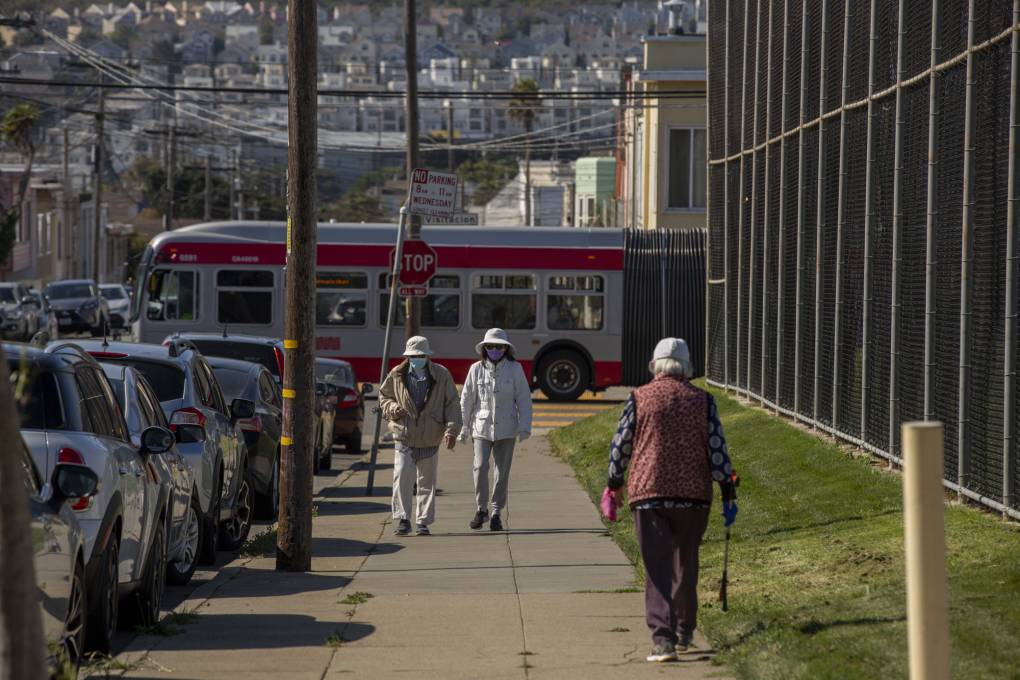
California's Anti-Asian Hate Crimes Decline but Long-Term Pattern Persists
'The Blame Game': New Hate Crime Report Tracks Rise in Anti-Asian Scapegoating
Forum: Have You Thought About Leaving the US?
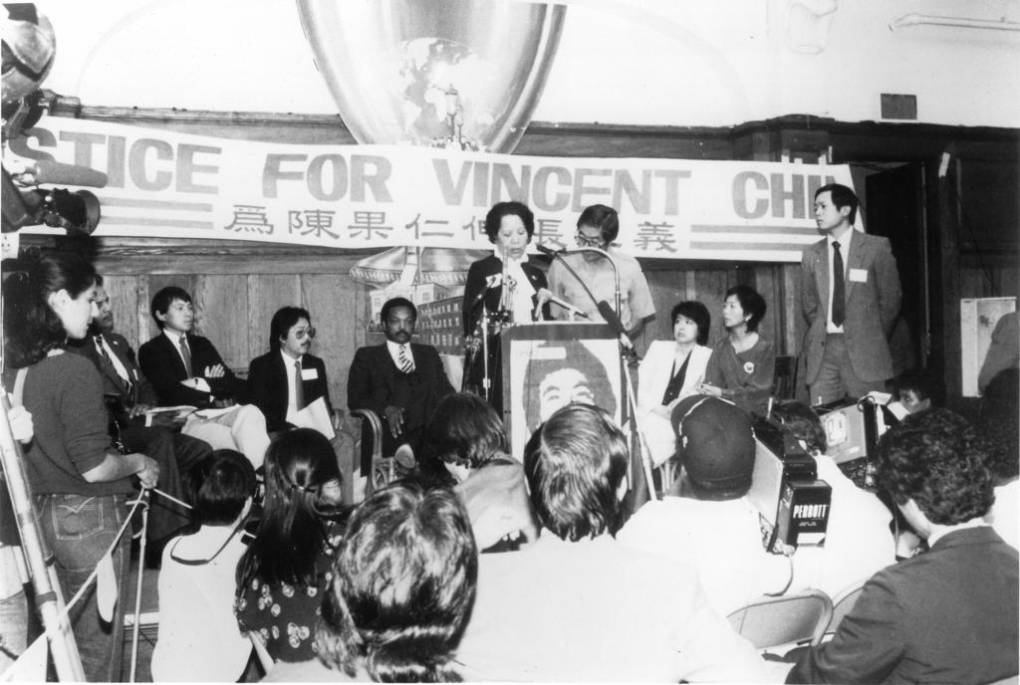
Vincent Chin's Death 40 Years Later: Advocate Mabel Teng Says Uniting Black and Asian Communities Key for Justice
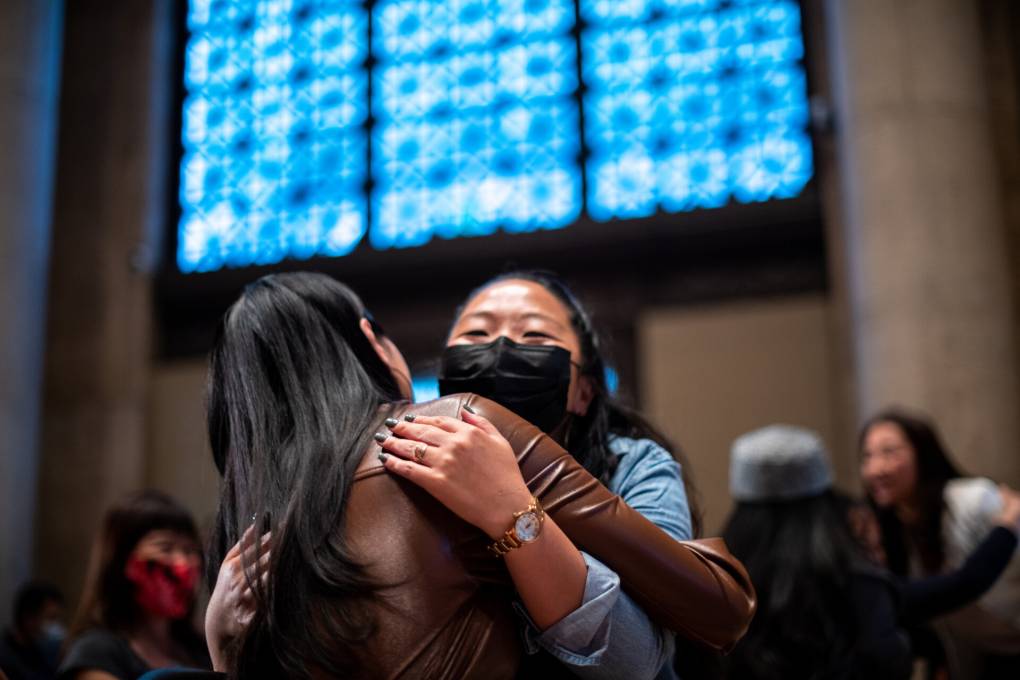
SF Event Celebrates Strength of Asian Women, 1 Year After Atlanta Spa Shootings
'America Was Finally Shocked Awake': One Year After Atlanta Spa Shootings, Democratic Leaders Condemn Anti-Asian Hate
Remembering the Atlanta Spa Shooting — And How We Move Forward
'I'm So Tired of Being Scared': Two Asian American Women Explain Why They Bought a Gun This Year
Inside the California Organization Tracking Anti-Asian Hate Incidents
Sponsored
Player sponsored by
window.__IS_SSR__=true
window.__INITIAL_STATE__={
"attachmentsReducer": {
"audio_0": {
"type": "attachments",
"id": "audio_0",
"imgSizes": {
"kqedFullSize": {
"file": "https://ww2.kqed.org/news/wp-content/themes/KQED-unified/img/audio_bgs/background0.jpg"
}
}
},
"audio_1": {
"type": "attachments",
"id": "audio_1",
"imgSizes": {
"kqedFullSize": {
"file": "https://ww2.kqed.org/news/wp-content/themes/KQED-unified/img/audio_bgs/background1.jpg"
}
}
},
"audio_2": {
"type": "attachments",
"id": "audio_2",
"imgSizes": {
"kqedFullSize": {
"file": "https://ww2.kqed.org/news/wp-content/themes/KQED-unified/img/audio_bgs/background2.jpg"
}
}
},
"audio_3": {
"type": "attachments",
"id": "audio_3",
"imgSizes": {
"kqedFullSize": {
"file": "https://ww2.kqed.org/news/wp-content/themes/KQED-unified/img/audio_bgs/background3.jpg"
}
}
},
"audio_4": {
"type": "attachments",
"id": "audio_4",
"imgSizes": {
"kqedFullSize": {
"file": "https://ww2.kqed.org/news/wp-content/themes/KQED-unified/img/audio_bgs/background4.jpg"
}
}
},
"placeholder": {
"type": "attachments",
"id": "placeholder",
"imgSizes": {
"thumbnail": {
"file": "https://cdn.kqed.org/wp-content/uploads/2024/12/KQED-Default-Image-816638274-2000x1333-1-160x107.jpg",
"width": 160,
"height": 107,
"mimeType": "image/jpeg"
},
"medium": {
"file": "https://cdn.kqed.org/wp-content/uploads/2024/12/KQED-Default-Image-816638274-2000x1333-1-800x533.jpg",
"width": 800,
"height": 533,
"mimeType": "image/jpeg"
},
"medium_large": {
"file": "https://cdn.kqed.org/wp-content/uploads/2024/12/KQED-Default-Image-816638274-2000x1333-1-768x512.jpg",
"width": 768,
"height": 512,
"mimeType": "image/jpeg"
},
"large": {
"file": "https://cdn.kqed.org/wp-content/uploads/2024/12/KQED-Default-Image-816638274-2000x1333-1-1020x680.jpg",
"width": 1020,
"height": 680,
"mimeType": "image/jpeg"
},
"1536x1536": {
"file": "https://cdn.kqed.org/wp-content/uploads/2024/12/KQED-Default-Image-816638274-2000x1333-1-1536x1024.jpg",
"width": 1536,
"height": 1024,
"mimeType": "image/jpeg"
},
"fd-lrg": {
"file": "https://cdn.kqed.org/wp-content/uploads/2024/12/KQED-Default-Image-816638274-2000x1333-1-1536x1024.jpg",
"width": 1536,
"height": 1024,
"mimeType": "image/jpeg"
},
"fd-med": {
"file": "https://cdn.kqed.org/wp-content/uploads/2024/12/KQED-Default-Image-816638274-2000x1333-1-1020x680.jpg",
"width": 1020,
"height": 680,
"mimeType": "image/jpeg"
},
"fd-sm": {
"file": "https://cdn.kqed.org/wp-content/uploads/2024/12/KQED-Default-Image-816638274-2000x1333-1-800x533.jpg",
"width": 800,
"height": 533,
"mimeType": "image/jpeg"
},
"post-thumbnail": {
"file": "https://cdn.kqed.org/wp-content/uploads/2024/12/KQED-Default-Image-816638274-2000x1333-1-672x372.jpg",
"width": 672,
"height": 372,
"mimeType": "image/jpeg"
},
"twentyfourteen-full-width": {
"file": "https://cdn.kqed.org/wp-content/uploads/2024/12/KQED-Default-Image-816638274-2000x1333-1-1038x576.jpg",
"width": 1038,
"height": 576,
"mimeType": "image/jpeg"
},
"xxsmall": {
"file": "https://cdn.kqed.org/wp-content/uploads/2024/12/KQED-Default-Image-816638274-2000x1333-1-160x107.jpg",
"width": 160,
"height": 107,
"mimeType": "image/jpeg"
},
"xsmall": {
"file": "https://cdn.kqed.org/wp-content/uploads/2024/12/KQED-Default-Image-816638274-2000x1333-1-672x372.jpg",
"width": 672,
"height": 372,
"mimeType": "image/jpeg"
},
"small": {
"file": "https://cdn.kqed.org/wp-content/uploads/2024/12/KQED-Default-Image-816638274-2000x1333-1-672x372.jpg",
"width": 672,
"height": 372,
"mimeType": "image/jpeg"
},
"xlarge": {
"file": "https://cdn.kqed.org/wp-content/uploads/2024/12/KQED-Default-Image-816638274-2000x1333-1-1020x680.jpg",
"width": 1020,
"height": 680,
"mimeType": "image/jpeg"
},
"full-width": {
"file": "https://cdn.kqed.org/wp-content/uploads/2024/12/KQED-Default-Image-816638274-2000x1333-1-1920x1280.jpg",
"width": 1920,
"height": 1280,
"mimeType": "image/jpeg"
},
"guest-author-32": {
"file": "https://cdn.kqed.org/wp-content/uploads/2025/01/KQED-Default-Image-816638274-1333x1333-1-160x160.jpg",
"width": 32,
"height": 32,
"mimeType": "image/jpeg"
},
"guest-author-50": {
"file": "https://cdn.kqed.org/wp-content/uploads/2025/01/KQED-Default-Image-816638274-1333x1333-1-160x160.jpg",
"width": 50,
"height": 50,
"mimeType": "image/jpeg"
},
"guest-author-64": {
"file": "https://cdn.kqed.org/wp-content/uploads/2025/01/KQED-Default-Image-816638274-1333x1333-1-160x160.jpg",
"width": 64,
"height": 64,
"mimeType": "image/jpeg"
},
"guest-author-96": {
"file": "https://cdn.kqed.org/wp-content/uploads/2025/01/KQED-Default-Image-816638274-1333x1333-1-160x160.jpg",
"width": 96,
"height": 96,
"mimeType": "image/jpeg"
},
"guest-author-128": {
"file": "https://cdn.kqed.org/wp-content/uploads/2025/01/KQED-Default-Image-816638274-1333x1333-1-160x160.jpg",
"width": 128,
"height": 128,
"mimeType": "image/jpeg"
},
"detail": {
"file": "https://cdn.kqed.org/wp-content/uploads/2025/01/KQED-Default-Image-816638274-1333x1333-1-160x160.jpg",
"width": 160,
"height": 160,
"mimeType": "image/jpeg"
},
"kqedFullSize": {
"file": "https://cdn.kqed.org/wp-content/uploads/2024/12/KQED-Default-Image-816638274-2000x1333-1.jpg",
"width": 2000,
"height": 1333
}
}
},
"news_11960635": {
"type": "attachments",
"id": "news_11960635",
"meta": {
"index": "attachments_1716263798",
"site": "news",
"id": "11960635",
"found": true
},
"title": "20230907-YikOiHuang-03-JY-KQED",
"publishDate": 1694461255,
"status": "inherit",
"parent": 12062582,
"modified": 1762291527,
"caption": "Older adults walk around Yik Oi Huang Peace and Friendship Park in San Francisco on Thursday, Sept. 7, 2023. Formerly Visitacion Valley Park, it was renamed in May 2022 in memory of Yik Oi Huang, an older person who was brutally beaten at the park and, a year later, died from her injuries.",
"credit": "Juliana Yamada/KQED",
"altTag": "Several people walk up a sidewalk next to a grassy park.",
"description": null,
"imgSizes": {
"medium": {
"file": "https://cdn.kqed.org/wp-content/uploads/sites/10/2023/09/20230907-YikOiHuang-03-JY-KQED-800x533.jpg",
"width": 800,
"height": 533,
"mimeType": "image/jpeg"
},
"large": {
"file": "https://cdn.kqed.org/wp-content/uploads/sites/10/2023/09/20230907-YikOiHuang-03-JY-KQED-1020x680.jpg",
"width": 1020,
"height": 680,
"mimeType": "image/jpeg"
},
"thumbnail": {
"file": "https://cdn.kqed.org/wp-content/uploads/sites/10/2023/09/20230907-YikOiHuang-03-JY-KQED-160x107.jpg",
"width": 160,
"height": 107,
"mimeType": "image/jpeg"
},
"1536x1536": {
"file": "https://cdn.kqed.org/wp-content/uploads/sites/10/2023/09/20230907-YikOiHuang-03-JY-KQED-1536x1024.jpg",
"width": 1536,
"height": 1024,
"mimeType": "image/jpeg"
},
"post-thumbnail": {
"file": "https://cdn.kqed.org/wp-content/uploads/sites/10/2023/09/20230907-YikOiHuang-03-JY-KQED-672x372.jpg",
"width": 672,
"height": 372,
"mimeType": "image/jpeg"
},
"twentyfourteen-full-width": {
"file": "https://cdn.kqed.org/wp-content/uploads/sites/10/2023/09/20230907-YikOiHuang-03-JY-KQED-1038x576.jpg",
"width": 1038,
"height": 576,
"mimeType": "image/jpeg"
},
"full-width": {
"file": "https://cdn.kqed.org/wp-content/uploads/sites/10/2023/09/20230907-YikOiHuang-03-JY-KQED-1920x1280.jpg",
"width": 1920,
"height": 1280,
"mimeType": "image/jpeg"
},
"kqedFullSize": {
"file": "https://cdn.kqed.org/wp-content/uploads/sites/10/2023/09/20230907-YikOiHuang-03-JY-KQED.jpg",
"width": 2000,
"height": 1333
}
},
"fetchFailed": false,
"isLoading": false
},
"news_11928911": {
"type": "attachments",
"id": "news_11928911",
"meta": {
"index": "attachments_1716263798",
"site": "news",
"id": "11928911",
"found": true
},
"parent": 11928863,
"imgSizes": {
"twentyfourteen-full-width": {
"file": "https://ww2.kqed.org/app/uploads/sites/10/2022/10/RS48125_003_SanFrancisco_RiseUpRally_03262021-qut-1038x576.jpg",
"width": 1038,
"mimeType": "image/jpeg",
"height": 576
},
"thumbnail": {
"file": "https://ww2.kqed.org/app/uploads/sites/10/2022/10/RS48125_003_SanFrancisco_RiseUpRally_03262021-qut-160x107.jpg",
"width": 160,
"mimeType": "image/jpeg",
"height": 107
},
"post-thumbnail": {
"file": "https://ww2.kqed.org/app/uploads/sites/10/2022/10/RS48125_003_SanFrancisco_RiseUpRally_03262021-qut-672x372.jpg",
"width": 672,
"mimeType": "image/jpeg",
"height": 372
},
"kqedFullSize": {
"file": "https://ww2.kqed.org/app/uploads/sites/10/2022/10/RS48125_003_SanFrancisco_RiseUpRally_03262021-qut.jpg",
"width": 1920,
"height": 1280
},
"large": {
"file": "https://ww2.kqed.org/app/uploads/sites/10/2022/10/RS48125_003_SanFrancisco_RiseUpRally_03262021-qut-1020x680.jpg",
"width": 1020,
"mimeType": "image/jpeg",
"height": 680
},
"1536x1536": {
"file": "https://ww2.kqed.org/app/uploads/sites/10/2022/10/RS48125_003_SanFrancisco_RiseUpRally_03262021-qut-1536x1024.jpg",
"width": 1536,
"mimeType": "image/jpeg",
"height": 1024
},
"medium": {
"file": "https://ww2.kqed.org/app/uploads/sites/10/2022/10/RS48125_003_SanFrancisco_RiseUpRally_03262021-qut-800x533.jpg",
"width": 800,
"mimeType": "image/jpeg",
"height": 533
}
},
"publishDate": 1665771793,
"modified": 1665771936,
"caption": "Volunteer organizer Krystal Mak wears a mask that says 'Stop Asian Hate' during a student-led rally to show solidarity with Asian Americans in San Francisco on March 26, 2021. A new report by Stop AAPI Hate shines a light on rhetoric that scapegoats Asians and Asian Americans.",
"description": null,
"title": "RS48125_003_SanFrancisco_RiseUpRally_03262021-qut",
"credit": "Beth LaBerge/KQED",
"status": "inherit",
"altTag": "a young Asian American woman wears a black mask that reads 'stop Asian hate'",
"fetchFailed": false,
"isLoading": false
},
"news_11919730": {
"type": "attachments",
"id": "news_11919730",
"meta": {
"index": "attachments_1716263798",
"site": "news",
"id": "11919730",
"found": true
},
"parent": 11919723,
"imgSizes": {
"twentyfourteen-full-width": {
"file": "https://ww2.kqed.org/app/uploads/sites/10/2022/07/GettyImages-1230372480-1-1024x576.jpg",
"width": 1024,
"mimeType": "image/jpeg",
"height": 576
},
"thumbnail": {
"file": "https://ww2.kqed.org/app/uploads/sites/10/2022/07/GettyImages-1230372480-1-160x107.jpg",
"width": 160,
"mimeType": "image/jpeg",
"height": 107
},
"post-thumbnail": {
"file": "https://ww2.kqed.org/app/uploads/sites/10/2022/07/GettyImages-1230372480-1-672x372.jpg",
"width": 672,
"mimeType": "image/jpeg",
"height": 372
},
"kqedFullSize": {
"file": "https://ww2.kqed.org/app/uploads/sites/10/2022/07/GettyImages-1230372480-1.jpg",
"width": 1024,
"height": 683
},
"large": {
"file": "https://ww2.kqed.org/app/uploads/sites/10/2022/07/GettyImages-1230372480-1-1020x680.jpg",
"width": 1020,
"mimeType": "image/jpeg",
"height": 680
},
"medium": {
"file": "https://ww2.kqed.org/app/uploads/sites/10/2022/07/GettyImages-1230372480-1-800x534.jpg",
"width": 800,
"mimeType": "image/jpeg",
"height": 534
}
},
"publishDate": 1657929145,
"modified": 1658364646,
"caption": "A walkway between the US and Canada at Peace Arch Historical State Park on Jan. 1, 2021, in Blaine, Washington.",
"description": null,
"title": "Canadians And Americans Meet At Peace Arch Park While Pandemic Keeps Border Closed",
"credit": "David Ryder/Getty Images",
"status": "inherit",
"altTag": "A sign in a walkway that says \"Leaving United States Border\"",
"fetchFailed": false,
"isLoading": false
},
"news_11917464": {
"type": "attachments",
"id": "news_11917464",
"meta": {
"index": "attachments_1716263798",
"site": "news",
"id": "11917464",
"found": true
},
"parent": 11917437,
"imgSizes": {
"twentyfourteen-full-width": {
"file": "https://ww2.kqed.org/app/uploads/sites/10/2022/06/Mabel4-1024x576.jpg",
"width": 1024,
"mimeType": "image/jpeg",
"height": 576
},
"thumbnail": {
"file": "https://ww2.kqed.org/app/uploads/sites/10/2022/06/Mabel4-160x108.jpg",
"width": 160,
"mimeType": "image/jpeg",
"height": 108
},
"post-thumbnail": {
"file": "https://ww2.kqed.org/app/uploads/sites/10/2022/06/Mabel4-672x372.jpg",
"width": 672,
"mimeType": "image/jpeg",
"height": 372
},
"kqedFullSize": {
"file": "https://ww2.kqed.org/app/uploads/sites/10/2022/06/Mabel4.jpg",
"width": 1024,
"height": 688
},
"large": {
"file": "https://ww2.kqed.org/app/uploads/sites/10/2022/06/Mabel4-1020x685.jpg",
"width": 1020,
"mimeType": "image/jpeg",
"height": 685
},
"medium": {
"file": "https://ww2.kqed.org/app/uploads/sites/10/2022/06/Mabel4-800x538.jpg",
"width": 800,
"mimeType": "image/jpeg",
"height": 538
}
},
"publishDate": 1655763819,
"modified": 1655923712,
"caption": "Rev. Jesse Jackson comes to Cameron House, San Francisco, to call for justice after the death of Vincent Chin, flanked by San Francisco activists, including Mabel Teng (right) and the late Ed Lee, a former San Francisco mayor, then-civil rights attorney. At the podium is Lily Chin, mother of Vincent Chin.",
"description": null,
"title": "Mabel4",
"credit": "Photo Courtesy Mabel Teng",
"status": "inherit",
"altTag": "People are seated at a small stage in a black and white photo with \"Justice for Vincent Chin\" on a sign in English and Chinese in the background, a woman and man stand at a podium.",
"fetchFailed": false,
"isLoading": false
},
"news_11908506": {
"type": "attachments",
"id": "news_11908506",
"meta": {
"index": "attachments_1716263798",
"site": "news",
"id": "11908506",
"found": true
},
"parent": 11908440,
"imgSizes": {
"twentyfourteen-full-width": {
"file": "https://ww2.kqed.org/app/uploads/sites/10/2022/03/RS54501_035_KQED_JusticeforAsianWomen_03162022-qut-1038x576.jpg",
"width": 1038,
"mimeType": "image/jpeg",
"height": 576
},
"thumbnail": {
"file": "https://ww2.kqed.org/app/uploads/sites/10/2022/03/RS54501_035_KQED_JusticeforAsianWomen_03162022-qut-160x107.jpg",
"width": 160,
"mimeType": "image/jpeg",
"height": 107
},
"post-thumbnail": {
"file": "https://ww2.kqed.org/app/uploads/sites/10/2022/03/RS54501_035_KQED_JusticeforAsianWomen_03162022-qut-672x372.jpg",
"width": 672,
"mimeType": "image/jpeg",
"height": 372
},
"kqedFullSize": {
"file": "https://ww2.kqed.org/app/uploads/sites/10/2022/03/RS54501_035_KQED_JusticeforAsianWomen_03162022-qut.jpg",
"width": 1920,
"height": 1280
},
"large": {
"file": "https://ww2.kqed.org/app/uploads/sites/10/2022/03/RS54501_035_KQED_JusticeforAsianWomen_03162022-qut-1020x680.jpg",
"width": 1020,
"mimeType": "image/jpeg",
"height": 680
},
"1536x1536": {
"file": "https://ww2.kqed.org/app/uploads/sites/10/2022/03/RS54501_035_KQED_JusticeforAsianWomen_03162022-qut-1536x1024.jpg",
"width": 1536,
"mimeType": "image/jpeg",
"height": 1024
},
"medium": {
"file": "https://ww2.kqed.org/app/uploads/sites/10/2022/03/RS54501_035_KQED_JusticeforAsianWomen_03162022-qut-800x533.jpg",
"width": 800,
"mimeType": "image/jpeg",
"height": 533
}
},
"publishDate": 1647547224,
"modified": 1647555552,
"caption": "After an announcement to hug the person sitting next to you, attendees embrace one another during the 'Break the Silence' event at the Asian Art Museum in San Francisco on March 16, 2022.",
"description": null,
"title": "RS54501_035_KQED_JusticeforAsianWomen_03162022-qut",
"credit": "Beth LaBerge/KQED",
"status": "inherit",
"altTag": "Two women hug each other at an event.",
"fetchFailed": false,
"isLoading": false
},
"news_11908430": {
"type": "attachments",
"id": "news_11908430",
"meta": {
"index": "attachments_1716263798",
"site": "news",
"id": "11908430",
"found": true
},
"parent": 11908414,
"imgSizes": {
"twentyfourteen-full-width": {
"file": "https://ww2.kqed.org/app/uploads/sites/10/2022/03/RS54430_GettyImages-1231758554-qut-1038x576.jpg",
"width": 1038,
"mimeType": "image/jpeg",
"height": 576
},
"thumbnail": {
"file": "https://ww2.kqed.org/app/uploads/sites/10/2022/03/RS54430_GettyImages-1231758554-qut-160x107.jpg",
"width": 160,
"mimeType": "image/jpeg",
"height": 107
},
"post-thumbnail": {
"file": "https://ww2.kqed.org/app/uploads/sites/10/2022/03/RS54430_GettyImages-1231758554-qut-672x372.jpg",
"width": 672,
"mimeType": "image/jpeg",
"height": 372
},
"kqedFullSize": {
"file": "https://ww2.kqed.org/app/uploads/sites/10/2022/03/RS54430_GettyImages-1231758554-qut.jpg",
"width": 1920,
"height": 1280
},
"large": {
"file": "https://ww2.kqed.org/app/uploads/sites/10/2022/03/RS54430_GettyImages-1231758554-qut-1020x680.jpg",
"width": 1020,
"mimeType": "image/jpeg",
"height": 680
},
"1536x1536": {
"file": "https://ww2.kqed.org/app/uploads/sites/10/2022/03/RS54430_GettyImages-1231758554-qut-1536x1024.jpg",
"width": 1536,
"mimeType": "image/jpeg",
"height": 1024
},
"medium": {
"file": "https://ww2.kqed.org/app/uploads/sites/10/2022/03/RS54430_GettyImages-1231758554-qut-800x533.jpg",
"width": 800,
"mimeType": "image/jpeg",
"height": 533
}
},
"publishDate": 1647466158,
"modified": 1647470316,
"caption": "Police tape is seen outside one of the two Atlanta spas where Robert Aaron Long murdered four women of Asian descent on March 16, 2021.",
"description": null,
"title": "US-SHOOTINGS-SPA",
"credit": "Elijah Nouvelage/AFP via Getty Images",
"status": "inherit",
"altTag": "spa building in distance, out of focus, lit by pink neon lights, police tape in foreground",
"fetchFailed": false,
"isLoading": false
},
"news_11907910": {
"type": "attachments",
"id": "news_11907910",
"meta": {
"index": "attachments_1716263798",
"site": "news",
"id": "11907910",
"found": true
},
"parent": 11907902,
"imgSizes": {
"twentyfourteen-full-width": {
"file": "https://ww2.kqed.org/app/uploads/sites/10/2022/03/RS48155_035_SanFrancisco_RiseUpRally_03262021-qut-1038x576.jpg",
"width": 1038,
"mimeType": "image/jpeg",
"height": 576
},
"thumbnail": {
"file": "https://ww2.kqed.org/app/uploads/sites/10/2022/03/RS48155_035_SanFrancisco_RiseUpRally_03262021-qut-160x107.jpg",
"width": 160,
"mimeType": "image/jpeg",
"height": 107
},
"post-thumbnail": {
"file": "https://ww2.kqed.org/app/uploads/sites/10/2022/03/RS48155_035_SanFrancisco_RiseUpRally_03262021-qut-672x372.jpg",
"width": 672,
"mimeType": "image/jpeg",
"height": 372
},
"kqedFullSize": {
"file": "https://ww2.kqed.org/app/uploads/sites/10/2022/03/RS48155_035_SanFrancisco_RiseUpRally_03262021-qut.jpg",
"width": 1920,
"height": 1280
},
"large": {
"file": "https://ww2.kqed.org/app/uploads/sites/10/2022/03/RS48155_035_SanFrancisco_RiseUpRally_03262021-qut-1020x680.jpg",
"width": 1020,
"mimeType": "image/jpeg",
"height": 680
},
"1536x1536": {
"file": "https://ww2.kqed.org/app/uploads/sites/10/2022/03/RS48155_035_SanFrancisco_RiseUpRally_03262021-qut-1536x1024.jpg",
"width": 1536,
"mimeType": "image/jpeg",
"height": 1024
},
"medium": {
"file": "https://ww2.kqed.org/app/uploads/sites/10/2022/03/RS48155_035_SanFrancisco_RiseUpRally_03262021-qut-800x533.jpg",
"width": 800,
"mimeType": "image/jpeg",
"height": 533
}
},
"publishDate": 1647031967,
"modified": 1647032039,
"caption": "(From left) Cecile Dang and Bryan Nguyen hold signs to show support for the Asian American community during a student-led rally in San Francisco on March 26, 2021.",
"description": null,
"title": "RS48155_035_SanFrancisco_RiseUpRally_03262021-qut",
"credit": "Beth LaBerge/KQED",
"status": "inherit",
"altTag": null,
"fetchFailed": false,
"isLoading": false
},
"news_11877873": {
"type": "attachments",
"id": "news_11877873",
"meta": {
"index": "attachments_1716263798",
"site": "news",
"id": "11877873",
"found": true
},
"parent": 11877731,
"imgSizes": {
"twentyfourteen-full-width": {
"file": "https://ww2.kqed.org/app/uploads/sites/10/2021/06/Kelly-Chi-Range-red-hat-1038x576.jpeg",
"width": 1038,
"mimeType": "image/jpeg",
"height": 576
},
"thumbnail": {
"file": "https://ww2.kqed.org/app/uploads/sites/10/2021/06/Kelly-Chi-Range-red-hat-160x90.jpeg",
"width": 160,
"mimeType": "image/jpeg",
"height": 90
},
"post-thumbnail": {
"file": "https://ww2.kqed.org/app/uploads/sites/10/2021/06/Kelly-Chi-Range-red-hat-672x372.jpeg",
"width": 672,
"mimeType": "image/jpeg",
"height": 372
},
"kqedFullSize": {
"file": "https://ww2.kqed.org/app/uploads/sites/10/2021/06/Kelly-Chi-Range-red-hat-scaled.jpeg",
"width": 2560,
"height": 1440
},
"2048x2048": {
"file": "https://ww2.kqed.org/app/uploads/sites/10/2021/06/Kelly-Chi-Range-red-hat-2048x1152.jpeg",
"width": 2048,
"mimeType": "image/jpeg",
"height": 1152
},
"large": {
"file": "https://ww2.kqed.org/app/uploads/sites/10/2021/06/Kelly-Chi-Range-red-hat-1020x574.jpeg",
"width": 1020,
"mimeType": "image/jpeg",
"height": 574
},
"1536x1536": {
"file": "https://ww2.kqed.org/app/uploads/sites/10/2021/06/Kelly-Chi-Range-red-hat-1536x864.jpeg",
"width": 1536,
"mimeType": "image/jpeg",
"height": 864
},
"full-width": {
"file": "https://ww2.kqed.org/app/uploads/sites/10/2021/06/Kelly-Chi-Range-red-hat-1920x1080.jpeg",
"width": 1920,
"mimeType": "image/jpeg",
"height": 1080
},
"medium": {
"file": "https://ww2.kqed.org/app/uploads/sites/10/2021/06/Kelly-Chi-Range-red-hat-800x450.jpeg",
"width": 800,
"mimeType": "image/jpeg",
"height": 450
}
},
"publishDate": 1623696794,
"modified": 1624309560,
"caption": "'It’s a big responsibility to have a firearm, because it’s a tool that can save your life or someone else’s life, but it can also take life at the same time,' said gun instructor Kelly Chi.",
"description": null,
"title": "Kelly Chi Range red hat",
"credit": "Courtesy Tom Nguyen/LA Progressive Shooters",
"status": "inherit",
"altTag": null,
"fetchFailed": false,
"isLoading": false
},
"news_11876974": {
"type": "attachments",
"id": "news_11876974",
"meta": {
"index": "attachments_1716263798",
"site": "news",
"id": "11876974",
"found": true
},
"parent": 11876972,
"imgSizes": {
"twentyfourteen-full-width": {
"file": "https://ww2.kqed.org/app/uploads/sites/10/2021/06/050721_StopAAPIHate_HM_sized_04-1038x576.jpeg",
"width": 1038,
"mimeType": "image/jpeg",
"height": 576
},
"thumbnail": {
"file": "https://ww2.kqed.org/app/uploads/sites/10/2021/06/050721_StopAAPIHate_HM_sized_04-160x107.jpeg",
"width": 160,
"mimeType": "image/jpeg",
"height": 107
},
"post-thumbnail": {
"file": "https://ww2.kqed.org/app/uploads/sites/10/2021/06/050721_StopAAPIHate_HM_sized_04-672x372.jpeg",
"width": 672,
"mimeType": "image/jpeg",
"height": 372
},
"kqedFullSize": {
"file": "https://ww2.kqed.org/app/uploads/sites/10/2021/06/050721_StopAAPIHate_HM_sized_04-e1623092108502.jpeg",
"width": 1920,
"height": 1280
},
"large": {
"file": "https://ww2.kqed.org/app/uploads/sites/10/2021/06/050721_StopAAPIHate_HM_sized_04-1020x680.jpeg",
"width": 1020,
"mimeType": "image/jpeg",
"height": 680
},
"1536x1536": {
"file": "https://ww2.kqed.org/app/uploads/sites/10/2021/06/050721_StopAAPIHate_HM_sized_04-1536x1024.jpeg",
"width": 1536,
"mimeType": "image/jpeg",
"height": 1024
},
"full-width": {
"file": "https://ww2.kqed.org/app/uploads/sites/10/2021/06/050721_StopAAPIHate_HM_sized_04-1920x1280.jpeg",
"width": 1920,
"mimeType": "image/jpeg",
"height": 1280
},
"medium": {
"file": "https://ww2.kqed.org/app/uploads/sites/10/2021/06/050721_StopAAPIHate_HM_sized_04-800x533.jpeg",
"width": 800,
"mimeType": "image/jpeg",
"height": 533
}
},
"publishDate": 1623091939,
"modified": 1623096524,
"caption": "Russell Jeung, a professor of Asian American Studies at San Francisco State University and co-founder of Stop AAPI Hate, in San Francisco's Chinatown on May 8, 2021.",
"description": null,
"title": "050721_StopAAPIHate_HM_sized_04",
"credit": "Harika Maddala/CalMatters",
"status": "inherit",
"altTag": null,
"fetchFailed": false,
"isLoading": false
}
},
"audioPlayerReducer": {
"postId": "stream_live",
"isPaused": true,
"isPlaying": false,
"pfsActive": false,
"pledgeModalIsOpen": true,
"playerDrawerIsOpen": false
},
"authorsReducer": {
"byline_news_11961693": {
"type": "authors",
"id": "byline_news_11961693",
"meta": {
"override": true
},
"slug": "byline_news_11961693",
"name": "\u003ca href=\"https://twitter.com/naomivanderlip\">Naomi Vanderlip\u003c/a>",
"isLoading": false
},
"byline_news_11908414": {
"type": "authors",
"id": "byline_news_11908414",
"meta": {
"override": true
},
"slug": "byline_news_11908414",
"name": "Kate Brumback \u003cbr> The Associated Press",
"isLoading": false
},
"byline_news_11877731": {
"type": "authors",
"id": "byline_news_11877731",
"meta": {
"override": true
},
"slug": "byline_news_11877731",
"name": "\u003ca href=\"https://twitter.com/christinenguyen\">Christine Nguyen\u003c/a>",
"isLoading": false
},
"byline_news_11876972": {
"type": "authors",
"id": "byline_news_11876972",
"meta": {
"override": true
},
"slug": "byline_news_11876972",
"name": "\u003ca href=\"https://calmatters.org/author/mallika-seshadri/\">Mallika Seshadri\u003c/a>",
"isLoading": false
},
"kqed": {
"type": "authors",
"id": "236",
"meta": {
"index": "authors_1716337520",
"id": "236",
"found": true
},
"name": "KQED News Staff",
"firstName": "KQED News Staff",
"lastName": null,
"slug": "kqed",
"email": "faq@kqed.org",
"display_author_email": false,
"staff_mastheads": [],
"title": null,
"bio": null,
"avatar": "https://secure.gravatar.com/avatar/ef0e801a68c4c54afa9180db14084167?s=600&d=blank&r=g",
"twitter": null,
"facebook": null,
"instagram": null,
"linkedin": null,
"sites": [
{
"site": "arts",
"roles": [
"contributor"
]
},
{
"site": "news",
"roles": [
"editor"
]
},
{
"site": "futureofyou",
"roles": [
"author"
]
}
],
"headData": {
"title": "KQED News Staff | KQED",
"description": null,
"ogImgSrc": "https://secure.gravatar.com/avatar/ef0e801a68c4c54afa9180db14084167?s=600&d=blank&r=g",
"twImgSrc": "https://secure.gravatar.com/avatar/ef0e801a68c4c54afa9180db14084167?s=600&d=blank&r=g"
},
"isLoading": false,
"link": "/author/kqed"
},
"minakim": {
"type": "authors",
"id": "243",
"meta": {
"index": "authors_1716337520",
"id": "243",
"found": true
},
"name": "Mina Kim",
"firstName": "Mina",
"lastName": "Kim",
"slug": "minakim",
"email": "mkim@kqed.org",
"display_author_email": false,
"staff_mastheads": [
"news"
],
"title": "Host, Forum",
"bio": "Mina Kim is host of the 10 a.m. statewide hour of Forum; a live daily talk show for curious Californians on issues that matter to the state and nation, with a particular emphasis on race and equity.\r\n\r\nBefore joining the Forum team, Mina was KQED’s evening news anchor, and health reporter for The California Report. Her award-winning work has included natural disasters in Napa and gun violence in Oakland. Mina grew up in St. John’s, Newfoundland.",
"avatar": "https://secure.gravatar.com/avatar/145ce657a2d08cb86d93686beb958982?s=600&d=blank&r=g",
"twitter": "mkimreporter",
"facebook": null,
"instagram": null,
"linkedin": null,
"sites": [
{
"site": "news",
"roles": [
"contributor"
]
},
{
"site": "stateofhealth",
"roles": [
"author"
]
},
{
"site": "forum",
"roles": [
"editor"
]
}
],
"headData": {
"title": "Mina Kim | KQED",
"description": "Host, Forum",
"ogImgSrc": "https://secure.gravatar.com/avatar/145ce657a2d08cb86d93686beb958982?s=600&d=blank&r=g",
"twImgSrc": "https://secure.gravatar.com/avatar/145ce657a2d08cb86d93686beb958982?s=600&d=blank&r=g"
},
"isLoading": false,
"link": "/author/minakim"
},
"dkatayama": {
"type": "authors",
"id": "7240",
"meta": {
"index": "authors_1716337520",
"id": "7240",
"found": true
},
"name": "Devin Katayama",
"firstName": "Devin",
"lastName": "Katayama",
"slug": "dkatayama",
"email": "dkatayama@kqed.org",
"display_author_email": true,
"staff_mastheads": [
"news"
],
"title": "Editor of Talent and Development",
"bio": "Devin Katayama is former Editor of Talent and Development for KQED. He supported our internship program and on-call staff by looking for equitable opportunities to improve the newsroom.\r\n\r\nHe previously hosted The Bay and American Suburb podcasts from KQED News. Prior to returning to the Bay Area in 2015, Devin was the education reporter for WFPL in Louisville and worked as a producer with radio stations in Chicago and Portland, OR. His work has appeared on NPR’s \u003cem>Morning Edition, All Things Considered, The Takeaway\u003c/em> and \u003cem>Here and Now.\u003c/em>\r\n\r\nDevin earned his MA in Journalism from Columbia College Chicago, where he was a Follett Fellow and the recipient of the 2011 Studs Terkel Community Media Workshop Scholarship for his story on Chicago's homeless youth. He won WBUR's 2014 Daniel Schorr award and a regional RTNDA Edward R. Murrow Award for his documentary \"At Risk\" that looked at issues facing some of Louisville's students. Devin has also received numerous local awards from the Associated Press and the Society of Professional Journalists.",
"avatar": "https://secure.gravatar.com/avatar/d0d2978a31002fb2de107921a8e18405?s=600&d=blank&r=g",
"twitter": "RadioDevin",
"facebook": null,
"instagram": null,
"linkedin": null,
"sites": [
{
"site": "arts",
"roles": []
},
{
"site": "news",
"roles": [
"author"
]
},
{
"site": "stateofhealth",
"roles": [
"author"
]
},
{
"site": "forum",
"roles": [
"editor"
]
},
{
"site": "perspectives",
"roles": [
"editor"
]
}
],
"headData": {
"title": "Devin Katayama | KQED",
"description": "Editor of Talent and Development",
"ogImgSrc": "https://secure.gravatar.com/avatar/d0d2978a31002fb2de107921a8e18405?s=600&d=blank&r=g",
"twImgSrc": "https://secure.gravatar.com/avatar/d0d2978a31002fb2de107921a8e18405?s=600&d=blank&r=g"
},
"isLoading": false,
"link": "/author/dkatayama"
},
"ecruzguevarra": {
"type": "authors",
"id": "8654",
"meta": {
"index": "authors_1716337520",
"id": "8654",
"found": true
},
"name": "Ericka Cruz Guevarra",
"firstName": "Ericka",
"lastName": "Cruz Guevarra",
"slug": "ecruzguevarra",
"email": "ecruzguevarra@kqed.org",
"display_author_email": true,
"staff_mastheads": [
"news"
],
"title": "Producer, The Bay Podcast",
"bio": "Ericka Cruz Guevarra is host of \u003ca href=\"https://www.kqed.org/podcasts/thebay\">\u003cem>The Bay\u003c/em>\u003c/a> podcast at KQED. Before host, she was the show’s producer. Her work in that capacity includes a three-part reported series on policing in Vallejo, which won a 2020 excellence in journalism award from the Society of Professional Journalists. Ericka has worked as a breaking news reporter at Oregon Public Broadcasting, helped produce the Code Switch podcast, and was KQED’s inaugural Raul Ramirez Diversity Fund intern. She’s also an alumna of NPR’s Next Generation Radio program. Send her an email if you have strong feelings about whether Fairfield and Suisun City are the Bay. Ericka is represented by SAG-AFTRA.",
"avatar": "https://secure.gravatar.com/avatar/25e5ab8d3d53fad2dcc7bb2b5c506b1a?s=600&d=blank&r=g",
"twitter": "NotoriousECG",
"facebook": null,
"instagram": null,
"linkedin": null,
"sites": [
{
"site": "arts",
"roles": [
"subscriber"
]
},
{
"site": "news",
"roles": [
"editor",
"manage_categories"
]
},
{
"site": "futureofyou",
"roles": [
"subscriber"
]
},
{
"site": "stateofhealth",
"roles": [
"subscriber"
]
},
{
"site": "science",
"roles": [
"editor"
]
},
{
"site": "forum",
"roles": [
"subscriber"
]
}
],
"headData": {
"title": "Ericka Cruz Guevarra | KQED",
"description": "Producer, The Bay Podcast",
"ogImgSrc": "https://secure.gravatar.com/avatar/25e5ab8d3d53fad2dcc7bb2b5c506b1a?s=600&d=blank&r=g",
"twImgSrc": "https://secure.gravatar.com/avatar/25e5ab8d3d53fad2dcc7bb2b5c506b1a?s=600&d=blank&r=g"
},
"isLoading": false,
"link": "/author/ecruzguevarra"
},
"bwatt": {
"type": "authors",
"id": "11238",
"meta": {
"index": "authors_1716337520",
"id": "11238",
"found": true
},
"name": "Brian Watt",
"firstName": "Brian",
"lastName": "Watt",
"slug": "bwatt",
"email": "bwatt@KQED.org",
"display_author_email": false,
"staff_mastheads": [
"news"
],
"title": "Morning News Anchor",
"bio": "Brian Watt is KQED's morning radio news anchor. He joined the KQED News team in April of 2016. Prior to that, he worked as a Reporter for KPCC in Los Angeles and a producer at \u003cem>Marketplace.\u003c/em>\r\n\r\nDuring eight years at KPCC, Brian covered business and economics, and his work won several awards. In 2008, he won the Los Angeles Press Club’s first-place award for Business and Financial Reporting, Broadcast. He’s also received honorable mention and been first runner up for the Press Club’s Radio Journalist of the Year. He won two Golden Mike awards from the Radio and TV News Association of Southern California.\r\n\r\nBrian holds degrees in theater from Yale University and the Sorbonne, and has worked as an actor in France, Italy, Brazil, Hungary and . . . Hollywood. He appeared in a few television shows, including \u003cem>The West Wing, Judging Amy\u003c/em> and \u003cem>The District.\u003c/em>\r\n\r\nEmail: bwatt@KQED.org Twitter: @RadioBWatt",
"avatar": "https://secure.gravatar.com/avatar/55393ff57ed34e2be773ba4789dd6a19?s=600&d=blank&r=g",
"twitter": "@RadioBWatt",
"facebook": null,
"instagram": null,
"linkedin": null,
"sites": [
{
"site": "arts",
"roles": [
"contributor"
]
},
{
"site": "news",
"roles": [
"editor"
]
}
],
"headData": {
"title": "Brian Watt | KQED",
"description": "Morning News Anchor",
"ogImgSrc": "https://secure.gravatar.com/avatar/55393ff57ed34e2be773ba4789dd6a19?s=600&d=blank&r=g",
"twImgSrc": "https://secure.gravatar.com/avatar/55393ff57ed34e2be773ba4789dd6a19?s=600&d=blank&r=g"
},
"isLoading": false,
"link": "/author/bwatt"
},
"amontecillo": {
"type": "authors",
"id": "11649",
"meta": {
"index": "authors_1716337520",
"id": "11649",
"found": true
},
"name": "Alan Montecillo",
"firstName": "Alan",
"lastName": "Montecillo",
"slug": "amontecillo",
"email": "amontecillo@kqed.org",
"display_author_email": false,
"staff_mastheads": [
"news"
],
"title": "KQED Contributor",
"bio": "Alan Montecillo is the senior editor of \u003cem>\u003ca href=\"http://kqed.org/thebay\">The Bay\u003c/a>, \u003c/em> KQED's local news podcast. Before moving to the Bay Area, he worked as a senior talk show producer for WILL in Champaign-Urbana, Illinois and at Oregon Public Broadcasting in Portland, Oregon. He has won journalism awards from the Society of Professional Journalists Northern California, the Public Media Journalists Association, The Signal Awards, and has also received a regional Edward R. Murrow award. Alan is a Filipino American from Hong Kong and a graduate of Reed College.",
"avatar": "https://secure.gravatar.com/avatar/d5e4e7a76481969ccba76f4e2b5ccabc?s=600&d=blank&r=g",
"twitter": "alanmontecillo",
"facebook": null,
"instagram": null,
"linkedin": null,
"sites": [
{
"site": "",
"roles": [
"editor"
]
},
{
"site": "news",
"roles": [
"editor",
"manage_categories"
]
}
],
"headData": {
"title": "Alan Montecillo | KQED",
"description": "KQED Contributor",
"ogImgSrc": "https://secure.gravatar.com/avatar/d5e4e7a76481969ccba76f4e2b5ccabc?s=600&d=blank&r=g",
"twImgSrc": "https://secure.gravatar.com/avatar/d5e4e7a76481969ccba76f4e2b5ccabc?s=600&d=blank&r=g"
},
"isLoading": false,
"link": "/author/amontecillo"
},
"jrodriguez": {
"type": "authors",
"id": "11690",
"meta": {
"index": "authors_1716337520",
"id": "11690",
"found": true
},
"name": "Joe Fitzgerald Rodriguez",
"firstName": "Joe",
"lastName": "Fitzgerald Rodriguez",
"slug": "jrodriguez",
"email": "jrodriguez@kqed.org",
"display_author_email": true,
"staff_mastheads": [
"news"
],
"title": "Reporter and Producer",
"bio": "Joe Fitzgerald Rodriguez is a reporter and digital producer for KQED covering politics. Joe most recently wrote for the \u003cem>San Francisco Examiner\u003c/em> as a political columnist covering The City. He was raised in San Francisco and has spent his reporting career in his beloved, foggy, city by the bay. Joe was 12-years-old when he conducted his first interview in journalism, grilling former San Francisco Mayor Willie Brown for the Marina Middle School newspaper, \u003cem>The Penguin Press, \u003c/em>and he continues to report on the San Francisco Bay Area to this day.",
"avatar": "https://secure.gravatar.com/avatar/2247beb0564c1e9c62228d5649d2edac?s=600&d=blank&r=g",
"twitter": "FitztheReporter",
"facebook": null,
"instagram": "https://www.instagram.com/fitzthereporter/",
"linkedin": null,
"sites": [
{
"site": "",
"roles": [
"editor"
]
},
{
"site": "arts",
"roles": [
"editor"
]
},
{
"site": "news",
"roles": [
"editor"
]
},
{
"site": "science",
"roles": [
"editor"
]
},
{
"site": "elections",
"roles": [
"editor"
]
},
{
"site": "liveblog",
"roles": [
"editor"
]
}
],
"headData": {
"title": "Joe Fitzgerald Rodriguez | KQED",
"description": "Reporter and Producer",
"ogImgSrc": "https://secure.gravatar.com/avatar/2247beb0564c1e9c62228d5649d2edac?s=600&d=blank&r=g",
"twImgSrc": "https://secure.gravatar.com/avatar/2247beb0564c1e9c62228d5649d2edac?s=600&d=blank&r=g"
},
"isLoading": false,
"link": "/author/jrodriguez"
},
"agonzalez": {
"type": "authors",
"id": "11724",
"meta": {
"index": "authors_1716337520",
"id": "11724",
"found": true
},
"name": "Alexander Gonzalez",
"firstName": "Alexander",
"lastName": "Gonzalez",
"slug": "agonzalez",
"email": "AlexanderGonzalez@KQED.org",
"display_author_email": false,
"staff_mastheads": [
"news"
],
"title": "KQED Contributor",
"bio": null,
"avatar": "https://secure.gravatar.com/avatar/63d43593dd7ebcafcd638e851a9bce5a?s=600&d=blank&r=g",
"twitter": null,
"facebook": null,
"instagram": null,
"linkedin": null,
"sites": [
{
"site": "arts",
"roles": [
"editor"
]
},
{
"site": "news",
"roles": [
"editor"
]
}
],
"headData": {
"title": "Alexander Gonzalez | KQED",
"description": "KQED Contributor",
"ogImgSrc": "https://secure.gravatar.com/avatar/63d43593dd7ebcafcd638e851a9bce5a?s=600&d=blank&r=g",
"twImgSrc": "https://secure.gravatar.com/avatar/63d43593dd7ebcafcd638e851a9bce5a?s=600&d=blank&r=g"
},
"isLoading": false,
"link": "/author/agonzalez"
},
"smartos": {
"type": "authors",
"id": "11741",
"meta": {
"index": "authors_1716337520",
"id": "11741",
"found": true
},
"name": "Shaylyn Martos",
"firstName": "Shaylyn",
"lastName": "Martos",
"slug": "smartos",
"email": "smartos@kqed.org",
"display_author_email": false,
"staff_mastheads": [],
"title": "KQED Contributor",
"bio": null,
"avatar": "https://secure.gravatar.com/avatar/ca566efb61a864c9a7fff48e77d45f31?s=600&d=blank&r=g",
"twitter": "@shaylynmartos",
"facebook": null,
"instagram": null,
"linkedin": null,
"sites": [
{
"site": "news",
"roles": [
"author"
]
}
],
"headData": {
"title": "Shaylyn Martos | KQED",
"description": "KQED Contributor",
"ogImgSrc": "https://secure.gravatar.com/avatar/ca566efb61a864c9a7fff48e77d45f31?s=600&d=blank&r=g",
"twImgSrc": "https://secure.gravatar.com/avatar/ca566efb61a864c9a7fff48e77d45f31?s=600&d=blank&r=g"
},
"isLoading": false,
"link": "/author/smartos"
},
"swhitney": {
"type": "authors",
"id": "11784",
"meta": {
"index": "authors_1716337520",
"id": "11784",
"found": true
},
"name": "Spencer Whitney",
"firstName": "Spencer",
"lastName": "Whitney",
"slug": "swhitney",
"email": "swhitney@kqed.org",
"display_author_email": false,
"staff_mastheads": [],
"title": "KQED Digital Editor",
"bio": "Spencer Whitney is currently a Digital Editor for KQED News. Prior to joining KQED News, Spencer worked as the Multimedia Editor at the Oakland Post and an Assistant Editor in the Editorial department at the San Francisco Chronicle. He attended Howard University as an undergraduate and interned with SiriusXM. He also attended UC Berkeley's Graduate School of Journalism and had the opportunity to write for the hyperlocal news sites Richmond Confidential and Oakland North.",
"avatar": "https://secure.gravatar.com/avatar/aedfae46322917626352337ecd4f0981?s=600&d=blank&r=g",
"twitter": null,
"facebook": null,
"instagram": null,
"linkedin": null,
"sites": [
{
"site": "arts",
"roles": [
"editor"
]
},
{
"site": "news",
"roles": [
"editor"
]
},
{
"site": "science",
"roles": [
"editor"
]
},
{
"site": "perspectives",
"roles": [
"editor"
]
}
],
"headData": {
"title": "Spencer Whitney | KQED",
"description": "KQED Digital Editor",
"ogImgSrc": "https://secure.gravatar.com/avatar/aedfae46322917626352337ecd4f0981?s=600&d=blank&r=g",
"twImgSrc": "https://secure.gravatar.com/avatar/aedfae46322917626352337ecd4f0981?s=600&d=blank&r=g"
},
"isLoading": false,
"link": "/author/swhitney"
},
"mesquinca": {
"type": "authors",
"id": "11802",
"meta": {
"index": "authors_1716337520",
"id": "11802",
"found": true
},
"name": "Maria Esquinca",
"firstName": "Maria",
"lastName": "Esquinca",
"slug": "mesquinca",
"email": "mesquinca@kqed.org",
"display_author_email": false,
"staff_mastheads": [],
"title": "Producer, The Bay",
"bio": "María Esquinca is a producer of The Bay. Before that, she was a New York Women’s Foundation IGNITE Fellow at Latino USA. She worked at Radio Bilingue where she covered the San Joaquin Valley. Maria has interned at WLRN, News 21, The New York Times Student Journalism Institute and at Crain’s Detroit Business as a Dow Jones News Fund Business Reporting Intern. She is an MFA graduate from the University of Miami. In 2017, she graduated from the Walter Cronkite School of Journalism and Mass Communication with a Master of Mass Communication. A fronteriza, she was born in Ciudad Juárez, Chihuahua, Mexico and grew up in El Paso, Texas.",
"avatar": "https://secure.gravatar.com/avatar/77cedba18aae91da775038ba06dcd8d0?s=600&d=blank&r=g",
"twitter": "@m_esquinca",
"facebook": null,
"instagram": null,
"linkedin": null,
"sites": [
{
"site": "news",
"roles": []
}
],
"headData": {
"title": "Maria Esquinca | KQED",
"description": "Producer, The Bay",
"ogImgSrc": "https://secure.gravatar.com/avatar/77cedba18aae91da775038ba06dcd8d0?s=600&d=blank&r=g",
"twImgSrc": "https://secure.gravatar.com/avatar/77cedba18aae91da775038ba06dcd8d0?s=600&d=blank&r=g"
},
"isLoading": false,
"link": "/author/mesquinca"
}
},
"breakingNewsReducer": {},
"pagesReducer": {},
"postsReducer": {
"stream_live": {
"type": "live",
"id": "stream_live",
"audioUrl": "https://streams.kqed.org/kqedradio",
"title": "Live Stream",
"excerpt": "Live Stream information currently unavailable.",
"link": "/radio",
"featImg": "",
"label": {
"name": "KQED Live",
"link": "/"
}
},
"stream_kqedNewscast": {
"type": "posts",
"id": "stream_kqedNewscast",
"audioUrl": "https://www.kqed.org/.stream/anon/radio/RDnews/newscast.mp3?_=1",
"title": "KQED Newscast",
"featImg": "",
"label": {
"name": "88.5 FM",
"link": "/"
}
},
"news_11961693": {
"type": "posts",
"id": "news_11961693",
"meta": {
"index": "posts_1716263798",
"site": "news",
"id": "11961693",
"score": null,
"sort": [
1695207630000
]
},
"parent": 0,
"labelTerm": {
"site": "news"
},
"blocks": [],
"publishDate": 1695207630,
"format": "standard",
"title": "California's Anti-Asian Hate Crimes Decline but Long-Term Pattern Persists",
"headTitle": "California’s Anti-Asian Hate Crimes Decline but Long-Term Pattern Persists | KQED",
"content": "\u003cp>Yik Oi Huang lived across the street from the Visitacion Valley Playground.\u003c/p>\n\u003cp>At sunrise every day, she’d take the one-minute walk past the early-to-mid-20th-century homes to the park where she practiced qigong, a traditional Chinese exercise of coordinated movement, breathing and meditation.\u003c/p>\n\u003cp>The hilltop playground, with views overlooking the San Francisco Bay, is a gathering place for AAPI older adults like Huang.\u003c/p>\n\u003cp>But sometime before 7 a.m. on Jan. 8, 2019, the park’s serenity was shattered. As Huang, 88, began her qigong movements, she was dragged by an assailant and beaten into a coma. She was found unconscious and lying in the sand underneath a play structure. According to the \u003ca href=\"https://www.sfchronicle.com/crime/article/89-year-old-woman-dies-1-year-after-brutal-attack-14951348.php\">\u003cem>San Francisco Chronicle\u003c/em>\u003c/a>, she suffered a broken neck, among other injuries. Her home was also burglarized.\u003c/p>\n\u003cp>The targeted attack sent shock waves through the AAPI community a year before the pandemic and heightened media attention on anti-Asian crimes.\u003c/p>\n\u003cp>[ad fullwidth]\u003c/p>\n\u003cp>“I considered it isolated,” said Sasanna Yee, Huang’s granddaughter, who lives three blocks away and rushed to the scene to see Huang already on the gurney. “And then, going online when the pandemic started and [I] started seeing the videos. I started having nightmares after that.”\u003c/p>\n\u003cp>“I had my own incident replaying in my head. And then, the videos would replay in my head,” she continued. “That created a lot of difficulties sleeping and so that impact on the nervous system, it’s cumulative.” [pullquote size=\"medium\" align=\"right\" citation=\"Sasanna Yee, granddaughter, the late Yik Oi Huang\"]‘I considered it isolated. And then, going online when the pandemic started and [I] started seeing the videos. I started having nightmares after that.’[/pullquote] During the pandemic, anti-Asian hate crimes in the state soared from 89 in 2020 to 247 in 2021. But in 2022, according to \u003ca href=\"https://oag.ca.gov/system/files/attachments/press-docs/Hate%20Crime%20In%20CA%202022f.pdf\">California’s Department of Justice data (PDF)\u003c/a>, the crimes decreased to 140. The numbers seem to show progress, however, looking back decades to the start of California’s hate crime tracking reveals a more nuanced story. There’s been progress before.\u003c/p>\n\u003cp>California began tracking racial hate crimes in 1995. In the late 1990s, anti-Asian hate crimes hovered around 150 per year. Then the state experienced a sharp decline in the first two decades of the new century, dropping as low as 19 in 2014. In comparison, last year’s 140 hate crimes are about seven times more than a little less than a decade ago.\u003c/p>\n\u003cp>While the data showed a decline, recent crimes have been almost as brutal as the one Huang suffered, including six assaults in San Francisco in July.\u003c/p>\n\u003cul>\n\u003cli>On July 3, a 63-year-old woman was killed when she was pushed to the sidewalk in the Bayview as she walked home from work.\u003c/li>\n\u003cli>On July 10, an 86-year-old woman was pushed to the ground in the Tenderloin.\u003c/li>\n\u003cli>On July 21, a woman, 88, was kicked and thrown to the ground in the Union Square area.\u003c/li>\n\u003cli>On July 24, a 68-year-old man was punched from behind in the Excelsior.\u003c/li>\n\u003cli>On July 26, a woman, 40, was tackled to the ground in McLaren Park near the Excelsior.\u003c/li>\n\u003cli>On July 27, an 81-year-old woman was shoved off the sidewalk and into a lane of traffic in the Fillmore.\u003c/li>\n\u003c/ul>\n\u003cp>Huang passed away a year after being attacked. Keonte Gathron, then 18, was arrested following a string of other crimes. He pleaded not guilty and still awaits trial.\u003c/p>\n\u003cp>On a recent foggy day on Leland Avenue, locals could be seen sharing smiles and gossip while walking past the cash-only Asian restaurants. A Hispanic grocery store offered pan dulce and reggaeton, and a chic cafe boasted trendy lattes.\u003c/p>\n\u003cfigure id=\"attachment_11960636\" class=\"wp-caption aligncenter\" style=\"max-width: 2000px\">\u003cimg decoding=\"async\" loading=\"lazy\" class=\"wp-image-11960636 size-full\" src=\"https://ww2.kqed.org/app/uploads/sites/10/2023/09/20230907-YikOiHuang-11-JY-KQED.jpg\" alt=\"Five people congregate around park benches in front of a jungle gym in an outdoor park.\" width=\"2000\" height=\"1333\" srcset=\"https://ww2.kqed.org/app/uploads/sites/10/2023/09/20230907-YikOiHuang-11-JY-KQED.jpg 2000w, https://ww2.kqed.org/app/uploads/sites/10/2023/09/20230907-YikOiHuang-11-JY-KQED-800x533.jpg 800w, https://ww2.kqed.org/app/uploads/sites/10/2023/09/20230907-YikOiHuang-11-JY-KQED-1020x680.jpg 1020w, https://ww2.kqed.org/app/uploads/sites/10/2023/09/20230907-YikOiHuang-11-JY-KQED-160x107.jpg 160w, https://ww2.kqed.org/app/uploads/sites/10/2023/09/20230907-YikOiHuang-11-JY-KQED-1536x1024.jpg 1536w, https://ww2.kqed.org/app/uploads/sites/10/2023/09/20230907-YikOiHuang-11-JY-KQED-1920x1280.jpg 1920w\" sizes=\"(max-width: 2000px) 100vw, 2000px\">\u003cfigcaption class=\"wp-caption-text\">Seniors spend time together at Yik Oi Huang Peace and Friendship Park in San Francisco on Thursday, Sept. 7, 2023. \u003ccite>(Juliana Yamada/KQED)\u003c/cite>\u003c/figcaption>\u003c/figure>\n\u003cp>Of Visitacion Valley neighborhood’s 41,695 residents, 23,890 are Asian, 52% are immigrants and 51.6% speak AAPI languages at home, according to the \u003ca href=\"https://data.census.gov/profile/94134?g=860XX00US94134\">2021 American Community Survey\u003c/a>.\u003c/p>\n\u003cp>Past the local library and a century-old church is Visitacion Valley Playground, which was renamed Yik Oi Huang Peace and Friendship Park in 2022. Older Asian residents enjoy daily strolls with their friends around the field. Children clamber over the multicolor playground under the shade of two unapologetic palm trees.\u003c/p>\n\u003cp>The neighborhood was Huang’s home for 20 years.\u003c/p>\n\u003cp>She immigrated from \u003ca href=\"https://www.google.com/search?q=Toi+San%2C+China&sca_esv=566316574&rlz=1C1GCEA_enUS1048US1048&ei=J4AIZZ3KDubFkPIPjoeYmAU&ved=0ahUKEwjd-dqrz7SBAxXmIkQIHY4DBlMQ4dUDCBA&uact=5&oq=Toi+San%2C+China&gs_lp=Egxnd3Mtd2l6LXNlcnAiDlRvaSBTYW4sIENoaW5hMgUQLhiABDIIEAAYFhgeGAoyCBAAGIoFGIYDMhQQLhiABBiXBRjcBBjeBBjgBNgBAUjQAlAAWABwAHgAkAEAmAGDAaABgwGqAQMwLjG4AQPIAQD4AQL4AQHiAwQYACBBiAYBugYGCAEQARgU&sclient=gws-wiz-serp&safe=active&ssui=on\">Toisan\u003c/a>, China, in 1986 with her husband, moving to San Francisco’s Chinatown. The couple purchased a home in Visitacion Valley about a decade later. [aside postID=news_11943615 hero='https://ww2.kqed.org/app/uploads/sites/10/2023/03/RS62784_011_KQED_CCSFCantoneseClass_02082023-qut-1020x680.jpg'] Yee said her Popo — grandmother in Cantonese — used food as her love language, never hesitating to offer snacks and soup. Huang was health conscious. Because of her diabetes, she would make a magic juice of raw potatoes, celery, apples and carrots every morning. She had a rosy, pink complexion with skin that looked and felt like a baby’s bottom, according to Yee.\u003c/p>\n\u003cp>Huang, who had very little schooling, always had a notebook in hand to write down new words, Yee told KQED. She was an avid soap opera and news watcher. She loved sharing her wisdom with Yee.\u003c/p>\n\u003cp>“She had pneumonia, and she was hospitalized, and this was only two years to three years before she passed,” Yee said. “She was doing qigong in the hospital bed and she was sharing with me, ‘These are the movements. This is what you do with your breath, how you’re supposed to move your chi.’”\u003c/p>\n\u003cp>Huang was unafraid of being out early, even in the dark. She was well-known in the area. For more than 17 years, Huang was an ambassador of the Visitacion Valley Friendship Club, serving the neighborhood’s Chinese immigrants by engaging in senior services, voting rights and more. She collected cans to pass on to her neighbors and friends, according to a \u003ca href=\"https://www.rememberyikoihuang.com/home\">website\u003c/a> made by her family in her honor.\u003c/p>\n\u003cp>The violence put neighborhoods like Visitacion Valley with large Asian populations on alert. According to the \u003ca href=\"https://sf.gov/data/city-survey-safety-and-policing\">2023 San Francisco City Survey\u003c/a>, Visitacion Valley is among the three San Francisco neighborhoods with the lowest safety rating. Visitacion Valley graded the police a C while the city’s AAPI demographic gave the police a B- overall. Visitacion Valley residents graded their safety a C+. Of all the demographics, AAPI respondents gave the lowest safety ratings. [pullquote size=\"medium\" align=\"right\" citation=\"Sasanna Yee, granddaughter, the late Yik Oi Huang\"]‘… Two years to three years before she passed, she was doing qigong in the hospital bed and she was sharing with me, ‘These are the movements. This is what you do with your breath, how you’re supposed to move your chi.’’[/pullquote] In the last four decades, experts point to two events that led to a spike in anti-Asian hate crimes: the murder of Chinese-American Vincent Chin and the onset of the COVID-19 pandemic.\u003c/p>\n\u003cp>In June 1982, Chin, 27, was beaten to death in Detroit by two white auto workers. At the time, Japanese auto manufacturers were gaining market share as the automotive industry in the United States showed signs of decline. The country was also mired in an economic recession.\u003c/p>\n\u003cp>Lok Siu, a professor of Asian American and Asian Diaspora Studies at UC Berkeley, said relations between the U.S. and Japan in the 1990s created a tense environment and a “sense of anxieties” in the country.\u003c/p>\n\u003cp>To account for the fall of hate crimes — from 180 in 1996 to 19 in 2014 — Siu points to economic growth. From the 2000s to 2010s, China was seen as a marketplace for U.S. products and technologies. Stability and growth were abundant, an atmosphere that made racial targeting less likely.\u003c/p>\n\u003cp>“There’s no one particular reason that they can draw to say, ‘You are an enemy. You are a danger to us,’” Siu said.\u003c/p>\n\u003cp>She added that when faced with the possibility of losing jobs or having a company move, “that’s when people start to point the fingers.”\u003c/p>\n\u003cp>Siu notices similarities between the 1990s and today. She sees similar accusations of unfair trade and economic competition, but the target now is China, not Japan. Another layer is the current political and technological threat from China and increased anti-Asian rhetoric during the pandemic.\u003c/p>\n\u003cfigure id=\"attachment_11960634\" class=\"wp-caption aligncenter\" style=\"max-width: 2000px\">\u003cimg decoding=\"async\" loading=\"lazy\" class=\"wp-image-11960634 size-full\" src=\"https://ww2.kqed.org/app/uploads/sites/10/2023/09/20230907-YikOiHuang-01-JY-KQED.jpg\" alt=\"A play structure in a grassy park.\" width=\"2000\" height=\"1333\" srcset=\"https://ww2.kqed.org/app/uploads/sites/10/2023/09/20230907-YikOiHuang-01-JY-KQED.jpg 2000w, https://ww2.kqed.org/app/uploads/sites/10/2023/09/20230907-YikOiHuang-01-JY-KQED-800x533.jpg 800w, https://ww2.kqed.org/app/uploads/sites/10/2023/09/20230907-YikOiHuang-01-JY-KQED-1020x680.jpg 1020w, https://ww2.kqed.org/app/uploads/sites/10/2023/09/20230907-YikOiHuang-01-JY-KQED-160x107.jpg 160w, https://ww2.kqed.org/app/uploads/sites/10/2023/09/20230907-YikOiHuang-01-JY-KQED-1536x1024.jpg 1536w, https://ww2.kqed.org/app/uploads/sites/10/2023/09/20230907-YikOiHuang-01-JY-KQED-1920x1280.jpg 1920w\" sizes=\"(max-width: 2000px) 100vw, 2000px\">\u003cfigcaption class=\"wp-caption-text\">The playground at Yik Oi Huang Peace and Friendship Park is seen in San Francisco on Thursday, Sept. 7, 2023. \u003ccite>(Juliana Yamada/KQED)\u003c/cite>\u003c/figcaption>\u003c/figure>\n\u003cp>“You’re seeing this clustering of fears coming together, anxieties coming together,” she said. “They have an amplifying effect.”\u003c/p>\n\u003cp>Twenty to 30 years ago, China was seen as a marketplace of U.S. commerce, according to Siu. Since then, the perception of China has changed.\u003c/p>\n\u003cp>“China has never really been seen as an ally to the U.S.,” Siu said. “In fact, they’ve always had a perception of their antagonism along ideological lines. It was a political threat. Now, it’s an economic threat. Now, it’s both. It is just growing.” [pullquote size=\"medium\" align=\"right\" citation=\"Lok Siu, professor, Asian American and Asian Diaspora Studies at UC Berkeley\"]‘You’re seeing this clustering of fears coming together, anxieties coming together. They have an amplifying effect.’[/pullquote] Besides the anti-Asian rhetoric of the virus, Russell Jeung, the co-founder of Stop AAPI Hate, attributed the surge of hate crimes to the increased publicity of anti-Asian hate and the widespread entrance of Asians into different neighborhoods.\u003c/p>\n\u003cp>“A lot of sociological theories suppose that as there’s increased contact in new neighborhoods, like the Bayview-Hunters Point and like Excelsior,” Jeung, a San Francisco State Asian American Studies professor, said. “There’s higher levels of competition among racial groups and that leads to more racism.”\u003c/p>\n\u003cp>Jeung, a fourth-generation San Franciscan, said hate crime reporting data is inconclusive and can be unrepresentative of reality.\u003c/p>\n\u003cp>“It doesn’t necessarily measure the amount of racism or hate, but rather just reflects the capacity for police departments to collect data and the trust of the community to report data,” he said. “Hate crime reporting reflects more how much the community trusts the police as much as it does reflect the amount of hate crimes that were occurring.”\u003c/p>\n\u003cp>At the start of the pandemic, Jeung and his colleagues looked into secondary data but there was a lack of first-hand accounts. [aside label='More around San Francsisco' tag='san-francisco'] “[Starting Stop AAPI Hate] was mostly to collect data that by which we could show there was a crisis occurring and that it needed to be attended to by the government,” Jeung said. “We were astounded by the extent and depth of racism.”\u003c/p>\n\u003cp>The trauma of Huang’s attack remains for Yee. In 2019, after the assault, her main priority was taking care of her grandmother and family. She created \u003ca href=\"https://www.facebook.com/AsiansBelong/\">Asians Belong\u003c/a> to balance the dialogue about Asian hate.\u003c/p>\n\u003cp>“I was very active in the beginning, fueled by a lot of adrenaline, channeling my anger and frustration and sadness and grief into activism work, and then burnt out after three years,” she said.\u003c/p>\n\u003cp>Despite the cruel nature of her grandmother’s beating, Yee chooses to focus on commonality, not separation. She’s led by the fact that her Popo’s first name, Yik Oi, means “abundant love.”\u003c/p>\n\u003cp>“[You develop empathy by] being in the community, spending time in relationships, whether it’s with people who look like us or don’t look like us, and understanding stories, listening for those common points,” Yee said.\u003c/p>\n\u003cp>Two years after the attack, Yee hosted Move the Chi for Racial Solidarity at Yik Oi Huang Peace and Friendship Park. At the event, she did qigong just like her Popo.\u003c/p>\n\u003cp>[ad floatright]\u003c/p>\n",
"stats": {
"hasVideo": false,
"hasChartOrMap": false,
"hasAudio": false,
"hasPolis": false,
"wordCount": 2061,
"hasGoogleForm": false,
"hasGallery": false,
"hasHearkenModule": false,
"iframeSrcs": [],
"paragraphCount": 39
},
"modified": 1695224094,
"excerpt": "Despite the drop in anti-Asian incidents, there’s concern that many aren’t reporting attacks, as nearly 3 decades of data reveal steep sequences of events.",
"headData": {
"twImgId": "",
"twTitle": "",
"ogTitle": "",
"ogImgId": "",
"twDescription": "",
"description": "Despite the drop in anti-Asian incidents, there’s concern that many aren’t reporting attacks, as nearly 3 decades of data reveal steep sequences of events.",
"title": "California's Anti-Asian Hate Crimes Decline but Long-Term Pattern Persists | KQED",
"ogDescription": "",
"schema": {
"@context": "https://schema.org",
"@type": "NewsArticle",
"headline": "California's Anti-Asian Hate Crimes Decline but Long-Term Pattern Persists",
"datePublished": "2023-09-20T04:00:30-07:00",
"dateModified": "2023-09-20T08:34:54-07:00",
"image": "https://cdn.kqed.org/wp-content/uploads/2020/02/KQED-OG-Image@1x.png",
"isAccessibleForFree": "True",
"publisher": {
"@type": "NewsMediaOrganization",
"@id": "https://www.kqed.org/#organization",
"name": "KQED",
"logo": "https://cdn.kqed.org/wp-content/uploads/2020/02/KQED-OG-Image@1x.png",
"url": "https://www.kqed.org",
"sameAs": [
"https://www.facebook.com/KQED",
"https://twitter.com/KQED",
"https://www.instagram.com/kqed/",
"https://www.tiktok.com/@kqedofficial",
"https://www.linkedin.com/company/kqed",
"https://www.youtube.com/channel/UCeC0IOo7i1P_61zVUWbJ4nw"
]
}
}
},
"guestAuthors": [],
"slug": "californias-anti-asian-hate-crimes-decline-but-long-term-pattern-persists",
"status": "publish",
"nprByline": "\u003ca href=\"https://twitter.com/naomivanderlip\">Naomi Vanderlip\u003c/a>",
"excludeFromSiteSearch": "Include",
"showOnAuthorArchivePages": "No",
"articleAge": "0",
"path": "/news/11961693/californias-anti-asian-hate-crimes-decline-but-long-term-pattern-persists",
"audioTrackLength": null,
"parsedContent": [
{
"type": "contentString",
"content": "\u003cdiv class=\"post-body\">\u003cp>\u003cp>Yik Oi Huang lived across the street from the Visitacion Valley Playground.\u003c/p>\n\u003cp>At sunrise every day, she’d take the one-minute walk past the early-to-mid-20th-century homes to the park where she practiced qigong, a traditional Chinese exercise of coordinated movement, breathing and meditation.\u003c/p>\n\u003cp>The hilltop playground, with views overlooking the San Francisco Bay, is a gathering place for AAPI older adults like Huang.\u003c/p>\n\u003cp>But sometime before 7 a.m. on Jan. 8, 2019, the park’s serenity was shattered. As Huang, 88, began her qigong movements, she was dragged by an assailant and beaten into a coma. She was found unconscious and lying in the sand underneath a play structure. According to the \u003ca href=\"https://www.sfchronicle.com/crime/article/89-year-old-woman-dies-1-year-after-brutal-attack-14951348.php\">\u003cem>San Francisco Chronicle\u003c/em>\u003c/a>, she suffered a broken neck, among other injuries. Her home was also burglarized.\u003c/p>\n\u003cp>The targeted attack sent shock waves through the AAPI community a year before the pandemic and heightened media attention on anti-Asian crimes.\u003c/p>\n\u003cp>\u003c/p>\u003c/div>",
"attributes": {
"named": {},
"numeric": []
}
},
{
"type": "component",
"content": "",
"name": "ad",
"attributes": {
"named": {
"label": "fullwidth"
},
"numeric": [
"fullwidth"
]
}
},
{
"type": "contentString",
"content": "\u003cdiv class=\"post-body\">\u003cp>\u003c/p>\n\u003cp>“I considered it isolated,” said Sasanna Yee, Huang’s granddaughter, who lives three blocks away and rushed to the scene to see Huang already on the gurney. “And then, going online when the pandemic started and [I] started seeing the videos. I started having nightmares after that.”\u003c/p>\n\u003cp>“I had my own incident replaying in my head. And then, the videos would replay in my head,” she continued. “That created a lot of difficulties sleeping and so that impact on the nervous system, it’s cumulative.” \u003c/p>\u003c/div>",
"attributes": {
"named": {},
"numeric": []
}
},
{
"type": "component",
"content": "‘I considered it isolated. And then, going online when the pandemic started and [I] started seeing the videos. I started having nightmares after that.’",
"name": "pullquote",
"attributes": {
"named": {
"size": "medium",
"align": "right",
"citation": "Sasanna Yee, granddaughter, the late Yik Oi Huang",
"label": ""
},
"numeric": []
}
},
{
"type": "contentString",
"content": "\u003cdiv class=\"post-body\">\u003cp> During the pandemic, anti-Asian hate crimes in the state soared from 89 in 2020 to 247 in 2021. But in 2022, according to \u003ca href=\"https://oag.ca.gov/system/files/attachments/press-docs/Hate%20Crime%20In%20CA%202022f.pdf\">California’s Department of Justice data (PDF)\u003c/a>, the crimes decreased to 140. The numbers seem to show progress, however, looking back decades to the start of California’s hate crime tracking reveals a more nuanced story. There’s been progress before.\u003c/p>\n\u003cp>California began tracking racial hate crimes in 1995. In the late 1990s, anti-Asian hate crimes hovered around 150 per year. Then the state experienced a sharp decline in the first two decades of the new century, dropping as low as 19 in 2014. In comparison, last year’s 140 hate crimes are about seven times more than a little less than a decade ago.\u003c/p>\n\u003cp>While the data showed a decline, recent crimes have been almost as brutal as the one Huang suffered, including six assaults in San Francisco in July.\u003c/p>\n\u003cul>\n\u003cli>On July 3, a 63-year-old woman was killed when she was pushed to the sidewalk in the Bayview as she walked home from work.\u003c/li>\n\u003cli>On July 10, an 86-year-old woman was pushed to the ground in the Tenderloin.\u003c/li>\n\u003cli>On July 21, a woman, 88, was kicked and thrown to the ground in the Union Square area.\u003c/li>\n\u003cli>On July 24, a 68-year-old man was punched from behind in the Excelsior.\u003c/li>\n\u003cli>On July 26, a woman, 40, was tackled to the ground in McLaren Park near the Excelsior.\u003c/li>\n\u003cli>On July 27, an 81-year-old woman was shoved off the sidewalk and into a lane of traffic in the Fillmore.\u003c/li>\n\u003c/ul>\n\u003cp>Huang passed away a year after being attacked. Keonte Gathron, then 18, was arrested following a string of other crimes. He pleaded not guilty and still awaits trial.\u003c/p>\n\u003cp>On a recent foggy day on Leland Avenue, locals could be seen sharing smiles and gossip while walking past the cash-only Asian restaurants. A Hispanic grocery store offered pan dulce and reggaeton, and a chic cafe boasted trendy lattes.\u003c/p>\n\u003cfigure id=\"attachment_11960636\" class=\"wp-caption aligncenter\" style=\"max-width: 2000px\">\u003cimg decoding=\"async\" loading=\"lazy\" class=\"wp-image-11960636 size-full\" src=\"https://ww2.kqed.org/app/uploads/sites/10/2023/09/20230907-YikOiHuang-11-JY-KQED.jpg\" alt=\"Five people congregate around park benches in front of a jungle gym in an outdoor park.\" width=\"2000\" height=\"1333\" srcset=\"https://ww2.kqed.org/app/uploads/sites/10/2023/09/20230907-YikOiHuang-11-JY-KQED.jpg 2000w, https://ww2.kqed.org/app/uploads/sites/10/2023/09/20230907-YikOiHuang-11-JY-KQED-800x533.jpg 800w, https://ww2.kqed.org/app/uploads/sites/10/2023/09/20230907-YikOiHuang-11-JY-KQED-1020x680.jpg 1020w, https://ww2.kqed.org/app/uploads/sites/10/2023/09/20230907-YikOiHuang-11-JY-KQED-160x107.jpg 160w, https://ww2.kqed.org/app/uploads/sites/10/2023/09/20230907-YikOiHuang-11-JY-KQED-1536x1024.jpg 1536w, https://ww2.kqed.org/app/uploads/sites/10/2023/09/20230907-YikOiHuang-11-JY-KQED-1920x1280.jpg 1920w\" sizes=\"(max-width: 2000px) 100vw, 2000px\">\u003cfigcaption class=\"wp-caption-text\">Seniors spend time together at Yik Oi Huang Peace and Friendship Park in San Francisco on Thursday, Sept. 7, 2023. \u003ccite>(Juliana Yamada/KQED)\u003c/cite>\u003c/figcaption>\u003c/figure>\n\u003cp>Of Visitacion Valley neighborhood’s 41,695 residents, 23,890 are Asian, 52% are immigrants and 51.6% speak AAPI languages at home, according to the \u003ca href=\"https://data.census.gov/profile/94134?g=860XX00US94134\">2021 American Community Survey\u003c/a>.\u003c/p>\n\u003cp>Past the local library and a century-old church is Visitacion Valley Playground, which was renamed Yik Oi Huang Peace and Friendship Park in 2022. Older Asian residents enjoy daily strolls with their friends around the field. Children clamber over the multicolor playground under the shade of two unapologetic palm trees.\u003c/p>\n\u003cp>The neighborhood was Huang’s home for 20 years.\u003c/p>\n\u003cp>She immigrated from \u003ca href=\"https://www.google.com/search?q=Toi+San%2C+China&sca_esv=566316574&rlz=1C1GCEA_enUS1048US1048&ei=J4AIZZ3KDubFkPIPjoeYmAU&ved=0ahUKEwjd-dqrz7SBAxXmIkQIHY4DBlMQ4dUDCBA&uact=5&oq=Toi+San%2C+China&gs_lp=Egxnd3Mtd2l6LXNlcnAiDlRvaSBTYW4sIENoaW5hMgUQLhiABDIIEAAYFhgeGAoyCBAAGIoFGIYDMhQQLhiABBiXBRjcBBjeBBjgBNgBAUjQAlAAWABwAHgAkAEAmAGDAaABgwGqAQMwLjG4AQPIAQD4AQL4AQHiAwQYACBBiAYBugYGCAEQARgU&sclient=gws-wiz-serp&safe=active&ssui=on\">Toisan\u003c/a>, China, in 1986 with her husband, moving to San Francisco’s Chinatown. The couple purchased a home in Visitacion Valley about a decade later. \u003c/p>\u003c/div>",
"attributes": {
"named": {},
"numeric": []
}
},
{
"type": "component",
"content": "",
"name": "aside",
"attributes": {
"named": {
"postid": "news_11943615",
"hero": "https://ww2.kqed.org/app/uploads/sites/10/2023/03/RS62784_011_KQED_CCSFCantoneseClass_02082023-qut-1020x680.jpg",
"label": ""
},
"numeric": []
}
},
{
"type": "contentString",
"content": "\u003cdiv class=\"post-body\">\u003cp> Yee said her Popo — grandmother in Cantonese — used food as her love language, never hesitating to offer snacks and soup. Huang was health conscious. Because of her diabetes, she would make a magic juice of raw potatoes, celery, apples and carrots every morning. She had a rosy, pink complexion with skin that looked and felt like a baby’s bottom, according to Yee.\u003c/p>\n\u003cp>Huang, who had very little schooling, always had a notebook in hand to write down new words, Yee told KQED. She was an avid soap opera and news watcher. She loved sharing her wisdom with Yee.\u003c/p>\n\u003cp>“She had pneumonia, and she was hospitalized, and this was only two years to three years before she passed,” Yee said. “She was doing qigong in the hospital bed and she was sharing with me, ‘These are the movements. This is what you do with your breath, how you’re supposed to move your chi.’”\u003c/p>\n\u003cp>Huang was unafraid of being out early, even in the dark. She was well-known in the area. For more than 17 years, Huang was an ambassador of the Visitacion Valley Friendship Club, serving the neighborhood’s Chinese immigrants by engaging in senior services, voting rights and more. She collected cans to pass on to her neighbors and friends, according to a \u003ca href=\"https://www.rememberyikoihuang.com/home\">website\u003c/a> made by her family in her honor.\u003c/p>\n\u003cp>The violence put neighborhoods like Visitacion Valley with large Asian populations on alert. According to the \u003ca href=\"https://sf.gov/data/city-survey-safety-and-policing\">2023 San Francisco City Survey\u003c/a>, Visitacion Valley is among the three San Francisco neighborhoods with the lowest safety rating. Visitacion Valley graded the police a C while the city’s AAPI demographic gave the police a B- overall. Visitacion Valley residents graded their safety a C+. Of all the demographics, AAPI respondents gave the lowest safety ratings. \u003c/p>\u003c/div>",
"attributes": {
"named": {},
"numeric": []
}
},
{
"type": "component",
"content": "‘… Two years to three years before she passed, she was doing qigong in the hospital bed and she was sharing with me, ‘These are the movements. This is what you do with your breath, how you’re supposed to move your chi.’’",
"name": "pullquote",
"attributes": {
"named": {
"size": "medium",
"align": "right",
"citation": "Sasanna Yee, granddaughter, the late Yik Oi Huang",
"label": ""
},
"numeric": []
}
},
{
"type": "contentString",
"content": "\u003cdiv class=\"post-body\">\u003cp> In the last four decades, experts point to two events that led to a spike in anti-Asian hate crimes: the murder of Chinese-American Vincent Chin and the onset of the COVID-19 pandemic.\u003c/p>\n\u003cp>In June 1982, Chin, 27, was beaten to death in Detroit by two white auto workers. At the time, Japanese auto manufacturers were gaining market share as the automotive industry in the United States showed signs of decline. The country was also mired in an economic recession.\u003c/p>\n\u003cp>Lok Siu, a professor of Asian American and Asian Diaspora Studies at UC Berkeley, said relations between the U.S. and Japan in the 1990s created a tense environment and a “sense of anxieties” in the country.\u003c/p>\n\u003cp>To account for the fall of hate crimes — from 180 in 1996 to 19 in 2014 — Siu points to economic growth. From the 2000s to 2010s, China was seen as a marketplace for U.S. products and technologies. Stability and growth were abundant, an atmosphere that made racial targeting less likely.\u003c/p>\n\u003cp>“There’s no one particular reason that they can draw to say, ‘You are an enemy. You are a danger to us,’” Siu said.\u003c/p>\n\u003cp>She added that when faced with the possibility of losing jobs or having a company move, “that’s when people start to point the fingers.”\u003c/p>\n\u003cp>Siu notices similarities between the 1990s and today. She sees similar accusations of unfair trade and economic competition, but the target now is China, not Japan. Another layer is the current political and technological threat from China and increased anti-Asian rhetoric during the pandemic.\u003c/p>\n\u003cfigure id=\"attachment_11960634\" class=\"wp-caption aligncenter\" style=\"max-width: 2000px\">\u003cimg decoding=\"async\" loading=\"lazy\" class=\"wp-image-11960634 size-full\" src=\"https://ww2.kqed.org/app/uploads/sites/10/2023/09/20230907-YikOiHuang-01-JY-KQED.jpg\" alt=\"A play structure in a grassy park.\" width=\"2000\" height=\"1333\" srcset=\"https://ww2.kqed.org/app/uploads/sites/10/2023/09/20230907-YikOiHuang-01-JY-KQED.jpg 2000w, https://ww2.kqed.org/app/uploads/sites/10/2023/09/20230907-YikOiHuang-01-JY-KQED-800x533.jpg 800w, https://ww2.kqed.org/app/uploads/sites/10/2023/09/20230907-YikOiHuang-01-JY-KQED-1020x680.jpg 1020w, https://ww2.kqed.org/app/uploads/sites/10/2023/09/20230907-YikOiHuang-01-JY-KQED-160x107.jpg 160w, https://ww2.kqed.org/app/uploads/sites/10/2023/09/20230907-YikOiHuang-01-JY-KQED-1536x1024.jpg 1536w, https://ww2.kqed.org/app/uploads/sites/10/2023/09/20230907-YikOiHuang-01-JY-KQED-1920x1280.jpg 1920w\" sizes=\"(max-width: 2000px) 100vw, 2000px\">\u003cfigcaption class=\"wp-caption-text\">The playground at Yik Oi Huang Peace and Friendship Park is seen in San Francisco on Thursday, Sept. 7, 2023. \u003ccite>(Juliana Yamada/KQED)\u003c/cite>\u003c/figcaption>\u003c/figure>\n\u003cp>“You’re seeing this clustering of fears coming together, anxieties coming together,” she said. “They have an amplifying effect.”\u003c/p>\n\u003cp>Twenty to 30 years ago, China was seen as a marketplace of U.S. commerce, according to Siu. Since then, the perception of China has changed.\u003c/p>\n\u003cp>“China has never really been seen as an ally to the U.S.,” Siu said. “In fact, they’ve always had a perception of their antagonism along ideological lines. It was a political threat. Now, it’s an economic threat. Now, it’s both. It is just growing.” \u003c/p>\u003c/div>",
"attributes": {
"named": {},
"numeric": []
}
},
{
"type": "component",
"content": "‘You’re seeing this clustering of fears coming together, anxieties coming together. They have an amplifying effect.’",
"name": "pullquote",
"attributes": {
"named": {
"size": "medium",
"align": "right",
"citation": "Lok Siu, professor, Asian American and Asian Diaspora Studies at UC Berkeley",
"label": ""
},
"numeric": []
}
},
{
"type": "contentString",
"content": "\u003cdiv class=\"post-body\">\u003cp> Besides the anti-Asian rhetoric of the virus, Russell Jeung, the co-founder of Stop AAPI Hate, attributed the surge of hate crimes to the increased publicity of anti-Asian hate and the widespread entrance of Asians into different neighborhoods.\u003c/p>\n\u003cp>“A lot of sociological theories suppose that as there’s increased contact in new neighborhoods, like the Bayview-Hunters Point and like Excelsior,” Jeung, a San Francisco State Asian American Studies professor, said. “There’s higher levels of competition among racial groups and that leads to more racism.”\u003c/p>\n\u003cp>Jeung, a fourth-generation San Franciscan, said hate crime reporting data is inconclusive and can be unrepresentative of reality.\u003c/p>\n\u003cp>“It doesn’t necessarily measure the amount of racism or hate, but rather just reflects the capacity for police departments to collect data and the trust of the community to report data,” he said. “Hate crime reporting reflects more how much the community trusts the police as much as it does reflect the amount of hate crimes that were occurring.”\u003c/p>\n\u003cp>At the start of the pandemic, Jeung and his colleagues looked into secondary data but there was a lack of first-hand accounts. \u003c/p>\u003c/div>",
"attributes": {
"named": {},
"numeric": []
}
},
{
"type": "component",
"content": "",
"name": "aside",
"attributes": {
"named": {
"label": "More around San Francsisco ",
"tag": "san-francisco"
},
"numeric": []
}
},
{
"type": "contentString",
"content": "\u003cdiv class=\"post-body\">\u003cp> “[Starting Stop AAPI Hate] was mostly to collect data that by which we could show there was a crisis occurring and that it needed to be attended to by the government,” Jeung said. “We were astounded by the extent and depth of racism.”\u003c/p>\n\u003cp>The trauma of Huang’s attack remains for Yee. In 2019, after the assault, her main priority was taking care of her grandmother and family. She created \u003ca href=\"https://www.facebook.com/AsiansBelong/\">Asians Belong\u003c/a> to balance the dialogue about Asian hate.\u003c/p>\n\u003cp>“I was very active in the beginning, fueled by a lot of adrenaline, channeling my anger and frustration and sadness and grief into activism work, and then burnt out after three years,” she said.\u003c/p>\n\u003cp>Despite the cruel nature of her grandmother’s beating, Yee chooses to focus on commonality, not separation. She’s led by the fact that her Popo’s first name, Yik Oi, means “abundant love.”\u003c/p>\n\u003cp>“[You develop empathy by] being in the community, spending time in relationships, whether it’s with people who look like us or don’t look like us, and understanding stories, listening for those common points,” Yee said.\u003c/p>\n\u003cp>Two years after the attack, Yee hosted Move the Chi for Racial Solidarity at Yik Oi Huang Peace and Friendship Park. At the event, she did qigong just like her Popo.\u003c/p>\n\u003cp>\u003c/p>\u003c/div>",
"attributes": {
"named": {},
"numeric": []
}
},
{
"type": "component",
"content": "",
"name": "ad",
"attributes": {
"named": {
"label": "floatright"
},
"numeric": [
"floatright"
]
}
},
{
"type": "contentString",
"content": "\u003cdiv class=\"post-body\">\u003cp>\u003c/p>\n\u003c/div>\u003c/p>",
"attributes": {
"named": {},
"numeric": []
}
}
],
"link": "/news/11961693/californias-anti-asian-hate-crimes-decline-but-long-term-pattern-persists",
"authors": [
"byline_news_11961693"
],
"categories": [
"news_6188",
"news_8"
],
"tags": [
"news_29182",
"news_31040",
"news_29173",
"news_29272",
"news_17653",
"news_29814",
"news_23152",
"news_27626",
"news_38",
"news_29159"
],
"featImg": "news_11960635",
"label": "news"
},
"news_11928863": {
"type": "posts",
"id": "news_11928863",
"meta": {
"index": "posts_1716263798",
"site": "news",
"id": "11928863",
"score": null,
"sort": [
1665775361000
]
},
"parent": 0,
"labelTerm": {
"site": "news"
},
"blocks": [],
"publishDate": 1665775361,
"format": "standard",
"disqusTitle": "'The Blame Game': New Hate Crime Report Tracks Rise in Anti-Asian Scapegoating",
"title": "'The Blame Game': New Hate Crime Report Tracks Rise in Anti-Asian Scapegoating",
"headTitle": "KQED News",
"content": "\u003cp>As the midterm elections approach, Stop AAPI Hate, a Bay Area-based advocacy group, is raising awareness about the dangers of scapegoating people in Asian American and Pacific Islander communities.\u003c/p>\n\u003cp>A new report, “\u003ca href=\"https://stopaapihate.org/wp-content/uploads/2022/10/Stop-AAPI-Hate-Scapegoating-Report.pdf\">The Blame Game: How Political Rhetoric Inflames Anti-Asian Scapegoating\u003c/a>,” finds that of the tens of thousands of hate incidents tracked since 2020, one-fifth involved language that scapegoats.\u003c/p>\n\u003cp>[aside label=\"Related Stories\" postID=\"news_11913244,news_11915634,news_11897316\"]“What we set out to do was spotlight and call out harm, that irresponsible scapegoating rhetoric used by politicians during election season — where it's perceived to be the way to win, to blame Asian Americans,” said Cynthia Choi, co-founder of \u003ca href=\"https://stopaapihate.org/\">Stop AAPI Hate\u003c/a>.\u003c/p>\n\u003cp>KQED morning host Brian Watt spoke with Choi about how this report illustrates an alarming trend of anti-AAPI violence over the past couple of years.\u003c/p>\n\u003cp>\u003cem>This interview has been edited for brevity and clarity.\u003c/em>\u003c/p>\n\u003cp>\u003cstrong>BRIAN WATT: These findings show a rise in hate incidents since the pandemic began. Has that also contributed to a rise in political rhetoric, referring to scapegoating?\u003c/strong>\u003c/p>\n\u003cp>\u003cstrong>CYNTHIA CHOI:\u003c/strong> It has in the sense that the pandemic was \u003ca href=\"https://www.google.com/url?q=https://www.npr.org/sections/goatsandsoda/2021/03/26/980480882/why-pandemics-give-birth-to-hate-from-black-death-to-covid-19&sa=D&source=docs&ust=1665776859720408&usg=AOvVaw20n6Jgzd9tEjlY4scIOEMi\">racialized from the very beginning\u003c/a>, when you had the former president refer to COVID-19 as the “China virus,” as the “Wuhan virus.” This automatically set off a pattern of blaming China and blaming Chinese [people] and therefore Asian Americans for this pandemic. This is what we mean by racial scapegoating.\u003c/p>\n\u003cp>\u003cstrong>This is not something new. It actually goes back generations.\u003c/strong>\u003c/p>\n\u003cp>It certainly does. It really does define our experience as Asians, as immigrants from the early times, our arrival being blamed for various breakouts like the bubonic plague. We saw this during World War II. We saw this post-9/11. In times of fear, in times of national concerns, we see that there is a history of painting an entire group — whether it's ethnic, racial or religious — as the enemy.\u003c/p>\n\u003cp>Certainly, this is a period of time in which we are seeing that, as we head into the midterms. We're deeply concerned about the racial scapegoating against Asian Americans, especially with regard to painting China as the enemy. Just a few weeks ago, the former president \u003ca href=\"https://thehill.com/homenews/media/3671632-wall-street-journal-rips-trumps-death-wish-rhetoric/\">referred to former Secretary of Transportation Elaine Chao\u003c/a> as Mitch McConnell's “China-loving wife, Coco Chow.” This type of rhetoric stokes racism and xenophobia and is ultimately harmful to our community.\u003c/p>\n\u003cp>\u003cstrong>So how are you thinking about combating the impact of rhetoric like that as people get ready to vote?\u003c/strong>\u003c/p>\n\u003cp>One thing that we have really felt was important for us to do as we started and launched Stop AAPI Hate is to educate the general public as to what is happening, why it's happening, what are the drivers of hate. And certainly it's important to understand this from a historical context and also that it's happening today.\u003c/p>\n\u003cp>[pullquote align=\"right\" size=\"medium\" citation=\"Cynthia Choi, co-founder, Stop AAPI Hate\"]'As we head into the midterms, we're calling on politicians to be more responsible with their words ... we deserve to have elected officials who represent all of us.'[/pullquote]What's really important to note is that Asian Americans are one of the fastest growing electorates. So we are Americans who are not only here to stay, we're also voters. As we head into the midterms, we're calling on candidates and politicians to be more responsible with their words. We are also warning the general public, including Asian Americans, to listen carefully. We deserve to have elected officials who represent all of us. This is a time for us to speak out.\u003c/p>\n\u003cp>\u003cstrong>What else do you recommend to address this issue, outside the realm of politics and voting?\u003c/strong>\u003c/p>\n\u003cp>Our long-term strategy is that we want to prevent this type of ignorance, of fear-mongering, by starting in our public education system — the greatest place of hope for us to inoculate our children and our future leaders to build empathy and understanding of one another rather than to fear.\u003c/p>\n\u003cp>We also need to continue to enforce our civil rights. We need to do this work in ways in which we're working across other communities that are also affected by this type of hate. This really needs to be work that unifies us, because if one group can be scapegoated and blamed, we're certainly all vulnerable to that. And so we strongly believe that we need to do this work together.\u003c/p>\n\u003cp>[ad fullwidth]\u003c/p>\n\u003cp>\u003c/p>\n",
"disqusIdentifier": "11928863 https://ww2.kqed.org/news/?p=11928863",
"disqusUrl": "https://ww2.kqed.org/news/2022/10/14/this-is-a-time-for-us-to-speak-out-aapi-advocacy-group-finds-anti-asian-hate-mirrors-political-scapegoating/",
"stats": {
"hasVideo": false,
"hasChartOrMap": false,
"hasAudio": false,
"hasPolis": false,
"wordCount": 764,
"hasGoogleForm": false,
"hasGallery": false,
"hasHearkenModule": false,
"iframeSrcs": [],
"paragraphCount": 18
},
"modified": 1665781064,
"excerpt": "A new report from the Bay Area organization Stop AAPI Hate details the horrific real-world consequences of political rhetoric that blames Asians and Asian Americans, from World War II to former President Trump.",
"headData": {
"twImgId": "",
"twTitle": "",
"ogTitle": "",
"ogImgId": "",
"twDescription": "",
"description": "A new report from the Bay Area organization Stop AAPI Hate details the horrific real-world consequences of political rhetoric that blames Asians and Asian Americans, from World War II to former President Trump.",
"title": "'The Blame Game': New Hate Crime Report Tracks Rise in Anti-Asian Scapegoating | KQED",
"ogDescription": "",
"schema": {
"@context": "https://schema.org",
"@type": "NewsArticle",
"headline": "'The Blame Game': New Hate Crime Report Tracks Rise in Anti-Asian Scapegoating",
"datePublished": "2022-10-14T12:22:41-07:00",
"dateModified": "2022-10-14T13:57:44-07:00",
"image": "https://cdn.kqed.org/wp-content/uploads/2020/02/KQED-OG-Image@1x.png",
"isAccessibleForFree": "True",
"publisher": {
"@type": "NewsMediaOrganization",
"@id": "https://www.kqed.org/#organization",
"name": "KQED",
"logo": "https://cdn.kqed.org/wp-content/uploads/2020/02/KQED-OG-Image@1x.png",
"url": "https://www.kqed.org",
"sameAs": [
"https://www.facebook.com/KQED",
"https://twitter.com/KQED",
"https://www.instagram.com/kqed/",
"https://www.tiktok.com/@kqedofficial",
"https://www.linkedin.com/company/kqed",
"https://www.youtube.com/channel/UCeC0IOo7i1P_61zVUWbJ4nw"
]
}
}
},
"guestAuthors": [],
"slug": "this-is-a-time-for-us-to-speak-out-aapi-advocacy-group-finds-anti-asian-hate-mirrors-political-scapegoating",
"status": "publish",
"audioUrl": "https://traffic.omny.fm/d/clips/0af137ef-751e-4b19-a055-aaef00d2d578/ffca7e9f-6831-41c5-bcaf-aaef00f5a073/555124a4-16c9-4b97-8bad-af2e013ecf73/audio.mp3",
"excludeFromSiteSearch": "Include",
"path": "/news/11928863/this-is-a-time-for-us-to-speak-out-aapi-advocacy-group-finds-anti-asian-hate-mirrors-political-scapegoating",
"audioTrackLength": null,
"parsedContent": [
{
"type": "contentString",
"content": "\u003cdiv class=\"post-body\">\u003cp>\u003cp>As the midterm elections approach, Stop AAPI Hate, a Bay Area-based advocacy group, is raising awareness about the dangers of scapegoating people in Asian American and Pacific Islander communities.\u003c/p>\n\u003cp>A new report, “\u003ca href=\"https://stopaapihate.org/wp-content/uploads/2022/10/Stop-AAPI-Hate-Scapegoating-Report.pdf\">The Blame Game: How Political Rhetoric Inflames Anti-Asian Scapegoating\u003c/a>,” finds that of the tens of thousands of hate incidents tracked since 2020, one-fifth involved language that scapegoats.\u003c/p>\n\u003cp>\u003c/p>\u003c/div>",
"attributes": {
"named": {},
"numeric": []
}
},
{
"type": "component",
"content": "",
"name": "aside",
"attributes": {
"named": {
"label": "Related Stories ",
"postid": "news_11913244,news_11915634,news_11897316"
},
"numeric": []
}
},
{
"type": "contentString",
"content": "\u003cdiv class=\"post-body\">\u003cp>“What we set out to do was spotlight and call out harm, that irresponsible scapegoating rhetoric used by politicians during election season — where it's perceived to be the way to win, to blame Asian Americans,” said Cynthia Choi, co-founder of \u003ca href=\"https://stopaapihate.org/\">Stop AAPI Hate\u003c/a>.\u003c/p>\n\u003cp>KQED morning host Brian Watt spoke with Choi about how this report illustrates an alarming trend of anti-AAPI violence over the past couple of years.\u003c/p>\n\u003cp>\u003cem>This interview has been edited for brevity and clarity.\u003c/em>\u003c/p>\n\u003cp>\u003cstrong>BRIAN WATT: These findings show a rise in hate incidents since the pandemic began. Has that also contributed to a rise in political rhetoric, referring to scapegoating?\u003c/strong>\u003c/p>\n\u003cp>\u003cstrong>CYNTHIA CHOI:\u003c/strong> It has in the sense that the pandemic was \u003ca href=\"https://www.google.com/url?q=https://www.npr.org/sections/goatsandsoda/2021/03/26/980480882/why-pandemics-give-birth-to-hate-from-black-death-to-covid-19&sa=D&source=docs&ust=1665776859720408&usg=AOvVaw20n6Jgzd9tEjlY4scIOEMi\">racialized from the very beginning\u003c/a>, when you had the former president refer to COVID-19 as the “China virus,” as the “Wuhan virus.” This automatically set off a pattern of blaming China and blaming Chinese [people] and therefore Asian Americans for this pandemic. This is what we mean by racial scapegoating.\u003c/p>\n\u003cp>\u003cstrong>This is not something new. It actually goes back generations.\u003c/strong>\u003c/p>\n\u003cp>It certainly does. It really does define our experience as Asians, as immigrants from the early times, our arrival being blamed for various breakouts like the bubonic plague. We saw this during World War II. We saw this post-9/11. In times of fear, in times of national concerns, we see that there is a history of painting an entire group — whether it's ethnic, racial or religious — as the enemy.\u003c/p>\n\u003cp>Certainly, this is a period of time in which we are seeing that, as we head into the midterms. We're deeply concerned about the racial scapegoating against Asian Americans, especially with regard to painting China as the enemy. Just a few weeks ago, the former president \u003ca href=\"https://thehill.com/homenews/media/3671632-wall-street-journal-rips-trumps-death-wish-rhetoric/\">referred to former Secretary of Transportation Elaine Chao\u003c/a> as Mitch McConnell's “China-loving wife, Coco Chow.” This type of rhetoric stokes racism and xenophobia and is ultimately harmful to our community.\u003c/p>\n\u003cp>\u003cstrong>So how are you thinking about combating the impact of rhetoric like that as people get ready to vote?\u003c/strong>\u003c/p>\n\u003cp>One thing that we have really felt was important for us to do as we started and launched Stop AAPI Hate is to educate the general public as to what is happening, why it's happening, what are the drivers of hate. And certainly it's important to understand this from a historical context and also that it's happening today.\u003c/p>\n\u003cp>\u003c/p>\u003c/div>",
"attributes": {
"named": {},
"numeric": []
}
},
{
"type": "component",
"content": "'As we head into the midterms, we're calling on politicians to be more responsible with their words ... we deserve to have elected officials who represent all of us.'",
"name": "pullquote",
"attributes": {
"named": {
"align": "right",
"size": "medium",
"citation": "Cynthia Choi, co-founder, Stop AAPI Hate",
"label": ""
},
"numeric": []
}
},
{
"type": "contentString",
"content": "\u003cdiv class=\"post-body\">\u003cp>What's really important to note is that Asian Americans are one of the fastest growing electorates. So we are Americans who are not only here to stay, we're also voters. As we head into the midterms, we're calling on candidates and politicians to be more responsible with their words. We are also warning the general public, including Asian Americans, to listen carefully. We deserve to have elected officials who represent all of us. This is a time for us to speak out.\u003c/p>\n\u003cp>\u003cstrong>What else do you recommend to address this issue, outside the realm of politics and voting?\u003c/strong>\u003c/p>\n\u003cp>Our long-term strategy is that we want to prevent this type of ignorance, of fear-mongering, by starting in our public education system — the greatest place of hope for us to inoculate our children and our future leaders to build empathy and understanding of one another rather than to fear.\u003c/p>\n\u003cp>We also need to continue to enforce our civil rights. We need to do this work in ways in which we're working across other communities that are also affected by this type of hate. This really needs to be work that unifies us, because if one group can be scapegoated and blamed, we're certainly all vulnerable to that. And so we strongly believe that we need to do this work together.\u003c/p>\n\u003cp>\u003c/p>\u003c/div>",
"attributes": {
"named": {},
"numeric": []
}
},
{
"type": "component",
"content": "",
"name": "ad",
"attributes": {
"named": {
"label": "fullwidth"
},
"numeric": [
"fullwidth"
]
}
},
{
"type": "contentString",
"content": "\u003cdiv class=\"post-body\">\u003cp>\u003c/p>\n\u003cp>\u003c/p>\n\u003c/div>\u003c/p>",
"attributes": {
"named": {},
"numeric": []
}
}
],
"link": "/news/11928863/this-is-a-time-for-us-to-speak-out-aapi-advocacy-group-finds-anti-asian-hate-mirrors-political-scapegoating",
"authors": [
"11724",
"11238"
],
"categories": [
"news_8"
],
"tags": [
"news_29182",
"news_31040",
"news_29711",
"news_29173",
"news_29272",
"news_24788",
"news_29159"
],
"featImg": "news_11928911",
"label": "news"
},
"news_11919723": {
"type": "posts",
"id": "news_11919723",
"meta": {
"index": "posts_1716263798",
"site": "news",
"id": "11919723",
"score": null,
"sort": [
1658365307000
]
},
"guestAuthors": [],
"slug": "forum-have-you-thought-about-leaving-the-us",
"title": "Forum: Have You Thought About Leaving the US?",
"publishDate": 1658365307,
"format": "standard",
"headTitle": "Forum: Have You Thought About Leaving the US? | KQED",
"labelTerm": {
"site": "news"
},
"content": "\u003cp>Where else can we go when this country turns on us? That’s the question writer and commentator Wajahat Ali wrestles with \u003ca href=\"https://www.thedailybeast.com/is-it-time-for-me-to-leave-america\">in his recent column\u003c/a> for “The Daily Beast” called “Is It Time for Me to Leave America?”\u003c/p>\n\u003cblockquote>\u003cp>Is it time to leave?\u003c/p>\n\u003cp>I’ve caught myself asking my wife this question several times over the past year. We were both born and raised in America, a country of opportunity for our immigrant parents who left Pakistan with little more than hope and belief in a dream that anyone, even brown-skinned Muslims, with some luck and hard work, could make it and be accepted. But that dream is becoming a nightmare.\u003c/p>\n\u003cp>If you’re a person of color, it seems foolish and reckless to not, at least, have an exit plan when looking at the political and cultural landscape.\u003c/p>\u003c/blockquote>\n\u003cp>It’s a query that a growing number of people — particularly those in liberal enclaves like the Bay Area — seem recently to have been contemplating — if not concretely, at least in the abstract.\u003c/p>\n\u003cp>KQED Forum’s Mina Kim recently spoke to Ali, author of the book “Go Back to Where You Came From,” about how this political and cultural moment is causing some people to lose faith in their country — and why he ultimately decides he will stay put. During the conversation, several listeners called in to the show to explain the difficult process they had gone through in deciding whether or not to leave the country. Some said they chose to stay because they were ultimately unsure whether another country would have better options for them, or whether similar issues around abortion access, the rise of fascism and immigration hurdles would follow them there.\u003c/p>\n\u003cp>\u003cem>The following interview has been edited for length and clarity.\u003c/em>\u003c/p>\n\u003cp>\u003cstrong>Mina Kim: So how often have you asked yourself if it’s time to leave, or talked to your wife about it?\u003c/strong>\u003c/p>\n\u003cfigure id=\"attachment_11920057\" class=\"wp-caption alignright\" style=\"max-width: 242px\">\u003ca href=\"https://ww2.kqed.org/app/uploads/sites/10/2022/07/Wajahat-Ali-1020x574-1.jpeg\">\u003cimg loading=\"lazy\" decoding=\"async\" class=\" wp-image-11920057\" src=\"https://ww2.kqed.org/app/uploads/sites/10/2022/07/Wajahat-Ali-1020x574-1.jpeg\" alt=\"\" width=\"242\" height=\"218\" srcset=\"https://cdn.kqed.org/wp-content/uploads/sites/10/2022/07/Wajahat-Ali-1020x574-1.jpeg 634w, https://cdn.kqed.org/wp-content/uploads/sites/10/2022/07/Wajahat-Ali-1020x574-1-160x144.jpeg 160w\" sizes=\"(max-width: 242px) 100vw, 242px\">\u003c/a>\u003cfigcaption class=\"wp-caption-text\">Author Wajahat Ali \u003ccite>(Courtesy of the Lavin Agency)\u003c/cite>\u003c/figcaption>\u003c/figure>\n\u003cp>\u003cstrong>Wajahat Ali:\u003c/strong> It was my father, a man who came here after 1965, an immigrant with the American dream, thanks to the Immigration Nationality Act, who built himself up from the bootstraps — he’s been here for most of his life. My mom and my dad have gone through a lot. He was the one for the first time in his life who brought up the topic, “Hey, have you thought about moving? Because I don’t think this country will be sustainable, especially for Muslims and people of color. I think if Trump wins again in 2020 and even with Trumpism, I think they’ll turn on us. I think it’s safe just to consider researching.”\u003c/p>\n\u003cp>And I thought he was just having fun, but he actually literally has spent time thinking about other countries. And so I kind of ignored it.\u003c/p>\n\u003cp>But increasingly, I broached this topic with my wife a couple of months ago. I said, “Listen, I don’t know what’s going to happen in this country and we’ve got three kids and I’m willing to stay here and fight. But for our three children, who are brown-skinned, with multisyllabic names, who we are raising Muslim, this country might turn on them like it has turned on so many others. And maybe it’s just wise for us as parents and guardians to at least entertain the idea that maybe we might have to go somewhere.\u003c/p>\n\u003cp>And then the question becomes, “Well, where can you go which is safe? What place is safe right now?” And so that’s what began this thought experiment.\u003c/p>\n\u003cp>And then the reason I wrote about it was because I realized I was not the only one. So many other parents of different generations, different ethnicities, were entertaining, for the first time, the idea of, “Well, what happens if America becomes unsustainable for us to live and to raise our children in a way in which they feel safe and secure?” And it’s saddening and painful to even have this conversation. But I realized very quickly we weren’t the only ones.\u003c/p>\n\u003cp>\u003cstrong>What are the incidents or experiences that have prompted you lately to keep returning to this question of leaving?\u003c/strong>\u003c/p>\n\u003cp>If you’re a person of color in America, oftentimes you have to love a country that doesn’t love you back.\u003c/p>\n\u003cp>I was born and raised in this country and when I was growing up, the worst thing I was called was Apu or Gandhi. And it’s like, “Well, thank you for comparing me to a beloved peaceful leader who helped overthrow British imperialism.”\u003c/p>\n\u003cp>But now, you know, in 2022 America, Islamophobia and anti-Muslim bigotry are so mainstream that one of the major political parties just campaigns on it openly. People say, “Oh, things have gotten so much better.” Of course there’s been progress. But my kids are inheriting an America where literally, a Republican elected official can promote hateful conspiracy theories about Islam and Muslims and get rewarded. And that’s an America that I did not know.[pullquote size=\"medium\" align=\"right\" citation=\"Wajahat Ali, author\"]‘Everyone has something minor, but you have to do something in your local community, and that gives you a feeling of autonomy and power. Because otherwise, if you look at what’s happening around the world, you feel overwhelmed.’[/pullquote]So that’s an America … which my kids are inheriting. That’s an America, which, right now, Asian Americans are being beaten up and killed because they’re blamed for COVID, a pandemic that has killed 6 million people, that has no ethnicity.\u003c/p>\n\u003cp>And we’re seeing the rise of fascism, the normalization of white supremacist talking points. A third of Americans believe in the replacement theory. That literally is a conspiracy that came from the swamps of the KKK, skinheads and Nazis, that says that people like you and me are actively replacing white folks and trying to weaken Western civilization.\u003c/p>\n\u003cp>And then you also see disinformation. You see a fractured America where people feel like their votes no longer matter. You see \u003ca href=\"https://www.nytimes.com/2022/07/13/us/politics/government-trust-voting-poll.html\">this latest poll that came out of The New York Times\u003c/a> that young folks feel like the systems and institutions of democracy do not benefit them.\u003c/p>\n\u003cp>You’re seeing a rollback on 50 years of protected rights. You’re seeing the Supreme Court hijacked by extremists who now say, they’re hinting that they’re going after birth control. And it’s kind of like one of those situations where you’re like, “Oh, we emerged at the tail end. We’re on the downward slope.”\u003c/p>\n\u003cp>So I’m willing to stay and fight until the end. My wife and I are. But the concern then is, what about my kids? And at the end of the day, as a parent or a guardian, you want to protect your children. And you can be a patriot and be like, “I’ll stand my ground and I’ll fight.” And then I sometimes think, to give an exquisite “Game of Thrones” reference, is my job to be Hodor? Do we sacrifice my body and let the demons kill me just so my kids and the next generation has a head start and they run off into the forest? Well, where are they running off to? Are they running off to an America that will embrace them? Or do I have to think about another country where they can have security and peace?\u003c/p>\n\u003cp>\u003cstrong>Do you think also what’s contributing to people losing faith is just this sense that if you’re a Democrat, you don’t feel like your party is fighting back hard enough?\u003c/strong>\u003c/p>\n\u003cp>Yeah. I often say that Democrats bring a blunt pencil to a knife fight and Mitch McConnell brings a bazooka and everyone loses. It’s a reflection that the institutions that are put in place to allegedly help people have failed us and are only benefiting those individuals who are wealthy, powerful and privileged. So many are asked to buy in and believe in these ideologies and systems that have never benefited them.\u003c/p>\n\u003cp>So when you see young people say, “You’re asking me to invest in democracy and you’re asking me to invest in capitalism and asking me to believe in the Supreme Court as an institution. What have they done for me lately?” And I stood out during a freaking pandemic and voted for Democrats to bring about change. And now there’s gridlock.\u003c/p>\n\u003cp>Most people do understand how the government works. But thanks to gerrymandering and systemic inequality in the structures that are put in place, the majority increasingly is being ruled by a minority. So what happens is it increases this type of exasperation, a type of helplessness and a fatigue.\u003c/p>\n\u003cp>And sadly, Mina, that type of fatigue is exactly the ingredient necessary for fascists. They want you to feel helpless. They want you to feel that you have no power. And this, in a strange way now to flip it, inspires me to stay and fight because I know this is part and parcel of the strategy for authoritarians and fascists is to make the majority feel like their voice doesn’t matter and there’s nothing that you can do. And so cynicism and apathy become very comforting, but then they also become very cheap and lazy. But you can’t blame people for feeling this helpless when they do everything and they don’t see their leaders represent their values.\u003c/p>\n\u003cp>And so this is why the hope here is that enough people feel this way, enough people feel exasperated, enough people feel angry and upset, and you need to mobilize the majority to put pressure on our elected officials. And if we can organize a groundswell, we can maybe shift this country towards a better future. The story is still being written.\u003c/p>\n\u003cp>\u003cstrong>Do you wonder if other places are really going to go through what we’ve been living through already for years? \u003c/strong>\u003c/p>\n\u003cp>There’s no utopia. We’re seeing the rise of fascism and white supremacy, which has turned into a death march all over the world. What’s happening, though, in Canada or England, in some other countries, is they don’t have guns in these countries. They don’t have the same level of gun violence. I joke about it, some dark humor, but that’s No. 1.\u003c/p>\n\u003cp>No. 2, the United States joins two other countries in the past 50 years that has actually gone backwards on abortion rights, whereas the majority of the world has gone forward. So now it is a very real possibility that if Republicans take control of the Senate, they’ll eliminate the filibuster and essentially ban abortion. So women’s rights. And then No. 3, the right-wing parties in Canada and other countries.[aside label=\"related coverage\" tag=\"right-wing-extremism\"]Yes, they are extreme, but even those right-wing parties believe in climate change. The Republican Party in the United States is a very unique, unique outlier with the right-wing parties all across the world in which they deny climate change. And Donald Trump calls it a hoax created by China.\u003c/p>\n\u003cp>So if you’re looking at literally an existential threat, guns, climate change and a woman’s ability to have an abortion, which if you’re a health care professional or if you’re just a woman and you know how the body works, you realize that many women have to have abortions to save their lives due to miscarriages, ectopic pregnancy in the United States of America right now, in many states, zero exceptions for rape and incest, zero.\u003c/p>\n\u003cp>So this is so extreme and beyond the pale that many people like your listeners have called in and said “these are my red lines. Like, if they ban abortion, I got to leave.” Guns are already my red line. Climate change is my red line. And unfortunately what we’re seeing is a backsliding where in these other countries where it’s not perfect, at least on these issues, your kid won’t get shot in school.\u003c/p>\n\u003cp>\u003cstrong>You were about to share with us why you don’t want to leave us feeling punched in the face? \u003c/strong>\u003c/p>\n\u003cp>Yeah. I mean, I think there’s enough to be depressed about nowadays, right? But in all seriousness, I’m an American. I was born and raised in this country. This is a country that I call my home. This country belongs to me. And this is a country, like I said before, that I love, even though it doesn’t always love me back, I have chosen to marry an American citizen. She is also born and raised in this country. We have decided to raise our three beautiful kids in this country called America.\u003c/p>\n\u003cp>And as a student of American history, I know that people who have looked like me have been the outsiders, the antagonists, the villains, the punchlines, the sidekicks. We have always had to fight for democracy and for rights, and we’ve had to fight for our country. This is nothing new. And so there is a part of me which is this stubborn curmudgeon, like, you know, patriot who realizes that this is the big fight. What gives me hope is just listening to the people who have called. There is a passion, there is a sincerity. They care about this country. There’s a fear, there is a desire to make it better. We have the numbers. And I feel like if those numbers organize, there’s still an opening here. There is still an opening that we can take this country back for the majority and push back against fascism. But we need allies. We need enough people to get off the seats and we need enough people to throw us in the ring.\u003c/p>\n\u003cp>I feel that everyone can contribute a footprint and do something, at least locally in your family, in your workplace, in your community. You can be the America you want this country to become. Everyone has something minor, but you have to do something in your local community, and that gives you a feeling of autonomy and power. Because otherwise, if you look at what’s happening around the world, you feel overwhelmed. So I want to invite people to throw their hat in the ring and start first and foremost in your family and then move out, you know, in your community and in your workplace. And this is how we make systemic change.\u003c/p>\n\u003cp>[ad fullwidth]\u003c/p>\n\u003cp>[ad floatright]\u003c/p>\n",
"blocks": [],
"excerpt": "KQED Forum's Mina Kim spoke with Wajahat Ali, author of the book 'Go Back to Where You Came From,' about how this political and cultural moment is causing some people to lose faith in their country.",
"status": "publish",
"parent": 0,
"modified": 1721133945,
"stats": {
"hasAudio": false,
"hasVideo": false,
"hasChartOrMap": false,
"iframeSrcs": [],
"hasGoogleForm": false,
"hasGallery": false,
"hasHearkenModule": false,
"hasPolis": false,
"paragraphCount": 38,
"wordCount": 2554
},
"headData": {
"title": "Forum: Have You Thought About Leaving the US? | KQED",
"description": "KQED Forum's Mina Kim spoke with Wajahat Ali, author of the book 'Go Back to Where You Came From,' about how this political and cultural moment is causing some people to lose faith in their country.",
"ogTitle": "",
"ogDescription": "",
"ogImgId": "",
"twTitle": "",
"twDescription": "",
"twImgId": "",
"schema": {
"@context": "https://schema.org",
"@type": "NewsArticle",
"headline": "Forum: Have You Thought About Leaving the US?",
"datePublished": "2022-07-20T18:01:47-07:00",
"dateModified": "2024-07-16T05:45:45-07:00",
"image": "https://cdn.kqed.org/wp-content/uploads/2020/02/KQED-OG-Image@1x.png",
"isAccessibleForFree": "True",
"publisher": {
"@type": "NewsMediaOrganization",
"@id": "https://www.kqed.org/#organization",
"name": "KQED",
"logo": "https://cdn.kqed.org/wp-content/uploads/2020/02/KQED-OG-Image@1x.png",
"url": "https://www.kqed.org",
"sameAs": [
"https://www.facebook.com/KQED",
"https://twitter.com/KQED",
"https://www.instagram.com/kqed/",
"https://www.tiktok.com/@kqedofficial",
"https://www.linkedin.com/company/kqed",
"https://www.youtube.com/channel/UCeC0IOo7i1P_61zVUWbJ4nw"
]
}
}
},
"audioUrl": "https://dcs.megaphone.fm/KQINC2448204559.mp3?key=106da9c3e1b8cbc63194459229e6f609",
"sticky": false,
"excludeFromSiteSearch": "Include",
"path": "/news/11919723/forum-have-you-thought-about-leaving-the-us",
"audioTrackLength": null,
"parsedContent": [
{
"type": "contentString",
"content": "\u003cdiv class=\"post-body\">\u003cp>\u003cp>Where else can we go when this country turns on us? That’s the question writer and commentator Wajahat Ali wrestles with \u003ca href=\"https://www.thedailybeast.com/is-it-time-for-me-to-leave-america\">in his recent column\u003c/a> for “The Daily Beast” called “Is It Time for Me to Leave America?”\u003c/p>\n\u003cblockquote>\u003cp>Is it time to leave?\u003c/p>\n\u003cp>I’ve caught myself asking my wife this question several times over the past year. We were both born and raised in America, a country of opportunity for our immigrant parents who left Pakistan with little more than hope and belief in a dream that anyone, even brown-skinned Muslims, with some luck and hard work, could make it and be accepted. But that dream is becoming a nightmare.\u003c/p>\n\u003cp>If you’re a person of color, it seems foolish and reckless to not, at least, have an exit plan when looking at the political and cultural landscape.\u003c/p>\u003c/blockquote>\n\u003cp>It’s a query that a growing number of people — particularly those in liberal enclaves like the Bay Area — seem recently to have been contemplating — if not concretely, at least in the abstract.\u003c/p>\n\u003cp>KQED Forum’s Mina Kim recently spoke to Ali, author of the book “Go Back to Where You Came From,” about how this political and cultural moment is causing some people to lose faith in their country — and why he ultimately decides he will stay put. During the conversation, several listeners called in to the show to explain the difficult process they had gone through in deciding whether or not to leave the country. Some said they chose to stay because they were ultimately unsure whether another country would have better options for them, or whether similar issues around abortion access, the rise of fascism and immigration hurdles would follow them there.\u003c/p>\n\u003cp>\u003cem>The following interview has been edited for length and clarity.\u003c/em>\u003c/p>\n\u003cp>\u003cstrong>Mina Kim: So how often have you asked yourself if it’s time to leave, or talked to your wife about it?\u003c/strong>\u003c/p>\n\u003cfigure id=\"attachment_11920057\" class=\"wp-caption alignright\" style=\"max-width: 242px\">\u003ca href=\"https://ww2.kqed.org/app/uploads/sites/10/2022/07/Wajahat-Ali-1020x574-1.jpeg\">\u003cimg loading=\"lazy\" decoding=\"async\" class=\" wp-image-11920057\" src=\"https://ww2.kqed.org/app/uploads/sites/10/2022/07/Wajahat-Ali-1020x574-1.jpeg\" alt=\"\" width=\"242\" height=\"218\" srcset=\"https://cdn.kqed.org/wp-content/uploads/sites/10/2022/07/Wajahat-Ali-1020x574-1.jpeg 634w, https://cdn.kqed.org/wp-content/uploads/sites/10/2022/07/Wajahat-Ali-1020x574-1-160x144.jpeg 160w\" sizes=\"(max-width: 242px) 100vw, 242px\">\u003c/a>\u003cfigcaption class=\"wp-caption-text\">Author Wajahat Ali \u003ccite>(Courtesy of the Lavin Agency)\u003c/cite>\u003c/figcaption>\u003c/figure>\n\u003cp>\u003cstrong>Wajahat Ali:\u003c/strong> It was my father, a man who came here after 1965, an immigrant with the American dream, thanks to the Immigration Nationality Act, who built himself up from the bootstraps — he’s been here for most of his life. My mom and my dad have gone through a lot. He was the one for the first time in his life who brought up the topic, “Hey, have you thought about moving? Because I don’t think this country will be sustainable, especially for Muslims and people of color. I think if Trump wins again in 2020 and even with Trumpism, I think they’ll turn on us. I think it’s safe just to consider researching.”\u003c/p>\n\u003cp>And I thought he was just having fun, but he actually literally has spent time thinking about other countries. And so I kind of ignored it.\u003c/p>\n\u003cp>But increasingly, I broached this topic with my wife a couple of months ago. I said, “Listen, I don’t know what’s going to happen in this country and we’ve got three kids and I’m willing to stay here and fight. But for our three children, who are brown-skinned, with multisyllabic names, who we are raising Muslim, this country might turn on them like it has turned on so many others. And maybe it’s just wise for us as parents and guardians to at least entertain the idea that maybe we might have to go somewhere.\u003c/p>\n\u003cp>And then the question becomes, “Well, where can you go which is safe? What place is safe right now?” And so that’s what began this thought experiment.\u003c/p>\n\u003cp>And then the reason I wrote about it was because I realized I was not the only one. So many other parents of different generations, different ethnicities, were entertaining, for the first time, the idea of, “Well, what happens if America becomes unsustainable for us to live and to raise our children in a way in which they feel safe and secure?” And it’s saddening and painful to even have this conversation. But I realized very quickly we weren’t the only ones.\u003c/p>\n\u003cp>\u003cstrong>What are the incidents or experiences that have prompted you lately to keep returning to this question of leaving?\u003c/strong>\u003c/p>\n\u003cp>If you’re a person of color in America, oftentimes you have to love a country that doesn’t love you back.\u003c/p>\n\u003cp>I was born and raised in this country and when I was growing up, the worst thing I was called was Apu or Gandhi. And it’s like, “Well, thank you for comparing me to a beloved peaceful leader who helped overthrow British imperialism.”\u003c/p>\n\u003cp>But now, you know, in 2022 America, Islamophobia and anti-Muslim bigotry are so mainstream that one of the major political parties just campaigns on it openly. People say, “Oh, things have gotten so much better.” Of course there’s been progress. But my kids are inheriting an America where literally, a Republican elected official can promote hateful conspiracy theories about Islam and Muslims and get rewarded. And that’s an America that I did not know.\u003c/p>\u003c/div>",
"attributes": {
"named": {},
"numeric": []
}
},
{
"type": "component",
"content": "‘Everyone has something minor, but you have to do something in your local community, and that gives you a feeling of autonomy and power. Because otherwise, if you look at what’s happening around the world, you feel overwhelmed.’",
"name": "pullquote",
"attributes": {
"named": {
"size": "medium",
"align": "right",
"citation": "Wajahat Ali, author",
"label": ""
},
"numeric": []
}
},
{
"type": "contentString",
"content": "\u003cdiv class=\"post-body\">\u003cp>So that’s an America … which my kids are inheriting. That’s an America, which, right now, Asian Americans are being beaten up and killed because they’re blamed for COVID, a pandemic that has killed 6 million people, that has no ethnicity.\u003c/p>\n\u003cp>And we’re seeing the rise of fascism, the normalization of white supremacist talking points. A third of Americans believe in the replacement theory. That literally is a conspiracy that came from the swamps of the KKK, skinheads and Nazis, that says that people like you and me are actively replacing white folks and trying to weaken Western civilization.\u003c/p>\n\u003cp>And then you also see disinformation. You see a fractured America where people feel like their votes no longer matter. You see \u003ca href=\"https://www.nytimes.com/2022/07/13/us/politics/government-trust-voting-poll.html\">this latest poll that came out of The New York Times\u003c/a> that young folks feel like the systems and institutions of democracy do not benefit them.\u003c/p>\n\u003cp>You’re seeing a rollback on 50 years of protected rights. You’re seeing the Supreme Court hijacked by extremists who now say, they’re hinting that they’re going after birth control. And it’s kind of like one of those situations where you’re like, “Oh, we emerged at the tail end. We’re on the downward slope.”\u003c/p>\n\u003cp>So I’m willing to stay and fight until the end. My wife and I are. But the concern then is, what about my kids? And at the end of the day, as a parent or a guardian, you want to protect your children. And you can be a patriot and be like, “I’ll stand my ground and I’ll fight.” And then I sometimes think, to give an exquisite “Game of Thrones” reference, is my job to be Hodor? Do we sacrifice my body and let the demons kill me just so my kids and the next generation has a head start and they run off into the forest? Well, where are they running off to? Are they running off to an America that will embrace them? Or do I have to think about another country where they can have security and peace?\u003c/p>\n\u003cp>\u003cstrong>Do you think also what’s contributing to people losing faith is just this sense that if you’re a Democrat, you don’t feel like your party is fighting back hard enough?\u003c/strong>\u003c/p>\n\u003cp>Yeah. I often say that Democrats bring a blunt pencil to a knife fight and Mitch McConnell brings a bazooka and everyone loses. It’s a reflection that the institutions that are put in place to allegedly help people have failed us and are only benefiting those individuals who are wealthy, powerful and privileged. So many are asked to buy in and believe in these ideologies and systems that have never benefited them.\u003c/p>\n\u003cp>So when you see young people say, “You’re asking me to invest in democracy and you’re asking me to invest in capitalism and asking me to believe in the Supreme Court as an institution. What have they done for me lately?” And I stood out during a freaking pandemic and voted for Democrats to bring about change. And now there’s gridlock.\u003c/p>\n\u003cp>Most people do understand how the government works. But thanks to gerrymandering and systemic inequality in the structures that are put in place, the majority increasingly is being ruled by a minority. So what happens is it increases this type of exasperation, a type of helplessness and a fatigue.\u003c/p>\n\u003cp>And sadly, Mina, that type of fatigue is exactly the ingredient necessary for fascists. They want you to feel helpless. They want you to feel that you have no power. And this, in a strange way now to flip it, inspires me to stay and fight because I know this is part and parcel of the strategy for authoritarians and fascists is to make the majority feel like their voice doesn’t matter and there’s nothing that you can do. And so cynicism and apathy become very comforting, but then they also become very cheap and lazy. But you can’t blame people for feeling this helpless when they do everything and they don’t see their leaders represent their values.\u003c/p>\n\u003cp>And so this is why the hope here is that enough people feel this way, enough people feel exasperated, enough people feel angry and upset, and you need to mobilize the majority to put pressure on our elected officials. And if we can organize a groundswell, we can maybe shift this country towards a better future. The story is still being written.\u003c/p>\n\u003cp>\u003cstrong>Do you wonder if other places are really going to go through what we’ve been living through already for years? \u003c/strong>\u003c/p>\n\u003cp>There’s no utopia. We’re seeing the rise of fascism and white supremacy, which has turned into a death march all over the world. What’s happening, though, in Canada or England, in some other countries, is they don’t have guns in these countries. They don’t have the same level of gun violence. I joke about it, some dark humor, but that’s No. 1.\u003c/p>\n\u003cp>No. 2, the United States joins two other countries in the past 50 years that has actually gone backwards on abortion rights, whereas the majority of the world has gone forward. So now it is a very real possibility that if Republicans take control of the Senate, they’ll eliminate the filibuster and essentially ban abortion. So women’s rights. And then No. 3, the right-wing parties in Canada and other countries.\u003c/p>\u003c/div>",
"attributes": {
"named": {},
"numeric": []
}
},
{
"type": "component",
"content": "",
"name": "aside",
"attributes": {
"named": {
"label": "related coverage ",
"tag": "right-wing-extremism"
},
"numeric": []
}
},
{
"type": "contentString",
"content": "\u003cdiv class=\"post-body\">\u003cp>Yes, they are extreme, but even those right-wing parties believe in climate change. The Republican Party in the United States is a very unique, unique outlier with the right-wing parties all across the world in which they deny climate change. And Donald Trump calls it a hoax created by China.\u003c/p>\n\u003cp>So if you’re looking at literally an existential threat, guns, climate change and a woman’s ability to have an abortion, which if you’re a health care professional or if you’re just a woman and you know how the body works, you realize that many women have to have abortions to save their lives due to miscarriages, ectopic pregnancy in the United States of America right now, in many states, zero exceptions for rape and incest, zero.\u003c/p>\n\u003cp>So this is so extreme and beyond the pale that many people like your listeners have called in and said “these are my red lines. Like, if they ban abortion, I got to leave.” Guns are already my red line. Climate change is my red line. And unfortunately what we’re seeing is a backsliding where in these other countries where it’s not perfect, at least on these issues, your kid won’t get shot in school.\u003c/p>\n\u003cp>\u003cstrong>You were about to share with us why you don’t want to leave us feeling punched in the face? \u003c/strong>\u003c/p>\n\u003cp>Yeah. I mean, I think there’s enough to be depressed about nowadays, right? But in all seriousness, I’m an American. I was born and raised in this country. This is a country that I call my home. This country belongs to me. And this is a country, like I said before, that I love, even though it doesn’t always love me back, I have chosen to marry an American citizen. She is also born and raised in this country. We have decided to raise our three beautiful kids in this country called America.\u003c/p>\n\u003cp>And as a student of American history, I know that people who have looked like me have been the outsiders, the antagonists, the villains, the punchlines, the sidekicks. We have always had to fight for democracy and for rights, and we’ve had to fight for our country. This is nothing new. And so there is a part of me which is this stubborn curmudgeon, like, you know, patriot who realizes that this is the big fight. What gives me hope is just listening to the people who have called. There is a passion, there is a sincerity. They care about this country. There’s a fear, there is a desire to make it better. We have the numbers. And I feel like if those numbers organize, there’s still an opening here. There is still an opening that we can take this country back for the majority and push back against fascism. But we need allies. We need enough people to get off the seats and we need enough people to throw us in the ring.\u003c/p>\n\u003cp>I feel that everyone can contribute a footprint and do something, at least locally in your family, in your workplace, in your community. You can be the America you want this country to become. Everyone has something minor, but you have to do something in your local community, and that gives you a feeling of autonomy and power. Because otherwise, if you look at what’s happening around the world, you feel overwhelmed. So I want to invite people to throw their hat in the ring and start first and foremost in your family and then move out, you know, in your community and in your workplace. And this is how we make systemic change.\u003c/p>\n\u003cp>\u003c/p>\u003c/div>",
"attributes": {
"named": {},
"numeric": []
}
},
{
"type": "component",
"content": "",
"name": "ad",
"attributes": {
"named": {
"label": "fullwidth"
},
"numeric": [
"fullwidth"
]
}
},
{
"type": "contentString",
"content": "\u003cdiv class=\"post-body\">\u003cp>\u003c/p>\n\u003cp>\u003c/p>\u003c/div>",
"attributes": {
"named": {},
"numeric": []
}
},
{
"type": "component",
"content": "",
"name": "ad",
"attributes": {
"named": {
"label": "floatright"
},
"numeric": [
"floatright"
]
}
},
{
"type": "contentString",
"content": "\u003cdiv class=\"post-body\">\u003cp>\u003c/p>\n\u003c/div>\u003c/p>",
"attributes": {
"named": {},
"numeric": []
}
}
],
"link": "/news/11919723/forum-have-you-thought-about-leaving-the-us",
"authors": [
"243",
"11784"
],
"categories": [
"news_8"
],
"tags": [
"news_29272",
"news_29026",
"news_19216",
"news_29025"
],
"featImg": "news_11919730",
"label": "news"
},
"news_11917437": {
"type": "posts",
"id": "news_11917437",
"meta": {
"index": "posts_1716263798",
"site": "news",
"id": "11917437",
"score": null,
"sort": [
1655854516000
]
},
"guestAuthors": [],
"slug": "vincent-chins-death-40-years-later-advocate-mabel-teng-says-uniting-black-and-asian-communities-key-for-justice",
"title": "Vincent Chin's Death 40 Years Later: Advocate Mabel Teng Says Uniting Black and Asian Communities Key for Justice",
"publishDate": 1655854516,
"format": "standard",
"headTitle": "Vincent Chin’s Death 40 Years Later: Advocate Mabel Teng Says Uniting Black and Asian Communities Key for Justice | KQED",
"labelTerm": {
"site": "news"
},
"content": "\u003cp>This week marks the 40th anniversary of the death of Vincent Chin, a 27-year-old Detroit man \u003ca href=\"https://www.npr.org/2022/06/19/1106118117/vincent-chin-aapi-hate-incidents\">who was killed in an act of hate\u003c/a>, but whose killing sparked Asian American communities to rise up for justice.\u003c/p>\n\u003cp>He was beaten to death by two white men who worked in the auto industry and, according to witnesses, were angry over what they perceived as the loss of American jobs to Japanese imports. He was attacked on June 19, 1982, and died four days later from his injuries.\u003c/p>\n\u003cp>His killers were fined $3,000 and sentenced to three years of probation. \u003ca href=\"https://www.detroitnews.com/story/news/local/oakland-county/2017/06/24/vincent-chin-th-anniversary/103167672/\">They never served time in prison.\u003c/a>\u003c/p>\n\u003cp>The light sentencing galvanized not only Asian American communities, but solidarity from the Black community as well, particularly from Rev. Jesse Jackson, who came to San Francisco in the 1980s to join hands with coalitions advocating for Chin’s family.\u003c/p>\n\u003cfigure id=\"attachment_11917484\" class=\"wp-caption aligncenter\" style=\"max-width: 1920px\">\u003cimg loading=\"lazy\" decoding=\"async\" class=\"wp-image-11917484 size-full\" src=\"https://ww2.kqed.org/app/uploads/sites/10/2022/06/GettyImages-515138928-1.jpg\" alt=\"Three women, left, and one man, right, walk down a hallway in a black and white photo. A woman third form left is crying in anguish, as the woman amd man to her immediate sides carry her by the arms.\" width=\"1920\" height=\"1288\" srcset=\"https://cdn.kqed.org/wp-content/uploads/sites/10/2022/06/GettyImages-515138928-1.jpg 1920w, https://cdn.kqed.org/wp-content/uploads/sites/10/2022/06/GettyImages-515138928-1-800x537.jpg 800w, https://cdn.kqed.org/wp-content/uploads/sites/10/2022/06/GettyImages-515138928-1-1020x684.jpg 1020w, https://cdn.kqed.org/wp-content/uploads/sites/10/2022/06/GettyImages-515138928-1-160x107.jpg 160w, https://cdn.kqed.org/wp-content/uploads/sites/10/2022/06/GettyImages-515138928-1-1536x1030.jpg 1536w\" sizes=\"(max-width: 1920px) 100vw, 1920px\">\u003cfigcaption class=\"wp-caption-text\">Lily Chin, mother of Vincent chin who was clubbed to death by two white men in a scuffle in June 1982, breaks down as a relative (L), helps her walk while leaving Detroit’s City County Building. Mrs. Chin along with the American Citizens for Justice asked Judge Charles Kaufman, who heard the case and passed sentence, to resentence the two involved in the slayings. \u003ccite>(Photo by Bettmann Archive/Getty Images)\u003c/cite>\u003c/figcaption>\u003c/figure>\n\u003cp>Anti-Asian hate rose during the pandemic amid hateful rhetoric, including from former President Donald Trump, who stoked racist coronavirus fears of Asian Americans. At least 10,905 hate incidents against Asian Americans and Pacific Islanders were recorded from March 19, 2020, through Dec. 31, 2021, according to the coalition \u003ca href=\"https://stopaapihate.org/national-report-through-december-31-2021/\">Stop AAPI Hate.\u003c/a>\u003cbr>\n[aside label=\"More Stories\" tag=\"anti-asian\"]\u003c/p>\n\u003cp>That rising hate has also awakened Asian American voters in San Francisco, \u003ca href=\"https://www.kqed.org/news/11915634/why-high-profile-attacks-on-sfs-asian-communities-rarely-lead-to-hate-crime-charges\">who cited increasing violence against their communities\u003c/a> in the recall of District Attorney Chesa Boudin this month.\u003c/p>\n\u003cp>Mabel Teng has been there through it all — pushing for recognition for Asian American communities in the wake of Chin’s death, to the present day, where she recently called for solidarity between the Black and Asian communities \u003ca href=\"https://www.singtaousa.com/2022-06-18/%E9%99%B3%E6%9E%9C%E4%BB%81%E9%81%87%E5%AE%B340%E5%91%A8%E5%B9%B4-%E5%8F%8D%E6%80%9D%E6%97%8F%E8%A3%94%E5%92%8C%E8%AB%A7%E5%9C%98%E7%B5%90/4130733#page7\">in the Chinese-language Sing Tao Daily newspaper\u003c/a>.\u003c/p>\n\u003cp>In the 1980s, Teng served as co-chair of the Chinese Progressive Association, one of a bevy of Asian American organizations that rose up in the wake of the Civil Rights movement and played a pivotal advocacy role following Chin’s death.\u003c/p>\n\u003cp>Also in the 80s, Teng joined Jackson’s National Rainbow Coalition, which pushed nationally for more rights for ethnic groups who felt they were ignored by the policies of then-President Ronald Reagan.\u003c/p>\n\u003cp>Teng since had a storied San Francisco career, serving on the City College of San Francisco Board of Trustees in 1990, then later becoming the first Asian woman elected to the San Francisco Board of Supervisors in 1994. Later, as San Francisco assessor-recorder, her office processed the first marriages of same-sex couples in City Hall. She \u003ca href=\"https://www.c-c-c.org/menu-about/staff/staff-executive-director/\">now serves\u003c/a> as the interim executive director of the Chinatown Media & Arts Collaborative.\u003c/p>\n\u003cfigure id=\"attachment_11917481\" class=\"wp-caption alignnone\" style=\"max-width: 1920px\">\u003cimg loading=\"lazy\" decoding=\"async\" class=\"size-full wp-image-11917481\" src=\"https://ww2.kqed.org/app/uploads/sites/10/2022/06/GettyImages-51164227-1.jpg\" alt=\"A woman stands inbetween two men, who are all on the steps of City Hall shouting with smiles.\" width=\"1920\" height=\"1600\" srcset=\"https://cdn.kqed.org/wp-content/uploads/sites/10/2022/06/GettyImages-51164227-1.jpg 1920w, https://cdn.kqed.org/wp-content/uploads/sites/10/2022/06/GettyImages-51164227-1-800x667.jpg 800w, https://cdn.kqed.org/wp-content/uploads/sites/10/2022/06/GettyImages-51164227-1-1020x850.jpg 1020w, https://cdn.kqed.org/wp-content/uploads/sites/10/2022/06/GettyImages-51164227-1-160x133.jpg 160w, https://cdn.kqed.org/wp-content/uploads/sites/10/2022/06/GettyImages-51164227-1-1536x1280.jpg 1536w\" sizes=\"(max-width: 1920px) 100vw, 1920px\">\u003cfigcaption class=\"wp-caption-text\">San Francisco Country Court Recorder Mabel Teng (C) and California Assemblyman Mark Leno (R) attend a rally August 12, 2004 in San Francisco, California. \u003ccite>(Photo by David Paul Morris/Getty Images)\u003c/cite>\u003c/figcaption>\u003c/figure>\n\u003cp>In this wide-ranging interview with KQED’s Joe Fitzgerald Rodriguez, Teng describes her own social justice awakening, lessons learned from the coalitions built in the wake of Chin’s death, and how those lessons could heal divisions between the Asian American and Black communities today.\u003c/p>\n\u003cp>\u003cem>This conversation has been edited for length and clarity. \u003c/em>\u003c/p>\n\u003cp>\u003cstrong>Joe Fitzgerald Rodriguez: Where were you in your perception of activism and social justice before the Rainbow Coalition?\u003c/strong>\u003c/p>\n\u003cp>\u003cb>Mabel Teng:\u003c/b> I think where I was in the 1980s, I was becoming an activist. My eyes were opened. I saw injustice. I saw discrimination. I came from it. Since my family immigrated to America. It’s been a journey of discrimination and exploitation and being treated as a second-class citizen. So the 80s was my kind of awakening that maybe I can be part of changing that reality.\u003c/p>\n\u003cp>\u003cstrong>Tell me your earliest memory of discrimination.\u003c/strong>\u003c/p>\n\u003cp>So I came from Hong Kong in 1970, or ‘71. I came with my mom and my sister, the three of us. We immigrated here and I went to live with my older sister in Ann Arbor, Michigan. My high school in my memory was mostly white, even though it was it wasn’t all white.\u003c/p>\n\u003cp>But I was made to feel like an alien because I looked like an immigrant and I couldn’t speak English. And I remember the first day in school, I was so prepared to make friends. So I learned, ‘How are you?’ and ‘My name is Mabel.’ I was greeted with ‘Ching chong Chinaman, never eat your vitamin.’ I didn’t know what it meant. So I said ‘Thank you.’ That live[S?] in my memory vividly. And I remember going to high school, I had to take all these classes in English. And my teacher knew I couldn’t speak English. And she would pick on me and have me stand up in class and answer questions that I couldn’t answer. And I felt very humiliated. People laughed.\u003c/p>\n\u003cp>\u003cstrong>What was the perception of yourself when you were young and what was the perception others gave you and how did those eventually reconcile?\u003c/strong>\u003c/p>\n\u003cp>Such a tough question. Before I came to America, I always have this kind of like magazine picture that America is sunshine, flowers, everybody has a dog and you have a house and everybody is happy. But when I came, it wasn’t the same, right? It looks like everybody else had a dog. Everybody else had sunshine. They’re happy. But for immigrants, we don’t have a dog. We don’t have a house. And life is not so happy. So my perception is, clearly, there are two Americas. One America for the white people and one America for the rest of us who are not white. That was very, very clear in my mind.\u003c/p>\n\u003cp>[ad fullwidth]\u003c/p>\n\u003cp>\u003cstrong>Take us to the 1970s, to give us an idea of the activism in the Asian American community before Chin’s death. Would you say that some of the early efforts to organize in Asian American communities you were involved in, were any of them inspired by the social justice movements that were happening in the previous decade?\u003c/strong>\u003c/p>\n\u003cp>Oh, definitely. So people who introduced me to Chinatown, they were older, part of the social justice movement. They were part of the war against poverty. Back then, but I was kind of like the young ones being mentored and being taught by these older activists. So some of them already kind of have a consciousness of working with African Americans and the Black Power movement at that time. But I was just cutting my teeth.\u003c/p>\n\u003cfigure id=\"attachment_11917489\" class=\"wp-caption alignnone\" style=\"max-width: 1024px\">\u003cimg loading=\"lazy\" decoding=\"async\" class=\"size-full wp-image-11917489\" src=\"https://ww2.kqed.org/app/uploads/sites/10/2022/06/mabel8web.jpg\" alt=\"Two men hold signs at a rally in a black and white photo.\" width=\"1024\" height=\"630\" srcset=\"https://cdn.kqed.org/wp-content/uploads/sites/10/2022/06/mabel8web.jpg 1024w, https://cdn.kqed.org/wp-content/uploads/sites/10/2022/06/mabel8web-800x492.jpg 800w, https://cdn.kqed.org/wp-content/uploads/sites/10/2022/06/mabel8web-1020x628.jpg 1020w, https://cdn.kqed.org/wp-content/uploads/sites/10/2022/06/mabel8web-160x98.jpg 160w\" sizes=\"(max-width: 1024px) 100vw, 1024px\">\u003cfigcaption class=\"wp-caption-text\">Alex Hing and Rocky Chin hold signs supporting Jesse Jackson for president in New York City in 1988. They came to support him after the Rainbow Coalition showed up to support the Chin family and Asian American communities. \u003ccite>(Courtesy Mabel Teng)\u003c/cite>\u003c/figcaption>\u003c/figure>\n\u003cp>\u003cstrong>Do you remember where you were when you heard Vincent Chin was killed?\u003c/strong>\u003c/p>\n\u003cp>It was in a newspaper, and I was in San Francisco by then. I was the co-chair of the Chinese Progressive Association here and what I was working on the immigrant rights movement. President Ronald Reagan came into office, and working with him was so clearly in my mind, Congressman (Romano) Mazzoli and Senator (Alan) Simpson, they \u003ca href=\"https://www.nytimes.com/1983/05/31/opinion/l-immigration-law-shouldn-t-keep-families-apart-200796.html\">proposed to eliminate family immigration by cutting off brothers and sisters\u003c/a>. They said brothers and sisters are not a core part of the American family. And then if you look at the stats, it’s the Asians, the Chinese, the Filipinos, we’re using most “fifth preference” (nominating brothers or sisters) to bring their family over. So I became a champion to oppose the bill and I was in coalition with a whole bunch of people.\u003c/p>\n\u003cp>So when word came that Vincent Chin was killed, I think we were devastated. But a lot of Asians were going through this, like we want to live the “American dream,” right? So a lot of the parents were encouraging the kids to be professional, to be doctors, into accounting. ‘Don’t cause trouble, and don’t bring grief to the family and be like a model for the family.’ So a lot of Asians did not share our activism.\u003c/p>\n\u003cfigure id=\"attachment_11917483\" class=\"wp-caption alignright\" style=\"max-width: 800px\">\u003cimg loading=\"lazy\" decoding=\"async\" class=\"size-medium wp-image-11917483\" src=\"https://ww2.kqed.org/app/uploads/sites/10/2022/06/GettyImages-1312357982-1-800x1038.jpg\" alt=\"A portrait of a man with long hair, wearing a tie. The photo is in black and white. He is smiling.\" width=\"800\" height=\"1038\" srcset=\"https://cdn.kqed.org/wp-content/uploads/sites/10/2022/06/GettyImages-1312357982-1-800x1038.jpg 800w, https://cdn.kqed.org/wp-content/uploads/sites/10/2022/06/GettyImages-1312357982-1-1020x1323.jpg 1020w, https://cdn.kqed.org/wp-content/uploads/sites/10/2022/06/GettyImages-1312357982-1-160x208.jpg 160w, https://cdn.kqed.org/wp-content/uploads/sites/10/2022/06/GettyImages-1312357982-1-1184x1536.jpg 1184w, https://cdn.kqed.org/wp-content/uploads/sites/10/2022/06/GettyImages-1312357982-1-1579x2048.jpg 1579w, https://cdn.kqed.org/wp-content/uploads/sites/10/2022/06/GettyImages-1312357982-1.jpg 1920w\" sizes=\"(max-width: 800px) 100vw, 800px\">\u003cfigcaption class=\"wp-caption-text\">Vincent Chin. \u003ccite>(Photo by Bettmann Archive/Getty Images)\u003c/cite>\u003c/figcaption>\u003c/figure>\n\u003cp>So the immigration write-in campaign did not spread like wildfire even though it was in the self-interest of Asians to fight. But then when the Vincent Chen killing came, it really changed it.\u003c/p>\n\u003cp>\u003cstrong>Tell me more about the emotional and political fallout at the time.\u003c/strong>\u003c/p>\n\u003cp>When we heard the news that Vincent Chin was killed, a professional person, American born, I remember I was just lost. It wasn’t like he was a working-class, like immigrant who spoke with an accent, but he was accomplished. He was a well-liked Asian guy. And how could he be killed? I mean, if he could be killed, we could all be killed, right? So that was the first shell shock. I think the other shell shock was when we heard the killers went through a trial, a so-called speedy trial, and the judge gave a sentence of $3,000 fine and three years of probation to the two killers in the brutal killing. So I think that gross miscarriage of justice was what whipped the entire Asian-American community into action.\u003c/p>\n\u003cp>\u003cstrong>Why was it so important and how helpful was it to have the Rainbow Coalition come together to have different ethnic groups come and join with each other to push back against that injustice?\u003c/strong>\u003c/p>\n\u003cp>I think the Rainbow Coalition experience to me is a whole different realm. It’s like me getting a first-hand education from African American leaders, Civil Rights leaders and just people like me. If we turn off the light, we all look alike. We all feel alike. So Jesse Jackson took me to his hometown, took me to his church. It was a whole different experience. I already could feel his commitment to Vincent Chin and Mrs. Chin. For nine years of our struggle, he stayed with us. He worked with us. So when he took me and other Asians in the Rainbow, we learned so much from African-Americans, right? I mean, I would never have known the story about Emmett Till. Never. I think we actually influenced Jesse Jackson as much as he influenced us. And he always talked about it.\u003c/p>\n\u003cp>https://www.youtube.com/watch?v=5yqG7Y2nb_M\u003c/p>\n\u003cp>\u003cstrong>Taking it back to San Francisco, how do you think it shaped activism in San Francisco that moment, Vincent Chin and the coalitions that formed then?\u003c/strong>\u003c/p>\n\u003cp>I think it transformed San Francisco. It raised the bar of organizing to a whole new level in San Francisco. I remember after Reverend Jackson came to San Francisco to meet with us at Cameron House, organizations started to work together. We are not well known for working together for many years. At that time, you have the Chinese Progressive Association, the Asian Law Caucus, Cameron House and American Citizens for Justice. These organizations started working together.\u003c/p>\n\u003cp>\u003cstrong>Can you speak to how useful it has been to have those connections formed and to have them persist throughout San Francisco’s history?\u003c/strong>\u003c/p>\n\u003cp>People in Chinatown working with each other empowered the entire community. But when Chinatown worked in unison with other races and other ethnicities and other groups, it’s empowering for everyone. So I think our charge moving forward is to come out of our own silos.\u003c/p>\n\u003cfigure id=\"attachment_11917482\" class=\"wp-caption aligncenter\" style=\"max-width: 1920px\">\u003cimg loading=\"lazy\" decoding=\"async\" class=\"wp-image-11917482 size-full\" src=\"https://ww2.kqed.org/app/uploads/sites/10/2022/06/mabel6.jpg\" alt=\"A group of dozens of youth pose for a photo with Jesse Jackson inside a room.\" width=\"1920\" height=\"891\" srcset=\"https://cdn.kqed.org/wp-content/uploads/sites/10/2022/06/mabel6.jpg 1920w, https://cdn.kqed.org/wp-content/uploads/sites/10/2022/06/mabel6-800x371.jpg 800w, https://cdn.kqed.org/wp-content/uploads/sites/10/2022/06/mabel6-1020x473.jpg 1020w, https://cdn.kqed.org/wp-content/uploads/sites/10/2022/06/mabel6-160x74.jpg 160w, https://cdn.kqed.org/wp-content/uploads/sites/10/2022/06/mabel6-1536x713.jpg 1536w\" sizes=\"(max-width: 1920px) 100vw, 1920px\">\u003cfigcaption class=\"wp-caption-text\">Jesse Jackson in conversation with youth, sponsored by Rainbow Coalition. Event was held at the Chinese Culture Center of San Francisco. \u003ccite>(Courtesy Mabel Teng)\u003c/cite>\u003c/figcaption>\u003c/figure>\n\u003cp>I think in the last few years with that white supremacist in the White House, people were looking for ways to survive, looking for new ways to organize. But I think some of us realize we already got the way, it’s to work together and not in silos. But not everybody realized it yet because it’s just so hard.\u003c/p>\n\u003cp>\u003cstrong>We have these two social justice movies happening in silos. We have the Black Lives Matter protests, the protests that came out of George Floyd’s death, the call for less policing, the call for more reform in policing. But then we also have this movement against rising anti-Asian hate. And some of that comes up with a call from certain folks who wish for more policing in recognition of the need for more safety. Sometimes it can feel like those two ideas are in contest with each other. What do you think is the way forward for that common ground?\u003c/strong>\u003c/p>\n\u003cp>All the communities need to look at the costs of public safety, because public safety is not as simple as having more police. I mean, look at all the African Americans that were killed by the police. So every community and ethnicity has a different relationship with the police. I think the solution is for a different community, which may not look the same in terms of the color of our skins, but these communities to come together and to understand better each other’s aspiration. What are the solution to safety? You know, African American families aspire for safety. The Asian community also feels unsafe. So we face a common oppression, right? We face a common situation. What are the root cause? Let’s work together on those root cause. Because I don’t think more policing is the simple solution to public safety. I think that in fact is an oversimplification of the issue.\u003c/p>\n\u003cfigure id=\"attachment_11917465\" class=\"wp-caption aligncenter\" style=\"max-width: 787px\">\u003cimg loading=\"lazy\" decoding=\"async\" class=\"wp-image-11917465 size-full\" src=\"https://ww2.kqed.org/app/uploads/sites/10/2022/06/Mabel3.jpg\" alt=\"A black and white photo of people seated on a stage with a protest banner hanging behind them. \" width=\"787\" height=\"686\" srcset=\"https://cdn.kqed.org/wp-content/uploads/sites/10/2022/06/Mabel3.jpg 787w, https://cdn.kqed.org/wp-content/uploads/sites/10/2022/06/Mabel3-160x139.jpg 160w\" sizes=\"(max-width: 787px) 100vw, 787px\">\u003cfigcaption class=\"wp-caption-text\">Jesse Jackson speaks with Lily Chin, at a gathering for justice for Vincent Chin at Cameron House, SF, May 1983. \u003ccite>(Courtesy Mabel Teng)\u003c/cite>\u003c/figcaption>\u003c/figure>\n\u003cp>You cannot deal with safety without dealing with the social issue. It’s poverty that we need to deal with in San Francisco. The income gap. It’s widening. Are we really happy that San Francisco is so divided and so polarized? So what is our common aspiration solution? Because I think for a lot of the African American families, Asian families, we are in the “have nots,” right?\u003c/p>\n\u003cp>The lesson of the Rainbow Coalition, I think are many and they are meaningful. I think one is people coming together, working together and out of their own silos are powerful. We have seen it in the eighties. We have seen it in the nineties. We need to see it today. I think the second lesson is when people come together, we need to be patient and respectful of each other because our culture, our heritage may be different. We need to listen to each other without the lights on so that the color of our skin is not an issue, but how we feel. The common oppression is what drives us. I think the third lesson is we need to be open to each other’s heritage and culture. Learn them and make it part of yourself so that we have adopted from each other the best of our culture.\u003c/p>\n\u003cp>Coalition building takes time. I mean, it’s not like a one-month thing or a one-year thing. I think coalition building is measured maybe in ten years. It’s a decades thing. It’s really a commitment. So I think we have to be patient and give it time.\u003c/p>\n\u003cp>\u003cem>NPR’s Wynne Davis contributed to this report. \u003c/em>\u003cem>Correction: An earlier version of this story identified Teng as executive director of the Chinese Culture Center. She has since moved on to a new position at another organization. \u003c/em>\u003c/p>\n\u003cp>[ad floatright]\u003c/p>\n",
"blocks": [],
"excerpt": "San Francisco activist Mabel Teng talks with KQED about the lessons she's learned from coalitions built in the wake of Vincent Chin's death and how they can help heal divisions between the Asian American and Black communities today.\r\n",
"status": "publish",
"parent": 0,
"modified": 1721148301,
"stats": {
"hasAudio": false,
"hasVideo": true,
"hasChartOrMap": false,
"iframeSrcs": [],
"hasGoogleForm": false,
"hasGallery": false,
"hasHearkenModule": false,
"hasPolis": false,
"paragraphCount": 42,
"wordCount": 2697
},
"headData": {
"title": "Vincent Chin's Death 40 Years Later: Advocate Mabel Teng Says Uniting Black and Asian Communities Key for Justice | KQED",
"description": "San Francisco activist Mabel Teng talks with KQED about the lessons she's learned from coalitions built in the wake of Vincent Chin's death and how they can help heal divisions between the Asian American and Black communities today.\r\n",
"ogTitle": "",
"ogDescription": "",
"ogImgId": "",
"twTitle": "",
"twDescription": "",
"twImgId": "",
"schema": {
"@context": "https://schema.org",
"@type": "NewsArticle",
"headline": "Vincent Chin's Death 40 Years Later: Advocate Mabel Teng Says Uniting Black and Asian Communities Key for Justice",
"datePublished": "2022-06-21T16:35:16-07:00",
"dateModified": "2024-07-16T09:45:01-07:00",
"image": "https://cdn.kqed.org/wp-content/uploads/2020/02/KQED-OG-Image@1x.png",
"isAccessibleForFree": "True",
"publisher": {
"@type": "NewsMediaOrganization",
"@id": "https://www.kqed.org/#organization",
"name": "KQED",
"logo": "https://cdn.kqed.org/wp-content/uploads/2020/02/KQED-OG-Image@1x.png",
"url": "https://www.kqed.org",
"sameAs": [
"https://www.facebook.com/KQED",
"https://twitter.com/KQED",
"https://www.instagram.com/kqed/",
"https://www.tiktok.com/@kqedofficial",
"https://www.linkedin.com/company/kqed",
"https://www.youtube.com/channel/UCeC0IOo7i1P_61zVUWbJ4nw"
]
}
}
},
"audioUrl": "https://traffic.omny.fm/d/clips/0af137ef-751e-4b19-a055-aaef00d2d578/ffca7e9f-6831-41c5-bcaf-aaef00f5a073/fa492309-5a2a-4d32-afe3-aeb9013b29ea/audio.mp3",
"sticky": false,
"excludeFromSiteSearch": "Include",
"path": "/news/11917437/vincent-chins-death-40-years-later-advocate-mabel-teng-says-uniting-black-and-asian-communities-key-for-justice",
"audioTrackLength": null,
"parsedContent": [
{
"type": "contentString",
"content": "\u003cdiv class=\"post-body\">\u003cp>\u003cp>This week marks the 40th anniversary of the death of Vincent Chin, a 27-year-old Detroit man \u003ca href=\"https://www.npr.org/2022/06/19/1106118117/vincent-chin-aapi-hate-incidents\">who was killed in an act of hate\u003c/a>, but whose killing sparked Asian American communities to rise up for justice.\u003c/p>\n\u003cp>He was beaten to death by two white men who worked in the auto industry and, according to witnesses, were angry over what they perceived as the loss of American jobs to Japanese imports. He was attacked on June 19, 1982, and died four days later from his injuries.\u003c/p>\n\u003cp>His killers were fined $3,000 and sentenced to three years of probation. \u003ca href=\"https://www.detroitnews.com/story/news/local/oakland-county/2017/06/24/vincent-chin-th-anniversary/103167672/\">They never served time in prison.\u003c/a>\u003c/p>\n\u003cp>The light sentencing galvanized not only Asian American communities, but solidarity from the Black community as well, particularly from Rev. Jesse Jackson, who came to San Francisco in the 1980s to join hands with coalitions advocating for Chin’s family.\u003c/p>\n\u003cfigure id=\"attachment_11917484\" class=\"wp-caption aligncenter\" style=\"max-width: 1920px\">\u003cimg loading=\"lazy\" decoding=\"async\" class=\"wp-image-11917484 size-full\" src=\"https://ww2.kqed.org/app/uploads/sites/10/2022/06/GettyImages-515138928-1.jpg\" alt=\"Three women, left, and one man, right, walk down a hallway in a black and white photo. A woman third form left is crying in anguish, as the woman amd man to her immediate sides carry her by the arms.\" width=\"1920\" height=\"1288\" srcset=\"https://cdn.kqed.org/wp-content/uploads/sites/10/2022/06/GettyImages-515138928-1.jpg 1920w, https://cdn.kqed.org/wp-content/uploads/sites/10/2022/06/GettyImages-515138928-1-800x537.jpg 800w, https://cdn.kqed.org/wp-content/uploads/sites/10/2022/06/GettyImages-515138928-1-1020x684.jpg 1020w, https://cdn.kqed.org/wp-content/uploads/sites/10/2022/06/GettyImages-515138928-1-160x107.jpg 160w, https://cdn.kqed.org/wp-content/uploads/sites/10/2022/06/GettyImages-515138928-1-1536x1030.jpg 1536w\" sizes=\"(max-width: 1920px) 100vw, 1920px\">\u003cfigcaption class=\"wp-caption-text\">Lily Chin, mother of Vincent chin who was clubbed to death by two white men in a scuffle in June 1982, breaks down as a relative (L), helps her walk while leaving Detroit’s City County Building. Mrs. Chin along with the American Citizens for Justice asked Judge Charles Kaufman, who heard the case and passed sentence, to resentence the two involved in the slayings. \u003ccite>(Photo by Bettmann Archive/Getty Images)\u003c/cite>\u003c/figcaption>\u003c/figure>\n\u003cp>Anti-Asian hate rose during the pandemic amid hateful rhetoric, including from former President Donald Trump, who stoked racist coronavirus fears of Asian Americans. At least 10,905 hate incidents against Asian Americans and Pacific Islanders were recorded from March 19, 2020, through Dec. 31, 2021, according to the coalition \u003ca href=\"https://stopaapihate.org/national-report-through-december-31-2021/\">Stop AAPI Hate.\u003c/a>\u003cbr>\n\u003c/p>\u003c/div>",
"attributes": {
"named": {},
"numeric": []
}
},
{
"type": "component",
"content": "",
"name": "aside",
"attributes": {
"named": {
"label": "More Stories ",
"tag": "anti-asian"
},
"numeric": []
}
},
{
"type": "contentString",
"content": "\u003cdiv class=\"post-body\">\u003cp>\u003c/p>\n\u003cp>That rising hate has also awakened Asian American voters in San Francisco, \u003ca href=\"https://www.kqed.org/news/11915634/why-high-profile-attacks-on-sfs-asian-communities-rarely-lead-to-hate-crime-charges\">who cited increasing violence against their communities\u003c/a> in the recall of District Attorney Chesa Boudin this month.\u003c/p>\n\u003cp>Mabel Teng has been there through it all — pushing for recognition for Asian American communities in the wake of Chin’s death, to the present day, where she recently called for solidarity between the Black and Asian communities \u003ca href=\"https://www.singtaousa.com/2022-06-18/%E9%99%B3%E6%9E%9C%E4%BB%81%E9%81%87%E5%AE%B340%E5%91%A8%E5%B9%B4-%E5%8F%8D%E6%80%9D%E6%97%8F%E8%A3%94%E5%92%8C%E8%AB%A7%E5%9C%98%E7%B5%90/4130733#page7\">in the Chinese-language Sing Tao Daily newspaper\u003c/a>.\u003c/p>\n\u003cp>In the 1980s, Teng served as co-chair of the Chinese Progressive Association, one of a bevy of Asian American organizations that rose up in the wake of the Civil Rights movement and played a pivotal advocacy role following Chin’s death.\u003c/p>\n\u003cp>Also in the 80s, Teng joined Jackson’s National Rainbow Coalition, which pushed nationally for more rights for ethnic groups who felt they were ignored by the policies of then-President Ronald Reagan.\u003c/p>\n\u003cp>Teng since had a storied San Francisco career, serving on the City College of San Francisco Board of Trustees in 1990, then later becoming the first Asian woman elected to the San Francisco Board of Supervisors in 1994. Later, as San Francisco assessor-recorder, her office processed the first marriages of same-sex couples in City Hall. She \u003ca href=\"https://www.c-c-c.org/menu-about/staff/staff-executive-director/\">now serves\u003c/a> as the interim executive director of the Chinatown Media & Arts Collaborative.\u003c/p>\n\u003cfigure id=\"attachment_11917481\" class=\"wp-caption alignnone\" style=\"max-width: 1920px\">\u003cimg loading=\"lazy\" decoding=\"async\" class=\"size-full wp-image-11917481\" src=\"https://ww2.kqed.org/app/uploads/sites/10/2022/06/GettyImages-51164227-1.jpg\" alt=\"A woman stands inbetween two men, who are all on the steps of City Hall shouting with smiles.\" width=\"1920\" height=\"1600\" srcset=\"https://cdn.kqed.org/wp-content/uploads/sites/10/2022/06/GettyImages-51164227-1.jpg 1920w, https://cdn.kqed.org/wp-content/uploads/sites/10/2022/06/GettyImages-51164227-1-800x667.jpg 800w, https://cdn.kqed.org/wp-content/uploads/sites/10/2022/06/GettyImages-51164227-1-1020x850.jpg 1020w, https://cdn.kqed.org/wp-content/uploads/sites/10/2022/06/GettyImages-51164227-1-160x133.jpg 160w, https://cdn.kqed.org/wp-content/uploads/sites/10/2022/06/GettyImages-51164227-1-1536x1280.jpg 1536w\" sizes=\"(max-width: 1920px) 100vw, 1920px\">\u003cfigcaption class=\"wp-caption-text\">San Francisco Country Court Recorder Mabel Teng (C) and California Assemblyman Mark Leno (R) attend a rally August 12, 2004 in San Francisco, California. \u003ccite>(Photo by David Paul Morris/Getty Images)\u003c/cite>\u003c/figcaption>\u003c/figure>\n\u003cp>In this wide-ranging interview with KQED’s Joe Fitzgerald Rodriguez, Teng describes her own social justice awakening, lessons learned from the coalitions built in the wake of Chin’s death, and how those lessons could heal divisions between the Asian American and Black communities today.\u003c/p>\n\u003cp>\u003cem>This conversation has been edited for length and clarity. \u003c/em>\u003c/p>\n\u003cp>\u003cstrong>Joe Fitzgerald Rodriguez: Where were you in your perception of activism and social justice before the Rainbow Coalition?\u003c/strong>\u003c/p>\n\u003cp>\u003cb>Mabel Teng:\u003c/b> I think where I was in the 1980s, I was becoming an activist. My eyes were opened. I saw injustice. I saw discrimination. I came from it. Since my family immigrated to America. It’s been a journey of discrimination and exploitation and being treated as a second-class citizen. So the 80s was my kind of awakening that maybe I can be part of changing that reality.\u003c/p>\n\u003cp>\u003cstrong>Tell me your earliest memory of discrimination.\u003c/strong>\u003c/p>\n\u003cp>So I came from Hong Kong in 1970, or ‘71. I came with my mom and my sister, the three of us. We immigrated here and I went to live with my older sister in Ann Arbor, Michigan. My high school in my memory was mostly white, even though it was it wasn’t all white.\u003c/p>\n\u003cp>But I was made to feel like an alien because I looked like an immigrant and I couldn’t speak English. And I remember the first day in school, I was so prepared to make friends. So I learned, ‘How are you?’ and ‘My name is Mabel.’ I was greeted with ‘Ching chong Chinaman, never eat your vitamin.’ I didn’t know what it meant. So I said ‘Thank you.’ That live[S?] in my memory vividly. And I remember going to high school, I had to take all these classes in English. And my teacher knew I couldn’t speak English. And she would pick on me and have me stand up in class and answer questions that I couldn’t answer. And I felt very humiliated. People laughed.\u003c/p>\n\u003cp>\u003cstrong>What was the perception of yourself when you were young and what was the perception others gave you and how did those eventually reconcile?\u003c/strong>\u003c/p>\n\u003cp>Such a tough question. Before I came to America, I always have this kind of like magazine picture that America is sunshine, flowers, everybody has a dog and you have a house and everybody is happy. But when I came, it wasn’t the same, right? It looks like everybody else had a dog. Everybody else had sunshine. They’re happy. But for immigrants, we don’t have a dog. We don’t have a house. And life is not so happy. So my perception is, clearly, there are two Americas. One America for the white people and one America for the rest of us who are not white. That was very, very clear in my mind.\u003c/p>\n\u003cp>\u003c/p>\u003c/div>",
"attributes": {
"named": {},
"numeric": []
}
},
{
"type": "component",
"content": "",
"name": "ad",
"attributes": {
"named": {
"label": "fullwidth"
},
"numeric": [
"fullwidth"
]
}
},
{
"type": "contentString",
"content": "\u003cdiv class=\"post-body\">\u003cp>\u003c/p>\n\u003cp>\u003cstrong>Take us to the 1970s, to give us an idea of the activism in the Asian American community before Chin’s death. Would you say that some of the early efforts to organize in Asian American communities you were involved in, were any of them inspired by the social justice movements that were happening in the previous decade?\u003c/strong>\u003c/p>\n\u003cp>Oh, definitely. So people who introduced me to Chinatown, they were older, part of the social justice movement. They were part of the war against poverty. Back then, but I was kind of like the young ones being mentored and being taught by these older activists. So some of them already kind of have a consciousness of working with African Americans and the Black Power movement at that time. But I was just cutting my teeth.\u003c/p>\n\u003cfigure id=\"attachment_11917489\" class=\"wp-caption alignnone\" style=\"max-width: 1024px\">\u003cimg loading=\"lazy\" decoding=\"async\" class=\"size-full wp-image-11917489\" src=\"https://ww2.kqed.org/app/uploads/sites/10/2022/06/mabel8web.jpg\" alt=\"Two men hold signs at a rally in a black and white photo.\" width=\"1024\" height=\"630\" srcset=\"https://cdn.kqed.org/wp-content/uploads/sites/10/2022/06/mabel8web.jpg 1024w, https://cdn.kqed.org/wp-content/uploads/sites/10/2022/06/mabel8web-800x492.jpg 800w, https://cdn.kqed.org/wp-content/uploads/sites/10/2022/06/mabel8web-1020x628.jpg 1020w, https://cdn.kqed.org/wp-content/uploads/sites/10/2022/06/mabel8web-160x98.jpg 160w\" sizes=\"(max-width: 1024px) 100vw, 1024px\">\u003cfigcaption class=\"wp-caption-text\">Alex Hing and Rocky Chin hold signs supporting Jesse Jackson for president in New York City in 1988. They came to support him after the Rainbow Coalition showed up to support the Chin family and Asian American communities. \u003ccite>(Courtesy Mabel Teng)\u003c/cite>\u003c/figcaption>\u003c/figure>\n\u003cp>\u003cstrong>Do you remember where you were when you heard Vincent Chin was killed?\u003c/strong>\u003c/p>\n\u003cp>It was in a newspaper, and I was in San Francisco by then. I was the co-chair of the Chinese Progressive Association here and what I was working on the immigrant rights movement. President Ronald Reagan came into office, and working with him was so clearly in my mind, Congressman (Romano) Mazzoli and Senator (Alan) Simpson, they \u003ca href=\"https://www.nytimes.com/1983/05/31/opinion/l-immigration-law-shouldn-t-keep-families-apart-200796.html\">proposed to eliminate family immigration by cutting off brothers and sisters\u003c/a>. They said brothers and sisters are not a core part of the American family. And then if you look at the stats, it’s the Asians, the Chinese, the Filipinos, we’re using most “fifth preference” (nominating brothers or sisters) to bring their family over. So I became a champion to oppose the bill and I was in coalition with a whole bunch of people.\u003c/p>\n\u003cp>So when word came that Vincent Chin was killed, I think we were devastated. But a lot of Asians were going through this, like we want to live the “American dream,” right? So a lot of the parents were encouraging the kids to be professional, to be doctors, into accounting. ‘Don’t cause trouble, and don’t bring grief to the family and be like a model for the family.’ So a lot of Asians did not share our activism.\u003c/p>\n\u003cfigure id=\"attachment_11917483\" class=\"wp-caption alignright\" style=\"max-width: 800px\">\u003cimg loading=\"lazy\" decoding=\"async\" class=\"size-medium wp-image-11917483\" src=\"https://ww2.kqed.org/app/uploads/sites/10/2022/06/GettyImages-1312357982-1-800x1038.jpg\" alt=\"A portrait of a man with long hair, wearing a tie. The photo is in black and white. He is smiling.\" width=\"800\" height=\"1038\" srcset=\"https://cdn.kqed.org/wp-content/uploads/sites/10/2022/06/GettyImages-1312357982-1-800x1038.jpg 800w, https://cdn.kqed.org/wp-content/uploads/sites/10/2022/06/GettyImages-1312357982-1-1020x1323.jpg 1020w, https://cdn.kqed.org/wp-content/uploads/sites/10/2022/06/GettyImages-1312357982-1-160x208.jpg 160w, https://cdn.kqed.org/wp-content/uploads/sites/10/2022/06/GettyImages-1312357982-1-1184x1536.jpg 1184w, https://cdn.kqed.org/wp-content/uploads/sites/10/2022/06/GettyImages-1312357982-1-1579x2048.jpg 1579w, https://cdn.kqed.org/wp-content/uploads/sites/10/2022/06/GettyImages-1312357982-1.jpg 1920w\" sizes=\"(max-width: 800px) 100vw, 800px\">\u003cfigcaption class=\"wp-caption-text\">Vincent Chin. \u003ccite>(Photo by Bettmann Archive/Getty Images)\u003c/cite>\u003c/figcaption>\u003c/figure>\n\u003cp>So the immigration write-in campaign did not spread like wildfire even though it was in the self-interest of Asians to fight. But then when the Vincent Chen killing came, it really changed it.\u003c/p>\n\u003cp>\u003cstrong>Tell me more about the emotional and political fallout at the time.\u003c/strong>\u003c/p>\n\u003cp>When we heard the news that Vincent Chin was killed, a professional person, American born, I remember I was just lost. It wasn’t like he was a working-class, like immigrant who spoke with an accent, but he was accomplished. He was a well-liked Asian guy. And how could he be killed? I mean, if he could be killed, we could all be killed, right? So that was the first shell shock. I think the other shell shock was when we heard the killers went through a trial, a so-called speedy trial, and the judge gave a sentence of $3,000 fine and three years of probation to the two killers in the brutal killing. So I think that gross miscarriage of justice was what whipped the entire Asian-American community into action.\u003c/p>\n\u003cp>\u003cstrong>Why was it so important and how helpful was it to have the Rainbow Coalition come together to have different ethnic groups come and join with each other to push back against that injustice?\u003c/strong>\u003c/p>\n\u003cp>I think the Rainbow Coalition experience to me is a whole different realm. It’s like me getting a first-hand education from African American leaders, Civil Rights leaders and just people like me. If we turn off the light, we all look alike. We all feel alike. So Jesse Jackson took me to his hometown, took me to his church. It was a whole different experience. I already could feel his commitment to Vincent Chin and Mrs. Chin. For nine years of our struggle, he stayed with us. He worked with us. So when he took me and other Asians in the Rainbow, we learned so much from African-Americans, right? I mean, I would never have known the story about Emmett Till. Never. I think we actually influenced Jesse Jackson as much as he influenced us. And he always talked about it.\u003c/p>\u003c/p>\u003cp>\u003cspan class='utils-parseShortcode-shortcodes-__youtubeShortcode__embedYoutube'>\n \u003cspan class='utils-parseShortcode-shortcodes-__youtubeShortcode__embedYoutubeInside'>\n \u003ciframe\n loading='lazy'\n class='utils-parseShortcode-shortcodes-__youtubeShortcode__youtubePlayer'\n type='text/html'\n src='//www.youtube.com/embed/5yqG7Y2nb_M'\n title='//www.youtube.com/embed/5yqG7Y2nb_M'\n allowfullscreen='true'\n style='border:0;'>\u003c/iframe>\n \u003c/span>\n \u003c/span>\u003c/p>\u003cp>\u003cp>\u003cstrong>Taking it back to San Francisco, how do you think it shaped activism in San Francisco that moment, Vincent Chin and the coalitions that formed then?\u003c/strong>\u003c/p>\n\u003cp>I think it transformed San Francisco. It raised the bar of organizing to a whole new level in San Francisco. I remember after Reverend Jackson came to San Francisco to meet with us at Cameron House, organizations started to work together. We are not well known for working together for many years. At that time, you have the Chinese Progressive Association, the Asian Law Caucus, Cameron House and American Citizens for Justice. These organizations started working together.\u003c/p>\n\u003cp>\u003cstrong>Can you speak to how useful it has been to have those connections formed and to have them persist throughout San Francisco’s history?\u003c/strong>\u003c/p>\n\u003cp>People in Chinatown working with each other empowered the entire community. But when Chinatown worked in unison with other races and other ethnicities and other groups, it’s empowering for everyone. So I think our charge moving forward is to come out of our own silos.\u003c/p>\n\u003cfigure id=\"attachment_11917482\" class=\"wp-caption aligncenter\" style=\"max-width: 1920px\">\u003cimg loading=\"lazy\" decoding=\"async\" class=\"wp-image-11917482 size-full\" src=\"https://ww2.kqed.org/app/uploads/sites/10/2022/06/mabel6.jpg\" alt=\"A group of dozens of youth pose for a photo with Jesse Jackson inside a room.\" width=\"1920\" height=\"891\" srcset=\"https://cdn.kqed.org/wp-content/uploads/sites/10/2022/06/mabel6.jpg 1920w, https://cdn.kqed.org/wp-content/uploads/sites/10/2022/06/mabel6-800x371.jpg 800w, https://cdn.kqed.org/wp-content/uploads/sites/10/2022/06/mabel6-1020x473.jpg 1020w, https://cdn.kqed.org/wp-content/uploads/sites/10/2022/06/mabel6-160x74.jpg 160w, https://cdn.kqed.org/wp-content/uploads/sites/10/2022/06/mabel6-1536x713.jpg 1536w\" sizes=\"(max-width: 1920px) 100vw, 1920px\">\u003cfigcaption class=\"wp-caption-text\">Jesse Jackson in conversation with youth, sponsored by Rainbow Coalition. Event was held at the Chinese Culture Center of San Francisco. \u003ccite>(Courtesy Mabel Teng)\u003c/cite>\u003c/figcaption>\u003c/figure>\n\u003cp>I think in the last few years with that white supremacist in the White House, people were looking for ways to survive, looking for new ways to organize. But I think some of us realize we already got the way, it’s to work together and not in silos. But not everybody realized it yet because it’s just so hard.\u003c/p>\n\u003cp>\u003cstrong>We have these two social justice movies happening in silos. We have the Black Lives Matter protests, the protests that came out of George Floyd’s death, the call for less policing, the call for more reform in policing. But then we also have this movement against rising anti-Asian hate. And some of that comes up with a call from certain folks who wish for more policing in recognition of the need for more safety. Sometimes it can feel like those two ideas are in contest with each other. What do you think is the way forward for that common ground?\u003c/strong>\u003c/p>\n\u003cp>All the communities need to look at the costs of public safety, because public safety is not as simple as having more police. I mean, look at all the African Americans that were killed by the police. So every community and ethnicity has a different relationship with the police. I think the solution is for a different community, which may not look the same in terms of the color of our skins, but these communities to come together and to understand better each other’s aspiration. What are the solution to safety? You know, African American families aspire for safety. The Asian community also feels unsafe. So we face a common oppression, right? We face a common situation. What are the root cause? Let’s work together on those root cause. Because I don’t think more policing is the simple solution to public safety. I think that in fact is an oversimplification of the issue.\u003c/p>\n\u003cfigure id=\"attachment_11917465\" class=\"wp-caption aligncenter\" style=\"max-width: 787px\">\u003cimg loading=\"lazy\" decoding=\"async\" class=\"wp-image-11917465 size-full\" src=\"https://ww2.kqed.org/app/uploads/sites/10/2022/06/Mabel3.jpg\" alt=\"A black and white photo of people seated on a stage with a protest banner hanging behind them. \" width=\"787\" height=\"686\" srcset=\"https://cdn.kqed.org/wp-content/uploads/sites/10/2022/06/Mabel3.jpg 787w, https://cdn.kqed.org/wp-content/uploads/sites/10/2022/06/Mabel3-160x139.jpg 160w\" sizes=\"(max-width: 787px) 100vw, 787px\">\u003cfigcaption class=\"wp-caption-text\">Jesse Jackson speaks with Lily Chin, at a gathering for justice for Vincent Chin at Cameron House, SF, May 1983. \u003ccite>(Courtesy Mabel Teng)\u003c/cite>\u003c/figcaption>\u003c/figure>\n\u003cp>You cannot deal with safety without dealing with the social issue. It’s poverty that we need to deal with in San Francisco. The income gap. It’s widening. Are we really happy that San Francisco is so divided and so polarized? So what is our common aspiration solution? Because I think for a lot of the African American families, Asian families, we are in the “have nots,” right?\u003c/p>\n\u003cp>The lesson of the Rainbow Coalition, I think are many and they are meaningful. I think one is people coming together, working together and out of their own silos are powerful. We have seen it in the eighties. We have seen it in the nineties. We need to see it today. I think the second lesson is when people come together, we need to be patient and respectful of each other because our culture, our heritage may be different. We need to listen to each other without the lights on so that the color of our skin is not an issue, but how we feel. The common oppression is what drives us. I think the third lesson is we need to be open to each other’s heritage and culture. Learn them and make it part of yourself so that we have adopted from each other the best of our culture.\u003c/p>\n\u003cp>Coalition building takes time. I mean, it’s not like a one-month thing or a one-year thing. I think coalition building is measured maybe in ten years. It’s a decades thing. It’s really a commitment. So I think we have to be patient and give it time.\u003c/p>\n\u003cp>\u003cem>NPR’s Wynne Davis contributed to this report. \u003c/em>\u003cem>Correction: An earlier version of this story identified Teng as executive director of the Chinese Culture Center. She has since moved on to a new position at another organization. \u003c/em>\u003c/p>\n\u003cp>\u003c/p>\u003c/div>",
"attributes": {
"named": {},
"numeric": []
}
},
{
"type": "component",
"content": "",
"name": "ad",
"attributes": {
"named": {
"label": "floatright"
},
"numeric": [
"floatright"
]
}
},
{
"type": "contentString",
"content": "\u003cdiv class=\"post-body\">\u003cp>\u003c/p>\n\u003c/div>\u003c/p>",
"attributes": {
"named": {},
"numeric": []
}
}
],
"link": "/news/11917437/vincent-chins-death-40-years-later-advocate-mabel-teng-says-uniting-black-and-asian-communities-key-for-justice",
"authors": [
"11690"
],
"categories": [
"news_8"
],
"tags": [
"news_29173",
"news_29272",
"news_27626",
"news_38",
"news_29159",
"news_31168"
],
"featImg": "news_11917464",
"label": "news"
},
"news_11908440": {
"type": "posts",
"id": "news_11908440",
"meta": {
"index": "posts_1716263798",
"site": "news",
"id": "11908440",
"score": null,
"sort": [
1647554903000
]
},
"guestAuthors": [],
"slug": "sf-event-celebrates-strength-of-asian-women-1-year-after-atlanta-spa-shootings",
"title": "SF Event Celebrates Strength of Asian Women, 1 Year After Atlanta Spa Shootings",
"publishDate": 1647554903,
"format": "standard",
"headTitle": "SF Event Celebrates Strength of Asian Women, 1 Year After Atlanta Spa Shootings | KQED",
"labelTerm": {
"site": "news"
},
"content": "\u003cp>Wednesday marked one year since a gunman killed eight people, including six women of Asian descent, at spa businesses in the Atlanta, Georgia, area. Rallies and other events were held in the Bay Area and across the country to remember the victims of the shootings and promote awareness about ongoing violence against Asian Americans and Pacific Islanders.\u003c/p>\n\u003cp>A “Break the Silence” event at San Francisco’s Asian Art Museum — featuring a robust speaker lineup of influential Asian American women — provided free legal and mental health resources, including group discussions led by a therapist, and a self-defense workshop.\u003c/p>\n\u003cp>Zeien Cheung, co-founder of the group \u003ca href=\"https://asiansarestrong.org/\">Asians Are Strong\u003c/a>, said she helped organize the event both to commemorate the Atlanta spa victims, and to create a safe space for Asian American women.\u003c/p>\n\u003cfigure id=\"attachment_11908526\" class=\"wp-caption aligncenter\" style=\"max-width: 1920px\">\u003cimg loading=\"lazy\" decoding=\"async\" class=\"size-full wp-image-11908526\" src=\"https://ww2.kqed.org/app/uploads/sites/10/2022/03/RS54500_039_KQED_JusticeforAsianWomen_03162022-qut.jpg\" alt=\"woman with 'asians are strong' t-shirt speaks at microphone with mural of strong female asian faces in background\" width=\"1920\" height=\"1278\" srcset=\"https://cdn.kqed.org/wp-content/uploads/sites/10/2022/03/RS54500_039_KQED_JusticeforAsianWomen_03162022-qut.jpg 1920w, https://cdn.kqed.org/wp-content/uploads/sites/10/2022/03/RS54500_039_KQED_JusticeforAsianWomen_03162022-qut-800x533.jpg 800w, https://cdn.kqed.org/wp-content/uploads/sites/10/2022/03/RS54500_039_KQED_JusticeforAsianWomen_03162022-qut-1020x679.jpg 1020w, https://cdn.kqed.org/wp-content/uploads/sites/10/2022/03/RS54500_039_KQED_JusticeforAsianWomen_03162022-qut-160x107.jpg 160w, https://cdn.kqed.org/wp-content/uploads/sites/10/2022/03/RS54500_039_KQED_JusticeforAsianWomen_03162022-qut-1536x1022.jpg 1536w\" sizes=\"(max-width: 1920px) 100vw, 1920px\">\u003cfigcaption class=\"wp-caption-text\">Event organizer Zeien Cheung speaks during the ‘Break the Silence’ event at the Asian Art Museum in San Francisco on March 16, 2022. \u003ccite>(Beth LaBerge/KQED)\u003c/cite>\u003c/figcaption>\u003c/figure>\n\u003cp>“We need to remember, we need to acknowledge the pain,” Cheung told KQED. “But yet at the same time, how are we moving forward together and collectively doing something to change this?”\u003c/p>\n\u003cp>Cheung said the event was not only a time to grieve, but also to acknowledge and celebrate the experience and strength of Asian American women.\u003c/p>\n\u003cp>“What can we do, how can we be together, how can we stand together stronger?” she said.\u003c/p>\n\u003cfigure id=\"attachment_11908531\" class=\"wp-caption aligncenter\" style=\"max-width: 1920px\">\u003cimg loading=\"lazy\" decoding=\"async\" class=\"size-full wp-image-11908531\" src=\"https://ww2.kqed.org/app/uploads/sites/10/2022/03/RS54490_019_KQED_JusticeforAsianWomen_03162022-qut.jpg\" alt=\"smiling women seated next to each other look up as speakers make remarks\" width=\"1920\" height=\"1280\" srcset=\"https://cdn.kqed.org/wp-content/uploads/sites/10/2022/03/RS54490_019_KQED_JusticeforAsianWomen_03162022-qut.jpg 1920w, https://cdn.kqed.org/wp-content/uploads/sites/10/2022/03/RS54490_019_KQED_JusticeforAsianWomen_03162022-qut-800x533.jpg 800w, https://cdn.kqed.org/wp-content/uploads/sites/10/2022/03/RS54490_019_KQED_JusticeforAsianWomen_03162022-qut-1020x680.jpg 1020w, https://cdn.kqed.org/wp-content/uploads/sites/10/2022/03/RS54490_019_KQED_JusticeforAsianWomen_03162022-qut-160x107.jpg 160w, https://cdn.kqed.org/wp-content/uploads/sites/10/2022/03/RS54490_019_KQED_JusticeforAsianWomen_03162022-qut-1536x1024.jpg 1536w\" sizes=\"(max-width: 1920px) 100vw, 1920px\">\u003cfigcaption class=\"wp-caption-text\">Ashlyn So, youth activist and fashion designer, and her mom, Angela, listen to speakers during the ‘Break the Silence’ event at the Asian Art Museum in San Francisco on March 16, 2022. \u003ccite>(Beth LaBerge/KQED)\u003c/cite>\u003c/figcaption>\u003c/figure>\n\u003cp>Between March 2020 and December 2021, nearly 11,000 anti-Asian hate incidents were reported to the California-based coalition \u003ca href=\"https://www.kqed.org/news/11876972/inside-the-california-organization-tracking-anti-asian-hate-incidents\">Stop AAPI Hate\u003c/a>. More than 60% of those incidents were reported by women.\u003c/p>\n\u003cp>“[The spa shootings were] a reminder for Asian women that we experience violence and discrimination in a particular way, the objectification of women, the stereotypes,” said Cynthia Choi, co-founder of Stop AAPI Hate, which is calling for more government investments to support victims of violence and discrimination.\u003c/p>\n\u003cp>[ad fullwidth]\u003c/p>\n\u003cp>“Because of [the spa shootings], America was finally shocked awake to the reality of anti-Asian hate,” Southern California Democratic Rep. Judy Chu, chair of the Congressional Asian Pacific American Caucus, said \u003ca href=\"https://www.kqed.org/news/11908414/america-was-finally-shocked-awake-one-year-after-atlanta-spa-shootings-democratic-leaders-condemn-anti-asian-hate\">at a news event on the U.S. Capitol steps on Wednesday\u003c/a>.\u003c/p>\n\u003cp>“But in reality, for over a year, xenophobic slurs like ‘China virus’ and ‘kung flu’ have been terrorizing Asian American communities across the country with thousands of anti-Asian hate crimes and incidents.”\u003c/p>\n\u003cfigure id=\"attachment_11908503\" class=\"wp-caption aligncenter\" style=\"max-width: 1920px\">\u003cimg loading=\"lazy\" decoding=\"async\" class=\"size-full wp-image-11908503\" src=\"https://ww2.kqed.org/app/uploads/sites/10/2022/03/RS54475_006_KQED_JusticeforAsianWomen_03162022-qut.jpg\" alt=\"Two women talk over a table.\" width=\"1920\" height=\"1280\" srcset=\"https://cdn.kqed.org/wp-content/uploads/sites/10/2022/03/RS54475_006_KQED_JusticeforAsianWomen_03162022-qut.jpg 1920w, https://cdn.kqed.org/wp-content/uploads/sites/10/2022/03/RS54475_006_KQED_JusticeforAsianWomen_03162022-qut-800x533.jpg 800w, https://cdn.kqed.org/wp-content/uploads/sites/10/2022/03/RS54475_006_KQED_JusticeforAsianWomen_03162022-qut-1020x680.jpg 1020w, https://cdn.kqed.org/wp-content/uploads/sites/10/2022/03/RS54475_006_KQED_JusticeforAsianWomen_03162022-qut-160x107.jpg 160w, https://cdn.kqed.org/wp-content/uploads/sites/10/2022/03/RS54475_006_KQED_JusticeforAsianWomen_03162022-qut-1536x1024.jpg 1536w\" sizes=\"(max-width: 1920px) 100vw, 1920px\">\u003cfigcaption class=\"wp-caption-text\">Anna Tong (right) speaks with Diana Vuong about the Southeast Asian Community Center during the ‘Break the Silence’ event at the Asian Art Museum in San Francisco on March 16, 2022. \u003ccite>(Beth LaBerge/KQED)\u003c/cite>\u003c/figcaption>\u003c/figure>\n\u003cp>At Wednesday’s Asian Art Museum event, Cheung said she was frustrated that more hadn’t been done — locally and nationally — over the last year to make Asian American women feel more secure in their own communities.\u003c/p>\n\u003cp>“I personally haven’t seen any improvements [to safety]. I absolutely do not feel safe,” she said. “I definitely have given up a piece of my freedom because I used to go out very freely, but nowadays I have to think multiple times and visualize where I’m going and whether it’s safe to go by myself.”\u003c/p>\n\u003cp>In a raw and emotional address to attendees, Shinhong Byun, the president of the Korean American Bar Association of Northern California, described the trauma she continues to regularly experience 15 years after being sexually assaulted.\u003c/p>\n\u003cfigure id=\"attachment_11908505\" class=\"wp-caption aligncenter\" style=\"max-width: 1920px\">\u003cimg loading=\"lazy\" decoding=\"async\" class=\"size-full wp-image-11908505\" src=\"https://ww2.kqed.org/app/uploads/sites/10/2022/03/RS54492_033_KQED_JusticeforAsianWomen_03162022-qut.jpg\" alt=\"A woman is embraced by a young man and woman\" width=\"1920\" height=\"1278\" srcset=\"https://cdn.kqed.org/wp-content/uploads/sites/10/2022/03/RS54492_033_KQED_JusticeforAsianWomen_03162022-qut.jpg 1920w, https://cdn.kqed.org/wp-content/uploads/sites/10/2022/03/RS54492_033_KQED_JusticeforAsianWomen_03162022-qut-800x533.jpg 800w, https://cdn.kqed.org/wp-content/uploads/sites/10/2022/03/RS54492_033_KQED_JusticeforAsianWomen_03162022-qut-1020x679.jpg 1020w, https://cdn.kqed.org/wp-content/uploads/sites/10/2022/03/RS54492_033_KQED_JusticeforAsianWomen_03162022-qut-160x107.jpg 160w, https://cdn.kqed.org/wp-content/uploads/sites/10/2022/03/RS54492_033_KQED_JusticeforAsianWomen_03162022-qut-1536x1022.jpg 1536w\" sizes=\"(max-width: 1920px) 100vw, 1920px\">\u003cfigcaption class=\"wp-caption-text\">Shinhong Byun (center), president of the Korean American Bar Association of Northern California, is comforted by friends and family after an emotional address during the ‘Break the Silence’ event at the Asian Art Museum on March 16, 2022. \u003ccite>(Beth LaBerge/KQED)\u003c/cite>\u003c/figcaption>\u003c/figure>\n\u003cp>“My purpose here, I realize, is to show you what violence looks like. What PTSD looks like,” she said. “It’s not [just] in our heads. It’s in the body, too. It gets trapped.”\u003c/p>\n\u003cp>Jennifer Li, the executive director of the Oakland Chinatown Improvement Council, applauded Byun for her bravery and honesty.\u003c/p>\n\u003cp>“It’s nice to recognize somebody else who’s showing their vulnerability. And that tells us it’s OK to feel those things,” she said. “Seeing her share that vulnerability with us was just a really nice reminder that we’re human beings, and to humanize ourselves.”\u003c/p>\n\u003cp>Li said the event highlighted the growing level of engagement in the Asian American community.\u003c/p>\n\u003cfigure id=\"attachment_11908549\" class=\"wp-caption aligncenter\" style=\"max-width: 1920px\">\u003cimg loading=\"lazy\" decoding=\"async\" class=\"size-full wp-image-11908549\" src=\"https://ww2.kqed.org/app/uploads/sites/10/2022/03/RS54502_043_KQED_JusticeforAsianWomen_03162022-qut.jpg\" alt=\"Two dancers perform on a stage.\" width=\"1920\" height=\"1280\" srcset=\"https://cdn.kqed.org/wp-content/uploads/sites/10/2022/03/RS54502_043_KQED_JusticeforAsianWomen_03162022-qut.jpg 1920w, https://cdn.kqed.org/wp-content/uploads/sites/10/2022/03/RS54502_043_KQED_JusticeforAsianWomen_03162022-qut-800x533.jpg 800w, https://cdn.kqed.org/wp-content/uploads/sites/10/2022/03/RS54502_043_KQED_JusticeforAsianWomen_03162022-qut-1020x680.jpg 1020w, https://cdn.kqed.org/wp-content/uploads/sites/10/2022/03/RS54502_043_KQED_JusticeforAsianWomen_03162022-qut-160x107.jpg 160w, https://cdn.kqed.org/wp-content/uploads/sites/10/2022/03/RS54502_043_KQED_JusticeforAsianWomen_03162022-qut-1536x1024.jpg 1536w\" sizes=\"(max-width: 1920px) 100vw, 1920px\">\u003cfigcaption class=\"wp-caption-text\">The K-pop dance group Groobue performs during the ‘Break the Silence’ event at the Asian Art Museum in San Francisco on March 16, 2022. \u003ccite>(Beth LaBerge/KQED)\u003c/cite>\u003c/figcaption>\u003c/figure>\n\u003cp>“In the past year, I feel like the Asian American community has really started to activate,” she said. “People who have never been in community organizing or activism have started to spring up.”\u003c/p>\n\u003cp>Dorothy Polkadot Quock, who recently turned 88, said she was grateful to attend the event, despite the echo in the museum that made it hard for her to hear the speakers.\u003c/p>\n\u003cp>“I’m very encouraged that the Asian community had the support and the spirit to have an event like this,” she said. “I assumed they would have something that would be nominal in memory of the anniversary. But to see the number of people that were here and also the response … is very, very encouraging.”\u003c/p>\n\u003cp>\u003cem>KQED’s Farida Jhabvala Romero, Juan Carlos Lara, Beth LaBerge and David Marks contributed to this story.\u003c/em>\u003c/p>\n\u003cp>\u003c/p>\n",
"blocks": [],
"excerpt": "A 'Break the Silence' event at San Francisco's Asian Art Museum featured a robust lineup of influential speakers and provided free legal and mental health resources, including group discussions led by a therapist, and a self-defense workshop.",
"status": "publish",
"parent": 0,
"modified": 1721128888,
"stats": {
"hasAudio": false,
"hasVideo": false,
"hasChartOrMap": false,
"iframeSrcs": [],
"hasGoogleForm": false,
"hasGallery": false,
"hasHearkenModule": false,
"hasPolis": false,
"paragraphCount": 23,
"wordCount": 977
},
"headData": {
"title": "SF Event Celebrates Strength of Asian Women, 1 Year After Atlanta Spa Shootings | KQED",
"description": "A 'Break the Silence' event at San Francisco's Asian Art Museum featured a robust lineup of influential speakers and provided free legal and mental health resources, including group discussions led by a therapist, and a self-defense workshop.",
"ogTitle": "",
"ogDescription": "",
"ogImgId": "",
"twTitle": "",
"twDescription": "",
"twImgId": "",
"schema": {
"@context": "https://schema.org",
"@type": "NewsArticle",
"headline": "SF Event Celebrates Strength of Asian Women, 1 Year After Atlanta Spa Shootings",
"datePublished": "2022-03-17T15:08:23-07:00",
"dateModified": "2024-07-16T04:21:28-07:00",
"image": "https://cdn.kqed.org/wp-content/uploads/2020/02/KQED-OG-Image@1x.png",
"isAccessibleForFree": "True",
"publisher": {
"@type": "NewsMediaOrganization",
"@id": "https://www.kqed.org/#organization",
"name": "KQED",
"logo": "https://cdn.kqed.org/wp-content/uploads/2020/02/KQED-OG-Image@1x.png",
"url": "https://www.kqed.org",
"sameAs": [
"https://www.facebook.com/KQED",
"https://twitter.com/KQED",
"https://www.instagram.com/kqed/",
"https://www.tiktok.com/@kqedofficial",
"https://www.linkedin.com/company/kqed",
"https://www.youtube.com/channel/UCeC0IOo7i1P_61zVUWbJ4nw"
]
}
}
},
"audioUrl": "https://traffic.omny.fm/d/clips/0af137ef-751e-4b19-a055-aaef00d2d578/ffca7e9f-6831-41c5-bcaf-aaef00f5a073/43b8934d-bfa2-499a-a67a-ae5a011f1df8/audio.mp3",
"sticky": false,
"excludeFromSiteSearch": "Include",
"path": "/news/11908440/sf-event-celebrates-strength-of-asian-women-1-year-after-atlanta-spa-shootings",
"audioTrackLength": null,
"parsedContent": [
{
"type": "contentString",
"content": "\u003cdiv class=\"post-body\">\u003cp>\u003cp>Wednesday marked one year since a gunman killed eight people, including six women of Asian descent, at spa businesses in the Atlanta, Georgia, area. Rallies and other events were held in the Bay Area and across the country to remember the victims of the shootings and promote awareness about ongoing violence against Asian Americans and Pacific Islanders.\u003c/p>\n\u003cp>A “Break the Silence” event at San Francisco’s Asian Art Museum — featuring a robust speaker lineup of influential Asian American women — provided free legal and mental health resources, including group discussions led by a therapist, and a self-defense workshop.\u003c/p>\n\u003cp>Zeien Cheung, co-founder of the group \u003ca href=\"https://asiansarestrong.org/\">Asians Are Strong\u003c/a>, said she helped organize the event both to commemorate the Atlanta spa victims, and to create a safe space for Asian American women.\u003c/p>\n\u003cfigure id=\"attachment_11908526\" class=\"wp-caption aligncenter\" style=\"max-width: 1920px\">\u003cimg loading=\"lazy\" decoding=\"async\" class=\"size-full wp-image-11908526\" src=\"https://ww2.kqed.org/app/uploads/sites/10/2022/03/RS54500_039_KQED_JusticeforAsianWomen_03162022-qut.jpg\" alt=\"woman with 'asians are strong' t-shirt speaks at microphone with mural of strong female asian faces in background\" width=\"1920\" height=\"1278\" srcset=\"https://cdn.kqed.org/wp-content/uploads/sites/10/2022/03/RS54500_039_KQED_JusticeforAsianWomen_03162022-qut.jpg 1920w, https://cdn.kqed.org/wp-content/uploads/sites/10/2022/03/RS54500_039_KQED_JusticeforAsianWomen_03162022-qut-800x533.jpg 800w, https://cdn.kqed.org/wp-content/uploads/sites/10/2022/03/RS54500_039_KQED_JusticeforAsianWomen_03162022-qut-1020x679.jpg 1020w, https://cdn.kqed.org/wp-content/uploads/sites/10/2022/03/RS54500_039_KQED_JusticeforAsianWomen_03162022-qut-160x107.jpg 160w, https://cdn.kqed.org/wp-content/uploads/sites/10/2022/03/RS54500_039_KQED_JusticeforAsianWomen_03162022-qut-1536x1022.jpg 1536w\" sizes=\"(max-width: 1920px) 100vw, 1920px\">\u003cfigcaption class=\"wp-caption-text\">Event organizer Zeien Cheung speaks during the ‘Break the Silence’ event at the Asian Art Museum in San Francisco on March 16, 2022. \u003ccite>(Beth LaBerge/KQED)\u003c/cite>\u003c/figcaption>\u003c/figure>\n\u003cp>“We need to remember, we need to acknowledge the pain,” Cheung told KQED. “But yet at the same time, how are we moving forward together and collectively doing something to change this?”\u003c/p>\n\u003cp>Cheung said the event was not only a time to grieve, but also to acknowledge and celebrate the experience and strength of Asian American women.\u003c/p>\n\u003cp>“What can we do, how can we be together, how can we stand together stronger?” she said.\u003c/p>\n\u003cfigure id=\"attachment_11908531\" class=\"wp-caption aligncenter\" style=\"max-width: 1920px\">\u003cimg loading=\"lazy\" decoding=\"async\" class=\"size-full wp-image-11908531\" src=\"https://ww2.kqed.org/app/uploads/sites/10/2022/03/RS54490_019_KQED_JusticeforAsianWomen_03162022-qut.jpg\" alt=\"smiling women seated next to each other look up as speakers make remarks\" width=\"1920\" height=\"1280\" srcset=\"https://cdn.kqed.org/wp-content/uploads/sites/10/2022/03/RS54490_019_KQED_JusticeforAsianWomen_03162022-qut.jpg 1920w, https://cdn.kqed.org/wp-content/uploads/sites/10/2022/03/RS54490_019_KQED_JusticeforAsianWomen_03162022-qut-800x533.jpg 800w, https://cdn.kqed.org/wp-content/uploads/sites/10/2022/03/RS54490_019_KQED_JusticeforAsianWomen_03162022-qut-1020x680.jpg 1020w, https://cdn.kqed.org/wp-content/uploads/sites/10/2022/03/RS54490_019_KQED_JusticeforAsianWomen_03162022-qut-160x107.jpg 160w, https://cdn.kqed.org/wp-content/uploads/sites/10/2022/03/RS54490_019_KQED_JusticeforAsianWomen_03162022-qut-1536x1024.jpg 1536w\" sizes=\"(max-width: 1920px) 100vw, 1920px\">\u003cfigcaption class=\"wp-caption-text\">Ashlyn So, youth activist and fashion designer, and her mom, Angela, listen to speakers during the ‘Break the Silence’ event at the Asian Art Museum in San Francisco on March 16, 2022. \u003ccite>(Beth LaBerge/KQED)\u003c/cite>\u003c/figcaption>\u003c/figure>\n\u003cp>Between March 2020 and December 2021, nearly 11,000 anti-Asian hate incidents were reported to the California-based coalition \u003ca href=\"https://www.kqed.org/news/11876972/inside-the-california-organization-tracking-anti-asian-hate-incidents\">Stop AAPI Hate\u003c/a>. More than 60% of those incidents were reported by women.\u003c/p>\n\u003cp>“[The spa shootings were] a reminder for Asian women that we experience violence and discrimination in a particular way, the objectification of women, the stereotypes,” said Cynthia Choi, co-founder of Stop AAPI Hate, which is calling for more government investments to support victims of violence and discrimination.\u003c/p>\n\u003cp>\u003c/p>\u003c/div>",
"attributes": {
"named": {},
"numeric": []
}
},
{
"type": "component",
"content": "",
"name": "ad",
"attributes": {
"named": {
"label": "fullwidth"
},
"numeric": [
"fullwidth"
]
}
},
{
"type": "contentString",
"content": "\u003cdiv class=\"post-body\">\u003cp>\u003c/p>\n\u003cp>“Because of [the spa shootings], America was finally shocked awake to the reality of anti-Asian hate,” Southern California Democratic Rep. Judy Chu, chair of the Congressional Asian Pacific American Caucus, said \u003ca href=\"https://www.kqed.org/news/11908414/america-was-finally-shocked-awake-one-year-after-atlanta-spa-shootings-democratic-leaders-condemn-anti-asian-hate\">at a news event on the U.S. Capitol steps on Wednesday\u003c/a>.\u003c/p>\n\u003cp>“But in reality, for over a year, xenophobic slurs like ‘China virus’ and ‘kung flu’ have been terrorizing Asian American communities across the country with thousands of anti-Asian hate crimes and incidents.”\u003c/p>\n\u003cfigure id=\"attachment_11908503\" class=\"wp-caption aligncenter\" style=\"max-width: 1920px\">\u003cimg loading=\"lazy\" decoding=\"async\" class=\"size-full wp-image-11908503\" src=\"https://ww2.kqed.org/app/uploads/sites/10/2022/03/RS54475_006_KQED_JusticeforAsianWomen_03162022-qut.jpg\" alt=\"Two women talk over a table.\" width=\"1920\" height=\"1280\" srcset=\"https://cdn.kqed.org/wp-content/uploads/sites/10/2022/03/RS54475_006_KQED_JusticeforAsianWomen_03162022-qut.jpg 1920w, https://cdn.kqed.org/wp-content/uploads/sites/10/2022/03/RS54475_006_KQED_JusticeforAsianWomen_03162022-qut-800x533.jpg 800w, https://cdn.kqed.org/wp-content/uploads/sites/10/2022/03/RS54475_006_KQED_JusticeforAsianWomen_03162022-qut-1020x680.jpg 1020w, https://cdn.kqed.org/wp-content/uploads/sites/10/2022/03/RS54475_006_KQED_JusticeforAsianWomen_03162022-qut-160x107.jpg 160w, https://cdn.kqed.org/wp-content/uploads/sites/10/2022/03/RS54475_006_KQED_JusticeforAsianWomen_03162022-qut-1536x1024.jpg 1536w\" sizes=\"(max-width: 1920px) 100vw, 1920px\">\u003cfigcaption class=\"wp-caption-text\">Anna Tong (right) speaks with Diana Vuong about the Southeast Asian Community Center during the ‘Break the Silence’ event at the Asian Art Museum in San Francisco on March 16, 2022. \u003ccite>(Beth LaBerge/KQED)\u003c/cite>\u003c/figcaption>\u003c/figure>\n\u003cp>At Wednesday’s Asian Art Museum event, Cheung said she was frustrated that more hadn’t been done — locally and nationally — over the last year to make Asian American women feel more secure in their own communities.\u003c/p>\n\u003cp>“I personally haven’t seen any improvements [to safety]. I absolutely do not feel safe,” she said. “I definitely have given up a piece of my freedom because I used to go out very freely, but nowadays I have to think multiple times and visualize where I’m going and whether it’s safe to go by myself.”\u003c/p>\n\u003cp>In a raw and emotional address to attendees, Shinhong Byun, the president of the Korean American Bar Association of Northern California, described the trauma she continues to regularly experience 15 years after being sexually assaulted.\u003c/p>\n\u003cfigure id=\"attachment_11908505\" class=\"wp-caption aligncenter\" style=\"max-width: 1920px\">\u003cimg loading=\"lazy\" decoding=\"async\" class=\"size-full wp-image-11908505\" src=\"https://ww2.kqed.org/app/uploads/sites/10/2022/03/RS54492_033_KQED_JusticeforAsianWomen_03162022-qut.jpg\" alt=\"A woman is embraced by a young man and woman\" width=\"1920\" height=\"1278\" srcset=\"https://cdn.kqed.org/wp-content/uploads/sites/10/2022/03/RS54492_033_KQED_JusticeforAsianWomen_03162022-qut.jpg 1920w, https://cdn.kqed.org/wp-content/uploads/sites/10/2022/03/RS54492_033_KQED_JusticeforAsianWomen_03162022-qut-800x533.jpg 800w, https://cdn.kqed.org/wp-content/uploads/sites/10/2022/03/RS54492_033_KQED_JusticeforAsianWomen_03162022-qut-1020x679.jpg 1020w, https://cdn.kqed.org/wp-content/uploads/sites/10/2022/03/RS54492_033_KQED_JusticeforAsianWomen_03162022-qut-160x107.jpg 160w, https://cdn.kqed.org/wp-content/uploads/sites/10/2022/03/RS54492_033_KQED_JusticeforAsianWomen_03162022-qut-1536x1022.jpg 1536w\" sizes=\"(max-width: 1920px) 100vw, 1920px\">\u003cfigcaption class=\"wp-caption-text\">Shinhong Byun (center), president of the Korean American Bar Association of Northern California, is comforted by friends and family after an emotional address during the ‘Break the Silence’ event at the Asian Art Museum on March 16, 2022. \u003ccite>(Beth LaBerge/KQED)\u003c/cite>\u003c/figcaption>\u003c/figure>\n\u003cp>“My purpose here, I realize, is to show you what violence looks like. What PTSD looks like,” she said. “It’s not [just] in our heads. It’s in the body, too. It gets trapped.”\u003c/p>\n\u003cp>Jennifer Li, the executive director of the Oakland Chinatown Improvement Council, applauded Byun for her bravery and honesty.\u003c/p>\n\u003cp>“It’s nice to recognize somebody else who’s showing their vulnerability. And that tells us it’s OK to feel those things,” she said. “Seeing her share that vulnerability with us was just a really nice reminder that we’re human beings, and to humanize ourselves.”\u003c/p>\n\u003cp>Li said the event highlighted the growing level of engagement in the Asian American community.\u003c/p>\n\u003cfigure id=\"attachment_11908549\" class=\"wp-caption aligncenter\" style=\"max-width: 1920px\">\u003cimg loading=\"lazy\" decoding=\"async\" class=\"size-full wp-image-11908549\" src=\"https://ww2.kqed.org/app/uploads/sites/10/2022/03/RS54502_043_KQED_JusticeforAsianWomen_03162022-qut.jpg\" alt=\"Two dancers perform on a stage.\" width=\"1920\" height=\"1280\" srcset=\"https://cdn.kqed.org/wp-content/uploads/sites/10/2022/03/RS54502_043_KQED_JusticeforAsianWomen_03162022-qut.jpg 1920w, https://cdn.kqed.org/wp-content/uploads/sites/10/2022/03/RS54502_043_KQED_JusticeforAsianWomen_03162022-qut-800x533.jpg 800w, https://cdn.kqed.org/wp-content/uploads/sites/10/2022/03/RS54502_043_KQED_JusticeforAsianWomen_03162022-qut-1020x680.jpg 1020w, https://cdn.kqed.org/wp-content/uploads/sites/10/2022/03/RS54502_043_KQED_JusticeforAsianWomen_03162022-qut-160x107.jpg 160w, https://cdn.kqed.org/wp-content/uploads/sites/10/2022/03/RS54502_043_KQED_JusticeforAsianWomen_03162022-qut-1536x1024.jpg 1536w\" sizes=\"(max-width: 1920px) 100vw, 1920px\">\u003cfigcaption class=\"wp-caption-text\">The K-pop dance group Groobue performs during the ‘Break the Silence’ event at the Asian Art Museum in San Francisco on March 16, 2022. \u003ccite>(Beth LaBerge/KQED)\u003c/cite>\u003c/figcaption>\u003c/figure>\n\u003cp>“In the past year, I feel like the Asian American community has really started to activate,” she said. “People who have never been in community organizing or activism have started to spring up.”\u003c/p>\n\u003cp>Dorothy Polkadot Quock, who recently turned 88, said she was grateful to attend the event, despite the echo in the museum that made it hard for her to hear the speakers.\u003c/p>\n\u003cp>“I’m very encouraged that the Asian community had the support and the spirit to have an event like this,” she said. “I assumed they would have something that would be nominal in memory of the anniversary. But to see the number of people that were here and also the response … is very, very encouraging.”\u003c/p>\n\u003cp>\u003cem>KQED’s Farida Jhabvala Romero, Juan Carlos Lara, Beth LaBerge and David Marks contributed to this story.\u003c/em>\u003c/p>\n\u003cp>\u003c/p>\n\u003c/div>\u003c/p>",
"attributes": {
"named": {},
"numeric": []
}
}
],
"link": "/news/11908440/sf-event-celebrates-strength-of-asian-women-1-year-after-atlanta-spa-shootings",
"authors": [
"236"
],
"categories": [
"news_8"
],
"tags": [
"news_29182",
"news_29711",
"news_29173",
"news_29272",
"news_19133",
"news_24788",
"news_27626",
"news_4273",
"news_23074",
"news_29159"
],
"featImg": "news_11908506",
"label": "news"
},
"news_11908414": {
"type": "posts",
"id": "news_11908414",
"meta": {
"index": "posts_1716263798",
"site": "news",
"id": "11908414",
"score": null,
"sort": [
1647466648000
]
},
"guestAuthors": [],
"slug": "america-was-finally-shocked-awake-one-year-after-atlanta-spa-shootings-democratic-leaders-condemn-anti-asian-hate",
"title": "'America Was Finally Shocked Awake': One Year After Atlanta Spa Shootings, Democratic Leaders Condemn Anti-Asian Hate",
"publishDate": 1647466648,
"format": "standard",
"headTitle": "‘America Was Finally Shocked Awake’: One Year After Atlanta Spa Shootings, Democratic Leaders Condemn Anti-Asian Hate | KQED",
"labelTerm": {},
"content": "\u003cp>President Joe Biden on Wednesday remembered the victims of shootings at three massage businesses in Georgia a year earlier and decried racism, misogyny and gun violence.\u003c/p>\n\u003cp>Six women of Asian descent were among the eight people killed on March 16, 2021. The killings contributed to fear and anger among Asian Americans and Pacific Islanders already experiencing a rise in hostility and motivated many people to join the fight against it.\u003c/p>\n\u003cp>Asian American organizations in cities across the country planned rallies Wednesday to mark the anniversary of the shootings and to promote awareness about ongoing violence against Asian Americans and Pacific Islanders.\u003c/p>\n\u003cp>Robert Aaron Long, then 21, shot and killed four people — Xiaojie “Emily” Tan, 49; Daoyou Feng, 44; Delaina Yaun, 33; and Paul Michels, 54 — and seriously injured a fifth person at Youngs Asian Massage in Cherokee County. Authorities say he then drove about 30 miles south to Atlanta, where he killed three women — Suncha Kim, 69; Soon Chung Park, 74; and Hyun Jung Grant, 51 — at Gold Spa, crossed the street and killed Yong Ae Yue, 63, at Aromatherapy Spa.\u003c/p>\n\u003cp>[aside postID=\"news_11907902,news_11876972,news_11874508\" label=\"Related Posts\"]“These horrific murders shook communities across America and underscored how far we have to go in this country to fight racism, misogyny, and all forms of hate — and the epidemic of gun violence that enables these extremists,” Biden said in a statement.\u003c/p>\n\u003cp>The president recalled a meeting he and Vice President Kamala Harris had with Asian American community leaders during a visit to Atlanta shortly after the shootings.\u003c/p>\n\u003cp>“We heard about the terror and anguish that too many Asian Americans have felt since the beginning of the COVID-19 pandemic, when anti-Asian xenophobia, harassment, and violence skyrocketed to alarming levels,” Biden said.\u003c/p>\n\u003cp>Members of Congress gathered on the steps of the Capitol Wednesday for a press event organized by the Congressional Asian Pacific American Caucus and House Speaker Nancy Pelosi.\u003c/p>\n\u003cp>“Because of [the spa shootings], America was finally shocked awake to the reality of anti-Asian hate,” \u003ca href=\"https://www.youtube.com/watch?v=0FfVnxunhK0\">said Democratic Southern California Rep. Judy Chu, the caucus chair, at the news event\u003c/a>. “But in reality, for over a year, xenophobic slurs like ‘China virus’ and ‘kung flu’ have been terrorizing Asian American communities across the country with thousands of anti-Asian hate crimes and incidents.”\u003c/p>\n\u003cp>Prejudice and discrimination against Asian Americans and Pacific Islanders in the U.S. are not new, but racist verbal and physical attacks increased sharply after the coronavirus first appeared in China just over two years ago. Many believe that former President Donald Trump’s use of racist terms to talk about the virus contributed to the trend.\u003c/p>\n\u003cfigure id=\"attachment_11908428\" class=\"wp-caption aligncenter\" style=\"max-width: 1920px\">\u003cimg loading=\"lazy\" decoding=\"async\" class=\"size-full wp-image-11908428\" src=\"https://ww2.kqed.org/app/uploads/sites/10/2022/03/RS54463_GettyImages-1385744683-qut.jpg\" alt=\"woman speaking at podium with 'stop asian hate' written on it as rows of faces of members of congress stand behind her\" width=\"1920\" height=\"1281\" srcset=\"https://cdn.kqed.org/wp-content/uploads/sites/10/2022/03/RS54463_GettyImages-1385744683-qut.jpg 1920w, https://cdn.kqed.org/wp-content/uploads/sites/10/2022/03/RS54463_GettyImages-1385744683-qut-800x534.jpg 800w, https://cdn.kqed.org/wp-content/uploads/sites/10/2022/03/RS54463_GettyImages-1385744683-qut-1020x681.jpg 1020w, https://cdn.kqed.org/wp-content/uploads/sites/10/2022/03/RS54463_GettyImages-1385744683-qut-160x107.jpg 160w, https://cdn.kqed.org/wp-content/uploads/sites/10/2022/03/RS54463_GettyImages-1385744683-qut-1536x1025.jpg 1536w\" sizes=\"(max-width: 1920px) 100vw, 1920px\">\u003cfigcaption class=\"wp-caption-text\">Rep. Judy Chu (D-Calif.) speaks during commemorations to mark the one-year anniversary of a series of deadly shootings at Atlanta-area spas on the steps of the U.S Capitol on March 16, 2022. \u003ccite>(Tasos Katopodis/Getty Images)\u003c/cite>\u003c/figcaption>\u003c/figure>\n\u003cp>\u003ca href=\"https://www.kqed.org/news/11876972/inside-the-california-organization-tracking-anti-asian-hate-incidents\">Stop AAPI Hate has been tracking incidents nationwide\u003c/a> based on victims self-reporting. From March 19, 2020, through the end of last year, the organization recorded a total of 10,905, with 4,632 occurring in 2020 and 6,273 in 2021. Incidents reported by women made up 61.8% of the total.\u003c/p>\n\u003cp>Shortly after the Georgia shootings, police said Long blamed his actions on a “sex addiction,” which isn’t recognized as an official disorder, and targeted the spas as a source of temptation. That explanation rankled many Asian Americans and their allies, who saw the killings as hate crimes.\u003c/p>\n\u003cp>When he pleaded guilty in July to murder and other charges in the Cherokee County shootings, the district attorney there said investigators did not find evidence that Long was motivated by racial bias. Among other things, the prosecutor noted the diversity of the people shot there — in addition to two women of Asian descent, two victims were white and one Hispanic. But in Atlanta, where all four victims were women of Asian descent, the Fulton County district attorney is pursuing a sentencing enhancement under the state hate crimes law, saying she believes race and gender played a role.\u003c/p>\n\u003cp>In the weeks and months following the shootings, rallies were held to protest violence against people of Asian descent. Prominent figures, including lawmakers and former federal prosecutors, spoke out against the violence and called for solutions.\u003c/p>\n\u003cp>Initial figures from individual police agencies indicate anti-Asian hate crime overall in the U.S. increased 339% in 2021, compared with a 124% rise in 2020, according to the Center for the Study of Hate and Extremism. But the actual numbers could be much higher since many victims hesitate to report and not all incidents are charged as hate crimes.\u003c/p>\n\u003cfigure id=\"attachment_11907910\" class=\"wp-caption aligncenter\" style=\"max-width: 1920px\">\u003cimg loading=\"lazy\" decoding=\"async\" class=\"size-full wp-image-11907910\" src=\"https://ww2.kqed.org/app/uploads/sites/10/2022/03/RS48155_035_SanFrancisco_RiseUpRally_03262021-qut.jpg\" alt=\"\" width=\"1920\" height=\"1280\" srcset=\"https://cdn.kqed.org/wp-content/uploads/sites/10/2022/03/RS48155_035_SanFrancisco_RiseUpRally_03262021-qut.jpg 1920w, https://cdn.kqed.org/wp-content/uploads/sites/10/2022/03/RS48155_035_SanFrancisco_RiseUpRally_03262021-qut-800x533.jpg 800w, https://cdn.kqed.org/wp-content/uploads/sites/10/2022/03/RS48155_035_SanFrancisco_RiseUpRally_03262021-qut-1020x680.jpg 1020w, https://cdn.kqed.org/wp-content/uploads/sites/10/2022/03/RS48155_035_SanFrancisco_RiseUpRally_03262021-qut-160x107.jpg 160w, https://cdn.kqed.org/wp-content/uploads/sites/10/2022/03/RS48155_035_SanFrancisco_RiseUpRally_03262021-qut-1536x1024.jpg 1536w\" sizes=\"(max-width: 1920px) 100vw, 1920px\">\u003cfigcaption class=\"wp-caption-text\">Cecile Dang (left) and Bryan Nguyen hold signs to show support for the Asian American community during a student-led rally in San Francisco on March 26, 2021. \u003ccite>(Beth LaBerge/KQED)\u003c/cite>\u003c/figcaption>\u003c/figure>\n\u003cp>Preliminary figures released by San Francisco police in January show reported hate crimes against Asian Americans and Pacific Islanders rose by 567% last year. The initial count shows 60 victims in 2021, up from nine in 2020. Half of last year’s victims were allegedly targeted by one man.\u003c/p>\n\u003cp>In New York City, the number of alleged hate crimes against Asians logged by police climbed from 28 in 2020 to 131 last year. Earlier this month, a 28-year-old white man was charged with hate crimes after police said he randomly punched seven women of Asian ethnicity over two hours.\u003c/p>\n\u003cp>[ad fullwidth]\u003c/p>\n\u003cp>At least two people of Asian descent have died in New York City this year from injuries sustained months ago in attacks that authorities said were likely racially motivated: GuiYing Ma, 61, who was beaten in November while she swept a sidewalk in Queens, and Yao Pan Ma, 61, who was beaten into a coma in April while he collected bottles and cans in Manhattan.\u003c/p>\n\u003cp>There have been other recent attacks on Asian women in the city that authorities aren’t sure are linked to racial bias, including the stabbing death of a woman in her Chinatown apartment building last month by a homeless man who followed her inside and the January death of a woman who was pushed in front of a subway train by a mentally ill homeless man.\u003c/p>\n\u003cp>In the nearby city of Yonkers, New York, this week, police charged a man with attempted murder as a hate crime after he attacked a 67-year-old Asian woman in an apartment building vestibule, punching her more than 125 times in an assault recorded on security video. Police and prosecutors said the man used an anti-Asian slur before assaulting her.\u003c/p>\n\u003cp>\u003cem>Associated Press writer David B. Caruso in New York and KQED’s David Marks contributed to this story.\u003c/em>\u003c/p>\n\u003cp>[ad floatright]\u003c/p>\n",
"blocks": [],
"excerpt": "President Biden and congressional leaders on Wednesday remembered the victims of shootings at three massage businesses in Georgia a year earlier and decried racism, misogyny and gun violence.",
"status": "publish",
"parent": 0,
"modified": 1730493340,
"stats": {
"hasAudio": false,
"hasVideo": false,
"hasChartOrMap": false,
"iframeSrcs": [],
"hasGoogleForm": false,
"hasGallery": false,
"hasHearkenModule": false,
"hasPolis": false,
"paragraphCount": 23,
"wordCount": 1151
},
"headData": {
"title": "'America Was Finally Shocked Awake': One Year After Atlanta Spa Shootings, Democratic Leaders Condemn Anti-Asian Hate | KQED",
"description": "President Biden and congressional leaders on Wednesday remembered the victims of shootings at three massage businesses in Georgia a year earlier and decried racism, misogyny and gun violence.",
"ogTitle": "",
"ogDescription": "",
"ogImgId": "",
"twTitle": "",
"twDescription": "",
"twImgId": "",
"schema": {
"@context": "https://schema.org",
"@type": "NewsArticle",
"headline": "'America Was Finally Shocked Awake': One Year After Atlanta Spa Shootings, Democratic Leaders Condemn Anti-Asian Hate",
"datePublished": "2022-03-16T14:37:28-07:00",
"dateModified": "2024-11-01T13:35:40-07:00",
"image": "https://cdn.kqed.org/wp-content/uploads/2020/02/KQED-OG-Image@1x.png",
"isAccessibleForFree": "True",
"publisher": {
"@type": "NewsMediaOrganization",
"@id": "https://www.kqed.org/#organization",
"name": "KQED",
"logo": "https://cdn.kqed.org/wp-content/uploads/2020/02/KQED-OG-Image@1x.png",
"url": "https://www.kqed.org",
"sameAs": [
"https://www.facebook.com/KQED",
"https://twitter.com/KQED",
"https://www.instagram.com/kqed/",
"https://www.tiktok.com/@kqedofficial",
"https://www.linkedin.com/company/kqed",
"https://www.youtube.com/channel/UCeC0IOo7i1P_61zVUWbJ4nw"
]
}
}
},
"source": "Food",
"sourceUrl": "https://www.kqed.org/food",
"sticky": false,
"nprByline": "Kate Brumback \u003cbr> The Associated Press",
"excludeFromSiteSearch": "Include",
"showOnAuthorArchivePages": "No",
"path": "/news/11908414/america-was-finally-shocked-awake-one-year-after-atlanta-spa-shootings-democratic-leaders-condemn-anti-asian-hate",
"audioTrackLength": null,
"parsedContent": [
{
"type": "contentString",
"content": "\u003cdiv class=\"post-body\">\u003cp>\u003cp>President Joe Biden on Wednesday remembered the victims of shootings at three massage businesses in Georgia a year earlier and decried racism, misogyny and gun violence.\u003c/p>\n\u003cp>Six women of Asian descent were among the eight people killed on March 16, 2021. The killings contributed to fear and anger among Asian Americans and Pacific Islanders already experiencing a rise in hostility and motivated many people to join the fight against it.\u003c/p>\n\u003cp>Asian American organizations in cities across the country planned rallies Wednesday to mark the anniversary of the shootings and to promote awareness about ongoing violence against Asian Americans and Pacific Islanders.\u003c/p>\n\u003cp>Robert Aaron Long, then 21, shot and killed four people — Xiaojie “Emily” Tan, 49; Daoyou Feng, 44; Delaina Yaun, 33; and Paul Michels, 54 — and seriously injured a fifth person at Youngs Asian Massage in Cherokee County. Authorities say he then drove about 30 miles south to Atlanta, where he killed three women — Suncha Kim, 69; Soon Chung Park, 74; and Hyun Jung Grant, 51 — at Gold Spa, crossed the street and killed Yong Ae Yue, 63, at Aromatherapy Spa.\u003c/p>\n\u003cp>\u003c/p>\u003c/div>",
"attributes": {
"named": {},
"numeric": []
}
},
{
"type": "component",
"content": "",
"name": "aside",
"attributes": {
"named": {
"postid": "news_11907902,news_11876972,news_11874508",
"label": "Related Posts "
},
"numeric": []
}
},
{
"type": "contentString",
"content": "\u003cdiv class=\"post-body\">\u003cp>“These horrific murders shook communities across America and underscored how far we have to go in this country to fight racism, misogyny, and all forms of hate — and the epidemic of gun violence that enables these extremists,” Biden said in a statement.\u003c/p>\n\u003cp>The president recalled a meeting he and Vice President Kamala Harris had with Asian American community leaders during a visit to Atlanta shortly after the shootings.\u003c/p>\n\u003cp>“We heard about the terror and anguish that too many Asian Americans have felt since the beginning of the COVID-19 pandemic, when anti-Asian xenophobia, harassment, and violence skyrocketed to alarming levels,” Biden said.\u003c/p>\n\u003cp>Members of Congress gathered on the steps of the Capitol Wednesday for a press event organized by the Congressional Asian Pacific American Caucus and House Speaker Nancy Pelosi.\u003c/p>\n\u003cp>“Because of [the spa shootings], America was finally shocked awake to the reality of anti-Asian hate,” \u003ca href=\"https://www.youtube.com/watch?v=0FfVnxunhK0\">said Democratic Southern California Rep. Judy Chu, the caucus chair, at the news event\u003c/a>. “But in reality, for over a year, xenophobic slurs like ‘China virus’ and ‘kung flu’ have been terrorizing Asian American communities across the country with thousands of anti-Asian hate crimes and incidents.”\u003c/p>\n\u003cp>Prejudice and discrimination against Asian Americans and Pacific Islanders in the U.S. are not new, but racist verbal and physical attacks increased sharply after the coronavirus first appeared in China just over two years ago. Many believe that former President Donald Trump’s use of racist terms to talk about the virus contributed to the trend.\u003c/p>\n\u003cfigure id=\"attachment_11908428\" class=\"wp-caption aligncenter\" style=\"max-width: 1920px\">\u003cimg loading=\"lazy\" decoding=\"async\" class=\"size-full wp-image-11908428\" src=\"https://ww2.kqed.org/app/uploads/sites/10/2022/03/RS54463_GettyImages-1385744683-qut.jpg\" alt=\"woman speaking at podium with 'stop asian hate' written on it as rows of faces of members of congress stand behind her\" width=\"1920\" height=\"1281\" srcset=\"https://cdn.kqed.org/wp-content/uploads/sites/10/2022/03/RS54463_GettyImages-1385744683-qut.jpg 1920w, https://cdn.kqed.org/wp-content/uploads/sites/10/2022/03/RS54463_GettyImages-1385744683-qut-800x534.jpg 800w, https://cdn.kqed.org/wp-content/uploads/sites/10/2022/03/RS54463_GettyImages-1385744683-qut-1020x681.jpg 1020w, https://cdn.kqed.org/wp-content/uploads/sites/10/2022/03/RS54463_GettyImages-1385744683-qut-160x107.jpg 160w, https://cdn.kqed.org/wp-content/uploads/sites/10/2022/03/RS54463_GettyImages-1385744683-qut-1536x1025.jpg 1536w\" sizes=\"(max-width: 1920px) 100vw, 1920px\">\u003cfigcaption class=\"wp-caption-text\">Rep. Judy Chu (D-Calif.) speaks during commemorations to mark the one-year anniversary of a series of deadly shootings at Atlanta-area spas on the steps of the U.S Capitol on March 16, 2022. \u003ccite>(Tasos Katopodis/Getty Images)\u003c/cite>\u003c/figcaption>\u003c/figure>\n\u003cp>\u003ca href=\"https://www.kqed.org/news/11876972/inside-the-california-organization-tracking-anti-asian-hate-incidents\">Stop AAPI Hate has been tracking incidents nationwide\u003c/a> based on victims self-reporting. From March 19, 2020, through the end of last year, the organization recorded a total of 10,905, with 4,632 occurring in 2020 and 6,273 in 2021. Incidents reported by women made up 61.8% of the total.\u003c/p>\n\u003cp>Shortly after the Georgia shootings, police said Long blamed his actions on a “sex addiction,” which isn’t recognized as an official disorder, and targeted the spas as a source of temptation. That explanation rankled many Asian Americans and their allies, who saw the killings as hate crimes.\u003c/p>\n\u003cp>When he pleaded guilty in July to murder and other charges in the Cherokee County shootings, the district attorney there said investigators did not find evidence that Long was motivated by racial bias. Among other things, the prosecutor noted the diversity of the people shot there — in addition to two women of Asian descent, two victims were white and one Hispanic. But in Atlanta, where all four victims were women of Asian descent, the Fulton County district attorney is pursuing a sentencing enhancement under the state hate crimes law, saying she believes race and gender played a role.\u003c/p>\n\u003cp>In the weeks and months following the shootings, rallies were held to protest violence against people of Asian descent. Prominent figures, including lawmakers and former federal prosecutors, spoke out against the violence and called for solutions.\u003c/p>\n\u003cp>Initial figures from individual police agencies indicate anti-Asian hate crime overall in the U.S. increased 339% in 2021, compared with a 124% rise in 2020, according to the Center for the Study of Hate and Extremism. But the actual numbers could be much higher since many victims hesitate to report and not all incidents are charged as hate crimes.\u003c/p>\n\u003cfigure id=\"attachment_11907910\" class=\"wp-caption aligncenter\" style=\"max-width: 1920px\">\u003cimg loading=\"lazy\" decoding=\"async\" class=\"size-full wp-image-11907910\" src=\"https://ww2.kqed.org/app/uploads/sites/10/2022/03/RS48155_035_SanFrancisco_RiseUpRally_03262021-qut.jpg\" alt=\"\" width=\"1920\" height=\"1280\" srcset=\"https://cdn.kqed.org/wp-content/uploads/sites/10/2022/03/RS48155_035_SanFrancisco_RiseUpRally_03262021-qut.jpg 1920w, https://cdn.kqed.org/wp-content/uploads/sites/10/2022/03/RS48155_035_SanFrancisco_RiseUpRally_03262021-qut-800x533.jpg 800w, https://cdn.kqed.org/wp-content/uploads/sites/10/2022/03/RS48155_035_SanFrancisco_RiseUpRally_03262021-qut-1020x680.jpg 1020w, https://cdn.kqed.org/wp-content/uploads/sites/10/2022/03/RS48155_035_SanFrancisco_RiseUpRally_03262021-qut-160x107.jpg 160w, https://cdn.kqed.org/wp-content/uploads/sites/10/2022/03/RS48155_035_SanFrancisco_RiseUpRally_03262021-qut-1536x1024.jpg 1536w\" sizes=\"(max-width: 1920px) 100vw, 1920px\">\u003cfigcaption class=\"wp-caption-text\">Cecile Dang (left) and Bryan Nguyen hold signs to show support for the Asian American community during a student-led rally in San Francisco on March 26, 2021. \u003ccite>(Beth LaBerge/KQED)\u003c/cite>\u003c/figcaption>\u003c/figure>\n\u003cp>Preliminary figures released by San Francisco police in January show reported hate crimes against Asian Americans and Pacific Islanders rose by 567% last year. The initial count shows 60 victims in 2021, up from nine in 2020. Half of last year’s victims were allegedly targeted by one man.\u003c/p>\n\u003cp>In New York City, the number of alleged hate crimes against Asians logged by police climbed from 28 in 2020 to 131 last year. Earlier this month, a 28-year-old white man was charged with hate crimes after police said he randomly punched seven women of Asian ethnicity over two hours.\u003c/p>\n\u003cp>\u003c/p>\u003c/div>",
"attributes": {
"named": {},
"numeric": []
}
},
{
"type": "component",
"content": "",
"name": "ad",
"attributes": {
"named": {
"label": "fullwidth"
},
"numeric": [
"fullwidth"
]
}
},
{
"type": "contentString",
"content": "\u003cdiv class=\"post-body\">\u003cp>\u003c/p>\n\u003cp>At least two people of Asian descent have died in New York City this year from injuries sustained months ago in attacks that authorities said were likely racially motivated: GuiYing Ma, 61, who was beaten in November while she swept a sidewalk in Queens, and Yao Pan Ma, 61, who was beaten into a coma in April while he collected bottles and cans in Manhattan.\u003c/p>\n\u003cp>There have been other recent attacks on Asian women in the city that authorities aren’t sure are linked to racial bias, including the stabbing death of a woman in her Chinatown apartment building last month by a homeless man who followed her inside and the January death of a woman who was pushed in front of a subway train by a mentally ill homeless man.\u003c/p>\n\u003cp>In the nearby city of Yonkers, New York, this week, police charged a man with attempted murder as a hate crime after he attacked a 67-year-old Asian woman in an apartment building vestibule, punching her more than 125 times in an assault recorded on security video. Police and prosecutors said the man used an anti-Asian slur before assaulting her.\u003c/p>\n\u003cp>\u003cem>Associated Press writer David B. Caruso in New York and KQED’s David Marks contributed to this story.\u003c/em>\u003c/p>\n\u003cp>\u003c/p>\u003c/div>",
"attributes": {
"named": {},
"numeric": []
}
},
{
"type": "component",
"content": "",
"name": "ad",
"attributes": {
"named": {
"label": "floatright"
},
"numeric": [
"floatright"
]
}
},
{
"type": "contentString",
"content": "\u003cdiv class=\"post-body\">\u003cp>\u003c/p>\n\u003c/div>\u003c/p>",
"attributes": {
"named": {},
"numeric": []
}
}
],
"link": "/news/11908414/america-was-finally-shocked-awake-one-year-after-atlanta-spa-shootings-democratic-leaders-condemn-anti-asian-hate",
"authors": [
"byline_news_11908414"
],
"categories": [
"news_8",
"news_13"
],
"tags": [
"news_29276",
"news_29182",
"news_29173",
"news_29272",
"news_4273",
"news_717",
"news_177",
"news_17968",
"news_20219",
"news_19216",
"news_23074"
],
"featImg": "news_11908430",
"label": "source_news_11908414"
},
"news_11907902": {
"type": "posts",
"id": "news_11907902",
"meta": {
"index": "posts_1716263798",
"site": "news",
"id": "11907902",
"score": null,
"sort": [
1647252055000
]
},
"guestAuthors": [],
"slug": "remembering-the-atlanta-spa-shooting-and-how-we-move-forward",
"title": "Remembering the Atlanta Spa Shooting — And How We Move Forward",
"publishDate": 1647252055,
"format": "audio",
"headTitle": "Remembering the Atlanta Spa Shooting — And How We Move Forward | KQED",
"labelTerm": {},
"content": "\u003cp>\u003cspan style=\"font-weight: 400\">This week marks one year since a gunman killed 8 people in Atlanta, Georgia in a targeted attack against Asian massage parlors. 6 of those killed were Asian women. \u003c/span>\u003c/p>\n\u003cp>\u003cspan style=\"font-weight: 400\">Since that time, the fear and violence hasn’t gone away. A new study by the National Asian Pacific Women’s Forum found that 74% of Asian American and Pacific Islander women reported having personally experienced racism or discrimination in the last 12 months. \u003c/span>\u003c/p>\n\u003cp>\u003cspan style=\"font-weight: 400\">One year ago, Devin Katayama talked with local activist and organizer Hyejin Shim about how solutions must account for gender, socioeconomic and class differences in the Asian community if they’re going to truly work.\u003c/span>\u003c/p>\n\u003cp id=\"embed-code\" class=\"inconsolata\">\n\u003c!-- iframe plugin v.4.3 wordpress.org/plugins/iframe/ -->\u003cbr>\n\u003ciframe loading=\"lazy\" frameborder=\"0\" height=\"200\" scrolling=\"no\" src=\"https://playlist.megaphone.fm?e=KQINC2266895635&light=true\" width=\"100%\" class=\"iframe-class\">\u003c/iframe>\n\u003c/p>\n\u003cp> \u003c/p>\n\u003cp>[ad fullwidth]\u003c/p>\u003cp>\u003c/p>\n",
"blocks": [],
"excerpt": null,
"status": "publish",
"parent": 0,
"modified": 1721128897,
"stats": {
"hasAudio": true,
"hasVideo": false,
"hasChartOrMap": false,
"iframeSrcs": [],
"hasGoogleForm": false,
"hasGallery": false,
"hasHearkenModule": false,
"hasPolis": false,
"paragraphCount": 5,
"wordCount": 116
},
"headData": {
"title": "Remembering the Atlanta Spa Shooting — And How We Move Forward | KQED",
"description": "This week marks one year since a gunman killed 8 people in Atlanta, Georgia in a targeted attack against Asian massage parlors. 6 of those killed were Asian women. Since that time, the fear and violence hasn’t gone away. A new study by the National Asian Pacific Women’s Forum found that 74% of Asian American",
"ogTitle": "",
"ogDescription": "",
"ogImgId": "",
"twTitle": "",
"twDescription": "",
"twImgId": "",
"schema": {
"@context": "https://schema.org",
"@type": "NewsArticle",
"headline": "Remembering the Atlanta Spa Shooting — And How We Move Forward",
"datePublished": "2022-03-14T03:00:55-07:00",
"dateModified": "2024-07-16T04:21:37-07:00",
"image": "https://cdn.kqed.org/wp-content/uploads/2020/02/KQED-OG-Image@1x.png",
"isAccessibleForFree": "True",
"publisher": {
"@type": "NewsMediaOrganization",
"@id": "https://www.kqed.org/#organization",
"name": "KQED",
"logo": "https://cdn.kqed.org/wp-content/uploads/2020/02/KQED-OG-Image@1x.png",
"url": "https://www.kqed.org",
"sameAs": [
"https://www.facebook.com/KQED",
"https://twitter.com/KQED",
"https://www.instagram.com/kqed/",
"https://www.tiktok.com/@kqedofficial",
"https://www.linkedin.com/company/kqed",
"https://www.youtube.com/channel/UCeC0IOo7i1P_61zVUWbJ4nw"
]
}
}
},
"source": "The Bay ",
"sourceUrl": "https://www.kqed.org/podcasts/thebay",
"audioUrl": "https://www.podtrac.com/pts/redirect.mp3/traffic.megaphone.fm/KQINC2266895635.mp3",
"sticky": false,
"excludeFromSiteSearch": "Include",
"path": "/news/11907902/remembering-the-atlanta-spa-shooting-and-how-we-move-forward",
"audioTrackLength": null,
"parsedContent": [
{
"type": "contentString",
"content": "\u003cdiv class=\"post-body\">\u003cp>\u003cp>\u003cspan style=\"font-weight: 400\">This week marks one year since a gunman killed 8 people in Atlanta, Georgia in a targeted attack against Asian massage parlors. 6 of those killed were Asian women. \u003c/span>\u003c/p>\n\u003cp>\u003cspan style=\"font-weight: 400\">Since that time, the fear and violence hasn’t gone away. A new study by the National Asian Pacific Women’s Forum found that 74% of Asian American and Pacific Islander women reported having personally experienced racism or discrimination in the last 12 months. \u003c/span>\u003c/p>\n\u003cp>\u003cspan style=\"font-weight: 400\">One year ago, Devin Katayama talked with local activist and organizer Hyejin Shim about how solutions must account for gender, socioeconomic and class differences in the Asian community if they’re going to truly work.\u003c/span>\u003c/p>\n\u003cp id=\"embed-code\" class=\"inconsolata\">\n\u003c!-- iframe plugin v.4.3 wordpress.org/plugins/iframe/ -->\u003cbr>\n\u003ciframe loading=\"lazy\" frameborder=\"0\" height=\"200\" scrolling=\"no\" src=\"https://playlist.megaphone.fm?e=KQINC2266895635&light=true\" width=\"100%\" class=\"iframe-class\">\u003c/iframe>\n\u003c/p>\n\u003cp> \u003c/p>\n\u003cp>\u003c/p>\u003c/div>",
"attributes": {
"named": {},
"numeric": []
}
},
{
"type": "component",
"content": "",
"name": "ad",
"attributes": {
"named": {
"label": "fullwidth"
},
"numeric": [
"fullwidth"
]
}
},
{
"type": "contentString",
"content": "\u003cdiv class=\"post-body\">\u003cp>\u003c/p>\u003cp>\u003c/p>\n\u003c/div>\u003c/p>",
"attributes": {
"named": {},
"numeric": []
}
}
],
"link": "/news/11907902/remembering-the-atlanta-spa-shooting-and-how-we-move-forward",
"authors": [
"8654",
"7240",
"11649",
"11741",
"11802"
],
"programs": [
"news_28779"
],
"categories": [
"news_8",
"news_33520"
],
"tags": [
"news_29272",
"news_23074",
"news_22598"
],
"featImg": "news_11907910",
"label": "source_news_11907902"
},
"news_11877731": {
"type": "posts",
"id": "news_11877731",
"meta": {
"index": "posts_1716263798",
"site": "news",
"id": "11877731",
"score": null,
"sort": [
1623778035000
]
},
"parent": 0,
"labelTerm": {
"site": "news",
"term": 26731
},
"blocks": [],
"publishDate": 1623778035,
"format": "audio",
"disqusTitle": "'I'm So Tired of Being Scared': Two Asian American Women Explain Why They Bought a Gun This Year",
"title": "'I'm So Tired of Being Scared': Two Asian American Women Explain Why They Bought a Gun This Year",
"headTitle": "The California Report Magazine | KQED News",
"content": "\u003cp>While setting up camp with other backpackers at the bottom of the Grand Canyon, Sam Tayag was told \"to hurry back up to the rim, otherwise, I'm gonna miss my Chinese tour bus,\" they said.\u003c/p>\n\u003cp>Tayag, who is a Filipino American outdoor educator, identifies as a woman and uses they/them pronouns. They were well acquainted with racist micro- and not-so-micro-aggressions like this one before 2020. For instance, white hikers reported them to the police because Tayag's son looks white, and the hikers didn't believe Tayag was his mother.\u003c/p>\n\u003cp>Tayag said people of color, especially women, aren’t always welcome in the outdoors. “My mom got grilled by a ranger,\" Tayag said, because she was trying to get a national parks pass at Joshua Tree and the rangers didn't believe that she was a citizen.\u003c/p>\n\u003cp>In the past, every time something happened, Tayag just walked away. But in 2020, confrontations started to escalate as some Americans scapegoated Asians for the pandemic. Some used racial slurs, and \u003ca href=\"https://www.ktsm.com/news/report-sams-club-stabbing-suspect-thought-family-was-chinese-infecting-people-with-coronavirus/\">physical attacks created anxiety and anger.\u003c/a>\u003c/p>\n\u003cfigure id=\"attachment_11877876\" class=\"wp-caption aligncenter\" style=\"max-width: 1440px\">\u003cimg src=\"https://ww2.kqed.org/app/uploads/sites/10/2021/06/Sam-Tayag-Portrait20210514.jpeg\" alt=\"\" width=\"1440\" height=\"1440\" class=\"size-full wp-image-11877876\" srcset=\"https://ww2.kqed.org/app/uploads/sites/10/2021/06/Sam-Tayag-Portrait20210514.jpeg 1440w, https://ww2.kqed.org/app/uploads/sites/10/2021/06/Sam-Tayag-Portrait20210514-800x800.jpeg 800w, https://ww2.kqed.org/app/uploads/sites/10/2021/06/Sam-Tayag-Portrait20210514-1020x1020.jpeg 1020w, https://ww2.kqed.org/app/uploads/sites/10/2021/06/Sam-Tayag-Portrait20210514-160x160.jpeg 160w\" sizes=\"(max-width: 1440px) 100vw, 1440px\">\u003cfigcaption class=\"wp-caption-text\">Sam Tayag is a self-professed 'nature nerd' and gun owner. \u003ccite>(Courtesy Tom Nguyen/LA Progressive Shooters)\u003c/cite>\u003c/figcaption>\u003c/figure>\n\u003cp>“It got bad during COVID,” Tayag said. “People messing with my car and telling me to go back to where I came from in front of my kid and raising their voices, and saying, ‘People like you shouldn’t be in public.’ And then you see the elders getting targeted.”\u003c/p>\n\u003cp>[ad fullwidth]\u003c/p>\n\u003cp>As a second-generation American in a tight-knit extended family and a survivor of domestic violence, Tayag was determined to protect their loved ones. Their mom, now 65, suggested they get guns. Tayag, who identifies as liberal on most issues, had internalized stereotypes of gun owners as mostly white, conservative and male.\u003c/p>\n\u003cp>But by the beginning of this year, Tayag and their mom decided to buy guns for their family’s protection and went for training at a shooting range in Los Angeles County.\u003c/p>\n\u003cfigure id=\"attachment_11877877\" class=\"wp-caption aligncenter\" style=\"max-width: 1440px\">\u003cimg src=\"https://ww2.kqed.org/app/uploads/sites/10/2021/06/SamTayagRange20210526.jpeg\" alt=\"\" width=\"1440\" height=\"1440\" class=\"size-full wp-image-11877877\" srcset=\"https://ww2.kqed.org/app/uploads/sites/10/2021/06/SamTayagRange20210526.jpeg 1440w, https://ww2.kqed.org/app/uploads/sites/10/2021/06/SamTayagRange20210526-800x800.jpeg 800w, https://ww2.kqed.org/app/uploads/sites/10/2021/06/SamTayagRange20210526-1020x1020.jpeg 1020w, https://ww2.kqed.org/app/uploads/sites/10/2021/06/SamTayagRange20210526-160x160.jpeg 160w\" sizes=\"(max-width: 1440px) 100vw, 1440px\">\u003cfigcaption class=\"wp-caption-text\">\"I don’t want to be one of those gun owners that’s like ‘Check out my new AR,’ and send 20 rounds down the range for no reason. I want to be extremely safe and responsible,\" Sam Tayag said. \u003ccite>(Courtesy Tom Nguyen/LA Progressive Shooters)\u003c/cite>\u003c/figcaption>\u003c/figure>\n\u003cp>\"I finally decided, you know, it's time to just, bite the bullet,\" Tayag said.\u003c/p>\n\u003cp>According to the National Shooting Sports Foundation, in the first half of 2020, gun ownership ballooned for all Americans. The growth among Asian Americans was proportional to that of other ethnicities, but gun purchases by Asians were up \u003ca href=\"https://drive.google.com/file/d/1_-7n-q1Diyue3hA0kIARDFnnRja-o86L/view?usp=sharing\" target=\"_blank\" rel=\"noopener noreferrer\">over 40%\u003c/a>. Anecdotal reports from gun shops and ranges show many of those buying guns in this big push were \u003ca href=\"https://www.nytimes.com/2021/05/29/us/gun-purchases-ownership-pandemic.html?smid=url-share\" target=\"_blank\" rel=\"noopener noreferrer\">first-time buyers\u003c/a>. In discussions of race and guns, many \u003ca href=\"https://www.pewresearch.org/fact-tank/2021/05/11/key-facts-about-americans-and-guns/\" target=\"_blank\" rel=\"noopener noreferrer\">studies\u003c/a> and \u003ca href=\"https://www.nytimes.com/2021/05/29/us/gun-purchases-ownership-pandemic.html?smid=url-share\" target=\"_blank\" rel=\"noopener noreferrer\">news articles\u003c/a> focused on white, Latino and Black perspectives, but excluded Asian views.\u003c/p>\n\u003cp>Asian Americans who buy guns give different reasons for their purchases, including scarcity concerns and fear stemming from unrest shown on TV. Some also cite fear of racist violence. \u003ca href=\"https://compass.ucsf.edu\">COMPASS\u003c/a>, one of the largest-known national surveys of Asian American and Pacific Islanders, conducted a poll between last October and January 2021 that showed \u003ca href=\"https://drive.google.com/file/d/1hE8qf9rx5NSXy3NZBAxuN161xBx3AqcB/view?usp=sharing\">two-thirds\u003c/a> of those polled believed the U.S. was more dangerous for them. Most respondents were women. Stop AAPI Hate — a project based out of San Francisco State University that asks members of Asian American and Pacific Islander communities across the nation to self-report acts of hate and discrimination — reports Asian women experience harassment, assault and workplace discrimination more than \u003ca href=\"https://secureservercdn.net/104.238.69.231/a1w.90d.myftpupload.com/wp-content/uploads/2021/03/210312-Stop-AAPI-Hate-National-Report-.pdf\">two times\u003c/a> more often than Asian men.\u003c/p>\n\u003cp>Kevin Ray, a 12-year member and treasurer at the San Leandro Rifle and Pistol Range, said customers at the range mirror the diversity of San Leandro. Though ranges do not specifically collect race data, he says he has noticed more women of Asian origin at the range since 2020. Safety instructors at the range have told him about a singular new trend: older Asian couples, typically beyond middle age, coming to the range for the first time.\u003c/p>\n\u003cp>“Grandmas and grandpas,” Ray said.\u003c/p>\n\u003cp>These new gun owners increased in the first part of 2021, when media publicity about physical attacks on older persons of Asian descent increased.\u003c/p>\n\u003cfigure id=\"attachment_11877878\" class=\"wp-caption alignleft\" style=\"max-width: 536px\">\u003cimg class=\"size-full wp-image-11877878\" src=\"https://ww2.kqed.org/app/uploads/sites/10/2021/06/Svetlana-Kim.jpg\" alt=\"\" width=\"536\" height=\"695\" srcset=\"https://ww2.kqed.org/app/uploads/sites/10/2021/06/Svetlana-Kim.jpg 536w, https://ww2.kqed.org/app/uploads/sites/10/2021/06/Svetlana-Kim-160x207.jpg 160w\" sizes=\"(max-width: 536px) 100vw, 536px\">\u003cfigcaption class=\"wp-caption-text\">Svetlana Kim was 'surprised and shocked' to find other moms like her had guns. \u003ccite>(Courtesy of Svetlana Kim)\u003c/cite>\u003c/figcaption>\u003c/figure>\n\u003cp>Svetlana Kim, 47, started going to her local range with her husband. Kim immigrated to the U.S. 15 years ago from Uzbekistan. As a member of a small ethnic Korean minority in Uzbekistan, she faced discrimination growing up. Kim views the U.S. as mostly a fair country without racism. She lived in Los Angeles' Koreatown when she first got to the U.S. and earned an MBA there.\u003c/p>\n\u003cp>Kim feels grateful to be in the U.S. She has considerate friends and neighbors and has never been the target of racism. She said guns used to make her anxious, but news reports about violence against Asians and lawlessness in general worried her.\u003c/p>\n\u003cp>“I’ve always tried to get rid of my fears,” Kim said. “I just wanted to have my anxiety about guns to go away.”\u003c/p>\n\u003cp>Her sister-in-law convinced her to get a gun for family protection. Kim felt stigma around being a gun owner and was reluctant to tell her Asian friends, worried that it might change their opinion of her.\u003c/p>\n\u003cp>“We think that people, if we let them know that we have a gun, they’d be like, ‘Something’s wrong with you, you’re violent,’ ” Kim said.\u003c/p>\n\u003cp>But once she came clean, their reactions surprised her.\u003c/p>\n\u003cp>“I’m the last one to get one,” said Kim with an ironic laugh.\u003c/p>\n\u003cp>Kim felt disturbed after a mass shooter killed eight people, six of them women of Asian descent, in Atlanta this past March. It bothered her that, when an Asian woman victim called 911, the dispatcher had a hard time understanding her accent. For Kim, any wait for the police during a mass shooting is too long. [aside tag=\"asian, anti-asian, guns\" label=\"More Related Stories\"]\u003c/p>\n\u003cp>“If any of them would have had a gun, it wouldn’t have been so bad,” she said. “They could have tried to protect themselves versus just being, hopeless, accepting the fact that they’d be killed.”\u003c/p>\n\u003cp>In May, a transit worker in San Jose shot and killed nine of his co-workers and himself in the \u003ca href=\"https://www.sfchronicle.com/local/article/San-Jose-mass-shooting-is-now-the-deadliest-in-16207866.php\">deadliest mass shooting in Bay Area history\u003c/a>. Kim sees the attack as a result of untreated mental illness and also a part of a trend in senseless violence that contributed to her decision to buy a gun.\u003c/p>\n\u003cp>Sam Tayag was similarly horrified about the Atlanta and San Jose shootings. But they thought some of the media coverage raising the issue of gun control missed a key point.\u003c/p>\n\u003cp>[ad floatright]\u003c/p>\n\u003cp>“It becomes more about the firearm and less about the perpetrator,” Tayag said. In this case, “Toxic masculinity strikes again.”\u003c/p>\n\n",
"disqusIdentifier": "11877731 https://ww2.kqed.org/news/?p=11877731",
"disqusUrl": "https://ww2.kqed.org/news/2021/06/15/im-so-tired-of-being-scared-two-asian-american-women-explain-why-they-bought-a-gun-this-year/",
"stats": {
"hasVideo": false,
"hasChartOrMap": false,
"hasAudio": false,
"hasPolis": false,
"wordCount": 1210,
"hasGoogleForm": false,
"hasGallery": false,
"hasHearkenModule": false,
"iframeSrcs": [],
"paragraphCount": 27
},
"modified": 1626137669,
"excerpt": "According to the National Shooting Sports Foundation, in the first half of 2020, gun ownership ballooned for all Americans. Two women share why they decided to purchase a gun.",
"headData": {
"twImgId": "",
"twTitle": "",
"ogTitle": "",
"ogImgId": "",
"twDescription": "",
"description": "According to the National Shooting Sports Foundation, in the first half of 2020, gun ownership ballooned for all Americans. Two women share why they decided to purchase a gun.",
"title": "'I'm So Tired of Being Scared': Two Asian American Women Explain Why They Bought a Gun This Year | KQED",
"ogDescription": "",
"schema": {
"@context": "https://schema.org",
"@type": "NewsArticle",
"headline": "'I'm So Tired of Being Scared': Two Asian American Women Explain Why They Bought a Gun This Year",
"datePublished": "2021-06-15T10:27:15-07:00",
"dateModified": "2021-07-12T17:54:29-07:00",
"image": "https://cdn.kqed.org/wp-content/uploads/2020/02/KQED-OG-Image@1x.png",
"isAccessibleForFree": "True",
"publisher": {
"@type": "NewsMediaOrganization",
"@id": "https://www.kqed.org/#organization",
"name": "KQED",
"logo": "https://cdn.kqed.org/wp-content/uploads/2020/02/KQED-OG-Image@1x.png",
"url": "https://www.kqed.org",
"sameAs": [
"https://www.facebook.com/KQED",
"https://twitter.com/KQED",
"https://www.instagram.com/kqed/",
"https://www.tiktok.com/@kqedofficial",
"https://www.linkedin.com/company/kqed",
"https://www.youtube.com/channel/UCeC0IOo7i1P_61zVUWbJ4nw"
]
}
}
},
"guestAuthors": [],
"slug": "im-so-tired-of-being-scared-two-asian-american-women-explain-why-they-bought-a-gun-this-year",
"status": "publish",
"audioUrl": "https://traffic.omny.fm/d/clips/0af137ef-751e-4b19-a055-aaef00d2d578/ffca7e9f-6831-4[…]f-aaef00f5a073/58079030-4f85-4c69-8603-ad440180534c/audio.mp3",
"nprByline": "\u003ca href=\"https://twitter.com/christinenguyen\">Christine Nguyen\u003c/a>",
"path": "/news/11877731/im-so-tired-of-being-scared-two-asian-american-women-explain-why-they-bought-a-gun-this-year",
"audioTrackLength": null,
"parsedContent": [
{
"type": "contentString",
"content": "\u003cdiv class=\"post-body\">\u003cp>\u003cp>While setting up camp with other backpackers at the bottom of the Grand Canyon, Sam Tayag was told \"to hurry back up to the rim, otherwise, I'm gonna miss my Chinese tour bus,\" they said.\u003c/p>\n\u003cp>Tayag, who is a Filipino American outdoor educator, identifies as a woman and uses they/them pronouns. They were well acquainted with racist micro- and not-so-micro-aggressions like this one before 2020. For instance, white hikers reported them to the police because Tayag's son looks white, and the hikers didn't believe Tayag was his mother.\u003c/p>\n\u003cp>Tayag said people of color, especially women, aren’t always welcome in the outdoors. “My mom got grilled by a ranger,\" Tayag said, because she was trying to get a national parks pass at Joshua Tree and the rangers didn't believe that she was a citizen.\u003c/p>\n\u003cp>In the past, every time something happened, Tayag just walked away. But in 2020, confrontations started to escalate as some Americans scapegoated Asians for the pandemic. Some used racial slurs, and \u003ca href=\"https://www.ktsm.com/news/report-sams-club-stabbing-suspect-thought-family-was-chinese-infecting-people-with-coronavirus/\">physical attacks created anxiety and anger.\u003c/a>\u003c/p>\n\u003cfigure id=\"attachment_11877876\" class=\"wp-caption aligncenter\" style=\"max-width: 1440px\">\u003cimg src=\"https://ww2.kqed.org/app/uploads/sites/10/2021/06/Sam-Tayag-Portrait20210514.jpeg\" alt=\"\" width=\"1440\" height=\"1440\" class=\"size-full wp-image-11877876\" srcset=\"https://ww2.kqed.org/app/uploads/sites/10/2021/06/Sam-Tayag-Portrait20210514.jpeg 1440w, https://ww2.kqed.org/app/uploads/sites/10/2021/06/Sam-Tayag-Portrait20210514-800x800.jpeg 800w, https://ww2.kqed.org/app/uploads/sites/10/2021/06/Sam-Tayag-Portrait20210514-1020x1020.jpeg 1020w, https://ww2.kqed.org/app/uploads/sites/10/2021/06/Sam-Tayag-Portrait20210514-160x160.jpeg 160w\" sizes=\"(max-width: 1440px) 100vw, 1440px\">\u003cfigcaption class=\"wp-caption-text\">Sam Tayag is a self-professed 'nature nerd' and gun owner. \u003ccite>(Courtesy Tom Nguyen/LA Progressive Shooters)\u003c/cite>\u003c/figcaption>\u003c/figure>\n\u003cp>“It got bad during COVID,” Tayag said. “People messing with my car and telling me to go back to where I came from in front of my kid and raising their voices, and saying, ‘People like you shouldn’t be in public.’ And then you see the elders getting targeted.”\u003c/p>\n\u003cp>\u003c/p>\u003c/div>",
"attributes": {
"named": {},
"numeric": []
}
},
{
"type": "component",
"content": "",
"name": "ad",
"attributes": {
"named": {
"label": "fullwidth"
},
"numeric": [
"fullwidth"
]
}
},
{
"type": "contentString",
"content": "\u003cdiv class=\"post-body\">\u003cp>\u003c/p>\n\u003cp>As a second-generation American in a tight-knit extended family and a survivor of domestic violence, Tayag was determined to protect their loved ones. Their mom, now 65, suggested they get guns. Tayag, who identifies as liberal on most issues, had internalized stereotypes of gun owners as mostly white, conservative and male.\u003c/p>\n\u003cp>But by the beginning of this year, Tayag and their mom decided to buy guns for their family’s protection and went for training at a shooting range in Los Angeles County.\u003c/p>\n\u003cfigure id=\"attachment_11877877\" class=\"wp-caption aligncenter\" style=\"max-width: 1440px\">\u003cimg src=\"https://ww2.kqed.org/app/uploads/sites/10/2021/06/SamTayagRange20210526.jpeg\" alt=\"\" width=\"1440\" height=\"1440\" class=\"size-full wp-image-11877877\" srcset=\"https://ww2.kqed.org/app/uploads/sites/10/2021/06/SamTayagRange20210526.jpeg 1440w, https://ww2.kqed.org/app/uploads/sites/10/2021/06/SamTayagRange20210526-800x800.jpeg 800w, https://ww2.kqed.org/app/uploads/sites/10/2021/06/SamTayagRange20210526-1020x1020.jpeg 1020w, https://ww2.kqed.org/app/uploads/sites/10/2021/06/SamTayagRange20210526-160x160.jpeg 160w\" sizes=\"(max-width: 1440px) 100vw, 1440px\">\u003cfigcaption class=\"wp-caption-text\">\"I don’t want to be one of those gun owners that’s like ‘Check out my new AR,’ and send 20 rounds down the range for no reason. I want to be extremely safe and responsible,\" Sam Tayag said. \u003ccite>(Courtesy Tom Nguyen/LA Progressive Shooters)\u003c/cite>\u003c/figcaption>\u003c/figure>\n\u003cp>\"I finally decided, you know, it's time to just, bite the bullet,\" Tayag said.\u003c/p>\n\u003cp>According to the National Shooting Sports Foundation, in the first half of 2020, gun ownership ballooned for all Americans. The growth among Asian Americans was proportional to that of other ethnicities, but gun purchases by Asians were up \u003ca href=\"https://drive.google.com/file/d/1_-7n-q1Diyue3hA0kIARDFnnRja-o86L/view?usp=sharing\" target=\"_blank\" rel=\"noopener noreferrer\">over 40%\u003c/a>. Anecdotal reports from gun shops and ranges show many of those buying guns in this big push were \u003ca href=\"https://www.nytimes.com/2021/05/29/us/gun-purchases-ownership-pandemic.html?smid=url-share\" target=\"_blank\" rel=\"noopener noreferrer\">first-time buyers\u003c/a>. In discussions of race and guns, many \u003ca href=\"https://www.pewresearch.org/fact-tank/2021/05/11/key-facts-about-americans-and-guns/\" target=\"_blank\" rel=\"noopener noreferrer\">studies\u003c/a> and \u003ca href=\"https://www.nytimes.com/2021/05/29/us/gun-purchases-ownership-pandemic.html?smid=url-share\" target=\"_blank\" rel=\"noopener noreferrer\">news articles\u003c/a> focused on white, Latino and Black perspectives, but excluded Asian views.\u003c/p>\n\u003cp>Asian Americans who buy guns give different reasons for their purchases, including scarcity concerns and fear stemming from unrest shown on TV. Some also cite fear of racist violence. \u003ca href=\"https://compass.ucsf.edu\">COMPASS\u003c/a>, one of the largest-known national surveys of Asian American and Pacific Islanders, conducted a poll between last October and January 2021 that showed \u003ca href=\"https://drive.google.com/file/d/1hE8qf9rx5NSXy3NZBAxuN161xBx3AqcB/view?usp=sharing\">two-thirds\u003c/a> of those polled believed the U.S. was more dangerous for them. Most respondents were women. Stop AAPI Hate — a project based out of San Francisco State University that asks members of Asian American and Pacific Islander communities across the nation to self-report acts of hate and discrimination — reports Asian women experience harassment, assault and workplace discrimination more than \u003ca href=\"https://secureservercdn.net/104.238.69.231/a1w.90d.myftpupload.com/wp-content/uploads/2021/03/210312-Stop-AAPI-Hate-National-Report-.pdf\">two times\u003c/a> more often than Asian men.\u003c/p>\n\u003cp>Kevin Ray, a 12-year member and treasurer at the San Leandro Rifle and Pistol Range, said customers at the range mirror the diversity of San Leandro. Though ranges do not specifically collect race data, he says he has noticed more women of Asian origin at the range since 2020. Safety instructors at the range have told him about a singular new trend: older Asian couples, typically beyond middle age, coming to the range for the first time.\u003c/p>\n\u003cp>“Grandmas and grandpas,” Ray said.\u003c/p>\n\u003cp>These new gun owners increased in the first part of 2021, when media publicity about physical attacks on older persons of Asian descent increased.\u003c/p>\n\u003cfigure id=\"attachment_11877878\" class=\"wp-caption alignleft\" style=\"max-width: 536px\">\u003cimg class=\"size-full wp-image-11877878\" src=\"https://ww2.kqed.org/app/uploads/sites/10/2021/06/Svetlana-Kim.jpg\" alt=\"\" width=\"536\" height=\"695\" srcset=\"https://ww2.kqed.org/app/uploads/sites/10/2021/06/Svetlana-Kim.jpg 536w, https://ww2.kqed.org/app/uploads/sites/10/2021/06/Svetlana-Kim-160x207.jpg 160w\" sizes=\"(max-width: 536px) 100vw, 536px\">\u003cfigcaption class=\"wp-caption-text\">Svetlana Kim was 'surprised and shocked' to find other moms like her had guns. \u003ccite>(Courtesy of Svetlana Kim)\u003c/cite>\u003c/figcaption>\u003c/figure>\n\u003cp>Svetlana Kim, 47, started going to her local range with her husband. Kim immigrated to the U.S. 15 years ago from Uzbekistan. As a member of a small ethnic Korean minority in Uzbekistan, she faced discrimination growing up. Kim views the U.S. as mostly a fair country without racism. She lived in Los Angeles' Koreatown when she first got to the U.S. and earned an MBA there.\u003c/p>\n\u003cp>Kim feels grateful to be in the U.S. She has considerate friends and neighbors and has never been the target of racism. She said guns used to make her anxious, but news reports about violence against Asians and lawlessness in general worried her.\u003c/p>\n\u003cp>“I’ve always tried to get rid of my fears,” Kim said. “I just wanted to have my anxiety about guns to go away.”\u003c/p>\n\u003cp>Her sister-in-law convinced her to get a gun for family protection. Kim felt stigma around being a gun owner and was reluctant to tell her Asian friends, worried that it might change their opinion of her.\u003c/p>\n\u003cp>“We think that people, if we let them know that we have a gun, they’d be like, ‘Something’s wrong with you, you’re violent,’ ” Kim said.\u003c/p>\n\u003cp>But once she came clean, their reactions surprised her.\u003c/p>\n\u003cp>“I’m the last one to get one,” said Kim with an ironic laugh.\u003c/p>\n\u003cp>Kim felt disturbed after a mass shooter killed eight people, six of them women of Asian descent, in Atlanta this past March. It bothered her that, when an Asian woman victim called 911, the dispatcher had a hard time understanding her accent. For Kim, any wait for the police during a mass shooting is too long. \u003c/p>\u003c/div>",
"attributes": {
"named": {},
"numeric": []
}
},
{
"type": "component",
"content": "",
"name": "aside",
"attributes": {
"named": {
"tag": "asian, anti-asian, guns",
"label": "More Related Stories "
},
"numeric": []
}
},
{
"type": "contentString",
"content": "\u003cdiv class=\"post-body\">\u003cp>\u003c/p>\n\u003cp>“If any of them would have had a gun, it wouldn’t have been so bad,” she said. “They could have tried to protect themselves versus just being, hopeless, accepting the fact that they’d be killed.”\u003c/p>\n\u003cp>In May, a transit worker in San Jose shot and killed nine of his co-workers and himself in the \u003ca href=\"https://www.sfchronicle.com/local/article/San-Jose-mass-shooting-is-now-the-deadliest-in-16207866.php\">deadliest mass shooting in Bay Area history\u003c/a>. Kim sees the attack as a result of untreated mental illness and also a part of a trend in senseless violence that contributed to her decision to buy a gun.\u003c/p>\n\u003cp>Sam Tayag was similarly horrified about the Atlanta and San Jose shootings. But they thought some of the media coverage raising the issue of gun control missed a key point.\u003c/p>\n\u003cp>\u003c/p>\u003c/div>",
"attributes": {
"named": {},
"numeric": []
}
},
{
"type": "component",
"content": "",
"name": "ad",
"attributes": {
"named": {
"label": "floatright"
},
"numeric": [
"floatright"
]
}
},
{
"type": "contentString",
"content": "\u003cdiv class=\"post-body\">\u003cp>\u003c/p>\n\u003cp>“It becomes more about the firearm and less about the perpetrator,” Tayag said. In this case, “Toxic masculinity strikes again.”\u003c/p>\n\n\u003c/div>\u003c/p>",
"attributes": {
"named": {},
"numeric": []
}
}
],
"link": "/news/11877731/im-so-tired-of-being-scared-two-asian-american-women-explain-why-they-bought-a-gun-this-year",
"authors": [
"byline_news_11877731"
],
"programs": [
"news_26731"
],
"categories": [
"news_457",
"news_8",
"news_13",
"news_10"
],
"tags": [
"news_29272",
"news_24788",
"news_1103"
],
"featImg": "news_11877873",
"label": "news_26731"
},
"news_11876972": {
"type": "posts",
"id": "news_11876972",
"meta": {
"index": "posts_1716263798",
"site": "news",
"id": "11876972",
"score": null,
"sort": [
1623095916000
]
},
"parent": 0,
"labelTerm": {},
"blocks": [],
"publishDate": 1623095916,
"format": "standard",
"disqusTitle": "Inside the California Organization Tracking Anti-Asian Hate Incidents",
"title": "Inside the California Organization Tracking Anti-Asian Hate Incidents",
"headTitle": "KQED News",
"content": "\u003cp>Richard Lim was walking along a quiet sidewalk near UC Berkeley’s fraternity row last summer when, he said, two men called out to him.\u003c/p>\n\u003cp>“Hey coronavirus, why don’t you take yourself and go home,” they shouted at the Asian American studies graduate student, who was wearing a mask. “You don’t want to contaminate anyone.”\u003c/p>\n\u003cp>[pullquote align=\"right\" size=\"medium\" citation=\"Russell Jeung, Stop AAPI Hate co-founder\"]'If part of the issue is that Asians are being represented or seen as perpetual foreigners and treated as foreigners to be objectified and attacked, then we have to change that narrative.'[/pullquote]Even within his own family, the racist harassment Lim faced was not unique. His aunt, who works at an Asian supermarket, had also experienced racist verbal attacks, making her and Lim just two of thousands of Asian Americans who have reported experiencing harassment during the COVID-19 pandemic.\u003c/p>\n\u003cp>Later that summer, with incidents on the rise, Lim decided to do something. He became a volunteer with Stop AAPI Hate, a coalition based in California that has recorded nearly 7,000 hate incidents against Asian Americans and Pacific Islanders nationwide since the beginning of the pandemic and created reports based on its findings. Despite being a small volunteer organization, the group has in just over a year become a leading source for tracking incidents of hate in the country, and its work has been cited by dozens of media outlets, including \u003ca href=\"https://www.nytimes.com/2020/03/23/us/chinese-coronavirus-racist-attacks.html\">The New York Times\u003c/a>, \u003ca href=\"https://www.washingtonpost.com/business/2021/03/25/asian-owned-businesses-hate-crimes/\">The Washington Post\u003c/a>, \u003ca href=\"https://www.latimes.com/opinion/story/2020-04-01/coronavirus-anti-asian-discrimination-threats\">The Los Angeles Times\u003c/a>, \u003ca href=\"https://www.kqed.org/news/11860549/tip-of-the-iceberg-how-effects-of-anti-asian-attacks-run-deep\">KQED\u003c/a>, \u003ca href=\"https://www.mediamatters.org/msnbc/watch-msnbc-explain-how-racist-rhetoric-conservatives-about-coronavirus-impacting-asian\">MSNBC\u003c/a> and \u003ca href=\"https://www.nbcnews.com/news/asian-america/nonprofits-launch-site-asian-americans-report-coronavirus-related-racism-n1164091\">NBC News\u003c/a>.\u003c/p>\n\u003cp>“Collecting the data and reporting on the data and getting in front of the media and other folks was really important,” said state Sen. Richard Pan, D-Sacramento, who chairs the California Asian and Pacific Islander Legislative Caucus, of the coalition’s work. “Without that collaboration, without that effort, I’m sure we would have individual stories, but they would not have highlighted this challenge that we’re seeing.”\u003c/p>\n\u003cp>[ad fullwidth]\u003c/p>\n\u003cp>Volunteers like Lim say Stop AAPI Hate has had far-reaching impact.\u003c/p>\n\u003cp>“We’ve grown to be more than just a data collection center,” Lim said. “We’ve become a foundation for grounding a movement.”\u003c/p>\n\u003cp>Russell Jeung, a professor of Asian American studies at San Francisco State University, co-founded Stop AAPI Hate in March 2020, along with colleagues at two Asian American advocacy organizations: Chinese for Affirmative Action’s Cynthia Choi and the Asian Pacific Policy and Planning Council’s Manjusha Kulkarni.\u003c/p>\n\u003cp>“I knew from Asian American history that when epidemics came from Asia, Asians would be blamed and then face racism,” said Jeung. “I quickly started documenting the racism.”\u003c/p>\n\u003cp>The center soon received a number of grants from foundations, including one founded by professional basketball player Jeremy Lin, and gathered a group of volunteers and student researchers who could aid their mission.\u003c/p>\n\u003cp>Nearly a year later, the state of California pitched in, setting aside $1.4 million for the Stop AAPI Hate Coalition and UCLA’s Asian American Studies Center to conduct research on hate crimes against Asian Americans.\u003c/p>\n\u003cp>While the FBI, the U.S. Department of Justice and California’s Attorney General’s Office collect data on hate crimes in California, no government agency was systematically tracking the recent uptick in harassment of Asian Americans, Pan said.\u003c/p>\n\u003cfigure id=\"attachment_11876976\" class=\"wp-caption aligncenter\" style=\"max-width: 1568px\">\u003ca href=\"https://ww2.kqed.org/app/uploads/sites/10/2021/06/SJM_AAPIprotest_0321.jpeg\">\u003cimg class=\"size-full wp-image-11876976\" src=\"https://ww2.kqed.org/app/uploads/sites/10/2021/06/SJM_AAPIprotest_0321.jpeg\" alt=\"\" width=\"1568\" height=\"1045\" srcset=\"https://ww2.kqed.org/app/uploads/sites/10/2021/06/SJM_AAPIprotest_0321.jpeg 1568w, https://ww2.kqed.org/app/uploads/sites/10/2021/06/SJM_AAPIprotest_0321-800x533.jpeg 800w, https://ww2.kqed.org/app/uploads/sites/10/2021/06/SJM_AAPIprotest_0321-1020x680.jpeg 1020w, https://ww2.kqed.org/app/uploads/sites/10/2021/06/SJM_AAPIprotest_0321-160x107.jpeg 160w, https://ww2.kqed.org/app/uploads/sites/10/2021/06/SJM_AAPIprotest_0321-1536x1024.jpeg 1536w\" sizes=\"(max-width: 1568px) 100vw, 1568px\">\u003c/a>\u003cfigcaption class=\"wp-caption-text\">Demonstrators attend the “#StopAsianHate Community Rally” at San Jose City Hall Plaza in downtown San Jose on March 21, 2021. \u003ccite>(Nhat V. Meyer/Bay Area News Group)\u003c/cite>\u003c/figcaption>\u003c/figure>\n\u003cp>Volunteers review each report submitted by community members to the \u003ca href=\"https://stopaapihate.org/reportincident/\">Stop AAPI Hate website\u003c/a>; more than 2,800 came in during March 2021 alone. Women reported more than two-thirds of all incidents in the coalition’s \u003ca href=\"https://stopaapihate.org/wp-content/uploads/2021/05/Stop-AAPI-Hate-Report-National-210506.pdf\">most recent national report\u003c/a>. About 44% involved Chinese Americans.\u003c/p>\n\u003cp>While about 12% of victims said they experienced some form of physical assault, more than two-thirds reported verbal harassment. Others reported civil rights violations, such as workplace discrimination, or online attacks.\u003c/p>\n\u003cp>“When someone calls you a racial slur from a moving car, that’s not something that you can necessarily call the police about. That’s not violent. You are not physically hurt,” said Chinese for Affirmative Action spokesperson Yamuna Hopwood. “But it’s hateful all the same.”\u003c/p>\n\u003cp>Once received by the coalition, reports are entered into a database. Stop AAPI Hate does not verify the reports, Jeung said, but volunteers do “clean up” the data.\u003c/p>\n\u003cp>That involves editing reports for spelling and grammar and translating them into English when necessary, but also interpreting certain aspects of a case, such as determining what type of hate incident took place, explained Eric Augustus Bai, a data engineer who helped Stop AAPI Hate develop new ways to visualize their data.\u003c/p>\n\u003cp>\u003c!-- iframe plugin v.4.3 wordpress.org/plugins/iframe/ -->\u003cbr>\n\u003ciframe src=\"https://e.infogram.com/_/84xadpSXPxNtbrF358fC?src=embed\" title=\"Types of Discrimination (Stop AAPI Hate))\" width=\"800\" height=\"700\" scrolling=\"no\" frameborder=\"0\" style=\"border:none;\" allowfullscreen=\"allowfullscreen\" class=\"iframe-class\">\u003c/iframe>\u003c/p>\n\u003cp>Aggregated data sets allow the group to track specific trends, Jeung said. He stressed the importance of depicting racism as “widespread, institutionalized and systemic.” Recent reports from the coalition have analyzed the impact of racism on different Asian American ethnicities, \u003ca href=\"https://stopaapihate.org/wp-content/uploads/2021/05/Stop-AAPI-Hate_NAPAWF_Whitepaper.pdf\">women and girls\u003c/a> and \u003ca href=\"https://stopaapihate.org/wp-content/uploads/2021/05/Stop-AAPI-Hate-Mental-Health-Report-210527.pdf\">mental health\u003c/a>.\u003c/p>\n\u003cp>Stop AAPI Hate may be new, but it’s rooted in the work of people with years of experience focusing on Asian American issues, said Karin Wang, a professor of public interest law at UCLA and the former vice president of programs at Asian Americans Advancing Justice.\u003c/p>\n\u003cp>“In terms of what they were able to come together and do, I do think it’s been really impactful,” she said. “I mean, we live in an age where data drives everything.”\u003c/p>\n\u003cp>Brian Levin, who directs the \u003ca href=\"https://www.csusb.edu/hate-and-extremism-center\">Center for the Study of Hate and Extremism\u003c/a> at Cal State San Bernardino, said Stop AAPI Hate’s findings line up with his own research, which focuses on crimes reported to police. Using police data, the center found that hate crimes against Asians in the U.S. increased by almost 200% between the first quarter of 2020 and the first quarter of 2021 — a sign, Levin said, that the trend has not yet peaked.\u003c/p>\n\u003cp>Some community members have also started reporting incidents to Stop AAPI Hate in lieu of calling the police, organizers say. The coalition does not have the capacity to directly respond to incidents of harassment, but plans to create online resources to help survivors, including multilingual videos that address actions people can take if bullied, ways to talk to a child dealing with trauma and how to talk with family members about race.\u003c/p>\n\u003cp>[aside label=\"related coverage\" tag=\"anti-asian-attacks\"]Volunteers also work on other projects aimed at changing common narratives about Asian Americans.\u003c/p>\n\u003cp>“If part of the issue is that Asians are being represented or seen as perpetual foreigners and treated as foreigners to be objectified and attacked, then we have to change that narrative,” Jeung said. “And narrative work involves education.”\u003c/p>\n\u003cp>This past school year, more than 20 high school interns helped the coalition create social media campaigns and a series of workshops covering intersectionality, the yellow peril stereotype, Japanese American incarceration and mental health.\u003c/p>\n\u003cp>Rebecca Wu, a junior at Alhambra High School in Martinez, spent part of the year developing the workshops, which will be posted on the center’s website for use in high school classrooms and student club meetings.\u003c/p>\n\u003cp>“I was looking at the worksheets we made, the slides and the outline of the lesson. ... I was just so amazed,” Wu said. “That was kind of when I felt like, well, we could be taken seriously.”\u003c/p>\n\u003cp>Stop AAPI Hate has also been working with Asian American students to learn about their concerns and ideas for increased safety on school campuses. Student leaders drafted a letter with their suggestions, ranging from expanding mental health services to creating a multilingual, online hub for students to anonymously report hate incidents, which State Superintendent of Public Instruction Tony Thurmond recently sent to district superintendents and charter school administrators.\u003c/p>\n\u003cfigure id=\"attachment_11876981\" class=\"wp-caption aligncenter\" style=\"max-width: 1568px\">\u003ca href=\"https://ww2.kqed.org/app/uploads/sites/10/2021/06/051121_StopAAPIHate_PU_sized_02.jpeg\">\u003cimg class=\"size-full wp-image-11876981\" src=\"https://ww2.kqed.org/app/uploads/sites/10/2021/06/051121_StopAAPIHate_PU_sized_02.jpeg\" alt=\"\" width=\"1568\" height=\"1045\" srcset=\"https://ww2.kqed.org/app/uploads/sites/10/2021/06/051121_StopAAPIHate_PU_sized_02.jpeg 1568w, https://ww2.kqed.org/app/uploads/sites/10/2021/06/051121_StopAAPIHate_PU_sized_02-800x533.jpeg 800w, https://ww2.kqed.org/app/uploads/sites/10/2021/06/051121_StopAAPIHate_PU_sized_02-1020x680.jpeg 1020w, https://ww2.kqed.org/app/uploads/sites/10/2021/06/051121_StopAAPIHate_PU_sized_02-160x107.jpeg 160w, https://ww2.kqed.org/app/uploads/sites/10/2021/06/051121_StopAAPIHate_PU_sized_02-1536x1024.jpeg 1536w\" sizes=\"(max-width: 1568px) 100vw, 1568px\">\u003c/a>\u003cfigcaption class=\"wp-caption-text\">San Francisco State University graduate student Richard Lim at his home in Rowland Heights on May 11, 2021. 'I think a lot of folks have been activated after attacks on the vulnerable and elderly.' \u003ccite>(Pablo Unzueta/CalMatters)\u003c/cite>\u003c/figcaption>\u003c/figure>\n\u003cp>As the coalition has reported more and more cases, its volunteers say they’ve had to balance their own emotional struggles with the tasks at hand.\u003c/p>\n\u003cp>“It’s really hard,” Hopwood said. “Acknowledging pain and suffering that victims feel, that we feel vicariously through them, (is) an important step to realize that this is not OK.”\u003c/p>\n\u003cp>Jeung said he often spends his day being “pulled from all sides,” tending to media requests, working with corporations interested in donating to Stop AAPI Hate and attending listening sessions run by federal agencies and the White House.\u003c/p>\n\u003cp>Each day, he said, he goes through “the range of emotions, from anger to depression to hope.”\u003c/p>\n\u003cp>“We’re still grieving over the Atlanta shootings. We’re still angered by seeing our elderly pushed and shoved,” Jeung said. “That’s, for me, a real heavy burden to support the community at the moment.”\u003c/p>\n\u003cp>Others who have been reviewing incident reports for the past year say they are using their anger to fuel their volunteer work, instead of just stewing.\u003c/p>\n\u003cp>“I’m going to try to do what I can with the opportunities that I have, just so I don’t have to sit on my rage and feel numb,” said Boaz Tang, a San Francisco State University graduate student.\u003c/p>\n\u003cp>Although Stop AAPI Hate seeks to uplift Asian American communities during a time of need, the coalition has faced criticism for its name. And some activists say they worry that the focus on anti-Asian hate incidents is getting co-opted in a way that will lead to more police presence and targeting of Black people within Asian American communities.\u003c/p>\n\u003cp>Jacob Lacuesta, an Asian American Studies graduate student at San Francisco State, said he supports the coalition’s efforts but that the name homogenizes the Asian American community and is a “complete erasure” of different Asian identities, leaving out South Asians and Middle Eastern people, among others.\u003c/p>\n\u003cp>Jeung said naming the organization was not the coalition’s top priority. “We didn’t spend a lot of time thinking about or trying to brand ourselves,” he said. “We’re just trying to address the racism.”\u003c/p>\n\u003cp>While the Stop AAPI Hate coalition has called for allyship between different marginalized communities, Lacuesta said some media coverage of attacks on Asian Americans has perpetuated anti-Blackness. “Though there are perpetrators of many backgrounds, Black individuals tend to get the most media attention,” he said.\u003c/p>\n\u003cp>For example, a \u003ca href=\"https://www.foxnews.com/transcript/anti-asian-hate-crime-increasing-lefts-interest-decreasing\">Fox News segment from last month\u003c/a> falsely suggested there is a conspiracy by other news organizations and Democrats to not “identify the race of the attackers,” and strongly implied a majority of those attackers were Black.\u003c/p>\n\u003cp>While Stop AAPI Hate does not advocate for increased policing as a response to the violence against Asian Americans, some government responses to the attacks have funneled resources to law enforcement, such as a new \u003ca href=\"https://www.npr.org/2021/05/20/998599775/biden-to-sign-the-covid-19-hate-crimes-bill-as-anti-asian-american-attacks-rise\">federal hate crimes law\u003c/a> signed by President Biden last month. That has drawn criticism from some of the coalition’s supporters.\u003c/p>\n\u003cp>“When Stop AAPI Hate is democratized as a hashtag or as a movement... once it’s in the world, you don’t get to control it, you don’t really get to reel it back, there’s no undo button,” said Tang. “It’s really cool that the movement has grown. But also, things can get co-opted, and it can be taken places that the people who started the organization never intended.”\u003c/p>\n\u003cp>Moving forward, members of the Stop AAPI Hate coalition say they hope to continue their work combating white supremacy, while seeking to cultivate relationships with different communities of color.\u003c/p>\n\u003cp>Lim, the volunteer who said he was harassed near UC Berkeley, noted that Asian Americans have faced discrimination in the United States since the early 1800s.\u003c/p>\n\u003cp>“This historical moment is nothing new,” Lim said. “It doesn’t take long to go back even 10 to 15 years to see different forms of anti-Asian hate come across in national political discourse, to understand how Asian Americans are consistently seen as the perpetual foreigner.”\u003c/p>\n\u003cp>Although racism against Asian Americans predates the pandemic, Hopwood said the events of the past two years have provided an opportunity to create new solutions.\u003c/p>\n\u003cp>“This did not start when the pandemic did, and it won’t end when the pandemic ends,” she said. “It’s all about taking the energy and a lot of the attention that this issue has gathered in this moment and trying to channel it into long-term, meaningful change.”\u003c/p>\n\u003cp>[ad floatright]\u003c/p>\n\u003cp>\u003cem>Seshadri is a contributor with the \u003ca href=\"https://calmatters.org/projects/college-journalism-network/\">CalMatters College Journalism Network\u003c/a>, a collaboration between CalMatters and student journalists from across California. Janelle Salanga contributed reporting. This story and other higher education coverage are supported by the College Futures Foundation.\u003c/em>\u003c/p>\n\n",
"disqusIdentifier": "11876972 https://ww2.kqed.org/news/?p=11876972",
"disqusUrl": "https://ww2.kqed.org/news/2021/06/07/inside-the-california-organization-tracking-anti-asian-hate-incidents/",
"stats": {
"hasVideo": false,
"hasChartOrMap": true,
"hasAudio": false,
"hasPolis": false,
"wordCount": 2253,
"hasGoogleForm": false,
"hasGallery": false,
"hasHearkenModule": false,
"iframeSrcs": [
"https://e.infogram.com/_/84xadpSXPxNtbrF358fC"
],
"paragraphCount": 51
},
"modified": 1623111218,
"excerpt": "Stop AAPI Hate, which has recorded nearly 7,000 hate incidents nationwide against Asian Americans and Pacific Islanders since the beginning of the coronavirus pandemic, has become a key source of information for both the media and AAPI advocates.\r\n",
"headData": {
"twImgId": "",
"twTitle": "",
"ogTitle": "",
"ogImgId": "",
"twDescription": "",
"description": "Stop AAPI Hate, which has recorded nearly 7,000 hate incidents nationwide against Asian Americans and Pacific Islanders since the beginning of the coronavirus pandemic, has become a key source of information for both the media and AAPI advocates.\r\n",
"title": "Inside the California Organization Tracking Anti-Asian Hate Incidents | KQED",
"ogDescription": "",
"schema": {
"@context": "https://schema.org",
"@type": "NewsArticle",
"headline": "Inside the California Organization Tracking Anti-Asian Hate Incidents",
"datePublished": "2021-06-07T12:58:36-07:00",
"dateModified": "2021-06-07T17:13:38-07:00",
"image": "https://cdn.kqed.org/wp-content/uploads/2020/02/KQED-OG-Image@1x.png",
"isAccessibleForFree": "True",
"publisher": {
"@type": "NewsMediaOrganization",
"@id": "https://www.kqed.org/#organization",
"name": "KQED",
"logo": "https://cdn.kqed.org/wp-content/uploads/2020/02/KQED-OG-Image@1x.png",
"url": "https://www.kqed.org",
"sameAs": [
"https://www.facebook.com/KQED",
"https://twitter.com/KQED",
"https://www.instagram.com/kqed/",
"https://www.tiktok.com/@kqedofficial",
"https://www.linkedin.com/company/kqed",
"https://www.youtube.com/channel/UCeC0IOo7i1P_61zVUWbJ4nw"
]
}
}
},
"guestAuthors": [],
"slug": "inside-the-california-organization-tracking-anti-asian-hate-incidents",
"status": "publish",
"sourceUrl": "https://calmatters.org/",
"nprByline": "\u003ca href=\"https://calmatters.org/author/mallika-seshadri/\">Mallika Seshadri\u003c/a>",
"source": "CalMatters",
"path": "/news/11876972/inside-the-california-organization-tracking-anti-asian-hate-incidents",
"audioTrackLength": null,
"parsedContent": [
{
"type": "contentString",
"content": "\u003cdiv class=\"post-body\">\u003cp>\u003cp>Richard Lim was walking along a quiet sidewalk near UC Berkeley’s fraternity row last summer when, he said, two men called out to him.\u003c/p>\n\u003cp>“Hey coronavirus, why don’t you take yourself and go home,” they shouted at the Asian American studies graduate student, who was wearing a mask. “You don’t want to contaminate anyone.”\u003c/p>\n\u003cp>\u003c/p>\u003c/div>",
"attributes": {
"named": {},
"numeric": []
}
},
{
"type": "component",
"content": "'If part of the issue is that Asians are being represented or seen as perpetual foreigners and treated as foreigners to be objectified and attacked, then we have to change that narrative.'",
"name": "pullquote",
"attributes": {
"named": {
"align": "right",
"size": "medium",
"citation": "Russell Jeung, Stop AAPI Hate co-founder",
"label": ""
},
"numeric": []
}
},
{
"type": "contentString",
"content": "\u003cdiv class=\"post-body\">\u003cp>Even within his own family, the racist harassment Lim faced was not unique. His aunt, who works at an Asian supermarket, had also experienced racist verbal attacks, making her and Lim just two of thousands of Asian Americans who have reported experiencing harassment during the COVID-19 pandemic.\u003c/p>\n\u003cp>Later that summer, with incidents on the rise, Lim decided to do something. He became a volunteer with Stop AAPI Hate, a coalition based in California that has recorded nearly 7,000 hate incidents against Asian Americans and Pacific Islanders nationwide since the beginning of the pandemic and created reports based on its findings. Despite being a small volunteer organization, the group has in just over a year become a leading source for tracking incidents of hate in the country, and its work has been cited by dozens of media outlets, including \u003ca href=\"https://www.nytimes.com/2020/03/23/us/chinese-coronavirus-racist-attacks.html\">The New York Times\u003c/a>, \u003ca href=\"https://www.washingtonpost.com/business/2021/03/25/asian-owned-businesses-hate-crimes/\">The Washington Post\u003c/a>, \u003ca href=\"https://www.latimes.com/opinion/story/2020-04-01/coronavirus-anti-asian-discrimination-threats\">The Los Angeles Times\u003c/a>, \u003ca href=\"https://www.kqed.org/news/11860549/tip-of-the-iceberg-how-effects-of-anti-asian-attacks-run-deep\">KQED\u003c/a>, \u003ca href=\"https://www.mediamatters.org/msnbc/watch-msnbc-explain-how-racist-rhetoric-conservatives-about-coronavirus-impacting-asian\">MSNBC\u003c/a> and \u003ca href=\"https://www.nbcnews.com/news/asian-america/nonprofits-launch-site-asian-americans-report-coronavirus-related-racism-n1164091\">NBC News\u003c/a>.\u003c/p>\n\u003cp>“Collecting the data and reporting on the data and getting in front of the media and other folks was really important,” said state Sen. Richard Pan, D-Sacramento, who chairs the California Asian and Pacific Islander Legislative Caucus, of the coalition’s work. “Without that collaboration, without that effort, I’m sure we would have individual stories, but they would not have highlighted this challenge that we’re seeing.”\u003c/p>\n\u003cp>\u003c/p>\u003c/div>",
"attributes": {
"named": {},
"numeric": []
}
},
{
"type": "component",
"content": "",
"name": "ad",
"attributes": {
"named": {
"label": "fullwidth"
},
"numeric": [
"fullwidth"
]
}
},
{
"type": "contentString",
"content": "\u003cdiv class=\"post-body\">\u003cp>\u003c/p>\n\u003cp>Volunteers like Lim say Stop AAPI Hate has had far-reaching impact.\u003c/p>\n\u003cp>“We’ve grown to be more than just a data collection center,” Lim said. “We’ve become a foundation for grounding a movement.”\u003c/p>\n\u003cp>Russell Jeung, a professor of Asian American studies at San Francisco State University, co-founded Stop AAPI Hate in March 2020, along with colleagues at two Asian American advocacy organizations: Chinese for Affirmative Action’s Cynthia Choi and the Asian Pacific Policy and Planning Council’s Manjusha Kulkarni.\u003c/p>\n\u003cp>“I knew from Asian American history that when epidemics came from Asia, Asians would be blamed and then face racism,” said Jeung. “I quickly started documenting the racism.”\u003c/p>\n\u003cp>The center soon received a number of grants from foundations, including one founded by professional basketball player Jeremy Lin, and gathered a group of volunteers and student researchers who could aid their mission.\u003c/p>\n\u003cp>Nearly a year later, the state of California pitched in, setting aside $1.4 million for the Stop AAPI Hate Coalition and UCLA’s Asian American Studies Center to conduct research on hate crimes against Asian Americans.\u003c/p>\n\u003cp>While the FBI, the U.S. Department of Justice and California’s Attorney General’s Office collect data on hate crimes in California, no government agency was systematically tracking the recent uptick in harassment of Asian Americans, Pan said.\u003c/p>\n\u003cfigure id=\"attachment_11876976\" class=\"wp-caption aligncenter\" style=\"max-width: 1568px\">\u003ca href=\"https://ww2.kqed.org/app/uploads/sites/10/2021/06/SJM_AAPIprotest_0321.jpeg\">\u003cimg class=\"size-full wp-image-11876976\" src=\"https://ww2.kqed.org/app/uploads/sites/10/2021/06/SJM_AAPIprotest_0321.jpeg\" alt=\"\" width=\"1568\" height=\"1045\" srcset=\"https://ww2.kqed.org/app/uploads/sites/10/2021/06/SJM_AAPIprotest_0321.jpeg 1568w, https://ww2.kqed.org/app/uploads/sites/10/2021/06/SJM_AAPIprotest_0321-800x533.jpeg 800w, https://ww2.kqed.org/app/uploads/sites/10/2021/06/SJM_AAPIprotest_0321-1020x680.jpeg 1020w, https://ww2.kqed.org/app/uploads/sites/10/2021/06/SJM_AAPIprotest_0321-160x107.jpeg 160w, https://ww2.kqed.org/app/uploads/sites/10/2021/06/SJM_AAPIprotest_0321-1536x1024.jpeg 1536w\" sizes=\"(max-width: 1568px) 100vw, 1568px\">\u003c/a>\u003cfigcaption class=\"wp-caption-text\">Demonstrators attend the “#StopAsianHate Community Rally” at San Jose City Hall Plaza in downtown San Jose on March 21, 2021. \u003ccite>(Nhat V. Meyer/Bay Area News Group)\u003c/cite>\u003c/figcaption>\u003c/figure>\n\u003cp>Volunteers review each report submitted by community members to the \u003ca href=\"https://stopaapihate.org/reportincident/\">Stop AAPI Hate website\u003c/a>; more than 2,800 came in during March 2021 alone. Women reported more than two-thirds of all incidents in the coalition’s \u003ca href=\"https://stopaapihate.org/wp-content/uploads/2021/05/Stop-AAPI-Hate-Report-National-210506.pdf\">most recent national report\u003c/a>. About 44% involved Chinese Americans.\u003c/p>\n\u003cp>While about 12% of victims said they experienced some form of physical assault, more than two-thirds reported verbal harassment. Others reported civil rights violations, such as workplace discrimination, or online attacks.\u003c/p>\n\u003cp>“When someone calls you a racial slur from a moving car, that’s not something that you can necessarily call the police about. That’s not violent. You are not physically hurt,” said Chinese for Affirmative Action spokesperson Yamuna Hopwood. “But it’s hateful all the same.”\u003c/p>\n\u003cp>Once received by the coalition, reports are entered into a database. Stop AAPI Hate does not verify the reports, Jeung said, but volunteers do “clean up” the data.\u003c/p>\n\u003cp>That involves editing reports for spelling and grammar and translating them into English when necessary, but also interpreting certain aspects of a case, such as determining what type of hate incident took place, explained Eric Augustus Bai, a data engineer who helped Stop AAPI Hate develop new ways to visualize their data.\u003c/p>\n\u003cp>\u003c!-- iframe plugin v.4.3 wordpress.org/plugins/iframe/ -->\u003cbr>\n\u003ciframe src=\"https://e.infogram.com/_/84xadpSXPxNtbrF358fC?src=embed\" title=\"Types of Discrimination (Stop AAPI Hate))\" width=\"800\" height=\"700\" scrolling=\"no\" frameborder=\"0\" style=\"border:none;\" allowfullscreen=\"allowfullscreen\" class=\"iframe-class\">\u003c/iframe>\u003c/p>\n\u003cp>Aggregated data sets allow the group to track specific trends, Jeung said. He stressed the importance of depicting racism as “widespread, institutionalized and systemic.” Recent reports from the coalition have analyzed the impact of racism on different Asian American ethnicities, \u003ca href=\"https://stopaapihate.org/wp-content/uploads/2021/05/Stop-AAPI-Hate_NAPAWF_Whitepaper.pdf\">women and girls\u003c/a> and \u003ca href=\"https://stopaapihate.org/wp-content/uploads/2021/05/Stop-AAPI-Hate-Mental-Health-Report-210527.pdf\">mental health\u003c/a>.\u003c/p>\n\u003cp>Stop AAPI Hate may be new, but it’s rooted in the work of people with years of experience focusing on Asian American issues, said Karin Wang, a professor of public interest law at UCLA and the former vice president of programs at Asian Americans Advancing Justice.\u003c/p>\n\u003cp>“In terms of what they were able to come together and do, I do think it’s been really impactful,” she said. “I mean, we live in an age where data drives everything.”\u003c/p>\n\u003cp>Brian Levin, who directs the \u003ca href=\"https://www.csusb.edu/hate-and-extremism-center\">Center for the Study of Hate and Extremism\u003c/a> at Cal State San Bernardino, said Stop AAPI Hate’s findings line up with his own research, which focuses on crimes reported to police. Using police data, the center found that hate crimes against Asians in the U.S. increased by almost 200% between the first quarter of 2020 and the first quarter of 2021 — a sign, Levin said, that the trend has not yet peaked.\u003c/p>\n\u003cp>Some community members have also started reporting incidents to Stop AAPI Hate in lieu of calling the police, organizers say. The coalition does not have the capacity to directly respond to incidents of harassment, but plans to create online resources to help survivors, including multilingual videos that address actions people can take if bullied, ways to talk to a child dealing with trauma and how to talk with family members about race.\u003c/p>\n\u003cp>\u003c/p>\u003c/div>",
"attributes": {
"named": {},
"numeric": []
}
},
{
"type": "component",
"content": "",
"name": "aside",
"attributes": {
"named": {
"label": "related coverage ",
"tag": "anti-asian-attacks"
},
"numeric": []
}
},
{
"type": "contentString",
"content": "\u003cdiv class=\"post-body\">\u003cp>Volunteers also work on other projects aimed at changing common narratives about Asian Americans.\u003c/p>\n\u003cp>“If part of the issue is that Asians are being represented or seen as perpetual foreigners and treated as foreigners to be objectified and attacked, then we have to change that narrative,” Jeung said. “And narrative work involves education.”\u003c/p>\n\u003cp>This past school year, more than 20 high school interns helped the coalition create social media campaigns and a series of workshops covering intersectionality, the yellow peril stereotype, Japanese American incarceration and mental health.\u003c/p>\n\u003cp>Rebecca Wu, a junior at Alhambra High School in Martinez, spent part of the year developing the workshops, which will be posted on the center’s website for use in high school classrooms and student club meetings.\u003c/p>\n\u003cp>“I was looking at the worksheets we made, the slides and the outline of the lesson. ... I was just so amazed,” Wu said. “That was kind of when I felt like, well, we could be taken seriously.”\u003c/p>\n\u003cp>Stop AAPI Hate has also been working with Asian American students to learn about their concerns and ideas for increased safety on school campuses. Student leaders drafted a letter with their suggestions, ranging from expanding mental health services to creating a multilingual, online hub for students to anonymously report hate incidents, which State Superintendent of Public Instruction Tony Thurmond recently sent to district superintendents and charter school administrators.\u003c/p>\n\u003cfigure id=\"attachment_11876981\" class=\"wp-caption aligncenter\" style=\"max-width: 1568px\">\u003ca href=\"https://ww2.kqed.org/app/uploads/sites/10/2021/06/051121_StopAAPIHate_PU_sized_02.jpeg\">\u003cimg class=\"size-full wp-image-11876981\" src=\"https://ww2.kqed.org/app/uploads/sites/10/2021/06/051121_StopAAPIHate_PU_sized_02.jpeg\" alt=\"\" width=\"1568\" height=\"1045\" srcset=\"https://ww2.kqed.org/app/uploads/sites/10/2021/06/051121_StopAAPIHate_PU_sized_02.jpeg 1568w, https://ww2.kqed.org/app/uploads/sites/10/2021/06/051121_StopAAPIHate_PU_sized_02-800x533.jpeg 800w, https://ww2.kqed.org/app/uploads/sites/10/2021/06/051121_StopAAPIHate_PU_sized_02-1020x680.jpeg 1020w, https://ww2.kqed.org/app/uploads/sites/10/2021/06/051121_StopAAPIHate_PU_sized_02-160x107.jpeg 160w, https://ww2.kqed.org/app/uploads/sites/10/2021/06/051121_StopAAPIHate_PU_sized_02-1536x1024.jpeg 1536w\" sizes=\"(max-width: 1568px) 100vw, 1568px\">\u003c/a>\u003cfigcaption class=\"wp-caption-text\">San Francisco State University graduate student Richard Lim at his home in Rowland Heights on May 11, 2021. 'I think a lot of folks have been activated after attacks on the vulnerable and elderly.' \u003ccite>(Pablo Unzueta/CalMatters)\u003c/cite>\u003c/figcaption>\u003c/figure>\n\u003cp>As the coalition has reported more and more cases, its volunteers say they’ve had to balance their own emotional struggles with the tasks at hand.\u003c/p>\n\u003cp>“It’s really hard,” Hopwood said. “Acknowledging pain and suffering that victims feel, that we feel vicariously through them, (is) an important step to realize that this is not OK.”\u003c/p>\n\u003cp>Jeung said he often spends his day being “pulled from all sides,” tending to media requests, working with corporations interested in donating to Stop AAPI Hate and attending listening sessions run by federal agencies and the White House.\u003c/p>\n\u003cp>Each day, he said, he goes through “the range of emotions, from anger to depression to hope.”\u003c/p>\n\u003cp>“We’re still grieving over the Atlanta shootings. We’re still angered by seeing our elderly pushed and shoved,” Jeung said. “That’s, for me, a real heavy burden to support the community at the moment.”\u003c/p>\n\u003cp>Others who have been reviewing incident reports for the past year say they are using their anger to fuel their volunteer work, instead of just stewing.\u003c/p>\n\u003cp>“I’m going to try to do what I can with the opportunities that I have, just so I don’t have to sit on my rage and feel numb,” said Boaz Tang, a San Francisco State University graduate student.\u003c/p>\n\u003cp>Although Stop AAPI Hate seeks to uplift Asian American communities during a time of need, the coalition has faced criticism for its name. And some activists say they worry that the focus on anti-Asian hate incidents is getting co-opted in a way that will lead to more police presence and targeting of Black people within Asian American communities.\u003c/p>\n\u003cp>Jacob Lacuesta, an Asian American Studies graduate student at San Francisco State, said he supports the coalition’s efforts but that the name homogenizes the Asian American community and is a “complete erasure” of different Asian identities, leaving out South Asians and Middle Eastern people, among others.\u003c/p>\n\u003cp>Jeung said naming the organization was not the coalition’s top priority. “We didn’t spend a lot of time thinking about or trying to brand ourselves,” he said. “We’re just trying to address the racism.”\u003c/p>\n\u003cp>While the Stop AAPI Hate coalition has called for allyship between different marginalized communities, Lacuesta said some media coverage of attacks on Asian Americans has perpetuated anti-Blackness. “Though there are perpetrators of many backgrounds, Black individuals tend to get the most media attention,” he said.\u003c/p>\n\u003cp>For example, a \u003ca href=\"https://www.foxnews.com/transcript/anti-asian-hate-crime-increasing-lefts-interest-decreasing\">Fox News segment from last month\u003c/a> falsely suggested there is a conspiracy by other news organizations and Democrats to not “identify the race of the attackers,” and strongly implied a majority of those attackers were Black.\u003c/p>\n\u003cp>While Stop AAPI Hate does not advocate for increased policing as a response to the violence against Asian Americans, some government responses to the attacks have funneled resources to law enforcement, such as a new \u003ca href=\"https://www.npr.org/2021/05/20/998599775/biden-to-sign-the-covid-19-hate-crimes-bill-as-anti-asian-american-attacks-rise\">federal hate crimes law\u003c/a> signed by President Biden last month. That has drawn criticism from some of the coalition’s supporters.\u003c/p>\n\u003cp>“When Stop AAPI Hate is democratized as a hashtag or as a movement... once it’s in the world, you don’t get to control it, you don’t really get to reel it back, there’s no undo button,” said Tang. “It’s really cool that the movement has grown. But also, things can get co-opted, and it can be taken places that the people who started the organization never intended.”\u003c/p>\n\u003cp>Moving forward, members of the Stop AAPI Hate coalition say they hope to continue their work combating white supremacy, while seeking to cultivate relationships with different communities of color.\u003c/p>\n\u003cp>Lim, the volunteer who said he was harassed near UC Berkeley, noted that Asian Americans have faced discrimination in the United States since the early 1800s.\u003c/p>\n\u003cp>“This historical moment is nothing new,” Lim said. “It doesn’t take long to go back even 10 to 15 years to see different forms of anti-Asian hate come across in national political discourse, to understand how Asian Americans are consistently seen as the perpetual foreigner.”\u003c/p>\n\u003cp>Although racism against Asian Americans predates the pandemic, Hopwood said the events of the past two years have provided an opportunity to create new solutions.\u003c/p>\n\u003cp>“This did not start when the pandemic did, and it won’t end when the pandemic ends,” she said. “It’s all about taking the energy and a lot of the attention that this issue has gathered in this moment and trying to channel it into long-term, meaningful change.”\u003c/p>\n\u003cp>\u003c/p>\u003c/div>",
"attributes": {
"named": {},
"numeric": []
}
},
{
"type": "component",
"content": "",
"name": "ad",
"attributes": {
"named": {
"label": "floatright"
},
"numeric": [
"floatright"
]
}
},
{
"type": "contentString",
"content": "\u003cdiv class=\"post-body\">\u003cp>\u003c/p>\n\u003cp>\u003cem>Seshadri is a contributor with the \u003ca href=\"https://calmatters.org/projects/college-journalism-network/\">CalMatters College Journalism Network\u003c/a>, a collaboration between CalMatters and student journalists from across California. Janelle Salanga contributed reporting. This story and other higher education coverage are supported by the College Futures Foundation.\u003c/em>\u003c/p>\n\n\u003c/div>\u003c/p>",
"attributes": {
"named": {},
"numeric": []
}
}
],
"link": "/news/11876972/inside-the-california-organization-tracking-anti-asian-hate-incidents",
"authors": [
"byline_news_11876972"
],
"categories": [
"news_8"
],
"tags": [
"news_29276",
"news_29182",
"news_29173",
"news_29272"
],
"featImg": "news_11876974",
"label": "source_news_11876972"
}
},
"programsReducer": {
"all-things-considered": {
"id": "all-things-considered",
"title": "All Things Considered",
"info": "Every weekday, \u003cem>All Things Considered\u003c/em> hosts Robert Siegel, Audie Cornish, Ari Shapiro, and Kelly McEvers present the program's trademark mix of news, interviews, commentaries, reviews, and offbeat features. Michel Martin hosts on the weekends.",
"airtime": "MON-FRI 1pm-2pm, 4:30pm-6:30pm\u003cbr />SAT-SUN 5pm-6pm",
"imageSrc": "https://cdn.kqed.org/wp-content/uploads/2024/04/All-Things-Considered-Podcast-Tile-360x360-1.jpg",
"officialWebsiteLink": "https://www.npr.org/programs/all-things-considered/",
"meta": {
"site": "news",
"source": "npr"
},
"link": "/radio/program/all-things-considered"
},
"american-suburb-podcast": {
"id": "american-suburb-podcast",
"title": "American Suburb: The Podcast",
"tagline": "The flip side of gentrification, told through one town",
"info": "Gentrification is changing cities across America, forcing people from neighborhoods they have long called home. Call them the displaced. Now those priced out of the Bay Area are looking for a better life in an unlikely place. American Suburb follows this migration to one California town along the Delta, 45 miles from San Francisco. But is this once sleepy suburb ready for them?",
"imageSrc": "https://cdn.kqed.org/wp-content/uploads/2024/04/American-Suburb-Podcast-Tile-703x703-1.jpg",
"officialWebsiteLink": "/news/series/american-suburb-podcast",
"meta": {
"site": "news",
"source": "kqed",
"order": 19
},
"link": "/news/series/american-suburb-podcast/",
"subscribe": {
"npr": "https://rpb3r.app.goo.gl/RBrW",
"apple": "https://itunes.apple.com/WebObjects/MZStore.woa/wa/viewPodcast?mt=2&id=1287748328",
"tuneIn": "https://tunein.com/radio/American-Suburb-p1086805/",
"rss": "https://ww2.kqed.org/news/series/american-suburb-podcast/feed/podcast",
"google": "https://podcasts.google.com/feed/aHR0cHM6Ly9mZWVkcy5tZWdhcGhvbmUuZm0vS1FJTkMzMDExODgxNjA5"
}
},
"baycurious": {
"id": "baycurious",
"title": "Bay Curious",
"tagline": "Exploring the Bay Area, one question at a time",
"info": "KQED’s new podcast, Bay Curious, gets to the bottom of the mysteries — both profound and peculiar — that give the Bay Area its unique identity. And we’ll do it with your help! You ask the questions. You decide what Bay Curious investigates. And you join us on the journey to find the answers.",
"imageSrc": "https://cdn.kqed.org/wp-content/uploads/2024/04/Bay-Curious-Podcast-Tile-703x703-1.jpg",
"imageAlt": "\"KQED Bay Curious",
"officialWebsiteLink": "/news/series/baycurious",
"meta": {
"site": "news",
"source": "kqed",
"order": 3
},
"link": "/podcasts/baycurious",
"subscribe": {
"apple": "https://podcasts.apple.com/us/podcast/bay-curious/id1172473406",
"npr": "https://www.npr.org/podcasts/500557090/bay-curious",
"rss": "https://ww2.kqed.org/news/category/bay-curious-podcast/feed/podcast",
"google": "https://podcasts.google.com/feed/aHR0cHM6Ly93dzIua3FlZC5vcmcvbmV3cy9jYXRlZ29yeS9iYXktY3VyaW91cy1wb2RjYXN0L2ZlZWQvcG9kY2FzdA",
"stitcher": "https://www.stitcher.com/podcast/kqed/bay-curious",
"spotify": "https://open.spotify.com/show/6O76IdmhixfijmhTZLIJ8k"
}
},
"bbc-world-service": {
"id": "bbc-world-service",
"title": "BBC World Service",
"info": "The day's top stories from BBC News compiled twice daily in the week, once at weekends.",
"airtime": "MON-FRI 9pm-10pm, TUE-FRI 1am-2am",
"imageSrc": "https://cdn.kqed.org/wp-content/uploads/2024/04/BBC-World-Service-Podcast-Tile-360x360-1.jpg",
"officialWebsiteLink": "https://www.bbc.co.uk/sounds/play/live:bbc_world_service",
"meta": {
"site": "news",
"source": "BBC World Service"
},
"link": "/radio/program/bbc-world-service",
"subscribe": {
"apple": "https://itunes.apple.com/us/podcast/global-news-podcast/id135067274?mt=2",
"tuneIn": "https://tunein.com/radio/BBC-World-Service-p455581/",
"rss": "https://podcasts.files.bbci.co.uk/p02nq0gn.rss"
}
},
"californiareport": {
"id": "californiareport",
"title": "The California Report",
"tagline": "California, day by day",
"info": "KQED’s statewide radio news program providing daily coverage of issues, trends and public policy decisions.",
"imageSrc": "https://cdn.kqed.org/wp-content/uploads/2024/04/The-California-Report-Podcast-Tile-703x703-1.jpg",
"imageAlt": "KQED The California Report",
"officialWebsiteLink": "/californiareport",
"meta": {
"site": "news",
"source": "kqed",
"order": 8
},
"link": "/californiareport",
"subscribe": {
"apple": "https://podcasts.apple.com/us/podcast/kqeds-the-california-report/id79681292",
"google": "https://podcasts.google.com/feed/aHR0cHM6Ly9mZWVkcy5tZWdhcGhvbmUuZm0vS1FJTkM1MDAyODE4NTgz",
"npr": "https://www.npr.org/podcasts/432285393/the-california-report",
"stitcher": "https://www.stitcher.com/podcast/kqedfm-kqeds-the-california-report-podcast-8838",
"rss": "https://ww2.kqed.org/news/tag/tcram/feed/podcast"
}
},
"californiareportmagazine": {
"id": "californiareportmagazine",
"title": "The California Report Magazine",
"tagline": "Your state, your stories",
"info": "Every week, The California Report Magazine takes you on a road trip for the ears: to visit the places and meet the people who make California unique. The in-depth storytelling podcast from the California Report.",
"airtime": "FRI 4:30pm-5pm, 6:30pm-7pm, 11pm-11:30pm",
"imageSrc": "https://cdn.kqed.org/wp-content/uploads/2024/04/The-California-Report-Magazine-Podcast-Tile-703x703-1.jpg",
"imageAlt": "KQED The California Report Magazine",
"officialWebsiteLink": "/californiareportmagazine",
"meta": {
"site": "news",
"source": "kqed",
"order": 10
},
"link": "/californiareportmagazine",
"subscribe": {
"apple": "https://podcasts.apple.com/us/podcast/the-california-report-magazine/id1314750545",
"google": "https://podcasts.google.com/feed/aHR0cHM6Ly9mZWVkcy5tZWdhcGhvbmUuZm0vS1FJTkM3NjkwNjk1OTAz",
"npr": "https://www.npr.org/podcasts/564733126/the-california-report-magazine",
"stitcher": "https://www.stitcher.com/podcast/kqed/the-california-report-magazine",
"rss": "https://ww2.kqed.org/news/tag/tcrmag/feed/podcast"
}
},
"city-arts": {
"id": "city-arts",
"title": "City Arts & Lectures",
"info": "A one-hour radio program to hear celebrated writers, artists and thinkers address contemporary ideas and values, often discussing the creative process. Please note: tapes or transcripts are not available",
"imageSrc": "https://ww2.kqed.org/radio/wp-content/uploads/sites/50/2018/05/cityartsandlecture-300x300.jpg",
"officialWebsiteLink": "https://www.cityarts.net/",
"airtime": "SUN 1pm-2pm, TUE 10pm, WED 1am",
"meta": {
"site": "news",
"source": "City Arts & Lectures"
},
"link": "https://www.cityarts.net",
"subscribe": {
"tuneIn": "https://tunein.com/radio/City-Arts-and-Lectures-p692/",
"rss": "https://www.cityarts.net/feed/"
}
},
"closealltabs": {
"id": "closealltabs",
"title": "Close All Tabs",
"tagline": "Your irreverent guide to the trends redefining our world",
"info": "Close All Tabs breaks down how digital culture shapes our world through thoughtful insights and irreverent humor.",
"imageSrc": "https://cdn.kqed.org/wp-content/uploads/2025/02/CAT_2_Tile-scaled.jpg",
"imageAlt": "\"KQED Close All Tabs",
"officialWebsiteLink": "/podcasts/closealltabs",
"meta": {
"site": "news",
"source": "kqed",
"order": 1
},
"link": "/podcasts/closealltabs",
"subscribe": {
"apple": "https://podcasts.apple.com/us/podcast/close-all-tabs/id214663465",
"rss": "https://feeds.megaphone.fm/KQINC6993880386",
"amazon": "https://music.amazon.com/podcasts/92d9d4ac-67a3-4eed-b10a-fb45d45b1ef2/close-all-tabs",
"spotify": "https://open.spotify.com/show/6LAJFHnGK1pYXYzv6SIol6?si=deb0cae19813417c"
}
},
"code-switch-life-kit": {
"id": "code-switch-life-kit",
"title": "Code Switch / Life Kit",
"info": "\u003cem>Code Switch\u003c/em>, which listeners will hear in the first part of the hour, has fearless and much-needed conversations about race. Hosted by journalists of color, the show tackles the subject of race head-on, exploring how it impacts every part of society — from politics and pop culture to history, sports and more.\u003cbr />\u003cbr />\u003cem>Life Kit\u003c/em>, which will be in the second part of the hour, guides you through spaces and feelings no one prepares you for — from finances to mental health, from workplace microaggressions to imposter syndrome, from relationships to parenting. The show features experts with real world experience and shares their knowledge. Because everyone needs a little help being human.\u003cbr />\u003cbr />\u003ca href=\"https://www.npr.org/podcasts/510312/codeswitch\">\u003cem>Code Switch\u003c/em> offical site and podcast\u003c/a>\u003cbr />\u003ca href=\"https://www.npr.org/lifekit\">\u003cem>Life Kit\u003c/em> offical site and podcast\u003c/a>\u003cbr />",
"airtime": "SUN 9pm-10pm",
"imageSrc": "https://cdn.kqed.org/wp-content/uploads/2024/04/Code-Switch-Life-Kit-Podcast-Tile-360x360-1.jpg",
"meta": {
"site": "radio",
"source": "npr"
},
"link": "/radio/program/code-switch-life-kit",
"subscribe": {
"apple": "https://podcasts.apple.com/podcast/1112190608?mt=2&at=11l79Y&ct=nprdirectory",
"google": "https://podcasts.google.com/feed/aHR0cHM6Ly93d3cubnByLm9yZy9yc3MvcG9kY2FzdC5waHA_aWQ9NTEwMzEy",
"spotify": "https://open.spotify.com/show/3bExJ9JQpkwNhoHvaIIuyV",
"rss": "https://feeds.npr.org/510312/podcast.xml"
}
},
"commonwealth-club": {
"id": "commonwealth-club",
"title": "Commonwealth Club of California Podcast",
"info": "The Commonwealth Club of California is the nation's oldest and largest public affairs forum. As a non-partisan forum, The Club brings to the public airwaves diverse viewpoints on important topics. The Club's weekly radio broadcast - the oldest in the U.S., dating back to 1924 - is carried across the nation on public radio stations and is now podcasting. Our website archive features audio of our recent programs, as well as selected speeches from our long and distinguished history. This podcast feed is usually updated twice a week and is always un-edited.",
"airtime": "THU 10pm, FRI 1am",
"imageSrc": "https://cdn.kqed.org/wp-content/uploads/2024/04/Commonwealth-Club-Podcast-Tile-360x360-1.jpg",
"officialWebsiteLink": "https://www.commonwealthclub.org/podcasts",
"meta": {
"site": "news",
"source": "Commonwealth Club of California"
},
"link": "/radio/program/commonwealth-club",
"subscribe": {
"apple": "https://itunes.apple.com/us/podcast/commonwealth-club-of-california-podcast/id976334034?mt=2",
"google": "https://podcasts.google.com/feed/aHR0cDovL3d3dy5jb21tb253ZWFsdGhjbHViLm9yZy9hdWRpby9wb2RjYXN0L3dlZWtseS54bWw",
"tuneIn": "https://tunein.com/radio/Commonwealth-Club-of-California-p1060/"
}
},
"forum": {
"id": "forum",
"title": "Forum",
"tagline": "The conversation starts here",
"info": "KQED’s live call-in program discussing local, state, national and international issues, as well as in-depth interviews.",
"airtime": "MON-FRI 9am-11am, 10pm-11pm",
"imageSrc": "https://cdn.kqed.org/wp-content/uploads/2024/04/Forum-Podcast-Tile-703x703-1.jpg",
"imageAlt": "KQED Forum with Mina Kim and Alexis Madrigal",
"officialWebsiteLink": "/forum",
"meta": {
"site": "news",
"source": "kqed",
"order": 9
},
"link": "/forum",
"subscribe": {
"apple": "https://podcasts.apple.com/us/podcast/kqeds-forum/id73329719",
"google": "https://podcasts.google.com/feed/aHR0cHM6Ly9mZWVkcy5tZWdhcGhvbmUuZm0vS1FJTkM5NTU3MzgxNjMz",
"npr": "https://www.npr.org/podcasts/432307980/forum",
"stitcher": "https://www.stitcher.com/podcast/kqedfm-kqeds-forum-podcast",
"rss": "https://feeds.megaphone.fm/KQINC9557381633"
}
},
"freakonomics-radio": {
"id": "freakonomics-radio",
"title": "Freakonomics Radio",
"info": "Freakonomics Radio is a one-hour award-winning podcast and public-radio project hosted by Stephen Dubner, with co-author Steve Levitt as a regular guest. It is produced in partnership with WNYC.",
"imageSrc": "https://ww2.kqed.org/news/wp-content/uploads/sites/10/2018/05/freakonomicsRadio.png",
"officialWebsiteLink": "http://freakonomics.com/",
"airtime": "SUN 1am-2am, SAT 3pm-4pm",
"meta": {
"site": "radio",
"source": "WNYC"
},
"link": "/radio/program/freakonomics-radio",
"subscribe": {
"npr": "https://rpb3r.app.goo.gl/4s8b",
"apple": "https://itunes.apple.com/us/podcast/freakonomics-radio/id354668519",
"tuneIn": "https://tunein.com/podcasts/WNYC-Podcasts/Freakonomics-Radio-p272293/",
"rss": "https://feeds.feedburner.com/freakonomicsradio"
}
},
"fresh-air": {
"id": "fresh-air",
"title": "Fresh Air",
"info": "Hosted by Terry Gross, \u003cem>Fresh Air from WHYY\u003c/em> is the Peabody Award-winning weekday magazine of contemporary arts and issues. One of public radio's most popular programs, Fresh Air features intimate conversations with today's biggest luminaries.",
"airtime": "MON-FRI 7pm-8pm",
"imageSrc": "https://cdn.kqed.org/wp-content/uploads/2024/04/Fresh-Air-Podcast-Tile-360x360-1.jpg",
"officialWebsiteLink": "https://www.npr.org/programs/fresh-air/",
"meta": {
"site": "radio",
"source": "npr"
},
"link": "/radio/program/fresh-air",
"subscribe": {
"npr": "https://rpb3r.app.goo.gl/4s8b",
"apple": "https://itunes.apple.com/WebObjects/MZStore.woa/wa/viewPodcast?s=143441&mt=2&id=214089682&at=11l79Y&ct=nprdirectory",
"tuneIn": "https://tunein.com/radio/Fresh-Air-p17/",
"rss": "https://feeds.npr.org/381444908/podcast.xml"
}
},
"here-and-now": {
"id": "here-and-now",
"title": "Here & Now",
"info": "A live production of NPR and WBUR Boston, in collaboration with stations across the country, Here & Now reflects the fluid world of news as it's happening in the middle of the day, with timely, in-depth news, interviews and conversation. Hosted by Robin Young, Jeremy Hobson and Tonya Mosley.",
"airtime": "MON-THU 11am-12pm",
"imageSrc": "https://cdn.kqed.org/wp-content/uploads/2024/04/Here-And-Now-Podcast-Tile-360x360-1.jpg",
"officialWebsiteLink": "http://www.wbur.org/hereandnow",
"meta": {
"site": "news",
"source": "npr"
},
"link": "/radio/program/here-and-now",
"subsdcribe": {
"apple": "https://itunes.apple.com/WebObjects/MZStore.woa/wa/viewPodcast?mt=2&id=426698661",
"tuneIn": "https://tunein.com/radio/Here--Now-p211/",
"rss": "https://feeds.npr.org/510051/podcast.xml"
}
},
"hidden-brain": {
"id": "hidden-brain",
"title": "Hidden Brain",
"info": "Shankar Vedantam uses science and storytelling to reveal the unconscious patterns that drive human behavior, shape our choices and direct our relationships.",
"imageSrc": "https://ww2.kqed.org/radio/wp-content/uploads/sites/50/2018/05/hiddenbrain.jpg",
"officialWebsiteLink": "https://www.npr.org/series/423302056/hidden-brain",
"airtime": "SUN 7pm-8pm",
"meta": {
"site": "news",
"source": "NPR"
},
"link": "/radio/program/hidden-brain",
"subscribe": {
"apple": "https://itunes.apple.com/us/podcast/hidden-brain/id1028908750?mt=2",
"tuneIn": "https://tunein.com/podcasts/Science-Podcasts/Hidden-Brain-p787503/",
"rss": "https://feeds.npr.org/510308/podcast.xml"
}
},
"how-i-built-this": {
"id": "how-i-built-this",
"title": "How I Built This with Guy Raz",
"info": "Guy Raz dives into the stories behind some of the world's best known companies. How I Built This weaves a narrative journey about innovators, entrepreneurs and idealists—and the movements they built.",
"imageSrc": "https://ww2.kqed.org/news/wp-content/uploads/sites/10/2018/05/howIBuiltThis.png",
"officialWebsiteLink": "https://www.npr.org/podcasts/510313/how-i-built-this",
"airtime": "SUN 7:30pm-8pm",
"meta": {
"site": "news",
"source": "npr"
},
"link": "/radio/program/how-i-built-this",
"subscribe": {
"npr": "https://rpb3r.app.goo.gl/3zxy",
"apple": "https://itunes.apple.com/us/podcast/how-i-built-this-with-guy-raz/id1150510297?mt=2",
"tuneIn": "https://tunein.com/podcasts/Arts--Culture-Podcasts/How-I-Built-This-p910896/",
"rss": "https://feeds.npr.org/510313/podcast.xml"
}
},
"hyphenacion": {
"id": "hyphenacion",
"title": "Hyphenación",
"tagline": "Where conversation and cultura meet",
"info": "What kind of no sabo word is Hyphenación? For us, it’s about living within a hyphenation. Like being a third-gen Mexican-American from the Texas border now living that Bay Area Chicano life. Like Xorje! Each week we bring together a couple of hyphenated Latinos to talk all about personal life choices: family, careers, relationships, belonging … everything is on the table. ",
"imageSrc": "https://cdn.kqed.org/wp-content/uploads/2025/03/Hyphenacion_FinalAssets_PodcastTile.png",
"imageAlt": "KQED Hyphenación",
"officialWebsiteLink": "/podcasts/hyphenacion",
"meta": {
"site": "news",
"source": "kqed",
"order": 15
},
"link": "/podcasts/hyphenacion",
"subscribe": {
"apple": "https://podcasts.apple.com/us/podcast/hyphenaci%C3%B3n/id1191591838",
"spotify": "https://open.spotify.com/show/2p3Fifq96nw9BPcmFdIq0o?si=39209f7b25774f38",
"youtube": "https://www.youtube.com/c/kqedarts",
"amazon": "https://music.amazon.com/podcasts/6c3dd23c-93fb-4aab-97ba-1725fa6315f1/hyphenaci%C3%B3n",
"rss": "https://feeds.megaphone.fm/KQINC2275451163"
}
},
"jerrybrown": {
"id": "jerrybrown",
"title": "The Political Mind of Jerry Brown",
"tagline": "Lessons from a lifetime in politics",
"info": "The Political Mind of Jerry Brown brings listeners the wisdom of the former Governor, Mayor, and presidential candidate. Scott Shafer interviewed Brown for more than 40 hours, covering the former governor's life and half-century in the political game – and Brown has some lessons he'd like to share. ",
"imageSrc": "https://cdn.kqed.org/wp-content/uploads/2024/04/The-Political-Mind-of-Jerry-Brown-Podcast-Tile-703x703-1.jpg",
"imageAlt": "KQED The Political Mind of Jerry Brown",
"officialWebsiteLink": "/podcasts/jerrybrown",
"meta": {
"site": "news",
"source": "kqed",
"order": 18
},
"link": "/podcasts/jerrybrown",
"subscribe": {
"npr": "https://www.npr.org/podcasts/790253322/the-political-mind-of-jerry-brown",
"apple": "https://itunes.apple.com/us/podcast/id1492194549",
"rss": "https://ww2.kqed.org/news/series/jerrybrown/feed/podcast/",
"tuneIn": "http://tun.in/pjGcK",
"stitcher": "https://www.stitcher.com/podcast/kqed/the-political-mind-of-jerry-brown",
"spotify": "https://open.spotify.com/show/54C1dmuyFyKMFttY6X2j6r?si=K8SgRCoISNK6ZbjpXrX5-w",
"google": "https://podcasts.google.com/feed/aHR0cHM6Ly93dzIua3FlZC5vcmcvbmV3cy9zZXJpZXMvamVycnlicm93bi9mZWVkL3BvZGNhc3Qv"
}
},
"latino-usa": {
"id": "latino-usa",
"title": "Latino USA",
"airtime": "MON 1am-2am, SUN 6pm-7pm",
"info": "Latino USA, the radio journal of news and culture, is the only national, English-language radio program produced from a Latino perspective.",
"imageSrc": "https://ww2.kqed.org/radio/wp-content/uploads/sites/50/2018/04/latinoUsa.jpg",
"officialWebsiteLink": "http://latinousa.org/",
"meta": {
"site": "news",
"source": "npr"
},
"link": "/radio/program/latino-usa",
"subscribe": {
"npr": "https://rpb3r.app.goo.gl/xtTd",
"apple": "https://itunes.apple.com/WebObjects/MZStore.woa/wa/viewPodcast?s=143441&mt=2&id=79681317&at=11l79Y&ct=nprdirectory",
"tuneIn": "https://tunein.com/radio/Latino-USA-p621/",
"rss": "https://feeds.npr.org/510016/podcast.xml"
}
},
"marketplace": {
"id": "marketplace",
"title": "Marketplace",
"info": "Our flagship program, helmed by Kai Ryssdal, examines what the day in money delivered, through stories, conversations, newsworthy numbers and more. Updated Monday through Friday at about 3:30 p.m. PT.",
"airtime": "MON-FRI 4pm-4:30pm, MON-WED 6:30pm-7pm",
"imageSrc": "https://cdn.kqed.org/wp-content/uploads/2024/04/Marketplace-Podcast-Tile-360x360-1.jpg",
"officialWebsiteLink": "https://www.marketplace.org/",
"meta": {
"site": "news",
"source": "American Public Media"
},
"link": "/radio/program/marketplace",
"subscribe": {
"apple": "https://itunes.apple.com/WebObjects/MZStore.woa/wa/viewPodcast?s=143441&mt=2&id=201853034&at=11l79Y&ct=nprdirectory",
"tuneIn": "https://tunein.com/radio/APM-Marketplace-p88/",
"rss": "https://feeds.publicradio.org/public_feeds/marketplace-pm/rss/rss"
}
},
"masters-of-scale": {
"id": "masters-of-scale",
"title": "Masters of Scale",
"info": "Masters of Scale is an original podcast in which LinkedIn co-founder and Greylock Partner Reid Hoffman sets out to describe and prove theories that explain how great entrepreneurs take their companies from zero to a gazillion in ingenious fashion.",
"airtime": "Every other Wednesday June 12 through October 16 at 8pm (repeats Thursdays at 2am)",
"imageSrc": "https://cdn.kqed.org/wp-content/uploads/2024/04/Masters-of-Scale-Podcast-Tile-360x360-1.jpg",
"officialWebsiteLink": "https://mastersofscale.com/",
"meta": {
"site": "radio",
"source": "WaitWhat"
},
"link": "/radio/program/masters-of-scale",
"subscribe": {
"apple": "http://mastersofscale.app.link/",
"rss": "https://rss.art19.com/masters-of-scale"
}
},
"mindshift": {
"id": "mindshift",
"title": "MindShift",
"tagline": "A podcast about the future of learning and how we raise our kids",
"info": "The MindShift podcast explores the innovations in education that are shaping how kids learn. Hosts Ki Sung and Katrina Schwartz introduce listeners to educators, researchers, parents and students who are developing effective ways to improve how kids learn. We cover topics like how fed-up administrators are developing surprising tactics to deal with classroom disruptions; how listening to podcasts are helping kids develop reading skills; the consequences of overparenting; and why interdisciplinary learning can engage students on all ends of the traditional achievement spectrum. This podcast is part of the MindShift education site, a division of KQED News. KQED is an NPR/PBS member station based in San Francisco. You can also visit the MindShift website for episodes and supplemental blog posts or tweet us \u003ca href=\"https://twitter.com/MindShiftKQED\">@MindShiftKQED\u003c/a> or visit us at \u003ca href=\"/mindshift\">MindShift.KQED.org\u003c/a>",
"imageSrc": "https://cdn.kqed.org/wp-content/uploads/2024/04/Mindshift-Podcast-Tile-703x703-1.jpg",
"imageAlt": "KQED MindShift: How We Will Learn",
"officialWebsiteLink": "/mindshift/",
"meta": {
"site": "news",
"source": "kqed",
"order": 12
},
"link": "/podcasts/mindshift",
"subscribe": {
"apple": "https://podcasts.apple.com/us/podcast/mindshift-podcast/id1078765985",
"google": "https://podcasts.google.com/feed/aHR0cHM6Ly9mZWVkcy5tZWdhcGhvbmUuZm0vS1FJTkM1NzY0NjAwNDI5",
"npr": "https://www.npr.org/podcasts/464615685/mind-shift-podcast",
"stitcher": "https://www.stitcher.com/podcast/kqed/stories-teachers-share",
"spotify": "https://open.spotify.com/show/0MxSpNYZKNprFLCl7eEtyx"
}
},
"morning-edition": {
"id": "morning-edition",
"title": "Morning Edition",
"info": "\u003cem>Morning Edition\u003c/em> takes listeners around the country and the world with multi-faceted stories and commentaries every weekday. Hosts Steve Inskeep, David Greene and Rachel Martin bring you the latest breaking news and features to prepare you for the day.",
"airtime": "MON-FRI 3am-9am",
"imageSrc": "https://cdn.kqed.org/wp-content/uploads/2024/04/Morning-Edition-Podcast-Tile-360x360-1.jpg",
"officialWebsiteLink": "https://www.npr.org/programs/morning-edition/",
"meta": {
"site": "news",
"source": "npr"
},
"link": "/radio/program/morning-edition"
},
"onourwatch": {
"id": "onourwatch",
"title": "On Our Watch",
"tagline": "Deeply-reported investigative journalism",
"info": "For decades, the process for how police police themselves has been inconsistent – if not opaque. In some states, like California, these proceedings were completely hidden. After a new police transparency law unsealed scores of internal affairs files, our reporters set out to examine these cases and the shadow world of police discipline. On Our Watch brings listeners into the rooms where officers are questioned and witnesses are interrogated to find out who this system is really protecting. Is it the officers, or the public they've sworn to serve?",
"imageSrc": "https://cdn.kqed.org/wp-content/uploads/2024/04/On-Our-Watch-Podcast-Tile-703x703-1.jpg",
"imageAlt": "On Our Watch from NPR and KQED",
"officialWebsiteLink": "/podcasts/onourwatch",
"meta": {
"site": "news",
"source": "kqed",
"order": 11
},
"link": "/podcasts/onourwatch",
"subscribe": {
"apple": "https://podcasts.apple.com/podcast/id1567098962",
"google": "https://podcasts.google.com/feed/aHR0cHM6Ly9mZWVkcy5ucHIub3JnLzUxMDM2MC9wb2RjYXN0LnhtbD9zYz1nb29nbGVwb2RjYXN0cw",
"npr": "https://rpb3r.app.goo.gl/onourwatch",
"spotify": "https://open.spotify.com/show/0OLWoyizopu6tY1XiuX70x",
"tuneIn": "https://tunein.com/radio/On-Our-Watch-p1436229/",
"stitcher": "https://www.stitcher.com/show/on-our-watch",
"rss": "https://feeds.npr.org/510360/podcast.xml"
}
},
"on-the-media": {
"id": "on-the-media",
"title": "On The Media",
"info": "Our weekly podcast explores how the media 'sausage' is made, casts an incisive eye on fluctuations in the marketplace of ideas, and examines threats to the freedom of information and expression in America and abroad. For one hour a week, the show tries to lift the veil from the process of \"making media,\" especially news media, because it's through that lens that we see the world and the world sees us",
"airtime": "SUN 2pm-3pm, MON 12am-1am",
"imageSrc": "https://ww2.kqed.org/radio/wp-content/uploads/sites/50/2018/04/onTheMedia.png",
"officialWebsiteLink": "https://www.wnycstudios.org/shows/otm",
"meta": {
"site": "news",
"source": "wnyc"
},
"link": "/radio/program/on-the-media",
"subscribe": {
"apple": "https://itunes.apple.com/us/podcast/on-the-media/id73330715?mt=2",
"tuneIn": "https://tunein.com/radio/On-the-Media-p69/",
"rss": "http://feeds.wnyc.org/onthemedia"
}
},
"pbs-newshour": {
"id": "pbs-newshour",
"title": "PBS NewsHour",
"info": "Analysis, background reports and updates from the PBS NewsHour putting today's news in context.",
"airtime": "MON-FRI 3pm-4pm",
"imageSrc": "https://cdn.kqed.org/wp-content/uploads/2024/04/PBS-News-Hour-Podcast-Tile-360x360-1.jpg",
"officialWebsiteLink": "https://www.pbs.org/newshour/",
"meta": {
"site": "news",
"source": "pbs"
},
"link": "/radio/program/pbs-newshour",
"subscribe": {
"apple": "https://itunes.apple.com/us/podcast/pbs-newshour-full-show/id394432287?mt=2",
"tuneIn": "https://tunein.com/radio/PBS-NewsHour---Full-Show-p425698/",
"rss": "https://www.pbs.org/newshour/feeds/rss/podcasts/show"
}
},
"perspectives": {
"id": "perspectives",
"title": "Perspectives",
"tagline": "KQED's series of daily listener commentaries since 1991",
"info": "KQED's series of daily listener commentaries since 1991.",
"imageSrc": "https://cdn.kqed.org/wp-content/uploads/2025/01/Perspectives_Tile_Final.jpg",
"officialWebsiteLink": "/perspectives/",
"meta": {
"site": "radio",
"source": "kqed",
"order": 14
},
"link": "/perspectives",
"subscribe": {
"apple": "https://podcasts.apple.com/us/podcast/id73801135",
"npr": "https://www.npr.org/podcasts/432309616/perspectives",
"rss": "https://ww2.kqed.org/perspectives/category/perspectives/feed/",
"google": "https://podcasts.google.com/feed/aHR0cHM6Ly93dzIua3FlZC5vcmcvcGVyc3BlY3RpdmVzL2NhdGVnb3J5L3BlcnNwZWN0aXZlcy9mZWVkLw"
}
},
"planet-money": {
"id": "planet-money",
"title": "Planet Money",
"info": "The economy explained. Imagine you could call up a friend and say, Meet me at the bar and tell me what's going on with the economy. Now imagine that's actually a fun evening.",
"airtime": "SUN 3pm-4pm",
"imageSrc": "https://ww2.kqed.org/radio/wp-content/uploads/sites/50/2018/04/planetmoney.jpg",
"officialWebsiteLink": "https://www.npr.org/sections/money/",
"meta": {
"site": "news",
"source": "npr"
},
"link": "/radio/program/planet-money",
"subscribe": {
"npr": "https://rpb3r.app.goo.gl/M4f5",
"apple": "https://itunes.apple.com/us/podcast/planet-money/id290783428?mt=2",
"tuneIn": "https://tunein.com/podcasts/Business--Economics-Podcasts/Planet-Money-p164680/",
"rss": "https://feeds.npr.org/510289/podcast.xml"
}
},
"politicalbreakdown": {
"id": "politicalbreakdown",
"title": "Political Breakdown",
"tagline": "Politics from a personal perspective",
"info": "Political Breakdown is a new series that explores the political intersection of California and the nation. Each week hosts Scott Shafer and Marisa Lagos are joined with a new special guest to unpack politics -- with personality — and offer an insider’s glimpse at how politics happens.",
"airtime": "THU 6:30pm-7pm",
"imageSrc": "https://cdn.kqed.org/wp-content/uploads/2024/04/Political-Breakdown-2024-Podcast-Tile-703x703-1.jpg",
"imageAlt": "KQED Political Breakdown",
"officialWebsiteLink": "/podcasts/politicalbreakdown",
"meta": {
"site": "radio",
"source": "kqed",
"order": 5
},
"link": "/podcasts/politicalbreakdown",
"subscribe": {
"apple": "https://podcasts.apple.com/us/podcast/political-breakdown/id1327641087",
"google": "https://podcasts.google.com/feed/aHR0cHM6Ly9mZWVkcy5tZWdhcGhvbmUuZm0vS1FJTkM5Nzk2MzI2MTEx",
"npr": "https://www.npr.org/podcasts/572155894/political-breakdown",
"stitcher": "https://www.stitcher.com/podcast/kqed/political-breakdown",
"spotify": "https://open.spotify.com/show/07RVyIjIdk2WDuVehvBMoN",
"rss": "https://ww2.kqed.org/news/tag/political-breakdown/feed/podcast"
}
},
"possible": {
"id": "possible",
"title": "Possible",
"info": "Possible is hosted by entrepreneur Reid Hoffman and writer Aria Finger. Together in Possible, Hoffman and Finger lead enlightening discussions about building a brighter collective future. The show features interviews with visionary guests like Trevor Noah, Sam Altman and Janette Sadik-Khan. Possible paints an optimistic portrait of the world we can create through science, policy, business, art and our shared humanity. It asks: What if everything goes right for once? How can we get there? Each episode also includes a short fiction story generated by advanced AI GPT-4, serving as a thought-provoking springboard to speculate how humanity could leverage technology for good.",
"airtime": "SUN 2pm",
"imageSrc": "https://cdn.kqed.org/wp-content/uploads/2024/04/Possible-Podcast-Tile-360x360-1.jpg",
"officialWebsiteLink": "https://www.possible.fm/",
"meta": {
"site": "news",
"source": "Possible"
},
"link": "/radio/program/possible",
"subscribe": {
"apple": "https://podcasts.apple.com/us/podcast/possible/id1677184070",
"spotify": "https://open.spotify.com/show/730YpdUSNlMyPQwNnyjp4k"
}
},
"pri-the-world": {
"id": "pri-the-world",
"title": "PRI's The World: Latest Edition",
"info": "Each weekday, host Marco Werman and his team of producers bring you the world's most interesting stories in an hour of radio that reminds us just how small our planet really is.",
"airtime": "MON-FRI 2pm-3pm",
"imageSrc": "https://cdn.kqed.org/wp-content/uploads/2024/04/The-World-Podcast-Tile-360x360-1.jpg",
"officialWebsiteLink": "https://www.pri.org/programs/the-world",
"meta": {
"site": "news",
"source": "PRI"
},
"link": "/radio/program/pri-the-world",
"subscribe": {
"apple": "https://itunes.apple.com/us/podcast/pris-the-world-latest-edition/id278196007?mt=2",
"tuneIn": "https://tunein.com/podcasts/News--Politics-Podcasts/PRIs-The-World-p24/",
"rss": "http://feeds.feedburner.com/pri/theworld"
}
},
"radiolab": {
"id": "radiolab",
"title": "Radiolab",
"info": "A two-time Peabody Award-winner, Radiolab is an investigation told through sounds and stories, and centered around one big idea. In the Radiolab world, information sounds like music and science and culture collide. Hosted by Jad Abumrad and Robert Krulwich, the show is designed for listeners who demand skepticism, but appreciate wonder. WNYC Studios is the producer of other leading podcasts including Freakonomics Radio, Death, Sex & Money, On the Media and many more.",
"airtime": "SUN 12am-1am, SAT 2pm-3pm",
"imageSrc": "https://ww2.kqed.org/radio/wp-content/uploads/sites/50/2018/04/radiolab1400.png",
"officialWebsiteLink": "https://www.wnycstudios.org/shows/radiolab/",
"meta": {
"site": "science",
"source": "WNYC"
},
"link": "/radio/program/radiolab",
"subscribe": {
"apple": "https://itunes.apple.com/us/podcast/radiolab/id152249110?mt=2",
"tuneIn": "https://tunein.com/radio/RadioLab-p68032/",
"rss": "https://feeds.wnyc.org/radiolab"
}
},
"reveal": {
"id": "reveal",
"title": "Reveal",
"info": "Created by The Center for Investigative Reporting and PRX, Reveal is public radios first one-hour weekly radio show and podcast dedicated to investigative reporting. Credible, fact based and without a partisan agenda, Reveal combines the power and artistry of driveway moment storytelling with data-rich reporting on critically important issues. The result is stories that inform and inspire, arming our listeners with information to right injustices, hold the powerful accountable and improve lives.Reveal is hosted by Al Letson and showcases the award-winning work of CIR and newsrooms large and small across the nation. In a radio and podcast market crowded with choices, Reveal focuses on important and often surprising stories that illuminate the world for our listeners.",
"airtime": "SAT 4pm-5pm",
"imageSrc": "https://ww2.kqed.org/radio/wp-content/uploads/sites/50/2018/04/reveal300px.png",
"officialWebsiteLink": "https://www.revealnews.org/episodes/",
"meta": {
"site": "news",
"source": "npr"
},
"link": "/radio/program/reveal",
"subscribe": {
"apple": "https://itunes.apple.com/us/podcast/reveal/id886009669",
"tuneIn": "https://tunein.com/radio/Reveal-p679597/",
"rss": "http://feeds.revealradio.org/revealpodcast"
}
},
"rightnowish": {
"id": "rightnowish",
"title": "Rightnowish",
"tagline": "Art is where you find it",
"info": "Rightnowish digs into life in the Bay Area right now… ish. Journalist Pendarvis Harshaw takes us to galleries painted on the sides of liquor stores in West Oakland. We'll dance in warehouses in the Bayview, make smoothies with kids in South Berkeley, and listen to classical music in a 1984 Cutlass Supreme in Richmond. Every week, Pen talks to movers and shakers about how the Bay Area shapes what they create, and how they shape the place we call home.",
"imageSrc": "https://cdn.kqed.org/wp-content/uploads/2024/04/Rightnowish-Podcast-Tile-500x500-1.jpg",
"imageAlt": "KQED Rightnowish with Pendarvis Harshaw",
"officialWebsiteLink": "/podcasts/rightnowish",
"meta": {
"site": "arts",
"source": "kqed",
"order": 16
},
"link": "/podcasts/rightnowish",
"subscribe": {
"npr": "https://www.npr.org/podcasts/721590300/rightnowish",
"rss": "https://ww2.kqed.org/arts/programs/rightnowish/feed/podcast",
"apple": "https://podcasts.apple.com/us/podcast/rightnowish/id1482187648",
"stitcher": "https://www.stitcher.com/podcast/kqed/rightnowish",
"google": "https://podcasts.google.com/feed/aHR0cHM6Ly9mZWVkcy5tZWdhcGhvbmUuZm0vS1FJTkMxMjU5MTY3NDc4",
"spotify": "https://open.spotify.com/show/7kEJuafTzTVan7B78ttz1I"
}
},
"science-friday": {
"id": "science-friday",
"title": "Science Friday",
"info": "Science Friday is a weekly science talk show, broadcast live over public radio stations nationwide. Each week, the show focuses on science topics that are in the news and tries to bring an educated, balanced discussion to bear on the scientific issues at hand. Panels of expert guests join host Ira Flatow, a veteran science journalist, to discuss science and to take questions from listeners during the call-in portion of the program.",
"airtime": "FRI 11am-1pm",
"imageSrc": "https://cdn.kqed.org/wp-content/uploads/2024/04/Science-Friday-Podcast-Tile-360x360-1.jpg",
"officialWebsiteLink": "https://www.wnycstudios.org/shows/science-friday",
"meta": {
"site": "news",
"source": "npr"
},
"link": "/radio/program/science-friday",
"subscribe": {
"apple": "https://itunes.apple.com/WebObjects/MZStore.woa/wa/viewPodcast?s=143441&mt=2&id=73329284&at=11l79Y&ct=nprdirectory",
"tuneIn": "https://tunein.com/radio/Science-Friday-p394/",
"rss": "http://feeds.wnyc.org/science-friday"
}
},
"snap-judgment": {
"id": "snap-judgment",
"title": "Snap Judgment",
"tagline": "Real stories with killer beats",
"info": "The Snap Judgment radio show and podcast mixes real stories with killer beats to produce cinematic, dramatic radio. Snap's musical brand of storytelling dares listeners to see the world through the eyes of another. This is storytelling... with a BEAT!! Snap first aired on public radio stations nationwide in July 2010. Today, Snap Judgment airs on over 450 public radio stations and is brought to the airwaves by KQED & PRX.",
"airtime": "SAT 1pm-2pm, 9pm-10pm",
"imageSrc": "https://cdn.kqed.org/wp-content/uploads/2024/05/Snap-Judgment-Podcast-Tile-703x703-1.jpg",
"officialWebsiteLink": "https://snapjudgment.org",
"meta": {
"site": "arts",
"source": "kqed",
"order": 4
},
"link": "https://snapjudgment.org",
"subscribe": {
"apple": "https://podcasts.apple.com/us/podcast/snap-judgment/id283657561",
"npr": "https://www.npr.org/podcasts/449018144/snap-judgment",
"stitcher": "https://www.pandora.com/podcast/snap-judgment/PC:241?source=stitcher-sunset",
"spotify": "https://open.spotify.com/show/3Cct7ZWmxHNAtLgBTqjC5v",
"rss": "https://snap.feed.snapjudgment.org/"
}
},
"soldout": {
"id": "soldout",
"title": "SOLD OUT: Rethinking Housing in America",
"tagline": "A new future for housing",
"info": "Sold Out: Rethinking Housing in America",
"imageSrc": "https://cdn.kqed.org/wp-content/uploads/2024/04/Sold-Out-Podcast-Tile-703x703-1.jpg",
"imageAlt": "KQED Sold Out: Rethinking Housing in America",
"officialWebsiteLink": "/podcasts/soldout",
"meta": {
"site": "news",
"source": "kqed",
"order": 13
},
"link": "/podcasts/soldout",
"subscribe": {
"npr": "https://www.npr.org/podcasts/911586047/s-o-l-d-o-u-t-a-new-future-for-housing",
"apple": "https://podcasts.apple.com/us/podcast/introducing-sold-out-rethinking-housing-in-america/id1531354937",
"rss": "https://feeds.megaphone.fm/soldout",
"spotify": "https://open.spotify.com/show/38dTBSk2ISFoPiyYNoKn1X",
"stitcher": "https://www.stitcher.com/podcast/kqed/sold-out-rethinking-housing-in-america",
"tunein": "https://tunein.com/radio/SOLD-OUT-Rethinking-Housing-in-America-p1365871/",
"google": "https://podcasts.google.com/feed/aHR0cHM6Ly9mZWVkcy5tZWdhcGhvbmUuZm0vc29sZG91dA"
}
},
"spooked": {
"id": "spooked",
"title": "Spooked",
"tagline": "True-life supernatural stories",
"info": "",
"imageSrc": "https://cdn.kqed.org/wp-content/uploads/2024/10/Spooked-Podcast-Tile-703x703-1.jpg",
"imageAlt": "",
"officialWebsiteLink": "https://spookedpodcast.org/",
"meta": {
"site": "news",
"source": "kqed",
"order": 7
},
"link": "https://spookedpodcast.org/",
"subscribe": {
"apple": "https://podcasts.apple.com/us/podcast/spooked/id1279361017",
"npr": "https://www.npr.org/podcasts/549547848/snap-judgment-presents-spooked",
"spotify": "https://open.spotify.com/show/76571Rfl3m7PLJQZKQIGCT",
"rss": "https://feeds.simplecast.com/TBotaapn"
}
},
"tech-nation": {
"id": "tech-nation",
"title": "Tech Nation Radio Podcast",
"info": "Tech Nation is a weekly public radio program, hosted by Dr. Moira Gunn. Founded in 1993, it has grown from a simple interview show to a multi-faceted production, featuring conversations with noted technology and science leaders, and a weekly science and technology-related commentary.",
"airtime": "FRI 10pm",
"imageSrc": "https://cdn.kqed.org/wp-content/uploads/2024/04/Tech-Nation-Radio-Podcast-Tile-360x360-1.jpg",
"officialWebsiteLink": "http://technation.podomatic.com/",
"meta": {
"site": "science",
"source": "Tech Nation Media"
},
"link": "/radio/program/tech-nation",
"subscribe": {
"rss": "https://technation.podomatic.com/rss2.xml"
}
},
"ted-radio-hour": {
"id": "ted-radio-hour",
"title": "TED Radio Hour",
"info": "The TED Radio Hour is a journey through fascinating ideas, astonishing inventions, fresh approaches to old problems, and new ways to think and create.",
"airtime": "SUN 3pm-4pm, SAT 10pm-11pm",
"imageSrc": "https://ww2.kqed.org/radio/wp-content/uploads/sites/50/2018/04/tedRadioHour.jpg",
"officialWebsiteLink": "https://www.npr.org/programs/ted-radio-hour/?showDate=2018-06-22",
"meta": {
"site": "news",
"source": "npr"
},
"link": "/radio/program/ted-radio-hour",
"subscribe": {
"npr": "https://rpb3r.app.goo.gl/8vsS",
"apple": "https://itunes.apple.com/WebObjects/MZStore.woa/wa/viewPodcast?s=143441&mt=2&id=523121474&at=11l79Y&ct=nprdirectory",
"tuneIn": "https://tunein.com/radio/TED-Radio-Hour-p418021/",
"rss": "https://feeds.npr.org/510298/podcast.xml"
}
},
"thebay": {
"id": "thebay",
"title": "The Bay",
"tagline": "Local news to keep you rooted",
"info": "Host Devin Katayama walks you through the biggest story of the day with reporters and newsmakers.",
"imageSrc": "https://cdn.kqed.org/wp-content/uploads/2024/04/The-Bay-Podcast-Tile-703x703-1.jpg",
"imageAlt": "KQED The Bay",
"officialWebsiteLink": "/podcasts/thebay",
"meta": {
"site": "radio",
"source": "kqed",
"order": 2
},
"link": "/podcasts/thebay",
"subscribe": {
"apple": "https://podcasts.apple.com/us/podcast/the-bay/id1350043452",
"google": "https://podcasts.google.com/feed/aHR0cHM6Ly9mZWVkcy5tZWdhcGhvbmUuZm0vS1FJTkM4MjU5Nzg2MzI3",
"npr": "https://www.npr.org/podcasts/586725995/the-bay",
"stitcher": "https://www.stitcher.com/podcast/kqed/the-bay",
"spotify": "https://open.spotify.com/show/4BIKBKIujizLHlIlBNaAqQ",
"rss": "https://feeds.megaphone.fm/KQINC8259786327"
}
},
"thelatest": {
"id": "thelatest",
"title": "The Latest",
"tagline": "Trusted local news in real time",
"info": "",
"imageSrc": "https://cdn.kqed.org/wp-content/uploads/2025/05/The-Latest-2025-Podcast-Tile-703x703-1.jpg",
"imageAlt": "KQED The Latest",
"officialWebsiteLink": "/thelatest",
"meta": {
"site": "news",
"source": "kqed",
"order": 6
},
"link": "/thelatest",
"subscribe": {
"apple": "https://podcasts.apple.com/us/podcast/the-latest-from-kqed/id1197721799",
"npr": "https://www.npr.org/podcasts/1257949365/the-latest-from-k-q-e-d",
"spotify": "https://open.spotify.com/show/5KIIXMgM9GTi5AepwOYvIZ?si=bd3053fec7244dba",
"rss": "https://feeds.megaphone.fm/KQINC9137121918"
}
},
"theleap": {
"id": "theleap",
"title": "The Leap",
"tagline": "What if you closed your eyes, and jumped?",
"info": "Stories about people making dramatic, risky changes, told by award-winning public radio reporter Judy Campbell.",
"imageSrc": "https://cdn.kqed.org/wp-content/uploads/2024/04/The-Leap-Podcast-Tile-703x703-1.jpg",
"imageAlt": "KQED The Leap",
"officialWebsiteLink": "/podcasts/theleap",
"meta": {
"site": "news",
"source": "kqed",
"order": 17
},
"link": "/podcasts/theleap",
"subscribe": {
"apple": "https://podcasts.apple.com/us/podcast/the-leap/id1046668171",
"google": "https://podcasts.google.com/feed/aHR0cHM6Ly9mZWVkcy5tZWdhcGhvbmUuZm0vS1FJTkM0NTcwODQ2MjY2",
"npr": "https://www.npr.org/podcasts/447248267/the-leap",
"stitcher": "https://www.stitcher.com/podcast/kqed/the-leap",
"spotify": "https://open.spotify.com/show/3sSlVHHzU0ytLwuGs1SD1U",
"rss": "https://ww2.kqed.org/news/programs/the-leap/feed/podcast"
}
},
"the-moth-radio-hour": {
"id": "the-moth-radio-hour",
"title": "The Moth Radio Hour",
"info": "Since its launch in 1997, The Moth has presented thousands of true stories, told live and without notes, to standing-room-only crowds worldwide. Moth storytellers stand alone, under a spotlight, with only a microphone and a roomful of strangers. The storyteller and the audience embark on a high-wire act of shared experience which is both terrifying and exhilarating. Since 2008, The Moth podcast has featured many of our favorite stories told live on Moth stages around the country. For information on all of our programs and live events, visit themoth.org.",
"airtime": "SAT 8pm-9pm and SUN 11am-12pm",
"imageSrc": "https://ww2.kqed.org/radio/wp-content/uploads/sites/50/2018/04/theMoth.jpg",
"officialWebsiteLink": "https://themoth.org/",
"meta": {
"site": "arts",
"source": "prx"
},
"link": "/radio/program/the-moth-radio-hour",
"subscribe": {
"apple": "https://itunes.apple.com/us/podcast/the-moth-podcast/id275699983?mt=2",
"tuneIn": "https://tunein.com/radio/The-Moth-p273888/",
"rss": "http://feeds.themoth.org/themothpodcast"
}
},
"the-new-yorker-radio-hour": {
"id": "the-new-yorker-radio-hour",
"title": "The New Yorker Radio Hour",
"info": "The New Yorker Radio Hour is a weekly program presented by the magazine's editor, David Remnick, and produced by WNYC Studios and The New Yorker. Each episode features a diverse mix of interviews, profiles, storytelling, and an occasional burst of humor inspired by the magazine, and shaped by its writers, artists, and editors. This isn't a radio version of a magazine, but something all its own, reflecting the rich possibilities of audio storytelling and conversation. Theme music for the show was composed and performed by Merrill Garbus of tUnE-YArDs.",
"airtime": "SAT 10am-11am",
"imageSrc": "https://cdn.kqed.org/wp-content/uploads/2024/04/The-New-Yorker-Podcast-Tile-360x360-1.jpg",
"officialWebsiteLink": "https://www.wnycstudios.org/shows/tnyradiohour",
"meta": {
"site": "arts",
"source": "WNYC"
},
"link": "/radio/program/the-new-yorker-radio-hour",
"subscribe": {
"apple": "https://itunes.apple.com/us/podcast/id1050430296",
"tuneIn": "https://tunein.com/podcasts/WNYC-Podcasts/New-Yorker-Radio-Hour-p803804/",
"rss": "https://feeds.feedburner.com/newyorkerradiohour"
}
},
"the-sam-sanders-show": {
"id": "the-sam-sanders-show",
"title": "The Sam Sanders Show",
"info": "One of public radio's most dynamic voices, Sam Sanders helped launch The NPR Politics Podcast and hosted NPR's hit show It's Been A Minute. Now, the award-winning host returns with something brand new, The Sam Sanders Show. Every week, Sam Sanders and friends dig into the culture that shapes our lives: what's driving the biggest trends, how artists really think, and even the memes you can't stop scrolling past. Sam is beloved for his way of unpacking the world and bringing you up close to fresh currents and engaging conversations. The Sam Sanders Show is smart, funny and always a good time.",
"airtime": "FRI 12-1pm AND SAT 11am-12pm",
"imageSrc": "https://cdn.kqed.org/wp-content/uploads/2025/11/The-Sam-Sanders-Show-Podcast-Tile-400x400-1.jpg",
"officialWebsiteLink": "https://www.kcrw.com/shows/the-sam-sanders-show/latest",
"meta": {
"site": "arts",
"source": "KCRW"
},
"link": "https://www.kcrw.com/shows/the-sam-sanders-show/latest",
"subscribe": {
"rss": "https://feed.cdnstream1.com/zjb/feed/download/ac/28/59/ac28594c-e1d0-4231-8728-61865cdc80e8.xml"
}
},
"the-splendid-table": {
"id": "the-splendid-table",
"title": "The Splendid Table",
"info": "\u003cem>The Splendid Table\u003c/em> hosts our nation's conversations about cooking, sustainability and food culture.",
"imageSrc": "https://cdn.kqed.org/wp-content/uploads/2024/04/The-Splendid-Table-Podcast-Tile-360x360-1.jpg",
"officialWebsiteLink": "https://www.splendidtable.org/",
"airtime": "SUN 10-11 pm",
"meta": {
"site": "radio",
"source": "npr"
},
"link": "/radio/program/the-splendid-table"
},
"this-american-life": {
"id": "this-american-life",
"title": "This American Life",
"info": "This American Life is a weekly public radio show, heard by 2.2 million people on more than 500 stations. Another 2.5 million people download the weekly podcast. It is hosted by Ira Glass, produced in collaboration with Chicago Public Media, delivered to stations by PRX The Public Radio Exchange, and has won all of the major broadcasting awards.",
"airtime": "SAT 12pm-1pm, 7pm-8pm",
"imageSrc": "https://ww2.kqed.org/radio/wp-content/uploads/sites/50/2018/04/thisAmericanLife.png",
"officialWebsiteLink": "https://www.thisamericanlife.org/",
"meta": {
"site": "news",
"source": "wbez"
},
"link": "/radio/program/this-american-life",
"subscribe": {
"apple": "https://itunes.apple.com/WebObjects/MZStore.woa/wa/viewPodcast?s=143441&mt=2&id=201671138&at=11l79Y&ct=nprdirectory",
"rss": "https://www.thisamericanlife.org/podcast/rss.xml"
}
},
"tinydeskradio": {
"id": "tinydeskradio",
"title": "Tiny Desk Radio",
"info": "We're bringing the best of Tiny Desk to the airwaves, only on public radio.",
"airtime": "SUN 8pm and SAT 9pm",
"imageSrc": "https://cdn.kqed.org/wp-content/uploads/2025/04/300x300-For-Member-Station-Logo-Tiny-Desk-Radio-@2x.png",
"officialWebsiteLink": "https://www.npr.org/series/g-s1-52030/tiny-desk-radio",
"meta": {
"site": "news",
"source": "npr"
},
"link": "/radio/program/tinydeskradio",
"subscribe": {
"rss": "https://feeds.npr.org/g-s1-52030/rss.xml"
}
},
"wait-wait-dont-tell-me": {
"id": "wait-wait-dont-tell-me",
"title": "Wait Wait... Don't Tell Me!",
"info": "Peter Sagal and Bill Kurtis host the weekly NPR News quiz show alongside some of the best and brightest news and entertainment personalities.",
"airtime": "SUN 10am-11am, SAT 11am-12pm, SAT 6pm-7pm",
"imageSrc": "https://cdn.kqed.org/wp-content/uploads/2024/04/Wait-Wait-Podcast-Tile-300x300-1.jpg",
"officialWebsiteLink": "https://www.npr.org/programs/wait-wait-dont-tell-me/",
"meta": {
"site": "news",
"source": "npr"
},
"link": "/radio/program/wait-wait-dont-tell-me",
"subscribe": {
"npr": "https://rpb3r.app.goo.gl/Xogv",
"apple": "https://itunes.apple.com/WebObjects/MZStore.woa/wa/viewPodcast?s=143441&mt=2&id=121493804&at=11l79Y&ct=nprdirectory",
"tuneIn": "https://tunein.com/radio/Wait-Wait-Dont-Tell-Me-p46/",
"rss": "https://feeds.npr.org/344098539/podcast.xml"
}
},
"weekend-edition-saturday": {
"id": "weekend-edition-saturday",
"title": "Weekend Edition Saturday",
"info": "Weekend Edition Saturday wraps up the week's news and offers a mix of analysis and features on a wide range of topics, including arts, sports, entertainment, and human interest stories. The two-hour program is hosted by NPR's Peabody Award-winning Scott Simon.",
"airtime": "SAT 5am-10am",
"imageSrc": "https://cdn.kqed.org/wp-content/uploads/2024/04/Weekend-Edition-Podcast-Tile-360x360-1.jpg",
"officialWebsiteLink": "https://www.npr.org/programs/weekend-edition-saturday/",
"meta": {
"site": "news",
"source": "npr"
},
"link": "/radio/program/weekend-edition-saturday"
},
"weekend-edition-sunday": {
"id": "weekend-edition-sunday",
"title": "Weekend Edition Sunday",
"info": "Weekend Edition Sunday features interviews with newsmakers, artists, scientists, politicians, musicians, writers, theologians and historians. The program has covered news events from Nelson Mandela's 1990 release from a South African prison to the capture of Saddam Hussein.",
"airtime": "SUN 5am-10am",
"imageSrc": "https://cdn.kqed.org/wp-content/uploads/2024/04/Weekend-Edition-Podcast-Tile-360x360-1.jpg",
"officialWebsiteLink": "https://www.npr.org/programs/weekend-edition-sunday/",
"meta": {
"site": "news",
"source": "npr"
},
"link": "/radio/program/weekend-edition-sunday"
}
},
"racesReducer": {},
"racesGenElectionReducer": {},
"radioSchedulesReducer": {},
"listsReducer": {
"posts/news?tag=anti-asian-violence": {
"isFetching": false,
"latestQuery": {
"from": 0,
"postsToRender": 9
},
"tag": null,
"vitalsOnly": true,
"totalRequested": 9,
"isLoading": false,
"isLoadingMore": true,
"total": {
"value": 20,
"relation": "eq"
},
"items": [
"news_11961693",
"news_11928863",
"news_11919723",
"news_11917437",
"news_11908440",
"news_11908414",
"news_11907902",
"news_11877731",
"news_11876972"
]
}
},
"recallGuideReducer": {
"intros": {},
"policy": {},
"candidates": {}
},
"savedArticleReducer": {
"articles": [],
"status": {}
},
"pfsSessionReducer": {},
"subscriptionsReducer": {},
"termsReducer": {
"about": {
"name": "About",
"type": "terms",
"id": "about",
"slug": "about",
"link": "/about",
"taxonomy": "site"
},
"arts": {
"name": "Arts & Culture",
"grouping": [
"arts",
"pop",
"trulyca"
],
"description": "KQED Arts provides daily in-depth coverage of the Bay Area's music, art, film, performing arts, literature and arts news, as well as cultural commentary and criticism.",
"type": "terms",
"id": "arts",
"slug": "arts",
"link": "/arts",
"taxonomy": "site"
},
"artschool": {
"name": "Art School",
"parent": "arts",
"type": "terms",
"id": "artschool",
"slug": "artschool",
"link": "/artschool",
"taxonomy": "site"
},
"bayareabites": {
"name": "KQED food",
"grouping": [
"food",
"bayareabites",
"checkplease"
],
"parent": "food",
"type": "terms",
"id": "bayareabites",
"slug": "bayareabites",
"link": "/food",
"taxonomy": "site"
},
"bayareahiphop": {
"name": "Bay Area Hiphop",
"type": "terms",
"id": "bayareahiphop",
"slug": "bayareahiphop",
"link": "/bayareahiphop",
"taxonomy": "site"
},
"campaign21": {
"name": "Campaign 21",
"type": "terms",
"id": "campaign21",
"slug": "campaign21",
"link": "/campaign21",
"taxonomy": "site"
},
"checkplease": {
"name": "KQED food",
"grouping": [
"food",
"bayareabites",
"checkplease"
],
"parent": "food",
"type": "terms",
"id": "checkplease",
"slug": "checkplease",
"link": "/food",
"taxonomy": "site"
},
"education": {
"name": "Education",
"grouping": [
"education"
],
"type": "terms",
"id": "education",
"slug": "education",
"link": "/education",
"taxonomy": "site"
},
"elections": {
"name": "Elections",
"type": "terms",
"id": "elections",
"slug": "elections",
"link": "/elections",
"taxonomy": "site"
},
"events": {
"name": "Events",
"type": "terms",
"id": "events",
"slug": "events",
"link": "/events",
"taxonomy": "site"
},
"event": {
"name": "Event",
"alias": "events",
"type": "terms",
"id": "event",
"slug": "event",
"link": "/event",
"taxonomy": "site"
},
"filmschoolshorts": {
"name": "Film School Shorts",
"type": "terms",
"id": "filmschoolshorts",
"slug": "filmschoolshorts",
"link": "/filmschoolshorts",
"taxonomy": "site"
},
"food": {
"name": "KQED food",
"grouping": [
"food",
"bayareabites",
"checkplease"
],
"type": "terms",
"id": "food",
"slug": "food",
"link": "/food",
"taxonomy": "site"
},
"forum": {
"name": "Forum",
"relatedContentQuery": "posts/forum?",
"parent": "news",
"type": "terms",
"id": "forum",
"slug": "forum",
"link": "/forum",
"taxonomy": "site"
},
"futureofyou": {
"name": "Future of You",
"grouping": [
"science",
"futureofyou"
],
"parent": "science",
"type": "terms",
"id": "futureofyou",
"slug": "futureofyou",
"link": "/futureofyou",
"taxonomy": "site"
},
"jpepinheart": {
"name": "KQED food",
"relatedContentQuery": "posts/food,bayareabites,checkplease",
"parent": "food",
"type": "terms",
"id": "jpepinheart",
"slug": "jpepinheart",
"link": "/food",
"taxonomy": "site"
},
"liveblog": {
"name": "Live Blog",
"type": "terms",
"id": "liveblog",
"slug": "liveblog",
"link": "/liveblog",
"taxonomy": "site"
},
"livetv": {
"name": "Live TV",
"parent": "tv",
"type": "terms",
"id": "livetv",
"slug": "livetv",
"link": "/livetv",
"taxonomy": "site"
},
"lowdown": {
"name": "The Lowdown",
"relatedContentQuery": "posts/lowdown?",
"parent": "news",
"type": "terms",
"id": "lowdown",
"slug": "lowdown",
"link": "/lowdown",
"taxonomy": "site"
},
"mindshift": {
"name": "Mindshift",
"parent": "news",
"description": "MindShift explores the future of education by highlighting the innovative – and sometimes counterintuitive – ways educators and parents are helping all children succeed.",
"type": "terms",
"id": "mindshift",
"slug": "mindshift",
"link": "/mindshift",
"taxonomy": "site"
},
"news": {
"name": "News",
"grouping": [
"news",
"forum"
],
"type": "terms",
"id": "news",
"slug": "news",
"link": "/news",
"taxonomy": "site"
},
"perspectives": {
"name": "Perspectives",
"parent": "radio",
"type": "terms",
"id": "perspectives",
"slug": "perspectives",
"link": "/perspectives",
"taxonomy": "site"
},
"podcasts": {
"name": "Podcasts",
"type": "terms",
"id": "podcasts",
"slug": "podcasts",
"link": "/podcasts",
"taxonomy": "site"
},
"pop": {
"name": "Pop",
"parent": "arts",
"type": "terms",
"id": "pop",
"slug": "pop",
"link": "/pop",
"taxonomy": "site"
},
"pressroom": {
"name": "Pressroom",
"type": "terms",
"id": "pressroom",
"slug": "pressroom",
"link": "/pressroom",
"taxonomy": "site"
},
"quest": {
"name": "Quest",
"parent": "science",
"type": "terms",
"id": "quest",
"slug": "quest",
"link": "/quest",
"taxonomy": "site"
},
"radio": {
"name": "Radio",
"grouping": [
"forum",
"perspectives"
],
"description": "Listen to KQED Public Radio – home of Forum and The California Report – on 88.5 FM in San Francisco, 89.3 FM in Sacramento, 88.3 FM in Santa Rosa and 88.1 FM in Martinez.",
"type": "terms",
"id": "radio",
"slug": "radio",
"link": "/radio",
"taxonomy": "site"
},
"root": {
"name": "KQED",
"image": "https://ww2.kqed.org/app/uploads/2020/02/KQED-OG-Image@1x.png",
"imageWidth": 1200,
"imageHeight": 630,
"headData": {
"title": "KQED | News, Radio, Podcasts, TV | Public Media for Northern California",
"description": "KQED provides public radio, television, and independent reporting on issues that matter to the Bay Area. We’re the NPR and PBS member station for Northern California."
},
"type": "terms",
"id": "root",
"slug": "root",
"link": "/root",
"taxonomy": "site"
},
"science": {
"name": "Science",
"grouping": [
"science",
"futureofyou"
],
"description": "KQED Science brings you award-winning science and environment coverage from the Bay Area and beyond.",
"type": "terms",
"id": "science",
"slug": "science",
"link": "/science",
"taxonomy": "site"
},
"stateofhealth": {
"name": "State of Health",
"parent": "science",
"type": "terms",
"id": "stateofhealth",
"slug": "stateofhealth",
"link": "/stateofhealth",
"taxonomy": "site"
},
"support": {
"name": "Support",
"type": "terms",
"id": "support",
"slug": "support",
"link": "/support",
"taxonomy": "site"
},
"thedolist": {
"name": "The Do List",
"parent": "arts",
"type": "terms",
"id": "thedolist",
"slug": "thedolist",
"link": "/thedolist",
"taxonomy": "site"
},
"trulyca": {
"name": "Truly CA",
"grouping": [
"arts",
"pop",
"trulyca"
],
"parent": "arts",
"type": "terms",
"id": "trulyca",
"slug": "trulyca",
"link": "/trulyca",
"taxonomy": "site"
},
"tv": {
"name": "TV",
"type": "terms",
"id": "tv",
"slug": "tv",
"link": "/tv",
"taxonomy": "site"
},
"voterguide": {
"name": "Voter Guide",
"parent": "elections",
"alias": "elections",
"type": "terms",
"id": "voterguide",
"slug": "voterguide",
"link": "/voterguide",
"taxonomy": "site"
},
"guiaelectoral": {
"name": "Guia Electoral",
"parent": "elections",
"alias": "elections",
"type": "terms",
"id": "guiaelectoral",
"slug": "guiaelectoral",
"link": "/guiaelectoral",
"taxonomy": "site"
},
"news_29272": {
"type": "terms",
"id": "news_29272",
"meta": {
"index": "terms_1716263798",
"site": "news",
"id": "29272",
"found": true
},
"relationships": {},
"featImg": null,
"name": "anti-asian violence",
"description": null,
"taxonomy": "tag",
"headData": {
"twImgId": null,
"twTitle": null,
"ogTitle": null,
"ogImgId": null,
"twDescription": null,
"description": null,
"title": "anti-asian violence Archives | KQED News",
"ogDescription": null,
"imageData": {
"ogImageSize": {
"file": "https://cdn.kqed.org/wp-content/uploads/2020/02/KQED-OG-Image@1x.png",
"width": 1200,
"height": 630
},
"twImageSize": {
"file": "https://cdn.kqed.org/wp-content/uploads/2020/02/KQED-OG-Image@1x.png"
},
"twitterCard": "summary_large_image"
}
},
"ttid": 29289,
"slug": "anti-asian-violence",
"isLoading": false,
"link": "/news/tag/anti-asian-violence"
},
"source_news_11908414": {
"type": "terms",
"id": "source_news_11908414",
"meta": {
"override": true
},
"name": "Food",
"link": "https://www.kqed.org/food",
"isLoading": false
},
"source_news_11907902": {
"type": "terms",
"id": "source_news_11907902",
"meta": {
"override": true
},
"name": "The Bay ",
"link": "https://www.kqed.org/podcasts/thebay",
"isLoading": false
},
"source_news_11876972": {
"type": "terms",
"id": "source_news_11876972",
"meta": {
"override": true
},
"name": "CalMatters",
"link": "https://calmatters.org/",
"isLoading": false
},
"news_6188": {
"type": "terms",
"id": "news_6188",
"meta": {
"index": "terms_1716263798",
"site": "news",
"id": "6188",
"found": true
},
"relationships": {},
"featImg": null,
"name": "Law and Justice",
"description": null,
"taxonomy": "category",
"headData": {
"twImgId": null,
"twTitle": null,
"ogTitle": null,
"ogImgId": null,
"twDescription": null,
"description": null,
"title": "Law and Justice Archives | KQED News",
"ogDescription": null
},
"ttid": 6212,
"slug": "law-and-justice",
"isLoading": false,
"link": "/news/category/law-and-justice"
},
"news_8": {
"type": "terms",
"id": "news_8",
"meta": {
"index": "terms_1716263798",
"site": "news",
"id": "8",
"found": true
},
"relationships": {},
"featImg": null,
"name": "News",
"description": null,
"taxonomy": "category",
"headData": {
"twImgId": null,
"twTitle": null,
"ogTitle": null,
"ogImgId": null,
"twDescription": null,
"description": null,
"title": "News Archives | KQED News",
"ogDescription": null
},
"ttid": 8,
"slug": "news",
"isLoading": false,
"link": "/news/category/news"
},
"news_29182": {
"type": "terms",
"id": "news_29182",
"meta": {
"index": "terms_1716263798",
"site": "news",
"id": "29182",
"found": true
},
"relationships": {},
"featImg": null,
"name": "AAPI",
"description": null,
"taxonomy": "tag",
"headData": {
"twImgId": null,
"twTitle": null,
"ogTitle": null,
"ogImgId": null,
"twDescription": null,
"description": null,
"title": "AAPI Archives | KQED News",
"ogDescription": null
},
"ttid": 29199,
"slug": "aapi",
"isLoading": false,
"link": "/news/tag/aapi"
},
"news_31040": {
"type": "terms",
"id": "news_31040",
"meta": {
"index": "terms_1716263798",
"site": "news",
"id": "31040",
"found": true
},
"relationships": {},
"featImg": null,
"name": "AAPI hate",
"description": null,
"taxonomy": "tag",
"headData": {
"twImgId": null,
"twTitle": null,
"ogTitle": null,
"ogImgId": null,
"twDescription": null,
"description": null,
"title": "AAPI hate Archives | KQED News",
"ogDescription": null
},
"ttid": 31057,
"slug": "aapi-hate",
"isLoading": false,
"link": "/news/tag/aapi-hate"
},
"news_29173": {
"type": "terms",
"id": "news_29173",
"meta": {
"index": "terms_1716263798",
"site": "news",
"id": "29173",
"found": true
},
"relationships": {},
"featImg": null,
"name": "anti-Asian attacks",
"description": null,
"taxonomy": "tag",
"headData": {
"twImgId": null,
"twTitle": null,
"ogTitle": null,
"ogImgId": null,
"twDescription": null,
"description": null,
"title": "anti-Asian attacks Archives | KQED News",
"ogDescription": null
},
"ttid": 29190,
"slug": "anti-asian-attacks",
"isLoading": false,
"link": "/news/tag/anti-asian-attacks"
},
"news_17653": {
"type": "terms",
"id": "news_17653",
"meta": {
"index": "terms_1716263798",
"site": "news",
"id": "17653",
"found": true
},
"relationships": {},
"featImg": null,
"name": "Chinese",
"description": null,
"taxonomy": "tag",
"headData": {
"twImgId": null,
"twTitle": null,
"ogTitle": null,
"ogImgId": null,
"twDescription": null,
"description": null,
"title": "Chinese Archives | KQED News",
"ogDescription": null
},
"ttid": 17687,
"slug": "chinese",
"isLoading": false,
"link": "/news/tag/chinese"
},
"news_29814": {
"type": "terms",
"id": "news_29814",
"meta": {
"index": "terms_1716263798",
"site": "news",
"id": "29814",
"found": true
},
"relationships": {},
"featImg": null,
"name": "Chinese families",
"description": null,
"taxonomy": "tag",
"headData": {
"twImgId": null,
"twTitle": null,
"ogTitle": null,
"ogImgId": null,
"twDescription": null,
"description": null,
"title": "Chinese families Archives | KQED News",
"ogDescription": null
},
"ttid": 29831,
"slug": "chinese-families",
"isLoading": false,
"link": "/news/tag/chinese-families"
},
"news_23152": {
"type": "terms",
"id": "news_23152",
"meta": {
"index": "terms_1716263798",
"site": "news",
"id": "23152",
"found": true
},
"relationships": {},
"featImg": null,
"name": "Chinese immigrants",
"description": null,
"taxonomy": "tag",
"headData": {
"twImgId": null,
"twTitle": null,
"ogTitle": null,
"ogImgId": null,
"twDescription": null,
"description": null,
"title": "Chinese immigrants Archives | KQED News",
"ogDescription": null
},
"ttid": 23169,
"slug": "chinese-immigrants",
"isLoading": false,
"link": "/news/tag/chinese-immigrants"
},
"news_27626": {
"type": "terms",
"id": "news_27626",
"meta": {
"index": "terms_1716263798",
"site": "news",
"id": "27626",
"found": true
},
"relationships": {},
"featImg": null,
"name": "featured-news",
"description": null,
"taxonomy": "tag",
"headData": {
"twImgId": null,
"twTitle": null,
"ogTitle": null,
"ogImgId": null,
"twDescription": null,
"description": null,
"title": "featured-news Archives | KQED News",
"ogDescription": null
},
"ttid": 27643,
"slug": "featured-news",
"isLoading": false,
"link": "/news/tag/featured-news"
},
"news_38": {
"type": "terms",
"id": "news_38",
"meta": {
"index": "terms_1716263798",
"site": "news",
"id": "38",
"found": true
},
"relationships": {},
"featImg": null,
"name": "San Francisco",
"description": null,
"taxonomy": "tag",
"headData": {
"twImgId": null,
"twTitle": null,
"ogTitle": null,
"ogImgId": null,
"twDescription": null,
"description": null,
"title": "San Francisco Archives | KQED News",
"ogDescription": null
},
"ttid": 58,
"slug": "san-francisco",
"isLoading": false,
"link": "/news/tag/san-francisco"
},
"news_29159": {
"type": "terms",
"id": "news_29159",
"meta": {
"index": "terms_1716263798",
"site": "news",
"id": "29159",
"found": true
},
"relationships": {},
"featImg": null,
"name": "stop aapi hate",
"description": null,
"taxonomy": "tag",
"headData": {
"twImgId": null,
"twTitle": null,
"ogTitle": null,
"ogImgId": null,
"twDescription": null,
"description": null,
"title": "stop aapi hate Archives | KQED News",
"ogDescription": null
},
"ttid": 29176,
"slug": "stop-aapi-hate",
"isLoading": false,
"link": "/news/tag/stop-aapi-hate"
},
"news_29711": {
"type": "terms",
"id": "news_29711",
"meta": {
"index": "terms_1716263798",
"site": "news",
"id": "29711",
"found": true
},
"relationships": {},
"name": "aapi violence",
"slug": "aapi-violence",
"taxonomy": "tag",
"description": null,
"featImg": null,
"headData": {
"title": "aapi violence | KQED News",
"description": null,
"ogTitle": null,
"ogDescription": null,
"ogImgId": null,
"twTitle": null,
"twDescription": null,
"twImgId": null,
"metaRobotsNoIndex": "noindex"
},
"ttid": 29728,
"isLoading": false,
"link": "/news/tag/aapi-violence"
},
"news_24788": {
"type": "terms",
"id": "news_24788",
"meta": {
"index": "terms_1716263798",
"site": "news",
"id": "24788",
"found": true
},
"relationships": {},
"featImg": null,
"name": "Asian American",
"description": null,
"taxonomy": "tag",
"headData": {
"twImgId": null,
"twTitle": null,
"ogTitle": null,
"ogImgId": null,
"twDescription": null,
"description": null,
"title": "Asian American Archives | KQED News",
"ogDescription": null
},
"ttid": 24805,
"slug": "asian-american",
"isLoading": false,
"link": "/news/tag/asian-american"
},
"news_29026": {
"type": "terms",
"id": "news_29026",
"meta": {
"index": "terms_1716263798",
"site": "news",
"id": "29026",
"found": true
},
"relationships": {},
"featImg": null,
"name": "extremism",
"description": null,
"taxonomy": "tag",
"headData": {
"twImgId": null,
"twTitle": null,
"ogTitle": null,
"ogImgId": null,
"twDescription": null,
"description": null,
"title": "extremism Archives | KQED News",
"ogDescription": null
},
"ttid": 29043,
"slug": "extremism",
"isLoading": false,
"link": "/news/tag/extremism"
},
"news_19216": {
"type": "terms",
"id": "news_19216",
"meta": {
"index": "terms_1716263798",
"site": "news",
"id": "19216",
"found": true
},
"relationships": {},
"featImg": null,
"name": "racism",
"description": null,
"taxonomy": "tag",
"headData": {
"twImgId": null,
"twTitle": null,
"ogTitle": null,
"ogImgId": null,
"twDescription": null,
"description": null,
"title": "racism Archives | KQED News",
"ogDescription": null
},
"ttid": 19233,
"slug": "racism",
"isLoading": false,
"link": "/news/tag/racism"
},
"news_29025": {
"type": "terms",
"id": "news_29025",
"meta": {
"index": "terms_1716263798",
"site": "news",
"id": "29025",
"found": true
},
"relationships": {},
"featImg": null,
"name": "right-wing extremism",
"description": null,
"taxonomy": "tag",
"headData": {
"twImgId": null,
"twTitle": null,
"ogTitle": null,
"ogImgId": null,
"twDescription": null,
"description": null,
"title": "right-wing extremism Archives | KQED News",
"ogDescription": null
},
"ttid": 29042,
"slug": "right-wing-extremism",
"isLoading": false,
"link": "/news/tag/right-wing-extremism"
},
"news_31168": {
"type": "terms",
"id": "news_31168",
"meta": {
"index": "terms_1716263798",
"site": "news",
"id": "31168",
"found": true
},
"relationships": {},
"name": "Stop Asian Hate",
"slug": "stop-asian-hate",
"taxonomy": "tag",
"description": null,
"featImg": null,
"headData": {
"title": "Stop Asian Hate | KQED News",
"description": null,
"ogTitle": null,
"ogDescription": null,
"ogImgId": null,
"twTitle": null,
"twDescription": null,
"twImgId": null,
"metaRobotsNoIndex": "noindex"
},
"ttid": 31185,
"isLoading": false,
"link": "/news/tag/stop-asian-hate"
},
"news_19133": {
"type": "terms",
"id": "news_19133",
"meta": {
"index": "terms_1716263798",
"site": "news",
"id": "19133",
"found": true
},
"relationships": {},
"featImg": null,
"name": "Arts",
"description": null,
"taxonomy": "tag",
"headData": {
"twImgId": null,
"twTitle": null,
"ogTitle": null,
"ogImgId": null,
"twDescription": null,
"description": null,
"title": "Arts Archives | KQED News",
"ogDescription": null
},
"ttid": 19150,
"slug": "arts",
"isLoading": false,
"link": "/news/tag/arts"
},
"news_4273": {
"type": "terms",
"id": "news_4273",
"meta": {
"index": "terms_1716263798",
"site": "news",
"id": "4273",
"found": true
},
"relationships": {},
"featImg": null,
"name": "hate crimes",
"description": null,
"taxonomy": "tag",
"headData": {
"twImgId": null,
"twTitle": null,
"ogTitle": null,
"ogImgId": null,
"twDescription": null,
"description": null,
"title": "hate crimes Archives | KQED News",
"ogDescription": null
},
"ttid": 4292,
"slug": "hate-crimes",
"isLoading": false,
"link": "/news/tag/hate-crimes"
},
"news_23074": {
"type": "terms",
"id": "news_23074",
"meta": {
"index": "terms_1716263798",
"site": "news",
"id": "23074",
"found": true
},
"relationships": {},
"featImg": null,
"name": "shootings",
"description": null,
"taxonomy": "tag",
"headData": {
"twImgId": null,
"twTitle": null,
"ogTitle": null,
"ogImgId": null,
"twDescription": null,
"description": null,
"title": "shootings Archives | KQED News",
"ogDescription": null
},
"ttid": 23091,
"slug": "shootings",
"isLoading": false,
"link": "/news/tag/shootings"
},
"news_13": {
"type": "terms",
"id": "news_13",
"meta": {
"index": "terms_1716263798",
"site": "news",
"id": "13",
"found": true
},
"relationships": {},
"name": "Politics",
"slug": "politics",
"taxonomy": "category",
"description": null,
"featImg": null,
"headData": {
"title": "Politics | KQED News",
"description": null,
"ogTitle": null,
"ogDescription": null,
"ogImgId": null,
"twTitle": null,
"twDescription": null,
"twImgId": null
},
"ttid": 13,
"isLoading": false,
"link": "/news/category/politics"
},
"news_29276": {
"type": "terms",
"id": "news_29276",
"meta": {
"index": "terms_1716263798",
"site": "news",
"id": "29276",
"found": true
},
"relationships": {},
"name": "#stopaapihate",
"slug": "stopaapihate",
"taxonomy": "tag",
"description": null,
"featImg": null,
"headData": {
"title": "#stopaapihate | KQED News",
"description": null,
"ogTitle": null,
"ogDescription": null,
"ogImgId": null,
"twTitle": null,
"twDescription": null,
"twImgId": null,
"metaRobotsNoIndex": "index"
},
"ttid": 29293,
"isLoading": false,
"link": "/news/tag/stopaapihate"
},
"news_717": {
"type": "terms",
"id": "news_717",
"meta": {
"index": "terms_1716263798",
"site": "news",
"id": "717",
"found": true
},
"relationships": {},
"featImg": null,
"name": "Joe Biden",
"description": null,
"taxonomy": "tag",
"headData": {
"twImgId": null,
"twTitle": null,
"ogTitle": null,
"ogImgId": null,
"twDescription": null,
"description": null,
"title": "Joe Biden Archives | KQED News",
"ogDescription": null
},
"ttid": 726,
"slug": "joe-biden",
"isLoading": false,
"link": "/news/tag/joe-biden"
},
"news_177": {
"type": "terms",
"id": "news_177",
"meta": {
"index": "terms_1716263798",
"site": "news",
"id": "177",
"found": true
},
"relationships": {},
"featImg": null,
"name": "Nancy Pelosi",
"description": null,
"taxonomy": "tag",
"headData": {
"twImgId": null,
"twTitle": null,
"ogTitle": null,
"ogImgId": null,
"twDescription": null,
"description": null,
"title": "Nancy Pelosi Archives | KQED News",
"ogDescription": null
},
"ttid": 184,
"slug": "nancy-pelosi",
"isLoading": false,
"link": "/news/tag/nancy-pelosi"
},
"news_17968": {
"type": "terms",
"id": "news_17968",
"meta": {
"index": "terms_1716263798",
"site": "news",
"id": "17968",
"found": true
},
"relationships": {},
"name": "Politics",
"slug": "politics",
"taxonomy": "tag",
"description": null,
"featImg": null,
"headData": {
"title": "Politics | KQED News",
"description": null,
"ogTitle": null,
"ogDescription": null,
"ogImgId": null,
"twTitle": null,
"twDescription": null,
"twImgId": null
},
"ttid": 18002,
"isLoading": false,
"link": "/news/tag/politics"
},
"news_20219": {
"type": "terms",
"id": "news_20219",
"meta": {
"index": "terms_1716263798",
"site": "news",
"id": "20219",
"found": true
},
"relationships": {},
"featImg": null,
"name": "race",
"description": null,
"taxonomy": "tag",
"headData": {
"twImgId": null,
"twTitle": null,
"ogTitle": null,
"ogImgId": null,
"twDescription": null,
"description": null,
"title": "race Archives | KQED News",
"ogDescription": null
},
"ttid": 20236,
"slug": "race",
"isLoading": false,
"link": "/news/tag/race"
},
"news_28779": {
"type": "terms",
"id": "news_28779",
"meta": {
"index": "terms_1716263798",
"site": "news",
"id": "28779",
"found": true
},
"relationships": {},
"featImg": null,
"name": "The Bay",
"description": null,
"taxonomy": "program",
"headData": {
"twImgId": null,
"twTitle": null,
"ogTitle": null,
"ogImgId": null,
"twDescription": null,
"description": "The Bay is a daily news and culture program from KQED that covers the latest headlines, trends, and stories that matter to the Bay Area.",
"title": "The Bay Area Archives | KQED",
"ogDescription": null
},
"ttid": 28796,
"slug": "the-bay",
"isLoading": false,
"link": "/news/program/the-bay"
},
"news_33520": {
"type": "terms",
"id": "news_33520",
"meta": {
"index": "terms_1716263798",
"site": "news",
"id": "33520",
"found": true
},
"relationships": {},
"featImg": null,
"name": "Podcast",
"description": null,
"taxonomy": "category",
"headData": {
"twImgId": null,
"twTitle": null,
"ogTitle": null,
"ogImgId": null,
"twDescription": null,
"description": null,
"title": "Podcast Archives | KQED News",
"ogDescription": null
},
"ttid": 33537,
"slug": "podcast",
"isLoading": false,
"link": "/news/category/podcast"
},
"news_22598": {
"type": "terms",
"id": "news_22598",
"meta": {
"index": "terms_1716263798",
"site": "news",
"id": "22598",
"found": true
},
"relationships": {},
"featImg": null,
"name": "The Bay",
"description": "\u003cimg class=\"alignnone size-medium wp-image-11638190\" src=\"https://ww2.kqed.org/news/wp-content/uploads/sites/10/2018/02/TheBay_1200x6301.png\" alt=\"\" />\r\n\u003cbr/>\r\n\r\nEvery good story starts local. So that’s where we start. \u003ci>The Bay\u003c/i> is storytelling for daily news. KQED host Devin Katayama talks with reporters to help us make sense of what’s happening in the Bay Area. One story. One conversation. One idea.\r\n\r\n\u003cstrong>Subscribe to The Bay:\u003c/strong>\r\n\r\n\u003ca href=\"https://itunes.apple.com/us/podcast/the-bay/id1350043452?mt=2\">\u003cimg src=\"https://ww2.kqed.org/news/wp-content/uploads/sites/10/2018/01/Listen_on_Apple_Podcasts_sRGB_US-e1515635079510.png\" />\u003c/a>",
"taxonomy": "tag",
"headData": {
"twImgId": null,
"twTitle": null,
"ogTitle": null,
"ogImgId": null,
"twDescription": null,
"description": "Every good story starts local. So that’s where we start. The Bay is storytelling for daily news. KQED host Devin Katayama talks with reporters to help us make sense of what’s happening in the Bay Area. One story. One conversation. One idea. Subscribe to The Bay:",
"title": "The Bay Archives | KQED News",
"ogDescription": null
},
"ttid": 22615,
"slug": "the-bay",
"isLoading": false,
"link": "/news/tag/the-bay"
},
"news_26731": {
"type": "terms",
"id": "news_26731",
"meta": {
"index": "terms_1716263798",
"site": "news",
"id": "26731",
"found": true
},
"relationships": {},
"featImg": null,
"name": "The California Report Magazine",
"description": null,
"taxonomy": "program",
"headData": {
"twImgId": null,
"twTitle": null,
"ogTitle": null,
"ogImgId": null,
"twDescription": null,
"description": null,
"title": "The California Report Magazine Archives | KQED News",
"ogDescription": null
},
"ttid": 26748,
"slug": "the-california-report-magazine",
"isLoading": false,
"link": "/news/program/the-california-report-magazine"
},
"news_457": {
"type": "terms",
"id": "news_457",
"meta": {
"index": "terms_1716263798",
"site": "news",
"id": "457",
"found": true
},
"relationships": {},
"featImg": null,
"name": "Health",
"description": null,
"taxonomy": "category",
"headData": {
"twImgId": null,
"twTitle": null,
"ogTitle": null,
"ogImgId": null,
"twDescription": null,
"description": null,
"title": "Health Archives | KQED News",
"ogDescription": null
},
"ttid": 16998,
"slug": "health",
"isLoading": false,
"link": "/news/category/health"
},
"news_10": {
"type": "terms",
"id": "news_10",
"meta": {
"index": "terms_1716263798",
"site": "news",
"id": "10",
"found": true
},
"relationships": {},
"featImg": null,
"name": "Sports",
"description": null,
"taxonomy": "category",
"headData": {
"twImgId": null,
"twTitle": null,
"ogTitle": null,
"ogImgId": null,
"twDescription": null,
"description": null,
"title": "Sports Archives | KQED News",
"ogDescription": null
},
"ttid": 10,
"slug": "sports",
"isLoading": false,
"link": "/news/category/sports"
},
"news_1103": {
"type": "terms",
"id": "news_1103",
"meta": {
"index": "terms_1716263798",
"site": "news",
"id": "1103",
"found": true
},
"relationships": {},
"featImg": null,
"name": "guns",
"description": null,
"taxonomy": "tag",
"headData": {
"twImgId": null,
"twTitle": null,
"ogTitle": null,
"ogImgId": null,
"twDescription": null,
"description": null,
"title": "guns Archives | KQED News",
"ogDescription": null
},
"ttid": 1114,
"slug": "guns",
"isLoading": false,
"link": "/news/tag/guns"
}
},
"userAgentReducer": {
"userAgent": "Mozilla/5.0 AppleWebKit/537.36 (KHTML, like Gecko; compatible; ClaudeBot/1.0; +claudebot@anthropic.com)",
"isBot": true
},
"userPermissionsReducer": {
"wpLoggedIn": false
},
"localStorageReducer": {},
"browserHistoryReducer": [],
"eventsReducer": {},
"fssReducer": {},
"tvDailyScheduleReducer": {},
"tvWeeklyScheduleReducer": {},
"tvPrimetimeScheduleReducer": {},
"tvMonthlyScheduleReducer": {},
"userAccountReducer": {
"user": {
"email": null,
"emailStatus": "EMAIL_UNVALIDATED",
"loggedStatus": "LOGGED_OUT",
"loggingChecked": false,
"articles": [],
"firstName": null,
"lastName": null,
"phoneNumber": null,
"fetchingMembership": false,
"membershipError": false,
"memberships": [
{
"id": null,
"startDate": null,
"firstName": null,
"lastName": null,
"familyNumber": null,
"memberNumber": null,
"memberSince": null,
"expirationDate": null,
"pfsEligible": false,
"isSustaining": false,
"membershipLevel": "Prospect",
"membershipStatus": "Non Member",
"lastGiftDate": null,
"renewalDate": null,
"lastDonationAmount": null
}
]
},
"authModal": {
"isOpen": false,
"view": "LANDING_VIEW"
},
"error": null
},
"youthMediaReducer": {},
"checkPleaseReducer": {
"filterData": {},
"restaurantData": []
},
"location": {
"pathname": "/news/tag/anti-asian-violence",
"previousPathname": "/"
}
}