window.__IS_SSR__=true
window.__INITIAL_STATE__={
"attachmentsReducer": {
"audio_0": {
"type": "attachments",
"id": "audio_0",
"imgSizes": {
"kqedFullSize": {
"file": "https://ww2.kqed.org/news/wp-content/themes/KQED-unified/img/audio_bgs/background0.jpg"
}
}
},
"audio_1": {
"type": "attachments",
"id": "audio_1",
"imgSizes": {
"kqedFullSize": {
"file": "https://ww2.kqed.org/news/wp-content/themes/KQED-unified/img/audio_bgs/background1.jpg"
}
}
},
"audio_2": {
"type": "attachments",
"id": "audio_2",
"imgSizes": {
"kqedFullSize": {
"file": "https://ww2.kqed.org/news/wp-content/themes/KQED-unified/img/audio_bgs/background2.jpg"
}
}
},
"audio_3": {
"type": "attachments",
"id": "audio_3",
"imgSizes": {
"kqedFullSize": {
"file": "https://ww2.kqed.org/news/wp-content/themes/KQED-unified/img/audio_bgs/background3.jpg"
}
}
},
"audio_4": {
"type": "attachments",
"id": "audio_4",
"imgSizes": {
"kqedFullSize": {
"file": "https://ww2.kqed.org/news/wp-content/themes/KQED-unified/img/audio_bgs/background4.jpg"
}
}
},
"placeholder": {
"type": "attachments",
"id": "placeholder",
"imgSizes": {
"thumbnail": {
"file": "https://cdn.kqed.org/wp-content/uploads/2024/12/KQED-Default-Image-816638274-2000x1333-1-160x107.jpg",
"width": 160,
"height": 107,
"mimeType": "image/jpeg"
},
"medium": {
"file": "https://cdn.kqed.org/wp-content/uploads/2024/12/KQED-Default-Image-816638274-2000x1333-1-800x533.jpg",
"width": 800,
"height": 533,
"mimeType": "image/jpeg"
},
"medium_large": {
"file": "https://cdn.kqed.org/wp-content/uploads/2024/12/KQED-Default-Image-816638274-2000x1333-1-768x512.jpg",
"width": 768,
"height": 512,
"mimeType": "image/jpeg"
},
"large": {
"file": "https://cdn.kqed.org/wp-content/uploads/2024/12/KQED-Default-Image-816638274-2000x1333-1-1020x680.jpg",
"width": 1020,
"height": 680,
"mimeType": "image/jpeg"
},
"1536x1536": {
"file": "https://cdn.kqed.org/wp-content/uploads/2024/12/KQED-Default-Image-816638274-2000x1333-1-1536x1024.jpg",
"width": 1536,
"height": 1024,
"mimeType": "image/jpeg"
},
"fd-lrg": {
"file": "https://cdn.kqed.org/wp-content/uploads/2024/12/KQED-Default-Image-816638274-2000x1333-1-1536x1024.jpg",
"width": 1536,
"height": 1024,
"mimeType": "image/jpeg"
},
"fd-med": {
"file": "https://cdn.kqed.org/wp-content/uploads/2024/12/KQED-Default-Image-816638274-2000x1333-1-1020x680.jpg",
"width": 1020,
"height": 680,
"mimeType": "image/jpeg"
},
"fd-sm": {
"file": "https://cdn.kqed.org/wp-content/uploads/2024/12/KQED-Default-Image-816638274-2000x1333-1-800x533.jpg",
"width": 800,
"height": 533,
"mimeType": "image/jpeg"
},
"post-thumbnail": {
"file": "https://cdn.kqed.org/wp-content/uploads/2024/12/KQED-Default-Image-816638274-2000x1333-1-672x372.jpg",
"width": 672,
"height": 372,
"mimeType": "image/jpeg"
},
"twentyfourteen-full-width": {
"file": "https://cdn.kqed.org/wp-content/uploads/2024/12/KQED-Default-Image-816638274-2000x1333-1-1038x576.jpg",
"width": 1038,
"height": 576,
"mimeType": "image/jpeg"
},
"xxsmall": {
"file": "https://cdn.kqed.org/wp-content/uploads/2024/12/KQED-Default-Image-816638274-2000x1333-1-160x107.jpg",
"width": 160,
"height": 107,
"mimeType": "image/jpeg"
},
"xsmall": {
"file": "https://cdn.kqed.org/wp-content/uploads/2024/12/KQED-Default-Image-816638274-2000x1333-1-672x372.jpg",
"width": 672,
"height": 372,
"mimeType": "image/jpeg"
},
"small": {
"file": "https://cdn.kqed.org/wp-content/uploads/2024/12/KQED-Default-Image-816638274-2000x1333-1-672x372.jpg",
"width": 672,
"height": 372,
"mimeType": "image/jpeg"
},
"xlarge": {
"file": "https://cdn.kqed.org/wp-content/uploads/2024/12/KQED-Default-Image-816638274-2000x1333-1-1020x680.jpg",
"width": 1020,
"height": 680,
"mimeType": "image/jpeg"
},
"full-width": {
"file": "https://cdn.kqed.org/wp-content/uploads/2024/12/KQED-Default-Image-816638274-2000x1333-1-1920x1280.jpg",
"width": 1920,
"height": 1280,
"mimeType": "image/jpeg"
},
"guest-author-32": {
"file": "https://cdn.kqed.org/wp-content/uploads/2025/01/KQED-Default-Image-816638274-1333x1333-1-160x160.jpg",
"width": 32,
"height": 32,
"mimeType": "image/jpeg"
},
"guest-author-50": {
"file": "https://cdn.kqed.org/wp-content/uploads/2025/01/KQED-Default-Image-816638274-1333x1333-1-160x160.jpg",
"width": 50,
"height": 50,
"mimeType": "image/jpeg"
},
"guest-author-64": {
"file": "https://cdn.kqed.org/wp-content/uploads/2025/01/KQED-Default-Image-816638274-1333x1333-1-160x160.jpg",
"width": 64,
"height": 64,
"mimeType": "image/jpeg"
},
"guest-author-96": {
"file": "https://cdn.kqed.org/wp-content/uploads/2025/01/KQED-Default-Image-816638274-1333x1333-1-160x160.jpg",
"width": 96,
"height": 96,
"mimeType": "image/jpeg"
},
"guest-author-128": {
"file": "https://cdn.kqed.org/wp-content/uploads/2025/01/KQED-Default-Image-816638274-1333x1333-1-160x160.jpg",
"width": 128,
"height": 128,
"mimeType": "image/jpeg"
},
"detail": {
"file": "https://cdn.kqed.org/wp-content/uploads/2025/01/KQED-Default-Image-816638274-1333x1333-1-160x160.jpg",
"width": 160,
"height": 160,
"mimeType": "image/jpeg"
},
"kqedFullSize": {
"file": "https://cdn.kqed.org/wp-content/uploads/2024/12/KQED-Default-Image-816638274-2000x1333-1.jpg",
"width": 2000,
"height": 1333
}
}
},
"news_11995374": {
"type": "attachments",
"id": "news_11995374",
"meta": {
"index": "attachments_1716263798",
"site": "news",
"id": "11995374",
"found": true
},
"title": "Police line belt",
"publishDate": 1721148501,
"status": "inherit",
"parent": 11995320,
"modified": 1721148635,
"caption": "A 1-year-old boy, Wesley Killian, who was injured in a domestic shooting in Alameda last week, has died at a local hospital, the Alameda Police Department announced Monday.",
"credit": "Getty Images",
"altTag": null,
"description": null,
"imgSizes": {
"medium": {
"file": "https://cdn.kqed.org/wp-content/uploads/sites/10/2024/07/PoliceCrimeSceneTape-800x533.jpg",
"width": 800,
"height": 533,
"mimeType": "image/jpeg"
},
"large": {
"file": "https://cdn.kqed.org/wp-content/uploads/sites/10/2024/07/PoliceCrimeSceneTape-1020x680.jpg",
"width": 1020,
"height": 680,
"mimeType": "image/jpeg"
},
"thumbnail": {
"file": "https://cdn.kqed.org/wp-content/uploads/sites/10/2024/07/PoliceCrimeSceneTape-160x107.jpg",
"width": 160,
"height": 107,
"mimeType": "image/jpeg"
},
"1536x1536": {
"file": "https://cdn.kqed.org/wp-content/uploads/sites/10/2024/07/PoliceCrimeSceneTape-1536x1024.jpg",
"width": 1536,
"height": 1024,
"mimeType": "image/jpeg"
},
"post-thumbnail": {
"file": "https://cdn.kqed.org/wp-content/uploads/sites/10/2024/07/PoliceCrimeSceneTape-672x372.jpg",
"width": 672,
"height": 372,
"mimeType": "image/jpeg"
},
"twentyfourteen-full-width": {
"file": "https://cdn.kqed.org/wp-content/uploads/sites/10/2024/07/PoliceCrimeSceneTape-1038x576.jpg",
"width": 1038,
"height": 576,
"mimeType": "image/jpeg"
},
"full-width": {
"file": "https://cdn.kqed.org/wp-content/uploads/sites/10/2024/07/PoliceCrimeSceneTape-1920x1280.jpg",
"width": 1920,
"height": 1280,
"mimeType": "image/jpeg"
},
"kqedFullSize": {
"file": "https://cdn.kqed.org/wp-content/uploads/sites/10/2024/07/PoliceCrimeSceneTape.jpg",
"width": 2000,
"height": 1333
}
},
"isLoading": false,
"fetchFailed": false
},
"news_11993806": {
"type": "attachments",
"id": "news_11993806",
"meta": {
"index": "attachments_1716263798",
"site": "news",
"id": "11993806",
"found": true
},
"title": "California Shooting",
"publishDate": 1720808180,
"status": "inherit",
"parent": 11993803,
"modified": 1720824253,
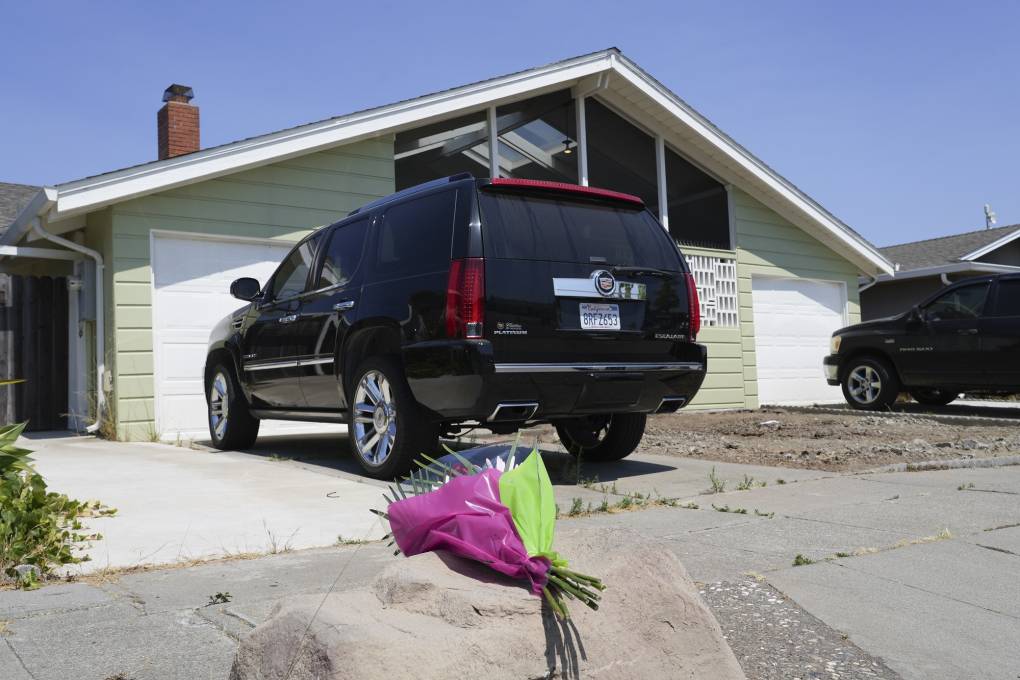
"caption": "Flowers are seen in front of a home at a residence on Kitty Hawk Road in Alameda on Thursday, July 11, 2024. A California man is in custody after fatally shooting his wife, their 6-year-old son and his wife's parents, the Alameda Police Department said Thursday.",
"credit": "Terry Chea/AP Photo",
"altTag": null,
"description": null,
"imgSizes": {
"medium": {
"file": "https://cdn.kqed.org/wp-content/uploads/sites/10/2024/07/AlamedaShootingAP-800x533.jpg",
"width": 800,
"height": 533,
"mimeType": "image/jpeg"
},
"large": {
"file": "https://cdn.kqed.org/wp-content/uploads/sites/10/2024/07/AlamedaShootingAP-1020x680.jpg",
"width": 1020,
"height": 680,
"mimeType": "image/jpeg"
},
"thumbnail": {
"file": "https://cdn.kqed.org/wp-content/uploads/sites/10/2024/07/AlamedaShootingAP-160x107.jpg",
"width": 160,
"height": 107,
"mimeType": "image/jpeg"
},
"1536x1536": {
"file": "https://cdn.kqed.org/wp-content/uploads/sites/10/2024/07/AlamedaShootingAP-1536x1024.jpg",
"width": 1536,
"height": 1024,
"mimeType": "image/jpeg"
},
"post-thumbnail": {
"file": "https://cdn.kqed.org/wp-content/uploads/sites/10/2024/07/AlamedaShootingAP-672x372.jpg",
"width": 672,
"height": 372,
"mimeType": "image/jpeg"
},
"twentyfourteen-full-width": {
"file": "https://cdn.kqed.org/wp-content/uploads/sites/10/2024/07/AlamedaShootingAP-1038x576.jpg",
"width": 1038,
"height": 576,
"mimeType": "image/jpeg"
},
"full-width": {
"file": "https://cdn.kqed.org/wp-content/uploads/sites/10/2024/07/AlamedaShootingAP-1920x1280.jpg",
"width": 1920,
"height": 1280,
"mimeType": "image/jpeg"
},
"kqedFullSize": {
"file": "https://cdn.kqed.org/wp-content/uploads/sites/10/2024/07/AlamedaShootingAP.jpg",
"width": 2000,
"height": 1333
}
},
"isLoading": false,
"fetchFailed": false
},
"news_11993536": {
"type": "attachments",
"id": "news_11993536",
"meta": {
"index": "attachments_1716263798",
"site": "news",
"id": "11993536",
"found": true
},
"title": "240710-PATELCOCREDITUNION-18-BL-KQED",
"publishDate": 1720647994,
"status": "inherit",
"parent": 0,
"modified": 1720648017,
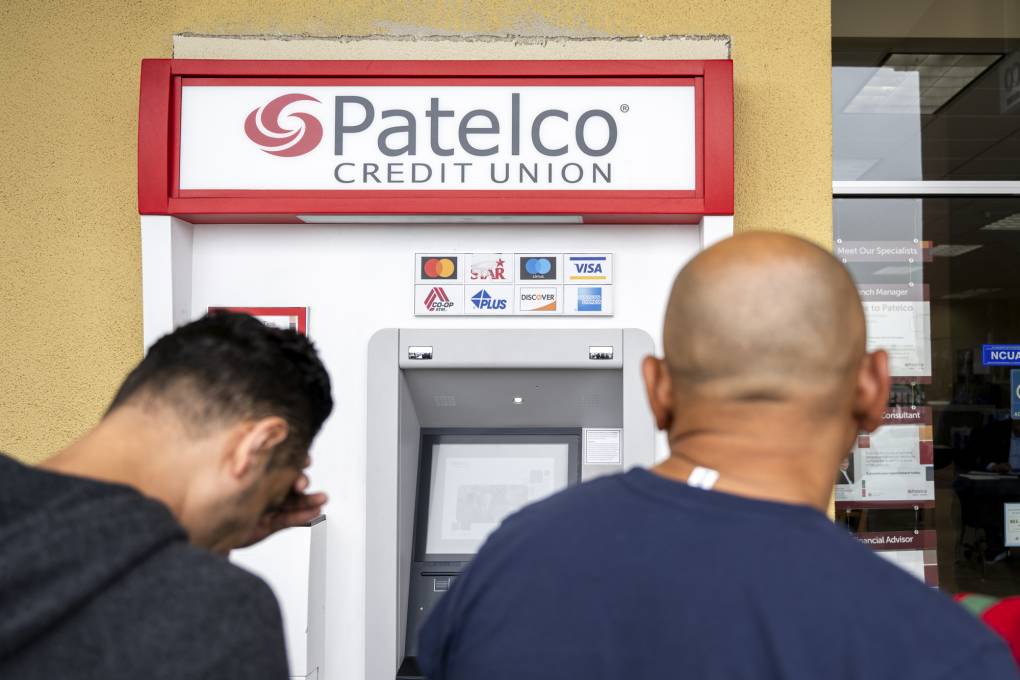
"caption": "A line of customers wait to speak with a teller at Patelco Credit Union in Daly City on July 10, 2024.",
"credit": "Beth LaBerge/KQED",
"altTag": null,
"description": null,
"imgSizes": {
"medium": {
"file": "https://cdn.kqed.org/wp-content/uploads/sites/10/2024/07/240710-PATELCOCREDITUNION-18-BL-KQED-800x533.jpg",
"width": 800,
"height": 533,
"mimeType": "image/jpeg"
},
"large": {
"file": "https://cdn.kqed.org/wp-content/uploads/sites/10/2024/07/240710-PATELCOCREDITUNION-18-BL-KQED-1020x680.jpg",
"width": 1020,
"height": 680,
"mimeType": "image/jpeg"
},
"thumbnail": {
"file": "https://cdn.kqed.org/wp-content/uploads/sites/10/2024/07/240710-PATELCOCREDITUNION-18-BL-KQED-160x107.jpg",
"width": 160,
"height": 107,
"mimeType": "image/jpeg"
},
"1536x1536": {
"file": "https://cdn.kqed.org/wp-content/uploads/sites/10/2024/07/240710-PATELCOCREDITUNION-18-BL-KQED-1536x1024.jpg",
"width": 1536,
"height": 1024,
"mimeType": "image/jpeg"
},
"post-thumbnail": {
"file": "https://cdn.kqed.org/wp-content/uploads/sites/10/2024/07/240710-PATELCOCREDITUNION-18-BL-KQED-672x372.jpg",
"width": 672,
"height": 372,
"mimeType": "image/jpeg"
},
"twentyfourteen-full-width": {
"file": "https://cdn.kqed.org/wp-content/uploads/sites/10/2024/07/240710-PATELCOCREDITUNION-18-BL-KQED-1038x576.jpg",
"width": 1038,
"height": 576,
"mimeType": "image/jpeg"
},
"full-width": {
"file": "https://cdn.kqed.org/wp-content/uploads/sites/10/2024/07/240710-PATELCOCREDITUNION-18-BL-KQED-1920x1280.jpg",
"width": 1920,
"height": 1280,
"mimeType": "image/jpeg"
},
"kqedFullSize": {
"file": "https://cdn.kqed.org/wp-content/uploads/sites/10/2024/07/240710-PATELCOCREDITUNION-18-BL-KQED.jpg",
"width": 2000,
"height": 1333
}
},
"isLoading": false,
"fetchFailed": false
},
"news_11988224": {
"type": "attachments",
"id": "news_11988224",
"meta": {
"index": "attachments_1716263798",
"site": "news",
"id": "11988224",
"found": true
},
"title": "240529-SunolSchoolBoard-37-BL_qut",
"publishDate": 1717094535,
"status": "inherit",
"parent": 0,
"modified": 1717094622,
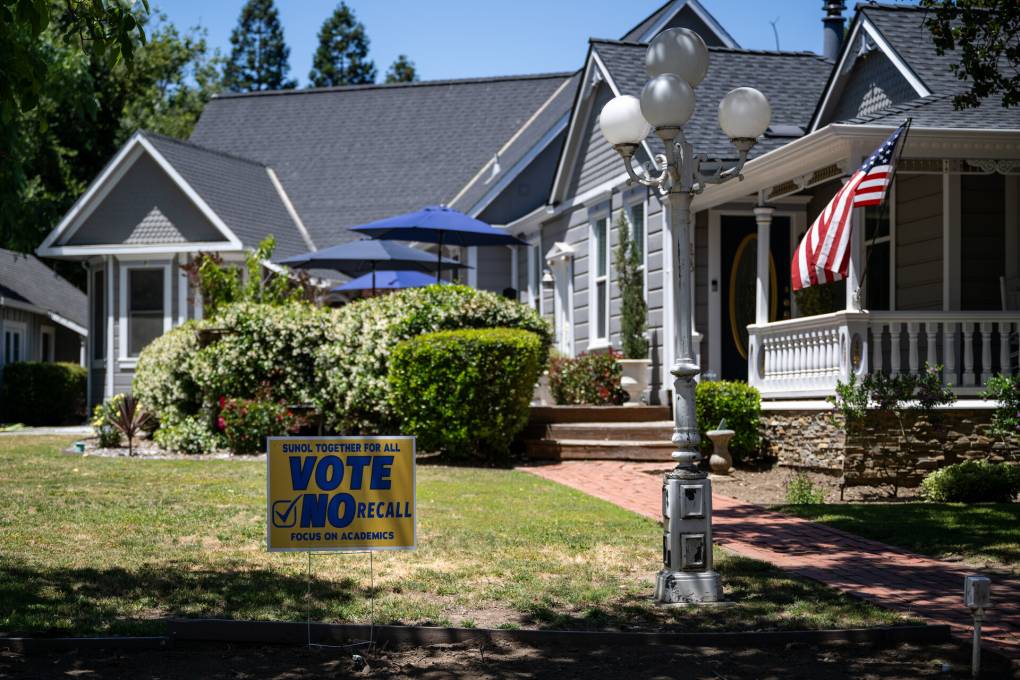
"caption": "A yard sign says, 'Vote No' in Sunol on May 29, 2024, referring to a July 2 school board recall vote for two Sunol Glen school board members.",
"credit": "Beth LaBerge/KQED",
"altTag": null,
"description": null,
"imgSizes": {
"medium": {
"file": "https://cdn.kqed.org/wp-content/uploads/sites/10/2024/05/240529-SunolSchoolBoard-37-BL_qut-800x533.jpg",
"width": 800,
"height": 533,
"mimeType": "image/jpeg"
},
"large": {
"file": "https://cdn.kqed.org/wp-content/uploads/sites/10/2024/05/240529-SunolSchoolBoard-37-BL_qut-1020x680.jpg",
"width": 1020,
"height": 680,
"mimeType": "image/jpeg"
},
"thumbnail": {
"file": "https://cdn.kqed.org/wp-content/uploads/sites/10/2024/05/240529-SunolSchoolBoard-37-BL_qut-160x107.jpg",
"width": 160,
"height": 107,
"mimeType": "image/jpeg"
},
"1536x1536": {
"file": "https://cdn.kqed.org/wp-content/uploads/sites/10/2024/05/240529-SunolSchoolBoard-37-BL_qut-1536x1024.jpg",
"width": 1536,
"height": 1024,
"mimeType": "image/jpeg"
},
"post-thumbnail": {
"file": "https://cdn.kqed.org/wp-content/uploads/sites/10/2024/05/240529-SunolSchoolBoard-37-BL_qut-672x372.jpg",
"width": 672,
"height": 372,
"mimeType": "image/jpeg"
},
"twentyfourteen-full-width": {
"file": "https://cdn.kqed.org/wp-content/uploads/sites/10/2024/05/240529-SunolSchoolBoard-37-BL_qut-1038x576.jpg",
"width": 1038,
"height": 576,
"mimeType": "image/jpeg"
},
"kqedFullSize": {
"file": "https://cdn.kqed.org/wp-content/uploads/sites/10/2024/05/240529-SunolSchoolBoard-37-BL_qut.jpg",
"width": 1920,
"height": 1280
}
},
"isLoading": false,
"fetchFailed": false
},
"news_11989838": {
"type": "attachments",
"id": "news_11989838",
"meta": {
"index": "attachments_1716263798",
"site": "news",
"id": "11989838",
"found": true
},
"title": "20240608_PriceRecallKickoff_GC-19_qut",
"publishDate": 1718142786,
"status": "inherit",
"parent": 0,
"modified": 1718143660,
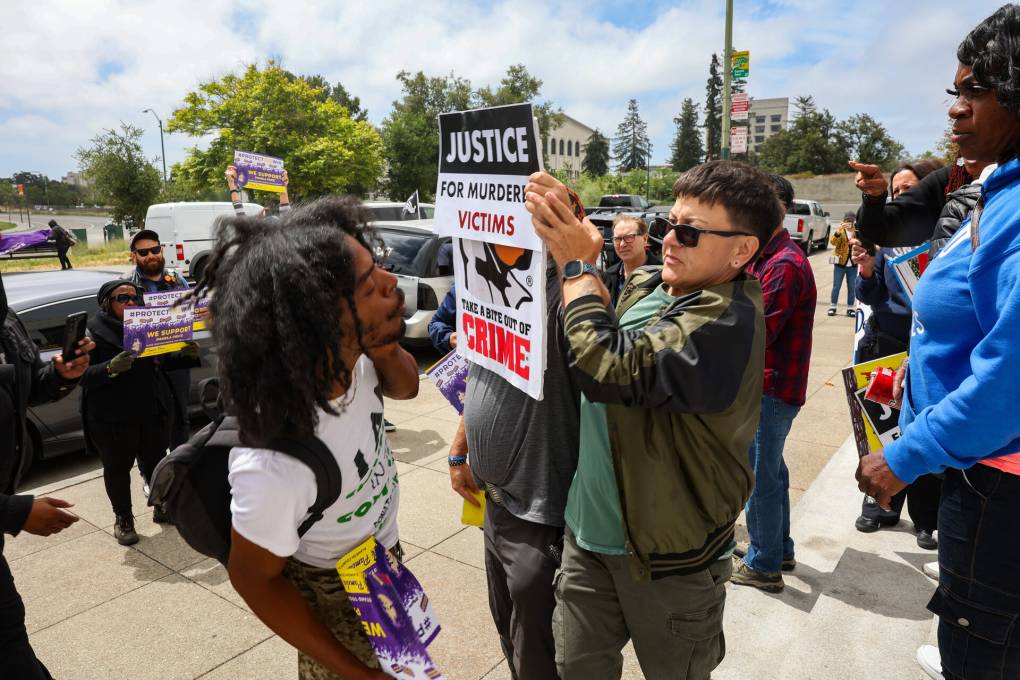
"caption": "Supporters of the campaign to recall Alameda County District Attorney Pamela Price and supporters of Price confront each other during a recall campaign kickoff rally outside the René C. Davidson Courthouse in Oakland on June 8, 2024. Price faces a recall election this November.",
"credit": "Gina Castro/KQED",
"altTag": null,
"description": null,
"imgSizes": {
"medium": {
"file": "https://cdn.kqed.org/wp-content/uploads/sites/10/2024/06/20240608_PriceRecallKickoff_GC-19_qut-800x533.jpg",
"width": 800,
"height": 533,
"mimeType": "image/jpeg"
},
"large": {
"file": "https://cdn.kqed.org/wp-content/uploads/sites/10/2024/06/20240608_PriceRecallKickoff_GC-19_qut-1020x680.jpg",
"width": 1020,
"height": 680,
"mimeType": "image/jpeg"
},
"thumbnail": {
"file": "https://cdn.kqed.org/wp-content/uploads/sites/10/2024/06/20240608_PriceRecallKickoff_GC-19_qut-160x107.jpg",
"width": 160,
"height": 107,
"mimeType": "image/jpeg"
},
"1536x1536": {
"file": "https://cdn.kqed.org/wp-content/uploads/sites/10/2024/06/20240608_PriceRecallKickoff_GC-19_qut-1536x1024.jpg",
"width": 1536,
"height": 1024,
"mimeType": "image/jpeg"
},
"post-thumbnail": {
"file": "https://cdn.kqed.org/wp-content/uploads/sites/10/2024/06/20240608_PriceRecallKickoff_GC-19_qut-672x372.jpg",
"width": 672,
"height": 372,
"mimeType": "image/jpeg"
},
"twentyfourteen-full-width": {
"file": "https://cdn.kqed.org/wp-content/uploads/sites/10/2024/06/20240608_PriceRecallKickoff_GC-19_qut-1038x576.jpg",
"width": 1038,
"height": 576,
"mimeType": "image/jpeg"
},
"kqedFullSize": {
"file": "https://cdn.kqed.org/wp-content/uploads/sites/10/2024/06/20240608_PriceRecallKickoff_GC-19_qut.jpg",
"width": 1920,
"height": 1280
}
},
"isLoading": false,
"fetchFailed": false
},
"news_11989385": {
"type": "attachments",
"id": "news_11989385",
"meta": {
"index": "attachments_1716263798",
"site": "news",
"id": "11989385",
"found": true
},
"title": "018_KQED_OaklandReparationsListeningSession_05282022_qut",
"publishDate": 1717717257,
"status": "inherit",
"parent": 11989301,
"modified": 1717718634,
"caption": "Nate Miley, president of the Alameda County Board of Supervisors and author of the resolution that created its Reparations Commission, speaks during a California Reparations Listening Session at the California Ballroom in Oakland on May 28, 2022. The California Reparations Task Force sponsors the listening session and hosted by the Coalition for a Just and Equitable California (CJEC).",
"credit": "Beth LaBerge/KQED",
"altTag": null,
"description": null,
"imgSizes": {
"medium": {
"file": "https://cdn.kqed.org/wp-content/uploads/sites/10/2024/06/018_KQED_OaklandReparationsListeningSession_05282022_qut-800x533.jpg",
"width": 800,
"height": 533,
"mimeType": "image/jpeg"
},
"large": {
"file": "https://cdn.kqed.org/wp-content/uploads/sites/10/2024/06/018_KQED_OaklandReparationsListeningSession_05282022_qut-1020x680.jpg",
"width": 1020,
"height": 680,
"mimeType": "image/jpeg"
},
"thumbnail": {
"file": "https://cdn.kqed.org/wp-content/uploads/sites/10/2024/06/018_KQED_OaklandReparationsListeningSession_05282022_qut-160x107.jpg",
"width": 160,
"height": 107,
"mimeType": "image/jpeg"
},
"1536x1536": {
"file": "https://cdn.kqed.org/wp-content/uploads/sites/10/2024/06/018_KQED_OaklandReparationsListeningSession_05282022_qut-1536x1024.jpg",
"width": 1536,
"height": 1024,
"mimeType": "image/jpeg"
},
"post-thumbnail": {
"file": "https://cdn.kqed.org/wp-content/uploads/sites/10/2024/06/018_KQED_OaklandReparationsListeningSession_05282022_qut-672x372.jpg",
"width": 672,
"height": 372,
"mimeType": "image/jpeg"
},
"twentyfourteen-full-width": {
"file": "https://cdn.kqed.org/wp-content/uploads/sites/10/2024/06/018_KQED_OaklandReparationsListeningSession_05282022_qut-1038x576.jpg",
"width": 1038,
"height": 576,
"mimeType": "image/jpeg"
},
"kqedFullSize": {
"file": "https://cdn.kqed.org/wp-content/uploads/sites/10/2024/06/018_KQED_OaklandReparationsListeningSession_05282022_qut.jpg",
"width": 1920,
"height": 1280
}
},
"isLoading": false,
"fetchFailed": false
},
"news_11986458": {
"type": "attachments",
"id": "news_11986458",
"meta": {
"index": "attachments_1716263798",
"site": "news",
"id": "11986458",
"found": true
},
"title": "Oakland federal judge rules city can clear Wood St.'s huge homeless camp",
"publishDate": 1715815949,
"status": "inherit",
"parent": 11986443,
"modified": 1776275241,
"caption": "A large tent encampment where people live in West Oakland in February 2023. ",
"credit": "Tayfun CoÅkun/Anadolu Agency via Getty Images",
"altTag": "Tents line a city street.",
"description": null,
"imgSizes": {
"medium": {
"file": "https://cdn.kqed.org/wp-content/uploads/sites/10/2024/05/GettyImages-1247572601-800x533.jpg",
"width": 800,
"height": 533,
"mimeType": "image/jpeg"
},
"large": {
"file": "https://cdn.kqed.org/wp-content/uploads/sites/10/2024/05/GettyImages-1247572601-1020x680.jpg",
"width": 1020,
"height": 680,
"mimeType": "image/jpeg"
},
"thumbnail": {
"file": "https://cdn.kqed.org/wp-content/uploads/sites/10/2024/05/GettyImages-1247572601-160x107.jpg",
"width": 160,
"height": 107,
"mimeType": "image/jpeg"
},
"1536x1536": {
"file": "https://cdn.kqed.org/wp-content/uploads/sites/10/2024/05/GettyImages-1247572601-1536x1024.jpg",
"width": 1536,
"height": 1024,
"mimeType": "image/jpeg"
},
"2048x2048": {
"file": "https://cdn.kqed.org/wp-content/uploads/sites/10/2024/05/GettyImages-1247572601-2048x1365.jpg",
"width": 2048,
"height": 1365,
"mimeType": "image/jpeg"
},
"post-thumbnail": {
"file": "https://cdn.kqed.org/wp-content/uploads/sites/10/2024/05/GettyImages-1247572601-672x372.jpg",
"width": 672,
"height": 372,
"mimeType": "image/jpeg"
},
"twentyfourteen-full-width": {
"file": "https://cdn.kqed.org/wp-content/uploads/sites/10/2024/05/GettyImages-1247572601-1038x576.jpg",
"width": 1038,
"height": 576,
"mimeType": "image/jpeg"
},
"full-width": {
"file": "https://cdn.kqed.org/wp-content/uploads/sites/10/2024/05/GettyImages-1247572601-1920x1280.jpg",
"width": 1920,
"height": 1280,
"mimeType": "image/jpeg"
},
"kqedFullSize": {
"file": "https://cdn.kqed.org/wp-content/uploads/sites/10/2024/05/GettyImages-1247572601-scaled-e1760372488675.jpg",
"width": 2000,
"height": 1334
}
},
"isLoading": false,
"fetchFailed": false
},
"news_11931594": {
"type": "attachments",
"id": "news_11931594",
"meta": {
"index": "attachments_1716263798",
"site": "news",
"id": "11931594",
"found": true
},
"parent": 0,
"imgSizes": {
"twentyfourteen-full-width": {
"file": "https://ww2.kqed.org/app/uploads/sites/10/2022/11/DSC06373-1038x576.jpg",
"width": 1038,
"mimeType": "image/jpeg",
"height": 576
},
"thumbnail": {
"file": "https://ww2.kqed.org/app/uploads/sites/10/2022/11/DSC06373-160x107.jpg",
"width": 160,
"mimeType": "image/jpeg",
"height": 107
},
"post-thumbnail": {
"file": "https://ww2.kqed.org/app/uploads/sites/10/2022/11/DSC06373-672x372.jpg",
"width": 672,
"mimeType": "image/jpeg",
"height": 372
},
"kqedFullSize": {
"file": "https://ww2.kqed.org/app/uploads/sites/10/2022/11/DSC06373.jpg",
"width": 1616,
"height": 1080
},
"large": {
"file": "https://ww2.kqed.org/app/uploads/sites/10/2022/11/DSC06373-1020x682.jpg",
"width": 1020,
"mimeType": "image/jpeg",
"height": 682
},
"1536x1536": {
"file": "https://ww2.kqed.org/app/uploads/sites/10/2022/11/DSC06373-1536x1027.jpg",
"width": 1536,
"mimeType": "image/jpeg",
"height": 1027
},
"medium": {
"file": "https://ww2.kqed.org/app/uploads/sites/10/2022/11/DSC06373-800x535.jpg",
"width": 800,
"mimeType": "image/jpeg",
"height": 535
}
},
"publishDate": 1667973087,
"modified": 1668560712,
"caption": "Alameda county district attorney candidate Pamela Price (center) greets guests at her election night party at the Q Lounge in Oakland on Nov. 8, 2022.",
"description": null,
"title": "DSC06373",
"credit": "Aryk Copley/KQED",
"status": "inherit",
"altTag": "Alameda county district attorney candidate Pamela Price and supporters.",
"isLoading": false,
"fetchFailed": false
},
"news_11955803": {
"type": "attachments",
"id": "news_11955803",
"meta": {
"index": "attachments_1716263798",
"site": "news",
"id": "11955803",
"found": true
},
"title": "230715-PAMELA PRICE-JY-016-KQED",
"publishDate": 1689544961,
"status": "inherit",
"parent": 0,
"modified": 1731354722,
"caption": "Alameda County voters recalled District Attorney Pamela Price. ",
"credit": "Juliana Yamada/KQED",
"altTag": "A Black woman wearing a dark, sleeveless floral-printed dress, stands with her hands together in an office filled with books.",
"description": "Alameda County District Attorney Pamela Price at her office in Oakland on July 16, 2023.",
"imgSizes": {
"medium": {
"file": "https://cdn.kqed.org/wp-content/uploads/sites/10/2023/07/230715-PAMELA-PRICE-JY-016-KQED-800x533.jpg",
"width": 800,
"height": 533,
"mimeType": "image/jpeg"
},
"large": {
"file": "https://cdn.kqed.org/wp-content/uploads/sites/10/2023/07/230715-PAMELA-PRICE-JY-016-KQED-1020x680.jpg",
"width": 1020,
"height": 680,
"mimeType": "image/jpeg"
},
"thumbnail": {
"file": "https://cdn.kqed.org/wp-content/uploads/sites/10/2023/07/230715-PAMELA-PRICE-JY-016-KQED-160x107.jpg",
"width": 160,
"height": 107,
"mimeType": "image/jpeg"
},
"1536x1536": {
"file": "https://cdn.kqed.org/wp-content/uploads/sites/10/2023/07/230715-PAMELA-PRICE-JY-016-KQED-1536x1024.jpg",
"width": 1536,
"height": 1024,
"mimeType": "image/jpeg"
},
"post-thumbnail": {
"file": "https://cdn.kqed.org/wp-content/uploads/sites/10/2023/07/230715-PAMELA-PRICE-JY-016-KQED-672x372.jpg",
"width": 672,
"height": 372,
"mimeType": "image/jpeg"
},
"twentyfourteen-full-width": {
"file": "https://cdn.kqed.org/wp-content/uploads/sites/10/2023/07/230715-PAMELA-PRICE-JY-016-KQED-1038x576.jpg",
"width": 1038,
"height": 576,
"mimeType": "image/jpeg"
},
"full-width": {
"file": "https://cdn.kqed.org/wp-content/uploads/sites/10/2023/07/230715-PAMELA-PRICE-JY-016-KQED-1920x1280.jpg",
"width": 1920,
"height": 1280,
"mimeType": "image/jpeg"
},
"kqedFullSize": {
"file": "https://cdn.kqed.org/wp-content/uploads/sites/10/2023/07/230715-PAMELA-PRICE-JY-016-KQED.jpg",
"width": 2000,
"height": 1333
}
},
"isLoading": false,
"fetchFailed": false
},
"news_11984193": {
"type": "attachments",
"id": "news_11984193",
"meta": {
"index": "attachments_1716263798",
"site": "news",
"id": "11984193",
"found": true
},
"parent": 11984169,
"imgSizes": {
"twentyfourteen-full-width": {
"file": "https://cdn.kqed.org/wp-content/uploads/sites/10/2024/04/73076353-1038x576.jpg",
"width": 1038,
"mimeType": "image/jpeg",
"height": 576
},
"thumbnail": {
"file": "https://cdn.kqed.org/wp-content/uploads/sites/10/2024/04/73076353-160x107.jpg",
"width": 160,
"mimeType": "image/jpeg",
"height": 107
},
"post-thumbnail": {
"file": "https://cdn.kqed.org/wp-content/uploads/sites/10/2024/04/73076353-672x372.jpg",
"width": 672,
"mimeType": "image/jpeg",
"height": 372
},
"kqedFullSize": {
"file": "https://cdn.kqed.org/wp-content/uploads/sites/10/2024/04/73076353.jpg",
"width": 1920,
"height": 1280
},
"large": {
"file": "https://cdn.kqed.org/wp-content/uploads/sites/10/2024/04/73076353-1020x680.jpg",
"width": 1020,
"mimeType": "image/jpeg",
"height": 680
},
"1536x1536": {
"file": "https://cdn.kqed.org/wp-content/uploads/sites/10/2024/04/73076353-1536x1024.jpg",
"width": 1536,
"mimeType": "image/jpeg",
"height": 1024
},
"medium": {
"file": "https://cdn.kqed.org/wp-content/uploads/sites/10/2024/04/73076353-800x533.jpg",
"width": 800,
"mimeType": "image/jpeg",
"height": 533
}
},
"publishDate": 1714162850,
"modified": 1714164270,
"caption": "A section of the California seal hangs on the front of the State of California Earl Warren Building on Jan. 22, 2007, in San Francisco, California.",
"description": null,
"title": "Supreme Court Rejects California Sentencing Law",
"credit": "Justin Sullivan/Getty Images",
"status": "inherit",
"altTag": null,
"isLoading": false,
"fetchFailed": false
},
"news_11983096": {
"type": "attachments",
"id": "news_11983096",
"meta": {
"index": "attachments_1716263798",
"site": "news",
"id": "11983096",
"found": true
},
"parent": 11983091,
"imgSizes": {
"twentyfourteen-full-width": {
"file": "https://cdn.kqed.org/wp-content/uploads/sites/10/2024/04/GettyImages-1322368723-1024x576.jpeg",
"width": 1024,
"mimeType": "image/jpeg",
"height": 576
},
"thumbnail": {
"file": "https://cdn.kqed.org/wp-content/uploads/sites/10/2024/04/GettyImages-1322368723-160x107.jpeg",
"width": 160,
"mimeType": "image/jpeg",
"height": 107
},
"post-thumbnail": {
"file": "https://cdn.kqed.org/wp-content/uploads/sites/10/2024/04/GettyImages-1322368723-672x372.jpeg",
"width": 672,
"mimeType": "image/jpeg",
"height": 372
},
"kqedFullSize": {
"file": "https://cdn.kqed.org/wp-content/uploads/sites/10/2024/04/GettyImages-1322368723.jpeg",
"width": 1024,
"height": 683
},
"large": {
"file": "https://cdn.kqed.org/wp-content/uploads/sites/10/2024/04/GettyImages-1322368723-1020x680.jpeg",
"width": 1020,
"mimeType": "image/jpeg",
"height": 680
},
"medium": {
"file": "https://cdn.kqed.org/wp-content/uploads/sites/10/2024/04/GettyImages-1322368723-800x534.jpeg",
"width": 800,
"mimeType": "image/jpeg",
"height": 534
}
},
"publishDate": 1713229084,
"modified": 1713229219,
"caption": "Alameda County District Attorney Pamela Price was in office less than six months before the recall campaign was launched against her.",
"description": null,
"title": "Pamela Price, candidate for Alameda County District Attorney, talks to the Chronicle editorial board on Wednesday, May 23, 2018 in San Francisco, Calif.",
"credit": "Lea Suzuki/The San Francisco Chronicle via Getty Images",
"status": "inherit",
"altTag": null,
"isLoading": false,
"fetchFailed": false
},
"news_11980548": {
"type": "attachments",
"id": "news_11980548",
"meta": {
"index": "attachments_1716263798",
"site": "news",
"id": "11980548",
"found": true
},
"parent": 11980547,
"imgSizes": {
"twentyfourteen-full-width": {
"file": "https://cdn.kqed.org/wp-content/uploads/sites/10/2024/03/231219-Homeless-Deaths-Data-MD-09_qut-1038x576.jpg",
"width": 1038,
"mimeType": "image/jpeg",
"height": 576
},
"thumbnail": {
"file": "https://cdn.kqed.org/wp-content/uploads/sites/10/2024/03/231219-Homeless-Deaths-Data-MD-09_qut-160x107.jpg",
"width": 160,
"mimeType": "image/jpeg",
"height": 107
},
"post-thumbnail": {
"file": "https://cdn.kqed.org/wp-content/uploads/sites/10/2024/03/231219-Homeless-Deaths-Data-MD-09_qut-672x372.jpg",
"width": 672,
"mimeType": "image/jpeg",
"height": 372
},
"kqedFullSize": {
"file": "https://cdn.kqed.org/wp-content/uploads/sites/10/2024/03/231219-Homeless-Deaths-Data-MD-09_qut.jpg",
"width": 1920,
"height": 1280
},
"large": {
"file": "https://cdn.kqed.org/wp-content/uploads/sites/10/2024/03/231219-Homeless-Deaths-Data-MD-09_qut-1020x680.jpg",
"width": 1020,
"mimeType": "image/jpeg",
"height": 680
},
"1536x1536": {
"file": "https://cdn.kqed.org/wp-content/uploads/sites/10/2024/03/231219-Homeless-Deaths-Data-MD-09_qut-1536x1024.jpg",
"width": 1536,
"mimeType": "image/jpeg",
"height": 1024
},
"medium": {
"file": "https://cdn.kqed.org/wp-content/uploads/sites/10/2024/03/231219-Homeless-Deaths-Data-MD-09_qut-800x533.jpg",
"width": 800,
"mimeType": "image/jpeg",
"height": 533
}
},
"publishDate": 1711145423,
"modified": 1711227860,
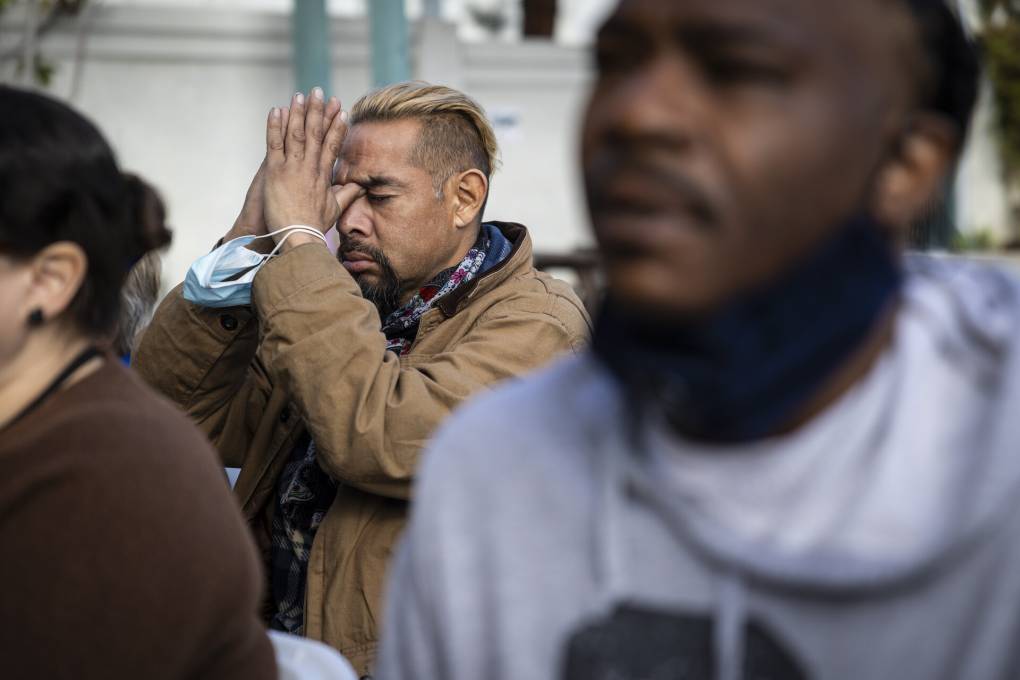
"caption": "Eduardo Adrian Aviles Garza, known as 'Monkey,' prays at a memorial in December commemorating the 201 unhoused people who died in Santa Clara County in 2023.",
"description": null,
"title": "231219-Homeless Deaths Data-MD-09_qut",
"credit": "Martin do Nascimento/KQED",
"status": "inherit",
"altTag": "A man prays with his hands held up, behind others, outside.",
"isLoading": false,
"fetchFailed": false
}
},
"audioPlayerReducer": {
"postId": "stream_live",
"isPaused": true,
"isPlaying": false,
"pfsActive": false,
"pledgeModalIsOpen": true,
"playerDrawerIsOpen": false,
"liveAudioPlayStartedAt": 0,
"liveAudioPlayContext": ""
},
"authorsReducer": {
"gmarzorati": {
"type": "authors",
"id": "227",
"meta": {
"index": "authors_1716337520",
"id": "227",
"found": true
},
"name": "Guy Marzorati",
"firstName": "Guy",
"lastName": "Marzorati",
"slug": "gmarzorati",
"email": "gmarzorati@KQED.org",
"display_author_email": true,
"staff_mastheads": [
"news"
],
"title": "Correspondent",
"bio": "Guy Marzorati is a correspondent on KQED's California Politics and Government Desk, based in San Jose. A graduate of Santa Clara University, Guy joined KQED in 2013. He reports on state and local politics and produces KQED's digital voter guide.",
"avatar": "https://secure.gravatar.com/avatar/e7038b8dbfd55b104369b76b1cd0b9de?s=600&d=blank&r=g",
"twitter": "guymarzorati",
"facebook": null,
"instagram": null,
"linkedin": null,
"sites": [
{
"site": "",
"roles": [
"editor"
]
},
{
"site": "news",
"roles": [
"editor"
]
},
{
"site": "science",
"roles": [
"editor"
]
},
{
"site": "forum",
"roles": [
"editor"
]
},
{
"site": "elections",
"roles": [
"editor"
]
},
{
"site": "liveblog",
"roles": [
"editor"
]
}
],
"headData": {
"title": "Guy Marzorati | KQED",
"description": "Correspondent",
"ogImgSrc": "https://secure.gravatar.com/avatar/e7038b8dbfd55b104369b76b1cd0b9de?s=600&d=blank&r=g",
"twImgSrc": "https://secure.gravatar.com/avatar/e7038b8dbfd55b104369b76b1cd0b9de?s=600&d=blank&r=g"
},
"isLoading": false,
"link": "/author/gmarzorati"
},
"ecruzguevarra": {
"type": "authors",
"id": "8654",
"meta": {
"index": "authors_1716337520",
"id": "8654",
"found": true
},
"name": "Ericka Cruz Guevarra",
"firstName": "Ericka",
"lastName": "Cruz Guevarra",
"slug": "ecruzguevarra",
"email": "ecruzguevarra@kqed.org",
"display_author_email": true,
"staff_mastheads": [
"news"
],
"title": "Producer, The Bay Podcast",
"bio": "Ericka Cruz Guevarra is host of \u003ca href=\"https://www.kqed.org/podcasts/thebay\">\u003cem>The Bay\u003c/em>\u003c/a> podcast at KQED. Before host, she was the show’s producer. Her work in that capacity includes a three-part reported series on policing in Vallejo, which won a 2020 excellence in journalism award from the Society of Professional Journalists. Ericka has worked as a breaking news reporter at Oregon Public Broadcasting, helped produce the Code Switch podcast, and was KQED’s inaugural Raul Ramirez Diversity Fund intern. She’s also an alumna of NPR’s Next Generation Radio program. Send her an email if you have strong feelings about whether Fairfield and Suisun City are the Bay. Ericka is represented by SAG-AFTRA.",
"avatar": "https://secure.gravatar.com/avatar/accefc1de4bafc7e234b69bcb9b6f6536c130fd84709bc3069ef11a78787e1bb?s=600&d=blank&r=g",
"twitter": "NotoriousECG",
"bluesky": null,
"facebook": null,
"instagram": null,
"linkedin": null,
"sites": [
{
"site": "arts",
"roles": [
"subscriber"
]
},
{
"site": "news",
"roles": [
"editor",
"manage_categories"
]
},
{
"site": "futureofyou",
"roles": [
"subscriber"
]
},
{
"site": "stateofhealth",
"roles": [
"subscriber"
]
},
{
"site": "science",
"roles": [
"editor"
]
},
{
"site": "forum",
"roles": [
"subscriber"
]
}
],
"headData": {
"title": "Ericka Cruz Guevarra | KQED",
"description": "Producer, The Bay Podcast",
"ogImgSrc": "https://secure.gravatar.com/avatar/accefc1de4bafc7e234b69bcb9b6f6536c130fd84709bc3069ef11a78787e1bb?s=600&d=blank&r=g",
"twImgSrc": "https://secure.gravatar.com/avatar/accefc1de4bafc7e234b69bcb9b6f6536c130fd84709bc3069ef11a78787e1bb?s=600&d=blank&r=g"
},
"isLoading": false,
"link": "/author/ecruzguevarra"
},
"vrancano": {
"type": "authors",
"id": "11276",
"meta": {
"index": "authors_1716337520",
"id": "11276",
"found": true
},
"name": "Vanessa Rancaño",
"firstName": "Vanessa",
"lastName": "Rancaño",
"slug": "vrancano",
"email": "vrancano@kqed.org",
"display_author_email": false,
"staff_mastheads": [
"news"
],
"title": "Reporter",
"bio": "Vanessa Rancaño is a features reporter for KQED. She’s also covered homelessness and education for the station and reported from the Central Valley. Her work has aired across public radio, from flagship national news shows to longform narrative podcasts. Before taking up a mic, she worked as a freelance print journalist. She’s been recognized with a number of national and regional awards. Vanessa grew up in California's Central Valley. She's a former NPR Kroc Fellow, and a graduate of the UC Berkeley Graduate School of Journalism.",
"avatar": "https://secure.gravatar.com/avatar/b3a383dfb0e7ee1c17568f2cf067904ab654d6e3de9743fc661f3c788ade1bed?s=600&d=blank&r=g",
"twitter": "vanessarancano",
"bluesky": null,
"facebook": null,
"instagram": null,
"linkedin": null,
"sites": [
{
"site": "arts",
"roles": [
"editor"
]
},
{
"site": "news",
"roles": [
"editor"
]
},
{
"site": "liveblog",
"roles": [
"contributor"
]
}
],
"headData": {
"title": "Vanessa Rancaño | KQED",
"description": "Reporter",
"ogImgSrc": "https://secure.gravatar.com/avatar/b3a383dfb0e7ee1c17568f2cf067904ab654d6e3de9743fc661f3c788ade1bed?s=600&d=blank&r=g",
"twImgSrc": "https://secure.gravatar.com/avatar/b3a383dfb0e7ee1c17568f2cf067904ab654d6e3de9743fc661f3c788ade1bed?s=600&d=blank&r=g"
},
"isLoading": false,
"link": "/author/vrancano"
},
"amontecillo": {
"type": "authors",
"id": "11649",
"meta": {
"index": "authors_1716337520",
"id": "11649",
"found": true
},
"name": "Alan Montecillo",
"firstName": "Alan",
"lastName": "Montecillo",
"slug": "amontecillo",
"email": "amontecillo@kqed.org",
"display_author_email": false,
"staff_mastheads": [
"news"
],
"title": "KQED Contributor",
"bio": "Alan Montecillo is the senior editor of \u003cem>\u003ca href=\"http://kqed.org/thebay\">The Bay\u003c/a>, \u003c/em> KQED's local news podcast. Before moving to the Bay Area, he worked as a senior talk show producer for WILL in Champaign-Urbana, Illinois and at Oregon Public Broadcasting in Portland, Oregon. He has won journalism awards from the Society of Professional Journalists Northern California, the Public Media Journalists Association, The Signal Awards, and has also received a regional Edward R. Murrow award. Alan is a Filipino American from Hong Kong and a graduate of Reed College.",
"avatar": "https://secure.gravatar.com/avatar/268f53a2066899ea9efdd8a5900218b17c822d9862cbc9326cccec53ef41d349?s=600&d=blank&r=g",
"twitter": "alanmontecillo",
"bluesky": null,
"facebook": null,
"instagram": null,
"linkedin": null,
"sites": [
{
"site": "",
"roles": [
"editor"
]
},
{
"site": "news",
"roles": [
"editor",
"manage_categories"
]
}
],
"headData": {
"title": "Alan Montecillo | KQED",
"description": "KQED Contributor",
"ogImgSrc": "https://secure.gravatar.com/avatar/268f53a2066899ea9efdd8a5900218b17c822d9862cbc9326cccec53ef41d349?s=600&d=blank&r=g",
"twImgSrc": "https://secure.gravatar.com/avatar/268f53a2066899ea9efdd8a5900218b17c822d9862cbc9326cccec53ef41d349?s=600&d=blank&r=g"
},
"isLoading": false,
"link": "/author/amontecillo"
},
"abandlamudi": {
"type": "authors",
"id": "11672",
"meta": {
"index": "authors_1716337520",
"id": "11672",
"found": true
},
"name": "Adhiti Bandlamudi",
"firstName": "Adhiti",
"lastName": "Bandlamudi",
"slug": "abandlamudi",
"email": "abandlamudi@kqed.org",
"display_author_email": false,
"staff_mastheads": [
"news"
],
"title": "KQED Housing Reporter",
"bio": "Adhiti Bandlamudi reports for KQED's Housing desk. She focuses on how housing gets built across the Bay Area. Before joining KQED in 2020, she reported for WUNC in Durham, North Carolina, WABE in Atlanta, Georgia and Capital Public Radio in Sacramento. In 2017, she was awarded a Kroc Fellowship at NPR where she reported on everything from sprinkles to the Golden State Killer's arrest. When she's not reporting, she's baking new recipes in her kitchen or watching movies with friends and family. She's originally from Georgia and has strong opinions about Great British Bake Off.",
"avatar": "https://secure.gravatar.com/avatar/868129c8b257bb99a3500e2c86a65400?s=600&d=mm&r=g",
"twitter": "oddity_adhiti",
"facebook": null,
"instagram": null,
"linkedin": null,
"sites": [
{
"site": "arts",
"roles": [
"author"
]
},
{
"site": "news",
"roles": [
"editor"
]
},
{
"site": "liveblog",
"roles": [
"author"
]
}
],
"headData": {
"title": "Adhiti Bandlamudi | KQED",
"description": "KQED Housing Reporter",
"ogImgSrc": "https://secure.gravatar.com/avatar/868129c8b257bb99a3500e2c86a65400?s=600&d=mm&r=g",
"twImgSrc": "https://secure.gravatar.com/avatar/868129c8b257bb99a3500e2c86a65400?s=600&d=mm&r=g"
},
"isLoading": false,
"link": "/author/abandlamudi"
},
"afinney": {
"type": "authors",
"id": "11772",
"meta": {
"index": "authors_1716337520",
"id": "11772",
"found": true
},
"name": "Annelise Finney",
"firstName": "Annelise",
"lastName": "Finney",
"slug": "afinney",
"email": "afinney@kqed.org",
"display_author_email": true,
"staff_mastheads": [
"news"
],
"title": "Reporter",
"bio": "Annelise reports on reparations in California and East Bay politics. She co-produced the Sunday Music Drop, a limited-term radio series featuring Bay Area musicians that aired between Sept 2022 and Oct 2024. She joined KQED in 2021 as a general assignment reporter and is an alumna of KALW's Audio Academy. She was born and raised in the East Bay. She is currently away from KQED completing a year-long reporting project in Berlin, Germany as a Alexander Von Humboldt German Chancellor Fellow.",
"avatar": "https://secure.gravatar.com/avatar/5fded66cae47704cdfc5021cde0f3aa4?s=600&d=blank&r=g",
"twitter": null,
"facebook": null,
"instagram": null,
"linkedin": null,
"sites": [
{
"site": "news",
"roles": [
"editor"
]
},
{
"site": "liveblog",
"roles": [
"author"
]
}
],
"headData": {
"title": "Annelise Finney | KQED",
"description": "Reporter",
"ogImgSrc": "https://secure.gravatar.com/avatar/5fded66cae47704cdfc5021cde0f3aa4?s=600&d=blank&r=g",
"twImgSrc": "https://secure.gravatar.com/avatar/5fded66cae47704cdfc5021cde0f3aa4?s=600&d=blank&r=g"
},
"isLoading": false,
"link": "/author/afinney"
},
"ibloom": {
"type": "authors",
"id": "11805",
"meta": {
"index": "authors_1716337520",
"id": "11805",
"found": true
},
"name": "Izzy Bloom",
"firstName": "Izzy",
"lastName": "Bloom",
"slug": "ibloom",
"email": "ibloom@kqed.org",
"display_author_email": false,
"staff_mastheads": [],
"title": "KQED Reporter & Producer",
"bio": "Izzy is a reporter and producer on KQED's California Politics & Government Desk. She joined the desk in 2024 to produce Political Breakdown, covering local and national elections and attending the RNC and DNC in Milwaukee and Chicago. \r\n\r\nBefore that, Izzy was a producer on The California Report and reported long-form stories for The California Report Magazine. She was a finalist for the Third Coast/Richard H. Driehaus Foundation Competition and was awarded for her reporting on indigenous land back by the Society of Professional Journalists. Izzy received her master's in journalism from the University of California, Berkeley.",
"avatar": "https://secure.gravatar.com/avatar/cc4d272ca430783ee1a8efac470a6b1e0fdd082c3beb61da019801d0ff751c8c?s=600&d=blank&r=g",
"twitter": null,
"bluesky": null,
"facebook": null,
"instagram": null,
"linkedin": null,
"sites": [
{
"site": "news",
"roles": [
"editor"
]
},
{
"site": "perspectives",
"roles": [
"editor"
]
}
],
"headData": {
"title": "Izzy Bloom | KQED",
"description": "KQED Reporter & Producer",
"ogImgSrc": "https://secure.gravatar.com/avatar/cc4d272ca430783ee1a8efac470a6b1e0fdd082c3beb61da019801d0ff751c8c?s=600&d=blank&r=g",
"twImgSrc": "https://secure.gravatar.com/avatar/cc4d272ca430783ee1a8efac470a6b1e0fdd082c3beb61da019801d0ff751c8c?s=600&d=blank&r=g"
},
"isLoading": false,
"link": "/author/ibloom"
},
"daisynguyen": {
"type": "authors",
"id": "11829",
"meta": {
"index": "authors_1716337520",
"id": "11829",
"found": true
},
"name": "Daisy Nguyen",
"firstName": "Daisy",
"lastName": "Nguyen",
"slug": "daisynguyen",
"email": "daisynguyen@kqed.org",
"display_author_email": true,
"staff_mastheads": [
"news"
],
"title": "KQED Contributor",
"bio": "I have covered early childhood education and child care for KQED since 2022. I focus on policies aimed at increasing access to early care and education and how they shape individual lives. I've been a journalist for more than two decades, with most of that time devoted to covering breaking news throughout California for The Associated Press. I grew up in San Francisco and studied at UC Davis and Columbia University's Graduate School of Journalism. I live in Oakland with my husband and two kids.",
"avatar": "https://secure.gravatar.com/avatar/2da2127c27f7143b53ebd419800fd55f?s=600&d=blank&r=g",
"twitter": null,
"facebook": null,
"instagram": null,
"linkedin": "https://www.linkedin.com/in/daisynguyen/",
"sites": [
{
"site": "news",
"roles": [
"author"
]
},
{
"site": "liveblog",
"roles": [
"author"
]
}
],
"headData": {
"title": "Daisy Nguyen | KQED",
"description": "KQED Contributor",
"ogImgSrc": "https://secure.gravatar.com/avatar/2da2127c27f7143b53ebd419800fd55f?s=600&d=blank&r=g",
"twImgSrc": "https://secure.gravatar.com/avatar/2da2127c27f7143b53ebd419800fd55f?s=600&d=blank&r=g"
},
"isLoading": false,
"link": "/author/daisynguyen"
},
"naltenberg": {
"type": "authors",
"id": "11896",
"meta": {
"index": "authors_1716337520",
"id": "11896",
"found": true
},
"name": "Nik Altenberg",
"firstName": "Nik",
"lastName": "Altenberg",
"slug": "naltenberg",
"email": "naltenberg@kqed.org",
"display_author_email": false,
"staff_mastheads": [],
"title": "KQED Contributor",
"bio": "Nik Altenberg is an on-call reporter for KQED and a copy editor and fact checker for Santa Cruz Local. Nik’s reporting interests include policing, public health, environment, immigration, housing and the places where these issues intersect.",
"avatar": "https://secure.gravatar.com/avatar/e391b3a18ce4a53a7ca3f3065c74418b?s=600&d=blank&r=g",
"twitter": null,
"facebook": null,
"instagram": "https://www.instagram.com/nikaltenberg/",
"linkedin": null,
"sites": [
{
"site": "news",
"roles": []
}
],
"headData": {
"title": "Nik Altenberg | KQED",
"description": "KQED Contributor",
"ogImgSrc": "https://secure.gravatar.com/avatar/e391b3a18ce4a53a7ca3f3065c74418b?s=600&d=blank&r=g",
"twImgSrc": "https://secure.gravatar.com/avatar/e391b3a18ce4a53a7ca3f3065c74418b?s=600&d=blank&r=g"
},
"isLoading": false,
"link": "/author/naltenberg"
},
"kdebenedetti": {
"type": "authors",
"id": "11913",
"meta": {
"index": "authors_1716337520",
"id": "11913",
"found": true
},
"name": "Katie DeBenedetti",
"firstName": "Katie",
"lastName": "DeBenedetti",
"slug": "kdebenedetti",
"email": "kdebenedetti@kqed.org",
"display_author_email": false,
"staff_mastheads": [
"news",
"science"
],
"title": "KQED Contributor",
"bio": "Katie DeBenedetti is a digital reporter covering daily news for the Express Desk. Prior to joining KQED as a culture reporting intern in January 2024, she covered education and city government for the Napa Valley Register.",
"avatar": "https://secure.gravatar.com/avatar/6e31073cb8f7e4214ab03f42771d0f45?s=600&d=blank&r=g",
"twitter": null,
"facebook": null,
"instagram": null,
"linkedin": null,
"sites": [
{
"site": "news",
"roles": [
"author"
]
},
{
"site": "science",
"roles": [
"author"
]
},
{
"site": "liveblog",
"roles": [
"author"
]
}
],
"headData": {
"title": "Katie DeBenedetti | KQED",
"description": "KQED Contributor",
"ogImgSrc": "https://secure.gravatar.com/avatar/6e31073cb8f7e4214ab03f42771d0f45?s=600&d=blank&r=g",
"twImgSrc": "https://secure.gravatar.com/avatar/6e31073cb8f7e4214ab03f42771d0f45?s=600&d=blank&r=g"
},
"isLoading": false,
"link": "/author/kdebenedetti"
}
},
"pagesReducer": {
"news_tag_alameda-county": {
"type": "terms",
"id": "news_260",
"meta": {
"index": "terms_1716263798",
"site": "news",
"id": "260",
"score": 9.556095
},
"featImg": null,
"name": "Alameda County",
"description": null,
"taxonomy": "tag",
"headData": {
"twImgId": null,
"twTitle": null,
"ogTitle": null,
"ogImgId": null,
"twDescription": null,
"description": null,
"title": "Alameda County Archives | KQED News",
"ogDescription": null
},
"ttid": 268,
"slug": "alameda-county",
"isLoading": false,
"title": "Alameda County",
"pageMeta": {
"site": "news",
"WpPageTemplate": "page-topic-editorial",
"currentPage": 13
},
"blocks": [
{
"blockName": "kqed/post-list",
"attrs": {
"layout": "cardArticle2",
"query": "posts/news?tag=alameda-county",
"seeMore": false,
"paginated": true,
"page": 13
}
},
{
"blockName": "kqed/ad"
}
]
}
},
"pfsSessionReducer": {},
"postsReducer": {
"stream_live": {
"type": "live",
"id": "stream_live",
"audioUrl": "https://streams.kqed.org/kqedradio",
"title": "Live Stream",
"excerpt": "Live Stream information currently unavailable.",
"link": "/radio",
"featImg": "",
"label": {
"name": "KQED Live",
"link": "/"
}
},
"stream_kqedNewscast": {
"type": "posts",
"id": "stream_kqedNewscast",
"audioUrl": "https://www.kqed.org/.stream/anon/radio/RDnews/newscast.mp3?_=1",
"title": "KQED Newscast",
"featImg": "",
"label": {
"name": "88.5 FM",
"link": "/"
}
},
"news_11995320": {
"type": "posts",
"id": "news_11995320",
"meta": {
"index": "posts_1716263798",
"site": "news",
"id": "11995320",
"score": null,
"sort": [
1721148730000
]
},
"guestAuthors": [],
"slug": "1-year-old-boy-dies-after-alameda-shooting-that-killed-4-family-members",
"title": "1-Year-Old Boy Dies After Alameda Shooting That Killed 4 Family Members",
"publishDate": 1721148730,
"format": "standard",
"headTitle": "1-Year-Old Boy Dies After Alameda Shooting That Killed 4 Family Members | KQED",
"labelTerm": {
"site": "news"
},
"content": "\u003cp>A 1-year-old boy who was injured in a \u003ca href=\"https://www.kqed.org/news/11993803/alameda-father-accused-of-fatally-shooting-4-family-members-has-court-hearing-delayed\">domestic shooting in Alameda\u003c/a> last week has died, authorities said.\u003c/p>\n\u003cp>The child, Wesley Killian, died at a local hospital, the Alameda Police Department announced Monday.\u003c/p>\n\u003cp>Four other family members were killed Wednesday at the family’s home: Wesley’s mother, 6-year-old brother and both grandparents on his mother’s side. Four of the victims were identified by the Alameda County Sheriff’s Office on Monday as Brenda Morales, 36; William Killian, 6; Wesley Killian, 1; and Miguel Carcamo-Ramirez, 70. The grandmother’s identity has not yet been released.\u003c/p>\n\u003cp>[ad fullwidth]\u003c/p>\n\u003cp>Shane Killian, 54, is accused of shooting his wife, sons and in-laws, and before Wesley’s death, he was facing charges of murder and attempted murder.\u003c/p>\n\u003cp>Officials said they responded to a call from a neighbor on the 400 block of Kitty Hawk Road on Wednesday night and found Miguel Carcamo-Ramirez, who had suffered a gunshot wound, outside the home. While administering aid to Carcamo-Ramirez, officers found and detained Killian in the doorway of the family’s residence, which they had recently moved into.[aside postID=news_11987651 hero='https://cdn.kqed.org/wp-content/uploads/sites/10/2024/05/OPDSkyline-1020x617.jpg']Upon entering the home, officers located the remaining four victims, all of whom had gunshot wounds. Wesley was taken to a local hospital, and the four other victims died at the scene, according to city officials.\u003c/p>\n\u003cp>Alameda Police Chief Nishant Joshi said during a press conference last week that officials found multiple firearms and “significant evidence” in the residence and that statements given by Carcamo-Ramirez before his death were being reviewed.\u003c/p>\n\u003cp>Shane Killian first appeared in Alameda Superior Court on Friday, represented by Palden Ukyab, a member of Alameda County’s public defender’s office. Killian waived his arraignment and is expected to return on July 22 to face charges of murder, elder and child abuse and possession of an illegal firearm, among others. He is being held at Santa Rita Jail without bail.\u003c/p>\n\u003cp>\u003c/p>\n",
"blocks": [],
"excerpt": "The child had been hospitalized since last week. Shane Killian, 54, is accused of shooting his wife, sons and in-laws at the family’s Alameda home.",
"status": "publish",
"parent": 0,
"modified": 1721152113,
"stats": {
"hasAudio": false,
"hasVideo": false,
"hasChartOrMap": false,
"iframeSrcs": [],
"hasGoogleForm": false,
"hasGallery": false,
"hasHearkenModule": false,
"hasPolis": false,
"paragraphCount": 9,
"wordCount": 354
},
"headData": {
"title": "1-Year-Old Boy Dies After Alameda Shooting That Killed 4 Family Members | KQED",
"description": "The child had been hospitalized since last week. Shane Killian, 54, is accused of shooting his wife, sons and in-laws at the family’s Alameda home.",
"ogTitle": "",
"ogDescription": "",
"ogImgId": "",
"twTitle": "",
"twDescription": "",
"twImgId": "",
"schema": {
"@context": "https://schema.org",
"@type": "NewsArticle",
"headline": "1-Year-Old Boy Dies After Alameda Shooting That Killed 4 Family Members",
"datePublished": "2024-07-16T09:52:10-07:00",
"dateModified": "2024-07-16T10:48:33-07:00",
"image": "https://cdn.kqed.org/wp-content/uploads/2020/02/KQED-OG-Image@1x.png",
"isAccessibleForFree": "True",
"publisher": {
"@type": "NewsMediaOrganization",
"@id": "https://www.kqed.org/#organization",
"name": "KQED",
"logo": "https://cdn.kqed.org/wp-content/uploads/2020/02/KQED-OG-Image@1x.png",
"url": "https://www.kqed.org",
"sameAs": [
"https://www.facebook.com/KQED",
"https://twitter.com/KQED",
"https://www.instagram.com/kqed/",
"https://www.tiktok.com/@kqedofficial",
"https://www.linkedin.com/company/kqed",
"https://www.youtube.com/channel/UCeC0IOo7i1P_61zVUWbJ4nw"
]
}
}
},
"sticky": false,
"nprStoryId": "kqed-11995320",
"excludeFromSiteSearch": "Include",
"articleAge": "0",
"path": "/news/11995320/1-year-old-boy-dies-after-alameda-shooting-that-killed-4-family-members",
"audioTrackLength": null,
"parsedContent": [
{
"type": "contentString",
"content": "\u003cdiv class=\"post-body\">\u003cp>\u003cp>A 1-year-old boy who was injured in a \u003ca href=\"https://www.kqed.org/news/11993803/alameda-father-accused-of-fatally-shooting-4-family-members-has-court-hearing-delayed\">domestic shooting in Alameda\u003c/a> last week has died, authorities said.\u003c/p>\n\u003cp>The child, Wesley Killian, died at a local hospital, the Alameda Police Department announced Monday.\u003c/p>\n\u003cp>Four other family members were killed Wednesday at the family’s home: Wesley’s mother, 6-year-old brother and both grandparents on his mother’s side. Four of the victims were identified by the Alameda County Sheriff’s Office on Monday as Brenda Morales, 36; William Killian, 6; Wesley Killian, 1; and Miguel Carcamo-Ramirez, 70. The grandmother’s identity has not yet been released.\u003c/p>\n\u003cp>\u003c/p>\u003c/div>",
"attributes": {
"named": {},
"numeric": []
}
},
{
"type": "component",
"content": "",
"name": "ad",
"attributes": {
"named": {
"label": "fullwidth"
},
"numeric": [
"fullwidth"
]
}
},
{
"type": "contentString",
"content": "\u003cdiv class=\"post-body\">\u003cp>\u003c/p>\n\u003cp>Shane Killian, 54, is accused of shooting his wife, sons and in-laws, and before Wesley’s death, he was facing charges of murder and attempted murder.\u003c/p>\n\u003cp>Officials said they responded to a call from a neighbor on the 400 block of Kitty Hawk Road on Wednesday night and found Miguel Carcamo-Ramirez, who had suffered a gunshot wound, outside the home. While administering aid to Carcamo-Ramirez, officers found and detained Killian in the doorway of the family’s residence, which they had recently moved into.\u003c/p>\u003c/div>",
"attributes": {
"named": {},
"numeric": []
}
},
{
"type": "component",
"content": "",
"name": "aside",
"attributes": {
"named": {
"postid": "news_11987651",
"hero": "https://cdn.kqed.org/wp-content/uploads/sites/10/2024/05/OPDSkyline-1020x617.jpg",
"label": ""
},
"numeric": []
}
},
{
"type": "contentString",
"content": "\u003cdiv class=\"post-body\">\u003cp>Upon entering the home, officers located the remaining four victims, all of whom had gunshot wounds. Wesley was taken to a local hospital, and the four other victims died at the scene, according to city officials.\u003c/p>\n\u003cp>Alameda Police Chief Nishant Joshi said during a press conference last week that officials found multiple firearms and “significant evidence” in the residence and that statements given by Carcamo-Ramirez before his death were being reviewed.\u003c/p>\n\u003cp>Shane Killian first appeared in Alameda Superior Court on Friday, represented by Palden Ukyab, a member of Alameda County’s public defender’s office. Killian waived his arraignment and is expected to return on July 22 to face charges of murder, elder and child abuse and possession of an illegal firearm, among others. He is being held at Santa Rita Jail without bail.\u003c/p>\n\u003cp>\u003c/p>\n\u003c/div>\u003c/p>",
"attributes": {
"named": {},
"numeric": []
}
}
],
"link": "/news/11995320/1-year-old-boy-dies-after-alameda-shooting-that-killed-4-family-members",
"authors": [
"11913"
],
"categories": [
"news_8"
],
"tags": [
"news_18848",
"news_260",
"news_17626",
"news_17725",
"news_17759",
"news_2795",
"news_21721"
],
"featImg": "news_11995374",
"label": "news"
},
"news_11993803": {
"type": "posts",
"id": "news_11993803",
"meta": {
"index": "posts_1716263798",
"site": "news",
"id": "11993803",
"score": null,
"sort": [
1720823435000
]
},
"guestAuthors": [],
"slug": "alameda-father-accused-of-fatally-shooting-4-family-members-has-court-hearing-delayed",
"title": "Alameda Father Accused of Fatally Shooting 4 Family Members Has Court Hearing Delayed",
"publishDate": 1720823435,
"format": "standard",
"headTitle": "Alameda Father Accused of Fatally Shooting 4 Family Members Has Court Hearing Delayed | KQED",
"labelTerm": {
"site": "news"
},
"content": "\u003cp>A father suspected of shooting and killing four family members and injuring a fifth at their Alameda home appeared in court for the first time Friday afternoon, but his arraignment was delayed to later this month during the proceedings.\u003c/p>\n\u003cp>Shane Killian, 54, was arrested on murder charges after the alleged killing of his wife, 6-year-old son, mother-in-law and father-in-law. Jail records show he was also arrested on suspicion of the attempted murder of his 1-year-old son, who was hospitalized with injuries and remains in critical condition.\u003c/p>\n\u003cp>Alameda police said they apprehended Killian at the family’s home around 9 p.m. Wednesday, shortly after the shooting.\u003c/p>\n\u003cp>“This is a sad, tragic incident. Based on what I know, these were the actions of a coward,” Alameda Police Chief Nishant Joshi said during a press conference Thursday. “The police department remains committed to this family, this community and anyone else affected by this.”\u003c/p>\n\u003cp>[ad fullwidth]\u003c/p>\n\u003cp>After police officials responded to a call from a neighbor on the 400 block of Kitty Hawk Road on Wednesday night, they found the father-in-law, who had suffered a gunshot wound, outside the home.\u003c/p>\n\u003cp>While administering aid to the victim, officers found and detained Killian in the doorway of the family’s residence, which Joshi said they had recently moved into. It was not immediately clear whether the suspect’s in-laws lived at the home or what events might have preceded the shooting.\u003c/p>\n\u003cp>Killian’s wife, two sons and mother-in-law were all found inside the home with gunshot wounds. The 1-year-old son was taken to a hospital, and all four other victims died at the scene, according to an update from city officials Thursday. The identities of the five victims had not been released as of Friday afternoon.\u003c/p>\n\u003cp>Joshi said that officials found multiple firearms and “significant evidence” in the residence and that statements given by Killian’s father-in-law before his death were being reviewed. The motive for the shooting is still under investigation.\u003c/p>\n\u003cp>Killian, who worked as a welder according to county inmate custody data, was also arrested on charges of elder and child abuse, attempted murder and possession of an illegal firearm. He is currently being held at Santa Rita Jail without bail and is scheduled to appear again for arraignment on July 22.\u003c/p>\n\u003cp>\u003c/p>\n",
"blocks": [],
"excerpt": "Shane Killian, who is suspected of killing his wife, son, mother-in-law and father-in-law, appeared in court for the first time Friday, but his arraignment was delayed.",
"status": "publish",
"parent": 0,
"modified": 1720824402,
"stats": {
"hasAudio": false,
"hasVideo": false,
"hasChartOrMap": false,
"iframeSrcs": [],
"hasGoogleForm": false,
"hasGallery": false,
"hasHearkenModule": false,
"hasPolis": false,
"paragraphCount": 11,
"wordCount": 407
},
"headData": {
"title": "Alameda Father Accused of Fatally Shooting 4 Family Members Has Court Hearing Delayed | KQED",
"description": "Shane Killian, who is suspected of killing his wife, son, mother-in-law and father-in-law, appeared in court for the first time Friday, but his arraignment was delayed.",
"ogTitle": "",
"ogDescription": "",
"ogImgId": "",
"twTitle": "",
"twDescription": "",
"twImgId": "",
"schema": {
"@context": "https://schema.org",
"@type": "NewsArticle",
"headline": "Alameda Father Accused of Fatally Shooting 4 Family Members Has Court Hearing Delayed",
"datePublished": "2024-07-12T15:30:35-07:00",
"dateModified": "2024-07-12T15:46:42-07:00",
"image": "https://cdn.kqed.org/wp-content/uploads/2020/02/KQED-OG-Image@1x.png",
"isAccessibleForFree": "True",
"publisher": {
"@type": "NewsMediaOrganization",
"@id": "https://www.kqed.org/#organization",
"name": "KQED",
"logo": "https://cdn.kqed.org/wp-content/uploads/2020/02/KQED-OG-Image@1x.png",
"url": "https://www.kqed.org",
"sameAs": [
"https://www.facebook.com/KQED",
"https://twitter.com/KQED",
"https://www.instagram.com/kqed/",
"https://www.tiktok.com/@kqedofficial",
"https://www.linkedin.com/company/kqed",
"https://www.youtube.com/channel/UCeC0IOo7i1P_61zVUWbJ4nw"
]
}
}
},
"sticky": false,
"nprStoryId": "kqed-11993803",
"excludeFromSiteSearch": "Include",
"articleAge": "0",
"path": "/news/11993803/alameda-father-accused-of-fatally-shooting-4-family-members-has-court-hearing-delayed",
"audioTrackLength": null,
"parsedContent": [
{
"type": "contentString",
"content": "\u003cdiv class=\"post-body\">\u003cp>\u003cp>A father suspected of shooting and killing four family members and injuring a fifth at their Alameda home appeared in court for the first time Friday afternoon, but his arraignment was delayed to later this month during the proceedings.\u003c/p>\n\u003cp>Shane Killian, 54, was arrested on murder charges after the alleged killing of his wife, 6-year-old son, mother-in-law and father-in-law. Jail records show he was also arrested on suspicion of the attempted murder of his 1-year-old son, who was hospitalized with injuries and remains in critical condition.\u003c/p>\n\u003cp>Alameda police said they apprehended Killian at the family’s home around 9 p.m. Wednesday, shortly after the shooting.\u003c/p>\n\u003cp>“This is a sad, tragic incident. Based on what I know, these were the actions of a coward,” Alameda Police Chief Nishant Joshi said during a press conference Thursday. “The police department remains committed to this family, this community and anyone else affected by this.”\u003c/p>\n\u003cp>\u003c/p>\u003c/div>",
"attributes": {
"named": {},
"numeric": []
}
},
{
"type": "component",
"content": "",
"name": "ad",
"attributes": {
"named": {
"label": "fullwidth"
},
"numeric": [
"fullwidth"
]
}
},
{
"type": "contentString",
"content": "\u003cdiv class=\"post-body\">\u003cp>\u003c/p>\n\u003cp>After police officials responded to a call from a neighbor on the 400 block of Kitty Hawk Road on Wednesday night, they found the father-in-law, who had suffered a gunshot wound, outside the home.\u003c/p>\n\u003cp>While administering aid to the victim, officers found and detained Killian in the doorway of the family’s residence, which Joshi said they had recently moved into. It was not immediately clear whether the suspect’s in-laws lived at the home or what events might have preceded the shooting.\u003c/p>\n\u003cp>Killian’s wife, two sons and mother-in-law were all found inside the home with gunshot wounds. The 1-year-old son was taken to a hospital, and all four other victims died at the scene, according to an update from city officials Thursday. The identities of the five victims had not been released as of Friday afternoon.\u003c/p>\n\u003cp>Joshi said that officials found multiple firearms and “significant evidence” in the residence and that statements given by Killian’s father-in-law before his death were being reviewed. The motive for the shooting is still under investigation.\u003c/p>\n\u003cp>Killian, who worked as a welder according to county inmate custody data, was also arrested on charges of elder and child abuse, attempted murder and possession of an illegal firearm. He is currently being held at Santa Rita Jail without bail and is scheduled to appear again for arraignment on July 22.\u003c/p>\n\u003cp>\u003c/p>\n\u003c/div>\u003c/p>",
"attributes": {
"named": {},
"numeric": []
}
}
],
"link": "/news/11993803/alameda-father-accused-of-fatally-shooting-4-family-members-has-court-hearing-delayed",
"authors": [
"11913"
],
"categories": [
"news_8"
],
"tags": [
"news_18848",
"news_260",
"news_17626",
"news_17725",
"news_17759",
"news_2795",
"news_21721"
],
"featImg": "news_11993806",
"label": "news"
},
"news_11993524": {
"type": "posts",
"id": "news_11993524",
"meta": {
"index": "posts_1716263798",
"site": "news",
"id": "11993524",
"score": null,
"sort": [
1720652724000
]
},
"guestAuthors": [],
"slug": "crippling-patelco-ransomware-attack-leads-to-pair-of-class-action-lawsuits",
"title": "Crippling Patelco Ransomware Attack Leads to Pair of Class Action Lawsuits",
"publishDate": 1720652724,
"format": "standard",
"headTitle": "Crippling Patelco Ransomware Attack Leads to Pair of Class Action Lawsuits | KQED",
"labelTerm": {
"site": "news"
},
"content": "\u003cp>Patelco is facing a pair of class action lawsuits after the Dublin-based credit union was \u003ca href=\"https://www.kqed.org/news/11992954/cybersecurity-expert-shares-tips-for-dublin-based-patelco-credit-union-customers-after-ransomware-attack\">targeted in a ransomware attack\u003c/a> that has affected potentially hundreds of thousands of customers.\u003c/p>\n\u003cp>Since the large-scale breach was first reported on June 29, the company, which serves half a million members, shut down access to services including online banking and electronic money transfers. More than a week later, the company’s systems are still not fully operational.\u003c/p>\n\u003cp>The lawsuits allege Patelco failed to take reasonable steps to protect clients’ private information and caused customers time and monetary damages as a result of the attack.\u003c/p>\n\u003cp>Scott Cole, the principal attorney on a suit filed by Oakland law firm Cole & Van Note on behalf of Eileen Poluck, said his goal is to ensure the credit union implements better cybersecurity practices and to recover monetary damages for customers who have been harmed.\u003c/p>\n\u003cp>[ad fullwidth]\u003c/p>\n\u003cp>“There are a lot of people in the state of California that are suffering as a result of what we think is some pretty heavy negligence on part of the organization,” Cole told KQED.\u003c/p>\n\u003cp>The suit was filed on July 1, the day after Patelco’s 450,000 customers were notified of the ransomware attack. On July 3, San Diego law firm Wolf Haldenstein Adler Freeman & Herz filed a similar suit on behalf of Livermore resident Josh Warren.\u003c/p>\n\u003cp>Both cases allege that the company failed to protect customers’ personal information, which they were required to provide to access Patelco’s services.\u003c/p>\n\u003cp>Cole was unable to say how much personal information may have been exposed, but he said “if the extreme is the case … [it could include] Social Security numbers, to things such as the nature of the transactions that they retained the Patelco system with, to a variety of historical information about people’s finances.”\u003c/p>\n\u003cp>Poluck and other customers have been harmed by “lost time, annoyance, interference and inconvenience” and “anxiety and increased concerns for the loss of privacy,” according to the complaint.\u003c/p>\n\u003cp>“I have received probably no less than 100 calls and emails from people today, telling stories that range from trying to access money to complete home loan transactions, purchasing homes, accessing their money so they can pay basic bills for survival,” Cole told KQED.\u003c/p>\n\u003cp>Warren’s case also says that the credit union “knew or should have known that these attacks were common and foreseeable,” and points out that Patelco was the target of a “similar data security incident” in 2023.\u003c/p>\n\u003cp>Cole said that the two firms have been in touch regarding the suits, and that in similar cases, there is often a consolidation of leadership.\u003c/p>\n\u003cp>“I feel very confident the lawyers in both firms will work cooperatively and aggressively in litigating this case,” he told KQED.\u003c/p>\n\u003cp>Rina Johnson, Patelco’s vice president of marketing, told KQED on Wednesday that the company does not have any comment regarding questions of a lawsuit.\u003c/p>\n\u003cp>“We’re completely focused on getting back up and running right now and making sure our members are supported throughout the process,” Johnson said via email.\u003c/p>\n\u003cp>In an update sent to customers Tuesday, Patelco President and CEO Erin Mendez said that while the company does not yet know when online banking and access to account information will be fully operational, its “infrastructure is stable, secure and [they] are making positive momentum daily” toward restoring services.\u003c/p>\n\u003cp>Mendez said the credit union expects to catch up on processing transactions by the end of the week, at which time it will be able to confirm when account access will be restored.\u003c/p>\n\u003cp>\u003cem>KQED’s \u003ca href=\"https://www.kqed.org/author/jlara\">Juan Carlos Lara\u003c/a> contributed to this report.\u003c/em>\u003c/p>\n\u003cp>\u003c/p>\n",
"blocks": [],
"excerpt": "As the Bay Area credit union works to restore services to thousands of customers, attorneys allege its cybersecurity practices left private information vulnerable.",
"status": "publish",
"parent": 0,
"modified": 1720655712,
"stats": {
"hasAudio": false,
"hasVideo": false,
"hasChartOrMap": false,
"iframeSrcs": [],
"hasGoogleForm": false,
"hasGallery": false,
"hasHearkenModule": false,
"hasPolis": false,
"paragraphCount": 20,
"wordCount": 634
},
"headData": {
"title": "Crippling Patelco Ransomware Attack Leads to Pair of Class Action Lawsuits | KQED",
"description": "As the Bay Area credit union works to restore services to thousands of customers, attorneys allege its cybersecurity practices left private information vulnerable.",
"ogTitle": "",
"ogDescription": "",
"ogImgId": "",
"twTitle": "",
"twDescription": "",
"twImgId": "",
"schema": {
"@context": "https://schema.org",
"@type": "NewsArticle",
"headline": "Crippling Patelco Ransomware Attack Leads to Pair of Class Action Lawsuits",
"datePublished": "2024-07-10T16:05:24-07:00",
"dateModified": "2024-07-10T16:55:12-07:00",
"image": "https://cdn.kqed.org/wp-content/uploads/2020/02/KQED-OG-Image@1x.png",
"isAccessibleForFree": "True",
"publisher": {
"@type": "NewsMediaOrganization",
"@id": "https://www.kqed.org/#organization",
"name": "KQED",
"logo": "https://cdn.kqed.org/wp-content/uploads/2020/02/KQED-OG-Image@1x.png",
"url": "https://www.kqed.org",
"sameAs": [
"https://www.facebook.com/KQED",
"https://twitter.com/KQED",
"https://www.instagram.com/kqed/",
"https://www.tiktok.com/@kqedofficial",
"https://www.linkedin.com/company/kqed",
"https://www.youtube.com/channel/UCeC0IOo7i1P_61zVUWbJ4nw"
]
}
}
},
"sticky": false,
"nprStoryId": "kqed-11993524",
"excludeFromSiteSearch": "Include",
"articleAge": "0",
"path": "/news/11993524/crippling-patelco-ransomware-attack-leads-to-pair-of-class-action-lawsuits",
"audioTrackLength": null,
"parsedContent": [
{
"type": "contentString",
"content": "\u003cdiv class=\"post-body\">\u003cp>\u003cp>Patelco is facing a pair of class action lawsuits after the Dublin-based credit union was \u003ca href=\"https://www.kqed.org/news/11992954/cybersecurity-expert-shares-tips-for-dublin-based-patelco-credit-union-customers-after-ransomware-attack\">targeted in a ransomware attack\u003c/a> that has affected potentially hundreds of thousands of customers.\u003c/p>\n\u003cp>Since the large-scale breach was first reported on June 29, the company, which serves half a million members, shut down access to services including online banking and electronic money transfers. More than a week later, the company’s systems are still not fully operational.\u003c/p>\n\u003cp>The lawsuits allege Patelco failed to take reasonable steps to protect clients’ private information and caused customers time and monetary damages as a result of the attack.\u003c/p>\n\u003cp>Scott Cole, the principal attorney on a suit filed by Oakland law firm Cole & Van Note on behalf of Eileen Poluck, said his goal is to ensure the credit union implements better cybersecurity practices and to recover monetary damages for customers who have been harmed.\u003c/p>\n\u003cp>\u003c/p>\u003c/div>",
"attributes": {
"named": {},
"numeric": []
}
},
{
"type": "component",
"content": "",
"name": "ad",
"attributes": {
"named": {
"label": "fullwidth"
},
"numeric": [
"fullwidth"
]
}
},
{
"type": "contentString",
"content": "\u003cdiv class=\"post-body\">\u003cp>\u003c/p>\n\u003cp>“There are a lot of people in the state of California that are suffering as a result of what we think is some pretty heavy negligence on part of the organization,” Cole told KQED.\u003c/p>\n\u003cp>The suit was filed on July 1, the day after Patelco’s 450,000 customers were notified of the ransomware attack. On July 3, San Diego law firm Wolf Haldenstein Adler Freeman & Herz filed a similar suit on behalf of Livermore resident Josh Warren.\u003c/p>\n\u003cp>Both cases allege that the company failed to protect customers’ personal information, which they were required to provide to access Patelco’s services.\u003c/p>\n\u003cp>Cole was unable to say how much personal information may have been exposed, but he said “if the extreme is the case … [it could include] Social Security numbers, to things such as the nature of the transactions that they retained the Patelco system with, to a variety of historical information about people’s finances.”\u003c/p>\n\u003cp>Poluck and other customers have been harmed by “lost time, annoyance, interference and inconvenience” and “anxiety and increased concerns for the loss of privacy,” according to the complaint.\u003c/p>\n\u003cp>“I have received probably no less than 100 calls and emails from people today, telling stories that range from trying to access money to complete home loan transactions, purchasing homes, accessing their money so they can pay basic bills for survival,” Cole told KQED.\u003c/p>\n\u003cp>Warren’s case also says that the credit union “knew or should have known that these attacks were common and foreseeable,” and points out that Patelco was the target of a “similar data security incident” in 2023.\u003c/p>\n\u003cp>Cole said that the two firms have been in touch regarding the suits, and that in similar cases, there is often a consolidation of leadership.\u003c/p>\n\u003cp>“I feel very confident the lawyers in both firms will work cooperatively and aggressively in litigating this case,” he told KQED.\u003c/p>\n\u003cp>Rina Johnson, Patelco’s vice president of marketing, told KQED on Wednesday that the company does not have any comment regarding questions of a lawsuit.\u003c/p>\n\u003cp>“We’re completely focused on getting back up and running right now and making sure our members are supported throughout the process,” Johnson said via email.\u003c/p>\n\u003cp>In an update sent to customers Tuesday, Patelco President and CEO Erin Mendez said that while the company does not yet know when online banking and access to account information will be fully operational, its “infrastructure is stable, secure and [they] are making positive momentum daily” toward restoring services.\u003c/p>\n\u003cp>Mendez said the credit union expects to catch up on processing transactions by the end of the week, at which time it will be able to confirm when account access will be restored.\u003c/p>\n\u003cp>\u003cem>KQED’s \u003ca href=\"https://www.kqed.org/author/jlara\">Juan Carlos Lara\u003c/a> contributed to this report.\u003c/em>\u003c/p>\n\u003cp>\u003c/p>\n\u003c/div>\u003c/p>",
"attributes": {
"named": {},
"numeric": []
}
}
],
"link": "/news/11993524/crippling-patelco-ransomware-attack-leads-to-pair-of-class-action-lawsuits",
"authors": [
"11913"
],
"categories": [
"news_8"
],
"tags": [
"news_260",
"news_69",
"news_17619",
"news_22844",
"news_3543",
"news_1432",
"news_2125",
"news_1631"
],
"featImg": "news_11993536",
"label": "news"
},
"news_11990968": {
"type": "posts",
"id": "news_11990968",
"meta": {
"index": "posts_1716263798",
"site": "news",
"id": "11990968",
"score": null,
"sort": [
1718791203000
]
},
"guestAuthors": [],
"slug": "in-sunol-a-school-board-recall-divides-the-town",
"title": "In Sunol, a School Board Recall Divides the Town",
"publishDate": 1718791203,
"format": "audio",
"headTitle": "In Sunol, a School Board Recall Divides the Town | KQED",
"labelTerm": {},
"content": "\u003cp class=\"p1\">\u003ca href=\"#episode-transcript\">\u003ci>View the full episode transcript.\u003c/i>\u003c/a>\u003c/p>\n\u003cp>An election to recall 2 school board members is underway in the 900-person town of Sunol in Alameda County. The recall targets 2 of the town’s 3 school board members, who voted in September to ban all flags other than the state and federal flags, which recall supporters saw as an attempt to prevent a LGBTQ Pride flag from being flown at the district’s only school.\u003c/p>\n\u003cp>\u003cstrong>Links:\u003c/strong>\u003c/p>\n\u003cul>\n\u003cli>\u003ca href=\"https://www.kqed.org/news/11988426/california-recall-elections-test-strength-of-conservative-school-board-movement\">California Recall Elections Test Strength of Conservative School Board Movement\u003c/a>\u003c/li>\n\u003c/ul>\n\u003cp>\u003c!-- iframe plugin v.4.3 wordpress.org/plugins/iframe/ -->\u003cbr>\n\u003ciframe loading=\"lazy\" frameborder=\"0\" height=\"200\" scrolling=\"no\" src=\"https://playlist.megaphone.fm/?e=KQINC4263302257\" width=\"100%\" class=\"iframe-class\">\u003c/iframe>\u003c/p>\n\u003ch2 id=\"episode-transcript\">Episode Transcript\u003c/h2>\n\u003cp>\u003ci>This is a computer-generated transcript. While our team has reviewed it, there may be errors.\u003c/i>\u003c/p>\n\u003cp>[ad fullwidth]\u003c/p>\n\u003cp>\u003cstrong>Ericka Cruz Guevarra: \u003c/strong> I’m Ericka Cruz Guevarra:, and welcome to the Bay. Local news to keep you rooted. Voters in the small town of San Noel in Alameda County are being asked to decide whether to recall two of its three local school board members.\u003c/p>\n\u003cp>\u003cstrong>Ericka Cruz Guevarra: \u003c/strong>This comes after the two voted last September to ban flags other than the state and federal ones, a move many saw as a ban on raising a pride flag at the district’s only school. And for a town of just 900 people. The politics of school board recalls is affecting everyone.\u003c/p>\n\u003cp>\u003cstrong>Guy Marzorati: \u003c/strong>There are so many houses with yes on recall signs. Are no one recall signs? Sometimes they’re staring right at each other from across the street today.\u003c/p>\n\u003cp>\u003cstrong>Ericka Cruz Guevarra: \u003c/strong>How the big politics of recalls reached personal.\u003c/p>\n\u003cp>\u003cstrong>Guy Marzorati: \u003c/strong>Sunol is a really small community, kind of tucked in Alameda County between Fremont and Pleasanton.\u003c/p>\n\u003cp>\u003cstrong>Ericka Cruz Guevarra: \u003c/strong>Guy Marzorati is a politics and government correspondent for KQED.\u003c/p>\n\u003cp>\u003cstrong>Guy Marzorati: \u003c/strong>Only about 900 residents. And generally, it’s a high income community with a slightly older population than some of the city’s nearby it. The district is just one school son. Oakland School boards a K to eight with about 260 students. Highly regarded academically, and what makes it kind of unique is that most of the kids that go there don’t actually live in Sunnyvale.\u003c/p>\n\u003cp>\u003cstrong>Guy Marzorati: \u003c/strong>They transfer from nearby districts into the school, because there just aren’t enough kids in Sunnyvale to actually fill up the school. And that kind of has some interesting implications for, you know, this political discussion and the politics at play here.\u003c/p>\n\u003cp>\u003cstrong>Ericka Cruz Guevarra: \u003c/strong>And so for a pretty tiny school district, how many people are on the school board?\u003c/p>\n\u003cp>\u003cstrong>Guy Marzorati: \u003c/strong>There’s only three members Ted Romo, Linda Hurley and Ryan Jurgensen. And it’s those last two, Linda Hurley and Ryan Jurgensen, who are facing the recall. So two out of the three board members in Sunnyvale are facing a recall in this election.\u003c/p>\n\u003cp>\u003cstrong>Ericka Cruz Guevarra: \u003c/strong>Tell me a little bit about the events that that really kicked off this recall campaign.\u003c/p>\n\u003cp>\u003cstrong>Guy Marzorati: \u003c/strong>So about a year ago, in June of 2023, the superintendent of the snow Glen school allowed the pride flag to be flown outside of the school grounds. After that, these two board members, Ryan Jurgensen and Linda Hurley, say that they heard from members of the community who questioned the decision to fly the pride flag in the context of what about other flags?\u003c/p>\n\u003cp>\u003cstrong>Guy Marzorati: \u003c/strong>What’s the decision process for having a flag that we want to have flown outside of the school? So they say after they heard these comments, they came back to the board and introduced this ordinance that would restrict the flying of only the U.S. flag and the California flag at the school.\u003c/p>\n\u003cp>\u003cstrong>Guy Marzorati: \u003c/strong>Opponents took this as a direct rebuke to the flying of the LGBTQ pride flag, and it turned into a really contentious debate that really started to get eyeballs on this. An old Glen school district and kind of really led these two board members on the path of the recall.\u003c/p>\n\u003cp>\u003cstrong>Guy Marzorati: \u003c/strong>It’s worth saying, though, this is not a unique fight to. The flag restriction is one of the most controversial policies that we’ve seen really ignite fights in school boards across California.\u003c/p>\n\u003cp>\u003cstrong>Ericka Cruz Guevarra: \u003c/strong>It’s not uncommon, it sounds like. But how did things change at the district as a result of that flag ban?\u003c/p>\n\u003cp>\u003cstrong>Guy Marzorati: \u003c/strong>Yeah, it seems like things just kept escalating after that.\u003c/p>\n\u003cp>\u003cstrong>Newscaster: \u003c/strong>Right now, at 11, a fight over flags, a show of support for one community is met with chaos and resistance. The new words from parents.\u003c/p>\n\u003cp>\u003cstrong>Guy Marzorati: \u003c/strong>The vote attracted a lot of media attention. Because, you know, up until this point, most of these school board fights that have happened in California have happened not in liberal places like the Bay area.\u003c/p>\n\u003cp>\u003cstrong>Guy Marzorati: \u003c/strong>Meetings in Sunol all become incredibly contentious. There’s been instances where law enforcement has been called, and then this all led up to November, where this recall campaign got underway.\u003c/p>\n\u003cp>\u003cstrong>Ericka Cruz Guevarra: \u003c/strong>Let’s talk about these two school board members who are facing a recall. Ryan Jurgensen and Linda Hurley. Can you tell me a little bit more about them?\u003c/p>\n\u003cp>\u003cstrong>Guy Marzorati: \u003c/strong>Yeah. So the first trustee facing recall is Ryan Jergensen.\u003c/p>\n\u003cp>\u003cstrong>Ryan Jergensen: \u003c/strong>I think our time and our efforts need to be focused on the children and on education. That’s it.\u003c/p>\n\u003cp>\u003cstrong>Guy Marzorati: \u003c/strong>He was appointed to the board in 2021. I think he has four kids who got us an old Glen school, the only board member of the three who actually has kids in the school. And yeah, he voted along with Hurley on those flag restrictions. Hurley was elected in 2022, and she was the first board member to actually get into some hot water, actually, even before the flag debate played out.\u003c/p>\n\u003cp>\u003cstrong>Linda Hurley: \u003c/strong>Dear fellow trustees, I say that because I too sit on a school board towards an Oakland Unified School district. We are receiving.\u003c/p>\n\u003cp>\u003cstrong>Guy Marzorati: \u003c/strong>It was a few months after she took office. She actually attended this local meeting, not in Sunnyvale, but it was a local meeting, that was talking about curriculum and books available in some schools. And she stood up and she started criticizing this book called Gender Queer, and questioning why this was available to kids in local libraries.\u003c/p>\n\u003cp>\u003cstrong>Linda Hurley: \u003c/strong>We should be jealously guarding the innocence of our children and hope that you will be too. We have the ability and responsibility to defend our children at all ages from these assaults. Our school has a parent committee that will review all materials, and I personally will be reading as many of them as I can to make sure they are suitable for our children.\u003c/p>\n\u003cp>\u003cstrong>Guy Marzorati: \u003c/strong>She also floated the idea of discussing certain state legislation at snowboard meetings, including, what’s called a transgender reporting law, and these have gotten attention all over the state.\u003c/p>\n\u003cp>\u003cstrong>Guy Marzorati: \u003c/strong>Basically, they require teachers or school staff to notify parents when their kids have expressed a different gender or requested different pronouns to be used other than what’s on their school record. And so I think those actions really linked early to this broader conservative school board movement and really set our opponents off.\u003c/p>\n\u003cp>\u003cstrong>Ericka Cruz Guevarra: \u003c/strong>Who’s behind the recall effort then?\u003c/p>\n\u003cp>\u003cstrong>Guy Marzorati: \u003c/strong>So you have a number of parents, local teachers organizing, this recall. Matthew Sylvester is one of the leaders.\u003c/p>\n\u003cp>\u003cstrong>Matthew Sylvester: \u003c/strong>I’m, personally in been living here for ten years. Parents of child at the school.\u003c/p>\n\u003cp>\u003cstrong>Guy Marzorati: \u003c/strong>He says he volunteers at the school garden. He runs a little, farm business, in the community. And for Sylvester, his involvement in the recall, what got him interested in this is what he sees as Jergensen and Hurley bringing kind of culture war issues to Sunol.\u003c/p>\n\u003cp>\u003cstrong>Matthew Sylvester: \u003c/strong>We’ve seen politics introduced to the school, and what we’re hearing more is like culture wars, that, that seem to be with the lens, the focus right now on LGBTQ issues, you know, and anti-trans type bills that have been introduced.\u003c/p>\n\u003cp>\u003cstrong>Matthew Sylvester: \u003c/strong>And so we’re seeing a dysfunctional board. The damage that we’ve seen happen in such a short amount of time, a matter of months, if they were to stay in office for the full terms, so much more could spiral out of control.\u003c/p>\n\u003cp>\u003cstrong>Guy Marzorati: \u003c/strong>I think he feels like that takes away from creating this, inclusive school community where kind of all families are kids feel welcome.\u003c/p>\n\u003cp>\u003cstrong>Matthew Sylvester: \u003c/strong>All these things just keep adding up and it just creates this turmoil. That we were what we were talking about, this wonderful, peaceful school that was here once upon a time, not too long ago. So we’re trying to get that back.\u003c/p>\n\u003cp>\u003cstrong>Ericka Cruz Guevarra: \u003c/strong>Who else is supporting the recall effort guy?\u003c/p>\n\u003cp>\u003cstrong>Guy Marzorati: \u003c/strong>Well, we have seen on the financial side, the biggest donor in support of the recall is the California Federation of Teachers, who represent educators in the snow Glen school. And they’ve been the largest donor. They’ve given about $30,000 to the yes recall campaign.\u003c/p>\n\u003cp>\u003cstrong>Guy Marzorati: \u003c/strong>I talked to union leaders who say, like the policies that they disagree with, these controversial policies, this upheaval is having a direct impact on the teachers that they represent in the classroom.\u003c/p>\n\u003cp>\u003cstrong>Guy Marzorati: \u003c/strong>But their involvement has gotten some criticism, particularly from Republicans, conservatives who see these recalls in some cases as power grabs and see the union as kind of the orchestrating force trying to get more union friendly members onto the board.\u003c/p>\n\u003cp>\u003cstrong>Ericka Cruz Guevarra: \u003c/strong>Coming up, how the two school board members have responded to the recall campaign and what this says about school board politics across California. Stay with us.\u003c/p>\n\u003cp>\u003cstrong>Ericka Cruz Guevarra: \u003c/strong>Coming back to the two school board members facing the recall. I mean, how have they responded to these efforts to recall them?\u003c/p>\n\u003cp>\u003cstrong>Guy Marzorati: \u003c/strong>I talked to board member Ryan Jergensen, and he kind of sounded just bewildered that this was happening.\u003c/p>\n\u003cp>\u003cstrong>Ryan Jergensen: \u003c/strong>It’s a small town, and it has divided this town and becomes such a fight that I don’t want, didn’t want, don’t really want to participate in.\u003c/p>\n\u003cp>\u003cstrong>Guy Marzorati: \u003c/strong>He says, you know, he’d been on the board for a couple of years with no previous controversy. He says residents came to him with concerns about the flag, and he defended his vote, basically saying the most fair way to address the issue is just to allow the US flag and the California flag. And he says, you know, this was not about any anti LGBTQ feelings that he had.\u003c/p>\n\u003cp>\u003cstrong>Ryan Jergensen: \u003c/strong>I may be a Christian. I may have religious beliefs, but I do not wish that in the school I never have. I am trying as best I can to make the school neutral down the middle.\u003c/p>\n\u003cp>\u003cstrong>Guy Marzorati: \u003c/strong>And he really takes issue with people describing it as a pride flag ban because he says the ordinance, he never mentions the pride flag or a ban on any other flag. But he does acknowledge that this vote really led him on the path to recall. And he says, you know, unfortunately, he’s been receiving threats, to him and his family really, since this campaign started.\u003c/p>\n\u003cp>\u003cstrong>Ryan Jergensen: \u003c/strong>The response of people is, is just it blows my mind, the the inflammatory remarks, the comments, the assumptions, the lies.\u003c/p>\n\u003cp>\u003cstrong>Ericka Cruz Guevarra: \u003c/strong>And what about Linda Hurley? What does she have to say about the recall?\u003c/p>\n\u003cp>\u003cstrong>Guy Marzorati: \u003c/strong>Yeah. So Linda Hurley didn’t respond to my request for an interview, but she did defend herself back in March when this recall made it onto the ballot.\u003c/p>\n\u003cp>\u003cstrong>Linda Hurley: \u003c/strong>It seemed some people would look for any possible way to attack me and orchestrate at least half a dozen persons to insult and verbally abused me with name calling and twisting my words.\u003c/p>\n\u003cp>\u003cstrong>Guy Marzorati: \u003c/strong>And like Jergensen, Hurley, you know, says the flag vote was not driven by any anti LGBTQ animus. She blames the third school board member, Ted Romo, for really heightening tensions and supporting the recall.\u003c/p>\n\u003cp>\u003cstrong>Guy Marzorati: \u003c/strong>The arguments she puts forward really sound a lot like the pro recall arguments, which is, you know, my opponents are pulling the district into these divisive fights. They’re the ones that are pulling the focus away from the K to education that’s going on in the school. So you hear a lot of the same talking points actually, from both sides of this recall campaign.\u003c/p>\n\u003cp>\u003cstrong>Linda Hurley: \u003c/strong>We have been distracted from what we as a school board should be focused on. The purpose of education is to teach students how to reason and think well so that they’ll be prepared for high school, college, career, citizenship and wherever their lives take them.\u003c/p>\n\u003cp>\u003cstrong>Ericka Cruz Guevarra: \u003c/strong>Has anyone come out in support of these two school board members? Any groups?\u003c/p>\n\u003cp>\u003cstrong>Guy Marzorati: \u003c/strong>Yeah, I mean, there are certainly some residents who support the board majority, the two board members who are facing recall and the no campaign. While it doesn’t have the same kind of financial resources as the yes campaign, they are getting help from the Alameda County Republican Party, which has listed defeating the recall as a top priority.\u003c/p>\n\u003cp>\u003cstrong>Ericka Cruz Guevarra: \u003c/strong>Does this recall in the Bay area seem unique to you at all, or does it seem part of a larger trend? Because this is by far not the first time we have talked with you about a school board recall in the Bay area, right?\u003c/p>\n\u003cp>\u003cstrong>Guy Marzorati: \u003c/strong>No, I mean, we’ve increasingly seen these fights over gender identity, and curriculum in some cases end up in recall elections in California.\u003c/p>\n\u003cp>\u003cstrong>Jonathan Collins: \u003c/strong>I look and I see a perfect storm.\u003c/p>\n\u003cp>\u003cstrong>Guy Marzorati: \u003c/strong>One person who definitely does not feel like this is an outlier is Jonathan Collins, who’s a professor of politics and education at Columbia University’s Teachers College. And I talked to him on KQED’s Forum. He described it as, in his words, inevitable.\u003c/p>\n\u003cp>\u003cstrong>Jonathan Collins \u003c/strong>Well, I think this fits perfectly into what we’ve been saying, which is the trend of the nationalization of local politics and especially school board politics.\u003c/p>\n\u003cp>\u003cstrong>Guy Marzorati: \u003c/strong>You know, this is what happens when board members who may have won a seat for the first time, push policies that might go out of bounds with what voters in that district are actually have an appetite for. And he feels like there was going to be blowback. And now you’re seeing it happen in the form of these recall elections.\u003c/p>\n\u003cp>\u003cstrong>Jonathan Collins: \u003c/strong>If you travel back in time, you know, ten, 20 years before school board elections, they didn’t look anything like this. And the idea of a school board recall election was not only a faint idea, but it was something that would never have these kinds of partizan political parameters that we’re seeing now.\u003c/p>\n\u003cp>\u003cstrong>Guy Marzorati: \u003c/strong>There have been three so far this year, you know, would be the fourth one. Most of the times when we’re talking about a recall, it’s been conservatives or others targeting progressive elected officials, whether that’s Governor Gavin Newsom, District Attorney Chase Aberdein in San Francisco, or let’s bring it back.\u003c/p>\n\u003cp>\u003cstrong>Guy Marzorati: \u003c/strong>The 2022 recall of school board members in San Francisco, which, you know, a number of politicos I talked to for this story pointed to that moment as saying, okay, this is a very important moment in this story of school board recalls, where back then you had, yes, a more progressive school board members face a recall.\u003c/p>\n\u003cp>\u003cstrong>Guy Marzorati: \u003c/strong>But it was this really important moment in this trend of school boards becoming more contested political ground.\u003c/p>\n\u003cp>\u003cstrong>Ericka Cruz Guevarra: \u003c/strong>When is the recall exactly? And what happens if these two school board members are, in fact, recalled?\u003c/p>\n\u003cp>\u003cstrong>Guy Marzorati: \u003c/strong>So voting is underway right now in the recall election. The last day to vote is July 2nd. And if those two board members are recalled, it would leave the board with just one member. So without a quorum. So the county Office of Education in Alameda would actually have to get involved and kind of step up with appointments just to keep the board functioning until the next election.\u003c/p>\n\u003cp>\u003cstrong>Ericka Cruz Guevarra: \u003c/strong>And how has all of this affected life since an old guy?\u003c/p>\n\u003cp>\u003cstrong>Guy Marzorati: \u003c/strong>Everyone I talked to for this story, from recall organizers to Jurgensen, they all say the campaign has upended life in the community and really divided the community. And you can see that like when I was driving through snow, there are so many houses with yes on recall signs or no on recall signs. Sometimes they’re staring right at each other from across the street.\u003c/p>\n\u003cp>\u003cstrong>Guy Marzorati: \u003c/strong>You know, Matthew Sylvester talked about this where he says, you know, I had relationships, long standing relationships with neighbors that have now just been reduced to. Do you support the recall or are you against the recall? And it’s hard to say whether that kind of divide is going to go away after July 2nd.\u003c/p>\n\u003cp>\u003cstrong>Ericka Cruz Guevarra: \u003c/strong>What do you think? What is happening in signal says about these school board recall fights that are happening all over, like. Is there some something we could take away from this particular fight?\u003c/p>\n\u003cp>\u003cstrong>Guy Marzorati: \u003c/strong>Yeah, I think this does signal, and just an increased interest in school boards politically that I think will feed into more of these contentious debates, certainly on the ballot in November, where you have hundreds of school boards across the state holding elections.\u003c/p>\n\u003cp>\u003cstrong>Guy Marzorati: \u003c/strong>We’ve seen in the last couple of years, Republicans in California get more invested in school boards. They’ve been kind of shut out of power at the state capitol. They’ve lost elections up and down the ballot. So they’ve said, okay, let’s invest and try to win school board seats, even though school board members don’t run as Democrats or Republicans.\u003c/p>\n\u003cp>\u003cstrong>Guy Marzorati: \u003c/strong>And now I think with these recalls, you’re seeing the counter to that. You’re seeing opponents of these conservatives say, okay, let’s get organized ourselves. Let’s put together these campaigns to kind of combat what we feel have been oversteps on the part of these conservative board members who’ve been elected.\u003c/p>\n\u003cp>\u003cstrong>Guy Marzorati: \u003c/strong>So it’s that kind of push and pull of, of school board control that I think is played out in these recalls we’ve seen in Orange County, in Yolo County recently in Riverside, and now one coming up in Alameda.\u003c/p>\n\u003cp>\u003cstrong>Ericka Cruz Guevarra: \u003c/strong>Well Guy, thanks so much.\u003c/p>\n\u003cp>\u003cstrong>Guy Marzorati: \u003c/strong>Thank you.\u003c/p>\n\u003cp>\u003cstrong>Ericka Cruz Guevarra: \u003c/strong>That was Guy Marzorati variety of politics and government correspondent for KQED. This 22 minute conversation with Guy was cut down and edited by Adhiti Bandlamudi. Alan Montecillo is our senior editor. He scored this episode and added all the tape.\u003c/p>\n\u003cp>[ad floatright]\u003c/p>\n\u003cp>\u003cstrong>Ericka Cruz Guevarra: \u003c/strong>We got additional production support from Izzy Blum. Music courtesy of The Audio Network. The best production of listener supported KQED in San Francisco. I’m Ericka Cruz Guevarra, thanks for listening. Peace.\u003c/p>\n\n",
"blocks": [],
"excerpt": "An effort to recall 2 local school board members is underway in the 900-person town of Sunol in Alameda County.",
"status": "publish",
"parent": 0,
"modified": 1718916866,
"stats": {
"hasAudio": true,
"hasVideo": false,
"hasChartOrMap": false,
"iframeSrcs": [],
"hasGoogleForm": false,
"hasGallery": false,
"hasHearkenModule": false,
"hasPolis": false,
"paragraphCount": 87,
"wordCount": 3321
},
"headData": {
"title": "In Sunol, a School Board Recall Divides the Town | KQED",
"description": "An effort to recall 2 local school board members is underway in the 900-person town of Sunol in Alameda County.",
"ogTitle": "",
"ogDescription": "",
"ogImgId": "",
"twTitle": "",
"twDescription": "",
"twImgId": "",
"schema": {
"@context": "https://schema.org",
"@type": "NewsArticle",
"headline": "In Sunol, a School Board Recall Divides the Town",
"datePublished": "2024-06-19T03:00:03-07:00",
"dateModified": "2024-06-20T13:54:26-07:00",
"image": "https://cdn.kqed.org/wp-content/uploads/2020/02/KQED-OG-Image@1x.png",
"isAccessibleForFree": "True",
"publisher": {
"@type": "NewsMediaOrganization",
"@id": "https://www.kqed.org/#organization",
"name": "KQED",
"logo": "https://cdn.kqed.org/wp-content/uploads/2020/02/KQED-OG-Image@1x.png",
"url": "https://www.kqed.org",
"sameAs": [
"https://www.facebook.com/KQED",
"https://twitter.com/KQED",
"https://www.instagram.com/kqed/",
"https://www.tiktok.com/@kqedofficial",
"https://www.linkedin.com/company/kqed",
"https://www.youtube.com/channel/UCeC0IOo7i1P_61zVUWbJ4nw"
]
}
}
},
"source": "The Bay",
"sourceUrl": "https://www.kqed.org/podcasts/thebay",
"audioUrl": "https://www.podtrac.com/pts/redirect.mp3/chrt.fm/track/G6C7C3/traffic.megaphone.fm/KQINC4263302257.mp3?updated=1718745324",
"sticky": false,
"nprStoryId": "kqed-11990968",
"excludeFromSiteSearch": "Include",
"articleAge": "0",
"path": "/news/11990968/in-sunol-a-school-board-recall-divides-the-town",
"audioTrackLength": null,
"parsedContent": [
{
"type": "contentString",
"content": "\u003cdiv class=\"post-body\">\u003cp>\u003cp class=\"p1\">\u003ca href=\"#episode-transcript\">\u003ci>View the full episode transcript.\u003c/i>\u003c/a>\u003c/p>\n\u003cp>An election to recall 2 school board members is underway in the 900-person town of Sunol in Alameda County. The recall targets 2 of the town’s 3 school board members, who voted in September to ban all flags other than the state and federal flags, which recall supporters saw as an attempt to prevent a LGBTQ Pride flag from being flown at the district’s only school.\u003c/p>\n\u003cp>\u003cstrong>Links:\u003c/strong>\u003c/p>\n\u003cul>\n\u003cli>\u003ca href=\"https://www.kqed.org/news/11988426/california-recall-elections-test-strength-of-conservative-school-board-movement\">California Recall Elections Test Strength of Conservative School Board Movement\u003c/a>\u003c/li>\n\u003c/ul>\n\u003cp>\u003c!-- iframe plugin v.4.3 wordpress.org/plugins/iframe/ -->\u003cbr>\n\u003ciframe loading=\"lazy\" frameborder=\"0\" height=\"200\" scrolling=\"no\" src=\"https://playlist.megaphone.fm/?e=KQINC4263302257\" width=\"100%\" class=\"iframe-class\">\u003c/iframe>\u003c/div>",
"attributes": {
"named": {},
"numeric": []
}
},
{
"type": "contentString",
"content": "\u003cdiv class=\"post-content post-body\">\u003ch2 id=\"episode-transcript\">Episode Transcript\u003c/h2>\n\u003cp>\u003ci>This is a computer-generated transcript. While our team has reviewed it, there may be errors.\u003c/i>\u003c/p>\n\u003cp>\u003c/p>\n\u003cp>\u003cstrong>Ericka Cruz Guevarra: \u003c/strong> I’m Ericka Cruz Guevarra:, and welcome to the Bay. Local news to keep you rooted. Voters in the small town of San Noel in Alameda County are being asked to decide whether to recall two of its three local school board members.\u003c/p>\n\u003cp>\u003cstrong>Ericka Cruz Guevarra: \u003c/strong>This comes after the two voted last September to ban flags other than the state and federal ones, a move many saw as a ban on raising a pride flag at the district’s only school. And for a town of just 900 people. The politics of school board recalls is affecting everyone.\u003c/p>\n\u003cp>\u003cstrong>Guy Marzorati: \u003c/strong>There are so many houses with yes on recall signs. Are no one recall signs? Sometimes they’re staring right at each other from across the street today.\u003c/p>\n\u003cp>\u003cstrong>Ericka Cruz Guevarra: \u003c/strong>How the big politics of recalls reached personal.\u003c/p>\n\u003cp>\u003cstrong>Guy Marzorati: \u003c/strong>Sunol is a really small community, kind of tucked in Alameda County between Fremont and Pleasanton.\u003c/p>\n\u003cp>\u003cstrong>Ericka Cruz Guevarra: \u003c/strong>Guy Marzorati is a politics and government correspondent for KQED.\u003c/p>\n\u003cp>\u003cstrong>Guy Marzorati: \u003c/strong>Only about 900 residents. And generally, it’s a high income community with a slightly older population than some of the city’s nearby it. The district is just one school son. Oakland School boards a K to eight with about 260 students. Highly regarded academically, and what makes it kind of unique is that most of the kids that go there don’t actually live in Sunnyvale.\u003c/p>\n\u003cp>\u003cstrong>Guy Marzorati: \u003c/strong>They transfer from nearby districts into the school, because there just aren’t enough kids in Sunnyvale to actually fill up the school. And that kind of has some interesting implications for, you know, this political discussion and the politics at play here.\u003c/p>\n\u003cp>\u003cstrong>Ericka Cruz Guevarra: \u003c/strong>And so for a pretty tiny school district, how many people are on the school board?\u003c/p>\n\u003cp>\u003cstrong>Guy Marzorati: \u003c/strong>There’s only three members Ted Romo, Linda Hurley and Ryan Jurgensen. And it’s those last two, Linda Hurley and Ryan Jurgensen, who are facing the recall. So two out of the three board members in Sunnyvale are facing a recall in this election.\u003c/p>\n\u003cp>\u003cstrong>Ericka Cruz Guevarra: \u003c/strong>Tell me a little bit about the events that that really kicked off this recall campaign.\u003c/p>\n\u003cp>\u003cstrong>Guy Marzorati: \u003c/strong>So about a year ago, in June of 2023, the superintendent of the snow Glen school allowed the pride flag to be flown outside of the school grounds. After that, these two board members, Ryan Jurgensen and Linda Hurley, say that they heard from members of the community who questioned the decision to fly the pride flag in the context of what about other flags?\u003c/p>\n\u003cp>\u003cstrong>Guy Marzorati: \u003c/strong>What’s the decision process for having a flag that we want to have flown outside of the school? So they say after they heard these comments, they came back to the board and introduced this ordinance that would restrict the flying of only the U.S. flag and the California flag at the school.\u003c/p>\n\u003cp>\u003cstrong>Guy Marzorati: \u003c/strong>Opponents took this as a direct rebuke to the flying of the LGBTQ pride flag, and it turned into a really contentious debate that really started to get eyeballs on this. An old Glen school district and kind of really led these two board members on the path of the recall.\u003c/p>\n\u003cp>\u003cstrong>Guy Marzorati: \u003c/strong>It’s worth saying, though, this is not a unique fight to. The flag restriction is one of the most controversial policies that we’ve seen really ignite fights in school boards across California.\u003c/p>\n\u003cp>\u003cstrong>Ericka Cruz Guevarra: \u003c/strong>It’s not uncommon, it sounds like. But how did things change at the district as a result of that flag ban?\u003c/p>\n\u003cp>\u003cstrong>Guy Marzorati: \u003c/strong>Yeah, it seems like things just kept escalating after that.\u003c/p>\n\u003cp>\u003cstrong>Newscaster: \u003c/strong>Right now, at 11, a fight over flags, a show of support for one community is met with chaos and resistance. The new words from parents.\u003c/p>\n\u003cp>\u003cstrong>Guy Marzorati: \u003c/strong>The vote attracted a lot of media attention. Because, you know, up until this point, most of these school board fights that have happened in California have happened not in liberal places like the Bay area.\u003c/p>\n\u003cp>\u003cstrong>Guy Marzorati: \u003c/strong>Meetings in Sunol all become incredibly contentious. There’s been instances where law enforcement has been called, and then this all led up to November, where this recall campaign got underway.\u003c/p>\n\u003cp>\u003cstrong>Ericka Cruz Guevarra: \u003c/strong>Let’s talk about these two school board members who are facing a recall. Ryan Jurgensen and Linda Hurley. Can you tell me a little bit more about them?\u003c/p>\n\u003cp>\u003cstrong>Guy Marzorati: \u003c/strong>Yeah. So the first trustee facing recall is Ryan Jergensen.\u003c/p>\n\u003cp>\u003cstrong>Ryan Jergensen: \u003c/strong>I think our time and our efforts need to be focused on the children and on education. That’s it.\u003c/p>\n\u003cp>\u003cstrong>Guy Marzorati: \u003c/strong>He was appointed to the board in 2021. I think he has four kids who got us an old Glen school, the only board member of the three who actually has kids in the school. And yeah, he voted along with Hurley on those flag restrictions. Hurley was elected in 2022, and she was the first board member to actually get into some hot water, actually, even before the flag debate played out.\u003c/p>\n\u003cp>\u003cstrong>Linda Hurley: \u003c/strong>Dear fellow trustees, I say that because I too sit on a school board towards an Oakland Unified School district. We are receiving.\u003c/p>\n\u003cp>\u003cstrong>Guy Marzorati: \u003c/strong>It was a few months after she took office. She actually attended this local meeting, not in Sunnyvale, but it was a local meeting, that was talking about curriculum and books available in some schools. And she stood up and she started criticizing this book called Gender Queer, and questioning why this was available to kids in local libraries.\u003c/p>\n\u003cp>\u003cstrong>Linda Hurley: \u003c/strong>We should be jealously guarding the innocence of our children and hope that you will be too. We have the ability and responsibility to defend our children at all ages from these assaults. Our school has a parent committee that will review all materials, and I personally will be reading as many of them as I can to make sure they are suitable for our children.\u003c/p>\n\u003cp>\u003cstrong>Guy Marzorati: \u003c/strong>She also floated the idea of discussing certain state legislation at snowboard meetings, including, what’s called a transgender reporting law, and these have gotten attention all over the state.\u003c/p>\n\u003cp>\u003cstrong>Guy Marzorati: \u003c/strong>Basically, they require teachers or school staff to notify parents when their kids have expressed a different gender or requested different pronouns to be used other than what’s on their school record. And so I think those actions really linked early to this broader conservative school board movement and really set our opponents off.\u003c/p>\n\u003cp>\u003cstrong>Ericka Cruz Guevarra: \u003c/strong>Who’s behind the recall effort then?\u003c/p>\n\u003cp>\u003cstrong>Guy Marzorati: \u003c/strong>So you have a number of parents, local teachers organizing, this recall. Matthew Sylvester is one of the leaders.\u003c/p>\n\u003cp>\u003cstrong>Matthew Sylvester: \u003c/strong>I’m, personally in been living here for ten years. Parents of child at the school.\u003c/p>\n\u003cp>\u003cstrong>Guy Marzorati: \u003c/strong>He says he volunteers at the school garden. He runs a little, farm business, in the community. And for Sylvester, his involvement in the recall, what got him interested in this is what he sees as Jergensen and Hurley bringing kind of culture war issues to Sunol.\u003c/p>\n\u003cp>\u003cstrong>Matthew Sylvester: \u003c/strong>We’ve seen politics introduced to the school, and what we’re hearing more is like culture wars, that, that seem to be with the lens, the focus right now on LGBTQ issues, you know, and anti-trans type bills that have been introduced.\u003c/p>\n\u003cp>\u003cstrong>Matthew Sylvester: \u003c/strong>And so we’re seeing a dysfunctional board. The damage that we’ve seen happen in such a short amount of time, a matter of months, if they were to stay in office for the full terms, so much more could spiral out of control.\u003c/p>\n\u003cp>\u003cstrong>Guy Marzorati: \u003c/strong>I think he feels like that takes away from creating this, inclusive school community where kind of all families are kids feel welcome.\u003c/p>\n\u003cp>\u003cstrong>Matthew Sylvester: \u003c/strong>All these things just keep adding up and it just creates this turmoil. That we were what we were talking about, this wonderful, peaceful school that was here once upon a time, not too long ago. So we’re trying to get that back.\u003c/p>\n\u003cp>\u003cstrong>Ericka Cruz Guevarra: \u003c/strong>Who else is supporting the recall effort guy?\u003c/p>\n\u003cp>\u003cstrong>Guy Marzorati: \u003c/strong>Well, we have seen on the financial side, the biggest donor in support of the recall is the California Federation of Teachers, who represent educators in the snow Glen school. And they’ve been the largest donor. They’ve given about $30,000 to the yes recall campaign.\u003c/p>\n\u003cp>\u003cstrong>Guy Marzorati: \u003c/strong>I talked to union leaders who say, like the policies that they disagree with, these controversial policies, this upheaval is having a direct impact on the teachers that they represent in the classroom.\u003c/p>\n\u003cp>\u003cstrong>Guy Marzorati: \u003c/strong>But their involvement has gotten some criticism, particularly from Republicans, conservatives who see these recalls in some cases as power grabs and see the union as kind of the orchestrating force trying to get more union friendly members onto the board.\u003c/p>\n\u003cp>\u003cstrong>Ericka Cruz Guevarra: \u003c/strong>Coming up, how the two school board members have responded to the recall campaign and what this says about school board politics across California. Stay with us.\u003c/p>\n\u003cp>\u003cstrong>Ericka Cruz Guevarra: \u003c/strong>Coming back to the two school board members facing the recall. I mean, how have they responded to these efforts to recall them?\u003c/p>\n\u003cp>\u003cstrong>Guy Marzorati: \u003c/strong>I talked to board member Ryan Jergensen, and he kind of sounded just bewildered that this was happening.\u003c/p>\n\u003cp>\u003cstrong>Ryan Jergensen: \u003c/strong>It’s a small town, and it has divided this town and becomes such a fight that I don’t want, didn’t want, don’t really want to participate in.\u003c/p>\n\u003cp>\u003cstrong>Guy Marzorati: \u003c/strong>He says, you know, he’d been on the board for a couple of years with no previous controversy. He says residents came to him with concerns about the flag, and he defended his vote, basically saying the most fair way to address the issue is just to allow the US flag and the California flag. And he says, you know, this was not about any anti LGBTQ feelings that he had.\u003c/p>\n\u003cp>\u003cstrong>Ryan Jergensen: \u003c/strong>I may be a Christian. I may have religious beliefs, but I do not wish that in the school I never have. I am trying as best I can to make the school neutral down the middle.\u003c/p>\n\u003cp>\u003cstrong>Guy Marzorati: \u003c/strong>And he really takes issue with people describing it as a pride flag ban because he says the ordinance, he never mentions the pride flag or a ban on any other flag. But he does acknowledge that this vote really led him on the path to recall. And he says, you know, unfortunately, he’s been receiving threats, to him and his family really, since this campaign started.\u003c/p>\n\u003cp>\u003cstrong>Ryan Jergensen: \u003c/strong>The response of people is, is just it blows my mind, the the inflammatory remarks, the comments, the assumptions, the lies.\u003c/p>\n\u003cp>\u003cstrong>Ericka Cruz Guevarra: \u003c/strong>And what about Linda Hurley? What does she have to say about the recall?\u003c/p>\n\u003cp>\u003cstrong>Guy Marzorati: \u003c/strong>Yeah. So Linda Hurley didn’t respond to my request for an interview, but she did defend herself back in March when this recall made it onto the ballot.\u003c/p>\n\u003cp>\u003cstrong>Linda Hurley: \u003c/strong>It seemed some people would look for any possible way to attack me and orchestrate at least half a dozen persons to insult and verbally abused me with name calling and twisting my words.\u003c/p>\n\u003cp>\u003cstrong>Guy Marzorati: \u003c/strong>And like Jergensen, Hurley, you know, says the flag vote was not driven by any anti LGBTQ animus. She blames the third school board member, Ted Romo, for really heightening tensions and supporting the recall.\u003c/p>\n\u003cp>\u003cstrong>Guy Marzorati: \u003c/strong>The arguments she puts forward really sound a lot like the pro recall arguments, which is, you know, my opponents are pulling the district into these divisive fights. They’re the ones that are pulling the focus away from the K to education that’s going on in the school. So you hear a lot of the same talking points actually, from both sides of this recall campaign.\u003c/p>\n\u003cp>\u003cstrong>Linda Hurley: \u003c/strong>We have been distracted from what we as a school board should be focused on. The purpose of education is to teach students how to reason and think well so that they’ll be prepared for high school, college, career, citizenship and wherever their lives take them.\u003c/p>\n\u003cp>\u003cstrong>Ericka Cruz Guevarra: \u003c/strong>Has anyone come out in support of these two school board members? Any groups?\u003c/p>\n\u003cp>\u003cstrong>Guy Marzorati: \u003c/strong>Yeah, I mean, there are certainly some residents who support the board majority, the two board members who are facing recall and the no campaign. While it doesn’t have the same kind of financial resources as the yes campaign, they are getting help from the Alameda County Republican Party, which has listed defeating the recall as a top priority.\u003c/p>\n\u003cp>\u003cstrong>Ericka Cruz Guevarra: \u003c/strong>Does this recall in the Bay area seem unique to you at all, or does it seem part of a larger trend? Because this is by far not the first time we have talked with you about a school board recall in the Bay area, right?\u003c/p>\n\u003cp>\u003cstrong>Guy Marzorati: \u003c/strong>No, I mean, we’ve increasingly seen these fights over gender identity, and curriculum in some cases end up in recall elections in California.\u003c/p>\n\u003cp>\u003cstrong>Jonathan Collins: \u003c/strong>I look and I see a perfect storm.\u003c/p>\n\u003cp>\u003cstrong>Guy Marzorati: \u003c/strong>One person who definitely does not feel like this is an outlier is Jonathan Collins, who’s a professor of politics and education at Columbia University’s Teachers College. And I talked to him on KQED’s Forum. He described it as, in his words, inevitable.\u003c/p>\n\u003cp>\u003cstrong>Jonathan Collins \u003c/strong>Well, I think this fits perfectly into what we’ve been saying, which is the trend of the nationalization of local politics and especially school board politics.\u003c/p>\n\u003cp>\u003cstrong>Guy Marzorati: \u003c/strong>You know, this is what happens when board members who may have won a seat for the first time, push policies that might go out of bounds with what voters in that district are actually have an appetite for. And he feels like there was going to be blowback. And now you’re seeing it happen in the form of these recall elections.\u003c/p>\n\u003cp>\u003cstrong>Jonathan Collins: \u003c/strong>If you travel back in time, you know, ten, 20 years before school board elections, they didn’t look anything like this. And the idea of a school board recall election was not only a faint idea, but it was something that would never have these kinds of partizan political parameters that we’re seeing now.\u003c/p>\n\u003cp>\u003cstrong>Guy Marzorati: \u003c/strong>There have been three so far this year, you know, would be the fourth one. Most of the times when we’re talking about a recall, it’s been conservatives or others targeting progressive elected officials, whether that’s Governor Gavin Newsom, District Attorney Chase Aberdein in San Francisco, or let’s bring it back.\u003c/p>\n\u003cp>\u003cstrong>Guy Marzorati: \u003c/strong>The 2022 recall of school board members in San Francisco, which, you know, a number of politicos I talked to for this story pointed to that moment as saying, okay, this is a very important moment in this story of school board recalls, where back then you had, yes, a more progressive school board members face a recall.\u003c/p>\n\u003cp>\u003cstrong>Guy Marzorati: \u003c/strong>But it was this really important moment in this trend of school boards becoming more contested political ground.\u003c/p>\n\u003cp>\u003cstrong>Ericka Cruz Guevarra: \u003c/strong>When is the recall exactly? And what happens if these two school board members are, in fact, recalled?\u003c/p>\n\u003cp>\u003cstrong>Guy Marzorati: \u003c/strong>So voting is underway right now in the recall election. The last day to vote is July 2nd. And if those two board members are recalled, it would leave the board with just one member. So without a quorum. So the county Office of Education in Alameda would actually have to get involved and kind of step up with appointments just to keep the board functioning until the next election.\u003c/p>\n\u003cp>\u003cstrong>Ericka Cruz Guevarra: \u003c/strong>And how has all of this affected life since an old guy?\u003c/p>\n\u003cp>\u003cstrong>Guy Marzorati: \u003c/strong>Everyone I talked to for this story, from recall organizers to Jurgensen, they all say the campaign has upended life in the community and really divided the community. And you can see that like when I was driving through snow, there are so many houses with yes on recall signs or no on recall signs. Sometimes they’re staring right at each other from across the street.\u003c/p>\n\u003cp>\u003cstrong>Guy Marzorati: \u003c/strong>You know, Matthew Sylvester talked about this where he says, you know, I had relationships, long standing relationships with neighbors that have now just been reduced to. Do you support the recall or are you against the recall? And it’s hard to say whether that kind of divide is going to go away after July 2nd.\u003c/p>\n\u003cp>\u003cstrong>Ericka Cruz Guevarra: \u003c/strong>What do you think? What is happening in signal says about these school board recall fights that are happening all over, like. Is there some something we could take away from this particular fight?\u003c/p>\n\u003cp>\u003cstrong>Guy Marzorati: \u003c/strong>Yeah, I think this does signal, and just an increased interest in school boards politically that I think will feed into more of these contentious debates, certainly on the ballot in November, where you have hundreds of school boards across the state holding elections.\u003c/p>\n\u003cp>\u003cstrong>Guy Marzorati: \u003c/strong>We’ve seen in the last couple of years, Republicans in California get more invested in school boards. They’ve been kind of shut out of power at the state capitol. They’ve lost elections up and down the ballot. So they’ve said, okay, let’s invest and try to win school board seats, even though school board members don’t run as Democrats or Republicans.\u003c/p>\n\u003cp>\u003cstrong>Guy Marzorati: \u003c/strong>And now I think with these recalls, you’re seeing the counter to that. You’re seeing opponents of these conservatives say, okay, let’s get organized ourselves. Let’s put together these campaigns to kind of combat what we feel have been oversteps on the part of these conservative board members who’ve been elected.\u003c/p>\n\u003cp>\u003cstrong>Guy Marzorati: \u003c/strong>So it’s that kind of push and pull of, of school board control that I think is played out in these recalls we’ve seen in Orange County, in Yolo County recently in Riverside, and now one coming up in Alameda.\u003c/p>\n\u003cp>\u003cstrong>Ericka Cruz Guevarra: \u003c/strong>Well Guy, thanks so much.\u003c/p>\n\u003cp>\u003cstrong>Guy Marzorati: \u003c/strong>Thank you.\u003c/p>\n\u003cp>\u003cstrong>Ericka Cruz Guevarra: \u003c/strong>That was Guy Marzorati variety of politics and government correspondent for KQED. This 22 minute conversation with Guy was cut down and edited by Adhiti Bandlamudi. Alan Montecillo is our senior editor. He scored this episode and added all the tape.\u003c/p>\n\u003cp>\u003c/p>\n\u003cp>\u003cstrong>Ericka Cruz Guevarra: \u003c/strong>We got additional production support from Izzy Blum. Music courtesy of The Audio Network. The best production of listener supported KQED in San Francisco. I’m Ericka Cruz Guevarra, thanks for listening. Peace.\u003c/p>\n\n\u003c/div>"
}
],
"link": "/news/11990968/in-sunol-a-school-board-recall-divides-the-town",
"authors": [
"8654",
"227",
"11672",
"11649",
"11805"
],
"categories": [
"news_8"
],
"tags": [
"news_260",
"news_33812",
"news_30150",
"news_34140",
"news_22598"
],
"featImg": "news_11988224",
"label": "source_news_11990968"
},
"news_11990321": {
"type": "posts",
"id": "news_11990321",
"meta": {
"index": "posts_1716263798",
"site": "news",
"id": "11990321",
"score": null,
"sort": [
1718324424000
]
},
"guestAuthors": [],
"slug": "lawsuit-claims-alameda-county-da-is-biased-against-asians-how-will-it-impact-the-recall",
"title": "Lawsuit Claims Alameda County DA Is Biased Against Asians. How Will It Impact the Recall?",
"publishDate": 1718324424,
"format": "standard",
"headTitle": "Lawsuit Claims Alameda County DA Is Biased Against Asians. How Will It Impact the Recall? | KQED",
"labelTerm": {
"site": "news"
},
"content": "\u003cp>Patricia Lee, a former public information officer for Alameda County District Attorney Pamela Price, is suing the county and Price, alleging Price made anti-Asian remarks and fired her in retaliation for speaking up about violations of public transparency laws. The \u003ca href=\"https://drive.google.com/file/d/1c_nkrX_dIyAhf4HjIzvEdzF74z1c50nX/view?usp=sharing\">lawsuit was filed\u003c/a> Wednesday in Alameda County Superior Court.\u003c/p>\n\u003cp>\u003ca href=\"https://www.berkeleyscanner.com/2024/03/04/courts/pamela-price-racial-discrimination-whistleblower-retaliation-claims/\">\u003cem>The Berkeley Scanner\u003c/em>\u003c/a> first reported Lee’s allegations in March. The lawsuit builds on previous claims of anti-Asian bias in Price’s administration. Her office denies any anti-Asian bias, but the lawsuit means the narrative likely isn’t going away anytime soon. That’s bad news for Price as she faces a recall election this fall.\u003c/p>\n\u003cp>\u003cstrong>The context:\u003c/strong> Price has been criticized by some for her handling of two homicide cases with Asian victims in November 2021. Kevin Nishita, a security guard for a TV news crew, was killed during a robbery, and toddler Jasper Wu was killed by a stray bullet during an alleged gang-related shootout on Interstate 880 in Oakland. When Price took office in January 2023, her deputies removed special circumstances enhancements from both cases, eliminating the possibility of sentences of death or life without parole. The move was consistent with Price’s campaign stance. To some, the change made it seem like Asian victims were less important.\u003c/p>\n\u003cp>Claims of bias from within the office have added fuel to these fears. In a May 2023 letter of resignation, former Deputy DA Rebecca Warren claimed Price’s chief assistant made racist statements about Somoans. Warren also characterized an email from Price regarding Wu’s death as condescending to Chinese Americans.\u003c/p>\n\u003cp>[ad fullwidth]\u003c/p>\n\u003cp>\u003cstrong>The opposing view:\u003c/strong> Price resubmitted charges for the three defendants in Nishita’s case in February. In a \u003ca href=\"https://www.alcoda.org/alameda-county-district-attorney-pamela-price-resubmits-charges-against-three-defendants-in-the-kevin-nishita-murder-case/\">press release\u003c/a>, her office highlighted the long sentences — 189, 151 and 78 years, respectively — the defendants would face if convicted of all counts. It was a pivot from her insistence on the campaign trail that long sentences don’t make communities safer — a stance backed by \u003ca href=\"https://perma.cc/2KJL-SAE8\">U.S. Department of Justice research\u003c/a>.\u003c/p>\n\u003cp>Later that month, Price attended a town hall in Oakland’s Chinatown to meet with residents and listen to their concerns.\u003c/p>\n\u003cp>“Even in the midst of shouting and controversy and people having signs, we’re still having a conversation,” Price said, sitting alongside Trevelyon Jones, Oakland Police Department’s interim assistant chief. “Tell us what the issues are. We’re in the midst of a crisis, and yet we are all working to find solutions.”\u003c/p>\n\u003cp>\u003cstrong>The big picture:\u003c/strong> The racial dynamics at play here are hard to ignore. There is a long history of tension between Black and Asian communities in America (and a \u003ca href=\"https://www.nytimes.com/2022/05/30/opinion/asian-black-americans-community.html\">long history of solidarity)\u003c/a>. Price is the county’s first Black district attorney, and she took office amidst a surge in anti-Asian hate crimes. Concerns the justice system wasn’t taking the anti-Asian violence seriously enough \u003ca href=\"https://www.kqed.org/news/11915634/why-high-profile-attacks-on-sfs-asian-communities-rarely-lead-to-hate-crime-charges\">contributed to District Attorney Chesa Boudin’s recall in San Francisco in 2022\u003c/a>. \u003cspan style=\"font-weight: 400\">Regardless of the outcome of Lee’s lawsuit, the larger narrative it fits into is something Price will continue to contend with.\u003c/span>\u003c/p>\n\u003cp>\u003cstrong>What’s next:\u003c/strong> The county and the DA will likely ask the court to dismiss Lee’s case, but if that doesn’t work, they’ll have to decide whether to fight or settle. Settlement would wrap the issue quickly but could imply some admission of guilt, something recall supporters would not let go quietly. Taking the case to trial would drag out the controversy for months, ensuring this narrative would haunt Price throughout her campaign against the recall.\u003c/p>\n\u003cp>\u003c/p>\n",
"blocks": [],
"excerpt": "Former employee Patricia Lee filed a lawsuit on Wednesday in Alameda County Superior Court.",
"status": "publish",
"parent": 0,
"modified": 1727476901,
"stats": {
"hasAudio": false,
"hasVideo": false,
"hasChartOrMap": false,
"iframeSrcs": [],
"hasGoogleForm": false,
"hasGallery": false,
"hasHearkenModule": false,
"hasPolis": false,
"paragraphCount": 11,
"wordCount": 621
},
"headData": {
"title": "Lawsuit Claims Alameda County DA Is Biased Against Asians. How Will It Impact the Recall? | KQED",
"description": "Former employee Patricia Lee filed a lawsuit on Wednesday in Alameda County Superior Court.",
"ogTitle": "",
"ogDescription": "",
"ogImgId": "",
"twTitle": "",
"twDescription": "",
"twImgId": "",
"schema": {
"@context": "https://schema.org",
"@type": "NewsArticle",
"headline": "Lawsuit Claims Alameda County DA Is Biased Against Asians. How Will It Impact the Recall?",
"datePublished": "2024-06-13T17:20:24-07:00",
"dateModified": "2024-09-27T15:41:41-07:00",
"image": "https://cdn.kqed.org/wp-content/uploads/2020/02/KQED-OG-Image@1x.png",
"isAccessibleForFree": "True",
"publisher": {
"@type": "NewsMediaOrganization",
"@id": "https://www.kqed.org/#organization",
"name": "KQED",
"logo": "https://cdn.kqed.org/wp-content/uploads/2020/02/KQED-OG-Image@1x.png",
"url": "https://www.kqed.org",
"sameAs": [
"https://www.facebook.com/KQED",
"https://twitter.com/KQED",
"https://www.instagram.com/kqed/",
"https://www.tiktok.com/@kqedofficial",
"https://www.linkedin.com/company/kqed",
"https://www.youtube.com/channel/UCeC0IOo7i1P_61zVUWbJ4nw"
]
}
}
},
"sticky": false,
"nprStoryId": "kqed-11990321",
"excludeFromSiteSearch": "Include",
"articleAge": "0",
"path": "/news/11990321/lawsuit-claims-alameda-county-da-is-biased-against-asians-how-will-it-impact-the-recall",
"audioTrackLength": null,
"parsedContent": [
{
"type": "contentString",
"content": "\u003cdiv class=\"post-body\">\u003cp>\u003cp>Patricia Lee, a former public information officer for Alameda County District Attorney Pamela Price, is suing the county and Price, alleging Price made anti-Asian remarks and fired her in retaliation for speaking up about violations of public transparency laws. The \u003ca href=\"https://drive.google.com/file/d/1c_nkrX_dIyAhf4HjIzvEdzF74z1c50nX/view?usp=sharing\">lawsuit was filed\u003c/a> Wednesday in Alameda County Superior Court.\u003c/p>\n\u003cp>\u003ca href=\"https://www.berkeleyscanner.com/2024/03/04/courts/pamela-price-racial-discrimination-whistleblower-retaliation-claims/\">\u003cem>The Berkeley Scanner\u003c/em>\u003c/a> first reported Lee’s allegations in March. The lawsuit builds on previous claims of anti-Asian bias in Price’s administration. Her office denies any anti-Asian bias, but the lawsuit means the narrative likely isn’t going away anytime soon. That’s bad news for Price as she faces a recall election this fall.\u003c/p>\n\u003cp>\u003cstrong>The context:\u003c/strong> Price has been criticized by some for her handling of two homicide cases with Asian victims in November 2021. Kevin Nishita, a security guard for a TV news crew, was killed during a robbery, and toddler Jasper Wu was killed by a stray bullet during an alleged gang-related shootout on Interstate 880 in Oakland. When Price took office in January 2023, her deputies removed special circumstances enhancements from both cases, eliminating the possibility of sentences of death or life without parole. The move was consistent with Price’s campaign stance. To some, the change made it seem like Asian victims were less important.\u003c/p>\n\u003cp>Claims of bias from within the office have added fuel to these fears. In a May 2023 letter of resignation, former Deputy DA Rebecca Warren claimed Price’s chief assistant made racist statements about Somoans. Warren also characterized an email from Price regarding Wu’s death as condescending to Chinese Americans.\u003c/p>\n\u003cp>\u003c/p>\u003c/div>",
"attributes": {
"named": {},
"numeric": []
}
},
{
"type": "component",
"content": "",
"name": "ad",
"attributes": {
"named": {
"label": "fullwidth"
},
"numeric": [
"fullwidth"
]
}
},
{
"type": "contentString",
"content": "\u003cdiv class=\"post-body\">\u003cp>\u003c/p>\n\u003cp>\u003cstrong>The opposing view:\u003c/strong> Price resubmitted charges for the three defendants in Nishita’s case in February. In a \u003ca href=\"https://www.alcoda.org/alameda-county-district-attorney-pamela-price-resubmits-charges-against-three-defendants-in-the-kevin-nishita-murder-case/\">press release\u003c/a>, her office highlighted the long sentences — 189, 151 and 78 years, respectively — the defendants would face if convicted of all counts. It was a pivot from her insistence on the campaign trail that long sentences don’t make communities safer — a stance backed by \u003ca href=\"https://perma.cc/2KJL-SAE8\">U.S. Department of Justice research\u003c/a>.\u003c/p>\n\u003cp>Later that month, Price attended a town hall in Oakland’s Chinatown to meet with residents and listen to their concerns.\u003c/p>\n\u003cp>“Even in the midst of shouting and controversy and people having signs, we’re still having a conversation,” Price said, sitting alongside Trevelyon Jones, Oakland Police Department’s interim assistant chief. “Tell us what the issues are. We’re in the midst of a crisis, and yet we are all working to find solutions.”\u003c/p>\n\u003cp>\u003cstrong>The big picture:\u003c/strong> The racial dynamics at play here are hard to ignore. There is a long history of tension between Black and Asian communities in America (and a \u003ca href=\"https://www.nytimes.com/2022/05/30/opinion/asian-black-americans-community.html\">long history of solidarity)\u003c/a>. Price is the county’s first Black district attorney, and she took office amidst a surge in anti-Asian hate crimes. Concerns the justice system wasn’t taking the anti-Asian violence seriously enough \u003ca href=\"https://www.kqed.org/news/11915634/why-high-profile-attacks-on-sfs-asian-communities-rarely-lead-to-hate-crime-charges\">contributed to District Attorney Chesa Boudin’s recall in San Francisco in 2022\u003c/a>. \u003cspan style=\"font-weight: 400\">Regardless of the outcome of Lee’s lawsuit, the larger narrative it fits into is something Price will continue to contend with.\u003c/span>\u003c/p>\n\u003cp>\u003cstrong>What’s next:\u003c/strong> The county and the DA will likely ask the court to dismiss Lee’s case, but if that doesn’t work, they’ll have to decide whether to fight or settle. Settlement would wrap the issue quickly but could imply some admission of guilt, something recall supporters would not let go quietly. Taking the case to trial would drag out the controversy for months, ensuring this narrative would haunt Price throughout her campaign against the recall.\u003c/p>\n\u003cp>\u003c/p>\n\u003c/div>\u003c/p>",
"attributes": {
"named": {},
"numeric": []
}
}
],
"link": "/news/11990321/lawsuit-claims-alameda-county-da-is-biased-against-asians-how-will-it-impact-the-recall",
"authors": [
"11772"
],
"categories": [
"news_34167",
"news_28250",
"news_8",
"news_13"
],
"tags": [
"news_260",
"news_23318",
"news_24461"
],
"featImg": "news_11989838",
"label": "news"
},
"news_11989301": {
"type": "posts",
"id": "news_11989301",
"meta": {
"index": "posts_1716263798",
"site": "news",
"id": "11989301",
"score": null,
"sort": [
1717768843000
]
},
"guestAuthors": [],
"slug": "reparations-efforts-in-alameda-county-stumble-and-try-to-pick-themselves-up",
"title": "Reparations Efforts in Alameda County Stumble and Try to Pick Themselves Up",
"publishDate": 1717768843,
"format": "standard",
"headTitle": "Reparations Efforts in Alameda County Stumble and Try to Pick Themselves Up | KQED",
"labelTerm": {
"term": 34369,
"site": "news"
},
"content": "\u003cp>An Alameda County commission designed to study anti-Black racism and come up with a plan to compensate harmed residents was expected to complete its work by this July. Instead, it has hardly started.\u003c/p>\n\u003cp>Created in March 2023, the 15-member body is now asking for two more years and $5 million in funding to get the job done.\u003c/p>\n\u003cp>Though county government moves slowly in a normal year, decisions kicked down the road during the COVID-19 pandemic and months spent handling the recall of the Alameda County District Attorney Pamela Price have slowed the county’s decision-making process to a crawl, according to Nate Miley, president of the Board of Supervisors and author of the resolution that created the Reparations Commission.\u003c/p>\n\u003cp>[ad fullwidth]\u003c/p>\n\u003cp>This resulted in glacial progress on some of the county’s most highly anticipated initiatives, including the launch of its Elections Commission, the creation of \u003ca href=\"https://www.kqed.org/news/11988941/alameda-county-again-delays-vote-to-create-civilian-oversight-of-sheriff\">civilian oversight of the county sheriff\u003c/a> and its Reparations Commission. For instance, it took nine months for county supervisors to appoint the reparations commissioners.\u003c/p>\n\u003cp>“I didn’t think it would take as long to get people appointed,” Miley told KQED. “We do want to have a sense of urgency, and that’s why I was kind of looking at a year and a half, but maybe I might have been a bit ambitious.”\u003c/p>\n\u003cp>The commission was borne out of two Board of Supervisors resolutions — in \u003ca href=\"https://www.acgov.org/board/bos_calendar/documents/DocsAgendaReg_06_07_11/PROCLAMATIONS_COMMENDATIONS/Carson_Miley_Slavery_of_African_Americans.pdf\">2011\u003c/a> and \u003ca href=\"https://cao-94612.s3.amazonaws.com/documents/Supervisor-Miley_302233.pdf\">2020\u003c/a> — that apologized for the enslavement and racial segregation of Black Americans. The second vowed the county would examine the role it played in perpetuating discrimination against Black residents and come up with a plan to compensate them.\u003c/p>\n\u003cp>Alameda County wasn’t \u003ca href=\"https://www.kqed.org/news/11987911/how-george-floyds-murder-ignited-solidarity-in-the-streets-and-californias-reparations-movement\">the only one to take up the idea of reparations at that time\u003c/a>, in the aftermath of the murder of George Floyd by a police officer in Minnesota. Its commission was designed to be a local facsimile of \u003ca href=\"https://www.kqed.org/news/11948198/examining-reparations-and-the-historical-harms-of-slavery-and-racism-in-california\">the statewide reparations task force\u003c/a>, which studied the history of state-sanctioned discrimination against Black residents for two years and submitted \u003ca href=\"https://oag.ca.gov/ab3121/report\">a plan\u003c/a> including over 100 policy proposals to the state Legislature last June. When the Alameda County commissioners began meeting in December 2023, one of their first actions was to study the landscape of reparations efforts nationwide and define their scope within it.[aside postID=news_11981271 hero='https://cdn.kqed.org/wp-content/uploads/sites/10/2024/02/AP24032786348814-1020x680.jpg']“We are trying not to recreate the wheel,” Debra Gore-Mann, president and CEO of Oakland racial justice organization the Greenlining Institute, told KQED.\u003c/p>\n\u003cp>In looking at other reparations projects, Gore-Mann said the Alameda County Commission quickly realized it didn’t have sufficient support or time.\u003c/p>\n\u003cp>At a meeting on May 30, Gore-Mann asked supervisors for a dedicated staff, approval to make formal partnerships with Bay Area institutions, and a new deadline of June 30, 2026, to complete their work.\u003c/p>\n\u003cp>The commission also asked for a budget of about $5 million, dwarfing the initial budget allocation of approximately $51,000. The requested budget would support research, public outreach and community listening sessions over the next two years. Commission members currently receive a $50 stipend for each meeting they attend.\u003c/p>\n\u003cp>“I think $5 million is a hefty amount of funding,” Miley said, pointing to the county’s budget deficit, projected to reach between $70 million to $100 million this year. He added that getting a board response to budget and other support requests could take months.\u003c/p>\n\u003cp>In the meantime, Gore-Mann is concerned the commission will lose its progress so far as faith in the county’s commitment to reparations falters.\u003c/p>\n\u003cp>“Without a sense of what resources might be available, it’s hard to keep commissioners engaged,” Gore-Mann said at the May meeting, adding the timeline extension alone might cause commissioners to drop off.\u003c/p>\n\u003cp>Those concerned about the waning urgency for racial justice initiatives need only look as far as the Alameda County city of Hayward.\u003c/p>\n\u003cfigure id=\"attachment_11989386\" class=\"wp-caption aligncenter\" style=\"max-width: 1920px\">\u003cimg loading=\"lazy\" decoding=\"async\" class=\"size-full wp-image-11989386\" src=\"https://cdn.kqed.org/wp-content/uploads/sites/10/2024/06/008_Hayward_RussellCity_12022021_qut.jpg\" alt=\"\" width=\"1920\" height=\"1280\" srcset=\"https://cdn.kqed.org/wp-content/uploads/sites/10/2024/06/008_Hayward_RussellCity_12022021_qut.jpg 1920w, https://cdn.kqed.org/wp-content/uploads/sites/10/2024/06/008_Hayward_RussellCity_12022021_qut-800x533.jpg 800w, https://cdn.kqed.org/wp-content/uploads/sites/10/2024/06/008_Hayward_RussellCity_12022021_qut-1020x680.jpg 1020w, https://cdn.kqed.org/wp-content/uploads/sites/10/2024/06/008_Hayward_RussellCity_12022021_qut-160x107.jpg 160w, https://cdn.kqed.org/wp-content/uploads/sites/10/2024/06/008_Hayward_RussellCity_12022021_qut-1536x1024.jpg 1536w\" sizes=\"(max-width: 1920px) 100vw, 1920px\">\u003cfigcaption class=\"wp-caption-text\">A mural at A Street and Maple Court in Hayward on Dec. 2, 2021, pays tribute to Russell City. Mural artists are Joshua Powell, assisted by Wythe Bowart, Nicole Pierret and Brent McHugh. \u003ccite>(Beth LaBerge/KQED)\u003c/cite>\u003c/figcaption>\u003c/figure>\n\u003cp>There, the \u003ca href=\"https://hayward-ca.gov/russell-city-reparative-justice-project\">Russell City Reparative Justice Project\u003c/a> steering committee set out to study the local government’s role in the destruction of \u003ca href=\"https://www.kqed.org/news/11897843/decades-after-cultural-genocide-residents-of-a-bulldozed-community-get-apology-from-hayward\">Russell City \u003c/a>— a bayside enclave of mostly Black and Latino residents who were forced from their homes in the 1960s using eminent domain. In March, the committee delivered \u003ca href=\"https://hayward.legistar.com/View.ashx?M=F&ID=12787993&GUID=35DDA5EF-2A11-41BE-BD42-04AEB8E2F94D\">a 26-part plan for reparations\u003c/a> to the city council, including guaranteed basic income for surviving former residents.\u003c/p>\n\u003cp>Since then, there’s been little movement toward making those recommendations a reality. At a meeting on May 20, some former Russell City residents expressed concern that compensation from the city may not be found in their lifetimes.\u003c/p>\n\u003cp>Steering committee chair Aisha Knowles is more optimistic. She said the committee may have disbanded, but their work is far from done.\u003c/p>\n\u003cp>“Of course, people are going to be frustrated,” Knowles, whose father grew up in Russell City, told KQED. “But it also means people are listening. If nobody was saying anything, I would wonder what was going on. But because people are expressing joy, frustration, confusion, it means that work is in progress.”\u003c/p>\n\u003cp>Knowles said she hopes the county commission might partner with Hayward to move the Russell City reparations project forward. If the pace of the Alameda County Commission’s work so far is any indication, she and Russell City’s former residents might be waiting a long time.\u003c/p>\n\u003cp>\u003c/p>\n",
"blocks": [],
"excerpt": "The Alameda County Reparations Commission is asking for two more years and $5 million in funding to get the job done after a slow start.",
"status": "publish",
"parent": 0,
"modified": 1725920223,
"stats": {
"hasAudio": false,
"hasVideo": false,
"hasChartOrMap": false,
"iframeSrcs": [],
"hasGoogleForm": false,
"hasGallery": false,
"hasHearkenModule": false,
"hasPolis": false,
"paragraphCount": 21,
"wordCount": 950
},
"headData": {
"title": "Reparations Efforts in Alameda County Stumble and Try to Pick Themselves Up | KQED",
"description": "The Alameda County Reparations Commission is asking for two more years and $5 million in funding to get the job done after a slow start.",
"ogTitle": "",
"ogDescription": "",
"ogImgId": "",
"twTitle": "",
"twDescription": "",
"twImgId": "",
"schema": {
"@context": "https://schema.org",
"@type": "NewsArticle",
"headline": "Reparations Efforts in Alameda County Stumble and Try to Pick Themselves Up",
"datePublished": "2024-06-07T07:00:43-07:00",
"dateModified": "2024-09-09T15:17:03-07:00",
"image": "https://cdn.kqed.org/wp-content/uploads/2020/02/KQED-OG-Image@1x.png",
"isAccessibleForFree": "True",
"publisher": {
"@type": "NewsMediaOrganization",
"@id": "https://www.kqed.org/#organization",
"name": "KQED",
"logo": "https://cdn.kqed.org/wp-content/uploads/2020/02/KQED-OG-Image@1x.png",
"url": "https://www.kqed.org",
"sameAs": [
"https://www.facebook.com/KQED",
"https://twitter.com/KQED",
"https://www.instagram.com/kqed/",
"https://www.tiktok.com/@kqedofficial",
"https://www.linkedin.com/company/kqed",
"https://www.youtube.com/channel/UCeC0IOo7i1P_61zVUWbJ4nw"
]
}
}
},
"sticky": false,
"nprStoryId": "kqed-11989301",
"excludeFromSiteSearch": "Include",
"articleAge": "0",
"path": "/news/11989301/reparations-efforts-in-alameda-county-stumble-and-try-to-pick-themselves-up",
"audioTrackLength": null,
"parsedContent": [
{
"type": "contentString",
"content": "\u003cdiv class=\"post-body\">\u003cp>\u003cp>An Alameda County commission designed to study anti-Black racism and come up with a plan to compensate harmed residents was expected to complete its work by this July. Instead, it has hardly started.\u003c/p>\n\u003cp>Created in March 2023, the 15-member body is now asking for two more years and $5 million in funding to get the job done.\u003c/p>\n\u003cp>Though county government moves slowly in a normal year, decisions kicked down the road during the COVID-19 pandemic and months spent handling the recall of the Alameda County District Attorney Pamela Price have slowed the county’s decision-making process to a crawl, according to Nate Miley, president of the Board of Supervisors and author of the resolution that created the Reparations Commission.\u003c/p>\n\u003cp>\u003c/p>\u003c/div>",
"attributes": {
"named": {},
"numeric": []
}
},
{
"type": "component",
"content": "",
"name": "ad",
"attributes": {
"named": {
"label": "fullwidth"
},
"numeric": [
"fullwidth"
]
}
},
{
"type": "contentString",
"content": "\u003cdiv class=\"post-body\">\u003cp>\u003c/p>\n\u003cp>This resulted in glacial progress on some of the county’s most highly anticipated initiatives, including the launch of its Elections Commission, the creation of \u003ca href=\"https://www.kqed.org/news/11988941/alameda-county-again-delays-vote-to-create-civilian-oversight-of-sheriff\">civilian oversight of the county sheriff\u003c/a> and its Reparations Commission. For instance, it took nine months for county supervisors to appoint the reparations commissioners.\u003c/p>\n\u003cp>“I didn’t think it would take as long to get people appointed,” Miley told KQED. “We do want to have a sense of urgency, and that’s why I was kind of looking at a year and a half, but maybe I might have been a bit ambitious.”\u003c/p>\n\u003cp>The commission was borne out of two Board of Supervisors resolutions — in \u003ca href=\"https://www.acgov.org/board/bos_calendar/documents/DocsAgendaReg_06_07_11/PROCLAMATIONS_COMMENDATIONS/Carson_Miley_Slavery_of_African_Americans.pdf\">2011\u003c/a> and \u003ca href=\"https://cao-94612.s3.amazonaws.com/documents/Supervisor-Miley_302233.pdf\">2020\u003c/a> — that apologized for the enslavement and racial segregation of Black Americans. The second vowed the county would examine the role it played in perpetuating discrimination against Black residents and come up with a plan to compensate them.\u003c/p>\n\u003cp>Alameda County wasn’t \u003ca href=\"https://www.kqed.org/news/11987911/how-george-floyds-murder-ignited-solidarity-in-the-streets-and-californias-reparations-movement\">the only one to take up the idea of reparations at that time\u003c/a>, in the aftermath of the murder of George Floyd by a police officer in Minnesota. Its commission was designed to be a local facsimile of \u003ca href=\"https://www.kqed.org/news/11948198/examining-reparations-and-the-historical-harms-of-slavery-and-racism-in-california\">the statewide reparations task force\u003c/a>, which studied the history of state-sanctioned discrimination against Black residents for two years and submitted \u003ca href=\"https://oag.ca.gov/ab3121/report\">a plan\u003c/a> including over 100 policy proposals to the state Legislature last June. When the Alameda County commissioners began meeting in December 2023, one of their first actions was to study the landscape of reparations efforts nationwide and define their scope within it.\u003c/p>\u003c/div>",
"attributes": {
"named": {},
"numeric": []
}
},
{
"type": "component",
"content": "",
"name": "aside",
"attributes": {
"named": {
"postid": "news_11981271",
"hero": "https://cdn.kqed.org/wp-content/uploads/sites/10/2024/02/AP24032786348814-1020x680.jpg",
"label": ""
},
"numeric": []
}
},
{
"type": "contentString",
"content": "\u003cdiv class=\"post-body\">\u003cp>“We are trying not to recreate the wheel,” Debra Gore-Mann, president and CEO of Oakland racial justice organization the Greenlining Institute, told KQED.\u003c/p>\n\u003cp>In looking at other reparations projects, Gore-Mann said the Alameda County Commission quickly realized it didn’t have sufficient support or time.\u003c/p>\n\u003cp>At a meeting on May 30, Gore-Mann asked supervisors for a dedicated staff, approval to make formal partnerships with Bay Area institutions, and a new deadline of June 30, 2026, to complete their work.\u003c/p>\n\u003cp>The commission also asked for a budget of about $5 million, dwarfing the initial budget allocation of approximately $51,000. The requested budget would support research, public outreach and community listening sessions over the next two years. Commission members currently receive a $50 stipend for each meeting they attend.\u003c/p>\n\u003cp>“I think $5 million is a hefty amount of funding,” Miley said, pointing to the county’s budget deficit, projected to reach between $70 million to $100 million this year. He added that getting a board response to budget and other support requests could take months.\u003c/p>\n\u003cp>In the meantime, Gore-Mann is concerned the commission will lose its progress so far as faith in the county’s commitment to reparations falters.\u003c/p>\n\u003cp>“Without a sense of what resources might be available, it’s hard to keep commissioners engaged,” Gore-Mann said at the May meeting, adding the timeline extension alone might cause commissioners to drop off.\u003c/p>\n\u003cp>Those concerned about the waning urgency for racial justice initiatives need only look as far as the Alameda County city of Hayward.\u003c/p>\n\u003cfigure id=\"attachment_11989386\" class=\"wp-caption aligncenter\" style=\"max-width: 1920px\">\u003cimg loading=\"lazy\" decoding=\"async\" class=\"size-full wp-image-11989386\" src=\"https://cdn.kqed.org/wp-content/uploads/sites/10/2024/06/008_Hayward_RussellCity_12022021_qut.jpg\" alt=\"\" width=\"1920\" height=\"1280\" srcset=\"https://cdn.kqed.org/wp-content/uploads/sites/10/2024/06/008_Hayward_RussellCity_12022021_qut.jpg 1920w, https://cdn.kqed.org/wp-content/uploads/sites/10/2024/06/008_Hayward_RussellCity_12022021_qut-800x533.jpg 800w, https://cdn.kqed.org/wp-content/uploads/sites/10/2024/06/008_Hayward_RussellCity_12022021_qut-1020x680.jpg 1020w, https://cdn.kqed.org/wp-content/uploads/sites/10/2024/06/008_Hayward_RussellCity_12022021_qut-160x107.jpg 160w, https://cdn.kqed.org/wp-content/uploads/sites/10/2024/06/008_Hayward_RussellCity_12022021_qut-1536x1024.jpg 1536w\" sizes=\"(max-width: 1920px) 100vw, 1920px\">\u003cfigcaption class=\"wp-caption-text\">A mural at A Street and Maple Court in Hayward on Dec. 2, 2021, pays tribute to Russell City. Mural artists are Joshua Powell, assisted by Wythe Bowart, Nicole Pierret and Brent McHugh. \u003ccite>(Beth LaBerge/KQED)\u003c/cite>\u003c/figcaption>\u003c/figure>\n\u003cp>There, the \u003ca href=\"https://hayward-ca.gov/russell-city-reparative-justice-project\">Russell City Reparative Justice Project\u003c/a> steering committee set out to study the local government’s role in the destruction of \u003ca href=\"https://www.kqed.org/news/11897843/decades-after-cultural-genocide-residents-of-a-bulldozed-community-get-apology-from-hayward\">Russell City \u003c/a>— a bayside enclave of mostly Black and Latino residents who were forced from their homes in the 1960s using eminent domain. In March, the committee delivered \u003ca href=\"https://hayward.legistar.com/View.ashx?M=F&ID=12787993&GUID=35DDA5EF-2A11-41BE-BD42-04AEB8E2F94D\">a 26-part plan for reparations\u003c/a> to the city council, including guaranteed basic income for surviving former residents.\u003c/p>\n\u003cp>Since then, there’s been little movement toward making those recommendations a reality. At a meeting on May 20, some former Russell City residents expressed concern that compensation from the city may not be found in their lifetimes.\u003c/p>\n\u003cp>Steering committee chair Aisha Knowles is more optimistic. She said the committee may have disbanded, but their work is far from done.\u003c/p>\n\u003cp>“Of course, people are going to be frustrated,” Knowles, whose father grew up in Russell City, told KQED. “But it also means people are listening. If nobody was saying anything, I would wonder what was going on. But because people are expressing joy, frustration, confusion, it means that work is in progress.”\u003c/p>\n\u003cp>Knowles said she hopes the county commission might partner with Hayward to move the Russell City reparations project forward. If the pace of the Alameda County Commission’s work so far is any indication, she and Russell City’s former residents might be waiting a long time.\u003c/p>\n\u003cp>\u003c/p>\n\u003c/div>\u003c/p>",
"attributes": {
"named": {},
"numeric": []
}
}
],
"link": "/news/11989301/reparations-efforts-in-alameda-county-stumble-and-try-to-pick-themselves-up",
"authors": [
"11772"
],
"series": [
"news_34369"
],
"categories": [
"news_8"
],
"tags": [
"news_260",
"news_33461",
"news_30652",
"news_24461",
"news_2923",
"news_30320"
],
"featImg": "news_11989385",
"label": "news_34369"
},
"news_11986443": {
"type": "posts",
"id": "news_11986443",
"meta": {
"index": "posts_1716263798",
"site": "news",
"id": "11986443",
"score": null,
"sort": [
1715817481000
]
},
"guestAuthors": [],
"slug": "alameda-countys-homeless-count-decreases-for-first-time-in-a-decade",
"title": "Alameda County’s Homeless Count Decreases for 1st Time in a Decade",
"publishDate": 1715817481,
"format": "standard",
"headTitle": "Alameda County’s Homeless Count Decreases for 1st Time in a Decade | KQED",
"labelTerm": {
"site": "news"
},
"content": "\u003cp>Homelessness across Alameda County decreased for the first time in nearly a decade, according to this year’s preliminary point-in-time count data released Wednesday. The county saw a 3% drop overall, down to 9,450 from 9,747 unhoused individuals in 2022.\u003c/p>\n\u003cp>One potential reason for the drop, according to Jonathan Russell, the county’s director of Housing and Homelessness Services, is a countywide initiative to spend $2.5 billion over five years to address homelessness. That plan is now in its third year.\u003c/p>\n\u003cp>“We have really ramped up a system that is housing more and more people than ever,” Russell said. During the fiscal year that ended in June, more than 4,000 people were placed into housing, he said. “These efforts we’ve funded do have impact and the more we scale those, the more we can affect this crisis.”\u003c/p>\n\u003cp>[aside postID=news_11974385,news_11973859,news_11914346 label='Point-in-time Counts']A lot of that money came from the increase in state funds during the pandemic, Russell said.\u003c/p>\n\u003cp>“The surge of the pandemic funding over the last three, four years, has been significant in affecting what we see today,” he said. “There is this kind of delay of the longer-term structural effects from receipt of investment, implementation, to program outcomes.”\u003c/p>\n\u003cp>\u003ca href=\"https://www.kqed.org/news/11974385/heres-how-san-francisco-counts-unhoused-residents\">Point-in-time counts\u003c/a> are an attempt to count every person in the county experiencing homelessness on one particular day, usually in January. The counts, mandated by the federal Department of Housing and Urban Development, are conducted every other year to identify homelessness trends and determine funding priorities.\u003c/p>\n\u003cp>This year’s count found the share of homeless individuals living in unsheltered conditions — which includes people living in RVs — decreased by 11%, with a greater share living in emergency shelters or transitional housing.\u003c/p>\n\u003cp>Homelessness among veterans, youth and families also dropped. There were 428 homeless youth under 25 this year, down from 880 in 2022, while the number of veterans dropped to 355 from 550 over the same period.\u003c/p>\n\u003cp>Though the final report has not yet been released, Russell confirmed Alameda County was no exception to \u003ca href=\"https://calmatters.org/health/2023/02/california-homeless-seniors/\">the statewide trend\u003c/a> of growing homelessness among seniors.\u003c/p>\n\u003cp>The county has been seeing an “increase year-over-year in older adult homelessness,” Russell said. “Roughly 25% of those we serve in our homeless response system are seniors.”\u003c/p>\n\u003cp>\u003c!-- iframe plugin v.4.3 wordpress.org/plugins/iframe/ -->\u003cbr>\n\u003ciframe loading=\"lazy\" title=\"Alameda County PIT homeless count results since 2013\" aria-label=\"Stacked Columns\" id=\"datawrapper-chart-1500y\" src=\"https://datawrapper.dwcdn.net/1500y/1/\" scrolling=\"no\" frameborder=\"0\" style=\"border: none;\" width=\"800\" height=\"600\" data-external=\"1\" class=\"iframe-class\">\u003c/iframe>\u003c/p>\n\u003cp>While the total homeless population decreased countywide, some cities saw increases, including Albany, Alameda and Hayward. Oakland, home to by far the greatest share of the county’s unhoused population, also saw an increase.\u003c/p>\n\u003cp>However, it’s a welcome continuation of a trend that shows the rate of growth in homelessness slowing over the last several years. This year’s 9% increase in Oakland is down from a 24% increase observed in 2022 and a 47% increase in 2019. (The point-in-time count was postponed in 2021 due to the COVID-19 pandemic.)\u003c/p>\n\u003cp>Russell called the change “encouraging.”\u003c/p>\n\u003cp>“Even though there was a net increase there, it’s less than a third of the increase that has happened in the previous last three counts,” Russell said. A change that is “not insignificant in terms of slowing those otherwise precipitous increases,” he said.\u003c/p>\n\u003cp>Part of the last decade of growing homelessness in Oakland could be fallout from \u003ca href=\"https://www.ocf.berkeley.edu/~jyelen/2016/12/13/the-foreclosure-crisis-in-oakland-before-and-after/#:~:text=In%20Oakland%2C%20the%20crisis%20was,14%20eventually%20lost%20to%20foreclosure.\">the 2008 foreclosure crisis\u003c/a> and ensuing recession that hit Black homeowners particularly hard, followed by sharp increases in rents in the years after, Russell said. Homelessness is, at the end of the day, a housing issue, he said.\u003c/p>\n\u003cp>“The lack of housing, the lack of that stability, those are the things that cause the myriad other factors in folks’ lives, not vice versa,” Russell said.\u003c/p>\n\u003cp>Some of the cities that saw the biggest drops in the number of people experiencing homelessness were Berkeley, Fremont and Union City, each counting a more than 200-person decrease.\u003c/p>\n\u003cp>This year’s count in Alameda County utilized almost 1,300 volunteers, three times the number of people involved in previous counts, which Russell said allowed for what is hopefully a more accurate count and for the collection of more detailed demographic data and interviews.\u003c/p>\n\u003cp>The full report with analysis of the data is expected this summer.\u003c/p>\n\u003cp>[ad fullwidth]\u003c/p>\n\u003cp>\u003c/p>\n",
"blocks": [],
"excerpt": "The biannual point-in-time count is a snapshot of the number of unhoused people. While some cities saw increases, the rate of growth has slowed — which advocates say is encouraging.",
"status": "publish",
"parent": 0,
"modified": 1725928011,
"stats": {
"hasAudio": false,
"hasVideo": false,
"hasChartOrMap": true,
"iframeSrcs": [
"https://datawrapper.dwcdn.net/1500y/1/"
],
"hasGoogleForm": false,
"hasGallery": false,
"hasHearkenModule": false,
"hasPolis": false,
"paragraphCount": 22,
"wordCount": 729
},
"headData": {
"title": "Alameda County’s Homeless Count Decreases for 1st Time in a Decade | KQED",
"description": "The biannual point-in-time count is a snapshot of the number of unhoused people. While some cities saw increases, the rate of growth has slowed — which advocates say is encouraging.",
"ogTitle": "",
"ogDescription": "",
"ogImgId": "",
"twTitle": "",
"twDescription": "",
"twImgId": "",
"schema": {
"@context": "https://schema.org",
"@type": "NewsArticle",
"headline": "Alameda County’s Homeless Count Decreases for 1st Time in a Decade",
"datePublished": "2024-05-15T16:58:01-07:00",
"dateModified": "2024-09-09T17:26:51-07:00",
"image": "https://cdn.kqed.org/wp-content/uploads/2020/02/KQED-OG-Image@1x.png",
"isAccessibleForFree": "True",
"publisher": {
"@type": "NewsMediaOrganization",
"@id": "https://www.kqed.org/#organization",
"name": "KQED",
"logo": "https://cdn.kqed.org/wp-content/uploads/2020/02/KQED-OG-Image@1x.png",
"url": "https://www.kqed.org",
"sameAs": [
"https://www.facebook.com/KQED",
"https://twitter.com/KQED",
"https://www.instagram.com/kqed/",
"https://www.tiktok.com/@kqedofficial",
"https://www.linkedin.com/company/kqed",
"https://www.youtube.com/channel/UCeC0IOo7i1P_61zVUWbJ4nw"
]
}
}
},
"sticky": false,
"nprStoryId": "kqed-11986443",
"excludeFromSiteSearch": "Include",
"articleAge": "0",
"path": "/news/11986443/alameda-countys-homeless-count-decreases-for-first-time-in-a-decade",
"audioTrackLength": null,
"parsedContent": [
{
"type": "contentString",
"content": "\u003cdiv class=\"post-body\">\u003cp>\u003cp>Homelessness across Alameda County decreased for the first time in nearly a decade, according to this year’s preliminary point-in-time count data released Wednesday. The county saw a 3% drop overall, down to 9,450 from 9,747 unhoused individuals in 2022.\u003c/p>\n\u003cp>One potential reason for the drop, according to Jonathan Russell, the county’s director of Housing and Homelessness Services, is a countywide initiative to spend $2.5 billion over five years to address homelessness. That plan is now in its third year.\u003c/p>\n\u003cp>“We have really ramped up a system that is housing more and more people than ever,” Russell said. During the fiscal year that ended in June, more than 4,000 people were placed into housing, he said. “These efforts we’ve funded do have impact and the more we scale those, the more we can affect this crisis.”\u003c/p>\n\u003cp>\u003c/p>\u003c/div>",
"attributes": {
"named": {},
"numeric": []
}
},
{
"type": "component",
"content": "",
"name": "aside",
"attributes": {
"named": {
"postid": "news_11974385,news_11973859,news_11914346",
"label": "Point-in-time Counts "
},
"numeric": []
}
},
{
"type": "contentString",
"content": "\u003cdiv class=\"post-body\">\u003cp>A lot of that money came from the increase in state funds during the pandemic, Russell said.\u003c/p>\n\u003cp>“The surge of the pandemic funding over the last three, four years, has been significant in affecting what we see today,” he said. “There is this kind of delay of the longer-term structural effects from receipt of investment, implementation, to program outcomes.”\u003c/p>\n\u003cp>\u003ca href=\"https://www.kqed.org/news/11974385/heres-how-san-francisco-counts-unhoused-residents\">Point-in-time counts\u003c/a> are an attempt to count every person in the county experiencing homelessness on one particular day, usually in January. The counts, mandated by the federal Department of Housing and Urban Development, are conducted every other year to identify homelessness trends and determine funding priorities.\u003c/p>\n\u003cp>This year’s count found the share of homeless individuals living in unsheltered conditions — which includes people living in RVs — decreased by 11%, with a greater share living in emergency shelters or transitional housing.\u003c/p>\n\u003cp>Homelessness among veterans, youth and families also dropped. There were 428 homeless youth under 25 this year, down from 880 in 2022, while the number of veterans dropped to 355 from 550 over the same period.\u003c/p>\n\u003cp>Though the final report has not yet been released, Russell confirmed Alameda County was no exception to \u003ca href=\"https://calmatters.org/health/2023/02/california-homeless-seniors/\">the statewide trend\u003c/a> of growing homelessness among seniors.\u003c/p>\n\u003cp>The county has been seeing an “increase year-over-year in older adult homelessness,” Russell said. “Roughly 25% of those we serve in our homeless response system are seniors.”\u003c/p>\n\u003cp>\u003c!-- iframe plugin v.4.3 wordpress.org/plugins/iframe/ -->\u003cbr>\n\u003ciframe loading=\"lazy\" title=\"Alameda County PIT homeless count results since 2013\" aria-label=\"Stacked Columns\" id=\"datawrapper-chart-1500y\" src=\"https://datawrapper.dwcdn.net/1500y/1/\" scrolling=\"no\" frameborder=\"0\" style=\"border: none;\" width=\"800\" height=\"600\" data-external=\"1\" class=\"iframe-class\">\u003c/iframe>\u003c/p>\n\u003cp>While the total homeless population decreased countywide, some cities saw increases, including Albany, Alameda and Hayward. Oakland, home to by far the greatest share of the county’s unhoused population, also saw an increase.\u003c/p>\n\u003cp>However, it’s a welcome continuation of a trend that shows the rate of growth in homelessness slowing over the last several years. This year’s 9% increase in Oakland is down from a 24% increase observed in 2022 and a 47% increase in 2019. (The point-in-time count was postponed in 2021 due to the COVID-19 pandemic.)\u003c/p>\n\u003cp>Russell called the change “encouraging.”\u003c/p>\n\u003cp>“Even though there was a net increase there, it’s less than a third of the increase that has happened in the previous last three counts,” Russell said. A change that is “not insignificant in terms of slowing those otherwise precipitous increases,” he said.\u003c/p>\n\u003cp>Part of the last decade of growing homelessness in Oakland could be fallout from \u003ca href=\"https://www.ocf.berkeley.edu/~jyelen/2016/12/13/the-foreclosure-crisis-in-oakland-before-and-after/#:~:text=In%20Oakland%2C%20the%20crisis%20was,14%20eventually%20lost%20to%20foreclosure.\">the 2008 foreclosure crisis\u003c/a> and ensuing recession that hit Black homeowners particularly hard, followed by sharp increases in rents in the years after, Russell said. Homelessness is, at the end of the day, a housing issue, he said.\u003c/p>\n\u003cp>“The lack of housing, the lack of that stability, those are the things that cause the myriad other factors in folks’ lives, not vice versa,” Russell said.\u003c/p>\n\u003cp>Some of the cities that saw the biggest drops in the number of people experiencing homelessness were Berkeley, Fremont and Union City, each counting a more than 200-person decrease.\u003c/p>\n\u003cp>This year’s count in Alameda County utilized almost 1,300 volunteers, three times the number of people involved in previous counts, which Russell said allowed for what is hopefully a more accurate count and for the collection of more detailed demographic data and interviews.\u003c/p>\n\u003cp>The full report with analysis of the data is expected this summer.\u003c/p>\n\u003cp>\u003c/p>\u003c/div>",
"attributes": {
"named": {},
"numeric": []
}
},
{
"type": "component",
"content": "",
"name": "ad",
"attributes": {
"named": {
"label": "fullwidth"
},
"numeric": [
"fullwidth"
]
}
},
{
"type": "contentString",
"content": "\u003cdiv class=\"post-body\">\u003cp>\u003c/p>\n\u003cp>\u003c/p>\n\u003c/div>\u003c/p>",
"attributes": {
"named": {},
"numeric": []
}
}
],
"link": "/news/11986443/alameda-countys-homeless-count-decreases-for-first-time-in-a-decade",
"authors": [
"11896"
],
"categories": [
"news_6266",
"news_8"
],
"tags": [
"news_260",
"news_27626",
"news_4020",
"news_1775",
"news_27208"
],
"featImg": "news_11986458",
"label": "news"
},
"news_11986400": {
"type": "posts",
"id": "news_11986400",
"meta": {
"index": "posts_1716263798",
"site": "news",
"id": "11986400",
"score": null,
"sort": [
1715812161000
]
},
"guestAuthors": [],
"slug": "alameda-county-district-attorney-will-face-a-recall-election-in-november",
"title": "Alameda County District Attorney Will Face a Recall Election in November",
"publishDate": 1715812161,
"format": "standard",
"headTitle": "Alameda County District Attorney Will Face a Recall Election in November | KQED",
"labelTerm": {
"site": "news"
},
"content": "\u003cp>The Alameda County Board of Supervisors voted to consolidate the recall election of District Attorney Pamela Price with the presidential election.\u003c/p>\n\u003cp>“The people of this county have the right to elect a District Attorney. And they did,” Price said during a Wednesday press conference. “We should not have to do it again, but we will.”\u003c/p>\n\u003cp>Supervisors Keith Carson, Elisa Marquez and Board President Nate Miley voted in favor of the consolidation. Supervisors David Haubert and Lena Tam were absent.\u003c/p>\n\u003cp>\u003cstrong>Zoom out:\u003c/strong> Price is the first DA to face a recall election in county history. Each step of the recall process has been closely watched and hotly debated, but perhaps nothing has drawn interest than the scheduling of the election. The transition from using the county charter to govern recall elections to state laws led to threats of lawsuits and accusations from both sides that the county cherry-picked regulations to suit its preferences, a claim the county counsel rejected at Tuesday’s supervisors meeting.\u003c/p>\n\u003cp>“We’ve made our best effort to interpret the law, in light of the cards we were dealt, the best we could,” said Donna Zeigler, Alameda’s county counsel. “We’ve been transparent and no one has decided to take us to court so far.”\u003c/p>\n\u003cp>[ad fullwidth]\u003c/p>\n\u003cp>\u003cstrong>Zoom in:\u003c/strong> The supervisors were deciding between two options. They could’ve held a special election — with only the recall on the ballot — in August or September. Or they could’ve chosen Nov. 5, the date of the general election. The county registrar urged the supervisors to pick November, saying a special election would cost the county approximately $15-20 million while a consolidated election would cost approximately $4 million.\u003c/p>\n\u003cp>\u003cstrong>Inside view:\u003c/strong> According to the county administrator, the county is expecting a budget deficit of around $68 million. And the county may have to bail out the Alameda Health Service, which is anticipating a whopping $100 million deficit.\u003c/p>\n\u003cp>“Normally, the county has a deficit of about $50 million or so. That’s not too tough for us to balance,” Miley said. “But we start getting over $100 million, $150 million — that becomes more challenging.”\u003c/p>\n\u003cp>[aside label='Related Coverage' tag='pamela-price']\u003c/p>\n\u003cp>\u003cstrong>Outside view:\u003c/strong> Nearly 100 people spoke during hours of public comment on Tuesday. Price supporters said \u003ca href=\"https://www.kqed.org/news/11984353/alameda-county-district-attorney-challenges-recall-signature-count\">the registrar violated the county charter\u003c/a> in approving the recall for the ballot.\u003c/p>\n\u003cp>“I don’t understand how you can move forward with a recall that did not follow the county rules,” said Rivka Polatnick. “You need to uphold the county charter, which was in effect at the time and not move forward with this.”\u003c/p>\n\u003cp>Others said choosing November would be more democratic because general elections tend to draw a larger voter turnout than special elections.\u003c/p>\n\u003cp>“We can’t let a small number of voters with the most access to information dictate our election,” said Deanna Lui, political coordinator for the Asian Pacific islander Environmental Network.\u003c/p>\n\u003cp>Supporters of the recall wanted a special election, arguing that Price’s policies reducing the use of sentence enhancements are too lenient.\u003c/p>\n\u003cp>“We cannot afford the delay. The consequences of postponing the election are far reaching, affecting thousands of cases similar to my daughter’s case,” said Sophie Ortiz, whose 5-year-old daughter, Eliyanah Crisostomo, was \u003ca href=\"https://www.kron4.com/news/bay-area/chp-releasing-more-details-on-eliyanah-crisostomo-homicide/\">killed when her family’s car was shot at while driving on Interstate 808\u003c/a> in 2023.\u003c/p>\n\u003cp>\u003cstrong>Between the lines:\u003c/strong> Accusations of supervisors letting personal politics sway their vote were flying at the meeting. Recall supporters highlighted Carson’s $2,500 donation in February to Price’s 2028 re-election campaign.\u003c/p>\n\u003cp>“That person has been duly elected,” he said. “I think that they deserve at least a reasonable period of time in order to find out what their job entails, to understand their job and be able to carry it out.”\u003c/p>\n\u003cp>Price supporters referred to a photo of Miley posing with recall campaign leader Brenda Grisham at his annual campaign rally last weekend.\u003c/p>\n\u003cp>“I have friends on both sides of this issue,” Miley said. “Where I’m falling on this, it’s not based on politics and it’s not based on personalities. It’s based on what I think needs to happen.”\u003c/p>\n\u003cp>\u003cstrong>What’s next:\u003c/strong> Over the next five months, both sides of the recall are going to be fundraising and doing their best to draw Alameda voters to their view of the DA’s short track record. So far, the recall fundraising has far outpaced that of Price supporters.\u003c/p>\n\u003cp>“The effort to overturn the November election has never been a grassroots movement,” Price said. “It is a platinum roots movement. From the beginning, it’s been an effort bankrolled by a handful of super rich real estate investors and tech executives. The platinum roots behind the scenes, propping up the faces out front, falsely claiming that they were grassroots.”\u003c/p>\n\u003cp>\u003c/p>\n\u003cp>If a recall is approved by voters in November, the DA’s office may see a series of new leaders. According to the county charter, the supervisors will be responsible for selecting an interim district attorney to take Price’s spot until the next regularly scheduled general election in 2026. Then voters would get to elect someone to fill out the rest of Price’s term, which ends in 2028. The outcome could be four different administrations before the decade is out.\u003c/p>\n\n",
"blocks": [],
"excerpt": "The Alameda County Board of Supervisors set the recall election on Nov. 5, the date of the presidential election. \r\n",
"status": "publish",
"parent": 0,
"modified": 1727476926,
"stats": {
"hasAudio": false,
"hasVideo": false,
"hasChartOrMap": false,
"iframeSrcs": [],
"hasGoogleForm": false,
"hasGallery": false,
"hasHearkenModule": false,
"hasPolis": false,
"paragraphCount": 24,
"wordCount": 942
},
"headData": {
"title": "Alameda County District Attorney Will Face a Recall Election in November | KQED",
"description": "The Alameda County Board of Supervisors set the recall election on Nov. 5, the date of the presidential election. \r\n",
"ogTitle": "",
"ogDescription": "",
"ogImgId": "",
"twTitle": "",
"twDescription": "",
"twImgId": "",
"schema": {
"@context": "https://schema.org",
"@type": "NewsArticle",
"headline": "Alameda County District Attorney Will Face a Recall Election in November",
"datePublished": "2024-05-15T15:29:21-07:00",
"dateModified": "2024-09-27T15:42:06-07:00",
"image": "https://cdn.kqed.org/wp-content/uploads/2020/02/KQED-OG-Image@1x.png",
"isAccessibleForFree": "True",
"publisher": {
"@type": "NewsMediaOrganization",
"@id": "https://www.kqed.org/#organization",
"name": "KQED",
"logo": "https://cdn.kqed.org/wp-content/uploads/2020/02/KQED-OG-Image@1x.png",
"url": "https://www.kqed.org",
"sameAs": [
"https://www.facebook.com/KQED",
"https://twitter.com/KQED",
"https://www.instagram.com/kqed/",
"https://www.tiktok.com/@kqedofficial",
"https://www.linkedin.com/company/kqed",
"https://www.youtube.com/channel/UCeC0IOo7i1P_61zVUWbJ4nw"
]
}
}
},
"sticky": false,
"nprStoryId": "kqed-11986400",
"excludeFromSiteSearch": "Include",
"articleAge": "0",
"path": "/news/11986400/alameda-county-district-attorney-will-face-a-recall-election-in-november",
"audioTrackLength": null,
"parsedContent": [
{
"type": "contentString",
"content": "\u003cdiv class=\"post-body\">\u003cp>\u003cp>The Alameda County Board of Supervisors voted to consolidate the recall election of District Attorney Pamela Price with the presidential election.\u003c/p>\n\u003cp>“The people of this county have the right to elect a District Attorney. And they did,” Price said during a Wednesday press conference. “We should not have to do it again, but we will.”\u003c/p>\n\u003cp>Supervisors Keith Carson, Elisa Marquez and Board President Nate Miley voted in favor of the consolidation. Supervisors David Haubert and Lena Tam were absent.\u003c/p>\n\u003cp>\u003cstrong>Zoom out:\u003c/strong> Price is the first DA to face a recall election in county history. Each step of the recall process has been closely watched and hotly debated, but perhaps nothing has drawn interest than the scheduling of the election. The transition from using the county charter to govern recall elections to state laws led to threats of lawsuits and accusations from both sides that the county cherry-picked regulations to suit its preferences, a claim the county counsel rejected at Tuesday’s supervisors meeting.\u003c/p>\n\u003cp>“We’ve made our best effort to interpret the law, in light of the cards we were dealt, the best we could,” said Donna Zeigler, Alameda’s county counsel. “We’ve been transparent and no one has decided to take us to court so far.”\u003c/p>\n\u003cp>\u003c/p>\u003c/div>",
"attributes": {
"named": {},
"numeric": []
}
},
{
"type": "component",
"content": "",
"name": "ad",
"attributes": {
"named": {
"label": "fullwidth"
},
"numeric": [
"fullwidth"
]
}
},
{
"type": "contentString",
"content": "\u003cdiv class=\"post-body\">\u003cp>\u003c/p>\n\u003cp>\u003cstrong>Zoom in:\u003c/strong> The supervisors were deciding between two options. They could’ve held a special election — with only the recall on the ballot — in August or September. Or they could’ve chosen Nov. 5, the date of the general election. The county registrar urged the supervisors to pick November, saying a special election would cost the county approximately $15-20 million while a consolidated election would cost approximately $4 million.\u003c/p>\n\u003cp>\u003cstrong>Inside view:\u003c/strong> According to the county administrator, the county is expecting a budget deficit of around $68 million. And the county may have to bail out the Alameda Health Service, which is anticipating a whopping $100 million deficit.\u003c/p>\n\u003cp>“Normally, the county has a deficit of about $50 million or so. That’s not too tough for us to balance,” Miley said. “But we start getting over $100 million, $150 million — that becomes more challenging.”\u003c/p>\n\u003cp>\u003c/p>\u003c/div>",
"attributes": {
"named": {},
"numeric": []
}
},
{
"type": "component",
"content": "",
"name": "aside",
"attributes": {
"named": {
"label": "Related Coverage ",
"tag": "pamela-price"
},
"numeric": []
}
},
{
"type": "contentString",
"content": "\u003cdiv class=\"post-body\">\u003cp>\u003c/p>\n\u003cp>\u003cstrong>Outside view:\u003c/strong> Nearly 100 people spoke during hours of public comment on Tuesday. Price supporters said \u003ca href=\"https://www.kqed.org/news/11984353/alameda-county-district-attorney-challenges-recall-signature-count\">the registrar violated the county charter\u003c/a> in approving the recall for the ballot.\u003c/p>\n\u003cp>“I don’t understand how you can move forward with a recall that did not follow the county rules,” said Rivka Polatnick. “You need to uphold the county charter, which was in effect at the time and not move forward with this.”\u003c/p>\n\u003cp>Others said choosing November would be more democratic because general elections tend to draw a larger voter turnout than special elections.\u003c/p>\n\u003cp>“We can’t let a small number of voters with the most access to information dictate our election,” said Deanna Lui, political coordinator for the Asian Pacific islander Environmental Network.\u003c/p>\n\u003cp>Supporters of the recall wanted a special election, arguing that Price’s policies reducing the use of sentence enhancements are too lenient.\u003c/p>\n\u003cp>“We cannot afford the delay. The consequences of postponing the election are far reaching, affecting thousands of cases similar to my daughter’s case,” said Sophie Ortiz, whose 5-year-old daughter, Eliyanah Crisostomo, was \u003ca href=\"https://www.kron4.com/news/bay-area/chp-releasing-more-details-on-eliyanah-crisostomo-homicide/\">killed when her family’s car was shot at while driving on Interstate 808\u003c/a> in 2023.\u003c/p>\n\u003cp>\u003cstrong>Between the lines:\u003c/strong> Accusations of supervisors letting personal politics sway their vote were flying at the meeting. Recall supporters highlighted Carson’s $2,500 donation in February to Price’s 2028 re-election campaign.\u003c/p>\n\u003cp>“That person has been duly elected,” he said. “I think that they deserve at least a reasonable period of time in order to find out what their job entails, to understand their job and be able to carry it out.”\u003c/p>\n\u003cp>Price supporters referred to a photo of Miley posing with recall campaign leader Brenda Grisham at his annual campaign rally last weekend.\u003c/p>\n\u003cp>“I have friends on both sides of this issue,” Miley said. “Where I’m falling on this, it’s not based on politics and it’s not based on personalities. It’s based on what I think needs to happen.”\u003c/p>\n\u003cp>\u003cstrong>What’s next:\u003c/strong> Over the next five months, both sides of the recall are going to be fundraising and doing their best to draw Alameda voters to their view of the DA’s short track record. So far, the recall fundraising has far outpaced that of Price supporters.\u003c/p>\n\u003cp>“The effort to overturn the November election has never been a grassroots movement,” Price said. “It is a platinum roots movement. From the beginning, it’s been an effort bankrolled by a handful of super rich real estate investors and tech executives. The platinum roots behind the scenes, propping up the faces out front, falsely claiming that they were grassroots.”\u003c/p>\n\u003cp>\u003c/p>\n\u003cp>If a recall is approved by voters in November, the DA’s office may see a series of new leaders. According to the county charter, the supervisors will be responsible for selecting an interim district attorney to take Price’s spot until the next regularly scheduled general election in 2026. Then voters would get to elect someone to fill out the rest of Price’s term, which ends in 2028. The outcome could be four different administrations before the decade is out.\u003c/p>\n\n\u003c/div>\u003c/p>",
"attributes": {
"named": {},
"numeric": []
}
}
],
"link": "/news/11986400/alameda-county-district-attorney-will-face-a-recall-election-in-november",
"authors": [
"11772"
],
"categories": [
"news_8"
],
"tags": [
"news_260",
"news_23318",
"news_24461"
],
"featImg": "news_11931594",
"label": "news"
},
"news_11985311": {
"type": "posts",
"id": "news_11985311",
"meta": {
"index": "posts_1716263798",
"site": "news",
"id": "11985311",
"score": null,
"sort": [
1715186560000
]
},
"guestAuthors": [],
"slug": "alameda-county-district-attorneys-report-shows-prosecution-rates-remain-steady",
"title": "Alameda County District Attorney's Report Shows Prosecution Rates Remain Steady",
"publishDate": 1715186560,
"format": "standard",
"headTitle": "Alameda County District Attorney’s Report Shows Prosecution Rates Remain Steady | KQED",
"labelTerm": {
"site": "news"
},
"content": "\u003cp>Alameda County District Attorney Pamela Price released charging data on Tuesday.\u003c/p>\n\u003cp>According to the 2023 Annual Report, the DA’s office filed criminal charges related to 62.9% of incident reports brought to it by county law enforcement agencies. Between 2019-2022, the charging rate under former District Attorney Nancy O’Malley ranged from approximately 61-67%.\u003c/p>\n\u003cp>Of the nearly 12,000 reports assessed by Price’s office, 34% did not lead to charges. At a Tuesday press conference, Tara Anderson, assistant chief of administration and operations, said the top reasons to decline charges was that there was not enough evidence to prosecute, the prosecution was better suited for another jurisdiction or the case was resolved through pre-filing diversion programs.\u003c/p>\n\u003cp>The office said 2,555 cases were sent to the county’s 14 diversion courts. The largest portion went to the county’s behavioral health court. According to Anderson, the cases are separate from the total number filed because some people who entered the diversion courts in 2023 were initially charged in previous years.\u003c/p>\n\u003cp>This complication is a small window into the complexities of the office’s case management system, which Anderson said has led to delays in making the data public. The office did not respond to \u003ca href=\"https://www.sfchronicle.com/bayarea/article/pamela-price-alameda-attorney-18677716.php\">prior requests from reporters\u003c/a> for detailed data on charging practices. The information vacuum contributed to some support of the effort to recall Price, fueling speculation that her office was filing charges less frequently than her predecessor.\u003c/p>\n\u003cp>[ad fullwidth]\u003c/p>\n\u003cp>Price said the case management system she inherited doesn’t allow for the kind of data extraction journalists have requested. The DA’s office adopted a new system in 2019.\u003c/p>\n\u003cp>“So the kinds of questions that you all have asked, that we would like to know, [the data] doesn’t exist at this time,” Price said.\u003c/p>\n\u003cp>When the office went remote because of the pandemic in March 2020, Price said lawyers were just getting used to the new system.\u003c/p>\n\u003cp>“There was not enough experience for them to even understand how to best utilize it, even as a case management system, and there was no way to use it as a tracking mechanism,” she said.\u003c/p>\n\u003cp>Over the last year, Price said the office has been working to build a system that allows it to extract data about charging and case outcomes, as well as defendant and victim demographics.\u003c/p>\n\u003cp>Anderson is tasked with overseeing the office’s efforts to improve its data transparency. The work is happening with the assistance of outside organizations. In the last year, the office formalized data-sharing agreements with the California Policy Lab and the county’s behavioral health services to improve case tracking and data extraction. The office has also hired its first data analyst.\u003c/p>\n\u003cp>“We are opening the black box of prosecution to provide a view into this consequential work,” said Anderson, who added the office is collaborating with researchers at four universities across the country to develop indicators to track prosecutor performance in more nuanced ways than simply counting convictions.\u003c/p>\n\u003cp>Price said she aims to launch an online dashboard in January so the public can view real-time information about how the office is handling the cases brought to it by police. She said the office plans to hold meetings later this year to gather public input on the design.\u003c/p>\n\u003cp>The Santa Clara County District Attorney \u003ca href=\"https://data.dacalifornia.org/santa-clara/\">launched a dashboard last month.\u003c/a> It’s one of the few in the state.\u003c/p>\n\u003cp>\u003c/p>\n\u003cp>“There are only three counties that have public data dashboards,” Price said. “We are rushing to become one of them.”\u003c/p>\n\n",
"blocks": [],
"excerpt": "The charging rate under Pamela Price is roughly equivalent of former District Attorney Nancy O’Malley.",
"status": "publish",
"parent": 0,
"modified": 1727476933,
"stats": {
"hasAudio": false,
"hasVideo": false,
"hasChartOrMap": false,
"iframeSrcs": [],
"hasGoogleForm": false,
"hasGallery": false,
"hasHearkenModule": false,
"hasPolis": false,
"paragraphCount": 17,
"wordCount": 615
},
"headData": {
"title": "Alameda County District Attorney's Report Shows Prosecution Rates Remain Steady | KQED",
"description": "The charging rate under Pamela Price is roughly equivalent of former District Attorney Nancy O’Malley.",
"ogTitle": "",
"ogDescription": "",
"ogImgId": "",
"twTitle": "",
"twDescription": "",
"twImgId": "",
"schema": {
"@context": "https://schema.org",
"@type": "NewsArticle",
"headline": "Alameda County District Attorney's Report Shows Prosecution Rates Remain Steady",
"datePublished": "2024-05-08T09:42:40-07:00",
"dateModified": "2024-09-27T15:42:13-07:00",
"image": "https://cdn.kqed.org/wp-content/uploads/2020/02/KQED-OG-Image@1x.png",
"isAccessibleForFree": "True",
"publisher": {
"@type": "NewsMediaOrganization",
"@id": "https://www.kqed.org/#organization",
"name": "KQED",
"logo": "https://cdn.kqed.org/wp-content/uploads/2020/02/KQED-OG-Image@1x.png",
"url": "https://www.kqed.org",
"sameAs": [
"https://www.facebook.com/KQED",
"https://twitter.com/KQED",
"https://www.instagram.com/kqed/",
"https://www.tiktok.com/@kqedofficial",
"https://www.linkedin.com/company/kqed",
"https://www.youtube.com/channel/UCeC0IOo7i1P_61zVUWbJ4nw"
]
}
}
},
"sticky": false,
"nprStoryId": "kqed-11985311",
"excludeFromSiteSearch": "Include",
"articleAge": "0",
"path": "/news/11985311/alameda-county-district-attorneys-report-shows-prosecution-rates-remain-steady",
"audioTrackLength": null,
"parsedContent": [
{
"type": "contentString",
"content": "\u003cdiv class=\"post-body\">\u003cp>\u003cp>Alameda County District Attorney Pamela Price released charging data on Tuesday.\u003c/p>\n\u003cp>According to the 2023 Annual Report, the DA’s office filed criminal charges related to 62.9% of incident reports brought to it by county law enforcement agencies. Between 2019-2022, the charging rate under former District Attorney Nancy O’Malley ranged from approximately 61-67%.\u003c/p>\n\u003cp>Of the nearly 12,000 reports assessed by Price’s office, 34% did not lead to charges. At a Tuesday press conference, Tara Anderson, assistant chief of administration and operations, said the top reasons to decline charges was that there was not enough evidence to prosecute, the prosecution was better suited for another jurisdiction or the case was resolved through pre-filing diversion programs.\u003c/p>\n\u003cp>The office said 2,555 cases were sent to the county’s 14 diversion courts. The largest portion went to the county’s behavioral health court. According to Anderson, the cases are separate from the total number filed because some people who entered the diversion courts in 2023 were initially charged in previous years.\u003c/p>\n\u003cp>This complication is a small window into the complexities of the office’s case management system, which Anderson said has led to delays in making the data public. The office did not respond to \u003ca href=\"https://www.sfchronicle.com/bayarea/article/pamela-price-alameda-attorney-18677716.php\">prior requests from reporters\u003c/a> for detailed data on charging practices. The information vacuum contributed to some support of the effort to recall Price, fueling speculation that her office was filing charges less frequently than her predecessor.\u003c/p>\n\u003cp>\u003c/p>\u003c/div>",
"attributes": {
"named": {},
"numeric": []
}
},
{
"type": "component",
"content": "",
"name": "ad",
"attributes": {
"named": {
"label": "fullwidth"
},
"numeric": [
"fullwidth"
]
}
},
{
"type": "contentString",
"content": "\u003cdiv class=\"post-body\">\u003cp>\u003c/p>\n\u003cp>Price said the case management system she inherited doesn’t allow for the kind of data extraction journalists have requested. The DA’s office adopted a new system in 2019.\u003c/p>\n\u003cp>“So the kinds of questions that you all have asked, that we would like to know, [the data] doesn’t exist at this time,” Price said.\u003c/p>\n\u003cp>When the office went remote because of the pandemic in March 2020, Price said lawyers were just getting used to the new system.\u003c/p>\n\u003cp>“There was not enough experience for them to even understand how to best utilize it, even as a case management system, and there was no way to use it as a tracking mechanism,” she said.\u003c/p>\n\u003cp>Over the last year, Price said the office has been working to build a system that allows it to extract data about charging and case outcomes, as well as defendant and victim demographics.\u003c/p>\n\u003cp>Anderson is tasked with overseeing the office’s efforts to improve its data transparency. The work is happening with the assistance of outside organizations. In the last year, the office formalized data-sharing agreements with the California Policy Lab and the county’s behavioral health services to improve case tracking and data extraction. The office has also hired its first data analyst.\u003c/p>\n\u003cp>“We are opening the black box of prosecution to provide a view into this consequential work,” said Anderson, who added the office is collaborating with researchers at four universities across the country to develop indicators to track prosecutor performance in more nuanced ways than simply counting convictions.\u003c/p>\n\u003cp>Price said she aims to launch an online dashboard in January so the public can view real-time information about how the office is handling the cases brought to it by police. She said the office plans to hold meetings later this year to gather public input on the design.\u003c/p>\n\u003cp>The Santa Clara County District Attorney \u003ca href=\"https://data.dacalifornia.org/santa-clara/\">launched a dashboard last month.\u003c/a> It’s one of the few in the state.\u003c/p>\n\u003cp>\u003c/p>\n\u003cp>“There are only three counties that have public data dashboards,” Price said. “We are rushing to become one of them.”\u003c/p>\n\n\u003c/div>\u003c/p>",
"attributes": {
"named": {},
"numeric": []
}
}
],
"link": "/news/11985311/alameda-county-district-attorneys-report-shows-prosecution-rates-remain-steady",
"authors": [
"11772"
],
"categories": [
"news_8"
],
"tags": [
"news_260",
"news_23318",
"news_24461"
],
"featImg": "news_11955803",
"label": "news"
},
"news_11984169": {
"type": "posts",
"id": "news_11984169",
"meta": {
"index": "posts_1716263798",
"site": "news",
"id": "11984169",
"score": null,
"sort": [
1714164766000
]
},
"guestAuthors": [],
"slug": "state-court-upholds-alameda-county-tax-measure-yielding-hundreds-of-millions-for-child-care",
"title": "State Court Upholds Alameda County Tax Measure Yielding Hundreds of Millions for Child Care",
"publishDate": 1714164766,
"format": "standard",
"headTitle": "State Court Upholds Alameda County Tax Measure Yielding Hundreds of Millions for Child Care | KQED",
"labelTerm": {
"site": "news"
},
"content": "\u003cp>After four years of legal debate, California’s highest court upheld an Alameda County sales tax measure to increase access to child care and pediatric health care for lower-income families.\u003c/p>\n\u003cp>This ruling makes Alameda County the latest Bay Area local government to increase a tax to fund early childhood education and care. San Francisco began implementing Baby Proposition C about two years ago after a legal challenge to the commercial tax initiative was resolved in court.\u003c/p>\n\u003cp>On Wednesday, the state Supreme Court \u003ca href=\"https://appellatecases.courtinfo.ca.gov/search/case/dockets.cfm?dist=1&doc_id=2410200&doc_no=A166404&request_token=NiIwLSEnXkw7W1BZSyMtTE9IMEw6UVxfJSM%2BVzpSMCAgCg%3D%3D\">denied a petition\u003c/a> to review a lower court’s ruling that Measure C is legitimate, thus making that decision final. That will allow the county to spend hundreds of millions of dollars collected from the 0.5% sales tax since July 2021. The funds have been held in escrow pending a taxpayer group’s legal challenge to the measure.\u003c/p>\n\u003cp>The ruling “validates the will of Alameda County voters to fund early education and ensure child care is accessible to all families, and that the labor of child care providers is honored and respected,” Clarissa Doutherd, executive director of the advocacy group Parent Voices Oakland.\u003c/p>\n\u003cp>“We are thrilled for the initial funding that will lift up children and families throughout the county who have had to suffer through delays that would have helped address growing poverty, under-resourced child care facilities, and severe pediatric needs,” she said.\u003c/p>\n\u003cp>[ad fullwidth]\u003c/p>\n\u003cp>The measure was passed by 64% of voters in March 2020, but the Alameda County Taxpayers Association argued\u003ca href=\"https://www.mercurynews.com/2022/07/07/alameda-countys-measure-c-for-child-care-funding-scores-a-legal-win-but-money-cant-flow-yet/\"> that state law requires 66%, or two-thirds vote, to pass\u003c/a> for local governments to raise taxes for a specific purpose. The group contends that elected officials, including the late county supervisor Wilma Chan, initiated the measure.\u003c/p>\n\u003cp>The county countered that the measure was put on the ballot after enough signatures were gathered to support it. For that reason, only a simple majority is needed for a citizen initiative.\u003c/p>\n\u003cp>Doutherd’s effort to put the measure before voters was the \u003ca href=\"https://www.clarissasbattle.com/\">subject of a documentary called “Clarissa’s Battle.”\u003c/a> Her struggle as a single mother trying to maintain work as a bookkeeper and pay for preschool for her son led to her advocacy for affordable early childhood education.[aside label='Related Coverage' tag='early-childhood']“What this means for me is that in my lifetime, I will see a huge transformation through this initiative that will make sure that parents at least will have an easier time and not know the panic and the fear and the pain of not being able to support themselves and go to work or go to school or even just know that their children are in a safe, nurturing environment,” she said.\u003c/p>\n\u003cp>\u003ca href=\"https://first5alameda.org/files/Appendix%20C-%20Local%20Child%20Care%20Ballot%20Measures.pdf\">When it was first proposed,\u003c/a> officials estimated the tax would raise about $150 million a year over 20 years to add more subsidized child care slots, increase early educators’ pay to at least $15 per hour (with annual adjustments for inflation) and offer free or low-cost pediatric health care.\u003c/p>\n\u003cp>First 5 Alameda County, which will administer the child care fund, also plans to use the money to fund training and professional development classes for providers to raise the quality of early education programs. The effort mirrors an ongoing effort in San Francisco to \u003ca href=\"https://www.kqed.org/news/11948690/business-tax-provides-crucial-funding-for-early-childhood-education-and-care-in-san-francisco\">use revenue from a commercial rent tax \u003c/a>to better compensate early educators and lower child care costs.\u003c/p>\n\u003cp>“The impact of this investment on Alameda County’s children, families and [early childhood education] workforce is not just transformative; it’s imperative for the health of our communities,” Kristin Spanos, CEO of First 5 Alameda County, said in a statement.\u003c/p>\n\u003cp>She said 21 licensed child care centers and 270 in-home family child care businesses in the county closed permanently between 2019 and 2021.\u003c/p>\n\u003cp>“The COVID-19 pandemic exposed and deepened the vulnerabilities of our already fragile, underfunded and fragmented system of licensed care,” Spanos said. “Funding from Measure C is a significant milestone in our journey toward creating an equity-centered early childhood system of care.”\u003c/p>\n\u003cp>A citizen oversight committee will oversee spending from the pediatric health care fund.\u003c/p>\n\u003cp>\u003c/p>\n",
"blocks": [],
"excerpt": "After a long legal battle, the ruling makes Alameda County the latest Bay Area local government to increase a tax to fund early childhood education and care.",
"status": "publish",
"parent": 0,
"modified": 1721146590,
"stats": {
"hasAudio": false,
"hasVideo": false,
"hasChartOrMap": false,
"iframeSrcs": [],
"hasGoogleForm": false,
"hasGallery": false,
"hasHearkenModule": false,
"hasPolis": false,
"paragraphCount": 16,
"wordCount": 699
},
"headData": {
"title": "State Court Upholds Alameda County Tax Measure Yielding Hundreds of Millions for Child Care | KQED",
"description": "After a long legal battle, the ruling makes Alameda County the latest Bay Area local government to increase a tax to fund early childhood education and care.",
"ogTitle": "",
"ogDescription": "",
"ogImgId": "",
"twTitle": "",
"twDescription": "",
"twImgId": "",
"schema": {
"@context": "https://schema.org",
"@type": "NewsArticle",
"headline": "State Court Upholds Alameda County Tax Measure Yielding Hundreds of Millions for Child Care",
"datePublished": "2024-04-26T13:52:46-07:00",
"dateModified": "2024-07-16T09:16:30-07:00",
"image": "https://cdn.kqed.org/wp-content/uploads/2020/02/KQED-OG-Image@1x.png",
"isAccessibleForFree": "True",
"publisher": {
"@type": "NewsMediaOrganization",
"@id": "https://www.kqed.org/#organization",
"name": "KQED",
"logo": "https://cdn.kqed.org/wp-content/uploads/2020/02/KQED-OG-Image@1x.png",
"url": "https://www.kqed.org",
"sameAs": [
"https://www.facebook.com/KQED",
"https://twitter.com/KQED",
"https://www.instagram.com/kqed/",
"https://www.tiktok.com/@kqedofficial",
"https://www.linkedin.com/company/kqed",
"https://www.youtube.com/channel/UCeC0IOo7i1P_61zVUWbJ4nw"
]
}
}
},
"sticky": false,
"excludeFromSiteSearch": "Include",
"articleAge": "0",
"path": "/news/11984169/state-court-upholds-alameda-county-tax-measure-yielding-hundreds-of-millions-for-child-care",
"audioTrackLength": null,
"parsedContent": [
{
"type": "contentString",
"content": "\u003cdiv class=\"post-body\">\u003cp>\u003cp>After four years of legal debate, California’s highest court upheld an Alameda County sales tax measure to increase access to child care and pediatric health care for lower-income families.\u003c/p>\n\u003cp>This ruling makes Alameda County the latest Bay Area local government to increase a tax to fund early childhood education and care. San Francisco began implementing Baby Proposition C about two years ago after a legal challenge to the commercial tax initiative was resolved in court.\u003c/p>\n\u003cp>On Wednesday, the state Supreme Court \u003ca href=\"https://appellatecases.courtinfo.ca.gov/search/case/dockets.cfm?dist=1&doc_id=2410200&doc_no=A166404&request_token=NiIwLSEnXkw7W1BZSyMtTE9IMEw6UVxfJSM%2BVzpSMCAgCg%3D%3D\">denied a petition\u003c/a> to review a lower court’s ruling that Measure C is legitimate, thus making that decision final. That will allow the county to spend hundreds of millions of dollars collected from the 0.5% sales tax since July 2021. The funds have been held in escrow pending a taxpayer group’s legal challenge to the measure.\u003c/p>\n\u003cp>The ruling “validates the will of Alameda County voters to fund early education and ensure child care is accessible to all families, and that the labor of child care providers is honored and respected,” Clarissa Doutherd, executive director of the advocacy group Parent Voices Oakland.\u003c/p>\n\u003cp>“We are thrilled for the initial funding that will lift up children and families throughout the county who have had to suffer through delays that would have helped address growing poverty, under-resourced child care facilities, and severe pediatric needs,” she said.\u003c/p>\n\u003cp>\u003c/p>\u003c/div>",
"attributes": {
"named": {},
"numeric": []
}
},
{
"type": "component",
"content": "",
"name": "ad",
"attributes": {
"named": {
"label": "fullwidth"
},
"numeric": [
"fullwidth"
]
}
},
{
"type": "contentString",
"content": "\u003cdiv class=\"post-body\">\u003cp>\u003c/p>\n\u003cp>The measure was passed by 64% of voters in March 2020, but the Alameda County Taxpayers Association argued\u003ca href=\"https://www.mercurynews.com/2022/07/07/alameda-countys-measure-c-for-child-care-funding-scores-a-legal-win-but-money-cant-flow-yet/\"> that state law requires 66%, or two-thirds vote, to pass\u003c/a> for local governments to raise taxes for a specific purpose. The group contends that elected officials, including the late county supervisor Wilma Chan, initiated the measure.\u003c/p>\n\u003cp>The county countered that the measure was put on the ballot after enough signatures were gathered to support it. For that reason, only a simple majority is needed for a citizen initiative.\u003c/p>\n\u003cp>Doutherd’s effort to put the measure before voters was the \u003ca href=\"https://www.clarissasbattle.com/\">subject of a documentary called “Clarissa’s Battle.”\u003c/a> Her struggle as a single mother trying to maintain work as a bookkeeper and pay for preschool for her son led to her advocacy for affordable early childhood education.\u003c/p>\u003c/div>",
"attributes": {
"named": {},
"numeric": []
}
},
{
"type": "component",
"content": "",
"name": "aside",
"attributes": {
"named": {
"label": "Related Coverage ",
"tag": "early-childhood"
},
"numeric": []
}
},
{
"type": "contentString",
"content": "\u003cdiv class=\"post-body\">\u003cp>“What this means for me is that in my lifetime, I will see a huge transformation through this initiative that will make sure that parents at least will have an easier time and not know the panic and the fear and the pain of not being able to support themselves and go to work or go to school or even just know that their children are in a safe, nurturing environment,” she said.\u003c/p>\n\u003cp>\u003ca href=\"https://first5alameda.org/files/Appendix%20C-%20Local%20Child%20Care%20Ballot%20Measures.pdf\">When it was first proposed,\u003c/a> officials estimated the tax would raise about $150 million a year over 20 years to add more subsidized child care slots, increase early educators’ pay to at least $15 per hour (with annual adjustments for inflation) and offer free or low-cost pediatric health care.\u003c/p>\n\u003cp>First 5 Alameda County, which will administer the child care fund, also plans to use the money to fund training and professional development classes for providers to raise the quality of early education programs. The effort mirrors an ongoing effort in San Francisco to \u003ca href=\"https://www.kqed.org/news/11948690/business-tax-provides-crucial-funding-for-early-childhood-education-and-care-in-san-francisco\">use revenue from a commercial rent tax \u003c/a>to better compensate early educators and lower child care costs.\u003c/p>\n\u003cp>“The impact of this investment on Alameda County’s children, families and [early childhood education] workforce is not just transformative; it’s imperative for the health of our communities,” Kristin Spanos, CEO of First 5 Alameda County, said in a statement.\u003c/p>\n\u003cp>She said 21 licensed child care centers and 270 in-home family child care businesses in the county closed permanently between 2019 and 2021.\u003c/p>\n\u003cp>“The COVID-19 pandemic exposed and deepened the vulnerabilities of our already fragile, underfunded and fragmented system of licensed care,” Spanos said. “Funding from Measure C is a significant milestone in our journey toward creating an equity-centered early childhood system of care.”\u003c/p>\n\u003cp>A citizen oversight committee will oversee spending from the pediatric health care fund.\u003c/p>\n\u003cp>\u003c/p>\n\u003c/div>\u003c/p>",
"attributes": {
"named": {},
"numeric": []
}
}
],
"link": "/news/11984169/state-court-upholds-alameda-county-tax-measure-yielding-hundreds-of-millions-for-child-care",
"authors": [
"11829"
],
"categories": [
"news_8"
],
"tags": [
"news_260",
"news_20754",
"news_32102",
"news_32928",
"news_27626"
],
"featImg": "news_11984193",
"label": "news"
},
"news_11983091": {
"type": "posts",
"id": "news_11983091",
"meta": {
"index": "posts_1716263798",
"site": "news",
"id": "11983091",
"score": null,
"sort": [
1713229338000
]
},
"parent": 0,
"labelTerm": {
"site": "news"
},
"blocks": [],
"publishDate": 1713229338,
"format": "standard",
"title": "Recall of Alameda County District Attorney Pamela Price Qualifies for a Vote",
"headTitle": "Recall of Alameda County District Attorney Pamela Price Qualifies for a Vote | KQED",
"content": "\u003cp>The recall campaign against Alameda County District Attorney Pamela Price submitted enough valid signatures to qualify for an election, the Alameda County Registrar of Voters announced Monday. The Alameda County Board of Supervisors will decide when to hold a recall election.\u003c/p>\n\u003cp>Save Alameda for Everyone, or SAFE, submitted 123,374 signatures supporting the recall to the registrar’s office on March 4. SAFE began organizing its campaign less than six months after Price took office and claims the progressive reforms Price is carrying out are decreasing public safety. Price supporters say the reforms are essential to creating a more fair justice system and argue increases in crime are more directly linked to underlying social conditions, like poverty and mental health.\u003c/p>\n\u003cp>The registrar found that 74,757 of the signatures met the validation requirements, surpassing the county’s 73,195 threshold. Almost 49,000 signatures were invalidated. The registrar will present the results to the supervisors on April 30.\u003c/p>\n\u003cp>The results come after the registrar \u003ca href=\"https://www.kqed.org/news/11979648/hand-count-of-recall-petitions-pushes-test-of-alameda-county-district-attorney-down-the-line\">decided in March to complete a manual review of the signatures\u003c/a> after a sample review \u003ca href=\"https://www.acvote.org/acvote-assets/01_homepage/PDFs/recallsignaturecountupdate.pdf\">did not conclusively find\u003c/a> that the collected signatures met the required amount to qualify.\u003c/p>\n\u003cp>The Board of Supervisors is required by state law to decide an election date within 14 days of the registrar completing their count. If the supervisors fail to select a date, county election officials will have five days to choose.\u003c/p>\n\u003cp>[ad fullwidth]\u003c/p>\n\u003cp>Recall supporters have asked for an election to be held as soon as possible. It’s unclear whether the supervisors will apply county or state guidelines in deciding when to hold a recall election. \u003ca href=\"https://www.kqed.org/news/11978242/measure-b-to-change-alameda-county-recall-rules-leads-by-large-margin-in-early-returns\">Alameda County voters approved the county’s adoption of state recall rules in March\u003c/a> after the registrar began tabulating signatures.\u003c/p>\n\u003cp>State guidelines require recall elections to be scheduled between 88 and 125 calendar days from the registrar’s announcement. This would land an election in July or August.\u003c/p>\n\u003cp>Under county rules, an election must be held within 35 to 40 days from the announcement but does not specify business days or calendar days. Depending on how the supervisors interpret the charter, county rules could land an election as early as May or as late as July.\u003c/p>\n\u003cp>Recall opponents have said they would prefer a recall election to occur in November, citing experts who say general elections tend to draw a larger turnout and produce more progressive results.\u003c/p>\n\u003cp>State rules allow recall elections to be scheduled up to 180 days in the future if it can be consolidated with a regularly scheduled election. This is designed to save money. The registrar estimates a special election could cost around $20 million.\u003c/p>\n\u003cp>Short of suing the county and delaying the election scheduling with a protracted court battle, a Price recall election that coincides with November’s presidential election is unlikely.\u003c/p>\n\u003cp>Joshua Spivak, a recall expert and senior research fellow at the California Constitution Center at Berkeley Law, said the conventional wisdom about higher turnout in general elections may not apply to recalls. He pointed to the recalls of three state governors — Gavin Newsom and Gray Davis in California, Scott Walker in Wisconsin — all saw greater turnout in the special elections.\u003c/p>\n\u003cp>“If it’s like a ‘who cares’ election and you know who’s going to win, the turnout is going to be low,” Spivak told KQED. “If a lot of people are paying attention, then turnout may be high.”\u003c/p>\n\u003cp>Ultimately, the outcome of a Price recall may have more to do with whether enough people pay attention to the issue rather than when an election is held.\u003c/p>\n\u003cp>Money to host campaign events and run ads is necessary to gain people’s attention. This is where the recall campaign, \u003ca href=\"https://oaklandside.org/2024/02/02/recall-campaign-district-attorney-pamela-price-alameda-county-who-is-funding/\">funded primarily by wealthy real estate investors\u003c/a>, has the upper hand. As of the last campaign filing at the end of January, recall supporters had more than $400,000 in the bank. Price’s Protect the Win campaign is so low on cash that it let the contract with its campaign manager expire. The campaign had under $50,000 in January.\u003c/p>\n\u003cp>Recalls that make it to the ballot tend to be successful, Spivak said.\u003c/p>\n\u003cp>\u003c/p>\n\u003cp>“The challenge is getting to the ballot. If they get to the ballot, about 61% of recalls nationwide result in removal, and another 6% result in resignation,” he added. “So you’re talking two-thirds of the time.”\u003c/p>\n\n",
"stats": {
"hasVideo": false,
"hasChartOrMap": false,
"hasAudio": false,
"hasPolis": false,
"wordCount": 750,
"hasGoogleForm": false,
"hasGallery": false,
"hasHearkenModule": false,
"iframeSrcs": [],
"paragraphCount": 19
},
"modified": 1713291170,
"excerpt": "The Alameda County Board of Supervisors will decide when to hold a recall election.",
"headData": {
"twImgId": "",
"twTitle": "",
"ogTitle": "",
"ogImgId": "",
"twDescription": "",
"description": "The Alameda County Board of Supervisors will decide when to hold a recall election.",
"title": "Recall of Alameda County District Attorney Pamela Price Qualifies for a Vote | KQED",
"ogDescription": "",
"schema": {
"@context": "https://schema.org",
"@type": "NewsArticle",
"headline": "Recall of Alameda County District Attorney Pamela Price Qualifies for a Vote",
"datePublished": "2024-04-15T18:02:18-07:00",
"dateModified": "2024-04-16T11:12:50-07:00",
"image": "https://cdn.kqed.org/wp-content/uploads/2020/02/KQED-OG-Image@1x.png",
"isAccessibleForFree": "True",
"publisher": {
"@type": "NewsMediaOrganization",
"@id": "https://www.kqed.org/#organization",
"name": "KQED",
"logo": "https://cdn.kqed.org/wp-content/uploads/2020/02/KQED-OG-Image@1x.png",
"url": "https://www.kqed.org",
"sameAs": [
"https://www.facebook.com/KQED",
"https://twitter.com/KQED",
"https://www.instagram.com/kqed/",
"https://www.tiktok.com/@kqedofficial",
"https://www.linkedin.com/company/kqed",
"https://www.youtube.com/channel/UCeC0IOo7i1P_61zVUWbJ4nw"
]
}
}
},
"guestAuthors": [],
"slug": "recall-of-alameda-county-district-attorney-pamela-price-qualifies-for-a-vote",
"status": "publish",
"excludeFromSiteSearch": "Include",
"sticky": false,
"articleAge": "0",
"path": "/news/11983091/recall-of-alameda-county-district-attorney-pamela-price-qualifies-for-a-vote",
"audioTrackLength": null,
"parsedContent": [
{
"type": "contentString",
"content": "\u003cdiv class=\"post-body\">\u003cp>\u003cp>The recall campaign against Alameda County District Attorney Pamela Price submitted enough valid signatures to qualify for an election, the Alameda County Registrar of Voters announced Monday. The Alameda County Board of Supervisors will decide when to hold a recall election.\u003c/p>\n\u003cp>Save Alameda for Everyone, or SAFE, submitted 123,374 signatures supporting the recall to the registrar’s office on March 4. SAFE began organizing its campaign less than six months after Price took office and claims the progressive reforms Price is carrying out are decreasing public safety. Price supporters say the reforms are essential to creating a more fair justice system and argue increases in crime are more directly linked to underlying social conditions, like poverty and mental health.\u003c/p>\n\u003cp>The registrar found that 74,757 of the signatures met the validation requirements, surpassing the county’s 73,195 threshold. Almost 49,000 signatures were invalidated. The registrar will present the results to the supervisors on April 30.\u003c/p>\n\u003cp>The results come after the registrar \u003ca href=\"https://www.kqed.org/news/11979648/hand-count-of-recall-petitions-pushes-test-of-alameda-county-district-attorney-down-the-line\">decided in March to complete a manual review of the signatures\u003c/a> after a sample review \u003ca href=\"https://www.acvote.org/acvote-assets/01_homepage/PDFs/recallsignaturecountupdate.pdf\">did not conclusively find\u003c/a> that the collected signatures met the required amount to qualify.\u003c/p>\n\u003cp>The Board of Supervisors is required by state law to decide an election date within 14 days of the registrar completing their count. If the supervisors fail to select a date, county election officials will have five days to choose.\u003c/p>\n\u003cp>\u003c/p>\u003c/div>",
"attributes": {
"named": {},
"numeric": []
}
},
{
"type": "component",
"content": "",
"name": "ad",
"attributes": {
"named": {
"label": "fullwidth"
},
"numeric": [
"fullwidth"
]
}
},
{
"type": "contentString",
"content": "\u003cdiv class=\"post-body\">\u003cp>\u003c/p>\n\u003cp>Recall supporters have asked for an election to be held as soon as possible. It’s unclear whether the supervisors will apply county or state guidelines in deciding when to hold a recall election. \u003ca href=\"https://www.kqed.org/news/11978242/measure-b-to-change-alameda-county-recall-rules-leads-by-large-margin-in-early-returns\">Alameda County voters approved the county’s adoption of state recall rules in March\u003c/a> after the registrar began tabulating signatures.\u003c/p>\n\u003cp>State guidelines require recall elections to be scheduled between 88 and 125 calendar days from the registrar’s announcement. This would land an election in July or August.\u003c/p>\n\u003cp>Under county rules, an election must be held within 35 to 40 days from the announcement but does not specify business days or calendar days. Depending on how the supervisors interpret the charter, county rules could land an election as early as May or as late as July.\u003c/p>\n\u003cp>Recall opponents have said they would prefer a recall election to occur in November, citing experts who say general elections tend to draw a larger turnout and produce more progressive results.\u003c/p>\n\u003cp>State rules allow recall elections to be scheduled up to 180 days in the future if it can be consolidated with a regularly scheduled election. This is designed to save money. The registrar estimates a special election could cost around $20 million.\u003c/p>\n\u003cp>Short of suing the county and delaying the election scheduling with a protracted court battle, a Price recall election that coincides with November’s presidential election is unlikely.\u003c/p>\n\u003cp>Joshua Spivak, a recall expert and senior research fellow at the California Constitution Center at Berkeley Law, said the conventional wisdom about higher turnout in general elections may not apply to recalls. He pointed to the recalls of three state governors — Gavin Newsom and Gray Davis in California, Scott Walker in Wisconsin — all saw greater turnout in the special elections.\u003c/p>\n\u003cp>“If it’s like a ‘who cares’ election and you know who’s going to win, the turnout is going to be low,” Spivak told KQED. “If a lot of people are paying attention, then turnout may be high.”\u003c/p>\n\u003cp>Ultimately, the outcome of a Price recall may have more to do with whether enough people pay attention to the issue rather than when an election is held.\u003c/p>\n\u003cp>Money to host campaign events and run ads is necessary to gain people’s attention. This is where the recall campaign, \u003ca href=\"https://oaklandside.org/2024/02/02/recall-campaign-district-attorney-pamela-price-alameda-county-who-is-funding/\">funded primarily by wealthy real estate investors\u003c/a>, has the upper hand. As of the last campaign filing at the end of January, recall supporters had more than $400,000 in the bank. Price’s Protect the Win campaign is so low on cash that it let the contract with its campaign manager expire. The campaign had under $50,000 in January.\u003c/p>\n\u003cp>Recalls that make it to the ballot tend to be successful, Spivak said.\u003c/p>\n\u003cp>\u003c/p>\n\u003cp>“The challenge is getting to the ballot. If they get to the ballot, about 61% of recalls nationwide result in removal, and another 6% result in resignation,” he added. “So you’re talking two-thirds of the time.”\u003c/p>\n\n\u003c/div>\u003c/p>",
"attributes": {
"named": {},
"numeric": []
}
}
],
"link": "/news/11983091/recall-of-alameda-county-district-attorney-pamela-price-qualifies-for-a-vote",
"authors": [
"11772"
],
"categories": [
"news_8",
"news_13"
],
"tags": [
"news_260",
"news_17725",
"news_27626",
"news_18",
"news_24461",
"news_17968"
],
"featImg": "news_11983096",
"label": "news"
},
"news_11980547": {
"type": "posts",
"id": "news_11980547",
"meta": {
"index": "posts_1716263798",
"site": "news",
"id": "11980547",
"score": null,
"sort": [
1711364420000
]
},
"guestAuthors": [],
"slug": "why-california-doesnt-know-how-many-people-are-dying-while-homeless",
"title": "Why California Doesn't Know How Many People Are Dying While Homeless",
"publishDate": 1711364420,
"format": "image",
"headTitle": "Why California Doesn’t Know How Many People Are Dying While Homeless | KQED",
"labelTerm": {
"site": "news"
},
"content": "\u003cp>[dropcap]N[/dropcap]early a decade ago, David Modersbach had what he thought was a straightforward question: How many unhoused people had died that year?\u003c/p>\n\u003cp>The grants manager and his team at \u003ca href=\"https://www.achch.org/\">Alameda County Health Care for the Homeless\u003c/a> knew people were dying on the streets, but they wanted more than anecdotal evidence; they wanted data that could show them the big picture and help them hone their strategies.\u003c/p>\n\u003cp>They queried the coroner’s bureau and were stunned by the response: only a single death had been reported.\u003c/p>\n\u003cp>“We realized there’s a lot of work to do,” Modersbach said.\u003c/p>\n\u003cp>What followed was a bootstrap campaign to fill the data gap. It took years, and the work was sometimes lonely, often tedious and consistently heartbreaking. When the team finally released its first report in 2022, detailing deaths from 2018–20, they counted 195 people in Alameda County who died while homeless in 2018, plus another 189 people with recent histories of homelessness whose housing status couldn’t be verified at their time of death.\u003c/p>\n\u003cfigure id=\"attachment_11979700\" class=\"wp-caption aligncenter\" style=\"max-width: 2000px\">\u003ca href=\"https://ww2.kqed.org/news/david-modersbach-works-in-his-office-in-oakland-on-march-15-2024/\">\u003cimg loading=\"lazy\" decoding=\"async\" class=\"size-full wp-image-11979700\" src=\"https://cdn.kqed.org/wp-content/uploads/sites/10/2024/03/240315-DAVID-MODERSBACH-MD-01-KQED.jpg\" alt=\"a man with glasses and long hair, wearing a flannel shirt, sits behind a computer\" width=\"2000\" height=\"1333\" srcset=\"https://cdn.kqed.org/wp-content/uploads/sites/10/2024/03/240315-DAVID-MODERSBACH-MD-01-KQED.jpg 2000w, https://cdn.kqed.org/wp-content/uploads/sites/10/2024/03/240315-DAVID-MODERSBACH-MD-01-KQED-800x533.jpg 800w, https://cdn.kqed.org/wp-content/uploads/sites/10/2024/03/240315-DAVID-MODERSBACH-MD-01-KQED-1020x680.jpg 1020w, https://cdn.kqed.org/wp-content/uploads/sites/10/2024/03/240315-DAVID-MODERSBACH-MD-01-KQED-160x107.jpg 160w, https://cdn.kqed.org/wp-content/uploads/sites/10/2024/03/240315-DAVID-MODERSBACH-MD-01-KQED-1536x1024.jpg 1536w, https://cdn.kqed.org/wp-content/uploads/sites/10/2024/03/240315-DAVID-MODERSBACH-MD-01-KQED-1920x1280.jpg 1920w\" sizes=\"(max-width: 2000px) 100vw, 2000px\">\u003c/a>\u003cfigcaption class=\"wp-caption-text\">David Modersbach works in his office in Oakland. Modersbach has spearheaded Alameda County’s efforts to count the deaths of unhoused residents. \u003ccite>(Martin do Nascimento/KQED)\u003c/cite>\u003c/figcaption>\u003c/figure>\n\u003cp>As more Californians have fallen into homelessness — a number greater than \u003ca href=\"https://www.huduser.gov/portal/sites/default/files/pdf/2023-AHAR-Part-1.pdf\">181,000 at last count (PDF)\u003c/a> — more have died while unhoused, but the state’s ability to track these deaths and assess the scope of the problem hasn’t kept pace.\u003c/p>\n\u003cp>Spurred in part by Alameda County’s efforts, which are considered a national model for the field, the state recently began taking steps toward collecting this data. In 2022, California added a field to death records for homelessness status, and this year, \u003ca href=\"https://leginfo.legislature.ca.gov/faces/billTextClient.xhtml?bill_id=202320240AB271\">a law went into effect that empowers counties to set up homeless death review committees to determine the root causes of homeless mortality\u003c/a>.\u003c/p>\n\u003cp>California is among several jurisdictions across the country seeking this data. The pandemic put a spotlight on the health vulnerabilities accompanying homelessness, and that has led to growing national interest in the topic, said Barbara DiPietro, senior director of policy for the National Health Care for the Homeless Council. \u003ca href=\"https://www.healthaffairs.org/doi/full/10.1377/hlthaff.2023.01039\">A recent study\u003c/a> from researchers at the University of Pennsylvania and NYU found the death rate of people experiencing homelessness increased 238% between 2011 and 2020.\u003c/p>\n\u003cp>[pullquote size=\"medium\" align=\"right\" citation=\"Barbara DiPietro, National Health Care for the Homeless Council\"]‘Not only is living unhoused very dangerous and high risk for people experiencing homelessness, this isn’t good for communities either.’[/pullquote]“One of the things that hopefully we took away from COVID is that homelessness is a public health issue,” she said. “Not only is living unhoused very dangerous and high risk for people experiencing homelessness, this isn’t good for communities either.”\u003c/p>\n\u003cp>Researchers said the data is critical in assessing whether the state’s public health interventions for people on the streets work.\u003c/p>\n\u003cp>“That is how we work to change things,” said Dr. Margot Kushel, director of the UCSF Benioff Housing and Homelessness Initiative. “One of the problems with not reporting it is that it makes it harder to act.”\u003c/p>\n\u003cp>But getting statewide — let alone national — data detailing the number of unhoused deaths requires meticulous reporting on the part of local agencies. In the case of Alameda County, it was a system Modersbach had to build from scratch.\u003c/p>\n\u003ch2>How they count\u003c/h2>\n\u003cp>For each homeless mortality report, Modersbach and his colleagues first scour thousands of county death records, searching for clues that suggest homelessness: words like “encampment,” “tent” and “shelter.” They then cross reference that list with a database of everyone in the county who has experienced homelessness in the past five years — itself a bespoke repository that draws on the agency’s healthcare data and records from the county’s shelter and homeless assistance programs. To capture anyone they might miss, they cull information from service providers, media accounts and a public online portal for submitting tips about deaths.\u003c/p>\n\u003cp>[aside postID=news_11973859,news_11974385]Since they began tracking homeless mortality, the team has traced an 80% increase in the number of deaths, which rose from 195 in 2018 to 351 in 2022, \u003ca href=\"https://www.achch.org/alameda-county-homeless-mortality.html\">the most recent year for which data was reported\u003c/a>. Over the same period, homelessness in the county jumped by nearly the same amount — or 77% — from 5,496 people to 9,747.\u003c/p>\n\u003cp>Behind the numbers are snapshots of how and where people are dying. A body found in a car. An overdose at an encampment. People mangled by cars or trains; others charred. Modersbach finds the tableau at once unsurprising and shocking.\u003c/p>\n\u003cp>“We see the same inequities in our mortality data that are reflected in homelessness,” he said. Black people are overrepresented, comprising \u003ca href=\"https://public.tableau.com/app/profile/asr1451/viz/TableauAlamedaCounty-HDXandSurveyData/SurveyTOC\">48% of the unhoused population\u003c/a> and accounting for 44% of the deaths — though they represent only 19% of deaths in the county’s general population.\u003c/p>\n\u003cp>People who are unhoused die at five times the rate of those with housing and do so more than two decades sooner — at an average age of 52.\u003c/p>\n\u003cp>[ad fullwidth]\u003c/p>\n\u003ch2>The data shapes decisions\u003c/h2>\n\u003cp>Most of the deaths could be prevented, said Amy Garlin, Medical Director for Alameda County Health Care for the Homeless.\u003c/p>\n\u003cp>“You could say almost all of these deaths are preventable if you go far enough upstream,” Garlin said.\u003c/p>\n\u003cp>The largest share, 44% of the deaths among the homeless population, were caused by acute or chronic medical conditions, like heart disease, cancer, diabetes and infections. Some of those appear to have been more immediately avoidable, Garlin said. “If these people had had medical care, they may not have died this year.”\u003c/p>\n\u003cp>At an encampment along East 12th Street in Oakland, Angel Gonzalez, 40, remembered the friends he’d known there who had died. An asthma attack claimed one, exposure another and a third succumbed to a fever. Though Gonzalez said he didn’t know what had caused the fever, he said people are often sick, and rat bites are common.\u003c/p>\n\u003cp>“Health-wise here, it’s bad,” he said.\u003c/p>\n\u003cp>There’s frequent violence, too. Gonzalez described a drive-by shooting that killed one friend and wounded others. But what claims most people in the camp, he and others said, is overdoses.\u003c/p>\n\u003cp>“The fentanyl is killing mostly everybody,” Gonzalez said, explaining that people unwittingly use fentanyl-laced meth or other drugs. “It’s kind of scary.”\u003c/p>\n\u003cfigure id=\"attachment_11980551\" class=\"wp-caption aligncenter\" style=\"max-width: 1920px\">\u003ca href=\"https://ww2.kqed.org/news/2024/03/25/why-california-doesnt-know-how-many-people-are-dying-while-homeless/angel-gonzalez_qut/\" rel=\"attachment wp-att-11980551\">\u003cimg loading=\"lazy\" decoding=\"async\" class=\"size-full wp-image-11980551\" src=\"https://cdn.kqed.org/wp-content/uploads/sites/10/2024/03/Angel-Gonzalez_qut.jpg\" alt=\"a man stands in front of some cars and tents and belongings in an encampment\" width=\"1920\" height=\"1440\" srcset=\"https://cdn.kqed.org/wp-content/uploads/sites/10/2024/03/Angel-Gonzalez_qut.jpg 1920w, https://cdn.kqed.org/wp-content/uploads/sites/10/2024/03/Angel-Gonzalez_qut-800x600.jpg 800w, https://cdn.kqed.org/wp-content/uploads/sites/10/2024/03/Angel-Gonzalez_qut-1020x765.jpg 1020w, https://cdn.kqed.org/wp-content/uploads/sites/10/2024/03/Angel-Gonzalez_qut-160x120.jpg 160w, https://cdn.kqed.org/wp-content/uploads/sites/10/2024/03/Angel-Gonzalez_qut-1536x1152.jpg 1536w\" sizes=\"(max-width: 1920px) 100vw, 1920px\">\u003c/a>\u003cfigcaption class=\"wp-caption-text\">Angel Gonzalez, 40, at an encampment on East 12th Street in Oakland, has seen many deaths at the camp, including from fevers, exposure, asthma attacks and gunshot wounds. But the most common cause by far is drug overdoses. \u003ccite>(Vanessa Rancano/KQED)\u003c/cite>\u003c/figcaption>\u003c/figure>\n\u003cp>The mortality data compiled by Modersbach’s team reflects this, with an alarming rate of overdose deaths among unhoused residents that is 44 times the general population’s. In response, they’ve expanded their harm reduction services, focusing on naloxone distribution and installing dispensers in shelters.\u003c/p>\n\u003cp>At the East 12th Street camp, Gonzalez pointed out a purple dispenser on the street corner. Though Modersbach’s team had not installed it, it still proved lifesaving, Gonzalez said, when a friend recently used one of the naloxone sprays to reverse an overdose.\u003c/p>\n\u003cp>Alameda County Healthcare for the Homeless received \u003ca href=\"https://www.cdc.gov/drugoverdose/od2a/local.html\">a grant from the Centers for Disease Control and Prevention\u003c/a> in 2023 to fund overdose response, a key part of their strategy to reduce mortality, and Modersbach credits their data for helping them get it.\u003c/p>\n\u003cp>[pullquote size=\"medium\" align=\"right\" citation=\"Amy Garlin, Alameda County Health Care for the Homeless\"]‘You could say almost all of these deaths are preventable if you go far enough upstream.’[/pullquote]In Minnesota, the only state with a statewide robust system for tracking homeless mortality, public health officials took a similar approach. A report on deaths between 2017 and 2021 showed unhoused people in the state were 10 times more likely than the general population to die of an overdose. Shortly after that data was released in 2023, state lawmakers passed drug overdose prevention legislation that expanded harm reduction and housing programs for people experiencing homelessness, decriminalized drug paraphernalia — a first for the U.S. — and funded “\u003ca href=\"https://mn.gov/dhs/people-we-serve/adults/health-care/alcohol-drugs-addictions/programs-and-services/safe-recovery-sites.jsp\">safe recovery sites\u003c/a>” that offer clean needles, fentanyl testing and will eventually offer supervised drug consumption.\u003c/p>\n\u003cp>“Having the data was really useful in making the case for some of those things, both with legislators and with the public and advocates,” said Josh Leopold, senior advisor on health, homelessness and housing at the Minnesota Department of Health.\u003c/p>\n\u003cp>Alameda County’s latest homeless mortality report is now prompting the team to focus on how to extend palliative care services to unhoused people with terminal illnesses. Garlin estimates almost one-fifth of those who died in 2022 would likely have been eligible for hospice care.\u003c/p>\n\u003ch2>What’s next in the ‘labor of love’\u003c/h2>\n\u003cp>Modersbach’s team is also working to automate the most tedious aspects of compiling the county’s homeless mortality report and aims to launch a public dashboard later this year that will make information available quarterly.\u003c/p>\n\u003cp>“The biggest challenge is that we do not have timely data that we can act upon more quickly because of the workarounds that we have to do to get an accurate count,” Modersbach said. “We’re almost always looking backwards.”\u003c/p>\n\u003cp>[aside postID=news_11977614 hero='https://cdn.kqed.org/wp-content/uploads/sites/10/2024/03/021422-FRESNO-HOMELESS-LV-08-CM-1020x680.jpg']The county’s latest tally, for 2022, was released at the beginning of 2024.\u003c/p>\n\u003cp>Santa Cruz, San Diego, San Mateo, Sacramento, \u003ca href=\"http://publichealth.lacounty.gov/chie/\">Los Angeles\u003c/a> and \u003ca href=\"https://www.kqed.org/news/11820967/deaths-of-homeless-people-spike-in-san-francisco\">San Francisco\u003c/a> are among the counties with varying degrees of reporting on homeless deaths. In Santa Clara County, an early champion of this work, \u003ca href=\"https://data.sccgov.org/Health/Medical-Examiner-Coroner-Unhoused-Homeless-Deaths-/kemd-3zbq/data\">a public dashboard tracking homeless mortality is updated nightly\u003c/a>. A spokesperson for the Medical Examiner’s Office credited its partnership with a third-party vendor with allowing it to return results so quickly. So far this year, the dashboard listed 51 deaths.\u003c/p>\n\u003cp>Across the country, about two dozen jurisdictions have homeless mortality reports that are issued with some regularity, according to DiPietro of the National Healthcare for the Homeless Council, which tracks these efforts. But because the reporting isn’t standardized, it’s difficult to draw comparisons between them, she said.\u003c/p>\n\u003cfigure id=\"attachment_11979769\" class=\"wp-caption aligncenter\" style=\"max-width: 2000px\">\u003ca href=\"https://ww2.kqed.org/news/240315-david-modersbach-md-03-kqed-02/\">\u003cimg loading=\"lazy\" decoding=\"async\" class=\"size-full wp-image-11979769\" src=\"https://cdn.kqed.org/wp-content/uploads/sites/10/2024/03/240315-DAVID-MODERSBACH-MD-03-KQED-02.jpg\" alt=\"a computer screen shows a tally of numbers\" width=\"2000\" height=\"1333\" srcset=\"https://cdn.kqed.org/wp-content/uploads/sites/10/2024/03/240315-DAVID-MODERSBACH-MD-03-KQED-02.jpg 2000w, https://cdn.kqed.org/wp-content/uploads/sites/10/2024/03/240315-DAVID-MODERSBACH-MD-03-KQED-02-800x533.jpg 800w, https://cdn.kqed.org/wp-content/uploads/sites/10/2024/03/240315-DAVID-MODERSBACH-MD-03-KQED-02-1020x680.jpg 1020w, https://cdn.kqed.org/wp-content/uploads/sites/10/2024/03/240315-DAVID-MODERSBACH-MD-03-KQED-02-160x107.jpg 160w, https://cdn.kqed.org/wp-content/uploads/sites/10/2024/03/240315-DAVID-MODERSBACH-MD-03-KQED-02-1536x1024.jpg 1536w, https://cdn.kqed.org/wp-content/uploads/sites/10/2024/03/240315-DAVID-MODERSBACH-MD-03-KQED-02-1920x1280.jpg 1920w\" sizes=\"(max-width: 2000px) 100vw, 2000px\">\u003c/a>\u003cfigcaption class=\"wp-caption-text\">Statistics on homeless mortality in Alameda County on David Modersbach’s computer in his office in Oakland on March 15, 2024. \u003ccite>(Martin do Nascimento/KQED)\u003c/cite>\u003c/figcaption>\u003c/figure>\n\u003cp>In California, despite the recent efforts to improve this tracking, limited resources will likely continue to hamper the reporting of homeless deaths. Since 2022, when the state added a field on death reports to indicate a person’s housing status, Modersbach has seen some evidence people are filling it out, but he worries many unhoused deaths will continue to go uncounted around the state because the funeral directors, coroners and physicians filling out the reports don’t often have the resources to determine whether someone was housed.\u003c/p>\n\u003cp>“This is a lonely, costly battle to just put all this information together, not a funded mandate,” he said. “It’s kind of a labor of love.”\u003c/p>\n\u003cp>In counties with well-established systems for tracking these deaths, Modersbach hopes AB 271, by Assemblymember Sharon Quirk-Silva (D-La Palma), will make a difference. The new law allows counties to create homeless death review committees and access sensitive information about people who died. The data, which includes medical, mental health and criminal records, goes beyond what Modersbach and his team have so far been able to collect, giving them greater insight into the circumstances surrounding a person’s death.\u003c/p>\n\u003cp>Alameda County assembled its death review committee last year, bringing together officials from several county agencies, homeless service providers and formerly unhoused people with the aim of finding ways to keep more people experiencing homelessness alive.\u003c/p>\n\u003cp>“It’s just getting started,” Modersbach said, “but this is the future for us.”\u003c/p>\n\u003cp>[ad floatright]\u003c/p>\n",
"blocks": [],
"excerpt": "As more Californians have fallen into homelessness, more have died unhoused, but the state’s ability to track these deaths and assess the scope of the problem hasn’t caught up. ",
"status": "publish",
"parent": 0,
"modified": 1721121195,
"stats": {
"hasAudio": false,
"hasVideo": false,
"hasChartOrMap": false,
"iframeSrcs": [],
"hasGoogleForm": false,
"hasGallery": false,
"hasHearkenModule": false,
"hasPolis": false,
"paragraphCount": 42,
"wordCount": 2065
},
"headData": {
"title": "Why California Doesn't Know How Many People Are Dying While Homeless | KQED",
"description": "As more Californians have fallen into homelessness, more have died unhoused, but the state’s ability to track these deaths and assess the scope of the problem hasn’t caught up. ",
"ogTitle": "",
"ogDescription": "",
"ogImgId": "",
"twTitle": "",
"twDescription": "",
"twImgId": "",
"schema": {
"@context": "https://schema.org",
"@type": "NewsArticle",
"headline": "Why California Doesn't Know How Many People Are Dying While Homeless",
"datePublished": "2024-03-25T04:00:20-07:00",
"dateModified": "2024-07-16T02:13:15-07:00",
"image": "https://cdn.kqed.org/wp-content/uploads/2020/02/KQED-OG-Image@1x.png",
"isAccessibleForFree": "True",
"publisher": {
"@type": "NewsMediaOrganization",
"@id": "https://www.kqed.org/#organization",
"name": "KQED",
"logo": "https://cdn.kqed.org/wp-content/uploads/2020/02/KQED-OG-Image@1x.png",
"url": "https://www.kqed.org",
"sameAs": [
"https://www.facebook.com/KQED",
"https://twitter.com/KQED",
"https://www.instagram.com/kqed/",
"https://www.tiktok.com/@kqedofficial",
"https://www.linkedin.com/company/kqed",
"https://www.youtube.com/channel/UCeC0IOo7i1P_61zVUWbJ4nw"
]
}
}
},
"audioUrl": "https://traffic.omny.fm/d/clips/0af137ef-751e-4b19-a055-aaef00d2d578/ffca7e9f-6831-41c5-bcaf-aaef00f5a073/52cf0ed5-5881-4dad-90bf-b13f0105624e/audio.mp3",
"sticky": false,
"excludeFromSiteSearch": "Include",
"articleAge": "0",
"path": "/news/11980547/why-california-doesnt-know-how-many-people-are-dying-while-homeless",
"audioTrackLength": null,
"parsedContent": [
{
"type": "contentString",
"content": "\u003cdiv class=\"post-body\">\u003cp>\u003cp>\u003c/p>\u003cp>\u003cspan class=\"utils-parseShortcode-shortcodes-__dropcapShortcode__dropcap\">N\u003c/span>\u003c/p>\u003cp>early a decade ago, David Modersbach had what he thought was a straightforward question: How many unhoused people had died that year?\u003c/p>\n\u003cp>The grants manager and his team at \u003ca href=\"https://www.achch.org/\">Alameda County Health Care for the Homeless\u003c/a> knew people were dying on the streets, but they wanted more than anecdotal evidence; they wanted data that could show them the big picture and help them hone their strategies.\u003c/p>\n\u003cp>They queried the coroner’s bureau and were stunned by the response: only a single death had been reported.\u003c/p>\n\u003cp>“We realized there’s a lot of work to do,” Modersbach said.\u003c/p>\n\u003cp>What followed was a bootstrap campaign to fill the data gap. It took years, and the work was sometimes lonely, often tedious and consistently heartbreaking. When the team finally released its first report in 2022, detailing deaths from 2018–20, they counted 195 people in Alameda County who died while homeless in 2018, plus another 189 people with recent histories of homelessness whose housing status couldn’t be verified at their time of death.\u003c/p>\n\u003cfigure id=\"attachment_11979700\" class=\"wp-caption aligncenter\" style=\"max-width: 2000px\">\u003ca href=\"https://ww2.kqed.org/news/david-modersbach-works-in-his-office-in-oakland-on-march-15-2024/\">\u003cimg loading=\"lazy\" decoding=\"async\" class=\"size-full wp-image-11979700\" src=\"https://cdn.kqed.org/wp-content/uploads/sites/10/2024/03/240315-DAVID-MODERSBACH-MD-01-KQED.jpg\" alt=\"a man with glasses and long hair, wearing a flannel shirt, sits behind a computer\" width=\"2000\" height=\"1333\" srcset=\"https://cdn.kqed.org/wp-content/uploads/sites/10/2024/03/240315-DAVID-MODERSBACH-MD-01-KQED.jpg 2000w, https://cdn.kqed.org/wp-content/uploads/sites/10/2024/03/240315-DAVID-MODERSBACH-MD-01-KQED-800x533.jpg 800w, https://cdn.kqed.org/wp-content/uploads/sites/10/2024/03/240315-DAVID-MODERSBACH-MD-01-KQED-1020x680.jpg 1020w, https://cdn.kqed.org/wp-content/uploads/sites/10/2024/03/240315-DAVID-MODERSBACH-MD-01-KQED-160x107.jpg 160w, https://cdn.kqed.org/wp-content/uploads/sites/10/2024/03/240315-DAVID-MODERSBACH-MD-01-KQED-1536x1024.jpg 1536w, https://cdn.kqed.org/wp-content/uploads/sites/10/2024/03/240315-DAVID-MODERSBACH-MD-01-KQED-1920x1280.jpg 1920w\" sizes=\"(max-width: 2000px) 100vw, 2000px\">\u003c/a>\u003cfigcaption class=\"wp-caption-text\">David Modersbach works in his office in Oakland. Modersbach has spearheaded Alameda County’s efforts to count the deaths of unhoused residents. \u003ccite>(Martin do Nascimento/KQED)\u003c/cite>\u003c/figcaption>\u003c/figure>\n\u003cp>As more Californians have fallen into homelessness — a number greater than \u003ca href=\"https://www.huduser.gov/portal/sites/default/files/pdf/2023-AHAR-Part-1.pdf\">181,000 at last count (PDF)\u003c/a> — more have died while unhoused, but the state’s ability to track these deaths and assess the scope of the problem hasn’t kept pace.\u003c/p>\n\u003cp>Spurred in part by Alameda County’s efforts, which are considered a national model for the field, the state recently began taking steps toward collecting this data. In 2022, California added a field to death records for homelessness status, and this year, \u003ca href=\"https://leginfo.legislature.ca.gov/faces/billTextClient.xhtml?bill_id=202320240AB271\">a law went into effect that empowers counties to set up homeless death review committees to determine the root causes of homeless mortality\u003c/a>.\u003c/p>\n\u003cp>California is among several jurisdictions across the country seeking this data. The pandemic put a spotlight on the health vulnerabilities accompanying homelessness, and that has led to growing national interest in the topic, said Barbara DiPietro, senior director of policy for the National Health Care for the Homeless Council. \u003ca href=\"https://www.healthaffairs.org/doi/full/10.1377/hlthaff.2023.01039\">A recent study\u003c/a> from researchers at the University of Pennsylvania and NYU found the death rate of people experiencing homelessness increased 238% between 2011 and 2020.\u003c/p>\n\u003cp>\u003c/p>\u003c/div>",
"attributes": {
"named": {},
"numeric": []
}
},
{
"type": "component",
"content": "‘Not only is living unhoused very dangerous and high risk for people experiencing homelessness, this isn’t good for communities either.’",
"name": "pullquote",
"attributes": {
"named": {
"size": "medium",
"align": "right",
"citation": "Barbara DiPietro, National Health Care for the Homeless Council",
"label": ""
},
"numeric": []
}
},
{
"type": "contentString",
"content": "\u003cdiv class=\"post-body\">\u003cp>“One of the things that hopefully we took away from COVID is that homelessness is a public health issue,” she said. “Not only is living unhoused very dangerous and high risk for people experiencing homelessness, this isn’t good for communities either.”\u003c/p>\n\u003cp>Researchers said the data is critical in assessing whether the state’s public health interventions for people on the streets work.\u003c/p>\n\u003cp>“That is how we work to change things,” said Dr. Margot Kushel, director of the UCSF Benioff Housing and Homelessness Initiative. “One of the problems with not reporting it is that it makes it harder to act.”\u003c/p>\n\u003cp>But getting statewide — let alone national — data detailing the number of unhoused deaths requires meticulous reporting on the part of local agencies. In the case of Alameda County, it was a system Modersbach had to build from scratch.\u003c/p>\n\u003ch2>How they count\u003c/h2>\n\u003cp>For each homeless mortality report, Modersbach and his colleagues first scour thousands of county death records, searching for clues that suggest homelessness: words like “encampment,” “tent” and “shelter.” They then cross reference that list with a database of everyone in the county who has experienced homelessness in the past five years — itself a bespoke repository that draws on the agency’s healthcare data and records from the county’s shelter and homeless assistance programs. To capture anyone they might miss, they cull information from service providers, media accounts and a public online portal for submitting tips about deaths.\u003c/p>\n\u003cp>\u003c/p>\u003c/div>",
"attributes": {
"named": {},
"numeric": []
}
},
{
"type": "component",
"content": "",
"name": "aside",
"attributes": {
"named": {
"postid": "news_11973859,news_11974385",
"label": ""
},
"numeric": []
}
},
{
"type": "contentString",
"content": "\u003cdiv class=\"post-body\">\u003cp>Since they began tracking homeless mortality, the team has traced an 80% increase in the number of deaths, which rose from 195 in 2018 to 351 in 2022, \u003ca href=\"https://www.achch.org/alameda-county-homeless-mortality.html\">the most recent year for which data was reported\u003c/a>. Over the same period, homelessness in the county jumped by nearly the same amount — or 77% — from 5,496 people to 9,747.\u003c/p>\n\u003cp>Behind the numbers are snapshots of how and where people are dying. A body found in a car. An overdose at an encampment. People mangled by cars or trains; others charred. Modersbach finds the tableau at once unsurprising and shocking.\u003c/p>\n\u003cp>“We see the same inequities in our mortality data that are reflected in homelessness,” he said. Black people are overrepresented, comprising \u003ca href=\"https://public.tableau.com/app/profile/asr1451/viz/TableauAlamedaCounty-HDXandSurveyData/SurveyTOC\">48% of the unhoused population\u003c/a> and accounting for 44% of the deaths — though they represent only 19% of deaths in the county’s general population.\u003c/p>\n\u003cp>People who are unhoused die at five times the rate of those with housing and do so more than two decades sooner — at an average age of 52.\u003c/p>\n\u003cp>\u003c/p>\u003c/div>",
"attributes": {
"named": {},
"numeric": []
}
},
{
"type": "component",
"content": "",
"name": "ad",
"attributes": {
"named": {
"label": "fullwidth"
},
"numeric": [
"fullwidth"
]
}
},
{
"type": "contentString",
"content": "\u003cdiv class=\"post-body\">\u003cp>\u003c/p>\n\u003ch2>The data shapes decisions\u003c/h2>\n\u003cp>Most of the deaths could be prevented, said Amy Garlin, Medical Director for Alameda County Health Care for the Homeless.\u003c/p>\n\u003cp>“You could say almost all of these deaths are preventable if you go far enough upstream,” Garlin said.\u003c/p>\n\u003cp>The largest share, 44% of the deaths among the homeless population, were caused by acute or chronic medical conditions, like heart disease, cancer, diabetes and infections. Some of those appear to have been more immediately avoidable, Garlin said. “If these people had had medical care, they may not have died this year.”\u003c/p>\n\u003cp>At an encampment along East 12th Street in Oakland, Angel Gonzalez, 40, remembered the friends he’d known there who had died. An asthma attack claimed one, exposure another and a third succumbed to a fever. Though Gonzalez said he didn’t know what had caused the fever, he said people are often sick, and rat bites are common.\u003c/p>\n\u003cp>“Health-wise here, it’s bad,” he said.\u003c/p>\n\u003cp>There’s frequent violence, too. Gonzalez described a drive-by shooting that killed one friend and wounded others. But what claims most people in the camp, he and others said, is overdoses.\u003c/p>\n\u003cp>“The fentanyl is killing mostly everybody,” Gonzalez said, explaining that people unwittingly use fentanyl-laced meth or other drugs. “It’s kind of scary.”\u003c/p>\n\u003cfigure id=\"attachment_11980551\" class=\"wp-caption aligncenter\" style=\"max-width: 1920px\">\u003ca href=\"https://ww2.kqed.org/news/2024/03/25/why-california-doesnt-know-how-many-people-are-dying-while-homeless/angel-gonzalez_qut/\" rel=\"attachment wp-att-11980551\">\u003cimg loading=\"lazy\" decoding=\"async\" class=\"size-full wp-image-11980551\" src=\"https://cdn.kqed.org/wp-content/uploads/sites/10/2024/03/Angel-Gonzalez_qut.jpg\" alt=\"a man stands in front of some cars and tents and belongings in an encampment\" width=\"1920\" height=\"1440\" srcset=\"https://cdn.kqed.org/wp-content/uploads/sites/10/2024/03/Angel-Gonzalez_qut.jpg 1920w, https://cdn.kqed.org/wp-content/uploads/sites/10/2024/03/Angel-Gonzalez_qut-800x600.jpg 800w, https://cdn.kqed.org/wp-content/uploads/sites/10/2024/03/Angel-Gonzalez_qut-1020x765.jpg 1020w, https://cdn.kqed.org/wp-content/uploads/sites/10/2024/03/Angel-Gonzalez_qut-160x120.jpg 160w, https://cdn.kqed.org/wp-content/uploads/sites/10/2024/03/Angel-Gonzalez_qut-1536x1152.jpg 1536w\" sizes=\"(max-width: 1920px) 100vw, 1920px\">\u003c/a>\u003cfigcaption class=\"wp-caption-text\">Angel Gonzalez, 40, at an encampment on East 12th Street in Oakland, has seen many deaths at the camp, including from fevers, exposure, asthma attacks and gunshot wounds. But the most common cause by far is drug overdoses. \u003ccite>(Vanessa Rancano/KQED)\u003c/cite>\u003c/figcaption>\u003c/figure>\n\u003cp>The mortality data compiled by Modersbach’s team reflects this, with an alarming rate of overdose deaths among unhoused residents that is 44 times the general population’s. In response, they’ve expanded their harm reduction services, focusing on naloxone distribution and installing dispensers in shelters.\u003c/p>\n\u003cp>At the East 12th Street camp, Gonzalez pointed out a purple dispenser on the street corner. Though Modersbach’s team had not installed it, it still proved lifesaving, Gonzalez said, when a friend recently used one of the naloxone sprays to reverse an overdose.\u003c/p>\n\u003cp>Alameda County Healthcare for the Homeless received \u003ca href=\"https://www.cdc.gov/drugoverdose/od2a/local.html\">a grant from the Centers for Disease Control and Prevention\u003c/a> in 2023 to fund overdose response, a key part of their strategy to reduce mortality, and Modersbach credits their data for helping them get it.\u003c/p>\n\u003cp>\u003c/p>\u003c/div>",
"attributes": {
"named": {},
"numeric": []
}
},
{
"type": "component",
"content": "‘You could say almost all of these deaths are preventable if you go far enough upstream.’",
"name": "pullquote",
"attributes": {
"named": {
"size": "medium",
"align": "right",
"citation": "Amy Garlin, Alameda County Health Care for the Homeless",
"label": ""
},
"numeric": []
}
},
{
"type": "contentString",
"content": "\u003cdiv class=\"post-body\">\u003cp>In Minnesota, the only state with a statewide robust system for tracking homeless mortality, public health officials took a similar approach. A report on deaths between 2017 and 2021 showed unhoused people in the state were 10 times more likely than the general population to die of an overdose. Shortly after that data was released in 2023, state lawmakers passed drug overdose prevention legislation that expanded harm reduction and housing programs for people experiencing homelessness, decriminalized drug paraphernalia — a first for the U.S. — and funded “\u003ca href=\"https://mn.gov/dhs/people-we-serve/adults/health-care/alcohol-drugs-addictions/programs-and-services/safe-recovery-sites.jsp\">safe recovery sites\u003c/a>” that offer clean needles, fentanyl testing and will eventually offer supervised drug consumption.\u003c/p>\n\u003cp>“Having the data was really useful in making the case for some of those things, both with legislators and with the public and advocates,” said Josh Leopold, senior advisor on health, homelessness and housing at the Minnesota Department of Health.\u003c/p>\n\u003cp>Alameda County’s latest homeless mortality report is now prompting the team to focus on how to extend palliative care services to unhoused people with terminal illnesses. Garlin estimates almost one-fifth of those who died in 2022 would likely have been eligible for hospice care.\u003c/p>\n\u003ch2>What’s next in the ‘labor of love’\u003c/h2>\n\u003cp>Modersbach’s team is also working to automate the most tedious aspects of compiling the county’s homeless mortality report and aims to launch a public dashboard later this year that will make information available quarterly.\u003c/p>\n\u003cp>“The biggest challenge is that we do not have timely data that we can act upon more quickly because of the workarounds that we have to do to get an accurate count,” Modersbach said. “We’re almost always looking backwards.”\u003c/p>\n\u003cp>\u003c/p>\u003c/div>",
"attributes": {
"named": {},
"numeric": []
}
},
{
"type": "component",
"content": "",
"name": "aside",
"attributes": {
"named": {
"postid": "news_11977614",
"hero": "https://cdn.kqed.org/wp-content/uploads/sites/10/2024/03/021422-FRESNO-HOMELESS-LV-08-CM-1020x680.jpg",
"label": ""
},
"numeric": []
}
},
{
"type": "contentString",
"content": "\u003cdiv class=\"post-body\">\u003cp>The county’s latest tally, for 2022, was released at the beginning of 2024.\u003c/p>\n\u003cp>Santa Cruz, San Diego, San Mateo, Sacramento, \u003ca href=\"http://publichealth.lacounty.gov/chie/\">Los Angeles\u003c/a> and \u003ca href=\"https://www.kqed.org/news/11820967/deaths-of-homeless-people-spike-in-san-francisco\">San Francisco\u003c/a> are among the counties with varying degrees of reporting on homeless deaths. In Santa Clara County, an early champion of this work, \u003ca href=\"https://data.sccgov.org/Health/Medical-Examiner-Coroner-Unhoused-Homeless-Deaths-/kemd-3zbq/data\">a public dashboard tracking homeless mortality is updated nightly\u003c/a>. A spokesperson for the Medical Examiner’s Office credited its partnership with a third-party vendor with allowing it to return results so quickly. So far this year, the dashboard listed 51 deaths.\u003c/p>\n\u003cp>Across the country, about two dozen jurisdictions have homeless mortality reports that are issued with some regularity, according to DiPietro of the National Healthcare for the Homeless Council, which tracks these efforts. But because the reporting isn’t standardized, it’s difficult to draw comparisons between them, she said.\u003c/p>\n\u003cfigure id=\"attachment_11979769\" class=\"wp-caption aligncenter\" style=\"max-width: 2000px\">\u003ca href=\"https://ww2.kqed.org/news/240315-david-modersbach-md-03-kqed-02/\">\u003cimg loading=\"lazy\" decoding=\"async\" class=\"size-full wp-image-11979769\" src=\"https://cdn.kqed.org/wp-content/uploads/sites/10/2024/03/240315-DAVID-MODERSBACH-MD-03-KQED-02.jpg\" alt=\"a computer screen shows a tally of numbers\" width=\"2000\" height=\"1333\" srcset=\"https://cdn.kqed.org/wp-content/uploads/sites/10/2024/03/240315-DAVID-MODERSBACH-MD-03-KQED-02.jpg 2000w, https://cdn.kqed.org/wp-content/uploads/sites/10/2024/03/240315-DAVID-MODERSBACH-MD-03-KQED-02-800x533.jpg 800w, https://cdn.kqed.org/wp-content/uploads/sites/10/2024/03/240315-DAVID-MODERSBACH-MD-03-KQED-02-1020x680.jpg 1020w, https://cdn.kqed.org/wp-content/uploads/sites/10/2024/03/240315-DAVID-MODERSBACH-MD-03-KQED-02-160x107.jpg 160w, https://cdn.kqed.org/wp-content/uploads/sites/10/2024/03/240315-DAVID-MODERSBACH-MD-03-KQED-02-1536x1024.jpg 1536w, https://cdn.kqed.org/wp-content/uploads/sites/10/2024/03/240315-DAVID-MODERSBACH-MD-03-KQED-02-1920x1280.jpg 1920w\" sizes=\"(max-width: 2000px) 100vw, 2000px\">\u003c/a>\u003cfigcaption class=\"wp-caption-text\">Statistics on homeless mortality in Alameda County on David Modersbach’s computer in his office in Oakland on March 15, 2024. \u003ccite>(Martin do Nascimento/KQED)\u003c/cite>\u003c/figcaption>\u003c/figure>\n\u003cp>In California, despite the recent efforts to improve this tracking, limited resources will likely continue to hamper the reporting of homeless deaths. Since 2022, when the state added a field on death reports to indicate a person’s housing status, Modersbach has seen some evidence people are filling it out, but he worries many unhoused deaths will continue to go uncounted around the state because the funeral directors, coroners and physicians filling out the reports don’t often have the resources to determine whether someone was housed.\u003c/p>\n\u003cp>“This is a lonely, costly battle to just put all this information together, not a funded mandate,” he said. “It’s kind of a labor of love.”\u003c/p>\n\u003cp>In counties with well-established systems for tracking these deaths, Modersbach hopes AB 271, by Assemblymember Sharon Quirk-Silva (D-La Palma), will make a difference. The new law allows counties to create homeless death review committees and access sensitive information about people who died. The data, which includes medical, mental health and criminal records, goes beyond what Modersbach and his team have so far been able to collect, giving them greater insight into the circumstances surrounding a person’s death.\u003c/p>\n\u003cp>Alameda County assembled its death review committee last year, bringing together officials from several county agencies, homeless service providers and formerly unhoused people with the aim of finding ways to keep more people experiencing homelessness alive.\u003c/p>\n\u003cp>“It’s just getting started,” Modersbach said, “but this is the future for us.”\u003c/p>\n\u003cp>\u003c/p>\u003c/div>",
"attributes": {
"named": {},
"numeric": []
}
},
{
"type": "component",
"content": "",
"name": "ad",
"attributes": {
"named": {
"label": "floatright"
},
"numeric": [
"floatright"
]
}
},
{
"type": "contentString",
"content": "\u003cdiv class=\"post-body\">\u003cp>\u003c/p>\n\u003c/div>\u003c/p>",
"attributes": {
"named": {},
"numeric": []
}
}
],
"link": "/news/11980547/why-california-doesnt-know-how-many-people-are-dying-while-homeless",
"authors": [
"11276"
],
"categories": [
"news_457",
"news_6266",
"news_8"
],
"tags": [
"news_260",
"news_27626",
"news_4020"
],
"featImg": "news_11980548",
"label": "news"
}
},
"podcastsReducer": {
"isFetching": false,
"fetchFailed": false,
"hasFetched": false,
"podcasts": {}
},
"radioProgramsReducer": {
"isFetching": false,
"fetchFailed": false,
"hasFetched": false,
"radioPrograms": {}
},
"radioSearchSegmentsReducer": {},
"programsReducer": {
"all-things-considered": {
"id": "all-things-considered",
"title": "All Things Considered",
"info": "Every weekday, \u003cem>All Things Considered\u003c/em> hosts Robert Siegel, Audie Cornish, Ari Shapiro, and Kelly McEvers present the program's trademark mix of news, interviews, commentaries, reviews, and offbeat features. Michel Martin hosts on the weekends.",
"airtime": "MON-FRI 1pm-2pm, 4:30pm-6:30pm\u003cbr />SAT-SUN 5pm-6pm",
"imageSrc": "https://cdn.kqed.org/wp-content/uploads/2024/04/All-Things-Considered-Podcast-Tile-360x360-1.jpg",
"officialWebsiteLink": "https://www.npr.org/programs/all-things-considered/",
"meta": {
"site": "news",
"source": "npr"
},
"link": "/radio/program/all-things-considered"
},
"american-suburb-podcast": {
"id": "american-suburb-podcast",
"title": "American Suburb: The Podcast",
"tagline": "The flip side of gentrification, told through one town",
"info": "Gentrification is changing cities across America, forcing people from neighborhoods they have long called home. Call them the displaced. Now those priced out of the Bay Area are looking for a better life in an unlikely place. American Suburb follows this migration to one California town along the Delta, 45 miles from San Francisco. But is this once sleepy suburb ready for them?",
"imageSrc": "https://cdn.kqed.org/wp-content/uploads/2024/04/American-Suburb-Podcast-Tile-703x703-1.jpg",
"officialWebsiteLink": "/news/series/american-suburb-podcast",
"meta": {
"site": "news",
"source": "kqed",
"order": 19
},
"link": "/news/series/american-suburb-podcast/",
"subscribe": {
"npr": "https://rpb3r.app.goo.gl/RBrW",
"apple": "https://itunes.apple.com/WebObjects/MZStore.woa/wa/viewPodcast?mt=2&id=1287748328",
"tuneIn": "https://tunein.com/radio/American-Suburb-p1086805/",
"rss": "https://ww2.kqed.org/news/series/american-suburb-podcast/feed/podcast",
"google": "https://podcasts.google.com/feed/aHR0cHM6Ly9mZWVkcy5tZWdhcGhvbmUuZm0vS1FJTkMzMDExODgxNjA5"
}
},
"baycurious": {
"id": "baycurious",
"title": "Bay Curious",
"tagline": "Exploring the Bay Area, one question at a time",
"info": "KQED’s new podcast, Bay Curious, gets to the bottom of the mysteries — both profound and peculiar — that give the Bay Area its unique identity. And we’ll do it with your help! You ask the questions. You decide what Bay Curious investigates. And you join us on the journey to find the answers.",
"imageSrc": "https://cdn.kqed.org/wp-content/uploads/2024/04/Bay-Curious-Podcast-Tile-703x703-1.jpg",
"imageAlt": "KQED Bay Curious",
"officialWebsiteLink": "/news/series/baycurious",
"meta": {
"site": "news",
"source": "kqed",
"order": 3
},
"link": "/podcasts/baycurious",
"subscribe": {
"apple": "https://podcasts.apple.com/us/podcast/bay-curious/id1172473406",
"npr": "https://www.npr.org/podcasts/500557090/bay-curious",
"rss": "https://ww2.kqed.org/news/category/bay-curious-podcast/feed/podcast",
"amazon": "https://music.amazon.com/podcasts/9a90d476-aa04-455d-9a4c-0871ed6216d4/bay-curious",
"stitcher": "https://www.stitcher.com/podcast/kqed/bay-curious",
"spotify": "https://open.spotify.com/show/6O76IdmhixfijmhTZLIJ8k"
}
},
"bbc-world-service": {
"id": "bbc-world-service",
"title": "BBC World Service",
"info": "The day's top stories from BBC News compiled twice daily in the week, once at weekends.",
"airtime": "MON-FRI 9pm-10pm, TUE-FRI 1am-2am",
"imageSrc": "https://cdn.kqed.org/wp-content/uploads/2024/04/BBC-World-Service-Podcast-Tile-360x360-1.jpg",
"officialWebsiteLink": "https://www.bbc.co.uk/sounds/play/live:bbc_world_service",
"meta": {
"site": "news",
"source": "BBC World Service"
},
"link": "/radio/program/bbc-world-service",
"subscribe": {
"apple": "https://itunes.apple.com/us/podcast/global-news-podcast/id135067274?mt=2",
"tuneIn": "https://tunein.com/radio/BBC-World-Service-p455581/",
"rss": "https://podcasts.files.bbci.co.uk/p02nq0gn.rss"
}
},
"californiareport": {
"id": "californiareport",
"title": "The California Report",
"tagline": "California, day by day",
"info": "KQED’s statewide radio news program providing daily coverage of issues, trends and public policy decisions.",
"imageSrc": "https://cdn.kqed.org/wp-content/uploads/2024/04/The-California-Report-Podcast-Tile-703x703-1.jpg",
"imageAlt": "KQED The California Report",
"officialWebsiteLink": "/californiareport",
"meta": {
"site": "news",
"source": "kqed",
"order": 8
},
"link": "/californiareport",
"subscribe": {
"apple": "https://podcasts.apple.com/us/podcast/kqeds-the-california-report/id79681292",
"amazon": "https://music.amazon.com/podcasts/26099305-72af-4542-9dde-ac1807fe36d5/kqed-s-the-california-report",
"npr": "https://www.npr.org/podcasts/432285393/the-california-report",
"stitcher": "https://www.stitcher.com/podcast/kqedfm-kqeds-the-california-report-podcast-8838",
"rss": "https://ww2.kqed.org/news/tag/tcram/feed/podcast"
}
},
"californiareportmagazine": {
"id": "californiareportmagazine",
"title": "The California Report Magazine",
"tagline": "Your state, your stories",
"info": "Every week, The California Report Magazine takes you on a road trip for the ears: to visit the places and meet the people who make California unique. The in-depth storytelling podcast from the California Report.",
"airtime": "FRI 4:30pm-5pm, 6:30pm-7pm, 11pm-11:30pm",
"imageSrc": "https://cdn.kqed.org/wp-content/uploads/2024/04/The-California-Report-Magazine-Podcast-Tile-703x703-1.jpg",
"imageAlt": "KQED The California Report Magazine",
"officialWebsiteLink": "/californiareportmagazine",
"meta": {
"site": "news",
"source": "kqed",
"order": 10
},
"link": "/californiareportmagazine",
"subscribe": {
"apple": "https://podcasts.apple.com/us/podcast/the-california-report-magazine/id1314750545",
"google": "https://podcasts.google.com/feed/aHR0cHM6Ly9mZWVkcy5tZWdhcGhvbmUuZm0vS1FJTkM3NjkwNjk1OTAz",
"npr": "https://www.npr.org/podcasts/564733126/the-california-report-magazine",
"stitcher": "https://www.stitcher.com/podcast/kqed/the-california-report-magazine",
"rss": "https://ww2.kqed.org/news/tag/tcrmag/feed/podcast"
}
},
"city-arts": {
"id": "city-arts",
"title": "City Arts & Lectures",
"info": "A one-hour radio program to hear celebrated writers, artists and thinkers address contemporary ideas and values, often discussing the creative process. Please note: tapes or transcripts are not available",
"imageSrc": "https://ww2.kqed.org/radio/wp-content/uploads/sites/50/2018/05/cityartsandlecture-300x300.jpg",
"officialWebsiteLink": "https://www.cityarts.net/",
"airtime": "SUN 1pm-2pm, TUE 10pm, WED 1am",
"meta": {
"site": "news",
"source": "City Arts & Lectures"
},
"link": "https://www.cityarts.net",
"subscribe": {
"tuneIn": "https://tunein.com/radio/City-Arts-and-Lectures-p692/",
"rss": "https://www.cityarts.net/feed/"
}
},
"closealltabs": {
"id": "closealltabs",
"title": "Close All Tabs",
"tagline": "Your irreverent guide to the trends redefining our world",
"info": "Close All Tabs breaks down how digital culture shapes our world through thoughtful insights and irreverent humor.",
"imageSrc": "https://cdn.kqed.org/wp-content/uploads/2025/02/CAT_2_Tile-scaled.jpg",
"imageAlt": "KQED Close All Tabs",
"officialWebsiteLink": "/podcasts/closealltabs",
"meta": {
"site": "news",
"source": "kqed",
"order": 1
},
"link": "/podcasts/closealltabs",
"subscribe": {
"apple": "https://podcasts.apple.com/us/podcast/close-all-tabs/id214663465",
"rss": "https://feeds.megaphone.fm/KQINC6993880386",
"amazon": "https://music.amazon.com/podcasts/92d9d4ac-67a3-4eed-b10a-fb45d45b1ef2/close-all-tabs",
"spotify": "https://open.spotify.com/show/6LAJFHnGK1pYXYzv6SIol6?si=deb0cae19813417c"
}
},
"code-switch-life-kit": {
"id": "code-switch-life-kit",
"title": "Code Switch / Life Kit",
"info": "\u003cem>Code Switch\u003c/em>, which listeners will hear in the first part of the hour, has fearless and much-needed conversations about race. Hosted by journalists of color, the show tackles the subject of race head-on, exploring how it impacts every part of society — from politics and pop culture to history, sports and more.\u003cbr />\u003cbr />\u003cem>Life Kit\u003c/em>, which will be in the second part of the hour, guides you through spaces and feelings no one prepares you for — from finances to mental health, from workplace microaggressions to imposter syndrome, from relationships to parenting. The show features experts with real world experience and shares their knowledge. Because everyone needs a little help being human.\u003cbr />\u003cbr />\u003ca href=\"https://www.npr.org/podcasts/510312/codeswitch\">\u003cem>Code Switch\u003c/em> offical site and podcast\u003c/a>\u003cbr />\u003ca href=\"https://www.npr.org/lifekit\">\u003cem>Life Kit\u003c/em> offical site and podcast\u003c/a>\u003cbr />",
"airtime": "SUN 9pm-10pm",
"imageSrc": "https://cdn.kqed.org/wp-content/uploads/2024/04/Code-Switch-Life-Kit-Podcast-Tile-360x360-1.jpg",
"meta": {
"site": "radio",
"source": "npr"
},
"link": "/radio/program/code-switch-life-kit",
"subscribe": {
"apple": "https://podcasts.apple.com/podcast/1112190608?mt=2&at=11l79Y&ct=nprdirectory",
"google": "https://podcasts.google.com/feed/aHR0cHM6Ly93d3cubnByLm9yZy9yc3MvcG9kY2FzdC5waHA_aWQ9NTEwMzEy",
"spotify": "https://open.spotify.com/show/3bExJ9JQpkwNhoHvaIIuyV",
"rss": "https://feeds.npr.org/510312/podcast.xml"
}
},
"commonwealth-club": {
"id": "commonwealth-club",
"title": "Commonwealth Club of California Podcast",
"info": "The Commonwealth Club of California is the nation's oldest and largest public affairs forum. As a non-partisan forum, The Club brings to the public airwaves diverse viewpoints on important topics. The Club's weekly radio broadcast - the oldest in the U.S., dating back to 1924 - is carried across the nation on public radio stations and is now podcasting. Our website archive features audio of our recent programs, as well as selected speeches from our long and distinguished history. This podcast feed is usually updated twice a week and is always un-edited.",
"airtime": "THU 10pm, FRI 1am",
"imageSrc": "https://cdn.kqed.org/wp-content/uploads/2024/04/Commonwealth-Club-Podcast-Tile-360x360-1.jpg",
"officialWebsiteLink": "https://www.commonwealthclub.org/podcasts",
"meta": {
"site": "news",
"source": "Commonwealth Club of California"
},
"link": "/radio/program/commonwealth-club",
"subscribe": {
"apple": "https://itunes.apple.com/us/podcast/commonwealth-club-of-california-podcast/id976334034?mt=2",
"google": "https://podcasts.google.com/feed/aHR0cDovL3d3dy5jb21tb253ZWFsdGhjbHViLm9yZy9hdWRpby9wb2RjYXN0L3dlZWtseS54bWw",
"tuneIn": "https://tunein.com/radio/Commonwealth-Club-of-California-p1060/"
}
},
"forum": {
"id": "forum",
"title": "Forum",
"tagline": "The conversation starts here",
"info": "KQED’s live call-in program discussing local, state, national and international issues, as well as in-depth interviews.",
"airtime": "MON-FRI 9am-11am, 10pm-11pm",
"imageSrc": "https://cdn.kqed.org/wp-content/uploads/2024/04/Forum-Podcast-Tile-703x703-1.jpg",
"imageAlt": "KQED Forum with Mina Kim and Alexis Madrigal",
"officialWebsiteLink": "/forum",
"meta": {
"site": "news",
"source": "kqed",
"order": 9
},
"link": "/forum",
"subscribe": {
"apple": "https://podcasts.apple.com/us/podcast/kqeds-forum/id73329719",
"google": "https://podcasts.google.com/feed/aHR0cHM6Ly9mZWVkcy5tZWdhcGhvbmUuZm0vS1FJTkM5NTU3MzgxNjMz",
"npr": "https://www.npr.org/podcasts/432307980/forum",
"stitcher": "https://www.stitcher.com/podcast/kqedfm-kqeds-forum-podcast",
"rss": "https://feeds.megaphone.fm/KQINC9557381633"
}
},
"freakonomics-radio": {
"id": "freakonomics-radio",
"title": "Freakonomics Radio",
"info": "Freakonomics Radio is a one-hour award-winning podcast and public-radio project hosted by Stephen Dubner, with co-author Steve Levitt as a regular guest. It is produced in partnership with WNYC.",
"imageSrc": "https://ww2.kqed.org/news/wp-content/uploads/sites/10/2018/05/freakonomicsRadio.png",
"officialWebsiteLink": "http://freakonomics.com/",
"airtime": "SUN 1am-2am, SAT 3pm-4pm",
"meta": {
"site": "radio",
"source": "WNYC"
},
"link": "/radio/program/freakonomics-radio",
"subscribe": {
"npr": "https://rpb3r.app.goo.gl/4s8b",
"apple": "https://itunes.apple.com/us/podcast/freakonomics-radio/id354668519",
"tuneIn": "https://tunein.com/podcasts/WNYC-Podcasts/Freakonomics-Radio-p272293/",
"rss": "https://feeds.feedburner.com/freakonomicsradio"
}
},
"fresh-air": {
"id": "fresh-air",
"title": "Fresh Air",
"info": "Hosted by Terry Gross, \u003cem>Fresh Air from WHYY\u003c/em> is the Peabody Award-winning weekday magazine of contemporary arts and issues. One of public radio's most popular programs, Fresh Air features intimate conversations with today's biggest luminaries.",
"airtime": "MON-FRI 7pm-8pm",
"imageSrc": "https://cdn.kqed.org/wp-content/uploads/2024/04/Fresh-Air-Podcast-Tile-360x360-1.jpg",
"officialWebsiteLink": "https://www.npr.org/programs/fresh-air/",
"meta": {
"site": "radio",
"source": "npr"
},
"link": "/radio/program/fresh-air",
"subscribe": {
"npr": "https://rpb3r.app.goo.gl/4s8b",
"apple": "https://itunes.apple.com/WebObjects/MZStore.woa/wa/viewPodcast?s=143441&mt=2&id=214089682&at=11l79Y&ct=nprdirectory",
"tuneIn": "https://tunein.com/radio/Fresh-Air-p17/",
"rss": "https://feeds.npr.org/381444908/podcast.xml"
}
},
"here-and-now": {
"id": "here-and-now",
"title": "Here & Now",
"info": "A live production of NPR and WBUR Boston, in collaboration with stations across the country, Here & Now reflects the fluid world of news as it's happening in the middle of the day, with timely, in-depth news, interviews and conversation. Hosted by Robin Young, Jeremy Hobson and Tonya Mosley.",
"airtime": "MON-THU 11am-12pm",
"imageSrc": "https://cdn.kqed.org/wp-content/uploads/2024/04/Here-And-Now-Podcast-Tile-360x360-1.jpg",
"officialWebsiteLink": "http://www.wbur.org/hereandnow",
"meta": {
"site": "news",
"source": "npr"
},
"link": "/radio/program/here-and-now",
"subsdcribe": {
"apple": "https://itunes.apple.com/WebObjects/MZStore.woa/wa/viewPodcast?mt=2&id=426698661",
"tuneIn": "https://tunein.com/radio/Here--Now-p211/",
"rss": "https://feeds.npr.org/510051/podcast.xml"
}
},
"hidden-brain": {
"id": "hidden-brain",
"title": "Hidden Brain",
"info": "Shankar Vedantam uses science and storytelling to reveal the unconscious patterns that drive human behavior, shape our choices and direct our relationships.",
"imageSrc": "https://ww2.kqed.org/radio/wp-content/uploads/sites/50/2018/05/hiddenbrain.jpg",
"officialWebsiteLink": "https://www.npr.org/series/423302056/hidden-brain",
"airtime": "SUN 7pm-8pm",
"meta": {
"site": "news",
"source": "NPR"
},
"link": "/radio/program/hidden-brain",
"subscribe": {
"apple": "https://itunes.apple.com/us/podcast/hidden-brain/id1028908750?mt=2",
"tuneIn": "https://tunein.com/podcasts/Science-Podcasts/Hidden-Brain-p787503/",
"rss": "https://feeds.npr.org/510308/podcast.xml"
}
},
"how-i-built-this": {
"id": "how-i-built-this",
"title": "How I Built This with Guy Raz",
"info": "Guy Raz dives into the stories behind some of the world's best known companies. How I Built This weaves a narrative journey about innovators, entrepreneurs and idealists—and the movements they built.",
"imageSrc": "https://ww2.kqed.org/news/wp-content/uploads/sites/10/2018/05/howIBuiltThis.png",
"officialWebsiteLink": "https://www.npr.org/podcasts/510313/how-i-built-this",
"airtime": "SUN 7:30pm-8pm",
"meta": {
"site": "news",
"source": "npr"
},
"link": "/radio/program/how-i-built-this",
"subscribe": {
"npr": "https://rpb3r.app.goo.gl/3zxy",
"apple": "https://itunes.apple.com/us/podcast/how-i-built-this-with-guy-raz/id1150510297?mt=2",
"tuneIn": "https://tunein.com/podcasts/Arts--Culture-Podcasts/How-I-Built-This-p910896/",
"rss": "https://feeds.npr.org/510313/podcast.xml"
}
},
"hyphenacion": {
"id": "hyphenacion",
"title": "Hyphenación",
"tagline": "Where conversation and cultura meet",
"info": "What kind of no sabo word is Hyphenación? For us, it’s about living within a hyphenation. Like being a third-gen Mexican-American from the Texas border now living that Bay Area Chicano life. Like Xorje! Each week we bring together a couple of hyphenated Latinos to talk all about personal life choices: family, careers, relationships, belonging … everything is on the table. ",
"imageSrc": "https://cdn.kqed.org/wp-content/uploads/2025/03/Hyphenacion_FinalAssets_PodcastTile.png",
"imageAlt": "KQED Hyphenación",
"officialWebsiteLink": "/podcasts/hyphenacion",
"meta": {
"site": "news",
"source": "kqed",
"order": 15
},
"link": "/podcasts/hyphenacion",
"subscribe": {
"apple": "https://podcasts.apple.com/us/podcast/hyphenaci%C3%B3n/id1191591838",
"spotify": "https://open.spotify.com/show/2p3Fifq96nw9BPcmFdIq0o?si=39209f7b25774f38",
"youtube": "https://www.youtube.com/c/kqedarts",
"amazon": "https://music.amazon.com/podcasts/6c3dd23c-93fb-4aab-97ba-1725fa6315f1/hyphenaci%C3%B3n",
"rss": "https://feeds.megaphone.fm/KQINC2275451163"
}
},
"jerrybrown": {
"id": "jerrybrown",
"title": "The Political Mind of Jerry Brown",
"tagline": "Lessons from a lifetime in politics",
"info": "The Political Mind of Jerry Brown brings listeners the wisdom of the former Governor, Mayor, and presidential candidate. Scott Shafer interviewed Brown for more than 40 hours, covering the former governor's life and half-century in the political game – and Brown has some lessons he'd like to share. ",
"imageSrc": "https://cdn.kqed.org/wp-content/uploads/2024/04/The-Political-Mind-of-Jerry-Brown-Podcast-Tile-703x703-1.jpg",
"imageAlt": "KQED The Political Mind of Jerry Brown",
"officialWebsiteLink": "/podcasts/jerrybrown",
"meta": {
"site": "news",
"source": "kqed",
"order": 18
},
"link": "/podcasts/jerrybrown",
"subscribe": {
"npr": "https://www.npr.org/podcasts/790253322/the-political-mind-of-jerry-brown",
"apple": "https://itunes.apple.com/us/podcast/id1492194549",
"rss": "https://ww2.kqed.org/news/series/jerrybrown/feed/podcast/",
"tuneIn": "http://tun.in/pjGcK",
"stitcher": "https://www.stitcher.com/podcast/kqed/the-political-mind-of-jerry-brown",
"spotify": "https://open.spotify.com/show/54C1dmuyFyKMFttY6X2j6r?si=K8SgRCoISNK6ZbjpXrX5-w",
"amazon": "https://music.amazon.com/podcasts/44420f75-3b0e-4301-ab3b-16da6b09e543/the-political-mind-of-jerry-brown"
}
},
"latino-usa": {
"id": "latino-usa",
"title": "Latino USA",
"airtime": "MON 1am-2am, SUN 6pm-7pm",
"info": "Latino USA, the radio journal of news and culture, is the only national, English-language radio program produced from a Latino perspective.",
"imageSrc": "https://ww2.kqed.org/radio/wp-content/uploads/sites/50/2018/04/latinoUsa.jpg",
"officialWebsiteLink": "http://latinousa.org/",
"meta": {
"site": "news",
"source": "npr"
},
"link": "/radio/program/latino-usa",
"subscribe": {
"npr": "https://rpb3r.app.goo.gl/xtTd",
"apple": "https://itunes.apple.com/WebObjects/MZStore.woa/wa/viewPodcast?s=143441&mt=2&id=79681317&at=11l79Y&ct=nprdirectory",
"tuneIn": "https://tunein.com/radio/Latino-USA-p621/",
"rss": "https://feeds.npr.org/510016/podcast.xml"
}
},
"marketplace": {
"id": "marketplace",
"title": "Marketplace",
"info": "Our flagship program, helmed by Kai Ryssdal, examines what the day in money delivered, through stories, conversations, newsworthy numbers and more. Updated Monday through Friday at about 3:30 p.m. PT.",
"airtime": "MON-FRI 4pm-4:30pm, MON-WED 6:30pm-7pm",
"imageSrc": "https://cdn.kqed.org/wp-content/uploads/2024/04/Marketplace-Podcast-Tile-360x360-1.jpg",
"officialWebsiteLink": "https://www.marketplace.org/",
"meta": {
"site": "news",
"source": "American Public Media"
},
"link": "/radio/program/marketplace",
"subscribe": {
"apple": "https://itunes.apple.com/WebObjects/MZStore.woa/wa/viewPodcast?s=143441&mt=2&id=201853034&at=11l79Y&ct=nprdirectory",
"tuneIn": "https://tunein.com/radio/APM-Marketplace-p88/",
"rss": "https://feeds.publicradio.org/public_feeds/marketplace-pm/rss/rss"
}
},
"masters-of-scale": {
"id": "masters-of-scale",
"title": "Masters of Scale",
"info": "Masters of Scale is an original podcast in which LinkedIn co-founder and Greylock Partner Reid Hoffman sets out to describe and prove theories that explain how great entrepreneurs take their companies from zero to a gazillion in ingenious fashion.",
"airtime": "Every other Wednesday June 12 through October 16 at 8pm (repeats Thursdays at 2am)",
"imageSrc": "https://cdn.kqed.org/wp-content/uploads/2024/04/Masters-of-Scale-Podcast-Tile-360x360-1.jpg",
"officialWebsiteLink": "https://mastersofscale.com/",
"meta": {
"site": "radio",
"source": "WaitWhat"
},
"link": "/radio/program/masters-of-scale",
"subscribe": {
"apple": "http://mastersofscale.app.link/",
"rss": "https://rss.art19.com/masters-of-scale"
}
},
"mindshift": {
"id": "mindshift",
"title": "MindShift",
"tagline": "A podcast about the future of learning and how we raise our kids",
"info": "The MindShift podcast explores the innovations in education that are shaping how kids learn. Hosts Ki Sung and Katrina Schwartz introduce listeners to educators, researchers, parents and students who are developing effective ways to improve how kids learn. We cover topics like how fed-up administrators are developing surprising tactics to deal with classroom disruptions; how listening to podcasts are helping kids develop reading skills; the consequences of overparenting; and why interdisciplinary learning can engage students on all ends of the traditional achievement spectrum. This podcast is part of the MindShift education site, a division of KQED News. KQED is an NPR/PBS member station based in San Francisco. You can also visit the MindShift website for episodes and supplemental blog posts or tweet us \u003ca href=\"https://twitter.com/MindShiftKQED\">@MindShiftKQED\u003c/a> or visit us at \u003ca href=\"/mindshift\">MindShift.KQED.org\u003c/a>",
"imageSrc": "https://cdn.kqed.org/wp-content/uploads/2024/04/Mindshift-Podcast-Tile-703x703-1.jpg",
"imageAlt": "KQED MindShift: How We Will Learn",
"officialWebsiteLink": "/mindshift/",
"meta": {
"site": "news",
"source": "kqed",
"order": 12
},
"link": "/podcasts/mindshift",
"subscribe": {
"apple": "https://podcasts.apple.com/us/podcast/mindshift-podcast/id1078765985",
"google": "https://podcasts.google.com/feed/aHR0cHM6Ly9mZWVkcy5tZWdhcGhvbmUuZm0vS1FJTkM1NzY0NjAwNDI5",
"npr": "https://www.npr.org/podcasts/464615685/mind-shift-podcast",
"stitcher": "https://www.stitcher.com/podcast/kqed/stories-teachers-share",
"spotify": "https://open.spotify.com/show/0MxSpNYZKNprFLCl7eEtyx"
}
},
"morning-edition": {
"id": "morning-edition",
"title": "Morning Edition",
"info": "\u003cem>Morning Edition\u003c/em> takes listeners around the country and the world with multi-faceted stories and commentaries every weekday. Hosts Steve Inskeep, David Greene and Rachel Martin bring you the latest breaking news and features to prepare you for the day.",
"airtime": "MON-FRI 3am-9am",
"imageSrc": "https://cdn.kqed.org/wp-content/uploads/2024/04/Morning-Edition-Podcast-Tile-360x360-1.jpg",
"officialWebsiteLink": "https://www.npr.org/programs/morning-edition/",
"meta": {
"site": "news",
"source": "npr"
},
"link": "/radio/program/morning-edition"
},
"onourwatch": {
"id": "onourwatch",
"title": "On Our Watch",
"tagline": "Deeply-reported investigative journalism",
"info": "For decades, the process for how police police themselves has been inconsistent – if not opaque. In some states, like California, these proceedings were completely hidden. After a new police transparency law unsealed scores of internal affairs files, our reporters set out to examine these cases and the shadow world of police discipline. On Our Watch brings listeners into the rooms where officers are questioned and witnesses are interrogated to find out who this system is really protecting. Is it the officers, or the public they've sworn to serve?",
"imageSrc": "https://cdn.kqed.org/wp-content/uploads/2024/04/On-Our-Watch-Podcast-Tile-703x703-1.jpg",
"imageAlt": "On Our Watch from NPR and KQED",
"officialWebsiteLink": "/podcasts/onourwatch",
"meta": {
"site": "news",
"source": "kqed",
"order": 11
},
"link": "/podcasts/onourwatch",
"subscribe": {
"apple": "https://podcasts.apple.com/podcast/id1567098962",
"google": "https://podcasts.google.com/feed/aHR0cHM6Ly9mZWVkcy5ucHIub3JnLzUxMDM2MC9wb2RjYXN0LnhtbD9zYz1nb29nbGVwb2RjYXN0cw",
"npr": "https://rpb3r.app.goo.gl/onourwatch",
"spotify": "https://open.spotify.com/show/0OLWoyizopu6tY1XiuX70x",
"tuneIn": "https://tunein.com/radio/On-Our-Watch-p1436229/",
"stitcher": "https://www.stitcher.com/show/on-our-watch",
"rss": "https://feeds.npr.org/510360/podcast.xml"
}
},
"on-the-media": {
"id": "on-the-media",
"title": "On The Media",
"info": "Our weekly podcast explores how the media 'sausage' is made, casts an incisive eye on fluctuations in the marketplace of ideas, and examines threats to the freedom of information and expression in America and abroad. For one hour a week, the show tries to lift the veil from the process of \"making media,\" especially news media, because it's through that lens that we see the world and the world sees us",
"airtime": "SUN 2pm-3pm, MON 12am-1am",
"imageSrc": "https://ww2.kqed.org/radio/wp-content/uploads/sites/50/2018/04/onTheMedia.png",
"officialWebsiteLink": "https://www.wnycstudios.org/shows/otm",
"meta": {
"site": "news",
"source": "wnyc"
},
"link": "/radio/program/on-the-media",
"subscribe": {
"apple": "https://itunes.apple.com/us/podcast/on-the-media/id73330715?mt=2",
"tuneIn": "https://tunein.com/radio/On-the-Media-p69/",
"rss": "http://feeds.wnyc.org/onthemedia"
}
},
"pbs-newshour": {
"id": "pbs-newshour",
"title": "PBS NewsHour",
"info": "Analysis, background reports and updates from the PBS NewsHour putting today's news in context.",
"airtime": "MON-FRI 3pm-4pm",
"imageSrc": "https://cdn.kqed.org/wp-content/uploads/2024/04/PBS-News-Hour-Podcast-Tile-360x360-1.jpg",
"officialWebsiteLink": "https://www.pbs.org/newshour/",
"meta": {
"site": "news",
"source": "pbs"
},
"link": "/radio/program/pbs-newshour",
"subscribe": {
"apple": "https://itunes.apple.com/us/podcast/pbs-newshour-full-show/id394432287?mt=2",
"tuneIn": "https://tunein.com/radio/PBS-NewsHour---Full-Show-p425698/",
"rss": "https://www.pbs.org/newshour/feeds/rss/podcasts/show"
}
},
"perspectives": {
"id": "perspectives",
"title": "Perspectives",
"tagline": "KQED's series of daily listener commentaries since 1991",
"info": "KQED's series of daily listener commentaries since 1991.",
"imageSrc": "https://cdn.kqed.org/wp-content/uploads/2025/01/Perspectives_Tile_Final.jpg",
"imageAlt": "KQED Perspectives",
"officialWebsiteLink": "/perspectives/",
"meta": {
"site": "radio",
"source": "kqed",
"order": 14
},
"link": "/perspectives",
"subscribe": {
"apple": "https://podcasts.apple.com/us/podcast/id73801135",
"npr": "https://www.npr.org/podcasts/432309616/perspectives",
"rss": "https://ww2.kqed.org/perspectives/category/perspectives/feed/",
"google": "https://podcasts.google.com/feed/aHR0cHM6Ly93dzIua3FlZC5vcmcvcGVyc3BlY3RpdmVzL2NhdGVnb3J5L3BlcnNwZWN0aXZlcy9mZWVkLw"
}
},
"planet-money": {
"id": "planet-money",
"title": "Planet Money",
"info": "The economy explained. Imagine you could call up a friend and say, Meet me at the bar and tell me what's going on with the economy. Now imagine that's actually a fun evening.",
"airtime": "SUN 3pm-4pm",
"imageSrc": "https://ww2.kqed.org/radio/wp-content/uploads/sites/50/2018/04/planetmoney.jpg",
"officialWebsiteLink": "https://www.npr.org/sections/money/",
"meta": {
"site": "news",
"source": "npr"
},
"link": "/radio/program/planet-money",
"subscribe": {
"npr": "https://rpb3r.app.goo.gl/M4f5",
"apple": "https://itunes.apple.com/us/podcast/planet-money/id290783428?mt=2",
"tuneIn": "https://tunein.com/podcasts/Business--Economics-Podcasts/Planet-Money-p164680/",
"rss": "https://feeds.npr.org/510289/podcast.xml"
}
},
"politicalbreakdown": {
"id": "politicalbreakdown",
"title": "Political Breakdown",
"tagline": "Politics from a personal perspective",
"info": "Political Breakdown is a new series that explores the political intersection of California and the nation. Each week hosts Scott Shafer and Marisa Lagos are joined with a new special guest to unpack politics -- with personality — and offer an insider’s glimpse at how politics happens.",
"airtime": "THU 6:30pm-7pm",
"imageSrc": "https://cdn.kqed.org/wp-content/uploads/2024/04/Political-Breakdown-2024-Podcast-Tile-703x703-1.jpg",
"imageAlt": "KQED Political Breakdown",
"officialWebsiteLink": "/podcasts/politicalbreakdown",
"meta": {
"site": "radio",
"source": "kqed",
"order": 5
},
"link": "/podcasts/politicalbreakdown",
"subscribe": {
"apple": "https://podcasts.apple.com/us/podcast/political-breakdown/id1327641087",
"amazon": "https://music.amazon.com/podcasts/e0c2d153-ad36-4c8d-901d-f1da6a724824/political-breakdown",
"npr": "https://www.npr.org/podcasts/572155894/political-breakdown",
"stitcher": "https://www.stitcher.com/podcast/kqed/political-breakdown",
"spotify": "https://open.spotify.com/show/07RVyIjIdk2WDuVehvBMoN",
"rss": "https://ww2.kqed.org/news/tag/political-breakdown/feed/podcast"
}
},
"possible": {
"id": "possible",
"title": "Possible",
"info": "Possible is hosted by entrepreneur Reid Hoffman and writer Aria Finger. Together in Possible, Hoffman and Finger lead enlightening discussions about building a brighter collective future. The show features interviews with visionary guests like Trevor Noah, Sam Altman and Janette Sadik-Khan. Possible paints an optimistic portrait of the world we can create through science, policy, business, art and our shared humanity. It asks: What if everything goes right for once? How can we get there? Each episode also includes a short fiction story generated by advanced AI GPT-4, serving as a thought-provoking springboard to speculate how humanity could leverage technology for good.",
"airtime": "SUN 2pm",
"imageSrc": "https://cdn.kqed.org/wp-content/uploads/2024/04/Possible-Podcast-Tile-360x360-1.jpg",
"officialWebsiteLink": "https://www.possible.fm/",
"meta": {
"site": "news",
"source": "Possible"
},
"link": "/radio/program/possible",
"subscribe": {
"apple": "https://podcasts.apple.com/us/podcast/possible/id1677184070",
"spotify": "https://open.spotify.com/show/730YpdUSNlMyPQwNnyjp4k"
}
},
"pri-the-world": {
"id": "pri-the-world",
"title": "PRI's The World: Latest Edition",
"info": "Each weekday, host Marco Werman and his team of producers bring you the world's most interesting stories in an hour of radio that reminds us just how small our planet really is.",
"airtime": "MON-FRI 2pm-3pm",
"imageSrc": "https://cdn.kqed.org/wp-content/uploads/2024/04/The-World-Podcast-Tile-360x360-1.jpg",
"officialWebsiteLink": "https://www.pri.org/programs/the-world",
"meta": {
"site": "news",
"source": "PRI"
},
"link": "/radio/program/pri-the-world",
"subscribe": {
"apple": "https://itunes.apple.com/us/podcast/pris-the-world-latest-edition/id278196007?mt=2",
"tuneIn": "https://tunein.com/podcasts/News--Politics-Podcasts/PRIs-The-World-p24/",
"rss": "http://feeds.feedburner.com/pri/theworld"
}
},
"radiolab": {
"id": "radiolab",
"title": "Radiolab",
"info": "A two-time Peabody Award-winner, Radiolab is an investigation told through sounds and stories, and centered around one big idea. In the Radiolab world, information sounds like music and science and culture collide. Hosted by Jad Abumrad and Robert Krulwich, the show is designed for listeners who demand skepticism, but appreciate wonder. WNYC Studios is the producer of other leading podcasts including Freakonomics Radio, Death, Sex & Money, On the Media and many more.",
"airtime": "SUN 12am-1am, SAT 2pm-3pm",
"imageSrc": "https://ww2.kqed.org/radio/wp-content/uploads/sites/50/2018/04/radiolab1400.png",
"officialWebsiteLink": "https://www.wnycstudios.org/shows/radiolab/",
"meta": {
"site": "science",
"source": "WNYC"
},
"link": "/radio/program/radiolab",
"subscribe": {
"apple": "https://itunes.apple.com/us/podcast/radiolab/id152249110?mt=2",
"tuneIn": "https://tunein.com/radio/RadioLab-p68032/",
"rss": "https://feeds.wnyc.org/radiolab"
}
},
"reveal": {
"id": "reveal",
"title": "Reveal",
"info": "Created by The Center for Investigative Reporting and PRX, Reveal is public radios first one-hour weekly radio show and podcast dedicated to investigative reporting. Credible, fact based and without a partisan agenda, Reveal combines the power and artistry of driveway moment storytelling with data-rich reporting on critically important issues. The result is stories that inform and inspire, arming our listeners with information to right injustices, hold the powerful accountable and improve lives.Reveal is hosted by Al Letson and showcases the award-winning work of CIR and newsrooms large and small across the nation. In a radio and podcast market crowded with choices, Reveal focuses on important and often surprising stories that illuminate the world for our listeners.",
"airtime": "SAT 4pm-5pm",
"imageSrc": "https://ww2.kqed.org/radio/wp-content/uploads/sites/50/2018/04/reveal300px.png",
"officialWebsiteLink": "https://www.revealnews.org/episodes/",
"meta": {
"site": "news",
"source": "npr"
},
"link": "/radio/program/reveal",
"subscribe": {
"apple": "https://itunes.apple.com/us/podcast/reveal/id886009669",
"tuneIn": "https://tunein.com/radio/Reveal-p679597/",
"rss": "http://feeds.revealradio.org/revealpodcast"
}
},
"rightnowish": {
"id": "rightnowish",
"title": "Rightnowish",
"tagline": "Art is where you find it",
"info": "Rightnowish digs into life in the Bay Area right now… ish. Journalist Pendarvis Harshaw takes us to galleries painted on the sides of liquor stores in West Oakland. We'll dance in warehouses in the Bayview, make smoothies with kids in South Berkeley, and listen to classical music in a 1984 Cutlass Supreme in Richmond. Every week, Pen talks to movers and shakers about how the Bay Area shapes what they create, and how they shape the place we call home.",
"imageSrc": "https://cdn.kqed.org/wp-content/uploads/2024/04/Rightnowish-Podcast-Tile-500x500-1.jpg",
"imageAlt": "KQED Rightnowish with Pendarvis Harshaw",
"officialWebsiteLink": "/podcasts/rightnowish",
"meta": {
"site": "arts",
"source": "kqed",
"order": 16
},
"link": "/podcasts/rightnowish",
"subscribe": {
"npr": "https://www.npr.org/podcasts/721590300/rightnowish",
"rss": "https://ww2.kqed.org/arts/programs/rightnowish/feed/podcast",
"apple": "https://podcasts.apple.com/us/podcast/rightnowish/id1482187648",
"stitcher": "https://www.stitcher.com/podcast/kqed/rightnowish",
"google": "https://podcasts.google.com/feed/aHR0cHM6Ly9mZWVkcy5tZWdhcGhvbmUuZm0vS1FJTkMxMjU5MTY3NDc4",
"spotify": "https://open.spotify.com/show/7kEJuafTzTVan7B78ttz1I"
}
},
"science-friday": {
"id": "science-friday",
"title": "Science Friday",
"info": "Science Friday is a weekly science talk show, broadcast live over public radio stations nationwide. Each week, the show focuses on science topics that are in the news and tries to bring an educated, balanced discussion to bear on the scientific issues at hand. Panels of expert guests join host Ira Flatow, a veteran science journalist, to discuss science and to take questions from listeners during the call-in portion of the program.",
"airtime": "FRI 11am-1pm",
"imageSrc": "https://cdn.kqed.org/wp-content/uploads/2024/04/Science-Friday-Podcast-Tile-360x360-1.jpg",
"officialWebsiteLink": "https://www.wnycstudios.org/shows/science-friday",
"meta": {
"site": "news",
"source": "npr"
},
"link": "/radio/program/science-friday",
"subscribe": {
"apple": "https://itunes.apple.com/WebObjects/MZStore.woa/wa/viewPodcast?s=143441&mt=2&id=73329284&at=11l79Y&ct=nprdirectory",
"tuneIn": "https://tunein.com/radio/Science-Friday-p394/",
"rss": "http://feeds.wnyc.org/science-friday"
}
},
"snap-judgment": {
"id": "snap-judgment",
"title": "Snap Judgment",
"tagline": "Real stories with killer beats",
"info": "The Snap Judgment radio show and podcast mixes real stories with killer beats to produce cinematic, dramatic radio. Snap's musical brand of storytelling dares listeners to see the world through the eyes of another. This is storytelling... with a BEAT!! Snap first aired on public radio stations nationwide in July 2010. Today, Snap Judgment airs on over 450 public radio stations and is brought to the airwaves by KQED & PRX.",
"airtime": "SAT 1pm-2pm, 9pm-10pm",
"imageSrc": "https://cdn.kqed.org/wp-content/uploads/2024/05/Snap-Judgment-Podcast-Tile-703x703-1.jpg",
"imageAlt": "KQED Snap Judgment",
"officialWebsiteLink": "https://snapjudgment.org",
"meta": {
"site": "arts",
"source": "kqed",
"order": 4
},
"link": "https://snapjudgment.org",
"subscribe": {
"apple": "https://podcasts.apple.com/us/podcast/snap-judgment/id283657561",
"npr": "https://www.npr.org/podcasts/449018144/snap-judgment",
"stitcher": "https://www.pandora.com/podcast/snap-judgment/PC:241?source=stitcher-sunset",
"spotify": "https://open.spotify.com/show/3Cct7ZWmxHNAtLgBTqjC5v",
"rss": "https://snap.feed.snapjudgment.org/"
}
},
"soldout": {
"id": "soldout",
"title": "SOLD OUT: Rethinking Housing in America",
"tagline": "A new future for housing",
"info": "Sold Out: Rethinking Housing in America",
"imageSrc": "https://cdn.kqed.org/wp-content/uploads/2024/04/Sold-Out-Podcast-Tile-703x703-1.jpg",
"imageAlt": "KQED Sold Out: Rethinking Housing in America",
"officialWebsiteLink": "/podcasts/soldout",
"meta": {
"site": "news",
"source": "kqed",
"order": 13
},
"link": "/podcasts/soldout",
"subscribe": {
"npr": "https://www.npr.org/podcasts/911586047/s-o-l-d-o-u-t-a-new-future-for-housing",
"apple": "https://podcasts.apple.com/us/podcast/introducing-sold-out-rethinking-housing-in-america/id1531354937",
"rss": "https://feeds.megaphone.fm/soldout",
"spotify": "https://open.spotify.com/show/38dTBSk2ISFoPiyYNoKn1X",
"stitcher": "https://www.stitcher.com/podcast/kqed/sold-out-rethinking-housing-in-america",
"tunein": "https://tunein.com/radio/SOLD-OUT-Rethinking-Housing-in-America-p1365871/"
}
},
"spooked": {
"id": "spooked",
"title": "Spooked",
"tagline": "True-life supernatural stories",
"info": "",
"imageSrc": "https://cdn.kqed.org/wp-content/uploads/2024/10/Spooked-Podcast-Tile-703x703-1.jpg",
"imageAlt": "KQED Spooked",
"officialWebsiteLink": "https://spookedpodcast.org/",
"meta": {
"site": "news",
"source": "kqed",
"order": 7
},
"link": "https://spookedpodcast.org/",
"subscribe": {
"apple": "https://podcasts.apple.com/us/podcast/spooked/id1279361017",
"npr": "https://www.npr.org/podcasts/549547848/snap-judgment-presents-spooked",
"spotify": "https://open.spotify.com/show/76571Rfl3m7PLJQZKQIGCT",
"rss": "https://feeds.simplecast.com/TBotaapn"
}
},
"tech-nation": {
"id": "tech-nation",
"title": "Tech Nation Radio Podcast",
"info": "Tech Nation is a weekly public radio program, hosted by Dr. Moira Gunn. Founded in 1993, it has grown from a simple interview show to a multi-faceted production, featuring conversations with noted technology and science leaders, and a weekly science and technology-related commentary.",
"airtime": "FRI 10pm",
"imageSrc": "https://cdn.kqed.org/wp-content/uploads/2024/04/Tech-Nation-Radio-Podcast-Tile-360x360-1.jpg",
"officialWebsiteLink": "http://technation.podomatic.com/",
"meta": {
"site": "science",
"source": "Tech Nation Media"
},
"link": "/radio/program/tech-nation",
"subscribe": {
"rss": "https://technation.podomatic.com/rss2.xml"
}
},
"ted-radio-hour": {
"id": "ted-radio-hour",
"title": "TED Radio Hour",
"info": "The TED Radio Hour is a journey through fascinating ideas, astonishing inventions, fresh approaches to old problems, and new ways to think and create.",
"airtime": "SUN 3pm-4pm, SAT 10pm-11pm",
"imageSrc": "https://ww2.kqed.org/radio/wp-content/uploads/sites/50/2018/04/tedRadioHour.jpg",
"officialWebsiteLink": "https://www.npr.org/programs/ted-radio-hour/?showDate=2018-06-22",
"meta": {
"site": "news",
"source": "npr"
},
"link": "/radio/program/ted-radio-hour",
"subscribe": {
"npr": "https://rpb3r.app.goo.gl/8vsS",
"apple": "https://itunes.apple.com/WebObjects/MZStore.woa/wa/viewPodcast?s=143441&mt=2&id=523121474&at=11l79Y&ct=nprdirectory",
"tuneIn": "https://tunein.com/radio/TED-Radio-Hour-p418021/",
"rss": "https://feeds.npr.org/510298/podcast.xml"
}
},
"thebay": {
"id": "thebay",
"title": "The Bay",
"tagline": "Local news to keep you rooted",
"info": "Host Devin Katayama walks you through the biggest story of the day with reporters and newsmakers.",
"imageSrc": "https://cdn.kqed.org/wp-content/uploads/2024/04/The-Bay-Podcast-Tile-703x703-1.jpg",
"imageAlt": "KQED The Bay",
"officialWebsiteLink": "/podcasts/thebay",
"meta": {
"site": "radio",
"source": "kqed",
"order": 2
},
"link": "/podcasts/thebay",
"subscribe": {
"apple": "https://podcasts.apple.com/us/podcast/the-bay/id1350043452",
"amazon": "https://music.amazon.com/podcasts/d800ea4c-7a2c-42f2-b861-edaf78a5db0b/the-bay",
"npr": "https://www.npr.org/podcasts/586725995/the-bay",
"stitcher": "https://www.stitcher.com/podcast/kqed/the-bay",
"spotify": "https://open.spotify.com/show/4BIKBKIujizLHlIlBNaAqQ",
"rss": "https://feeds.megaphone.fm/KQINC8259786327"
}
},
"thelatest": {
"id": "thelatest",
"title": "The Latest",
"tagline": "Trusted local news in real time",
"info": "",
"imageSrc": "https://cdn.kqed.org/wp-content/uploads/2025/05/The-Latest-2025-Podcast-Tile-703x703-1.jpg",
"imageAlt": "KQED The Latest",
"officialWebsiteLink": "/thelatest",
"meta": {
"site": "news",
"source": "kqed",
"order": 6
},
"link": "/thelatest",
"subscribe": {
"apple": "https://podcasts.apple.com/us/podcast/the-latest-from-kqed/id1197721799",
"npr": "https://www.npr.org/podcasts/1257949365/the-latest-from-k-q-e-d",
"spotify": "https://open.spotify.com/show/5KIIXMgM9GTi5AepwOYvIZ?si=bd3053fec7244dba",
"rss": "https://feeds.megaphone.fm/KQINC9137121918"
}
},
"theleap": {
"id": "theleap",
"title": "The Leap",
"tagline": "What if you closed your eyes, and jumped?",
"info": "Stories about people making dramatic, risky changes, told by award-winning public radio reporter Judy Campbell.",
"imageSrc": "https://cdn.kqed.org/wp-content/uploads/2024/04/The-Leap-Podcast-Tile-703x703-1.jpg",
"imageAlt": "KQED The Leap",
"officialWebsiteLink": "/podcasts/theleap",
"meta": {
"site": "news",
"source": "kqed",
"order": 17
},
"link": "/podcasts/theleap",
"subscribe": {
"apple": "https://podcasts.apple.com/us/podcast/the-leap/id1046668171",
"npr": "https://www.npr.org/podcasts/447248267/the-leap",
"stitcher": "https://www.stitcher.com/podcast/kqed/the-leap",
"spotify": "https://open.spotify.com/show/3sSlVHHzU0ytLwuGs1SD1U",
"rss": "https://ww2.kqed.org/news/programs/the-leap/feed/podcast"
}
},
"the-moth-radio-hour": {
"id": "the-moth-radio-hour",
"title": "The Moth Radio Hour",
"info": "Since its launch in 1997, The Moth has presented thousands of true stories, told live and without notes, to standing-room-only crowds worldwide. Moth storytellers stand alone, under a spotlight, with only a microphone and a roomful of strangers. The storyteller and the audience embark on a high-wire act of shared experience which is both terrifying and exhilarating. Since 2008, The Moth podcast has featured many of our favorite stories told live on Moth stages around the country. For information on all of our programs and live events, visit themoth.org.",
"airtime": "SAT 8pm-9pm and SUN 11am-12pm",
"imageSrc": "https://ww2.kqed.org/radio/wp-content/uploads/sites/50/2018/04/theMoth.jpg",
"officialWebsiteLink": "https://themoth.org/",
"meta": {
"site": "arts",
"source": "prx"
},
"link": "/radio/program/the-moth-radio-hour",
"subscribe": {
"apple": "https://itunes.apple.com/us/podcast/the-moth-podcast/id275699983?mt=2",
"tuneIn": "https://tunein.com/radio/The-Moth-p273888/",
"rss": "http://feeds.themoth.org/themothpodcast"
}
},
"the-new-yorker-radio-hour": {
"id": "the-new-yorker-radio-hour",
"title": "The New Yorker Radio Hour",
"info": "The New Yorker Radio Hour is a weekly program presented by the magazine's editor, David Remnick, and produced by WNYC Studios and The New Yorker. Each episode features a diverse mix of interviews, profiles, storytelling, and an occasional burst of humor inspired by the magazine, and shaped by its writers, artists, and editors. This isn't a radio version of a magazine, but something all its own, reflecting the rich possibilities of audio storytelling and conversation. Theme music for the show was composed and performed by Merrill Garbus of tUnE-YArDs.",
"airtime": "SAT 10am-11am",
"imageSrc": "https://cdn.kqed.org/wp-content/uploads/2024/04/The-New-Yorker-Podcast-Tile-360x360-1.jpg",
"officialWebsiteLink": "https://www.wnycstudios.org/shows/tnyradiohour",
"meta": {
"site": "arts",
"source": "WNYC"
},
"link": "/radio/program/the-new-yorker-radio-hour",
"subscribe": {
"apple": "https://itunes.apple.com/us/podcast/id1050430296",
"tuneIn": "https://tunein.com/podcasts/WNYC-Podcasts/New-Yorker-Radio-Hour-p803804/",
"rss": "https://feeds.feedburner.com/newyorkerradiohour"
}
},
"the-sam-sanders-show": {
"id": "the-sam-sanders-show",
"title": "The Sam Sanders Show",
"info": "One of public radio's most dynamic voices, Sam Sanders helped launch The NPR Politics Podcast and hosted NPR's hit show It's Been A Minute. Now, the award-winning host returns with something brand new, The Sam Sanders Show. Every week, Sam Sanders and friends dig into the culture that shapes our lives: what's driving the biggest trends, how artists really think, and even the memes you can't stop scrolling past. Sam is beloved for his way of unpacking the world and bringing you up close to fresh currents and engaging conversations. The Sam Sanders Show is smart, funny and always a good time.",
"airtime": "FRI 12-1pm AND SAT 11am-12pm",
"imageSrc": "https://cdn.kqed.org/wp-content/uploads/2025/11/The-Sam-Sanders-Show-Podcast-Tile-400x400-1.jpg",
"officialWebsiteLink": "https://www.kcrw.com/shows/the-sam-sanders-show/latest",
"meta": {
"site": "arts",
"source": "KCRW"
},
"link": "https://www.kcrw.com/shows/the-sam-sanders-show/latest",
"subscribe": {
"rss": "https://feed.cdnstream1.com/zjb/feed/download/ac/28/59/ac28594c-e1d0-4231-8728-61865cdc80e8.xml"
}
},
"the-splendid-table": {
"id": "the-splendid-table",
"title": "The Splendid Table",
"info": "\u003cem>The Splendid Table\u003c/em> hosts our nation's conversations about cooking, sustainability and food culture.",
"imageSrc": "https://cdn.kqed.org/wp-content/uploads/2024/04/The-Splendid-Table-Podcast-Tile-360x360-1.jpg",
"officialWebsiteLink": "https://www.splendidtable.org/",
"airtime": "SUN 10-11 pm",
"meta": {
"site": "radio",
"source": "npr"
},
"link": "/radio/program/the-splendid-table"
},
"this-american-life": {
"id": "this-american-life",
"title": "This American Life",
"info": "This American Life is a weekly public radio show, heard by 2.2 million people on more than 500 stations. Another 2.5 million people download the weekly podcast. It is hosted by Ira Glass, produced in collaboration with Chicago Public Media, delivered to stations by PRX The Public Radio Exchange, and has won all of the major broadcasting awards.",
"airtime": "SAT 12pm-1pm, 7pm-8pm",
"imageSrc": "https://ww2.kqed.org/radio/wp-content/uploads/sites/50/2018/04/thisAmericanLife.png",
"officialWebsiteLink": "https://www.thisamericanlife.org/",
"meta": {
"site": "news",
"source": "wbez"
},
"link": "/radio/program/this-american-life",
"subscribe": {
"apple": "https://itunes.apple.com/WebObjects/MZStore.woa/wa/viewPodcast?s=143441&mt=2&id=201671138&at=11l79Y&ct=nprdirectory",
"rss": "https://www.thisamericanlife.org/podcast/rss.xml"
}
},
"tinydeskradio": {
"id": "tinydeskradio",
"title": "Tiny Desk Radio",
"info": "We're bringing the best of Tiny Desk to the airwaves, only on public radio.",
"airtime": "SUN 8pm and SAT 9pm",
"imageSrc": "https://cdn.kqed.org/wp-content/uploads/2025/04/300x300-For-Member-Station-Logo-Tiny-Desk-Radio-@2x.png",
"officialWebsiteLink": "https://www.npr.org/series/g-s1-52030/tiny-desk-radio",
"meta": {
"site": "news",
"source": "npr"
},
"link": "/radio/program/tinydeskradio",
"subscribe": {
"rss": "https://feeds.npr.org/g-s1-52030/rss.xml"
}
},
"wait-wait-dont-tell-me": {
"id": "wait-wait-dont-tell-me",
"title": "Wait Wait... Don't Tell Me!",
"info": "Peter Sagal and Bill Kurtis host the weekly NPR News quiz show alongside some of the best and brightest news and entertainment personalities.",
"airtime": "SUN 10am-11am, SAT 11am-12pm, SAT 6pm-7pm",
"imageSrc": "https://cdn.kqed.org/wp-content/uploads/2024/04/Wait-Wait-Podcast-Tile-300x300-1.jpg",
"officialWebsiteLink": "https://www.npr.org/programs/wait-wait-dont-tell-me/",
"meta": {
"site": "news",
"source": "npr"
},
"link": "/radio/program/wait-wait-dont-tell-me",
"subscribe": {
"npr": "https://rpb3r.app.goo.gl/Xogv",
"apple": "https://itunes.apple.com/WebObjects/MZStore.woa/wa/viewPodcast?s=143441&mt=2&id=121493804&at=11l79Y&ct=nprdirectory",
"tuneIn": "https://tunein.com/radio/Wait-Wait-Dont-Tell-Me-p46/",
"rss": "https://feeds.npr.org/344098539/podcast.xml"
}
},
"weekend-edition-saturday": {
"id": "weekend-edition-saturday",
"title": "Weekend Edition Saturday",
"info": "Weekend Edition Saturday wraps up the week's news and offers a mix of analysis and features on a wide range of topics, including arts, sports, entertainment, and human interest stories. The two-hour program is hosted by NPR's Peabody Award-winning Scott Simon.",
"airtime": "SAT 5am-10am",
"imageSrc": "https://cdn.kqed.org/wp-content/uploads/2024/04/Weekend-Edition-Podcast-Tile-360x360-1.jpg",
"officialWebsiteLink": "https://www.npr.org/programs/weekend-edition-saturday/",
"meta": {
"site": "news",
"source": "npr"
},
"link": "/radio/program/weekend-edition-saturday"
},
"weekend-edition-sunday": {
"id": "weekend-edition-sunday",
"title": "Weekend Edition Sunday",
"info": "Weekend Edition Sunday features interviews with newsmakers, artists, scientists, politicians, musicians, writers, theologians and historians. The program has covered news events from Nelson Mandela's 1990 release from a South African prison to the capture of Saddam Hussein.",
"airtime": "SUN 5am-10am",
"imageSrc": "https://cdn.kqed.org/wp-content/uploads/2024/04/Weekend-Edition-Podcast-Tile-360x360-1.jpg",
"officialWebsiteLink": "https://www.npr.org/programs/weekend-edition-sunday/",
"meta": {
"site": "news",
"source": "npr"
},
"link": "/radio/program/weekend-edition-sunday"
}
},
"racesReducer": {},
"racesGenElectionReducer": {},
"racesGenElection2026Reducer": {},
"radioSchedulesReducer": {},
"listsReducer": {
"posts/news?tag=alameda-county": {
"isFetching": false,
"latestQuery": {
"from": 144,
"size": 12
},
"vitalsOnly": false,
"totalRequested": 12,
"isLoading": false,
"isLoadingMore": true,
"total": {
"value": 239,
"relation": "eq"
},
"items": [
"news_11995320",
"news_11993803",
"news_11993524",
"news_11990968",
"news_11990321",
"news_11989301",
"news_11986443",
"news_11986400",
"news_11985311",
"news_11984169",
"news_11983091",
"news_11980547"
],
"complete": true
}
},
"recallGuideReducer": {
"intros": {},
"policy": {},
"candidates": {}
},
"savedArticleReducer": {
"articles": [],
"status": {}
},
"newslettersReducer": {
"isFetching": false,
"fetchFailed": false,
"hasFetched": false,
"newsletters": {},
"isSubscribing": false,
"isUnsubscribing": false,
"subscribedNewsletters": {}
},
"termsReducer": {
"about": {
"name": "About",
"type": "terms",
"id": "about",
"slug": "about",
"link": "/about",
"taxonomy": "site"
},
"arts": {
"name": "Arts & Culture",
"grouping": [
"arts",
"pop",
"trulyca"
],
"description": "KQED Arts provides daily in-depth coverage of the Bay Area's music, art, film, performing arts, literature and arts news, as well as cultural commentary and criticism.",
"type": "terms",
"id": "arts",
"slug": "arts",
"link": "/arts",
"taxonomy": "site"
},
"artschool": {
"name": "Art School",
"parent": "arts",
"type": "terms",
"id": "artschool",
"slug": "artschool",
"link": "/artschool",
"taxonomy": "site"
},
"bayareabites": {
"name": "KQED food",
"grouping": [
"food",
"bayareabites",
"checkplease"
],
"parent": "food",
"type": "terms",
"id": "bayareabites",
"slug": "bayareabites",
"link": "/food",
"taxonomy": "site"
},
"bayareahiphop": {
"name": "Bay Area Hiphop",
"type": "terms",
"id": "bayareahiphop",
"slug": "bayareahiphop",
"link": "/bayareahiphop",
"taxonomy": "site"
},
"campaign21": {
"name": "Campaign 21",
"type": "terms",
"id": "campaign21",
"slug": "campaign21",
"link": "/campaign21",
"taxonomy": "site"
},
"careers": {
"name": "Careers",
"type": "terms",
"id": "careers",
"slug": "careers",
"link": "/careers",
"taxonomy": "site"
},
"checkplease": {
"name": "KQED food",
"grouping": [
"food",
"bayareabites",
"checkplease"
],
"parent": "food",
"type": "terms",
"id": "checkplease",
"slug": "checkplease",
"link": "/food",
"taxonomy": "site"
},
"education": {
"name": "Education",
"grouping": [
"education"
],
"type": "terms",
"id": "education",
"slug": "education",
"link": "/education",
"taxonomy": "site"
},
"elections": {
"name": "Elections",
"type": "terms",
"id": "elections",
"slug": "elections",
"link": "/elections",
"taxonomy": "site"
},
"events": {
"name": "Events",
"type": "terms",
"id": "events",
"slug": "events",
"link": "/events",
"taxonomy": "site"
},
"event": {
"name": "Event",
"alias": "events",
"type": "terms",
"id": "event",
"slug": "event",
"link": "/event",
"taxonomy": "site"
},
"filmschoolshorts": {
"name": "Film School Shorts",
"type": "terms",
"id": "filmschoolshorts",
"slug": "filmschoolshorts",
"link": "/filmschoolshorts",
"taxonomy": "site"
},
"food": {
"name": "KQED food",
"grouping": [
"food",
"bayareabites",
"checkplease"
],
"type": "terms",
"id": "food",
"slug": "food",
"link": "/food",
"taxonomy": "site"
},
"forum": {
"name": "Forum",
"relatedContentQuery": "posts/forum?",
"parent": "news",
"type": "terms",
"id": "forum",
"slug": "forum",
"link": "/forum",
"taxonomy": "site"
},
"futureofyou": {
"name": "Future of You",
"grouping": [
"science",
"futureofyou"
],
"parent": "science",
"type": "terms",
"id": "futureofyou",
"slug": "futureofyou",
"link": "/futureofyou",
"taxonomy": "site"
},
"jpepinheart": {
"name": "KQED food",
"relatedContentQuery": "posts/food,bayareabites,checkplease",
"parent": "food",
"type": "terms",
"id": "jpepinheart",
"slug": "jpepinheart",
"link": "/food",
"taxonomy": "site"
},
"liveblog": {
"name": "Live Blog",
"type": "terms",
"id": "liveblog",
"slug": "liveblog",
"link": "/liveblog",
"taxonomy": "site"
},
"livetv": {
"name": "Live TV",
"parent": "tv",
"type": "terms",
"id": "livetv",
"slug": "livetv",
"link": "/livetv",
"taxonomy": "site"
},
"lowdown": {
"name": "The Lowdown",
"relatedContentQuery": "posts/lowdown?",
"parent": "news",
"type": "terms",
"id": "lowdown",
"slug": "lowdown",
"link": "/lowdown",
"taxonomy": "site"
},
"mindshift": {
"name": "Mindshift",
"parent": "news",
"description": "MindShift explores the future of education by highlighting the innovative – and sometimes counterintuitive – ways educators and parents are helping all children succeed.",
"type": "terms",
"id": "mindshift",
"slug": "mindshift",
"link": "/mindshift",
"taxonomy": "site"
},
"news": {
"name": "News",
"grouping": [
"news",
"forum"
],
"type": "terms",
"id": "news",
"slug": "news",
"link": "/news",
"taxonomy": "site"
},
"newsletters": {
"name": "newsletters",
"type": "terms",
"id": "newsletters",
"slug": "newsletters",
"link": "/newsletters",
"taxonomy": "site"
},
"perspectives": {
"name": "Perspectives",
"parent": "radio",
"type": "terms",
"id": "perspectives",
"slug": "perspectives",
"link": "/perspectives",
"taxonomy": "site"
},
"podcasts": {
"name": "Podcasts",
"type": "terms",
"id": "podcasts",
"slug": "podcasts",
"link": "/podcasts",
"taxonomy": "site"
},
"pop": {
"name": "Pop",
"parent": "arts",
"type": "terms",
"id": "pop",
"slug": "pop",
"link": "/pop",
"taxonomy": "site"
},
"pressroom": {
"name": "Pressroom",
"type": "terms",
"id": "pressroom",
"slug": "pressroom",
"link": "/pressroom",
"taxonomy": "site"
},
"quest": {
"name": "Quest",
"parent": "science",
"type": "terms",
"id": "quest",
"slug": "quest",
"link": "/quest",
"taxonomy": "site"
},
"radio": {
"name": "Radio",
"grouping": [
"forum",
"perspectives"
],
"description": "Listen to KQED Public Radio – home of Forum and The California Report – on 88.5 FM in San Francisco, 89.3 FM in Sacramento, 88.3 FM in Santa Rosa and 88.1 FM in Martinez.",
"type": "terms",
"id": "radio",
"slug": "radio",
"link": "/radio",
"taxonomy": "site"
},
"root": {
"name": "KQED",
"image": "https://ww2.kqed.org/app/uploads/2020/02/KQED-OG-Image@1x.png",
"imageWidth": 1200,
"imageHeight": 630,
"headData": {
"title": "KQED | News, Radio, Podcasts, TV | Public Media for Northern California",
"description": "KQED provides public radio, television, and independent reporting on issues that matter to the Bay Area. We’re the NPR and PBS member station for Northern California."
},
"type": "terms",
"id": "root",
"slug": "root",
"link": "/root",
"taxonomy": "site"
},
"science": {
"name": "Science",
"grouping": [
"science",
"futureofyou"
],
"description": "KQED Science brings you award-winning science and environment coverage from the Bay Area and beyond.",
"type": "terms",
"id": "science",
"slug": "science",
"link": "/science",
"taxonomy": "site"
},
"stateofhealth": {
"name": "State of Health",
"parent": "science",
"type": "terms",
"id": "stateofhealth",
"slug": "stateofhealth",
"link": "/stateofhealth",
"taxonomy": "site"
},
"support": {
"name": "Support",
"type": "terms",
"id": "support",
"slug": "support",
"link": "/support",
"taxonomy": "site"
},
"thedolist": {
"name": "The Do List",
"parent": "arts",
"type": "terms",
"id": "thedolist",
"slug": "thedolist",
"link": "/thedolist",
"taxonomy": "site"
},
"trulyca": {
"name": "Truly CA",
"grouping": [
"arts",
"pop",
"trulyca"
],
"parent": "arts",
"type": "terms",
"id": "trulyca",
"slug": "trulyca",
"link": "/trulyca",
"taxonomy": "site"
},
"tv": {
"name": "TV",
"type": "terms",
"id": "tv",
"slug": "tv",
"link": "/tv",
"taxonomy": "site"
},
"voterguide": {
"name": "Voter Guide",
"parent": "elections",
"alias": "elections",
"type": "terms",
"id": "voterguide",
"slug": "voterguide",
"link": "/voterguide",
"taxonomy": "site"
},
"guiaelectoral": {
"name": "Guia Electoral",
"parent": "elections",
"alias": "elections",
"type": "terms",
"id": "guiaelectoral",
"slug": "guiaelectoral",
"link": "/guiaelectoral",
"taxonomy": "site"
},
"news_tag_alameda-county": {
"isLoading": true
},
"news_260": {
"type": "terms",
"id": "news_260",
"meta": {
"index": "terms_1716263798",
"site": "news",
"id": "260",
"found": true
},
"relationships": {},
"featImg": null,
"name": "Alameda County",
"description": null,
"taxonomy": "tag",
"headData": {
"twImgId": null,
"twTitle": null,
"ogTitle": null,
"ogImgId": null,
"twDescription": null,
"description": null,
"title": "Alameda County Archives | KQED News",
"ogDescription": null
},
"ttid": 268,
"slug": "alameda-county",
"isLoading": false,
"link": "/news/tag/alameda-county"
},
"source_news_11990968": {
"type": "terms",
"id": "source_news_11990968",
"meta": {
"override": true
},
"name": "The Bay",
"link": "https://www.kqed.org/podcasts/thebay",
"isLoading": false
},
"news_8": {
"type": "terms",
"id": "news_8",
"meta": {
"index": "terms_1716263798",
"site": "news",
"id": "8",
"found": true
},
"relationships": {},
"featImg": null,
"name": "News",
"description": null,
"taxonomy": "category",
"headData": {
"twImgId": null,
"twTitle": null,
"ogTitle": null,
"ogImgId": null,
"twDescription": null,
"description": null,
"title": "News Archives | KQED News",
"ogDescription": null
},
"ttid": 8,
"slug": "news",
"isLoading": false,
"link": "/news/category/news"
},
"news_18848": {
"type": "terms",
"id": "news_18848",
"meta": {
"index": "terms_1716263798",
"site": "news",
"id": "18848",
"found": true
},
"relationships": {},
"featImg": null,
"name": "Alameda",
"description": null,
"taxonomy": "tag",
"headData": {
"twImgId": null,
"twTitle": null,
"ogTitle": null,
"ogImgId": null,
"twDescription": null,
"description": null,
"title": "Alameda Archives | KQED News",
"ogDescription": null
},
"ttid": 18865,
"slug": "alameda",
"isLoading": false,
"link": "/news/tag/alameda"
},
"news_17626": {
"type": "terms",
"id": "news_17626",
"meta": {
"index": "terms_1716263798",
"site": "news",
"id": "17626",
"found": true
},
"relationships": {},
"featImg": null,
"name": "crime",
"description": null,
"taxonomy": "tag",
"headData": {
"twImgId": null,
"twTitle": null,
"ogTitle": null,
"ogImgId": null,
"twDescription": null,
"description": null,
"title": "crime Archives | KQED News",
"ogDescription": null
},
"ttid": 17660,
"slug": "crime",
"isLoading": false,
"link": "/news/tag/crime"
},
"news_17725": {
"type": "terms",
"id": "news_17725",
"meta": {
"index": "terms_1716263798",
"site": "news",
"id": "17725",
"found": true
},
"relationships": {},
"featImg": null,
"name": "criminal justice",
"description": null,
"taxonomy": "tag",
"headData": {
"twImgId": null,
"twTitle": null,
"ogTitle": null,
"ogImgId": null,
"twDescription": null,
"description": null,
"title": "criminal justice Archives | KQED News",
"ogDescription": null
},
"ttid": 17759,
"slug": "criminal-justice",
"isLoading": false,
"link": "/news/tag/criminal-justice"
},
"news_17759": {
"type": "terms",
"id": "news_17759",
"meta": {
"index": "terms_1716263798",
"site": "news",
"id": "17759",
"found": true
},
"relationships": {},
"featImg": null,
"name": "domestic violence",
"description": null,
"taxonomy": "tag",
"headData": {
"twImgId": null,
"twTitle": null,
"ogTitle": null,
"ogImgId": null,
"twDescription": null,
"description": null,
"title": "domestic violence Archives | KQED News",
"ogDescription": null
},
"ttid": 17793,
"slug": "domestic-violence",
"isLoading": false,
"link": "/news/tag/domestic-violence"
},
"news_2795": {
"type": "terms",
"id": "news_2795",
"meta": {
"index": "terms_1716263798",
"site": "news",
"id": "2795",
"found": true
},
"relationships": {},
"featImg": null,
"name": "gun control",
"description": null,
"taxonomy": "tag",
"headData": {
"twImgId": null,
"twTitle": null,
"ogTitle": null,
"ogImgId": null,
"twDescription": null,
"description": null,
"title": "gun control Archives | KQED News",
"ogDescription": null
},
"ttid": 2813,
"slug": "gun-control",
"isLoading": false,
"link": "/news/tag/gun-control"
},
"news_21721": {
"type": "terms",
"id": "news_21721",
"meta": {
"index": "terms_1716263798",
"site": "news",
"id": "21721",
"found": true
},
"relationships": {},
"featImg": null,
"name": "mass shooting",
"description": null,
"taxonomy": "tag",
"headData": {
"twImgId": null,
"twTitle": null,
"ogTitle": null,
"ogImgId": null,
"twDescription": null,
"description": null,
"title": "mass shooting Archives | KQED News",
"ogDescription": null
},
"ttid": 21738,
"slug": "mass-shooting",
"isLoading": false,
"link": "/news/tag/mass-shooting"
},
"news_33745": {
"type": "terms",
"id": "news_33745",
"meta": {
"index": "terms_1716263798",
"site": "news",
"id": "33745",
"found": true
},
"relationships": {},
"featImg": null,
"name": "Criminal Justice",
"description": null,
"taxonomy": "interest",
"headData": {
"twImgId": null,
"twTitle": null,
"ogTitle": null,
"ogImgId": null,
"twDescription": null,
"description": null,
"title": "Criminal Justice Archives | KQED News",
"ogDescription": null
},
"ttid": 33762,
"slug": "criminal-justice",
"isLoading": false,
"link": "/news/interest/criminal-justice"
},
"news_33741": {
"type": "terms",
"id": "news_33741",
"meta": {
"index": "terms_1716263798",
"site": "news",
"id": "33741",
"found": true
},
"relationships": {},
"featImg": null,
"name": "East Bay",
"description": null,
"taxonomy": "interest",
"headData": {
"twImgId": null,
"twTitle": null,
"ogTitle": null,
"ogImgId": null,
"twDescription": null,
"description": null,
"title": "East Bay Archives | KQED News",
"ogDescription": null
},
"ttid": 33758,
"slug": "east-bay",
"isLoading": false,
"link": "/news/interest/east-bay"
},
"news_33733": {
"type": "terms",
"id": "news_33733",
"meta": {
"index": "terms_1716263798",
"site": "news",
"id": "33733",
"found": true
},
"relationships": {},
"featImg": null,
"name": "News",
"description": null,
"taxonomy": "interest",
"headData": {
"twImgId": null,
"twTitle": null,
"ogTitle": null,
"ogImgId": null,
"twDescription": null,
"description": null,
"title": "News Archives | KQED News",
"ogDescription": null
},
"ttid": 33750,
"slug": "news",
"isLoading": false,
"link": "/news/interest/news"
},
"news_69": {
"type": "terms",
"id": "news_69",
"meta": {
"index": "terms_1716263798",
"site": "news",
"id": "69",
"found": true
},
"relationships": {},
"name": "Banks",
"slug": "banks",
"taxonomy": "tag",
"description": null,
"featImg": null,
"headData": {
"title": "Banks | KQED News",
"description": null,
"ogTitle": null,
"ogDescription": null,
"ogImgId": null,
"twTitle": null,
"twDescription": null,
"twImgId": null
},
"ttid": 70,
"isLoading": false,
"link": "/news/tag/banks"
},
"news_17619": {
"type": "terms",
"id": "news_17619",
"meta": {
"index": "terms_1716263798",
"site": "news",
"id": "17619",
"found": true
},
"relationships": {},
"featImg": null,
"name": "cybersecurity",
"description": null,
"taxonomy": "tag",
"headData": {
"twImgId": null,
"twTitle": null,
"ogTitle": null,
"ogImgId": null,
"twDescription": null,
"description": null,
"title": "cybersecurity Archives | KQED News",
"ogDescription": null
},
"ttid": 17653,
"slug": "cybersecurity",
"isLoading": false,
"link": "/news/tag/cybersecurity"
},
"news_22844": {
"type": "terms",
"id": "news_22844",
"meta": {
"index": "terms_1716263798",
"site": "news",
"id": "22844",
"found": true
},
"relationships": {},
"featImg": null,
"name": "Data Privacy",
"description": null,
"taxonomy": "tag",
"headData": {
"twImgId": null,
"twTitle": null,
"ogTitle": null,
"ogImgId": null,
"twDescription": null,
"description": null,
"title": "Data Privacy Archives | KQED News",
"ogDescription": null
},
"ttid": 22861,
"slug": "data-privacy",
"isLoading": false,
"link": "/news/tag/data-privacy"
},
"news_3543": {
"type": "terms",
"id": "news_3543",
"meta": {
"index": "terms_1716263798",
"site": "news",
"id": "3543",
"found": true
},
"relationships": {},
"featImg": null,
"name": "Dublin",
"description": null,
"taxonomy": "tag",
"headData": {
"twImgId": null,
"twTitle": null,
"ogTitle": null,
"ogImgId": null,
"twDescription": null,
"description": null,
"title": "Dublin Archives | KQED News",
"ogDescription": null
},
"ttid": 3561,
"slug": "dublin",
"isLoading": false,
"link": "/news/tag/dublin"
},
"news_1432": {
"type": "terms",
"id": "news_1432",
"meta": {
"index": "terms_1716263798",
"site": "news",
"id": "1432",
"found": true
},
"relationships": {},
"featImg": null,
"name": "identity theft",
"description": null,
"taxonomy": "tag",
"headData": {
"twImgId": null,
"twTitle": null,
"ogTitle": null,
"ogImgId": null,
"twDescription": null,
"description": null,
"title": "identity theft Archives | KQED News",
"ogDescription": null
},
"ttid": 1444,
"slug": "identity-theft",
"isLoading": false,
"link": "/news/tag/identity-theft"
},
"news_2125": {
"type": "terms",
"id": "news_2125",
"meta": {
"index": "terms_1716263798",
"site": "news",
"id": "2125",
"found": true
},
"relationships": {},
"featImg": null,
"name": "online privacy",
"description": null,
"taxonomy": "tag",
"headData": {
"twImgId": null,
"twTitle": null,
"ogTitle": null,
"ogImgId": null,
"twDescription": null,
"description": null,
"title": "online privacy Archives | KQED News",
"ogDescription": null
},
"ttid": 2140,
"slug": "online-privacy",
"isLoading": false,
"link": "/news/tag/online-privacy"
},
"news_1631": {
"type": "terms",
"id": "news_1631",
"meta": {
"index": "terms_1716263798",
"site": "news",
"id": "1631",
"found": true
},
"relationships": {},
"name": "Technology",
"slug": "technology",
"taxonomy": "tag",
"description": null,
"featImg": null,
"headData": {
"title": "Technology | KQED News",
"description": null,
"ogTitle": null,
"ogDescription": null,
"ogImgId": null,
"twTitle": null,
"twDescription": null,
"twImgId": null
},
"ttid": 1643,
"isLoading": false,
"link": "/news/tag/technology"
},
"news_33732": {
"type": "terms",
"id": "news_33732",
"meta": {
"index": "terms_1716263798",
"site": "news",
"id": "33732",
"found": true
},
"relationships": {},
"featImg": null,
"name": "Technology",
"description": null,
"taxonomy": "interest",
"headData": {
"twImgId": null,
"twTitle": null,
"ogTitle": null,
"ogImgId": null,
"twDescription": null,
"description": null,
"title": "Technology Archives | KQED News",
"ogDescription": null
},
"ttid": 33749,
"slug": "technology",
"isLoading": false,
"link": "/news/interest/technology"
},
"news_33812": {
"type": "terms",
"id": "news_33812",
"meta": {
"index": "terms_1716263798",
"site": "news",
"id": "33812",
"found": true
},
"relationships": {},
"featImg": null,
"name": "Interests",
"description": null,
"taxonomy": "tag",
"headData": {
"twImgId": null,
"twTitle": null,
"ogTitle": null,
"ogImgId": null,
"twDescription": null,
"description": null,
"title": "Interests Archives | KQED News",
"ogDescription": null
},
"ttid": 33829,
"slug": "interests",
"isLoading": false,
"link": "/news/tag/interests"
},
"news_30150": {
"type": "terms",
"id": "news_30150",
"meta": {
"index": "terms_1716263798",
"site": "news",
"id": "30150",
"found": true
},
"relationships": {},
"featImg": null,
"name": "school board recall",
"description": null,
"taxonomy": "tag",
"headData": {
"twImgId": null,
"twTitle": null,
"ogTitle": null,
"ogImgId": null,
"twDescription": null,
"description": null,
"title": "school board recall Archives | KQED News",
"ogDescription": null
},
"ttid": 30167,
"slug": "school-board-recall",
"isLoading": false,
"link": "/news/tag/school-board-recall"
},
"news_34140": {
"type": "terms",
"id": "news_34140",
"meta": {
"index": "terms_1716263798",
"site": "news",
"id": "34140",
"found": true
},
"relationships": {},
"name": "Sunol",
"slug": "sunol",
"taxonomy": "tag",
"description": null,
"featImg": null,
"headData": {
"title": "Sunol | KQED News",
"description": null,
"ogTitle": null,
"ogDescription": null,
"ogImgId": null,
"twTitle": null,
"twDescription": null,
"twImgId": null,
"metaRobotsNoIndex": "noindex"
},
"ttid": 34157,
"isLoading": false,
"link": "/news/tag/sunol"
},
"news_22598": {
"type": "terms",
"id": "news_22598",
"meta": {
"index": "terms_1716263798",
"site": "news",
"id": "22598",
"found": true
},
"relationships": {},
"featImg": null,
"name": "The Bay",
"description": "\u003cimg class=\"alignnone size-medium wp-image-11638190\" src=\"https://ww2.kqed.org/news/wp-content/uploads/sites/10/2018/02/TheBay_1200x6301.png\" alt=\"\" />\r\n\u003cbr/>\r\n\r\nEvery good story starts local. So that’s where we start. \u003ci>The Bay\u003c/i> is storytelling for daily news. KQED host Devin Katayama talks with reporters to help us make sense of what’s happening in the Bay Area. One story. One conversation. One idea.\r\n\r\n\u003cstrong>Subscribe to The Bay:\u003c/strong>\r\n\r\n\u003ca href=\"https://itunes.apple.com/us/podcast/the-bay/id1350043452?mt=2\">\u003cimg src=\"https://ww2.kqed.org/news/wp-content/uploads/sites/10/2018/01/Listen_on_Apple_Podcasts_sRGB_US-e1515635079510.png\" />\u003c/a>",
"taxonomy": "tag",
"headData": {
"twImgId": null,
"twTitle": null,
"ogTitle": null,
"ogImgId": null,
"twDescription": null,
"description": "Every good story starts local. So that’s where we start. The Bay is storytelling for daily news. KQED host Devin Katayama talks with reporters to help us make sense of what’s happening in the Bay Area. One story. One conversation. One idea. Subscribe to The Bay:",
"title": "The Bay Archives | KQED News",
"ogDescription": null
},
"ttid": 22615,
"slug": "the-bay",
"isLoading": false,
"link": "/news/tag/the-bay"
},
"news_34167": {
"type": "terms",
"id": "news_34167",
"meta": {
"index": "terms_1716263798",
"site": "news",
"id": "34167",
"found": true
},
"relationships": {},
"name": "Criminal Justice",
"slug": "criminal-justice",
"taxonomy": "category",
"description": null,
"featImg": null,
"headData": {
"title": "Criminal Justice Archives | KQED News",
"description": null,
"ogTitle": null,
"ogDescription": null,
"ogImgId": null,
"twTitle": null,
"twDescription": null,
"twImgId": null
},
"ttid": 34184,
"isLoading": false,
"link": "/news/category/criminal-justice"
},
"news_28250": {
"type": "terms",
"id": "news_28250",
"meta": {
"index": "terms_1716263798",
"site": "news",
"id": "28250",
"found": true
},
"relationships": {},
"featImg": null,
"name": "Local",
"description": null,
"taxonomy": "category",
"headData": {
"twImgId": null,
"twTitle": null,
"ogTitle": null,
"ogImgId": null,
"twDescription": null,
"description": null,
"title": "Local Archives | KQED News",
"ogDescription": null
},
"ttid": 28267,
"slug": "local",
"isLoading": false,
"link": "/news/category/local"
},
"news_13": {
"type": "terms",
"id": "news_13",
"meta": {
"index": "terms_1716263798",
"site": "news",
"id": "13",
"found": true
},
"relationships": {},
"name": "Politics",
"slug": "politics",
"taxonomy": "category",
"description": null,
"featImg": null,
"headData": {
"title": "Politics | KQED News",
"description": null,
"ogTitle": null,
"ogDescription": null,
"ogImgId": null,
"twTitle": null,
"twDescription": null,
"twImgId": null
},
"ttid": 13,
"isLoading": false,
"link": "/news/category/politics"
},
"news_23318": {
"type": "terms",
"id": "news_23318",
"meta": {
"index": "terms_1716263798",
"site": "news",
"id": "23318",
"found": true
},
"relationships": {},
"featImg": null,
"name": "Alameda County District Attorney's Office",
"description": null,
"taxonomy": "tag",
"headData": {
"twImgId": null,
"twTitle": null,
"ogTitle": null,
"ogImgId": null,
"twDescription": null,
"description": null,
"title": "Alameda County District Attorney's Office Archives | KQED News",
"ogDescription": null
},
"ttid": 23335,
"slug": "alameda-county-district-attorneys-office",
"isLoading": false,
"link": "/news/tag/alameda-county-district-attorneys-office"
},
"news_24461": {
"type": "terms",
"id": "news_24461",
"meta": {
"index": "terms_1716263798",
"site": "news",
"id": "24461",
"found": true
},
"relationships": {},
"name": "Pamela Price",
"slug": "pamela-price",
"taxonomy": "tag",
"description": null,
"featImg": null,
"headData": {
"title": "Pamela Price | KQED News",
"description": null,
"ogTitle": null,
"ogDescription": null,
"ogImgId": null,
"twTitle": null,
"twDescription": null,
"twImgId": null
},
"ttid": 24478,
"isLoading": false,
"link": "/news/tag/pamela-price"
},
"news_33734": {
"type": "terms",
"id": "news_33734",
"meta": {
"index": "terms_1716263798",
"site": "news",
"id": "33734",
"found": true
},
"relationships": {},
"featImg": null,
"name": "Local Politics",
"description": null,
"taxonomy": "interest",
"headData": {
"twImgId": null,
"twTitle": null,
"ogTitle": null,
"ogImgId": null,
"twDescription": null,
"description": null,
"title": "Local Politics Archives | KQED News",
"ogDescription": null
},
"ttid": 33751,
"slug": "local-politics",
"isLoading": false,
"link": "/news/interest/local-politics"
},
"news_33730": {
"type": "terms",
"id": "news_33730",
"meta": {
"index": "terms_1716263798",
"site": "news",
"id": "33730",
"found": true
},
"relationships": {},
"featImg": null,
"name": "Oakland",
"description": null,
"taxonomy": "interest",
"headData": {
"twImgId": null,
"twTitle": null,
"ogTitle": null,
"ogImgId": null,
"twDescription": null,
"description": null,
"title": "Oakland Archives | KQED News",
"ogDescription": null
},
"ttid": 33747,
"slug": "oakland",
"isLoading": false,
"link": "/news/interest/oakland"
},
"news_34369": {
"type": "terms",
"id": "news_34369",
"meta": {
"index": "terms_1716263798",
"site": "news",
"id": "34369",
"found": true
},
"relationships": {},
"name": "Reparations",
"slug": "reparations",
"taxonomy": "series",
"description": null,
"featImg": null,
"headData": {
"title": "Reparations Archives | KQED News",
"description": null,
"ogTitle": null,
"ogDescription": null,
"ogImgId": null,
"twTitle": null,
"twDescription": null,
"twImgId": null
},
"ttid": 34386,
"isLoading": false,
"link": "/news/series/reparations"
},
"news_33461": {
"type": "terms",
"id": "news_33461",
"meta": {
"index": "terms_1716263798",
"site": "news",
"id": "33461",
"found": true
},
"relationships": {},
"featImg": null,
"name": "anti-black racism",
"description": null,
"taxonomy": "tag",
"headData": {
"twImgId": null,
"twTitle": null,
"ogTitle": null,
"ogImgId": null,
"twDescription": null,
"description": null,
"title": "anti-black racism Archives | KQED News",
"ogDescription": null
},
"ttid": 33478,
"slug": "anti-black-racism",
"isLoading": false,
"link": "/news/tag/anti-black-racism"
},
"news_30652": {
"type": "terms",
"id": "news_30652",
"meta": {
"index": "terms_1716263798",
"site": "news",
"id": "30652",
"found": true
},
"relationships": {},
"featImg": null,
"name": "california-reparations",
"description": null,
"taxonomy": "tag",
"headData": {
"twImgId": null,
"twTitle": null,
"ogTitle": null,
"ogImgId": null,
"twDescription": null,
"description": null,
"title": "california-reparations Archives | KQED News",
"ogDescription": null
},
"ttid": 30669,
"slug": "california-reparations",
"isLoading": false,
"link": "/news/tag/california-reparations"
},
"news_2923": {
"type": "terms",
"id": "news_2923",
"meta": {
"index": "terms_1716263798",
"site": "news",
"id": "2923",
"found": true
},
"relationships": {},
"featImg": null,
"name": "reparations",
"description": null,
"taxonomy": "tag",
"headData": {
"twImgId": null,
"twTitle": null,
"ogTitle": null,
"ogImgId": null,
"twDescription": null,
"description": null,
"title": "reparations Archives | KQED News",
"ogDescription": null
},
"ttid": 2941,
"slug": "reparations",
"isLoading": false,
"link": "/news/tag/reparations"
},
"news_30320": {
"type": "terms",
"id": "news_30320",
"meta": {
"index": "terms_1716263798",
"site": "news",
"id": "30320",
"found": true
},
"relationships": {},
"featImg": null,
"name": "Russell City",
"description": null,
"taxonomy": "tag",
"headData": {
"twImgId": null,
"twTitle": null,
"ogTitle": null,
"ogImgId": null,
"twDescription": null,
"description": null,
"title": "Russell City Archives | KQED News",
"ogDescription": null
},
"ttid": 30337,
"slug": "russell-city",
"isLoading": false,
"link": "/news/tag/russell-city"
},
"news_6266": {
"type": "terms",
"id": "news_6266",
"meta": {
"index": "terms_1716263798",
"site": "news",
"id": "6266",
"found": true
},
"relationships": {},
"featImg": null,
"name": "Housing",
"description": null,
"taxonomy": "category",
"headData": {
"twImgId": null,
"twTitle": null,
"ogTitle": null,
"ogImgId": null,
"twDescription": null,
"description": null,
"title": "Housing Archives | KQED News",
"ogDescription": null
},
"ttid": 6290,
"slug": "housing",
"isLoading": false,
"link": "/news/category/housing"
},
"news_27626": {
"type": "terms",
"id": "news_27626",
"meta": {
"index": "terms_1716263798",
"site": "news",
"id": "27626",
"found": true
},
"relationships": {},
"featImg": null,
"name": "featured-news",
"description": null,
"taxonomy": "tag",
"headData": {
"twImgId": null,
"twTitle": null,
"ogTitle": null,
"ogImgId": null,
"twDescription": null,
"description": null,
"title": "featured-news Archives | KQED News",
"ogDescription": null
},
"ttid": 27643,
"slug": "featured-news",
"isLoading": false,
"link": "/news/tag/featured-news"
},
"news_4020": {
"type": "terms",
"id": "news_4020",
"meta": {
"index": "terms_1716263798",
"site": "news",
"id": "4020",
"found": true
},
"relationships": {},
"name": "Homelessness",
"slug": "homelessness",
"taxonomy": "tag",
"description": null,
"featImg": null,
"headData": {
"title": "Homelessness | KQED News",
"description": null,
"ogTitle": null,
"ogDescription": null,
"ogImgId": null,
"twTitle": null,
"twDescription": null,
"twImgId": null,
"metaRobotsNoIndex": "index"
},
"ttid": 4039,
"isLoading": false,
"link": "/news/tag/homelessness"
},
"news_1775": {
"type": "terms",
"id": "news_1775",
"meta": {
"index": "terms_1716263798",
"site": "news",
"id": "1775",
"found": true
},
"relationships": {},
"featImg": null,
"name": "housing",
"description": null,
"taxonomy": "tag",
"headData": {
"twImgId": null,
"twTitle": null,
"ogTitle": null,
"ogImgId": null,
"twDescription": null,
"description": null,
"title": "housing Archives | KQED News",
"ogDescription": null
},
"ttid": 1790,
"slug": "housing",
"isLoading": false,
"link": "/news/tag/housing"
},
"news_27208": {
"type": "terms",
"id": "news_27208",
"meta": {
"index": "terms_1716263798",
"site": "news",
"id": "27208",
"found": true
},
"relationships": {},
"featImg": null,
"name": "housing affordability",
"description": null,
"taxonomy": "tag",
"headData": {
"twImgId": null,
"twTitle": null,
"ogTitle": null,
"ogImgId": null,
"twDescription": null,
"description": null,
"title": "housing affordability Archives | KQED News",
"ogDescription": null
},
"ttid": 27225,
"slug": "housing-affordability",
"isLoading": false,
"link": "/news/tag/housing-affordability"
},
"news_20754": {
"type": "terms",
"id": "news_20754",
"meta": {
"index": "terms_1716263798",
"site": "news",
"id": "20754",
"found": true
},
"relationships": {},
"featImg": null,
"name": "child care",
"description": null,
"taxonomy": "tag",
"headData": {
"twImgId": null,
"twTitle": null,
"ogTitle": null,
"ogImgId": null,
"twDescription": null,
"description": null,
"title": "child care Archives | KQED News",
"ogDescription": null
},
"ttid": 20771,
"slug": "child-care",
"isLoading": false,
"link": "/news/tag/child-care"
},
"news_32102": {
"type": "terms",
"id": "news_32102",
"meta": {
"index": "terms_1716263798",
"site": "news",
"id": "32102",
"found": true
},
"relationships": {},
"featImg": null,
"name": "early childhood education and care",
"description": null,
"taxonomy": "tag",
"headData": {
"twImgId": null,
"twTitle": null,
"ogTitle": null,
"ogImgId": null,
"twDescription": null,
"description": null,
"title": "early childhood education and care Archives | KQED News",
"ogDescription": null
},
"ttid": 32119,
"slug": "early-childhood-education-and-care",
"isLoading": false,
"link": "/news/tag/early-childhood-education-and-care"
},
"news_32928": {
"type": "terms",
"id": "news_32928",
"meta": {
"index": "terms_1716263798",
"site": "news",
"id": "32928",
"found": true
},
"relationships": {},
"featImg": null,
"name": "early childhood services",
"description": null,
"taxonomy": "tag",
"headData": {
"twImgId": null,
"twTitle": null,
"ogTitle": null,
"ogImgId": null,
"twDescription": null,
"description": null,
"title": "early childhood services Archives | KQED News",
"ogDescription": null
},
"ttid": 32945,
"slug": "early-childhood-services",
"isLoading": false,
"link": "/news/tag/early-childhood-services"
},
"news_17968": {
"type": "terms",
"id": "news_17968",
"meta": {
"index": "terms_1716263798",
"site": "news",
"id": "17968",
"found": true
},
"relationships": {},
"name": "Politics",
"slug": "politics",
"taxonomy": "tag",
"description": null,
"featImg": null,
"headData": {
"title": "Politics | KQED News",
"description": null,
"ogTitle": null,
"ogDescription": null,
"ogImgId": null,
"twTitle": null,
"twDescription": null,
"twImgId": null
},
"ttid": 18002,
"isLoading": false,
"link": "/news/tag/politics"
},
"news_457": {
"type": "terms",
"id": "news_457",
"meta": {
"index": "terms_1716263798",
"site": "news",
"id": "457",
"found": true
},
"relationships": {},
"featImg": null,
"name": "Health",
"description": null,
"taxonomy": "category",
"headData": {
"twImgId": null,
"twTitle": null,
"ogTitle": null,
"ogImgId": null,
"twDescription": null,
"description": null,
"title": "Health Archives | KQED News",
"ogDescription": null
},
"ttid": 16998,
"slug": "health",
"isLoading": false,
"link": "/news/category/health"
},
"news_33738": {
"type": "terms",
"id": "news_33738",
"meta": {
"index": "terms_1716263798",
"site": "news",
"id": "33738",
"found": true
},
"relationships": {},
"featImg": null,
"name": "California",
"description": null,
"taxonomy": "interest",
"headData": {
"twImgId": null,
"twTitle": null,
"ogTitle": null,
"ogImgId": null,
"twDescription": null,
"description": null,
"title": "California Archives | KQED News",
"ogDescription": null
},
"ttid": 33755,
"slug": "california",
"isLoading": false,
"link": "/news/interest/california"
},
"news_33747": {
"type": "terms",
"id": "news_33747",
"meta": {
"index": "terms_1716263798",
"site": "news",
"id": "33747",
"found": true
},
"relationships": {},
"featImg": null,
"name": "Health",
"description": null,
"taxonomy": "interest",
"headData": {
"twImgId": null,
"twTitle": null,
"ogTitle": null,
"ogImgId": null,
"twDescription": null,
"description": null,
"title": "Health Archives | KQED News",
"ogDescription": null
},
"ttid": 33764,
"slug": "health",
"isLoading": false,
"link": "/news/interest/health"
},
"news_33739": {
"type": "terms",
"id": "news_33739",
"meta": {
"index": "terms_1716263798",
"site": "news",
"id": "33739",
"found": true
},
"relationships": {},
"featImg": null,
"name": "Housing",
"description": null,
"taxonomy": "interest",
"headData": {
"twImgId": null,
"twTitle": null,
"ogTitle": null,
"ogImgId": null,
"twDescription": null,
"description": null,
"title": "Housing Archives | KQED News",
"ogDescription": null
},
"ttid": 33756,
"slug": "housing",
"isLoading": false,
"link": "/news/interest/housing"
}
},
"userPermissionsReducer": {
"wpLoggedIn": false
},
"eventsReducer": {},
"fssReducer": {},
"tvDailyScheduleReducer": {},
"tvWeeklyScheduleReducer": {},
"tvPrimetimeScheduleReducer": {},
"tvMonthlyScheduleReducer": {},
"userAccountReducer": {
"user": {
"email": null,
"emailStatus": "EMAIL_UNVALIDATED",
"loggedStatus": "LOGGED_OUT",
"loggingChecked": false,
"articles": [],
"firstName": null,
"lastName": null,
"phoneNumber": null,
"fetchingMembership": false,
"membershipError": false,
"memberships": [
{
"id": null,
"startDate": null,
"firstName": null,
"lastName": null,
"familyNumber": null,
"memberNumber": null,
"memberSince": null,
"expirationDate": null,
"pfsEligible": false,
"isSustaining": false,
"membershipLevel": "Prospect",
"membershipStatus": "Non Member",
"lastGiftDate": null,
"renewalDate": null,
"lastDonationAmount": null
}
]
},
"authModal": {
"isOpen": false,
"view": "LANDING_VIEW"
},
"error": null
},
"youthMediaReducer": {},
"checkPleaseReducer": {
"filterData": {
"region": {
"key": "Restaurant Region",
"filters": [
"Any Region"
]
},
"cuisine": {
"key": "Restaurant Cuisine",
"filters": [
"Any Cuisine"
]
}
},
"restaurantDataById": {},
"restaurantIdsSorted": [],
"error": null
},
"userAgentReducer": {
"userAgent": "Mozilla/5.0 AppleWebKit/537.36 (KHTML, like Gecko; compatible; ClaudeBot/1.0; +claudebot@anthropic.com)",
"isBot": true
},
"requestOutcomesReducer": {
"notFound": []
}
}