Shinzo Abe Assassinated | COVID BA.5 Update | This Week in CA News
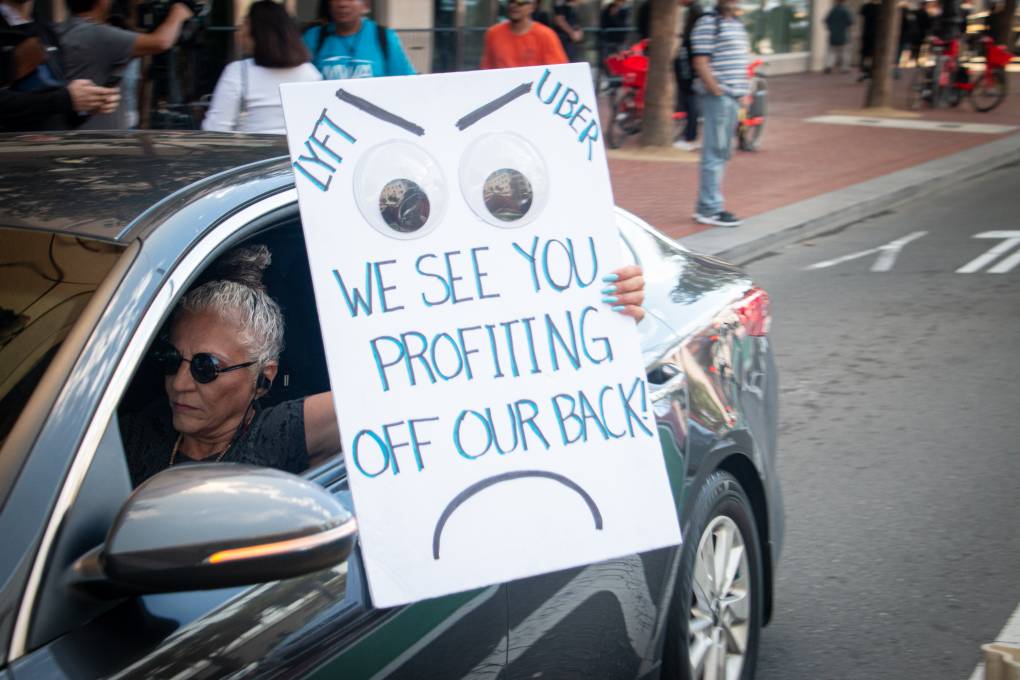
Gig Workers Find Few Safeguards, Despite Working in Dangerous Industry
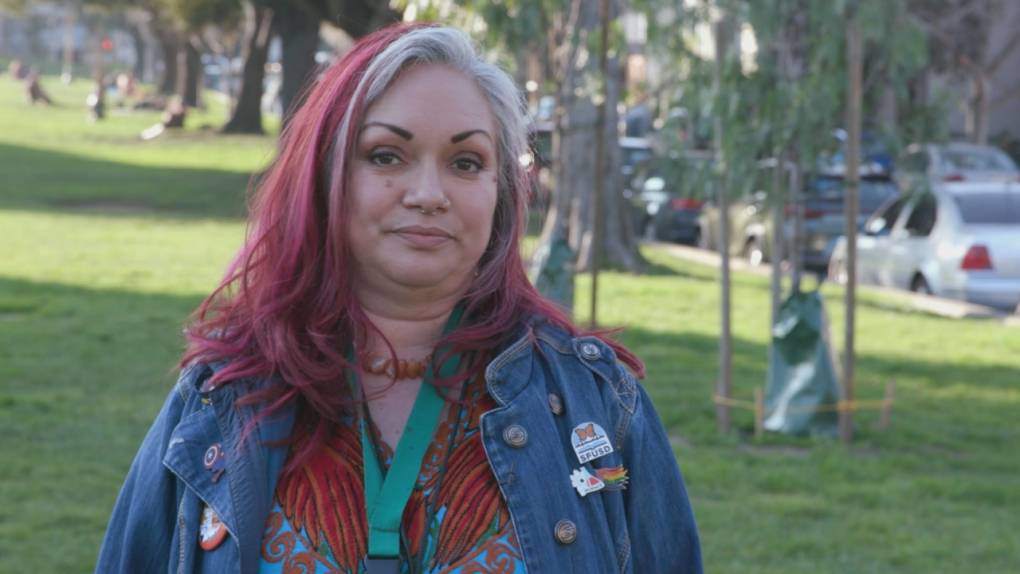
Teacher Burnout | This Week in California News
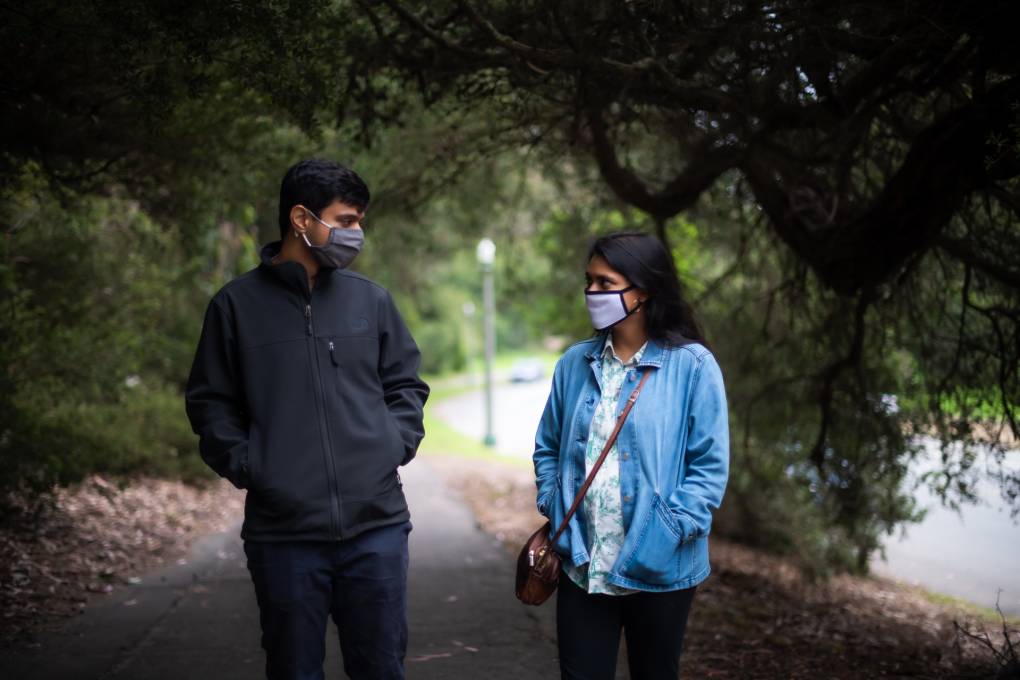
How I Met My Husband Despite the Global Pandemic
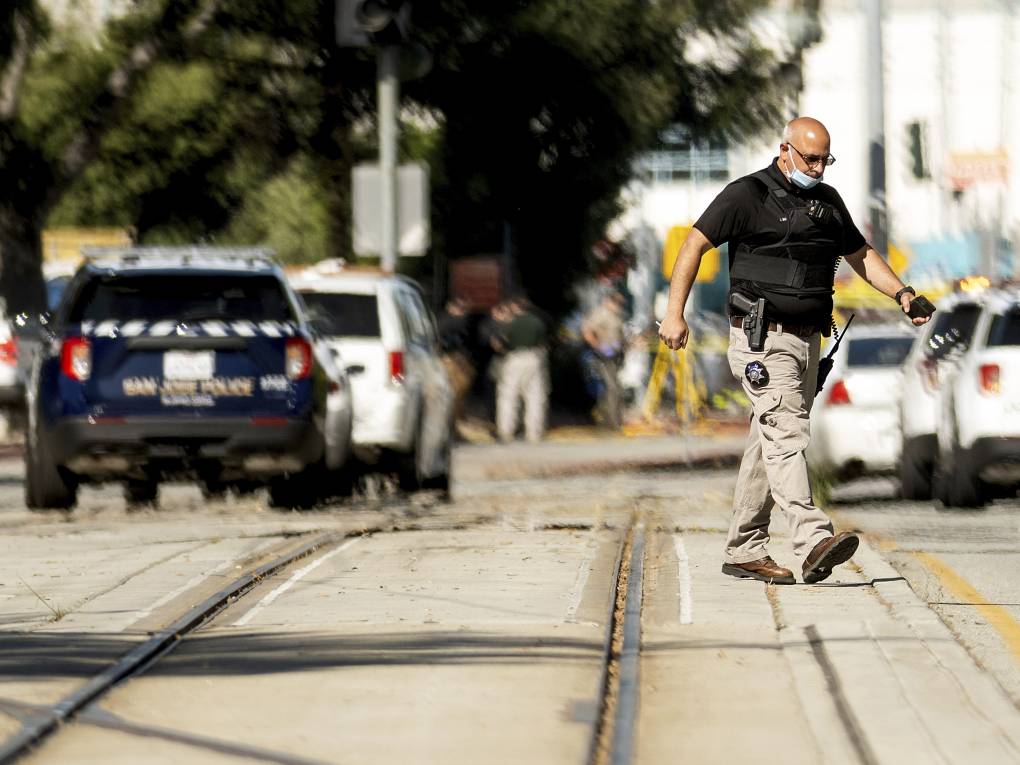
San Jose Has Big Ambitions for Gun Control, But How Would the Measures Actually Work?
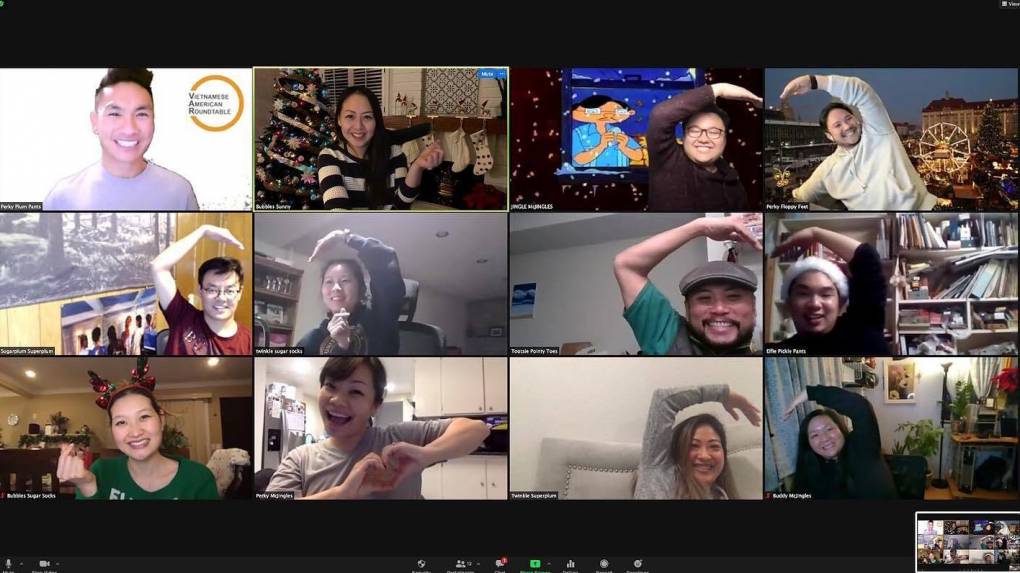
‘Cultural Brokers for Our Families’: Young Vietnamese Americans Fight Online Misinformation for the Community
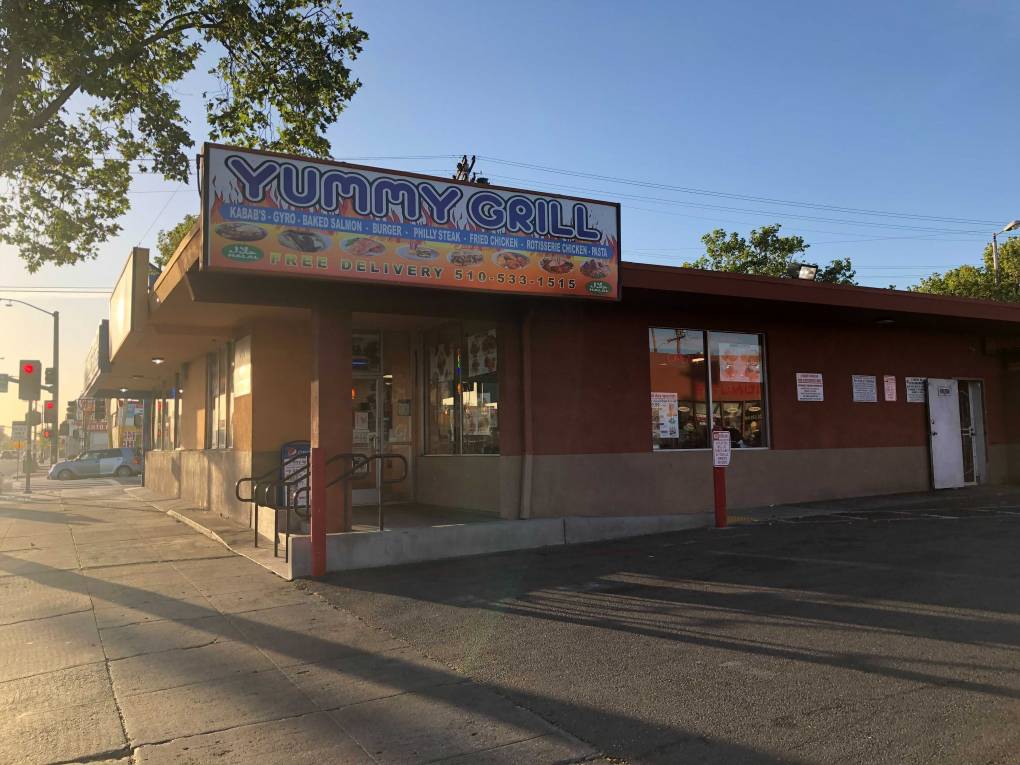
Unequal Distribution: How Businesses in East Oakland and Other Communities of Color Missed Out on PPP Loans
Google, San Jose Development Deal Includes $200 Million in Housing Funds
When COVID Vaccine Websites Spring Up, What — and Who — Gets Left Out?
Player sponsored by
window.__IS_SSR__=true
window.__INITIAL_STATE__={
"attachmentsReducer": {
"audio_0": {
"type": "attachments",
"id": "audio_0",
"imgSizes": {
"kqedFullSize": {
"file": "https://ww2.kqed.org/news/wp-content/themes/KQED-unified/img/audio_bgs/background0.jpg"
}
}
},
"audio_1": {
"type": "attachments",
"id": "audio_1",
"imgSizes": {
"kqedFullSize": {
"file": "https://ww2.kqed.org/news/wp-content/themes/KQED-unified/img/audio_bgs/background1.jpg"
}
}
},
"audio_2": {
"type": "attachments",
"id": "audio_2",
"imgSizes": {
"kqedFullSize": {
"file": "https://ww2.kqed.org/news/wp-content/themes/KQED-unified/img/audio_bgs/background2.jpg"
}
}
},
"audio_3": {
"type": "attachments",
"id": "audio_3",
"imgSizes": {
"kqedFullSize": {
"file": "https://ww2.kqed.org/news/wp-content/themes/KQED-unified/img/audio_bgs/background3.jpg"
}
}
},
"audio_4": {
"type": "attachments",
"id": "audio_4",
"imgSizes": {
"kqedFullSize": {
"file": "https://ww2.kqed.org/news/wp-content/themes/KQED-unified/img/audio_bgs/background4.jpg"
}
}
},
"placeholder": {
"type": "attachments",
"id": "placeholder",
"imgSizes": {
"thumbnail": {
"file": "https://cdn.kqed.org/wp-content/uploads/2024/12/KQED-Default-Image-816638274-2000x1333-1-160x107.jpg",
"width": 160,
"height": 107,
"mimeType": "image/jpeg"
},
"medium": {
"file": "https://cdn.kqed.org/wp-content/uploads/2024/12/KQED-Default-Image-816638274-2000x1333-1-800x533.jpg",
"width": 800,
"height": 533,
"mimeType": "image/jpeg"
},
"medium_large": {
"file": "https://cdn.kqed.org/wp-content/uploads/2024/12/KQED-Default-Image-816638274-2000x1333-1-768x512.jpg",
"width": 768,
"height": 512,
"mimeType": "image/jpeg"
},
"large": {
"file": "https://cdn.kqed.org/wp-content/uploads/2024/12/KQED-Default-Image-816638274-2000x1333-1-1020x680.jpg",
"width": 1020,
"height": 680,
"mimeType": "image/jpeg"
},
"1536x1536": {
"file": "https://cdn.kqed.org/wp-content/uploads/2024/12/KQED-Default-Image-816638274-2000x1333-1-1536x1024.jpg",
"width": 1536,
"height": 1024,
"mimeType": "image/jpeg"
},
"fd-lrg": {
"file": "https://cdn.kqed.org/wp-content/uploads/2024/12/KQED-Default-Image-816638274-2000x1333-1-1536x1024.jpg",
"width": 1536,
"height": 1024,
"mimeType": "image/jpeg"
},
"fd-med": {
"file": "https://cdn.kqed.org/wp-content/uploads/2024/12/KQED-Default-Image-816638274-2000x1333-1-1020x680.jpg",
"width": 1020,
"height": 680,
"mimeType": "image/jpeg"
},
"fd-sm": {
"file": "https://cdn.kqed.org/wp-content/uploads/2024/12/KQED-Default-Image-816638274-2000x1333-1-800x533.jpg",
"width": 800,
"height": 533,
"mimeType": "image/jpeg"
},
"post-thumbnail": {
"file": "https://cdn.kqed.org/wp-content/uploads/2024/12/KQED-Default-Image-816638274-2000x1333-1-672x372.jpg",
"width": 672,
"height": 372,
"mimeType": "image/jpeg"
},
"twentyfourteen-full-width": {
"file": "https://cdn.kqed.org/wp-content/uploads/2024/12/KQED-Default-Image-816638274-2000x1333-1-1038x576.jpg",
"width": 1038,
"height": 576,
"mimeType": "image/jpeg"
},
"xxsmall": {
"file": "https://cdn.kqed.org/wp-content/uploads/2024/12/KQED-Default-Image-816638274-2000x1333-1-160x107.jpg",
"width": 160,
"height": 107,
"mimeType": "image/jpeg"
},
"xsmall": {
"file": "https://cdn.kqed.org/wp-content/uploads/2024/12/KQED-Default-Image-816638274-2000x1333-1-672x372.jpg",
"width": 672,
"height": 372,
"mimeType": "image/jpeg"
},
"small": {
"file": "https://cdn.kqed.org/wp-content/uploads/2024/12/KQED-Default-Image-816638274-2000x1333-1-672x372.jpg",
"width": 672,
"height": 372,
"mimeType": "image/jpeg"
},
"xlarge": {
"file": "https://cdn.kqed.org/wp-content/uploads/2024/12/KQED-Default-Image-816638274-2000x1333-1-1020x680.jpg",
"width": 1020,
"height": 680,
"mimeType": "image/jpeg"
},
"full-width": {
"file": "https://cdn.kqed.org/wp-content/uploads/2024/12/KQED-Default-Image-816638274-2000x1333-1-1920x1280.jpg",
"width": 1920,
"height": 1280,
"mimeType": "image/jpeg"
},
"guest-author-32": {
"file": "https://cdn.kqed.org/wp-content/uploads/2025/01/KQED-Default-Image-816638274-1333x1333-1-160x160.jpg",
"width": 32,
"height": 32,
"mimeType": "image/jpeg"
},
"guest-author-50": {
"file": "https://cdn.kqed.org/wp-content/uploads/2025/01/KQED-Default-Image-816638274-1333x1333-1-160x160.jpg",
"width": 50,
"height": 50,
"mimeType": "image/jpeg"
},
"guest-author-64": {
"file": "https://cdn.kqed.org/wp-content/uploads/2025/01/KQED-Default-Image-816638274-1333x1333-1-160x160.jpg",
"width": 64,
"height": 64,
"mimeType": "image/jpeg"
},
"guest-author-96": {
"file": "https://cdn.kqed.org/wp-content/uploads/2025/01/KQED-Default-Image-816638274-1333x1333-1-160x160.jpg",
"width": 96,
"height": 96,
"mimeType": "image/jpeg"
},
"guest-author-128": {
"file": "https://cdn.kqed.org/wp-content/uploads/2025/01/KQED-Default-Image-816638274-1333x1333-1-160x160.jpg",
"width": 128,
"height": 128,
"mimeType": "image/jpeg"
},
"detail": {
"file": "https://cdn.kqed.org/wp-content/uploads/2025/01/KQED-Default-Image-816638274-1333x1333-1-160x160.jpg",
"width": 160,
"height": 160,
"mimeType": "image/jpeg"
},
"kqedFullSize": {
"file": "https://cdn.kqed.org/wp-content/uploads/2024/12/KQED-Default-Image-816638274-2000x1333-1.jpg",
"width": 2000,
"height": 1333
}
}
},
"news_11919146": {
"type": "attachments",
"id": "news_11919146",
"meta": {
"index": "attachments_1716263798",
"site": "news",
"id": "11919146",
"found": true
},
"parent": 11919145,
"imgSizes": {
"twentyfourteen-full-width": {
"file": "https://ww2.kqed.org/app/uploads/sites/10/2022/07/BA5-1038x576.png",
"width": 1038,
"mimeType": "image/png",
"height": 576
},
"thumbnail": {
"file": "https://ww2.kqed.org/app/uploads/sites/10/2022/07/BA5-160x90.png",
"width": 160,
"mimeType": "image/png",
"height": 90
},
"post-thumbnail": {
"file": "https://ww2.kqed.org/app/uploads/sites/10/2022/07/BA5-672x372.png",
"width": 672,
"mimeType": "image/png",
"height": 372
},
"kqedFullSize": {
"file": "https://ww2.kqed.org/app/uploads/sites/10/2022/07/BA5.png",
"width": 1920,
"height": 1080
},
"large": {
"file": "https://ww2.kqed.org/app/uploads/sites/10/2022/07/BA5-1020x574.png",
"width": 1020,
"mimeType": "image/png",
"height": 574
},
"1536x1536": {
"file": "https://ww2.kqed.org/app/uploads/sites/10/2022/07/BA5-1536x864.png",
"width": 1536,
"mimeType": "image/png",
"height": 864
},
"medium": {
"file": "https://ww2.kqed.org/app/uploads/sites/10/2022/07/BA5-800x450.png",
"width": 800,
"mimeType": "image/png",
"height": 450
}
},
"publishDate": 1657319666,
"modified": 1657319666,
"caption": null,
"description": null,
"title": "BA5",
"credit": null,
"status": "inherit",
"altTag": null,
"isLoading": false,
"fetchFailed": false
},
"news_11910763": {
"type": "attachments",
"id": "news_11910763",
"meta": {
"index": "attachments_1716263798",
"site": "news",
"id": "11910763",
"found": true
},
"title": "yes2",
"publishDate": 1649701642,
"status": "inherit",
"parent": 11910759,
"modified": 1649714628,
"caption": "Rideshare drivers protest outside Uber's former headquarters on Market Street in downtown San Francisco on Aug. 27, 2019.",
"credit": "Courtesy of Gig Workers Rising",
"altTag": "A woman wearing sunglasses drives a car while holding a sign that says: \"Lyft and Uber we see you profiting off our back!\"",
"description": null,
"imgSizes": {
"medium": {
"file": "https://cdn.kqed.org/wp-content/uploads/sites/10/2022/04/yes2-800x533.jpg",
"width": 800,
"height": 533,
"mimeType": "image/jpeg"
},
"large": {
"file": "https://cdn.kqed.org/wp-content/uploads/sites/10/2022/04/yes2-1020x680.jpg",
"width": 1020,
"height": 680,
"mimeType": "image/jpeg"
},
"thumbnail": {
"file": "https://cdn.kqed.org/wp-content/uploads/sites/10/2022/04/yes2-160x107.jpg",
"width": 160,
"height": 107,
"mimeType": "image/jpeg"
},
"1536x1536": {
"file": "https://cdn.kqed.org/wp-content/uploads/sites/10/2022/04/yes2-1536x1024.jpg",
"width": 1536,
"height": 1024,
"mimeType": "image/jpeg"
},
"2048x2048": {
"file": "https://cdn.kqed.org/wp-content/uploads/sites/10/2022/04/yes2-2048x1365.jpg",
"width": 2048,
"height": 1365,
"mimeType": "image/jpeg"
},
"post-thumbnail": {
"file": "https://cdn.kqed.org/wp-content/uploads/sites/10/2022/04/yes2-672x372.jpg",
"width": 672,
"height": 372,
"mimeType": "image/jpeg"
},
"twentyfourteen-full-width": {
"file": "https://cdn.kqed.org/wp-content/uploads/sites/10/2022/04/yes2-1038x576.jpg",
"width": 1038,
"height": 576,
"mimeType": "image/jpeg"
},
"full-width": {
"file": "https://cdn.kqed.org/wp-content/uploads/sites/10/2022/04/yes2-1920x1280.jpg",
"width": 1920,
"height": 1280,
"mimeType": "image/jpeg"
},
"kqedFullSize": {
"file": "https://cdn.kqed.org/wp-content/uploads/sites/10/2022/04/yes2-scaled-e1776791757748.jpg",
"width": 2000,
"height": 1334
}
},
"isLoading": false,
"fetchFailed": false
},
"news_11903286": {
"type": "attachments",
"id": "news_11903286",
"meta": {
"index": "attachments_1716263798",
"site": "news",
"id": "11903286",
"found": true
},
"parent": 11903223,
"imgSizes": {
"twentyfourteen-full-width": {
"file": "https://ww2.kqed.org/app/uploads/sites/10/2022/01/cynthia-1038x576.jpg",
"width": 1038,
"mimeType": "image/jpeg",
"height": 576
},
"thumbnail": {
"file": "https://ww2.kqed.org/app/uploads/sites/10/2022/01/cynthia-160x90.jpg",
"width": 160,
"mimeType": "image/jpeg",
"height": 90
},
"post-thumbnail": {
"file": "https://ww2.kqed.org/app/uploads/sites/10/2022/01/cynthia-672x372.jpg",
"width": 672,
"mimeType": "image/jpeg",
"height": 372
},
"kqedFullSize": {
"file": "https://ww2.kqed.org/app/uploads/sites/10/2022/01/cynthia.jpg",
"width": 1280,
"height": 720
},
"large": {
"file": "https://ww2.kqed.org/app/uploads/sites/10/2022/01/cynthia-1020x574.jpg",
"width": 1020,
"mimeType": "image/jpeg",
"height": 574
},
"medium": {
"file": "https://ww2.kqed.org/app/uploads/sites/10/2022/01/cynthia-800x450.jpg",
"width": 800,
"mimeType": "image/jpeg",
"height": 450
}
},
"publishDate": 1643410977,
"modified": 1643410977,
"caption": null,
"description": null,
"title": "cynthia",
"credit": null,
"status": "inherit",
"altTag": null,
"isLoading": false,
"fetchFailed": false
},
"news_11896069": {
"type": "attachments",
"id": "news_11896069",
"meta": {
"index": "attachments_1716263798",
"site": "news",
"id": "11896069",
"found": true
},
"parent": 11895000,
"imgSizes": {
"twentyfourteen-full-width": {
"file": "https://ww2.kqed.org/app/uploads/sites/10/2021/11/004_SanFrancisco_AdhitiShaishav_09162021-1038x576.jpg",
"width": 1038,
"mimeType": "image/jpeg",
"height": 576
},
"thumbnail": {
"file": "https://ww2.kqed.org/app/uploads/sites/10/2021/11/004_SanFrancisco_AdhitiShaishav_09162021-160x107.jpg",
"width": 160,
"mimeType": "image/jpeg",
"height": 107
},
"post-thumbnail": {
"file": "https://ww2.kqed.org/app/uploads/sites/10/2021/11/004_SanFrancisco_AdhitiShaishav_09162021-672x372.jpg",
"width": 672,
"mimeType": "image/jpeg",
"height": 372
},
"kqedFullSize": {
"file": "https://ww2.kqed.org/app/uploads/sites/10/2021/11/004_SanFrancisco_AdhitiShaishav_09162021.jpg",
"width": 1920,
"height": 1280
},
"large": {
"file": "https://ww2.kqed.org/app/uploads/sites/10/2021/11/004_SanFrancisco_AdhitiShaishav_09162021-1020x680.jpg",
"width": 1020,
"mimeType": "image/jpeg",
"height": 680
},
"1536x1536": {
"file": "https://ww2.kqed.org/app/uploads/sites/10/2021/11/004_SanFrancisco_AdhitiShaishav_09162021-1536x1024.jpg",
"width": 1536,
"mimeType": "image/jpeg",
"height": 1024
},
"medium": {
"file": "https://ww2.kqed.org/app/uploads/sites/10/2021/11/004_SanFrancisco_AdhitiShaishav_09162021-800x533.jpg",
"width": 800,
"mimeType": "image/jpeg",
"height": 533
}
},
"publishDate": 1636743302,
"modified": 1636768014,
"caption": "Shaishav and I met in August 2020 through Hinge, a popular dating app. We had to get creative for safe, outdoor date activities, but it led to a meaningful relationship. ",
"description": "Shaishav and I met in August 2020 through a Hinge, a popular dating app. We had to get creative for safe, outdoor date activities, but it led to a meaningful relationship. ",
"title": "004_SanFrancisco_Adhiti+Shaishav_09162021",
"credit": "Beth LaBerge/KQED News",
"status": "inherit",
"altTag": "A man and woman walk through a park wearing COVID masks. He's in a black jacket and pants, she's in a blue jacket and white top.",
"isLoading": false,
"fetchFailed": false
},
"news_11875603": {
"type": "attachments",
"id": "news_11875603",
"meta": {
"index": "attachments_1716263798",
"site": "news",
"id": "11875603",
"found": true
},
"parent": 11875602,
"imgSizes": {
"twentyfourteen-full-width": {
"file": "https://ww2.kqed.org/app/uploads/sites/10/2021/05/ap_21146605202057-d42dc63ad53bca04f809ddc1e00e078f4f9b761d-1038x576.jpg",
"width": 1038,
"mimeType": "image/jpeg",
"height": 576
},
"thumbnail": {
"file": "https://ww2.kqed.org/app/uploads/sites/10/2021/05/ap_21146605202057-d42dc63ad53bca04f809ddc1e00e078f4f9b761d-160x120.jpg",
"width": 160,
"mimeType": "image/jpeg",
"height": 120
},
"post-thumbnail": {
"file": "https://ww2.kqed.org/app/uploads/sites/10/2021/05/ap_21146605202057-d42dc63ad53bca04f809ddc1e00e078f4f9b761d-672x372.jpg",
"width": 672,
"mimeType": "image/jpeg",
"height": 372
},
"kqedFullSize": {
"file": "https://ww2.kqed.org/app/uploads/sites/10/2021/05/ap_21146605202057-d42dc63ad53bca04f809ddc1e00e078f4f9b761d-scaled-e1622136559352.jpg",
"width": 1920,
"height": 1440
},
"2048x2048": {
"file": "https://ww2.kqed.org/app/uploads/sites/10/2021/05/ap_21146605202057-d42dc63ad53bca04f809ddc1e00e078f4f9b761d-2048x1536.jpg",
"width": 2048,
"mimeType": "image/jpeg",
"height": 1536
},
"large": {
"file": "https://ww2.kqed.org/app/uploads/sites/10/2021/05/ap_21146605202057-d42dc63ad53bca04f809ddc1e00e078f4f9b761d-1020x765.jpg",
"width": 1020,
"mimeType": "image/jpeg",
"height": 765
},
"1536x1536": {
"file": "https://ww2.kqed.org/app/uploads/sites/10/2021/05/ap_21146605202057-d42dc63ad53bca04f809ddc1e00e078f4f9b761d-1536x1152.jpg",
"width": 1536,
"mimeType": "image/jpeg",
"height": 1152
},
"full-width": {
"file": "https://ww2.kqed.org/app/uploads/sites/10/2021/05/ap_21146605202057-d42dc63ad53bca04f809ddc1e00e078f4f9b761d-1920x1440.jpg",
"width": 1920,
"mimeType": "image/jpeg",
"height": 1440
},
"medium": {
"file": "https://ww2.kqed.org/app/uploads/sites/10/2021/05/ap_21146605202057-d42dc63ad53bca04f809ddc1e00e078f4f9b761d-800x600.jpg",
"width": 800,
"mimeType": "image/jpeg",
"height": 600
}
},
"publishDate": 1622134547,
"modified": 1622136696,
"caption": "Law enforcement officers respond to the scene of a shooting at a Santa Clara Valley Transportation Authority facility on Wednesday, May 26, 2021, in San Jose.",
"description": "Law enforcement officers respond to the scene of a shooting at a Santa Clara Valley Transportation Authority facility on Wednesday, May 26, 2021, in San Jose.",
"title": "Law enforcement officers respond to a mass shooting at a Santa Clara Valley Transportation Authority facility on Wednesday in San Jose, Calif. A Santa Clara County sheriff's spokesman said the rail yard shooting left multiple people, including the shooter, dead.",
"credit": "Noah Berger/AP",
"status": "inherit",
"altTag": null,
"isLoading": false,
"fetchFailed": false
},
"news_11873411": {
"type": "attachments",
"id": "news_11873411",
"meta": {
"index": "attachments_1716263798",
"site": "news",
"id": "11873411",
"found": true
},
"parent": 11872941,
"imgSizes": {
"twentyfourteen-full-width": {
"file": "https://ww2.kqed.org/app/uploads/sites/10/2021/05/1920_VAR-Facebook-photo-1038x576.jpg",
"width": 1038,
"mimeType": "image/jpeg",
"height": 576
},
"thumbnail": {
"file": "https://ww2.kqed.org/app/uploads/sites/10/2021/05/1920_VAR-Facebook-photo-160x90.jpg",
"width": 160,
"mimeType": "image/jpeg",
"height": 90
},
"post-thumbnail": {
"file": "https://ww2.kqed.org/app/uploads/sites/10/2021/05/1920_VAR-Facebook-photo-672x372.jpg",
"width": 672,
"mimeType": "image/jpeg",
"height": 372
},
"kqedFullSize": {
"file": "https://ww2.kqed.org/app/uploads/sites/10/2021/05/1920_VAR-Facebook-photo.jpg",
"width": 1416,
"height": 796
},
"large": {
"file": "https://ww2.kqed.org/app/uploads/sites/10/2021/05/1920_VAR-Facebook-photo-1020x573.jpg",
"width": 1020,
"mimeType": "image/jpeg",
"height": 573
},
"medium": {
"file": "https://ww2.kqed.org/app/uploads/sites/10/2021/05/1920_VAR-Facebook-photo-800x450.jpg",
"width": 800,
"mimeType": "image/jpeg",
"height": 450
}
},
"publishDate": 1620855071,
"modified": 1620860772,
"caption": "The Vietnamese American Roundtable is an organization based in the South Bay, focused on serving the Vietnamese American community in the Bay Area. Since the pandemic started, VAR has been hosting webinars to educate their more than 3,000 followers on how to stay safe from COVID-19.",
"description": null,
"title": "1920_VAR Facebook photo",
"credit": "Photo courtesy of VAR",
"status": "inherit",
"altTag": null,
"isLoading": false,
"fetchFailed": false
},
"news_11872228": {
"type": "attachments",
"id": "news_11872228",
"meta": {
"index": "attachments_1716263798",
"site": "news",
"id": "11872228",
"found": true
},
"parent": 11872011,
"imgSizes": {
"twentyfourteen-full-width": {
"file": "https://ww2.kqed.org/app/uploads/sites/10/2021/05/Image-from-iOS-1038x576.jpg",
"width": 1038,
"mimeType": "image/jpeg",
"height": 576
},
"thumbnail": {
"file": "https://ww2.kqed.org/app/uploads/sites/10/2021/05/Image-from-iOS-160x120.jpg",
"width": 160,
"mimeType": "image/jpeg",
"height": 120
},
"post-thumbnail": {
"file": "https://ww2.kqed.org/app/uploads/sites/10/2021/05/Image-from-iOS-672x372.jpg",
"width": 672,
"mimeType": "image/jpeg",
"height": 372
},
"kqedFullSize": {
"file": "https://ww2.kqed.org/app/uploads/sites/10/2021/05/Image-from-iOS-scaled.jpg",
"width": 2560,
"height": 1920
},
"2048x2048": {
"file": "https://ww2.kqed.org/app/uploads/sites/10/2021/05/Image-from-iOS-2048x1536.jpg",
"width": 2048,
"mimeType": "image/jpeg",
"height": 1536
},
"large": {
"file": "https://ww2.kqed.org/app/uploads/sites/10/2021/05/Image-from-iOS-1020x765.jpg",
"width": 1020,
"mimeType": "image/jpeg",
"height": 765
},
"1536x1536": {
"file": "https://ww2.kqed.org/app/uploads/sites/10/2021/05/Image-from-iOS-1536x1152.jpg",
"width": 1536,
"mimeType": "image/jpeg",
"height": 1152
},
"full-width": {
"file": "https://ww2.kqed.org/app/uploads/sites/10/2021/05/Image-from-iOS-1920x1440.jpg",
"width": 1920,
"mimeType": "image/jpeg",
"height": 1440
},
"medium": {
"file": "https://ww2.kqed.org/app/uploads/sites/10/2021/05/Image-from-iOS-800x600.jpg",
"width": 800,
"mimeType": "image/jpeg",
"height": 600
}
},
"publishDate": 1620170434,
"modified": 1620767681,
"caption": "Yummy Grill, an Afghan kebab restaurant on International Boulevard, has struggled through the pandemic. After three failed attempts applying for a PPP loan through Chase Bank, it just recently received one through a Utah-based small-business specialist.",
"description": "Yummy Grill, an Afghan kebab restaurant on International Boulevard, has struggled through the pandemic. Only five percent of businesses in this neighborhood who applied for a PPP loan, received one. Yummy Grill only recently received PPP funding through Lendio, a Utah-based small business specialist.",
"title": "Yummy Grill, an Afghan kebab restaurant on International Boulevard, has struggled through the pandemic. Only five percent of businesses in this neighborhood who applied for a PPP loan, received one. Yummy Grill only recently received PPP funding through Lendio, a Utah-based small business specialist.",
"credit": "Adhiti Bandlamudi/KQED",
"status": "inherit",
"altTag": "Yummy Grill, an Afghan kebab restaurant on International Boulevard, has struggled through the pandemic. Only five percent of businesses in this neighborhood who applied for a PPP loan, received one. Yummy Grill only recently received PPP funding through Lendio, a Utah-based small business specialist.",
"isLoading": false,
"fetchFailed": false
},
"news_11868343": {
"type": "attachments",
"id": "news_11868343",
"meta": {
"index": "attachments_1716263798",
"site": "news",
"id": "11868343",
"found": true
},
"parent": 11868310,
"imgSizes": {
"twentyfourteen-full-width": {
"file": "https://ww2.kqed.org/app/uploads/sites/10/2021/04/Google-Campus-1038x576.jpg",
"width": 1038,
"mimeType": "image/jpeg",
"height": 576
},
"thumbnail": {
"file": "https://ww2.kqed.org/app/uploads/sites/10/2021/04/Google-Campus-160x64.jpg",
"width": 160,
"mimeType": "image/jpeg",
"height": 64
},
"post-thumbnail": {
"file": "https://ww2.kqed.org/app/uploads/sites/10/2021/04/Google-Campus-672x372.jpg",
"width": 672,
"mimeType": "image/jpeg",
"height": 372
},
"kqedFullSize": {
"file": "https://ww2.kqed.org/app/uploads/sites/10/2021/04/Google-Campus-scaled-e1617754125595.jpg",
"width": 1920,
"height": 768
},
"2048x2048": {
"file": "https://ww2.kqed.org/app/uploads/sites/10/2021/04/Google-Campus-2048x819.jpg",
"width": 2048,
"mimeType": "image/jpeg",
"height": 819
},
"large": {
"file": "https://ww2.kqed.org/app/uploads/sites/10/2021/04/Google-Campus-1020x408.jpg",
"width": 1020,
"mimeType": "image/jpeg",
"height": 408
},
"1536x1536": {
"file": "https://ww2.kqed.org/app/uploads/sites/10/2021/04/Google-Campus-1536x614.jpg",
"width": 1536,
"mimeType": "image/jpeg",
"height": 614
},
"full-width": {
"file": "https://ww2.kqed.org/app/uploads/sites/10/2021/04/Google-Campus-1920x768.jpg",
"width": 1920,
"mimeType": "image/jpeg",
"height": 768
},
"medium": {
"file": "https://ww2.kqed.org/app/uploads/sites/10/2021/04/Google-Campus-800x320.jpg",
"width": 800,
"mimeType": "image/jpeg",
"height": 320
}
},
"publishDate": 1617754108,
"modified": 1617754160,
"caption": "Google's plans for a new campus in San Jose.",
"description": null,
"title": "Google Campus",
"credit": "Google",
"status": "inherit",
"altTag": null,
"isLoading": false,
"fetchFailed": false
},
"news_11867834": {
"type": "attachments",
"id": "news_11867834",
"meta": {
"index": "attachments_1716263798",
"site": "news",
"id": "11867834",
"found": true
},
"parent": 11866747,
"imgSizes": {
"twentyfourteen-full-width": {
"file": "https://ww2.kqed.org/app/uploads/sites/10/2021/04/RS48338_GettyImages-1310180889-qut-1038x576.jpg",
"width": 1038,
"mimeType": "image/jpeg",
"height": 576
},
"thumbnail": {
"file": "https://ww2.kqed.org/app/uploads/sites/10/2021/04/RS48338_GettyImages-1310180889-qut-160x117.jpg",
"width": 160,
"mimeType": "image/jpeg",
"height": 117
},
"post-thumbnail": {
"file": "https://ww2.kqed.org/app/uploads/sites/10/2021/04/RS48338_GettyImages-1310180889-qut-672x372.jpg",
"width": 672,
"mimeType": "image/jpeg",
"height": 372
},
"kqedFullSize": {
"file": "https://ww2.kqed.org/app/uploads/sites/10/2021/04/RS48338_GettyImages-1310180889-qut.jpg",
"width": 1920,
"height": 1405
},
"large": {
"file": "https://ww2.kqed.org/app/uploads/sites/10/2021/04/RS48338_GettyImages-1310180889-qut-1020x746.jpg",
"width": 1020,
"mimeType": "image/jpeg",
"height": 746
},
"1536x1536": {
"file": "https://ww2.kqed.org/app/uploads/sites/10/2021/04/RS48338_GettyImages-1310180889-qut-1536x1124.jpg",
"width": 1536,
"mimeType": "image/jpeg",
"height": 1124
},
"medium": {
"file": "https://ww2.kqed.org/app/uploads/sites/10/2021/04/RS48338_GettyImages-1310180889-qut-800x585.jpg",
"width": 800,
"mimeType": "image/jpeg",
"height": 585
}
},
"publishDate": 1617391224,
"modified": 1617391277,
"caption": "Concentra registered nurse Deysi Fleix administers a Moderna COVID-19 vaccination to an Amazon employee at an Amazon fulfillment center on March 31, 2021 in North Las Vegas, Nevada.",
"description": null,
"title": "Amazon Employees At Nevada Fulfillment Center Receive COVID-19 Vaccinations",
"credit": "Ethan Miller/Getty Images",
"status": "inherit",
"altTag": "Person receiving a COVID-19 vaccine shot in the arm from a masked nurse",
"isLoading": false,
"fetchFailed": false
}
},
"audioPlayerReducer": {
"postId": "stream_live",
"isPaused": true,
"isPlaying": false,
"pfsActive": false,
"pledgeModalIsOpen": true,
"playerDrawerIsOpen": false,
"liveAudioPlayStartedAt": 0,
"liveAudioPlayContext": ""
},
"authorsReducer": {
"kqed": {
"type": "authors",
"id": "236",
"meta": {
"index": "authors_1716337520",
"id": "236",
"found": true
},
"name": "KQED News Staff",
"firstName": "KQED News Staff",
"lastName": null,
"slug": "kqed",
"email": "faq@kqed.org",
"display_author_email": false,
"staff_mastheads": [],
"title": null,
"bio": null,
"avatar": "https://secure.gravatar.com/avatar/ef0e801a68c4c54afa9180db14084167?s=600&d=blank&r=g",
"twitter": null,
"facebook": null,
"instagram": null,
"linkedin": null,
"sites": [
{
"site": "arts",
"roles": [
"contributor"
]
},
{
"site": "news",
"roles": [
"editor"
]
},
{
"site": "futureofyou",
"roles": [
"author"
]
}
],
"headData": {
"title": "KQED News Staff | KQED",
"description": null,
"ogImgSrc": "https://secure.gravatar.com/avatar/ef0e801a68c4c54afa9180db14084167?s=600&d=blank&r=g",
"twImgSrc": "https://secure.gravatar.com/avatar/ef0e801a68c4c54afa9180db14084167?s=600&d=blank&r=g"
},
"isLoading": false,
"link": "/author/kqed"
},
"matthewgreen": {
"type": "authors",
"id": "1263",
"meta": {
"index": "authors_1716337520",
"id": "1263",
"found": true
},
"name": "Matthew Green",
"firstName": "Matthew",
"lastName": "Green",
"slug": "matthewgreen",
"email": "mgreen@kqed.org",
"display_author_email": false,
"staff_mastheads": [],
"title": "KQED Editor/Reporter",
"bio": "Matthew Green is a digital media producer for KQED News. He previously produced \u003ca href=\"http://www.kqed.org/lowdown\">The Lowdown\u003c/a>, KQED’s multimedia news education blog. Matthew's written for numerous Bay Area publications, including the Oakland Tribune and San Francisco Chronicle. He also taught journalism classes at Fremont High School in East Oakland.\r\n\r\nEmail: mgreen@kqed.org; Twitter: @MGreenKQED",
"avatar": "https://secure.gravatar.com/avatar/3bf498d1267ca02c8494f33d8cfc575e?s=600&d=blank&r=g",
"twitter": "MGreenKQED",
"facebook": null,
"instagram": null,
"linkedin": null,
"sites": [
{
"site": "news",
"roles": []
},
{
"site": "lowdown",
"roles": []
},
{
"site": "science",
"roles": []
},
{
"site": "education",
"roles": []
},
{
"site": "quest",
"roles": []
},
{
"site": "liveblog",
"roles": []
}
],
"headData": {
"title": "Matthew Green | KQED",
"description": "KQED Editor/Reporter",
"ogImgSrc": "https://secure.gravatar.com/avatar/3bf498d1267ca02c8494f33d8cfc575e?s=600&d=blank&r=g",
"twImgSrc": "https://secure.gravatar.com/avatar/3bf498d1267ca02c8494f33d8cfc575e?s=600&d=blank&r=g"
},
"isLoading": false,
"link": "/author/matthewgreen"
},
"abandlamudi": {
"type": "authors",
"id": "11672",
"meta": {
"index": "authors_1716337520",
"id": "11672",
"found": true
},
"name": "Adhiti Bandlamudi",
"firstName": "Adhiti",
"lastName": "Bandlamudi",
"slug": "abandlamudi",
"email": "abandlamudi@kqed.org",
"display_author_email": false,
"staff_mastheads": [
"news"
],
"title": "KQED Housing Reporter",
"bio": "Adhiti Bandlamudi reports for KQED's Housing desk. She focuses on how housing gets built across the Bay Area. Before joining KQED in 2020, she reported for WUNC in Durham, North Carolina, WABE in Atlanta, Georgia and Capital Public Radio in Sacramento. In 2017, she was awarded a Kroc Fellowship at NPR where she reported on everything from sprinkles to the Golden State Killer's arrest. When she's not reporting, she's baking new recipes in her kitchen or watching movies with friends and family. She's originally from Georgia and has strong opinions about Great British Bake Off.",
"avatar": "https://secure.gravatar.com/avatar/868129c8b257bb99a3500e2c86a65400?s=600&d=mm&r=g",
"twitter": "oddity_adhiti",
"facebook": null,
"instagram": null,
"linkedin": null,
"sites": [
{
"site": "arts",
"roles": [
"author"
]
},
{
"site": "news",
"roles": [
"editor"
]
},
{
"site": "liveblog",
"roles": [
"author"
]
}
],
"headData": {
"title": "Adhiti Bandlamudi | KQED",
"description": "KQED Housing Reporter",
"ogImgSrc": "https://secure.gravatar.com/avatar/868129c8b257bb99a3500e2c86a65400?s=600&d=mm&r=g",
"twImgSrc": "https://secure.gravatar.com/avatar/868129c8b257bb99a3500e2c86a65400?s=600&d=mm&r=g"
},
"isLoading": false,
"link": "/author/abandlamudi"
}
},
"pagesReducer": {
"news_tag_adhiti-bandlamudi": {
"type": "terms",
"id": "news_27510",
"meta": {
"index": "terms_1716263798",
"site": "news",
"id": "27510",
"score": 10.399555
},
"featImg": null,
"name": "Adhiti Bandlamudi",
"description": null,
"taxonomy": "tag",
"headData": {
"twImgId": null,
"twTitle": null,
"ogTitle": null,
"ogImgId": null,
"twDescription": null,
"description": null,
"title": "Adhiti Bandlamudi Archives | KQED News",
"ogDescription": null
},
"ttid": 27527,
"slug": "adhiti-bandlamudi",
"isLoading": false,
"title": "Adhiti Bandlamudi",
"pageMeta": {
"site": "news",
"WpPageTemplate": "page-topic-editorial"
},
"blocks": [
{
"blockName": "kqed/post-list",
"attrs": {
"layout": "cardArticle2",
"query": "posts/news?tag=adhiti-bandlamudi",
"seeMore": true
}
},
{
"blockName": "kqed/ad"
}
]
}
},
"pfsSessionReducer": {},
"postsReducer": {
"stream_live": {
"type": "live",
"id": "stream_live",
"audioUrl": "https://streams.kqed.org/kqedradio",
"title": "Live Stream",
"excerpt": "Live Stream information currently unavailable.",
"link": "/radio",
"featImg": "",
"label": {
"name": "KQED Live",
"link": "/"
}
},
"stream_kqedNewscast": {
"type": "posts",
"id": "stream_kqedNewscast",
"audioUrl": "https://www.kqed.org/.stream/anon/radio/RDnews/newscast.mp3?_=1",
"title": "KQED Newscast",
"featImg": "",
"label": {
"name": "88.5 FM",
"link": "/"
}
},
"news_11919145": {
"type": "posts",
"id": "news_11919145",
"meta": {
"index": "posts_1716263798",
"site": "news",
"id": "11919145",
"score": null,
"sort": [
1657327341000
]
},
"guestAuthors": [],
"slug": "shinzo-abe-assassinated-covid-ba-5-update-this-week-in-ca-news",
"title": "Shinzo Abe Assassinated | COVID BA.5 Update | This Week in CA News",
"publishDate": 1657327341,
"format": "video",
"headTitle": "Shinzo Abe Assassinated | COVID BA.5 Update | This Week in CA News | KQED",
"labelTerm": {
"term": 7052,
"site": "news"
},
"content": "\u003cp>\u003cb>Shinzo Abe Assassinated\u003cbr>\n\u003c/b>\u003cspan style=\"font-weight: 400\">Former Japanese Prime Minister Shinzo Abe, who was assassinated July 8, 2022, worked to build ties with Silicon Valley and to craft a pro-democracy theater in the Pacific. Hoover Institution Distinguished Research Fellow \u003c/span>\u003cb>Michael Auslin\u003c/b>\u003cspan style=\"font-weight: 400\"> joins us to discuss Abe’s work and legacy.\u003c/span>\u003c/p>\n\u003cp>\u003cb>COVID BA.5 Subvariant a ‘Different Beast’\u003cbr>\n\u003c/b>\u003cspan style=\"font-weight: 400\">UCSF Chair of Medicine \u003c/span>\u003cb>Dr. Bob Wachter \u003c/b>\u003cspan style=\"font-weight: 400\">talks about why he’s calling the COVID BA.5 variant “a different beast” and how to defend against ongoing surges of the virus. \u003c/span>\u003c/p>\n\u003cp>\u003cb>This Week in California News and Politics\u003cbr>\n\u003c/b>\u003cspan style=\"font-weight: 400\">Gov. Gavin Newsom is running for reelection in California, so why is he running a television ad in Florida? And will Californians vote to make access to abortion a part of the state’s constitution? Our panel of reporters helps us unpack these topics and other major news of the week.\u003c/span>\u003c/p>\n\u003cp>\u003cspan style=\"font-weight: 400\">Guests: \u003c/span>\u003c/p>\n\u003cul>\n\u003cli style=\"font-weight: 400\">\u003cspan style=\"font-weight: 400\">Adhiti Bandlamudi, KQED reporter\u003c/span>\u003c/li>\n\u003cli style=\"font-weight: 400\">\u003cspan style=\"font-weight: 400\">Joe Garofoli, San Francisco Chronicle senior political writer\u003c/span>\u003c/li>\n\u003cli style=\"font-weight: 400\">\u003cspan style=\"font-weight: 400\">Jeremy C. Owens, MarketWatch bureau chief\u003c/span>\u003c/li>\n\u003c/ul>\n\u003cp>\u003cb>Berkeley Rose Garden\u003cbr>\n\u003c/b>\u003cspan style=\"font-weight: 400\">In this week’s Something Beautiful, we go to a public garden that opened in 1937 in the East Bay. The Berkeley Rose Garden provides remarkable views of the city and the bay and features more than 100 varieties of the floral delight.\u003c/span>\u003c/p>\n\u003cp>[ad fullwidth]\u003c/p>\u003cp>\u003c/p>\n",
"blocks": [],
"excerpt": null,
"status": "publish",
"parent": 0,
"modified": 1721158634,
"stats": {
"hasAudio": false,
"hasVideo": false,
"hasChartOrMap": false,
"iframeSrcs": [],
"hasGoogleForm": false,
"hasGallery": false,
"hasHearkenModule": false,
"hasPolis": false,
"paragraphCount": 7,
"wordCount": 221
},
"headData": {
"title": "Shinzo Abe Assassinated | COVID BA.5 Update | This Week in CA News | KQED",
"description": "Shinzo Abe Assassinated Former Japanese Prime Minister Shinzo Abe, who was assassinated July 8, 2022, worked to build ties with Silicon Valley and to craft a pro-democracy theater in the Pacific. Hoover Institution Distinguished Research Fellow Michael Auslin joins us to discuss Abe’s work and legacy. COVID BA.5 Subvariant a ‘Different Beast’ UCSF Chair of",
"ogTitle": "",
"ogDescription": "",
"ogImgId": "",
"twTitle": "",
"twDescription": "",
"twImgId": "",
"schema": {
"@context": "https://schema.org",
"@type": "NewsArticle",
"headline": "Shinzo Abe Assassinated | COVID BA.5 Update | This Week in CA News",
"datePublished": "2022-07-08T17:42:21-07:00",
"dateModified": "2024-07-16T12:37:14-07:00",
"image": "https://cdn.kqed.org/wp-content/uploads/2020/02/KQED-OG-Image@1x.png",
"isAccessibleForFree": "True",
"publisher": {
"@type": "NewsMediaOrganization",
"@id": "https://www.kqed.org/#organization",
"name": "KQED",
"logo": "https://cdn.kqed.org/wp-content/uploads/2020/02/KQED-OG-Image@1x.png",
"url": "https://www.kqed.org",
"sameAs": [
"https://www.facebook.com/KQED",
"https://twitter.com/KQED",
"https://www.instagram.com/kqed/",
"https://www.tiktok.com/@kqedofficial",
"https://www.linkedin.com/company/kqed",
"https://www.youtube.com/channel/UCeC0IOo7i1P_61zVUWbJ4nw"
]
}
}
},
"videoEmbed": " https://youtu.be/_NMYNlKYJdc",
"sticky": false,
"excludeFromSiteSearch": "Include",
"path": "/news/11919145/shinzo-abe-assassinated-covid-ba-5-update-this-week-in-ca-news",
"audioTrackLength": null,
"parsedContent": [
{
"type": "contentString",
"content": "\u003cdiv class=\"post-body\">\u003cp>\u003cp>\u003cb>Shinzo Abe Assassinated\u003cbr>\n\u003c/b>\u003cspan style=\"font-weight: 400\">Former Japanese Prime Minister Shinzo Abe, who was assassinated July 8, 2022, worked to build ties with Silicon Valley and to craft a pro-democracy theater in the Pacific. Hoover Institution Distinguished Research Fellow \u003c/span>\u003cb>Michael Auslin\u003c/b>\u003cspan style=\"font-weight: 400\"> joins us to discuss Abe’s work and legacy.\u003c/span>\u003c/p>\n\u003cp>\u003cb>COVID BA.5 Subvariant a ‘Different Beast’\u003cbr>\n\u003c/b>\u003cspan style=\"font-weight: 400\">UCSF Chair of Medicine \u003c/span>\u003cb>Dr. Bob Wachter \u003c/b>\u003cspan style=\"font-weight: 400\">talks about why he’s calling the COVID BA.5 variant “a different beast” and how to defend against ongoing surges of the virus. \u003c/span>\u003c/p>\n\u003cp>\u003cb>This Week in California News and Politics\u003cbr>\n\u003c/b>\u003cspan style=\"font-weight: 400\">Gov. Gavin Newsom is running for reelection in California, so why is he running a television ad in Florida? And will Californians vote to make access to abortion a part of the state’s constitution? Our panel of reporters helps us unpack these topics and other major news of the week.\u003c/span>\u003c/p>\n\u003cp>\u003cspan style=\"font-weight: 400\">Guests: \u003c/span>\u003c/p>\n\u003cul>\n\u003cli style=\"font-weight: 400\">\u003cspan style=\"font-weight: 400\">Adhiti Bandlamudi, KQED reporter\u003c/span>\u003c/li>\n\u003cli style=\"font-weight: 400\">\u003cspan style=\"font-weight: 400\">Joe Garofoli, San Francisco Chronicle senior political writer\u003c/span>\u003c/li>\n\u003cli style=\"font-weight: 400\">\u003cspan style=\"font-weight: 400\">Jeremy C. Owens, MarketWatch bureau chief\u003c/span>\u003c/li>\n\u003c/ul>\n\u003cp>\u003cb>Berkeley Rose Garden\u003cbr>\n\u003c/b>\u003cspan style=\"font-weight: 400\">In this week’s Something Beautiful, we go to a public garden that opened in 1937 in the East Bay. The Berkeley Rose Garden provides remarkable views of the city and the bay and features more than 100 varieties of the floral delight.\u003c/span>\u003c/p>\n\u003cp>\u003c/p>\u003c/div>",
"attributes": {
"named": {},
"numeric": []
}
},
{
"type": "component",
"content": "",
"name": "ad",
"attributes": {
"named": {
"label": "fullwidth"
},
"numeric": [
"fullwidth"
]
}
},
{
"type": "contentString",
"content": "\u003cdiv class=\"post-body\">\u003cp>\u003c/p>\u003cp>\u003c/p>\n\u003c/div>\u003c/p>",
"attributes": {
"named": {},
"numeric": []
}
}
],
"link": "/news/11919145/shinzo-abe-assassinated-covid-ba-5-update-this-week-in-ca-news",
"authors": [
"236"
],
"programs": [
"news_7052"
],
"categories": [
"news_1758",
"news_457",
"news_6188",
"news_8",
"news_13"
],
"tags": [
"news_27510",
"news_28629",
"news_27989",
"news_27504",
"news_16",
"news_2795",
"news_3682",
"news_20297",
"news_31304"
],
"featImg": "news_11919146",
"label": "news_7052"
},
"news_11910759": {
"type": "posts",
"id": "news_11910759",
"meta": {
"index": "posts_1716263798",
"site": "news",
"id": "11910759",
"score": null,
"sort": [
1649709034000
]
},
"guestAuthors": [],
"slug": "gig-workers-find-few-safeguards-despite-working-in-dangerous-industry",
"title": "Gig Workers Find Few Safeguards, Despite Working in Dangerous Industry",
"publishDate": 1649709034,
"format": "standard",
"headTitle": "Gig Workers Find Few Safeguards, Despite Working in Dangerous Industry | KQED",
"labelTerm": {
"site": "news"
},
"content": "\u003cp>\u003cspan style=\"font-weight: 400\">Cherri Murphy started driving for Lyft in 2017. \u003c/span>\u003c/p>\n\u003cp>\u003cspan style=\"font-weight: 400\">She had just finished her master’s program in divinity at the Berkeley School of Theology, and was about to start pursuing a doctorate there. She needed a job to pay off school debt, and a car to get around Oakland. Lyft provided both. \u003c/span>\u003c/p>\n\u003cp>\u003cspan style=\"font-weight: 400\">“It seemed like a godsend,” Murphy said. “I needed the flexibility they had promised me along with a rental car. But over time, I found myself in this constant cycle of working just to make ends meet.” \u003c/span>\u003c/p>\n\u003cp>\u003ca href=\"https://help.lyft.com/hc/en-us/articles/360001550508?_gl=1*jje8na*_gcl_aw*R0NMLjE2NDkyODI2MDAuQ2p3S0NBanc5TFNTQmhCc0Vpd0FLdGYwbndZdE04MGhjSmpfeW5kS21JRjBNYW9pMGRwbTNKQ2w0SnltLVRSU3Z5ZnJ2THRaU3V2c0Nob0NvNE1RQXZEX0J3RQ..\">\u003cspan style=\"font-weight: 400\">Lyft’s \u003c/span>\u003cspan style=\"font-weight: 400\">rental car program\u003c/span>\u003c/a>\u003cspan style=\"font-weight: 400\"> covers routine maintenance, but if a tire blows out or a window is broken during a smash-and-grab, the driver could be charged for the damag\u003c/span>\u003cspan style=\"font-weight: 400\">es if Lyft decides the damages were the driver’s fault.\u003c/span>\u003cspan style=\"font-weight: 400\"> Murphy was struggling to keep up with payments to repair the car, and she said she frequently experienced racism and verbal harassment from Lyft passengers.\u003c/span>[pullquote size=\"medium\" align=\"right\" citation=\"Jasimine StokesOliver, former DoorDash driver\"]‘As I bent over to arrange [the food] at the door, I saw the gun in his hand.’[/pullquote]\u003cspan style=\"font-weight: 400\">Feeling frustrated with the lack of support from Lyft, Murphy started organizing with Gig Workers Rising, a San Jose-based nonprofit that advocates for workers like Murphy. She began collecting the stories of hundreds of rideshare drivers who felt they were being treated unfairly by the companies they worked for. Murphy and others at Gig Workers Rising came across several GoFundMe pages for rideshare drivers who died while driving and delivering food. The families of the drivers were searching for answers and compensation.\u003c/span>\u003c/p>\n\u003cp>\u003cspan style=\"font-weight: 400\">In a \u003c/span>\u003cspan style=\"font-weight: 400\">recently released report, \u003c/span>\u003cspan style=\"font-weight: 400\">Gig Workers Rising found that \u003ca href=\"https://www.gigsafetynow.com/_files/ugd/af5398_87e49dc58be84bff9cd94076bafe5004.pdf\">over 50 rideshare and delivery drivers were killed\u003c/a> from 2017 to February 2022 in the United States. The report focuses on drivers who have been slain, but does not include fatal traffic accidents or other injuries drivers sustained while on the road. \u003c/span>\u003c/p>\n\u003cp>[ad fullwidth]\u003c/p>\n\u003cp>\u003cspan style=\"font-weight: 400\">“The killings are the tip of the iceberg,” said Murphy. “Thousands are getting into car accidents, they’re being sexually assaulted, physically assaulted and emotionally accosted. These workers aren’t afforded the important legal protections that they deserve.” \u003c/span>\u003c/p>\n\u003cp>\u003cspan style=\"font-weight: 400\">Major gig companies have responded to requests for comment from KQED by focusing on the safety features the apps provide drivers. \u003c/span>\u003c/p>\n\u003cp>\u003cspan style=\"font-weight: 400\">An Uber spokesperson highlighted the company’s “in-app emergency button with 911 integration, Follow My Ride location sharing” and a new function that allows riders and drivers to \u003c/span>\u003ca href=\"https://www.uber.com/newsroom/always-looking-out/\">\u003cspan style=\"font-weight: 400\">record audio\u003c/span>\u003c/a>\u003cspan style=\"font-weight: 400\"> during the ride if either party feels unsafe. \u003c/span>\u003c/p>\n\u003cp>\u003cspan style=\"font-weight: 400\">Julian Crowley, a spokesperson for DoorDash, said “while negative incidents are incredibly rare, we’re constantly working to improve safety for all those who use our platform.” He pointed out that like Uber, DoorDash has an in-app emergency button.\u003c/span>\u003c/p>\n\u003cp>\u003ca href=\"https://news.adt.com/news-releases/news-release-details/doordash-partners-adt-help-protect-its-community-millions\">\u003cspan style=\"font-weight: 400\">DoorDash\u003c/span>\u003c/a>\u003cspan style=\"font-weight: 400\"> and \u003c/span>\u003ca href=\"https://www.lyft.com/blog/posts/lyft-launches-emergency-help\">\u003cspan style=\"font-weight: 400\">Lyft \u003c/span>\u003c/a>\u003cspan style=\"font-weight: 400\">also \u003c/span>\u003cspan style=\"font-weight: 400\">have partnered with security company ADT to offer safety features within their respective apps.\u003c/span>\u003c/p>\n\u003cfigure id=\"attachment_11895066\" class=\"wp-caption alignnone\" style=\"max-width: 800px\">\u003cimg loading=\"lazy\" decoding=\"async\" class=\"size-medium wp-image-11895066\" src=\"https://ww2.kqed.org/app/uploads/sites/10/2021/11/RS52362_002_SanFrancisco_GigWorkerProtest_11032021-qut-800x533.jpg\" alt=\"Two men holding signs and two women, one wearing purple and holding a microphone and one woman holding a sign are standing in front of a building.\" width=\"800\" height=\"533\" srcset=\"https://cdn.kqed.org/wp-content/uploads/sites/10/2021/11/RS52362_002_SanFrancisco_GigWorkerProtest_11032021-qut-800x533.jpg 800w, https://cdn.kqed.org/wp-content/uploads/sites/10/2021/11/RS52362_002_SanFrancisco_GigWorkerProtest_11032021-qut-1020x680.jpg 1020w, https://cdn.kqed.org/wp-content/uploads/sites/10/2021/11/RS52362_002_SanFrancisco_GigWorkerProtest_11032021-qut-160x107.jpg 160w, https://cdn.kqed.org/wp-content/uploads/sites/10/2021/11/RS52362_002_SanFrancisco_GigWorkerProtest_11032021-qut-1536x1024.jpg 1536w, https://cdn.kqed.org/wp-content/uploads/sites/10/2021/11/RS52362_002_SanFrancisco_GigWorkerProtest_11032021-qut.jpg 1920w\" sizes=\"(max-width: 800px) 100vw, 800px\">\u003cfigcaption class=\"wp-caption-text\">Cherri Murphy, with Gig Workers Rising, speaks outside DoorDash headquarters in San Francisco on Nov. 3, 2021, demanding fair pay and employee rights for gig workers and rideshare and delivery drivers. \u003ccite>(Beth LaBerge/KQED)\u003c/cite>\u003c/figcaption>\u003c/figure>\n\u003cp>\u003cspan style=\"font-weight: 400\">Grubhub was the only company to claim there were inaccuracies in the Gig Workers Rising report, specifically in the case of Salauddin Bablu, a Grubhub driver who was killed in Manhattan in October during a carjacking attack. The report claims Bablu’s family “only received sympathies” from the food delivery company, but a \u003c/span>\u003cspan style=\"font-weight: 400\">Grubhub\u003c/span>\u003cspan style=\"font-weight: 400\"> spokesperson said the company offered the family financial support “for the amount they requested.”\u003c/span>\u003c/p>\n\u003cp>\u003cspan style=\"font-weight: 400\">Grubhub was not legally obligated to financially compensate Bablu’s family because he was not “online” at the time of the incident, and therefore not working for the company at that time. Similarly, when Uber driver \u003c/span>\u003ca href=\"https://sanfrancisco.cbslocal.com/2021/12/18/uber-driver-murder-arrest-ahmad-fawad-yusufi-clifford-lavern-stokes/\">\u003cspan style=\"font-weight: 400\">Ahmad Fawad Yusufi\u003c/span>\u003c/a>\u003cspan style=\"font-weight: 400\">, an Afghan refugee, was fatally shot in San Francisco’s Mission District while napping in his car between trips, Uber did not offer compensation to Yufusi’s family because he was offline at the time of the incident.\u003c/span>\u003c/p>\n\u003cp>\u003cspan style=\"font-weight: 400\">“We have long known, for over a century, that\u003c/span>\u003cspan style=\"font-weight: 400\"> [transportation]\u003c/span>\u003cspan style=\"font-weight: 400\"> is a dangerous sector,” said Professor Veena Dubal, a labor expert from UC Hastings. “Whether it’s because you’re getting into accidents or because you’re held up at gunpoint or because your body is constantly in the car.”\u003c/span>\u003c/p>\n\u003cp>\u003cspan style=\"font-weight: 400\">According to a \u003c/span>\u003cspan style=\"font-weight: 400\">2020 report \u003c/span>\u003cspan style=\"font-weight: 400\">from the U.S. Bureau of Labor Statistics, \u003ca href=\"https://www.bls.gov/news.release/pdf/cfoi.pdf\">transportation-related incidents have been the most common work injury since 2016\u003c/a>. The Occupational Safety and Health Administration deemed taxi driving to be one of the most dangerous professions in the country, as \u003ca href=\"http://www.taxi-library.org/osha_fact_sheet.htm\">taxi drivers are 60 times more likely to be murdered on the job\u003c/a> compared to other workers.\u003c/span>\u003c/p>\n\u003cp>\u003cspan style=\"font-weight: 400\">“It makes sense that this danger translates to people who are doing similar work, like food delivery work, transportation and ride-hailing work,” Dubal said. \u003c/span>\u003c/p>\n\u003cp>\u003cspan style=\"font-weight: 400\">But unlike taxi drivers, who have unionized to receive workers’ compensation if they are injured on the job, rideshare and delivery drivers for gig companies like DoorDash, Lyft and Uber are considered independent contractors and therefore ineligible for traditional workers’ compensation. \u003c/span>\u003c/p>\n\u003ch2>\u003cb>Companies play in the gray of Proposition 22\u003c/b>\u003c/h2>\n\u003cp>\u003cspan style=\"font-weight: 400\">California Proposition 22, a ballot proposition that solidified the classification of gig workers as independent contractors, was passed overwhelmingly by California voters in 2020. \u003c/span>\u003cspan style=\"font-weight: 400\">Gig companies including Uber and Lyft lobbied heavily, pouring almost $200 million\u003c/span> \u003cspan style=\"font-weight: 400\">into the campaign to pass the measure, making Prop. 22 the most expensive ballot measure in California history. \u003c/span>\u003c/p>\n\u003cp>\u003cspan style=\"font-weight: 400\">According to Dubal, rideshare workers occasionally received workers’ compensation if they were injured on the job before the law was passed.\u003c/span>\u003c/p>\n\u003cp>\u003cspan style=\"font-weight: 400\">“There have been workers all over the country who have applied for workers’ compensation based on injuries that they had sustained while on the job and claimed that they were employees,” Dubal said. “They had been misclassified by their employer and received it.” \u003c/span>\u003c/p>\n\u003cp>\u003cspan style=\"font-weight: 400\">Since the controversial ballot measure passed, it has been harder for gig workers who have been injured on the job to receive workers’ compensation. Alameda County Superior Court Judge Frank Roesch ruled the law was \u003c/span>\u003ca href=\"https://s3.documentcloud.org/documents/21046905/prop-22-unconstitutional.pdf\">\u003cspan style=\"font-weight: 400\">“unconstitutional” and “unenforceable.”\u003c/span>\u003c/a>\u003cspan style=\"font-weight: 400\"> The law’s constitutionality is currently being debated in other courts, specifically around the limited kinds of workers’ compensation the law provides gig workers.\u003c/span>\u003c/p>\n\u003cfigure id=\"attachment_11843323\" class=\"wp-caption alignnone\" style=\"max-width: 800px\">\u003cimg loading=\"lazy\" decoding=\"async\" class=\"size-medium wp-image-11843323\" src=\"https://ww2.kqed.org/app/uploads/sites/10/2020/10/YesOn22Driver-800x538.jpg\" alt=\"Uber driver Sergei Fyodorov holds a flyer supporting a yes vote on Proposition 22 in Oakland.\" width=\"800\" height=\"538\" srcset=\"https://cdn.kqed.org/wp-content/uploads/sites/10/2020/10/YesOn22Driver-800x538.jpg 800w, https://cdn.kqed.org/wp-content/uploads/sites/10/2020/10/YesOn22Driver-1020x685.jpg 1020w, https://cdn.kqed.org/wp-content/uploads/sites/10/2020/10/YesOn22Driver-160x108.jpg 160w, https://cdn.kqed.org/wp-content/uploads/sites/10/2020/10/YesOn22Driver-1536x1032.jpg 1536w, https://cdn.kqed.org/wp-content/uploads/sites/10/2020/10/YesOn22Driver.jpg 1920w\" sizes=\"(max-width: 800px) 100vw, 800px\">\u003cfigcaption class=\"wp-caption-text\">Uber driver Sergei Fyodorov holds a flyer suggesting riders ask him why he supports Proposition 22, in Oakland on October 2020. \u003ccite>(Josh Edelson/AFP via Getty Images)\u003c/cite>\u003c/figcaption>\u003c/figure>\n\u003ch2>\u003cb>Limited forms of coverage\u003c/b>\u003c/h2>\n\u003cp>\u003cspan style=\"font-weight: 400\">Keshon, who asked KQED not to use his last name for safety reasons, had enjoyed working for DoorDash while going to school in San Diego. One night in August, he picked up an order from Jack in the Box and was driving to deliver it when he was \u003c/span>\u003ca href=\"https://www.nbcsandiego.com/news/local/doordash-driver-shot-in-face-in-linda-vista/2697966/\">\u003cspan style=\"font-weight: 400\">shot in the face \u003c/span>\u003c/a>\u003cspan style=\"font-weight: 400\">and crashed into a traffic signal pole. The San Diego Police say his case is still open and they have made no arrests. \u003c/span>\u003c/p>\n\u003cp>\u003cspan style=\"font-weight: 400\">“There are fragments of bullets still in my nephew’s head,” said Jasimine StokesOliver, Keshon’s aunt and a former DoorDash driver. “I don’t know if those things are going to affect him later.”\u003c/span>\u003c/p>\n\u003cp>\u003cspan style=\"font-weight: 400\">Prop. 22 promises that gig companies would offer contractors “occupational accident insurance” to cover medical expenses and lost income in the case of injuries sustained while on the job. The insurance only goes so far, and many companies, including DoorDash, do not require drivers to opt into the insurance.\u003c/span>\u003c/p>\n\u003cp>\u003cspan style=\"font-weight: 400\">Prop. 22 also requires companies to cover medical bills up to $1 million — in contrast to the state’s system, which requires companies to cover all medical bills \u003c/span>\u003cspan style=\"font-weight: 400\">for injuries sustained on the job\u003c/span>\u003cspan style=\"font-weight: 400\">, no matter how expensive. The law also requires companies to offer disability payments for up to two years. For non-gig workers, companies could be required to offer disability payments for the rest of a worker’s life, according to California law.\u003c/span>\u003c/p>\n\u003cp>\u003cspan style=\"font-weight: 400\">According to StokesOliver, DoorDash covered Keshon’s medical expenses and gave him about $300 a week for two months — half of what he would have made if he hadn’t been bedridden. DoorDash did not cover the damages to Keshon’s car, which was totaled in the accident. \u003c/span>[aside postID=news_11907530 label='More On Gig Workers']\u003cspan style=\"font-weight: 400\">Under Prop. 22, gig companies do not have to cover damages to a driver’s car, and it’s up to the company to set its rules. \u003c/span>\u003ca href=\"https://www.lyft.com/driver/insurance\">\u003cspan style=\"font-weight: 400\">Lyft’s insurance\u003c/span>\u003c/a>\u003cspan style=\"font-weight: 400\">, for example, covers damage to a car up to its actual cash value, if the driver already has comprehensive and collision coverage. Uber’s insurance covers physical damage to the car, “\u003ca href=\"https://www.uber.com/us/en/drive/insurance/\">regardless of who is at fault\u003c/a>.”\u003c/span>\u003c/p>\n\u003cp>\u003cspan style=\"font-weight: 400\">StokesOliver herself narrowly avoided an assault while driving for DoorDash.\u003c/span>\u003c/p>\n\u003cp>\u003cspan style=\"font-weight: 400\">“As I bent over to arrange [the food] at the door, I saw the gun in his hand,” StokesOliver said of the stranger who followed her to the door. \u003c/span>\u003c/p>\n\u003cp>\u003cspan style=\"font-weight: 400\">She pulled out her phone and said she had to take a picture of the order and send it to DoorDash. She said once the man saw her phone, he pulled the gun away and left. StokesOliver was horrified and hurried back to her car. Her 10-year-old son was in the back seat. \u003c/span>\u003c/p>\n\u003cp>\u003cspan style=\"font-weight: 400\">As she drove away, StokesOliver kept the app open and ignored alerts to move to the next order until she felt safe enough to report the incident. StokesOliver said she was assured the company would look into what happened. \u003c/span>\u003c/p>\n\u003cp>\u003cspan style=\"font-weight: 400\">“I was hoping they would send the police to that address,” StokesOliver said. “They never contacted me to tell me that they notified the police or [encouraged me] to make a police report. There was just none of that.” \u003c/span>\u003c/p>\n\u003cp>\u003cspan style=\"font-weight: 400\">StokesOliver left gig work soon after. She feels unsafe because of the lack of protections. \u003c/span>\u003c/p>\n\u003cp>[ad floatright]\u003c/p>\n\u003cp>\u003cb>“\u003c/b>\u003cspan style=\"font-weight: 400\">It was now time for me to protect my 10-year-old and make sure that he can make it to his teens,” StokesOliver said. “I don’t want those types of violences affecting him and his lifestyle.”\u003c/span>\u003c/p>\n\n",
"blocks": [],
"excerpt": "A new study from Gig Workers Rising says workers are often left on their own when bad things happen.",
"status": "publish",
"parent": 0,
"modified": 1729027689,
"stats": {
"hasAudio": false,
"hasVideo": false,
"hasChartOrMap": false,
"iframeSrcs": [],
"hasGoogleForm": false,
"hasGallery": false,
"hasHearkenModule": false,
"hasPolis": false,
"paragraphCount": 34,
"wordCount": 1746
},
"headData": {
"title": "Gig Workers Find Few Safeguards, Despite Working in Dangerous Industry | KQED",
"description": "A new study from Gig Workers Rising says workers are often left on their own when bad things happen.",
"ogTitle": "",
"ogDescription": "",
"ogImgId": "",
"twTitle": "",
"twDescription": "",
"twImgId": "",
"schema": {
"@context": "https://schema.org",
"@type": "NewsArticle",
"headline": "Gig Workers Find Few Safeguards, Despite Working in Dangerous Industry",
"datePublished": "2022-04-11T13:30:34-07:00",
"dateModified": "2024-10-15T14:28:09-07:00",
"image": "https://cdn.kqed.org/wp-content/uploads/2020/02/KQED-OG-Image@1x.png",
"isAccessibleForFree": "True",
"publisher": {
"@type": "NewsMediaOrganization",
"@id": "https://www.kqed.org/#organization",
"name": "KQED",
"logo": "https://cdn.kqed.org/wp-content/uploads/2020/02/KQED-OG-Image@1x.png",
"url": "https://www.kqed.org",
"sameAs": [
"https://www.facebook.com/KQED",
"https://twitter.com/KQED",
"https://www.instagram.com/kqed/",
"https://www.tiktok.com/@kqedofficial",
"https://www.linkedin.com/company/kqed",
"https://www.youtube.com/channel/UCeC0IOo7i1P_61zVUWbJ4nw"
]
}
}
},
"audioUrl": "https://traffic.omny.fm/d/clips/0af137ef-751e-4b19-a055-aaef00d2d578/ffca7e9f-6831-41c5-bcaf-aaef00f5a073/a47bae28-f24b-4c4d-a503-ae6f010bc64c/audio.mp3",
"sticky": false,
"excludeFromSiteSearch": "Include",
"showOnAuthorArchivePages": "No",
"path": "/news/11910759/gig-workers-find-few-safeguards-despite-working-in-dangerous-industry",
"audioTrackLength": null,
"parsedContent": [
{
"type": "contentString",
"content": "\u003cdiv class=\"post-body\">\u003cp>\u003cp>\u003cspan style=\"font-weight: 400\">Cherri Murphy started driving for Lyft in 2017. \u003c/span>\u003c/p>\n\u003cp>\u003cspan style=\"font-weight: 400\">She had just finished her master’s program in divinity at the Berkeley School of Theology, and was about to start pursuing a doctorate there. She needed a job to pay off school debt, and a car to get around Oakland. Lyft provided both. \u003c/span>\u003c/p>\n\u003cp>\u003cspan style=\"font-weight: 400\">“It seemed like a godsend,” Murphy said. “I needed the flexibility they had promised me along with a rental car. But over time, I found myself in this constant cycle of working just to make ends meet.” \u003c/span>\u003c/p>\n\u003cp>\u003ca href=\"https://help.lyft.com/hc/en-us/articles/360001550508?_gl=1*jje8na*_gcl_aw*R0NMLjE2NDkyODI2MDAuQ2p3S0NBanc5TFNTQmhCc0Vpd0FLdGYwbndZdE04MGhjSmpfeW5kS21JRjBNYW9pMGRwbTNKQ2w0SnltLVRSU3Z5ZnJ2THRaU3V2c0Nob0NvNE1RQXZEX0J3RQ..\">\u003cspan style=\"font-weight: 400\">Lyft’s \u003c/span>\u003cspan style=\"font-weight: 400\">rental car program\u003c/span>\u003c/a>\u003cspan style=\"font-weight: 400\"> covers routine maintenance, but if a tire blows out or a window is broken during a smash-and-grab, the driver could be charged for the damag\u003c/span>\u003cspan style=\"font-weight: 400\">es if Lyft decides the damages were the driver’s fault.\u003c/span>\u003cspan style=\"font-weight: 400\"> Murphy was struggling to keep up with payments to repair the car, and she said she frequently experienced racism and verbal harassment from Lyft passengers.\u003c/span>\u003c/p>\u003c/div>",
"attributes": {
"named": {},
"numeric": []
}
},
{
"type": "component",
"content": "‘As I bent over to arrange [the food] at the door, I saw the gun in his hand.’",
"name": "pullquote",
"attributes": {
"named": {
"size": "medium",
"align": "right",
"citation": "Jasimine StokesOliver, former DoorDash driver",
"label": ""
},
"numeric": []
}
},
{
"type": "contentString",
"content": "\u003cdiv class=\"post-body\">\u003cp>\u003cspan style=\"font-weight: 400\">Feeling frustrated with the lack of support from Lyft, Murphy started organizing with Gig Workers Rising, a San Jose-based nonprofit that advocates for workers like Murphy. She began collecting the stories of hundreds of rideshare drivers who felt they were being treated unfairly by the companies they worked for. Murphy and others at Gig Workers Rising came across several GoFundMe pages for rideshare drivers who died while driving and delivering food. The families of the drivers were searching for answers and compensation.\u003c/span>\u003c/p>\n\u003cp>\u003cspan style=\"font-weight: 400\">In a \u003c/span>\u003cspan style=\"font-weight: 400\">recently released report, \u003c/span>\u003cspan style=\"font-weight: 400\">Gig Workers Rising found that \u003ca href=\"https://www.gigsafetynow.com/_files/ugd/af5398_87e49dc58be84bff9cd94076bafe5004.pdf\">over 50 rideshare and delivery drivers were killed\u003c/a> from 2017 to February 2022 in the United States. The report focuses on drivers who have been slain, but does not include fatal traffic accidents or other injuries drivers sustained while on the road. \u003c/span>\u003c/p>\n\u003cp>\u003c/p>\u003c/div>",
"attributes": {
"named": {},
"numeric": []
}
},
{
"type": "component",
"content": "",
"name": "ad",
"attributes": {
"named": {
"label": "fullwidth"
},
"numeric": [
"fullwidth"
]
}
},
{
"type": "contentString",
"content": "\u003cdiv class=\"post-body\">\u003cp>\u003c/p>\n\u003cp>\u003cspan style=\"font-weight: 400\">“The killings are the tip of the iceberg,” said Murphy. “Thousands are getting into car accidents, they’re being sexually assaulted, physically assaulted and emotionally accosted. These workers aren’t afforded the important legal protections that they deserve.” \u003c/span>\u003c/p>\n\u003cp>\u003cspan style=\"font-weight: 400\">Major gig companies have responded to requests for comment from KQED by focusing on the safety features the apps provide drivers. \u003c/span>\u003c/p>\n\u003cp>\u003cspan style=\"font-weight: 400\">An Uber spokesperson highlighted the company’s “in-app emergency button with 911 integration, Follow My Ride location sharing” and a new function that allows riders and drivers to \u003c/span>\u003ca href=\"https://www.uber.com/newsroom/always-looking-out/\">\u003cspan style=\"font-weight: 400\">record audio\u003c/span>\u003c/a>\u003cspan style=\"font-weight: 400\"> during the ride if either party feels unsafe. \u003c/span>\u003c/p>\n\u003cp>\u003cspan style=\"font-weight: 400\">Julian Crowley, a spokesperson for DoorDash, said “while negative incidents are incredibly rare, we’re constantly working to improve safety for all those who use our platform.” He pointed out that like Uber, DoorDash has an in-app emergency button.\u003c/span>\u003c/p>\n\u003cp>\u003ca href=\"https://news.adt.com/news-releases/news-release-details/doordash-partners-adt-help-protect-its-community-millions\">\u003cspan style=\"font-weight: 400\">DoorDash\u003c/span>\u003c/a>\u003cspan style=\"font-weight: 400\"> and \u003c/span>\u003ca href=\"https://www.lyft.com/blog/posts/lyft-launches-emergency-help\">\u003cspan style=\"font-weight: 400\">Lyft \u003c/span>\u003c/a>\u003cspan style=\"font-weight: 400\">also \u003c/span>\u003cspan style=\"font-weight: 400\">have partnered with security company ADT to offer safety features within their respective apps.\u003c/span>\u003c/p>\n\u003cfigure id=\"attachment_11895066\" class=\"wp-caption alignnone\" style=\"max-width: 800px\">\u003cimg loading=\"lazy\" decoding=\"async\" class=\"size-medium wp-image-11895066\" src=\"https://ww2.kqed.org/app/uploads/sites/10/2021/11/RS52362_002_SanFrancisco_GigWorkerProtest_11032021-qut-800x533.jpg\" alt=\"Two men holding signs and two women, one wearing purple and holding a microphone and one woman holding a sign are standing in front of a building.\" width=\"800\" height=\"533\" srcset=\"https://cdn.kqed.org/wp-content/uploads/sites/10/2021/11/RS52362_002_SanFrancisco_GigWorkerProtest_11032021-qut-800x533.jpg 800w, https://cdn.kqed.org/wp-content/uploads/sites/10/2021/11/RS52362_002_SanFrancisco_GigWorkerProtest_11032021-qut-1020x680.jpg 1020w, https://cdn.kqed.org/wp-content/uploads/sites/10/2021/11/RS52362_002_SanFrancisco_GigWorkerProtest_11032021-qut-160x107.jpg 160w, https://cdn.kqed.org/wp-content/uploads/sites/10/2021/11/RS52362_002_SanFrancisco_GigWorkerProtest_11032021-qut-1536x1024.jpg 1536w, https://cdn.kqed.org/wp-content/uploads/sites/10/2021/11/RS52362_002_SanFrancisco_GigWorkerProtest_11032021-qut.jpg 1920w\" sizes=\"(max-width: 800px) 100vw, 800px\">\u003cfigcaption class=\"wp-caption-text\">Cherri Murphy, with Gig Workers Rising, speaks outside DoorDash headquarters in San Francisco on Nov. 3, 2021, demanding fair pay and employee rights for gig workers and rideshare and delivery drivers. \u003ccite>(Beth LaBerge/KQED)\u003c/cite>\u003c/figcaption>\u003c/figure>\n\u003cp>\u003cspan style=\"font-weight: 400\">Grubhub was the only company to claim there were inaccuracies in the Gig Workers Rising report, specifically in the case of Salauddin Bablu, a Grubhub driver who was killed in Manhattan in October during a carjacking attack. The report claims Bablu’s family “only received sympathies” from the food delivery company, but a \u003c/span>\u003cspan style=\"font-weight: 400\">Grubhub\u003c/span>\u003cspan style=\"font-weight: 400\"> spokesperson said the company offered the family financial support “for the amount they requested.”\u003c/span>\u003c/p>\n\u003cp>\u003cspan style=\"font-weight: 400\">Grubhub was not legally obligated to financially compensate Bablu’s family because he was not “online” at the time of the incident, and therefore not working for the company at that time. Similarly, when Uber driver \u003c/span>\u003ca href=\"https://sanfrancisco.cbslocal.com/2021/12/18/uber-driver-murder-arrest-ahmad-fawad-yusufi-clifford-lavern-stokes/\">\u003cspan style=\"font-weight: 400\">Ahmad Fawad Yusufi\u003c/span>\u003c/a>\u003cspan style=\"font-weight: 400\">, an Afghan refugee, was fatally shot in San Francisco’s Mission District while napping in his car between trips, Uber did not offer compensation to Yufusi’s family because he was offline at the time of the incident.\u003c/span>\u003c/p>\n\u003cp>\u003cspan style=\"font-weight: 400\">“We have long known, for over a century, that\u003c/span>\u003cspan style=\"font-weight: 400\"> [transportation]\u003c/span>\u003cspan style=\"font-weight: 400\"> is a dangerous sector,” said Professor Veena Dubal, a labor expert from UC Hastings. “Whether it’s because you’re getting into accidents or because you’re held up at gunpoint or because your body is constantly in the car.”\u003c/span>\u003c/p>\n\u003cp>\u003cspan style=\"font-weight: 400\">According to a \u003c/span>\u003cspan style=\"font-weight: 400\">2020 report \u003c/span>\u003cspan style=\"font-weight: 400\">from the U.S. Bureau of Labor Statistics, \u003ca href=\"https://www.bls.gov/news.release/pdf/cfoi.pdf\">transportation-related incidents have been the most common work injury since 2016\u003c/a>. The Occupational Safety and Health Administration deemed taxi driving to be one of the most dangerous professions in the country, as \u003ca href=\"http://www.taxi-library.org/osha_fact_sheet.htm\">taxi drivers are 60 times more likely to be murdered on the job\u003c/a> compared to other workers.\u003c/span>\u003c/p>\n\u003cp>\u003cspan style=\"font-weight: 400\">“It makes sense that this danger translates to people who are doing similar work, like food delivery work, transportation and ride-hailing work,” Dubal said. \u003c/span>\u003c/p>\n\u003cp>\u003cspan style=\"font-weight: 400\">But unlike taxi drivers, who have unionized to receive workers’ compensation if they are injured on the job, rideshare and delivery drivers for gig companies like DoorDash, Lyft and Uber are considered independent contractors and therefore ineligible for traditional workers’ compensation. \u003c/span>\u003c/p>\n\u003ch2>\u003cb>Companies play in the gray of Proposition 22\u003c/b>\u003c/h2>\n\u003cp>\u003cspan style=\"font-weight: 400\">California Proposition 22, a ballot proposition that solidified the classification of gig workers as independent contractors, was passed overwhelmingly by California voters in 2020. \u003c/span>\u003cspan style=\"font-weight: 400\">Gig companies including Uber and Lyft lobbied heavily, pouring almost $200 million\u003c/span> \u003cspan style=\"font-weight: 400\">into the campaign to pass the measure, making Prop. 22 the most expensive ballot measure in California history. \u003c/span>\u003c/p>\n\u003cp>\u003cspan style=\"font-weight: 400\">According to Dubal, rideshare workers occasionally received workers’ compensation if they were injured on the job before the law was passed.\u003c/span>\u003c/p>\n\u003cp>\u003cspan style=\"font-weight: 400\">“There have been workers all over the country who have applied for workers’ compensation based on injuries that they had sustained while on the job and claimed that they were employees,” Dubal said. “They had been misclassified by their employer and received it.” \u003c/span>\u003c/p>\n\u003cp>\u003cspan style=\"font-weight: 400\">Since the controversial ballot measure passed, it has been harder for gig workers who have been injured on the job to receive workers’ compensation. Alameda County Superior Court Judge Frank Roesch ruled the law was \u003c/span>\u003ca href=\"https://s3.documentcloud.org/documents/21046905/prop-22-unconstitutional.pdf\">\u003cspan style=\"font-weight: 400\">“unconstitutional” and “unenforceable.”\u003c/span>\u003c/a>\u003cspan style=\"font-weight: 400\"> The law’s constitutionality is currently being debated in other courts, specifically around the limited kinds of workers’ compensation the law provides gig workers.\u003c/span>\u003c/p>\n\u003cfigure id=\"attachment_11843323\" class=\"wp-caption alignnone\" style=\"max-width: 800px\">\u003cimg loading=\"lazy\" decoding=\"async\" class=\"size-medium wp-image-11843323\" src=\"https://ww2.kqed.org/app/uploads/sites/10/2020/10/YesOn22Driver-800x538.jpg\" alt=\"Uber driver Sergei Fyodorov holds a flyer supporting a yes vote on Proposition 22 in Oakland.\" width=\"800\" height=\"538\" srcset=\"https://cdn.kqed.org/wp-content/uploads/sites/10/2020/10/YesOn22Driver-800x538.jpg 800w, https://cdn.kqed.org/wp-content/uploads/sites/10/2020/10/YesOn22Driver-1020x685.jpg 1020w, https://cdn.kqed.org/wp-content/uploads/sites/10/2020/10/YesOn22Driver-160x108.jpg 160w, https://cdn.kqed.org/wp-content/uploads/sites/10/2020/10/YesOn22Driver-1536x1032.jpg 1536w, https://cdn.kqed.org/wp-content/uploads/sites/10/2020/10/YesOn22Driver.jpg 1920w\" sizes=\"(max-width: 800px) 100vw, 800px\">\u003cfigcaption class=\"wp-caption-text\">Uber driver Sergei Fyodorov holds a flyer suggesting riders ask him why he supports Proposition 22, in Oakland on October 2020. \u003ccite>(Josh Edelson/AFP via Getty Images)\u003c/cite>\u003c/figcaption>\u003c/figure>\n\u003ch2>\u003cb>Limited forms of coverage\u003c/b>\u003c/h2>\n\u003cp>\u003cspan style=\"font-weight: 400\">Keshon, who asked KQED not to use his last name for safety reasons, had enjoyed working for DoorDash while going to school in San Diego. One night in August, he picked up an order from Jack in the Box and was driving to deliver it when he was \u003c/span>\u003ca href=\"https://www.nbcsandiego.com/news/local/doordash-driver-shot-in-face-in-linda-vista/2697966/\">\u003cspan style=\"font-weight: 400\">shot in the face \u003c/span>\u003c/a>\u003cspan style=\"font-weight: 400\">and crashed into a traffic signal pole. The San Diego Police say his case is still open and they have made no arrests. \u003c/span>\u003c/p>\n\u003cp>\u003cspan style=\"font-weight: 400\">“There are fragments of bullets still in my nephew’s head,” said Jasimine StokesOliver, Keshon’s aunt and a former DoorDash driver. “I don’t know if those things are going to affect him later.”\u003c/span>\u003c/p>\n\u003cp>\u003cspan style=\"font-weight: 400\">Prop. 22 promises that gig companies would offer contractors “occupational accident insurance” to cover medical expenses and lost income in the case of injuries sustained while on the job. The insurance only goes so far, and many companies, including DoorDash, do not require drivers to opt into the insurance.\u003c/span>\u003c/p>\n\u003cp>\u003cspan style=\"font-weight: 400\">Prop. 22 also requires companies to cover medical bills up to $1 million — in contrast to the state’s system, which requires companies to cover all medical bills \u003c/span>\u003cspan style=\"font-weight: 400\">for injuries sustained on the job\u003c/span>\u003cspan style=\"font-weight: 400\">, no matter how expensive. The law also requires companies to offer disability payments for up to two years. For non-gig workers, companies could be required to offer disability payments for the rest of a worker’s life, according to California law.\u003c/span>\u003c/p>\n\u003cp>\u003cspan style=\"font-weight: 400\">According to StokesOliver, DoorDash covered Keshon’s medical expenses and gave him about $300 a week for two months — half of what he would have made if he hadn’t been bedridden. DoorDash did not cover the damages to Keshon’s car, which was totaled in the accident. \u003c/span>\u003c/p>\u003c/div>",
"attributes": {
"named": {},
"numeric": []
}
},
{
"type": "component",
"content": "",
"name": "aside",
"attributes": {
"named": {
"postid": "news_11907530",
"label": "More On Gig Workers "
},
"numeric": []
}
},
{
"type": "contentString",
"content": "\u003cdiv class=\"post-body\">\u003cp>\u003cspan style=\"font-weight: 400\">Under Prop. 22, gig companies do not have to cover damages to a driver’s car, and it’s up to the company to set its rules. \u003c/span>\u003ca href=\"https://www.lyft.com/driver/insurance\">\u003cspan style=\"font-weight: 400\">Lyft’s insurance\u003c/span>\u003c/a>\u003cspan style=\"font-weight: 400\">, for example, covers damage to a car up to its actual cash value, if the driver already has comprehensive and collision coverage. Uber’s insurance covers physical damage to the car, “\u003ca href=\"https://www.uber.com/us/en/drive/insurance/\">regardless of who is at fault\u003c/a>.”\u003c/span>\u003c/p>\n\u003cp>\u003cspan style=\"font-weight: 400\">StokesOliver herself narrowly avoided an assault while driving for DoorDash.\u003c/span>\u003c/p>\n\u003cp>\u003cspan style=\"font-weight: 400\">“As I bent over to arrange [the food] at the door, I saw the gun in his hand,” StokesOliver said of the stranger who followed her to the door. \u003c/span>\u003c/p>\n\u003cp>\u003cspan style=\"font-weight: 400\">She pulled out her phone and said she had to take a picture of the order and send it to DoorDash. She said once the man saw her phone, he pulled the gun away and left. StokesOliver was horrified and hurried back to her car. Her 10-year-old son was in the back seat. \u003c/span>\u003c/p>\n\u003cp>\u003cspan style=\"font-weight: 400\">As she drove away, StokesOliver kept the app open and ignored alerts to move to the next order until she felt safe enough to report the incident. StokesOliver said she was assured the company would look into what happened. \u003c/span>\u003c/p>\n\u003cp>\u003cspan style=\"font-weight: 400\">“I was hoping they would send the police to that address,” StokesOliver said. “They never contacted me to tell me that they notified the police or [encouraged me] to make a police report. There was just none of that.” \u003c/span>\u003c/p>\n\u003cp>\u003cspan style=\"font-weight: 400\">StokesOliver left gig work soon after. She feels unsafe because of the lack of protections. \u003c/span>\u003c/p>\n\u003cp>\u003c/p>\u003c/div>",
"attributes": {
"named": {},
"numeric": []
}
},
{
"type": "component",
"content": "",
"name": "ad",
"attributes": {
"named": {
"label": "floatright"
},
"numeric": [
"floatright"
]
}
},
{
"type": "contentString",
"content": "\u003cdiv class=\"post-body\">\u003cp>\u003c/p>\n\u003cp>\u003cb>“\u003c/b>\u003cspan style=\"font-weight: 400\">It was now time for me to protect my 10-year-old and make sure that he can make it to his teens,” StokesOliver said. “I don’t want those types of violences affecting him and his lifestyle.”\u003c/span>\u003c/p>\n\n\u003c/div>\u003c/p>",
"attributes": {
"named": {},
"numeric": []
}
}
],
"link": "/news/11910759/gig-workers-find-few-safeguards-despite-working-in-dangerous-industry",
"authors": [
"11672"
],
"categories": [
"news_8",
"news_248"
],
"tags": [
"news_27510",
"news_17994",
"news_26585",
"news_1631",
"news_4569"
],
"featImg": "news_11910763",
"label": "news"
},
"news_11903223": {
"type": "posts",
"id": "news_11903223",
"meta": {
"index": "posts_1716263798",
"site": "news",
"id": "11903223",
"score": null,
"sort": [
1643423386000
]
},
"guestAuthors": [],
"slug": "teacher-burnout-this-week-in-california-news",
"title": "Teacher Burnout | This Week in California News",
"publishDate": 1643423386,
"format": "video",
"headTitle": "Teacher Burnout | This Week in California News | KQED",
"labelTerm": {
"term": 7052,
"site": "news"
},
"content": "\u003cp>\u003cb>Pandemic and Teacher Burnout\u003cbr>\n\u003c/b>\u003cspan style=\"font-weight: 400\">The COVID-19 pandemic has placed incredible pressure on our school systems and on teachers in particular, who say they’re experiencing burnout like never before. Many of the teachers we talked to say their workload — which wasn’t light even before the pandemic — has become gargantuan. Even as schools are already struggling with major staffing shortages, study after study finds that teachers are contemplating quitting in record numbers. \u003c/span>\u003c/p>\n\u003cp>\u003cspan style=\"font-weight: 400\">Guest:\u003c/span>\u003c/p>\n\u003cul>\n\u003cli style=\"font-weight: 400\">\u003cspan style=\"font-weight: 400\">Beatrice Viramontes, Teach for America Bay Area executive director\u003c/span>\u003c/li>\n\u003c/ul>\n\u003cp>\u003cb>This Week in California News and Politics\u003cbr>\n\u003c/b>\u003cspan style=\"font-weight: 400\">This week, the city of San Jose made bold moves to increase gun control, hundreds of acres of land were returned to Native Americans, and U.S. House Speaker Nancy Pelosi announced she’ll seek another term in office. Our panel of reporters considers the week’s big stories in California.\u003c/span>\u003c/p>\n\u003cp>\u003cspan style=\"font-weight: 400\">Guests:\u003c/span>\u003c/p>\n\u003cul>\n\u003cli style=\"font-weight: 400\">\u003cspan style=\"font-weight: 400\">Marisa Lagos, KQED politics and government correspondent \u003c/span>\u003c/li>\n\u003cli style=\"font-weight: 400\">\u003cspan style=\"font-weight: 400\">Adhiti Bandlamudi, KQED Silicon Valley reporter\u003c/span>\u003c/li>\n\u003c/ul>\n\u003cp>\u003cb>Something Beautiful: East Bay Vivarium\u003cbr>\n\u003c/b>\u003cspan style=\"font-weight: 400\">This week’s Something Beautiful should perhaps be called Something Slithery. At the East Bay Vivarium you can find all kinds of snakes and lizards and even a massive komodo dragon. There are also tarantulas and scorpions for the braver among us! \u003c/span>\u003c/p>\n\u003cp>[ad fullwidth]\u003c/p>\u003cp>\u003c/p>\n",
"blocks": [],
"excerpt": null,
"status": "publish",
"parent": 0,
"modified": 1721128239,
"stats": {
"hasAudio": false,
"hasVideo": false,
"hasChartOrMap": false,
"iframeSrcs": [],
"hasGoogleForm": false,
"hasGallery": false,
"hasHearkenModule": false,
"hasPolis": false,
"paragraphCount": 7,
"wordCount": 213
},
"headData": {
"title": "Teacher Burnout | This Week in California News | KQED",
"description": "Pandemic and Teacher Burnout The COVID-19 pandemic has placed incredible pressure on our school systems and on teachers in particular, who say they’re experiencing burnout like never before. Many of the teachers we talked to say their workload — which wasn’t light even before the pandemic — has become gargantuan. Even as schools are already",
"ogTitle": "",
"ogDescription": "",
"ogImgId": "",
"twTitle": "",
"twDescription": "",
"twImgId": "",
"schema": {
"@context": "https://schema.org",
"@type": "NewsArticle",
"headline": "Teacher Burnout | This Week in California News",
"datePublished": "2022-01-28T18:29:46-08:00",
"dateModified": "2024-07-16T04:10:39-07:00",
"image": "https://cdn.kqed.org/wp-content/uploads/2020/02/KQED-OG-Image@1x.png",
"isAccessibleForFree": "True",
"publisher": {
"@type": "NewsMediaOrganization",
"@id": "https://www.kqed.org/#organization",
"name": "KQED",
"logo": "https://cdn.kqed.org/wp-content/uploads/2020/02/KQED-OG-Image@1x.png",
"url": "https://www.kqed.org",
"sameAs": [
"https://www.facebook.com/KQED",
"https://twitter.com/KQED",
"https://www.instagram.com/kqed/",
"https://www.tiktok.com/@kqedofficial",
"https://www.linkedin.com/company/kqed",
"https://www.youtube.com/channel/UCeC0IOo7i1P_61zVUWbJ4nw"
]
}
}
},
"videoEmbed": "https://youtu.be/sLkqnQ_AaSM",
"sticky": false,
"excludeFromSiteSearch": "Include",
"path": "/news/11903223/teacher-burnout-this-week-in-california-news",
"audioTrackLength": null,
"parsedContent": [
{
"type": "contentString",
"content": "\u003cdiv class=\"post-body\">\u003cp>\u003cp>\u003cb>Pandemic and Teacher Burnout\u003cbr>\n\u003c/b>\u003cspan style=\"font-weight: 400\">The COVID-19 pandemic has placed incredible pressure on our school systems and on teachers in particular, who say they’re experiencing burnout like never before. Many of the teachers we talked to say their workload — which wasn’t light even before the pandemic — has become gargantuan. Even as schools are already struggling with major staffing shortages, study after study finds that teachers are contemplating quitting in record numbers. \u003c/span>\u003c/p>\n\u003cp>\u003cspan style=\"font-weight: 400\">Guest:\u003c/span>\u003c/p>\n\u003cul>\n\u003cli style=\"font-weight: 400\">\u003cspan style=\"font-weight: 400\">Beatrice Viramontes, Teach for America Bay Area executive director\u003c/span>\u003c/li>\n\u003c/ul>\n\u003cp>\u003cb>This Week in California News and Politics\u003cbr>\n\u003c/b>\u003cspan style=\"font-weight: 400\">This week, the city of San Jose made bold moves to increase gun control, hundreds of acres of land were returned to Native Americans, and U.S. House Speaker Nancy Pelosi announced she’ll seek another term in office. Our panel of reporters considers the week’s big stories in California.\u003c/span>\u003c/p>\n\u003cp>\u003cspan style=\"font-weight: 400\">Guests:\u003c/span>\u003c/p>\n\u003cul>\n\u003cli style=\"font-weight: 400\">\u003cspan style=\"font-weight: 400\">Marisa Lagos, KQED politics and government correspondent \u003c/span>\u003c/li>\n\u003cli style=\"font-weight: 400\">\u003cspan style=\"font-weight: 400\">Adhiti Bandlamudi, KQED Silicon Valley reporter\u003c/span>\u003c/li>\n\u003c/ul>\n\u003cp>\u003cb>Something Beautiful: East Bay Vivarium\u003cbr>\n\u003c/b>\u003cspan style=\"font-weight: 400\">This week’s Something Beautiful should perhaps be called Something Slithery. At the East Bay Vivarium you can find all kinds of snakes and lizards and even a massive komodo dragon. There are also tarantulas and scorpions for the braver among us! \u003c/span>\u003c/p>\n\u003cp>\u003c/p>\u003c/div>",
"attributes": {
"named": {},
"numeric": []
}
},
{
"type": "component",
"content": "",
"name": "ad",
"attributes": {
"named": {
"label": "fullwidth"
},
"numeric": [
"fullwidth"
]
}
},
{
"type": "contentString",
"content": "\u003cdiv class=\"post-body\">\u003cp>\u003c/p>\u003cp>\u003c/p>\n\u003c/div>\u003c/p>",
"attributes": {
"named": {},
"numeric": []
}
}
],
"link": "/news/11903223/teacher-burnout-this-week-in-california-news",
"authors": [
"236"
],
"programs": [
"news_7052"
],
"categories": [
"news_19906",
"news_457",
"news_8",
"news_13",
"news_356"
],
"tags": [
"news_27510",
"news_18538",
"news_27504",
"news_20562",
"news_177",
"news_1262",
"news_18541"
],
"featImg": "news_11903286",
"label": "news_7052"
},
"news_11895000": {
"type": "posts",
"id": "news_11895000",
"meta": {
"index": "posts_1716263798",
"site": "news",
"id": "11895000",
"score": null,
"sort": [
1636763402000
]
},
"guestAuthors": [],
"slug": "how-i-met-my-husband-despite-the-global-pandemic",
"title": "How I Met My Husband Despite the Global Pandemic",
"publishDate": 1636763402,
"format": "standard",
"headTitle": "How I Met My Husband Despite the Global Pandemic | KQED",
"labelTerm": {
"term": 26731,
"site": "news"
},
"content": "\u003cp>I moved to the Bay Area in January 2020, before the pandemic was a glimmer in our collective eye. I had left most of my friends and family back home on the East Coast and grew lonely soon after moving out West. Then the pandemic hit and we all started sheltering in place, which didn’t make things easier.\u003c/p>\n\u003cp>Over the next few months of isolation, I hung out with my new California roommates and spent lots of digital FaceTime with my family and friends, but I longed to be in a relationship.\u003c/p>\n\u003cp>In August 2020, a recently married cousin suggested I download Hinge, a popular dating app. I was skeptical. Were people still dating in lockdown? How would we go on a date with everything closed? What if I got COVID? With so many questions, I decided to create some ground rules.\u003c/p>\n\u003cp>First, I would have to meet any guy over FaceTime first. Not only did FaceTime provide a safe meeting option, but it allowed me to see how the guy responded to potentially awkward situations. Video chats can be clumsy and tiring, but I figured if the guy could carry on a conversation and it didn’t feel like yet another Zoom meeting for work, maybe there was something there.\u003c/p>\n\u003cp>Second, I was going to pay close attention to how each guy interacted with me through the app. I even created a spreadsheet. I found it hard, after swiping left and right on countless profiles, to keep track of who was genuinely interested in me and, more importantly, who I was genuinely interested in. I kept notes on what we talked about, whether we talked throughout the week, and of course, whether the man I was talking to was open to meeting over FaceTime first.\u003c/p>\n\u003cp>[ad fullwidth]\u003c/p>\n\u003cp>Some guys disqualified themselves by insisting on meeting in person first. Other guys who did agree to meet on FaceTime clearly hadn’t showered for days and weren’t taking care of themselves in the pandemic. A third subset didn’t actually want to talk to me — they wanted a person to talk \u003ci>at\u003c/i>, not \u003ci>with\u003c/i>.\u003c/p>\n\u003cp>Finally, after about 30 duds, I met Shaishav. He DM’d me on the app, exclaiming how brave I appeared to be in one of my pictures where \u003ca href=\"https://www.wunc.org/environment/2019-10-29/reporters-notebook-spider-season-doesnt-have-to-be-scary\">I’m holding a tarantula and conquering my fears\u003c/a>. We exchanged pleasantries and small talk, and the conversation began to flow effortlessly.\u003c/p>\n\u003cfigure id=\"attachment_11896070\" class=\"wp-caption alignnone\" style=\"max-width: 800px\">\u003cimg loading=\"lazy\" decoding=\"async\" class=\"wp-image-11896070 size-medium\" src=\"https://ww2.kqed.org/app/uploads/sites/10/2021/11/022_SanFrancisco_AdhitiShaishav_09162021-800x533.jpg\" alt=\"A shot over the shoulder of a woman who was holding up a cell phone, talking on a video camera app with a man who is smiling.\" width=\"800\" height=\"533\" srcset=\"https://cdn.kqed.org/wp-content/uploads/sites/10/2021/11/022_SanFrancisco_AdhitiShaishav_09162021-800x533.jpg 800w, https://cdn.kqed.org/wp-content/uploads/sites/10/2021/11/022_SanFrancisco_AdhitiShaishav_09162021-1020x680.jpg 1020w, https://cdn.kqed.org/wp-content/uploads/sites/10/2021/11/022_SanFrancisco_AdhitiShaishav_09162021-160x107.jpg 160w, https://cdn.kqed.org/wp-content/uploads/sites/10/2021/11/022_SanFrancisco_AdhitiShaishav_09162021-1536x1024.jpg 1536w, https://cdn.kqed.org/wp-content/uploads/sites/10/2021/11/022_SanFrancisco_AdhitiShaishav_09162021.jpg 1920w\" sizes=\"(max-width: 800px) 100vw, 800px\">\u003cfigcaption class=\"wp-caption-text\">I was wary of meeting strangers in person when I started dating in a pandemic, so my first date with Shaishav was over a FaceTime call. To our surprise, the conversation flowed effortlessly. \u003ccite>(Beth LaBerge/ KQED News)\u003c/cite>\u003c/figcaption>\u003c/figure>\n\u003cp>He played the guitar, was a fan of the Beatles, Simon & Garfunkel and Pink Floyd, and was an avid reader, just like me. He had immigrated from Mumbai five years ago to work for a tech company in San Francisco. Above all, he was warm and put me at ease. At times, I forgot I was on a date.\u003c/p>\n\u003cp>I learned that he lived with his family, who had also recently moved here, and had to be careful about COVID because he didn’t want to infect his parents. We agreed to meet up in person a few days after our video chat, but we wanted to remain masked and meet outdoors. He suggested a hike in Golden Gate Park.\u003c/p>\n\u003cfigure id=\"attachment_11896071\" class=\"wp-caption alignnone\" style=\"max-width: 800px\">\u003cimg loading=\"lazy\" decoding=\"async\" class=\"wp-image-11896071 size-medium\" src=\"https://ww2.kqed.org/app/uploads/sites/10/2021/11/010_SanFrancisco_AdhitiShaishav_09162021-800x533.jpg\" alt=\"A man in a black jacket and dark pants waves as he walks. He has black hair and wears a COVID mask, with grass and trees behind him. A woman is in the front right of the frame turned away from the camera, blurred.\" width=\"800\" height=\"533\" srcset=\"https://cdn.kqed.org/wp-content/uploads/sites/10/2021/11/010_SanFrancisco_AdhitiShaishav_09162021-800x533.jpg 800w, https://cdn.kqed.org/wp-content/uploads/sites/10/2021/11/010_SanFrancisco_AdhitiShaishav_09162021-1020x680.jpg 1020w, https://cdn.kqed.org/wp-content/uploads/sites/10/2021/11/010_SanFrancisco_AdhitiShaishav_09162021-160x107.jpg 160w, https://cdn.kqed.org/wp-content/uploads/sites/10/2021/11/010_SanFrancisco_AdhitiShaishav_09162021-1536x1024.jpg 1536w, https://cdn.kqed.org/wp-content/uploads/sites/10/2021/11/010_SanFrancisco_AdhitiShaishav_09162021.jpg 1920w\" sizes=\"(max-width: 800px) 100vw, 800px\">\u003cfigcaption class=\"wp-caption-text\">On a fall afternoon in 2020, I met Shaishav for a first date in Golden Gate Park. We couldn’t see each other clearly through our masks, but I was already attracted to him. \u003ccite>(Beth LaBerge/KQED News)\u003c/cite>\u003c/figcaption>\u003c/figure>\n\u003cp>Our date just happened to be on one of the hottest days of the 2020 summer heat wave. I showed up in biker shorts, an old T-shirt and good hiking shoes. To my horror, he wore a T-shirt and slacks. But if Shaishav was appalled or surprised by the dress code mismatch, he said nothing about it.\u003c/p>\n\u003cp>We walked throughout the park and talked about everything: our families, how we ended up in the Bay Area, our work, hobbies and passions. Soon, it was dusk and he suggested we watch the sunset at Lands End, not too far from where we were. The lookout spot was incredibly romantic, teeming with couples holding each other. I expected Shaishav to make a move, to grasp my hand or put his arm around my shoulders. But he didn’t. He didn’t try anything and I found it so refreshing. We watched the sunset together as if we were old friends watching the sunset after a long walk.\u003c/p>\n\u003cp>Toward the end of the date, we decided to grab a burrito for dinner and eat outside, six feet apart. It was only then I saw his full face under the glow of a streetlamp. Months after that date, I asked Shaishav how he felt after that date.\u003c/p>\n\u003cp>“I was like, ‘Man, I have to wait a whole week — eight days to see her again?’” he said. “Because I wanted to see you again, just to get to know you, to talk to you.”\u003c/p>\n\u003cp>I drove back home feeling giddy and excited, but tried to keep my expectations low. After so many years of failed relationships and heartaches, I didn’t want to fall too fast or move too quickly.\u003c/p>\n\u003cp>This is why I believe the pandemic worked in our favor.\u003c/p>\n\u003cp>Dating in a pandemic means you have to be honest with yourself about whether the person you’re talking to is worth risking your health to hang out with. Keeping our distance, Shaishav and I had to rely on conversation to keep the mood going.\u003c/p>\n\u003cp>We shared embarrassing stories from our past and were vulnerable with each other quickly into our relationship. We talked about our past relationships, what went wrong and what we were looking for. And we had to get creative to find safe, \u003ci>outdoor\u003c/i> activities to do together, like going for a walk in Shoreline Park in Mountain View or going to the farmers market in the San Francisco Ferry Building.\u003c/p>\n\u003cfigure id=\"attachment_11896072\" class=\"wp-caption alignnone\" style=\"max-width: 800px\">\u003cimg loading=\"lazy\" decoding=\"async\" class=\"wp-image-11896072 size-medium\" src=\"https://ww2.kqed.org/app/uploads/sites/10/2021/11/012_SanFrancisco_AdhitiShaishav_09162021-800x533.jpg\" alt=\"A man and woman stand, backs turned to the camera, in front of a pond. The couple are turned to each other as if they're talking.\" width=\"800\" height=\"533\" srcset=\"https://cdn.kqed.org/wp-content/uploads/sites/10/2021/11/012_SanFrancisco_AdhitiShaishav_09162021-800x533.jpg 800w, https://cdn.kqed.org/wp-content/uploads/sites/10/2021/11/012_SanFrancisco_AdhitiShaishav_09162021-1020x680.jpg 1020w, https://cdn.kqed.org/wp-content/uploads/sites/10/2021/11/012_SanFrancisco_AdhitiShaishav_09162021-160x107.jpg 160w, https://cdn.kqed.org/wp-content/uploads/sites/10/2021/11/012_SanFrancisco_AdhitiShaishav_09162021-1536x1024.jpg 1536w, https://cdn.kqed.org/wp-content/uploads/sites/10/2021/11/012_SanFrancisco_AdhitiShaishav_09162021.jpg 1920w\" sizes=\"(max-width: 800px) 100vw, 800px\">\u003cfigcaption class=\"wp-caption-text\">Shaishav and I became exclusive a couple months after our first date. We felt it was safer to hang out outdoors, so we had to get creative for date-night activities, like walking around a park or going to a farmers market. \u003ccite>(Beth LaBerge/KQED News)\u003c/cite>\u003c/figcaption>\u003c/figure>\n\u003cp>“As we started talking about music and our lives and you being genuinely interested in my background, that’s when it started to solidify for me,” Shaishav said.\u003c/p>\n\u003ch3>Telling the parents\u003c/h3>\n\u003cp>A couple months in, we became exclusive — and started talking about the future. Both sets of parents were first-generation Indian immigrants. My parents immigrated back in the ’80s and Shaishav’s parents just five years ago. We were fully aware that the minute we told our parents about each other, they would start planning the wedding.\u003c/p>\n\u003cp>Sure enough, when I traveled back to Georgia in November to tell my parents about him, the planning began.\u003c/p>\n\u003cp>“All said and done, I’m an Asian parent,” my mother told me. “You tell me you met someone in your life who is special to you, I’m three steps ahead of you!”\u003c/p>\n\u003cp>My parents had a million questions: Where is he from? Is he employed? How tall is he? Is he a vegetarian? My mom, Aarati, says the fact that Shaishav was Indian was not a huge selling point for her, but she was impressed he had immigrated here, pulled himself up and was supporting himself.\u003c/p>\n\u003ch3>Then COVID surged\u003c/h3>\n\u003cp>After Thanksgiving, I traveled back to the Bay Are,a where COVID infection rates were rising. Remember, this was a time before vaccines were widely available. Shaishav and I decided to be more careful spending time together because we didn’t want to infect each other. That, and my roommate started throwing unmasked holiday parties in our apartment. Eventually, perhaps inevitably, \u003ca href=\"https://www.kqed.org/news/11857567/how-to-talk-to-your-roommates-about-covid-19-when-theyre-still-hosting-parties\">I contracted COVID\u003c/a>.\u003c/p>\n\u003cp>I was sick for two weeks after New Year’s, but the symptoms seemed to last forever. I got winded standing up, and walking down the hall to the bathroom felt like a trek up Mount Everest. The body aches kept me up at night, and I had trouble breathing deeply because my chest felt so heavy.\u003c/p>\n\u003cp>Shaishav wanted to come to my apartment and nurse me back to health, but given that his parents were living with him, I couldn’t risk him getting sick, too, and infecting the whole family. Instead, he insisted on dropping off groceries and food to my apartment. He drove down from San Francisco to San José every other day to bring me food and wave to me from outside my window. When he wasn’t driving to see me, he was calling day and night asking me to check my temperature and making sure I was eating properly.\u003c/p>\n\u003cp>By the time I recovered, I felt we had gone through something monumental together. It was a make-or-break experience that made me sure I wanted to move forward. In February, I decided to introduce Shaishav to my parents over FaceTime.\u003c/p>\n\u003cp>The FaceTime chat went spectacularly well. My mom and Shaishav grew up in Mumbai and swapped stories about the streets they walked down, the train stations they used to commute and the street foods you could only find in the city. Soon after that video chat, I was taking a COVID test and waiting for a negative result to meet Shaishav’s parents in San Francisco.\u003c/p>\n\u003cp>Inevitably, the conversation between all six of us turned to marriage. Now that their children had found someone special, both sets of parents wanted to find an auspicious date to perform an engagement ceremony.\u003c/p>\n\u003cp>In Hindu tradition, setting a date for an important event like an engagement or wedding is not so simple as to pick which dates the desired venue is available. You have to consult a priest who will provide a set of dates based on a calculation of the changing constellation patterns of my birthplace and date, and Shaishav’s birthplace and date.\u003c/p>\n\u003cp>The priest chose June 20 for the engagement ceremony.\u003c/p>\n\u003cp>But at this point, my parents had yet to meet Shaishav in person, and I wanted to get my parents’ blessing before making the ultimate decision of making him my husband.\u003c/p>\n\u003cfigure id=\"attachment_11896073\" class=\"wp-caption alignnone\" style=\"max-width: 800px\">\u003cimg loading=\"lazy\" decoding=\"async\" class=\"wp-image-11896073 size-medium\" src=\"https://ww2.kqed.org/app/uploads/sites/10/2021/11/026_SanFrancisco_AdhitiShaishav_09162021-800x533.jpg\" alt=\"A portrait of an engagement ring sitting atop a black covid mask, laying on grass. \" width=\"800\" height=\"533\" srcset=\"https://cdn.kqed.org/wp-content/uploads/sites/10/2021/11/026_SanFrancisco_AdhitiShaishav_09162021-800x533.jpg 800w, https://cdn.kqed.org/wp-content/uploads/sites/10/2021/11/026_SanFrancisco_AdhitiShaishav_09162021-1020x680.jpg 1020w, https://cdn.kqed.org/wp-content/uploads/sites/10/2021/11/026_SanFrancisco_AdhitiShaishav_09162021-160x107.jpg 160w, https://cdn.kqed.org/wp-content/uploads/sites/10/2021/11/026_SanFrancisco_AdhitiShaishav_09162021-1536x1024.jpg 1536w, https://cdn.kqed.org/wp-content/uploads/sites/10/2021/11/026_SanFrancisco_AdhitiShaishav_09162021.jpg 1920w\" sizes=\"(max-width: 800px) 100vw, 800px\">\u003cfigcaption class=\"wp-caption-text\">My relationship with Shaishav was moving at light speed and he hadn’t even met my parents yet. I wanted them to meet Shaishav in person and give me their blessing before moving forward with an engagement. \u003ccite>(Beth LaBerge/ KQED News)\u003c/cite>\u003c/figcaption>\u003c/figure>\n\u003cp>So in April, about seven months after Shaishav and I started dating, we took COVID tests and got on a plane to Georgia. We created a COVID-safe plan. We would meet my parents briefly in the airport and then drive to my parents’ cabin in the North Georgia mountains to quarantine. Only after getting a negative COVID result would we drive back down to the Atlanta suburbs, where my parents live, so Shaishav could meet them and spend time with my family.\u003c/p>\n\u003cp>Shaishav and I both realized our relationship was moving quickly — so quickly that it was hard to take stock of exactly how we felt about each other — and whether we were sure we wanted to move forward. I talked to Shaishav that afternoon, after arriving in the cabin.\u003c/p>\n\u003cp>“Who you spend your life with is a really big question and one question I always had was, ‘How will I know when I’m sure?’” Shaishav said. “And interestingly, I feel like I never had that question with you. That was a real seal of approval that if I don’t feel like asking that question when I’m with you, that probably means I’m so comfortable.”\u003c/p>\n\u003cp>The feeling was mutual. Even though we’d only known each other for half a year, I could see so clearly that I wanted to marry him, that when I was with him, I wanted to stay with him. He met my parents, brother and sister in April and they all loved him. We received their blessing to move forward.\u003c/p>\n\u003cp>On a windy Saturday afternoon in May, Shaishav and I were back in the Bay Area and we returned to our first date spot at Lands End for a hike. He led me to a small alcove off the side of the trail, got down on one knee and proposed.\u003c/p>\n\u003cfigure id=\"attachment_11896074\" class=\"wp-caption alignnone\" style=\"max-width: 800px\">\u003cimg loading=\"lazy\" decoding=\"async\" class=\"wp-image-11896074 size-medium\" src=\"https://ww2.kqed.org/app/uploads/sites/10/2021/11/Engagement-800x1067.jpg\" alt=\"The happy couple pose in a vertical seflie, smiling at the camera, with Adhiti brandishing her engagement ring on her hand for the camera.\" width=\"800\" height=\"1067\" srcset=\"https://cdn.kqed.org/wp-content/uploads/sites/10/2021/11/Engagement-800x1067.jpg 800w, https://cdn.kqed.org/wp-content/uploads/sites/10/2021/11/Engagement-1020x1360.jpg 1020w, https://cdn.kqed.org/wp-content/uploads/sites/10/2021/11/Engagement-160x213.jpg 160w, https://cdn.kqed.org/wp-content/uploads/sites/10/2021/11/Engagement-1152x1536.jpg 1152w, https://cdn.kqed.org/wp-content/uploads/sites/10/2021/11/Engagement-1536x2048.jpg 1536w, https://cdn.kqed.org/wp-content/uploads/sites/10/2021/11/Engagement-scaled.jpg 1920w\" sizes=\"(max-width: 800px) 100vw, 800px\">\u003cfigcaption class=\"wp-caption-text\">Shaishav and I got engaged on May 22, 2021, at Lands End in San Francisco. \u003ccite>(Adhiti Bandlamudi/ KQED News)\u003c/cite>\u003c/figcaption>\u003c/figure>\n\u003cp>Our families, elated, consulted with a priest to set our marriage date, which will be on Memorial Day weekend of 2022. But before that ceremony, which will feature traditions from my family’s Andhra heritage and Shaishav’s Gujarati heritage, we got married in San Francisco City Hall on Nov. 15.\u003c/p>\n\u003cp>Now that we’re vaccinated, we have started carefully stepping out into the world for the first time together, as husband and wife. It feels … strange.\u003c/p>\n\u003cp>[ad floatright]\u003c/p>\n\u003cp>There are so many experiences we’ve never shared because of the pandemic: concerts, dining in a restaurant, going to the movies and parties. It’s all new to us, but now we get to explore it all together.\u003c/p>\n\n",
"blocks": [],
"excerpt": "When KQED reporter Adhiti Bandlamudi started dating someone new during lockdown, she found deep connection, one she never expected.",
"status": "publish",
"parent": 0,
"modified": 1729027792,
"stats": {
"hasAudio": false,
"hasVideo": false,
"hasChartOrMap": false,
"iframeSrcs": [],
"hasGoogleForm": false,
"hasGallery": false,
"hasHearkenModule": false,
"hasPolis": false,
"paragraphCount": 41,
"wordCount": 2270
},
"headData": {
"title": "How I Met My Husband Despite the Global Pandemic | KQED",
"description": "When KQED reporter Adhiti Bandlamudi started dating someone new during lockdown, she found deep connection, one she never expected.",
"ogTitle": "",
"ogDescription": "",
"ogImgId": "",
"twTitle": "",
"twDescription": "",
"twImgId": "",
"schema": {
"@context": "https://schema.org",
"@type": "NewsArticle",
"headline": "How I Met My Husband Despite the Global Pandemic",
"datePublished": "2021-11-12T16:30:02-08:00",
"dateModified": "2024-10-15T14:29:52-07:00",
"image": "https://cdn.kqed.org/wp-content/uploads/2020/02/KQED-OG-Image@1x.png",
"isAccessibleForFree": "True",
"publisher": {
"@type": "NewsMediaOrganization",
"@id": "https://www.kqed.org/#organization",
"name": "KQED",
"logo": "https://cdn.kqed.org/wp-content/uploads/2020/02/KQED-OG-Image@1x.png",
"url": "https://www.kqed.org",
"sameAs": [
"https://www.facebook.com/KQED",
"https://twitter.com/KQED",
"https://www.instagram.com/kqed/",
"https://www.tiktok.com/@kqedofficial",
"https://www.linkedin.com/company/kqed",
"https://www.youtube.com/channel/UCeC0IOo7i1P_61zVUWbJ4nw"
]
}
}
},
"audioUrl": "https://traffic.omny.fm/d/clips/0af137ef-751e-4b19-a055-aaef00d2d578/ffca7e9f-6831-4[…]f-aaef00f5a073/188b62c0-5d83-4dcb-aab4-addf00054df6/audio.mp3",
"sticky": false,
"excludeFromSiteSearch": "Include",
"path": "/news/11895000/how-i-met-my-husband-despite-the-global-pandemic",
"audioTrackLength": null,
"parsedContent": [
{
"type": "contentString",
"content": "\u003cdiv class=\"post-body\">\u003cp>\u003cp>I moved to the Bay Area in January 2020, before the pandemic was a glimmer in our collective eye. I had left most of my friends and family back home on the East Coast and grew lonely soon after moving out West. Then the pandemic hit and we all started sheltering in place, which didn’t make things easier.\u003c/p>\n\u003cp>Over the next few months of isolation, I hung out with my new California roommates and spent lots of digital FaceTime with my family and friends, but I longed to be in a relationship.\u003c/p>\n\u003cp>In August 2020, a recently married cousin suggested I download Hinge, a popular dating app. I was skeptical. Were people still dating in lockdown? How would we go on a date with everything closed? What if I got COVID? With so many questions, I decided to create some ground rules.\u003c/p>\n\u003cp>First, I would have to meet any guy over FaceTime first. Not only did FaceTime provide a safe meeting option, but it allowed me to see how the guy responded to potentially awkward situations. Video chats can be clumsy and tiring, but I figured if the guy could carry on a conversation and it didn’t feel like yet another Zoom meeting for work, maybe there was something there.\u003c/p>\n\u003cp>Second, I was going to pay close attention to how each guy interacted with me through the app. I even created a spreadsheet. I found it hard, after swiping left and right on countless profiles, to keep track of who was genuinely interested in me and, more importantly, who I was genuinely interested in. I kept notes on what we talked about, whether we talked throughout the week, and of course, whether the man I was talking to was open to meeting over FaceTime first.\u003c/p>\n\u003cp>\u003c/p>\u003c/div>",
"attributes": {
"named": {},
"numeric": []
}
},
{
"type": "component",
"content": "",
"name": "ad",
"attributes": {
"named": {
"label": "fullwidth"
},
"numeric": [
"fullwidth"
]
}
},
{
"type": "contentString",
"content": "\u003cdiv class=\"post-body\">\u003cp>\u003c/p>\n\u003cp>Some guys disqualified themselves by insisting on meeting in person first. Other guys who did agree to meet on FaceTime clearly hadn’t showered for days and weren’t taking care of themselves in the pandemic. A third subset didn’t actually want to talk to me — they wanted a person to talk \u003ci>at\u003c/i>, not \u003ci>with\u003c/i>.\u003c/p>\n\u003cp>Finally, after about 30 duds, I met Shaishav. He DM’d me on the app, exclaiming how brave I appeared to be in one of my pictures where \u003ca href=\"https://www.wunc.org/environment/2019-10-29/reporters-notebook-spider-season-doesnt-have-to-be-scary\">I’m holding a tarantula and conquering my fears\u003c/a>. We exchanged pleasantries and small talk, and the conversation began to flow effortlessly.\u003c/p>\n\u003cfigure id=\"attachment_11896070\" class=\"wp-caption alignnone\" style=\"max-width: 800px\">\u003cimg loading=\"lazy\" decoding=\"async\" class=\"wp-image-11896070 size-medium\" src=\"https://ww2.kqed.org/app/uploads/sites/10/2021/11/022_SanFrancisco_AdhitiShaishav_09162021-800x533.jpg\" alt=\"A shot over the shoulder of a woman who was holding up a cell phone, talking on a video camera app with a man who is smiling.\" width=\"800\" height=\"533\" srcset=\"https://cdn.kqed.org/wp-content/uploads/sites/10/2021/11/022_SanFrancisco_AdhitiShaishav_09162021-800x533.jpg 800w, https://cdn.kqed.org/wp-content/uploads/sites/10/2021/11/022_SanFrancisco_AdhitiShaishav_09162021-1020x680.jpg 1020w, https://cdn.kqed.org/wp-content/uploads/sites/10/2021/11/022_SanFrancisco_AdhitiShaishav_09162021-160x107.jpg 160w, https://cdn.kqed.org/wp-content/uploads/sites/10/2021/11/022_SanFrancisco_AdhitiShaishav_09162021-1536x1024.jpg 1536w, https://cdn.kqed.org/wp-content/uploads/sites/10/2021/11/022_SanFrancisco_AdhitiShaishav_09162021.jpg 1920w\" sizes=\"(max-width: 800px) 100vw, 800px\">\u003cfigcaption class=\"wp-caption-text\">I was wary of meeting strangers in person when I started dating in a pandemic, so my first date with Shaishav was over a FaceTime call. To our surprise, the conversation flowed effortlessly. \u003ccite>(Beth LaBerge/ KQED News)\u003c/cite>\u003c/figcaption>\u003c/figure>\n\u003cp>He played the guitar, was a fan of the Beatles, Simon & Garfunkel and Pink Floyd, and was an avid reader, just like me. He had immigrated from Mumbai five years ago to work for a tech company in San Francisco. Above all, he was warm and put me at ease. At times, I forgot I was on a date.\u003c/p>\n\u003cp>I learned that he lived with his family, who had also recently moved here, and had to be careful about COVID because he didn’t want to infect his parents. We agreed to meet up in person a few days after our video chat, but we wanted to remain masked and meet outdoors. He suggested a hike in Golden Gate Park.\u003c/p>\n\u003cfigure id=\"attachment_11896071\" class=\"wp-caption alignnone\" style=\"max-width: 800px\">\u003cimg loading=\"lazy\" decoding=\"async\" class=\"wp-image-11896071 size-medium\" src=\"https://ww2.kqed.org/app/uploads/sites/10/2021/11/010_SanFrancisco_AdhitiShaishav_09162021-800x533.jpg\" alt=\"A man in a black jacket and dark pants waves as he walks. He has black hair and wears a COVID mask, with grass and trees behind him. A woman is in the front right of the frame turned away from the camera, blurred.\" width=\"800\" height=\"533\" srcset=\"https://cdn.kqed.org/wp-content/uploads/sites/10/2021/11/010_SanFrancisco_AdhitiShaishav_09162021-800x533.jpg 800w, https://cdn.kqed.org/wp-content/uploads/sites/10/2021/11/010_SanFrancisco_AdhitiShaishav_09162021-1020x680.jpg 1020w, https://cdn.kqed.org/wp-content/uploads/sites/10/2021/11/010_SanFrancisco_AdhitiShaishav_09162021-160x107.jpg 160w, https://cdn.kqed.org/wp-content/uploads/sites/10/2021/11/010_SanFrancisco_AdhitiShaishav_09162021-1536x1024.jpg 1536w, https://cdn.kqed.org/wp-content/uploads/sites/10/2021/11/010_SanFrancisco_AdhitiShaishav_09162021.jpg 1920w\" sizes=\"(max-width: 800px) 100vw, 800px\">\u003cfigcaption class=\"wp-caption-text\">On a fall afternoon in 2020, I met Shaishav for a first date in Golden Gate Park. We couldn’t see each other clearly through our masks, but I was already attracted to him. \u003ccite>(Beth LaBerge/KQED News)\u003c/cite>\u003c/figcaption>\u003c/figure>\n\u003cp>Our date just happened to be on one of the hottest days of the 2020 summer heat wave. I showed up in biker shorts, an old T-shirt and good hiking shoes. To my horror, he wore a T-shirt and slacks. But if Shaishav was appalled or surprised by the dress code mismatch, he said nothing about it.\u003c/p>\n\u003cp>We walked throughout the park and talked about everything: our families, how we ended up in the Bay Area, our work, hobbies and passions. Soon, it was dusk and he suggested we watch the sunset at Lands End, not too far from where we were. The lookout spot was incredibly romantic, teeming with couples holding each other. I expected Shaishav to make a move, to grasp my hand or put his arm around my shoulders. But he didn’t. He didn’t try anything and I found it so refreshing. We watched the sunset together as if we were old friends watching the sunset after a long walk.\u003c/p>\n\u003cp>Toward the end of the date, we decided to grab a burrito for dinner and eat outside, six feet apart. It was only then I saw his full face under the glow of a streetlamp. Months after that date, I asked Shaishav how he felt after that date.\u003c/p>\n\u003cp>“I was like, ‘Man, I have to wait a whole week — eight days to see her again?’” he said. “Because I wanted to see you again, just to get to know you, to talk to you.”\u003c/p>\n\u003cp>I drove back home feeling giddy and excited, but tried to keep my expectations low. After so many years of failed relationships and heartaches, I didn’t want to fall too fast or move too quickly.\u003c/p>\n\u003cp>This is why I believe the pandemic worked in our favor.\u003c/p>\n\u003cp>Dating in a pandemic means you have to be honest with yourself about whether the person you’re talking to is worth risking your health to hang out with. Keeping our distance, Shaishav and I had to rely on conversation to keep the mood going.\u003c/p>\n\u003cp>We shared embarrassing stories from our past and were vulnerable with each other quickly into our relationship. We talked about our past relationships, what went wrong and what we were looking for. And we had to get creative to find safe, \u003ci>outdoor\u003c/i> activities to do together, like going for a walk in Shoreline Park in Mountain View or going to the farmers market in the San Francisco Ferry Building.\u003c/p>\n\u003cfigure id=\"attachment_11896072\" class=\"wp-caption alignnone\" style=\"max-width: 800px\">\u003cimg loading=\"lazy\" decoding=\"async\" class=\"wp-image-11896072 size-medium\" src=\"https://ww2.kqed.org/app/uploads/sites/10/2021/11/012_SanFrancisco_AdhitiShaishav_09162021-800x533.jpg\" alt=\"A man and woman stand, backs turned to the camera, in front of a pond. The couple are turned to each other as if they're talking.\" width=\"800\" height=\"533\" srcset=\"https://cdn.kqed.org/wp-content/uploads/sites/10/2021/11/012_SanFrancisco_AdhitiShaishav_09162021-800x533.jpg 800w, https://cdn.kqed.org/wp-content/uploads/sites/10/2021/11/012_SanFrancisco_AdhitiShaishav_09162021-1020x680.jpg 1020w, https://cdn.kqed.org/wp-content/uploads/sites/10/2021/11/012_SanFrancisco_AdhitiShaishav_09162021-160x107.jpg 160w, https://cdn.kqed.org/wp-content/uploads/sites/10/2021/11/012_SanFrancisco_AdhitiShaishav_09162021-1536x1024.jpg 1536w, https://cdn.kqed.org/wp-content/uploads/sites/10/2021/11/012_SanFrancisco_AdhitiShaishav_09162021.jpg 1920w\" sizes=\"(max-width: 800px) 100vw, 800px\">\u003cfigcaption class=\"wp-caption-text\">Shaishav and I became exclusive a couple months after our first date. We felt it was safer to hang out outdoors, so we had to get creative for date-night activities, like walking around a park or going to a farmers market. \u003ccite>(Beth LaBerge/KQED News)\u003c/cite>\u003c/figcaption>\u003c/figure>\n\u003cp>“As we started talking about music and our lives and you being genuinely interested in my background, that’s when it started to solidify for me,” Shaishav said.\u003c/p>\n\u003ch3>Telling the parents\u003c/h3>\n\u003cp>A couple months in, we became exclusive — and started talking about the future. Both sets of parents were first-generation Indian immigrants. My parents immigrated back in the ’80s and Shaishav’s parents just five years ago. We were fully aware that the minute we told our parents about each other, they would start planning the wedding.\u003c/p>\n\u003cp>Sure enough, when I traveled back to Georgia in November to tell my parents about him, the planning began.\u003c/p>\n\u003cp>“All said and done, I’m an Asian parent,” my mother told me. “You tell me you met someone in your life who is special to you, I’m three steps ahead of you!”\u003c/p>\n\u003cp>My parents had a million questions: Where is he from? Is he employed? How tall is he? Is he a vegetarian? My mom, Aarati, says the fact that Shaishav was Indian was not a huge selling point for her, but she was impressed he had immigrated here, pulled himself up and was supporting himself.\u003c/p>\n\u003ch3>Then COVID surged\u003c/h3>\n\u003cp>After Thanksgiving, I traveled back to the Bay Are,a where COVID infection rates were rising. Remember, this was a time before vaccines were widely available. Shaishav and I decided to be more careful spending time together because we didn’t want to infect each other. That, and my roommate started throwing unmasked holiday parties in our apartment. Eventually, perhaps inevitably, \u003ca href=\"https://www.kqed.org/news/11857567/how-to-talk-to-your-roommates-about-covid-19-when-theyre-still-hosting-parties\">I contracted COVID\u003c/a>.\u003c/p>\n\u003cp>I was sick for two weeks after New Year’s, but the symptoms seemed to last forever. I got winded standing up, and walking down the hall to the bathroom felt like a trek up Mount Everest. The body aches kept me up at night, and I had trouble breathing deeply because my chest felt so heavy.\u003c/p>\n\u003cp>Shaishav wanted to come to my apartment and nurse me back to health, but given that his parents were living with him, I couldn’t risk him getting sick, too, and infecting the whole family. Instead, he insisted on dropping off groceries and food to my apartment. He drove down from San Francisco to San José every other day to bring me food and wave to me from outside my window. When he wasn’t driving to see me, he was calling day and night asking me to check my temperature and making sure I was eating properly.\u003c/p>\n\u003cp>By the time I recovered, I felt we had gone through something monumental together. It was a make-or-break experience that made me sure I wanted to move forward. In February, I decided to introduce Shaishav to my parents over FaceTime.\u003c/p>\n\u003cp>The FaceTime chat went spectacularly well. My mom and Shaishav grew up in Mumbai and swapped stories about the streets they walked down, the train stations they used to commute and the street foods you could only find in the city. Soon after that video chat, I was taking a COVID test and waiting for a negative result to meet Shaishav’s parents in San Francisco.\u003c/p>\n\u003cp>Inevitably, the conversation between all six of us turned to marriage. Now that their children had found someone special, both sets of parents wanted to find an auspicious date to perform an engagement ceremony.\u003c/p>\n\u003cp>In Hindu tradition, setting a date for an important event like an engagement or wedding is not so simple as to pick which dates the desired venue is available. You have to consult a priest who will provide a set of dates based on a calculation of the changing constellation patterns of my birthplace and date, and Shaishav’s birthplace and date.\u003c/p>\n\u003cp>The priest chose June 20 for the engagement ceremony.\u003c/p>\n\u003cp>But at this point, my parents had yet to meet Shaishav in person, and I wanted to get my parents’ blessing before making the ultimate decision of making him my husband.\u003c/p>\n\u003cfigure id=\"attachment_11896073\" class=\"wp-caption alignnone\" style=\"max-width: 800px\">\u003cimg loading=\"lazy\" decoding=\"async\" class=\"wp-image-11896073 size-medium\" src=\"https://ww2.kqed.org/app/uploads/sites/10/2021/11/026_SanFrancisco_AdhitiShaishav_09162021-800x533.jpg\" alt=\"A portrait of an engagement ring sitting atop a black covid mask, laying on grass. \" width=\"800\" height=\"533\" srcset=\"https://cdn.kqed.org/wp-content/uploads/sites/10/2021/11/026_SanFrancisco_AdhitiShaishav_09162021-800x533.jpg 800w, https://cdn.kqed.org/wp-content/uploads/sites/10/2021/11/026_SanFrancisco_AdhitiShaishav_09162021-1020x680.jpg 1020w, https://cdn.kqed.org/wp-content/uploads/sites/10/2021/11/026_SanFrancisco_AdhitiShaishav_09162021-160x107.jpg 160w, https://cdn.kqed.org/wp-content/uploads/sites/10/2021/11/026_SanFrancisco_AdhitiShaishav_09162021-1536x1024.jpg 1536w, https://cdn.kqed.org/wp-content/uploads/sites/10/2021/11/026_SanFrancisco_AdhitiShaishav_09162021.jpg 1920w\" sizes=\"(max-width: 800px) 100vw, 800px\">\u003cfigcaption class=\"wp-caption-text\">My relationship with Shaishav was moving at light speed and he hadn’t even met my parents yet. I wanted them to meet Shaishav in person and give me their blessing before moving forward with an engagement. \u003ccite>(Beth LaBerge/ KQED News)\u003c/cite>\u003c/figcaption>\u003c/figure>\n\u003cp>So in April, about seven months after Shaishav and I started dating, we took COVID tests and got on a plane to Georgia. We created a COVID-safe plan. We would meet my parents briefly in the airport and then drive to my parents’ cabin in the North Georgia mountains to quarantine. Only after getting a negative COVID result would we drive back down to the Atlanta suburbs, where my parents live, so Shaishav could meet them and spend time with my family.\u003c/p>\n\u003cp>Shaishav and I both realized our relationship was moving quickly — so quickly that it was hard to take stock of exactly how we felt about each other — and whether we were sure we wanted to move forward. I talked to Shaishav that afternoon, after arriving in the cabin.\u003c/p>\n\u003cp>“Who you spend your life with is a really big question and one question I always had was, ‘How will I know when I’m sure?’” Shaishav said. “And interestingly, I feel like I never had that question with you. That was a real seal of approval that if I don’t feel like asking that question when I’m with you, that probably means I’m so comfortable.”\u003c/p>\n\u003cp>The feeling was mutual. Even though we’d only known each other for half a year, I could see so clearly that I wanted to marry him, that when I was with him, I wanted to stay with him. He met my parents, brother and sister in April and they all loved him. We received their blessing to move forward.\u003c/p>\n\u003cp>On a windy Saturday afternoon in May, Shaishav and I were back in the Bay Area and we returned to our first date spot at Lands End for a hike. He led me to a small alcove off the side of the trail, got down on one knee and proposed.\u003c/p>\n\u003cfigure id=\"attachment_11896074\" class=\"wp-caption alignnone\" style=\"max-width: 800px\">\u003cimg loading=\"lazy\" decoding=\"async\" class=\"wp-image-11896074 size-medium\" src=\"https://ww2.kqed.org/app/uploads/sites/10/2021/11/Engagement-800x1067.jpg\" alt=\"The happy couple pose in a vertical seflie, smiling at the camera, with Adhiti brandishing her engagement ring on her hand for the camera.\" width=\"800\" height=\"1067\" srcset=\"https://cdn.kqed.org/wp-content/uploads/sites/10/2021/11/Engagement-800x1067.jpg 800w, https://cdn.kqed.org/wp-content/uploads/sites/10/2021/11/Engagement-1020x1360.jpg 1020w, https://cdn.kqed.org/wp-content/uploads/sites/10/2021/11/Engagement-160x213.jpg 160w, https://cdn.kqed.org/wp-content/uploads/sites/10/2021/11/Engagement-1152x1536.jpg 1152w, https://cdn.kqed.org/wp-content/uploads/sites/10/2021/11/Engagement-1536x2048.jpg 1536w, https://cdn.kqed.org/wp-content/uploads/sites/10/2021/11/Engagement-scaled.jpg 1920w\" sizes=\"(max-width: 800px) 100vw, 800px\">\u003cfigcaption class=\"wp-caption-text\">Shaishav and I got engaged on May 22, 2021, at Lands End in San Francisco. \u003ccite>(Adhiti Bandlamudi/ KQED News)\u003c/cite>\u003c/figcaption>\u003c/figure>\n\u003cp>Our families, elated, consulted with a priest to set our marriage date, which will be on Memorial Day weekend of 2022. But before that ceremony, which will feature traditions from my family’s Andhra heritage and Shaishav’s Gujarati heritage, we got married in San Francisco City Hall on Nov. 15.\u003c/p>\n\u003cp>Now that we’re vaccinated, we have started carefully stepping out into the world for the first time together, as husband and wife. It feels … strange.\u003c/p>\n\u003cp>\u003c/p>\u003c/div>",
"attributes": {
"named": {},
"numeric": []
}
},
{
"type": "component",
"content": "",
"name": "ad",
"attributes": {
"named": {
"label": "floatright"
},
"numeric": [
"floatright"
]
}
},
{
"type": "contentString",
"content": "\u003cdiv class=\"post-body\">\u003cp>\u003c/p>\n\u003cp>There are so many experiences we’ve never shared because of the pandemic: concerts, dining in a restaurant, going to the movies and parties. It’s all new to us, but now we get to explore it all together.\u003c/p>\n\n\u003c/div>\u003c/p>",
"attributes": {
"named": {},
"numeric": []
}
}
],
"link": "/news/11895000/how-i-met-my-husband-despite-the-global-pandemic",
"authors": [
"11672"
],
"programs": [
"news_72",
"news_26731"
],
"categories": [
"news_8",
"news_33520",
"news_248"
],
"tags": [
"news_27510",
"news_28519",
"news_28161",
"news_2947",
"news_1631"
],
"featImg": "news_11896069",
"label": "news_26731"
},
"news_11881070": {
"type": "posts",
"id": "news_11881070",
"meta": {
"index": "posts_1716263798",
"site": "news",
"id": "11881070",
"score": null,
"sort": [
1626354038000
]
},
"guestAuthors": [],
"slug": "san-jose-has-big-ambitions-for-gun-control-but-how-would-the-measures-actually-work",
"title": "San Jose Has Big Ambitions for Gun Control, But How Would the Measures Actually Work?",
"publishDate": 1626354038,
"format": "standard",
"headTitle": "San Jose Has Big Ambitions for Gun Control, But How Would the Measures Actually Work? | KQED",
"labelTerm": {
"site": "news"
},
"content": "\u003cp>This week, San Jose Mayor Sam Liccardo was among six local government leaders sitting at a \u003ca href=\"https://www.whitehouse.gov/briefing-room/statements-releases/2021/06/23/fact-sheet-biden-harris-administration-announces-comprehensive-strategy-to-prevent-and-respond-to-gun-crime-and-ensure-public-safety/\">roundtable discussion\u003c/a> with President Biden and other White House officials to discuss their plans to reduce gun violence in their cities.\u003c/p>\n\u003cp>Mayor Sam Liccardo has pushed for gun control laws that would curb gun violence and crimes in San Jose since before the Gilroy Garlic Festival mass shooting in 2019. Following another one this year that left 10 dead at a VTA rail yard near downtown San Jose, Liccardo’s multi-point platform that would further regulate gun ownership has gained political traction. The question now is whether local municipal ordinances can survive inevitable challenges in the courts.\u003c/p>\n\u003cp>[pullquote size=\"medium\" align=\"right\" citation=\"Ted Miller, researcher at Pacific Institute for Research and Evaluation\"]‘Many taxpayers don’t even realize that most emergency medical response is paid for by their local government, not by insurance.’[/pullquote]\u003cbr>\n“The President demonstrated a genuine commitment to partnering with cities to stem the tide of gun violence, and to scaling innovative solutions that are emerging in our cities,” Liccardo said. “I look forward to rolling up our sleeves with our federal partners. We have much work to do, and lives hang in the balance.”\u003c/p>\n\u003cp>San Jose is looking to spend $20 million from Biden’s American Rescue Plan and Federal Emergency Management Agency dollars to fund the \u003ca href=\"https://www.sanjoseca.gov/your-government/departments-offices/mayor-and-city-council/mayor-s-office/our-work/resilience-corps\" target=\"_blank\" rel=\"noopener noreferrer\">Resilience Corps Program\u003c/a>, which would provide employment for at-risk youth in the city. The U.S. Department of Justice is also launching a gun trafficking strike force with Liccardo’s support centered on the Bay Area in San Jose to stem the flow of guns used in crimes.\u003c/p>\n\u003ch3>An Ambitious Vision for Gun Control\u003c/h3>\n\u003cp>The gun control ordinances \u003ca href=\"https://www.kqed.org/news/11880041/san-jose-to-require-gun-owners-to-carry-liability-insurance\">City Council passed\u003c/a> last month include various strategies to combat gun violence and crime, including requiring licensed gun dealers to videotape their sales. City officials believe this could mitigate straw purchases, which is when someone legally buys a firearm on behalf of someone who cannot legally make that purchase themselves.\u003c/p>\n\u003cp>Two other proposals, in particular, have gained national attention because they’ve never been tried before:\u003c/p>\n\u003cul>\n\u003cli>Mandating gun liability insurance for gun owners to incentivize owners to take safety classes, store their firearms safely and to practice safe behavior with their guns.\u003c/li>\n\u003cli>Requiring gun owners to pay an annual fee to offset what taxpayers spend in the aftermath of gun violence.\u003c/li>\n\u003c/ul>\n\u003cp>Ted Miller, a researcher with the \u003ca href=\"https://www.pire.org/\">Pacific Institute for Research and Evaluation\u003c/a> (PIRE), has been working with the city to draft the measures. His \u003ca href=\"https://everytownresearch.org/report/the-economic-cost-of-gun-violence/#executive-summary\">preliminary research\u003c/a> found San Jose taxpayers spent $442 million between 2013 and 2019 on costs associated with gun violence, including emergency response, victim support and tax revenue lost when a victim can’t work.\u003c/p>\n\u003cp>“Taxpayers don’t think about it that way,” Miller said. “Many taxpayers don’t even realize that most emergency medical response is paid for by their local government, not by insurance.”\u003c/p>\n\u003cp>[ad fullwidth]\u003c/p>\n\u003cp>But because these proposals have never been tried before, there are real questions about how they’ll be enforced. For example, California\u003ca href=\"https://leginfo.legislature.ca.gov/faces/codes_displaySection.xhtml?lawCode=PEN§ionNum=28205.\"> law\u003c/a> requires most gun sales to go through licensed firearms dealers who are required to electronically report information about sales and transactions to the California DOJ. But that information doesn’t include private sales or guns that might have been stolen. Moreover, there isn’t a gun registry where officials can look up who has what gun in their home, which means enforcing that annual fee gun owners would have to pay or making sure every gun owner has insurance for their firearms could become nearly impossible to enforce.\u003c/p>\n\u003cp>https://twitter.com/POTUS/status/1414766114228383746\u003c/p>\n\u003cp>\u003cem>In the Tweet above, San Jose Mayor Sam Liccardo (third from left) meets with President Joe Biden to discuss gun crimes.\u003c/em>\u003c/p>\n\u003cp>“There are practical questions about whether this system can operate in the absence of that type of gun registry,” said John Donohue, an economist and professor of law at Stanford Law School. “If you’ve got a system that is only enforceable through police contact, then you might be shifting the burden of the particular regulation.”\u003c/p>\n\u003cp>San Jose police have \u003ca href=\"https://www.nbcbayarea.com/news/local/south-bay/city-of-san-jose-approves-gun-control-plan-imposing-gun-owner-fee-liability-insurance/2582624/\">said\u003c/a> they won’t be knocking on people’s doors and asking to see registration for firearms. Instead, if police come across a firearm in a search, they will ask to see insurance papers.\u003c/p>\n\u003ch3>How Gun Owners of Color Could Be Affected\u003c/h3>\n\u003cp>Enforcing these laws purely through a police contact concerns P.B. Gomez, the founder of the \u003ca href=\"http://latinorifleassociation.org/\">Latino Rifle Association (LRA)\u003c/a>. He worries that because people of color and low-income people disproportionately encounter police more than other groups, they could be pinched for these laws more than affluent or white gun owners.\u003c/p>\n\u003cp>Gomez, a Mexican American, is keenly aware of how people of color are perceived in some circles in gun ownership communities. He created the group in April of 2020, during the height of the pandemic.\u003c/p>\n\u003cp>[aside label=\"related coverage\" tag=\"gun-control\"]“You were seeing, across the country, rising rates of gun ownership,” Gomez said. “Most interestingly, \u003ca href=\"https://www.npr.org/2020/09/06/910194857/black-gun-ownership-rises-amid-pandemic-protests-for-racial-justice\">rising rates of gun ownership\u003c/a> for demographics who didn’t traditionally embrace gun ownership: Black people, Latino people.”\u003c/p>\n\u003cp>Gomez wanted to create a space for people new to the world of firearms to ask questions freely and educate themselves. Gomez said he’s skeptical about San Jose’s proposals.\u003c/p>\n\u003cp>“They’re trying to shrink, by any means, the [number] of gun owners and to make gun ownership more of an inconvenience. That will dissuade people from pursuing it,” Gomez said.\u003c/p>\n\u003cp>Gomez is concerned that this kind of enforcement strategy will impact the poorest residents and people of color by providing police with one more excuse to search people, charge them with minor offenses and then confiscate their weapons.\u003c/p>\n\u003cp>San Jose’s proposal does include a waiver for that annual fee and the insurance plan if some gun owners can’t afford it. And in the event a gun owner doesn’t have their insurance or hasn’t paid their annual fee, they would receive a fine and a misdemeanor. City officials argue that, while it hasn’t been tried before, a gun liability insurance mandate is a common-sense measure.\u003c/p>\n\u003cp>https://twitter.com/MestizoLeftist/status/1412243582065405963\u003c/p>\n\u003cp>\u003cem>In the Tweet above, P.B. Gomez takes issue with the rising cost of gun laws.\u003c/em>\u003c/p>\n\u003cp>\u003ca href=\"https://www.deltadefense.com/offers/60da23d5cdfc4/join-the-uscca-today?tID=5f6e270aea094&expid=GAX1.2.2JdFxlUjS6Sl4XRGOCN1Vw.18882.0%21ybJlqX6JROmyZBrXY8uuZQ.18908.2&_gl=1%2Ac7vuh8%2A_ga%2AMjgzMTc2NzA1LjE2MjU4NzA3MzI.%2A_ga_MFZ3H4HBX9%2AMTYyNjI5NzU5MC4yLjAuMTYyNjI5NzU5MC42MA..&_ga=2.162948287.224880330.1626297590-283176705.1625870732\">Myriad\u003c/a> \u003ca href=\"https://ccwsafe.com/\">companies\u003c/a> have offered this kind of insurance to gun owners, particularly those with concealed carry permits, for many years. For a few hundred dollars a year, gun owners can purchase liability insurance for their firearms.\u003c/p>\n\u003cp>Still, Gomez doesn’t think it makes sense for people on the lower end of the economic spectrum.\u003c/p>\n\u003cp>“Working-class people in America cannot afford it. It’s just a de facto ban on people owning guns below a certain income level,” Gomez said.\u003c/p>\n\u003ch3>The Inevitable Legal Challenges\u003c/h3>\n\u003cp>But some experts wonder whether the nuances of how these laws will be enforced matter if these laws can’t survive the courts.\u003c/p>\n\u003cp>\u003ca href=\"https://sanjosespotlight.com/up-in-arms-over-san-jose-gun-rules-activists-promise-lawsuits/\">Gun rights activists\u003c/a> have already threatened legal challenges to these ordinances if they pass.\u003c/p>\n\u003cp>[pullquote size=\"medium\" align=\"right\" citation=\"P.B. Gomez, founder of the Latino Rifle Association\"]‘It’s just a de facto ban on people owning guns below a certain income level.’[/pullquote]“We recognize that we’re going to face litigation,” Mayor Liccardo said. “We know that in the world of reasonable gun regulation, no good deed goes unlitigated.”\u003c/p>\n\u003cp>If the legal challenges reach the U.S. Supreme Court, John Donohue isn’t counting on the proposals holding up, especially against the National Rifle Association.\u003c/p>\n\u003cp>“The justices that Donald Trump put on the court were carefully vetted by the NRA and sometimes very strongly proposed to Trump by the NRA,” Donohue said. “Can [the proposals] be adopted into law and will [they] survive the inevitable challenges?”\u003c/p>\n\u003cp>San Jose’s city attorney is working on making the proposals as legally air-tight as possible before they go before the City Council in September for a final vote.\u003c/p>\n\u003cp>[ad floatright]\u003c/p>\n",
"blocks": [],
"excerpt": "San Jose has gotten a lot of national attention lately for its ambitious gun control ordinances, not yet signed into law. ",
"status": "publish",
"parent": 0,
"modified": 1729884163,
"stats": {
"hasAudio": false,
"hasVideo": false,
"hasChartOrMap": false,
"iframeSrcs": [],
"hasGoogleForm": false,
"hasGallery": false,
"hasHearkenModule": false,
"hasPolis": false,
"paragraphCount": 31,
"wordCount": 1394
},
"headData": {
"title": "San Jose Has Big Ambitions for Gun Control, But How Would the Measures Actually Work? | KQED",
"description": "San Jose has gotten a lot of national attention lately for its ambitious gun control ordinances, not yet signed into law. ",
"ogTitle": "",
"ogDescription": "",
"ogImgId": "",
"twTitle": "",
"twDescription": "",
"twImgId": "",
"schema": {
"@context": "https://schema.org",
"@type": "NewsArticle",
"headline": "San Jose Has Big Ambitions for Gun Control, But How Would the Measures Actually Work?",
"datePublished": "2021-07-15T06:00:38-07:00",
"dateModified": "2024-10-25T12:22:43-07:00",
"image": "https://cdn.kqed.org/wp-content/uploads/2020/02/KQED-OG-Image@1x.png",
"isAccessibleForFree": "True",
"publisher": {
"@type": "NewsMediaOrganization",
"@id": "https://www.kqed.org/#organization",
"name": "KQED",
"logo": "https://cdn.kqed.org/wp-content/uploads/2020/02/KQED-OG-Image@1x.png",
"url": "https://www.kqed.org",
"sameAs": [
"https://www.facebook.com/KQED",
"https://twitter.com/KQED",
"https://www.instagram.com/kqed/",
"https://www.tiktok.com/@kqedofficial",
"https://www.linkedin.com/company/kqed",
"https://www.youtube.com/channel/UCeC0IOo7i1P_61zVUWbJ4nw"
]
}
}
},
"audioUrl": "https://traffic.omny.fm/d/clips/0af137ef-751e-4b19-a055-aaef00d2d578/ffca7e9f-6831-41c5-bcaf-aaef00f5a073/58577587-bedc-478a-b08a-ad640120bed9/audio.mp3",
"sticky": false,
"path": "/news/11881070/san-jose-has-big-ambitions-for-gun-control-but-how-would-the-measures-actually-work",
"audioTrackLength": null,
"parsedContent": [
{
"type": "contentString",
"content": "\u003cdiv class=\"post-body\">\u003cp>\u003cp>This week, San Jose Mayor Sam Liccardo was among six local government leaders sitting at a \u003ca href=\"https://www.whitehouse.gov/briefing-room/statements-releases/2021/06/23/fact-sheet-biden-harris-administration-announces-comprehensive-strategy-to-prevent-and-respond-to-gun-crime-and-ensure-public-safety/\">roundtable discussion\u003c/a> with President Biden and other White House officials to discuss their plans to reduce gun violence in their cities.\u003c/p>\n\u003cp>Mayor Sam Liccardo has pushed for gun control laws that would curb gun violence and crimes in San Jose since before the Gilroy Garlic Festival mass shooting in 2019. Following another one this year that left 10 dead at a VTA rail yard near downtown San Jose, Liccardo’s multi-point platform that would further regulate gun ownership has gained political traction. The question now is whether local municipal ordinances can survive inevitable challenges in the courts.\u003c/p>\n\u003cp>\u003c/p>\u003c/div>",
"attributes": {
"named": {},
"numeric": []
}
},
{
"type": "component",
"content": "‘Many taxpayers don’t even realize that most emergency medical response is paid for by their local government, not by insurance.’",
"name": "pullquote",
"attributes": {
"named": {
"size": "medium",
"align": "right",
"citation": "Ted Miller, researcher at Pacific Institute for Research and Evaluation",
"label": ""
},
"numeric": []
}
},
{
"type": "contentString",
"content": "\u003cdiv class=\"post-body\">\u003cp>\u003cbr>\n“The President demonstrated a genuine commitment to partnering with cities to stem the tide of gun violence, and to scaling innovative solutions that are emerging in our cities,” Liccardo said. “I look forward to rolling up our sleeves with our federal partners. We have much work to do, and lives hang in the balance.”\u003c/p>\n\u003cp>San Jose is looking to spend $20 million from Biden’s American Rescue Plan and Federal Emergency Management Agency dollars to fund the \u003ca href=\"https://www.sanjoseca.gov/your-government/departments-offices/mayor-and-city-council/mayor-s-office/our-work/resilience-corps\" target=\"_blank\" rel=\"noopener noreferrer\">Resilience Corps Program\u003c/a>, which would provide employment for at-risk youth in the city. The U.S. Department of Justice is also launching a gun trafficking strike force with Liccardo’s support centered on the Bay Area in San Jose to stem the flow of guns used in crimes.\u003c/p>\n\u003ch3>An Ambitious Vision for Gun Control\u003c/h3>\n\u003cp>The gun control ordinances \u003ca href=\"https://www.kqed.org/news/11880041/san-jose-to-require-gun-owners-to-carry-liability-insurance\">City Council passed\u003c/a> last month include various strategies to combat gun violence and crime, including requiring licensed gun dealers to videotape their sales. City officials believe this could mitigate straw purchases, which is when someone legally buys a firearm on behalf of someone who cannot legally make that purchase themselves.\u003c/p>\n\u003cp>Two other proposals, in particular, have gained national attention because they’ve never been tried before:\u003c/p>\n\u003cul>\n\u003cli>Mandating gun liability insurance for gun owners to incentivize owners to take safety classes, store their firearms safely and to practice safe behavior with their guns.\u003c/li>\n\u003cli>Requiring gun owners to pay an annual fee to offset what taxpayers spend in the aftermath of gun violence.\u003c/li>\n\u003c/ul>\n\u003cp>Ted Miller, a researcher with the \u003ca href=\"https://www.pire.org/\">Pacific Institute for Research and Evaluation\u003c/a> (PIRE), has been working with the city to draft the measures. His \u003ca href=\"https://everytownresearch.org/report/the-economic-cost-of-gun-violence/#executive-summary\">preliminary research\u003c/a> found San Jose taxpayers spent $442 million between 2013 and 2019 on costs associated with gun violence, including emergency response, victim support and tax revenue lost when a victim can’t work.\u003c/p>\n\u003cp>“Taxpayers don’t think about it that way,” Miller said. “Many taxpayers don’t even realize that most emergency medical response is paid for by their local government, not by insurance.”\u003c/p>\n\u003cp>\u003c/p>\u003c/div>",
"attributes": {
"named": {},
"numeric": []
}
},
{
"type": "component",
"content": "",
"name": "ad",
"attributes": {
"named": {
"label": "fullwidth"
},
"numeric": [
"fullwidth"
]
}
},
{
"type": "contentString",
"content": "\u003cdiv class=\"post-body\">\u003cp>\u003c/p>\n\u003cp>But because these proposals have never been tried before, there are real questions about how they’ll be enforced. For example, California\u003ca href=\"https://leginfo.legislature.ca.gov/faces/codes_displaySection.xhtml?lawCode=PEN§ionNum=28205.\"> law\u003c/a> requires most gun sales to go through licensed firearms dealers who are required to electronically report information about sales and transactions to the California DOJ. But that information doesn’t include private sales or guns that might have been stolen. Moreover, there isn’t a gun registry where officials can look up who has what gun in their home, which means enforcing that annual fee gun owners would have to pay or making sure every gun owner has insurance for their firearms could become nearly impossible to enforce.\u003c/p>\u003c/p>\u003c/div>",
"attributes": {
"named": {},
"numeric": []
}
},
{
"type": "component",
"content": "",
"name": "singleTwitterStatus",
"attributes": {
"named": {
"id": "1414766114228383746"
},
"numeric": []
}
},
{
"type": "contentString",
"content": "\u003cdiv class=\"post-body\">\u003cp>\n\u003cp>\u003cem>In the Tweet above, San Jose Mayor Sam Liccardo (third from left) meets with President Joe Biden to discuss gun crimes.\u003c/em>\u003c/p>\n\u003cp>“There are practical questions about whether this system can operate in the absence of that type of gun registry,” said John Donohue, an economist and professor of law at Stanford Law School. “If you’ve got a system that is only enforceable through police contact, then you might be shifting the burden of the particular regulation.”\u003c/p>\n\u003cp>San Jose police have \u003ca href=\"https://www.nbcbayarea.com/news/local/south-bay/city-of-san-jose-approves-gun-control-plan-imposing-gun-owner-fee-liability-insurance/2582624/\">said\u003c/a> they won’t be knocking on people’s doors and asking to see registration for firearms. Instead, if police come across a firearm in a search, they will ask to see insurance papers.\u003c/p>\n\u003ch3>How Gun Owners of Color Could Be Affected\u003c/h3>\n\u003cp>Enforcing these laws purely through a police contact concerns P.B. Gomez, the founder of the \u003ca href=\"http://latinorifleassociation.org/\">Latino Rifle Association (LRA)\u003c/a>. He worries that because people of color and low-income people disproportionately encounter police more than other groups, they could be pinched for these laws more than affluent or white gun owners.\u003c/p>\n\u003cp>Gomez, a Mexican American, is keenly aware of how people of color are perceived in some circles in gun ownership communities. He created the group in April of 2020, during the height of the pandemic.\u003c/p>\n\u003cp>\u003c/p>\u003c/div>",
"attributes": {
"named": {},
"numeric": []
}
},
{
"type": "component",
"content": "",
"name": "aside",
"attributes": {
"named": {
"label": "related coverage ",
"tag": "gun-control"
},
"numeric": []
}
},
{
"type": "contentString",
"content": "\u003cdiv class=\"post-body\">\u003cp>“You were seeing, across the country, rising rates of gun ownership,” Gomez said. “Most interestingly, \u003ca href=\"https://www.npr.org/2020/09/06/910194857/black-gun-ownership-rises-amid-pandemic-protests-for-racial-justice\">rising rates of gun ownership\u003c/a> for demographics who didn’t traditionally embrace gun ownership: Black people, Latino people.”\u003c/p>\n\u003cp>Gomez wanted to create a space for people new to the world of firearms to ask questions freely and educate themselves. Gomez said he’s skeptical about San Jose’s proposals.\u003c/p>\n\u003cp>“They’re trying to shrink, by any means, the [number] of gun owners and to make gun ownership more of an inconvenience. That will dissuade people from pursuing it,” Gomez said.\u003c/p>\n\u003cp>Gomez is concerned that this kind of enforcement strategy will impact the poorest residents and people of color by providing police with one more excuse to search people, charge them with minor offenses and then confiscate their weapons.\u003c/p>\n\u003cp>San Jose’s proposal does include a waiver for that annual fee and the insurance plan if some gun owners can’t afford it. And in the event a gun owner doesn’t have their insurance or hasn’t paid their annual fee, they would receive a fine and a misdemeanor. City officials argue that, while it hasn’t been tried before, a gun liability insurance mandate is a common-sense measure.\u003c/p>\u003c/p>\u003c/div>",
"attributes": {
"named": {},
"numeric": []
}
},
{
"type": "component",
"content": "",
"name": "singleTwitterStatus",
"attributes": {
"named": {
"id": "1412243582065405963"
},
"numeric": []
}
},
{
"type": "contentString",
"content": "\u003cdiv class=\"post-body\">\u003cp>\n\u003cp>\u003cem>In the Tweet above, P.B. Gomez takes issue with the rising cost of gun laws.\u003c/em>\u003c/p>\n\u003cp>\u003ca href=\"https://www.deltadefense.com/offers/60da23d5cdfc4/join-the-uscca-today?tID=5f6e270aea094&expid=GAX1.2.2JdFxlUjS6Sl4XRGOCN1Vw.18882.0%21ybJlqX6JROmyZBrXY8uuZQ.18908.2&_gl=1%2Ac7vuh8%2A_ga%2AMjgzMTc2NzA1LjE2MjU4NzA3MzI.%2A_ga_MFZ3H4HBX9%2AMTYyNjI5NzU5MC4yLjAuMTYyNjI5NzU5MC42MA..&_ga=2.162948287.224880330.1626297590-283176705.1625870732\">Myriad\u003c/a> \u003ca href=\"https://ccwsafe.com/\">companies\u003c/a> have offered this kind of insurance to gun owners, particularly those with concealed carry permits, for many years. For a few hundred dollars a year, gun owners can purchase liability insurance for their firearms.\u003c/p>\n\u003cp>Still, Gomez doesn’t think it makes sense for people on the lower end of the economic spectrum.\u003c/p>\n\u003cp>“Working-class people in America cannot afford it. It’s just a de facto ban on people owning guns below a certain income level,” Gomez said.\u003c/p>\n\u003ch3>The Inevitable Legal Challenges\u003c/h3>\n\u003cp>But some experts wonder whether the nuances of how these laws will be enforced matter if these laws can’t survive the courts.\u003c/p>\n\u003cp>\u003ca href=\"https://sanjosespotlight.com/up-in-arms-over-san-jose-gun-rules-activists-promise-lawsuits/\">Gun rights activists\u003c/a> have already threatened legal challenges to these ordinances if they pass.\u003c/p>\n\u003cp>\u003c/p>\u003c/div>",
"attributes": {
"named": {},
"numeric": []
}
},
{
"type": "component",
"content": "‘It’s just a de facto ban on people owning guns below a certain income level.’",
"name": "pullquote",
"attributes": {
"named": {
"size": "medium",
"align": "right",
"citation": "P.B. Gomez, founder of the Latino Rifle Association",
"label": ""
},
"numeric": []
}
},
{
"type": "contentString",
"content": "\u003cdiv class=\"post-body\">\u003cp>“We recognize that we’re going to face litigation,” Mayor Liccardo said. “We know that in the world of reasonable gun regulation, no good deed goes unlitigated.”\u003c/p>\n\u003cp>If the legal challenges reach the U.S. Supreme Court, John Donohue isn’t counting on the proposals holding up, especially against the National Rifle Association.\u003c/p>\n\u003cp>“The justices that Donald Trump put on the court were carefully vetted by the NRA and sometimes very strongly proposed to Trump by the NRA,” Donohue said. “Can [the proposals] be adopted into law and will [they] survive the inevitable challenges?”\u003c/p>\n\u003cp>San Jose’s city attorney is working on making the proposals as legally air-tight as possible before they go before the City Council in September for a final vote.\u003c/p>\n\u003cp>\u003c/p>\u003c/div>",
"attributes": {
"named": {},
"numeric": []
}
},
{
"type": "component",
"content": "",
"name": "ad",
"attributes": {
"named": {
"label": "floatright"
},
"numeric": [
"floatright"
]
}
},
{
"type": "contentString",
"content": "\u003cdiv class=\"post-body\">\u003cp>\u003c/p>\n\u003c/div>\u003c/p>",
"attributes": {
"named": {},
"numeric": []
}
}
],
"link": "/news/11881070/san-jose-has-big-ambitions-for-gun-control-but-how-would-the-measures-actually-work",
"authors": [
"11672"
],
"categories": [
"news_8",
"news_13",
"news_248"
],
"tags": [
"news_27510",
"news_27626",
"news_2795",
"news_22711",
"news_1103",
"news_22610",
"news_6413",
"news_18541",
"news_1631"
],
"featImg": "news_11875603",
"label": "news"
},
"news_11872941": {
"type": "posts",
"id": "news_11872941",
"meta": {
"index": "posts_1716263798",
"site": "news",
"id": "11872941",
"score": null,
"sort": [
1620858446000
]
},
"guestAuthors": [],
"slug": "cultural-brokers-for-our-families-young-vietnamese-americans-fight-online-misinformation-for-the-community",
"title": "‘Cultural Brokers for Our Families’: Young Vietnamese Americans Fight Online Misinformation for the Community",
"publishDate": 1620858446,
"format": "audio",
"headTitle": "‘Cultural Brokers for Our Families’: Young Vietnamese Americans Fight Online Misinformation for the Community | KQED",
"labelTerm": {
"term": 72,
"site": "news"
},
"content": "\u003cp>Two years ago, Dr. Tung Nguyen launched \u003ca href=\"https://www.pivotnetwork.org/\" target=\"_blank\" rel=\"noopener noreferrer\">PIVOT\u003c/a>, a progressive nonprofit that provides information to Vietnamese readers about everything from politics to American culture. Then came the pandemic, and he noticed family members and people in his community spouting misinformation. [pullquote size=\"medium\" align=\"right\" citation=\"Christina Johnson, Vietnamese American Roundtable secretary\"]‘We’ve grown up being cultural brokers, informational brokers for our families. Now we’re really utilizing that skill and expanding it to do it for our communities.’[/pullquote]\u003c/p>\n\u003cp>“Particularly on YouTube, there are some very high trafficked [sites], and I’m not sure where they are coming from,” said Nguyen, an internal medicine specialist at UCSF. “They seem to have a lot of people listening to what they say, and a lot of what they say is not accurate.”\u003c/p>\n\u003cp>So in December, right before the vaccine became available for distribution, Nguyen launched an offshoot of PIVOT, \u003ca href=\"https://www.vietcovid.org/\" target=\"_blank\" rel=\"noopener noreferrer\">VietCOVID.org\u003c/a>, to share accurate information in Vietnamese about the virus, how it spreads and what people can do to protect themselves.\u003c/p>\n\u003cp>Many younger Vietnamese Americans with a limited grasp of medical vocabulary in Vietnamese, he explains, face a credibility gap speaking to their elders. “The younger people may know the science, but they can’t explain it in a way that actually makes them credible in Vietnamese. Of course, if they do it in English, the older people won’t know or care.”\u003c/p>\n\u003cp>Nguyen says his goal to help younger Vietnamese Americans speak with authority to their elders about the virus and the vaccine. “We create materials in both English and Vietnamese so that the English speaking people can read it and understand what it says and can point the Vietnamese part to their family members,” Nguyen said.\u003c/p>\n\u003cfigure id=\"attachment_11873175\" class=\"wp-caption aligncenter\" style=\"max-width: 800px\">\u003cimg loading=\"lazy\" decoding=\"async\" class=\"size-medium wp-image-11873175\" src=\"https://ww2.kqed.org/app/uploads/sites/10/2021/05/VietCovid-Facebook-Post-800x800.jpeg\" alt=\"VietCOVID.org presents information in both English and Vietnamese so that younger and older Vietnamese readers can understand the virus and the vaccine.\" width=\"800\" height=\"800\" srcset=\"https://cdn.kqed.org/wp-content/uploads/sites/10/2021/05/VietCovid-Facebook-Post-800x800.jpeg 800w, https://cdn.kqed.org/wp-content/uploads/sites/10/2021/05/VietCovid-Facebook-Post-1020x1020.jpeg 1020w, https://cdn.kqed.org/wp-content/uploads/sites/10/2021/05/VietCovid-Facebook-Post-160x160.jpeg 160w, https://cdn.kqed.org/wp-content/uploads/sites/10/2021/05/VietCovid-Facebook-Post.jpeg 1080w\" sizes=\"(max-width: 800px) 100vw, 800px\">\u003cfigcaption class=\"wp-caption-text\">VietCOVID.org presents information in both English and Vietnamese so that younger and older Vietnamese readers can understand the virus and the vaccine.\u003c/figcaption>\u003c/figure>\n\u003cp>San Jose is home to one of the largest Vietnamese American communities in the country, and it’s one of the \u003ca href=\"https://www.latimes.com/california/story/2020-12-31/filipino-vietnamese-americans-coronavirus-silicon-valley\" target=\"_blank\" rel=\"noopener noreferrer\">hardest hit by the COVID-19\u003c/a> pandemic.\u003c/p>\n\u003ch3>Misinformation and YouTube\u003c/h3>\n\u003cp>A YouTube spokeswoman told KQED the social media giant employs more than 20,000 content screeners globally, but declined to specify how many of those focus specifically on Vietnamese content, either in Vietnam or in the United States.\u003c/p>\n\u003cp>[ad fullwidth]\u003c/p>\n\u003cp>It’s not difficult to find YouTube channels spouting misinformation about the pandemic in Vietnamese – misinformation that’s often couched as personal opinion – to tens of thousands of subscribers. And YouTube’s \u003ca href=\"https://support.google.com/youtube/answer/9891785?hl=en&ref_topic=9282436\">community guidelines\u003c/a> don’t always stop certain channels from spreading harmful content.\u003c/p>\n\u003cp>KQED brought one such video in Vietnamese to YouTube’s attention. It was from a channel with more than 96,000 subscribers which has been suspended twice for violating YouTube’s content guidelines. YouTube didn’t remove the video from its website because a spokeswoman said it didn’t violate its guidelines.\u003c/p>\n\u003cp>But Nick Nguyen, a board member with PIVOT and a writer for Viet Fact Check, worries the video still spreads harmful misinformation. He argues YouTube’s promise to combat misinformation takes a back seat to its monetization of popular channels, especially when the channels operate in languages other than English. \u003c/p>\n\u003cp>“If they are responsive to our small community, then they will have to spend time and money on other groups who fairly ask, ‘Why aren’t you taking down this content in Farsi or Spanish?’ ” Nick Nguyen said.\u003c/p>\n\u003ch3>Cultural Brokers in a Pandemic\u003c/h3>\n\u003cp>In the absence of effective misinformation control, a number of young Vietnamese Americans have been taking matters into their own hands.\u003c/p>\n\u003cp>Peter Lai in Connecticut started an Instagram account called \u003ca href=\"https://www.instagram.com/viet.fake.news.buster/\" target=\"_blank\" rel=\"noopener noreferrer\">Viet Fake News Buster\u003c/a>, where he \u003ca href=\"https://www.instagram.com/p/CMdvek4hxtX/?utm_source=ig_web_copy_link\" target=\"_blank\" rel=\"noopener noreferrer\">pinpoints parts of YouTube videos\u003c/a> that spread misinformation and encourages his followers to flag the videos for YouTube to take down. In Southern California, young Vietnamese American volunteers translate news articles from English into Vietnamese for \u003ca href=\"https://www.the-interpreter.org\" target=\"_blank\" rel=\"noopener noreferrer\">The Interpreter\u003c/a>.\u003c/p>\n\u003cfigure id=\"attachment_11873355\" class=\"wp-caption aligncenter\" style=\"max-width: 500px\">\u003cimg loading=\"lazy\" decoding=\"async\" src=\"https://ww2.kqed.org/app/uploads/sites/10/2021/05/christina-johnson-1.jpeg\" alt=\"Christina Johnson, secretary for the Vietnamese American Roundtable, felt resources on the pandemic provided by local health officials weren't understandable to her community. So she created resources herself.\" width=\"500\" height=\"500\" class=\"size-full wp-image-11873355\" srcset=\"https://cdn.kqed.org/wp-content/uploads/sites/10/2021/05/christina-johnson-1.jpeg 500w, https://cdn.kqed.org/wp-content/uploads/sites/10/2021/05/christina-johnson-1-160x160.jpeg 160w\" sizes=\"(max-width: 500px) 100vw, 500px\">\u003cfigcaption class=\"wp-caption-text\">Christina Johnson, secretary for the Vietnamese American Roundtable, thought resources on the pandemic provided by local health officials weren’t understandable to her community. So she and the VAR team created them. \u003ccite>(Courtesy VAR)\u003c/cite>\u003c/figcaption>\u003c/figure>\n\u003cp>In the South Bay, there’s the \u003ca href=\"https://varoundtable.org/\" target=\"_blank\" rel=\"noopener noreferrer\">Vietnamese American Roundtable\u003c/a>, which had organized webinars for local Vietnamese American business owners on shelter-in-place guidelines on \u003ca href=\"https://www.facebook.com/VARoundtable/?ref=page_internal\" target=\"_blank\" rel=\"noopener noreferrer\"> Facebook\u003c/a>, and sent those who sign up for them vaccination alerts in Vietnamese.\u003c/p>\n\u003cp>“This information needs to be out in Vietnamese and there’s no one go-to, or yellow page, or a one-page resource for all our community that is translated into Vietnamese,” said Vietnamese American Roundtable Secretary Christina Johnson.\u003c/p>\n\u003cp>She added that the information needs to be more than accurate, but culturally nuanced, too. For instance, she points to Santa Clara County information about \u003ca href=\"https://covid19.sccgov.org/home-vietnamese\" target=\"_blank\" rel=\"noopener noreferrer\">COVID-19 and sheltering in place in Vietnamese\u003c/a> as technically accurate, but culturally “clumsy.” [aside tag=\"covid, vietnamese\" label=\"More COVID Stories\"]\u003c/p>\n\u003cp>Consider the word “census.” In Vietnamese, too, it means a count of people. \u003c/p>\n\u003cp>“But the word could also be used as investigation,” Johnson said. “When Vietnamese people, like older folks, hear the word ‘investigation,’ it harks back to the communist era. ‘Why are you investigating me? Why do you need to know this information? How is it going to be used?’ ”\u003c/p>\n\u003cp>“We’ve grown up being cultural brokers, informational brokers for our families,” Johnson said. “Now we’re really utilizing that skill and expanding it to do it for our communities.”\u003c/p>\n\u003cp>Regardless of misinformation, she says familiar peer pressure is a strong driver for vaccine skeptics to overcome their doubts and get the jab. \u003c/p>\n\u003cp>“After my husband got it, my grandparents got it, her sister and her brother got it. It was, like, “OK, people around me are getting it so now I’m going to get it,’ ” Johnson said.\u003c/p>\n\u003cp>\u003c/p>\n\u003cp>\u003cem>This story has been updated.\u003c/em>\u003c/p>\n\n",
"blocks": [],
"excerpt": "The internet is riddled with misinformation about COVID-19, in Vietnamese as well as English. Young Vietnamese Americans aren’t waiting for Big Tech to take an interest — they’re taking matters into their own hands. ",
"status": "publish",
"parent": 0,
"modified": 1729027900,
"stats": {
"hasAudio": false,
"hasVideo": false,
"hasChartOrMap": false,
"iframeSrcs": [],
"hasGoogleForm": false,
"hasGallery": false,
"hasHearkenModule": false,
"hasPolis": false,
"paragraphCount": 24,
"wordCount": 1023
},
"headData": {
"title": "‘Cultural Brokers for Our Families’: Young Vietnamese Americans Fight Online Misinformation for the Community | KQED",
"description": "The internet is riddled with misinformation about COVID-19, in Vietnamese as well as English. Young Vietnamese Americans aren’t waiting for Big Tech to take an interest — they’re taking matters into their own hands. ",
"ogTitle": "",
"ogDescription": "",
"ogImgId": "",
"twTitle": "",
"twDescription": "",
"twImgId": "",
"schema": {
"@context": "https://schema.org",
"@type": "NewsArticle",
"headline": "‘Cultural Brokers for Our Families’: Young Vietnamese Americans Fight Online Misinformation for the Community",
"datePublished": "2021-05-12T15:27:26-07:00",
"dateModified": "2024-10-15T14:31:40-07:00",
"image": "https://cdn.kqed.org/wp-content/uploads/2020/02/KQED-OG-Image@1x.png",
"isAccessibleForFree": "True",
"publisher": {
"@type": "NewsMediaOrganization",
"@id": "https://www.kqed.org/#organization",
"name": "KQED",
"logo": "https://cdn.kqed.org/wp-content/uploads/2020/02/KQED-OG-Image@1x.png",
"url": "https://www.kqed.org",
"sameAs": [
"https://www.facebook.com/KQED",
"https://twitter.com/KQED",
"https://www.instagram.com/kqed/",
"https://www.tiktok.com/@kqedofficial",
"https://www.linkedin.com/company/kqed",
"https://www.youtube.com/channel/UCeC0IOo7i1P_61zVUWbJ4nw"
]
}
}
},
"audioUrl": "https://traffic.omny.fm/d/clips/0af137ef-751e-4b19-a055-aaef00d2d578/ffca7e9f-6831-41c5-bcaf-aaef00f5a073/947fda3c-e47d-4a61-9ae9-ad2401099ca2/audio.mp3",
"sticky": false,
"path": "/news/11872941/cultural-brokers-for-our-families-young-vietnamese-americans-fight-online-misinformation-for-the-community",
"audioTrackLength": null,
"parsedContent": [
{
"type": "contentString",
"content": "\u003cdiv class=\"post-body\">\u003cp>\u003cp>Two years ago, Dr. Tung Nguyen launched \u003ca href=\"https://www.pivotnetwork.org/\" target=\"_blank\" rel=\"noopener noreferrer\">PIVOT\u003c/a>, a progressive nonprofit that provides information to Vietnamese readers about everything from politics to American culture. Then came the pandemic, and he noticed family members and people in his community spouting misinformation. \u003c/p>\u003c/div>",
"attributes": {
"named": {},
"numeric": []
}
},
{
"type": "component",
"content": "‘We’ve grown up being cultural brokers, informational brokers for our families. Now we’re really utilizing that skill and expanding it to do it for our communities.’",
"name": "pullquote",
"attributes": {
"named": {
"size": "medium",
"align": "right",
"citation": "Christina Johnson, Vietnamese American Roundtable secretary",
"label": ""
},
"numeric": []
}
},
{
"type": "contentString",
"content": "\u003cdiv class=\"post-body\">\u003cp>\u003c/p>\n\u003cp>“Particularly on YouTube, there are some very high trafficked [sites], and I’m not sure where they are coming from,” said Nguyen, an internal medicine specialist at UCSF. “They seem to have a lot of people listening to what they say, and a lot of what they say is not accurate.”\u003c/p>\n\u003cp>So in December, right before the vaccine became available for distribution, Nguyen launched an offshoot of PIVOT, \u003ca href=\"https://www.vietcovid.org/\" target=\"_blank\" rel=\"noopener noreferrer\">VietCOVID.org\u003c/a>, to share accurate information in Vietnamese about the virus, how it spreads and what people can do to protect themselves.\u003c/p>\n\u003cp>Many younger Vietnamese Americans with a limited grasp of medical vocabulary in Vietnamese, he explains, face a credibility gap speaking to their elders. “The younger people may know the science, but they can’t explain it in a way that actually makes them credible in Vietnamese. Of course, if they do it in English, the older people won’t know or care.”\u003c/p>\n\u003cp>Nguyen says his goal to help younger Vietnamese Americans speak with authority to their elders about the virus and the vaccine. “We create materials in both English and Vietnamese so that the English speaking people can read it and understand what it says and can point the Vietnamese part to their family members,” Nguyen said.\u003c/p>\n\u003cfigure id=\"attachment_11873175\" class=\"wp-caption aligncenter\" style=\"max-width: 800px\">\u003cimg loading=\"lazy\" decoding=\"async\" class=\"size-medium wp-image-11873175\" src=\"https://ww2.kqed.org/app/uploads/sites/10/2021/05/VietCovid-Facebook-Post-800x800.jpeg\" alt=\"VietCOVID.org presents information in both English and Vietnamese so that younger and older Vietnamese readers can understand the virus and the vaccine.\" width=\"800\" height=\"800\" srcset=\"https://cdn.kqed.org/wp-content/uploads/sites/10/2021/05/VietCovid-Facebook-Post-800x800.jpeg 800w, https://cdn.kqed.org/wp-content/uploads/sites/10/2021/05/VietCovid-Facebook-Post-1020x1020.jpeg 1020w, https://cdn.kqed.org/wp-content/uploads/sites/10/2021/05/VietCovid-Facebook-Post-160x160.jpeg 160w, https://cdn.kqed.org/wp-content/uploads/sites/10/2021/05/VietCovid-Facebook-Post.jpeg 1080w\" sizes=\"(max-width: 800px) 100vw, 800px\">\u003cfigcaption class=\"wp-caption-text\">VietCOVID.org presents information in both English and Vietnamese so that younger and older Vietnamese readers can understand the virus and the vaccine.\u003c/figcaption>\u003c/figure>\n\u003cp>San Jose is home to one of the largest Vietnamese American communities in the country, and it’s one of the \u003ca href=\"https://www.latimes.com/california/story/2020-12-31/filipino-vietnamese-americans-coronavirus-silicon-valley\" target=\"_blank\" rel=\"noopener noreferrer\">hardest hit by the COVID-19\u003c/a> pandemic.\u003c/p>\n\u003ch3>Misinformation and YouTube\u003c/h3>\n\u003cp>A YouTube spokeswoman told KQED the social media giant employs more than 20,000 content screeners globally, but declined to specify how many of those focus specifically on Vietnamese content, either in Vietnam or in the United States.\u003c/p>\n\u003cp>\u003c/p>\u003c/div>",
"attributes": {
"named": {},
"numeric": []
}
},
{
"type": "component",
"content": "",
"name": "ad",
"attributes": {
"named": {
"label": "fullwidth"
},
"numeric": [
"fullwidth"
]
}
},
{
"type": "contentString",
"content": "\u003cdiv class=\"post-body\">\u003cp>\u003c/p>\n\u003cp>It’s not difficult to find YouTube channels spouting misinformation about the pandemic in Vietnamese – misinformation that’s often couched as personal opinion – to tens of thousands of subscribers. And YouTube’s \u003ca href=\"https://support.google.com/youtube/answer/9891785?hl=en&ref_topic=9282436\">community guidelines\u003c/a> don’t always stop certain channels from spreading harmful content.\u003c/p>\n\u003cp>KQED brought one such video in Vietnamese to YouTube’s attention. It was from a channel with more than 96,000 subscribers which has been suspended twice for violating YouTube’s content guidelines. YouTube didn’t remove the video from its website because a spokeswoman said it didn’t violate its guidelines.\u003c/p>\n\u003cp>But Nick Nguyen, a board member with PIVOT and a writer for Viet Fact Check, worries the video still spreads harmful misinformation. He argues YouTube’s promise to combat misinformation takes a back seat to its monetization of popular channels, especially when the channels operate in languages other than English. \u003c/p>\n\u003cp>“If they are responsive to our small community, then they will have to spend time and money on other groups who fairly ask, ‘Why aren’t you taking down this content in Farsi or Spanish?’ ” Nick Nguyen said.\u003c/p>\n\u003ch3>Cultural Brokers in a Pandemic\u003c/h3>\n\u003cp>In the absence of effective misinformation control, a number of young Vietnamese Americans have been taking matters into their own hands.\u003c/p>\n\u003cp>Peter Lai in Connecticut started an Instagram account called \u003ca href=\"https://www.instagram.com/viet.fake.news.buster/\" target=\"_blank\" rel=\"noopener noreferrer\">Viet Fake News Buster\u003c/a>, where he \u003ca href=\"https://www.instagram.com/p/CMdvek4hxtX/?utm_source=ig_web_copy_link\" target=\"_blank\" rel=\"noopener noreferrer\">pinpoints parts of YouTube videos\u003c/a> that spread misinformation and encourages his followers to flag the videos for YouTube to take down. In Southern California, young Vietnamese American volunteers translate news articles from English into Vietnamese for \u003ca href=\"https://www.the-interpreter.org\" target=\"_blank\" rel=\"noopener noreferrer\">The Interpreter\u003c/a>.\u003c/p>\n\u003cfigure id=\"attachment_11873355\" class=\"wp-caption aligncenter\" style=\"max-width: 500px\">\u003cimg loading=\"lazy\" decoding=\"async\" src=\"https://ww2.kqed.org/app/uploads/sites/10/2021/05/christina-johnson-1.jpeg\" alt=\"Christina Johnson, secretary for the Vietnamese American Roundtable, felt resources on the pandemic provided by local health officials weren't understandable to her community. So she created resources herself.\" width=\"500\" height=\"500\" class=\"size-full wp-image-11873355\" srcset=\"https://cdn.kqed.org/wp-content/uploads/sites/10/2021/05/christina-johnson-1.jpeg 500w, https://cdn.kqed.org/wp-content/uploads/sites/10/2021/05/christina-johnson-1-160x160.jpeg 160w\" sizes=\"(max-width: 500px) 100vw, 500px\">\u003cfigcaption class=\"wp-caption-text\">Christina Johnson, secretary for the Vietnamese American Roundtable, thought resources on the pandemic provided by local health officials weren’t understandable to her community. So she and the VAR team created them. \u003ccite>(Courtesy VAR)\u003c/cite>\u003c/figcaption>\u003c/figure>\n\u003cp>In the South Bay, there’s the \u003ca href=\"https://varoundtable.org/\" target=\"_blank\" rel=\"noopener noreferrer\">Vietnamese American Roundtable\u003c/a>, which had organized webinars for local Vietnamese American business owners on shelter-in-place guidelines on \u003ca href=\"https://www.facebook.com/VARoundtable/?ref=page_internal\" target=\"_blank\" rel=\"noopener noreferrer\"> Facebook\u003c/a>, and sent those who sign up for them vaccination alerts in Vietnamese.\u003c/p>\n\u003cp>“This information needs to be out in Vietnamese and there’s no one go-to, or yellow page, or a one-page resource for all our community that is translated into Vietnamese,” said Vietnamese American Roundtable Secretary Christina Johnson.\u003c/p>\n\u003cp>She added that the information needs to be more than accurate, but culturally nuanced, too. For instance, she points to Santa Clara County information about \u003ca href=\"https://covid19.sccgov.org/home-vietnamese\" target=\"_blank\" rel=\"noopener noreferrer\">COVID-19 and sheltering in place in Vietnamese\u003c/a> as technically accurate, but culturally “clumsy.” \u003c/p>\u003c/div>",
"attributes": {
"named": {},
"numeric": []
}
},
{
"type": "component",
"content": "",
"name": "aside",
"attributes": {
"named": {
"tag": "covid, vietnamese",
"label": "More COVID Stories "
},
"numeric": []
}
},
{
"type": "contentString",
"content": "\u003cdiv class=\"post-body\">\u003cp>\u003c/p>\n\u003cp>Consider the word “census.” In Vietnamese, too, it means a count of people. \u003c/p>\n\u003cp>“But the word could also be used as investigation,” Johnson said. “When Vietnamese people, like older folks, hear the word ‘investigation,’ it harks back to the communist era. ‘Why are you investigating me? Why do you need to know this information? How is it going to be used?’ ”\u003c/p>\n\u003cp>“We’ve grown up being cultural brokers, informational brokers for our families,” Johnson said. “Now we’re really utilizing that skill and expanding it to do it for our communities.”\u003c/p>\n\u003cp>Regardless of misinformation, she says familiar peer pressure is a strong driver for vaccine skeptics to overcome their doubts and get the jab. \u003c/p>\n\u003cp>“After my husband got it, my grandparents got it, her sister and her brother got it. It was, like, “OK, people around me are getting it so now I’m going to get it,’ ” Johnson said.\u003c/p>\n\u003cp>\u003c/p>\n\u003cp>\u003cem>This story has been updated.\u003c/em>\u003c/p>\n\n\u003c/div>\u003c/p>",
"attributes": {
"named": {},
"numeric": []
}
}
],
"link": "/news/11872941/cultural-brokers-for-our-families-young-vietnamese-americans-fight-online-misinformation-for-the-community",
"authors": [
"11672"
],
"programs": [
"news_72"
],
"categories": [
"news_28250",
"news_8",
"news_33520",
"news_356",
"news_248"
],
"tags": [
"news_27510",
"news_27989",
"news_27504",
"news_26264",
"news_18371",
"news_18541",
"news_1631",
"news_20043",
"news_22585"
],
"featImg": "news_11873411",
"label": "news_72"
},
"news_11872011": {
"type": "posts",
"id": "news_11872011",
"meta": {
"index": "posts_1716263798",
"site": "news",
"id": "11872011",
"score": null,
"sort": [
1620770611000
]
},
"guestAuthors": [],
"slug": "unequal-distribution-how-businesses-in-east-oakland-and-other-communities-of-color-missed-out-on-ppp-loans",
"title": "Unequal Distribution: How Businesses in East Oakland and Other Communities of Color Missed Out on PPP Loans",
"publishDate": 1620770611,
"format": "standard",
"headTitle": "Unequal Distribution: How Businesses in East Oakland and Other Communities of Color Missed Out on PPP Loans | KQED",
"labelTerm": {
"site": "news"
},
"content": "\u003cp>International Boulevard in East Oakland lives up to its name. In particular, the stretch between 42nd and 83rd avenues is home to hundreds of Mexican panaderias, Vietnamese nail salons, Black barber shops and other minority-owned businesses.\u003c/p>\n\u003cp>Before COVID-19 hit, this busy thoroughfare was bustling with foot traffic. But more than a year into the pandemic, almost every other shop is boarded up or closed with metal gates.\u003c/p>\n\u003cp>Across the United States, as the pandemic ravaged local economies, scores of small-business owners applied for forgivable Paycheck Protection Program loans, a federal initiative that injected some $700 billion into businesses as much of the economy shut down. Many often waited months to receive support as they struggled to stay afloat.\u003c/p>\n\u003cp>[aside label=\"related coverage\" tag=\"paycheck-protection-program\"]Yet, \u003ca href=\"https://revealnews.org/article/which-neighborhoods-were-neglected-by-the-paycheck-protection-program/\">a Reveal analysis\u003c/a> of more than 5 million PPP loans issued during the first two rounds of funding from April through August found sweeping racial disparities in how that money was distributed, with businesses in largely white neighborhoods receiving loans at a far greater rate than those in neighborhoods with significant minority populations.\u003c/p>\n\u003cp>Such was the case in this stretch of East Oakland along International Boulevard, where just about 5% of businesses received PPP loans during that period, the analysis found.\u003c/p>\n\u003cp>Compare that to the 49% of businesses who received PPP loans in Montclair, a predominantly white neighborhood in the nearby Oakland Hills.\u003c/p>\n\u003cp>The loan data, which Reveal obtained after successfully suing the U.S. Small Business Administration, provides the number of loans issued per location, but does not include the number of applicants, which means the approval/denial rate in each area is unclear.\u003c/p>\n\u003cp>[Read more about the methodology of Reveal’s analysis \u003ca href=\"https://revealnews.org/article/which-neighborhoods-were-neglected-by-the-paycheck-protection-program/\">here\u003c/a>.]\u003c/p>\n\u003cp>Therefore, the low loan rates in many communities of color may have resulted from a large percentage of businesses not applying — as opposed to having had their applications rejected.\u003c/p>\n\u003cp>But the results are nonetheless disturbing to equitable lending advocates, who note that under federal law, banks must meet the credit needs of the communities they operate in, income notwithstanding. And regardless of whether businesses in many Black and brown communities simply didn’t apply for PPP loans or were rejected, the gaping disparities in reception rates suggest the program failed to effectively serve all communities equally, those advocates say.\u003c/p>\n\u003cp>Many small-business owners, particularly non-English speakers, say they\u003ca href=\"https://smallbusinessmajority.org/press-release/ppp-application-deadline-expires-small-business-majority-releases-stories-struggling-small-business-owners\"> struggled to navigate the complicated PPP application process\u003c/a> or find the resources needed to help them apply.\u003c/p>\n\u003cdiv style=\"width: 100%\" align=\"center\">\n\u003c!-- iframe plugin v.4.3 wordpress.org/plugins/iframe/ -->\u003cbr>\n\u003ciframe loading=\"lazy\" width=\"1000\" height=\"800\" frameborder=\"0\" src=\"https://mgreen.carto.com/builder/c0d6b729-9e21-460a-a814-fce1a83e060e/embed\" scrolling=\"yes\" class=\"iframe-class\">\u003c/iframe>\n\u003c/div>\n\u003ch2>\u003c/h2>\n\u003ch2>Questionable Distribution\u003c/h2>\n\u003cp>Farid Ahmed Bakhtary owns Yummy Grill, an Afghan kebab shop nestled between a strip mall and King Street on International Boulevard. He applied for a PPP loan through Chase Bank three different times, and was declined each time.\u003c/p>\n\u003cp>“We’ve gone through all this struggle and hardship,” Bakhtary said. “Hopefully, there is a light at the end of the tunnel.”\u003c/p>\n\u003cp>He eventually applied through \u003ca href=\"https://www.lendio.com/\">Lendio\u003c/a>, a Utah-based small-business specialist, to get his loan approved. “Some of these big banks, I think it’s not helping the small businesses,” Bakhtary said.\u003c/p>\n\u003cp>Iba Reller, a spokeswoman for Chase Bank, wouldn’t speak specifically about East Oakland or Yummy Grill, but said that nationally more than 32% of her bank’s PPP loans in 2020 were to small businesses in communities of color.\u003c/p>\n\u003cfigure id=\"attachment_11872235\" class=\"wp-caption aligncenter\" style=\"max-width: 2560px\">\u003cimg loading=\"lazy\" decoding=\"async\" class=\"wp-image-11872235 size-full\" src=\"https://ww2.kqed.org/app/uploads/sites/10/2021/05/Image-from-iOS-1-scaled.jpg\" alt=\"Similar to other once busy thoroughfares around the Bay, International Boulevard has suffered during the pandemic. After receiving little to no support from the federal government or banks, some businesses have been forced to close. \" width=\"2560\" height=\"1920\" srcset=\"https://cdn.kqed.org/wp-content/uploads/sites/10/2021/05/Image-from-iOS-1-scaled.jpg 2560w, https://cdn.kqed.org/wp-content/uploads/sites/10/2021/05/Image-from-iOS-1-800x600.jpg 800w, https://cdn.kqed.org/wp-content/uploads/sites/10/2021/05/Image-from-iOS-1-1020x765.jpg 1020w, https://cdn.kqed.org/wp-content/uploads/sites/10/2021/05/Image-from-iOS-1-160x120.jpg 160w, https://cdn.kqed.org/wp-content/uploads/sites/10/2021/05/Image-from-iOS-1-1536x1152.jpg 1536w, https://cdn.kqed.org/wp-content/uploads/sites/10/2021/05/Image-from-iOS-1-2048x1536.jpg 2048w, https://cdn.kqed.org/wp-content/uploads/sites/10/2021/05/Image-from-iOS-1-1920x1440.jpg 1920w\" sizes=\"auto, (max-width: 2560px) 100vw, 2560px\">\u003cfigcaption class=\"wp-caption-text\">Similar to other once-busy thoroughfares in cities around the Bay Area, International Boulevard in East Oakland has suffered during the pandemic. After receiving little to no support from the federal government or banks, some businesses have been forced to close. \u003ccite>(Adhiti Bandlamudi/KQED News)\u003c/cite>\u003c/figcaption>\u003c/figure>\n\u003cp>“Our goal has always been to help as many customers — and their employees — as possible,” Reller said in an email. “We proactively marketed the program specifically to minority-owned businesses, in English and in Spanish, to ensure awareness and how to apply.”\u003c/p>\n\u003cp>Still, Reveal’s analysis found that Chase Bank, one of the biggest PPP lenders, approved about 6,600 PPP loans during the first two rounds of the program in the \u003ca href=\"https://censusreporter.org/profiles/31000US41860-san-francisco-oakland-berkeley-ca-metro-area/\">San Francisco-Oakland-Berkeley metropolitan region\u003c/a> (which includes San Francisco, much of the East Bay and some cities in the South Bay and North Bay). But just over 250 of those went to businesses in predominantly Latinx commercial neighborhoods and a meager 14 to those in predominantly Black neighborhoods, while almost 3,000 went to businesses in white neighborhoods.\u003c/p>\n\u003ch3>‘We Knew There Was Going to Be a Problem’\u003c/h3>\n\u003cp>Paulina Gonzalez-Brito, executive director of the nonprofit \u003ca href=\"https://calreinvest.org/\">California Reinvestment Coalition\u003c/a>, says she was not surprised to find communities of color struggling to land support from the federal government’s PPP loan program.\u003c/p>\n\u003cp>“As soon as we saw the government was going to run the PPP program through the banks, we knew that there was going to be a problem for these small-business owners,” she said.\u003c/p>\n\u003cfigure id=\"attachment_11873194\" class=\"wp-caption alignright\" style=\"max-width: 640px\">\u003ca href=\"https://ww2.kqed.org/app/uploads/sites/10/2021/05/mcGAM-how-big-banks-distributed-ppp-loans-4-1.png\">\u003cimg loading=\"lazy\" decoding=\"async\" class=\"size-large wp-image-11873194\" src=\"https://ww2.kqed.org/app/uploads/sites/10/2021/05/mcGAM-how-big-banks-distributed-ppp-loans-4-1-1020x605.png\" alt=\"\" width=\"640\" height=\"380\" srcset=\"https://cdn.kqed.org/wp-content/uploads/sites/10/2021/05/mcGAM-how-big-banks-distributed-ppp-loans-4-1-1020x605.png 1020w, https://cdn.kqed.org/wp-content/uploads/sites/10/2021/05/mcGAM-how-big-banks-distributed-ppp-loans-4-1-800x474.png 800w, https://cdn.kqed.org/wp-content/uploads/sites/10/2021/05/mcGAM-how-big-banks-distributed-ppp-loans-4-1-160x95.png 160w, https://cdn.kqed.org/wp-content/uploads/sites/10/2021/05/mcGAM-how-big-banks-distributed-ppp-loans-4-1.png 1240w\" sizes=\"auto, (max-width: 640px) 100vw, 640px\">\u003c/a>\u003cfigcaption class=\"wp-caption-text\">Mixed neighborhoods refer to U.S. Census tracts with no racial majority. \u003cbr>Data provided by \u003ca href=\"https://revealnews.org/article/which-neighborhoods-were-neglected-by-the-paycheck-protection-program/\">Reveal\u003c/a> based on figures from the U.S. Small Business Administration, and the U.S. Census, Department of Housing and Urban Development, and Postal Service. \u003ccite>(Chart by Adhiti Bandlamudi)\u003c/cite>\u003c/figcaption>\u003c/figure>\n\u003cp>Chase Bank isn’t the only bank that made a disproportionate share of its PPP loan to businesses in predominantly white neighborhoods. On the whole, Latinx and Black neighborhoods in the Bay Area received the lowest percentage of PPP loans from all major banks and credit unions, further increasing the wealth gap already widened during the pandemic.\u003c/p>\n\u003cp>Gonzales-Brito is also concerned with how much big banks profited during the pandemic from individual retail customers. In the last three months of 2020, 12 of America’s 15 largest banks, including Chase Bank, Wells Fargo and Bank of America, each \u003ca href=\"https://prospect.org/economy/big-banks-charged-billions-in-overdraft-fees-during-pandemic/\">made more than $1 billion\u003c/a> in overdraft fees. Gonzalez-Brito points out that communities of color are more likely to be affected by these fees, especially during the pandemic.\u003c/p>\n\u003cp>“It’s the way our banks, for generations, have not worked for our communities,” she said.\u003c/p>\n\u003cp>\u003ci>Editor’s note: KQED is among the local businesses and media organizations that have received a Paycheck Protection Program loan. This helps us continue to provide essential information and service to our audiences during the COVID-19 pandemic.\u003c/i>\u003c/p>\n\u003cp>\u003cem>This story was done in collaboration with the Center for Investigative Reporting’s Reveal podcast. Read the original investigation, which looked at businesses in Southern California, \u003ca href=\"https://revealnews.org/article/rampant-racial-disparities-plagued-how-billions-of-dollars-in-PPP-loans-were-distributed-in-the-U.S/\">here\u003c/a>.\u003cbr>\n\u003c/em>\u003cbr>\n[ad fullwidth]\u003c/p>\n\u003cp>[ad floatright]\u003c/p>\n",
"blocks": [],
"excerpt": "The Paycheck Protection Program promised to support small businesses as they struggled through the pandemic. But businesses in predominantly white neighborhoods received a much greater percentage of PPP loans than those in neighborhoods of color. ",
"status": "publish",
"parent": 0,
"modified": 1740181441,
"stats": {
"hasAudio": false,
"hasVideo": false,
"hasChartOrMap": true,
"iframeSrcs": [
"https://mgreen.carto.com/builder/c0d6b729-9e21-460a-a814-fce1a83e060e/embed"
],
"hasGoogleForm": false,
"hasGallery": false,
"hasHearkenModule": false,
"hasPolis": false,
"paragraphCount": 25,
"wordCount": 1088
},
"headData": {
"title": "Unequal Distribution: How Businesses in East Oakland and Other Communities of Color Missed Out on PPP Loans | KQED",
"description": "The Paycheck Protection Program promised to support small businesses as they struggled through the pandemic. But businesses in predominantly white neighborhoods received a much greater percentage of PPP loans than those in neighborhoods of color. ",
"ogTitle": "",
"ogDescription": "",
"ogImgId": "",
"twTitle": "",
"twDescription": "",
"twImgId": "",
"schema": {
"@context": "https://schema.org",
"@type": "NewsArticle",
"headline": "Unequal Distribution: How Businesses in East Oakland and Other Communities of Color Missed Out on PPP Loans",
"datePublished": "2021-05-11T15:03:31-07:00",
"dateModified": "2025-02-21T15:44:01-08:00",
"image": "https://cdn.kqed.org/wp-content/uploads/2020/02/KQED-OG-Image@1x.png",
"isAccessibleForFree": "True",
"publisher": {
"@type": "NewsMediaOrganization",
"@id": "https://www.kqed.org/#organization",
"name": "KQED",
"logo": "https://cdn.kqed.org/wp-content/uploads/2020/02/KQED-OG-Image@1x.png",
"url": "https://www.kqed.org",
"sameAs": [
"https://www.facebook.com/KQED",
"https://twitter.com/KQED",
"https://www.instagram.com/kqed/",
"https://www.tiktok.com/@kqedofficial",
"https://www.linkedin.com/company/kqed",
"https://www.youtube.com/channel/UCeC0IOo7i1P_61zVUWbJ4nw"
]
}
}
},
"audioUrl": "https://traffic.omny.fm/d/clips/0af137ef-751e-4b19-a055-aaef00d2d578/ffca7e9f-6831-41c5-bcaf-aaef00f5a073/ee0d339d-4957-4373-99a6-ad1d012516e8/audio.mp3",
"sticky": false,
"excludeFromSiteSearch": "Include",
"articleAge": "0",
"path": "/news/11872011/unequal-distribution-how-businesses-in-east-oakland-and-other-communities-of-color-missed-out-on-ppp-loans",
"audioTrackLength": null,
"parsedContent": [
{
"type": "contentString",
"content": "\u003cdiv class=\"post-body\">\u003cp>\u003cp>International Boulevard in East Oakland lives up to its name. In particular, the stretch between 42nd and 83rd avenues is home to hundreds of Mexican panaderias, Vietnamese nail salons, Black barber shops and other minority-owned businesses.\u003c/p>\n\u003cp>Before COVID-19 hit, this busy thoroughfare was bustling with foot traffic. But more than a year into the pandemic, almost every other shop is boarded up or closed with metal gates.\u003c/p>\n\u003cp>Across the United States, as the pandemic ravaged local economies, scores of small-business owners applied for forgivable Paycheck Protection Program loans, a federal initiative that injected some $700 billion into businesses as much of the economy shut down. Many often waited months to receive support as they struggled to stay afloat.\u003c/p>\n\u003cp>\u003c/p>\u003c/div>",
"attributes": {
"named": {},
"numeric": []
}
},
{
"type": "component",
"content": "",
"name": "aside",
"attributes": {
"named": {
"label": "related coverage ",
"tag": "paycheck-protection-program"
},
"numeric": []
}
},
{
"type": "contentString",
"content": "\u003cdiv class=\"post-body\">\u003cp>Yet, \u003ca href=\"https://revealnews.org/article/which-neighborhoods-were-neglected-by-the-paycheck-protection-program/\">a Reveal analysis\u003c/a> of more than 5 million PPP loans issued during the first two rounds of funding from April through August found sweeping racial disparities in how that money was distributed, with businesses in largely white neighborhoods receiving loans at a far greater rate than those in neighborhoods with significant minority populations.\u003c/p>\n\u003cp>Such was the case in this stretch of East Oakland along International Boulevard, where just about 5% of businesses received PPP loans during that period, the analysis found.\u003c/p>\n\u003cp>Compare that to the 49% of businesses who received PPP loans in Montclair, a predominantly white neighborhood in the nearby Oakland Hills.\u003c/p>\n\u003cp>The loan data, which Reveal obtained after successfully suing the U.S. Small Business Administration, provides the number of loans issued per location, but does not include the number of applicants, which means the approval/denial rate in each area is unclear.\u003c/p>\n\u003cp>[Read more about the methodology of Reveal’s analysis \u003ca href=\"https://revealnews.org/article/which-neighborhoods-were-neglected-by-the-paycheck-protection-program/\">here\u003c/a>.]\u003c/p>\n\u003cp>Therefore, the low loan rates in many communities of color may have resulted from a large percentage of businesses not applying — as opposed to having had their applications rejected.\u003c/p>\n\u003cp>But the results are nonetheless disturbing to equitable lending advocates, who note that under federal law, banks must meet the credit needs of the communities they operate in, income notwithstanding. And regardless of whether businesses in many Black and brown communities simply didn’t apply for PPP loans or were rejected, the gaping disparities in reception rates suggest the program failed to effectively serve all communities equally, those advocates say.\u003c/p>\n\u003cp>Many small-business owners, particularly non-English speakers, say they\u003ca href=\"https://smallbusinessmajority.org/press-release/ppp-application-deadline-expires-small-business-majority-releases-stories-struggling-small-business-owners\"> struggled to navigate the complicated PPP application process\u003c/a> or find the resources needed to help them apply.\u003c/p>\n\u003cdiv style=\"width: 100%\" align=\"center\">\n\u003c!-- iframe plugin v.4.3 wordpress.org/plugins/iframe/ -->\u003cbr>\n\u003ciframe loading=\"lazy\" width=\"1000\" height=\"800\" frameborder=\"0\" src=\"https://mgreen.carto.com/builder/c0d6b729-9e21-460a-a814-fce1a83e060e/embed\" scrolling=\"yes\" class=\"iframe-class\">\u003c/iframe>\n\u003c/div>\n\u003ch2>\u003c/h2>\n\u003ch2>Questionable Distribution\u003c/h2>\n\u003cp>Farid Ahmed Bakhtary owns Yummy Grill, an Afghan kebab shop nestled between a strip mall and King Street on International Boulevard. He applied for a PPP loan through Chase Bank three different times, and was declined each time.\u003c/p>\n\u003cp>“We’ve gone through all this struggle and hardship,” Bakhtary said. “Hopefully, there is a light at the end of the tunnel.”\u003c/p>\n\u003cp>He eventually applied through \u003ca href=\"https://www.lendio.com/\">Lendio\u003c/a>, a Utah-based small-business specialist, to get his loan approved. “Some of these big banks, I think it’s not helping the small businesses,” Bakhtary said.\u003c/p>\n\u003cp>Iba Reller, a spokeswoman for Chase Bank, wouldn’t speak specifically about East Oakland or Yummy Grill, but said that nationally more than 32% of her bank’s PPP loans in 2020 were to small businesses in communities of color.\u003c/p>\n\u003cfigure id=\"attachment_11872235\" class=\"wp-caption aligncenter\" style=\"max-width: 2560px\">\u003cimg loading=\"lazy\" decoding=\"async\" class=\"wp-image-11872235 size-full\" src=\"https://ww2.kqed.org/app/uploads/sites/10/2021/05/Image-from-iOS-1-scaled.jpg\" alt=\"Similar to other once busy thoroughfares around the Bay, International Boulevard has suffered during the pandemic. After receiving little to no support from the federal government or banks, some businesses have been forced to close. \" width=\"2560\" height=\"1920\" srcset=\"https://cdn.kqed.org/wp-content/uploads/sites/10/2021/05/Image-from-iOS-1-scaled.jpg 2560w, https://cdn.kqed.org/wp-content/uploads/sites/10/2021/05/Image-from-iOS-1-800x600.jpg 800w, https://cdn.kqed.org/wp-content/uploads/sites/10/2021/05/Image-from-iOS-1-1020x765.jpg 1020w, https://cdn.kqed.org/wp-content/uploads/sites/10/2021/05/Image-from-iOS-1-160x120.jpg 160w, https://cdn.kqed.org/wp-content/uploads/sites/10/2021/05/Image-from-iOS-1-1536x1152.jpg 1536w, https://cdn.kqed.org/wp-content/uploads/sites/10/2021/05/Image-from-iOS-1-2048x1536.jpg 2048w, https://cdn.kqed.org/wp-content/uploads/sites/10/2021/05/Image-from-iOS-1-1920x1440.jpg 1920w\" sizes=\"auto, (max-width: 2560px) 100vw, 2560px\">\u003cfigcaption class=\"wp-caption-text\">Similar to other once-busy thoroughfares in cities around the Bay Area, International Boulevard in East Oakland has suffered during the pandemic. After receiving little to no support from the federal government or banks, some businesses have been forced to close. \u003ccite>(Adhiti Bandlamudi/KQED News)\u003c/cite>\u003c/figcaption>\u003c/figure>\n\u003cp>“Our goal has always been to help as many customers — and their employees — as possible,” Reller said in an email. “We proactively marketed the program specifically to minority-owned businesses, in English and in Spanish, to ensure awareness and how to apply.”\u003c/p>\n\u003cp>Still, Reveal’s analysis found that Chase Bank, one of the biggest PPP lenders, approved about 6,600 PPP loans during the first two rounds of the program in the \u003ca href=\"https://censusreporter.org/profiles/31000US41860-san-francisco-oakland-berkeley-ca-metro-area/\">San Francisco-Oakland-Berkeley metropolitan region\u003c/a> (which includes San Francisco, much of the East Bay and some cities in the South Bay and North Bay). But just over 250 of those went to businesses in predominantly Latinx commercial neighborhoods and a meager 14 to those in predominantly Black neighborhoods, while almost 3,000 went to businesses in white neighborhoods.\u003c/p>\n\u003ch3>‘We Knew There Was Going to Be a Problem’\u003c/h3>\n\u003cp>Paulina Gonzalez-Brito, executive director of the nonprofit \u003ca href=\"https://calreinvest.org/\">California Reinvestment Coalition\u003c/a>, says she was not surprised to find communities of color struggling to land support from the federal government’s PPP loan program.\u003c/p>\n\u003cp>“As soon as we saw the government was going to run the PPP program through the banks, we knew that there was going to be a problem for these small-business owners,” she said.\u003c/p>\n\u003cfigure id=\"attachment_11873194\" class=\"wp-caption alignright\" style=\"max-width: 640px\">\u003ca href=\"https://ww2.kqed.org/app/uploads/sites/10/2021/05/mcGAM-how-big-banks-distributed-ppp-loans-4-1.png\">\u003cimg loading=\"lazy\" decoding=\"async\" class=\"size-large wp-image-11873194\" src=\"https://ww2.kqed.org/app/uploads/sites/10/2021/05/mcGAM-how-big-banks-distributed-ppp-loans-4-1-1020x605.png\" alt=\"\" width=\"640\" height=\"380\" srcset=\"https://cdn.kqed.org/wp-content/uploads/sites/10/2021/05/mcGAM-how-big-banks-distributed-ppp-loans-4-1-1020x605.png 1020w, https://cdn.kqed.org/wp-content/uploads/sites/10/2021/05/mcGAM-how-big-banks-distributed-ppp-loans-4-1-800x474.png 800w, https://cdn.kqed.org/wp-content/uploads/sites/10/2021/05/mcGAM-how-big-banks-distributed-ppp-loans-4-1-160x95.png 160w, https://cdn.kqed.org/wp-content/uploads/sites/10/2021/05/mcGAM-how-big-banks-distributed-ppp-loans-4-1.png 1240w\" sizes=\"auto, (max-width: 640px) 100vw, 640px\">\u003c/a>\u003cfigcaption class=\"wp-caption-text\">Mixed neighborhoods refer to U.S. Census tracts with no racial majority. \u003cbr>Data provided by \u003ca href=\"https://revealnews.org/article/which-neighborhoods-were-neglected-by-the-paycheck-protection-program/\">Reveal\u003c/a> based on figures from the U.S. Small Business Administration, and the U.S. Census, Department of Housing and Urban Development, and Postal Service. \u003ccite>(Chart by Adhiti Bandlamudi)\u003c/cite>\u003c/figcaption>\u003c/figure>\n\u003cp>Chase Bank isn’t the only bank that made a disproportionate share of its PPP loan to businesses in predominantly white neighborhoods. On the whole, Latinx and Black neighborhoods in the Bay Area received the lowest percentage of PPP loans from all major banks and credit unions, further increasing the wealth gap already widened during the pandemic.\u003c/p>\n\u003cp>Gonzales-Brito is also concerned with how much big banks profited during the pandemic from individual retail customers. In the last three months of 2020, 12 of America’s 15 largest banks, including Chase Bank, Wells Fargo and Bank of America, each \u003ca href=\"https://prospect.org/economy/big-banks-charged-billions-in-overdraft-fees-during-pandemic/\">made more than $1 billion\u003c/a> in overdraft fees. Gonzalez-Brito points out that communities of color are more likely to be affected by these fees, especially during the pandemic.\u003c/p>\n\u003cp>“It’s the way our banks, for generations, have not worked for our communities,” she said.\u003c/p>\n\u003cp>\u003ci>Editor’s note: KQED is among the local businesses and media organizations that have received a Paycheck Protection Program loan. This helps us continue to provide essential information and service to our audiences during the COVID-19 pandemic.\u003c/i>\u003c/p>\n\u003cp>\u003cem>This story was done in collaboration with the Center for Investigative Reporting’s Reveal podcast. Read the original investigation, which looked at businesses in Southern California, \u003ca href=\"https://revealnews.org/article/rampant-racial-disparities-plagued-how-billions-of-dollars-in-PPP-loans-were-distributed-in-the-U.S/\">here\u003c/a>.\u003cbr>\n\u003c/em>\u003cbr>\n\u003c/p>\u003c/div>",
"attributes": {
"named": {},
"numeric": []
}
},
{
"type": "component",
"content": "",
"name": "ad",
"attributes": {
"named": {
"label": "fullwidth"
},
"numeric": [
"fullwidth"
]
}
},
{
"type": "contentString",
"content": "\u003cdiv class=\"post-body\">\u003cp>\u003c/p>\n\u003cp>\u003c/p>\u003c/div>",
"attributes": {
"named": {},
"numeric": []
}
},
{
"type": "component",
"content": "",
"name": "ad",
"attributes": {
"named": {
"label": "floatright"
},
"numeric": [
"floatright"
]
}
},
{
"type": "contentString",
"content": "\u003cdiv class=\"post-body\">\u003cp>\u003c/p>\n\u003c/div>\u003c/p>",
"attributes": {
"named": {},
"numeric": []
}
}
],
"link": "/news/11872011/unequal-distribution-how-businesses-in-east-oakland-and-other-communities-of-color-missed-out-on-ppp-loans",
"authors": [
"11672",
"1263"
],
"categories": [
"news_1758",
"news_18540",
"news_8"
],
"tags": [
"news_27510",
"news_69",
"news_18066",
"news_20013",
"news_27626",
"news_18543",
"news_27814",
"news_20920"
],
"featImg": "news_11872228",
"label": "news"
},
"news_11868310": {
"type": "posts",
"id": "news_11868310",
"meta": {
"index": "posts_1716263798",
"site": "news",
"id": "11868310",
"score": null,
"sort": [
1617754560000
]
},
"guestAuthors": [],
"slug": "google-san-jose-development-deal-includes-200-million-in-housing-funds",
"title": "Google, San Jose Development Deal Includes $200 Million in Housing Funds",
"publishDate": 1617754560,
"format": "standard",
"headTitle": "Google, San Jose Development Deal Includes $200 Million in Housing Funds | KQED",
"labelTerm": {
"site": "news"
},
"content": "\u003cp>\u003cspan style=\"font-weight: 400\">After four years of negotiations between Google and San Jose, the tech giant and the Silicon Valley city have announced a development plan for Google’s new transit-oriented campus near downtown. The plan includes \u003ca href=\"https://www.sanjoseca.gov/Home/ShowDocument?id=71001\">$200 million\u003c/a> in funding for affordable housing and preventing displacement. The Google community benefits package includes $150 million for various social programs aimed at preserving affordable housing, fighting homelessness and other housing-related goals.\u003c/span>\u003c/p>\n\u003cp>\u003cspan style=\"font-weight: 400\">The proposed campus, called Downtown West, will include 15 acres of open space, 4,000 new homes and 600 units allocated for affordable housing. \u003c/span> \u003c/p>\n\u003cp>\u003cspan style=\"font-weight: 400\">Google’s benefits package also includes “opportunity grants,” which would provide college scholarships, career exploration for middle and high school students and support for small business and entrepreneurship in the city. \u003c/span>\u003c/p>\n\u003cp>\u003cspan style=\"font-weight: 400\">“Google gets it, they’ve heard the community,” Mayor Sam Liccardo said Tuesday. “They’re eager to respond to the needs of the community and we look forward to this partnership.” \u003c/span>\u003c/p>\n\u003cp>\u003cspan style=\"font-weight: 400\">Since \u003ca href=\"https://www.kqed.org/news/11709962/despite-fierce-opposition-san-jose-city-council-unanimously-approves-major-public-land-sale-to-google\">2018\u003c/a>, when city officials approved the $110 million sale of public land for Google’s expanded campus, local housing \u003ca href=\"https://www.kqed.org/news/11754319/without-affordability-safeguards-googles-san-jose-campus-could-trigger-235-million-in-yearly-rent-hikes-report-finds\">advocates\u003c/a> have been vocal about their concern over the development’s likely impact on the city’s \u003ca href=\"https://www.statista.com/chart/23843/least-affordable-housing-markets/\" target=\"_blank\" rel=\"noopener noreferrer\">already low\u003c/a> housing affordability.\u003c/span>\u003c/p>\n\u003cp>[ad fullwidth]\u003c/p>\n\u003cp>\u003cspan style=\"font-weight: 400\">Maria Noel Fernandez, campaign director for the advocacy group \u003ca href=\"https://act.siliconvalleyrising.org/google-community-fund\">Silicon Valley Rising\u003c/a>, has been outspoken about her fears of what impact Google will have on San Jose’s low-income communities. \u003c/span>\u003c/p>\n\u003cp>\u003cspan style=\"font-weight: 400\">“Google and the city listened to our four years of organizing, coming together with the community to develop a different kind of project,” Fernandez said. “By putting $150 million and real decision-making power in the hands of grassroots leaders in neighborhoods at risk of displacement, this project sets a new model for how tech development can keep families housed, and lift the quality of blue collar jobs.” \u003c/span>\u003c/p>\n\u003cp>\u003cspan style=\"font-weight: 400\">The City Council votes on the project in late May, after which city officials are planning to create a commission made up of local organizations to decide how and where to spend the money. \u003c/span>\u003c/p>\n\u003cp>\u003c/p>\n\u003cp>\u003cspan style=\"font-weight: 400\">“What we want in our downtown is not a corporate campus that’s going to simply displace people,” Liccardo said. “And what we see in response is not simply 7 million square feet of office, but in fact thousands of homes, many affordable, as well as retail and restaurants and a whole host of amenities that will be a really great attraction for residents who live right here in downtown … as well as the entire region.”\u003c/span>\u003c/p>\n\n",
"blocks": [],
"excerpt": "Housing advocates have feared Google moving into San Jose and increasing the already high housing costs in the Silicon Valley capital. Google is offering a solution: funding for programs fighting homelessness and anti-displacement efforts.",
"status": "publish",
"parent": 0,
"modified": 1740178549,
"stats": {
"hasAudio": false,
"hasVideo": false,
"hasChartOrMap": false,
"iframeSrcs": [],
"hasGoogleForm": false,
"hasGallery": false,
"hasHearkenModule": false,
"hasPolis": false,
"paragraphCount": 11,
"wordCount": 439
},
"headData": {
"title": "Google, San Jose Development Deal Includes $200 Million in Housing Funds | KQED",
"description": "Housing advocates have feared Google moving into San Jose and increasing the already high housing costs in the Silicon Valley capital. Google is offering a solution: funding for programs fighting homelessness and anti-displacement efforts.",
"ogTitle": "",
"ogDescription": "",
"ogImgId": "",
"twTitle": "",
"twDescription": "",
"twImgId": "",
"schema": {
"@context": "https://schema.org",
"@type": "NewsArticle",
"headline": "Google, San Jose Development Deal Includes $200 Million in Housing Funds",
"datePublished": "2021-04-06T17:16:00-07:00",
"dateModified": "2025-02-21T14:55:49-08:00",
"image": "https://cdn.kqed.org/wp-content/uploads/2020/02/KQED-OG-Image@1x.png",
"isAccessibleForFree": "True",
"publisher": {
"@type": "NewsMediaOrganization",
"@id": "https://www.kqed.org/#organization",
"name": "KQED",
"logo": "https://cdn.kqed.org/wp-content/uploads/2020/02/KQED-OG-Image@1x.png",
"url": "https://www.kqed.org",
"sameAs": [
"https://www.facebook.com/KQED",
"https://twitter.com/KQED",
"https://www.instagram.com/kqed/",
"https://www.tiktok.com/@kqedofficial",
"https://www.linkedin.com/company/kqed",
"https://www.youtube.com/channel/UCeC0IOo7i1P_61zVUWbJ4nw"
]
}
}
},
"sticky": false,
"templateType": "standard",
"featuredImageType": "standard",
"path": "/news/11868310/google-san-jose-development-deal-includes-200-million-in-housing-funds",
"audioTrackLength": null,
"parsedContent": [
{
"type": "contentString",
"content": "\u003cdiv class=\"post-body\">\u003cp>\u003cp>\u003cspan style=\"font-weight: 400\">After four years of negotiations between Google and San Jose, the tech giant and the Silicon Valley city have announced a development plan for Google’s new transit-oriented campus near downtown. The plan includes \u003ca href=\"https://www.sanjoseca.gov/Home/ShowDocument?id=71001\">$200 million\u003c/a> in funding for affordable housing and preventing displacement. The Google community benefits package includes $150 million for various social programs aimed at preserving affordable housing, fighting homelessness and other housing-related goals.\u003c/span>\u003c/p>\n\u003cp>\u003cspan style=\"font-weight: 400\">The proposed campus, called Downtown West, will include 15 acres of open space, 4,000 new homes and 600 units allocated for affordable housing. \u003c/span> \u003c/p>\n\u003cp>\u003cspan style=\"font-weight: 400\">Google’s benefits package also includes “opportunity grants,” which would provide college scholarships, career exploration for middle and high school students and support for small business and entrepreneurship in the city. \u003c/span>\u003c/p>\n\u003cp>\u003cspan style=\"font-weight: 400\">“Google gets it, they’ve heard the community,” Mayor Sam Liccardo said Tuesday. “They’re eager to respond to the needs of the community and we look forward to this partnership.” \u003c/span>\u003c/p>\n\u003cp>\u003cspan style=\"font-weight: 400\">Since \u003ca href=\"https://www.kqed.org/news/11709962/despite-fierce-opposition-san-jose-city-council-unanimously-approves-major-public-land-sale-to-google\">2018\u003c/a>, when city officials approved the $110 million sale of public land for Google’s expanded campus, local housing \u003ca href=\"https://www.kqed.org/news/11754319/without-affordability-safeguards-googles-san-jose-campus-could-trigger-235-million-in-yearly-rent-hikes-report-finds\">advocates\u003c/a> have been vocal about their concern over the development’s likely impact on the city’s \u003ca href=\"https://www.statista.com/chart/23843/least-affordable-housing-markets/\" target=\"_blank\" rel=\"noopener noreferrer\">already low\u003c/a> housing affordability.\u003c/span>\u003c/p>\n\u003cp>\u003c/p>\u003c/div>",
"attributes": {
"named": {},
"numeric": []
}
},
{
"type": "component",
"content": "",
"name": "ad",
"attributes": {
"named": {
"label": "fullwidth"
},
"numeric": [
"fullwidth"
]
}
},
{
"type": "contentString",
"content": "\u003cdiv class=\"post-body\">\u003cp>\u003c/p>\n\u003cp>\u003cspan style=\"font-weight: 400\">Maria Noel Fernandez, campaign director for the advocacy group \u003ca href=\"https://act.siliconvalleyrising.org/google-community-fund\">Silicon Valley Rising\u003c/a>, has been outspoken about her fears of what impact Google will have on San Jose’s low-income communities. \u003c/span>\u003c/p>\n\u003cp>\u003cspan style=\"font-weight: 400\">“Google and the city listened to our four years of organizing, coming together with the community to develop a different kind of project,” Fernandez said. “By putting $150 million and real decision-making power in the hands of grassroots leaders in neighborhoods at risk of displacement, this project sets a new model for how tech development can keep families housed, and lift the quality of blue collar jobs.” \u003c/span>\u003c/p>\n\u003cp>\u003cspan style=\"font-weight: 400\">The City Council votes on the project in late May, after which city officials are planning to create a commission made up of local organizations to decide how and where to spend the money. \u003c/span>\u003c/p>\n\u003cp>\u003c/p>\n\u003cp>\u003cspan style=\"font-weight: 400\">“What we want in our downtown is not a corporate campus that’s going to simply displace people,” Liccardo said. “And what we see in response is not simply 7 million square feet of office, but in fact thousands of homes, many affordable, as well as retail and restaurants and a whole host of amenities that will be a really great attraction for residents who live right here in downtown … as well as the entire region.”\u003c/span>\u003c/p>\n\n\u003c/div>\u003c/p>",
"attributes": {
"named": {},
"numeric": []
}
}
],
"link": "/news/11868310/google-san-jose-development-deal-includes-200-million-in-housing-funds",
"authors": [
"11672"
],
"categories": [
"news_6266",
"news_8",
"news_248"
],
"tags": [
"news_27510",
"news_3921",
"news_93",
"news_1775",
"news_27208",
"news_18541",
"news_1631"
],
"featImg": "news_11868343",
"label": "news"
},
"news_11866747": {
"type": "posts",
"id": "news_11866747",
"meta": {
"index": "posts_1716263798",
"site": "news",
"id": "11866747",
"score": null,
"sort": [
1617392610000
]
},
"guestAuthors": [],
"slug": "when-covid-vaccine-websites-spring-up-what-and-who-gets-left-out",
"title": "When COVID Vaccine Websites Spring Up, What — and Who — Gets Left Out?",
"publishDate": 1617392610,
"format": "standard",
"headTitle": "When COVID Vaccine Websites Spring Up, What — and Who — Gets Left Out? | KQED",
"labelTerm": {
"site": "news"
},
"content": "\u003cp>Finding a vaccine appointment can be confusing and complicated — especially if you’re not particularly comfortable using the internet.\u003c/p>\n\u003cp>\u003ca href=\"https://www.kqed.org/news/11855623/where-can-i-get-a-covid-19-vaccine-in-the-bay-area-your-questions-answered#county\"> County public health webpages in the Bay Area\u003c/a> \u003cem>have\u003c/em> progressively gotten easier to navigate as vaccine information has become more available. But it wasn’t so easy a few months ago.\u003c/p>\n\u003cp>Zoelle Egner was working in the marketing department for a big tech company, from home in Oakland, and was also frantically trying to find vaccine information. Egner said she saw friends doing exactly the same, “calling 20, 30 locations, trying to understand [if they] were eligible for a vaccine, how they get an appointment — and over and over again, really hitting walls.”\u003c/p>\n\u003cp>So, \u003ca href=\"https://www.kqed.org/news/11856204/californias-clearest-covid-19-vaccine-appointment-dashboard-is-run-by-volunteers\">she and her friends decided to do something about it\u003c/a>. They created \u003ca href=\"https://www.vaccinateca.com/\">VaccinateCA.com\u003c/a>, an aggregator website that compiles data from clinics and pharmacies across the state. After typing in your ZIP code or county name, a list of sites will pop up with vaccination information for eligible people.\u003c/p>\n\u003cp>“If we call the people who can actually give you a vaccine and we write down what they say — do they have a vaccine, who is eligible and how do you get an appointment — then hopefully, hundreds or even thousands of phone calls don’t need to be made [by members of the public,” said Egner.\u003cspan style=\"font-weight: 400;\">[aside postID=\"news_11855623\"]\u003c/span>\u003c/p>\n\u003cp>VaccinateCA swiftly expanded as more volunteers signed up to help maintain the site. But Egner and her team weren’t the only people using technology to address information gaps around vaccination.\u003c/p>\n\u003cp>Adam Freemer created \u003ca href=\"https://www.vaxxmax.com/\">VaxxMax,\u003c/a> a website that fetches data from pharmacy websites, including Walgreens, CVS and Rite Aid, on the status of vaccination slots at each provider.\u003c/p>\n\u003cp>“I quickly became frustrated with the process you have to go through on the pharmacy sites,” Freemer said. “I brainstormed a bit and thought of a mechanism that could help in the process, originally only for my own personal use.” Freemer created a code and built a website that others could use, scraping code for Rite Aid stores. Eventually, the website expanded to other vaccine providers.\u003c/p>\n\u003cp>VaccinateCA and VaxxMax are just two of many sites that promise a clearer answer to the question on everyone’s mind: Where can I find a vaccine?\u003c/p>\n\u003cp>Some, like \u003ca href=\"https://vaccinefinder.org/\">VaccineFinder\u003c/a> and \u003ca href=\"https://www.vaccinespotter.org/CA/\">Vaccine Spotter\u003c/a>, scan available appointments at clinics and pharmacies near your ZIP code — essentially aggregating information that’s already available online.\u003c/p>\n\u003cp>Sign-up sites like \u003ca href=\"https://hidrb.com/\">Dr. B\u003c/a> go further, and will put you on a waitlist for a leftover vaccine that could be available near you at a moment’s notice.\u003c/p>\n\u003ch3>What \u003cstrong>— and Who — \u003c/strong>Gets Left Out?\u003c/h3>\n\u003cp>It’s worth clarifying that these kinds of sites aren’t run by public health departments, or the state itself. As such, their priorities — including speed and convenience — aren’t necessarily those of public health officials.\u003c/p>\n\u003cp>As a result, public health and internet ethics watchdogs have misgivings about some of these kinds of sites.\u003c/p>\n\u003cp>Irina Raicu, director of the \u003ca href=\"https://www.scu.edu/ethics/focus-areas/internet-ethics/\">internet ethics program at Santa Clara University’s Markkula Center,\u003c/a> worries that while these sites are easy to use for many Bay Area residents, they also require internet access and a fair amount of internet literacy.\u003c/p>\n\u003cp>“Anytime something is done through the internet, it means that it’s leaving some people out,” said Raicu.\u003cspan style=\"font-weight: 400;\">[aside postID=\"news_11856204\"]\u003c/span>\u003c/p>\n\u003cp>Her colleague Dr. Charles Binkley, the Markkula Center’s \u003ca href=\"https://www.scu.edu/ethics/focus-areas/bioethics/\">director of bioethics\u003c/a>, feels that the existence of \u003cem>multiple\u003c/em> sites is part of what’s confusing the public around vaccines. He also cautions that it’s impossible for people using these sites to be completely sure of their accuracy, despite the best efforts of those running them.\u003c/p>\n\u003cp>Of VaccinateCA’s method of volunteers calling vaccination sites to aggregate information, Binkley believes that “it’s very unlikely that the person who is answering the phone is going to have this global view of how many doses they have.”\u003c/p>\n\u003cp>“What I’d rather see are these engineers working within the system that’s already in place to make it better, rather than trying to duplicate it outside,” said Binkley.\u003c/p>\n\u003cp>Many of these volunteer or pop-up websites were created months ago, back when public health departments were scrambling to handle an influx of traffic from eager residents looking for vaccine information, all as eligibility shifted frequently.\u003c/p>\n\u003cp>Not only have counties somewhat improved the navigability of their public health websites, but in late January, the California Department of Public Health launched \u003ca href=\"https://myturn.ca.gov/\">My Turn \u003c/a>— a centralized place for Californians to assess their eligibility for a vaccine, and then find an appointment near them as supplies allow. And in light of these developments, Raicu believes privately created sites like VaccinateCA or Dr. B might have outlived their usefulness.\u003c/p>\n\u003cp>“It may be that this kind of site maybe made every ethical sense in the world for a week, while something better wasn’t around,” Raicu said. “And maybe it needs, at some point, to just go away — because it’s interfering with the efforts.”\u003c/p>\n\u003cp>[ad fullwidth]\u003c/p>\n\u003ch3>The Ethics of Hunting Leftover Vaccines\u003c/h3>\n\u003cp>Sites like Dr. B have encouraged people, eager for their vaccine, but not yet eligible, to be on the lookout for a leftover dose. But while some sites \u003cem>will\u003c/em> dole out leftover vaccines to ineligible people at the end of the day, other vaccination sites — especially those operated by the Federal Emergency Management Agency — have strict regulations for where leftover vaccines can go.\u003c/p>\n\u003cp>For example, the \u003ca href=\"https://www.theoaklandarena.com/ring-central\">RingCentral Coliseum\u003c/a> in Oakland is a FEMA-operated site. According to officials from the California Governor’s Office of Emergency Services, site operators will call the Alameda Office of Education, the Sheriff’s Office and the Transportation Commission to give leftover vaccines to vulnerable individuals in high-risk jobs.\u003c/p>\n\u003cp>Other sites, like San Francisco’s \u003ca href=\"https://sf.gov/location/moscone-center-south-covid-19-vaccine-site\">Moscone Center\u003c/a>, operated through Kaiser Permanente, have different guidelines that allow them to be more loose with their leftover vaccines.\u003c/p>\n\u003cp>“Standard practice is that appointments are required at the Moscone vaccination hub,” a spokesperson from San Francisco’s COVID Command Center said — but “occasionally, when small amounts of unused vaccines are left over at the end of the day, vaccines may be made available to a limited number of people who do not have appointments.”\u003c/p>\n\u003cp>But Binkley is skeptical of this standby-line model for vaccine distribution.\u003c/p>\n\u003cp>“Is ‘first-come, first-served’ really a great ethical model? Well, no,” he said. “Typically the ‘first-comers’ are not the most vulnerable, or who need it the most.”\u003c/p>\n\u003cp>Binkley worries that when people wait in line for a leftover vaccine, the people who might need a vaccine, but \u003cem>can’t\u003c/em> wait in line, aren’t able to get that shot. And he worries that sites like Dr. B perpetuate this problem.\u003c/p>\n\u003cp>If Dr. B prioritized people not by who signed up first, but instead based prioritization on a person’s personal information and health circumstances, they could “prioritize you according to the phases and the tiers that have been decided on,” Binkley said.\u003c/p>\n\u003cp>“So, if you have a line forming for leftover doses at the end of the day and you have a healthy 22-year-old at the front of the line and a 89-year-old with diabetes at the end of the line, you would prioritize the 89-year-old over the 22-year-old, just based on phases,” he said.\u003c/p>\n\u003cp>In Binkley’s ideal ethical world, Dr. B would morph into a structure of volunteers who would get the vaccine — but who would also bring along people who don’t have access to transportation, or who are from more vulnerable populations, to get the vaccine \u003cem>with\u003c/em> them.\u003c/p>\n\u003cp>“What I would love to see is people saying, ‘OK, I’m going to get my vaccine, I’m going to reach out to people I know who don’t have transportation and see if they want to go with me,” Binkley said. “So that we not only think about ourselves, and we think about our neighbor.”\u003c/p>\n\u003cp>[ad floatright]\u003c/p>\n",
"blocks": [],
"excerpt": "Getting a vaccine appointment can be difficult and confusing. Some people have created sleek unofficial solutions that are easy to use, but who might they be leaving out? ",
"status": "publish",
"parent": 0,
"modified": 1740699694,
"stats": {
"hasAudio": false,
"hasVideo": false,
"hasChartOrMap": false,
"iframeSrcs": [],
"hasGoogleForm": false,
"hasGallery": false,
"hasHearkenModule": false,
"hasPolis": false,
"paragraphCount": 34,
"wordCount": 1412
},
"headData": {
"title": "When COVID Vaccine Websites Spring Up, What — and Who — Gets Left Out? | KQED",
"description": "Getting a vaccine appointment can be difficult and confusing. Some people have created sleek unofficial solutions that are easy to use, but who might they be leaving out? ",
"ogTitle": "",
"ogDescription": "",
"ogImgId": "",
"twTitle": "",
"twDescription": "",
"twImgId": "",
"schema": {
"@context": "https://schema.org",
"@type": "NewsArticle",
"headline": "When COVID Vaccine Websites Spring Up, What — and Who — Gets Left Out?",
"datePublished": "2021-04-02T12:43:30-07:00",
"dateModified": "2025-02-27T15:41:34-08:00",
"image": "https://cdn.kqed.org/wp-content/uploads/2020/02/KQED-OG-Image@1x.png",
"isAccessibleForFree": "True",
"publisher": {
"@type": "NewsMediaOrganization",
"@id": "https://www.kqed.org/#organization",
"name": "KQED",
"logo": "https://cdn.kqed.org/wp-content/uploads/2020/02/KQED-OG-Image@1x.png",
"url": "https://www.kqed.org",
"sameAs": [
"https://www.facebook.com/KQED",
"https://twitter.com/KQED",
"https://www.instagram.com/kqed/",
"https://www.tiktok.com/@kqedofficial",
"https://www.linkedin.com/company/kqed",
"https://www.youtube.com/channel/UCeC0IOo7i1P_61zVUWbJ4nw"
]
}
}
},
"audioUrl": "https://traffic.omny.fm/d/clips/0af137ef-751e-4b19-a055-aaef00d2d578/ffca7e9f-6831-41c5-bcaf-aaef00f5a073/dc79aeac-ae3a-435f-b6c1-acf40111fef1/audio.mp3",
"sticky": false,
"path": "/news/11866747/when-covid-vaccine-websites-spring-up-what-and-who-gets-left-out",
"audioTrackLength": null,
"parsedContent": [
{
"type": "contentString",
"content": "\u003cdiv class=\"post-body\">\u003cp>\u003cp>Finding a vaccine appointment can be confusing and complicated — especially if you’re not particularly comfortable using the internet.\u003c/p>\n\u003cp>\u003ca href=\"https://www.kqed.org/news/11855623/where-can-i-get-a-covid-19-vaccine-in-the-bay-area-your-questions-answered#county\"> County public health webpages in the Bay Area\u003c/a> \u003cem>have\u003c/em> progressively gotten easier to navigate as vaccine information has become more available. But it wasn’t so easy a few months ago.\u003c/p>\n\u003cp>Zoelle Egner was working in the marketing department for a big tech company, from home in Oakland, and was also frantically trying to find vaccine information. Egner said she saw friends doing exactly the same, “calling 20, 30 locations, trying to understand [if they] were eligible for a vaccine, how they get an appointment — and over and over again, really hitting walls.”\u003c/p>\n\u003cp>So, \u003ca href=\"https://www.kqed.org/news/11856204/californias-clearest-covid-19-vaccine-appointment-dashboard-is-run-by-volunteers\">she and her friends decided to do something about it\u003c/a>. They created \u003ca href=\"https://www.vaccinateca.com/\">VaccinateCA.com\u003c/a>, an aggregator website that compiles data from clinics and pharmacies across the state. After typing in your ZIP code or county name, a list of sites will pop up with vaccination information for eligible people.\u003c/p>\n\u003cp>“If we call the people who can actually give you a vaccine and we write down what they say — do they have a vaccine, who is eligible and how do you get an appointment — then hopefully, hundreds or even thousands of phone calls don’t need to be made [by members of the public,” said Egner.\u003cspan style=\"font-weight: 400;\">\u003c/p>\u003c/div>",
"attributes": {
"named": {},
"numeric": []
}
},
{
"type": "component",
"content": "",
"name": "aside",
"attributes": {
"named": {
"postid": "news_11855623",
"label": ""
},
"numeric": []
}
},
{
"type": "contentString",
"content": "\u003cdiv class=\"post-body\">\u003cp>\u003c/span>\u003c/p>\n\u003cp>VaccinateCA swiftly expanded as more volunteers signed up to help maintain the site. But Egner and her team weren’t the only people using technology to address information gaps around vaccination.\u003c/p>\n\u003cp>Adam Freemer created \u003ca href=\"https://www.vaxxmax.com/\">VaxxMax,\u003c/a> a website that fetches data from pharmacy websites, including Walgreens, CVS and Rite Aid, on the status of vaccination slots at each provider.\u003c/p>\n\u003cp>“I quickly became frustrated with the process you have to go through on the pharmacy sites,” Freemer said. “I brainstormed a bit and thought of a mechanism that could help in the process, originally only for my own personal use.” Freemer created a code and built a website that others could use, scraping code for Rite Aid stores. Eventually, the website expanded to other vaccine providers.\u003c/p>\n\u003cp>VaccinateCA and VaxxMax are just two of many sites that promise a clearer answer to the question on everyone’s mind: Where can I find a vaccine?\u003c/p>\n\u003cp>Some, like \u003ca href=\"https://vaccinefinder.org/\">VaccineFinder\u003c/a> and \u003ca href=\"https://www.vaccinespotter.org/CA/\">Vaccine Spotter\u003c/a>, scan available appointments at clinics and pharmacies near your ZIP code — essentially aggregating information that’s already available online.\u003c/p>\n\u003cp>Sign-up sites like \u003ca href=\"https://hidrb.com/\">Dr. B\u003c/a> go further, and will put you on a waitlist for a leftover vaccine that could be available near you at a moment’s notice.\u003c/p>\n\u003ch3>What \u003cstrong>— and Who — \u003c/strong>Gets Left Out?\u003c/h3>\n\u003cp>It’s worth clarifying that these kinds of sites aren’t run by public health departments, or the state itself. As such, their priorities — including speed and convenience — aren’t necessarily those of public health officials.\u003c/p>\n\u003cp>As a result, public health and internet ethics watchdogs have misgivings about some of these kinds of sites.\u003c/p>\n\u003cp>Irina Raicu, director of the \u003ca href=\"https://www.scu.edu/ethics/focus-areas/internet-ethics/\">internet ethics program at Santa Clara University’s Markkula Center,\u003c/a> worries that while these sites are easy to use for many Bay Area residents, they also require internet access and a fair amount of internet literacy.\u003c/p>\n\u003cp>“Anytime something is done through the internet, it means that it’s leaving some people out,” said Raicu.\u003cspan style=\"font-weight: 400;\">\u003c/p>\u003c/div>",
"attributes": {
"named": {},
"numeric": []
}
},
{
"type": "component",
"content": "",
"name": "aside",
"attributes": {
"named": {
"postid": "news_11856204",
"label": ""
},
"numeric": []
}
},
{
"type": "contentString",
"content": "\u003cdiv class=\"post-body\">\u003cp>\u003c/span>\u003c/p>\n\u003cp>Her colleague Dr. Charles Binkley, the Markkula Center’s \u003ca href=\"https://www.scu.edu/ethics/focus-areas/bioethics/\">director of bioethics\u003c/a>, feels that the existence of \u003cem>multiple\u003c/em> sites is part of what’s confusing the public around vaccines. He also cautions that it’s impossible for people using these sites to be completely sure of their accuracy, despite the best efforts of those running them.\u003c/p>\n\u003cp>Of VaccinateCA’s method of volunteers calling vaccination sites to aggregate information, Binkley believes that “it’s very unlikely that the person who is answering the phone is going to have this global view of how many doses they have.”\u003c/p>\n\u003cp>“What I’d rather see are these engineers working within the system that’s already in place to make it better, rather than trying to duplicate it outside,” said Binkley.\u003c/p>\n\u003cp>Many of these volunteer or pop-up websites were created months ago, back when public health departments were scrambling to handle an influx of traffic from eager residents looking for vaccine information, all as eligibility shifted frequently.\u003c/p>\n\u003cp>Not only have counties somewhat improved the navigability of their public health websites, but in late January, the California Department of Public Health launched \u003ca href=\"https://myturn.ca.gov/\">My Turn \u003c/a>— a centralized place for Californians to assess their eligibility for a vaccine, and then find an appointment near them as supplies allow. And in light of these developments, Raicu believes privately created sites like VaccinateCA or Dr. B might have outlived their usefulness.\u003c/p>\n\u003cp>“It may be that this kind of site maybe made every ethical sense in the world for a week, while something better wasn’t around,” Raicu said. “And maybe it needs, at some point, to just go away — because it’s interfering with the efforts.”\u003c/p>\n\u003cp>\u003c/p>\u003c/div>",
"attributes": {
"named": {},
"numeric": []
}
},
{
"type": "component",
"content": "",
"name": "ad",
"attributes": {
"named": {
"label": "fullwidth"
},
"numeric": [
"fullwidth"
]
}
},
{
"type": "contentString",
"content": "\u003cdiv class=\"post-body\">\u003cp>\u003c/p>\n\u003ch3>The Ethics of Hunting Leftover Vaccines\u003c/h3>\n\u003cp>Sites like Dr. B have encouraged people, eager for their vaccine, but not yet eligible, to be on the lookout for a leftover dose. But while some sites \u003cem>will\u003c/em> dole out leftover vaccines to ineligible people at the end of the day, other vaccination sites — especially those operated by the Federal Emergency Management Agency — have strict regulations for where leftover vaccines can go.\u003c/p>\n\u003cp>For example, the \u003ca href=\"https://www.theoaklandarena.com/ring-central\">RingCentral Coliseum\u003c/a> in Oakland is a FEMA-operated site. According to officials from the California Governor’s Office of Emergency Services, site operators will call the Alameda Office of Education, the Sheriff’s Office and the Transportation Commission to give leftover vaccines to vulnerable individuals in high-risk jobs.\u003c/p>\n\u003cp>Other sites, like San Francisco’s \u003ca href=\"https://sf.gov/location/moscone-center-south-covid-19-vaccine-site\">Moscone Center\u003c/a>, operated through Kaiser Permanente, have different guidelines that allow them to be more loose with their leftover vaccines.\u003c/p>\n\u003cp>“Standard practice is that appointments are required at the Moscone vaccination hub,” a spokesperson from San Francisco’s COVID Command Center said — but “occasionally, when small amounts of unused vaccines are left over at the end of the day, vaccines may be made available to a limited number of people who do not have appointments.”\u003c/p>\n\u003cp>But Binkley is skeptical of this standby-line model for vaccine distribution.\u003c/p>\n\u003cp>“Is ‘first-come, first-served’ really a great ethical model? Well, no,” he said. “Typically the ‘first-comers’ are not the most vulnerable, or who need it the most.”\u003c/p>\n\u003cp>Binkley worries that when people wait in line for a leftover vaccine, the people who might need a vaccine, but \u003cem>can’t\u003c/em> wait in line, aren’t able to get that shot. And he worries that sites like Dr. B perpetuate this problem.\u003c/p>\n\u003cp>If Dr. B prioritized people not by who signed up first, but instead based prioritization on a person’s personal information and health circumstances, they could “prioritize you according to the phases and the tiers that have been decided on,” Binkley said.\u003c/p>\n\u003cp>“So, if you have a line forming for leftover doses at the end of the day and you have a healthy 22-year-old at the front of the line and a 89-year-old with diabetes at the end of the line, you would prioritize the 89-year-old over the 22-year-old, just based on phases,” he said.\u003c/p>\n\u003cp>In Binkley’s ideal ethical world, Dr. B would morph into a structure of volunteers who would get the vaccine — but who would also bring along people who don’t have access to transportation, or who are from more vulnerable populations, to get the vaccine \u003cem>with\u003c/em> them.\u003c/p>\n\u003cp>“What I would love to see is people saying, ‘OK, I’m going to get my vaccine, I’m going to reach out to people I know who don’t have transportation and see if they want to go with me,” Binkley said. “So that we not only think about ourselves, and we think about our neighbor.”\u003c/p>\n\u003cp>\u003c/p>\u003c/div>",
"attributes": {
"named": {},
"numeric": []
}
},
{
"type": "component",
"content": "",
"name": "ad",
"attributes": {
"named": {
"label": "floatright"
},
"numeric": [
"floatright"
]
}
},
{
"type": "contentString",
"content": "\u003cdiv class=\"post-body\">\u003cp>\u003c/p>\n\u003c/div>\u003c/p>",
"attributes": {
"named": {},
"numeric": []
}
}
],
"link": "/news/11866747/when-covid-vaccine-websites-spring-up-what-and-who-gets-left-out",
"authors": [
"11672"
],
"categories": [
"news_8",
"news_248"
],
"tags": [
"news_29216",
"news_27510",
"news_27350",
"news_27989",
"news_28801",
"news_18543",
"news_1631",
"news_981"
],
"featImg": "news_11867834",
"label": "news"
}
},
"podcastsReducer": {
"isFetching": false,
"fetchFailed": false,
"hasFetched": false,
"podcasts": {}
},
"radioProgramsReducer": {
"isFetching": false,
"fetchFailed": false,
"hasFetched": false,
"radioPrograms": {}
},
"programsReducer": {
"all-things-considered": {
"id": "all-things-considered",
"title": "All Things Considered",
"info": "Every weekday, \u003cem>All Things Considered\u003c/em> hosts Robert Siegel, Audie Cornish, Ari Shapiro, and Kelly McEvers present the program's trademark mix of news, interviews, commentaries, reviews, and offbeat features. Michel Martin hosts on the weekends.",
"airtime": "MON-FRI 1pm-2pm, 4:30pm-6:30pm\u003cbr />SAT-SUN 5pm-6pm",
"imageSrc": "https://cdn.kqed.org/wp-content/uploads/2024/04/All-Things-Considered-Podcast-Tile-360x360-1.jpg",
"officialWebsiteLink": "https://www.npr.org/programs/all-things-considered/",
"meta": {
"site": "news",
"source": "npr"
},
"link": "/radio/program/all-things-considered"
},
"american-suburb-podcast": {
"id": "american-suburb-podcast",
"title": "American Suburb: The Podcast",
"tagline": "The flip side of gentrification, told through one town",
"info": "Gentrification is changing cities across America, forcing people from neighborhoods they have long called home. Call them the displaced. Now those priced out of the Bay Area are looking for a better life in an unlikely place. American Suburb follows this migration to one California town along the Delta, 45 miles from San Francisco. But is this once sleepy suburb ready for them?",
"imageSrc": "https://cdn.kqed.org/wp-content/uploads/2024/04/American-Suburb-Podcast-Tile-703x703-1.jpg",
"officialWebsiteLink": "/news/series/american-suburb-podcast",
"meta": {
"site": "news",
"source": "kqed",
"order": 19
},
"link": "/news/series/american-suburb-podcast/",
"subscribe": {
"npr": "https://rpb3r.app.goo.gl/RBrW",
"apple": "https://itunes.apple.com/WebObjects/MZStore.woa/wa/viewPodcast?mt=2&id=1287748328",
"tuneIn": "https://tunein.com/radio/American-Suburb-p1086805/",
"rss": "https://ww2.kqed.org/news/series/american-suburb-podcast/feed/podcast",
"google": "https://podcasts.google.com/feed/aHR0cHM6Ly9mZWVkcy5tZWdhcGhvbmUuZm0vS1FJTkMzMDExODgxNjA5"
}
},
"baycurious": {
"id": "baycurious",
"title": "Bay Curious",
"tagline": "Exploring the Bay Area, one question at a time",
"info": "KQED’s new podcast, Bay Curious, gets to the bottom of the mysteries — both profound and peculiar — that give the Bay Area its unique identity. And we’ll do it with your help! You ask the questions. You decide what Bay Curious investigates. And you join us on the journey to find the answers.",
"imageSrc": "https://cdn.kqed.org/wp-content/uploads/2024/04/Bay-Curious-Podcast-Tile-703x703-1.jpg",
"imageAlt": "KQED Bay Curious",
"officialWebsiteLink": "/news/series/baycurious",
"meta": {
"site": "news",
"source": "kqed",
"order": 3
},
"link": "/podcasts/baycurious",
"subscribe": {
"apple": "https://podcasts.apple.com/us/podcast/bay-curious/id1172473406",
"npr": "https://www.npr.org/podcasts/500557090/bay-curious",
"rss": "https://ww2.kqed.org/news/category/bay-curious-podcast/feed/podcast",
"amazon": "https://music.amazon.com/podcasts/9a90d476-aa04-455d-9a4c-0871ed6216d4/bay-curious",
"stitcher": "https://www.stitcher.com/podcast/kqed/bay-curious",
"spotify": "https://open.spotify.com/show/6O76IdmhixfijmhTZLIJ8k"
}
},
"bbc-world-service": {
"id": "bbc-world-service",
"title": "BBC World Service",
"info": "The day's top stories from BBC News compiled twice daily in the week, once at weekends.",
"airtime": "MON-FRI 9pm-10pm, TUE-FRI 1am-2am",
"imageSrc": "https://cdn.kqed.org/wp-content/uploads/2024/04/BBC-World-Service-Podcast-Tile-360x360-1.jpg",
"officialWebsiteLink": "https://www.bbc.co.uk/sounds/play/live:bbc_world_service",
"meta": {
"site": "news",
"source": "BBC World Service"
},
"link": "/radio/program/bbc-world-service",
"subscribe": {
"apple": "https://itunes.apple.com/us/podcast/global-news-podcast/id135067274?mt=2",
"tuneIn": "https://tunein.com/radio/BBC-World-Service-p455581/",
"rss": "https://podcasts.files.bbci.co.uk/p02nq0gn.rss"
}
},
"californiareport": {
"id": "californiareport",
"title": "The California Report",
"tagline": "California, day by day",
"info": "KQED’s statewide radio news program providing daily coverage of issues, trends and public policy decisions.",
"imageSrc": "https://cdn.kqed.org/wp-content/uploads/2024/04/The-California-Report-Podcast-Tile-703x703-1.jpg",
"imageAlt": "KQED The California Report",
"officialWebsiteLink": "/californiareport",
"meta": {
"site": "news",
"source": "kqed",
"order": 8
},
"link": "/californiareport",
"subscribe": {
"apple": "https://podcasts.apple.com/us/podcast/kqeds-the-california-report/id79681292",
"amazon": "https://music.amazon.com/podcasts/26099305-72af-4542-9dde-ac1807fe36d5/kqed-s-the-california-report",
"npr": "https://www.npr.org/podcasts/432285393/the-california-report",
"stitcher": "https://www.stitcher.com/podcast/kqedfm-kqeds-the-california-report-podcast-8838",
"rss": "https://ww2.kqed.org/news/tag/tcram/feed/podcast"
}
},
"californiareportmagazine": {
"id": "californiareportmagazine",
"title": "The California Report Magazine",
"tagline": "Your state, your stories",
"info": "Every week, The California Report Magazine takes you on a road trip for the ears: to visit the places and meet the people who make California unique. The in-depth storytelling podcast from the California Report.",
"airtime": "FRI 4:30pm-5pm, 6:30pm-7pm, 11pm-11:30pm",
"imageSrc": "https://cdn.kqed.org/wp-content/uploads/2024/04/The-California-Report-Magazine-Podcast-Tile-703x703-1.jpg",
"imageAlt": "KQED The California Report Magazine",
"officialWebsiteLink": "/californiareportmagazine",
"meta": {
"site": "news",
"source": "kqed",
"order": 10
},
"link": "/californiareportmagazine",
"subscribe": {
"apple": "https://podcasts.apple.com/us/podcast/the-california-report-magazine/id1314750545",
"google": "https://podcasts.google.com/feed/aHR0cHM6Ly9mZWVkcy5tZWdhcGhvbmUuZm0vS1FJTkM3NjkwNjk1OTAz",
"npr": "https://www.npr.org/podcasts/564733126/the-california-report-magazine",
"stitcher": "https://www.stitcher.com/podcast/kqed/the-california-report-magazine",
"rss": "https://ww2.kqed.org/news/tag/tcrmag/feed/podcast"
}
},
"city-arts": {
"id": "city-arts",
"title": "City Arts & Lectures",
"info": "A one-hour radio program to hear celebrated writers, artists and thinkers address contemporary ideas and values, often discussing the creative process. Please note: tapes or transcripts are not available",
"imageSrc": "https://ww2.kqed.org/radio/wp-content/uploads/sites/50/2018/05/cityartsandlecture-300x300.jpg",
"officialWebsiteLink": "https://www.cityarts.net/",
"airtime": "SUN 1pm-2pm, TUE 10pm, WED 1am",
"meta": {
"site": "news",
"source": "City Arts & Lectures"
},
"link": "https://www.cityarts.net",
"subscribe": {
"tuneIn": "https://tunein.com/radio/City-Arts-and-Lectures-p692/",
"rss": "https://www.cityarts.net/feed/"
}
},
"closealltabs": {
"id": "closealltabs",
"title": "Close All Tabs",
"tagline": "Your irreverent guide to the trends redefining our world",
"info": "Close All Tabs breaks down how digital culture shapes our world through thoughtful insights and irreverent humor.",
"imageSrc": "https://cdn.kqed.org/wp-content/uploads/2025/02/CAT_2_Tile-scaled.jpg",
"imageAlt": "KQED Close All Tabs",
"officialWebsiteLink": "/podcasts/closealltabs",
"meta": {
"site": "news",
"source": "kqed",
"order": 1
},
"link": "/podcasts/closealltabs",
"subscribe": {
"apple": "https://podcasts.apple.com/us/podcast/close-all-tabs/id214663465",
"rss": "https://feeds.megaphone.fm/KQINC6993880386",
"amazon": "https://music.amazon.com/podcasts/92d9d4ac-67a3-4eed-b10a-fb45d45b1ef2/close-all-tabs",
"spotify": "https://open.spotify.com/show/6LAJFHnGK1pYXYzv6SIol6?si=deb0cae19813417c"
}
},
"code-switch-life-kit": {
"id": "code-switch-life-kit",
"title": "Code Switch / Life Kit",
"info": "\u003cem>Code Switch\u003c/em>, which listeners will hear in the first part of the hour, has fearless and much-needed conversations about race. Hosted by journalists of color, the show tackles the subject of race head-on, exploring how it impacts every part of society — from politics and pop culture to history, sports and more.\u003cbr />\u003cbr />\u003cem>Life Kit\u003c/em>, which will be in the second part of the hour, guides you through spaces and feelings no one prepares you for — from finances to mental health, from workplace microaggressions to imposter syndrome, from relationships to parenting. The show features experts with real world experience and shares their knowledge. Because everyone needs a little help being human.\u003cbr />\u003cbr />\u003ca href=\"https://www.npr.org/podcasts/510312/codeswitch\">\u003cem>Code Switch\u003c/em> offical site and podcast\u003c/a>\u003cbr />\u003ca href=\"https://www.npr.org/lifekit\">\u003cem>Life Kit\u003c/em> offical site and podcast\u003c/a>\u003cbr />",
"airtime": "SUN 9pm-10pm",
"imageSrc": "https://cdn.kqed.org/wp-content/uploads/2024/04/Code-Switch-Life-Kit-Podcast-Tile-360x360-1.jpg",
"meta": {
"site": "radio",
"source": "npr"
},
"link": "/radio/program/code-switch-life-kit",
"subscribe": {
"apple": "https://podcasts.apple.com/podcast/1112190608?mt=2&at=11l79Y&ct=nprdirectory",
"google": "https://podcasts.google.com/feed/aHR0cHM6Ly93d3cubnByLm9yZy9yc3MvcG9kY2FzdC5waHA_aWQ9NTEwMzEy",
"spotify": "https://open.spotify.com/show/3bExJ9JQpkwNhoHvaIIuyV",
"rss": "https://feeds.npr.org/510312/podcast.xml"
}
},
"commonwealth-club": {
"id": "commonwealth-club",
"title": "Commonwealth Club of California Podcast",
"info": "The Commonwealth Club of California is the nation's oldest and largest public affairs forum. As a non-partisan forum, The Club brings to the public airwaves diverse viewpoints on important topics. The Club's weekly radio broadcast - the oldest in the U.S., dating back to 1924 - is carried across the nation on public radio stations and is now podcasting. Our website archive features audio of our recent programs, as well as selected speeches from our long and distinguished history. This podcast feed is usually updated twice a week and is always un-edited.",
"airtime": "THU 10pm, FRI 1am",
"imageSrc": "https://cdn.kqed.org/wp-content/uploads/2024/04/Commonwealth-Club-Podcast-Tile-360x360-1.jpg",
"officialWebsiteLink": "https://www.commonwealthclub.org/podcasts",
"meta": {
"site": "news",
"source": "Commonwealth Club of California"
},
"link": "/radio/program/commonwealth-club",
"subscribe": {
"apple": "https://itunes.apple.com/us/podcast/commonwealth-club-of-california-podcast/id976334034?mt=2",
"google": "https://podcasts.google.com/feed/aHR0cDovL3d3dy5jb21tb253ZWFsdGhjbHViLm9yZy9hdWRpby9wb2RjYXN0L3dlZWtseS54bWw",
"tuneIn": "https://tunein.com/radio/Commonwealth-Club-of-California-p1060/"
}
},
"forum": {
"id": "forum",
"title": "Forum",
"tagline": "The conversation starts here",
"info": "KQED’s live call-in program discussing local, state, national and international issues, as well as in-depth interviews.",
"airtime": "MON-FRI 9am-11am, 10pm-11pm",
"imageSrc": "https://cdn.kqed.org/wp-content/uploads/2024/04/Forum-Podcast-Tile-703x703-1.jpg",
"imageAlt": "KQED Forum with Mina Kim and Alexis Madrigal",
"officialWebsiteLink": "/forum",
"meta": {
"site": "news",
"source": "kqed",
"order": 9
},
"link": "/forum",
"subscribe": {
"apple": "https://podcasts.apple.com/us/podcast/kqeds-forum/id73329719",
"google": "https://podcasts.google.com/feed/aHR0cHM6Ly9mZWVkcy5tZWdhcGhvbmUuZm0vS1FJTkM5NTU3MzgxNjMz",
"npr": "https://www.npr.org/podcasts/432307980/forum",
"stitcher": "https://www.stitcher.com/podcast/kqedfm-kqeds-forum-podcast",
"rss": "https://feeds.megaphone.fm/KQINC9557381633"
}
},
"freakonomics-radio": {
"id": "freakonomics-radio",
"title": "Freakonomics Radio",
"info": "Freakonomics Radio is a one-hour award-winning podcast and public-radio project hosted by Stephen Dubner, with co-author Steve Levitt as a regular guest. It is produced in partnership with WNYC.",
"imageSrc": "https://ww2.kqed.org/news/wp-content/uploads/sites/10/2018/05/freakonomicsRadio.png",
"officialWebsiteLink": "http://freakonomics.com/",
"airtime": "SUN 1am-2am, SAT 3pm-4pm",
"meta": {
"site": "radio",
"source": "WNYC"
},
"link": "/radio/program/freakonomics-radio",
"subscribe": {
"npr": "https://rpb3r.app.goo.gl/4s8b",
"apple": "https://itunes.apple.com/us/podcast/freakonomics-radio/id354668519",
"tuneIn": "https://tunein.com/podcasts/WNYC-Podcasts/Freakonomics-Radio-p272293/",
"rss": "https://feeds.feedburner.com/freakonomicsradio"
}
},
"fresh-air": {
"id": "fresh-air",
"title": "Fresh Air",
"info": "Hosted by Terry Gross, \u003cem>Fresh Air from WHYY\u003c/em> is the Peabody Award-winning weekday magazine of contemporary arts and issues. One of public radio's most popular programs, Fresh Air features intimate conversations with today's biggest luminaries.",
"airtime": "MON-FRI 7pm-8pm",
"imageSrc": "https://cdn.kqed.org/wp-content/uploads/2024/04/Fresh-Air-Podcast-Tile-360x360-1.jpg",
"officialWebsiteLink": "https://www.npr.org/programs/fresh-air/",
"meta": {
"site": "radio",
"source": "npr"
},
"link": "/radio/program/fresh-air",
"subscribe": {
"npr": "https://rpb3r.app.goo.gl/4s8b",
"apple": "https://itunes.apple.com/WebObjects/MZStore.woa/wa/viewPodcast?s=143441&mt=2&id=214089682&at=11l79Y&ct=nprdirectory",
"tuneIn": "https://tunein.com/radio/Fresh-Air-p17/",
"rss": "https://feeds.npr.org/381444908/podcast.xml"
}
},
"here-and-now": {
"id": "here-and-now",
"title": "Here & Now",
"info": "A live production of NPR and WBUR Boston, in collaboration with stations across the country, Here & Now reflects the fluid world of news as it's happening in the middle of the day, with timely, in-depth news, interviews and conversation. Hosted by Robin Young, Jeremy Hobson and Tonya Mosley.",
"airtime": "MON-THU 11am-12pm",
"imageSrc": "https://cdn.kqed.org/wp-content/uploads/2024/04/Here-And-Now-Podcast-Tile-360x360-1.jpg",
"officialWebsiteLink": "http://www.wbur.org/hereandnow",
"meta": {
"site": "news",
"source": "npr"
},
"link": "/radio/program/here-and-now",
"subsdcribe": {
"apple": "https://itunes.apple.com/WebObjects/MZStore.woa/wa/viewPodcast?mt=2&id=426698661",
"tuneIn": "https://tunein.com/radio/Here--Now-p211/",
"rss": "https://feeds.npr.org/510051/podcast.xml"
}
},
"hidden-brain": {
"id": "hidden-brain",
"title": "Hidden Brain",
"info": "Shankar Vedantam uses science and storytelling to reveal the unconscious patterns that drive human behavior, shape our choices and direct our relationships.",
"imageSrc": "https://ww2.kqed.org/radio/wp-content/uploads/sites/50/2018/05/hiddenbrain.jpg",
"officialWebsiteLink": "https://www.npr.org/series/423302056/hidden-brain",
"airtime": "SUN 7pm-8pm",
"meta": {
"site": "news",
"source": "NPR"
},
"link": "/radio/program/hidden-brain",
"subscribe": {
"apple": "https://itunes.apple.com/us/podcast/hidden-brain/id1028908750?mt=2",
"tuneIn": "https://tunein.com/podcasts/Science-Podcasts/Hidden-Brain-p787503/",
"rss": "https://feeds.npr.org/510308/podcast.xml"
}
},
"how-i-built-this": {
"id": "how-i-built-this",
"title": "How I Built This with Guy Raz",
"info": "Guy Raz dives into the stories behind some of the world's best known companies. How I Built This weaves a narrative journey about innovators, entrepreneurs and idealists—and the movements they built.",
"imageSrc": "https://ww2.kqed.org/news/wp-content/uploads/sites/10/2018/05/howIBuiltThis.png",
"officialWebsiteLink": "https://www.npr.org/podcasts/510313/how-i-built-this",
"airtime": "SUN 7:30pm-8pm",
"meta": {
"site": "news",
"source": "npr"
},
"link": "/radio/program/how-i-built-this",
"subscribe": {
"npr": "https://rpb3r.app.goo.gl/3zxy",
"apple": "https://itunes.apple.com/us/podcast/how-i-built-this-with-guy-raz/id1150510297?mt=2",
"tuneIn": "https://tunein.com/podcasts/Arts--Culture-Podcasts/How-I-Built-This-p910896/",
"rss": "https://feeds.npr.org/510313/podcast.xml"
}
},
"hyphenacion": {
"id": "hyphenacion",
"title": "Hyphenación",
"tagline": "Where conversation and cultura meet",
"info": "What kind of no sabo word is Hyphenación? For us, it’s about living within a hyphenation. Like being a third-gen Mexican-American from the Texas border now living that Bay Area Chicano life. Like Xorje! Each week we bring together a couple of hyphenated Latinos to talk all about personal life choices: family, careers, relationships, belonging … everything is on the table. ",
"imageSrc": "https://cdn.kqed.org/wp-content/uploads/2025/03/Hyphenacion_FinalAssets_PodcastTile.png",
"imageAlt": "KQED Hyphenación",
"officialWebsiteLink": "/podcasts/hyphenacion",
"meta": {
"site": "news",
"source": "kqed",
"order": 15
},
"link": "/podcasts/hyphenacion",
"subscribe": {
"apple": "https://podcasts.apple.com/us/podcast/hyphenaci%C3%B3n/id1191591838",
"spotify": "https://open.spotify.com/show/2p3Fifq96nw9BPcmFdIq0o?si=39209f7b25774f38",
"youtube": "https://www.youtube.com/c/kqedarts",
"amazon": "https://music.amazon.com/podcasts/6c3dd23c-93fb-4aab-97ba-1725fa6315f1/hyphenaci%C3%B3n",
"rss": "https://feeds.megaphone.fm/KQINC2275451163"
}
},
"jerrybrown": {
"id": "jerrybrown",
"title": "The Political Mind of Jerry Brown",
"tagline": "Lessons from a lifetime in politics",
"info": "The Political Mind of Jerry Brown brings listeners the wisdom of the former Governor, Mayor, and presidential candidate. Scott Shafer interviewed Brown for more than 40 hours, covering the former governor's life and half-century in the political game – and Brown has some lessons he'd like to share. ",
"imageSrc": "https://cdn.kqed.org/wp-content/uploads/2024/04/The-Political-Mind-of-Jerry-Brown-Podcast-Tile-703x703-1.jpg",
"imageAlt": "KQED The Political Mind of Jerry Brown",
"officialWebsiteLink": "/podcasts/jerrybrown",
"meta": {
"site": "news",
"source": "kqed",
"order": 18
},
"link": "/podcasts/jerrybrown",
"subscribe": {
"npr": "https://www.npr.org/podcasts/790253322/the-political-mind-of-jerry-brown",
"apple": "https://itunes.apple.com/us/podcast/id1492194549",
"rss": "https://ww2.kqed.org/news/series/jerrybrown/feed/podcast/",
"tuneIn": "http://tun.in/pjGcK",
"stitcher": "https://www.stitcher.com/podcast/kqed/the-political-mind-of-jerry-brown",
"spotify": "https://open.spotify.com/show/54C1dmuyFyKMFttY6X2j6r?si=K8SgRCoISNK6ZbjpXrX5-w",
"amazon": "https://music.amazon.com/podcasts/44420f75-3b0e-4301-ab3b-16da6b09e543/the-political-mind-of-jerry-brown"
}
},
"latino-usa": {
"id": "latino-usa",
"title": "Latino USA",
"airtime": "MON 1am-2am, SUN 6pm-7pm",
"info": "Latino USA, the radio journal of news and culture, is the only national, English-language radio program produced from a Latino perspective.",
"imageSrc": "https://ww2.kqed.org/radio/wp-content/uploads/sites/50/2018/04/latinoUsa.jpg",
"officialWebsiteLink": "http://latinousa.org/",
"meta": {
"site": "news",
"source": "npr"
},
"link": "/radio/program/latino-usa",
"subscribe": {
"npr": "https://rpb3r.app.goo.gl/xtTd",
"apple": "https://itunes.apple.com/WebObjects/MZStore.woa/wa/viewPodcast?s=143441&mt=2&id=79681317&at=11l79Y&ct=nprdirectory",
"tuneIn": "https://tunein.com/radio/Latino-USA-p621/",
"rss": "https://feeds.npr.org/510016/podcast.xml"
}
},
"marketplace": {
"id": "marketplace",
"title": "Marketplace",
"info": "Our flagship program, helmed by Kai Ryssdal, examines what the day in money delivered, through stories, conversations, newsworthy numbers and more. Updated Monday through Friday at about 3:30 p.m. PT.",
"airtime": "MON-FRI 4pm-4:30pm, MON-WED 6:30pm-7pm",
"imageSrc": "https://cdn.kqed.org/wp-content/uploads/2024/04/Marketplace-Podcast-Tile-360x360-1.jpg",
"officialWebsiteLink": "https://www.marketplace.org/",
"meta": {
"site": "news",
"source": "American Public Media"
},
"link": "/radio/program/marketplace",
"subscribe": {
"apple": "https://itunes.apple.com/WebObjects/MZStore.woa/wa/viewPodcast?s=143441&mt=2&id=201853034&at=11l79Y&ct=nprdirectory",
"tuneIn": "https://tunein.com/radio/APM-Marketplace-p88/",
"rss": "https://feeds.publicradio.org/public_feeds/marketplace-pm/rss/rss"
}
},
"masters-of-scale": {
"id": "masters-of-scale",
"title": "Masters of Scale",
"info": "Masters of Scale is an original podcast in which LinkedIn co-founder and Greylock Partner Reid Hoffman sets out to describe and prove theories that explain how great entrepreneurs take their companies from zero to a gazillion in ingenious fashion.",
"airtime": "Every other Wednesday June 12 through October 16 at 8pm (repeats Thursdays at 2am)",
"imageSrc": "https://cdn.kqed.org/wp-content/uploads/2024/04/Masters-of-Scale-Podcast-Tile-360x360-1.jpg",
"officialWebsiteLink": "https://mastersofscale.com/",
"meta": {
"site": "radio",
"source": "WaitWhat"
},
"link": "/radio/program/masters-of-scale",
"subscribe": {
"apple": "http://mastersofscale.app.link/",
"rss": "https://rss.art19.com/masters-of-scale"
}
},
"mindshift": {
"id": "mindshift",
"title": "MindShift",
"tagline": "A podcast about the future of learning and how we raise our kids",
"info": "The MindShift podcast explores the innovations in education that are shaping how kids learn. Hosts Ki Sung and Katrina Schwartz introduce listeners to educators, researchers, parents and students who are developing effective ways to improve how kids learn. We cover topics like how fed-up administrators are developing surprising tactics to deal with classroom disruptions; how listening to podcasts are helping kids develop reading skills; the consequences of overparenting; and why interdisciplinary learning can engage students on all ends of the traditional achievement spectrum. This podcast is part of the MindShift education site, a division of KQED News. KQED is an NPR/PBS member station based in San Francisco. You can also visit the MindShift website for episodes and supplemental blog posts or tweet us \u003ca href=\"https://twitter.com/MindShiftKQED\">@MindShiftKQED\u003c/a> or visit us at \u003ca href=\"/mindshift\">MindShift.KQED.org\u003c/a>",
"imageSrc": "https://cdn.kqed.org/wp-content/uploads/2024/04/Mindshift-Podcast-Tile-703x703-1.jpg",
"imageAlt": "KQED MindShift: How We Will Learn",
"officialWebsiteLink": "/mindshift/",
"meta": {
"site": "news",
"source": "kqed",
"order": 12
},
"link": "/podcasts/mindshift",
"subscribe": {
"apple": "https://podcasts.apple.com/us/podcast/mindshift-podcast/id1078765985",
"google": "https://podcasts.google.com/feed/aHR0cHM6Ly9mZWVkcy5tZWdhcGhvbmUuZm0vS1FJTkM1NzY0NjAwNDI5",
"npr": "https://www.npr.org/podcasts/464615685/mind-shift-podcast",
"stitcher": "https://www.stitcher.com/podcast/kqed/stories-teachers-share",
"spotify": "https://open.spotify.com/show/0MxSpNYZKNprFLCl7eEtyx"
}
},
"morning-edition": {
"id": "morning-edition",
"title": "Morning Edition",
"info": "\u003cem>Morning Edition\u003c/em> takes listeners around the country and the world with multi-faceted stories and commentaries every weekday. Hosts Steve Inskeep, David Greene and Rachel Martin bring you the latest breaking news and features to prepare you for the day.",
"airtime": "MON-FRI 3am-9am",
"imageSrc": "https://cdn.kqed.org/wp-content/uploads/2024/04/Morning-Edition-Podcast-Tile-360x360-1.jpg",
"officialWebsiteLink": "https://www.npr.org/programs/morning-edition/",
"meta": {
"site": "news",
"source": "npr"
},
"link": "/radio/program/morning-edition"
},
"onourwatch": {
"id": "onourwatch",
"title": "On Our Watch",
"tagline": "Deeply-reported investigative journalism",
"info": "For decades, the process for how police police themselves has been inconsistent – if not opaque. In some states, like California, these proceedings were completely hidden. After a new police transparency law unsealed scores of internal affairs files, our reporters set out to examine these cases and the shadow world of police discipline. On Our Watch brings listeners into the rooms where officers are questioned and witnesses are interrogated to find out who this system is really protecting. Is it the officers, or the public they've sworn to serve?",
"imageSrc": "https://cdn.kqed.org/wp-content/uploads/2024/04/On-Our-Watch-Podcast-Tile-703x703-1.jpg",
"imageAlt": "On Our Watch from NPR and KQED",
"officialWebsiteLink": "/podcasts/onourwatch",
"meta": {
"site": "news",
"source": "kqed",
"order": 11
},
"link": "/podcasts/onourwatch",
"subscribe": {
"apple": "https://podcasts.apple.com/podcast/id1567098962",
"google": "https://podcasts.google.com/feed/aHR0cHM6Ly9mZWVkcy5ucHIub3JnLzUxMDM2MC9wb2RjYXN0LnhtbD9zYz1nb29nbGVwb2RjYXN0cw",
"npr": "https://rpb3r.app.goo.gl/onourwatch",
"spotify": "https://open.spotify.com/show/0OLWoyizopu6tY1XiuX70x",
"tuneIn": "https://tunein.com/radio/On-Our-Watch-p1436229/",
"stitcher": "https://www.stitcher.com/show/on-our-watch",
"rss": "https://feeds.npr.org/510360/podcast.xml"
}
},
"on-the-media": {
"id": "on-the-media",
"title": "On The Media",
"info": "Our weekly podcast explores how the media 'sausage' is made, casts an incisive eye on fluctuations in the marketplace of ideas, and examines threats to the freedom of information and expression in America and abroad. For one hour a week, the show tries to lift the veil from the process of \"making media,\" especially news media, because it's through that lens that we see the world and the world sees us",
"airtime": "SUN 2pm-3pm, MON 12am-1am",
"imageSrc": "https://ww2.kqed.org/radio/wp-content/uploads/sites/50/2018/04/onTheMedia.png",
"officialWebsiteLink": "https://www.wnycstudios.org/shows/otm",
"meta": {
"site": "news",
"source": "wnyc"
},
"link": "/radio/program/on-the-media",
"subscribe": {
"apple": "https://itunes.apple.com/us/podcast/on-the-media/id73330715?mt=2",
"tuneIn": "https://tunein.com/radio/On-the-Media-p69/",
"rss": "http://feeds.wnyc.org/onthemedia"
}
},
"pbs-newshour": {
"id": "pbs-newshour",
"title": "PBS NewsHour",
"info": "Analysis, background reports and updates from the PBS NewsHour putting today's news in context.",
"airtime": "MON-FRI 3pm-4pm",
"imageSrc": "https://cdn.kqed.org/wp-content/uploads/2024/04/PBS-News-Hour-Podcast-Tile-360x360-1.jpg",
"officialWebsiteLink": "https://www.pbs.org/newshour/",
"meta": {
"site": "news",
"source": "pbs"
},
"link": "/radio/program/pbs-newshour",
"subscribe": {
"apple": "https://itunes.apple.com/us/podcast/pbs-newshour-full-show/id394432287?mt=2",
"tuneIn": "https://tunein.com/radio/PBS-NewsHour---Full-Show-p425698/",
"rss": "https://www.pbs.org/newshour/feeds/rss/podcasts/show"
}
},
"perspectives": {
"id": "perspectives",
"title": "Perspectives",
"tagline": "KQED's series of daily listener commentaries since 1991",
"info": "KQED's series of daily listener commentaries since 1991.",
"imageSrc": "https://cdn.kqed.org/wp-content/uploads/2025/01/Perspectives_Tile_Final.jpg",
"imageAlt": "KQED Perspectives",
"officialWebsiteLink": "/perspectives/",
"meta": {
"site": "radio",
"source": "kqed",
"order": 14
},
"link": "/perspectives",
"subscribe": {
"apple": "https://podcasts.apple.com/us/podcast/id73801135",
"npr": "https://www.npr.org/podcasts/432309616/perspectives",
"rss": "https://ww2.kqed.org/perspectives/category/perspectives/feed/",
"google": "https://podcasts.google.com/feed/aHR0cHM6Ly93dzIua3FlZC5vcmcvcGVyc3BlY3RpdmVzL2NhdGVnb3J5L3BlcnNwZWN0aXZlcy9mZWVkLw"
}
},
"planet-money": {
"id": "planet-money",
"title": "Planet Money",
"info": "The economy explained. Imagine you could call up a friend and say, Meet me at the bar and tell me what's going on with the economy. Now imagine that's actually a fun evening.",
"airtime": "SUN 3pm-4pm",
"imageSrc": "https://ww2.kqed.org/radio/wp-content/uploads/sites/50/2018/04/planetmoney.jpg",
"officialWebsiteLink": "https://www.npr.org/sections/money/",
"meta": {
"site": "news",
"source": "npr"
},
"link": "/radio/program/planet-money",
"subscribe": {
"npr": "https://rpb3r.app.goo.gl/M4f5",
"apple": "https://itunes.apple.com/us/podcast/planet-money/id290783428?mt=2",
"tuneIn": "https://tunein.com/podcasts/Business--Economics-Podcasts/Planet-Money-p164680/",
"rss": "https://feeds.npr.org/510289/podcast.xml"
}
},
"politicalbreakdown": {
"id": "politicalbreakdown",
"title": "Political Breakdown",
"tagline": "Politics from a personal perspective",
"info": "Political Breakdown is a new series that explores the political intersection of California and the nation. Each week hosts Scott Shafer and Marisa Lagos are joined with a new special guest to unpack politics -- with personality — and offer an insider’s glimpse at how politics happens.",
"airtime": "THU 6:30pm-7pm",
"imageSrc": "https://cdn.kqed.org/wp-content/uploads/2024/04/Political-Breakdown-2024-Podcast-Tile-703x703-1.jpg",
"imageAlt": "KQED Political Breakdown",
"officialWebsiteLink": "/podcasts/politicalbreakdown",
"meta": {
"site": "radio",
"source": "kqed",
"order": 5
},
"link": "/podcasts/politicalbreakdown",
"subscribe": {
"apple": "https://podcasts.apple.com/us/podcast/political-breakdown/id1327641087",
"amazon": "https://music.amazon.com/podcasts/e0c2d153-ad36-4c8d-901d-f1da6a724824/political-breakdown",
"npr": "https://www.npr.org/podcasts/572155894/political-breakdown",
"stitcher": "https://www.stitcher.com/podcast/kqed/political-breakdown",
"spotify": "https://open.spotify.com/show/07RVyIjIdk2WDuVehvBMoN",
"rss": "https://ww2.kqed.org/news/tag/political-breakdown/feed/podcast"
}
},
"possible": {
"id": "possible",
"title": "Possible",
"info": "Possible is hosted by entrepreneur Reid Hoffman and writer Aria Finger. Together in Possible, Hoffman and Finger lead enlightening discussions about building a brighter collective future. The show features interviews with visionary guests like Trevor Noah, Sam Altman and Janette Sadik-Khan. Possible paints an optimistic portrait of the world we can create through science, policy, business, art and our shared humanity. It asks: What if everything goes right for once? How can we get there? Each episode also includes a short fiction story generated by advanced AI GPT-4, serving as a thought-provoking springboard to speculate how humanity could leverage technology for good.",
"airtime": "SUN 2pm",
"imageSrc": "https://cdn.kqed.org/wp-content/uploads/2024/04/Possible-Podcast-Tile-360x360-1.jpg",
"officialWebsiteLink": "https://www.possible.fm/",
"meta": {
"site": "news",
"source": "Possible"
},
"link": "/radio/program/possible",
"subscribe": {
"apple": "https://podcasts.apple.com/us/podcast/possible/id1677184070",
"spotify": "https://open.spotify.com/show/730YpdUSNlMyPQwNnyjp4k"
}
},
"pri-the-world": {
"id": "pri-the-world",
"title": "PRI's The World: Latest Edition",
"info": "Each weekday, host Marco Werman and his team of producers bring you the world's most interesting stories in an hour of radio that reminds us just how small our planet really is.",
"airtime": "MON-FRI 2pm-3pm",
"imageSrc": "https://cdn.kqed.org/wp-content/uploads/2024/04/The-World-Podcast-Tile-360x360-1.jpg",
"officialWebsiteLink": "https://www.pri.org/programs/the-world",
"meta": {
"site": "news",
"source": "PRI"
},
"link": "/radio/program/pri-the-world",
"subscribe": {
"apple": "https://itunes.apple.com/us/podcast/pris-the-world-latest-edition/id278196007?mt=2",
"tuneIn": "https://tunein.com/podcasts/News--Politics-Podcasts/PRIs-The-World-p24/",
"rss": "http://feeds.feedburner.com/pri/theworld"
}
},
"radiolab": {
"id": "radiolab",
"title": "Radiolab",
"info": "A two-time Peabody Award-winner, Radiolab is an investigation told through sounds and stories, and centered around one big idea. In the Radiolab world, information sounds like music and science and culture collide. Hosted by Jad Abumrad and Robert Krulwich, the show is designed for listeners who demand skepticism, but appreciate wonder. WNYC Studios is the producer of other leading podcasts including Freakonomics Radio, Death, Sex & Money, On the Media and many more.",
"airtime": "SUN 12am-1am, SAT 2pm-3pm",
"imageSrc": "https://ww2.kqed.org/radio/wp-content/uploads/sites/50/2018/04/radiolab1400.png",
"officialWebsiteLink": "https://www.wnycstudios.org/shows/radiolab/",
"meta": {
"site": "science",
"source": "WNYC"
},
"link": "/radio/program/radiolab",
"subscribe": {
"apple": "https://itunes.apple.com/us/podcast/radiolab/id152249110?mt=2",
"tuneIn": "https://tunein.com/radio/RadioLab-p68032/",
"rss": "https://feeds.wnyc.org/radiolab"
}
},
"reveal": {
"id": "reveal",
"title": "Reveal",
"info": "Created by The Center for Investigative Reporting and PRX, Reveal is public radios first one-hour weekly radio show and podcast dedicated to investigative reporting. Credible, fact based and without a partisan agenda, Reveal combines the power and artistry of driveway moment storytelling with data-rich reporting on critically important issues. The result is stories that inform and inspire, arming our listeners with information to right injustices, hold the powerful accountable and improve lives.Reveal is hosted by Al Letson and showcases the award-winning work of CIR and newsrooms large and small across the nation. In a radio and podcast market crowded with choices, Reveal focuses on important and often surprising stories that illuminate the world for our listeners.",
"airtime": "SAT 4pm-5pm",
"imageSrc": "https://ww2.kqed.org/radio/wp-content/uploads/sites/50/2018/04/reveal300px.png",
"officialWebsiteLink": "https://www.revealnews.org/episodes/",
"meta": {
"site": "news",
"source": "npr"
},
"link": "/radio/program/reveal",
"subscribe": {
"apple": "https://itunes.apple.com/us/podcast/reveal/id886009669",
"tuneIn": "https://tunein.com/radio/Reveal-p679597/",
"rss": "http://feeds.revealradio.org/revealpodcast"
}
},
"rightnowish": {
"id": "rightnowish",
"title": "Rightnowish",
"tagline": "Art is where you find it",
"info": "Rightnowish digs into life in the Bay Area right now… ish. Journalist Pendarvis Harshaw takes us to galleries painted on the sides of liquor stores in West Oakland. We'll dance in warehouses in the Bayview, make smoothies with kids in South Berkeley, and listen to classical music in a 1984 Cutlass Supreme in Richmond. Every week, Pen talks to movers and shakers about how the Bay Area shapes what they create, and how they shape the place we call home.",
"imageSrc": "https://cdn.kqed.org/wp-content/uploads/2024/04/Rightnowish-Podcast-Tile-500x500-1.jpg",
"imageAlt": "KQED Rightnowish with Pendarvis Harshaw",
"officialWebsiteLink": "/podcasts/rightnowish",
"meta": {
"site": "arts",
"source": "kqed",
"order": 16
},
"link": "/podcasts/rightnowish",
"subscribe": {
"npr": "https://www.npr.org/podcasts/721590300/rightnowish",
"rss": "https://ww2.kqed.org/arts/programs/rightnowish/feed/podcast",
"apple": "https://podcasts.apple.com/us/podcast/rightnowish/id1482187648",
"stitcher": "https://www.stitcher.com/podcast/kqed/rightnowish",
"google": "https://podcasts.google.com/feed/aHR0cHM6Ly9mZWVkcy5tZWdhcGhvbmUuZm0vS1FJTkMxMjU5MTY3NDc4",
"spotify": "https://open.spotify.com/show/7kEJuafTzTVan7B78ttz1I"
}
},
"science-friday": {
"id": "science-friday",
"title": "Science Friday",
"info": "Science Friday is a weekly science talk show, broadcast live over public radio stations nationwide. Each week, the show focuses on science topics that are in the news and tries to bring an educated, balanced discussion to bear on the scientific issues at hand. Panels of expert guests join host Ira Flatow, a veteran science journalist, to discuss science and to take questions from listeners during the call-in portion of the program.",
"airtime": "FRI 11am-1pm",
"imageSrc": "https://cdn.kqed.org/wp-content/uploads/2024/04/Science-Friday-Podcast-Tile-360x360-1.jpg",
"officialWebsiteLink": "https://www.wnycstudios.org/shows/science-friday",
"meta": {
"site": "news",
"source": "npr"
},
"link": "/radio/program/science-friday",
"subscribe": {
"apple": "https://itunes.apple.com/WebObjects/MZStore.woa/wa/viewPodcast?s=143441&mt=2&id=73329284&at=11l79Y&ct=nprdirectory",
"tuneIn": "https://tunein.com/radio/Science-Friday-p394/",
"rss": "http://feeds.wnyc.org/science-friday"
}
},
"snap-judgment": {
"id": "snap-judgment",
"title": "Snap Judgment",
"tagline": "Real stories with killer beats",
"info": "The Snap Judgment radio show and podcast mixes real stories with killer beats to produce cinematic, dramatic radio. Snap's musical brand of storytelling dares listeners to see the world through the eyes of another. This is storytelling... with a BEAT!! Snap first aired on public radio stations nationwide in July 2010. Today, Snap Judgment airs on over 450 public radio stations and is brought to the airwaves by KQED & PRX.",
"airtime": "SAT 1pm-2pm, 9pm-10pm",
"imageSrc": "https://cdn.kqed.org/wp-content/uploads/2024/05/Snap-Judgment-Podcast-Tile-703x703-1.jpg",
"imageAlt": "KQED Snap Judgment",
"officialWebsiteLink": "https://snapjudgment.org",
"meta": {
"site": "arts",
"source": "kqed",
"order": 4
},
"link": "https://snapjudgment.org",
"subscribe": {
"apple": "https://podcasts.apple.com/us/podcast/snap-judgment/id283657561",
"npr": "https://www.npr.org/podcasts/449018144/snap-judgment",
"stitcher": "https://www.pandora.com/podcast/snap-judgment/PC:241?source=stitcher-sunset",
"spotify": "https://open.spotify.com/show/3Cct7ZWmxHNAtLgBTqjC5v",
"rss": "https://snap.feed.snapjudgment.org/"
}
},
"soldout": {
"id": "soldout",
"title": "SOLD OUT: Rethinking Housing in America",
"tagline": "A new future for housing",
"info": "Sold Out: Rethinking Housing in America",
"imageSrc": "https://cdn.kqed.org/wp-content/uploads/2024/04/Sold-Out-Podcast-Tile-703x703-1.jpg",
"imageAlt": "KQED Sold Out: Rethinking Housing in America",
"officialWebsiteLink": "/podcasts/soldout",
"meta": {
"site": "news",
"source": "kqed",
"order": 13
},
"link": "/podcasts/soldout",
"subscribe": {
"npr": "https://www.npr.org/podcasts/911586047/s-o-l-d-o-u-t-a-new-future-for-housing",
"apple": "https://podcasts.apple.com/us/podcast/introducing-sold-out-rethinking-housing-in-america/id1531354937",
"rss": "https://feeds.megaphone.fm/soldout",
"spotify": "https://open.spotify.com/show/38dTBSk2ISFoPiyYNoKn1X",
"stitcher": "https://www.stitcher.com/podcast/kqed/sold-out-rethinking-housing-in-america",
"tunein": "https://tunein.com/radio/SOLD-OUT-Rethinking-Housing-in-America-p1365871/"
}
},
"spooked": {
"id": "spooked",
"title": "Spooked",
"tagline": "True-life supernatural stories",
"info": "",
"imageSrc": "https://cdn.kqed.org/wp-content/uploads/2024/10/Spooked-Podcast-Tile-703x703-1.jpg",
"imageAlt": "KQED Spooked",
"officialWebsiteLink": "https://spookedpodcast.org/",
"meta": {
"site": "news",
"source": "kqed",
"order": 7
},
"link": "https://spookedpodcast.org/",
"subscribe": {
"apple": "https://podcasts.apple.com/us/podcast/spooked/id1279361017",
"npr": "https://www.npr.org/podcasts/549547848/snap-judgment-presents-spooked",
"spotify": "https://open.spotify.com/show/76571Rfl3m7PLJQZKQIGCT",
"rss": "https://feeds.simplecast.com/TBotaapn"
}
},
"tech-nation": {
"id": "tech-nation",
"title": "Tech Nation Radio Podcast",
"info": "Tech Nation is a weekly public radio program, hosted by Dr. Moira Gunn. Founded in 1993, it has grown from a simple interview show to a multi-faceted production, featuring conversations with noted technology and science leaders, and a weekly science and technology-related commentary.",
"airtime": "FRI 10pm",
"imageSrc": "https://cdn.kqed.org/wp-content/uploads/2024/04/Tech-Nation-Radio-Podcast-Tile-360x360-1.jpg",
"officialWebsiteLink": "http://technation.podomatic.com/",
"meta": {
"site": "science",
"source": "Tech Nation Media"
},
"link": "/radio/program/tech-nation",
"subscribe": {
"rss": "https://technation.podomatic.com/rss2.xml"
}
},
"ted-radio-hour": {
"id": "ted-radio-hour",
"title": "TED Radio Hour",
"info": "The TED Radio Hour is a journey through fascinating ideas, astonishing inventions, fresh approaches to old problems, and new ways to think and create.",
"airtime": "SUN 3pm-4pm, SAT 10pm-11pm",
"imageSrc": "https://ww2.kqed.org/radio/wp-content/uploads/sites/50/2018/04/tedRadioHour.jpg",
"officialWebsiteLink": "https://www.npr.org/programs/ted-radio-hour/?showDate=2018-06-22",
"meta": {
"site": "news",
"source": "npr"
},
"link": "/radio/program/ted-radio-hour",
"subscribe": {
"npr": "https://rpb3r.app.goo.gl/8vsS",
"apple": "https://itunes.apple.com/WebObjects/MZStore.woa/wa/viewPodcast?s=143441&mt=2&id=523121474&at=11l79Y&ct=nprdirectory",
"tuneIn": "https://tunein.com/radio/TED-Radio-Hour-p418021/",
"rss": "https://feeds.npr.org/510298/podcast.xml"
}
},
"thebay": {
"id": "thebay",
"title": "The Bay",
"tagline": "Local news to keep you rooted",
"info": "Host Devin Katayama walks you through the biggest story of the day with reporters and newsmakers.",
"imageSrc": "https://cdn.kqed.org/wp-content/uploads/2024/04/The-Bay-Podcast-Tile-703x703-1.jpg",
"imageAlt": "KQED The Bay",
"officialWebsiteLink": "/podcasts/thebay",
"meta": {
"site": "radio",
"source": "kqed",
"order": 2
},
"link": "/podcasts/thebay",
"subscribe": {
"apple": "https://podcasts.apple.com/us/podcast/the-bay/id1350043452",
"amazon": "https://music.amazon.com/podcasts/d800ea4c-7a2c-42f2-b861-edaf78a5db0b/the-bay",
"npr": "https://www.npr.org/podcasts/586725995/the-bay",
"stitcher": "https://www.stitcher.com/podcast/kqed/the-bay",
"spotify": "https://open.spotify.com/show/4BIKBKIujizLHlIlBNaAqQ",
"rss": "https://feeds.megaphone.fm/KQINC8259786327"
}
},
"thelatest": {
"id": "thelatest",
"title": "The Latest",
"tagline": "Trusted local news in real time",
"info": "",
"imageSrc": "https://cdn.kqed.org/wp-content/uploads/2025/05/The-Latest-2025-Podcast-Tile-703x703-1.jpg",
"imageAlt": "KQED The Latest",
"officialWebsiteLink": "/thelatest",
"meta": {
"site": "news",
"source": "kqed",
"order": 6
},
"link": "/thelatest",
"subscribe": {
"apple": "https://podcasts.apple.com/us/podcast/the-latest-from-kqed/id1197721799",
"npr": "https://www.npr.org/podcasts/1257949365/the-latest-from-k-q-e-d",
"spotify": "https://open.spotify.com/show/5KIIXMgM9GTi5AepwOYvIZ?si=bd3053fec7244dba",
"rss": "https://feeds.megaphone.fm/KQINC9137121918"
}
},
"theleap": {
"id": "theleap",
"title": "The Leap",
"tagline": "What if you closed your eyes, and jumped?",
"info": "Stories about people making dramatic, risky changes, told by award-winning public radio reporter Judy Campbell.",
"imageSrc": "https://cdn.kqed.org/wp-content/uploads/2024/04/The-Leap-Podcast-Tile-703x703-1.jpg",
"imageAlt": "KQED The Leap",
"officialWebsiteLink": "/podcasts/theleap",
"meta": {
"site": "news",
"source": "kqed",
"order": 17
},
"link": "/podcasts/theleap",
"subscribe": {
"apple": "https://podcasts.apple.com/us/podcast/the-leap/id1046668171",
"npr": "https://www.npr.org/podcasts/447248267/the-leap",
"stitcher": "https://www.stitcher.com/podcast/kqed/the-leap",
"spotify": "https://open.spotify.com/show/3sSlVHHzU0ytLwuGs1SD1U",
"rss": "https://ww2.kqed.org/news/programs/the-leap/feed/podcast"
}
},
"the-moth-radio-hour": {
"id": "the-moth-radio-hour",
"title": "The Moth Radio Hour",
"info": "Since its launch in 1997, The Moth has presented thousands of true stories, told live and without notes, to standing-room-only crowds worldwide. Moth storytellers stand alone, under a spotlight, with only a microphone and a roomful of strangers. The storyteller and the audience embark on a high-wire act of shared experience which is both terrifying and exhilarating. Since 2008, The Moth podcast has featured many of our favorite stories told live on Moth stages around the country. For information on all of our programs and live events, visit themoth.org.",
"airtime": "SAT 8pm-9pm and SUN 11am-12pm",
"imageSrc": "https://ww2.kqed.org/radio/wp-content/uploads/sites/50/2018/04/theMoth.jpg",
"officialWebsiteLink": "https://themoth.org/",
"meta": {
"site": "arts",
"source": "prx"
},
"link": "/radio/program/the-moth-radio-hour",
"subscribe": {
"apple": "https://itunes.apple.com/us/podcast/the-moth-podcast/id275699983?mt=2",
"tuneIn": "https://tunein.com/radio/The-Moth-p273888/",
"rss": "http://feeds.themoth.org/themothpodcast"
}
},
"the-new-yorker-radio-hour": {
"id": "the-new-yorker-radio-hour",
"title": "The New Yorker Radio Hour",
"info": "The New Yorker Radio Hour is a weekly program presented by the magazine's editor, David Remnick, and produced by WNYC Studios and The New Yorker. Each episode features a diverse mix of interviews, profiles, storytelling, and an occasional burst of humor inspired by the magazine, and shaped by its writers, artists, and editors. This isn't a radio version of a magazine, but something all its own, reflecting the rich possibilities of audio storytelling and conversation. Theme music for the show was composed and performed by Merrill Garbus of tUnE-YArDs.",
"airtime": "SAT 10am-11am",
"imageSrc": "https://cdn.kqed.org/wp-content/uploads/2024/04/The-New-Yorker-Podcast-Tile-360x360-1.jpg",
"officialWebsiteLink": "https://www.wnycstudios.org/shows/tnyradiohour",
"meta": {
"site": "arts",
"source": "WNYC"
},
"link": "/radio/program/the-new-yorker-radio-hour",
"subscribe": {
"apple": "https://itunes.apple.com/us/podcast/id1050430296",
"tuneIn": "https://tunein.com/podcasts/WNYC-Podcasts/New-Yorker-Radio-Hour-p803804/",
"rss": "https://feeds.feedburner.com/newyorkerradiohour"
}
},
"the-sam-sanders-show": {
"id": "the-sam-sanders-show",
"title": "The Sam Sanders Show",
"info": "One of public radio's most dynamic voices, Sam Sanders helped launch The NPR Politics Podcast and hosted NPR's hit show It's Been A Minute. Now, the award-winning host returns with something brand new, The Sam Sanders Show. Every week, Sam Sanders and friends dig into the culture that shapes our lives: what's driving the biggest trends, how artists really think, and even the memes you can't stop scrolling past. Sam is beloved for his way of unpacking the world and bringing you up close to fresh currents and engaging conversations. The Sam Sanders Show is smart, funny and always a good time.",
"airtime": "FRI 12-1pm AND SAT 11am-12pm",
"imageSrc": "https://cdn.kqed.org/wp-content/uploads/2025/11/The-Sam-Sanders-Show-Podcast-Tile-400x400-1.jpg",
"officialWebsiteLink": "https://www.kcrw.com/shows/the-sam-sanders-show/latest",
"meta": {
"site": "arts",
"source": "KCRW"
},
"link": "https://www.kcrw.com/shows/the-sam-sanders-show/latest",
"subscribe": {
"rss": "https://feed.cdnstream1.com/zjb/feed/download/ac/28/59/ac28594c-e1d0-4231-8728-61865cdc80e8.xml"
}
},
"the-splendid-table": {
"id": "the-splendid-table",
"title": "The Splendid Table",
"info": "\u003cem>The Splendid Table\u003c/em> hosts our nation's conversations about cooking, sustainability and food culture.",
"imageSrc": "https://cdn.kqed.org/wp-content/uploads/2024/04/The-Splendid-Table-Podcast-Tile-360x360-1.jpg",
"officialWebsiteLink": "https://www.splendidtable.org/",
"airtime": "SUN 10-11 pm",
"meta": {
"site": "radio",
"source": "npr"
},
"link": "/radio/program/the-splendid-table"
},
"this-american-life": {
"id": "this-american-life",
"title": "This American Life",
"info": "This American Life is a weekly public radio show, heard by 2.2 million people on more than 500 stations. Another 2.5 million people download the weekly podcast. It is hosted by Ira Glass, produced in collaboration with Chicago Public Media, delivered to stations by PRX The Public Radio Exchange, and has won all of the major broadcasting awards.",
"airtime": "SAT 12pm-1pm, 7pm-8pm",
"imageSrc": "https://ww2.kqed.org/radio/wp-content/uploads/sites/50/2018/04/thisAmericanLife.png",
"officialWebsiteLink": "https://www.thisamericanlife.org/",
"meta": {
"site": "news",
"source": "wbez"
},
"link": "/radio/program/this-american-life",
"subscribe": {
"apple": "https://itunes.apple.com/WebObjects/MZStore.woa/wa/viewPodcast?s=143441&mt=2&id=201671138&at=11l79Y&ct=nprdirectory",
"rss": "https://www.thisamericanlife.org/podcast/rss.xml"
}
},
"tinydeskradio": {
"id": "tinydeskradio",
"title": "Tiny Desk Radio",
"info": "We're bringing the best of Tiny Desk to the airwaves, only on public radio.",
"airtime": "SUN 8pm and SAT 9pm",
"imageSrc": "https://cdn.kqed.org/wp-content/uploads/2025/04/300x300-For-Member-Station-Logo-Tiny-Desk-Radio-@2x.png",
"officialWebsiteLink": "https://www.npr.org/series/g-s1-52030/tiny-desk-radio",
"meta": {
"site": "news",
"source": "npr"
},
"link": "/radio/program/tinydeskradio",
"subscribe": {
"rss": "https://feeds.npr.org/g-s1-52030/rss.xml"
}
},
"wait-wait-dont-tell-me": {
"id": "wait-wait-dont-tell-me",
"title": "Wait Wait... Don't Tell Me!",
"info": "Peter Sagal and Bill Kurtis host the weekly NPR News quiz show alongside some of the best and brightest news and entertainment personalities.",
"airtime": "SUN 10am-11am, SAT 11am-12pm, SAT 6pm-7pm",
"imageSrc": "https://cdn.kqed.org/wp-content/uploads/2024/04/Wait-Wait-Podcast-Tile-300x300-1.jpg",
"officialWebsiteLink": "https://www.npr.org/programs/wait-wait-dont-tell-me/",
"meta": {
"site": "news",
"source": "npr"
},
"link": "/radio/program/wait-wait-dont-tell-me",
"subscribe": {
"npr": "https://rpb3r.app.goo.gl/Xogv",
"apple": "https://itunes.apple.com/WebObjects/MZStore.woa/wa/viewPodcast?s=143441&mt=2&id=121493804&at=11l79Y&ct=nprdirectory",
"tuneIn": "https://tunein.com/radio/Wait-Wait-Dont-Tell-Me-p46/",
"rss": "https://feeds.npr.org/344098539/podcast.xml"
}
},
"weekend-edition-saturday": {
"id": "weekend-edition-saturday",
"title": "Weekend Edition Saturday",
"info": "Weekend Edition Saturday wraps up the week's news and offers a mix of analysis and features on a wide range of topics, including arts, sports, entertainment, and human interest stories. The two-hour program is hosted by NPR's Peabody Award-winning Scott Simon.",
"airtime": "SAT 5am-10am",
"imageSrc": "https://cdn.kqed.org/wp-content/uploads/2024/04/Weekend-Edition-Podcast-Tile-360x360-1.jpg",
"officialWebsiteLink": "https://www.npr.org/programs/weekend-edition-saturday/",
"meta": {
"site": "news",
"source": "npr"
},
"link": "/radio/program/weekend-edition-saturday"
},
"weekend-edition-sunday": {
"id": "weekend-edition-sunday",
"title": "Weekend Edition Sunday",
"info": "Weekend Edition Sunday features interviews with newsmakers, artists, scientists, politicians, musicians, writers, theologians and historians. The program has covered news events from Nelson Mandela's 1990 release from a South African prison to the capture of Saddam Hussein.",
"airtime": "SUN 5am-10am",
"imageSrc": "https://cdn.kqed.org/wp-content/uploads/2024/04/Weekend-Edition-Podcast-Tile-360x360-1.jpg",
"officialWebsiteLink": "https://www.npr.org/programs/weekend-edition-sunday/",
"meta": {
"site": "news",
"source": "npr"
},
"link": "/radio/program/weekend-edition-sunday"
}
},
"racesReducer": {},
"racesGenElectionReducer": {},
"racesGenElection2026Reducer": {},
"radioSchedulesReducer": {},
"listsReducer": {
"posts/news?tag=adhiti-bandlamudi": {
"isFetching": false,
"latestQuery": {
"from": 0,
"size": 9
},
"vitalsOnly": false,
"totalRequested": 9,
"isLoading": false,
"isLoadingMore": true,
"total": {
"value": 29,
"relation": "eq"
},
"items": [
"news_11919145",
"news_11910759",
"news_11903223",
"news_11895000",
"news_11881070",
"news_11872941",
"news_11872011",
"news_11868310",
"news_11866747"
],
"complete": true
}
},
"recallGuideReducer": {
"intros": {},
"policy": {},
"candidates": {}
},
"savedArticleReducer": {
"articles": [],
"status": {}
},
"newslettersReducer": {
"isFetching": false,
"fetchFailed": false,
"hasFetched": false,
"newsletters": {},
"isSubscribing": false,
"isUnsubscribing": false,
"subscribedNewsletters": {}
},
"termsReducer": {
"about": {
"name": "About",
"type": "terms",
"id": "about",
"slug": "about",
"link": "/about",
"taxonomy": "site"
},
"arts": {
"name": "Arts & Culture",
"grouping": [
"arts",
"pop",
"trulyca"
],
"description": "KQED Arts provides daily in-depth coverage of the Bay Area's music, art, film, performing arts, literature and arts news, as well as cultural commentary and criticism.",
"type": "terms",
"id": "arts",
"slug": "arts",
"link": "/arts",
"taxonomy": "site"
},
"artschool": {
"name": "Art School",
"parent": "arts",
"type": "terms",
"id": "artschool",
"slug": "artschool",
"link": "/artschool",
"taxonomy": "site"
},
"bayareabites": {
"name": "KQED food",
"grouping": [
"food",
"bayareabites",
"checkplease"
],
"parent": "food",
"type": "terms",
"id": "bayareabites",
"slug": "bayareabites",
"link": "/food",
"taxonomy": "site"
},
"bayareahiphop": {
"name": "Bay Area Hiphop",
"type": "terms",
"id": "bayareahiphop",
"slug": "bayareahiphop",
"link": "/bayareahiphop",
"taxonomy": "site"
},
"campaign21": {
"name": "Campaign 21",
"type": "terms",
"id": "campaign21",
"slug": "campaign21",
"link": "/campaign21",
"taxonomy": "site"
},
"careers": {
"name": "Careers",
"type": "terms",
"id": "careers",
"slug": "careers",
"link": "/careers",
"taxonomy": "site"
},
"checkplease": {
"name": "KQED food",
"grouping": [
"food",
"bayareabites",
"checkplease"
],
"parent": "food",
"type": "terms",
"id": "checkplease",
"slug": "checkplease",
"link": "/food",
"taxonomy": "site"
},
"education": {
"name": "Education",
"grouping": [
"education"
],
"type": "terms",
"id": "education",
"slug": "education",
"link": "/education",
"taxonomy": "site"
},
"elections": {
"name": "Elections",
"type": "terms",
"id": "elections",
"slug": "elections",
"link": "/elections",
"taxonomy": "site"
},
"events": {
"name": "Events",
"type": "terms",
"id": "events",
"slug": "events",
"link": "/events",
"taxonomy": "site"
},
"event": {
"name": "Event",
"alias": "events",
"type": "terms",
"id": "event",
"slug": "event",
"link": "/event",
"taxonomy": "site"
},
"filmschoolshorts": {
"name": "Film School Shorts",
"type": "terms",
"id": "filmschoolshorts",
"slug": "filmschoolshorts",
"link": "/filmschoolshorts",
"taxonomy": "site"
},
"food": {
"name": "KQED food",
"grouping": [
"food",
"bayareabites",
"checkplease"
],
"type": "terms",
"id": "food",
"slug": "food",
"link": "/food",
"taxonomy": "site"
},
"forum": {
"name": "Forum",
"relatedContentQuery": "posts/forum?",
"parent": "news",
"type": "terms",
"id": "forum",
"slug": "forum",
"link": "/forum",
"taxonomy": "site"
},
"futureofyou": {
"name": "Future of You",
"grouping": [
"science",
"futureofyou"
],
"parent": "science",
"type": "terms",
"id": "futureofyou",
"slug": "futureofyou",
"link": "/futureofyou",
"taxonomy": "site"
},
"jpepinheart": {
"name": "KQED food",
"relatedContentQuery": "posts/food,bayareabites,checkplease",
"parent": "food",
"type": "terms",
"id": "jpepinheart",
"slug": "jpepinheart",
"link": "/food",
"taxonomy": "site"
},
"liveblog": {
"name": "Live Blog",
"type": "terms",
"id": "liveblog",
"slug": "liveblog",
"link": "/liveblog",
"taxonomy": "site"
},
"livetv": {
"name": "Live TV",
"parent": "tv",
"type": "terms",
"id": "livetv",
"slug": "livetv",
"link": "/livetv",
"taxonomy": "site"
},
"lowdown": {
"name": "The Lowdown",
"relatedContentQuery": "posts/lowdown?",
"parent": "news",
"type": "terms",
"id": "lowdown",
"slug": "lowdown",
"link": "/lowdown",
"taxonomy": "site"
},
"mindshift": {
"name": "Mindshift",
"parent": "news",
"description": "MindShift explores the future of education by highlighting the innovative – and sometimes counterintuitive – ways educators and parents are helping all children succeed.",
"type": "terms",
"id": "mindshift",
"slug": "mindshift",
"link": "/mindshift",
"taxonomy": "site"
},
"news": {
"name": "News",
"grouping": [
"news",
"forum"
],
"type": "terms",
"id": "news",
"slug": "news",
"link": "/news",
"taxonomy": "site"
},
"newsletters": {
"name": "newsletters",
"type": "terms",
"id": "newsletters",
"slug": "newsletters",
"link": "/newsletters",
"taxonomy": "site"
},
"perspectives": {
"name": "Perspectives",
"parent": "radio",
"type": "terms",
"id": "perspectives",
"slug": "perspectives",
"link": "/perspectives",
"taxonomy": "site"
},
"podcasts": {
"name": "Podcasts",
"type": "terms",
"id": "podcasts",
"slug": "podcasts",
"link": "/podcasts",
"taxonomy": "site"
},
"pop": {
"name": "Pop",
"parent": "arts",
"type": "terms",
"id": "pop",
"slug": "pop",
"link": "/pop",
"taxonomy": "site"
},
"pressroom": {
"name": "Pressroom",
"type": "terms",
"id": "pressroom",
"slug": "pressroom",
"link": "/pressroom",
"taxonomy": "site"
},
"quest": {
"name": "Quest",
"parent": "science",
"type": "terms",
"id": "quest",
"slug": "quest",
"link": "/quest",
"taxonomy": "site"
},
"radio": {
"name": "Radio",
"grouping": [
"forum",
"perspectives"
],
"description": "Listen to KQED Public Radio – home of Forum and The California Report – on 88.5 FM in San Francisco, 89.3 FM in Sacramento, 88.3 FM in Santa Rosa and 88.1 FM in Martinez.",
"type": "terms",
"id": "radio",
"slug": "radio",
"link": "/radio",
"taxonomy": "site"
},
"root": {
"name": "KQED",
"image": "https://ww2.kqed.org/app/uploads/2020/02/KQED-OG-Image@1x.png",
"imageWidth": 1200,
"imageHeight": 630,
"headData": {
"title": "KQED | News, Radio, Podcasts, TV | Public Media for Northern California",
"description": "KQED provides public radio, television, and independent reporting on issues that matter to the Bay Area. We’re the NPR and PBS member station for Northern California."
},
"type": "terms",
"id": "root",
"slug": "root",
"link": "/root",
"taxonomy": "site"
},
"science": {
"name": "Science",
"grouping": [
"science",
"futureofyou"
],
"description": "KQED Science brings you award-winning science and environment coverage from the Bay Area and beyond.",
"type": "terms",
"id": "science",
"slug": "science",
"link": "/science",
"taxonomy": "site"
},
"stateofhealth": {
"name": "State of Health",
"parent": "science",
"type": "terms",
"id": "stateofhealth",
"slug": "stateofhealth",
"link": "/stateofhealth",
"taxonomy": "site"
},
"support": {
"name": "Support",
"type": "terms",
"id": "support",
"slug": "support",
"link": "/support",
"taxonomy": "site"
},
"thedolist": {
"name": "The Do List",
"parent": "arts",
"type": "terms",
"id": "thedolist",
"slug": "thedolist",
"link": "/thedolist",
"taxonomy": "site"
},
"trulyca": {
"name": "Truly CA",
"grouping": [
"arts",
"pop",
"trulyca"
],
"parent": "arts",
"type": "terms",
"id": "trulyca",
"slug": "trulyca",
"link": "/trulyca",
"taxonomy": "site"
},
"tv": {
"name": "TV",
"type": "terms",
"id": "tv",
"slug": "tv",
"link": "/tv",
"taxonomy": "site"
},
"voterguide": {
"name": "Voter Guide",
"parent": "elections",
"alias": "elections",
"type": "terms",
"id": "voterguide",
"slug": "voterguide",
"link": "/voterguide",
"taxonomy": "site"
},
"guiaelectoral": {
"name": "Guia Electoral",
"parent": "elections",
"alias": "elections",
"type": "terms",
"id": "guiaelectoral",
"slug": "guiaelectoral",
"link": "/guiaelectoral",
"taxonomy": "site"
},
"news_tag_adhiti-bandlamudi": {
"isLoading": true
},
"news_27510": {
"type": "terms",
"id": "news_27510",
"meta": {
"index": "terms_1716263798",
"site": "news",
"id": "27510",
"found": true
},
"relationships": {},
"featImg": null,
"name": "Adhiti Bandlamudi",
"description": null,
"taxonomy": "tag",
"headData": {
"twImgId": null,
"twTitle": null,
"ogTitle": null,
"ogImgId": null,
"twDescription": null,
"description": null,
"title": "Adhiti Bandlamudi Archives | KQED News",
"ogDescription": null
},
"ttid": 27527,
"slug": "adhiti-bandlamudi",
"isLoading": false,
"link": "/news/tag/adhiti-bandlamudi"
},
"news_7052": {
"type": "terms",
"id": "news_7052",
"meta": {
"index": "terms_1716263798",
"site": "news",
"id": "7052",
"found": true
},
"relationships": {
"ogImgId": {
"data": {
"type": "attachments",
"id": "news_117396"
}
}
},
"featImg": "https://ww2.kqed.org/app/uploads/sites/10/2014/10/KQED-Newsroom-Logo-Web-Banners-051.png",
"name": "KQED Newsroom",
"description": null,
"taxonomy": "program",
"headData": {
"twImgId": null,
"twTitle": null,
"ogTitle": "KQED Newsroom",
"ogImgId": "news_117396",
"twDescription": null,
"description": "KQED Newsroom airs every Friday on KQED-9",
"title": "KQED Newsroom | KQED Arts",
"ogDescription": "KQED Newsroom is our weekly show highlighting the issues that matter most to the people of Northern California."
},
"ttid": 7078,
"slug": "kqed-newsroom",
"isLoading": false,
"link": "/news/program/kqed-newsroom"
},
"news_1758": {
"type": "terms",
"id": "news_1758",
"meta": {
"index": "terms_1716263798",
"site": "news",
"id": "1758",
"found": true
},
"relationships": {},
"featImg": null,
"name": "Economy",
"description": null,
"taxonomy": "category",
"headData": {
"twImgId": null,
"twTitle": null,
"ogTitle": null,
"ogImgId": null,
"twDescription": null,
"description": "Full coverage of the economy",
"title": "Economy Archives | KQED News",
"ogDescription": null
},
"ttid": 2648,
"slug": "economy",
"isLoading": false,
"link": "/news/category/economy"
},
"news_457": {
"type": "terms",
"id": "news_457",
"meta": {
"index": "terms_1716263798",
"site": "news",
"id": "457",
"found": true
},
"relationships": {},
"featImg": null,
"name": "Health",
"description": null,
"taxonomy": "category",
"headData": {
"twImgId": null,
"twTitle": null,
"ogTitle": null,
"ogImgId": null,
"twDescription": null,
"description": null,
"title": "Health Archives | KQED News",
"ogDescription": null
},
"ttid": 16998,
"slug": "health",
"isLoading": false,
"link": "/news/category/health"
},
"news_6188": {
"type": "terms",
"id": "news_6188",
"meta": {
"index": "terms_1716263798",
"site": "news",
"id": "6188",
"found": true
},
"relationships": {},
"featImg": null,
"name": "Law and Justice",
"description": null,
"taxonomy": "category",
"headData": {
"twImgId": null,
"twTitle": null,
"ogTitle": null,
"ogImgId": null,
"twDescription": null,
"description": null,
"title": "Law and Justice Archives | KQED News",
"ogDescription": null
},
"ttid": 6212,
"slug": "law-and-justice",
"isLoading": false,
"link": "/news/category/law-and-justice"
},
"news_8": {
"type": "terms",
"id": "news_8",
"meta": {
"index": "terms_1716263798",
"site": "news",
"id": "8",
"found": true
},
"relationships": {},
"featImg": null,
"name": "News",
"description": null,
"taxonomy": "category",
"headData": {
"twImgId": null,
"twTitle": null,
"ogTitle": null,
"ogImgId": null,
"twDescription": null,
"description": null,
"title": "News Archives | KQED News",
"ogDescription": null
},
"ttid": 8,
"slug": "news",
"isLoading": false,
"link": "/news/category/news"
},
"news_13": {
"type": "terms",
"id": "news_13",
"meta": {
"index": "terms_1716263798",
"site": "news",
"id": "13",
"found": true
},
"relationships": {},
"name": "Politics",
"slug": "politics",
"taxonomy": "category",
"description": null,
"featImg": null,
"headData": {
"title": "Politics | KQED News",
"description": null,
"ogTitle": null,
"ogDescription": null,
"ogImgId": null,
"twTitle": null,
"twDescription": null,
"twImgId": null
},
"ttid": 13,
"isLoading": false,
"link": "/news/category/politics"
},
"news_28629": {
"type": "terms",
"id": "news_28629",
"meta": {
"index": "terms_1716263798",
"site": "news",
"id": "28629",
"found": true
},
"relationships": {},
"name": "Bob Wachter",
"slug": "bob-wachter",
"taxonomy": "tag",
"description": null,
"featImg": null,
"headData": {
"title": "Bob Wachter | KQED News",
"description": null,
"ogTitle": null,
"ogDescription": null,
"ogImgId": null,
"twTitle": null,
"twDescription": null,
"twImgId": null,
"metaRobotsNoIndex": "noindex"
},
"ttid": 28646,
"isLoading": false,
"link": "/news/tag/bob-wachter"
},
"news_27989": {
"type": "terms",
"id": "news_27989",
"meta": {
"index": "terms_1716263798",
"site": "news",
"id": "27989",
"found": true
},
"relationships": {},
"featImg": null,
"name": "covid",
"description": null,
"taxonomy": "tag",
"headData": {
"twImgId": null,
"twTitle": null,
"ogTitle": null,
"ogImgId": null,
"twDescription": null,
"description": null,
"title": "covid Archives | KQED News",
"ogDescription": null
},
"ttid": 28006,
"slug": "covid",
"isLoading": false,
"link": "/news/tag/covid"
},
"news_27504": {
"type": "terms",
"id": "news_27504",
"meta": {
"index": "terms_1716263798",
"site": "news",
"id": "27504",
"found": true
},
"relationships": {},
"featImg": null,
"name": "covid-19",
"description": null,
"taxonomy": "tag",
"headData": {
"twImgId": null,
"twTitle": null,
"ogTitle": null,
"ogImgId": null,
"twDescription": null,
"description": null,
"title": "covid-19 Archives | KQED News",
"ogDescription": null
},
"ttid": 27521,
"slug": "covid-19",
"isLoading": false,
"link": "/news/tag/covid-19"
},
"news_16": {
"type": "terms",
"id": "news_16",
"meta": {
"index": "terms_1716263798",
"site": "news",
"id": "16",
"found": true
},
"relationships": {},
"featImg": null,
"name": "Gavin Newsom",
"description": null,
"taxonomy": "tag",
"headData": {
"twImgId": null,
"twTitle": null,
"ogTitle": null,
"ogImgId": null,
"twDescription": null,
"description": null,
"title": "Gavin Newsom Archives | KQED News",
"ogDescription": null
},
"ttid": 16,
"slug": "gavin-newsom",
"isLoading": false,
"link": "/news/tag/gavin-newsom"
},
"news_2795": {
"type": "terms",
"id": "news_2795",
"meta": {
"index": "terms_1716263798",
"site": "news",
"id": "2795",
"found": true
},
"relationships": {},
"featImg": null,
"name": "gun control",
"description": null,
"taxonomy": "tag",
"headData": {
"twImgId": null,
"twTitle": null,
"ogTitle": null,
"ogImgId": null,
"twDescription": null,
"description": null,
"title": "gun control Archives | KQED News",
"ogDescription": null
},
"ttid": 2813,
"slug": "gun-control",
"isLoading": false,
"link": "/news/tag/gun-control"
},
"news_3682": {
"type": "terms",
"id": "news_3682",
"meta": {
"index": "terms_1716263798",
"site": "news",
"id": "3682",
"found": true
},
"relationships": {},
"featImg": null,
"name": "Joe Garofoli",
"description": null,
"taxonomy": "tag",
"headData": {
"twImgId": null,
"twTitle": null,
"ogTitle": null,
"ogImgId": null,
"twDescription": null,
"description": null,
"title": "Joe Garofoli Archives | KQED News",
"ogDescription": null
},
"ttid": 3700,
"slug": "joe-garofoli",
"isLoading": false,
"link": "/news/tag/joe-garofoli"
},
"news_20297": {
"type": "terms",
"id": "news_20297",
"meta": {
"index": "terms_1716263798",
"site": "news",
"id": "20297",
"found": true
},
"relationships": {},
"featImg": "https://ww2.kqed.org/app/uploads/sites/10/2014/10/KQED-Newsroom-Logo-Web-Banners-051.png",
"name": "KQED Newsroom Full Episodes",
"description": null,
"taxonomy": "tag",
"headData": {
"twImgId": null,
"twTitle": null,
"ogTitle": null,
"ogImgId": null,
"twDescription": null,
"description": null,
"title": "KQED Newsroom Full Episodes Archives | KQED News",
"ogDescription": null
},
"ttid": 20314,
"slug": "kqed-newsroom-episode",
"isLoading": false,
"link": "/news/tag/kqed-newsroom-episode"
},
"news_31304": {
"type": "terms",
"id": "news_31304",
"meta": {
"index": "terms_1716263798",
"site": "news",
"id": "31304",
"found": true
},
"relationships": {},
"name": "prop 1",
"slug": "prop-1",
"taxonomy": "tag",
"description": null,
"featImg": null,
"headData": {
"title": "prop 1 | KQED News",
"description": null,
"ogTitle": null,
"ogDescription": null,
"ogImgId": null,
"twTitle": null,
"twDescription": null,
"twImgId": null,
"metaRobotsNoIndex": "noindex"
},
"ttid": 31321,
"isLoading": false,
"link": "/news/tag/prop-1"
},
"news_248": {
"type": "terms",
"id": "news_248",
"meta": {
"index": "terms_1716263798",
"site": "news",
"id": "248",
"found": true
},
"relationships": {},
"featImg": null,
"name": "Technology",
"description": null,
"taxonomy": "category",
"headData": {
"twImgId": null,
"twTitle": null,
"ogTitle": null,
"ogImgId": null,
"twDescription": null,
"description": null,
"title": "Technology Archives | KQED News",
"ogDescription": null
},
"ttid": 256,
"slug": "technology",
"isLoading": false,
"link": "/news/category/technology"
},
"news_17994": {
"type": "terms",
"id": "news_17994",
"meta": {
"index": "terms_1716263798",
"site": "news",
"id": "17994",
"found": true
},
"relationships": {},
"featImg": null,
"name": "gig economy",
"description": null,
"taxonomy": "tag",
"headData": {
"twImgId": null,
"twTitle": null,
"ogTitle": null,
"ogImgId": null,
"twDescription": null,
"description": null,
"title": "gig economy Archives | KQED News",
"ogDescription": null
},
"ttid": 18028,
"slug": "gig-economy",
"isLoading": false,
"link": "/news/tag/gig-economy"
},
"news_26585": {
"type": "terms",
"id": "news_26585",
"meta": {
"index": "terms_1716263798",
"site": "news",
"id": "26585",
"found": true
},
"relationships": {},
"featImg": null,
"name": "gig workers",
"description": null,
"taxonomy": "tag",
"headData": {
"twImgId": null,
"twTitle": null,
"ogTitle": null,
"ogImgId": null,
"twDescription": null,
"description": null,
"title": "gig workers Archives | KQED News",
"ogDescription": null
},
"ttid": 26602,
"slug": "gig-workers",
"isLoading": false,
"link": "/news/tag/gig-workers"
},
"news_1631": {
"type": "terms",
"id": "news_1631",
"meta": {
"index": "terms_1716263798",
"site": "news",
"id": "1631",
"found": true
},
"relationships": {},
"name": "Technology",
"slug": "technology",
"taxonomy": "tag",
"description": null,
"featImg": null,
"headData": {
"title": "Technology | KQED News",
"description": null,
"ogTitle": null,
"ogDescription": null,
"ogImgId": null,
"twTitle": null,
"twDescription": null,
"twImgId": null
},
"ttid": 1643,
"isLoading": false,
"link": "/news/tag/technology"
},
"news_4569": {
"type": "terms",
"id": "news_4569",
"meta": {
"index": "terms_1716263798",
"site": "news",
"id": "4569",
"found": true
},
"relationships": {},
"featImg": null,
"name": "Workers",
"description": null,
"taxonomy": "tag",
"headData": {
"twImgId": null,
"twTitle": null,
"ogTitle": null,
"ogImgId": null,
"twDescription": null,
"description": null,
"title": "Workers Archives | KQED News",
"ogDescription": null
},
"ttid": 4588,
"slug": "workers",
"isLoading": false,
"link": "/news/tag/workers"
},
"news_19906": {
"type": "terms",
"id": "news_19906",
"meta": {
"index": "terms_1716263798",
"site": "news",
"id": "19906",
"found": true
},
"relationships": {},
"featImg": null,
"name": "Environment",
"description": null,
"taxonomy": "category",
"headData": {
"twImgId": null,
"twTitle": null,
"ogTitle": null,
"ogImgId": null,
"twDescription": null,
"description": null,
"title": "Environment Archives | KQED News",
"ogDescription": null
},
"ttid": 19923,
"slug": "environment",
"isLoading": false,
"link": "/news/category/environment"
},
"news_356": {
"type": "terms",
"id": "news_356",
"meta": {
"index": "terms_1716263798",
"site": "news",
"id": "356",
"found": true
},
"relationships": {},
"featImg": null,
"name": "Science",
"description": null,
"taxonomy": "category",
"headData": {
"twImgId": null,
"twTitle": null,
"ogTitle": null,
"ogImgId": null,
"twDescription": null,
"description": null,
"title": "Science Archives | KQED News",
"ogDescription": null
},
"ttid": 364,
"slug": "science",
"isLoading": false,
"link": "/news/category/science"
},
"news_18538": {
"type": "terms",
"id": "news_18538",
"meta": {
"index": "terms_1716263798",
"site": "news",
"id": "18538",
"found": true
},
"relationships": {},
"featImg": null,
"name": "California",
"description": null,
"taxonomy": "tag",
"headData": {
"twImgId": null,
"twTitle": null,
"ogTitle": null,
"ogImgId": null,
"twDescription": null,
"description": null,
"title": "California Archives | KQED News",
"ogDescription": null
},
"ttid": 31,
"slug": "california",
"isLoading": false,
"link": "/news/tag/california"
},
"news_20562": {
"type": "terms",
"id": "news_20562",
"meta": {
"index": "terms_1716263798",
"site": "news",
"id": "20562",
"found": true
},
"relationships": {},
"featImg": null,
"name": "Marisa Lagos",
"description": null,
"taxonomy": "tag",
"headData": {
"twImgId": null,
"twTitle": null,
"ogTitle": null,
"ogImgId": null,
"twDescription": null,
"description": null,
"title": "Marisa Lagos Archives | KQED News",
"ogDescription": null
},
"ttid": 20579,
"slug": "marisa-lagos",
"isLoading": false,
"link": "/news/tag/marisa-lagos"
},
"news_177": {
"type": "terms",
"id": "news_177",
"meta": {
"index": "terms_1716263798",
"site": "news",
"id": "177",
"found": true
},
"relationships": {},
"featImg": null,
"name": "Nancy Pelosi",
"description": null,
"taxonomy": "tag",
"headData": {
"twImgId": null,
"twTitle": null,
"ogTitle": null,
"ogImgId": null,
"twDescription": null,
"description": null,
"title": "Nancy Pelosi Archives | KQED News",
"ogDescription": null
},
"ttid": 184,
"slug": "nancy-pelosi",
"isLoading": false,
"link": "/news/tag/nancy-pelosi"
},
"news_1262": {
"type": "terms",
"id": "news_1262",
"meta": {
"index": "terms_1716263798",
"site": "news",
"id": "1262",
"found": true
},
"relationships": {},
"featImg": null,
"name": "native americans",
"description": null,
"taxonomy": "tag",
"headData": {
"twImgId": null,
"twTitle": null,
"ogTitle": null,
"ogImgId": null,
"twDescription": null,
"description": null,
"title": "native americans Archives | KQED News",
"ogDescription": null
},
"ttid": 1274,
"slug": "native-americans",
"isLoading": false,
"link": "/news/tag/native-americans"
},
"news_18541": {
"type": "terms",
"id": "news_18541",
"meta": {
"index": "terms_1716263798",
"site": "news",
"id": "18541",
"found": true
},
"relationships": {},
"featImg": null,
"name": "San Jose",
"description": null,
"taxonomy": "tag",
"headData": {
"twImgId": null,
"twTitle": null,
"ogTitle": null,
"ogImgId": null,
"twDescription": null,
"description": null,
"title": "San Jose Archives | KQED News",
"ogDescription": null
},
"ttid": 91,
"slug": "san-jose",
"isLoading": false,
"link": "/news/tag/san-jose"
},
"news_72": {
"type": "terms",
"id": "news_72",
"meta": {
"index": "terms_1716263798",
"site": "news",
"id": "72",
"found": true
},
"relationships": {},
"featImg": "https://ww2.kqed.org/app/uploads/sites/10/2014/10/TCR-2-Logo-Web-Banners-03.png",
"name": "The California Report",
"description": null,
"taxonomy": "program",
"headData": {
"twImgId": null,
"twTitle": null,
"ogTitle": null,
"ogImgId": null,
"twDescription": null,
"description": null,
"title": "The California Report Archives | KQED News",
"ogDescription": null
},
"ttid": 6969,
"slug": "the-california-report",
"isLoading": false,
"link": "/news/program/the-california-report"
},
"news_26731": {
"type": "terms",
"id": "news_26731",
"meta": {
"index": "terms_1716263798",
"site": "news",
"id": "26731",
"found": true
},
"relationships": {},
"featImg": null,
"name": "The California Report Magazine",
"description": null,
"taxonomy": "program",
"headData": {
"twImgId": null,
"twTitle": null,
"ogTitle": null,
"ogImgId": null,
"twDescription": null,
"description": null,
"title": "The California Report Magazine Archives | KQED News",
"ogDescription": null
},
"ttid": 26748,
"slug": "the-california-report-magazine",
"isLoading": false,
"link": "/news/program/the-california-report-magazine"
},
"news_33520": {
"type": "terms",
"id": "news_33520",
"meta": {
"index": "terms_1716263798",
"site": "news",
"id": "33520",
"found": true
},
"relationships": {},
"featImg": null,
"name": "Podcast",
"description": null,
"taxonomy": "category",
"headData": {
"twImgId": null,
"twTitle": null,
"ogTitle": null,
"ogImgId": null,
"twDescription": null,
"description": null,
"title": "Podcast Archives | KQED News",
"ogDescription": null
},
"ttid": 33537,
"slug": "podcast",
"isLoading": false,
"link": "/news/category/podcast"
},
"news_28519": {
"type": "terms",
"id": "news_28519",
"meta": {
"index": "terms_1716263798",
"site": "news",
"id": "28519",
"found": true
},
"relationships": {},
"featImg": null,
"name": "California Report Magazine",
"description": null,
"taxonomy": "tag",
"headData": {
"twImgId": null,
"twTitle": null,
"ogTitle": null,
"ogImgId": null,
"twDescription": null,
"description": null,
"title": "California Report Magazine Archives | KQED News",
"ogDescription": null
},
"ttid": 28536,
"slug": "california-report-magazine",
"isLoading": false,
"link": "/news/tag/california-report-magazine"
},
"news_28161": {
"type": "terms",
"id": "news_28161",
"meta": {
"index": "terms_1716263798",
"site": "news",
"id": "28161",
"found": true
},
"relationships": {},
"featImg": null,
"name": "dating",
"description": null,
"taxonomy": "tag",
"headData": {
"twImgId": null,
"twTitle": null,
"ogTitle": null,
"ogImgId": null,
"twDescription": null,
"description": null,
"title": "dating Archives | KQED News",
"ogDescription": null
},
"ttid": 28178,
"slug": "dating",
"isLoading": false,
"link": "/news/tag/dating"
},
"news_2947": {
"type": "terms",
"id": "news_2947",
"meta": {
"index": "terms_1716263798",
"site": "news",
"id": "2947",
"found": true
},
"relationships": {},
"featImg": null,
"name": "marriage",
"description": null,
"taxonomy": "tag",
"headData": {
"twImgId": null,
"twTitle": null,
"ogTitle": null,
"ogImgId": null,
"twDescription": null,
"description": null,
"title": "marriage Archives | KQED News",
"ogDescription": null
},
"ttid": 2965,
"slug": "marriage",
"isLoading": false,
"link": "/news/tag/marriage"
},
"news_27626": {
"type": "terms",
"id": "news_27626",
"meta": {
"index": "terms_1716263798",
"site": "news",
"id": "27626",
"found": true
},
"relationships": {},
"featImg": null,
"name": "featured-news",
"description": null,
"taxonomy": "tag",
"headData": {
"twImgId": null,
"twTitle": null,
"ogTitle": null,
"ogImgId": null,
"twDescription": null,
"description": null,
"title": "featured-news Archives | KQED News",
"ogDescription": null
},
"ttid": 27643,
"slug": "featured-news",
"isLoading": false,
"link": "/news/tag/featured-news"
},
"news_22711": {
"type": "terms",
"id": "news_22711",
"meta": {
"index": "terms_1716263798",
"site": "news",
"id": "22711",
"found": true
},
"relationships": {},
"featImg": null,
"name": "gun laws",
"description": null,
"taxonomy": "tag",
"headData": {
"twImgId": null,
"twTitle": null,
"ogTitle": null,
"ogImgId": null,
"twDescription": null,
"description": null,
"title": "gun laws Archives | KQED News",
"ogDescription": null
},
"ttid": 22728,
"slug": "gun-laws",
"isLoading": false,
"link": "/news/tag/gun-laws"
},
"news_1103": {
"type": "terms",
"id": "news_1103",
"meta": {
"index": "terms_1716263798",
"site": "news",
"id": "1103",
"found": true
},
"relationships": {},
"featImg": null,
"name": "guns",
"description": null,
"taxonomy": "tag",
"headData": {
"twImgId": null,
"twTitle": null,
"ogTitle": null,
"ogImgId": null,
"twDescription": null,
"description": null,
"title": "guns Archives | KQED News",
"ogDescription": null
},
"ttid": 1114,
"slug": "guns",
"isLoading": false,
"link": "/news/tag/guns"
},
"news_22610": {
"type": "terms",
"id": "news_22610",
"meta": {
"index": "terms_1716263798",
"site": "news",
"id": "22610",
"found": true
},
"relationships": {},
"featImg": null,
"name": "National Rifle Association",
"description": null,
"taxonomy": "tag",
"headData": {
"twImgId": null,
"twTitle": null,
"ogTitle": null,
"ogImgId": null,
"twDescription": null,
"description": null,
"title": "National Rifle Association Archives | KQED News",
"ogDescription": null
},
"ttid": 22627,
"slug": "national-rifle-association",
"isLoading": false,
"link": "/news/tag/national-rifle-association"
},
"news_6413": {
"type": "terms",
"id": "news_6413",
"meta": {
"index": "terms_1716263798",
"site": "news",
"id": "6413",
"found": true
},
"relationships": {},
"featImg": null,
"name": "Sam Liccardo",
"description": null,
"taxonomy": "tag",
"headData": {
"twImgId": null,
"twTitle": null,
"ogTitle": null,
"ogImgId": null,
"twDescription": null,
"description": null,
"title": "Sam Liccardo Archives | KQED News",
"ogDescription": null
},
"ttid": 6437,
"slug": "sam-liccardo",
"isLoading": false,
"link": "/news/tag/sam-liccardo"
},
"news_28250": {
"type": "terms",
"id": "news_28250",
"meta": {
"index": "terms_1716263798",
"site": "news",
"id": "28250",
"found": true
},
"relationships": {},
"featImg": null,
"name": "Local",
"description": null,
"taxonomy": "category",
"headData": {
"twImgId": null,
"twTitle": null,
"ogTitle": null,
"ogImgId": null,
"twDescription": null,
"description": null,
"title": "Local Archives | KQED News",
"ogDescription": null
},
"ttid": 28267,
"slug": "local",
"isLoading": false,
"link": "/news/category/local"
},
"news_26264": {
"type": "terms",
"id": "news_26264",
"meta": {
"index": "terms_1716263798",
"site": "news",
"id": "26264",
"found": true
},
"relationships": {},
"featImg": null,
"name": "misinformation",
"description": null,
"taxonomy": "tag",
"headData": {
"twImgId": null,
"twTitle": null,
"ogTitle": null,
"ogImgId": null,
"twDescription": null,
"description": null,
"title": "misinformation Archives | KQED News",
"ogDescription": null
},
"ttid": 26281,
"slug": "misinformation",
"isLoading": false,
"link": "/news/tag/misinformation"
},
"news_18371": {
"type": "terms",
"id": "news_18371",
"meta": {
"index": "terms_1716263798",
"site": "news",
"id": "18371",
"found": true
},
"relationships": {},
"featImg": null,
"name": "orange county",
"description": null,
"taxonomy": "tag",
"headData": {
"twImgId": null,
"twTitle": null,
"ogTitle": null,
"ogImgId": null,
"twDescription": null,
"description": null,
"title": "orange county Archives | KQED News",
"ogDescription": null
},
"ttid": 18405,
"slug": "orange-county",
"isLoading": false,
"link": "/news/tag/orange-county"
},
"news_20043": {
"type": "terms",
"id": "news_20043",
"meta": {
"index": "terms_1716263798",
"site": "news",
"id": "20043",
"found": true
},
"relationships": {},
"featImg": null,
"name": "Vietnamese-Americans",
"description": null,
"taxonomy": "tag",
"headData": {
"twImgId": null,
"twTitle": null,
"ogTitle": null,
"ogImgId": null,
"twDescription": null,
"description": null,
"title": "Vietnamese-Americans Archives | KQED News",
"ogDescription": null
},
"ttid": 20060,
"slug": "vietnamese-americans",
"isLoading": false,
"link": "/news/tag/vietnamese-americans"
},
"news_22585": {
"type": "terms",
"id": "news_22585",
"meta": {
"index": "terms_1716263798",
"site": "news",
"id": "22585",
"found": true
},
"relationships": {},
"featImg": null,
"name": "YouTube",
"description": null,
"taxonomy": "tag",
"headData": {
"twImgId": null,
"twTitle": null,
"ogTitle": null,
"ogImgId": null,
"twDescription": null,
"description": null,
"title": "YouTube Archives | KQED News",
"ogDescription": null
},
"ttid": 22602,
"slug": "youtube",
"isLoading": false,
"link": "/news/tag/youtube"
},
"news_18540": {
"type": "terms",
"id": "news_18540",
"meta": {
"index": "terms_1716263798",
"site": "news",
"id": "18540",
"found": true
},
"relationships": {},
"featImg": null,
"name": "Education",
"description": null,
"taxonomy": "category",
"headData": {
"twImgId": null,
"twTitle": null,
"ogTitle": null,
"ogImgId": null,
"twDescription": null,
"description": null,
"title": "Education Archives | KQED News",
"ogDescription": null
},
"ttid": 2595,
"slug": "education",
"isLoading": false,
"link": "/news/category/education"
},
"news_69": {
"type": "terms",
"id": "news_69",
"meta": {
"index": "terms_1716263798",
"site": "news",
"id": "69",
"found": true
},
"relationships": {},
"name": "Banks",
"slug": "banks",
"taxonomy": "tag",
"description": null,
"featImg": null,
"headData": {
"title": "Banks | KQED News",
"description": null,
"ogTitle": null,
"ogDescription": null,
"ogImgId": null,
"twTitle": null,
"twDescription": null,
"twImgId": null
},
"ttid": 70,
"isLoading": false,
"link": "/news/tag/banks"
},
"news_18066": {
"type": "terms",
"id": "news_18066",
"meta": {
"index": "terms_1716263798",
"site": "news",
"id": "18066",
"found": true
},
"relationships": {},
"featImg": null,
"name": "east oakland",
"description": null,
"taxonomy": "tag",
"headData": {
"twImgId": null,
"twTitle": null,
"ogTitle": null,
"ogImgId": null,
"twDescription": null,
"description": null,
"title": "east oakland Archives | KQED News",
"ogDescription": null
},
"ttid": 18100,
"slug": "east-oakland",
"isLoading": false,
"link": "/news/tag/east-oakland"
},
"news_20013": {
"type": "terms",
"id": "news_20013",
"meta": {
"index": "terms_1716263798",
"site": "news",
"id": "20013",
"found": true
},
"relationships": {},
"featImg": null,
"name": "education",
"description": null,
"taxonomy": "tag",
"headData": {
"twImgId": null,
"twTitle": null,
"ogTitle": null,
"ogImgId": null,
"twDescription": null,
"description": null,
"title": "education Archives | KQED News",
"ogDescription": null
},
"ttid": 20030,
"slug": "education",
"isLoading": false,
"link": "/news/tag/education"
},
"news_18543": {
"type": "terms",
"id": "news_18543",
"meta": {
"index": "terms_1716263798",
"site": "news",
"id": "18543",
"found": true
},
"relationships": {},
"featImg": null,
"name": "Health",
"description": null,
"taxonomy": "tag",
"headData": {
"twImgId": null,
"twTitle": null,
"ogTitle": null,
"ogImgId": null,
"twDescription": null,
"description": null,
"title": "Health Archives | KQED News",
"ogDescription": null
},
"ttid": 466,
"slug": "health",
"isLoading": false,
"link": "/news/tag/health"
},
"news_27814": {
"type": "terms",
"id": "news_27814",
"meta": {
"index": "terms_1716263798",
"site": "news",
"id": "27814",
"found": true
},
"relationships": {},
"featImg": null,
"name": "Paycheck Protection Program",
"description": null,
"taxonomy": "tag",
"headData": {
"twImgId": null,
"twTitle": null,
"ogTitle": null,
"ogImgId": null,
"twDescription": null,
"description": null,
"title": "Paycheck Protection Program Archives | KQED News",
"ogDescription": null
},
"ttid": 27831,
"slug": "paycheck-protection-program",
"isLoading": false,
"link": "/news/tag/paycheck-protection-program"
},
"news_20920": {
"type": "terms",
"id": "news_20920",
"meta": {
"index": "terms_1716263798",
"site": "news",
"id": "20920",
"found": true
},
"relationships": {},
"featImg": null,
"name": "small business",
"description": null,
"taxonomy": "tag",
"headData": {
"twImgId": null,
"twTitle": null,
"ogTitle": null,
"ogImgId": null,
"twDescription": null,
"description": null,
"title": "small business Archives | KQED News",
"ogDescription": null
},
"ttid": 20937,
"slug": "small-business",
"isLoading": false,
"link": "/news/tag/small-business"
},
"news_6266": {
"type": "terms",
"id": "news_6266",
"meta": {
"index": "terms_1716263798",
"site": "news",
"id": "6266",
"found": true
},
"relationships": {},
"featImg": null,
"name": "Housing",
"description": null,
"taxonomy": "category",
"headData": {
"twImgId": null,
"twTitle": null,
"ogTitle": null,
"ogImgId": null,
"twDescription": null,
"description": null,
"title": "Housing Archives | KQED News",
"ogDescription": null
},
"ttid": 6290,
"slug": "housing",
"isLoading": false,
"link": "/news/category/housing"
},
"news_3921": {
"type": "terms",
"id": "news_3921",
"meta": {
"index": "terms_1716263798",
"site": "news",
"id": "3921",
"found": true
},
"relationships": {},
"featImg": null,
"name": "affordable housing",
"description": null,
"taxonomy": "tag",
"headData": {
"twImgId": null,
"twTitle": null,
"ogTitle": null,
"ogImgId": null,
"twDescription": null,
"description": null,
"title": "affordable housing Archives | KQED News",
"ogDescription": null
},
"ttid": 3940,
"slug": "affordable-housing",
"isLoading": false,
"link": "/news/tag/affordable-housing"
},
"news_93": {
"type": "terms",
"id": "news_93",
"meta": {
"index": "terms_1716263798",
"site": "news",
"id": "93",
"found": true
},
"relationships": {},
"featImg": null,
"name": "Google",
"description": null,
"taxonomy": "tag",
"headData": {
"twImgId": null,
"twTitle": null,
"ogTitle": null,
"ogImgId": null,
"twDescription": null,
"description": null,
"title": "Google Archives | KQED News",
"ogDescription": null
},
"ttid": 96,
"slug": "google",
"isLoading": false,
"link": "/news/tag/google"
},
"news_1775": {
"type": "terms",
"id": "news_1775",
"meta": {
"index": "terms_1716263798",
"site": "news",
"id": "1775",
"found": true
},
"relationships": {},
"featImg": null,
"name": "housing",
"description": null,
"taxonomy": "tag",
"headData": {
"twImgId": null,
"twTitle": null,
"ogTitle": null,
"ogImgId": null,
"twDescription": null,
"description": null,
"title": "housing Archives | KQED News",
"ogDescription": null
},
"ttid": 1790,
"slug": "housing",
"isLoading": false,
"link": "/news/tag/housing"
},
"news_27208": {
"type": "terms",
"id": "news_27208",
"meta": {
"index": "terms_1716263798",
"site": "news",
"id": "27208",
"found": true
},
"relationships": {},
"featImg": null,
"name": "housing affordability",
"description": null,
"taxonomy": "tag",
"headData": {
"twImgId": null,
"twTitle": null,
"ogTitle": null,
"ogImgId": null,
"twDescription": null,
"description": null,
"title": "housing affordability Archives | KQED News",
"ogDescription": null
},
"ttid": 27225,
"slug": "housing-affordability",
"isLoading": false,
"link": "/news/tag/housing-affordability"
},
"news_29216": {
"type": "terms",
"id": "news_29216",
"meta": {
"index": "terms_1716263798",
"site": "news",
"id": "29216",
"found": true
},
"relationships": {},
"name": "A Year of COVID",
"slug": "a-year-of-covid",
"taxonomy": "tag",
"description": null,
"featImg": null,
"headData": {
"title": "A Year of COVID | KQED News",
"description": null,
"ogTitle": null,
"ogDescription": null,
"ogImgId": null,
"twTitle": null,
"twDescription": null,
"twImgId": null,
"metaRobotsNoIndex": "noindex"
},
"ttid": 29233,
"isLoading": false,
"link": "/news/tag/a-year-of-covid"
},
"news_27350": {
"type": "terms",
"id": "news_27350",
"meta": {
"index": "terms_1716263798",
"site": "news",
"id": "27350",
"found": true
},
"relationships": {},
"featImg": null,
"name": "coronavirus",
"description": null,
"taxonomy": "tag",
"headData": {
"twImgId": null,
"twTitle": null,
"ogTitle": null,
"ogImgId": null,
"twDescription": null,
"description": null,
"title": "coronavirus Archives | KQED News",
"ogDescription": null
},
"ttid": 27367,
"slug": "coronavirus",
"isLoading": false,
"link": "/news/tag/coronavirus"
},
"news_28801": {
"type": "terms",
"id": "news_28801",
"meta": {
"index": "terms_1716263798",
"site": "news",
"id": "28801",
"found": true
},
"relationships": {},
"name": "COVID vaccines",
"slug": "covid-vaccines",
"taxonomy": "tag",
"description": null,
"featImg": null,
"headData": {
"title": "COVID vaccines | KQED News",
"description": null,
"ogTitle": null,
"ogDescription": null,
"ogImgId": null,
"twTitle": null,
"twDescription": null,
"twImgId": null
},
"ttid": 28818,
"isLoading": false,
"link": "/news/tag/covid-vaccines"
},
"news_981": {
"type": "terms",
"id": "news_981",
"meta": {
"index": "terms_1716263798",
"site": "news",
"id": "981",
"found": true
},
"relationships": {},
"name": "Vaccines",
"slug": "vaccines",
"taxonomy": "tag",
"description": null,
"featImg": null,
"headData": {
"title": "Vaccines | KQED News",
"description": null,
"ogTitle": null,
"ogDescription": null,
"ogImgId": null,
"twTitle": null,
"twDescription": null,
"twImgId": null
},
"ttid": 991,
"isLoading": false,
"link": "/news/tag/vaccines"
}
},
"userPermissionsReducer": {
"wpLoggedIn": false
},
"eventsReducer": {},
"fssReducer": {},
"tvDailyScheduleReducer": {},
"tvWeeklyScheduleReducer": {},
"tvPrimetimeScheduleReducer": {},
"tvMonthlyScheduleReducer": {},
"userAccountReducer": {
"user": {
"email": null,
"emailStatus": "EMAIL_UNVALIDATED",
"loggedStatus": "LOGGED_OUT",
"loggingChecked": false,
"articles": [],
"firstName": null,
"lastName": null,
"phoneNumber": null,
"fetchingMembership": false,
"membershipError": false,
"memberships": [
{
"id": null,
"startDate": null,
"firstName": null,
"lastName": null,
"familyNumber": null,
"memberNumber": null,
"memberSince": null,
"expirationDate": null,
"pfsEligible": false,
"isSustaining": false,
"membershipLevel": "Prospect",
"membershipStatus": "Non Member",
"lastGiftDate": null,
"renewalDate": null,
"lastDonationAmount": null
}
]
},
"authModal": {
"isOpen": false,
"view": "LANDING_VIEW"
},
"error": null
},
"youthMediaReducer": {},
"checkPleaseReducer": {
"filterData": {
"region": {
"key": "Restaurant Region",
"filters": [
"Any Region"
]
},
"cuisine": {
"key": "Restaurant Cuisine",
"filters": [
"Any Cuisine"
]
}
},
"restaurantDataById": {},
"restaurantIdsSorted": [],
"error": null
},
"userAgentReducer": {
"userAgent": "Mozilla/5.0 AppleWebKit/537.36 (KHTML, like Gecko; compatible; ClaudeBot/1.0; +claudebot@anthropic.com)",
"isBot": true
}
}