Add in conspiracy theories from a certain former cast member of The Hills, and this year’s primary election followed the script to a T.
So what could California actually do to speed up its vote counting process?
Boost funding
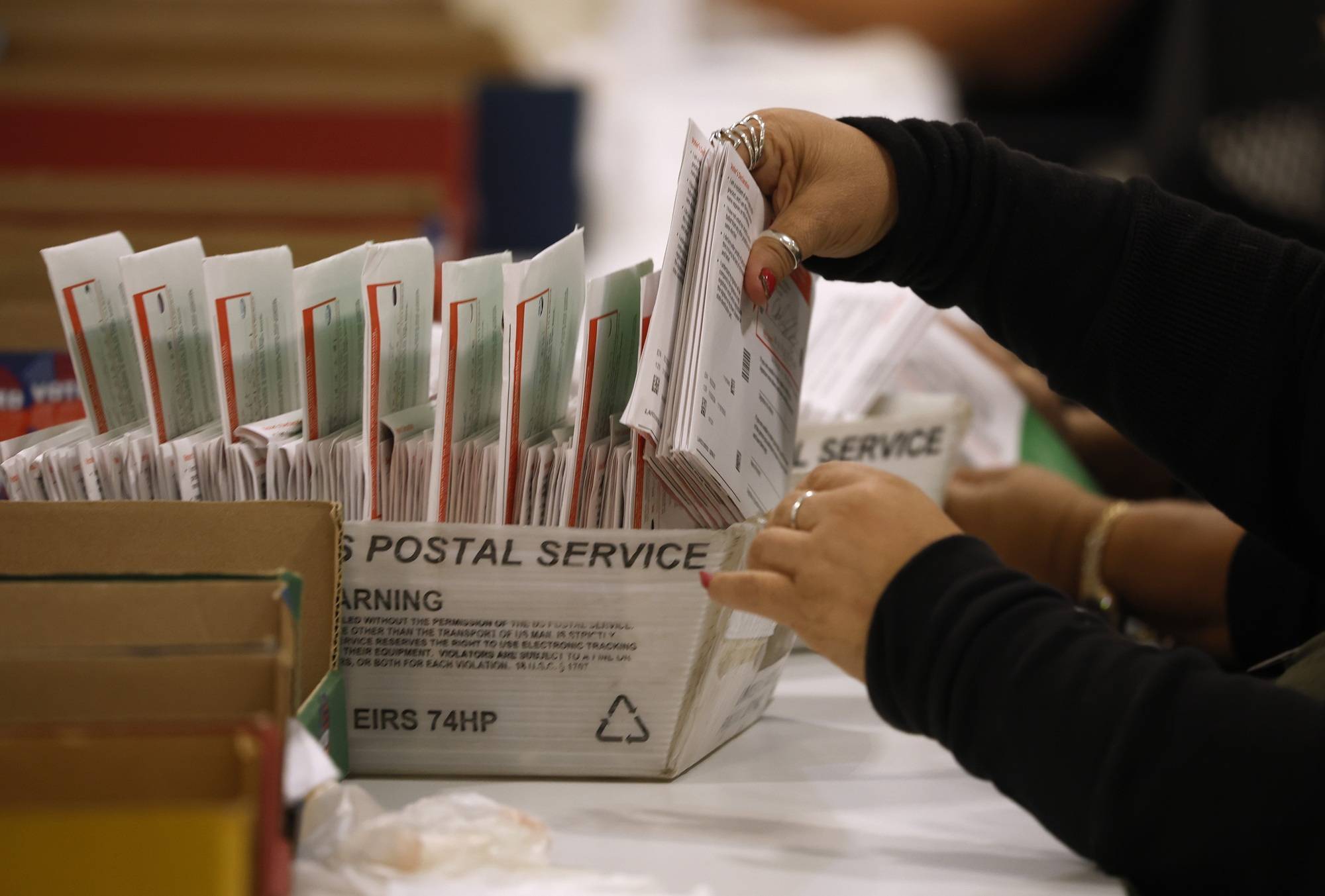
Compared with in-person voting, counting mail-in votes takes more time and resources after the ballots are returned. Those ballots have to be reviewed for proper signatures, opened and prepared for the count — tasks that require more workers and machines.
County election officials have said that with greater resources, they could expedite their count, as Gov. Gavin Newsom urged last month. The California Voter Foundation, an election advocacy group, asked for $91.1 million for election offices in the upcoming state budget, including $55.5 million to hire additional staffers, purchase equipment and add office space, and $35 million to promote early ballot returns.
“The state has done a very good job of providing voters with lots of access and lots of opportunities to vote and protections to make sure their ballot gets counted,” said Kim Alexander, the foundation’s president. “But they haven’t done a good job of giving the counties the resources that they need to implement those protections and that accessibility.”
Alexander pointed to the 2020 general election as a shining example of getting what you pay for. That year, with a massive infusion of federal and state dollars, saw sky-high turnout, the fastest vote count this decade and record-low rates of rejected ballots.
But it remains to be seen whether the budget that Newsom and legislative leaders are negotiating will have any new funding for election administration.
The spending plan approved by the state Legislature this week sets aside $5 million for voter outreach and education. But Alexander said she hasn’t heard a commitment for any extra election administration dollars.
Newsom and legislators have the rest of the month to reach a budget deal before the next fiscal year begins July 1.
Alter voter behavior
California law allows mailed ballots that are postmarked on Election Day to be counted even if they arrive up to a week later.
But it’s not necessarily those later-arriving ballots that are to blame for the state’s vote-counting logjam.
The bigger issue — and representing a much larger share of votes — is the crunch of ballots that voters return on Election Day and the days before. On June 5, the Friday after Election Day, California counties reported that over 2.5 million ballots received through Election Day remained uncounted — compared to just under 400,000 received after Election Day.
“I think in today’s world, we are wanting more expedited results, and the way we would get those are early mail-in ballots,” Assemblymember Natasha Johnson, R-Lake Elsinore, said. “That’s the story I think we need to start telling and sharing: Vote by mail and vote early.”
But voter behavior can take time to change — and it can vary in response to the contours of a particular race. In this year’s competitive primary for governor, for example, many Democrats held on to their ballots longer than usual as they weighed the candidates’ chances in a fast-shifting field.
Enact legislative changes
Some state lawmakers are looking to change the rules around mail-in voting in hopes of speeding up the count.
Senate Bill 1420 from Sen. Laura Richardson, D-San Pedro, would make it easier for counties to adopt a system known as “sign, scan and go.” The program allows voters to fill out their ballot at home, bring it to a voting location and provide their signature on the spot — a hybrid of vote-by-mail and in-person voting.
Richardson said the bill “could potentially avoid the delay of doing the verification on the back end when it’s a part of thousands and thousands of other ballots.”
Placer County used the system in November 2024 and reported saving 3 1/2 days of ballot counting.
But Matt Moreles, registrar of voters in Santa Clara County, said the program might not be a good fit for large counties like his, which had more than three times as many votes cast as rural Placer County in November 2024.
Instead of handing off their ballot in a signed envelope to an election worker or dropping it in a box, voters would have to line up and provide their signatures.
“You really are just trading one problem for another,” Moreles said. “Yes, you might save a little bit of time in signature checking on the back end, but you’re going to have longer lines at vote centers or polling places.”
Moreles said not enough attention is paid to the fact that voters overwhelmingly prefer to fill out their ballot at home. The pandemic that spurred California’s adoption of universal vote-by-mail has passed, and Californians are now well aware of the lag in counting that comes with voting at home, yet less than a quarter of voters statewide have returned to casting their vote at a polling place.
“I think about it this way,” Moreles said. “If you have something where 95% of my voters are choosing this as the way that they want to cast their ballot, I think that’s a resounding success, right?”