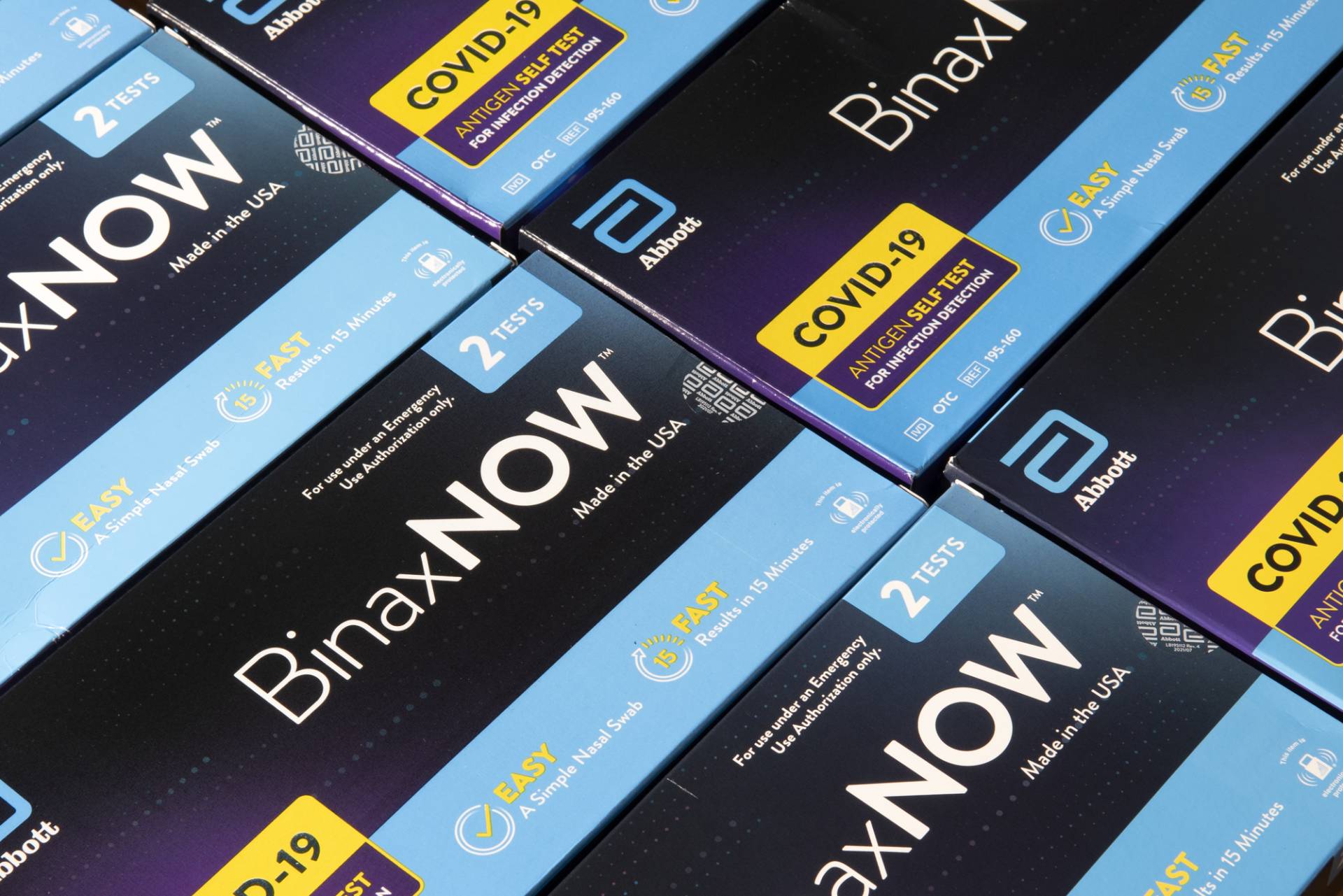
Keep reading for what you need to know about COVID-19 incubation periods in 2024, why an early negative test could be a false result, and what to do if you’re caught in a “Wait, so do I have COVID or not?” testing limbo.
It could take more time to test positive for COVID-19 than in years past
Some medical experts say they’ve noticed that at this stage of the pandemic, it’s often taking much longer for people to get a positive test result on an at-home COVID-19 antigen test. In other words, they’re observing that people with COVID-19 symptoms are taking an antigen test and getting a negative result — only to get a positive result on a different test several days later.
This means that many people could wrongly assume they don’t have COVID-19 after that first negative test and then inadvertently spread the virus to friends and family.
Dr. Peter Chin-Hong, an infectious disease expert at UCSF, said he and his colleagues are now “seeing people take longer to get a positive test” even though they have COVID-19 symptoms. Dr. Elizabeth Hudson, regional chief of infectious diseases at Kaiser Permanente Southern California, told the Los Angeles Times that she’s also noticed this delay — and that a patient might not get a positive test result up until the fourth day after the start of their symptoms.
But there’s a confusing additional aspect to this too: “Paradoxically,” said Chin-Hong, incubation times for the virus have gotten shorter throughout the pandemic. This means people have tested positive for COVID-19 more quickly than in 2020, when the average incubation period was five days because the incubation period has changed with each new variant. Chin-Hong’s advice in the last year has been that if you’re having COVID-19 symptoms, it now makes sense to take a test as early as two days after exposure.
So how do shorter incubation times square with this newly observed delay on positive COVID-19 tests?
Your COVID-19 symptoms might be starting earlier
Right now, experts aren’t 100% sure why antigen tests are taking longer to return a positive COVID-19 result. But Chin-Hong said that the hypothesis that makes sense to him is less about the efficacy of the antigen tests themselves and way more about how much quicker someone with COVID-19 might develop symptoms in 2024 than they would have done in 2020.
As a reminder, those symptoms are the sign that your body’s immune system is mounting a response to an invading virus — and back at the start of the pandemic, by the time you developed COVID-19 symptoms and took a test it would probably already be positive, Chin-Hong said.
But at this stage of the pandemic, most of us now have “a lot of immune experience” with COVID-19, Chin-Hong said — and the average person’s immune system is increasingly “on guard” and “activated more than in 2020,” he said. So when your body detects a burgeoning coronavirus infection now, “your whole immune system just gets agitated and active, and you begin to get sick sooner, but you actually don’t have as much virus in your blood yet,” Chin-Hong said.
Dr. Abraar Karan, an infectious disease physician and researcher at Stanford University, also put it this way for NPR: “With our immune systems primed, the body’s response [now] comes much more quickly than it would have back in 2020 when SARS-CoV-2 was a novel pathogen.”
And because many of us take a COVID-19 test when we start to feel sick, we might be testing way too early at that time for an at-home antigen kit to successfully detect enough virus inside us. This mismatch between when your symptoms start and when you’ve enough virus present in your body to result in a positive COVID-19 test “was started to be observed in early omicron, but I think it just seems more accentuated now,” Chin-Hong said.
However, Hudson of Kaiser Permanente Southern California told the L.A. Times that for her, this delay in positive tests might be attributable to people’s accumulated immunity from COVID-19 over the years — either from getting infected or getting vaccinated.
“It’s actually pushing back the time that people’s COVID tests are coming up positive,” Hudson said.
The bottom line is: If you’re testing because you’ve started feeling unwell, it’s unwise to assume in 2024 that a negative result automatically means you don’t have COVID-19, because you might just be testing too early.
So … what should I do if my first COVID-19 test is negative?
Experiencing the onset of symptoms that feel like COVID-19 is unpleasant and worrying enough. And now, this new possible delay around even knowing if you have COVID-19 adds another element of frustration and uncertainty to what’s already a stressful situation. Even if you’ve been able to find free COVID-19 tests being given away or by order from the U.S. government via USPS, one COVID-19 scare in a family can run through that stockpile pretty fast — and the cost of purchasing new COVID-19 antigen kits can really add up.
If you’re in the limbo of not knowing whether you actually have COVID-19 yet, here’s what to do:
If your first test is negative for COVID-19, test again later
If you have symptoms but have tested negative, don’t assume it means you’re COVID-free. The CDC recommends that you take another antigen test 48 hours later and then test again after another 48 hours.
Chin-Hong advises that you can also seek out a PCR test, which is more sensitive.
While you’re unsure, play it safe
If you have symptoms and don’t know why yet for sure, stay home as much as you can. If you truly can’t stay indoors and away from others, wear a well-fitted mask to protect your community and try to ensure you’re in well-ventilated spaces.
Be especially careful not to spread any virus around folks who are at higher risk for serious illness or hospitalization from COVID-19, which includes older people, immunocompromised and disabled people.
Remember: Just because it’s not COVID-19 doesn’t mean you’re not still sick
Even if you turn out not to have COVID-19 after several days of testing but you’re still experiencing symptoms, you might still be infected with one of the other highly infectious winter respiratory viruses out there like flu, RSV or a bad cold. And if you’re sick, you could easily infect your friends, family or colleagues with whatever you’re suffering from.
Give yourself permission not to trust a friend’s negative test, too
What if it’s a friend who’s experiencing COVID-19 symptoms, and they’re insisting that they’re safe to meet with you because “they took a test and it’s negative”?
Knowing what you know — that it can sometimes take folks longer to get a positive COVID-19 test in 2024 — you should feel free to compassionately tell your friend that while you trust them, you can’t trust an early negative test right now. There’s a good chance that they have no idea that positive tests can be increasingly delayed and will be relieved to know that by staying home, they haven’t accidentally spread an infectious disease to you or other loved ones.
And if they disagree and insist they’re still safe to meet up? You should feel free to decline, even if it feels awkward. Remember, it’s not weird to not want to get COVID-19.
Stock up on free COVID-19 tests …
Finding a quick, free COVID-19 test — whether an at-home antigen test or a PCR test — has gotten progressively harder at this stage of the pandemic as more sites and services have shuttered. The federal government has, at least, restarted its free at-home COVID-test-ordering service through USPS, meaning you can once again order another four free antigen tests to be delivered to your door for a future time.
Read more about where to find free or low-cost COVID-19 tests this winter.
… but make sure your COVID-19 tests haven’t expired
Many of the COVID-19 tests being made available right now (for example, at your local public library) may be approaching their expiration date if they haven’t already passed it. And an expired test could give you an unreliable result.
You can check the FDA’s list of antigen test types to see whether the box you’re holding has had its shelf life extended by the manufacturer. The FDA said that if a test’s shelf life has been extended, it’s because the manufacturer has given the agency enough “data showing that the shelf-life is longer than was known when the test was first authorized.” (In other words, it’s still OK to use that test.)
Tell us: What else do you need information about?
At KQED News, we know that it can sometimes be hard to track down the answers to navigate life in the Bay Area. We’ve published clear, practical explainers and guides about COVID-19, how to cope with intense winter weather, and how to exercise your right to protest safely.
So tell us: What do you need to know more about? Tell us, and you could see your question answered online or on social media. What you submit will make our reporting stronger and help us decide what to cover here on our site and on KQED Public Radio, too.