What should you do if approached by police as an onlooker?
Your main priority is keeping yourself safe, ACLU’s Thacher said.
“So if the police attempt to interact with you at a public event, you should stay calm,” she said. “You shouldn’t run, or resist, or argue. Keep your hands where officers can see them.”
In a typical encounter, police may approach and try to talk to you. It’s important to establish whether you’re free to leave this interaction, or the police are in fact detaining you. If you ask an officer if you are free to go and they say yes, “just calmly walk away,” Thacher said.
“If they say, ‘No, you’re not free to go,’ that means that you’re under arrest,” confirmed Thacher.
In California, if you are not being arrested, you do not need to show your ID or give your name to a police officer when asked for it “although sometimes it’s a judgment call about whether that might arouse suspicion,” Lederman said. Officers can’t also ask about your immigrant status.
What if I’m arrested by police as an onlooker?
At that point, ACLU’S Thacher recommends that you reply, “‘I’m not going to answer any questions. I’d like to talk to a lawyer.’ Say this as respectfully and as calmly as you can at that moment.”
“And if you end up being put under arrest, always ask the officers, ‘Why?’ Don’t try to argue. ‘Why am I being arrested?’ And then say you wish to remain silent after that,” Thacher said.
“The main advice that I would give is for anyone who was arrested [at the Dolores Hill bomb event is] if they’re asked to give a statement by the district attorney or juvenile probation or the police there, they’re not required to give a statement, or submit to an interview,” Lederman said. She would advise not giving such a statement or interview “without getting advice from an attorney.”
“If you are detained and the police say you’re not free to leave, you still don’t have to give a statement or submit or answer any questions,” said Lederman.
“If police are seeking to question you when you’re under arrest, when you’re taken into the jail, you will have to answer some basic booking questions,” said Lederman. “But you don’t have to answer questions about the incident that has led to your arrest. Only a judge can order you to answer questions.
What if you forget this advice in the moment, and begin talking to the police? Even after you’ve done this, “you can still invoke your right to remain silent,” Lederman said.
Where can I find a free attorney?
If you are lower-income or if you are under 18, you’re entitled to a free lawyer, a public defender, or court-appointed free lawyer, affirms Lederman.
You can find pro bono (free) legal services for the San Francisco Bay Area in this resource from the State Bar of California.
Can the police search my belongings?
Because police may try to conduct a search, and track you down at an event in order to do so, Lederman said that “it’s a good idea to actually say out loud, ‘I do not consent to a search.’ Because silence can be interpreted as consent.”
Even if your instinct is to cooperate, you can still say no, said Lederman — who also notes that “in general, police are more likely to ask for consent when they don’t have the legal right to do a search without your consent.”
For that reason, she said, “it’s really best just to decline and say ‘I don’t consent to a search.’ Even if they start searching, it’s important to just verbalize that you don’t consent.”
Lederman said it is important not to physically resist the search, because it could result in getting hurt or getting an extra criminal charge.
“If you are actually under arrest, the police can search your person and they can search the belongings that you have with you without your consent, and without a warrant,” Lederman said.
What about your phone? Lederman said that if the police don’t have a warrant, they can take your phone from you, “but if they ask you to unlock your phone, you don’t have to do that.”
If you’re heading into a situation that may potentially become intense or volatile, like a protest, technology and civil rights experts often recommend you investigate ways to temporarily turn off your phone’s ability to be unlocked with Face ID or your fingerprint — because these unlocking techniques may allow anyone, including the police, to try to access your phone by holding it up to your face, or putting your thumb on it. Instead, you might consider using a multi-digit passcode to unlock your phone, which you cannot be forced to give.
Can I record the police?
“There’s a clearly established right in California, and pretty much all over the country, to record or video police action,” Lederman said.
Remember that if you’re so close to a police officer that you’re actually interfering with or obstructing their action, “You could get in trouble for that” said Lederman. “But you have a clear legal right — a First Amendment right — to video the police.”
“Videotaping and recording is a really good tool for police accountability,” Lederman said. “We can’t really count on the police body cameras to fill that need necessarily because police can switch them on and off. They don’t necessarily capture everything: So the citizen footage can be quite important.
KQED has a lengthy explainer on your rights to record the police — and how to stay safe doing it and what possible pitfalls there are.
Thacher said people should remember the details of problematic encounters with the police they might be troubled by.
“Try to include the time, the date, the location, the officers’ badges and patrol car numbers,” she advised. “Just that information can be helpful.”
Document any injuries you’ve sustained as an onlooker
If a person has been injured — “for example, by the plastic zip tie handcuffs” that appear to have been used on minors by police at the Dolores Hill bomb — they should document these injuries with photographs ASAP, Lederman said. People should document if they have marks or any continuing problems with those injuries and what medical attention they got to take care of them if they wish to seek compensation for them.
People should also document things like missing work, or having to seek counseling.
“If kids were forced to miss work, like older teenagers, or if parents have to take off work in order to deal with this? I would just document all that,” Lederman said.
What should parents and caregivers know about minors being arrested at an event like the Dolores Hill bomb?
Lederman said while kids are being held by the police, “there’s just not a lot that the parents can do” — besides calling and going to the station.
“There was a sizable group of parents who went out to try to pick up their kids, even while the kids were being held for hours and hours just sitting on the street,” Lederman said. “The police refused to release the kids to their parents, and instead put them on buses to drive them to Mission Station, which is just very close to where they’re being held [at the event].”
Because of police choosing to do a full processing on these minors, Lederman said, “some of the kids didn’t get out until four in the morning. I heard about kids having to walk home by themselves.”
“The police didn’t call families until maybe just before they were going to release the kids and so, because they had taken the kids’ phones when they detained them, really a lot of these children were just held incommunicado — and parents didn’t know where they were,” said Lederman.
Here’s what parents and caregiver can do in a situation like this:
Seek counseling, document any injuries
Lederman recommends that if possible, parents and caregivers explore seeking counseling for their kids if they were arrested at the Dolores Hill bomb — and again, that any injuries are documented swiftly.
Resist the impulse to insert yourself at the police station
Thacher said families should “not to try to go to the police station and explain your child’s current conduct, or what you view your child’s conduct was.”
”Really, it’s better to remain silent and get a lawyer and figure out what happened,” she advised.
Prep your kids for a situation like this
People who’ve been arrested have the right to make a phone call, and for this reason, your child should be able to memorize their parents’ or caretakers’ number. Because of kids’ access to cellphones, knowing a parent’s number by heart is not as common as it once was, notes Thacher.
Also, make sure kids know their rights around the police.
Contact your local officials
Lederman said parents should think about reaching out to their officials “demanding that not only the charges be dropped, but there should be some accountability.”
For Lederman, the police action at the Dolores Hill bomb is “clearly just using these children as political pawns to try to seem tough on crime,” and if people feel similarly, she advises them to contact Mayor London Breed’s office to communicate that this “isn’t something that the people that vote in San Francisco are going to tolerate.”
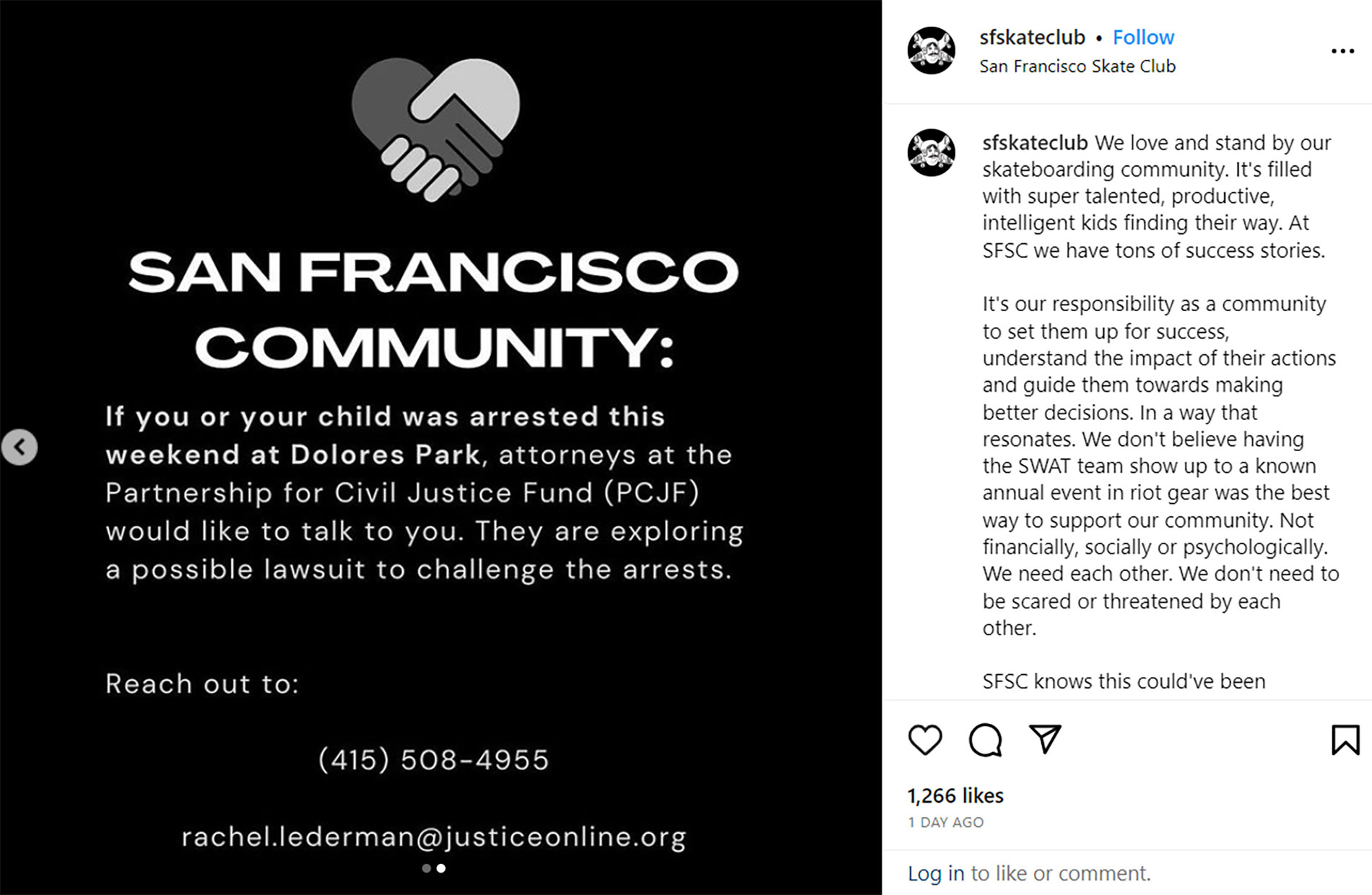
Thacher said if people were to be swept up in an event like this, they are invited to contact a civil liberties organization for advice and potential legal next steps:
Tell us: What else do you need information about?
At KQED News, we know that it can sometimes be hard to track down the answers to navigate life in the Bay Area in 2023. We’ve published clear, practical explainers and guides about COVID, how to cope with intense winter weather and how to exercise your right to protest safely.
So tell us: What do you need to know more about? Tell us, and you could see your question answered online or on social media. What you submit will make our reporting stronger, and help us decide what to cover here on our site, and on KQED Public Radio, too.