window.__IS_SSR__=true
window.__INITIAL_STATE__={
"attachmentsReducer": {
"audio_0": {
"type": "attachments",
"id": "audio_0",
"imgSizes": {
"kqedFullSize": {
"file": "https://ww2.kqed.org/news/wp-content/themes/KQED-unified/img/audio_bgs/background0.jpg"
}
}
},
"audio_1": {
"type": "attachments",
"id": "audio_1",
"imgSizes": {
"kqedFullSize": {
"file": "https://ww2.kqed.org/news/wp-content/themes/KQED-unified/img/audio_bgs/background1.jpg"
}
}
},
"audio_2": {
"type": "attachments",
"id": "audio_2",
"imgSizes": {
"kqedFullSize": {
"file": "https://ww2.kqed.org/news/wp-content/themes/KQED-unified/img/audio_bgs/background2.jpg"
}
}
},
"audio_3": {
"type": "attachments",
"id": "audio_3",
"imgSizes": {
"kqedFullSize": {
"file": "https://ww2.kqed.org/news/wp-content/themes/KQED-unified/img/audio_bgs/background3.jpg"
}
}
},
"audio_4": {
"type": "attachments",
"id": "audio_4",
"imgSizes": {
"kqedFullSize": {
"file": "https://ww2.kqed.org/news/wp-content/themes/KQED-unified/img/audio_bgs/background4.jpg"
}
}
},
"placeholder": {
"type": "attachments",
"id": "placeholder",
"imgSizes": {
"thumbnail": {
"file": "https://cdn.kqed.org/wp-content/uploads/2024/12/KQED-Default-Image-816638274-2000x1333-1-160x107.jpg",
"width": 160,
"height": 107,
"mimeType": "image/jpeg"
},
"medium": {
"file": "https://cdn.kqed.org/wp-content/uploads/2024/12/KQED-Default-Image-816638274-2000x1333-1-800x533.jpg",
"width": 800,
"height": 533,
"mimeType": "image/jpeg"
},
"medium_large": {
"file": "https://cdn.kqed.org/wp-content/uploads/2024/12/KQED-Default-Image-816638274-2000x1333-1-768x512.jpg",
"width": 768,
"height": 512,
"mimeType": "image/jpeg"
},
"large": {
"file": "https://cdn.kqed.org/wp-content/uploads/2024/12/KQED-Default-Image-816638274-2000x1333-1-1020x680.jpg",
"width": 1020,
"height": 680,
"mimeType": "image/jpeg"
},
"1536x1536": {
"file": "https://cdn.kqed.org/wp-content/uploads/2024/12/KQED-Default-Image-816638274-2000x1333-1-1536x1024.jpg",
"width": 1536,
"height": 1024,
"mimeType": "image/jpeg"
},
"fd-lrg": {
"file": "https://cdn.kqed.org/wp-content/uploads/2024/12/KQED-Default-Image-816638274-2000x1333-1-1536x1024.jpg",
"width": 1536,
"height": 1024,
"mimeType": "image/jpeg"
},
"fd-med": {
"file": "https://cdn.kqed.org/wp-content/uploads/2024/12/KQED-Default-Image-816638274-2000x1333-1-1020x680.jpg",
"width": 1020,
"height": 680,
"mimeType": "image/jpeg"
},
"fd-sm": {
"file": "https://cdn.kqed.org/wp-content/uploads/2024/12/KQED-Default-Image-816638274-2000x1333-1-800x533.jpg",
"width": 800,
"height": 533,
"mimeType": "image/jpeg"
},
"post-thumbnail": {
"file": "https://cdn.kqed.org/wp-content/uploads/2024/12/KQED-Default-Image-816638274-2000x1333-1-672x372.jpg",
"width": 672,
"height": 372,
"mimeType": "image/jpeg"
},
"twentyfourteen-full-width": {
"file": "https://cdn.kqed.org/wp-content/uploads/2024/12/KQED-Default-Image-816638274-2000x1333-1-1038x576.jpg",
"width": 1038,
"height": 576,
"mimeType": "image/jpeg"
},
"xxsmall": {
"file": "https://cdn.kqed.org/wp-content/uploads/2024/12/KQED-Default-Image-816638274-2000x1333-1-160x107.jpg",
"width": 160,
"height": 107,
"mimeType": "image/jpeg"
},
"xsmall": {
"file": "https://cdn.kqed.org/wp-content/uploads/2024/12/KQED-Default-Image-816638274-2000x1333-1-672x372.jpg",
"width": 672,
"height": 372,
"mimeType": "image/jpeg"
},
"small": {
"file": "https://cdn.kqed.org/wp-content/uploads/2024/12/KQED-Default-Image-816638274-2000x1333-1-672x372.jpg",
"width": 672,
"height": 372,
"mimeType": "image/jpeg"
},
"xlarge": {
"file": "https://cdn.kqed.org/wp-content/uploads/2024/12/KQED-Default-Image-816638274-2000x1333-1-1020x680.jpg",
"width": 1020,
"height": 680,
"mimeType": "image/jpeg"
},
"full-width": {
"file": "https://cdn.kqed.org/wp-content/uploads/2024/12/KQED-Default-Image-816638274-2000x1333-1-1920x1280.jpg",
"width": 1920,
"height": 1280,
"mimeType": "image/jpeg"
},
"guest-author-32": {
"file": "https://cdn.kqed.org/wp-content/uploads/2025/01/KQED-Default-Image-816638274-1333x1333-1-160x160.jpg",
"width": 32,
"height": 32,
"mimeType": "image/jpeg"
},
"guest-author-50": {
"file": "https://cdn.kqed.org/wp-content/uploads/2025/01/KQED-Default-Image-816638274-1333x1333-1-160x160.jpg",
"width": 50,
"height": 50,
"mimeType": "image/jpeg"
},
"guest-author-64": {
"file": "https://cdn.kqed.org/wp-content/uploads/2025/01/KQED-Default-Image-816638274-1333x1333-1-160x160.jpg",
"width": 64,
"height": 64,
"mimeType": "image/jpeg"
},
"guest-author-96": {
"file": "https://cdn.kqed.org/wp-content/uploads/2025/01/KQED-Default-Image-816638274-1333x1333-1-160x160.jpg",
"width": 96,
"height": 96,
"mimeType": "image/jpeg"
},
"guest-author-128": {
"file": "https://cdn.kqed.org/wp-content/uploads/2025/01/KQED-Default-Image-816638274-1333x1333-1-160x160.jpg",
"width": 128,
"height": 128,
"mimeType": "image/jpeg"
},
"detail": {
"file": "https://cdn.kqed.org/wp-content/uploads/2025/01/KQED-Default-Image-816638274-1333x1333-1-160x160.jpg",
"width": 160,
"height": 160,
"mimeType": "image/jpeg"
},
"kqedFullSize": {
"file": "https://cdn.kqed.org/wp-content/uploads/2024/12/KQED-Default-Image-816638274-2000x1333-1.jpg",
"width": 2000,
"height": 1333
}
}
},
"mindshift_55056": {
"type": "attachments",
"id": "mindshift_55056",
"meta": {
"index": "attachments_1716263798",
"site": "mindshift",
"id": "55056",
"found": true
},
"parent": 55052,
"imgSizes": {
"twentyfourteen-full-width": {
"file": "https://ww2.kqed.org/app/uploads/sites/23/2019/12/iStock-820815104-1038x576.jpg",
"width": 1038,
"mimeType": "image/jpeg",
"height": 576
},
"thumbnail": {
"file": "https://ww2.kqed.org/app/uploads/sites/23/2019/12/iStock-820815104-160x161.jpg",
"width": 160,
"mimeType": "image/jpeg",
"height": 161
},
"post-thumbnail": {
"file": "https://ww2.kqed.org/app/uploads/sites/23/2019/12/iStock-820815104-672x372.jpg",
"width": 672,
"mimeType": "image/jpeg",
"height": 372
},
"kqedFullSize": {
"file": "https://ww2.kqed.org/app/uploads/sites/23/2019/12/iStock-820815104.jpg",
"width": 1725,
"height": 1738
},
"large": {
"file": "https://ww2.kqed.org/app/uploads/sites/23/2019/12/iStock-820815104-1020x1028.jpg",
"width": 1020,
"mimeType": "image/jpeg",
"height": 1028
},
"complete_open_graph": {
"file": "https://ww2.kqed.org/app/uploads/sites/23/2019/12/iStock-820815104-1191x1200.jpg",
"width": 1191,
"mimeType": "image/jpeg",
"height": 1200
},
"medium": {
"file": "https://ww2.kqed.org/app/uploads/sites/23/2019/12/iStock-820815104-800x806.jpg",
"width": 800,
"mimeType": "image/jpeg",
"height": 806
},
"medium_large": {
"file": "https://ww2.kqed.org/app/uploads/sites/23/2019/12/iStock-820815104-768x774.jpg",
"width": 768,
"mimeType": "image/jpeg",
"height": 774
}
},
"publishDate": 1576480836,
"modified": 1576480934,
"caption": "Hand Drawn Brain Lightning Bolts. Vector illustration",
"description": null,
"title": "Hand Drawn Brain Lightning Bolts. Vector",
"credit": "idimair/iStock",
"status": "inherit",
"isLoading": false,
"fetchFailed": false
},
"mindshift_54467": {
"type": "attachments",
"id": "mindshift_54467",
"meta": {
"index": "attachments_1716263798",
"site": "mindshift",
"id": "54467",
"found": true
},
"parent": 54461,
"imgSizes": {
"twentyfourteen-full-width": {
"file": "https://ww2.kqed.org/app/uploads/sites/23/2019/09/authentic-school-learning-1038x576.jpg",
"width": 1038,
"mimeType": "image/jpeg",
"height": 576
},
"thumbnail": {
"file": "https://ww2.kqed.org/app/uploads/sites/23/2019/09/authentic-school-learning-160x90.jpg",
"width": 160,
"mimeType": "image/jpeg",
"height": 90
},
"post-thumbnail": {
"file": "https://ww2.kqed.org/app/uploads/sites/23/2019/09/authentic-school-learning-672x372.jpg",
"width": 672,
"mimeType": "image/jpeg",
"height": 372
},
"kqedFullSize": {
"file": "https://ww2.kqed.org/app/uploads/sites/23/2019/09/authentic-school-learning.jpg",
"width": 1920,
"height": 1080
},
"large": {
"file": "https://ww2.kqed.org/app/uploads/sites/23/2019/09/authentic-school-learning-1020x574.jpg",
"width": 1020,
"mimeType": "image/jpeg",
"height": 574
},
"complete_open_graph": {
"file": "https://ww2.kqed.org/app/uploads/sites/23/2019/09/authentic-school-learning-1200x675.jpg",
"width": 1200,
"mimeType": "image/jpeg",
"height": 675
},
"full-width": {
"file": "https://ww2.kqed.org/app/uploads/sites/23/2019/09/authentic-school-learning-1920x1080.jpg",
"width": 1920,
"mimeType": "image/jpeg",
"height": 1080
},
"medium": {
"file": "https://ww2.kqed.org/app/uploads/sites/23/2019/09/authentic-school-learning-800x450.jpg",
"width": 800,
"mimeType": "image/jpeg",
"height": 450
},
"medium_large": {
"file": "https://ww2.kqed.org/app/uploads/sites/23/2019/09/authentic-school-learning-768x432.jpg",
"width": 768,
"mimeType": "image/jpeg",
"height": 432
}
},
"publishDate": 1568850300,
"modified": 1568850356,
"caption": "Ninth-grade students assemble robots at MC2 STEM High School.",
"description": "Ninth-grade students assemble robots at MC2 STEM High School.",
"title": "authentic-school-learning",
"credit": "Courtesy of Allison Shelley/\u003ca href=\"https://www.flickr.com/photos/all4ed/35694191023/in/album-72157687378950276/\">The Verbatim Agency for American Education: Images of Teachers and Students in Action\u003c/a>",
"status": "inherit",
"isLoading": false,
"fetchFailed": false
},
"mindshift_54411": {
"type": "attachments",
"id": "mindshift_54411",
"meta": {
"index": "attachments_1716263798",
"site": "mindshift",
"id": "54411",
"found": true
},
"parent": 54378,
"imgSizes": {
"twentyfourteen-full-width": {
"file": "https://ww2.kqed.org/app/uploads/sites/23/2019/09/iStock-695160826-1038x576.jpg",
"width": 1038,
"mimeType": "image/jpeg",
"height": 576
},
"thumbnail": {
"file": "https://ww2.kqed.org/app/uploads/sites/23/2019/09/iStock-695160826-160x107.jpg",
"width": 160,
"mimeType": "image/jpeg",
"height": 107
},
"post-thumbnail": {
"file": "https://ww2.kqed.org/app/uploads/sites/23/2019/09/iStock-695160826-672x372.jpg",
"width": 672,
"mimeType": "image/jpeg",
"height": 372
},
"kqedFullSize": {
"file": "https://ww2.kqed.org/app/uploads/sites/23/2019/09/iStock-695160826-e1568618577737.jpg",
"width": 1920,
"height": 1280
},
"large": {
"file": "https://ww2.kqed.org/app/uploads/sites/23/2019/09/iStock-695160826-1020x680.jpg",
"width": 1020,
"mimeType": "image/jpeg",
"height": 680
},
"complete_open_graph": {
"file": "https://ww2.kqed.org/app/uploads/sites/23/2019/09/iStock-695160826-1200x800.jpg",
"width": 1200,
"mimeType": "image/jpeg",
"height": 800
},
"full-width": {
"file": "https://ww2.kqed.org/app/uploads/sites/23/2019/09/iStock-695160826-1920x1280.jpg",
"width": 1920,
"mimeType": "image/jpeg",
"height": 1280
},
"medium": {
"file": "https://ww2.kqed.org/app/uploads/sites/23/2019/09/iStock-695160826-800x533.jpg",
"width": 800,
"mimeType": "image/jpeg",
"height": 533
},
"medium_large": {
"file": "https://ww2.kqed.org/app/uploads/sites/23/2019/09/iStock-695160826-768x512.jpg",
"width": 768,
"mimeType": "image/jpeg",
"height": 512
}
},
"publishDate": 1568618545,
"modified": 1568618565,
"caption": null,
"description": null,
"title": "iStock-695160826",
"credit": "Bet_Noire/iStock",
"status": "inherit",
"isLoading": false,
"fetchFailed": false
},
"mindshift_53419": {
"type": "attachments",
"id": "mindshift_53419",
"meta": {
"index": "attachments_1716263798",
"site": "mindshift",
"id": "53419",
"found": true
},
"parent": 53417,
"imgSizes": {
"twentyfourteen-full-width": {
"file": "https://ww2.kqed.org/app/uploads/sites/23/2019/04/7-Teacher-Librarian-1038x576.png",
"width": 1038,
"mimeType": "image/png",
"height": 576
},
"thumbnail": {
"file": "https://ww2.kqed.org/app/uploads/sites/23/2019/04/7-Teacher-Librarian-160x120.png",
"width": 160,
"mimeType": "image/png",
"height": 120
},
"post-thumbnail": {
"file": "https://ww2.kqed.org/app/uploads/sites/23/2019/04/7-Teacher-Librarian-672x372.png",
"width": 672,
"mimeType": "image/png",
"height": 372
},
"kqedFullSize": {
"file": "https://ww2.kqed.org/app/uploads/sites/23/2019/04/7-Teacher-Librarian.png",
"width": 2048,
"height": 1536
},
"large": {
"file": "https://ww2.kqed.org/app/uploads/sites/23/2019/04/7-Teacher-Librarian-1020x765.png",
"width": 1020,
"mimeType": "image/png",
"height": 765
},
"complete_open_graph": {
"file": "https://ww2.kqed.org/app/uploads/sites/23/2019/04/7-Teacher-Librarian-1200x900.png",
"width": 1200,
"mimeType": "image/png",
"height": 900
},
"guest-author-50": {
"file": "https://ww2.kqed.org/app/uploads/sites/23/2019/04/7-Teacher-Librarian-50x50.png",
"width": 50,
"mimeType": "image/png",
"height": 50
},
"guest-author-96": {
"file": "https://ww2.kqed.org/app/uploads/sites/23/2019/04/7-Teacher-Librarian-96x96.png",
"width": 96,
"mimeType": "image/png",
"height": 96
},
"medium": {
"file": "https://ww2.kqed.org/app/uploads/sites/23/2019/04/7-Teacher-Librarian-800x600.png",
"width": 800,
"mimeType": "image/png",
"height": 600
},
"guest-author-64": {
"file": "https://ww2.kqed.org/app/uploads/sites/23/2019/04/7-Teacher-Librarian-64x64.png",
"width": 64,
"mimeType": "image/png",
"height": 64
},
"guest-author-32": {
"file": "https://ww2.kqed.org/app/uploads/sites/23/2019/04/7-Teacher-Librarian-32x32.png",
"width": 32,
"mimeType": "image/png",
"height": 32
},
"full-width": {
"file": "https://ww2.kqed.org/app/uploads/sites/23/2019/04/7-Teacher-Librarian-1920x1440.png",
"width": 1920,
"mimeType": "image/png",
"height": 1440
},
"medium_large": {
"file": "https://ww2.kqed.org/app/uploads/sites/23/2019/04/7-Teacher-Librarian-768x576.png",
"width": 768,
"mimeType": "image/png",
"height": 576
},
"guest-author-128": {
"file": "https://ww2.kqed.org/app/uploads/sites/23/2019/04/7-Teacher-Librarian-128x128.png",
"width": 128,
"mimeType": "image/png",
"height": 128
}
},
"publishDate": 1554849493,
"modified": 1554849719,
"caption": "Your school's librarian could be a wonderful asset and support to your classroom teaching.",
"description": null,
"title": "7 Teacher Librarian",
"credit": "Courtesy \u003ca href=\"https://twitter.com/trev_mackenzie\">Trevor MacKenzie\u003c/a> and \u003ca href=\"https://twitter.com/rbathursthunt\">Rebecca Bathurst-Hunt\u003c/a>",
"status": "inherit",
"isLoading": false,
"fetchFailed": false
},
"mindshift_53333": {
"type": "attachments",
"id": "mindshift_53333",
"meta": {
"index": "attachments_1716263798",
"site": "mindshift",
"id": "53333",
"found": true
},
"parent": 53331,
"imgSizes": {
"twentyfourteen-full-width": {
"file": "https://ww2.kqed.org/app/uploads/sites/23/2019/03/middle-school-hands-on-science-curriculum-1038x576.jpg",
"width": 1038,
"mimeType": "image/jpeg",
"height": 576
},
"thumbnail": {
"file": "https://ww2.kqed.org/app/uploads/sites/23/2019/03/middle-school-hands-on-science-curriculum-160x107.jpg",
"width": 160,
"mimeType": "image/jpeg",
"height": 107
},
"post-thumbnail": {
"file": "https://ww2.kqed.org/app/uploads/sites/23/2019/03/middle-school-hands-on-science-curriculum-672x372.jpg",
"width": 672,
"mimeType": "image/jpeg",
"height": 372
},
"kqedFullSize": {
"file": "https://ww2.kqed.org/app/uploads/sites/23/2019/03/middle-school-hands-on-science-curriculum.jpg",
"width": 5616,
"height": 3744
},
"large": {
"file": "https://ww2.kqed.org/app/uploads/sites/23/2019/03/middle-school-hands-on-science-curriculum-1020x680.jpg",
"width": 1020,
"mimeType": "image/jpeg",
"height": 680
},
"complete_open_graph": {
"file": "https://ww2.kqed.org/app/uploads/sites/23/2019/03/middle-school-hands-on-science-curriculum-1200x800.jpg",
"width": 1200,
"mimeType": "image/jpeg",
"height": 800
},
"guest-author-50": {
"file": "https://ww2.kqed.org/app/uploads/sites/23/2019/03/middle-school-hands-on-science-curriculum-50x50.jpg",
"width": 50,
"mimeType": "image/jpeg",
"height": 50
},
"guest-author-96": {
"file": "https://ww2.kqed.org/app/uploads/sites/23/2019/03/middle-school-hands-on-science-curriculum-96x96.jpg",
"width": 96,
"mimeType": "image/jpeg",
"height": 96
},
"medium": {
"file": "https://ww2.kqed.org/app/uploads/sites/23/2019/03/middle-school-hands-on-science-curriculum-800x533.jpg",
"width": 800,
"mimeType": "image/jpeg",
"height": 533
},
"guest-author-64": {
"file": "https://ww2.kqed.org/app/uploads/sites/23/2019/03/middle-school-hands-on-science-curriculum-64x64.jpg",
"width": 64,
"mimeType": "image/jpeg",
"height": 64
},
"guest-author-32": {
"file": "https://ww2.kqed.org/app/uploads/sites/23/2019/03/middle-school-hands-on-science-curriculum-32x32.jpg",
"width": 32,
"mimeType": "image/jpeg",
"height": 32
},
"full-width": {
"file": "https://ww2.kqed.org/app/uploads/sites/23/2019/03/middle-school-hands-on-science-curriculum-1920x1280.jpg",
"width": 1920,
"mimeType": "image/jpeg",
"height": 1280
},
"medium_large": {
"file": "https://ww2.kqed.org/app/uploads/sites/23/2019/03/middle-school-hands-on-science-curriculum-768x512.jpg",
"width": 768,
"mimeType": "image/jpeg",
"height": 512
},
"guest-author-128": {
"file": "https://ww2.kqed.org/app/uploads/sites/23/2019/03/middle-school-hands-on-science-curriculum-128x128.jpg",
"width": 128,
"mimeType": "image/jpeg",
"height": 128
}
},
"publishDate": 1553627604,
"modified": 1553627724,
"caption": "Middle school students at ASMS do hands-on science inquiry in every unit they study.",
"description": null,
"title": "middle-school-hands-on-science-curriculum",
"credit": "Courtesy of \u003ca href=\"https://www.tasms.com/\">The Alternative School for Math and Science\u003c/a>",
"status": "inherit",
"isLoading": false,
"fetchFailed": false
},
"mindshift_52672": {
"type": "attachments",
"id": "mindshift_52672",
"meta": {
"index": "attachments_1716263798",
"site": "mindshift",
"id": "52672",
"found": true
},
"parent": 52669,
"imgSizes": {
"small": {
"file": "https://ww2.kqed.org/app/uploads/sites/23/2018/12/2018-year-end-520x390.jpg",
"width": 520,
"mimeType": "image/jpeg",
"height": 390
},
"twentyfourteen-full-width": {
"file": "https://ww2.kqed.org/app/uploads/sites/23/2018/12/2018-year-end-1038x576.jpg",
"width": 1038,
"mimeType": "image/jpeg",
"height": 576
},
"thumbnail": {
"file": "https://ww2.kqed.org/app/uploads/sites/23/2018/12/2018-year-end-160x120.jpg",
"width": 160,
"mimeType": "image/jpeg",
"height": 120
},
"fd-sm": {
"file": "https://ww2.kqed.org/app/uploads/sites/23/2018/12/2018-year-end-960x721.jpg",
"width": 960,
"mimeType": "image/jpeg",
"height": 721
},
"post-thumbnail": {
"file": "https://ww2.kqed.org/app/uploads/sites/23/2018/12/2018-year-end-672x372.jpg",
"width": 672,
"mimeType": "image/jpeg",
"height": 372
},
"xsmall": {
"file": "https://ww2.kqed.org/app/uploads/sites/23/2018/12/2018-year-end-375x282.jpg",
"width": 375,
"mimeType": "image/jpeg",
"height": 282
},
"kqedFullSize": {
"file": "https://ww2.kqed.org/app/uploads/sites/23/2018/12/2018-year-end.jpg",
"width": 1080,
"height": 811
},
"large": {
"file": "https://ww2.kqed.org/app/uploads/sites/23/2018/12/2018-year-end-1020x766.jpg",
"width": 1020,
"mimeType": "image/jpeg",
"height": 766
},
"guest-author-50": {
"file": "https://ww2.kqed.org/app/uploads/sites/23/2018/12/2018-year-end-50x50.jpg",
"width": 50,
"mimeType": "image/jpeg",
"height": 50
},
"guest-author-96": {
"file": "https://ww2.kqed.org/app/uploads/sites/23/2018/12/2018-year-end-96x96.jpg",
"width": 96,
"mimeType": "image/jpeg",
"height": 96
},
"medium": {
"file": "https://ww2.kqed.org/app/uploads/sites/23/2018/12/2018-year-end-800x601.jpg",
"width": 800,
"mimeType": "image/jpeg",
"height": 601
},
"guest-author-64": {
"file": "https://ww2.kqed.org/app/uploads/sites/23/2018/12/2018-year-end-64x64.jpg",
"width": 64,
"mimeType": "image/jpeg",
"height": 64
},
"guest-author-32": {
"file": "https://ww2.kqed.org/app/uploads/sites/23/2018/12/2018-year-end-32x32.jpg",
"width": 32,
"mimeType": "image/jpeg",
"height": 32
},
"detail": {
"file": "https://ww2.kqed.org/app/uploads/sites/23/2018/12/2018-year-end-150x150.jpg",
"width": 150,
"mimeType": "image/jpeg",
"height": 150
},
"medium_large": {
"file": "https://ww2.kqed.org/app/uploads/sites/23/2018/12/2018-year-end-768x577.jpg",
"width": 768,
"mimeType": "image/jpeg",
"height": 577
},
"guest-author-128": {
"file": "https://ww2.kqed.org/app/uploads/sites/23/2018/12/2018-year-end-128x128.jpg",
"width": 128,
"mimeType": "image/jpeg",
"height": 128
},
"xxsmall": {
"file": "https://ww2.kqed.org/app/uploads/sites/23/2018/12/2018-year-end-240x180.jpg",
"width": 240,
"mimeType": "image/jpeg",
"height": 180
}
},
"publishDate": 1544139941,
"modified": 1544139969,
"caption": null,
"description": null,
"title": "2018-year-end",
"credit": "Benjavisa/iStock",
"status": "inherit",
"isLoading": false,
"fetchFailed": false
},
"mindshift_51582": {
"type": "attachments",
"id": "mindshift_51582",
"meta": {
"index": "attachments_1716263798",
"site": "mindshift",
"id": "51582",
"found": true
},
"parent": 51580,
"imgSizes": {
"small": {
"file": "https://ww2.kqed.org/app/uploads/sites/23/2018/07/Tree-of-Inquiry-520x390.jpg",
"width": 520,
"mimeType": "image/jpeg",
"height": 390
},
"twentyfourteen-full-width": {
"file": "https://ww2.kqed.org/app/uploads/sites/23/2018/07/Tree-of-Inquiry-1038x576.jpg",
"width": 1038,
"mimeType": "image/jpeg",
"height": 576
},
"thumbnail": {
"file": "https://ww2.kqed.org/app/uploads/sites/23/2018/07/Tree-of-Inquiry-160x120.jpg",
"width": 160,
"mimeType": "image/jpeg",
"height": 120
},
"fd-sm": {
"file": "https://ww2.kqed.org/app/uploads/sites/23/2018/07/Tree-of-Inquiry-960x720.jpg",
"width": 960,
"mimeType": "image/jpeg",
"height": 720
},
"post-thumbnail": {
"file": "https://ww2.kqed.org/app/uploads/sites/23/2018/07/Tree-of-Inquiry-672x372.jpg",
"width": 672,
"mimeType": "image/jpeg",
"height": 372
},
"xsmall": {
"file": "https://ww2.kqed.org/app/uploads/sites/23/2018/07/Tree-of-Inquiry-375x281.jpg",
"width": 375,
"mimeType": "image/jpeg",
"height": 281
},
"kqedFullSize": {
"file": "https://ww2.kqed.org/app/uploads/sites/23/2018/07/Tree-of-Inquiry.jpg",
"width": 1500,
"height": 1125
},
"large": {
"file": "https://ww2.kqed.org/app/uploads/sites/23/2018/07/Tree-of-Inquiry-1020x765.jpg",
"width": 1020,
"mimeType": "image/jpeg",
"height": 765
},
"xlarge": {
"file": "https://ww2.kqed.org/app/uploads/sites/23/2018/07/Tree-of-Inquiry-1180x885.jpg",
"width": 1180,
"mimeType": "image/jpeg",
"height": 885
},
"complete_open_graph": {
"file": "https://ww2.kqed.org/app/uploads/sites/23/2018/07/Tree-of-Inquiry-1200x900.jpg",
"width": 1200,
"mimeType": "image/jpeg",
"height": 900
},
"guest-author-50": {
"file": "https://ww2.kqed.org/app/uploads/sites/23/2018/07/Tree-of-Inquiry-50x50.jpg",
"width": 50,
"mimeType": "image/jpeg",
"height": 50
},
"guest-author-96": {
"file": "https://ww2.kqed.org/app/uploads/sites/23/2018/07/Tree-of-Inquiry-96x96.jpg",
"width": 96,
"mimeType": "image/jpeg",
"height": 96
},
"medium": {
"file": "https://ww2.kqed.org/app/uploads/sites/23/2018/07/Tree-of-Inquiry-800x600.jpg",
"width": 800,
"mimeType": "image/jpeg",
"height": 600
},
"guest-author-64": {
"file": "https://ww2.kqed.org/app/uploads/sites/23/2018/07/Tree-of-Inquiry-64x64.jpg",
"width": 64,
"mimeType": "image/jpeg",
"height": 64
},
"guest-author-32": {
"file": "https://ww2.kqed.org/app/uploads/sites/23/2018/07/Tree-of-Inquiry-32x32.jpg",
"width": 32,
"mimeType": "image/jpeg",
"height": 32
},
"fd-med": {
"file": "https://ww2.kqed.org/app/uploads/sites/23/2018/07/Tree-of-Inquiry-1180x885.jpg",
"width": 1180,
"mimeType": "image/jpeg",
"height": 885
},
"detail": {
"file": "https://ww2.kqed.org/app/uploads/sites/23/2018/07/Tree-of-Inquiry-150x150.jpg",
"width": 150,
"mimeType": "image/jpeg",
"height": 150
},
"medium_large": {
"file": "https://ww2.kqed.org/app/uploads/sites/23/2018/07/Tree-of-Inquiry-768x576.jpg",
"width": 768,
"mimeType": "image/jpeg",
"height": 576
},
"guest-author-128": {
"file": "https://ww2.kqed.org/app/uploads/sites/23/2018/07/Tree-of-Inquiry-128x128.jpg",
"width": 128,
"mimeType": "image/jpeg",
"height": 128
},
"xxsmall": {
"file": "https://ww2.kqed.org/app/uploads/sites/23/2018/07/Tree-of-Inquiry-240x180.jpg",
"width": 240,
"mimeType": "image/jpeg",
"height": 180
}
},
"publishDate": 1530648231,
"modified": 1530648323,
"caption": "The \"Tree of Inquiry\" can be a helpful visual to understand how various educational buzzwords connect to inquiry.",
"description": "The \"Tree of Inquiry\" can be a helpful visual to understand how various educational buzzwords connect to inquiry.",
"title": "Tree-of-Inquiry",
"credit": "Courtesy Trevor MacKenzie and Rebecca Bathurst-Hunt",
"status": "inherit",
"isLoading": false,
"fetchFailed": false
},
"mindshift_51545": {
"type": "attachments",
"id": "mindshift_51545",
"meta": {
"index": "attachments_1716263798",
"site": "mindshift",
"id": "51545",
"found": true
},
"parent": 51538,
"imgSizes": {
"small": {
"file": "https://ww2.kqed.org/app/uploads/sites/23/2018/06/iStock-122175061-520x347.jpg",
"width": 520,
"mimeType": "image/jpeg",
"height": 347
},
"twentyfourteen-full-width": {
"file": "https://ww2.kqed.org/app/uploads/sites/23/2018/06/iStock-122175061-1038x576.jpg",
"width": 1038,
"mimeType": "image/jpeg",
"height": 576
},
"thumbnail": {
"file": "https://ww2.kqed.org/app/uploads/sites/23/2018/06/iStock-122175061-160x107.jpg",
"width": 160,
"mimeType": "image/jpeg",
"height": 107
},
"fd-sm": {
"file": "https://ww2.kqed.org/app/uploads/sites/23/2018/06/iStock-122175061-960x640.jpg",
"width": 960,
"mimeType": "image/jpeg",
"height": 640
},
"post-thumbnail": {
"file": "https://ww2.kqed.org/app/uploads/sites/23/2018/06/iStock-122175061-672x372.jpg",
"width": 672,
"mimeType": "image/jpeg",
"height": 372
},
"xsmall": {
"file": "https://ww2.kqed.org/app/uploads/sites/23/2018/06/iStock-122175061-375x250.jpg",
"width": 375,
"mimeType": "image/jpeg",
"height": 250
},
"kqedFullSize": {
"file": "https://ww2.kqed.org/app/uploads/sites/23/2018/06/iStock-122175061.jpg",
"width": 2121,
"height": 1414
},
"large": {
"file": "https://ww2.kqed.org/app/uploads/sites/23/2018/06/iStock-122175061-1020x680.jpg",
"width": 1020,
"mimeType": "image/jpeg",
"height": 680
},
"xlarge": {
"file": "https://ww2.kqed.org/app/uploads/sites/23/2018/06/iStock-122175061-1180x787.jpg",
"width": 1180,
"mimeType": "image/jpeg",
"height": 787
},
"complete_open_graph": {
"file": "https://ww2.kqed.org/app/uploads/sites/23/2018/06/iStock-122175061-1200x800.jpg",
"width": 1200,
"mimeType": "image/jpeg",
"height": 800
},
"guest-author-50": {
"file": "https://ww2.kqed.org/app/uploads/sites/23/2018/06/iStock-122175061-50x50.jpg",
"width": 50,
"mimeType": "image/jpeg",
"height": 50
},
"guest-author-96": {
"file": "https://ww2.kqed.org/app/uploads/sites/23/2018/06/iStock-122175061-96x96.jpg",
"width": 96,
"mimeType": "image/jpeg",
"height": 96
},
"medium": {
"file": "https://ww2.kqed.org/app/uploads/sites/23/2018/06/iStock-122175061-800x533.jpg",
"width": 800,
"mimeType": "image/jpeg",
"height": 533
},
"guest-author-64": {
"file": "https://ww2.kqed.org/app/uploads/sites/23/2018/06/iStock-122175061-64x64.jpg",
"width": 64,
"mimeType": "image/jpeg",
"height": 64
},
"guest-author-32": {
"file": "https://ww2.kqed.org/app/uploads/sites/23/2018/06/iStock-122175061-32x32.jpg",
"width": 32,
"mimeType": "image/jpeg",
"height": 32
},
"fd-lrg": {
"file": "https://ww2.kqed.org/app/uploads/sites/23/2018/06/iStock-122175061-1920x1280.jpg",
"width": 1920,
"mimeType": "image/jpeg",
"height": 1280
},
"fd-med": {
"file": "https://ww2.kqed.org/app/uploads/sites/23/2018/06/iStock-122175061-1180x787.jpg",
"width": 1180,
"mimeType": "image/jpeg",
"height": 787
},
"full-width": {
"file": "https://ww2.kqed.org/app/uploads/sites/23/2018/06/iStock-122175061-1920x1280.jpg",
"width": 1920,
"mimeType": "image/jpeg",
"height": 1280
},
"detail": {
"file": "https://ww2.kqed.org/app/uploads/sites/23/2018/06/iStock-122175061-150x150.jpg",
"width": 150,
"mimeType": "image/jpeg",
"height": 150
},
"medium_large": {
"file": "https://ww2.kqed.org/app/uploads/sites/23/2018/06/iStock-122175061-768x512.jpg",
"width": 768,
"mimeType": "image/jpeg",
"height": 512
},
"guest-author-128": {
"file": "https://ww2.kqed.org/app/uploads/sites/23/2018/06/iStock-122175061-128x128.jpg",
"width": 128,
"mimeType": "image/jpeg",
"height": 128
},
"xxsmall": {
"file": "https://ww2.kqed.org/app/uploads/sites/23/2018/06/iStock-122175061-240x160.jpg",
"width": 240,
"mimeType": "image/jpeg",
"height": 160
}
},
"publishDate": 1530084632,
"modified": 1530084649,
"caption": null,
"description": null,
"title": null,
"credit": "iStock/omgimages",
"status": "inherit",
"isLoading": false,
"fetchFailed": false
},
"mindshift_51485": {
"type": "attachments",
"id": "mindshift_51485",
"meta": {
"index": "attachments_1716263798",
"site": "mindshift",
"id": "51485",
"found": true
},
"parent": 51484,
"imgSizes": {
"small": {
"file": "https://ww2.kqed.org/app/uploads/sites/23/2018/06/ghana-0-1_custom-668823644194063b7cfbf07c396f9641b85cd5ba-520x347.jpg",
"width": 520,
"mimeType": "image/jpeg",
"height": 347
},
"twentyfourteen-full-width": {
"file": "https://ww2.kqed.org/app/uploads/sites/23/2018/06/ghana-0-1_custom-668823644194063b7cfbf07c396f9641b85cd5ba-1038x576.jpg",
"width": 1038,
"mimeType": "image/jpeg",
"height": 576
},
"thumbnail": {
"file": "https://ww2.kqed.org/app/uploads/sites/23/2018/06/ghana-0-1_custom-668823644194063b7cfbf07c396f9641b85cd5ba-160x107.jpg",
"width": 160,
"mimeType": "image/jpeg",
"height": 107
},
"fd-sm": {
"file": "https://ww2.kqed.org/app/uploads/sites/23/2018/06/ghana-0-1_custom-668823644194063b7cfbf07c396f9641b85cd5ba-960x640.jpg",
"width": 960,
"mimeType": "image/jpeg",
"height": 640
},
"post-thumbnail": {
"file": "https://ww2.kqed.org/app/uploads/sites/23/2018/06/ghana-0-1_custom-668823644194063b7cfbf07c396f9641b85cd5ba-672x372.jpg",
"width": 672,
"mimeType": "image/jpeg",
"height": 372
},
"xsmall": {
"file": "https://ww2.kqed.org/app/uploads/sites/23/2018/06/ghana-0-1_custom-668823644194063b7cfbf07c396f9641b85cd5ba-375x250.jpg",
"width": 375,
"mimeType": "image/jpeg",
"height": 250
},
"kqedFullSize": {
"file": "https://ww2.kqed.org/app/uploads/sites/23/2018/06/ghana-0-1_custom-668823644194063b7cfbf07c396f9641b85cd5ba-e1529557074600.jpg",
"width": 1920,
"height": 1281
},
"large": {
"file": "https://ww2.kqed.org/app/uploads/sites/23/2018/06/ghana-0-1_custom-668823644194063b7cfbf07c396f9641b85cd5ba-1020x680.jpg",
"width": 1020,
"mimeType": "image/jpeg",
"height": 680
},
"xlarge": {
"file": "https://ww2.kqed.org/app/uploads/sites/23/2018/06/ghana-0-1_custom-668823644194063b7cfbf07c396f9641b85cd5ba-1180x787.jpg",
"width": 1180,
"mimeType": "image/jpeg",
"height": 787
},
"complete_open_graph": {
"file": "https://ww2.kqed.org/app/uploads/sites/23/2018/06/ghana-0-1_custom-668823644194063b7cfbf07c396f9641b85cd5ba-1200x800.jpg",
"width": 1200,
"mimeType": "image/jpeg",
"height": 800
},
"guest-author-50": {
"file": "https://ww2.kqed.org/app/uploads/sites/23/2018/06/ghana-0-1_custom-668823644194063b7cfbf07c396f9641b85cd5ba-50x50.jpg",
"width": 50,
"mimeType": "image/jpeg",
"height": 50
},
"guest-author-96": {
"file": "https://ww2.kqed.org/app/uploads/sites/23/2018/06/ghana-0-1_custom-668823644194063b7cfbf07c396f9641b85cd5ba-96x96.jpg",
"width": 96,
"mimeType": "image/jpeg",
"height": 96
},
"medium": {
"file": "https://ww2.kqed.org/app/uploads/sites/23/2018/06/ghana-0-1_custom-668823644194063b7cfbf07c396f9641b85cd5ba-800x534.jpg",
"width": 800,
"mimeType": "image/jpeg",
"height": 534
},
"guest-author-64": {
"file": "https://ww2.kqed.org/app/uploads/sites/23/2018/06/ghana-0-1_custom-668823644194063b7cfbf07c396f9641b85cd5ba-64x64.jpg",
"width": 64,
"mimeType": "image/jpeg",
"height": 64
},
"guest-author-32": {
"file": "https://ww2.kqed.org/app/uploads/sites/23/2018/06/ghana-0-1_custom-668823644194063b7cfbf07c396f9641b85cd5ba-32x32.jpg",
"width": 32,
"mimeType": "image/jpeg",
"height": 32
},
"fd-lrg": {
"file": "https://ww2.kqed.org/app/uploads/sites/23/2018/06/ghana-0-1_custom-668823644194063b7cfbf07c396f9641b85cd5ba-1920x1281.jpg",
"width": 1920,
"mimeType": "image/jpeg",
"height": 1281
},
"fd-med": {
"file": "https://ww2.kqed.org/app/uploads/sites/23/2018/06/ghana-0-1_custom-668823644194063b7cfbf07c396f9641b85cd5ba-1180x787.jpg",
"width": 1180,
"mimeType": "image/jpeg",
"height": 787
},
"full-width": {
"file": "https://ww2.kqed.org/app/uploads/sites/23/2018/06/ghana-0-1_custom-668823644194063b7cfbf07c396f9641b85cd5ba-1920x1281.jpg",
"width": 1920,
"mimeType": "image/jpeg",
"height": 1281
},
"detail": {
"file": "https://ww2.kqed.org/app/uploads/sites/23/2018/06/ghana-0-1_custom-668823644194063b7cfbf07c396f9641b85cd5ba-150x150.jpg",
"width": 150,
"mimeType": "image/jpeg",
"height": 150
},
"medium_large": {
"file": "https://ww2.kqed.org/app/uploads/sites/23/2018/06/ghana-0-1_custom-668823644194063b7cfbf07c396f9641b85cd5ba-768x512.jpg",
"width": 768,
"mimeType": "image/jpeg",
"height": 512
},
"guest-author-128": {
"file": "https://ww2.kqed.org/app/uploads/sites/23/2018/06/ghana-0-1_custom-668823644194063b7cfbf07c396f9641b85cd5ba-128x128.jpg",
"width": 128,
"mimeType": "image/jpeg",
"height": 128
},
"xxsmall": {
"file": "https://ww2.kqed.org/app/uploads/sites/23/2018/06/ghana-0-1_custom-668823644194063b7cfbf07c396f9641b85cd5ba-240x160.jpg",
"width": 240,
"mimeType": "image/jpeg",
"height": 160
}
},
"publishDate": 1529521548,
"modified": 1529521750,
"caption": null,
"description": "It's their nightly ritual: Herman Agbavor sits down with his 5-year-old son, Herbert, to go over his homework.",
"title": "It's their nightly ritual: Herman Agbavor sits down with his 5-year-old son, Herbert, to go over his homework.",
"credit": "Nana Kofi Acquah/for NPR ",
"status": "inherit",
"isLoading": false,
"fetchFailed": false
},
"mindshift_51271": {
"type": "attachments",
"id": "mindshift_51271",
"meta": {
"index": "attachments_1716263798",
"site": "mindshift",
"id": "51271",
"found": true
},
"parent": 51268,
"imgSizes": {
"small": {
"file": "https://ww2.kqed.org/app/uploads/sites/23/2018/05/ELLs-need-content-520x293.jpg",
"width": 520,
"mimeType": "image/jpeg",
"height": 293
},
"twentyfourteen-full-width": {
"file": "https://ww2.kqed.org/app/uploads/sites/23/2018/05/ELLs-need-content-1038x576.jpg",
"width": 1038,
"mimeType": "image/jpeg",
"height": 576
},
"thumbnail": {
"file": "https://ww2.kqed.org/app/uploads/sites/23/2018/05/ELLs-need-content-160x90.jpg",
"width": 160,
"mimeType": "image/jpeg",
"height": 90
},
"fd-sm": {
"file": "https://ww2.kqed.org/app/uploads/sites/23/2018/05/ELLs-need-content-960x540.jpg",
"width": 960,
"mimeType": "image/jpeg",
"height": 540
},
"post-thumbnail": {
"file": "https://ww2.kqed.org/app/uploads/sites/23/2018/05/ELLs-need-content-672x372.jpg",
"width": 672,
"mimeType": "image/jpeg",
"height": 372
},
"xsmall": {
"file": "https://ww2.kqed.org/app/uploads/sites/23/2018/05/ELLs-need-content-375x211.jpg",
"width": 375,
"mimeType": "image/jpeg",
"height": 211
},
"kqedFullSize": {
"file": "https://ww2.kqed.org/app/uploads/sites/23/2018/05/ELLs-need-content.jpg",
"width": 1920,
"height": 1080
},
"large": {
"file": "https://ww2.kqed.org/app/uploads/sites/23/2018/05/ELLs-need-content-1020x574.jpg",
"width": 1020,
"mimeType": "image/jpeg",
"height": 574
},
"xlarge": {
"file": "https://ww2.kqed.org/app/uploads/sites/23/2018/05/ELLs-need-content-1180x664.jpg",
"width": 1180,
"mimeType": "image/jpeg",
"height": 664
},
"complete_open_graph": {
"file": "https://ww2.kqed.org/app/uploads/sites/23/2018/05/ELLs-need-content-1200x675.jpg",
"width": 1200,
"mimeType": "image/jpeg",
"height": 675
},
"guest-author-50": {
"file": "https://ww2.kqed.org/app/uploads/sites/23/2018/05/ELLs-need-content-50x50.jpg",
"width": 50,
"mimeType": "image/jpeg",
"height": 50
},
"guest-author-96": {
"file": "https://ww2.kqed.org/app/uploads/sites/23/2018/05/ELLs-need-content-96x96.jpg",
"width": 96,
"mimeType": "image/jpeg",
"height": 96
},
"medium": {
"file": "https://ww2.kqed.org/app/uploads/sites/23/2018/05/ELLs-need-content-800x450.jpg",
"width": 800,
"mimeType": "image/jpeg",
"height": 450
},
"guest-author-64": {
"file": "https://ww2.kqed.org/app/uploads/sites/23/2018/05/ELLs-need-content-64x64.jpg",
"width": 64,
"mimeType": "image/jpeg",
"height": 64
},
"guest-author-32": {
"file": "https://ww2.kqed.org/app/uploads/sites/23/2018/05/ELLs-need-content-32x32.jpg",
"width": 32,
"mimeType": "image/jpeg",
"height": 32
},
"fd-lrg": {
"file": "https://ww2.kqed.org/app/uploads/sites/23/2018/05/ELLs-need-content-1920x1080.jpg",
"width": 1920,
"mimeType": "image/jpeg",
"height": 1080
},
"fd-med": {
"file": "https://ww2.kqed.org/app/uploads/sites/23/2018/05/ELLs-need-content-1180x664.jpg",
"width": 1180,
"mimeType": "image/jpeg",
"height": 664
},
"full-width": {
"file": "https://ww2.kqed.org/app/uploads/sites/23/2018/05/ELLs-need-content-1920x1080.jpg",
"width": 1920,
"mimeType": "image/jpeg",
"height": 1080
},
"detail": {
"file": "https://ww2.kqed.org/app/uploads/sites/23/2018/05/ELLs-need-content-150x150.jpg",
"width": 150,
"mimeType": "image/jpeg",
"height": 150
},
"medium_large": {
"file": "https://ww2.kqed.org/app/uploads/sites/23/2018/05/ELLs-need-content-768x432.jpg",
"width": 768,
"mimeType": "image/jpeg",
"height": 432
},
"guest-author-128": {
"file": "https://ww2.kqed.org/app/uploads/sites/23/2018/05/ELLs-need-content-128x128.jpg",
"width": 128,
"mimeType": "image/jpeg",
"height": 128
},
"xxsmall": {
"file": "https://ww2.kqed.org/app/uploads/sites/23/2018/05/ELLs-need-content-240x135.jpg",
"width": 240,
"mimeType": "image/jpeg",
"height": 135
}
},
"publishDate": 1527110532,
"modified": 1527110684,
"caption": "Students work together.",
"description": "Students work together.",
"title": "ELLs-need-content",
"credit": "Courtesy of Allison Shelley/The Verbatim Agency for \u003ca href=\"www.deeperlearning4all.org/images\">American Education: Images of Teachers and Students in Action\u003c/a>",
"status": "inherit",
"isLoading": false,
"fetchFailed": false
},
"mindshift_51196": {
"type": "attachments",
"id": "mindshift_51196",
"meta": {
"index": "attachments_1716263798",
"site": "mindshift",
"id": "51196",
"found": true
},
"parent": 51186,
"imgSizes": {
"small": {
"file": "https://ww2.kqed.org/app/uploads/sites/23/2018/05/questions-lead-to-520x293.jpg",
"width": 520,
"mimeType": "image/jpeg",
"height": 293
},
"twentyfourteen-full-width": {
"file": "https://ww2.kqed.org/app/uploads/sites/23/2018/05/questions-lead-to-1038x576.jpg",
"width": 1038,
"mimeType": "image/jpeg",
"height": 576
},
"thumbnail": {
"file": "https://ww2.kqed.org/app/uploads/sites/23/2018/05/questions-lead-to-160x90.jpg",
"width": 160,
"mimeType": "image/jpeg",
"height": 90
},
"fd-sm": {
"file": "https://ww2.kqed.org/app/uploads/sites/23/2018/05/questions-lead-to-960x540.jpg",
"width": 960,
"mimeType": "image/jpeg",
"height": 540
},
"post-thumbnail": {
"file": "https://ww2.kqed.org/app/uploads/sites/23/2018/05/questions-lead-to-672x372.jpg",
"width": 672,
"mimeType": "image/jpeg",
"height": 372
},
"xsmall": {
"file": "https://ww2.kqed.org/app/uploads/sites/23/2018/05/questions-lead-to-375x211.jpg",
"width": 375,
"mimeType": "image/jpeg",
"height": 211
},
"kqedFullSize": {
"file": "https://ww2.kqed.org/app/uploads/sites/23/2018/05/questions-lead-to.jpg",
"width": 1920,
"height": 1080
},
"large": {
"file": "https://ww2.kqed.org/app/uploads/sites/23/2018/05/questions-lead-to-1020x574.jpg",
"width": 1020,
"mimeType": "image/jpeg",
"height": 574
},
"xlarge": {
"file": "https://ww2.kqed.org/app/uploads/sites/23/2018/05/questions-lead-to-1180x664.jpg",
"width": 1180,
"mimeType": "image/jpeg",
"height": 664
},
"complete_open_graph": {
"file": "https://ww2.kqed.org/app/uploads/sites/23/2018/05/questions-lead-to-1200x675.jpg",
"width": 1200,
"mimeType": "image/jpeg",
"height": 675
},
"guest-author-50": {
"file": "https://ww2.kqed.org/app/uploads/sites/23/2018/05/questions-lead-to-50x50.jpg",
"width": 50,
"mimeType": "image/jpeg",
"height": 50
},
"guest-author-96": {
"file": "https://ww2.kqed.org/app/uploads/sites/23/2018/05/questions-lead-to-96x96.jpg",
"width": 96,
"mimeType": "image/jpeg",
"height": 96
},
"medium": {
"file": "https://ww2.kqed.org/app/uploads/sites/23/2018/05/questions-lead-to-800x450.jpg",
"width": 800,
"mimeType": "image/jpeg",
"height": 450
},
"guest-author-64": {
"file": "https://ww2.kqed.org/app/uploads/sites/23/2018/05/questions-lead-to-64x64.jpg",
"width": 64,
"mimeType": "image/jpeg",
"height": 64
},
"guest-author-32": {
"file": "https://ww2.kqed.org/app/uploads/sites/23/2018/05/questions-lead-to-32x32.jpg",
"width": 32,
"mimeType": "image/jpeg",
"height": 32
},
"fd-lrg": {
"file": "https://ww2.kqed.org/app/uploads/sites/23/2018/05/questions-lead-to-1920x1080.jpg",
"width": 1920,
"mimeType": "image/jpeg",
"height": 1080
},
"fd-med": {
"file": "https://ww2.kqed.org/app/uploads/sites/23/2018/05/questions-lead-to-1180x664.jpg",
"width": 1180,
"mimeType": "image/jpeg",
"height": 664
},
"full-width": {
"file": "https://ww2.kqed.org/app/uploads/sites/23/2018/05/questions-lead-to-1920x1080.jpg",
"width": 1920,
"mimeType": "image/jpeg",
"height": 1080
},
"detail": {
"file": "https://ww2.kqed.org/app/uploads/sites/23/2018/05/questions-lead-to-150x150.jpg",
"width": 150,
"mimeType": "image/jpeg",
"height": 150
},
"medium_large": {
"file": "https://ww2.kqed.org/app/uploads/sites/23/2018/05/questions-lead-to-768x432.jpg",
"width": 768,
"mimeType": "image/jpeg",
"height": 432
},
"guest-author-128": {
"file": "https://ww2.kqed.org/app/uploads/sites/23/2018/05/questions-lead-to-128x128.jpg",
"width": 128,
"mimeType": "image/jpeg",
"height": 128
},
"xxsmall": {
"file": "https://ww2.kqed.org/app/uploads/sites/23/2018/05/questions-lead-to-240x135.jpg",
"width": 240,
"mimeType": "image/jpeg",
"height": 135
}
},
"publishDate": 1525896717,
"modified": 1525896756,
"caption": null,
"description": null,
"title": "questions-lead-to",
"credit": "iStock/pixelliebe",
"status": "inherit",
"isLoading": false,
"fetchFailed": false
},
"mindshift_50622": {
"type": "attachments",
"id": "mindshift_50622",
"meta": {
"index": "attachments_1716263798",
"site": "mindshift",
"id": "50622",
"found": true
},
"parent": 50620,
"imgSizes": {
"small": {
"file": "https://ww2.kqed.org/app/uploads/sites/23/2018/02/1-Types-of-Student-Inquiry-520x390.png",
"width": 520,
"mimeType": "image/png",
"height": 390
},
"twentyfourteen-full-width": {
"file": "https://ww2.kqed.org/app/uploads/sites/23/2018/02/1-Types-of-Student-Inquiry-1038x576.png",
"width": 1038,
"mimeType": "image/png",
"height": 576
},
"thumbnail": {
"file": "https://ww2.kqed.org/app/uploads/sites/23/2018/02/1-Types-of-Student-Inquiry-160x120.png",
"width": 160,
"mimeType": "image/png",
"height": 120
},
"fd-sm": {
"file": "https://ww2.kqed.org/app/uploads/sites/23/2018/02/1-Types-of-Student-Inquiry-960x720.png",
"width": 960,
"mimeType": "image/png",
"height": 720
},
"post-thumbnail": {
"file": "https://ww2.kqed.org/app/uploads/sites/23/2018/02/1-Types-of-Student-Inquiry-672x372.png",
"width": 672,
"mimeType": "image/png",
"height": 372
},
"xsmall": {
"file": "https://ww2.kqed.org/app/uploads/sites/23/2018/02/1-Types-of-Student-Inquiry-375x281.png",
"width": 375,
"mimeType": "image/png",
"height": 281
},
"kqedFullSize": {
"file": "https://ww2.kqed.org/app/uploads/sites/23/2018/02/1-Types-of-Student-Inquiry.png",
"width": 2048,
"height": 1536
},
"large": {
"file": "https://ww2.kqed.org/app/uploads/sites/23/2018/02/1-Types-of-Student-Inquiry-1020x765.png",
"width": 1020,
"mimeType": "image/png",
"height": 765
},
"xlarge": {
"file": "https://ww2.kqed.org/app/uploads/sites/23/2018/02/1-Types-of-Student-Inquiry-1180x885.png",
"width": 1180,
"mimeType": "image/png",
"height": 885
},
"guest-author-50": {
"file": "https://ww2.kqed.org/app/uploads/sites/23/2018/02/1-Types-of-Student-Inquiry-50x50.png",
"width": 50,
"mimeType": "image/png",
"height": 50
},
"guest-author-96": {
"file": "https://ww2.kqed.org/app/uploads/sites/23/2018/02/1-Types-of-Student-Inquiry-96x96.png",
"width": 96,
"mimeType": "image/png",
"height": 96
},
"medium": {
"file": "https://ww2.kqed.org/app/uploads/sites/23/2018/02/1-Types-of-Student-Inquiry-800x600.png",
"width": 800,
"mimeType": "image/png",
"height": 600
},
"guest-author-64": {
"file": "https://ww2.kqed.org/app/uploads/sites/23/2018/02/1-Types-of-Student-Inquiry-64x64.png",
"width": 64,
"mimeType": "image/png",
"height": 64
},
"guest-author-32": {
"file": "https://ww2.kqed.org/app/uploads/sites/23/2018/02/1-Types-of-Student-Inquiry-32x32.png",
"width": 32,
"mimeType": "image/png",
"height": 32
},
"fd-lrg": {
"file": "https://ww2.kqed.org/app/uploads/sites/23/2018/02/1-Types-of-Student-Inquiry-1920x1440.png",
"width": 1920,
"mimeType": "image/png",
"height": 1440
},
"fd-med": {
"file": "https://ww2.kqed.org/app/uploads/sites/23/2018/02/1-Types-of-Student-Inquiry-1180x885.png",
"width": 1180,
"mimeType": "image/png",
"height": 885
},
"full-width": {
"file": "https://ww2.kqed.org/app/uploads/sites/23/2018/02/1-Types-of-Student-Inquiry-1920x1440.png",
"width": 1920,
"mimeType": "image/png",
"height": 1440
},
"detail": {
"file": "https://ww2.kqed.org/app/uploads/sites/23/2018/02/1-Types-of-Student-Inquiry-150x150.png",
"width": 150,
"mimeType": "image/png",
"height": 150
},
"medium_large": {
"file": "https://ww2.kqed.org/app/uploads/sites/23/2018/02/1-Types-of-Student-Inquiry-768x576.png",
"width": 768,
"mimeType": "image/png",
"height": 576
},
"guest-author-128": {
"file": "https://ww2.kqed.org/app/uploads/sites/23/2018/02/1-Types-of-Student-Inquiry-128x128.png",
"width": 128,
"mimeType": "image/png",
"height": 128
},
"xxsmall": {
"file": "https://ww2.kqed.org/app/uploads/sites/23/2018/02/1-Types-of-Student-Inquiry-240x180.png",
"width": 240,
"mimeType": "image/png",
"height": 180
}
},
"publishDate": 1519346006,
"modified": 1519346316,
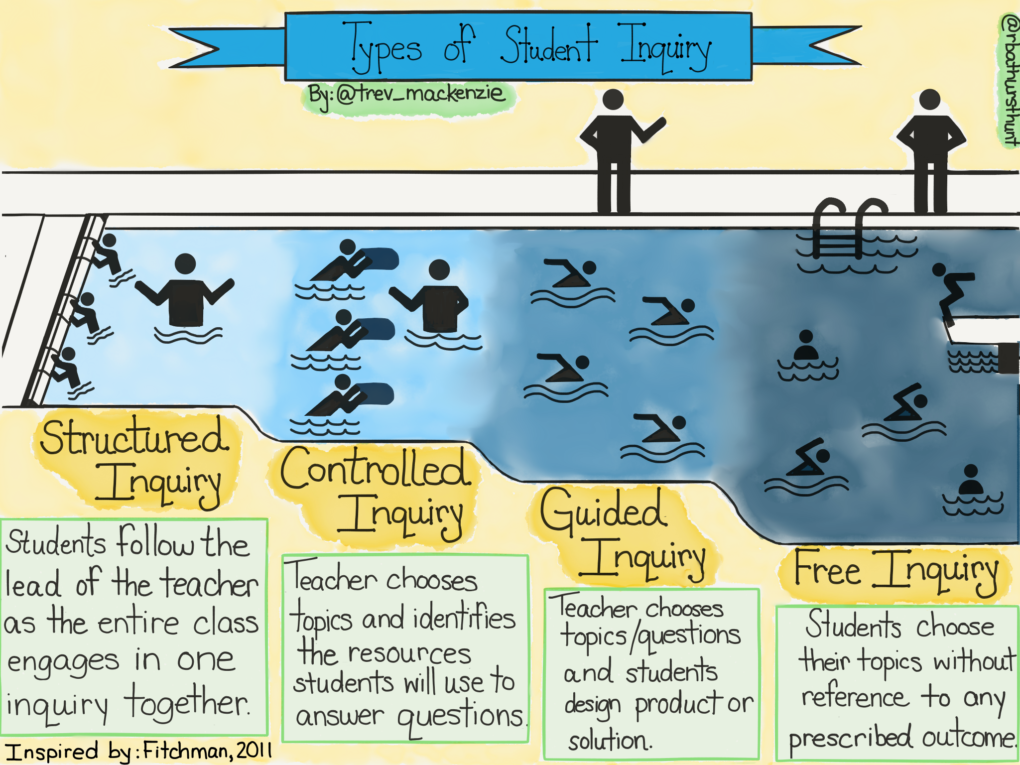
"caption": "This sketch representing how a teacher can gradually remove scaffolds to give learners more independence is featured in Inquiry Mindsets.",
"description": null,
"title": "1 Types of Student Inquiry",
"credit": "Courtesy Trevor MacKenzie and Rebecca Bathurst-Hunt",
"status": "inherit",
"isLoading": false,
"fetchFailed": false
}
},
"audioPlayerReducer": {
"postId": "stream_live",
"isPaused": true,
"isPlaying": false,
"pfsActive": false,
"pledgeModalIsOpen": true,
"playerDrawerIsOpen": false,
"liveAudioPlayStartedAt": 0,
"liveAudioPlayContext": ""
},
"authorsReducer": {
"byline_mindshift_55052": {
"type": "authors",
"id": "byline_mindshift_55052",
"meta": {
"override": true
},
"slug": "byline_mindshift_55052",
"name": "\u003ca href=\"https://www.gse.harvard.edu/news/uk/19/12/novice-expert-shift\">Emily Boudreau, Usable Knowledge\u003c/a>",
"isLoading": false
},
"byline_mindshift_53417": {
"type": "authors",
"id": "byline_mindshift_53417",
"meta": {
"override": true
},
"slug": "byline_mindshift_53417",
"name": "Trevor MacKenzie",
"isLoading": false
},
"byline_mindshift_51538": {
"type": "authors",
"id": "byline_mindshift_51538",
"meta": {
"override": true
},
"slug": "byline_mindshift_51538",
"name": "\u003ca href=\"http://hechingerreport.org/\">Daisy Yuhas, The Hechinger Report\u003c/a>",
"isLoading": false
},
"byline_mindshift_51484": {
"type": "authors",
"id": "byline_mindshift_51484",
"meta": {
"override": true
},
"slug": "byline_mindshift_51484",
"name": "Nurith Aizenman and Gregory Warner",
"isLoading": false
},
"katrinaschwartz": {
"type": "authors",
"id": "234",
"meta": {
"index": "authors_1716337520",
"id": "234",
"found": true
},
"name": "Katrina Schwartz",
"firstName": "Katrina",
"lastName": "Schwartz",
"slug": "katrinaschwartz",
"email": "kschwartz@kqed.org",
"display_author_email": false,
"staff_mastheads": [
"news"
],
"title": "Producer",
"bio": "Katrina Schwartz is a journalist based in San Francisco. She's worked at KPCC public radio in LA and has reported on air and online for KQED since 2010. She covered how teaching and learning is changing for MindShift between 2012 and 2020. She is the co-host of the MindShift podcast and now produces KQED's Bay Curious podcast.",
"avatar": "https://secure.gravatar.com/avatar/edb4ee79070447a018538c9aae6eeecf28786515b8a0c30e43b6b7dce5aa44c8?s=600&d=blank&r=g",
"twitter": "kschwart",
"bluesky": null,
"facebook": null,
"instagram": null,
"linkedin": null,
"sites": [
{
"site": "",
"roles": [
"editor"
]
},
{
"site": "news",
"roles": [
"editor"
]
},
{
"site": "mindshift",
"roles": [
"administrator"
]
},
{
"site": "stateofhealth",
"roles": [
"author"
]
},
{
"site": "science",
"roles": [
"editor"
]
}
],
"headData": {
"title": "Katrina Schwartz | KQED",
"description": "Producer",
"ogImgSrc": "https://secure.gravatar.com/avatar/edb4ee79070447a018538c9aae6eeecf28786515b8a0c30e43b6b7dce5aa44c8?s=600&d=blank&r=g",
"twImgSrc": "https://secure.gravatar.com/avatar/edb4ee79070447a018538c9aae6eeecf28786515b8a0c30e43b6b7dce5aa44c8?s=600&d=blank&r=g"
},
"isLoading": false,
"link": "/author/katrinaschwartz"
}
},
"pagesReducer": {
"mindshift_tag_inquiry-learning": {
"type": "terms",
"id": "mindshift_797",
"meta": {
"index": "terms_1716263798",
"site": "mindshift",
"id": "797",
"score": 10.403393
},
"featImg": null,
"name": "inquiry learning",
"description": null,
"taxonomy": "tag",
"headData": {
"twImgId": null,
"twTitle": null,
"ogTitle": null,
"ogImgId": null,
"twDescription": null,
"description": null,
"title": "inquiry learning Archives - KQED Mindshift",
"ogDescription": null
},
"ttid": 800,
"slug": "inquiry-learning",
"isLoading": false,
"title": "inquiry learning",
"pageMeta": {
"site": "mindshift",
"WpPageTemplate": "page-topic-editorial",
"currentPage": 2
},
"blocks": [
{
"blockName": "kqed/post-list",
"attrs": {
"layout": "cardArticle2",
"query": "posts/mindshift?tag=inquiry-learning",
"seeMore": false,
"paginated": true,
"page": 2
}
},
{
"blockName": "kqed/ad"
}
]
}
},
"pfsSessionReducer": {},
"postsReducer": {
"stream_live": {
"type": "live",
"id": "stream_live",
"audioUrl": "https://streams.kqed.org/kqedradio",
"title": "Live Stream",
"excerpt": "Live Stream information currently unavailable.",
"link": "/radio",
"featImg": "",
"label": {
"name": "KQED Live",
"link": "/"
}
},
"stream_kqedNewscast": {
"type": "posts",
"id": "stream_kqedNewscast",
"audioUrl": "https://www.kqed.org/.stream/anon/radio/RDnews/newscast.mp3?_=1",
"title": "KQED Newscast",
"featImg": "",
"label": {
"name": "88.5 FM",
"link": "/"
}
},
"mindshift_55052": {
"type": "posts",
"id": "mindshift_55052",
"meta": {
"index": "posts_1716263798",
"site": "mindshift",
"id": "55052",
"score": null,
"sort": [
1576481265000
]
},
"parent": 0,
"labelTerm": {
"site": "mindshift"
},
"blocks": [],
"publishDate": 1576481265,
"format": "standard",
"disqusTitle": "Six Thinking Scaffolds That Can Move Students Toward Deeper Levels of Understanding",
"title": "Six Thinking Scaffolds That Can Move Students Toward Deeper Levels of Understanding",
"headTitle": "MindShift | KQED News",
"content": "\u003cdiv class=\"field field-name-field-sub-headline field-type-text field-label-hidden\">\n\u003cdiv class=\"field-items\">\n\u003cdiv>In the field of instructional design, experts have \u003ca id=\"E191\" href=\"https://stanfordreview.org/the-debate-within-the-classroom/\" target=\"_blank\" rel=\"noopener noreferrer\">debated\u003c/a> whether student-led, problem-based approaches — what researchers call “constructivist” approaches — work. In a new study, cognitive scientist \u003ca id=\"E200\" href=\"https://www.gse.harvard.edu/faculty/tina-grotzer\" target=\"_blank\" rel=\"noopener noreferrer\">Tina Grotzer\u003c/a> and her research partners found further evidence of the \u003ca id=\"E206\" href=\"https://eric.ed.gov/?id=EJ732415\" target=\"_blank\" rel=\"noopener noreferrer\">effectiveness\u003c/a> of structured problem-based learning, in which educators can support students in moving from novice toward expert-level understanding.\u003c/div>\n\u003c/div>\n\u003cdiv>\n\u003cp id=\"E218\">Grotzer and a team (Nancy Oriol, Stephanie Kang, Colby Moore Reilly, and Julie Joyal) looked at the \u003ca id=\"E229\" href=\"http://hmsmedscience.org/\" target=\"_blank\" rel=\"noopener noreferrer\">Harvard Medical School MEDscience\u003c/a> curriculum, founded by Oriol, that uses technology-mediated, problem-based learning simulations to enrich the experience of high school biology students.\u003c/p>\n\u003cp id=\"E248\">\u003ca id=\"E249\" href=\"https://www.gse.harvard.edu/news/everyday-heroes-julie-joyal-mowschenson-edm08\" target=\"_blank\" rel=\"noopener noreferrer\">Joyal\u003c/a> — executive director for MEDscience — and the team noticed that as their problem-based curriculum progressed, students changed the way they approached problems. Rather than waiting for the teacher to give them answers, they made hypotheses based on existing knowledge, discussed their thoughts with their teams, and took risks — all signs of deeper-level \u003ca id=\"E264\" href=\"https://www.gse.harvard.edu/news/uk/19/04/teaching-deeper-learning\" target=\"_blank\" rel=\"noopener noreferrer\">learning\u003c/a>.\u003c/p>\n\u003cp id=\"E267\">To study this shift in classroom behavior, Joyal, \u003ca href=\"http://hmsmedscience.org/our-team\">Moore Reilly\u003c/a>, and Grotzer used a sample of 21 students from a range of public and private schools in the Boston. The research team \u003ca id=\"E277\" href=\"https://onlinelibrary.wiley.com/doi/full/10.1111/bjet.12843\" target=\"_blank\" rel=\"noopener noreferrer\">found\u003c/a> that the thinking scaffolds — the prompts and support instructors used to guide students through the curriculum and activities — were instrumental in generating a shift towards more expert-level reasoning.\u003c/p>\n\u003cp id=\"E291\">“We know that experts pay attention to a very different set of patterns than novices often do. Novices get caught up in the surface features and can’t necessarily see the deep principles,” Grotzer says. “It’s really important to think what kind of scaffolding helps people take steps towards greater expertise in their thinking and reasoning.”\u003c/p>\n\u003ch3>Taking Students from Novice to Expert\u003c/h3>\n\u003cp>Here are some takeaways from the study that can be used by educators to help move their students from novice to expert level:\u003c/p>\n\u003cp>\u003cstrong>Prompt students to include context: \u003c/strong>Ask questions that prompt students to include what they know already and emphasize the need to seek out further information or clarification. Get them to take a step back from the problem at hand and make connections. “Having students pause to think about the context of the problem — what they already know about it, what questions they have, and with humility, to consider what they don’t know — helps them to be open to other patterns and possibilities,” Grotzer says.\u003c/p>\n\u003cp>\u003cem>Try: What information led you to that conclusion? Is there anything that you don’t know yet or that you can wonder about?\u003c/em>\u003c/p>\n\u003cp>\u003cstrong>Ask open-ended questions: \u003c/strong>Guide students to reconsider an idea without explicitly correcting them. Generic probes work well but more targeted questions also work. “Students are solving [open-ended] problems the moment they come in [to the MedScience simulation space], and I will say that can be a little uncomfortable at first. It’s stressful being in this situation. But there’s research that [essentially] says if you keep kids on their toes, the information becomes sticky and much more retainable,” Joyal says.\u003c/p>\n\u003cp>\u003cem>Try: What do you mean? Can you say more about that?\u003c/em>\u003c/p>\n\u003cp>\u003cstrong>Help students transfer knowledge and experience: \u003c/strong>Have students think back to past experiences and information sources like classroom learning. Also encourage them to consider what is happening in the present moment. “[This is a] pedagogical move that says all of the information and experience you have is useful and you can bring it bear,” Grotzer says.\u003c/p>\n\u003cp>\u003cem>Try: Is there anything that you already understand that might help you here? \u003c/em>\u003c/p>\n\u003cp>\u003cstrong>Leave room for student ownership:\u003c/strong> Signal that the choices students make are up to them — the role of the teacher is not to make decisions about what to do next or execute. “Instructors model for students what an expert does but not in a way that takes over,” Grotzer says.\u003c/p>\n\u003cp>\u003cem>Try: That’s up to you. I don’t know the patient. How are you going to handle that?\u003c/em>\u003c/p>\n\u003cp>\u003cstrong>Invite and manage risk: \u003c/strong>Allow students to take risks by not immediately dismissing “wrong” answers. This fosters a strong classroom culture where students are willing to try new methods. “When the kids walk in, we tell them ‘This is Harvard Medical School and we have rules. The rules are there are no wrong answers, there’s no raising your hand, and if you have a thought, you’re going to say it out loud,’” Joyal says, noting that these rules set the tone for the learning environment.\u003c/p>\n\u003cp>\u003cem>Try: That’s a good idea worthy of further discussion.\u003c/em>\u003c/p>\n\u003cp>\u003cstrong>Encourage reflection:\u003c/strong> Students need to be reminded that they are not just participants but also learners in this process. “Leaving time for a debrief at the end of each class allows the group to circle back to questions from the class introduction and go deeper,” Says Moore Reilly. Instructors can ask students about their performance, thought process, the outcomes, and their feelings.\u003c/p>\n\u003cp>\u003cem>Try: How did it go for your team? How are you managing your learning?\u003c/em>\u003c/p>\n\u003c/div>\n\u003c/div>\n\u003cp>[ad fullwidth]\u003c/p>\u003cp>\u003c/p>\n",
"disqusIdentifier": "55052 https://ww2.kqed.org/mindshift/?p=55052",
"disqusUrl": "https://ww2.kqed.org/mindshift/2019/12/15/six-thinking-scaffolds-that-can-move-students-toward-deeper-levels-of-understanding/",
"stats": {
"hasVideo": false,
"hasChartOrMap": false,
"hasAudio": false,
"hasPolis": false,
"wordCount": 884,
"hasGoogleForm": false,
"hasGallery": false,
"hasHearkenModule": false,
"iframeSrcs": [],
"paragraphCount": 15
},
"modified": 1576481265,
"excerpt": "A change in a prompt can influence how a student responds thinks. A study found that using a problem-based curriculum can help students develop their own hypotheses and take risks — all signs of deeper-level learning.",
"headData": {
"twImgId": "",
"twTitle": "",
"ogTitle": "",
"ogImgId": "",
"twDescription": "",
"description": "A change in a prompt can influence how a student responds thinks. A study found that using a problem-based curriculum can help students develop their own hypotheses and take risks — all signs of deeper-level learning.",
"title": "Six Thinking Scaffolds That Can Move Students Toward Deeper Levels of Understanding | KQED",
"ogDescription": "",
"schema": {
"@context": "https://schema.org",
"@type": "Article",
"headline": "Six Thinking Scaffolds That Can Move Students Toward Deeper Levels of Understanding",
"datePublished": "2019-12-15T23:27:45-08:00",
"dateModified": "2019-12-15T23:27:45-08:00",
"image": "https://cdn.kqed.org/wp-content/uploads/2020/02/KQED-OG-Image@1x.png"
}
},
"guestAuthors": [],
"slug": "six-thinking-scaffolds-that-can-move-students-toward-deeper-levels-of-understanding",
"status": "publish",
"nprByline": "\u003ca href=\"https://www.gse.harvard.edu/news/uk/19/12/novice-expert-shift\">Emily Boudreau, Usable Knowledge\u003c/a>",
"path": "/mindshift/55052/six-thinking-scaffolds-that-can-move-students-toward-deeper-levels-of-understanding",
"audioTrackLength": null,
"parsedContent": [
{
"type": "contentString",
"content": "\u003cdiv class=\"post-body\">\u003cp>\u003cdiv class=\"field field-name-field-sub-headline field-type-text field-label-hidden\">\n\u003cdiv class=\"field-items\">\n\u003cdiv>In the field of instructional design, experts have \u003ca id=\"E191\" href=\"https://stanfordreview.org/the-debate-within-the-classroom/\" target=\"_blank\" rel=\"noopener noreferrer\">debated\u003c/a> whether student-led, problem-based approaches — what researchers call “constructivist” approaches — work. In a new study, cognitive scientist \u003ca id=\"E200\" href=\"https://www.gse.harvard.edu/faculty/tina-grotzer\" target=\"_blank\" rel=\"noopener noreferrer\">Tina Grotzer\u003c/a> and her research partners found further evidence of the \u003ca id=\"E206\" href=\"https://eric.ed.gov/?id=EJ732415\" target=\"_blank\" rel=\"noopener noreferrer\">effectiveness\u003c/a> of structured problem-based learning, in which educators can support students in moving from novice toward expert-level understanding.\u003c/div>\n\u003c/div>\n\u003cdiv>\n\u003cp id=\"E218\">Grotzer and a team (Nancy Oriol, Stephanie Kang, Colby Moore Reilly, and Julie Joyal) looked at the \u003ca id=\"E229\" href=\"http://hmsmedscience.org/\" target=\"_blank\" rel=\"noopener noreferrer\">Harvard Medical School MEDscience\u003c/a> curriculum, founded by Oriol, that uses technology-mediated, problem-based learning simulations to enrich the experience of high school biology students.\u003c/p>\n\u003cp id=\"E248\">\u003ca id=\"E249\" href=\"https://www.gse.harvard.edu/news/everyday-heroes-julie-joyal-mowschenson-edm08\" target=\"_blank\" rel=\"noopener noreferrer\">Joyal\u003c/a> — executive director for MEDscience — and the team noticed that as their problem-based curriculum progressed, students changed the way they approached problems. Rather than waiting for the teacher to give them answers, they made hypotheses based on existing knowledge, discussed their thoughts with their teams, and took risks — all signs of deeper-level \u003ca id=\"E264\" href=\"https://www.gse.harvard.edu/news/uk/19/04/teaching-deeper-learning\" target=\"_blank\" rel=\"noopener noreferrer\">learning\u003c/a>.\u003c/p>\n\u003cp id=\"E267\">To study this shift in classroom behavior, Joyal, \u003ca href=\"http://hmsmedscience.org/our-team\">Moore Reilly\u003c/a>, and Grotzer used a sample of 21 students from a range of public and private schools in the Boston. The research team \u003ca id=\"E277\" href=\"https://onlinelibrary.wiley.com/doi/full/10.1111/bjet.12843\" target=\"_blank\" rel=\"noopener noreferrer\">found\u003c/a> that the thinking scaffolds — the prompts and support instructors used to guide students through the curriculum and activities — were instrumental in generating a shift towards more expert-level reasoning.\u003c/p>\n\u003cp id=\"E291\">“We know that experts pay attention to a very different set of patterns than novices often do. Novices get caught up in the surface features and can’t necessarily see the deep principles,” Grotzer says. “It’s really important to think what kind of scaffolding helps people take steps towards greater expertise in their thinking and reasoning.”\u003c/p>\n\u003ch3>Taking Students from Novice to Expert\u003c/h3>\n\u003cp>Here are some takeaways from the study that can be used by educators to help move their students from novice to expert level:\u003c/p>\n\u003cp>\u003cstrong>Prompt students to include context: \u003c/strong>Ask questions that prompt students to include what they know already and emphasize the need to seek out further information or clarification. Get them to take a step back from the problem at hand and make connections. “Having students pause to think about the context of the problem — what they already know about it, what questions they have, and with humility, to consider what they don’t know — helps them to be open to other patterns and possibilities,” Grotzer says.\u003c/p>\n\u003cp>\u003cem>Try: What information led you to that conclusion? Is there anything that you don’t know yet or that you can wonder about?\u003c/em>\u003c/p>\n\u003cp>\u003cstrong>Ask open-ended questions: \u003c/strong>Guide students to reconsider an idea without explicitly correcting them. Generic probes work well but more targeted questions also work. “Students are solving [open-ended] problems the moment they come in [to the MedScience simulation space], and I will say that can be a little uncomfortable at first. It’s stressful being in this situation. But there’s research that [essentially] says if you keep kids on their toes, the information becomes sticky and much more retainable,” Joyal says.\u003c/p>\n\u003cp>\u003cem>Try: What do you mean? Can you say more about that?\u003c/em>\u003c/p>\n\u003cp>\u003cstrong>Help students transfer knowledge and experience: \u003c/strong>Have students think back to past experiences and information sources like classroom learning. Also encourage them to consider what is happening in the present moment. “[This is a] pedagogical move that says all of the information and experience you have is useful and you can bring it bear,” Grotzer says.\u003c/p>\n\u003cp>\u003cem>Try: Is there anything that you already understand that might help you here? \u003c/em>\u003c/p>\n\u003cp>\u003cstrong>Leave room for student ownership:\u003c/strong> Signal that the choices students make are up to them — the role of the teacher is not to make decisions about what to do next or execute. “Instructors model for students what an expert does but not in a way that takes over,” Grotzer says.\u003c/p>\n\u003cp>\u003cem>Try: That’s up to you. I don’t know the patient. How are you going to handle that?\u003c/em>\u003c/p>\n\u003cp>\u003cstrong>Invite and manage risk: \u003c/strong>Allow students to take risks by not immediately dismissing “wrong” answers. This fosters a strong classroom culture where students are willing to try new methods. “When the kids walk in, we tell them ‘This is Harvard Medical School and we have rules. The rules are there are no wrong answers, there’s no raising your hand, and if you have a thought, you’re going to say it out loud,’” Joyal says, noting that these rules set the tone for the learning environment.\u003c/p>\n\u003cp>\u003cem>Try: That’s a good idea worthy of further discussion.\u003c/em>\u003c/p>\n\u003cp>\u003cstrong>Encourage reflection:\u003c/strong> Students need to be reminded that they are not just participants but also learners in this process. “Leaving time for a debrief at the end of each class allows the group to circle back to questions from the class introduction and go deeper,” Says Moore Reilly. Instructors can ask students about their performance, thought process, the outcomes, and their feelings.\u003c/p>\n\u003cp>\u003cem>Try: How did it go for your team? How are you managing your learning?\u003c/em>\u003c/p>\n\u003c/div>\n\u003c/div>\n\u003cp>\u003c/p>\u003c/div>",
"attributes": {
"named": {},
"numeric": []
}
},
{
"type": "component",
"content": "",
"name": "ad",
"attributes": {
"named": {
"label": "fullwidth"
},
"numeric": [
"fullwidth"
]
}
},
{
"type": "contentString",
"content": "\u003cdiv class=\"post-body\">\u003cp>\u003c/p>\u003cp>\u003c/p>\n\u003c/div>\u003c/p>",
"attributes": {
"named": {},
"numeric": []
}
}
],
"link": "/mindshift/55052/six-thinking-scaffolds-that-can-move-students-toward-deeper-levels-of-understanding",
"authors": [
"byline_mindshift_55052"
],
"categories": [
"mindshift_193"
],
"tags": [
"mindshift_939",
"mindshift_20784",
"mindshift_1040",
"mindshift_797",
"mindshift_20703",
"mindshift_21320",
"mindshift_20690"
],
"featImg": "mindshift_55056",
"label": "mindshift"
},
"mindshift_54461": {
"type": "posts",
"id": "mindshift_54461",
"meta": {
"index": "posts_1716263798",
"site": "mindshift",
"id": "54461",
"score": null,
"sort": [
1569477012000
]
},
"parent": 0,
"labelTerm": {
"site": "mindshift"
},
"blocks": [],
"publishDate": 1569477012,
"format": "standard",
"disqusTitle": "How to Bring Authenticity to Learning that Happens in School",
"title": "How to Bring Authenticity to Learning that Happens in School",
"headTitle": "MindShift | KQED News",
"content": "\u003cp>\u003cem>This article was originally published on \u003ca href=\"https://www.the74million.org/article/after-school-students-are-playing-the-whole-game-in-activities-from-drama-to-sports-to-debate-backers-of-project-based-learning-ask-why-cant-all-of-education-look-like-th/\" target=\"_blank\" rel=\"noopener\">The74million.org\u003c/a> and is republished here with permission.\u003c/em>\u003c/p>\n\u003cp>\u003cstrong>By Greg Toppo\u003c/strong>\u003c/p>\n\u003cp>In 2013, attorneys at the \u003ca href=\"https://californiainnocenceproject.org/\" target=\"_blank\" rel=\"noopener\">California Innocence Project\u003c/a>, weighed down by a backlog of casework, turned for help to an unusual group: humanities students at High Tech High Chula Vista, a nearby charter school.\u003c/p>\n\u003cp>The students, all juniors, trained on a past case handled by the San Diego nonprofit, which reviews pleas from prisoners who maintain that they’re innocent. Then, in teams of three or four, the \u003ca href=\"https://www.hightechhigh.org/hthcv/project/xonr8/\" target=\"_blank\" rel=\"noopener\">students reviewed prisoners’ files\u003c/a> and ultimately presented them to Innocence Project attorneys, with a recommendation to either champion a prisoner’s case or take a pass.\u003c/p>\n\u003cp>The project lives on with a new group of students each year, buoyed by a strain of progressive education philosophy that says students learn best with real work that resembles what they will likely encounter outside of school. It has been kicking around K-12 education for decades but has yet to be widely adopted. In recent years, however, the idea has quietly gained ground as more schools try \u003ca href=\"https://www.kqed.org/mindshift/26038/what-project-based-learning-is-and-isnt\" target=\"_blank\" rel=\"noopener\">project-based learning\u003c/a> and subscribe to a philosophy known as \u003ca href=\"https://www.kqed.org/mindshift/23799/how-do-we-define-and-measure-deeper-learning\" target=\"_blank\" rel=\"noopener\">“deeper learning.”\u003c/a>\u003c/p>\n\u003cp>[ad fullwidth]\u003c/p>\n\u003cp>But does it work?\u003c/p>\n\u003cp>Harvard Graduate School of Education professor emeritus \u003ca href=\"https://www.gse.harvard.edu/faculty/david-perkins\" target=\"_blank\" rel=\"noopener\">David Perkins\u003c/a> calls it \u003ca href=\"https://www.gse.harvard.edu/news/uk/09/01/education-bat-seven-principles-educators\" target=\"_blank\" rel=\"noopener\">“playing the whole game.”\u003c/a> He sees it as an \u003ca href=\"http://:%20https://www.the74million.org/article/74-interview-author-and-harvard-scholar-david-perkins-on-what-traditional-classroom-teachers-can-learn-from-science-fairs-backyard-sports-whole-game-learning/\" target=\"_blank\" rel=\"noopener\">alternative to schools’ traditional approach\u003c/a>, which often presents students with atomized, decontextualized pieces of a subject. He conceived of the idea after thinking about the most meaningful experiences he had in high school, which were mostly “outside of the conventional curriculum”: drama, music, science fairs and the like. These and other large-scale endeavors, he said, “seemed more meaningful and I reached out for opportunities.”\u003c/p>\n\u003cp>Laid out most fully in his 2010 book \u003cem>\u003ca href=\"https://www.amazon.com/Making-Learning-Whole-Principles-Transform/dp/0470633719/ref=sr_1_1?keywords=making+learning+whole&qid=1567186274&s=gateway&sr=8-1\" target=\"_blank\" rel=\"noopener\">Making Learning Whole\u003c/a>\u003c/em>, the idea goes something like this: Let students do something big and useful, from start to finish — perhaps a simplified version, but keep it intact. Give them extra help and lower stakes and they’ll work harder, learn more and come up with creative applications and solutions that adults couldn’t imagine.\u003c/p>\n\u003cp>Though it has yet to be widely adopted outside of project-based schools, “playing the whole game” has quietly thrived for generations in another context: afterschool activities, from team sports to debate club, drama productions and marching band.\u003c/p>\n\u003cp>[aside label='More on Deeper Learning' link1='https://www.kqed.org/mindshift/34253/how-do-we-create-rich-learning-opportunities-for-all-students,Beyond Knowing Facts, How Do We Get to a Deeper Level of Learning?' link2='https://www.kqed.org/mindshift/47694/to-engage-students-and-teachers-treat-core-subjects-like-extracurriculars,To Engage Students and Teachers, Treat Core Subjects Like Extracurriculars' link3='https://www.kqed.org/mindshift/53684/going-for-depth-how-schools-and-teachers-can-foster-meaningful-learning-experiences,Going for Depth: How Schools and Teachers Can Foster Meaningful Learning Experiences']\u003c/p>\n\u003cp>“We know intuitively that when we get really serious about a domain of education, it looks more like this,” said \u003ca href=\"https://twitter.com/jal_mehta\" target=\"_blank\" rel=\"noopener\">Jal Mehta\u003c/a>, also a professor at Harvard’s education school.\u003c/p>\n\u003cp>When students go out for the baseball team, they get an attenuated version of baseball, but they go out each time and play the entire game. “It’s not ‘baseball appreciation,’” Mehta said. Likewise with just about anything that \u003ca href=\"https://www.kqed.org/mindshift/47694/to-engage-students-and-teachers-treat-core-subjects-like-extracurriculars\" target=\"_blank\" rel=\"noopener\">takes place after school\u003c/a>.\u003c/p>\n\u003cp>Afterschool activities also offer a system that supports teachers. Imagine, for instance, a classroom art teacher who wants to mount an exhibition of student artwork. She’d need to figure out how to give students longer blocks of time to complete the pieces, find an exhibition space and arrange it for exhibition night. Finally, she’d need to get people to attend.\u003c/p>\n\u003cp>“Now imagine you’re that same teacher and you’re directing a play after school,” Mehta said. “Basically, you need the same things.” But in most schools, these pieces are already in place: long rehearsal blocks, a dedicated performance space, and the expectation that students will annually mount a version of a big Broadway musical and the community will show up to see it. All of that support, he said, is already built in.\u003c/p>\n\u003cp>“The question we should ask ourselves is: If that’s the kind of method we use when we really want someone to learn something, \u003ca href=\"https://www.kqed.org/mindshift/53684/going-for-depth-how-schools-and-teachers-can-foster-meaningful-learning-experiences\" target=\"_blank\" rel=\"noopener\">why don’t we use those methods the rest of the time\u003c/a>, for the rest of the students?” Mehta said.\u003c/p>\n\u003cp>\u003ca href=\"https://twitter.com/chrislehmann?lang=en\" target=\"_blank\" rel=\"noopener\">Chris Lehmann\u003c/a>, principal and co-founder of \u003ca href=\"https://scienceleadership.org/\" target=\"_blank\" rel=\"noopener\">Science Leadership Academy\u003c/a>, a small public high school at the edge of Philadelphia’s Center City neighborhood, said afterschool experiences have another plus: They have student choice “baked-in.”\u003c/p>\n\u003cp>“You’re getting the kids somewhere they want to be,” he said, “so you already have an advantage there.” These experiences are also usually built around a performance of some sort, with a natural structure, deadline and audience.\u003c/p>\n\u003cp>[pullquote size='medium' align='left' citation='Sarah Fine, director of High Tech High's graduate teaching apprenticeship']Ultimately, school is a contrived situation. There’s no way around that.'[/pullquote]\u003c/p>\n\u003cp>Mehta said the best examples he has seen during the school day are in science classes. In one school, instead of “imbibing scientific knowledge that was discovered long ago by famous scientists,” sophomores learned about the scientific method and designed rudimentary experiments — he remembers one that asked whether studying while listening to music through earbuds produced better or worse results.\u003c/p>\n\u003cp>“That’s not an earth-shattering question, but it’s a real question,” he said. In the process, students learned how to develop a hypothesis, gather data, review the literature and write up their results. By 11th or 12th grade, they were doing more advanced work, including partnering with nearby labs, he said. But students credited the sophomore-year course with getting them excited about — and familiar with — experimentation. “It was the place where they really learned how to do science,” he said.\u003c/p>\n\u003cp>\u003ca href=\"https://twitter.com/sarahmfine?lang=en\" target=\"_blank\" rel=\"noopener\">Sarah Fine\u003c/a>, who directs High Tech High’s graduate teaching apprenticeship and who last spring \u003ca href=\"https://www.amazon.com/Search-Deeper-Learning-Remake-American/dp/0674988396/ref=sr_1_1?keywords=in+search+of+deeper+learning&qid=1567183274&s=gateway&sr=8-1\" target=\"_blank\" rel=\"noopener\">co-authored a book about deeper learning\u003c/a> with Mehta, said the larger goal of “playing the whole game” is a kind of \u003ca href=\"https://www.kqed.org/mindshift/45691/why-discipline-should-be-aligned-with-a-schools-learning-philosophy\" target=\"_blank\" rel=\"noopener\">authenticity that often eludes students\u003c/a>, especially in high school. “Ultimately, school is a contrived situation. There’s no way around that,” she said.\u003c/p>\n\u003cp>Fine recalled a student once saying to her, “‘Ms. Fine — school is just fake.’ He’s right — school is fake. We are designing experiences for the sake of kids’ learning.”\u003c/p>\n\u003cp>Yet the goal of the Innocence Project work isn’t necessarily to make students into lawyers. It’s to give them the sense that there’s “some professional domain that has rules and rhythms to it,” as well as a base of knowledge, she said. “It just has to feel real enough to kids — it has to be resonant enough with the real world that it compels them to feel like it’s worth engaging with.”\u003c/p>\n\u003cp>The students who reviewed prisoners’ cases “talked about feeling like they sort of had people’s lives in their hands,” Fine said. “And that is not a feeling they’d ever had in school before, that something they were doing had real consequences for people beyond themselves.”\u003c/p>\n\u003cp>Rebecca Jimenez, 18, who graduated last fall from High Tech High Chula Vista, said the Innocence Project gave her a sense of working on “an important cause.”\u003c/p>\n\u003cp>The more research she did on each prisoner’s plea, the more engrossed she became. “I wanted to keep reading and understand the person’s story,” she said. Eventually, she and her classmates would research a case that resulted in a judge throwing out a 20-year-old murder conviction and handing down new charges against the suspect’s nephew.\u003c/p>\n\u003cp>\u003cstrong>Novices vs. experts\u003c/strong>\u003c/p>\n\u003cp>One important aspect of “playing the whole game,” Mehta said, is interacting with professionals in the real world. “If you do an architecture project and you have real architects examining your work, that’s project-based learning. But it’s really powerful project-based learning because you’re not only showing students something about architecture. It gives them a conception: ‘I could be an architect.’”\u003c/p>\n\u003cp>But \u003ca href=\"https://www.brookings.edu/author/tom-loveless/\" target=\"_blank\" rel=\"noopener\">Tom Loveless\u003c/a>, a California-based education researcher and former director of the Brookings Institution’s Brown Center on Education Policy, advises caution. “Generally speaking, I think we should be skeptical of the whole idea,” he said.\u003c/p>\n\u003cp>For one thing, playing the whole game confuses novices with experts. “A novice can’t ‘play the whole game’ because a novice doesn’t know the whole game. In order to learn most games, you have to learn the bits and pieces that go into knowing the whole game. And with project-based learning in general, the idea is that you’re giving kids projects to do in order to learn about a particular topic.”\u003c/p>\n\u003cp>That’s a mistake, Loveless said, since students typically require “a tremendous amount of background knowledge” before they can execute a respectable project on, say, World War I. Without deep background knowledge, he said, “you have a lot of novice learners kind of sharing their ignorance and having a shared experience out of their ignorance — and there’s no guarantee … that they’re necessarily going to gain knowledge, because you’ve left all that in the hands of the students themselves.”\u003c/p>\n\u003cp>Harvard’s Mehta said “playing the whole game” actually demands more of teachers, implicitly asking them to not just be familiar with a subject but to remain, in a sense, practitioners. Just as we’d expect a good drama director to direct community theater on weekends, so do these schools expect the same of subject-matter teachers: English teachers who publish poetry or novels, or art teachers who sell their paintings, and so on.\u003c/p>\n\u003cp>Loveless said he hasn’t seen good evidence that students will necessarily enjoy school more if it’s inquiry-based. “It could be that exactly the opposite is true. It could be that actually what kids like is a lot of structure to the presentation of learning. They like the teacher taking responsibility for that.”\u003c/p>\n\u003cp>A bigger problem, he said, may be that because project-based learning tends to minimize the importance of prior knowledge, “playing the whole game” might work better in wealthy areas or in private schools, where students arrive with a measure of background knowledge about, for instance, World War I or how defense attorneys work. Elsewhere, it’s a riskier strategy.\u003c/p>\n\u003cp>SLA’s Lehmann would disagree. His school boasts that it draws students from every zip code in Philadelphia, and he can easily bring to mind the challenges that his students — past and present — bring the day they set foot on campus as freshmen.\u003c/p>\n\u003cp>A \u003ca href=\"https://eric.ed.gov/?id=ED578933\" target=\"_blank\" rel=\"noopener\">2016 meta-review\u003c/a> was cautiously optimistic about project-based learning, saying the evidence for its effectiveness is “promising but not proven.”\u003c/p>\n\u003cp>Ron Berger of \u003ca href=\"https://eleducation.org/\" target=\"_blank\" rel=\"noopener\">EL Education\u003c/a>, a Massachusetts-based advocacy group for project-based learning, pointed to a \u003ca href=\"https://www.air.org/sites/default/files/Deeper-Learning-Summary-Updated-August-2016.pdf\" target=\"_blank\" rel=\"noopener\">2016 study by the American Institutes for Research\u003c/a> that found that students in high schools that subscribed to “deeper learning” were slightly more likely to attend college — about 53 percent, versus 50 percent in other high schools. AIR also found that 22 percent of students at “deeper learning” schools enrolled in four-year colleges, compared with 18 percent for their peers elsewhere.\u003c/p>\n\u003cp>But the schools had little to show in terms of college retention — in both “deeper learning” schools and others, only 62 percent of alumni remained enrolled in college for at least three consecutive terms; about half enrolled for at least four consecutive terms.\u003c/p>\n\u003cp>Berger said the modest college-going results shouldn’t be the final word on these schools’ success. For one thing, he said, \u003ca href=\"https://www.kqed.org/mindshift/45075/why-the-language-we-use-about-learning-determines-inclusivity\" target=\"_blank\" rel=\"noopener\">many of them are works in progress\u003c/a>: his nonprofit,\u003ca href=\"https://eleducation.org/who-we-are/history\" target=\"_blank\" rel=\"noopener\"> originally a partnership\u003c/a> between Harvard’s education school and Outward Bound USA, has spent years pushing project-based schools to improve the quality of their projects, requiring field research, participation of outside experts and “an authentic audience,” among other factors. That’s not always a given, he said.\u003c/p>\n\u003cp>Where these conditions persist, Berger said, “the schools feel different,” with students able to articulate what they’re learning and why they’re there.\u003c/p>\n\u003cp>“It’s visceral,” he said. “When you walk into a building and kids are more polite, more mature, engage with you right away and want to tell you about their learning, [they] have a sense of social responsibility — it’s hard to collect quantitative data on this.”\u003c/p>\n\u003cp>\u003cstrong>‘Why do I need to know this?’\u003c/strong>\u003c/p>\n\u003cp>Lehmann, the Philadelphia principal, embodies this attitude perhaps as well as any secondary educator in America. In conversation with his students, he reminds them endlessly about how much they’ve grown and matured since he met them as freshmen. He has become well-known among educators for his head-on challenge to the notion that the job of high school is to get students ready for what comes next.\u003c/p>\n\u003cp>“School shouldn’t be preparation for real life — school should be real life,” he said. “We should ask kids to do real things that matter.”\u003c/p>\n\u003cp>Most significantly, Lehmann asks teachers to rethink the idea that high school is a “moratorium” for young people, a kind of holding pen where they wait out adolescence.\u003c/p>\n\u003cp>“‘Why do I need to know this?’ should be a real question,” he said. “And the answers we should search out for kids should not be ‘someday’ answers — ‘If you want to major in this, you might seek out this information’ — but rather, ‘Why do I need this information now to be a better human being? To effect change in the world?’”\u003c/p>\n\u003cp>For Jimenez, the High Tech High graduate, playing the whole game changed everything. Early in her high school career, she thought she might major in business. “It sounded really cool and had money attached to the name,” she joked.\u003c/p>\n\u003cp>But Jimenez liked the work at the Innocence Project so much she spent the entire month of May 2018 interning there — High Tech High juniors undertake monthlong internships each spring. “During school, if I want to do something, I might as well be doing something that might actually make a change,” she said.\u003c/p>\n\u003cp>Now a freshman at the University of California, Riverside, Jimenez is studying political science and plans to attend law school. A first-generation college-goer, she wants to work someday for the Innocence Project.\u003c/p>\n\u003cp>[ad floatright]\u003c/p>\n\u003cp>“It would be great to be back in that environment,” she said.\u003c/p>\n\n",
"disqusIdentifier": "54461 https://ww2.kqed.org/mindshift/?p=54461",
"disqusUrl": "https://ww2.kqed.org/mindshift/2019/09/25/how-to-bring-authenticity-to-learning-that-happens-in-school/",
"stats": {
"hasVideo": false,
"hasChartOrMap": false,
"hasAudio": false,
"hasPolis": false,
"wordCount": 2592,
"hasGoogleForm": false,
"hasGallery": false,
"hasHearkenModule": false,
"iframeSrcs": [],
"paragraphCount": 52
},
"modified": 1569477012,
"excerpt": "The argument goes like this: Let students do something big and useful, from start to finish — perhaps a simplified version, but keep it intact. Give them extra help and lower stakes and they'll work harder, learn more and come up with creative applications and solutions that adults couldn't imagine.",
"headData": {
"twImgId": "",
"twTitle": "",
"ogTitle": "",
"ogImgId": "",
"twDescription": "",
"description": "The argument goes like this: Let students do something big and useful, from start to finish — perhaps a simplified version, but keep it intact. Give them extra help and lower stakes and they'll work harder, learn more and come up with creative applications and solutions that adults couldn't imagine.",
"title": "How to Bring Authenticity to Learning that Happens in School | KQED",
"ogDescription": "",
"schema": {
"@context": "https://schema.org",
"@type": "Article",
"headline": "How to Bring Authenticity to Learning that Happens in School",
"datePublished": "2019-09-25T22:50:12-07:00",
"dateModified": "2019-09-25T22:50:12-07:00",
"image": "https://cdn.kqed.org/wp-content/uploads/2020/02/KQED-OG-Image@1x.png"
}
},
"guestAuthors": [],
"slug": "how-to-bring-authenticity-to-learning-that-happens-in-school",
"status": "publish",
"path": "/mindshift/54461/how-to-bring-authenticity-to-learning-that-happens-in-school",
"audioTrackLength": null,
"parsedContent": [
{
"type": "contentString",
"content": "\u003cdiv class=\"post-body\">\u003cp>\u003cp>\u003cem>This article was originally published on \u003ca href=\"https://www.the74million.org/article/after-school-students-are-playing-the-whole-game-in-activities-from-drama-to-sports-to-debate-backers-of-project-based-learning-ask-why-cant-all-of-education-look-like-th/\" target=\"_blank\" rel=\"noopener\">The74million.org\u003c/a> and is republished here with permission.\u003c/em>\u003c/p>\n\u003cp>\u003cstrong>By Greg Toppo\u003c/strong>\u003c/p>\n\u003cp>In 2013, attorneys at the \u003ca href=\"https://californiainnocenceproject.org/\" target=\"_blank\" rel=\"noopener\">California Innocence Project\u003c/a>, weighed down by a backlog of casework, turned for help to an unusual group: humanities students at High Tech High Chula Vista, a nearby charter school.\u003c/p>\n\u003cp>The students, all juniors, trained on a past case handled by the San Diego nonprofit, which reviews pleas from prisoners who maintain that they’re innocent. Then, in teams of three or four, the \u003ca href=\"https://www.hightechhigh.org/hthcv/project/xonr8/\" target=\"_blank\" rel=\"noopener\">students reviewed prisoners’ files\u003c/a> and ultimately presented them to Innocence Project attorneys, with a recommendation to either champion a prisoner’s case or take a pass.\u003c/p>\n\u003cp>The project lives on with a new group of students each year, buoyed by a strain of progressive education philosophy that says students learn best with real work that resembles what they will likely encounter outside of school. It has been kicking around K-12 education for decades but has yet to be widely adopted. In recent years, however, the idea has quietly gained ground as more schools try \u003ca href=\"https://www.kqed.org/mindshift/26038/what-project-based-learning-is-and-isnt\" target=\"_blank\" rel=\"noopener\">project-based learning\u003c/a> and subscribe to a philosophy known as \u003ca href=\"https://www.kqed.org/mindshift/23799/how-do-we-define-and-measure-deeper-learning\" target=\"_blank\" rel=\"noopener\">“deeper learning.”\u003c/a>\u003c/p>\n\u003cp>\u003c/p>\u003c/div>",
"attributes": {
"named": {},
"numeric": []
}
},
{
"type": "component",
"content": "",
"name": "ad",
"attributes": {
"named": {
"label": "fullwidth"
},
"numeric": [
"fullwidth"
]
}
},
{
"type": "contentString",
"content": "\u003cdiv class=\"post-body\">\u003cp>\u003c/p>\n\u003cp>But does it work?\u003c/p>\n\u003cp>Harvard Graduate School of Education professor emeritus \u003ca href=\"https://www.gse.harvard.edu/faculty/david-perkins\" target=\"_blank\" rel=\"noopener\">David Perkins\u003c/a> calls it \u003ca href=\"https://www.gse.harvard.edu/news/uk/09/01/education-bat-seven-principles-educators\" target=\"_blank\" rel=\"noopener\">“playing the whole game.”\u003c/a> He sees it as an \u003ca href=\"http://:%20https://www.the74million.org/article/74-interview-author-and-harvard-scholar-david-perkins-on-what-traditional-classroom-teachers-can-learn-from-science-fairs-backyard-sports-whole-game-learning/\" target=\"_blank\" rel=\"noopener\">alternative to schools’ traditional approach\u003c/a>, which often presents students with atomized, decontextualized pieces of a subject. He conceived of the idea after thinking about the most meaningful experiences he had in high school, which were mostly “outside of the conventional curriculum”: drama, music, science fairs and the like. These and other large-scale endeavors, he said, “seemed more meaningful and I reached out for opportunities.”\u003c/p>\n\u003cp>Laid out most fully in his 2010 book \u003cem>\u003ca href=\"https://www.amazon.com/Making-Learning-Whole-Principles-Transform/dp/0470633719/ref=sr_1_1?keywords=making+learning+whole&qid=1567186274&s=gateway&sr=8-1\" target=\"_blank\" rel=\"noopener\">Making Learning Whole\u003c/a>\u003c/em>, the idea goes something like this: Let students do something big and useful, from start to finish — perhaps a simplified version, but keep it intact. Give them extra help and lower stakes and they’ll work harder, learn more and come up with creative applications and solutions that adults couldn’t imagine.\u003c/p>\n\u003cp>Though it has yet to be widely adopted outside of project-based schools, “playing the whole game” has quietly thrived for generations in another context: afterschool activities, from team sports to debate club, drama productions and marching band.\u003c/p>\n\u003cp>\u003c/p>\u003c/div>",
"attributes": {
"named": {},
"numeric": []
}
},
{
"type": "component",
"content": "",
"name": "aside",
"attributes": {
"named": {
"label": "More on Deeper Learning ",
"link1": "https://www.kqed.org/mindshift/34253/how-do-we-create-rich-learning-opportunities-for-all-students,Beyond Knowing Facts, How Do We Get to a Deeper Level of Learning?",
"link2": "https://www.kqed.org/mindshift/47694/to-engage-students-and-teachers-treat-core-subjects-like-extracurriculars,To Engage Students and Teachers, Treat Core Subjects Like Extracurriculars",
"link3": "https://www.kqed.org/mindshift/53684/going-for-depth-how-schools-and-teachers-can-foster-meaningful-learning-experiences,Going for Depth: How Schools and Teachers Can Foster Meaningful Learning Experiences"
},
"numeric": []
}
},
{
"type": "contentString",
"content": "\u003cdiv class=\"post-body\">\u003cp>\u003c/p>\n\u003cp>“We know intuitively that when we get really serious about a domain of education, it looks more like this,” said \u003ca href=\"https://twitter.com/jal_mehta\" target=\"_blank\" rel=\"noopener\">Jal Mehta\u003c/a>, also a professor at Harvard’s education school.\u003c/p>\n\u003cp>When students go out for the baseball team, they get an attenuated version of baseball, but they go out each time and play the entire game. “It’s not ‘baseball appreciation,’” Mehta said. Likewise with just about anything that \u003ca href=\"https://www.kqed.org/mindshift/47694/to-engage-students-and-teachers-treat-core-subjects-like-extracurriculars\" target=\"_blank\" rel=\"noopener\">takes place after school\u003c/a>.\u003c/p>\n\u003cp>Afterschool activities also offer a system that supports teachers. Imagine, for instance, a classroom art teacher who wants to mount an exhibition of student artwork. She’d need to figure out how to give students longer blocks of time to complete the pieces, find an exhibition space and arrange it for exhibition night. Finally, she’d need to get people to attend.\u003c/p>\n\u003cp>“Now imagine you’re that same teacher and you’re directing a play after school,” Mehta said. “Basically, you need the same things.” But in most schools, these pieces are already in place: long rehearsal blocks, a dedicated performance space, and the expectation that students will annually mount a version of a big Broadway musical and the community will show up to see it. All of that support, he said, is already built in.\u003c/p>\n\u003cp>“The question we should ask ourselves is: If that’s the kind of method we use when we really want someone to learn something, \u003ca href=\"https://www.kqed.org/mindshift/53684/going-for-depth-how-schools-and-teachers-can-foster-meaningful-learning-experiences\" target=\"_blank\" rel=\"noopener\">why don’t we use those methods the rest of the time\u003c/a>, for the rest of the students?” Mehta said.\u003c/p>\n\u003cp>\u003ca href=\"https://twitter.com/chrislehmann?lang=en\" target=\"_blank\" rel=\"noopener\">Chris Lehmann\u003c/a>, principal and co-founder of \u003ca href=\"https://scienceleadership.org/\" target=\"_blank\" rel=\"noopener\">Science Leadership Academy\u003c/a>, a small public high school at the edge of Philadelphia’s Center City neighborhood, said afterschool experiences have another plus: They have student choice “baked-in.”\u003c/p>\n\u003cp>“You’re getting the kids somewhere they want to be,” he said, “so you already have an advantage there.” These experiences are also usually built around a performance of some sort, with a natural structure, deadline and audience.\u003c/p>\n\u003cp>\u003c/p>\u003c/div>",
"attributes": {
"named": {},
"numeric": []
}
},
{
"type": "component",
"content": "Ultimately, school is a contrived situation. There’s no way around that.'",
"name": "pullquote",
"attributes": {
"named": {
"size": "medium",
"align": "left",
"label": "citation='Sarah Fine, director of High Tech High's graduate teaching apprenticeship'"
},
"numeric": [
"citation='Sarah",
"Fine,",
"director",
"of",
"High",
"Tech",
"High's",
"graduate",
"teaching",
"apprenticeship'"
]
}
},
{
"type": "contentString",
"content": "\u003cdiv class=\"post-body\">\u003cp>\u003c/p>\n\u003cp>Mehta said the best examples he has seen during the school day are in science classes. In one school, instead of “imbibing scientific knowledge that was discovered long ago by famous scientists,” sophomores learned about the scientific method and designed rudimentary experiments — he remembers one that asked whether studying while listening to music through earbuds produced better or worse results.\u003c/p>\n\u003cp>“That’s not an earth-shattering question, but it’s a real question,” he said. In the process, students learned how to develop a hypothesis, gather data, review the literature and write up their results. By 11th or 12th grade, they were doing more advanced work, including partnering with nearby labs, he said. But students credited the sophomore-year course with getting them excited about — and familiar with — experimentation. “It was the place where they really learned how to do science,” he said.\u003c/p>\n\u003cp>\u003ca href=\"https://twitter.com/sarahmfine?lang=en\" target=\"_blank\" rel=\"noopener\">Sarah Fine\u003c/a>, who directs High Tech High’s graduate teaching apprenticeship and who last spring \u003ca href=\"https://www.amazon.com/Search-Deeper-Learning-Remake-American/dp/0674988396/ref=sr_1_1?keywords=in+search+of+deeper+learning&qid=1567183274&s=gateway&sr=8-1\" target=\"_blank\" rel=\"noopener\">co-authored a book about deeper learning\u003c/a> with Mehta, said the larger goal of “playing the whole game” is a kind of \u003ca href=\"https://www.kqed.org/mindshift/45691/why-discipline-should-be-aligned-with-a-schools-learning-philosophy\" target=\"_blank\" rel=\"noopener\">authenticity that often eludes students\u003c/a>, especially in high school. “Ultimately, school is a contrived situation. There’s no way around that,” she said.\u003c/p>\n\u003cp>Fine recalled a student once saying to her, “‘Ms. Fine — school is just fake.’ He’s right — school is fake. We are designing experiences for the sake of kids’ learning.”\u003c/p>\n\u003cp>Yet the goal of the Innocence Project work isn’t necessarily to make students into lawyers. It’s to give them the sense that there’s “some professional domain that has rules and rhythms to it,” as well as a base of knowledge, she said. “It just has to feel real enough to kids — it has to be resonant enough with the real world that it compels them to feel like it’s worth engaging with.”\u003c/p>\n\u003cp>The students who reviewed prisoners’ cases “talked about feeling like they sort of had people’s lives in their hands,” Fine said. “And that is not a feeling they’d ever had in school before, that something they were doing had real consequences for people beyond themselves.”\u003c/p>\n\u003cp>Rebecca Jimenez, 18, who graduated last fall from High Tech High Chula Vista, said the Innocence Project gave her a sense of working on “an important cause.”\u003c/p>\n\u003cp>The more research she did on each prisoner’s plea, the more engrossed she became. “I wanted to keep reading and understand the person’s story,” she said. Eventually, she and her classmates would research a case that resulted in a judge throwing out a 20-year-old murder conviction and handing down new charges against the suspect’s nephew.\u003c/p>\n\u003cp>\u003cstrong>Novices vs. experts\u003c/strong>\u003c/p>\n\u003cp>One important aspect of “playing the whole game,” Mehta said, is interacting with professionals in the real world. “If you do an architecture project and you have real architects examining your work, that’s project-based learning. But it’s really powerful project-based learning because you’re not only showing students something about architecture. It gives them a conception: ‘I could be an architect.’”\u003c/p>\n\u003cp>But \u003ca href=\"https://www.brookings.edu/author/tom-loveless/\" target=\"_blank\" rel=\"noopener\">Tom Loveless\u003c/a>, a California-based education researcher and former director of the Brookings Institution’s Brown Center on Education Policy, advises caution. “Generally speaking, I think we should be skeptical of the whole idea,” he said.\u003c/p>\n\u003cp>For one thing, playing the whole game confuses novices with experts. “A novice can’t ‘play the whole game’ because a novice doesn’t know the whole game. In order to learn most games, you have to learn the bits and pieces that go into knowing the whole game. And with project-based learning in general, the idea is that you’re giving kids projects to do in order to learn about a particular topic.”\u003c/p>\n\u003cp>That’s a mistake, Loveless said, since students typically require “a tremendous amount of background knowledge” before they can execute a respectable project on, say, World War I. Without deep background knowledge, he said, “you have a lot of novice learners kind of sharing their ignorance and having a shared experience out of their ignorance — and there’s no guarantee … that they’re necessarily going to gain knowledge, because you’ve left all that in the hands of the students themselves.”\u003c/p>\n\u003cp>Harvard’s Mehta said “playing the whole game” actually demands more of teachers, implicitly asking them to not just be familiar with a subject but to remain, in a sense, practitioners. Just as we’d expect a good drama director to direct community theater on weekends, so do these schools expect the same of subject-matter teachers: English teachers who publish poetry or novels, or art teachers who sell their paintings, and so on.\u003c/p>\n\u003cp>Loveless said he hasn’t seen good evidence that students will necessarily enjoy school more if it’s inquiry-based. “It could be that exactly the opposite is true. It could be that actually what kids like is a lot of structure to the presentation of learning. They like the teacher taking responsibility for that.”\u003c/p>\n\u003cp>A bigger problem, he said, may be that because project-based learning tends to minimize the importance of prior knowledge, “playing the whole game” might work better in wealthy areas or in private schools, where students arrive with a measure of background knowledge about, for instance, World War I or how defense attorneys work. Elsewhere, it’s a riskier strategy.\u003c/p>\n\u003cp>SLA’s Lehmann would disagree. His school boasts that it draws students from every zip code in Philadelphia, and he can easily bring to mind the challenges that his students — past and present — bring the day they set foot on campus as freshmen.\u003c/p>\n\u003cp>A \u003ca href=\"https://eric.ed.gov/?id=ED578933\" target=\"_blank\" rel=\"noopener\">2016 meta-review\u003c/a> was cautiously optimistic about project-based learning, saying the evidence for its effectiveness is “promising but not proven.”\u003c/p>\n\u003cp>Ron Berger of \u003ca href=\"https://eleducation.org/\" target=\"_blank\" rel=\"noopener\">EL Education\u003c/a>, a Massachusetts-based advocacy group for project-based learning, pointed to a \u003ca href=\"https://www.air.org/sites/default/files/Deeper-Learning-Summary-Updated-August-2016.pdf\" target=\"_blank\" rel=\"noopener\">2016 study by the American Institutes for Research\u003c/a> that found that students in high schools that subscribed to “deeper learning” were slightly more likely to attend college — about 53 percent, versus 50 percent in other high schools. AIR also found that 22 percent of students at “deeper learning” schools enrolled in four-year colleges, compared with 18 percent for their peers elsewhere.\u003c/p>\n\u003cp>But the schools had little to show in terms of college retention — in both “deeper learning” schools and others, only 62 percent of alumni remained enrolled in college for at least three consecutive terms; about half enrolled for at least four consecutive terms.\u003c/p>\n\u003cp>Berger said the modest college-going results shouldn’t be the final word on these schools’ success. For one thing, he said, \u003ca href=\"https://www.kqed.org/mindshift/45075/why-the-language-we-use-about-learning-determines-inclusivity\" target=\"_blank\" rel=\"noopener\">many of them are works in progress\u003c/a>: his nonprofit,\u003ca href=\"https://eleducation.org/who-we-are/history\" target=\"_blank\" rel=\"noopener\"> originally a partnership\u003c/a> between Harvard’s education school and Outward Bound USA, has spent years pushing project-based schools to improve the quality of their projects, requiring field research, participation of outside experts and “an authentic audience,” among other factors. That’s not always a given, he said.\u003c/p>\n\u003cp>Where these conditions persist, Berger said, “the schools feel different,” with students able to articulate what they’re learning and why they’re there.\u003c/p>\n\u003cp>“It’s visceral,” he said. “When you walk into a building and kids are more polite, more mature, engage with you right away and want to tell you about their learning, [they] have a sense of social responsibility — it’s hard to collect quantitative data on this.”\u003c/p>\n\u003cp>\u003cstrong>‘Why do I need to know this?’\u003c/strong>\u003c/p>\n\u003cp>Lehmann, the Philadelphia principal, embodies this attitude perhaps as well as any secondary educator in America. In conversation with his students, he reminds them endlessly about how much they’ve grown and matured since he met them as freshmen. He has become well-known among educators for his head-on challenge to the notion that the job of high school is to get students ready for what comes next.\u003c/p>\n\u003cp>“School shouldn’t be preparation for real life — school should be real life,” he said. “We should ask kids to do real things that matter.”\u003c/p>\n\u003cp>Most significantly, Lehmann asks teachers to rethink the idea that high school is a “moratorium” for young people, a kind of holding pen where they wait out adolescence.\u003c/p>\n\u003cp>“‘Why do I need to know this?’ should be a real question,” he said. “And the answers we should search out for kids should not be ‘someday’ answers — ‘If you want to major in this, you might seek out this information’ — but rather, ‘Why do I need this information now to be a better human being? To effect change in the world?’”\u003c/p>\n\u003cp>For Jimenez, the High Tech High graduate, playing the whole game changed everything. Early in her high school career, she thought she might major in business. “It sounded really cool and had money attached to the name,” she joked.\u003c/p>\n\u003cp>But Jimenez liked the work at the Innocence Project so much she spent the entire month of May 2018 interning there — High Tech High juniors undertake monthlong internships each spring. “During school, if I want to do something, I might as well be doing something that might actually make a change,” she said.\u003c/p>\n\u003cp>Now a freshman at the University of California, Riverside, Jimenez is studying political science and plans to attend law school. A first-generation college-goer, she wants to work someday for the Innocence Project.\u003c/p>\n\u003cp>\u003c/p>\u003c/div>",
"attributes": {
"named": {},
"numeric": []
}
},
{
"type": "component",
"content": "",
"name": "ad",
"attributes": {
"named": {
"label": "floatright"
},
"numeric": [
"floatright"
]
}
},
{
"type": "contentString",
"content": "\u003cdiv class=\"post-body\">\u003cp>\u003c/p>\n\u003cp>“It would be great to be back in that environment,” she said.\u003c/p>\n\n\u003c/div>\u003c/p>",
"attributes": {
"named": {},
"numeric": []
}
}
],
"link": "/mindshift/54461/how-to-bring-authenticity-to-learning-that-happens-in-school",
"authors": [
"4354"
],
"categories": [
"mindshift_192"
],
"tags": [
"mindshift_939",
"mindshift_20995",
"mindshift_20784",
"mindshift_1040",
"mindshift_819",
"mindshift_20641",
"mindshift_797",
"mindshift_256",
"mindshift_956"
],
"featImg": "mindshift_54467",
"label": "mindshift"
},
"mindshift_54378": {
"type": "posts",
"id": "mindshift_54378",
"meta": {
"index": "posts_1716263798",
"site": "mindshift",
"id": "54378",
"score": null,
"sort": [
1568618757000
]
},
"parent": 0,
"labelTerm": {
"site": "mindshift"
},
"blocks": [],
"publishDate": 1568618757,
"format": "standard",
"disqusTitle": "How to Create Deeper Student Learning Experiences Through Authentic Questions",
"title": "How to Create Deeper Student Learning Experiences Through Authentic Questions",
"headTitle": "MindShift | KQED News",
"content": "\u003cp>\u003cem>Excerpted from \u003ca href=\"https://us.corwin.com/en-us/nam/think-like-socrates/book258226\">Think Like Socrates: Using Questions to Invite Wonder and Empathy Into the Classroom, Grades 4-12\u003c/a> copyright 2018 by Shanna Peeples. Used with the permission of the publisher, Corwin.\u003c/em>\u003c/p>\n\u003cp>\u003cstrong>By Shanna Peeples\u003c/strong>\u003c/p>\n\u003cp>A favorite opening question of mine in designing professional development workshops for teachers is this: What do you struggle with the most as a teacher? And the answers are almost always the same:\u003c/p>\n\u003col type=\"1\">\n\u003cli>Students are apathetic, unmotivated, or disengaged.\u003c/li>\n\u003cli>Students don’t value education.\u003c/li>\n\u003cli>Parents aren’t supportive.\u003c/li>\n\u003cli>Kids don’t believe in themselves.\u003c/li>\n\u003cli>Kids are distracted by technology.\u003c/li>\n\u003c/ol>\n\u003cp>During a presentation for K–12 teachers, a man stopped me during the break to ask me when I was going to get to the point in the workshop where I talk about how spoiled kids are. “They need to understand that in the real world no one is going to care about their ideas,” he said. “Are you going to show us how to tell them that?”\u003c/p>\n\u003cp>No, I wasn’t.\u003c/p>\n\u003cp>[ad fullwidth]\u003c/p>\n\u003cp>Instead, I asked him if he felt ignored. “Do you feel like no one cares about your ideas? That you can’t make decisions for your classes and your students?” He stopped talking and just stared at me. It made me wonder: \u003cspan id=\"page14\" title=\"14\">\u003c/span>What if we’ve taken away our own efficacy as teachers by giving in to these assumptions about our students? If we really think this, then why aren’t we giving them opportunities to test their ideas in the real world? Why aren’t we setting up opportunities for work that requires real and sustained effort?\u003c/p>\n\u003cp>Maybe one of the reasons students are apathetic is that we’ve taken all of the choice away from them. Then, we get irritated and annoyed when they can’t “think on their own.” Too often as a teacher coach, I walk into classrooms where any 19th century student would feel at home: desks in rows, textbooks open on desks, the teacher at the front of the room talking. This classroom design is so familiar that it’s almost invisible; we accept it as the default setting for children’s learning.\u003c/p>\n\u003cp>\u003ca href=\"https://us.corwin.com/en-us/nam/think-like-socrates/book258226\">\u003cimg class=\"wp-image-54405 alignright\" src=\"https://ww2.kqed.org/mindshift/wp-content/uploads/sites/23/2019/09/Peeples_Think-Like-Socrates.jpg\" alt=\"\" width=\"250\" height=\"309\" srcset=\"https://ww2.kqed.org/app/uploads/sites/23/2019/09/Peeples_Think-Like-Socrates.jpg 727w, https://ww2.kqed.org/app/uploads/sites/23/2019/09/Peeples_Think-Like-Socrates-160x198.jpg 160w\" sizes=\"(max-width: 250px) 100vw, 250px\">\u003c/a>One of our basic human drives is connection. We want and need the company of others. Further, we become smarter by participating in social learning, according to Vygotsky’s social development theory. The theory emphasizes the importance of the learning environment in determining how children think and what they think about (Vygotsky, 1962/1986).\u003c/p>\n\u003cp>[ad floatright]\u003c/p>\n\u003cp>This is especially true for adolescents whose developmental needs are centered around a need to discover who they are. If we’re not meeting these needs in our classrooms, then how are we any better than a screen on a phone or other device? When we encourage natural social behaviors, we are making ourselves and our learning experiences necessary and ourselves and our teaching difficult to replace with technology or scripts.\u003c/p>\n\u003csection id=\"s9781506391663.i136\" class=\"sect1\" title=\"What Happens When We Allow Questions Into Our Classrooms\">\n\u003cp class=\"title\">\u003cstrong>What Happens When We Allow Questions Into Our Classrooms\u003c/strong>\u003c/p>\n\u003cp>Allowing real curiosity—the kind that fuels philosophers, artists, scientists, historians, explorers, and innovators—is the most fundamental change we can make in our teaching practice. When we step back and allow students to step forward with their own inquiry, it throws a switch in their brains that changes everything. Encouraging students to cocreate their own learning by generating authentic questions grants them an intellectual power and an identity as meaning-makers.\u003c/p>\n\u003cp>\u003cspan id=\"page15\" title=\"15\">\u003c/span>The fastest way to engage anyone’s brain is to ask it a question, neuroscience says. Judy Willis, a neurologist and middle school teacher, explains that inquiry is like caffeine for kids’ brains. That’s because questions kick-start a process inside their heads that works like a kind of prediction machine. Once a question enters this system, the brain begins trying to resolve the uncertainty by formulating answers. The tension that comes from wanting to know if they’ve guessed correctly is immediately and powerfully engaging:\u003c/p>\n\u003cfigure>\n\u003cblockquote>\u003cp>Students’ curiosity, along with their written or verbal predictions, will tune their brains into the perfect zone for attentive focus. They are like adults placing bets on a horse race. Students may not be interested in the subject matter itself, but their brains need to find out if their predictions are correct, just as the race ticket holder needs to know if he holds a winning ticket. (Willis, 2014)\u003c/p>\u003c/blockquote>\n\u003c/figure>\n\u003cp>As teachers, we can use this information as a sort of neurological hack. If we carefully scaffold students’ questions in a way that points toward the content we need to teach, we can enlist their natural tendency to find answers into deeper learning experiences. These experiences then, in turn, develop their vocabulary; their speaking and listening skills; their writing skills; their reading; and, most importantly, their critical thinking.\u003c/p>\n\u003cfigure id=\"attachment_54403\" class=\"wp-caption alignright\" style=\"max-width: 250px\">\u003cimg class=\"wp-image-54403\" src=\"https://ww2.kqed.org/mindshift/wp-content/uploads/sites/23/2019/09/Peeples-headshot-e1568616319474.jpg\" alt=\"\" width=\"250\" height=\"346\" srcset=\"https://ww2.kqed.org/app/uploads/sites/23/2019/09/Peeples-headshot-e1568616319474.jpg 1311w, https://ww2.kqed.org/app/uploads/sites/23/2019/09/Peeples-headshot-e1568616319474-160x222.jpg 160w, https://ww2.kqed.org/app/uploads/sites/23/2019/09/Peeples-headshot-e1568616319474-800x1108.jpg 800w, https://ww2.kqed.org/app/uploads/sites/23/2019/09/Peeples-headshot-e1568616319474-768x1063.jpg 768w, https://ww2.kqed.org/app/uploads/sites/23/2019/09/Peeples-headshot-e1568616319474-1020x1412.jpg 1020w, https://ww2.kqed.org/app/uploads/sites/23/2019/09/Peeples-headshot-e1568616319474-867x1200.jpg 867w\" sizes=\"(max-width: 250px) 100vw, 250px\">\u003cfigcaption class=\"wp-caption-text\">Shanna Peeples \u003ccite>(Courtesy of Corwin)\u003c/cite>\u003c/figcaption>\u003c/figure>\n\u003cp>This idea was road tested during my year of service as National Teacher of the Year. In a special partnership with the U.S. Department of State, I visited the Middle East as an ambassador of American teaching. Traveling alone caused the kind of stress that kept my brainpower focused on finding my way around airports and adjusting to the realities of heightened security. This meant that I didn’t prepare for one of my first presentations like I normally would have. During times of uncertainty, familiar practices are strength, so I leaned on those that are bedrock for me: inviting students to share their questions.\u003c/p>\n\u003cp>Even though I’d never met them, the senior class at the American Jerusalem High School in Jerusalem was willing to play along. We gathered in an auditorium, and as I looked at the 200 assembled students, I felt a wave of insecurity wash over me. Seeing their interested faces was all the encouragement I needed to open the lesson the same way I did at my high school: sharing a personally meaningful question.\u003c/p>\n\u003cp>\u003cspan id=\"page16\" title=\"16\">\u003c/span>“Before I was a teacher, I was a reporter and I covered some really sad and scary things,” I told them. “And some of them, I don’t think I’ll ever forget—especially when they happen to children. I accept that bad things happen to good people. That’s just the way of the world. What I can’t seem to accept is when \u003ci>good\u003c/i> things happen to \u003ci>bad\u003c/i> people. Why do some people ‘get away with it’? Why are some people never made to answer for what they do to others? I don’t know that I’ll ever get a good answer, but it’s a question that haunts me. What about you? What are the questions that stay with you? What haunts you? Or makes you sad? Or makes you angry? Or just confuses you no matter how much you try to think about it?”\u003c/p>\n\u003cp>By this point, they were silent. I could see that they were considering whether or not to trust this strange woman from the United States.\u003c/p>\n\u003cp>“I’ve asked your teachers to give everyone a piece of paper. I’d love to know what your questions are,” I said. “What are the things you’ve kept inside you that you’ve been afraid to ask? Would you mind sharing them with me? If you want to, please write them on the paper.”\u003c/p>\n\u003cp>An engaged quiet settled over the room as they began writing. I exhaled. They were repeating the behavior I’d seen in my own classes.\u003c/p>\n\u003cp>What I’ve written here is version of my traditional opening for this lesson. Part of the reason the room gets quiet, I think, is because of a willingness to be authentic and vulnerable with my own questions. What I share with them are my own frustrations with the difficult nature of justice, which is also an engaging topic for teenagers.\u003c/p>\n\u003cp>After a few minutes, I stopped the students and asked who wanted to share. So many hands went up that the administrators were startled.\u003c/p>\n\u003cul>\n\u003cli>\u003ci>“Why is there so much intolerance in the world?”\u003c/i>\u003c/li>\n\u003cli>\u003ci>“Is it ever okay to tell a lie?”\u003c/i>\u003c/li>\n\u003cli>\u003ci>“Why do we equate money with success? Are there other ways to be successful?”\u003c/i>\u003c/li>\n\u003c/ul>\n\u003cp>Their teachers were as surprised as I was. “We will definitely be talking about these in class today,” one of them told me. As I was leaving the \u003cspan id=\"page17\" title=\"17\">\u003c/span>school, an older teenage girl stopped me and said, “I just want to give you a hug and say thank you for listening to us.”When we worry that students want more technology or games or for our lessons to be more fun, maybe what they really need is just for us to \u003ci>listen\u003c/i> to them and trust the intellectual power inside them.\u003c/p>\n\u003csection title=\"What Happens When We Allow Questions Into Our Classrooms\">\u003c/section>\n\u003csection id=\"s9781506391663.i138\" class=\"sect1\" title=\"Starting With Your Own Questions\">\n\u003cp class=\"title\">\u003cstrong>Starting With Your Own Questions\u003c/strong>\u003c/p>\n\u003cp>The authenticity of your own questions are all you really need to get started in the process of inviting more authentic inquiry into your classroom. Everything you need is already there inside you. When I ask teachers to share their authentic questions with me—anonymously—I see that they have long-standing struggles that could connect to their students’ concerns:\u003c/p>\n\u003cdiv id=\"s9781506391663.i139\" class=\"speech\">\n\u003cp class=\"sp\">\u003cspan class=\"speaker\">From Montana:\u003c/span>\u003cbr>\n\u003ci>“Why is it so hard to forgive and move on?”\u003c/i>\u003cbr>\n\u003ci>“Why is it so hard to listen to other people?”\u003c/i>\u003cbr>\n\u003ci>“Why do people/corporations treat the planet in such a crappy way?”\u003c/i>\u003c/p>\n\u003cp class=\"sp\">\u003cspan class=\"speaker\">From Ohio:\u003c/span>\u003cbr>\n\u003ci>“If I died tomorrow, would I regret how much work has ruled my life?”\u003c/i>\u003cbr>\n\u003ci>“Am I being a good person?”\u003c/i>\u003cbr>\n\u003ci>“I have deeply loved and valued many beautiful places of the world—will they survive?”\u003c/i>\u003cbr>\n\u003ci>“Why do random shootings of innocent people happen? Who is next?”\u003c/i>\u003cbr>\n\u003ci>“Why is there so much intolerance in the world?”\u003c/i>\u003c/p>\n\u003cp class=\"sp\">\u003cspan class=\"speaker\">From Texas:\u003c/span>\u003cbr>\n\u003ci>“Why can’t we value people for who they are and not devalue them because of how they look or what they believe?”\u003c/i>\u003cbr>\n\u003ci>“What will the future be like?”\u003c/i>\u003cbr>\n\u003ci>“How will the present trauma of so many students affect the brains of future generations?”\u003c/i>\u003c/p>\n\u003c/div>\n\u003cp>\u003cspan id=\"page18\" title=\"18\">\u003c/span>Reading these, I see the grounds of our common humanity. What’s more amazing than the fact that we share these ideas around the world is that young children wonder the same things. If we step back and make a space for students to speak and really listen to them, they will show us what is in their hearts and minds.\u003c/p>\n\u003cp>Justin Minkel, a second-grade teacher at a high-poverty school in Fayetteville, Arkansas, gave an opening to his students, during the first weeks of school, to share what they would ask the smartest person in the world.\u003c/p>\n\u003cdiv id=\"s9781506391663.i141\" class=\"general\">\n\u003cfigure>\u003cimg class=\"general\" src=\"https://jigsaw.vitalsource.com/books/9781506391632/epub/OEBPS/images/10.4135_9781506391663-fig1.jpg\" alt=\"Figure 1\">\u003c/figure>\n\u003cp>This reminded me of the cards my seventh-grade class turned in that first year.\u003c/p>\n\u003cdiv id=\"s9781506391663.i144\" class=\"general\">\n\u003cfigure>\u003cimg class=\"general\" src=\"https://jigsaw.vitalsource.com/books/9781506391632/epub/OEBPS/images/10.4135_9781506391663-fig2.jpg\" alt=\"Figure 2\">\u003c/figure>\n\u003c/div>\n\u003cp>Finally, all of the questions seem connected to this writing from Joseph, a young man I worked with in the night program who was transitioning out of jail where he served time for his involvement in a drive-by shooting. Not sure of how to assess his writing skills, I asked him if he would write down the thoughts and questions that haunt him, sadden him, and nag at him. In one furious burst, he wrote this:\u003c/p>\n\u003cp>\u003cimg class=\"size-full wp-image-54408 alignnone\" src=\"https://ww2.kqed.org/mindshift/wp-content/uploads/sites/23/2019/09/Peeples-Figure-3.jpg\" alt=\"\" width=\"525\" height=\"332\" srcset=\"https://ww2.kqed.org/app/uploads/sites/23/2019/09/Peeples-Figure-3.jpg 525w, https://ww2.kqed.org/app/uploads/sites/23/2019/09/Peeples-Figure-3-160x101.jpg 160w\" sizes=\"(max-width: 525px) 100vw, 525px\">\u003c/p>\n\u003cp>Your students are no different than these. If you give them time, space, and respect, they will stun you with their depth.\u003c/p>\n\u003cdiv id=\"s9781506391663.i147\" class=\"general\">\n\u003cp class=\"p1\">\u003cem>\u003ca href=\"https://www.shannapeeples.com/about-us/\">Shanna Peeples\u003c/a> is the 2015 National Teacher of the Year and author of \u003ca href=\"https://us.corwin.com/en-us/nam/think-like-socrates/book258226\">Think Like Socrates: Using Questions to Invite Wonder and Empathy Into the Classroom, Grades 4-12\u003c/a>. Shanna taught middle and high school English in low-income schools in Amarillo, Texas for fourteen years and is a doctoral candidate at the Harvard Graduate School of Education. Shanna is on Twitter at \u003ca href=\"https://twitter.com/ShannaPeeples\">@ShannaPeeples\u003c/a>.\u003c/em>\u003c/p>\n\u003c/div>\n\u003c/div>\n\u003c/section>\n\u003c/section>\n\n",
"disqusIdentifier": "54378 https://ww2.kqed.org/mindshift/?p=54378",
"disqusUrl": "https://ww2.kqed.org/mindshift/2019/09/16/how-to-create-deeper-student-learning-experiences-through-questions/",
"stats": {
"hasVideo": false,
"hasChartOrMap": false,
"hasAudio": false,
"hasPolis": false,
"wordCount": 2022,
"hasGoogleForm": false,
"hasGallery": false,
"hasHearkenModule": false,
"iframeSrcs": [],
"paragraphCount": 31
},
"modified": 1568619138,
"excerpt": "When teachers give students the space to pursue inquiry, kids can take more ownership of their own learning and generate authentic questions. ",
"headData": {
"twImgId": "",
"twTitle": "",
"ogTitle": "",
"ogImgId": "",
"twDescription": "",
"description": "When teachers give students the space to pursue inquiry, kids can take more ownership of their own learning and generate authentic questions. ",
"title": "How to Create Deeper Student Learning Experiences Through Authentic Questions | KQED",
"ogDescription": "",
"schema": {
"@context": "https://schema.org",
"@type": "Article",
"headline": "How to Create Deeper Student Learning Experiences Through Authentic Questions",
"datePublished": "2019-09-16T00:25:57-07:00",
"dateModified": "2019-09-16T00:32:18-07:00",
"image": "https://cdn.kqed.org/wp-content/uploads/2020/02/KQED-OG-Image@1x.png"
}
},
"guestAuthors": [],
"slug": "how-to-create-deeper-student-learning-experiences-through-questions",
"status": "publish",
"path": "/mindshift/54378/how-to-create-deeper-student-learning-experiences-through-questions",
"audioTrackLength": null,
"parsedContent": [
{
"type": "contentString",
"content": "\u003cdiv class=\"post-body\">\u003cp>\u003cp>\u003cem>Excerpted from \u003ca href=\"https://us.corwin.com/en-us/nam/think-like-socrates/book258226\">Think Like Socrates: Using Questions to Invite Wonder and Empathy Into the Classroom, Grades 4-12\u003c/a> copyright 2018 by Shanna Peeples. Used with the permission of the publisher, Corwin.\u003c/em>\u003c/p>\n\u003cp>\u003cstrong>By Shanna Peeples\u003c/strong>\u003c/p>\n\u003cp>A favorite opening question of mine in designing professional development workshops for teachers is this: What do you struggle with the most as a teacher? And the answers are almost always the same:\u003c/p>\n\u003col type=\"1\">\n\u003cli>Students are apathetic, unmotivated, or disengaged.\u003c/li>\n\u003cli>Students don’t value education.\u003c/li>\n\u003cli>Parents aren’t supportive.\u003c/li>\n\u003cli>Kids don’t believe in themselves.\u003c/li>\n\u003cli>Kids are distracted by technology.\u003c/li>\n\u003c/ol>\n\u003cp>During a presentation for K–12 teachers, a man stopped me during the break to ask me when I was going to get to the point in the workshop where I talk about how spoiled kids are. “They need to understand that in the real world no one is going to care about their ideas,” he said. “Are you going to show us how to tell them that?”\u003c/p>\n\u003cp>No, I wasn’t.\u003c/p>\n\u003cp>\u003c/p>\u003c/div>",
"attributes": {
"named": {},
"numeric": []
}
},
{
"type": "component",
"content": "",
"name": "ad",
"attributes": {
"named": {
"label": "fullwidth"
},
"numeric": [
"fullwidth"
]
}
},
{
"type": "contentString",
"content": "\u003cdiv class=\"post-body\">\u003cp>\u003c/p>\n\u003cp>Instead, I asked him if he felt ignored. “Do you feel like no one cares about your ideas? That you can’t make decisions for your classes and your students?” He stopped talking and just stared at me. It made me wonder: \u003cspan id=\"page14\" title=\"14\">\u003c/span>What if we’ve taken away our own efficacy as teachers by giving in to these assumptions about our students? If we really think this, then why aren’t we giving them opportunities to test their ideas in the real world? Why aren’t we setting up opportunities for work that requires real and sustained effort?\u003c/p>\n\u003cp>Maybe one of the reasons students are apathetic is that we’ve taken all of the choice away from them. Then, we get irritated and annoyed when they can’t “think on their own.” Too often as a teacher coach, I walk into classrooms where any 19th century student would feel at home: desks in rows, textbooks open on desks, the teacher at the front of the room talking. This classroom design is so familiar that it’s almost invisible; we accept it as the default setting for children’s learning.\u003c/p>\n\u003cp>\u003ca href=\"https://us.corwin.com/en-us/nam/think-like-socrates/book258226\">\u003cimg class=\"wp-image-54405 alignright\" src=\"https://ww2.kqed.org/mindshift/wp-content/uploads/sites/23/2019/09/Peeples_Think-Like-Socrates.jpg\" alt=\"\" width=\"250\" height=\"309\" srcset=\"https://ww2.kqed.org/app/uploads/sites/23/2019/09/Peeples_Think-Like-Socrates.jpg 727w, https://ww2.kqed.org/app/uploads/sites/23/2019/09/Peeples_Think-Like-Socrates-160x198.jpg 160w\" sizes=\"(max-width: 250px) 100vw, 250px\">\u003c/a>One of our basic human drives is connection. We want and need the company of others. Further, we become smarter by participating in social learning, according to Vygotsky’s social development theory. The theory emphasizes the importance of the learning environment in determining how children think and what they think about (Vygotsky, 1962/1986).\u003c/p>\n\u003cp>\u003c/p>\u003c/div>",
"attributes": {
"named": {},
"numeric": []
}
},
{
"type": "component",
"content": "",
"name": "ad",
"attributes": {
"named": {
"label": "floatright"
},
"numeric": [
"floatright"
]
}
},
{
"type": "contentString",
"content": "\u003cdiv class=\"post-body\">\u003cp>\u003c/p>\n\u003cp>This is especially true for adolescents whose developmental needs are centered around a need to discover who they are. If we’re not meeting these needs in our classrooms, then how are we any better than a screen on a phone or other device? When we encourage natural social behaviors, we are making ourselves and our learning experiences necessary and ourselves and our teaching difficult to replace with technology or scripts.\u003c/p>\n\u003csection id=\"s9781506391663.i136\" class=\"sect1\" title=\"What Happens When We Allow Questions Into Our Classrooms\">\n\u003cp class=\"title\">\u003cstrong>What Happens When We Allow Questions Into Our Classrooms\u003c/strong>\u003c/p>\n\u003cp>Allowing real curiosity—the kind that fuels philosophers, artists, scientists, historians, explorers, and innovators—is the most fundamental change we can make in our teaching practice. When we step back and allow students to step forward with their own inquiry, it throws a switch in their brains that changes everything. Encouraging students to cocreate their own learning by generating authentic questions grants them an intellectual power and an identity as meaning-makers.\u003c/p>\n\u003cp>\u003cspan id=\"page15\" title=\"15\">\u003c/span>The fastest way to engage anyone’s brain is to ask it a question, neuroscience says. Judy Willis, a neurologist and middle school teacher, explains that inquiry is like caffeine for kids’ brains. That’s because questions kick-start a process inside their heads that works like a kind of prediction machine. Once a question enters this system, the brain begins trying to resolve the uncertainty by formulating answers. The tension that comes from wanting to know if they’ve guessed correctly is immediately and powerfully engaging:\u003c/p>\n\u003cfigure>\n\u003cblockquote>\u003cp>Students’ curiosity, along with their written or verbal predictions, will tune their brains into the perfect zone for attentive focus. They are like adults placing bets on a horse race. Students may not be interested in the subject matter itself, but their brains need to find out if their predictions are correct, just as the race ticket holder needs to know if he holds a winning ticket. (Willis, 2014)\u003c/p>\u003c/blockquote>\n\u003c/figure>\n\u003cp>As teachers, we can use this information as a sort of neurological hack. If we carefully scaffold students’ questions in a way that points toward the content we need to teach, we can enlist their natural tendency to find answers into deeper learning experiences. These experiences then, in turn, develop their vocabulary; their speaking and listening skills; their writing skills; their reading; and, most importantly, their critical thinking.\u003c/p>\n\u003cfigure id=\"attachment_54403\" class=\"wp-caption alignright\" style=\"max-width: 250px\">\u003cimg class=\"wp-image-54403\" src=\"https://ww2.kqed.org/mindshift/wp-content/uploads/sites/23/2019/09/Peeples-headshot-e1568616319474.jpg\" alt=\"\" width=\"250\" height=\"346\" srcset=\"https://ww2.kqed.org/app/uploads/sites/23/2019/09/Peeples-headshot-e1568616319474.jpg 1311w, https://ww2.kqed.org/app/uploads/sites/23/2019/09/Peeples-headshot-e1568616319474-160x222.jpg 160w, https://ww2.kqed.org/app/uploads/sites/23/2019/09/Peeples-headshot-e1568616319474-800x1108.jpg 800w, https://ww2.kqed.org/app/uploads/sites/23/2019/09/Peeples-headshot-e1568616319474-768x1063.jpg 768w, https://ww2.kqed.org/app/uploads/sites/23/2019/09/Peeples-headshot-e1568616319474-1020x1412.jpg 1020w, https://ww2.kqed.org/app/uploads/sites/23/2019/09/Peeples-headshot-e1568616319474-867x1200.jpg 867w\" sizes=\"(max-width: 250px) 100vw, 250px\">\u003cfigcaption class=\"wp-caption-text\">Shanna Peeples \u003ccite>(Courtesy of Corwin)\u003c/cite>\u003c/figcaption>\u003c/figure>\n\u003cp>This idea was road tested during my year of service as National Teacher of the Year. In a special partnership with the U.S. Department of State, I visited the Middle East as an ambassador of American teaching. Traveling alone caused the kind of stress that kept my brainpower focused on finding my way around airports and adjusting to the realities of heightened security. This meant that I didn’t prepare for one of my first presentations like I normally would have. During times of uncertainty, familiar practices are strength, so I leaned on those that are bedrock for me: inviting students to share their questions.\u003c/p>\n\u003cp>Even though I’d never met them, the senior class at the American Jerusalem High School in Jerusalem was willing to play along. We gathered in an auditorium, and as I looked at the 200 assembled students, I felt a wave of insecurity wash over me. Seeing their interested faces was all the encouragement I needed to open the lesson the same way I did at my high school: sharing a personally meaningful question.\u003c/p>\n\u003cp>\u003cspan id=\"page16\" title=\"16\">\u003c/span>“Before I was a teacher, I was a reporter and I covered some really sad and scary things,” I told them. “And some of them, I don’t think I’ll ever forget—especially when they happen to children. I accept that bad things happen to good people. That’s just the way of the world. What I can’t seem to accept is when \u003ci>good\u003c/i> things happen to \u003ci>bad\u003c/i> people. Why do some people ‘get away with it’? Why are some people never made to answer for what they do to others? I don’t know that I’ll ever get a good answer, but it’s a question that haunts me. What about you? What are the questions that stay with you? What haunts you? Or makes you sad? Or makes you angry? Or just confuses you no matter how much you try to think about it?”\u003c/p>\n\u003cp>By this point, they were silent. I could see that they were considering whether or not to trust this strange woman from the United States.\u003c/p>\n\u003cp>“I’ve asked your teachers to give everyone a piece of paper. I’d love to know what your questions are,” I said. “What are the things you’ve kept inside you that you’ve been afraid to ask? Would you mind sharing them with me? If you want to, please write them on the paper.”\u003c/p>\n\u003cp>An engaged quiet settled over the room as they began writing. I exhaled. They were repeating the behavior I’d seen in my own classes.\u003c/p>\n\u003cp>What I’ve written here is version of my traditional opening for this lesson. Part of the reason the room gets quiet, I think, is because of a willingness to be authentic and vulnerable with my own questions. What I share with them are my own frustrations with the difficult nature of justice, which is also an engaging topic for teenagers.\u003c/p>\n\u003cp>After a few minutes, I stopped the students and asked who wanted to share. So many hands went up that the administrators were startled.\u003c/p>\n\u003cul>\n\u003cli>\u003ci>“Why is there so much intolerance in the world?”\u003c/i>\u003c/li>\n\u003cli>\u003ci>“Is it ever okay to tell a lie?”\u003c/i>\u003c/li>\n\u003cli>\u003ci>“Why do we equate money with success? Are there other ways to be successful?”\u003c/i>\u003c/li>\n\u003c/ul>\n\u003cp>Their teachers were as surprised as I was. “We will definitely be talking about these in class today,” one of them told me. As I was leaving the \u003cspan id=\"page17\" title=\"17\">\u003c/span>school, an older teenage girl stopped me and said, “I just want to give you a hug and say thank you for listening to us.”When we worry that students want more technology or games or for our lessons to be more fun, maybe what they really need is just for us to \u003ci>listen\u003c/i> to them and trust the intellectual power inside them.\u003c/p>\n\u003csection title=\"What Happens When We Allow Questions Into Our Classrooms\">\u003c/section>\n\u003csection id=\"s9781506391663.i138\" class=\"sect1\" title=\"Starting With Your Own Questions\">\n\u003cp class=\"title\">\u003cstrong>Starting With Your Own Questions\u003c/strong>\u003c/p>\n\u003cp>The authenticity of your own questions are all you really need to get started in the process of inviting more authentic inquiry into your classroom. Everything you need is already there inside you. When I ask teachers to share their authentic questions with me—anonymously—I see that they have long-standing struggles that could connect to their students’ concerns:\u003c/p>\n\u003cdiv id=\"s9781506391663.i139\" class=\"speech\">\n\u003cp class=\"sp\">\u003cspan class=\"speaker\">From Montana:\u003c/span>\u003cbr>\n\u003ci>“Why is it so hard to forgive and move on?”\u003c/i>\u003cbr>\n\u003ci>“Why is it so hard to listen to other people?”\u003c/i>\u003cbr>\n\u003ci>“Why do people/corporations treat the planet in such a crappy way?”\u003c/i>\u003c/p>\n\u003cp class=\"sp\">\u003cspan class=\"speaker\">From Ohio:\u003c/span>\u003cbr>\n\u003ci>“If I died tomorrow, would I regret how much work has ruled my life?”\u003c/i>\u003cbr>\n\u003ci>“Am I being a good person?”\u003c/i>\u003cbr>\n\u003ci>“I have deeply loved and valued many beautiful places of the world—will they survive?”\u003c/i>\u003cbr>\n\u003ci>“Why do random shootings of innocent people happen? Who is next?”\u003c/i>\u003cbr>\n\u003ci>“Why is there so much intolerance in the world?”\u003c/i>\u003c/p>\n\u003cp class=\"sp\">\u003cspan class=\"speaker\">From Texas:\u003c/span>\u003cbr>\n\u003ci>“Why can’t we value people for who they are and not devalue them because of how they look or what they believe?”\u003c/i>\u003cbr>\n\u003ci>“What will the future be like?”\u003c/i>\u003cbr>\n\u003ci>“How will the present trauma of so many students affect the brains of future generations?”\u003c/i>\u003c/p>\n\u003c/div>\n\u003cp>\u003cspan id=\"page18\" title=\"18\">\u003c/span>Reading these, I see the grounds of our common humanity. What’s more amazing than the fact that we share these ideas around the world is that young children wonder the same things. If we step back and make a space for students to speak and really listen to them, they will show us what is in their hearts and minds.\u003c/p>\n\u003cp>Justin Minkel, a second-grade teacher at a high-poverty school in Fayetteville, Arkansas, gave an opening to his students, during the first weeks of school, to share what they would ask the smartest person in the world.\u003c/p>\n\u003cdiv id=\"s9781506391663.i141\" class=\"general\">\n\u003cfigure>\u003cimg class=\"general\" src=\"https://jigsaw.vitalsource.com/books/9781506391632/epub/OEBPS/images/10.4135_9781506391663-fig1.jpg\" alt=\"Figure 1\">\u003c/figure>\n\u003cp>This reminded me of the cards my seventh-grade class turned in that first year.\u003c/p>\n\u003cdiv id=\"s9781506391663.i144\" class=\"general\">\n\u003cfigure>\u003cimg class=\"general\" src=\"https://jigsaw.vitalsource.com/books/9781506391632/epub/OEBPS/images/10.4135_9781506391663-fig2.jpg\" alt=\"Figure 2\">\u003c/figure>\n\u003c/div>\n\u003cp>Finally, all of the questions seem connected to this writing from Joseph, a young man I worked with in the night program who was transitioning out of jail where he served time for his involvement in a drive-by shooting. Not sure of how to assess his writing skills, I asked him if he would write down the thoughts and questions that haunt him, sadden him, and nag at him. In one furious burst, he wrote this:\u003c/p>\n\u003cp>\u003cimg class=\"size-full wp-image-54408 alignnone\" src=\"https://ww2.kqed.org/mindshift/wp-content/uploads/sites/23/2019/09/Peeples-Figure-3.jpg\" alt=\"\" width=\"525\" height=\"332\" srcset=\"https://ww2.kqed.org/app/uploads/sites/23/2019/09/Peeples-Figure-3.jpg 525w, https://ww2.kqed.org/app/uploads/sites/23/2019/09/Peeples-Figure-3-160x101.jpg 160w\" sizes=\"(max-width: 525px) 100vw, 525px\">\u003c/p>\n\u003cp>Your students are no different than these. If you give them time, space, and respect, they will stun you with their depth.\u003c/p>\n\u003cdiv id=\"s9781506391663.i147\" class=\"general\">\n\u003cp class=\"p1\">\u003cem>\u003ca href=\"https://www.shannapeeples.com/about-us/\">Shanna Peeples\u003c/a> is the 2015 National Teacher of the Year and author of \u003ca href=\"https://us.corwin.com/en-us/nam/think-like-socrates/book258226\">Think Like Socrates: Using Questions to Invite Wonder and Empathy Into the Classroom, Grades 4-12\u003c/a>. Shanna taught middle and high school English in low-income schools in Amarillo, Texas for fourteen years and is a doctoral candidate at the Harvard Graduate School of Education. Shanna is on Twitter at \u003ca href=\"https://twitter.com/ShannaPeeples\">@ShannaPeeples\u003c/a>.\u003c/em>\u003c/p>\n\u003c/div>\n\u003c/div>\n\u003c/section>\n\u003c/section>\n\n\u003c/div>\u003c/p>",
"attributes": {
"named": {},
"numeric": []
}
}
],
"link": "/mindshift/54378/how-to-create-deeper-student-learning-experiences-through-questions",
"authors": [
"4354"
],
"categories": [
"mindshift_193"
],
"tags": [
"mindshift_939",
"mindshift_20784",
"mindshift_1040",
"mindshift_797",
"mindshift_96",
"mindshift_20601",
"mindshift_20989",
"mindshift_21102"
],
"featImg": "mindshift_54411",
"label": "mindshift"
},
"mindshift_53417": {
"type": "posts",
"id": "mindshift_53417",
"meta": {
"index": "posts_1716263798",
"site": "mindshift",
"id": "53417",
"score": null,
"sort": [
1555912376000
]
},
"parent": 0,
"labelTerm": {
"site": "mindshift"
},
"blocks": [],
"publishDate": 1555912376,
"format": "standard",
"disqusTitle": "How Your Teacher-Librarian Can Be An Ally When Teaching With Inquiry",
"title": "How Your Teacher-Librarian Can Be An Ally When Teaching With Inquiry",
"headTitle": "MindShift | KQED News",
"content": "\u003cp>\u003cem>This article was originally published by \u003ca href=\"http://journal.canadianschoollibraries.ca/classroom-inquirys-secret-weapon-the-teacher-librarian/\" target=\"_blank\" rel=\"noopener\">Canadian School Libraries\u003c/a>, a registered non-profit charitable organization dedicated to professional research and development in the field of the school library learning commons in Canada. It is republished here with permission.\u003cbr>\n\u003c/em>\u003c/p>\n\u003cp>\u003cstrong>By Trevor MacKenzie\u003c/strong>\u003c/p>\n\u003cp>We teachers are constantly reflecting on our practice and professional growth. We want to make sure we are doing the best for our students despite the demands of constant assessment, unanticipated curricular changes and continually changing student needs and demographics. Combined with our own desire for excellence, this is so overwhelming. I’ve attended really inspiring professional development, only to figure out that teaching materials, specialized training and additional technology are out of reach for most school budgets. Where can teaching professionals go for support as we try to improve?\u003c/p>\n\u003cp>I have discovered rich support and learning in my own backyard when I have collaborated with my teacher-librarian. This \u003ca href=\"https://www.kqed.org/mindshift/38735/how-can-your-librarian-help-bolster-brain-based-teaching-practices\" target=\"_blank\" rel=\"noopener\">educational professional is often under-utilized\u003c/a> in a school environment. Many teachers see the librarian interact only with students, but they are invaluable resources for teachers as well.\u003c/p>\n\u003cp>Collaboration with a teacher-librarian creates a rich inquiry practice for classroom teachers that can easily be implemented with students. If we develop the habit of accessing this great resource as a regular class routine throughout the year, we will see the kind of progress and success we are looking for.\u003c/p>\n\u003cp>[ad fullwidth]\u003c/p>\n\u003cp>\u003cstrong>Teacher-Librarians Have More Flexible Schedules\u003c/strong>\u003c/p>\n\u003cp>The librarian’s schedule and workday provide more flexibility so they can be available to help teachers. The door is open, why not come in? Also, it is my experience that teacher-librarians love having discussions with teaching colleagues–they get to play an active role in student progress and success. I have often stopped by the library unannounced, with the intention of just asking a quick question. What starts out as a two minute query ends up in a rich, inspiring discourse that goes well beyond \"a quick question.\"\u003c/p>\n\u003cp>Sometimes I have an underdeveloped idea for an inquiry project and I need a sounding board. How do I figure out a starting point? What will be our goal? What steps should we take to get there? How do I keep things student-centered? During our conversation, the teacher-librarian is willing to listen to me, assess my students’ needs, reflect on an array of resources and learning materials to support us, and then supply them in a timely and easy manner. They ask questions I hadn’t yet thought of, and they direct me toward objectives I had not previously considered. They want to make realizing my lesson goals as easy and seamless as possible.\u003c/p>\n\u003cp>This type of personalized help makes me feel supported when I sometimes feel like I’m teaching \"on an island.\" The Teacher-librarians' unique training gives them a way to assist me in my teaching goals and help me in ways I had not previously envisioned. The flexibility continues. As our inquiry work progresses, the teacher-librarian follows up with us, visiting our classroom to see how the work is coming along, asking questions, making observations, and offering up next steps of support. Students begin to see the teacher-librarian as a “learning partner” — a more authentic support of what’s happening in the classroom.\u003c/p>\n\u003cp>\u003cstrong>Teacher-Librarians Strengthen Support\u003c/strong>\u003c/p>\n\u003cp>As committed as I am to the inquiry method of learning, and though I have \u003ca href=\"https://www.kqed.org/mindshift/50620/how-to-ease-students-into-independent-inquiry-projects\" target=\"_blank\" rel=\"noopener\">published work to help teachers in the practice\u003c/a>, I still have areas of weakness. Mine in particular is the research component. This is where the teacher-librarian is a great partner. They develop a collaborative alliance with me and discover my teaching strengths and weaknesses objectively, without judgement. Because of their training, they have a knack of offering up just the right support in ways that lift up or elevate my teaching practice. They complement my instruction with their own when working with students to assist in the research phase of inquiry.\u003c/p>\n\u003cp>Teacher-librarians employ their unique expertise as they walk students through the learning library and demonstrate how to navigate databases and locate resources. They also sharpen research skills by helping students\u003ca href=\"https://www.kqed.org/mindshift/53123/how-to-teach-students-historical-inquiry-through-media-literacy-and-critical-thinking\" target=\"_blank\" rel=\"noopener\"> understand the validity of information\u003c/a> and evaluate it by recognizing bias and persuasion in various sources. This is difficult for both teachers and students to master. I have been so thankful to have teacher-librarians who offer help in this area that I find extremely challenging. It balances out the inquiry experience for my students and provides them (and me) with the support necessary to follow through with our big ideas and meet our learning goals.\u003c/p>\n\u003cp>\u003cstrong>A True Teaching Partner\u003c/strong>\u003c/p>\n\u003cp>The teacher-librarian is truly a second teacher in inquiry, an additional support for all of my students as we embark on more personalized learning structures and objectives. The more I include my teacher-librarian, the more I find that they are able to help students with inquiry: the collaboration becomes a powerful cycle of support that gains momentum and benefits the students, the teacher, and the culture of learning in the school.\u003c/p>\n\u003cp>Students can also visit the library to seek out support from the teacher-librarian on their own time outside of class, because they now see that person as \"in on the learning\" and someone who understands the inquiry and can provide support and help. The teacher-librarian knows the resources in the library, how to locate them, and how to empower students in this process. Students then become more competent independent researchers and learners themselves.\u003c/p>\n\u003cp>Just as I intentionally nurture a culture of inquiry that \u003ca href=\"https://www.kqed.org/mindshift/50620/how-to-ease-students-into-independent-inquiry-projects\" target=\"_blank\" rel=\"noopener\">gradually releases control over learning to the student\u003c/a>, so too does the teacher-librarian partner with the teacher in their support of the student. Now there is a collaborative team dedicated to meeting the needs of the students. Each learner has access to learning and materials based on their learning strengths challenges. The teacher-librarian also gets to know each learner’s topic and can help personalize inquiry much better than I could if I worked alone. The end result is a collaborative team that reinforces independent learning.\u003c/p>\n\u003cp>Teachers everywhere struggle with meeting student needs even though we have few resources. We also struggle with the breadth of our own learning and practice. \u003ca href=\"https://www.kqed.org/mindshift/40217/sir-ken-robinson-creativity-is-in-everything-especially-teaching\" target=\"_blank\" rel=\"noopener\">We have to get creative\u003c/a>. But what if a truly great resource is at our own school, right under our noses? A teacher-librarian is the ideal partner for inquiry – they are flexible and can make time for us and our students. They are a great sounding board to help inquiry projects take shape, make authentic progress and meet meaningful objectives. They build meaningful relationships with students and help them hone their inquiry skills while taking responsibility for their own learning.\u003c/p>\n\u003cp>Teachers do not need to teach \"on an island\" with little support when there is such a rich resource in the library–not just for us, but for our students as well. Teachers also don’t have to know everything about a practice from the start: they can learn with their students along the way. It will make them better teachers. Students do better in general when they have more adults on campus they know have concern for them. The teacher-librarian can become a valuable support for teacher practice and student academic growth, as well as their emotional health. Why not make use of this amazing school asset?\u003c/p>\n\u003cp>[ad floatright]\u003c/p>\n\u003cp>\u003cem>\u003cbr>\n\u003cimg class=\"alignleft wp-image-50625\" src=\"https://ww2.kqed.org/mindshift/wp-content/uploads/sites/23/2018/02/Trevor-resized.jpg\" alt=\"\" width=\"250\" height=\"235\" srcset=\"https://ww2.kqed.org/app/uploads/sites/23/2018/02/Trevor-resized.jpg 360w, https://ww2.kqed.org/app/uploads/sites/23/2018/02/Trevor-resized-160x151.jpg 160w, https://ww2.kqed.org/app/uploads/sites/23/2018/02/Trevor-resized-240x226.jpg 240w\" sizes=\"(max-width: 250px) 100vw, 250px\">\u003ca href=\"https://twitter.com/trev_mackenzie\">Trevor MacKenzie\u003c/a> is an award winning English teacher at Oak Bay High School in Victoria, BC, Canada, who believes that it is a \u003ca href=\"http://Trevmackenzie.wordpress.com\" target=\"_blank\" rel=\"noopener\">magical time to be an educator\u003c/a>. Trevor is the author of \u003cem>\u003ca href=\"https://www.trevormackenzie.com/dive-into-inquiry\" target=\"_blank\" rel=\"noopener\">Dive into Inquiry: Amplify Learning and Empower Student Voice\u003c/a>\u003c/em> as well as \u003cem>\u003ca href=\"https://www.trevormackenzie.com/inquiry-mindset\" target=\"_blank\" rel=\"noopener\">Inquiry Mindset: Nurturing the Dreams, Wonders and Curiosities of our Youngest Learners\u003c/a>\u003c/em>, co-authored with \u003ca href=\"https://twitter.com/rbathursthunt\" target=\"_blank\" rel=\"noopener\">Rebecca Bathurst-Hunt\u003c/a>.\u003c/em>\u003c/p>\n\n",
"disqusIdentifier": "53417 https://ww2.kqed.org/mindshift/?p=53417",
"disqusUrl": "https://ww2.kqed.org/mindshift/2019/04/21/how-your-teacher-librarian-can-be-an-ally-when-teaching-with-inquiry/",
"stats": {
"hasVideo": false,
"hasChartOrMap": false,
"hasAudio": false,
"hasPolis": false,
"wordCount": 1312,
"hasGoogleForm": false,
"hasGallery": false,
"hasHearkenModule": false,
"iframeSrcs": [],
"paragraphCount": 21
},
"modified": 1555912376,
"excerpt": "Teacher-librarians have the skills and knowledge to help classroom teachers deepen inquiry-based learning projects. You just have to ask.",
"headData": {
"twImgId": "",
"twTitle": "",
"ogTitle": "",
"ogImgId": "",
"twDescription": "",
"description": "Teacher-librarians have the skills and knowledge to help classroom teachers deepen inquiry-based learning projects. You just have to ask.",
"title": "How Your Teacher-Librarian Can Be An Ally When Teaching With Inquiry | KQED",
"ogDescription": "",
"schema": {
"@context": "https://schema.org",
"@type": "Article",
"headline": "How Your Teacher-Librarian Can Be An Ally When Teaching With Inquiry",
"datePublished": "2019-04-21T22:52:56-07:00",
"dateModified": "2019-04-21T22:52:56-07:00",
"image": "https://cdn.kqed.org/wp-content/uploads/2020/02/KQED-OG-Image@1x.png"
}
},
"guestAuthors": [],
"slug": "how-your-teacher-librarian-can-be-an-ally-when-teaching-with-inquiry",
"status": "publish",
"nprByline": "Trevor MacKenzie",
"path": "/mindshift/53417/how-your-teacher-librarian-can-be-an-ally-when-teaching-with-inquiry",
"audioTrackLength": null,
"parsedContent": [
{
"type": "contentString",
"content": "\u003cdiv class=\"post-body\">\u003cp>\u003cp>\u003cem>This article was originally published by \u003ca href=\"http://journal.canadianschoollibraries.ca/classroom-inquirys-secret-weapon-the-teacher-librarian/\" target=\"_blank\" rel=\"noopener\">Canadian School Libraries\u003c/a>, a registered non-profit charitable organization dedicated to professional research and development in the field of the school library learning commons in Canada. It is republished here with permission.\u003cbr>\n\u003c/em>\u003c/p>\n\u003cp>\u003cstrong>By Trevor MacKenzie\u003c/strong>\u003c/p>\n\u003cp>We teachers are constantly reflecting on our practice and professional growth. We want to make sure we are doing the best for our students despite the demands of constant assessment, unanticipated curricular changes and continually changing student needs and demographics. Combined with our own desire for excellence, this is so overwhelming. I’ve attended really inspiring professional development, only to figure out that teaching materials, specialized training and additional technology are out of reach for most school budgets. Where can teaching professionals go for support as we try to improve?\u003c/p>\n\u003cp>I have discovered rich support and learning in my own backyard when I have collaborated with my teacher-librarian. This \u003ca href=\"https://www.kqed.org/mindshift/38735/how-can-your-librarian-help-bolster-brain-based-teaching-practices\" target=\"_blank\" rel=\"noopener\">educational professional is often under-utilized\u003c/a> in a school environment. Many teachers see the librarian interact only with students, but they are invaluable resources for teachers as well.\u003c/p>\n\u003cp>Collaboration with a teacher-librarian creates a rich inquiry practice for classroom teachers that can easily be implemented with students. If we develop the habit of accessing this great resource as a regular class routine throughout the year, we will see the kind of progress and success we are looking for.\u003c/p>\n\u003cp>\u003c/p>\u003c/div>",
"attributes": {
"named": {},
"numeric": []
}
},
{
"type": "component",
"content": "",
"name": "ad",
"attributes": {
"named": {
"label": "fullwidth"
},
"numeric": [
"fullwidth"
]
}
},
{
"type": "contentString",
"content": "\u003cdiv class=\"post-body\">\u003cp>\u003c/p>\n\u003cp>\u003cstrong>Teacher-Librarians Have More Flexible Schedules\u003c/strong>\u003c/p>\n\u003cp>The librarian’s schedule and workday provide more flexibility so they can be available to help teachers. The door is open, why not come in? Also, it is my experience that teacher-librarians love having discussions with teaching colleagues–they get to play an active role in student progress and success. I have often stopped by the library unannounced, with the intention of just asking a quick question. What starts out as a two minute query ends up in a rich, inspiring discourse that goes well beyond \"a quick question.\"\u003c/p>\n\u003cp>Sometimes I have an underdeveloped idea for an inquiry project and I need a sounding board. How do I figure out a starting point? What will be our goal? What steps should we take to get there? How do I keep things student-centered? During our conversation, the teacher-librarian is willing to listen to me, assess my students’ needs, reflect on an array of resources and learning materials to support us, and then supply them in a timely and easy manner. They ask questions I hadn’t yet thought of, and they direct me toward objectives I had not previously considered. They want to make realizing my lesson goals as easy and seamless as possible.\u003c/p>\n\u003cp>This type of personalized help makes me feel supported when I sometimes feel like I’m teaching \"on an island.\" The Teacher-librarians' unique training gives them a way to assist me in my teaching goals and help me in ways I had not previously envisioned. The flexibility continues. As our inquiry work progresses, the teacher-librarian follows up with us, visiting our classroom to see how the work is coming along, asking questions, making observations, and offering up next steps of support. Students begin to see the teacher-librarian as a “learning partner” — a more authentic support of what’s happening in the classroom.\u003c/p>\n\u003cp>\u003cstrong>Teacher-Librarians Strengthen Support\u003c/strong>\u003c/p>\n\u003cp>As committed as I am to the inquiry method of learning, and though I have \u003ca href=\"https://www.kqed.org/mindshift/50620/how-to-ease-students-into-independent-inquiry-projects\" target=\"_blank\" rel=\"noopener\">published work to help teachers in the practice\u003c/a>, I still have areas of weakness. Mine in particular is the research component. This is where the teacher-librarian is a great partner. They develop a collaborative alliance with me and discover my teaching strengths and weaknesses objectively, without judgement. Because of their training, they have a knack of offering up just the right support in ways that lift up or elevate my teaching practice. They complement my instruction with their own when working with students to assist in the research phase of inquiry.\u003c/p>\n\u003cp>Teacher-librarians employ their unique expertise as they walk students through the learning library and demonstrate how to navigate databases and locate resources. They also sharpen research skills by helping students\u003ca href=\"https://www.kqed.org/mindshift/53123/how-to-teach-students-historical-inquiry-through-media-literacy-and-critical-thinking\" target=\"_blank\" rel=\"noopener\"> understand the validity of information\u003c/a> and evaluate it by recognizing bias and persuasion in various sources. This is difficult for both teachers and students to master. I have been so thankful to have teacher-librarians who offer help in this area that I find extremely challenging. It balances out the inquiry experience for my students and provides them (and me) with the support necessary to follow through with our big ideas and meet our learning goals.\u003c/p>\n\u003cp>\u003cstrong>A True Teaching Partner\u003c/strong>\u003c/p>\n\u003cp>The teacher-librarian is truly a second teacher in inquiry, an additional support for all of my students as we embark on more personalized learning structures and objectives. The more I include my teacher-librarian, the more I find that they are able to help students with inquiry: the collaboration becomes a powerful cycle of support that gains momentum and benefits the students, the teacher, and the culture of learning in the school.\u003c/p>\n\u003cp>Students can also visit the library to seek out support from the teacher-librarian on their own time outside of class, because they now see that person as \"in on the learning\" and someone who understands the inquiry and can provide support and help. The teacher-librarian knows the resources in the library, how to locate them, and how to empower students in this process. Students then become more competent independent researchers and learners themselves.\u003c/p>\n\u003cp>Just as I intentionally nurture a culture of inquiry that \u003ca href=\"https://www.kqed.org/mindshift/50620/how-to-ease-students-into-independent-inquiry-projects\" target=\"_blank\" rel=\"noopener\">gradually releases control over learning to the student\u003c/a>, so too does the teacher-librarian partner with the teacher in their support of the student. Now there is a collaborative team dedicated to meeting the needs of the students. Each learner has access to learning and materials based on their learning strengths challenges. The teacher-librarian also gets to know each learner’s topic and can help personalize inquiry much better than I could if I worked alone. The end result is a collaborative team that reinforces independent learning.\u003c/p>\n\u003cp>Teachers everywhere struggle with meeting student needs even though we have few resources. We also struggle with the breadth of our own learning and practice. \u003ca href=\"https://www.kqed.org/mindshift/40217/sir-ken-robinson-creativity-is-in-everything-especially-teaching\" target=\"_blank\" rel=\"noopener\">We have to get creative\u003c/a>. But what if a truly great resource is at our own school, right under our noses? A teacher-librarian is the ideal partner for inquiry – they are flexible and can make time for us and our students. They are a great sounding board to help inquiry projects take shape, make authentic progress and meet meaningful objectives. They build meaningful relationships with students and help them hone their inquiry skills while taking responsibility for their own learning.\u003c/p>\n\u003cp>Teachers do not need to teach \"on an island\" with little support when there is such a rich resource in the library–not just for us, but for our students as well. Teachers also don’t have to know everything about a practice from the start: they can learn with their students along the way. It will make them better teachers. Students do better in general when they have more adults on campus they know have concern for them. The teacher-librarian can become a valuable support for teacher practice and student academic growth, as well as their emotional health. Why not make use of this amazing school asset?\u003c/p>\n\u003cp>\u003c/p>\u003c/div>",
"attributes": {
"named": {},
"numeric": []
}
},
{
"type": "component",
"content": "",
"name": "ad",
"attributes": {
"named": {
"label": "floatright"
},
"numeric": [
"floatright"
]
}
},
{
"type": "contentString",
"content": "\u003cdiv class=\"post-body\">\u003cp>\u003c/p>\n\u003cp>\u003cem>\u003cbr>\n\u003cimg class=\"alignleft wp-image-50625\" src=\"https://ww2.kqed.org/mindshift/wp-content/uploads/sites/23/2018/02/Trevor-resized.jpg\" alt=\"\" width=\"250\" height=\"235\" srcset=\"https://ww2.kqed.org/app/uploads/sites/23/2018/02/Trevor-resized.jpg 360w, https://ww2.kqed.org/app/uploads/sites/23/2018/02/Trevor-resized-160x151.jpg 160w, https://ww2.kqed.org/app/uploads/sites/23/2018/02/Trevor-resized-240x226.jpg 240w\" sizes=\"(max-width: 250px) 100vw, 250px\">\u003ca href=\"https://twitter.com/trev_mackenzie\">Trevor MacKenzie\u003c/a> is an award winning English teacher at Oak Bay High School in Victoria, BC, Canada, who believes that it is a \u003ca href=\"http://Trevmackenzie.wordpress.com\" target=\"_blank\" rel=\"noopener\">magical time to be an educator\u003c/a>. Trevor is the author of \u003cem>\u003ca href=\"https://www.trevormackenzie.com/dive-into-inquiry\" target=\"_blank\" rel=\"noopener\">Dive into Inquiry: Amplify Learning and Empower Student Voice\u003c/a>\u003c/em> as well as \u003cem>\u003ca href=\"https://www.trevormackenzie.com/inquiry-mindset\" target=\"_blank\" rel=\"noopener\">Inquiry Mindset: Nurturing the Dreams, Wonders and Curiosities of our Youngest Learners\u003c/a>\u003c/em>, co-authored with \u003ca href=\"https://twitter.com/rbathursthunt\" target=\"_blank\" rel=\"noopener\">Rebecca Bathurst-Hunt\u003c/a>.\u003c/em>\u003c/p>\n\n\u003c/div>\u003c/p>",
"attributes": {
"named": {},
"numeric": []
}
}
],
"link": "/mindshift/53417/how-your-teacher-librarian-can-be-an-ally-when-teaching-with-inquiry",
"authors": [
"byline_mindshift_53417"
],
"categories": [
"mindshift_20524",
"mindshift_193"
],
"tags": [
"mindshift_20784",
"mindshift_1040",
"mindshift_20861",
"mindshift_797",
"mindshift_895",
"mindshift_256",
"mindshift_20601",
"mindshift_21259"
],
"featImg": "mindshift_53419",
"label": "mindshift"
},
"mindshift_53331": {
"type": "posts",
"id": "mindshift_53331",
"meta": {
"index": "posts_1716263798",
"site": "mindshift",
"id": "53331",
"score": null,
"sort": [
1555309480000
]
},
"parent": 0,
"labelTerm": {
"site": "mindshift"
},
"blocks": [],
"publishDate": 1555309480,
"format": "standard",
"disqusTitle": "How Do We Get Middle School Students Excited About Science? Make It Hands-On",
"title": "How Do We Get Middle School Students Excited About Science? Make It Hands-On",
"headTitle": "MindShift | KQED News",
"content": "\u003cp>Eighth-grader Liam Bayne has always liked math and science -- that’s one reason his family sent him to \u003ca href=\"https://www.tasms.com/\" target=\"_blank\" rel=\"noopener\">The Alternative School For Math and Science (ASMS)\u003c/a>. But he was surprised and excited when his sixth-grade science class started each new topic with experimentation, not lecture or textbook learning.\u003c/p>\n\u003cp>“I was really excited because the first thing we did was experiments and hands-on stuff, which is my favorite part,” Liam said. At ASMS the teaching philosophy centers around giving students experiences that pique their interest to know more. Their science curriculum is based on a program called \u003ca href=\"https://www.fossweb.com/what-is-foss\" target=\"_blank\" rel=\"noopener\">Full Option Science System (FOSS)\u003c/a>, but has changed over time as teachers bring new ideas to the curriculum and focus on meeting the \u003ca href=\"https://www.nextgenscience.org/\" target=\"_blank\" rel=\"noopener\">Next Generation Science Standards (NGSS)\u003c/a>.\u003c/p>\n\u003cp>“It’s really based on the idea that students learn science by doing science,” said Kim Frock, co-founder of ASMS. Kids ask questions, make observations, manipulate data, analyze, “and really through that process, develop deep conceptual understanding of what they’re doing.”\u003c/p>\n\u003cp>This style of learning can feel foreign to many ASMS students at first, whether they come from a private or public elementary school, but with time and support they often come to see its value. Kids talk with one another, and ASMS kids know this isn’t how a lot of friends at other area middle schools are learning.\u003c/p>\n\u003cp>“We’re learning similar things in science except they have the facts memorized, but they don’t really know them,” said Carolyn Heckle, an ASMS eighth-grader. “Here if you have something in your brain, it's because you did something that made it a memory.”\u003c/p>\n\u003cp>[ad fullwidth]\u003c/p>\n\u003cp>For example, Carolyn clearly remembers an earth science unit about how different sedimentary rocks form, in which she and her partner, Liam, made sedimentary layers of shale, limestone and sandstone. They recreated the geological processes using sand, a sodium silicate solution, clay, plaster of Paris, oyster shells and water, slowly building up sedimentary layers and discussing their structures along the way. Heckle said watching rock formations form crystallized her learning about geology.\u003c/p>\n\u003cp>Both Liam and Carolyn admit group work was one of the hardest things to get used to at this school. But now, three years in, they can see just how much they’ve learned from peers. Liam described a sixth-grade engineering challenge that required student teams to design a spaceship that could pick up items and drop them off at a predetermined distance. No one in his group knew how to start. Liam asked a shy person in the group if they had an idea.\u003c/p>\n\u003cp>“They came up with an idea that we stuck with the whole time,” Liam said. “ I thought, wow, I could actually learn from them. That was the first time I started to ask other people for their opinion rather than asking for help for my opinion.”\u003cbr>\n\u003cstrong>\u003cbr>\nTHE TEACHING PHILOSOPHY AT ASMS\u003c/strong>\u003c/p>\n\u003cp>The Alternative School for Math and Science started 15 years ago when co-founder Kim Frock was startled at data showing only about half of eighth-grade students in her region, near Corning, New York, were meeting standards in math and English. In contrast, almost all the fifth-grade students were on track, “so it was pretty clear where the system was starting to break down,” she said.\u003c/p>\n\u003cfigure id=\"attachment_53334\" class=\"wp-caption aligncenter\" style=\"max-width: 5616px\">\u003cimg class=\"wp-image-53334 size-full\" src=\"https://ww2.kqed.org/mindshift/wp-content/uploads/sites/23/2019/03/middle-school-hands-on-science-curriculum2.jpg\" alt=\"The science curriculum at ASMS encourages students to work collaboratively to solve the road blocks that real scientists face when developing experiments.\" width=\"5616\" height=\"3744\" srcset=\"https://ww2.kqed.org/app/uploads/sites/23/2019/03/middle-school-hands-on-science-curriculum2.jpg 5616w, https://ww2.kqed.org/app/uploads/sites/23/2019/03/middle-school-hands-on-science-curriculum2-160x107.jpg 160w, https://ww2.kqed.org/app/uploads/sites/23/2019/03/middle-school-hands-on-science-curriculum2-800x533.jpg 800w, https://ww2.kqed.org/app/uploads/sites/23/2019/03/middle-school-hands-on-science-curriculum2-768x512.jpg 768w, https://ww2.kqed.org/app/uploads/sites/23/2019/03/middle-school-hands-on-science-curriculum2-1020x680.jpg 1020w, https://ww2.kqed.org/app/uploads/sites/23/2019/03/middle-school-hands-on-science-curriculum2-1200x800.jpg 1200w\" sizes=\"(max-width: 5616px) 100vw, 5616px\">\u003cfigcaption class=\"wp-caption-text\">The science curriculum at ASMS encourages students to work collaboratively to solve the roadblocks that real scientists face when developing experiments. \u003ccite>(Courtesy of \u003ca href=\"https://www.tasms.com/\">The Alternative School for Math and Science\u003c/a>)\u003c/cite>\u003c/figcaption>\u003c/figure>\n\u003cp>The data prompted Frock to start the independent school in a space made available by \u003ca href=\"https://www.corning.com/worldwide/en.html\" target=\"_blank\" rel=\"noopener\">Corning Incorporated\u003c/a>, a global company responsible for inventing products like Pyrex, the gorilla glass on smartphones and the ceramic in a catalytic converter. Corning is a small, rural community with a median income of about $50,000, but Corning Inc. draws many highly educated scientists who want good local schools.\u003c/p>\n\u003cp>Corning donates to its local public schools, but ASMS has a special relationship, getting free facility space and annual funding for financial aid. While the school is private, Frock said it doesn’t use academics to determine admissions and every child’s education is heavily subsidized, although some receive more than others. She also said the school has more kids with special needs than the public schools and draws students from over 10 local districts.\u003c/p>\n\u003cp>“If you want to bring physicists and scientists to the area you have to have a top-notch education,” said Jenna Chervenic, an eighth-grade science teacher at ASMS who used to work at Corning Inc. as a fiber optics mechanical engineer. She left that job to become a high school math teacher, but later joined the ASMS staff.\u003c/p>\n\u003cp>“What I love about this job is I get to do both,” Chervenic said. “I put a lot of engineering tasks into the science curriculum.”\u003c/p>\n\u003cp>When they started the school, Frock knew they needed to teach science differently. She didn’t think the “canned experiments” many schools do, where students walk through a step-by-step process and get a predetermined result, was a good representation of what real scientists do. It’s too controlled, and doesn’t have enough room for the types of failures and setbacks that professional scientists face everyday.\u003c/p>\n\u003cp>“That’s not learning and it’s not engaging for kids,” Frock said. “Here, instead, we have inquiries for them to do and general guidelines, but they’re really asking their own questions and discovering their own knowledge.”\u003c/p>\n\u003cp>At each grade level students do three big units focusing on Life Science, Earth and Space Science, and Physical Science. At the end of each unit they do an \u003ca href=\"https://drive.google.com/file/d/1VYuYf3gkWIFlPr6t7zIUb7Is8NkJ4whF/view?ts=5c9c04b7\" target=\"_blank\" rel=\"noopener\">engineering challenge\u003c/a> designed to fill gaps in the curriculum and to get students applying what they’ve learned throughout the unit.\u003c/p>\n\u003cp>“It’s very few tests until they get to eighth grade,” Chervenic said. “There’s just a lot of authentic evaluation and looking to see what students have learned, and if they didn’t get it we don’t just keep moving on. We figure out how to put it back in our teaching so we make sure every kid has a level of proficiency and that they have felt success.”\u003c/p>\n\u003cp>Teaching this way requires small class sizes and teachers with a deep grasp of their subject matter. The teachers have to be comfortable with students pursuing their own areas of inquiry and guiding them to continue asking questions, iterating, researching and experimenting until they’ve come up with some conclusions.\u003c/p>\n\u003cp>This process was frustrating for Liam and Carolyn at first. Liam was worried people would think he wasn’t smart if he “failed” at something.\u003c/p>\n\u003cp>“Even just the word \u003ca href=\"https://www.kqed.org/mindshift/35852/instead-of-framing-failure-as-a-positive-why-not-just-use-positive-words\" target=\"_blank\" rel=\"noopener\">failure gives a negative connotation\u003c/a>,” he said. “I remember I failed at something and then my teacher said, ‘Now we know one way not to do it.’ ”\u003c/p>\n\u003cp>He’s gradually become comfortable with the idea that when he hits a roadblock in a project, that’s a chance to re-evaluate and try something else. It’s led him to always be asking “why” in everything he learns, whether that’s social studies, earth sciences or chemistry.\u003c/p>\n\u003cp>In addition to science class at each grade level, students are required to complete an independent project or compete in a national science competition. All sixth-graders do a controlled experiment answering a question they’ve designed. Questions range: Does putting food coloring in a muffin change the taste? If I drop different sized balls off a bridge, will the crater size change? It’s a science experiment, but done at school without parental help. And even if students come up with questions the teacher knows they won’t be able to prove, educators let kids pursue the idea anyway. It’s part of the learning process.\u003c/p>\n\u003cp>“If you can create that safe environment where kids are willing to take a risk, they can present a whole experiment, even if they didn’t get an answer or didn't get the answer they were looking for,” Chervenic said.\u003c/p>\n\u003cp>When students get to seventh and eighth grade they have more options to meet their science requirements. They can do another controlled experiment if they want or they can participate in \u003ca href=\"https://www.tasms.com/academic-competitions\" target=\"_blank\" rel=\"noopener\">six different national science competitions\u003c/a>: First Lego League robotics, Rube Goldberg machines, eCybermission, Exploravision, Future Cities and 3M Young Scientist.\u003c/p>\n\u003cp>“We want kids to be doing the work independently and we want them to be doing the work here,” Frock said. The expectations are high, but teachers want students working through their own problems in a place where they can get just the right support from a teacher. Work on science competitions is almost always collaborative, so staying at school is logistically easier for kids whose homes are spread out across the region. Teachers also encourage students to attend study hall and homework club after school so they can get work done at school before heading home to rest.\u003c/p>\n\u003cp>“We’ve created an environment where they come in expecting to work hard, but there’s that internal reward,” Chervenic said. “It creates that environment where they’re excited to get into class everyday, and what the day is going to hold, so you don’t have to do a lot of redirecting and stuff like that.”\u003c/p>\n\u003cp>The collaboration teachers work hard to promote throughout their students’ learning is evident in the adult work at ASMS as well. Teachers regularly visit one another’s classrooms to make sure, for example, that they’re using the same language to talk about an algebraic concept in science as they are in math class. If the English teacher notices students are weak on their writing, then in science class they may also spend extra time writing strong conclusions. Teachers here recognize that without all school disciplines working together, students won’t become well-rounded or see how big questions in life are interconnected.\u003c/p>\n\u003cp>\u003cstrong>HIGH SCHOOL\u003c/strong>\u003c/p>\n\u003cp>After three years at ASMS, most students have gotten good at solving their problems independently and collaborating in groups. Many have discovered a deep love for science and a desire to know much more about why the world works the way it does. And then most go off to the public high school where class sizes are bigger, some teachers are more traditional, and they take regular tests and receive grades. It’s very different from ASMS and it can be a shock.\u003c/p>\n\u003cp>“The feedback we got was that they weren’t prepared to take tests and do notetaking all year long,” Frock said. These insights came out of a survey Frock conducted with early graduates. To rectify those holes, eighth-graders now spend the last trimester learning some basics about how other schools work. They practice opening a locker, discuss how to advocate for themselves to teachers, and take practice tests. They even read class syllabi together and play around with a mock gradebook to understand how grades are weighted and what scores on different items on the syllabus could do to a final grade.\u003c/p>\n\u003cp>“The transition wasn’t that bad,” said Gracie Speicher a ninth-grader at Corning Painted Post High School. “I really like my classes. I have really good teachers.”\u003c/p>\n\u003cp>She says grades and tests are different from her learning experience at ASMS but not necessarily bad, and the transition class helped her know what to expect. She says she knows who she is as a student now, and feels comfortable asking for what she needs. On some assignments she’ll stick to the rubric, but on others, when she’s passionate about something, she goes above and beyond. She recently built a scale model of the Globe Theatre, an idea her teacher was skeptical she could complete in time, instead of presenting a slideshow about Shakespeare like many of her classmates.\u003c/p>\n\u003cp>“The project work that was very interesting and engaging helped me in the long run because it got me engaged in middle school so enjoying learning in high school is easier,” Gracie said about the transition from ASMS to high school. And she learned valuable lessons about collaboration there, something that was hard for her, since she often prefers to work individually.\u003c/p>\n\u003cp>Kim Frock, co-founder of ASMS, is proud that over 70 percent of kids who went to ASMS have gone on to pursue college degrees in science, technology, engineering and math (STEM) degrees. And, she says, that’s not because they are screening for 10-year-olds who already know they want to be scientists or mathematicians. In fact, many students come in hating the sciences, but they leave excited about them. To her, that’s proof that the learning experience students get in middle school at ASMS is sticking with them, making an impact well beyond the three years students spend in her building.\u003c/p>\n\u003cp>She knows that a private school like ASMS, with financial support from Corning Inc., gives her freedom to offer exactly the kind of education she believes all kids need, and to do so for families from diverse socioeconomic backgrounds. But she also thinks middle school is such a crucial time to get students excited as learners that other schools can learn from the success they’ve had.\u003c/p>\n\u003cp>“We’ve known how to do education right for probably 40 years, but there are very few schools that have been able to implement it,” Frock said.\u003c/p>\n\u003cp>For her, it starts with hiring teachers that share a particular education philosophy.\u003c/p>\n\u003cp>[ad floatright]\u003c/p>\n\u003cp>\"In order to teach here, our teachers really have to believe that every kid can be successful,” Frock said. “And I would say that’s not the attitude I’ve seen from every public school educator.\"\u003c/p>\n\n",
"disqusIdentifier": "53331 https://ww2.kqed.org/mindshift/?p=53331",
"disqusUrl": "https://ww2.kqed.org/mindshift/2019/04/14/how-do-we-get-middle-school-students-excited-about-science-make-it-hands-on/",
"stats": {
"hasVideo": false,
"hasChartOrMap": false,
"hasAudio": false,
"hasPolis": false,
"wordCount": 2392,
"hasGoogleForm": false,
"hasGallery": false,
"hasHearkenModule": false,
"iframeSrcs": [],
"paragraphCount": 40
},
"modified": 1567805075,
"excerpt": "The inquiry-based science curriculum at this middle school has students embracing a growth mindset, using technology purposefully and exploring their identities as scientists.",
"headData": {
"twImgId": "",
"twTitle": "",
"ogTitle": "",
"ogImgId": "",
"twDescription": "",
"description": "The inquiry-based science curriculum at this middle school has students embracing a growth mindset, using technology purposefully and exploring their identities as scientists.",
"title": "How Do We Get Middle School Students Excited About Science? Make It Hands-On | KQED",
"ogDescription": "",
"schema": {
"@context": "https://schema.org",
"@type": "Article",
"headline": "How Do We Get Middle School Students Excited About Science? Make It Hands-On",
"datePublished": "2019-04-14T23:24:40-07:00",
"dateModified": "2019-09-06T14:24:35-07:00",
"image": "https://cdn.kqed.org/wp-content/uploads/2020/02/KQED-OG-Image@1x.png"
}
},
"guestAuthors": [],
"slug": "how-do-we-get-middle-school-students-excited-about-science-make-it-hands-on",
"status": "publish",
"path": "/mindshift/53331/how-do-we-get-middle-school-students-excited-about-science-make-it-hands-on",
"audioTrackLength": null,
"parsedContent": [
{
"type": "contentString",
"content": "\u003cdiv class=\"post-body\">\u003cp>\u003cp>Eighth-grader Liam Bayne has always liked math and science -- that’s one reason his family sent him to \u003ca href=\"https://www.tasms.com/\" target=\"_blank\" rel=\"noopener\">The Alternative School For Math and Science (ASMS)\u003c/a>. But he was surprised and excited when his sixth-grade science class started each new topic with experimentation, not lecture or textbook learning.\u003c/p>\n\u003cp>“I was really excited because the first thing we did was experiments and hands-on stuff, which is my favorite part,” Liam said. At ASMS the teaching philosophy centers around giving students experiences that pique their interest to know more. Their science curriculum is based on a program called \u003ca href=\"https://www.fossweb.com/what-is-foss\" target=\"_blank\" rel=\"noopener\">Full Option Science System (FOSS)\u003c/a>, but has changed over time as teachers bring new ideas to the curriculum and focus on meeting the \u003ca href=\"https://www.nextgenscience.org/\" target=\"_blank\" rel=\"noopener\">Next Generation Science Standards (NGSS)\u003c/a>.\u003c/p>\n\u003cp>“It’s really based on the idea that students learn science by doing science,” said Kim Frock, co-founder of ASMS. Kids ask questions, make observations, manipulate data, analyze, “and really through that process, develop deep conceptual understanding of what they’re doing.”\u003c/p>\n\u003cp>This style of learning can feel foreign to many ASMS students at first, whether they come from a private or public elementary school, but with time and support they often come to see its value. Kids talk with one another, and ASMS kids know this isn’t how a lot of friends at other area middle schools are learning.\u003c/p>\n\u003cp>“We’re learning similar things in science except they have the facts memorized, but they don’t really know them,” said Carolyn Heckle, an ASMS eighth-grader. “Here if you have something in your brain, it's because you did something that made it a memory.”\u003c/p>\n\u003cp>\u003c/p>\u003c/div>",
"attributes": {
"named": {},
"numeric": []
}
},
{
"type": "component",
"content": "",
"name": "ad",
"attributes": {
"named": {
"label": "fullwidth"
},
"numeric": [
"fullwidth"
]
}
},
{
"type": "contentString",
"content": "\u003cdiv class=\"post-body\">\u003cp>\u003c/p>\n\u003cp>For example, Carolyn clearly remembers an earth science unit about how different sedimentary rocks form, in which she and her partner, Liam, made sedimentary layers of shale, limestone and sandstone. They recreated the geological processes using sand, a sodium silicate solution, clay, plaster of Paris, oyster shells and water, slowly building up sedimentary layers and discussing their structures along the way. Heckle said watching rock formations form crystallized her learning about geology.\u003c/p>\n\u003cp>Both Liam and Carolyn admit group work was one of the hardest things to get used to at this school. But now, three years in, they can see just how much they’ve learned from peers. Liam described a sixth-grade engineering challenge that required student teams to design a spaceship that could pick up items and drop them off at a predetermined distance. No one in his group knew how to start. Liam asked a shy person in the group if they had an idea.\u003c/p>\n\u003cp>“They came up with an idea that we stuck with the whole time,” Liam said. “ I thought, wow, I could actually learn from them. That was the first time I started to ask other people for their opinion rather than asking for help for my opinion.”\u003cbr>\n\u003cstrong>\u003cbr>\nTHE TEACHING PHILOSOPHY AT ASMS\u003c/strong>\u003c/p>\n\u003cp>The Alternative School for Math and Science started 15 years ago when co-founder Kim Frock was startled at data showing only about half of eighth-grade students in her region, near Corning, New York, were meeting standards in math and English. In contrast, almost all the fifth-grade students were on track, “so it was pretty clear where the system was starting to break down,” she said.\u003c/p>\n\u003cfigure id=\"attachment_53334\" class=\"wp-caption aligncenter\" style=\"max-width: 5616px\">\u003cimg class=\"wp-image-53334 size-full\" src=\"https://ww2.kqed.org/mindshift/wp-content/uploads/sites/23/2019/03/middle-school-hands-on-science-curriculum2.jpg\" alt=\"The science curriculum at ASMS encourages students to work collaboratively to solve the road blocks that real scientists face when developing experiments.\" width=\"5616\" height=\"3744\" srcset=\"https://ww2.kqed.org/app/uploads/sites/23/2019/03/middle-school-hands-on-science-curriculum2.jpg 5616w, https://ww2.kqed.org/app/uploads/sites/23/2019/03/middle-school-hands-on-science-curriculum2-160x107.jpg 160w, https://ww2.kqed.org/app/uploads/sites/23/2019/03/middle-school-hands-on-science-curriculum2-800x533.jpg 800w, https://ww2.kqed.org/app/uploads/sites/23/2019/03/middle-school-hands-on-science-curriculum2-768x512.jpg 768w, https://ww2.kqed.org/app/uploads/sites/23/2019/03/middle-school-hands-on-science-curriculum2-1020x680.jpg 1020w, https://ww2.kqed.org/app/uploads/sites/23/2019/03/middle-school-hands-on-science-curriculum2-1200x800.jpg 1200w\" sizes=\"(max-width: 5616px) 100vw, 5616px\">\u003cfigcaption class=\"wp-caption-text\">The science curriculum at ASMS encourages students to work collaboratively to solve the roadblocks that real scientists face when developing experiments. \u003ccite>(Courtesy of \u003ca href=\"https://www.tasms.com/\">The Alternative School for Math and Science\u003c/a>)\u003c/cite>\u003c/figcaption>\u003c/figure>\n\u003cp>The data prompted Frock to start the independent school in a space made available by \u003ca href=\"https://www.corning.com/worldwide/en.html\" target=\"_blank\" rel=\"noopener\">Corning Incorporated\u003c/a>, a global company responsible for inventing products like Pyrex, the gorilla glass on smartphones and the ceramic in a catalytic converter. Corning is a small, rural community with a median income of about $50,000, but Corning Inc. draws many highly educated scientists who want good local schools.\u003c/p>\n\u003cp>Corning donates to its local public schools, but ASMS has a special relationship, getting free facility space and annual funding for financial aid. While the school is private, Frock said it doesn’t use academics to determine admissions and every child’s education is heavily subsidized, although some receive more than others. She also said the school has more kids with special needs than the public schools and draws students from over 10 local districts.\u003c/p>\n\u003cp>“If you want to bring physicists and scientists to the area you have to have a top-notch education,” said Jenna Chervenic, an eighth-grade science teacher at ASMS who used to work at Corning Inc. as a fiber optics mechanical engineer. She left that job to become a high school math teacher, but later joined the ASMS staff.\u003c/p>\n\u003cp>“What I love about this job is I get to do both,” Chervenic said. “I put a lot of engineering tasks into the science curriculum.”\u003c/p>\n\u003cp>When they started the school, Frock knew they needed to teach science differently. She didn’t think the “canned experiments” many schools do, where students walk through a step-by-step process and get a predetermined result, was a good representation of what real scientists do. It’s too controlled, and doesn’t have enough room for the types of failures and setbacks that professional scientists face everyday.\u003c/p>\n\u003cp>“That’s not learning and it’s not engaging for kids,” Frock said. “Here, instead, we have inquiries for them to do and general guidelines, but they’re really asking their own questions and discovering their own knowledge.”\u003c/p>\n\u003cp>At each grade level students do three big units focusing on Life Science, Earth and Space Science, and Physical Science. At the end of each unit they do an \u003ca href=\"https://drive.google.com/file/d/1VYuYf3gkWIFlPr6t7zIUb7Is8NkJ4whF/view?ts=5c9c04b7\" target=\"_blank\" rel=\"noopener\">engineering challenge\u003c/a> designed to fill gaps in the curriculum and to get students applying what they’ve learned throughout the unit.\u003c/p>\n\u003cp>“It’s very few tests until they get to eighth grade,” Chervenic said. “There’s just a lot of authentic evaluation and looking to see what students have learned, and if they didn’t get it we don’t just keep moving on. We figure out how to put it back in our teaching so we make sure every kid has a level of proficiency and that they have felt success.”\u003c/p>\n\u003cp>Teaching this way requires small class sizes and teachers with a deep grasp of their subject matter. The teachers have to be comfortable with students pursuing their own areas of inquiry and guiding them to continue asking questions, iterating, researching and experimenting until they’ve come up with some conclusions.\u003c/p>\n\u003cp>This process was frustrating for Liam and Carolyn at first. Liam was worried people would think he wasn’t smart if he “failed” at something.\u003c/p>\n\u003cp>“Even just the word \u003ca href=\"https://www.kqed.org/mindshift/35852/instead-of-framing-failure-as-a-positive-why-not-just-use-positive-words\" target=\"_blank\" rel=\"noopener\">failure gives a negative connotation\u003c/a>,” he said. “I remember I failed at something and then my teacher said, ‘Now we know one way not to do it.’ ”\u003c/p>\n\u003cp>He’s gradually become comfortable with the idea that when he hits a roadblock in a project, that’s a chance to re-evaluate and try something else. It’s led him to always be asking “why” in everything he learns, whether that’s social studies, earth sciences or chemistry.\u003c/p>\n\u003cp>In addition to science class at each grade level, students are required to complete an independent project or compete in a national science competition. All sixth-graders do a controlled experiment answering a question they’ve designed. Questions range: Does putting food coloring in a muffin change the taste? If I drop different sized balls off a bridge, will the crater size change? It’s a science experiment, but done at school without parental help. And even if students come up with questions the teacher knows they won’t be able to prove, educators let kids pursue the idea anyway. It’s part of the learning process.\u003c/p>\n\u003cp>“If you can create that safe environment where kids are willing to take a risk, they can present a whole experiment, even if they didn’t get an answer or didn't get the answer they were looking for,” Chervenic said.\u003c/p>\n\u003cp>When students get to seventh and eighth grade they have more options to meet their science requirements. They can do another controlled experiment if they want or they can participate in \u003ca href=\"https://www.tasms.com/academic-competitions\" target=\"_blank\" rel=\"noopener\">six different national science competitions\u003c/a>: First Lego League robotics, Rube Goldberg machines, eCybermission, Exploravision, Future Cities and 3M Young Scientist.\u003c/p>\n\u003cp>“We want kids to be doing the work independently and we want them to be doing the work here,” Frock said. The expectations are high, but teachers want students working through their own problems in a place where they can get just the right support from a teacher. Work on science competitions is almost always collaborative, so staying at school is logistically easier for kids whose homes are spread out across the region. Teachers also encourage students to attend study hall and homework club after school so they can get work done at school before heading home to rest.\u003c/p>\n\u003cp>“We’ve created an environment where they come in expecting to work hard, but there’s that internal reward,” Chervenic said. “It creates that environment where they’re excited to get into class everyday, and what the day is going to hold, so you don’t have to do a lot of redirecting and stuff like that.”\u003c/p>\n\u003cp>The collaboration teachers work hard to promote throughout their students’ learning is evident in the adult work at ASMS as well. Teachers regularly visit one another’s classrooms to make sure, for example, that they’re using the same language to talk about an algebraic concept in science as they are in math class. If the English teacher notices students are weak on their writing, then in science class they may also spend extra time writing strong conclusions. Teachers here recognize that without all school disciplines working together, students won’t become well-rounded or see how big questions in life are interconnected.\u003c/p>\n\u003cp>\u003cstrong>HIGH SCHOOL\u003c/strong>\u003c/p>\n\u003cp>After three years at ASMS, most students have gotten good at solving their problems independently and collaborating in groups. Many have discovered a deep love for science and a desire to know much more about why the world works the way it does. And then most go off to the public high school where class sizes are bigger, some teachers are more traditional, and they take regular tests and receive grades. It’s very different from ASMS and it can be a shock.\u003c/p>\n\u003cp>“The feedback we got was that they weren’t prepared to take tests and do notetaking all year long,” Frock said. These insights came out of a survey Frock conducted with early graduates. To rectify those holes, eighth-graders now spend the last trimester learning some basics about how other schools work. They practice opening a locker, discuss how to advocate for themselves to teachers, and take practice tests. They even read class syllabi together and play around with a mock gradebook to understand how grades are weighted and what scores on different items on the syllabus could do to a final grade.\u003c/p>\n\u003cp>“The transition wasn’t that bad,” said Gracie Speicher a ninth-grader at Corning Painted Post High School. “I really like my classes. I have really good teachers.”\u003c/p>\n\u003cp>She says grades and tests are different from her learning experience at ASMS but not necessarily bad, and the transition class helped her know what to expect. She says she knows who she is as a student now, and feels comfortable asking for what she needs. On some assignments she’ll stick to the rubric, but on others, when she’s passionate about something, she goes above and beyond. She recently built a scale model of the Globe Theatre, an idea her teacher was skeptical she could complete in time, instead of presenting a slideshow about Shakespeare like many of her classmates.\u003c/p>\n\u003cp>“The project work that was very interesting and engaging helped me in the long run because it got me engaged in middle school so enjoying learning in high school is easier,” Gracie said about the transition from ASMS to high school. And she learned valuable lessons about collaboration there, something that was hard for her, since she often prefers to work individually.\u003c/p>\n\u003cp>Kim Frock, co-founder of ASMS, is proud that over 70 percent of kids who went to ASMS have gone on to pursue college degrees in science, technology, engineering and math (STEM) degrees. And, she says, that’s not because they are screening for 10-year-olds who already know they want to be scientists or mathematicians. In fact, many students come in hating the sciences, but they leave excited about them. To her, that’s proof that the learning experience students get in middle school at ASMS is sticking with them, making an impact well beyond the three years students spend in her building.\u003c/p>\n\u003cp>She knows that a private school like ASMS, with financial support from Corning Inc., gives her freedom to offer exactly the kind of education she believes all kids need, and to do so for families from diverse socioeconomic backgrounds. But she also thinks middle school is such a crucial time to get students excited as learners that other schools can learn from the success they’ve had.\u003c/p>\n\u003cp>“We’ve known how to do education right for probably 40 years, but there are very few schools that have been able to implement it,” Frock said.\u003c/p>\n\u003cp>For her, it starts with hiring teachers that share a particular education philosophy.\u003c/p>\n\u003cp>\u003c/p>\u003c/div>",
"attributes": {
"named": {},
"numeric": []
}
},
{
"type": "component",
"content": "",
"name": "ad",
"attributes": {
"named": {
"label": "floatright"
},
"numeric": [
"floatright"
]
}
},
{
"type": "contentString",
"content": "\u003cdiv class=\"post-body\">\u003cp>\u003c/p>\n\u003cp>\"In order to teach here, our teachers really have to believe that every kid can be successful,” Frock said. “And I would say that’s not the attitude I’ve seen from every public school educator.\"\u003c/p>\n\n\u003c/div>\u003c/p>",
"attributes": {
"named": {},
"numeric": []
}
}
],
"link": "/mindshift/53331/how-do-we-get-middle-school-students-excited-about-science-make-it-hands-on",
"authors": [
"234"
],
"categories": [
"mindshift_193"
],
"tags": [
"mindshift_20784",
"mindshift_1040",
"mindshift_797",
"mindshift_505",
"mindshift_145",
"mindshift_20946",
"mindshift_551",
"mindshift_47"
],
"featImg": "mindshift_53333",
"label": "mindshift"
},
"mindshift_52669": {
"type": "posts",
"id": "mindshift_52669",
"meta": {
"index": "posts_1716263798",
"site": "mindshift",
"id": "52669",
"score": null,
"sort": [
1545030477000
]
},
"parent": 0,
"labelTerm": {
"site": "mindshift"
},
"blocks": [],
"publishDate": 1545030477,
"format": "standard",
"disqusTitle": "Themes This Year: School Culture, Student Behavior And Inspirational Teaching",
"title": "Themes This Year: School Culture, Student Behavior And Inspirational Teaching",
"headTitle": "MindShift | KQED News",
"content": "\u003cp>Looking back at the most popular articles published on MindShift offers an interesting glimpse into the concerns, aspirations and focus areas for educators. Every year is different; sometimes readers favor outlier ideas or something \u003ca href=\"https://www.kqed.org/mindshift/38938/unexpected-tools-that-are-influencing-the-future-of-education\" target=\"_blank\" rel=\"noopener\">inspiring\u003c/a> that caught the collective fancy. Other years, the most popular articles \u003ca href=\"https://www.kqed.org/mindshift/47195/ten-issues-capturing-the-minds-of-educators-and-parents-this-year\" target=\"_blank\" rel=\"noopener\">cluster around themes\u003c/a>. This is one of those years: trauma in the classroom, building school culture, strategies to handle difficult student behaviors, teacher self-care and ideas to reach every learner all resonated with MindShift readers.\u003c/p>\n\u003cp>\u003cstrong>SCHOOL CULTURE\u003c/strong>\u003c/p>\n\u003cp>Building a\u003ca href=\"https://www.kqed.org/mindshift/51746/what-makes-a-good-school-culture\" target=\"_blank\" rel=\"noopener\"> strong school culture\u003c/a> is at the foundation of many innovative teaching and leadership strategies, so it’s no surprise that educators want to know how school leaders do it. A strong school culture helps students and teachers feel that they belong to a \u003ca href=\"https://www.kqed.org/mindshift/52413/how-teachers-designed-a-school-centered-on-caring-relationships\" target=\"_blank\" rel=\"noopener\">positive community with an identity\u003c/a>. It helps retain good teachers and makes students feel safe enough to be vulnerable with teachers and \u003ca href=\"https://www.kqed.org/mindshift/52150/why-ninth-grade-can-be-a-big-shock-for-high-school-students\" target=\"_blank\" rel=\"noopener\">take risks in the classroom in front of peers\u003c/a>. Schools with a strong culture enable students to feel known, heard and cared for by the community and by their teachers.\u003c/p>\n\u003cp>Creating that kind of positive school culture at a school that hasn’t traditionally had it is hard work. It often requires a visionary leader who is willing to set aside the supposed “truths” of education and think differently about the situation. And sometimes the most surprising tactics work. That’s probably why \u003ca href=\"https://www.kqed.org/mindshift/50874/what-happens-to-student-behavior-when-schools-prioritize-art\" target=\"_blank\" rel=\"noopener\">readers were so drawn to an excerpt\u003c/a> from Sir Ken Robinson’s new book, \"\u003cem>\u003ca href=\"https://www.penguinrandomhouse.com/books/315396/you-your-child-and-school-by-sir-ken-robinson-phd-and-lou-aronica/9780670016723/\" target=\"_blank\" rel=\"noopener\">You, Your Child, and School: Navigating Your Way to the Best Education\u003c/a>.\"\u003c/em>\u003c/p>\n\u003cp>Robinson highlights a principal at a high-poverty school in a rough neighborhood who came up with a surprising strategy to turn his school around. Instead of spending $250,000 a year on security guards for his elementary school, this principal spent those funds on arts programs. That was the first step in a multi-year effort that focused on arts-integration, data-informed school improvement efforts and individual supports for students. Now the school is doing much better. Robinson uses this to make the case that visionary creative thinking can change education. He writes:\u003c/p>\n\u003cblockquote>\u003cp>“The problem is not usually the students; it is the system. Change the system in the right ways and many of the problems of poor behavior, low motivation, and disengagement tend to disappear. It can be the system itself that creates the problems.”\u003c/p>\u003c/blockquote>\n\u003cp>\u003ca href=\"https://www.kqed.org/mindshift/50960/how-being-part-of-a-house-within-a-school-helps-students-gain-a-sense-of-belonging\" target=\"_blank\" rel=\"noopener\">Some schools are turning to a “house-system,”\u003c/a> a bit like Hogwarts, to create smaller communities within schools. Members of a house support one another to create an instant family at school. Houses are multi-age and provide opportunities for older students to mentor younger ones. They often also allow teachers to get to know a smaller group of students, making it easier to collaborate on interventions and supports as a team.\u003c/p>\n\u003cp>[ad fullwidth]\u003c/p>\n\u003cp>“The houses are not just a thing that you do,” said Jennifer Kloczko, principal of Stoneridge Elementary School in Roseville, California. “It’s really your whole school culture.”\u003c/p>\n\u003cfigure id=\"attachment_50650\" class=\"wp-caption alignnone\" style=\"max-width: 1920px\">\u003ca href=\"https://www.kqed.org/mindshift/50580/making-comfort-dogs-an-everyday-part-of-school\">\u003cimg class=\"wp-image-50650 size-full\" src=\"https://ww2.kqed.org/mindshift/wp-content/uploads/sites/23/2018/02/Nina-on-Railsplitters-avenue-e1519629175521.png\" alt=\"\" width=\"1920\" height=\"1081\">\u003c/a>\u003cfigcaption class=\"wp-caption-text\">Nina, a boxer/beagle comfort dog, spends most days socializing, sitting with students during counseling sessions and lightening the mood at Abraham Lincoln High School in Brooklyn. \u003ccite>(Courtesy of David Robinson)\u003c/cite>\u003c/figcaption>\u003c/figure>\n\u003cp>Other \u003ca href=\"https://www.kqed.org/mindshift/50580/making-comfort-dogs-an-everyday-part-of-school\" target=\"_blank\" rel=\"noopener\">schools are experimenting with using comfort dogs\u003c/a> to make students feel more at home with challenging academic and emotional tasks. Some counselors have found students more willing to open up about their lives when a dog is present. And teachers are seeing students who hate reading \u003ca href=\"https://www.kqed.org/mindshift/47522/how-reading-aloud-to-therapy-dogs-can-help-struggling-kids\" target=\"_blank\" rel=\"noopener\">happily sounding out words to a doe-eyed dog\u003c/a> who isn’t judgmental and doesn’t get frustrated at their pace.\u003c/p>\n\u003cp>“They don’t care if you’re good at basketball, or a great reader, or popular,” said Jeff Sindler, head of school at Burgundy Farm Country Day School. “They just want to be loved—equal opportunity.”\u003c/p>\n\u003cp>Of course, bringing dogs to school raises questions about allergies and ensuring those who have a fear of dogs also feel comfortable. Educators are dealing with that by choosing hypoallergenic breeds, restricting dogs to certain predetermined spaces, and making sure pups are always on a short leash and accompanied by an owner.\u003c/p>\n\u003cp>\u003cstrong>STUDENT BEHAVIOR\u003c/strong>\u003c/p>\n\u003cp>Although there are many factors that influence how students behave in the classroom, often behavior is tied to school culture. Each student is an individual with a personal history and story unique from his or her peers, making the challenge of responding to disruptive student behavior one of the hardest parts of teaching. And as educators begin to realize how many of their students have experienced significant trauma, they’re quickly realizing the job can no longer be solely about imparting content.\u003c/p>\n\u003cp>The medical community has begun to document significant and often chronic negative effects of trauma on a person’s health. Dr. Nadine Burke Harris, a San Francisco pediatrician, has been a leader in this area -- using her clinical experiences to \u003ca href=\"https://www.kqed.org/mindshift/49894/how-trauma-abuse-and-neglect-in-childhood-connects-to-serious-diseases-in-adults\" target=\"_blank\" rel=\"noopener\">connect the health and educational challenges she sees in patients to the adversity they have faced in their young lives\u003c/a>.\u003c/p>\n\u003cp>Her book, \u003cem>\u003ca href=\"https://www.amazon.com/Deepest-Well-Long-Term-Childhood-Adversity/dp/0544828704/ref=tmm_hrd_swatch_0?_encoding=UTF8&qid=&sr=\" target=\"_blank\" rel=\"noopener\">The Deepest Well: Healing the Long-Term Effects of Childhood Adversity\u003c/a>\u003c/em>, Burke Harris chronicles the history of trauma studies, highlighting that the initial study correlating trauma with negative health outcomes took place in a mostly white, mostly middle-class community. She has helped educators realize that a trauma-informed approaches to teaching are needed everywhere, not only in schools serving high-poverty populations. To reach all children, this is where teaching needs to go.\u003c/p>\n\u003cfigure id=\"attachment_50731\" class=\"wp-caption alignnone\" style=\"max-width: 1920px\">\u003ca href=\"https://www.kqed.org/mindshift/49558/a-deeper-look-at-the-whole-school-approach-to-behavior\">\u003cimg class=\"wp-image-50731 size-full\" src=\"https://ww2.kqed.org/mindshift/wp-content/uploads/sites/23/2018/02/Essien-9-1-e1520545659287.jpg\" alt=\"\" width=\"1920\" height=\"1280\">\u003c/a>\u003cfigcaption class=\"wp-caption-text\">Principal Michael Essien helps ensure a smooth passing period at Martin Luther King Jr. Academic Middle School, which included temporarily confiscating a ball from a student. \u003ccite>(Samantha Shanahan/KQED)\u003c/cite>\u003c/figcaption>\u003c/figure>\n\u003cp>At Martin Luther King, Jr. Middle School in San Francisco, Principal Michael Essien has taken a hard look at how trauma has touched the lives of his students. He and his staff have \u003ca href=\"https://www.kqed.org/mindshift/49558/a-deeper-look-at-the-whole-school-approach-to-behavior\" target=\"_blank\" rel=\"noopener\">reimagined their support services\u003c/a> in recognition that teachers needed more help in the classroom to deal with disruptive behaviors that made it hard to teach. Rather than sending disruptive students out of class, \u003ca href=\"https://www.kqed.org/mindshift/49123/a-whole-school-approach-to-behavior-issues\" target=\"_blank\" rel=\"noopener\">counselors “push-in” to the classroom\u003c/a>, either helping to run class while the teacher talks with the student, or working to deescalate the situation and get the student back on task.\u003c/p>\n\u003cp>“We were asking teachers to do too many things,” Essien said. “They need to be rigorous in their instruction; they need to be big brother/big sister; they need to be counselors; they need to be therapists. And how are teachers supposed to do all of that and still deliver a quality lesson? There was just too much.”\u003c/p>\n\u003cp>The push-in system has helped teachers feel supported and less burned out, but has also brought counselors and teachers closer; they’re learning from one another. Students have learned that acting out in class won’t get them out of a tough lesson anymore and behavior issues have gone down. Even better, it has helped make the whole school staff feel like they are on the same team when it comes to helping students handle their emotions and keeping them in class learning.\u003c/p>\n\u003cp>While educators are eager for strategies like the one used at MLK Middle School because it could be replicated elsewhere, they also recognize the crucial role parents play when it comes to student behavior. Adults often complain that children’s behavior has changed over the years, pointing to changes in society and parenting as potential culprits.\u003c/p>\n\u003cp>Katherine Reynolds Lewis wrote a book about what she calls a “crisis of self-regulation” that she’s seeing in her own children and in schools around the country. She blames a decrease in play, an explosion of technology and social media use, and says children need to feel like contributing members of a larger community.\u003c/p>\n\u003cp>\"They're not asked to do anything to contribute to a neighborhood or family or community,\" Lewis said. \"And that really erodes their sense of self-worth — just as it would with an adult being unemployed.\"\u003c/p>\n\u003cp>\u003ca href=\"https://www.kqed.org/mindshift/51329/why-children-arent-behaving-and-what-you-can-do-about-it\" target=\"_blank\" rel=\"noopener\">Lewis contends there are simple things parents can do\u003c/a> to help children build self-regulation and have more of a sense of control over their own lives. Giving them time to play with friends in an unprogrammed way, making sure they have chores that contribute to the work of the family, giving them a little \u003ca href=\"https://www.kqed.org/mindshift/51693/why-stepping-back-can-empower-kids-in-an-anxious-world\" target=\"_blank\" rel=\"noopener\">more power over their lives\u003c/a>, and \u003ca href=\"https://www.kqed.org/mindshift/48578/how-ending-behavior-rewards-helped-one-school-focus-on-student-motivation-and-character\" target=\"_blank\" rel=\"noopener\">resisting the lure of rewards\u003c/a> for behaving well are just a few strategies she recommends.\u003c/p>\n\u003cp>\u003ca href=\"https://www.kqed.org/mindshift/52281/secondary-traumatic-stress-for-educators-understanding-and-mitigating-the-effects\">\u003cimg class=\"alignnone size-full wp-image-52292\" src=\"https://ww2.kqed.org/mindshift/wp-content/uploads/sites/23/2018/10/iStock-869452690-e1538974227788.jpg\" alt=\"\" width=\"1920\" height=\"1401\">\u003c/a>\u003c/p>\n\u003cp>\u003cstrong>SELF CARE\u003c/strong>\u003c/p>\n\u003cp>Creating community at the school and classroom level, teaching content in effective and engaging ways, and recognizing student behaviors as symptoms of other issues are all emotionally draining tasks. And, for some teachers, these types of caregiving aren’t what they thought teaching would be about, so taking on those roles requires an identity shift. It all takes a toll on teachers, who care deeply about their students.\u003c/p>\n\u003cp>Many teachers are experiencing the kind of secondary post-traumatic stress disorder documented in other caregiving professions like nursing, firefighting and social work. Symptoms include withdrawing from friends and family; feeling unexplainably irritable or angry or numb; inability to focus; blaming others; feeling hopeless or isolated or guilty about not doing enough; struggling to concentrate; being unable to sleep; overeating or not eating enough; and continually and persistently worrying about students, when they’re at home and even in their sleep.\u003c/p>\n\u003cp>When educators read that list in \u003ca href=\"https://www.kqed.org/mindshift/52281/secondary-traumatic-stress-for-educators-understanding-and-mitigating-the-effects\" target=\"_blank\" rel=\"noopener\">Jessica Lander’s article about secondary post-traumatic stress in schools \u003c/a>there was a \u003ca href=\"https://www.facebook.com/MindShift.KQED/posts/1846379128731331?__xts__%5B0%5D=68.ARDo-4-At3sdpHQJDzka9G2GaRo3XIxMuhRQdkORuXAdJ6XeH3LBujagKtjy4xUxRxVNdqhMFa8OF_ZoYJMYXOH20YyH4gYXnHm1isrIOm1KdvgciM-7p5FMOg61xkTTG3fhi9b3kpc7gRHy5gsHQX4_g7BF5Y6U4rwmjisueiwHnOZ6oslu4uANgdMWyk3pm6-tWjNTgt36pcRb9UiM0ILTSsgKd6nXmidImlzw2jKLGoPZgv-tTiBeel8MrUGhnodpFclaV960BZ5aYDN5FbNRHTWLKMaWXyaKrX4BefgKxeCQK1aSIRuSwGyRVG0tcCqlnWV9iOwhLx8hj8uVfGSdLQ&__tn__=-R\">collective “ah-ha” on social media\u003c/a>. Many people wrote they finally had a name for what they’d been feeling and expressed a sense of relief that these are common reactions to working with children who have experienced trauma over a long period of time.\u003c/p>\n\u003cp>Recognizing the problem is the first step, followed by strategies to create supportive communities and mitigate the effects. Educators must take care of themselves in order to continue being a positive force in the lives of students.\u003c/p>\n\u003cp>\u003cstrong>INNOVATIVE TEACHING STRATEGIES\u003c/strong>\u003c/p>\n\u003cp>MindShift readers are always looking for new ideas to push their practice and up their game. That showed in many of the most popular posts from this year highlighting specific strategies to make students feel welcome in the classroom and to take on new challenges -- \u003ca href=\"https://www.kqed.org/mindshift/52183/teachers-strategies-for-pronouncing-and-remembering-students-names-correctly\" target=\"_blank\" rel=\"noopener\">starting with learning the correct way to pronounce their names\u003c/a>.\u003c/p>\n\u003cp>Teachers have to learn names quickly at the start of the year, and some have over a hundred students. Taking the extra time to correctly pronounce all student names can go a long way to validate their cultures and identities. In school, many children will not see their culture reflected in the history and reading materials; they won’t see teachers and administrators who look like them; and they may not hear their first language spoken. All of these are not-so-subtle signs to kids that the space doesn’t belong to them. When teachers can’t be bothered to learn how to pronounce their names correctly, that can exacerbate that feeling of isolation.\u003c/p>\n\u003cp>“How would you like me to say your child’s name?” is the specific wording Dr. Rita Kohli recommends for parents, and the following for students:\u003c/p>\n\u003cp>“I don’t know how to say your name yet, can you explain it to me? I’m working on learning it, and it’s important to me to say it the way it’s meant to be said, the way your parents say it.”\u003c/p>\n\u003cp>Then try the name. Ask if you’re right. Try again, “no matter how long it takes.” Once you’ve got the proper pronunciation, repeat it aloud. Eighth-grade science teacher Carry Hansen, who also coaches cross-country and track as well as coordinating the advisory program for Trinity Valley School in Fort Worth, Texas, recommends using kids’ names as much as possible, almost as obnoxiously as a telemarketer would, until they sink in.\u003c/p>\n\u003cp>But student identities aren’t only defined by their culture. Personalities also differ, with the introvert-extrovert divide topping the list of ways that students interact differently in the classroom. School is a social place, heaven to an extrovert, but full of potential minefields for an introvert. There are \u003ca href=\"https://www.kqed.org/mindshift/51811/six-strategies-to-help-introverts-thrive-at-school-and-feel-understood\" target=\"_blank\" rel=\"noopener\">many strategies teachers can use to ensure introverted students feel safe\u003c/a>, comfortable and able to participate in the life of the classroom.\u003c/p>\n\u003cp>But even as educators seek to make students feel that the classroom belongs to them, that they are welcome and that they belong, it’s also important for teachers to push students to try new things. In many schools, educators are recognizing that their students have lacked the opportunity to direct their own learning and have become accustomed to following directions. That makes for a quiet and orderly classroom, but it isn’t necessarily the best way to prepare students for a world in which the problems are complex and the jobs require self-starters to identify problems and work collaboratively to develop solutions.\u003c/p>\n\u003cp>Many teachers are building in opportunities for students to ask questions they’re interested in, investigate the answers, and create demonstrations of what they’ve learned that excites them. But the move from a teacher-led classroom to a more student-directed one isn’t always easy. That’s why Trevor MacKenzie and Rebecca Bathurst-Hunt \u003ca href=\"https://www.kqed.org/mindshift/50620/how-to-ease-students-into-independent-inquiry-projects\" target=\"_blank\" rel=\"noopener\">recommend a gradual release of responsibility so students gain the skills\u003c/a> they need to “dive into inquiry” without getting so frustrated along the way that they give up.\u003c/p>\n\u003cp>[ad floatright]\u003c/p>\n\u003cp>If this year has taught us nothing else, it has reaffirmed the complexity and difficulty of great teaching. The array of issues educators must think about to meet the needs of students is staggering, and the fact so many show up in the classroom every day with grace, humor, and compassion is an inspiration to all of us at MindShift.\u003c/p>\n\n",
"disqusIdentifier": "52669 https://ww2.kqed.org/mindshift/?p=52669",
"disqusUrl": "https://ww2.kqed.org/mindshift/2018/12/16/themes-this-year-school-culture-student-behavior-and-inspirational-teaching/",
"stats": {
"hasVideo": false,
"hasChartOrMap": false,
"hasAudio": false,
"hasPolis": false,
"wordCount": 2362,
"hasGoogleForm": false,
"hasGallery": false,
"hasHearkenModule": false,
"iframeSrcs": [],
"paragraphCount": 40
},
"modified": 1545030477,
"excerpt": "Building strong school culture that supports students to be intrinsically motivated and self-driven, while taking care of teachers' mental health, are themes that caught the imaginations of educators this year.",
"headData": {
"twImgId": "",
"twTitle": "",
"ogTitle": "",
"ogImgId": "",
"twDescription": "",
"description": "Building strong school culture that supports students to be intrinsically motivated and self-driven, while taking care of teachers' mental health, are themes that caught the imaginations of educators this year.",
"title": "Themes This Year: School Culture, Student Behavior And Inspirational Teaching | KQED",
"ogDescription": "",
"schema": {
"@context": "https://schema.org",
"@type": "Article",
"headline": "Themes This Year: School Culture, Student Behavior And Inspirational Teaching",
"datePublished": "2018-12-16T23:07:57-08:00",
"dateModified": "2018-12-16T23:07:57-08:00",
"image": "https://cdn.kqed.org/wp-content/uploads/2020/02/KQED-OG-Image@1x.png"
}
},
"guestAuthors": [],
"slug": "themes-this-year-school-culture-student-behavior-and-inspirational-teaching",
"status": "publish",
"path": "/mindshift/52669/themes-this-year-school-culture-student-behavior-and-inspirational-teaching",
"audioTrackLength": null,
"parsedContent": [
{
"type": "contentString",
"content": "\u003cdiv class=\"post-body\">\u003cp>\u003cp>Looking back at the most popular articles published on MindShift offers an interesting glimpse into the concerns, aspirations and focus areas for educators. Every year is different; sometimes readers favor outlier ideas or something \u003ca href=\"https://www.kqed.org/mindshift/38938/unexpected-tools-that-are-influencing-the-future-of-education\" target=\"_blank\" rel=\"noopener\">inspiring\u003c/a> that caught the collective fancy. Other years, the most popular articles \u003ca href=\"https://www.kqed.org/mindshift/47195/ten-issues-capturing-the-minds-of-educators-and-parents-this-year\" target=\"_blank\" rel=\"noopener\">cluster around themes\u003c/a>. This is one of those years: trauma in the classroom, building school culture, strategies to handle difficult student behaviors, teacher self-care and ideas to reach every learner all resonated with MindShift readers.\u003c/p>\n\u003cp>\u003cstrong>SCHOOL CULTURE\u003c/strong>\u003c/p>\n\u003cp>Building a\u003ca href=\"https://www.kqed.org/mindshift/51746/what-makes-a-good-school-culture\" target=\"_blank\" rel=\"noopener\"> strong school culture\u003c/a> is at the foundation of many innovative teaching and leadership strategies, so it’s no surprise that educators want to know how school leaders do it. A strong school culture helps students and teachers feel that they belong to a \u003ca href=\"https://www.kqed.org/mindshift/52413/how-teachers-designed-a-school-centered-on-caring-relationships\" target=\"_blank\" rel=\"noopener\">positive community with an identity\u003c/a>. It helps retain good teachers and makes students feel safe enough to be vulnerable with teachers and \u003ca href=\"https://www.kqed.org/mindshift/52150/why-ninth-grade-can-be-a-big-shock-for-high-school-students\" target=\"_blank\" rel=\"noopener\">take risks in the classroom in front of peers\u003c/a>. Schools with a strong culture enable students to feel known, heard and cared for by the community and by their teachers.\u003c/p>\n\u003cp>Creating that kind of positive school culture at a school that hasn’t traditionally had it is hard work. It often requires a visionary leader who is willing to set aside the supposed “truths” of education and think differently about the situation. And sometimes the most surprising tactics work. That’s probably why \u003ca href=\"https://www.kqed.org/mindshift/50874/what-happens-to-student-behavior-when-schools-prioritize-art\" target=\"_blank\" rel=\"noopener\">readers were so drawn to an excerpt\u003c/a> from Sir Ken Robinson’s new book, \"\u003cem>\u003ca href=\"https://www.penguinrandomhouse.com/books/315396/you-your-child-and-school-by-sir-ken-robinson-phd-and-lou-aronica/9780670016723/\" target=\"_blank\" rel=\"noopener\">You, Your Child, and School: Navigating Your Way to the Best Education\u003c/a>.\"\u003c/em>\u003c/p>\n\u003cp>Robinson highlights a principal at a high-poverty school in a rough neighborhood who came up with a surprising strategy to turn his school around. Instead of spending $250,000 a year on security guards for his elementary school, this principal spent those funds on arts programs. That was the first step in a multi-year effort that focused on arts-integration, data-informed school improvement efforts and individual supports for students. Now the school is doing much better. Robinson uses this to make the case that visionary creative thinking can change education. He writes:\u003c/p>\n\u003cblockquote>\u003cp>“The problem is not usually the students; it is the system. Change the system in the right ways and many of the problems of poor behavior, low motivation, and disengagement tend to disappear. It can be the system itself that creates the problems.”\u003c/p>\u003c/blockquote>\n\u003cp>\u003ca href=\"https://www.kqed.org/mindshift/50960/how-being-part-of-a-house-within-a-school-helps-students-gain-a-sense-of-belonging\" target=\"_blank\" rel=\"noopener\">Some schools are turning to a “house-system,”\u003c/a> a bit like Hogwarts, to create smaller communities within schools. Members of a house support one another to create an instant family at school. Houses are multi-age and provide opportunities for older students to mentor younger ones. They often also allow teachers to get to know a smaller group of students, making it easier to collaborate on interventions and supports as a team.\u003c/p>\n\u003cp>\u003c/p>\u003c/div>",
"attributes": {
"named": {},
"numeric": []
}
},
{
"type": "component",
"content": "",
"name": "ad",
"attributes": {
"named": {
"label": "fullwidth"
},
"numeric": [
"fullwidth"
]
}
},
{
"type": "contentString",
"content": "\u003cdiv class=\"post-body\">\u003cp>\u003c/p>\n\u003cp>“The houses are not just a thing that you do,” said Jennifer Kloczko, principal of Stoneridge Elementary School in Roseville, California. “It’s really your whole school culture.”\u003c/p>\n\u003cfigure id=\"attachment_50650\" class=\"wp-caption alignnone\" style=\"max-width: 1920px\">\u003ca href=\"https://www.kqed.org/mindshift/50580/making-comfort-dogs-an-everyday-part-of-school\">\u003cimg class=\"wp-image-50650 size-full\" src=\"https://ww2.kqed.org/mindshift/wp-content/uploads/sites/23/2018/02/Nina-on-Railsplitters-avenue-e1519629175521.png\" alt=\"\" width=\"1920\" height=\"1081\">\u003c/a>\u003cfigcaption class=\"wp-caption-text\">Nina, a boxer/beagle comfort dog, spends most days socializing, sitting with students during counseling sessions and lightening the mood at Abraham Lincoln High School in Brooklyn. \u003ccite>(Courtesy of David Robinson)\u003c/cite>\u003c/figcaption>\u003c/figure>\n\u003cp>Other \u003ca href=\"https://www.kqed.org/mindshift/50580/making-comfort-dogs-an-everyday-part-of-school\" target=\"_blank\" rel=\"noopener\">schools are experimenting with using comfort dogs\u003c/a> to make students feel more at home with challenging academic and emotional tasks. Some counselors have found students more willing to open up about their lives when a dog is present. And teachers are seeing students who hate reading \u003ca href=\"https://www.kqed.org/mindshift/47522/how-reading-aloud-to-therapy-dogs-can-help-struggling-kids\" target=\"_blank\" rel=\"noopener\">happily sounding out words to a doe-eyed dog\u003c/a> who isn’t judgmental and doesn’t get frustrated at their pace.\u003c/p>\n\u003cp>“They don’t care if you’re good at basketball, or a great reader, or popular,” said Jeff Sindler, head of school at Burgundy Farm Country Day School. “They just want to be loved—equal opportunity.”\u003c/p>\n\u003cp>Of course, bringing dogs to school raises questions about allergies and ensuring those who have a fear of dogs also feel comfortable. Educators are dealing with that by choosing hypoallergenic breeds, restricting dogs to certain predetermined spaces, and making sure pups are always on a short leash and accompanied by an owner.\u003c/p>\n\u003cp>\u003cstrong>STUDENT BEHAVIOR\u003c/strong>\u003c/p>\n\u003cp>Although there are many factors that influence how students behave in the classroom, often behavior is tied to school culture. Each student is an individual with a personal history and story unique from his or her peers, making the challenge of responding to disruptive student behavior one of the hardest parts of teaching. And as educators begin to realize how many of their students have experienced significant trauma, they’re quickly realizing the job can no longer be solely about imparting content.\u003c/p>\n\u003cp>The medical community has begun to document significant and often chronic negative effects of trauma on a person’s health. Dr. Nadine Burke Harris, a San Francisco pediatrician, has been a leader in this area -- using her clinical experiences to \u003ca href=\"https://www.kqed.org/mindshift/49894/how-trauma-abuse-and-neglect-in-childhood-connects-to-serious-diseases-in-adults\" target=\"_blank\" rel=\"noopener\">connect the health and educational challenges she sees in patients to the adversity they have faced in their young lives\u003c/a>.\u003c/p>\n\u003cp>Her book, \u003cem>\u003ca href=\"https://www.amazon.com/Deepest-Well-Long-Term-Childhood-Adversity/dp/0544828704/ref=tmm_hrd_swatch_0?_encoding=UTF8&qid=&sr=\" target=\"_blank\" rel=\"noopener\">The Deepest Well: Healing the Long-Term Effects of Childhood Adversity\u003c/a>\u003c/em>, Burke Harris chronicles the history of trauma studies, highlighting that the initial study correlating trauma with negative health outcomes took place in a mostly white, mostly middle-class community. She has helped educators realize that a trauma-informed approaches to teaching are needed everywhere, not only in schools serving high-poverty populations. To reach all children, this is where teaching needs to go.\u003c/p>\n\u003cfigure id=\"attachment_50731\" class=\"wp-caption alignnone\" style=\"max-width: 1920px\">\u003ca href=\"https://www.kqed.org/mindshift/49558/a-deeper-look-at-the-whole-school-approach-to-behavior\">\u003cimg class=\"wp-image-50731 size-full\" src=\"https://ww2.kqed.org/mindshift/wp-content/uploads/sites/23/2018/02/Essien-9-1-e1520545659287.jpg\" alt=\"\" width=\"1920\" height=\"1280\">\u003c/a>\u003cfigcaption class=\"wp-caption-text\">Principal Michael Essien helps ensure a smooth passing period at Martin Luther King Jr. Academic Middle School, which included temporarily confiscating a ball from a student. \u003ccite>(Samantha Shanahan/KQED)\u003c/cite>\u003c/figcaption>\u003c/figure>\n\u003cp>At Martin Luther King, Jr. Middle School in San Francisco, Principal Michael Essien has taken a hard look at how trauma has touched the lives of his students. He and his staff have \u003ca href=\"https://www.kqed.org/mindshift/49558/a-deeper-look-at-the-whole-school-approach-to-behavior\" target=\"_blank\" rel=\"noopener\">reimagined their support services\u003c/a> in recognition that teachers needed more help in the classroom to deal with disruptive behaviors that made it hard to teach. Rather than sending disruptive students out of class, \u003ca href=\"https://www.kqed.org/mindshift/49123/a-whole-school-approach-to-behavior-issues\" target=\"_blank\" rel=\"noopener\">counselors “push-in” to the classroom\u003c/a>, either helping to run class while the teacher talks with the student, or working to deescalate the situation and get the student back on task.\u003c/p>\n\u003cp>“We were asking teachers to do too many things,” Essien said. “They need to be rigorous in their instruction; they need to be big brother/big sister; they need to be counselors; they need to be therapists. And how are teachers supposed to do all of that and still deliver a quality lesson? There was just too much.”\u003c/p>\n\u003cp>The push-in system has helped teachers feel supported and less burned out, but has also brought counselors and teachers closer; they’re learning from one another. Students have learned that acting out in class won’t get them out of a tough lesson anymore and behavior issues have gone down. Even better, it has helped make the whole school staff feel like they are on the same team when it comes to helping students handle their emotions and keeping them in class learning.\u003c/p>\n\u003cp>While educators are eager for strategies like the one used at MLK Middle School because it could be replicated elsewhere, they also recognize the crucial role parents play when it comes to student behavior. Adults often complain that children’s behavior has changed over the years, pointing to changes in society and parenting as potential culprits.\u003c/p>\n\u003cp>Katherine Reynolds Lewis wrote a book about what she calls a “crisis of self-regulation” that she’s seeing in her own children and in schools around the country. She blames a decrease in play, an explosion of technology and social media use, and says children need to feel like contributing members of a larger community.\u003c/p>\n\u003cp>\"They're not asked to do anything to contribute to a neighborhood or family or community,\" Lewis said. \"And that really erodes their sense of self-worth — just as it would with an adult being unemployed.\"\u003c/p>\n\u003cp>\u003ca href=\"https://www.kqed.org/mindshift/51329/why-children-arent-behaving-and-what-you-can-do-about-it\" target=\"_blank\" rel=\"noopener\">Lewis contends there are simple things parents can do\u003c/a> to help children build self-regulation and have more of a sense of control over their own lives. Giving them time to play with friends in an unprogrammed way, making sure they have chores that contribute to the work of the family, giving them a little \u003ca href=\"https://www.kqed.org/mindshift/51693/why-stepping-back-can-empower-kids-in-an-anxious-world\" target=\"_blank\" rel=\"noopener\">more power over their lives\u003c/a>, and \u003ca href=\"https://www.kqed.org/mindshift/48578/how-ending-behavior-rewards-helped-one-school-focus-on-student-motivation-and-character\" target=\"_blank\" rel=\"noopener\">resisting the lure of rewards\u003c/a> for behaving well are just a few strategies she recommends.\u003c/p>\n\u003cp>\u003ca href=\"https://www.kqed.org/mindshift/52281/secondary-traumatic-stress-for-educators-understanding-and-mitigating-the-effects\">\u003cimg class=\"alignnone size-full wp-image-52292\" src=\"https://ww2.kqed.org/mindshift/wp-content/uploads/sites/23/2018/10/iStock-869452690-e1538974227788.jpg\" alt=\"\" width=\"1920\" height=\"1401\">\u003c/a>\u003c/p>\n\u003cp>\u003cstrong>SELF CARE\u003c/strong>\u003c/p>\n\u003cp>Creating community at the school and classroom level, teaching content in effective and engaging ways, and recognizing student behaviors as symptoms of other issues are all emotionally draining tasks. And, for some teachers, these types of caregiving aren’t what they thought teaching would be about, so taking on those roles requires an identity shift. It all takes a toll on teachers, who care deeply about their students.\u003c/p>\n\u003cp>Many teachers are experiencing the kind of secondary post-traumatic stress disorder documented in other caregiving professions like nursing, firefighting and social work. Symptoms include withdrawing from friends and family; feeling unexplainably irritable or angry or numb; inability to focus; blaming others; feeling hopeless or isolated or guilty about not doing enough; struggling to concentrate; being unable to sleep; overeating or not eating enough; and continually and persistently worrying about students, when they’re at home and even in their sleep.\u003c/p>\n\u003cp>When educators read that list in \u003ca href=\"https://www.kqed.org/mindshift/52281/secondary-traumatic-stress-for-educators-understanding-and-mitigating-the-effects\" target=\"_blank\" rel=\"noopener\">Jessica Lander’s article about secondary post-traumatic stress in schools \u003c/a>there was a \u003ca href=\"https://www.facebook.com/MindShift.KQED/posts/1846379128731331?__xts__%5B0%5D=68.ARDo-4-At3sdpHQJDzka9G2GaRo3XIxMuhRQdkORuXAdJ6XeH3LBujagKtjy4xUxRxVNdqhMFa8OF_ZoYJMYXOH20YyH4gYXnHm1isrIOm1KdvgciM-7p5FMOg61xkTTG3fhi9b3kpc7gRHy5gsHQX4_g7BF5Y6U4rwmjisueiwHnOZ6oslu4uANgdMWyk3pm6-tWjNTgt36pcRb9UiM0ILTSsgKd6nXmidImlzw2jKLGoPZgv-tTiBeel8MrUGhnodpFclaV960BZ5aYDN5FbNRHTWLKMaWXyaKrX4BefgKxeCQK1aSIRuSwGyRVG0tcCqlnWV9iOwhLx8hj8uVfGSdLQ&__tn__=-R\">collective “ah-ha” on social media\u003c/a>. Many people wrote they finally had a name for what they’d been feeling and expressed a sense of relief that these are common reactions to working with children who have experienced trauma over a long period of time.\u003c/p>\n\u003cp>Recognizing the problem is the first step, followed by strategies to create supportive communities and mitigate the effects. Educators must take care of themselves in order to continue being a positive force in the lives of students.\u003c/p>\n\u003cp>\u003cstrong>INNOVATIVE TEACHING STRATEGIES\u003c/strong>\u003c/p>\n\u003cp>MindShift readers are always looking for new ideas to push their practice and up their game. That showed in many of the most popular posts from this year highlighting specific strategies to make students feel welcome in the classroom and to take on new challenges -- \u003ca href=\"https://www.kqed.org/mindshift/52183/teachers-strategies-for-pronouncing-and-remembering-students-names-correctly\" target=\"_blank\" rel=\"noopener\">starting with learning the correct way to pronounce their names\u003c/a>.\u003c/p>\n\u003cp>Teachers have to learn names quickly at the start of the year, and some have over a hundred students. Taking the extra time to correctly pronounce all student names can go a long way to validate their cultures and identities. In school, many children will not see their culture reflected in the history and reading materials; they won’t see teachers and administrators who look like them; and they may not hear their first language spoken. All of these are not-so-subtle signs to kids that the space doesn’t belong to them. When teachers can’t be bothered to learn how to pronounce their names correctly, that can exacerbate that feeling of isolation.\u003c/p>\n\u003cp>“How would you like me to say your child’s name?” is the specific wording Dr. Rita Kohli recommends for parents, and the following for students:\u003c/p>\n\u003cp>“I don’t know how to say your name yet, can you explain it to me? I’m working on learning it, and it’s important to me to say it the way it’s meant to be said, the way your parents say it.”\u003c/p>\n\u003cp>Then try the name. Ask if you’re right. Try again, “no matter how long it takes.” Once you’ve got the proper pronunciation, repeat it aloud. Eighth-grade science teacher Carry Hansen, who also coaches cross-country and track as well as coordinating the advisory program for Trinity Valley School in Fort Worth, Texas, recommends using kids’ names as much as possible, almost as obnoxiously as a telemarketer would, until they sink in.\u003c/p>\n\u003cp>But student identities aren’t only defined by their culture. Personalities also differ, with the introvert-extrovert divide topping the list of ways that students interact differently in the classroom. School is a social place, heaven to an extrovert, but full of potential minefields for an introvert. There are \u003ca href=\"https://www.kqed.org/mindshift/51811/six-strategies-to-help-introverts-thrive-at-school-and-feel-understood\" target=\"_blank\" rel=\"noopener\">many strategies teachers can use to ensure introverted students feel safe\u003c/a>, comfortable and able to participate in the life of the classroom.\u003c/p>\n\u003cp>But even as educators seek to make students feel that the classroom belongs to them, that they are welcome and that they belong, it’s also important for teachers to push students to try new things. In many schools, educators are recognizing that their students have lacked the opportunity to direct their own learning and have become accustomed to following directions. That makes for a quiet and orderly classroom, but it isn’t necessarily the best way to prepare students for a world in which the problems are complex and the jobs require self-starters to identify problems and work collaboratively to develop solutions.\u003c/p>\n\u003cp>Many teachers are building in opportunities for students to ask questions they’re interested in, investigate the answers, and create demonstrations of what they’ve learned that excites them. But the move from a teacher-led classroom to a more student-directed one isn’t always easy. That’s why Trevor MacKenzie and Rebecca Bathurst-Hunt \u003ca href=\"https://www.kqed.org/mindshift/50620/how-to-ease-students-into-independent-inquiry-projects\" target=\"_blank\" rel=\"noopener\">recommend a gradual release of responsibility so students gain the skills\u003c/a> they need to “dive into inquiry” without getting so frustrated along the way that they give up.\u003c/p>\n\u003cp>\u003c/p>\u003c/div>",
"attributes": {
"named": {},
"numeric": []
}
},
{
"type": "component",
"content": "",
"name": "ad",
"attributes": {
"named": {
"label": "floatright"
},
"numeric": [
"floatright"
]
}
},
{
"type": "contentString",
"content": "\u003cdiv class=\"post-body\">\u003cp>\u003c/p>\n\u003cp>If this year has taught us nothing else, it has reaffirmed the complexity and difficulty of great teaching. The array of issues educators must think about to meet the needs of students is staggering, and the fact so many show up in the classroom every day with grace, humor, and compassion is an inspiration to all of us at MindShift.\u003c/p>\n\n\u003c/div>\u003c/p>",
"attributes": {
"named": {},
"numeric": []
}
}
],
"link": "/mindshift/52669/themes-this-year-school-culture-student-behavior-and-inspirational-teaching",
"authors": [
"234"
],
"categories": [
"mindshift_192",
"mindshift_193"
],
"tags": [
"mindshift_21198",
"mindshift_21027",
"mindshift_20784",
"mindshift_1040",
"mindshift_797",
"mindshift_20970",
"mindshift_486",
"mindshift_20999"
],
"featImg": "mindshift_52672",
"label": "mindshift"
},
"mindshift_51580": {
"type": "posts",
"id": "mindshift_51580",
"meta": {
"index": "posts_1716263798",
"site": "mindshift",
"id": "51580",
"score": null,
"sort": [
1531724438000
]
},
"parent": 0,
"labelTerm": {
"site": "mindshift"
},
"blocks": [],
"publishDate": 1531724438,
"format": "standard",
"disqusTitle": "Four Inquiry Qualities At The Heart of Student-Centered Teaching",
"title": "Four Inquiry Qualities At The Heart of Student-Centered Teaching",
"headTitle": "MindShift | KQED News",
"content": "\u003cp>\u003cstrong>By Trevor MacKenzie\u003c/strong>\u003c/p>\n\u003cp>Whether it be \u003ca href=\"https://www.kqed.org/mindshift/tag/project-based-learning\" target=\"_blank\" rel=\"noopener\">project-based learning\u003c/a>, \u003ca href=\"https://www.kqed.org/mindshift/tag/design-thinking\" target=\"_blank\" rel=\"noopener\">design thinking\u003c/a> or \u003ca href=\"https://www.kqed.org/mindshift/tag/genius-hour\" target=\"_blank\" rel=\"noopener\">genius hour\u003c/a>, it's easy to get confused by the many education buzzwords floating about. But at their heart these pedagogies are all student-centered and there are commonalities across them that are the key to their success and far more critical than keeping the jargon straight.\u003c/p>\n\u003cp>Naturally, educators want to understand each of these frameworks in order to make an informed decision as to how to best meet the needs of their students. The \"Tree of Inquiry\" is a visual guide for educators who are interested in shifting their practice but are unsure where to begin. \u003ca href=\"https://www.kqed.org/mindshift/tag/inquiry-learning\" target=\"_blank\" rel=\"noopener\">Inquiry-based learning\u003c/a> is the foundation for all of these student-centered strategies -- students are asking their own questions, discovering answers and using their teachers as resources and guides. Schools and classrooms where deep inquiry is clearly at work invariably possess four specific characteristics no matter the specific type of inquiry utilized.\u003c/p>\n\u003cp>\u003cstrong>1. The learner is actively involved in the construction of understanding\u003c/strong>\u003c/p>\n\u003cp>In all of these frameworks, the role of the student is transformed from a passive consumer of facts and content into an active contributor to the learning experience and the exploration of problems, ideas and solutions. It is in this experience that understanding is constructed and rich learning occurs. Voice and choice are at the heart of these settings as the learner helps create the learning conditions and learning outcomes with the teacher.\u003c/p>\n\u003cp>[ad fullwidth]\u003c/p>\n\u003cp>One powerful example of students taking on a different role in the classroom happens when teachers use the \u003ca href=\"https://www.un.org/sustainabledevelopment/sustainable-development-goals/\" target=\"_blank\" rel=\"noopener\">United Nations Global Goals for Sustainable Development\u003c/a> as a framework for inquiry. Students explore their \u003ca href=\"https://www.kqed.org/mindshift/49341/how-making-an-impact-on-the-world-motivates-students\" target=\"_blank\" rel=\"noopener\">passions, interests, and curiosities\u003c/a> based on the 17 U.N. goals, identifying learning objectives connected to a particular goal where they’d like to focus. Teachers then co-design standards with learners, standards with language such as gaining a deeper understanding of \"x\" or inspiring an audience to “do y.”\u003c/p>\n\u003cp>Students achieve a more genuine ownership over their learning as they grapple with these authentic problems -- ones that have troubled global leaders for decades. In these spaces students take on more of the heavy lifting of learning as they are actively involved in the construction of understanding.\u003c/p>\n\u003cfigure id=\"attachment_51583\" class=\"wp-caption aligncenter\" style=\"max-width: 2048px\">\u003cimg class=\"wp-image-51583 size-full\" src=\"https://ww2.kqed.org/mindshift/wp-content/uploads/sites/23/2018/07/9-Inquiry-Student.png\" alt=\"\" width=\"2048\" height=\"1536\" srcset=\"https://ww2.kqed.org/app/uploads/sites/23/2018/07/9-Inquiry-Student.png 2048w, https://ww2.kqed.org/app/uploads/sites/23/2018/07/9-Inquiry-Student-160x120.png 160w, https://ww2.kqed.org/app/uploads/sites/23/2018/07/9-Inquiry-Student-800x600.png 800w, https://ww2.kqed.org/app/uploads/sites/23/2018/07/9-Inquiry-Student-768x576.png 768w, https://ww2.kqed.org/app/uploads/sites/23/2018/07/9-Inquiry-Student-1020x765.png 1020w, https://ww2.kqed.org/app/uploads/sites/23/2018/07/9-Inquiry-Student-1200x900.png 1200w, https://ww2.kqed.org/app/uploads/sites/23/2018/07/9-Inquiry-Student-1180x885.png 1180w, https://ww2.kqed.org/app/uploads/sites/23/2018/07/9-Inquiry-Student-960x720.png 960w, https://ww2.kqed.org/app/uploads/sites/23/2018/07/9-Inquiry-Student-240x180.png 240w, https://ww2.kqed.org/app/uploads/sites/23/2018/07/9-Inquiry-Student-375x281.png 375w, https://ww2.kqed.org/app/uploads/sites/23/2018/07/9-Inquiry-Student-520x390.png 520w\" sizes=\"(max-width: 2048px) 100vw, 2048px\">\u003cfigcaption class=\"wp-caption-text\">Courtesy Trevor MacKenzie and Rebecca Bathurst-Hunt \u003ccite>(Courtesy Trevor MacKenzie and Rebecca Bathurst-Hunt)\u003c/cite>\u003c/figcaption>\u003c/figure>\n\u003cp>\u003cstrong>2. The teacher as guide and mentor\u003c/strong>\u003c/p>\n\u003cp>Just as the role of the learner has shifted in these classrooms, so too has the \u003ca href=\"https://www.kqed.org/mindshift/34294/teaching-in-the-new-abundant-economy-of-information\" target=\"_blank\" rel=\"noopener\">role of the teacher\u003c/a>. Teachers in these spaces are constantly reflecting and making changes in order to foster a culture of learning. They are highly aware of what’s happening around them; they take the time to stop and listen; and they pick up on the slightest clues and use these to shape next steps. They constantly ask questions of themselves that guide their practice and inform their decisions. Cumulatively they use these reflections to revise their path and better meet the needs of their students.\u003c/p>\n\u003cp>In all of these classrooms, teachers use a variety of strategies to support their students. It’s a misperception that student-centered classrooms don’t include any lecturing. At times it’s essential the teacher share his or her expertise with the larger group. But teachers in these classrooms also make space for learner-centered discourse such as \u003ca href=\"https://ww2.kqed.org/education/2017/05/11/using-a-digital-backchannel-during-socratic-seminars/\" target=\"_blank\" rel=\"noopener\">Socratic Seminars\u003c/a>, in which students drive the discussion and the teacher guides and facilitates the collaboration. Or students might lead a lesson with the teacher observing and compiling formative feedback to support reflection, revision and growth.\u003c/p>\n\u003cp>In the \u003ca href=\"https://www.kqed.org/mindshift/50620/how-to-ease-students-into-independent-inquiry-projects\" target=\"_blank\" rel=\"noopener\">inquiry classroom\u003c/a>, students often interview experts in a specific field in order to gain a deeper understanding of their inquiry topic. Teachers support them with direct instruction that introduces the class to what a strong interview entails, and identifies the processes that should be adopted to ensure students will be successful in this task. During this time exemplars are shown and discussed, sample questions are collaboratively created and planning initial steps are accomplished.\u003c/p>\n\u003cp>Embarking in this learning together as a group, by way of a lecture, makes sense in that all students must gain this broader and more general understanding of interviewing. The teacher then facilitates smaller breakout groups where students can delve more deeply into their individual interviews and begin to personalize the task in a more meaningful and supportive manner. It is in this gradual release of control over learning that the inquiry classroom thrives.\u003c/p>\n\u003cp>\u003cstrong>3. The whole child is celebrated and nurtured\u003c/strong>\u003c/p>\n\u003cp>Whether it be \u003ca href=\"https://www.kqed.org/mindshift/tag/social-emotional-learning\" target=\"_blank\" rel=\"noopener\">social-emotional learning\u003c/a>, personal awareness and social responsibility, grit and \u003ca href=\"https://www.kqed.org/mindshift/tag/growth-mindset/\" target=\"_blank\" rel=\"noopener\">growth mindset\u003c/a>, or \u003ca href=\"https://www.kqed.org/mindshift/tag/empathy/\" target=\"_blank\" rel=\"noopener\">empathy\u003c/a>, the language around learning has shifted in these spaces to focus on \u003ca href=\"https://www.kqed.org/mindshift/tag/whole-child-approach\" target=\"_blank\" rel=\"noopener\">nurturing the whole student\u003c/a>. Dispositions are at the core of these classrooms where qualities such as creativity, collaboration and communication are explicitly discussed, reflected on and supported.\u003c/p>\n\u003cp>In all of these classrooms there’s a joint emphasis on the product or summative piece to learning as well as the process of learning. It is in this process that students demonstrate meaningful growth in the characteristics and dispositions of a lifelong learner.\u003c/p>\n\u003cp>This is evident in inquiry spaces that utilize the \u003ca href=\"https://www.kqed.org/mindshift/27348/what-does-design-thinking-look-like-in-school\" target=\"_blank\" rel=\"noopener\">design thinking method\u003c/a>. This process calls on students to identify a challenge, gather information, generate potential solutions, refine ideas, and test solutions. High school students in one Vancouver classroom designed a solution to bring clean drinking water to rural areas that did not have access to this essential resource in their communities.\u003c/p>\n\u003cp>Some students prototyped an affordable handheld water purification system, other students designed a community sewage treatment facility, and a third group created a water use plan for the community. It’s worth noting that many students didn’t ultimately achieve a tangible or working solution by the end of the unit. But that wasn’t the goal. More important was the empathy gained during the process. The design-thinking process provided rich opportunities for student reflection and allowed the teacher to see social and emotional skills at work.\u003c/p>\n\u003cp>\u003cstrong>4. Structures and frameworks exist but learning isn’t overly prescribed or standardized\u003c/strong>\u003c/p>\n\u003cp>In these classrooms, standards do not solely drive the learning and content is \u003ca href=\"https://www.kqed.org/mindshift/39142/what-do-we-really-mean-when-we-say-personalized-learning\" target=\"_blank\" rel=\"noopener\">not overly standardized\u003c/a>. Students are often learning about different things that they have all individually chosen, but each student is operating within a common unified structure. Learner agency is a core component of being student-centered. Teachers can use strategies and routines to help students organize, reflect and revise as they go.\u003c/p>\n\u003cp>This is evident in \u003ca href=\"https://www.kqed.org/mindshift/50530/the-six-must-have-elements-of-high-quality-project-based-learning\" target=\"_blank\" rel=\"noopener\">high-quality project-based learning\u003c/a> classrooms where projects are focused on student learning goals and include essential project design elements such as identifying key understandings, posing a challenging problem, partaking in sustained inquiry, reflection, revision and sharing learning with an authentic audience.\u003c/p>\n\u003cp>One example of this in action is a classroom where students were learning about positive impact on others. The provocation used by the teacher was an inspiring video titled \u003ca href=\"https://www.youtube.com/watch?v=SDYFMgrjeLg\" target=\"_blank\" rel=\"noopener\">Project Daniel\u003c/a>.\u003c/p>\n\u003cp>\u003c!-- iframe plugin v.4.3 wordpress.org/plugins/iframe/ -->\u003cbr>\n\u003ciframe width=\"640\" height=\"360\" src=\"https://www.youtube.com/embed/SDYFMgrjeLg\" frameborder=\"0\" allow=\"autoplay; encrypted-media\" scrolling=\"yes\" class=\"iframe-class\">\u003c/iframe>\u003c/p>\n\u003cp>After watching the video the teacher challenged students to “help one, help many” and identify a problem, plan a solution and put this plan into action in order to make a difference in someone else's life. One group of students 3D-printed fidget spinners for younger students dealing with anxiety. Another group designed a public service announcement campaign encouraging kindness and acceptance in their school community. And another group interviewed senior citizens at a local old-age home to document, archive and share their advice for youth in order to build empathy. Although each group was working on a uniquely personalized project, they all learned from one another throughout the process as they shared their work.\u003c/p>\n\u003cp>Inquiry is at the heart of many education buzzwords and can be a useful tool for framing ones approach to them. John Dewey, Lev Vygotsky, Paolo Freire and Jean Piaget planted the roots of inquiry long ago, but every educator can leverage their constructivist example to find a pedagogy that best fits their unique teaching style. Ultimately the goal should always be to empower students to continue wondering and seeking their own answers.\u003c/p>\n\u003cp>[ad floatright]\u003c/p>\n\u003cp>\u003cem>Trevor MacKenzie is an award-winning English teacher at Oak Bay High School in Victoria, BC, Canada, who believes that it is a \u003ca href=\"http://Trevmackenzie.wordpress.com\" target=\"_blank\" rel=\"noopener\">magical time to be an educator\u003c/a>. He is also the author of \u003ca href=\"https://www.amazon.com/Dive-Into-Inquiry-Trevor-MacKenzie/dp/1945167157/ref=tmm_pap_swatch_0?_encoding=UTF8&qid=1517784142&sr=8-7&dpID=41bWKOfZtNL&preST=_SY344_BO1,204,203,200_QL70_&dpSrc=detail\">Dive into Inquiry: Amplify Learning and Empower Student Voice\u003c/a>, and co-author of \u003ca href=\"https://www.trevormackenzie.com/\" target=\"_blank\" rel=\"noopener\">Inquiry Mindsets: Nurturing the Dreams, Wonders, and Curiosities of Our Youngest Learners, \u003c/a>along with \u003ca href=\"https://twitter.com/rbathursthunt\">Rebecca Bathurst-Hunt\u003c/a>.\u003c/em>\u003c/p>\n\n",
"disqusIdentifier": "51580 https://ww2.kqed.org/mindshift/?p=51580",
"disqusUrl": "https://ww2.kqed.org/mindshift/2018/07/16/four-inquiry-qualities-at-the-heart-of-student-centered-teaching/",
"stats": {
"hasVideo": true,
"hasChartOrMap": true,
"hasAudio": false,
"hasPolis": false,
"wordCount": 1428,
"hasGoogleForm": false,
"hasGallery": false,
"hasHearkenModule": false,
"iframeSrcs": [
"https://www.youtube.com/embed/SDYFMgrjeLg"
],
"paragraphCount": 27
},
"modified": 1532035171,
"excerpt": "Student-centered pedagogies have inquiry at their heart -- a commonality key to their success and far more critical than keeping the jargon straight.",
"headData": {
"twImgId": "",
"twTitle": "",
"ogTitle": "",
"ogImgId": "",
"twDescription": "",
"description": "Student-centered pedagogies have inquiry at their heart -- a commonality key to their success and far more critical than keeping the jargon straight.",
"title": "Four Inquiry Qualities At The Heart of Student-Centered Teaching | KQED",
"ogDescription": "",
"schema": {
"@context": "https://schema.org",
"@type": "Article",
"headline": "Four Inquiry Qualities At The Heart of Student-Centered Teaching",
"datePublished": "2018-07-16T00:00:38-07:00",
"dateModified": "2018-07-19T14:19:31-07:00",
"image": "https://cdn.kqed.org/wp-content/uploads/2020/02/KQED-OG-Image@1x.png"
}
},
"guestAuthors": [],
"slug": "four-inquiry-qualities-at-the-heart-of-student-centered-teaching",
"status": "publish",
"path": "/mindshift/51580/four-inquiry-qualities-at-the-heart-of-student-centered-teaching",
"audioTrackLength": null,
"parsedContent": [
{
"type": "contentString",
"content": "\u003cdiv class=\"post-body\">\u003cp>\u003cp>\u003cstrong>By Trevor MacKenzie\u003c/strong>\u003c/p>\n\u003cp>Whether it be \u003ca href=\"https://www.kqed.org/mindshift/tag/project-based-learning\" target=\"_blank\" rel=\"noopener\">project-based learning\u003c/a>, \u003ca href=\"https://www.kqed.org/mindshift/tag/design-thinking\" target=\"_blank\" rel=\"noopener\">design thinking\u003c/a> or \u003ca href=\"https://www.kqed.org/mindshift/tag/genius-hour\" target=\"_blank\" rel=\"noopener\">genius hour\u003c/a>, it's easy to get confused by the many education buzzwords floating about. But at their heart these pedagogies are all student-centered and there are commonalities across them that are the key to their success and far more critical than keeping the jargon straight.\u003c/p>\n\u003cp>Naturally, educators want to understand each of these frameworks in order to make an informed decision as to how to best meet the needs of their students. The \"Tree of Inquiry\" is a visual guide for educators who are interested in shifting their practice but are unsure where to begin. \u003ca href=\"https://www.kqed.org/mindshift/tag/inquiry-learning\" target=\"_blank\" rel=\"noopener\">Inquiry-based learning\u003c/a> is the foundation for all of these student-centered strategies -- students are asking their own questions, discovering answers and using their teachers as resources and guides. Schools and classrooms where deep inquiry is clearly at work invariably possess four specific characteristics no matter the specific type of inquiry utilized.\u003c/p>\n\u003cp>\u003cstrong>1. The learner is actively involved in the construction of understanding\u003c/strong>\u003c/p>\n\u003cp>In all of these frameworks, the role of the student is transformed from a passive consumer of facts and content into an active contributor to the learning experience and the exploration of problems, ideas and solutions. It is in this experience that understanding is constructed and rich learning occurs. Voice and choice are at the heart of these settings as the learner helps create the learning conditions and learning outcomes with the teacher.\u003c/p>\n\u003cp>\u003c/p>\u003c/div>",
"attributes": {
"named": {},
"numeric": []
}
},
{
"type": "component",
"content": "",
"name": "ad",
"attributes": {
"named": {
"label": "fullwidth"
},
"numeric": [
"fullwidth"
]
}
},
{
"type": "contentString",
"content": "\u003cdiv class=\"post-body\">\u003cp>\u003c/p>\n\u003cp>One powerful example of students taking on a different role in the classroom happens when teachers use the \u003ca href=\"https://www.un.org/sustainabledevelopment/sustainable-development-goals/\" target=\"_blank\" rel=\"noopener\">United Nations Global Goals for Sustainable Development\u003c/a> as a framework for inquiry. Students explore their \u003ca href=\"https://www.kqed.org/mindshift/49341/how-making-an-impact-on-the-world-motivates-students\" target=\"_blank\" rel=\"noopener\">passions, interests, and curiosities\u003c/a> based on the 17 U.N. goals, identifying learning objectives connected to a particular goal where they’d like to focus. Teachers then co-design standards with learners, standards with language such as gaining a deeper understanding of \"x\" or inspiring an audience to “do y.”\u003c/p>\n\u003cp>Students achieve a more genuine ownership over their learning as they grapple with these authentic problems -- ones that have troubled global leaders for decades. In these spaces students take on more of the heavy lifting of learning as they are actively involved in the construction of understanding.\u003c/p>\n\u003cfigure id=\"attachment_51583\" class=\"wp-caption aligncenter\" style=\"max-width: 2048px\">\u003cimg class=\"wp-image-51583 size-full\" src=\"https://ww2.kqed.org/mindshift/wp-content/uploads/sites/23/2018/07/9-Inquiry-Student.png\" alt=\"\" width=\"2048\" height=\"1536\" srcset=\"https://ww2.kqed.org/app/uploads/sites/23/2018/07/9-Inquiry-Student.png 2048w, https://ww2.kqed.org/app/uploads/sites/23/2018/07/9-Inquiry-Student-160x120.png 160w, https://ww2.kqed.org/app/uploads/sites/23/2018/07/9-Inquiry-Student-800x600.png 800w, https://ww2.kqed.org/app/uploads/sites/23/2018/07/9-Inquiry-Student-768x576.png 768w, https://ww2.kqed.org/app/uploads/sites/23/2018/07/9-Inquiry-Student-1020x765.png 1020w, https://ww2.kqed.org/app/uploads/sites/23/2018/07/9-Inquiry-Student-1200x900.png 1200w, https://ww2.kqed.org/app/uploads/sites/23/2018/07/9-Inquiry-Student-1180x885.png 1180w, https://ww2.kqed.org/app/uploads/sites/23/2018/07/9-Inquiry-Student-960x720.png 960w, https://ww2.kqed.org/app/uploads/sites/23/2018/07/9-Inquiry-Student-240x180.png 240w, https://ww2.kqed.org/app/uploads/sites/23/2018/07/9-Inquiry-Student-375x281.png 375w, https://ww2.kqed.org/app/uploads/sites/23/2018/07/9-Inquiry-Student-520x390.png 520w\" sizes=\"(max-width: 2048px) 100vw, 2048px\">\u003cfigcaption class=\"wp-caption-text\">Courtesy Trevor MacKenzie and Rebecca Bathurst-Hunt \u003ccite>(Courtesy Trevor MacKenzie and Rebecca Bathurst-Hunt)\u003c/cite>\u003c/figcaption>\u003c/figure>\n\u003cp>\u003cstrong>2. The teacher as guide and mentor\u003c/strong>\u003c/p>\n\u003cp>Just as the role of the learner has shifted in these classrooms, so too has the \u003ca href=\"https://www.kqed.org/mindshift/34294/teaching-in-the-new-abundant-economy-of-information\" target=\"_blank\" rel=\"noopener\">role of the teacher\u003c/a>. Teachers in these spaces are constantly reflecting and making changes in order to foster a culture of learning. They are highly aware of what’s happening around them; they take the time to stop and listen; and they pick up on the slightest clues and use these to shape next steps. They constantly ask questions of themselves that guide their practice and inform their decisions. Cumulatively they use these reflections to revise their path and better meet the needs of their students.\u003c/p>\n\u003cp>In all of these classrooms, teachers use a variety of strategies to support their students. It’s a misperception that student-centered classrooms don’t include any lecturing. At times it’s essential the teacher share his or her expertise with the larger group. But teachers in these classrooms also make space for learner-centered discourse such as \u003ca href=\"https://ww2.kqed.org/education/2017/05/11/using-a-digital-backchannel-during-socratic-seminars/\" target=\"_blank\" rel=\"noopener\">Socratic Seminars\u003c/a>, in which students drive the discussion and the teacher guides and facilitates the collaboration. Or students might lead a lesson with the teacher observing and compiling formative feedback to support reflection, revision and growth.\u003c/p>\n\u003cp>In the \u003ca href=\"https://www.kqed.org/mindshift/50620/how-to-ease-students-into-independent-inquiry-projects\" target=\"_blank\" rel=\"noopener\">inquiry classroom\u003c/a>, students often interview experts in a specific field in order to gain a deeper understanding of their inquiry topic. Teachers support them with direct instruction that introduces the class to what a strong interview entails, and identifies the processes that should be adopted to ensure students will be successful in this task. During this time exemplars are shown and discussed, sample questions are collaboratively created and planning initial steps are accomplished.\u003c/p>\n\u003cp>Embarking in this learning together as a group, by way of a lecture, makes sense in that all students must gain this broader and more general understanding of interviewing. The teacher then facilitates smaller breakout groups where students can delve more deeply into their individual interviews and begin to personalize the task in a more meaningful and supportive manner. It is in this gradual release of control over learning that the inquiry classroom thrives.\u003c/p>\n\u003cp>\u003cstrong>3. The whole child is celebrated and nurtured\u003c/strong>\u003c/p>\n\u003cp>Whether it be \u003ca href=\"https://www.kqed.org/mindshift/tag/social-emotional-learning\" target=\"_blank\" rel=\"noopener\">social-emotional learning\u003c/a>, personal awareness and social responsibility, grit and \u003ca href=\"https://www.kqed.org/mindshift/tag/growth-mindset/\" target=\"_blank\" rel=\"noopener\">growth mindset\u003c/a>, or \u003ca href=\"https://www.kqed.org/mindshift/tag/empathy/\" target=\"_blank\" rel=\"noopener\">empathy\u003c/a>, the language around learning has shifted in these spaces to focus on \u003ca href=\"https://www.kqed.org/mindshift/tag/whole-child-approach\" target=\"_blank\" rel=\"noopener\">nurturing the whole student\u003c/a>. Dispositions are at the core of these classrooms where qualities such as creativity, collaboration and communication are explicitly discussed, reflected on and supported.\u003c/p>\n\u003cp>In all of these classrooms there’s a joint emphasis on the product or summative piece to learning as well as the process of learning. It is in this process that students demonstrate meaningful growth in the characteristics and dispositions of a lifelong learner.\u003c/p>\n\u003cp>This is evident in inquiry spaces that utilize the \u003ca href=\"https://www.kqed.org/mindshift/27348/what-does-design-thinking-look-like-in-school\" target=\"_blank\" rel=\"noopener\">design thinking method\u003c/a>. This process calls on students to identify a challenge, gather information, generate potential solutions, refine ideas, and test solutions. High school students in one Vancouver classroom designed a solution to bring clean drinking water to rural areas that did not have access to this essential resource in their communities.\u003c/p>\n\u003cp>Some students prototyped an affordable handheld water purification system, other students designed a community sewage treatment facility, and a third group created a water use plan for the community. It’s worth noting that many students didn’t ultimately achieve a tangible or working solution by the end of the unit. But that wasn’t the goal. More important was the empathy gained during the process. The design-thinking process provided rich opportunities for student reflection and allowed the teacher to see social and emotional skills at work.\u003c/p>\n\u003cp>\u003cstrong>4. Structures and frameworks exist but learning isn’t overly prescribed or standardized\u003c/strong>\u003c/p>\n\u003cp>In these classrooms, standards do not solely drive the learning and content is \u003ca href=\"https://www.kqed.org/mindshift/39142/what-do-we-really-mean-when-we-say-personalized-learning\" target=\"_blank\" rel=\"noopener\">not overly standardized\u003c/a>. Students are often learning about different things that they have all individually chosen, but each student is operating within a common unified structure. Learner agency is a core component of being student-centered. Teachers can use strategies and routines to help students organize, reflect and revise as they go.\u003c/p>\n\u003cp>This is evident in \u003ca href=\"https://www.kqed.org/mindshift/50530/the-six-must-have-elements-of-high-quality-project-based-learning\" target=\"_blank\" rel=\"noopener\">high-quality project-based learning\u003c/a> classrooms where projects are focused on student learning goals and include essential project design elements such as identifying key understandings, posing a challenging problem, partaking in sustained inquiry, reflection, revision and sharing learning with an authentic audience.\u003c/p>\n\u003cp>One example of this in action is a classroom where students were learning about positive impact on others. The provocation used by the teacher was an inspiring video titled \u003ca href=\"https://www.youtube.com/watch?v=SDYFMgrjeLg\" target=\"_blank\" rel=\"noopener\">Project Daniel\u003c/a>.\u003c/p>\n\u003cp>\u003c!-- iframe plugin v.4.3 wordpress.org/plugins/iframe/ -->\u003cbr>\n\u003ciframe width=\"640\" height=\"360\" src=\"https://www.youtube.com/embed/SDYFMgrjeLg\" frameborder=\"0\" allow=\"autoplay; encrypted-media\" scrolling=\"yes\" class=\"iframe-class\">\u003c/iframe>\u003c/p>\n\u003cp>After watching the video the teacher challenged students to “help one, help many” and identify a problem, plan a solution and put this plan into action in order to make a difference in someone else's life. One group of students 3D-printed fidget spinners for younger students dealing with anxiety. Another group designed a public service announcement campaign encouraging kindness and acceptance in their school community. And another group interviewed senior citizens at a local old-age home to document, archive and share their advice for youth in order to build empathy. Although each group was working on a uniquely personalized project, they all learned from one another throughout the process as they shared their work.\u003c/p>\n\u003cp>Inquiry is at the heart of many education buzzwords and can be a useful tool for framing ones approach to them. John Dewey, Lev Vygotsky, Paolo Freire and Jean Piaget planted the roots of inquiry long ago, but every educator can leverage their constructivist example to find a pedagogy that best fits their unique teaching style. Ultimately the goal should always be to empower students to continue wondering and seeking their own answers.\u003c/p>\n\u003cp>\u003c/p>\u003c/div>",
"attributes": {
"named": {},
"numeric": []
}
},
{
"type": "component",
"content": "",
"name": "ad",
"attributes": {
"named": {
"label": "floatright"
},
"numeric": [
"floatright"
]
}
},
{
"type": "contentString",
"content": "\u003cdiv class=\"post-body\">\u003cp>\u003c/p>\n\u003cp>\u003cem>Trevor MacKenzie is an award-winning English teacher at Oak Bay High School in Victoria, BC, Canada, who believes that it is a \u003ca href=\"http://Trevmackenzie.wordpress.com\" target=\"_blank\" rel=\"noopener\">magical time to be an educator\u003c/a>. He is also the author of \u003ca href=\"https://www.amazon.com/Dive-Into-Inquiry-Trevor-MacKenzie/dp/1945167157/ref=tmm_pap_swatch_0?_encoding=UTF8&qid=1517784142&sr=8-7&dpID=41bWKOfZtNL&preST=_SY344_BO1,204,203,200_QL70_&dpSrc=detail\">Dive into Inquiry: Amplify Learning and Empower Student Voice\u003c/a>, and co-author of \u003ca href=\"https://www.trevormackenzie.com/\" target=\"_blank\" rel=\"noopener\">Inquiry Mindsets: Nurturing the Dreams, Wonders, and Curiosities of Our Youngest Learners, \u003c/a>along with \u003ca href=\"https://twitter.com/rbathursthunt\">Rebecca Bathurst-Hunt\u003c/a>.\u003c/em>\u003c/p>\n\n\u003c/div>\u003c/p>",
"attributes": {
"named": {},
"numeric": []
}
}
],
"link": "/mindshift/51580/four-inquiry-qualities-at-the-heart-of-student-centered-teaching",
"authors": [
"4354"
],
"categories": [
"mindshift_193"
],
"tags": [
"mindshift_167",
"mindshift_20784",
"mindshift_1040",
"mindshift_20861",
"mindshift_797",
"mindshift_256",
"mindshift_943"
],
"featImg": "mindshift_51582",
"label": "mindshift"
},
"mindshift_51538": {
"type": "posts",
"id": "mindshift_51538",
"meta": {
"index": "posts_1716263798",
"site": "mindshift",
"id": "51538",
"score": null,
"sort": [
1530084687000
]
},
"parent": 0,
"labelTerm": {
"site": "mindshift"
},
"blocks": [],
"publishDate": 1530084687,
"format": "standard",
"disqusTitle": "The Benefits of Cultivating Curiosity in Kids",
"title": "The Benefits of Cultivating Curiosity in Kids",
"headTitle": "MindShift | KQED News",
"content": "\u003cp>Jamie Jirout was not the sort of student who simply took a textbook at its word. In her first semester of college, she asked her psychology professor if she could assist in the professor’s research. Jirout’s interest wasn’t fueled by the fact that she found the coursework convincing — quite the opposite.\u003c/p>\n\u003cp>“I’d read something in the textbook and then I’d think, that doesn’t really make sense with what I’ve seen, how do they know that?” she recalls. She wanted to reconcile that gap and so, threw herself into research.\u003c/p>\n\u003cp>Her quest for answers has propelled her career to the present day. Jirout is now an assistant professor of education at the University of Virginia, where one of her primary research interests is studying curiosity in the classroom.\u003c/p>\n\u003cp>That research is sorely needed. Despite the centrality of curiosity to all scientific endeavors, there’s a \u003ca href=\"https://www.sciencedirect.com/science/article/pii/S0896627315007679\">relative dearth of studies\u003c/a> on the subject itself. Fortunately, scientists such as Jirout and others are actively unraveling this concept and, in the process, making a convincing case that we can and should teach young minds to embrace their inquisitive nature.\u003c/p>\n\u003cp>Far from driving the demise of cats, curiosity comes with many benefits. Studies suggest it’s linked to \u003ca href=\"https://onlinelibrary.wiley.com/doi/abs/10.1002/1532-1096%28200021%2911%3A1%3C5%3A%3AAID-HRDQ2%3E3.0.CO%3B2-A\">joy on the job\u003c/a>, \u003ca href=\"https://guilfordjournals.com/doi/abs/10.1521/jscp.23.6.792.54800\">social skills\u003c/a> and even a \u003ca href=\"https://www.tandfonline.com/doi/abs/10.1207/s15327752jpa8203_05\">happy disposition\u003c/a>. And in an academic context, greater curiosity generally predicts greater \u003ca href=\"http://journals.sagepub.com/doi/abs/10.1177/1745691611421204\">success\u003c/a>.\u003c/p>\n\u003cp>[ad fullwidth]\u003c/p>\n\u003cp>In April, for example, Prachi Shah, an associate professor of pediatrics at the University of Michigan, \u003ca href=\"https://www.nature.com/articles/s41390-018-0039-3\">published findings from a study of 6,200 children\u003c/a> and found that elevated curiosity was linked to higher math and literacy skills among kindergarteners. That effect remained strong even when researchers compared kids with similar levels of “effortful control,” or the ability to concentrate and pay attention. Even more surprising, she discovered that students from impoverished backgrounds with a strong thirst for knowledge performed as well as those from affluent homes.\u003c/p>\n\u003cp>“At high levels [of curiosity], the achievement gap associated with poverty was essentially closed,” Shah says. That finding hints that promoting inquisitive thinking could reduce differences in school performance related to socioeconomic disadvantage. In future work, Shah hopes to identify parenting styles that help explain why some students are so driven to learn, which might lead to interventions benefiting economically disadvantaged children.\u003c/p>\n\u003cp>Meanwhile, neuroscience is starting to explain curiosity’s power. When we’re hungry for answers, our brain activity changes in ways that \u003ca href=\"http://www.cell.com/neuron/abstract/S0896-6273(14)00804-6\">help us retain new information\u003c/a>. For one, the curious mind engages processes and brain regions associated with anticipating a reward. We want to learn more because the answers are satisfying. In addition, the hippocampus, a memory hub, ramps up activity, preparing to store information. The more we want to know an answer, \u003ca href=\"http://journals.sagepub.com/doi/pdf/10.1111/j.1467-9280.2009.02402.x\">research suggests\u003c/a>, the more memorable it becomes.\u003c/p>\n\u003cp>“It’s also probably tied to depth of processing,” says Mary Helen Immordino-Yang, a professor of education, psychology and neuroscience at the University of Southern California. In ongoing research, she has found that curiosity can predict not only how much teens will remember about a story they’ve read, but also how thoughtfully they reflect on the story’s characters. “They can take multiple perspectives, try to integrate and reconcile them, [and] they appreciate the feelings people have that drive their actions,” she says.\u003c/p>\n\u003cp>But unraveling the factors that shape a curious mind has long been a daunting prospect. “It’s so difficult to study,” says Shah of the University of Michigan. Not only is the concept difficult to measure, she explains, but also “there isn’t a well-defined or recognized definition of what curiosity is.”\u003c/p>\n\u003cp>Rather than being clear-cut, curiosity overlaps with other psychological constructs such as \u003ca href=\"https://www.ncbi.nlm.nih.gov/pmc/articles/PMC5364176/\">intrinsic motivation\u003c/a> and an \u003ca href=\"https://www.scientificamerican.com/article/openness-to-experience-the-gates-of-the-mind/\">open personality\u003c/a>. And there’s evidence for both the idea that curiosity is a trait (not unlike extroversion or neuroticism) that’s pretty stable within each person and that it is a state (akin to happiness or hunger) that can wax and wane based on context.\u003c/p>\n\u003cp>“Curiosity is automatic, it’s in our DNA … We’re born curious about so many things,” says psychologist, author and researcher Scott Barry Kaufman. But we’re not equally curious about everything, he says. Instead we each have special interests and natural proclivities.\u003c/p>\n\u003cp>When we talk about curiosity in an academic context, Kaufman points out, we are describing a desire to acquire very specific kinds of knowledge. “You don’t need to be more curious about eating pizza,” he says.\u003c/p>\n\u003cp>Indeed, an \u003ca href=\"https://www.sciencedirect.com/science/article/pii/S2210656117301472\">as yet unpublished study\u003c/a> of 92 kids from grades 1 through 6 found that all of the students exhibited some level of curiosity. But for the most part their curiosity was directed towards social and extracurricular interests — not schoolwork. The challenge for teachers is finding a way to encourage interest in what’s happening in class.\u003c/p>\n\u003cp>One way to do that, Kaufman argues, is allowing kids to follow their interests. Immordino-Yang, for example, has found that when classwork connects to topics that students care about, they engage more deeply. She points to a New York City school where teachers connected chemistry coursework to discussions of lead in the water in Detroit. “The science and societal implications inform and drive one another so kids can connect to the bigger purpose of these academic skills,” she says.\u003c/p>\n\u003cp>Another option is for teachers to model curious behavior. Curiosity, as it turns out, is contagious. In 2015, for example, \u003ca href=\"http://docs.wixstatic.com/ugd/80855c_39e522315c8845d4b0a455f105f81409.pdf\">a team at the Massachusetts Institute of Technology found\u003c/a> that a robot that expressed enthusiasm for learning and actively speculated about a story’s outcome during a reading activity with a child could inspire that youngster’s desire for knowledge.\u003c/p>\n\u003cp>For her part, Jirout suspects that a teacher’s language can encourage kids to think like creative detectives about their schoolwork. “It really can be subtle differences,” she says. “Not just answering a student’s question but acknowledging ‘thank you for asking that question.’”\u003c/p>\n\u003cp>She also believes teachers can be models of how to be comfortable with uncertainty. That idea stems from the fact that, in her work, Jirout defines and measures curiosity in terms of how people respond to \u003ca href=\"https://www.sciencedirect.com/science/article/pii/S0273229712000123\">gaps in their knowledge\u003c/a>. Teachers can demonstrate through their own mistakes or uncertainty that admitting to not knowing something opens up an opportunity for learning.\u003c/p>\n\u003cp>They can also adjust the levels of freedom and handholding they give students. With curiosity, you need just enough information to be intrigued — too little can make a situation bewildering and too much robs you of the opportunity to explore a topic and learn for yourself. Curiosity, then, like so many things, is all about balance.\u003c/p>\n\u003cp>[ad floatright]\u003c/p>\n\u003cp>\u003cem>This story about \u003c/em>\u003ca href=\"http://hechingerreport.org/piqued-the-case-for-curiosity/\">\u003cem>curiosity\u003c/em>\u003c/a>\u003cem> was produced by\u003c/em> \u003ca href=\"http://hechingerreport.org/\">The Hechinger Report\u003c/a>\u003cem>, a nonprofit, independent news organization focused on inequality and innovation in education.\u003c/em> \u003cem>Sign up for \u003c/em>\u003ca href=\"http://eepurl.com/c36ixT\">\u003cem>Hechinger’s newsletter\u003c/em>\u003c/a>\u003cem>.\u003c/em>\u003c/p>\n\n",
"disqusIdentifier": "51538 https://ww2.kqed.org/mindshift/?p=51538",
"disqusUrl": "https://ww2.kqed.org/mindshift/2018/06/27/the-benefits-of-cultivating-curiosity-in-kids/",
"stats": {
"hasVideo": false,
"hasChartOrMap": false,
"hasAudio": false,
"hasPolis": false,
"wordCount": 1192,
"hasGoogleForm": false,
"hasGallery": false,
"hasHearkenModule": false,
"iframeSrcs": [],
"paragraphCount": 22
},
"modified": 1530084687,
"excerpt": "Studies suggest that curiosity is linked to joy on the job, social skills and even a happy disposition. And in an academic context, greater curiosity generally predicts greater success.",
"headData": {
"twImgId": "",
"twTitle": "",
"ogTitle": "",
"ogImgId": "",
"twDescription": "",
"description": "Studies suggest that curiosity is linked to joy on the job, social skills and even a happy disposition. And in an academic context, greater curiosity generally predicts greater success.",
"title": "The Benefits of Cultivating Curiosity in Kids | KQED",
"ogDescription": "",
"schema": {
"@context": "https://schema.org",
"@type": "Article",
"headline": "The Benefits of Cultivating Curiosity in Kids",
"datePublished": "2018-06-27T00:31:27-07:00",
"dateModified": "2018-06-27T00:31:27-07:00",
"image": "https://cdn.kqed.org/wp-content/uploads/2020/02/KQED-OG-Image@1x.png"
}
},
"guestAuthors": [],
"slug": "the-benefits-of-cultivating-curiosity-in-kids",
"status": "publish",
"nprByline": "\u003ca href=\"http://hechingerreport.org/\">Daisy Yuhas, The Hechinger Report\u003c/a>",
"path": "/mindshift/51538/the-benefits-of-cultivating-curiosity-in-kids",
"audioTrackLength": null,
"parsedContent": [
{
"type": "contentString",
"content": "\u003cdiv class=\"post-body\">\u003cp>\u003cp>Jamie Jirout was not the sort of student who simply took a textbook at its word. In her first semester of college, she asked her psychology professor if she could assist in the professor’s research. Jirout’s interest wasn’t fueled by the fact that she found the coursework convincing — quite the opposite.\u003c/p>\n\u003cp>“I’d read something in the textbook and then I’d think, that doesn’t really make sense with what I’ve seen, how do they know that?” she recalls. She wanted to reconcile that gap and so, threw herself into research.\u003c/p>\n\u003cp>Her quest for answers has propelled her career to the present day. Jirout is now an assistant professor of education at the University of Virginia, where one of her primary research interests is studying curiosity in the classroom.\u003c/p>\n\u003cp>That research is sorely needed. Despite the centrality of curiosity to all scientific endeavors, there’s a \u003ca href=\"https://www.sciencedirect.com/science/article/pii/S0896627315007679\">relative dearth of studies\u003c/a> on the subject itself. Fortunately, scientists such as Jirout and others are actively unraveling this concept and, in the process, making a convincing case that we can and should teach young minds to embrace their inquisitive nature.\u003c/p>\n\u003cp>Far from driving the demise of cats, curiosity comes with many benefits. Studies suggest it’s linked to \u003ca href=\"https://onlinelibrary.wiley.com/doi/abs/10.1002/1532-1096%28200021%2911%3A1%3C5%3A%3AAID-HRDQ2%3E3.0.CO%3B2-A\">joy on the job\u003c/a>, \u003ca href=\"https://guilfordjournals.com/doi/abs/10.1521/jscp.23.6.792.54800\">social skills\u003c/a> and even a \u003ca href=\"https://www.tandfonline.com/doi/abs/10.1207/s15327752jpa8203_05\">happy disposition\u003c/a>. And in an academic context, greater curiosity generally predicts greater \u003ca href=\"http://journals.sagepub.com/doi/abs/10.1177/1745691611421204\">success\u003c/a>.\u003c/p>\n\u003cp>\u003c/p>\u003c/div>",
"attributes": {
"named": {},
"numeric": []
}
},
{
"type": "component",
"content": "",
"name": "ad",
"attributes": {
"named": {
"label": "fullwidth"
},
"numeric": [
"fullwidth"
]
}
},
{
"type": "contentString",
"content": "\u003cdiv class=\"post-body\">\u003cp>\u003c/p>\n\u003cp>In April, for example, Prachi Shah, an associate professor of pediatrics at the University of Michigan, \u003ca href=\"https://www.nature.com/articles/s41390-018-0039-3\">published findings from a study of 6,200 children\u003c/a> and found that elevated curiosity was linked to higher math and literacy skills among kindergarteners. That effect remained strong even when researchers compared kids with similar levels of “effortful control,” or the ability to concentrate and pay attention. Even more surprising, she discovered that students from impoverished backgrounds with a strong thirst for knowledge performed as well as those from affluent homes.\u003c/p>\n\u003cp>“At high levels [of curiosity], the achievement gap associated with poverty was essentially closed,” Shah says. That finding hints that promoting inquisitive thinking could reduce differences in school performance related to socioeconomic disadvantage. In future work, Shah hopes to identify parenting styles that help explain why some students are so driven to learn, which might lead to interventions benefiting economically disadvantaged children.\u003c/p>\n\u003cp>Meanwhile, neuroscience is starting to explain curiosity’s power. When we’re hungry for answers, our brain activity changes in ways that \u003ca href=\"http://www.cell.com/neuron/abstract/S0896-6273(14)00804-6\">help us retain new information\u003c/a>. For one, the curious mind engages processes and brain regions associated with anticipating a reward. We want to learn more because the answers are satisfying. In addition, the hippocampus, a memory hub, ramps up activity, preparing to store information. The more we want to know an answer, \u003ca href=\"http://journals.sagepub.com/doi/pdf/10.1111/j.1467-9280.2009.02402.x\">research suggests\u003c/a>, the more memorable it becomes.\u003c/p>\n\u003cp>“It’s also probably tied to depth of processing,” says Mary Helen Immordino-Yang, a professor of education, psychology and neuroscience at the University of Southern California. In ongoing research, she has found that curiosity can predict not only how much teens will remember about a story they’ve read, but also how thoughtfully they reflect on the story’s characters. “They can take multiple perspectives, try to integrate and reconcile them, [and] they appreciate the feelings people have that drive their actions,” she says.\u003c/p>\n\u003cp>But unraveling the factors that shape a curious mind has long been a daunting prospect. “It’s so difficult to study,” says Shah of the University of Michigan. Not only is the concept difficult to measure, she explains, but also “there isn’t a well-defined or recognized definition of what curiosity is.”\u003c/p>\n\u003cp>Rather than being clear-cut, curiosity overlaps with other psychological constructs such as \u003ca href=\"https://www.ncbi.nlm.nih.gov/pmc/articles/PMC5364176/\">intrinsic motivation\u003c/a> and an \u003ca href=\"https://www.scientificamerican.com/article/openness-to-experience-the-gates-of-the-mind/\">open personality\u003c/a>. And there’s evidence for both the idea that curiosity is a trait (not unlike extroversion or neuroticism) that’s pretty stable within each person and that it is a state (akin to happiness or hunger) that can wax and wane based on context.\u003c/p>\n\u003cp>“Curiosity is automatic, it’s in our DNA … We’re born curious about so many things,” says psychologist, author and researcher Scott Barry Kaufman. But we’re not equally curious about everything, he says. Instead we each have special interests and natural proclivities.\u003c/p>\n\u003cp>When we talk about curiosity in an academic context, Kaufman points out, we are describing a desire to acquire very specific kinds of knowledge. “You don’t need to be more curious about eating pizza,” he says.\u003c/p>\n\u003cp>Indeed, an \u003ca href=\"https://www.sciencedirect.com/science/article/pii/S2210656117301472\">as yet unpublished study\u003c/a> of 92 kids from grades 1 through 6 found that all of the students exhibited some level of curiosity. But for the most part their curiosity was directed towards social and extracurricular interests — not schoolwork. The challenge for teachers is finding a way to encourage interest in what’s happening in class.\u003c/p>\n\u003cp>One way to do that, Kaufman argues, is allowing kids to follow their interests. Immordino-Yang, for example, has found that when classwork connects to topics that students care about, they engage more deeply. She points to a New York City school where teachers connected chemistry coursework to discussions of lead in the water in Detroit. “The science and societal implications inform and drive one another so kids can connect to the bigger purpose of these academic skills,” she says.\u003c/p>\n\u003cp>Another option is for teachers to model curious behavior. Curiosity, as it turns out, is contagious. In 2015, for example, \u003ca href=\"http://docs.wixstatic.com/ugd/80855c_39e522315c8845d4b0a455f105f81409.pdf\">a team at the Massachusetts Institute of Technology found\u003c/a> that a robot that expressed enthusiasm for learning and actively speculated about a story’s outcome during a reading activity with a child could inspire that youngster’s desire for knowledge.\u003c/p>\n\u003cp>For her part, Jirout suspects that a teacher’s language can encourage kids to think like creative detectives about their schoolwork. “It really can be subtle differences,” she says. “Not just answering a student’s question but acknowledging ‘thank you for asking that question.’”\u003c/p>\n\u003cp>She also believes teachers can be models of how to be comfortable with uncertainty. That idea stems from the fact that, in her work, Jirout defines and measures curiosity in terms of how people respond to \u003ca href=\"https://www.sciencedirect.com/science/article/pii/S0273229712000123\">gaps in their knowledge\u003c/a>. Teachers can demonstrate through their own mistakes or uncertainty that admitting to not knowing something opens up an opportunity for learning.\u003c/p>\n\u003cp>They can also adjust the levels of freedom and handholding they give students. With curiosity, you need just enough information to be intrigued — too little can make a situation bewildering and too much robs you of the opportunity to explore a topic and learn for yourself. Curiosity, then, like so many things, is all about balance.\u003c/p>\n\u003cp>\u003c/p>\u003c/div>",
"attributes": {
"named": {},
"numeric": []
}
},
{
"type": "component",
"content": "",
"name": "ad",
"attributes": {
"named": {
"label": "floatright"
},
"numeric": [
"floatright"
]
}
},
{
"type": "contentString",
"content": "\u003cdiv class=\"post-body\">\u003cp>\u003c/p>\n\u003cp>\u003cem>This story about \u003c/em>\u003ca href=\"http://hechingerreport.org/piqued-the-case-for-curiosity/\">\u003cem>curiosity\u003c/em>\u003c/a>\u003cem> was produced by\u003c/em> \u003ca href=\"http://hechingerreport.org/\">The Hechinger Report\u003c/a>\u003cem>, a nonprofit, independent news organization focused on inequality and innovation in education.\u003c/em> \u003cem>Sign up for \u003c/em>\u003ca href=\"http://eepurl.com/c36ixT\">\u003cem>Hechinger’s newsletter\u003c/em>\u003c/a>\u003cem>.\u003c/em>\u003c/p>\n\n\u003c/div>\u003c/p>",
"attributes": {
"named": {},
"numeric": []
}
}
],
"link": "/mindshift/51538/the-benefits-of-cultivating-curiosity-in-kids",
"authors": [
"byline_mindshift_51538"
],
"categories": [
"mindshift_192"
],
"tags": [
"mindshift_767",
"mindshift_1020",
"mindshift_20784",
"mindshift_1040",
"mindshift_797",
"mindshift_20846",
"mindshift_20556",
"mindshift_943"
],
"featImg": "mindshift_51545",
"label": "mindshift"
},
"mindshift_51484": {
"type": "posts",
"id": "mindshift_51484",
"meta": {
"index": "posts_1716263798",
"site": "mindshift",
"id": "51484",
"score": null,
"sort": [
1529557044000
]
},
"parent": 0,
"labelTerm": {
"site": "mindshift"
},
"blocks": [],
"publishDate": 1529557044,
"format": "standard",
"disqusTitle": "Even When Research Supports Changing Traditional Teaching, Parents Make It Hard",
"title": "Even When Research Supports Changing Traditional Teaching, Parents Make It Hard",
"headTitle": "MindShift | KQED News",
"content": "\u003cp>Every evening after dinner, Herman Agbavor and his 5-year-old son, Herbert, have a ritual. Little Herbert climbs into his dad's lap, unzips his book bag and they go over his kindergarten homework.\u003c/p>\n\u003cp>The two of them have been doing some variation of this homework routine since Herbert was 1. That's when Agbavor first enrolled the boy in preschool.\u003c/p>\n\u003cp>They live in a working-class neighborhood of Ghana's capital city, Accra — in a cement block apartment in a multifamily house that has a television and lots of books but no indoor plumbing.\u003c/p>\n\u003cp>A few minutes into their session on a recent evening, they get to a page with instructions to trace some rectangles. The boy falters.\u003c/p>\n\u003cp>\"T-R-A-C-E,\" says Agbavor. \"What does it spell?\"\u003c/p>\n\u003cp>[ad fullwidth]\u003c/p>\n\u003cp>\"Te?\" offers Herbert in a small voice.\u003c/p>\n\u003cp>\"You've \u003cem>got\u003c/em> to learn how to read,\" Agbavor says intently. \"It's very important. I'm not supposed to be reading for you all the time!\"\u003c/p>\n\u003cp>\u003ca href=\"#callout\">\u003cstrong>Share your story of your school experiences\u003c/strong>\u003c/a>.\u003c/p>\n\u003cp>In Ghana right now there's a lot riding on getting your child to read by age 5. No one can pinpoint precisely when these expectations started. But there's a widespread sense that Africa is rising. Just last year, Ghana ranked among the world's fastest-growing economies. And like many parents, Agbavor is convinced that all sorts of jobs could be opening up for people who know things — skills like speaking English and working with computers. And so there's a trend here. Parents — even those with very low incomes — are putting their children in private schools at younger and younger ages.\u003c/p>\n\u003cp>This hope around preschool is something you see around the world. In rich and poor countries alike there's a recognition that quality preschool can give children an invaluable start in life. And in the U.S. there's a major push underway to get more children enrolled. But in Accra — and in fact in many fast-growing African cities — they've already achieved that. It's estimated that in Accra by the time children reach age 3, 80 percent of them are in preschool, twice the share in the United States.\u003c/p>\n\u003cfigure id=\"attachment_51500\" class=\"wp-caption aligncenter\" style=\"max-width: 800px\">\u003cimg class=\"size-full wp-image-51500\" src=\"https://ww2.kqed.org/mindshift/wp-content/uploads/sites/23/2018/06/ghana-town.jpg\" alt=\"This neighborhood, on the outskirts of Ghana's capital Accra, is home to 5-year-old Herbert Agbavor. Private preschools have been popping up every few blocks.\" width=\"800\" height=\"449\" srcset=\"https://ww2.kqed.org/app/uploads/sites/23/2018/06/ghana-town.jpg 800w, https://ww2.kqed.org/app/uploads/sites/23/2018/06/ghana-town-160x90.jpg 160w, https://ww2.kqed.org/app/uploads/sites/23/2018/06/ghana-town-768x431.jpg 768w, https://ww2.kqed.org/app/uploads/sites/23/2018/06/ghana-town-240x135.jpg 240w, https://ww2.kqed.org/app/uploads/sites/23/2018/06/ghana-town-375x210.jpg 375w, https://ww2.kqed.org/app/uploads/sites/23/2018/06/ghana-town-520x292.jpg 520w\" sizes=\"(max-width: 800px) 100vw, 800px\">\u003cfigcaption class=\"wp-caption-text\">This neighborhood, on the outskirts of Ghana's capital Accra, is home to 5-year-old Herbert Agbavor. Private preschools have been popping up every few blocks. \u003ccite>(Nana Kofi Acquah/for NPR )\u003c/cite>\u003c/figcaption>\u003c/figure>\n\u003cp>But there is a problem with this picture. The government has tested Ghana's children as they move on to elementary school and has found that the preschool boom is not fulfilling its promise. To cite just one statistic, among second-graders tested in city schools, one-third could not read a single word of a simple story. The results on basic arithmetic questions are similarly disappointing.\u003c/p>\n\u003cp>In short, when it comes to preschool in Ghana, \"children are not actually getting anything from it,\" says \u003ca href=\"http://scholar.gse.upenn.edu/wolf\">Sharon Wolf,\u003c/a> a professor of early childhood development at the University of Pennsylvania. \"They are not actually learning.\"\u003c/p>\n\u003cp>Wolf is one of several experts the government has turned to in an attempt to address this problem. Three years ago officials asked her and several collaborators — including an international research group called \u003ca href=\"https://www.poverty-action.org/\">Innovations for Poverty Action\u003c/a> — to set up an experiment aimed at overhauling Accra's preschools: a training program to get the teachers to completely rethink their approach to teaching.\u003c/p>\n\u003cp>And at first the experimental training program was remarkably effective. But then the effort ran into a wall. The very people who are most desperate for Ghana's kids to succeed — the moms and the dads — started getting in the way.\u003c/p>\n\u003ch3>\u003cstrong>A Teacher's Quest\u003c/strong>\u003c/h3>\n\u003cp>Four hundred forty-four teachers were selected for the training experiment. One of them happens to be Herbert's current teacher, a 41-year-old with a beaming smile named Godaiva Gbetodeme.\u003c/p>\n\u003cfigure id=\"attachment_51499\" class=\"wp-caption aligncenter\" style=\"max-width: 800px\">\u003cimg class=\"size-full wp-image-51499\" src=\"https://ww2.kqed.org/mindshift/wp-content/uploads/sites/23/2018/06/ghana-teacher.jpg\" alt=\"\" width=\"800\" height=\"800\" srcset=\"https://ww2.kqed.org/app/uploads/sites/23/2018/06/ghana-teacher.jpg 800w, https://ww2.kqed.org/app/uploads/sites/23/2018/06/ghana-teacher-160x160.jpg 160w, https://ww2.kqed.org/app/uploads/sites/23/2018/06/ghana-teacher-768x768.jpg 768w, https://ww2.kqed.org/app/uploads/sites/23/2018/06/ghana-teacher-240x240.jpg 240w, https://ww2.kqed.org/app/uploads/sites/23/2018/06/ghana-teacher-375x375.jpg 375w, https://ww2.kqed.org/app/uploads/sites/23/2018/06/ghana-teacher-520x520.jpg 520w, https://ww2.kqed.org/app/uploads/sites/23/2018/06/ghana-teacher-32x32.jpg 32w, https://ww2.kqed.org/app/uploads/sites/23/2018/06/ghana-teacher-50x50.jpg 50w, https://ww2.kqed.org/app/uploads/sites/23/2018/06/ghana-teacher-64x64.jpg 64w, https://ww2.kqed.org/app/uploads/sites/23/2018/06/ghana-teacher-96x96.jpg 96w, https://ww2.kqed.org/app/uploads/sites/23/2018/06/ghana-teacher-128x128.jpg 128w, https://ww2.kqed.org/app/uploads/sites/23/2018/06/ghana-teacher-150x150.jpg 150w\" sizes=\"(max-width: 800px) 100vw, 800px\">\u003cfigcaption class=\"wp-caption-text\">Godaiva Gbetodeme went through an experimental training program that made her rethink her entire approach to teaching. \u003ccite>(Nana Kofi Acquah/for NPR )\u003c/cite>\u003c/figcaption>\u003c/figure>\n\u003cp>She was a particularly eager recruit — because she had been trying to figure out how to be a better teacher for years.\u003c/p>\n\u003cp>Gbetodeme had gone into teaching more than two decades earlier, at age 20, mainly because she needed a job. Her mother had died and she needed to support her younger siblings. She didn't have any special skills, just the rough equivalent of a high school diploma.\u003c/p>\n\u003cp>\"So I had to hustle here and there,\" she says, chuckling. And she had noticed that there were all these preschools popping up around the neighborhood, most of them privately run. The owners didn't care that she had no teaching credentials. Few of Ghana's preschool teachers do.\u003c/p>\n\u003cp>But what started as just a job had almost immediately turned into a calling for Gbetodeme. She just loved being around the children: \"I realized that's what God has planned for me.\"\u003c/p>\n\u003cp>And to her that meant she shouldn't just wing it as a teacher. \"I have to get into it fully.\"\u003c/p>\n\u003cp>She tried getting advice on how to be a good teacher from the owners of a succession of preschools she worked at. Their answer, invariably, was \"more homework.\" As in: \"Why don't you give the children three homework [assignments]. Why don't you give them four?\"\u003c/p>\n\u003cp>And that is what the parents seemed to want. They would open their child's backpack in front of her, she recalls, \"and say 'Oh! there's no homework in my child's bag.' So I would say, 'Don't worry. We will double the homework for your child on Monday.' \"\u003c/p>\n\u003cp>Gbetodome says her next attempt to learn how to be a teacher was a kind of spy operation. \"Yes,\" she says, giggling, \"don't laugh at me.\" She had noticed that there was another preschool not far from her home that charged three times as much tuition as the school she was teaching in. Maybe she could learn something from them, she thought. So \"I went there in a pretend manner\" — masquerading as a parent to get the headmistress to show her around.\u003c/p>\n\u003cp>And she was blown away by what she saw.\u003c/p>\n\u003cp>\"I was like, oh wow!\" she remembers.\u003c/p>\n\u003cp>Gbetodome's own classroom was a spartan place — with bare cement walls, not a single poster for the children to look at. This expensive school's classroom was filled with books and toys.\u003c/p>\n\u003cp>\"Legos in different shapes and sizes,\" she recalls.\u003c/p>\n\u003cp>Gbetodome tried to make the case to her own headmaster that they should buy things like this for her classroom. She says he told her, this is a school for working-class parents. We don't have those kind of resources.\u003c/p>\n\u003cp>\"There is no money,\" she recalls. \"They always complain that there is no money in my school.\"\u003c/p>\n\u003cp>So Gbetodome returned to her classroom defeated. It wasn't until the researchers came along that she would find out there was something she could do to dramatically improve her classroom — a missing ingredient that wouldn't require money but rather was a fundamental reconception of how she should relate to her students.\u003c/p>\n\u003cfigure id=\"attachment_51488\" class=\"wp-caption aligncenter\" style=\"max-width: 2000px\">\u003cimg class=\"size-full wp-image-51488\" src=\"https://ww2.kqed.org/mindshift/wp-content/uploads/sites/23/2018/06/ghana-0-4_custom-d38eb7a3d1d80b8502d22af3350a3a3588492120.jpg\" alt=\"\" width=\"2000\" height=\"1334\" srcset=\"https://ww2.kqed.org/app/uploads/sites/23/2018/06/ghana-0-4_custom-d38eb7a3d1d80b8502d22af3350a3a3588492120.jpg 2000w, https://ww2.kqed.org/app/uploads/sites/23/2018/06/ghana-0-4_custom-d38eb7a3d1d80b8502d22af3350a3a3588492120-160x107.jpg 160w, https://ww2.kqed.org/app/uploads/sites/23/2018/06/ghana-0-4_custom-d38eb7a3d1d80b8502d22af3350a3a3588492120-800x534.jpg 800w, https://ww2.kqed.org/app/uploads/sites/23/2018/06/ghana-0-4_custom-d38eb7a3d1d80b8502d22af3350a3a3588492120-768x512.jpg 768w, https://ww2.kqed.org/app/uploads/sites/23/2018/06/ghana-0-4_custom-d38eb7a3d1d80b8502d22af3350a3a3588492120-1020x680.jpg 1020w, https://ww2.kqed.org/app/uploads/sites/23/2018/06/ghana-0-4_custom-d38eb7a3d1d80b8502d22af3350a3a3588492120-1200x800.jpg 1200w, https://ww2.kqed.org/app/uploads/sites/23/2018/06/ghana-0-4_custom-d38eb7a3d1d80b8502d22af3350a3a3588492120-1180x787.jpg 1180w, https://ww2.kqed.org/app/uploads/sites/23/2018/06/ghana-0-4_custom-d38eb7a3d1d80b8502d22af3350a3a3588492120-960x640.jpg 960w, https://ww2.kqed.org/app/uploads/sites/23/2018/06/ghana-0-4_custom-d38eb7a3d1d80b8502d22af3350a3a3588492120-240x160.jpg 240w, https://ww2.kqed.org/app/uploads/sites/23/2018/06/ghana-0-4_custom-d38eb7a3d1d80b8502d22af3350a3a3588492120-375x250.jpg 375w, https://ww2.kqed.org/app/uploads/sites/23/2018/06/ghana-0-4_custom-d38eb7a3d1d80b8502d22af3350a3a3588492120-520x347.jpg 520w\" sizes=\"(max-width: 2000px) 100vw, 2000px\">\u003cfigcaption class=\"wp-caption-text\">Gbetodeme has been teaching preschool for more than 20 years: \"I realized that's what God has planned for me,\" she says. \u003ccite>(Nana Kofi Acquah/for NPR )\u003c/cite>\u003c/figcaption>\u003c/figure>\n\u003ch3>'\u003cstrong>Chew And Pour'\u003c/strong>\u003c/h3>\n\u003cp>Before launching the experiment to train teachers, Wolf, the researcher from the University of Pennsylvania, ran some tests on groups of preschoolers to figure out how much they knew.\u003c/p>\n\u003cp>\"One way is by showing a picture and asking children to tell you what they see,\" she notes. For instance, a landscape with lots of animals. Then, you count the number of words the kids say as a way to gauge their vocabulary skills.\u003c/p>\n\u003cp>But when Wolf tried this common test with Ghana's preschoolers, \"we would just get blank stares.\" If the tester pointed to a specific animal the child could name it. But when the kids were asked, just generally, what do you see, they were stuck. They did not know how to offer their own observations and opinions in answer to an open-ended question.\u003c/p>\n\u003cp>\"It became very clear that children are not really getting opportunities to do this in school,\" says Wolf. And as she started visiting Accra's preschool classrooms it became clear that this was the result of a very particular style of teaching.\u003c/p>\n\u003cp>We get a sense of what this approach looks like on a recent morning when we walk into one of the preschools Wolf has been studying, just as class is about to begin.\u003c/p>\n\u003cp>About 40 toddlers take their place at rows of wood tables. Their teacher walks to the front of the room and turns to face them. \"Attention!\" she calls out crisply. The children rise as one, snapping their hands to their sides.\u003c/p>\n\u003cp>Almost immediately the teacher launches into a vocabulary lesson in English — the language used by officialdom in Ghana but not the language spoken in these children's homes. \"Shoe!\" she shouts, holding up a flashcard with a picture of a shoe. \"Shoe!\" the kids shout back. \"Shoe! Shoe! Shoe!\"\u003c/p>\n\u003cp>Next up, a picture of a nose. \"Nose!\" shouts the teacher. \"Nose! Nose! Nose!\" shout the children.\u003c/p>\n\u003cp>Then it's time for Roman numerals.\u003c/p>\n\u003cp>It looks academically rigorous, but there's a serious deficiency, says Margaret Okai, the government education official in charge of Ghana's preschool and elementary schools.\u003c/p>\n\u003cp>The teachers are exclusively focused on rote memorization. \"When you enter their classroom you realize they are not able to engage the children. They'd rather stand in front of the children,\" she says — lecturing to the students and making the children repeat it back.\u003c/p>\n\u003cp>When we describe the scenes we've been seeing in Accra's preschools to Herman Agbavor — the father who was doing homework with his son — he immediately nods in recognition. \"Back in school we used to call it chew and pour,\" he says. Meaning, for each possible question, the teacher gives you one correct answer to memorize — or \"chew\" — so that come test time, you can regurgitate it — \"pour it\" back to her verbatim.\u003c/p>\n\u003cp>\"And then,\" adds Agbavor with a chuckle, \"you forget about it. Nothing is retained.\"\u003c/p>\n\u003cp>People in Ghana laugh about chew and pour because it's always been this way. It's not something they expect to change. They complain about it the way Americans gripe about standardized testing or how children are given the whole summer off to forget everything they learned during the year.\u003c/p>\n\u003cp>But the consensus among researchers and government officials is that at least in preschools, there's an urgent need to scrap this method. Instead of forcing kids to stare at a chalkboard or a flashcard, Okai says, teachers need to come up with hands-on activities using objects that children can touch and manipulate. And most crucially, agrees Wolf, instead of training them to spit out set answers to a list of questions, teachers need to ask open-ended questions that \"draw out children's ability to think and reason.\"\u003c/p>\n\u003cp>\u003cem>This\u003c/em> was the missing ingredient in Gbetodeme's classroom.\u003c/p>\n\u003ch3>\u003cstrong>No Knocking\u003c/strong>\u003c/h3>\n\u003cp>So how do you turn a chew-and-pour teacher into a different kind of educator?\u003c/p>\n\u003cp>The experimental training program that Wolf designed took place three years ago. It consisted of a week of intensive instruction, followed by two shorter refresher courses and monthly classroom visits from a coach over the course of a year. And it was chock-full of practical tips — activities teachers could use to get students to express themselves.\u003c/p>\n\u003cp>But for Gbetodome the most important takeaway was deeper. Sitting at the training center, she began to realize that if she wanted children to really answer, and not just give blank stares, she didn't just have to ask different questions. She would have to become a different kind of teacher.\u003c/p>\n\u003cp>\"I learned that as a teacher I should be approachable. I should be their friend,\" she says. Meaning she needed to get on the children's level — even literally.\u003c/p>\n\u003cp>\"Like if they sit on the floor, I sit on the floor with them.\"\u003c/p>\n\u003cp>Until the trainers suggested this, Gbetodeme says it would never have occurred to her to interact with her students this way.\u003c/p>\n\u003cp>\"I felt that, 'I'm the teacher. You are my students. I'm educating you,' \" she says.\u003c/p>\n\u003cp>In other words, her role was to be the authority figure — to command respect.\u003c/p>\n\u003cp>At first she was skeptical. This idea of asking kids questions about their thoughts and feelings and waiting for them to answer — that might work in the United States, she thought. But \"this is Ghana. We are supposed to handle kids our own way.\"\u003c/p>\n\u003cp>A child shouldn't be the one to initiate a conversation with an adult. Kids shouldn't look adults in the eye, even. You were supposed to be afraid of teachers.\u003c/p>\n\u003cp>\"It's part and parcel of us,\" she says.\u003c/p>\n\u003cfigure id=\"attachment_51489\" class=\"wp-caption aligncenter\" style=\"max-width: 2000px\">\u003cimg class=\"size-full wp-image-51489\" src=\"https://ww2.kqed.org/mindshift/wp-content/uploads/sites/23/2018/06/ghana-0-6_custom-6c23d07a07b568d2ee8ae46d23cefa86efb8055e.jpg\" alt=\"\" width=\"2000\" height=\"1334\" srcset=\"https://ww2.kqed.org/app/uploads/sites/23/2018/06/ghana-0-6_custom-6c23d07a07b568d2ee8ae46d23cefa86efb8055e.jpg 2000w, https://ww2.kqed.org/app/uploads/sites/23/2018/06/ghana-0-6_custom-6c23d07a07b568d2ee8ae46d23cefa86efb8055e-160x107.jpg 160w, https://ww2.kqed.org/app/uploads/sites/23/2018/06/ghana-0-6_custom-6c23d07a07b568d2ee8ae46d23cefa86efb8055e-800x534.jpg 800w, https://ww2.kqed.org/app/uploads/sites/23/2018/06/ghana-0-6_custom-6c23d07a07b568d2ee8ae46d23cefa86efb8055e-768x512.jpg 768w, https://ww2.kqed.org/app/uploads/sites/23/2018/06/ghana-0-6_custom-6c23d07a07b568d2ee8ae46d23cefa86efb8055e-1020x680.jpg 1020w, https://ww2.kqed.org/app/uploads/sites/23/2018/06/ghana-0-6_custom-6c23d07a07b568d2ee8ae46d23cefa86efb8055e-1200x800.jpg 1200w, https://ww2.kqed.org/app/uploads/sites/23/2018/06/ghana-0-6_custom-6c23d07a07b568d2ee8ae46d23cefa86efb8055e-1180x787.jpg 1180w, https://ww2.kqed.org/app/uploads/sites/23/2018/06/ghana-0-6_custom-6c23d07a07b568d2ee8ae46d23cefa86efb8055e-960x640.jpg 960w, https://ww2.kqed.org/app/uploads/sites/23/2018/06/ghana-0-6_custom-6c23d07a07b568d2ee8ae46d23cefa86efb8055e-240x160.jpg 240w, https://ww2.kqed.org/app/uploads/sites/23/2018/06/ghana-0-6_custom-6c23d07a07b568d2ee8ae46d23cefa86efb8055e-375x250.jpg 375w, https://ww2.kqed.org/app/uploads/sites/23/2018/06/ghana-0-6_custom-6c23d07a07b568d2ee8ae46d23cefa86efb8055e-520x347.jpg 520w\" sizes=\"(max-width: 2000px) 100vw, 2000px\">\u003cfigcaption class=\"wp-caption-text\">Gbetodeme used to think a teacher needs to be an authority figure who commands respect --€” if necessary, by \"knocking\" kids in the head. Now she has a new philosophy: \"As a teacher I should be approachable. I should be their friend \u003ccite>(Nana Kofi Acquah/for NPR )\u003c/cite>\u003c/figcaption>\u003c/figure>\n\u003cp>She remembers a time one of her own teachers knocked her in the head. She was 16 years old. He was the French teacher. He caught her trying to sneak a few peppers out of the cafeteria.\u003c/p>\n\u003cp>\"I had a severe headache for two days,\" she says.\u003c/p>\n\u003cp>When she became a teacher, she followed the French teacher's example.\u003c/p>\n\u003cp>\"Let me be frank,\" she says, \"I knocked their heads. When they would do something bad I'd just ...\" She gives the table a hard rap.\u003c/p>\n\u003cp>But in the experimental training program the instructors made the case against intimidation by bringing up brain science.\u003c/p>\n\u003cp>\"When we're scared,\" says Wolf, \"those parts of our brain that can absorb information and are used in learning actually shut down.\"\u003c/p>\n\u003cp>And sitting there, Gbetodeme started to rethink all the experiences she'd had. \"It kept flashing back into my brain.\"\u003c/p>\n\u003cp>Like that time the French teacher had knocked her in the head. It wasn't just physically painful, she says. It was humiliating. She wasn't allowed to leave the cafeteria until lunch was over. So in front of everyone she put her head down on the table, \"and I wept.\" Soon after she dropped his class. She never studied French again. \"I didn't even want to see his face. I hate him up until today,\" she says.\u003c/p>\n\u003cp>And reflecting on that memory, Gbetodeme realized that several years earlier she had done the same thing to one of her own students. A boy named Chris \"was doing something naughty,\" she says, \"I don't remember exactly what.\" So she hit him hard. Now when she runs into him she sees the same hatred in his eyes that she feels toward her French teacher.\u003c/p>\n\u003cp>\"That boy,\" Gbetodeme says sadly, \"will not forgive me.\"\u003c/p>\n\u003cp>All those years that she had been following the traditional script, \"I realized that I had been harming the children.\" Gbetodeme came out of the training and made a vow to herself: She would never lay a hand on a child again. Never even intimidate a kid. It was going to be a different kind of space in her classroom. A different kind of Ghana.\u003c/p>\n\u003ch3>\u003cstrong>A Classroom Transformed\u003c/strong>\u003c/h3>\n\u003cp>Walk into Gbetodeme's class today and the contrast with the typical preschools around the neighborhood is remarkable.\u003c/p>\n\u003cp>Her room is awash in color. Every inch of the cement walls is covered with posters depicting numbers and words and animals. There's a pretend shop filled with empty food boxes and household supplies where children can \"buy\" the items with pretend money. The training program taught her how to use everyday supplies to make teaching materials. Bottle caps, cardboard boxes, \"even the tube inside the toilet [paper] roll,\" she says.\u003c/p>\n\u003cfigure id=\"attachment_51498\" class=\"wp-caption aligncenter\" style=\"max-width: 800px\">\u003cimg class=\"size-full wp-image-51498\" src=\"https://ww2.kqed.org/mindshift/wp-content/uploads/sites/23/2018/06/ghana-materials.jpg\" alt=\"\" width=\"800\" height=\"533\" srcset=\"https://ww2.kqed.org/app/uploads/sites/23/2018/06/ghana-materials.jpg 800w, https://ww2.kqed.org/app/uploads/sites/23/2018/06/ghana-materials-160x107.jpg 160w, https://ww2.kqed.org/app/uploads/sites/23/2018/06/ghana-materials-768x512.jpg 768w, https://ww2.kqed.org/app/uploads/sites/23/2018/06/ghana-materials-240x160.jpg 240w, https://ww2.kqed.org/app/uploads/sites/23/2018/06/ghana-materials-375x250.jpg 375w, https://ww2.kqed.org/app/uploads/sites/23/2018/06/ghana-materials-520x346.jpg 520w\" sizes=\"(max-width: 800px) 100vw, 800px\">\u003cfigcaption class=\"wp-caption-text\">By playing with bottle caps and other objects, Herbert learns addition. Before his teacher went through a training program, she relied on call-and-response drills instead of hands-on activities. \u003ccite>(Nana Kofi Acquah/for NPR )\u003c/cite>\u003c/figcaption>\u003c/figure>\n\u003cp>But the most notable difference is how Gbetodome treats her students. Gone is the knocking. She never even yells — just calls them to attention with a cheerful \"Hello!\" or a ring of a bell.\u003c/p>\n\u003cp>And if they occasionally misbehave — she talks it through with them. When a boy shoves Herbert as they wait to wash their hands, she says firmly but soothingly: \"Michael, why do you like fighting? We say children of God should not fight. Say sorry to him.\"\u003c/p>\n\u003cp>\"Sorry,\" mumbles little Michael.\u003c/p>\n\u003cp>There are still a few chew-and-pour exercises. But throughout the day Gbetodeme finds all sorts of ways to engage the kids in open-ended conversations.\u003c/p>\n\u003cp>It starts with calling the children to a poster with faces on it — one happy, another sad, another angry, another surprised and so on. The children take a sticker with their name on it and place it under the face that reflects how they feel in that moment.\u003c/p>\n\u003cfigure id=\"attachment_51497\" class=\"wp-caption aligncenter\" style=\"max-width: 800px\">\u003cimg class=\"size-full wp-image-51497\" src=\"https://ww2.kqed.org/mindshift/wp-content/uploads/sites/23/2018/06/ghana-feelings.jpg\" alt=\"\" width=\"800\" height=\"533\" srcset=\"https://ww2.kqed.org/app/uploads/sites/23/2018/06/ghana-feelings.jpg 800w, https://ww2.kqed.org/app/uploads/sites/23/2018/06/ghana-feelings-160x107.jpg 160w, https://ww2.kqed.org/app/uploads/sites/23/2018/06/ghana-feelings-768x512.jpg 768w, https://ww2.kqed.org/app/uploads/sites/23/2018/06/ghana-feelings-240x160.jpg 240w, https://ww2.kqed.org/app/uploads/sites/23/2018/06/ghana-feelings-375x250.jpg 375w, https://ww2.kqed.org/app/uploads/sites/23/2018/06/ghana-feelings-520x346.jpg 520w\" sizes=\"(max-width: 800px) 100vw, 800px\">\u003cfigcaption class=\"wp-caption-text\">Every day, Godaiva Gbetodeme asks her students to put a sticker under the face that reflects their mood. Then she asks them why they're feeling that way — one of many ways she tries to draw the children out in open-ended conversations. \u003ccite>(Nana Kofi Acquah/for NPR )\u003c/cite>\u003c/figcaption>\u003c/figure>\n\u003cp>Herbert puts his name under the grinning face. \"Why are you happy?\" asks Gbetodeme.\u003c/p>\n\u003cp>\"Because my mother will buy me a toffee,\" he exclaims.\u003c/p>\n\u003cp>\"Oh!\" says Gbetodeme, laughing. \"Will you be bringing me some of the toffee?\"\u003c/p>\n\u003cp>\"Yes,\" he says shyly as the other children giggle.\u003c/p>\n\u003ch3>\u003cstrong>The Preschool Paradox\u003c/strong>\u003c/h3>\n\u003cp>Gbetodeme is not an outlier. Across the board, Wolf found that this short, very basic program prompted teachers to substantially change their teaching practices. Best of all, that change translated into better learning outcomes for their students — who scored higher on tests of pre-literacy, pre-numeracy and social emotional skills than did children taught by a control group of teachers who did not get the training.\u003c/p>\n\u003cp>\"That was the thing that really floored me,\" says Wolf. She also found that of all the various changes the teachers made — like more hands-on activities and no corporal punishment — what made the most difference in the children's performance on academic tests was when teachers engaged in the open-ended questioning.\u003c/p>\n\u003cp>This suggests something of a paradox: Ghana's chew-and-pour classrooms may be unsuccessful at teaching early reading and math precisely \u003cem>because\u003c/em> they are so squarely focused on teaching this material. And the teachers in the training program had more success at getting children to read and do math precisely because they moved away from such a strong focus on outcomes and focused instead on the process — basically building up the thinking and reasoning skills that children need to learn.\u003c/p>\n\u003cp>\"We didn't train the teachers on how should you be teaching the alphabet,\" notes Wolf. \"We just trained the teachers on how to make their classrooms more child-friendly.\"\u003c/p>\n\u003cp>But then the experiment ran into an unexpected obstacle.\u003c/p>\n\u003ch3>\u003cstrong>Herman's Hopes ... And Fears\u003c/strong>\u003c/h3>\n\u003cp>Herman Agbavor says he enrolled Herbert in preschool at such an early age because he himself didn't have that opportunity.\u003c/p>\n\u003cp>Agbavor is stuck in a job he doesn't love. And he thinks it's because he didn't get the right start. He would have liked to be a doctor, he says. Most recently he has been working toward getting certified as an airplane mechanic. But right now he works at the airport, filling out paperwork on the planes that come in.\u003c/p>\n\u003cp>For his son, \"I would love for him to be a doctor or a pilot or a pastor,\" Agbavor muses. But most important, he says, is that Herbert get to choose his passion. The thought that this future is within Herbert's grasp fills Agbavor with hope. But also with anxiety.\u003c/p>\n\u003cp>Because right now Herbert is not reading at the pace Agbavor thinks he should. He knows his alphabet, \"but when it comes to reading a full word, he's messing up,\" says Agbavor. The realization feels like a punch to the gut for Agbavor. Herbert is only 5 years old, and already Agbavor worries he may be failing him.\u003c/p>\n\u003cp>So earlier this year Agbavor stopped by Gbetodome's classroom to make a request.\u003c/p>\n\u003cp>\"He told me I should lash his son for him,\" recalls Gbetodeme.\u003c/p>\n\u003cp>She considers the boy eager to please and generally well-behaved. And yet here was his father looming before her, giving her this message.\u003c/p>\n\u003cp>\"He said, 'Lash Herbert for me. He's naughty. He's not learning.' \"\u003c/p>\n\u003cp>Agbavor says he was just trying to \"give her confidence\" to get Herbert to buckle down more — and to let Gbetodeme know that he wouldn't complain if she needed to put the boy in line.\u003c/p>\n\u003cp>But Gbetodeme says it felt like criticism. And in that moment — despite all her vows to be a different sort of teacher, one who no longer relies on intimidation — she slipped a little.\u003c/p>\n\u003cp>She says she called out to the boy: \"Herbert, did you hear? Did you hear what your daddy told me to do to you?'\" And she says, Herbert, normally so full of pep, \"he became kind of timid.\"\u003c/p>\n\u003cp>As slips go, it was not hugely dramatic. But it's telling because of another — less hopeful — finding from Wolf's experiment. In addition to the group of teachers that got the training (Gbetodeme's group), Wolf created another group, training the teachers but also bringing in parents of their students to see a video on the importance of activity-based learning and encouraging them to be more involved in their children's education.\u003c/p>\n\u003cp>Here's what she found: The teachers in that group didn't change their teaching style to engage the children in open-ended conversations. And the children didn't make gains in test scores.\u003c/p>\n\u003cfigure id=\"attachment_51496\" class=\"wp-caption aligncenter\" style=\"max-width: 800px\">\u003cimg class=\"size-full wp-image-51496\" src=\"https://ww2.kqed.org/mindshift/wp-content/uploads/sites/23/2018/06/Herbert.jpg\" alt=\"\" width=\"800\" height=\"533\" srcset=\"https://ww2.kqed.org/app/uploads/sites/23/2018/06/Herbert.jpg 800w, https://ww2.kqed.org/app/uploads/sites/23/2018/06/Herbert-160x107.jpg 160w, https://ww2.kqed.org/app/uploads/sites/23/2018/06/Herbert-768x512.jpg 768w, https://ww2.kqed.org/app/uploads/sites/23/2018/06/Herbert-240x160.jpg 240w, https://ww2.kqed.org/app/uploads/sites/23/2018/06/Herbert-375x250.jpg 375w, https://ww2.kqed.org/app/uploads/sites/23/2018/06/Herbert-520x346.jpg 520w\" sizes=\"(max-width: 800px) 100vw, 800px\">\u003cfigcaption class=\"wp-caption-text\">Herbert is excited about school these days. But his dad worries that his son isn't learning to read fast enough. He wants to make sure the boy can grow up to do \"whatever he wants to do. I don't intend to limit him in anything.\" \u003ccite>(Nana Kofi Acquah/for NPR )\u003c/cite>\u003c/figcaption>\u003c/figure>\n\u003cp>Why this happened is a bit of a puzzle. But Wolf found what she thinks was a clue. In some follow-up interviews she did with both parents and teachers, it appeared that the training program made parents more prone to complaining about their children to the teachers — to say things along the lines of what Agbavor told his son's teacher. Wolf hypothesizes that giving up the chew-and-pour approach \"was really going out on a limb\" for these teachers. So in the face of even indirect pushback from parents, the child-centered approach \"was the natural thing for teachers to step back on.\"\u003c/p>\n\u003ch3>\u003cstrong>The Worries Of A One-Eyed Man\u003c/strong>\u003c/h3>\n\u003cp>Agbavor seems genuinely surprised to learn that Gbetodeme took his instruction to her as a criticism. He also was not aware that she had had the experimental training. He hadn't even realized she was using a new approach in her classroom. He has never actually observed her in action.\u003c/p>\n\u003cp>When I fill in him, he's intrigued.\u003c/p>\n\u003cp>It would be great for teachers to give kids more opportunities for hands-on learning, he says.\u003c/p>\n\u003cp>\"I believe in the practical,\" he says. \"If you just have theory and you can't practice, it's useless.\"\u003c/p>\n\u003cp>But as we discuss how he, as a parent, can make sure that Herbert's teachers do better, he reverts to the same focus on outcomes — on the trappings of learning — that gave rise to chew and pour.\u003c/p>\n\u003cp>\"It's step by step,\" he says. First the child needs to know the alphabet, \"then from that to form sentences.\"\u003c/p>\n\u003cp>\"And if I tell [the teachers], by the end of this year he should be writing then they'll know that.\" They'll make it happen.\u003c/p>\n\u003cp>He doesn't see how he can let up on his focus on results. He can't just step back and put his faith in the school.\u003c/p>\n\u003cp>\"Herbert is my first son,\" he says. \"I don't want him to regret in the future that, 'my father couldn't do the right thing for me.' \"\u003c/p>\n\u003cp>Agbavor brings up an expression in his language, Ewe: \"If you're a one-eyed man, you don't play with sand.\" It could get in your eye and \"you don't have an eye to spare. A one-eyed man doesn't play with sand.\"\u003c/p>\n\u003cp>SHARE YOUR STORY: Kids and parental pressure\u003c/p>\n\u003cp>As a parent, did you ever push your child in ways you now regret — or not push enough? Or when you were a child, did you ever feel pushed too hard or not enough? Share your story in the tool below. We are collecting responses until \u003ca href=\"https://www.npr.org/sections/goatsandsoda/2018/06/19/613655788/when-it-comes-to-preschool-does-father-really-know-best\">June 27\u003c/a>. We may feature your post on NPR.\u003c/p>\n\u003cp>[ad floatright]\u003c/p>\n\u003cp class=\"fullattribution\">Copyright 2018 NPR. To see more, visit http://www.npr.org/.\u003cimg src=\"https://www.google-analytics.com/__utm.gif?utmac=UA-5828686-4&utmdt=What+We+Can+Learn+From+Ghana%27s+Obsession+With+Preschool&utme=8(APIKey)9(MDAxOTAwOTE4MDEyMTkxMDAzNjczZDljZA004)\">\u003c/p>\n\n",
"disqusIdentifier": "51484 https://ww2.kqed.org/mindshift/?p=51484",
"disqusUrl": "https://ww2.kqed.org/mindshift/2018/06/20/even-when-research-supports-changing-traditional-teaching-parents-make-it-hard/",
"stats": {
"hasVideo": false,
"hasChartOrMap": false,
"hasAudio": false,
"hasPolis": false,
"wordCount": 4234,
"hasGoogleForm": false,
"hasGallery": false,
"hasHearkenModule": false,
"iframeSrcs": [],
"paragraphCount": 112
},
"modified": 1529557082,
"excerpt": "Parents in Ghana's capital city have embraced preschool as a way to vault their kids into a better future. But the children aren't learning. And the reason may surprise you.",
"headData": {
"twImgId": "",
"twTitle": "",
"ogTitle": "",
"ogImgId": "",
"twDescription": "",
"description": "Parents in Ghana's capital city have embraced preschool as a way to vault their kids into a better future. But the children aren't learning. And the reason may surprise you.",
"title": "Even When Research Supports Changing Traditional Teaching, Parents Make It Hard | KQED",
"ogDescription": "",
"schema": {
"@context": "https://schema.org",
"@type": "Article",
"headline": "Even When Research Supports Changing Traditional Teaching, Parents Make It Hard",
"datePublished": "2018-06-20T21:57:24-07:00",
"dateModified": "2018-06-20T21:58:02-07:00",
"image": "https://cdn.kqed.org/wp-content/uploads/2020/02/KQED-OG-Image@1x.png"
}
},
"guestAuthors": [],
"slug": "even-when-research-supports-changing-traditional-teaching-parents-make-it-hard",
"status": "publish",
"nprApiLink": "http://api.npr.org/query?id=613655788&apiKey=MDAxOTAwOTE4MDEyMTkxMDAzNjczZDljZA004",
"nprByline": "Nurith Aizenman and Gregory Warner",
"nprStoryDate": "Tue, 19 Jun 2018 16:09:00 -0400",
"nprLastModifiedDate": "Wed, 20 Jun 2018 14:56:16 -0400",
"nprHtmlLink": "https://www.npr.org/sections/goatsandsoda/2018/06/19/613655788/when-it-comes-to-preschool-does-father-really-know-best?ft=nprml&f=613655788",
"nprImageAgency": "for NPR",
"nprImageCredit": "Nana Kofi Acquah",
"nprStoryId": "613655788",
"nprRetrievedStory": "1",
"nprPubDate": "Wed, 20 Jun 2018 14:56:00 -0400",
"path": "/mindshift/51484/even-when-research-supports-changing-traditional-teaching-parents-make-it-hard",
"audioTrackLength": null,
"parsedContent": [
{
"type": "contentString",
"content": "\u003cdiv class=\"post-body\">\u003cp>\u003cp>Every evening after dinner, Herman Agbavor and his 5-year-old son, Herbert, have a ritual. Little Herbert climbs into his dad's lap, unzips his book bag and they go over his kindergarten homework.\u003c/p>\n\u003cp>The two of them have been doing some variation of this homework routine since Herbert was 1. That's when Agbavor first enrolled the boy in preschool.\u003c/p>\n\u003cp>They live in a working-class neighborhood of Ghana's capital city, Accra — in a cement block apartment in a multifamily house that has a television and lots of books but no indoor plumbing.\u003c/p>\n\u003cp>A few minutes into their session on a recent evening, they get to a page with instructions to trace some rectangles. The boy falters.\u003c/p>\n\u003cp>\"T-R-A-C-E,\" says Agbavor. \"What does it spell?\"\u003c/p>\n\u003cp>\u003c/p>\u003c/div>",
"attributes": {
"named": {},
"numeric": []
}
},
{
"type": "component",
"content": "",
"name": "ad",
"attributes": {
"named": {
"label": "fullwidth"
},
"numeric": [
"fullwidth"
]
}
},
{
"type": "contentString",
"content": "\u003cdiv class=\"post-body\">\u003cp>\u003c/p>\n\u003cp>\"Te?\" offers Herbert in a small voice.\u003c/p>\n\u003cp>\"You've \u003cem>got\u003c/em> to learn how to read,\" Agbavor says intently. \"It's very important. I'm not supposed to be reading for you all the time!\"\u003c/p>\n\u003cp>\u003ca href=\"#callout\">\u003cstrong>Share your story of your school experiences\u003c/strong>\u003c/a>.\u003c/p>\n\u003cp>In Ghana right now there's a lot riding on getting your child to read by age 5. No one can pinpoint precisely when these expectations started. But there's a widespread sense that Africa is rising. Just last year, Ghana ranked among the world's fastest-growing economies. And like many parents, Agbavor is convinced that all sorts of jobs could be opening up for people who know things — skills like speaking English and working with computers. And so there's a trend here. Parents — even those with very low incomes — are putting their children in private schools at younger and younger ages.\u003c/p>\n\u003cp>This hope around preschool is something you see around the world. In rich and poor countries alike there's a recognition that quality preschool can give children an invaluable start in life. And in the U.S. there's a major push underway to get more children enrolled. But in Accra — and in fact in many fast-growing African cities — they've already achieved that. It's estimated that in Accra by the time children reach age 3, 80 percent of them are in preschool, twice the share in the United States.\u003c/p>\n\u003cfigure id=\"attachment_51500\" class=\"wp-caption aligncenter\" style=\"max-width: 800px\">\u003cimg class=\"size-full wp-image-51500\" src=\"https://ww2.kqed.org/mindshift/wp-content/uploads/sites/23/2018/06/ghana-town.jpg\" alt=\"This neighborhood, on the outskirts of Ghana's capital Accra, is home to 5-year-old Herbert Agbavor. Private preschools have been popping up every few blocks.\" width=\"800\" height=\"449\" srcset=\"https://ww2.kqed.org/app/uploads/sites/23/2018/06/ghana-town.jpg 800w, https://ww2.kqed.org/app/uploads/sites/23/2018/06/ghana-town-160x90.jpg 160w, https://ww2.kqed.org/app/uploads/sites/23/2018/06/ghana-town-768x431.jpg 768w, https://ww2.kqed.org/app/uploads/sites/23/2018/06/ghana-town-240x135.jpg 240w, https://ww2.kqed.org/app/uploads/sites/23/2018/06/ghana-town-375x210.jpg 375w, https://ww2.kqed.org/app/uploads/sites/23/2018/06/ghana-town-520x292.jpg 520w\" sizes=\"(max-width: 800px) 100vw, 800px\">\u003cfigcaption class=\"wp-caption-text\">This neighborhood, on the outskirts of Ghana's capital Accra, is home to 5-year-old Herbert Agbavor. Private preschools have been popping up every few blocks. \u003ccite>(Nana Kofi Acquah/for NPR )\u003c/cite>\u003c/figcaption>\u003c/figure>\n\u003cp>But there is a problem with this picture. The government has tested Ghana's children as they move on to elementary school and has found that the preschool boom is not fulfilling its promise. To cite just one statistic, among second-graders tested in city schools, one-third could not read a single word of a simple story. The results on basic arithmetic questions are similarly disappointing.\u003c/p>\n\u003cp>In short, when it comes to preschool in Ghana, \"children are not actually getting anything from it,\" says \u003ca href=\"http://scholar.gse.upenn.edu/wolf\">Sharon Wolf,\u003c/a> a professor of early childhood development at the University of Pennsylvania. \"They are not actually learning.\"\u003c/p>\n\u003cp>Wolf is one of several experts the government has turned to in an attempt to address this problem. Three years ago officials asked her and several collaborators — including an international research group called \u003ca href=\"https://www.poverty-action.org/\">Innovations for Poverty Action\u003c/a> — to set up an experiment aimed at overhauling Accra's preschools: a training program to get the teachers to completely rethink their approach to teaching.\u003c/p>\n\u003cp>And at first the experimental training program was remarkably effective. But then the effort ran into a wall. The very people who are most desperate for Ghana's kids to succeed — the moms and the dads — started getting in the way.\u003c/p>\n\u003ch3>\u003cstrong>A Teacher's Quest\u003c/strong>\u003c/h3>\n\u003cp>Four hundred forty-four teachers were selected for the training experiment. One of them happens to be Herbert's current teacher, a 41-year-old with a beaming smile named Godaiva Gbetodeme.\u003c/p>\n\u003cfigure id=\"attachment_51499\" class=\"wp-caption aligncenter\" style=\"max-width: 800px\">\u003cimg class=\"size-full wp-image-51499\" src=\"https://ww2.kqed.org/mindshift/wp-content/uploads/sites/23/2018/06/ghana-teacher.jpg\" alt=\"\" width=\"800\" height=\"800\" srcset=\"https://ww2.kqed.org/app/uploads/sites/23/2018/06/ghana-teacher.jpg 800w, https://ww2.kqed.org/app/uploads/sites/23/2018/06/ghana-teacher-160x160.jpg 160w, https://ww2.kqed.org/app/uploads/sites/23/2018/06/ghana-teacher-768x768.jpg 768w, https://ww2.kqed.org/app/uploads/sites/23/2018/06/ghana-teacher-240x240.jpg 240w, https://ww2.kqed.org/app/uploads/sites/23/2018/06/ghana-teacher-375x375.jpg 375w, https://ww2.kqed.org/app/uploads/sites/23/2018/06/ghana-teacher-520x520.jpg 520w, https://ww2.kqed.org/app/uploads/sites/23/2018/06/ghana-teacher-32x32.jpg 32w, https://ww2.kqed.org/app/uploads/sites/23/2018/06/ghana-teacher-50x50.jpg 50w, https://ww2.kqed.org/app/uploads/sites/23/2018/06/ghana-teacher-64x64.jpg 64w, https://ww2.kqed.org/app/uploads/sites/23/2018/06/ghana-teacher-96x96.jpg 96w, https://ww2.kqed.org/app/uploads/sites/23/2018/06/ghana-teacher-128x128.jpg 128w, https://ww2.kqed.org/app/uploads/sites/23/2018/06/ghana-teacher-150x150.jpg 150w\" sizes=\"(max-width: 800px) 100vw, 800px\">\u003cfigcaption class=\"wp-caption-text\">Godaiva Gbetodeme went through an experimental training program that made her rethink her entire approach to teaching. \u003ccite>(Nana Kofi Acquah/for NPR )\u003c/cite>\u003c/figcaption>\u003c/figure>\n\u003cp>She was a particularly eager recruit — because she had been trying to figure out how to be a better teacher for years.\u003c/p>\n\u003cp>Gbetodeme had gone into teaching more than two decades earlier, at age 20, mainly because she needed a job. Her mother had died and she needed to support her younger siblings. She didn't have any special skills, just the rough equivalent of a high school diploma.\u003c/p>\n\u003cp>\"So I had to hustle here and there,\" she says, chuckling. And she had noticed that there were all these preschools popping up around the neighborhood, most of them privately run. The owners didn't care that she had no teaching credentials. Few of Ghana's preschool teachers do.\u003c/p>\n\u003cp>But what started as just a job had almost immediately turned into a calling for Gbetodeme. She just loved being around the children: \"I realized that's what God has planned for me.\"\u003c/p>\n\u003cp>And to her that meant she shouldn't just wing it as a teacher. \"I have to get into it fully.\"\u003c/p>\n\u003cp>She tried getting advice on how to be a good teacher from the owners of a succession of preschools she worked at. Their answer, invariably, was \"more homework.\" As in: \"Why don't you give the children three homework [assignments]. Why don't you give them four?\"\u003c/p>\n\u003cp>And that is what the parents seemed to want. They would open their child's backpack in front of her, she recalls, \"and say 'Oh! there's no homework in my child's bag.' So I would say, 'Don't worry. We will double the homework for your child on Monday.' \"\u003c/p>\n\u003cp>Gbetodome says her next attempt to learn how to be a teacher was a kind of spy operation. \"Yes,\" she says, giggling, \"don't laugh at me.\" She had noticed that there was another preschool not far from her home that charged three times as much tuition as the school she was teaching in. Maybe she could learn something from them, she thought. So \"I went there in a pretend manner\" — masquerading as a parent to get the headmistress to show her around.\u003c/p>\n\u003cp>And she was blown away by what she saw.\u003c/p>\n\u003cp>\"I was like, oh wow!\" she remembers.\u003c/p>\n\u003cp>Gbetodome's own classroom was a spartan place — with bare cement walls, not a single poster for the children to look at. This expensive school's classroom was filled with books and toys.\u003c/p>\n\u003cp>\"Legos in different shapes and sizes,\" she recalls.\u003c/p>\n\u003cp>Gbetodome tried to make the case to her own headmaster that they should buy things like this for her classroom. She says he told her, this is a school for working-class parents. We don't have those kind of resources.\u003c/p>\n\u003cp>\"There is no money,\" she recalls. \"They always complain that there is no money in my school.\"\u003c/p>\n\u003cp>So Gbetodome returned to her classroom defeated. It wasn't until the researchers came along that she would find out there was something she could do to dramatically improve her classroom — a missing ingredient that wouldn't require money but rather was a fundamental reconception of how she should relate to her students.\u003c/p>\n\u003cfigure id=\"attachment_51488\" class=\"wp-caption aligncenter\" style=\"max-width: 2000px\">\u003cimg class=\"size-full wp-image-51488\" src=\"https://ww2.kqed.org/mindshift/wp-content/uploads/sites/23/2018/06/ghana-0-4_custom-d38eb7a3d1d80b8502d22af3350a3a3588492120.jpg\" alt=\"\" width=\"2000\" height=\"1334\" srcset=\"https://ww2.kqed.org/app/uploads/sites/23/2018/06/ghana-0-4_custom-d38eb7a3d1d80b8502d22af3350a3a3588492120.jpg 2000w, https://ww2.kqed.org/app/uploads/sites/23/2018/06/ghana-0-4_custom-d38eb7a3d1d80b8502d22af3350a3a3588492120-160x107.jpg 160w, https://ww2.kqed.org/app/uploads/sites/23/2018/06/ghana-0-4_custom-d38eb7a3d1d80b8502d22af3350a3a3588492120-800x534.jpg 800w, https://ww2.kqed.org/app/uploads/sites/23/2018/06/ghana-0-4_custom-d38eb7a3d1d80b8502d22af3350a3a3588492120-768x512.jpg 768w, https://ww2.kqed.org/app/uploads/sites/23/2018/06/ghana-0-4_custom-d38eb7a3d1d80b8502d22af3350a3a3588492120-1020x680.jpg 1020w, https://ww2.kqed.org/app/uploads/sites/23/2018/06/ghana-0-4_custom-d38eb7a3d1d80b8502d22af3350a3a3588492120-1200x800.jpg 1200w, https://ww2.kqed.org/app/uploads/sites/23/2018/06/ghana-0-4_custom-d38eb7a3d1d80b8502d22af3350a3a3588492120-1180x787.jpg 1180w, https://ww2.kqed.org/app/uploads/sites/23/2018/06/ghana-0-4_custom-d38eb7a3d1d80b8502d22af3350a3a3588492120-960x640.jpg 960w, https://ww2.kqed.org/app/uploads/sites/23/2018/06/ghana-0-4_custom-d38eb7a3d1d80b8502d22af3350a3a3588492120-240x160.jpg 240w, https://ww2.kqed.org/app/uploads/sites/23/2018/06/ghana-0-4_custom-d38eb7a3d1d80b8502d22af3350a3a3588492120-375x250.jpg 375w, https://ww2.kqed.org/app/uploads/sites/23/2018/06/ghana-0-4_custom-d38eb7a3d1d80b8502d22af3350a3a3588492120-520x347.jpg 520w\" sizes=\"(max-width: 2000px) 100vw, 2000px\">\u003cfigcaption class=\"wp-caption-text\">Gbetodeme has been teaching preschool for more than 20 years: \"I realized that's what God has planned for me,\" she says. \u003ccite>(Nana Kofi Acquah/for NPR )\u003c/cite>\u003c/figcaption>\u003c/figure>\n\u003ch3>'\u003cstrong>Chew And Pour'\u003c/strong>\u003c/h3>\n\u003cp>Before launching the experiment to train teachers, Wolf, the researcher from the University of Pennsylvania, ran some tests on groups of preschoolers to figure out how much they knew.\u003c/p>\n\u003cp>\"One way is by showing a picture and asking children to tell you what they see,\" she notes. For instance, a landscape with lots of animals. Then, you count the number of words the kids say as a way to gauge their vocabulary skills.\u003c/p>\n\u003cp>But when Wolf tried this common test with Ghana's preschoolers, \"we would just get blank stares.\" If the tester pointed to a specific animal the child could name it. But when the kids were asked, just generally, what do you see, they were stuck. They did not know how to offer their own observations and opinions in answer to an open-ended question.\u003c/p>\n\u003cp>\"It became very clear that children are not really getting opportunities to do this in school,\" says Wolf. And as she started visiting Accra's preschool classrooms it became clear that this was the result of a very particular style of teaching.\u003c/p>\n\u003cp>We get a sense of what this approach looks like on a recent morning when we walk into one of the preschools Wolf has been studying, just as class is about to begin.\u003c/p>\n\u003cp>About 40 toddlers take their place at rows of wood tables. Their teacher walks to the front of the room and turns to face them. \"Attention!\" she calls out crisply. The children rise as one, snapping their hands to their sides.\u003c/p>\n\u003cp>Almost immediately the teacher launches into a vocabulary lesson in English — the language used by officialdom in Ghana but not the language spoken in these children's homes. \"Shoe!\" she shouts, holding up a flashcard with a picture of a shoe. \"Shoe!\" the kids shout back. \"Shoe! Shoe! Shoe!\"\u003c/p>\n\u003cp>Next up, a picture of a nose. \"Nose!\" shouts the teacher. \"Nose! Nose! Nose!\" shout the children.\u003c/p>\n\u003cp>Then it's time for Roman numerals.\u003c/p>\n\u003cp>It looks academically rigorous, but there's a serious deficiency, says Margaret Okai, the government education official in charge of Ghana's preschool and elementary schools.\u003c/p>\n\u003cp>The teachers are exclusively focused on rote memorization. \"When you enter their classroom you realize they are not able to engage the children. They'd rather stand in front of the children,\" she says — lecturing to the students and making the children repeat it back.\u003c/p>\n\u003cp>When we describe the scenes we've been seeing in Accra's preschools to Herman Agbavor — the father who was doing homework with his son — he immediately nods in recognition. \"Back in school we used to call it chew and pour,\" he says. Meaning, for each possible question, the teacher gives you one correct answer to memorize — or \"chew\" — so that come test time, you can regurgitate it — \"pour it\" back to her verbatim.\u003c/p>\n\u003cp>\"And then,\" adds Agbavor with a chuckle, \"you forget about it. Nothing is retained.\"\u003c/p>\n\u003cp>People in Ghana laugh about chew and pour because it's always been this way. It's not something they expect to change. They complain about it the way Americans gripe about standardized testing or how children are given the whole summer off to forget everything they learned during the year.\u003c/p>\n\u003cp>But the consensus among researchers and government officials is that at least in preschools, there's an urgent need to scrap this method. Instead of forcing kids to stare at a chalkboard or a flashcard, Okai says, teachers need to come up with hands-on activities using objects that children can touch and manipulate. And most crucially, agrees Wolf, instead of training them to spit out set answers to a list of questions, teachers need to ask open-ended questions that \"draw out children's ability to think and reason.\"\u003c/p>\n\u003cp>\u003cem>This\u003c/em> was the missing ingredient in Gbetodeme's classroom.\u003c/p>\n\u003ch3>\u003cstrong>No Knocking\u003c/strong>\u003c/h3>\n\u003cp>So how do you turn a chew-and-pour teacher into a different kind of educator?\u003c/p>\n\u003cp>The experimental training program that Wolf designed took place three years ago. It consisted of a week of intensive instruction, followed by two shorter refresher courses and monthly classroom visits from a coach over the course of a year. And it was chock-full of practical tips — activities teachers could use to get students to express themselves.\u003c/p>\n\u003cp>But for Gbetodome the most important takeaway was deeper. Sitting at the training center, she began to realize that if she wanted children to really answer, and not just give blank stares, she didn't just have to ask different questions. She would have to become a different kind of teacher.\u003c/p>\n\u003cp>\"I learned that as a teacher I should be approachable. I should be their friend,\" she says. Meaning she needed to get on the children's level — even literally.\u003c/p>\n\u003cp>\"Like if they sit on the floor, I sit on the floor with them.\"\u003c/p>\n\u003cp>Until the trainers suggested this, Gbetodeme says it would never have occurred to her to interact with her students this way.\u003c/p>\n\u003cp>\"I felt that, 'I'm the teacher. You are my students. I'm educating you,' \" she says.\u003c/p>\n\u003cp>In other words, her role was to be the authority figure — to command respect.\u003c/p>\n\u003cp>At first she was skeptical. This idea of asking kids questions about their thoughts and feelings and waiting for them to answer — that might work in the United States, she thought. But \"this is Ghana. We are supposed to handle kids our own way.\"\u003c/p>\n\u003cp>A child shouldn't be the one to initiate a conversation with an adult. Kids shouldn't look adults in the eye, even. You were supposed to be afraid of teachers.\u003c/p>\n\u003cp>\"It's part and parcel of us,\" she says.\u003c/p>\n\u003cfigure id=\"attachment_51489\" class=\"wp-caption aligncenter\" style=\"max-width: 2000px\">\u003cimg class=\"size-full wp-image-51489\" src=\"https://ww2.kqed.org/mindshift/wp-content/uploads/sites/23/2018/06/ghana-0-6_custom-6c23d07a07b568d2ee8ae46d23cefa86efb8055e.jpg\" alt=\"\" width=\"2000\" height=\"1334\" srcset=\"https://ww2.kqed.org/app/uploads/sites/23/2018/06/ghana-0-6_custom-6c23d07a07b568d2ee8ae46d23cefa86efb8055e.jpg 2000w, https://ww2.kqed.org/app/uploads/sites/23/2018/06/ghana-0-6_custom-6c23d07a07b568d2ee8ae46d23cefa86efb8055e-160x107.jpg 160w, https://ww2.kqed.org/app/uploads/sites/23/2018/06/ghana-0-6_custom-6c23d07a07b568d2ee8ae46d23cefa86efb8055e-800x534.jpg 800w, https://ww2.kqed.org/app/uploads/sites/23/2018/06/ghana-0-6_custom-6c23d07a07b568d2ee8ae46d23cefa86efb8055e-768x512.jpg 768w, https://ww2.kqed.org/app/uploads/sites/23/2018/06/ghana-0-6_custom-6c23d07a07b568d2ee8ae46d23cefa86efb8055e-1020x680.jpg 1020w, https://ww2.kqed.org/app/uploads/sites/23/2018/06/ghana-0-6_custom-6c23d07a07b568d2ee8ae46d23cefa86efb8055e-1200x800.jpg 1200w, https://ww2.kqed.org/app/uploads/sites/23/2018/06/ghana-0-6_custom-6c23d07a07b568d2ee8ae46d23cefa86efb8055e-1180x787.jpg 1180w, https://ww2.kqed.org/app/uploads/sites/23/2018/06/ghana-0-6_custom-6c23d07a07b568d2ee8ae46d23cefa86efb8055e-960x640.jpg 960w, https://ww2.kqed.org/app/uploads/sites/23/2018/06/ghana-0-6_custom-6c23d07a07b568d2ee8ae46d23cefa86efb8055e-240x160.jpg 240w, https://ww2.kqed.org/app/uploads/sites/23/2018/06/ghana-0-6_custom-6c23d07a07b568d2ee8ae46d23cefa86efb8055e-375x250.jpg 375w, https://ww2.kqed.org/app/uploads/sites/23/2018/06/ghana-0-6_custom-6c23d07a07b568d2ee8ae46d23cefa86efb8055e-520x347.jpg 520w\" sizes=\"(max-width: 2000px) 100vw, 2000px\">\u003cfigcaption class=\"wp-caption-text\">Gbetodeme used to think a teacher needs to be an authority figure who commands respect --€” if necessary, by \"knocking\" kids in the head. Now she has a new philosophy: \"As a teacher I should be approachable. I should be their friend \u003ccite>(Nana Kofi Acquah/for NPR )\u003c/cite>\u003c/figcaption>\u003c/figure>\n\u003cp>She remembers a time one of her own teachers knocked her in the head. She was 16 years old. He was the French teacher. He caught her trying to sneak a few peppers out of the cafeteria.\u003c/p>\n\u003cp>\"I had a severe headache for two days,\" she says.\u003c/p>\n\u003cp>When she became a teacher, she followed the French teacher's example.\u003c/p>\n\u003cp>\"Let me be frank,\" she says, \"I knocked their heads. When they would do something bad I'd just ...\" She gives the table a hard rap.\u003c/p>\n\u003cp>But in the experimental training program the instructors made the case against intimidation by bringing up brain science.\u003c/p>\n\u003cp>\"When we're scared,\" says Wolf, \"those parts of our brain that can absorb information and are used in learning actually shut down.\"\u003c/p>\n\u003cp>And sitting there, Gbetodeme started to rethink all the experiences she'd had. \"It kept flashing back into my brain.\"\u003c/p>\n\u003cp>Like that time the French teacher had knocked her in the head. It wasn't just physically painful, she says. It was humiliating. She wasn't allowed to leave the cafeteria until lunch was over. So in front of everyone she put her head down on the table, \"and I wept.\" Soon after she dropped his class. She never studied French again. \"I didn't even want to see his face. I hate him up until today,\" she says.\u003c/p>\n\u003cp>And reflecting on that memory, Gbetodeme realized that several years earlier she had done the same thing to one of her own students. A boy named Chris \"was doing something naughty,\" she says, \"I don't remember exactly what.\" So she hit him hard. Now when she runs into him she sees the same hatred in his eyes that she feels toward her French teacher.\u003c/p>\n\u003cp>\"That boy,\" Gbetodeme says sadly, \"will not forgive me.\"\u003c/p>\n\u003cp>All those years that she had been following the traditional script, \"I realized that I had been harming the children.\" Gbetodeme came out of the training and made a vow to herself: She would never lay a hand on a child again. Never even intimidate a kid. It was going to be a different kind of space in her classroom. A different kind of Ghana.\u003c/p>\n\u003ch3>\u003cstrong>A Classroom Transformed\u003c/strong>\u003c/h3>\n\u003cp>Walk into Gbetodeme's class today and the contrast with the typical preschools around the neighborhood is remarkable.\u003c/p>\n\u003cp>Her room is awash in color. Every inch of the cement walls is covered with posters depicting numbers and words and animals. There's a pretend shop filled with empty food boxes and household supplies where children can \"buy\" the items with pretend money. The training program taught her how to use everyday supplies to make teaching materials. Bottle caps, cardboard boxes, \"even the tube inside the toilet [paper] roll,\" she says.\u003c/p>\n\u003cfigure id=\"attachment_51498\" class=\"wp-caption aligncenter\" style=\"max-width: 800px\">\u003cimg class=\"size-full wp-image-51498\" src=\"https://ww2.kqed.org/mindshift/wp-content/uploads/sites/23/2018/06/ghana-materials.jpg\" alt=\"\" width=\"800\" height=\"533\" srcset=\"https://ww2.kqed.org/app/uploads/sites/23/2018/06/ghana-materials.jpg 800w, https://ww2.kqed.org/app/uploads/sites/23/2018/06/ghana-materials-160x107.jpg 160w, https://ww2.kqed.org/app/uploads/sites/23/2018/06/ghana-materials-768x512.jpg 768w, https://ww2.kqed.org/app/uploads/sites/23/2018/06/ghana-materials-240x160.jpg 240w, https://ww2.kqed.org/app/uploads/sites/23/2018/06/ghana-materials-375x250.jpg 375w, https://ww2.kqed.org/app/uploads/sites/23/2018/06/ghana-materials-520x346.jpg 520w\" sizes=\"(max-width: 800px) 100vw, 800px\">\u003cfigcaption class=\"wp-caption-text\">By playing with bottle caps and other objects, Herbert learns addition. Before his teacher went through a training program, she relied on call-and-response drills instead of hands-on activities. \u003ccite>(Nana Kofi Acquah/for NPR )\u003c/cite>\u003c/figcaption>\u003c/figure>\n\u003cp>But the most notable difference is how Gbetodome treats her students. Gone is the knocking. She never even yells — just calls them to attention with a cheerful \"Hello!\" or a ring of a bell.\u003c/p>\n\u003cp>And if they occasionally misbehave — she talks it through with them. When a boy shoves Herbert as they wait to wash their hands, she says firmly but soothingly: \"Michael, why do you like fighting? We say children of God should not fight. Say sorry to him.\"\u003c/p>\n\u003cp>\"Sorry,\" mumbles little Michael.\u003c/p>\n\u003cp>There are still a few chew-and-pour exercises. But throughout the day Gbetodeme finds all sorts of ways to engage the kids in open-ended conversations.\u003c/p>\n\u003cp>It starts with calling the children to a poster with faces on it — one happy, another sad, another angry, another surprised and so on. The children take a sticker with their name on it and place it under the face that reflects how they feel in that moment.\u003c/p>\n\u003cfigure id=\"attachment_51497\" class=\"wp-caption aligncenter\" style=\"max-width: 800px\">\u003cimg class=\"size-full wp-image-51497\" src=\"https://ww2.kqed.org/mindshift/wp-content/uploads/sites/23/2018/06/ghana-feelings.jpg\" alt=\"\" width=\"800\" height=\"533\" srcset=\"https://ww2.kqed.org/app/uploads/sites/23/2018/06/ghana-feelings.jpg 800w, https://ww2.kqed.org/app/uploads/sites/23/2018/06/ghana-feelings-160x107.jpg 160w, https://ww2.kqed.org/app/uploads/sites/23/2018/06/ghana-feelings-768x512.jpg 768w, https://ww2.kqed.org/app/uploads/sites/23/2018/06/ghana-feelings-240x160.jpg 240w, https://ww2.kqed.org/app/uploads/sites/23/2018/06/ghana-feelings-375x250.jpg 375w, https://ww2.kqed.org/app/uploads/sites/23/2018/06/ghana-feelings-520x346.jpg 520w\" sizes=\"(max-width: 800px) 100vw, 800px\">\u003cfigcaption class=\"wp-caption-text\">Every day, Godaiva Gbetodeme asks her students to put a sticker under the face that reflects their mood. Then she asks them why they're feeling that way — one of many ways she tries to draw the children out in open-ended conversations. \u003ccite>(Nana Kofi Acquah/for NPR )\u003c/cite>\u003c/figcaption>\u003c/figure>\n\u003cp>Herbert puts his name under the grinning face. \"Why are you happy?\" asks Gbetodeme.\u003c/p>\n\u003cp>\"Because my mother will buy me a toffee,\" he exclaims.\u003c/p>\n\u003cp>\"Oh!\" says Gbetodeme, laughing. \"Will you be bringing me some of the toffee?\"\u003c/p>\n\u003cp>\"Yes,\" he says shyly as the other children giggle.\u003c/p>\n\u003ch3>\u003cstrong>The Preschool Paradox\u003c/strong>\u003c/h3>\n\u003cp>Gbetodeme is not an outlier. Across the board, Wolf found that this short, very basic program prompted teachers to substantially change their teaching practices. Best of all, that change translated into better learning outcomes for their students — who scored higher on tests of pre-literacy, pre-numeracy and social emotional skills than did children taught by a control group of teachers who did not get the training.\u003c/p>\n\u003cp>\"That was the thing that really floored me,\" says Wolf. She also found that of all the various changes the teachers made — like more hands-on activities and no corporal punishment — what made the most difference in the children's performance on academic tests was when teachers engaged in the open-ended questioning.\u003c/p>\n\u003cp>This suggests something of a paradox: Ghana's chew-and-pour classrooms may be unsuccessful at teaching early reading and math precisely \u003cem>because\u003c/em> they are so squarely focused on teaching this material. And the teachers in the training program had more success at getting children to read and do math precisely because they moved away from such a strong focus on outcomes and focused instead on the process — basically building up the thinking and reasoning skills that children need to learn.\u003c/p>\n\u003cp>\"We didn't train the teachers on how should you be teaching the alphabet,\" notes Wolf. \"We just trained the teachers on how to make their classrooms more child-friendly.\"\u003c/p>\n\u003cp>But then the experiment ran into an unexpected obstacle.\u003c/p>\n\u003ch3>\u003cstrong>Herman's Hopes ... And Fears\u003c/strong>\u003c/h3>\n\u003cp>Herman Agbavor says he enrolled Herbert in preschool at such an early age because he himself didn't have that opportunity.\u003c/p>\n\u003cp>Agbavor is stuck in a job he doesn't love. And he thinks it's because he didn't get the right start. He would have liked to be a doctor, he says. Most recently he has been working toward getting certified as an airplane mechanic. But right now he works at the airport, filling out paperwork on the planes that come in.\u003c/p>\n\u003cp>For his son, \"I would love for him to be a doctor or a pilot or a pastor,\" Agbavor muses. But most important, he says, is that Herbert get to choose his passion. The thought that this future is within Herbert's grasp fills Agbavor with hope. But also with anxiety.\u003c/p>\n\u003cp>Because right now Herbert is not reading at the pace Agbavor thinks he should. He knows his alphabet, \"but when it comes to reading a full word, he's messing up,\" says Agbavor. The realization feels like a punch to the gut for Agbavor. Herbert is only 5 years old, and already Agbavor worries he may be failing him.\u003c/p>\n\u003cp>So earlier this year Agbavor stopped by Gbetodome's classroom to make a request.\u003c/p>\n\u003cp>\"He told me I should lash his son for him,\" recalls Gbetodeme.\u003c/p>\n\u003cp>She considers the boy eager to please and generally well-behaved. And yet here was his father looming before her, giving her this message.\u003c/p>\n\u003cp>\"He said, 'Lash Herbert for me. He's naughty. He's not learning.' \"\u003c/p>\n\u003cp>Agbavor says he was just trying to \"give her confidence\" to get Herbert to buckle down more — and to let Gbetodeme know that he wouldn't complain if she needed to put the boy in line.\u003c/p>\n\u003cp>But Gbetodeme says it felt like criticism. And in that moment — despite all her vows to be a different sort of teacher, one who no longer relies on intimidation — she slipped a little.\u003c/p>\n\u003cp>She says she called out to the boy: \"Herbert, did you hear? Did you hear what your daddy told me to do to you?'\" And she says, Herbert, normally so full of pep, \"he became kind of timid.\"\u003c/p>\n\u003cp>As slips go, it was not hugely dramatic. But it's telling because of another — less hopeful — finding from Wolf's experiment. In addition to the group of teachers that got the training (Gbetodeme's group), Wolf created another group, training the teachers but also bringing in parents of their students to see a video on the importance of activity-based learning and encouraging them to be more involved in their children's education.\u003c/p>\n\u003cp>Here's what she found: The teachers in that group didn't change their teaching style to engage the children in open-ended conversations. And the children didn't make gains in test scores.\u003c/p>\n\u003cfigure id=\"attachment_51496\" class=\"wp-caption aligncenter\" style=\"max-width: 800px\">\u003cimg class=\"size-full wp-image-51496\" src=\"https://ww2.kqed.org/mindshift/wp-content/uploads/sites/23/2018/06/Herbert.jpg\" alt=\"\" width=\"800\" height=\"533\" srcset=\"https://ww2.kqed.org/app/uploads/sites/23/2018/06/Herbert.jpg 800w, https://ww2.kqed.org/app/uploads/sites/23/2018/06/Herbert-160x107.jpg 160w, https://ww2.kqed.org/app/uploads/sites/23/2018/06/Herbert-768x512.jpg 768w, https://ww2.kqed.org/app/uploads/sites/23/2018/06/Herbert-240x160.jpg 240w, https://ww2.kqed.org/app/uploads/sites/23/2018/06/Herbert-375x250.jpg 375w, https://ww2.kqed.org/app/uploads/sites/23/2018/06/Herbert-520x346.jpg 520w\" sizes=\"(max-width: 800px) 100vw, 800px\">\u003cfigcaption class=\"wp-caption-text\">Herbert is excited about school these days. But his dad worries that his son isn't learning to read fast enough. He wants to make sure the boy can grow up to do \"whatever he wants to do. I don't intend to limit him in anything.\" \u003ccite>(Nana Kofi Acquah/for NPR )\u003c/cite>\u003c/figcaption>\u003c/figure>\n\u003cp>Why this happened is a bit of a puzzle. But Wolf found what she thinks was a clue. In some follow-up interviews she did with both parents and teachers, it appeared that the training program made parents more prone to complaining about their children to the teachers — to say things along the lines of what Agbavor told his son's teacher. Wolf hypothesizes that giving up the chew-and-pour approach \"was really going out on a limb\" for these teachers. So in the face of even indirect pushback from parents, the child-centered approach \"was the natural thing for teachers to step back on.\"\u003c/p>\n\u003ch3>\u003cstrong>The Worries Of A One-Eyed Man\u003c/strong>\u003c/h3>\n\u003cp>Agbavor seems genuinely surprised to learn that Gbetodeme took his instruction to her as a criticism. He also was not aware that she had had the experimental training. He hadn't even realized she was using a new approach in her classroom. He has never actually observed her in action.\u003c/p>\n\u003cp>When I fill in him, he's intrigued.\u003c/p>\n\u003cp>It would be great for teachers to give kids more opportunities for hands-on learning, he says.\u003c/p>\n\u003cp>\"I believe in the practical,\" he says. \"If you just have theory and you can't practice, it's useless.\"\u003c/p>\n\u003cp>But as we discuss how he, as a parent, can make sure that Herbert's teachers do better, he reverts to the same focus on outcomes — on the trappings of learning — that gave rise to chew and pour.\u003c/p>\n\u003cp>\"It's step by step,\" he says. First the child needs to know the alphabet, \"then from that to form sentences.\"\u003c/p>\n\u003cp>\"And if I tell [the teachers], by the end of this year he should be writing then they'll know that.\" They'll make it happen.\u003c/p>\n\u003cp>He doesn't see how he can let up on his focus on results. He can't just step back and put his faith in the school.\u003c/p>\n\u003cp>\"Herbert is my first son,\" he says. \"I don't want him to regret in the future that, 'my father couldn't do the right thing for me.' \"\u003c/p>\n\u003cp>Agbavor brings up an expression in his language, Ewe: \"If you're a one-eyed man, you don't play with sand.\" It could get in your eye and \"you don't have an eye to spare. A one-eyed man doesn't play with sand.\"\u003c/p>\n\u003cp>SHARE YOUR STORY: Kids and parental pressure\u003c/p>\n\u003cp>As a parent, did you ever push your child in ways you now regret — or not push enough? Or when you were a child, did you ever feel pushed too hard or not enough? Share your story in the tool below. We are collecting responses until \u003ca href=\"https://www.npr.org/sections/goatsandsoda/2018/06/19/613655788/when-it-comes-to-preschool-does-father-really-know-best\">June 27\u003c/a>. We may feature your post on NPR.\u003c/p>\n\u003cp>\u003c/p>\u003c/div>",
"attributes": {
"named": {},
"numeric": []
}
},
{
"type": "component",
"content": "",
"name": "ad",
"attributes": {
"named": {
"label": "floatright"
},
"numeric": [
"floatright"
]
}
},
{
"type": "contentString",
"content": "\u003cdiv class=\"post-body\">\u003cp>\u003c/p>\n\u003cp class=\"fullattribution\">Copyright 2018 NPR. To see more, visit http://www.npr.org/.\u003cimg src=\"https://www.google-analytics.com/__utm.gif?utmac=UA-5828686-4&utmdt=What+We+Can+Learn+From+Ghana%27s+Obsession+With+Preschool&utme=8(APIKey)9(MDAxOTAwOTE4MDEyMTkxMDAzNjczZDljZA004)\">\u003c/p>\n\n\u003c/div>\u003c/p>",
"attributes": {
"named": {},
"numeric": []
}
}
],
"link": "/mindshift/51484/even-when-research-supports-changing-traditional-teaching-parents-make-it-hard",
"authors": [
"byline_mindshift_51484"
],
"categories": [
"mindshift_194"
],
"tags": [
"mindshift_20720",
"mindshift_165",
"mindshift_20784",
"mindshift_1040",
"mindshift_797",
"mindshift_290",
"mindshift_152"
],
"featImg": "mindshift_51485",
"label": "mindshift"
},
"mindshift_51268": {
"type": "posts",
"id": "mindshift_51268",
"meta": {
"index": "posts_1716263798",
"site": "mindshift",
"id": "51268",
"score": null,
"sort": [
1527573526000
]
},
"parent": 0,
"labelTerm": {
"site": "mindshift"
},
"blocks": [],
"publishDate": 1527573526,
"format": "standard",
"disqusTitle": "Why Teaching English Through Content Is Critical for ELL Students",
"title": "Why Teaching English Through Content Is Critical for ELL Students",
"headTitle": "MindShift | KQED News",
"content": "\u003cp>Teaching grade-level content to students who have just arrived in the United States and whose English skills are limited is a difficult task. High school-level content specialists especially have little training on how to \u003ca href=\"https://www.kqed.org/mindshift/49269/how-to-embed-foundational-english-skills-in-meaningful-work\" target=\"_blank\" rel=\"noopener\">integrate language acquisition into their content\u003c/a>. Often teachers deal with that by either dumbing down the curriculum to make it linguistically simpler or alternating between lessons focused on language and those about content.\u003c/p>\n\u003cp>Teachers in San Francisco were looking for better ways to teach their newcomer students the English skills they need, without losing a focus on the complex content all students should be learning. To do that, they looked to adopt some of the strategies of the \u003ca href=\"https://sites.google.com/site/witprofessionaldev/\" target=\"_blank\" rel=\"noopener\">Writing Is Thinking Through Inquiry\u003c/a> (WITsi) work being done in New York City with the general education population.\u003c/p>\n\u003cp>Based on \u003ca href=\"https://www.thewritingrevolution.org/method/hochman-method/\" target=\"_blank\" rel=\"noopener\">Judith Hochman's work\u003c/a>, at its core these strategies focus on building up students' ability to put together sentences piece by piece*. Through an inquiry process, \u003ca href=\"https://www.kqed.org/mindshift/47069/is-it-time-to-go-back-to-basics-with-writing-instruction\" target=\"_blank\" rel=\"noopener\">New York teachers discovered that their students’ writing was breaking down at the level of the sentence\u003c/a>, making it difficult for them to express more nuanced and complex arguments.\u003c/p>\n\u003cp>Nell Scharff Panero developed the WITsi strategies and has been working with New York Renewal schools to implement them. As she watched teachers having some success, she realized the same strategies could be powerful for English learners. She has been working with language specialists to adapt the strategies for that population.\u003c/p>\n\u003cp>“Teachers are so responsive to this work,” said Amy Gottesfeld, a supervisor in San Francisco’s \u003ca href=\"http://www.sfusdmultilingualpathways.org/\" target=\"_blank\" rel=\"noopener\">Multilingual Pathways Department\u003c/a>. “They’re finding it hugely helpful and successful in terms of giving them concrete ways to integrate language into their content.”\u003c/p>\n\u003cp>[ad fullwidth]\u003c/p>\n\u003cp>San Francisco Unified School District is starting small, bringing together sheltered pathway teacher cohorts from seven high schools around the district. Together they look closely at student writing, share lesson ideas, and try to deepen their own understanding of the English Language and how to teach it through content.\u003c/p>\n\u003cp>“Given these strategies that support language, that support writing, without having to sacrifice the focus on content has felt liberating to people,” Gottesfeld said.\u003c/p>\n\u003cp>The program is intentionally set up around cohorts at each school so that teachers can collaboratively build the WITsi strategies into every class, regardless of content area. One activity asks students to write sentences using “but, because and so” correctly. These small conjunctions are powerful language markers that students often use incorrectly.\u003c/p>\n\u003cp>But when the science teacher is using “but, because, so” sentence routines to help students understand relationships in an ecosystem, while in the next room the history teacher is using the same structures to help students identify the effects of colonialism, it reinforces writing and thinking for students. And, it means students are getting explicit language development help throughout the school day, not only during their legally required English Language Development time.\u003c/p>\n\u003cp>“I was like, oh, this is what I’ve been missing,” said Anne Ryan, a history teacher in the sheltered language pathway for newcomers at Thurgood Marshall High School in San Francisco. She first learned about some of the strategies through an exchange with the \u003ca href=\"http://internationalsnps.org/\" target=\"_blank\" rel=\"noopener\">Internationals Network for Public Schools\u003c/a> in New York, whose teachers have become standouts in developing language alongside content. She was trying to use some tips she picked up at a conference on her own when SFUSD announced the current pilot. She jumped at the chance for more formal training on the strategies.\u003c/p>\n\u003cfigure id=\"attachment_51270\" class=\"wp-caption aligncenter\" style=\"max-width: 640px\">\u003cimg class=\"size-large wp-image-51270\" src=\"https://ww2.kqed.org/mindshift/wp-content/uploads/sites/23/2018/05/WITsi-ELL-Marshall-1020x574.jpg\" alt=\"Teachers in Thurgood Marshall High School's sheltered language pathway collaborate during a professional development training about how to teach thinking through writing.\" width=\"640\" height=\"360\" srcset=\"https://ww2.kqed.org/app/uploads/sites/23/2018/05/WITsi-ELL-Marshall-1020x574.jpg 1020w, https://ww2.kqed.org/app/uploads/sites/23/2018/05/WITsi-ELL-Marshall-160x90.jpg 160w, https://ww2.kqed.org/app/uploads/sites/23/2018/05/WITsi-ELL-Marshall-800x450.jpg 800w, https://ww2.kqed.org/app/uploads/sites/23/2018/05/WITsi-ELL-Marshall-768x432.jpg 768w, https://ww2.kqed.org/app/uploads/sites/23/2018/05/WITsi-ELL-Marshall-1200x675.jpg 1200w, https://ww2.kqed.org/app/uploads/sites/23/2018/05/WITsi-ELL-Marshall-1180x664.jpg 1180w, https://ww2.kqed.org/app/uploads/sites/23/2018/05/WITsi-ELL-Marshall-960x540.jpg 960w, https://ww2.kqed.org/app/uploads/sites/23/2018/05/WITsi-ELL-Marshall-240x135.jpg 240w, https://ww2.kqed.org/app/uploads/sites/23/2018/05/WITsi-ELL-Marshall-375x211.jpg 375w, https://ww2.kqed.org/app/uploads/sites/23/2018/05/WITsi-ELL-Marshall-520x293.jpg 520w\" sizes=\"(max-width: 640px) 100vw, 640px\">\u003cfigcaption class=\"wp-caption-text\">Teachers in Thurgood Marshall High School's sheltered language pathway collaborate during a professional development training about how to teach thinking through writing. \u003ccite>(Courtesy Amy Gottesfeld/SFUSD)\u003c/cite>\u003c/figcaption>\u003c/figure>\n\u003cp>“I think that non-English Language Development and English teachers, a lot of us still have nervousness around how to really develop English and writing skills in our classroom,” Ryan said. “But it really is our responsibility as well. I think doing the WITsi has made that responsibility feel lighter and feel effective.”\u003c/p>\n\u003cp>Bringing instruction down to the level of the sentence forces the teacher to carefully identify the most important information she wants her students to learn that day, and build sentence-level activities around the main content goal. This practice often leads to more effective instruction, in addition to helping students build their language skills.\u003c/p>\n\u003cp>WITsi work in New York City Renewal schools with the general education population has uncovered similar sentence-level misunderstandings in high school student writing. In those cases, it’s often hard for high school teachers to accept that they have to go back and teach the basic building blocks of good sentence writing, then paragraphs, and finally essays. They feel that their students should already have those skills.\u003c/p>\n\u003cp>But with newcomer students, teachers are hungry for anything that will help them make their curriculum more accessible to students who don’t have language skills yet, but desperately need them. All of these strategies should be used in conjunction with the most important content of the day. The idea is to \u003ca href=\"https://www.kqed.org/mindshift/47641/why-group-work-could-be-the-key-to-english-learner-success\" target=\"_blank\" rel=\"noopener\">marry the linguistics with subject matter\u003c/a> content at every step to make the language relevant, while helping students learn the content.\u003c/p>\n\u003cp>\u003cstrong>SEVEN BASIC WRITING STRATEGIES\u003c/strong>\u003c/p>\n\u003cp>\u003cstrong>1. Sentence boundaries: These activities are designed to help students understand what a sentence is and what it is not. \u003c/strong>\u003c/p>\n\u003cp>In the process, teachers can identify the parts of a sentence: noun, verb, object, but more than the grammar, these activities use content to discuss what makes a sentence. How can one tell if something is a fragment, or a run-on? Activities include matching different parts of a sentence to either make a complete sentence or repair a fragment. Or, teachers might ask students to sort sentences into fragments, complete sentences and run-ons.\u003c/p>\n\u003cp>“But again all the sorting that you’re doing is around the content that you’re studying,” Gottesfeld said. So, if the lesson focus is Alexander Hamilton, all the sorting and matching is related to his historical contributions. The dual approach is the most important part of all these strategies.\u003c/p>\n\u003cp>\u003cstrong>2. Recognizing different sentence types like statements, questions, exclamations or commands.\u003c/strong>\u003c/p>\n\u003cp>This includes helping students look for clues -- does the sentence start with a question word, for example? While it may seem simple to a native speaker, expressing the content using various types of sentences can dramatically change meaning, an important concept for students to understand. Also, focusing explicitly on questioning helps empower English learners as question askers throughout the curriculum and in other learning settings.\u003c/p>\n\u003cp>\u003cstrong>3. Working with the coordinating conjunctions “but, because and so” to help students elaborate on their sentences. \u003c/strong>\u003c/p>\n\u003cp>Many students, even ones who speak English, don’t have a firm grip on the differences these words signal. “But, because, so” activities might start off with matching sentence stems to sentence ends based on the conjunction, and gradually become more difficult, ending with giving a student the three bases and having them complete the sentence.\u003c/p>\n\u003cp>This is often a favorite with teachers and students because it begins to open the door to more analytical thinking. Knowing how to use these conjunctions is not only a language rule, it indicates the student’s ability to think comparatively, to explain, to make connections.\u003c/p>\n\u003cp>\u003cstrong>4. Subordinating conjunctions \u003c/strong>\u003c/p>\n\u003cp>Subordinating conjunctions are an important way English speakers vary sentences structure and express complicated relationships between things. They’re also tricky for non-native English speakers, and deserve explicit introduction. Words that signal time and position are powerful expressions of analytical thinking. When teachers introduce subordinating conjunctions within a content lesson, it gives students more ways to express complex ideas and improves sentence fluency.\u003c/p>\n\u003cp>\u003cstrong>5. Sentence combining\u003c/strong>\u003c/p>\n\u003cp>Activities in this sequence include giving students two sentences and asking them to use a variety of techniques to combine them into one. Scaffolds might include giving students a word bank or conjunctions to choose from, while the most complex version might ask students to write a sentence with an independent and dependent clause on Alexander Hamilton that uses a conjunction. A core goal of these activities is to use relevant content to help students reduce redundancy in their writing by combining sentences. It’s also an opportunity to work on syntax within the context of content objectives. Students are motivated by the desire to be understood.\u003c/p>\n\u003cp>\u003cstrong>6. Appositives\u003c/strong>\u003c/p>\n\u003cp>Appositives are a language structure that allows the writer to rename a noun. This is another explicit language structure that makes student writing more interesting, specific and nuanced. But rather than making it a disconnected grammar lesson, teachers can use activities about their content that incorporate appositive practice.\u003c/p>\n\u003cp>Many English learners also struggle to follow the chain of references in texts with unknown words, so explicitly teaching about appositives can help with reading comprehension as well.\u003c/p>\n\u003cp>\u003cstrong>7. Sentence expansion with descriptors\u003c/strong>\u003c/p>\n\u003cp>In these activities students ask students to expand on a simple, unelaborated sentence by asking them to answer a series of questions aimed at teasing out details. A typical simple sentence might be, “Alexander Hamilton helped establish it.” The teacher then writes questions to identify the information that would elaborate this sentence: What did he establish? Why did he establish it? How did he do it? Who helped him? Once students have identified all these details, they rewrite or “expand” the unelaborated sentence into a much improved one that includes those details. This guided process helps model the way English sentences are constructed and is a precursor to revision.\u003c/p>\n\u003cp>“The ‘Writing as thinking’ presents somewhat of a sequence to introducing these strategies and approaches,” Gottesfeld said. “That feels new and clearly makes sense” to many teachers in the sheltered language pathways.\u003c/p>\n\u003cp>And when students have these clear sentence-level building blocks, practice them regularly, and understand the way they function to express ideas, teachers can use them in the most complex process of all: parallel revision.\u003c/p>\n\u003cp>“We know that revision is critical for the writing process to support students in developing good writing,” Gottesfeld said. Parallel revision is a more structured way to help students revise their writing. Teachers might write “elaborate” next to a thought in a student’s paragraph and suggest the student think about the “but, because, so” strategy to carry out that elaboration. This practice can also make peer revision more useful, grounding the discussion in specific strategies the kids know well through prior practice.\u003c/p>\n\u003cp>“It puts the kid in a position where they have to think about language that they know and try to apply it,” said Joanna Yip, a former teacher in the Internationals Network who helped design the materials and activities SFUSD teachers are using. “It is an absolutely necessary component for kids who are learning the language.” Through parallel revision students begin to truly appropriate the language and transfer the piecemeal sentence-level work into paragraphs and even essays.\u003c/p>\n\u003cp>Yip said this systematic approach to language construction that WITsi offers is fairly new to many English language teachers, especially ones who see themselves foremost as content specialists and secondarily as teachers of English. Rather than chunking out the steps of writing a paragraph and asking students to follow instructions, parallel revision requires students themselves to do the thinking about which strategy responds to the teacher’s feedback.\u003c/p>\n\u003cp>Yip said a lot of English language teachers are well versed in using language frames, sentence starters, vocabulary work and scaffolding larger pieces of writing. They regularly use the cycle \u003ca href=\"https://www.arts.unsw.edu.au/about-us/people/pauline-gibbons/\" target=\"_blank\" rel=\"noopener\">Pauline Gibbons \u003c/a>champions, in which teachers \u003ca href=\"https://www.amazon.com/Scaffolding-Language-Learning-Second-Mainstream/dp/0325056641\" target=\"_blank\" rel=\"noopener\">build up background knowledge \u003c/a>jointly as a class before asking students to do it on their own. “That’s all good and necessary,” Yip said, “but the one missing piece to those approaches tends to be there isn’t explicit instruction on how to build sentences.”\u003c/p>\n\u003cp>And keeping these strategies tightly tied to the \u003ca href=\"https://www.kqed.org/mindshift/34566/strategies-to-reach-every-student-regardless-of-language-barrier\" target=\"_blank\" rel=\"noopener\">content makes the language lessons useful to students\u003c/a>. Too often when teachers try to focus on the nuts and bolts of language, they end up delivering a disconnected lesson on grammar that students don’t transfer to the writing they do in each content area.\u003c/p>\n\u003cp>“If they have opportunities to do this kind of work that is appropriate for their phase of language development, then over time they will gain that momentum as students,” Yip said. “When they feel supported in doing it, it’s a rigorous task, but a task they can manage.” She said it’s unreasonable to ask a student who has been in the country for three months to write an essay. And without carefully scaffolding writing strategies, that student may never get to the essay writing level.\u003c/p>\n\u003cp>\u003cstrong>A TEAM EFFORT\u003c/strong>\u003c/p>\n\u003cp>Evelyn Sulem is just finishing up her second year of teaching high school history. She said teaching in the sheltered language pathway isn’t a highly coveted position, so it often falls to newer teachers. But she enjoys watching the incredible progress her students make and plans to continue teaching newcomer students, especially now that she feels she has a few more tools and a supportive group of colleagues.\u003c/p>\n\u003cp>“I have definitely seen a massive progress in the level of English and in the level of content knowledge,” Sulem said about using the WITsi strategies. She meets with colleagues from other content specialties who also teach newcomers once a week. They share strategies and try to sync up their curriculum to reinforce vocabulary, concepts and language structures.\u003c/p>\n\u003cp>“We try to bring forth the vocabulary in all the disciplines,” Sulem said. Through this intensive WITsi work, she has also become more aware of the different English levels in her classroom. She is now carefully building more scaffolds into her lessons, using WITsi strategy variants to support her students to understand the history content. For example, students might complete the activities in their home language, or discuss the content with a partner in their home language before trying to use their English to write down thoughts..\u003c/p>\n\u003cp>“We teach history in a workshop style,” Sulem said. The social studies department at Lincoln wants to build students into critical thinkers who can analyze history. They try not to lecture from the front of the room, and have de=emphasized memorization. That’s even more important when students don’t understand the lecture anyway. “We don’t give any lectures, but we engage students with simple text which has history content,” Sulem said.\u003c/p>\n\u003cp>Sulem is grateful the WITsi work has given her more tools to reach her newcomer English learners, but she admits the work is very difficult. Many of her students arrived in the U.S. with interrupted educations, and their writing skills in a home language aren’t strong either.\u003c/p>\n\u003cp>“It makes me think about my own teaching practice in a different way,” Sulem said. “Students need visuals and need to be informed about the same theme in three different ways: speaking, writing and visually.”\u003c/p>\n\u003cp>And because she teaches a few sections of general education students, Sulem is applying tactics that work with her newcomers to all her classes. She thinks teaching English learners has made her a more creative teacher, helping her to guide kids to an analytical understanding of history using multimodal forms of learning. And when she can see a student is struggling to express a complex idea in their writing, she’s got more linguistic supports to help them get there.\u003c/p>\n\u003cp>[ad floatright]\u003c/p>\n\u003cp>\u003cem>*This piece has been edited to reflect that the WITsi strategies build on ideas originally developed by Judith Hochman. \u003c/em>\u003c/p>\n\n",
"disqusIdentifier": "51268 https://ww2.kqed.org/mindshift/?p=51268",
"disqusUrl": "https://ww2.kqed.org/mindshift/2018/05/28/why-teaching-english-through-content-is-critical-for-ell-students/",
"stats": {
"hasVideo": false,
"hasChartOrMap": false,
"hasAudio": false,
"hasPolis": false,
"wordCount": 2645,
"hasGoogleForm": false,
"hasGallery": false,
"hasHearkenModule": false,
"iframeSrcs": [],
"paragraphCount": 51
},
"modified": 1527702692,
"excerpt": "Teachers of newcomer students need help integrating language lessons into their content. Strategies based on Writing Is Thinking Through Inquiry could help.",
"headData": {
"twImgId": "",
"twTitle": "",
"ogTitle": "",
"ogImgId": "",
"twDescription": "",
"description": "Teachers of newcomer students need help integrating language lessons into their content. Strategies based on Writing Is Thinking Through Inquiry could help.",
"title": "Why Teaching English Through Content Is Critical for ELL Students | KQED",
"ogDescription": "",
"schema": {
"@context": "https://schema.org",
"@type": "Article",
"headline": "Why Teaching English Through Content Is Critical for ELL Students",
"datePublished": "2018-05-28T22:58:46-07:00",
"dateModified": "2018-05-30T10:51:32-07:00",
"image": "https://cdn.kqed.org/wp-content/uploads/2020/02/KQED-OG-Image@1x.png"
}
},
"guestAuthors": [],
"slug": "why-teaching-english-through-content-is-critical-for-ell-students",
"status": "publish",
"path": "/mindshift/51268/why-teaching-english-through-content-is-critical-for-ell-students",
"audioTrackLength": null,
"parsedContent": [
{
"type": "contentString",
"content": "\u003cdiv class=\"post-body\">\u003cp>\u003cp>Teaching grade-level content to students who have just arrived in the United States and whose English skills are limited is a difficult task. High school-level content specialists especially have little training on how to \u003ca href=\"https://www.kqed.org/mindshift/49269/how-to-embed-foundational-english-skills-in-meaningful-work\" target=\"_blank\" rel=\"noopener\">integrate language acquisition into their content\u003c/a>. Often teachers deal with that by either dumbing down the curriculum to make it linguistically simpler or alternating between lessons focused on language and those about content.\u003c/p>\n\u003cp>Teachers in San Francisco were looking for better ways to teach their newcomer students the English skills they need, without losing a focus on the complex content all students should be learning. To do that, they looked to adopt some of the strategies of the \u003ca href=\"https://sites.google.com/site/witprofessionaldev/\" target=\"_blank\" rel=\"noopener\">Writing Is Thinking Through Inquiry\u003c/a> (WITsi) work being done in New York City with the general education population.\u003c/p>\n\u003cp>Based on \u003ca href=\"https://www.thewritingrevolution.org/method/hochman-method/\" target=\"_blank\" rel=\"noopener\">Judith Hochman's work\u003c/a>, at its core these strategies focus on building up students' ability to put together sentences piece by piece*. Through an inquiry process, \u003ca href=\"https://www.kqed.org/mindshift/47069/is-it-time-to-go-back-to-basics-with-writing-instruction\" target=\"_blank\" rel=\"noopener\">New York teachers discovered that their students’ writing was breaking down at the level of the sentence\u003c/a>, making it difficult for them to express more nuanced and complex arguments.\u003c/p>\n\u003cp>Nell Scharff Panero developed the WITsi strategies and has been working with New York Renewal schools to implement them. As she watched teachers having some success, she realized the same strategies could be powerful for English learners. She has been working with language specialists to adapt the strategies for that population.\u003c/p>\n\u003cp>“Teachers are so responsive to this work,” said Amy Gottesfeld, a supervisor in San Francisco’s \u003ca href=\"http://www.sfusdmultilingualpathways.org/\" target=\"_blank\" rel=\"noopener\">Multilingual Pathways Department\u003c/a>. “They’re finding it hugely helpful and successful in terms of giving them concrete ways to integrate language into their content.”\u003c/p>\n\u003cp>\u003c/p>\u003c/div>",
"attributes": {
"named": {},
"numeric": []
}
},
{
"type": "component",
"content": "",
"name": "ad",
"attributes": {
"named": {
"label": "fullwidth"
},
"numeric": [
"fullwidth"
]
}
},
{
"type": "contentString",
"content": "\u003cdiv class=\"post-body\">\u003cp>\u003c/p>\n\u003cp>San Francisco Unified School District is starting small, bringing together sheltered pathway teacher cohorts from seven high schools around the district. Together they look closely at student writing, share lesson ideas, and try to deepen their own understanding of the English Language and how to teach it through content.\u003c/p>\n\u003cp>“Given these strategies that support language, that support writing, without having to sacrifice the focus on content has felt liberating to people,” Gottesfeld said.\u003c/p>\n\u003cp>The program is intentionally set up around cohorts at each school so that teachers can collaboratively build the WITsi strategies into every class, regardless of content area. One activity asks students to write sentences using “but, because and so” correctly. These small conjunctions are powerful language markers that students often use incorrectly.\u003c/p>\n\u003cp>But when the science teacher is using “but, because, so” sentence routines to help students understand relationships in an ecosystem, while in the next room the history teacher is using the same structures to help students identify the effects of colonialism, it reinforces writing and thinking for students. And, it means students are getting explicit language development help throughout the school day, not only during their legally required English Language Development time.\u003c/p>\n\u003cp>“I was like, oh, this is what I’ve been missing,” said Anne Ryan, a history teacher in the sheltered language pathway for newcomers at Thurgood Marshall High School in San Francisco. She first learned about some of the strategies through an exchange with the \u003ca href=\"http://internationalsnps.org/\" target=\"_blank\" rel=\"noopener\">Internationals Network for Public Schools\u003c/a> in New York, whose teachers have become standouts in developing language alongside content. She was trying to use some tips she picked up at a conference on her own when SFUSD announced the current pilot. She jumped at the chance for more formal training on the strategies.\u003c/p>\n\u003cfigure id=\"attachment_51270\" class=\"wp-caption aligncenter\" style=\"max-width: 640px\">\u003cimg class=\"size-large wp-image-51270\" src=\"https://ww2.kqed.org/mindshift/wp-content/uploads/sites/23/2018/05/WITsi-ELL-Marshall-1020x574.jpg\" alt=\"Teachers in Thurgood Marshall High School's sheltered language pathway collaborate during a professional development training about how to teach thinking through writing.\" width=\"640\" height=\"360\" srcset=\"https://ww2.kqed.org/app/uploads/sites/23/2018/05/WITsi-ELL-Marshall-1020x574.jpg 1020w, https://ww2.kqed.org/app/uploads/sites/23/2018/05/WITsi-ELL-Marshall-160x90.jpg 160w, https://ww2.kqed.org/app/uploads/sites/23/2018/05/WITsi-ELL-Marshall-800x450.jpg 800w, https://ww2.kqed.org/app/uploads/sites/23/2018/05/WITsi-ELL-Marshall-768x432.jpg 768w, https://ww2.kqed.org/app/uploads/sites/23/2018/05/WITsi-ELL-Marshall-1200x675.jpg 1200w, https://ww2.kqed.org/app/uploads/sites/23/2018/05/WITsi-ELL-Marshall-1180x664.jpg 1180w, https://ww2.kqed.org/app/uploads/sites/23/2018/05/WITsi-ELL-Marshall-960x540.jpg 960w, https://ww2.kqed.org/app/uploads/sites/23/2018/05/WITsi-ELL-Marshall-240x135.jpg 240w, https://ww2.kqed.org/app/uploads/sites/23/2018/05/WITsi-ELL-Marshall-375x211.jpg 375w, https://ww2.kqed.org/app/uploads/sites/23/2018/05/WITsi-ELL-Marshall-520x293.jpg 520w\" sizes=\"(max-width: 640px) 100vw, 640px\">\u003cfigcaption class=\"wp-caption-text\">Teachers in Thurgood Marshall High School's sheltered language pathway collaborate during a professional development training about how to teach thinking through writing. \u003ccite>(Courtesy Amy Gottesfeld/SFUSD)\u003c/cite>\u003c/figcaption>\u003c/figure>\n\u003cp>“I think that non-English Language Development and English teachers, a lot of us still have nervousness around how to really develop English and writing skills in our classroom,” Ryan said. “But it really is our responsibility as well. I think doing the WITsi has made that responsibility feel lighter and feel effective.”\u003c/p>\n\u003cp>Bringing instruction down to the level of the sentence forces the teacher to carefully identify the most important information she wants her students to learn that day, and build sentence-level activities around the main content goal. This practice often leads to more effective instruction, in addition to helping students build their language skills.\u003c/p>\n\u003cp>WITsi work in New York City Renewal schools with the general education population has uncovered similar sentence-level misunderstandings in high school student writing. In those cases, it’s often hard for high school teachers to accept that they have to go back and teach the basic building blocks of good sentence writing, then paragraphs, and finally essays. They feel that their students should already have those skills.\u003c/p>\n\u003cp>But with newcomer students, teachers are hungry for anything that will help them make their curriculum more accessible to students who don’t have language skills yet, but desperately need them. All of these strategies should be used in conjunction with the most important content of the day. The idea is to \u003ca href=\"https://www.kqed.org/mindshift/47641/why-group-work-could-be-the-key-to-english-learner-success\" target=\"_blank\" rel=\"noopener\">marry the linguistics with subject matter\u003c/a> content at every step to make the language relevant, while helping students learn the content.\u003c/p>\n\u003cp>\u003cstrong>SEVEN BASIC WRITING STRATEGIES\u003c/strong>\u003c/p>\n\u003cp>\u003cstrong>1. Sentence boundaries: These activities are designed to help students understand what a sentence is and what it is not. \u003c/strong>\u003c/p>\n\u003cp>In the process, teachers can identify the parts of a sentence: noun, verb, object, but more than the grammar, these activities use content to discuss what makes a sentence. How can one tell if something is a fragment, or a run-on? Activities include matching different parts of a sentence to either make a complete sentence or repair a fragment. Or, teachers might ask students to sort sentences into fragments, complete sentences and run-ons.\u003c/p>\n\u003cp>“But again all the sorting that you’re doing is around the content that you’re studying,” Gottesfeld said. So, if the lesson focus is Alexander Hamilton, all the sorting and matching is related to his historical contributions. The dual approach is the most important part of all these strategies.\u003c/p>\n\u003cp>\u003cstrong>2. Recognizing different sentence types like statements, questions, exclamations or commands.\u003c/strong>\u003c/p>\n\u003cp>This includes helping students look for clues -- does the sentence start with a question word, for example? While it may seem simple to a native speaker, expressing the content using various types of sentences can dramatically change meaning, an important concept for students to understand. Also, focusing explicitly on questioning helps empower English learners as question askers throughout the curriculum and in other learning settings.\u003c/p>\n\u003cp>\u003cstrong>3. Working with the coordinating conjunctions “but, because and so” to help students elaborate on their sentences. \u003c/strong>\u003c/p>\n\u003cp>Many students, even ones who speak English, don’t have a firm grip on the differences these words signal. “But, because, so” activities might start off with matching sentence stems to sentence ends based on the conjunction, and gradually become more difficult, ending with giving a student the three bases and having them complete the sentence.\u003c/p>\n\u003cp>This is often a favorite with teachers and students because it begins to open the door to more analytical thinking. Knowing how to use these conjunctions is not only a language rule, it indicates the student’s ability to think comparatively, to explain, to make connections.\u003c/p>\n\u003cp>\u003cstrong>4. Subordinating conjunctions \u003c/strong>\u003c/p>\n\u003cp>Subordinating conjunctions are an important way English speakers vary sentences structure and express complicated relationships between things. They’re also tricky for non-native English speakers, and deserve explicit introduction. Words that signal time and position are powerful expressions of analytical thinking. When teachers introduce subordinating conjunctions within a content lesson, it gives students more ways to express complex ideas and improves sentence fluency.\u003c/p>\n\u003cp>\u003cstrong>5. Sentence combining\u003c/strong>\u003c/p>\n\u003cp>Activities in this sequence include giving students two sentences and asking them to use a variety of techniques to combine them into one. Scaffolds might include giving students a word bank or conjunctions to choose from, while the most complex version might ask students to write a sentence with an independent and dependent clause on Alexander Hamilton that uses a conjunction. A core goal of these activities is to use relevant content to help students reduce redundancy in their writing by combining sentences. It’s also an opportunity to work on syntax within the context of content objectives. Students are motivated by the desire to be understood.\u003c/p>\n\u003cp>\u003cstrong>6. Appositives\u003c/strong>\u003c/p>\n\u003cp>Appositives are a language structure that allows the writer to rename a noun. This is another explicit language structure that makes student writing more interesting, specific and nuanced. But rather than making it a disconnected grammar lesson, teachers can use activities about their content that incorporate appositive practice.\u003c/p>\n\u003cp>Many English learners also struggle to follow the chain of references in texts with unknown words, so explicitly teaching about appositives can help with reading comprehension as well.\u003c/p>\n\u003cp>\u003cstrong>7. Sentence expansion with descriptors\u003c/strong>\u003c/p>\n\u003cp>In these activities students ask students to expand on a simple, unelaborated sentence by asking them to answer a series of questions aimed at teasing out details. A typical simple sentence might be, “Alexander Hamilton helped establish it.” The teacher then writes questions to identify the information that would elaborate this sentence: What did he establish? Why did he establish it? How did he do it? Who helped him? Once students have identified all these details, they rewrite or “expand” the unelaborated sentence into a much improved one that includes those details. This guided process helps model the way English sentences are constructed and is a precursor to revision.\u003c/p>\n\u003cp>“The ‘Writing as thinking’ presents somewhat of a sequence to introducing these strategies and approaches,” Gottesfeld said. “That feels new and clearly makes sense” to many teachers in the sheltered language pathways.\u003c/p>\n\u003cp>And when students have these clear sentence-level building blocks, practice them regularly, and understand the way they function to express ideas, teachers can use them in the most complex process of all: parallel revision.\u003c/p>\n\u003cp>“We know that revision is critical for the writing process to support students in developing good writing,” Gottesfeld said. Parallel revision is a more structured way to help students revise their writing. Teachers might write “elaborate” next to a thought in a student’s paragraph and suggest the student think about the “but, because, so” strategy to carry out that elaboration. This practice can also make peer revision more useful, grounding the discussion in specific strategies the kids know well through prior practice.\u003c/p>\n\u003cp>“It puts the kid in a position where they have to think about language that they know and try to apply it,” said Joanna Yip, a former teacher in the Internationals Network who helped design the materials and activities SFUSD teachers are using. “It is an absolutely necessary component for kids who are learning the language.” Through parallel revision students begin to truly appropriate the language and transfer the piecemeal sentence-level work into paragraphs and even essays.\u003c/p>\n\u003cp>Yip said this systematic approach to language construction that WITsi offers is fairly new to many English language teachers, especially ones who see themselves foremost as content specialists and secondarily as teachers of English. Rather than chunking out the steps of writing a paragraph and asking students to follow instructions, parallel revision requires students themselves to do the thinking about which strategy responds to the teacher’s feedback.\u003c/p>\n\u003cp>Yip said a lot of English language teachers are well versed in using language frames, sentence starters, vocabulary work and scaffolding larger pieces of writing. They regularly use the cycle \u003ca href=\"https://www.arts.unsw.edu.au/about-us/people/pauline-gibbons/\" target=\"_blank\" rel=\"noopener\">Pauline Gibbons \u003c/a>champions, in which teachers \u003ca href=\"https://www.amazon.com/Scaffolding-Language-Learning-Second-Mainstream/dp/0325056641\" target=\"_blank\" rel=\"noopener\">build up background knowledge \u003c/a>jointly as a class before asking students to do it on their own. “That’s all good and necessary,” Yip said, “but the one missing piece to those approaches tends to be there isn’t explicit instruction on how to build sentences.”\u003c/p>\n\u003cp>And keeping these strategies tightly tied to the \u003ca href=\"https://www.kqed.org/mindshift/34566/strategies-to-reach-every-student-regardless-of-language-barrier\" target=\"_blank\" rel=\"noopener\">content makes the language lessons useful to students\u003c/a>. Too often when teachers try to focus on the nuts and bolts of language, they end up delivering a disconnected lesson on grammar that students don’t transfer to the writing they do in each content area.\u003c/p>\n\u003cp>“If they have opportunities to do this kind of work that is appropriate for their phase of language development, then over time they will gain that momentum as students,” Yip said. “When they feel supported in doing it, it’s a rigorous task, but a task they can manage.” She said it’s unreasonable to ask a student who has been in the country for three months to write an essay. And without carefully scaffolding writing strategies, that student may never get to the essay writing level.\u003c/p>\n\u003cp>\u003cstrong>A TEAM EFFORT\u003c/strong>\u003c/p>\n\u003cp>Evelyn Sulem is just finishing up her second year of teaching high school history. She said teaching in the sheltered language pathway isn’t a highly coveted position, so it often falls to newer teachers. But she enjoys watching the incredible progress her students make and plans to continue teaching newcomer students, especially now that she feels she has a few more tools and a supportive group of colleagues.\u003c/p>\n\u003cp>“I have definitely seen a massive progress in the level of English and in the level of content knowledge,” Sulem said about using the WITsi strategies. She meets with colleagues from other content specialties who also teach newcomers once a week. They share strategies and try to sync up their curriculum to reinforce vocabulary, concepts and language structures.\u003c/p>\n\u003cp>“We try to bring forth the vocabulary in all the disciplines,” Sulem said. Through this intensive WITsi work, she has also become more aware of the different English levels in her classroom. She is now carefully building more scaffolds into her lessons, using WITsi strategy variants to support her students to understand the history content. For example, students might complete the activities in their home language, or discuss the content with a partner in their home language before trying to use their English to write down thoughts..\u003c/p>\n\u003cp>“We teach history in a workshop style,” Sulem said. The social studies department at Lincoln wants to build students into critical thinkers who can analyze history. They try not to lecture from the front of the room, and have de=emphasized memorization. That’s even more important when students don’t understand the lecture anyway. “We don’t give any lectures, but we engage students with simple text which has history content,” Sulem said.\u003c/p>\n\u003cp>Sulem is grateful the WITsi work has given her more tools to reach her newcomer English learners, but she admits the work is very difficult. Many of her students arrived in the U.S. with interrupted educations, and their writing skills in a home language aren’t strong either.\u003c/p>\n\u003cp>“It makes me think about my own teaching practice in a different way,” Sulem said. “Students need visuals and need to be informed about the same theme in three different ways: speaking, writing and visually.”\u003c/p>\n\u003cp>And because she teaches a few sections of general education students, Sulem is applying tactics that work with her newcomers to all her classes. She thinks teaching English learners has made her a more creative teacher, helping her to guide kids to an analytical understanding of history using multimodal forms of learning. And when she can see a student is struggling to express a complex idea in their writing, she’s got more linguistic supports to help them get there.\u003c/p>\n\u003cp>\u003c/p>\u003c/div>",
"attributes": {
"named": {},
"numeric": []
}
},
{
"type": "component",
"content": "",
"name": "ad",
"attributes": {
"named": {
"label": "floatright"
},
"numeric": [
"floatright"
]
}
},
{
"type": "contentString",
"content": "\u003cdiv class=\"post-body\">\u003cp>\u003c/p>\n\u003cp>\u003cem>*This piece has been edited to reflect that the WITsi strategies build on ideas originally developed by Judith Hochman. \u003c/em>\u003c/p>\n\n\u003c/div>\u003c/p>",
"attributes": {
"named": {},
"numeric": []
}
}
],
"link": "/mindshift/51268/why-teaching-english-through-content-is-critical-for-ell-students",
"authors": [
"234"
],
"categories": [
"mindshift_193"
],
"tags": [
"mindshift_20851",
"mindshift_20784",
"mindshift_1040",
"mindshift_146",
"mindshift_797",
"mindshift_96",
"mindshift_21197"
],
"featImg": "mindshift_51271",
"label": "mindshift"
},
"mindshift_51186": {
"type": "posts",
"id": "mindshift_51186",
"meta": {
"index": "posts_1716263798",
"site": "mindshift",
"id": "51186",
"score": null,
"sort": [
1526886174000
]
},
"parent": 0,
"labelTerm": {
"site": "mindshift"
},
"blocks": [],
"publishDate": 1526886174,
"format": "standard",
"disqusTitle": "How Helping Students to Ask Better Questions Can Transform Classrooms",
"title": "How Helping Students to Ask Better Questions Can Transform Classrooms",
"headTitle": "MindShift | KQED News",
"content": "\u003cp>Educators and parents have long known that curiosity is at the center of powerful learning. But too often, in the push to meet standards and pressure to stay on pace, that essential truth about learning that sticks gets lost. Worse, many older students have \u003ca href=\"https://www.kqed.org/mindshift/34496/why-its-imperative-to-teach-students-how-to-question-as-the-ultimate-survival-skill\" target=\"_blank\" rel=\"noopener\">forgotten how to ask their own questions\u003c/a> about the world, afraid that if they wonder they will be wrong. It’s far less risky to sit back and wait for the teacher to ask the questions. And yet, \u003ca href=\"https://www.kqed.org/mindshift/24472/for-students-why-the-question-is-more-important-than-the-answer\" target=\"_blank\" rel=\"noopener\">good questioning\u003c/a> may be the most basic tenet of lifelong learning and independent thinking that school offers students. Taking the time to activate curiosity doesn’t have to mean abandoning learning standards, nor is it necessarily a waste of time.\u003c/p>\n\u003cp>The \u003ca href=\"http://rightquestion.org/educators/resources/\" target=\"_blank\" rel=\"noopener\">Question Formulation Technique\u003c/a> started out as a parent engagement tool and has slowly been making its way into many classrooms. In the 1990s \u003ca href=\"http://rightquestion.org/about/leadership/\" target=\"_blank\" rel=\"noopener\">Dan Rothstein and Luz Santana\u003c/a> were trying to encourage low-income parents to engage more with their children’s schools. When they sat down with parents and asked them why they didn’t participate, many said they felt intimidated at school events because they didn’t know what to ask.\u003c/p>\n\u003cp>One easy solution to this problem is to give parents a list of questions to ask when interacting with teachers or school administrators around their child’s learning, but Rothstein and Santana quickly realized that supporting parents to develop their own questions was a much \u003ca href=\"http://rightquestion.org/about/history/\" target=\"_blank\" rel=\"noopener\">more empowering and long-lasting way\u003c/a> to approach the problem. And so the Question Formulation Technique (QFT) was born.\u003c/p>\n\u003cp>\u003cstrong>WHAT IS THE QUESTION FORMULATION TECHNIQUE?\u003c/strong>\u003c/p>\n\u003cp>At its essence, the QFT is a structured way to help people generate questions, categorize them and reflect on how different types of questions elicit different types of information. When teachers use the QFT in classrooms students often push back, pointing out that it’s the teacher’s job to ask the questions. But maybe the association with teacher as question-asker is the root of the problem. Asking one’s own questions, and then answering them, is a \u003ca href=\"https://www.kqed.org/mindshift/43596/how-to-bring-more-beautiful-questions-back-to-school\" target=\"_blank\" rel=\"noopener\">powerful and motivating\u003c/a> way to learn that many students haven't experienced in school.\u003c/p>\n\u003cp>[ad fullwidth]\u003c/p>\n\u003cp>To get started with the QFT, first give students time to develop as many questions as they can, with the instruction not to worry if it’s a “good or bad” question. The only requirement is that they be questions, not statements. After the initial fast brainstorm, talk about the difference between closed and open questions, discussing the advantages and disadvantages of both. Then ask students to categorize their questions as “open” or “closed.” The next step is to ask students to change some of their questions from open to closed and vice versa.\u003c/p>\n\u003cp>“It’s in the working with the questions that something happens,” said Rothstein, co-director of \u003ca href=\"http://rightquestion.org/\" target=\"_blank\" rel=\"noopener\">The Right Question Institute\u003c/a>, during a session at the \u003ca href=\"https://novemberlearning.com/education-conference/\" target=\"_blank\" rel=\"noopener\">Building Learning Communities\u003c/a> conference. “And because it’s working with your own questions that there’s a different type of engagement.”\u003c/p>\n\u003cp>After working with questions they developed in this way, ask students to pick their best three questions. Often questions that were changed from closed to open make this list. And the experience of working with the questions might inspire new ones. Following this structured protocol inspires both divergent and convergent thinking at different points, and because it’s a process it often frees students from their inhibitions about being wrong. Asking students to work in groups can deepen the experience as well.\u003c/p>\n\u003cp>After producing, improving and strategizing about their questions, the last step is to reflect upon the experience of asking and modifying questions. How did the process make students feel? What did they learn about the aim of their questions and how to achieve it along the way?\u003c/p>\n\u003cp>“It’s a simple process that can be adapted to many different purposes,” Rothstein said. He has seen kindergarten teachers use the QFT to prompt incredibly deep discussions, and high school teachers use it to spark big research papers. It can be used to kick off a unit or to assess knowledge at the end.\u003c/p>\n\u003cp>“When we talk about the most powerful learning technology to humans, the most powerful learning technology is the ability to ask questions,” Rothstein said. “This sets the learning agenda in a profoundly different way.”\u003c/p>\n\u003cp>\u003cstrong>CAN IT REALLY WORK IN SCHOOLS?\u003c/strong>\u003c/p>\n\u003cp>When Regina Donour learned about the Question Formulation Technique (QFT) from a professional development training she thought it sounded nice, but didn’t think it was something her high school science students could do. She’d already noticed they were afraid to ask questions for fear of being wrong, and didn’t think the technique would be able to overcome their social reticence. She was nervous to try it, but finally decided to give it a go.\u003c/p>\n\u003cp>The \u003ca href=\"https://www.nextgenscience.org/\" target=\"_blank\" rel=\"noopener\">Next Generation Science Standards\u003c/a> include practices focused around asking questions, so Donour decided to test the QFT as part of the introduction to a lab on the flame test. The goal of the lab is to help students learn that when ionic compounds burn, they emit different colors of light. From those emissions one can tell various characteristics about the compounds.\u003c/p>\n\u003cp>Normally Donour would have given students the goals of the lab and a step-by-step process to follow -- like a cookbook recipe -- because she wasn’t sure they had the ability to ask their own questions. This time, she showed students an image of firecrackers and guided them through the QFT to help them develop their own questions about what was going on in the image.\u003c/p>\n\u003cp>“They were asking the same questions that I would have asked in developing the lab,” Donour said. “And that was a real shock for me.” Students wanted to know “why the light was different colors and what the electron structure had to do with it?”\u003c/p>\n\u003cp>Students worked independently to develop a list of questions first and then contributed their top three questions to a small group where those were winnowed down further. Donour included the individual think time intentionally to lower the stakes for reticent students. By the end of the class, the entire group voted on the three most important questions, which ended up being the exact ones their teacher would have asked them.\u003c/p>\n\u003cp>“They were more driven by their interest in terms of trying to find it out,” Donour said. And later she found students remembered more from the flame test lab than usual because of their genuine interest going into the experimentation phase.\u003c/p>\n\u003cp>Since this initial success, Donour has started using the Question Formulation Technique whenever she thinks it will improve a lesson. She has used it to introduce gas laws by putting an unfamiliar law on the board and directing students to use the QFT to ask all the questions they’d need answered in order to solve the problem.\u003c/p>\n\u003cp>“One of the things I can say to them when we get to the end is they’ve basically discovered the law themselves,” she said. Donour admits she had trouble believing student questions would lead where she needed them to go, and that she was afraid to give up some of the control in her classroom. But now that she has used the technique with some success, she says the hardest part is not reacting to student questions. She often wants to say, “that’s a great question,” but has to swallow her words. A crucial part of the brainstorming process is not judging the questions as they come out.\u003c/p>\n\u003cp>“It takes more time to get it, but the worth of that time to get to the question makes the rest of the instruction for that particular idea or unit so much easier,” Donour said. She’s even started using the QFT as a way to make science more applicable to real life. She’ll often show students a phenomenon they experience and tell them to ask questions about it. “You’re making it applicable to something they may have some interest in,” she said.\u003c/p>\n\u003cp>\u003cstrong>QFT ACROSS EASTERN KENTUCKY\u003c/strong>\u003c/p>\n\u003cp>Many teachers in eastern Kentucky are using the Question Formulation Technique in large part thanks to the enthusiasm of veteran teacher-turned-trainer Kim Sergent. As a member of the \u003ca href=\"https://kvecsstln.weebly.com/\" target=\"_blank\" rel=\"noopener\">Kentucky Social Studies Leadership Network\u003c/a>, Sergent experienced the QFT in a teacher training and immediately saw its potential for her classroom. She rushed home and within 45 minutes had her “question focus” prepared for the unit on slavery she planned to teach the next day.\u003c/p>\n\u003cp>As a U.S. history teacher, Sergent knows there are some topics that kids are drawn to and others they don’t engage with. She wanted them to understand how multifaceted and complex the system of slavery was in the United States and thought the QFT could help her move students to a deeper level of inquiry. She started off class by showing students a series of images depicting aspects of slavery and asked students to write their own questions. They started individually, then contributed their questions to the group, gradually winnowing it down to just three questions the class would address over the next six class periods.\u003c/p>\n\u003cp>“They wrote the questions. They chose the questions. They negotiated about the questions,” Sergent said. So when those questions were on the board each successive class period, kids were really curious to find out the answers. They had been surprised she trusted them to pick the questions they’d be learning about, but Sergent says they came up with the exact topics she wanted to get at.\u003c/p>\n\u003cp>“It’s immediate student engagement, and secondly it’s immediate student ownership,” Sergent said. “The relevance is actually driven by the ownership. When you engage student voice, that to me is the key to the relevance.”\u003c/p>\n\u003cp>Sergent’s quick success with a practice she had just learned changed how she taught: “It’s led me on an inquiry-based approach to teaching,” she said. And she suddenly felt reinvigorated about teaching, fired up to spread the practice. She now works for the \u003ca href=\"https://www.kentuckyvalley.org/\" target=\"_blank\" rel=\"noopener\">Kentucky Valley Educational Cooperative (KVEC)\u003c/a> training teachers in 22 eastern Kentucky school districts on \u003ca href=\"https://kvecsstln.weebly.com/qft-resources.html\" target=\"_blank\" rel=\"noopener\">how to use the QFT\u003c/a>. Many teachers are resistant at first, but she has seen even kindergarten teachers use the technique effectively.\u003c/p>\n\u003cp>Sergent says one of the most difficult, but important, aspects of planning to use the QFT in the classroom is finding a good question focus to jump-start student questioning. She coaches teachers to carefully select a quote, image or statement that they know will lead to questions about the content they are trying to cover. The process goes more smoothly if the question focus is provocative, but not too general. And she finds that sometimes in their effort to retain control teachers make the focus too narrow, trying to dictate the questions, which also backfires.\u003c/p>\n\u003cp>“You’ll know what they don’t know by the questions they ask,” Sergent said. “And you’ll know who got it by the questions they ask.”\u003c/p>\n\u003cp>[ad floatright]\u003c/p>\n\u003cp>When teachers are resistant to the QFT, Sergent’s strategy is to get them to try it just once. Usually the kids’ reactions, and their amazing questions, are enough to convince even the most resistant teachers. And while Sergent appreciates the QFT for the way it invites student inquiry and curiosity into the classroom, she understands that it’s just one more tool a teacher can use. Veteran teachers like Regina Donour are using it when appropriate, and relying on other strategies when it’s not.\u003c/p>\n\n",
"disqusIdentifier": "51186 https://ww2.kqed.org/mindshift/?p=51186",
"disqusUrl": "https://ww2.kqed.org/mindshift/2018/05/21/how-helping-students-to-ask-better-questions-can-transform-classrooms/",
"stats": {
"hasVideo": false,
"hasChartOrMap": false,
"hasAudio": false,
"hasPolis": false,
"wordCount": 2007,
"hasGoogleForm": false,
"hasGallery": false,
"hasHearkenModule": false,
"iframeSrcs": [],
"paragraphCount": 32
},
"modified": 1546456814,
"excerpt": "A simple questioning protocol can help teachers provoke thoughtful student questions and deepen classroom engagement.",
"headData": {
"twImgId": "",
"twTitle": "",
"ogTitle": "",
"ogImgId": "",
"twDescription": "",
"description": "A simple questioning protocol can help teachers provoke thoughtful student questions and deepen classroom engagement.",
"title": "How Helping Students to Ask Better Questions Can Transform Classrooms | KQED",
"ogDescription": "",
"schema": {
"@context": "https://schema.org",
"@type": "Article",
"headline": "How Helping Students to Ask Better Questions Can Transform Classrooms",
"datePublished": "2018-05-21T00:02:54-07:00",
"dateModified": "2019-01-02T11:20:14-08:00",
"image": "https://cdn.kqed.org/wp-content/uploads/2020/02/KQED-OG-Image@1x.png"
}
},
"guestAuthors": [],
"slug": "how-helping-students-to-ask-better-questions-can-transform-classrooms",
"status": "publish",
"path": "/mindshift/51186/how-helping-students-to-ask-better-questions-can-transform-classrooms",
"audioTrackLength": null,
"parsedContent": [
{
"type": "contentString",
"content": "\u003cdiv class=\"post-body\">\u003cp>\u003cp>Educators and parents have long known that curiosity is at the center of powerful learning. But too often, in the push to meet standards and pressure to stay on pace, that essential truth about learning that sticks gets lost. Worse, many older students have \u003ca href=\"https://www.kqed.org/mindshift/34496/why-its-imperative-to-teach-students-how-to-question-as-the-ultimate-survival-skill\" target=\"_blank\" rel=\"noopener\">forgotten how to ask their own questions\u003c/a> about the world, afraid that if they wonder they will be wrong. It’s far less risky to sit back and wait for the teacher to ask the questions. And yet, \u003ca href=\"https://www.kqed.org/mindshift/24472/for-students-why-the-question-is-more-important-than-the-answer\" target=\"_blank\" rel=\"noopener\">good questioning\u003c/a> may be the most basic tenet of lifelong learning and independent thinking that school offers students. Taking the time to activate curiosity doesn’t have to mean abandoning learning standards, nor is it necessarily a waste of time.\u003c/p>\n\u003cp>The \u003ca href=\"http://rightquestion.org/educators/resources/\" target=\"_blank\" rel=\"noopener\">Question Formulation Technique\u003c/a> started out as a parent engagement tool and has slowly been making its way into many classrooms. In the 1990s \u003ca href=\"http://rightquestion.org/about/leadership/\" target=\"_blank\" rel=\"noopener\">Dan Rothstein and Luz Santana\u003c/a> were trying to encourage low-income parents to engage more with their children’s schools. When they sat down with parents and asked them why they didn’t participate, many said they felt intimidated at school events because they didn’t know what to ask.\u003c/p>\n\u003cp>One easy solution to this problem is to give parents a list of questions to ask when interacting with teachers or school administrators around their child’s learning, but Rothstein and Santana quickly realized that supporting parents to develop their own questions was a much \u003ca href=\"http://rightquestion.org/about/history/\" target=\"_blank\" rel=\"noopener\">more empowering and long-lasting way\u003c/a> to approach the problem. And so the Question Formulation Technique (QFT) was born.\u003c/p>\n\u003cp>\u003cstrong>WHAT IS THE QUESTION FORMULATION TECHNIQUE?\u003c/strong>\u003c/p>\n\u003cp>At its essence, the QFT is a structured way to help people generate questions, categorize them and reflect on how different types of questions elicit different types of information. When teachers use the QFT in classrooms students often push back, pointing out that it’s the teacher’s job to ask the questions. But maybe the association with teacher as question-asker is the root of the problem. Asking one’s own questions, and then answering them, is a \u003ca href=\"https://www.kqed.org/mindshift/43596/how-to-bring-more-beautiful-questions-back-to-school\" target=\"_blank\" rel=\"noopener\">powerful and motivating\u003c/a> way to learn that many students haven't experienced in school.\u003c/p>\n\u003cp>\u003c/p>\u003c/div>",
"attributes": {
"named": {},
"numeric": []
}
},
{
"type": "component",
"content": "",
"name": "ad",
"attributes": {
"named": {
"label": "fullwidth"
},
"numeric": [
"fullwidth"
]
}
},
{
"type": "contentString",
"content": "\u003cdiv class=\"post-body\">\u003cp>\u003c/p>\n\u003cp>To get started with the QFT, first give students time to develop as many questions as they can, with the instruction not to worry if it’s a “good or bad” question. The only requirement is that they be questions, not statements. After the initial fast brainstorm, talk about the difference between closed and open questions, discussing the advantages and disadvantages of both. Then ask students to categorize their questions as “open” or “closed.” The next step is to ask students to change some of their questions from open to closed and vice versa.\u003c/p>\n\u003cp>“It’s in the working with the questions that something happens,” said Rothstein, co-director of \u003ca href=\"http://rightquestion.org/\" target=\"_blank\" rel=\"noopener\">The Right Question Institute\u003c/a>, during a session at the \u003ca href=\"https://novemberlearning.com/education-conference/\" target=\"_blank\" rel=\"noopener\">Building Learning Communities\u003c/a> conference. “And because it’s working with your own questions that there’s a different type of engagement.”\u003c/p>\n\u003cp>After working with questions they developed in this way, ask students to pick their best three questions. Often questions that were changed from closed to open make this list. And the experience of working with the questions might inspire new ones. Following this structured protocol inspires both divergent and convergent thinking at different points, and because it’s a process it often frees students from their inhibitions about being wrong. Asking students to work in groups can deepen the experience as well.\u003c/p>\n\u003cp>After producing, improving and strategizing about their questions, the last step is to reflect upon the experience of asking and modifying questions. How did the process make students feel? What did they learn about the aim of their questions and how to achieve it along the way?\u003c/p>\n\u003cp>“It’s a simple process that can be adapted to many different purposes,” Rothstein said. He has seen kindergarten teachers use the QFT to prompt incredibly deep discussions, and high school teachers use it to spark big research papers. It can be used to kick off a unit or to assess knowledge at the end.\u003c/p>\n\u003cp>“When we talk about the most powerful learning technology to humans, the most powerful learning technology is the ability to ask questions,” Rothstein said. “This sets the learning agenda in a profoundly different way.”\u003c/p>\n\u003cp>\u003cstrong>CAN IT REALLY WORK IN SCHOOLS?\u003c/strong>\u003c/p>\n\u003cp>When Regina Donour learned about the Question Formulation Technique (QFT) from a professional development training she thought it sounded nice, but didn’t think it was something her high school science students could do. She’d already noticed they were afraid to ask questions for fear of being wrong, and didn’t think the technique would be able to overcome their social reticence. She was nervous to try it, but finally decided to give it a go.\u003c/p>\n\u003cp>The \u003ca href=\"https://www.nextgenscience.org/\" target=\"_blank\" rel=\"noopener\">Next Generation Science Standards\u003c/a> include practices focused around asking questions, so Donour decided to test the QFT as part of the introduction to a lab on the flame test. The goal of the lab is to help students learn that when ionic compounds burn, they emit different colors of light. From those emissions one can tell various characteristics about the compounds.\u003c/p>\n\u003cp>Normally Donour would have given students the goals of the lab and a step-by-step process to follow -- like a cookbook recipe -- because she wasn’t sure they had the ability to ask their own questions. This time, she showed students an image of firecrackers and guided them through the QFT to help them develop their own questions about what was going on in the image.\u003c/p>\n\u003cp>“They were asking the same questions that I would have asked in developing the lab,” Donour said. “And that was a real shock for me.” Students wanted to know “why the light was different colors and what the electron structure had to do with it?”\u003c/p>\n\u003cp>Students worked independently to develop a list of questions first and then contributed their top three questions to a small group where those were winnowed down further. Donour included the individual think time intentionally to lower the stakes for reticent students. By the end of the class, the entire group voted on the three most important questions, which ended up being the exact ones their teacher would have asked them.\u003c/p>\n\u003cp>“They were more driven by their interest in terms of trying to find it out,” Donour said. And later she found students remembered more from the flame test lab than usual because of their genuine interest going into the experimentation phase.\u003c/p>\n\u003cp>Since this initial success, Donour has started using the Question Formulation Technique whenever she thinks it will improve a lesson. She has used it to introduce gas laws by putting an unfamiliar law on the board and directing students to use the QFT to ask all the questions they’d need answered in order to solve the problem.\u003c/p>\n\u003cp>“One of the things I can say to them when we get to the end is they’ve basically discovered the law themselves,” she said. Donour admits she had trouble believing student questions would lead where she needed them to go, and that she was afraid to give up some of the control in her classroom. But now that she has used the technique with some success, she says the hardest part is not reacting to student questions. She often wants to say, “that’s a great question,” but has to swallow her words. A crucial part of the brainstorming process is not judging the questions as they come out.\u003c/p>\n\u003cp>“It takes more time to get it, but the worth of that time to get to the question makes the rest of the instruction for that particular idea or unit so much easier,” Donour said. She’s even started using the QFT as a way to make science more applicable to real life. She’ll often show students a phenomenon they experience and tell them to ask questions about it. “You’re making it applicable to something they may have some interest in,” she said.\u003c/p>\n\u003cp>\u003cstrong>QFT ACROSS EASTERN KENTUCKY\u003c/strong>\u003c/p>\n\u003cp>Many teachers in eastern Kentucky are using the Question Formulation Technique in large part thanks to the enthusiasm of veteran teacher-turned-trainer Kim Sergent. As a member of the \u003ca href=\"https://kvecsstln.weebly.com/\" target=\"_blank\" rel=\"noopener\">Kentucky Social Studies Leadership Network\u003c/a>, Sergent experienced the QFT in a teacher training and immediately saw its potential for her classroom. She rushed home and within 45 minutes had her “question focus” prepared for the unit on slavery she planned to teach the next day.\u003c/p>\n\u003cp>As a U.S. history teacher, Sergent knows there are some topics that kids are drawn to and others they don’t engage with. She wanted them to understand how multifaceted and complex the system of slavery was in the United States and thought the QFT could help her move students to a deeper level of inquiry. She started off class by showing students a series of images depicting aspects of slavery and asked students to write their own questions. They started individually, then contributed their questions to the group, gradually winnowing it down to just three questions the class would address over the next six class periods.\u003c/p>\n\u003cp>“They wrote the questions. They chose the questions. They negotiated about the questions,” Sergent said. So when those questions were on the board each successive class period, kids were really curious to find out the answers. They had been surprised she trusted them to pick the questions they’d be learning about, but Sergent says they came up with the exact topics she wanted to get at.\u003c/p>\n\u003cp>“It’s immediate student engagement, and secondly it’s immediate student ownership,” Sergent said. “The relevance is actually driven by the ownership. When you engage student voice, that to me is the key to the relevance.”\u003c/p>\n\u003cp>Sergent’s quick success with a practice she had just learned changed how she taught: “It’s led me on an inquiry-based approach to teaching,” she said. And she suddenly felt reinvigorated about teaching, fired up to spread the practice. She now works for the \u003ca href=\"https://www.kentuckyvalley.org/\" target=\"_blank\" rel=\"noopener\">Kentucky Valley Educational Cooperative (KVEC)\u003c/a> training teachers in 22 eastern Kentucky school districts on \u003ca href=\"https://kvecsstln.weebly.com/qft-resources.html\" target=\"_blank\" rel=\"noopener\">how to use the QFT\u003c/a>. Many teachers are resistant at first, but she has seen even kindergarten teachers use the technique effectively.\u003c/p>\n\u003cp>Sergent says one of the most difficult, but important, aspects of planning to use the QFT in the classroom is finding a good question focus to jump-start student questioning. She coaches teachers to carefully select a quote, image or statement that they know will lead to questions about the content they are trying to cover. The process goes more smoothly if the question focus is provocative, but not too general. And she finds that sometimes in their effort to retain control teachers make the focus too narrow, trying to dictate the questions, which also backfires.\u003c/p>\n\u003cp>“You’ll know what they don’t know by the questions they ask,” Sergent said. “And you’ll know who got it by the questions they ask.”\u003c/p>\n\u003cp>\u003c/p>\u003c/div>",
"attributes": {
"named": {},
"numeric": []
}
},
{
"type": "component",
"content": "",
"name": "ad",
"attributes": {
"named": {
"label": "floatright"
},
"numeric": [
"floatright"
]
}
},
{
"type": "contentString",
"content": "\u003cdiv class=\"post-body\">\u003cp>\u003c/p>\n\u003cp>When teachers are resistant to the QFT, Sergent’s strategy is to get them to try it just once. Usually the kids’ reactions, and their amazing questions, are enough to convince even the most resistant teachers. And while Sergent appreciates the QFT for the way it invites student inquiry and curiosity into the classroom, she understands that it’s just one more tool a teacher can use. Veteran teachers like Regina Donour are using it when appropriate, and relying on other strategies when it’s not.\u003c/p>\n\n\u003c/div>\u003c/p>",
"attributes": {
"named": {},
"numeric": []
}
}
],
"link": "/mindshift/51186/how-helping-students-to-ask-better-questions-can-transform-classrooms",
"authors": [
"234"
],
"categories": [
"mindshift_193"
],
"tags": [
"mindshift_20784",
"mindshift_1040",
"mindshift_797",
"mindshift_20601",
"mindshift_21191",
"mindshift_20616",
"mindshift_20779"
],
"featImg": "mindshift_51196",
"label": "mindshift"
},
"mindshift_50620": {
"type": "posts",
"id": "mindshift_50620",
"meta": {
"index": "posts_1716263798",
"site": "mindshift",
"id": "50620",
"score": null,
"sort": [
1519910645000
]
},
"parent": 0,
"labelTerm": {
"site": "mindshift"
},
"blocks": [],
"publishDate": 1519910645,
"format": "standard",
"disqusTitle": "How To Ease Students Into Independent Inquiry Projects",
"title": "How To Ease Students Into Independent Inquiry Projects",
"headTitle": "MindShift | KQED News",
"content": "\u003cp>\u003cem>The excerpt below is from the book \u003ca href=\"https://www.trevormackenzie.com/\" target=\"_blank\" rel=\"noopener\">“Inquiry Mindsets: Nurturing the Dreams, Wonders, and Curiosities of Our Youngest Learners,”\u003c/a> by Trevor MacKenzie with Rebecca Bathurst-Hunt, published by EdTechTeam Press.\u003c/em>\u003c/p>\n\u003cp>\u003cstrong>By Trevor MacKenzie and Rebecca Bathurst-Hunt\u003c/strong>\u003c/p>\n\u003cp>When I (Trevor) first adopted an inquiry approach in my classroom, I discovered that when students explore a topic they are truly passionate about, amazing things happen: engagement increases, attendance and work ethic improve, twenty-first-century skills are acquired, classroom energy and collaboration are fostered, and my assessment of student understanding becomes more clear and accurate.\u003c/p>\n\u003cp>One early experience with a student in inquiry convinced me I was on to something. His name was Chris.\u003c/p>\n\u003cp>Chris was a shy, introverted student in my senior-level English class. Throughout the course I saw Chris raise his hand during a class discussion only once, and it was to ask permission to use the washroom. He didn't like sharing, and he certainly didn’t come across as a confident student. But when it came time to explore a passion in the form of a free inquiry project, Chris showed me a side of him that I didn't know existed.\u003c/p>\n\u003cp>[ad fullwidth]\u003c/p>\n\u003cp>Chris was an avid reader of fantasy novels and a dedicated artist. For his free inquiry project, Chris researched the essential question how can symbolism deepen the reader’s understanding of theme in a fantasy novel series? Chris decided to demonstrate his understanding in the form of a collection of paintings he would create and present in a gallery walk with our class. His plan for this presentation was thorough. He would complete twelve paintings for the four novels he explored. He would write an artist statement introducing his audience to the aim and scope of his collection. Each painting would be accompanied by a short written description of how Chris discovered symbolism in his reading and how symbolism was represented in each particular painting. He would then lead his classmates through a question-and-answer period to conclude the gallery walk.\u003c/p>\n\u003cp>When Chris’s presentation day came, we were all amazed by his talents. First, Chris spoke confidently about his collection. He knew his stuff, and he clearly loved sharing his research. Chris spoke more during his presentation than he had during the entire rest of the course. Speaking about something he was genuinely interested in and passionate about made all the difference in Chris’s confidence. Second, his artwork was enchanting. To say he was a “good artist” would be an understatement. Each painting was unique in its portrayal of symbolism, yet together the collection possessed powerful synergies from piece to piece. The class was enthralled with his presentation.\u003c/p>\n\u003cfigure id=\"attachment_50627\" class=\"wp-caption aligncenter\" style=\"max-width: 640px\">\u003cimg class=\"wp-image-50627 size-large\" src=\"https://ww2.kqed.org/mindshift/wp-content/uploads/sites/23/2018/02/Chris-art-no-flash-1020x804.jpg\" alt=\"\" width=\"640\" height=\"504\" srcset=\"https://ww2.kqed.org/app/uploads/sites/23/2018/02/Chris-art-no-flash-1020x804.jpg 1020w, https://ww2.kqed.org/app/uploads/sites/23/2018/02/Chris-art-no-flash-160x126.jpg 160w, https://ww2.kqed.org/app/uploads/sites/23/2018/02/Chris-art-no-flash-800x631.jpg 800w, https://ww2.kqed.org/app/uploads/sites/23/2018/02/Chris-art-no-flash-768x606.jpg 768w, https://ww2.kqed.org/app/uploads/sites/23/2018/02/Chris-art-no-flash-1180x930.jpg 1180w, https://ww2.kqed.org/app/uploads/sites/23/2018/02/Chris-art-no-flash-960x757.jpg 960w, https://ww2.kqed.org/app/uploads/sites/23/2018/02/Chris-art-no-flash-240x189.jpg 240w, https://ww2.kqed.org/app/uploads/sites/23/2018/02/Chris-art-no-flash-375x296.jpg 375w, https://ww2.kqed.org/app/uploads/sites/23/2018/02/Chris-art-no-flash-520x410.jpg 520w\" sizes=\"(max-width: 640px) 100vw, 640px\">\u003cfigcaption class=\"wp-caption-text\">Acrylic on canvas portraying hope and dreams as symbols in a fantasy genre series. \u003ccite>(Courtesy of Chris)\u003c/cite>\u003c/figcaption>\u003c/figure>\n\u003cp>During the Q&A portion of the gallery walk, one student asked Chris how he had become such a strong artist. Chris’s answer blew us all away. He shared that throughout his primary years in school, he didn’t speak. From kindergarten through grades one and two, Chris didn’t say a single word in school. Instead, he drew in his notebooks. He scribbled and sketched for three straight years rather than print or talk. Early in grade three, Chris underwent some testing with a school counsellor, and it was discovered that he was dyslexic. Chris’s drawing was a coping mechanism in his world of uncertainty. Because he didn’t understand what was happening in class, he tried to make sense of it through drawing. Now, years later, it was these early and frustrating years in school that formed the talent we were witnessing in class. Chris’s honesty was an incredibly moving experience for us all.\u003c/p>\n\u003cp>It was stories like Chris' that convinced me that I needed to explore more opportunities to provide students with free inquiry projects in class. I was certain that this would yield similar powerful experiences for other learners. However, the very next year some of my students felt overwhelmed and underprepared for this personalized approach to learning. They were anxious in free inquiry, and on reflection, I felt I was to blame. I had forced them into the deep end of the inquiry pool without helping them acquire the necessary skills and understandings to be successful with this increased agency over learning. This is where the Types of Student Inquiry come into play.\u003c/p>\n\u003cp>\u003ca href=\"https://www.trevormackenzie.com/\">\u003cimg class=\"alignright wp-image-50682 size-full\" src=\"https://ww2.kqed.org/mindshift/wp-content/uploads/sites/23/2018/02/InquiryCover-e1519854508492.jpg\" alt=\"\" width=\"275\" height=\"366\">\u003c/a>The Types of Student Inquiry is a scaffolded approach to inquiry in the classroom, gradually increasing student agency over learning while providing learners with the necessary skills, knowledge, and\u003cbr>\nunderstanding to be successful in their inquiry.\u003c/p>\n\u003cp>Introducing the Types of Student Inquiry early in the year is important. In the coming months, we break down how these will shape our learning and subsequent time. Inquiry is most successful when strongly scaffolded; therefore, we create an inquiry scope and sequence for the entire year. Simply put, we begin in a Structured Inquiry model, transition to a Controlled Inquiry, continue to a Guided Inquiry and, if all goes well, conclude with a Free Inquiry. Since these types reflect four large units of study, all framed by an essential question with elements of inquiry evident throughout, we organize our school year into these quarters and spend equal time in each type of inquiry.\u003c/p>\n\u003cp>Scaffolding is critical to our inquiry journey. Too often teachers enter the inquiry pool in the deep end, heading straight to Free Inquiry, as I had done with Chris. We can’t blame them; the essential questions students ask and the demonstrations of learning students create are incredibly meaningful and resonate with their audience. But beginning your adoption of inquiry by diving right into Free Inquiry could result in overwhelmed and underprepared inquiry students. In our experience, without flipping control in the classroom, empowering student learning, and scaffolding with the Types of Student Inquiry, students will not feel as confident, supported, or empowered through our inquiry journey.\u003c/p>\n\u003cfigure id=\"attachment_50633\" class=\"wp-caption aligncenter\" style=\"max-width: 640px\">\u003cimg class=\"size-large wp-image-50633\" src=\"https://ww2.kqed.org/mindshift/wp-content/uploads/sites/23/2018/02/8-Provocations-1020x765.png\" alt=\"\" width=\"640\" height=\"480\" srcset=\"https://ww2.kqed.org/app/uploads/sites/23/2018/02/8-Provocations-1020x765.png 1020w, https://ww2.kqed.org/app/uploads/sites/23/2018/02/8-Provocations-160x120.png 160w, https://ww2.kqed.org/app/uploads/sites/23/2018/02/8-Provocations-800x600.png 800w, https://ww2.kqed.org/app/uploads/sites/23/2018/02/8-Provocations-768x576.png 768w, https://ww2.kqed.org/app/uploads/sites/23/2018/02/8-Provocations-1180x885.png 1180w, https://ww2.kqed.org/app/uploads/sites/23/2018/02/8-Provocations-960x720.png 960w, https://ww2.kqed.org/app/uploads/sites/23/2018/02/8-Provocations-240x180.png 240w, https://ww2.kqed.org/app/uploads/sites/23/2018/02/8-Provocations-375x281.png 375w, https://ww2.kqed.org/app/uploads/sites/23/2018/02/8-Provocations-520x390.png 520w\" sizes=\"(max-width: 640px) 100vw, 640px\">\u003cfigcaption class=\"wp-caption-text\">Provocations are images, videos, or artifacts that are used to engage learners in inquiry. \u003ccite>(Courtesy of Trevor MacKenzie and Rebecca Bathurst-Hunt)\u003c/cite>\u003c/figcaption>\u003c/figure>\n\u003cp>The Types of Student Inquiry help equip our students to feel confident in their inquiry journey. They ensure students are connected to their learning, certain of how to explore their passions, interests, and curiosities, and comfortable with their role. The Types of Student Inquiry continue the gradual release of control of our learning that we started at the beginning of the course.\u003c/p>\n\u003cp>\u003cstrong>THE FOUR TYPES OF STUDENT INQUIRY\u003c/strong>\u003c/p>\n\u003cp>\u003cstrong>Structured:\u003c/strong> Students follow the lead of the teacher as the entire class engages in one inquiry together. On the Structured end of the inquiry pool, the teacher has complete control of the essential question, the resources students will use to create understanding, specific learning evidence students will use to document their learning, and the performance task students will complete as a demonstration of their understanding.\u003c/p>\n\u003cp>\u003cstrong>Controlled:\u003c/strong> The teacher chooses topics and identifies the resources students will use to answer the questions. In the Controlled section of the inquiry pool, the teacher provides several essential questions for students to unpack. Students deepen their understanding through several resources the teacher has predetermined to provide valuable context and rich meaning to the essential questions. Students demonstrate their learning by a common performance task.\u003c/p>\n\u003cp>\u003cstrong>Guided:\u003c/strong> The teacher chooses topics and questions, and students design the product or solution. In the Guided section of the inquiry pool, the teacher further empowers student agency by providing a single (or selection of) essential questions for students to study, and the learner selects where to search for answers and how they will demonstrate understanding.\u003c/p>\n\u003cp>\u003cstrong>\u003cbr>\nFree:\u003c/strong> Students choose their topics without reference to any prescribed outcome. In the deep end—Free inquiry—with the support and facilitation of the teacher, students construct their own essential question, research a wide array of resources, customize their learning evidence, and design their own performance task.\u003c/p>\n\u003cp>A common misconception of inquiry is that elementary learners will not be successful in Free Inquiry. We understand our colleagues' hesitancy to tackle thirty students working on thirty different essential questions. In this scenario, students are potentially seeking information from different resources and planning to demonstrate their learning in a unique fashion. We’re often asked, \"How can they be successful with this much independence?\"\u003c/p>\n\u003cp>By the time we get to the Free Inquiry unit, we have spent considerable time unpacking inquiry, deepening our understanding of essential questions, and cultivating an inquiry mindset. We reflect on the design of each unit of learning and each Type of Student Inquiry. In doing so, we slowly add the powerful skills needed to be successful in Free Inquiry. Students have:\u003c/p>\n\u003cp>• experienced a wide range of resources in a variety of\u003cbr>\nformats\u003cbr>\n• used a variety of tools to capture their learning (what we\u003cbr>\ncall Learning Evidence)\u003cbr>\n• demonstrated their learning in a number of ways\u003c/p>\n\u003cp>By the time we enter the Free Inquiry end of the inquiry pool, learners are more accustomed to their role as inquirers. They can identify their learning needs and how to harness the potential of inquiry in the classroom. The inquiry mindset they acquire helps curb the perceived risks of Free Inquiry in the younger grades. Additionally, the design of the course, by way of the Types of Student Inquiry, is scaffolded to support this final unit of Free Inquiry.\u003c/p>\n\u003cp>We love the Types of Student Inquiry framework because it provides us with a number of advantages to best prepare our learners for success in the inquiry classroom while simultaneously fostering a learning community to deepen understanding and nurture student agency.\u003cbr>\n\u003cem>\u003cbr>\n\u003cimg class=\"alignleft size-thumbnail wp-image-50625\" src=\"https://ww2.kqed.org/mindshift/wp-content/uploads/sites/23/2018/02/Trevor-resized-160x151.jpg\" alt=\"\" width=\"160\" height=\"151\" srcset=\"https://ww2.kqed.org/app/uploads/sites/23/2018/02/Trevor-resized-160x151.jpg 160w, https://ww2.kqed.org/app/uploads/sites/23/2018/02/Trevor-resized-240x226.jpg 240w, https://ww2.kqed.org/app/uploads/sites/23/2018/02/Trevor-resized.jpg 360w\" sizes=\"(max-width: 160px) 100vw, 160px\">\u003ca href=\"https://twitter.com/trev_mackenzie\">Trevor MacKenzie\u003c/a> is an award winning English teacher at Oak Bay High School in Victoria, BC, Canada, who believes that it is a \u003ca href=\"http://Trevmackenzie.wordpress.com\" target=\"_blank\" rel=\"noopener\">magical time to be an educator\u003c/a>. Trevor is so the author of \u003ca href=\"https://www.amazon.com/Dive-Into-Inquiry-Trevor-MacKenzie/dp/1945167157/ref=tmm_pap_swatch_0?_encoding=UTF8&qid=1517784142&sr=8-7&dpID=41bWKOfZtNL&preST=_SY344_BO1,204,203,200_QL70_&dpSrc=detail\">Dive into Inquiry: Amplify Learning and Empower Student Voice\u003c/a>.\u003c/em>\u003c/p>\n\u003cp>\u003cem>\u003cimg class=\"alignleft size-thumbnail wp-image-50626\" src=\"https://ww2.kqed.org/mindshift/wp-content/uploads/sites/23/2018/02/Rebecca-resized-160x214.jpg\" alt=\"\" width=\"160\" height=\"214\" srcset=\"https://ww2.kqed.org/app/uploads/sites/23/2018/02/Rebecca-resized-160x214.jpg 160w, https://ww2.kqed.org/app/uploads/sites/23/2018/02/Rebecca-resized-240x320.jpg 240w, https://ww2.kqed.org/app/uploads/sites/23/2018/02/Rebecca-resized-375x501.jpg 375w, https://ww2.kqed.org/app/uploads/sites/23/2018/02/Rebecca-resized-520x694.jpg 520w, https://ww2.kqed.org/app/uploads/sites/23/2018/02/Rebecca-resized.jpg 600w\" sizes=\"(max-width: 160px) 100vw, 160px\">\u003ca href=\"https://twitter.com/rbathursthunt\" target=\"_blank\" rel=\"noopener\">Rebecca Bathurst-Hunt\u003c/a> is a French Immersion Kindergarten teacher in the Greater Victoria School District, BC, Canada. She is passionate about empowering learners to ask deep questions that are connected to their interests and passions. Rebecca is a graduate student at the Vancouver Island University, a thoughtful sketchnote artist and an \u003ca href=\"http://rebeccabathursthunt.com/\" target=\"_blank\" rel=\"noopener\">enthusiastic blogger\u003c/a> in the education community. \u003c/em>\u003c/p>\n\u003cp>[ad floatright]\u003c/p>\n\u003cp>\u003cem>Published with consent of EdTechTeam Press. Under copyright law this can not be transmitted or shared in any form other than this website.\u003c/em>\u003c/p>\n\n",
"disqusIdentifier": "50620 https://ww2.kqed.org/mindshift/?p=50620",
"disqusUrl": "https://ww2.kqed.org/mindshift/2018/03/01/how-to-ease-students-into-independent-inquiry-projects/",
"stats": {
"hasVideo": false,
"hasChartOrMap": false,
"hasAudio": false,
"hasPolis": false,
"wordCount": 1746,
"hasGoogleForm": false,
"hasGallery": false,
"hasHearkenModule": false,
"iframeSrcs": [],
"paragraphCount": 27
},
"modified": 1519910645,
"excerpt": "Teachers Trevor MacKenzie and Rebecca Bathurst-Hunt share how they guide students to become independent learners.",
"headData": {
"twImgId": "",
"twTitle": "",
"ogTitle": "",
"ogImgId": "",
"twDescription": "",
"description": "Teachers Trevor MacKenzie and Rebecca Bathurst-Hunt share how they guide students to become independent learners.",
"title": "How To Ease Students Into Independent Inquiry Projects | KQED",
"ogDescription": "",
"schema": {
"@context": "https://schema.org",
"@type": "Article",
"headline": "How To Ease Students Into Independent Inquiry Projects",
"datePublished": "2018-03-01T05:24:05-08:00",
"dateModified": "2018-03-01T05:24:05-08:00",
"image": "https://cdn.kqed.org/wp-content/uploads/2020/02/KQED-OG-Image@1x.png"
}
},
"guestAuthors": [],
"slug": "how-to-ease-students-into-independent-inquiry-projects",
"status": "publish",
"path": "/mindshift/50620/how-to-ease-students-into-independent-inquiry-projects",
"audioTrackLength": null,
"parsedContent": [
{
"type": "contentString",
"content": "\u003cdiv class=\"post-body\">\u003cp>\u003cp>\u003cem>The excerpt below is from the book \u003ca href=\"https://www.trevormackenzie.com/\" target=\"_blank\" rel=\"noopener\">“Inquiry Mindsets: Nurturing the Dreams, Wonders, and Curiosities of Our Youngest Learners,”\u003c/a> by Trevor MacKenzie with Rebecca Bathurst-Hunt, published by EdTechTeam Press.\u003c/em>\u003c/p>\n\u003cp>\u003cstrong>By Trevor MacKenzie and Rebecca Bathurst-Hunt\u003c/strong>\u003c/p>\n\u003cp>When I (Trevor) first adopted an inquiry approach in my classroom, I discovered that when students explore a topic they are truly passionate about, amazing things happen: engagement increases, attendance and work ethic improve, twenty-first-century skills are acquired, classroom energy and collaboration are fostered, and my assessment of student understanding becomes more clear and accurate.\u003c/p>\n\u003cp>One early experience with a student in inquiry convinced me I was on to something. His name was Chris.\u003c/p>\n\u003cp>Chris was a shy, introverted student in my senior-level English class. Throughout the course I saw Chris raise his hand during a class discussion only once, and it was to ask permission to use the washroom. He didn't like sharing, and he certainly didn’t come across as a confident student. But when it came time to explore a passion in the form of a free inquiry project, Chris showed me a side of him that I didn't know existed.\u003c/p>\n\u003cp>\u003c/p>\u003c/div>",
"attributes": {
"named": {},
"numeric": []
}
},
{
"type": "component",
"content": "",
"name": "ad",
"attributes": {
"named": {
"label": "fullwidth"
},
"numeric": [
"fullwidth"
]
}
},
{
"type": "contentString",
"content": "\u003cdiv class=\"post-body\">\u003cp>\u003c/p>\n\u003cp>Chris was an avid reader of fantasy novels and a dedicated artist. For his free inquiry project, Chris researched the essential question how can symbolism deepen the reader’s understanding of theme in a fantasy novel series? Chris decided to demonstrate his understanding in the form of a collection of paintings he would create and present in a gallery walk with our class. His plan for this presentation was thorough. He would complete twelve paintings for the four novels he explored. He would write an artist statement introducing his audience to the aim and scope of his collection. Each painting would be accompanied by a short written description of how Chris discovered symbolism in his reading and how symbolism was represented in each particular painting. He would then lead his classmates through a question-and-answer period to conclude the gallery walk.\u003c/p>\n\u003cp>When Chris’s presentation day came, we were all amazed by his talents. First, Chris spoke confidently about his collection. He knew his stuff, and he clearly loved sharing his research. Chris spoke more during his presentation than he had during the entire rest of the course. Speaking about something he was genuinely interested in and passionate about made all the difference in Chris’s confidence. Second, his artwork was enchanting. To say he was a “good artist” would be an understatement. Each painting was unique in its portrayal of symbolism, yet together the collection possessed powerful synergies from piece to piece. The class was enthralled with his presentation.\u003c/p>\n\u003cfigure id=\"attachment_50627\" class=\"wp-caption aligncenter\" style=\"max-width: 640px\">\u003cimg class=\"wp-image-50627 size-large\" src=\"https://ww2.kqed.org/mindshift/wp-content/uploads/sites/23/2018/02/Chris-art-no-flash-1020x804.jpg\" alt=\"\" width=\"640\" height=\"504\" srcset=\"https://ww2.kqed.org/app/uploads/sites/23/2018/02/Chris-art-no-flash-1020x804.jpg 1020w, https://ww2.kqed.org/app/uploads/sites/23/2018/02/Chris-art-no-flash-160x126.jpg 160w, https://ww2.kqed.org/app/uploads/sites/23/2018/02/Chris-art-no-flash-800x631.jpg 800w, https://ww2.kqed.org/app/uploads/sites/23/2018/02/Chris-art-no-flash-768x606.jpg 768w, https://ww2.kqed.org/app/uploads/sites/23/2018/02/Chris-art-no-flash-1180x930.jpg 1180w, https://ww2.kqed.org/app/uploads/sites/23/2018/02/Chris-art-no-flash-960x757.jpg 960w, https://ww2.kqed.org/app/uploads/sites/23/2018/02/Chris-art-no-flash-240x189.jpg 240w, https://ww2.kqed.org/app/uploads/sites/23/2018/02/Chris-art-no-flash-375x296.jpg 375w, https://ww2.kqed.org/app/uploads/sites/23/2018/02/Chris-art-no-flash-520x410.jpg 520w\" sizes=\"(max-width: 640px) 100vw, 640px\">\u003cfigcaption class=\"wp-caption-text\">Acrylic on canvas portraying hope and dreams as symbols in a fantasy genre series. \u003ccite>(Courtesy of Chris)\u003c/cite>\u003c/figcaption>\u003c/figure>\n\u003cp>During the Q&A portion of the gallery walk, one student asked Chris how he had become such a strong artist. Chris’s answer blew us all away. He shared that throughout his primary years in school, he didn’t speak. From kindergarten through grades one and two, Chris didn’t say a single word in school. Instead, he drew in his notebooks. He scribbled and sketched for three straight years rather than print or talk. Early in grade three, Chris underwent some testing with a school counsellor, and it was discovered that he was dyslexic. Chris’s drawing was a coping mechanism in his world of uncertainty. Because he didn’t understand what was happening in class, he tried to make sense of it through drawing. Now, years later, it was these early and frustrating years in school that formed the talent we were witnessing in class. Chris’s honesty was an incredibly moving experience for us all.\u003c/p>\n\u003cp>It was stories like Chris' that convinced me that I needed to explore more opportunities to provide students with free inquiry projects in class. I was certain that this would yield similar powerful experiences for other learners. However, the very next year some of my students felt overwhelmed and underprepared for this personalized approach to learning. They were anxious in free inquiry, and on reflection, I felt I was to blame. I had forced them into the deep end of the inquiry pool without helping them acquire the necessary skills and understandings to be successful with this increased agency over learning. This is where the Types of Student Inquiry come into play.\u003c/p>\n\u003cp>\u003ca href=\"https://www.trevormackenzie.com/\">\u003cimg class=\"alignright wp-image-50682 size-full\" src=\"https://ww2.kqed.org/mindshift/wp-content/uploads/sites/23/2018/02/InquiryCover-e1519854508492.jpg\" alt=\"\" width=\"275\" height=\"366\">\u003c/a>The Types of Student Inquiry is a scaffolded approach to inquiry in the classroom, gradually increasing student agency over learning while providing learners with the necessary skills, knowledge, and\u003cbr>\nunderstanding to be successful in their inquiry.\u003c/p>\n\u003cp>Introducing the Types of Student Inquiry early in the year is important. In the coming months, we break down how these will shape our learning and subsequent time. Inquiry is most successful when strongly scaffolded; therefore, we create an inquiry scope and sequence for the entire year. Simply put, we begin in a Structured Inquiry model, transition to a Controlled Inquiry, continue to a Guided Inquiry and, if all goes well, conclude with a Free Inquiry. Since these types reflect four large units of study, all framed by an essential question with elements of inquiry evident throughout, we organize our school year into these quarters and spend equal time in each type of inquiry.\u003c/p>\n\u003cp>Scaffolding is critical to our inquiry journey. Too often teachers enter the inquiry pool in the deep end, heading straight to Free Inquiry, as I had done with Chris. We can’t blame them; the essential questions students ask and the demonstrations of learning students create are incredibly meaningful and resonate with their audience. But beginning your adoption of inquiry by diving right into Free Inquiry could result in overwhelmed and underprepared inquiry students. In our experience, without flipping control in the classroom, empowering student learning, and scaffolding with the Types of Student Inquiry, students will not feel as confident, supported, or empowered through our inquiry journey.\u003c/p>\n\u003cfigure id=\"attachment_50633\" class=\"wp-caption aligncenter\" style=\"max-width: 640px\">\u003cimg class=\"size-large wp-image-50633\" src=\"https://ww2.kqed.org/mindshift/wp-content/uploads/sites/23/2018/02/8-Provocations-1020x765.png\" alt=\"\" width=\"640\" height=\"480\" srcset=\"https://ww2.kqed.org/app/uploads/sites/23/2018/02/8-Provocations-1020x765.png 1020w, https://ww2.kqed.org/app/uploads/sites/23/2018/02/8-Provocations-160x120.png 160w, https://ww2.kqed.org/app/uploads/sites/23/2018/02/8-Provocations-800x600.png 800w, https://ww2.kqed.org/app/uploads/sites/23/2018/02/8-Provocations-768x576.png 768w, https://ww2.kqed.org/app/uploads/sites/23/2018/02/8-Provocations-1180x885.png 1180w, https://ww2.kqed.org/app/uploads/sites/23/2018/02/8-Provocations-960x720.png 960w, https://ww2.kqed.org/app/uploads/sites/23/2018/02/8-Provocations-240x180.png 240w, https://ww2.kqed.org/app/uploads/sites/23/2018/02/8-Provocations-375x281.png 375w, https://ww2.kqed.org/app/uploads/sites/23/2018/02/8-Provocations-520x390.png 520w\" sizes=\"(max-width: 640px) 100vw, 640px\">\u003cfigcaption class=\"wp-caption-text\">Provocations are images, videos, or artifacts that are used to engage learners in inquiry. \u003ccite>(Courtesy of Trevor MacKenzie and Rebecca Bathurst-Hunt)\u003c/cite>\u003c/figcaption>\u003c/figure>\n\u003cp>The Types of Student Inquiry help equip our students to feel confident in their inquiry journey. They ensure students are connected to their learning, certain of how to explore their passions, interests, and curiosities, and comfortable with their role. The Types of Student Inquiry continue the gradual release of control of our learning that we started at the beginning of the course.\u003c/p>\n\u003cp>\u003cstrong>THE FOUR TYPES OF STUDENT INQUIRY\u003c/strong>\u003c/p>\n\u003cp>\u003cstrong>Structured:\u003c/strong> Students follow the lead of the teacher as the entire class engages in one inquiry together. On the Structured end of the inquiry pool, the teacher has complete control of the essential question, the resources students will use to create understanding, specific learning evidence students will use to document their learning, and the performance task students will complete as a demonstration of their understanding.\u003c/p>\n\u003cp>\u003cstrong>Controlled:\u003c/strong> The teacher chooses topics and identifies the resources students will use to answer the questions. In the Controlled section of the inquiry pool, the teacher provides several essential questions for students to unpack. Students deepen their understanding through several resources the teacher has predetermined to provide valuable context and rich meaning to the essential questions. Students demonstrate their learning by a common performance task.\u003c/p>\n\u003cp>\u003cstrong>Guided:\u003c/strong> The teacher chooses topics and questions, and students design the product or solution. In the Guided section of the inquiry pool, the teacher further empowers student agency by providing a single (or selection of) essential questions for students to study, and the learner selects where to search for answers and how they will demonstrate understanding.\u003c/p>\n\u003cp>\u003cstrong>\u003cbr>\nFree:\u003c/strong> Students choose their topics without reference to any prescribed outcome. In the deep end—Free inquiry—with the support and facilitation of the teacher, students construct their own essential question, research a wide array of resources, customize their learning evidence, and design their own performance task.\u003c/p>\n\u003cp>A common misconception of inquiry is that elementary learners will not be successful in Free Inquiry. We understand our colleagues' hesitancy to tackle thirty students working on thirty different essential questions. In this scenario, students are potentially seeking information from different resources and planning to demonstrate their learning in a unique fashion. We’re often asked, \"How can they be successful with this much independence?\"\u003c/p>\n\u003cp>By the time we get to the Free Inquiry unit, we have spent considerable time unpacking inquiry, deepening our understanding of essential questions, and cultivating an inquiry mindset. We reflect on the design of each unit of learning and each Type of Student Inquiry. In doing so, we slowly add the powerful skills needed to be successful in Free Inquiry. Students have:\u003c/p>\n\u003cp>• experienced a wide range of resources in a variety of\u003cbr>\nformats\u003cbr>\n• used a variety of tools to capture their learning (what we\u003cbr>\ncall Learning Evidence)\u003cbr>\n• demonstrated their learning in a number of ways\u003c/p>\n\u003cp>By the time we enter the Free Inquiry end of the inquiry pool, learners are more accustomed to their role as inquirers. They can identify their learning needs and how to harness the potential of inquiry in the classroom. The inquiry mindset they acquire helps curb the perceived risks of Free Inquiry in the younger grades. Additionally, the design of the course, by way of the Types of Student Inquiry, is scaffolded to support this final unit of Free Inquiry.\u003c/p>\n\u003cp>We love the Types of Student Inquiry framework because it provides us with a number of advantages to best prepare our learners for success in the inquiry classroom while simultaneously fostering a learning community to deepen understanding and nurture student agency.\u003cbr>\n\u003cem>\u003cbr>\n\u003cimg class=\"alignleft size-thumbnail wp-image-50625\" src=\"https://ww2.kqed.org/mindshift/wp-content/uploads/sites/23/2018/02/Trevor-resized-160x151.jpg\" alt=\"\" width=\"160\" height=\"151\" srcset=\"https://ww2.kqed.org/app/uploads/sites/23/2018/02/Trevor-resized-160x151.jpg 160w, https://ww2.kqed.org/app/uploads/sites/23/2018/02/Trevor-resized-240x226.jpg 240w, https://ww2.kqed.org/app/uploads/sites/23/2018/02/Trevor-resized.jpg 360w\" sizes=\"(max-width: 160px) 100vw, 160px\">\u003ca href=\"https://twitter.com/trev_mackenzie\">Trevor MacKenzie\u003c/a> is an award winning English teacher at Oak Bay High School in Victoria, BC, Canada, who believes that it is a \u003ca href=\"http://Trevmackenzie.wordpress.com\" target=\"_blank\" rel=\"noopener\">magical time to be an educator\u003c/a>. Trevor is so the author of \u003ca href=\"https://www.amazon.com/Dive-Into-Inquiry-Trevor-MacKenzie/dp/1945167157/ref=tmm_pap_swatch_0?_encoding=UTF8&qid=1517784142&sr=8-7&dpID=41bWKOfZtNL&preST=_SY344_BO1,204,203,200_QL70_&dpSrc=detail\">Dive into Inquiry: Amplify Learning and Empower Student Voice\u003c/a>.\u003c/em>\u003c/p>\n\u003cp>\u003cem>\u003cimg class=\"alignleft size-thumbnail wp-image-50626\" src=\"https://ww2.kqed.org/mindshift/wp-content/uploads/sites/23/2018/02/Rebecca-resized-160x214.jpg\" alt=\"\" width=\"160\" height=\"214\" srcset=\"https://ww2.kqed.org/app/uploads/sites/23/2018/02/Rebecca-resized-160x214.jpg 160w, https://ww2.kqed.org/app/uploads/sites/23/2018/02/Rebecca-resized-240x320.jpg 240w, https://ww2.kqed.org/app/uploads/sites/23/2018/02/Rebecca-resized-375x501.jpg 375w, https://ww2.kqed.org/app/uploads/sites/23/2018/02/Rebecca-resized-520x694.jpg 520w, https://ww2.kqed.org/app/uploads/sites/23/2018/02/Rebecca-resized.jpg 600w\" sizes=\"(max-width: 160px) 100vw, 160px\">\u003ca href=\"https://twitter.com/rbathursthunt\" target=\"_blank\" rel=\"noopener\">Rebecca Bathurst-Hunt\u003c/a> is a French Immersion Kindergarten teacher in the Greater Victoria School District, BC, Canada. She is passionate about empowering learners to ask deep questions that are connected to their interests and passions. Rebecca is a graduate student at the Vancouver Island University, a thoughtful sketchnote artist and an \u003ca href=\"http://rebeccabathursthunt.com/\" target=\"_blank\" rel=\"noopener\">enthusiastic blogger\u003c/a> in the education community. \u003c/em>\u003c/p>\n\u003cp>\u003c/p>\u003c/div>",
"attributes": {
"named": {},
"numeric": []
}
},
{
"type": "component",
"content": "",
"name": "ad",
"attributes": {
"named": {
"label": "floatright"
},
"numeric": [
"floatright"
]
}
},
{
"type": "contentString",
"content": "\u003cdiv class=\"post-body\">\u003cp>\u003c/p>\n\u003cp>\u003cem>Published with consent of EdTechTeam Press. Under copyright law this can not be transmitted or shared in any form other than this website.\u003c/em>\u003c/p>\n\n\u003c/div>\u003c/p>",
"attributes": {
"named": {},
"numeric": []
}
}
],
"link": "/mindshift/50620/how-to-ease-students-into-independent-inquiry-projects",
"authors": [
"4354"
],
"categories": [
"mindshift_193"
],
"tags": [
"mindshift_20784",
"mindshift_1040",
"mindshift_20861",
"mindshift_797",
"mindshift_623",
"mindshift_20601"
],
"featImg": "mindshift_50622",
"label": "mindshift"
}
},
"podcastsReducer": {
"isFetching": false,
"fetchFailed": false,
"hasFetched": false,
"podcasts": {}
},
"radioProgramsReducer": {
"isFetching": false,
"fetchFailed": false,
"hasFetched": false,
"radioPrograms": {}
},
"radioSearchSegmentsReducer": {},
"programsReducer": {
"all-things-considered": {
"id": "all-things-considered",
"title": "All Things Considered",
"info": "Every weekday, \u003cem>All Things Considered\u003c/em> hosts Robert Siegel, Audie Cornish, Ari Shapiro, and Kelly McEvers present the program's trademark mix of news, interviews, commentaries, reviews, and offbeat features. Michel Martin hosts on the weekends.",
"airtime": "MON-FRI 1pm-2pm, 4:30pm-6:30pm\u003cbr />SAT-SUN 5pm-6pm",
"imageSrc": "https://cdn.kqed.org/wp-content/uploads/2024/04/All-Things-Considered-Podcast-Tile-360x360-1.jpg",
"officialWebsiteLink": "https://www.npr.org/programs/all-things-considered/",
"meta": {
"site": "news",
"source": "npr"
},
"link": "/radio/program/all-things-considered"
},
"american-suburb-podcast": {
"id": "american-suburb-podcast",
"title": "American Suburb: The Podcast",
"tagline": "The flip side of gentrification, told through one town",
"info": "Gentrification is changing cities across America, forcing people from neighborhoods they have long called home. Call them the displaced. Now those priced out of the Bay Area are looking for a better life in an unlikely place. American Suburb follows this migration to one California town along the Delta, 45 miles from San Francisco. But is this once sleepy suburb ready for them?",
"imageSrc": "https://cdn.kqed.org/wp-content/uploads/2024/04/American-Suburb-Podcast-Tile-703x703-1.jpg",
"officialWebsiteLink": "/news/series/american-suburb-podcast",
"meta": {
"site": "news",
"source": "kqed",
"order": 19
},
"link": "/news/series/american-suburb-podcast/",
"subscribe": {
"npr": "https://rpb3r.app.goo.gl/RBrW",
"apple": "https://itunes.apple.com/WebObjects/MZStore.woa/wa/viewPodcast?mt=2&id=1287748328",
"tuneIn": "https://tunein.com/radio/American-Suburb-p1086805/",
"rss": "https://ww2.kqed.org/news/series/american-suburb-podcast/feed/podcast",
"google": "https://podcasts.google.com/feed/aHR0cHM6Ly9mZWVkcy5tZWdhcGhvbmUuZm0vS1FJTkMzMDExODgxNjA5"
}
},
"baycurious": {
"id": "baycurious",
"title": "Bay Curious",
"tagline": "Exploring the Bay Area, one question at a time",
"info": "KQED’s new podcast, Bay Curious, gets to the bottom of the mysteries — both profound and peculiar — that give the Bay Area its unique identity. And we’ll do it with your help! You ask the questions. You decide what Bay Curious investigates. And you join us on the journey to find the answers.",
"imageSrc": "https://cdn.kqed.org/wp-content/uploads/2024/04/Bay-Curious-Podcast-Tile-703x703-1.jpg",
"imageAlt": "KQED Bay Curious",
"officialWebsiteLink": "/news/series/baycurious",
"meta": {
"site": "news",
"source": "kqed",
"order": 3
},
"link": "/podcasts/baycurious",
"subscribe": {
"apple": "https://podcasts.apple.com/us/podcast/bay-curious/id1172473406",
"npr": "https://www.npr.org/podcasts/500557090/bay-curious",
"rss": "https://ww2.kqed.org/news/category/bay-curious-podcast/feed/podcast",
"amazon": "https://music.amazon.com/podcasts/9a90d476-aa04-455d-9a4c-0871ed6216d4/bay-curious",
"stitcher": "https://www.stitcher.com/podcast/kqed/bay-curious",
"spotify": "https://open.spotify.com/show/6O76IdmhixfijmhTZLIJ8k"
}
},
"bbc-world-service": {
"id": "bbc-world-service",
"title": "BBC World Service",
"info": "The day's top stories from BBC News compiled twice daily in the week, once at weekends.",
"airtime": "MON-FRI 9pm-10pm, TUE-FRI 1am-2am",
"imageSrc": "https://cdn.kqed.org/wp-content/uploads/2024/04/BBC-World-Service-Podcast-Tile-360x360-1.jpg",
"officialWebsiteLink": "https://www.bbc.co.uk/sounds/play/live:bbc_world_service",
"meta": {
"site": "news",
"source": "BBC World Service"
},
"link": "/radio/program/bbc-world-service",
"subscribe": {
"apple": "https://itunes.apple.com/us/podcast/global-news-podcast/id135067274?mt=2",
"tuneIn": "https://tunein.com/radio/BBC-World-Service-p455581/",
"rss": "https://podcasts.files.bbci.co.uk/p02nq0gn.rss"
}
},
"californiareport": {
"id": "californiareport",
"title": "The California Report",
"tagline": "California, day by day",
"info": "KQED’s statewide radio news program providing daily coverage of issues, trends and public policy decisions.",
"imageSrc": "https://cdn.kqed.org/wp-content/uploads/2024/04/The-California-Report-Podcast-Tile-703x703-1.jpg",
"imageAlt": "KQED The California Report",
"officialWebsiteLink": "/californiareport",
"meta": {
"site": "news",
"source": "kqed",
"order": 8
},
"link": "/californiareport",
"subscribe": {
"apple": "https://podcasts.apple.com/us/podcast/kqeds-the-california-report/id79681292",
"amazon": "https://music.amazon.com/podcasts/26099305-72af-4542-9dde-ac1807fe36d5/kqed-s-the-california-report",
"npr": "https://www.npr.org/podcasts/432285393/the-california-report",
"stitcher": "https://www.stitcher.com/podcast/kqedfm-kqeds-the-california-report-podcast-8838",
"rss": "https://ww2.kqed.org/news/tag/tcram/feed/podcast"
}
},
"californiareportmagazine": {
"id": "californiareportmagazine",
"title": "The California Report Magazine",
"tagline": "Your state, your stories",
"info": "Every week, The California Report Magazine takes you on a road trip for the ears: to visit the places and meet the people who make California unique. The in-depth storytelling podcast from the California Report.",
"airtime": "FRI 4:30pm-5pm, 6:30pm-7pm, 11pm-11:30pm",
"imageSrc": "https://cdn.kqed.org/wp-content/uploads/2024/04/The-California-Report-Magazine-Podcast-Tile-703x703-1.jpg",
"imageAlt": "KQED The California Report Magazine",
"officialWebsiteLink": "/californiareportmagazine",
"meta": {
"site": "news",
"source": "kqed",
"order": 10
},
"link": "/californiareportmagazine",
"subscribe": {
"apple": "https://podcasts.apple.com/us/podcast/the-california-report-magazine/id1314750545",
"google": "https://podcasts.google.com/feed/aHR0cHM6Ly9mZWVkcy5tZWdhcGhvbmUuZm0vS1FJTkM3NjkwNjk1OTAz",
"npr": "https://www.npr.org/podcasts/564733126/the-california-report-magazine",
"stitcher": "https://www.stitcher.com/podcast/kqed/the-california-report-magazine",
"rss": "https://ww2.kqed.org/news/tag/tcrmag/feed/podcast"
}
},
"city-arts": {
"id": "city-arts",
"title": "City Arts & Lectures",
"info": "A one-hour radio program to hear celebrated writers, artists and thinkers address contemporary ideas and values, often discussing the creative process. Please note: tapes or transcripts are not available",
"imageSrc": "https://ww2.kqed.org/radio/wp-content/uploads/sites/50/2018/05/cityartsandlecture-300x300.jpg",
"officialWebsiteLink": "https://www.cityarts.net/",
"airtime": "SUN 1pm-2pm, TUE 10pm, WED 1am",
"meta": {
"site": "news",
"source": "City Arts & Lectures"
},
"link": "https://www.cityarts.net",
"subscribe": {
"tuneIn": "https://tunein.com/radio/City-Arts-and-Lectures-p692/",
"rss": "https://www.cityarts.net/feed/"
}
},
"closealltabs": {
"id": "closealltabs",
"title": "Close All Tabs",
"tagline": "Your irreverent guide to the trends redefining our world",
"info": "Close All Tabs breaks down how digital culture shapes our world through thoughtful insights and irreverent humor.",
"imageSrc": "https://cdn.kqed.org/wp-content/uploads/2025/02/CAT_2_Tile-scaled.jpg",
"imageAlt": "KQED Close All Tabs",
"officialWebsiteLink": "/podcasts/closealltabs",
"meta": {
"site": "news",
"source": "kqed",
"order": 1
},
"link": "/podcasts/closealltabs",
"subscribe": {
"apple": "https://podcasts.apple.com/us/podcast/close-all-tabs/id214663465",
"rss": "https://feeds.megaphone.fm/KQINC6993880386",
"amazon": "https://music.amazon.com/podcasts/92d9d4ac-67a3-4eed-b10a-fb45d45b1ef2/close-all-tabs",
"spotify": "https://open.spotify.com/show/6LAJFHnGK1pYXYzv6SIol6?si=deb0cae19813417c"
}
},
"code-switch-life-kit": {
"id": "code-switch-life-kit",
"title": "Code Switch / Life Kit",
"info": "\u003cem>Code Switch\u003c/em>, which listeners will hear in the first part of the hour, has fearless and much-needed conversations about race. Hosted by journalists of color, the show tackles the subject of race head-on, exploring how it impacts every part of society — from politics and pop culture to history, sports and more.\u003cbr />\u003cbr />\u003cem>Life Kit\u003c/em>, which will be in the second part of the hour, guides you through spaces and feelings no one prepares you for — from finances to mental health, from workplace microaggressions to imposter syndrome, from relationships to parenting. The show features experts with real world experience and shares their knowledge. Because everyone needs a little help being human.\u003cbr />\u003cbr />\u003ca href=\"https://www.npr.org/podcasts/510312/codeswitch\">\u003cem>Code Switch\u003c/em> offical site and podcast\u003c/a>\u003cbr />\u003ca href=\"https://www.npr.org/lifekit\">\u003cem>Life Kit\u003c/em> offical site and podcast\u003c/a>\u003cbr />",
"airtime": "SUN 9pm-10pm",
"imageSrc": "https://cdn.kqed.org/wp-content/uploads/2024/04/Code-Switch-Life-Kit-Podcast-Tile-360x360-1.jpg",
"meta": {
"site": "radio",
"source": "npr"
},
"link": "/radio/program/code-switch-life-kit",
"subscribe": {
"apple": "https://podcasts.apple.com/podcast/1112190608?mt=2&at=11l79Y&ct=nprdirectory",
"google": "https://podcasts.google.com/feed/aHR0cHM6Ly93d3cubnByLm9yZy9yc3MvcG9kY2FzdC5waHA_aWQ9NTEwMzEy",
"spotify": "https://open.spotify.com/show/3bExJ9JQpkwNhoHvaIIuyV",
"rss": "https://feeds.npr.org/510312/podcast.xml"
}
},
"commonwealth-club": {
"id": "commonwealth-club",
"title": "Commonwealth Club of California Podcast",
"info": "The Commonwealth Club of California is the nation's oldest and largest public affairs forum. As a non-partisan forum, The Club brings to the public airwaves diverse viewpoints on important topics. The Club's weekly radio broadcast - the oldest in the U.S., dating back to 1924 - is carried across the nation on public radio stations and is now podcasting. Our website archive features audio of our recent programs, as well as selected speeches from our long and distinguished history. This podcast feed is usually updated twice a week and is always un-edited.",
"airtime": "THU 10pm, FRI 1am",
"imageSrc": "https://cdn.kqed.org/wp-content/uploads/2024/04/Commonwealth-Club-Podcast-Tile-360x360-1.jpg",
"officialWebsiteLink": "https://www.commonwealthclub.org/podcasts",
"meta": {
"site": "news",
"source": "Commonwealth Club of California"
},
"link": "/radio/program/commonwealth-club",
"subscribe": {
"apple": "https://itunes.apple.com/us/podcast/commonwealth-club-of-california-podcast/id976334034?mt=2",
"google": "https://podcasts.google.com/feed/aHR0cDovL3d3dy5jb21tb253ZWFsdGhjbHViLm9yZy9hdWRpby9wb2RjYXN0L3dlZWtseS54bWw",
"tuneIn": "https://tunein.com/radio/Commonwealth-Club-of-California-p1060/"
}
},
"forum": {
"id": "forum",
"title": "Forum",
"tagline": "The conversation starts here",
"info": "KQED’s live call-in program discussing local, state, national and international issues, as well as in-depth interviews.",
"airtime": "MON-FRI 9am-11am, 10pm-11pm",
"imageSrc": "https://cdn.kqed.org/wp-content/uploads/2024/04/Forum-Podcast-Tile-703x703-1.jpg",
"imageAlt": "KQED Forum with Mina Kim and Alexis Madrigal",
"officialWebsiteLink": "/forum",
"meta": {
"site": "news",
"source": "kqed",
"order": 9
},
"link": "/forum",
"subscribe": {
"apple": "https://podcasts.apple.com/us/podcast/kqeds-forum/id73329719",
"google": "https://podcasts.google.com/feed/aHR0cHM6Ly9mZWVkcy5tZWdhcGhvbmUuZm0vS1FJTkM5NTU3MzgxNjMz",
"npr": "https://www.npr.org/podcasts/432307980/forum",
"stitcher": "https://www.stitcher.com/podcast/kqedfm-kqeds-forum-podcast",
"rss": "https://feeds.megaphone.fm/KQINC9557381633"
}
},
"freakonomics-radio": {
"id": "freakonomics-radio",
"title": "Freakonomics Radio",
"info": "Freakonomics Radio is a one-hour award-winning podcast and public-radio project hosted by Stephen Dubner, with co-author Steve Levitt as a regular guest. It is produced in partnership with WNYC.",
"imageSrc": "https://ww2.kqed.org/news/wp-content/uploads/sites/10/2018/05/freakonomicsRadio.png",
"officialWebsiteLink": "http://freakonomics.com/",
"airtime": "SUN 1am-2am, SAT 3pm-4pm",
"meta": {
"site": "radio",
"source": "WNYC"
},
"link": "/radio/program/freakonomics-radio",
"subscribe": {
"npr": "https://rpb3r.app.goo.gl/4s8b",
"apple": "https://itunes.apple.com/us/podcast/freakonomics-radio/id354668519",
"tuneIn": "https://tunein.com/podcasts/WNYC-Podcasts/Freakonomics-Radio-p272293/",
"rss": "https://feeds.feedburner.com/freakonomicsradio"
}
},
"fresh-air": {
"id": "fresh-air",
"title": "Fresh Air",
"info": "Hosted by Terry Gross, \u003cem>Fresh Air from WHYY\u003c/em> is the Peabody Award-winning weekday magazine of contemporary arts and issues. One of public radio's most popular programs, Fresh Air features intimate conversations with today's biggest luminaries.",
"airtime": "MON-FRI 7pm-8pm",
"imageSrc": "https://cdn.kqed.org/wp-content/uploads/2024/04/Fresh-Air-Podcast-Tile-360x360-1.jpg",
"officialWebsiteLink": "https://www.npr.org/programs/fresh-air/",
"meta": {
"site": "radio",
"source": "npr"
},
"link": "/radio/program/fresh-air",
"subscribe": {
"npr": "https://rpb3r.app.goo.gl/4s8b",
"apple": "https://itunes.apple.com/WebObjects/MZStore.woa/wa/viewPodcast?s=143441&mt=2&id=214089682&at=11l79Y&ct=nprdirectory",
"tuneIn": "https://tunein.com/radio/Fresh-Air-p17/",
"rss": "https://feeds.npr.org/381444908/podcast.xml"
}
},
"here-and-now": {
"id": "here-and-now",
"title": "Here & Now",
"info": "A live production of NPR and WBUR Boston, in collaboration with stations across the country, Here & Now reflects the fluid world of news as it's happening in the middle of the day, with timely, in-depth news, interviews and conversation. Hosted by Robin Young, Jeremy Hobson and Tonya Mosley.",
"airtime": "MON-THU 11am-12pm",
"imageSrc": "https://cdn.kqed.org/wp-content/uploads/2024/04/Here-And-Now-Podcast-Tile-360x360-1.jpg",
"officialWebsiteLink": "http://www.wbur.org/hereandnow",
"meta": {
"site": "news",
"source": "npr"
},
"link": "/radio/program/here-and-now",
"subsdcribe": {
"apple": "https://itunes.apple.com/WebObjects/MZStore.woa/wa/viewPodcast?mt=2&id=426698661",
"tuneIn": "https://tunein.com/radio/Here--Now-p211/",
"rss": "https://feeds.npr.org/510051/podcast.xml"
}
},
"hidden-brain": {
"id": "hidden-brain",
"title": "Hidden Brain",
"info": "Shankar Vedantam uses science and storytelling to reveal the unconscious patterns that drive human behavior, shape our choices and direct our relationships.",
"imageSrc": "https://ww2.kqed.org/radio/wp-content/uploads/sites/50/2018/05/hiddenbrain.jpg",
"officialWebsiteLink": "https://www.npr.org/series/423302056/hidden-brain",
"airtime": "SUN 7pm-8pm",
"meta": {
"site": "news",
"source": "NPR"
},
"link": "/radio/program/hidden-brain",
"subscribe": {
"apple": "https://itunes.apple.com/us/podcast/hidden-brain/id1028908750?mt=2",
"tuneIn": "https://tunein.com/podcasts/Science-Podcasts/Hidden-Brain-p787503/",
"rss": "https://feeds.npr.org/510308/podcast.xml"
}
},
"how-i-built-this": {
"id": "how-i-built-this",
"title": "How I Built This with Guy Raz",
"info": "Guy Raz dives into the stories behind some of the world's best known companies. How I Built This weaves a narrative journey about innovators, entrepreneurs and idealists—and the movements they built.",
"imageSrc": "https://ww2.kqed.org/news/wp-content/uploads/sites/10/2018/05/howIBuiltThis.png",
"officialWebsiteLink": "https://www.npr.org/podcasts/510313/how-i-built-this",
"airtime": "SUN 7:30pm-8pm",
"meta": {
"site": "news",
"source": "npr"
},
"link": "/radio/program/how-i-built-this",
"subscribe": {
"npr": "https://rpb3r.app.goo.gl/3zxy",
"apple": "https://itunes.apple.com/us/podcast/how-i-built-this-with-guy-raz/id1150510297?mt=2",
"tuneIn": "https://tunein.com/podcasts/Arts--Culture-Podcasts/How-I-Built-This-p910896/",
"rss": "https://feeds.npr.org/510313/podcast.xml"
}
},
"hyphenacion": {
"id": "hyphenacion",
"title": "Hyphenación",
"tagline": "Where conversation and cultura meet",
"info": "What kind of no sabo word is Hyphenación? For us, it’s about living within a hyphenation. Like being a third-gen Mexican-American from the Texas border now living that Bay Area Chicano life. Like Xorje! Each week we bring together a couple of hyphenated Latinos to talk all about personal life choices: family, careers, relationships, belonging … everything is on the table. ",
"imageSrc": "https://cdn.kqed.org/wp-content/uploads/2025/03/Hyphenacion_FinalAssets_PodcastTile.png",
"imageAlt": "KQED Hyphenación",
"officialWebsiteLink": "/podcasts/hyphenacion",
"meta": {
"site": "news",
"source": "kqed",
"order": 15
},
"link": "/podcasts/hyphenacion",
"subscribe": {
"apple": "https://podcasts.apple.com/us/podcast/hyphenaci%C3%B3n/id1191591838",
"spotify": "https://open.spotify.com/show/2p3Fifq96nw9BPcmFdIq0o?si=39209f7b25774f38",
"youtube": "https://www.youtube.com/c/kqedarts",
"amazon": "https://music.amazon.com/podcasts/6c3dd23c-93fb-4aab-97ba-1725fa6315f1/hyphenaci%C3%B3n",
"rss": "https://feeds.megaphone.fm/KQINC2275451163"
}
},
"jerrybrown": {
"id": "jerrybrown",
"title": "The Political Mind of Jerry Brown",
"tagline": "Lessons from a lifetime in politics",
"info": "The Political Mind of Jerry Brown brings listeners the wisdom of the former Governor, Mayor, and presidential candidate. Scott Shafer interviewed Brown for more than 40 hours, covering the former governor's life and half-century in the political game – and Brown has some lessons he'd like to share. ",
"imageSrc": "https://cdn.kqed.org/wp-content/uploads/2024/04/The-Political-Mind-of-Jerry-Brown-Podcast-Tile-703x703-1.jpg",
"imageAlt": "KQED The Political Mind of Jerry Brown",
"officialWebsiteLink": "/podcasts/jerrybrown",
"meta": {
"site": "news",
"source": "kqed",
"order": 18
},
"link": "/podcasts/jerrybrown",
"subscribe": {
"npr": "https://www.npr.org/podcasts/790253322/the-political-mind-of-jerry-brown",
"apple": "https://itunes.apple.com/us/podcast/id1492194549",
"rss": "https://ww2.kqed.org/news/series/jerrybrown/feed/podcast/",
"tuneIn": "http://tun.in/pjGcK",
"stitcher": "https://www.stitcher.com/podcast/kqed/the-political-mind-of-jerry-brown",
"spotify": "https://open.spotify.com/show/54C1dmuyFyKMFttY6X2j6r?si=K8SgRCoISNK6ZbjpXrX5-w",
"amazon": "https://music.amazon.com/podcasts/44420f75-3b0e-4301-ab3b-16da6b09e543/the-political-mind-of-jerry-brown"
}
},
"latino-usa": {
"id": "latino-usa",
"title": "Latino USA",
"airtime": "MON 1am-2am, SUN 6pm-7pm",
"info": "Latino USA, the radio journal of news and culture, is the only national, English-language radio program produced from a Latino perspective.",
"imageSrc": "https://ww2.kqed.org/radio/wp-content/uploads/sites/50/2018/04/latinoUsa.jpg",
"officialWebsiteLink": "http://latinousa.org/",
"meta": {
"site": "news",
"source": "npr"
},
"link": "/radio/program/latino-usa",
"subscribe": {
"npr": "https://rpb3r.app.goo.gl/xtTd",
"apple": "https://itunes.apple.com/WebObjects/MZStore.woa/wa/viewPodcast?s=143441&mt=2&id=79681317&at=11l79Y&ct=nprdirectory",
"tuneIn": "https://tunein.com/radio/Latino-USA-p621/",
"rss": "https://feeds.npr.org/510016/podcast.xml"
}
},
"marketplace": {
"id": "marketplace",
"title": "Marketplace",
"info": "Our flagship program, helmed by Kai Ryssdal, examines what the day in money delivered, through stories, conversations, newsworthy numbers and more. Updated Monday through Friday at about 3:30 p.m. PT.",
"airtime": "MON-FRI 4pm-4:30pm, MON-WED 6:30pm-7pm",
"imageSrc": "https://cdn.kqed.org/wp-content/uploads/2024/04/Marketplace-Podcast-Tile-360x360-1.jpg",
"officialWebsiteLink": "https://www.marketplace.org/",
"meta": {
"site": "news",
"source": "American Public Media"
},
"link": "/radio/program/marketplace",
"subscribe": {
"apple": "https://itunes.apple.com/WebObjects/MZStore.woa/wa/viewPodcast?s=143441&mt=2&id=201853034&at=11l79Y&ct=nprdirectory",
"tuneIn": "https://tunein.com/radio/APM-Marketplace-p88/",
"rss": "https://feeds.publicradio.org/public_feeds/marketplace-pm/rss/rss"
}
},
"masters-of-scale": {
"id": "masters-of-scale",
"title": "Masters of Scale",
"info": "Masters of Scale is an original podcast in which LinkedIn co-founder and Greylock Partner Reid Hoffman sets out to describe and prove theories that explain how great entrepreneurs take their companies from zero to a gazillion in ingenious fashion.",
"airtime": "Every other Wednesday June 12 through October 16 at 8pm (repeats Thursdays at 2am)",
"imageSrc": "https://cdn.kqed.org/wp-content/uploads/2024/04/Masters-of-Scale-Podcast-Tile-360x360-1.jpg",
"officialWebsiteLink": "https://mastersofscale.com/",
"meta": {
"site": "radio",
"source": "WaitWhat"
},
"link": "/radio/program/masters-of-scale",
"subscribe": {
"apple": "http://mastersofscale.app.link/",
"rss": "https://rss.art19.com/masters-of-scale"
}
},
"mindshift": {
"id": "mindshift",
"title": "MindShift",
"tagline": "A podcast about the future of learning and how we raise our kids",
"info": "The MindShift podcast explores the innovations in education that are shaping how kids learn. Hosts Ki Sung and Katrina Schwartz introduce listeners to educators, researchers, parents and students who are developing effective ways to improve how kids learn. We cover topics like how fed-up administrators are developing surprising tactics to deal with classroom disruptions; how listening to podcasts are helping kids develop reading skills; the consequences of overparenting; and why interdisciplinary learning can engage students on all ends of the traditional achievement spectrum. This podcast is part of the MindShift education site, a division of KQED News. KQED is an NPR/PBS member station based in San Francisco. You can also visit the MindShift website for episodes and supplemental blog posts or tweet us \u003ca href=\"https://twitter.com/MindShiftKQED\">@MindShiftKQED\u003c/a> or visit us at \u003ca href=\"/mindshift\">MindShift.KQED.org\u003c/a>",
"imageSrc": "https://cdn.kqed.org/wp-content/uploads/2024/04/Mindshift-Podcast-Tile-703x703-1.jpg",
"imageAlt": "KQED MindShift: How We Will Learn",
"officialWebsiteLink": "/mindshift/",
"meta": {
"site": "news",
"source": "kqed",
"order": 12
},
"link": "/podcasts/mindshift",
"subscribe": {
"apple": "https://podcasts.apple.com/us/podcast/mindshift-podcast/id1078765985",
"google": "https://podcasts.google.com/feed/aHR0cHM6Ly9mZWVkcy5tZWdhcGhvbmUuZm0vS1FJTkM1NzY0NjAwNDI5",
"npr": "https://www.npr.org/podcasts/464615685/mind-shift-podcast",
"stitcher": "https://www.stitcher.com/podcast/kqed/stories-teachers-share",
"spotify": "https://open.spotify.com/show/0MxSpNYZKNprFLCl7eEtyx"
}
},
"morning-edition": {
"id": "morning-edition",
"title": "Morning Edition",
"info": "\u003cem>Morning Edition\u003c/em> takes listeners around the country and the world with multi-faceted stories and commentaries every weekday. Hosts Steve Inskeep, David Greene and Rachel Martin bring you the latest breaking news and features to prepare you for the day.",
"airtime": "MON-FRI 3am-9am",
"imageSrc": "https://cdn.kqed.org/wp-content/uploads/2024/04/Morning-Edition-Podcast-Tile-360x360-1.jpg",
"officialWebsiteLink": "https://www.npr.org/programs/morning-edition/",
"meta": {
"site": "news",
"source": "npr"
},
"link": "/radio/program/morning-edition"
},
"onourwatch": {
"id": "onourwatch",
"title": "On Our Watch",
"tagline": "Deeply-reported investigative journalism",
"info": "For decades, the process for how police police themselves has been inconsistent – if not opaque. In some states, like California, these proceedings were completely hidden. After a new police transparency law unsealed scores of internal affairs files, our reporters set out to examine these cases and the shadow world of police discipline. On Our Watch brings listeners into the rooms where officers are questioned and witnesses are interrogated to find out who this system is really protecting. Is it the officers, or the public they've sworn to serve?",
"imageSrc": "https://cdn.kqed.org/wp-content/uploads/2024/04/On-Our-Watch-Podcast-Tile-703x703-1.jpg",
"imageAlt": "On Our Watch from NPR and KQED",
"officialWebsiteLink": "/podcasts/onourwatch",
"meta": {
"site": "news",
"source": "kqed",
"order": 11
},
"link": "/podcasts/onourwatch",
"subscribe": {
"apple": "https://podcasts.apple.com/podcast/id1567098962",
"google": "https://podcasts.google.com/feed/aHR0cHM6Ly9mZWVkcy5ucHIub3JnLzUxMDM2MC9wb2RjYXN0LnhtbD9zYz1nb29nbGVwb2RjYXN0cw",
"npr": "https://rpb3r.app.goo.gl/onourwatch",
"spotify": "https://open.spotify.com/show/0OLWoyizopu6tY1XiuX70x",
"tuneIn": "https://tunein.com/radio/On-Our-Watch-p1436229/",
"stitcher": "https://www.stitcher.com/show/on-our-watch",
"rss": "https://feeds.npr.org/510360/podcast.xml"
}
},
"on-the-media": {
"id": "on-the-media",
"title": "On The Media",
"info": "Our weekly podcast explores how the media 'sausage' is made, casts an incisive eye on fluctuations in the marketplace of ideas, and examines threats to the freedom of information and expression in America and abroad. For one hour a week, the show tries to lift the veil from the process of \"making media,\" especially news media, because it's through that lens that we see the world and the world sees us",
"airtime": "SUN 2pm-3pm, MON 12am-1am",
"imageSrc": "https://ww2.kqed.org/radio/wp-content/uploads/sites/50/2018/04/onTheMedia.png",
"officialWebsiteLink": "https://www.wnycstudios.org/shows/otm",
"meta": {
"site": "news",
"source": "wnyc"
},
"link": "/radio/program/on-the-media",
"subscribe": {
"apple": "https://itunes.apple.com/us/podcast/on-the-media/id73330715?mt=2",
"tuneIn": "https://tunein.com/radio/On-the-Media-p69/",
"rss": "http://feeds.wnyc.org/onthemedia"
}
},
"pbs-newshour": {
"id": "pbs-newshour",
"title": "PBS NewsHour",
"info": "Analysis, background reports and updates from the PBS NewsHour putting today's news in context.",
"airtime": "MON-FRI 3pm-4pm",
"imageSrc": "https://cdn.kqed.org/wp-content/uploads/2024/04/PBS-News-Hour-Podcast-Tile-360x360-1.jpg",
"officialWebsiteLink": "https://www.pbs.org/newshour/",
"meta": {
"site": "news",
"source": "pbs"
},
"link": "/radio/program/pbs-newshour",
"subscribe": {
"apple": "https://itunes.apple.com/us/podcast/pbs-newshour-full-show/id394432287?mt=2",
"tuneIn": "https://tunein.com/radio/PBS-NewsHour---Full-Show-p425698/",
"rss": "https://www.pbs.org/newshour/feeds/rss/podcasts/show"
}
},
"perspectives": {
"id": "perspectives",
"title": "Perspectives",
"tagline": "KQED's series of daily listener commentaries since 1991",
"info": "KQED's series of daily listener commentaries since 1991.",
"imageSrc": "https://cdn.kqed.org/wp-content/uploads/2025/01/Perspectives_Tile_Final.jpg",
"imageAlt": "KQED Perspectives",
"officialWebsiteLink": "/perspectives/",
"meta": {
"site": "radio",
"source": "kqed",
"order": 14
},
"link": "/perspectives",
"subscribe": {
"apple": "https://podcasts.apple.com/us/podcast/id73801135",
"npr": "https://www.npr.org/podcasts/432309616/perspectives",
"rss": "https://ww2.kqed.org/perspectives/category/perspectives/feed/",
"google": "https://podcasts.google.com/feed/aHR0cHM6Ly93dzIua3FlZC5vcmcvcGVyc3BlY3RpdmVzL2NhdGVnb3J5L3BlcnNwZWN0aXZlcy9mZWVkLw"
}
},
"planet-money": {
"id": "planet-money",
"title": "Planet Money",
"info": "The economy explained. Imagine you could call up a friend and say, Meet me at the bar and tell me what's going on with the economy. Now imagine that's actually a fun evening.",
"airtime": "SUN 3pm-4pm",
"imageSrc": "https://ww2.kqed.org/radio/wp-content/uploads/sites/50/2018/04/planetmoney.jpg",
"officialWebsiteLink": "https://www.npr.org/sections/money/",
"meta": {
"site": "news",
"source": "npr"
},
"link": "/radio/program/planet-money",
"subscribe": {
"npr": "https://rpb3r.app.goo.gl/M4f5",
"apple": "https://itunes.apple.com/us/podcast/planet-money/id290783428?mt=2",
"tuneIn": "https://tunein.com/podcasts/Business--Economics-Podcasts/Planet-Money-p164680/",
"rss": "https://feeds.npr.org/510289/podcast.xml"
}
},
"politicalbreakdown": {
"id": "politicalbreakdown",
"title": "Political Breakdown",
"tagline": "Politics from a personal perspective",
"info": "Political Breakdown is a new series that explores the political intersection of California and the nation. Each week hosts Scott Shafer and Marisa Lagos are joined with a new special guest to unpack politics -- with personality — and offer an insider’s glimpse at how politics happens.",
"airtime": "THU 6:30pm-7pm",
"imageSrc": "https://cdn.kqed.org/wp-content/uploads/2024/04/Political-Breakdown-2024-Podcast-Tile-703x703-1.jpg",
"imageAlt": "KQED Political Breakdown",
"officialWebsiteLink": "/podcasts/politicalbreakdown",
"meta": {
"site": "radio",
"source": "kqed",
"order": 5
},
"link": "/podcasts/politicalbreakdown",
"subscribe": {
"apple": "https://podcasts.apple.com/us/podcast/political-breakdown/id1327641087",
"amazon": "https://music.amazon.com/podcasts/e0c2d153-ad36-4c8d-901d-f1da6a724824/political-breakdown",
"npr": "https://www.npr.org/podcasts/572155894/political-breakdown",
"stitcher": "https://www.stitcher.com/podcast/kqed/political-breakdown",
"spotify": "https://open.spotify.com/show/07RVyIjIdk2WDuVehvBMoN",
"rss": "https://ww2.kqed.org/news/tag/political-breakdown/feed/podcast"
}
},
"possible": {
"id": "possible",
"title": "Possible",
"info": "Possible is hosted by entrepreneur Reid Hoffman and writer Aria Finger. Together in Possible, Hoffman and Finger lead enlightening discussions about building a brighter collective future. The show features interviews with visionary guests like Trevor Noah, Sam Altman and Janette Sadik-Khan. Possible paints an optimistic portrait of the world we can create through science, policy, business, art and our shared humanity. It asks: What if everything goes right for once? How can we get there? Each episode also includes a short fiction story generated by advanced AI GPT-4, serving as a thought-provoking springboard to speculate how humanity could leverage technology for good.",
"airtime": "SUN 2pm",
"imageSrc": "https://cdn.kqed.org/wp-content/uploads/2024/04/Possible-Podcast-Tile-360x360-1.jpg",
"officialWebsiteLink": "https://www.possible.fm/",
"meta": {
"site": "news",
"source": "Possible"
},
"link": "/radio/program/possible",
"subscribe": {
"apple": "https://podcasts.apple.com/us/podcast/possible/id1677184070",
"spotify": "https://open.spotify.com/show/730YpdUSNlMyPQwNnyjp4k"
}
},
"pri-the-world": {
"id": "pri-the-world",
"title": "PRI's The World: Latest Edition",
"info": "Each weekday, host Marco Werman and his team of producers bring you the world's most interesting stories in an hour of radio that reminds us just how small our planet really is.",
"airtime": "MON-FRI 2pm-3pm",
"imageSrc": "https://cdn.kqed.org/wp-content/uploads/2024/04/The-World-Podcast-Tile-360x360-1.jpg",
"officialWebsiteLink": "https://www.pri.org/programs/the-world",
"meta": {
"site": "news",
"source": "PRI"
},
"link": "/radio/program/pri-the-world",
"subscribe": {
"apple": "https://itunes.apple.com/us/podcast/pris-the-world-latest-edition/id278196007?mt=2",
"tuneIn": "https://tunein.com/podcasts/News--Politics-Podcasts/PRIs-The-World-p24/",
"rss": "http://feeds.feedburner.com/pri/theworld"
}
},
"radiolab": {
"id": "radiolab",
"title": "Radiolab",
"info": "A two-time Peabody Award-winner, Radiolab is an investigation told through sounds and stories, and centered around one big idea. In the Radiolab world, information sounds like music and science and culture collide. Hosted by Jad Abumrad and Robert Krulwich, the show is designed for listeners who demand skepticism, but appreciate wonder. WNYC Studios is the producer of other leading podcasts including Freakonomics Radio, Death, Sex & Money, On the Media and many more.",
"airtime": "SUN 12am-1am, SAT 2pm-3pm",
"imageSrc": "https://ww2.kqed.org/radio/wp-content/uploads/sites/50/2018/04/radiolab1400.png",
"officialWebsiteLink": "https://www.wnycstudios.org/shows/radiolab/",
"meta": {
"site": "science",
"source": "WNYC"
},
"link": "/radio/program/radiolab",
"subscribe": {
"apple": "https://itunes.apple.com/us/podcast/radiolab/id152249110?mt=2",
"tuneIn": "https://tunein.com/radio/RadioLab-p68032/",
"rss": "https://feeds.wnyc.org/radiolab"
}
},
"reveal": {
"id": "reveal",
"title": "Reveal",
"info": "Created by The Center for Investigative Reporting and PRX, Reveal is public radios first one-hour weekly radio show and podcast dedicated to investigative reporting. Credible, fact based and without a partisan agenda, Reveal combines the power and artistry of driveway moment storytelling with data-rich reporting on critically important issues. The result is stories that inform and inspire, arming our listeners with information to right injustices, hold the powerful accountable and improve lives.Reveal is hosted by Al Letson and showcases the award-winning work of CIR and newsrooms large and small across the nation. In a radio and podcast market crowded with choices, Reveal focuses on important and often surprising stories that illuminate the world for our listeners.",
"airtime": "SAT 4pm-5pm",
"imageSrc": "https://ww2.kqed.org/radio/wp-content/uploads/sites/50/2018/04/reveal300px.png",
"officialWebsiteLink": "https://www.revealnews.org/episodes/",
"meta": {
"site": "news",
"source": "npr"
},
"link": "/radio/program/reveal",
"subscribe": {
"apple": "https://itunes.apple.com/us/podcast/reveal/id886009669",
"tuneIn": "https://tunein.com/radio/Reveal-p679597/",
"rss": "http://feeds.revealradio.org/revealpodcast"
}
},
"rightnowish": {
"id": "rightnowish",
"title": "Rightnowish",
"tagline": "Art is where you find it",
"info": "Rightnowish digs into life in the Bay Area right now… ish. Journalist Pendarvis Harshaw takes us to galleries painted on the sides of liquor stores in West Oakland. We'll dance in warehouses in the Bayview, make smoothies with kids in South Berkeley, and listen to classical music in a 1984 Cutlass Supreme in Richmond. Every week, Pen talks to movers and shakers about how the Bay Area shapes what they create, and how they shape the place we call home.",
"imageSrc": "https://cdn.kqed.org/wp-content/uploads/2024/04/Rightnowish-Podcast-Tile-500x500-1.jpg",
"imageAlt": "KQED Rightnowish with Pendarvis Harshaw",
"officialWebsiteLink": "/podcasts/rightnowish",
"meta": {
"site": "arts",
"source": "kqed",
"order": 16
},
"link": "/podcasts/rightnowish",
"subscribe": {
"npr": "https://www.npr.org/podcasts/721590300/rightnowish",
"rss": "https://ww2.kqed.org/arts/programs/rightnowish/feed/podcast",
"apple": "https://podcasts.apple.com/us/podcast/rightnowish/id1482187648",
"stitcher": "https://www.stitcher.com/podcast/kqed/rightnowish",
"google": "https://podcasts.google.com/feed/aHR0cHM6Ly9mZWVkcy5tZWdhcGhvbmUuZm0vS1FJTkMxMjU5MTY3NDc4",
"spotify": "https://open.spotify.com/show/7kEJuafTzTVan7B78ttz1I"
}
},
"science-friday": {
"id": "science-friday",
"title": "Science Friday",
"info": "Science Friday is a weekly science talk show, broadcast live over public radio stations nationwide. Each week, the show focuses on science topics that are in the news and tries to bring an educated, balanced discussion to bear on the scientific issues at hand. Panels of expert guests join host Ira Flatow, a veteran science journalist, to discuss science and to take questions from listeners during the call-in portion of the program.",
"airtime": "FRI 11am-1pm",
"imageSrc": "https://cdn.kqed.org/wp-content/uploads/2024/04/Science-Friday-Podcast-Tile-360x360-1.jpg",
"officialWebsiteLink": "https://www.wnycstudios.org/shows/science-friday",
"meta": {
"site": "news",
"source": "npr"
},
"link": "/radio/program/science-friday",
"subscribe": {
"apple": "https://itunes.apple.com/WebObjects/MZStore.woa/wa/viewPodcast?s=143441&mt=2&id=73329284&at=11l79Y&ct=nprdirectory",
"tuneIn": "https://tunein.com/radio/Science-Friday-p394/",
"rss": "http://feeds.wnyc.org/science-friday"
}
},
"snap-judgment": {
"id": "snap-judgment",
"title": "Snap Judgment",
"tagline": "Real stories with killer beats",
"info": "The Snap Judgment radio show and podcast mixes real stories with killer beats to produce cinematic, dramatic radio. Snap's musical brand of storytelling dares listeners to see the world through the eyes of another. This is storytelling... with a BEAT!! Snap first aired on public radio stations nationwide in July 2010. Today, Snap Judgment airs on over 450 public radio stations and is brought to the airwaves by KQED & PRX.",
"airtime": "SAT 1pm-2pm, 9pm-10pm",
"imageSrc": "https://cdn.kqed.org/wp-content/uploads/2024/05/Snap-Judgment-Podcast-Tile-703x703-1.jpg",
"imageAlt": "KQED Snap Judgment",
"officialWebsiteLink": "https://snapjudgment.org",
"meta": {
"site": "arts",
"source": "kqed",
"order": 4
},
"link": "https://snapjudgment.org",
"subscribe": {
"apple": "https://podcasts.apple.com/us/podcast/snap-judgment/id283657561",
"npr": "https://www.npr.org/podcasts/449018144/snap-judgment",
"stitcher": "https://www.pandora.com/podcast/snap-judgment/PC:241?source=stitcher-sunset",
"spotify": "https://open.spotify.com/show/3Cct7ZWmxHNAtLgBTqjC5v",
"rss": "https://snap.feed.snapjudgment.org/"
}
},
"soldout": {
"id": "soldout",
"title": "SOLD OUT: Rethinking Housing in America",
"tagline": "A new future for housing",
"info": "Sold Out: Rethinking Housing in America",
"imageSrc": "https://cdn.kqed.org/wp-content/uploads/2024/04/Sold-Out-Podcast-Tile-703x703-1.jpg",
"imageAlt": "KQED Sold Out: Rethinking Housing in America",
"officialWebsiteLink": "/podcasts/soldout",
"meta": {
"site": "news",
"source": "kqed",
"order": 13
},
"link": "/podcasts/soldout",
"subscribe": {
"npr": "https://www.npr.org/podcasts/911586047/s-o-l-d-o-u-t-a-new-future-for-housing",
"apple": "https://podcasts.apple.com/us/podcast/introducing-sold-out-rethinking-housing-in-america/id1531354937",
"rss": "https://feeds.megaphone.fm/soldout",
"spotify": "https://open.spotify.com/show/38dTBSk2ISFoPiyYNoKn1X",
"stitcher": "https://www.stitcher.com/podcast/kqed/sold-out-rethinking-housing-in-america",
"tunein": "https://tunein.com/radio/SOLD-OUT-Rethinking-Housing-in-America-p1365871/"
}
},
"spooked": {
"id": "spooked",
"title": "Spooked",
"tagline": "True-life supernatural stories",
"info": "",
"imageSrc": "https://cdn.kqed.org/wp-content/uploads/2024/10/Spooked-Podcast-Tile-703x703-1.jpg",
"imageAlt": "KQED Spooked",
"officialWebsiteLink": "https://spookedpodcast.org/",
"meta": {
"site": "news",
"source": "kqed",
"order": 7
},
"link": "https://spookedpodcast.org/",
"subscribe": {
"apple": "https://podcasts.apple.com/us/podcast/spooked/id1279361017",
"npr": "https://www.npr.org/podcasts/549547848/snap-judgment-presents-spooked",
"spotify": "https://open.spotify.com/show/76571Rfl3m7PLJQZKQIGCT",
"rss": "https://feeds.simplecast.com/TBotaapn"
}
},
"tech-nation": {
"id": "tech-nation",
"title": "Tech Nation Radio Podcast",
"info": "Tech Nation is a weekly public radio program, hosted by Dr. Moira Gunn. Founded in 1993, it has grown from a simple interview show to a multi-faceted production, featuring conversations with noted technology and science leaders, and a weekly science and technology-related commentary.",
"airtime": "FRI 10pm",
"imageSrc": "https://cdn.kqed.org/wp-content/uploads/2024/04/Tech-Nation-Radio-Podcast-Tile-360x360-1.jpg",
"officialWebsiteLink": "http://technation.podomatic.com/",
"meta": {
"site": "science",
"source": "Tech Nation Media"
},
"link": "/radio/program/tech-nation",
"subscribe": {
"rss": "https://technation.podomatic.com/rss2.xml"
}
},
"ted-radio-hour": {
"id": "ted-radio-hour",
"title": "TED Radio Hour",
"info": "The TED Radio Hour is a journey through fascinating ideas, astonishing inventions, fresh approaches to old problems, and new ways to think and create.",
"airtime": "SUN 3pm-4pm, SAT 10pm-11pm",
"imageSrc": "https://ww2.kqed.org/radio/wp-content/uploads/sites/50/2018/04/tedRadioHour.jpg",
"officialWebsiteLink": "https://www.npr.org/programs/ted-radio-hour/?showDate=2018-06-22",
"meta": {
"site": "news",
"source": "npr"
},
"link": "/radio/program/ted-radio-hour",
"subscribe": {
"npr": "https://rpb3r.app.goo.gl/8vsS",
"apple": "https://itunes.apple.com/WebObjects/MZStore.woa/wa/viewPodcast?s=143441&mt=2&id=523121474&at=11l79Y&ct=nprdirectory",
"tuneIn": "https://tunein.com/radio/TED-Radio-Hour-p418021/",
"rss": "https://feeds.npr.org/510298/podcast.xml"
}
},
"thebay": {
"id": "thebay",
"title": "The Bay",
"tagline": "Local news to keep you rooted",
"info": "Host Devin Katayama walks you through the biggest story of the day with reporters and newsmakers.",
"imageSrc": "https://cdn.kqed.org/wp-content/uploads/2024/04/The-Bay-Podcast-Tile-703x703-1.jpg",
"imageAlt": "KQED The Bay",
"officialWebsiteLink": "/podcasts/thebay",
"meta": {
"site": "radio",
"source": "kqed",
"order": 2
},
"link": "/podcasts/thebay",
"subscribe": {
"apple": "https://podcasts.apple.com/us/podcast/the-bay/id1350043452",
"amazon": "https://music.amazon.com/podcasts/d800ea4c-7a2c-42f2-b861-edaf78a5db0b/the-bay",
"npr": "https://www.npr.org/podcasts/586725995/the-bay",
"stitcher": "https://www.stitcher.com/podcast/kqed/the-bay",
"spotify": "https://open.spotify.com/show/4BIKBKIujizLHlIlBNaAqQ",
"rss": "https://feeds.megaphone.fm/KQINC8259786327"
}
},
"thelatest": {
"id": "thelatest",
"title": "The Latest",
"tagline": "Trusted local news in real time",
"info": "",
"imageSrc": "https://cdn.kqed.org/wp-content/uploads/2025/05/The-Latest-2025-Podcast-Tile-703x703-1.jpg",
"imageAlt": "KQED The Latest",
"officialWebsiteLink": "/thelatest",
"meta": {
"site": "news",
"source": "kqed",
"order": 6
},
"link": "/thelatest",
"subscribe": {
"apple": "https://podcasts.apple.com/us/podcast/the-latest-from-kqed/id1197721799",
"npr": "https://www.npr.org/podcasts/1257949365/the-latest-from-k-q-e-d",
"spotify": "https://open.spotify.com/show/5KIIXMgM9GTi5AepwOYvIZ?si=bd3053fec7244dba",
"rss": "https://feeds.megaphone.fm/KQINC9137121918"
}
},
"theleap": {
"id": "theleap",
"title": "The Leap",
"tagline": "What if you closed your eyes, and jumped?",
"info": "Stories about people making dramatic, risky changes, told by award-winning public radio reporter Judy Campbell.",
"imageSrc": "https://cdn.kqed.org/wp-content/uploads/2024/04/The-Leap-Podcast-Tile-703x703-1.jpg",
"imageAlt": "KQED The Leap",
"officialWebsiteLink": "/podcasts/theleap",
"meta": {
"site": "news",
"source": "kqed",
"order": 17
},
"link": "/podcasts/theleap",
"subscribe": {
"apple": "https://podcasts.apple.com/us/podcast/the-leap/id1046668171",
"npr": "https://www.npr.org/podcasts/447248267/the-leap",
"stitcher": "https://www.stitcher.com/podcast/kqed/the-leap",
"spotify": "https://open.spotify.com/show/3sSlVHHzU0ytLwuGs1SD1U",
"rss": "https://ww2.kqed.org/news/programs/the-leap/feed/podcast"
}
},
"the-moth-radio-hour": {
"id": "the-moth-radio-hour",
"title": "The Moth Radio Hour",
"info": "Since its launch in 1997, The Moth has presented thousands of true stories, told live and without notes, to standing-room-only crowds worldwide. Moth storytellers stand alone, under a spotlight, with only a microphone and a roomful of strangers. The storyteller and the audience embark on a high-wire act of shared experience which is both terrifying and exhilarating. Since 2008, The Moth podcast has featured many of our favorite stories told live on Moth stages around the country. For information on all of our programs and live events, visit themoth.org.",
"airtime": "SAT 8pm-9pm and SUN 11am-12pm",
"imageSrc": "https://ww2.kqed.org/radio/wp-content/uploads/sites/50/2018/04/theMoth.jpg",
"officialWebsiteLink": "https://themoth.org/",
"meta": {
"site": "arts",
"source": "prx"
},
"link": "/radio/program/the-moth-radio-hour",
"subscribe": {
"apple": "https://itunes.apple.com/us/podcast/the-moth-podcast/id275699983?mt=2",
"tuneIn": "https://tunein.com/radio/The-Moth-p273888/",
"rss": "http://feeds.themoth.org/themothpodcast"
}
},
"the-new-yorker-radio-hour": {
"id": "the-new-yorker-radio-hour",
"title": "The New Yorker Radio Hour",
"info": "The New Yorker Radio Hour is a weekly program presented by the magazine's editor, David Remnick, and produced by WNYC Studios and The New Yorker. Each episode features a diverse mix of interviews, profiles, storytelling, and an occasional burst of humor inspired by the magazine, and shaped by its writers, artists, and editors. This isn't a radio version of a magazine, but something all its own, reflecting the rich possibilities of audio storytelling and conversation. Theme music for the show was composed and performed by Merrill Garbus of tUnE-YArDs.",
"airtime": "SAT 10am-11am",
"imageSrc": "https://cdn.kqed.org/wp-content/uploads/2024/04/The-New-Yorker-Podcast-Tile-360x360-1.jpg",
"officialWebsiteLink": "https://www.wnycstudios.org/shows/tnyradiohour",
"meta": {
"site": "arts",
"source": "WNYC"
},
"link": "/radio/program/the-new-yorker-radio-hour",
"subscribe": {
"apple": "https://itunes.apple.com/us/podcast/id1050430296",
"tuneIn": "https://tunein.com/podcasts/WNYC-Podcasts/New-Yorker-Radio-Hour-p803804/",
"rss": "https://feeds.feedburner.com/newyorkerradiohour"
}
},
"the-sam-sanders-show": {
"id": "the-sam-sanders-show",
"title": "The Sam Sanders Show",
"info": "One of public radio's most dynamic voices, Sam Sanders helped launch The NPR Politics Podcast and hosted NPR's hit show It's Been A Minute. Now, the award-winning host returns with something brand new, The Sam Sanders Show. Every week, Sam Sanders and friends dig into the culture that shapes our lives: what's driving the biggest trends, how artists really think, and even the memes you can't stop scrolling past. Sam is beloved for his way of unpacking the world and bringing you up close to fresh currents and engaging conversations. The Sam Sanders Show is smart, funny and always a good time.",
"airtime": "FRI 12-1pm AND SAT 11am-12pm",
"imageSrc": "https://cdn.kqed.org/wp-content/uploads/2025/11/The-Sam-Sanders-Show-Podcast-Tile-400x400-1.jpg",
"officialWebsiteLink": "https://www.kcrw.com/shows/the-sam-sanders-show/latest",
"meta": {
"site": "arts",
"source": "KCRW"
},
"link": "https://www.kcrw.com/shows/the-sam-sanders-show/latest",
"subscribe": {
"rss": "https://feed.cdnstream1.com/zjb/feed/download/ac/28/59/ac28594c-e1d0-4231-8728-61865cdc80e8.xml"
}
},
"the-splendid-table": {
"id": "the-splendid-table",
"title": "The Splendid Table",
"info": "\u003cem>The Splendid Table\u003c/em> hosts our nation's conversations about cooking, sustainability and food culture.",
"imageSrc": "https://cdn.kqed.org/wp-content/uploads/2024/04/The-Splendid-Table-Podcast-Tile-360x360-1.jpg",
"officialWebsiteLink": "https://www.splendidtable.org/",
"airtime": "SUN 10-11 pm",
"meta": {
"site": "radio",
"source": "npr"
},
"link": "/radio/program/the-splendid-table"
},
"this-american-life": {
"id": "this-american-life",
"title": "This American Life",
"info": "This American Life is a weekly public radio show, heard by 2.2 million people on more than 500 stations. Another 2.5 million people download the weekly podcast. It is hosted by Ira Glass, produced in collaboration with Chicago Public Media, delivered to stations by PRX The Public Radio Exchange, and has won all of the major broadcasting awards.",
"airtime": "SAT 12pm-1pm, 7pm-8pm",
"imageSrc": "https://ww2.kqed.org/radio/wp-content/uploads/sites/50/2018/04/thisAmericanLife.png",
"officialWebsiteLink": "https://www.thisamericanlife.org/",
"meta": {
"site": "news",
"source": "wbez"
},
"link": "/radio/program/this-american-life",
"subscribe": {
"apple": "https://itunes.apple.com/WebObjects/MZStore.woa/wa/viewPodcast?s=143441&mt=2&id=201671138&at=11l79Y&ct=nprdirectory",
"rss": "https://www.thisamericanlife.org/podcast/rss.xml"
}
},
"tinydeskradio": {
"id": "tinydeskradio",
"title": "Tiny Desk Radio",
"info": "We're bringing the best of Tiny Desk to the airwaves, only on public radio.",
"airtime": "SUN 8pm and SAT 9pm",
"imageSrc": "https://cdn.kqed.org/wp-content/uploads/2025/04/300x300-For-Member-Station-Logo-Tiny-Desk-Radio-@2x.png",
"officialWebsiteLink": "https://www.npr.org/series/g-s1-52030/tiny-desk-radio",
"meta": {
"site": "news",
"source": "npr"
},
"link": "/radio/program/tinydeskradio",
"subscribe": {
"rss": "https://feeds.npr.org/g-s1-52030/rss.xml"
}
},
"wait-wait-dont-tell-me": {
"id": "wait-wait-dont-tell-me",
"title": "Wait Wait... Don't Tell Me!",
"info": "Peter Sagal and Bill Kurtis host the weekly NPR News quiz show alongside some of the best and brightest news and entertainment personalities.",
"airtime": "SUN 10am-11am, SAT 11am-12pm, SAT 6pm-7pm",
"imageSrc": "https://cdn.kqed.org/wp-content/uploads/2024/04/Wait-Wait-Podcast-Tile-300x300-1.jpg",
"officialWebsiteLink": "https://www.npr.org/programs/wait-wait-dont-tell-me/",
"meta": {
"site": "news",
"source": "npr"
},
"link": "/radio/program/wait-wait-dont-tell-me",
"subscribe": {
"npr": "https://rpb3r.app.goo.gl/Xogv",
"apple": "https://itunes.apple.com/WebObjects/MZStore.woa/wa/viewPodcast?s=143441&mt=2&id=121493804&at=11l79Y&ct=nprdirectory",
"tuneIn": "https://tunein.com/radio/Wait-Wait-Dont-Tell-Me-p46/",
"rss": "https://feeds.npr.org/344098539/podcast.xml"
}
},
"weekend-edition-saturday": {
"id": "weekend-edition-saturday",
"title": "Weekend Edition Saturday",
"info": "Weekend Edition Saturday wraps up the week's news and offers a mix of analysis and features on a wide range of topics, including arts, sports, entertainment, and human interest stories. The two-hour program is hosted by NPR's Peabody Award-winning Scott Simon.",
"airtime": "SAT 5am-10am",
"imageSrc": "https://cdn.kqed.org/wp-content/uploads/2024/04/Weekend-Edition-Podcast-Tile-360x360-1.jpg",
"officialWebsiteLink": "https://www.npr.org/programs/weekend-edition-saturday/",
"meta": {
"site": "news",
"source": "npr"
},
"link": "/radio/program/weekend-edition-saturday"
},
"weekend-edition-sunday": {
"id": "weekend-edition-sunday",
"title": "Weekend Edition Sunday",
"info": "Weekend Edition Sunday features interviews with newsmakers, artists, scientists, politicians, musicians, writers, theologians and historians. The program has covered news events from Nelson Mandela's 1990 release from a South African prison to the capture of Saddam Hussein.",
"airtime": "SUN 5am-10am",
"imageSrc": "https://cdn.kqed.org/wp-content/uploads/2024/04/Weekend-Edition-Podcast-Tile-360x360-1.jpg",
"officialWebsiteLink": "https://www.npr.org/programs/weekend-edition-sunday/",
"meta": {
"site": "news",
"source": "npr"
},
"link": "/radio/program/weekend-edition-sunday"
}
},
"racesReducer": {},
"racesGenElectionReducer": {},
"racesGenElection2026Reducer": {},
"radioSchedulesReducer": {},
"listsReducer": {
"posts/mindshift?tag=inquiry-learning": {
"isFetching": false,
"latestQuery": {
"from": 12,
"size": 12
},
"vitalsOnly": false,
"totalRequested": 12,
"isLoading": false,
"isLoadingMore": true,
"total": {
"value": 93,
"relation": "eq"
},
"items": [
"mindshift_55052",
"mindshift_54461",
"mindshift_54378",
"mindshift_53417",
"mindshift_53331",
"mindshift_52669",
"mindshift_51580",
"mindshift_51538",
"mindshift_51484",
"mindshift_51268",
"mindshift_51186",
"mindshift_50620"
],
"complete": true
}
},
"recallGuideReducer": {
"intros": {},
"policy": {},
"candidates": {}
},
"savedArticleReducer": {
"articles": [],
"status": {}
},
"newslettersReducer": {
"isFetching": false,
"fetchFailed": false,
"hasFetched": false,
"newsletters": {},
"isSubscribing": false,
"isUnsubscribing": false,
"subscribedNewsletters": {}
},
"termsReducer": {
"about": {
"name": "About",
"type": "terms",
"id": "about",
"slug": "about",
"link": "/about",
"taxonomy": "site"
},
"arts": {
"name": "Arts & Culture",
"grouping": [
"arts",
"pop",
"trulyca"
],
"description": "KQED Arts provides daily in-depth coverage of the Bay Area's music, art, film, performing arts, literature and arts news, as well as cultural commentary and criticism.",
"type": "terms",
"id": "arts",
"slug": "arts",
"link": "/arts",
"taxonomy": "site"
},
"artschool": {
"name": "Art School",
"parent": "arts",
"type": "terms",
"id": "artschool",
"slug": "artschool",
"link": "/artschool",
"taxonomy": "site"
},
"bayareabites": {
"name": "KQED food",
"grouping": [
"food",
"bayareabites",
"checkplease"
],
"parent": "food",
"type": "terms",
"id": "bayareabites",
"slug": "bayareabites",
"link": "/food",
"taxonomy": "site"
},
"bayareahiphop": {
"name": "Bay Area Hiphop",
"type": "terms",
"id": "bayareahiphop",
"slug": "bayareahiphop",
"link": "/bayareahiphop",
"taxonomy": "site"
},
"campaign21": {
"name": "Campaign 21",
"type": "terms",
"id": "campaign21",
"slug": "campaign21",
"link": "/campaign21",
"taxonomy": "site"
},
"careers": {
"name": "Careers",
"type": "terms",
"id": "careers",
"slug": "careers",
"link": "/careers",
"taxonomy": "site"
},
"checkplease": {
"name": "KQED food",
"grouping": [
"food",
"bayareabites",
"checkplease"
],
"parent": "food",
"type": "terms",
"id": "checkplease",
"slug": "checkplease",
"link": "/food",
"taxonomy": "site"
},
"education": {
"name": "Education",
"grouping": [
"education"
],
"type": "terms",
"id": "education",
"slug": "education",
"link": "/education",
"taxonomy": "site"
},
"elections": {
"name": "Elections",
"type": "terms",
"id": "elections",
"slug": "elections",
"link": "/elections",
"taxonomy": "site"
},
"events": {
"name": "Events",
"type": "terms",
"id": "events",
"slug": "events",
"link": "/events",
"taxonomy": "site"
},
"event": {
"name": "Event",
"alias": "events",
"type": "terms",
"id": "event",
"slug": "event",
"link": "/event",
"taxonomy": "site"
},
"filmschoolshorts": {
"name": "Film School Shorts",
"type": "terms",
"id": "filmschoolshorts",
"slug": "filmschoolshorts",
"link": "/filmschoolshorts",
"taxonomy": "site"
},
"food": {
"name": "KQED food",
"grouping": [
"food",
"bayareabites",
"checkplease"
],
"type": "terms",
"id": "food",
"slug": "food",
"link": "/food",
"taxonomy": "site"
},
"forum": {
"name": "Forum",
"relatedContentQuery": "posts/forum?",
"parent": "news",
"type": "terms",
"id": "forum",
"slug": "forum",
"link": "/forum",
"taxonomy": "site"
},
"futureofyou": {
"name": "Future of You",
"grouping": [
"science",
"futureofyou"
],
"parent": "science",
"type": "terms",
"id": "futureofyou",
"slug": "futureofyou",
"link": "/futureofyou",
"taxonomy": "site"
},
"jpepinheart": {
"name": "KQED food",
"relatedContentQuery": "posts/food,bayareabites,checkplease",
"parent": "food",
"type": "terms",
"id": "jpepinheart",
"slug": "jpepinheart",
"link": "/food",
"taxonomy": "site"
},
"liveblog": {
"name": "Live Blog",
"type": "terms",
"id": "liveblog",
"slug": "liveblog",
"link": "/liveblog",
"taxonomy": "site"
},
"livetv": {
"name": "Live TV",
"parent": "tv",
"type": "terms",
"id": "livetv",
"slug": "livetv",
"link": "/livetv",
"taxonomy": "site"
},
"lowdown": {
"name": "The Lowdown",
"relatedContentQuery": "posts/lowdown?",
"parent": "news",
"type": "terms",
"id": "lowdown",
"slug": "lowdown",
"link": "/lowdown",
"taxonomy": "site"
},
"mindshift": {
"name": "Mindshift",
"parent": "news",
"description": "MindShift explores the future of education by highlighting the innovative – and sometimes counterintuitive – ways educators and parents are helping all children succeed.",
"type": "terms",
"id": "mindshift",
"slug": "mindshift",
"link": "/mindshift",
"taxonomy": "site"
},
"news": {
"name": "News",
"grouping": [
"news",
"forum"
],
"type": "terms",
"id": "news",
"slug": "news",
"link": "/news",
"taxonomy": "site"
},
"newsletters": {
"name": "newsletters",
"type": "terms",
"id": "newsletters",
"slug": "newsletters",
"link": "/newsletters",
"taxonomy": "site"
},
"perspectives": {
"name": "Perspectives",
"parent": "radio",
"type": "terms",
"id": "perspectives",
"slug": "perspectives",
"link": "/perspectives",
"taxonomy": "site"
},
"podcasts": {
"name": "Podcasts",
"type": "terms",
"id": "podcasts",
"slug": "podcasts",
"link": "/podcasts",
"taxonomy": "site"
},
"pop": {
"name": "Pop",
"parent": "arts",
"type": "terms",
"id": "pop",
"slug": "pop",
"link": "/pop",
"taxonomy": "site"
},
"pressroom": {
"name": "Pressroom",
"type": "terms",
"id": "pressroom",
"slug": "pressroom",
"link": "/pressroom",
"taxonomy": "site"
},
"quest": {
"name": "Quest",
"parent": "science",
"type": "terms",
"id": "quest",
"slug": "quest",
"link": "/quest",
"taxonomy": "site"
},
"radio": {
"name": "Radio",
"grouping": [
"forum",
"perspectives"
],
"description": "Listen to KQED Public Radio – home of Forum and The California Report – on 88.5 FM in San Francisco, 89.3 FM in Sacramento, 88.3 FM in Santa Rosa and 88.1 FM in Martinez.",
"type": "terms",
"id": "radio",
"slug": "radio",
"link": "/radio",
"taxonomy": "site"
},
"root": {
"name": "KQED",
"image": "https://ww2.kqed.org/app/uploads/2020/02/KQED-OG-Image@1x.png",
"imageWidth": 1200,
"imageHeight": 630,
"headData": {
"title": "KQED | News, Radio, Podcasts, TV | Public Media for Northern California",
"description": "KQED provides public radio, television, and independent reporting on issues that matter to the Bay Area. We’re the NPR and PBS member station for Northern California."
},
"type": "terms",
"id": "root",
"slug": "root",
"link": "/root",
"taxonomy": "site"
},
"science": {
"name": "Science",
"grouping": [
"science",
"futureofyou"
],
"description": "KQED Science brings you award-winning science and environment coverage from the Bay Area and beyond.",
"type": "terms",
"id": "science",
"slug": "science",
"link": "/science",
"taxonomy": "site"
},
"stateofhealth": {
"name": "State of Health",
"parent": "science",
"type": "terms",
"id": "stateofhealth",
"slug": "stateofhealth",
"link": "/stateofhealth",
"taxonomy": "site"
},
"support": {
"name": "Support",
"type": "terms",
"id": "support",
"slug": "support",
"link": "/support",
"taxonomy": "site"
},
"thedolist": {
"name": "The Do List",
"parent": "arts",
"type": "terms",
"id": "thedolist",
"slug": "thedolist",
"link": "/thedolist",
"taxonomy": "site"
},
"trulyca": {
"name": "Truly CA",
"grouping": [
"arts",
"pop",
"trulyca"
],
"parent": "arts",
"type": "terms",
"id": "trulyca",
"slug": "trulyca",
"link": "/trulyca",
"taxonomy": "site"
},
"tv": {
"name": "TV",
"type": "terms",
"id": "tv",
"slug": "tv",
"link": "/tv",
"taxonomy": "site"
},
"voterguide": {
"name": "Voter Guide",
"parent": "elections",
"alias": "elections",
"type": "terms",
"id": "voterguide",
"slug": "voterguide",
"link": "/voterguide",
"taxonomy": "site"
},
"guiaelectoral": {
"name": "Guia Electoral",
"parent": "elections",
"alias": "elections",
"type": "terms",
"id": "guiaelectoral",
"slug": "guiaelectoral",
"link": "/guiaelectoral",
"taxonomy": "site"
},
"mindshift_tag_inquiry-learning": {
"isLoading": true
},
"mindshift_797": {
"type": "terms",
"id": "mindshift_797",
"meta": {
"index": "terms_1716263798",
"site": "mindshift",
"id": "797",
"found": true
},
"relationships": {},
"featImg": null,
"name": "inquiry learning",
"description": null,
"taxonomy": "tag",
"headData": {
"twImgId": null,
"twTitle": null,
"ogTitle": null,
"ogImgId": null,
"twDescription": null,
"description": null,
"title": "inquiry learning Archives - KQED Mindshift",
"ogDescription": null
},
"ttid": 800,
"slug": "inquiry-learning",
"isLoading": false,
"link": "/mindshift/tag/inquiry-learning"
},
"mindshift_193": {
"type": "terms",
"id": "mindshift_193",
"meta": {
"index": "terms_1716263798",
"site": "mindshift",
"id": "193",
"found": true
},
"relationships": {},
"featImg": null,
"name": "Teaching Strategies",
"description": "Innovative ideas - projects, processes, curricula, and more - that are transforming how we teach and learn.",
"taxonomy": "category",
"headData": {
"twImgId": null,
"twTitle": null,
"ogTitle": null,
"ogImgId": null,
"twDescription": null,
"description": "Innovative ideas - projects, processes, curricula, and more - that are transforming how we teach and learn.",
"title": "Teaching Strategies Archives | KQED Mindshift",
"ogDescription": null
},
"ttid": 193,
"slug": "teaching-strategies",
"isLoading": false,
"link": "/mindshift/category/teaching-strategies"
},
"mindshift_939": {
"type": "terms",
"id": "mindshift_939",
"meta": {
"index": "terms_1716263798",
"site": "mindshift",
"id": "939",
"found": true
},
"relationships": {},
"featImg": null,
"name": "deeper learning",
"description": null,
"taxonomy": "tag",
"headData": {
"twImgId": null,
"twTitle": null,
"ogTitle": null,
"ogImgId": null,
"twDescription": null,
"description": null,
"title": "deeper learning Archives | KQED Mindshift",
"ogDescription": null
},
"ttid": 944,
"slug": "deeper-learning",
"isLoading": false,
"link": "/mindshift/tag/deeper-learning"
},
"mindshift_20784": {
"type": "terms",
"id": "mindshift_20784",
"meta": {
"index": "terms_1716263798",
"site": "mindshift",
"id": "20784",
"found": true
},
"relationships": {},
"featImg": null,
"name": "featured",
"description": null,
"taxonomy": "tag",
"headData": {
"twImgId": null,
"twTitle": null,
"ogTitle": null,
"ogImgId": null,
"twDescription": null,
"description": null,
"title": "featured Archives | KQED Mindshift",
"ogDescription": null
},
"ttid": 20061,
"slug": "featured",
"isLoading": false,
"link": "/mindshift/tag/featured"
},
"mindshift_1040": {
"type": "terms",
"id": "mindshift_1040",
"meta": {
"index": "terms_1716263798",
"site": "mindshift",
"id": "1040",
"found": true
},
"relationships": {},
"featImg": null,
"name": "full-image",
"description": null,
"taxonomy": "tag",
"headData": {
"twImgId": null,
"twTitle": null,
"ogTitle": null,
"ogImgId": null,
"twDescription": null,
"description": null,
"title": "full-image Archives | KQED Mindshift",
"ogDescription": null
},
"ttid": 1045,
"slug": "full-image",
"isLoading": false,
"link": "/mindshift/tag/full-image"
},
"mindshift_20703": {
"type": "terms",
"id": "mindshift_20703",
"meta": {
"index": "terms_1716263798",
"site": "mindshift",
"id": "20703",
"found": true
},
"relationships": {},
"featImg": null,
"name": "problem solving",
"description": null,
"taxonomy": "tag",
"headData": {
"twImgId": null,
"twTitle": null,
"ogTitle": null,
"ogImgId": null,
"twDescription": null,
"description": null,
"title": "problem solving Archives | KQED Mindshift",
"ogDescription": null
},
"ttid": 19980,
"slug": "problem-solving",
"isLoading": false,
"link": "/mindshift/tag/problem-solving"
},
"mindshift_21320": {
"type": "terms",
"id": "mindshift_21320",
"meta": {
"index": "terms_1716263798",
"site": "mindshift",
"id": "21320",
"found": true
},
"relationships": {},
"featImg": null,
"name": "problem-based learning",
"description": null,
"taxonomy": "tag",
"headData": {
"twImgId": null,
"twTitle": null,
"ogTitle": null,
"ogImgId": null,
"twDescription": null,
"description": null,
"title": "problem-based learning Archives | KQED Mindshift",
"ogDescription": null
},
"ttid": 20592,
"slug": "problem-based-learning",
"isLoading": false,
"link": "/mindshift/tag/problem-based-learning"
},
"mindshift_20690": {
"type": "terms",
"id": "mindshift_20690",
"meta": {
"index": "terms_1716263798",
"site": "mindshift",
"id": "20690",
"found": true
},
"relationships": {},
"featImg": null,
"name": "scaffold",
"description": null,
"taxonomy": "tag",
"headData": {
"twImgId": null,
"twTitle": null,
"ogTitle": null,
"ogImgId": null,
"twDescription": null,
"description": null,
"title": "scaffold Archives | KQED Mindshift",
"ogDescription": null
},
"ttid": 19967,
"slug": "scaffold",
"isLoading": false,
"link": "/mindshift/tag/scaffold"
},
"mindshift_192": {
"type": "terms",
"id": "mindshift_192",
"meta": {
"index": "terms_1716263798",
"site": "mindshift",
"id": "192",
"found": true
},
"relationships": {},
"featImg": null,
"name": "Big Ideas",
"description": "The latest findings from experts in the field related to the future of learning.",
"taxonomy": "category",
"headData": {
"twImgId": null,
"twTitle": null,
"ogTitle": null,
"ogImgId": null,
"twDescription": null,
"description": "The latest findings from experts in the field related to the future of learning.",
"title": "Big Ideas Archives | KQED Mindshift",
"ogDescription": null
},
"ttid": 192,
"slug": "big-ideas",
"isLoading": false,
"link": "/mindshift/category/big-ideas"
},
"mindshift_20995": {
"type": "terms",
"id": "mindshift_20995",
"meta": {
"index": "terms_1716263798",
"site": "mindshift",
"id": "20995",
"found": true
},
"relationships": {},
"featImg": null,
"name": "EL Education",
"description": null,
"taxonomy": "tag",
"headData": {
"twImgId": null,
"twTitle": null,
"ogTitle": null,
"ogImgId": null,
"twDescription": null,
"description": null,
"title": "EL Education Archives | KQED Mindshift",
"ogDescription": null
},
"ttid": 20267,
"slug": "el-education",
"isLoading": false,
"link": "/mindshift/tag/el-education"
},
"mindshift_819": {
"type": "terms",
"id": "mindshift_819",
"meta": {
"index": "terms_1716263798",
"site": "mindshift",
"id": "819",
"found": true
},
"relationships": {},
"featImg": null,
"name": "Harvard",
"description": null,
"taxonomy": "tag",
"headData": {
"twImgId": null,
"twTitle": null,
"ogTitle": null,
"ogImgId": null,
"twDescription": null,
"description": null,
"title": "Harvard Archives | KQED Mindshift",
"ogDescription": null
},
"ttid": 822,
"slug": "harvard",
"isLoading": false,
"link": "/mindshift/tag/harvard"
},
"mindshift_20641": {
"type": "terms",
"id": "mindshift_20641",
"meta": {
"index": "terms_1716263798",
"site": "mindshift",
"id": "20641",
"found": true
},
"relationships": {},
"featImg": null,
"name": "High Tech High",
"description": null,
"taxonomy": "tag",
"headData": {
"twImgId": null,
"twTitle": null,
"ogTitle": null,
"ogImgId": null,
"twDescription": null,
"description": null,
"title": "High Tech High Archives | KQED Mindshift",
"ogDescription": null
},
"ttid": 19918,
"slug": "high-tech-high",
"isLoading": false,
"link": "/mindshift/tag/high-tech-high"
},
"mindshift_256": {
"type": "terms",
"id": "mindshift_256",
"meta": {
"index": "terms_1716263798",
"site": "mindshift",
"id": "256",
"found": true
},
"relationships": {},
"featImg": null,
"name": "Project Based Learning",
"description": "Educators use Project Based Learning to allow students to make projects as they learn certain subjects.",
"taxonomy": "tag",
"headData": {
"twImgId": null,
"twTitle": null,
"ogTitle": null,
"ogImgId": null,
"twDescription": null,
"description": "Educators use Project Based Learning to allow students to make projects as they learn certain subjects.",
"title": "Project Based Learning Archives - KQED Mindshift",
"ogDescription": null
},
"ttid": 256,
"slug": "project-based-learning",
"isLoading": false,
"link": "/mindshift/tag/project-based-learning"
},
"mindshift_956": {
"type": "terms",
"id": "mindshift_956",
"meta": {
"index": "terms_1716263798",
"site": "mindshift",
"id": "956",
"found": true
},
"relationships": {},
"featImg": null,
"name": "Science Leadership Academy",
"description": null,
"taxonomy": "tag",
"headData": {
"twImgId": null,
"twTitle": null,
"ogTitle": null,
"ogImgId": null,
"twDescription": null,
"description": null,
"title": "Science Leadership Academy Archives | KQED Mindshift",
"ogDescription": null
},
"ttid": 961,
"slug": "science-leadership-academy",
"isLoading": false,
"link": "/mindshift/tag/science-leadership-academy"
},
"mindshift_96": {
"type": "terms",
"id": "mindshift_96",
"meta": {
"index": "terms_1716263798",
"site": "mindshift",
"id": "96",
"found": true
},
"relationships": {},
"featImg": null,
"name": "professional development",
"description": null,
"taxonomy": "tag",
"headData": {
"twImgId": null,
"twTitle": null,
"ogTitle": null,
"ogImgId": null,
"twDescription": null,
"description": null,
"title": "professional development Archives | KQED Mindshift",
"ogDescription": null
},
"ttid": 96,
"slug": "professional-development",
"isLoading": false,
"link": "/mindshift/tag/professional-development"
},
"mindshift_20601": {
"type": "terms",
"id": "mindshift_20601",
"meta": {
"index": "terms_1716263798",
"site": "mindshift",
"id": "20601",
"found": true
},
"relationships": {},
"featImg": null,
"name": "questions",
"description": null,
"taxonomy": "tag",
"headData": {
"twImgId": null,
"twTitle": null,
"ogTitle": null,
"ogImgId": null,
"twDescription": null,
"description": null,
"title": "questions Archives | KQED Mindshift",
"ogDescription": null
},
"ttid": 19878,
"slug": "questions",
"isLoading": false,
"link": "/mindshift/tag/questions"
},
"mindshift_20989": {
"type": "terms",
"id": "mindshift_20989",
"meta": {
"index": "terms_1716263798",
"site": "mindshift",
"id": "20989",
"found": true
},
"relationships": {},
"featImg": null,
"name": "socratic seminar",
"description": null,
"taxonomy": "tag",
"headData": {
"twImgId": null,
"twTitle": null,
"ogTitle": null,
"ogImgId": null,
"twDescription": null,
"description": null,
"title": "socratic seminar Archives | KQED Mindshift",
"ogDescription": null
},
"ttid": 20261,
"slug": "socratic-seminar",
"isLoading": false,
"link": "/mindshift/tag/socratic-seminar"
},
"mindshift_21102": {
"type": "terms",
"id": "mindshift_21102",
"meta": {
"index": "terms_1716263798",
"site": "mindshift",
"id": "21102",
"found": true
},
"relationships": {},
"featImg": null,
"name": "Zone of Proximal Development",
"description": null,
"taxonomy": "tag",
"headData": {
"twImgId": null,
"twTitle": null,
"ogTitle": null,
"ogImgId": null,
"twDescription": null,
"description": null,
"title": "Zone of Proximal Development Archives | KQED Mindshift",
"ogDescription": null
},
"ttid": 20374,
"slug": "zone-of-proximal-development",
"isLoading": false,
"link": "/mindshift/tag/zone-of-proximal-development"
},
"mindshift_20524": {
"type": "terms",
"id": "mindshift_20524",
"meta": {
"index": "terms_1716263798",
"site": "mindshift",
"id": "20524",
"found": true
},
"relationships": {},
"featImg": null,
"name": "Inquiry Learning",
"description": null,
"taxonomy": "category",
"headData": {
"twImgId": null,
"twTitle": null,
"ogTitle": null,
"ogImgId": null,
"twDescription": null,
"description": null,
"title": "Inquiry Learning Archives | KQED Mindshift",
"ogDescription": null
},
"ttid": 19801,
"slug": "inquiry-learning-2",
"isLoading": false,
"link": "/mindshift/category/inquiry-learning-2"
},
"mindshift_20861": {
"type": "terms",
"id": "mindshift_20861",
"meta": {
"index": "terms_1716263798",
"site": "mindshift",
"id": "20861",
"found": true
},
"relationships": {},
"featImg": null,
"name": "genius hour",
"description": null,
"taxonomy": "tag",
"headData": {
"twImgId": null,
"twTitle": null,
"ogTitle": null,
"ogImgId": null,
"twDescription": null,
"description": null,
"title": "genius hour Archives | KQED Mindshift",
"ogDescription": null
},
"ttid": 20139,
"slug": "genius-hour",
"isLoading": false,
"link": "/mindshift/tag/genius-hour"
},
"mindshift_895": {
"type": "terms",
"id": "mindshift_895",
"meta": {
"index": "terms_1716263798",
"site": "mindshift",
"id": "895",
"found": true
},
"relationships": {},
"featImg": null,
"name": "libraries",
"description": null,
"taxonomy": "tag",
"headData": {
"twImgId": null,
"twTitle": null,
"ogTitle": null,
"ogImgId": null,
"twDescription": null,
"description": null,
"title": "libraries Archives | KQED Mindshift",
"ogDescription": null
},
"ttid": 899,
"slug": "libraries",
"isLoading": false,
"link": "/mindshift/tag/libraries"
},
"mindshift_21259": {
"type": "terms",
"id": "mindshift_21259",
"meta": {
"index": "terms_1716263798",
"site": "mindshift",
"id": "21259",
"found": true
},
"relationships": {},
"featImg": null,
"name": "teacher-librarian",
"description": null,
"taxonomy": "tag",
"headData": {
"twImgId": null,
"twTitle": null,
"ogTitle": null,
"ogImgId": null,
"twDescription": null,
"description": null,
"title": "teacher-librarian Archives | KQED Mindshift",
"ogDescription": null
},
"ttid": 20531,
"slug": "teacher-librarian",
"isLoading": false,
"link": "/mindshift/tag/teacher-librarian"
},
"mindshift_505": {
"type": "terms",
"id": "mindshift_505",
"meta": {
"index": "terms_1716263798",
"site": "mindshift",
"id": "505",
"found": true
},
"relationships": {},
"featImg": null,
"name": "Lego",
"description": null,
"taxonomy": "tag",
"headData": {
"twImgId": null,
"twTitle": null,
"ogTitle": null,
"ogImgId": null,
"twDescription": null,
"description": null,
"title": "Lego Archives | KQED Mindshift",
"ogDescription": null
},
"ttid": 508,
"slug": "lego",
"isLoading": false,
"link": "/mindshift/tag/lego"
},
"mindshift_145": {
"type": "terms",
"id": "mindshift_145",
"meta": {
"index": "terms_1716263798",
"site": "mindshift",
"id": "145",
"found": true
},
"relationships": {},
"featImg": null,
"name": "Middle School",
"description": null,
"taxonomy": "tag",
"headData": {
"twImgId": null,
"twTitle": null,
"ogTitle": null,
"ogImgId": null,
"twDescription": null,
"description": null,
"title": "Middle School Archives | KQED Mindshift",
"ogDescription": null
},
"ttid": 145,
"slug": "middle-school",
"isLoading": false,
"link": "/mindshift/tag/middle-school"
},
"mindshift_20946": {
"type": "terms",
"id": "mindshift_20946",
"meta": {
"index": "terms_1716263798",
"site": "mindshift",
"id": "20946",
"found": true
},
"relationships": {},
"featImg": null,
"name": "Next Generation Science Standards",
"description": null,
"taxonomy": "tag",
"headData": {
"twImgId": null,
"twTitle": null,
"ogTitle": null,
"ogImgId": null,
"twDescription": null,
"description": null,
"title": "Next Generation Science Standards Archives | KQED Mindshift",
"ogDescription": null
},
"ttid": 20218,
"slug": "next-generation-science-standards",
"isLoading": false,
"link": "/mindshift/tag/next-generation-science-standards"
},
"mindshift_551": {
"type": "terms",
"id": "mindshift_551",
"meta": {
"index": "terms_1716263798",
"site": "mindshift",
"id": "551",
"found": true
},
"relationships": {},
"featImg": null,
"name": "science",
"description": null,
"taxonomy": "tag",
"headData": {
"twImgId": null,
"twTitle": null,
"ogTitle": null,
"ogImgId": null,
"twDescription": null,
"description": null,
"title": "science Archives | KQED Mindshift",
"ogDescription": null
},
"ttid": 554,
"slug": "science",
"isLoading": false,
"link": "/mindshift/tag/science"
},
"mindshift_47": {
"type": "terms",
"id": "mindshift_47",
"meta": {
"index": "terms_1716263798",
"site": "mindshift",
"id": "47",
"found": true
},
"relationships": {},
"featImg": null,
"name": "STEM",
"description": null,
"taxonomy": "tag",
"headData": {
"twImgId": null,
"twTitle": null,
"ogTitle": null,
"ogImgId": null,
"twDescription": null,
"description": null,
"title": "STEM Archives - KQED Mindshift",
"ogDescription": null
},
"ttid": 47,
"slug": "stem",
"isLoading": false,
"link": "/mindshift/tag/stem"
},
"mindshift_21198": {
"type": "terms",
"id": "mindshift_21198",
"meta": {
"index": "terms_1716263798",
"site": "mindshift",
"id": "21198",
"found": true
},
"relationships": {},
"featImg": null,
"name": "behavior",
"description": null,
"taxonomy": "tag",
"headData": {
"twImgId": null,
"twTitle": null,
"ogTitle": null,
"ogImgId": null,
"twDescription": null,
"description": null,
"title": "behavior Archives | KQED Mindshift",
"ogDescription": null
},
"ttid": 20470,
"slug": "behavior",
"isLoading": false,
"link": "/mindshift/tag/behavior"
},
"mindshift_21027": {
"type": "terms",
"id": "mindshift_21027",
"meta": {
"index": "terms_1716263798",
"site": "mindshift",
"id": "21027",
"found": true
},
"relationships": {},
"featImg": null,
"name": "burnout",
"description": null,
"taxonomy": "tag",
"headData": {
"twImgId": null,
"twTitle": null,
"ogTitle": null,
"ogImgId": null,
"twDescription": null,
"description": null,
"title": "burnout Archives | KQED Mindshift",
"ogDescription": null
},
"ttid": 20299,
"slug": "burnout",
"isLoading": false,
"link": "/mindshift/tag/burnout"
},
"mindshift_20970": {
"type": "terms",
"id": "mindshift_20970",
"meta": {
"index": "terms_1716263798",
"site": "mindshift",
"id": "20970",
"found": true
},
"relationships": {},
"featImg": null,
"name": "introvert",
"description": null,
"taxonomy": "tag",
"headData": {
"twImgId": null,
"twTitle": null,
"ogTitle": null,
"ogImgId": null,
"twDescription": null,
"description": null,
"title": "introvert Archives | KQED Mindshift",
"ogDescription": null
},
"ttid": 20242,
"slug": "introvert",
"isLoading": false,
"link": "/mindshift/tag/introvert"
},
"mindshift_486": {
"type": "terms",
"id": "mindshift_486",
"meta": {
"index": "terms_1716263798",
"site": "mindshift",
"id": "486",
"found": true
},
"relationships": {},
"featImg": null,
"name": "school culture",
"description": null,
"taxonomy": "tag",
"headData": {
"twImgId": null,
"twTitle": null,
"ogTitle": null,
"ogImgId": null,
"twDescription": null,
"description": null,
"title": "school culture Archives | KQED Mindshift",
"ogDescription": null
},
"ttid": 489,
"slug": "school-culture",
"isLoading": false,
"link": "/mindshift/tag/school-culture"
},
"mindshift_20999": {
"type": "terms",
"id": "mindshift_20999",
"meta": {
"index": "terms_1716263798",
"site": "mindshift",
"id": "20999",
"found": true
},
"relationships": {},
"featImg": null,
"name": "trauma-informed teaching",
"description": null,
"taxonomy": "tag",
"headData": {
"twImgId": null,
"twTitle": null,
"ogTitle": null,
"ogImgId": null,
"twDescription": null,
"description": null,
"title": "trauma-informed teaching Archives | KQED Mindshift",
"ogDescription": null
},
"ttid": 20271,
"slug": "trauma-informed-teaching",
"isLoading": false,
"link": "/mindshift/tag/trauma-informed-teaching"
},
"mindshift_167": {
"type": "terms",
"id": "mindshift_167",
"meta": {
"index": "terms_1716263798",
"site": "mindshift",
"id": "167",
"found": true
},
"relationships": {},
"featImg": null,
"name": "design thinking",
"description": null,
"taxonomy": "tag",
"headData": {
"twImgId": null,
"twTitle": null,
"ogTitle": null,
"ogImgId": null,
"twDescription": null,
"description": null,
"title": "design thinking Archives | KQED Mindshift",
"ogDescription": null
},
"ttid": 167,
"slug": "design-thinking",
"isLoading": false,
"link": "/mindshift/tag/design-thinking"
},
"mindshift_943": {
"type": "terms",
"id": "mindshift_943",
"meta": {
"index": "terms_1716263798",
"site": "mindshift",
"id": "943",
"found": true
},
"relationships": {},
"featImg": null,
"name": "social emotional learning",
"description": null,
"taxonomy": "tag",
"headData": {
"twImgId": null,
"twTitle": null,
"ogTitle": null,
"ogImgId": null,
"twDescription": null,
"description": null,
"title": "social emotional learning Archives - KQED Mindshift",
"ogDescription": null
},
"ttid": 948,
"slug": "social-emotional-learning",
"isLoading": false,
"link": "/mindshift/tag/social-emotional-learning"
},
"mindshift_767": {
"type": "terms",
"id": "mindshift_767",
"meta": {
"index": "terms_1716263798",
"site": "mindshift",
"id": "767",
"found": true
},
"relationships": {},
"featImg": null,
"name": "brain research",
"description": null,
"taxonomy": "tag",
"headData": {
"twImgId": null,
"twTitle": null,
"ogTitle": null,
"ogImgId": null,
"twDescription": null,
"description": null,
"title": "brain research Archives | KQED Mindshift",
"ogDescription": null
},
"ttid": 770,
"slug": "brain-research",
"isLoading": false,
"link": "/mindshift/tag/brain-research"
},
"mindshift_1020": {
"type": "terms",
"id": "mindshift_1020",
"meta": {
"index": "terms_1716263798",
"site": "mindshift",
"id": "1020",
"found": true
},
"relationships": {},
"featImg": null,
"name": "Curiosity",
"description": null,
"taxonomy": "tag",
"headData": {
"twImgId": null,
"twTitle": null,
"ogTitle": null,
"ogImgId": null,
"twDescription": null,
"description": null,
"title": "Curiosity Archives | KQED Mindshift",
"ogDescription": null
},
"ttid": 1025,
"slug": "curiosity",
"isLoading": false,
"link": "/mindshift/tag/curiosity"
},
"mindshift_20846": {
"type": "terms",
"id": "mindshift_20846",
"meta": {
"index": "terms_1716263798",
"site": "mindshift",
"id": "20846",
"found": true
},
"relationships": {},
"featImg": null,
"name": "learning dispositions",
"description": null,
"taxonomy": "tag",
"headData": {
"twImgId": null,
"twTitle": null,
"ogTitle": null,
"ogImgId": null,
"twDescription": null,
"description": null,
"title": "learning dispositions Archives | KQED Mindshift",
"ogDescription": null
},
"ttid": 20124,
"slug": "learning-dispositions",
"isLoading": false,
"link": "/mindshift/tag/learning-dispositions"
},
"mindshift_20556": {
"type": "terms",
"id": "mindshift_20556",
"meta": {
"index": "terms_1716263798",
"site": "mindshift",
"id": "20556",
"found": true
},
"relationships": {},
"featImg": null,
"name": "memory",
"description": null,
"taxonomy": "tag",
"headData": {
"twImgId": null,
"twTitle": null,
"ogTitle": null,
"ogImgId": null,
"twDescription": null,
"description": null,
"title": "memory Archives | KQED Mindshift",
"ogDescription": null
},
"ttid": 19833,
"slug": "memory",
"isLoading": false,
"link": "/mindshift/tag/memory"
},
"mindshift_194": {
"type": "terms",
"id": "mindshift_194",
"meta": {
"index": "terms_1716263798",
"site": "mindshift",
"id": "194",
"found": true
},
"relationships": {},
"featImg": null,
"name": "Culture",
"description": "How trends in technology – social networks, Internet privacy, cyberbullying – influence education.",
"taxonomy": "category",
"headData": {
"twImgId": null,
"twTitle": null,
"ogTitle": null,
"ogImgId": null,
"twDescription": null,
"description": "How trends in technology – social networks, Internet privacy, cyberbullying – influence education.",
"title": "Culture Archives | KQED Mindshift",
"ogDescription": null
},
"ttid": 194,
"slug": "culture",
"isLoading": false,
"link": "/mindshift/category/culture"
},
"mindshift_20720": {
"type": "terms",
"id": "mindshift_20720",
"meta": {
"index": "terms_1716263798",
"site": "mindshift",
"id": "20720",
"found": true
},
"relationships": {},
"featImg": null,
"name": "early childhood education",
"description": null,
"taxonomy": "tag",
"headData": {
"twImgId": null,
"twTitle": null,
"ogTitle": null,
"ogImgId": null,
"twDescription": null,
"description": null,
"title": "early childhood education Archives | KQED Mindshift",
"ogDescription": null
},
"ttid": 19997,
"slug": "early-childhood-education",
"isLoading": false,
"link": "/mindshift/tag/early-childhood-education"
},
"mindshift_165": {
"type": "terms",
"id": "mindshift_165",
"meta": {
"index": "terms_1716263798",
"site": "mindshift",
"id": "165",
"found": true
},
"relationships": {},
"featImg": null,
"name": "early-education",
"description": null,
"taxonomy": "tag",
"headData": {
"twImgId": null,
"twTitle": null,
"ogTitle": null,
"ogImgId": null,
"twDescription": null,
"description": null,
"title": "early-education Archives | KQED Mindshift",
"ogDescription": null
},
"ttid": 165,
"slug": "early-education",
"isLoading": false,
"link": "/mindshift/tag/early-education"
},
"mindshift_290": {
"type": "terms",
"id": "mindshift_290",
"meta": {
"index": "terms_1716263798",
"site": "mindshift",
"id": "290",
"found": true
},
"relationships": {},
"featImg": null,
"name": "parents",
"description": null,
"taxonomy": "tag",
"headData": {
"twImgId": null,
"twTitle": null,
"ogTitle": null,
"ogImgId": null,
"twDescription": null,
"description": null,
"title": "parents Archives | KQED Mindshift",
"ogDescription": null
},
"ttid": 291,
"slug": "parents",
"isLoading": false,
"link": "/mindshift/tag/parents"
},
"mindshift_152": {
"type": "terms",
"id": "mindshift_152",
"meta": {
"index": "terms_1716263798",
"site": "mindshift",
"id": "152",
"found": true
},
"relationships": {},
"featImg": null,
"name": "preschool",
"description": null,
"taxonomy": "tag",
"headData": {
"twImgId": null,
"twTitle": null,
"ogTitle": null,
"ogImgId": null,
"twDescription": null,
"description": null,
"title": "preschool Archives | KQED Mindshift",
"ogDescription": null
},
"ttid": 152,
"slug": "preschool",
"isLoading": false,
"link": "/mindshift/tag/preschool"
},
"mindshift_20851": {
"type": "terms",
"id": "mindshift_20851",
"meta": {
"index": "terms_1716263798",
"site": "mindshift",
"id": "20851",
"found": true
},
"relationships": {},
"featImg": null,
"name": "English Language Learners",
"description": null,
"taxonomy": "tag",
"headData": {
"twImgId": null,
"twTitle": null,
"ogTitle": null,
"ogImgId": null,
"twDescription": null,
"description": null,
"title": "English Language Learners Archives | KQED Mindshift",
"ogDescription": null
},
"ttid": 20129,
"slug": "english-language-learners",
"isLoading": false,
"link": "/mindshift/tag/english-language-learners"
},
"mindshift_146": {
"type": "terms",
"id": "mindshift_146",
"meta": {
"index": "terms_1716263798",
"site": "mindshift",
"id": "146",
"found": true
},
"relationships": {},
"featImg": null,
"name": "High School",
"description": null,
"taxonomy": "tag",
"headData": {
"twImgId": null,
"twTitle": null,
"ogTitle": null,
"ogImgId": null,
"twDescription": null,
"description": null,
"title": "High School Archives | KQED Mindshift",
"ogDescription": null
},
"ttid": 146,
"slug": "high-school",
"isLoading": false,
"link": "/mindshift/tag/high-school"
},
"mindshift_21197": {
"type": "terms",
"id": "mindshift_21197",
"meta": {
"index": "terms_1716263798",
"site": "mindshift",
"id": "21197",
"found": true
},
"relationships": {},
"featImg": null,
"name": "Writing is Thinking Through Inquiry",
"description": null,
"taxonomy": "tag",
"headData": {
"twImgId": null,
"twTitle": null,
"ogTitle": null,
"ogImgId": null,
"twDescription": null,
"description": null,
"title": "Writing is Thinking Through Inquiry Archives | KQED Mindshift",
"ogDescription": null
},
"ttid": 20469,
"slug": "writing-is-thinking-through-inquiry",
"isLoading": false,
"link": "/mindshift/tag/writing-is-thinking-through-inquiry"
},
"mindshift_21191": {
"type": "terms",
"id": "mindshift_21191",
"meta": {
"index": "terms_1716263798",
"site": "mindshift",
"id": "21191",
"found": true
},
"relationships": {},
"featImg": null,
"name": "Right Question Institute",
"description": null,
"taxonomy": "tag",
"headData": {
"twImgId": null,
"twTitle": null,
"ogTitle": null,
"ogImgId": null,
"twDescription": null,
"description": null,
"title": "Right Question Institute Archives | KQED Mindshift",
"ogDescription": null
},
"ttid": 20463,
"slug": "right-question-institute",
"isLoading": false,
"link": "/mindshift/tag/right-question-institute"
},
"mindshift_20616": {
"type": "terms",
"id": "mindshift_20616",
"meta": {
"index": "terms_1716263798",
"site": "mindshift",
"id": "20616",
"found": true
},
"relationships": {},
"featImg": null,
"name": "student engagement",
"description": null,
"taxonomy": "tag",
"headData": {
"twImgId": null,
"twTitle": null,
"ogTitle": null,
"ogImgId": null,
"twDescription": null,
"description": null,
"title": "student engagement Archives | KQED Mindshift",
"ogDescription": null
},
"ttid": 19893,
"slug": "student-engagement",
"isLoading": false,
"link": "/mindshift/tag/student-engagement"
},
"mindshift_20779": {
"type": "terms",
"id": "mindshift_20779",
"meta": {
"index": "terms_1716263798",
"site": "mindshift",
"id": "20779",
"found": true
},
"relationships": {},
"featImg": null,
"name": "student voice",
"description": null,
"taxonomy": "tag",
"headData": {
"twImgId": null,
"twTitle": null,
"ogTitle": null,
"ogImgId": null,
"twDescription": null,
"description": null,
"title": "student voice Archives - KQED Mindshift",
"ogDescription": null
},
"ttid": 20056,
"slug": "student-voice",
"isLoading": false,
"link": "/mindshift/tag/student-voice"
},
"mindshift_623": {
"type": "terms",
"id": "mindshift_623",
"meta": {
"index": "terms_1716263798",
"site": "mindshift",
"id": "623",
"found": true
},
"relationships": {},
"featImg": null,
"name": "passion-based learning",
"description": null,
"taxonomy": "tag",
"headData": {
"twImgId": null,
"twTitle": null,
"ogTitle": null,
"ogImgId": null,
"twDescription": null,
"description": null,
"title": "passion-based learning Archives | KQED Mindshift",
"ogDescription": null
},
"ttid": 626,
"slug": "passion-based-learning",
"isLoading": false,
"link": "/mindshift/tag/passion-based-learning"
}
},
"userPermissionsReducer": {
"wpLoggedIn": false
},
"eventsReducer": {},
"fssReducer": {},
"tvDailyScheduleReducer": {},
"tvWeeklyScheduleReducer": {},
"tvPrimetimeScheduleReducer": {},
"tvMonthlyScheduleReducer": {},
"userAccountReducer": {
"user": {
"email": null,
"emailStatus": "EMAIL_UNVALIDATED",
"loggedStatus": "LOGGED_OUT",
"loggingChecked": false,
"articles": [],
"firstName": null,
"lastName": null,
"phoneNumber": null,
"fetchingMembership": false,
"membershipError": false,
"memberships": [
{
"id": null,
"startDate": null,
"firstName": null,
"lastName": null,
"familyNumber": null,
"memberNumber": null,
"memberSince": null,
"expirationDate": null,
"pfsEligible": false,
"isSustaining": false,
"membershipLevel": "Prospect",
"membershipStatus": "Non Member",
"lastGiftDate": null,
"renewalDate": null,
"lastDonationAmount": null
}
]
},
"authModal": {
"isOpen": false,
"view": "LANDING_VIEW"
},
"error": null
},
"youthMediaReducer": {},
"checkPleaseReducer": {
"filterData": {
"region": {
"key": "Restaurant Region",
"filters": [
"Any Region"
]
},
"cuisine": {
"key": "Restaurant Cuisine",
"filters": [
"Any Cuisine"
]
}
},
"restaurantDataById": {},
"restaurantIdsSorted": [],
"error": null
},
"userAgentReducer": {
"userAgent": "Mozilla/5.0 AppleWebKit/537.36 (KHTML, like Gecko; compatible; ClaudeBot/1.0; +claudebot@anthropic.com)",
"isBot": true
},
"requestOutcomesReducer": {
"notFound": []
}
}