window.__IS_SSR__=true
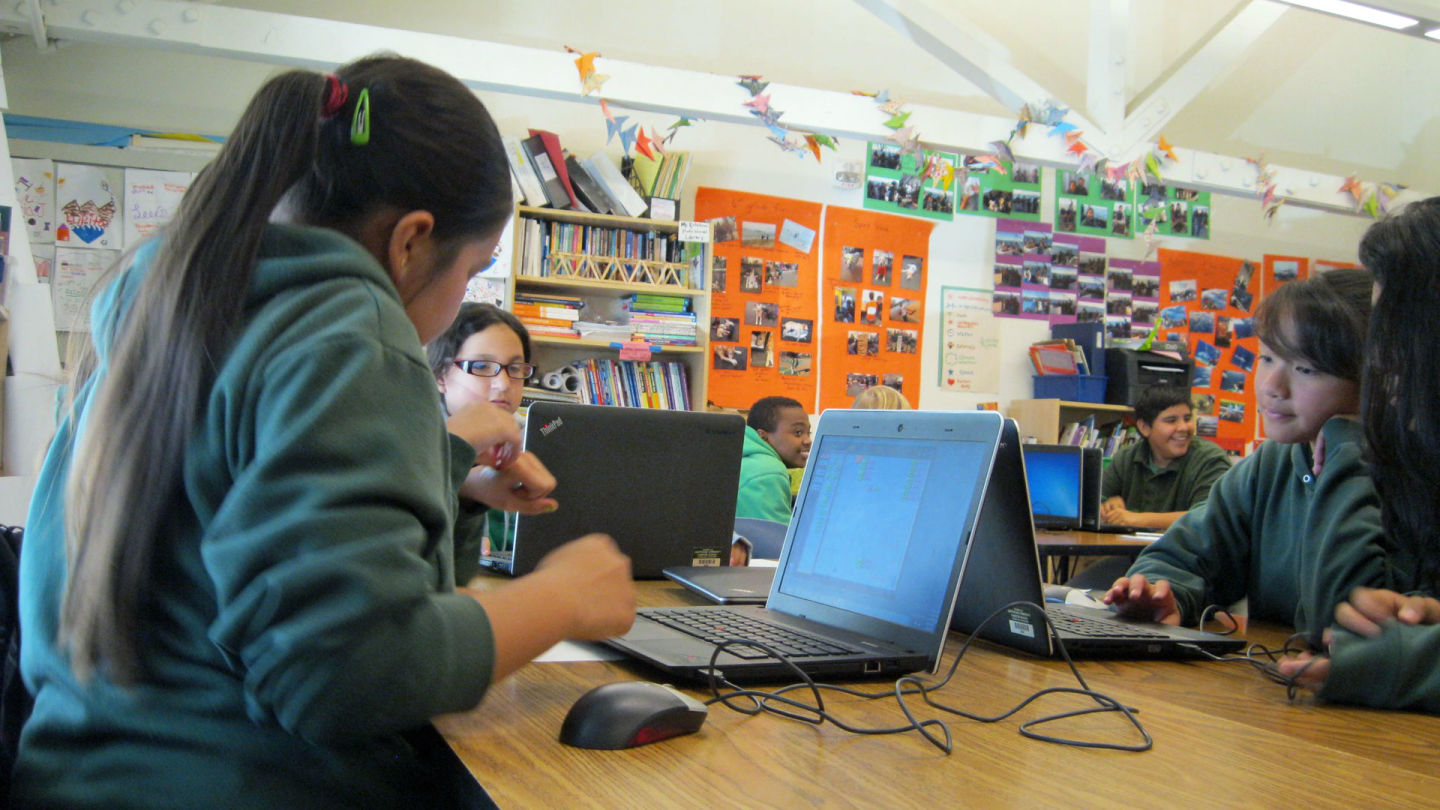
window.__INITIAL_STATE__={
"attachmentsReducer": {
"audio_0": {
"type": "attachments",
"id": "audio_0",
"imgSizes": {
"kqedFullSize": {
"file": "https://ww2.kqed.org/news/wp-content/themes/KQED-unified/img/audio_bgs/background0.jpg"
}
}
},
"audio_1": {
"type": "attachments",
"id": "audio_1",
"imgSizes": {
"kqedFullSize": {
"file": "https://ww2.kqed.org/news/wp-content/themes/KQED-unified/img/audio_bgs/background1.jpg"
}
}
},
"audio_2": {
"type": "attachments",
"id": "audio_2",
"imgSizes": {
"kqedFullSize": {
"file": "https://ww2.kqed.org/news/wp-content/themes/KQED-unified/img/audio_bgs/background2.jpg"
}
}
},
"audio_3": {
"type": "attachments",
"id": "audio_3",
"imgSizes": {
"kqedFullSize": {
"file": "https://ww2.kqed.org/news/wp-content/themes/KQED-unified/img/audio_bgs/background3.jpg"
}
}
},
"audio_4": {
"type": "attachments",
"id": "audio_4",
"imgSizes": {
"kqedFullSize": {
"file": "https://ww2.kqed.org/news/wp-content/themes/KQED-unified/img/audio_bgs/background4.jpg"
}
}
},
"placeholder": {
"type": "attachments",
"id": "placeholder",
"imgSizes": {
"thumbnail": {
"file": "https://cdn.kqed.org/wp-content/uploads/2024/12/KQED-Default-Image-816638274-2000x1333-1-160x107.jpg",
"width": 160,
"height": 107,
"mimeType": "image/jpeg"
},
"medium": {
"file": "https://cdn.kqed.org/wp-content/uploads/2024/12/KQED-Default-Image-816638274-2000x1333-1-800x533.jpg",
"width": 800,
"height": 533,
"mimeType": "image/jpeg"
},
"medium_large": {
"file": "https://cdn.kqed.org/wp-content/uploads/2024/12/KQED-Default-Image-816638274-2000x1333-1-768x512.jpg",
"width": 768,
"height": 512,
"mimeType": "image/jpeg"
},
"large": {
"file": "https://cdn.kqed.org/wp-content/uploads/2024/12/KQED-Default-Image-816638274-2000x1333-1-1020x680.jpg",
"width": 1020,
"height": 680,
"mimeType": "image/jpeg"
},
"1536x1536": {
"file": "https://cdn.kqed.org/wp-content/uploads/2024/12/KQED-Default-Image-816638274-2000x1333-1-1536x1024.jpg",
"width": 1536,
"height": 1024,
"mimeType": "image/jpeg"
},
"fd-lrg": {
"file": "https://cdn.kqed.org/wp-content/uploads/2024/12/KQED-Default-Image-816638274-2000x1333-1-1536x1024.jpg",
"width": 1536,
"height": 1024,
"mimeType": "image/jpeg"
},
"fd-med": {
"file": "https://cdn.kqed.org/wp-content/uploads/2024/12/KQED-Default-Image-816638274-2000x1333-1-1020x680.jpg",
"width": 1020,
"height": 680,
"mimeType": "image/jpeg"
},
"fd-sm": {
"file": "https://cdn.kqed.org/wp-content/uploads/2024/12/KQED-Default-Image-816638274-2000x1333-1-800x533.jpg",
"width": 800,
"height": 533,
"mimeType": "image/jpeg"
},
"post-thumbnail": {
"file": "https://cdn.kqed.org/wp-content/uploads/2024/12/KQED-Default-Image-816638274-2000x1333-1-672x372.jpg",
"width": 672,
"height": 372,
"mimeType": "image/jpeg"
},
"twentyfourteen-full-width": {
"file": "https://cdn.kqed.org/wp-content/uploads/2024/12/KQED-Default-Image-816638274-2000x1333-1-1038x576.jpg",
"width": 1038,
"height": 576,
"mimeType": "image/jpeg"
},
"xxsmall": {
"file": "https://cdn.kqed.org/wp-content/uploads/2024/12/KQED-Default-Image-816638274-2000x1333-1-160x107.jpg",
"width": 160,
"height": 107,
"mimeType": "image/jpeg"
},
"xsmall": {
"file": "https://cdn.kqed.org/wp-content/uploads/2024/12/KQED-Default-Image-816638274-2000x1333-1-672x372.jpg",
"width": 672,
"height": 372,
"mimeType": "image/jpeg"
},
"small": {
"file": "https://cdn.kqed.org/wp-content/uploads/2024/12/KQED-Default-Image-816638274-2000x1333-1-672x372.jpg",
"width": 672,
"height": 372,
"mimeType": "image/jpeg"
},
"xlarge": {
"file": "https://cdn.kqed.org/wp-content/uploads/2024/12/KQED-Default-Image-816638274-2000x1333-1-1020x680.jpg",
"width": 1020,
"height": 680,
"mimeType": "image/jpeg"
},
"full-width": {
"file": "https://cdn.kqed.org/wp-content/uploads/2024/12/KQED-Default-Image-816638274-2000x1333-1-1920x1280.jpg",
"width": 1920,
"height": 1280,
"mimeType": "image/jpeg"
},
"guest-author-32": {
"file": "https://cdn.kqed.org/wp-content/uploads/2025/01/KQED-Default-Image-816638274-1333x1333-1-160x160.jpg",
"width": 32,
"height": 32,
"mimeType": "image/jpeg"
},
"guest-author-50": {
"file": "https://cdn.kqed.org/wp-content/uploads/2025/01/KQED-Default-Image-816638274-1333x1333-1-160x160.jpg",
"width": 50,
"height": 50,
"mimeType": "image/jpeg"
},
"guest-author-64": {
"file": "https://cdn.kqed.org/wp-content/uploads/2025/01/KQED-Default-Image-816638274-1333x1333-1-160x160.jpg",
"width": 64,
"height": 64,
"mimeType": "image/jpeg"
},
"guest-author-96": {
"file": "https://cdn.kqed.org/wp-content/uploads/2025/01/KQED-Default-Image-816638274-1333x1333-1-160x160.jpg",
"width": 96,
"height": 96,
"mimeType": "image/jpeg"
},
"guest-author-128": {
"file": "https://cdn.kqed.org/wp-content/uploads/2025/01/KQED-Default-Image-816638274-1333x1333-1-160x160.jpg",
"width": 128,
"height": 128,
"mimeType": "image/jpeg"
},
"detail": {
"file": "https://cdn.kqed.org/wp-content/uploads/2025/01/KQED-Default-Image-816638274-1333x1333-1-160x160.jpg",
"width": 160,
"height": 160,
"mimeType": "image/jpeg"
},
"kqedFullSize": {
"file": "https://cdn.kqed.org/wp-content/uploads/2024/12/KQED-Default-Image-816638274-2000x1333-1.jpg",
"width": 2000,
"height": 1333
}
}
},
"mindshift_41822": {
"type": "attachments",
"id": "mindshift_41822",
"meta": {
"index": "attachments_1716263798",
"site": "mindshift",
"id": "41822",
"found": true
},
"parent": 41719,
"imgSizes": {
"twentyfourteen-full-width": {
"file": "https://ww2.kqed.org/app/uploads/sites/23/2015/08/lighthouse-1038x576.jpg",
"width": 1038,
"mimeType": "image/jpeg",
"height": 576
},
"thumbnail": {
"file": "https://ww2.kqed.org/app/uploads/sites/23/2015/08/lighthouse-400x225.jpg",
"width": 400,
"mimeType": "image/jpeg",
"height": 225
},
"fd-sm": {
"file": "https://ww2.kqed.org/app/uploads/sites/23/2015/08/lighthouse-960x540.jpg",
"width": 960,
"mimeType": "image/jpeg",
"height": 540
},
"post-thumbnail": {
"file": "https://ww2.kqed.org/app/uploads/sites/23/2015/08/lighthouse-672x372.jpg",
"width": 672,
"mimeType": "image/jpeg",
"height": 372
},
"kqedFullSize": {
"file": "https://ww2.kqed.org/app/uploads/sites/23/2015/08/lighthouse.jpg",
"width": 1920,
"height": 1080
},
"large": {
"file": "https://ww2.kqed.org/app/uploads/sites/23/2015/08/lighthouse-1440x810.jpg",
"width": 1440,
"mimeType": "image/jpeg",
"height": 810
},
"guest-author-96": {
"file": "https://ww2.kqed.org/app/uploads/sites/23/2015/08/lighthouse-96x96.jpg",
"width": 96,
"mimeType": "image/jpeg",
"height": 96
},
"medium": {
"file": "https://ww2.kqed.org/app/uploads/sites/23/2015/08/lighthouse-800x450.jpg",
"width": 800,
"mimeType": "image/jpeg",
"height": 450
},
"guest-author-64": {
"file": "https://ww2.kqed.org/app/uploads/sites/23/2015/08/lighthouse-64x64.jpg",
"width": 64,
"mimeType": "image/jpeg",
"height": 64
},
"guest-author-32": {
"file": "https://ww2.kqed.org/app/uploads/sites/23/2015/08/lighthouse-32x32.jpg",
"width": 32,
"mimeType": "image/jpeg",
"height": 32
},
"cat_post_thumb_sizecategory-posts-2": {
"file": "https://ww2.kqed.org/app/uploads/sites/23/2015/08/lighthouse-50x50.jpg",
"width": 50,
"mimeType": "image/jpeg",
"height": 50
},
"fd-lrg": {
"file": "https://ww2.kqed.org/app/uploads/sites/23/2015/08/lighthouse-1920x1080.jpg",
"width": 1920,
"mimeType": "image/jpeg",
"height": 1080
},
"fd-med": {
"file": "https://ww2.kqed.org/app/uploads/sites/23/2015/08/lighthouse-1180x664.jpg",
"width": 1180,
"mimeType": "image/jpeg",
"height": 664
},
"detail": {
"file": "https://ww2.kqed.org/app/uploads/sites/23/2015/08/lighthouse-75x75.jpg",
"width": 75,
"mimeType": "image/jpeg",
"height": 75
},
"guest-author-128": {
"file": "https://ww2.kqed.org/app/uploads/sites/23/2015/08/lighthouse-128x128.jpg",
"width": 128,
"mimeType": "image/jpeg",
"height": 128
}
},
"publishDate": 1440805859,
"modified": 1440805943,
"caption": "Sixth graders at Lighthouse Community Charter School in East Oakland tinker with Turtle Art as part of a deep dive into the coordinate grid.",
"description": null,
"title": "lighthouse",
"credit": "Katrina Schwartz",
"status": "inherit",
"isLoading": false,
"fetchFailed": false
},
"mindshift_42022": {
"type": "attachments",
"id": "mindshift_42022",
"meta": {
"index": "attachments_1716263798",
"site": "mindshift",
"id": "42022",
"found": true
},
"parent": 42021,
"imgSizes": {
"twentyfourteen-full-width": {
"file": "https://ww2.kqed.org/app/uploads/sites/23/2015/09/Oshihara-McDougal-1038x576.jpg",
"width": 1038,
"mimeType": "image/jpeg",
"height": 576
},
"thumbnail": {
"file": "https://ww2.kqed.org/app/uploads/sites/23/2015/09/Oshihara-McDougal-400x225.jpg",
"width": 400,
"mimeType": "image/jpeg",
"height": 225
},
"fd-sm": {
"file": "https://ww2.kqed.org/app/uploads/sites/23/2015/09/Oshihara-McDougal-960x540.jpg",
"width": 960,
"mimeType": "image/jpeg",
"height": 540
},
"post-thumbnail": {
"file": "https://ww2.kqed.org/app/uploads/sites/23/2015/09/Oshihara-McDougal-672x372.jpg",
"width": 672,
"mimeType": "image/jpeg",
"height": 372
},
"kqedFullSize": {
"file": "https://ww2.kqed.org/app/uploads/sites/23/2015/09/Oshihara-McDougal.jpg",
"width": 1920,
"height": 1080
},
"large": {
"file": "https://ww2.kqed.org/app/uploads/sites/23/2015/09/Oshihara-McDougal-1440x810.jpg",
"width": 1440,
"mimeType": "image/jpeg",
"height": 810
},
"guest-author-96": {
"file": "https://ww2.kqed.org/app/uploads/sites/23/2015/09/Oshihara-McDougal-96x96.jpg",
"width": 96,
"mimeType": "image/jpeg",
"height": 96
},
"medium": {
"file": "https://ww2.kqed.org/app/uploads/sites/23/2015/09/Oshihara-McDougal-800x450.jpg",
"width": 800,
"mimeType": "image/jpeg",
"height": 450
},
"guest-author-64": {
"file": "https://ww2.kqed.org/app/uploads/sites/23/2015/09/Oshihara-McDougal-64x64.jpg",
"width": 64,
"mimeType": "image/jpeg",
"height": 64
},
"guest-author-32": {
"file": "https://ww2.kqed.org/app/uploads/sites/23/2015/09/Oshihara-McDougal-32x32.jpg",
"width": 32,
"mimeType": "image/jpeg",
"height": 32
},
"cat_post_thumb_sizecategory-posts-2": {
"file": "https://ww2.kqed.org/app/uploads/sites/23/2015/09/Oshihara-McDougal-50x50.jpg",
"width": 50,
"mimeType": "image/jpeg",
"height": 50
},
"fd-lrg": {
"file": "https://ww2.kqed.org/app/uploads/sites/23/2015/09/Oshihara-McDougal-1920x1080.jpg",
"width": 1920,
"mimeType": "image/jpeg",
"height": 1080
},
"fd-med": {
"file": "https://ww2.kqed.org/app/uploads/sites/23/2015/09/Oshihara-McDougal-1180x664.jpg",
"width": 1180,
"mimeType": "image/jpeg",
"height": 664
},
"detail": {
"file": "https://ww2.kqed.org/app/uploads/sites/23/2015/09/Oshihara-McDougal-75x75.jpg",
"width": 75,
"mimeType": "image/jpeg",
"height": 75
},
"guest-author-128": {
"file": "https://ww2.kqed.org/app/uploads/sites/23/2015/09/Oshihara-McDougal-128x128.jpg",
"width": 128,
"mimeType": "image/jpeg",
"height": 128
}
},
"publishDate": 1442234127,
"modified": 1442234160,
"caption": "Japanese teachers doing lesson study at Oshihara Elementary School in Japan, June 2012.",
"description": null,
"title": "Oshihara-McDougal",
"credit": "Tom McDougal",
"status": "inherit",
"isLoading": false,
"fetchFailed": false
},
"mindshift_41927": {
"type": "attachments",
"id": "mindshift_41927",
"meta": {
"index": "attachments_1716263798",
"site": "mindshift",
"id": "41927",
"found": true
},
"parent": 41924,
"imgSizes": {
"twentyfourteen-full-width": {
"file": "https://ww2.kqed.org/app/uploads/sites/23/2015/09/hand-raised-1038x576.jpg",
"width": 1038,
"mimeType": "image/jpeg",
"height": 576
},
"thumbnail": {
"file": "https://ww2.kqed.org/app/uploads/sites/23/2015/09/hand-raised-400x225.jpg",
"width": 400,
"mimeType": "image/jpeg",
"height": 225
},
"fd-sm": {
"file": "https://ww2.kqed.org/app/uploads/sites/23/2015/09/hand-raised-960x540.jpg",
"width": 960,
"mimeType": "image/jpeg",
"height": 540
},
"post-thumbnail": {
"file": "https://ww2.kqed.org/app/uploads/sites/23/2015/09/hand-raised-672x372.jpg",
"width": 672,
"mimeType": "image/jpeg",
"height": 372
},
"kqedFullSize": {
"file": "https://ww2.kqed.org/app/uploads/sites/23/2015/09/hand-raised.jpg",
"width": 1440,
"height": 810
},
"large": {
"file": "https://ww2.kqed.org/app/uploads/sites/23/2015/09/hand-raised-1440x810.jpg",
"width": 1440,
"mimeType": "image/jpeg",
"height": 810
},
"guest-author-96": {
"file": "https://ww2.kqed.org/app/uploads/sites/23/2015/09/hand-raised-96x96.jpg",
"width": 96,
"mimeType": "image/jpeg",
"height": 96
},
"medium": {
"file": "https://ww2.kqed.org/app/uploads/sites/23/2015/09/hand-raised-800x450.jpg",
"width": 800,
"mimeType": "image/jpeg",
"height": 450
},
"guest-author-64": {
"file": "https://ww2.kqed.org/app/uploads/sites/23/2015/09/hand-raised-64x64.jpg",
"width": 64,
"mimeType": "image/jpeg",
"height": 64
},
"guest-author-32": {
"file": "https://ww2.kqed.org/app/uploads/sites/23/2015/09/hand-raised-32x32.jpg",
"width": 32,
"mimeType": "image/jpeg",
"height": 32
},
"cat_post_thumb_sizecategory-posts-2": {
"file": "https://ww2.kqed.org/app/uploads/sites/23/2015/09/hand-raised-50x50.jpg",
"width": 50,
"mimeType": "image/jpeg",
"height": 50
},
"fd-med": {
"file": "https://ww2.kqed.org/app/uploads/sites/23/2015/09/hand-raised-1180x664.jpg",
"width": 1180,
"mimeType": "image/jpeg",
"height": 664
},
"detail": {
"file": "https://ww2.kqed.org/app/uploads/sites/23/2015/09/hand-raised-75x75.jpg",
"width": 75,
"mimeType": "image/jpeg",
"height": 75
},
"guest-author-128": {
"file": "https://ww2.kqed.org/app/uploads/sites/23/2015/09/hand-raised-128x128.jpg",
"width": 128,
"mimeType": "image/jpeg",
"height": 128
}
},
"publishDate": 1441391127,
"modified": 1441391142,
"caption": null,
"description": null,
"title": "hand-raised",
"credit": "Lenny Gonzalez/KQED",
"status": "inherit",
"isLoading": false,
"fetchFailed": false
},
"mindshift_40551": {
"type": "attachments",
"id": "mindshift_40551",
"meta": {
"index": "attachments_1716263798",
"site": "mindshift",
"id": "40551",
"found": true
},
"parent": 40537,
"imgSizes": {
"twentyfourteen-full-width": {
"file": "https://ww2.kqed.org/app/uploads/sites/23/2015/05/hopscotch-1038x576.jpg",
"width": 1038,
"mimeType": "image/jpeg",
"height": 576
},
"thumbnail": {
"file": "https://ww2.kqed.org/app/uploads/sites/23/2015/05/hopscotch-400x225.jpg",
"width": 400,
"mimeType": "image/jpeg",
"height": 225
},
"fd-sm": {
"file": "https://ww2.kqed.org/app/uploads/sites/23/2015/05/hopscotch-960x540.jpg",
"width": 960,
"mimeType": "image/jpeg",
"height": 540
},
"post-thumbnail": {
"file": "https://ww2.kqed.org/app/uploads/sites/23/2015/05/hopscotch-672x372.jpg",
"width": 672,
"mimeType": "image/jpeg",
"height": 372
},
"kqedFullSize": {
"file": "https://ww2.kqed.org/app/uploads/sites/23/2015/05/hopscotch.jpg",
"width": 1920,
"height": 1080
},
"large": {
"file": "https://ww2.kqed.org/app/uploads/sites/23/2015/05/hopscotch-1440x810.jpg",
"width": 1440,
"mimeType": "image/jpeg",
"height": 810
},
"guest-author-96": {
"file": "https://ww2.kqed.org/app/uploads/sites/23/2015/05/hopscotch-96x96.jpg",
"width": 96,
"mimeType": "image/jpeg",
"height": 96
},
"medium": {
"file": "https://ww2.kqed.org/app/uploads/sites/23/2015/05/hopscotch-800x450.jpg",
"width": 800,
"mimeType": "image/jpeg",
"height": 450
},
"guest-author-64": {
"file": "https://ww2.kqed.org/app/uploads/sites/23/2015/05/hopscotch-64x64.jpg",
"width": 64,
"mimeType": "image/jpeg",
"height": 64
},
"guest-author-32": {
"file": "https://ww2.kqed.org/app/uploads/sites/23/2015/05/hopscotch-32x32.jpg",
"width": 32,
"mimeType": "image/jpeg",
"height": 32
},
"cat_post_thumb_sizecategory-posts-2": {
"file": "https://ww2.kqed.org/app/uploads/sites/23/2015/05/hopscotch-50x50.jpg",
"width": 50,
"mimeType": "image/jpeg",
"height": 50
},
"fd-med": {
"file": "https://ww2.kqed.org/app/uploads/sites/23/2015/05/hopscotch-1180x664.jpg",
"width": 1180,
"mimeType": "image/jpeg",
"height": 664
},
"detail": {
"file": "https://ww2.kqed.org/app/uploads/sites/23/2015/05/hopscotch-75x75.jpg",
"width": 75,
"mimeType": "image/jpeg",
"height": 75
},
"guest-author-128": {
"file": "https://ww2.kqed.org/app/uploads/sites/23/2015/05/hopscotch-128x128.jpg",
"width": 128,
"mimeType": "image/jpeg",
"height": 128
}
},
"publishDate": 1431559204,
"modified": 1431559248,
"caption": null,
"description": null,
"title": "hopscotch",
"credit": "\u003ca href=\"https://www.flickr.com/photos/waltjabsco/5580341814/in/photolist-9v7HcU-61R7jt-oPqDjc-oPrnxZ-2aSpee-4czEfm-4Wcygn-p6VSNP-p6TP2w-oPru7F-oPqGvc-oPr2Sj-p6Eo64-p6TF5Q-pX9HM-p6TRMG-p6EwwT-oPrzAh-oPrz2b-p4TM8h-p4TLBN-oPqKBc-oPrwMG-p6Ergn-hpLchS-hpL9UW-hpLsyb-hpLsib-gr3kHB-kD4GZ9-bDaimD-4A8XXc-p3TGtJ-KzwvJ-pmVcUP-4DQ7G6-p6EnbZ-a3i75x-6bhvP-3KGNZY-hpLtdh-hpKUKH-61Ewwu-hpLbHL-pixn7g-7ek2kN-mMGBjm-9X7QwK-a41PJW-kW83X\">Walt Jabsco/Flickr\u003c/a>",
"status": "inherit",
"isLoading": false,
"fetchFailed": false
},
"mindshift_39992": {
"type": "attachments",
"id": "mindshift_39992",
"meta": {
"index": "attachments_1716263798",
"site": "mindshift",
"id": "39992",
"found": true
},
"parent": 39169,
"imgSizes": {
"twentyfourteen-full-width": {
"file": "https://ww2.kqed.org/app/uploads/sites/23/2015/04/Incarceration-by-Race-by-Zack-1038x576.jpg",
"width": 1038,
"mimeType": "image/jpeg",
"height": 576
},
"thumbnail": {
"file": "https://ww2.kqed.org/app/uploads/sites/23/2015/04/Incarceration-by-Race-by-Zack-400x267.jpg",
"width": 400,
"mimeType": "image/jpeg",
"height": 267
},
"fd-sm": {
"file": "https://ww2.kqed.org/app/uploads/sites/23/2015/04/Incarceration-by-Race-by-Zack-320x214.jpg",
"width": 320,
"mimeType": "image/jpeg",
"height": 214
},
"post-thumbnail": {
"file": "https://ww2.kqed.org/app/uploads/sites/23/2015/04/Incarceration-by-Race-by-Zack-672x372.jpg",
"width": 672,
"mimeType": "image/jpeg",
"height": 372
},
"kqedFullSize": {
"file": "https://ww2.kqed.org/app/uploads/sites/23/2015/04/Incarceration-by-Race-by-Zack.jpg",
"width": 1438,
"height": 960
},
"guest-author-96": {
"file": "https://ww2.kqed.org/app/uploads/sites/23/2015/04/Incarceration-by-Race-by-Zack-96x96.jpg",
"width": 96,
"mimeType": "image/jpeg",
"height": 96
},
"medium": {
"file": "https://ww2.kqed.org/app/uploads/sites/23/2015/04/Incarceration-by-Race-by-Zack-800x534.jpg",
"width": 800,
"mimeType": "image/jpeg",
"height": 534
},
"guest-author-64": {
"file": "https://ww2.kqed.org/app/uploads/sites/23/2015/04/Incarceration-by-Race-by-Zack-64x64.jpg",
"width": 64,
"mimeType": "image/jpeg",
"height": 64
},
"guest-author-32": {
"file": "https://ww2.kqed.org/app/uploads/sites/23/2015/04/Incarceration-by-Race-by-Zack-32x32.jpg",
"width": 32,
"mimeType": "image/jpeg",
"height": 32
},
"cat_post_thumb_sizecategory-posts-2": {
"file": "https://ww2.kqed.org/app/uploads/sites/23/2015/04/Incarceration-by-Race-by-Zack-50x50.jpg",
"width": 50,
"mimeType": "image/jpeg",
"height": 50
},
"fd-lrg": {
"file": "https://ww2.kqed.org/app/uploads/sites/23/2015/04/Incarceration-by-Race-by-Zack-1180x788.jpg",
"width": 1180,
"mimeType": "image/jpeg",
"height": 788
},
"fd-med": {
"file": "https://ww2.kqed.org/app/uploads/sites/23/2015/04/Incarceration-by-Race-by-Zack-768x513.jpg",
"width": 768,
"mimeType": "image/jpeg",
"height": 513
},
"detail": {
"file": "https://ww2.kqed.org/app/uploads/sites/23/2015/04/Incarceration-by-Race-by-Zack-75x75.jpg",
"width": 75,
"mimeType": "image/jpeg",
"height": 75
},
"guest-author-128": {
"file": "https://ww2.kqed.org/app/uploads/sites/23/2015/04/Incarceration-by-Race-by-Zack-128x128.jpg",
"width": 128,
"mimeType": "image/jpeg",
"height": 128
}
},
"publishDate": 1427976387,
"modified": 1427976522,
"caption": "As part of a social justice assignment on incarceration rates in the United States, a student broke down the numbers by race of the liftetime odds that person will be incarcerated. ",
"description": null,
"title": "Incarceration-by-Race-by-Zack",
"credit": null,
"status": "inherit",
"isLoading": false,
"fetchFailed": false
},
"mindshift_39316": {
"type": "attachments",
"id": "mindshift_39316",
"meta": {
"index": "attachments_1716263798",
"site": "mindshift",
"id": "39316",
"found": true
},
"parent": 39262,
"imgSizes": {
"twentyfourteen-full-width": {
"file": "https://ww2.kqed.org/app/uploads/sites/23/2015/02/de_Tocqueville-1038x576.gif",
"width": 1038,
"mimeType": "image/gif",
"height": 576
},
"thumbnail": {
"file": "https://ww2.kqed.org/app/uploads/sites/23/2015/02/de_Tocqueville-400x267.gif",
"width": 400,
"mimeType": "image/gif",
"height": 267
},
"fd-sm": {
"file": "https://ww2.kqed.org/app/uploads/sites/23/2015/02/de_Tocqueville-320x214.gif",
"width": 320,
"mimeType": "image/gif",
"height": 214
},
"post-thumbnail": {
"file": "https://ww2.kqed.org/app/uploads/sites/23/2015/02/de_Tocqueville-672x372.gif",
"width": 672,
"mimeType": "image/gif",
"height": 372
},
"kqedFullSize": {
"file": "https://ww2.kqed.org/app/uploads/sites/23/2015/02/de_Tocqueville.gif",
"width": 1438,
"height": 960
},
"fd-lrg": {
"file": "https://ww2.kqed.org/app/uploads/sites/23/2015/02/de_Tocqueville-1180x788.gif",
"width": 1180,
"mimeType": "image/gif",
"height": 788
},
"fd-med": {
"file": "https://ww2.kqed.org/app/uploads/sites/23/2015/02/de_Tocqueville-768x513.gif",
"width": 768,
"mimeType": "image/gif",
"height": 513
},
"guest-author-96": {
"file": "https://ww2.kqed.org/app/uploads/sites/23/2015/02/de_Tocqueville-96x96.gif",
"width": 96,
"mimeType": "image/gif",
"height": 96
},
"medium": {
"file": "https://ww2.kqed.org/app/uploads/sites/23/2015/02/de_Tocqueville-800x534.gif",
"width": 800,
"mimeType": "image/gif",
"height": 534
},
"guest-author-64": {
"file": "https://ww2.kqed.org/app/uploads/sites/23/2015/02/de_Tocqueville-64x64.gif",
"width": 64,
"mimeType": "image/gif",
"height": 64
},
"guest-author-32": {
"file": "https://ww2.kqed.org/app/uploads/sites/23/2015/02/de_Tocqueville-32x32.gif",
"width": 32,
"mimeType": "image/gif",
"height": 32
},
"guest-author-128": {
"file": "https://ww2.kqed.org/app/uploads/sites/23/2015/02/de_Tocqueville-128x128.gif",
"width": 128,
"mimeType": "image/gif",
"height": 128
}
},
"publishDate": 1423623857,
"modified": 1423623885,
"caption": "Alexis de Tocqueville",
"description": null,
"title": "de_Tocqueville",
"credit": null,
"status": "inherit",
"isLoading": false,
"fetchFailed": false
},
"mindshift_38983": {
"type": "attachments",
"id": "mindshift_38983",
"meta": {
"index": "attachments_1716263798",
"site": "mindshift",
"id": "38983",
"found": true
},
"parent": 38977,
"imgSizes": {
"twentyfourteen-full-width": {
"file": "https://ww2.kqed.org/app/uploads/sites/23/2015/01/exodus-1038x576.jpg",
"width": 1038,
"mimeType": "image/jpeg",
"height": 576
},
"thumbnail": {
"file": "https://ww2.kqed.org/app/uploads/sites/23/2015/01/exodus-400x225.jpg",
"width": 400,
"mimeType": "image/jpeg",
"height": 225
},
"fd-sm": {
"file": "https://ww2.kqed.org/app/uploads/sites/23/2015/01/exodus-320x180.jpg",
"width": 320,
"mimeType": "image/jpeg",
"height": 180
},
"post-thumbnail": {
"file": "https://ww2.kqed.org/app/uploads/sites/23/2015/01/exodus-672x372.jpg",
"width": 672,
"mimeType": "image/jpeg",
"height": 372
},
"kqedFullSize": {
"file": "https://ww2.kqed.org/app/uploads/sites/23/2015/01/exodus.jpg",
"width": 1440,
"height": 810
},
"large": {
"file": "https://ww2.kqed.org/app/uploads/sites/23/2015/01/exodus-1440x810.jpg",
"width": 1440,
"mimeType": "image/jpeg",
"height": 810
},
"guest-author-96": {
"file": "https://ww2.kqed.org/app/uploads/sites/23/2015/01/exodus-96x96.jpg",
"width": 96,
"mimeType": "image/jpeg",
"height": 96
},
"medium": {
"file": "https://ww2.kqed.org/app/uploads/sites/23/2015/01/exodus-800x450.jpg",
"width": 800,
"mimeType": "image/jpeg",
"height": 450
},
"guest-author-64": {
"file": "https://ww2.kqed.org/app/uploads/sites/23/2015/01/exodus-64x64.jpg",
"width": 64,
"mimeType": "image/jpeg",
"height": 64
},
"guest-author-32": {
"file": "https://ww2.kqed.org/app/uploads/sites/23/2015/01/exodus-32x32.jpg",
"width": 32,
"mimeType": "image/jpeg",
"height": 32
},
"fd-lrg": {
"file": "https://ww2.kqed.org/app/uploads/sites/23/2015/01/exodus-1180x664.jpg",
"width": 1180,
"mimeType": "image/jpeg",
"height": 664
},
"fd-med": {
"file": "https://ww2.kqed.org/app/uploads/sites/23/2015/01/exodus-768x432.jpg",
"width": 768,
"mimeType": "image/jpeg",
"height": 432
},
"guest-author-128": {
"file": "https://ww2.kqed.org/app/uploads/sites/23/2015/01/exodus-128x128.jpg",
"width": 128,
"mimeType": "image/jpeg",
"height": 128
}
},
"publishDate": 1421108734,
"modified": 1421108768,
"caption": "Koltun-Fromm's students used Prezi to explore non-linear connections between class texts. (Courtesy Ken Koltun-Fromm)",
"description": null,
"title": "exodus",
"credit": null,
"status": "inherit",
"isLoading": false,
"fetchFailed": false
},
"mindshift_39144": {
"type": "attachments",
"id": "mindshift_39144",
"meta": {
"index": "attachments_1716263798",
"site": "mindshift",
"id": "39144",
"found": true
},
"parent": 39142,
"imgSizes": {
"twentyfourteen-full-width": {
"file": "https://ww2.kqed.org/app/uploads/sites/23/2015/01/girl-study-sketch-1038x576.jpg",
"width": 1038,
"mimeType": "image/jpeg",
"height": 576
},
"thumbnail": {
"file": "https://ww2.kqed.org/app/uploads/sites/23/2015/01/girl-study-sketch-400x225.jpg",
"width": 400,
"mimeType": "image/jpeg",
"height": 225
},
"fd-sm": {
"file": "https://ww2.kqed.org/app/uploads/sites/23/2015/01/girl-study-sketch-320x180.jpg",
"width": 320,
"mimeType": "image/jpeg",
"height": 180
},
"post-thumbnail": {
"file": "https://ww2.kqed.org/app/uploads/sites/23/2015/01/girl-study-sketch-672x372.jpg",
"width": 672,
"mimeType": "image/jpeg",
"height": 372
},
"kqedFullSize": {
"file": "https://ww2.kqed.org/app/uploads/sites/23/2015/01/girl-study-sketch.jpg",
"width": 1440,
"height": 810
},
"large": {
"file": "https://ww2.kqed.org/app/uploads/sites/23/2015/01/girl-study-sketch-1440x810.jpg",
"width": 1440,
"mimeType": "image/jpeg",
"height": 810
},
"guest-author-96": {
"file": "https://ww2.kqed.org/app/uploads/sites/23/2015/01/girl-study-sketch-96x96.jpg",
"width": 96,
"mimeType": "image/jpeg",
"height": 96
},
"medium": {
"file": "https://ww2.kqed.org/app/uploads/sites/23/2015/01/girl-study-sketch-800x450.jpg",
"width": 800,
"mimeType": "image/jpeg",
"height": 450
},
"guest-author-64": {
"file": "https://ww2.kqed.org/app/uploads/sites/23/2015/01/girl-study-sketch-64x64.jpg",
"width": 64,
"mimeType": "image/jpeg",
"height": 64
},
"guest-author-32": {
"file": "https://ww2.kqed.org/app/uploads/sites/23/2015/01/girl-study-sketch-32x32.jpg",
"width": 32,
"mimeType": "image/jpeg",
"height": 32
},
"fd-lrg": {
"file": "https://ww2.kqed.org/app/uploads/sites/23/2015/01/girl-study-sketch-1180x664.jpg",
"width": 1180,
"mimeType": "image/jpeg",
"height": 664
},
"fd-med": {
"file": "https://ww2.kqed.org/app/uploads/sites/23/2015/01/girl-study-sketch-768x432.jpg",
"width": 768,
"mimeType": "image/jpeg",
"height": 432
},
"guest-author-128": {
"file": "https://ww2.kqed.org/app/uploads/sites/23/2015/01/girl-study-sketch-128x128.jpg",
"width": 128,
"mimeType": "image/jpeg",
"height": 128
}
},
"publishDate": 1422493759,
"modified": 1422493806,
"caption": "Naomi Chung/Flickr",
"description": null,
"title": "girl-study-sketch",
"credit": null,
"status": "inherit",
"isLoading": false,
"fetchFailed": false
},
"mindshift_39046": {
"type": "attachments",
"id": "mindshift_39046",
"meta": {
"index": "attachments_1716263798",
"site": "mindshift",
"id": "39046",
"found": true
},
"parent": 38735,
"imgSizes": {
"twentyfourteen-full-width": {
"file": "https://ww2.kqed.org/app/uploads/sites/23/2015/01/Kevin-Harber-Ask-a-Librarian-5466662990_426144a1da_o-1038x576.gif",
"width": 1038,
"mimeType": "image/gif",
"height": 576
},
"thumbnail": {
"file": "https://ww2.kqed.org/app/uploads/sites/23/2015/01/Kevin-Harber-Ask-a-Librarian-5466662990_426144a1da_o-400x267.gif",
"width": 400,
"mimeType": "image/gif",
"height": 267
},
"fd-sm": {
"file": "https://ww2.kqed.org/app/uploads/sites/23/2015/01/Kevin-Harber-Ask-a-Librarian-5466662990_426144a1da_o-320x213.gif",
"width": 320,
"mimeType": "image/gif",
"height": 213
},
"post-thumbnail": {
"file": "https://ww2.kqed.org/app/uploads/sites/23/2015/01/Kevin-Harber-Ask-a-Librarian-5466662990_426144a1da_o-672x372.gif",
"width": 672,
"mimeType": "image/gif",
"height": 372
},
"kqedFullSize": {
"file": "https://ww2.kqed.org/app/uploads/sites/23/2015/01/Kevin-Harber-Ask-a-Librarian-5466662990_426144a1da_o.gif",
"width": 1440,
"height": 960
},
"large": {
"file": "https://ww2.kqed.org/app/uploads/sites/23/2015/01/Kevin-Harber-Ask-a-Librarian-5466662990_426144a1da_o-1440x960.gif",
"width": 1440,
"mimeType": "image/gif",
"height": 960
},
"guest-author-96": {
"file": "https://ww2.kqed.org/app/uploads/sites/23/2015/01/Kevin-Harber-Ask-a-Librarian-5466662990_426144a1da_o-96x96.gif",
"width": 96,
"mimeType": "image/gif",
"height": 96
},
"medium": {
"file": "https://ww2.kqed.org/app/uploads/sites/23/2015/01/Kevin-Harber-Ask-a-Librarian-5466662990_426144a1da_o-800x533.gif",
"width": 800,
"mimeType": "image/gif",
"height": 533
},
"guest-author-64": {
"file": "https://ww2.kqed.org/app/uploads/sites/23/2015/01/Kevin-Harber-Ask-a-Librarian-5466662990_426144a1da_o-64x64.gif",
"width": 64,
"mimeType": "image/gif",
"height": 64
},
"guest-author-32": {
"file": "https://ww2.kqed.org/app/uploads/sites/23/2015/01/Kevin-Harber-Ask-a-Librarian-5466662990_426144a1da_o-32x32.gif",
"width": 32,
"mimeType": "image/gif",
"height": 32
},
"fd-lrg": {
"file": "https://ww2.kqed.org/app/uploads/sites/23/2015/01/Kevin-Harber-Ask-a-Librarian-5466662990_426144a1da_o-1180x787.gif",
"width": 1180,
"mimeType": "image/gif",
"height": 787
},
"fd-med": {
"file": "https://ww2.kqed.org/app/uploads/sites/23/2015/01/Kevin-Harber-Ask-a-Librarian-5466662990_426144a1da_o-768x512.gif",
"width": 768,
"mimeType": "image/gif",
"height": 512
},
"guest-author-128": {
"file": "https://ww2.kqed.org/app/uploads/sites/23/2015/01/Kevin-Harber-Ask-a-Librarian-5466662990_426144a1da_o-128x128.gif",
"width": 128,
"mimeType": "image/gif",
"height": 128
}
},
"publishDate": 1421676742,
"modified": 1421676778,
"caption": "Flickr/Kevin Harber",
"description": null,
"title": "Kevin-Harber-Ask-a-Librarian-5466662990_426144a1da_o",
"credit": null,
"status": "inherit",
"isLoading": false,
"fetchFailed": false
},
"mindshift_38778": {
"type": "attachments",
"id": "mindshift_38778",
"meta": {
"index": "attachments_1716263798",
"site": "mindshift",
"id": "38778",
"found": true
},
"parent": 38757,
"imgSizes": {
"twentyfourteen-full-width": {
"file": "https://ww2.kqed.org/app/uploads/sites/23/2014/12/Positive-mindset-1038x576.gif",
"width": 1038,
"mimeType": "image/gif",
"height": 576
},
"thumbnail": {
"file": "https://ww2.kqed.org/app/uploads/sites/23/2014/12/Positive-mindset-400x267.gif",
"width": 400,
"mimeType": "image/gif",
"height": 267
},
"fd-sm": {
"file": "https://ww2.kqed.org/app/uploads/sites/23/2014/12/Positive-mindset-320x213.gif",
"width": 320,
"mimeType": "image/gif",
"height": 213
},
"post-thumbnail": {
"file": "https://ww2.kqed.org/app/uploads/sites/23/2014/12/Positive-mindset-672x372.gif",
"width": 672,
"mimeType": "image/gif",
"height": 372
},
"kqedFullSize": {
"file": "https://ww2.kqed.org/app/uploads/sites/23/2014/12/Positive-mindset.gif",
"width": 1440,
"height": 960
},
"large": {
"file": "https://ww2.kqed.org/app/uploads/sites/23/2014/12/Positive-mindset-1440x960.gif",
"width": 1440,
"mimeType": "image/gif",
"height": 960
},
"guest-author-96": {
"file": "https://ww2.kqed.org/app/uploads/sites/23/2014/12/Positive-mindset-96x96.gif",
"width": 96,
"mimeType": "image/gif",
"height": 96
},
"medium": {
"file": "https://ww2.kqed.org/app/uploads/sites/23/2014/12/Positive-mindset-800x533.gif",
"width": 800,
"mimeType": "image/gif",
"height": 533
},
"guest-author-64": {
"file": "https://ww2.kqed.org/app/uploads/sites/23/2014/12/Positive-mindset-64x64.gif",
"width": 64,
"mimeType": "image/gif",
"height": 64
},
"guest-author-32": {
"file": "https://ww2.kqed.org/app/uploads/sites/23/2014/12/Positive-mindset-32x32.gif",
"width": 32,
"mimeType": "image/gif",
"height": 32
},
"fd-lrg": {
"file": "https://ww2.kqed.org/app/uploads/sites/23/2014/12/Positive-mindset-1180x787.gif",
"width": 1180,
"mimeType": "image/gif",
"height": 787
},
"fd-med": {
"file": "https://ww2.kqed.org/app/uploads/sites/23/2014/12/Positive-mindset-768x512.gif",
"width": 768,
"mimeType": "image/gif",
"height": 512
},
"guest-author-128": {
"file": "https://ww2.kqed.org/app/uploads/sites/23/2014/12/Positive-mindset-128x128.gif",
"width": 128,
"mimeType": "image/gif",
"height": 128
}
},
"publishDate": 1418915415,
"modified": 1418915422,
"caption": "iStock",
"description": null,
"title": "Positive-mindset",
"credit": null,
"status": "inherit",
"isLoading": false,
"fetchFailed": false
},
"mindshift_38720": {
"type": "attachments",
"id": "mindshift_38720",
"meta": {
"index": "attachments_1716263798",
"site": "mindshift",
"id": "38720",
"found": true
},
"parent": 38533,
"imgSizes": {
"twentyfourteen-full-width": {
"file": "https://ww2.kqed.org/app/uploads/sites/23/2014/12/Deprogramming-1038x576.gif",
"width": 1038,
"mimeType": "image/gif",
"height": 576
},
"thumbnail": {
"file": "https://ww2.kqed.org/app/uploads/sites/23/2014/12/Deprogramming-400x267.gif",
"width": 400,
"mimeType": "image/gif",
"height": 267
},
"fd-sm": {
"file": "https://ww2.kqed.org/app/uploads/sites/23/2014/12/Deprogramming-320x213.gif",
"width": 320,
"mimeType": "image/gif",
"height": 213
},
"post-thumbnail": {
"file": "https://ww2.kqed.org/app/uploads/sites/23/2014/12/Deprogramming-672x372.gif",
"width": 672,
"mimeType": "image/gif",
"height": 372
},
"kqedFullSize": {
"file": "https://ww2.kqed.org/app/uploads/sites/23/2014/12/Deprogramming.gif",
"width": 1440,
"height": 960
},
"large": {
"file": "https://ww2.kqed.org/app/uploads/sites/23/2014/12/Deprogramming-1440x960.gif",
"width": 1440,
"mimeType": "image/gif",
"height": 960
},
"guest-author-96": {
"file": "https://ww2.kqed.org/app/uploads/sites/23/2014/12/Deprogramming-96x96.gif",
"width": 96,
"mimeType": "image/gif",
"height": 96
},
"medium": {
"file": "https://ww2.kqed.org/app/uploads/sites/23/2014/12/Deprogramming-800x533.gif",
"width": 800,
"mimeType": "image/gif",
"height": 533
},
"guest-author-64": {
"file": "https://ww2.kqed.org/app/uploads/sites/23/2014/12/Deprogramming-64x64.gif",
"width": 64,
"mimeType": "image/gif",
"height": 64
},
"guest-author-32": {
"file": "https://ww2.kqed.org/app/uploads/sites/23/2014/12/Deprogramming-32x32.gif",
"width": 32,
"mimeType": "image/gif",
"height": 32
},
"fd-lrg": {
"file": "https://ww2.kqed.org/app/uploads/sites/23/2014/12/Deprogramming-1180x787.gif",
"width": 1180,
"mimeType": "image/gif",
"height": 787
},
"fd-med": {
"file": "https://ww2.kqed.org/app/uploads/sites/23/2014/12/Deprogramming-768x512.gif",
"width": 768,
"mimeType": "image/gif",
"height": 512
},
"guest-author-128": {
"file": "https://ww2.kqed.org/app/uploads/sites/23/2014/12/Deprogramming-128x128.gif",
"width": 128,
"mimeType": "image/gif",
"height": 128
}
},
"publishDate": 1418653219,
"modified": 1418653229,
"caption": "iStock",
"description": null,
"title": "Deprogramming",
"credit": null,
"status": "inherit",
"isLoading": false,
"fetchFailed": false
},
"mindshift_38623": {
"type": "attachments",
"id": "mindshift_38623",
"meta": {
"index": "attachments_1716263798",
"site": "mindshift",
"id": "38623",
"found": true
},
"parent": 38619,
"imgSizes": {
"twentyfourteen-full-width": {
"file": "https://ww2.kqed.org/app/uploads/sites/23/2014/12/DNA-Brain-thinking-1038x576.gif",
"width": 1038,
"mimeType": "image/gif",
"height": 576
},
"thumbnail": {
"file": "https://ww2.kqed.org/app/uploads/sites/23/2014/12/DNA-Brain-thinking-400x225.gif",
"width": 400,
"mimeType": "image/gif",
"height": 225
},
"fd-sm": {
"file": "https://ww2.kqed.org/app/uploads/sites/23/2014/12/DNA-Brain-thinking-320x180.gif",
"width": 320,
"mimeType": "image/gif",
"height": 180
},
"post-thumbnail": {
"file": "https://ww2.kqed.org/app/uploads/sites/23/2014/12/DNA-Brain-thinking-672x372.gif",
"width": 672,
"mimeType": "image/gif",
"height": 372
},
"kqedFullSize": {
"file": "https://ww2.kqed.org/app/uploads/sites/23/2014/12/DNA-Brain-thinking.gif",
"width": 1280,
"height": 720
},
"fd-lrg": {
"file": "https://ww2.kqed.org/app/uploads/sites/23/2014/12/DNA-Brain-thinking-1180x664.gif",
"width": 1180,
"mimeType": "image/gif",
"height": 664
},
"fd-med": {
"file": "https://ww2.kqed.org/app/uploads/sites/23/2014/12/DNA-Brain-thinking-768x432.gif",
"width": 768,
"mimeType": "image/gif",
"height": 432
},
"guest-author-96": {
"file": "https://ww2.kqed.org/app/uploads/sites/23/2014/12/DNA-Brain-thinking-96x96.gif",
"width": 96,
"mimeType": "image/gif",
"height": 96
},
"medium": {
"file": "https://ww2.kqed.org/app/uploads/sites/23/2014/12/DNA-Brain-thinking-800x450.gif",
"width": 800,
"mimeType": "image/gif",
"height": 450
},
"guest-author-64": {
"file": "https://ww2.kqed.org/app/uploads/sites/23/2014/12/DNA-Brain-thinking-64x64.gif",
"width": 64,
"mimeType": "image/gif",
"height": 64
},
"guest-author-32": {
"file": "https://ww2.kqed.org/app/uploads/sites/23/2014/12/DNA-Brain-thinking-32x32.gif",
"width": 32,
"mimeType": "image/gif",
"height": 32
},
"guest-author-128": {
"file": "https://ww2.kqed.org/app/uploads/sites/23/2014/12/DNA-Brain-thinking-128x128.gif",
"width": 128,
"mimeType": "image/gif",
"height": 128
}
},
"publishDate": 1417615087,
"modified": 1417615101,
"caption": "iStock",
"description": null,
"title": "DNA-Brain-thinking",
"credit": null,
"status": "inherit",
"isLoading": false,
"fetchFailed": false
}
},
"audioPlayerReducer": {
"postId": "stream_live",
"isPaused": true,
"isPlaying": false,
"pfsActive": false,
"pledgeModalIsOpen": true,
"playerDrawerIsOpen": false,
"liveAudioPlayStartedAt": 0,
"liveAudioPlayContext": ""
},
"authorsReducer": {
"byline_mindshift_42021": {
"type": "authors",
"id": "byline_mindshift_42021",
"meta": {
"override": true
},
"slug": "byline_mindshift_42021",
"name": "Emily Hanford, American RadioWorks",
"isLoading": false
},
"byline_mindshift_41924": {
"type": "authors",
"id": "byline_mindshift_41924",
"meta": {
"override": true
},
"slug": "byline_mindshift_41924",
"name": "\u003ca href=\"https://shelleywright.wordpress.com/\">Shelley Wright\u003c/a>",
"isLoading": false
},
"katrinaschwartz": {
"type": "authors",
"id": "234",
"meta": {
"index": "authors_1716337520",
"id": "234",
"found": true
},
"name": "Katrina Schwartz",
"firstName": "Katrina",
"lastName": "Schwartz",
"slug": "katrinaschwartz",
"email": "kschwartz@kqed.org",
"display_author_email": false,
"staff_mastheads": [
"news"
],
"title": "Producer",
"bio": "Katrina Schwartz is a journalist based in San Francisco. She's worked at KPCC public radio in LA and has reported on air and online for KQED since 2010. She covered how teaching and learning is changing for MindShift between 2012 and 2020. She is the co-host of the MindShift podcast and now produces KQED's Bay Curious podcast.",
"avatar": "https://secure.gravatar.com/avatar/edb4ee79070447a018538c9aae6eeecf28786515b8a0c30e43b6b7dce5aa44c8?s=600&d=blank&r=g",
"twitter": "kschwart",
"bluesky": null,
"facebook": null,
"instagram": null,
"linkedin": null,
"sites": [
{
"site": "",
"roles": [
"editor"
]
},
{
"site": "news",
"roles": [
"editor"
]
},
{
"site": "mindshift",
"roles": [
"administrator"
]
},
{
"site": "stateofhealth",
"roles": [
"author"
]
},
{
"site": "science",
"roles": [
"editor"
]
}
],
"headData": {
"title": "Katrina Schwartz | KQED",
"description": "Producer",
"ogImgSrc": "https://secure.gravatar.com/avatar/edb4ee79070447a018538c9aae6eeecf28786515b8a0c30e43b6b7dce5aa44c8?s=600&d=blank&r=g",
"twImgSrc": "https://secure.gravatar.com/avatar/edb4ee79070447a018538c9aae6eeecf28786515b8a0c30e43b6b7dce5aa44c8?s=600&d=blank&r=g"
},
"isLoading": false,
"link": "/author/katrinaschwartz"
}
},
"pagesReducer": {
"mindshift_tag_inquiry-learning": {
"type": "terms",
"id": "mindshift_797",
"meta": {
"index": "terms_1716263798",
"site": "mindshift",
"id": "797",
"score": 10.403393
},
"featImg": null,
"name": "inquiry learning",
"description": null,
"taxonomy": "tag",
"headData": {
"twImgId": null,
"twTitle": null,
"ogTitle": null,
"ogImgId": null,
"twDescription": null,
"description": null,
"title": "inquiry learning Archives - KQED Mindshift",
"ogDescription": null
},
"ttid": 800,
"slug": "inquiry-learning",
"isLoading": false,
"title": "inquiry learning",
"pageMeta": {
"site": "mindshift",
"WpPageTemplate": "page-topic-editorial",
"currentPage": 4
},
"blocks": [
{
"blockName": "kqed/post-list",
"attrs": {
"layout": "cardArticle2",
"query": "posts/mindshift?tag=inquiry-learning",
"seeMore": false,
"paginated": true,
"page": 4
}
},
{
"blockName": "kqed/ad"
}
]
}
},
"pfsSessionReducer": {},
"postsReducer": {
"stream_live": {
"type": "live",
"id": "stream_live",
"audioUrl": "https://streams.kqed.org/kqedradio",
"title": "Live Stream",
"excerpt": "Live Stream information currently unavailable.",
"link": "/radio",
"featImg": "",
"label": {
"name": "KQED Live",
"link": "/"
}
},
"stream_kqedNewscast": {
"type": "posts",
"id": "stream_kqedNewscast",
"audioUrl": "https://www.kqed.org/.stream/anon/radio/RDnews/newscast.mp3?_=1",
"title": "KQED Newscast",
"featImg": "",
"label": {
"name": "88.5 FM",
"link": "/"
}
},
"mindshift_41719": {
"type": "posts",
"id": "mindshift_41719",
"meta": {
"index": "posts_1716263798",
"site": "mindshift",
"id": "41719",
"score": null,
"sort": [
1442488153000
]
},
"parent": 0,
"labelTerm": {
"site": "mindshift"
},
"blocks": [],
"publishDate": 1442488153,
"format": "standard",
"disqusTitle": "How to Incubate Creativity in School Through Making and Discovery",
"title": "How to Incubate Creativity in School Through Making and Discovery",
"headTitle": "MindShift | KQED News",
"content": "\u003cp>Sixth-grade students at Lighthouse Community Charter in Oakland, California, eagerly pull laptops off a cart and settle down with a partner to experiment with \u003ca href=\"http://turtleart.org/\" target=\"_blank\">Turtle Art\u003c/a>, a program meant to \u003ca href=\"https://drive.google.com/file/d/0BxEFcim8OtLXWnVRNUx2TmRUbWM/view\" target=\"_blank\">introduce them to the basics of programming and some math concepts\u003c/a>.\u003c/p>\n\u003cp>Math teacher Laura Kretschmar gave students a rubric with specific goals around collaboration, communication and instructions to use various functions in the program, but not a lot else. She’s intentionally giving them a lot of freedom to play with the program, create cool designs and figure out what the functions do.\u003c/p>\n\u003cp>“I think “y” means, like, going up,” says Juritzy Maldonado. “So to pull it up, I’m going to try to change the number.” She punches in 200 for “y” and watches the image she’s creating shift upward. Another group discovers that if they hit “repeat” multiple times, they can create a parachute-like design that they’ve figured out how to color in various ways. That wasn’t their original plan, but they’re running with it now.\u003c/p>\n\u003caside class=\"pullquote alignright\">'Our goal is not to create more scientists and engineers; it’s to leave doors open for kids.'\u003c/aside>\n\u003cp>“Pretty much everything we were doing is trying one-by-one and seeing what we got, and then we put them all together,” said Guadalupe Pena. She and her partner realize they haven’t used a crucial function to set \"xy\" but they’re not worried. “We still don’t know how to use [it] very well,” Guadalupe admits. “Since we’ve already got everything written down, we can take the risk to make it to see what it does to our parachute.”\u003c/p>\n\u003cp>This blind exploration using Turtle Art is part of a two-week deep dive Kretschmar is doing on the coordinate grid. She says it can be a tricky concept for a lot of kids, and it's more fun for them to uncover the intricacies using Turtle Art. Having the context of their experience with the program makes the math concepts more relevant when the time comes to teach them. She also likes that while kids are exploring they’re working together, helping each other and building a visual reference point.\u003c/p>\n\u003cfigure id=\"attachment_41722\" class=\"wp-caption alignright\" style=\"max-width: 800px\">\u003cimg class=\"size-medium wp-image-41722\" src=\"http://ww2.kqed.org/mindshift/wp-content/uploads/sites/23/2015/08/turtle-art-800x450.jpg\" alt=\"Turtle Art demo\" width=\"800\" height=\"450\" srcset=\"https://ww2.kqed.org/app/uploads/sites/23/2015/08/turtle-art-800x450.jpg 800w, https://ww2.kqed.org/app/uploads/sites/23/2015/08/turtle-art-400x225.jpg 400w, https://ww2.kqed.org/app/uploads/sites/23/2015/08/turtle-art-1440x810.jpg 1440w, https://ww2.kqed.org/app/uploads/sites/23/2015/08/turtle-art-1180x664.jpg 1180w, https://ww2.kqed.org/app/uploads/sites/23/2015/08/turtle-art-960x540.jpg 960w\" sizes=\"(max-width: 800px) 100vw, 800px\">\u003cfigcaption class=\"wp-caption-text\">Turtle Art demo \u003ccite>(Turtle Art)\u003c/cite>\u003c/figcaption>\u003c/figure>\n\u003cp>The Turtle Art project, and the concept of “doing” or “making” before any explicit instruction has been given, is part of the school’s attempt to shake up its teaching. \u003ca href=\"https://lighthousecharter.org/\" target=\"_blank\">Lighthouse Community Charter\u003c/a> has to cover the same standard curriculum as district schools, so teachers have to choose carefully the times when they’ll spend a little more time and creativity on a difficult subject.\u003c/p>\n\u003cp>[ad fullwidth]\u003c/p>\n\u003cp>Student should stumble around a little bit noticing patterns and eventually walk away with some basics, says Aaron Vanderwerff. He’s the \u003ca href=\"http://lighthousecreativitylab.org/\" target=\"_blank\">Creativity Lab\u003c/a> and Science director at Lighthouse. He’s been coaching teachers on how to incorporate “making” into their curriculum when it’s appropriate. He says about 70 percent of the staff ask for help from the Creativity Lab each year.\u003c/p>\n\u003cp>“Core teachers are interested in trying to integrate this,” Vanderwerff said. “The concept of the coaching is that if we help someone with one or two projects, they may do \u003ca href=\"http://lighthousecreativitylab.org/projects-2/your-projects/\" target=\"_blank\">more on their own\u003c/a>.”\u003c/p>\n\u003cp>He runs workshops for teachers designed to give them the experience of learning through making and inquiry, so they understand how the framework can help their students. And it's working. The high school physics teacher had students build a mousetrap car to learn about forces. Fourth-graders studying westward expansion built their own version of the Transcontinental Railroad, including engineering a way to get their trains over the mountains.\u003c/p>\n\u003cp>The school has built a makerspace that high school students use for robotics, a scientific inquiry class and even some art classes. Six years ago, Vanderwerff was the robotics class teacher. His success with a more hands-on, student-driven curriculum inspired the school to expand that work into the Creativity Lab and to \u003ca href=\"http://ww2.kqed.org/mindshift/2014/09/04/how-to-turn-your-school-into-a-maker-haven/\" target=\"_blank\">incorporate “making”\u003c/a> into all K-12 classes.\u003c/p>\n\u003cfigure id=\"attachment_41723\" class=\"wp-caption aligncenter\" style=\"max-width: 1920px\">\u003cimg class=\"size-full wp-image-41723\" src=\"http://ww2.kqed.org/mindshift/wp-content/uploads/sites/23/2015/08/noise-levels.jpg\" alt=\"A noise-o-meter lets kids know what activity is going on in the Creativity Lab.\" width=\"1920\" height=\"1080\" srcset=\"https://ww2.kqed.org/app/uploads/sites/23/2015/08/noise-levels.jpg 1920w, https://ww2.kqed.org/app/uploads/sites/23/2015/08/noise-levels-400x225.jpg 400w, https://ww2.kqed.org/app/uploads/sites/23/2015/08/noise-levels-800x450.jpg 800w, https://ww2.kqed.org/app/uploads/sites/23/2015/08/noise-levels-1440x810.jpg 1440w, https://ww2.kqed.org/app/uploads/sites/23/2015/08/noise-levels-1180x664.jpg 1180w, https://ww2.kqed.org/app/uploads/sites/23/2015/08/noise-levels-960x540.jpg 960w\" sizes=\"(max-width: 1920px) 100vw, 1920px\">\u003cfigcaption class=\"wp-caption-text\">A noise-o-meter lets kids know what activity is going on in the Creativity Lab. \u003ccite>(Katrina Schwartz)\u003c/cite>\u003c/figcaption>\u003c/figure>\n\u003cp>“We’re seeing that making really helps kids with that STEM (science, technology, engineering and math) piece of things if that’s something they’re excited about,” Vanderwerff said. While Lighthouse has only just recently graduated its first class of seniors, Vanderwerff and his colleagues were concerned as they watched other Oakland high school students attend college, encounter difficult STEM courses and give up.\u003c/p>\n\u003cp>In Lighthouse robotics and making classes, students work on the same project for six months. They naturally encounter obstacles, develop solutions and keep working. The class also gives students some hands-on experience with concepts they’d otherwise only learn about more traditionally. Suddenly, physics has a point, geometry comes alive and computer programming doesn’t seem so boring.\u003c/p>\n\u003cp>“Our goal is not to create more scientists and engineers,” Vanderwerff said. “It’s to leave doors open for kids.” He’s painfully aware that not many schools in the East Oakland neighborhood that Lighthouse Charter serves have makerspaces. The Creativity Lab and infusion of making into the curriculum schoolwide is a larger attempt to even the playing field and provide kids in this low-income urban neighborhood access to creative spaces.\u003c/p>\n\u003cp>“My students in their communities are not exposed to designers and engineers as much,” Vanderwerff said. His students have told him that his robotics class changed their plans for the future, not because he told them they should be an engineer or a computer programmer, but because they experienced the power of designing and making something.\u003c/p>\n\u003cfigure id=\"attachment_41725\" class=\"wp-caption aligncenter\" style=\"max-width: 1920px\">\u003cimg class=\"size-full wp-image-41725\" src=\"http://ww2.kqed.org/mindshift/wp-content/uploads/sites/23/2015/08/making-tools.jpg\" alt=\"Materials to create all sorts of projects are stored creatively in the Creativity Lab at Lighthouse Community Charter.\" width=\"1920\" height=\"1080\" srcset=\"https://ww2.kqed.org/app/uploads/sites/23/2015/08/making-tools.jpg 1920w, https://ww2.kqed.org/app/uploads/sites/23/2015/08/making-tools-400x225.jpg 400w, https://ww2.kqed.org/app/uploads/sites/23/2015/08/making-tools-800x450.jpg 800w, https://ww2.kqed.org/app/uploads/sites/23/2015/08/making-tools-1440x810.jpg 1440w, https://ww2.kqed.org/app/uploads/sites/23/2015/08/making-tools-1180x664.jpg 1180w, https://ww2.kqed.org/app/uploads/sites/23/2015/08/making-tools-960x540.jpg 960w\" sizes=\"(max-width: 1920px) 100vw, 1920px\">\u003cfigcaption class=\"wp-caption-text\">Materials to create all sorts of projects are stored creatively in the Creativity Lab at Lighthouse Community Charter. \u003ccite>(Katrina Schwartz)\u003c/cite>\u003c/figcaption>\u003c/figure>\n\u003cp>“I would much rather push for this kind of curriculum in schools serving low-income communities than in other schools because I think it will help students to gain their own voice, and a lot of the kind of character-building aspects that are intrinsic in this, but also to be exposed to new possibilities for the future,” Vanderwerff said.\u003c/p>\n\u003cp>He’s disappointed that the maker movement isn’t more diverse, but says when he takes his mostly African-American and Latino kids to \u003ca href=\"http://makerfaire.com/\">Maker Faire\u003c/a> each year, they hardly notice. They are on fire with the ideas on display and proud of their accomplishments.\u003c/p>\n\u003cp>[ad floatright]\u003c/p>\n\u003cp>Vanderwerff is working with educators from around the country to promote making and design thinking in the classroom. He runs workshops open to public and private school teachers alike, hoping to spread some of these ideas beyond the likely suspects. The Creativity Lab has lots of \u003ca href=\"http://lighthousecreativitylab.org/projects-2/projects/\" target=\"_blank\">project guides\u003c/a> on its website, along with examples of student work.\u003c/p>\n\n",
"disqusIdentifier": "41719 http://ww2.kqed.org/mindshift/?p=41719",
"disqusUrl": "https://ww2.kqed.org/mindshift/2015/09/17/how-to-incubate-creativity-in-school-through-making-and-discovery/",
"stats": {
"hasVideo": false,
"hasChartOrMap": false,
"hasAudio": false,
"hasPolis": false,
"wordCount": 1187,
"hasGoogleForm": false,
"hasGallery": false,
"hasHearkenModule": false,
"iframeSrcs": [],
"paragraphCount": 19
},
"modified": 1442489833,
"excerpt": "The makerspace in one inner-city school is helping infuse hands-on learning into all core classes.",
"headData": {
"twImgId": "",
"twTitle": "",
"ogTitle": "",
"ogImgId": "",
"twDescription": "",
"description": "The makerspace in one inner-city school is helping infuse hands-on learning into all core classes.",
"title": "How to Incubate Creativity in School Through Making and Discovery | KQED",
"ogDescription": "",
"schema": {
"@context": "https://schema.org",
"@type": "Article",
"headline": "How to Incubate Creativity in School Through Making and Discovery",
"datePublished": "2015-09-17T04:09:13-07:00",
"dateModified": "2015-09-17T04:37:13-07:00",
"image": "https://cdn.kqed.org/wp-content/uploads/2020/02/KQED-OG-Image@1x.png"
}
},
"guestAuthors": [],
"slug": "how-to-incubate-creativity-in-school-through-making-and-discovery",
"status": "publish",
"path": "/mindshift/41719/how-to-incubate-creativity-in-school-through-making-and-discovery",
"audioTrackLength": null,
"parsedContent": [
{
"type": "contentString",
"content": "\u003cdiv class=\"post-body\">\u003cp>\u003cp>Sixth-grade students at Lighthouse Community Charter in Oakland, California, eagerly pull laptops off a cart and settle down with a partner to experiment with \u003ca href=\"http://turtleart.org/\" target=\"_blank\">Turtle Art\u003c/a>, a program meant to \u003ca href=\"https://drive.google.com/file/d/0BxEFcim8OtLXWnVRNUx2TmRUbWM/view\" target=\"_blank\">introduce them to the basics of programming and some math concepts\u003c/a>.\u003c/p>\n\u003cp>Math teacher Laura Kretschmar gave students a rubric with specific goals around collaboration, communication and instructions to use various functions in the program, but not a lot else. She’s intentionally giving them a lot of freedom to play with the program, create cool designs and figure out what the functions do.\u003c/p>\n\u003cp>“I think “y” means, like, going up,” says Juritzy Maldonado. “So to pull it up, I’m going to try to change the number.” She punches in 200 for “y” and watches the image she’s creating shift upward. Another group discovers that if they hit “repeat” multiple times, they can create a parachute-like design that they’ve figured out how to color in various ways. That wasn’t their original plan, but they’re running with it now.\u003c/p>\n\u003caside class=\"pullquote alignright\">'Our goal is not to create more scientists and engineers; it’s to leave doors open for kids.'\u003c/aside>\n\u003cp>“Pretty much everything we were doing is trying one-by-one and seeing what we got, and then we put them all together,” said Guadalupe Pena. She and her partner realize they haven’t used a crucial function to set \"xy\" but they’re not worried. “We still don’t know how to use [it] very well,” Guadalupe admits. “Since we’ve already got everything written down, we can take the risk to make it to see what it does to our parachute.”\u003c/p>\n\u003cp>This blind exploration using Turtle Art is part of a two-week deep dive Kretschmar is doing on the coordinate grid. She says it can be a tricky concept for a lot of kids, and it's more fun for them to uncover the intricacies using Turtle Art. Having the context of their experience with the program makes the math concepts more relevant when the time comes to teach them. She also likes that while kids are exploring they’re working together, helping each other and building a visual reference point.\u003c/p>\n\u003cfigure id=\"attachment_41722\" class=\"wp-caption alignright\" style=\"max-width: 800px\">\u003cimg class=\"size-medium wp-image-41722\" src=\"http://ww2.kqed.org/mindshift/wp-content/uploads/sites/23/2015/08/turtle-art-800x450.jpg\" alt=\"Turtle Art demo\" width=\"800\" height=\"450\" srcset=\"https://ww2.kqed.org/app/uploads/sites/23/2015/08/turtle-art-800x450.jpg 800w, https://ww2.kqed.org/app/uploads/sites/23/2015/08/turtle-art-400x225.jpg 400w, https://ww2.kqed.org/app/uploads/sites/23/2015/08/turtle-art-1440x810.jpg 1440w, https://ww2.kqed.org/app/uploads/sites/23/2015/08/turtle-art-1180x664.jpg 1180w, https://ww2.kqed.org/app/uploads/sites/23/2015/08/turtle-art-960x540.jpg 960w\" sizes=\"(max-width: 800px) 100vw, 800px\">\u003cfigcaption class=\"wp-caption-text\">Turtle Art demo \u003ccite>(Turtle Art)\u003c/cite>\u003c/figcaption>\u003c/figure>\n\u003cp>The Turtle Art project, and the concept of “doing” or “making” before any explicit instruction has been given, is part of the school’s attempt to shake up its teaching. \u003ca href=\"https://lighthousecharter.org/\" target=\"_blank\">Lighthouse Community Charter\u003c/a> has to cover the same standard curriculum as district schools, so teachers have to choose carefully the times when they’ll spend a little more time and creativity on a difficult subject.\u003c/p>\n\u003cp>\u003c/p>\u003c/div>",
"attributes": {
"named": {},
"numeric": []
}
},
{
"type": "component",
"content": "",
"name": "ad",
"attributes": {
"named": {
"label": "fullwidth"
},
"numeric": [
"fullwidth"
]
}
},
{
"type": "contentString",
"content": "\u003cdiv class=\"post-body\">\u003cp>\u003c/p>\n\u003cp>Student should stumble around a little bit noticing patterns and eventually walk away with some basics, says Aaron Vanderwerff. He’s the \u003ca href=\"http://lighthousecreativitylab.org/\" target=\"_blank\">Creativity Lab\u003c/a> and Science director at Lighthouse. He’s been coaching teachers on how to incorporate “making” into their curriculum when it’s appropriate. He says about 70 percent of the staff ask for help from the Creativity Lab each year.\u003c/p>\n\u003cp>“Core teachers are interested in trying to integrate this,” Vanderwerff said. “The concept of the coaching is that if we help someone with one or two projects, they may do \u003ca href=\"http://lighthousecreativitylab.org/projects-2/your-projects/\" target=\"_blank\">more on their own\u003c/a>.”\u003c/p>\n\u003cp>He runs workshops for teachers designed to give them the experience of learning through making and inquiry, so they understand how the framework can help their students. And it's working. The high school physics teacher had students build a mousetrap car to learn about forces. Fourth-graders studying westward expansion built their own version of the Transcontinental Railroad, including engineering a way to get their trains over the mountains.\u003c/p>\n\u003cp>The school has built a makerspace that high school students use for robotics, a scientific inquiry class and even some art classes. Six years ago, Vanderwerff was the robotics class teacher. His success with a more hands-on, student-driven curriculum inspired the school to expand that work into the Creativity Lab and to \u003ca href=\"http://ww2.kqed.org/mindshift/2014/09/04/how-to-turn-your-school-into-a-maker-haven/\" target=\"_blank\">incorporate “making”\u003c/a> into all K-12 classes.\u003c/p>\n\u003cfigure id=\"attachment_41723\" class=\"wp-caption aligncenter\" style=\"max-width: 1920px\">\u003cimg class=\"size-full wp-image-41723\" src=\"http://ww2.kqed.org/mindshift/wp-content/uploads/sites/23/2015/08/noise-levels.jpg\" alt=\"A noise-o-meter lets kids know what activity is going on in the Creativity Lab.\" width=\"1920\" height=\"1080\" srcset=\"https://ww2.kqed.org/app/uploads/sites/23/2015/08/noise-levels.jpg 1920w, https://ww2.kqed.org/app/uploads/sites/23/2015/08/noise-levels-400x225.jpg 400w, https://ww2.kqed.org/app/uploads/sites/23/2015/08/noise-levels-800x450.jpg 800w, https://ww2.kqed.org/app/uploads/sites/23/2015/08/noise-levels-1440x810.jpg 1440w, https://ww2.kqed.org/app/uploads/sites/23/2015/08/noise-levels-1180x664.jpg 1180w, https://ww2.kqed.org/app/uploads/sites/23/2015/08/noise-levels-960x540.jpg 960w\" sizes=\"(max-width: 1920px) 100vw, 1920px\">\u003cfigcaption class=\"wp-caption-text\">A noise-o-meter lets kids know what activity is going on in the Creativity Lab. \u003ccite>(Katrina Schwartz)\u003c/cite>\u003c/figcaption>\u003c/figure>\n\u003cp>“We’re seeing that making really helps kids with that STEM (science, technology, engineering and math) piece of things if that’s something they’re excited about,” Vanderwerff said. While Lighthouse has only just recently graduated its first class of seniors, Vanderwerff and his colleagues were concerned as they watched other Oakland high school students attend college, encounter difficult STEM courses and give up.\u003c/p>\n\u003cp>In Lighthouse robotics and making classes, students work on the same project for six months. They naturally encounter obstacles, develop solutions and keep working. The class also gives students some hands-on experience with concepts they’d otherwise only learn about more traditionally. Suddenly, physics has a point, geometry comes alive and computer programming doesn’t seem so boring.\u003c/p>\n\u003cp>“Our goal is not to create more scientists and engineers,” Vanderwerff said. “It’s to leave doors open for kids.” He’s painfully aware that not many schools in the East Oakland neighborhood that Lighthouse Charter serves have makerspaces. The Creativity Lab and infusion of making into the curriculum schoolwide is a larger attempt to even the playing field and provide kids in this low-income urban neighborhood access to creative spaces.\u003c/p>\n\u003cp>“My students in their communities are not exposed to designers and engineers as much,” Vanderwerff said. His students have told him that his robotics class changed their plans for the future, not because he told them they should be an engineer or a computer programmer, but because they experienced the power of designing and making something.\u003c/p>\n\u003cfigure id=\"attachment_41725\" class=\"wp-caption aligncenter\" style=\"max-width: 1920px\">\u003cimg class=\"size-full wp-image-41725\" src=\"http://ww2.kqed.org/mindshift/wp-content/uploads/sites/23/2015/08/making-tools.jpg\" alt=\"Materials to create all sorts of projects are stored creatively in the Creativity Lab at Lighthouse Community Charter.\" width=\"1920\" height=\"1080\" srcset=\"https://ww2.kqed.org/app/uploads/sites/23/2015/08/making-tools.jpg 1920w, https://ww2.kqed.org/app/uploads/sites/23/2015/08/making-tools-400x225.jpg 400w, https://ww2.kqed.org/app/uploads/sites/23/2015/08/making-tools-800x450.jpg 800w, https://ww2.kqed.org/app/uploads/sites/23/2015/08/making-tools-1440x810.jpg 1440w, https://ww2.kqed.org/app/uploads/sites/23/2015/08/making-tools-1180x664.jpg 1180w, https://ww2.kqed.org/app/uploads/sites/23/2015/08/making-tools-960x540.jpg 960w\" sizes=\"(max-width: 1920px) 100vw, 1920px\">\u003cfigcaption class=\"wp-caption-text\">Materials to create all sorts of projects are stored creatively in the Creativity Lab at Lighthouse Community Charter. \u003ccite>(Katrina Schwartz)\u003c/cite>\u003c/figcaption>\u003c/figure>\n\u003cp>“I would much rather push for this kind of curriculum in schools serving low-income communities than in other schools because I think it will help students to gain their own voice, and a lot of the kind of character-building aspects that are intrinsic in this, but also to be exposed to new possibilities for the future,” Vanderwerff said.\u003c/p>\n\u003cp>He’s disappointed that the maker movement isn’t more diverse, but says when he takes his mostly African-American and Latino kids to \u003ca href=\"http://makerfaire.com/\">Maker Faire\u003c/a> each year, they hardly notice. They are on fire with the ideas on display and proud of their accomplishments.\u003c/p>\n\u003cp>\u003c/p>\u003c/div>",
"attributes": {
"named": {},
"numeric": []
}
},
{
"type": "component",
"content": "",
"name": "ad",
"attributes": {
"named": {
"label": "floatright"
},
"numeric": [
"floatright"
]
}
},
{
"type": "contentString",
"content": "\u003cdiv class=\"post-body\">\u003cp>\u003c/p>\n\u003cp>Vanderwerff is working with educators from around the country to promote making and design thinking in the classroom. He runs workshops open to public and private school teachers alike, hoping to spread some of these ideas beyond the likely suspects. The Creativity Lab has lots of \u003ca href=\"http://lighthousecreativitylab.org/projects-2/projects/\" target=\"_blank\">project guides\u003c/a> on its website, along with examples of student work.\u003c/p>\n\n\u003c/div>\u003c/p>",
"attributes": {
"named": {},
"numeric": []
}
}
],
"link": "/mindshift/41719/how-to-incubate-creativity-in-school-through-making-and-discovery",
"authors": [
"234"
],
"categories": [
"mindshift_20523",
"mindshift_193"
],
"tags": [
"mindshift_167",
"mindshift_20784",
"mindshift_1040",
"mindshift_20797",
"mindshift_797",
"mindshift_100",
"mindshift_980",
"mindshift_885"
],
"featImg": "mindshift_41822",
"label": "mindshift"
},
"mindshift_42021": {
"type": "posts",
"id": "mindshift_42021",
"meta": {
"index": "posts_1716263798",
"site": "mindshift",
"id": "42021",
"score": null,
"sort": [
1442237363000
]
},
"parent": 0,
"labelTerm": {
"site": "mindshift"
},
"blocks": [],
"publishDate": 1442237363,
"format": "standard",
"disqusTitle": "‘Lesson Study’ Technique: What Teachers Can Learn From One Another",
"title": "‘Lesson Study’ Technique: What Teachers Can Learn From One Another",
"headTitle": "MindShift | KQED News",
"content": "\u003cp>Jasmine Bankhead needed to figure out a way to improve teaching at her school.\u003c/p>\n\u003cp>It was 2013. She was the new principal of the O’Keeffe School of Excellence, an elementary school on Chicago’s South Side that had been struggling for years. Finally, the school district had taken dramatic action by firing the principal, the staff and all the teachers.\u003c/p>\n\u003cp>That’s when Bankhead was hired. Her job was to turn a failing school into a successful one, with all the same kids, but an entirely new teaching staff that she got to choose.\u003c/p>\n\u003cp>Bankhead had a very clear idea about what kind of teaching she wanted to see at her school. She calls it “inquiry-based” teaching. It’s an approach, \u003ca href=\"http://www.inspiredteaching.org/wp-content/uploads/impact-research-briefs-inquiry-based-teaching.pdf\">supported by research\u003c/a>, that begins by posing questions to students rather than presenting them with facts or knowledge. It’s the opposite of the way she was taught.\u003c/p>\n\u003cp>“My teachers stood in the front and talked,” she says. “And that was it.”\u003c/p>\n\u003cp>[ad fullwidth]\u003c/p>\n\u003cp>To help the teachers at O’Keeffe learn how to do inquiry-based teaching, she gave them training. Lots of training. She set up workshops and sent them to professional development days.\u003c/p>\n\u003cp>But, it wasn’t working. She and her administrative team would visit classrooms, hoping to see all this great inquiry-based teaching. What they saw instead were a lot of teachers standing at the front of the room, talking. The teachers were learning about inquiry-based teaching at the workshops, but they didn’t know how to actually \u003cem>do\u003c/em> it when they got back to their classrooms. So they fell back on what they remembered about how their teachers taught, says Bankhead.\u003c/p>\n\u003cp>This is a common complaint about the traditional approach to teacher professional development in the United States. Teachers go to workshops and professional development days where they might get great new ideas about teaching. But when they get back to their classrooms and try to put those ideas into practice, all kinds of questions come up. And the expert who led the workshop isn’t there to help. Often, there’s no one to turn to for help.\u003c/p>\n\u003cp>Teachers in the United States have been expected to go into their classrooms, shut their doors, and figure things out on their own.\u003c/p>\n\u003cfigure id=\"attachment_42031\" class=\"wp-caption alignright\" style=\"max-width: 300px\">\u003cimg class=\"size-full wp-image-42031\" src=\"http://ww2.kqed.org/mindshift/wp-content/uploads/sites/23/2015/09/akihiko-takahashi1.jpg\" alt=\"Akihiko Takahashi.\" width=\"300\" height=\"199\">\u003cfigcaption class=\"wp-caption-text\">Akihiko Takahashi. \u003ccite>(Emily Hanford)\u003c/cite>\u003c/figcaption>\u003c/figure>\n\u003cp>Bankhead and her administrative team realized the typical American approach wasn’t going to work if they wanted to dramatically change teaching at their school. One of the O’Keeffe assistant principals had recently learned about an approach to professional development called “lesson study” in a class taught by a Japanese professor. They decided to get in touch with the professor, see if he could help them.\u003c/p>\n\u003cp>\u003cstrong>Bringing Lesson Study to Chicago\u003c/strong>\u003c/p>\n\u003cp>Akihiko Takahashi is a professor of math education at DePaul University. Before that, he was an elementary school teacher in Japan. He first came to the United States in the early 1990s looking for all the great approaches to teaching math that he and his colleagues in Japan had learned about from American researchers. When he couldn’t find these approaches being used in classrooms, he soon realized why: There was no lesson study in the United States.\u003c/p>\n\u003cp>Lesson study is a form of professional development Japanese teachers use to help them improve and to incorporate new ideas and methods into their teaching.\u003c/p>\n\u003cp>“If there’s no lesson study,” Takahashi says, “how can teachers learn how to improve instruction?”\u003c/p>\n\u003cfigure id=\"attachment_42024\" class=\"wp-caption alignnone\" style=\"max-width: 1920px\">\u003cimg class=\"size-full wp-image-42024\" src=\"http://ww2.kqed.org/mindshift/wp-content/uploads/sites/23/2015/09/Research-Lesson.jpg\" alt=\"Research lesson at a public school in Tokyo, Japan. June 2014. \" width=\"1920\" height=\"1080\" srcset=\"https://ww2.kqed.org/app/uploads/sites/23/2015/09/Research-Lesson.jpg 1920w, https://ww2.kqed.org/app/uploads/sites/23/2015/09/Research-Lesson-400x225.jpg 400w, https://ww2.kqed.org/app/uploads/sites/23/2015/09/Research-Lesson-800x450.jpg 800w, https://ww2.kqed.org/app/uploads/sites/23/2015/09/Research-Lesson-1440x810.jpg 1440w, https://ww2.kqed.org/app/uploads/sites/23/2015/09/Research-Lesson-1180x664.jpg 1180w, https://ww2.kqed.org/app/uploads/sites/23/2015/09/Research-Lesson-960x540.jpg 960w\" sizes=\"(max-width: 1920px) 100vw, 1920px\">\u003cfigcaption class=\"wp-caption-text\">Research lesson at a public school in Tokyo, Japan. June 2014. \u003ccite>(Akihiko Takahashi)\u003c/cite>\u003c/figcaption>\u003c/figure>\n\u003cp>Here’s how lesson study works.\u003c/p>\n\u003cp>A group of teachers comes together and identifies a teaching problem they want to solve. Maybe their students are struggling with adding fractions.\u003c/p>\n\u003cp>Next, the teachers do some research on \u003cem>why\u003c/em> students struggle with adding fractions. They read the latest education literature and look at lessons other teachers have tried. Typically they have an “outside adviser.” This person is usually an expert or researcher who does not work at the school but who’s invited to advise the group and help them with things like identifying articles and studies to read.\u003c/p>\n\u003cp>After they’ve done the research, the teachers design a lesson plan together. The lesson plan is like their hypothesis: If we teach this lesson in this way, we think students will understand fractions better.\u003c/p>\n\u003cp>Then, one of the teachers teaches the lesson to students, and the other teachers in the group observe. Often other teachers in the school will come watch, and sometimes educators from other schools too. It’s called a public research lesson.\u003c/p>\n\u003cp>During the public research lesson, the observers don’t focus on the teacher; they focus on the students. How are the students reacting to the lesson? What are they understanding or misunderstanding? The purpose is to improve the lesson, not to critique the teacher.\u003c/p>\n\u003cp>In the United States, we tend to think that improving education is about improving teachers - recruiting better ones, firing bad ones.\u003c/p>\n\u003cp>But the Japanese think about improving teaching. It’s a very different idea, says James Hiebert, an education researcher at the University of Delaware who has written about lesson study.\u003c/p>\n\u003cp>“Everything we do in the U.S. is focused on the effectiveness of the individual,” Hiebert says. “Is this teacher effective? Not, are the methods they’re using effective, and could they use other methods?”\u003c/p>\n\u003cp>Hiebert says to improve education in the United States, we need to shift from thinking about how to improve \u003cem>teachers\u003c/em> to thinking about how to improve \u003cem>teaching\u003c/em>. Lesson study is one way to do that, he says.\u003c/p>\n\u003cfigure id=\"attachment_42026\" class=\"wp-caption alignnone\" style=\"max-width: 1920px\">\u003cimg class=\"size-full wp-image-42026\" src=\"http://ww2.kqed.org/mindshift/wp-content/uploads/sites/23/2015/09/okeefe-1.jpg\" alt=\"Teachers observe children working on a math problem during a public research lesson at the O’Keeffe School of Excellence in Chicago, January 2015. \" width=\"1920\" height=\"1080\" srcset=\"https://ww2.kqed.org/app/uploads/sites/23/2015/09/okeefe-1.jpg 1920w, https://ww2.kqed.org/app/uploads/sites/23/2015/09/okeefe-1-400x225.jpg 400w, https://ww2.kqed.org/app/uploads/sites/23/2015/09/okeefe-1-800x450.jpg 800w, https://ww2.kqed.org/app/uploads/sites/23/2015/09/okeefe-1-1440x810.jpg 1440w, https://ww2.kqed.org/app/uploads/sites/23/2015/09/okeefe-1-1180x664.jpg 1180w, https://ww2.kqed.org/app/uploads/sites/23/2015/09/okeefe-1-960x540.jpg 960w\" sizes=\"(max-width: 1920px) 100vw, 1920px\">\u003cfigcaption class=\"wp-caption-text\">Teachers observe children working on a math problem during a public research lesson at the O’Keeffe School of Excellence in Chicago, January 2015. \u003ccite>(Photo: Stephen Smith)\u003c/cite>\u003c/figcaption>\u003c/figure>\n\u003cp>\u003cstrong>Lesson Study at O’Keeffe\u003c/strong>\u003c/p>\n\u003cp>Akihiko Takahashi now helps run an organization called \u003ca href=\"http://www.lsalliance.org/\">Lesson Study Alliance\u003c/a> that helps American teachers, mostly in Chicago, learn lesson study. One of the schools is O’Keeffe.\u003c/p>\n\u003cp>I visited O’Keeffe in January 2015 to talk with teachers about their experience with lesson study and to see a public research lesson.\u003c/p>\n\u003cp>One of the first things to understand about lesson study is that it’s a long process, kind of the opposite of the one-day workshop American teachers are used to. Teachers come together to identify a problem they want to solve. Then they spend months doing research and planning a lesson.\u003c/p>\n\u003cp>I spent most of my time at O’Keeffe with a group of three teachers who had been working together as part of a lesson study group since the previous summer. Angela Flores and Melissa Warner teach third grade. Wanna Allen teaches fourth grade math and science.\u003c/p>\n\u003cp>When they first came together to identify the teaching problem they wanted to solve, they had several things on their mind. One, they knew the overall goal for the school was for teachers to work on inquiry-based teaching. Two, they were thinking about the Common Core. That’s a set of new education standards that lay out what kids should know and be able to do in each grade. Teachers at O’Keeffe – and across the country – are still figuring out how to teach the standards. Lesson study, they thought, would be a good way to do that.\u003c/p>\n\u003cp>“I’d rather struggle together than struggle by myself,” says Flores. She liked the idea of lesson study right away.\u003c/p>\n\u003cp>Flores, Warner and Allen decided to plan a math lesson that would focus on the third grade Common Core math standards for geometry. They noticed that kids often struggled with understanding how to find the area of a shape. Memorizing the formula “length times width” wasn’t a problem for many of them, but they didn’t seem to understand what the formula meant. If they were asked to find the area of an odd shape – a parallelogram or a few rectangles put together – kids often had no idea where to begin.\u003c/p>\n\u003cp>It took months of planning and consultation to come up with a lesson plan.\u003c/p>\n\u003cp>“It’s a lot of meeting after school,” says Warner.\u003c/p>\n\u003cp>That gets a laugh from her colleagues. They don’t get paid for this extra time. Their principal, Bankhead, does arrange for subs to come in occasionally to free them up for planning. But for the most part, doing lesson study requires teachers to be willing to work at night and on weekends.\u003c/p>\n\u003cp>“The pay is in the results,” says Allen. “You’re getting better as a teacher.”\u003c/p>\n\u003cp>Warner says lesson study has helped her think about teaching in a new way.\u003c/p>\n\u003cp>“It was about me before,” she says. “It was like, these are the things I’m going to teach you, and this is my end result.”\u003c/p>\n\u003cp>She was more focused on whether kids could demonstrate what they’d learned on an assignment or a test. She was less aware of how kids were actually learning.\u003c/p>\n\u003cp>Lesson study helps you “get into new habits as a thinker, and as an instructor,” Warner says. “And I see such a difference in my kids because of it. I feel like in the past, if my kids got an unfamiliar problem, they would just shut down, not know what to do. Now everyone’s creating a solution, and then we’re ready to talk about it.”\u003c/p>\n\u003cp>Lesson study is a welcome change from the old way of doing professional development, Warner says. It’s no longer “you going back to your classroom and stumbling around with an idea.”\u003c/p>\n\u003cp>Now, she says, there’s someone to give you feedback and say, try it this way.\u003c/p>\n\u003cp>“It’s turned my practice around.”\u003c/p>\n\u003cfigure id=\"attachment_42029\" class=\"wp-caption alignnone\" style=\"max-width: 800px\">\u003cimg class=\"size-full wp-image-42029\" src=\"http://ww2.kqed.org/mindshift/wp-content/uploads/sites/23/2015/09/OKeeffe-student.jpg\" alt=\"A student at O’Keeffe trying to figure out the area of the L. \" width=\"800\" height=\"530\" srcset=\"https://ww2.kqed.org/app/uploads/sites/23/2015/09/OKeeffe-student.jpg 800w, https://ww2.kqed.org/app/uploads/sites/23/2015/09/OKeeffe-student-400x265.jpg 400w\" sizes=\"(max-width: 800px) 100vw, 800px\">\u003cfigcaption class=\"wp-caption-text\">A student at O’Keeffe trying to figure out the area of the L. \u003ccite>(Stephen Smith)\u003c/cite>\u003c/figcaption>\u003c/figure>\n\u003cp>\u003cstrong>Results\u003c/strong>\u003c/p>\n\u003cp>Teachers at O’Keeffe haven’t been doing lesson study long enough to know what kind of impact it’s having on student learning. Other schools in Chicago that have been doing lesson study have seen test score growth, but there’s no way to know for sure whether that’s because of lesson study.\u003c/p>\n\u003cp>There is some evidence that lesson study improves teaching. A recent review of research on professional development in the United States looked at 643 studies on approaches to \u003ca href=\"http://ies.ed.gov/ncee/edlabs/regions/southeast/pdf/rel_2014010.pdf\">improving math teaching\u003c/a>. Only two of the approaches were found to have positive effects on students’ math proficiency. One of them was lesson study.\u003c/p>\n\u003cp>Jasmine Bankhead, the principal at O’Keeffe, believes lesson study is working at her school.\u003c/p>\n\u003cp>“I’m seeing much better teaching, and there’s an attitude in the building that we’re all in this together,” she says. “That’s what we needed here. I know that as I plan and budget that I have to make room for this type of collaboration in my school, so that my teachers can continue to grow.”\u003c/p>\n\u003cp>Catherine Lewis, an American researcher who has been helping teachers in the United States learn lesson study for 15 years, says she recently asked one of the teachers she’d been working with, what’s the biggest change with lesson study?\u003c/p>\n\u003cp>She says the teacher told her, “The talk around the water cooler has really changed. We used to hide it when we had a failure. And everybody has failures in teaching. But we used to hide them. And now, we’re perfectly comfortable saying, ‘You know, I don’t have a good way of teaching division with remainders. What do you do? Can I come see it in your classroom?’”\u003c/p>\n\u003cp>It’s hard to know how many teachers in the United States are doing lesson study. There’s no official count. Lewis estimates thousands of teachers are doing it.\u003c/p>\n\u003cp>There’s even a whole state that’s trying it: Florida, which got a \u003ca href=\"http://jte.sagepub.com/content/early/2015/07/07/0022487115593603.abstract\">federal grant\u003c/a> in 2010 to encourage its schools to adopt lesson study.\u003c/p>\n\u003cp>But lesson study can be challenging in American schools. There are practical challenges, like finding time for teachers to plan together and watch each other teach. Japanese teachers have this kind of time built into their work schedule.\u003c/p>\n\u003cp>And there are cultural challenges. The organizing principle behind Japanese lesson study is that the best ideas for improving education come from teachers. It’s a bottom up kind of approach.\u003c/p>\n\u003cp>In the United States, education improvement tends to be top-down.\u003c/p>\n\u003cp>“The American approach has been to write and distribute reform documents and ask teachers to implement those recommendations,” says Hiebert.\u003c/p>\n\u003cp>Lesson study flips the script. It’s one of the reasons so many American teachers who try lesson study like it. But it’s also why lesson study can be a fragile enterprise in the United States. There are plenty of stories about educators who start lesson study, then a new principal comes in with a different idea about how to do things, and lesson study falls apart.\u003c/p>\n\u003cp>Another challenge for lesson study in American schools is the fact that it’s a long and intensive process.\u003c/p>\n\u003cp>“We are so addicted to quick fixes,” says Hiebert. “If it doesn’t fix things in two years, it’s not worth it.”\u003c/p>\n\u003cp>We have this attitude about teachers too, he says. Research shows that teachers in the United States improve the most early in their careers, but after about three to five years in the classroom, they’re about a\u003ca href=\"http://tntp.org/assets/documents/TNTP_FactSheet_TeacherExperience_2012.pdf\">s good as they’re going to get\u003c/a>. If you’re not a great teacher after a few years, you might as well quit or be fired. That’s the thinking in the United States anyway.\u003c/p>\n\u003cp>But in Japan, you’re not considered an expert teacher until you’ve been in the classroom for at least 10 years. The Japanese take teacher learning seriously, Hiebert says. They believe teachers will improve if they work in a system that values improvement.\u003c/p>\n\u003cp>The United States needs that kind of system, he says.\u003c/p>\n\u003cp>“We have an education system that is always reforming, but not always improving.”\u003c/p>\n\u003cp>[ad floatright]\u003c/p>\n\u003cp>\u003cem>Emily Hanford is an education correspondent for \u003ca href=\"http://www.americanradioworks.org/\">American RadioWorks\u003c/a>, the national documentary unit of American Public Media. Check out the American RadioWorks website for a more in-depth version of \u003ca href=\"http://www.americanradioworks.org/segments/a-different-approach-to-teacher-learning-lesson-study/\">this article\u003c/a>. You can also read other articles about teacher learning and listen to the accompanying \u003ca href=\"http://www.americanradioworks.org/documentaries/teaching-teachers/\">radio documentary\u003c/a> program. American RadioWorks hosts a weekly education \u003ca href=\"http://www.americanradioworks.org/podcast/\">podcast available here\u003c/a>. \u003c/em>\u003c/p>\n\n",
"disqusIdentifier": "42021 http://ww2.kqed.org/mindshift/?p=42021",
"disqusUrl": "https://ww2.kqed.org/mindshift/2015/09/14/lesson-study-technique-what-teachers-can-learn-from-one-another/",
"stats": {
"hasVideo": false,
"hasChartOrMap": false,
"hasAudio": false,
"hasPolis": false,
"wordCount": 2519,
"hasGoogleForm": false,
"hasGallery": false,
"hasHearkenModule": false,
"iframeSrcs": [],
"paragraphCount": 66
},
"modified": 1442237363,
"excerpt": "By working together in teams and examining how students are learning, educators are finding better ways to teach lessons. ",
"headData": {
"twImgId": "",
"twTitle": "",
"ogTitle": "",
"ogImgId": "",
"twDescription": "",
"description": "By working together in teams and examining how students are learning, educators are finding better ways to teach lessons. ",
"title": "‘Lesson Study’ Technique: What Teachers Can Learn From One Another | KQED",
"ogDescription": "",
"schema": {
"@context": "https://schema.org",
"@type": "Article",
"headline": "‘Lesson Study’ Technique: What Teachers Can Learn From One Another",
"datePublished": "2015-09-14T06:29:23-07:00",
"dateModified": "2015-09-14T06:29:23-07:00",
"image": "https://cdn.kqed.org/wp-content/uploads/2020/02/KQED-OG-Image@1x.png"
}
},
"guestAuthors": [],
"slug": "lesson-study-technique-what-teachers-can-learn-from-one-another",
"status": "publish",
"nprByline": "Emily Hanford, American RadioWorks",
"path": "/mindshift/42021/lesson-study-technique-what-teachers-can-learn-from-one-another",
"audioTrackLength": null,
"parsedContent": [
{
"type": "contentString",
"content": "\u003cdiv class=\"post-body\">\u003cp>\u003cp>Jasmine Bankhead needed to figure out a way to improve teaching at her school.\u003c/p>\n\u003cp>It was 2013. She was the new principal of the O’Keeffe School of Excellence, an elementary school on Chicago’s South Side that had been struggling for years. Finally, the school district had taken dramatic action by firing the principal, the staff and all the teachers.\u003c/p>\n\u003cp>That’s when Bankhead was hired. Her job was to turn a failing school into a successful one, with all the same kids, but an entirely new teaching staff that she got to choose.\u003c/p>\n\u003cp>Bankhead had a very clear idea about what kind of teaching she wanted to see at her school. She calls it “inquiry-based” teaching. It’s an approach, \u003ca href=\"http://www.inspiredteaching.org/wp-content/uploads/impact-research-briefs-inquiry-based-teaching.pdf\">supported by research\u003c/a>, that begins by posing questions to students rather than presenting them with facts or knowledge. It’s the opposite of the way she was taught.\u003c/p>\n\u003cp>“My teachers stood in the front and talked,” she says. “And that was it.”\u003c/p>\n\u003cp>\u003c/p>\u003c/div>",
"attributes": {
"named": {},
"numeric": []
}
},
{
"type": "component",
"content": "",
"name": "ad",
"attributes": {
"named": {
"label": "fullwidth"
},
"numeric": [
"fullwidth"
]
}
},
{
"type": "contentString",
"content": "\u003cdiv class=\"post-body\">\u003cp>\u003c/p>\n\u003cp>To help the teachers at O’Keeffe learn how to do inquiry-based teaching, she gave them training. Lots of training. She set up workshops and sent them to professional development days.\u003c/p>\n\u003cp>But, it wasn’t working. She and her administrative team would visit classrooms, hoping to see all this great inquiry-based teaching. What they saw instead were a lot of teachers standing at the front of the room, talking. The teachers were learning about inquiry-based teaching at the workshops, but they didn’t know how to actually \u003cem>do\u003c/em> it when they got back to their classrooms. So they fell back on what they remembered about how their teachers taught, says Bankhead.\u003c/p>\n\u003cp>This is a common complaint about the traditional approach to teacher professional development in the United States. Teachers go to workshops and professional development days where they might get great new ideas about teaching. But when they get back to their classrooms and try to put those ideas into practice, all kinds of questions come up. And the expert who led the workshop isn’t there to help. Often, there’s no one to turn to for help.\u003c/p>\n\u003cp>Teachers in the United States have been expected to go into their classrooms, shut their doors, and figure things out on their own.\u003c/p>\n\u003cfigure id=\"attachment_42031\" class=\"wp-caption alignright\" style=\"max-width: 300px\">\u003cimg class=\"size-full wp-image-42031\" src=\"http://ww2.kqed.org/mindshift/wp-content/uploads/sites/23/2015/09/akihiko-takahashi1.jpg\" alt=\"Akihiko Takahashi.\" width=\"300\" height=\"199\">\u003cfigcaption class=\"wp-caption-text\">Akihiko Takahashi. \u003ccite>(Emily Hanford)\u003c/cite>\u003c/figcaption>\u003c/figure>\n\u003cp>Bankhead and her administrative team realized the typical American approach wasn’t going to work if they wanted to dramatically change teaching at their school. One of the O’Keeffe assistant principals had recently learned about an approach to professional development called “lesson study” in a class taught by a Japanese professor. They decided to get in touch with the professor, see if he could help them.\u003c/p>\n\u003cp>\u003cstrong>Bringing Lesson Study to Chicago\u003c/strong>\u003c/p>\n\u003cp>Akihiko Takahashi is a professor of math education at DePaul University. Before that, he was an elementary school teacher in Japan. He first came to the United States in the early 1990s looking for all the great approaches to teaching math that he and his colleagues in Japan had learned about from American researchers. When he couldn’t find these approaches being used in classrooms, he soon realized why: There was no lesson study in the United States.\u003c/p>\n\u003cp>Lesson study is a form of professional development Japanese teachers use to help them improve and to incorporate new ideas and methods into their teaching.\u003c/p>\n\u003cp>“If there’s no lesson study,” Takahashi says, “how can teachers learn how to improve instruction?”\u003c/p>\n\u003cfigure id=\"attachment_42024\" class=\"wp-caption alignnone\" style=\"max-width: 1920px\">\u003cimg class=\"size-full wp-image-42024\" src=\"http://ww2.kqed.org/mindshift/wp-content/uploads/sites/23/2015/09/Research-Lesson.jpg\" alt=\"Research lesson at a public school in Tokyo, Japan. June 2014. \" width=\"1920\" height=\"1080\" srcset=\"https://ww2.kqed.org/app/uploads/sites/23/2015/09/Research-Lesson.jpg 1920w, https://ww2.kqed.org/app/uploads/sites/23/2015/09/Research-Lesson-400x225.jpg 400w, https://ww2.kqed.org/app/uploads/sites/23/2015/09/Research-Lesson-800x450.jpg 800w, https://ww2.kqed.org/app/uploads/sites/23/2015/09/Research-Lesson-1440x810.jpg 1440w, https://ww2.kqed.org/app/uploads/sites/23/2015/09/Research-Lesson-1180x664.jpg 1180w, https://ww2.kqed.org/app/uploads/sites/23/2015/09/Research-Lesson-960x540.jpg 960w\" sizes=\"(max-width: 1920px) 100vw, 1920px\">\u003cfigcaption class=\"wp-caption-text\">Research lesson at a public school in Tokyo, Japan. June 2014. \u003ccite>(Akihiko Takahashi)\u003c/cite>\u003c/figcaption>\u003c/figure>\n\u003cp>Here’s how lesson study works.\u003c/p>\n\u003cp>A group of teachers comes together and identifies a teaching problem they want to solve. Maybe their students are struggling with adding fractions.\u003c/p>\n\u003cp>Next, the teachers do some research on \u003cem>why\u003c/em> students struggle with adding fractions. They read the latest education literature and look at lessons other teachers have tried. Typically they have an “outside adviser.” This person is usually an expert or researcher who does not work at the school but who’s invited to advise the group and help them with things like identifying articles and studies to read.\u003c/p>\n\u003cp>After they’ve done the research, the teachers design a lesson plan together. The lesson plan is like their hypothesis: If we teach this lesson in this way, we think students will understand fractions better.\u003c/p>\n\u003cp>Then, one of the teachers teaches the lesson to students, and the other teachers in the group observe. Often other teachers in the school will come watch, and sometimes educators from other schools too. It’s called a public research lesson.\u003c/p>\n\u003cp>During the public research lesson, the observers don’t focus on the teacher; they focus on the students. How are the students reacting to the lesson? What are they understanding or misunderstanding? The purpose is to improve the lesson, not to critique the teacher.\u003c/p>\n\u003cp>In the United States, we tend to think that improving education is about improving teachers - recruiting better ones, firing bad ones.\u003c/p>\n\u003cp>But the Japanese think about improving teaching. It’s a very different idea, says James Hiebert, an education researcher at the University of Delaware who has written about lesson study.\u003c/p>\n\u003cp>“Everything we do in the U.S. is focused on the effectiveness of the individual,” Hiebert says. “Is this teacher effective? Not, are the methods they’re using effective, and could they use other methods?”\u003c/p>\n\u003cp>Hiebert says to improve education in the United States, we need to shift from thinking about how to improve \u003cem>teachers\u003c/em> to thinking about how to improve \u003cem>teaching\u003c/em>. Lesson study is one way to do that, he says.\u003c/p>\n\u003cfigure id=\"attachment_42026\" class=\"wp-caption alignnone\" style=\"max-width: 1920px\">\u003cimg class=\"size-full wp-image-42026\" src=\"http://ww2.kqed.org/mindshift/wp-content/uploads/sites/23/2015/09/okeefe-1.jpg\" alt=\"Teachers observe children working on a math problem during a public research lesson at the O’Keeffe School of Excellence in Chicago, January 2015. \" width=\"1920\" height=\"1080\" srcset=\"https://ww2.kqed.org/app/uploads/sites/23/2015/09/okeefe-1.jpg 1920w, https://ww2.kqed.org/app/uploads/sites/23/2015/09/okeefe-1-400x225.jpg 400w, https://ww2.kqed.org/app/uploads/sites/23/2015/09/okeefe-1-800x450.jpg 800w, https://ww2.kqed.org/app/uploads/sites/23/2015/09/okeefe-1-1440x810.jpg 1440w, https://ww2.kqed.org/app/uploads/sites/23/2015/09/okeefe-1-1180x664.jpg 1180w, https://ww2.kqed.org/app/uploads/sites/23/2015/09/okeefe-1-960x540.jpg 960w\" sizes=\"(max-width: 1920px) 100vw, 1920px\">\u003cfigcaption class=\"wp-caption-text\">Teachers observe children working on a math problem during a public research lesson at the O’Keeffe School of Excellence in Chicago, January 2015. \u003ccite>(Photo: Stephen Smith)\u003c/cite>\u003c/figcaption>\u003c/figure>\n\u003cp>\u003cstrong>Lesson Study at O’Keeffe\u003c/strong>\u003c/p>\n\u003cp>Akihiko Takahashi now helps run an organization called \u003ca href=\"http://www.lsalliance.org/\">Lesson Study Alliance\u003c/a> that helps American teachers, mostly in Chicago, learn lesson study. One of the schools is O’Keeffe.\u003c/p>\n\u003cp>I visited O’Keeffe in January 2015 to talk with teachers about their experience with lesson study and to see a public research lesson.\u003c/p>\n\u003cp>One of the first things to understand about lesson study is that it’s a long process, kind of the opposite of the one-day workshop American teachers are used to. Teachers come together to identify a problem they want to solve. Then they spend months doing research and planning a lesson.\u003c/p>\n\u003cp>I spent most of my time at O’Keeffe with a group of three teachers who had been working together as part of a lesson study group since the previous summer. Angela Flores and Melissa Warner teach third grade. Wanna Allen teaches fourth grade math and science.\u003c/p>\n\u003cp>When they first came together to identify the teaching problem they wanted to solve, they had several things on their mind. One, they knew the overall goal for the school was for teachers to work on inquiry-based teaching. Two, they were thinking about the Common Core. That’s a set of new education standards that lay out what kids should know and be able to do in each grade. Teachers at O’Keeffe – and across the country – are still figuring out how to teach the standards. Lesson study, they thought, would be a good way to do that.\u003c/p>\n\u003cp>“I’d rather struggle together than struggle by myself,” says Flores. She liked the idea of lesson study right away.\u003c/p>\n\u003cp>Flores, Warner and Allen decided to plan a math lesson that would focus on the third grade Common Core math standards for geometry. They noticed that kids often struggled with understanding how to find the area of a shape. Memorizing the formula “length times width” wasn’t a problem for many of them, but they didn’t seem to understand what the formula meant. If they were asked to find the area of an odd shape – a parallelogram or a few rectangles put together – kids often had no idea where to begin.\u003c/p>\n\u003cp>It took months of planning and consultation to come up with a lesson plan.\u003c/p>\n\u003cp>“It’s a lot of meeting after school,” says Warner.\u003c/p>\n\u003cp>That gets a laugh from her colleagues. They don’t get paid for this extra time. Their principal, Bankhead, does arrange for subs to come in occasionally to free them up for planning. But for the most part, doing lesson study requires teachers to be willing to work at night and on weekends.\u003c/p>\n\u003cp>“The pay is in the results,” says Allen. “You’re getting better as a teacher.”\u003c/p>\n\u003cp>Warner says lesson study has helped her think about teaching in a new way.\u003c/p>\n\u003cp>“It was about me before,” she says. “It was like, these are the things I’m going to teach you, and this is my end result.”\u003c/p>\n\u003cp>She was more focused on whether kids could demonstrate what they’d learned on an assignment or a test. She was less aware of how kids were actually learning.\u003c/p>\n\u003cp>Lesson study helps you “get into new habits as a thinker, and as an instructor,” Warner says. “And I see such a difference in my kids because of it. I feel like in the past, if my kids got an unfamiliar problem, they would just shut down, not know what to do. Now everyone’s creating a solution, and then we’re ready to talk about it.”\u003c/p>\n\u003cp>Lesson study is a welcome change from the old way of doing professional development, Warner says. It’s no longer “you going back to your classroom and stumbling around with an idea.”\u003c/p>\n\u003cp>Now, she says, there’s someone to give you feedback and say, try it this way.\u003c/p>\n\u003cp>“It’s turned my practice around.”\u003c/p>\n\u003cfigure id=\"attachment_42029\" class=\"wp-caption alignnone\" style=\"max-width: 800px\">\u003cimg class=\"size-full wp-image-42029\" src=\"http://ww2.kqed.org/mindshift/wp-content/uploads/sites/23/2015/09/OKeeffe-student.jpg\" alt=\"A student at O’Keeffe trying to figure out the area of the L. \" width=\"800\" height=\"530\" srcset=\"https://ww2.kqed.org/app/uploads/sites/23/2015/09/OKeeffe-student.jpg 800w, https://ww2.kqed.org/app/uploads/sites/23/2015/09/OKeeffe-student-400x265.jpg 400w\" sizes=\"(max-width: 800px) 100vw, 800px\">\u003cfigcaption class=\"wp-caption-text\">A student at O’Keeffe trying to figure out the area of the L. \u003ccite>(Stephen Smith)\u003c/cite>\u003c/figcaption>\u003c/figure>\n\u003cp>\u003cstrong>Results\u003c/strong>\u003c/p>\n\u003cp>Teachers at O’Keeffe haven’t been doing lesson study long enough to know what kind of impact it’s having on student learning. Other schools in Chicago that have been doing lesson study have seen test score growth, but there’s no way to know for sure whether that’s because of lesson study.\u003c/p>\n\u003cp>There is some evidence that lesson study improves teaching. A recent review of research on professional development in the United States looked at 643 studies on approaches to \u003ca href=\"http://ies.ed.gov/ncee/edlabs/regions/southeast/pdf/rel_2014010.pdf\">improving math teaching\u003c/a>. Only two of the approaches were found to have positive effects on students’ math proficiency. One of them was lesson study.\u003c/p>\n\u003cp>Jasmine Bankhead, the principal at O’Keeffe, believes lesson study is working at her school.\u003c/p>\n\u003cp>“I’m seeing much better teaching, and there’s an attitude in the building that we’re all in this together,” she says. “That’s what we needed here. I know that as I plan and budget that I have to make room for this type of collaboration in my school, so that my teachers can continue to grow.”\u003c/p>\n\u003cp>Catherine Lewis, an American researcher who has been helping teachers in the United States learn lesson study for 15 years, says she recently asked one of the teachers she’d been working with, what’s the biggest change with lesson study?\u003c/p>\n\u003cp>She says the teacher told her, “The talk around the water cooler has really changed. We used to hide it when we had a failure. And everybody has failures in teaching. But we used to hide them. And now, we’re perfectly comfortable saying, ‘You know, I don’t have a good way of teaching division with remainders. What do you do? Can I come see it in your classroom?’”\u003c/p>\n\u003cp>It’s hard to know how many teachers in the United States are doing lesson study. There’s no official count. Lewis estimates thousands of teachers are doing it.\u003c/p>\n\u003cp>There’s even a whole state that’s trying it: Florida, which got a \u003ca href=\"http://jte.sagepub.com/content/early/2015/07/07/0022487115593603.abstract\">federal grant\u003c/a> in 2010 to encourage its schools to adopt lesson study.\u003c/p>\n\u003cp>But lesson study can be challenging in American schools. There are practical challenges, like finding time for teachers to plan together and watch each other teach. Japanese teachers have this kind of time built into their work schedule.\u003c/p>\n\u003cp>And there are cultural challenges. The organizing principle behind Japanese lesson study is that the best ideas for improving education come from teachers. It’s a bottom up kind of approach.\u003c/p>\n\u003cp>In the United States, education improvement tends to be top-down.\u003c/p>\n\u003cp>“The American approach has been to write and distribute reform documents and ask teachers to implement those recommendations,” says Hiebert.\u003c/p>\n\u003cp>Lesson study flips the script. It’s one of the reasons so many American teachers who try lesson study like it. But it’s also why lesson study can be a fragile enterprise in the United States. There are plenty of stories about educators who start lesson study, then a new principal comes in with a different idea about how to do things, and lesson study falls apart.\u003c/p>\n\u003cp>Another challenge for lesson study in American schools is the fact that it’s a long and intensive process.\u003c/p>\n\u003cp>“We are so addicted to quick fixes,” says Hiebert. “If it doesn’t fix things in two years, it’s not worth it.”\u003c/p>\n\u003cp>We have this attitude about teachers too, he says. Research shows that teachers in the United States improve the most early in their careers, but after about three to five years in the classroom, they’re about a\u003ca href=\"http://tntp.org/assets/documents/TNTP_FactSheet_TeacherExperience_2012.pdf\">s good as they’re going to get\u003c/a>. If you’re not a great teacher after a few years, you might as well quit or be fired. That’s the thinking in the United States anyway.\u003c/p>\n\u003cp>But in Japan, you’re not considered an expert teacher until you’ve been in the classroom for at least 10 years. The Japanese take teacher learning seriously, Hiebert says. They believe teachers will improve if they work in a system that values improvement.\u003c/p>\n\u003cp>The United States needs that kind of system, he says.\u003c/p>\n\u003cp>“We have an education system that is always reforming, but not always improving.”\u003c/p>\n\u003cp>\u003c/p>\u003c/div>",
"attributes": {
"named": {},
"numeric": []
}
},
{
"type": "component",
"content": "",
"name": "ad",
"attributes": {
"named": {
"label": "floatright"
},
"numeric": [
"floatright"
]
}
},
{
"type": "contentString",
"content": "\u003cdiv class=\"post-body\">\u003cp>\u003c/p>\n\u003cp>\u003cem>Emily Hanford is an education correspondent for \u003ca href=\"http://www.americanradioworks.org/\">American RadioWorks\u003c/a>, the national documentary unit of American Public Media. Check out the American RadioWorks website for a more in-depth version of \u003ca href=\"http://www.americanradioworks.org/segments/a-different-approach-to-teacher-learning-lesson-study/\">this article\u003c/a>. You can also read other articles about teacher learning and listen to the accompanying \u003ca href=\"http://www.americanradioworks.org/documentaries/teaching-teachers/\">radio documentary\u003c/a> program. American RadioWorks hosts a weekly education \u003ca href=\"http://www.americanradioworks.org/podcast/\">podcast available here\u003c/a>. \u003c/em>\u003c/p>\n\n\u003c/div>\u003c/p>",
"attributes": {
"named": {},
"numeric": []
}
}
],
"link": "/mindshift/42021/lesson-study-technique-what-teachers-can-learn-from-one-another",
"authors": [
"byline_mindshift_42021"
],
"categories": [
"mindshift_192",
"mindshift_193"
],
"tags": [
"mindshift_20784",
"mindshift_1040",
"mindshift_797",
"mindshift_20911",
"mindshift_392",
"mindshift_208"
],
"featImg": "mindshift_42022",
"label": "mindshift"
},
"mindshift_41924": {
"type": "posts",
"id": "mindshift_41924",
"meta": {
"index": "posts_1716263798",
"site": "mindshift",
"id": "41924",
"score": null,
"sort": [
1441696537000
]
},
"parent": 0,
"labelTerm": {
"site": "mindshift"
},
"blocks": [],
"publishDate": 1441696537,
"format": "standard",
"disqusTitle": "How to Design a Classroom Built on Inquiry, Openness and Trust",
"title": "How to Design a Classroom Built on Inquiry, Openness and Trust",
"headTitle": "MindShift | KQED News",
"content": "\u003cp>Teachers who are interested in shifting their classrooms often don’t know where to start. It can be overwhelming, frightening, and even discouraging, especially when no one else around you seems to think the system is broken.\u003c/p>\n\u003cp>A question I’m asked often is, “Where should a teacher begin?” Should teachers just let students go or is there a process to good student-centered inquiry? I’ve reflected on this a fair amount, and I think small strategic steps are the key. I think letting students “go” without any structure will likely create failure, especially if students haven’t spent much time collaborating. Skills need to be modeled.\u003c/p>\n\u003caside class=\"pullquote alignright\">Sometimes you may not understand why certain things aren’t working. Ask your students. I’m often surprised by how much they know and how adept they are at articulating what they need.\u003c/aside>\n\u003cp>Many teachers have likely engaged in some type of inquiry or project-based learning, but with frustrating or dismal results. I hear things like, “students weren’t on task,” “one student bossed most of the kids around,” “the end product wasn’t very good,” and many more. I’ve had these same experiences. What I’ve come to realize when I see these “behaviors” for lack of a better term, it’s likely telling me students are missing skills, or a structure to help them through the learning process. It’s my job to ask kids questions to find out what’s really going on.\u003c/p>\n\u003cp>When I start with a new group of students, the design is tight. Choice is given, but I often pick the topic and options for student voice. I model skills like collaboration, thinking out loud about my learning, and explicating integrating tech and why it’s being used. I also add particular group activities that help kids develop these skills, and use rubrics, like those found on the \u003ca href=\"https://bie.org/\" target=\"_blank\">Buck Institute for Education\u003c/a> website, to help them assess their own ability to collaborate, etc.\u003c/p>\n\u003cp>I’ve also discovered I need to teach the difference between collaboration and cooperation. Most students have been taught to cooperate. “Play nice in the sandbox.” Collaboration is an entirely different thing. Many adults don’t know how to collaborate well.\u003c/p>\n\u003cp>[ad fullwidth]\u003c/p>\n\u003cp>\u003cstrong>1. START WITH ONE UNIT\u003c/strong>\u003c/p>\n\u003cp>Start with creating one inquiry unit in one subject. You can jump in and change everything at once like I did, but that’s slightly crazy. Instead, if you design one unit in one subject, at the end of each day, or week, you can analyze what worked and what didn’t. While teaching doesn’t always leave a lot of time for luxuries like reflection, it really is the key to figuring out inquiry learning, and as the teacher, it’s one of your most important roles.\u003c/p>\n\u003cp>Sometimes you may not understand why certain things aren’t working. Ask your students. I’m often surprised by how much they know and how adept they are at articulating what they need.\u003cbr>\nTwo of the best resources I’ve found for creating an inquiry classroom are \u003ca href=\"http://comminfo.rutgers.edu/~kuhlthau/information_search_process.htm\" target=\"_blank\">Carol Kuhlthau’s work\u003c/a> and \u003ca href=\"http://education.alberta.ca/media/313361/focusoninquiry.pdf\" target=\"_blank\">Alberta Learning’s Guide to Inquiry Learning\u003c/a>.\u003c/p>\n\u003cp>If you don’t know how to create an inquiry classroom, ask me. I’m happy to help. You can begin by posting comments here. If you need resources, I can probably point you to some. Over the past year, I’ve had the opportunity to email, Skype and, if distance allows, have teachers, administrators and superintendents visit my classroom to see what we do.\u003c/p>\n\u003cp>\u003cstrong>2. TALK ABOUT LEARNING\u003c/strong>\u003c/p>\n\u003cp>Talk to your students about their learning — a lot. Especially in the beginning, I talk to my students about why my classroom is structured differently than every other class in our school. I show them \u003ca href=\"http://ww2.kqed.org/mindshift/2010/12/27/sir-ken-robinson-changes-the-paradigm/\" target=\"_blank\">Ken Robinson’s talk\u003c/a> about how the 20th century school system doesn’t really prepare students anymore. I also show them Chris Lehmann’s TEDx talk emphasizing \u003ca href=\"https://www.youtube.com/watch?v=tS2IPfWZQM4\" target=\"_blank\">how education is broken \u003c/a>and Karl Fisch’s \u003ca href=\"https://www.youtube.com/watch?v=cL9Wu2kWwSY\" target=\"_blank\">Did You Know?\u003c/a>\u003c/p>\n\u003cp>\u003c!-- iframe plugin v.4.3 wordpress.org/plugins/iframe/ -->\u003cbr>\n\u003ciframe width=\"640\" height=\"360\" src=\"https://www.youtube.com/embed/tS2IPfWZQM4?rel=0\" frameborder=\"0\" scrolling=\"yes\" class=\"iframe-class\">\u003c/iframe>\u003c/p>\n\u003cp>I tell my students that essentially I’m preparing them for jobs that don’t currently exist, that will use technology which hasn’t been invented yet, to fix problems we’re not currently aware of. They get the point. It’s about developing skills and habits of learning, and we use content to do that.\u003c/p>\n\u003cp>But I also talk to my students about stuff like how their brain works, and how neural connections need to be made. That often, in order for students to learn something new, it needs to be attached to things they already know. Just before the recent break, during the last week of school, we talked about cognitive dissonance and Vygotsky’s \u003ca href=\"https://en.wikipedia.org/wiki/Zone_of_proximal_development\" target=\"_blank\">zone of proximal development\u003c/a>. They like to know there’s a reason for the way they feel when they don’t “get it.” And they like to know that everyone’s zone of development is different. In fact, they were amazed to find out everyone’s brain is different.\u003c/p>\n\u003cp>And, yes, I use the big words. I simply explain what they mean. I don’t use them to sound smart. I use them because it makes my students feel smart; most of our society doesn’t treat our students like they’re capable of understanding or doing much. I do.\u003c/p>\n\u003cp>\u003cstrong>3. MAKE TECH WORK FOR YOU\u003c/strong>\u003c/p>\n\u003cp>Embed technology in ways that are authentic to the learning process. The first tools that I teach my students are Google Docs, Diigo or Delicious to bookmark their research, and Symbaloo to house their tools.\u003c/p>\n\u003cp>Experience has taught me that the first day I introduce a class to Google Docs, we will get nothing done. To them, it’s the most amazing thing ever. They usually spend most of the class typing back and forth to each other in the doc. No big deal. However, eventually, my students open Google Docs without me telling them to. I have students who literally use them for every lab, essay, and assignment. And the ability for a group to work on and edit the same document at the same time, more than makes up for the initial class we lose.\u003c/p>\n\u003cp>The social media tools we used to show our learning in our \u003ca href=\"http://plpnetwork.com/2011/11/30/life-in-a-inquiry-driven-technology-embedded-connected-classroom-english/\" target=\"_blank\">slavery unit\u003c/a> seemed like the most natural and logical tools to use. As a learning community, we want our learning to extend beyond the four walls of our classroom. So we have a discussion, or likely multiple discussions, about what that should look like. We also want our projects to have “real world” implications. What’s more real world than advocacy against modern-day slavery using social media?\u003c/p>\n\u003cp>Essentially these are the two criteria we use to assess the product we’re going to create. How do we extend our learning beyond our classroom — and how can what we do here make a difference to the real world? Our tool selection is guided by the answers to these questions.\u003c/p>\n\u003cp>\u003cstrong>4. EXPECT TO HIT THE WALL\u003c/strong>\u003c/p>\n\u003cp>Remember that inquiry learning is an emotional process. Each stage of learning has specific emotions attached to it, and at some point, you and your students will likely hit the wall. That’s normal.\u003c/p>\n\u003cp>I’ve found that we need to talk more as an inquiry class. My role is to be well aware of how my students are doing emotionally, especially when we’re dealing with a weighty, overwhelming topic like slavery. While this may not matter much in a traditional classroom, it can completely blow apart a community learning through inquiry.\u003c/p>\n\u003cp>I won’t promise you that any of this will be easy. It’s not. You’ll likely have days when you wonder why you ever started it. But trust me, it’s worth it.\u003c/p>\n\u003cp>[ad floatright]\u003c/p>\n\u003cp>\u003cem>This article originally appeared on Shelley Wright's blog \u003ca href=\"https://shelleywright.wordpress.com/\" target=\"_blank\">Wright's Room\u003c/a> where she explores her experiences in the classroom and ruminations on the future of learning. Wright teaches high school in Moose Jaw, Saskatchewan.\u003c/em>\u003c/p>\n\n",
"disqusIdentifier": "41924 http://ww2.kqed.org/mindshift/?p=41924",
"disqusUrl": "https://ww2.kqed.org/mindshift/2015/09/08/how-to-design-a-classroom-built-on-inquiry-openness-and-trust/",
"stats": {
"hasVideo": true,
"hasChartOrMap": true,
"hasAudio": false,
"hasPolis": false,
"wordCount": 1403,
"hasGoogleForm": false,
"hasGallery": false,
"hasHearkenModule": false,
"iframeSrcs": [
"https://www.youtube.com/embed/tS2IPfWZQM4"
],
"paragraphCount": 27
},
"modified": 1441735148,
"excerpt": "It can be overwhelming, frightening and even discouraging to try and shift the culture of your classroom, especially when no one else around you seems to think the system is broken.",
"headData": {
"twImgId": "",
"twTitle": "",
"ogTitle": "",
"ogImgId": "",
"twDescription": "",
"description": "It can be overwhelming, frightening and even discouraging to try and shift the culture of your classroom, especially when no one else around you seems to think the system is broken.",
"title": "How to Design a Classroom Built on Inquiry, Openness and Trust | KQED",
"ogDescription": "",
"schema": {
"@context": "https://schema.org",
"@type": "Article",
"headline": "How to Design a Classroom Built on Inquiry, Openness and Trust",
"datePublished": "2015-09-08T00:15:37-07:00",
"dateModified": "2015-09-08T10:59:08-07:00",
"image": "https://cdn.kqed.org/wp-content/uploads/2020/02/KQED-OG-Image@1x.png"
}
},
"guestAuthors": [],
"slug": "how-to-design-a-classroom-built-on-inquiry-openness-and-trust",
"status": "publish",
"nprByline": "\u003ca href=\"https://shelleywright.wordpress.com/\">Shelley Wright\u003c/a>",
"path": "/mindshift/41924/how-to-design-a-classroom-built-on-inquiry-openness-and-trust",
"audioTrackLength": null,
"parsedContent": [
{
"type": "contentString",
"content": "\u003cdiv class=\"post-body\">\u003cp>\u003cp>Teachers who are interested in shifting their classrooms often don’t know where to start. It can be overwhelming, frightening, and even discouraging, especially when no one else around you seems to think the system is broken.\u003c/p>\n\u003cp>A question I’m asked often is, “Where should a teacher begin?” Should teachers just let students go or is there a process to good student-centered inquiry? I’ve reflected on this a fair amount, and I think small strategic steps are the key. I think letting students “go” without any structure will likely create failure, especially if students haven’t spent much time collaborating. Skills need to be modeled.\u003c/p>\n\u003caside class=\"pullquote alignright\">Sometimes you may not understand why certain things aren’t working. Ask your students. I’m often surprised by how much they know and how adept they are at articulating what they need.\u003c/aside>\n\u003cp>Many teachers have likely engaged in some type of inquiry or project-based learning, but with frustrating or dismal results. I hear things like, “students weren’t on task,” “one student bossed most of the kids around,” “the end product wasn’t very good,” and many more. I’ve had these same experiences. What I’ve come to realize when I see these “behaviors” for lack of a better term, it’s likely telling me students are missing skills, or a structure to help them through the learning process. It’s my job to ask kids questions to find out what’s really going on.\u003c/p>\n\u003cp>When I start with a new group of students, the design is tight. Choice is given, but I often pick the topic and options for student voice. I model skills like collaboration, thinking out loud about my learning, and explicating integrating tech and why it’s being used. I also add particular group activities that help kids develop these skills, and use rubrics, like those found on the \u003ca href=\"https://bie.org/\" target=\"_blank\">Buck Institute for Education\u003c/a> website, to help them assess their own ability to collaborate, etc.\u003c/p>\n\u003cp>I’ve also discovered I need to teach the difference between collaboration and cooperation. Most students have been taught to cooperate. “Play nice in the sandbox.” Collaboration is an entirely different thing. Many adults don’t know how to collaborate well.\u003c/p>\n\u003cp>\u003c/p>\u003c/div>",
"attributes": {
"named": {},
"numeric": []
}
},
{
"type": "component",
"content": "",
"name": "ad",
"attributes": {
"named": {
"label": "fullwidth"
},
"numeric": [
"fullwidth"
]
}
},
{
"type": "contentString",
"content": "\u003cdiv class=\"post-body\">\u003cp>\u003c/p>\n\u003cp>\u003cstrong>1. START WITH ONE UNIT\u003c/strong>\u003c/p>\n\u003cp>Start with creating one inquiry unit in one subject. You can jump in and change everything at once like I did, but that’s slightly crazy. Instead, if you design one unit in one subject, at the end of each day, or week, you can analyze what worked and what didn’t. While teaching doesn’t always leave a lot of time for luxuries like reflection, it really is the key to figuring out inquiry learning, and as the teacher, it’s one of your most important roles.\u003c/p>\n\u003cp>Sometimes you may not understand why certain things aren’t working. Ask your students. I’m often surprised by how much they know and how adept they are at articulating what they need.\u003cbr>\nTwo of the best resources I’ve found for creating an inquiry classroom are \u003ca href=\"http://comminfo.rutgers.edu/~kuhlthau/information_search_process.htm\" target=\"_blank\">Carol Kuhlthau’s work\u003c/a> and \u003ca href=\"http://education.alberta.ca/media/313361/focusoninquiry.pdf\" target=\"_blank\">Alberta Learning’s Guide to Inquiry Learning\u003c/a>.\u003c/p>\n\u003cp>If you don’t know how to create an inquiry classroom, ask me. I’m happy to help. You can begin by posting comments here. If you need resources, I can probably point you to some. Over the past year, I’ve had the opportunity to email, Skype and, if distance allows, have teachers, administrators and superintendents visit my classroom to see what we do.\u003c/p>\n\u003cp>\u003cstrong>2. TALK ABOUT LEARNING\u003c/strong>\u003c/p>\n\u003cp>Talk to your students about their learning — a lot. Especially in the beginning, I talk to my students about why my classroom is structured differently than every other class in our school. I show them \u003ca href=\"http://ww2.kqed.org/mindshift/2010/12/27/sir-ken-robinson-changes-the-paradigm/\" target=\"_blank\">Ken Robinson’s talk\u003c/a> about how the 20th century school system doesn’t really prepare students anymore. I also show them Chris Lehmann’s TEDx talk emphasizing \u003ca href=\"https://www.youtube.com/watch?v=tS2IPfWZQM4\" target=\"_blank\">how education is broken \u003c/a>and Karl Fisch’s \u003ca href=\"https://www.youtube.com/watch?v=cL9Wu2kWwSY\" target=\"_blank\">Did You Know?\u003c/a>\u003c/p>\n\u003cp>\u003c!-- iframe plugin v.4.3 wordpress.org/plugins/iframe/ -->\u003cbr>\n\u003ciframe width=\"640\" height=\"360\" src=\"https://www.youtube.com/embed/tS2IPfWZQM4?rel=0\" frameborder=\"0\" scrolling=\"yes\" class=\"iframe-class\">\u003c/iframe>\u003c/p>\n\u003cp>I tell my students that essentially I’m preparing them for jobs that don’t currently exist, that will use technology which hasn’t been invented yet, to fix problems we’re not currently aware of. They get the point. It’s about developing skills and habits of learning, and we use content to do that.\u003c/p>\n\u003cp>But I also talk to my students about stuff like how their brain works, and how neural connections need to be made. That often, in order for students to learn something new, it needs to be attached to things they already know. Just before the recent break, during the last week of school, we talked about cognitive dissonance and Vygotsky’s \u003ca href=\"https://en.wikipedia.org/wiki/Zone_of_proximal_development\" target=\"_blank\">zone of proximal development\u003c/a>. They like to know there’s a reason for the way they feel when they don’t “get it.” And they like to know that everyone’s zone of development is different. In fact, they were amazed to find out everyone’s brain is different.\u003c/p>\n\u003cp>And, yes, I use the big words. I simply explain what they mean. I don’t use them to sound smart. I use them because it makes my students feel smart; most of our society doesn’t treat our students like they’re capable of understanding or doing much. I do.\u003c/p>\n\u003cp>\u003cstrong>3. MAKE TECH WORK FOR YOU\u003c/strong>\u003c/p>\n\u003cp>Embed technology in ways that are authentic to the learning process. The first tools that I teach my students are Google Docs, Diigo or Delicious to bookmark their research, and Symbaloo to house their tools.\u003c/p>\n\u003cp>Experience has taught me that the first day I introduce a class to Google Docs, we will get nothing done. To them, it’s the most amazing thing ever. They usually spend most of the class typing back and forth to each other in the doc. No big deal. However, eventually, my students open Google Docs without me telling them to. I have students who literally use them for every lab, essay, and assignment. And the ability for a group to work on and edit the same document at the same time, more than makes up for the initial class we lose.\u003c/p>\n\u003cp>The social media tools we used to show our learning in our \u003ca href=\"http://plpnetwork.com/2011/11/30/life-in-a-inquiry-driven-technology-embedded-connected-classroom-english/\" target=\"_blank\">slavery unit\u003c/a> seemed like the most natural and logical tools to use. As a learning community, we want our learning to extend beyond the four walls of our classroom. So we have a discussion, or likely multiple discussions, about what that should look like. We also want our projects to have “real world” implications. What’s more real world than advocacy against modern-day slavery using social media?\u003c/p>\n\u003cp>Essentially these are the two criteria we use to assess the product we’re going to create. How do we extend our learning beyond our classroom — and how can what we do here make a difference to the real world? Our tool selection is guided by the answers to these questions.\u003c/p>\n\u003cp>\u003cstrong>4. EXPECT TO HIT THE WALL\u003c/strong>\u003c/p>\n\u003cp>Remember that inquiry learning is an emotional process. Each stage of learning has specific emotions attached to it, and at some point, you and your students will likely hit the wall. That’s normal.\u003c/p>\n\u003cp>I’ve found that we need to talk more as an inquiry class. My role is to be well aware of how my students are doing emotionally, especially when we’re dealing with a weighty, overwhelming topic like slavery. While this may not matter much in a traditional classroom, it can completely blow apart a community learning through inquiry.\u003c/p>\n\u003cp>I won’t promise you that any of this will be easy. It’s not. You’ll likely have days when you wonder why you ever started it. But trust me, it’s worth it.\u003c/p>\n\u003cp>\u003c/p>\u003c/div>",
"attributes": {
"named": {},
"numeric": []
}
},
{
"type": "component",
"content": "",
"name": "ad",
"attributes": {
"named": {
"label": "floatright"
},
"numeric": [
"floatright"
]
}
},
{
"type": "contentString",
"content": "\u003cdiv class=\"post-body\">\u003cp>\u003c/p>\n\u003cp>\u003cem>This article originally appeared on Shelley Wright's blog \u003ca href=\"https://shelleywright.wordpress.com/\" target=\"_blank\">Wright's Room\u003c/a> where she explores her experiences in the classroom and ruminations on the future of learning. Wright teaches high school in Moose Jaw, Saskatchewan.\u003c/em>\u003c/p>\n\n\u003c/div>\u003c/p>",
"attributes": {
"named": {},
"numeric": []
}
}
],
"link": "/mindshift/41924/how-to-design-a-classroom-built-on-inquiry-openness-and-trust",
"authors": [
"byline_mindshift_41924"
],
"categories": [
"mindshift_20524",
"mindshift_193"
],
"tags": [
"mindshift_20784",
"mindshift_1040",
"mindshift_797",
"mindshift_256"
],
"featImg": "mindshift_41927",
"label": "mindshift"
},
"mindshift_40537": {
"type": "posts",
"id": "mindshift_40537",
"meta": {
"index": "posts_1716263798",
"site": "mindshift",
"id": "40537",
"score": null,
"sort": [
1438693894000
]
},
"parent": 0,
"labelTerm": {
"site": "mindshift"
},
"blocks": [],
"publishDate": 1438693894,
"format": "standard",
"disqusTitle": "Seeing Struggling Math Learners as 'Sense Makers,' Not 'Mistake Makers'",
"title": "Seeing Struggling Math Learners as 'Sense Makers,' Not 'Mistake Makers'",
"headTitle": "MindShift | KQED News",
"content": "\u003cp>In discussions of progressive and constructivist teaching practices, math is often the odd subject out. Teachers and schools that are capable of creating real-world, contextualized, project-based learning activities in every other area of school often struggle to do the same for mathematics, even as prospective employers and universities put more emphasis on its importance.\u003c/p>\n\u003cp>This struggle may come from a fundamental misunderstanding about the discipline and how it should be taught.\u003c/p>\n\u003cp>That’s the stance David Wees has arrived at after more than 20 years of teaching at many different kinds of schools all over the world. It has taken a long time, but Wees has stopped labeling student work with the word “mistake” and has started paying attention to \u003ca href=\"http://davidwees.com/content/fractions-are-hard/\" target=\"_blank\">what he can learn about how students are thinking\u003c/a>, based on the work (right or wrong) they produce.\u003c/p>\n\u003cp>“I want to know the ways that they are thinking rather than the ways they are making mistakes,” said Wees, who now works as a formative assessment specialist in mathematics for New Visions for Public Schools, an organization supporting public school teachers in New York City. “My interpretation that they’re making a mistake is a judgment and usually ends my thinking about what they are doing.”\u003c/p>\n\u003cp>In that situation, it’s extremely tempting to tell the student where he or she went “wrong” and move on. But what does the student learn in that scenario? Not much, beyond how to memorize computational formulas, said Wees.\u003c/p>\n\u003caside class=\"pullquote alignright\">'It was clear to me that the mistakes in some cases were a function of the mathematics and the way kids think about the math rather than whether the kid is rich or poor.'\u003ccite>David Wees, Formative Assessment Specialist, New Visions for Public Schools\u003c/cite>\u003c/aside>\n\u003cp>“My goal is for them to become the truthmakers,” Wees said. “I'm trying to build a mathematical community where something is true when everyone agrees it’s true.” To do that, he asks students to talk through mathematical ideas, struggle with them and give one another feedback. “A major goal of math classrooms should be to develop people who look for evidence and try to prove that things are true or not true,” Wees said. “You can do that at any age”\u003c/p>\n\u003cp>[ad fullwidth]\u003c/p>\n\u003cp>Fundamentally, Wees wants to increase the amount of thinking “at the edge of their knowledge” that students do. “There’s lots of evidence that what we think about is what we know later,\" he said. \"I want to increase the amount of thinking going on in math class.”\u003c/p>\n\u003cp>Wees points out that while practice is important, students are repeating an action with which they are at least a little familiar.\u003c/p>\n\u003cp>He wants students to struggle in the \u003ca href=\"http://ww2.kqed.org/mindshift/2014/03/21/whats-the-sweet-spot-of-difficulty-for-learning/\" target=\"_blank\">zone of proximal development, where they don’t quite understand\u003c/a> yet but aren't frustrated. When working in New York public schools, Wees found if he gave students problems to solve that allowed for different points of entry, all students could struggle together. One student might be more advanced than another, but if each could access some element of the problem, they discussed it together and either relearned core concepts or were exposed to more advanced ones.\u003c/p>\n\u003cp>For example, Wees asked his students to solve the \u003ca href=\"http://mathforum.org/isaac/problems/bridges1.html\" target=\"_blank\">Seven Bridges of Konigsberg problem\u003c/a>. It goes like this: A river flows through the middle of Konigsberg, forming an island in the middle and then separating into two branches. The citizens of Konigsberg have built seven bridges to get from place to place. The people wondered if they could walk around the city in such a way that they would cross each bridge once and only once.\u003c/p>\n\u003cfigure id=\"attachment_40544\" class=\"wp-caption alignleft\" style=\"max-width: 388px\">\u003ca href=\"http://mathforum.org/isaac/problems/bridges1.html\">\u003cimg class=\"wp-image-40544 size-full\" src=\"http://ww2.kqed.org/mindshift/wp-content/uploads/sites/23/2015/05/Konigsberg.jpg\" alt=\"Konigsberg\" width=\"388\" height=\"145\">\u003c/a>\u003cfigcaption class=\"wp-caption-text\">Visualization of the Seven Bridges of Konigsberg problem. \u003ccite>(\u003ca href=\"http://mathforum.org/isaac/problems/bridges1.html\">Math Forum\u003c/a>)\u003c/cite>\u003c/figcaption>\u003c/figure>\n\u003cp>“The kids understood the problem and virtually all attacked it,” Wees said. “Some kids worked on it for weeks.” Wees posted it in the hallway and at one point almost all the ninth-graders were working on the problem. Students got tired of carefully drawing the bridges, river and city over and over, so they naturally began to abstract the map into something that looked like a graph.\u003c/p>\n\u003cp>No student solved the problem -- in fact, the mathematician Leonhard Euler proved it was impossible. Wees showed his students \u003ca href=\"http://mathforum.org/isaac/problems/bridges2.html\" target=\"_blank\">Euler’s proof\u003c/a>, and pointed out how similar their graphing was to his. Wees said kids were a little mad when they discovered there was no answer, but they enjoyed the experience and along the way realized that learning is about the process.\u003c/p>\n\u003cp>“Over time I tended to embed projects of various kinds because at the time I was thinking I needed to get them interested,” Wees said. “They weren’t interested directly in the mathematics itself because they’d experienced so much failure, so I was trying to get them excited.”\u003c/p>\n\u003cp>Slowly throughout his career, Wees began to see that projects could be more than just excitement builders -- they could be the \u003ca href=\"http://ww2.kqed.org/mindshift/2014/02/03/math-and-inquiry-the-importance-of-letting-students-stumble/\" target=\"_blank\">vehicle for teaching content\u003c/a> and the assessment. And the range of mathematical ideas was much broader than he thought if he used his imagination.\u003c/p>\n\u003cp>“The range of mathematical ideas the kids struggled with were pretty wide,” Wees said. After working in inner-city schools, Canadian schools and international schools for expat kids in London and Bangkok, Wees has come to the conclusion that all kids make the same kinds of mistakes.\u003c/p>\n\u003cp>“It was clear to me that the mistakes in some cases were a function of the mathematics and the way kids think about the math, rather than whether the kid is rich or poor,” he said.\u003c/p>\n\u003cp>\u003cstrong>MATHEMATICIAN'S LAMENT\u003c/strong>\u003c/p>\n\u003cp>Over the course of his career, through trial and error, Wees came to see what Paul Lockhart describes in his essay, \u003ca href=\"https://www.maa.org/external_archive/devlin/LockhartsLament.pdf\" target=\"_blank\">\"The Mathematician's Lament\"\u003c/a>:\u003c/p>\n\u003cblockquote>\u003cp>By concentrating on what, and leaving out why, mathematics is reduced to an empty shell. The art is not in the “truth” but in the explanation, the argument. It is the argument itself which gives the truth its context, and determines what is really being said and meant. Mathematics is the art of explanation. If you deny students the opportunity to engage in this activity— to pose their own problems, make their own conjectures and discoveries, to be wrong, to be creatively frustrated, to have an inspiration, and to cobble together their own explanations and proofs— you deny them mathematics itself. So no, I’m not complaining about the presence of facts and formulas in our mathematics classes, I’m complaining about the lack of mathematics in our mathematics classes.\u003c/p>\u003c/blockquote>\n\u003cp>\u003cstrong>KIDS ASK THREE KINDS OF QUESTIONS\u003c/strong>\u003c/p>\n\u003cp>When doing his master's in education technology and the pedagogy around it, Wees learned to categorize the three kinds of questions students ask and changed his teaching practice entirely. Kids ask questions: 1) to find out if they did the problem right; 2) because the teacher is standing near them and they can, and; 3) occasionally they ask “I wonder what if” questions, which show they are thinking about the math. Wees took to not answering the first two kinds of questions and encouraging the third.\u003c/p>\n\u003cp>[contextly_sidebar id=\"yU0gXwEGAsJohzmDj3ytcFIES2pvNZLG\"]\u003c/p>\n\u003cp>“I went from really trying to answer questions and support them in that way, to really trying to think of questions that would support them to learn it themselves,” Wees said. He found himself often asking the same question, whether a student had gotten the problem right or wrong. He’d ask them to explain their answer or how they could check to see if they were right or wrong.\u003c/p>\n\u003cp>“I became better at having a poker face so I wasn’t communicating whether they were right or wrong,” Wees laughed. When students asked questions because he was nearby, he deferred them to their peers, who often explained the math quite well.\u003c/p>\n\u003cp>\u003cstrong>THE TIME FACTOR\u003c/strong>\u003c/p>\n\u003cp>Many math teachers will say a community of learners like Wees describes is a fairytale classroom with no time constraints and no standards to cover. They say their jobs depend on covering all the topics on the test and helping students correct their errors, not taking days to uncover the thinking behind that error. Wees acknowledges the limitations that many math teachers struggle with, but points out the way most people teach math now doesn’t work, so it could be considered a waste of time anyway.\u003c/p>\n\u003caside class=\"pullquote alignleft\">'There's lots of evidence that what we think about is what we know later. I want to increase the amount of thinking going on in math class.'\u003c/aside>\n\u003cp>“Whatever time people are putting in to teach mathematics is kind of wasted in many cases,” Wees said. “Are [students] learning anything that they can transfer, that they can use in other contexts? If they’re not doing these things, then I don’t know what they’ve learned.”\u003c/p>\n\u003cp>He points out students often did very well on the New York Regents test when teachers focused on teaching specific kinds of problems, but whether kids learned the full range of mathematics possible that year is another thing entirely.\u003c/p>\n\u003cp>Beyond time limitations, a broader problem is that many math teachers know only one way to solve the problems they teach. Even professional development often focuses on breadth instead of depth, with the result that many teachers carry the same fundamental gaps in math understanding as their students.\u003c/p>\n\u003cp>“We have generations of math-phobia,” said Laura Thomas, director of the \u003ca href=\"http://www.antiochne.edu/acsr/\" target=\"_blank\">Antioch Center for School Renewal\u003c/a>. “A lot of teachers who teach math are second- and third-generation math-phobic, so our system is really calculation-based as opposed to applying in context.”\u003c/p>\n\u003cp>Thomas said it takes a person with deep understanding of both math and project-based pedagogy and coaching to effectively lead students through what is often a very messy process requiring students to use problem-solving skills to figure out solutions, rather than being told what skills to apply.\u003c/p>\n\u003cp>Wees is frustrated at how linear math learning has become. “The standards are a list of things the kids are supposed to do, not a list of things you have to teach,” Wees said.\u003c/p>\n\u003cp>In other words, many standards can be embedded in a problem so that students are exposed to lots of ideas in different ways. When teachers focus on clusters of standards as opposed to individual ones, “that kid who doesn't get one idea on Thursday is going to get 10 or 12 other ways of looking at the idea in the unit,” Wees said.\u003c/p>\n\u003cp>For example, a teacher might give students this math problem: “I’m traveling 50 mph. How far will I have driven in 10 minutes?” This problem does not confuse students. They know what they are being asked and in discussing it they could hit many standards -- multiplication, number lines, writing down possible solutions to think it through and fractions, to name a few.\u003c/p>\n\u003cp>“The kids get exposed to all of the standards every day in different ways,” Wees said. And more importantly, they’re having to think through the standards every day, leading to a deeper level of learning.\u003c/p>\n\u003cp>“You really have to understand math is a range of ideas and not individual standards,” Wees said.\u003c/p>\n\u003cp>[ad floatright]\u003c/p>\n\u003cp>When teachers are comfortable teaching in this more complex style, they are able to offer the multiple points of entry that allow for differentiation to take place -- but in community, not isolation. If students are segmented out to learn only with the students \"at their level,” some students will be in danger of never moving past fractions.\u003c/p>\n\n",
"disqusIdentifier": "40537 http://ww2.kqed.org/mindshift/?p=40537",
"disqusUrl": "https://ww2.kqed.org/mindshift/2015/08/04/seeing-struggling-math-learners-as-sense-makers-not-mistake-makers/",
"stats": {
"hasVideo": false,
"hasChartOrMap": false,
"hasAudio": false,
"hasPolis": false,
"wordCount": 1994,
"hasGoogleForm": false,
"hasGallery": false,
"hasHearkenModule": false,
"iframeSrcs": [],
"paragraphCount": 39
},
"modified": 1438727880,
"excerpt": "One teacher is reframing how math is taught by focusing more on how students are thinking instead right or wrong answers. ",
"headData": {
"twImgId": "",
"twTitle": "",
"ogTitle": "",
"ogImgId": "",
"twDescription": "",
"description": "One teacher is reframing how math is taught by focusing more on how students are thinking instead right or wrong answers. ",
"title": "Seeing Struggling Math Learners as 'Sense Makers,' Not 'Mistake Makers' | KQED",
"ogDescription": "",
"schema": {
"@context": "https://schema.org",
"@type": "Article",
"headline": "Seeing Struggling Math Learners as 'Sense Makers,' Not 'Mistake Makers'",
"datePublished": "2015-08-04T06:11:34-07:00",
"dateModified": "2015-08-04T15:38:00-07:00",
"image": "https://cdn.kqed.org/wp-content/uploads/2020/02/KQED-OG-Image@1x.png"
}
},
"guestAuthors": [],
"slug": "seeing-struggling-math-learners-as-sense-makers-not-mistake-makers",
"status": "publish",
"path": "/mindshift/40537/seeing-struggling-math-learners-as-sense-makers-not-mistake-makers",
"audioTrackLength": null,
"parsedContent": [
{
"type": "contentString",
"content": "\u003cdiv class=\"post-body\">\u003cp>\u003cp>In discussions of progressive and constructivist teaching practices, math is often the odd subject out. Teachers and schools that are capable of creating real-world, contextualized, project-based learning activities in every other area of school often struggle to do the same for mathematics, even as prospective employers and universities put more emphasis on its importance.\u003c/p>\n\u003cp>This struggle may come from a fundamental misunderstanding about the discipline and how it should be taught.\u003c/p>\n\u003cp>That’s the stance David Wees has arrived at after more than 20 years of teaching at many different kinds of schools all over the world. It has taken a long time, but Wees has stopped labeling student work with the word “mistake” and has started paying attention to \u003ca href=\"http://davidwees.com/content/fractions-are-hard/\" target=\"_blank\">what he can learn about how students are thinking\u003c/a>, based on the work (right or wrong) they produce.\u003c/p>\n\u003cp>“I want to know the ways that they are thinking rather than the ways they are making mistakes,” said Wees, who now works as a formative assessment specialist in mathematics for New Visions for Public Schools, an organization supporting public school teachers in New York City. “My interpretation that they’re making a mistake is a judgment and usually ends my thinking about what they are doing.”\u003c/p>\n\u003cp>In that situation, it’s extremely tempting to tell the student where he or she went “wrong” and move on. But what does the student learn in that scenario? Not much, beyond how to memorize computational formulas, said Wees.\u003c/p>\n\u003caside class=\"pullquote alignright\">'It was clear to me that the mistakes in some cases were a function of the mathematics and the way kids think about the math rather than whether the kid is rich or poor.'\u003ccite>David Wees, Formative Assessment Specialist, New Visions for Public Schools\u003c/cite>\u003c/aside>\n\u003cp>“My goal is for them to become the truthmakers,” Wees said. “I'm trying to build a mathematical community where something is true when everyone agrees it’s true.” To do that, he asks students to talk through mathematical ideas, struggle with them and give one another feedback. “A major goal of math classrooms should be to develop people who look for evidence and try to prove that things are true or not true,” Wees said. “You can do that at any age”\u003c/p>\n\u003cp>\u003c/p>\u003c/div>",
"attributes": {
"named": {},
"numeric": []
}
},
{
"type": "component",
"content": "",
"name": "ad",
"attributes": {
"named": {
"label": "fullwidth"
},
"numeric": [
"fullwidth"
]
}
},
{
"type": "contentString",
"content": "\u003cdiv class=\"post-body\">\u003cp>\u003c/p>\n\u003cp>Fundamentally, Wees wants to increase the amount of thinking “at the edge of their knowledge” that students do. “There’s lots of evidence that what we think about is what we know later,\" he said. \"I want to increase the amount of thinking going on in math class.”\u003c/p>\n\u003cp>Wees points out that while practice is important, students are repeating an action with which they are at least a little familiar.\u003c/p>\n\u003cp>He wants students to struggle in the \u003ca href=\"http://ww2.kqed.org/mindshift/2014/03/21/whats-the-sweet-spot-of-difficulty-for-learning/\" target=\"_blank\">zone of proximal development, where they don’t quite understand\u003c/a> yet but aren't frustrated. When working in New York public schools, Wees found if he gave students problems to solve that allowed for different points of entry, all students could struggle together. One student might be more advanced than another, but if each could access some element of the problem, they discussed it together and either relearned core concepts or were exposed to more advanced ones.\u003c/p>\n\u003cp>For example, Wees asked his students to solve the \u003ca href=\"http://mathforum.org/isaac/problems/bridges1.html\" target=\"_blank\">Seven Bridges of Konigsberg problem\u003c/a>. It goes like this: A river flows through the middle of Konigsberg, forming an island in the middle and then separating into two branches. The citizens of Konigsberg have built seven bridges to get from place to place. The people wondered if they could walk around the city in such a way that they would cross each bridge once and only once.\u003c/p>\n\u003cfigure id=\"attachment_40544\" class=\"wp-caption alignleft\" style=\"max-width: 388px\">\u003ca href=\"http://mathforum.org/isaac/problems/bridges1.html\">\u003cimg class=\"wp-image-40544 size-full\" src=\"http://ww2.kqed.org/mindshift/wp-content/uploads/sites/23/2015/05/Konigsberg.jpg\" alt=\"Konigsberg\" width=\"388\" height=\"145\">\u003c/a>\u003cfigcaption class=\"wp-caption-text\">Visualization of the Seven Bridges of Konigsberg problem. \u003ccite>(\u003ca href=\"http://mathforum.org/isaac/problems/bridges1.html\">Math Forum\u003c/a>)\u003c/cite>\u003c/figcaption>\u003c/figure>\n\u003cp>“The kids understood the problem and virtually all attacked it,” Wees said. “Some kids worked on it for weeks.” Wees posted it in the hallway and at one point almost all the ninth-graders were working on the problem. Students got tired of carefully drawing the bridges, river and city over and over, so they naturally began to abstract the map into something that looked like a graph.\u003c/p>\n\u003cp>No student solved the problem -- in fact, the mathematician Leonhard Euler proved it was impossible. Wees showed his students \u003ca href=\"http://mathforum.org/isaac/problems/bridges2.html\" target=\"_blank\">Euler’s proof\u003c/a>, and pointed out how similar their graphing was to his. Wees said kids were a little mad when they discovered there was no answer, but they enjoyed the experience and along the way realized that learning is about the process.\u003c/p>\n\u003cp>“Over time I tended to embed projects of various kinds because at the time I was thinking I needed to get them interested,” Wees said. “They weren’t interested directly in the mathematics itself because they’d experienced so much failure, so I was trying to get them excited.”\u003c/p>\n\u003cp>Slowly throughout his career, Wees began to see that projects could be more than just excitement builders -- they could be the \u003ca href=\"http://ww2.kqed.org/mindshift/2014/02/03/math-and-inquiry-the-importance-of-letting-students-stumble/\" target=\"_blank\">vehicle for teaching content\u003c/a> and the assessment. And the range of mathematical ideas was much broader than he thought if he used his imagination.\u003c/p>\n\u003cp>“The range of mathematical ideas the kids struggled with were pretty wide,” Wees said. After working in inner-city schools, Canadian schools and international schools for expat kids in London and Bangkok, Wees has come to the conclusion that all kids make the same kinds of mistakes.\u003c/p>\n\u003cp>“It was clear to me that the mistakes in some cases were a function of the mathematics and the way kids think about the math, rather than whether the kid is rich or poor,” he said.\u003c/p>\n\u003cp>\u003cstrong>MATHEMATICIAN'S LAMENT\u003c/strong>\u003c/p>\n\u003cp>Over the course of his career, through trial and error, Wees came to see what Paul Lockhart describes in his essay, \u003ca href=\"https://www.maa.org/external_archive/devlin/LockhartsLament.pdf\" target=\"_blank\">\"The Mathematician's Lament\"\u003c/a>:\u003c/p>\n\u003cblockquote>\u003cp>By concentrating on what, and leaving out why, mathematics is reduced to an empty shell. The art is not in the “truth” but in the explanation, the argument. It is the argument itself which gives the truth its context, and determines what is really being said and meant. Mathematics is the art of explanation. If you deny students the opportunity to engage in this activity— to pose their own problems, make their own conjectures and discoveries, to be wrong, to be creatively frustrated, to have an inspiration, and to cobble together their own explanations and proofs— you deny them mathematics itself. So no, I’m not complaining about the presence of facts and formulas in our mathematics classes, I’m complaining about the lack of mathematics in our mathematics classes.\u003c/p>\u003c/blockquote>\n\u003cp>\u003cstrong>KIDS ASK THREE KINDS OF QUESTIONS\u003c/strong>\u003c/p>\n\u003cp>When doing his master's in education technology and the pedagogy around it, Wees learned to categorize the three kinds of questions students ask and changed his teaching practice entirely. Kids ask questions: 1) to find out if they did the problem right; 2) because the teacher is standing near them and they can, and; 3) occasionally they ask “I wonder what if” questions, which show they are thinking about the math. Wees took to not answering the first two kinds of questions and encouraging the third.\u003c/p>\n\u003cp>\u003c/p>\u003cp>\u003c/p>\u003cp>\u003c/p>\n\u003cp>“I went from really trying to answer questions and support them in that way, to really trying to think of questions that would support them to learn it themselves,” Wees said. He found himself often asking the same question, whether a student had gotten the problem right or wrong. He’d ask them to explain their answer or how they could check to see if they were right or wrong.\u003c/p>\n\u003cp>“I became better at having a poker face so I wasn’t communicating whether they were right or wrong,” Wees laughed. When students asked questions because he was nearby, he deferred them to their peers, who often explained the math quite well.\u003c/p>\n\u003cp>\u003cstrong>THE TIME FACTOR\u003c/strong>\u003c/p>\n\u003cp>Many math teachers will say a community of learners like Wees describes is a fairytale classroom with no time constraints and no standards to cover. They say their jobs depend on covering all the topics on the test and helping students correct their errors, not taking days to uncover the thinking behind that error. Wees acknowledges the limitations that many math teachers struggle with, but points out the way most people teach math now doesn’t work, so it could be considered a waste of time anyway.\u003c/p>\n\u003caside class=\"pullquote alignleft\">'There's lots of evidence that what we think about is what we know later. I want to increase the amount of thinking going on in math class.'\u003c/aside>\n\u003cp>“Whatever time people are putting in to teach mathematics is kind of wasted in many cases,” Wees said. “Are [students] learning anything that they can transfer, that they can use in other contexts? If they’re not doing these things, then I don’t know what they’ve learned.”\u003c/p>\n\u003cp>He points out students often did very well on the New York Regents test when teachers focused on teaching specific kinds of problems, but whether kids learned the full range of mathematics possible that year is another thing entirely.\u003c/p>\n\u003cp>Beyond time limitations, a broader problem is that many math teachers know only one way to solve the problems they teach. Even professional development often focuses on breadth instead of depth, with the result that many teachers carry the same fundamental gaps in math understanding as their students.\u003c/p>\n\u003cp>“We have generations of math-phobia,” said Laura Thomas, director of the \u003ca href=\"http://www.antiochne.edu/acsr/\" target=\"_blank\">Antioch Center for School Renewal\u003c/a>. “A lot of teachers who teach math are second- and third-generation math-phobic, so our system is really calculation-based as opposed to applying in context.”\u003c/p>\n\u003cp>Thomas said it takes a person with deep understanding of both math and project-based pedagogy and coaching to effectively lead students through what is often a very messy process requiring students to use problem-solving skills to figure out solutions, rather than being told what skills to apply.\u003c/p>\n\u003cp>Wees is frustrated at how linear math learning has become. “The standards are a list of things the kids are supposed to do, not a list of things you have to teach,” Wees said.\u003c/p>\n\u003cp>In other words, many standards can be embedded in a problem so that students are exposed to lots of ideas in different ways. When teachers focus on clusters of standards as opposed to individual ones, “that kid who doesn't get one idea on Thursday is going to get 10 or 12 other ways of looking at the idea in the unit,” Wees said.\u003c/p>\n\u003cp>For example, a teacher might give students this math problem: “I’m traveling 50 mph. How far will I have driven in 10 minutes?” This problem does not confuse students. They know what they are being asked and in discussing it they could hit many standards -- multiplication, number lines, writing down possible solutions to think it through and fractions, to name a few.\u003c/p>\n\u003cp>“The kids get exposed to all of the standards every day in different ways,” Wees said. And more importantly, they’re having to think through the standards every day, leading to a deeper level of learning.\u003c/p>\n\u003cp>“You really have to understand math is a range of ideas and not individual standards,” Wees said.\u003c/p>\n\u003cp>\u003c/p>\u003c/div>",
"attributes": {
"named": {},
"numeric": []
}
},
{
"type": "component",
"content": "",
"name": "ad",
"attributes": {
"named": {
"label": "floatright"
},
"numeric": [
"floatright"
]
}
},
{
"type": "contentString",
"content": "\u003cdiv class=\"post-body\">\u003cp>\u003c/p>\n\u003cp>When teachers are comfortable teaching in this more complex style, they are able to offer the multiple points of entry that allow for differentiation to take place -- but in community, not isolation. If students are segmented out to learn only with the students \"at their level,” some students will be in danger of never moving past fractions.\u003c/p>\n\n\u003c/div>\u003c/p>",
"attributes": {
"named": {},
"numeric": []
}
}
],
"link": "/mindshift/40537/seeing-struggling-math-learners-as-sense-makers-not-mistake-makers",
"authors": [
"234"
],
"categories": [
"mindshift_193"
],
"tags": [
"mindshift_20784",
"mindshift_1040",
"mindshift_797",
"mindshift_392",
"mindshift_256"
],
"featImg": "mindshift_40551",
"label": "mindshift"
},
"mindshift_39169": {
"type": "posts",
"id": "mindshift_39169",
"meta": {
"index": "posts_1716263798",
"site": "mindshift",
"id": "39169",
"score": null,
"sort": [
1427978719000
]
},
"parent": 0,
"labelTerm": {
"site": "mindshift"
},
"blocks": [],
"publishDate": 1427978719,
"format": "standard",
"disqusTitle": "Relevant Math For Students' Lives: Creating Context With Social Justice Issues",
"title": "Relevant Math For Students' Lives: Creating Context With Social Justice Issues",
"headTitle": "MindShift | KQED News",
"content": "\u003cp>Perhaps one of the most common questions teachers hear from students who struggle with math is, “When will I ever need this in the real world?” Concepts educators are covering can often feel archaic and remote from the things students care about in their immediate lives. But when educators think creatively about helping students see the applications of math in the real world, it provides a unique point of entry and interest into a subject that many kids may dislike.\u003c/p>\n\u003cp>Teachers at the public magnet school \u003ca href=\"https://www.scienceleadership.org/\" target=\"_blank\">Science Leadership Academy\u003c/a> use a project-based inquiry model of teaching in an effort to connect all subjects to students’ lives. Examining social justice issues by the numbers has proven to be one strong way teachers can connect student passions to math.\u003c/p>\n\u003cp>In one project, groups of three or four students were responsible for a written mathematical analysis of their topic, two visual representations of the data, an engaging public service announcement video explaining the data and a list of recommendations for how the issue could be addressed.\u003c/p>\n\u003cp>“The biggest part of this was finding this information and saying, 'Now what do I do with it?'” said Zack, a junior at Science Leadership Academy who did this project in his sophomore year.\u003c/p>\n\u003cp>Zack’s group examined incarceration rates in the United States, with each group member looking at an aspect of the issue, like educational attainment or geographical location of prisoners. As they each researched their own part, they kept a shared Google doc with information they were finding, sharing relevant research with one another when appropriate.\u003c/p>\n\u003cp>[ad fullwidth]\u003c/p>\n\u003cp>[contextly_sidebar id=\"2hX0SNgVDCoBtjqKzOO0pmH5FUbccszx\"]\u003c/p>\n\u003cp>One of the hardest parts of the assignment was taking research and framing it in ways that would be useful for their claims, Zack said. Without that step they couldn’t be sure they were accurately comparing different numbers.\u003c/p>\n\u003cp>“It turns out that just five states in the South account for 20 percent of the country's total prisoners,” Zack said, a disproportionately high number for the population of that part of the country. When his research led him to that point, Zack decided to hone in on those five states to make his case.\u003c/p>\n\u003cp>“Simplifying the information made the info more digestible and applicable,” he said.\u003c/p>\n\u003cp>Zack’s group also found that the majority of prisoners are high school dropouts, most are living under the poverty line, and 33 percent of the nation’s black males will be incarcerated during their lifetime. The group recommended the government look at issues of bias within the criminal justice system based on this data.\u003c/p>\n\u003cp>“This was taking concepts we’ve learned, making them more complex or advanced, and seeing real world application for the math,” Zack said. “It’s important for getting students into math because you hear every day kids asking, 'When will we ever use this?'”\u003c/p>\n\u003cp>Demonstrating mathematical concepts, like central tendency or odds, and probability, suddenly felt very real to students.\u003c/p>\n\u003cp>“We wanted to give students a lot of room to have choice,” said math teacher Brad Latimer of a project in his algebra II class.\u003c/p>\n\u003cp>Students chose social justice-themed issues that interested them and then used research and data analysis to prove how the topic connected to social justice.\u003c/p>\n\u003cp>Students had to document specific mathematical concepts laid out by their teachers in the assignment. While this was a group project, the assignment clearly states individuals are responsible for analyzing an aspect of the data in terms of central tendency. The assignments reads, “This should include a focus on mean, median, mode, range, quartiles, and IQR (interquartile range), and should also include at least two original percentage-based statements about your data.”\u003c/p>\n\u003cfigure id=\"attachment_39394\" class=\"wp-caption aligncenter\" style=\"max-width: 640px\">\u003ca href=\"https://spotfire.cloud.tibco.com/spotfire/wp/render/17984223502/analysis?file=/users/dmosenkis/Public/paschools1&waid=QAzEF3uH5kKTQRk2M7lF_-310628dda9wfHe\">\u003cimg class=\"size-large wp-image-39394\" src=\"http://ww2.kqed.org/mindshift/wp-content/uploads/sites/23/2015/01/equity-map-640x424.jpg\" alt=\"The interactive graph plots per-student Pennsylvania state funding as a function of district wealth. This graph sparked a lot of discussion about equity in school funding while reinforcing math concepts in statistics like a best fit linear regression line, as well as how data is used to make arguments to the public. (David Mosenkis)\" width=\"640\" height=\"424\">\u003c/a>\u003cfigcaption class=\"wp-caption-text\">\u003ca href=\"https://spotfire.cloud.tibco.com/spotfire/wp/render/17984223502/analysis?file=/users/dmosenkis/Public/paschools1&waid=QAzEF3uH5kKTQRk2M7lF_-310628dda9wfHe\">The interactive graph\u003c/a> plots per-student Pennsylvania state funding as a function of district wealth. This graph sparked a lot of discussion about equity in school funding while reinforcing math concepts in statistics like a best fit regression line, as well as how data is used to make arguments to the public. (David Mosenkis)\u003c/figcaption>\u003c/figure>\n\u003cp>\u003cstrong>SOCIAL JUSTICE AND STATISTICS\u003c/strong>\u003c/p>\n\u003cp>Statistics is arguably one of the most useful math disciplines, since citizens encounter numbers proving claims everyday in the news and as justification for various political policies. That also makes studying statistics a powerful vehicle for interdisciplinary learning.\u003c/p>\n\u003cp>SLA’s statistics and “Science and Society” teachers teamed up to examine the differences between organic and non-organic foods, as well as their cost and prevalence in different parts of the city. Students learned about the science behind different growing methods and how they affect nutritional qualities of food in science, while doing a statistical analysis of food availability in Philadelphia.\u003c/p>\n\u003cp>Students in groups of three to five visited grocery stores, sometimes of the same brand, in different zip codes throughout Philadelphia. No student in the class could go to the same store.\u003c/p>\n\u003cp>“It increased our analysis because we had more data from around the city,” explained Adam, an SLA senior.\u003c/p>\n\u003caside class=\"pullquote alignleft\">'This was taking concepts we've learned, making them more complex or advanced, and seeing real world application for the math.'\u003c/aside>\n\u003cp>They had to look for and note the prices of the organic and non-organic versions of different food items their teacher, Mark Miles, had selected. Students took selfies of themselves in the stores to prove that they’d actually gone. Each student was responsible for calculating and interpreting the 5-number summaries and IQRs, and means and standard deviations. They also had to draw and interpret box plots and histograms for all the group’s prices together, non-organic prices, organic prices and the difference between non-organic and organic prices.\u003c/p>\n\u003cp>“Growing up in Philadelphia, there were a lot more stores with non-organic because it’s cheaper,” Adam said.\u003c/p>\n\u003cp>He went on to note that after learning about the nutritional value of organics he felt it was unfair that poor people in his city didn't even have access to products that might improve their health.\u003c/p>\n\u003cp>Even students who struggled in math were engaged in these social justice-oriented projects because teachers were careful to build in authentic choices that allowed students to investigate an area of interest.\u003c/p>\n\u003cp>“A lot of kids who struggle in math don’t see the relevance or they say they don’t care about that application,” math teacher Erin Giorgio said.\u003c/p>\n\u003cp>She found that even the kids who say they hate math grab onto these projects, and the best part is that their research leads them to ask lots of questions as they grapple with their data.\u003c/p>\n\u003cp>\u003cstrong>OTHER SOCIAL JUSTICE IDEAS\u003c/strong>\u003c/p>\n\u003cp>There are lots of ways to make math applicable to problems in the real world, but it takes creativity on the part of teachers and students. Giorgio will sometimes ask her students to analyze attendance data in Philadelphia based on the kind of school students attend: magnet, charter or neighborhood. As they notice things like the fact that attendance is much higher at magnet schools, they start asking more questions and talk about the reasons why that trend holds true.\u003c/p>\n\u003cp>“The end game is to get kids to recognize that math is important in their life,” Giorgio said.\u003c/p>\n\u003cp>Other ideas might include using physics to engineer a product that helps someone else or using geometry to investigate architecture in different neighborhoods or acreage of vacant lots.\u003c/p>\n\u003cp>[ad floatright]\u003c/p>\n\u003cp>The power of investigating social justice issues by the numbers lies in high school students' passion for changing the world. Adolescents are becoming aware of their place within the wider world and many want to have a positive impact on it. Understanding how math will help them do that only makes them more prepared.\u003c/p>\n\n",
"disqusIdentifier": "39169 http://blogs.kqed.org/mindshift/?p=39169",
"disqusUrl": "https://ww2.kqed.org/mindshift/2015/04/02/relevant-math-for-student-lives-creating-context-with-social-justice-issues/",
"stats": {
"hasVideo": false,
"hasChartOrMap": false,
"hasAudio": false,
"hasPolis": false,
"wordCount": 1313,
"hasGoogleForm": false,
"hasGallery": false,
"hasHearkenModule": false,
"iframeSrcs": [],
"paragraphCount": 33
},
"modified": 1427978829,
"excerpt": "By examining equity issues through a mathematical lens, students are more engaged in learning about math and their communities.",
"headData": {
"twImgId": "",
"twTitle": "",
"ogTitle": "",
"ogImgId": "",
"twDescription": "",
"description": "By examining equity issues through a mathematical lens, students are more engaged in learning about math and their communities.",
"title": "Relevant Math For Students' Lives: Creating Context With Social Justice Issues | KQED",
"ogDescription": "",
"schema": {
"@context": "https://schema.org",
"@type": "Article",
"headline": "Relevant Math For Students' Lives: Creating Context With Social Justice Issues",
"datePublished": "2015-04-02T05:45:19-07:00",
"dateModified": "2015-04-02T05:47:09-07:00",
"image": "https://cdn.kqed.org/wp-content/uploads/2020/02/KQED-OG-Image@1x.png"
}
},
"guestAuthors": [],
"slug": "relevant-math-for-student-lives-creating-context-with-social-justice-issues",
"status": "publish",
"path": "/mindshift/39169/relevant-math-for-student-lives-creating-context-with-social-justice-issues",
"audioTrackLength": null,
"parsedContent": [
{
"type": "contentString",
"content": "\u003cdiv class=\"post-body\">\u003cp>\u003cp>Perhaps one of the most common questions teachers hear from students who struggle with math is, “When will I ever need this in the real world?” Concepts educators are covering can often feel archaic and remote from the things students care about in their immediate lives. But when educators think creatively about helping students see the applications of math in the real world, it provides a unique point of entry and interest into a subject that many kids may dislike.\u003c/p>\n\u003cp>Teachers at the public magnet school \u003ca href=\"https://www.scienceleadership.org/\" target=\"_blank\">Science Leadership Academy\u003c/a> use a project-based inquiry model of teaching in an effort to connect all subjects to students’ lives. Examining social justice issues by the numbers has proven to be one strong way teachers can connect student passions to math.\u003c/p>\n\u003cp>In one project, groups of three or four students were responsible for a written mathematical analysis of their topic, two visual representations of the data, an engaging public service announcement video explaining the data and a list of recommendations for how the issue could be addressed.\u003c/p>\n\u003cp>“The biggest part of this was finding this information and saying, 'Now what do I do with it?'” said Zack, a junior at Science Leadership Academy who did this project in his sophomore year.\u003c/p>\n\u003cp>Zack’s group examined incarceration rates in the United States, with each group member looking at an aspect of the issue, like educational attainment or geographical location of prisoners. As they each researched their own part, they kept a shared Google doc with information they were finding, sharing relevant research with one another when appropriate.\u003c/p>\n\u003cp>\u003c/p>\u003c/div>",
"attributes": {
"named": {},
"numeric": []
}
},
{
"type": "component",
"content": "",
"name": "ad",
"attributes": {
"named": {
"label": "fullwidth"
},
"numeric": [
"fullwidth"
]
}
},
{
"type": "contentString",
"content": "\u003cdiv class=\"post-body\">\u003cp>\u003c/p>\n\u003cp>\u003c/p>\u003cp>\u003c/p>\u003cp>\u003c/p>\n\u003cp>One of the hardest parts of the assignment was taking research and framing it in ways that would be useful for their claims, Zack said. Without that step they couldn’t be sure they were accurately comparing different numbers.\u003c/p>\n\u003cp>“It turns out that just five states in the South account for 20 percent of the country's total prisoners,” Zack said, a disproportionately high number for the population of that part of the country. When his research led him to that point, Zack decided to hone in on those five states to make his case.\u003c/p>\n\u003cp>“Simplifying the information made the info more digestible and applicable,” he said.\u003c/p>\n\u003cp>Zack’s group also found that the majority of prisoners are high school dropouts, most are living under the poverty line, and 33 percent of the nation’s black males will be incarcerated during their lifetime. The group recommended the government look at issues of bias within the criminal justice system based on this data.\u003c/p>\n\u003cp>“This was taking concepts we’ve learned, making them more complex or advanced, and seeing real world application for the math,” Zack said. “It’s important for getting students into math because you hear every day kids asking, 'When will we ever use this?'”\u003c/p>\n\u003cp>Demonstrating mathematical concepts, like central tendency or odds, and probability, suddenly felt very real to students.\u003c/p>\n\u003cp>“We wanted to give students a lot of room to have choice,” said math teacher Brad Latimer of a project in his algebra II class.\u003c/p>\n\u003cp>Students chose social justice-themed issues that interested them and then used research and data analysis to prove how the topic connected to social justice.\u003c/p>\n\u003cp>Students had to document specific mathematical concepts laid out by their teachers in the assignment. While this was a group project, the assignment clearly states individuals are responsible for analyzing an aspect of the data in terms of central tendency. The assignments reads, “This should include a focus on mean, median, mode, range, quartiles, and IQR (interquartile range), and should also include at least two original percentage-based statements about your data.”\u003c/p>\n\u003cfigure id=\"attachment_39394\" class=\"wp-caption aligncenter\" style=\"max-width: 640px\">\u003ca href=\"https://spotfire.cloud.tibco.com/spotfire/wp/render/17984223502/analysis?file=/users/dmosenkis/Public/paschools1&waid=QAzEF3uH5kKTQRk2M7lF_-310628dda9wfHe\">\u003cimg class=\"size-large wp-image-39394\" src=\"http://ww2.kqed.org/mindshift/wp-content/uploads/sites/23/2015/01/equity-map-640x424.jpg\" alt=\"The interactive graph plots per-student Pennsylvania state funding as a function of district wealth. This graph sparked a lot of discussion about equity in school funding while reinforcing math concepts in statistics like a best fit linear regression line, as well as how data is used to make arguments to the public. (David Mosenkis)\" width=\"640\" height=\"424\">\u003c/a>\u003cfigcaption class=\"wp-caption-text\">\u003ca href=\"https://spotfire.cloud.tibco.com/spotfire/wp/render/17984223502/analysis?file=/users/dmosenkis/Public/paschools1&waid=QAzEF3uH5kKTQRk2M7lF_-310628dda9wfHe\">The interactive graph\u003c/a> plots per-student Pennsylvania state funding as a function of district wealth. This graph sparked a lot of discussion about equity in school funding while reinforcing math concepts in statistics like a best fit regression line, as well as how data is used to make arguments to the public. (David Mosenkis)\u003c/figcaption>\u003c/figure>\n\u003cp>\u003cstrong>SOCIAL JUSTICE AND STATISTICS\u003c/strong>\u003c/p>\n\u003cp>Statistics is arguably one of the most useful math disciplines, since citizens encounter numbers proving claims everyday in the news and as justification for various political policies. That also makes studying statistics a powerful vehicle for interdisciplinary learning.\u003c/p>\n\u003cp>SLA’s statistics and “Science and Society” teachers teamed up to examine the differences between organic and non-organic foods, as well as their cost and prevalence in different parts of the city. Students learned about the science behind different growing methods and how they affect nutritional qualities of food in science, while doing a statistical analysis of food availability in Philadelphia.\u003c/p>\n\u003cp>Students in groups of three to five visited grocery stores, sometimes of the same brand, in different zip codes throughout Philadelphia. No student in the class could go to the same store.\u003c/p>\n\u003cp>“It increased our analysis because we had more data from around the city,” explained Adam, an SLA senior.\u003c/p>\n\u003caside class=\"pullquote alignleft\">'This was taking concepts we've learned, making them more complex or advanced, and seeing real world application for the math.'\u003c/aside>\n\u003cp>They had to look for and note the prices of the organic and non-organic versions of different food items their teacher, Mark Miles, had selected. Students took selfies of themselves in the stores to prove that they’d actually gone. Each student was responsible for calculating and interpreting the 5-number summaries and IQRs, and means and standard deviations. They also had to draw and interpret box plots and histograms for all the group’s prices together, non-organic prices, organic prices and the difference between non-organic and organic prices.\u003c/p>\n\u003cp>“Growing up in Philadelphia, there were a lot more stores with non-organic because it’s cheaper,” Adam said.\u003c/p>\n\u003cp>He went on to note that after learning about the nutritional value of organics he felt it was unfair that poor people in his city didn't even have access to products that might improve their health.\u003c/p>\n\u003cp>Even students who struggled in math were engaged in these social justice-oriented projects because teachers were careful to build in authentic choices that allowed students to investigate an area of interest.\u003c/p>\n\u003cp>“A lot of kids who struggle in math don’t see the relevance or they say they don’t care about that application,” math teacher Erin Giorgio said.\u003c/p>\n\u003cp>She found that even the kids who say they hate math grab onto these projects, and the best part is that their research leads them to ask lots of questions as they grapple with their data.\u003c/p>\n\u003cp>\u003cstrong>OTHER SOCIAL JUSTICE IDEAS\u003c/strong>\u003c/p>\n\u003cp>There are lots of ways to make math applicable to problems in the real world, but it takes creativity on the part of teachers and students. Giorgio will sometimes ask her students to analyze attendance data in Philadelphia based on the kind of school students attend: magnet, charter or neighborhood. As they notice things like the fact that attendance is much higher at magnet schools, they start asking more questions and talk about the reasons why that trend holds true.\u003c/p>\n\u003cp>“The end game is to get kids to recognize that math is important in their life,” Giorgio said.\u003c/p>\n\u003cp>Other ideas might include using physics to engineer a product that helps someone else or using geometry to investigate architecture in different neighborhoods or acreage of vacant lots.\u003c/p>\n\u003cp>\u003c/p>\u003c/div>",
"attributes": {
"named": {},
"numeric": []
}
},
{
"type": "component",
"content": "",
"name": "ad",
"attributes": {
"named": {
"label": "floatright"
},
"numeric": [
"floatright"
]
}
},
{
"type": "contentString",
"content": "\u003cdiv class=\"post-body\">\u003cp>\u003c/p>\n\u003cp>The power of investigating social justice issues by the numbers lies in high school students' passion for changing the world. Adolescents are becoming aware of their place within the wider world and many want to have a positive impact on it. Understanding how math will help them do that only makes them more prepared.\u003c/p>\n\n\u003c/div>\u003c/p>",
"attributes": {
"named": {},
"numeric": []
}
}
],
"link": "/mindshift/39169/relevant-math-for-student-lives-creating-context-with-social-justice-issues",
"authors": [
"234"
],
"categories": [
"mindshift_193"
],
"tags": [
"mindshift_20784",
"mindshift_1040",
"mindshift_797",
"mindshift_392",
"mindshift_956",
"mindshift_20839"
],
"featImg": "mindshift_39992",
"label": "mindshift"
},
"mindshift_39262": {
"type": "posts",
"id": "mindshift_39262",
"meta": {
"index": "posts_1716263798",
"site": "mindshift",
"id": "39262",
"score": null,
"sort": [
1423578460000
]
},
"parent": 0,
"labelTerm": {
"site": "mindshift"
},
"blocks": [],
"publishDate": 1423578460,
"format": "aside",
"disqusTitle": "How Inquiry Can Enable Students to Become Modern Day de Tocquevilles",
"title": "How Inquiry Can Enable Students to Become Modern Day de Tocquevilles",
"headTitle": "MindShift | KQED News",
"content": "\u003cfigure id=\"attachment_39316\" class=\"wp-caption alignnone\" style=\"max-width: 640px\">\u003ca href=\"http://ww2.kqed.org/mindshift/2015/02/how-inquiry-can-enable-students-to-become-modern-day-de-tocquevilles/de_tocqueville/\" rel=\"attachment wp-att-39316\">\u003cimg class=\"size-full wp-image-39316\" src=\"http://ww2.kqed.org/mindshift/wp-content/uploads/sites/23/2015/02/de_Tocqueville.gif\" alt=\"Alexis de Tocqueville\" width=\"640\" height=\"960\">\u003c/a>\u003cfigcaption class=\"wp-caption-text\">Alexis de Tocqueville\u003c/figcaption>\u003c/figure>\n\u003cp class=\"dropcap-serif\">Some teachers are skeptical about “student-driven learning,” suspecting that it's really just another chance for unfocused social time. It can often be hard to see behind the jargon the careful planning and teacher support necessary to ensure that students not only stay focused, but also produce high-level work. Educators often wonder how students can all be working on different projects but acquiring the same skills. It may seem challenging to keep track of 30 kids investigating 30 different issues, but when inquiry-based teaching is done well, that chaotic swirl of ideas and needs is based on a strong foundation of planning.\u003c/p>\n\u003cp>Science Leadership Academy in Philadelphia is known for its dedication to inquiry, practiced through project-based learning with public school students. As a magnet school, SLA does have an application process, but many students are not coming from schools where they experienced inquiry learning before.\u003c/p>\n\u003cp>An example of this approach can be seen in Joshua Block’s senior social studies class. Recently, his students put democracy through the wringer, investigating American democracy not as a static system developed hundreds of years ago by the founding fathers but as a living, breathing expression of citizenship today.\u003c/p>\n\u003caside class=\"pullquote alignleft\">'The students are so much more connected to their work and passionate about it that they're actually doing work that's higher quality than they've ever done before.'\u003c/aside>\n\u003cp>To do this, Block first introduced students to the work of Alexis de Tocqueville, a French political thinker who visited the United States in the mid-1800s and wrote about his observations of American democracy. With de Tocqueville’s primary text as a guide, Block asked his students to research and argue three perspectives on American democracy that aren't common knowledge and that resonate with them personally.\u003c/p>\n\u003cp>Students chose diverse projects, including social movements like Black Lives Matter, the effect of stereotyping, whether the American Dream exists, how the food industry affects people’s lives, the intersection of poverty and education, even juvenile incarceration. They analyzed their topics in a paper, made a multimedia presentation related to the topic, and designed and built a personal website to display their work.\u003c/p>\n\u003cp>[ad fullwidth]\u003c/p>\n\u003cp>“It’s not just the typical, watered-down way of looking at race in America, but a combination of their own experience, their reading and interviews with people in their communities,” Block said.\u003c/p>\n\u003cp>He believes the project is successful because students have so much choice within the broad parameters he sets. That doesn’t mean they can pick an easy argument and be done quickly. Block’s job as a teacher in this environment is to continually push the student to think from new perspectives, to find more sources and to use them more skillfully to bolster the argument. To do this, he asks lots of questions that spark them to push in new directions.\u003c/p>\n\u003cp>[vimeo 116799343 w=500 h=281]\u003c/p>\n\u003cp>\u003ca href=\"http://vimeo.com/116799343\">Stereotypes and American Democracy\u003c/a> from \u003ca href=\"http://vimeo.com/user14101507\">Marlyn Mooney\u003c/a> on \u003ca href=\"https://vimeo.com\">Vimeo\u003c/a>.\u003c/p>\n\u003cp>“The students are so much more connected to their work and passionate about it that they’re actually doing work that’s higher quality than they’ve ever done before,” Block said. He attributes part of this to the fact that students are presenting their ideas both through writing and a creative multimedia project of their choice. The projects live on a \u003ca href=\"http://democracyinamerica2015.weebly.com/\" target=\"_blank\">public facing website\u003c/a>. The authentic, worldwide audience -- coupled with students’ passion for their topics -- means that they are hoping to sway public opinion with their work.\u003c/p>\n\u003cp>“I felt really strongly about all of the topics I’m talking about, mostly about poverty and education,” said \u003ca href=\"http://lcohen97.wix.com/lizafrommarshallst#!chapter-2/c19uf\" target=\"_blank\">Liza Cohen\u003c/a>. She investigated various aspects of socioeconomic disparities in educational opportunities. The experience has her fired up to go to college, where she sees it as her civic responsibility to get herself educated and work on these issues.\u003c/p>\n\u003cp>\u003cstrong>STANDARDS AND SUPPORT BEHIND THE SCENES\u003c/strong>\u003c/p>\n\u003cp>While students had lots of choice in what to research and the kinds of textual evidence they would use to support their arguments, Block doesn’t give them an assignment like this and expect them to come back two months later with perfect projects. Instead, he has built in deadlines, peer review and class work time, so he knows where students are at throughout the process.\u003c/p>\n\u003cp>[contextly_sidebar id=\"FFpflT5kRNzjfdRj8FJCqk7azqBK4dnI\"]\u003c/p>\n\u003cp>“I’m just assisting them to create this thing that we’ve all agreed is an important thing to do,” Block said. “It’s like we’re on a shared mission together to produce the best product possible.” When students turn in rough drafts, Block sits down with them and asks what they know they need to improve on. Then he’ll give them feedback he sees. At other points, students review one another’s work. Block says that often students give the same critique he would have offered. Students said seeing one another’s work helped them see where their own was lacking.\u003c/p>\n\u003cp>“We had to edit other people’s papers and give feedback, and you read it and realize it's amazing,” said \u003ca href=\"http://mooneygov.weebly.com/\" target=\"_blank\">Marlyn Mooney\u003c/a>. She loved learning about the topics her classmates were working on and continuing the conversation around big ideas beyond class. One part of her project investigated the food industry and some of its unhealthy practices. The issue has become a personal passion for her that she shares with her friends, perhaps more than they would like.\u003c/p>\n\u003cp>Block says in a class period he will spend about five minutes reminding students about upcoming due dates and things to keep in mind as they work. The other 60 minutes he spends moving through the classroom, asking questions to push students farther in their thinking, checking in on students' progress and giving feedback.\u003c/p>\n\u003cp>[vimeo 107001402 w=500 h=281]\u003c/p>\n\u003cp>\u003ca href=\"http://vimeo.com/107001402\">Democracy and Education\u003c/a> from \u003ca href=\"http://vimeo.com/user14128750\">Amani Bey\u003c/a> on \u003ca href=\"https://vimeo.com\">Vimeo\u003c/a>\u003c/p>\n\u003cp>“I want to give feedback as much as possible while it’s in process and give students a chance to work on skills they are still developing,” Block said. He sees it as a mentoring relationship, and is certain that if he gave just one deadline the quality of work would be dramatically lower.\u003c/p>\n\u003cp>“It takes a lot of trust and confidence,” Block said, acknowledging that most teachers didn’t grow up with this kind of education. “If people miss some of the steps, then it’s not successful and they think it’s a waste,” he said. But it takes time to grow as a teacher in this system, which is why Block believes teacher mentorship is so important. He and his colleagues are continually tweaking projects to reflect lessons learned.\u003c/p>\n\u003cp>\u003cstrong>STUDENTS TAKE PRIDE IN THEIR WORK\u003c/strong>\u003c/p>\n\u003cp>“I’m most proud that I thoughtfully completed this entire project, and I walked away knowing 10 times more than I did before and feeling 10 times more involved than I did before,” Cohen said. “I feel like mentally, emotionally and physically, I got something out of the project.” She says that beats any grade.\u003c/p>\n\u003cp>“One thing that I’ve learned about myself is that I can articulate how I feel in a very solid sense and that other people will listen,” said Ron Harper. “I finally realized I have a voice and I can use it. And that feels good.” He focused on juvenile incarceration, as well as the power of social movements like Black Lives Matter. Harper says the research he did on his own made him sad, but that he was motivated to keep reading because he cared about the topics he chose.\u003c/p>\n\u003caside class=\"pullquote alignleft\">'I think it's important to give students freedom on writing and reading, because it's hard to enjoy a subject you’re forced to research.'\u003c/aside>\n\u003cp>Other students expressed their appreciation for a project that let them examine society and their place in it. Many students struggled to condense all their research into cohesive, clear arguments, but they often expressed pride both in their writing and in their multimedia representations of issues.\u003c/p>\n\u003cp>In a reflection submitted to Block once the project was finished, \u003ca href=\"http://lawanddisorder.weebly.com/\" target=\"_blank\">Molly Olshin \u003c/a>wrote: “Research, media, and writing is not that difficult when you have the freedom to write on the subject you want. I think it's important to give students freedom on writing and reading, because it's hard to enjoy a subject you’re forced to research, especially if you don't [like] the subject.”\u003c/p>\n\u003cp>Another student, Darya Nemati wrote: “I obviously learned way more about the three topics I was investigating, but I think I also was able to dig deeper and learn about myself as a learner. I was able to investigate topics that were outside of my comfort zone and with each chapter I was able to delve just a little deeper into my research and analysis. “\u003c/p>\n\u003cp>Students weren’t shy about talking about their challenges as well. \u003ca href=\"http://moderndaydebey.weebly.com/\" target=\"_blank\">Amani Bey \u003c/a>wrote: “I struggled with slimming my idea down and at the same time writing a bunch about it. I think it made me stronger. To be able to write on an extremely particular claim and to expand on it and all its nuances have made me a great thinker.”\u003c/p>\n\u003cp>\u003cstrong>BLOCK'S TAKEAWAYS ON INQUIRY\u003c/strong>\u003c/p>\n\u003cul>\n\u003cli>“This is not an assignment where there’s one right answer and where I have a specific vision of what the final product will look like,” Block said. “I give them the framework and students fill in the gaps. They do it through their own curiosity and creation.” That is a key takeaway for teachers interested in teaching with inquiry. If students are really allowed to bring themselves to their work, their final products won’t all come out in the same form. But that doesn't mean they can’t all be evaluated using the same rubric and set of standards.\u003c/li>\n\u003cli>Block thinks about what standards he wants the project to hit first and then builds backward from that point. In this project, students are meeting literacy and research standards through extensive individual research, lots of writing, crafting arguments, interpreting texts from both primary and secondary sources, and using that evidence to support their claims. Whether the student is looking at racism in America or the plight of undocumented people, those standards are embedded.\u003c/li>\n\u003cli>Inquiry is based around the act of questioning. As the teacher, that means asking common questions like, “what is the main argument of your piece,” but it also means asking questions about students’ ideas and sources that push them to look behind what can often be a one-dimensional viewpoint.\u003c/li>\n\u003cli>Structure long-term projects with deadlines (research document with quotes, rough draft, final draft, multimedia project), lots of formative feedback both from peers and from the teacher, self-evaluations and reflection pieces so that students can look back at what they took away from the work.\u003c/li>\n\u003cli>Model good work throughout the process. That could mean holding up a student's clear introductory paragraph or reading a de Tocqueville observation together as a class. “I’m breaking down the distinction between professional work and student work,” Block said. He wants students to feel that their voices are just as important as those they read in books. Reminding them that their work is part of a large conversation around these issues helps them see why their work deserves the time and effort they’re putting into it.\u003c/li>\n\u003cli>Teaching this way is exhausting, but also incredibly rewarding. “It’s very grueling, but it’s also incredibly stimulating,” Block said, “I’m excited about their ideas and their work.”\u003c/li>\n\u003c/ul>\n\u003cp>[ad floatright]\u003c/p>\n\u003cp>Block says it’s amazing to see what young people create when they are given freedom to choose. He’s also always impressed at how the questions of democracy leak out of the classroom and into everyday conversations. Students come in and talk to him about what they've been reading or he'll hear them discussing popular songs in new ways. Investigating democracy has taught them to look at their own world in new ways.\u003c/p>\n\n",
"disqusIdentifier": "39262 http://blogs.kqed.org/mindshift/?p=39262",
"disqusUrl": "https://ww2.kqed.org/mindshift/2015/02/10/how-inquiry-can-enable-students-to-become-modern-day-de-tocquevilles/",
"stats": {
"hasVideo": true,
"hasChartOrMap": false,
"hasAudio": false,
"hasPolis": false,
"wordCount": 2081,
"hasGoogleForm": false,
"hasGallery": false,
"hasHearkenModule": false,
"iframeSrcs": [],
"paragraphCount": 31
},
"modified": 1423932337,
"excerpt": "Observations of early America by Alexis de Tocqueville helped articulate the nation's values. With the guidance of an inquiry based teacher, students create their own interpretations of democracy in America. ",
"headData": {
"twImgId": "",
"twTitle": "",
"ogTitle": "",
"ogImgId": "",
"twDescription": "",
"description": "Observations of early America by Alexis de Tocqueville helped articulate the nation's values. With the guidance of an inquiry based teacher, students create their own interpretations of democracy in America. ",
"title": "How Inquiry Can Enable Students to Become Modern Day de Tocquevilles | KQED",
"ogDescription": "",
"schema": {
"@context": "https://schema.org",
"@type": "Article",
"headline": "How Inquiry Can Enable Students to Become Modern Day de Tocquevilles",
"datePublished": "2015-02-10T06:27:40-08:00",
"dateModified": "2015-02-14T08:45:37-08:00",
"image": "https://cdn.kqed.org/wp-content/uploads/2020/02/KQED-OG-Image@1x.png"
}
},
"guestAuthors": [],
"slug": "how-inquiry-can-enable-students-to-become-modern-day-de-tocquevilles",
"status": "publish",
"path": "/mindshift/39262/how-inquiry-can-enable-students-to-become-modern-day-de-tocquevilles",
"audioTrackLength": null,
"parsedContent": [
{
"type": "contentString",
"content": "\u003cdiv class=\"post-body\">\u003cp>\u003cfigure id=\"attachment_39316\" class=\"wp-caption alignnone\" style=\"max-width: 640px\">\u003ca href=\"http://ww2.kqed.org/mindshift/2015/02/how-inquiry-can-enable-students-to-become-modern-day-de-tocquevilles/de_tocqueville/\" rel=\"attachment wp-att-39316\">\u003cimg class=\"size-full wp-image-39316\" src=\"http://ww2.kqed.org/mindshift/wp-content/uploads/sites/23/2015/02/de_Tocqueville.gif\" alt=\"Alexis de Tocqueville\" width=\"640\" height=\"960\">\u003c/a>\u003cfigcaption class=\"wp-caption-text\">Alexis de Tocqueville\u003c/figcaption>\u003c/figure>\n\u003cp class=\"dropcap-serif\">Some teachers are skeptical about “student-driven learning,” suspecting that it's really just another chance for unfocused social time. It can often be hard to see behind the jargon the careful planning and teacher support necessary to ensure that students not only stay focused, but also produce high-level work. Educators often wonder how students can all be working on different projects but acquiring the same skills. It may seem challenging to keep track of 30 kids investigating 30 different issues, but when inquiry-based teaching is done well, that chaotic swirl of ideas and needs is based on a strong foundation of planning.\u003c/p>\n\u003cp>Science Leadership Academy in Philadelphia is known for its dedication to inquiry, practiced through project-based learning with public school students. As a magnet school, SLA does have an application process, but many students are not coming from schools where they experienced inquiry learning before.\u003c/p>\n\u003cp>An example of this approach can be seen in Joshua Block’s senior social studies class. Recently, his students put democracy through the wringer, investigating American democracy not as a static system developed hundreds of years ago by the founding fathers but as a living, breathing expression of citizenship today.\u003c/p>\n\u003caside class=\"pullquote alignleft\">'The students are so much more connected to their work and passionate about it that they're actually doing work that's higher quality than they've ever done before.'\u003c/aside>\n\u003cp>To do this, Block first introduced students to the work of Alexis de Tocqueville, a French political thinker who visited the United States in the mid-1800s and wrote about his observations of American democracy. With de Tocqueville’s primary text as a guide, Block asked his students to research and argue three perspectives on American democracy that aren't common knowledge and that resonate with them personally.\u003c/p>\n\u003cp>Students chose diverse projects, including social movements like Black Lives Matter, the effect of stereotyping, whether the American Dream exists, how the food industry affects people’s lives, the intersection of poverty and education, even juvenile incarceration. They analyzed their topics in a paper, made a multimedia presentation related to the topic, and designed and built a personal website to display their work.\u003c/p>\n\u003cp>\u003c/p>\u003c/div>",
"attributes": {
"named": {},
"numeric": []
}
},
{
"type": "component",
"content": "",
"name": "ad",
"attributes": {
"named": {
"label": "fullwidth"
},
"numeric": [
"fullwidth"
]
}
},
{
"type": "contentString",
"content": "\u003cdiv class=\"post-body\">\u003cp>\u003c/p>\n\u003cp>“It’s not just the typical, watered-down way of looking at race in America, but a combination of their own experience, their reading and interviews with people in their communities,” Block said.\u003c/p>\n\u003cp>He believes the project is successful because students have so much choice within the broad parameters he sets. That doesn’t mean they can pick an easy argument and be done quickly. Block’s job as a teacher in this environment is to continually push the student to think from new perspectives, to find more sources and to use them more skillfully to bolster the argument. To do this, he asks lots of questions that spark them to push in new directions.\u003c/p>\n\u003cp>\u003c/p>\u003c/div>",
"attributes": {
"named": {},
"numeric": []
}
},
{
"type": "component",
"content": "",
"name": "vimeo",
"attributes": {
"named": {
"w": "500",
"h": "281",
"label": "116799343"
},
"numeric": [
"116799343"
]
}
},
{
"type": "contentString",
"content": "\u003cdiv class=\"post-body\">\u003cp>\u003c/p>\n\u003cp>\u003ca href=\"http://vimeo.com/116799343\">Stereotypes and American Democracy\u003c/a> from \u003ca href=\"http://vimeo.com/user14101507\">Marlyn Mooney\u003c/a> on \u003ca href=\"https://vimeo.com\">Vimeo\u003c/a>.\u003c/p>\n\u003cp>“The students are so much more connected to their work and passionate about it that they’re actually doing work that’s higher quality than they’ve ever done before,” Block said. He attributes part of this to the fact that students are presenting their ideas both through writing and a creative multimedia project of their choice. The projects live on a \u003ca href=\"http://democracyinamerica2015.weebly.com/\" target=\"_blank\">public facing website\u003c/a>. The authentic, worldwide audience -- coupled with students’ passion for their topics -- means that they are hoping to sway public opinion with their work.\u003c/p>\n\u003cp>“I felt really strongly about all of the topics I’m talking about, mostly about poverty and education,” said \u003ca href=\"http://lcohen97.wix.com/lizafrommarshallst#!chapter-2/c19uf\" target=\"_blank\">Liza Cohen\u003c/a>. She investigated various aspects of socioeconomic disparities in educational opportunities. The experience has her fired up to go to college, where she sees it as her civic responsibility to get herself educated and work on these issues.\u003c/p>\n\u003cp>\u003cstrong>STANDARDS AND SUPPORT BEHIND THE SCENES\u003c/strong>\u003c/p>\n\u003cp>While students had lots of choice in what to research and the kinds of textual evidence they would use to support their arguments, Block doesn’t give them an assignment like this and expect them to come back two months later with perfect projects. Instead, he has built in deadlines, peer review and class work time, so he knows where students are at throughout the process.\u003c/p>\n\u003cp>\u003c/p>\u003cp>\u003c/p>\u003cp>\u003c/p>\n\u003cp>“I’m just assisting them to create this thing that we’ve all agreed is an important thing to do,” Block said. “It’s like we’re on a shared mission together to produce the best product possible.” When students turn in rough drafts, Block sits down with them and asks what they know they need to improve on. Then he’ll give them feedback he sees. At other points, students review one another’s work. Block says that often students give the same critique he would have offered. Students said seeing one another’s work helped them see where their own was lacking.\u003c/p>\n\u003cp>“We had to edit other people’s papers and give feedback, and you read it and realize it's amazing,” said \u003ca href=\"http://mooneygov.weebly.com/\" target=\"_blank\">Marlyn Mooney\u003c/a>. She loved learning about the topics her classmates were working on and continuing the conversation around big ideas beyond class. One part of her project investigated the food industry and some of its unhealthy practices. The issue has become a personal passion for her that she shares with her friends, perhaps more than they would like.\u003c/p>\n\u003cp>Block says in a class period he will spend about five minutes reminding students about upcoming due dates and things to keep in mind as they work. The other 60 minutes he spends moving through the classroom, asking questions to push students farther in their thinking, checking in on students' progress and giving feedback.\u003c/p>\n\u003cp>\u003c/p>\u003c/div>",
"attributes": {
"named": {},
"numeric": []
}
},
{
"type": "component",
"content": "",
"name": "vimeo",
"attributes": {
"named": {
"w": "500",
"h": "281",
"label": "107001402"
},
"numeric": [
"107001402"
]
}
},
{
"type": "contentString",
"content": "\u003cdiv class=\"post-body\">\u003cp>\u003c/p>\n\u003cp>\u003ca href=\"http://vimeo.com/107001402\">Democracy and Education\u003c/a> from \u003ca href=\"http://vimeo.com/user14128750\">Amani Bey\u003c/a> on \u003ca href=\"https://vimeo.com\">Vimeo\u003c/a>\u003c/p>\n\u003cp>“I want to give feedback as much as possible while it’s in process and give students a chance to work on skills they are still developing,” Block said. He sees it as a mentoring relationship, and is certain that if he gave just one deadline the quality of work would be dramatically lower.\u003c/p>\n\u003cp>“It takes a lot of trust and confidence,” Block said, acknowledging that most teachers didn’t grow up with this kind of education. “If people miss some of the steps, then it’s not successful and they think it’s a waste,” he said. But it takes time to grow as a teacher in this system, which is why Block believes teacher mentorship is so important. He and his colleagues are continually tweaking projects to reflect lessons learned.\u003c/p>\n\u003cp>\u003cstrong>STUDENTS TAKE PRIDE IN THEIR WORK\u003c/strong>\u003c/p>\n\u003cp>“I’m most proud that I thoughtfully completed this entire project, and I walked away knowing 10 times more than I did before and feeling 10 times more involved than I did before,” Cohen said. “I feel like mentally, emotionally and physically, I got something out of the project.” She says that beats any grade.\u003c/p>\n\u003cp>“One thing that I’ve learned about myself is that I can articulate how I feel in a very solid sense and that other people will listen,” said Ron Harper. “I finally realized I have a voice and I can use it. And that feels good.” He focused on juvenile incarceration, as well as the power of social movements like Black Lives Matter. Harper says the research he did on his own made him sad, but that he was motivated to keep reading because he cared about the topics he chose.\u003c/p>\n\u003caside class=\"pullquote alignleft\">'I think it's important to give students freedom on writing and reading, because it's hard to enjoy a subject you’re forced to research.'\u003c/aside>\n\u003cp>Other students expressed their appreciation for a project that let them examine society and their place in it. Many students struggled to condense all their research into cohesive, clear arguments, but they often expressed pride both in their writing and in their multimedia representations of issues.\u003c/p>\n\u003cp>In a reflection submitted to Block once the project was finished, \u003ca href=\"http://lawanddisorder.weebly.com/\" target=\"_blank\">Molly Olshin \u003c/a>wrote: “Research, media, and writing is not that difficult when you have the freedom to write on the subject you want. I think it's important to give students freedom on writing and reading, because it's hard to enjoy a subject you’re forced to research, especially if you don't [like] the subject.”\u003c/p>\n\u003cp>Another student, Darya Nemati wrote: “I obviously learned way more about the three topics I was investigating, but I think I also was able to dig deeper and learn about myself as a learner. I was able to investigate topics that were outside of my comfort zone and with each chapter I was able to delve just a little deeper into my research and analysis. “\u003c/p>\n\u003cp>Students weren’t shy about talking about their challenges as well. \u003ca href=\"http://moderndaydebey.weebly.com/\" target=\"_blank\">Amani Bey \u003c/a>wrote: “I struggled with slimming my idea down and at the same time writing a bunch about it. I think it made me stronger. To be able to write on an extremely particular claim and to expand on it and all its nuances have made me a great thinker.”\u003c/p>\n\u003cp>\u003cstrong>BLOCK'S TAKEAWAYS ON INQUIRY\u003c/strong>\u003c/p>\n\u003cul>\n\u003cli>“This is not an assignment where there’s one right answer and where I have a specific vision of what the final product will look like,” Block said. “I give them the framework and students fill in the gaps. They do it through their own curiosity and creation.” That is a key takeaway for teachers interested in teaching with inquiry. If students are really allowed to bring themselves to their work, their final products won’t all come out in the same form. But that doesn't mean they can’t all be evaluated using the same rubric and set of standards.\u003c/li>\n\u003cli>Block thinks about what standards he wants the project to hit first and then builds backward from that point. In this project, students are meeting literacy and research standards through extensive individual research, lots of writing, crafting arguments, interpreting texts from both primary and secondary sources, and using that evidence to support their claims. Whether the student is looking at racism in America or the plight of undocumented people, those standards are embedded.\u003c/li>\n\u003cli>Inquiry is based around the act of questioning. As the teacher, that means asking common questions like, “what is the main argument of your piece,” but it also means asking questions about students’ ideas and sources that push them to look behind what can often be a one-dimensional viewpoint.\u003c/li>\n\u003cli>Structure long-term projects with deadlines (research document with quotes, rough draft, final draft, multimedia project), lots of formative feedback both from peers and from the teacher, self-evaluations and reflection pieces so that students can look back at what they took away from the work.\u003c/li>\n\u003cli>Model good work throughout the process. That could mean holding up a student's clear introductory paragraph or reading a de Tocqueville observation together as a class. “I’m breaking down the distinction between professional work and student work,” Block said. He wants students to feel that their voices are just as important as those they read in books. Reminding them that their work is part of a large conversation around these issues helps them see why their work deserves the time and effort they’re putting into it.\u003c/li>\n\u003cli>Teaching this way is exhausting, but also incredibly rewarding. “It’s very grueling, but it’s also incredibly stimulating,” Block said, “I’m excited about their ideas and their work.”\u003c/li>\n\u003c/ul>\n\u003cp>\u003c/p>\u003c/div>",
"attributes": {
"named": {},
"numeric": []
}
},
{
"type": "component",
"content": "",
"name": "ad",
"attributes": {
"named": {
"label": "floatright"
},
"numeric": [
"floatright"
]
}
},
{
"type": "contentString",
"content": "\u003cdiv class=\"post-body\">\u003cp>\u003c/p>\n\u003cp>Block says it’s amazing to see what young people create when they are given freedom to choose. He’s also always impressed at how the questions of democracy leak out of the classroom and into everyday conversations. Students come in and talk to him about what they've been reading or he'll hear them discussing popular songs in new ways. Investigating democracy has taught them to look at their own world in new ways.\u003c/p>\n\n\u003c/div>\u003c/p>",
"attributes": {
"named": {},
"numeric": []
}
}
],
"link": "/mindshift/39262/how-inquiry-can-enable-students-to-become-modern-day-de-tocquevilles",
"authors": [
"234"
],
"categories": [
"mindshift_193"
],
"tags": [
"mindshift_20784",
"mindshift_1040",
"mindshift_797",
"mindshift_256",
"mindshift_956",
"mindshift_20779"
],
"featImg": "mindshift_39316",
"label": "mindshift"
},
"mindshift_38977": {
"type": "posts",
"id": "mindshift_38977",
"meta": {
"index": "posts_1716263798",
"site": "mindshift",
"id": "38977",
"score": null,
"sort": [
1422972685000
]
},
"parent": 0,
"labelTerm": {
"site": "mindshift"
},
"blocks": [],
"publishDate": 1422972685,
"format": "aside",
"disqusTitle": "How Professors Can Bolster Inquiry in College Using K-12 Tech Tricks",
"title": "How Professors Can Bolster Inquiry in College Using K-12 Tech Tricks",
"headTitle": "MindShift | KQED News",
"content": "\u003cfigure id=\"attachment_38983\" class=\"wp-caption aligncenter\" style=\"max-width: 640px\">\u003ca href=\"http://ww2.kqed.org/mindshift/wp-content/uploads/sites/23/2015/01/exodus.jpg\">\u003cimg class=\"size-large wp-image-38983\" src=\"http://ww2.kqed.org/mindshift/wp-content/uploads/sites/23/2015/01/exodus-640x360.jpg\" alt=\"Koltun-Fromm's students used Prezi to explore non-linear connections between class texts. (Courtesy Ken Koltun-Fromm)\" width=\"640\" height=\"360\">\u003c/a>\u003cfigcaption class=\"wp-caption-text\">Koltun-Fromm's students used Prezi to explore non-linear connections between class texts. (Courtesy Ken Koltun-Fromm)\u003c/figcaption>\u003c/figure>\n\u003cp class=\"dropcap-serif\">Coverage of technology in higher education often stops at whether \u003ca href=\"http://ww2.kqed.org/mindshift/tag/mooc/\" target=\"_blank\">Massive Open Online Courses (MOOCs)\u003c/a> can be an effective way to educate hundreds of thousands of students cheaply, or focuses on the newest app to help students track their classes and homework. Much of the technology marketed to universities targets administrative tasks, things like registering students or sites like Blackboard and Moodle that make it easy for students to check assignments and download readings. But especially in a seminar setting, some professors are using technology in ways that mirror some of the \u003ca href=\"http://ww2.kqed.org/mindshift/2014/03/can-university-professors-benefit-from-k-12-progressive-teaching-tactics/\">forward-thinking practices\u003c/a> of K-12 teachers who are known for applying inquiry-based methods, accessing low-cost technology that's easy to use and making the subject relevant to students' lives.\u003c/p>\n\u003cp>\u003cstrong>EXPANDING THE CLASSROOM\u003c/strong>\u003c/p>\n\u003cp>Ken Koltun-Fromm is a religion professor at Haverford College, a small liberal arts college outside of Philadelphia (full disclosure: I attended Haverford, although I wasn’t a religion major and didn’t know Professor Koltun-Fromm as a student). He’s been experimenting with various ways to bring technology into his teaching when he thinks it could enhance the classroom experience.\u003c/p>\n\u003caside class=\"pullquote alignleft\">'Use technology as a mode of inquiry and as an object of inquiry.'\u003c/aside>\n\u003cp>When planning a course on modern Jewish thought, he wanted to capture the notion that this subject area is alive and still being developed, so he contacted colleagues in the field from universities around the country and asked them about their own research and writing. Each week he assigned his students to read a primary religious text recommend by the colleague, along with his or her analysis of that primary text. He then Skyped those colleagues into class to discuss their writings with his students.\u003c/p>\n\u003cp>“It was a way of opening up by bringing into the classroom modern Jewish thinkers who are engaged in modern Jewish thought,” Koltun-Fromm said. Students wrote their final papers about those same scholars' work, which Koltun-Fromm sent to his colleagues. He then brought them to Haverford’s campus for a symposium and organized a breakfast where students could meet and discuss their final papers directly with the authors of the texts they’d investigated.\u003c/p>\n\u003cp>[ad fullwidth]\u003c/p>\n\u003cp>Koltun-Fromm paid for the symposium with a grant from the college’s \u003ca href=\"http://www.haverford.edu/HCAH/\" target=\"_blank\">Hurford Humanities Center\u003c/a>, one of the many luxuries of a small private college, but everything else about the course design used very simple technology. The focus was on how technology could enhance human contact.\u003c/p>\n\u003cp>\u003cstrong>PUBLIC TECHNOLOGY\u003c/strong>\u003c/p>\n\u003cp>It may sound like Koltun-Fromm is a technology evangelist, but in fact, he has strict rules about the kinds of technology his students can use in class. He doesn’t allow them to bring laptops to take notes because he knows all too often they are checking email, browsing the internet or distancing themselves from the discussion in other ways. He’s much more interested in how technology can bring people together.\u003c/p>\n\u003cp>[contextly_sidebar id=\"40A8wm772TLhKa1O0cqu6ZKQFiRTtWaj\"]\u003c/p>\n\u003cp>Koltun-Fromm received a small Teaching with Technology grant from the college to buy three iPads for a class he was teaching on visual and material culture. In one class session he asked students to find representations of Jewish imagery and screencast them for the whole class to see. “I wanted to think about what it would be like to have public technology, so you couldn’t hide, you had to share,” Koltun-Fromm said.\u003c/p>\n\u003cp>While discussing the images students found, Koltun-Fromm realized many students had no idea where their images had come from, which led to an interesting discussion about Google search and images within context. In fact, using Google helped students understand the reading they had been assigned for that class, David Morgan’s “The Sacred Gaze: Religious Visual Culture in Theory and Practice.”\u003c/p>\n\u003cp>“We realized that this methodological discussion we were having didn’t apply to Google images,” Koltun-Fromm said. Google flashes images at a user and there’s no time to engage in the kind of “seeing” the theorist described. The technology actually helped students understand the core concepts better, which gets to Koltun-Fromm’s basic framework for using these tools: “use technology as a mode of inquiry and as an object of inquiry,” he said.\u003c/p>\n\u003cp>\u003cstrong>WHEN ONLINE DISCUSSION COMES BACK TO CLASS\u003c/strong>\u003c/p>\n\u003cp>Koltun-Fromm has also experimented with asking students to post reactions to readings online that can then be brought back into class discussions. At first he tried to use the blog function on \u003ca href=\"https://moodle.org/\" target=\"_blank\">Moodle\u003c/a> for this part of the class, but he quickly found that students associated Moodle with accessing and downloading assigned reading, not as a creative space. So Koltun-Fromm created another site with a layout that more resembled Twitter. His students were much more able to respond quickly and creatively on the new platform.\u003c/p>\n\u003cp>Asking students to respond to readings before class gave Koltun-Fromm an important window into what students were thinking. “Students who are shier sometimes use these blogs to articulate their voice,” Koltun-Fromm said. After reading their arguments he could draw quieter students into the conversation by validating their ideas and teasing them out more. The technology helped expand class discussion and include more students. \u003ca href=\"http://ww2.kqed.org/mindshift/2013/01/what-online-tools-work-for-language-arts/\" target=\"_blank\">This approach can also work in K-12 schools\u003c/a>.\u003c/p>\n\u003cp>Another time, Koltun-Fromm wanted to help his students make connections between texts they were reading without relying on the linear format of a class syllabus, which usually proceeds week by week. Instead, \u003ca href=\"http://dvar.haverford.edu/prezi/\" target=\"_blank\">Koltun-Fromm had students use Prezi\u003c/a>, an online presentation tool that lends itself well to visualizing connections. Students demonstrated their visual literacy skills by making connections across texts, images and other assignments. It was a relatively simple way to get them thinking about how various texts speak to one another, no matter what form they're in.\u003c/p>\n\u003cp>\u003cstrong>TO FLIP OR NOT TO FLIP\u003c/strong>\u003c/p>\n\u003cp>Professors of large survey courses are increasingly \u003ca href=\"http://ww2.kqed.org/mindshift/tag/flipped-classroom/\" target=\"_blank\">flipping their classrooms\u003c/a>, putting the lectures online and using class time for questions or experiments. But Koltun-Fromm isn’t interested in that use of technology because he says it doesn’t change the fundamental assumption that the professor is the sole force of authority.\u003c/p>\n\u003cp>“Part of using the iPads in the classroom was to democratize the learning, to make the learning more active,” Koltun-Fromm said. By allowing students to find and project images they believed fit into the discussion, they each played a more constructivist role in facilitating class, allowing Koltun-Fromm to react to individuals and their ideas. He’s intentionally trying to subtly undermine his own authority, knowing full well that his students know who ultimately gives them grades. He finds the approach lets students take more control over the experience without affecting their respect for him.\u003c/p>\n\u003cp>[ad floatright]\u003c/p>\n\u003cp>In many ways Koltun-Fromm’s forays into using technology in his classroom are very simple: Skype, screencasting, Prezi, and online blogging don’t require extensive equipment or software, but they can enhance learning when used judiciously. The principle of using technology when it is appropriate and leaving it to the side when it doesn't help fits the mentality of many teachers at all levels and disciplines. While small Haverford classes do not typify the large university experience, there are many ways professors could allow technology to influence their teachingto move more nimbly within institutions of higher education.\u003c/p>\n\n",
"disqusIdentifier": "38977 http://blogs.kqed.org/mindshift/?p=38977",
"disqusUrl": "https://ww2.kqed.org/mindshift/2015/02/03/how-professors-can-bolster-inquiry-in-college-using-k-12-tech-tricks/",
"stats": {
"hasVideo": false,
"hasChartOrMap": false,
"hasAudio": false,
"hasPolis": false,
"wordCount": 1274,
"hasGoogleForm": false,
"hasGallery": false,
"hasHearkenModule": false,
"iframeSrcs": [],
"paragraphCount": 21
},
"modified": 1422972685,
"excerpt": "Simple technology tools can enhance the learning experience in the college setting. ",
"headData": {
"twImgId": "",
"twTitle": "",
"ogTitle": "",
"ogImgId": "",
"twDescription": "",
"description": "Simple technology tools can enhance the learning experience in the college setting. ",
"title": "How Professors Can Bolster Inquiry in College Using K-12 Tech Tricks | KQED",
"ogDescription": "",
"schema": {
"@context": "https://schema.org",
"@type": "Article",
"headline": "How Professors Can Bolster Inquiry in College Using K-12 Tech Tricks",
"datePublished": "2015-02-03T06:11:25-08:00",
"dateModified": "2015-02-03T06:11:25-08:00",
"image": "https://cdn.kqed.org/wp-content/uploads/2020/02/KQED-OG-Image@1x.png"
}
},
"guestAuthors": [],
"slug": "how-professors-can-bolster-inquiry-in-college-using-k-12-tech-tricks",
"status": "publish",
"path": "/mindshift/38977/how-professors-can-bolster-inquiry-in-college-using-k-12-tech-tricks",
"audioTrackLength": null,
"parsedContent": [
{
"type": "contentString",
"content": "\u003cdiv class=\"post-body\">\u003cp>\u003cfigure id=\"attachment_38983\" class=\"wp-caption aligncenter\" style=\"max-width: 640px\">\u003ca href=\"http://ww2.kqed.org/mindshift/wp-content/uploads/sites/23/2015/01/exodus.jpg\">\u003cimg class=\"size-large wp-image-38983\" src=\"http://ww2.kqed.org/mindshift/wp-content/uploads/sites/23/2015/01/exodus-640x360.jpg\" alt=\"Koltun-Fromm's students used Prezi to explore non-linear connections between class texts. (Courtesy Ken Koltun-Fromm)\" width=\"640\" height=\"360\">\u003c/a>\u003cfigcaption class=\"wp-caption-text\">Koltun-Fromm's students used Prezi to explore non-linear connections between class texts. (Courtesy Ken Koltun-Fromm)\u003c/figcaption>\u003c/figure>\n\u003cp class=\"dropcap-serif\">Coverage of technology in higher education often stops at whether \u003ca href=\"http://ww2.kqed.org/mindshift/tag/mooc/\" target=\"_blank\">Massive Open Online Courses (MOOCs)\u003c/a> can be an effective way to educate hundreds of thousands of students cheaply, or focuses on the newest app to help students track their classes and homework. Much of the technology marketed to universities targets administrative tasks, things like registering students or sites like Blackboard and Moodle that make it easy for students to check assignments and download readings. But especially in a seminar setting, some professors are using technology in ways that mirror some of the \u003ca href=\"http://ww2.kqed.org/mindshift/2014/03/can-university-professors-benefit-from-k-12-progressive-teaching-tactics/\">forward-thinking practices\u003c/a> of K-12 teachers who are known for applying inquiry-based methods, accessing low-cost technology that's easy to use and making the subject relevant to students' lives.\u003c/p>\n\u003cp>\u003cstrong>EXPANDING THE CLASSROOM\u003c/strong>\u003c/p>\n\u003cp>Ken Koltun-Fromm is a religion professor at Haverford College, a small liberal arts college outside of Philadelphia (full disclosure: I attended Haverford, although I wasn’t a religion major and didn’t know Professor Koltun-Fromm as a student). He’s been experimenting with various ways to bring technology into his teaching when he thinks it could enhance the classroom experience.\u003c/p>\n\u003caside class=\"pullquote alignleft\">'Use technology as a mode of inquiry and as an object of inquiry.'\u003c/aside>\n\u003cp>When planning a course on modern Jewish thought, he wanted to capture the notion that this subject area is alive and still being developed, so he contacted colleagues in the field from universities around the country and asked them about their own research and writing. Each week he assigned his students to read a primary religious text recommend by the colleague, along with his or her analysis of that primary text. He then Skyped those colleagues into class to discuss their writings with his students.\u003c/p>\n\u003cp>“It was a way of opening up by bringing into the classroom modern Jewish thinkers who are engaged in modern Jewish thought,” Koltun-Fromm said. Students wrote their final papers about those same scholars' work, which Koltun-Fromm sent to his colleagues. He then brought them to Haverford’s campus for a symposium and organized a breakfast where students could meet and discuss their final papers directly with the authors of the texts they’d investigated.\u003c/p>\n\u003cp>\u003c/p>\u003c/div>",
"attributes": {
"named": {},
"numeric": []
}
},
{
"type": "component",
"content": "",
"name": "ad",
"attributes": {
"named": {
"label": "fullwidth"
},
"numeric": [
"fullwidth"
]
}
},
{
"type": "contentString",
"content": "\u003cdiv class=\"post-body\">\u003cp>\u003c/p>\n\u003cp>Koltun-Fromm paid for the symposium with a grant from the college’s \u003ca href=\"http://www.haverford.edu/HCAH/\" target=\"_blank\">Hurford Humanities Center\u003c/a>, one of the many luxuries of a small private college, but everything else about the course design used very simple technology. The focus was on how technology could enhance human contact.\u003c/p>\n\u003cp>\u003cstrong>PUBLIC TECHNOLOGY\u003c/strong>\u003c/p>\n\u003cp>It may sound like Koltun-Fromm is a technology evangelist, but in fact, he has strict rules about the kinds of technology his students can use in class. He doesn’t allow them to bring laptops to take notes because he knows all too often they are checking email, browsing the internet or distancing themselves from the discussion in other ways. He’s much more interested in how technology can bring people together.\u003c/p>\n\u003cp>\u003c/p>\u003cp>\u003c/p>\u003cp>\u003c/p>\n\u003cp>Koltun-Fromm received a small Teaching with Technology grant from the college to buy three iPads for a class he was teaching on visual and material culture. In one class session he asked students to find representations of Jewish imagery and screencast them for the whole class to see. “I wanted to think about what it would be like to have public technology, so you couldn’t hide, you had to share,” Koltun-Fromm said.\u003c/p>\n\u003cp>While discussing the images students found, Koltun-Fromm realized many students had no idea where their images had come from, which led to an interesting discussion about Google search and images within context. In fact, using Google helped students understand the reading they had been assigned for that class, David Morgan’s “The Sacred Gaze: Religious Visual Culture in Theory and Practice.”\u003c/p>\n\u003cp>“We realized that this methodological discussion we were having didn’t apply to Google images,” Koltun-Fromm said. Google flashes images at a user and there’s no time to engage in the kind of “seeing” the theorist described. The technology actually helped students understand the core concepts better, which gets to Koltun-Fromm’s basic framework for using these tools: “use technology as a mode of inquiry and as an object of inquiry,” he said.\u003c/p>\n\u003cp>\u003cstrong>WHEN ONLINE DISCUSSION COMES BACK TO CLASS\u003c/strong>\u003c/p>\n\u003cp>Koltun-Fromm has also experimented with asking students to post reactions to readings online that can then be brought back into class discussions. At first he tried to use the blog function on \u003ca href=\"https://moodle.org/\" target=\"_blank\">Moodle\u003c/a> for this part of the class, but he quickly found that students associated Moodle with accessing and downloading assigned reading, not as a creative space. So Koltun-Fromm created another site with a layout that more resembled Twitter. His students were much more able to respond quickly and creatively on the new platform.\u003c/p>\n\u003cp>Asking students to respond to readings before class gave Koltun-Fromm an important window into what students were thinking. “Students who are shier sometimes use these blogs to articulate their voice,” Koltun-Fromm said. After reading their arguments he could draw quieter students into the conversation by validating their ideas and teasing them out more. The technology helped expand class discussion and include more students. \u003ca href=\"http://ww2.kqed.org/mindshift/2013/01/what-online-tools-work-for-language-arts/\" target=\"_blank\">This approach can also work in K-12 schools\u003c/a>.\u003c/p>\n\u003cp>Another time, Koltun-Fromm wanted to help his students make connections between texts they were reading without relying on the linear format of a class syllabus, which usually proceeds week by week. Instead, \u003ca href=\"http://dvar.haverford.edu/prezi/\" target=\"_blank\">Koltun-Fromm had students use Prezi\u003c/a>, an online presentation tool that lends itself well to visualizing connections. Students demonstrated their visual literacy skills by making connections across texts, images and other assignments. It was a relatively simple way to get them thinking about how various texts speak to one another, no matter what form they're in.\u003c/p>\n\u003cp>\u003cstrong>TO FLIP OR NOT TO FLIP\u003c/strong>\u003c/p>\n\u003cp>Professors of large survey courses are increasingly \u003ca href=\"http://ww2.kqed.org/mindshift/tag/flipped-classroom/\" target=\"_blank\">flipping their classrooms\u003c/a>, putting the lectures online and using class time for questions or experiments. But Koltun-Fromm isn’t interested in that use of technology because he says it doesn’t change the fundamental assumption that the professor is the sole force of authority.\u003c/p>\n\u003cp>“Part of using the iPads in the classroom was to democratize the learning, to make the learning more active,” Koltun-Fromm said. By allowing students to find and project images they believed fit into the discussion, they each played a more constructivist role in facilitating class, allowing Koltun-Fromm to react to individuals and their ideas. He’s intentionally trying to subtly undermine his own authority, knowing full well that his students know who ultimately gives them grades. He finds the approach lets students take more control over the experience without affecting their respect for him.\u003c/p>\n\u003cp>\u003c/p>\u003c/div>",
"attributes": {
"named": {},
"numeric": []
}
},
{
"type": "component",
"content": "",
"name": "ad",
"attributes": {
"named": {
"label": "floatright"
},
"numeric": [
"floatright"
]
}
},
{
"type": "contentString",
"content": "\u003cdiv class=\"post-body\">\u003cp>\u003c/p>\n\u003cp>In many ways Koltun-Fromm’s forays into using technology in his classroom are very simple: Skype, screencasting, Prezi, and online blogging don’t require extensive equipment or software, but they can enhance learning when used judiciously. The principle of using technology when it is appropriate and leaving it to the side when it doesn't help fits the mentality of many teachers at all levels and disciplines. While small Haverford classes do not typify the large university experience, there are many ways professors could allow technology to influence their teachingto move more nimbly within institutions of higher education.\u003c/p>\n\n\u003c/div>\u003c/p>",
"attributes": {
"named": {},
"numeric": []
}
}
],
"link": "/mindshift/38977/how-professors-can-bolster-inquiry-in-college-using-k-12-tech-tricks",
"authors": [
"234"
],
"categories": [
"mindshift_195"
],
"tags": [
"mindshift_20784",
"mindshift_1040",
"mindshift_68",
"mindshift_797"
],
"featImg": "mindshift_38983",
"label": "mindshift"
},
"mindshift_39142": {
"type": "posts",
"id": "mindshift_39142",
"meta": {
"index": "posts_1716263798",
"site": "mindshift",
"id": "39142",
"score": null,
"sort": [
1422886342000
]
},
"parent": 0,
"labelTerm": {
"site": "mindshift"
},
"blocks": [],
"publishDate": 1422886342,
"format": "aside",
"disqusTitle": "What Do We Really Mean When We Say 'Personalized Learning'?",
"title": "What Do We Really Mean When We Say 'Personalized Learning'?",
"headTitle": "MindShift | KQED News",
"content": "\u003cfigure id=\"attachment_39144\" class=\"wp-caption aligncenter\" style=\"max-width: 640px\">\u003ca href=\"https://www.flickr.com/photos/sosodaydreamart/10974117124/\">\u003cimg class=\"size-large wp-image-39144\" src=\"http://ww2.kqed.org/mindshift/wp-content/uploads/sites/23/2015/01/girl-study-sketch-640x360.jpg\" alt=\"Naomi Chung/Flickr\" width=\"640\" height=\"360\">\u003c/a>\u003cfigcaption class=\"wp-caption-text\">Naomi Chung/Flickr\u003c/figcaption>\u003c/figure>\n\u003cp class=\"dropcap-serif\">The idea of personalized learning is seductive – it implies moving away from the industrialized form of education that pumps out cookie-cutter students with the same knowledge and skills. After decades of this approach, it is clear that all children don’t learn the same way and personalization seems to honor those differences. However, that term has taken on several different meanings.\u003c/p>\n\u003caside class=\"pullquote alignleft\">'We often say we want creativity and innovation – personalization - but every mechanism we use to measure it is through control and compliance.'\u003c/aside>\n\u003cp>“When you say personalization, what do you mean by that?” asked \u003ca href=\"http://www.ted.com/talks/diana_laufenberg_3_ways_to_teach?language=en\" target=\"_blank\">Diana Laufenberg\u003c/a>, director of Inquiry Schools and a former teacher at Science Leadership Academy in Philadelphia. “It’s not a word that always means the same thing.”\u003c/p>\n\u003cp>Personalization is often used in the \u003ca href=\"http://ww2.kqed.org/mindshift/2012/01/combining-computer-games-with-classroom-teaching/\" target=\"_blank\">ed-tech community\u003c/a> to describe a student moving through a prescribed set of activities at his own pace. The only choice a student gets is what box to check on the screen and how quickly to move through the exercises. For many educators that’s not the true meaning of “personalized learning.”\u003c/p>\n\u003cp>“That has nothing to do with the person sitting in front of you,” Laufenberg said. “It meets the needs of an individual in a very standardized way, but it doesn’t take into account who that kid is.” For Laufenberg, personalization only comes when students have authentic choice over how to tackle a problem. A personalized environment gives students the freedom to follow a meaningful line of inquiry, while building the skills to connect, synthesize and analyze information into original productions.\u003c/p>\n\u003cp>Educators at the \u003ca href=\"http://2015.educon.org/\" target=\"_blank\">EduCon conference\u003c/a> hosted by Science Leadership Academy eagerly discussed the merits and challenges of personalizing learning. Dozens of teachers agreed that a truly personalized learning experience requires student choice, is individualized, meaningful and resource rich. This kind of learning allows students to work at their own pace and level, meets the individual needs of students, and perhaps most importantly, is not a one-size fits all model. Technology was strikingly absent from these conversations. Instead, the common view of personalization focused on giving agency for learning to the student and valuing each individual in a classroom.\u003c/p>\n\u003cp>[ad fullwidth]\u003c/p>\n\u003cp>[contextly_sidebar id=\"qftFpZKTbDgOW50foLeZWXX4b2sPwl35\"]\u003c/p>\n\u003cp>However, in order to navigate the system of accountability in the U.S. educational system, many school district leaders require public school educators to teach a specific curriculum that will be evaluated on standardized tests, while at the same time telling teachers to be innovative and creative within their classrooms. When that happens, the structures around the classroom leave little room for the kind of authentic, whole-child personalization many teachers dream of offering. The demands of the system -- and education leaders’ desire to excel within it -- lend themselves well to the computerized, modular and often very standardized system of “personalization” many ed-tech companies are offering. \u003ca href=\"http://ww2.kqed.org/mindshift/2013/09/are-teachers-and-ed-tech-businesses-working-towards-the-same-goal/\" target=\"_blank\">Those are the tools with a market in the current system\u003c/a>.\u003c/p>\n\u003cp>\u003c/p>\n\u003cp>“We often say we want creativity and innovation – personalization - but every mechanism we use to measure it is through control and compliance,” Laufenberg said. “Those things never come together as long as that is the overriding moment.” She cautions educators who may be excited about the progressive educational implications for “personalized learning” to make sure everyone they work with is on the same page about what that phrase means.\u003c/p>\n\n",
"disqusIdentifier": "39142 http://blogs.kqed.org/mindshift/?p=39142",
"disqusUrl": "https://ww2.kqed.org/mindshift/2015/02/02/what-do-we-really-mean-when-we-say-personalized-learning/",
"stats": {
"hasVideo": false,
"hasChartOrMap": false,
"hasAudio": false,
"hasPolis": false,
"wordCount": 584,
"hasGoogleForm": false,
"hasGallery": false,
"hasHearkenModule": false,
"iframeSrcs": [],
"paragraphCount": 9
},
"modified": 1422886745,
"excerpt": "The definition of \"personalized learning\" is as varied as the richness of instruction tailored to learners. ",
"headData": {
"twImgId": "",
"twTitle": "",
"ogTitle": "",
"ogImgId": "",
"twDescription": "",
"description": "The definition of "personalized learning" is as varied as the richness of instruction tailored to learners. ",
"title": "What Do We Really Mean When We Say 'Personalized Learning'? | KQED",
"ogDescription": "",
"schema": {
"@context": "https://schema.org",
"@type": "Article",
"headline": "What Do We Really Mean When We Say 'Personalized Learning'?",
"datePublished": "2015-02-02T06:12:22-08:00",
"dateModified": "2015-02-02T06:19:05-08:00",
"image": "https://cdn.kqed.org/wp-content/uploads/2020/02/KQED-OG-Image@1x.png"
}
},
"guestAuthors": [],
"slug": "what-do-we-really-mean-when-we-say-personalized-learning",
"status": "publish",
"path": "/mindshift/39142/what-do-we-really-mean-when-we-say-personalized-learning",
"audioTrackLength": null,
"parsedContent": [
{
"type": "contentString",
"content": "\u003cdiv class=\"post-body\">\u003cp>\u003cfigure id=\"attachment_39144\" class=\"wp-caption aligncenter\" style=\"max-width: 640px\">\u003ca href=\"https://www.flickr.com/photos/sosodaydreamart/10974117124/\">\u003cimg class=\"size-large wp-image-39144\" src=\"http://ww2.kqed.org/mindshift/wp-content/uploads/sites/23/2015/01/girl-study-sketch-640x360.jpg\" alt=\"Naomi Chung/Flickr\" width=\"640\" height=\"360\">\u003c/a>\u003cfigcaption class=\"wp-caption-text\">Naomi Chung/Flickr\u003c/figcaption>\u003c/figure>\n\u003cp class=\"dropcap-serif\">The idea of personalized learning is seductive – it implies moving away from the industrialized form of education that pumps out cookie-cutter students with the same knowledge and skills. After decades of this approach, it is clear that all children don’t learn the same way and personalization seems to honor those differences. However, that term has taken on several different meanings.\u003c/p>\n\u003caside class=\"pullquote alignleft\">'We often say we want creativity and innovation – personalization - but every mechanism we use to measure it is through control and compliance.'\u003c/aside>\n\u003cp>“When you say personalization, what do you mean by that?” asked \u003ca href=\"http://www.ted.com/talks/diana_laufenberg_3_ways_to_teach?language=en\" target=\"_blank\">Diana Laufenberg\u003c/a>, director of Inquiry Schools and a former teacher at Science Leadership Academy in Philadelphia. “It’s not a word that always means the same thing.”\u003c/p>\n\u003cp>Personalization is often used in the \u003ca href=\"http://ww2.kqed.org/mindshift/2012/01/combining-computer-games-with-classroom-teaching/\" target=\"_blank\">ed-tech community\u003c/a> to describe a student moving through a prescribed set of activities at his own pace. The only choice a student gets is what box to check on the screen and how quickly to move through the exercises. For many educators that’s not the true meaning of “personalized learning.”\u003c/p>\n\u003cp>“That has nothing to do with the person sitting in front of you,” Laufenberg said. “It meets the needs of an individual in a very standardized way, but it doesn’t take into account who that kid is.” For Laufenberg, personalization only comes when students have authentic choice over how to tackle a problem. A personalized environment gives students the freedom to follow a meaningful line of inquiry, while building the skills to connect, synthesize and analyze information into original productions.\u003c/p>\n\u003cp>Educators at the \u003ca href=\"http://2015.educon.org/\" target=\"_blank\">EduCon conference\u003c/a> hosted by Science Leadership Academy eagerly discussed the merits and challenges of personalizing learning. Dozens of teachers agreed that a truly personalized learning experience requires student choice, is individualized, meaningful and resource rich. This kind of learning allows students to work at their own pace and level, meets the individual needs of students, and perhaps most importantly, is not a one-size fits all model. Technology was strikingly absent from these conversations. Instead, the common view of personalization focused on giving agency for learning to the student and valuing each individual in a classroom.\u003c/p>\n\u003cp>\u003c/p>\u003c/div>",
"attributes": {
"named": {},
"numeric": []
}
},
{
"type": "component",
"content": "",
"name": "ad",
"attributes": {
"named": {
"label": "fullwidth"
},
"numeric": [
"fullwidth"
]
}
},
{
"type": "contentString",
"content": "\u003cdiv class=\"post-body\">\u003cp>\u003c/p>\n\u003cp>\u003c/p>\u003cp>\u003c/p>\u003cp>\u003c/p>\n\u003cp>However, in order to navigate the system of accountability in the U.S. educational system, many school district leaders require public school educators to teach a specific curriculum that will be evaluated on standardized tests, while at the same time telling teachers to be innovative and creative within their classrooms. When that happens, the structures around the classroom leave little room for the kind of authentic, whole-child personalization many teachers dream of offering. The demands of the system -- and education leaders’ desire to excel within it -- lend themselves well to the computerized, modular and often very standardized system of “personalization” many ed-tech companies are offering. \u003ca href=\"http://ww2.kqed.org/mindshift/2013/09/are-teachers-and-ed-tech-businesses-working-towards-the-same-goal/\" target=\"_blank\">Those are the tools with a market in the current system\u003c/a>.\u003c/p>\n\u003cp>\u003c/p>\n\u003cp>“We often say we want creativity and innovation – personalization - but every mechanism we use to measure it is through control and compliance,” Laufenberg said. “Those things never come together as long as that is the overriding moment.” She cautions educators who may be excited about the progressive educational implications for “personalized learning” to make sure everyone they work with is on the same page about what that phrase means.\u003c/p>\n\n\u003c/div>\u003c/p>",
"attributes": {
"named": {},
"numeric": []
}
}
],
"link": "/mindshift/39142/what-do-we-really-mean-when-we-say-personalized-learning",
"authors": [
"234"
],
"categories": [
"mindshift_192"
],
"tags": [
"mindshift_997",
"mindshift_20784",
"mindshift_1040",
"mindshift_797",
"mindshift_421",
"mindshift_956"
],
"featImg": "mindshift_39144",
"label": "mindshift"
},
"mindshift_38735": {
"type": "posts",
"id": "mindshift_38735",
"meta": {
"index": "posts_1716263798",
"site": "mindshift",
"id": "38735",
"score": null,
"sort": [
1421677454000
]
},
"parent": 0,
"labelTerm": {
"site": "mindshift"
},
"blocks": [],
"publishDate": 1421677454,
"format": "aside",
"disqusTitle": "How Can Your Librarian Help Bolster Brain-Based Teaching Practices?",
"title": "How Can Your Librarian Help Bolster Brain-Based Teaching Practices?",
"headTitle": "MindShift | KQED News",
"content": "\u003cfigure id=\"attachment_39046\" class=\"wp-caption alignnone\" style=\"max-width: 640px\">\u003ca href=\"https://www.flickr.com/photos/kevharb/5466662990\">\u003cimg class=\"size-full wp-image-39046\" src=\"http://ww2.kqed.org/mindshift/wp-content/uploads/sites/23/2015/01/Kevin-Harber-Ask-a-Librarian-5466662990_426144a1da_o.gif\" alt=\"Flickr/Kevin Harber\" width=\"640\" height=\"960\">\u003c/a>\u003cfigcaption class=\"wp-caption-text\">Flickr/Kevin Harber\u003c/figcaption>\u003c/figure>\n\u003cp class=\"dropcap-serif\">Inquiry-based learning has been around in education circles for a long time, but many teachers and schools gradually moved away from it during the heyday of No Child Left Behind. The pendulum is beginning to swing back towards an inquiry-based approach to instruction thanks to standards such as Common Core State Standards for math and English Language Arts, the \u003ca href=\"http://ww2.kqed.org/mindshift/2013/04/new-science-standards-aim-to-relate-concepts-to-students-lives/\" target=\"_blank\">Next Generation Science Standards\u003c/a> and the \u003ca href=\"http://www.socialstudies.org/c3\" target=\"_blank\">College, Career and Civic Life (C3) Framework for Social Studies State Standards\u003c/a>. Transitioning to this style of teaching requires students to take a more active role and asks teachers to step back into a supportive position. It can be a tough transition for many students and their teachers, but turning to the school librarian for support could make the transition a little easier.\u003c/p>\n\u003cp>“This is so new for teachers, whereas librarians have been doing this for ten years,” said Paige Jaeger, a school librarian turned administrator and co-author of \u003ca href=\"http://www.amazon.com/Think-Tank-Library-Brain-Based-Standards/dp/1610699904\" target=\"_blank\">Think Tank Library: Brain-Based Learning Plans for New Standards\u003c/a>. According to Jaeger, librarians were some of the first educators to realize that the Internet made finding information (their bread and butter) much easier. But they also recognized that kids would need help synthesizing and analyzing the vast amounts of information at their fingertips. This realization naturally led them to inquiry-based approaches. “The emphasis went away from being taught how to find it and went towards how to assess what you’re finding and what you’re going to do with it,” Jaeger said.\u003c/p>\n\u003caside class=\"pullquote alignleft\">'Swaying education towards an attempt to get kids to remember lots of stuff that is talked at them doesn't work.'\u003c/aside>\n\u003cp>As grade level and content-specific teachers begin to incorporate inquiry-based approaches into their classrooms, they should look to collaborate on lesson planning with their librarian, Jaeger said. Jaeger and her co-author Mary Ratzer want to align teaching strategies to the research on how the brain learns best, which they believe fits perfectly with inquiry learning.\u003c/p>\n\u003cp>“The inquiry process is brain-based from beginning to end,” said Ratzer, a former teacher, current librarian and adjunct professor in an edWeb webinar. She and Jaeger are eager for educators to understand how the brain works and why traditional school tactics ignore what neuroscience teaches about how kids learn.\u003c/p>\n\u003cp>\u003cstrong>HOW THE BRAIN WORKS\u003c/strong>\u003c/p>\n\u003cp>[ad fullwidth]\u003c/p>\n\u003cp>“If your brain could talk it would say, ‘I’m lazy and I delete what’s not important,’” Ratzer said. “If the kid doesn’t have rigor and the ability to consolidate and hard wire ideas, he’ll revert to the lazy behavior. You want an essential question that immediately says: this is important.”\u003c/p>\n\u003cp>To snag students’ attention early, Jaeger and Ratzer suggest developing essential questions that connect the standards to the real world. Connecting learning to the experience of the learner makes it more relevant and allows students to manipulate and apply their learning in ways that they can see. This approach focuses students’ attention and immediately distinguishes the learning from a simple bureaucratic task that they just have to get through. “In this process, you have an active learner with an engaged brain,” Jaeger said.\u003c/p>\n\u003cp>After introducing an essential question, let students research, think alone, talk with others and use the information they’ve found to construct answers. “In the middle of this process, you’ve got a learner who will benefit from working with peers,” Ratzer said. The teacher’s job is to help make both learning and misperceptions visible, to coach when a student is stuck and provide formative assessment followed by suggestions. Teachers are invaluable at helping students to see connections between pieces of information and to scaffold their experience of building a big idea out of all the information they’ve gathered.\u003c/p>\n\u003cp>[contextly_sidebar id=\"SxxHxwWXNJ7Y06o7MiczGhN2cSteufHa\"]\u003c/p>\n\u003cp>“He will not make a step towards synthesis until he has taken and successfully consolidated ideas into a schema of big ideas,” Ratzer said. At the end of the process Jaeger and Ratzer describe, the student should have created something new out of their learning that goes far beyond a teacher transferring knowledge to a student. The knowledge has become part of the learner, attached to their prior experiences and emotions, acting to reinforce the child’s sense of efficacy.\u003c/p>\n\u003cp>“We have a limited capacity for short term recall,” Ratzer said. “Swaying education towards an attempt to get kids to remember lots of stuff that is talked at them, doesn’t work.” In fact, she maintains that the average brain forgets most of what was learned in a rote fashion within two weeks. So cramming information into students’ heads that will be tested on Friday isn’t an effective way to ensure the learning sticks.\u003c/p>\n\u003cp>“A kid doesn’t just pick this up from the grass,” Ratzer said, “they have to learn to become expert thinkers.” She’s boiled this process down into a bit of formula, but cautions that connecting new information to emotions or prior experience is the crucial part of making meaning. That process can’t be codified since it will be different for every child.\u003c/p>\n\u003cp>\u003cem>The inquiry learning formula:\u003c/em>\u003c/p>\n\u003cp>\u003cem>Authentic problem + compelling question + interesting text (all kinds) + thinking, conclusion and synthesis = deep, lasting learning.\u003c/em>\u003c/p>\n\u003cp>\u003cstrong>WHAT DOES IT LOOK LIKE\u003c/strong>\u003c/p>\n\u003cp>Researching and writing state reports is a common assignment across the country. Usually students are asked to look up information like the state bird, flower, capital etc. A more inquiry-based approach would be to ask a question like, “How has your state contributed to the good of the country?” Jaeger and Ratzer argue this is a much more compelling question and while students will have to research the facts and issues pertaining to the state, they will also have to synthesize that information to create a reasoned argument based on fact.\u003c/p>\n\u003cp>[ad floatright]\u003c/p>\n\u003cp>\"We really have a generation that’s almost out of touch with their ability to function in this way,” Ratzer said, “they’re waiting for you to fill in the blank.\" In a time of easy access to information, teachers must focus on helping students evaluate and synthesize the facts throughout all levels of school. “We are underestimating very young children,” Ratzer said. “They really can do some pretty high-end thinking, some complex thought processes.” The problem is they often aren’t asked to do so and they go through their school careers without developing these important life skills.\u003c/p>\n\n",
"disqusIdentifier": "38735 http://blogs.kqed.org/mindshift/?p=38735",
"disqusUrl": "https://ww2.kqed.org/mindshift/2015/01/19/how-can-your-librarian-help-bolster-brain-based-teaching-practices/",
"stats": {
"hasVideo": false,
"hasChartOrMap": false,
"hasAudio": false,
"hasPolis": false,
"wordCount": 1124,
"hasGoogleForm": false,
"hasGallery": false,
"hasHearkenModule": false,
"iframeSrcs": [],
"paragraphCount": 18
},
"modified": 1421815111,
"excerpt": "Librarians may be a teacher's best resource when it comes to implementing inquiry-based teaching strategies.",
"headData": {
"twImgId": "",
"twTitle": "",
"ogTitle": "",
"ogImgId": "",
"twDescription": "",
"description": "Librarians may be a teacher's best resource when it comes to implementing inquiry-based teaching strategies.",
"title": "How Can Your Librarian Help Bolster Brain-Based Teaching Practices? | KQED",
"ogDescription": "",
"schema": {
"@context": "https://schema.org",
"@type": "Article",
"headline": "How Can Your Librarian Help Bolster Brain-Based Teaching Practices?",
"datePublished": "2015-01-19T06:24:14-08:00",
"dateModified": "2015-01-20T20:38:31-08:00",
"image": "https://cdn.kqed.org/wp-content/uploads/2020/02/KQED-OG-Image@1x.png"
}
},
"guestAuthors": [],
"slug": "how-can-your-librarian-help-bolster-brain-based-teaching-practices",
"status": "publish",
"path": "/mindshift/38735/how-can-your-librarian-help-bolster-brain-based-teaching-practices",
"audioTrackLength": null,
"parsedContent": [
{
"type": "contentString",
"content": "\u003cdiv class=\"post-body\">\u003cp>\u003cfigure id=\"attachment_39046\" class=\"wp-caption alignnone\" style=\"max-width: 640px\">\u003ca href=\"https://www.flickr.com/photos/kevharb/5466662990\">\u003cimg class=\"size-full wp-image-39046\" src=\"http://ww2.kqed.org/mindshift/wp-content/uploads/sites/23/2015/01/Kevin-Harber-Ask-a-Librarian-5466662990_426144a1da_o.gif\" alt=\"Flickr/Kevin Harber\" width=\"640\" height=\"960\">\u003c/a>\u003cfigcaption class=\"wp-caption-text\">Flickr/Kevin Harber\u003c/figcaption>\u003c/figure>\n\u003cp class=\"dropcap-serif\">Inquiry-based learning has been around in education circles for a long time, but many teachers and schools gradually moved away from it during the heyday of No Child Left Behind. The pendulum is beginning to swing back towards an inquiry-based approach to instruction thanks to standards such as Common Core State Standards for math and English Language Arts, the \u003ca href=\"http://ww2.kqed.org/mindshift/2013/04/new-science-standards-aim-to-relate-concepts-to-students-lives/\" target=\"_blank\">Next Generation Science Standards\u003c/a> and the \u003ca href=\"http://www.socialstudies.org/c3\" target=\"_blank\">College, Career and Civic Life (C3) Framework for Social Studies State Standards\u003c/a>. Transitioning to this style of teaching requires students to take a more active role and asks teachers to step back into a supportive position. It can be a tough transition for many students and their teachers, but turning to the school librarian for support could make the transition a little easier.\u003c/p>\n\u003cp>“This is so new for teachers, whereas librarians have been doing this for ten years,” said Paige Jaeger, a school librarian turned administrator and co-author of \u003ca href=\"http://www.amazon.com/Think-Tank-Library-Brain-Based-Standards/dp/1610699904\" target=\"_blank\">Think Tank Library: Brain-Based Learning Plans for New Standards\u003c/a>. According to Jaeger, librarians were some of the first educators to realize that the Internet made finding information (their bread and butter) much easier. But they also recognized that kids would need help synthesizing and analyzing the vast amounts of information at their fingertips. This realization naturally led them to inquiry-based approaches. “The emphasis went away from being taught how to find it and went towards how to assess what you’re finding and what you’re going to do with it,” Jaeger said.\u003c/p>\n\u003caside class=\"pullquote alignleft\">'Swaying education towards an attempt to get kids to remember lots of stuff that is talked at them doesn't work.'\u003c/aside>\n\u003cp>As grade level and content-specific teachers begin to incorporate inquiry-based approaches into their classrooms, they should look to collaborate on lesson planning with their librarian, Jaeger said. Jaeger and her co-author Mary Ratzer want to align teaching strategies to the research on how the brain learns best, which they believe fits perfectly with inquiry learning.\u003c/p>\n\u003cp>“The inquiry process is brain-based from beginning to end,” said Ratzer, a former teacher, current librarian and adjunct professor in an edWeb webinar. She and Jaeger are eager for educators to understand how the brain works and why traditional school tactics ignore what neuroscience teaches about how kids learn.\u003c/p>\n\u003cp>\u003cstrong>HOW THE BRAIN WORKS\u003c/strong>\u003c/p>\n\u003cp>\u003c/p>\u003c/div>",
"attributes": {
"named": {},
"numeric": []
}
},
{
"type": "component",
"content": "",
"name": "ad",
"attributes": {
"named": {
"label": "fullwidth"
},
"numeric": [
"fullwidth"
]
}
},
{
"type": "contentString",
"content": "\u003cdiv class=\"post-body\">\u003cp>\u003c/p>\n\u003cp>“If your brain could talk it would say, ‘I’m lazy and I delete what’s not important,’” Ratzer said. “If the kid doesn’t have rigor and the ability to consolidate and hard wire ideas, he’ll revert to the lazy behavior. You want an essential question that immediately says: this is important.”\u003c/p>\n\u003cp>To snag students’ attention early, Jaeger and Ratzer suggest developing essential questions that connect the standards to the real world. Connecting learning to the experience of the learner makes it more relevant and allows students to manipulate and apply their learning in ways that they can see. This approach focuses students’ attention and immediately distinguishes the learning from a simple bureaucratic task that they just have to get through. “In this process, you have an active learner with an engaged brain,” Jaeger said.\u003c/p>\n\u003cp>After introducing an essential question, let students research, think alone, talk with others and use the information they’ve found to construct answers. “In the middle of this process, you’ve got a learner who will benefit from working with peers,” Ratzer said. The teacher’s job is to help make both learning and misperceptions visible, to coach when a student is stuck and provide formative assessment followed by suggestions. Teachers are invaluable at helping students to see connections between pieces of information and to scaffold their experience of building a big idea out of all the information they’ve gathered.\u003c/p>\n\u003cp>\u003c/p>\u003cp>\u003c/p>\u003cp>\u003c/p>\n\u003cp>“He will not make a step towards synthesis until he has taken and successfully consolidated ideas into a schema of big ideas,” Ratzer said. At the end of the process Jaeger and Ratzer describe, the student should have created something new out of their learning that goes far beyond a teacher transferring knowledge to a student. The knowledge has become part of the learner, attached to their prior experiences and emotions, acting to reinforce the child’s sense of efficacy.\u003c/p>\n\u003cp>“We have a limited capacity for short term recall,” Ratzer said. “Swaying education towards an attempt to get kids to remember lots of stuff that is talked at them, doesn’t work.” In fact, she maintains that the average brain forgets most of what was learned in a rote fashion within two weeks. So cramming information into students’ heads that will be tested on Friday isn’t an effective way to ensure the learning sticks.\u003c/p>\n\u003cp>“A kid doesn’t just pick this up from the grass,” Ratzer said, “they have to learn to become expert thinkers.” She’s boiled this process down into a bit of formula, but cautions that connecting new information to emotions or prior experience is the crucial part of making meaning. That process can’t be codified since it will be different for every child.\u003c/p>\n\u003cp>\u003cem>The inquiry learning formula:\u003c/em>\u003c/p>\n\u003cp>\u003cem>Authentic problem + compelling question + interesting text (all kinds) + thinking, conclusion and synthesis = deep, lasting learning.\u003c/em>\u003c/p>\n\u003cp>\u003cstrong>WHAT DOES IT LOOK LIKE\u003c/strong>\u003c/p>\n\u003cp>Researching and writing state reports is a common assignment across the country. Usually students are asked to look up information like the state bird, flower, capital etc. A more inquiry-based approach would be to ask a question like, “How has your state contributed to the good of the country?” Jaeger and Ratzer argue this is a much more compelling question and while students will have to research the facts and issues pertaining to the state, they will also have to synthesize that information to create a reasoned argument based on fact.\u003c/p>\n\u003cp>\u003c/p>\u003c/div>",
"attributes": {
"named": {},
"numeric": []
}
},
{
"type": "component",
"content": "",
"name": "ad",
"attributes": {
"named": {
"label": "floatright"
},
"numeric": [
"floatright"
]
}
},
{
"type": "contentString",
"content": "\u003cdiv class=\"post-body\">\u003cp>\u003c/p>\n\u003cp>\"We really have a generation that’s almost out of touch with their ability to function in this way,” Ratzer said, “they’re waiting for you to fill in the blank.\" In a time of easy access to information, teachers must focus on helping students evaluate and synthesize the facts throughout all levels of school. “We are underestimating very young children,” Ratzer said. “They really can do some pretty high-end thinking, some complex thought processes.” The problem is they often aren’t asked to do so and they go through their school careers without developing these important life skills.\u003c/p>\n\n\u003c/div>\u003c/p>",
"attributes": {
"named": {},
"numeric": []
}
}
],
"link": "/mindshift/38735/how-can-your-librarian-help-bolster-brain-based-teaching-practices",
"authors": [
"234"
],
"categories": [
"mindshift_20524",
"mindshift_193"
],
"tags": [
"mindshift_20784",
"mindshift_1040",
"mindshift_797",
"mindshift_895"
],
"featImg": "mindshift_39046",
"label": "mindshift"
},
"mindshift_38757": {
"type": "posts",
"id": "mindshift_38757",
"meta": {
"index": "posts_1716263798",
"site": "mindshift",
"id": "38757",
"score": null,
"sort": [
1418915446000
]
},
"parent": 0,
"labelTerm": {
"site": "mindshift"
},
"blocks": [],
"publishDate": 1418915446,
"format": "aside",
"disqusTitle": "What Believing in the Possibilities Can Do For Learning and Teaching",
"title": "What Believing in the Possibilities Can Do For Learning and Teaching",
"headTitle": "MindShift | KQED News",
"content": "\u003cfigure id=\"attachment_38778\" class=\"wp-caption alignnone\" style=\"max-width: 640px\">\u003ca href=\"http://ww2.kqed.org/mindshift/wp-content/uploads/sites/23/2014/12/Positive-mindset.gif\">\u003cimg src=\"http://ww2.kqed.org/mindshift/wp-content/uploads/sites/23/2014/12/Positive-mindset.gif\" alt=\"iStock\" width=\"640\" height=\"960\" class=\"size-full wp-image-38778\">\u003c/a>\u003cfigcaption class=\"wp-caption-text\">iStock\u003c/figcaption>\u003c/figure>\n\u003cp>\u003cstrong>By Thom Markham\u003c/strong>\u003c/p>\n\u003cp class=\"dropcap-serif\">In medicine, the placebo effect is well known, but still mysterious. Through some unknown connection between mind and body, placebos produce changes in brain states, immune systems, blood pressure and hormone levels. Although most of us think of a placebo as a sugar pill, in fact it’s any intervention in which beliefs produce measurable changes in physiology, and thus performance.\u003c/p>\n\u003cp>Here’s a typical \u003ca href=\"http://www.nytimes.com/2014/10/26/magazine/what-if-age-is-nothing-but-a-mind-set.html\">example\u003c/a>: When adults enter a flight simulator and take on the role of Air Force pilots flying a plane, their eyesight improves 40 percent more than adults who just \"pretend\" to fly a plane in a broken simulator. Something in the belief system shifts the body.\u003c/p>\n\u003cp>Results from research into the \u003ca href=\"http://www.mindsetworks.com/webnav/whatismindset.aspx\">growth mindset\u003c/a> tell us that placebos have finally hit the classroom. When students are informed that it’s possible to improve their IQ, they respond by \u003cem>improving their IQ\u003c/em>. A simple message of possibility opens the door to an improvement in brain function. When distance-learning students in west Texas used an avatar from Second Life to attend virtual meetings, their new personas gave them permission to change their behavior. They turned into noticeably different and more attentive students than in person.\u003c/p>\n\u003cp>[contextly_sidebar id=\"H8nKqJI5A4rW9DPibjMl7QHTlaIq7Wkn\"]\u003c/p>\n\u003cp>What’s the takeaway from the placebo phenomenon? More than anything, the results tell us that \u003cem>beliefs\u003c/em> matter, perhaps much more than we realize. In many cases, the chief message of placebo research is that focusing on using the mind and beliefs to power up the brain and body is the key to better learning in the future. This approach requires that we take more seriously the latest research showing that intentional, placebo-like interventions also work.\u003c/p>\n\u003cp>[ad fullwidth]\u003c/p>\n\u003cp>This \"open\" placebo research is the realm of \u003ca href=\"http://www.positivepsychology.org/\">positive psychology\u003c/a>, mindfulness, studies on kindness and so forth. That is, powerful, \u003ca href=\"http://www.unc.edu/peplab/publications/Fredrickson_AmPsych_2001.pdf\">positive beliefs\u003c/a> openly transmitted to others result in positive thinking, brighter attitudes, a greater sense of well-being and other indicators of a more alert, resilient, and balanced individual. While it’s difficult to track the corresponding brain changes, we can be sure that a student exhibiting these qualities is NOT in a flight or fight, stressful mode. Rather, the brain is freed to invent, solve and investigate.\u003c/p>\n\u003cp>To get at this kind of depth in teaching is not difficult, except for the awkward fact that education has yet to escape the \"empty vessel\" metaphor. We continue to insist that filling up students with information constitutes good learning. That’s why moving to a more inquiry-based, personalized and student-driven system — the face of the future — feels slow and fitful. But every teacher can begin to import this new thinking into the classroom by conveying the primary message that \u003cem>relationships matter\u003c/em> in ways that far exceed our prior beliefs. Here’s why:\u003c/p>\n\u003cp>\u003cstrong>The invisible connection. \u003c/strong>Beliefs and attitudes are transmitted through words, body language and facial expressions. But that’s the obvious part, and it’s increasingly clear that connections go deeper than science can capture. Neuroplasticity studies show that the brain is a dynamic organ in constant flux, and is exquisitely responsive to nuance. Neuronal networks are being built or discarded in the course of one conversation. The neurons themselves each contain 2-3 feet of DNA that control gene expression, meaning that culture and conversation ultimately have permanent effects on the brain. And the deeper work on consciousness by leading scientists points to ever-changing quantum activity at the subcellular level generated by beliefs and thoughts.\u003c/p>\n\u003cp>\u003cstrong>Positive, sincere beliefs matter. \u003c/strong>This is territory virtually unexplored in education, but the latest research is clear: The body and brain respond favorably to care, sincerity and unconditional acceptance, which are relayed through the heart and vagal system to the brain. So it’s not enough to smile (fake smiles don’t work, anyway) and say the right words unless you believe them wholeheartedly. Inquiry and innovation rely on a high-functioning brain activated by care and acceptance.\u003c/p>\n\u003cp>\u003cstrong>The Fifth \"C\" is critical. \u003c/strong>Currently, we intend to deliver the Big Four 21\u003csup>st\u003c/sup> century skills (collaboration, communication, critical thinking and creativity) much like we teach the photosynthesis cycle or the causes of the Civil War. They’re outcomes of an instructional process. This is magical thinking. These skills are deeply rooted in attitude, confidence, empathy, openness, and curiosity — the province of \u003cem>character\u003c/em>. How do we move upstream, get as close to the source as possible and elicit these qualities?\u003c/p>\n\u003cp>Studies on resiliency point the way. Resiliency is commonly viewed as an antidote to stress or an intervention for at-risk students. But in a chaotic, 21\u003csup>st\u003c/sup> century world, resiliency becomes a broader term that encompasses balance, persistence and awareness. And the research is clear: These aspects of character are evoked in students through a strong mentor relationship with an adult who cares, listens and offers nonjudgmental coaching and feedback.\u003c/p>\n\u003cp>In other words, if we want to get to skills, we’ll have to start with personal strengths. That means that 21\u003csup>st\u003c/sup> century teachers must put powerful, positive relationships at the center of their mission.\u003c/p>\n\u003cp>\u003c/p>\n\u003cp>\u003cem>Thom Markham is a psychologist, school redesign consultant and the author of the\u003c/em>\u003cem> \u003c/em>\u003cem>\u003ca href=\"http://www.amazon.com/Project-Based-Learning-Design-Coaching/dp/1616233613/ref=sr_1_3?s=books&ie=UTF8&qid=1334257826&sr=1-3\">Project Based Learning Design and Coaching Guide: Expert tools for inquiry and innovation for K-12 educators\u003c/a>. Find many more resources on his website,\u003c/em>\u003cem> \u003c/em>\u003cem>\u003ca href=\"http://www.thommarkham.com/\">www.thommarkham.com\u003c/a> \u003c/em>\u003cem>or tweet him @thommarkham\u003cem>.\u003c/em>\u003c/em>\u003c/p>\n\n",
"disqusIdentifier": "38757 http://blogs.kqed.org/mindshift/?p=38757",
"disqusUrl": "https://ww2.kqed.org/mindshift/2014/12/18/what-believing-in-the-possibilities-can-do-for-learning-and-teaching/",
"stats": {
"hasVideo": false,
"hasChartOrMap": false,
"hasAudio": false,
"hasPolis": false,
"wordCount": 911,
"hasGoogleForm": false,
"hasGallery": false,
"hasHearkenModule": false,
"iframeSrcs": [],
"paragraphCount": 15
},
"modified": 1418915826,
"excerpt": "Connecting with people through sincere positive beliefs can influence the brain and open it up for learning possibilities. ",
"headData": {
"twImgId": "",
"twTitle": "",
"ogTitle": "",
"ogImgId": "",
"twDescription": "",
"description": "Connecting with people through sincere positive beliefs can influence the brain and open it up for learning possibilities. ",
"title": "What Believing in the Possibilities Can Do For Learning and Teaching | KQED",
"ogDescription": "",
"schema": {
"@context": "https://schema.org",
"@type": "Article",
"headline": "What Believing in the Possibilities Can Do For Learning and Teaching",
"datePublished": "2014-12-18T07:10:46-08:00",
"dateModified": "2014-12-18T07:17:06-08:00",
"image": "https://cdn.kqed.org/wp-content/uploads/2020/02/KQED-OG-Image@1x.png"
}
},
"guestAuthors": [],
"slug": "what-believing-in-the-possibilities-can-do-for-learning-and-teaching",
"status": "publish",
"path": "/mindshift/38757/what-believing-in-the-possibilities-can-do-for-learning-and-teaching",
"audioTrackLength": null,
"parsedContent": [
{
"type": "contentString",
"content": "\u003cdiv class=\"post-body\">\u003cp>\u003cfigure id=\"attachment_38778\" class=\"wp-caption alignnone\" style=\"max-width: 640px\">\u003ca href=\"http://ww2.kqed.org/mindshift/wp-content/uploads/sites/23/2014/12/Positive-mindset.gif\">\u003cimg src=\"http://ww2.kqed.org/mindshift/wp-content/uploads/sites/23/2014/12/Positive-mindset.gif\" alt=\"iStock\" width=\"640\" height=\"960\" class=\"size-full wp-image-38778\">\u003c/a>\u003cfigcaption class=\"wp-caption-text\">iStock\u003c/figcaption>\u003c/figure>\n\u003cp>\u003cstrong>By Thom Markham\u003c/strong>\u003c/p>\n\u003cp class=\"dropcap-serif\">In medicine, the placebo effect is well known, but still mysterious. Through some unknown connection between mind and body, placebos produce changes in brain states, immune systems, blood pressure and hormone levels. Although most of us think of a placebo as a sugar pill, in fact it’s any intervention in which beliefs produce measurable changes in physiology, and thus performance.\u003c/p>\n\u003cp>Here’s a typical \u003ca href=\"http://www.nytimes.com/2014/10/26/magazine/what-if-age-is-nothing-but-a-mind-set.html\">example\u003c/a>: When adults enter a flight simulator and take on the role of Air Force pilots flying a plane, their eyesight improves 40 percent more than adults who just \"pretend\" to fly a plane in a broken simulator. Something in the belief system shifts the body.\u003c/p>\n\u003cp>Results from research into the \u003ca href=\"http://www.mindsetworks.com/webnav/whatismindset.aspx\">growth mindset\u003c/a> tell us that placebos have finally hit the classroom. When students are informed that it’s possible to improve their IQ, they respond by \u003cem>improving their IQ\u003c/em>. A simple message of possibility opens the door to an improvement in brain function. When distance-learning students in west Texas used an avatar from Second Life to attend virtual meetings, their new personas gave them permission to change their behavior. They turned into noticeably different and more attentive students than in person.\u003c/p>\n\u003cp>\u003c/p>\u003cp>\u003c/p>\u003cp>\u003c/p>\n\u003cp>What’s the takeaway from the placebo phenomenon? More than anything, the results tell us that \u003cem>beliefs\u003c/em> matter, perhaps much more than we realize. In many cases, the chief message of placebo research is that focusing on using the mind and beliefs to power up the brain and body is the key to better learning in the future. This approach requires that we take more seriously the latest research showing that intentional, placebo-like interventions also work.\u003c/p>\n\u003cp>\u003c/p>\u003c/div>",
"attributes": {
"named": {},
"numeric": []
}
},
{
"type": "component",
"content": "",
"name": "ad",
"attributes": {
"named": {
"label": "fullwidth"
},
"numeric": [
"fullwidth"
]
}
},
{
"type": "contentString",
"content": "\u003cdiv class=\"post-body\">\u003cp>\u003c/p>\n\u003cp>This \"open\" placebo research is the realm of \u003ca href=\"http://www.positivepsychology.org/\">positive psychology\u003c/a>, mindfulness, studies on kindness and so forth. That is, powerful, \u003ca href=\"http://www.unc.edu/peplab/publications/Fredrickson_AmPsych_2001.pdf\">positive beliefs\u003c/a> openly transmitted to others result in positive thinking, brighter attitudes, a greater sense of well-being and other indicators of a more alert, resilient, and balanced individual. While it’s difficult to track the corresponding brain changes, we can be sure that a student exhibiting these qualities is NOT in a flight or fight, stressful mode. Rather, the brain is freed to invent, solve and investigate.\u003c/p>\n\u003cp>To get at this kind of depth in teaching is not difficult, except for the awkward fact that education has yet to escape the \"empty vessel\" metaphor. We continue to insist that filling up students with information constitutes good learning. That’s why moving to a more inquiry-based, personalized and student-driven system — the face of the future — feels slow and fitful. But every teacher can begin to import this new thinking into the classroom by conveying the primary message that \u003cem>relationships matter\u003c/em> in ways that far exceed our prior beliefs. Here’s why:\u003c/p>\n\u003cp>\u003cstrong>The invisible connection. \u003c/strong>Beliefs and attitudes are transmitted through words, body language and facial expressions. But that’s the obvious part, and it’s increasingly clear that connections go deeper than science can capture. Neuroplasticity studies show that the brain is a dynamic organ in constant flux, and is exquisitely responsive to nuance. Neuronal networks are being built or discarded in the course of one conversation. The neurons themselves each contain 2-3 feet of DNA that control gene expression, meaning that culture and conversation ultimately have permanent effects on the brain. And the deeper work on consciousness by leading scientists points to ever-changing quantum activity at the subcellular level generated by beliefs and thoughts.\u003c/p>\n\u003cp>\u003cstrong>Positive, sincere beliefs matter. \u003c/strong>This is territory virtually unexplored in education, but the latest research is clear: The body and brain respond favorably to care, sincerity and unconditional acceptance, which are relayed through the heart and vagal system to the brain. So it’s not enough to smile (fake smiles don’t work, anyway) and say the right words unless you believe them wholeheartedly. Inquiry and innovation rely on a high-functioning brain activated by care and acceptance.\u003c/p>\n\u003cp>\u003cstrong>The Fifth \"C\" is critical. \u003c/strong>Currently, we intend to deliver the Big Four 21\u003csup>st\u003c/sup> century skills (collaboration, communication, critical thinking and creativity) much like we teach the photosynthesis cycle or the causes of the Civil War. They’re outcomes of an instructional process. This is magical thinking. These skills are deeply rooted in attitude, confidence, empathy, openness, and curiosity — the province of \u003cem>character\u003c/em>. How do we move upstream, get as close to the source as possible and elicit these qualities?\u003c/p>\n\u003cp>Studies on resiliency point the way. Resiliency is commonly viewed as an antidote to stress or an intervention for at-risk students. But in a chaotic, 21\u003csup>st\u003c/sup> century world, resiliency becomes a broader term that encompasses balance, persistence and awareness. And the research is clear: These aspects of character are evoked in students through a strong mentor relationship with an adult who cares, listens and offers nonjudgmental coaching and feedback.\u003c/p>\n\u003cp>In other words, if we want to get to skills, we’ll have to start with personal strengths. That means that 21\u003csup>st\u003c/sup> century teachers must put powerful, positive relationships at the center of their mission.\u003c/p>\n\u003cp>\u003c/p>\n\u003cp>\u003cem>Thom Markham is a psychologist, school redesign consultant and the author of the\u003c/em>\u003cem> \u003c/em>\u003cem>\u003ca href=\"http://www.amazon.com/Project-Based-Learning-Design-Coaching/dp/1616233613/ref=sr_1_3?s=books&ie=UTF8&qid=1334257826&sr=1-3\">Project Based Learning Design and Coaching Guide: Expert tools for inquiry and innovation for K-12 educators\u003c/a>. Find many more resources on his website,\u003c/em>\u003cem> \u003c/em>\u003cem>\u003ca href=\"http://www.thommarkham.com/\">www.thommarkham.com\u003c/a> \u003c/em>\u003cem>or tweet him @thommarkham\u003cem>.\u003c/em>\u003c/em>\u003c/p>\n\n\u003c/div>\u003c/p>",
"attributes": {
"named": {},
"numeric": []
}
}
],
"link": "/mindshift/38757/what-believing-in-the-possibilities-can-do-for-learning-and-teaching",
"authors": [
"4354"
],
"categories": [
"mindshift_20579",
"mindshift_194",
"mindshift_20524"
],
"tags": [
"mindshift_20784",
"mindshift_1040",
"mindshift_20512",
"mindshift_797",
"mindshift_841",
"mindshift_20796"
],
"featImg": "mindshift_38778",
"label": "mindshift"
},
"mindshift_38533": {
"type": "posts",
"id": "mindshift_38533",
"meta": {
"index": "posts_1716263798",
"site": "mindshift",
"id": "38533",
"score": null,
"sort": [
1418653917000
]
},
"parent": 0,
"labelTerm": {
"site": "mindshift"
},
"blocks": [],
"publishDate": 1418653917,
"format": "aside",
"disqusTitle": "How 'Deprogramming' Kids From How to 'Do School' Could Improve Learning",
"title": "How 'Deprogramming' Kids From How to 'Do School' Could Improve Learning",
"headTitle": "MindShift | KQED News",
"content": "\u003cfigure id=\"attachment_38720\" class=\"wp-caption alignnone\" style=\"max-width: 640px\">\u003ca href=\"http://ww2.kqed.org/mindshift/wp-content/uploads/sites/23/2014/12/Deprogramming.gif\">\u003cimg class=\"size-full wp-image-38720\" src=\"http://ww2.kqed.org/mindshift/wp-content/uploads/sites/23/2014/12/Deprogramming.gif\" alt=\"iStock\" width=\"640\" height=\"960\">\u003c/a>\u003cfigcaption class=\"wp-caption-text\">iStock\u003c/figcaption>\u003c/figure>\n\u003cp class=\"dropcap-serif\">One day, \u003ca href=\"http://www.adamholman.org/\" target=\"_blank\" rel=\"noopener\">Adam Holman\u003c/a> decided he was fed up with trying to cram knowledge into the brains of the high school students he taught. They weren’t grasping the physics he was teaching at the level he knew they were capable of, so he decided to change up his teaching style. It wasn’t that his students didn’t care about achieving -- he taught at high performing, affluent schools where students knew they needed high grades to get into good colleges. They argued for every point to make sure their grades were as high as possible, but were they learning?\u003c/p>\n\u003cp>“I felt I had to remove all the barriers I could on my end before I could ask my kids to meet me halfway,” Holman said. The first thing he did was move to standards-based grading. He told his students to show him they’d learned the material, it didn’t matter how long it took them.\u003c/p>\n\u003caside class=\"pullquote alignleft\">'We know how kids learn; we know what classes should look like, and yet our classes look almost the opposite.'\u003c/aside>\n\u003cp>“The kids realized this made sense,” Holman said. He taught physics and math at Anderson High School in Austin, before moving on to become a vice-principal. His students were mostly well-off, high achievers, and they knew how to play the game to get the grades they needed. But Holman found when he changed the grading policy, students worried about grades less and focused more on working together to understand the material.\u003c/p>\n\u003cp>“It turned my students into classmates and collaborators because I didn’t have a system in place to deny the collaboration,” Holman said. His students stopped copying homework. There was no curve that guaranteed some kids would be at the bottom. Instead, the class moved at its regular pace, but if a student persisted at a topic until they could show they understood it, Holman would give them credit. “It turned the kids on my side,” Holman said. “I was there to help them learn.”\u003c/p>\n\u003cp>\u003cstrong>BUILDING TRUST\u003c/strong>\u003c/p>\n\u003cp>[ad fullwidth]\u003c/p>\n\u003cp>Holman didn’t just change his grading policies. He also changed his teaching style to focus on inquiry, good questions and independent discovery. Starting off, he knew juniors and seniors weren’t used to learning that way, so first he had to build trust with them so they’d understand why he was asking so much of them.\u003c/p>\n\u003cp>At the start of each class period Holman and his students did icebreakers and read and discussed articles about how human brains learn best. Holman knew he was asking students to be vulnerable with one another--to share their misperceptions about math and physics--and so he spent precious class time working to make sure students trusted one another and him.\u003c/p>\n\u003cp>[contextly_sidebar id=\"raasozgPmILWw5ntfcxfANYVHysGaz8S\"]\u003c/p>\n\u003cp>The class read Timothy Slater’s article, “\u003ca href=\"https://esledu.files.wordpress.com/2015/09/when-is-good-teaching-a-bad-thing2.pdf\">When Is a Good Day Teaching a Bad Thing?\u003c/a>” which discusses the unspoken contract that can exist between teachers and students by which a teacher will pass a student as long as he or she doesn’t make trouble. Students recognized their own experience of education in the article. “It wasn’t meant to be a bash on teachers, but just to say we are aware that teaching is really complex,” Holman said. “It’s really difficult and sometimes we don’t know how to handle kids.”\u003c/p>\n\u003cp>Holman also asked students to read “\u003ca href=\"https://www.researchgate.net/publication/293604312_Sermons_for_grumpy_campers\">Sermons For Grumpy Campers\u003c/a>,” by Richard Felder, a graduate level professor who never lectured. In it, Felder describes his students grumbling that they hated group work and that it was his job to teach them, not the other way around. Holman’s students said the complaints sounded like they came from kindergarteners or themselves and were amazed to find out the complainers were graduate level engineering students.\u003c/p>\n\u003cp>Talking about these issues openly validated the inevitable complaints of students and helped them buy into the new approach. If an article was a little harder, Holman would use it as differentiated instruction, asking his best readers to take it on and summarize it for the class.\u003c/p>\n\u003cp>“It wasn’t perfect and it didn’t turn my kids into all physics majors, but for the kids who were on the border, it made a difference,” Holman said. Discussing their learning with them, switching grading policies and assigning more inquiry-based, hands on lessons all helped Holman’s students feel he trusted and respected them. And they rose to the challenge. “I think the kids were just waiting to be let loose and to be treated like adults,” Holman said.\u003c/p>\n\u003cp>\u003cstrong>STUDENT RESPONSES\u003c/strong>\u003c/p>\n\u003cp>Most of the students responded well to the new teaching style, Holman said, but he was most touched by his struggling math class. “I saw that my kids had been told they were stupid and failures, but I saw so much potential in them,” Holman said. They’ve never been given the time to master a concept through multiple tries. So when Holman opened his door to help them after school and during lunch for as long as it took, many seized the opportunity.\u003c/p>\n\u003caside class=\"pullquote alignleft\">'I think many students didn't realize that they could learn without a textbook or without step by step instruction.'\u003c/aside>\n\u003cp>Holman remember one struggling math student, Isabel, particularly well. She was taking algebra, convinced she was terrible at math. But when the grading policy was changed and she had a little more time to work on units that were difficult for her, she became a top student in the class. “She said, ‘for the first time in my life I’m trying to learn everything instead of just get a 70 [percent],’” Holman said.\u003c/p>\n\u003cp>“Students clearly learned in Mr. Holman's class, and he never pushed fear,” wrote a former student, Kate Nunke, in an email. She described the rest of her high school experience as one long fear fest: “Fear of not getting into college, fear of not passing, fear of disappointing parents, fear of looking like a fool in front of your peers,” the list goes on. But Nunke says Holman’s teaching style jolted students into thinking about their learning in a new way.\u003c/p>\n\u003cp>“I think many students didn't realize that they could learn without a textbook or without step by step instruction,” Nunke wrote. “At times I felt that Mr. Holman's physics class was the hardest class ever because I didn't get a step-by-step instruction. We are used to being handed the answer, thus not necessarily learning, just being told.”\u003c/p>\n\u003cp>Nunke said she’s been thinking a lot about Holman’s approach now that she has graduated and is taking a gap year in which she spent a semester at an outdoor education school focused entirely on experiential learning. “A lot of the teaching that Mr. Holman did, now that I think back to it, was teaching his students how to ask questions and investigate by themselves,” she wrote.\u003c/p>\n\u003cp>\u003cstrong>TEACHERS RESIST WHAT WORKS\u003c/strong>\u003c/p>\n\u003cp>Despite his success, Holman has had a hard time convincing other teachers to try some of his more progressive approaches. He became a vice-principal to spread and support the instructional practices he believes work, modeling lessons and pushing teachers to step out of their comfort zone.\u003c/p>\n\u003cp>“We know how kids learn; we know what classes should look like, and yet our classes look almost the opposite,” Holman said. He says there’s a particular deficit in math, where teachers and parents expect things to be taught the way they learned them. Not everyone has \u003ca href=\"http://davidwees.com/content/why-it-so-hard-change-math-education\" target=\"_blank\" rel=\"noopener\">experienced good math instruction\u003c/a> themselves, Holman said, so they can’t even begin to conceptualize a new way of doing it. “Imagine explaining color to someone who has never seen it,” Holman said. “You have to show them, you have to model it.”\u003c/p>\n\u003cp>But all of these approaches require taking a leap of faith and many teachers don’t feel they have that luxury. Teachers often complain that more progressive approaches like this suck up time and they can’t cover everything in the jam-packed curriculum. These arguments are excuses, Holman said. He said he never covered every single topic in the curriculum, but he did delve deeply into the ones he saw as most important.\u003c/p>\n\u003cp>\u003cstrong>HOLMAN'S READING LIST\u003c/strong>\u003c/p>\n\u003cp>For those interested in building metacognitive moments into the day, here are the articles Holman found to be useful and more or less reading-level appropriate for his high school students.\u003c/p>\n\u003cul>\n\u003cli>\u003ca href=\"https://www.alfiekohn.org/article/degrading-de-grading/\">\"From Degrading to De-Grading\u003c/a>,” by Alfie Kohn\u003c/li>\n\u003cli>\u003ca href=\"https://www.researchgate.net/publication/293604312_Sermons_for_grumpy_campers\">\"Sermons For Grumpy Campers\u003c/a>,” Richard Felder\u003c/li>\n\u003cli>\u003ca href=\"https://esledu.files.wordpress.com/2015/09/when-is-good-teaching-a-bad-thing2.pdf\">\"When Is a Good Day of Teaching a Bad Thing?\u003c/a>,” by Timothy Slater\u003c/li>\n\u003cli>\u003ca href=\"https://www.researchgate.net/publication/232994665_Navigating_the_Bumpy_Road_to_Student-Centered_Instruction\" target=\"_blank\" rel=\"noopener\">\"Navigating the Bumpy Road to Student-Centered Instruction\u003c/a>,” by Richard Felder\u003c/li>\n\u003cli>\u003ca href=\"http://www2.phy.ilstu.edu/pte/publications/minimizing_resistance.pdf\" target=\"_blank\" rel=\"noopener\">\"Minimizing resistance to inquiry-oriented science instruction: The importance of climate setting\u003c/a>,” by Carl J. Wenning\u003c/li>\n\u003cli>\u003ca href=\"https://www.alfiekohn.org/article/well-duh-ten-obvious-truths-shouldnt-ignoring/\">\"Well, Duh!” -- Ten Obvious Truths That We Shouldn’t Be Ignoring,\u003c/a>” by Alfie Kohn\u003c/li>\n\u003cli>\u003ca href=\"http://tech.mit.edu/V130/N49/normandin.html\" target=\"_blank\" rel=\"noopener\">“Opinion: Why TEAL Works: 10 Years Ago MIT Had a Physics Problem. TEAL Fixed It\u003c/a>,” by Ryan Normandin\u003c/li>\n\u003c/ul>\n\u003cp>[ad floatright]\u003c/p>\n\u003cp> \u003c/p>\n\n",
"disqusIdentifier": "38533 http://blogs.kqed.org/mindshift/?p=38533",
"disqusUrl": "https://ww2.kqed.org/mindshift/2014/12/15/how-deprogramming-kids-from-how-to-do-school-could-improve-learning/",
"stats": {
"hasVideo": false,
"hasChartOrMap": false,
"hasAudio": false,
"hasPolis": false,
"wordCount": 1574,
"hasGoogleForm": false,
"hasGallery": false,
"hasHearkenModule": false,
"iframeSrcs": [],
"paragraphCount": 25
},
"modified": 1562950139,
"excerpt": "Student know how to play school like it's a game, but if teachers change the rules, they just might appreciate it.",
"headData": {
"twImgId": "",
"twTitle": "",
"ogTitle": "",
"ogImgId": "",
"twDescription": "",
"description": "Student know how to play school like it's a game, but if teachers change the rules, they just might appreciate it.",
"title": "How 'Deprogramming' Kids From How to 'Do School' Could Improve Learning | KQED",
"ogDescription": "",
"schema": {
"@context": "https://schema.org",
"@type": "Article",
"headline": "How 'Deprogramming' Kids From How to 'Do School' Could Improve Learning",
"datePublished": "2014-12-15T06:31:57-08:00",
"dateModified": "2019-07-12T09:48:59-07:00",
"image": "https://cdn.kqed.org/wp-content/uploads/2020/02/KQED-OG-Image@1x.png"
}
},
"guestAuthors": [],
"slug": "how-deprogramming-kids-from-how-to-do-school-could-improve-learning",
"status": "publish",
"path": "/mindshift/38533/how-deprogramming-kids-from-how-to-do-school-could-improve-learning",
"audioTrackLength": null,
"parsedContent": [
{
"type": "contentString",
"content": "\u003cdiv class=\"post-body\">\u003cp>\u003cfigure id=\"attachment_38720\" class=\"wp-caption alignnone\" style=\"max-width: 640px\">\u003ca href=\"http://ww2.kqed.org/mindshift/wp-content/uploads/sites/23/2014/12/Deprogramming.gif\">\u003cimg class=\"size-full wp-image-38720\" src=\"http://ww2.kqed.org/mindshift/wp-content/uploads/sites/23/2014/12/Deprogramming.gif\" alt=\"iStock\" width=\"640\" height=\"960\">\u003c/a>\u003cfigcaption class=\"wp-caption-text\">iStock\u003c/figcaption>\u003c/figure>\n\u003cp class=\"dropcap-serif\">One day, \u003ca href=\"http://www.adamholman.org/\" target=\"_blank\" rel=\"noopener\">Adam Holman\u003c/a> decided he was fed up with trying to cram knowledge into the brains of the high school students he taught. They weren’t grasping the physics he was teaching at the level he knew they were capable of, so he decided to change up his teaching style. It wasn’t that his students didn’t care about achieving -- he taught at high performing, affluent schools where students knew they needed high grades to get into good colleges. They argued for every point to make sure their grades were as high as possible, but were they learning?\u003c/p>\n\u003cp>“I felt I had to remove all the barriers I could on my end before I could ask my kids to meet me halfway,” Holman said. The first thing he did was move to standards-based grading. He told his students to show him they’d learned the material, it didn’t matter how long it took them.\u003c/p>\n\u003caside class=\"pullquote alignleft\">'We know how kids learn; we know what classes should look like, and yet our classes look almost the opposite.'\u003c/aside>\n\u003cp>“The kids realized this made sense,” Holman said. He taught physics and math at Anderson High School in Austin, before moving on to become a vice-principal. His students were mostly well-off, high achievers, and they knew how to play the game to get the grades they needed. But Holman found when he changed the grading policy, students worried about grades less and focused more on working together to understand the material.\u003c/p>\n\u003cp>“It turned my students into classmates and collaborators because I didn’t have a system in place to deny the collaboration,” Holman said. His students stopped copying homework. There was no curve that guaranteed some kids would be at the bottom. Instead, the class moved at its regular pace, but if a student persisted at a topic until they could show they understood it, Holman would give them credit. “It turned the kids on my side,” Holman said. “I was there to help them learn.”\u003c/p>\n\u003cp>\u003cstrong>BUILDING TRUST\u003c/strong>\u003c/p>\n\u003cp>\u003c/p>\u003c/div>",
"attributes": {
"named": {},
"numeric": []
}
},
{
"type": "component",
"content": "",
"name": "ad",
"attributes": {
"named": {
"label": "fullwidth"
},
"numeric": [
"fullwidth"
]
}
},
{
"type": "contentString",
"content": "\u003cdiv class=\"post-body\">\u003cp>\u003c/p>\n\u003cp>Holman didn’t just change his grading policies. He also changed his teaching style to focus on inquiry, good questions and independent discovery. Starting off, he knew juniors and seniors weren’t used to learning that way, so first he had to build trust with them so they’d understand why he was asking so much of them.\u003c/p>\n\u003cp>At the start of each class period Holman and his students did icebreakers and read and discussed articles about how human brains learn best. Holman knew he was asking students to be vulnerable with one another--to share their misperceptions about math and physics--and so he spent precious class time working to make sure students trusted one another and him.\u003c/p>\n\u003cp>\u003c/p>\u003cp>\u003c/p>\u003cp>\u003c/p>\n\u003cp>The class read Timothy Slater’s article, “\u003ca href=\"https://esledu.files.wordpress.com/2015/09/when-is-good-teaching-a-bad-thing2.pdf\">When Is a Good Day Teaching a Bad Thing?\u003c/a>” which discusses the unspoken contract that can exist between teachers and students by which a teacher will pass a student as long as he or she doesn’t make trouble. Students recognized their own experience of education in the article. “It wasn’t meant to be a bash on teachers, but just to say we are aware that teaching is really complex,” Holman said. “It’s really difficult and sometimes we don’t know how to handle kids.”\u003c/p>\n\u003cp>Holman also asked students to read “\u003ca href=\"https://www.researchgate.net/publication/293604312_Sermons_for_grumpy_campers\">Sermons For Grumpy Campers\u003c/a>,” by Richard Felder, a graduate level professor who never lectured. In it, Felder describes his students grumbling that they hated group work and that it was his job to teach them, not the other way around. Holman’s students said the complaints sounded like they came from kindergarteners or themselves and were amazed to find out the complainers were graduate level engineering students.\u003c/p>\n\u003cp>Talking about these issues openly validated the inevitable complaints of students and helped them buy into the new approach. If an article was a little harder, Holman would use it as differentiated instruction, asking his best readers to take it on and summarize it for the class.\u003c/p>\n\u003cp>“It wasn’t perfect and it didn’t turn my kids into all physics majors, but for the kids who were on the border, it made a difference,” Holman said. Discussing their learning with them, switching grading policies and assigning more inquiry-based, hands on lessons all helped Holman’s students feel he trusted and respected them. And they rose to the challenge. “I think the kids were just waiting to be let loose and to be treated like adults,” Holman said.\u003c/p>\n\u003cp>\u003cstrong>STUDENT RESPONSES\u003c/strong>\u003c/p>\n\u003cp>Most of the students responded well to the new teaching style, Holman said, but he was most touched by his struggling math class. “I saw that my kids had been told they were stupid and failures, but I saw so much potential in them,” Holman said. They’ve never been given the time to master a concept through multiple tries. So when Holman opened his door to help them after school and during lunch for as long as it took, many seized the opportunity.\u003c/p>\n\u003caside class=\"pullquote alignleft\">'I think many students didn't realize that they could learn without a textbook or without step by step instruction.'\u003c/aside>\n\u003cp>Holman remember one struggling math student, Isabel, particularly well. She was taking algebra, convinced she was terrible at math. But when the grading policy was changed and she had a little more time to work on units that were difficult for her, she became a top student in the class. “She said, ‘for the first time in my life I’m trying to learn everything instead of just get a 70 [percent],’” Holman said.\u003c/p>\n\u003cp>“Students clearly learned in Mr. Holman's class, and he never pushed fear,” wrote a former student, Kate Nunke, in an email. She described the rest of her high school experience as one long fear fest: “Fear of not getting into college, fear of not passing, fear of disappointing parents, fear of looking like a fool in front of your peers,” the list goes on. But Nunke says Holman’s teaching style jolted students into thinking about their learning in a new way.\u003c/p>\n\u003cp>“I think many students didn't realize that they could learn without a textbook or without step by step instruction,” Nunke wrote. “At times I felt that Mr. Holman's physics class was the hardest class ever because I didn't get a step-by-step instruction. We are used to being handed the answer, thus not necessarily learning, just being told.”\u003c/p>\n\u003cp>Nunke said she’s been thinking a lot about Holman’s approach now that she has graduated and is taking a gap year in which she spent a semester at an outdoor education school focused entirely on experiential learning. “A lot of the teaching that Mr. Holman did, now that I think back to it, was teaching his students how to ask questions and investigate by themselves,” she wrote.\u003c/p>\n\u003cp>\u003cstrong>TEACHERS RESIST WHAT WORKS\u003c/strong>\u003c/p>\n\u003cp>Despite his success, Holman has had a hard time convincing other teachers to try some of his more progressive approaches. He became a vice-principal to spread and support the instructional practices he believes work, modeling lessons and pushing teachers to step out of their comfort zone.\u003c/p>\n\u003cp>“We know how kids learn; we know what classes should look like, and yet our classes look almost the opposite,” Holman said. He says there’s a particular deficit in math, where teachers and parents expect things to be taught the way they learned them. Not everyone has \u003ca href=\"http://davidwees.com/content/why-it-so-hard-change-math-education\" target=\"_blank\" rel=\"noopener\">experienced good math instruction\u003c/a> themselves, Holman said, so they can’t even begin to conceptualize a new way of doing it. “Imagine explaining color to someone who has never seen it,” Holman said. “You have to show them, you have to model it.”\u003c/p>\n\u003cp>But all of these approaches require taking a leap of faith and many teachers don’t feel they have that luxury. Teachers often complain that more progressive approaches like this suck up time and they can’t cover everything in the jam-packed curriculum. These arguments are excuses, Holman said. He said he never covered every single topic in the curriculum, but he did delve deeply into the ones he saw as most important.\u003c/p>\n\u003cp>\u003cstrong>HOLMAN'S READING LIST\u003c/strong>\u003c/p>\n\u003cp>For those interested in building metacognitive moments into the day, here are the articles Holman found to be useful and more or less reading-level appropriate for his high school students.\u003c/p>\n\u003cul>\n\u003cli>\u003ca href=\"https://www.alfiekohn.org/article/degrading-de-grading/\">\"From Degrading to De-Grading\u003c/a>,” by Alfie Kohn\u003c/li>\n\u003cli>\u003ca href=\"https://www.researchgate.net/publication/293604312_Sermons_for_grumpy_campers\">\"Sermons For Grumpy Campers\u003c/a>,” Richard Felder\u003c/li>\n\u003cli>\u003ca href=\"https://esledu.files.wordpress.com/2015/09/when-is-good-teaching-a-bad-thing2.pdf\">\"When Is a Good Day of Teaching a Bad Thing?\u003c/a>,” by Timothy Slater\u003c/li>\n\u003cli>\u003ca href=\"https://www.researchgate.net/publication/232994665_Navigating_the_Bumpy_Road_to_Student-Centered_Instruction\" target=\"_blank\" rel=\"noopener\">\"Navigating the Bumpy Road to Student-Centered Instruction\u003c/a>,” by Richard Felder\u003c/li>\n\u003cli>\u003ca href=\"http://www2.phy.ilstu.edu/pte/publications/minimizing_resistance.pdf\" target=\"_blank\" rel=\"noopener\">\"Minimizing resistance to inquiry-oriented science instruction: The importance of climate setting\u003c/a>,” by Carl J. Wenning\u003c/li>\n\u003cli>\u003ca href=\"https://www.alfiekohn.org/article/well-duh-ten-obvious-truths-shouldnt-ignoring/\">\"Well, Duh!” -- Ten Obvious Truths That We Shouldn’t Be Ignoring,\u003c/a>” by Alfie Kohn\u003c/li>\n\u003cli>\u003ca href=\"http://tech.mit.edu/V130/N49/normandin.html\" target=\"_blank\" rel=\"noopener\">“Opinion: Why TEAL Works: 10 Years Ago MIT Had a Physics Problem. TEAL Fixed It\u003c/a>,” by Ryan Normandin\u003c/li>\n\u003c/ul>\n\u003cp>\u003c/p>\u003c/div>",
"attributes": {
"named": {},
"numeric": []
}
},
{
"type": "component",
"content": "",
"name": "ad",
"attributes": {
"named": {
"label": "floatright"
},
"numeric": [
"floatright"
]
}
},
{
"type": "contentString",
"content": "\u003cdiv class=\"post-body\">\u003cp>\u003c/p>\n\u003cp> \u003c/p>\n\n\u003c/div>\u003c/p>",
"attributes": {
"named": {},
"numeric": []
}
}
],
"link": "/mindshift/38533/how-deprogramming-kids-from-how-to-do-school-could-improve-learning",
"authors": [
"234"
],
"categories": [
"mindshift_192"
],
"tags": [
"mindshift_870",
"mindshift_20784",
"mindshift_1040",
"mindshift_797",
"mindshift_392"
],
"featImg": "mindshift_38720",
"label": "mindshift"
},
"mindshift_38619": {
"type": "posts",
"id": "mindshift_38619",
"meta": {
"index": "posts_1716263798",
"site": "mindshift",
"id": "38619",
"score": null,
"sort": [
1417616275000
]
},
"parent": 0,
"labelTerm": {
"site": "mindshift"
},
"blocks": [],
"publishDate": 1417616275,
"format": "aside",
"disqusTitle": "What Meaningful Reflection On Student Work Can Do for Learning",
"title": "What Meaningful Reflection On Student Work Can Do for Learning",
"headTitle": "MindShift | KQED News",
"content": "\u003cfigure id=\"attachment_38623\" class=\"wp-caption alignnone\" style=\"max-width: 1280px\">\u003ca href=\"http://ww2.kqed.org/mindshift/wp-content/uploads/sites/23/2014/12/DNA-Brain-thinking.gif\">\u003cimg class=\"size-full wp-image-38623\" src=\"http://ww2.kqed.org/mindshift/wp-content/uploads/sites/23/2014/12/DNA-Brain-thinking.gif\" alt=\"iStock\" width=\"1280\" height=\"720\">\u003c/a>\u003cfigcaption class=\"wp-caption-text\">iStock\u003c/figcaption>\u003c/figure>\n\u003cp class=\"p2\">\u003cem>The following excerpt is from “\u003ca href=\"http://www.ascd.org/Publications/Books/Overview/Authentic-Learning-in-the-Digital-Age.aspx\">Authentic Learning in the Digital Age: Engaging Students Through Inquiry\u003c/a>,” by Larissa Pahomov. This excerpt is from the chapter entitled “Making Reflection Relevant.”\u003c/em>\u003c/p>\n\u003cp class=\"p2\">\u003cb>Characteristics of Meaningful Reflection\u003c/b>\u003c/p>\n\u003cp class=\"p3\">For student reflection to be meaningful, it must be \u003ci>metacognitive, applicable, \u003c/i>and \u003ci>shared \u003c/i>with others. Let’s look at each of these characteristics in turn.\u003c/p>\n\u003cp class=\"p4\">\u003cb>Metacognitive\u003c/b>\u003c/p>\n\u003cp class=\"p3\">Although it’s something of a buzz word, “metacognition” is a state of mind that can be useful for all the core values presented in this book. If students are metacognitive about inquiry, then they’re thinking about exactly how they are going to phrase that question; if they’re metacognitive about collaboration, then they’re considering how their introvert or extrovert personality will affect the group. Metacognition is essentially reflection on the micro level, an awareness of our own thought processes as we complete them. So what does metacognitive reflection look like?\u003c/p>\n\u003caside class=\"pullquote alignleft\">By sharing their reflections on their academic work, students can both advise and seek help from their peers. Sharing their achievements helps those who struggled with that particular task, and sharing their weak spots helps them troubleshoot as they work through a problem set or have a peer edit a rough draft.\u003c/aside>\n\u003cp>When children are first learning to reflect on their work, their educators use simple prompts to get them thinking: \u003ci>Do you like what you made? Did you do a good job? \u003c/i>Eventually, they are also asked to consider the process: \u003ci>What did you learn from this task\u003c/i>? Usually these questions are posed by an outsider—a parent or a preschool teacher, for example—who asks the learner for a simple assessment of the outcome. Metacognitive reflection, however, takes this process to the next level because it is concerned not with assessment, but with self-improvement: \u003ci>Could this be better? How? What steps should you take? \u003c/i>As a result, metacognitive reflection can be used to develop resilience in the face of a challenge. Many young children (and some adults) will throw down their work when they become frustrated with it, unable to transcend the struggle. By contrast, a student who has learned the value of metacognitive reflection will recognize frustration as a signal to pause and think through the situation instead of plowing ahead with the same approach or giving up entirely.\u003c/p>\n\u003cp>[ad fullwidth]\u003c/p>\n\u003cp class=\"p3\">Of course, there’s a danger of this metacognition turning into a kind of feedback loop: \u003ci>Am I reflecting adequately on my reflection? \u003c/i>The better question to keep in mind is, \u003ci>How is this reflection going to help me in the future? \u003c/i>In many cases, “the future” is just a few minutes away, but this mindset can also apply to cumulative reflection over a unit, a school year, or a lifetime.\u003c/p>\n\u003cp class=\"p3\">\u003cspan class=\"s1\">➤\u003c/span> \u003cb>The digital connection. \u003c/b>Students who are not naturally inclined to stop and think need explicit practices to nudge themselves toward quality reflection—and digital tools to make it easier. Keeping a log of tasks and habits, for example, gives students a rich source of data to mine when reflecting on their progress, and there are many apps that will collect and aggregate this information in accessible and attractive ways. The myriad of daily journals, goal-setting programs, and “productivity” apps help to create a regular time and place for reflection, which students can use toward academic or personal projects. Even using a simple timer can help students chunk out their work so they take a reflective break, and some programs have breaks built into the timer cycle, so that a pause from the work is guaranteed.\u003c/p>\n\u003cp class=\"p4\">\u003cb>Applicable\u003c/b>\u003c/p>\n\u003cp class=\"p3\">The reflective question in the SLA admissions interview is a great tool for getting to know the student, but it doesn’t do much to actually serve their learning process. It’s completely divorced from the setting where the student actually did the work, and besides, the student already completed the project.\u003c/p>\n\u003cp>[contextly_sidebar id=\"Y4YNmOOldpYACcuXUKwY1gc9FMwuz6cz\"]\u003c/p>\n\u003cp class=\"p3\">This kind of isolated, after-the-fact reflection dominates our understanding of the process. When asked to imagine a person reflecting, you probably conjure up an image of an individual alone, in a comfortable place, staring off into the distance, plaintively contemplating some earlier life event. This scene is likely set at the end of a calendar year, or at the end of a lifetime—or, if you imagined a professional setting, at a retirement party. These kinds of personal reflections contribute to the richness of life, because through them we are able to appreciate how our path has shaped our existence. But what about the life that is still to be lived and the work that is still to be done? Unfortunately, this sentimental notion of reflection for reflection’s sake keeps the practice from being used for active improvement in the here and now. Academic reflections, for example, often take place at the very end of the course, when both the professor and the student will be moving on to other courses and teaching loads. Students are not typically asked to consider how their performance evolves over the years either. Even though teachers often have a very clear notion of how the curriculum builds on itself and how students must develop their skills in a particular sequence, they often keep this structure hidden from their students. Occupied with the daily grind of delivering curriculum, it often doesn’t occur to them that their students might benefit from seeing the big picture.\u003c/p>\n\u003cp class=\"p3\">If this structure is revealed to students, though, then they suddenly have a framework for assessing how their past performance will influence their future work. By being transparent about future tasks and assignments, teachers remind students that they’re going to have to use at least some of these skills again, so there’s no sense in making the same mistakes. Reflection suddenly has a real and immediate purpose: You know where this course is going, so how are you going to improve the quality of your own journey?\u003c/p>\n\u003cp>\u003ca href=\"http://ww2.kqed.org/mindshift/wp-content/uploads/sites/23/2014/12/Authentic-Learning-in-the-digital-age-engaging-students-through-inquiry.png\">\u003cimg class=\"alignleft size-medium wp-image-38624\" src=\"http://ww2.kqed.org/mindshift/wp-content/uploads/sites/23/2014/12/Authentic-Learning-in-the-digital-age-engaging-students-through-inquiry-300x449.png\" alt=\"Authentic Learning in the digital age engaging students through inquiry\" width=\"300\" height=\"449\">\u003c/a>\u003c/p>\n\u003cp class=\"p3\">\u003cspan class=\"s1\">➤\u003c/span> \u003cb>The digital connection. \u003c/b>If students are going to really benefit from their reflections and apply them to future work, those thoughts have to get out of their heads and into some form of documentation. Proximity here is key; reviewing a previous reflection can be most instructive when students are working on the next task, so their reflection should be stored wherever that work is happening. Paper portfolios can approximate this, although that method forces students to carry a year’s worth of work and reflection with them at all times (which is why most teachers choose to keep portfolios in the classroom—logical, but limiting). By contrast, online homes for student reflection are universally accessible and can be organized to accompany student work, so that the past reflection is right in front of students as they start a new task. Digital tools also provide different mediums for students to capture their thoughts—they can type or tag, or talk into the microphone or camera.\u003c/p>\n\u003cp class=\"p3\">Electronic tools of analysis can also play a big role here. Just as athletes track their physical performance using a specific set of metrics, students may benefit from reviewing their academic achievements in different areas, like the categories of a rubric or a list of discrete skills. When used by outside forces as the exclusive criteria for judging a school, this kind of “data-driven” approach can be myopic, but when used by students as one of several tools for measuring success, the process can be empowering. The standards-based grading movement has a multitude of resources available online, including free online grade books for teachers. By tying a numerical score to specific skills, students are naturally encouraged to reflect on their past performance so that they can improve the work, not just the grade.\u003c/p>\n\u003cp class=\"p4\">\u003cb>Shared\u003c/b>\u003c/p>\n\u003cp class=\"p3\">Let’s go back to that image of the lone person lost in reflection. Once they are done collecting their thoughts, who are they going to share them with? Most likely a trusted confidant or private journal—a safe place with no chance of betrayal. This tendency toward secrecy is natural. In the interest of keeping up appearances, we don’t really like to share our weaknesses and past failures (although we do love gawking at the problems and misfortunes of others). But if we are really seeking to take action based on our reflections, then we will likely need some help, and that means we have to own up about what needs work. To make students comfortable with this practice, the classroom has to become a place where each student is recognized as being on an individual path of improvement—and, an important point, no student has reached the end of the path, because \u003ci>there is no end. \u003c/i>And if there is no finish line, it becomes more difficult for students to compare their relative positions on the journey.\u003c/p>\n\u003cp class=\"p3\">Once that culture has been established, the classroom can become a place of collective support instead of individual competition. By sharing their reflections on their academic work, students can both advise and seek help from their peers. Sharing their achievements helps those who struggled with that particular task, and sharing their weak spots helps them troubleshoot as they work through a problem set or have a peer edit a rough draft.\u003c/p>\n\u003cp class=\"p3\">\u003cspan class=\"s1\">➤\u003c/span> \u003cb>The digital connection. \u003c/b>Just as electronic tools make reflections easy to access for an individual, so, too, do they make it easy to share. Sharing becomes instantaneous when material is available online; the collection of commentary from an entire class can also be indexed, searched, and organized by theme—a feature that may be of great use for the teacher, who will want to look at both individual goals and the class’s experience as a whole. If students are sensitive about sharing their reflections, the work can also be posted anonymously. Like writing in to an advice column with a pseudonym, the practice allows them to receive guidance and support without embarrassing themselves.\u003c/p>\n\u003cp>[ad floatright]\u003c/p>\n\u003cp class=\"p3\">\u003cem>Larissa Pahomov teaches students English and Journalism at the\u003ca href=\"https://www.scienceleadership.org/\"> Science Leadership Academy\u003c/a> in Philadelphia, an inquiry-driven, project-based, 1:1 laptop school.\u003c/em>\u003c/p>\n\n",
"disqusIdentifier": "38619 http://blogs.kqed.org/mindshift/?p=38619",
"disqusUrl": "https://ww2.kqed.org/mindshift/2014/12/03/what-meaningful-reflection-on-student-work-can-do-for-learning/",
"stats": {
"hasVideo": false,
"hasChartOrMap": false,
"hasAudio": false,
"hasPolis": false,
"wordCount": 1724,
"hasGoogleForm": false,
"hasGallery": false,
"hasHearkenModule": false,
"iframeSrcs": [],
"paragraphCount": 5
},
"modified": 1417616275,
"excerpt": "Reflecting on one's work can be instrumental to growth and improvement, but it's an activity that's often under utilized. ",
"headData": {
"twImgId": "",
"twTitle": "",
"ogTitle": "",
"ogImgId": "",
"twDescription": "",
"description": "Reflecting on one's work can be instrumental to growth and improvement, but it's an activity that's often under utilized. ",
"title": "What Meaningful Reflection On Student Work Can Do for Learning | KQED",
"ogDescription": "",
"schema": {
"@context": "https://schema.org",
"@type": "Article",
"headline": "What Meaningful Reflection On Student Work Can Do for Learning",
"datePublished": "2014-12-03T06:17:55-08:00",
"dateModified": "2014-12-03T06:17:55-08:00",
"image": "https://cdn.kqed.org/wp-content/uploads/2020/02/KQED-OG-Image@1x.png"
}
},
"guestAuthors": [],
"slug": "what-meaningful-reflection-on-student-work-can-do-for-learning",
"status": "publish",
"path": "/mindshift/38619/what-meaningful-reflection-on-student-work-can-do-for-learning",
"audioTrackLength": null,
"parsedContent": [
{
"type": "contentString",
"content": "\u003cdiv class=\"post-body\">\u003cp>\u003cfigure id=\"attachment_38623\" class=\"wp-caption alignnone\" style=\"max-width: 1280px\">\u003ca href=\"http://ww2.kqed.org/mindshift/wp-content/uploads/sites/23/2014/12/DNA-Brain-thinking.gif\">\u003cimg class=\"size-full wp-image-38623\" src=\"http://ww2.kqed.org/mindshift/wp-content/uploads/sites/23/2014/12/DNA-Brain-thinking.gif\" alt=\"iStock\" width=\"1280\" height=\"720\">\u003c/a>\u003cfigcaption class=\"wp-caption-text\">iStock\u003c/figcaption>\u003c/figure>\n\u003cp class=\"p2\">\u003cem>The following excerpt is from “\u003ca href=\"http://www.ascd.org/Publications/Books/Overview/Authentic-Learning-in-the-Digital-Age.aspx\">Authentic Learning in the Digital Age: Engaging Students Through Inquiry\u003c/a>,” by Larissa Pahomov. This excerpt is from the chapter entitled “Making Reflection Relevant.”\u003c/em>\u003c/p>\n\u003cp class=\"p2\">\u003cb>Characteristics of Meaningful Reflection\u003c/b>\u003c/p>\n\u003cp class=\"p3\">For student reflection to be meaningful, it must be \u003ci>metacognitive, applicable, \u003c/i>and \u003ci>shared \u003c/i>with others. Let’s look at each of these characteristics in turn.\u003c/p>\n\u003cp class=\"p4\">\u003cb>Metacognitive\u003c/b>\u003c/p>\n\u003cp class=\"p3\">Although it’s something of a buzz word, “metacognition” is a state of mind that can be useful for all the core values presented in this book. If students are metacognitive about inquiry, then they’re thinking about exactly how they are going to phrase that question; if they’re metacognitive about collaboration, then they’re considering how their introvert or extrovert personality will affect the group. Metacognition is essentially reflection on the micro level, an awareness of our own thought processes as we complete them. So what does metacognitive reflection look like?\u003c/p>\n\u003caside class=\"pullquote alignleft\">By sharing their reflections on their academic work, students can both advise and seek help from their peers. Sharing their achievements helps those who struggled with that particular task, and sharing their weak spots helps them troubleshoot as they work through a problem set or have a peer edit a rough draft.\u003c/aside>\n\u003cp>When children are first learning to reflect on their work, their educators use simple prompts to get them thinking: \u003ci>Do you like what you made? Did you do a good job? \u003c/i>Eventually, they are also asked to consider the process: \u003ci>What did you learn from this task\u003c/i>? Usually these questions are posed by an outsider—a parent or a preschool teacher, for example—who asks the learner for a simple assessment of the outcome. Metacognitive reflection, however, takes this process to the next level because it is concerned not with assessment, but with self-improvement: \u003ci>Could this be better? How? What steps should you take? \u003c/i>As a result, metacognitive reflection can be used to develop resilience in the face of a challenge. Many young children (and some adults) will throw down their work when they become frustrated with it, unable to transcend the struggle. By contrast, a student who has learned the value of metacognitive reflection will recognize frustration as a signal to pause and think through the situation instead of plowing ahead with the same approach or giving up entirely.\u003c/p>\n\u003cp>\u003c/p>\u003c/div>",
"attributes": {
"named": {},
"numeric": []
}
},
{
"type": "component",
"content": "",
"name": "ad",
"attributes": {
"named": {
"label": "fullwidth"
},
"numeric": [
"fullwidth"
]
}
},
{
"type": "contentString",
"content": "\u003cdiv class=\"post-body\">\u003cp>\u003c/p>\n\u003cp class=\"p3\">Of course, there’s a danger of this metacognition turning into a kind of feedback loop: \u003ci>Am I reflecting adequately on my reflection? \u003c/i>The better question to keep in mind is, \u003ci>How is this reflection going to help me in the future? \u003c/i>In many cases, “the future” is just a few minutes away, but this mindset can also apply to cumulative reflection over a unit, a school year, or a lifetime.\u003c/p>\n\u003cp class=\"p3\">\u003cspan class=\"s1\">➤\u003c/span> \u003cb>The digital connection. \u003c/b>Students who are not naturally inclined to stop and think need explicit practices to nudge themselves toward quality reflection—and digital tools to make it easier. Keeping a log of tasks and habits, for example, gives students a rich source of data to mine when reflecting on their progress, and there are many apps that will collect and aggregate this information in accessible and attractive ways. The myriad of daily journals, goal-setting programs, and “productivity” apps help to create a regular time and place for reflection, which students can use toward academic or personal projects. Even using a simple timer can help students chunk out their work so they take a reflective break, and some programs have breaks built into the timer cycle, so that a pause from the work is guaranteed.\u003c/p>\n\u003cp class=\"p4\">\u003cb>Applicable\u003c/b>\u003c/p>\n\u003cp class=\"p3\">The reflective question in the SLA admissions interview is a great tool for getting to know the student, but it doesn’t do much to actually serve their learning process. It’s completely divorced from the setting where the student actually did the work, and besides, the student already completed the project.\u003c/p>\n\u003cp>\u003c/p>\u003cp>\u003c/p>\u003cp>\u003c/p>\n\u003cp class=\"p3\">This kind of isolated, after-the-fact reflection dominates our understanding of the process. When asked to imagine a person reflecting, you probably conjure up an image of an individual alone, in a comfortable place, staring off into the distance, plaintively contemplating some earlier life event. This scene is likely set at the end of a calendar year, or at the end of a lifetime—or, if you imagined a professional setting, at a retirement party. These kinds of personal reflections contribute to the richness of life, because through them we are able to appreciate how our path has shaped our existence. But what about the life that is still to be lived and the work that is still to be done? Unfortunately, this sentimental notion of reflection for reflection’s sake keeps the practice from being used for active improvement in the here and now. Academic reflections, for example, often take place at the very end of the course, when both the professor and the student will be moving on to other courses and teaching loads. Students are not typically asked to consider how their performance evolves over the years either. Even though teachers often have a very clear notion of how the curriculum builds on itself and how students must develop their skills in a particular sequence, they often keep this structure hidden from their students. Occupied with the daily grind of delivering curriculum, it often doesn’t occur to them that their students might benefit from seeing the big picture.\u003c/p>\n\u003cp class=\"p3\">If this structure is revealed to students, though, then they suddenly have a framework for assessing how their past performance will influence their future work. By being transparent about future tasks and assignments, teachers remind students that they’re going to have to use at least some of these skills again, so there’s no sense in making the same mistakes. Reflection suddenly has a real and immediate purpose: You know where this course is going, so how are you going to improve the quality of your own journey?\u003c/p>\n\u003cp>\u003ca href=\"http://ww2.kqed.org/mindshift/wp-content/uploads/sites/23/2014/12/Authentic-Learning-in-the-digital-age-engaging-students-through-inquiry.png\">\u003cimg class=\"alignleft size-medium wp-image-38624\" src=\"http://ww2.kqed.org/mindshift/wp-content/uploads/sites/23/2014/12/Authentic-Learning-in-the-digital-age-engaging-students-through-inquiry-300x449.png\" alt=\"Authentic Learning in the digital age engaging students through inquiry\" width=\"300\" height=\"449\">\u003c/a>\u003c/p>\n\u003cp class=\"p3\">\u003cspan class=\"s1\">➤\u003c/span> \u003cb>The digital connection. \u003c/b>If students are going to really benefit from their reflections and apply them to future work, those thoughts have to get out of their heads and into some form of documentation. Proximity here is key; reviewing a previous reflection can be most instructive when students are working on the next task, so their reflection should be stored wherever that work is happening. Paper portfolios can approximate this, although that method forces students to carry a year’s worth of work and reflection with them at all times (which is why most teachers choose to keep portfolios in the classroom—logical, but limiting). By contrast, online homes for student reflection are universally accessible and can be organized to accompany student work, so that the past reflection is right in front of students as they start a new task. Digital tools also provide different mediums for students to capture their thoughts—they can type or tag, or talk into the microphone or camera.\u003c/p>\n\u003cp class=\"p3\">Electronic tools of analysis can also play a big role here. Just as athletes track their physical performance using a specific set of metrics, students may benefit from reviewing their academic achievements in different areas, like the categories of a rubric or a list of discrete skills. When used by outside forces as the exclusive criteria for judging a school, this kind of “data-driven” approach can be myopic, but when used by students as one of several tools for measuring success, the process can be empowering. The standards-based grading movement has a multitude of resources available online, including free online grade books for teachers. By tying a numerical score to specific skills, students are naturally encouraged to reflect on their past performance so that they can improve the work, not just the grade.\u003c/p>\n\u003cp class=\"p4\">\u003cb>Shared\u003c/b>\u003c/p>\n\u003cp class=\"p3\">Let’s go back to that image of the lone person lost in reflection. Once they are done collecting their thoughts, who are they going to share them with? Most likely a trusted confidant or private journal—a safe place with no chance of betrayal. This tendency toward secrecy is natural. In the interest of keeping up appearances, we don’t really like to share our weaknesses and past failures (although we do love gawking at the problems and misfortunes of others). But if we are really seeking to take action based on our reflections, then we will likely need some help, and that means we have to own up about what needs work. To make students comfortable with this practice, the classroom has to become a place where each student is recognized as being on an individual path of improvement—and, an important point, no student has reached the end of the path, because \u003ci>there is no end. \u003c/i>And if there is no finish line, it becomes more difficult for students to compare their relative positions on the journey.\u003c/p>\n\u003cp class=\"p3\">Once that culture has been established, the classroom can become a place of collective support instead of individual competition. By sharing their reflections on their academic work, students can both advise and seek help from their peers. Sharing their achievements helps those who struggled with that particular task, and sharing their weak spots helps them troubleshoot as they work through a problem set or have a peer edit a rough draft.\u003c/p>\n\u003cp class=\"p3\">\u003cspan class=\"s1\">➤\u003c/span> \u003cb>The digital connection. \u003c/b>Just as electronic tools make reflections easy to access for an individual, so, too, do they make it easy to share. Sharing becomes instantaneous when material is available online; the collection of commentary from an entire class can also be indexed, searched, and organized by theme—a feature that may be of great use for the teacher, who will want to look at both individual goals and the class’s experience as a whole. If students are sensitive about sharing their reflections, the work can also be posted anonymously. Like writing in to an advice column with a pseudonym, the practice allows them to receive guidance and support without embarrassing themselves.\u003c/p>\n\u003cp>\u003c/p>\u003c/div>",
"attributes": {
"named": {},
"numeric": []
}
},
{
"type": "component",
"content": "",
"name": "ad",
"attributes": {
"named": {
"label": "floatright"
},
"numeric": [
"floatright"
]
}
},
{
"type": "contentString",
"content": "\u003cdiv class=\"post-body\">\u003cp>\u003c/p>\n\u003cp class=\"p3\">\u003cem>Larissa Pahomov teaches students English and Journalism at the\u003ca href=\"https://www.scienceleadership.org/\"> Science Leadership Academy\u003c/a> in Philadelphia, an inquiry-driven, project-based, 1:1 laptop school.\u003c/em>\u003c/p>\n\n\u003c/div>\u003c/p>",
"attributes": {
"named": {},
"numeric": []
}
}
],
"link": "/mindshift/38619/what-meaningful-reflection-on-student-work-can-do-for-learning",
"authors": [
"4354"
],
"categories": [
"mindshift_20524",
"mindshift_193"
],
"tags": [
"mindshift_20784",
"mindshift_1040",
"mindshift_797",
"mindshift_956"
],
"featImg": "mindshift_38623",
"label": "mindshift"
}
},
"podcastsReducer": {
"isFetching": false,
"fetchFailed": false,
"hasFetched": false,
"podcasts": {}
},
"radioProgramsReducer": {
"isFetching": false,
"fetchFailed": false,
"hasFetched": false,
"radioPrograms": {}
},
"radioSearchSegmentsReducer": {},
"programsReducer": {
"all-things-considered": {
"id": "all-things-considered",
"title": "All Things Considered",
"info": "Every weekday, \u003cem>All Things Considered\u003c/em> hosts Robert Siegel, Audie Cornish, Ari Shapiro, and Kelly McEvers present the program's trademark mix of news, interviews, commentaries, reviews, and offbeat features. Michel Martin hosts on the weekends.",
"airtime": "MON-FRI 1pm-2pm, 4:30pm-6:30pm\u003cbr />SAT-SUN 5pm-6pm",
"imageSrc": "https://cdn.kqed.org/wp-content/uploads/2024/04/All-Things-Considered-Podcast-Tile-360x360-1.jpg",
"officialWebsiteLink": "https://www.npr.org/programs/all-things-considered/",
"meta": {
"site": "news",
"source": "npr"
},
"link": "/radio/program/all-things-considered"
},
"american-suburb-podcast": {
"id": "american-suburb-podcast",
"title": "American Suburb: The Podcast",
"tagline": "The flip side of gentrification, told through one town",
"info": "Gentrification is changing cities across America, forcing people from neighborhoods they have long called home. Call them the displaced. Now those priced out of the Bay Area are looking for a better life in an unlikely place. American Suburb follows this migration to one California town along the Delta, 45 miles from San Francisco. But is this once sleepy suburb ready for them?",
"imageSrc": "https://cdn.kqed.org/wp-content/uploads/2024/04/American-Suburb-Podcast-Tile-703x703-1.jpg",
"officialWebsiteLink": "/news/series/american-suburb-podcast",
"meta": {
"site": "news",
"source": "kqed",
"order": 19
},
"link": "/news/series/american-suburb-podcast/",
"subscribe": {
"npr": "https://rpb3r.app.goo.gl/RBrW",
"apple": "https://itunes.apple.com/WebObjects/MZStore.woa/wa/viewPodcast?mt=2&id=1287748328",
"tuneIn": "https://tunein.com/radio/American-Suburb-p1086805/",
"rss": "https://ww2.kqed.org/news/series/american-suburb-podcast/feed/podcast",
"google": "https://podcasts.google.com/feed/aHR0cHM6Ly9mZWVkcy5tZWdhcGhvbmUuZm0vS1FJTkMzMDExODgxNjA5"
}
},
"baycurious": {
"id": "baycurious",
"title": "Bay Curious",
"tagline": "Exploring the Bay Area, one question at a time",
"info": "KQED’s new podcast, Bay Curious, gets to the bottom of the mysteries — both profound and peculiar — that give the Bay Area its unique identity. And we’ll do it with your help! You ask the questions. You decide what Bay Curious investigates. And you join us on the journey to find the answers.",
"imageSrc": "https://cdn.kqed.org/wp-content/uploads/2024/04/Bay-Curious-Podcast-Tile-703x703-1.jpg",
"imageAlt": "KQED Bay Curious",
"officialWebsiteLink": "/news/series/baycurious",
"meta": {
"site": "news",
"source": "kqed",
"order": 3
},
"link": "/podcasts/baycurious",
"subscribe": {
"apple": "https://podcasts.apple.com/us/podcast/bay-curious/id1172473406",
"npr": "https://www.npr.org/podcasts/500557090/bay-curious",
"rss": "https://ww2.kqed.org/news/category/bay-curious-podcast/feed/podcast",
"amazon": "https://music.amazon.com/podcasts/9a90d476-aa04-455d-9a4c-0871ed6216d4/bay-curious",
"stitcher": "https://www.stitcher.com/podcast/kqed/bay-curious",
"spotify": "https://open.spotify.com/show/6O76IdmhixfijmhTZLIJ8k"
}
},
"bbc-world-service": {
"id": "bbc-world-service",
"title": "BBC World Service",
"info": "The day's top stories from BBC News compiled twice daily in the week, once at weekends.",
"airtime": "MON-FRI 9pm-10pm, TUE-FRI 1am-2am",
"imageSrc": "https://cdn.kqed.org/wp-content/uploads/2024/04/BBC-World-Service-Podcast-Tile-360x360-1.jpg",
"officialWebsiteLink": "https://www.bbc.co.uk/sounds/play/live:bbc_world_service",
"meta": {
"site": "news",
"source": "BBC World Service"
},
"link": "/radio/program/bbc-world-service",
"subscribe": {
"apple": "https://itunes.apple.com/us/podcast/global-news-podcast/id135067274?mt=2",
"tuneIn": "https://tunein.com/radio/BBC-World-Service-p455581/",
"rss": "https://podcasts.files.bbci.co.uk/p02nq0gn.rss"
}
},
"californiareport": {
"id": "californiareport",
"title": "The California Report",
"tagline": "California, day by day",
"info": "KQED’s statewide radio news program providing daily coverage of issues, trends and public policy decisions.",
"imageSrc": "https://cdn.kqed.org/wp-content/uploads/2024/04/The-California-Report-Podcast-Tile-703x703-1.jpg",
"imageAlt": "KQED The California Report",
"officialWebsiteLink": "/californiareport",
"meta": {
"site": "news",
"source": "kqed",
"order": 8
},
"link": "/californiareport",
"subscribe": {
"apple": "https://podcasts.apple.com/us/podcast/kqeds-the-california-report/id79681292",
"amazon": "https://music.amazon.com/podcasts/26099305-72af-4542-9dde-ac1807fe36d5/kqed-s-the-california-report",
"npr": "https://www.npr.org/podcasts/432285393/the-california-report",
"stitcher": "https://www.stitcher.com/podcast/kqedfm-kqeds-the-california-report-podcast-8838",
"rss": "https://ww2.kqed.org/news/tag/tcram/feed/podcast"
}
},
"californiareportmagazine": {
"id": "californiareportmagazine",
"title": "The California Report Magazine",
"tagline": "Your state, your stories",
"info": "Every week, The California Report Magazine takes you on a road trip for the ears: to visit the places and meet the people who make California unique. The in-depth storytelling podcast from the California Report.",
"airtime": "FRI 4:30pm-5pm, 6:30pm-7pm, 11pm-11:30pm",
"imageSrc": "https://cdn.kqed.org/wp-content/uploads/2024/04/The-California-Report-Magazine-Podcast-Tile-703x703-1.jpg",
"imageAlt": "KQED The California Report Magazine",
"officialWebsiteLink": "/californiareportmagazine",
"meta": {
"site": "news",
"source": "kqed",
"order": 10
},
"link": "/californiareportmagazine",
"subscribe": {
"apple": "https://podcasts.apple.com/us/podcast/the-california-report-magazine/id1314750545",
"google": "https://podcasts.google.com/feed/aHR0cHM6Ly9mZWVkcy5tZWdhcGhvbmUuZm0vS1FJTkM3NjkwNjk1OTAz",
"npr": "https://www.npr.org/podcasts/564733126/the-california-report-magazine",
"stitcher": "https://www.stitcher.com/podcast/kqed/the-california-report-magazine",
"rss": "https://ww2.kqed.org/news/tag/tcrmag/feed/podcast"
}
},
"city-arts": {
"id": "city-arts",
"title": "City Arts & Lectures",
"info": "A one-hour radio program to hear celebrated writers, artists and thinkers address contemporary ideas and values, often discussing the creative process. Please note: tapes or transcripts are not available",
"imageSrc": "https://ww2.kqed.org/radio/wp-content/uploads/sites/50/2018/05/cityartsandlecture-300x300.jpg",
"officialWebsiteLink": "https://www.cityarts.net/",
"airtime": "SUN 1pm-2pm, TUE 10pm, WED 1am",
"meta": {
"site": "news",
"source": "City Arts & Lectures"
},
"link": "https://www.cityarts.net",
"subscribe": {
"tuneIn": "https://tunein.com/radio/City-Arts-and-Lectures-p692/",
"rss": "https://www.cityarts.net/feed/"
}
},
"closealltabs": {
"id": "closealltabs",
"title": "Close All Tabs",
"tagline": "Your irreverent guide to the trends redefining our world",
"info": "Close All Tabs breaks down how digital culture shapes our world through thoughtful insights and irreverent humor.",
"imageSrc": "https://cdn.kqed.org/wp-content/uploads/2025/02/CAT_2_Tile-scaled.jpg",
"imageAlt": "KQED Close All Tabs",
"officialWebsiteLink": "/podcasts/closealltabs",
"meta": {
"site": "news",
"source": "kqed",
"order": 1
},
"link": "/podcasts/closealltabs",
"subscribe": {
"apple": "https://podcasts.apple.com/us/podcast/close-all-tabs/id214663465",
"rss": "https://feeds.megaphone.fm/KQINC6993880386",
"amazon": "https://music.amazon.com/podcasts/92d9d4ac-67a3-4eed-b10a-fb45d45b1ef2/close-all-tabs",
"spotify": "https://open.spotify.com/show/6LAJFHnGK1pYXYzv6SIol6?si=deb0cae19813417c"
}
},
"code-switch-life-kit": {
"id": "code-switch-life-kit",
"title": "Code Switch / Life Kit",
"info": "\u003cem>Code Switch\u003c/em>, which listeners will hear in the first part of the hour, has fearless and much-needed conversations about race. Hosted by journalists of color, the show tackles the subject of race head-on, exploring how it impacts every part of society — from politics and pop culture to history, sports and more.\u003cbr />\u003cbr />\u003cem>Life Kit\u003c/em>, which will be in the second part of the hour, guides you through spaces and feelings no one prepares you for — from finances to mental health, from workplace microaggressions to imposter syndrome, from relationships to parenting. The show features experts with real world experience and shares their knowledge. Because everyone needs a little help being human.\u003cbr />\u003cbr />\u003ca href=\"https://www.npr.org/podcasts/510312/codeswitch\">\u003cem>Code Switch\u003c/em> offical site and podcast\u003c/a>\u003cbr />\u003ca href=\"https://www.npr.org/lifekit\">\u003cem>Life Kit\u003c/em> offical site and podcast\u003c/a>\u003cbr />",
"airtime": "SUN 9pm-10pm",
"imageSrc": "https://cdn.kqed.org/wp-content/uploads/2024/04/Code-Switch-Life-Kit-Podcast-Tile-360x360-1.jpg",
"meta": {
"site": "radio",
"source": "npr"
},
"link": "/radio/program/code-switch-life-kit",
"subscribe": {
"apple": "https://podcasts.apple.com/podcast/1112190608?mt=2&at=11l79Y&ct=nprdirectory",
"google": "https://podcasts.google.com/feed/aHR0cHM6Ly93d3cubnByLm9yZy9yc3MvcG9kY2FzdC5waHA_aWQ9NTEwMzEy",
"spotify": "https://open.spotify.com/show/3bExJ9JQpkwNhoHvaIIuyV",
"rss": "https://feeds.npr.org/510312/podcast.xml"
}
},
"commonwealth-club": {
"id": "commonwealth-club",
"title": "Commonwealth Club of California Podcast",
"info": "The Commonwealth Club of California is the nation's oldest and largest public affairs forum. As a non-partisan forum, The Club brings to the public airwaves diverse viewpoints on important topics. The Club's weekly radio broadcast - the oldest in the U.S., dating back to 1924 - is carried across the nation on public radio stations and is now podcasting. Our website archive features audio of our recent programs, as well as selected speeches from our long and distinguished history. This podcast feed is usually updated twice a week and is always un-edited.",
"airtime": "THU 10pm, FRI 1am",
"imageSrc": "https://cdn.kqed.org/wp-content/uploads/2024/04/Commonwealth-Club-Podcast-Tile-360x360-1.jpg",
"officialWebsiteLink": "https://www.commonwealthclub.org/podcasts",
"meta": {
"site": "news",
"source": "Commonwealth Club of California"
},
"link": "/radio/program/commonwealth-club",
"subscribe": {
"apple": "https://itunes.apple.com/us/podcast/commonwealth-club-of-california-podcast/id976334034?mt=2",
"google": "https://podcasts.google.com/feed/aHR0cDovL3d3dy5jb21tb253ZWFsdGhjbHViLm9yZy9hdWRpby9wb2RjYXN0L3dlZWtseS54bWw",
"tuneIn": "https://tunein.com/radio/Commonwealth-Club-of-California-p1060/"
}
},
"forum": {
"id": "forum",
"title": "Forum",
"tagline": "The conversation starts here",
"info": "KQED’s live call-in program discussing local, state, national and international issues, as well as in-depth interviews.",
"airtime": "MON-FRI 9am-11am, 10pm-11pm",
"imageSrc": "https://cdn.kqed.org/wp-content/uploads/2024/04/Forum-Podcast-Tile-703x703-1.jpg",
"imageAlt": "KQED Forum with Mina Kim and Alexis Madrigal",
"officialWebsiteLink": "/forum",
"meta": {
"site": "news",
"source": "kqed",
"order": 9
},
"link": "/forum",
"subscribe": {
"apple": "https://podcasts.apple.com/us/podcast/kqeds-forum/id73329719",
"google": "https://podcasts.google.com/feed/aHR0cHM6Ly9mZWVkcy5tZWdhcGhvbmUuZm0vS1FJTkM5NTU3MzgxNjMz",
"npr": "https://www.npr.org/podcasts/432307980/forum",
"stitcher": "https://www.stitcher.com/podcast/kqedfm-kqeds-forum-podcast",
"rss": "https://feeds.megaphone.fm/KQINC9557381633"
}
},
"freakonomics-radio": {
"id": "freakonomics-radio",
"title": "Freakonomics Radio",
"info": "Freakonomics Radio is a one-hour award-winning podcast and public-radio project hosted by Stephen Dubner, with co-author Steve Levitt as a regular guest. It is produced in partnership with WNYC.",
"imageSrc": "https://ww2.kqed.org/news/wp-content/uploads/sites/10/2018/05/freakonomicsRadio.png",
"officialWebsiteLink": "http://freakonomics.com/",
"airtime": "SUN 1am-2am, SAT 3pm-4pm",
"meta": {
"site": "radio",
"source": "WNYC"
},
"link": "/radio/program/freakonomics-radio",
"subscribe": {
"npr": "https://rpb3r.app.goo.gl/4s8b",
"apple": "https://itunes.apple.com/us/podcast/freakonomics-radio/id354668519",
"tuneIn": "https://tunein.com/podcasts/WNYC-Podcasts/Freakonomics-Radio-p272293/",
"rss": "https://feeds.feedburner.com/freakonomicsradio"
}
},
"fresh-air": {
"id": "fresh-air",
"title": "Fresh Air",
"info": "Hosted by Terry Gross, \u003cem>Fresh Air from WHYY\u003c/em> is the Peabody Award-winning weekday magazine of contemporary arts and issues. One of public radio's most popular programs, Fresh Air features intimate conversations with today's biggest luminaries.",
"airtime": "MON-FRI 7pm-8pm",
"imageSrc": "https://cdn.kqed.org/wp-content/uploads/2024/04/Fresh-Air-Podcast-Tile-360x360-1.jpg",
"officialWebsiteLink": "https://www.npr.org/programs/fresh-air/",
"meta": {
"site": "radio",
"source": "npr"
},
"link": "/radio/program/fresh-air",
"subscribe": {
"npr": "https://rpb3r.app.goo.gl/4s8b",
"apple": "https://itunes.apple.com/WebObjects/MZStore.woa/wa/viewPodcast?s=143441&mt=2&id=214089682&at=11l79Y&ct=nprdirectory",
"tuneIn": "https://tunein.com/radio/Fresh-Air-p17/",
"rss": "https://feeds.npr.org/381444908/podcast.xml"
}
},
"here-and-now": {
"id": "here-and-now",
"title": "Here & Now",
"info": "A live production of NPR and WBUR Boston, in collaboration with stations across the country, Here & Now reflects the fluid world of news as it's happening in the middle of the day, with timely, in-depth news, interviews and conversation. Hosted by Robin Young, Jeremy Hobson and Tonya Mosley.",
"airtime": "MON-THU 11am-12pm",
"imageSrc": "https://cdn.kqed.org/wp-content/uploads/2024/04/Here-And-Now-Podcast-Tile-360x360-1.jpg",
"officialWebsiteLink": "http://www.wbur.org/hereandnow",
"meta": {
"site": "news",
"source": "npr"
},
"link": "/radio/program/here-and-now",
"subsdcribe": {
"apple": "https://itunes.apple.com/WebObjects/MZStore.woa/wa/viewPodcast?mt=2&id=426698661",
"tuneIn": "https://tunein.com/radio/Here--Now-p211/",
"rss": "https://feeds.npr.org/510051/podcast.xml"
}
},
"hidden-brain": {
"id": "hidden-brain",
"title": "Hidden Brain",
"info": "Shankar Vedantam uses science and storytelling to reveal the unconscious patterns that drive human behavior, shape our choices and direct our relationships.",
"imageSrc": "https://ww2.kqed.org/radio/wp-content/uploads/sites/50/2018/05/hiddenbrain.jpg",
"officialWebsiteLink": "https://www.npr.org/series/423302056/hidden-brain",
"airtime": "SUN 7pm-8pm",
"meta": {
"site": "news",
"source": "NPR"
},
"link": "/radio/program/hidden-brain",
"subscribe": {
"apple": "https://itunes.apple.com/us/podcast/hidden-brain/id1028908750?mt=2",
"tuneIn": "https://tunein.com/podcasts/Science-Podcasts/Hidden-Brain-p787503/",
"rss": "https://feeds.npr.org/510308/podcast.xml"
}
},
"how-i-built-this": {
"id": "how-i-built-this",
"title": "How I Built This with Guy Raz",
"info": "Guy Raz dives into the stories behind some of the world's best known companies. How I Built This weaves a narrative journey about innovators, entrepreneurs and idealists—and the movements they built.",
"imageSrc": "https://ww2.kqed.org/news/wp-content/uploads/sites/10/2018/05/howIBuiltThis.png",
"officialWebsiteLink": "https://www.npr.org/podcasts/510313/how-i-built-this",
"airtime": "SUN 7:30pm-8pm",
"meta": {
"site": "news",
"source": "npr"
},
"link": "/radio/program/how-i-built-this",
"subscribe": {
"npr": "https://rpb3r.app.goo.gl/3zxy",
"apple": "https://itunes.apple.com/us/podcast/how-i-built-this-with-guy-raz/id1150510297?mt=2",
"tuneIn": "https://tunein.com/podcasts/Arts--Culture-Podcasts/How-I-Built-This-p910896/",
"rss": "https://feeds.npr.org/510313/podcast.xml"
}
},
"hyphenacion": {
"id": "hyphenacion",
"title": "Hyphenación",
"tagline": "Where conversation and cultura meet",
"info": "What kind of no sabo word is Hyphenación? For us, it’s about living within a hyphenation. Like being a third-gen Mexican-American from the Texas border now living that Bay Area Chicano life. Like Xorje! Each week we bring together a couple of hyphenated Latinos to talk all about personal life choices: family, careers, relationships, belonging … everything is on the table. ",
"imageSrc": "https://cdn.kqed.org/wp-content/uploads/2025/03/Hyphenacion_FinalAssets_PodcastTile.png",
"imageAlt": "KQED Hyphenación",
"officialWebsiteLink": "/podcasts/hyphenacion",
"meta": {
"site": "news",
"source": "kqed",
"order": 15
},
"link": "/podcasts/hyphenacion",
"subscribe": {
"apple": "https://podcasts.apple.com/us/podcast/hyphenaci%C3%B3n/id1191591838",
"spotify": "https://open.spotify.com/show/2p3Fifq96nw9BPcmFdIq0o?si=39209f7b25774f38",
"youtube": "https://www.youtube.com/c/kqedarts",
"amazon": "https://music.amazon.com/podcasts/6c3dd23c-93fb-4aab-97ba-1725fa6315f1/hyphenaci%C3%B3n",
"rss": "https://feeds.megaphone.fm/KQINC2275451163"
}
},
"jerrybrown": {
"id": "jerrybrown",
"title": "The Political Mind of Jerry Brown",
"tagline": "Lessons from a lifetime in politics",
"info": "The Political Mind of Jerry Brown brings listeners the wisdom of the former Governor, Mayor, and presidential candidate. Scott Shafer interviewed Brown for more than 40 hours, covering the former governor's life and half-century in the political game – and Brown has some lessons he'd like to share. ",
"imageSrc": "https://cdn.kqed.org/wp-content/uploads/2024/04/The-Political-Mind-of-Jerry-Brown-Podcast-Tile-703x703-1.jpg",
"imageAlt": "KQED The Political Mind of Jerry Brown",
"officialWebsiteLink": "/podcasts/jerrybrown",
"meta": {
"site": "news",
"source": "kqed",
"order": 18
},
"link": "/podcasts/jerrybrown",
"subscribe": {
"npr": "https://www.npr.org/podcasts/790253322/the-political-mind-of-jerry-brown",
"apple": "https://itunes.apple.com/us/podcast/id1492194549",
"rss": "https://ww2.kqed.org/news/series/jerrybrown/feed/podcast/",
"tuneIn": "http://tun.in/pjGcK",
"stitcher": "https://www.stitcher.com/podcast/kqed/the-political-mind-of-jerry-brown",
"spotify": "https://open.spotify.com/show/54C1dmuyFyKMFttY6X2j6r?si=K8SgRCoISNK6ZbjpXrX5-w",
"amazon": "https://music.amazon.com/podcasts/44420f75-3b0e-4301-ab3b-16da6b09e543/the-political-mind-of-jerry-brown"
}
},
"latino-usa": {
"id": "latino-usa",
"title": "Latino USA",
"airtime": "MON 1am-2am, SUN 6pm-7pm",
"info": "Latino USA, the radio journal of news and culture, is the only national, English-language radio program produced from a Latino perspective.",
"imageSrc": "https://ww2.kqed.org/radio/wp-content/uploads/sites/50/2018/04/latinoUsa.jpg",
"officialWebsiteLink": "http://latinousa.org/",
"meta": {
"site": "news",
"source": "npr"
},
"link": "/radio/program/latino-usa",
"subscribe": {
"npr": "https://rpb3r.app.goo.gl/xtTd",
"apple": "https://itunes.apple.com/WebObjects/MZStore.woa/wa/viewPodcast?s=143441&mt=2&id=79681317&at=11l79Y&ct=nprdirectory",
"tuneIn": "https://tunein.com/radio/Latino-USA-p621/",
"rss": "https://feeds.npr.org/510016/podcast.xml"
}
},
"marketplace": {
"id": "marketplace",
"title": "Marketplace",
"info": "Our flagship program, helmed by Kai Ryssdal, examines what the day in money delivered, through stories, conversations, newsworthy numbers and more. Updated Monday through Friday at about 3:30 p.m. PT.",
"airtime": "MON-FRI 4pm-4:30pm, MON-WED 6:30pm-7pm",
"imageSrc": "https://cdn.kqed.org/wp-content/uploads/2024/04/Marketplace-Podcast-Tile-360x360-1.jpg",
"officialWebsiteLink": "https://www.marketplace.org/",
"meta": {
"site": "news",
"source": "American Public Media"
},
"link": "/radio/program/marketplace",
"subscribe": {
"apple": "https://itunes.apple.com/WebObjects/MZStore.woa/wa/viewPodcast?s=143441&mt=2&id=201853034&at=11l79Y&ct=nprdirectory",
"tuneIn": "https://tunein.com/radio/APM-Marketplace-p88/",
"rss": "https://feeds.publicradio.org/public_feeds/marketplace-pm/rss/rss"
}
},
"masters-of-scale": {
"id": "masters-of-scale",
"title": "Masters of Scale",
"info": "Masters of Scale is an original podcast in which LinkedIn co-founder and Greylock Partner Reid Hoffman sets out to describe and prove theories that explain how great entrepreneurs take their companies from zero to a gazillion in ingenious fashion.",
"airtime": "Every other Wednesday June 12 through October 16 at 8pm (repeats Thursdays at 2am)",
"imageSrc": "https://cdn.kqed.org/wp-content/uploads/2024/04/Masters-of-Scale-Podcast-Tile-360x360-1.jpg",
"officialWebsiteLink": "https://mastersofscale.com/",
"meta": {
"site": "radio",
"source": "WaitWhat"
},
"link": "/radio/program/masters-of-scale",
"subscribe": {
"apple": "http://mastersofscale.app.link/",
"rss": "https://rss.art19.com/masters-of-scale"
}
},
"mindshift": {
"id": "mindshift",
"title": "MindShift",
"tagline": "A podcast about the future of learning and how we raise our kids",
"info": "The MindShift podcast explores the innovations in education that are shaping how kids learn. Hosts Ki Sung and Katrina Schwartz introduce listeners to educators, researchers, parents and students who are developing effective ways to improve how kids learn. We cover topics like how fed-up administrators are developing surprising tactics to deal with classroom disruptions; how listening to podcasts are helping kids develop reading skills; the consequences of overparenting; and why interdisciplinary learning can engage students on all ends of the traditional achievement spectrum. This podcast is part of the MindShift education site, a division of KQED News. KQED is an NPR/PBS member station based in San Francisco. You can also visit the MindShift website for episodes and supplemental blog posts or tweet us \u003ca href=\"https://twitter.com/MindShiftKQED\">@MindShiftKQED\u003c/a> or visit us at \u003ca href=\"/mindshift\">MindShift.KQED.org\u003c/a>",
"imageSrc": "https://cdn.kqed.org/wp-content/uploads/2024/04/Mindshift-Podcast-Tile-703x703-1.jpg",
"imageAlt": "KQED MindShift: How We Will Learn",
"officialWebsiteLink": "/mindshift/",
"meta": {
"site": "news",
"source": "kqed",
"order": 12
},
"link": "/podcasts/mindshift",
"subscribe": {
"apple": "https://podcasts.apple.com/us/podcast/mindshift-podcast/id1078765985",
"google": "https://podcasts.google.com/feed/aHR0cHM6Ly9mZWVkcy5tZWdhcGhvbmUuZm0vS1FJTkM1NzY0NjAwNDI5",
"npr": "https://www.npr.org/podcasts/464615685/mind-shift-podcast",
"stitcher": "https://www.stitcher.com/podcast/kqed/stories-teachers-share",
"spotify": "https://open.spotify.com/show/0MxSpNYZKNprFLCl7eEtyx"
}
},
"morning-edition": {
"id": "morning-edition",
"title": "Morning Edition",
"info": "\u003cem>Morning Edition\u003c/em> takes listeners around the country and the world with multi-faceted stories and commentaries every weekday. Hosts Steve Inskeep, David Greene and Rachel Martin bring you the latest breaking news and features to prepare you for the day.",
"airtime": "MON-FRI 3am-9am",
"imageSrc": "https://cdn.kqed.org/wp-content/uploads/2024/04/Morning-Edition-Podcast-Tile-360x360-1.jpg",
"officialWebsiteLink": "https://www.npr.org/programs/morning-edition/",
"meta": {
"site": "news",
"source": "npr"
},
"link": "/radio/program/morning-edition"
},
"onourwatch": {
"id": "onourwatch",
"title": "On Our Watch",
"tagline": "Deeply-reported investigative journalism",
"info": "For decades, the process for how police police themselves has been inconsistent – if not opaque. In some states, like California, these proceedings were completely hidden. After a new police transparency law unsealed scores of internal affairs files, our reporters set out to examine these cases and the shadow world of police discipline. On Our Watch brings listeners into the rooms where officers are questioned and witnesses are interrogated to find out who this system is really protecting. Is it the officers, or the public they've sworn to serve?",
"imageSrc": "https://cdn.kqed.org/wp-content/uploads/2024/04/On-Our-Watch-Podcast-Tile-703x703-1.jpg",
"imageAlt": "On Our Watch from NPR and KQED",
"officialWebsiteLink": "/podcasts/onourwatch",
"meta": {
"site": "news",
"source": "kqed",
"order": 11
},
"link": "/podcasts/onourwatch",
"subscribe": {
"apple": "https://podcasts.apple.com/podcast/id1567098962",
"google": "https://podcasts.google.com/feed/aHR0cHM6Ly9mZWVkcy5ucHIub3JnLzUxMDM2MC9wb2RjYXN0LnhtbD9zYz1nb29nbGVwb2RjYXN0cw",
"npr": "https://rpb3r.app.goo.gl/onourwatch",
"spotify": "https://open.spotify.com/show/0OLWoyizopu6tY1XiuX70x",
"tuneIn": "https://tunein.com/radio/On-Our-Watch-p1436229/",
"stitcher": "https://www.stitcher.com/show/on-our-watch",
"rss": "https://feeds.npr.org/510360/podcast.xml"
}
},
"on-the-media": {
"id": "on-the-media",
"title": "On The Media",
"info": "Our weekly podcast explores how the media 'sausage' is made, casts an incisive eye on fluctuations in the marketplace of ideas, and examines threats to the freedom of information and expression in America and abroad. For one hour a week, the show tries to lift the veil from the process of \"making media,\" especially news media, because it's through that lens that we see the world and the world sees us",
"airtime": "SUN 2pm-3pm, MON 12am-1am",
"imageSrc": "https://ww2.kqed.org/radio/wp-content/uploads/sites/50/2018/04/onTheMedia.png",
"officialWebsiteLink": "https://www.wnycstudios.org/shows/otm",
"meta": {
"site": "news",
"source": "wnyc"
},
"link": "/radio/program/on-the-media",
"subscribe": {
"apple": "https://itunes.apple.com/us/podcast/on-the-media/id73330715?mt=2",
"tuneIn": "https://tunein.com/radio/On-the-Media-p69/",
"rss": "http://feeds.wnyc.org/onthemedia"
}
},
"pbs-newshour": {
"id": "pbs-newshour",
"title": "PBS NewsHour",
"info": "Analysis, background reports and updates from the PBS NewsHour putting today's news in context.",
"airtime": "MON-FRI 3pm-4pm",
"imageSrc": "https://cdn.kqed.org/wp-content/uploads/2024/04/PBS-News-Hour-Podcast-Tile-360x360-1.jpg",
"officialWebsiteLink": "https://www.pbs.org/newshour/",
"meta": {
"site": "news",
"source": "pbs"
},
"link": "/radio/program/pbs-newshour",
"subscribe": {
"apple": "https://itunes.apple.com/us/podcast/pbs-newshour-full-show/id394432287?mt=2",
"tuneIn": "https://tunein.com/radio/PBS-NewsHour---Full-Show-p425698/",
"rss": "https://www.pbs.org/newshour/feeds/rss/podcasts/show"
}
},
"perspectives": {
"id": "perspectives",
"title": "Perspectives",
"tagline": "KQED's series of daily listener commentaries since 1991",
"info": "KQED's series of daily listener commentaries since 1991.",
"imageSrc": "https://cdn.kqed.org/wp-content/uploads/2025/01/Perspectives_Tile_Final.jpg",
"imageAlt": "KQED Perspectives",
"officialWebsiteLink": "/perspectives/",
"meta": {
"site": "radio",
"source": "kqed",
"order": 14
},
"link": "/perspectives",
"subscribe": {
"apple": "https://podcasts.apple.com/us/podcast/id73801135",
"npr": "https://www.npr.org/podcasts/432309616/perspectives",
"rss": "https://ww2.kqed.org/perspectives/category/perspectives/feed/",
"google": "https://podcasts.google.com/feed/aHR0cHM6Ly93dzIua3FlZC5vcmcvcGVyc3BlY3RpdmVzL2NhdGVnb3J5L3BlcnNwZWN0aXZlcy9mZWVkLw"
}
},
"planet-money": {
"id": "planet-money",
"title": "Planet Money",
"info": "The economy explained. Imagine you could call up a friend and say, Meet me at the bar and tell me what's going on with the economy. Now imagine that's actually a fun evening.",
"airtime": "SUN 3pm-4pm",
"imageSrc": "https://ww2.kqed.org/radio/wp-content/uploads/sites/50/2018/04/planetmoney.jpg",
"officialWebsiteLink": "https://www.npr.org/sections/money/",
"meta": {
"site": "news",
"source": "npr"
},
"link": "/radio/program/planet-money",
"subscribe": {
"npr": "https://rpb3r.app.goo.gl/M4f5",
"apple": "https://itunes.apple.com/us/podcast/planet-money/id290783428?mt=2",
"tuneIn": "https://tunein.com/podcasts/Business--Economics-Podcasts/Planet-Money-p164680/",
"rss": "https://feeds.npr.org/510289/podcast.xml"
}
},
"politicalbreakdown": {
"id": "politicalbreakdown",
"title": "Political Breakdown",
"tagline": "Politics from a personal perspective",
"info": "Political Breakdown is a new series that explores the political intersection of California and the nation. Each week hosts Scott Shafer and Marisa Lagos are joined with a new special guest to unpack politics -- with personality — and offer an insider’s glimpse at how politics happens.",
"airtime": "THU 6:30pm-7pm",
"imageSrc": "https://cdn.kqed.org/wp-content/uploads/2024/04/Political-Breakdown-2024-Podcast-Tile-703x703-1.jpg",
"imageAlt": "KQED Political Breakdown",
"officialWebsiteLink": "/podcasts/politicalbreakdown",
"meta": {
"site": "radio",
"source": "kqed",
"order": 5
},
"link": "/podcasts/politicalbreakdown",
"subscribe": {
"apple": "https://podcasts.apple.com/us/podcast/political-breakdown/id1327641087",
"amazon": "https://music.amazon.com/podcasts/e0c2d153-ad36-4c8d-901d-f1da6a724824/political-breakdown",
"npr": "https://www.npr.org/podcasts/572155894/political-breakdown",
"stitcher": "https://www.stitcher.com/podcast/kqed/political-breakdown",
"spotify": "https://open.spotify.com/show/07RVyIjIdk2WDuVehvBMoN",
"rss": "https://ww2.kqed.org/news/tag/political-breakdown/feed/podcast"
}
},
"possible": {
"id": "possible",
"title": "Possible",
"info": "Possible is hosted by entrepreneur Reid Hoffman and writer Aria Finger. Together in Possible, Hoffman and Finger lead enlightening discussions about building a brighter collective future. The show features interviews with visionary guests like Trevor Noah, Sam Altman and Janette Sadik-Khan. Possible paints an optimistic portrait of the world we can create through science, policy, business, art and our shared humanity. It asks: What if everything goes right for once? How can we get there? Each episode also includes a short fiction story generated by advanced AI GPT-4, serving as a thought-provoking springboard to speculate how humanity could leverage technology for good.",
"airtime": "SUN 2pm",
"imageSrc": "https://cdn.kqed.org/wp-content/uploads/2024/04/Possible-Podcast-Tile-360x360-1.jpg",
"officialWebsiteLink": "https://www.possible.fm/",
"meta": {
"site": "news",
"source": "Possible"
},
"link": "/radio/program/possible",
"subscribe": {
"apple": "https://podcasts.apple.com/us/podcast/possible/id1677184070",
"spotify": "https://open.spotify.com/show/730YpdUSNlMyPQwNnyjp4k"
}
},
"pri-the-world": {
"id": "pri-the-world",
"title": "PRI's The World: Latest Edition",
"info": "Each weekday, host Marco Werman and his team of producers bring you the world's most interesting stories in an hour of radio that reminds us just how small our planet really is.",
"airtime": "MON-FRI 2pm-3pm",
"imageSrc": "https://cdn.kqed.org/wp-content/uploads/2024/04/The-World-Podcast-Tile-360x360-1.jpg",
"officialWebsiteLink": "https://www.pri.org/programs/the-world",
"meta": {
"site": "news",
"source": "PRI"
},
"link": "/radio/program/pri-the-world",
"subscribe": {
"apple": "https://itunes.apple.com/us/podcast/pris-the-world-latest-edition/id278196007?mt=2",
"tuneIn": "https://tunein.com/podcasts/News--Politics-Podcasts/PRIs-The-World-p24/",
"rss": "http://feeds.feedburner.com/pri/theworld"
}
},
"radiolab": {
"id": "radiolab",
"title": "Radiolab",
"info": "A two-time Peabody Award-winner, Radiolab is an investigation told through sounds and stories, and centered around one big idea. In the Radiolab world, information sounds like music and science and culture collide. Hosted by Jad Abumrad and Robert Krulwich, the show is designed for listeners who demand skepticism, but appreciate wonder. WNYC Studios is the producer of other leading podcasts including Freakonomics Radio, Death, Sex & Money, On the Media and many more.",
"airtime": "SUN 12am-1am, SAT 2pm-3pm",
"imageSrc": "https://ww2.kqed.org/radio/wp-content/uploads/sites/50/2018/04/radiolab1400.png",
"officialWebsiteLink": "https://www.wnycstudios.org/shows/radiolab/",
"meta": {
"site": "science",
"source": "WNYC"
},
"link": "/radio/program/radiolab",
"subscribe": {
"apple": "https://itunes.apple.com/us/podcast/radiolab/id152249110?mt=2",
"tuneIn": "https://tunein.com/radio/RadioLab-p68032/",
"rss": "https://feeds.wnyc.org/radiolab"
}
},
"reveal": {
"id": "reveal",
"title": "Reveal",
"info": "Created by The Center for Investigative Reporting and PRX, Reveal is public radios first one-hour weekly radio show and podcast dedicated to investigative reporting. Credible, fact based and without a partisan agenda, Reveal combines the power and artistry of driveway moment storytelling with data-rich reporting on critically important issues. The result is stories that inform and inspire, arming our listeners with information to right injustices, hold the powerful accountable and improve lives.Reveal is hosted by Al Letson and showcases the award-winning work of CIR and newsrooms large and small across the nation. In a radio and podcast market crowded with choices, Reveal focuses on important and often surprising stories that illuminate the world for our listeners.",
"airtime": "SAT 4pm-5pm",
"imageSrc": "https://ww2.kqed.org/radio/wp-content/uploads/sites/50/2018/04/reveal300px.png",
"officialWebsiteLink": "https://www.revealnews.org/episodes/",
"meta": {
"site": "news",
"source": "npr"
},
"link": "/radio/program/reveal",
"subscribe": {
"apple": "https://itunes.apple.com/us/podcast/reveal/id886009669",
"tuneIn": "https://tunein.com/radio/Reveal-p679597/",
"rss": "http://feeds.revealradio.org/revealpodcast"
}
},
"rightnowish": {
"id": "rightnowish",
"title": "Rightnowish",
"tagline": "Art is where you find it",
"info": "Rightnowish digs into life in the Bay Area right now… ish. Journalist Pendarvis Harshaw takes us to galleries painted on the sides of liquor stores in West Oakland. We'll dance in warehouses in the Bayview, make smoothies with kids in South Berkeley, and listen to classical music in a 1984 Cutlass Supreme in Richmond. Every week, Pen talks to movers and shakers about how the Bay Area shapes what they create, and how they shape the place we call home.",
"imageSrc": "https://cdn.kqed.org/wp-content/uploads/2024/04/Rightnowish-Podcast-Tile-500x500-1.jpg",
"imageAlt": "KQED Rightnowish with Pendarvis Harshaw",
"officialWebsiteLink": "/podcasts/rightnowish",
"meta": {
"site": "arts",
"source": "kqed",
"order": 16
},
"link": "/podcasts/rightnowish",
"subscribe": {
"npr": "https://www.npr.org/podcasts/721590300/rightnowish",
"rss": "https://ww2.kqed.org/arts/programs/rightnowish/feed/podcast",
"apple": "https://podcasts.apple.com/us/podcast/rightnowish/id1482187648",
"stitcher": "https://www.stitcher.com/podcast/kqed/rightnowish",
"google": "https://podcasts.google.com/feed/aHR0cHM6Ly9mZWVkcy5tZWdhcGhvbmUuZm0vS1FJTkMxMjU5MTY3NDc4",
"spotify": "https://open.spotify.com/show/7kEJuafTzTVan7B78ttz1I"
}
},
"science-friday": {
"id": "science-friday",
"title": "Science Friday",
"info": "Science Friday is a weekly science talk show, broadcast live over public radio stations nationwide. Each week, the show focuses on science topics that are in the news and tries to bring an educated, balanced discussion to bear on the scientific issues at hand. Panels of expert guests join host Ira Flatow, a veteran science journalist, to discuss science and to take questions from listeners during the call-in portion of the program.",
"airtime": "FRI 11am-1pm",
"imageSrc": "https://cdn.kqed.org/wp-content/uploads/2024/04/Science-Friday-Podcast-Tile-360x360-1.jpg",
"officialWebsiteLink": "https://www.wnycstudios.org/shows/science-friday",
"meta": {
"site": "news",
"source": "npr"
},
"link": "/radio/program/science-friday",
"subscribe": {
"apple": "https://itunes.apple.com/WebObjects/MZStore.woa/wa/viewPodcast?s=143441&mt=2&id=73329284&at=11l79Y&ct=nprdirectory",
"tuneIn": "https://tunein.com/radio/Science-Friday-p394/",
"rss": "http://feeds.wnyc.org/science-friday"
}
},
"snap-judgment": {
"id": "snap-judgment",
"title": "Snap Judgment",
"tagline": "Real stories with killer beats",
"info": "The Snap Judgment radio show and podcast mixes real stories with killer beats to produce cinematic, dramatic radio. Snap's musical brand of storytelling dares listeners to see the world through the eyes of another. This is storytelling... with a BEAT!! Snap first aired on public radio stations nationwide in July 2010. Today, Snap Judgment airs on over 450 public radio stations and is brought to the airwaves by KQED & PRX.",
"airtime": "SAT 1pm-2pm, 9pm-10pm",
"imageSrc": "https://cdn.kqed.org/wp-content/uploads/2024/05/Snap-Judgment-Podcast-Tile-703x703-1.jpg",
"imageAlt": "KQED Snap Judgment",
"officialWebsiteLink": "https://snapjudgment.org",
"meta": {
"site": "arts",
"source": "kqed",
"order": 4
},
"link": "https://snapjudgment.org",
"subscribe": {
"apple": "https://podcasts.apple.com/us/podcast/snap-judgment/id283657561",
"npr": "https://www.npr.org/podcasts/449018144/snap-judgment",
"stitcher": "https://www.pandora.com/podcast/snap-judgment/PC:241?source=stitcher-sunset",
"spotify": "https://open.spotify.com/show/3Cct7ZWmxHNAtLgBTqjC5v",
"rss": "https://snap.feed.snapjudgment.org/"
}
},
"soldout": {
"id": "soldout",
"title": "SOLD OUT: Rethinking Housing in America",
"tagline": "A new future for housing",
"info": "Sold Out: Rethinking Housing in America",
"imageSrc": "https://cdn.kqed.org/wp-content/uploads/2024/04/Sold-Out-Podcast-Tile-703x703-1.jpg",
"imageAlt": "KQED Sold Out: Rethinking Housing in America",
"officialWebsiteLink": "/podcasts/soldout",
"meta": {
"site": "news",
"source": "kqed",
"order": 13
},
"link": "/podcasts/soldout",
"subscribe": {
"npr": "https://www.npr.org/podcasts/911586047/s-o-l-d-o-u-t-a-new-future-for-housing",
"apple": "https://podcasts.apple.com/us/podcast/introducing-sold-out-rethinking-housing-in-america/id1531354937",
"rss": "https://feeds.megaphone.fm/soldout",
"spotify": "https://open.spotify.com/show/38dTBSk2ISFoPiyYNoKn1X",
"stitcher": "https://www.stitcher.com/podcast/kqed/sold-out-rethinking-housing-in-america",
"tunein": "https://tunein.com/radio/SOLD-OUT-Rethinking-Housing-in-America-p1365871/"
}
},
"spooked": {
"id": "spooked",
"title": "Spooked",
"tagline": "True-life supernatural stories",
"info": "",
"imageSrc": "https://cdn.kqed.org/wp-content/uploads/2024/10/Spooked-Podcast-Tile-703x703-1.jpg",
"imageAlt": "KQED Spooked",
"officialWebsiteLink": "https://spookedpodcast.org/",
"meta": {
"site": "news",
"source": "kqed",
"order": 7
},
"link": "https://spookedpodcast.org/",
"subscribe": {
"apple": "https://podcasts.apple.com/us/podcast/spooked/id1279361017",
"npr": "https://www.npr.org/podcasts/549547848/snap-judgment-presents-spooked",
"spotify": "https://open.spotify.com/show/76571Rfl3m7PLJQZKQIGCT",
"rss": "https://feeds.simplecast.com/TBotaapn"
}
},
"tech-nation": {
"id": "tech-nation",
"title": "Tech Nation Radio Podcast",
"info": "Tech Nation is a weekly public radio program, hosted by Dr. Moira Gunn. Founded in 1993, it has grown from a simple interview show to a multi-faceted production, featuring conversations with noted technology and science leaders, and a weekly science and technology-related commentary.",
"airtime": "FRI 10pm",
"imageSrc": "https://cdn.kqed.org/wp-content/uploads/2024/04/Tech-Nation-Radio-Podcast-Tile-360x360-1.jpg",
"officialWebsiteLink": "http://technation.podomatic.com/",
"meta": {
"site": "science",
"source": "Tech Nation Media"
},
"link": "/radio/program/tech-nation",
"subscribe": {
"rss": "https://technation.podomatic.com/rss2.xml"
}
},
"ted-radio-hour": {
"id": "ted-radio-hour",
"title": "TED Radio Hour",
"info": "The TED Radio Hour is a journey through fascinating ideas, astonishing inventions, fresh approaches to old problems, and new ways to think and create.",
"airtime": "SUN 3pm-4pm, SAT 10pm-11pm",
"imageSrc": "https://ww2.kqed.org/radio/wp-content/uploads/sites/50/2018/04/tedRadioHour.jpg",
"officialWebsiteLink": "https://www.npr.org/programs/ted-radio-hour/?showDate=2018-06-22",
"meta": {
"site": "news",
"source": "npr"
},
"link": "/radio/program/ted-radio-hour",
"subscribe": {
"npr": "https://rpb3r.app.goo.gl/8vsS",
"apple": "https://itunes.apple.com/WebObjects/MZStore.woa/wa/viewPodcast?s=143441&mt=2&id=523121474&at=11l79Y&ct=nprdirectory",
"tuneIn": "https://tunein.com/radio/TED-Radio-Hour-p418021/",
"rss": "https://feeds.npr.org/510298/podcast.xml"
}
},
"thebay": {
"id": "thebay",
"title": "The Bay",
"tagline": "Local news to keep you rooted",
"info": "Host Devin Katayama walks you through the biggest story of the day with reporters and newsmakers.",
"imageSrc": "https://cdn.kqed.org/wp-content/uploads/2024/04/The-Bay-Podcast-Tile-703x703-1.jpg",
"imageAlt": "KQED The Bay",
"officialWebsiteLink": "/podcasts/thebay",
"meta": {
"site": "radio",
"source": "kqed",
"order": 2
},
"link": "/podcasts/thebay",
"subscribe": {
"apple": "https://podcasts.apple.com/us/podcast/the-bay/id1350043452",
"amazon": "https://music.amazon.com/podcasts/d800ea4c-7a2c-42f2-b861-edaf78a5db0b/the-bay",
"npr": "https://www.npr.org/podcasts/586725995/the-bay",
"stitcher": "https://www.stitcher.com/podcast/kqed/the-bay",
"spotify": "https://open.spotify.com/show/4BIKBKIujizLHlIlBNaAqQ",
"rss": "https://feeds.megaphone.fm/KQINC8259786327"
}
},
"thelatest": {
"id": "thelatest",
"title": "The Latest",
"tagline": "Trusted local news in real time",
"info": "",
"imageSrc": "https://cdn.kqed.org/wp-content/uploads/2025/05/The-Latest-2025-Podcast-Tile-703x703-1.jpg",
"imageAlt": "KQED The Latest",
"officialWebsiteLink": "/thelatest",
"meta": {
"site": "news",
"source": "kqed",
"order": 6
},
"link": "/thelatest",
"subscribe": {
"apple": "https://podcasts.apple.com/us/podcast/the-latest-from-kqed/id1197721799",
"npr": "https://www.npr.org/podcasts/1257949365/the-latest-from-k-q-e-d",
"spotify": "https://open.spotify.com/show/5KIIXMgM9GTi5AepwOYvIZ?si=bd3053fec7244dba",
"rss": "https://feeds.megaphone.fm/KQINC9137121918"
}
},
"theleap": {
"id": "theleap",
"title": "The Leap",
"tagline": "What if you closed your eyes, and jumped?",
"info": "Stories about people making dramatic, risky changes, told by award-winning public radio reporter Judy Campbell.",
"imageSrc": "https://cdn.kqed.org/wp-content/uploads/2024/04/The-Leap-Podcast-Tile-703x703-1.jpg",
"imageAlt": "KQED The Leap",
"officialWebsiteLink": "/podcasts/theleap",
"meta": {
"site": "news",
"source": "kqed",
"order": 17
},
"link": "/podcasts/theleap",
"subscribe": {
"apple": "https://podcasts.apple.com/us/podcast/the-leap/id1046668171",
"npr": "https://www.npr.org/podcasts/447248267/the-leap",
"stitcher": "https://www.stitcher.com/podcast/kqed/the-leap",
"spotify": "https://open.spotify.com/show/3sSlVHHzU0ytLwuGs1SD1U",
"rss": "https://ww2.kqed.org/news/programs/the-leap/feed/podcast"
}
},
"the-moth-radio-hour": {
"id": "the-moth-radio-hour",
"title": "The Moth Radio Hour",
"info": "Since its launch in 1997, The Moth has presented thousands of true stories, told live and without notes, to standing-room-only crowds worldwide. Moth storytellers stand alone, under a spotlight, with only a microphone and a roomful of strangers. The storyteller and the audience embark on a high-wire act of shared experience which is both terrifying and exhilarating. Since 2008, The Moth podcast has featured many of our favorite stories told live on Moth stages around the country. For information on all of our programs and live events, visit themoth.org.",
"airtime": "SAT 8pm-9pm and SUN 11am-12pm",
"imageSrc": "https://ww2.kqed.org/radio/wp-content/uploads/sites/50/2018/04/theMoth.jpg",
"officialWebsiteLink": "https://themoth.org/",
"meta": {
"site": "arts",
"source": "prx"
},
"link": "/radio/program/the-moth-radio-hour",
"subscribe": {
"apple": "https://itunes.apple.com/us/podcast/the-moth-podcast/id275699983?mt=2",
"tuneIn": "https://tunein.com/radio/The-Moth-p273888/",
"rss": "http://feeds.themoth.org/themothpodcast"
}
},
"the-new-yorker-radio-hour": {
"id": "the-new-yorker-radio-hour",
"title": "The New Yorker Radio Hour",
"info": "The New Yorker Radio Hour is a weekly program presented by the magazine's editor, David Remnick, and produced by WNYC Studios and The New Yorker. Each episode features a diverse mix of interviews, profiles, storytelling, and an occasional burst of humor inspired by the magazine, and shaped by its writers, artists, and editors. This isn't a radio version of a magazine, but something all its own, reflecting the rich possibilities of audio storytelling and conversation. Theme music for the show was composed and performed by Merrill Garbus of tUnE-YArDs.",
"airtime": "SAT 10am-11am",
"imageSrc": "https://cdn.kqed.org/wp-content/uploads/2024/04/The-New-Yorker-Podcast-Tile-360x360-1.jpg",
"officialWebsiteLink": "https://www.wnycstudios.org/shows/tnyradiohour",
"meta": {
"site": "arts",
"source": "WNYC"
},
"link": "/radio/program/the-new-yorker-radio-hour",
"subscribe": {
"apple": "https://itunes.apple.com/us/podcast/id1050430296",
"tuneIn": "https://tunein.com/podcasts/WNYC-Podcasts/New-Yorker-Radio-Hour-p803804/",
"rss": "https://feeds.feedburner.com/newyorkerradiohour"
}
},
"the-sam-sanders-show": {
"id": "the-sam-sanders-show",
"title": "The Sam Sanders Show",
"info": "One of public radio's most dynamic voices, Sam Sanders helped launch The NPR Politics Podcast and hosted NPR's hit show It's Been A Minute. Now, the award-winning host returns with something brand new, The Sam Sanders Show. Every week, Sam Sanders and friends dig into the culture that shapes our lives: what's driving the biggest trends, how artists really think, and even the memes you can't stop scrolling past. Sam is beloved for his way of unpacking the world and bringing you up close to fresh currents and engaging conversations. The Sam Sanders Show is smart, funny and always a good time.",
"airtime": "FRI 12-1pm AND SAT 11am-12pm",
"imageSrc": "https://cdn.kqed.org/wp-content/uploads/2025/11/The-Sam-Sanders-Show-Podcast-Tile-400x400-1.jpg",
"officialWebsiteLink": "https://www.kcrw.com/shows/the-sam-sanders-show/latest",
"meta": {
"site": "arts",
"source": "KCRW"
},
"link": "https://www.kcrw.com/shows/the-sam-sanders-show/latest",
"subscribe": {
"rss": "https://feed.cdnstream1.com/zjb/feed/download/ac/28/59/ac28594c-e1d0-4231-8728-61865cdc80e8.xml"
}
},
"the-splendid-table": {
"id": "the-splendid-table",
"title": "The Splendid Table",
"info": "\u003cem>The Splendid Table\u003c/em> hosts our nation's conversations about cooking, sustainability and food culture.",
"imageSrc": "https://cdn.kqed.org/wp-content/uploads/2024/04/The-Splendid-Table-Podcast-Tile-360x360-1.jpg",
"officialWebsiteLink": "https://www.splendidtable.org/",
"airtime": "SUN 10-11 pm",
"meta": {
"site": "radio",
"source": "npr"
},
"link": "/radio/program/the-splendid-table"
},
"this-american-life": {
"id": "this-american-life",
"title": "This American Life",
"info": "This American Life is a weekly public radio show, heard by 2.2 million people on more than 500 stations. Another 2.5 million people download the weekly podcast. It is hosted by Ira Glass, produced in collaboration with Chicago Public Media, delivered to stations by PRX The Public Radio Exchange, and has won all of the major broadcasting awards.",
"airtime": "SAT 12pm-1pm, 7pm-8pm",
"imageSrc": "https://ww2.kqed.org/radio/wp-content/uploads/sites/50/2018/04/thisAmericanLife.png",
"officialWebsiteLink": "https://www.thisamericanlife.org/",
"meta": {
"site": "news",
"source": "wbez"
},
"link": "/radio/program/this-american-life",
"subscribe": {
"apple": "https://itunes.apple.com/WebObjects/MZStore.woa/wa/viewPodcast?s=143441&mt=2&id=201671138&at=11l79Y&ct=nprdirectory",
"rss": "https://www.thisamericanlife.org/podcast/rss.xml"
}
},
"tinydeskradio": {
"id": "tinydeskradio",
"title": "Tiny Desk Radio",
"info": "We're bringing the best of Tiny Desk to the airwaves, only on public radio.",
"airtime": "SUN 8pm and SAT 9pm",
"imageSrc": "https://cdn.kqed.org/wp-content/uploads/2025/04/300x300-For-Member-Station-Logo-Tiny-Desk-Radio-@2x.png",
"officialWebsiteLink": "https://www.npr.org/series/g-s1-52030/tiny-desk-radio",
"meta": {
"site": "news",
"source": "npr"
},
"link": "/radio/program/tinydeskradio",
"subscribe": {
"rss": "https://feeds.npr.org/g-s1-52030/rss.xml"
}
},
"wait-wait-dont-tell-me": {
"id": "wait-wait-dont-tell-me",
"title": "Wait Wait... Don't Tell Me!",
"info": "Peter Sagal and Bill Kurtis host the weekly NPR News quiz show alongside some of the best and brightest news and entertainment personalities.",
"airtime": "SUN 10am-11am, SAT 11am-12pm, SAT 6pm-7pm",
"imageSrc": "https://cdn.kqed.org/wp-content/uploads/2024/04/Wait-Wait-Podcast-Tile-300x300-1.jpg",
"officialWebsiteLink": "https://www.npr.org/programs/wait-wait-dont-tell-me/",
"meta": {
"site": "news",
"source": "npr"
},
"link": "/radio/program/wait-wait-dont-tell-me",
"subscribe": {
"npr": "https://rpb3r.app.goo.gl/Xogv",
"apple": "https://itunes.apple.com/WebObjects/MZStore.woa/wa/viewPodcast?s=143441&mt=2&id=121493804&at=11l79Y&ct=nprdirectory",
"tuneIn": "https://tunein.com/radio/Wait-Wait-Dont-Tell-Me-p46/",
"rss": "https://feeds.npr.org/344098539/podcast.xml"
}
},
"weekend-edition-saturday": {
"id": "weekend-edition-saturday",
"title": "Weekend Edition Saturday",
"info": "Weekend Edition Saturday wraps up the week's news and offers a mix of analysis and features on a wide range of topics, including arts, sports, entertainment, and human interest stories. The two-hour program is hosted by NPR's Peabody Award-winning Scott Simon.",
"airtime": "SAT 5am-10am",
"imageSrc": "https://cdn.kqed.org/wp-content/uploads/2024/04/Weekend-Edition-Podcast-Tile-360x360-1.jpg",
"officialWebsiteLink": "https://www.npr.org/programs/weekend-edition-saturday/",
"meta": {
"site": "news",
"source": "npr"
},
"link": "/radio/program/weekend-edition-saturday"
},
"weekend-edition-sunday": {
"id": "weekend-edition-sunday",
"title": "Weekend Edition Sunday",
"info": "Weekend Edition Sunday features interviews with newsmakers, artists, scientists, politicians, musicians, writers, theologians and historians. The program has covered news events from Nelson Mandela's 1990 release from a South African prison to the capture of Saddam Hussein.",
"airtime": "SUN 5am-10am",
"imageSrc": "https://cdn.kqed.org/wp-content/uploads/2024/04/Weekend-Edition-Podcast-Tile-360x360-1.jpg",
"officialWebsiteLink": "https://www.npr.org/programs/weekend-edition-sunday/",
"meta": {
"site": "news",
"source": "npr"
},
"link": "/radio/program/weekend-edition-sunday"
}
},
"racesReducer": {},
"racesGenElectionReducer": {},
"racesGenElection2026Reducer": {},
"radioSchedulesReducer": {},
"listsReducer": {
"posts/mindshift?tag=inquiry-learning": {
"isFetching": false,
"latestQuery": {
"from": 36,
"size": 12
},
"vitalsOnly": false,
"totalRequested": 12,
"isLoading": false,
"isLoadingMore": true,
"total": {
"value": 93,
"relation": "eq"
},
"items": [
"mindshift_41719",
"mindshift_42021",
"mindshift_41924",
"mindshift_40537",
"mindshift_39169",
"mindshift_39262",
"mindshift_38977",
"mindshift_39142",
"mindshift_38735",
"mindshift_38757",
"mindshift_38533",
"mindshift_38619"
],
"complete": true
}
},
"recallGuideReducer": {
"intros": {},
"policy": {},
"candidates": {}
},
"savedArticleReducer": {
"articles": [],
"status": {}
},
"newslettersReducer": {
"isFetching": false,
"fetchFailed": false,
"hasFetched": false,
"newsletters": {},
"isSubscribing": false,
"isUnsubscribing": false,
"subscribedNewsletters": {}
},
"termsReducer": {
"about": {
"name": "About",
"type": "terms",
"id": "about",
"slug": "about",
"link": "/about",
"taxonomy": "site"
},
"arts": {
"name": "Arts & Culture",
"grouping": [
"arts",
"pop",
"trulyca"
],
"description": "KQED Arts provides daily in-depth coverage of the Bay Area's music, art, film, performing arts, literature and arts news, as well as cultural commentary and criticism.",
"type": "terms",
"id": "arts",
"slug": "arts",
"link": "/arts",
"taxonomy": "site"
},
"artschool": {
"name": "Art School",
"parent": "arts",
"type": "terms",
"id": "artschool",
"slug": "artschool",
"link": "/artschool",
"taxonomy": "site"
},
"bayareabites": {
"name": "KQED food",
"grouping": [
"food",
"bayareabites",
"checkplease"
],
"parent": "food",
"type": "terms",
"id": "bayareabites",
"slug": "bayareabites",
"link": "/food",
"taxonomy": "site"
},
"bayareahiphop": {
"name": "Bay Area Hiphop",
"type": "terms",
"id": "bayareahiphop",
"slug": "bayareahiphop",
"link": "/bayareahiphop",
"taxonomy": "site"
},
"campaign21": {
"name": "Campaign 21",
"type": "terms",
"id": "campaign21",
"slug": "campaign21",
"link": "/campaign21",
"taxonomy": "site"
},
"careers": {
"name": "Careers",
"type": "terms",
"id": "careers",
"slug": "careers",
"link": "/careers",
"taxonomy": "site"
},
"checkplease": {
"name": "KQED food",
"grouping": [
"food",
"bayareabites",
"checkplease"
],
"parent": "food",
"type": "terms",
"id": "checkplease",
"slug": "checkplease",
"link": "/food",
"taxonomy": "site"
},
"education": {
"name": "Education",
"grouping": [
"education"
],
"type": "terms",
"id": "education",
"slug": "education",
"link": "/education",
"taxonomy": "site"
},
"elections": {
"name": "Elections",
"type": "terms",
"id": "elections",
"slug": "elections",
"link": "/elections",
"taxonomy": "site"
},
"events": {
"name": "Events",
"type": "terms",
"id": "events",
"slug": "events",
"link": "/events",
"taxonomy": "site"
},
"event": {
"name": "Event",
"alias": "events",
"type": "terms",
"id": "event",
"slug": "event",
"link": "/event",
"taxonomy": "site"
},
"filmschoolshorts": {
"name": "Film School Shorts",
"type": "terms",
"id": "filmschoolshorts",
"slug": "filmschoolshorts",
"link": "/filmschoolshorts",
"taxonomy": "site"
},
"food": {
"name": "KQED food",
"grouping": [
"food",
"bayareabites",
"checkplease"
],
"type": "terms",
"id": "food",
"slug": "food",
"link": "/food",
"taxonomy": "site"
},
"forum": {
"name": "Forum",
"relatedContentQuery": "posts/forum?",
"parent": "news",
"type": "terms",
"id": "forum",
"slug": "forum",
"link": "/forum",
"taxonomy": "site"
},
"futureofyou": {
"name": "Future of You",
"grouping": [
"science",
"futureofyou"
],
"parent": "science",
"type": "terms",
"id": "futureofyou",
"slug": "futureofyou",
"link": "/futureofyou",
"taxonomy": "site"
},
"jpepinheart": {
"name": "KQED food",
"relatedContentQuery": "posts/food,bayareabites,checkplease",
"parent": "food",
"type": "terms",
"id": "jpepinheart",
"slug": "jpepinheart",
"link": "/food",
"taxonomy": "site"
},
"liveblog": {
"name": "Live Blog",
"type": "terms",
"id": "liveblog",
"slug": "liveblog",
"link": "/liveblog",
"taxonomy": "site"
},
"livetv": {
"name": "Live TV",
"parent": "tv",
"type": "terms",
"id": "livetv",
"slug": "livetv",
"link": "/livetv",
"taxonomy": "site"
},
"lowdown": {
"name": "The Lowdown",
"relatedContentQuery": "posts/lowdown?",
"parent": "news",
"type": "terms",
"id": "lowdown",
"slug": "lowdown",
"link": "/lowdown",
"taxonomy": "site"
},
"mindshift": {
"name": "Mindshift",
"parent": "news",
"description": "MindShift explores the future of education by highlighting the innovative – and sometimes counterintuitive – ways educators and parents are helping all children succeed.",
"type": "terms",
"id": "mindshift",
"slug": "mindshift",
"link": "/mindshift",
"taxonomy": "site"
},
"news": {
"name": "News",
"grouping": [
"news",
"forum"
],
"type": "terms",
"id": "news",
"slug": "news",
"link": "/news",
"taxonomy": "site"
},
"newsletters": {
"name": "newsletters",
"type": "terms",
"id": "newsletters",
"slug": "newsletters",
"link": "/newsletters",
"taxonomy": "site"
},
"perspectives": {
"name": "Perspectives",
"parent": "radio",
"type": "terms",
"id": "perspectives",
"slug": "perspectives",
"link": "/perspectives",
"taxonomy": "site"
},
"podcasts": {
"name": "Podcasts",
"type": "terms",
"id": "podcasts",
"slug": "podcasts",
"link": "/podcasts",
"taxonomy": "site"
},
"pop": {
"name": "Pop",
"parent": "arts",
"type": "terms",
"id": "pop",
"slug": "pop",
"link": "/pop",
"taxonomy": "site"
},
"pressroom": {
"name": "Pressroom",
"type": "terms",
"id": "pressroom",
"slug": "pressroom",
"link": "/pressroom",
"taxonomy": "site"
},
"quest": {
"name": "Quest",
"parent": "science",
"type": "terms",
"id": "quest",
"slug": "quest",
"link": "/quest",
"taxonomy": "site"
},
"radio": {
"name": "Radio",
"grouping": [
"forum",
"perspectives"
],
"description": "Listen to KQED Public Radio – home of Forum and The California Report – on 88.5 FM in San Francisco, 89.3 FM in Sacramento, 88.3 FM in Santa Rosa and 88.1 FM in Martinez.",
"type": "terms",
"id": "radio",
"slug": "radio",
"link": "/radio",
"taxonomy": "site"
},
"root": {
"name": "KQED",
"image": "https://ww2.kqed.org/app/uploads/2020/02/KQED-OG-Image@1x.png",
"imageWidth": 1200,
"imageHeight": 630,
"headData": {
"title": "KQED | News, Radio, Podcasts, TV | Public Media for Northern California",
"description": "KQED provides public radio, television, and independent reporting on issues that matter to the Bay Area. We’re the NPR and PBS member station for Northern California."
},
"type": "terms",
"id": "root",
"slug": "root",
"link": "/root",
"taxonomy": "site"
},
"science": {
"name": "Science",
"grouping": [
"science",
"futureofyou"
],
"description": "KQED Science brings you award-winning science and environment coverage from the Bay Area and beyond.",
"type": "terms",
"id": "science",
"slug": "science",
"link": "/science",
"taxonomy": "site"
},
"stateofhealth": {
"name": "State of Health",
"parent": "science",
"type": "terms",
"id": "stateofhealth",
"slug": "stateofhealth",
"link": "/stateofhealth",
"taxonomy": "site"
},
"support": {
"name": "Support",
"type": "terms",
"id": "support",
"slug": "support",
"link": "/support",
"taxonomy": "site"
},
"thedolist": {
"name": "The Do List",
"parent": "arts",
"type": "terms",
"id": "thedolist",
"slug": "thedolist",
"link": "/thedolist",
"taxonomy": "site"
},
"trulyca": {
"name": "Truly CA",
"grouping": [
"arts",
"pop",
"trulyca"
],
"parent": "arts",
"type": "terms",
"id": "trulyca",
"slug": "trulyca",
"link": "/trulyca",
"taxonomy": "site"
},
"tv": {
"name": "TV",
"type": "terms",
"id": "tv",
"slug": "tv",
"link": "/tv",
"taxonomy": "site"
},
"voterguide": {
"name": "Voter Guide",
"parent": "elections",
"alias": "elections",
"type": "terms",
"id": "voterguide",
"slug": "voterguide",
"link": "/voterguide",
"taxonomy": "site"
},
"guiaelectoral": {
"name": "Guia Electoral",
"parent": "elections",
"alias": "elections",
"type": "terms",
"id": "guiaelectoral",
"slug": "guiaelectoral",
"link": "/guiaelectoral",
"taxonomy": "site"
},
"mindshift_tag_inquiry-learning": {
"isLoading": true
},
"mindshift_797": {
"type": "terms",
"id": "mindshift_797",
"meta": {
"index": "terms_1716263798",
"site": "mindshift",
"id": "797",
"found": true
},
"relationships": {},
"featImg": null,
"name": "inquiry learning",
"description": null,
"taxonomy": "tag",
"headData": {
"twImgId": null,
"twTitle": null,
"ogTitle": null,
"ogImgId": null,
"twDescription": null,
"description": null,
"title": "inquiry learning Archives - KQED Mindshift",
"ogDescription": null
},
"ttid": 800,
"slug": "inquiry-learning",
"isLoading": false,
"link": "/mindshift/tag/inquiry-learning"
},
"mindshift_20523": {
"type": "terms",
"id": "mindshift_20523",
"meta": {
"index": "terms_1716263798",
"site": "mindshift",
"id": "20523",
"found": true
},
"relationships": {},
"featImg": null,
"name": "Design Thinking",
"description": null,
"taxonomy": "category",
"headData": {
"twImgId": null,
"twTitle": null,
"ogTitle": null,
"ogImgId": null,
"twDescription": null,
"description": null,
"title": "Design Thinking Archives | KQED Mindshift",
"ogDescription": null
},
"ttid": 19800,
"slug": "design-thinking-2",
"isLoading": false,
"link": "/mindshift/category/design-thinking-2"
},
"mindshift_193": {
"type": "terms",
"id": "mindshift_193",
"meta": {
"index": "terms_1716263798",
"site": "mindshift",
"id": "193",
"found": true
},
"relationships": {},
"featImg": null,
"name": "Teaching Strategies",
"description": "Innovative ideas - projects, processes, curricula, and more - that are transforming how we teach and learn.",
"taxonomy": "category",
"headData": {
"twImgId": null,
"twTitle": null,
"ogTitle": null,
"ogImgId": null,
"twDescription": null,
"description": "Innovative ideas - projects, processes, curricula, and more - that are transforming how we teach and learn.",
"title": "Teaching Strategies Archives | KQED Mindshift",
"ogDescription": null
},
"ttid": 193,
"slug": "teaching-strategies",
"isLoading": false,
"link": "/mindshift/category/teaching-strategies"
},
"mindshift_167": {
"type": "terms",
"id": "mindshift_167",
"meta": {
"index": "terms_1716263798",
"site": "mindshift",
"id": "167",
"found": true
},
"relationships": {},
"featImg": null,
"name": "design thinking",
"description": null,
"taxonomy": "tag",
"headData": {
"twImgId": null,
"twTitle": null,
"ogTitle": null,
"ogImgId": null,
"twDescription": null,
"description": null,
"title": "design thinking Archives | KQED Mindshift",
"ogDescription": null
},
"ttid": 167,
"slug": "design-thinking",
"isLoading": false,
"link": "/mindshift/tag/design-thinking"
},
"mindshift_20784": {
"type": "terms",
"id": "mindshift_20784",
"meta": {
"index": "terms_1716263798",
"site": "mindshift",
"id": "20784",
"found": true
},
"relationships": {},
"featImg": null,
"name": "featured",
"description": null,
"taxonomy": "tag",
"headData": {
"twImgId": null,
"twTitle": null,
"ogTitle": null,
"ogImgId": null,
"twDescription": null,
"description": null,
"title": "featured Archives | KQED Mindshift",
"ogDescription": null
},
"ttid": 20061,
"slug": "featured",
"isLoading": false,
"link": "/mindshift/tag/featured"
},
"mindshift_1040": {
"type": "terms",
"id": "mindshift_1040",
"meta": {
"index": "terms_1716263798",
"site": "mindshift",
"id": "1040",
"found": true
},
"relationships": {},
"featImg": null,
"name": "full-image",
"description": null,
"taxonomy": "tag",
"headData": {
"twImgId": null,
"twTitle": null,
"ogTitle": null,
"ogImgId": null,
"twDescription": null,
"description": null,
"title": "full-image Archives | KQED Mindshift",
"ogDescription": null
},
"ttid": 1045,
"slug": "full-image",
"isLoading": false,
"link": "/mindshift/tag/full-image"
},
"mindshift_20797": {
"type": "terms",
"id": "mindshift_20797",
"meta": {
"index": "terms_1716263798",
"site": "mindshift",
"id": "20797",
"found": true
},
"relationships": {},
"featImg": null,
"name": "hands-on learning",
"description": null,
"taxonomy": "tag",
"headData": {
"twImgId": null,
"twTitle": null,
"ogTitle": null,
"ogImgId": null,
"twDescription": null,
"description": null,
"title": "hands-on learning Archives | KQED Mindshift",
"ogDescription": null
},
"ttid": 20074,
"slug": "hands-on-learning",
"isLoading": false,
"link": "/mindshift/tag/hands-on-learning"
},
"mindshift_100": {
"type": "terms",
"id": "mindshift_100",
"meta": {
"index": "terms_1716263798",
"site": "mindshift",
"id": "100",
"found": true
},
"relationships": {},
"featImg": null,
"name": "Maker Faire",
"description": null,
"taxonomy": "tag",
"headData": {
"twImgId": null,
"twTitle": null,
"ogTitle": null,
"ogImgId": null,
"twDescription": null,
"description": null,
"title": "Maker Faire Archives | KQED Mindshift",
"ogDescription": null
},
"ttid": 100,
"slug": "maker-faire",
"isLoading": false,
"link": "/mindshift/tag/maker-faire"
},
"mindshift_980": {
"type": "terms",
"id": "mindshift_980",
"meta": {
"index": "terms_1716263798",
"site": "mindshift",
"id": "980",
"found": true
},
"relationships": {},
"featImg": null,
"name": "maker movement",
"description": null,
"taxonomy": "tag",
"headData": {
"twImgId": null,
"twTitle": null,
"ogTitle": null,
"ogImgId": null,
"twDescription": null,
"description": null,
"title": "maker movement Archives | KQED Mindshift",
"ogDescription": null
},
"ttid": 985,
"slug": "maker-movement",
"isLoading": false,
"link": "/mindshift/tag/maker-movement"
},
"mindshift_885": {
"type": "terms",
"id": "mindshift_885",
"meta": {
"index": "terms_1716263798",
"site": "mindshift",
"id": "885",
"found": true
},
"relationships": {},
"featImg": null,
"name": "Maker Space",
"description": null,
"taxonomy": "tag",
"headData": {
"twImgId": null,
"twTitle": null,
"ogTitle": null,
"ogImgId": null,
"twDescription": null,
"description": null,
"title": "Maker Space Archives | KQED Mindshift",
"ogDescription": null
},
"ttid": 888,
"slug": "maker-space",
"isLoading": false,
"link": "/mindshift/tag/maker-space"
},
"mindshift_192": {
"type": "terms",
"id": "mindshift_192",
"meta": {
"index": "terms_1716263798",
"site": "mindshift",
"id": "192",
"found": true
},
"relationships": {},
"featImg": null,
"name": "Big Ideas",
"description": "The latest findings from experts in the field related to the future of learning.",
"taxonomy": "category",
"headData": {
"twImgId": null,
"twTitle": null,
"ogTitle": null,
"ogImgId": null,
"twDescription": null,
"description": "The latest findings from experts in the field related to the future of learning.",
"title": "Big Ideas Archives | KQED Mindshift",
"ogDescription": null
},
"ttid": 192,
"slug": "big-ideas",
"isLoading": false,
"link": "/mindshift/category/big-ideas"
},
"mindshift_20911": {
"type": "terms",
"id": "mindshift_20911",
"meta": {
"index": "terms_1716263798",
"site": "mindshift",
"id": "20911",
"found": true
},
"relationships": {},
"featImg": null,
"name": "lesson study",
"description": null,
"taxonomy": "tag",
"headData": {
"twImgId": null,
"twTitle": null,
"ogTitle": null,
"ogImgId": null,
"twDescription": null,
"description": null,
"title": "lesson study Archives | KQED Mindshift",
"ogDescription": null
},
"ttid": 20183,
"slug": "lesson-study",
"isLoading": false,
"link": "/mindshift/tag/lesson-study"
},
"mindshift_392": {
"type": "terms",
"id": "mindshift_392",
"meta": {
"index": "terms_1716263798",
"site": "mindshift",
"id": "392",
"found": true
},
"relationships": {},
"featImg": null,
"name": "math",
"description": null,
"taxonomy": "tag",
"headData": {
"twImgId": null,
"twTitle": null,
"ogTitle": null,
"ogImgId": null,
"twDescription": null,
"description": null,
"title": "math Archives - KQED Mindshift",
"ogDescription": null
},
"ttid": 393,
"slug": "math",
"isLoading": false,
"link": "/mindshift/tag/math"
},
"mindshift_208": {
"type": "terms",
"id": "mindshift_208",
"meta": {
"index": "terms_1716263798",
"site": "mindshift",
"id": "208",
"found": true
},
"relationships": {},
"featImg": null,
"name": "teacher-training",
"description": null,
"taxonomy": "tag",
"headData": {
"twImgId": null,
"twTitle": null,
"ogTitle": null,
"ogImgId": null,
"twDescription": null,
"description": null,
"title": "teacher-training Archives | KQED Mindshift",
"ogDescription": null
},
"ttid": 208,
"slug": "teacher-training",
"isLoading": false,
"link": "/mindshift/tag/teacher-training"
},
"mindshift_20524": {
"type": "terms",
"id": "mindshift_20524",
"meta": {
"index": "terms_1716263798",
"site": "mindshift",
"id": "20524",
"found": true
},
"relationships": {},
"featImg": null,
"name": "Inquiry Learning",
"description": null,
"taxonomy": "category",
"headData": {
"twImgId": null,
"twTitle": null,
"ogTitle": null,
"ogImgId": null,
"twDescription": null,
"description": null,
"title": "Inquiry Learning Archives | KQED Mindshift",
"ogDescription": null
},
"ttid": 19801,
"slug": "inquiry-learning-2",
"isLoading": false,
"link": "/mindshift/category/inquiry-learning-2"
},
"mindshift_256": {
"type": "terms",
"id": "mindshift_256",
"meta": {
"index": "terms_1716263798",
"site": "mindshift",
"id": "256",
"found": true
},
"relationships": {},
"featImg": null,
"name": "Project Based Learning",
"description": "Educators use Project Based Learning to allow students to make projects as they learn certain subjects.",
"taxonomy": "tag",
"headData": {
"twImgId": null,
"twTitle": null,
"ogTitle": null,
"ogImgId": null,
"twDescription": null,
"description": "Educators use Project Based Learning to allow students to make projects as they learn certain subjects.",
"title": "Project Based Learning Archives - KQED Mindshift",
"ogDescription": null
},
"ttid": 256,
"slug": "project-based-learning",
"isLoading": false,
"link": "/mindshift/tag/project-based-learning"
},
"mindshift_956": {
"type": "terms",
"id": "mindshift_956",
"meta": {
"index": "terms_1716263798",
"site": "mindshift",
"id": "956",
"found": true
},
"relationships": {},
"featImg": null,
"name": "Science Leadership Academy",
"description": null,
"taxonomy": "tag",
"headData": {
"twImgId": null,
"twTitle": null,
"ogTitle": null,
"ogImgId": null,
"twDescription": null,
"description": null,
"title": "Science Leadership Academy Archives | KQED Mindshift",
"ogDescription": null
},
"ttid": 961,
"slug": "science-leadership-academy",
"isLoading": false,
"link": "/mindshift/tag/science-leadership-academy"
},
"mindshift_20839": {
"type": "terms",
"id": "mindshift_20839",
"meta": {
"index": "terms_1716263798",
"site": "mindshift",
"id": "20839",
"found": true
},
"relationships": {},
"featImg": null,
"name": "social justice",
"description": null,
"taxonomy": "tag",
"headData": {
"twImgId": null,
"twTitle": null,
"ogTitle": null,
"ogImgId": null,
"twDescription": null,
"description": null,
"title": "social justice Archives | KQED Mindshift",
"ogDescription": null
},
"ttid": 20117,
"slug": "social-justice",
"isLoading": false,
"link": "/mindshift/tag/social-justice"
},
"mindshift_20779": {
"type": "terms",
"id": "mindshift_20779",
"meta": {
"index": "terms_1716263798",
"site": "mindshift",
"id": "20779",
"found": true
},
"relationships": {},
"featImg": null,
"name": "student voice",
"description": null,
"taxonomy": "tag",
"headData": {
"twImgId": null,
"twTitle": null,
"ogTitle": null,
"ogImgId": null,
"twDescription": null,
"description": null,
"title": "student voice Archives - KQED Mindshift",
"ogDescription": null
},
"ttid": 20056,
"slug": "student-voice",
"isLoading": false,
"link": "/mindshift/tag/student-voice"
},
"mindshift_195": {
"type": "terms",
"id": "mindshift_195",
"meta": {
"index": "terms_1716263798",
"site": "mindshift",
"id": "195",
"found": true
},
"relationships": {},
"featImg": null,
"name": "Digital Tools",
"description": "How devices, software, and the Internet are changing the classroom dynamic.",
"taxonomy": "category",
"headData": {
"twImgId": null,
"twTitle": null,
"ogTitle": null,
"ogImgId": null,
"twDescription": null,
"description": "How devices, software, and the Internet are changing the classroom dynamic.",
"title": "Digital Tools Archives | KQED Mindshift",
"ogDescription": null
},
"ttid": 195,
"slug": "digital-tools",
"isLoading": false,
"link": "/mindshift/category/digital-tools"
},
"mindshift_68": {
"type": "terms",
"id": "mindshift_68",
"meta": {
"index": "terms_1716263798",
"site": "mindshift",
"id": "68",
"found": true
},
"relationships": {},
"featImg": null,
"name": "Higher Education",
"description": null,
"taxonomy": "tag",
"headData": {
"twImgId": null,
"twTitle": null,
"ogTitle": null,
"ogImgId": null,
"twDescription": null,
"description": null,
"title": "Higher Education Archives - KQED Mindshift",
"ogDescription": null
},
"ttid": 68,
"slug": "higher-education",
"isLoading": false,
"link": "/mindshift/tag/higher-education"
},
"mindshift_997": {
"type": "terms",
"id": "mindshift_997",
"meta": {
"index": "terms_1716263798",
"site": "mindshift",
"id": "997",
"found": true
},
"relationships": {},
"featImg": null,
"name": "Educon",
"description": null,
"taxonomy": "tag",
"headData": {
"twImgId": null,
"twTitle": null,
"ogTitle": null,
"ogImgId": null,
"twDescription": null,
"description": null,
"title": "Educon Archives | KQED Mindshift",
"ogDescription": null
},
"ttid": 1002,
"slug": "educon",
"isLoading": false,
"link": "/mindshift/tag/educon"
},
"mindshift_421": {
"type": "terms",
"id": "mindshift_421",
"meta": {
"index": "terms_1716263798",
"site": "mindshift",
"id": "421",
"found": true
},
"relationships": {},
"featImg": null,
"name": "personalized learning",
"description": null,
"taxonomy": "tag",
"headData": {
"twImgId": null,
"twTitle": null,
"ogTitle": null,
"ogImgId": null,
"twDescription": null,
"description": null,
"title": "personalized learning Archives | KQED Mindshift",
"ogDescription": null
},
"ttid": 422,
"slug": "personalized-learning",
"isLoading": false,
"link": "/mindshift/tag/personalized-learning"
},
"mindshift_895": {
"type": "terms",
"id": "mindshift_895",
"meta": {
"index": "terms_1716263798",
"site": "mindshift",
"id": "895",
"found": true
},
"relationships": {},
"featImg": null,
"name": "libraries",
"description": null,
"taxonomy": "tag",
"headData": {
"twImgId": null,
"twTitle": null,
"ogTitle": null,
"ogImgId": null,
"twDescription": null,
"description": null,
"title": "libraries Archives | KQED Mindshift",
"ogDescription": null
},
"ttid": 899,
"slug": "libraries",
"isLoading": false,
"link": "/mindshift/tag/libraries"
},
"mindshift_20579": {
"type": "terms",
"id": "mindshift_20579",
"meta": {
"index": "terms_1716263798",
"site": "mindshift",
"id": "20579",
"found": true
},
"relationships": {},
"featImg": null,
"name": "Creativity",
"description": null,
"taxonomy": "category",
"headData": {
"twImgId": null,
"twTitle": null,
"ogTitle": null,
"ogImgId": null,
"twDescription": null,
"description": null,
"title": "Creativity Archives | KQED Mindshift",
"ogDescription": null
},
"ttid": 19856,
"slug": "creativity-3",
"isLoading": false,
"link": "/mindshift/category/creativity-3"
},
"mindshift_194": {
"type": "terms",
"id": "mindshift_194",
"meta": {
"index": "terms_1716263798",
"site": "mindshift",
"id": "194",
"found": true
},
"relationships": {},
"featImg": null,
"name": "Culture",
"description": "How trends in technology – social networks, Internet privacy, cyberbullying – influence education.",
"taxonomy": "category",
"headData": {
"twImgId": null,
"twTitle": null,
"ogTitle": null,
"ogImgId": null,
"twDescription": null,
"description": "How trends in technology – social networks, Internet privacy, cyberbullying – influence education.",
"title": "Culture Archives | KQED Mindshift",
"ogDescription": null
},
"ttid": 194,
"slug": "culture",
"isLoading": false,
"link": "/mindshift/category/culture"
},
"mindshift_20512": {
"type": "terms",
"id": "mindshift_20512",
"meta": {
"index": "terms_1716263798",
"site": "mindshift",
"id": "20512",
"found": true
},
"relationships": {},
"featImg": null,
"name": "growth mindset",
"description": null,
"taxonomy": "tag",
"headData": {
"twImgId": null,
"twTitle": null,
"ogTitle": null,
"ogImgId": null,
"twDescription": null,
"description": null,
"title": "growth mindset Archives - KQED Mindshift",
"ogDescription": null
},
"ttid": 19789,
"slug": "growth-mindset",
"isLoading": false,
"link": "/mindshift/tag/growth-mindset"
},
"mindshift_841": {
"type": "terms",
"id": "mindshift_841",
"meta": {
"index": "terms_1716263798",
"site": "mindshift",
"id": "841",
"found": true
},
"relationships": {},
"featImg": null,
"name": "mindfulness",
"description": null,
"taxonomy": "tag",
"headData": {
"twImgId": null,
"twTitle": null,
"ogTitle": null,
"ogImgId": null,
"twDescription": null,
"description": null,
"title": "mindfulness Archives - KQED Mindshift",
"ogDescription": null
},
"ttid": 844,
"slug": "mindfulness",
"isLoading": false,
"link": "/mindshift/tag/mindfulness"
},
"mindshift_20796": {
"type": "terms",
"id": "mindshift_20796",
"meta": {
"index": "terms_1716263798",
"site": "mindshift",
"id": "20796",
"found": true
},
"relationships": {},
"featImg": null,
"name": "positive psychology",
"description": null,
"taxonomy": "tag",
"headData": {
"twImgId": null,
"twTitle": null,
"ogTitle": null,
"ogImgId": null,
"twDescription": null,
"description": null,
"title": "positive psychology Archives | KQED Mindshift",
"ogDescription": null
},
"ttid": 20073,
"slug": "positive-psychology",
"isLoading": false,
"link": "/mindshift/tag/positive-psychology"
},
"mindshift_870": {
"type": "terms",
"id": "mindshift_870",
"meta": {
"index": "terms_1716263798",
"site": "mindshift",
"id": "870",
"found": true
},
"relationships": {},
"featImg": null,
"name": "Failure",
"description": null,
"taxonomy": "tag",
"headData": {
"twImgId": null,
"twTitle": null,
"ogTitle": null,
"ogImgId": null,
"twDescription": null,
"description": null,
"title": "Failure Archives | KQED Mindshift",
"ogDescription": null
},
"ttid": 873,
"slug": "failure",
"isLoading": false,
"link": "/mindshift/tag/failure"
}
},
"userPermissionsReducer": {
"wpLoggedIn": false
},
"eventsReducer": {},
"fssReducer": {},
"tvDailyScheduleReducer": {},
"tvWeeklyScheduleReducer": {},
"tvPrimetimeScheduleReducer": {},
"tvMonthlyScheduleReducer": {},
"userAccountReducer": {
"user": {
"email": null,
"emailStatus": "EMAIL_UNVALIDATED",
"loggedStatus": "LOGGED_OUT",
"loggingChecked": false,
"articles": [],
"firstName": null,
"lastName": null,
"phoneNumber": null,
"fetchingMembership": false,
"membershipError": false,
"memberships": [
{
"id": null,
"startDate": null,
"firstName": null,
"lastName": null,
"familyNumber": null,
"memberNumber": null,
"memberSince": null,
"expirationDate": null,
"pfsEligible": false,
"isSustaining": false,
"membershipLevel": "Prospect",
"membershipStatus": "Non Member",
"lastGiftDate": null,
"renewalDate": null,
"lastDonationAmount": null
}
]
},
"authModal": {
"isOpen": false,
"view": "LANDING_VIEW"
},
"error": null
},
"youthMediaReducer": {},
"checkPleaseReducer": {
"filterData": {
"region": {
"key": "Restaurant Region",
"filters": [
"Any Region"
]
},
"cuisine": {
"key": "Restaurant Cuisine",
"filters": [
"Any Cuisine"
]
}
},
"restaurantDataById": {},
"restaurantIdsSorted": [],
"error": null
},
"userAgentReducer": {
"userAgent": "Mozilla/5.0 AppleWebKit/537.36 (KHTML, like Gecko; compatible; ClaudeBot/1.0; +claudebot@anthropic.com)",
"isBot": true
},
"requestOutcomesReducer": {
"notFound": []
}
}