window.__IS_SSR__=true
window.__INITIAL_STATE__={
"attachmentsReducer": {
"audio_0": {
"type": "attachments",
"id": "audio_0",
"imgSizes": {
"kqedFullSize": {
"file": "https://ww2.kqed.org/news/wp-content/themes/KQED-unified/img/audio_bgs/background0.jpg"
}
}
},
"audio_1": {
"type": "attachments",
"id": "audio_1",
"imgSizes": {
"kqedFullSize": {
"file": "https://ww2.kqed.org/news/wp-content/themes/KQED-unified/img/audio_bgs/background1.jpg"
}
}
},
"audio_2": {
"type": "attachments",
"id": "audio_2",
"imgSizes": {
"kqedFullSize": {
"file": "https://ww2.kqed.org/news/wp-content/themes/KQED-unified/img/audio_bgs/background2.jpg"
}
}
},
"audio_3": {
"type": "attachments",
"id": "audio_3",
"imgSizes": {
"kqedFullSize": {
"file": "https://ww2.kqed.org/news/wp-content/themes/KQED-unified/img/audio_bgs/background3.jpg"
}
}
},
"audio_4": {
"type": "attachments",
"id": "audio_4",
"imgSizes": {
"kqedFullSize": {
"file": "https://ww2.kqed.org/news/wp-content/themes/KQED-unified/img/audio_bgs/background4.jpg"
}
}
},
"placeholder": {
"type": "attachments",
"id": "placeholder",
"imgSizes": {
"thumbnail": {
"file": "https://cdn.kqed.org/wp-content/uploads/2024/12/KQED-Default-Image-816638274-2000x1333-1-160x107.jpg",
"width": 160,
"height": 107,
"mimeType": "image/jpeg"
},
"medium": {
"file": "https://cdn.kqed.org/wp-content/uploads/2024/12/KQED-Default-Image-816638274-2000x1333-1-800x533.jpg",
"width": 800,
"height": 533,
"mimeType": "image/jpeg"
},
"medium_large": {
"file": "https://cdn.kqed.org/wp-content/uploads/2024/12/KQED-Default-Image-816638274-2000x1333-1-768x512.jpg",
"width": 768,
"height": 512,
"mimeType": "image/jpeg"
},
"large": {
"file": "https://cdn.kqed.org/wp-content/uploads/2024/12/KQED-Default-Image-816638274-2000x1333-1-1020x680.jpg",
"width": 1020,
"height": 680,
"mimeType": "image/jpeg"
},
"1536x1536": {
"file": "https://cdn.kqed.org/wp-content/uploads/2024/12/KQED-Default-Image-816638274-2000x1333-1-1536x1024.jpg",
"width": 1536,
"height": 1024,
"mimeType": "image/jpeg"
},
"fd-lrg": {
"file": "https://cdn.kqed.org/wp-content/uploads/2024/12/KQED-Default-Image-816638274-2000x1333-1-1536x1024.jpg",
"width": 1536,
"height": 1024,
"mimeType": "image/jpeg"
},
"fd-med": {
"file": "https://cdn.kqed.org/wp-content/uploads/2024/12/KQED-Default-Image-816638274-2000x1333-1-1020x680.jpg",
"width": 1020,
"height": 680,
"mimeType": "image/jpeg"
},
"fd-sm": {
"file": "https://cdn.kqed.org/wp-content/uploads/2024/12/KQED-Default-Image-816638274-2000x1333-1-800x533.jpg",
"width": 800,
"height": 533,
"mimeType": "image/jpeg"
},
"post-thumbnail": {
"file": "https://cdn.kqed.org/wp-content/uploads/2024/12/KQED-Default-Image-816638274-2000x1333-1-672x372.jpg",
"width": 672,
"height": 372,
"mimeType": "image/jpeg"
},
"twentyfourteen-full-width": {
"file": "https://cdn.kqed.org/wp-content/uploads/2024/12/KQED-Default-Image-816638274-2000x1333-1-1038x576.jpg",
"width": 1038,
"height": 576,
"mimeType": "image/jpeg"
},
"xxsmall": {
"file": "https://cdn.kqed.org/wp-content/uploads/2024/12/KQED-Default-Image-816638274-2000x1333-1-160x107.jpg",
"width": 160,
"height": 107,
"mimeType": "image/jpeg"
},
"xsmall": {
"file": "https://cdn.kqed.org/wp-content/uploads/2024/12/KQED-Default-Image-816638274-2000x1333-1-672x372.jpg",
"width": 672,
"height": 372,
"mimeType": "image/jpeg"
},
"small": {
"file": "https://cdn.kqed.org/wp-content/uploads/2024/12/KQED-Default-Image-816638274-2000x1333-1-672x372.jpg",
"width": 672,
"height": 372,
"mimeType": "image/jpeg"
},
"xlarge": {
"file": "https://cdn.kqed.org/wp-content/uploads/2024/12/KQED-Default-Image-816638274-2000x1333-1-1020x680.jpg",
"width": 1020,
"height": 680,
"mimeType": "image/jpeg"
},
"full-width": {
"file": "https://cdn.kqed.org/wp-content/uploads/2024/12/KQED-Default-Image-816638274-2000x1333-1-1920x1280.jpg",
"width": 1920,
"height": 1280,
"mimeType": "image/jpeg"
},
"guest-author-32": {
"file": "https://cdn.kqed.org/wp-content/uploads/2025/01/KQED-Default-Image-816638274-1333x1333-1-160x160.jpg",
"width": 32,
"height": 32,
"mimeType": "image/jpeg"
},
"guest-author-50": {
"file": "https://cdn.kqed.org/wp-content/uploads/2025/01/KQED-Default-Image-816638274-1333x1333-1-160x160.jpg",
"width": 50,
"height": 50,
"mimeType": "image/jpeg"
},
"guest-author-64": {
"file": "https://cdn.kqed.org/wp-content/uploads/2025/01/KQED-Default-Image-816638274-1333x1333-1-160x160.jpg",
"width": 64,
"height": 64,
"mimeType": "image/jpeg"
},
"guest-author-96": {
"file": "https://cdn.kqed.org/wp-content/uploads/2025/01/KQED-Default-Image-816638274-1333x1333-1-160x160.jpg",
"width": 96,
"height": 96,
"mimeType": "image/jpeg"
},
"guest-author-128": {
"file": "https://cdn.kqed.org/wp-content/uploads/2025/01/KQED-Default-Image-816638274-1333x1333-1-160x160.jpg",
"width": 128,
"height": 128,
"mimeType": "image/jpeg"
},
"detail": {
"file": "https://cdn.kqed.org/wp-content/uploads/2025/01/KQED-Default-Image-816638274-1333x1333-1-160x160.jpg",
"width": 160,
"height": 160,
"mimeType": "image/jpeg"
},
"kqedFullSize": {
"file": "https://cdn.kqed.org/wp-content/uploads/2024/12/KQED-Default-Image-816638274-2000x1333-1.jpg",
"width": 2000,
"height": 1333
}
}
},
"mindshift_57522": {
"type": "attachments",
"id": "mindshift_57522",
"meta": {
"index": "attachments_1716263798",
"site": "mindshift",
"id": "57522",
"found": true
},
"parent": 57519,
"imgSizes": {
"twentyfourteen-full-width": {
"file": "https://ww2.kqed.org/app/uploads/sites/23/2021/03/dreilinger-gifted-3-1038x576.jpg",
"width": 1038,
"mimeType": "image/jpeg",
"height": 576
},
"thumbnail": {
"file": "https://ww2.kqed.org/app/uploads/sites/23/2021/03/dreilinger-gifted-3-160x120.jpg",
"width": 160,
"mimeType": "image/jpeg",
"height": 120
},
"post-thumbnail": {
"file": "https://ww2.kqed.org/app/uploads/sites/23/2021/03/dreilinger-gifted-3-672x372.jpg",
"width": 672,
"mimeType": "image/jpeg",
"height": 372
},
"kqedFullSize": {
"file": "https://ww2.kqed.org/app/uploads/sites/23/2021/03/dreilinger-gifted-3-scaled.jpg",
"width": 2560,
"height": 1920
},
"2048x2048": {
"file": "https://ww2.kqed.org/app/uploads/sites/23/2021/03/dreilinger-gifted-3-2048x1536.jpg",
"width": 2048,
"mimeType": "image/jpeg",
"height": 1536
},
"large": {
"file": "https://ww2.kqed.org/app/uploads/sites/23/2021/03/dreilinger-gifted-3-1020x765.jpg",
"width": 1020,
"mimeType": "image/jpeg",
"height": 765
},
"1536x1536": {
"file": "https://ww2.kqed.org/app/uploads/sites/23/2021/03/dreilinger-gifted-3-1536x1152.jpg",
"width": 1536,
"mimeType": "image/jpeg",
"height": 1152
},
"full-width": {
"file": "https://ww2.kqed.org/app/uploads/sites/23/2021/03/dreilinger-gifted-3-1920x1440.jpg",
"width": 1920,
"mimeType": "image/jpeg",
"height": 1440
},
"medium": {
"file": "https://ww2.kqed.org/app/uploads/sites/23/2021/03/dreilinger-gifted-3-800x600.jpg",
"width": 800,
"mimeType": "image/jpeg",
"height": 600
},
"medium_large": {
"file": "https://ww2.kqed.org/app/uploads/sites/23/2021/03/dreilinger-gifted-3-768x576.jpg",
"width": 768,
"mimeType": "image/jpeg",
"height": 576
}
},
"publishDate": 1615877898,
"modified": 1615878034,
"caption": " Albuquerque students’ artwork and a poem about volcanoes, displayed at the 2019 National Association for Gifted Children conference. ",
"description": null,
"title": "dreilinger gifted 3",
"credit": "Danielle Dreilinger for The Hechinger Report",
"status": "inherit",
"altTag": null,
"isLoading": false,
"fetchFailed": false
},
"mindshift_54913": {
"type": "attachments",
"id": "mindshift_54913",
"meta": {
"index": "attachments_1716263798",
"site": "mindshift",
"id": "54913",
"found": true
},
"parent": 54907,
"imgSizes": {
"twentyfourteen-full-width": {
"file": "https://ww2.kqed.org/app/uploads/sites/23/2019/11/Danielle-Dreilinger-tower-e1574783369633-1038x576.jpg",
"width": 1038,
"mimeType": "image/jpeg",
"height": 576
},
"thumbnail": {
"file": "https://ww2.kqed.org/app/uploads/sites/23/2019/11/Danielle-Dreilinger-tower-e1574783369633-160x155.jpg",
"width": 160,
"mimeType": "image/jpeg",
"height": 155
},
"post-thumbnail": {
"file": "https://ww2.kqed.org/app/uploads/sites/23/2019/11/Danielle-Dreilinger-tower-e1574783369633-672x372.jpg",
"width": 672,
"mimeType": "image/jpeg",
"height": 372
},
"kqedFullSize": {
"file": "https://ww2.kqed.org/app/uploads/sites/23/2019/11/Danielle-Dreilinger-tower-e1574783369633.jpg",
"width": 1921,
"height": 1862
},
"large": {
"file": "https://ww2.kqed.org/app/uploads/sites/23/2019/11/Danielle-Dreilinger-tower-e1574783369633-1020x989.jpg",
"width": 1020,
"mimeType": "image/jpeg",
"height": 989
},
"complete_open_graph": {
"file": "https://ww2.kqed.org/app/uploads/sites/23/2019/11/Danielle-Dreilinger-tower-e1574783369633-1200x1163.jpg",
"width": 1200,
"mimeType": "image/jpeg",
"height": 1163
},
"full-width": {
"file": "https://ww2.kqed.org/app/uploads/sites/23/2019/11/Danielle-Dreilinger-tower-e1574783369633-1920x1861.jpg",
"width": 1920,
"mimeType": "image/jpeg",
"height": 1861
},
"medium": {
"file": "https://ww2.kqed.org/app/uploads/sites/23/2019/11/Danielle-Dreilinger-tower-e1574783369633-800x775.jpg",
"width": 800,
"mimeType": "image/jpeg",
"height": 775
},
"medium_large": {
"file": "https://ww2.kqed.org/app/uploads/sites/23/2019/11/Danielle-Dreilinger-tower-e1574783369633-768x744.jpg",
"width": 768,
"mimeType": "image/jpeg",
"height": 744
}
},
"publishDate": 1574782963,
"modified": 1574783105,
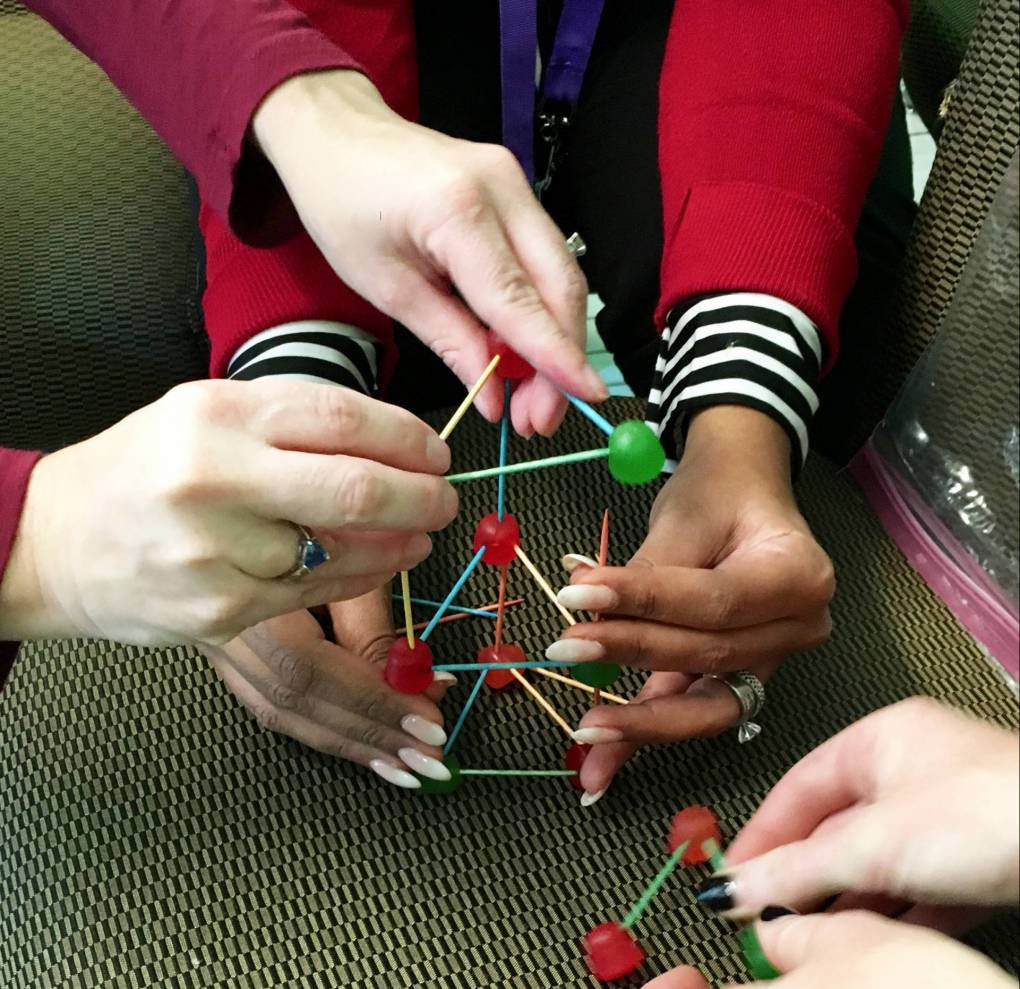
"caption": "Attendees at the National Association for Gifted Children convention, mostly teachers and administrators of gifted education programs, work on an engineering project given to Minnesota first graders to let them demonstrate creative thinking, logical reasoning and other behaviors that might mean they’d benefit from gifted services. ",
"description": null,
"title": "Danielle Dreilinger - tower",
"credit": "Danielle Dreilinger for The Hechinger Report",
"status": "inherit",
"isLoading": false,
"fetchFailed": false
},
"mindshift_53611": {
"type": "attachments",
"id": "mindshift_53611",
"meta": {
"index": "attachments_1716263798",
"site": "mindshift",
"id": "53611",
"found": true
},
"parent": 53602,
"imgSizes": {
"twentyfourteen-full-width": {
"file": "https://ww2.kqed.org/app/uploads/sites/23/2019/05/Choi-building-1038x576.png",
"width": 1038,
"mimeType": "image/png",
"height": 576
},
"thumbnail": {
"file": "https://ww2.kqed.org/app/uploads/sites/23/2019/05/Choi-building-160x107.png",
"width": 160,
"mimeType": "image/png",
"height": 107
},
"post-thumbnail": {
"file": "https://ww2.kqed.org/app/uploads/sites/23/2019/05/Choi-building-672x372.png",
"width": 672,
"mimeType": "image/png",
"height": 372
},
"kqedFullSize": {
"file": "https://ww2.kqed.org/app/uploads/sites/23/2019/05/Choi-building.png",
"width": 1920,
"height": 1278
},
"large": {
"file": "https://ww2.kqed.org/app/uploads/sites/23/2019/05/Choi-building-1020x679.png",
"width": 1020,
"mimeType": "image/png",
"height": 679
},
"complete_open_graph": {
"file": "https://ww2.kqed.org/app/uploads/sites/23/2019/05/Choi-building-1200x799.png",
"width": 1200,
"mimeType": "image/png",
"height": 799
},
"full-width": {
"file": "https://ww2.kqed.org/app/uploads/sites/23/2019/05/Choi-building-1920x1278.png",
"width": 1920,
"mimeType": "image/png",
"height": 1278
},
"medium": {
"file": "https://ww2.kqed.org/app/uploads/sites/23/2019/05/Choi-building-800x533.png",
"width": 800,
"mimeType": "image/png",
"height": 533
},
"medium_large": {
"file": "https://ww2.kqed.org/app/uploads/sites/23/2019/05/Choi-building-768x511.png",
"width": 768,
"mimeType": "image/png",
"height": 511
}
},
"publishDate": 1557123945,
"modified": 1557124225,
"caption": "Jennifer Choi, an advocate for “twice exceptional” children, says that teachers need to be trained in how to identify and accommodate students who have high academic aptitude but struggle with certain learning or behavioral challenges. ",
"description": null,
"title": "Choi-building",
"credit": "Courtesy of Joe Orrechio ",
"status": "inherit",
"isLoading": false,
"fetchFailed": false
},
"mindshift_51190": {
"type": "attachments",
"id": "mindshift_51190",
"meta": {
"index": "attachments_1716263798",
"site": "mindshift",
"id": "51190",
"found": true
},
"parent": 51189,
"imgSizes": {
"small": {
"file": "https://ww2.kqed.org/app/uploads/sites/23/2018/05/swong_specialneedsed_custom-0a4b203b6bf87c2178a40443b15812c3a7d19b60-520x292.jpe",
"width": 520,
"mimeType": "image/jpeg",
"height": 292
},
"twentyfourteen-full-width": {
"file": "https://ww2.kqed.org/app/uploads/sites/23/2018/05/swong_specialneedsed_custom-0a4b203b6bf87c2178a40443b15812c3a7d19b60-1038x576.jpe",
"width": 1038,
"mimeType": "image/jpeg",
"height": 576
},
"thumbnail": {
"file": "https://ww2.kqed.org/app/uploads/sites/23/2018/05/swong_specialneedsed_custom-0a4b203b6bf87c2178a40443b15812c3a7d19b60-160x90.jpe",
"width": 160,
"mimeType": "image/jpeg",
"height": 90
},
"fd-sm": {
"file": "https://ww2.kqed.org/app/uploads/sites/23/2018/05/swong_specialneedsed_custom-0a4b203b6bf87c2178a40443b15812c3a7d19b60-960x539.jpe",
"width": 960,
"mimeType": "image/jpeg",
"height": 539
},
"post-thumbnail": {
"file": "https://ww2.kqed.org/app/uploads/sites/23/2018/05/swong_specialneedsed_custom-0a4b203b6bf87c2178a40443b15812c3a7d19b60-672x372.jpe",
"width": 672,
"mimeType": "image/jpeg",
"height": 372
},
"xsmall": {
"file": "https://ww2.kqed.org/app/uploads/sites/23/2018/05/swong_specialneedsed_custom-0a4b203b6bf87c2178a40443b15812c3a7d19b60-375x211.jpe",
"width": 375,
"mimeType": "image/jpeg",
"height": 211
},
"kqedFullSize": {
"file": "https://ww2.kqed.org/app/uploads/sites/23/2018/05/swong_specialneedsed_custom-0a4b203b6bf87c2178a40443b15812c3a7d19b60-e1525895558163.jpe",
"width": 1920,
"height": 1078
},
"large": {
"file": "https://ww2.kqed.org/app/uploads/sites/23/2018/05/swong_specialneedsed_custom-0a4b203b6bf87c2178a40443b15812c3a7d19b60-1020x573.jpe",
"width": 1020,
"mimeType": "image/jpeg",
"height": 573
},
"xlarge": {
"file": "https://ww2.kqed.org/app/uploads/sites/23/2018/05/swong_specialneedsed_custom-0a4b203b6bf87c2178a40443b15812c3a7d19b60-1180x663.jpe",
"width": 1180,
"mimeType": "image/jpeg",
"height": 663
},
"complete_open_graph": {
"file": "https://ww2.kqed.org/app/uploads/sites/23/2018/05/swong_specialneedsed_custom-0a4b203b6bf87c2178a40443b15812c3a7d19b60-1200x674.jpe",
"width": 1200,
"mimeType": "image/jpeg",
"height": 674
},
"guest-author-50": {
"file": "https://ww2.kqed.org/app/uploads/sites/23/2018/05/swong_specialneedsed_custom-0a4b203b6bf87c2178a40443b15812c3a7d19b60-50x50.jpe",
"width": 50,
"mimeType": "image/jpeg",
"height": 50
},
"guest-author-96": {
"file": "https://ww2.kqed.org/app/uploads/sites/23/2018/05/swong_specialneedsed_custom-0a4b203b6bf87c2178a40443b15812c3a7d19b60-96x96.jpe",
"width": 96,
"mimeType": "image/jpeg",
"height": 96
},
"medium": {
"file": "https://ww2.kqed.org/app/uploads/sites/23/2018/05/swong_specialneedsed_custom-0a4b203b6bf87c2178a40443b15812c3a7d19b60-800x449.jpe",
"width": 800,
"mimeType": "image/jpeg",
"height": 449
},
"guest-author-64": {
"file": "https://ww2.kqed.org/app/uploads/sites/23/2018/05/swong_specialneedsed_custom-0a4b203b6bf87c2178a40443b15812c3a7d19b60-64x64.jpe",
"width": 64,
"mimeType": "image/jpeg",
"height": 64
},
"guest-author-32": {
"file": "https://ww2.kqed.org/app/uploads/sites/23/2018/05/swong_specialneedsed_custom-0a4b203b6bf87c2178a40443b15812c3a7d19b60-32x32.jpe",
"width": 32,
"mimeType": "image/jpeg",
"height": 32
},
"fd-lrg": {
"file": "https://ww2.kqed.org/app/uploads/sites/23/2018/05/swong_specialneedsed_custom-0a4b203b6bf87c2178a40443b15812c3a7d19b60-1920x1078.jpe",
"width": 1920,
"mimeType": "image/jpeg",
"height": 1078
},
"fd-med": {
"file": "https://ww2.kqed.org/app/uploads/sites/23/2018/05/swong_specialneedsed_custom-0a4b203b6bf87c2178a40443b15812c3a7d19b60-1180x663.jpe",
"width": 1180,
"mimeType": "image/jpeg",
"height": 663
},
"full-width": {
"file": "https://ww2.kqed.org/app/uploads/sites/23/2018/05/swong_specialneedsed_custom-0a4b203b6bf87c2178a40443b15812c3a7d19b60-1920x1078.jpe",
"width": 1920,
"mimeType": "image/jpeg",
"height": 1078
},
"detail": {
"file": "https://ww2.kqed.org/app/uploads/sites/23/2018/05/swong_specialneedsed_custom-0a4b203b6bf87c2178a40443b15812c3a7d19b60-150x150.jpe",
"width": 150,
"mimeType": "image/jpeg",
"height": 150
},
"medium_large": {
"file": "https://ww2.kqed.org/app/uploads/sites/23/2018/05/swong_specialneedsed_custom-0a4b203b6bf87c2178a40443b15812c3a7d19b60-768x431.jpe",
"width": 768,
"mimeType": "image/jpeg",
"height": 431
},
"guest-author-128": {
"file": "https://ww2.kqed.org/app/uploads/sites/23/2018/05/swong_specialneedsed_custom-0a4b203b6bf87c2178a40443b15812c3a7d19b60-128x128.jpe",
"width": 128,
"mimeType": "image/jpeg",
"height": 128
},
"xxsmall": {
"file": "https://ww2.kqed.org/app/uploads/sites/23/2018/05/swong_specialneedsed_custom-0a4b203b6bf87c2178a40443b15812c3a7d19b60-240x135.jpe",
"width": 240,
"mimeType": "image/jpeg",
"height": 135
}
},
"publishDate": 1525895527,
"modified": 1525895573,
"caption": "Students with special needs are being left behind.",
"description": null,
"title": "Students with special needs are being left behind.",
"credit": "Sara Ariel Wong for NPR",
"status": "inherit",
"isLoading": false,
"fetchFailed": false
},
"mindshift_49654": {
"type": "attachments",
"id": "mindshift_49654",
"meta": {
"index": "attachments_1716263798",
"site": "mindshift",
"id": "49654",
"found": true
},
"parent": 49653,
"imgSizes": {
"small": {
"file": "https://ww2.kqed.org/app/uploads/sites/23/2017/11/iStock-641649534-520x344.jpg",
"width": 520,
"mimeType": "image/jpeg",
"height": 344
},
"twentyfourteen-full-width": {
"file": "https://ww2.kqed.org/app/uploads/sites/23/2017/11/iStock-641649534-1038x576.jpg",
"width": 1038,
"mimeType": "image/jpeg",
"height": 576
},
"thumbnail": {
"file": "https://ww2.kqed.org/app/uploads/sites/23/2017/11/iStock-641649534-160x106.jpg",
"width": 160,
"mimeType": "image/jpeg",
"height": 106
},
"fd-sm": {
"file": "https://ww2.kqed.org/app/uploads/sites/23/2017/11/iStock-641649534-960x636.jpg",
"width": 960,
"mimeType": "image/jpeg",
"height": 636
},
"post-thumbnail": {
"file": "https://ww2.kqed.org/app/uploads/sites/23/2017/11/iStock-641649534-672x372.jpg",
"width": 672,
"mimeType": "image/jpeg",
"height": 372
},
"xsmall": {
"file": "https://ww2.kqed.org/app/uploads/sites/23/2017/11/iStock-641649534-375x248.jpg",
"width": 375,
"mimeType": "image/jpeg",
"height": 248
},
"kqedFullSize": {
"file": "https://ww2.kqed.org/app/uploads/sites/23/2017/11/iStock-641649534-e1510575785585.jpg",
"width": 1920,
"height": 1271
},
"large": {
"file": "https://ww2.kqed.org/app/uploads/sites/23/2017/11/iStock-641649534-1020x675.jpg",
"width": 1020,
"mimeType": "image/jpeg",
"height": 675
},
"xlarge": {
"file": "https://ww2.kqed.org/app/uploads/sites/23/2017/11/iStock-641649534-1180x781.jpg",
"width": 1180,
"mimeType": "image/jpeg",
"height": 781
},
"guest-author-50": {
"file": "https://ww2.kqed.org/app/uploads/sites/23/2017/11/iStock-641649534-50x50.jpg",
"width": 50,
"mimeType": "image/jpeg",
"height": 50
},
"guest-author-96": {
"file": "https://ww2.kqed.org/app/uploads/sites/23/2017/11/iStock-641649534-96x96.jpg",
"width": 96,
"mimeType": "image/jpeg",
"height": 96
},
"medium": {
"file": "https://ww2.kqed.org/app/uploads/sites/23/2017/11/iStock-641649534-800x530.jpg",
"width": 800,
"mimeType": "image/jpeg",
"height": 530
},
"guest-author-64": {
"file": "https://ww2.kqed.org/app/uploads/sites/23/2017/11/iStock-641649534-64x64.jpg",
"width": 64,
"mimeType": "image/jpeg",
"height": 64
},
"guest-author-32": {
"file": "https://ww2.kqed.org/app/uploads/sites/23/2017/11/iStock-641649534-32x32.jpg",
"width": 32,
"mimeType": "image/jpeg",
"height": 32
},
"fd-lrg": {
"file": "https://ww2.kqed.org/app/uploads/sites/23/2017/11/iStock-641649534-1920x1271.jpg",
"width": 1920,
"mimeType": "image/jpeg",
"height": 1271
},
"fd-med": {
"file": "https://ww2.kqed.org/app/uploads/sites/23/2017/11/iStock-641649534-1180x781.jpg",
"width": 1180,
"mimeType": "image/jpeg",
"height": 781
},
"full-width": {
"file": "https://ww2.kqed.org/app/uploads/sites/23/2017/11/iStock-641649534-1920x1271.jpg",
"width": 1920,
"mimeType": "image/jpeg",
"height": 1271
},
"detail": {
"file": "https://ww2.kqed.org/app/uploads/sites/23/2017/11/iStock-641649534-150x150.jpg",
"width": 150,
"mimeType": "image/jpeg",
"height": 150
},
"medium_large": {
"file": "https://ww2.kqed.org/app/uploads/sites/23/2017/11/iStock-641649534-768x509.jpg",
"width": 768,
"mimeType": "image/jpeg",
"height": 509
},
"guest-author-128": {
"file": "https://ww2.kqed.org/app/uploads/sites/23/2017/11/iStock-641649534-128x128.jpg",
"width": 128,
"mimeType": "image/jpeg",
"height": 128
},
"xxsmall": {
"file": "https://ww2.kqed.org/app/uploads/sites/23/2017/11/iStock-641649534-240x159.jpg",
"width": 240,
"mimeType": "image/jpeg",
"height": 159
}
},
"publishDate": 1510103636,
"modified": 1510575793,
"caption": null,
"description": null,
"title": "Sneakers on asphalt road with white star",
"credit": "iStock",
"status": "inherit",
"isLoading": false,
"fetchFailed": false
},
"mindshift_47394": {
"type": "attachments",
"id": "mindshift_47394",
"meta": {
"index": "attachments_1716263798",
"site": "mindshift",
"id": "47394",
"found": true
},
"parent": 47119,
"imgSizes": {
"small": {
"file": "https://ww2.kqed.org/app/uploads/sites/23/2017/01/iStock-499782797-520x347.jpg",
"width": 520,
"mimeType": "image/jpeg",
"height": 347
},
"twentyfourteen-full-width": {
"file": "https://ww2.kqed.org/app/uploads/sites/23/2017/01/iStock-499782797-1038x576.jpg",
"width": 1038,
"mimeType": "image/jpeg",
"height": 576
},
"thumbnail": {
"file": "https://ww2.kqed.org/app/uploads/sites/23/2017/01/iStock-499782797-160x107.jpg",
"width": 160,
"mimeType": "image/jpeg",
"height": 107
},
"fd-sm": {
"file": "https://ww2.kqed.org/app/uploads/sites/23/2017/01/iStock-499782797-960x640.jpg",
"width": 960,
"mimeType": "image/jpeg",
"height": 640
},
"post-thumbnail": {
"file": "https://ww2.kqed.org/app/uploads/sites/23/2017/01/iStock-499782797-672x372.jpg",
"width": 672,
"mimeType": "image/jpeg",
"height": 372
},
"xsmall": {
"file": "https://ww2.kqed.org/app/uploads/sites/23/2017/01/iStock-499782797-375x250.jpg",
"width": 375,
"mimeType": "image/jpeg",
"height": 250
},
"kqedFullSize": {
"file": "https://ww2.kqed.org/app/uploads/sites/23/2017/01/iStock-499782797-e1485159878311.jpg",
"width": 1920,
"height": 1280
},
"large": {
"file": "https://ww2.kqed.org/app/uploads/sites/23/2017/01/iStock-499782797-1020x680.jpg",
"width": 1020,
"mimeType": "image/jpeg",
"height": 680
},
"xlarge": {
"file": "https://ww2.kqed.org/app/uploads/sites/23/2017/01/iStock-499782797-1180x787.jpg",
"width": 1180,
"mimeType": "image/jpeg",
"height": 787
},
"guest-author-50": {
"file": "https://ww2.kqed.org/app/uploads/sites/23/2017/01/iStock-499782797-50x50.jpg",
"width": 50,
"mimeType": "image/jpeg",
"height": 50
},
"guest-author-96": {
"file": "https://ww2.kqed.org/app/uploads/sites/23/2017/01/iStock-499782797-96x96.jpg",
"width": 96,
"mimeType": "image/jpeg",
"height": 96
},
"medium": {
"file": "https://ww2.kqed.org/app/uploads/sites/23/2017/01/iStock-499782797-800x533.jpg",
"width": 800,
"mimeType": "image/jpeg",
"height": 533
},
"guest-author-64": {
"file": "https://ww2.kqed.org/app/uploads/sites/23/2017/01/iStock-499782797-64x64.jpg",
"width": 64,
"mimeType": "image/jpeg",
"height": 64
},
"guest-author-32": {
"file": "https://ww2.kqed.org/app/uploads/sites/23/2017/01/iStock-499782797-32x32.jpg",
"width": 32,
"mimeType": "image/jpeg",
"height": 32
},
"fd-lrg": {
"file": "https://ww2.kqed.org/app/uploads/sites/23/2017/01/iStock-499782797-1920x1280.jpg",
"width": 1920,
"mimeType": "image/jpeg",
"height": 1280
},
"fd-med": {
"file": "https://ww2.kqed.org/app/uploads/sites/23/2017/01/iStock-499782797-1180x787.jpg",
"width": 1180,
"mimeType": "image/jpeg",
"height": 787
},
"full-width": {
"file": "https://ww2.kqed.org/app/uploads/sites/23/2017/01/iStock-499782797-1920x1280.jpg",
"width": 1920,
"mimeType": "image/jpeg",
"height": 1280
},
"detail": {
"file": "https://ww2.kqed.org/app/uploads/sites/23/2017/01/iStock-499782797-150x150.jpg",
"width": 150,
"mimeType": "image/jpeg",
"height": 150
},
"medium_large": {
"file": "https://ww2.kqed.org/app/uploads/sites/23/2017/01/iStock-499782797-768x512.jpg",
"width": 768,
"mimeType": "image/jpeg",
"height": 512
},
"guest-author-128": {
"file": "https://ww2.kqed.org/app/uploads/sites/23/2017/01/iStock-499782797-128x128.jpg",
"width": 128,
"mimeType": "image/jpeg",
"height": 128
},
"xxsmall": {
"file": "https://ww2.kqed.org/app/uploads/sites/23/2017/01/iStock-499782797-240x160.jpg",
"width": 240,
"mimeType": "image/jpeg",
"height": 160
}
},
"publishDate": 1485158443,
"modified": 1485158462,
"caption": "A young boy watches as a 3D printer prints an object.",
"description": null,
"title": "Boy watches machine intently.",
"credit": "iStock/gjohnstonphoto ",
"status": "inherit",
"isLoading": false,
"fetchFailed": false
},
"mindshift_45332": {
"type": "attachments",
"id": "mindshift_45332",
"meta": {
"index": "attachments_1716263798",
"site": "mindshift",
"id": "45332",
"found": true
},
"parent": 45331,
"imgSizes": {
"twentyfourteen-full-width": {
"file": "https://ww2.kqed.org/app/uploads/sites/23/2016/06/talent-comic-1_custom-b4eb4b706ad5d09847aa6d262ec43258bf7c97e5-1038x576.jpg",
"width": 1038,
"mimeType": "image/jpeg",
"height": 576
},
"thumbnail": {
"file": "https://ww2.kqed.org/app/uploads/sites/23/2016/06/talent-comic-1_custom-b4eb4b706ad5d09847aa6d262ec43258bf7c97e5-400x408.jpg",
"width": 400,
"mimeType": "image/jpeg",
"height": 408
},
"fd-sm": {
"file": "https://ww2.kqed.org/app/uploads/sites/23/2016/06/talent-comic-1_custom-b4eb4b706ad5d09847aa6d262ec43258bf7c97e5-960x980.jpg",
"width": 960,
"mimeType": "image/jpeg",
"height": 980
},
"post-thumbnail": {
"file": "https://ww2.kqed.org/app/uploads/sites/23/2016/06/talent-comic-1_custom-b4eb4b706ad5d09847aa6d262ec43258bf7c97e5-672x372.jpg",
"width": 672,
"mimeType": "image/jpeg",
"height": 372
},
"kqedFullSize": {
"file": "https://ww2.kqed.org/app/uploads/sites/23/2016/06/talent-comic-1_custom-b4eb4b706ad5d09847aa6d262ec43258bf7c97e5-e1464823510625.jpg",
"width": 1920,
"height": 1959
},
"large": {
"file": "https://ww2.kqed.org/app/uploads/sites/23/2016/06/talent-comic-1_custom-b4eb4b706ad5d09847aa6d262ec43258bf7c97e5-1440x1470.jpg",
"width": 1440,
"mimeType": "image/jpeg",
"height": 1470
},
"guest-author-50": {
"file": "https://ww2.kqed.org/app/uploads/sites/23/2016/06/talent-comic-1_custom-b4eb4b706ad5d09847aa6d262ec43258bf7c97e5-50x50.jpg",
"width": 50,
"mimeType": "image/jpeg",
"height": 50
},
"guest-author-96": {
"file": "https://ww2.kqed.org/app/uploads/sites/23/2016/06/talent-comic-1_custom-b4eb4b706ad5d09847aa6d262ec43258bf7c97e5-96x96.jpg",
"width": 96,
"mimeType": "image/jpeg",
"height": 96
},
"medium": {
"file": "https://ww2.kqed.org/app/uploads/sites/23/2016/06/talent-comic-1_custom-b4eb4b706ad5d09847aa6d262ec43258bf7c97e5-800x816.jpg",
"width": 800,
"mimeType": "image/jpeg",
"height": 816
},
"guest-author-64": {
"file": "https://ww2.kqed.org/app/uploads/sites/23/2016/06/talent-comic-1_custom-b4eb4b706ad5d09847aa6d262ec43258bf7c97e5-64x64.jpg",
"width": 64,
"mimeType": "image/jpeg",
"height": 64
},
"guest-author-32": {
"file": "https://ww2.kqed.org/app/uploads/sites/23/2016/06/talent-comic-1_custom-b4eb4b706ad5d09847aa6d262ec43258bf7c97e5-32x32.jpg",
"width": 32,
"mimeType": "image/jpeg",
"height": 32
},
"cat_post_thumb_sizecategory-posts-2": {
"file": "https://ww2.kqed.org/app/uploads/sites/23/2016/06/talent-comic-1_custom-b4eb4b706ad5d09847aa6d262ec43258bf7c97e5-50x50.jpg",
"width": 50,
"mimeType": "image/jpeg",
"height": 50
},
"fd-lrg": {
"file": "https://ww2.kqed.org/app/uploads/sites/23/2016/06/talent-comic-1_custom-b4eb4b706ad5d09847aa6d262ec43258bf7c97e5-1920x1959.jpg",
"width": 1920,
"mimeType": "image/jpeg",
"height": 1959
},
"fd-med": {
"file": "https://ww2.kqed.org/app/uploads/sites/23/2016/06/talent-comic-1_custom-b4eb4b706ad5d09847aa6d262ec43258bf7c97e5-1180x1204.jpg",
"width": 1180,
"mimeType": "image/jpeg",
"height": 1204
},
"detail": {
"file": "https://ww2.kqed.org/app/uploads/sites/23/2016/06/talent-comic-1_custom-b4eb4b706ad5d09847aa6d262ec43258bf7c97e5-150x150.jpg",
"width": 150,
"mimeType": "image/jpeg",
"height": 150
},
"medium_large": {
"file": "https://ww2.kqed.org/app/uploads/sites/23/2016/06/talent-comic-1_custom-b4eb4b706ad5d09847aa6d262ec43258bf7c97e5-768x784.jpg",
"width": 768,
"mimeType": "image/jpeg",
"height": 784
},
"guest-author-128": {
"file": "https://ww2.kqed.org/app/uploads/sites/23/2016/06/talent-comic-1_custom-b4eb4b706ad5d09847aa6d262ec43258bf7c97e5-128x128.jpg",
"width": 128,
"mimeType": "image/jpeg",
"height": 128
}
},
"publishDate": 1464821755,
"modified": 1464823501,
"caption": null,
"description": "\"Talent\" comic by LA Johnson",
"title": "\"Talent\" comic by LA Johnson",
"credit": "LA Johnson/NPR",
"status": "inherit",
"isLoading": false,
"fetchFailed": false
},
"mindshift_44683": {
"type": "attachments",
"id": "mindshift_44683",
"meta": {
"index": "attachments_1716263798",
"site": "mindshift",
"id": "44683",
"found": true
},
"parent": 44682,
"imgSizes": {
"twentyfourteen-full-width": {
"file": "https://ww2.kqed.org/app/uploads/sites/23/2016/04/mg_2004toned_slide-22eeb492672862c929de52da0d2928db68a2cbd3-1038x576.jpg",
"width": 1038,
"mimeType": "image/jpeg",
"height": 576
},
"thumbnail": {
"file": "https://ww2.kqed.org/app/uploads/sites/23/2016/04/mg_2004toned_slide-22eeb492672862c929de52da0d2928db68a2cbd3-400x267.jpg",
"width": 400,
"mimeType": "image/jpeg",
"height": 267
},
"fd-sm": {
"file": "https://ww2.kqed.org/app/uploads/sites/23/2016/04/mg_2004toned_slide-22eeb492672862c929de52da0d2928db68a2cbd3-960x640.jpg",
"width": 960,
"mimeType": "image/jpeg",
"height": 640
},
"post-thumbnail": {
"file": "https://ww2.kqed.org/app/uploads/sites/23/2016/04/mg_2004toned_slide-22eeb492672862c929de52da0d2928db68a2cbd3-672x372.jpg",
"width": 672,
"mimeType": "image/jpeg",
"height": 372
},
"kqedFullSize": {
"file": "https://ww2.kqed.org/app/uploads/sites/23/2016/04/mg_2004toned_slide-22eeb492672862c929de52da0d2928db68a2cbd3.jpg",
"width": 2995,
"height": 1996
},
"large": {
"file": "https://ww2.kqed.org/app/uploads/sites/23/2016/04/mg_2004toned_slide-22eeb492672862c929de52da0d2928db68a2cbd3-1440x960.jpg",
"width": 1440,
"mimeType": "image/jpeg",
"height": 960
},
"guest-author-96": {
"file": "https://ww2.kqed.org/app/uploads/sites/23/2016/04/mg_2004toned_slide-22eeb492672862c929de52da0d2928db68a2cbd3-96x96.jpg",
"width": 96,
"mimeType": "image/jpeg",
"height": 96
},
"medium": {
"file": "https://ww2.kqed.org/app/uploads/sites/23/2016/04/mg_2004toned_slide-22eeb492672862c929de52da0d2928db68a2cbd3-800x533.jpg",
"width": 800,
"mimeType": "image/jpeg",
"height": 533
},
"guest-author-64": {
"file": "https://ww2.kqed.org/app/uploads/sites/23/2016/04/mg_2004toned_slide-22eeb492672862c929de52da0d2928db68a2cbd3-64x64.jpg",
"width": 64,
"mimeType": "image/jpeg",
"height": 64
},
"guest-author-32": {
"file": "https://ww2.kqed.org/app/uploads/sites/23/2016/04/mg_2004toned_slide-22eeb492672862c929de52da0d2928db68a2cbd3-32x32.jpg",
"width": 32,
"mimeType": "image/jpeg",
"height": 32
},
"cat_post_thumb_sizecategory-posts-2": {
"file": "https://ww2.kqed.org/app/uploads/sites/23/2016/04/mg_2004toned_slide-22eeb492672862c929de52da0d2928db68a2cbd3-50x50.jpg",
"width": 50,
"mimeType": "image/jpeg",
"height": 50
},
"fd-lrg": {
"file": "https://ww2.kqed.org/app/uploads/sites/23/2016/04/mg_2004toned_slide-22eeb492672862c929de52da0d2928db68a2cbd3-1920x1280.jpg",
"width": 1920,
"mimeType": "image/jpeg",
"height": 1280
},
"fd-med": {
"file": "https://ww2.kqed.org/app/uploads/sites/23/2016/04/mg_2004toned_slide-22eeb492672862c929de52da0d2928db68a2cbd3-1180x786.jpg",
"width": 1180,
"mimeType": "image/jpeg",
"height": 786
},
"detail": {
"file": "https://ww2.kqed.org/app/uploads/sites/23/2016/04/mg_2004toned_slide-22eeb492672862c929de52da0d2928db68a2cbd3-75x75.jpg",
"width": 75,
"mimeType": "image/jpeg",
"height": 75
},
"medium_large": {
"file": "https://ww2.kqed.org/app/uploads/sites/23/2016/04/mg_2004toned_slide-22eeb492672862c929de52da0d2928db68a2cbd3-768x512.jpg",
"width": 768,
"mimeType": "image/jpeg",
"height": 512
},
"guest-author-128": {
"file": "https://ww2.kqed.org/app/uploads/sites/23/2016/04/mg_2004toned_slide-22eeb492672862c929de52da0d2928db68a2cbd3-128x128.jpg",
"width": 128,
"mimeType": "image/jpeg",
"height": 128
}
},
"publishDate": 1460482478,
"modified": 1460482478,
"caption": null,
"description": "Before Alejandra Galindo, 17, was identified as gifted, she was identified as an ELL, or English Language Learner.",
"title": "Before Alejandra Galindo, 17, was identified as gifted, she was identified as an ELL, or English Language Learner.",
"credit": null,
"status": "inherit",
"isLoading": false,
"fetchFailed": false
},
"mindshift_42212": {
"type": "attachments",
"id": "mindshift_42212",
"meta": {
"index": "attachments_1716263798",
"site": "mindshift",
"id": "42212",
"found": true
},
"parent": 42204,
"imgSizes": {
"twentyfourteen-full-width": {
"file": "https://ww2.kqed.org/app/uploads/sites/23/2015/09/Ladder-1038x576.jpg",
"width": 1038,
"mimeType": "image/jpeg",
"height": 576
},
"thumbnail": {
"file": "https://ww2.kqed.org/app/uploads/sites/23/2015/09/Ladder-400x225.jpg",
"width": 400,
"mimeType": "image/jpeg",
"height": 225
},
"fd-sm": {
"file": "https://ww2.kqed.org/app/uploads/sites/23/2015/09/Ladder-960x540.jpg",
"width": 960,
"mimeType": "image/jpeg",
"height": 540
},
"post-thumbnail": {
"file": "https://ww2.kqed.org/app/uploads/sites/23/2015/09/Ladder-672x372.jpg",
"width": 672,
"mimeType": "image/jpeg",
"height": 372
},
"kqedFullSize": {
"file": "https://ww2.kqed.org/app/uploads/sites/23/2015/09/Ladder.jpg",
"width": 1920,
"height": 1080
},
"large": {
"file": "https://ww2.kqed.org/app/uploads/sites/23/2015/09/Ladder-1440x810.jpg",
"width": 1440,
"mimeType": "image/jpeg",
"height": 810
},
"guest-author-96": {
"file": "https://ww2.kqed.org/app/uploads/sites/23/2015/09/Ladder-96x96.jpg",
"width": 96,
"mimeType": "image/jpeg",
"height": 96
},
"medium": {
"file": "https://ww2.kqed.org/app/uploads/sites/23/2015/09/Ladder-800x450.jpg",
"width": 800,
"mimeType": "image/jpeg",
"height": 450
},
"guest-author-64": {
"file": "https://ww2.kqed.org/app/uploads/sites/23/2015/09/Ladder-64x64.jpg",
"width": 64,
"mimeType": "image/jpeg",
"height": 64
},
"guest-author-32": {
"file": "https://ww2.kqed.org/app/uploads/sites/23/2015/09/Ladder-32x32.jpg",
"width": 32,
"mimeType": "image/jpeg",
"height": 32
},
"cat_post_thumb_sizecategory-posts-2": {
"file": "https://ww2.kqed.org/app/uploads/sites/23/2015/09/Ladder-50x50.jpg",
"width": 50,
"mimeType": "image/jpeg",
"height": 50
},
"fd-lrg": {
"file": "https://ww2.kqed.org/app/uploads/sites/23/2015/09/Ladder-1920x1080.jpg",
"width": 1920,
"mimeType": "image/jpeg",
"height": 1080
},
"fd-med": {
"file": "https://ww2.kqed.org/app/uploads/sites/23/2015/09/Ladder-1180x664.jpg",
"width": 1180,
"mimeType": "image/jpeg",
"height": 664
},
"detail": {
"file": "https://ww2.kqed.org/app/uploads/sites/23/2015/09/Ladder-75x75.jpg",
"width": 75,
"mimeType": "image/jpeg",
"height": 75
},
"guest-author-128": {
"file": "https://ww2.kqed.org/app/uploads/sites/23/2015/09/Ladder-128x128.jpg",
"width": 128,
"mimeType": "image/jpeg",
"height": 128
}
},
"publishDate": 1443552522,
"modified": 1443552527,
"caption": null,
"description": null,
"title": "Ladder",
"credit": "Getty Images",
"status": "inherit",
"isLoading": false,
"fetchFailed": false
},
"mindshift_41748": {
"type": "attachments",
"id": "mindshift_41748",
"meta": {
"index": "attachments_1716263798",
"site": "mindshift",
"id": "41748",
"found": true
},
"parent": 41745,
"imgSizes": {
"twentyfourteen-full-width": {
"file": "https://ww2.kqed.org/app/uploads/sites/23/2015/08/alone-1038x576.jpg",
"width": 1038,
"mimeType": "image/jpeg",
"height": 576
},
"thumbnail": {
"file": "https://ww2.kqed.org/app/uploads/sites/23/2015/08/alone-400x225.jpg",
"width": 400,
"mimeType": "image/jpeg",
"height": 225
},
"fd-sm": {
"file": "https://ww2.kqed.org/app/uploads/sites/23/2015/08/alone-960x540.jpg",
"width": 960,
"mimeType": "image/jpeg",
"height": 540
},
"post-thumbnail": {
"file": "https://ww2.kqed.org/app/uploads/sites/23/2015/08/alone-672x372.jpg",
"width": 672,
"mimeType": "image/jpeg",
"height": 372
},
"kqedFullSize": {
"file": "https://ww2.kqed.org/app/uploads/sites/23/2015/08/alone.jpg",
"width": 1920,
"height": 1080
},
"large": {
"file": "https://ww2.kqed.org/app/uploads/sites/23/2015/08/alone-1440x810.jpg",
"width": 1440,
"mimeType": "image/jpeg",
"height": 810
},
"guest-author-96": {
"file": "https://ww2.kqed.org/app/uploads/sites/23/2015/08/alone-96x96.jpg",
"width": 96,
"mimeType": "image/jpeg",
"height": 96
},
"medium": {
"file": "https://ww2.kqed.org/app/uploads/sites/23/2015/08/alone-800x450.jpg",
"width": 800,
"mimeType": "image/jpeg",
"height": 450
},
"guest-author-64": {
"file": "https://ww2.kqed.org/app/uploads/sites/23/2015/08/alone-64x64.jpg",
"width": 64,
"mimeType": "image/jpeg",
"height": 64
},
"guest-author-32": {
"file": "https://ww2.kqed.org/app/uploads/sites/23/2015/08/alone-32x32.jpg",
"width": 32,
"mimeType": "image/jpeg",
"height": 32
},
"cat_post_thumb_sizecategory-posts-2": {
"file": "https://ww2.kqed.org/app/uploads/sites/23/2015/08/alone-50x50.jpg",
"width": 50,
"mimeType": "image/jpeg",
"height": 50
},
"fd-lrg": {
"file": "https://ww2.kqed.org/app/uploads/sites/23/2015/08/alone-1920x1080.jpg",
"width": 1920,
"mimeType": "image/jpeg",
"height": 1080
},
"fd-med": {
"file": "https://ww2.kqed.org/app/uploads/sites/23/2015/08/alone-1180x664.jpg",
"width": 1180,
"mimeType": "image/jpeg",
"height": 664
},
"detail": {
"file": "https://ww2.kqed.org/app/uploads/sites/23/2015/08/alone-75x75.jpg",
"width": 75,
"mimeType": "image/jpeg",
"height": 75
},
"guest-author-128": {
"file": "https://ww2.kqed.org/app/uploads/sites/23/2015/08/alone-128x128.jpg",
"width": 128,
"mimeType": "image/jpeg",
"height": 128
}
},
"publishDate": 1440441229,
"modified": 1440441257,
"caption": null,
"description": null,
"title": "alone",
"credit": "Naomi Chung/Flickr",
"status": "inherit",
"isLoading": false,
"fetchFailed": false
},
"mindshift_36562": {
"type": "attachments",
"id": "mindshift_36562",
"meta": {
"index": "attachments_1716263798",
"site": "mindshift",
"id": "36562",
"found": true
},
"parent": 35910,
"imgSizes": {
"thumbnail": {
"file": "https://ww2.kqed.org/app/uploads/sites/23/2014/06/4521936771-e1403927077744-400x225.jpg",
"width": 400,
"mimeType": "image/jpeg",
"height": 225
},
"fd-sm": {
"file": "https://ww2.kqed.org/app/uploads/sites/23/2014/06/4521936771-e1403927077744-320x180.jpg",
"width": 320,
"mimeType": "image/jpeg",
"height": 180
},
"kqedFullSize": {
"file": "https://ww2.kqed.org/app/uploads/sites/23/2014/06/4521936771-e1403927077744.jpg",
"width": 640,
"height": 360
},
"guest-author-96": {
"file": "https://ww2.kqed.org/app/uploads/sites/23/2014/06/4521936771-e1403927077744-96x96.jpg",
"width": 96,
"mimeType": "image/jpeg",
"height": 96
},
"guest-author-64": {
"file": "https://ww2.kqed.org/app/uploads/sites/23/2014/06/4521936771-e1403927077744-64x64.jpg",
"width": 64,
"mimeType": "image/jpeg",
"height": 64
},
"guest-author-32": {
"file": "https://ww2.kqed.org/app/uploads/sites/23/2014/06/4521936771-e1403927077744-32x32.jpg",
"width": 32,
"mimeType": "image/jpeg",
"height": 32
},
"guest-author-128": {
"file": "https://ww2.kqed.org/app/uploads/sites/23/2014/06/4521936771-e1403927077744-128x128.jpg",
"width": 128,
"mimeType": "image/jpeg",
"height": 128
}
},
"publishDate": 1403927026,
"modified": 1403927026,
"caption": "Getty",
"description": "maths and science formula on whiteboard",
"title": "452193677(1)",
"credit": null,
"status": "inherit",
"isLoading": false,
"fetchFailed": false
}
},
"audioPlayerReducer": {
"postId": "stream_live",
"isPaused": true,
"isPlaying": false,
"pfsActive": false,
"pledgeModalIsOpen": true,
"playerDrawerIsOpen": false,
"liveAudioPlayStartedAt": 0,
"liveAudioPlayContext": ""
},
"authorsReducer": {
"byline_mindshift_57519": {
"type": "authors",
"id": "byline_mindshift_57519",
"meta": {
"override": true
},
"slug": "byline_mindshift_57519",
"name": "\u003ca href=\"https://hechingerreport.org/\">Danielle Dreilinger, The Hechinger Report\u003c/a>",
"isLoading": false
},
"byline_mindshift_54907": {
"type": "authors",
"id": "byline_mindshift_54907",
"meta": {
"override": true
},
"slug": "byline_mindshift_54907",
"name": "\u003ca href=\"https://hechingerreport.org/up-to-3-6-million-students-should-be-labeled-gifted-but-arent/\">Danielle Dreilinger, The Hechinger Report\u003c/a>",
"isLoading": false
},
"byline_mindshift_53602": {
"type": "authors",
"id": "byline_mindshift_53602",
"meta": {
"override": true
},
"slug": "byline_mindshift_53602",
"name": "\u003ca href=\"https://hechingerreport.org/\">Rachel Blustain, The Hechinger Report\u003c/a>",
"isLoading": false
},
"byline_mindshift_51189": {
"type": "authors",
"id": "byline_mindshift_51189",
"meta": {
"override": true
},
"slug": "byline_mindshift_51189",
"name": "Anya Kamenetz",
"isLoading": false
},
"byline_mindshift_45331": {
"type": "authors",
"id": "byline_mindshift_45331",
"meta": {
"override": true
},
"slug": "byline_mindshift_45331",
"name": "Cory Turner",
"isLoading": false
},
"byline_mindshift_44682": {
"type": "authors",
"id": "byline_mindshift_44682",
"meta": {
"override": true
},
"slug": "byline_mindshift_44682",
"name": "Claudio Sanchez",
"isLoading": false
},
"byline_mindshift_42204": {
"type": "authors",
"id": "byline_mindshift_42204",
"meta": {
"override": true
},
"slug": "byline_mindshift_42204",
"name": "Anya Kamenetz, \u003ca href=\"http://www.npr.org/sections/ed/2015/09/28/443193523/who-are-the-gifted-and-talented-and-what-do-they-need\">NPR\u003c/a>",
"isLoading": false
},
"byline_mindshift_41745": {
"type": "authors",
"id": "byline_mindshift_41745",
"meta": {
"override": true
},
"slug": "byline_mindshift_41745",
"name": "\u003ca href=\"http://www.npr.org/people/302894536/anya-kamenetz\">Anya Kamenetz\u003c/a>, NPR",
"isLoading": false
},
"ichen": {
"type": "authors",
"id": "4556",
"meta": {
"index": "authors_1716337520",
"id": "4556",
"found": true
},
"name": "Ingfei Chen",
"firstName": "Ingfei",
"lastName": "Chen",
"slug": "ichen",
"email": "ingfei@sbcglobal.net",
"display_author_email": false,
"staff_mastheads": [],
"title": null,
"bio": "Ingfei Chen is a freelance writer in Northern California whose work has appeared in Scientific American, the New York Times and Smithsonian.",
"avatar": "https://secure.gravatar.com/avatar/10d83690bdf15670800fcf9cbf9d7a63?s=600&d=blank&r=g",
"twitter": null,
"facebook": null,
"instagram": null,
"linkedin": null,
"sites": [
{
"site": "mindshift",
"roles": [
"contributor"
]
}
],
"headData": {
"title": "Ingfei Chen | KQED",
"description": null,
"ogImgSrc": "https://secure.gravatar.com/avatar/10d83690bdf15670800fcf9cbf9d7a63?s=600&d=blank&r=g",
"twImgSrc": "https://secure.gravatar.com/avatar/10d83690bdf15670800fcf9cbf9d7a63?s=600&d=blank&r=g"
},
"isLoading": false,
"link": "/author/ichen"
},
"lindaflan": {
"type": "authors",
"id": "4613",
"meta": {
"index": "authors_1716337520",
"id": "4613",
"found": true
},
"name": "Linda Flanagan",
"firstName": "Linda",
"lastName": "Flanagan",
"slug": "lindaflan",
"email": "lindaflan@comcast.net",
"display_author_email": false,
"staff_mastheads": [],
"title": null,
"bio": "Linda Flanagan is a freelance writer, researcher, and editor. Her work has appeared in The Atlantic, The Wall St. Journal, Newsweek, Running Times, and Mind/Shift, and she blogs regularly for the Huffington Post. Linda writes about education, culture, athletics, youth sports, mental health, politics, college admissions, and other curiosities. She also reviews books and conducts interviews.",
"avatar": "https://secure.gravatar.com/avatar/6bca04c0736bf5eaea80654019de688f?s=600&d=blank&r=g",
"twitter": "LindaFlanagan2",
"facebook": null,
"instagram": null,
"linkedin": null,
"sites": [
{
"site": "mindshift",
"roles": [
"contributor"
]
}
],
"headData": {
"title": "Linda Flanagan | KQED",
"description": null,
"ogImgSrc": "https://secure.gravatar.com/avatar/6bca04c0736bf5eaea80654019de688f?s=600&d=blank&r=g",
"twImgSrc": "https://secure.gravatar.com/avatar/6bca04c0736bf5eaea80654019de688f?s=600&d=blank&r=g"
},
"isLoading": false,
"link": "/author/lindaflan"
}
},
"pagesReducer": {
"mindshift_tag_gifted-and-talented": {
"type": "terms",
"id": "mindshift_20555",
"meta": {
"index": "terms_1716263798",
"site": "mindshift",
"id": "20555",
"score": 10.407741
},
"featImg": null,
"name": "gifted and talented",
"description": null,
"taxonomy": "tag",
"headData": {
"twImgId": null,
"twTitle": null,
"ogTitle": null,
"ogImgId": null,
"twDescription": null,
"description": null,
"title": "gifted and talented Archives | KQED Mindshift",
"ogDescription": null
},
"ttid": 19832,
"slug": "gifted-and-talented",
"isLoading": false,
"title": "gifted and talented",
"pageMeta": {
"site": "mindshift",
"WpPageTemplate": "page-topic-editorial",
"currentPage": 1
},
"blocks": [
{
"blockName": "kqed/post-list",
"attrs": {
"layout": "cardArticle2",
"query": "posts/mindshift?tag=gifted-and-talented",
"seeMore": false,
"paginated": true,
"page": 1
}
},
{
"blockName": "kqed/ad"
}
]
}
},
"pfsSessionReducer": {},
"postsReducer": {
"stream_live": {
"type": "live",
"id": "stream_live",
"audioUrl": "https://hls.kqed.org/hls/kqed_app/playlist.m3u8",
"title": "Live Stream",
"excerpt": "Live Stream information currently unavailable.",
"link": "/radio",
"featImg": "",
"label": {
"name": "KQED Live",
"link": "/"
}
},
"stream_kqedNewscast": {
"type": "posts",
"id": "stream_kqedNewscast",
"audioUrl": "https://www.kqed.org/.stream/anon/radio/RDnews/newscast.mp3?_=1",
"title": "KQED Newscast",
"featImg": "",
"label": {
"name": "88.5 FM",
"link": "/"
}
},
"mindshift_57519": {
"type": "posts",
"id": "mindshift_57519",
"meta": {
"index": "posts_1716263798",
"site": "mindshift",
"id": "57519",
"score": null,
"sort": [
1615882781000
]
},
"parent": 0,
"labelTerm": {
"site": "mindshift"
},
"blocks": [],
"publishDate": 1615882781,
"format": "standard",
"disqusTitle": "How a School District Proved Gifted Programs Can Be Racially Diverse",
"title": "How a School District Proved Gifted Programs Can Be Racially Diverse",
"headTitle": "MindShift | KQED News",
"content": "\u003cp>April Wells grew up west of Chicago, a bright and avid bookworm in a low-income family. Her district, U-46, had gifted classes, but most of the students in them were white, and no one suggested that Wells, who is Black, might benefit from them.\u003c/p>\n\u003cp>Until middle school, when a U-46 administrator — Wells’ friend’s mother, also Black — noticed that April’s grasp exceeded her classes’ reach. She coached Wells on how to talk with her middle school counselor. Wells spoke up for herself and got into honors classes, where she remained through high school.\u003c/p>\n\u003cp>“I didn’t magically become gifted,” Wells said. “There was simply someone who had an ability to see my talents and provided a platform.”\u003c/p>\n\u003cp>Wells went on to college, became a teacher specializing in gifted education and eventually took on the gifted coordinator role for her hometown school district, aiming to give more students the opportunities she almost missed. “It would be the equivalent of education malpractice to have a gifted program that does not look like the students we serve\u003cem>,\u003c/em>” she wrote in a book last year about how to make gifted education racially fair.\u003c/p>\n\u003cp>Defined that way, “education malpractice” describes almost every gifted classroom across the United States. Including, until recently, those in U-46.\u003c/p>\n\u003cp>[ad fullwidth]\u003c/p>\n\u003cp>Gifted education has been trying to solve its racism problem for years. The National Association for Gifted Children, or NAGC, \u003ca href=\"https://www.nagc.org/blog/next-steps-nagc%E2%80%99s-equity-and-social-justice-initiative\">reaffirmed its commitment\u003c/a> to the issue after the Black Lives Matter protests. The group pledged to review all its policies to prioritize equity.\u003c/p>\n\u003cp>Yet diversification efforts have borne little fruit. After analyzing the newest U.S. Education Department civil rights data, University of Wisconsin-Whitewater professor Scott Peters found that on a state level “equity got worse” in gifted education from 2016 to 2018, with underrepresentation of Hispanic children in a majority of states and of Black students in three-quarters of states, he wrote in an email.\u003c/p>\n\u003cp>U-46 is a bright point, a sign that change can happen. West of Chicago, it is Illinois’ second-largest district, with about 40,000 students. In 2009, Hispanic students made up 46 percent of the student body but just 26 percent of gifted students, \u003ca href=\"https://ocrdata.ed.gov/profile/5/district/32942/summary\">according to federal data\u003c/a>, whereas white students were about 20 points in the opposite direction, comprising 38 percent of the district but 57 percent of gifted students. By 2017-18, \u003ca href=\"https://ocrdata.ed.gov/profile/9/district/32942/giftedtalentedenrollment\">the most recent data available\u003c/a>, the district was 54 percent Hispanic — and its gifted classes were 48 percent Hispanic. The percentage of white gifted students, 25, was actually a hair lower than their representation in the district.\u003c/p>\n\u003cp>What happened between 2009 and 2018? Hispanic parents sued, and a federal court decree gave Wells a cudgel.\u003c/p>\n\u003cfigure id=\"attachment_57521\" class=\"wp-caption alignnone\" style=\"max-width: 1920px\">\u003cimg class=\"size-full wp-image-57521\" src=\"https://ww2.kqed.org/app/uploads/sites/23/2021/03/dreilinger-gifted-2-scaled-e1615878124759.jpg\" alt=\"\" width=\"1920\" height=\"2560\" srcset=\"https://ww2.kqed.org/app/uploads/sites/23/2021/03/dreilinger-gifted-2-scaled-e1615878124759.jpg 1920w, https://ww2.kqed.org/app/uploads/sites/23/2021/03/dreilinger-gifted-2-scaled-e1615878124759-800x1067.jpg 800w, https://ww2.kqed.org/app/uploads/sites/23/2021/03/dreilinger-gifted-2-scaled-e1615878124759-1020x1360.jpg 1020w, https://ww2.kqed.org/app/uploads/sites/23/2021/03/dreilinger-gifted-2-scaled-e1615878124759-160x213.jpg 160w, https://ww2.kqed.org/app/uploads/sites/23/2021/03/dreilinger-gifted-2-scaled-e1615878124759-768x1024.jpg 768w, https://ww2.kqed.org/app/uploads/sites/23/2021/03/dreilinger-gifted-2-scaled-e1615878124759-1152x1536.jpg 1152w, https://ww2.kqed.org/app/uploads/sites/23/2021/03/dreilinger-gifted-2-scaled-e1615878124759-1536x2048.jpg 1536w\" sizes=\"(max-width: 1920px) 100vw, 1920px\">\u003cfigcaption class=\"wp-caption-text\">The National Association for Gifted Children has made a point of working on racial diversity. In this poster, the association highlights the fact that traditional methods of finding gifted children often miss children who are low-income, nonwhite or do not speak English at home. \u003ccite>(Danielle Dreilinger for The Hechinger Report)\u003c/cite>\u003c/figcaption>\u003c/figure>\n\u003cp>Several Hispanic and Black families, represented by the Mexican American Legal Defense and Educational Fund, filed a federal class-action suit in 2005 that accused the district of discriminating against Hispanic students in school assignments, school closures and ELL services. They later added gifted education to the list of alleged discriminatory practices.\u003c/p>\n\u003cp>At that time, teachers recommended students for gifted classes. Invited students had to come to school on a Saturday morning to take an achievement test that favored children with strong verbal skills and score in the top 8 percent of that test to gain entry, according to legal filings. In the 2006-07 school year, only five of the 231 students who entered the program were Hispanic, and only two were Black.\u003c/p>\n\u003cfigure id=\"attachment_57523\" class=\"wp-caption alignnone\" style=\"max-width: 761px\">\u003cimg class=\"wp-image-57523 size-full\" src=\"https://ww2.kqed.org/app/uploads/sites/23/2021/03/Dreilinger-chart-1.png\" alt=\"\" width=\"761\" height=\"513\" srcset=\"https://ww2.kqed.org/app/uploads/sites/23/2021/03/Dreilinger-chart-1.png 761w, https://ww2.kqed.org/app/uploads/sites/23/2021/03/Dreilinger-chart-1-160x108.png 160w\" sizes=\"(max-width: 761px) 100vw, 761px\">\u003cfigcaption class=\"wp-caption-text\">Data source: U.S. Department of Education Civil Rights Data Collection\u003c/figcaption>\u003c/figure>\n\u003cfigure id=\"attachment_57524\" class=\"wp-caption alignnone\" style=\"max-width: 869px\">\u003cimg class=\"size-full wp-image-57524\" src=\"https://ww2.kqed.org/app/uploads/sites/23/2021/03/Dreilinger-Chart-2.png\" alt=\"\" width=\"869\" height=\"590\" srcset=\"https://ww2.kqed.org/app/uploads/sites/23/2021/03/Dreilinger-Chart-2.png 869w, https://ww2.kqed.org/app/uploads/sites/23/2021/03/Dreilinger-Chart-2-800x543.png 800w, https://ww2.kqed.org/app/uploads/sites/23/2021/03/Dreilinger-Chart-2-160x109.png 160w, https://ww2.kqed.org/app/uploads/sites/23/2021/03/Dreilinger-Chart-2-768x521.png 768w\" sizes=\"(max-width: 869px) 100vw, 869px\">\u003cfigcaption class=\"wp-caption-text\">Data source: U.S. Department of Education Civil Rights Data Collection\u003c/figcaption>\u003c/figure>\n\u003cp>However, U-46 created a separate, 100 percent Hispanic, elementary program that allowed those students to study the gifted curriculum. That program was bilingual, with different entrance requirements, including an achievement test given in Spanish. The district said that these students weren’t fluent enough in English to succeed in ordinary gifted ed — even though none qualified as an English language learner.\u003c/p>\n\u003cp>Then-superintendent José Torres had not designed the bilingual gifted program, but he thought it was a great strategy to give Latino students access to advanced work. He grew up in a Spanish-speaking home, and “was in a special-ed classroom because I didn’t speak English,” he said.\u003c/p>\n\u003cp>The lawsuit dragged on for eight years and included a 27-day trial. Judge Robert Gettleman, a Clinton appointee, didn’t buy the district’s contention that the Hispanic students needed a separate class. He ruled that the gifted program was discriminatory. “Segregating public school children on the basis of race or ethnicity is inherently suspect,” he wrote in \u003ca href=\"https://www.casemine.com/judgement/us/591469e6add7b049342e06a8\">his 2013 decision\u003c/a>. He ordered the district to make its gifted admissions policies fair to students of all races and eliminate the separate class for Hispanic kids. If a child needed language support, he said, put them in the general gifted class with language support.\u003c/p>\n\u003cp>The district settled without admitting guilt, paying the plaintiffs $2.5 million for legal costs, according to legal filings, and signed an agreement to follow through on the judge’s orders.\u003c/p>\n\u003cp>The case was the biggest legal development for gifted education in a generation, NAGC board president Jonathan Plucker says. Gettleman’s decision “sent shock waves through the field, because everyone thought these types of programs were the right thing to do to try to address equity problems,” Plucker, who is white, said of the bilingual gifted program.\u003c/p>\n\u003cp>Torres felt disgruntled about the lawsuit — gifted education in his district, he pointed out, was no more racially segregated than “99 percent of all districts.” However, he saw the legal challenge as an opportunity to make real change. He said that “there’s always resistance from what I call the elite … who think that gifted children look a particular way.” He hired Wells to overhaul the gifted program in November 2012 even before the judge issued his ruling. In fact, Wells helped write the legal settlement, hoping that it would begin to address not only the symptoms of inequality, but also the cause: centuries of white supremacy. Even well-meaning teachers had “thought patterns, values, and beliefs that interfere with identifying and serving diverse learners in gifted education,” she wrote in her book.\u003c/p>\n\u003cp>Nothing was wrong with the kids, in other words. The problem was with the system. And it required a multifaceted solution.\u003c/p>\n\u003cp>The district stripped away the barriers to entry that favored families with money and know-how. Now, rather than testing only those students that teachers recommended, the district considers every third and sixth grader for gifted classes. Students take the CogAT, a cognitive abilities test that measures reasoning ability, during the school day, so that parents don’t have to bring their children in on a weekend. The district triangulates those results with scores from the popular Measure of Academic Progress achievement test and a teacher checklist the \u003ca href=\"http://gctminds.weebly.com/uploads/1/9/6/3/19639473/rogers--tils.pdf\">Teacher Inventory of Learning Strengths\u003c/a>, and students are evaluated against other kids in their school, not the entire district or a national sample that’s heavy on privileged kids. Parents may still request that their children be considered to be allowed to skip a grade or sit in on particular subjects in higher grades, opportunities that are required by Illinois law, \u003ca href=\"https://www.iagcgifted.org/IL-Acceleration-Act#:~:text=This%20Accelerated%20Placement%20Act%20requires,and%20opportunities%20for%20%E2%80%9Cwhole%20grade%E2%80%9D\">according to the Illinois Association for Gifted Children\u003c/a>; to make those decisions, the district uses the Iowa Acceleration Scale, Wells said.\u003c/p>\n\u003cp>And because experts say that even tests that purport to measure native ability in fact measure exposure to learning opportunities —scores improve with practice, and savvy parents know to prepare their kids — the district also instituted weekly “talent development” lessons to cultivate all students’ creative and analytical thinking in second and third grade in all its low-income schools. While there’s still a Spanish-language gifted option, now it’s part of a two-way, dual-language immersion program, a practice that has become popular with white parents nationally.\u003c/p>\n\u003cfigure id=\"attachment_57520\" class=\"wp-caption alignright\" style=\"max-width: 160px\">\u003cimg class=\"wp-image-57520 size-thumbnail\" src=\"https://ww2.kqed.org/app/uploads/sites/23/2021/03/dreilinger-gifted-1-scaled-e1615878075718-160x213.jpg\" alt=\"\" width=\"160\" height=\"213\" srcset=\"https://ww2.kqed.org/app/uploads/sites/23/2021/03/dreilinger-gifted-1-scaled-e1615878075718-160x213.jpg 160w, https://ww2.kqed.org/app/uploads/sites/23/2021/03/dreilinger-gifted-1-scaled-e1615878075718-800x1067.jpg 800w, https://ww2.kqed.org/app/uploads/sites/23/2021/03/dreilinger-gifted-1-scaled-e1615878075718-1020x1360.jpg 1020w, https://ww2.kqed.org/app/uploads/sites/23/2021/03/dreilinger-gifted-1-scaled-e1615878075718-768x1024.jpg 768w, https://ww2.kqed.org/app/uploads/sites/23/2021/03/dreilinger-gifted-1-scaled-e1615878075718-1152x1536.jpg 1152w, https://ww2.kqed.org/app/uploads/sites/23/2021/03/dreilinger-gifted-1-scaled-e1615878075718-1536x2048.jpg 1536w, https://ww2.kqed.org/app/uploads/sites/23/2021/03/dreilinger-gifted-1-scaled-e1615878075718.jpg 1920w\" sizes=\"(max-width: 160px) 100vw, 160px\">\u003cfigcaption class=\"wp-caption-text\">Gifted education teachers at the National Association for Gifted Children’s 2019 conference work on a toothpick-and-gumdrop tower, an exercise sometimes done in “talent development” classes. \u003ccite>(Danielle Dreilinger for The Hechinger Report)\u003c/cite>\u003c/figcaption>\u003c/figure>\n\u003cp>Beyond the specific policy changes, the district realized that educating its employees and the public was also important. “Anytime there’s been a perceived removal of privilege, there’s a challenge,” Wells said. To preempt resistance to changes that will open up gifted seats to a more diverse group of students, she argues, you have to convince everyone, or just about everyone, that it is a good idea. “You’re moving the entire community.”\u003c/p>\n\u003cp>It helped that the district expanded the number of seats in gifted classes, so that it wasn’t a zero-sum game. “There’s not a single thing we’ve done that’s taken seats away,\u003cem>” \u003c/em>Wells said. “We still serve the students who demonstrate the need for this kind of programming.”\u003c/p>\n\u003cp>U-46 also now trains teachers on anti-racism; requires all elementary gifted teachers to become certified in English as a second language; and has all teachers and administrators take an in-depth, 45-hour \u003ca href=\"https://www.iagcgifted.org/event-3068779\">course on giftedness\u003c/a>. The district invites parents and teachers to activities such as the annual conferences of two Illinois gifted education groups. This February, ten administrators, 19 teachers and four parents attended the Illinois Association for Gifted Children’s Equity and Inclusion virtual summit, U-46 spokeswoman Mary Fergus said. Presenters included Peters and Wells herself, who talked about moving people from “courageous conversations” to “courageous actions.”\u003c/p>\n\u003cp>One day last fall in U-46, Ed Chau’s Horizon Elementary gifted fifth graders met on Zoom to discuss their “Genius Hour” projects — investigations into topics of their own choosing. The children’s screen names were often fanciful, such as “🧀 Mr. cheese is back!!!,” and Chau, a former architect, addressed them as such: “What about you, Potato?” he asked.\u003c/p>\n\u003cp>The children’s topics included the extermination of the dinosaurs, helping parents around the house, the use of Legos to increase imagination and how cheetahs run so fast. “Mr. cheese” presented Google Slides on echolocation. “I haven’t finished dolphins,” he apologized.\u003c/p>\n\u003cp>The students encouraged each other to go beyond parroting research, to analyze and draw new conclusions. “Take it to the next level,” one student chimed in.\u003c/p>\n\u003cp>Chau is the child of Cambodian immigrants; like Wells, he grew up in U-46. Teachers always gave him accelerated work, but he was never identified as gifted. Diversity “really is a great advantage” in gifted classrooms, Chau said. It gives his students the ability to relate to each other and see things from different viewpoints. (Horizon’s gifted program is diverse, although not quite at the level of the rest of the district, \u003ca href=\"https://ocrdata.ed.gov/profile/9/school/279490/giftedtalentedenrollment\">federal data show\u003c/a>s — the program is 47 percent white, 4 percent Black, and 18 percent Hispanic in a school that is 33 percent white, 10 percent Black and 35 percent Hispanic.)\u003c/p>\n\u003cp>U-46’s diversity work is not over. “We continue to push the bounds, we continue to try to innovate,” Assistant Superintendent for Teaching and Learning Josh Carpenter said in November.\u003c/p>\n\u003cp>Last summer’s racial justice protests jarred the district’s leaders, as did the results of a May survey in which one-fifth of responding students said that they had personally experienced discrimination or unequal treatment at school based on their ethnicity or culture. The board’s “\u003ca href=\"https://go.boarddocs.com/il/u46/Board.nsf/files/BQHRS46F21A7/%24file/Board%20Resolution%20and%20Call%20to%20Action%20for%20Equity_Version%202.pdf\">Call to Action for Equity\u003c/a>,” written in June, commits to “remedying any practices that lead to under-representation of students of color in programs such as gifted programs, honors academies, and advanced placement courses.”\u003c/p>\n\u003cp>That will include the reinvention of Elgin High’s Gifted and Talented Academy program, according to a September presentation to the school board. As of 2017-18, \u003ca href=\"https://ocrdata.ed.gov/profile/9/school/279484/summary\">per federal data\u003c/a>, Elgin High’s gifted students were 37 percent white, 28 percent Hispanic and 3 percent Black in an overall student body that was 10 percent white, 74 percent Hispanic and 7 percent Black. (The high school magnet was not connected to the elementary and middle school gifted classes.) Until this year, applicants to the program had to submit an essay and teacher recommendations and take what the district brochure called an “Elgin High Academy Test” — in fact, the CogAT. The program consisted largely of Advanced Placement classes, which other Elgin High students could take as well.\u003c/p>\n\u003cp>Now the Gifted and Talented Academy is becoming the International Baccalaureate Academy. The new application requires only recommendations and a 2.0 GPA. Priority goes to low-income and homeless students as well as to people living nearby, siblings of those in the program and students who have taken advanced math, speech, engineering-like classes such as robotics or an array of extracurriculars including video game club.\u003c/p>\n\u003cp>“Will the demographics of our [high school magnet] programs change overnight? No, that is not likely. We need to work to provide more support and opportunities for students at earlier grades,” Superintendent Tony Sanders \u003ca href=\"https://www.u-46.org/site/default.aspx?PageType=3&DomainID=2913&ModuleInstanceID=9374&ViewID=6446EE88-D30C-497E-9316-3F8874B3E108&RenderLoc=0&FlexDataID=55641&PageID=3510\">wrote on the district’s website\u003c/a>. “However, if we all believe that all students in U-46 should have access … and if we believe that every child will rise to the level of our expectations, then why would we perpetuate a system that we have identified as an artificial barrier for some children, particularly students of color?”\u003c/p>\n\u003cp>Can other districts push the changes necessary to diversify gifted education without a lawsuit? “This is a really hard question,” Peters said. “When I think about places that have made big changes or have at least given this topic their attention, it’s been because of a state complaint, lawsuit, et cetera. It’s rarely been because it in itself has been a priority for a district.” That said, “there’s nothing about it that can’t be done absent a lawsuit, but I think schools just have so many other things that are demanding their attention that … equity within gifted ed doesn’t rise to the top.”\u003c/p>\n\u003cp>Any school system can fix gifted inequity if they believe “that all children deserve to learn in an environment that matches their talents and abilities,” Wells said. Just about every district has an equity plan, she pointed out, and gifted education should be part of that.\u003c/p>\n\u003cp>For example, the Baltimore City school district, twice as large as U-46, now also screens all kids for gifted services; measures kids against their peers, not against a white, privileged norm; and has nearly quadrupled its number of gifted seats. The district, which is 8 percent white, went from having 38 percent white gifted enrollment in \u003ca href=\"https://ocrdata.ed.gov/profile/8/district/26918/giftedtalentedenrollment\">2015\u003c/a> to 28 percent in \u003ca href=\"https://ocrdata.ed.gov/profile/9/district/26918/giftedtalentedenrollment\">2017\u003c/a>, according to federal data. New York City has chosen to address inequity by simply ending testing for its gifted elementary school program altogether, and Seattle is considering phasing out gifted classes.\u003c/p>\n\u003cp>Torres is now president of the Illinois Mathematics and Science Academy (IMSA), a residential public magnet high school for grades 10 through 12. Applicants must have taken the SATs, but there are no minimum scores. “Absolutely,” districts can diversify gifted education without a lawsuit, he said. From 2017 to 2021, under his leadership, the school increased its percentage of Black and Latino students from 15 to 22 percent, and of students from culturally, linguistically and economically diverse backgrounds from 31 to 35 percent, he said.\u003c/p>\n\u003cp>His email signature says, “Have you experienced racism, microaggressions, or bias at IMSA? Report it here.”\u003c/p>\n\u003cp>Torres has a reminder for other superintendents who think diversifying gifted education is too hard to fix or not important enough to prioritize.\u003c/p>\n\u003cp>“Don’t wait to be sued,” he said.\u003c/p>\n\u003cp>\u003cem>This story about \u003c/em>\u003ca href=\"https://hechingerreport.org/an-illinois-district-proved-gifted-programs-can-be-racially-diverse/\">\u003cem>gifted students\u003c/em>\u003c/a>\u003cem> was produced by \u003c/em>\u003cem>The Hechinger Report\u003c/em>\u003cem>, a nonprofit, independent news organization focused on inequality and innovation in education. Sign up for \u003c/em>\u003ca href=\"http://eepurl.com/c36ixT\">\u003cem>Hechinger’s newsletter\u003c/em>\u003c/a>\u003cem>.\u003c/em>\u003c/p>\n\u003cp>[ad floatright]\u003c/p>\n\u003cp>\u003cem>*Correction: This story was corrected to more accurately describe how students were chosen for gifted testing before the lawsuit.\u003c/em>\u003c/p>\n\n",
"disqusIdentifier": "57519 https://ww2.kqed.org/mindshift/?p=57519",
"disqusUrl": "https://ww2.kqed.org/mindshift/2021/03/16/how-a-school-district-proved-gifted-programs-can-be-racially-diverse/",
"stats": {
"hasVideo": false,
"hasChartOrMap": false,
"hasAudio": false,
"hasPolis": false,
"wordCount": 2828,
"hasGoogleForm": false,
"hasGallery": false,
"hasHearkenModule": false,
"iframeSrcs": [],
"paragraphCount": 43
},
"modified": 1616082195,
"excerpt": "Gifted education has been trying to solve its racism problem for years. The National Association for Gifted Children reaffirmed its commitment after the Black Lives Matter protests this spring and summer. Illinois’s U-46 school district is a bright point, a sign that change can happen. How did they do it?",
"headData": {
"twImgId": "",
"twTitle": "",
"ogTitle": "",
"ogImgId": "",
"twDescription": "",
"description": "Gifted education has been trying to solve its racism problem for years. The National Association for Gifted Children reaffirmed its commitment after the Black Lives Matter protests this spring and summer. Illinois’s U-46 school district is a bright point, a sign that change can happen. How did they do it?",
"title": "How a School District Proved Gifted Programs Can Be Racially Diverse - MindShift",
"ogDescription": "",
"schema": {
"@context": "https://schema.org",
"@type": "Article",
"headline": "How a School District Proved Gifted Programs Can Be Racially Diverse",
"datePublished": "2021-03-16T01:19:41-07:00",
"dateModified": "2021-03-18T08:43:15-07:00",
"image": "https://cdn.kqed.org/wp-content/uploads/2020/02/KQED-OG-Image@1x.png"
}
},
"guestAuthors": [],
"slug": "how-a-school-district-proved-gifted-programs-can-be-racially-diverse",
"status": "publish",
"nprByline": "\u003ca href=\"https://hechingerreport.org/\">Danielle Dreilinger, The Hechinger Report\u003c/a>",
"subhead": "A lawsuit forced U-46 to desegregate gifted programs, and its efforts worked. But can others do it with just carrots and no sticks?",
"path": "/mindshift/57519/how-a-school-district-proved-gifted-programs-can-be-racially-diverse",
"audioTrackLength": null,
"parsedContent": [
{
"type": "contentString",
"content": "\u003cdiv class=\"post-body\">\u003cp>\u003cp>April Wells grew up west of Chicago, a bright and avid bookworm in a low-income family. Her district, U-46, had gifted classes, but most of the students in them were white, and no one suggested that Wells, who is Black, might benefit from them.\u003c/p>\n\u003cp>Until middle school, when a U-46 administrator — Wells’ friend’s mother, also Black — noticed that April’s grasp exceeded her classes’ reach. She coached Wells on how to talk with her middle school counselor. Wells spoke up for herself and got into honors classes, where she remained through high school.\u003c/p>\n\u003cp>“I didn’t magically become gifted,” Wells said. “There was simply someone who had an ability to see my talents and provided a platform.”\u003c/p>\n\u003cp>Wells went on to college, became a teacher specializing in gifted education and eventually took on the gifted coordinator role for her hometown school district, aiming to give more students the opportunities she almost missed. “It would be the equivalent of education malpractice to have a gifted program that does not look like the students we serve\u003cem>,\u003c/em>” she wrote in a book last year about how to make gifted education racially fair.\u003c/p>\n\u003cp>Defined that way, “education malpractice” describes almost every gifted classroom across the United States. Including, until recently, those in U-46.\u003c/p>\n\u003cp>\u003c/p>\u003c/div>",
"attributes": {
"named": {},
"numeric": []
}
},
{
"type": "component",
"content": "",
"name": "ad",
"attributes": {
"named": {
"label": "fullwidth"
},
"numeric": [
"fullwidth"
]
}
},
{
"type": "contentString",
"content": "\u003cdiv class=\"post-body\">\u003cp>\u003c/p>\n\u003cp>Gifted education has been trying to solve its racism problem for years. The National Association for Gifted Children, or NAGC, \u003ca href=\"https://www.nagc.org/blog/next-steps-nagc%E2%80%99s-equity-and-social-justice-initiative\">reaffirmed its commitment\u003c/a> to the issue after the Black Lives Matter protests. The group pledged to review all its policies to prioritize equity.\u003c/p>\n\u003cp>Yet diversification efforts have borne little fruit. After analyzing the newest U.S. Education Department civil rights data, University of Wisconsin-Whitewater professor Scott Peters found that on a state level “equity got worse” in gifted education from 2016 to 2018, with underrepresentation of Hispanic children in a majority of states and of Black students in three-quarters of states, he wrote in an email.\u003c/p>\n\u003cp>U-46 is a bright point, a sign that change can happen. West of Chicago, it is Illinois’ second-largest district, with about 40,000 students. In 2009, Hispanic students made up 46 percent of the student body but just 26 percent of gifted students, \u003ca href=\"https://ocrdata.ed.gov/profile/5/district/32942/summary\">according to federal data\u003c/a>, whereas white students were about 20 points in the opposite direction, comprising 38 percent of the district but 57 percent of gifted students. By 2017-18, \u003ca href=\"https://ocrdata.ed.gov/profile/9/district/32942/giftedtalentedenrollment\">the most recent data available\u003c/a>, the district was 54 percent Hispanic — and its gifted classes were 48 percent Hispanic. The percentage of white gifted students, 25, was actually a hair lower than their representation in the district.\u003c/p>\n\u003cp>What happened between 2009 and 2018? Hispanic parents sued, and a federal court decree gave Wells a cudgel.\u003c/p>\n\u003cfigure id=\"attachment_57521\" class=\"wp-caption alignnone\" style=\"max-width: 1920px\">\u003cimg class=\"size-full wp-image-57521\" src=\"https://ww2.kqed.org/app/uploads/sites/23/2021/03/dreilinger-gifted-2-scaled-e1615878124759.jpg\" alt=\"\" width=\"1920\" height=\"2560\" srcset=\"https://ww2.kqed.org/app/uploads/sites/23/2021/03/dreilinger-gifted-2-scaled-e1615878124759.jpg 1920w, https://ww2.kqed.org/app/uploads/sites/23/2021/03/dreilinger-gifted-2-scaled-e1615878124759-800x1067.jpg 800w, https://ww2.kqed.org/app/uploads/sites/23/2021/03/dreilinger-gifted-2-scaled-e1615878124759-1020x1360.jpg 1020w, https://ww2.kqed.org/app/uploads/sites/23/2021/03/dreilinger-gifted-2-scaled-e1615878124759-160x213.jpg 160w, https://ww2.kqed.org/app/uploads/sites/23/2021/03/dreilinger-gifted-2-scaled-e1615878124759-768x1024.jpg 768w, https://ww2.kqed.org/app/uploads/sites/23/2021/03/dreilinger-gifted-2-scaled-e1615878124759-1152x1536.jpg 1152w, https://ww2.kqed.org/app/uploads/sites/23/2021/03/dreilinger-gifted-2-scaled-e1615878124759-1536x2048.jpg 1536w\" sizes=\"(max-width: 1920px) 100vw, 1920px\">\u003cfigcaption class=\"wp-caption-text\">The National Association for Gifted Children has made a point of working on racial diversity. In this poster, the association highlights the fact that traditional methods of finding gifted children often miss children who are low-income, nonwhite or do not speak English at home. \u003ccite>(Danielle Dreilinger for The Hechinger Report)\u003c/cite>\u003c/figcaption>\u003c/figure>\n\u003cp>Several Hispanic and Black families, represented by the Mexican American Legal Defense and Educational Fund, filed a federal class-action suit in 2005 that accused the district of discriminating against Hispanic students in school assignments, school closures and ELL services. They later added gifted education to the list of alleged discriminatory practices.\u003c/p>\n\u003cp>At that time, teachers recommended students for gifted classes. Invited students had to come to school on a Saturday morning to take an achievement test that favored children with strong verbal skills and score in the top 8 percent of that test to gain entry, according to legal filings. In the 2006-07 school year, only five of the 231 students who entered the program were Hispanic, and only two were Black.\u003c/p>\n\u003cfigure id=\"attachment_57523\" class=\"wp-caption alignnone\" style=\"max-width: 761px\">\u003cimg class=\"wp-image-57523 size-full\" src=\"https://ww2.kqed.org/app/uploads/sites/23/2021/03/Dreilinger-chart-1.png\" alt=\"\" width=\"761\" height=\"513\" srcset=\"https://ww2.kqed.org/app/uploads/sites/23/2021/03/Dreilinger-chart-1.png 761w, https://ww2.kqed.org/app/uploads/sites/23/2021/03/Dreilinger-chart-1-160x108.png 160w\" sizes=\"(max-width: 761px) 100vw, 761px\">\u003cfigcaption class=\"wp-caption-text\">Data source: U.S. Department of Education Civil Rights Data Collection\u003c/figcaption>\u003c/figure>\n\u003cfigure id=\"attachment_57524\" class=\"wp-caption alignnone\" style=\"max-width: 869px\">\u003cimg class=\"size-full wp-image-57524\" src=\"https://ww2.kqed.org/app/uploads/sites/23/2021/03/Dreilinger-Chart-2.png\" alt=\"\" width=\"869\" height=\"590\" srcset=\"https://ww2.kqed.org/app/uploads/sites/23/2021/03/Dreilinger-Chart-2.png 869w, https://ww2.kqed.org/app/uploads/sites/23/2021/03/Dreilinger-Chart-2-800x543.png 800w, https://ww2.kqed.org/app/uploads/sites/23/2021/03/Dreilinger-Chart-2-160x109.png 160w, https://ww2.kqed.org/app/uploads/sites/23/2021/03/Dreilinger-Chart-2-768x521.png 768w\" sizes=\"(max-width: 869px) 100vw, 869px\">\u003cfigcaption class=\"wp-caption-text\">Data source: U.S. Department of Education Civil Rights Data Collection\u003c/figcaption>\u003c/figure>\n\u003cp>However, U-46 created a separate, 100 percent Hispanic, elementary program that allowed those students to study the gifted curriculum. That program was bilingual, with different entrance requirements, including an achievement test given in Spanish. The district said that these students weren’t fluent enough in English to succeed in ordinary gifted ed — even though none qualified as an English language learner.\u003c/p>\n\u003cp>Then-superintendent José Torres had not designed the bilingual gifted program, but he thought it was a great strategy to give Latino students access to advanced work. He grew up in a Spanish-speaking home, and “was in a special-ed classroom because I didn’t speak English,” he said.\u003c/p>\n\u003cp>The lawsuit dragged on for eight years and included a 27-day trial. Judge Robert Gettleman, a Clinton appointee, didn’t buy the district’s contention that the Hispanic students needed a separate class. He ruled that the gifted program was discriminatory. “Segregating public school children on the basis of race or ethnicity is inherently suspect,” he wrote in \u003ca href=\"https://www.casemine.com/judgement/us/591469e6add7b049342e06a8\">his 2013 decision\u003c/a>. He ordered the district to make its gifted admissions policies fair to students of all races and eliminate the separate class for Hispanic kids. If a child needed language support, he said, put them in the general gifted class with language support.\u003c/p>\n\u003cp>The district settled without admitting guilt, paying the plaintiffs $2.5 million for legal costs, according to legal filings, and signed an agreement to follow through on the judge’s orders.\u003c/p>\n\u003cp>The case was the biggest legal development for gifted education in a generation, NAGC board president Jonathan Plucker says. Gettleman’s decision “sent shock waves through the field, because everyone thought these types of programs were the right thing to do to try to address equity problems,” Plucker, who is white, said of the bilingual gifted program.\u003c/p>\n\u003cp>Torres felt disgruntled about the lawsuit — gifted education in his district, he pointed out, was no more racially segregated than “99 percent of all districts.” However, he saw the legal challenge as an opportunity to make real change. He said that “there’s always resistance from what I call the elite … who think that gifted children look a particular way.” He hired Wells to overhaul the gifted program in November 2012 even before the judge issued his ruling. In fact, Wells helped write the legal settlement, hoping that it would begin to address not only the symptoms of inequality, but also the cause: centuries of white supremacy. Even well-meaning teachers had “thought patterns, values, and beliefs that interfere with identifying and serving diverse learners in gifted education,” she wrote in her book.\u003c/p>\n\u003cp>Nothing was wrong with the kids, in other words. The problem was with the system. And it required a multifaceted solution.\u003c/p>\n\u003cp>The district stripped away the barriers to entry that favored families with money and know-how. Now, rather than testing only those students that teachers recommended, the district considers every third and sixth grader for gifted classes. Students take the CogAT, a cognitive abilities test that measures reasoning ability, during the school day, so that parents don’t have to bring their children in on a weekend. The district triangulates those results with scores from the popular Measure of Academic Progress achievement test and a teacher checklist the \u003ca href=\"http://gctminds.weebly.com/uploads/1/9/6/3/19639473/rogers--tils.pdf\">Teacher Inventory of Learning Strengths\u003c/a>, and students are evaluated against other kids in their school, not the entire district or a national sample that’s heavy on privileged kids. Parents may still request that their children be considered to be allowed to skip a grade or sit in on particular subjects in higher grades, opportunities that are required by Illinois law, \u003ca href=\"https://www.iagcgifted.org/IL-Acceleration-Act#:~:text=This%20Accelerated%20Placement%20Act%20requires,and%20opportunities%20for%20%E2%80%9Cwhole%20grade%E2%80%9D\">according to the Illinois Association for Gifted Children\u003c/a>; to make those decisions, the district uses the Iowa Acceleration Scale, Wells said.\u003c/p>\n\u003cp>And because experts say that even tests that purport to measure native ability in fact measure exposure to learning opportunities —scores improve with practice, and savvy parents know to prepare their kids — the district also instituted weekly “talent development” lessons to cultivate all students’ creative and analytical thinking in second and third grade in all its low-income schools. While there’s still a Spanish-language gifted option, now it’s part of a two-way, dual-language immersion program, a practice that has become popular with white parents nationally.\u003c/p>\n\u003cfigure id=\"attachment_57520\" class=\"wp-caption alignright\" style=\"max-width: 160px\">\u003cimg class=\"wp-image-57520 size-thumbnail\" src=\"https://ww2.kqed.org/app/uploads/sites/23/2021/03/dreilinger-gifted-1-scaled-e1615878075718-160x213.jpg\" alt=\"\" width=\"160\" height=\"213\" srcset=\"https://ww2.kqed.org/app/uploads/sites/23/2021/03/dreilinger-gifted-1-scaled-e1615878075718-160x213.jpg 160w, https://ww2.kqed.org/app/uploads/sites/23/2021/03/dreilinger-gifted-1-scaled-e1615878075718-800x1067.jpg 800w, https://ww2.kqed.org/app/uploads/sites/23/2021/03/dreilinger-gifted-1-scaled-e1615878075718-1020x1360.jpg 1020w, https://ww2.kqed.org/app/uploads/sites/23/2021/03/dreilinger-gifted-1-scaled-e1615878075718-768x1024.jpg 768w, https://ww2.kqed.org/app/uploads/sites/23/2021/03/dreilinger-gifted-1-scaled-e1615878075718-1152x1536.jpg 1152w, https://ww2.kqed.org/app/uploads/sites/23/2021/03/dreilinger-gifted-1-scaled-e1615878075718-1536x2048.jpg 1536w, https://ww2.kqed.org/app/uploads/sites/23/2021/03/dreilinger-gifted-1-scaled-e1615878075718.jpg 1920w\" sizes=\"(max-width: 160px) 100vw, 160px\">\u003cfigcaption class=\"wp-caption-text\">Gifted education teachers at the National Association for Gifted Children’s 2019 conference work on a toothpick-and-gumdrop tower, an exercise sometimes done in “talent development” classes. \u003ccite>(Danielle Dreilinger for The Hechinger Report)\u003c/cite>\u003c/figcaption>\u003c/figure>\n\u003cp>Beyond the specific policy changes, the district realized that educating its employees and the public was also important. “Anytime there’s been a perceived removal of privilege, there’s a challenge,” Wells said. To preempt resistance to changes that will open up gifted seats to a more diverse group of students, she argues, you have to convince everyone, or just about everyone, that it is a good idea. “You’re moving the entire community.”\u003c/p>\n\u003cp>It helped that the district expanded the number of seats in gifted classes, so that it wasn’t a zero-sum game. “There’s not a single thing we’ve done that’s taken seats away,\u003cem>” \u003c/em>Wells said. “We still serve the students who demonstrate the need for this kind of programming.”\u003c/p>\n\u003cp>U-46 also now trains teachers on anti-racism; requires all elementary gifted teachers to become certified in English as a second language; and has all teachers and administrators take an in-depth, 45-hour \u003ca href=\"https://www.iagcgifted.org/event-3068779\">course on giftedness\u003c/a>. The district invites parents and teachers to activities such as the annual conferences of two Illinois gifted education groups. This February, ten administrators, 19 teachers and four parents attended the Illinois Association for Gifted Children’s Equity and Inclusion virtual summit, U-46 spokeswoman Mary Fergus said. Presenters included Peters and Wells herself, who talked about moving people from “courageous conversations” to “courageous actions.”\u003c/p>\n\u003cp>One day last fall in U-46, Ed Chau’s Horizon Elementary gifted fifth graders met on Zoom to discuss their “Genius Hour” projects — investigations into topics of their own choosing. The children’s screen names were often fanciful, such as “🧀 Mr. cheese is back!!!,” and Chau, a former architect, addressed them as such: “What about you, Potato?” he asked.\u003c/p>\n\u003cp>The children’s topics included the extermination of the dinosaurs, helping parents around the house, the use of Legos to increase imagination and how cheetahs run so fast. “Mr. cheese” presented Google Slides on echolocation. “I haven’t finished dolphins,” he apologized.\u003c/p>\n\u003cp>The students encouraged each other to go beyond parroting research, to analyze and draw new conclusions. “Take it to the next level,” one student chimed in.\u003c/p>\n\u003cp>Chau is the child of Cambodian immigrants; like Wells, he grew up in U-46. Teachers always gave him accelerated work, but he was never identified as gifted. Diversity “really is a great advantage” in gifted classrooms, Chau said. It gives his students the ability to relate to each other and see things from different viewpoints. (Horizon’s gifted program is diverse, although not quite at the level of the rest of the district, \u003ca href=\"https://ocrdata.ed.gov/profile/9/school/279490/giftedtalentedenrollment\">federal data show\u003c/a>s — the program is 47 percent white, 4 percent Black, and 18 percent Hispanic in a school that is 33 percent white, 10 percent Black and 35 percent Hispanic.)\u003c/p>\n\u003cp>U-46’s diversity work is not over. “We continue to push the bounds, we continue to try to innovate,” Assistant Superintendent for Teaching and Learning Josh Carpenter said in November.\u003c/p>\n\u003cp>Last summer’s racial justice protests jarred the district’s leaders, as did the results of a May survey in which one-fifth of responding students said that they had personally experienced discrimination or unequal treatment at school based on their ethnicity or culture. The board’s “\u003ca href=\"https://go.boarddocs.com/il/u46/Board.nsf/files/BQHRS46F21A7/%24file/Board%20Resolution%20and%20Call%20to%20Action%20for%20Equity_Version%202.pdf\">Call to Action for Equity\u003c/a>,” written in June, commits to “remedying any practices that lead to under-representation of students of color in programs such as gifted programs, honors academies, and advanced placement courses.”\u003c/p>\n\u003cp>That will include the reinvention of Elgin High’s Gifted and Talented Academy program, according to a September presentation to the school board. As of 2017-18, \u003ca href=\"https://ocrdata.ed.gov/profile/9/school/279484/summary\">per federal data\u003c/a>, Elgin High’s gifted students were 37 percent white, 28 percent Hispanic and 3 percent Black in an overall student body that was 10 percent white, 74 percent Hispanic and 7 percent Black. (The high school magnet was not connected to the elementary and middle school gifted classes.) Until this year, applicants to the program had to submit an essay and teacher recommendations and take what the district brochure called an “Elgin High Academy Test” — in fact, the CogAT. The program consisted largely of Advanced Placement classes, which other Elgin High students could take as well.\u003c/p>\n\u003cp>Now the Gifted and Talented Academy is becoming the International Baccalaureate Academy. The new application requires only recommendations and a 2.0 GPA. Priority goes to low-income and homeless students as well as to people living nearby, siblings of those in the program and students who have taken advanced math, speech, engineering-like classes such as robotics or an array of extracurriculars including video game club.\u003c/p>\n\u003cp>“Will the demographics of our [high school magnet] programs change overnight? No, that is not likely. We need to work to provide more support and opportunities for students at earlier grades,” Superintendent Tony Sanders \u003ca href=\"https://www.u-46.org/site/default.aspx?PageType=3&DomainID=2913&ModuleInstanceID=9374&ViewID=6446EE88-D30C-497E-9316-3F8874B3E108&RenderLoc=0&FlexDataID=55641&PageID=3510\">wrote on the district’s website\u003c/a>. “However, if we all believe that all students in U-46 should have access … and if we believe that every child will rise to the level of our expectations, then why would we perpetuate a system that we have identified as an artificial barrier for some children, particularly students of color?”\u003c/p>\n\u003cp>Can other districts push the changes necessary to diversify gifted education without a lawsuit? “This is a really hard question,” Peters said. “When I think about places that have made big changes or have at least given this topic their attention, it’s been because of a state complaint, lawsuit, et cetera. It’s rarely been because it in itself has been a priority for a district.” That said, “there’s nothing about it that can’t be done absent a lawsuit, but I think schools just have so many other things that are demanding their attention that … equity within gifted ed doesn’t rise to the top.”\u003c/p>\n\u003cp>Any school system can fix gifted inequity if they believe “that all children deserve to learn in an environment that matches their talents and abilities,” Wells said. Just about every district has an equity plan, she pointed out, and gifted education should be part of that.\u003c/p>\n\u003cp>For example, the Baltimore City school district, twice as large as U-46, now also screens all kids for gifted services; measures kids against their peers, not against a white, privileged norm; and has nearly quadrupled its number of gifted seats. The district, which is 8 percent white, went from having 38 percent white gifted enrollment in \u003ca href=\"https://ocrdata.ed.gov/profile/8/district/26918/giftedtalentedenrollment\">2015\u003c/a> to 28 percent in \u003ca href=\"https://ocrdata.ed.gov/profile/9/district/26918/giftedtalentedenrollment\">2017\u003c/a>, according to federal data. New York City has chosen to address inequity by simply ending testing for its gifted elementary school program altogether, and Seattle is considering phasing out gifted classes.\u003c/p>\n\u003cp>Torres is now president of the Illinois Mathematics and Science Academy (IMSA), a residential public magnet high school for grades 10 through 12. Applicants must have taken the SATs, but there are no minimum scores. “Absolutely,” districts can diversify gifted education without a lawsuit, he said. From 2017 to 2021, under his leadership, the school increased its percentage of Black and Latino students from 15 to 22 percent, and of students from culturally, linguistically and economically diverse backgrounds from 31 to 35 percent, he said.\u003c/p>\n\u003cp>His email signature says, “Have you experienced racism, microaggressions, or bias at IMSA? Report it here.”\u003c/p>\n\u003cp>Torres has a reminder for other superintendents who think diversifying gifted education is too hard to fix or not important enough to prioritize.\u003c/p>\n\u003cp>“Don’t wait to be sued,” he said.\u003c/p>\n\u003cp>\u003cem>This story about \u003c/em>\u003ca href=\"https://hechingerreport.org/an-illinois-district-proved-gifted-programs-can-be-racially-diverse/\">\u003cem>gifted students\u003c/em>\u003c/a>\u003cem> was produced by \u003c/em>\u003cem>The Hechinger Report\u003c/em>\u003cem>, a nonprofit, independent news organization focused on inequality and innovation in education. Sign up for \u003c/em>\u003ca href=\"http://eepurl.com/c36ixT\">\u003cem>Hechinger’s newsletter\u003c/em>\u003c/a>\u003cem>.\u003c/em>\u003c/p>\n\u003cp>\u003c/p>\u003c/div>",
"attributes": {
"named": {},
"numeric": []
}
},
{
"type": "component",
"content": "",
"name": "ad",
"attributes": {
"named": {
"label": "floatright"
},
"numeric": [
"floatright"
]
}
},
{
"type": "contentString",
"content": "\u003cdiv class=\"post-body\">\u003cp>\u003c/p>\n\u003cp>\u003cem>*Correction: This story was corrected to more accurately describe how students were chosen for gifted testing before the lawsuit.\u003c/em>\u003c/p>\n\n\u003c/div>\u003c/p>",
"attributes": {
"named": {},
"numeric": []
}
}
],
"link": "/mindshift/57519/how-a-school-district-proved-gifted-programs-can-be-racially-diverse",
"authors": [
"byline_mindshift_57519"
],
"categories": [
"mindshift_21357"
],
"tags": [
"mindshift_21322",
"mindshift_20610",
"mindshift_20701",
"mindshift_20555"
],
"featImg": "mindshift_57522",
"label": "mindshift"
},
"mindshift_54907": {
"type": "posts",
"id": "mindshift_54907",
"meta": {
"index": "posts_1716263798",
"site": "mindshift",
"id": "54907",
"score": null,
"sort": [
1574783866000
]
},
"parent": 0,
"labelTerm": {
"site": "mindshift"
},
"blocks": [],
"publishDate": 1574783866,
"format": "standard",
"disqusTitle": "Up to 3.6 million Students Should be Labeled Gifted, But Aren’t",
"title": "Up to 3.6 million Students Should be Labeled Gifted, But Aren’t",
"headTitle": "MindShift | KQED News",
"content": "\u003cp>\u003cem>This story about identifying gifted students was produced by \u003c/em>\u003ca href=\"https://hechingerreport.org/up-to-3-6-million-students-should-be-labeled-gifted-but-arent/\">\u003cem>The Hechinger Report\u003c/em>\u003c/a>\u003cem>, a nonprofit, independent news organization focused on inequality and innovation in education. Sign up for \u003c/em>\u003ca href=\"http://eepurl.com/c36ixT\">\u003cem>Hechinger’s newsletter\u003c/em>\u003c/a>\u003cem>.\u003c/em>\u003c/p>\n\u003cp>ALBUQUERQUE, N.M. — As many as 3.6 million gifted children are being overlooked in school — more than the 3.3 million U.S. public school children already labeled as gifted.\u003c/p>\n\u003cp>That’s according to a report from Purdue University’s Gifted Education Research and Resource Institute, GER2I, released this month at the annual convention of the National Association for Gifted Children, or NAGC.\u003c/p>\n\u003cp>Four of 10 children attended public schools where not a single student was identified as gifted, even though most states legally require schools to find and serve gifted children and provide money to do so.\u003c/p>\n\u003cp>There’s “untapped potential around the country,” \u003ca href=\"https://www.education.purdue.edu/geri/new-publications/gifted-education-in-the-united-states/\">the report’s\u003c/a> co-author Gilman Whiting of Vanderbilt University said.\u003c/p>\n\u003cp>[ad fullwidth]\u003c/p>\n\u003cp>The report comes at a time when \u003ca href=\"https://www.nytimes.com/2019/08/26/nyregion/gifted-programs-nyc-desegregation.html\">New York City\u003c/a> and \u003ca href=\"https://www.seattletimes.com/education-lab/faq-whats-next-for-seattle-schools-gifted-programs/\">Seattle\u003c/a> are arguing over proposals to eliminate gifted education altogether due to racial discrimination and inequality in gifted programs.\u003c/p>\n\u003cp>Research has shown for many years that Asian, white and higher-income students are disproportionately likely to be classified as gifted. The GER2I report paints a dismal picture of ongoing inequality in gifted education despite efforts to find more gifted children of color and gifted children from low-income families.\u003c/p>\n\u003cfigure id=\"attachment_54914\" class=\"wp-caption alignnone\" style=\"max-width: 1920px\">\u003cimg class=\"size-full wp-image-54914\" src=\"https://ww2.kqed.org/app/uploads/sites/23/2019/11/Danielle-Dreilinger-volcanoes-erupt-e1574783056265.jpg\" alt=\"\" width=\"1920\" height=\"1525\">\u003cfigcaption class=\"wp-caption-text\">Student work from Lew Wallace Elementary, a small, low-income school in Albuquerque. According to federal data, 74 percent of its students are Latino, 13 percent white, 2.5 percent Asian American and 2.5 percent African American. Of the 21 students classified as gifted, 48 percent are Latino, 33 percent white and 10 percent Asian American; none are African American. \u003ccite>(Danielle Dreilinger for The Hechinger Report)\u003c/cite>\u003c/figcaption>\u003c/figure>\n\u003cp>After analyzing public school civil rights data from the federal Education Department for the 2015-16 school year, the most recent available, researchers were startled to find very few bright spots.\u003c/p>\n\u003cp>“Nothing has actually changed,” GER2I director Marcia Gentry said to a room of educators at the conference. “You came here to be depressed, right?”\u003c/p>\n\u003cp>On average, in the six of 10 schools that have identified gifted children, 10 percent of students were classified as gifted. However, there was a wealth gap: Low-income schools identified 8 percent of their students as gifted, compared to 13 percent of students at wealthier schools, according to the report.\u003c/p>\n\u003cp>Gentry estimated that two- thirds to three-quarters of gifted African American students are overlooked. “We’re losing talent,” she said.\u003c/p>\n\u003cp>Gifted students typically get to jump ahead in lessons, take more challenging classes or participate in enrichment activities, such as engineering or drama. As with special education students, gifted children may attend separate programs, or they may receive services in an ordinary classroom. Some bright students who don’t get extra resources do fine on their own but lose the opportunity to, say, take college math in high school, experts at the conference said. However, some get bored, disengage, underperform and even drop out, or are simply never noticed or encouraged.\u003c/p>\n\u003cp>A majority of states required schools to find gifted children at the time the data was collected. Most, Gentry said, based their definition of giftedness on federal guidelines: “Students, children, or youth who give evidence of high achievement capability in areas such as intellectual, creative, artistic, or leadership capacity, or in specific academic fields, and who need services and activities not ordinarily provided by the school in order to fully develop those capabilities.”\u003c/p>\n\u003cfigure id=\"attachment_54911\" class=\"wp-caption alignnone\" style=\"max-width: 1920px\">\u003cimg class=\"size-full wp-image-54911\" src=\"https://ww2.kqed.org/app/uploads/sites/23/2019/11/Danielle-Dreilinger-master-of-stealth-e1574783164829.jpg\" alt=\"\" width=\"1920\" height=\"2619\">\u003cfigcaption class=\"wp-caption-text\">Student work from Zia Elementary, a low-income Albuquerque school. According to federal data, 54 percent of itse students are Latino, 30 percent white, 3 percent African American and 2 percent Asian American. The gifted enrollment of 59 students is 37 percent Latino, 48 percent white and 3 percent African American; none are Asian American. \u003ccite>(Danielle Dreilinger for The Hechinger Report)\u003c/cite>\u003c/figcaption>\u003c/figure>\n\u003cp>And yet, a child considered gifted at one school might not make the cut in the state next door, or even in a nearby district. State rules and oversight for identifying gifted students vary widely, and education departments generally don’t do a good job of communicating the parameters. This year, Ohio approved \u003ca href=\"http://education.ohio.gov/getattachment/Topics/Common-Application-for-Requests-for-Qualifications/2019-2020-Approved-Assessment-List.pdf.aspx?lang=en-US\">27 different tests\u003c/a> for identifying gifted students. The GER2I report measured access to special gifted services, not the quality of those services.\u003c/p>\n\u003cp>In some states, racial disparities are vast. In Virginia, black students make up one-quarter of public school students, but 11 percent of gifted students. Idaho, Montana, New Hampshire and Wyoming each identified fewer than 35 black children — statewide — as gifted. South Dakota has no state mandate to find or specially educate gifted students. The number of identified gifted students of color there is vanishingly small: Just 31 of the state’s almost 4,000 African American students and 56 of its 15,000 Native students were labeled as gifted. Alaska found only 241 of its almost 31,000 Native students to be gifted. The research team is currently calculating gifted identification among English language learners.\u003c/p>\n\u003cp>Across the board, the share of white and Asian students in gifted education was about the same as, or higher than, their presence in their overall student body. Gentry told the conference attendees that she preferred not to call them “overrepresented” in gifted education but instead to say “well-represented,” because “I don’t want to un-identify kids.”\u003c/p>\n\u003cp>To calculate the number of 3.6 million overlooked students, the researchers first applied the 10 percent average to the roughly 4 of 10 schools that had identified no gifted students at all, Gentry said. Then they adjusted that number for the thousands of Latinx, African American, Native American/Alaska Native and Native Hawaiian/Pacific Islander students who would have been included if they were found to be gifted at the same rate as their white and Asian peers.\u003c/p>\n\u003cp>The NAGC conference had an intense focus on remedying inequality in gifted education. “There is no question that there is a systemic bias within our system,” the association board president Jonathan Plucker said at the opening session, which was titled, “Giftedness Knows No Boundaries.” Dozens of sessions focused on “equity” or “cultural competency” or “underserved populations.”\u003c/p>\n\u003cp>Experts at the conference argued that screening all children for giftedness, not just those whose parents or teachers request it, can ameliorate inequality. They also advised erring on the side of helping more children, not fewer; using tasks and tests that don’t rely on children being good at math or English, to avoid mistaking early academic advantages for an overall ability to learn; and ranking low-income and minority children against their peers, not against an overall, national set of test scores.\u003c/p>\n\u003cp>Gentry said that the inequities are stark, and “I don’t want to whitewash it anymore.” But she believes that gifted education should be fixed, not eliminated, otherwise “maybe we hurt the underrepresented kids the most.”\u003c/p>\n\u003cp>\u003cem>This story about identifying gifted students was produced by \u003c/em>\u003cem>The Hechinger Report\u003c/em>\u003cem>, a nonprofit, independent news organization focused on inequality and innovation in education. Sign up for \u003c/em>\u003ca href=\"http://eepurl.com/c36ixT\">\u003cem>Hechinger’s newsletter\u003c/em>\u003c/a>\u003cem>.\u003c/em>\u003c/p>\n\u003cp>[ad floatright]\u003c/p>\n\u003cp> \u003c/p>\n\n",
"disqusIdentifier": "54907 https://ww2.kqed.org/mindshift/?p=54907",
"disqusUrl": "https://ww2.kqed.org/mindshift/2019/11/26/up-to-3-6-million-students-should-be-labeled-gifted-but-arent/",
"stats": {
"hasVideo": false,
"hasChartOrMap": false,
"hasAudio": false,
"hasPolis": false,
"wordCount": 1232,
"hasGoogleForm": false,
"hasGallery": false,
"hasHearkenModule": false,
"iframeSrcs": [],
"paragraphCount": 23
},
"modified": 1574783866,
"excerpt": "New report argues that schools are overlooking gifted students who would benefit from services, including large numbers of black and Latino students.",
"headData": {
"twImgId": "",
"twTitle": "",
"ogTitle": "",
"ogImgId": "",
"twDescription": "",
"description": "New report argues that schools are overlooking gifted students who would benefit from services, including large numbers of black and Latino students.",
"title": "Up to 3.6 million Students Should be Labeled Gifted, But Aren’t | KQED",
"ogDescription": "",
"schema": {
"@context": "https://schema.org",
"@type": "Article",
"headline": "Up to 3.6 million Students Should be Labeled Gifted, But Aren’t",
"datePublished": "2019-11-26T07:57:46-08:00",
"dateModified": "2019-11-26T07:57:46-08:00",
"image": "https://cdn.kqed.org/wp-content/uploads/2020/02/KQED-OG-Image@1x.png"
}
},
"guestAuthors": [],
"slug": "up-to-3-6-million-students-should-be-labeled-gifted-but-arent",
"status": "publish",
"nprByline": "\u003ca href=\"https://hechingerreport.org/up-to-3-6-million-students-should-be-labeled-gifted-but-arent/\">Danielle Dreilinger, The Hechinger Report\u003c/a>",
"path": "/mindshift/54907/up-to-3-6-million-students-should-be-labeled-gifted-but-arent",
"audioTrackLength": null,
"parsedContent": [
{
"type": "contentString",
"content": "\u003cdiv class=\"post-body\">\u003cp>\u003cp>\u003cem>This story about identifying gifted students was produced by \u003c/em>\u003ca href=\"https://hechingerreport.org/up-to-3-6-million-students-should-be-labeled-gifted-but-arent/\">\u003cem>The Hechinger Report\u003c/em>\u003c/a>\u003cem>, a nonprofit, independent news organization focused on inequality and innovation in education. Sign up for \u003c/em>\u003ca href=\"http://eepurl.com/c36ixT\">\u003cem>Hechinger’s newsletter\u003c/em>\u003c/a>\u003cem>.\u003c/em>\u003c/p>\n\u003cp>ALBUQUERQUE, N.M. — As many as 3.6 million gifted children are being overlooked in school — more than the 3.3 million U.S. public school children already labeled as gifted.\u003c/p>\n\u003cp>That’s according to a report from Purdue University’s Gifted Education Research and Resource Institute, GER2I, released this month at the annual convention of the National Association for Gifted Children, or NAGC.\u003c/p>\n\u003cp>Four of 10 children attended public schools where not a single student was identified as gifted, even though most states legally require schools to find and serve gifted children and provide money to do so.\u003c/p>\n\u003cp>There’s “untapped potential around the country,” \u003ca href=\"https://www.education.purdue.edu/geri/new-publications/gifted-education-in-the-united-states/\">the report’s\u003c/a> co-author Gilman Whiting of Vanderbilt University said.\u003c/p>\n\u003cp>\u003c/p>\u003c/div>",
"attributes": {
"named": {},
"numeric": []
}
},
{
"type": "component",
"content": "",
"name": "ad",
"attributes": {
"named": {
"label": "fullwidth"
},
"numeric": [
"fullwidth"
]
}
},
{
"type": "contentString",
"content": "\u003cdiv class=\"post-body\">\u003cp>\u003c/p>\n\u003cp>The report comes at a time when \u003ca href=\"https://www.nytimes.com/2019/08/26/nyregion/gifted-programs-nyc-desegregation.html\">New York City\u003c/a> and \u003ca href=\"https://www.seattletimes.com/education-lab/faq-whats-next-for-seattle-schools-gifted-programs/\">Seattle\u003c/a> are arguing over proposals to eliminate gifted education altogether due to racial discrimination and inequality in gifted programs.\u003c/p>\n\u003cp>Research has shown for many years that Asian, white and higher-income students are disproportionately likely to be classified as gifted. The GER2I report paints a dismal picture of ongoing inequality in gifted education despite efforts to find more gifted children of color and gifted children from low-income families.\u003c/p>\n\u003cfigure id=\"attachment_54914\" class=\"wp-caption alignnone\" style=\"max-width: 1920px\">\u003cimg class=\"size-full wp-image-54914\" src=\"https://ww2.kqed.org/app/uploads/sites/23/2019/11/Danielle-Dreilinger-volcanoes-erupt-e1574783056265.jpg\" alt=\"\" width=\"1920\" height=\"1525\">\u003cfigcaption class=\"wp-caption-text\">Student work from Lew Wallace Elementary, a small, low-income school in Albuquerque. According to federal data, 74 percent of its students are Latino, 13 percent white, 2.5 percent Asian American and 2.5 percent African American. Of the 21 students classified as gifted, 48 percent are Latino, 33 percent white and 10 percent Asian American; none are African American. \u003ccite>(Danielle Dreilinger for The Hechinger Report)\u003c/cite>\u003c/figcaption>\u003c/figure>\n\u003cp>After analyzing public school civil rights data from the federal Education Department for the 2015-16 school year, the most recent available, researchers were startled to find very few bright spots.\u003c/p>\n\u003cp>“Nothing has actually changed,” GER2I director Marcia Gentry said to a room of educators at the conference. “You came here to be depressed, right?”\u003c/p>\n\u003cp>On average, in the six of 10 schools that have identified gifted children, 10 percent of students were classified as gifted. However, there was a wealth gap: Low-income schools identified 8 percent of their students as gifted, compared to 13 percent of students at wealthier schools, according to the report.\u003c/p>\n\u003cp>Gentry estimated that two- thirds to three-quarters of gifted African American students are overlooked. “We’re losing talent,” she said.\u003c/p>\n\u003cp>Gifted students typically get to jump ahead in lessons, take more challenging classes or participate in enrichment activities, such as engineering or drama. As with special education students, gifted children may attend separate programs, or they may receive services in an ordinary classroom. Some bright students who don’t get extra resources do fine on their own but lose the opportunity to, say, take college math in high school, experts at the conference said. However, some get bored, disengage, underperform and even drop out, or are simply never noticed or encouraged.\u003c/p>\n\u003cp>A majority of states required schools to find gifted children at the time the data was collected. Most, Gentry said, based their definition of giftedness on federal guidelines: “Students, children, or youth who give evidence of high achievement capability in areas such as intellectual, creative, artistic, or leadership capacity, or in specific academic fields, and who need services and activities not ordinarily provided by the school in order to fully develop those capabilities.”\u003c/p>\n\u003cfigure id=\"attachment_54911\" class=\"wp-caption alignnone\" style=\"max-width: 1920px\">\u003cimg class=\"size-full wp-image-54911\" src=\"https://ww2.kqed.org/app/uploads/sites/23/2019/11/Danielle-Dreilinger-master-of-stealth-e1574783164829.jpg\" alt=\"\" width=\"1920\" height=\"2619\">\u003cfigcaption class=\"wp-caption-text\">Student work from Zia Elementary, a low-income Albuquerque school. According to federal data, 54 percent of itse students are Latino, 30 percent white, 3 percent African American and 2 percent Asian American. The gifted enrollment of 59 students is 37 percent Latino, 48 percent white and 3 percent African American; none are Asian American. \u003ccite>(Danielle Dreilinger for The Hechinger Report)\u003c/cite>\u003c/figcaption>\u003c/figure>\n\u003cp>And yet, a child considered gifted at one school might not make the cut in the state next door, or even in a nearby district. State rules and oversight for identifying gifted students vary widely, and education departments generally don’t do a good job of communicating the parameters. This year, Ohio approved \u003ca href=\"http://education.ohio.gov/getattachment/Topics/Common-Application-for-Requests-for-Qualifications/2019-2020-Approved-Assessment-List.pdf.aspx?lang=en-US\">27 different tests\u003c/a> for identifying gifted students. The GER2I report measured access to special gifted services, not the quality of those services.\u003c/p>\n\u003cp>In some states, racial disparities are vast. In Virginia, black students make up one-quarter of public school students, but 11 percent of gifted students. Idaho, Montana, New Hampshire and Wyoming each identified fewer than 35 black children — statewide — as gifted. South Dakota has no state mandate to find or specially educate gifted students. The number of identified gifted students of color there is vanishingly small: Just 31 of the state’s almost 4,000 African American students and 56 of its 15,000 Native students were labeled as gifted. Alaska found only 241 of its almost 31,000 Native students to be gifted. The research team is currently calculating gifted identification among English language learners.\u003c/p>\n\u003cp>Across the board, the share of white and Asian students in gifted education was about the same as, or higher than, their presence in their overall student body. Gentry told the conference attendees that she preferred not to call them “overrepresented” in gifted education but instead to say “well-represented,” because “I don’t want to un-identify kids.”\u003c/p>\n\u003cp>To calculate the number of 3.6 million overlooked students, the researchers first applied the 10 percent average to the roughly 4 of 10 schools that had identified no gifted students at all, Gentry said. Then they adjusted that number for the thousands of Latinx, African American, Native American/Alaska Native and Native Hawaiian/Pacific Islander students who would have been included if they were found to be gifted at the same rate as their white and Asian peers.\u003c/p>\n\u003cp>The NAGC conference had an intense focus on remedying inequality in gifted education. “There is no question that there is a systemic bias within our system,” the association board president Jonathan Plucker said at the opening session, which was titled, “Giftedness Knows No Boundaries.” Dozens of sessions focused on “equity” or “cultural competency” or “underserved populations.”\u003c/p>\n\u003cp>Experts at the conference argued that screening all children for giftedness, not just those whose parents or teachers request it, can ameliorate inequality. They also advised erring on the side of helping more children, not fewer; using tasks and tests that don’t rely on children being good at math or English, to avoid mistaking early academic advantages for an overall ability to learn; and ranking low-income and minority children against their peers, not against an overall, national set of test scores.\u003c/p>\n\u003cp>Gentry said that the inequities are stark, and “I don’t want to whitewash it anymore.” But she believes that gifted education should be fixed, not eliminated, otherwise “maybe we hurt the underrepresented kids the most.”\u003c/p>\n\u003cp>\u003cem>This story about identifying gifted students was produced by \u003c/em>\u003cem>The Hechinger Report\u003c/em>\u003cem>, a nonprofit, independent news organization focused on inequality and innovation in education. Sign up for \u003c/em>\u003ca href=\"http://eepurl.com/c36ixT\">\u003cem>Hechinger’s newsletter\u003c/em>\u003c/a>\u003cem>.\u003c/em>\u003c/p>\n\u003cp>\u003c/p>\u003c/div>",
"attributes": {
"named": {},
"numeric": []
}
},
{
"type": "component",
"content": "",
"name": "ad",
"attributes": {
"named": {
"label": "floatright"
},
"numeric": [
"floatright"
]
}
},
{
"type": "contentString",
"content": "\u003cdiv class=\"post-body\">\u003cp>\u003c/p>\n\u003cp> \u003c/p>\n\n\u003c/div>\u003c/p>",
"attributes": {
"named": {},
"numeric": []
}
}
],
"link": "/mindshift/54907/up-to-3-6-million-students-should-be-labeled-gifted-but-arent",
"authors": [
"byline_mindshift_54907"
],
"categories": [
"mindshift_192"
],
"tags": [
"mindshift_20701",
"mindshift_20784",
"mindshift_1040",
"mindshift_20555",
"mindshift_21284"
],
"featImg": "mindshift_54913",
"label": "mindshift"
},
"mindshift_53602": {
"type": "posts",
"id": "mindshift_53602",
"meta": {
"index": "posts_1716263798",
"site": "mindshift",
"id": "53602",
"score": null,
"sort": [
1557129812000
]
},
"parent": 0,
"labelTerm": {
"site": "mindshift"
},
"blocks": [],
"publishDate": 1557129812,
"format": "standard",
"disqusTitle": "How Schools Struggle to Serve Gifted Students with Disabilities",
"title": "How Schools Struggle to Serve Gifted Students with Disabilities",
"headTitle": "MindShift | KQED News",
"content": "\u003cp>\u003ci>This story about\u003c/i>\u003ca href=\"https://tely2.kqed.org/owa/redir.aspx?C=pFnPV1cGZow_PMTRG1KYG3vEM78SYy9ekGeoZT-O2WHHCcu76dHWCA..&URL=https%3a%2f%2fprotect-us.mimecast.com%2fs%2fdIioCR6LWDuvD8KGF9Sc1h%3fdomain%3dhechingerreport.org\" target=\"_blank\" rel=\"noopener noreferrer\">\u003ci> twice exceptional students\u003c/i>\u003c/a>\u003ci> was produced by \u003c/i>\u003ca href=\"https://tely2.kqed.org/owa/redir.aspx?C=A-QC5MpH39LVS1apI7scl39w6bZeqJH3lADvoulhZtfHCcu76dHWCA..&URL=https%3a%2f%2fprotect-us.mimecast.com%2fs%2fQHYfCVON1KCxn142hzCBLS%3fdomain%3dhechingerreport.org\" target=\"_blank\" rel=\"noopener noreferrer\">The Hechinger Report\u003c/a>\u003ci>, a nonprofit, independent news organization focused on inequality and innovation in education. Sign up for the \u003c/i>\u003ca href=\"https://tely2.kqed.org/owa/redir.aspx?C=8yIcR1ER8yZzRFm6I6IteT6MTjDQ5ZEM_pEYftHFZR7HCcu76dHWCA..&URL=https%3a%2f%2fprotect-us.mimecast.com%2fs%2fknP4CW682Xu5Lvp6iKPmL-%3fdomain%3dus2.list-manage.com\" target=\"_blank\" rel=\"noopener noreferrer\">\u003ci>Hechinger newsletter.\u003c/i>\u003c/a>\u003c/p>\n\u003cp>NEW YORK — To Eva Santiago, her son’s education has always felt like an impossible dilemma.\u003c/p>\n\u003cp>Before elementary school, the boy was diagnosed with autism, ADHD and anxiety, and in kindergarten he was placed in a small, self-contained class for kids with disabilities.\u003c/p>\n\u003cp>But he was articulate and curious, so when he was 6, Santiago took him to be tested for the city’s exclusive gifted-and-talented program. She was pleased when his score earned him one of the coveted spots.\u003c/p>\n\u003cp>But in his larger gifted-and-talented class, he became anxious and easily upset. He fought with students and teachers and spent most of the school day roaming the halls. After he kicked a security guard and the school called the police, Santiago said, she begged administrators to return him to a self-contained class. There, at least, his teachers could manage his behavioral challenges — even if it meant he breezed through his school work and learned little.\u003c/p>\n\u003cp>[ad fullwidth]\u003c/p>\n\u003cp>“Other kids would still be doing the assignments and he would be done,” recalled Santiago. “He just didn’t know what to do with himself.”\u003c/p>\n\u003cp>The boy’s experience is typical for a category of students known as “twice exceptional,” or 2e. These kids — believed to make up at least \u003ca href=\"http://www.nea.org/assets/docs/twiceexceptional.pdf\">6 percent of students\u003c/a> who have a disability — have high academic aptitude but struggle with ADHD, mild autism, dyslexia or other learning and behavioral challenges.* They are notoriously difficult for schools to serve effectively for two reasons, say advocates, parents and some educators. Often, their intelligence masks their disability, so they are never assessed for special education or don’t receive the services best suited for them. In other cases, they’re placed in special education classes tailored to their disability but grade levels behind the school work they’re capable of.\u003c/p>\n\u003cp>“We see kids whose challenges don’t show up on their report card, so they aren’t getting services,” said Jennifer Choi, a parent and founder of the advocacy group 2eNYC and a trustee of the nonprofit Twice Exceptional Children’s Advocacy. “And we see kids who are gifted, but they also have a disability, who lose the ability to participate in any sort of accelerated program because those programs often decline to provide special education services.”\u003c/p>\n\u003cp>But a handful of school systems across the country are searching for better ways to accommodate bright students with disabilities. Colorado trains teachers across the state in \u003ca href=\"https://www.cde.state.co.us/gt/summer20182e\">twice exceptionality\u003c/a>, for example, while Montgomery County, Maryland, is perhaps the only school district to offer \u003ca href=\"https://www.montgomeryschoolsmd.org/curriculum/enriched/gtld/\">self-contained classes\u003c/a> for students in elementary school who need both an accelerated curriculum and more support than they would receive in a mainstream classroom.\u003c/p>\n\u003cp>Now parent activists in New York City are fighting to get the country’s largest school system to be more responsive to 2e students. Last fall, after Choi’s group presented the New York City Department of Education with a survey of more than 500 parents that described the challenges facing 2e students, the agency began to offer training to staff in gifted-and-talented programs on how to work more effectively with students who have ADHD. In the last few years, three of the city’s most selective public high schools — Brooklyn Technical, Bard College and Townshend Harris — have sent teachers to learn about twice exceptionality from employees of the Quad Preparatory School, a six-year-old private school that focuses on educating these students. And in New York state, lawmakers \u003ca href=\"https://www.nysenate.gov/legislation/bills/2017/s3812\">introduced\u003c/a> \u003ca href=\"https://www.nysenate.gov/legislation/bills/2017/S3814\">bills\u003c/a> in 2017 that would require teacher training about twice exceptionality and programming for twice exceptional students.\u003c/p>\n\u003cp>“We’re committed to meeting the unique needs of our students with disabilities, including those pursuing accelerated programs,” the city Department of Education said in a statement. “We hold trainings for school staff and parents on personalized learning strategies that can be used in the classroom or at home, and will continue to work with communities on innovative ways to serve all students.”\u003c/p>\n\u003cp>But parents say there’s a long way to go.\u003c/p>\n\u003cp>One of the biggest barriers to educating 2e students, advocates say, is simply proving they exist.\u003c/p>\n\u003cp>Under the federal \u003ca href=\"https://sites.ed.gov/idea/\">Individuals with Disabilities Education Act\u003c/a>, all students are entitled to the special services and accommodations necessary to enable them to learn. But to qualify for those services under the law, a student’s disability must “adversely affect educational performance.”\u003c/p>\n\u003cp>Schools and courts are left to determine what that means. If students are passing their classes and advancing from grade to grade, they’re more likely to be denied costly accommodations and services, which can include everything from a smaller student-teacher ratio to tutoring, to speech and occupational therapy. In the 2eNYC survey, more than a quarter of parents said they’d been told, “Your child is too smart for [special education services].”\u003c/p>\n\u003cfigure id=\"attachment_53612\" class=\"wp-caption alignnone\" style=\"max-width: 1920px\">\u003cimg class=\"size-full wp-image-53612\" src=\"https://ww2.kqed.org/mindshift/wp-content/uploads/sites/23/2019/05/Blustain_Choison.png\" alt=\"\" width=\"1920\" height=\"1440\" srcset=\"https://ww2.kqed.org/app/uploads/sites/23/2019/05/Blustain_Choison.png 1920w, https://ww2.kqed.org/app/uploads/sites/23/2019/05/Blustain_Choison-160x120.png 160w, https://ww2.kqed.org/app/uploads/sites/23/2019/05/Blustain_Choison-800x600.png 800w, https://ww2.kqed.org/app/uploads/sites/23/2019/05/Blustain_Choison-768x576.png 768w, https://ww2.kqed.org/app/uploads/sites/23/2019/05/Blustain_Choison-1020x765.png 1020w, https://ww2.kqed.org/app/uploads/sites/23/2019/05/Blustain_Choison-1200x900.png 1200w\" sizes=\"(max-width: 1920px) 100vw, 1920px\">\u003cfigcaption class=\"wp-caption-text\">Before kindergarten, Jennifer Choi’s son was denied special education services despite a diagnosis of ADHD. \u003ccite>(Rachel Blustain for The Hechinger Report )\u003c/cite>\u003c/figcaption>\u003c/figure>\n\u003cp>That’s essentially what happened to Choi. Her son struggled in preschool, bouncing from school to school to school. At 5, he was diagnosed with ADHD. Under special education law, ADHD is considered a disability under the “Other Health Impairment” category, and can contribute to a determination that a child is eligible for special education services if it interferes with learning. Choi brought both her son’s diagnosis and his preschool teachers with her to the meeting that would decide what special education accommodations and services he’d receive in elementary school. She was sure that with his teachers present to testify to the constant oversight he needed to stay on task, he would either be placed in a mainstream class with a special education co-teacher or in a self-contained classroom for students with greater disabilities.\u003c/p>\n\u003cp>She was shocked, she said, when the disabilities evaluator at her son’s public elementary school noted that he was performing at grade level and determined that he didn’t qualify for any special education accommodations or services. After that, Choi enrolled her son in private school and successfully sued the Department of Education to have his tuition reimbursed.\u003c/p>\n\u003cp>On the flip side, the academic pace of small, self-contained classes designed for children with severe disabilities is often too slow for kids with pronounced academic strengths, say parents and advocates. That was the case with Santiago’s son. He worked far faster than the other students in his self-contained classes, she said, and there was little of the in-depth learning that he thrived on.\u003c/p>\n\u003cp>After three years, Santiago decided her son needed a setting that better fit his academic abilities. The vice principal at her son’s school, a guidance counselor, a psychologist and lawyers from \u003ca href=\"https://www.advocatesforchildren.org/who_we_are_afc\">Advocates for Children\u003c/a>, which provides educational legal advocacy for low-income families, all wrote letters in support of her claim that her son’s educational needs were not being met. With those letters, she was able to convince the Department of Education to pay upfront for her son to attend the Child’s School, a private school for students with disabilities.\u003c/p>\n\u003cp>Like Santiago, some frustrated parents are turning to private schools to serve their kids. In 2013, Kim Busi, a former professor of psychiatry whose son is on the autism spectrum, started the Quad Preparatory School with the goal of serving high-achieving kids with learning and emotional disabilities. The school opened in the basement of a synagogue with three students; today, it serves 113.\u003c/p>\n\u003cfigure id=\"attachment_53605\" class=\"wp-caption alignnone\" style=\"max-width: 1920px\">\u003cimg class=\"size-full wp-image-53605\" src=\"https://ww2.kqed.org/mindshift/wp-content/uploads/sites/23/2019/05/Rachel-Blustain-6547EECF-DE80-4225-81D3-512C3DBB8B32-e1557124352158.jpeg\" alt=\"\" width=\"1920\" height=\"1440\">\u003cfigcaption class=\"wp-caption-text\">The Quad Preparatory School, in New York, tailors everything from curriculum to classroom design to the needs of its “twice exceptional” students. \u003ccite>(Rachel Blustain for The Hechinger Report)\u003c/cite>\u003c/figcaption>\u003c/figure>\n\u003cp>At the school, everything from curriculum to classroom design is tailored to students’ individual needs. On a recent weekday, two students were huddled with a teacher in a hallway strewn with orange and green bean bags, learning to code on a computer. In a nearby classroom, five students on striped beach chairs listened attentively to their teacher. The walls behind them were covered with colorful signs; the classroom was set up explicitly for kids who need stimulation, Busi said. In the room next door, the walls were bare and white — an educational setting meant to accommodate students who are easily distracted.\u003c/p>\n\u003cp>Class size never exceeds ten, and students spend a third of their day working individually with a teacher. The goal, Busi explained, is personalized learning that fully accommodates students’ abilities and disabilities. Two fourth graders, for example, are already studying with the school’s advanced high school math teacher, according to Busi. Students are also assigned a mental health counselor who works with them on developing goals for their social and emotional growth.\u003c/p>\n\u003cp>But this individualized education is expensive; Quad tuition is nearly $75,000 a year. And, because most parents have, like Choi, successfully sued the Department of Education for tuition reimbursement, it’s a cost that’s largely borne by taxpayers. In 2017, the agency spent \u003ca href=\"https://www.chalkbeat.org/posts/ny/2019/01/07/private-school-tuition-reimbursement/\">$375 million for tuition\u003c/a> to private schools for students with disabilities.\u003c/p>\n\u003cp>On their end, parents say that suing the DOE is a costly and exhausting process. They add that if the money were invested in public schools, some of those dollars would benefit other public school students as well.\u003c/p>\n\u003cp>Even without the resources of a place like the Quad, public schools could do a better job accommodating 2e kids, say some education experts.\u003c/p>\n\u003cp>\u003cimg class=\"alignright size-full wp-image-53610\" src=\"https://ww2.kqed.org/mindshift/wp-content/uploads/sites/23/2019/05/Rachel-Blustain-464D9B43-F039-4243-B495-50285B3048A2-e1557124284970.jpeg\" alt=\"\" width=\"1920\" height=\"1440\">\u003c/p>\n\u003cp>The first step, according to Debbie Carroll, a private educational consultant in Connecticut and a co-chair of the subcommittee on Twice Exceptional Advocacy of the Council of Parent Attorneys and Advocates, is for schools to educate their staff about 2e students. Teachers need to be able to recognize when students aren’t reaching their potential even though they may be passing their classes, she said, and they need to understand that smart kids with behavioral problems may not just be willful or lazy, but may in fact need support. She also points to strategies that teachers in general education and accelerated classes can use to support kids with disabilities to keep them in mainstream classes, like giving autistic students more opportunities for breaks if they’re feeling overwhelmed.\u003c/p>\n\u003cp>Sarah Jackson, an instructional specialist who oversees programming for 2e kids in Montgomery County, Maryland, said she trains hundreds of teachers and administrators each year on twice exceptionality. Most of the district’s roughly 2,000 students designated 2e are served in general education classroom with an additional special education teacher. But roughly 40 elementary school students who need more individualized attention are taught in self-contained classes in grades three through five. District administrators believe that with the assistance of in-class supports and a special daily class focusing on self-advocacy and executive functioning, all 2e students should be mainstreamed into general education classes or into advanced programs by the time they reach sixth grade.\u003c/p>\n\u003cp>But given concerns over the use of scarce education dollars, some educators are skeptical about the 2e movement. While they acknowledge that children can be academically advanced yet struggle with disabilities, they worry that the 2e movement disproportionately benefits middle-class and affluent families. Well-off parents are the ones who typically agitate for special services and accommodations for their kids, even in cases where the child’s disabilities are not pronounced, these educators say. In New York City, affluent parents are also \u003ca href=\"https://hechingerreport.org/is-there-a-trade-off-between-racial-diversity-and-academic-excellence-in-gifted-classrooms/\">more likely\u003c/a> to prepare their children for the admissions test to gifted-and-talented programs, which are \u003ca href=\"https://www.chalkbeat.org/posts/ny/2018/07/17/to-integrate-specialized-high-schools-are-gifted-programs-part-of-the-problem-or-the-solution/\">under scrutiny\u003c/a> for a lack of socioeconomic and racial diversity.\u003c/p>\n\u003cp>Some parents arrive at school with neuropsychological evaluations showing that their children are slightly above average in some academic areas while exhibiting minor behavioral or learning challenges, said one New York City school social worker. Then these parents insist that their children’s schoolwork and grades should mirror the capabilities indicated by the assessment.\u003c/p>\n\u003cp>“We all have strengths and weaknesses,” said the social worker, who declined to provide her name in order to protect her relationship with parents. “And it’s not always clear what’s a disability that the law requires us to address, and what’s just an area where a student struggles and could use a little more help.”\u003c/p>\n\u003cp>Wealthy parents are also more able to afford private neuropsychological evaluations, which tend to be more comprehensive than those conducted by education departments and can cost several thousand dollars. Often, assessments for children’s disabilities performed by public schools don’t cover areas such as attention, memory, language skills and social and emotional functioning, said Matthew Pagirsky, a neuropsychologist with the Child Mind Institute, which provides services to kids with mental health and learning challenges.\u003c/p>\n\u003cp>Some groups are trying to spread access to private evaluations to low-income families. The Robin Hood Foundation, a philanthropy in New York that supports anti-poverty programs, funds free neuropsychological assessments for poor children at Lenox Hill Hospital and Columbia University. (The Hechinger Report is an independent unit of Teachers College at Columbia University.) Despite these efforts, some low-income parents are resistant to having their children evaluated, fearing their kids will face stigma.\u003c/p>\n\u003cp>That’s how Veronica Rodriguez felt when teachers first started telling her that her youngest son might need special help. At 2, the boy was speaking in full sentences and, early on, he seemed to learn new concepts with little effort. But when he enrolled in public elementary school, she received daily calls from teachers complaining that he would get upset easily and leave class, or start crying or screaming.\u003c/p>\n\u003cp>“His teacher would tell me, ‘He doesn’t know his name,’ when he had been writing his name from age 2,” Rodriguez said. School officials asked if there was something wrong at home. “They thought I was an ignorant mom with issues herself,” she said.\u003c/p>\n\u003cp>School staff encouraged her to have the boy evaluated, but she refused: “I felt like they were saying my kid was slow and I wasn’t having it.”\u003c/p>\n\u003cp>But after a teacher at a school her son started attending in second grade explained to Rodriguez that the boy could be both bright and have a disability, she took her son for an assessment at Lenox Hill Hospital. There she was told what she already knew: Her son had many areas of above-average academic strengths. He also had ADHD and was at risk for a mood disorder.\u003c/p>\n\u003cp>While she continues to have trouble finding appropriate services for her son, Rodriguez said that learning about 2e children has been an awakening. She would like to see schools get the same kind of education in twice exceptionality that she received.\u003c/p>\n\u003cp>“Teachers need to be trained to recognize and understand children who are 2e,” she said. “They need to try to remove the stigma that kids who have a disability cannot be smart.”\u003c/p>\n\u003cp>\u003cem>*A previous version of this post incorrectly stated that 6-percent of kids nationwide have been identified as twice exceptional. We regret the error.\u003c/em>\u003c/p>\n\u003cp>[ad floatright]\u003c/p>\n\u003cp>\u003ci>This story about\u003c/i>\u003ca href=\"https://tely2.kqed.org/owa/redir.aspx?C=pFnPV1cGZow_PMTRG1KYG3vEM78SYy9ekGeoZT-O2WHHCcu76dHWCA..&URL=https%3a%2f%2fprotect-us.mimecast.com%2fs%2fdIioCR6LWDuvD8KGF9Sc1h%3fdomain%3dhechingerreport.org\" target=\"_blank\" rel=\"noopener noreferrer\">\u003ci> twice exceptional students\u003c/i>\u003c/a>\u003ci> was produced by \u003c/i>\u003ca href=\"https://tely2.kqed.org/owa/redir.aspx?C=A-QC5MpH39LVS1apI7scl39w6bZeqJH3lADvoulhZtfHCcu76dHWCA..&URL=https%3a%2f%2fprotect-us.mimecast.com%2fs%2fQHYfCVON1KCxn142hzCBLS%3fdomain%3dhechingerreport.org\" target=\"_blank\" rel=\"noopener noreferrer\">The Hechinger Report\u003c/a>\u003ci>, a nonprofit, independent news organization focused on inequality and innovation in education. Sign up for the \u003c/i>\u003ca href=\"https://tely2.kqed.org/owa/redir.aspx?C=8yIcR1ER8yZzRFm6I6IteT6MTjDQ5ZEM_pEYftHFZR7HCcu76dHWCA..&URL=https%3a%2f%2fprotect-us.mimecast.com%2fs%2fknP4CW682Xu5Lvp6iKPmL-%3fdomain%3dus2.list-manage.com\" target=\"_blank\" rel=\"noopener noreferrer\">\u003ci>Hechinger newsletter.\u003c/i>\u003c/a>\u003c/p>\n\n",
"disqusIdentifier": "53602 https://ww2.kqed.org/mindshift/?p=53602",
"disqusUrl": "https://ww2.kqed.org/mindshift/2019/05/06/how-schools-struggle-to-serve-gifted-students-with-disabilities/",
"stats": {
"hasVideo": false,
"hasChartOrMap": false,
"hasAudio": false,
"hasPolis": false,
"wordCount": 2657,
"hasGoogleForm": false,
"hasGallery": false,
"hasHearkenModule": false,
"iframeSrcs": [],
"paragraphCount": 43
},
"modified": 1557519808,
"excerpt": "“Twice exceptional,” or 2e students — believed to make up at least 6 percent of all students who have a disability — possess high academic aptitude but struggle with ADHD, mild autism, dyslexia or other learning and behavioral challenges. Parents say it’s often impossible to find schools to educate bright kids who have disabilities. Now some are fighting to change that.",
"headData": {
"twImgId": "",
"twTitle": "",
"ogTitle": "",
"ogImgId": "",
"twDescription": "",
"description": "“Twice exceptional,” or 2e students — believed to make up at least 6 percent of all students who have a disability — possess high academic aptitude but struggle with ADHD, mild autism, dyslexia or other learning and behavioral challenges. Parents say it’s often impossible to find schools to educate bright kids who have disabilities. Now some are fighting to change that.",
"title": "How Schools Struggle to Serve Gifted Students with Disabilities | KQED",
"ogDescription": "",
"schema": {
"@context": "https://schema.org",
"@type": "Article",
"headline": "How Schools Struggle to Serve Gifted Students with Disabilities",
"datePublished": "2019-05-06T01:03:32-07:00",
"dateModified": "2019-05-10T13:23:28-07:00",
"image": "https://cdn.kqed.org/wp-content/uploads/2020/02/KQED-OG-Image@1x.png"
}
},
"guestAuthors": [],
"slug": "how-schools-struggle-to-serve-gifted-students-with-disabilities",
"status": "publish",
"nprByline": "\u003ca href=\"https://hechingerreport.org/\">Rachel Blustain, The Hechinger Report\u003c/a>",
"path": "/mindshift/53602/how-schools-struggle-to-serve-gifted-students-with-disabilities",
"audioTrackLength": null,
"parsedContent": [
{
"type": "contentString",
"content": "\u003cdiv class=\"post-body\">\u003cp>\u003cp>\u003ci>This story about\u003c/i>\u003ca href=\"https://tely2.kqed.org/owa/redir.aspx?C=pFnPV1cGZow_PMTRG1KYG3vEM78SYy9ekGeoZT-O2WHHCcu76dHWCA..&URL=https%3a%2f%2fprotect-us.mimecast.com%2fs%2fdIioCR6LWDuvD8KGF9Sc1h%3fdomain%3dhechingerreport.org\" target=\"_blank\" rel=\"noopener noreferrer\">\u003ci> twice exceptional students\u003c/i>\u003c/a>\u003ci> was produced by \u003c/i>\u003ca href=\"https://tely2.kqed.org/owa/redir.aspx?C=A-QC5MpH39LVS1apI7scl39w6bZeqJH3lADvoulhZtfHCcu76dHWCA..&URL=https%3a%2f%2fprotect-us.mimecast.com%2fs%2fQHYfCVON1KCxn142hzCBLS%3fdomain%3dhechingerreport.org\" target=\"_blank\" rel=\"noopener noreferrer\">The Hechinger Report\u003c/a>\u003ci>, a nonprofit, independent news organization focused on inequality and innovation in education. Sign up for the \u003c/i>\u003ca href=\"https://tely2.kqed.org/owa/redir.aspx?C=8yIcR1ER8yZzRFm6I6IteT6MTjDQ5ZEM_pEYftHFZR7HCcu76dHWCA..&URL=https%3a%2f%2fprotect-us.mimecast.com%2fs%2fknP4CW682Xu5Lvp6iKPmL-%3fdomain%3dus2.list-manage.com\" target=\"_blank\" rel=\"noopener noreferrer\">\u003ci>Hechinger newsletter.\u003c/i>\u003c/a>\u003c/p>\n\u003cp>NEW YORK — To Eva Santiago, her son’s education has always felt like an impossible dilemma.\u003c/p>\n\u003cp>Before elementary school, the boy was diagnosed with autism, ADHD and anxiety, and in kindergarten he was placed in a small, self-contained class for kids with disabilities.\u003c/p>\n\u003cp>But he was articulate and curious, so when he was 6, Santiago took him to be tested for the city’s exclusive gifted-and-talented program. She was pleased when his score earned him one of the coveted spots.\u003c/p>\n\u003cp>But in his larger gifted-and-talented class, he became anxious and easily upset. He fought with students and teachers and spent most of the school day roaming the halls. After he kicked a security guard and the school called the police, Santiago said, she begged administrators to return him to a self-contained class. There, at least, his teachers could manage his behavioral challenges — even if it meant he breezed through his school work and learned little.\u003c/p>\n\u003cp>\u003c/p>\u003c/div>",
"attributes": {
"named": {},
"numeric": []
}
},
{
"type": "component",
"content": "",
"name": "ad",
"attributes": {
"named": {
"label": "fullwidth"
},
"numeric": [
"fullwidth"
]
}
},
{
"type": "contentString",
"content": "\u003cdiv class=\"post-body\">\u003cp>\u003c/p>\n\u003cp>“Other kids would still be doing the assignments and he would be done,” recalled Santiago. “He just didn’t know what to do with himself.”\u003c/p>\n\u003cp>The boy’s experience is typical for a category of students known as “twice exceptional,” or 2e. These kids — believed to make up at least \u003ca href=\"http://www.nea.org/assets/docs/twiceexceptional.pdf\">6 percent of students\u003c/a> who have a disability — have high academic aptitude but struggle with ADHD, mild autism, dyslexia or other learning and behavioral challenges.* They are notoriously difficult for schools to serve effectively for two reasons, say advocates, parents and some educators. Often, their intelligence masks their disability, so they are never assessed for special education or don’t receive the services best suited for them. In other cases, they’re placed in special education classes tailored to their disability but grade levels behind the school work they’re capable of.\u003c/p>\n\u003cp>“We see kids whose challenges don’t show up on their report card, so they aren’t getting services,” said Jennifer Choi, a parent and founder of the advocacy group 2eNYC and a trustee of the nonprofit Twice Exceptional Children’s Advocacy. “And we see kids who are gifted, but they also have a disability, who lose the ability to participate in any sort of accelerated program because those programs often decline to provide special education services.”\u003c/p>\n\u003cp>But a handful of school systems across the country are searching for better ways to accommodate bright students with disabilities. Colorado trains teachers across the state in \u003ca href=\"https://www.cde.state.co.us/gt/summer20182e\">twice exceptionality\u003c/a>, for example, while Montgomery County, Maryland, is perhaps the only school district to offer \u003ca href=\"https://www.montgomeryschoolsmd.org/curriculum/enriched/gtld/\">self-contained classes\u003c/a> for students in elementary school who need both an accelerated curriculum and more support than they would receive in a mainstream classroom.\u003c/p>\n\u003cp>Now parent activists in New York City are fighting to get the country’s largest school system to be more responsive to 2e students. Last fall, after Choi’s group presented the New York City Department of Education with a survey of more than 500 parents that described the challenges facing 2e students, the agency began to offer training to staff in gifted-and-talented programs on how to work more effectively with students who have ADHD. In the last few years, three of the city’s most selective public high schools — Brooklyn Technical, Bard College and Townshend Harris — have sent teachers to learn about twice exceptionality from employees of the Quad Preparatory School, a six-year-old private school that focuses on educating these students. And in New York state, lawmakers \u003ca href=\"https://www.nysenate.gov/legislation/bills/2017/s3812\">introduced\u003c/a> \u003ca href=\"https://www.nysenate.gov/legislation/bills/2017/S3814\">bills\u003c/a> in 2017 that would require teacher training about twice exceptionality and programming for twice exceptional students.\u003c/p>\n\u003cp>“We’re committed to meeting the unique needs of our students with disabilities, including those pursuing accelerated programs,” the city Department of Education said in a statement. “We hold trainings for school staff and parents on personalized learning strategies that can be used in the classroom or at home, and will continue to work with communities on innovative ways to serve all students.”\u003c/p>\n\u003cp>But parents say there’s a long way to go.\u003c/p>\n\u003cp>One of the biggest barriers to educating 2e students, advocates say, is simply proving they exist.\u003c/p>\n\u003cp>Under the federal \u003ca href=\"https://sites.ed.gov/idea/\">Individuals with Disabilities Education Act\u003c/a>, all students are entitled to the special services and accommodations necessary to enable them to learn. But to qualify for those services under the law, a student’s disability must “adversely affect educational performance.”\u003c/p>\n\u003cp>Schools and courts are left to determine what that means. If students are passing their classes and advancing from grade to grade, they’re more likely to be denied costly accommodations and services, which can include everything from a smaller student-teacher ratio to tutoring, to speech and occupational therapy. In the 2eNYC survey, more than a quarter of parents said they’d been told, “Your child is too smart for [special education services].”\u003c/p>\n\u003cfigure id=\"attachment_53612\" class=\"wp-caption alignnone\" style=\"max-width: 1920px\">\u003cimg class=\"size-full wp-image-53612\" src=\"https://ww2.kqed.org/mindshift/wp-content/uploads/sites/23/2019/05/Blustain_Choison.png\" alt=\"\" width=\"1920\" height=\"1440\" srcset=\"https://ww2.kqed.org/app/uploads/sites/23/2019/05/Blustain_Choison.png 1920w, https://ww2.kqed.org/app/uploads/sites/23/2019/05/Blustain_Choison-160x120.png 160w, https://ww2.kqed.org/app/uploads/sites/23/2019/05/Blustain_Choison-800x600.png 800w, https://ww2.kqed.org/app/uploads/sites/23/2019/05/Blustain_Choison-768x576.png 768w, https://ww2.kqed.org/app/uploads/sites/23/2019/05/Blustain_Choison-1020x765.png 1020w, https://ww2.kqed.org/app/uploads/sites/23/2019/05/Blustain_Choison-1200x900.png 1200w\" sizes=\"(max-width: 1920px) 100vw, 1920px\">\u003cfigcaption class=\"wp-caption-text\">Before kindergarten, Jennifer Choi’s son was denied special education services despite a diagnosis of ADHD. \u003ccite>(Rachel Blustain for The Hechinger Report )\u003c/cite>\u003c/figcaption>\u003c/figure>\n\u003cp>That’s essentially what happened to Choi. Her son struggled in preschool, bouncing from school to school to school. At 5, he was diagnosed with ADHD. Under special education law, ADHD is considered a disability under the “Other Health Impairment” category, and can contribute to a determination that a child is eligible for special education services if it interferes with learning. Choi brought both her son’s diagnosis and his preschool teachers with her to the meeting that would decide what special education accommodations and services he’d receive in elementary school. She was sure that with his teachers present to testify to the constant oversight he needed to stay on task, he would either be placed in a mainstream class with a special education co-teacher or in a self-contained classroom for students with greater disabilities.\u003c/p>\n\u003cp>She was shocked, she said, when the disabilities evaluator at her son’s public elementary school noted that he was performing at grade level and determined that he didn’t qualify for any special education accommodations or services. After that, Choi enrolled her son in private school and successfully sued the Department of Education to have his tuition reimbursed.\u003c/p>\n\u003cp>On the flip side, the academic pace of small, self-contained classes designed for children with severe disabilities is often too slow for kids with pronounced academic strengths, say parents and advocates. That was the case with Santiago’s son. He worked far faster than the other students in his self-contained classes, she said, and there was little of the in-depth learning that he thrived on.\u003c/p>\n\u003cp>After three years, Santiago decided her son needed a setting that better fit his academic abilities. The vice principal at her son’s school, a guidance counselor, a psychologist and lawyers from \u003ca href=\"https://www.advocatesforchildren.org/who_we_are_afc\">Advocates for Children\u003c/a>, which provides educational legal advocacy for low-income families, all wrote letters in support of her claim that her son’s educational needs were not being met. With those letters, she was able to convince the Department of Education to pay upfront for her son to attend the Child’s School, a private school for students with disabilities.\u003c/p>\n\u003cp>Like Santiago, some frustrated parents are turning to private schools to serve their kids. In 2013, Kim Busi, a former professor of psychiatry whose son is on the autism spectrum, started the Quad Preparatory School with the goal of serving high-achieving kids with learning and emotional disabilities. The school opened in the basement of a synagogue with three students; today, it serves 113.\u003c/p>\n\u003cfigure id=\"attachment_53605\" class=\"wp-caption alignnone\" style=\"max-width: 1920px\">\u003cimg class=\"size-full wp-image-53605\" src=\"https://ww2.kqed.org/mindshift/wp-content/uploads/sites/23/2019/05/Rachel-Blustain-6547EECF-DE80-4225-81D3-512C3DBB8B32-e1557124352158.jpeg\" alt=\"\" width=\"1920\" height=\"1440\">\u003cfigcaption class=\"wp-caption-text\">The Quad Preparatory School, in New York, tailors everything from curriculum to classroom design to the needs of its “twice exceptional” students. \u003ccite>(Rachel Blustain for The Hechinger Report)\u003c/cite>\u003c/figcaption>\u003c/figure>\n\u003cp>At the school, everything from curriculum to classroom design is tailored to students’ individual needs. On a recent weekday, two students were huddled with a teacher in a hallway strewn with orange and green bean bags, learning to code on a computer. In a nearby classroom, five students on striped beach chairs listened attentively to their teacher. The walls behind them were covered with colorful signs; the classroom was set up explicitly for kids who need stimulation, Busi said. In the room next door, the walls were bare and white — an educational setting meant to accommodate students who are easily distracted.\u003c/p>\n\u003cp>Class size never exceeds ten, and students spend a third of their day working individually with a teacher. The goal, Busi explained, is personalized learning that fully accommodates students’ abilities and disabilities. Two fourth graders, for example, are already studying with the school’s advanced high school math teacher, according to Busi. Students are also assigned a mental health counselor who works with them on developing goals for their social and emotional growth.\u003c/p>\n\u003cp>But this individualized education is expensive; Quad tuition is nearly $75,000 a year. And, because most parents have, like Choi, successfully sued the Department of Education for tuition reimbursement, it’s a cost that’s largely borne by taxpayers. In 2017, the agency spent \u003ca href=\"https://www.chalkbeat.org/posts/ny/2019/01/07/private-school-tuition-reimbursement/\">$375 million for tuition\u003c/a> to private schools for students with disabilities.\u003c/p>\n\u003cp>On their end, parents say that suing the DOE is a costly and exhausting process. They add that if the money were invested in public schools, some of those dollars would benefit other public school students as well.\u003c/p>\n\u003cp>Even without the resources of a place like the Quad, public schools could do a better job accommodating 2e kids, say some education experts.\u003c/p>\n\u003cp>\u003cimg class=\"alignright size-full wp-image-53610\" src=\"https://ww2.kqed.org/mindshift/wp-content/uploads/sites/23/2019/05/Rachel-Blustain-464D9B43-F039-4243-B495-50285B3048A2-e1557124284970.jpeg\" alt=\"\" width=\"1920\" height=\"1440\">\u003c/p>\n\u003cp>The first step, according to Debbie Carroll, a private educational consultant in Connecticut and a co-chair of the subcommittee on Twice Exceptional Advocacy of the Council of Parent Attorneys and Advocates, is for schools to educate their staff about 2e students. Teachers need to be able to recognize when students aren’t reaching their potential even though they may be passing their classes, she said, and they need to understand that smart kids with behavioral problems may not just be willful or lazy, but may in fact need support. She also points to strategies that teachers in general education and accelerated classes can use to support kids with disabilities to keep them in mainstream classes, like giving autistic students more opportunities for breaks if they’re feeling overwhelmed.\u003c/p>\n\u003cp>Sarah Jackson, an instructional specialist who oversees programming for 2e kids in Montgomery County, Maryland, said she trains hundreds of teachers and administrators each year on twice exceptionality. Most of the district’s roughly 2,000 students designated 2e are served in general education classroom with an additional special education teacher. But roughly 40 elementary school students who need more individualized attention are taught in self-contained classes in grades three through five. District administrators believe that with the assistance of in-class supports and a special daily class focusing on self-advocacy and executive functioning, all 2e students should be mainstreamed into general education classes or into advanced programs by the time they reach sixth grade.\u003c/p>\n\u003cp>But given concerns over the use of scarce education dollars, some educators are skeptical about the 2e movement. While they acknowledge that children can be academically advanced yet struggle with disabilities, they worry that the 2e movement disproportionately benefits middle-class and affluent families. Well-off parents are the ones who typically agitate for special services and accommodations for their kids, even in cases where the child’s disabilities are not pronounced, these educators say. In New York City, affluent parents are also \u003ca href=\"https://hechingerreport.org/is-there-a-trade-off-between-racial-diversity-and-academic-excellence-in-gifted-classrooms/\">more likely\u003c/a> to prepare their children for the admissions test to gifted-and-talented programs, which are \u003ca href=\"https://www.chalkbeat.org/posts/ny/2018/07/17/to-integrate-specialized-high-schools-are-gifted-programs-part-of-the-problem-or-the-solution/\">under scrutiny\u003c/a> for a lack of socioeconomic and racial diversity.\u003c/p>\n\u003cp>Some parents arrive at school with neuropsychological evaluations showing that their children are slightly above average in some academic areas while exhibiting minor behavioral or learning challenges, said one New York City school social worker. Then these parents insist that their children’s schoolwork and grades should mirror the capabilities indicated by the assessment.\u003c/p>\n\u003cp>“We all have strengths and weaknesses,” said the social worker, who declined to provide her name in order to protect her relationship with parents. “And it’s not always clear what’s a disability that the law requires us to address, and what’s just an area where a student struggles and could use a little more help.”\u003c/p>\n\u003cp>Wealthy parents are also more able to afford private neuropsychological evaluations, which tend to be more comprehensive than those conducted by education departments and can cost several thousand dollars. Often, assessments for children’s disabilities performed by public schools don’t cover areas such as attention, memory, language skills and social and emotional functioning, said Matthew Pagirsky, a neuropsychologist with the Child Mind Institute, which provides services to kids with mental health and learning challenges.\u003c/p>\n\u003cp>Some groups are trying to spread access to private evaluations to low-income families. The Robin Hood Foundation, a philanthropy in New York that supports anti-poverty programs, funds free neuropsychological assessments for poor children at Lenox Hill Hospital and Columbia University. (The Hechinger Report is an independent unit of Teachers College at Columbia University.) Despite these efforts, some low-income parents are resistant to having their children evaluated, fearing their kids will face stigma.\u003c/p>\n\u003cp>That’s how Veronica Rodriguez felt when teachers first started telling her that her youngest son might need special help. At 2, the boy was speaking in full sentences and, early on, he seemed to learn new concepts with little effort. But when he enrolled in public elementary school, she received daily calls from teachers complaining that he would get upset easily and leave class, or start crying or screaming.\u003c/p>\n\u003cp>“His teacher would tell me, ‘He doesn’t know his name,’ when he had been writing his name from age 2,” Rodriguez said. School officials asked if there was something wrong at home. “They thought I was an ignorant mom with issues herself,” she said.\u003c/p>\n\u003cp>School staff encouraged her to have the boy evaluated, but she refused: “I felt like they were saying my kid was slow and I wasn’t having it.”\u003c/p>\n\u003cp>But after a teacher at a school her son started attending in second grade explained to Rodriguez that the boy could be both bright and have a disability, she took her son for an assessment at Lenox Hill Hospital. There she was told what she already knew: Her son had many areas of above-average academic strengths. He also had ADHD and was at risk for a mood disorder.\u003c/p>\n\u003cp>While she continues to have trouble finding appropriate services for her son, Rodriguez said that learning about 2e children has been an awakening. She would like to see schools get the same kind of education in twice exceptionality that she received.\u003c/p>\n\u003cp>“Teachers need to be trained to recognize and understand children who are 2e,” she said. “They need to try to remove the stigma that kids who have a disability cannot be smart.”\u003c/p>\n\u003cp>\u003cem>*A previous version of this post incorrectly stated that 6-percent of kids nationwide have been identified as twice exceptional. We regret the error.\u003c/em>\u003c/p>\n\u003cp>\u003c/p>\u003c/div>",
"attributes": {
"named": {},
"numeric": []
}
},
{
"type": "component",
"content": "",
"name": "ad",
"attributes": {
"named": {
"label": "floatright"
},
"numeric": [
"floatright"
]
}
},
{
"type": "contentString",
"content": "\u003cdiv class=\"post-body\">\u003cp>\u003c/p>\n\u003cp>\u003ci>This story about\u003c/i>\u003ca href=\"https://tely2.kqed.org/owa/redir.aspx?C=pFnPV1cGZow_PMTRG1KYG3vEM78SYy9ekGeoZT-O2WHHCcu76dHWCA..&URL=https%3a%2f%2fprotect-us.mimecast.com%2fs%2fdIioCR6LWDuvD8KGF9Sc1h%3fdomain%3dhechingerreport.org\" target=\"_blank\" rel=\"noopener noreferrer\">\u003ci> twice exceptional students\u003c/i>\u003c/a>\u003ci> was produced by \u003c/i>\u003ca href=\"https://tely2.kqed.org/owa/redir.aspx?C=A-QC5MpH39LVS1apI7scl39w6bZeqJH3lADvoulhZtfHCcu76dHWCA..&URL=https%3a%2f%2fprotect-us.mimecast.com%2fs%2fQHYfCVON1KCxn142hzCBLS%3fdomain%3dhechingerreport.org\" target=\"_blank\" rel=\"noopener noreferrer\">The Hechinger Report\u003c/a>\u003ci>, a nonprofit, independent news organization focused on inequality and innovation in education. Sign up for the \u003c/i>\u003ca href=\"https://tely2.kqed.org/owa/redir.aspx?C=8yIcR1ER8yZzRFm6I6IteT6MTjDQ5ZEM_pEYftHFZR7HCcu76dHWCA..&URL=https%3a%2f%2fprotect-us.mimecast.com%2fs%2fknP4CW682Xu5Lvp6iKPmL-%3fdomain%3dus2.list-manage.com\" target=\"_blank\" rel=\"noopener noreferrer\">\u003ci>Hechinger newsletter.\u003c/i>\u003c/a>\u003c/p>\n\n\u003c/div>\u003c/p>",
"attributes": {
"named": {},
"numeric": []
}
}
],
"link": "/mindshift/53602/how-schools-struggle-to-serve-gifted-students-with-disabilities",
"authors": [
"byline_mindshift_53602"
],
"categories": [
"mindshift_192"
],
"tags": [
"mindshift_20862",
"mindshift_20784",
"mindshift_1040",
"mindshift_20555",
"mindshift_21192"
],
"featImg": "mindshift_53611",
"label": "mindshift"
},
"mindshift_51189": {
"type": "posts",
"id": "mindshift_51189",
"meta": {
"index": "posts_1716263798",
"site": "mindshift",
"id": "51189",
"score": null,
"sort": [
1525936784000
]
},
"parent": 0,
"labelTerm": {
"site": "mindshift"
},
"blocks": [],
"publishDate": 1525936784,
"format": "standard",
"disqusTitle": "Why So Many Gifted Yet Struggling Students Are Hidden In Plain Sight",
"title": "Why So Many Gifted Yet Struggling Students Are Hidden In Plain Sight",
"headTitle": "MindShift | KQED News",
"content": "\u003cp>Scott Barry Kaufman was placed in special education classes as a kid. He struggled with auditory information processing and with anxiety.\u003c/p>\n\u003cp>But with the support of his mother, and some teachers who saw his creativity and intellectual curiosity, Kaufman ended up with degrees from Yale and Cambridge.\u003c/p>\n\u003cp>Now he's a psychologist who cares passionately about a holistic approach to education, one that recognizes the capacity within each child. He recently edited a volume of experts writing about how to reach students like himself: \u003cem>Twice Exceptional: Supporting And Educating Bright And Creative Students With Learning Difficulties.\u003c/em>\u003c/p>\n\u003cp>I spoke with him about ways schools and teachers can help these twice exceptional, or \"2E,\" students thrive. Our conversation has been edited for length and clarity.\u003c/p>\n\u003chr>\n\u003ch3>\u003cstrong>Interview Highlights\u003c/strong>\u003c/h3>\n\u003cp>\u003cstrong>So these are students with exceptional, far-ahead-of-the-curve intellectual ability, but who also struggle with a learning disability or difficulty. And as the authors talk about in the book, these students are found all over the place — in special ed, gifted, and in general education classes, too. \u003c/strong>\u003c/p>\n\u003cp>[ad fullwidth]\u003c/p>\n\u003cp>That's right. The disability can be masked because they are functioning so high, or their disability may dominate, or each can mask the other.\u003c/p>\n\u003cp>\u003cstrong>Why is this group of students flying so under the radar? \u003c/strong>\u003c/p>\n\u003cp>Society still has this false dichotomy of, you're a superior human being or a weak loser with bad genes. This is a loss of a critical resource — students who don't graduate, don't pursue higher ed, become unemployed.\u003c/p>\n\u003cp>\u003cstrong>What do you mean by learning difficulties? \u003c/strong>\u003c/p>\n\u003cp>I want to be quite inclusive. You have the learning disorders — ADHD, autism, dyslexia — but I wanted to actually expand it to mental illnesses, like kids at risk for bipolar disorder, schizophrenia and depression — a really serious issue in our world today. We need a framework that incorporates them into this more positive psychology movement where we see greater potential.\u003c/p>\n\u003cp>\u003cstrong>And on the other side, you also have an expansive definition of giftedness — talk about that.\u003c/strong>\u003c/p>\n\u003cp>I talk about the 4 C's: capacity, competence, creativity and the fourth C is commitment — a higher purpose or a cause or a personal project that you believe in over the long term, like social activists. This is important because you shouldn't have to have a certain threshold on an IQ test to be able to make the world a better place.\u003c/p>\n\u003cp>\u003cstrong>The subtitle talks about bright and creative students with learning difficulties. Why do you single out creativity there?\u003c/strong>\u003c/p>\n\u003cp>I think we haven't fully come to terms with the fact that sometimes the things that we value in education, like expertise and intelligence and knowledge, conflict sometimes with creativity.\u003c/p>\n\u003cp>Creativity is just as important, and if we focus on intellectual power we're going to miss out on a lot of these kids that are going to really shake up the world, really change things.\u003c/p>\n\u003cp>Even at the neurological level, when you look at the brain [activity] of high IQ individuals, the network resembles someone who's really good at focusing, concentration, ignoring distraction.\u003c/p>\n\u003cp>With the creative person, sometimes you see the exact opposite pattern — the person who's open to new experiences, they can integrate seemingly disparate things.\u003c/p>\n\u003cp>\u003cstrong>So different kinds of intellectual abilities can be in tension with each other. Let's say you suspect you have a kid like this. What do you do?\u003c/strong>\u003c/p>\n\u003cp>Some people say, \"Oh, my child is smart, I'm going to fight for them to get into gifted classes,\" but maybe that's not always the right fight.\u003c/p>\n\u003cp>If you're seeing extraordinary creativity, you can help them find the right match in after-school activities or things outside of school. My mom signed me up for everything, to see what I would be interested in.\u003c/p>\n\u003cp>With commitment, I would really encourage your child to pursue that with full vigor and offer resources. Try to find a mentor in your community and help them get involved.\u003c/p>\n\u003cp>You do see cases where, when you get them involved in something where they feel good about themselves, it's almost like they forget to be disabled. Like Matt Lerner at Stony Brook University, who's done research putting kids with autism into improv classes.\u003c/p>\n\u003cp>Instead of saying, \"You have a social deficit,\" it's saying, \"We think you have great potential for some social creativity because you really think differently and you tell the truth.\"\u003c/p>\n\u003cp>\u003cstrong>Can a disorder really be that situational? \u003c/strong>\u003c/p>\n\u003cp>Well, anxiety is a big commonality among everyone on the twice-exceptional spectrum.\u003c/p>\n\u003cp>It's in so many ways conditional. It emerges from the interaction of their learning difficulties and the way they're being treated in school.\u003c/p>\n\u003cp>\u003cstrong>What about teachers? What can they do to support students like this? \u003c/strong>\u003c/p>\n\u003cp>Schools can respond in a number of ways. Teachers can take responsibility. Just being trained in the characteristics of twice-exceptionality, that's a huge leg up.\u003c/p>\n\u003cp>\u003cstrong>And what are some specific characteristics to look out for? \u003c/strong>\u003c/p>\n\u003cp>I have a \u003ca href=\"https://www.youtube.com/watch?v=ih5caeD06ms\">TEDx talk \u003c/a>about this. You'll see someone who has a great number of both strengths and challenges. A huge vocabulary, curious, great problem solver, wide range of interests, but also high anxiety, easily frustrated, argumentative and sensitive to criticism.\u003c/p>\n\u003cp>\u003cstrong>I remember reading about \u003c/strong>\u003ca href=\"https://www.nytimes.com/2007/12/05/business/worldbusiness/05iht-dyslexia.4.8602036.html\">\u003cstrong>studies showing a link\u003c/strong>\u003c/a>\u003cstrong> between dyslexia and entrepreneurship. \u003c/strong>\u003c/p>\n\u003cp>Yes. They might be low in capacity but high in commitment and competence. They might have uneven social skills, or be highly gifted verbally but not in math. If you look at total IQ scores, that's not where the real information is. It can mask someone who's extraordinarily gifted in visual-spatial skills, for example.\u003c/p>\n\u003cp>\u003cstrong>What I'm hearing is that this population is basically defined by heterogeneity. Which makes it hard to generalize about best practices, doesn't it?\u003c/strong>\u003c/p>\n\u003cp>I make the argument in this book that you should be screening for learning disabilities in both gifted and, of course, general education. I am such a firm believer in a holistic education. We need a humanitarian approach. The more we can learn about a whole person the more we can help them grow. I think that's the larger point there.\u003c/p>\n\u003cp>\u003cstrong>There's a chapter in the book by \u003c/strong>\u003ca href=\"https://www.nagc.org/bio/joy-lawson-davis\">Joy Lawson Davis\u003c/a>, \u003cstrong>about race and twice-exceptionality. Talk about that.\u003c/strong>\u003c/p>\n\u003cp>Gifted education is still \u003ca href=\"http://www.nber.org/papers/w21519\">virtually \u003c/a>entirely \u003ca href=\"http://journals.sagepub.com/doi/pdf/10.1177/2332858415622175http://journals.sagepub.com/doi/10.1177/0016986208330564\">white\u003c/a>. Do you want to make the argument that that's the truth of the world? That's obviously not the case. There's obviously more going on.\u003c/p>\n\u003cp>For gifted programs that still rely on teacher nominations, \u003ca href=\"https://www.npr.org/sections/ed/2016/01/20/463190789/to-be-young-gifted-and-black-it-helps-to-have-a-black-teacher\">they tend to be picking the white ones.\u003c/a>\u003c/p>\n\u003cp>For culturally diverse gifted learners, some behaviors may be seen by classroom teachers as a deficit in need of correction, that in a white person would be interpreted as creativity. Jonathan Plucker \u003ca href=\"https://blogs.scientificamerican.com/beautiful-minds/talent-on-the-sidelines-the-widening-gap-in-excellence/\">published a report\u003c/a> called \"Talent On The Sidelines\" showing there's a widening gap in excellence between whites and blacks at the upper end of the achievement spectrum, as measured by achievement gaps, by IQ tests. We clearly still have a long way to go in understanding all of the causal factors at play here, and helping all students reach their optimal potential.\u003c/p>\n\u003cp>\u003cstrong>So this seems to be related to so many other conversations we've been having about diversity and difference and how different identities intersect in the classroom and beyond. \u003c/strong>\u003c/p>\n\u003cp>What I came out of this with is a sense of how left behind and in the cracks these kids are, how serious this is. I think at the heart of the 2E movement there's something deeper.\u003c/p>\n\u003cp>[ad floatright]\u003c/p>\n\u003cp>We're getting at the heart of, what does it mean to grow up in a society on the margins? It's something more profound about humanity and ostracism.\u003c/p>\n\u003cdiv class=\"fullattribution\">Copyright 2018 NPR. To see more, visit http://www.npr.org/.\u003cimg src=\"https://www.google-analytics.com/__utm.gif?utmac=UA-5828686-4&utmdt=Why+So+Many+Gifted+Yet+Struggling+Students+Are+Hidden+In+Plain+Sight&utme=8(APIKey)9(MDAxOTAwOTE4MDEyMTkxMDAzNjczZDljZA004)\">\u003c/div>\n\n",
"disqusIdentifier": "51189 https://ww2.kqed.org/mindshift/?p=51189",
"disqusUrl": "https://ww2.kqed.org/mindshift/2018/05/10/why-so-many-gifted-yet-struggling-students-are-hidden-in-plain-sight/",
"stats": {
"hasVideo": false,
"hasChartOrMap": false,
"hasAudio": false,
"hasPolis": false,
"wordCount": 1315,
"hasGoogleForm": false,
"hasGallery": false,
"hasHearkenModule": false,
"iframeSrcs": [],
"paragraphCount": 43
},
"modified": 1525936784,
"excerpt": "\"Twice-exceptional,\" or 2E students, find that one of their sides sometimes masks the other. Psychologist Scott Barry Kaufman says there are a lot more of them than you might think.",
"headData": {
"twImgId": "",
"twTitle": "",
"ogTitle": "",
"ogImgId": "",
"twDescription": "",
"description": ""Twice-exceptional," or 2E students, find that one of their sides sometimes masks the other. Psychologist Scott Barry Kaufman says there are a lot more of them than you might think.",
"title": "Why So Many Gifted Yet Struggling Students Are Hidden In Plain Sight | KQED",
"ogDescription": "",
"schema": {
"@context": "https://schema.org",
"@type": "Article",
"headline": "Why So Many Gifted Yet Struggling Students Are Hidden In Plain Sight",
"datePublished": "2018-05-10T00:19:44-07:00",
"dateModified": "2018-05-10T00:19:44-07:00",
"image": "https://cdn.kqed.org/wp-content/uploads/2020/02/KQED-OG-Image@1x.png"
}
},
"guestAuthors": [],
"slug": "why-so-many-gifted-yet-struggling-students-are-hidden-in-plain-sight",
"status": "publish",
"nprApiLink": "http://api.npr.org/query?id=608509143&apiKey=MDAxOTAwOTE4MDEyMTkxMDAzNjczZDljZA004",
"nprByline": "Anya Kamenetz",
"nprStoryDate": "Wed, 09 May 2018 06:27:23 -0400",
"nprLastModifiedDate": "Wed, 09 May 2018 09:29:58 -0400",
"nprHtmlLink": "https://www.npr.org/sections/ed/2018/05/09/608509143/why-so-many-gifted-yet-struggling-students-are-hidden-in-plain-sight?ft=nprml&f=608509143",
"nprImageAgency": "Sara Ariel Wong for NPR",
"nprStoryId": "608509143",
"nprRetrievedStory": "1",
"nprPubDate": "Wed, 09 May 2018 09:29:00 -0400",
"path": "/mindshift/51189/why-so-many-gifted-yet-struggling-students-are-hidden-in-plain-sight",
"audioTrackLength": null,
"parsedContent": [
{
"type": "contentString",
"content": "\u003cdiv class=\"post-body\">\u003cp>\u003cp>Scott Barry Kaufman was placed in special education classes as a kid. He struggled with auditory information processing and with anxiety.\u003c/p>\n\u003cp>But with the support of his mother, and some teachers who saw his creativity and intellectual curiosity, Kaufman ended up with degrees from Yale and Cambridge.\u003c/p>\n\u003cp>Now he's a psychologist who cares passionately about a holistic approach to education, one that recognizes the capacity within each child. He recently edited a volume of experts writing about how to reach students like himself: \u003cem>Twice Exceptional: Supporting And Educating Bright And Creative Students With Learning Difficulties.\u003c/em>\u003c/p>\n\u003cp>I spoke with him about ways schools and teachers can help these twice exceptional, or \"2E,\" students thrive. Our conversation has been edited for length and clarity.\u003c/p>\n\u003chr>\n\u003ch3>\u003cstrong>Interview Highlights\u003c/strong>\u003c/h3>\n\u003cp>\u003cstrong>So these are students with exceptional, far-ahead-of-the-curve intellectual ability, but who also struggle with a learning disability or difficulty. And as the authors talk about in the book, these students are found all over the place — in special ed, gifted, and in general education classes, too. \u003c/strong>\u003c/p>\n\u003cp>\u003c/p>\u003c/div>",
"attributes": {
"named": {},
"numeric": []
}
},
{
"type": "component",
"content": "",
"name": "ad",
"attributes": {
"named": {
"label": "fullwidth"
},
"numeric": [
"fullwidth"
]
}
},
{
"type": "contentString",
"content": "\u003cdiv class=\"post-body\">\u003cp>\u003c/p>\n\u003cp>That's right. The disability can be masked because they are functioning so high, or their disability may dominate, or each can mask the other.\u003c/p>\n\u003cp>\u003cstrong>Why is this group of students flying so under the radar? \u003c/strong>\u003c/p>\n\u003cp>Society still has this false dichotomy of, you're a superior human being or a weak loser with bad genes. This is a loss of a critical resource — students who don't graduate, don't pursue higher ed, become unemployed.\u003c/p>\n\u003cp>\u003cstrong>What do you mean by learning difficulties? \u003c/strong>\u003c/p>\n\u003cp>I want to be quite inclusive. You have the learning disorders — ADHD, autism, dyslexia — but I wanted to actually expand it to mental illnesses, like kids at risk for bipolar disorder, schizophrenia and depression — a really serious issue in our world today. We need a framework that incorporates them into this more positive psychology movement where we see greater potential.\u003c/p>\n\u003cp>\u003cstrong>And on the other side, you also have an expansive definition of giftedness — talk about that.\u003c/strong>\u003c/p>\n\u003cp>I talk about the 4 C's: capacity, competence, creativity and the fourth C is commitment — a higher purpose or a cause or a personal project that you believe in over the long term, like social activists. This is important because you shouldn't have to have a certain threshold on an IQ test to be able to make the world a better place.\u003c/p>\n\u003cp>\u003cstrong>The subtitle talks about bright and creative students with learning difficulties. Why do you single out creativity there?\u003c/strong>\u003c/p>\n\u003cp>I think we haven't fully come to terms with the fact that sometimes the things that we value in education, like expertise and intelligence and knowledge, conflict sometimes with creativity.\u003c/p>\n\u003cp>Creativity is just as important, and if we focus on intellectual power we're going to miss out on a lot of these kids that are going to really shake up the world, really change things.\u003c/p>\n\u003cp>Even at the neurological level, when you look at the brain [activity] of high IQ individuals, the network resembles someone who's really good at focusing, concentration, ignoring distraction.\u003c/p>\n\u003cp>With the creative person, sometimes you see the exact opposite pattern — the person who's open to new experiences, they can integrate seemingly disparate things.\u003c/p>\n\u003cp>\u003cstrong>So different kinds of intellectual abilities can be in tension with each other. Let's say you suspect you have a kid like this. What do you do?\u003c/strong>\u003c/p>\n\u003cp>Some people say, \"Oh, my child is smart, I'm going to fight for them to get into gifted classes,\" but maybe that's not always the right fight.\u003c/p>\n\u003cp>If you're seeing extraordinary creativity, you can help them find the right match in after-school activities or things outside of school. My mom signed me up for everything, to see what I would be interested in.\u003c/p>\n\u003cp>With commitment, I would really encourage your child to pursue that with full vigor and offer resources. Try to find a mentor in your community and help them get involved.\u003c/p>\n\u003cp>You do see cases where, when you get them involved in something where they feel good about themselves, it's almost like they forget to be disabled. Like Matt Lerner at Stony Brook University, who's done research putting kids with autism into improv classes.\u003c/p>\n\u003cp>Instead of saying, \"You have a social deficit,\" it's saying, \"We think you have great potential for some social creativity because you really think differently and you tell the truth.\"\u003c/p>\n\u003cp>\u003cstrong>Can a disorder really be that situational? \u003c/strong>\u003c/p>\n\u003cp>Well, anxiety is a big commonality among everyone on the twice-exceptional spectrum.\u003c/p>\n\u003cp>It's in so many ways conditional. It emerges from the interaction of their learning difficulties and the way they're being treated in school.\u003c/p>\n\u003cp>\u003cstrong>What about teachers? What can they do to support students like this? \u003c/strong>\u003c/p>\n\u003cp>Schools can respond in a number of ways. Teachers can take responsibility. Just being trained in the characteristics of twice-exceptionality, that's a huge leg up.\u003c/p>\n\u003cp>\u003cstrong>And what are some specific characteristics to look out for? \u003c/strong>\u003c/p>\n\u003cp>I have a \u003ca href=\"https://www.youtube.com/watch?v=ih5caeD06ms\">TEDx talk \u003c/a>about this. You'll see someone who has a great number of both strengths and challenges. A huge vocabulary, curious, great problem solver, wide range of interests, but also high anxiety, easily frustrated, argumentative and sensitive to criticism.\u003c/p>\n\u003cp>\u003cstrong>I remember reading about \u003c/strong>\u003ca href=\"https://www.nytimes.com/2007/12/05/business/worldbusiness/05iht-dyslexia.4.8602036.html\">\u003cstrong>studies showing a link\u003c/strong>\u003c/a>\u003cstrong> between dyslexia and entrepreneurship. \u003c/strong>\u003c/p>\n\u003cp>Yes. They might be low in capacity but high in commitment and competence. They might have uneven social skills, or be highly gifted verbally but not in math. If you look at total IQ scores, that's not where the real information is. It can mask someone who's extraordinarily gifted in visual-spatial skills, for example.\u003c/p>\n\u003cp>\u003cstrong>What I'm hearing is that this population is basically defined by heterogeneity. Which makes it hard to generalize about best practices, doesn't it?\u003c/strong>\u003c/p>\n\u003cp>I make the argument in this book that you should be screening for learning disabilities in both gifted and, of course, general education. I am such a firm believer in a holistic education. We need a humanitarian approach. The more we can learn about a whole person the more we can help them grow. I think that's the larger point there.\u003c/p>\n\u003cp>\u003cstrong>There's a chapter in the book by \u003c/strong>\u003ca href=\"https://www.nagc.org/bio/joy-lawson-davis\">Joy Lawson Davis\u003c/a>, \u003cstrong>about race and twice-exceptionality. Talk about that.\u003c/strong>\u003c/p>\n\u003cp>Gifted education is still \u003ca href=\"http://www.nber.org/papers/w21519\">virtually \u003c/a>entirely \u003ca href=\"http://journals.sagepub.com/doi/pdf/10.1177/2332858415622175http://journals.sagepub.com/doi/10.1177/0016986208330564\">white\u003c/a>. Do you want to make the argument that that's the truth of the world? That's obviously not the case. There's obviously more going on.\u003c/p>\n\u003cp>For gifted programs that still rely on teacher nominations, \u003ca href=\"https://www.npr.org/sections/ed/2016/01/20/463190789/to-be-young-gifted-and-black-it-helps-to-have-a-black-teacher\">they tend to be picking the white ones.\u003c/a>\u003c/p>\n\u003cp>For culturally diverse gifted learners, some behaviors may be seen by classroom teachers as a deficit in need of correction, that in a white person would be interpreted as creativity. Jonathan Plucker \u003ca href=\"https://blogs.scientificamerican.com/beautiful-minds/talent-on-the-sidelines-the-widening-gap-in-excellence/\">published a report\u003c/a> called \"Talent On The Sidelines\" showing there's a widening gap in excellence between whites and blacks at the upper end of the achievement spectrum, as measured by achievement gaps, by IQ tests. We clearly still have a long way to go in understanding all of the causal factors at play here, and helping all students reach their optimal potential.\u003c/p>\n\u003cp>\u003cstrong>So this seems to be related to so many other conversations we've been having about diversity and difference and how different identities intersect in the classroom and beyond. \u003c/strong>\u003c/p>\n\u003cp>What I came out of this with is a sense of how left behind and in the cracks these kids are, how serious this is. I think at the heart of the 2E movement there's something deeper.\u003c/p>\n\u003cp>\u003c/p>\u003c/div>",
"attributes": {
"named": {},
"numeric": []
}
},
{
"type": "component",
"content": "",
"name": "ad",
"attributes": {
"named": {
"label": "floatright"
},
"numeric": [
"floatright"
]
}
},
{
"type": "contentString",
"content": "\u003cdiv class=\"post-body\">\u003cp>\u003c/p>\n\u003cp>We're getting at the heart of, what does it mean to grow up in a society on the margins? It's something more profound about humanity and ostracism.\u003c/p>\n\u003cdiv class=\"fullattribution\">Copyright 2018 NPR. To see more, visit http://www.npr.org/.\u003cimg src=\"https://www.google-analytics.com/__utm.gif?utmac=UA-5828686-4&utmdt=Why+So+Many+Gifted+Yet+Struggling+Students+Are+Hidden+In+Plain+Sight&utme=8(APIKey)9(MDAxOTAwOTE4MDEyMTkxMDAzNjczZDljZA004)\">\u003c/div>\n\n\u003c/div>\u003c/p>",
"attributes": {
"named": {},
"numeric": []
}
}
],
"link": "/mindshift/51189/why-so-many-gifted-yet-struggling-students-are-hidden-in-plain-sight",
"authors": [
"byline_mindshift_51189"
],
"categories": [
"mindshift_192"
],
"tags": [
"mindshift_20862",
"mindshift_862",
"mindshift_20784",
"mindshift_1040",
"mindshift_20555",
"mindshift_20865",
"mindshift_21192"
],
"featImg": "mindshift_51190",
"label": "mindshift"
},
"mindshift_49653": {
"type": "posts",
"id": "mindshift_49653",
"meta": {
"index": "posts_1716263798",
"site": "mindshift",
"id": "49653",
"score": null,
"sort": [
1510575846000
]
},
"parent": 0,
"labelTerm": {
"site": "mindshift"
},
"blocks": [],
"publishDate": 1510575846,
"format": "standard",
"disqusTitle": "Students Share The Downside Of Being Labeled 'Gifted'",
"title": "Students Share The Downside Of Being Labeled 'Gifted'",
"headTitle": "MindShift | KQED News",
"content": "\u003cp>Many educators work hard to make students feel that the classroom is a place of learning, and that means making mistakes, rethinking strategies, and learning from setbacks. Based on Stanford psychologist \u003ca href=\"https://ww2.kqed.org/mindshift/2014/12/23/why-talking-about-the-brain-can-empower-learners/\" target=\"_blank\" rel=\"noopener\">Carol Dweck's work on growth mindset\u003c/a>, teachers encourage students to see their intelligence as something malleable, that changes and grows, not a fixed asset assigned at birth. Despite the \u003ca href=\"https://ww2.kqed.org/mindshift/2015/12/29/beyond-working-hard-what-growth-mindset-teaches-us-about-our-brains/\" target=\"_blank\" rel=\"noopener\">popularity of these ideas \u003c/a>in education, there are still \u003ca href=\"https://ww2.kqed.org/mindshift/2015/09/06/does-the-focus-on-student-mindsets-let-schools-off-the-hook/\" target=\"_blank\" rel=\"noopener\">systemic practices and requirements\u003c/a> that undermine the message at every turn.\u003c/p>\n\u003cp>Stanford education professor Jo Boaler has been one of the most outspoken advocates of growth mindset, \u003ca href=\"https://ww2.kqed.org/mindshift/2015/11/30/not-a-math-person-how-to-remove-obstacles-to-learning-math/\" target=\"_blank\" rel=\"noopener\">particularly in math education\u003c/a>, where students often have fixed mindsets about their abilities. Boaler says she has seen the damage in adults and students who believe they don't have \"math brains\" or that they'll never be good at math. To \u003ca href=\"https://ww2.kqed.org/mindshift/2017/04/05/five-ways-to-shift-teaching-practice-so-students-feel-less-math-anxious/\" target=\"_blank\" rel=\"noopener\">counteract these negative messages\u003c/a>, Boaler encourages teachers to use open-ended, visual math tasks, and to mix content with mindset messages. She's even created a website, \u003ca href=\"https://www.youcubed.org/\" target=\"_blank\" rel=\"noopener\">YouCubed\u003c/a>, with videos, research, and classroom activities to help teachers get started.\u003c/p>\n\u003cp>Boaler teaches Stanford students, high achievers who often felt they had to be perfect to get into one of the most selective universities in the country. Through personal conversations with her students, Boaler began to see how being labeled \"gifted\" or \"smart\" as children stunted even these bright and successful young people. When growth mindset was still a fairly new concept in the education world, many teachers of gifted children saw its potential with that population, who often feel they've gained a special status for being smart. It's not uncommon for gifted students to fear failure more than other students because \u003ca href=\"https://www.npr.org/sections/ed/2014/03/17/290089998/does-teaching-kids-to-get-gritty-help-them-get-ahead\" target=\"_blank\" rel=\"noopener\">they feel they have more to lose\u003c/a>.\u003c/p>\n\u003cp>Boaler made a \u003ca href=\"https://www.youcubed.org/rethinking-giftedness-film/\" rel=\"noopener\" target=\"_blank\">short video\u003c/a> with Citizen Film of Stanford students reflecting on how they were labeled as students. It's hard to feel sorry for Stanford students, many of whom have had amazing opportunities not offered to peers precisely because someone recognized them as smart, but their experiences do call into \u003ca href=\"https://ww2.kqed.org/mindshift/2015/09/29/time-to-ditch-gifted-label-every-child-should-be-challenged-in-school/\" target=\"_blank\" rel=\"noopener\">question the practice of labeling\u003c/a> in the first place.\u003c/p>\n\u003cp>\u003c!-- iframe plugin v.4.3 wordpress.org/plugins/iframe/ -->\u003cbr>\n\u003ciframe src=\"https://player.vimeo.com/video/240018463\" width=\"640\" height=\"360\" frameborder=\"0\" scrolling=\"yes\" class=\"iframe-class\">\u003c/iframe>\u003c/p>\n\u003cp>[ad fullwidth]\u003c/p>\n\u003cp>\u003c/p>\n\u003cp>\u003ca href=\"https://vimeo.com/240018463\">Rethinking Giftedness\u003c/a> from \u003ca href=\"https://vimeo.com/citizenfilm\">Citizen Film\u003c/a>\u003c/p>\n\n",
"disqusIdentifier": "49653 https://ww2.kqed.org/mindshift/?p=49653",
"disqusUrl": "https://ww2.kqed.org/mindshift/2017/11/13/students-share-the-downside-of-being-labeled-gifted/",
"stats": {
"hasVideo": true,
"hasChartOrMap": true,
"hasAudio": false,
"hasPolis": false,
"wordCount": 356,
"hasGoogleForm": false,
"hasGallery": false,
"hasHearkenModule": false,
"iframeSrcs": [
"https://player.vimeo.com/video/240018463"
],
"paragraphCount": 8
},
"modified": 1510606110,
"excerpt": "Many Stanford students were labeled as \"gifted\" when very young, often leading to special supports and programs. They reflect on what that designation meant for their learning.",
"headData": {
"twImgId": "",
"twTitle": "",
"ogTitle": "",
"ogImgId": "",
"twDescription": "",
"description": "Many Stanford students were labeled as "gifted" when very young, often leading to special supports and programs. They reflect on what that designation meant for their learning.",
"title": "Students Share The Downside Of Being Labeled 'Gifted' | KQED",
"ogDescription": "",
"schema": {
"@context": "https://schema.org",
"@type": "Article",
"headline": "Students Share The Downside Of Being Labeled 'Gifted'",
"datePublished": "2017-11-13T04:24:06-08:00",
"dateModified": "2017-11-13T12:48:30-08:00",
"image": "https://cdn.kqed.org/wp-content/uploads/2020/02/KQED-OG-Image@1x.png"
}
},
"guestAuthors": [],
"slug": "students-share-the-downside-of-being-labeled-gifted",
"status": "publish",
"path": "/mindshift/49653/students-share-the-downside-of-being-labeled-gifted",
"audioTrackLength": null,
"parsedContent": [
{
"type": "contentString",
"content": "\u003cdiv class=\"post-body\">\u003cp>\u003cp>Many educators work hard to make students feel that the classroom is a place of learning, and that means making mistakes, rethinking strategies, and learning from setbacks. Based on Stanford psychologist \u003ca href=\"https://ww2.kqed.org/mindshift/2014/12/23/why-talking-about-the-brain-can-empower-learners/\" target=\"_blank\" rel=\"noopener\">Carol Dweck's work on growth mindset\u003c/a>, teachers encourage students to see their intelligence as something malleable, that changes and grows, not a fixed asset assigned at birth. Despite the \u003ca href=\"https://ww2.kqed.org/mindshift/2015/12/29/beyond-working-hard-what-growth-mindset-teaches-us-about-our-brains/\" target=\"_blank\" rel=\"noopener\">popularity of these ideas \u003c/a>in education, there are still \u003ca href=\"https://ww2.kqed.org/mindshift/2015/09/06/does-the-focus-on-student-mindsets-let-schools-off-the-hook/\" target=\"_blank\" rel=\"noopener\">systemic practices and requirements\u003c/a> that undermine the message at every turn.\u003c/p>\n\u003cp>Stanford education professor Jo Boaler has been one of the most outspoken advocates of growth mindset, \u003ca href=\"https://ww2.kqed.org/mindshift/2015/11/30/not-a-math-person-how-to-remove-obstacles-to-learning-math/\" target=\"_blank\" rel=\"noopener\">particularly in math education\u003c/a>, where students often have fixed mindsets about their abilities. Boaler says she has seen the damage in adults and students who believe they don't have \"math brains\" or that they'll never be good at math. To \u003ca href=\"https://ww2.kqed.org/mindshift/2017/04/05/five-ways-to-shift-teaching-practice-so-students-feel-less-math-anxious/\" target=\"_blank\" rel=\"noopener\">counteract these negative messages\u003c/a>, Boaler encourages teachers to use open-ended, visual math tasks, and to mix content with mindset messages. She's even created a website, \u003ca href=\"https://www.youcubed.org/\" target=\"_blank\" rel=\"noopener\">YouCubed\u003c/a>, with videos, research, and classroom activities to help teachers get started.\u003c/p>\n\u003cp>Boaler teaches Stanford students, high achievers who often felt they had to be perfect to get into one of the most selective universities in the country. Through personal conversations with her students, Boaler began to see how being labeled \"gifted\" or \"smart\" as children stunted even these bright and successful young people. When growth mindset was still a fairly new concept in the education world, many teachers of gifted children saw its potential with that population, who often feel they've gained a special status for being smart. It's not uncommon for gifted students to fear failure more than other students because \u003ca href=\"https://www.npr.org/sections/ed/2014/03/17/290089998/does-teaching-kids-to-get-gritty-help-them-get-ahead\" target=\"_blank\" rel=\"noopener\">they feel they have more to lose\u003c/a>.\u003c/p>\n\u003cp>Boaler made a \u003ca href=\"https://www.youcubed.org/rethinking-giftedness-film/\" rel=\"noopener\" target=\"_blank\">short video\u003c/a> with Citizen Film of Stanford students reflecting on how they were labeled as students. It's hard to feel sorry for Stanford students, many of whom have had amazing opportunities not offered to peers precisely because someone recognized them as smart, but their experiences do call into \u003ca href=\"https://ww2.kqed.org/mindshift/2015/09/29/time-to-ditch-gifted-label-every-child-should-be-challenged-in-school/\" target=\"_blank\" rel=\"noopener\">question the practice of labeling\u003c/a> in the first place.\u003c/p>\n\u003cp>\u003c!-- iframe plugin v.4.3 wordpress.org/plugins/iframe/ -->\u003cbr>\n\u003ciframe src=\"https://player.vimeo.com/video/240018463\" width=\"640\" height=\"360\" frameborder=\"0\" scrolling=\"yes\" class=\"iframe-class\">\u003c/iframe>\u003c/p>\n\u003cp>\u003c/p>\u003c/div>",
"attributes": {
"named": {},
"numeric": []
}
},
{
"type": "component",
"content": "",
"name": "ad",
"attributes": {
"named": {
"label": "fullwidth"
},
"numeric": [
"fullwidth"
]
}
},
{
"type": "contentString",
"content": "\u003cdiv class=\"post-body\">\u003cp>\u003c/p>\n\u003cp>\u003c/p>\n\u003cp>\u003ca href=\"https://vimeo.com/240018463\">Rethinking Giftedness\u003c/a> from \u003ca href=\"https://vimeo.com/citizenfilm\">Citizen Film\u003c/a>\u003c/p>\n\n\u003c/div>\u003c/p>",
"attributes": {
"named": {},
"numeric": []
}
}
],
"link": "/mindshift/49653/students-share-the-downside-of-being-labeled-gifted",
"authors": [
"4354"
],
"categories": [
"mindshift_192"
],
"tags": [
"mindshift_20784",
"mindshift_1040",
"mindshift_20555",
"mindshift_20512"
],
"featImg": "mindshift_49654",
"label": "mindshift"
},
"mindshift_47119": {
"type": "posts",
"id": "mindshift_47119",
"meta": {
"index": "posts_1716263798",
"site": "mindshift",
"id": "47119",
"score": null,
"sort": [
1485159900000
]
},
"parent": 0,
"labelTerm": {
"site": "mindshift"
},
"blocks": [],
"publishDate": 1485159900,
"format": "standard",
"disqusTitle": "Are Kids Missing Out By Not Skipping A Grade?",
"title": "Are Kids Missing Out By Not Skipping A Grade?",
"headTitle": "MindShift | KQED News",
"content": "\u003cp>Saxon Scott was 5 years old when her parents decided she could do without kindergarten. She’d sailed through a series of tests that measured her acumen, and moved directly to first grade once preschool ended. Now she’s 15 and a high school junior, and Scott thinks nothing of her relative youth. She continues to shine in the classroom, is friendly with students in her grade, and only briefly laments the fact that she won’t be driving until the end of her freshman year in college. “As someone who skipped kindergarten, I can say it wasn’t a big deal,” Scott said.\u003c/p>\n\u003cp>Skipping grades used to be a common strategy to keep gifted or very bright children engaged in learning; it was a simple intervention that worked well when schools were smaller, more flexible and lacking enrichment programs. But today, according to a recent \u003ca href=\"http://edpolicy.education.jhu.edu/wordpress/?p=153\">report\u003c/a> by researchers at Johns Hopkins University, just 1 percent of students jumps a grade level.\u003c/p>\n\u003cp>The practice has fallen out of favor among parents and teachers for a variety of reasons. “Like any system, schools like it when all parts are identical, and all kids are the same,” explained \u003ca href=\"http://www.prufrock.com/cw_contributorinfo.aspx?ContribID=210&Name=Michael+S.+Matthews%2C+Ph.D.\">Michael S. Matthews,\u003c/a> an associate professor at the University of North Carolina at Charlotte and contributor to the Johns Hopkins study. Few teachers have classroom experience working with accelerated students and so resist the change. Schools generally lack the systems and policies to determine fairly which students can be skipped. For parents, the effect on a child’s social and emotional development is the main objection to bumping them up. Their worries center on what educational assessment expert \u003ca href=\"http://www.questarai.com/about-us/leadership/leadership-katie-mcclarty/\">Katie McClarty\u003c/a> calls “the three D’s”: drinking, driving and dating.\u003c/p>\n\u003cp>A parent named Chelle had a different set of worries when she considered whether or not her daughter Jordan should skip first grade. It was the start of the school year and Jordan was misbehaving—uncharacteristically—in class. Yet the child would come home after school and sail through her brother’s third-grade math homework. When Chelle contemplated the idea of grade skipping with other parents, “Everyone had a very strong opinion,” she said. “’Don’t take away her childhood!’” some told her.\u003c/p>\n\u003cp>Chelle worried most about interfering with her daughter’s natural gregariousness and willingness to take the lead. But after testing showed that Jordan could handle advanced material, Chelle quickly moved her into second grade and hoped for the best. Now, years later, she is thankful for her decision. “Jordan has done very well. She has made great friends with other girls, and is one of the strongest leaders,” Chelle said. “It’s a non-issue by now.”\u003c/p>\n\u003cp>[ad fullwidth]\u003c/p>\n\u003cp>Several studies indicate that grade skipping is largely beneficial for able children and devoid of significant drawbacks. A \u003ca href=\"http://gcq.sagepub.com/content/55/1/39.abstract\">2011 review\u003c/a> of 38 studies on grade skipping asserts that gifted students who passed over a grade achieved more academically than their equally qualified peers who remained in the “appropriate” grade level. A 2015 study on gifted children carried out at the University of Iowa, \u003ca href=\"http://www.accelerationinstitute.org/nation_empowered/\">\u003cem>A Nation Empowered\u003c/em>\u003c/a>, concludes that accelerating children helps them academically and socially. The worry that grade-skipped kids will fall behind or slip to the middle is without merit, Matthews said.\u003c/p>\n\u003cp>How many kids would benefit from grade skipping? According to the study team at Johns Hopkins, two out of seven children test at a grade level higher than their current one—“staggeringly large numbers of students,” in their words, who might benefit from jumping ahead by grade or class. Advocates of accelerated learning point out that skipping a grade is just one way to jump ahead. In middle and high school, students can more easily move in and out of higher-level classes without missing an entire grade. And technology has eased the way for accelerated learning. Children living in remote parts of the country, for example, can move up by taking AP classes online.\u003c/p>\n\u003cp>As much as proponents of grade skipping encourage families to consider the intervention, they also recognize that it won’t suit every child, and that schools have work to do before they embrace the idea on a large scale. Research shows that the social and emotional development of children who skip grades is usually not harmed—and might even be helped—but some children might not be ready for it.\u003c/p>\n\u003cp>“Grade skipping is not the answer for every kid,” said \u003ca href=\"http://www.questarai.com/about-us/leadership/leadership-katie-mcclarty/\">McClarty\u003c/a>, who is currently chief assessment officer at Questar.\u003c/p>\n\u003cp>She recommends that parents and teachers evaluate a child’s social, emotional and intellectual readiness using a tool known as the \u003ca href=\"https://www.accelerationinstitute.org/Resources/IAS.aspx\">Iowa Acceleration Scale\u003c/a>.\u003c/p>\n\u003cp>Teacher and author Jessica Lahey wrote about some of the developmental concerns about accelerating students based on intellect that become more pronounced in middle school. She wrote in \u003ca href=\"https://parenting.blogs.nytimes.com/2012/10/14/against-accelerating-the-gifted-child/?_r=0\">The New York Times\u003c/a>:\u003c/p>\n\u003cblockquote>\u003cp>And that whole child, a child who skipped happily along through elementary school, becomes profoundly and heartbreakingly vulnerable in adolescence.\u003c/p>\u003c/blockquote>\n\u003cp>Schools, too, would have to develop a transparent process for determining which kids can skip ahead, including offering regular pre-testing.\u003c/p>\n\u003cp>“This would require a shift in how we do assessments,” Matthews said.\u003c/p>\n\u003cp>A clear and fair method of selecting students would be necessary to ensure access for all qualified kids, not merely those with ambitious and well-informed parents who insist on it. “Schools would have to be careful not to miss people who would benefit from acceleration,” Matthews added. For example, in one Florida county gifted and talented education program, selecting students based on teacher and parent \u003ca href=\"https://www.nytimes.com/2016/04/10/upshot/why-talented-black-and-hispanic-students-can-go-undiscovered.html\">referrals\u003c/a> resulted in under representation of African American and Latino students compared to the student population. Introducing a universal screening program (which is no longer being used) doubled the number of gifted students who are African American and Latino.\u003c/p>\n\u003cp>And, if two out of seven children suddenly bumped up a grade, schools and colleges would have to react to some probable unintended consequences. Universities would need to offer more emotional support, guidance and supervision to incoming freshman who might not be legal adults, Matthews explained. Schools would also need to figure out how to share the cost savings that would result from educating a child in 11 years, say, rather than 12.\u003c/p>\n\u003cp>These adjustments are worth the effort, Matthews believes. Parents and educators need to consider the largely hidden costs of holding overqualified kids in classes that are beneath them, including wasted time, abundant boredom and diminished enthusiasm for learning. And for young people who hope to enter careers that require years of undergraduate and graduate school education, grade skipping early in life can expedite their entry into the professional world.\u003c/p>\n\u003cp>[ad floatright]\u003c/p>\n\u003cp>“It’s a social capital issue,” Matthews said. “What are we missing as a society by not taking advantage of the talents in our population?”\u003c/p>\n\n",
"disqusIdentifier": "47119 http://ww2.kqed.org/mindshift/?p=47119",
"disqusUrl": "https://ww2.kqed.org/mindshift/2017/01/23/are-kids-missing-out-by-not-skipping-a-grade/",
"stats": {
"hasVideo": false,
"hasChartOrMap": false,
"hasAudio": false,
"hasPolis": false,
"wordCount": 1186,
"hasGoogleForm": false,
"hasGallery": false,
"hasHearkenModule": false,
"iframeSrcs": [],
"paragraphCount": 20
},
"modified": 1485160536,
"excerpt": "According to a Johns Hopkins report, two in seven students are ready for higher grade curriculum. This makes grade skipping a potential solution, but not all schools or parents are ready to move kids ahead. ",
"headData": {
"twImgId": "",
"twTitle": "",
"ogTitle": "",
"ogImgId": "",
"twDescription": "",
"description": "According to a Johns Hopkins report, two in seven students are ready for higher grade curriculum. This makes grade skipping a potential solution, but not all schools or parents are ready to move kids ahead. ",
"title": "Are Kids Missing Out By Not Skipping A Grade? | KQED",
"ogDescription": "",
"schema": {
"@context": "https://schema.org",
"@type": "Article",
"headline": "Are Kids Missing Out By Not Skipping A Grade?",
"datePublished": "2017-01-23T00:25:00-08:00",
"dateModified": "2017-01-23T00:35:36-08:00",
"image": "https://cdn.kqed.org/wp-content/uploads/2020/02/KQED-OG-Image@1x.png"
}
},
"guestAuthors": [],
"slug": "are-kids-missing-out-by-not-skipping-a-grade",
"status": "publish",
"path": "/mindshift/47119/are-kids-missing-out-by-not-skipping-a-grade",
"audioTrackLength": null,
"parsedContent": [
{
"type": "contentString",
"content": "\u003cdiv class=\"post-body\">\u003cp>\u003cp>Saxon Scott was 5 years old when her parents decided she could do without kindergarten. She’d sailed through a series of tests that measured her acumen, and moved directly to first grade once preschool ended. Now she’s 15 and a high school junior, and Scott thinks nothing of her relative youth. She continues to shine in the classroom, is friendly with students in her grade, and only briefly laments the fact that she won’t be driving until the end of her freshman year in college. “As someone who skipped kindergarten, I can say it wasn’t a big deal,” Scott said.\u003c/p>\n\u003cp>Skipping grades used to be a common strategy to keep gifted or very bright children engaged in learning; it was a simple intervention that worked well when schools were smaller, more flexible and lacking enrichment programs. But today, according to a recent \u003ca href=\"http://edpolicy.education.jhu.edu/wordpress/?p=153\">report\u003c/a> by researchers at Johns Hopkins University, just 1 percent of students jumps a grade level.\u003c/p>\n\u003cp>The practice has fallen out of favor among parents and teachers for a variety of reasons. “Like any system, schools like it when all parts are identical, and all kids are the same,” explained \u003ca href=\"http://www.prufrock.com/cw_contributorinfo.aspx?ContribID=210&Name=Michael+S.+Matthews%2C+Ph.D.\">Michael S. Matthews,\u003c/a> an associate professor at the University of North Carolina at Charlotte and contributor to the Johns Hopkins study. Few teachers have classroom experience working with accelerated students and so resist the change. Schools generally lack the systems and policies to determine fairly which students can be skipped. For parents, the effect on a child’s social and emotional development is the main objection to bumping them up. Their worries center on what educational assessment expert \u003ca href=\"http://www.questarai.com/about-us/leadership/leadership-katie-mcclarty/\">Katie McClarty\u003c/a> calls “the three D’s”: drinking, driving and dating.\u003c/p>\n\u003cp>A parent named Chelle had a different set of worries when she considered whether or not her daughter Jordan should skip first grade. It was the start of the school year and Jordan was misbehaving—uncharacteristically—in class. Yet the child would come home after school and sail through her brother’s third-grade math homework. When Chelle contemplated the idea of grade skipping with other parents, “Everyone had a very strong opinion,” she said. “’Don’t take away her childhood!’” some told her.\u003c/p>\n\u003cp>Chelle worried most about interfering with her daughter’s natural gregariousness and willingness to take the lead. But after testing showed that Jordan could handle advanced material, Chelle quickly moved her into second grade and hoped for the best. Now, years later, she is thankful for her decision. “Jordan has done very well. She has made great friends with other girls, and is one of the strongest leaders,” Chelle said. “It’s a non-issue by now.”\u003c/p>\n\u003cp>\u003c/p>\u003c/div>",
"attributes": {
"named": {},
"numeric": []
}
},
{
"type": "component",
"content": "",
"name": "ad",
"attributes": {
"named": {
"label": "fullwidth"
},
"numeric": [
"fullwidth"
]
}
},
{
"type": "contentString",
"content": "\u003cdiv class=\"post-body\">\u003cp>\u003c/p>\n\u003cp>Several studies indicate that grade skipping is largely beneficial for able children and devoid of significant drawbacks. A \u003ca href=\"http://gcq.sagepub.com/content/55/1/39.abstract\">2011 review\u003c/a> of 38 studies on grade skipping asserts that gifted students who passed over a grade achieved more academically than their equally qualified peers who remained in the “appropriate” grade level. A 2015 study on gifted children carried out at the University of Iowa, \u003ca href=\"http://www.accelerationinstitute.org/nation_empowered/\">\u003cem>A Nation Empowered\u003c/em>\u003c/a>, concludes that accelerating children helps them academically and socially. The worry that grade-skipped kids will fall behind or slip to the middle is without merit, Matthews said.\u003c/p>\n\u003cp>How many kids would benefit from grade skipping? According to the study team at Johns Hopkins, two out of seven children test at a grade level higher than their current one—“staggeringly large numbers of students,” in their words, who might benefit from jumping ahead by grade or class. Advocates of accelerated learning point out that skipping a grade is just one way to jump ahead. In middle and high school, students can more easily move in and out of higher-level classes without missing an entire grade. And technology has eased the way for accelerated learning. Children living in remote parts of the country, for example, can move up by taking AP classes online.\u003c/p>\n\u003cp>As much as proponents of grade skipping encourage families to consider the intervention, they also recognize that it won’t suit every child, and that schools have work to do before they embrace the idea on a large scale. Research shows that the social and emotional development of children who skip grades is usually not harmed—and might even be helped—but some children might not be ready for it.\u003c/p>\n\u003cp>“Grade skipping is not the answer for every kid,” said \u003ca href=\"http://www.questarai.com/about-us/leadership/leadership-katie-mcclarty/\">McClarty\u003c/a>, who is currently chief assessment officer at Questar.\u003c/p>\n\u003cp>She recommends that parents and teachers evaluate a child’s social, emotional and intellectual readiness using a tool known as the \u003ca href=\"https://www.accelerationinstitute.org/Resources/IAS.aspx\">Iowa Acceleration Scale\u003c/a>.\u003c/p>\n\u003cp>Teacher and author Jessica Lahey wrote about some of the developmental concerns about accelerating students based on intellect that become more pronounced in middle school. She wrote in \u003ca href=\"https://parenting.blogs.nytimes.com/2012/10/14/against-accelerating-the-gifted-child/?_r=0\">The New York Times\u003c/a>:\u003c/p>\n\u003cblockquote>\u003cp>And that whole child, a child who skipped happily along through elementary school, becomes profoundly and heartbreakingly vulnerable in adolescence.\u003c/p>\u003c/blockquote>\n\u003cp>Schools, too, would have to develop a transparent process for determining which kids can skip ahead, including offering regular pre-testing.\u003c/p>\n\u003cp>“This would require a shift in how we do assessments,” Matthews said.\u003c/p>\n\u003cp>A clear and fair method of selecting students would be necessary to ensure access for all qualified kids, not merely those with ambitious and well-informed parents who insist on it. “Schools would have to be careful not to miss people who would benefit from acceleration,” Matthews added. For example, in one Florida county gifted and talented education program, selecting students based on teacher and parent \u003ca href=\"https://www.nytimes.com/2016/04/10/upshot/why-talented-black-and-hispanic-students-can-go-undiscovered.html\">referrals\u003c/a> resulted in under representation of African American and Latino students compared to the student population. Introducing a universal screening program (which is no longer being used) doubled the number of gifted students who are African American and Latino.\u003c/p>\n\u003cp>And, if two out of seven children suddenly bumped up a grade, schools and colleges would have to react to some probable unintended consequences. Universities would need to offer more emotional support, guidance and supervision to incoming freshman who might not be legal adults, Matthews explained. Schools would also need to figure out how to share the cost savings that would result from educating a child in 11 years, say, rather than 12.\u003c/p>\n\u003cp>These adjustments are worth the effort, Matthews believes. Parents and educators need to consider the largely hidden costs of holding overqualified kids in classes that are beneath them, including wasted time, abundant boredom and diminished enthusiasm for learning. And for young people who hope to enter careers that require years of undergraduate and graduate school education, grade skipping early in life can expedite their entry into the professional world.\u003c/p>\n\u003cp>\u003c/p>\u003c/div>",
"attributes": {
"named": {},
"numeric": []
}
},
{
"type": "component",
"content": "",
"name": "ad",
"attributes": {
"named": {
"label": "floatright"
},
"numeric": [
"floatright"
]
}
},
{
"type": "contentString",
"content": "\u003cdiv class=\"post-body\">\u003cp>\u003c/p>\n\u003cp>“It’s a social capital issue,” Matthews said. “What are we missing as a society by not taking advantage of the talents in our population?”\u003c/p>\n\n\u003c/div>\u003c/p>",
"attributes": {
"named": {},
"numeric": []
}
}
],
"link": "/mindshift/47119/are-kids-missing-out-by-not-skipping-a-grade",
"authors": [
"4613"
],
"categories": [
"mindshift_192"
],
"tags": [
"mindshift_20784",
"mindshift_1040",
"mindshift_20555",
"mindshift_21056"
],
"featImg": "mindshift_47394",
"label": "mindshift"
},
"mindshift_45331": {
"type": "posts",
"id": "mindshift_45331",
"meta": {
"index": "posts_1716263798",
"site": "mindshift",
"id": "45331",
"score": null,
"sort": [
1464824126000
]
},
"parent": 0,
"labelTerm": {
"site": "mindshift"
},
"blocks": [],
"publishDate": 1464824126,
"format": "standard",
"disqusTitle": "Forget Talent: Why Practice is Key to Most Prodigies’ Success",
"title": "Forget Talent: Why Practice is Key to Most Prodigies’ Success",
"headTitle": "MindShift | KQED News",
"content": "\u003cp>What made Mozart great? Or Bobby Fischer? Or Serena Williams?\u003c/p>\n\u003cp>The answer sits somewhere on the scales of human achievement. On one side: natural talent. On the other: hard work. Many would argue that success hangs in some delicate balance between them. But not Anders Ericsson.\u003c/p>\n\u003cp>Ericsson has spent decades studying the power of practice, and in his new book, \u003cem>Peak: Secrets From The New Science Of Expertise\u003c/em>, co-authored with Robert Pool, he argues that \"talent\" is often a story we tell ourselves to justify our own failure or to protect children from the possibility of failure. He writes:\u003c/p>\n\u003cblockquote>\u003cp>This is the dark side of believing in innate talent. It can beget a tendency to assume that some people have a talent for something and others don't and that you can tell the difference early on. If you believe that, you encourage and support the 'talented' ones and discourage the rest, creating the self-fulfilling prophecy. ... The best way to avoid this is to recognize the potential in all of us — and work to find ways to develop it.\u003c/p>\u003c/blockquote>\n\u003cp>To underscore his point, Ericsson engages in a systematic takedown of the myths of famous prodigies, including Mozart and Paganini.\u003c/p>\n\u003cp>Masters of their crafts? To be sure.\u003c/p>\n\u003cp>[ad fullwidth]\u003c/p>\n\u003cp>Hard workers? Clearly.\u003c/p>\n\u003cp>Naturally gifted? Not so fast.\u003c/p>\n\u003cp>\"I have made it a hobby to investigate the stories of such prodigies,\" Ericsson writes, \"and I can report with confidence that I have never found a convincing case for anyone developing extraordinary abilities without intense, extended practice.\"\u003c/p>\n\u003cp>Because the word \"practice\" is a big tent capable of hiding habits both good and bad, I spoke with Ericsson, who is on the faculty at Florida State University, about what he considers the path to mastering a craft, whether playing tennis or trombone. He calls it \"deliberate practice.\"\u003c/p>\n\u003cp>\u003cstrong>What is the essence of deliberate practice?\u003c/strong>\u003c/p>\n\u003cp>The most optimal way to improve your performance is to find a teacher who has been teaching other people to reach the level of performance that you want to attain. This basically means that teacher will be able to tell you the most effective ways to improve. A good teacher will also be able to find suitable units of improvement, so you don't push yourself more than you can do.\u003c/p>\n\u003cp>Just start out, 15 or 20 minutes [a day]. Especially if you have a mentor and, ideally, a teacher. That teacher will be able to help you set reasonable expectations.\u003c/p>\n\u003cp>\u003cstrong>I need to ask the question that everyone asks you: Is talent a myth?\u003c/strong>\u003c/p>\n\u003cp>The idea that some people are born with gifts is a very counterproductive view — that your task as a high school student or college student is that you're supposed to go around testing things to find your gift. Because I have yet to find anybody who finds their gift.\u003c/p>\n\u003cp>What Robert and I are arguing is that it's much better to think of something you want to attain and then get the help of teachers and parents to start you on the path of creating that. On that path, you may decide you want to go in a different direction. That's fine. But you haven't simply been waiting around for something that would allow you to instantaneously become good because that's never happening. And I think the process of really seeing how you can improve is something that will transfer even if you try to improve in some other domain.\u003c/p>\n\u003cp>\u003cstrong>You talk about how playing a sport or an instrument doesn't mean the player is improving. What is the difference between playing regularly and deliberate practice that leads to improvement?\u003c/strong>\u003c/p>\n\u003cp>My favorite example is: Say you're playing doubles in tennis. And you just miss a backhand volley. Now, the game will just keep on going, and, if the same situation emerges a couple of hours later, you're not likely to do much better.\u003c/p>\n\u003cp>Now try a thought experiment — practicing with a coach. That coach allows you to stand by the net, ready to do your backhand volley — and then makes it increasingly more difficult. Eventually, he forces you to run up to the net to do it and then embed it in regular rallying. You can improve your performance more in those one or two hours with a coach than in 5 to 10 years of regular practice with your friends.\u003c/p>\n\u003cp>\u003cstrong>This is America, and we are obsessed with the stories of child prodigies. Do you believe they're simply kids who've practiced a lot?\u003c/strong>\u003c/p>\n\u003cp>Well, I've been doing research for over 30 years, and I've been looking for cases where somebody discovered that they just had this innate ability to do something really well. And in every example I've studied, once you look closer at what was happening before, you find a series of practice activities, many of them meeting the criteria of deliberate practice.\u003c/p>\n\u003cp>In Mozart's case, most people aren't aware that Mozart's father was a pioneer at designing training for young children to master musical instruments. He worked intensively with Mozart from age 3. So, when Mozart started to perform, he had been in training for several years and was being trained by someone who was very motivated to help his son reach a high level.\u003c/p>\n\u003cp>\u003cstrong>So practice is key to most prodigies' success — but so are parents?\u003c/strong>\u003c/p>\n\u003cp>Exactly. And that is one thing I would recommend to parents — that it is a pretty unique opportunity to be able to spend time with a child developing some kind of activity together. Now, there are abuses, where parents really push their children to perform. But, if you take the view that you're really trying to help the child develop this ability and become increasingly more able to monitor their own learning so they will eventually become independent, that is something that I think would be very beneficial for the parent and the child.\u003c/p>\n\u003cp>\u003cstrong>In education, there is a lot of attention right now around student \"grit\" or resilience. When you look at prodigies, what is it that motivates these kids to work so hard and reach the levels that they do?\u003c/strong>\u003c/p>\n\u003cp>I think there are some recent biographies — of [Andre] \u003ca href=\"http://www.biography.com/people/andre-agassi-9177078\">Agassi \u003c/a>and others — that really show that, in at least a few of these cases, the parents were putting enormous pressure on these children. And I think that is not appropriate.\u003c/p>\n\u003cp>I believe, however, that there is a way of helping a child get enjoyment from the mastery and the development of an ability. And I would argue that the young musicians who are most likely to succeed as adult musicians are the ones who acquire the ability to enjoy their own music-making. So they can sit down and play music for their own enjoyment.\u003c/p>\n\u003cp>\u003cstrong>So, at some point there is a shift, from 'I'm doing this because I am motivated by the approval or disapproval of a parent' to 'Wow, I am very good at this, and I enjoy doing it'?\u003c/strong>\u003c/p>\n\u003cp>When I've been talking to the parents of prodigies, what's interesting is that the kids really enjoy playing in front of audiences. When they perform well, they get a lot of respect and other social benefits that are key to understanding why they're willing to invest [so much practice time]. It's well known that, before a public performance a child is much more motivated to practice and work on things that will translate into a better performance.\u003c/p>\n\u003cp>In all sorts of activities, there are these sources of motivation and enjoyment that, the more a parent or teacher can help them access, that will provide them with the motivation to master something that may be difficult. But it's only a temporary difficulty, and then they will be able to enjoy the fruits of that effort.\u003c/p>\n\u003cp> \u003c/p>\n\u003cp>\u003cstrong>Let's talk about what this means for those of us who, over the years, have convinced ourselves that we're simply not good at something. My editor told me just the other day, 'I'm just not a math person.'\u003c/strong>\u003c/p>\n\u003cp>Let's look at adult activities that are consequential. Say you're starting a new company; being able to make budgets and other things is going to become important to you. When that becomes important, you'll have the motivation and willingness to do the training that will allow you to reach a high level of proficiency.\u003c/p>\n\u003cp>I believe one of the problems with traditional education is that, with certain kinds of math activities it's hard to see how they will actually benefit you as an adult. So, I think education can be transformed into being more skills-based, where students will be able to see how, by learning certain skills, they'll be able to do things that they couldn't do before.\u003c/p>\n\u003cp>\u003cstrong>One lesson of your research seems to be: Schools telling students, \"Take our word for it, you should know this,\" isn't good enough. Because motivation is key to student learning.\u003c/strong>\u003c/p>\n\u003cp>Yes, and once you're repeating facts and procedures, you're not forced to understand and integrate that knowledge in a way that allows you to use it. And I think helping students to see how they can actually use this knowledge in a useful way motivates them to understand it and learn it in a more meaningful way.\u003c/p>\n\u003cp>I remember personally when I was in seventh or eighth grade, I decided I didn't want to memorize things. In history class, that presented problems. The way I solved that was to go to the library and read two or three books on the historical period. That allowed me to answer all the questions without memorizing. I could infer and relate things that were related to me in a meaningful way. That was really important to me.\u003c/p>\n\u003cp>[ad floatright]\u003c/p>\n\u003cp> \u003c/p>\n\u003cdiv class=\"fullattribution\">Copyright 2016 NPR. To see more, visit http://www.npr.org/.\u003cimg src=\"http://www.google-analytics.com/__utm.gif?utmac=UA-5828686-4&utmdt=Practice+Makes+Possible%3A+What+We+Learn+By+Studying+Amazing+Kids&utme=8(APIKey)9(MDAxOTAwOTE4MDEyMTkxMDAzNjczZDljZA004)\">\u003c/div>\n\n",
"disqusIdentifier": "45331 http://ww2.kqed.org/mindshift/?p=45331",
"disqusUrl": "https://ww2.kqed.org/mindshift/2016/06/01/forget-talent-why-practice-is-key-to-most-prodigies-success/",
"stats": {
"hasVideo": false,
"hasChartOrMap": false,
"hasAudio": false,
"hasPolis": false,
"wordCount": 1675,
"hasGoogleForm": false,
"hasGallery": false,
"hasHearkenModule": false,
"iframeSrcs": [],
"paragraphCount": 38
},
"modified": 1464824126,
"excerpt": "In the age-old fight between hard work and talent, researcher Anders Ericsson says it's no contest. Practice wins the day.",
"headData": {
"twImgId": "",
"twTitle": "",
"ogTitle": "",
"ogImgId": "",
"twDescription": "",
"description": "In the age-old fight between hard work and talent, researcher Anders Ericsson says it's no contest. Practice wins the day.",
"title": "Forget Talent: Why Practice is Key to Most Prodigies’ Success | KQED",
"ogDescription": "",
"schema": {
"@context": "https://schema.org",
"@type": "Article",
"headline": "Forget Talent: Why Practice is Key to Most Prodigies’ Success",
"datePublished": "2016-06-01T16:35:26-07:00",
"dateModified": "2016-06-01T16:35:26-07:00",
"image": "https://cdn.kqed.org/wp-content/uploads/2020/02/KQED-OG-Image@1x.png"
}
},
"guestAuthors": [],
"slug": "forget-talent-why-practice-is-key-to-most-prodigies-success",
"status": "publish",
"nprApiLink": "http://api.npr.org/query?id=479335421&apiKey=MDAxOTAwOTE4MDEyMTkxMDAzNjczZDljZA004",
"nprByline": "Cory Turner",
"nprStoryDate": "Wed, 01 Jun 2016 12:00:00 -0400",
"nprLastModifiedDate": "Wed, 01 Jun 2016 18:34:55 -0400",
"nprHtmlLink": "http://www.npr.org/sections/ed/2016/06/01/479335421/practice-makes-possible-what-we-learn-by-studying-amazing-kids?ft=nprml&f=479335421",
"nprAudio": "http://pd.npr.org/anon.npr-mp3/npr/atc/2016/06/20160601_atc_practice_makes_possible_what_we_learn_by_studying_amazing_kids.mp3?orgId=1&topicId=1013&d=246&p=2&story=479335421&t=progseg&e=480251776&seg=4&ft=nprml&f=479335421",
"nprImageAgency": "NPR",
"nprImageCredit": "LA Johnson",
"nprAudioM3u": "http://api.npr.org/m3u/1480335755-9b4bb2.m3u?orgId=1&topicId=1013&d=246&p=2&story=479335421&t=progseg&e=480251776&seg=4&ft=nprml&f=479335421",
"nprStoryId": "479335421",
"nprRetrievedStory": "1",
"nprPubDate": "Wed, 01 Jun 2016 18:34:00 -0400",
"path": "/mindshift/45331/forget-talent-why-practice-is-key-to-most-prodigies-success",
"audioUrl": "http://pd.npr.org/anon.npr-mp3/npr/atc/2016/06/20160601_atc_practice_makes_possible_what_we_learn_by_studying_amazing_kids.mp3?orgId=1&topicId=1013&d=246&p=2&story=479335421&t=progseg&e=480251776&seg=4&ft=nprml&f=479335421",
"audioTrackLength": null,
"parsedContent": [
{
"type": "contentString",
"content": "\u003cdiv class=\"post-body\">\u003cp>\u003cp>What made Mozart great? Or Bobby Fischer? Or Serena Williams?\u003c/p>\n\u003cp>The answer sits somewhere on the scales of human achievement. On one side: natural talent. On the other: hard work. Many would argue that success hangs in some delicate balance between them. But not Anders Ericsson.\u003c/p>\n\u003cp>Ericsson has spent decades studying the power of practice, and in his new book, \u003cem>Peak: Secrets From The New Science Of Expertise\u003c/em>, co-authored with Robert Pool, he argues that \"talent\" is often a story we tell ourselves to justify our own failure or to protect children from the possibility of failure. He writes:\u003c/p>\n\u003cblockquote>\u003cp>This is the dark side of believing in innate talent. It can beget a tendency to assume that some people have a talent for something and others don't and that you can tell the difference early on. If you believe that, you encourage and support the 'talented' ones and discourage the rest, creating the self-fulfilling prophecy. ... The best way to avoid this is to recognize the potential in all of us — and work to find ways to develop it.\u003c/p>\u003c/blockquote>\n\u003cp>To underscore his point, Ericsson engages in a systematic takedown of the myths of famous prodigies, including Mozart and Paganini.\u003c/p>\n\u003cp>Masters of their crafts? To be sure.\u003c/p>\n\u003cp>\u003c/p>\u003c/div>",
"attributes": {
"named": {},
"numeric": []
}
},
{
"type": "component",
"content": "",
"name": "ad",
"attributes": {
"named": {
"label": "fullwidth"
},
"numeric": [
"fullwidth"
]
}
},
{
"type": "contentString",
"content": "\u003cdiv class=\"post-body\">\u003cp>\u003c/p>\n\u003cp>Hard workers? Clearly.\u003c/p>\n\u003cp>Naturally gifted? Not so fast.\u003c/p>\n\u003cp>\"I have made it a hobby to investigate the stories of such prodigies,\" Ericsson writes, \"and I can report with confidence that I have never found a convincing case for anyone developing extraordinary abilities without intense, extended practice.\"\u003c/p>\n\u003cp>Because the word \"practice\" is a big tent capable of hiding habits both good and bad, I spoke with Ericsson, who is on the faculty at Florida State University, about what he considers the path to mastering a craft, whether playing tennis or trombone. He calls it \"deliberate practice.\"\u003c/p>\n\u003cp>\u003cstrong>What is the essence of deliberate practice?\u003c/strong>\u003c/p>\n\u003cp>The most optimal way to improve your performance is to find a teacher who has been teaching other people to reach the level of performance that you want to attain. This basically means that teacher will be able to tell you the most effective ways to improve. A good teacher will also be able to find suitable units of improvement, so you don't push yourself more than you can do.\u003c/p>\n\u003cp>Just start out, 15 or 20 minutes [a day]. Especially if you have a mentor and, ideally, a teacher. That teacher will be able to help you set reasonable expectations.\u003c/p>\n\u003cp>\u003cstrong>I need to ask the question that everyone asks you: Is talent a myth?\u003c/strong>\u003c/p>\n\u003cp>The idea that some people are born with gifts is a very counterproductive view — that your task as a high school student or college student is that you're supposed to go around testing things to find your gift. Because I have yet to find anybody who finds their gift.\u003c/p>\n\u003cp>What Robert and I are arguing is that it's much better to think of something you want to attain and then get the help of teachers and parents to start you on the path of creating that. On that path, you may decide you want to go in a different direction. That's fine. But you haven't simply been waiting around for something that would allow you to instantaneously become good because that's never happening. And I think the process of really seeing how you can improve is something that will transfer even if you try to improve in some other domain.\u003c/p>\n\u003cp>\u003cstrong>You talk about how playing a sport or an instrument doesn't mean the player is improving. What is the difference between playing regularly and deliberate practice that leads to improvement?\u003c/strong>\u003c/p>\n\u003cp>My favorite example is: Say you're playing doubles in tennis. And you just miss a backhand volley. Now, the game will just keep on going, and, if the same situation emerges a couple of hours later, you're not likely to do much better.\u003c/p>\n\u003cp>Now try a thought experiment — practicing with a coach. That coach allows you to stand by the net, ready to do your backhand volley — and then makes it increasingly more difficult. Eventually, he forces you to run up to the net to do it and then embed it in regular rallying. You can improve your performance more in those one or two hours with a coach than in 5 to 10 years of regular practice with your friends.\u003c/p>\n\u003cp>\u003cstrong>This is America, and we are obsessed with the stories of child prodigies. Do you believe they're simply kids who've practiced a lot?\u003c/strong>\u003c/p>\n\u003cp>Well, I've been doing research for over 30 years, and I've been looking for cases where somebody discovered that they just had this innate ability to do something really well. And in every example I've studied, once you look closer at what was happening before, you find a series of practice activities, many of them meeting the criteria of deliberate practice.\u003c/p>\n\u003cp>In Mozart's case, most people aren't aware that Mozart's father was a pioneer at designing training for young children to master musical instruments. He worked intensively with Mozart from age 3. So, when Mozart started to perform, he had been in training for several years and was being trained by someone who was very motivated to help his son reach a high level.\u003c/p>\n\u003cp>\u003cstrong>So practice is key to most prodigies' success — but so are parents?\u003c/strong>\u003c/p>\n\u003cp>Exactly. And that is one thing I would recommend to parents — that it is a pretty unique opportunity to be able to spend time with a child developing some kind of activity together. Now, there are abuses, where parents really push their children to perform. But, if you take the view that you're really trying to help the child develop this ability and become increasingly more able to monitor their own learning so they will eventually become independent, that is something that I think would be very beneficial for the parent and the child.\u003c/p>\n\u003cp>\u003cstrong>In education, there is a lot of attention right now around student \"grit\" or resilience. When you look at prodigies, what is it that motivates these kids to work so hard and reach the levels that they do?\u003c/strong>\u003c/p>\n\u003cp>I think there are some recent biographies — of [Andre] \u003ca href=\"http://www.biography.com/people/andre-agassi-9177078\">Agassi \u003c/a>and others — that really show that, in at least a few of these cases, the parents were putting enormous pressure on these children. And I think that is not appropriate.\u003c/p>\n\u003cp>I believe, however, that there is a way of helping a child get enjoyment from the mastery and the development of an ability. And I would argue that the young musicians who are most likely to succeed as adult musicians are the ones who acquire the ability to enjoy their own music-making. So they can sit down and play music for their own enjoyment.\u003c/p>\n\u003cp>\u003cstrong>So, at some point there is a shift, from 'I'm doing this because I am motivated by the approval or disapproval of a parent' to 'Wow, I am very good at this, and I enjoy doing it'?\u003c/strong>\u003c/p>\n\u003cp>When I've been talking to the parents of prodigies, what's interesting is that the kids really enjoy playing in front of audiences. When they perform well, they get a lot of respect and other social benefits that are key to understanding why they're willing to invest [so much practice time]. It's well known that, before a public performance a child is much more motivated to practice and work on things that will translate into a better performance.\u003c/p>\n\u003cp>In all sorts of activities, there are these sources of motivation and enjoyment that, the more a parent or teacher can help them access, that will provide them with the motivation to master something that may be difficult. But it's only a temporary difficulty, and then they will be able to enjoy the fruits of that effort.\u003c/p>\n\u003cp> \u003c/p>\n\u003cp>\u003cstrong>Let's talk about what this means for those of us who, over the years, have convinced ourselves that we're simply not good at something. My editor told me just the other day, 'I'm just not a math person.'\u003c/strong>\u003c/p>\n\u003cp>Let's look at adult activities that are consequential. Say you're starting a new company; being able to make budgets and other things is going to become important to you. When that becomes important, you'll have the motivation and willingness to do the training that will allow you to reach a high level of proficiency.\u003c/p>\n\u003cp>I believe one of the problems with traditional education is that, with certain kinds of math activities it's hard to see how they will actually benefit you as an adult. So, I think education can be transformed into being more skills-based, where students will be able to see how, by learning certain skills, they'll be able to do things that they couldn't do before.\u003c/p>\n\u003cp>\u003cstrong>One lesson of your research seems to be: Schools telling students, \"Take our word for it, you should know this,\" isn't good enough. Because motivation is key to student learning.\u003c/strong>\u003c/p>\n\u003cp>Yes, and once you're repeating facts and procedures, you're not forced to understand and integrate that knowledge in a way that allows you to use it. And I think helping students to see how they can actually use this knowledge in a useful way motivates them to understand it and learn it in a more meaningful way.\u003c/p>\n\u003cp>I remember personally when I was in seventh or eighth grade, I decided I didn't want to memorize things. In history class, that presented problems. The way I solved that was to go to the library and read two or three books on the historical period. That allowed me to answer all the questions without memorizing. I could infer and relate things that were related to me in a meaningful way. That was really important to me.\u003c/p>\n\u003cp>\u003c/p>\u003c/div>",
"attributes": {
"named": {},
"numeric": []
}
},
{
"type": "component",
"content": "",
"name": "ad",
"attributes": {
"named": {
"label": "floatright"
},
"numeric": [
"floatright"
]
}
},
{
"type": "contentString",
"content": "\u003cdiv class=\"post-body\">\u003cp>\u003c/p>\n\u003cp> \u003c/p>\n\u003cdiv class=\"fullattribution\">Copyright 2016 NPR. To see more, visit http://www.npr.org/.\u003cimg src=\"http://www.google-analytics.com/__utm.gif?utmac=UA-5828686-4&utmdt=Practice+Makes+Possible%3A+What+We+Learn+By+Studying+Amazing+Kids&utme=8(APIKey)9(MDAxOTAwOTE4MDEyMTkxMDAzNjczZDljZA004)\">\u003c/div>\n\n\u003c/div>\u003c/p>",
"attributes": {
"named": {},
"numeric": []
}
}
],
"link": "/mindshift/45331/forget-talent-why-practice-is-key-to-most-prodigies-success",
"authors": [
"byline_mindshift_45331"
],
"categories": [
"mindshift_20827"
],
"tags": [
"mindshift_20784",
"mindshift_1040",
"mindshift_20555",
"mindshift_945",
"mindshift_20512",
"mindshift_20985"
],
"featImg": "mindshift_45332",
"label": "mindshift"
},
"mindshift_44682": {
"type": "posts",
"id": "mindshift_44682",
"meta": {
"index": "posts_1716263798",
"site": "mindshift",
"id": "44682",
"score": null,
"sort": [
1460487232000
]
},
"parent": 0,
"labelTerm": {
"site": "mindshift"
},
"blocks": [],
"publishDate": 1460487232,
"format": "standard",
"disqusTitle": "How Can Schools Better Identify Gifted English Language Learners?",
"title": "How Can Schools Better Identify Gifted English Language Learners?",
"headTitle": "MindShift | KQED News",
"content": "\u003cp>Of the 3 million students identified as gifted in the U.S., English Language Learners are by far the most underrepresented. And nobody knows that better than 17-year-old Alejandra Galindo.\u003c/p>\n\u003cp>\"It's just kind of hard to not see people who look like me in my classes,\" she says. \"I'm a minority in the gifted world.\"\u003c/p>\n\u003cp>Alejandra is a senior at North Canyon High School in Phoenix. Before she was identified as gifted, she was identified as an English Language Learner, or ELL. You know, those kids who are often assigned to separate classrooms while they learn English. That was Alejandra.\u003c/p>\n\u003cp>\"She would cry and not want to go to school,\" says her mom, Norma Galindo. \"She didn't want to be Hispanic. She didn't want to speak our language.\"\u003c/p>\n\u003cp>Norma Galindo is originally from El Salvador. Her husband, Arnulfo, is from Mexico. They've always known their daughter was bright beyond her years.\u003c/p>\n\u003cp>[ad fullwidth]\u003c/p>\n\u003cp>\"I remember Alejandra coming to me and saying, 'Mom, I'm bored at school. Classes are so easy,' \" says Norma Galindo. \"And I said, 'You're not supposed to be bored at school. You need to be challenged.' So I talked to her teacher and asked, 'Can you do something for her?' \"\u003c/p>\n\u003cfigure id=\"attachment_44684\" class=\"wp-caption aligncenter\" style=\"max-width: 640px\">\u003cimg src=\"http://ww2.kqed.org/mindshift/wp-content/uploads/sites/23/2016/04/mg_1833_toned_slide-1ce0c94ee350aeface7b25df1705b1e7eaeeb53a-1440x959.jpg\" alt=\"Alejandra's mom, Norma Galindo, is originally from El Salvador. Her dad, Arnulfo Galindo, is from Mexico. They've always known their daughter was bright beyond her years.\" width=\"640\" height=\"426\" class=\"size-large wp-image-44684\" srcset=\"https://ww2.kqed.org/app/uploads/sites/23/2016/04/mg_1833_toned_slide-1ce0c94ee350aeface7b25df1705b1e7eaeeb53a-1440x959.jpg 1440w, https://ww2.kqed.org/app/uploads/sites/23/2016/04/mg_1833_toned_slide-1ce0c94ee350aeface7b25df1705b1e7eaeeb53a-400x266.jpg 400w, https://ww2.kqed.org/app/uploads/sites/23/2016/04/mg_1833_toned_slide-1ce0c94ee350aeface7b25df1705b1e7eaeeb53a-800x533.jpg 800w, https://ww2.kqed.org/app/uploads/sites/23/2016/04/mg_1833_toned_slide-1ce0c94ee350aeface7b25df1705b1e7eaeeb53a-768x511.jpg 768w, https://ww2.kqed.org/app/uploads/sites/23/2016/04/mg_1833_toned_slide-1ce0c94ee350aeface7b25df1705b1e7eaeeb53a-1180x785.jpg 1180w, https://ww2.kqed.org/app/uploads/sites/23/2016/04/mg_1833_toned_slide-1ce0c94ee350aeface7b25df1705b1e7eaeeb53a-960x639.jpg 960w\" sizes=\"(max-width: 640px) 100vw, 640px\">\u003cfigcaption class=\"wp-caption-text\">Alejandra's mom, Norma Galindo, is originally from El Salvador. Her dad, Arnulfo Galindo, is from Mexico. They've always known their daughter was bright beyond her years. \u003ccite>(Elissa Nadworny/NPR)\u003c/cite>\u003c/figcaption>\u003c/figure>\n\u003cp>Parents are usually the first ones to figure out that their child is gifted, but that message often doesn't get to the educators in schools.\u003c/p>\n\u003cp>Many schools don't even test ELLs for giftedness, and most teachers aren't trained to identify those students.\u003c/p>\n\u003cp>It doesn't have to be that way, says Alejandra.\u003c/p>\n\u003cp>\"I think it's just all about letting those kids know that [they] have just as much potential as any other kid,\" she says, \"regardless of your skin color or where your parents came from or what language you speak.\"\u003c/p>\n\u003cp>Alejandra was lucky. In fourth grade, a teacher singled her out and asked that she be tested. The results showed that her verbal reasoning skills were off the charts, a sign of giftedness not just in English but Spanish as well.\u003c/p>\n\u003cp>\"Now that I'm older,\" says Alejandra, \"I realize that being bilingual is very, very important. That in combination with being gifted, it's like so many doors have opened.\"\u003c/p>\n\u003cp>At North Canyon High, those doors have opened wide. Alejandra has excelled in just about every college-level course she has taken. Her academic success has motivated her to fine-tune her other gift, singing. She's a section leader on the school choir.\u003c/p>\n\u003cfigure id=\"attachment_44685\" class=\"wp-caption aligncenter\" style=\"max-width: 640px\">\u003cimg src=\"http://ww2.kqed.org/mindshift/wp-content/uploads/sites/23/2016/04/mg_1928toned_small_slide-1030890272de80fa6274f6f24eadfc4b708a4d88-1440x960.jpg\" alt=\"Being bilingual and gifted has opened many doors, says Alejandra\" width=\"640\" height=\"427\" class=\"size-large wp-image-44685\" srcset=\"https://ww2.kqed.org/app/uploads/sites/23/2016/04/mg_1928toned_small_slide-1030890272de80fa6274f6f24eadfc4b708a4d88-1440x960.jpg 1440w, https://ww2.kqed.org/app/uploads/sites/23/2016/04/mg_1928toned_small_slide-1030890272de80fa6274f6f24eadfc4b708a4d88-400x267.jpg 400w, https://ww2.kqed.org/app/uploads/sites/23/2016/04/mg_1928toned_small_slide-1030890272de80fa6274f6f24eadfc4b708a4d88-800x533.jpg 800w, https://ww2.kqed.org/app/uploads/sites/23/2016/04/mg_1928toned_small_slide-1030890272de80fa6274f6f24eadfc4b708a4d88-768x512.jpg 768w, https://ww2.kqed.org/app/uploads/sites/23/2016/04/mg_1928toned_small_slide-1030890272de80fa6274f6f24eadfc4b708a4d88-1180x786.jpg 1180w, https://ww2.kqed.org/app/uploads/sites/23/2016/04/mg_1928toned_small_slide-1030890272de80fa6274f6f24eadfc4b708a4d88-960x640.jpg 960w\" sizes=\"(max-width: 640px) 100vw, 640px\">\u003cfigcaption class=\"wp-caption-text\">Being bilingual and gifted has opened many doors, says Alejandra \u003ccite>(Elissa Nadwarny/NPR)\u003c/cite>\u003c/figcaption>\u003c/figure>\n\u003cp>With graduation right around the corner, Alejandra has set her sights on college and a career in international studies, maybe doing humanitarian work.\u003c/p>\n\u003cp>It's not clear how many Alejandras there are out there.\u003c/p>\n\u003cp>Arizona has identified more than 80,000 gifted students statewide, but that number is not broken down by race or ethnicity. It's also impossible to know how many gifted ELLs are never identified and tested.\u003c/p>\n\u003cp>Nationally, 32 states, including Arizona, mandate gifted education, according to the National Association For Gifted Children. Only four fully fund gifted programs, \u003ca href=\"http://www.nagc.org/sites/default/files/key%20reports/2014-2015%20State%20of%20the%20States%20%28final%29.pdf\">the organization says in this report\u003c/a>. Few, if any, require that ELLs be tested.\u003c/p>\n\u003cp>That's a problem says Chester Finn, a former U.S. assistant secretary of education and author of the recent book, \u003cem>Failing Our Brightest Kids\u003c/em>.\u003c/p>\n\u003cp>\"An awful lot of Latino kids are arriving with parents who are undocumented. They really do depend on schools to help them,\" says Finn. \"[But] we're losing talent of kids from poorly educated parents who don't know their way around the American system.\"\u003c/p>\n\u003cp>Finn says schools must do more to reach out to non-English-speaking parents, and to train teachers to be more like talent scouts. Then, he adds, schools must give gifted ELLs as much academic enrichment as they can handle.\u003c/p>\n\u003cp>No argument there, says Peter Laing. He oversees gifted education for Arizona's Department of Public Instruction. Arizona currently does not provide any funding for gifted education. Laing says what little money gifted kids get has to come from local school districts.\u003c/p>\n\u003cp>\u003c/p>\n\u003cp>He says that, with the ELL population growing so fast in Arizona, educators and policymakers need to better serve those students, especially the brightest among them: \"This is a moral, ethical obligation on the part of schools.\" \u003c/p>\n\u003cdiv class=\"fullattribution\">Copyright 2016 NPR. To see more, visit http://www.npr.org/.\u003cimg src=\"http://www.google-analytics.com/__utm.gif?utmac=UA-5828686-4&utmdt=Gifted%2C+But+Still+Learning+English%2C+Many+Bright+Students+Get+Overlooked+&utme=8(APIKey)9(MDAxOTAwOTE4MDEyMTkxMDAzNjczZDljZA004)\">\u003c/div>\n\n",
"disqusIdentifier": "44682 http://ww2.kqed.org/mindshift/?p=44682",
"disqusUrl": "https://ww2.kqed.org/mindshift/2016/04/12/how-can-schools-better-identify-gifted-english-language-learners/",
"stats": {
"hasVideo": false,
"hasChartOrMap": false,
"hasAudio": false,
"hasPolis": false,
"wordCount": 773,
"hasGoogleForm": false,
"hasGallery": false,
"hasHearkenModule": false,
"iframeSrcs": [],
"paragraphCount": 24
},
"modified": 1460487232,
"excerpt": "More than 3 million U.S. schoolchildren are classified as gifted. Thousands of others, however, are never identified as gifted and remain underserved because they start school not speaking English.",
"headData": {
"twImgId": "",
"twTitle": "",
"ogTitle": "",
"ogImgId": "",
"twDescription": "",
"description": "More than 3 million U.S. schoolchildren are classified as gifted. Thousands of others, however, are never identified as gifted and remain underserved because they start school not speaking English.",
"title": "How Can Schools Better Identify Gifted English Language Learners? | KQED",
"ogDescription": "",
"schema": {
"@context": "https://schema.org",
"@type": "Article",
"headline": "How Can Schools Better Identify Gifted English Language Learners?",
"datePublished": "2016-04-12T11:53:52-07:00",
"dateModified": "2016-04-12T11:53:52-07:00",
"image": "https://cdn.kqed.org/wp-content/uploads/2020/02/KQED-OG-Image@1x.png"
}
},
"guestAuthors": [],
"slug": "how-can-schools-better-identify-gifted-english-language-learners",
"status": "publish",
"nprApiLink": "http://api.npr.org/query?id=467653193&apiKey=MDAxOTAwOTE4MDEyMTkxMDAzNjczZDljZA004",
"nprByline": "Claudio Sanchez",
"nprStoryDate": "Mon, 11 Apr 2016 09:54:00 -0400",
"nprLastModifiedDate": "Mon, 11 Apr 2016 12:26:38 -0400",
"nprHtmlLink": "http://www.npr.org/sections/ed/2016/04/11/467653193/gifted-but-still-learning-english-overlooked-underserved?ft=nprml&f=467653193",
"nprImageAgency": "NPR",
"nprImageCredit": "Elissa Nadworny",
"nprStoryId": "467653193",
"nprRetrievedStory": "1",
"nprPubDate": "Mon, 11 Apr 2016 12:26:00 -0400",
"path": "/mindshift/44682/how-can-schools-better-identify-gifted-english-language-learners",
"audioTrackLength": null,
"parsedContent": [
{
"type": "contentString",
"content": "\u003cdiv class=\"post-body\">\u003cp>\u003cp>Of the 3 million students identified as gifted in the U.S., English Language Learners are by far the most underrepresented. And nobody knows that better than 17-year-old Alejandra Galindo.\u003c/p>\n\u003cp>\"It's just kind of hard to not see people who look like me in my classes,\" she says. \"I'm a minority in the gifted world.\"\u003c/p>\n\u003cp>Alejandra is a senior at North Canyon High School in Phoenix. Before she was identified as gifted, she was identified as an English Language Learner, or ELL. You know, those kids who are often assigned to separate classrooms while they learn English. That was Alejandra.\u003c/p>\n\u003cp>\"She would cry and not want to go to school,\" says her mom, Norma Galindo. \"She didn't want to be Hispanic. She didn't want to speak our language.\"\u003c/p>\n\u003cp>Norma Galindo is originally from El Salvador. Her husband, Arnulfo, is from Mexico. They've always known their daughter was bright beyond her years.\u003c/p>\n\u003cp>\u003c/p>\u003c/div>",
"attributes": {
"named": {},
"numeric": []
}
},
{
"type": "component",
"content": "",
"name": "ad",
"attributes": {
"named": {
"label": "fullwidth"
},
"numeric": [
"fullwidth"
]
}
},
{
"type": "contentString",
"content": "\u003cdiv class=\"post-body\">\u003cp>\u003c/p>\n\u003cp>\"I remember Alejandra coming to me and saying, 'Mom, I'm bored at school. Classes are so easy,' \" says Norma Galindo. \"And I said, 'You're not supposed to be bored at school. You need to be challenged.' So I talked to her teacher and asked, 'Can you do something for her?' \"\u003c/p>\n\u003cfigure id=\"attachment_44684\" class=\"wp-caption aligncenter\" style=\"max-width: 640px\">\u003cimg src=\"http://ww2.kqed.org/mindshift/wp-content/uploads/sites/23/2016/04/mg_1833_toned_slide-1ce0c94ee350aeface7b25df1705b1e7eaeeb53a-1440x959.jpg\" alt=\"Alejandra's mom, Norma Galindo, is originally from El Salvador. Her dad, Arnulfo Galindo, is from Mexico. They've always known their daughter was bright beyond her years.\" width=\"640\" height=\"426\" class=\"size-large wp-image-44684\" srcset=\"https://ww2.kqed.org/app/uploads/sites/23/2016/04/mg_1833_toned_slide-1ce0c94ee350aeface7b25df1705b1e7eaeeb53a-1440x959.jpg 1440w, https://ww2.kqed.org/app/uploads/sites/23/2016/04/mg_1833_toned_slide-1ce0c94ee350aeface7b25df1705b1e7eaeeb53a-400x266.jpg 400w, https://ww2.kqed.org/app/uploads/sites/23/2016/04/mg_1833_toned_slide-1ce0c94ee350aeface7b25df1705b1e7eaeeb53a-800x533.jpg 800w, https://ww2.kqed.org/app/uploads/sites/23/2016/04/mg_1833_toned_slide-1ce0c94ee350aeface7b25df1705b1e7eaeeb53a-768x511.jpg 768w, https://ww2.kqed.org/app/uploads/sites/23/2016/04/mg_1833_toned_slide-1ce0c94ee350aeface7b25df1705b1e7eaeeb53a-1180x785.jpg 1180w, https://ww2.kqed.org/app/uploads/sites/23/2016/04/mg_1833_toned_slide-1ce0c94ee350aeface7b25df1705b1e7eaeeb53a-960x639.jpg 960w\" sizes=\"(max-width: 640px) 100vw, 640px\">\u003cfigcaption class=\"wp-caption-text\">Alejandra's mom, Norma Galindo, is originally from El Salvador. Her dad, Arnulfo Galindo, is from Mexico. They've always known their daughter was bright beyond her years. \u003ccite>(Elissa Nadworny/NPR)\u003c/cite>\u003c/figcaption>\u003c/figure>\n\u003cp>Parents are usually the first ones to figure out that their child is gifted, but that message often doesn't get to the educators in schools.\u003c/p>\n\u003cp>Many schools don't even test ELLs for giftedness, and most teachers aren't trained to identify those students.\u003c/p>\n\u003cp>It doesn't have to be that way, says Alejandra.\u003c/p>\n\u003cp>\"I think it's just all about letting those kids know that [they] have just as much potential as any other kid,\" she says, \"regardless of your skin color or where your parents came from or what language you speak.\"\u003c/p>\n\u003cp>Alejandra was lucky. In fourth grade, a teacher singled her out and asked that she be tested. The results showed that her verbal reasoning skills were off the charts, a sign of giftedness not just in English but Spanish as well.\u003c/p>\n\u003cp>\"Now that I'm older,\" says Alejandra, \"I realize that being bilingual is very, very important. That in combination with being gifted, it's like so many doors have opened.\"\u003c/p>\n\u003cp>At North Canyon High, those doors have opened wide. Alejandra has excelled in just about every college-level course she has taken. Her academic success has motivated her to fine-tune her other gift, singing. She's a section leader on the school choir.\u003c/p>\n\u003cfigure id=\"attachment_44685\" class=\"wp-caption aligncenter\" style=\"max-width: 640px\">\u003cimg src=\"http://ww2.kqed.org/mindshift/wp-content/uploads/sites/23/2016/04/mg_1928toned_small_slide-1030890272de80fa6274f6f24eadfc4b708a4d88-1440x960.jpg\" alt=\"Being bilingual and gifted has opened many doors, says Alejandra\" width=\"640\" height=\"427\" class=\"size-large wp-image-44685\" srcset=\"https://ww2.kqed.org/app/uploads/sites/23/2016/04/mg_1928toned_small_slide-1030890272de80fa6274f6f24eadfc4b708a4d88-1440x960.jpg 1440w, https://ww2.kqed.org/app/uploads/sites/23/2016/04/mg_1928toned_small_slide-1030890272de80fa6274f6f24eadfc4b708a4d88-400x267.jpg 400w, https://ww2.kqed.org/app/uploads/sites/23/2016/04/mg_1928toned_small_slide-1030890272de80fa6274f6f24eadfc4b708a4d88-800x533.jpg 800w, https://ww2.kqed.org/app/uploads/sites/23/2016/04/mg_1928toned_small_slide-1030890272de80fa6274f6f24eadfc4b708a4d88-768x512.jpg 768w, https://ww2.kqed.org/app/uploads/sites/23/2016/04/mg_1928toned_small_slide-1030890272de80fa6274f6f24eadfc4b708a4d88-1180x786.jpg 1180w, https://ww2.kqed.org/app/uploads/sites/23/2016/04/mg_1928toned_small_slide-1030890272de80fa6274f6f24eadfc4b708a4d88-960x640.jpg 960w\" sizes=\"(max-width: 640px) 100vw, 640px\">\u003cfigcaption class=\"wp-caption-text\">Being bilingual and gifted has opened many doors, says Alejandra \u003ccite>(Elissa Nadwarny/NPR)\u003c/cite>\u003c/figcaption>\u003c/figure>\n\u003cp>With graduation right around the corner, Alejandra has set her sights on college and a career in international studies, maybe doing humanitarian work.\u003c/p>\n\u003cp>It's not clear how many Alejandras there are out there.\u003c/p>\n\u003cp>Arizona has identified more than 80,000 gifted students statewide, but that number is not broken down by race or ethnicity. It's also impossible to know how many gifted ELLs are never identified and tested.\u003c/p>\n\u003cp>Nationally, 32 states, including Arizona, mandate gifted education, according to the National Association For Gifted Children. Only four fully fund gifted programs, \u003ca href=\"http://www.nagc.org/sites/default/files/key%20reports/2014-2015%20State%20of%20the%20States%20%28final%29.pdf\">the organization says in this report\u003c/a>. Few, if any, require that ELLs be tested.\u003c/p>\n\u003cp>That's a problem says Chester Finn, a former U.S. assistant secretary of education and author of the recent book, \u003cem>Failing Our Brightest Kids\u003c/em>.\u003c/p>\n\u003cp>\"An awful lot of Latino kids are arriving with parents who are undocumented. They really do depend on schools to help them,\" says Finn. \"[But] we're losing talent of kids from poorly educated parents who don't know their way around the American system.\"\u003c/p>\n\u003cp>Finn says schools must do more to reach out to non-English-speaking parents, and to train teachers to be more like talent scouts. Then, he adds, schools must give gifted ELLs as much academic enrichment as they can handle.\u003c/p>\n\u003cp>No argument there, says Peter Laing. He oversees gifted education for Arizona's Department of Public Instruction. Arizona currently does not provide any funding for gifted education. Laing says what little money gifted kids get has to come from local school districts.\u003c/p>\n\u003cp>\u003c/p>\n\u003cp>He says that, with the ELL population growing so fast in Arizona, educators and policymakers need to better serve those students, especially the brightest among them: \"This is a moral, ethical obligation on the part of schools.\" \u003c/p>\n\u003cdiv class=\"fullattribution\">Copyright 2016 NPR. To see more, visit http://www.npr.org/.\u003cimg src=\"http://www.google-analytics.com/__utm.gif?utmac=UA-5828686-4&utmdt=Gifted%2C+But+Still+Learning+English%2C+Many+Bright+Students+Get+Overlooked+&utme=8(APIKey)9(MDAxOTAwOTE4MDEyMTkxMDAzNjczZDljZA004)\">\u003c/div>\n\n\u003c/div>\u003c/p>",
"attributes": {
"named": {},
"numeric": []
}
}
],
"link": "/mindshift/44682/how-can-schools-better-identify-gifted-english-language-learners",
"authors": [
"byline_mindshift_44682"
],
"categories": [
"mindshift_194"
],
"tags": [
"mindshift_20851",
"mindshift_20555"
],
"featImg": "mindshift_44683",
"label": "mindshift"
},
"mindshift_42204": {
"type": "posts",
"id": "mindshift_42204",
"meta": {
"index": "posts_1716263798",
"site": "mindshift",
"id": "42204",
"score": null,
"sort": [
1443553147000
]
},
"parent": 0,
"labelTerm": {
"site": "mindshift"
},
"blocks": [],
"publishDate": 1443553147,
"format": "standard",
"disqusTitle": "Time to Ditch 'Gifted' Label? Every Child Should Be Challenged in School",
"title": "Time to Ditch 'Gifted' Label? Every Child Should Be Challenged in School",
"headTitle": "MindShift | KQED News",
"content": "\u003cp>Ron Turiello's daughter, Grace, seemed unusually alert even as a newborn.\u003c/p>\n\u003cp>At 7 months or so, she showed an interest in categorizing objects: She'd take a drawing of an elephant in a picture book, say, and match it to a stuffed elephant and a realistic plastic elephant.\u003c/p>\n\u003cp>At 5 or 6 years old, when snorkeling with her family in Hawaii, she identified a passing fish correctly as a Heller's barracuda, then added, \"Where are the rest? They usually travel in schools.\"\u003c/p>\n\u003cp>With a child so bright, some parents might assume that she'd do great in any school setting, and pretty much leave it at that. But Turiello was convinced she needed a special environment, in part because of his own experience. He scored very high on IQ tests as a child, but almost dropped out of high school. He says he was bored, unmotivated, socially isolated.\u003c/p>\n\u003cp>\"I took a swing at the teacher in second grade because she was making fun of my vocabulary,\" he recalls. \"I would get bad grades because I never did my homework. I could have ended up a really well-read homeless person.\"\u003c/p>\n\u003cp>[ad fullwidth]\u003c/p>\n\u003cp>Turiello, now an attorney, and his wife, Margaret Caruso, helped found a private school in Sunnyvale, Calif., exclusively for the gifted. It's called Helios, and both of their children now attend the school, which uses project-based learning, groups children by ability not age, and creates an individualized learning plan for each student. For Turiello, the biggest benefits to Grace, now 11, and son Marcello, 7, are social and emotional. \"They don't have to pretend to be something they're not,\" says Turiello. \"If they can be among peers and be themselves, that can really change their lives.\"\u003c/p>\n\u003cp>Estimates vary, but many say there are around 3 million students in K-12 classrooms nationwide who could be considered academically gifted and talented. The education they get is the subject of a national debate about what our public schools owe to each child in the post-No Child Left Behind era.\u003c/p>\n\u003cp>When it comes to gifted children, there are three big questions: How to define them, how to identify them and how best to serve them.\u003c/p>\n\u003cp>\u003cstrong>1. How do you define giftedness?\u003c/strong>\u003c/p>\n\u003cp>One of the most popular definitions, dating to the early 1990s, is \"asynchronous development.\" That means, roughly, a student whose mental capacities develop ahead of chronological age. This concept matches the most popular tests of giftedness: IQ tests. Scores are indexed to age, with 100 as the average; a 6 year old who gives answers characteristic of a 12 year old would have an IQ of 200.\u003c/p>\n\u003cp>But there are problems with this framework. No 6-year-old is truly mentally identical to a 12-year-old. He or she may be brilliant at mathematics but lack background knowledge or impulse control.\u003c/p>\n\u003cp>In addition, IQ tests become less useful as children get older because there is less \"headroom\" on the test, especially for those who are already high scorers. \"It's like measuring a 6-foot person with a 5-foot ruler,\" says Linda Silverman, an educational psychologist and founder of the Institute for the Study of Advanced Development.\u003c/p>\n\u003cp>Recent intelligence research de-emphasizes IQ alone and focuses on social and emotional factors.\u003c/p>\n\u003cp>\"There's research that these other things like motivation and grit can take you to the same exact academic outcomes as someone with a higher IQ but without those things,\" says Scott Barry Kaufman, a psychologist who studies intelligence and creativity at the University of Pennsylvania and the author of the book \u003cem>Ungifted\u003c/em>. \"That's a really important finding that is just totally ignored. Our country has a narrow view of what counts as merit.\"\u003c/p>\n\u003cp>Of course, as the definitions get broader, the measurements get more subjective and thus, perhaps, less useful. Some centers for gifted children put out checklists of \"giftedness\" so broad that any proud parent would be hard-pressed not to recognize her child. Things like: \"Has a vivid imagination.\" \"Good sense of humor.\" \"Highly sensitive.\"\u003c/p>\n\u003cp>\u003cstrong>2. How many students should be designated gifted?\u003c/strong>\u003c/p>\n\u003cp>It can be useful for education policy purposes to think about giftedness as it relates to the rest of the special education spectrum. Silverman argues that just as children with IQ scores two full standard deviations below the norm need special classrooms and extra resources, those who score two standard deviations above the norm need the same. By her lights, the population we should be focusing on is the top 2.5 percent to 3 percent of achievers, not the top 5 to 10 percent.\u003c/p>\n\u003caside class=\"pullquote alignright\">\"I believe that every single day in school a gifted child has the right to learn something new — not to help the teacher.\"\u003ccite>Linda Silverman, educational psychologist\u003c/cite>\u003c/aside>\n\u003cp>Scott Peters disagrees. He's a professor of education at the University of Wisconsin-Whitewater who prepares teachers for gifted certifications. He says the question that every teacher and every school should be asking is, \"How will we serve the students who already know what I'm covering today?\"\u003c/p>\n\u003cp>In a school where most children are in remediation, he argues, a child who is simply performing on grade level may need special attention.\u003c/p>\n\u003cp>\u003cstrong>3. How do you identify gifted students?\u003c/strong>\u003c/p>\n\u003cp>The most common answer nationwide is: First, by teacher and/or parent nomination. After that come tests.\u003c/p>\n\u003cp>Minority and free-reduced lunch students are extremely underrepresented in gifted programs nationwide. The problem starts with that first step. Less-educated or non-English-speaking parents may not be aware of gifted program opportunities. Pre-service teachers, says Peters, typically get one day of training on gifted students, which may not prepare them to recognize giftedness in its many forms.\u003c/p>\n\u003cp>\u003ca href=\"http://www.washingtonpost.com/news/wonkblog/wp/2015/09/22/these-kids-were-geniuses-they-were-just-too-poor-for-anyone-to-discover-them/\">Research shows that screening every child\u003c/a>, rather than relying on nominations, produces far more equitable outcomes.\u003c/p>\n\u003cp>Tests have their problems, too, says Kaufman. IQ and other standardized tests produce results that can be skewed by background cultural knowledge, language learner status and racial and social privilege. Even nonverbal tasks like puzzles are influenced by class and cultural background.\u003c/p>\n\u003cp>Using a single test-score cutoff as the criteria \u003ca href=\"http://www.nagc.org/sites/default/files/key%20reports/ELEM%20school%20GT%20Survey%20Report.pdf\">is common but\u003c/a> not considered best practice.\u003c/p>\n\u003cp>In addition, the majority of districts in the U.S. test children for these programs before the third grade. Experts worry that identifying children only at the outset of school can be a problem, because abilities change over time, and the practice favors students who have an enriched environment at home.\u003c/p>\n\u003cp>Experts prefer the use of multiple criteria and multiple opportunities. Portfolios or auditions, interviews or narrative profiles may be part of the process.\u003c/p>\n\u003cp>\u003cstrong>4. How do you best serve gifted students?\u003c/strong>\u003c/p>\n\u003cp>This is the biggest controversy in gifted education. Peters says many districts focus their resources on identifying gifted or advanced learners, while offering little or nothing to serve them.\u003c/p>\n\u003cp>\"There are cases where parents spend years advocating for students, kids get multiple rounds of testing, and at the end of the day they're provided with a little bit of differentiation or an hour of resource-room time in the course of a week,\" he says. \"That's not sufficient for a fourth-grader, say, who needs to take geometry.\"\u003c/p>\n\u003cp>While this emphasis on diagnosis over treatment might seem paradoxical, it's compliant with the law:\u003c/p>\n\u003cp>In most states the law governs the identification of gifted students. But only 27 percent of districts surveyed in 2013 report a state law about how to group these students, whether in a self-contained program, or pulled out into a resource room for a single subject or offered differentiation within a classroom. And almost no states have laws mandating anything about the curriculum for gifted students.\u003c/p>\n\u003cp>In addition to a need to move faster and delve deeper, students whose intellectual abilities or interests don't match those of their peers often have special social and emotional needs.\u003c/p>\n\u003cp>\"I believe that every single day in school a gifted child has the right to learn something new — not to help the teacher,\" Silverman says. \"And to be protected from bullying, teasing and abuse.\"\u003c/p>\n\u003cp>Helping gifted students may or may not take many more resources. But it does require a shift in mindset to the idea that \"every child deserves to be challenged,\" as Ron Turiello says.\u003c/p>\n\u003cp>That's why, paradoxically, many of the gifted education experts I interviewed didn't like the label \"gifted.\" \"In a perfect world, every student would have an IEP,\" says Kaufman.\u003c/p>\n\u003cp>As it happens, federal education policy is currently being reconfigured around some version of that idea.\u003c/p>\n\u003cp>\"The whole NCLB era, and really back to the first Elementary and Secondary Education Act in the 1960s, was about getting kids to grade level, to minimal proficiency,\" says Peters. \"There seems to be a change in belief now — that you need to show growth in every student.\"\u003c/p>\n\u003cp>[ad floatright]\u003c/p>\n\u003cp>That means, instead of just focusing on the 50 percent of kids who are below average, teachers should be responsible for the half who are above average, too. \"That's huge. It's hard to articulate how big of a sea change that is.\"\u003c/p>\n\u003cdiv class=\"fullattribution\">Copyright 2015 NPR. To see more, visit http://www.npr.org/.\u003cimg src=\"http://www.google-analytics.com/__utm.gif?utmac=UA-5828686-4&utmdt=Who+Are+The+%27Gifted+And+Talented%27+And+What+Do+They+Need%3F&utme=8(APIKey)9(MDAxOTAwOTE4MDEyMTkxMDAzNjczZDljZA004)\" alt=\"\">\u003c/div>\n\n",
"disqusIdentifier": "42204 http://ww2.kqed.org/mindshift/?p=42204",
"disqusUrl": "https://ww2.kqed.org/mindshift/2015/09/29/time-to-ditch-gifted-label-every-child-should-be-challenged-in-school/",
"stats": {
"hasVideo": false,
"hasChartOrMap": false,
"hasAudio": false,
"hasPolis": false,
"wordCount": 1538,
"hasGoogleForm": false,
"hasGallery": false,
"hasHearkenModule": false,
"iframeSrcs": [],
"paragraphCount": 41
},
"modified": 1443553147,
"excerpt": "The controversies over gifted education start with identifying who qualifies for that title and continue into how schools should serve those students.",
"headData": {
"twImgId": "",
"twTitle": "",
"ogTitle": "",
"ogImgId": "",
"twDescription": "",
"description": "The controversies over gifted education start with identifying who qualifies for that title and continue into how schools should serve those students.",
"title": "Time to Ditch 'Gifted' Label? Every Child Should Be Challenged in School | KQED",
"ogDescription": "",
"schema": {
"@context": "https://schema.org",
"@type": "Article",
"headline": "Time to Ditch 'Gifted' Label? Every Child Should Be Challenged in School",
"datePublished": "2015-09-29T11:59:07-07:00",
"dateModified": "2015-09-29T11:59:07-07:00",
"image": "https://cdn.kqed.org/wp-content/uploads/2020/02/KQED-OG-Image@1x.png"
}
},
"guestAuthors": [],
"slug": "time-to-ditch-gifted-label-every-child-should-be-challenged-in-school",
"status": "publish",
"nprApiLink": "http://api.npr.org/query?id=443193523&apiKey=MDAxOTAwOTE4MDEyMTkxMDAzNjczZDljZA004",
"nprByline": "Anya Kamenetz, \u003ca href=\"http://www.npr.org/sections/ed/2015/09/28/443193523/who-are-the-gifted-and-talented-and-what-do-they-need\">NPR\u003c/a>",
"nprStoryDate": "Mon, 28 Sep 2015 07:03:00 -0400",
"nprLastModifiedDate": "Mon, 28 Sep 2015 11:44:48 -0400",
"nprHtmlLink": "http://www.npr.org/sections/ed/2015/09/28/443193523/who-are-the-gifted-and-talented-and-what-do-they-need?ft=nprml&f=443193523",
"nprStoryId": "443193523",
"nprRetrievedStory": "1",
"nprPubDate": "Mon, 28 Sep 2015 11:44:00 -0400",
"path": "/mindshift/42204/time-to-ditch-gifted-label-every-child-should-be-challenged-in-school",
"audioTrackLength": null,
"parsedContent": [
{
"type": "contentString",
"content": "\u003cdiv class=\"post-body\">\u003cp>\u003cp>Ron Turiello's daughter, Grace, seemed unusually alert even as a newborn.\u003c/p>\n\u003cp>At 7 months or so, she showed an interest in categorizing objects: She'd take a drawing of an elephant in a picture book, say, and match it to a stuffed elephant and a realistic plastic elephant.\u003c/p>\n\u003cp>At 5 or 6 years old, when snorkeling with her family in Hawaii, she identified a passing fish correctly as a Heller's barracuda, then added, \"Where are the rest? They usually travel in schools.\"\u003c/p>\n\u003cp>With a child so bright, some parents might assume that she'd do great in any school setting, and pretty much leave it at that. But Turiello was convinced she needed a special environment, in part because of his own experience. He scored very high on IQ tests as a child, but almost dropped out of high school. He says he was bored, unmotivated, socially isolated.\u003c/p>\n\u003cp>\"I took a swing at the teacher in second grade because she was making fun of my vocabulary,\" he recalls. \"I would get bad grades because I never did my homework. I could have ended up a really well-read homeless person.\"\u003c/p>\n\u003cp>\u003c/p>\u003c/div>",
"attributes": {
"named": {},
"numeric": []
}
},
{
"type": "component",
"content": "",
"name": "ad",
"attributes": {
"named": {
"label": "fullwidth"
},
"numeric": [
"fullwidth"
]
}
},
{
"type": "contentString",
"content": "\u003cdiv class=\"post-body\">\u003cp>\u003c/p>\n\u003cp>Turiello, now an attorney, and his wife, Margaret Caruso, helped found a private school in Sunnyvale, Calif., exclusively for the gifted. It's called Helios, and both of their children now attend the school, which uses project-based learning, groups children by ability not age, and creates an individualized learning plan for each student. For Turiello, the biggest benefits to Grace, now 11, and son Marcello, 7, are social and emotional. \"They don't have to pretend to be something they're not,\" says Turiello. \"If they can be among peers and be themselves, that can really change their lives.\"\u003c/p>\n\u003cp>Estimates vary, but many say there are around 3 million students in K-12 classrooms nationwide who could be considered academically gifted and talented. The education they get is the subject of a national debate about what our public schools owe to each child in the post-No Child Left Behind era.\u003c/p>\n\u003cp>When it comes to gifted children, there are three big questions: How to define them, how to identify them and how best to serve them.\u003c/p>\n\u003cp>\u003cstrong>1. How do you define giftedness?\u003c/strong>\u003c/p>\n\u003cp>One of the most popular definitions, dating to the early 1990s, is \"asynchronous development.\" That means, roughly, a student whose mental capacities develop ahead of chronological age. This concept matches the most popular tests of giftedness: IQ tests. Scores are indexed to age, with 100 as the average; a 6 year old who gives answers characteristic of a 12 year old would have an IQ of 200.\u003c/p>\n\u003cp>But there are problems with this framework. No 6-year-old is truly mentally identical to a 12-year-old. He or she may be brilliant at mathematics but lack background knowledge or impulse control.\u003c/p>\n\u003cp>In addition, IQ tests become less useful as children get older because there is less \"headroom\" on the test, especially for those who are already high scorers. \"It's like measuring a 6-foot person with a 5-foot ruler,\" says Linda Silverman, an educational psychologist and founder of the Institute for the Study of Advanced Development.\u003c/p>\n\u003cp>Recent intelligence research de-emphasizes IQ alone and focuses on social and emotional factors.\u003c/p>\n\u003cp>\"There's research that these other things like motivation and grit can take you to the same exact academic outcomes as someone with a higher IQ but without those things,\" says Scott Barry Kaufman, a psychologist who studies intelligence and creativity at the University of Pennsylvania and the author of the book \u003cem>Ungifted\u003c/em>. \"That's a really important finding that is just totally ignored. Our country has a narrow view of what counts as merit.\"\u003c/p>\n\u003cp>Of course, as the definitions get broader, the measurements get more subjective and thus, perhaps, less useful. Some centers for gifted children put out checklists of \"giftedness\" so broad that any proud parent would be hard-pressed not to recognize her child. Things like: \"Has a vivid imagination.\" \"Good sense of humor.\" \"Highly sensitive.\"\u003c/p>\n\u003cp>\u003cstrong>2. How many students should be designated gifted?\u003c/strong>\u003c/p>\n\u003cp>It can be useful for education policy purposes to think about giftedness as it relates to the rest of the special education spectrum. Silverman argues that just as children with IQ scores two full standard deviations below the norm need special classrooms and extra resources, those who score two standard deviations above the norm need the same. By her lights, the population we should be focusing on is the top 2.5 percent to 3 percent of achievers, not the top 5 to 10 percent.\u003c/p>\n\u003caside class=\"pullquote alignright\">\"I believe that every single day in school a gifted child has the right to learn something new — not to help the teacher.\"\u003ccite>Linda Silverman, educational psychologist\u003c/cite>\u003c/aside>\n\u003cp>Scott Peters disagrees. He's a professor of education at the University of Wisconsin-Whitewater who prepares teachers for gifted certifications. He says the question that every teacher and every school should be asking is, \"How will we serve the students who already know what I'm covering today?\"\u003c/p>\n\u003cp>In a school where most children are in remediation, he argues, a child who is simply performing on grade level may need special attention.\u003c/p>\n\u003cp>\u003cstrong>3. How do you identify gifted students?\u003c/strong>\u003c/p>\n\u003cp>The most common answer nationwide is: First, by teacher and/or parent nomination. After that come tests.\u003c/p>\n\u003cp>Minority and free-reduced lunch students are extremely underrepresented in gifted programs nationwide. The problem starts with that first step. Less-educated or non-English-speaking parents may not be aware of gifted program opportunities. Pre-service teachers, says Peters, typically get one day of training on gifted students, which may not prepare them to recognize giftedness in its many forms.\u003c/p>\n\u003cp>\u003ca href=\"http://www.washingtonpost.com/news/wonkblog/wp/2015/09/22/these-kids-were-geniuses-they-were-just-too-poor-for-anyone-to-discover-them/\">Research shows that screening every child\u003c/a>, rather than relying on nominations, produces far more equitable outcomes.\u003c/p>\n\u003cp>Tests have their problems, too, says Kaufman. IQ and other standardized tests produce results that can be skewed by background cultural knowledge, language learner status and racial and social privilege. Even nonverbal tasks like puzzles are influenced by class and cultural background.\u003c/p>\n\u003cp>Using a single test-score cutoff as the criteria \u003ca href=\"http://www.nagc.org/sites/default/files/key%20reports/ELEM%20school%20GT%20Survey%20Report.pdf\">is common but\u003c/a> not considered best practice.\u003c/p>\n\u003cp>In addition, the majority of districts in the U.S. test children for these programs before the third grade. Experts worry that identifying children only at the outset of school can be a problem, because abilities change over time, and the practice favors students who have an enriched environment at home.\u003c/p>\n\u003cp>Experts prefer the use of multiple criteria and multiple opportunities. Portfolios or auditions, interviews or narrative profiles may be part of the process.\u003c/p>\n\u003cp>\u003cstrong>4. How do you best serve gifted students?\u003c/strong>\u003c/p>\n\u003cp>This is the biggest controversy in gifted education. Peters says many districts focus their resources on identifying gifted or advanced learners, while offering little or nothing to serve them.\u003c/p>\n\u003cp>\"There are cases where parents spend years advocating for students, kids get multiple rounds of testing, and at the end of the day they're provided with a little bit of differentiation or an hour of resource-room time in the course of a week,\" he says. \"That's not sufficient for a fourth-grader, say, who needs to take geometry.\"\u003c/p>\n\u003cp>While this emphasis on diagnosis over treatment might seem paradoxical, it's compliant with the law:\u003c/p>\n\u003cp>In most states the law governs the identification of gifted students. But only 27 percent of districts surveyed in 2013 report a state law about how to group these students, whether in a self-contained program, or pulled out into a resource room for a single subject or offered differentiation within a classroom. And almost no states have laws mandating anything about the curriculum for gifted students.\u003c/p>\n\u003cp>In addition to a need to move faster and delve deeper, students whose intellectual abilities or interests don't match those of their peers often have special social and emotional needs.\u003c/p>\n\u003cp>\"I believe that every single day in school a gifted child has the right to learn something new — not to help the teacher,\" Silverman says. \"And to be protected from bullying, teasing and abuse.\"\u003c/p>\n\u003cp>Helping gifted students may or may not take many more resources. But it does require a shift in mindset to the idea that \"every child deserves to be challenged,\" as Ron Turiello says.\u003c/p>\n\u003cp>That's why, paradoxically, many of the gifted education experts I interviewed didn't like the label \"gifted.\" \"In a perfect world, every student would have an IEP,\" says Kaufman.\u003c/p>\n\u003cp>As it happens, federal education policy is currently being reconfigured around some version of that idea.\u003c/p>\n\u003cp>\"The whole NCLB era, and really back to the first Elementary and Secondary Education Act in the 1960s, was about getting kids to grade level, to minimal proficiency,\" says Peters. \"There seems to be a change in belief now — that you need to show growth in every student.\"\u003c/p>\n\u003cp>\u003c/p>\u003c/div>",
"attributes": {
"named": {},
"numeric": []
}
},
{
"type": "component",
"content": "",
"name": "ad",
"attributes": {
"named": {
"label": "floatright"
},
"numeric": [
"floatright"
]
}
},
{
"type": "contentString",
"content": "\u003cdiv class=\"post-body\">\u003cp>\u003c/p>\n\u003cp>That means, instead of just focusing on the 50 percent of kids who are below average, teachers should be responsible for the half who are above average, too. \"That's huge. It's hard to articulate how big of a sea change that is.\"\u003c/p>\n\u003cdiv class=\"fullattribution\">Copyright 2015 NPR. To see more, visit http://www.npr.org/.\u003cimg src=\"http://www.google-analytics.com/__utm.gif?utmac=UA-5828686-4&utmdt=Who+Are+The+%27Gifted+And+Talented%27+And+What+Do+They+Need%3F&utme=8(APIKey)9(MDAxOTAwOTE4MDEyMTkxMDAzNjczZDljZA004)\" alt=\"\">\u003c/div>\n\n\u003c/div>\u003c/p>",
"attributes": {
"named": {},
"numeric": []
}
}
],
"link": "/mindshift/42204/time-to-ditch-gifted-label-every-child-should-be-challenged-in-school",
"authors": [
"byline_mindshift_42204"
],
"categories": [
"mindshift_192"
],
"tags": [
"mindshift_20555"
],
"featImg": "mindshift_42212",
"label": "mindshift"
},
"mindshift_41745": {
"type": "posts",
"id": "mindshift_41745",
"meta": {
"index": "posts_1716263798",
"site": "mindshift",
"id": "41745",
"score": null,
"sort": [
1440446424000
]
},
"parent": 0,
"labelTerm": {
"site": "mindshift"
},
"blocks": [],
"publishDate": 1440446424,
"format": "standard",
"disqusTitle": "10 Big Hurdles to Identifying and Educating the Nation's Smartest Kids",
"title": "10 Big Hurdles to Identifying and Educating the Nation's Smartest Kids",
"headTitle": "MindShift | KQED News",
"content": "\u003cp>Chester E. Finn Jr. has three very bright granddaughters. He thinks they \"have considerable academic potential and are not always being challenged by their schools.\" Finn is not just a proud grandpa; he's a long-established expert on education policy with the Fordham Institute and Hoover Institution.\u003c/p>\n\u003cp>So it's not surprising that his grandkids got him wondering about — and researching — a big question: How well is the U.S. educating its top performers?\u003c/p>\n\u003cp>His answer: not very. \"High achievers are being neglected in all sort of ways by schools that had no incentive to push them farther up.\"\u003c/p>\n\u003cp>[contextly_sidebar id=\"D5uahySirLBRxiRmBlloPc5B9mEPyEAf\"]\u003c/p>\n\u003cp>His research became a book, with co-author Brandon Wright, out next month from Harvard Education Press. It's titled \u003cem>Failing Our Brightest Kids: The Global Challenge of Educating High-Ability Students. \u003c/em>It contains an analysis of the U.S. issue, plus case studies on gifted education from a dozen countries around the world.\u003c/p>\n\u003cp>[ad fullwidth]\u003c/p>\n\u003cp>I talked with Finn about the problems he sees in how high-ability students are taught in the U.S., Europe and Asia. Here are 10 eye-opening points drawn from our conversation.\u003c/p>\n\u003cp>\u003cstrong>1.\u003c/strong> Just \u003ca href=\"http://www.oecd.org/pisa/keyfindings/pisa-2012-results-overview.pdf\"> 8.8 percent of U.S. students\u003c/a> are classified as \"high achievers\" in mathematics, according to the most recent international assessments. That's well below the average of 12.6 percent for affluent nations.\u003c/p>\n\u003cp>\u003cstrong>2.\u003c/strong> No Child Left Behind, the 2001 federal law, incentivizes \"just getting kids over a bar,\" Finn says. \"In the public policies affecting our schools — state and federal — there's almost no incentive to boost a smart kid up the scale or take someone who's 'proficient' and push them to 'advanced.' \" [We've written before \u003ca href=\"http://www.npr.org/sections/ed/2014/10/11/354931351/it-s-2014-all-children-are-supposed-to-be-proficient-under-federal-law\">about proficiency\u003c/a> and the tendency, under high-stakes testing, for schools to focus resources on kids who are \"\u003ca href=\"http://www.npr.org/sections/ed/2014/08/17/340412133/why-the-atlanta-testing-scandal-matters\">on the bubble\u003c/a>.\"]\u003c/p>\n\u003cp>\u003cstrong>3.\u003c/strong> It's not just the federal government. Finn says efforts to improve schools in the states, as well as most philanthropic efforts, \"have concentrated almost exclusively on low achievers and bringing them up and closing gaps from the bottom up.\"\u003c/p>\n\u003cfigure id=\"attachment_41751\" class=\"wp-caption alignright\" style=\"max-width: 400px\">\u003ca href=\"http://hepg.org/hep-home/books/failing-our-brightest-kids\">\u003cimg class=\"size-full wp-image-41751\" src=\"http://ww2.kqed.org/mindshift/wp-content/uploads/sites/23/2015/08/failing-bright-kids.jpg\" alt=\"Failing Our Brightest Kids: The Global Challenge of Educating High-ability Students by Chester E. Finn and Brandon L. Wright\" width=\"400\" height=\"600\">\u003c/a>\u003cfigcaption class=\"wp-caption-text\">Failing Our Brightest Kids: The Global Challenge of Educating High-ability Students by Chester E. Finn and Brandon L. Wright\u003c/figcaption>\u003c/figure>\n\u003cp>\u003cstrong>4.\u003c/strong> Finn and Wright analyzed results from the Programme for International Student Assessment, or PISA, to show that \u003ca href=\"http://edexcellence.net/commentary/education-gadfly-daily/flypaper/why-does-america-produce-so-few-low-income-high-achieving\">the United States is exceptionally bad \u003c/a>at producing low-income high achievers. For example, only 2.45 percent of low-income students in the U.S. score top marks in mathematics.\u003c/p>\n\u003cp>\u003cstrong>5.\u003c/strong> This has nothing to do with innate ability, Finn and Wright argue, because other countries manage to do much better. Among the poorest students in Shanghai, for instance, 35 percent get top marks on the same math test.\u003c/p>\n\u003cp>\u003cstrong>6.\u003c/strong> High-ability poor kids are more likely to be attending schools with limited resources, where the teachers' attention is taken up with struggling students. That's important, Finn says, because \"smart kids from families with poorly educated parents are really dependent on the school system to spot them and cultivate them and maximize their potential.\" When that doesn't happen, those students \"fall off the wagon,\" losing interest in school at higher rates. Even when they graduate with top grades and test scores, as NPR has reported, they are much less likely to attend — or even apply to — elite colleges, a \u003ca href=\"http://www.npr.org/2015/03/16/393339590/why-many-smart-low-income-students-dont-apply-to-elite-schools\">phenomenon known as \"undermatching.\"\u003c/a>\u003c/p>\n\u003cp>\u003cstrong>7.\u003c/strong> One promising practice from overseas is screening all kids at third or fourth grade — after they've had a few years of school — and directing special resources to the top scorers. Here in the U.S., all third-graders are tested, but the high scorers don't get anything. Meanwhile, screening for gifted programs usually happens in kindergarten, which creates a heavy bias toward those who come from more affluent homes.\u003c/p>\n\u003cp>\u003cstrong>8.\u003c/strong> Another policy change that could help: accountability targets that emphasize growth for all students. That's one of the ideas currently under debate as part of the reauthorization of the main federal education law.\u003c/p>\n\u003cp>\u003cstrong>9.\u003c/strong> In the background of this book, there's a bigger issue: There's not much research supporting exactly what works best for gifted students. Or different groups of those students, since they're a diverse group. Is it about acceleration? Extracurriculars? Smaller classes? Deeper learning? More personalization?\u003c/p>\n\u003cp>\u003c/p>\n\u003cp>\u003cstrong>10.\u003c/strong> Finn is a fan of the Common Core State Standards, because they are rigorous, but he acknowledges that the standards are strictly sequenced, which makes it harder to skip ahead. For example, instead of having ninth, 10th, 11th and 12th grade math standards, it might be better to have 50 related units that each student could complete at her own pace. To have truly \"individualized structuring,\" Finn admits, \"would be a very big disruption, let me be clear.\"\u003c/p>\n\u003cdiv class=\"fullattribution\">Copyright 2015 NPR. To see more, visit http://www.npr.org/.\u003cimg src=\"http://www.google-analytics.com/__utm.gif?utmac=UA-5828686-4&utmdt=How+The+U.S.+Is+Neglecting+Its+Smartest+Kids&utme=8(APIKey)9(MDAxOTAwOTE4MDEyMTkxMDAzNjczZDljZA004)\" alt=\"\">\u003c/div>\n\n",
"disqusIdentifier": "41745 http://ww2.kqed.org/mindshift/?p=41745",
"disqusUrl": "https://ww2.kqed.org/mindshift/2015/08/24/10-big-hurdles-to-identifying-and-educating-the-nations-smartest-kids/",
"stats": {
"hasVideo": false,
"hasChartOrMap": false,
"hasAudio": false,
"hasPolis": false,
"wordCount": 813,
"hasGoogleForm": false,
"hasGallery": false,
"hasHearkenModule": false,
"iframeSrcs": [],
"paragraphCount": 18
},
"modified": 1440443102,
"excerpt": "The authors of a new book argue that efforts to raise achievement for students at the bottom have come at the expense of the most gifted and talented.",
"headData": {
"twImgId": "",
"twTitle": "",
"ogTitle": "",
"ogImgId": "",
"twDescription": "",
"description": "The authors of a new book argue that efforts to raise achievement for students at the bottom have come at the expense of the most gifted and talented.",
"title": "10 Big Hurdles to Identifying and Educating the Nation's Smartest Kids | KQED",
"ogDescription": "",
"schema": {
"@context": "https://schema.org",
"@type": "Article",
"headline": "10 Big Hurdles to Identifying and Educating the Nation's Smartest Kids",
"datePublished": "2015-08-24T13:00:24-07:00",
"dateModified": "2015-08-24T12:05:02-07:00",
"image": "https://cdn.kqed.org/wp-content/uploads/2020/02/KQED-OG-Image@1x.png"
}
},
"guestAuthors": [],
"slug": "10-big-hurdles-to-identifying-and-educating-the-nations-smartest-kids",
"status": "publish",
"nprApiLink": "http://api.npr.org/query?id=432869964&apiKey=MDAxOTAwOTE4MDEyMTkxMDAzNjczZDljZA004",
"nprByline": "\u003ca href=\"http://www.npr.org/people/302894536/anya-kamenetz\">Anya Kamenetz\u003c/a>, NPR",
"nprStoryDate": "Mon, 24 Aug 2015 05:58:00 -0400",
"nprLastModifiedDate": "Mon, 24 Aug 2015 12:58:55 -0400",
"nprHtmlLink": "http://www.npr.org/sections/ed/2015/08/24/432869964/how-the-u-s-is-neglecting-its-smartest-kids?ft=nprml&f=432869964",
"nprStoryId": "432869964",
"nprRetrievedStory": "1",
"nprPubDate": "Mon, 24 Aug 2015 12:58:00 -0400",
"path": "/mindshift/41745/10-big-hurdles-to-identifying-and-educating-the-nations-smartest-kids",
"audioTrackLength": null,
"parsedContent": [
{
"type": "contentString",
"content": "\u003cdiv class=\"post-body\">\u003cp>\u003cp>Chester E. Finn Jr. has three very bright granddaughters. He thinks they \"have considerable academic potential and are not always being challenged by their schools.\" Finn is not just a proud grandpa; he's a long-established expert on education policy with the Fordham Institute and Hoover Institution.\u003c/p>\n\u003cp>So it's not surprising that his grandkids got him wondering about — and researching — a big question: How well is the U.S. educating its top performers?\u003c/p>\n\u003cp>His answer: not very. \"High achievers are being neglected in all sort of ways by schools that had no incentive to push them farther up.\"\u003c/p>\n\u003cp>\u003c/p>\u003cp>\u003c/p>\u003cp>\u003c/p>\n\u003cp>His research became a book, with co-author Brandon Wright, out next month from Harvard Education Press. It's titled \u003cem>Failing Our Brightest Kids: The Global Challenge of Educating High-Ability Students. \u003c/em>It contains an analysis of the U.S. issue, plus case studies on gifted education from a dozen countries around the world.\u003c/p>\n\u003cp>\u003c/p>\u003c/div>",
"attributes": {
"named": {},
"numeric": []
}
},
{
"type": "component",
"content": "",
"name": "ad",
"attributes": {
"named": {
"label": "fullwidth"
},
"numeric": [
"fullwidth"
]
}
},
{
"type": "contentString",
"content": "\u003cdiv class=\"post-body\">\u003cp>\u003c/p>\n\u003cp>I talked with Finn about the problems he sees in how high-ability students are taught in the U.S., Europe and Asia. Here are 10 eye-opening points drawn from our conversation.\u003c/p>\n\u003cp>\u003cstrong>1.\u003c/strong> Just \u003ca href=\"http://www.oecd.org/pisa/keyfindings/pisa-2012-results-overview.pdf\"> 8.8 percent of U.S. students\u003c/a> are classified as \"high achievers\" in mathematics, according to the most recent international assessments. That's well below the average of 12.6 percent for affluent nations.\u003c/p>\n\u003cp>\u003cstrong>2.\u003c/strong> No Child Left Behind, the 2001 federal law, incentivizes \"just getting kids over a bar,\" Finn says. \"In the public policies affecting our schools — state and federal — there's almost no incentive to boost a smart kid up the scale or take someone who's 'proficient' and push them to 'advanced.' \" [We've written before \u003ca href=\"http://www.npr.org/sections/ed/2014/10/11/354931351/it-s-2014-all-children-are-supposed-to-be-proficient-under-federal-law\">about proficiency\u003c/a> and the tendency, under high-stakes testing, for schools to focus resources on kids who are \"\u003ca href=\"http://www.npr.org/sections/ed/2014/08/17/340412133/why-the-atlanta-testing-scandal-matters\">on the bubble\u003c/a>.\"]\u003c/p>\n\u003cp>\u003cstrong>3.\u003c/strong> It's not just the federal government. Finn says efforts to improve schools in the states, as well as most philanthropic efforts, \"have concentrated almost exclusively on low achievers and bringing them up and closing gaps from the bottom up.\"\u003c/p>\n\u003cfigure id=\"attachment_41751\" class=\"wp-caption alignright\" style=\"max-width: 400px\">\u003ca href=\"http://hepg.org/hep-home/books/failing-our-brightest-kids\">\u003cimg class=\"size-full wp-image-41751\" src=\"http://ww2.kqed.org/mindshift/wp-content/uploads/sites/23/2015/08/failing-bright-kids.jpg\" alt=\"Failing Our Brightest Kids: The Global Challenge of Educating High-ability Students by Chester E. Finn and Brandon L. Wright\" width=\"400\" height=\"600\">\u003c/a>\u003cfigcaption class=\"wp-caption-text\">Failing Our Brightest Kids: The Global Challenge of Educating High-ability Students by Chester E. Finn and Brandon L. Wright\u003c/figcaption>\u003c/figure>\n\u003cp>\u003cstrong>4.\u003c/strong> Finn and Wright analyzed results from the Programme for International Student Assessment, or PISA, to show that \u003ca href=\"http://edexcellence.net/commentary/education-gadfly-daily/flypaper/why-does-america-produce-so-few-low-income-high-achieving\">the United States is exceptionally bad \u003c/a>at producing low-income high achievers. For example, only 2.45 percent of low-income students in the U.S. score top marks in mathematics.\u003c/p>\n\u003cp>\u003cstrong>5.\u003c/strong> This has nothing to do with innate ability, Finn and Wright argue, because other countries manage to do much better. Among the poorest students in Shanghai, for instance, 35 percent get top marks on the same math test.\u003c/p>\n\u003cp>\u003cstrong>6.\u003c/strong> High-ability poor kids are more likely to be attending schools with limited resources, where the teachers' attention is taken up with struggling students. That's important, Finn says, because \"smart kids from families with poorly educated parents are really dependent on the school system to spot them and cultivate them and maximize their potential.\" When that doesn't happen, those students \"fall off the wagon,\" losing interest in school at higher rates. Even when they graduate with top grades and test scores, as NPR has reported, they are much less likely to attend — or even apply to — elite colleges, a \u003ca href=\"http://www.npr.org/2015/03/16/393339590/why-many-smart-low-income-students-dont-apply-to-elite-schools\">phenomenon known as \"undermatching.\"\u003c/a>\u003c/p>\n\u003cp>\u003cstrong>7.\u003c/strong> One promising practice from overseas is screening all kids at third or fourth grade — after they've had a few years of school — and directing special resources to the top scorers. Here in the U.S., all third-graders are tested, but the high scorers don't get anything. Meanwhile, screening for gifted programs usually happens in kindergarten, which creates a heavy bias toward those who come from more affluent homes.\u003c/p>\n\u003cp>\u003cstrong>8.\u003c/strong> Another policy change that could help: accountability targets that emphasize growth for all students. That's one of the ideas currently under debate as part of the reauthorization of the main federal education law.\u003c/p>\n\u003cp>\u003cstrong>9.\u003c/strong> In the background of this book, there's a bigger issue: There's not much research supporting exactly what works best for gifted students. Or different groups of those students, since they're a diverse group. Is it about acceleration? Extracurriculars? Smaller classes? Deeper learning? More personalization?\u003c/p>\n\u003cp>\u003c/p>\n\u003cp>\u003cstrong>10.\u003c/strong> Finn is a fan of the Common Core State Standards, because they are rigorous, but he acknowledges that the standards are strictly sequenced, which makes it harder to skip ahead. For example, instead of having ninth, 10th, 11th and 12th grade math standards, it might be better to have 50 related units that each student could complete at her own pace. To have truly \"individualized structuring,\" Finn admits, \"would be a very big disruption, let me be clear.\"\u003c/p>\n\u003cdiv class=\"fullattribution\">Copyright 2015 NPR. To see more, visit http://www.npr.org/.\u003cimg src=\"http://www.google-analytics.com/__utm.gif?utmac=UA-5828686-4&utmdt=How+The+U.S.+Is+Neglecting+Its+Smartest+Kids&utme=8(APIKey)9(MDAxOTAwOTE4MDEyMTkxMDAzNjczZDljZA004)\" alt=\"\">\u003c/div>\n\n\u003c/div>\u003c/p>",
"attributes": {
"named": {},
"numeric": []
}
}
],
"link": "/mindshift/41745/10-big-hurdles-to-identifying-and-educating-the-nations-smartest-kids",
"authors": [
"byline_mindshift_41745"
],
"categories": [
"mindshift_194"
],
"tags": [
"mindshift_1040",
"mindshift_20555"
],
"featImg": "mindshift_41748",
"label": "mindshift"
},
"mindshift_35910": {
"type": "posts",
"id": "mindshift_35910",
"meta": {
"index": "posts_1716263798",
"site": "mindshift",
"id": "35910",
"score": null,
"sort": [
1404223258000
]
},
"parent": 0,
"labelTerm": {
"site": "mindshift"
},
"blocks": [],
"publishDate": 1404223258,
"format": "aside",
"disqusTitle": "A School Built Entirely Around the Love of Math",
"title": "A School Built Entirely Around the Love of Math",
"headTitle": "MindShift | KQED News",
"content": "\u003cfigure id=\"attachment_36562\" class=\"wp-caption aligncenter\" style=\"max-width: 640px\">\u003cimg class=\"size-full wp-image-36562\" src=\"http://ww2.kqed.org/mindshift/wp-content/uploads/sites/23/2014/06/4521936771-e1403927077744.jpg\" alt=\"Getty\" width=\"640\" height=\"360\" srcset=\"https://ww2.kqed.org/app/uploads/sites/23/2014/06/4521936771-e1403927077744.jpg 640w, https://ww2.kqed.org/app/uploads/sites/23/2014/06/4521936771-e1403927077744-400x225.jpg 400w, https://ww2.kqed.org/app/uploads/sites/23/2014/06/4521936771-e1403927077744-320x180.jpg 320w\" sizes=\"(max-width: 640px) 100vw, 640px\">\u003cfigcaption class=\"wp-caption-text\">Getty\u003c/figcaption>\u003c/figure>\n\u003cp class=\"dropcap-serif\">Prodigies in piano or dance can study at schools like Juilliard to develop their musical or performing arts talent. By contrast, nothing like Juilliard exists for children who show great promise at math. But an ambitious experiment will soon change that: In fall 2015, a small, independent school that's exclusively tailored for math whizzes will open in downtown San Francisco.\u003c/p>\n\u003cp>Designers of the new, non-profit \u003ca href=\"http://proofschool.org/2013/12/01/welcome-to-proof-school/\">Proof School\u003c/a> intend to provide mathematically gifted youth an intensive and complete education in grades 6-12 that typical schools can't muster. The pupils will learn advanced areas of math, such as number theory topics that a university math major or graduate student might tackle. They'll work on math research projects, and engage in community service through math tutoring.\u003c/p>\n\u003cp>\"They're going to be involved in math in a really different way, a really exciting and dynamic way,\" said Sam Vandervelde, who is leaving his math professorship at St. Lawrence University in New York to become the new school's dean of mathematical sciences.\u003c/p>\n\u003cp>Proof School will initially open with roughly 45 children in three grades, with plans to grow to around 250 students in a decade. Getting in \u003ca href=\"http://proofschool.org/about/admissions/\">won't be easy\u003c/a>, but the school's mission is to serve the needs of \u003ca href=\"http://proofschool.org/faq/do-you-have-a-math-kid/\">\"math kids\"\u003c/a> in the Bay Area -- ranging from high-IQ wunderkind types to students who participate in math competitions or math circles, to children who love to play with numbers. \"What we want is kids who are passionate about math,\" said Paul Zeitz, school co-founder and chair of mathematics at the University of San Francisco.\u003c/p>\n\u003ch3>Roots in Math Circle Culture\u003c/h3>\n\u003cp>The new school takes its inspiration from \u003ca href=\"http://www.mathcircles.org/Wiki_WhatIsAMathCircle_HistoryOfMathCircles\">math circles\u003c/a>, an Eastern European and Russian tradition that spread to the U.S. \u003ca href=\"http://www.themathcircle.org/history.php\">starting in the 1990s\u003c/a>. These weekly extracurricular clubs bring youngsters together with a mathematician who guides them in exploring numerical ideas and concepts in depth. It's often a highly interactive conversation, with the kids avidly chiming in with questions and thoughts.\u003c/p>\n\u003caside class=\"pullquote alignleft\">\"We want to develop and nurture every one of those kids and bring them along as far as they are capable of going.\"\u003c/aside>\n\u003cp>For kids who live and breathe for numbers, the experience can be transformative, as Ian Brown of Marin County, Calif., can attest. In 2011, he began taking his 10-year-old son, Nico, to \u003ca href=\"http://www.themonthly.com/feature1404.html\">local math circles\u003c/a>. Nico hadn't been happy or thriving in his public elementary school, because \"he wasn't finding kids in his classes who understood what he was going on about when he was talking about higher mathematics,\" Brown said. But math circle changed everything. \"Not only did the lights go on, but the heart went on,\" he said.\u003c/p>\n\u003cp>[ad fullwidth]\u003c/p>\n\u003cp>About a year later, Nico joined an advanced, invitation-only math circle for a half dozen students that was led by Zeitz. \"Here they all are, for two hours once a week, joyful, joyful, joyful,\" Brown recalled. One day in January 2013, as he watched the group animatedly discussing how many ways there are to color a cube with two colors, he turned to another student's father, Dennis Leary, and marveled: \"Look at these guys, they're thrilled to be working together. Why don't we do this all day long -- and every day?\"\u003c/p>\n\u003cp>Brown wanted to build a school for kids like his son \"that they feel is really meant for them.\" One conversation led to another and to the birth of Proof School, with him, Leary, and Zeitz as co-founders. To jumpstart it, Brown left his job as a language-arts teacher and dean at a private school for gifted and talented youth where his son, now 13, currently attends seventh grade.\u003c/p>\n\u003cp>While San Francisco has several high-caliber schools, including Lowell High School, it lacks specialized science schools such as Stuyvesant High School in New York City or the\u003ca href=\"http://www.ncssm.edu/\"> North Carolina School of Science and Mathematics\u003c/a> in Durham. But Proof School won't be like any school out there, anywhere, Zeitz said. Not only will its student body be different -- they'll all have exceptional math ability -- but so will its teachers.\u003c/p>\n\u003cp>At a traditional school, a teacher in a top-notch math classroom might take students on the intellectual equivalent of a strenuous hike that brings them to top of the hill. But as Zeitz put it, \"what they don't realize is that they're in this incredible mountain range, which they can't see because their teacher doesn't know how to get them to put on a hang glider and jump off the cliff and see the entire topography at once.\" Proof School teachers will ideally have math Ph.D.s and the deep expertise to do that, he said.\u003c/p>\n\u003cp>As in math-circle style, the curriculum will emphasize working on and communicating about interesting math problems. Because one of Proof School's guiding principles or \"axioms\" is not to waste their pupils' time, the kids will be spared the unchallenging busy work or mind-numbing exercises that are common in standard schools, Zeitz said.\u003c/p>\n\u003ch3>Afternoons Dedicated to Numbers\u003c/h3>\n\u003cp>Every afternoon, students will spend two-and-a-half to three hours learning mathematical sciences, including computer science. Following an unconventional block curriculum structure, the academic year will be broken into six blocks of math instruction that each immerse the entire school in a single topic (such as problem solving or algebra) for five weeks straight. For each topic, kids will be placed into 10 to 12 different tiers by their skill level, Vandervelde said, which allows a lot of flexibility in meeting their individual needs.\u003c/p>\n\u003cp>\"We'll sort kids into groups based on what they're ready for,\" he said, not by age or grade. Some off-the-charts precocious students will be able to take on very advanced problems at the level of the \u003ca href=\"http://www.maa.org/news/usa-mathematical-olympiad\">U.S.A. Mathematical Olympiad\u003c/a>, and \"we're going to be ready for them too,\" said Vandervelde, who, like Zeitz, competed in the International Mathematical Olympiad as a teenager. \"We want to develop and nurture every one of those kids and bring them along as far as they are capable of going.\"\u003c/p>\n\u003cp>Recruiting girls to the school is a high priority, Zeitz said, noting that many young girls are enthusiastic about math but often drop out in their interest between sixth and ninth grades. \"We would like to fight that trend as much as possible,\" he said.\u003c/p>\n\u003cp>[contextly_sidebar id=\"1da5b991e20a8c0bff3dbd091fd87aad\"]\u003c/p>\n\u003cp>Beyond numbers, the school will offer a full education, with non-math courses in English, history, languages, and science all scheduled in the mornings in a traditional grade-level manner. Proof School's teaching style will also draw upon \u003ca href=\"http://ww2.kqed.org/mindshift/2013/08/four-essential-principles-of-blended-learning/\">blended learning\u003c/a> methods that make use of technology in the classroom, as well as \u003ca href=\"http://ww2.kqed.org/mindshift/2013/07/the-challenges-and-realities-of-inquiry-based-learning/\">inquiry-based learning\u003c/a> practices. Because classroom facility space will initially be limited, the founders plan to tap nearby educational resources: Students might go to the \u003ca href=\"http://www.pbs.org/newshour/bb/science-jan-june13-science_05-07/\">Exploratorium\u003c/a> for hands-on science learning, to the \u003ca href=\"https://www.moadsf.org/\">Museum of the African Diaspora\u003c/a> for history, and to \u003ca href=\"http://www.nytimes.com/2010/04/11/business/11ping.html?dbk\">TechShop\u003c/a> for 21st century shop class.\u003c/p>\n\u003cp>Since some math kids are not exactly social butterflies when it comes to people skills, the school's guiding axioms also make a point of teaching students how to engage with and navigate the world around them. \"We will work as hard on social-emotional intelligence and communication skills -- writing and public speaking -- as we will on anything else,\" Zeitz said.\u003c/p>\n\u003ch3>Turning a Math Dream into Reality\u003c/h3>\n\u003cp>Zeitz and his colleagues have much work ahead to make all the prime factors of their creative ideas, logistical plans, and hiring goals -- which includes finding a charismatic humanities dean who \"is able to stand up to math nerds,\" he said -- add up to an equation for success. They're getting ready to launch an early admissions program and give \"a day in the life\" school preview this summer. Currently in fundraising mode, the founders hope to secure at least $1 million in order to keep the private tuition as low as possible and provide ample scholarships and financial aid.\u003c/p>\n\u003cp>To make the school accessible to math kids around the Bay Area, the campus will be located near public transit, most likely in San Francisco's South Financial District area. The founders also plan to share their math curriculum and resources with the world in an open-source way, which will include hosting math talks and events for the public.\u003c/p>\n\u003cp>Many families in Silicon Valley have expressed strong interest in Proof School, but other reactions have ranged from \u003ca href=\"http://quomodocumque.wordpress.com/2013/12/19/proof-school-its-not-just-for-math-kids-anymore/\">initial skepticism\u003c/a> to some concerns that the school will be elitist. \"We're not going to be elitist but we will be elite,\" Brown said. \"We're not going to be snobby. We're simply taking kids who operate at this [intellectual] level and putting them together with their peers, which they haven't had in the past. And many have suffered for it.\"\u003c/p>\n\u003cp>[ad floatright]\u003c/p>\n\u003cp>His own son, for example, is leaving his private middle school after this academic year because he has no math peers there, Brown said. If all goes well, after a gap year of homeschooling, the plan is to start Nico in ninth grade at Proof School in September 2015. \"Oh, he can't wait!\" Brown said.\u003c/p>\n\n",
"disqusIdentifier": "35910 http://blogs.kqed.org/mindshift/?p=35910",
"disqusUrl": "https://ww2.kqed.org/mindshift/2014/07/01/a-school-built-entirely-around-the-love-of-math/",
"stats": {
"hasVideo": false,
"hasChartOrMap": false,
"hasAudio": false,
"hasPolis": false,
"wordCount": 1549,
"hasGoogleForm": false,
"hasGallery": false,
"hasHearkenModule": false,
"iframeSrcs": [],
"paragraphCount": 22
},
"modified": 1404224453,
"excerpt": "Designers of the new, non-profit Proof School intend to provide mathematically gifted youth an intensive and complete education in grades 6-12 that typical schools can't muster.",
"headData": {
"twImgId": "",
"twTitle": "",
"ogTitle": "",
"ogImgId": "",
"twDescription": "",
"description": "Designers of the new, non-profit Proof School intend to provide mathematically gifted youth an intensive and complete education in grades 6-12 that typical schools can't muster.",
"title": "A School Built Entirely Around the Love of Math | KQED",
"ogDescription": "",
"schema": {
"@context": "https://schema.org",
"@type": "Article",
"headline": "A School Built Entirely Around the Love of Math",
"datePublished": "2014-07-01T07:00:58-07:00",
"dateModified": "2014-07-01T07:20:53-07:00",
"image": "https://cdn.kqed.org/wp-content/uploads/2020/02/KQED-OG-Image@1x.png"
}
},
"guestAuthors": [],
"slug": "a-school-built-entirely-around-the-love-of-math",
"status": "publish",
"path": "/mindshift/35910/a-school-built-entirely-around-the-love-of-math",
"audioTrackLength": null,
"parsedContent": [
{
"type": "contentString",
"content": "\u003cdiv class=\"post-body\">\u003cp>\u003cfigure id=\"attachment_36562\" class=\"wp-caption aligncenter\" style=\"max-width: 640px\">\u003cimg class=\"size-full wp-image-36562\" src=\"http://ww2.kqed.org/mindshift/wp-content/uploads/sites/23/2014/06/4521936771-e1403927077744.jpg\" alt=\"Getty\" width=\"640\" height=\"360\" srcset=\"https://ww2.kqed.org/app/uploads/sites/23/2014/06/4521936771-e1403927077744.jpg 640w, https://ww2.kqed.org/app/uploads/sites/23/2014/06/4521936771-e1403927077744-400x225.jpg 400w, https://ww2.kqed.org/app/uploads/sites/23/2014/06/4521936771-e1403927077744-320x180.jpg 320w\" sizes=\"(max-width: 640px) 100vw, 640px\">\u003cfigcaption class=\"wp-caption-text\">Getty\u003c/figcaption>\u003c/figure>\n\u003cp class=\"dropcap-serif\">Prodigies in piano or dance can study at schools like Juilliard to develop their musical or performing arts talent. By contrast, nothing like Juilliard exists for children who show great promise at math. But an ambitious experiment will soon change that: In fall 2015, a small, independent school that's exclusively tailored for math whizzes will open in downtown San Francisco.\u003c/p>\n\u003cp>Designers of the new, non-profit \u003ca href=\"http://proofschool.org/2013/12/01/welcome-to-proof-school/\">Proof School\u003c/a> intend to provide mathematically gifted youth an intensive and complete education in grades 6-12 that typical schools can't muster. The pupils will learn advanced areas of math, such as number theory topics that a university math major or graduate student might tackle. They'll work on math research projects, and engage in community service through math tutoring.\u003c/p>\n\u003cp>\"They're going to be involved in math in a really different way, a really exciting and dynamic way,\" said Sam Vandervelde, who is leaving his math professorship at St. Lawrence University in New York to become the new school's dean of mathematical sciences.\u003c/p>\n\u003cp>Proof School will initially open with roughly 45 children in three grades, with plans to grow to around 250 students in a decade. Getting in \u003ca href=\"http://proofschool.org/about/admissions/\">won't be easy\u003c/a>, but the school's mission is to serve the needs of \u003ca href=\"http://proofschool.org/faq/do-you-have-a-math-kid/\">\"math kids\"\u003c/a> in the Bay Area -- ranging from high-IQ wunderkind types to students who participate in math competitions or math circles, to children who love to play with numbers. \"What we want is kids who are passionate about math,\" said Paul Zeitz, school co-founder and chair of mathematics at the University of San Francisco.\u003c/p>\n\u003ch3>Roots in Math Circle Culture\u003c/h3>\n\u003cp>The new school takes its inspiration from \u003ca href=\"http://www.mathcircles.org/Wiki_WhatIsAMathCircle_HistoryOfMathCircles\">math circles\u003c/a>, an Eastern European and Russian tradition that spread to the U.S. \u003ca href=\"http://www.themathcircle.org/history.php\">starting in the 1990s\u003c/a>. These weekly extracurricular clubs bring youngsters together with a mathematician who guides them in exploring numerical ideas and concepts in depth. It's often a highly interactive conversation, with the kids avidly chiming in with questions and thoughts.\u003c/p>\n\u003caside class=\"pullquote alignleft\">\"We want to develop and nurture every one of those kids and bring them along as far as they are capable of going.\"\u003c/aside>\n\u003cp>For kids who live and breathe for numbers, the experience can be transformative, as Ian Brown of Marin County, Calif., can attest. In 2011, he began taking his 10-year-old son, Nico, to \u003ca href=\"http://www.themonthly.com/feature1404.html\">local math circles\u003c/a>. Nico hadn't been happy or thriving in his public elementary school, because \"he wasn't finding kids in his classes who understood what he was going on about when he was talking about higher mathematics,\" Brown said. But math circle changed everything. \"Not only did the lights go on, but the heart went on,\" he said.\u003c/p>\n\u003cp>\u003c/p>\u003c/div>",
"attributes": {
"named": {},
"numeric": []
}
},
{
"type": "component",
"content": "",
"name": "ad",
"attributes": {
"named": {
"label": "fullwidth"
},
"numeric": [
"fullwidth"
]
}
},
{
"type": "contentString",
"content": "\u003cdiv class=\"post-body\">\u003cp>\u003c/p>\n\u003cp>About a year later, Nico joined an advanced, invitation-only math circle for a half dozen students that was led by Zeitz. \"Here they all are, for two hours once a week, joyful, joyful, joyful,\" Brown recalled. One day in January 2013, as he watched the group animatedly discussing how many ways there are to color a cube with two colors, he turned to another student's father, Dennis Leary, and marveled: \"Look at these guys, they're thrilled to be working together. Why don't we do this all day long -- and every day?\"\u003c/p>\n\u003cp>Brown wanted to build a school for kids like his son \"that they feel is really meant for them.\" One conversation led to another and to the birth of Proof School, with him, Leary, and Zeitz as co-founders. To jumpstart it, Brown left his job as a language-arts teacher and dean at a private school for gifted and talented youth where his son, now 13, currently attends seventh grade.\u003c/p>\n\u003cp>While San Francisco has several high-caliber schools, including Lowell High School, it lacks specialized science schools such as Stuyvesant High School in New York City or the\u003ca href=\"http://www.ncssm.edu/\"> North Carolina School of Science and Mathematics\u003c/a> in Durham. But Proof School won't be like any school out there, anywhere, Zeitz said. Not only will its student body be different -- they'll all have exceptional math ability -- but so will its teachers.\u003c/p>\n\u003cp>At a traditional school, a teacher in a top-notch math classroom might take students on the intellectual equivalent of a strenuous hike that brings them to top of the hill. But as Zeitz put it, \"what they don't realize is that they're in this incredible mountain range, which they can't see because their teacher doesn't know how to get them to put on a hang glider and jump off the cliff and see the entire topography at once.\" Proof School teachers will ideally have math Ph.D.s and the deep expertise to do that, he said.\u003c/p>\n\u003cp>As in math-circle style, the curriculum will emphasize working on and communicating about interesting math problems. Because one of Proof School's guiding principles or \"axioms\" is not to waste their pupils' time, the kids will be spared the unchallenging busy work or mind-numbing exercises that are common in standard schools, Zeitz said.\u003c/p>\n\u003ch3>Afternoons Dedicated to Numbers\u003c/h3>\n\u003cp>Every afternoon, students will spend two-and-a-half to three hours learning mathematical sciences, including computer science. Following an unconventional block curriculum structure, the academic year will be broken into six blocks of math instruction that each immerse the entire school in a single topic (such as problem solving or algebra) for five weeks straight. For each topic, kids will be placed into 10 to 12 different tiers by their skill level, Vandervelde said, which allows a lot of flexibility in meeting their individual needs.\u003c/p>\n\u003cp>\"We'll sort kids into groups based on what they're ready for,\" he said, not by age or grade. Some off-the-charts precocious students will be able to take on very advanced problems at the level of the \u003ca href=\"http://www.maa.org/news/usa-mathematical-olympiad\">U.S.A. Mathematical Olympiad\u003c/a>, and \"we're going to be ready for them too,\" said Vandervelde, who, like Zeitz, competed in the International Mathematical Olympiad as a teenager. \"We want to develop and nurture every one of those kids and bring them along as far as they are capable of going.\"\u003c/p>\n\u003cp>Recruiting girls to the school is a high priority, Zeitz said, noting that many young girls are enthusiastic about math but often drop out in their interest between sixth and ninth grades. \"We would like to fight that trend as much as possible,\" he said.\u003c/p>\n\u003cp>\u003c/p>\u003cp>\u003c/p>\u003cp>\u003c/p>\n\u003cp>Beyond numbers, the school will offer a full education, with non-math courses in English, history, languages, and science all scheduled in the mornings in a traditional grade-level manner. Proof School's teaching style will also draw upon \u003ca href=\"http://ww2.kqed.org/mindshift/2013/08/four-essential-principles-of-blended-learning/\">blended learning\u003c/a> methods that make use of technology in the classroom, as well as \u003ca href=\"http://ww2.kqed.org/mindshift/2013/07/the-challenges-and-realities-of-inquiry-based-learning/\">inquiry-based learning\u003c/a> practices. Because classroom facility space will initially be limited, the founders plan to tap nearby educational resources: Students might go to the \u003ca href=\"http://www.pbs.org/newshour/bb/science-jan-june13-science_05-07/\">Exploratorium\u003c/a> for hands-on science learning, to the \u003ca href=\"https://www.moadsf.org/\">Museum of the African Diaspora\u003c/a> for history, and to \u003ca href=\"http://www.nytimes.com/2010/04/11/business/11ping.html?dbk\">TechShop\u003c/a> for 21st century shop class.\u003c/p>\n\u003cp>Since some math kids are not exactly social butterflies when it comes to people skills, the school's guiding axioms also make a point of teaching students how to engage with and navigate the world around them. \"We will work as hard on social-emotional intelligence and communication skills -- writing and public speaking -- as we will on anything else,\" Zeitz said.\u003c/p>\n\u003ch3>Turning a Math Dream into Reality\u003c/h3>\n\u003cp>Zeitz and his colleagues have much work ahead to make all the prime factors of their creative ideas, logistical plans, and hiring goals -- which includes finding a charismatic humanities dean who \"is able to stand up to math nerds,\" he said -- add up to an equation for success. They're getting ready to launch an early admissions program and give \"a day in the life\" school preview this summer. Currently in fundraising mode, the founders hope to secure at least $1 million in order to keep the private tuition as low as possible and provide ample scholarships and financial aid.\u003c/p>\n\u003cp>To make the school accessible to math kids around the Bay Area, the campus will be located near public transit, most likely in San Francisco's South Financial District area. The founders also plan to share their math curriculum and resources with the world in an open-source way, which will include hosting math talks and events for the public.\u003c/p>\n\u003cp>Many families in Silicon Valley have expressed strong interest in Proof School, but other reactions have ranged from \u003ca href=\"http://quomodocumque.wordpress.com/2013/12/19/proof-school-its-not-just-for-math-kids-anymore/\">initial skepticism\u003c/a> to some concerns that the school will be elitist. \"We're not going to be elitist but we will be elite,\" Brown said. \"We're not going to be snobby. We're simply taking kids who operate at this [intellectual] level and putting them together with their peers, which they haven't had in the past. And many have suffered for it.\"\u003c/p>\n\u003cp>\u003c/p>\u003c/div>",
"attributes": {
"named": {},
"numeric": []
}
},
{
"type": "component",
"content": "",
"name": "ad",
"attributes": {
"named": {
"label": "floatright"
},
"numeric": [
"floatright"
]
}
},
{
"type": "contentString",
"content": "\u003cdiv class=\"post-body\">\u003cp>\u003c/p>\n\u003cp>His own son, for example, is leaving his private middle school after this academic year because he has no math peers there, Brown said. If all goes well, after a gap year of homeschooling, the plan is to start Nico in ninth grade at Proof School in September 2015. \"Oh, he can't wait!\" Brown said.\u003c/p>\n\n\u003c/div>\u003c/p>",
"attributes": {
"named": {},
"numeric": []
}
}
],
"link": "/mindshift/35910/a-school-built-entirely-around-the-love-of-math",
"authors": [
"4556"
],
"categories": [
"mindshift_192"
],
"tags": [
"mindshift_1040",
"mindshift_20555",
"mindshift_392",
"mindshift_20692"
],
"featImg": "mindshift_36562",
"label": "mindshift"
},
"mindshift_35786": {
"type": "posts",
"id": "mindshift_35786",
"meta": {
"index": "posts_1716263798",
"site": "mindshift",
"id": "35786",
"score": null,
"sort": [
1400680859000
]
},
"parent": 0,
"labelTerm": {
"site": "mindshift"
},
"blocks": [],
"publishDate": 1400680859,
"format": "aside",
"disqusTitle": "For Frustrated Gifted Kids, A World of Online Opportunities",
"title": "For Frustrated Gifted Kids, A World of Online Opportunities",
"headTitle": "MindShift | KQED News",
"content": "\u003cfigure id=\"attachment_35793\" class=\"wp-caption aligncenter\" style=\"max-width: 640px\">\u003cimg class=\"size-full wp-image-35793\" src=\"http://ww2.kqed.org/mindshift/wp-content/uploads/sites/23/2014/05/153204599-e1400374634332.jpg\" alt=\"Getty\" width=\"640\" height=\"400\" srcset=\"https://ww2.kqed.org/app/uploads/sites/23/2014/05/153204599-e1400374634332.jpg 640w, https://ww2.kqed.org/app/uploads/sites/23/2014/05/153204599-e1400374634332-400x250.jpg 400w, https://ww2.kqed.org/app/uploads/sites/23/2014/05/153204599-e1400374634332-320x200.jpg 320w\" sizes=\"(max-width: 640px) 100vw, 640px\">\u003cfigcaption class=\"wp-caption-text\">Getty\u003c/figcaption>\u003c/figure>\n\u003cp class=\"dropcap-serif\">When parents find they have a two-year-old who can read, or a five-year-old who wakes up talking about square roots, the task of ensuring that these exceptionally bright children get the educational nourishment they need is unchartered territory. The path can be frustrating for the kids, and worry-inducing for the parents. But the ongoing boom in online learning opportunities has been a great benefit for many gifted youth because the offerings can cater to a student’s ability rather than age.\u003c/p>\n\u003cp>Sating the voracious curiosity of gifted students can be challenging. They may get bored and cranky when they easily grasp lessons ahead of the group in a standard classroom. Take, for example, the case of a seven-year-old who attends a Berkeley, Calif., public elementary school. When he found the pace of his math class unbearably slow, he protested by gluing together two months’ worth of his math worksheets. Given a new packet of them, he “filled out all the answers, and then folded each sheet into paper airplanes,” his mother said. (The mother asked that they not be identified in this story.)\u003c/p>\n\u003cp>The educational infrastructure in the U.S. for supporting high-achieving students is an underfunded patchwork quilt of services and programs across the states, according to \u003ca href=\"http://www.businesswire.com/news/home/20111109005205/en/Nations-Infrastructure-Support-Gifted-Students-Crumbling-Survey\" target=\"_blank\">a survey by the National Association for Gifted Children\u003c/a>.\u003c/p>\n\u003cp>“We do not have a systematic way of addressing the needs of the gifted,” said Joyce VanTassel-Baska, education professor emerita at the College of William and Mary. “You could go to one school system and they might be doing a great job. And you would go to another school system and you would see nothing.”\u003c/p>\n\u003cp>As a result, gifted students and their parents often must cobble together their \u003ca href=\"http://www.davidsongifted.org/db/Articles_ic_10680.aspx\" target=\"_blank\">own individual education plan\u003c/a> from various sources to obtain a deeper, more advanced intellectual dive than what standard school systems can provide.\u003c/p>\n\u003cp>[ad fullwidth]\u003c/p>\n\u003cp>In the case of the young Berkeley protester, who was reading at a fifth-grade level by age four, “we spend \u003cem>a lot\u003c/em> of time at the library trying to keep up with his interests and voracious reading habit,” his mother said. At home, “we make books, build airplanes and robots out of found objects, research stuff online, fix our bikes, and create elaborate LEGO machines. He is endlessly curious and astonishingly creative.” The parents have signed him up for extracurricular classes in science as well as art, music, and sports, including classes for gifted students at the Lawrence Hall of Science. This family has not tried online options yet, and if they do look into private school options, they’ll have to apply for scholarships or financial aid, or would not be able to afford it.\u003c/p>\n\u003caside class=\"pullquote alignleft\">“It’s very difficult to find a high school that would be willing to have a 10-year-old take an AP course.”\u003c/aside>\n\u003cp>Across the bay in San Francisco, Debbie Saret has been similarly engaged in an evolving process of discovery in finding the right resources for her exceptionally gifted son -- a 13-year-old who is now doing math coursework at the college-sophomore level. Six years ago, when she and her husband decided to homeschool him starting in the second grade, it was like stepping off “into the unknown” – a journey that had the parents constantly worrying whether they were making good choices and often “really feeling quite alone, because nobody else around us had ever done anything like that,” she said. Her son’s education has been an eclectic meld of private tutoring, online courses, after-school and summer camps, \u003ca href=\"https://www.mathcircles.org\" target=\"_blank\">math circle\u003c/a>, and community college classes.\u003c/p>\n\u003cp>\u003cstrong>ONLINE SOURCES BRING ACCESS TO THE WORLD\u003c/strong>\u003c/p>\n\u003cp>Compared to three decades ago, many more out-of-school academic resources are now available for gifted learners, which makes it easier than ever to access advanced learning opportunities, ranging from \u003ca href=\"http://www.edweek.org/ew/articles/2011/08/24/01edtech-gifted.h31.html\" target=\"_blank\">video courses\u003c/a> to \u003ca href=\"http://www.nytimes.com/2011/11/20/education/stanfords-online-high-school-raises-the-bar.html?_r=0\" target=\"_blank\">diploma-granting online high schools.\u003c/a>\u003c/p>\n\u003cp>“The online component was extremely important for us,” Saret said.\u003c/p>\n\u003cp>Math and English courses from Stanford’s \u003ca href=\"http://epgy.stanford.edu\" target=\"_blank\">Education Program for Gifted Youth\u003c/a> (EPGY) initially formed the backbone of the Saret son’s homeschooling. Founded in 1990, EPGY has long offered self-paced, computer-based instruction through brief, pre-recorded multimedia lectures on CD-ROMs or, as technology has evolved, via web browser. Students can also sign up for tutorial guidance from an instructor by phone, email, or the web. (Under a recent licensing deal with Stanford, an education company named Redbird Advanced Learning has taken over the EPGY program and is in a transition of updating and enhancing its technology components.)\u003c/p>\n\u003cp>At age eight, Saret’s son began taking classes part-time at \u003ca href=\"https://ohs.stanford.edu/\" target=\"_blank\">Stanford Online High School\u003c/a> (OHS), a fully accredited, diploma-granting school for academically talented students in grades 7 through 12. OHS, which opened in 2006, provides real-time, interactive virtual seminars through web-based video conferencing.\u003c/p>\n\u003cp>Despite the fact that much of it happens online, Saret says there’s an emphasis on developing personal connections, too. “They really have a sense of community,” Saret noted. “Class meetings, clubs -- it’s a very interactive online experience with video, text chat, whiteboard. Very much like a normal class, but online in terms of interaction.”\u003c/p>\n\u003cp>Saret is grateful that these sorts of learning resources exist for her son. “Online opportunities are really a big benefit for this group of students, because your age doesn’t matter as much as your interests and your ability … Because it’s very difficult to, say, find a high school that would be willing to have a 10-year-old take an AP course,” she said. At that age, her son was able to study AP physics at OHS.\u003c/p>\n\u003cp>\u003cstrong>TEACHING THE GIFTED\u003c/strong>\u003c/p>\n\u003cp>Other digital learning options for the gifted include independent-study courses from \u003ca href=\"http://cty.jhu.edu/ctyonline\" target=\"_blank\">Johns Hopkins University\u003c/a>, \u003ca href=\"http://tip.duke.edu/node/141\" target=\"_blank\">Duke University\u003c/a>, and \u003ca href=\"http://www.ctd.northwestern.edu/gll/\" target=\"_blank\">Northwestern University\u003c/a>. Another resource popular among young math prodigies around the world is the \u003ca href=\"http://www.artofproblemsolving.com/School/index.php?page=howclassroomworks\" target=\"_blank\">Art of Problem Solving\u003c/a> (AoPS) web community and school, which provides real-time instruction through a virtual classroom where pupils and teachers communicate via live text-chatting. Such online education programs offer bright kids a lot of flexibility and a variety of ways for taking their learning well beyond the usual school curricula. Even if standard schools offer advanced placement classes in calculus, those offerings aren’t rigorous enough for many of the mathematically precocious kids who come to AoPS, said Richard Rusczyk, company founder and a winner of the USA Mathematics Olympiad in 1989.\u003c/p>\n\u003cp>[contextly_sidebar id=\"5ebc7121ee85ea803ca3f199b734b393\"]\u003c/p>\n\u003cp>“They get everything right away. The problems are just too easy,” he said. Typical AP classes don’t prepare the students for math courses at places like MIT, he said, where they may hit the wall of failure for the very first time – and get so discouraged that they just might quit math or science. That would be bad, not just for the student but also potentially for all of us, because as Rusczyk and others point out, these exceptionally bright individuals have a lot to give. “These students are going to produce an outsized portion of the major technological, medical, mathematical, scientific, economic advances of the next generation,” he said.\u003c/p>\n\u003cp>The philosophy at AoPS is to teach math at a deep and complex level and introduce high-performing students to difficult problems that stretch their capabilities early. In Rusczyk’s view, the ultimate goal of education should be “\u003ca href=\"http://www.davidsongifted.org/db/Articles_id_10565.aspx\" target=\"_blank\">to teach students how to solve problems \u003c/a>they’ve never seen before. That’s the main focus of what we’re trying to do in our classes.” The ability to work through difficult conundrums applies to all kinds of life and career situations, such as, in his case, figuring out how to run a company, he said.\u003c/p>\n\u003cp>A key part of challenging the smartest kid in a school, he added, is exposing him or her to peers who are just as sharp or even sharper. “I’ll tell kids, if you’re always the smartest person in the room, you need to find another room,” Rusczyk said.\u003c/p>\n\u003cp>The internet now makes it a lot simpler to find and engage with a brainier crowd. For math lovers, AoPS is one of those “other rooms.” While children in the top 5 percent of intellectual talent largely look the same in a standard curriculum -- all acing their classes with 100s -- in the AoPS community, students look wildly different in their abilities, interests, and needs, Rusczyk said. Some want to be “taught to the test” and need to be trained out of that mentality, while others want to only think about tackling hard problems. Some turn in beautiful writing assignments, he said, while others “will write stuff that their English teachers would be horrified to look at -- no punctuation, no capital letters.”\u003c/p>\n\u003cp>When very bright children are ready for a more in-depth complexity of material at a young age but don’t get it at their schools, they’re badly served, said Stanford math professor Rafe Mazzeo, who served as EPGY’s faculty director. It’s not uncommon to see gifted kids who tap out all their high school’s math courses early and spend their entire senior year taking humanities classes. But if those students plan to go into any quantitative discipline, including engineering or natural sciences, allowing their math skills to get rusty for a year or more is “kind of a disaster,” Mazzeo said.\u003c/p>\n\u003cp>“If they have a couple of fallow years where they’re not being challenged, you can really do them intellectual damage.” With its extracurricular computer-based classes, EPGY’s mission has been to help students race ahead with more challenging, accelerated coursework while still staying in the social milieu of their regular grades at their local schools.\u003c/p>\n\u003cp>At Stanford OHS, which grew out of EPGY’s success, students also can race ahead, but they generally do it with a cohort of other high-achievers who are doing the same thing. The school’s philosophy is to place students into courses by their ability, not age or grade level, said admissions director Claire Goldsmith. “There’s no way to max out. We can offer courses to kids at all levels.” With 530 students from 43 states and 18 nations currently enrolled, OHS focuses on fostering critical thinking and argumentation with its core curriculum. It also provides counseling support for social and emotional issues.\u003c/p>\n\u003cp>\u003cstrong>STUDENTS’ EXPERIENCES\u003c/strong>\u003c/p>\n\u003cp>Chloe Clougher of Cape Cod, Massachusetts, started at OHS as a junior last fall after two years at a nearby private college-preparatory high school, and prior to that, homeschooling since kindergarten. Though she liked her local school, she decided to apply to OHS because it offered some advanced classes in science and Mandarin that the brick-and-mortar school didn’t have. It would’ve been otherwise frustrating “to try to cobble a whole random schedule together from, like, three different schools or online courses like edX,” said the 16-year-old, who won a full scholarship covering OHS’s expensive $17,250 yearly tuition. (About 16 percent of OHS students receive financial aid.)\u003c/p>\n\u003cp>Although the brick-and-mortar high school has AP courses, Clougher said, she noticed that they kept students busy with lots of assignments that didn’t seem like meaningful work. Now at OHS, she is currently jazzed about biology class and her instructor, who’s not only enthusiastic about teaching, but also about learning new areas of biological research – and hearing what the students have to say. “You don’t really see that in a whole lot of teachers,” Clougher said.\u003c/p>\n\u003cp>“They have excellent teachers and really interesting classes,” said sophomore Eva Guevara, 15, who lives in Marfa, a town in far West Texas, and is also attending OHS on a full scholarship. She had gone to ninth grade at the local brick-and-mortar public high school, but found the pace slow and uninteresting. Biology class was especially disappointing, she said. “I ended up just being sent out of the room and just \u003ca href=\"http://ww2.kqed.org/mindshift/2014/05/how-are-teachers-and-students-using-khan-academy/\" target=\"_blank\">watching Khan Academy \u003c/a>\u003ca href=\"http://ww2.kqed.org/mindshift/2014/05/how-are-teachers-and-students-using-khan-academy/\" target=\"_blank\">videos\u003c/a> and taking notes on those.” Today, she still goes to the local school building, but only to attend one robotics course and use the library, where she logs into her OHS seminars. Chemistry class, currently her favorite, is “challenging but also it’s really fun,” Guevara said. “And I feel like it’s going at a really great pace for me too.”\u003c/p>\n\u003cp>While the Stanford coursework is more rigorous and satisfying, both Clougher and Guevara said that social interactions with their classmates online, although quite good, naturally can’t fully match the social life of a real-life high school. But many OHS students do get to meet classmates face-to-face in occasional get-togethers in their region.\u003c/p>\n\u003cp>For gifted students, building strong friendships is as important to their personal growth as academic achievement. In San Francisco, Saret said that finding communities for her son and their family, and keeping those social circles going, has been one of the biggest challenges. For him, attending \u003ca href=\"http://epsiloncamp.org/\" target=\"_blank\">Epsilon Camp\u003c/a>, a two-week summer program for 8- to 11-year-olds who are profoundly gifted at math, was life-changing: At the camp held in Colorado Springs, Colorado, in 2011, he met kindred spirits sharing an intense passion for math, a community where he felt he truly belonged.\u003c/p>\n\u003cp>[ad floatright]\u003c/p>\n\u003cp>“He has said to me, ‘It was the first time that I felt that other kids understood what I was trying to say in the most truthful sense.’ He could just be himself, say whatever he wanted to say, without worrying about the other kids not getting him,” said Saret, who subsequently became Epsilon Camp’s admissions director. Her son still keeps in touch with the close friends he made there, including some who live in the Bay Area.\u003c/p>\n\n",
"disqusIdentifier": "35786 http://blogs.kqed.org/mindshift/?p=35786",
"disqusUrl": "https://ww2.kqed.org/mindshift/2014/05/21/for-frustrated-gifted-kids-a-world-of-online-opportunities/",
"stats": {
"hasVideo": false,
"hasChartOrMap": false,
"hasAudio": false,
"hasPolis": false,
"wordCount": 2401,
"hasGoogleForm": false,
"hasGallery": false,
"hasHearkenModule": false,
"iframeSrcs": [],
"paragraphCount": 32
},
"modified": 1404168879,
"excerpt": "For parents, the task of ensuring that exceptionally bright children get the educational nourishment they need is unchartered territory. The path can be frustrating for the kids, and worry-inducing for the parents. But the ongoing boom in online learning opportunities has been a great benefit for many gifted youth because the offerings can cater to a student’s ability rather than age.\r\n",
"headData": {
"twImgId": "",
"twTitle": "",
"ogTitle": "",
"ogImgId": "",
"twDescription": "",
"description": "For parents, the task of ensuring that exceptionally bright children get the educational nourishment they need is unchartered territory. The path can be frustrating for the kids, and worry-inducing for the parents. But the ongoing boom in online learning opportunities has been a great benefit for many gifted youth because the offerings can cater to a student’s ability rather than age.\r\n",
"title": "For Frustrated Gifted Kids, A World of Online Opportunities | KQED",
"ogDescription": "",
"schema": {
"@context": "https://schema.org",
"@type": "Article",
"headline": "For Frustrated Gifted Kids, A World of Online Opportunities",
"datePublished": "2014-05-21T07:00:59-07:00",
"dateModified": "2014-06-30T15:54:39-07:00",
"image": "https://cdn.kqed.org/wp-content/uploads/2020/02/KQED-OG-Image@1x.png"
}
},
"guestAuthors": [],
"slug": "for-frustrated-gifted-kids-a-world-of-online-opportunities",
"status": "publish",
"path": "/mindshift/35786/for-frustrated-gifted-kids-a-world-of-online-opportunities",
"audioTrackLength": null,
"parsedContent": [
{
"type": "contentString",
"content": "\u003cdiv class=\"post-body\">\u003cp>\u003cfigure id=\"attachment_35793\" class=\"wp-caption aligncenter\" style=\"max-width: 640px\">\u003cimg class=\"size-full wp-image-35793\" src=\"http://ww2.kqed.org/mindshift/wp-content/uploads/sites/23/2014/05/153204599-e1400374634332.jpg\" alt=\"Getty\" width=\"640\" height=\"400\" srcset=\"https://ww2.kqed.org/app/uploads/sites/23/2014/05/153204599-e1400374634332.jpg 640w, https://ww2.kqed.org/app/uploads/sites/23/2014/05/153204599-e1400374634332-400x250.jpg 400w, https://ww2.kqed.org/app/uploads/sites/23/2014/05/153204599-e1400374634332-320x200.jpg 320w\" sizes=\"(max-width: 640px) 100vw, 640px\">\u003cfigcaption class=\"wp-caption-text\">Getty\u003c/figcaption>\u003c/figure>\n\u003cp class=\"dropcap-serif\">When parents find they have a two-year-old who can read, or a five-year-old who wakes up talking about square roots, the task of ensuring that these exceptionally bright children get the educational nourishment they need is unchartered territory. The path can be frustrating for the kids, and worry-inducing for the parents. But the ongoing boom in online learning opportunities has been a great benefit for many gifted youth because the offerings can cater to a student’s ability rather than age.\u003c/p>\n\u003cp>Sating the voracious curiosity of gifted students can be challenging. They may get bored and cranky when they easily grasp lessons ahead of the group in a standard classroom. Take, for example, the case of a seven-year-old who attends a Berkeley, Calif., public elementary school. When he found the pace of his math class unbearably slow, he protested by gluing together two months’ worth of his math worksheets. Given a new packet of them, he “filled out all the answers, and then folded each sheet into paper airplanes,” his mother said. (The mother asked that they not be identified in this story.)\u003c/p>\n\u003cp>The educational infrastructure in the U.S. for supporting high-achieving students is an underfunded patchwork quilt of services and programs across the states, according to \u003ca href=\"http://www.businesswire.com/news/home/20111109005205/en/Nations-Infrastructure-Support-Gifted-Students-Crumbling-Survey\" target=\"_blank\">a survey by the National Association for Gifted Children\u003c/a>.\u003c/p>\n\u003cp>“We do not have a systematic way of addressing the needs of the gifted,” said Joyce VanTassel-Baska, education professor emerita at the College of William and Mary. “You could go to one school system and they might be doing a great job. And you would go to another school system and you would see nothing.”\u003c/p>\n\u003cp>As a result, gifted students and their parents often must cobble together their \u003ca href=\"http://www.davidsongifted.org/db/Articles_ic_10680.aspx\" target=\"_blank\">own individual education plan\u003c/a> from various sources to obtain a deeper, more advanced intellectual dive than what standard school systems can provide.\u003c/p>\n\u003cp>\u003c/p>\u003c/div>",
"attributes": {
"named": {},
"numeric": []
}
},
{
"type": "component",
"content": "",
"name": "ad",
"attributes": {
"named": {
"label": "fullwidth"
},
"numeric": [
"fullwidth"
]
}
},
{
"type": "contentString",
"content": "\u003cdiv class=\"post-body\">\u003cp>\u003c/p>\n\u003cp>In the case of the young Berkeley protester, who was reading at a fifth-grade level by age four, “we spend \u003cem>a lot\u003c/em> of time at the library trying to keep up with his interests and voracious reading habit,” his mother said. At home, “we make books, build airplanes and robots out of found objects, research stuff online, fix our bikes, and create elaborate LEGO machines. He is endlessly curious and astonishingly creative.” The parents have signed him up for extracurricular classes in science as well as art, music, and sports, including classes for gifted students at the Lawrence Hall of Science. This family has not tried online options yet, and if they do look into private school options, they’ll have to apply for scholarships or financial aid, or would not be able to afford it.\u003c/p>\n\u003caside class=\"pullquote alignleft\">“It’s very difficult to find a high school that would be willing to have a 10-year-old take an AP course.”\u003c/aside>\n\u003cp>Across the bay in San Francisco, Debbie Saret has been similarly engaged in an evolving process of discovery in finding the right resources for her exceptionally gifted son -- a 13-year-old who is now doing math coursework at the college-sophomore level. Six years ago, when she and her husband decided to homeschool him starting in the second grade, it was like stepping off “into the unknown” – a journey that had the parents constantly worrying whether they were making good choices and often “really feeling quite alone, because nobody else around us had ever done anything like that,” she said. Her son’s education has been an eclectic meld of private tutoring, online courses, after-school and summer camps, \u003ca href=\"https://www.mathcircles.org\" target=\"_blank\">math circle\u003c/a>, and community college classes.\u003c/p>\n\u003cp>\u003cstrong>ONLINE SOURCES BRING ACCESS TO THE WORLD\u003c/strong>\u003c/p>\n\u003cp>Compared to three decades ago, many more out-of-school academic resources are now available for gifted learners, which makes it easier than ever to access advanced learning opportunities, ranging from \u003ca href=\"http://www.edweek.org/ew/articles/2011/08/24/01edtech-gifted.h31.html\" target=\"_blank\">video courses\u003c/a> to \u003ca href=\"http://www.nytimes.com/2011/11/20/education/stanfords-online-high-school-raises-the-bar.html?_r=0\" target=\"_blank\">diploma-granting online high schools.\u003c/a>\u003c/p>\n\u003cp>“The online component was extremely important for us,” Saret said.\u003c/p>\n\u003cp>Math and English courses from Stanford’s \u003ca href=\"http://epgy.stanford.edu\" target=\"_blank\">Education Program for Gifted Youth\u003c/a> (EPGY) initially formed the backbone of the Saret son’s homeschooling. Founded in 1990, EPGY has long offered self-paced, computer-based instruction through brief, pre-recorded multimedia lectures on CD-ROMs or, as technology has evolved, via web browser. Students can also sign up for tutorial guidance from an instructor by phone, email, or the web. (Under a recent licensing deal with Stanford, an education company named Redbird Advanced Learning has taken over the EPGY program and is in a transition of updating and enhancing its technology components.)\u003c/p>\n\u003cp>At age eight, Saret’s son began taking classes part-time at \u003ca href=\"https://ohs.stanford.edu/\" target=\"_blank\">Stanford Online High School\u003c/a> (OHS), a fully accredited, diploma-granting school for academically talented students in grades 7 through 12. OHS, which opened in 2006, provides real-time, interactive virtual seminars through web-based video conferencing.\u003c/p>\n\u003cp>Despite the fact that much of it happens online, Saret says there’s an emphasis on developing personal connections, too. “They really have a sense of community,” Saret noted. “Class meetings, clubs -- it’s a very interactive online experience with video, text chat, whiteboard. Very much like a normal class, but online in terms of interaction.”\u003c/p>\n\u003cp>Saret is grateful that these sorts of learning resources exist for her son. “Online opportunities are really a big benefit for this group of students, because your age doesn’t matter as much as your interests and your ability … Because it’s very difficult to, say, find a high school that would be willing to have a 10-year-old take an AP course,” she said. At that age, her son was able to study AP physics at OHS.\u003c/p>\n\u003cp>\u003cstrong>TEACHING THE GIFTED\u003c/strong>\u003c/p>\n\u003cp>Other digital learning options for the gifted include independent-study courses from \u003ca href=\"http://cty.jhu.edu/ctyonline\" target=\"_blank\">Johns Hopkins University\u003c/a>, \u003ca href=\"http://tip.duke.edu/node/141\" target=\"_blank\">Duke University\u003c/a>, and \u003ca href=\"http://www.ctd.northwestern.edu/gll/\" target=\"_blank\">Northwestern University\u003c/a>. Another resource popular among young math prodigies around the world is the \u003ca href=\"http://www.artofproblemsolving.com/School/index.php?page=howclassroomworks\" target=\"_blank\">Art of Problem Solving\u003c/a> (AoPS) web community and school, which provides real-time instruction through a virtual classroom where pupils and teachers communicate via live text-chatting. Such online education programs offer bright kids a lot of flexibility and a variety of ways for taking their learning well beyond the usual school curricula. Even if standard schools offer advanced placement classes in calculus, those offerings aren’t rigorous enough for many of the mathematically precocious kids who come to AoPS, said Richard Rusczyk, company founder and a winner of the USA Mathematics Olympiad in 1989.\u003c/p>\n\u003cp>\u003c/p>\u003cp>\u003c/p>\u003cp>\u003c/p>\n\u003cp>“They get everything right away. The problems are just too easy,” he said. Typical AP classes don’t prepare the students for math courses at places like MIT, he said, where they may hit the wall of failure for the very first time – and get so discouraged that they just might quit math or science. That would be bad, not just for the student but also potentially for all of us, because as Rusczyk and others point out, these exceptionally bright individuals have a lot to give. “These students are going to produce an outsized portion of the major technological, medical, mathematical, scientific, economic advances of the next generation,” he said.\u003c/p>\n\u003cp>The philosophy at AoPS is to teach math at a deep and complex level and introduce high-performing students to difficult problems that stretch their capabilities early. In Rusczyk’s view, the ultimate goal of education should be “\u003ca href=\"http://www.davidsongifted.org/db/Articles_id_10565.aspx\" target=\"_blank\">to teach students how to solve problems \u003c/a>they’ve never seen before. That’s the main focus of what we’re trying to do in our classes.” The ability to work through difficult conundrums applies to all kinds of life and career situations, such as, in his case, figuring out how to run a company, he said.\u003c/p>\n\u003cp>A key part of challenging the smartest kid in a school, he added, is exposing him or her to peers who are just as sharp or even sharper. “I’ll tell kids, if you’re always the smartest person in the room, you need to find another room,” Rusczyk said.\u003c/p>\n\u003cp>The internet now makes it a lot simpler to find and engage with a brainier crowd. For math lovers, AoPS is one of those “other rooms.” While children in the top 5 percent of intellectual talent largely look the same in a standard curriculum -- all acing their classes with 100s -- in the AoPS community, students look wildly different in their abilities, interests, and needs, Rusczyk said. Some want to be “taught to the test” and need to be trained out of that mentality, while others want to only think about tackling hard problems. Some turn in beautiful writing assignments, he said, while others “will write stuff that their English teachers would be horrified to look at -- no punctuation, no capital letters.”\u003c/p>\n\u003cp>When very bright children are ready for a more in-depth complexity of material at a young age but don’t get it at their schools, they’re badly served, said Stanford math professor Rafe Mazzeo, who served as EPGY’s faculty director. It’s not uncommon to see gifted kids who tap out all their high school’s math courses early and spend their entire senior year taking humanities classes. But if those students plan to go into any quantitative discipline, including engineering or natural sciences, allowing their math skills to get rusty for a year or more is “kind of a disaster,” Mazzeo said.\u003c/p>\n\u003cp>“If they have a couple of fallow years where they’re not being challenged, you can really do them intellectual damage.” With its extracurricular computer-based classes, EPGY’s mission has been to help students race ahead with more challenging, accelerated coursework while still staying in the social milieu of their regular grades at their local schools.\u003c/p>\n\u003cp>At Stanford OHS, which grew out of EPGY’s success, students also can race ahead, but they generally do it with a cohort of other high-achievers who are doing the same thing. The school’s philosophy is to place students into courses by their ability, not age or grade level, said admissions director Claire Goldsmith. “There’s no way to max out. We can offer courses to kids at all levels.” With 530 students from 43 states and 18 nations currently enrolled, OHS focuses on fostering critical thinking and argumentation with its core curriculum. It also provides counseling support for social and emotional issues.\u003c/p>\n\u003cp>\u003cstrong>STUDENTS’ EXPERIENCES\u003c/strong>\u003c/p>\n\u003cp>Chloe Clougher of Cape Cod, Massachusetts, started at OHS as a junior last fall after two years at a nearby private college-preparatory high school, and prior to that, homeschooling since kindergarten. Though she liked her local school, she decided to apply to OHS because it offered some advanced classes in science and Mandarin that the brick-and-mortar school didn’t have. It would’ve been otherwise frustrating “to try to cobble a whole random schedule together from, like, three different schools or online courses like edX,” said the 16-year-old, who won a full scholarship covering OHS’s expensive $17,250 yearly tuition. (About 16 percent of OHS students receive financial aid.)\u003c/p>\n\u003cp>Although the brick-and-mortar high school has AP courses, Clougher said, she noticed that they kept students busy with lots of assignments that didn’t seem like meaningful work. Now at OHS, she is currently jazzed about biology class and her instructor, who’s not only enthusiastic about teaching, but also about learning new areas of biological research – and hearing what the students have to say. “You don’t really see that in a whole lot of teachers,” Clougher said.\u003c/p>\n\u003cp>“They have excellent teachers and really interesting classes,” said sophomore Eva Guevara, 15, who lives in Marfa, a town in far West Texas, and is also attending OHS on a full scholarship. She had gone to ninth grade at the local brick-and-mortar public high school, but found the pace slow and uninteresting. Biology class was especially disappointing, she said. “I ended up just being sent out of the room and just \u003ca href=\"http://ww2.kqed.org/mindshift/2014/05/how-are-teachers-and-students-using-khan-academy/\" target=\"_blank\">watching Khan Academy \u003c/a>\u003ca href=\"http://ww2.kqed.org/mindshift/2014/05/how-are-teachers-and-students-using-khan-academy/\" target=\"_blank\">videos\u003c/a> and taking notes on those.” Today, she still goes to the local school building, but only to attend one robotics course and use the library, where she logs into her OHS seminars. Chemistry class, currently her favorite, is “challenging but also it’s really fun,” Guevara said. “And I feel like it’s going at a really great pace for me too.”\u003c/p>\n\u003cp>While the Stanford coursework is more rigorous and satisfying, both Clougher and Guevara said that social interactions with their classmates online, although quite good, naturally can’t fully match the social life of a real-life high school. But many OHS students do get to meet classmates face-to-face in occasional get-togethers in their region.\u003c/p>\n\u003cp>For gifted students, building strong friendships is as important to their personal growth as academic achievement. In San Francisco, Saret said that finding communities for her son and their family, and keeping those social circles going, has been one of the biggest challenges. For him, attending \u003ca href=\"http://epsiloncamp.org/\" target=\"_blank\">Epsilon Camp\u003c/a>, a two-week summer program for 8- to 11-year-olds who are profoundly gifted at math, was life-changing: At the camp held in Colorado Springs, Colorado, in 2011, he met kindred spirits sharing an intense passion for math, a community where he felt he truly belonged.\u003c/p>\n\u003cp>\u003c/p>\u003c/div>",
"attributes": {
"named": {},
"numeric": []
}
},
{
"type": "component",
"content": "",
"name": "ad",
"attributes": {
"named": {
"label": "floatright"
},
"numeric": [
"floatright"
]
}
},
{
"type": "contentString",
"content": "\u003cdiv class=\"post-body\">\u003cp>\u003c/p>\n\u003cp>“He has said to me, ‘It was the first time that I felt that other kids understood what I was trying to say in the most truthful sense.’ He could just be himself, say whatever he wanted to say, without worrying about the other kids not getting him,” said Saret, who subsequently became Epsilon Camp’s admissions director. Her son still keeps in touch with the close friends he made there, including some who live in the Bay Area.\u003c/p>\n\n\u003c/div>\u003c/p>",
"attributes": {
"named": {},
"numeric": []
}
}
],
"link": "/mindshift/35786/for-frustrated-gifted-kids-a-world-of-online-opportunities",
"authors": [
"4556"
],
"categories": [
"mindshift_195"
],
"tags": [
"mindshift_1040",
"mindshift_20555"
],
"label": "mindshift"
}
},
"podcastsReducer": {
"isFetching": false,
"fetchFailed": false,
"hasFetched": false,
"podcasts": {}
},
"radioProgramsReducer": {
"isFetching": false,
"fetchFailed": false,
"hasFetched": false,
"radioPrograms": {}
},
"radioSearchSegmentsReducer": {},
"programsReducer": {
"all-things-considered": {
"id": "all-things-considered",
"title": "All Things Considered",
"info": "Every weekday, \u003cem>All Things Considered\u003c/em> hosts Robert Siegel, Audie Cornish, Ari Shapiro, and Kelly McEvers present the program's trademark mix of news, interviews, commentaries, reviews, and offbeat features. Michel Martin hosts on the weekends.",
"airtime": "MON-FRI 1pm-2pm, 4:30pm-6:30pm\u003cbr />SAT-SUN 5pm-6pm",
"imageSrc": "https://cdn.kqed.org/wp-content/uploads/2024/04/All-Things-Considered-Podcast-Tile-360x360-1.jpg",
"officialWebsiteLink": "https://www.npr.org/programs/all-things-considered/",
"meta": {
"site": "news",
"source": "npr"
},
"link": "/radio/program/all-things-considered"
},
"american-suburb-podcast": {
"id": "american-suburb-podcast",
"title": "American Suburb: The Podcast",
"tagline": "The flip side of gentrification, told through one town",
"info": "Gentrification is changing cities across America, forcing people from neighborhoods they have long called home. Call them the displaced. Now those priced out of the Bay Area are looking for a better life in an unlikely place. American Suburb follows this migration to one California town along the Delta, 45 miles from San Francisco. But is this once sleepy suburb ready for them?",
"imageSrc": "https://cdn.kqed.org/wp-content/uploads/2024/04/American-Suburb-Podcast-Tile-703x703-1.jpg",
"officialWebsiteLink": "/news/series/american-suburb-podcast",
"meta": {
"site": "news",
"source": "kqed",
"order": 19
},
"link": "/news/series/american-suburb-podcast/",
"subscribe": {
"npr": "https://rpb3r.app.goo.gl/RBrW",
"apple": "https://itunes.apple.com/WebObjects/MZStore.woa/wa/viewPodcast?mt=2&id=1287748328",
"tuneIn": "https://tunein.com/radio/American-Suburb-p1086805/",
"rss": "https://ww2.kqed.org/news/series/american-suburb-podcast/feed/podcast",
"google": "https://podcasts.google.com/feed/aHR0cHM6Ly9mZWVkcy5tZWdhcGhvbmUuZm0vS1FJTkMzMDExODgxNjA5"
}
},
"baycurious": {
"id": "baycurious",
"title": "Bay Curious",
"tagline": "Exploring the Bay Area, one question at a time",
"info": "KQED’s new podcast, Bay Curious, gets to the bottom of the mysteries — both profound and peculiar — that give the Bay Area its unique identity. And we’ll do it with your help! You ask the questions. You decide what Bay Curious investigates. And you join us on the journey to find the answers.",
"imageSrc": "https://cdn.kqed.org/wp-content/uploads/2024/04/Bay-Curious-Podcast-Tile-703x703-1.jpg",
"imageAlt": "KQED Bay Curious",
"officialWebsiteLink": "/news/series/baycurious",
"meta": {
"site": "news",
"source": "kqed",
"order": 3
},
"link": "/podcasts/baycurious",
"subscribe": {
"apple": "https://podcasts.apple.com/us/podcast/bay-curious/id1172473406",
"npr": "https://www.npr.org/podcasts/500557090/bay-curious",
"rss": "https://ww2.kqed.org/news/category/bay-curious-podcast/feed/podcast",
"amazon": "https://music.amazon.com/podcasts/9a90d476-aa04-455d-9a4c-0871ed6216d4/bay-curious",
"stitcher": "https://www.stitcher.com/podcast/kqed/bay-curious",
"spotify": "https://open.spotify.com/show/6O76IdmhixfijmhTZLIJ8k"
}
},
"bbc-world-service": {
"id": "bbc-world-service",
"title": "BBC World Service",
"info": "The day's top stories from BBC News compiled twice daily in the week, once at weekends.",
"airtime": "MON-FRI 9pm-10pm, TUE-FRI 1am-2am",
"imageSrc": "https://cdn.kqed.org/wp-content/uploads/2024/04/BBC-World-Service-Podcast-Tile-360x360-1.jpg",
"officialWebsiteLink": "https://www.bbc.co.uk/sounds/play/live:bbc_world_service",
"meta": {
"site": "news",
"source": "BBC World Service"
},
"link": "/radio/program/bbc-world-service",
"subscribe": {
"apple": "https://itunes.apple.com/us/podcast/global-news-podcast/id135067274?mt=2",
"tuneIn": "https://tunein.com/radio/BBC-World-Service-p455581/",
"rss": "https://podcasts.files.bbci.co.uk/p02nq0gn.rss"
}
},
"californiareport": {
"id": "californiareport",
"title": "The California Report",
"tagline": "California, day by day",
"info": "KQED’s statewide radio news program providing daily coverage of issues, trends and public policy decisions.",
"imageSrc": "https://cdn.kqed.org/wp-content/uploads/2024/04/The-California-Report-Podcast-Tile-703x703-1.jpg",
"imageAlt": "KQED The California Report",
"officialWebsiteLink": "/californiareport",
"meta": {
"site": "news",
"source": "kqed",
"order": 8
},
"link": "/californiareport",
"subscribe": {
"apple": "https://podcasts.apple.com/us/podcast/kqeds-the-california-report/id79681292",
"amazon": "https://music.amazon.com/podcasts/26099305-72af-4542-9dde-ac1807fe36d5/kqed-s-the-california-report",
"npr": "https://www.npr.org/podcasts/432285393/the-california-report",
"stitcher": "https://www.stitcher.com/podcast/kqedfm-kqeds-the-california-report-podcast-8838",
"rss": "https://ww2.kqed.org/news/tag/tcram/feed/podcast"
}
},
"californiareportmagazine": {
"id": "californiareportmagazine",
"title": "The California Report Magazine",
"tagline": "Your state, your stories",
"info": "Every week, The California Report Magazine takes you on a road trip for the ears: to visit the places and meet the people who make California unique. The in-depth storytelling podcast from the California Report.",
"airtime": "FRI 4:30pm-5pm, 6:30pm-7pm, 11pm-11:30pm",
"imageSrc": "https://cdn.kqed.org/wp-content/uploads/2024/04/The-California-Report-Magazine-Podcast-Tile-703x703-1.jpg",
"imageAlt": "KQED The California Report Magazine",
"officialWebsiteLink": "/californiareportmagazine",
"meta": {
"site": "news",
"source": "kqed",
"order": 10
},
"link": "/californiareportmagazine",
"subscribe": {
"apple": "https://podcasts.apple.com/us/podcast/the-california-report-magazine/id1314750545",
"google": "https://podcasts.google.com/feed/aHR0cHM6Ly9mZWVkcy5tZWdhcGhvbmUuZm0vS1FJTkM3NjkwNjk1OTAz",
"npr": "https://www.npr.org/podcasts/564733126/the-california-report-magazine",
"stitcher": "https://www.stitcher.com/podcast/kqed/the-california-report-magazine",
"rss": "https://ww2.kqed.org/news/tag/tcrmag/feed/podcast"
}
},
"city-arts": {
"id": "city-arts",
"title": "City Arts & Lectures",
"info": "A one-hour radio program to hear celebrated writers, artists and thinkers address contemporary ideas and values, often discussing the creative process. Please note: tapes or transcripts are not available",
"imageSrc": "https://ww2.kqed.org/radio/wp-content/uploads/sites/50/2018/05/cityartsandlecture-300x300.jpg",
"officialWebsiteLink": "https://www.cityarts.net/",
"airtime": "SUN 1pm-2pm, TUE 10pm, WED 1am",
"meta": {
"site": "news",
"source": "City Arts & Lectures"
},
"link": "https://www.cityarts.net",
"subscribe": {
"tuneIn": "https://tunein.com/radio/City-Arts-and-Lectures-p692/",
"rss": "https://www.cityarts.net/feed/"
}
},
"closealltabs": {
"id": "closealltabs",
"title": "Close All Tabs",
"tagline": "Your irreverent guide to the trends redefining our world",
"info": "Close All Tabs breaks down how digital culture shapes our world through thoughtful insights and irreverent humor.",
"imageSrc": "https://cdn.kqed.org/wp-content/uploads/2025/02/CAT_2_Tile-scaled.jpg",
"imageAlt": "KQED Close All Tabs",
"officialWebsiteLink": "/podcasts/closealltabs",
"meta": {
"site": "news",
"source": "kqed",
"order": 1
},
"link": "/podcasts/closealltabs",
"subscribe": {
"apple": "https://podcasts.apple.com/us/podcast/close-all-tabs/id214663465",
"rss": "https://feeds.megaphone.fm/KQINC6993880386",
"amazon": "https://music.amazon.com/podcasts/92d9d4ac-67a3-4eed-b10a-fb45d45b1ef2/close-all-tabs",
"spotify": "https://open.spotify.com/show/6LAJFHnGK1pYXYzv6SIol6?si=deb0cae19813417c"
}
},
"code-switch-life-kit": {
"id": "code-switch-life-kit",
"title": "Code Switch / Life Kit",
"info": "\u003cem>Code Switch\u003c/em>, which listeners will hear in the first part of the hour, has fearless and much-needed conversations about race. Hosted by journalists of color, the show tackles the subject of race head-on, exploring how it impacts every part of society — from politics and pop culture to history, sports and more.\u003cbr />\u003cbr />\u003cem>Life Kit\u003c/em>, which will be in the second part of the hour, guides you through spaces and feelings no one prepares you for — from finances to mental health, from workplace microaggressions to imposter syndrome, from relationships to parenting. The show features experts with real world experience and shares their knowledge. Because everyone needs a little help being human.\u003cbr />\u003cbr />\u003ca href=\"https://www.npr.org/podcasts/510312/codeswitch\">\u003cem>Code Switch\u003c/em> offical site and podcast\u003c/a>\u003cbr />\u003ca href=\"https://www.npr.org/lifekit\">\u003cem>Life Kit\u003c/em> offical site and podcast\u003c/a>\u003cbr />",
"airtime": "SUN 9pm-10pm",
"imageSrc": "https://cdn.kqed.org/wp-content/uploads/2024/04/Code-Switch-Life-Kit-Podcast-Tile-360x360-1.jpg",
"meta": {
"site": "radio",
"source": "npr"
},
"link": "/radio/program/code-switch-life-kit",
"subscribe": {
"apple": "https://podcasts.apple.com/podcast/1112190608?mt=2&at=11l79Y&ct=nprdirectory",
"google": "https://podcasts.google.com/feed/aHR0cHM6Ly93d3cubnByLm9yZy9yc3MvcG9kY2FzdC5waHA_aWQ9NTEwMzEy",
"spotify": "https://open.spotify.com/show/3bExJ9JQpkwNhoHvaIIuyV",
"rss": "https://feeds.npr.org/510312/podcast.xml"
}
},
"commonwealth-club": {
"id": "commonwealth-club",
"title": "Commonwealth Club of California Podcast",
"info": "The Commonwealth Club of California is the nation's oldest and largest public affairs forum. As a non-partisan forum, The Club brings to the public airwaves diverse viewpoints on important topics. The Club's weekly radio broadcast - the oldest in the U.S., dating back to 1924 - is carried across the nation on public radio stations and is now podcasting. Our website archive features audio of our recent programs, as well as selected speeches from our long and distinguished history. This podcast feed is usually updated twice a week and is always un-edited.",
"airtime": "THU 10pm, FRI 1am",
"imageSrc": "https://cdn.kqed.org/wp-content/uploads/2024/04/Commonwealth-Club-Podcast-Tile-360x360-1.jpg",
"officialWebsiteLink": "https://www.commonwealthclub.org/podcasts",
"meta": {
"site": "news",
"source": "Commonwealth Club of California"
},
"link": "/radio/program/commonwealth-club",
"subscribe": {
"apple": "https://itunes.apple.com/us/podcast/commonwealth-club-of-california-podcast/id976334034?mt=2",
"google": "https://podcasts.google.com/feed/aHR0cDovL3d3dy5jb21tb253ZWFsdGhjbHViLm9yZy9hdWRpby9wb2RjYXN0L3dlZWtseS54bWw",
"tuneIn": "https://tunein.com/radio/Commonwealth-Club-of-California-p1060/"
}
},
"forum": {
"id": "forum",
"title": "Forum",
"tagline": "The conversation starts here",
"info": "KQED’s live call-in program discussing local, state, national and international issues, as well as in-depth interviews.",
"airtime": "MON-FRI 9am-11am, 10pm-11pm",
"imageSrc": "https://cdn.kqed.org/wp-content/uploads/2024/04/Forum-Podcast-Tile-703x703-1.jpg",
"imageAlt": "KQED Forum with Mina Kim and Alexis Madrigal",
"officialWebsiteLink": "/forum",
"meta": {
"site": "news",
"source": "kqed",
"order": 9
},
"link": "/forum",
"subscribe": {
"apple": "https://podcasts.apple.com/us/podcast/kqeds-forum/id73329719",
"google": "https://podcasts.google.com/feed/aHR0cHM6Ly9mZWVkcy5tZWdhcGhvbmUuZm0vS1FJTkM5NTU3MzgxNjMz",
"npr": "https://www.npr.org/podcasts/432307980/forum",
"stitcher": "https://www.stitcher.com/podcast/kqedfm-kqeds-forum-podcast",
"rss": "https://feeds.megaphone.fm/KQINC9557381633"
}
},
"freakonomics-radio": {
"id": "freakonomics-radio",
"title": "Freakonomics Radio",
"info": "Freakonomics Radio is a one-hour award-winning podcast and public-radio project hosted by Stephen Dubner, with co-author Steve Levitt as a regular guest. It is produced in partnership with WNYC.",
"imageSrc": "https://ww2.kqed.org/news/wp-content/uploads/sites/10/2018/05/freakonomicsRadio.png",
"officialWebsiteLink": "http://freakonomics.com/",
"airtime": "SUN 1am-2am, SAT 3pm-4pm",
"meta": {
"site": "radio",
"source": "WNYC"
},
"link": "/radio/program/freakonomics-radio",
"subscribe": {
"npr": "https://rpb3r.app.goo.gl/4s8b",
"apple": "https://itunes.apple.com/us/podcast/freakonomics-radio/id354668519",
"tuneIn": "https://tunein.com/podcasts/WNYC-Podcasts/Freakonomics-Radio-p272293/",
"rss": "https://feeds.feedburner.com/freakonomicsradio"
}
},
"fresh-air": {
"id": "fresh-air",
"title": "Fresh Air",
"info": "Hosted by Terry Gross, \u003cem>Fresh Air from WHYY\u003c/em> is the Peabody Award-winning weekday magazine of contemporary arts and issues. One of public radio's most popular programs, Fresh Air features intimate conversations with today's biggest luminaries.",
"airtime": "MON-FRI 7pm-8pm",
"imageSrc": "https://cdn.kqed.org/wp-content/uploads/2024/04/Fresh-Air-Podcast-Tile-360x360-1.jpg",
"officialWebsiteLink": "https://www.npr.org/programs/fresh-air/",
"meta": {
"site": "radio",
"source": "npr"
},
"link": "/radio/program/fresh-air",
"subscribe": {
"npr": "https://rpb3r.app.goo.gl/4s8b",
"apple": "https://itunes.apple.com/WebObjects/MZStore.woa/wa/viewPodcast?s=143441&mt=2&id=214089682&at=11l79Y&ct=nprdirectory",
"tuneIn": "https://tunein.com/radio/Fresh-Air-p17/",
"rss": "https://feeds.npr.org/381444908/podcast.xml"
}
},
"here-and-now": {
"id": "here-and-now",
"title": "Here & Now",
"info": "A live production of NPR and WBUR Boston, in collaboration with stations across the country, Here & Now reflects the fluid world of news as it's happening in the middle of the day, with timely, in-depth news, interviews and conversation. Hosted by Robin Young, Jeremy Hobson and Tonya Mosley.",
"airtime": "MON-THU 11am-12pm",
"imageSrc": "https://cdn.kqed.org/wp-content/uploads/2024/04/Here-And-Now-Podcast-Tile-360x360-1.jpg",
"officialWebsiteLink": "http://www.wbur.org/hereandnow",
"meta": {
"site": "news",
"source": "npr"
},
"link": "/radio/program/here-and-now",
"subsdcribe": {
"apple": "https://itunes.apple.com/WebObjects/MZStore.woa/wa/viewPodcast?mt=2&id=426698661",
"tuneIn": "https://tunein.com/radio/Here--Now-p211/",
"rss": "https://feeds.npr.org/510051/podcast.xml"
}
},
"hidden-brain": {
"id": "hidden-brain",
"title": "Hidden Brain",
"info": "Shankar Vedantam uses science and storytelling to reveal the unconscious patterns that drive human behavior, shape our choices and direct our relationships.",
"imageSrc": "https://ww2.kqed.org/radio/wp-content/uploads/sites/50/2018/05/hiddenbrain.jpg",
"officialWebsiteLink": "https://www.npr.org/series/423302056/hidden-brain",
"airtime": "SUN 7pm-8pm",
"meta": {
"site": "news",
"source": "NPR"
},
"link": "/radio/program/hidden-brain",
"subscribe": {
"apple": "https://itunes.apple.com/us/podcast/hidden-brain/id1028908750?mt=2",
"tuneIn": "https://tunein.com/podcasts/Science-Podcasts/Hidden-Brain-p787503/",
"rss": "https://feeds.npr.org/510308/podcast.xml"
}
},
"how-i-built-this": {
"id": "how-i-built-this",
"title": "How I Built This with Guy Raz",
"info": "Guy Raz dives into the stories behind some of the world's best known companies. How I Built This weaves a narrative journey about innovators, entrepreneurs and idealists—and the movements they built.",
"imageSrc": "https://ww2.kqed.org/news/wp-content/uploads/sites/10/2018/05/howIBuiltThis.png",
"officialWebsiteLink": "https://www.npr.org/podcasts/510313/how-i-built-this",
"airtime": "SUN 7:30pm-8pm",
"meta": {
"site": "news",
"source": "npr"
},
"link": "/radio/program/how-i-built-this",
"subscribe": {
"npr": "https://rpb3r.app.goo.gl/3zxy",
"apple": "https://itunes.apple.com/us/podcast/how-i-built-this-with-guy-raz/id1150510297?mt=2",
"tuneIn": "https://tunein.com/podcasts/Arts--Culture-Podcasts/How-I-Built-This-p910896/",
"rss": "https://feeds.npr.org/510313/podcast.xml"
}
},
"hyphenacion": {
"id": "hyphenacion",
"title": "Hyphenación",
"tagline": "Where conversation and cultura meet",
"info": "What kind of no sabo word is Hyphenación? For us, it’s about living within a hyphenation. Like being a third-gen Mexican-American from the Texas border now living that Bay Area Chicano life. Like Xorje! Each week we bring together a couple of hyphenated Latinos to talk all about personal life choices: family, careers, relationships, belonging … everything is on the table. ",
"imageSrc": "https://cdn.kqed.org/wp-content/uploads/2025/03/Hyphenacion_FinalAssets_PodcastTile.png",
"imageAlt": "KQED Hyphenación",
"officialWebsiteLink": "/podcasts/hyphenacion",
"meta": {
"site": "news",
"source": "kqed",
"order": 15
},
"link": "/podcasts/hyphenacion",
"subscribe": {
"apple": "https://podcasts.apple.com/us/podcast/hyphenaci%C3%B3n/id1191591838",
"spotify": "https://open.spotify.com/show/2p3Fifq96nw9BPcmFdIq0o?si=39209f7b25774f38",
"youtube": "https://www.youtube.com/c/kqedarts",
"amazon": "https://music.amazon.com/podcasts/6c3dd23c-93fb-4aab-97ba-1725fa6315f1/hyphenaci%C3%B3n",
"rss": "https://feeds.megaphone.fm/KQINC2275451163"
}
},
"jerrybrown": {
"id": "jerrybrown",
"title": "The Political Mind of Jerry Brown",
"tagline": "Lessons from a lifetime in politics",
"info": "The Political Mind of Jerry Brown brings listeners the wisdom of the former Governor, Mayor, and presidential candidate. Scott Shafer interviewed Brown for more than 40 hours, covering the former governor's life and half-century in the political game – and Brown has some lessons he'd like to share. ",
"imageSrc": "https://cdn.kqed.org/wp-content/uploads/2024/04/The-Political-Mind-of-Jerry-Brown-Podcast-Tile-703x703-1.jpg",
"imageAlt": "KQED The Political Mind of Jerry Brown",
"officialWebsiteLink": "/podcasts/jerrybrown",
"meta": {
"site": "news",
"source": "kqed",
"order": 18
},
"link": "/podcasts/jerrybrown",
"subscribe": {
"npr": "https://www.npr.org/podcasts/790253322/the-political-mind-of-jerry-brown",
"apple": "https://itunes.apple.com/us/podcast/id1492194549",
"rss": "https://ww2.kqed.org/news/series/jerrybrown/feed/podcast/",
"tuneIn": "http://tun.in/pjGcK",
"stitcher": "https://www.stitcher.com/podcast/kqed/the-political-mind-of-jerry-brown",
"spotify": "https://open.spotify.com/show/54C1dmuyFyKMFttY6X2j6r?si=K8SgRCoISNK6ZbjpXrX5-w",
"amazon": "https://music.amazon.com/podcasts/44420f75-3b0e-4301-ab3b-16da6b09e543/the-political-mind-of-jerry-brown"
}
},
"latino-usa": {
"id": "latino-usa",
"title": "Latino USA",
"airtime": "MON 1am-2am, SUN 6pm-7pm",
"info": "Latino USA, the radio journal of news and culture, is the only national, English-language radio program produced from a Latino perspective.",
"imageSrc": "https://ww2.kqed.org/radio/wp-content/uploads/sites/50/2018/04/latinoUsa.jpg",
"officialWebsiteLink": "http://latinousa.org/",
"meta": {
"site": "news",
"source": "npr"
},
"link": "/radio/program/latino-usa",
"subscribe": {
"npr": "https://rpb3r.app.goo.gl/xtTd",
"apple": "https://itunes.apple.com/WebObjects/MZStore.woa/wa/viewPodcast?s=143441&mt=2&id=79681317&at=11l79Y&ct=nprdirectory",
"tuneIn": "https://tunein.com/radio/Latino-USA-p621/",
"rss": "https://feeds.npr.org/510016/podcast.xml"
}
},
"marketplace": {
"id": "marketplace",
"title": "Marketplace",
"info": "Our flagship program, helmed by Kai Ryssdal, examines what the day in money delivered, through stories, conversations, newsworthy numbers and more. Updated Monday through Friday at about 3:30 p.m. PT.",
"airtime": "MON-FRI 4pm-4:30pm, MON-WED 6:30pm-7pm",
"imageSrc": "https://cdn.kqed.org/wp-content/uploads/2024/04/Marketplace-Podcast-Tile-360x360-1.jpg",
"officialWebsiteLink": "https://www.marketplace.org/",
"meta": {
"site": "news",
"source": "American Public Media"
},
"link": "/radio/program/marketplace",
"subscribe": {
"apple": "https://itunes.apple.com/WebObjects/MZStore.woa/wa/viewPodcast?s=143441&mt=2&id=201853034&at=11l79Y&ct=nprdirectory",
"tuneIn": "https://tunein.com/radio/APM-Marketplace-p88/",
"rss": "https://feeds.publicradio.org/public_feeds/marketplace-pm/rss/rss"
}
},
"masters-of-scale": {
"id": "masters-of-scale",
"title": "Masters of Scale",
"info": "Masters of Scale is an original podcast in which LinkedIn co-founder and Greylock Partner Reid Hoffman sets out to describe and prove theories that explain how great entrepreneurs take their companies from zero to a gazillion in ingenious fashion.",
"airtime": "Every other Wednesday June 12 through October 16 at 8pm (repeats Thursdays at 2am)",
"imageSrc": "https://cdn.kqed.org/wp-content/uploads/2024/04/Masters-of-Scale-Podcast-Tile-360x360-1.jpg",
"officialWebsiteLink": "https://mastersofscale.com/",
"meta": {
"site": "radio",
"source": "WaitWhat"
},
"link": "/radio/program/masters-of-scale",
"subscribe": {
"apple": "http://mastersofscale.app.link/",
"rss": "https://rss.art19.com/masters-of-scale"
}
},
"mindshift": {
"id": "mindshift",
"title": "MindShift",
"tagline": "A podcast about the future of learning and how we raise our kids",
"info": "The MindShift podcast explores the innovations in education that are shaping how kids learn. Hosts Ki Sung and Katrina Schwartz introduce listeners to educators, researchers, parents and students who are developing effective ways to improve how kids learn. We cover topics like how fed-up administrators are developing surprising tactics to deal with classroom disruptions; how listening to podcasts are helping kids develop reading skills; the consequences of overparenting; and why interdisciplinary learning can engage students on all ends of the traditional achievement spectrum. This podcast is part of the MindShift education site, a division of KQED News. KQED is an NPR/PBS member station based in San Francisco. You can also visit the MindShift website for episodes and supplemental blog posts or tweet us \u003ca href=\"https://twitter.com/MindShiftKQED\">@MindShiftKQED\u003c/a> or visit us at \u003ca href=\"/mindshift\">MindShift.KQED.org\u003c/a>",
"imageSrc": "https://cdn.kqed.org/wp-content/uploads/2024/04/Mindshift-Podcast-Tile-703x703-1.jpg",
"imageAlt": "KQED MindShift: How We Will Learn",
"officialWebsiteLink": "/mindshift/",
"meta": {
"site": "news",
"source": "kqed",
"order": 12
},
"link": "/podcasts/mindshift",
"subscribe": {
"apple": "https://podcasts.apple.com/us/podcast/mindshift-podcast/id1078765985",
"google": "https://podcasts.google.com/feed/aHR0cHM6Ly9mZWVkcy5tZWdhcGhvbmUuZm0vS1FJTkM1NzY0NjAwNDI5",
"npr": "https://www.npr.org/podcasts/464615685/mind-shift-podcast",
"stitcher": "https://www.stitcher.com/podcast/kqed/stories-teachers-share",
"spotify": "https://open.spotify.com/show/0MxSpNYZKNprFLCl7eEtyx"
}
},
"morning-edition": {
"id": "morning-edition",
"title": "Morning Edition",
"info": "\u003cem>Morning Edition\u003c/em> takes listeners around the country and the world with multi-faceted stories and commentaries every weekday. Hosts Steve Inskeep, David Greene and Rachel Martin bring you the latest breaking news and features to prepare you for the day.",
"airtime": "MON-FRI 3am-9am",
"imageSrc": "https://cdn.kqed.org/wp-content/uploads/2024/04/Morning-Edition-Podcast-Tile-360x360-1.jpg",
"officialWebsiteLink": "https://www.npr.org/programs/morning-edition/",
"meta": {
"site": "news",
"source": "npr"
},
"link": "/radio/program/morning-edition"
},
"onourwatch": {
"id": "onourwatch",
"title": "On Our Watch",
"tagline": "Deeply-reported investigative journalism",
"info": "For decades, the process for how police police themselves has been inconsistent – if not opaque. In some states, like California, these proceedings were completely hidden. After a new police transparency law unsealed scores of internal affairs files, our reporters set out to examine these cases and the shadow world of police discipline. On Our Watch brings listeners into the rooms where officers are questioned and witnesses are interrogated to find out who this system is really protecting. Is it the officers, or the public they've sworn to serve?",
"imageSrc": "https://cdn.kqed.org/wp-content/uploads/2024/04/On-Our-Watch-Podcast-Tile-703x703-1.jpg",
"imageAlt": "On Our Watch from NPR and KQED",
"officialWebsiteLink": "/podcasts/onourwatch",
"meta": {
"site": "news",
"source": "kqed",
"order": 11
},
"link": "/podcasts/onourwatch",
"subscribe": {
"apple": "https://podcasts.apple.com/podcast/id1567098962",
"google": "https://podcasts.google.com/feed/aHR0cHM6Ly9mZWVkcy5ucHIub3JnLzUxMDM2MC9wb2RjYXN0LnhtbD9zYz1nb29nbGVwb2RjYXN0cw",
"npr": "https://rpb3r.app.goo.gl/onourwatch",
"spotify": "https://open.spotify.com/show/0OLWoyizopu6tY1XiuX70x",
"tuneIn": "https://tunein.com/radio/On-Our-Watch-p1436229/",
"stitcher": "https://www.stitcher.com/show/on-our-watch",
"rss": "https://feeds.npr.org/510360/podcast.xml"
}
},
"on-the-media": {
"id": "on-the-media",
"title": "On The Media",
"info": "Our weekly podcast explores how the media 'sausage' is made, casts an incisive eye on fluctuations in the marketplace of ideas, and examines threats to the freedom of information and expression in America and abroad. For one hour a week, the show tries to lift the veil from the process of \"making media,\" especially news media, because it's through that lens that we see the world and the world sees us",
"airtime": "SUN 2pm-3pm, MON 12am-1am",
"imageSrc": "https://ww2.kqed.org/radio/wp-content/uploads/sites/50/2018/04/onTheMedia.png",
"officialWebsiteLink": "https://www.wnycstudios.org/shows/otm",
"meta": {
"site": "news",
"source": "wnyc"
},
"link": "/radio/program/on-the-media",
"subscribe": {
"apple": "https://itunes.apple.com/us/podcast/on-the-media/id73330715?mt=2",
"tuneIn": "https://tunein.com/radio/On-the-Media-p69/",
"rss": "http://feeds.wnyc.org/onthemedia"
}
},
"pbs-newshour": {
"id": "pbs-newshour",
"title": "PBS NewsHour",
"info": "Analysis, background reports and updates from the PBS NewsHour putting today's news in context.",
"airtime": "MON-FRI 3pm-4pm",
"imageSrc": "https://cdn.kqed.org/wp-content/uploads/2024/04/PBS-News-Hour-Podcast-Tile-360x360-1.jpg",
"officialWebsiteLink": "https://www.pbs.org/newshour/",
"meta": {
"site": "news",
"source": "pbs"
},
"link": "/radio/program/pbs-newshour",
"subscribe": {
"apple": "https://itunes.apple.com/us/podcast/pbs-newshour-full-show/id394432287?mt=2",
"tuneIn": "https://tunein.com/radio/PBS-NewsHour---Full-Show-p425698/",
"rss": "https://www.pbs.org/newshour/feeds/rss/podcasts/show"
}
},
"perspectives": {
"id": "perspectives",
"title": "Perspectives",
"tagline": "KQED's series of daily listener commentaries since 1991",
"info": "KQED's series of daily listener commentaries since 1991.",
"imageSrc": "https://cdn.kqed.org/wp-content/uploads/2025/01/Perspectives_Tile_Final.jpg",
"imageAlt": "KQED Perspectives",
"officialWebsiteLink": "/perspectives/",
"meta": {
"site": "radio",
"source": "kqed",
"order": 14
},
"link": "/perspectives",
"subscribe": {
"apple": "https://podcasts.apple.com/us/podcast/id73801135",
"npr": "https://www.npr.org/podcasts/432309616/perspectives",
"rss": "https://ww2.kqed.org/perspectives/category/perspectives/feed/",
"google": "https://podcasts.google.com/feed/aHR0cHM6Ly93dzIua3FlZC5vcmcvcGVyc3BlY3RpdmVzL2NhdGVnb3J5L3BlcnNwZWN0aXZlcy9mZWVkLw"
}
},
"planet-money": {
"id": "planet-money",
"title": "Planet Money",
"info": "The economy explained. Imagine you could call up a friend and say, Meet me at the bar and tell me what's going on with the economy. Now imagine that's actually a fun evening.",
"airtime": "SUN 3pm-4pm",
"imageSrc": "https://ww2.kqed.org/radio/wp-content/uploads/sites/50/2018/04/planetmoney.jpg",
"officialWebsiteLink": "https://www.npr.org/sections/money/",
"meta": {
"site": "news",
"source": "npr"
},
"link": "/radio/program/planet-money",
"subscribe": {
"npr": "https://rpb3r.app.goo.gl/M4f5",
"apple": "https://itunes.apple.com/us/podcast/planet-money/id290783428?mt=2",
"tuneIn": "https://tunein.com/podcasts/Business--Economics-Podcasts/Planet-Money-p164680/",
"rss": "https://feeds.npr.org/510289/podcast.xml"
}
},
"politicalbreakdown": {
"id": "politicalbreakdown",
"title": "Political Breakdown",
"tagline": "Politics from a personal perspective",
"info": "Political Breakdown is a new series that explores the political intersection of California and the nation. Each week hosts Scott Shafer and Marisa Lagos are joined with a new special guest to unpack politics -- with personality — and offer an insider’s glimpse at how politics happens.",
"airtime": "THU 6:30pm-7pm",
"imageSrc": "https://cdn.kqed.org/wp-content/uploads/2024/04/Political-Breakdown-2024-Podcast-Tile-703x703-1.jpg",
"imageAlt": "KQED Political Breakdown",
"officialWebsiteLink": "/podcasts/politicalbreakdown",
"meta": {
"site": "radio",
"source": "kqed",
"order": 5
},
"link": "/podcasts/politicalbreakdown",
"subscribe": {
"apple": "https://podcasts.apple.com/us/podcast/political-breakdown/id1327641087",
"amazon": "https://music.amazon.com/podcasts/e0c2d153-ad36-4c8d-901d-f1da6a724824/political-breakdown",
"npr": "https://www.npr.org/podcasts/572155894/political-breakdown",
"stitcher": "https://www.stitcher.com/podcast/kqed/political-breakdown",
"spotify": "https://open.spotify.com/show/07RVyIjIdk2WDuVehvBMoN",
"rss": "https://ww2.kqed.org/news/tag/political-breakdown/feed/podcast"
}
},
"possible": {
"id": "possible",
"title": "Possible",
"info": "Possible is hosted by entrepreneur Reid Hoffman and writer Aria Finger. Together in Possible, Hoffman and Finger lead enlightening discussions about building a brighter collective future. The show features interviews with visionary guests like Trevor Noah, Sam Altman and Janette Sadik-Khan. Possible paints an optimistic portrait of the world we can create through science, policy, business, art and our shared humanity. It asks: What if everything goes right for once? How can we get there? Each episode also includes a short fiction story generated by advanced AI GPT-4, serving as a thought-provoking springboard to speculate how humanity could leverage technology for good.",
"airtime": "SUN 2pm",
"imageSrc": "https://cdn.kqed.org/wp-content/uploads/2024/04/Possible-Podcast-Tile-360x360-1.jpg",
"officialWebsiteLink": "https://www.possible.fm/",
"meta": {
"site": "news",
"source": "Possible"
},
"link": "/radio/program/possible",
"subscribe": {
"apple": "https://podcasts.apple.com/us/podcast/possible/id1677184070",
"spotify": "https://open.spotify.com/show/730YpdUSNlMyPQwNnyjp4k"
}
},
"pri-the-world": {
"id": "pri-the-world",
"title": "PRI's The World: Latest Edition",
"info": "Each weekday, host Marco Werman and his team of producers bring you the world's most interesting stories in an hour of radio that reminds us just how small our planet really is.",
"airtime": "MON-FRI 2pm-3pm",
"imageSrc": "https://cdn.kqed.org/wp-content/uploads/2024/04/The-World-Podcast-Tile-360x360-1.jpg",
"officialWebsiteLink": "https://www.pri.org/programs/the-world",
"meta": {
"site": "news",
"source": "PRI"
},
"link": "/radio/program/pri-the-world",
"subscribe": {
"apple": "https://itunes.apple.com/us/podcast/pris-the-world-latest-edition/id278196007?mt=2",
"tuneIn": "https://tunein.com/podcasts/News--Politics-Podcasts/PRIs-The-World-p24/",
"rss": "http://feeds.feedburner.com/pri/theworld"
}
},
"radiolab": {
"id": "radiolab",
"title": "Radiolab",
"info": "A two-time Peabody Award-winner, Radiolab is an investigation told through sounds and stories, and centered around one big idea. In the Radiolab world, information sounds like music and science and culture collide. Hosted by Jad Abumrad and Robert Krulwich, the show is designed for listeners who demand skepticism, but appreciate wonder. WNYC Studios is the producer of other leading podcasts including Freakonomics Radio, Death, Sex & Money, On the Media and many more.",
"airtime": "SUN 12am-1am, SAT 2pm-3pm",
"imageSrc": "https://ww2.kqed.org/radio/wp-content/uploads/sites/50/2018/04/radiolab1400.png",
"officialWebsiteLink": "https://www.wnycstudios.org/shows/radiolab/",
"meta": {
"site": "science",
"source": "WNYC"
},
"link": "/radio/program/radiolab",
"subscribe": {
"apple": "https://itunes.apple.com/us/podcast/radiolab/id152249110?mt=2",
"tuneIn": "https://tunein.com/radio/RadioLab-p68032/",
"rss": "https://feeds.wnyc.org/radiolab"
}
},
"reveal": {
"id": "reveal",
"title": "Reveal",
"info": "Created by The Center for Investigative Reporting and PRX, Reveal is public radios first one-hour weekly radio show and podcast dedicated to investigative reporting. Credible, fact based and without a partisan agenda, Reveal combines the power and artistry of driveway moment storytelling with data-rich reporting on critically important issues. The result is stories that inform and inspire, arming our listeners with information to right injustices, hold the powerful accountable and improve lives.Reveal is hosted by Al Letson and showcases the award-winning work of CIR and newsrooms large and small across the nation. In a radio and podcast market crowded with choices, Reveal focuses on important and often surprising stories that illuminate the world for our listeners.",
"airtime": "SAT 4pm-5pm",
"imageSrc": "https://ww2.kqed.org/radio/wp-content/uploads/sites/50/2018/04/reveal300px.png",
"officialWebsiteLink": "https://www.revealnews.org/episodes/",
"meta": {
"site": "news",
"source": "npr"
},
"link": "/radio/program/reveal",
"subscribe": {
"apple": "https://itunes.apple.com/us/podcast/reveal/id886009669",
"tuneIn": "https://tunein.com/radio/Reveal-p679597/",
"rss": "http://feeds.revealradio.org/revealpodcast"
}
},
"rightnowish": {
"id": "rightnowish",
"title": "Rightnowish",
"tagline": "Art is where you find it",
"info": "Rightnowish digs into life in the Bay Area right now… ish. Journalist Pendarvis Harshaw takes us to galleries painted on the sides of liquor stores in West Oakland. We'll dance in warehouses in the Bayview, make smoothies with kids in South Berkeley, and listen to classical music in a 1984 Cutlass Supreme in Richmond. Every week, Pen talks to movers and shakers about how the Bay Area shapes what they create, and how they shape the place we call home.",
"imageSrc": "https://cdn.kqed.org/wp-content/uploads/2024/04/Rightnowish-Podcast-Tile-500x500-1.jpg",
"imageAlt": "KQED Rightnowish with Pendarvis Harshaw",
"officialWebsiteLink": "/podcasts/rightnowish",
"meta": {
"site": "arts",
"source": "kqed",
"order": 16
},
"link": "/podcasts/rightnowish",
"subscribe": {
"npr": "https://www.npr.org/podcasts/721590300/rightnowish",
"rss": "https://ww2.kqed.org/arts/programs/rightnowish/feed/podcast",
"apple": "https://podcasts.apple.com/us/podcast/rightnowish/id1482187648",
"stitcher": "https://www.stitcher.com/podcast/kqed/rightnowish",
"google": "https://podcasts.google.com/feed/aHR0cHM6Ly9mZWVkcy5tZWdhcGhvbmUuZm0vS1FJTkMxMjU5MTY3NDc4",
"spotify": "https://open.spotify.com/show/7kEJuafTzTVan7B78ttz1I"
}
},
"science-friday": {
"id": "science-friday",
"title": "Science Friday",
"info": "Science Friday is a weekly science talk show, broadcast live over public radio stations nationwide. Each week, the show focuses on science topics that are in the news and tries to bring an educated, balanced discussion to bear on the scientific issues at hand. Panels of expert guests join host Ira Flatow, a veteran science journalist, to discuss science and to take questions from listeners during the call-in portion of the program.",
"airtime": "FRI 11am-1pm",
"imageSrc": "https://cdn.kqed.org/wp-content/uploads/2024/04/Science-Friday-Podcast-Tile-360x360-1.jpg",
"officialWebsiteLink": "https://www.wnycstudios.org/shows/science-friday",
"meta": {
"site": "news",
"source": "npr"
},
"link": "/radio/program/science-friday",
"subscribe": {
"apple": "https://itunes.apple.com/WebObjects/MZStore.woa/wa/viewPodcast?s=143441&mt=2&id=73329284&at=11l79Y&ct=nprdirectory",
"tuneIn": "https://tunein.com/radio/Science-Friday-p394/",
"rss": "http://feeds.wnyc.org/science-friday"
}
},
"snap-judgment": {
"id": "snap-judgment",
"title": "Snap Judgment",
"tagline": "Real stories with killer beats",
"info": "The Snap Judgment radio show and podcast mixes real stories with killer beats to produce cinematic, dramatic radio. Snap's musical brand of storytelling dares listeners to see the world through the eyes of another. This is storytelling... with a BEAT!! Snap first aired on public radio stations nationwide in July 2010. Today, Snap Judgment airs on over 450 public radio stations and is brought to the airwaves by KQED & PRX.",
"airtime": "SAT 1pm-2pm, 9pm-10pm",
"imageSrc": "https://cdn.kqed.org/wp-content/uploads/2024/05/Snap-Judgment-Podcast-Tile-703x703-1.jpg",
"imageAlt": "KQED Snap Judgment",
"officialWebsiteLink": "https://snapjudgment.org",
"meta": {
"site": "arts",
"source": "kqed",
"order": 4
},
"link": "https://snapjudgment.org",
"subscribe": {
"apple": "https://podcasts.apple.com/us/podcast/snap-judgment/id283657561",
"npr": "https://www.npr.org/podcasts/449018144/snap-judgment",
"stitcher": "https://www.pandora.com/podcast/snap-judgment/PC:241?source=stitcher-sunset",
"spotify": "https://open.spotify.com/show/3Cct7ZWmxHNAtLgBTqjC5v",
"rss": "https://snap.feed.snapjudgment.org/"
}
},
"soldout": {
"id": "soldout",
"title": "SOLD OUT: Rethinking Housing in America",
"tagline": "A new future for housing",
"info": "Sold Out: Rethinking Housing in America",
"imageSrc": "https://cdn.kqed.org/wp-content/uploads/2024/04/Sold-Out-Podcast-Tile-703x703-1.jpg",
"imageAlt": "KQED Sold Out: Rethinking Housing in America",
"officialWebsiteLink": "/podcasts/soldout",
"meta": {
"site": "news",
"source": "kqed",
"order": 13
},
"link": "/podcasts/soldout",
"subscribe": {
"npr": "https://www.npr.org/podcasts/911586047/s-o-l-d-o-u-t-a-new-future-for-housing",
"apple": "https://podcasts.apple.com/us/podcast/introducing-sold-out-rethinking-housing-in-america/id1531354937",
"rss": "https://feeds.megaphone.fm/soldout",
"spotify": "https://open.spotify.com/show/38dTBSk2ISFoPiyYNoKn1X",
"stitcher": "https://www.stitcher.com/podcast/kqed/sold-out-rethinking-housing-in-america",
"tunein": "https://tunein.com/radio/SOLD-OUT-Rethinking-Housing-in-America-p1365871/"
}
},
"spooked": {
"id": "spooked",
"title": "Spooked",
"tagline": "True-life supernatural stories",
"info": "",
"imageSrc": "https://cdn.kqed.org/wp-content/uploads/2024/10/Spooked-Podcast-Tile-703x703-1.jpg",
"imageAlt": "KQED Spooked",
"officialWebsiteLink": "https://spookedpodcast.org/",
"meta": {
"site": "news",
"source": "kqed",
"order": 7
},
"link": "https://spookedpodcast.org/",
"subscribe": {
"apple": "https://podcasts.apple.com/us/podcast/spooked/id1279361017",
"npr": "https://www.npr.org/podcasts/549547848/snap-judgment-presents-spooked",
"spotify": "https://open.spotify.com/show/76571Rfl3m7PLJQZKQIGCT",
"rss": "https://feeds.simplecast.com/TBotaapn"
}
},
"tech-nation": {
"id": "tech-nation",
"title": "Tech Nation Radio Podcast",
"info": "Tech Nation is a weekly public radio program, hosted by Dr. Moira Gunn. Founded in 1993, it has grown from a simple interview show to a multi-faceted production, featuring conversations with noted technology and science leaders, and a weekly science and technology-related commentary.",
"airtime": "FRI 10pm",
"imageSrc": "https://cdn.kqed.org/wp-content/uploads/2024/04/Tech-Nation-Radio-Podcast-Tile-360x360-1.jpg",
"officialWebsiteLink": "http://technation.podomatic.com/",
"meta": {
"site": "science",
"source": "Tech Nation Media"
},
"link": "/radio/program/tech-nation",
"subscribe": {
"rss": "https://technation.podomatic.com/rss2.xml"
}
},
"ted-radio-hour": {
"id": "ted-radio-hour",
"title": "TED Radio Hour",
"info": "The TED Radio Hour is a journey through fascinating ideas, astonishing inventions, fresh approaches to old problems, and new ways to think and create.",
"airtime": "SUN 3pm-4pm, SAT 10pm-11pm",
"imageSrc": "https://ww2.kqed.org/radio/wp-content/uploads/sites/50/2018/04/tedRadioHour.jpg",
"officialWebsiteLink": "https://www.npr.org/programs/ted-radio-hour/?showDate=2018-06-22",
"meta": {
"site": "news",
"source": "npr"
},
"link": "/radio/program/ted-radio-hour",
"subscribe": {
"npr": "https://rpb3r.app.goo.gl/8vsS",
"apple": "https://itunes.apple.com/WebObjects/MZStore.woa/wa/viewPodcast?s=143441&mt=2&id=523121474&at=11l79Y&ct=nprdirectory",
"tuneIn": "https://tunein.com/radio/TED-Radio-Hour-p418021/",
"rss": "https://feeds.npr.org/510298/podcast.xml"
}
},
"thebay": {
"id": "thebay",
"title": "The Bay",
"tagline": "Local news to keep you rooted",
"info": "Host Devin Katayama walks you through the biggest story of the day with reporters and newsmakers.",
"imageSrc": "https://cdn.kqed.org/wp-content/uploads/2024/04/The-Bay-Podcast-Tile-703x703-1.jpg",
"imageAlt": "KQED The Bay",
"officialWebsiteLink": "/podcasts/thebay",
"meta": {
"site": "radio",
"source": "kqed",
"order": 2
},
"link": "/podcasts/thebay",
"subscribe": {
"apple": "https://podcasts.apple.com/us/podcast/the-bay/id1350043452",
"amazon": "https://music.amazon.com/podcasts/d800ea4c-7a2c-42f2-b861-edaf78a5db0b/the-bay",
"npr": "https://www.npr.org/podcasts/586725995/the-bay",
"stitcher": "https://www.stitcher.com/podcast/kqed/the-bay",
"spotify": "https://open.spotify.com/show/4BIKBKIujizLHlIlBNaAqQ",
"rss": "https://feeds.megaphone.fm/KQINC8259786327"
}
},
"thelatest": {
"id": "thelatest",
"title": "The Latest",
"tagline": "Trusted local news in real time",
"info": "",
"imageSrc": "https://cdn.kqed.org/wp-content/uploads/2025/05/The-Latest-2025-Podcast-Tile-703x703-1.jpg",
"imageAlt": "KQED The Latest",
"officialWebsiteLink": "/thelatest",
"meta": {
"site": "news",
"source": "kqed",
"order": 6
},
"link": "/thelatest",
"subscribe": {
"apple": "https://podcasts.apple.com/us/podcast/the-latest-from-kqed/id1197721799",
"npr": "https://www.npr.org/podcasts/1257949365/the-latest-from-k-q-e-d",
"spotify": "https://open.spotify.com/show/5KIIXMgM9GTi5AepwOYvIZ?si=bd3053fec7244dba",
"rss": "https://feeds.megaphone.fm/KQINC9137121918"
}
},
"theleap": {
"id": "theleap",
"title": "The Leap",
"tagline": "What if you closed your eyes, and jumped?",
"info": "Stories about people making dramatic, risky changes, told by award-winning public radio reporter Judy Campbell.",
"imageSrc": "https://cdn.kqed.org/wp-content/uploads/2024/04/The-Leap-Podcast-Tile-703x703-1.jpg",
"imageAlt": "KQED The Leap",
"officialWebsiteLink": "/podcasts/theleap",
"meta": {
"site": "news",
"source": "kqed",
"order": 17
},
"link": "/podcasts/theleap",
"subscribe": {
"apple": "https://podcasts.apple.com/us/podcast/the-leap/id1046668171",
"npr": "https://www.npr.org/podcasts/447248267/the-leap",
"stitcher": "https://www.stitcher.com/podcast/kqed/the-leap",
"spotify": "https://open.spotify.com/show/3sSlVHHzU0ytLwuGs1SD1U",
"rss": "https://ww2.kqed.org/news/programs/the-leap/feed/podcast"
}
},
"the-moth-radio-hour": {
"id": "the-moth-radio-hour",
"title": "The Moth Radio Hour",
"info": "Since its launch in 1997, The Moth has presented thousands of true stories, told live and without notes, to standing-room-only crowds worldwide. Moth storytellers stand alone, under a spotlight, with only a microphone and a roomful of strangers. The storyteller and the audience embark on a high-wire act of shared experience which is both terrifying and exhilarating. Since 2008, The Moth podcast has featured many of our favorite stories told live on Moth stages around the country. For information on all of our programs and live events, visit themoth.org.",
"airtime": "SAT 8pm-9pm and SUN 11am-12pm",
"imageSrc": "https://ww2.kqed.org/radio/wp-content/uploads/sites/50/2018/04/theMoth.jpg",
"officialWebsiteLink": "https://themoth.org/",
"meta": {
"site": "arts",
"source": "prx"
},
"link": "/radio/program/the-moth-radio-hour",
"subscribe": {
"apple": "https://itunes.apple.com/us/podcast/the-moth-podcast/id275699983?mt=2",
"tuneIn": "https://tunein.com/radio/The-Moth-p273888/",
"rss": "http://feeds.themoth.org/themothpodcast"
}
},
"the-new-yorker-radio-hour": {
"id": "the-new-yorker-radio-hour",
"title": "The New Yorker Radio Hour",
"info": "The New Yorker Radio Hour is a weekly program presented by the magazine's editor, David Remnick, and produced by WNYC Studios and The New Yorker. Each episode features a diverse mix of interviews, profiles, storytelling, and an occasional burst of humor inspired by the magazine, and shaped by its writers, artists, and editors. This isn't a radio version of a magazine, but something all its own, reflecting the rich possibilities of audio storytelling and conversation. Theme music for the show was composed and performed by Merrill Garbus of tUnE-YArDs.",
"airtime": "SAT 10am-11am",
"imageSrc": "https://cdn.kqed.org/wp-content/uploads/2024/04/The-New-Yorker-Podcast-Tile-360x360-1.jpg",
"officialWebsiteLink": "https://www.wnycstudios.org/shows/tnyradiohour",
"meta": {
"site": "arts",
"source": "WNYC"
},
"link": "/radio/program/the-new-yorker-radio-hour",
"subscribe": {
"apple": "https://itunes.apple.com/us/podcast/id1050430296",
"tuneIn": "https://tunein.com/podcasts/WNYC-Podcasts/New-Yorker-Radio-Hour-p803804/",
"rss": "https://feeds.feedburner.com/newyorkerradiohour"
}
},
"the-sam-sanders-show": {
"id": "the-sam-sanders-show",
"title": "The Sam Sanders Show",
"info": "One of public radio's most dynamic voices, Sam Sanders helped launch The NPR Politics Podcast and hosted NPR's hit show It's Been A Minute. Now, the award-winning host returns with something brand new, The Sam Sanders Show. Every week, Sam Sanders and friends dig into the culture that shapes our lives: what's driving the biggest trends, how artists really think, and even the memes you can't stop scrolling past. Sam is beloved for his way of unpacking the world and bringing you up close to fresh currents and engaging conversations. The Sam Sanders Show is smart, funny and always a good time.",
"airtime": "FRI 12-1pm AND SAT 11am-12pm",
"imageSrc": "https://cdn.kqed.org/wp-content/uploads/2025/11/The-Sam-Sanders-Show-Podcast-Tile-400x400-1.jpg",
"officialWebsiteLink": "https://www.kcrw.com/shows/the-sam-sanders-show/latest",
"meta": {
"site": "arts",
"source": "KCRW"
},
"link": "https://www.kcrw.com/shows/the-sam-sanders-show/latest",
"subscribe": {
"rss": "https://feed.cdnstream1.com/zjb/feed/download/ac/28/59/ac28594c-e1d0-4231-8728-61865cdc80e8.xml"
}
},
"the-splendid-table": {
"id": "the-splendid-table",
"title": "The Splendid Table",
"info": "\u003cem>The Splendid Table\u003c/em> hosts our nation's conversations about cooking, sustainability and food culture.",
"imageSrc": "https://cdn.kqed.org/wp-content/uploads/2024/04/The-Splendid-Table-Podcast-Tile-360x360-1.jpg",
"officialWebsiteLink": "https://www.splendidtable.org/",
"airtime": "SUN 10-11 pm",
"meta": {
"site": "radio",
"source": "npr"
},
"link": "/radio/program/the-splendid-table"
},
"this-american-life": {
"id": "this-american-life",
"title": "This American Life",
"info": "This American Life is a weekly public radio show, heard by 2.2 million people on more than 500 stations. Another 2.5 million people download the weekly podcast. It is hosted by Ira Glass, produced in collaboration with Chicago Public Media, delivered to stations by PRX The Public Radio Exchange, and has won all of the major broadcasting awards.",
"airtime": "SAT 12pm-1pm, 7pm-8pm",
"imageSrc": "https://ww2.kqed.org/radio/wp-content/uploads/sites/50/2018/04/thisAmericanLife.png",
"officialWebsiteLink": "https://www.thisamericanlife.org/",
"meta": {
"site": "news",
"source": "wbez"
},
"link": "/radio/program/this-american-life",
"subscribe": {
"apple": "https://itunes.apple.com/WebObjects/MZStore.woa/wa/viewPodcast?s=143441&mt=2&id=201671138&at=11l79Y&ct=nprdirectory",
"rss": "https://www.thisamericanlife.org/podcast/rss.xml"
}
},
"tinydeskradio": {
"id": "tinydeskradio",
"title": "Tiny Desk Radio",
"info": "We're bringing the best of Tiny Desk to the airwaves, only on public radio.",
"airtime": "SUN 8pm and SAT 9pm",
"imageSrc": "https://cdn.kqed.org/wp-content/uploads/2025/04/300x300-For-Member-Station-Logo-Tiny-Desk-Radio-@2x.png",
"officialWebsiteLink": "https://www.npr.org/series/g-s1-52030/tiny-desk-radio",
"meta": {
"site": "news",
"source": "npr"
},
"link": "/radio/program/tinydeskradio",
"subscribe": {
"rss": "https://feeds.npr.org/g-s1-52030/rss.xml"
}
},
"wait-wait-dont-tell-me": {
"id": "wait-wait-dont-tell-me",
"title": "Wait Wait... Don't Tell Me!",
"info": "Peter Sagal and Bill Kurtis host the weekly NPR News quiz show alongside some of the best and brightest news and entertainment personalities.",
"airtime": "SUN 10am-11am, SAT 11am-12pm, SAT 6pm-7pm",
"imageSrc": "https://cdn.kqed.org/wp-content/uploads/2024/04/Wait-Wait-Podcast-Tile-300x300-1.jpg",
"officialWebsiteLink": "https://www.npr.org/programs/wait-wait-dont-tell-me/",
"meta": {
"site": "news",
"source": "npr"
},
"link": "/radio/program/wait-wait-dont-tell-me",
"subscribe": {
"npr": "https://rpb3r.app.goo.gl/Xogv",
"apple": "https://itunes.apple.com/WebObjects/MZStore.woa/wa/viewPodcast?s=143441&mt=2&id=121493804&at=11l79Y&ct=nprdirectory",
"tuneIn": "https://tunein.com/radio/Wait-Wait-Dont-Tell-Me-p46/",
"rss": "https://feeds.npr.org/344098539/podcast.xml"
}
},
"weekend-edition-saturday": {
"id": "weekend-edition-saturday",
"title": "Weekend Edition Saturday",
"info": "Weekend Edition Saturday wraps up the week's news and offers a mix of analysis and features on a wide range of topics, including arts, sports, entertainment, and human interest stories. The two-hour program is hosted by NPR's Peabody Award-winning Scott Simon.",
"airtime": "SAT 5am-10am",
"imageSrc": "https://cdn.kqed.org/wp-content/uploads/2024/04/Weekend-Edition-Podcast-Tile-360x360-1.jpg",
"officialWebsiteLink": "https://www.npr.org/programs/weekend-edition-saturday/",
"meta": {
"site": "news",
"source": "npr"
},
"link": "/radio/program/weekend-edition-saturday"
},
"weekend-edition-sunday": {
"id": "weekend-edition-sunday",
"title": "Weekend Edition Sunday",
"info": "Weekend Edition Sunday features interviews with newsmakers, artists, scientists, politicians, musicians, writers, theologians and historians. The program has covered news events from Nelson Mandela's 1990 release from a South African prison to the capture of Saddam Hussein.",
"airtime": "SUN 5am-10am",
"imageSrc": "https://cdn.kqed.org/wp-content/uploads/2024/04/Weekend-Edition-Podcast-Tile-360x360-1.jpg",
"officialWebsiteLink": "https://www.npr.org/programs/weekend-edition-sunday/",
"meta": {
"site": "news",
"source": "npr"
},
"link": "/radio/program/weekend-edition-sunday"
}
},
"racesReducer": {},
"racesGenElectionReducer": {},
"racesGenElection2026Reducer": {},
"racesGeneralEl2026Reducer": {},
"radioSchedulesReducer": {},
"listsReducer": {
"posts/mindshift?tag=gifted-and-talented": {
"isFetching": false,
"latestQuery": {
"from": 0,
"size": 12
},
"vitalsOnly": false,
"totalRequested": 12,
"isLoading": false,
"isLoadingMore": true,
"total": {
"value": 14,
"relation": "eq"
},
"items": [
"mindshift_57519",
"mindshift_54907",
"mindshift_53602",
"mindshift_51189",
"mindshift_49653",
"mindshift_47119",
"mindshift_45331",
"mindshift_44682",
"mindshift_42204",
"mindshift_41745",
"mindshift_35910",
"mindshift_35786"
],
"complete": true
}
},
"recallGuideReducer": {
"intros": {},
"policy": {},
"candidates": {}
},
"savedArticleReducer": {
"articles": [],
"status": {}
},
"newslettersReducer": {
"isFetching": false,
"fetchFailed": false,
"hasFetched": false,
"newsletters": {},
"isSubscribing": false,
"isUnsubscribing": false,
"subscribedNewsletters": {}
},
"termsReducer": {
"about": {
"name": "About",
"type": "terms",
"id": "about",
"slug": "about",
"link": "/about",
"taxonomy": "site"
},
"arts": {
"name": "Arts & Culture",
"grouping": [
"arts",
"pop",
"trulyca"
],
"description": "KQED Arts provides daily in-depth coverage of the Bay Area's music, art, film, performing arts, literature and arts news, as well as cultural commentary and criticism.",
"type": "terms",
"id": "arts",
"slug": "arts",
"link": "/arts",
"taxonomy": "site"
},
"artschool": {
"name": "Art School",
"parent": "arts",
"type": "terms",
"id": "artschool",
"slug": "artschool",
"link": "/artschool",
"taxonomy": "site"
},
"bayareabites": {
"name": "KQED food",
"grouping": [
"food",
"bayareabites",
"checkplease"
],
"parent": "food",
"type": "terms",
"id": "bayareabites",
"slug": "bayareabites",
"link": "/food",
"taxonomy": "site"
},
"bayareahiphop": {
"name": "Bay Area Hiphop",
"type": "terms",
"id": "bayareahiphop",
"slug": "bayareahiphop",
"link": "/bayareahiphop",
"taxonomy": "site"
},
"campaign21": {
"name": "Campaign 21",
"type": "terms",
"id": "campaign21",
"slug": "campaign21",
"link": "/campaign21",
"taxonomy": "site"
},
"careers": {
"name": "Careers",
"type": "terms",
"id": "careers",
"slug": "careers",
"link": "/careers",
"taxonomy": "site"
},
"checkplease": {
"name": "KQED food",
"grouping": [
"food",
"bayareabites",
"checkplease"
],
"parent": "food",
"type": "terms",
"id": "checkplease",
"slug": "checkplease",
"link": "/food",
"taxonomy": "site"
},
"education": {
"name": "Education",
"grouping": [
"education"
],
"type": "terms",
"id": "education",
"slug": "education",
"link": "/education",
"taxonomy": "site"
},
"elections": {
"name": "Elections",
"type": "terms",
"id": "elections",
"slug": "elections",
"link": "/elections",
"taxonomy": "site"
},
"events": {
"name": "Events",
"type": "terms",
"id": "events",
"slug": "events",
"link": "/events",
"taxonomy": "site"
},
"event": {
"name": "Event",
"alias": "events",
"type": "terms",
"id": "event",
"slug": "event",
"link": "/event",
"taxonomy": "site"
},
"filmschoolshorts": {
"name": "Film School Shorts",
"type": "terms",
"id": "filmschoolshorts",
"slug": "filmschoolshorts",
"link": "/filmschoolshorts",
"taxonomy": "site"
},
"food": {
"name": "KQED food",
"grouping": [
"food",
"bayareabites",
"checkplease"
],
"type": "terms",
"id": "food",
"slug": "food",
"link": "/food",
"taxonomy": "site"
},
"forum": {
"name": "Forum",
"relatedContentQuery": "posts/forum?",
"parent": "news",
"type": "terms",
"id": "forum",
"slug": "forum",
"link": "/forum",
"taxonomy": "site"
},
"futureofyou": {
"name": "Future of You",
"grouping": [
"science",
"futureofyou"
],
"parent": "science",
"type": "terms",
"id": "futureofyou",
"slug": "futureofyou",
"link": "/futureofyou",
"taxonomy": "site"
},
"jpepinheart": {
"name": "KQED food",
"relatedContentQuery": "posts/food,bayareabites,checkplease",
"parent": "food",
"type": "terms",
"id": "jpepinheart",
"slug": "jpepinheart",
"link": "/food",
"taxonomy": "site"
},
"liveblog": {
"name": "Live Blog",
"type": "terms",
"id": "liveblog",
"slug": "liveblog",
"link": "/liveblog",
"taxonomy": "site"
},
"livetv": {
"name": "Live TV",
"parent": "tv",
"type": "terms",
"id": "livetv",
"slug": "livetv",
"link": "/livetv",
"taxonomy": "site"
},
"lowdown": {
"name": "The Lowdown",
"relatedContentQuery": "posts/lowdown?",
"parent": "news",
"type": "terms",
"id": "lowdown",
"slug": "lowdown",
"link": "/lowdown",
"taxonomy": "site"
},
"mindshift": {
"name": "Mindshift",
"parent": "news",
"description": "MindShift explores the future of education by highlighting the innovative – and sometimes counterintuitive – ways educators and parents are helping all children succeed.",
"type": "terms",
"id": "mindshift",
"slug": "mindshift",
"link": "/mindshift",
"taxonomy": "site"
},
"news": {
"name": "News",
"grouping": [
"news",
"forum"
],
"type": "terms",
"id": "news",
"slug": "news",
"link": "/news",
"taxonomy": "site"
},
"newsletters": {
"name": "newsletters",
"type": "terms",
"id": "newsletters",
"slug": "newsletters",
"link": "/newsletters",
"taxonomy": "site"
},
"perspectives": {
"name": "Perspectives",
"parent": "radio",
"type": "terms",
"id": "perspectives",
"slug": "perspectives",
"link": "/perspectives",
"taxonomy": "site"
},
"podcasts": {
"name": "Podcasts",
"type": "terms",
"id": "podcasts",
"slug": "podcasts",
"link": "/podcasts",
"taxonomy": "site"
},
"pop": {
"name": "Pop",
"parent": "arts",
"type": "terms",
"id": "pop",
"slug": "pop",
"link": "/pop",
"taxonomy": "site"
},
"pressroom": {
"name": "Pressroom",
"type": "terms",
"id": "pressroom",
"slug": "pressroom",
"link": "/pressroom",
"taxonomy": "site"
},
"quest": {
"name": "Quest",
"parent": "science",
"type": "terms",
"id": "quest",
"slug": "quest",
"link": "/quest",
"taxonomy": "site"
},
"radio": {
"name": "Radio",
"grouping": [
"forum",
"perspectives"
],
"description": "Listen to KQED Public Radio – home of Forum and The California Report – on 88.5 FM in San Francisco, 89.3 FM in Sacramento, 88.3 FM in Santa Rosa and 88.1 FM in Martinez.",
"type": "terms",
"id": "radio",
"slug": "radio",
"link": "/radio",
"taxonomy": "site"
},
"root": {
"name": "KQED",
"image": "https://ww2.kqed.org/app/uploads/2020/02/KQED-OG-Image@1x.png",
"imageWidth": 1200,
"imageHeight": 630,
"headData": {
"title": "KQED | News, Radio, Podcasts, TV | Public Media for Northern California",
"description": "KQED provides public radio, television, and independent reporting on issues that matter to the Bay Area. We’re the NPR and PBS member station for Northern California."
},
"type": "terms",
"id": "root",
"slug": "root",
"link": "/root",
"taxonomy": "site"
},
"science": {
"name": "Science",
"grouping": [
"science",
"futureofyou"
],
"description": "KQED Science brings you award-winning science and environment coverage from the Bay Area and beyond.",
"type": "terms",
"id": "science",
"slug": "science",
"link": "/science",
"taxonomy": "site"
},
"stateofhealth": {
"name": "State of Health",
"parent": "science",
"type": "terms",
"id": "stateofhealth",
"slug": "stateofhealth",
"link": "/stateofhealth",
"taxonomy": "site"
},
"support": {
"name": "Support",
"type": "terms",
"id": "support",
"slug": "support",
"link": "/support",
"taxonomy": "site"
},
"thedolist": {
"name": "The Do List",
"parent": "arts",
"type": "terms",
"id": "thedolist",
"slug": "thedolist",
"link": "/thedolist",
"taxonomy": "site"
},
"trulyca": {
"name": "Truly CA",
"grouping": [
"arts",
"pop",
"trulyca"
],
"parent": "arts",
"type": "terms",
"id": "trulyca",
"slug": "trulyca",
"link": "/trulyca",
"taxonomy": "site"
},
"tv": {
"name": "TV",
"type": "terms",
"id": "tv",
"slug": "tv",
"link": "/tv",
"taxonomy": "site"
},
"voterguide": {
"name": "Voter Guide",
"parent": "elections",
"alias": "elections",
"type": "terms",
"id": "voterguide",
"slug": "voterguide",
"link": "/voterguide",
"taxonomy": "site"
},
"guiaelectoral": {
"name": "Guia Electoral",
"parent": "elections",
"alias": "elections",
"type": "terms",
"id": "guiaelectoral",
"slug": "guiaelectoral",
"link": "/guiaelectoral",
"taxonomy": "site"
},
"mindshift_tag_gifted-and-talented": {
"isLoading": true
},
"mindshift_20555": {
"type": "terms",
"id": "mindshift_20555",
"meta": {
"index": "terms_1716263798",
"site": "mindshift",
"id": "20555",
"found": true
},
"relationships": {},
"featImg": null,
"name": "gifted and talented",
"description": null,
"taxonomy": "tag",
"headData": {
"twImgId": null,
"twTitle": null,
"ogTitle": null,
"ogImgId": null,
"twDescription": null,
"description": null,
"title": "gifted and talented Archives | KQED Mindshift",
"ogDescription": null
},
"ttid": 19832,
"slug": "gifted-and-talented",
"isLoading": false,
"link": "/mindshift/tag/gifted-and-talented"
},
"mindshift_21357": {
"type": "terms",
"id": "mindshift_21357",
"meta": {
"index": "terms_1716263798",
"site": "mindshift",
"id": "21357",
"found": true
},
"relationships": {},
"featImg": null,
"name": "Antiracism",
"description": null,
"taxonomy": "category",
"headData": {
"twImgId": null,
"twTitle": null,
"ogTitle": null,
"ogImgId": null,
"twDescription": null,
"description": null,
"title": "Antiracism Archives | KQED Mindshift",
"ogDescription": null
},
"ttid": 20629,
"slug": "antiracism",
"isLoading": false,
"link": "/mindshift/category/antiracism"
},
"mindshift_21322": {
"type": "terms",
"id": "mindshift_21322",
"meta": {
"index": "terms_1716263798",
"site": "mindshift",
"id": "21322",
"found": true
},
"relationships": {},
"featImg": null,
"name": "antiracist",
"description": null,
"taxonomy": "tag",
"headData": {
"twImgId": null,
"twTitle": null,
"ogTitle": null,
"ogImgId": null,
"twDescription": null,
"description": null,
"title": "antiracist Archives | KQED Mindshift",
"ogDescription": null
},
"ttid": 20594,
"slug": "antiracist",
"isLoading": false,
"link": "/mindshift/tag/antiracist"
},
"mindshift_20610": {
"type": "terms",
"id": "mindshift_20610",
"meta": {
"index": "terms_1716263798",
"site": "mindshift",
"id": "20610",
"found": true
},
"relationships": {},
"featImg": null,
"name": "diversity",
"description": null,
"taxonomy": "tag",
"headData": {
"twImgId": null,
"twTitle": null,
"ogTitle": null,
"ogImgId": null,
"twDescription": null,
"description": null,
"title": "diversity Archives | KQED Mindshift",
"ogDescription": null
},
"ttid": 19887,
"slug": "diversity",
"isLoading": false,
"link": "/mindshift/tag/diversity"
},
"mindshift_20701": {
"type": "terms",
"id": "mindshift_20701",
"meta": {
"index": "terms_1716263798",
"site": "mindshift",
"id": "20701",
"found": true
},
"relationships": {},
"featImg": null,
"name": "equity",
"description": null,
"taxonomy": "tag",
"headData": {
"twImgId": null,
"twTitle": null,
"ogTitle": null,
"ogImgId": null,
"twDescription": null,
"description": null,
"title": "equity Archives - KQED Mindshift",
"ogDescription": null
},
"ttid": 19978,
"slug": "equity",
"isLoading": false,
"link": "/mindshift/tag/equity"
},
"mindshift_192": {
"type": "terms",
"id": "mindshift_192",
"meta": {
"index": "terms_1716263798",
"site": "mindshift",
"id": "192",
"found": true
},
"relationships": {},
"featImg": null,
"name": "Big Ideas",
"description": "The latest findings from experts in the field related to the future of learning.",
"taxonomy": "category",
"headData": {
"twImgId": null,
"twTitle": null,
"ogTitle": null,
"ogImgId": null,
"twDescription": null,
"description": "The latest findings from experts in the field related to the future of learning.",
"title": "Big Ideas Archives | KQED Mindshift",
"ogDescription": null
},
"ttid": 192,
"slug": "big-ideas",
"isLoading": false,
"link": "/mindshift/category/big-ideas"
},
"mindshift_20784": {
"type": "terms",
"id": "mindshift_20784",
"meta": {
"index": "terms_1716263798",
"site": "mindshift",
"id": "20784",
"found": true
},
"relationships": {},
"featImg": null,
"name": "featured",
"description": null,
"taxonomy": "tag",
"headData": {
"twImgId": null,
"twTitle": null,
"ogTitle": null,
"ogImgId": null,
"twDescription": null,
"description": null,
"title": "featured Archives | KQED Mindshift",
"ogDescription": null
},
"ttid": 20061,
"slug": "featured",
"isLoading": false,
"link": "/mindshift/tag/featured"
},
"mindshift_1040": {
"type": "terms",
"id": "mindshift_1040",
"meta": {
"index": "terms_1716263798",
"site": "mindshift",
"id": "1040",
"found": true
},
"relationships": {},
"featImg": null,
"name": "full-image",
"description": null,
"taxonomy": "tag",
"headData": {
"twImgId": null,
"twTitle": null,
"ogTitle": null,
"ogImgId": null,
"twDescription": null,
"description": null,
"title": "full-image Archives | KQED Mindshift",
"ogDescription": null
},
"ttid": 1045,
"slug": "full-image",
"isLoading": false,
"link": "/mindshift/tag/full-image"
},
"mindshift_21284": {
"type": "terms",
"id": "mindshift_21284",
"meta": {
"index": "terms_1716263798",
"site": "mindshift",
"id": "21284",
"found": true
},
"relationships": {},
"featImg": null,
"name": "race",
"description": null,
"taxonomy": "tag",
"headData": {
"twImgId": null,
"twTitle": null,
"ogTitle": null,
"ogImgId": null,
"twDescription": null,
"description": null,
"title": "race Archives | KQED Mindshift",
"ogDescription": null
},
"ttid": 20556,
"slug": "race",
"isLoading": false,
"link": "/mindshift/tag/race"
},
"mindshift_20862": {
"type": "terms",
"id": "mindshift_20862",
"meta": {
"index": "terms_1716263798",
"site": "mindshift",
"id": "20862",
"found": true
},
"relationships": {},
"featImg": null,
"name": "ADHD",
"description": null,
"taxonomy": "tag",
"headData": {
"twImgId": null,
"twTitle": null,
"ogTitle": null,
"ogImgId": null,
"twDescription": null,
"description": null,
"title": "ADHD Archives | KQED Mindshift",
"ogDescription": null
},
"ttid": 20140,
"slug": "adhd",
"isLoading": false,
"link": "/mindshift/tag/adhd"
},
"mindshift_21192": {
"type": "terms",
"id": "mindshift_21192",
"meta": {
"index": "terms_1716263798",
"site": "mindshift",
"id": "21192",
"found": true
},
"relationships": {},
"featImg": null,
"name": "twice exceptional",
"description": null,
"taxonomy": "tag",
"headData": {
"twImgId": null,
"twTitle": null,
"ogTitle": null,
"ogImgId": null,
"twDescription": null,
"description": null,
"title": "twice exceptional Archives | KQED Mindshift",
"ogDescription": null
},
"ttid": 20464,
"slug": "twice-exceptional",
"isLoading": false,
"link": "/mindshift/tag/twice-exceptional"
},
"mindshift_862": {
"type": "terms",
"id": "mindshift_862",
"meta": {
"index": "terms_1716263798",
"site": "mindshift",
"id": "862",
"found": true
},
"relationships": {},
"featImg": null,
"name": "creativity",
"description": null,
"taxonomy": "tag",
"headData": {
"twImgId": null,
"twTitle": null,
"ogTitle": null,
"ogImgId": null,
"twDescription": null,
"description": null,
"title": "creativity Archives | KQED Mindshift",
"ogDescription": null
},
"ttid": 865,
"slug": "creativity",
"isLoading": false,
"link": "/mindshift/tag/creativity"
},
"mindshift_20865": {
"type": "terms",
"id": "mindshift_20865",
"meta": {
"index": "terms_1716263798",
"site": "mindshift",
"id": "20865",
"found": true
},
"relationships": {},
"featImg": null,
"name": "mental health",
"description": null,
"taxonomy": "tag",
"headData": {
"twImgId": null,
"twTitle": null,
"ogTitle": null,
"ogImgId": null,
"twDescription": null,
"description": null,
"title": "mental health Archives - KQED Mindshift",
"ogDescription": null
},
"ttid": 20143,
"slug": "mental-health",
"isLoading": false,
"link": "/mindshift/tag/mental-health"
},
"mindshift_20512": {
"type": "terms",
"id": "mindshift_20512",
"meta": {
"index": "terms_1716263798",
"site": "mindshift",
"id": "20512",
"found": true
},
"relationships": {},
"featImg": null,
"name": "growth mindset",
"description": null,
"taxonomy": "tag",
"headData": {
"twImgId": null,
"twTitle": null,
"ogTitle": null,
"ogImgId": null,
"twDescription": null,
"description": null,
"title": "growth mindset Archives - KQED Mindshift",
"ogDescription": null
},
"ttid": 19789,
"slug": "growth-mindset",
"isLoading": false,
"link": "/mindshift/tag/growth-mindset"
},
"mindshift_21056": {
"type": "terms",
"id": "mindshift_21056",
"meta": {
"index": "terms_1716263798",
"site": "mindshift",
"id": "21056",
"found": true
},
"relationships": {},
"featImg": null,
"name": "grade skipping",
"description": null,
"taxonomy": "tag",
"headData": {
"twImgId": null,
"twTitle": null,
"ogTitle": null,
"ogImgId": null,
"twDescription": null,
"description": null,
"title": "grade skipping Archives | KQED Mindshift",
"ogDescription": null
},
"ttid": 20328,
"slug": "grade-skipping",
"isLoading": false,
"link": "/mindshift/tag/grade-skipping"
},
"mindshift_20827": {
"type": "terms",
"id": "mindshift_20827",
"meta": {
"index": "terms_1716263798",
"site": "mindshift",
"id": "20827",
"found": true
},
"relationships": {},
"featImg": null,
"name": "Motivation",
"description": null,
"taxonomy": "category",
"headData": {
"twImgId": null,
"twTitle": null,
"ogTitle": null,
"ogImgId": null,
"twDescription": null,
"description": null,
"title": "Motivation Archives | KQED Mindshift",
"ogDescription": null
},
"ttid": 20105,
"slug": "motivation",
"isLoading": false,
"link": "/mindshift/category/motivation"
},
"mindshift_945": {
"type": "terms",
"id": "mindshift_945",
"meta": {
"index": "terms_1716263798",
"site": "mindshift",
"id": "945",
"found": true
},
"relationships": {},
"featImg": null,
"name": "grit",
"description": null,
"taxonomy": "tag",
"headData": {
"twImgId": null,
"twTitle": null,
"ogTitle": null,
"ogImgId": null,
"twDescription": null,
"description": null,
"title": "grit Archives | KQED Mindshift",
"ogDescription": null
},
"ttid": 950,
"slug": "grit",
"isLoading": false,
"link": "/mindshift/tag/grit"
},
"mindshift_20985": {
"type": "terms",
"id": "mindshift_20985",
"meta": {
"index": "terms_1716263798",
"site": "mindshift",
"id": "20985",
"found": true
},
"relationships": {},
"featImg": null,
"name": "motivation",
"description": null,
"taxonomy": "tag",
"headData": {
"twImgId": null,
"twTitle": null,
"ogTitle": null,
"ogImgId": null,
"twDescription": null,
"description": null,
"title": "motivation Archives | KQED Mindshift",
"ogDescription": null
},
"ttid": 20257,
"slug": "motivation",
"isLoading": false,
"link": "/mindshift/tag/motivation"
},
"mindshift_194": {
"type": "terms",
"id": "mindshift_194",
"meta": {
"index": "terms_1716263798",
"site": "mindshift",
"id": "194",
"found": true
},
"relationships": {},
"featImg": null,
"name": "Culture",
"description": "How trends in technology – social networks, Internet privacy, cyberbullying – influence education.",
"taxonomy": "category",
"headData": {
"twImgId": null,
"twTitle": null,
"ogTitle": null,
"ogImgId": null,
"twDescription": null,
"description": "How trends in technology – social networks, Internet privacy, cyberbullying – influence education.",
"title": "Culture Archives | KQED Mindshift",
"ogDescription": null
},
"ttid": 194,
"slug": "culture",
"isLoading": false,
"link": "/mindshift/category/culture"
},
"mindshift_20851": {
"type": "terms",
"id": "mindshift_20851",
"meta": {
"index": "terms_1716263798",
"site": "mindshift",
"id": "20851",
"found": true
},
"relationships": {},
"featImg": null,
"name": "English Language Learners",
"description": null,
"taxonomy": "tag",
"headData": {
"twImgId": null,
"twTitle": null,
"ogTitle": null,
"ogImgId": null,
"twDescription": null,
"description": null,
"title": "English Language Learners Archives | KQED Mindshift",
"ogDescription": null
},
"ttid": 20129,
"slug": "english-language-learners",
"isLoading": false,
"link": "/mindshift/tag/english-language-learners"
},
"mindshift_392": {
"type": "terms",
"id": "mindshift_392",
"meta": {
"index": "terms_1716263798",
"site": "mindshift",
"id": "392",
"found": true
},
"relationships": {},
"featImg": null,
"name": "math",
"description": null,
"taxonomy": "tag",
"headData": {
"twImgId": null,
"twTitle": null,
"ogTitle": null,
"ogImgId": null,
"twDescription": null,
"description": null,
"title": "math Archives - KQED Mindshift",
"ogDescription": null
},
"ttid": 393,
"slug": "math",
"isLoading": false,
"link": "/mindshift/tag/math"
},
"mindshift_20692": {
"type": "terms",
"id": "mindshift_20692",
"meta": {
"index": "terms_1716263798",
"site": "mindshift",
"id": "20692",
"found": true
},
"relationships": {},
"featImg": null,
"name": "Proof School",
"description": null,
"taxonomy": "tag",
"headData": {
"twImgId": null,
"twTitle": null,
"ogTitle": null,
"ogImgId": null,
"twDescription": null,
"description": null,
"title": "Proof School Archives | KQED Mindshift",
"ogDescription": null
},
"ttid": 19969,
"slug": "proof-school",
"isLoading": false,
"link": "/mindshift/tag/proof-school"
},
"mindshift_195": {
"type": "terms",
"id": "mindshift_195",
"meta": {
"index": "terms_1716263798",
"site": "mindshift",
"id": "195",
"found": true
},
"relationships": {},
"featImg": null,
"name": "Digital Tools",
"description": "How devices, software, and the Internet are changing the classroom dynamic.",
"taxonomy": "category",
"headData": {
"twImgId": null,
"twTitle": null,
"ogTitle": null,
"ogImgId": null,
"twDescription": null,
"description": "How devices, software, and the Internet are changing the classroom dynamic.",
"title": "Digital Tools Archives | KQED Mindshift",
"ogDescription": null
},
"ttid": 195,
"slug": "digital-tools",
"isLoading": false,
"link": "/mindshift/category/digital-tools"
}
},
"userPermissionsReducer": {
"wpLoggedIn": false
},
"eventsReducer": {},
"fssReducer": {},
"tvDailyScheduleReducer": {},
"tvWeeklyScheduleReducer": {},
"tvPrimetimeScheduleReducer": {},
"tvMonthlyScheduleReducer": {},
"userAccountReducer": {
"user": {
"email": null,
"emailStatus": "EMAIL_UNVALIDATED",
"loggedStatus": "LOGGED_OUT",
"loggingChecked": false,
"articles": [],
"firstName": null,
"lastName": null,
"phoneNumber": null,
"fetchingMembership": false,
"membershipError": false,
"memberships": [
{
"id": null,
"startDate": null,
"firstName": null,
"lastName": null,
"familyNumber": null,
"memberNumber": null,
"memberSince": null,
"expirationDate": null,
"pfsEligible": false,
"isSustaining": false,
"membershipLevel": "Prospect",
"membershipStatus": "Non Member",
"lastGiftDate": null,
"renewalDate": null,
"lastDonationAmount": null
}
]
},
"authModal": {
"isOpen": false,
"view": "LANDING_VIEW"
},
"error": null
},
"youthMediaReducer": {},
"checkPleaseReducer": {
"filterData": {
"region": {
"key": "Restaurant Region",
"filters": [
"Any Region"
]
},
"cuisine": {
"key": "Restaurant Cuisine",
"filters": [
"Any Cuisine"
]
}
},
"restaurantDataById": {},
"restaurantIdsSorted": [],
"error": null
},
"userAgentReducer": {
"userAgent": "Mozilla/5.0 AppleWebKit/537.36 (KHTML, like Gecko; compatible; ClaudeBot/1.0; +claudebot@anthropic.com)",
"isBot": true
},
"requestOutcomesReducer": {
"notFound": []
},
"navPromosReducer": {
"isFetching": false,
"fetchFailed": false,
"hasFetched": true,
"promos": {
"news": {},
"podcasts-radio": {},
"video-tv": {},
"events": {},
"support": {
"name": "Shop exclusive Bay Area offers",
"link": "https://shop.kqed.org/",
"imageURL": "https://cdn.kqed.org/wp-content/uploads/2026/11/Nav-Support-KQED-Marketplace@2x-e29b8111.png",
"description": "100% of net proceeds go to support KQED’s mission."
}
}
}
}