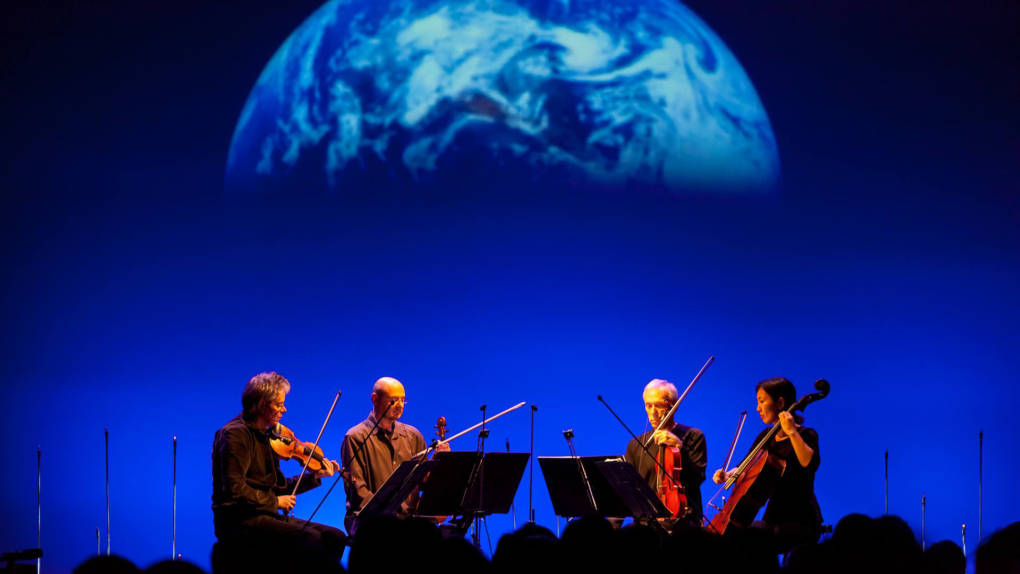
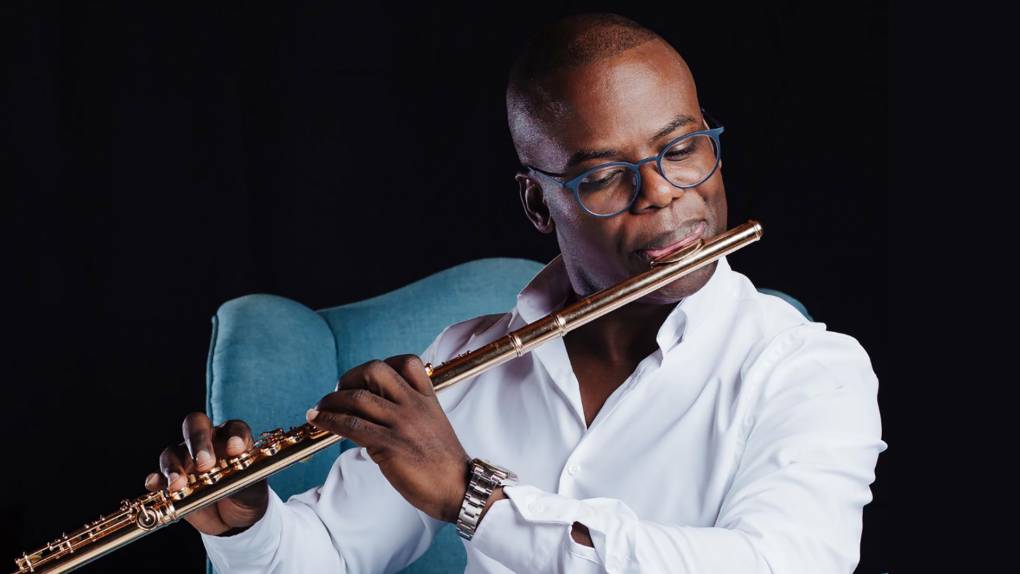
window.__IS_SSR__=true
window.__INITIAL_STATE__={
"attachmentsReducer": {
"audio_0": {
"type": "attachments",
"id": "audio_0",
"imgSizes": {
"kqedFullSize": {
"file": "https://ww2.kqed.org/news/wp-content/themes/KQED-unified/img/audio_bgs/background0.jpg"
}
}
},
"audio_1": {
"type": "attachments",
"id": "audio_1",
"imgSizes": {
"kqedFullSize": {
"file": "https://ww2.kqed.org/news/wp-content/themes/KQED-unified/img/audio_bgs/background1.jpg"
}
}
},
"audio_2": {
"type": "attachments",
"id": "audio_2",
"imgSizes": {
"kqedFullSize": {
"file": "https://ww2.kqed.org/news/wp-content/themes/KQED-unified/img/audio_bgs/background2.jpg"
}
}
},
"audio_3": {
"type": "attachments",
"id": "audio_3",
"imgSizes": {
"kqedFullSize": {
"file": "https://ww2.kqed.org/news/wp-content/themes/KQED-unified/img/audio_bgs/background3.jpg"
}
}
},
"audio_4": {
"type": "attachments",
"id": "audio_4",
"imgSizes": {
"kqedFullSize": {
"file": "https://ww2.kqed.org/news/wp-content/themes/KQED-unified/img/audio_bgs/background4.jpg"
}
}
},
"placeholder": {
"type": "attachments",
"id": "placeholder",
"imgSizes": {
"thumbnail": {
"file": "https://cdn.kqed.org/wp-content/uploads/2024/12/KQED-Default-Image-816638274-2000x1333-1-160x107.jpg",
"width": 160,
"height": 107,
"mimeType": "image/jpeg"
},
"medium": {
"file": "https://cdn.kqed.org/wp-content/uploads/2024/12/KQED-Default-Image-816638274-2000x1333-1-800x533.jpg",
"width": 800,
"height": 533,
"mimeType": "image/jpeg"
},
"medium_large": {
"file": "https://cdn.kqed.org/wp-content/uploads/2024/12/KQED-Default-Image-816638274-2000x1333-1-768x512.jpg",
"width": 768,
"height": 512,
"mimeType": "image/jpeg"
},
"large": {
"file": "https://cdn.kqed.org/wp-content/uploads/2024/12/KQED-Default-Image-816638274-2000x1333-1-1020x680.jpg",
"width": 1020,
"height": 680,
"mimeType": "image/jpeg"
},
"1536x1536": {
"file": "https://cdn.kqed.org/wp-content/uploads/2024/12/KQED-Default-Image-816638274-2000x1333-1-1536x1024.jpg",
"width": 1536,
"height": 1024,
"mimeType": "image/jpeg"
},
"fd-lrg": {
"file": "https://cdn.kqed.org/wp-content/uploads/2024/12/KQED-Default-Image-816638274-2000x1333-1-1536x1024.jpg",
"width": 1536,
"height": 1024,
"mimeType": "image/jpeg"
},
"fd-med": {
"file": "https://cdn.kqed.org/wp-content/uploads/2024/12/KQED-Default-Image-816638274-2000x1333-1-1020x680.jpg",
"width": 1020,
"height": 680,
"mimeType": "image/jpeg"
},
"fd-sm": {
"file": "https://cdn.kqed.org/wp-content/uploads/2024/12/KQED-Default-Image-816638274-2000x1333-1-800x533.jpg",
"width": 800,
"height": 533,
"mimeType": "image/jpeg"
},
"post-thumbnail": {
"file": "https://cdn.kqed.org/wp-content/uploads/2024/12/KQED-Default-Image-816638274-2000x1333-1-672x372.jpg",
"width": 672,
"height": 372,
"mimeType": "image/jpeg"
},
"twentyfourteen-full-width": {
"file": "https://cdn.kqed.org/wp-content/uploads/2024/12/KQED-Default-Image-816638274-2000x1333-1-1038x576.jpg",
"width": 1038,
"height": 576,
"mimeType": "image/jpeg"
},
"xxsmall": {
"file": "https://cdn.kqed.org/wp-content/uploads/2024/12/KQED-Default-Image-816638274-2000x1333-1-160x107.jpg",
"width": 160,
"height": 107,
"mimeType": "image/jpeg"
},
"xsmall": {
"file": "https://cdn.kqed.org/wp-content/uploads/2024/12/KQED-Default-Image-816638274-2000x1333-1-672x372.jpg",
"width": 672,
"height": 372,
"mimeType": "image/jpeg"
},
"small": {
"file": "https://cdn.kqed.org/wp-content/uploads/2024/12/KQED-Default-Image-816638274-2000x1333-1-672x372.jpg",
"width": 672,
"height": 372,
"mimeType": "image/jpeg"
},
"xlarge": {
"file": "https://cdn.kqed.org/wp-content/uploads/2024/12/KQED-Default-Image-816638274-2000x1333-1-1020x680.jpg",
"width": 1020,
"height": 680,
"mimeType": "image/jpeg"
},
"full-width": {
"file": "https://cdn.kqed.org/wp-content/uploads/2024/12/KQED-Default-Image-816638274-2000x1333-1-1920x1280.jpg",
"width": 1920,
"height": 1280,
"mimeType": "image/jpeg"
},
"guest-author-32": {
"file": "https://cdn.kqed.org/wp-content/uploads/2025/01/KQED-Default-Image-816638274-1333x1333-1-160x160.jpg",
"width": 32,
"height": 32,
"mimeType": "image/jpeg"
},
"guest-author-50": {
"file": "https://cdn.kqed.org/wp-content/uploads/2025/01/KQED-Default-Image-816638274-1333x1333-1-160x160.jpg",
"width": 50,
"height": 50,
"mimeType": "image/jpeg"
},
"guest-author-64": {
"file": "https://cdn.kqed.org/wp-content/uploads/2025/01/KQED-Default-Image-816638274-1333x1333-1-160x160.jpg",
"width": 64,
"height": 64,
"mimeType": "image/jpeg"
},
"guest-author-96": {
"file": "https://cdn.kqed.org/wp-content/uploads/2025/01/KQED-Default-Image-816638274-1333x1333-1-160x160.jpg",
"width": 96,
"height": 96,
"mimeType": "image/jpeg"
},
"guest-author-128": {
"file": "https://cdn.kqed.org/wp-content/uploads/2025/01/KQED-Default-Image-816638274-1333x1333-1-160x160.jpg",
"width": 128,
"height": 128,
"mimeType": "image/jpeg"
},
"detail": {
"file": "https://cdn.kqed.org/wp-content/uploads/2025/01/KQED-Default-Image-816638274-1333x1333-1-160x160.jpg",
"width": 160,
"height": 160,
"mimeType": "image/jpeg"
},
"kqedFullSize": {
"file": "https://cdn.kqed.org/wp-content/uploads/2024/12/KQED-Default-Image-816638274-2000x1333-1.jpg",
"width": 2000,
"height": 1333
}
}
},
"arts_13924461": {
"type": "attachments",
"id": "arts_13924461",
"meta": {
"index": "attachments_1716263798",
"site": "arts",
"id": "13924461",
"found": true
},
"parent": 13924375,
"imgSizes": {
"twentyfourteen-full-width": {
"file": "https://ww2.kqed.org/app/uploads/sites/2/2023/01/GettyImages-1169733361-1038x576.jpg",
"width": 1038,
"mimeType": "image/jpeg",
"height": 576
},
"thumbnail": {
"file": "https://ww2.kqed.org/app/uploads/sites/2/2023/01/GettyImages-1169733361-160x90.jpg",
"width": 160,
"mimeType": "image/jpeg",
"height": 90
},
"post-thumbnail": {
"file": "https://ww2.kqed.org/app/uploads/sites/2/2023/01/GettyImages-1169733361-672x372.jpg",
"width": 672,
"mimeType": "image/jpeg",
"height": 372
},
"kqedFullSize": {
"file": "https://ww2.kqed.org/app/uploads/sites/2/2023/01/GettyImages-1169733361.jpg",
"width": 1920,
"height": 1080
},
"large": {
"file": "https://ww2.kqed.org/app/uploads/sites/2/2023/01/GettyImages-1169733361-1020x574.jpg",
"width": 1020,
"mimeType": "image/jpeg",
"height": 574
},
"1536x1536": {
"file": "https://ww2.kqed.org/app/uploads/sites/2/2023/01/GettyImages-1169733361-1536x864.jpg",
"width": 1536,
"mimeType": "image/jpeg",
"height": 864
},
"medium": {
"file": "https://ww2.kqed.org/app/uploads/sites/2/2023/01/GettyImages-1169733361-800x450.jpg",
"width": 800,
"mimeType": "image/jpeg",
"height": 450
},
"medium_large": {
"file": "https://ww2.kqed.org/app/uploads/sites/2/2023/01/GettyImages-1169733361-768x432.jpg",
"width": 768,
"mimeType": "image/jpeg",
"height": 432
}
},
"publishDate": 1675121182,
"modified": 1675121269,
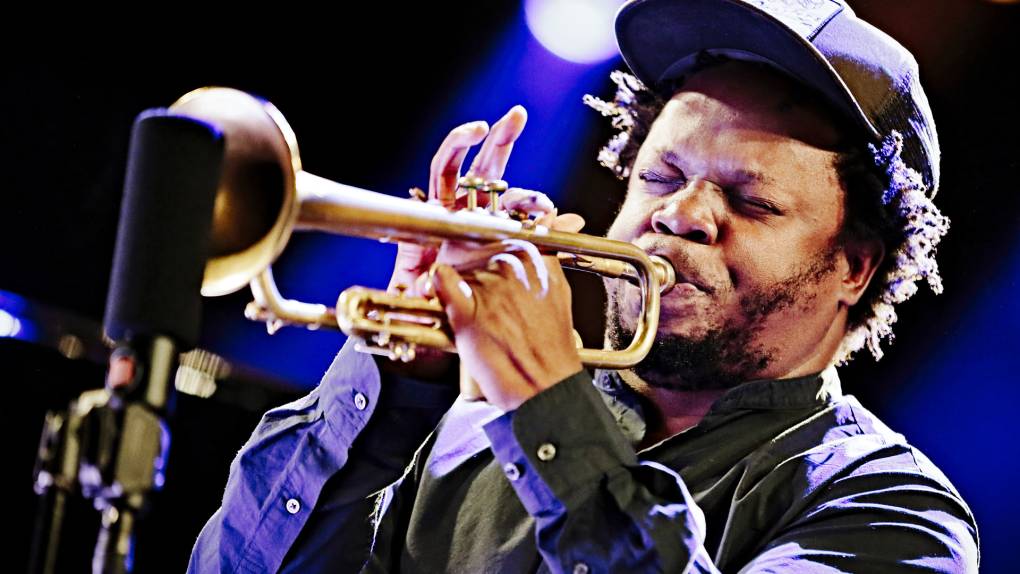
"caption": "Ambrose Akinmusire pictured in 2019. Akinmusire, who received his second Grammy nomination in November, will be skipping the award show in favor of his own residency at SFJAZZ, Feb. 3–5 and Feb. 9 at Grace Cathedral in San Francisco.",
"description": null,
"title": "GettyImages-1169733361",
"credit": "Peter Van Breukelen/Redferns/Getty Images",
"status": "inherit",
"altTag": "Black man in baseball cap plays trumpet with eyes closed",
"isLoading": false,
"fetchFailed": false
},
"arts_13923695": {
"type": "attachments",
"id": "arts_13923695",
"meta": {
"index": "attachments_1716263798",
"site": "arts",
"id": "13923695",
"found": true
},
"parent": 13923694,
"imgSizes": {
"twentyfourteen-full-width": {
"file": "https://ww2.kqed.org/app/uploads/sites/2/2023/01/SFJAZZ.10thAnniv-1038x576.jpg",
"width": 1038,
"mimeType": "image/jpeg",
"height": 576
},
"thumbnail": {
"file": "https://ww2.kqed.org/app/uploads/sites/2/2023/01/SFJAZZ.10thAnniv-160x96.jpg",
"width": 160,
"mimeType": "image/jpeg",
"height": 96
},
"post-thumbnail": {
"file": "https://ww2.kqed.org/app/uploads/sites/2/2023/01/SFJAZZ.10thAnniv-672x372.jpg",
"width": 672,
"mimeType": "image/jpeg",
"height": 372
},
"kqedFullSize": {
"file": "https://ww2.kqed.org/app/uploads/sites/2/2023/01/SFJAZZ.10thAnniv.jpg",
"width": 1920,
"height": 1151
},
"large": {
"file": "https://ww2.kqed.org/app/uploads/sites/2/2023/01/SFJAZZ.10thAnniv-1020x611.jpg",
"width": 1020,
"mimeType": "image/jpeg",
"height": 611
},
"1536x1536": {
"file": "https://ww2.kqed.org/app/uploads/sites/2/2023/01/SFJAZZ.10thAnniv-1536x921.jpg",
"width": 1536,
"mimeType": "image/jpeg",
"height": 921
},
"medium": {
"file": "https://ww2.kqed.org/app/uploads/sites/2/2023/01/SFJAZZ.10thAnniv-800x480.jpg",
"width": 800,
"mimeType": "image/jpeg",
"height": 480
},
"medium_large": {
"file": "https://ww2.kqed.org/app/uploads/sites/2/2023/01/SFJAZZ.10thAnniv-768x460.jpg",
"width": 768,
"mimeType": "image/jpeg",
"height": 460
}
},
"publishDate": 1673632981,
"modified": 1673633077,
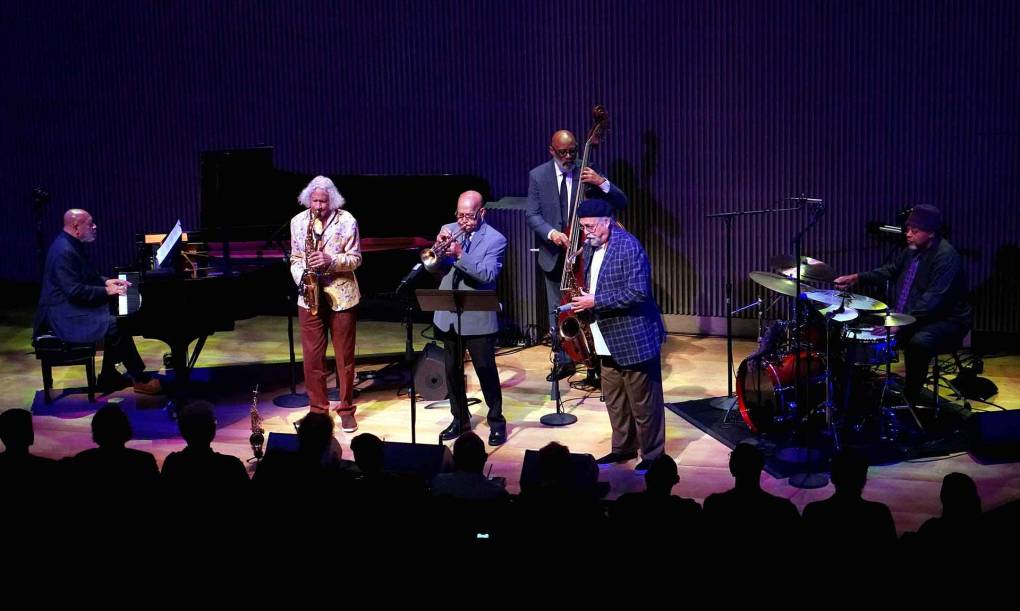
"caption": "(L–R) Kenny Barron, Gary Bartz, Eddie Henderson, Gerald Cannon, Joe Lovano and Jeff 'Tain' Watts celebrate the music of McCoy Tyner as part of SFJAZZ's 10th anniversary weekend on Jan. 12, 2023.",
"description": null,
"title": "SFJAZZ.10thAnniv",
"credit": "Rick Swig/SFJAZZ",
"status": "inherit",
"altTag": "Six men, playing piano, horns, bass and drums, perform on a dimly lit stage.",
"isLoading": false,
"fetchFailed": false
},
"arts_13918643": {
"type": "attachments",
"id": "arts_13918643",
"meta": {
"index": "attachments_1716263798",
"site": "arts",
"id": "13918643",
"found": true
},
"parent": 13918575,
"imgSizes": {
"twentyfourteen-full-width": {
"file": "https://ww2.kqed.org/app/uploads/sites/2/2022/09/Redman-1038x576.jpg",
"width": 1038,
"mimeType": "image/jpeg",
"height": 576
},
"thumbnail": {
"file": "https://ww2.kqed.org/app/uploads/sites/2/2022/09/Redman-160x107.jpg",
"width": 160,
"mimeType": "image/jpeg",
"height": 107
},
"post-thumbnail": {
"file": "https://ww2.kqed.org/app/uploads/sites/2/2022/09/Redman-672x372.jpg",
"width": 672,
"mimeType": "image/jpeg",
"height": 372
},
"kqedFullSize": {
"file": "https://ww2.kqed.org/app/uploads/sites/2/2022/09/Redman.jpg",
"width": 2048,
"height": 1365
},
"large": {
"file": "https://ww2.kqed.org/app/uploads/sites/2/2022/09/Redman-1020x680.jpg",
"width": 1020,
"mimeType": "image/jpeg",
"height": 680
},
"1536x1536": {
"file": "https://ww2.kqed.org/app/uploads/sites/2/2022/09/Redman-1536x1024.jpg",
"width": 1536,
"mimeType": "image/jpeg",
"height": 1024
},
"full-width": {
"file": "https://ww2.kqed.org/app/uploads/sites/2/2022/09/Redman-1920x1280.jpg",
"width": 1920,
"mimeType": "image/jpeg",
"height": 1280
},
"medium": {
"file": "https://ww2.kqed.org/app/uploads/sites/2/2022/09/Redman-800x533.jpg",
"width": 800,
"mimeType": "image/jpeg",
"height": 533
},
"medium_large": {
"file": "https://ww2.kqed.org/app/uploads/sites/2/2022/09/Redman-768x512.jpg",
"width": 768,
"mimeType": "image/jpeg",
"height": 512
}
},
"publishDate": 1662094051,
"modified": 1662094138,
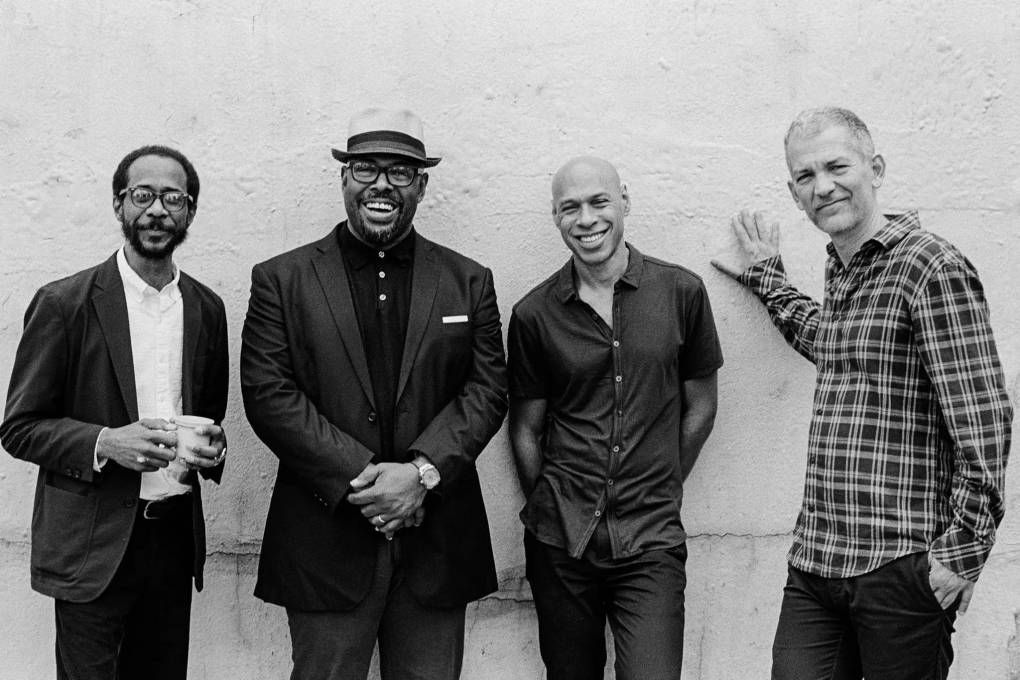
"caption": "Joshua Redman's classic 'Moodswings' quartet, with Brian Blade, Christian McBride, Redman and Brad Mehldau (L–R), perform at both SFJAZZ's Miner Auditorium and the Monterey Jazz Festival this fall.",
"description": null,
"title": "Redman",
"credit": "Michael Wilson/Nonesuch Records",
"status": "inherit",
"altTag": "four men posing in front of a white wall",
"isLoading": false,
"fetchFailed": false
},
"arts_13917486": {
"type": "attachments",
"id": "arts_13917486",
"meta": {
"index": "attachments_1716263798",
"site": "arts",
"id": "13917486",
"found": true
},
"parent": 13917478,
"imgSizes": {
"twentyfourteen-full-width": {
"file": "https://ww2.kqed.org/app/uploads/sites/2/2022/08/Screen-Shot-2022-08-11-at-1.11.12-PM-1038x576.png",
"width": 1038,
"mimeType": "image/png",
"height": 576
},
"thumbnail": {
"file": "https://ww2.kqed.org/app/uploads/sites/2/2022/08/Screen-Shot-2022-08-11-at-1.11.12-PM-160x104.png",
"width": 160,
"mimeType": "image/png",
"height": 104
},
"post-thumbnail": {
"file": "https://ww2.kqed.org/app/uploads/sites/2/2022/08/Screen-Shot-2022-08-11-at-1.11.12-PM-672x372.png",
"width": 672,
"mimeType": "image/png",
"height": 372
},
"kqedFullSize": {
"file": "https://ww2.kqed.org/app/uploads/sites/2/2022/08/Screen-Shot-2022-08-11-at-1.11.12-PM.png",
"width": 2630,
"height": 1708
},
"2048x2048": {
"file": "https://ww2.kqed.org/app/uploads/sites/2/2022/08/Screen-Shot-2022-08-11-at-1.11.12-PM-2048x1330.png",
"width": 2048,
"mimeType": "image/png",
"height": 1330
},
"large": {
"file": "https://ww2.kqed.org/app/uploads/sites/2/2022/08/Screen-Shot-2022-08-11-at-1.11.12-PM-1020x662.png",
"width": 1020,
"mimeType": "image/png",
"height": 662
},
"1536x1536": {
"file": "https://ww2.kqed.org/app/uploads/sites/2/2022/08/Screen-Shot-2022-08-11-at-1.11.12-PM-1536x998.png",
"width": 1536,
"mimeType": "image/png",
"height": 998
},
"full-width": {
"file": "https://ww2.kqed.org/app/uploads/sites/2/2022/08/Screen-Shot-2022-08-11-at-1.11.12-PM-1920x1247.png",
"width": 1920,
"mimeType": "image/png",
"height": 1247
},
"medium": {
"file": "https://ww2.kqed.org/app/uploads/sites/2/2022/08/Screen-Shot-2022-08-11-at-1.11.12-PM-800x520.png",
"width": 800,
"mimeType": "image/png",
"height": 520
},
"medium_large": {
"file": "https://ww2.kqed.org/app/uploads/sites/2/2022/08/Screen-Shot-2022-08-11-at-1.11.12-PM-768x499.png",
"width": 768,
"mimeType": "image/png",
"height": 499
}
},
"publishDate": 1660248713,
"modified": 1660248851,
"caption": "\nDavid Sánchez, Etienne Charles and Chris Potter of the SFJAZZ Collective.",
"description": null,
"title": "David Sánchez, Etienne Charles and Chris Potter of the SFJAZZ Collective.",
"credit": "NPR",
"status": "inherit",
"altTag": null,
"isLoading": false,
"fetchFailed": false
},
"arts_13913900": {
"type": "attachments",
"id": "arts_13913900",
"meta": {
"index": "attachments_1716263798",
"site": "arts",
"id": "13913900",
"found": true
},
"parent": 13913890,
"imgSizes": {
"twentyfourteen-full-width": {
"file": "https://ww2.kqed.org/app/uploads/sites/2/2022/05/Our-Creative-Futures-Featured-Image-La-Dona-1038x576.jpg",
"width": 1038,
"mimeType": "image/jpeg",
"height": 576
},
"thumbnail": {
"file": "https://ww2.kqed.org/app/uploads/sites/2/2022/05/Our-Creative-Futures-Featured-Image-La-Dona-160x90.jpg",
"width": 160,
"mimeType": "image/jpeg",
"height": 90
},
"post-thumbnail": {
"file": "https://ww2.kqed.org/app/uploads/sites/2/2022/05/Our-Creative-Futures-Featured-Image-La-Dona-672x372.jpg",
"width": 672,
"mimeType": "image/jpeg",
"height": 372
},
"kqedFullSize": {
"file": "https://ww2.kqed.org/app/uploads/sites/2/2022/05/Our-Creative-Futures-Featured-Image-La-Dona.jpg",
"width": 1920,
"height": 1080
},
"large": {
"file": "https://ww2.kqed.org/app/uploads/sites/2/2022/05/Our-Creative-Futures-Featured-Image-La-Dona-1020x574.jpg",
"width": 1020,
"mimeType": "image/jpeg",
"height": 574
},
"1536x1536": {
"file": "https://ww2.kqed.org/app/uploads/sites/2/2022/05/Our-Creative-Futures-Featured-Image-La-Dona-1536x864.jpg",
"width": 1536,
"mimeType": "image/jpeg",
"height": 864
},
"medium": {
"file": "https://ww2.kqed.org/app/uploads/sites/2/2022/05/Our-Creative-Futures-Featured-Image-La-Dona-800x450.jpg",
"width": 800,
"mimeType": "image/jpeg",
"height": 450
},
"medium_large": {
"file": "https://ww2.kqed.org/app/uploads/sites/2/2022/05/Our-Creative-Futures-Featured-Image-La-Dona-768x432.jpg",
"width": 768,
"mimeType": "image/jpeg",
"height": 432
}
},
"publishDate": 1653425970,
"modified": 1653426039,
"caption": "La Doña's singular blend of Latin musical traditions, reggaeton and hyphy has made her one of San Francisco's biggest breakout stars since the pandemic. YBCA's Guaranteed Income Pilot for Artists is helping fuel her rising career. ",
"description": null,
"title": "Our Creative Futures Featured Image-La Dona",
"credit": "Photos: Beth LaBerge; design: Kelly Heigert",
"status": "inherit",
"altTag": null,
"isLoading": false,
"fetchFailed": false
},
"arts_13913898": {
"type": "attachments",
"id": "arts_13913898",
"meta": {
"index": "attachments_1716263798",
"site": "arts",
"id": "13913898",
"found": true
},
"parent": 13913890,
"imgSizes": {
"twentyfourteen-full-width": {
"file": "https://ww2.kqed.org/app/uploads/sites/2/2022/05/014_KQEDArts_Alameda_LaDona_07202021-1038x576.jpg",
"width": 1038,
"mimeType": "image/jpeg",
"height": 576
},
"thumbnail": {
"file": "https://ww2.kqed.org/app/uploads/sites/2/2022/05/014_KQEDArts_Alameda_LaDona_07202021-160x107.jpg",
"width": 160,
"mimeType": "image/jpeg",
"height": 107
},
"post-thumbnail": {
"file": "https://ww2.kqed.org/app/uploads/sites/2/2022/05/014_KQEDArts_Alameda_LaDona_07202021-672x372.jpg",
"width": 672,
"mimeType": "image/jpeg",
"height": 372
},
"kqedFullSize": {
"file": "https://ww2.kqed.org/app/uploads/sites/2/2022/05/014_KQEDArts_Alameda_LaDona_07202021.jpg",
"width": 1920,
"height": 1280
},
"large": {
"file": "https://ww2.kqed.org/app/uploads/sites/2/2022/05/014_KQEDArts_Alameda_LaDona_07202021-1020x680.jpg",
"width": 1020,
"mimeType": "image/jpeg",
"height": 680
},
"1536x1536": {
"file": "https://ww2.kqed.org/app/uploads/sites/2/2022/05/014_KQEDArts_Alameda_LaDona_07202021-1536x1024.jpg",
"width": 1536,
"mimeType": "image/jpeg",
"height": 1024
},
"medium": {
"file": "https://ww2.kqed.org/app/uploads/sites/2/2022/05/014_KQEDArts_Alameda_LaDona_07202021-800x533.jpg",
"width": 800,
"mimeType": "image/jpeg",
"height": 533
},
"medium_large": {
"file": "https://ww2.kqed.org/app/uploads/sites/2/2022/05/014_KQEDArts_Alameda_LaDona_07202021-768x512.jpg",
"width": 768,
"mimeType": "image/jpeg",
"height": 512
}
},
"publishDate": 1653425673,
"modified": 1653425695,
"caption": "Cecilia Peña-Govea, a.k.a. La Doña.",
"description": null,
"title": "Cecilia Peña-Govea, a.k.a. La Doña, sits at Alameda Beach on July 20, 2021.",
"credit": "Beth LaBerge",
"status": "inherit",
"altTag": null,
"isLoading": false,
"fetchFailed": false
},
"arts_13913416": {
"type": "attachments",
"id": "arts_13913416",
"meta": {
"index": "attachments_1716263798",
"site": "arts",
"id": "13913416",
"found": true
},
"parent": 13913376,
"imgSizes": {
"twentyfourteen-full-width": {
"file": "https://ww2.kqed.org/app/uploads/sites/2/2022/05/gretchen-parlato-small-1-1038x576.jpg",
"width": 1038,
"mimeType": "image/jpeg",
"height": 576
},
"thumbnail": {
"file": "https://ww2.kqed.org/app/uploads/sites/2/2022/05/gretchen-parlato-small-1-160x90.jpg",
"width": 160,
"mimeType": "image/jpeg",
"height": 90
},
"post-thumbnail": {
"file": "https://ww2.kqed.org/app/uploads/sites/2/2022/05/gretchen-parlato-small-1-672x372.jpg",
"width": 672,
"mimeType": "image/jpeg",
"height": 372
},
"kqedFullSize": {
"file": "https://ww2.kqed.org/app/uploads/sites/2/2022/05/gretchen-parlato-small-1.jpg",
"width": 1920,
"height": 1080
},
"large": {
"file": "https://ww2.kqed.org/app/uploads/sites/2/2022/05/gretchen-parlato-small-1-1020x574.jpg",
"width": 1020,
"mimeType": "image/jpeg",
"height": 574
},
"1536x1536": {
"file": "https://ww2.kqed.org/app/uploads/sites/2/2022/05/gretchen-parlato-small-1-1536x864.jpg",
"width": 1536,
"mimeType": "image/jpeg",
"height": 864
},
"medium": {
"file": "https://ww2.kqed.org/app/uploads/sites/2/2022/05/gretchen-parlato-small-1-800x450.jpg",
"width": 800,
"mimeType": "image/jpeg",
"height": 450
},
"medium_large": {
"file": "https://ww2.kqed.org/app/uploads/sites/2/2022/05/gretchen-parlato-small-1-768x432.jpg",
"width": 768,
"mimeType": "image/jpeg",
"height": 432
}
},
"publishDate": 1652732684,
"modified": 1652732718,
"caption": "In the 2000s, Gretchen Parlato changed the sound of jazz with her singular voice. After receding from the spotlight to focus on motherhood and teaching, she's back with a solo album and two Bay Area headlining shows.",
"description": null,
"title": "gretchen parlato-small",
"credit": "Lauren Desberg",
"status": "inherit",
"altTag": null,
"isLoading": false,
"fetchFailed": false
},
"arts_13911364": {
"type": "attachments",
"id": "arts_13911364",
"meta": {
"index": "attachments_1716263798",
"site": "arts",
"id": "13911364",
"found": true
},
"parent": 13911357,
"imgSizes": {
"twentyfourteen-full-width": {
"file": "https://ww2.kqed.org/app/uploads/sites/2/2022/03/Billy-Hart-Photo-by-Desmond-White-1038x576.jpg",
"width": 1038,
"mimeType": "image/jpeg",
"height": 576
},
"thumbnail": {
"file": "https://ww2.kqed.org/app/uploads/sites/2/2022/03/Billy-Hart-Photo-by-Desmond-White-160x90.jpg",
"width": 160,
"mimeType": "image/jpeg",
"height": 90
},
"post-thumbnail": {
"file": "https://ww2.kqed.org/app/uploads/sites/2/2022/03/Billy-Hart-Photo-by-Desmond-White-672x372.jpg",
"width": 672,
"mimeType": "image/jpeg",
"height": 372
},
"kqedFullSize": {
"file": "https://ww2.kqed.org/app/uploads/sites/2/2022/03/Billy-Hart-Photo-by-Desmond-White.jpg",
"width": 1920,
"height": 1080
},
"large": {
"file": "https://ww2.kqed.org/app/uploads/sites/2/2022/03/Billy-Hart-Photo-by-Desmond-White-1020x574.jpg",
"width": 1020,
"mimeType": "image/jpeg",
"height": 574
},
"1536x1536": {
"file": "https://ww2.kqed.org/app/uploads/sites/2/2022/03/Billy-Hart-Photo-by-Desmond-White-1536x864.jpg",
"width": 1536,
"mimeType": "image/jpeg",
"height": 864
},
"medium": {
"file": "https://ww2.kqed.org/app/uploads/sites/2/2022/03/Billy-Hart-Photo-by-Desmond-White-800x450.jpg",
"width": 800,
"mimeType": "image/jpeg",
"height": 450
},
"medium_large": {
"file": "https://ww2.kqed.org/app/uploads/sites/2/2022/03/Billy-Hart-Photo-by-Desmond-White-768x432.jpg",
"width": 768,
"mimeType": "image/jpeg",
"height": 432
}
},
"publishDate": 1648749026,
"modified": 1648749277,
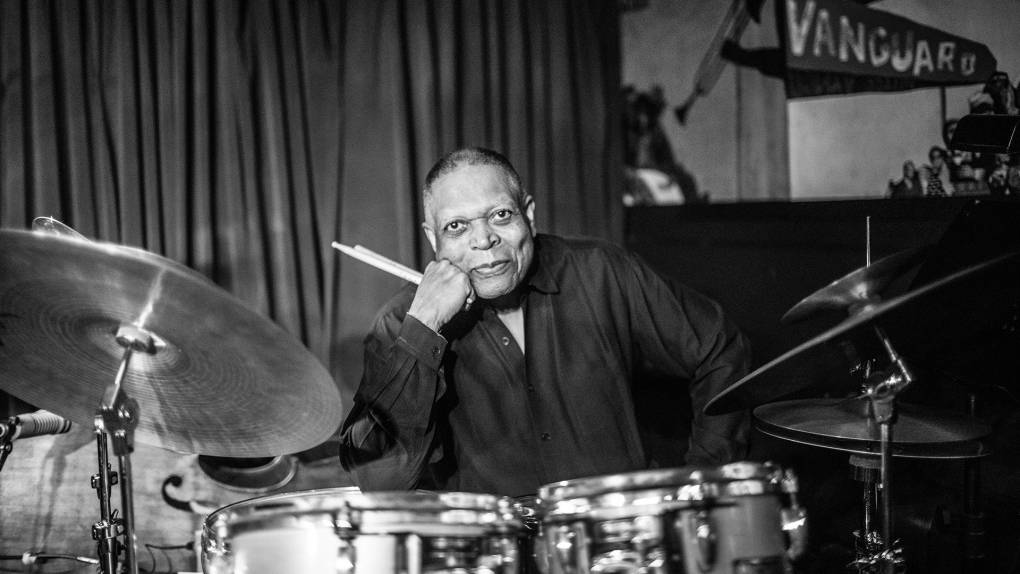
"caption": "Billy Hart is among the honorees at the NEA 2022 Jazz Masters Concert in San Francisco. ",
"description": null,
"title": "Billy-Hart--Photo-by-Desmond-White",
"credit": "Desmond White",
"status": "inherit",
"altTag": "An African-American man sits at a drum kit in a jazz nightclub in a black and white photo.",
"isLoading": false,
"fetchFailed": false
},
"arts_13848854": {
"type": "attachments",
"id": "arts_13848854",
"meta": {
"index": "attachments_1716263798",
"site": "arts",
"id": "13848854",
"found": true
},
"parent": 13848850,
"imgSizes": {
"small": {
"file": "https://ww2.kqed.org/app/uploads/sites/2/2019/01/Kronos_2014_a_creditWojciechWandzel-520x293.jpg",
"width": 520,
"mimeType": "image/jpeg",
"height": 293
},
"twentyfourteen-full-width": {
"file": "https://ww2.kqed.org/app/uploads/sites/2/2019/01/Kronos_2014_a_creditWojciechWandzel-1038x576.jpg",
"width": 1038,
"mimeType": "image/jpeg",
"height": 576
},
"thumbnail": {
"file": "https://ww2.kqed.org/app/uploads/sites/2/2019/01/Kronos_2014_a_creditWojciechWandzel-160x90.jpg",
"width": 160,
"mimeType": "image/jpeg",
"height": 90
},
"fd-sm": {
"file": "https://ww2.kqed.org/app/uploads/sites/2/2019/01/Kronos_2014_a_creditWojciechWandzel-960x540.jpg",
"width": 960,
"mimeType": "image/jpeg",
"height": 540
},
"post-thumbnail": {
"file": "https://ww2.kqed.org/app/uploads/sites/2/2019/01/Kronos_2014_a_creditWojciechWandzel-672x372.jpg",
"width": 672,
"mimeType": "image/jpeg",
"height": 372
},
"xsmall": {
"file": "https://ww2.kqed.org/app/uploads/sites/2/2019/01/Kronos_2014_a_creditWojciechWandzel-375x211.jpg",
"width": 375,
"mimeType": "image/jpeg",
"height": 211
},
"kqedFullSize": {
"file": "https://ww2.kqed.org/app/uploads/sites/2/2019/01/Kronos_2014_a_creditWojciechWandzel.jpg",
"width": 1920,
"height": 1080
},
"large": {
"file": "https://ww2.kqed.org/app/uploads/sites/2/2019/01/Kronos_2014_a_creditWojciechWandzel-1020x574.jpg",
"width": 1020,
"mimeType": "image/jpeg",
"height": 574
},
"xlarge": {
"file": "https://ww2.kqed.org/app/uploads/sites/2/2019/01/Kronos_2014_a_creditWojciechWandzel-1180x664.jpg",
"width": 1180,
"mimeType": "image/jpeg",
"height": 664
},
"complete_open_graph": {
"file": "https://ww2.kqed.org/app/uploads/sites/2/2019/01/Kronos_2014_a_creditWojciechWandzel-1200x675.jpg",
"width": 1200,
"mimeType": "image/jpeg",
"height": 675
},
"guest-author-50": {
"file": "https://ww2.kqed.org/app/uploads/sites/2/2019/01/Kronos_2014_a_creditWojciechWandzel-50x50.jpg",
"width": 50,
"mimeType": "image/jpeg",
"height": 50
},
"guest-author-96": {
"file": "https://ww2.kqed.org/app/uploads/sites/2/2019/01/Kronos_2014_a_creditWojciechWandzel-96x96.jpg",
"width": 96,
"mimeType": "image/jpeg",
"height": 96
},
"medium": {
"file": "https://ww2.kqed.org/app/uploads/sites/2/2019/01/Kronos_2014_a_creditWojciechWandzel-800x450.jpg",
"width": 800,
"mimeType": "image/jpeg",
"height": 450
},
"guest-author-64": {
"file": "https://ww2.kqed.org/app/uploads/sites/2/2019/01/Kronos_2014_a_creditWojciechWandzel-64x64.jpg",
"width": 64,
"mimeType": "image/jpeg",
"height": 64
},
"guest-author-32": {
"file": "https://ww2.kqed.org/app/uploads/sites/2/2019/01/Kronos_2014_a_creditWojciechWandzel-32x32.jpg",
"width": 32,
"mimeType": "image/jpeg",
"height": 32
},
"fd-lrg": {
"file": "https://ww2.kqed.org/app/uploads/sites/2/2019/01/Kronos_2014_a_creditWojciechWandzel-1920x1080.jpg",
"width": 1920,
"mimeType": "image/jpeg",
"height": 1080
},
"fd-med": {
"file": "https://ww2.kqed.org/app/uploads/sites/2/2019/01/Kronos_2014_a_creditWojciechWandzel-1180x664.jpg",
"width": 1180,
"mimeType": "image/jpeg",
"height": 664
},
"full-width": {
"file": "https://ww2.kqed.org/app/uploads/sites/2/2019/01/Kronos_2014_a_creditWojciechWandzel-1920x1080.jpg",
"width": 1920,
"mimeType": "image/jpeg",
"height": 1080
},
"detail": {
"file": "https://ww2.kqed.org/app/uploads/sites/2/2019/01/Kronos_2014_a_creditWojciechWandzel-150x150.jpg",
"width": 150,
"mimeType": "image/jpeg",
"height": 150
},
"medium_large": {
"file": "https://ww2.kqed.org/app/uploads/sites/2/2019/01/Kronos_2014_a_creditWojciechWandzel-768x432.jpg",
"width": 768,
"mimeType": "image/jpeg",
"height": 432
},
"guest-author-128": {
"file": "https://ww2.kqed.org/app/uploads/sites/2/2019/01/Kronos_2014_a_creditWojciechWandzel-128x128.jpg",
"width": 128,
"mimeType": "image/jpeg",
"height": 128
},
"xxsmall": {
"file": "https://ww2.kqed.org/app/uploads/sites/2/2019/01/Kronos_2014_a_creditWojciechWandzel-240x135.jpg",
"width": 240,
"mimeType": "image/jpeg",
"height": 135
}
},
"publishDate": 1547666906,
"modified": 1648152086,
"caption": "Kronos Quartet.",
"description": "Kronos Quartet. ",
"title": "Kronos_2014_a_creditWojciechWandzel",
"credit": "Wojciech Wandzel",
"status": "inherit",
"altTag": "Kronos Quartet.",
"isLoading": false,
"fetchFailed": false
},
"arts_13910917": {
"type": "attachments",
"id": "arts_13910917",
"meta": {
"index": "attachments_1716263798",
"site": "arts",
"id": "13910917",
"found": true
},
"parent": 0,
"imgSizes": {
"thumbnail": {
"file": "https://ww2.kqed.org/app/uploads/sites/2/2022/03/Wayne.Randall.SFJAZZ.Thumbnail-160x90.jpg",
"width": 160,
"mimeType": "image/jpeg",
"height": 90
},
"post-thumbnail": {
"file": "https://ww2.kqed.org/app/uploads/sites/2/2022/03/Wayne.Randall.SFJAZZ.Thumbnail-672x372.jpg",
"width": 672,
"mimeType": "image/jpeg",
"height": 372
},
"kqedFullSize": {
"file": "https://ww2.kqed.org/app/uploads/sites/2/2022/03/Wayne.Randall.SFJAZZ.Thumbnail.jpg",
"width": 954,
"height": 537
},
"medium": {
"file": "https://ww2.kqed.org/app/uploads/sites/2/2022/03/Wayne.Randall.SFJAZZ.Thumbnail-800x450.jpg",
"width": 800,
"mimeType": "image/jpeg",
"height": 450
},
"medium_large": {
"file": "https://ww2.kqed.org/app/uploads/sites/2/2022/03/Wayne.Randall.SFJAZZ.Thumbnail-768x432.jpg",
"width": 768,
"mimeType": "image/jpeg",
"height": 432
}
},
"publishDate": 1647967327,
"modified": 1647967591,
"caption": "Wayne Shorter accepts the lifetime achievement award on behalf of Joni Mitchell from SFJAZZ founder and artistic director Randall Kline, in 2015.",
"description": null,
"title": "Wayne.Randall.SFJAZZ.Thumbnail",
"credit": "Drew Altizer Photography/KQED File Photo",
"status": "inherit",
"altTag": null,
"isLoading": false,
"fetchFailed": false
},
"arts_13903525": {
"type": "attachments",
"id": "arts_13903525",
"meta": {
"index": "attachments_1716263798",
"site": "arts",
"id": "13903525",
"found": true
},
"parent": 13903372,
"imgSizes": {
"twentyfourteen-full-width": {
"file": "https://ww2.kqed.org/app/uploads/sites/2/2021/09/Kassa-Overall-Plays-SFJAZZ-Centers-Joe-Henderson-Lab-on-September-26-Credit-Spencer-Ostrander-1038x576.jpg",
"width": 1038,
"mimeType": "image/jpeg",
"height": 576
},
"thumbnail": {
"file": "https://ww2.kqed.org/app/uploads/sites/2/2021/09/Kassa-Overall-Plays-SFJAZZ-Centers-Joe-Henderson-Lab-on-September-26-Credit-Spencer-Ostrander-160x107.jpg",
"width": 160,
"mimeType": "image/jpeg",
"height": 107
},
"post-thumbnail": {
"file": "https://ww2.kqed.org/app/uploads/sites/2/2021/09/Kassa-Overall-Plays-SFJAZZ-Centers-Joe-Henderson-Lab-on-September-26-Credit-Spencer-Ostrander-672x372.jpg",
"width": 672,
"mimeType": "image/jpeg",
"height": 372
},
"kqedFullSize": {
"file": "https://ww2.kqed.org/app/uploads/sites/2/2021/09/Kassa-Overall-Plays-SFJAZZ-Centers-Joe-Henderson-Lab-on-September-26-Credit-Spencer-Ostrander.jpg",
"width": 1500,
"height": 1001
},
"large": {
"file": "https://ww2.kqed.org/app/uploads/sites/2/2021/09/Kassa-Overall-Plays-SFJAZZ-Centers-Joe-Henderson-Lab-on-September-26-Credit-Spencer-Ostrander-1020x681.jpg",
"width": 1020,
"mimeType": "image/jpeg",
"height": 681
},
"medium": {
"file": "https://ww2.kqed.org/app/uploads/sites/2/2021/09/Kassa-Overall-Plays-SFJAZZ-Centers-Joe-Henderson-Lab-on-September-26-Credit-Spencer-Ostrander-800x534.jpg",
"width": 800,
"mimeType": "image/jpeg",
"height": 534
},
"medium_large": {
"file": "https://ww2.kqed.org/app/uploads/sites/2/2021/09/Kassa-Overall-Plays-SFJAZZ-Centers-Joe-Henderson-Lab-on-September-26-Credit-Spencer-Ostrander-768x513.jpg",
"width": 768,
"mimeType": "image/jpeg",
"height": 513
}
},
"publishDate": 1632243348,
"modified": 1632243420,
"caption": "Kassa Overall plays SFJAZZ Center's Joe Henderson Lab on Sept. 26.",
"description": null,
"title": "Kassa Overall Plays SFJAZZ Center's Joe Henderson Lab on September 26, Credit Spencer Ostrander",
"credit": "Spencer Ostrander",
"status": "inherit",
"altTag": null,
"isLoading": false,
"fetchFailed": false
},
"arts_13902406": {
"type": "attachments",
"id": "arts_13902406",
"meta": {
"index": "attachments_1716263798",
"site": "arts",
"id": "13902406",
"found": true
},
"parent": 13902315,
"imgSizes": {
"twentyfourteen-full-width": {
"file": "https://ww2.kqed.org/app/uploads/sites/2/2021/09/DemarreMcGill-1038x576.jpg",
"width": 1038,
"mimeType": "image/jpeg",
"height": 576
},
"thumbnail": {
"file": "https://ww2.kqed.org/app/uploads/sites/2/2021/09/DemarreMcGill-160x90.jpg",
"width": 160,
"mimeType": "image/jpeg",
"height": 90
},
"post-thumbnail": {
"file": "https://ww2.kqed.org/app/uploads/sites/2/2021/09/DemarreMcGill-672x372.jpg",
"width": 672,
"mimeType": "image/jpeg",
"height": 372
},
"kqedFullSize": {
"file": "https://ww2.kqed.org/app/uploads/sites/2/2021/09/DemarreMcGill.jpg",
"width": 1920,
"height": 1080
},
"large": {
"file": "https://ww2.kqed.org/app/uploads/sites/2/2021/09/DemarreMcGill-1020x574.jpg",
"width": 1020,
"mimeType": "image/jpeg",
"height": 574
},
"1536x1536": {
"file": "https://ww2.kqed.org/app/uploads/sites/2/2021/09/DemarreMcGill-1536x864.jpg",
"width": 1536,
"mimeType": "image/jpeg",
"height": 864
},
"medium": {
"file": "https://ww2.kqed.org/app/uploads/sites/2/2021/09/DemarreMcGill-800x450.jpg",
"width": 800,
"mimeType": "image/jpeg",
"height": 450
},
"medium_large": {
"file": "https://ww2.kqed.org/app/uploads/sites/2/2021/09/DemarreMcGill-768x432.jpg",
"width": 768,
"mimeType": "image/jpeg",
"height": 432
}
},
"publishDate": 1630610177,
"modified": 1631655927,
"caption": "Demarre McGill.",
"description": "Demare McGill plays the flute",
"title": "DemarreMcGill",
"credit": "Artist Photo",
"status": "inherit",
"altTag": null,
"isLoading": false,
"fetchFailed": false
},
"arts_13902402": {
"type": "attachments",
"id": "arts_13902402",
"meta": {
"index": "attachments_1716263798",
"site": "arts",
"id": "13902402",
"found": true
},
"parent": 13902315,
"imgSizes": {
"twentyfourteen-full-width": {
"file": "https://ww2.kqed.org/app/uploads/sites/2/2021/09/RaviColtrane-1038x576.jpg",
"width": 1038,
"mimeType": "image/jpeg",
"height": 576
},
"thumbnail": {
"file": "https://ww2.kqed.org/app/uploads/sites/2/2021/09/RaviColtrane-160x106.jpg",
"width": 160,
"mimeType": "image/jpeg",
"height": 106
},
"post-thumbnail": {
"file": "https://ww2.kqed.org/app/uploads/sites/2/2021/09/RaviColtrane-672x372.jpg",
"width": 672,
"mimeType": "image/jpeg",
"height": 372
},
"kqedFullSize": {
"file": "https://ww2.kqed.org/app/uploads/sites/2/2021/09/RaviColtrane.jpg",
"width": 1920,
"height": 1277
},
"large": {
"file": "https://ww2.kqed.org/app/uploads/sites/2/2021/09/RaviColtrane-1020x678.jpg",
"width": 1020,
"mimeType": "image/jpeg",
"height": 678
},
"1536x1536": {
"file": "https://ww2.kqed.org/app/uploads/sites/2/2021/09/RaviColtrane-1536x1022.jpg",
"width": 1536,
"mimeType": "image/jpeg",
"height": 1022
},
"medium": {
"file": "https://ww2.kqed.org/app/uploads/sites/2/2021/09/RaviColtrane-800x532.jpg",
"width": 800,
"mimeType": "image/jpeg",
"height": 532
},
"medium_large": {
"file": "https://ww2.kqed.org/app/uploads/sites/2/2021/09/RaviColtrane-768x511.jpg",
"width": 768,
"mimeType": "image/jpeg",
"height": 511
}
},
"publishDate": 1630610144,
"modified": 1630611286,
"caption": "Ravi Coltrane.",
"description": "A man on a couch with a saxophone",
"title": "RaviColtrane",
"credit": "Artist Photo",
"status": "inherit",
"altTag": null,
"isLoading": false,
"fetchFailed": false
}
},
"audioPlayerReducer": {
"postId": "stream_live",
"isPaused": true,
"isPlaying": false,
"pfsActive": false,
"pledgeModalIsOpen": true,
"playerDrawerIsOpen": false,
"liveAudioPlayStartedAt": 0,
"liveAudioPlayContext": ""
},
"authorsReducer": {
"byline_arts_13917478": {
"type": "authors",
"id": "byline_arts_13917478",
"meta": {
"override": true
},
"slug": "byline_arts_13917478",
"name": "Suraya Mohamed",
"isLoading": false
},
"agilbert": {
"type": "authors",
"id": "86",
"meta": {
"index": "authors_1716337520",
"id": "86",
"found": true
},
"name": "Andrew Gilbert",
"firstName": "Andrew",
"lastName": "Gilbert",
"slug": "agilbert",
"email": "jazzscribe@aol.com",
"display_author_email": false,
"staff_mastheads": [],
"title": "KQED Contributor",
"bio": "A Los Angeles native based in the Berkeley area since 1996, Andrew Gilbert covers jazz, international music and dance for KQED's \u003ci>California Report, \u003c/i>the\u003ci> Mercury News\u003c/i>, \u003ci>San Francisco Chronicle\u003c/i>, \u003ci>Berkeleyside.com\u003c/i>, and other publications. He is available for weddings and bar and bat mitzvahs. #jazzscribe",
"avatar": "https://secure.gravatar.com/avatar/d7bcafdbefdd39e9a68f88724ca616eb4e7a5a6bff9cdfb62de652a1e1751471?s=600&d=blank&r=g",
"twitter": null,
"bluesky": null,
"facebook": null,
"instagram": null,
"linkedin": null,
"sites": [
{
"site": "arts",
"roles": [
"Contributor",
"author"
]
},
{
"site": "news",
"roles": [
"author"
]
}
],
"headData": {
"title": "Andrew Gilbert | KQED",
"description": "KQED Contributor",
"ogImgSrc": "https://secure.gravatar.com/avatar/d7bcafdbefdd39e9a68f88724ca616eb4e7a5a6bff9cdfb62de652a1e1751471?s=600&d=blank&r=g",
"twImgSrc": "https://secure.gravatar.com/avatar/d7bcafdbefdd39e9a68f88724ca616eb4e7a5a6bff9cdfb62de652a1e1751471?s=600&d=blank&r=g"
},
"isLoading": false,
"link": "/author/agilbert"
},
"gmeline": {
"type": "authors",
"id": "185",
"meta": {
"index": "authors_1716337520",
"id": "185",
"found": true
},
"name": "Gabe Meline",
"firstName": "Gabe",
"lastName": "Meline",
"slug": "gmeline",
"email": "gmeline@kqed.org",
"display_author_email": true,
"staff_mastheads": [
"arts"
],
"title": "Senior Editor, KQED Arts & Culture",
"bio": "Gabe Meline entered journalism at age 15 making photocopied zines, and has since earned awards from the Edward R. Murrow Awards, the Society for Professional Journalists, the Online Journalism Awards, the Association of Alternative Newsweeklies and the California Newspaper Publishers Association. Prior to KQED, he was the editor of the \u003cem>North Bay Bohemian\u003c/em> and a touring musician. He lives with his wife and daughter in his hometown of Santa Rosa, CA.",
"avatar": "https://secure.gravatar.com/avatar/5bebe57be0d8bc2dd318934feb47299e2d2d10cba28d09d8d7afb389a2ce2bdd?s=600&d=blank&r=g",
"twitter": null,
"bluesky": null,
"facebook": null,
"instagram": null,
"linkedin": null,
"sites": [
{
"site": "",
"roles": [
"editor"
]
},
{
"site": "arts",
"roles": [
"administrator"
]
},
{
"site": "artschool",
"roles": [
"editor"
]
},
{
"site": "news",
"roles": [
"author"
]
},
{
"site": "pop",
"roles": [
"editor"
]
},
{
"site": "bayareabites",
"roles": [
"editor"
]
},
{
"site": "food",
"roles": [
"editor"
]
},
{
"site": "forum",
"roles": [
"administrator"
]
},
{
"site": "liveblog",
"roles": [
"editor"
]
},
{
"site": "hiphop",
"roles": [
"editor"
]
}
],
"headData": {
"title": "Gabe Meline | KQED",
"description": "Senior Editor, KQED Arts & Culture",
"ogImgSrc": "https://secure.gravatar.com/avatar/5bebe57be0d8bc2dd318934feb47299e2d2d10cba28d09d8d7afb389a2ce2bdd?s=600&d=blank&r=g",
"twImgSrc": "https://secure.gravatar.com/avatar/5bebe57be0d8bc2dd318934feb47299e2d2d10cba28d09d8d7afb389a2ce2bdd?s=600&d=blank&r=g"
},
"isLoading": false,
"link": "/author/gmeline"
},
"aproehl": {
"type": "authors",
"id": "11296",
"meta": {
"index": "authors_1716337520",
"id": "11296",
"found": true
},
"name": "Ariana Proehl",
"firstName": "Ariana",
"lastName": "Proehl",
"slug": "aproehl",
"email": "aproehl@KQED.org",
"display_author_email": true,
"staff_mastheads": [
"news"
],
"title": "Culture Reporter, KQED",
"bio": "Ariana Proehl is a Culture Reporter and Host.",
"avatar": "https://secure.gravatar.com/avatar/c96b24567eb5bb3a4f8bb295ed53e232?s=600&d=blank&r=g",
"twitter": "ArianaProehl",
"facebook": null,
"instagram": null,
"linkedin": null,
"sites": [
{
"site": "arts",
"roles": []
},
{
"site": "news",
"roles": []
},
{
"site": "education",
"roles": []
},
{
"site": "forum",
"roles": []
}
],
"headData": {
"title": "Ariana Proehl | KQED",
"description": "Culture Reporter, KQED",
"ogImgSrc": "https://secure.gravatar.com/avatar/c96b24567eb5bb3a4f8bb295ed53e232?s=600&d=blank&r=g",
"twImgSrc": "https://secure.gravatar.com/avatar/c96b24567eb5bb3a4f8bb295ed53e232?s=600&d=blank&r=g"
},
"isLoading": false,
"link": "/author/aproehl"
},
"nvoynovskaya": {
"type": "authors",
"id": "11387",
"meta": {
"index": "authors_1716337520",
"id": "11387",
"found": true
},
"name": "Nastia Voynovskaya",
"firstName": "Nastia",
"lastName": "Voynovskaya",
"slug": "nvoynovskaya",
"email": "nvoynovskaya@kqed.org",
"display_author_email": false,
"staff_mastheads": [
"arts"
],
"title": "Editor and reporter",
"bio": "Nastia Voynovskaya is a reporter, editor and host at KQED Arts & Culture. She's been covering the arts in the Bay Area for over a decade, with a focus on music, queer culture, labor issues and grassroots organizing. She has edited KQED story series such as Trans Bay: A History of San Francisco's Gender-Diverse Community, and co-created KQED's Bay Area hip-hop history project, That's My Word. Nastia's work has been recognized by the Society of Professional Journalists and San Francisco Press Club. She regularly appears on podcasts and radio programs, including NPR's All Songs Considered, and hosts live events where music, culture and conversation meet.",
"avatar": "https://secure.gravatar.com/avatar/5025ee460e5a85d69ca20ea6c6f2f80d7e17795c828f61ea3aecfcd924e9042e?s=600&d=blank&r=g",
"twitter": null,
"bluesky": null,
"facebook": null,
"instagram": "https://www.instagram.com/nananastia/",
"linkedin": null,
"sites": [
{
"site": "",
"roles": [
"editor"
]
},
{
"site": "arts",
"roles": [
"administrator"
]
},
{
"site": "news",
"roles": [
"editor"
]
},
{
"site": "pop",
"roles": [
"administrator"
]
},
{
"site": "bayareabites",
"roles": [
"editor"
]
},
{
"site": "podcasts",
"roles": [
"editor"
]
},
{
"site": "hiphop",
"roles": [
"editor"
]
}
],
"headData": {
"title": "Nastia Voynovskaya | KQED",
"description": "Editor and reporter",
"ogImgSrc": "https://secure.gravatar.com/avatar/5025ee460e5a85d69ca20ea6c6f2f80d7e17795c828f61ea3aecfcd924e9042e?s=600&d=blank&r=g",
"twImgSrc": "https://secure.gravatar.com/avatar/5025ee460e5a85d69ca20ea6c6f2f80d7e17795c828f61ea3aecfcd924e9042e?s=600&d=blank&r=g"
},
"isLoading": false,
"link": "/author/nvoynovskaya"
}
},
"pagesReducer": {
"arts_tag_sfjazz": {
"type": "terms",
"id": "arts_2048",
"meta": {
"index": "terms_1716263798",
"site": "arts",
"id": "2048",
"score": 9.892527
},
"featImg": null,
"name": "SFJAZZ",
"description": null,
"taxonomy": "tag",
"headData": {
"twImgId": null,
"twTitle": null,
"ogTitle": null,
"ogImgId": null,
"twDescription": null,
"description": null,
"title": "SFJAZZ Archives | KQED Arts",
"ogDescription": null
},
"ttid": 2060,
"slug": "sfjazz",
"isLoading": false,
"title": "SFJAZZ",
"pageMeta": {
"site": "arts",
"WpPageTemplate": "page-topic-editorial",
"currentPage": 3
},
"blocks": [
{
"blockName": "kqed/post-list",
"attrs": {
"layout": "cardArticle2",
"query": "posts/arts?tag=sfjazz",
"seeMore": false,
"paginated": true,
"page": 3
}
},
{
"blockName": "kqed/ad"
}
]
}
},
"pfsSessionReducer": {},
"postsReducer": {
"stream_live": {
"type": "live",
"id": "stream_live",
"audioUrl": "https://streams.kqed.org/kqedradio",
"title": "Live Stream",
"excerpt": "Live Stream information currently unavailable.",
"link": "/radio",
"featImg": "",
"label": {
"name": "KQED Live",
"link": "/"
}
},
"stream_kqedNewscast": {
"type": "posts",
"id": "stream_kqedNewscast",
"audioUrl": "https://www.kqed.org/.stream/anon/radio/RDnews/newscast.mp3?_=1",
"title": "KQED Newscast",
"featImg": "",
"label": {
"name": "88.5 FM",
"link": "/"
}
},
"arts_13924375": {
"type": "posts",
"id": "arts_13924375",
"meta": {
"index": "posts_1716263798",
"site": "arts",
"id": "13924375",
"score": null,
"sort": [
1675121290000
]
},
"guestAuthors": [],
"slug": "ambrose-akinmusire-jazz-trumpet-grammys-oakland-music",
"title": "Ambrose Akinmusire Is Skipping the Grammys to Honor His Music Heroes",
"publishDate": 1675121290,
"format": "standard",
"headTitle": "Ambrose Akinmusire Is Skipping the Grammys to Honor His Music Heroes | KQED",
"labelTerm": {
"term": 140,
"site": "arts"
},
"content": "\u003cp>Oakland-born jazz trumpeter \u003ca href=\"https://www.ambroseakinmusire.com/\">Ambrose Akinmusire\u003c/a> received the second Grammy nomination of his career in November. It was for Best Improvised Jazz Solo, with the song “Rounds (Live)” on Terri Lynne Carrington’s pivotal \u003cem>\u003ca href=\"https://www.npr.org/2022/09/21/1124362063/terri-lyne-carrington-addresses-womens-omission-from-jazz-canon-with-new-standar\">New Standards, Vol. 1\u003c/a>.\u003c/em>\u003c/p>\n\u003cp>But Akinmusire won’t be in Los Angeles on Feb. 5 for this year’s awards ceremony. Instead, the acclaimed musician will be in the Bay — where he’s based — paying tribute to his musical mentors, with a new residency Feb. 3–9 at SFJAZZ.\u003c/p>\n\u003cp>[aside label=\"Related Stories\" postID=\"arts_13887363\"]Described as possibly “the most distinctive, elusive and ultimately satisfying trumpeter of his generation,” by \u003ca href=\"https://www.nytimes.com/2018/10/10/arts/music/ambrose-akinmusire-origami-harvest-review.html\">the \u003ci>New York Times\u003c/i>\u003c/a>, Akinmusire is a master improviser whose original compositions blend influences beyond classical jazz, including poetry, blues and hip-hop. And while his talent and accomplishments regularly send him to venues all over the world, there’s still no place like home.\u003c/p>\n\u003cp>“I believe that Oakland, specifically, is sacred ground,” says Akinmusire. “I think it’s a place where you can come and replenish yourself. And that’s something that I see in the culture. It’s something I hear in the music. It’s something that I hear in the way we talk.”\u003c/p>\n\u003cp>The series of four performances will cap off his role as one of SFJAZZ’s 2022-23 resident artistic directors. “I told [SFJAZZ] I just wanted to find creative ways of saying ‘thank you.’ Showing gratitude,” says the musician of the opportunity.\u003c/p>\n\u003cp>https://www.youtube.com/watch?v=Dm2eK__EbUw\u003c/p>\n\u003cp>He kicked off the role last March with a residency titled “Porter,” after his first jazz trumpet teacher, the late Robert Porter, and featured guest performances by some of the Bay Area musicians and mentors who shaped him as an artist, like bassist \u003ca href=\"https://www.kqed.org/arts/tag/marcus-shelby\">Marcus Shelby\u003c/a>.\u003c/p>\n\u003cp>“There was a lot of older cats that were here that mentored me that nobody knows of. Like \u003ca href=\"https://www.eastbaytimes.com/2005/02/06/local-jazz-great-ed-kelly-69-dies/\">Ed Kelly\u003c/a> or Robert Porter or \u003ca href=\"https://www.sfgate.com/music/article/Khalil-Shaheed-noted-jazz-trumpet-player-dies-3439622.php\">Khalil Shaheed\u003c/a> … a drummer named Hi Fi — all these old-school cats who were just around,” says Akinmusire, who played in the jazz ensemble at Berkeley High School. “And some of them were ex-Black Panthers and all these other things. But they played jazz and they were really instrumental in developing me and a lot of the younger musicians.”\u003c/p>\n\u003cp>The tribute to his musical heroes continues with this new run of performances, which will feature artists like drummer Thomas Pridgen, formerly of the group Mars Volta, and saxophonist Joshua Redman, a fellow Berkeley High alum.\u003c/p>\n\u003cp>Akinmusire will perform as part of a quartet, trio and duo at the SFJAZZ Center’s Miner Auditorium and then conclude with a solo performance at San Francisco’s Grace Cathedral, giving a cool “countdown” structure to the performances — 4, 3, 2, 1 — for which Akinmusire gives credit to outgoing SFJAZZ founder and executive artistic director Randall Kline.\u003c/p>\n\u003cp>For the duo performance, Akinmusire will be joined by legendary double bassist Ron Carter — which is a dream come true for the trumpeter. “At a young age, I wanted to — and I still want to — be Ron Carter. I want to grow up and have the integrity that he has. I mean everything he says, every note he plays has so much integrity and beauty in it,” says the musician, pointing out that Carter doesn’t typically perform with artists of Akinmusire’s generation.\u003c/p>\n\u003cp>https://www.youtube.com/watch?v=86PPN1zVdZw\u003c/p>\n\u003cp>The final, solo performance at Grace Cathedral carries special meaning, says the musician, who notes that he recorded a solo album about a year and a half ago that has yet to be released.\u003c/p>\n\u003cp>“Playing solo has just been something that’s been in the back of my head,” he says. The appeal, he adds, is the beauty that lives in sitting with oneself — and that being enough.\u003c/p>\n\u003cp>“I think when you have a lot of technique and you can play almost everything that’s in your head, it’s hard to commit to beauty. It’s hard to not do the flashy stuff,” says Akinmusire. “So I wanted to do a solo project that is just about sitting in the center of the beauty. The center of self, which is, for me, beauty. And so that’s why I’m doing the Grace Cathedral [show].”\u003c/p>\n\u003cp>And that’s likely why so many music lovers will relish the opportunity to experience it with him.\u003c/p>\n\u003cp>\u003cimg loading=\"lazy\" decoding=\"async\" class=\"aligncenter size-full wp-image-12127869\" src=\"https://ww2.kqed.org/app/uploads/sites/2/2016/09/Q.Logo_.Break_.jpg\" alt=\"\" width=\"800\" height=\"78\" srcset=\"https://cdn.kqed.org/wp-content/uploads/sites/2/2016/09/Q.Logo_.Break_.jpg 800w, https://cdn.kqed.org/wp-content/uploads/sites/2/2016/09/Q.Logo_.Break_-400x39.jpg 400w, https://cdn.kqed.org/wp-content/uploads/sites/2/2016/09/Q.Logo_.Break_-768x75.jpg 768w\" sizes=\"(max-width: 800px) 100vw, 800px\">\u003c/p>\n\u003cp>\u003ci>Ambrose Akinmusire performs nightly from Feb. 3–5 at the SFJAZZ Center and Feb. 9 at Grace Cathedral in San Francisco. \u003ca href=\"https://www.sfjazz.org/calendar/?month=2.2023&series=50876\">Details here\u003c/a>.\u003c/i>\u003c/p>\n\u003cp>[ad fullwidth]\u003c/p>\n\u003cp>\u003c/p>\n",
"blocks": [],
"excerpt": "The acclaimed jazz trumpeter, who received his second nomination in November, performs at an SFJAZZ residency Feb. 3–9.",
"status": "publish",
"parent": 0,
"modified": 1726759056,
"stats": {
"hasAudio": false,
"hasVideo": true,
"hasChartOrMap": false,
"iframeSrcs": [],
"hasGoogleForm": false,
"hasGallery": false,
"hasHearkenModule": false,
"hasPolis": false,
"paragraphCount": 18,
"wordCount": 814
},
"headData": {
"title": "Ambrose Akinmusire Is Skipping the Grammys for Bay Area Shows | KQED",
"description": "The acclaimed jazz trumpeter, who received his second nomination in November, performs at an SFJAZZ residency Feb. 3–9.",
"ogTitle": "Ambrose Akinmusire Is Skipping the Grammys to Honor His Oakland Music Heroes",
"ogDescription": "",
"ogImgId": "",
"twTitle": "Ambrose Akinmusire Is Skipping the Grammys to Honor His Oakland Music Heroes",
"twDescription": "",
"twImgId": "",
"socialTitle": "Ambrose Akinmusire Is Skipping the Grammys for Bay Area Shows %%page%% %%sep%% KQED",
"schema": {
"@context": "https://schema.org",
"@type": "Article",
"headline": "Ambrose Akinmusire Is Skipping the Grammys to Honor His Music Heroes",
"datePublished": "2023-01-30T15:28:10-08:00",
"dateModified": "2024-09-19T08:17:36-07:00",
"image": "https://cdn.kqed.org/wp-content/uploads/2020/02/KQED-OG-Image@1x.png"
}
},
"audioUrl": "https://traffic.omny.fm/d/clips/0af137ef-751e-4b19-a055-aaef00d2d578/ffca7e9f-6831-4[…]f-aaef00f5a073/72b58c58-d7f5-4320-bb30-af9e014a1191/audio.mp3",
"sticky": false,
"templateType": "standard",
"featuredImageType": "standard",
"excludeFromSiteSearch": "Include",
"articleAge": "0",
"path": "/arts/13924375/ambrose-akinmusire-jazz-trumpet-grammys-oakland-music",
"audioTrackLength": null,
"parsedContent": [
{
"type": "contentString",
"content": "\u003cdiv class=\"post-body\">\u003cp>\u003cp>Oakland-born jazz trumpeter \u003ca href=\"https://www.ambroseakinmusire.com/\">Ambrose Akinmusire\u003c/a> received the second Grammy nomination of his career in November. It was for Best Improvised Jazz Solo, with the song “Rounds (Live)” on Terri Lynne Carrington’s pivotal \u003cem>\u003ca href=\"https://www.npr.org/2022/09/21/1124362063/terri-lyne-carrington-addresses-womens-omission-from-jazz-canon-with-new-standar\">New Standards, Vol. 1\u003c/a>.\u003c/em>\u003c/p>\n\u003cp>But Akinmusire won’t be in Los Angeles on Feb. 5 for this year’s awards ceremony. Instead, the acclaimed musician will be in the Bay — where he’s based — paying tribute to his musical mentors, with a new residency Feb. 3–9 at SFJAZZ.\u003c/p>\n\u003cp>\u003c/p>\u003c/div>",
"attributes": {
"named": {},
"numeric": []
}
},
{
"type": "component",
"content": "",
"name": "aside",
"attributes": {
"named": {
"label": "Related Stories ",
"postid": "arts_13887363"
},
"numeric": []
}
},
{
"type": "contentString",
"content": "\u003cdiv class=\"post-body\">\u003cp>Described as possibly “the most distinctive, elusive and ultimately satisfying trumpeter of his generation,” by \u003ca href=\"https://www.nytimes.com/2018/10/10/arts/music/ambrose-akinmusire-origami-harvest-review.html\">the \u003ci>New York Times\u003c/i>\u003c/a>, Akinmusire is a master improviser whose original compositions blend influences beyond classical jazz, including poetry, blues and hip-hop. And while his talent and accomplishments regularly send him to venues all over the world, there’s still no place like home.\u003c/p>\n\u003cp>“I believe that Oakland, specifically, is sacred ground,” says Akinmusire. “I think it’s a place where you can come and replenish yourself. And that’s something that I see in the culture. It’s something I hear in the music. It’s something that I hear in the way we talk.”\u003c/p>\n\u003cp>The series of four performances will cap off his role as one of SFJAZZ’s 2022-23 resident artistic directors. “I told [SFJAZZ] I just wanted to find creative ways of saying ‘thank you.’ Showing gratitude,” says the musician of the opportunity.\u003c/p>\u003c/p>\u003cp>\u003cspan class='utils-parseShortcode-shortcodes-__youtubeShortcode__embedYoutube'>\n \u003cspan class='utils-parseShortcode-shortcodes-__youtubeShortcode__embedYoutubeInside'>\n \u003ciframe\n loading='lazy'\n class='utils-parseShortcode-shortcodes-__youtubeShortcode__youtubePlayer'\n type='text/html'\n src='//www.youtube.com/embed/Dm2eK__EbUw'\n title='//www.youtube.com/embed/Dm2eK__EbUw'\n allowfullscreen='true'\n style='border:0;'>\u003c/iframe>\n \u003c/span>\n \u003c/span>\u003c/p>\u003cp>\u003cp>He kicked off the role last March with a residency titled “Porter,” after his first jazz trumpet teacher, the late Robert Porter, and featured guest performances by some of the Bay Area musicians and mentors who shaped him as an artist, like bassist \u003ca href=\"https://www.kqed.org/arts/tag/marcus-shelby\">Marcus Shelby\u003c/a>.\u003c/p>\n\u003cp>“There was a lot of older cats that were here that mentored me that nobody knows of. Like \u003ca href=\"https://www.eastbaytimes.com/2005/02/06/local-jazz-great-ed-kelly-69-dies/\">Ed Kelly\u003c/a> or Robert Porter or \u003ca href=\"https://www.sfgate.com/music/article/Khalil-Shaheed-noted-jazz-trumpet-player-dies-3439622.php\">Khalil Shaheed\u003c/a> … a drummer named Hi Fi — all these old-school cats who were just around,” says Akinmusire, who played in the jazz ensemble at Berkeley High School. “And some of them were ex-Black Panthers and all these other things. But they played jazz and they were really instrumental in developing me and a lot of the younger musicians.”\u003c/p>\n\u003cp>The tribute to his musical heroes continues with this new run of performances, which will feature artists like drummer Thomas Pridgen, formerly of the group Mars Volta, and saxophonist Joshua Redman, a fellow Berkeley High alum.\u003c/p>\n\u003cp>Akinmusire will perform as part of a quartet, trio and duo at the SFJAZZ Center’s Miner Auditorium and then conclude with a solo performance at San Francisco’s Grace Cathedral, giving a cool “countdown” structure to the performances — 4, 3, 2, 1 — for which Akinmusire gives credit to outgoing SFJAZZ founder and executive artistic director Randall Kline.\u003c/p>\n\u003cp>For the duo performance, Akinmusire will be joined by legendary double bassist Ron Carter — which is a dream come true for the trumpeter. “At a young age, I wanted to — and I still want to — be Ron Carter. I want to grow up and have the integrity that he has. I mean everything he says, every note he plays has so much integrity and beauty in it,” says the musician, pointing out that Carter doesn’t typically perform with artists of Akinmusire’s generation.\u003c/p>\u003c/p>\u003cp>\u003cspan class='utils-parseShortcode-shortcodes-__youtubeShortcode__embedYoutube'>\n \u003cspan class='utils-parseShortcode-shortcodes-__youtubeShortcode__embedYoutubeInside'>\n \u003ciframe\n loading='lazy'\n class='utils-parseShortcode-shortcodes-__youtubeShortcode__youtubePlayer'\n type='text/html'\n src='//www.youtube.com/embed/86PPN1zVdZw'\n title='//www.youtube.com/embed/86PPN1zVdZw'\n allowfullscreen='true'\n style='border:0;'>\u003c/iframe>\n \u003c/span>\n \u003c/span>\u003c/p>\u003cp>\u003cp>The final, solo performance at Grace Cathedral carries special meaning, says the musician, who notes that he recorded a solo album about a year and a half ago that has yet to be released.\u003c/p>\n\u003cp>“Playing solo has just been something that’s been in the back of my head,” he says. The appeal, he adds, is the beauty that lives in sitting with oneself — and that being enough.\u003c/p>\n\u003cp>“I think when you have a lot of technique and you can play almost everything that’s in your head, it’s hard to commit to beauty. It’s hard to not do the flashy stuff,” says Akinmusire. “So I wanted to do a solo project that is just about sitting in the center of the beauty. The center of self, which is, for me, beauty. And so that’s why I’m doing the Grace Cathedral [show].”\u003c/p>\n\u003cp>And that’s likely why so many music lovers will relish the opportunity to experience it with him.\u003c/p>\n\u003cp>\u003cimg loading=\"lazy\" decoding=\"async\" class=\"aligncenter size-full wp-image-12127869\" src=\"https://ww2.kqed.org/app/uploads/sites/2/2016/09/Q.Logo_.Break_.jpg\" alt=\"\" width=\"800\" height=\"78\" srcset=\"https://cdn.kqed.org/wp-content/uploads/sites/2/2016/09/Q.Logo_.Break_.jpg 800w, https://cdn.kqed.org/wp-content/uploads/sites/2/2016/09/Q.Logo_.Break_-400x39.jpg 400w, https://cdn.kqed.org/wp-content/uploads/sites/2/2016/09/Q.Logo_.Break_-768x75.jpg 768w\" sizes=\"(max-width: 800px) 100vw, 800px\">\u003c/p>\n\u003cp>\u003ci>Ambrose Akinmusire performs nightly from Feb. 3–5 at the SFJAZZ Center and Feb. 9 at Grace Cathedral in San Francisco. \u003ca href=\"https://www.sfjazz.org/calendar/?month=2.2023&series=50876\">Details here\u003c/a>.\u003c/i>\u003c/p>\n\u003cp>\u003c/p>\u003c/div>",
"attributes": {
"named": {},
"numeric": []
}
},
{
"type": "component",
"content": "",
"name": "ad",
"attributes": {
"named": {
"label": "fullwidth"
},
"numeric": [
"fullwidth"
]
}
},
{
"type": "contentString",
"content": "\u003cdiv class=\"post-body\">\u003cp>\u003c/p>\n\u003cp>\u003c/p>\n\u003c/div>\u003c/p>",
"attributes": {
"named": {},
"numeric": []
}
}
],
"link": "/arts/13924375/ambrose-akinmusire-jazz-trumpet-grammys-oakland-music",
"authors": [
"11296"
],
"programs": [
"arts_140"
],
"categories": [
"arts_1",
"arts_69"
],
"tags": [
"arts_4516",
"arts_8355",
"arts_1270",
"arts_1626",
"arts_1420",
"arts_1720",
"arts_1143",
"arts_2048",
"arts_585"
],
"featImg": "arts_13924461",
"label": "arts_140"
},
"arts_13923694": {
"type": "posts",
"id": "arts_13923694",
"meta": {
"index": "posts_1716263798",
"site": "arts",
"id": "13923694",
"score": null,
"sort": [
1673640284000
]
},
"parent": 0,
"labelTerm": {
"site": "arts",
"term": 140
},
"blocks": [],
"publishDate": 1673640284,
"format": "standard",
"title": "A 10th Anniversary Weekend for the SFJAZZ Center",
"headTitle": "A 10th Anniversary Weekend for the SFJAZZ Center | KQED",
"content": "\u003cp>“I went to the school of McCoy Tyner. I graduated from his university,” said Gary Bartz, reflecting on the celebrated pianist onstage at the SFJAZZ center Thursday night. “I miss him, but I don’t miss him, because he’s still with me.”\u003c/p>\n\u003cp>Later, in a searching, quick-paced solo on the composition “Hope,” Bartz, who first joined Tyner’s group in 1968, showed the strength of his diploma. Bartz also proved that, at 82, age hasn’t slowed his imagination. \u003c/p>\n\u003cp>“Imagination” is a good starting point for both the music of McCoy Tyner, celebrated onstage Thursday night, and the SFJAZZ Center, which \u003ca href=\"https://www.sfjazz.org/10th-anniversary/\">marks its 10-year anniversary this weekend\u003c/a>. Performers over the next three days include Stanley Clarke, Laurie Anderson, Bill Frisell, Jason Moran, Mary Stallings, Miguel Zenon, Terri Lyne Carrington and more.\u003c/p>\n\u003cp>[aside postID='arts_13910898']During the two-hour performance from Bartz, Joe Lovano, Eddie Henderson, Jeff “Tain” Watts, Kenny Barron and Gerald Cannon, I couldn’t help but reflect on the imagination I’d seen on the same stage since \u003ca href=\"https://bohemian.com/live-review-the-sfjazz-center-opens-with-style-intimacy-and-stars-in-san-francisco/\">covering its opening week\u003c/a> in 2013. Jason Moran \u003ca href=\"https://bohemian.com/live-review-jason-moran-and-live-skateboarding-at-sfjazz-center/\">performing alongside live skateboarders on a halfpipe\u003c/a>, Herbie Hancock \u003ca href=\"https://www.kqed.org/arts/13848102/all-star-tributes-to-jazz-legend-wayne-shorter-this-weekend\">continuing to explore new sounds\u003c/a>, Shabaka Hutchings \u003ca href=\"https://www.instagram.com/p/Boxun1blIs2/\">pushing jazz’s boundaries\u003c/a> and a \u003ca href=\"https://www.kqed.org/arts/10642747/live-review-joni-mitchell-gala-tribute-at-sfjazz\">stunning tribute to Joni Mitchell\u003c/a>, among others.\u003c/p>\n\u003cp>Onstage, extended solos by Lovano and Watts reached points of no return, with Henderson providing a counterpoint of gossamer subtleties. Barron had the unenviable task of filling the McCoy Tyner role, which he did adroitly save for the fact that, unlike Tyner, he was not born with seven left hands. It was a thrill to witness the polar opposite of Barron’s ballad side — his solo on “Walk Spirit Talk Spirit” Thursday night was a fiery, prodding excursion.\u003c/p>\n\u003cp>[ad fullwidth]\u003c/p>\n\u003cp>Before “Contemplation” and “Fly Like the Wind” closed the main set, Bartz reflected on the changing expectations of jazz at the end of the 1960s. “We didn’t follow the Blue Note rules,” he said of recording for the famed record label. “They didn’t know what to do with it.”\u003c/p>\n\u003cp>After last night, I can only say: Here’s to breaking the rules.\u003c/p>\n\u003cp>\u003cimg loading=\"lazy\" decoding=\"async\" src=\"https://ww2.kqed.org/app/uploads/sites/2/2017/03/Q.Logo_.Break_-400x39.jpg\" alt=\"\" width=\"400\" height=\"39\" class=\"aligncenter size-full wp-image-12904247\" srcset=\"https://cdn.kqed.org/wp-content/uploads/sites/2/2017/03/Q.Logo_.Break_-400x39.jpg 400w, https://cdn.kqed.org/wp-content/uploads/sites/2/2017/03/Q.Logo_.Break_-400x39-160x16.jpg 160w, https://cdn.kqed.org/wp-content/uploads/sites/2/2017/03/Q.Logo_.Break_-400x39-240x23.jpg 240w, https://cdn.kqed.org/wp-content/uploads/sites/2/2017/03/Q.Logo_.Break_-400x39-375x37.jpg 375w\" sizes=\"(max-width: 400px) 100vw, 400px\">\u003c/p>\n\u003cp>\u003c/p>\n\u003cp>\u003cem>SFJAZZ’s 10th Anniversary Weekend continues through Jan. 15 at the SFJAZZ Center in San Francisco. \u003ca href=\"https://www.sfjazz.org/10th-anniversary/\">Details here\u003c/a>.\u003c/em>\u003c/p>\n\n",
"stats": {
"hasVideo": false,
"hasChartOrMap": false,
"hasAudio": false,
"hasPolis": false,
"wordCount": 405,
"hasGoogleForm": false,
"hasGallery": false,
"hasHearkenModule": false,
"iframeSrcs": [],
"paragraphCount": 11
},
"modified": 1705005975,
"excerpt": "A McCoy Tyner tribute on Thursday night kicked off the series in thrilling fashion.",
"headData": {
"twImgId": "",
"twTitle": "",
"ogTitle": "",
"ogImgId": "",
"twDescription": "",
"description": "A McCoy Tyner tribute on Thursday night kicked off the series in thrilling fashion.",
"title": "A 10th Anniversary Weekend for the SFJAZZ Center | KQED",
"ogDescription": "",
"schema": {
"@context": "https://schema.org",
"@type": "Article",
"headline": "A 10th Anniversary Weekend for the SFJAZZ Center",
"datePublished": "2023-01-13T12:04:44-08:00",
"dateModified": "2024-01-11T12:46:15-08:00",
"image": "https://cdn.kqed.org/wp-content/uploads/2020/02/KQED-OG-Image@1x.png"
}
},
"guestAuthors": [],
"slug": "sfjazz-gary-bartz-10th-anniversary-mccoy-tyner",
"status": "publish",
"templateType": "standard",
"excludeFromSiteSearch": "Include",
"featuredImageType": "standard",
"sticky": false,
"WpOldSlug": "a-10th-anniversary-weekend-for-the-sfjazz-center",
"articleAge": "0",
"path": "/arts/13923694/sfjazz-gary-bartz-10th-anniversary-mccoy-tyner",
"audioTrackLength": null,
"parsedContent": [
{
"type": "contentString",
"content": "\u003cdiv class=\"post-body\">\u003cp>\u003cp>“I went to the school of McCoy Tyner. I graduated from his university,” said Gary Bartz, reflecting on the celebrated pianist onstage at the SFJAZZ center Thursday night. “I miss him, but I don’t miss him, because he’s still with me.”\u003c/p>\n\u003cp>Later, in a searching, quick-paced solo on the composition “Hope,” Bartz, who first joined Tyner’s group in 1968, showed the strength of his diploma. Bartz also proved that, at 82, age hasn’t slowed his imagination. \u003c/p>\n\u003cp>“Imagination” is a good starting point for both the music of McCoy Tyner, celebrated onstage Thursday night, and the SFJAZZ Center, which \u003ca href=\"https://www.sfjazz.org/10th-anniversary/\">marks its 10-year anniversary this weekend\u003c/a>. Performers over the next three days include Stanley Clarke, Laurie Anderson, Bill Frisell, Jason Moran, Mary Stallings, Miguel Zenon, Terri Lyne Carrington and more.\u003c/p>\n\u003cp>\u003c/p>\u003c/div>",
"attributes": {
"named": {},
"numeric": []
}
},
{
"type": "component",
"content": "",
"name": "aside",
"attributes": {
"named": {
"postid": "arts_13910898",
"label": ""
},
"numeric": []
}
},
{
"type": "contentString",
"content": "\u003cdiv class=\"post-body\">\u003cp>During the two-hour performance from Bartz, Joe Lovano, Eddie Henderson, Jeff “Tain” Watts, Kenny Barron and Gerald Cannon, I couldn’t help but reflect on the imagination I’d seen on the same stage since \u003ca href=\"https://bohemian.com/live-review-the-sfjazz-center-opens-with-style-intimacy-and-stars-in-san-francisco/\">covering its opening week\u003c/a> in 2013. Jason Moran \u003ca href=\"https://bohemian.com/live-review-jason-moran-and-live-skateboarding-at-sfjazz-center/\">performing alongside live skateboarders on a halfpipe\u003c/a>, Herbie Hancock \u003ca href=\"https://www.kqed.org/arts/13848102/all-star-tributes-to-jazz-legend-wayne-shorter-this-weekend\">continuing to explore new sounds\u003c/a>, Shabaka Hutchings \u003ca href=\"https://www.instagram.com/p/Boxun1blIs2/\">pushing jazz’s boundaries\u003c/a> and a \u003ca href=\"https://www.kqed.org/arts/10642747/live-review-joni-mitchell-gala-tribute-at-sfjazz\">stunning tribute to Joni Mitchell\u003c/a>, among others.\u003c/p>\n\u003cp>Onstage, extended solos by Lovano and Watts reached points of no return, with Henderson providing a counterpoint of gossamer subtleties. Barron had the unenviable task of filling the McCoy Tyner role, which he did adroitly save for the fact that, unlike Tyner, he was not born with seven left hands. It was a thrill to witness the polar opposite of Barron’s ballad side — his solo on “Walk Spirit Talk Spirit” Thursday night was a fiery, prodding excursion.\u003c/p>\n\u003cp>\u003c/p>\u003c/div>",
"attributes": {
"named": {},
"numeric": []
}
},
{
"type": "component",
"content": "",
"name": "ad",
"attributes": {
"named": {
"label": "fullwidth"
},
"numeric": [
"fullwidth"
]
}
},
{
"type": "contentString",
"content": "\u003cdiv class=\"post-body\">\u003cp>\u003c/p>\n\u003cp>Before “Contemplation” and “Fly Like the Wind” closed the main set, Bartz reflected on the changing expectations of jazz at the end of the 1960s. “We didn’t follow the Blue Note rules,” he said of recording for the famed record label. “They didn’t know what to do with it.”\u003c/p>\n\u003cp>After last night, I can only say: Here’s to breaking the rules.\u003c/p>\n\u003cp>\u003cimg loading=\"lazy\" decoding=\"async\" src=\"https://ww2.kqed.org/app/uploads/sites/2/2017/03/Q.Logo_.Break_-400x39.jpg\" alt=\"\" width=\"400\" height=\"39\" class=\"aligncenter size-full wp-image-12904247\" srcset=\"https://cdn.kqed.org/wp-content/uploads/sites/2/2017/03/Q.Logo_.Break_-400x39.jpg 400w, https://cdn.kqed.org/wp-content/uploads/sites/2/2017/03/Q.Logo_.Break_-400x39-160x16.jpg 160w, https://cdn.kqed.org/wp-content/uploads/sites/2/2017/03/Q.Logo_.Break_-400x39-240x23.jpg 240w, https://cdn.kqed.org/wp-content/uploads/sites/2/2017/03/Q.Logo_.Break_-400x39-375x37.jpg 375w\" sizes=\"(max-width: 400px) 100vw, 400px\">\u003c/p>\n\u003cp>\u003c/p>\n\u003cp>\u003cem>SFJAZZ’s 10th Anniversary Weekend continues through Jan. 15 at the SFJAZZ Center in San Francisco. \u003ca href=\"https://www.sfjazz.org/10th-anniversary/\">Details here\u003c/a>.\u003c/em>\u003c/p>\n\n\u003c/div>\u003c/p>",
"attributes": {
"named": {},
"numeric": []
}
}
],
"link": "/arts/13923694/sfjazz-gary-bartz-10th-anniversary-mccoy-tyner",
"authors": [
"185"
],
"programs": [
"arts_140"
],
"categories": [
"arts_1",
"arts_69"
],
"tags": [
"arts_1420",
"arts_2048",
"arts_585"
],
"featImg": "arts_13923695",
"label": "arts_140"
},
"arts_13918575": {
"type": "posts",
"id": "arts_13918575",
"meta": {
"index": "posts_1716263798",
"site": "arts",
"id": "13918575",
"score": null,
"sort": [
1662134408000
]
},
"parent": 0,
"labelTerm": {},
"blocks": [],
"publishDate": 1662134408,
"format": "standard",
"title": "Your Best Bets for Jazz and Classical in the Bay Area This Fall",
"headTitle": "Your Best Bets for Jazz and Classical in the Bay Area This Fall | KQED",
"content": "\u003cp>\u003cstrong>\u003ca href=\"https://www.kqed.org/fallarts2022\">\u003cem>Find more of KQED’s picks for the best Fall 2022 events here.\u003c/em>\u003c/a>\u003c/strong>\u003c/p>\n\u003cp>The leaves turn, the days shorten and, each fall, performing arts groups ready their new seasons. While my colleague Nastia Voynovskaya brings you \u003ca href=\"https://www.kqed.org/arts/13917837/fall-arts-2022-concerts-clubs\" rel=\"noopener noreferrer\" target=\"_blank\">the top concerts, festivals and nightclub dates this fall\u003c/a>, here are KQED’s picks for the grown-and-seasoned lovers of jazz and classical. \u003c/p>\n\u003cfigure id=\"attachment_13918615\" class=\"wp-caption aligncenter\" style=\"max-width: 800px\">\u003ca href=\"https://ww2.kqed.org/app/uploads/sites/2/2022/09/antonycleopatra.jpg\">\u003cimg loading=\"lazy\" decoding=\"async\" class=\"size-medium wp-image-13918615\" src=\"https://ww2.kqed.org/app/uploads/sites/2/2022/09/antonycleopatra-800x532.jpg\" alt=\"a woman in an orange dress and a man in a green robe embrace against a black backdrop on stage\" width=\"800\" height=\"532\" srcset=\"https://cdn.kqed.org/wp-content/uploads/sites/2/2022/09/antonycleopatra-800x532.jpg 800w, https://cdn.kqed.org/wp-content/uploads/sites/2/2022/09/antonycleopatra-1020x679.jpg 1020w, https://cdn.kqed.org/wp-content/uploads/sites/2/2022/09/antonycleopatra-160x106.jpg 160w, https://cdn.kqed.org/wp-content/uploads/sites/2/2022/09/antonycleopatra-768x511.jpg 768w, https://cdn.kqed.org/wp-content/uploads/sites/2/2022/09/antonycleopatra.jpg 1440w\" sizes=\"(max-width: 800px) 100vw, 800px\">\u003c/a>\u003cfigcaption class=\"wp-caption-text\">Amina Edris as Cleopatra and Gerald Finley as Antony in a rehearsal still from SF Opera’s ‘Antony and Cleopatra.’ \u003ccite>(Cory Weaver/San Francisco Opera)\u003c/cite>\u003c/figcaption>\u003c/figure>\n\u003ch2>‘\u003ca href=\"https://www.sfopera.com/operas/antony-and-cleopatra/\">Antony and Cleopatra\u003c/a>’\u003c/h2>\n\u003cp>\u003cem>Sept. 10–Oct. 5\u003cbr>\nWar Memorial Opera House, San Francisco\u003c/em>\u003c/p>\n\u003cp>The last time John Adams premiered an opera at the War Memorial Opera House, he dug back into California history for \u003cem>Girls of the Golden West\u003c/em>, a gold-rush story that KQED Arts & Culture’s Nastia Voynovskaya called “\u003ca href=\"https://www.kqed.org/arts/13815647/girls-of-the-golden-west-is-nothing-like-your-high-school-history-book\" rel=\"noopener noreferrer\" target=\"_blank\">a timely dialogue about our state history that helps us better understand the present\u003c/a>.” This time around, Adams travels back even further, to one of the world’s most famous love stories, as composer and librettist. Any new work by Adams is cause for celebration, and under the direction of Elkhanah Pulitzer, \u003cem>Antony and Cleopatra\u003c/em> stars Gerald Finley and Amina Edris in the title roles.\u003c/p>\n\u003cfigure id=\"attachment_13918636\" class=\"wp-caption aligncenter\" style=\"max-width: 800px\">\u003cimg loading=\"lazy\" decoding=\"async\" src=\"https://ww2.kqed.org/app/uploads/sites/2/2022/09/billy-cobham-copy-800x533.jpg\" alt=\"a Black man in a Converse All-Stars t-shirt stands on front of a drum set\" width=\"800\" height=\"533\" class=\"size-medium wp-image-13918636\" srcset=\"https://cdn.kqed.org/wp-content/uploads/sites/2/2022/09/billy-cobham-copy-800x533.jpg 800w, https://cdn.kqed.org/wp-content/uploads/sites/2/2022/09/billy-cobham-copy-1020x680.jpg 1020w, https://cdn.kqed.org/wp-content/uploads/sites/2/2022/09/billy-cobham-copy-160x107.jpg 160w, https://cdn.kqed.org/wp-content/uploads/sites/2/2022/09/billy-cobham-copy-768x512.jpg 768w, https://cdn.kqed.org/wp-content/uploads/sites/2/2022/09/billy-cobham-copy-1536x1024.jpg 1536w, https://cdn.kqed.org/wp-content/uploads/sites/2/2022/09/billy-cobham-copy-1920x1280.jpg 1920w, https://cdn.kqed.org/wp-content/uploads/sites/2/2022/09/billy-cobham-copy.jpg 2000w\" sizes=\"(max-width: 800px) 100vw, 800px\">\u003cfigcaption class=\"wp-caption-text\">Billy Cobham celebrates his second album, Crosswinds, at Yoshi’s in September. \u003ccite>(Yoshi's)\u003c/cite>\u003c/figcaption>\u003c/figure>\n\u003ch2>\u003ca href=\"https://yoshis.com/events/buy-tickets/billy-cobham-1/detail\" rel=\"noopener noreferrer\" target=\"_blank\">Billy Cobham’s Crosswinds Project\u003c/a>\u003c/h2>\n\u003cp>\u003cem>Sept. 20–21\u003cbr>\nYoshi’s, Oakland\u003c/em>\u003c/p>\n\u003cp>The venerable Oakland jazz club Yoshi’s has a sampladelic fall coming up. Bob James, who has been sampled so many times in hip-hop songs that he’s devoted \u003ca href=\"https://www.youtube.com/watch?v=1NI5Nl4XvXM\" rel=\"noopener noreferrer\" target=\"_blank\">a whole YouTube reaction series\u003c/a> to them, hits the Yoshi’s stage Oct. 23. But drummers will rejoice at the booking of Billy Cobham, who plays Yoshi’s Sept. 20–21. Of course, here in the Bay Area, we know Cobham’s “\u003ca href=\"https://youtu.be/e3E9vx5vVck?t=258\" rel=\"noopener noreferrer\" target=\"_blank\">Heather\u003c/a>” as the sample source for one of our bona fide anthems: “\u003ca href=\"https://www.youtube.com/watch?v=fXJc2NYwHjw\" rel=\"noopener noreferrer\" target=\"_blank\">93 Til Infinity\u003c/a>.” It’s serendipity, then, that he brings to Oakland his Crossroads Project, a group formed to celebrate \u003cem>Crossroads\u003c/em>, the album containing “Heather”—and the inadvertent seed of a Bay Area hip-hop hit.\u003c/p>\n\u003cfigure id=\"attachment_13918637\" class=\"wp-caption aligncenter\" style=\"max-width: 800px\">\u003cimg loading=\"lazy\" decoding=\"async\" src=\"https://ww2.kqed.org/app/uploads/sites/2/2022/09/s10_web_natesmithkinfolkimmanuelwilkins_hero-800x338.jpg\" alt=\"a man at the drums and a man playing saxophone, in diptych\" width=\"800\" height=\"338\" class=\"size-medium wp-image-13918637\" srcset=\"https://cdn.kqed.org/wp-content/uploads/sites/2/2022/09/s10_web_natesmithkinfolkimmanuelwilkins_hero-800x338.jpg 800w, https://cdn.kqed.org/wp-content/uploads/sites/2/2022/09/s10_web_natesmithkinfolkimmanuelwilkins_hero-1020x430.jpg 1020w, https://cdn.kqed.org/wp-content/uploads/sites/2/2022/09/s10_web_natesmithkinfolkimmanuelwilkins_hero-160x68.jpg 160w, https://cdn.kqed.org/wp-content/uploads/sites/2/2022/09/s10_web_natesmithkinfolkimmanuelwilkins_hero-768x324.jpg 768w, https://cdn.kqed.org/wp-content/uploads/sites/2/2022/09/s10_web_natesmithkinfolkimmanuelwilkins_hero-1536x648.jpg 1536w, https://cdn.kqed.org/wp-content/uploads/sites/2/2022/09/s10_web_natesmithkinfolkimmanuelwilkins_hero.jpg 1920w\" sizes=\"(max-width: 800px) 100vw, 800px\">\u003cfigcaption class=\"wp-caption-text\">Nate Smith (left) and Immanuel Wilkins (right) come to SFJAZZ as part of the ‘Traditions in Transition’ series. \u003ccite>(SFJAZZ)\u003c/cite>\u003c/figcaption>\u003c/figure>\n\u003ch2>\u003ca href=\"https://www.sfjazz.org/tickets/productions/nate-smith-immanuel-wilkins/\">Nate Smith + Kinfolk / Immanuel Wilkins Quartet\u003c/a>\u003c/h2>\n\u003cp>\u003cem>Sept. 22\u003cbr>\nSFJAZZ Miner Auditorium, San Francisco\u003c/em>\u003c/p>\n\u003cp>With SFJAZZ’s upcoming ‘\u003ca href=\"https://www.sfjazz.org/calendar/?month=9.2022&event-type=3&series=50850\" rel=\"noopener noreferrer\" target=\"_blank\">Traditions in Transition\u003c/a>’ series, no jazz fan should miss out on the chance to see Joshua Redman, Christian McBride, Brad Mehldau and Brian Blade (Sept. 23), Julian Lage (Sept. 24) or Orquesta Akokan (Sept. 25). But I’m gonna give it up for the new breed here with drummer Nate Smith and alto saxophonist Immanuel Wilkins. Wilkins’ latest album for Blue Note, \u003cem>The 7th Hand\u003c/em>, is a rich entry to the modern spiritual jazz canon, and Grammy-nominated Smith is a dazzling player in a live setting.\u003c/p>\n\u003cfigure id=\"attachment_13918589\" class=\"wp-caption aligncenter\" style=\"max-width: 800px\">\u003ca href=\"https://ww2.kqed.org/app/uploads/sites/2/2022/09/Lubomyr-melnyk_DSC08011.jpg\">\u003cimg loading=\"lazy\" decoding=\"async\" class=\"size-full wp-image-13918589\" src=\"https://ww2.kqed.org/app/uploads/sites/2/2022/09/Lubomyr-melnyk_DSC08011.jpg\" alt=\"a black and white photo of a man sitting at a piano\" width=\"800\" height=\"533\" srcset=\"https://cdn.kqed.org/wp-content/uploads/sites/2/2022/09/Lubomyr-melnyk_DSC08011.jpg 800w, https://cdn.kqed.org/wp-content/uploads/sites/2/2022/09/Lubomyr-melnyk_DSC08011-160x107.jpg 160w, https://cdn.kqed.org/wp-content/uploads/sites/2/2022/09/Lubomyr-melnyk_DSC08011-768x512.jpg 768w\" sizes=\"(max-width: 800px) 100vw, 800px\">\u003c/a>\u003cfigcaption class=\"wp-caption-text\">Lubomyr Melnyk at the Aarhus Festival in Denmark, 2018. Melnyk performs at The Lab in San Francisco Sept. 23. \u003ccite>(Hreinn Gudlaugsson)\u003c/cite>\u003c/figcaption>\u003c/figure>\n\u003ch2>\u003ca href=\"https://www.thelab.org/projects/2022/9/23/lubomyr-melnyk\">Lubomyr Melnyk\u003c/a>\u003c/h2>\n\u003cp>\u003cem>Sept. 23\u003cbr>\nThe Lab, San Francisco\u003c/em>\u003c/p>\n\u003cp>Ukrainian composer Lubomyr Melnyk is getting a little more notice this year, and it’s overdue: his prolific output of experimental minimalism stretches back to the 1970s. Unlike other minimalists like Philip Glass or Steve Reich, Malnyk veers into the eerie, the noisy, the tense. What’s probably now his best-known work, “\u003ca href=\"https://www.youtube.com/watch?v=1z5gu2hhpAk\" rel=\"noopener noreferrer\" target=\"_blank\">Pockets of Light\u003c/a>,” features the vocals of multi-instrumentalist Peter Broderick, and he’s even performed \u003ca href=\"https://www.youtube.com/watch?v=SWc1MZoQvqQ\" rel=\"noopener noreferrer\" target=\"_blank\">a set for Boiler Room\u003c/a>, the well-known DJ series. In the intimate upstairs confines of The Lab, a treasured arts space in the Mission District, his trance-like music should be especially resonant.\u003c/p>\n\u003cfigure id=\"attachment_13918638\" class=\"wp-caption aligncenter\" style=\"max-width: 800px\">\u003cimg loading=\"lazy\" decoding=\"async\" src=\"https://ww2.kqed.org/app/uploads/sites/2/2022/09/Gregory_Porter_Kongsberg_Jazzfestival_2018_191917-800x626.jpg\" alt=\"a Black man sings, wearing a white suit and bowtie\" width=\"800\" height=\"626\" class=\"size-medium wp-image-13918638\" srcset=\"https://cdn.kqed.org/wp-content/uploads/sites/2/2022/09/Gregory_Porter_Kongsberg_Jazzfestival_2018_191917-800x626.jpg 800w, https://cdn.kqed.org/wp-content/uploads/sites/2/2022/09/Gregory_Porter_Kongsberg_Jazzfestival_2018_191917-160x125.jpg 160w, https://cdn.kqed.org/wp-content/uploads/sites/2/2022/09/Gregory_Porter_Kongsberg_Jazzfestival_2018_191917-768x601.jpg 768w, https://cdn.kqed.org/wp-content/uploads/sites/2/2022/09/Gregory_Porter_Kongsberg_Jazzfestival_2018_191917.jpg 900w\" sizes=\"(max-width: 800px) 100vw, 800px\">\u003cfigcaption class=\"wp-caption-text\">Gregory Porter at the Kongsberg Jazzfestival in Norway in 2018. Porter performs at this year’s Monterey Jazz Festival. \u003ccite>(Tore Sætre / Wikimedia)\u003c/cite>\u003c/figcaption>\u003c/figure>\n\u003ch2>\u003ca href=\"https://montereyjazzfestival.org/\">Monterey Jazz Festival\u003c/a>\u003c/h2>\n\u003cp>\u003cem>Sept. 23–Sept. 25\u003c/em>\u003cbr>\n\u003cem>Monterey County Fairgrounds\u003c/em>\u003c/p>\n\u003cp>The Monterey Jazz Festival is technically outside of the Bay Area, but it’s a bona fide institution. In its 65th year this September, the festival is still in semi-scaled-back mode, with fewer stages and performers. But the heavy hitters are still on the bill: Ravi Coltrane, Gregory Porter, Chucho Valdés, Joshua Redman’s classic \u003cem>Moodswings\u003c/em> quartet, Gerald Clayton, Julian Lage and many others. Always worth the drive, the festival’s setting is serene and the music top-notch.\u003c/p>\n\u003cp>[ad fullwidth]\u003c/p>\n\u003cfigure id=\"attachment_13849055\" class=\"wp-caption aligncenter\" style=\"max-width: 800px\">\u003ca href=\"https://ww2.kqed.org/app/uploads/sites/2/2019/01/EsaPekkaSalonenSymphonyDebu.jpg\">\u003cimg loading=\"lazy\" decoding=\"async\" class=\"size-medium wp-image-13849055\" src=\"https://ww2.kqed.org/app/uploads/sites/2/2019/01/EsaPekkaSalonenSymphonyDebu-800x450.jpg\" alt=\"Esa-Pekka Salonen conducts the San Francisco Symphony on Jan. 18.\" width=\"800\" height=\"450\" srcset=\"https://cdn.kqed.org/wp-content/uploads/sites/2/2019/01/EsaPekkaSalonenSymphonyDebu-800x450.jpg 800w, https://cdn.kqed.org/wp-content/uploads/sites/2/2019/01/EsaPekkaSalonenSymphonyDebu-160x90.jpg 160w, https://cdn.kqed.org/wp-content/uploads/sites/2/2019/01/EsaPekkaSalonenSymphonyDebu-768x432.jpg 768w, https://cdn.kqed.org/wp-content/uploads/sites/2/2019/01/EsaPekkaSalonenSymphonyDebu-1020x574.jpg 1020w, https://cdn.kqed.org/wp-content/uploads/sites/2/2019/01/EsaPekkaSalonenSymphonyDebu-1200x675.jpg 1200w, https://cdn.kqed.org/wp-content/uploads/sites/2/2019/01/EsaPekkaSalonenSymphonyDebu.jpg 1920w\" sizes=\"(max-width: 800px) 100vw, 800px\">\u003c/a>\u003cfigcaption class=\"wp-caption-text\">Esa-Pekka Salonen conducts the San Francisco Symphony in 2019. \u003ccite>(Brandon Patoc/San Francisco Symphony)\u003c/cite>\u003c/figcaption>\u003c/figure>\n\u003ch2>\u003ca href=\"https://www.sfsymphony.org/Buy-Tickets/2022-23/Salonen-Conducts-Mahler-2\">Salonen Conducts Mahler\u003c/a>\u003c/h2>\n\u003cp>\u003cem>Sept. 29–Oct. 2\u003cbr>\nDavies Symphony Hall, San Francisco\u003c/em>\u003c/p>\n\u003cp>Those who know the San Francisco Symphony might be looking at this program and thinking, “Hey, who does the new guy think he is, anyway?” That’s because Music Director Emeritus Michael Tilson Thomas all but synonymized himself with Mahler in his 25 years with the symphony, performing and recording \u003ca href=\"https://michaeltilsonthomas.com/2004/10/05/the-mahler-project-complete-cd-box-set/\" rel=\"noopener noreferrer\" target=\"_blank\">an award-winning cycle of Mahler’s symphonies\u003c/a>. But here in San Francisco, Esa-Pekka Salonen has been pulling off a remarkable Joe Montana-to-Steve Young-esque transition. With Salonen frequently equalling (and, in his willingness to take risks, outpacing) his predecessor, it’s thrilling to imagine what he’ll do with Mahler’s second.\u003c/p>\n\u003cfigure id=\"attachment_13918647\" class=\"wp-caption aligncenter\" style=\"max-width: 800px\">\u003cimg loading=\"lazy\" decoding=\"async\" src=\"https://ww2.kqed.org/app/uploads/sites/2/2022/09/Awadin-800x500.jpg\" alt=\"A Black man leans against a grand piano\" width=\"800\" height=\"500\" class=\"size-medium wp-image-13918647\" srcset=\"https://cdn.kqed.org/wp-content/uploads/sites/2/2022/09/Awadin-800x500.jpg 800w, https://cdn.kqed.org/wp-content/uploads/sites/2/2022/09/Awadin-1020x638.jpg 1020w, https://cdn.kqed.org/wp-content/uploads/sites/2/2022/09/Awadin-160x100.jpg 160w, https://cdn.kqed.org/wp-content/uploads/sites/2/2022/09/Awadin-768x480.jpg 768w, https://cdn.kqed.org/wp-content/uploads/sites/2/2022/09/Awadin.jpg 1200w\" sizes=\"(max-width: 800px) 100vw, 800px\">\u003cfigcaption class=\"wp-caption-text\">Awadagin Pratt plays Mozart with the Santa Rosa Symphony this October. \u003ccite>(Cramer/Marder Artists)\u003c/cite>\u003c/figcaption>\u003c/figure>\n\u003ch2>\u003ca href=\"https://www.srsymphony.org/EventDetail/232\">Awadagin Pratt with the Santa Rosa Symphony\u003c/a>\u003c/h2>\n\u003cp>\u003cem>Oct. 1–3\u003cbr>\nGreen Music Center, Rohnert Park\u003c/em>\u003c/p>\n\u003cp>Since his appointment in 2018, Santa Rosa Symphony Music Director \u003ca href=\"https://www.pressdemocrat.com/article/lifestyle/get-to-know-francesco-lecce-chong-music-director-of-the-santa-rosa-symphon/\" rel=\"noopener noreferrer\" target=\"_blank\">Francesco Lecce-Chong\u003c/a> has been an absolute delight on the podium: he explains pieces, he makes jokes; he even once hired an actor to dress up in disguise and wander through the audience. (Long story.) Energetic, affable and serious about using his talent for good, he’s also pushing classical music in all the right directions. This season’s kickoff is a good example, by performing new work (\u003cem>Me he perdido\u003c/em>, by Angélica Negrón) as well as inviting a Black pianist as the program’s guest soloist (Awadagin Pratt, playing Mozart’s Piano Concerto No. 23). In the exquisite main hall of the Green Music Center, this is a program not to miss.\u003c/p>\n\u003cfigure id=\"attachment_11565818\" class=\"wp-caption aligncenter\" style=\"max-width: 800px\">\u003cimg loading=\"lazy\" decoding=\"async\" src=\"https://ww2.kqed.org/app/uploads/sites/2/2016/05/Herbst-Theatre-Exterior_sm-e1462839627428-800x533.jpg\" alt=\"\" width=\"800\" height=\"533\" class=\"size-medium wp-image-11565818\" srcset=\"https://cdn.kqed.org/wp-content/uploads/sites/2/2016/05/Herbst-Theatre-Exterior_sm-e1462839627428-800x533.jpg 800w, https://cdn.kqed.org/wp-content/uploads/sites/2/2016/05/Herbst-Theatre-Exterior_sm-e1462839627428-400x266.jpg 400w, https://cdn.kqed.org/wp-content/uploads/sites/2/2016/05/Herbst-Theatre-Exterior_sm-e1462839627428-768x511.jpg 768w, https://cdn.kqed.org/wp-content/uploads/sites/2/2016/05/Herbst-Theatre-Exterior_sm-e1462839627428-1180x786.jpg 1180w, https://cdn.kqed.org/wp-content/uploads/sites/2/2016/05/Herbst-Theatre-Exterior_sm-e1462839627428-1920x1279.jpg 1920w, https://cdn.kqed.org/wp-content/uploads/sites/2/2016/05/Herbst-Theatre-Exterior_sm-e1462839627428-960x639.jpg 960w\" sizes=\"(max-width: 800px) 100vw, 800px\">\u003cfigcaption class=\"wp-caption-text\">SF Music Day takes place inside the War Memorial Veterans Building, across from City Hall.\u003c/figcaption>\u003c/figure>\n\u003ch2>\u003ca href=\"https://intermusicsf.org/sf-music-day/\" rel=\"noopener noreferrer\" target=\"_blank\">SF Music Day\u003c/a>\u003c/h2>\n\u003cp>\u003cem>Oct. 9\u003cbr>\nWar Memorial Veterans Building, San Francisco\u003c/em>\u003c/p>\n\u003cp>You simply cannot go wrong with a day of free music experienced by wandering around a historic building. That’s what SF Music Day offers the Bay Area each year at the Herbst Theatre and various surrounding spaces inside the War Memorial Veterans Building, across from City Hall. From noon to 7pm, visitors can drop in on classical, jazz, blues, Greek, chamber music, brass music and experimental sets from 27 different groups. It’s perfect for bringing kids or visitors from out of town.\u003c/p>\n\u003cfigure id=\"attachment_13918645\" class=\"wp-caption aligncenter\" style=\"max-width: 800px\">\u003cimg loading=\"lazy\" decoding=\"async\" src=\"https://ww2.kqed.org/app/uploads/sites/2/2022/09/YING_FANG.cred-Dario-Acosta-800x533.jpg\" alt=\"A CHinese woman in a red dress, backlit through a window\" width=\"800\" height=\"533\" class=\"size-medium wp-image-13918645\" srcset=\"https://cdn.kqed.org/wp-content/uploads/sites/2/2022/09/YING_FANG.cred-Dario-Acosta-800x533.jpg 800w, https://cdn.kqed.org/wp-content/uploads/sites/2/2022/09/YING_FANG.cred-Dario-Acosta-1020x680.jpg 1020w, https://cdn.kqed.org/wp-content/uploads/sites/2/2022/09/YING_FANG.cred-Dario-Acosta-160x107.jpg 160w, https://cdn.kqed.org/wp-content/uploads/sites/2/2022/09/YING_FANG.cred-Dario-Acosta-768x512.jpg 768w, https://cdn.kqed.org/wp-content/uploads/sites/2/2022/09/YING_FANG.cred-Dario-Acosta-1536x1024.jpg 1536w, https://cdn.kqed.org/wp-content/uploads/sites/2/2022/09/YING_FANG.cred-Dario-Acosta.jpg 1920w\" sizes=\"(max-width: 800px) 100vw, 800px\">\u003cfigcaption class=\"wp-caption-text\">Ying Fang performs in recital on Nov. 6 in Berkeley. \u003ccite>(Dario Acosta)\u003c/cite>\u003c/figcaption>\u003c/figure>\n\u003ch2>\u003ca href=\"https://calperformances.org/events/2022-23/recital/ying-fang-soprano-ken-noda-piano/\" rel=\"noopener noreferrer\" target=\"_blank\">Ying Fang\u003c/a>\u003c/h2>\n\u003cp>\u003cem>Nov. 6\u003cbr>\nHertz Hall, Berkeley\u003c/em>\u003c/p>\n\u003cp>The Chinese-born soprano Ying Fang has had a busy past few years, having appeared on stage as Susanna in \u003cem>The Marriage of Figaro\u003c/em>, Pamina in \u003cem>The Magic Flute\u003c/em>, and Ännchen in \u003cem>Der Freischütz\u003c/em>. Add to that her appearances in Mahler’s symphonies No. 2 and 8 at the Mahler Festival in Leipzig, and it’s clear that a rising star is on her way to Berkeley. At Hertz Hall, her much-anticipated recital includes songs by Mahler, Richard Strauss, Schubert, Schumann and others, with piano accompaniment by Ken Noda.\u003c/p>\n\u003cfigure id=\"attachment_13918621\" class=\"wp-caption aligncenter\" style=\"max-width: 800px\">\u003ca href=\"https://ww2.kqed.org/app/uploads/sites/2/2022/09/Keyon7.jpg\">\u003cimg loading=\"lazy\" decoding=\"async\" class=\"size-medium wp-image-13918621\" src=\"https://ww2.kqed.org/app/uploads/sites/2/2022/09/Keyon7-800x533.jpg\" alt=\"a Black man in a suit jacket plays the trumpet in a dimly lit club\" width=\"800\" height=\"533\" srcset=\"https://cdn.kqed.org/wp-content/uploads/sites/2/2022/09/Keyon7-800x533.jpg 800w, https://cdn.kqed.org/wp-content/uploads/sites/2/2022/09/Keyon7-1020x680.jpg 1020w, https://cdn.kqed.org/wp-content/uploads/sites/2/2022/09/Keyon7-160x107.jpg 160w, https://cdn.kqed.org/wp-content/uploads/sites/2/2022/09/Keyon7-768x512.jpg 768w, https://cdn.kqed.org/wp-content/uploads/sites/2/2022/09/Keyon7.jpg 1500w\" sizes=\"(max-width: 800px) 100vw, 800px\">\u003c/a>\u003cfigcaption class=\"wp-caption-text\">Keyon Harrold performs Nov. 18 at the Black Cat in San Francisco. \u003ccite>(Courtesy of the artist)\u003c/cite>\u003c/figcaption>\u003c/figure>\n\u003ch2>\u003ca href=\"https://blackcatsf.com/event/keyon-harrold-2022-11-18/\">Keyon Harrold\u003c/a>\u003c/h2>\n\u003cp>\u003cem>Nov. 17–19\u003cbr>\nBlack Cat, San Francisco\u003c/em>\u003c/p>\n\u003cp>Born and raised in Ferguson, Missouri, Keyon Harrold is no stranger to jazz’s long tradition of incorporating themes of Black equality and racial justice into his music. He’s also no stranger to sharing the stage with stars like Beyoncé, Rihanna and Jay-Z, or hearing his music used in movies like the Miles Davis biopic \u003cem>Miles Ahead\u003c/em>. Last seen around these parts \u003ca href=\"https://www.youtube.com/watch?v=MIlBU0FtKr8\" rel=\"noopener noreferrer\" target=\"_blank\">playing with the rapper Pharoahe Monch\u003c/a> at the Blue Note Jazz Festival in Napa, the trumpeter returns for a small-club basement gig at the uber-hip Tenderloin outpost the Black Cat.\u003c/p>\n\u003cp> \u003c/p>\n\u003cp>\u003cem>Correction: A previous version of this article stated that Santa Rosa Symphony Music Director Francesco Lecce-Chong had once dressed in disguise and roamed through the audience. The man was an actor that Lecce-Chong had hired, not Lecce-Chong himself. \u003c/em>\u003c/p>\n\u003cp>[ad floatright]\u003c/p>\n",
"stats": {
"hasVideo": false,
"hasChartOrMap": false,
"hasAudio": false,
"hasPolis": false,
"wordCount": 1465,
"hasGoogleForm": false,
"hasGallery": false,
"hasHearkenModule": false,
"iframeSrcs": [],
"paragraphCount": 25
},
"modified": 1705006418,
"excerpt": "Legendary saxophonists, thrilling new works, classic festivals and a world premiere at SF Opera—there's a full slate of options this fall.",
"headData": {
"twImgId": "",
"twTitle": "",
"ogTitle": "",
"ogImgId": "",
"twDescription": "",
"description": "Legendary saxophonists, thrilling new works, classic festivals and a world premiere at SF Opera—there's a full slate of options this fall.",
"title": "Your Best Bets for Jazz and Classical in the Bay Area This Fall | KQED",
"ogDescription": "",
"schema": {
"@context": "https://schema.org",
"@type": "Article",
"headline": "Your Best Bets for Jazz and Classical in the Bay Area This Fall",
"datePublished": "2022-09-02T09:00:08-07:00",
"dateModified": "2024-01-11T12:53:38-08:00",
"image": "https://cdn.kqed.org/wp-content/uploads/2020/02/KQED-OG-Image@1x.png"
}
},
"guestAuthors": [],
"slug": "jazz-classical-bay-area-concerts-performances-best-fall-2022",
"status": "publish",
"sourceUrl": "https://www.kqed.org/fallarts2022",
"templateType": "standard",
"excludeFromSiteSearch": "Include",
"featuredImageType": "standard",
"sticky": false,
"source": "Fall Arts Guide 2022",
"path": "/arts/13918575/jazz-classical-bay-area-concerts-performances-best-fall-2022",
"audioTrackLength": null,
"parsedContent": [
{
"type": "contentString",
"content": "\u003cdiv class=\"post-body\">\u003cp>\u003cp>\u003cstrong>\u003ca href=\"https://www.kqed.org/fallarts2022\">\u003cem>Find more of KQED’s picks for the best Fall 2022 events here.\u003c/em>\u003c/a>\u003c/strong>\u003c/p>\n\u003cp>The leaves turn, the days shorten and, each fall, performing arts groups ready their new seasons. While my colleague Nastia Voynovskaya brings you \u003ca href=\"https://www.kqed.org/arts/13917837/fall-arts-2022-concerts-clubs\" rel=\"noopener noreferrer\" target=\"_blank\">the top concerts, festivals and nightclub dates this fall\u003c/a>, here are KQED’s picks for the grown-and-seasoned lovers of jazz and classical. \u003c/p>\n\u003cfigure id=\"attachment_13918615\" class=\"wp-caption aligncenter\" style=\"max-width: 800px\">\u003ca href=\"https://ww2.kqed.org/app/uploads/sites/2/2022/09/antonycleopatra.jpg\">\u003cimg loading=\"lazy\" decoding=\"async\" class=\"size-medium wp-image-13918615\" src=\"https://ww2.kqed.org/app/uploads/sites/2/2022/09/antonycleopatra-800x532.jpg\" alt=\"a woman in an orange dress and a man in a green robe embrace against a black backdrop on stage\" width=\"800\" height=\"532\" srcset=\"https://cdn.kqed.org/wp-content/uploads/sites/2/2022/09/antonycleopatra-800x532.jpg 800w, https://cdn.kqed.org/wp-content/uploads/sites/2/2022/09/antonycleopatra-1020x679.jpg 1020w, https://cdn.kqed.org/wp-content/uploads/sites/2/2022/09/antonycleopatra-160x106.jpg 160w, https://cdn.kqed.org/wp-content/uploads/sites/2/2022/09/antonycleopatra-768x511.jpg 768w, https://cdn.kqed.org/wp-content/uploads/sites/2/2022/09/antonycleopatra.jpg 1440w\" sizes=\"(max-width: 800px) 100vw, 800px\">\u003c/a>\u003cfigcaption class=\"wp-caption-text\">Amina Edris as Cleopatra and Gerald Finley as Antony in a rehearsal still from SF Opera’s ‘Antony and Cleopatra.’ \u003ccite>(Cory Weaver/San Francisco Opera)\u003c/cite>\u003c/figcaption>\u003c/figure>\n\u003ch2>‘\u003ca href=\"https://www.sfopera.com/operas/antony-and-cleopatra/\">Antony and Cleopatra\u003c/a>’\u003c/h2>\n\u003cp>\u003cem>Sept. 10–Oct. 5\u003cbr>\nWar Memorial Opera House, San Francisco\u003c/em>\u003c/p>\n\u003cp>The last time John Adams premiered an opera at the War Memorial Opera House, he dug back into California history for \u003cem>Girls of the Golden West\u003c/em>, a gold-rush story that KQED Arts & Culture’s Nastia Voynovskaya called “\u003ca href=\"https://www.kqed.org/arts/13815647/girls-of-the-golden-west-is-nothing-like-your-high-school-history-book\" rel=\"noopener noreferrer\" target=\"_blank\">a timely dialogue about our state history that helps us better understand the present\u003c/a>.” This time around, Adams travels back even further, to one of the world’s most famous love stories, as composer and librettist. Any new work by Adams is cause for celebration, and under the direction of Elkhanah Pulitzer, \u003cem>Antony and Cleopatra\u003c/em> stars Gerald Finley and Amina Edris in the title roles.\u003c/p>\n\u003cfigure id=\"attachment_13918636\" class=\"wp-caption aligncenter\" style=\"max-width: 800px\">\u003cimg loading=\"lazy\" decoding=\"async\" src=\"https://ww2.kqed.org/app/uploads/sites/2/2022/09/billy-cobham-copy-800x533.jpg\" alt=\"a Black man in a Converse All-Stars t-shirt stands on front of a drum set\" width=\"800\" height=\"533\" class=\"size-medium wp-image-13918636\" srcset=\"https://cdn.kqed.org/wp-content/uploads/sites/2/2022/09/billy-cobham-copy-800x533.jpg 800w, https://cdn.kqed.org/wp-content/uploads/sites/2/2022/09/billy-cobham-copy-1020x680.jpg 1020w, https://cdn.kqed.org/wp-content/uploads/sites/2/2022/09/billy-cobham-copy-160x107.jpg 160w, https://cdn.kqed.org/wp-content/uploads/sites/2/2022/09/billy-cobham-copy-768x512.jpg 768w, https://cdn.kqed.org/wp-content/uploads/sites/2/2022/09/billy-cobham-copy-1536x1024.jpg 1536w, https://cdn.kqed.org/wp-content/uploads/sites/2/2022/09/billy-cobham-copy-1920x1280.jpg 1920w, https://cdn.kqed.org/wp-content/uploads/sites/2/2022/09/billy-cobham-copy.jpg 2000w\" sizes=\"(max-width: 800px) 100vw, 800px\">\u003cfigcaption class=\"wp-caption-text\">Billy Cobham celebrates his second album, Crosswinds, at Yoshi’s in September. \u003ccite>(Yoshi's)\u003c/cite>\u003c/figcaption>\u003c/figure>\n\u003ch2>\u003ca href=\"https://yoshis.com/events/buy-tickets/billy-cobham-1/detail\" rel=\"noopener noreferrer\" target=\"_blank\">Billy Cobham’s Crosswinds Project\u003c/a>\u003c/h2>\n\u003cp>\u003cem>Sept. 20–21\u003cbr>\nYoshi’s, Oakland\u003c/em>\u003c/p>\n\u003cp>The venerable Oakland jazz club Yoshi’s has a sampladelic fall coming up. Bob James, who has been sampled so many times in hip-hop songs that he’s devoted \u003ca href=\"https://www.youtube.com/watch?v=1NI5Nl4XvXM\" rel=\"noopener noreferrer\" target=\"_blank\">a whole YouTube reaction series\u003c/a> to them, hits the Yoshi’s stage Oct. 23. But drummers will rejoice at the booking of Billy Cobham, who plays Yoshi’s Sept. 20–21. Of course, here in the Bay Area, we know Cobham’s “\u003ca href=\"https://youtu.be/e3E9vx5vVck?t=258\" rel=\"noopener noreferrer\" target=\"_blank\">Heather\u003c/a>” as the sample source for one of our bona fide anthems: “\u003ca href=\"https://www.youtube.com/watch?v=fXJc2NYwHjw\" rel=\"noopener noreferrer\" target=\"_blank\">93 Til Infinity\u003c/a>.” It’s serendipity, then, that he brings to Oakland his Crossroads Project, a group formed to celebrate \u003cem>Crossroads\u003c/em>, the album containing “Heather”—and the inadvertent seed of a Bay Area hip-hop hit.\u003c/p>\n\u003cfigure id=\"attachment_13918637\" class=\"wp-caption aligncenter\" style=\"max-width: 800px\">\u003cimg loading=\"lazy\" decoding=\"async\" src=\"https://ww2.kqed.org/app/uploads/sites/2/2022/09/s10_web_natesmithkinfolkimmanuelwilkins_hero-800x338.jpg\" alt=\"a man at the drums and a man playing saxophone, in diptych\" width=\"800\" height=\"338\" class=\"size-medium wp-image-13918637\" srcset=\"https://cdn.kqed.org/wp-content/uploads/sites/2/2022/09/s10_web_natesmithkinfolkimmanuelwilkins_hero-800x338.jpg 800w, https://cdn.kqed.org/wp-content/uploads/sites/2/2022/09/s10_web_natesmithkinfolkimmanuelwilkins_hero-1020x430.jpg 1020w, https://cdn.kqed.org/wp-content/uploads/sites/2/2022/09/s10_web_natesmithkinfolkimmanuelwilkins_hero-160x68.jpg 160w, https://cdn.kqed.org/wp-content/uploads/sites/2/2022/09/s10_web_natesmithkinfolkimmanuelwilkins_hero-768x324.jpg 768w, https://cdn.kqed.org/wp-content/uploads/sites/2/2022/09/s10_web_natesmithkinfolkimmanuelwilkins_hero-1536x648.jpg 1536w, https://cdn.kqed.org/wp-content/uploads/sites/2/2022/09/s10_web_natesmithkinfolkimmanuelwilkins_hero.jpg 1920w\" sizes=\"(max-width: 800px) 100vw, 800px\">\u003cfigcaption class=\"wp-caption-text\">Nate Smith (left) and Immanuel Wilkins (right) come to SFJAZZ as part of the ‘Traditions in Transition’ series. \u003ccite>(SFJAZZ)\u003c/cite>\u003c/figcaption>\u003c/figure>\n\u003ch2>\u003ca href=\"https://www.sfjazz.org/tickets/productions/nate-smith-immanuel-wilkins/\">Nate Smith + Kinfolk / Immanuel Wilkins Quartet\u003c/a>\u003c/h2>\n\u003cp>\u003cem>Sept. 22\u003cbr>\nSFJAZZ Miner Auditorium, San Francisco\u003c/em>\u003c/p>\n\u003cp>With SFJAZZ’s upcoming ‘\u003ca href=\"https://www.sfjazz.org/calendar/?month=9.2022&event-type=3&series=50850\" rel=\"noopener noreferrer\" target=\"_blank\">Traditions in Transition\u003c/a>’ series, no jazz fan should miss out on the chance to see Joshua Redman, Christian McBride, Brad Mehldau and Brian Blade (Sept. 23), Julian Lage (Sept. 24) or Orquesta Akokan (Sept. 25). But I’m gonna give it up for the new breed here with drummer Nate Smith and alto saxophonist Immanuel Wilkins. Wilkins’ latest album for Blue Note, \u003cem>The 7th Hand\u003c/em>, is a rich entry to the modern spiritual jazz canon, and Grammy-nominated Smith is a dazzling player in a live setting.\u003c/p>\n\u003cfigure id=\"attachment_13918589\" class=\"wp-caption aligncenter\" style=\"max-width: 800px\">\u003ca href=\"https://ww2.kqed.org/app/uploads/sites/2/2022/09/Lubomyr-melnyk_DSC08011.jpg\">\u003cimg loading=\"lazy\" decoding=\"async\" class=\"size-full wp-image-13918589\" src=\"https://ww2.kqed.org/app/uploads/sites/2/2022/09/Lubomyr-melnyk_DSC08011.jpg\" alt=\"a black and white photo of a man sitting at a piano\" width=\"800\" height=\"533\" srcset=\"https://cdn.kqed.org/wp-content/uploads/sites/2/2022/09/Lubomyr-melnyk_DSC08011.jpg 800w, https://cdn.kqed.org/wp-content/uploads/sites/2/2022/09/Lubomyr-melnyk_DSC08011-160x107.jpg 160w, https://cdn.kqed.org/wp-content/uploads/sites/2/2022/09/Lubomyr-melnyk_DSC08011-768x512.jpg 768w\" sizes=\"(max-width: 800px) 100vw, 800px\">\u003c/a>\u003cfigcaption class=\"wp-caption-text\">Lubomyr Melnyk at the Aarhus Festival in Denmark, 2018. Melnyk performs at The Lab in San Francisco Sept. 23. \u003ccite>(Hreinn Gudlaugsson)\u003c/cite>\u003c/figcaption>\u003c/figure>\n\u003ch2>\u003ca href=\"https://www.thelab.org/projects/2022/9/23/lubomyr-melnyk\">Lubomyr Melnyk\u003c/a>\u003c/h2>\n\u003cp>\u003cem>Sept. 23\u003cbr>\nThe Lab, San Francisco\u003c/em>\u003c/p>\n\u003cp>Ukrainian composer Lubomyr Melnyk is getting a little more notice this year, and it’s overdue: his prolific output of experimental minimalism stretches back to the 1970s. Unlike other minimalists like Philip Glass or Steve Reich, Malnyk veers into the eerie, the noisy, the tense. What’s probably now his best-known work, “\u003ca href=\"https://www.youtube.com/watch?v=1z5gu2hhpAk\" rel=\"noopener noreferrer\" target=\"_blank\">Pockets of Light\u003c/a>,” features the vocals of multi-instrumentalist Peter Broderick, and he’s even performed \u003ca href=\"https://www.youtube.com/watch?v=SWc1MZoQvqQ\" rel=\"noopener noreferrer\" target=\"_blank\">a set for Boiler Room\u003c/a>, the well-known DJ series. In the intimate upstairs confines of The Lab, a treasured arts space in the Mission District, his trance-like music should be especially resonant.\u003c/p>\n\u003cfigure id=\"attachment_13918638\" class=\"wp-caption aligncenter\" style=\"max-width: 800px\">\u003cimg loading=\"lazy\" decoding=\"async\" src=\"https://ww2.kqed.org/app/uploads/sites/2/2022/09/Gregory_Porter_Kongsberg_Jazzfestival_2018_191917-800x626.jpg\" alt=\"a Black man sings, wearing a white suit and bowtie\" width=\"800\" height=\"626\" class=\"size-medium wp-image-13918638\" srcset=\"https://cdn.kqed.org/wp-content/uploads/sites/2/2022/09/Gregory_Porter_Kongsberg_Jazzfestival_2018_191917-800x626.jpg 800w, https://cdn.kqed.org/wp-content/uploads/sites/2/2022/09/Gregory_Porter_Kongsberg_Jazzfestival_2018_191917-160x125.jpg 160w, https://cdn.kqed.org/wp-content/uploads/sites/2/2022/09/Gregory_Porter_Kongsberg_Jazzfestival_2018_191917-768x601.jpg 768w, https://cdn.kqed.org/wp-content/uploads/sites/2/2022/09/Gregory_Porter_Kongsberg_Jazzfestival_2018_191917.jpg 900w\" sizes=\"(max-width: 800px) 100vw, 800px\">\u003cfigcaption class=\"wp-caption-text\">Gregory Porter at the Kongsberg Jazzfestival in Norway in 2018. Porter performs at this year’s Monterey Jazz Festival. \u003ccite>(Tore Sætre / Wikimedia)\u003c/cite>\u003c/figcaption>\u003c/figure>\n\u003ch2>\u003ca href=\"https://montereyjazzfestival.org/\">Monterey Jazz Festival\u003c/a>\u003c/h2>\n\u003cp>\u003cem>Sept. 23–Sept. 25\u003c/em>\u003cbr>\n\u003cem>Monterey County Fairgrounds\u003c/em>\u003c/p>\n\u003cp>The Monterey Jazz Festival is technically outside of the Bay Area, but it’s a bona fide institution. In its 65th year this September, the festival is still in semi-scaled-back mode, with fewer stages and performers. But the heavy hitters are still on the bill: Ravi Coltrane, Gregory Porter, Chucho Valdés, Joshua Redman’s classic \u003cem>Moodswings\u003c/em> quartet, Gerald Clayton, Julian Lage and many others. Always worth the drive, the festival’s setting is serene and the music top-notch.\u003c/p>\n\u003cp>\u003c/p>\u003c/div>",
"attributes": {
"named": {},
"numeric": []
}
},
{
"type": "component",
"content": "",
"name": "ad",
"attributes": {
"named": {
"label": "fullwidth"
},
"numeric": [
"fullwidth"
]
}
},
{
"type": "contentString",
"content": "\u003cdiv class=\"post-body\">\u003cp>\u003c/p>\n\u003cfigure id=\"attachment_13849055\" class=\"wp-caption aligncenter\" style=\"max-width: 800px\">\u003ca href=\"https://ww2.kqed.org/app/uploads/sites/2/2019/01/EsaPekkaSalonenSymphonyDebu.jpg\">\u003cimg loading=\"lazy\" decoding=\"async\" class=\"size-medium wp-image-13849055\" src=\"https://ww2.kqed.org/app/uploads/sites/2/2019/01/EsaPekkaSalonenSymphonyDebu-800x450.jpg\" alt=\"Esa-Pekka Salonen conducts the San Francisco Symphony on Jan. 18.\" width=\"800\" height=\"450\" srcset=\"https://cdn.kqed.org/wp-content/uploads/sites/2/2019/01/EsaPekkaSalonenSymphonyDebu-800x450.jpg 800w, https://cdn.kqed.org/wp-content/uploads/sites/2/2019/01/EsaPekkaSalonenSymphonyDebu-160x90.jpg 160w, https://cdn.kqed.org/wp-content/uploads/sites/2/2019/01/EsaPekkaSalonenSymphonyDebu-768x432.jpg 768w, https://cdn.kqed.org/wp-content/uploads/sites/2/2019/01/EsaPekkaSalonenSymphonyDebu-1020x574.jpg 1020w, https://cdn.kqed.org/wp-content/uploads/sites/2/2019/01/EsaPekkaSalonenSymphonyDebu-1200x675.jpg 1200w, https://cdn.kqed.org/wp-content/uploads/sites/2/2019/01/EsaPekkaSalonenSymphonyDebu.jpg 1920w\" sizes=\"(max-width: 800px) 100vw, 800px\">\u003c/a>\u003cfigcaption class=\"wp-caption-text\">Esa-Pekka Salonen conducts the San Francisco Symphony in 2019. \u003ccite>(Brandon Patoc/San Francisco Symphony)\u003c/cite>\u003c/figcaption>\u003c/figure>\n\u003ch2>\u003ca href=\"https://www.sfsymphony.org/Buy-Tickets/2022-23/Salonen-Conducts-Mahler-2\">Salonen Conducts Mahler\u003c/a>\u003c/h2>\n\u003cp>\u003cem>Sept. 29–Oct. 2\u003cbr>\nDavies Symphony Hall, San Francisco\u003c/em>\u003c/p>\n\u003cp>Those who know the San Francisco Symphony might be looking at this program and thinking, “Hey, who does the new guy think he is, anyway?” That’s because Music Director Emeritus Michael Tilson Thomas all but synonymized himself with Mahler in his 25 years with the symphony, performing and recording \u003ca href=\"https://michaeltilsonthomas.com/2004/10/05/the-mahler-project-complete-cd-box-set/\" rel=\"noopener noreferrer\" target=\"_blank\">an award-winning cycle of Mahler’s symphonies\u003c/a>. But here in San Francisco, Esa-Pekka Salonen has been pulling off a remarkable Joe Montana-to-Steve Young-esque transition. With Salonen frequently equalling (and, in his willingness to take risks, outpacing) his predecessor, it’s thrilling to imagine what he’ll do with Mahler’s second.\u003c/p>\n\u003cfigure id=\"attachment_13918647\" class=\"wp-caption aligncenter\" style=\"max-width: 800px\">\u003cimg loading=\"lazy\" decoding=\"async\" src=\"https://ww2.kqed.org/app/uploads/sites/2/2022/09/Awadin-800x500.jpg\" alt=\"A Black man leans against a grand piano\" width=\"800\" height=\"500\" class=\"size-medium wp-image-13918647\" srcset=\"https://cdn.kqed.org/wp-content/uploads/sites/2/2022/09/Awadin-800x500.jpg 800w, https://cdn.kqed.org/wp-content/uploads/sites/2/2022/09/Awadin-1020x638.jpg 1020w, https://cdn.kqed.org/wp-content/uploads/sites/2/2022/09/Awadin-160x100.jpg 160w, https://cdn.kqed.org/wp-content/uploads/sites/2/2022/09/Awadin-768x480.jpg 768w, https://cdn.kqed.org/wp-content/uploads/sites/2/2022/09/Awadin.jpg 1200w\" sizes=\"(max-width: 800px) 100vw, 800px\">\u003cfigcaption class=\"wp-caption-text\">Awadagin Pratt plays Mozart with the Santa Rosa Symphony this October. \u003ccite>(Cramer/Marder Artists)\u003c/cite>\u003c/figcaption>\u003c/figure>\n\u003ch2>\u003ca href=\"https://www.srsymphony.org/EventDetail/232\">Awadagin Pratt with the Santa Rosa Symphony\u003c/a>\u003c/h2>\n\u003cp>\u003cem>Oct. 1–3\u003cbr>\nGreen Music Center, Rohnert Park\u003c/em>\u003c/p>\n\u003cp>Since his appointment in 2018, Santa Rosa Symphony Music Director \u003ca href=\"https://www.pressdemocrat.com/article/lifestyle/get-to-know-francesco-lecce-chong-music-director-of-the-santa-rosa-symphon/\" rel=\"noopener noreferrer\" target=\"_blank\">Francesco Lecce-Chong\u003c/a> has been an absolute delight on the podium: he explains pieces, he makes jokes; he even once hired an actor to dress up in disguise and wander through the audience. (Long story.) Energetic, affable and serious about using his talent for good, he’s also pushing classical music in all the right directions. This season’s kickoff is a good example, by performing new work (\u003cem>Me he perdido\u003c/em>, by Angélica Negrón) as well as inviting a Black pianist as the program’s guest soloist (Awadagin Pratt, playing Mozart’s Piano Concerto No. 23). In the exquisite main hall of the Green Music Center, this is a program not to miss.\u003c/p>\n\u003cfigure id=\"attachment_11565818\" class=\"wp-caption aligncenter\" style=\"max-width: 800px\">\u003cimg loading=\"lazy\" decoding=\"async\" src=\"https://ww2.kqed.org/app/uploads/sites/2/2016/05/Herbst-Theatre-Exterior_sm-e1462839627428-800x533.jpg\" alt=\"\" width=\"800\" height=\"533\" class=\"size-medium wp-image-11565818\" srcset=\"https://cdn.kqed.org/wp-content/uploads/sites/2/2016/05/Herbst-Theatre-Exterior_sm-e1462839627428-800x533.jpg 800w, https://cdn.kqed.org/wp-content/uploads/sites/2/2016/05/Herbst-Theatre-Exterior_sm-e1462839627428-400x266.jpg 400w, https://cdn.kqed.org/wp-content/uploads/sites/2/2016/05/Herbst-Theatre-Exterior_sm-e1462839627428-768x511.jpg 768w, https://cdn.kqed.org/wp-content/uploads/sites/2/2016/05/Herbst-Theatre-Exterior_sm-e1462839627428-1180x786.jpg 1180w, https://cdn.kqed.org/wp-content/uploads/sites/2/2016/05/Herbst-Theatre-Exterior_sm-e1462839627428-1920x1279.jpg 1920w, https://cdn.kqed.org/wp-content/uploads/sites/2/2016/05/Herbst-Theatre-Exterior_sm-e1462839627428-960x639.jpg 960w\" sizes=\"(max-width: 800px) 100vw, 800px\">\u003cfigcaption class=\"wp-caption-text\">SF Music Day takes place inside the War Memorial Veterans Building, across from City Hall.\u003c/figcaption>\u003c/figure>\n\u003ch2>\u003ca href=\"https://intermusicsf.org/sf-music-day/\" rel=\"noopener noreferrer\" target=\"_blank\">SF Music Day\u003c/a>\u003c/h2>\n\u003cp>\u003cem>Oct. 9\u003cbr>\nWar Memorial Veterans Building, San Francisco\u003c/em>\u003c/p>\n\u003cp>You simply cannot go wrong with a day of free music experienced by wandering around a historic building. That’s what SF Music Day offers the Bay Area each year at the Herbst Theatre and various surrounding spaces inside the War Memorial Veterans Building, across from City Hall. From noon to 7pm, visitors can drop in on classical, jazz, blues, Greek, chamber music, brass music and experimental sets from 27 different groups. It’s perfect for bringing kids or visitors from out of town.\u003c/p>\n\u003cfigure id=\"attachment_13918645\" class=\"wp-caption aligncenter\" style=\"max-width: 800px\">\u003cimg loading=\"lazy\" decoding=\"async\" src=\"https://ww2.kqed.org/app/uploads/sites/2/2022/09/YING_FANG.cred-Dario-Acosta-800x533.jpg\" alt=\"A CHinese woman in a red dress, backlit through a window\" width=\"800\" height=\"533\" class=\"size-medium wp-image-13918645\" srcset=\"https://cdn.kqed.org/wp-content/uploads/sites/2/2022/09/YING_FANG.cred-Dario-Acosta-800x533.jpg 800w, https://cdn.kqed.org/wp-content/uploads/sites/2/2022/09/YING_FANG.cred-Dario-Acosta-1020x680.jpg 1020w, https://cdn.kqed.org/wp-content/uploads/sites/2/2022/09/YING_FANG.cred-Dario-Acosta-160x107.jpg 160w, https://cdn.kqed.org/wp-content/uploads/sites/2/2022/09/YING_FANG.cred-Dario-Acosta-768x512.jpg 768w, https://cdn.kqed.org/wp-content/uploads/sites/2/2022/09/YING_FANG.cred-Dario-Acosta-1536x1024.jpg 1536w, https://cdn.kqed.org/wp-content/uploads/sites/2/2022/09/YING_FANG.cred-Dario-Acosta.jpg 1920w\" sizes=\"(max-width: 800px) 100vw, 800px\">\u003cfigcaption class=\"wp-caption-text\">Ying Fang performs in recital on Nov. 6 in Berkeley. \u003ccite>(Dario Acosta)\u003c/cite>\u003c/figcaption>\u003c/figure>\n\u003ch2>\u003ca href=\"https://calperformances.org/events/2022-23/recital/ying-fang-soprano-ken-noda-piano/\" rel=\"noopener noreferrer\" target=\"_blank\">Ying Fang\u003c/a>\u003c/h2>\n\u003cp>\u003cem>Nov. 6\u003cbr>\nHertz Hall, Berkeley\u003c/em>\u003c/p>\n\u003cp>The Chinese-born soprano Ying Fang has had a busy past few years, having appeared on stage as Susanna in \u003cem>The Marriage of Figaro\u003c/em>, Pamina in \u003cem>The Magic Flute\u003c/em>, and Ännchen in \u003cem>Der Freischütz\u003c/em>. Add to that her appearances in Mahler’s symphonies No. 2 and 8 at the Mahler Festival in Leipzig, and it’s clear that a rising star is on her way to Berkeley. At Hertz Hall, her much-anticipated recital includes songs by Mahler, Richard Strauss, Schubert, Schumann and others, with piano accompaniment by Ken Noda.\u003c/p>\n\u003cfigure id=\"attachment_13918621\" class=\"wp-caption aligncenter\" style=\"max-width: 800px\">\u003ca href=\"https://ww2.kqed.org/app/uploads/sites/2/2022/09/Keyon7.jpg\">\u003cimg loading=\"lazy\" decoding=\"async\" class=\"size-medium wp-image-13918621\" src=\"https://ww2.kqed.org/app/uploads/sites/2/2022/09/Keyon7-800x533.jpg\" alt=\"a Black man in a suit jacket plays the trumpet in a dimly lit club\" width=\"800\" height=\"533\" srcset=\"https://cdn.kqed.org/wp-content/uploads/sites/2/2022/09/Keyon7-800x533.jpg 800w, https://cdn.kqed.org/wp-content/uploads/sites/2/2022/09/Keyon7-1020x680.jpg 1020w, https://cdn.kqed.org/wp-content/uploads/sites/2/2022/09/Keyon7-160x107.jpg 160w, https://cdn.kqed.org/wp-content/uploads/sites/2/2022/09/Keyon7-768x512.jpg 768w, https://cdn.kqed.org/wp-content/uploads/sites/2/2022/09/Keyon7.jpg 1500w\" sizes=\"(max-width: 800px) 100vw, 800px\">\u003c/a>\u003cfigcaption class=\"wp-caption-text\">Keyon Harrold performs Nov. 18 at the Black Cat in San Francisco. \u003ccite>(Courtesy of the artist)\u003c/cite>\u003c/figcaption>\u003c/figure>\n\u003ch2>\u003ca href=\"https://blackcatsf.com/event/keyon-harrold-2022-11-18/\">Keyon Harrold\u003c/a>\u003c/h2>\n\u003cp>\u003cem>Nov. 17–19\u003cbr>\nBlack Cat, San Francisco\u003c/em>\u003c/p>\n\u003cp>Born and raised in Ferguson, Missouri, Keyon Harrold is no stranger to jazz’s long tradition of incorporating themes of Black equality and racial justice into his music. He’s also no stranger to sharing the stage with stars like Beyoncé, Rihanna and Jay-Z, or hearing his music used in movies like the Miles Davis biopic \u003cem>Miles Ahead\u003c/em>. Last seen around these parts \u003ca href=\"https://www.youtube.com/watch?v=MIlBU0FtKr8\" rel=\"noopener noreferrer\" target=\"_blank\">playing with the rapper Pharoahe Monch\u003c/a> at the Blue Note Jazz Festival in Napa, the trumpeter returns for a small-club basement gig at the uber-hip Tenderloin outpost the Black Cat.\u003c/p>\n\u003cp> \u003c/p>\n\u003cp>\u003cem>Correction: A previous version of this article stated that Santa Rosa Symphony Music Director Francesco Lecce-Chong had once dressed in disguise and roamed through the audience. The man was an actor that Lecce-Chong had hired, not Lecce-Chong himself. \u003c/em>\u003c/p>\n\u003cp>\u003c/p>\u003c/div>",
"attributes": {
"named": {},
"numeric": []
}
},
{
"type": "component",
"content": "",
"name": "ad",
"attributes": {
"named": {
"label": "floatright"
},
"numeric": [
"floatright"
]
}
},
{
"type": "contentString",
"content": "\u003cdiv class=\"post-body\">\u003cp>\u003c/p>\n\u003c/div>\u003c/p>",
"attributes": {
"named": {},
"numeric": []
}
}
],
"link": "/arts/13918575/jazz-classical-bay-area-concerts-performances-best-fall-2022",
"authors": [
"185"
],
"categories": [
"arts_1",
"arts_69"
],
"tags": [
"arts_10589",
"arts_4058",
"arts_18294",
"arts_18457",
"arts_10278",
"arts_2520",
"arts_1420",
"arts_6387",
"arts_1367",
"arts_2048",
"arts_4109",
"arts_585",
"arts_4107"
],
"featImg": "arts_13918643",
"label": "source_arts_13918575"
},
"arts_13917478": {
"type": "posts",
"id": "arts_13917478",
"meta": {
"index": "posts_1716263798",
"site": "arts",
"id": "13917478",
"score": null,
"sort": [
1660249416000
]
},
"parent": 0,
"labelTerm": {
"site": "arts",
"term": 137
},
"blocks": [],
"publishDate": 1660249416,
"format": "standard",
"title": "SFJAZZ Collective: Tiny Desk (Home) Concert",
"headTitle": "SFJAZZ Collective: Tiny Desk (Home) Concert | KQED",
"content": "\u003cp>How exciting to see so many all-star jazz greats performing together. The \u003ca href=\"https://www.npr.org/artists/17357057/sf-jazz-collective\" target=\"_blank\" rel=\"noopener noreferrer\">SFJAZZ Collective\u003c/a> is a talented cohort of artists who perform arrangements of works by modern composers and also newly commissioned pieces by each member of the band.\u003c/p>\n\u003cp>In 2020, the Collective was scheduled to perform an in-person Tiny Desk concert, but it was canceled due to the pandemic. We are still working to make that happen—but in the meantime, let’s enjoy this uplifting Tiny Desk (home) concert, recorded in The Joe Henderson Lab at SFJAZZ, a large, sunny venue that serves as both a live performance space and as the Collective’s rehearsal space.\u003c/p>\n\u003cp>https://www.youtube.com/watch?v=0VvdSqp69Lc\u003c/p>\n\u003cp>Earlier this year, the ensemble released \u003cem>New Works Reflecting the Moment (Live from the SFJAZZ Center 2021),\u003c/em> an album addressing racial injustices, the ongoing pandemic and political polarization. In this concert, the musicians perform three songs from that project. “Ay Bendito” was written by tenor saxophonist \u003ca href=\"https://www.npr.org/artists/96951416/david-sanchez\" target=\"_blank\" rel=\"noopener noreferrer\">David Sánchez\u003c/a>, and its title is slang for “oh my God” or “aw man”; it’s also subtitled “The Struggle Continues.”\u003c/p>\n\u003cp>[aside postid='arts_13913376']Written to reflect the present moment, especially the isolation and social upheaval many of us continue to endure, “Mutuality” by tenor saxophonist \u003ca href=\"https://www.npr.org/artists/17177145/chris-potter\" target=\"_blank\" rel=\"noopener noreferrer\">Chris Potter\u003c/a> was inspired by a Dr. Martin Luther King Jr. quote that reads, “Injustice anywhere is a threat to justice everywhere. We are caught in an inescapable network of mutuality, tied in a single garment of destiny. Whatever affects one directly affects all indirectly.”\u003c/p>\n\u003cp>[ad fullwidth]\u003c/p>\n\u003cp>Vocalist \u003ca href=\"https://www.npr.org/artists/15171915/gretchen-parlato\" target=\"_blank\" rel=\"noopener noreferrer\">Gretchen Parlato\u003c/a>‘s “All There Inside ” was written with fellow SFJAZZ Collective vocalist Martin Luther McCoy in mind. Their voices fit together beautifully, and both the warm harmonies and the charming melody are the perfect foundation for Parlato’s inspiring message of hope and positive change: “Because it’s all there inside, all there inside of you.”\u003c/p>\n\u003cp>\u003cstrong>SET LIST\u003c/strong>\u003c/p>\n\u003cul>\n\u003cli>“Ay Bendito”\u003c/li>\n\u003cli>“Mutuality”\u003c/li>\n\u003cli>“All There Inside”\u003c/li>\n\u003c/ul>\n\u003cp>\u003cstrong>MUSICIANS\u003c/strong>\u003c/p>\n\u003cul>\n\u003cli>Chris Potter: music director, tenor saxophone, winds\u003c/li>\n\u003cli>David Sánchez: tenor saxophone\u003c/li>\n\u003cli>Etienne Charles: trumpet\u003c/li>\n\u003cli>Warren Wolf: vibraphone\u003c/li>\n\u003cli>Edward Simon: piano\u003c/li>\n\u003cli>Matt Brewer: bass\u003c/li>\n\u003cli>Kendrick Scott: drums\u003c/li>\n\u003cli>Gretchen Parlato: vocals\u003c/li>\n\u003cli>Martin Luther McCoy: vocals\u003c/li>\n\u003c/ul>\n\u003cp>\u003cstrong>CREDITS\u003c/strong>\u003c/p>\n\u003cul>\n\u003cli>Video: Robert Bambey, Diego Munguia\u003c/li>\n\u003cli>Audio: Jeff Cressman, Josh Badura\u003c/li>\n\u003c/ul>\n\u003cp>\u003c/p>\n\u003cp>\u003cstrong>TINY DESK TEAM\u003c/strong>\u003c/p>\n\u003cul>\n\u003cli>Producer: Suraya Mohamed\u003c/li>\n\u003cli>Video Editor: Joshua Bryant\u003c/li>\n\u003cli>Audio Mastering: Josh Rogosin\u003c/li>\n\u003cli>Tiny Production Team: Bob Boilen, Bobby Carter, Kara Frame, Michael Zamora, Maia Stern, Ashley Pointer\u003c/li>\n\u003cli>VP, Visuals and Music: Keith Jenkins\u003c/li>\n\u003cli>Senior VP, Programming: Anya Grundmann\u003c/li>\n\u003c/ul>\n\u003cdiv class=\"fullattribution\">\u003cem>Copyright 2022 NPR. To see more, \u003ca href=\"https://www.npr.org\" target=\"_blank\" rel=\"noopener noreferrer\">visit NPR\u003c/a>.\u003cimg decoding=\"async\" src=\"https://www.google-analytics.com/__utm.gif?utmac=UA-5828686-4&utmdt=SFJAZZ+Collective%3A+Tiny+Desk+%28Home%29+Concert&utme=8(APIKey)9(MDAxOTAwOTE4MDEyMTkxMDAzNjczZDljZA004)\">\u003c/em>\u003c/div>\n\n",
"stats": {
"hasVideo": true,
"hasChartOrMap": false,
"hasAudio": false,
"hasPolis": false,
"wordCount": 448,
"hasGoogleForm": false,
"hasGallery": false,
"hasHearkenModule": false,
"iframeSrcs": [],
"paragraphCount": 11
},
"modified": 1705006506,
"excerpt": "The talented cohort of jazz artists perform a selection of songs that reflect on isolation, social upheaval and hope.",
"headData": {
"twImgId": "",
"twTitle": "",
"ogTitle": "",
"ogImgId": "",
"twDescription": "",
"description": "The talented cohort of jazz artists perform a selection of songs that reflect on isolation, social upheaval and hope.",
"title": "SFJAZZ Collective: Tiny Desk (Home) Concert | KQED",
"ogDescription": "",
"schema": {
"@context": "https://schema.org",
"@type": "Article",
"headline": "SFJAZZ Collective: Tiny Desk (Home) Concert",
"datePublished": "2022-08-11T13:23:36-07:00",
"dateModified": "2024-01-11T12:55:06-08:00",
"image": "https://cdn.kqed.org/wp-content/uploads/2020/02/KQED-OG-Image@1x.png"
}
},
"guestAuthors": [],
"slug": "sfjazz-collective-tiny-desk-home-concert",
"status": "publish",
"nprApiLink": "http://api.npr.org/query?id=1112432600&apiKey=MDAxOTAwOTE4MDEyMTkxMDAzNjczZDljZA004",
"templateType": "standard",
"nprStoryDate": "Thu, 11 Aug 2022 05:00:18 -0400",
"excludeFromSiteSearch": "Include",
"nprLastModifiedDate": "Thu, 11 Aug 2022 06:59:55 -0400",
"featuredImageType": "standard",
"nprHtmlLink": "https://www.npr.org/2022/08/11/1112432600/sfjazz-collective-tiny-desk-home-concert?ft=nprml&f=1112432600",
"nprImageAgency": "NPR",
"nprStoryId": "1112432600",
"nprByline": "Suraya Mohamed",
"sticky": false,
"showOnAuthorArchivePages": "No",
"nprRetrievedStory": "1",
"nprPubDate": "Thu, 11 Aug 2022 06:59:00 -0400",
"path": "/arts/13917478/sfjazz-collective-tiny-desk-home-concert",
"audioTrackLength": null,
"parsedContent": [
{
"type": "contentString",
"content": "\u003cdiv class=\"post-body\">\u003cp>\u003cp>How exciting to see so many all-star jazz greats performing together. The \u003ca href=\"https://www.npr.org/artists/17357057/sf-jazz-collective\" target=\"_blank\" rel=\"noopener noreferrer\">SFJAZZ Collective\u003c/a> is a talented cohort of artists who perform arrangements of works by modern composers and also newly commissioned pieces by each member of the band.\u003c/p>\n\u003cp>In 2020, the Collective was scheduled to perform an in-person Tiny Desk concert, but it was canceled due to the pandemic. We are still working to make that happen—but in the meantime, let’s enjoy this uplifting Tiny Desk (home) concert, recorded in The Joe Henderson Lab at SFJAZZ, a large, sunny venue that serves as both a live performance space and as the Collective’s rehearsal space.\u003c/p>\u003c/p>\u003cp>\u003cspan class='utils-parseShortcode-shortcodes-__youtubeShortcode__embedYoutube'>\n \u003cspan class='utils-parseShortcode-shortcodes-__youtubeShortcode__embedYoutubeInside'>\n \u003ciframe\n loading='lazy'\n class='utils-parseShortcode-shortcodes-__youtubeShortcode__youtubePlayer'\n type='text/html'\n src='//www.youtube.com/embed/0VvdSqp69Lc'\n title='//www.youtube.com/embed/0VvdSqp69Lc'\n allowfullscreen='true'\n style='border:0;'>\u003c/iframe>\n \u003c/span>\n \u003c/span>\u003c/p>\u003cp>\u003cp>Earlier this year, the ensemble released \u003cem>New Works Reflecting the Moment (Live from the SFJAZZ Center 2021),\u003c/em> an album addressing racial injustices, the ongoing pandemic and political polarization. In this concert, the musicians perform three songs from that project. “Ay Bendito” was written by tenor saxophonist \u003ca href=\"https://www.npr.org/artists/96951416/david-sanchez\" target=\"_blank\" rel=\"noopener noreferrer\">David Sánchez\u003c/a>, and its title is slang for “oh my God” or “aw man”; it’s also subtitled “The Struggle Continues.”\u003c/p>\n\u003cp>\u003c/p>\u003c/div>",
"attributes": {
"named": {},
"numeric": []
}
},
{
"type": "component",
"content": "",
"name": "aside",
"attributes": {
"named": {
"postid": "arts_13913376",
"label": ""
},
"numeric": []
}
},
{
"type": "contentString",
"content": "\u003cdiv class=\"post-body\">\u003cp>Written to reflect the present moment, especially the isolation and social upheaval many of us continue to endure, “Mutuality” by tenor saxophonist \u003ca href=\"https://www.npr.org/artists/17177145/chris-potter\" target=\"_blank\" rel=\"noopener noreferrer\">Chris Potter\u003c/a> was inspired by a Dr. Martin Luther King Jr. quote that reads, “Injustice anywhere is a threat to justice everywhere. We are caught in an inescapable network of mutuality, tied in a single garment of destiny. Whatever affects one directly affects all indirectly.”\u003c/p>\n\u003cp>\u003c/p>\u003c/div>",
"attributes": {
"named": {},
"numeric": []
}
},
{
"type": "component",
"content": "",
"name": "ad",
"attributes": {
"named": {
"label": "fullwidth"
},
"numeric": [
"fullwidth"
]
}
},
{
"type": "contentString",
"content": "\u003cdiv class=\"post-body\">\u003cp>\u003c/p>\n\u003cp>Vocalist \u003ca href=\"https://www.npr.org/artists/15171915/gretchen-parlato\" target=\"_blank\" rel=\"noopener noreferrer\">Gretchen Parlato\u003c/a>‘s “All There Inside ” was written with fellow SFJAZZ Collective vocalist Martin Luther McCoy in mind. Their voices fit together beautifully, and both the warm harmonies and the charming melody are the perfect foundation for Parlato’s inspiring message of hope and positive change: “Because it’s all there inside, all there inside of you.”\u003c/p>\n\u003cp>\u003cstrong>SET LIST\u003c/strong>\u003c/p>\n\u003cul>\n\u003cli>“Ay Bendito”\u003c/li>\n\u003cli>“Mutuality”\u003c/li>\n\u003cli>“All There Inside”\u003c/li>\n\u003c/ul>\n\u003cp>\u003cstrong>MUSICIANS\u003c/strong>\u003c/p>\n\u003cul>\n\u003cli>Chris Potter: music director, tenor saxophone, winds\u003c/li>\n\u003cli>David Sánchez: tenor saxophone\u003c/li>\n\u003cli>Etienne Charles: trumpet\u003c/li>\n\u003cli>Warren Wolf: vibraphone\u003c/li>\n\u003cli>Edward Simon: piano\u003c/li>\n\u003cli>Matt Brewer: bass\u003c/li>\n\u003cli>Kendrick Scott: drums\u003c/li>\n\u003cli>Gretchen Parlato: vocals\u003c/li>\n\u003cli>Martin Luther McCoy: vocals\u003c/li>\n\u003c/ul>\n\u003cp>\u003cstrong>CREDITS\u003c/strong>\u003c/p>\n\u003cul>\n\u003cli>Video: Robert Bambey, Diego Munguia\u003c/li>\n\u003cli>Audio: Jeff Cressman, Josh Badura\u003c/li>\n\u003c/ul>\n\u003cp>\u003c/p>\n\u003cp>\u003cstrong>TINY DESK TEAM\u003c/strong>\u003c/p>\n\u003cul>\n\u003cli>Producer: Suraya Mohamed\u003c/li>\n\u003cli>Video Editor: Joshua Bryant\u003c/li>\n\u003cli>Audio Mastering: Josh Rogosin\u003c/li>\n\u003cli>Tiny Production Team: Bob Boilen, Bobby Carter, Kara Frame, Michael Zamora, Maia Stern, Ashley Pointer\u003c/li>\n\u003cli>VP, Visuals and Music: Keith Jenkins\u003c/li>\n\u003cli>Senior VP, Programming: Anya Grundmann\u003c/li>\n\u003c/ul>\n\u003cdiv class=\"fullattribution\">\u003cem>Copyright 2022 NPR. To see more, \u003ca href=\"https://www.npr.org\" target=\"_blank\" rel=\"noopener noreferrer\">visit NPR\u003c/a>.\u003cimg decoding=\"async\" src=\"https://www.google-analytics.com/__utm.gif?utmac=UA-5828686-4&utmdt=SFJAZZ+Collective%3A+Tiny+Desk+%28Home%29+Concert&utme=8(APIKey)9(MDAxOTAwOTE4MDEyMTkxMDAzNjczZDljZA004)\">\u003c/em>\u003c/div>\n\n\u003c/div>\u003c/p>",
"attributes": {
"named": {},
"numeric": []
}
}
],
"link": "/arts/13917478/sfjazz-collective-tiny-desk-home-concert",
"authors": [
"byline_arts_13917478"
],
"categories": [
"arts_1",
"arts_69"
],
"tags": [
"arts_1377",
"arts_2048"
],
"affiliates": [
"arts_137"
],
"featImg": "arts_13917486",
"label": "arts_137"
},
"arts_13913890": {
"type": "posts",
"id": "arts_13913890",
"meta": {
"index": "posts_1716263798",
"site": "arts",
"id": "13913890",
"score": null,
"sort": [
1653508803000
]
},
"guestAuthors": [],
"slug": "la-dona-ybca-san-francisco-guaranteed-income-pilot-artists",
"title": "For La Doña, SF’s Guaranteed Income Pilot Supports A Rising Music Career",
"publishDate": 1653508803,
"format": "standard",
"headTitle": "For La Doña, SF’s Guaranteed Income Pilot Supports A Rising Music Career | KQED",
"labelTerm": {},
"content": "\u003cp>\u003cem>\u003cstrong>Editor’s note:\u003c/strong> Two years into the pandemic, artists are charting new paths forward. Across the Bay Area, they’re advocating for better pay, sharing resources and looking out for their communities’ well-being. Welcome to \u003c/em>\u003ca href=\"http://kqed.org/ourcreativefutures\" target=\"_blank\" rel=\"noopener noreferrer\">Our Creative Futures\u003c/a>\u003cem>, a KQED Arts & Culture series that takes stock of the arts in this unpredictable climate. \u003ca href=\"https://artskqed.typeform.com/Artist2022\" target=\"_blank\" rel=\"noopener noreferrer\">Share your story here\u003c/a>.\u003c/em>\u003c/p>\n\u003cp>It’s no coincidence that \u003ca href=\"https://www.ladona415.com/\" target=\"_blank\" rel=\"noopener noreferrer\">La Doña\u003c/a> has become one of San Francisco’s biggest breakout stars in the past two years. If you’ve been to her concerts or seen her \u003ca href=\"https://www.youtube.com/watch?v=0W-FaXYeHmg\" target=\"_blank\" rel=\"noopener noreferrer\">music videos\u003c/a>, you’ve immediately noticed that she places a premium on \u003ci>craft\u003c/i>. [aside postID=\"arts_13913750\" hero=\"https://ww2.kqed.org/app/uploads/sites/2/2022/05/WORKING-FILE-Our-Creative-Futures-Featured-Image-2-1020x574.jpg\"]\u003c/p>\n\u003cp>On stage last Saturday at Oakland’s Fox Theater, La Doña expertly hyped the crowd while switching from powerful vocal runs to trumpet solos and dance moves, all while leading a six-piece band. She’s currently on tour with soul quintet \u003ca href=\"https://www.instagram.com/p/Cd6CMUblMhf/\" target=\"_blank\" rel=\"noopener noreferrer\">Durand Jones & the Indications\u003c/a>, and juggling a busy schedule of studio sessions (not least a collaboration with fellow San Francisco native \u003ca href=\"https://www.instagram.com/p/CdetN7YLFJh/\" target=\"_blank\" rel=\"noopener noreferrer\">Stunnaman02\u003c/a>).\u003c/p>\n\u003cp>The artist, whose real name is Cecilia Peña-Govea, is in go-mode. Even though the pandemic disrupted the rollout of her highly anticipated debut album, 2020’s \u003ci>Algo Nuevo\u003c/i>, her singular Bay Area blend of rancheras, salsa, reggaeton and hyphy caught the attention of national publications like \u003ci>The New York Times\u003c/i> and \u003ci>Billboard\u003c/i>. This year, she followed up her initial success with a slate of singles, sold-out hometown shows and six performances at South By Southwest. [pullquote size=\"medium\" align=\"right\" citation=\"Stephanie Imah, YBCA\"]‘Artists truly offer unique talent and skill—creativity that fosters social cohesion and belonging, trust, civic engagement. Artists bring so much to a community’s identity.’[/pullquote]\u003c/p>\n\u003cp>But excellence is expensive, and Peña-Govea, who’s not signed to a label, often has to pay out of her own pocket to maintain the momentum of her career. That’s gotten a little easier since she became a recipient of the \u003ca href=\"https://www.guaranteedinc.org/#about\" target=\"_blank\" rel=\"noopener noreferrer\">San Francisco Guaranteed Income Pilot for Artists\u003c/a> (SF-GIPA), a program administered by \u003ca href=\"https://ybca.org/\" target=\"_blank\" rel=\"noopener noreferrer\">Yerba Buena Center for the Arts\u003c/a>. Given \u003ca href=\"https://www.kqed.org/arts/13893952/musicians-demand-better-pay-at-spotify-headquarters-around-the-world\" target=\"_blank\" rel=\"noopener noreferrer\">how little musicians earn from streaming\u003c/a>—coupled with the fact that COVID erased two years of touring revenue—the guaranteed income program is proving to be a crucial support structure for independent artists at a time when the economics of the music industry mostly work against them.\u003c/p>\n\u003cp>“[Independent artists] are always hustling,” says Peña-Govea. “Especially because creating art in the way that it needs to be consumed is super expensive, right? Music videos, photo shoots, mixing and mastering, playlisting, doing publicity, all of these things. It’ll cost you $10,000 to put out one single song if you do it to the industry standard.”\u003c/p>\n\u003cp>https://www.instagram.com/p/Cd4isQmr0_d/\u003c/p>\n\u003ch2>Artists are Essential for Healthy Communities\u003c/h2>\n\u003cp>The 130 artists selected for the SF Guaranteed Income Pilot for Artists, which \u003ca href=\"https://www.kqed.org/news/11874499/san-franciscos-guaranteed-income-for-struggling-artists\" target=\"_blank\" rel=\"noopener noreferrer\">launched in May 2021\u003c/a>, receive $1,000 a month for 18 months, no strings attached. Unlike most grants, which fund specific projects, there’s no requirement for output, and no tracking of expenses. The model operates on the principle that artists are vital components of thriving communities, whether their work is profitable in the commercial market or not. (SF-GIPA hasn’t been without controversy: Some artists and organizers have taken issue with \u003ca class=\"c-link\" href=\"https://www.kqed.org/arts/13897576/sf-sends-1000-in-monthly-relief-to-artists-critics-say-process-inequitable\" target=\"_blank\" rel=\"noopener noreferrer\" data-stringify-link=\"https://www.kqed.org/arts/13897576/sf-sends-1000-in-monthly-relief-to-artists-critics-say-process-inequitable\" data-sk=\"tooltip_parent\" data-remove-tab-index=\"true\">the choice of YBCA to administer the program\u003c/a>, arguing that Mayor London Breed’s office should have selected an organization more embedded in communities of color. Others criticized its \u003ca class=\"c-link\" href=\"https://datebook.sfchronicle.com/entertainment/conflict-over-s-f-and-ybcas-guaranteed-income-for-artists-shows-tension-in-movement-for-racial-equity\" target=\"_blank\" rel=\"noopener noreferrer\" data-stringify-link=\"https://datebook.sfchronicle.com/entertainment/conflict-over-s-f-and-ybcas-guaranteed-income-for-artists-shows-tension-in-movement-for-racial-equity\" data-sk=\"tooltip_parent\" data-remove-tab-index=\"true\">eligibility criteria and selection process\u003c/a>. YBCA addressed some of the concerns \u003ca href=\"https://static1.squarespace.com/static/61520b7a3397d0569808c600/t/61786fe974d2cf2cbe97b109/1635282924074/Guaranteed+Income+Pilot+Report.pdf\" target=\"_blank\" rel=\"noopener noreferrer\">in an Oct. 2021 report\u003c/a>.)\u003c/p>\n\u003cp>“Artists truly offer unique talent and skill—creativity that fosters social cohesion and belonging, trust, civic engagement,” says Stephanie Imah, senior manager of artists investments at YBCA. “Artists bring so much to a community’s identity.” [aside postID=\"arts_13913821\" hero=\"https://ww2.kqed.org/app/uploads/sites/2/2022/05/Our-Creative-Futures-Featured-Image-Endeavors-1020x574.jpg\"]\u003c/p>\n\u003cp>That’s certainly true for Peña-Govea, whose lyrics—among narratives of love, queerness and self-empowerment—give voice to Frisco pride and the grief of gentrification, displacement and cultural loss. Raised by a village of artists, teachers and activists in Bernal Heights, she’s buoyed by a close-knit team that wants to see her shine. That includes her partner, her dad and a handful of childhood friends, all of whom are in her band.\u003c/p>\n\u003cp>Peña-Govea is both a culture keeper and an innovator: Growing up as a member of her family band, \u003ca href=\"https://ww2.kqed.org/spark/la-familia-pea-govea/\" target=\"_blank\" rel=\"noopener noreferrer\">La Familia Peña-Govea\u003c/a>, she honed her trumpet, guitarron and vocal skills and mastered a variety of Latin musical traditions. She does her part to pass them down as a mariachi music teacher in the San Francisco and Oakland Unified School Districts, and is a teaching artist in \u003ca href=\"https://sites.google.com/sfjazz.org/sfjazzeducationonline/jazz-in-the-middle\" target=\"_blank\" rel=\"noopener noreferrer\">SFJAZZ’s Jazz in the Middle\u003c/a> music program. And as La Doña, she pushes these traditions forward by blending them with feminist lyrical concepts and the party energy of rap, dembow and reggaeton.\u003c/p>\n\u003cp>Peña-Govea’s approach is resonating with a new generation, as her 54,573 monthly Spotify listeners can attest. But, because Spotify only pays about $0.0038 per stream (this is an unofficial calculation; the streaming service is notoriously opaque about its finances), she says she only earns about $300 a year from the platform. Her art is clearly impactful, but the commercial market isn’t designed to support it. And as housing in the Bay Area only grows more expensive, and gas prices and inflation mount, guaranteed income could emerge as a permanent strategy of keeping music scenes alive in cities like San Francisco. [pullquote size=\"medium\" align=\"right\" citation=\"La Doña, a.k.a. Cecilia Peña-Govea\"]‘It doesn’t have to be Apple’s featured artist for it to be important and impactful artwork. I think the way that we value different types of artists also definitely has to change.’[/pullquote]\u003c/p>\n\u003cp>“Guaranteed income is rooted in this belief that everyone deserves economic security,” says Imah of YBCA. She says other recipients of the program have used the funds to rent studio spaces, and \u003ca href=\"https://www.kqed.org/arts/13912500/liminal-space-sf-trans-artists\" target=\"_blank\" rel=\"noopener noreferrer\">Liminal Space\u003c/a>, San Francisco’s new trans-centering art gallery, received funding from the program. According to YBCA’s voluntary surveys and informal conversations with recipients, other artists have used the funds to travel and see family for the first time in years, pursue educational opportunities, or simply take better care of themselves.\u003c/p>\n\u003cp>“[There are] improvements to mental to mental and emotional health, less stress,” Imah adds.\u003c/p>\n\u003cp>And less financial stress frees up energy to make better art. For Peña-Govea, the Guaranteed Income Pilot provides much-needed stability. “It’s the end of the month and I’m like, ‘Oh my God, what is happening? How am I going to do this?’ I look at the next tour. I have to book all these things,” she says. “And then it’s the first, and I have this little angel descending a grand into my account, and I’m like, ‘OK, thank God.’”\u003c/p>\n\u003cfigure id=\"attachment_13913897\" class=\"wp-caption aligncenter\" style=\"max-width: 800px\">\u003cimg loading=\"lazy\" decoding=\"async\" class=\"size-medium wp-image-13913897\" src=\"https://ww2.kqed.org/app/uploads/sites/2/2022/05/ybca-800x533.jpg\" alt=\"An exterior shot of Yerba Buena Center for the Arts with visitors lined up outside.\" width=\"800\" height=\"533\" srcset=\"https://cdn.kqed.org/wp-content/uploads/sites/2/2022/05/ybca-800x533.jpg 800w, https://cdn.kqed.org/wp-content/uploads/sites/2/2022/05/ybca-1020x680.jpg 1020w, https://cdn.kqed.org/wp-content/uploads/sites/2/2022/05/ybca-160x107.jpg 160w, https://cdn.kqed.org/wp-content/uploads/sites/2/2022/05/ybca-768x512.jpg 768w, https://cdn.kqed.org/wp-content/uploads/sites/2/2022/05/ybca-1536x1024.jpg 1536w, https://cdn.kqed.org/wp-content/uploads/sites/2/2022/05/ybca-2048x1365.jpg 2048w, https://cdn.kqed.org/wp-content/uploads/sites/2/2022/05/ybca-1920x1280.jpg 1920w\" sizes=\"auto, (max-width: 800px) 100vw, 800px\">\u003cfigcaption class=\"wp-caption-text\">Yerba Buena Center for the Arts administers the San Francisco Guaranteed Income Pilot for Artists. \u003ccite>(Tommy Lau )\u003c/cite>\u003c/figcaption>\u003c/figure>\n\u003ch2>The Many Jobs of an Independent Artist\u003c/h2>\n\u003cp>Independent artists like Peña-Govea must juggle multiple roles that—in the well-resourced ecosystem of a major label—are each jobs of their own. There are rehearsals with the band; time in the studio crafting new material; creating social media content and monitoring engagement; and managing all the contracts and logistics that go into booking live performances.\u003c/p>\n\u003cp>“I can’t work a nine-to-five if I have to go on tour and if I have to be churning out all this content and going to different sites for gigs and, you know—I mean, it’s an artist’s life,” says Peña-Govea. “It’s not very conducive [to a job] with full benefits and stable income.”\u003c/p>\n\u003cp>Her teaching work—made up of contract gigs—helps her pay the bills, but that comes with its own challenges. Many children are traumatized from pandemic isolation and poverty; some have fallen behind because of distance learning.\u003c/p>\n\u003cp>“Most of the artists I know definitely do teaching work,” she says. “It’s kind of a catch-22. … If I get sick in the classroom, then I can’t play my gig and I miss that income. What happens if \u003ca href=\"https://www.kqed.org/arts/13912324/mask-requirements-touring-musicians-covid-tsa\" target=\"_blank\" rel=\"noopener noreferrer\">I get sick on the road and I have to quarantine\u003c/a>, and I can’t teach when I get home?”\u003c/p>\n\u003cfigure id=\"attachment_13913898\" class=\"wp-caption aligncenter\" style=\"max-width: 800px\">\u003cimg loading=\"lazy\" decoding=\"async\" class=\"size-medium wp-image-13913898\" src=\"https://ww2.kqed.org/app/uploads/sites/2/2022/05/014_KQEDArts_Alameda_LaDona_07202021-800x533.jpg\" alt=\"\" width=\"800\" height=\"533\" srcset=\"https://cdn.kqed.org/wp-content/uploads/sites/2/2022/05/014_KQEDArts_Alameda_LaDona_07202021-800x533.jpg 800w, https://cdn.kqed.org/wp-content/uploads/sites/2/2022/05/014_KQEDArts_Alameda_LaDona_07202021-1020x680.jpg 1020w, https://cdn.kqed.org/wp-content/uploads/sites/2/2022/05/014_KQEDArts_Alameda_LaDona_07202021-160x107.jpg 160w, https://cdn.kqed.org/wp-content/uploads/sites/2/2022/05/014_KQEDArts_Alameda_LaDona_07202021-768x512.jpg 768w, https://cdn.kqed.org/wp-content/uploads/sites/2/2022/05/014_KQEDArts_Alameda_LaDona_07202021-1536x1024.jpg 1536w, https://cdn.kqed.org/wp-content/uploads/sites/2/2022/05/014_KQEDArts_Alameda_LaDona_07202021.jpg 1920w\" sizes=\"auto, (max-width: 800px) 100vw, 800px\">\u003cfigcaption class=\"wp-caption-text\">Cecilia Peña-Govea, a.k.a. La Doña. \u003ccite>(Beth LaBerge)\u003c/cite>\u003c/figcaption>\u003c/figure>\n\u003cp>The $1,000 a month from the Guaranteed Income Pilot only covers a fraction of Peña-Govea’s expenses. It’s crucial to take her band along on tour to capture the full dimension and energy of her sound, she says, but it’s costly. The South by Southwest trip cost about $5,000, and she crowdfunded to cover costs for her current tour with Durand Jones & the Indications. With the Guaranteed Income Pilot, the regular check on top of earnings from teaching means that she can breathe easier, and spend more time working on her craft instead of constantly hustling for grants.\u003c/p>\n\u003ch2>Taking Guaranteed Income from Pilot to Policy\u003c/h2>\n\u003cp>There’s a lot of need among artists in a gentrified city like San Francisco, which Peña-Govea refers to as a “contested area.” Coming to fill that need is an expanding array of guaranteed income programs, engineered to deal with the realities of rising inequality at a time when wages haven’t increased to keep up with the cost of living.\u003c/p>\n\u003cfigure id=\"attachment_13913912\" class=\"wp-caption aligncenter\" style=\"max-width: 800px\">\u003cimg loading=\"lazy\" decoding=\"async\" class=\"size-medium wp-image-13913912\" src=\"https://ww2.kqed.org/app/uploads/sites/2/2022/05/ybca-artists-composite-800x432.jpg\" alt=\"\" width=\"800\" height=\"432\" srcset=\"https://cdn.kqed.org/wp-content/uploads/sites/2/2022/05/ybca-artists-composite-800x432.jpg 800w, https://cdn.kqed.org/wp-content/uploads/sites/2/2022/05/ybca-artists-composite-1020x551.jpg 1020w, https://cdn.kqed.org/wp-content/uploads/sites/2/2022/05/ybca-artists-composite-160x86.jpg 160w, https://cdn.kqed.org/wp-content/uploads/sites/2/2022/05/ybca-artists-composite-768x415.jpg 768w, https://cdn.kqed.org/wp-content/uploads/sites/2/2022/05/ybca-artists-composite-1536x829.jpg 1536w, https://cdn.kqed.org/wp-content/uploads/sites/2/2022/05/ybca-artists-composite-1920x1037.jpg 1920w, https://cdn.kqed.org/wp-content/uploads/sites/2/2022/05/ybca-artists-composite.jpg 2000w\" sizes=\"auto, (max-width: 800px) 100vw, 800px\">\u003cfigcaption class=\"wp-caption-text\">Recipients of the San Francisco Guaranteed Income Pilot for Artists include choreographer Marika Brussel, writer and poet Kevin Dublin and dancer Clarissa Dyas. \u003ccite>(Alexa Trevino)\u003c/cite>\u003c/figcaption>\u003c/figure>\n\u003cp>According to the \u003ca href=\"https://sftreasurer.org/pilots-policy-change#1\" target=\"_blank\" rel=\"noopener noreferrer\">San Francisco Guaranteed Income Advisory Group\u003c/a>, there are currently nearly a dozen guaranteed income programs either in practice or development in San Francisco alone, and at least six in neighboring counties. In the city, that includes cash payments for \u003ca href=\"https://www.sfexaminer.com/news/pilot-program-would-provide-basic-income-to-aid-san-franciscos-transgender-community/\" target=\"_blank\" rel=\"noopener noreferrer\">low-income transgender people\u003c/a>, as well as for \u003ca href=\"https://sfmayor.org/article/mayor-london-breed-announces-launch-pilot-program-provide-basic-income-black-and-pacific\" target=\"_blank\" rel=\"noopener noreferrer\">Black and Pacific Islanders during pregnancy and six months post-partum\u003c/a>. Oakland has a program for \u003ca href=\"https://www.oaklandca.gov/news/2021/oakland-guaranteed-income-pilot-now-accepting-applications-for-phase-2\" target=\"_blank\" rel=\"noopener noreferrer\">low-income families\u003c/a>, and the \u003ca href=\"https://www.cdss.ca.gov/inforesources/guaranteed-basic-income-projects\" target=\"_blank\" rel=\"noopener noreferrer\">California Department of Social Services\u003c/a> has announced a 2022 rollout of its own pilot focused on young adults who’ve aged out of foster care, as well as low-income pregnant people.\u003c/p>\n\u003cp>The goal for the Guaranteed Income Pilot for Artists, Imah says, is to take the program from pilot to policy. She wants to see it written into law. “We’re really, truly advocating for the city, state and federal level of guaranteed income implementation,” she says. [aside postID=\"arts_13913584\" hero=\"https://ww2.kqed.org/app/uploads/sites/2/2022/05/WORKING-FILE-Our-Creative-Futures-Featured-Image-1-1020x574.jpg\"]\u003c/p>\n\u003cp>For artists like Peña-Govea, investments in guaranteed income are part of a necessary reexamination of the value of art in society, which isn’t always legible from earnings reports or follower counts. “You’re not going to go see Beyoncé playing at 24th Street BART. What about the people that show up there every single week and are playing for free and vivifying our whole lives?” she says. “It doesn’t have to be Apple’s featured artist for it to be important and impactful artwork. I think the way that we value different types of artists definitely has to change.”\u003c/p>\n\u003cp>\u003cimg loading=\"lazy\" decoding=\"async\" class=\"aligncenter size-medium wp-image-12127869\" src=\"https://ww2.kqed.org/app/uploads/sites/2/2016/09/Q.Logo_.Break_-800x78.jpg\" alt=\"\" width=\"800\" height=\"78\" srcset=\"https://cdn.kqed.org/wp-content/uploads/sites/2/2016/09/Q.Logo_.Break_.jpg 800w, https://cdn.kqed.org/wp-content/uploads/sites/2/2016/09/Q.Logo_.Break_-400x39.jpg 400w, https://cdn.kqed.org/wp-content/uploads/sites/2/2016/09/Q.Logo_.Break_-768x75.jpg 768w\" sizes=\"auto, (max-width: 800px) 100vw, 800px\">\u003c/p>\n\u003cp>\u003cem>Read more stories from \u003c/em>\u003ca href=\"http://kqed.org/ourcreativefutures\" target=\"_blank\" rel=\"noopener noreferrer\">Our Creative Futures\u003c/a>\u003cem> here. Have something to share? Tell us about how \u003ca href=\"https://artskqed.typeform.com/Artist2022\" target=\"_blank\" rel=\"noopener noreferrer\">the pandemic has impacted your art practice or community\u003c/a>.\u003c/em>\u003c/p>\n\u003cp>[ad fullwidth]\u003c/p>\n\u003cp>[ad floatright]\u003c/p>\n",
"blocks": [],
"excerpt": "Streaming pays pennies, and the pandemic disrupted touring. Here's how guaranteed income can sustain music in San Francisco. ",
"status": "publish",
"parent": 0,
"modified": 1777324308,
"stats": {
"hasAudio": false,
"hasVideo": false,
"hasChartOrMap": false,
"iframeSrcs": [],
"hasGoogleForm": false,
"hasGallery": false,
"hasHearkenModule": false,
"hasPolis": false,
"paragraphCount": 27,
"wordCount": 2091
},
"headData": {
"title": "For La Doña, SF’s Guaranteed Income Pilot Supports A Rising Music Career | KQED",
"description": "Streaming pays pennies, and the pandemic disrupted touring. Here's how guaranteed income can sustain music in San Francisco. ",
"ogTitle": "",
"ogDescription": "",
"ogImgId": "arts_13913898",
"twTitle": "",
"twDescription": "",
"twImgId": "arts_13913898",
"schema": {
"@context": "https://schema.org",
"@type": "Article",
"headline": "For La Doña, SF’s Guaranteed Income Pilot Supports A Rising Music Career",
"datePublished": "2022-05-25T13:00:03-07:00",
"dateModified": "2026-04-27T14:11:48-07:00",
"image": "https://cdn.kqed.org/wp-content/uploads/2020/02/KQED-OG-Image@1x.png"
}
},
"primaryCategory": {
"termId": 1,
"slug": "arts",
"name": "Arts"
},
"source": "Our Creative Futures",
"sourceUrl": "http://kqed.org/ourcreativefutures",
"sticky": false,
"templateType": "standard",
"featuredImageType": "standard",
"excludeFromSiteSearch": "Include",
"path": "/arts/13913890/la-dona-ybca-san-francisco-guaranteed-income-pilot-artists",
"audioTrackLength": null,
"parsedContent": [
{
"type": "contentString",
"content": "\u003cdiv class=\"post-body\">\u003cp>\u003cp>\u003cem>\u003cstrong>Editor’s note:\u003c/strong> Two years into the pandemic, artists are charting new paths forward. Across the Bay Area, they’re advocating for better pay, sharing resources and looking out for their communities’ well-being. Welcome to \u003c/em>\u003ca href=\"http://kqed.org/ourcreativefutures\" target=\"_blank\" rel=\"noopener noreferrer\">Our Creative Futures\u003c/a>\u003cem>, a KQED Arts & Culture series that takes stock of the arts in this unpredictable climate. \u003ca href=\"https://artskqed.typeform.com/Artist2022\" target=\"_blank\" rel=\"noopener noreferrer\">Share your story here\u003c/a>.\u003c/em>\u003c/p>\n\u003cp>It’s no coincidence that \u003ca href=\"https://www.ladona415.com/\" target=\"_blank\" rel=\"noopener noreferrer\">La Doña\u003c/a> has become one of San Francisco’s biggest breakout stars in the past two years. If you’ve been to her concerts or seen her \u003ca href=\"https://www.youtube.com/watch?v=0W-FaXYeHmg\" target=\"_blank\" rel=\"noopener noreferrer\">music videos\u003c/a>, you’ve immediately noticed that she places a premium on \u003ci>craft\u003c/i>. \u003c/p>\u003c/div>",
"attributes": {
"named": {},
"numeric": []
}
},
{
"type": "component",
"content": "",
"name": "aside",
"attributes": {
"named": {
"postid": "arts_13913750",
"hero": "https://ww2.kqed.org/app/uploads/sites/2/2022/05/WORKING-FILE-Our-Creative-Futures-Featured-Image-2-1020x574.jpg",
"label": ""
},
"numeric": []
}
},
{
"type": "contentString",
"content": "\u003cdiv class=\"post-body\">\u003cp>\u003c/p>\n\u003cp>On stage last Saturday at Oakland’s Fox Theater, La Doña expertly hyped the crowd while switching from powerful vocal runs to trumpet solos and dance moves, all while leading a six-piece band. She’s currently on tour with soul quintet \u003ca href=\"https://www.instagram.com/p/Cd6CMUblMhf/\" target=\"_blank\" rel=\"noopener noreferrer\">Durand Jones & the Indications\u003c/a>, and juggling a busy schedule of studio sessions (not least a collaboration with fellow San Francisco native \u003ca href=\"https://www.instagram.com/p/CdetN7YLFJh/\" target=\"_blank\" rel=\"noopener noreferrer\">Stunnaman02\u003c/a>).\u003c/p>\n\u003cp>The artist, whose real name is Cecilia Peña-Govea, is in go-mode. Even though the pandemic disrupted the rollout of her highly anticipated debut album, 2020’s \u003ci>Algo Nuevo\u003c/i>, her singular Bay Area blend of rancheras, salsa, reggaeton and hyphy caught the attention of national publications like \u003ci>The New York Times\u003c/i> and \u003ci>Billboard\u003c/i>. This year, she followed up her initial success with a slate of singles, sold-out hometown shows and six performances at South By Southwest. \u003c/p>\u003c/div>",
"attributes": {
"named": {},
"numeric": []
}
},
{
"type": "component",
"content": "‘Artists truly offer unique talent and skill—creativity that fosters social cohesion and belonging, trust, civic engagement. Artists bring so much to a community’s identity.’",
"name": "pullquote",
"attributes": {
"named": {
"size": "medium",
"align": "right",
"citation": "Stephanie Imah, YBCA",
"label": ""
},
"numeric": []
}
},
{
"type": "contentString",
"content": "\u003cdiv class=\"post-body\">\u003cp>\u003c/p>\n\u003cp>But excellence is expensive, and Peña-Govea, who’s not signed to a label, often has to pay out of her own pocket to maintain the momentum of her career. That’s gotten a little easier since she became a recipient of the \u003ca href=\"https://www.guaranteedinc.org/#about\" target=\"_blank\" rel=\"noopener noreferrer\">San Francisco Guaranteed Income Pilot for Artists\u003c/a> (SF-GIPA), a program administered by \u003ca href=\"https://ybca.org/\" target=\"_blank\" rel=\"noopener noreferrer\">Yerba Buena Center for the Arts\u003c/a>. Given \u003ca href=\"https://www.kqed.org/arts/13893952/musicians-demand-better-pay-at-spotify-headquarters-around-the-world\" target=\"_blank\" rel=\"noopener noreferrer\">how little musicians earn from streaming\u003c/a>—coupled with the fact that COVID erased two years of touring revenue—the guaranteed income program is proving to be a crucial support structure for independent artists at a time when the economics of the music industry mostly work against them.\u003c/p>\n\u003cp>“[Independent artists] are always hustling,” says Peña-Govea. “Especially because creating art in the way that it needs to be consumed is super expensive, right? Music videos, photo shoots, mixing and mastering, playlisting, doing publicity, all of these things. It’ll cost you $10,000 to put out one single song if you do it to the industry standard.”\u003c/p>\u003c/p>\u003c/div>",
"attributes": {
"named": {},
"numeric": []
}
},
{
"type": "component",
"content": "",
"name": "instagramLink",
"attributes": {
"named": {
"instagramUrl": "https://www.instagram.com/p/Cd4isQmr0_d/"
},
"numeric": []
}
},
{
"type": "contentString",
"content": "\u003cdiv class=\"post-body\">\u003cp>\u003ch2>Artists are Essential for Healthy Communities\u003c/h2>\n\u003cp>The 130 artists selected for the SF Guaranteed Income Pilot for Artists, which \u003ca href=\"https://www.kqed.org/news/11874499/san-franciscos-guaranteed-income-for-struggling-artists\" target=\"_blank\" rel=\"noopener noreferrer\">launched in May 2021\u003c/a>, receive $1,000 a month for 18 months, no strings attached. Unlike most grants, which fund specific projects, there’s no requirement for output, and no tracking of expenses. The model operates on the principle that artists are vital components of thriving communities, whether their work is profitable in the commercial market or not. (SF-GIPA hasn’t been without controversy: Some artists and organizers have taken issue with \u003ca class=\"c-link\" href=\"https://www.kqed.org/arts/13897576/sf-sends-1000-in-monthly-relief-to-artists-critics-say-process-inequitable\" target=\"_blank\" rel=\"noopener noreferrer\" data-stringify-link=\"https://www.kqed.org/arts/13897576/sf-sends-1000-in-monthly-relief-to-artists-critics-say-process-inequitable\" data-sk=\"tooltip_parent\" data-remove-tab-index=\"true\">the choice of YBCA to administer the program\u003c/a>, arguing that Mayor London Breed’s office should have selected an organization more embedded in communities of color. Others criticized its \u003ca class=\"c-link\" href=\"https://datebook.sfchronicle.com/entertainment/conflict-over-s-f-and-ybcas-guaranteed-income-for-artists-shows-tension-in-movement-for-racial-equity\" target=\"_blank\" rel=\"noopener noreferrer\" data-stringify-link=\"https://datebook.sfchronicle.com/entertainment/conflict-over-s-f-and-ybcas-guaranteed-income-for-artists-shows-tension-in-movement-for-racial-equity\" data-sk=\"tooltip_parent\" data-remove-tab-index=\"true\">eligibility criteria and selection process\u003c/a>. YBCA addressed some of the concerns \u003ca href=\"https://static1.squarespace.com/static/61520b7a3397d0569808c600/t/61786fe974d2cf2cbe97b109/1635282924074/Guaranteed+Income+Pilot+Report.pdf\" target=\"_blank\" rel=\"noopener noreferrer\">in an Oct. 2021 report\u003c/a>.)\u003c/p>\n\u003cp>“Artists truly offer unique talent and skill—creativity that fosters social cohesion and belonging, trust, civic engagement,” says Stephanie Imah, senior manager of artists investments at YBCA. “Artists bring so much to a community’s identity.” \u003c/p>\u003c/div>",
"attributes": {
"named": {},
"numeric": []
}
},
{
"type": "component",
"content": "",
"name": "aside",
"attributes": {
"named": {
"postid": "arts_13913821",
"hero": "https://ww2.kqed.org/app/uploads/sites/2/2022/05/Our-Creative-Futures-Featured-Image-Endeavors-1020x574.jpg",
"label": ""
},
"numeric": []
}
},
{
"type": "contentString",
"content": "\u003cdiv class=\"post-body\">\u003cp>\u003c/p>\n\u003cp>That’s certainly true for Peña-Govea, whose lyrics—among narratives of love, queerness and self-empowerment—give voice to Frisco pride and the grief of gentrification, displacement and cultural loss. Raised by a village of artists, teachers and activists in Bernal Heights, she’s buoyed by a close-knit team that wants to see her shine. That includes her partner, her dad and a handful of childhood friends, all of whom are in her band.\u003c/p>\n\u003cp>Peña-Govea is both a culture keeper and an innovator: Growing up as a member of her family band, \u003ca href=\"https://ww2.kqed.org/spark/la-familia-pea-govea/\" target=\"_blank\" rel=\"noopener noreferrer\">La Familia Peña-Govea\u003c/a>, she honed her trumpet, guitarron and vocal skills and mastered a variety of Latin musical traditions. She does her part to pass them down as a mariachi music teacher in the San Francisco and Oakland Unified School Districts, and is a teaching artist in \u003ca href=\"https://sites.google.com/sfjazz.org/sfjazzeducationonline/jazz-in-the-middle\" target=\"_blank\" rel=\"noopener noreferrer\">SFJAZZ’s Jazz in the Middle\u003c/a> music program. And as La Doña, she pushes these traditions forward by blending them with feminist lyrical concepts and the party energy of rap, dembow and reggaeton.\u003c/p>\n\u003cp>Peña-Govea’s approach is resonating with a new generation, as her 54,573 monthly Spotify listeners can attest. But, because Spotify only pays about $0.0038 per stream (this is an unofficial calculation; the streaming service is notoriously opaque about its finances), she says she only earns about $300 a year from the platform. Her art is clearly impactful, but the commercial market isn’t designed to support it. And as housing in the Bay Area only grows more expensive, and gas prices and inflation mount, guaranteed income could emerge as a permanent strategy of keeping music scenes alive in cities like San Francisco. \u003c/p>\u003c/div>",
"attributes": {
"named": {},
"numeric": []
}
},
{
"type": "component",
"content": "‘It doesn’t have to be Apple’s featured artist for it to be important and impactful artwork. I think the way that we value different types of artists also definitely has to change.’",
"name": "pullquote",
"attributes": {
"named": {
"size": "medium",
"align": "right",
"citation": "La Doña, a.k.a. Cecilia Peña-Govea",
"label": ""
},
"numeric": []
}
},
{
"type": "contentString",
"content": "\u003cdiv class=\"post-body\">\u003cp>\u003c/p>\n\u003cp>“Guaranteed income is rooted in this belief that everyone deserves economic security,” says Imah of YBCA. She says other recipients of the program have used the funds to rent studio spaces, and \u003ca href=\"https://www.kqed.org/arts/13912500/liminal-space-sf-trans-artists\" target=\"_blank\" rel=\"noopener noreferrer\">Liminal Space\u003c/a>, San Francisco’s new trans-centering art gallery, received funding from the program. According to YBCA’s voluntary surveys and informal conversations with recipients, other artists have used the funds to travel and see family for the first time in years, pursue educational opportunities, or simply take better care of themselves.\u003c/p>\n\u003cp>“[There are] improvements to mental to mental and emotional health, less stress,” Imah adds.\u003c/p>\n\u003cp>And less financial stress frees up energy to make better art. For Peña-Govea, the Guaranteed Income Pilot provides much-needed stability. “It’s the end of the month and I’m like, ‘Oh my God, what is happening? How am I going to do this?’ I look at the next tour. I have to book all these things,” she says. “And then it’s the first, and I have this little angel descending a grand into my account, and I’m like, ‘OK, thank God.’”\u003c/p>\n\u003cfigure id=\"attachment_13913897\" class=\"wp-caption aligncenter\" style=\"max-width: 800px\">\u003cimg loading=\"lazy\" decoding=\"async\" class=\"size-medium wp-image-13913897\" src=\"https://ww2.kqed.org/app/uploads/sites/2/2022/05/ybca-800x533.jpg\" alt=\"An exterior shot of Yerba Buena Center for the Arts with visitors lined up outside.\" width=\"800\" height=\"533\" srcset=\"https://cdn.kqed.org/wp-content/uploads/sites/2/2022/05/ybca-800x533.jpg 800w, https://cdn.kqed.org/wp-content/uploads/sites/2/2022/05/ybca-1020x680.jpg 1020w, https://cdn.kqed.org/wp-content/uploads/sites/2/2022/05/ybca-160x107.jpg 160w, https://cdn.kqed.org/wp-content/uploads/sites/2/2022/05/ybca-768x512.jpg 768w, https://cdn.kqed.org/wp-content/uploads/sites/2/2022/05/ybca-1536x1024.jpg 1536w, https://cdn.kqed.org/wp-content/uploads/sites/2/2022/05/ybca-2048x1365.jpg 2048w, https://cdn.kqed.org/wp-content/uploads/sites/2/2022/05/ybca-1920x1280.jpg 1920w\" sizes=\"auto, (max-width: 800px) 100vw, 800px\">\u003cfigcaption class=\"wp-caption-text\">Yerba Buena Center for the Arts administers the San Francisco Guaranteed Income Pilot for Artists. \u003ccite>(Tommy Lau )\u003c/cite>\u003c/figcaption>\u003c/figure>\n\u003ch2>The Many Jobs of an Independent Artist\u003c/h2>\n\u003cp>Independent artists like Peña-Govea must juggle multiple roles that—in the well-resourced ecosystem of a major label—are each jobs of their own. There are rehearsals with the band; time in the studio crafting new material; creating social media content and monitoring engagement; and managing all the contracts and logistics that go into booking live performances.\u003c/p>\n\u003cp>“I can’t work a nine-to-five if I have to go on tour and if I have to be churning out all this content and going to different sites for gigs and, you know—I mean, it’s an artist’s life,” says Peña-Govea. “It’s not very conducive [to a job] with full benefits and stable income.”\u003c/p>\n\u003cp>Her teaching work—made up of contract gigs—helps her pay the bills, but that comes with its own challenges. Many children are traumatized from pandemic isolation and poverty; some have fallen behind because of distance learning.\u003c/p>\n\u003cp>“Most of the artists I know definitely do teaching work,” she says. “It’s kind of a catch-22. … If I get sick in the classroom, then I can’t play my gig and I miss that income. What happens if \u003ca href=\"https://www.kqed.org/arts/13912324/mask-requirements-touring-musicians-covid-tsa\" target=\"_blank\" rel=\"noopener noreferrer\">I get sick on the road and I have to quarantine\u003c/a>, and I can’t teach when I get home?”\u003c/p>\n\u003cfigure id=\"attachment_13913898\" class=\"wp-caption aligncenter\" style=\"max-width: 800px\">\u003cimg loading=\"lazy\" decoding=\"async\" class=\"size-medium wp-image-13913898\" src=\"https://ww2.kqed.org/app/uploads/sites/2/2022/05/014_KQEDArts_Alameda_LaDona_07202021-800x533.jpg\" alt=\"\" width=\"800\" height=\"533\" srcset=\"https://cdn.kqed.org/wp-content/uploads/sites/2/2022/05/014_KQEDArts_Alameda_LaDona_07202021-800x533.jpg 800w, https://cdn.kqed.org/wp-content/uploads/sites/2/2022/05/014_KQEDArts_Alameda_LaDona_07202021-1020x680.jpg 1020w, https://cdn.kqed.org/wp-content/uploads/sites/2/2022/05/014_KQEDArts_Alameda_LaDona_07202021-160x107.jpg 160w, https://cdn.kqed.org/wp-content/uploads/sites/2/2022/05/014_KQEDArts_Alameda_LaDona_07202021-768x512.jpg 768w, https://cdn.kqed.org/wp-content/uploads/sites/2/2022/05/014_KQEDArts_Alameda_LaDona_07202021-1536x1024.jpg 1536w, https://cdn.kqed.org/wp-content/uploads/sites/2/2022/05/014_KQEDArts_Alameda_LaDona_07202021.jpg 1920w\" sizes=\"auto, (max-width: 800px) 100vw, 800px\">\u003cfigcaption class=\"wp-caption-text\">Cecilia Peña-Govea, a.k.a. La Doña. \u003ccite>(Beth LaBerge)\u003c/cite>\u003c/figcaption>\u003c/figure>\n\u003cp>The $1,000 a month from the Guaranteed Income Pilot only covers a fraction of Peña-Govea’s expenses. It’s crucial to take her band along on tour to capture the full dimension and energy of her sound, she says, but it’s costly. The South by Southwest trip cost about $5,000, and she crowdfunded to cover costs for her current tour with Durand Jones & the Indications. With the Guaranteed Income Pilot, the regular check on top of earnings from teaching means that she can breathe easier, and spend more time working on her craft instead of constantly hustling for grants.\u003c/p>\n\u003ch2>Taking Guaranteed Income from Pilot to Policy\u003c/h2>\n\u003cp>There’s a lot of need among artists in a gentrified city like San Francisco, which Peña-Govea refers to as a “contested area.” Coming to fill that need is an expanding array of guaranteed income programs, engineered to deal with the realities of rising inequality at a time when wages haven’t increased to keep up with the cost of living.\u003c/p>\n\u003cfigure id=\"attachment_13913912\" class=\"wp-caption aligncenter\" style=\"max-width: 800px\">\u003cimg loading=\"lazy\" decoding=\"async\" class=\"size-medium wp-image-13913912\" src=\"https://ww2.kqed.org/app/uploads/sites/2/2022/05/ybca-artists-composite-800x432.jpg\" alt=\"\" width=\"800\" height=\"432\" srcset=\"https://cdn.kqed.org/wp-content/uploads/sites/2/2022/05/ybca-artists-composite-800x432.jpg 800w, https://cdn.kqed.org/wp-content/uploads/sites/2/2022/05/ybca-artists-composite-1020x551.jpg 1020w, https://cdn.kqed.org/wp-content/uploads/sites/2/2022/05/ybca-artists-composite-160x86.jpg 160w, https://cdn.kqed.org/wp-content/uploads/sites/2/2022/05/ybca-artists-composite-768x415.jpg 768w, https://cdn.kqed.org/wp-content/uploads/sites/2/2022/05/ybca-artists-composite-1536x829.jpg 1536w, https://cdn.kqed.org/wp-content/uploads/sites/2/2022/05/ybca-artists-composite-1920x1037.jpg 1920w, https://cdn.kqed.org/wp-content/uploads/sites/2/2022/05/ybca-artists-composite.jpg 2000w\" sizes=\"auto, (max-width: 800px) 100vw, 800px\">\u003cfigcaption class=\"wp-caption-text\">Recipients of the San Francisco Guaranteed Income Pilot for Artists include choreographer Marika Brussel, writer and poet Kevin Dublin and dancer Clarissa Dyas. \u003ccite>(Alexa Trevino)\u003c/cite>\u003c/figcaption>\u003c/figure>\n\u003cp>According to the \u003ca href=\"https://sftreasurer.org/pilots-policy-change#1\" target=\"_blank\" rel=\"noopener noreferrer\">San Francisco Guaranteed Income Advisory Group\u003c/a>, there are currently nearly a dozen guaranteed income programs either in practice or development in San Francisco alone, and at least six in neighboring counties. In the city, that includes cash payments for \u003ca href=\"https://www.sfexaminer.com/news/pilot-program-would-provide-basic-income-to-aid-san-franciscos-transgender-community/\" target=\"_blank\" rel=\"noopener noreferrer\">low-income transgender people\u003c/a>, as well as for \u003ca href=\"https://sfmayor.org/article/mayor-london-breed-announces-launch-pilot-program-provide-basic-income-black-and-pacific\" target=\"_blank\" rel=\"noopener noreferrer\">Black and Pacific Islanders during pregnancy and six months post-partum\u003c/a>. Oakland has a program for \u003ca href=\"https://www.oaklandca.gov/news/2021/oakland-guaranteed-income-pilot-now-accepting-applications-for-phase-2\" target=\"_blank\" rel=\"noopener noreferrer\">low-income families\u003c/a>, and the \u003ca href=\"https://www.cdss.ca.gov/inforesources/guaranteed-basic-income-projects\" target=\"_blank\" rel=\"noopener noreferrer\">California Department of Social Services\u003c/a> has announced a 2022 rollout of its own pilot focused on young adults who’ve aged out of foster care, as well as low-income pregnant people.\u003c/p>\n\u003cp>The goal for the Guaranteed Income Pilot for Artists, Imah says, is to take the program from pilot to policy. She wants to see it written into law. “We’re really, truly advocating for the city, state and federal level of guaranteed income implementation,” she says. \u003c/p>\u003c/div>",
"attributes": {
"named": {},
"numeric": []
}
},
{
"type": "component",
"content": "",
"name": "aside",
"attributes": {
"named": {
"postid": "arts_13913584",
"hero": "https://ww2.kqed.org/app/uploads/sites/2/2022/05/WORKING-FILE-Our-Creative-Futures-Featured-Image-1-1020x574.jpg",
"label": ""
},
"numeric": []
}
},
{
"type": "contentString",
"content": "\u003cdiv class=\"post-body\">\u003cp>\u003c/p>\n\u003cp>For artists like Peña-Govea, investments in guaranteed income are part of a necessary reexamination of the value of art in society, which isn’t always legible from earnings reports or follower counts. “You’re not going to go see Beyoncé playing at 24th Street BART. What about the people that show up there every single week and are playing for free and vivifying our whole lives?” she says. “It doesn’t have to be Apple’s featured artist for it to be important and impactful artwork. I think the way that we value different types of artists definitely has to change.”\u003c/p>\n\u003cp>\u003cimg loading=\"lazy\" decoding=\"async\" class=\"aligncenter size-medium wp-image-12127869\" src=\"https://ww2.kqed.org/app/uploads/sites/2/2016/09/Q.Logo_.Break_-800x78.jpg\" alt=\"\" width=\"800\" height=\"78\" srcset=\"https://cdn.kqed.org/wp-content/uploads/sites/2/2016/09/Q.Logo_.Break_.jpg 800w, https://cdn.kqed.org/wp-content/uploads/sites/2/2016/09/Q.Logo_.Break_-400x39.jpg 400w, https://cdn.kqed.org/wp-content/uploads/sites/2/2016/09/Q.Logo_.Break_-768x75.jpg 768w\" sizes=\"auto, (max-width: 800px) 100vw, 800px\">\u003c/p>\n\u003cp>\u003cem>Read more stories from \u003c/em>\u003ca href=\"http://kqed.org/ourcreativefutures\" target=\"_blank\" rel=\"noopener noreferrer\">Our Creative Futures\u003c/a>\u003cem> here. Have something to share? Tell us about how \u003ca href=\"https://artskqed.typeform.com/Artist2022\" target=\"_blank\" rel=\"noopener noreferrer\">the pandemic has impacted your art practice or community\u003c/a>.\u003c/em>\u003c/p>\n\u003cp>\u003c/p>\u003c/div>",
"attributes": {
"named": {},
"numeric": []
}
},
{
"type": "component",
"content": "",
"name": "ad",
"attributes": {
"named": {
"label": "fullwidth"
},
"numeric": [
"fullwidth"
]
}
},
{
"type": "contentString",
"content": "\u003cdiv class=\"post-body\">\u003cp>\u003c/p>\n\u003cp>\u003c/p>\u003c/div>",
"attributes": {
"named": {},
"numeric": []
}
},
{
"type": "component",
"content": "",
"name": "ad",
"attributes": {
"named": {
"label": "floatright"
},
"numeric": [
"floatright"
]
}
},
{
"type": "contentString",
"content": "\u003cdiv class=\"post-body\">\u003cp>\u003c/p>\n\u003c/div>\u003c/p>",
"attributes": {
"named": {},
"numeric": []
}
}
],
"link": "/arts/13913890/la-dona-ybca-san-francisco-guaranteed-income-pilot-artists",
"authors": [
"11387"
],
"categories": [
"arts_1"
],
"tags": [
"arts_10342",
"arts_10278",
"arts_2519",
"arts_1257",
"arts_17542",
"arts_2048",
"arts_6427",
"arts_1040",
"arts_1955"
],
"featImg": "arts_13913900",
"label": "source_arts_13913890"
},
"arts_13913376": {
"type": "posts",
"id": "arts_13913376",
"meta": {
"index": "posts_1716263798",
"site": "arts",
"id": "13913376",
"score": null,
"sort": [
1652738522000
]
},
"parent": 0,
"labelTerm": {
"site": "arts"
},
"blocks": [],
"publishDate": 1652738522,
"format": "standard",
"title": "Jazz Vocalist Gretchen Parlato Is Ready to Blossom Again",
"headTitle": "Jazz Vocalist Gretchen Parlato Is Ready to Blossom Again | KQED",
"content": "\u003cp>In the decade following Gretchen Parlato’s triumph at the 2004 Thelonious Monk Institute of Jazz International Vocals Competition, she changed the texture of the New York scene.\u003c/p>\n\u003cp>Although she only recorded a precious handful of albums under her own name, Parlato seemed to be everywhere. Her unmistakably lithe, silvery voice became one of the era’s defining sonic elements—no other jazz singer foregrounds their breath in quite the same way. Contributing to more than five dozen albums by a glittering constellation of composers, she found a multiplicity of aural avenues into an ensemble’s blend.\u003c/p>\n\u003cp>You can hear her on the recordings that made Esperanza Spalding a star (including 2010’s \u003cem>Chamber Music Society \u003c/em>and 2012’s\u003cem> Radio Music Society\u003c/em>). Veteran masters created imaginative settings for her sound, often on Brazilian-inflected material. (She sings on Terence Blanchard’s 2005 album \u003cem>Flow\u003c/em>, drummer Terri Lyne Carrington’s 2011 \u003cem>The Mosaic Project\u003c/em> and pianist Kenny Barron’s 2008 \u003cem>The Traveler.\u003c/em>) Younger colleagues looked to her for inspiration. (Parlato appears on pianist Gerald Clayton’s 2013 \u003cem>Life Forum\u003c/em>, vocalist Becca Stevens’ 2011 \u003cem>Weightless\u003c/em> and tenor saxophonist Walter Smith III’s 2006 \u003cem>Casually Introducing Walter Smith III.\u003c/em>)\u003c/p>\n\u003cp>Simply put, everyone wanted some of Parlato’s mojo.\u003c/p>\n\u003cp>After the birth of her and drummer Mark Guiliana’s son Marley in 2014, Parlato took herself out of heavy circulation, teaching at Manhattan School of Music and gigging a whole lot less.\u003c/p>\n\u003cp>[ad fullwidth]\u003c/p>\n\u003cp>At the end of 2019 the family relocated to Los Angeles, where she grew up. And then, of course, every performing artist got an involuntary, unfunded sabbatical thanks to COVID-19. Once a regular presence in the Bay Area, Parlato was conspicuous by her absence.\u003c/p>\n\u003cp>And now Parlato is back: Her first album in almost a decade, the 2021 Grammy-nominated \u003cem>Flor\u003c/em>, marked a glorious return. This week, she plays her first Bay Area headlining shows in more than five years with a concert at San Francisco’s \u003ca href=\"https://blackcatsf.com/event/parlato-2022-5-18/\">Black Cat on Wednesday\u003c/a>, May 18, and another at Santa Cruz’s \u003ca href=\"https://www.kuumbwajazz.org/calendar/gretchen-parlato/\">Kuumbwa Jazz Center\u003c/a> on Thursday, May 19. But she’s already reintroduced herself as an artist with a singular sound ready to tackle the most challenging settings.\u003c/p>\n\u003cp>https://www.youtube.com/watch?v=q5HS-5JL2rY\u003c/p>\n\u003cp> \u003c/p>\n\u003cp>Parlato stepped into the SFJAZZ Collective last fall under the direction of saxophonist Chris Potter, sharing vocal duties with charismatic San Francisco soul singer Martin Luther McCoy. (She was called in as a last-minute replacement for Lizz Wright in the newly configured nonet.) In March, the group released a politically engaged album of original arrangements and compositions, \u003cem>New Works Reflecting the Moment,\u003c/em> that includes Parlato’s song “\u003ca href=\"https://soundcloud.com/sfjazz-collective/all-there-inside-live\">All There Inside\u003c/a>.” The Collective finishes the season with a European tour this summer, and after that Parlato said her future with the group is uncertain.\u003c/p>\n\u003cp>“It was a great surprise to get that call a couple of weeks before they started,” says Parlato, 46. “The timing did make sense. It really helped push me back into working again, creating and playing. It was the first thing I had since COVID and it’s been a great few months.”\u003c/p>\n\u003cp>https://www.youtube.com/watch?v=iFOwC_SDpBg\u003c/p>\n\u003cp>She was back at the SFJAZZ Center again in March as the vocalist in Chris Potter’s ambitious orchestral song cycle \u003cem>Sing to Me.\u003c/em> At that concert, a 19-piece ensemble played his sumptuous settings for poetry by Paul Laurence Dunbar, Sapho, Edna St. Vincent Millay, and 15\u003csup>th\u003c/sup> century Indian mystic Kabir. He wrote the music with Parlato’s voice in mind, and she delivered the sinuous melodies amid the thick harmonies and densely lapidary brass and woodwinds.\u003c/p>\n\u003cp>“Chris is a genius and I loved my role,” she says. “I think he knew my voice could really shine. It was precise and contained in a way that other projects hadn’t touched.”\u003c/p>\n\u003cp>For her Black Cat and Kuumbwa gigs, Parlato is playing with a stellar band featuring rising Richmond-raised drummer Malachi Whitson, bassist/producer Ben Williams (a fellow Monk Competition winner who recorded a live album at Black Cat last month), and pianist/keyboardist Taylor Eigsti, who won a Grammy Award last month for his album \u003cem>Tree Falls\u003c/em> (which features Parlato on two tracks).\u003c/p>\n\u003cp>Eigsti is an accompanist hailed by vocal legends such as mezzo-soprano Frederica von Stade and Lisa Fischer, and he’s worked closely with Parlato for nearly two decades. Describing the experience as formative, the Menlo Park-raised pianist says, “Gretchen is one of the best bandleaders I’ve ever known, and the majority of anything I know about bandleading I learned from watching her. Musically, she has the best time of anybody I’ve ever played with, and a really unique way of phrasing.”\u003c/p>\n\u003cp>https://youtu.be/yyRh6hxTr9w\u003c/p>\n\u003cp>Parlato’s latest album, \u003cem>Flor\u003c/em>, is steeped in Brazilian influences. The project was built on a supple quartet led by São Paulo-born guitarist Marcel Camargo with Rio-reared percussionist/drummer Léo Costa. Rather than an anchoring bassist, the ensemble features Armenian cellist Artyom Manukyan as a textural and melodic foil for Parlato. (Mark Guiliana, Gerald Clayton and Brazilian percussion maestro Airto Moreira also make guest appearances.)\u003c/p>\n\u003cp>While motherhood is often cast as a barren expanse for women artists—a \u003ca href=\"https://www.theatlantic.com/books/archive/2022/05/unresolvable-tension-between-being-both-mother-and-artist/629793/\">book review\u003c/a> of Julie Phillips’ \u003cem>The Baby On The Fire Escape: Creativity, Motherhood, And The Mind-Baby Problem\u003c/em> in last week’s \u003cem>Atlantic\u003c/em> makes for depressing reading—Parlato embraced pregnancy and parenthood as a creative endeavor, with little doubt that the experience would feed her music.\u003c/p>\n\u003cp>Her music has often flowed from the emotional passages of her life. “And \u003cem>Flor\u003c/em> was a perfect platform to find music and write music and lyrics that reflected what it felt like to be a mom and a parent in general,” she says. “I’ve always found the easiest thing is find the honesty in my life and turn it into art and share it.” [aside postid='arts_13912444']\u003c/p>\n\u003cp>Which isn’t to say that the songs suddenly materialized. The music on \u003cem>Flor\u003c/em> gestated for years. What’s most impressive is the way her bossa-nova-and-beyond palette manifests on a disparate program, including the Anita Baker hit “\u003ca href=\"https://www.youtube.com/watch?v=IraM8U3CTNQ\" target=\"_blank\" rel=\"noopener noreferrer\">Sweet Love\u003c/a>,” Parlato’s original celebration of maternal insights, “Wonderful,” the lullaby “\u003ca href=\"https://www.youtube.com/watch?v=OZIP7XjsfsU\" target=\"_blank\" rel=\"noopener noreferrer\">Magnus\u003c/a>” and bassist Chris Morrissey’s incantatory “What Does a Lion Say.” Her garden flourishes, though the album closes with intimations of mortality on a stark, buzzy arrangement of David Bowie’s “No Plan,” the titular track from his posthumously released EP (that featured Mark Guiliana).\u003c/p>\n\u003cp>“Her music is so personal,” Eigsti says. “It’s not surprising that becoming a parent has influenced her so deeply.”\u003c/p>\n\u003cp>Driven by the internal impulse to create, Parlato lets the songs emerge when they were ready. “I hadn’t given myself any space, I was so focused on being a mother,” she says. “It took years to try to create again.”\u003c/p>\n\u003cp>[ad floatright]\u003c/p>\n\u003cp>She says she has no regret about the timing of things. “The whole theme of \u003cem>Flor\u003c/em> is a garden that’s dormant, that looks like nothing going on, then these amazing flowers sprout and grow and blossom.”\u003c/p>\n\n",
"stats": {
"hasVideo": true,
"hasChartOrMap": false,
"hasAudio": false,
"hasPolis": false,
"wordCount": 1266,
"hasGoogleForm": false,
"hasGallery": false,
"hasHearkenModule": false,
"iframeSrcs": [],
"paragraphCount": 22
},
"modified": 1705006846,
"excerpt": "The celebrated singer receded from the spotlight to focus on motherhood. Now, she's back with an album and two headlining concerts.",
"headData": {
"twImgId": "",
"twTitle": "",
"ogTitle": "",
"ogImgId": "",
"twDescription": "",
"description": "The celebrated singer receded from the spotlight to focus on motherhood. Now, she's back with an album and two headlining concerts.",
"title": "Jazz Vocalist Gretchen Parlato Is Ready to Blossom Again | KQED",
"ogDescription": "",
"schema": {
"@context": "https://schema.org",
"@type": "Article",
"headline": "Jazz Vocalist Gretchen Parlato Is Ready to Blossom Again",
"datePublished": "2022-05-16T15:02:02-07:00",
"dateModified": "2024-01-11T13:00:46-08:00",
"image": "https://cdn.kqed.org/wp-content/uploads/2020/02/KQED-OG-Image@1x.png"
}
},
"guestAuthors": [],
"slug": "jazz-vocalist-gretchen-parlato-is-ready-to-blossom-again",
"status": "publish",
"templateType": "standard",
"excludeFromSiteSearch": "Include",
"featuredImageType": "standard",
"sticky": false,
"path": "/arts/13913376/jazz-vocalist-gretchen-parlato-is-ready-to-blossom-again",
"audioTrackLength": null,
"parsedContent": [
{
"type": "contentString",
"content": "\u003cdiv class=\"post-body\">\u003cp>\u003cp>In the decade following Gretchen Parlato’s triumph at the 2004 Thelonious Monk Institute of Jazz International Vocals Competition, she changed the texture of the New York scene.\u003c/p>\n\u003cp>Although she only recorded a precious handful of albums under her own name, Parlato seemed to be everywhere. Her unmistakably lithe, silvery voice became one of the era’s defining sonic elements—no other jazz singer foregrounds their breath in quite the same way. Contributing to more than five dozen albums by a glittering constellation of composers, she found a multiplicity of aural avenues into an ensemble’s blend.\u003c/p>\n\u003cp>You can hear her on the recordings that made Esperanza Spalding a star (including 2010’s \u003cem>Chamber Music Society \u003c/em>and 2012’s\u003cem> Radio Music Society\u003c/em>). Veteran masters created imaginative settings for her sound, often on Brazilian-inflected material. (She sings on Terence Blanchard’s 2005 album \u003cem>Flow\u003c/em>, drummer Terri Lyne Carrington’s 2011 \u003cem>The Mosaic Project\u003c/em> and pianist Kenny Barron’s 2008 \u003cem>The Traveler.\u003c/em>) Younger colleagues looked to her for inspiration. (Parlato appears on pianist Gerald Clayton’s 2013 \u003cem>Life Forum\u003c/em>, vocalist Becca Stevens’ 2011 \u003cem>Weightless\u003c/em> and tenor saxophonist Walter Smith III’s 2006 \u003cem>Casually Introducing Walter Smith III.\u003c/em>)\u003c/p>\n\u003cp>Simply put, everyone wanted some of Parlato’s mojo.\u003c/p>\n\u003cp>After the birth of her and drummer Mark Guiliana’s son Marley in 2014, Parlato took herself out of heavy circulation, teaching at Manhattan School of Music and gigging a whole lot less.\u003c/p>\n\u003cp>\u003c/p>\u003c/div>",
"attributes": {
"named": {},
"numeric": []
}
},
{
"type": "component",
"content": "",
"name": "ad",
"attributes": {
"named": {
"label": "fullwidth"
},
"numeric": [
"fullwidth"
]
}
},
{
"type": "contentString",
"content": "\u003cdiv class=\"post-body\">\u003cp>\u003c/p>\n\u003cp>At the end of 2019 the family relocated to Los Angeles, where she grew up. And then, of course, every performing artist got an involuntary, unfunded sabbatical thanks to COVID-19. Once a regular presence in the Bay Area, Parlato was conspicuous by her absence.\u003c/p>\n\u003cp>And now Parlato is back: Her first album in almost a decade, the 2021 Grammy-nominated \u003cem>Flor\u003c/em>, marked a glorious return. This week, she plays her first Bay Area headlining shows in more than five years with a concert at San Francisco’s \u003ca href=\"https://blackcatsf.com/event/parlato-2022-5-18/\">Black Cat on Wednesday\u003c/a>, May 18, and another at Santa Cruz’s \u003ca href=\"https://www.kuumbwajazz.org/calendar/gretchen-parlato/\">Kuumbwa Jazz Center\u003c/a> on Thursday, May 19. But she’s already reintroduced herself as an artist with a singular sound ready to tackle the most challenging settings.\u003c/p>\u003c/p>\u003cp>\u003cspan class='utils-parseShortcode-shortcodes-__youtubeShortcode__embedYoutube'>\n \u003cspan class='utils-parseShortcode-shortcodes-__youtubeShortcode__embedYoutubeInside'>\n \u003ciframe\n loading='lazy'\n class='utils-parseShortcode-shortcodes-__youtubeShortcode__youtubePlayer'\n type='text/html'\n src='//www.youtube.com/embed/q5HS-5JL2rY'\n title='//www.youtube.com/embed/q5HS-5JL2rY'\n allowfullscreen='true'\n style='border:0;'>\u003c/iframe>\n \u003c/span>\n \u003c/span>\u003c/p>\u003cp>\u003cp> \u003c/p>\n\u003cp>Parlato stepped into the SFJAZZ Collective last fall under the direction of saxophonist Chris Potter, sharing vocal duties with charismatic San Francisco soul singer Martin Luther McCoy. (She was called in as a last-minute replacement for Lizz Wright in the newly configured nonet.) In March, the group released a politically engaged album of original arrangements and compositions, \u003cem>New Works Reflecting the Moment,\u003c/em> that includes Parlato’s song “\u003ca href=\"https://soundcloud.com/sfjazz-collective/all-there-inside-live\">All There Inside\u003c/a>.” The Collective finishes the season with a European tour this summer, and after that Parlato said her future with the group is uncertain.\u003c/p>\n\u003cp>“It was a great surprise to get that call a couple of weeks before they started,” says Parlato, 46. “The timing did make sense. It really helped push me back into working again, creating and playing. It was the first thing I had since COVID and it’s been a great few months.”\u003c/p>\u003c/p>\u003cp>\u003cspan class='utils-parseShortcode-shortcodes-__youtubeShortcode__embedYoutube'>\n \u003cspan class='utils-parseShortcode-shortcodes-__youtubeShortcode__embedYoutubeInside'>\n \u003ciframe\n loading='lazy'\n class='utils-parseShortcode-shortcodes-__youtubeShortcode__youtubePlayer'\n type='text/html'\n src='//www.youtube.com/embed/iFOwC_SDpBg'\n title='//www.youtube.com/embed/iFOwC_SDpBg'\n allowfullscreen='true'\n style='border:0;'>\u003c/iframe>\n \u003c/span>\n \u003c/span>\u003c/p>\u003cp>\u003cp>She was back at the SFJAZZ Center again in March as the vocalist in Chris Potter’s ambitious orchestral song cycle \u003cem>Sing to Me.\u003c/em> At that concert, a 19-piece ensemble played his sumptuous settings for poetry by Paul Laurence Dunbar, Sapho, Edna St. Vincent Millay, and 15\u003csup>th\u003c/sup> century Indian mystic Kabir. He wrote the music with Parlato’s voice in mind, and she delivered the sinuous melodies amid the thick harmonies and densely lapidary brass and woodwinds.\u003c/p>\n\u003cp>“Chris is a genius and I loved my role,” she says. “I think he knew my voice could really shine. It was precise and contained in a way that other projects hadn’t touched.”\u003c/p>\n\u003cp>For her Black Cat and Kuumbwa gigs, Parlato is playing with a stellar band featuring rising Richmond-raised drummer Malachi Whitson, bassist/producer Ben Williams (a fellow Monk Competition winner who recorded a live album at Black Cat last month), and pianist/keyboardist Taylor Eigsti, who won a Grammy Award last month for his album \u003cem>Tree Falls\u003c/em> (which features Parlato on two tracks).\u003c/p>\n\u003cp>Eigsti is an accompanist hailed by vocal legends such as mezzo-soprano Frederica von Stade and Lisa Fischer, and he’s worked closely with Parlato for nearly two decades. Describing the experience as formative, the Menlo Park-raised pianist says, “Gretchen is one of the best bandleaders I’ve ever known, and the majority of anything I know about bandleading I learned from watching her. Musically, she has the best time of anybody I’ve ever played with, and a really unique way of phrasing.”\u003c/p>\u003c/p>\u003cp>\u003cspan class='utils-parseShortcode-shortcodes-__youtubeShortcode__embedYoutube'>\n \u003cspan class='utils-parseShortcode-shortcodes-__youtubeShortcode__embedYoutubeInside'>\n \u003ciframe\n loading='lazy'\n class='utils-parseShortcode-shortcodes-__youtubeShortcode__youtubePlayer'\n type='text/html'\n src='//www.youtube.com/embed/yyRh6hxTr9w'\n title='//www.youtube.com/embed/yyRh6hxTr9w'\n allowfullscreen='true'\n style='border:0;'>\u003c/iframe>\n \u003c/span>\n \u003c/span>\u003c/p>\u003cp>\u003cp>Parlato’s latest album, \u003cem>Flor\u003c/em>, is steeped in Brazilian influences. The project was built on a supple quartet led by São Paulo-born guitarist Marcel Camargo with Rio-reared percussionist/drummer Léo Costa. Rather than an anchoring bassist, the ensemble features Armenian cellist Artyom Manukyan as a textural and melodic foil for Parlato. (Mark Guiliana, Gerald Clayton and Brazilian percussion maestro Airto Moreira also make guest appearances.)\u003c/p>\n\u003cp>While motherhood is often cast as a barren expanse for women artists—a \u003ca href=\"https://www.theatlantic.com/books/archive/2022/05/unresolvable-tension-between-being-both-mother-and-artist/629793/\">book review\u003c/a> of Julie Phillips’ \u003cem>The Baby On The Fire Escape: Creativity, Motherhood, And The Mind-Baby Problem\u003c/em> in last week’s \u003cem>Atlantic\u003c/em> makes for depressing reading—Parlato embraced pregnancy and parenthood as a creative endeavor, with little doubt that the experience would feed her music.\u003c/p>\n\u003cp>Her music has often flowed from the emotional passages of her life. “And \u003cem>Flor\u003c/em> was a perfect platform to find music and write music and lyrics that reflected what it felt like to be a mom and a parent in general,” she says. “I’ve always found the easiest thing is find the honesty in my life and turn it into art and share it.” \u003c/p>\u003c/div>",
"attributes": {
"named": {},
"numeric": []
}
},
{
"type": "component",
"content": "",
"name": "aside",
"attributes": {
"named": {
"postid": "arts_13912444",
"label": ""
},
"numeric": []
}
},
{
"type": "contentString",
"content": "\u003cdiv class=\"post-body\">\u003cp>\u003c/p>\n\u003cp>Which isn’t to say that the songs suddenly materialized. The music on \u003cem>Flor\u003c/em> gestated for years. What’s most impressive is the way her bossa-nova-and-beyond palette manifests on a disparate program, including the Anita Baker hit “\u003ca href=\"https://www.youtube.com/watch?v=IraM8U3CTNQ\" target=\"_blank\" rel=\"noopener noreferrer\">Sweet Love\u003c/a>,” Parlato’s original celebration of maternal insights, “Wonderful,” the lullaby “\u003ca href=\"https://www.youtube.com/watch?v=OZIP7XjsfsU\" target=\"_blank\" rel=\"noopener noreferrer\">Magnus\u003c/a>” and bassist Chris Morrissey’s incantatory “What Does a Lion Say.” Her garden flourishes, though the album closes with intimations of mortality on a stark, buzzy arrangement of David Bowie’s “No Plan,” the titular track from his posthumously released EP (that featured Mark Guiliana).\u003c/p>\n\u003cp>“Her music is so personal,” Eigsti says. “It’s not surprising that becoming a parent has influenced her so deeply.”\u003c/p>\n\u003cp>Driven by the internal impulse to create, Parlato lets the songs emerge when they were ready. “I hadn’t given myself any space, I was so focused on being a mother,” she says. “It took years to try to create again.”\u003c/p>\n\u003cp>\u003c/p>\u003c/div>",
"attributes": {
"named": {},
"numeric": []
}
},
{
"type": "component",
"content": "",
"name": "ad",
"attributes": {
"named": {
"label": "floatright"
},
"numeric": [
"floatright"
]
}
},
{
"type": "contentString",
"content": "\u003cdiv class=\"post-body\">\u003cp>\u003c/p>\n\u003cp>She says she has no regret about the timing of things. “The whole theme of \u003cem>Flor\u003c/em> is a garden that’s dormant, that looks like nothing going on, then these amazing flowers sprout and grow and blossom.”\u003c/p>\n\n\u003c/div>\u003c/p>",
"attributes": {
"named": {},
"numeric": []
}
}
],
"link": "/arts/13913376/jazz-vocalist-gretchen-parlato-is-ready-to-blossom-again",
"authors": [
"86"
],
"categories": [
"arts_1"
],
"tags": [
"arts_8355",
"arts_10278",
"arts_1420",
"arts_2048"
],
"featImg": "arts_13913416",
"label": "arts"
},
"arts_13911357": {
"type": "posts",
"id": "arts_13911357",
"meta": {
"index": "posts_1716263798",
"site": "arts",
"id": "13911357",
"score": null,
"sort": [
1648750965000
]
},
"parent": 0,
"labelTerm": {
"site": "arts",
"term": 140
},
"blocks": [],
"publishDate": 1648750965,
"format": "standard",
"title": "Watch the NEA Jazz Masters Concert With Stanley Clarke, Cassandra Wilson and More",
"headTitle": "Watch the NEA Jazz Masters Concert With Stanley Clarke, Cassandra Wilson and More | KQED",
"content": "\u003cp>It’s a big night for jazz in San Francisco.\u003c/p>\n\u003cp>At 7:30pm on Thursday, March 31, SFJAZZ hosts a concert and ceremony to celebrate the recipients of this year’s National Endowment for the Arts Jazz Masters Fellowship: master bassist \u003cstrong>Stanley Clarke\u003c/strong>; lush, inventive vocalist \u003cstrong>Cassandra Wilson\u003c/strong>; indomitable drummer \u003cstrong>Billy Hart\u003c/strong> and New Orleans legend \u003cstrong>Donald Harrison, Jr\u003c/strong>.\u003c/p>\n\u003cp>While the free tickets for the in-person event at SFJAZZ’s Miner Auditorium are already claimed, you can watch all the on-stage music, honors and action, starting at 7:30pm PST, below:\u003c/p>\n\u003cp>https://youtu.be/Q1IShN1Uy0Q\u003c/p>\n\u003cp>The concert will be hosted by 2018 NEA Jazz Master Diane Reeves. In addition to music by the honorees, additional performers include Ethan Iverson, Jeremiah Collier, Joe Dyson, Dan Kaufman, Salar Nader, Noriatsu Naraoka, Ruslan Sirota, Ben Street, and Mark Turner, as well as the \u003ca href=\"https://www.sfjazz.org/discover/sfjazz-collective/\" target=\"_blank\" rel=\"noopener noreferrer\">SFJAZZ Collective\u003c/a> and Skylar Tang, a 16-year-old trumpeter and a member of the \u003ca href=\"https://www.sfjazz.org/education/ensembles/high-school-all-stars/\" target=\"_blank\" rel=\"noopener noreferrer\">SFJAZZ High School All-Stars\u003c/a>.\u003c/p>\n\u003cp>[ad fullwidth]\u003c/p>\n\u003cp>\u003c/p>\n\u003cp>This marks the 40th year of the NEA Jazz Masters program, and the continuation of a partnership between the NEA and SFJAZZ, whose founder, Randall Kline, \u003ca href=\"https://www.kqed.org/arts/13910898/randall-kline-stepping-down-from-sfjazz\">recently announced\u003c/a> that he will step down from his role in 2023.\u003c/p>\n\n",
"stats": {
"hasVideo": false,
"hasChartOrMap": false,
"hasAudio": false,
"hasPolis": false,
"wordCount": 205,
"hasGoogleForm": false,
"hasGallery": false,
"hasHearkenModule": false,
"iframeSrcs": [],
"paragraphCount": 7
},
"modified": 1705007021,
"excerpt": "The concert broadcasts from SFJAZZ in a free livestream.",
"headData": {
"twImgId": "",
"twTitle": "",
"socialTitle": "Watch the NEA Jazz Masters Concert With Stanley Clarke, Cassandra Wilson, Billy Hart and Donald Harrison, Jr.%%page%% %%sep%% KQED",
"ogTitle": "",
"ogImgId": "",
"twDescription": "",
"description": "The concert broadcasts from SFJAZZ in a free livestream.",
"title": "Watch the NEA Jazz Masters Concert With Stanley Clarke, Cassandra Wilson, Billy Hart and Donald Harrison, Jr. | KQED",
"ogDescription": "",
"schema": {
"@context": "https://schema.org",
"@type": "Article",
"headline": "Watch the NEA Jazz Masters Concert With Stanley Clarke, Cassandra Wilson and More",
"datePublished": "2022-03-31T11:22:45-07:00",
"dateModified": "2024-01-11T13:03:41-08:00",
"image": "https://cdn.kqed.org/wp-content/uploads/2020/02/KQED-OG-Image@1x.png"
}
},
"guestAuthors": [],
"slug": "watch-nea-jazz-masters-concert-stanley-clarke-cassandra-wilson-sfjazz",
"status": "publish",
"templateType": "standard",
"excludeFromSiteSearch": "Include",
"featuredImageType": "standard",
"sticky": false,
"WpOldSlug": "watch-the-nea-jazz-masters-concert-with-stanley-clarke-cassandra-wilson-and-more",
"path": "/arts/13911357/watch-nea-jazz-masters-concert-stanley-clarke-cassandra-wilson-sfjazz",
"audioTrackLength": null,
"parsedContent": [
{
"type": "contentString",
"content": "\u003cdiv class=\"post-body\">\u003cp>\u003cp>It’s a big night for jazz in San Francisco.\u003c/p>\n\u003cp>At 7:30pm on Thursday, March 31, SFJAZZ hosts a concert and ceremony to celebrate the recipients of this year’s National Endowment for the Arts Jazz Masters Fellowship: master bassist \u003cstrong>Stanley Clarke\u003c/strong>; lush, inventive vocalist \u003cstrong>Cassandra Wilson\u003c/strong>; indomitable drummer \u003cstrong>Billy Hart\u003c/strong> and New Orleans legend \u003cstrong>Donald Harrison, Jr\u003c/strong>.\u003c/p>\n\u003cp>While the free tickets for the in-person event at SFJAZZ’s Miner Auditorium are already claimed, you can watch all the on-stage music, honors and action, starting at 7:30pm PST, below:\u003c/p>\u003c/p>\u003cp>\u003cspan class='utils-parseShortcode-shortcodes-__youtubeShortcode__embedYoutube'>\n \u003cspan class='utils-parseShortcode-shortcodes-__youtubeShortcode__embedYoutubeInside'>\n \u003ciframe\n loading='lazy'\n class='utils-parseShortcode-shortcodes-__youtubeShortcode__youtubePlayer'\n type='text/html'\n src='//www.youtube.com/embed/Q1IShN1Uy0Q'\n title='//www.youtube.com/embed/Q1IShN1Uy0Q'\n allowfullscreen='true'\n style='border:0;'>\u003c/iframe>\n \u003c/span>\n \u003c/span>\u003c/p>\u003cp>\u003cp>The concert will be hosted by 2018 NEA Jazz Master Diane Reeves. In addition to music by the honorees, additional performers include Ethan Iverson, Jeremiah Collier, Joe Dyson, Dan Kaufman, Salar Nader, Noriatsu Naraoka, Ruslan Sirota, Ben Street, and Mark Turner, as well as the \u003ca href=\"https://www.sfjazz.org/discover/sfjazz-collective/\" target=\"_blank\" rel=\"noopener noreferrer\">SFJAZZ Collective\u003c/a> and Skylar Tang, a 16-year-old trumpeter and a member of the \u003ca href=\"https://www.sfjazz.org/education/ensembles/high-school-all-stars/\" target=\"_blank\" rel=\"noopener noreferrer\">SFJAZZ High School All-Stars\u003c/a>.\u003c/p>\n\u003cp>\u003c/p>\u003c/div>",
"attributes": {
"named": {},
"numeric": []
}
},
{
"type": "component",
"content": "",
"name": "ad",
"attributes": {
"named": {
"label": "fullwidth"
},
"numeric": [
"fullwidth"
]
}
},
{
"type": "contentString",
"content": "\u003cdiv class=\"post-body\">\u003cp>\u003c/p>\n\u003cp>\u003c/p>\n\u003cp>This marks the 40th year of the NEA Jazz Masters program, and the continuation of a partnership between the NEA and SFJAZZ, whose founder, Randall Kline, \u003ca href=\"https://www.kqed.org/arts/13910898/randall-kline-stepping-down-from-sfjazz\">recently announced\u003c/a> that he will step down from his role in 2023.\u003c/p>\n\n\u003c/div>\u003c/p>",
"attributes": {
"named": {},
"numeric": []
}
}
],
"link": "/arts/13911357/watch-nea-jazz-masters-concert-stanley-clarke-cassandra-wilson-sfjazz",
"authors": [
"185"
],
"programs": [
"arts_140"
],
"categories": [
"arts_1",
"arts_69"
],
"tags": [
"arts_8355",
"arts_10278",
"arts_10363",
"arts_1730",
"arts_2048",
"arts_585"
],
"featImg": "arts_13911364",
"label": "arts_140"
},
"arts_13910976": {
"type": "posts",
"id": "arts_13910976",
"meta": {
"index": "posts_1716263798",
"site": "arts",
"id": "13910976",
"score": null,
"sort": [
1648153574000
]
},
"parent": 0,
"labelTerm": {
"site": "arts",
"term": 140
},
"blocks": [],
"publishDate": 1648153574,
"format": "standard",
"title": "The Kronos Festival Returns With World Premieres and Global Sounds",
"headTitle": "The Kronos Festival Returns With World Premieres and Global Sounds | KQED",
"content": "\u003cp>\u003ca href=\"http://kronosquartet.org\" target=\"_blank\" rel=\"noopener noreferrer\">Kronos Quartet\u003c/a> is all about connecting people across generations, cultures and borders, which is why the in-person return of the ensemble’s festival is an occasion to celebrate.\u003c/p>\n\u003cp>This year’s \u003ca href=\"https://kronosquartet.org/kronos-festival-2022/\" target=\"_blank\" rel=\"noopener noreferrer\">Kronos Festival\u003c/a>, taking place April 7–9 at SFJAZZ, features an international array of music, including several world premieres. That includes \u003ci>Janety\u003c/i>, a piece composed by Malian griot singer Hawa Kassé Mady Diabaté in homage to Janet Cowperthwaite, the Kronos Performing Arts Associations’ executive director who has overseen 40 years of tours, commissions and recordings. \u003ci>Janety\u003c/i> takes inspiration from the Malian tradition of tegere tulon, which are hand-clapping songs young girls sing in the countryside.\u003c/p>\n\u003cp>https://youtu.be/IzeVKYTMqww\u003c/p>\n\u003cp>\u003ci>Janety\u003c/i> will be performed by \u003ca href=\"https://jacobgarchik.com/\" target=\"_blank\" rel=\"noopener noreferrer\">Jacob Garchik\u003c/a>—a celebrated trombonist, arranger and this year’s artist in residence—along with student musicians from Oakland, Berkeley and San Francisco. Garchik has arranged over 100 pieces for Kronos Quartet, and his composition \u003ci>Upon A Star\u003c/i> gets its Bay Area premiere at Kronos Festival on April 7. The festival closes on April 9 with a performance of another one of his works called \u003ci>Storyteller\u003c/i>, which pays homage to another one of Kronos’ guiding lights: folk musician Pete Seeger.\u003c/p>\n\u003cp>Also on April 9, Bay Area-based Iranian classical singer \u003ca href=\"https://mahsavahdat.net/\" target=\"_blank\" rel=\"noopener noreferrer\">Mahsa Vahdat\u003c/a> performs the world premiere of her new piece, \u003ci>Where Is Your Voice\u003c/i>. Korean-American composer and haegeum master \u003ca href=\"https://www.sooyeonlyuh.com/\" target=\"_blank\" rel=\"noopener noreferrer\">Soo Yeon Lyuh\u003c/a> performs \u003ci>Tattoo (Extended Version)\u003c/i>, also a world premiere. It’s a deeply personal piece about a terrifying incident where someone fired a gun at her car in Berkeley. That same evening, \u003ca href=\"https://www.inticomposes.com/\" target=\"_blank\" rel=\"noopener noreferrer\">inti figgis-vizueta\u003c/a>’s \u003ci>music by yourself\u003c/i>, about private, late-night communions with the music that shapes us, will also be performed for the first time. [aside postid='arts_13910898']\u003c/p>\n\u003cp>[ad fullwidth]\u003c/p>\n\u003cp>Other highlights from the lineup include an April 7 performance of \u003ci>Cadenza on the Night Plane\u003c/i> by Terry Riley, an experimental music luminary and key figure in the minimalist movement.\u003c/p>\n\u003cp>A centerpiece of the April 8 concert is \u003ci>My Lai Suite\u003c/i>, which was adapted from an opera by composer Jonathan Berger and librettist Harriet Scott Chessman. Tells the story of Hugh Thompson, an American servicemen credited with stopping a massacre of civilians during the Vietnam War. This performance features vocalist Rinde Eckert and ’rưng, đàn bầu and đàn tranh stylings by \u003ca href=\"https://www.kqed.org/arts/13906618/van-anh-vos-songs-of-strength-opens-a-multilingual-multi-genre-musical-conversation\" target=\"_blank\" rel=\"noopener noreferrer\">Vân-Ánh Võ\u003c/a>, the Bay Area’s foremost Vietnamese music master.\u003c/p>\n\u003cp>\u003c/p>\n\u003cp>Ticketing information and the rest of Kronos Festival’s multifaceted musical lineup can be found on the \u003ca href=\"https://kronosquartet.org/kronos-festival-2022/\" target=\"_blank\" rel=\"noopener noreferrer\">festival’s website\u003c/a>.\u003c/p>\n\n",
"stats": {
"hasVideo": false,
"hasChartOrMap": false,
"hasAudio": false,
"hasPolis": false,
"wordCount": 446,
"hasGoogleForm": false,
"hasGallery": false,
"hasHearkenModule": false,
"iframeSrcs": [],
"paragraphCount": 9
},
"modified": 1705007054,
"excerpt": "Iranian classical singer Mahsa Vahdat, Vietnamese multi-instrumentalist Vân-Ánh Võ and other artists will debut new works.",
"headData": {
"twImgId": "",
"twTitle": "The Kronos Festival Returns With World Premieres and Global Sounds",
"socialTitle": "Kronos Festival 2022 Lineup: World Premieres and Global Sounds %%page%% %%sep%% KQED",
"ogTitle": "The Kronos Festival Returns With World Premieres and Global Sounds",
"ogImgId": "",
"twDescription": "",
"description": "Iranian classical singer Mahsa Vahdat, Vietnamese multi-instrumentalist Vân-Ánh Võ and other artists will debut new works.",
"title": "Kronos Festival 2022 Lineup: World Premieres and Global Sounds | KQED",
"ogDescription": "",
"schema": {
"@context": "https://schema.org",
"@type": "Article",
"headline": "The Kronos Festival Returns With World Premieres and Global Sounds",
"datePublished": "2022-03-24T13:26:14-07:00",
"dateModified": "2024-01-11T13:04:14-08:00",
"image": "https://cdn.kqed.org/wp-content/uploads/2020/02/KQED-OG-Image@1x.png"
}
},
"guestAuthors": [],
"slug": "kronos-festival-2022-lineup",
"status": "publish",
"templateType": "standard",
"excludeFromSiteSearch": "Include",
"featuredImageType": "standard",
"sticky": false,
"path": "/arts/13910976/kronos-festival-2022-lineup",
"audioTrackLength": null,
"parsedContent": [
{
"type": "contentString",
"content": "\u003cdiv class=\"post-body\">\u003cp>\u003cp>\u003ca href=\"http://kronosquartet.org\" target=\"_blank\" rel=\"noopener noreferrer\">Kronos Quartet\u003c/a> is all about connecting people across generations, cultures and borders, which is why the in-person return of the ensemble’s festival is an occasion to celebrate.\u003c/p>\n\u003cp>This year’s \u003ca href=\"https://kronosquartet.org/kronos-festival-2022/\" target=\"_blank\" rel=\"noopener noreferrer\">Kronos Festival\u003c/a>, taking place April 7–9 at SFJAZZ, features an international array of music, including several world premieres. That includes \u003ci>Janety\u003c/i>, a piece composed by Malian griot singer Hawa Kassé Mady Diabaté in homage to Janet Cowperthwaite, the Kronos Performing Arts Associations’ executive director who has overseen 40 years of tours, commissions and recordings. \u003ci>Janety\u003c/i> takes inspiration from the Malian tradition of tegere tulon, which are hand-clapping songs young girls sing in the countryside.\u003c/p>\u003c/p>\u003cp>\u003cspan class='utils-parseShortcode-shortcodes-__youtubeShortcode__embedYoutube'>\n \u003cspan class='utils-parseShortcode-shortcodes-__youtubeShortcode__embedYoutubeInside'>\n \u003ciframe\n loading='lazy'\n class='utils-parseShortcode-shortcodes-__youtubeShortcode__youtubePlayer'\n type='text/html'\n src='//www.youtube.com/embed/IzeVKYTMqww'\n title='//www.youtube.com/embed/IzeVKYTMqww'\n allowfullscreen='true'\n style='border:0;'>\u003c/iframe>\n \u003c/span>\n \u003c/span>\u003c/p>\u003cp>\u003cp>\u003ci>Janety\u003c/i> will be performed by \u003ca href=\"https://jacobgarchik.com/\" target=\"_blank\" rel=\"noopener noreferrer\">Jacob Garchik\u003c/a>—a celebrated trombonist, arranger and this year’s artist in residence—along with student musicians from Oakland, Berkeley and San Francisco. Garchik has arranged over 100 pieces for Kronos Quartet, and his composition \u003ci>Upon A Star\u003c/i> gets its Bay Area premiere at Kronos Festival on April 7. The festival closes on April 9 with a performance of another one of his works called \u003ci>Storyteller\u003c/i>, which pays homage to another one of Kronos’ guiding lights: folk musician Pete Seeger.\u003c/p>\n\u003cp>Also on April 9, Bay Area-based Iranian classical singer \u003ca href=\"https://mahsavahdat.net/\" target=\"_blank\" rel=\"noopener noreferrer\">Mahsa Vahdat\u003c/a> performs the world premiere of her new piece, \u003ci>Where Is Your Voice\u003c/i>. Korean-American composer and haegeum master \u003ca href=\"https://www.sooyeonlyuh.com/\" target=\"_blank\" rel=\"noopener noreferrer\">Soo Yeon Lyuh\u003c/a> performs \u003ci>Tattoo (Extended Version)\u003c/i>, also a world premiere. It’s a deeply personal piece about a terrifying incident where someone fired a gun at her car in Berkeley. That same evening, \u003ca href=\"https://www.inticomposes.com/\" target=\"_blank\" rel=\"noopener noreferrer\">inti figgis-vizueta\u003c/a>’s \u003ci>music by yourself\u003c/i>, about private, late-night communions with the music that shapes us, will also be performed for the first time. \u003c/p>\u003c/div>",
"attributes": {
"named": {},
"numeric": []
}
},
{
"type": "component",
"content": "",
"name": "aside",
"attributes": {
"named": {
"postid": "arts_13910898",
"label": ""
},
"numeric": []
}
},
{
"type": "contentString",
"content": "\u003cdiv class=\"post-body\">\u003cp>\u003c/p>\n\u003cp>\u003c/p>\u003c/div>",
"attributes": {
"named": {},
"numeric": []
}
},
{
"type": "component",
"content": "",
"name": "ad",
"attributes": {
"named": {
"label": "fullwidth"
},
"numeric": [
"fullwidth"
]
}
},
{
"type": "contentString",
"content": "\u003cdiv class=\"post-body\">\u003cp>\u003c/p>\n\u003cp>Other highlights from the lineup include an April 7 performance of \u003ci>Cadenza on the Night Plane\u003c/i> by Terry Riley, an experimental music luminary and key figure in the minimalist movement.\u003c/p>\n\u003cp>A centerpiece of the April 8 concert is \u003ci>My Lai Suite\u003c/i>, which was adapted from an opera by composer Jonathan Berger and librettist Harriet Scott Chessman. Tells the story of Hugh Thompson, an American servicemen credited with stopping a massacre of civilians during the Vietnam War. This performance features vocalist Rinde Eckert and ’rưng, đàn bầu and đàn tranh stylings by \u003ca href=\"https://www.kqed.org/arts/13906618/van-anh-vos-songs-of-strength-opens-a-multilingual-multi-genre-musical-conversation\" target=\"_blank\" rel=\"noopener noreferrer\">Vân-Ánh Võ\u003c/a>, the Bay Area’s foremost Vietnamese music master.\u003c/p>\n\u003cp>\u003c/p>\n\u003cp>Ticketing information and the rest of Kronos Festival’s multifaceted musical lineup can be found on the \u003ca href=\"https://kronosquartet.org/kronos-festival-2022/\" target=\"_blank\" rel=\"noopener noreferrer\">festival’s website\u003c/a>.\u003c/p>\n\n\u003c/div>\u003c/p>",
"attributes": {
"named": {},
"numeric": []
}
}
],
"link": "/arts/13910976/kronos-festival-2022-lineup",
"authors": [
"11387"
],
"programs": [
"arts_140"
],
"categories": [
"arts_1",
"arts_69"
],
"tags": [
"arts_15393",
"arts_2048",
"arts_585"
],
"featImg": "arts_13848854",
"label": "arts_140"
},
"arts_13910898": {
"type": "posts",
"id": "arts_13910898",
"meta": {
"index": "posts_1716263798",
"site": "arts",
"id": "13910898",
"score": null,
"sort": [
1647968401000
]
},
"parent": 0,
"labelTerm": {
"site": "arts"
},
"blocks": [],
"publishDate": 1647968401,
"format": "aside",
"title": "Randall Kline, Stepping Down from SFJAZZ, Reflects on 40 Years of Music",
"headTitle": "Randall Kline, Stepping Down from SFJAZZ, Reflects on 40 Years of Music | KQED",
"content": "\u003cfigure id=\"attachment_13910918\" class=\"wp-caption aligncenter\" style=\"max-width: 800px\">\u003cimg loading=\"lazy\" decoding=\"async\" src=\"https://ww2.kqed.org/app/uploads/sites/2/2022/03/Wayne.Randall.SFJAZZ.MAIN_-800x533.jpg\" alt=\"\" width=\"800\" height=\"533\" class=\"size-medium wp-image-13910918\" srcset=\"https://cdn.kqed.org/wp-content/uploads/sites/2/2022/03/Wayne.Randall.SFJAZZ.MAIN_-800x533.jpg 800w, https://cdn.kqed.org/wp-content/uploads/sites/2/2022/03/Wayne.Randall.SFJAZZ.MAIN_-160x107.jpg 160w, https://cdn.kqed.org/wp-content/uploads/sites/2/2022/03/Wayne.Randall.SFJAZZ.MAIN_-768x512.jpg 768w, https://cdn.kqed.org/wp-content/uploads/sites/2/2022/03/Wayne.Randall.SFJAZZ.MAIN_.jpg 954w\" sizes=\"(max-width: 800px) 100vw, 800px\">\u003cfigcaption class=\"wp-caption-text\">Wayne Shorter accepts the lifetime achievement award on behalf of Joni Mitchell from SFJAZZ founder and artistic director Randall Kline, in 2015. \u003ccite>(Drew Altizer Photography/KQED File Photo)\u003c/cite>\u003c/figcaption>\u003c/figure>\n\u003cp>Randall Kline, SFJAZZ’s executive artistic director who founded the organization nearly 40 years ago, will step down from his role in November of 2023, the organization has announced.\u003c/p>\n\u003cp>Kline, the public face of SFJAZZ, assured in a statement that “SFJAZZ is in a position of strength, with a great board, management team, and staff. It has been an extraordinary journey and I’m proud to have been a part of it.”\u003c/p>\n\u003cp>In a conversation last week over Zoom, when I ask why he’s made the decision, he warns me he’s “going to be long-winded here,” and gives me a 15-minute answer that basically boils down to “the time is right.”\u003c/p>\n\u003cfigure id=\"attachment_13910919\" class=\"wp-caption aligncenter\" style=\"max-width: 640px\">\u003cimg loading=\"lazy\" decoding=\"async\" src=\"https://ww2.kqed.org/app/uploads/sites/2/2022/03/Randall-Kline.headshot.square-1020x1020.jpg\" alt=\"\" width=\"640\" height=\"640\" class=\"size-large wp-image-13910919\" srcset=\"https://cdn.kqed.org/wp-content/uploads/sites/2/2022/03/Randall-Kline.headshot.square-1020x1020.jpg 1020w, https://cdn.kqed.org/wp-content/uploads/sites/2/2022/03/Randall-Kline.headshot.square-800x800.jpg 800w, https://cdn.kqed.org/wp-content/uploads/sites/2/2022/03/Randall-Kline.headshot.square-160x160.jpg 160w, https://cdn.kqed.org/wp-content/uploads/sites/2/2022/03/Randall-Kline.headshot.square-768x768.jpg 768w, https://cdn.kqed.org/wp-content/uploads/sites/2/2022/03/Randall-Kline.headshot.square-1536x1536.jpg 1536w, https://cdn.kqed.org/wp-content/uploads/sites/2/2022/03/Randall-Kline.headshot.square.jpg 1920w\" sizes=\"(max-width: 640px) 100vw, 640px\">\u003cfigcaption class=\"wp-caption-text\">Randall Kline, who founded SFJAZZ in 1983, will step down from his role next year. \u003ccite>(Ross Eustis)\u003c/cite>\u003c/figcaption>\u003c/figure>\n\u003cp>Kline, 68, loves to tell good stories. He also loves numbers, and notes that SFJAZZ has moved in 10-year cycles. He founded it as Jazz in the City in 1983; it became the San Francisco Jazz Festival, and then went year-round 1993; around 2003 it expanded into SFJAZZ; and the SFJAZZ Center opened in 2013.\u003c/p>\n\u003cp>As for stepping down, “Obviously, I’m getting older,” he tells me. “You think about these things as you get older. But this has been a very intimate relationship, like a family kind of thing… and inevitably, I’m going to leave at some point.”\u003c/p>\n\u003cp>[ad fullwidth]\u003c/p>\n\u003cp>The year 2023, SFJAZZ’s next 10-year mark, was all the evidence he needed. (He doesn’t say it, but I suspect this fixation on the number 10 may have something to do with Thelonius Monk’s birthdate, Oct. 10, which SFJAZZ celebrates every year.) A search for his replacement will start this summer.\u003c/p>\n\u003cp>“It’s very hard for me to separate the organization from myself at this point,” Kline says, adding, “If anyone wants to hear an opinion, I’ll be there after. It’s not like I’m cutting off here. This is a place I hope to come back a lot to, and enjoy, and do what I can.”\u003c/p>\n\u003cfigure id=\"attachment_13910901\" class=\"wp-caption aligncenter\" style=\"max-width: 800px\">\u003cimg loading=\"lazy\" decoding=\"async\" class=\"size-full wp-image-13910901\" src=\"https://ww2.kqed.org/app/uploads/sites/2/2022/03/SFJAZZ.programs.jpg\" alt=\"Two covers of programs, one from SFJAZZ's 10th annual festival, one from the 25th\" width=\"800\" height=\"533\" srcset=\"https://cdn.kqed.org/wp-content/uploads/sites/2/2022/03/SFJAZZ.programs.jpg 800w, https://cdn.kqed.org/wp-content/uploads/sites/2/2022/03/SFJAZZ.programs-160x107.jpg 160w, https://cdn.kqed.org/wp-content/uploads/sites/2/2022/03/SFJAZZ.programs-768x512.jpg 768w\" sizes=\"(max-width: 800px) 100vw, 800px\">\u003cfigcaption class=\"wp-caption-text\">Just two of the many programs for SFJAZZ’s annual offerings. \u003ccite>(SFJAZZ)\u003c/cite>\u003c/figcaption>\u003c/figure>\n\u003ch2>Hitchhiking to San Francisco in 1974\u003c/h2>\n\u003cp>It’s been quite a ride for the college football player-turned-bassist who first hitchhiked to San Francisco in 1974. Kline moved to the city shortly afterward with $600, a motorcycle, a bass and an amp, and “no fucking clue what I was gonna do.” One day, after knocking on the door of the legendary nightclub the Boarding House a few times during his bike messenger rounds, Kline got a job working the side door for a Manhattan Transfer show.\u003c/p>\n\u003cp>Kline stayed at the Boarding House for two years, osmosing the music from the stage—“Bob Marley and the Wailers, Willie Nelson, Crystal Gayle, Emmylou Harris with an amazing band, Stan Getz”—and learning the live music business. Steve Martin’s residencies provided him with another insight: that performing on stage, “if you want to be really great at, it’s \u003cem>work\u003c/em>.” (Kline will often tell people he has the easy job: “It’s the musicians who have the hard gig.”)\u003c/p>\n\u003cp>Kline booked his first jazz show in 1981, with Kenny Burrell headlining at the Gold Rush, a cowboy bar in San Jose. Two years later, with $10,000 from Grants for the Arts and a soundman from the Boarding House named Clint Gilbert, Kline booked a two-night slate of Bay Area artists and launched Jazz in the City.\u003c/p>\n\u003cp>It may seem like hyperbole, but San Francisco’s cultural landscape has not been the same since.\u003c/p>\n\u003cfigure id=\"attachment_13910902\" class=\"wp-caption aligncenter\" style=\"max-width: 800px\">\u003cimg loading=\"lazy\" decoding=\"async\" class=\"size-medium wp-image-13910902\" src=\"https://ww2.kqed.org/app/uploads/sites/2/2022/03/sf-jazz-center-directions-1920x810-1-800x338.jpg\" alt=\"A corner-lot building with windows lit up\" width=\"800\" height=\"338\" srcset=\"https://cdn.kqed.org/wp-content/uploads/sites/2/2022/03/sf-jazz-center-directions-1920x810-1-800x338.jpg 800w, https://cdn.kqed.org/wp-content/uploads/sites/2/2022/03/sf-jazz-center-directions-1920x810-1-1020x430.jpg 1020w, https://cdn.kqed.org/wp-content/uploads/sites/2/2022/03/sf-jazz-center-directions-1920x810-1-160x68.jpg 160w, https://cdn.kqed.org/wp-content/uploads/sites/2/2022/03/sf-jazz-center-directions-1920x810-1-768x324.jpg 768w, https://cdn.kqed.org/wp-content/uploads/sites/2/2022/03/sf-jazz-center-directions-1920x810-1-1536x648.jpg 1536w, https://cdn.kqed.org/wp-content/uploads/sites/2/2022/03/sf-jazz-center-directions-1920x810-1.jpg 1920w\" sizes=\"(max-width: 800px) 100vw, 800px\">\u003cfigcaption class=\"wp-caption-text\">The SFJAZZ Center at Franklin and Fell Streets was completed in 2013. \u003ccite>(SFJAZZ)\u003c/cite>\u003c/figcaption>\u003c/figure>\n\u003ch2>Full Seats, Great Staff: ‘What Could Be Better?’\u003c/h2>\n\u003cp>At the opening in 2013 of the $64 million, 3,500-square-foot SFJAZZ Center, Kline says, he was occasionally asked how proud he felt. His answer at the time, cribbed from an aside in then-Mayor Gavin Newsom’s speech at the grand opening of the ill-fated San Francisco Yoshi’s, was “ask me in three years.”\u003c/p>\n\u003cp>Kline was concerned about sustainability. “And I didn’t feel a lot better at three years. Then it got to five years and I still had the same kind of anxiety in a certain kind of way, how we’ve got to make sure this thing really works,” he says. “And so I realized at some point, I \u003cem>do\u003c/em> have to cut out of this, because the organization, number one, doesn’t need the worry-wart constantly around, trying to figure it out. It can stand on its own.”\u003c/p>\n\u003cp>Indeed, SFJAZZ has been successful, with over 90% attendance, doing 500 shows a year, Kline says. “We’ve got this great touring band, and great staff, and great board, and what could be better?”\u003c/p>\n\u003cp>So, Kline says, “Starting the fifth decade, I thought, ‘Well, this seems like such a natural thing.’”\u003c/p>\n\u003cfigure id=\"attachment_13910920\" class=\"wp-caption aligncenter\" style=\"max-width: 800px\">\u003cimg loading=\"lazy\" decoding=\"async\" src=\"https://ww2.kqed.org/app/uploads/sites/2/2022/03/RandallKline.2003-800x803.jpg\" alt=\"\" width=\"800\" height=\"803\" class=\"size-medium wp-image-13910920\" srcset=\"https://cdn.kqed.org/wp-content/uploads/sites/2/2022/03/RandallKline.2003-800x803.jpg 800w, https://cdn.kqed.org/wp-content/uploads/sites/2/2022/03/RandallKline.2003-1020x1024.jpg 1020w, https://cdn.kqed.org/wp-content/uploads/sites/2/2022/03/RandallKline.2003-160x161.jpg 160w, https://cdn.kqed.org/wp-content/uploads/sites/2/2022/03/RandallKline.2003-768x771.jpg 768w, https://cdn.kqed.org/wp-content/uploads/sites/2/2022/03/RandallKline.2003-1530x1536.jpg 1530w, https://cdn.kqed.org/wp-content/uploads/sites/2/2022/03/RandallKline.2003.jpg 1920w\" sizes=\"(max-width: 800px) 100vw, 800px\">\u003cfigcaption class=\"wp-caption-text\">Randall Kline in 2003. \u003ccite>(Courtesy SFJAZZ)\u003c/cite>\u003c/figcaption>\u003c/figure>\n\u003ch3>Kline’s Five Most Memorable SFJAZZ Shows\u003c/h3>\n\u003cp>To break the fourth wall a little bit: I have met Kline in person exactly once, and briefly, before a site-specific SFJAZZ performance of John Luther Adams’ \u003cem>Inuksuit\u003c/em> at Sutro Baths. But as I’ve observed him over the past 15 years, sometimes as a journalist but primarily as a jazz fan, he’s struck me as a person who does it because he truly loves the music, and the musicians who create it. Think Hardly Strictly Bluegrass founder Warren Hellman, minus the billion dollars.\u003c/p>\n\u003cp>So to mark the news of his stepping down, I wanted to ask Kline to pick his five most memorable shows out of the thousands he’s presented over the past four decades.\u003c/p>\n\u003cp>“This is the hardest question to answer,” he says. But he’s game.\u003c/p>\n\u003cp>Read on for Randall Kline’s five top picks—in his own words, edited for length and clarity.\u003c/p>\n\u003cfigure id=\"attachment_13910904\" class=\"wp-caption aligncenter\" style=\"max-width: 800px\">\u003cimg loading=\"lazy\" decoding=\"async\" class=\"size-full wp-image-13910904\" src=\"https://ww2.kqed.org/app/uploads/sites/2/2022/03/BraxtonGrace.jpg\" alt=\"A man stands before a historic gothic cathedral\" width=\"800\" height=\"800\" srcset=\"https://cdn.kqed.org/wp-content/uploads/sites/2/2022/03/BraxtonGrace.jpg 800w, https://cdn.kqed.org/wp-content/uploads/sites/2/2022/03/BraxtonGrace-160x160.jpg 160w, https://cdn.kqed.org/wp-content/uploads/sites/2/2022/03/BraxtonGrace-768x768.jpg 768w\" sizes=\"(max-width: 800px) 100vw, 800px\">\u003cfigcaption class=\"wp-caption-text\">Anthony Braxton at Grace Cathedral in 1986. \u003ccite>(Courtesy SFJAZZ)\u003c/cite>\u003c/figcaption>\u003c/figure>\n\u003ch2>Anthony Braxton at Grace Cathedral, 1986\u003c/h2>\n\u003cp>I approached Anthony. I remember going to his house in Oakland. He had this great model train set, and I can’t believe I’m sitting here with Anthony Braxton, asking, “What do you want to do at Grace Cathedral?” He came with me there one day, we walked around, and he came up with this idea: two orchestras, one on one altar, one on the font at the other end of the aisle. Kent Nagano conducted one of the orchestras. Anthony wanted six soprano saxophone players to walk up and down the aisle between the two orchestras, and they had to be dressed in these white space suits. June Watanabe, the modern dancer, was on the other stage. It was this outrageous thing.\u003c/p>\n\u003cp>What happened that was so great about it was Phil Elwood, the esteemed critic, came up to me after that performance and just read me the riot act. “How can you waste the National Endowment”—we had just got our first NEA money—”you waste it on this awful… you call this music? This has nothing to do with jazz. This is just terrible!” And I thought, like, “This is great!” I liked Phil, but it was just great that you could do art, Anthony could write something beautiful, that could push the boundaries a little bit. That’s one big memory about allowing artists to do things.\u003c/p>\n\u003cfigure id=\"attachment_13910905\" class=\"wp-caption aligncenter\" style=\"max-width: 800px\">\u003cimg loading=\"lazy\" decoding=\"async\" class=\"size-full wp-image-13910905\" src=\"https://ww2.kqed.org/app/uploads/sites/2/2022/03/Ornette.1993.jpg\" alt=\"A man plays a saxophone, slightly hunched over\" width=\"800\" height=\"800\" srcset=\"https://cdn.kqed.org/wp-content/uploads/sites/2/2022/03/Ornette.1993.jpg 800w, https://cdn.kqed.org/wp-content/uploads/sites/2/2022/03/Ornette.1993-160x160.jpg 160w, https://cdn.kqed.org/wp-content/uploads/sites/2/2022/03/Ornette.1993-768x768.jpg 768w\" sizes=\"(max-width: 800px) 100vw, 800px\">\u003cfigcaption class=\"wp-caption-text\">Ornette Coleman at the Vienne Jazz Festival in France, 1994, the same year of his notorious ‘Tone Dialing’ premiere at SFJAZZ. \u003ccite>(David Redfern/Redferns/Getty Images)\u003c/cite>\u003c/figcaption>\u003c/figure>\n\u003ch2>Ornette Coleman at Masonic Auditorium, 1994\u003c/h2>\n\u003cp>We had done an Ornette concert before and it went great. I approached him again and he said, “I want to have some Harmolodic speakers, and maybe I want to maybe involve a fakir.” He also wanted to come back to playing with a piano. Great. And then it’s, “Oh, I’ve got a friend who wants to do some video stuff. He has worked with Peter Gabriel.” This was the beginning of these live graphics happening with cameras.\u003c/p>\n\u003cp>The day of the show, I got a call from our stage manager: “I’ve seen the rehearsal here going on and… there might be some piercing happening on stage.” I said, “Well, look, if this is Ornette’s intent here…” I just didn’t think anything of it. I’ve got full trust in what he was going to do.\u003c/p>\n\u003cp>The \u003ca href=\"https://vimeo.com/476913223\" target=\"_blank\" rel=\"noopener noreferrer\">quartet plays and it’s fantastic\u003c/a>. Then the speaker introduces the fakir, and the guy walks out and he looks like an accountant to me; it doesn’t look like my idea of a fakir. And he starts talking about body mutilation. Then he calls two assistants, this beautiful young woman and a beautiful young guy, and he starts piercing her cheek. The camera’s closing in, you can see a little drop of blood coming down. Nobody saw this coming. The audience starts getting very uncomfortable, and at some point people start yelling at the stage. It was like \u003cem>The Rites of Spring\u003c/em> starting to happen.\u003c/p>\n\u003cp>They’re piercing cheeks and ears. And then at some point the woman drops her robe and he’s going to pierce her breasts. And at that point, people are shouting, “Get this misogynist off the stage.” And eventually, the culmination was—this guy pierces with swords—he actually did one horizontal and two vertical down each of her breasts.\u003c/p>\n\u003cp>At intermission, all our sponsors are there, and this guy named Russ Campbell, who had given us cash on behalf of Embarcadero Center, he comes towards me in a beeline. “Randall, that was amazing! What a happening! This is so great, this is so San Francisco. It’s this fantastic thing.” Then I see Phil Elwood again, and this time it’s not just wasting the NEA’s money; it’s blasphemous.\u003c/p>\n\u003cp>That concert became legendary. I think maybe two dozen people got refunds at intermission. The second half was much tamer than the first half, but that was like, “Okay, this is as memorable as it gets.”\u003c/p>\n\u003cfigure id=\"attachment_13910906\" class=\"wp-caption aligncenter\" style=\"max-width: 800px\">\u003cimg loading=\"lazy\" decoding=\"async\" class=\"size-full wp-image-13910906\" src=\"https://ww2.kqed.org/app/uploads/sites/2/2022/03/SonnySImmons.jpg\" alt=\"A man plays a saxophone, eyes closed\" width=\"800\" height=\"800\" srcset=\"https://cdn.kqed.org/wp-content/uploads/sites/2/2022/03/SonnySImmons.jpg 800w, https://cdn.kqed.org/wp-content/uploads/sites/2/2022/03/SonnySImmons-160x160.jpg 160w, https://cdn.kqed.org/wp-content/uploads/sites/2/2022/03/SonnySImmons-768x768.jpg 768w\" sizes=\"(max-width: 800px) 100vw, 800px\">\u003cfigcaption class=\"wp-caption-text\">Sonny Simmons opening for Branford Marsalis at the Masonic Auditorium, 1994. \u003ccite>(Courtesy SFJAZZ)\u003c/cite>\u003c/figcaption>\u003c/figure>\n\u003ch2>Sonny Simmons at Masonic Auditorium, 1994\u003c/h2>\n\u003cp>I was riding my bike home from work at night, in the summer. And as I’m turning off of Market crossing Post Street, I hear this incredible saxophone player playing. Not just some street musician, but some unbelievable music. It’s eight o’clock. There’s no one out for a street musician to be playing for, to make money. I ride past it and I go two blocks. And I just say, “I can’t. I’ve got to turn around.” I go back, and I get a listen, and I drop a dollar in his saxophone case. And say, “Hi, who are you?” He says, “Oh, well, my name’s Sonny Simmons.”\u003c/p>\n\u003cp>And my jaw drops. I think, “Oh my God. I can’t believe this.” I start getting in this conversation with him. “What are you doing?” “Oh, I’m coming back, and this is just a great place to practice.” I asked: “Can you give me a way to contact you?”\u003c/p>\n\u003cp>Branford Marsalis was playing for us at the Masonic a month or two later. I called Branford, and I said, “Look, the most beautiful thing just happened. I ran into Sonny Simmons on the street, he’s got a band together. What do you think about him opening for you at the Masonic?” And Branford said sure, yeah, without hesitation.\u003c/p>\n\u003cp>They sounded great, and Sonny had a bit of a revival—he was playing around a lot and had a bit of a resurgence. There’s \u003ca href=\"https://www.youtube.com/watch?v=6Pi5dNG4snQ\" target=\"_blank\" rel=\"noopener noreferrer\">a documentary\u003c/a> that was made about it. It was just a beautiful, beautiful moment.\u003c/p>\n\u003cfigure id=\"attachment_13910907\" class=\"wp-caption aligncenter\" style=\"max-width: 800px\">\u003cimg loading=\"lazy\" decoding=\"async\" class=\"size-medium wp-image-13910907\" src=\"https://ww2.kqed.org/app/uploads/sites/2/2022/03/Ravi-Coltrane-with-Nicholas-Payton-Matthew-Garrison-Ravi-Coltrane-Marcus-Gilmore-Adam-Rogers-credit-Scott-Chernis-800x533.jpg\" alt=\"A quartet performs on stage\" width=\"800\" height=\"533\" srcset=\"https://cdn.kqed.org/wp-content/uploads/sites/2/2022/03/Ravi-Coltrane-with-Nicholas-Payton-Matthew-Garrison-Ravi-Coltrane-Marcus-Gilmore-Adam-Rogers-credit-Scott-Chernis-800x533.jpg 800w, https://cdn.kqed.org/wp-content/uploads/sites/2/2022/03/Ravi-Coltrane-with-Nicholas-Payton-Matthew-Garrison-Ravi-Coltrane-Marcus-Gilmore-Adam-Rogers-credit-Scott-Chernis-1020x680.jpg 1020w, https://cdn.kqed.org/wp-content/uploads/sites/2/2022/03/Ravi-Coltrane-with-Nicholas-Payton-Matthew-Garrison-Ravi-Coltrane-Marcus-Gilmore-Adam-Rogers-credit-Scott-Chernis-160x107.jpg 160w, https://cdn.kqed.org/wp-content/uploads/sites/2/2022/03/Ravi-Coltrane-with-Nicholas-Payton-Matthew-Garrison-Ravi-Coltrane-Marcus-Gilmore-Adam-Rogers-credit-Scott-Chernis-768x512.jpg 768w, https://cdn.kqed.org/wp-content/uploads/sites/2/2022/03/Ravi-Coltrane-with-Nicholas-Payton-Matthew-Garrison-Ravi-Coltrane-Marcus-Gilmore-Adam-Rogers-credit-Scott-Chernis-1536x1024.jpg 1536w, https://cdn.kqed.org/wp-content/uploads/sites/2/2022/03/Ravi-Coltrane-with-Nicholas-Payton-Matthew-Garrison-Ravi-Coltrane-Marcus-Gilmore-Adam-Rogers-credit-Scott-Chernis.jpg 1800w\" sizes=\"(max-width: 800px) 100vw, 800px\">\u003cfigcaption class=\"wp-caption-text\">(L–R) Nicholas Payton, Matthew Garrison, Ravi Coltrane, Marcus Gilmore and Adam Rogers play ‘ Love Supreme’ at the SFJAZZ Center in 2014. \u003ccite>(Scott Chernis)\u003c/cite>\u003c/figcaption>\u003c/figure>\n\u003ch2>50th Anniversary of ‘A Love Supreme’ at SFJAZZ Center, 2014\u003c/h2>\n\u003cp>Ravi Coltrane put together these four nights for the 50th anniversary of \u003cem>A Love Supreme\u003c/em>. I’ve never had a better musical experience, I can say, than the night with Nicholas Payton, Roy Haynes’s grandson Marcus Gilmore on drums, Jimmy Garrison’s son Matt Garrison on bass, and Adam Rogers on guitar. Recreating \u003cem>A Love Supreme\u003c/em>. No musician likes to play \u003cem>A Love Supreme\u003c/em>, because this is the untouchable thing. It is sacred.\u003c/p>\n\u003cp>Everything about it, the lights, the sound, it was like magic from the first note. They did two performances that night. I was there sitting with my wife, and she’s a music fan, but she’s not this diehard kind of fan. I said to her, “Do you want to stay for the second show?” She said: “What are you even \u003cem>asking\u003c/em> me?”\u003c/p>\n\u003cp>Everything about it, the respect for the music, how seriously they took it, how heartfelt it was, it was just gorgeous. Absolutely gorgeous. I can almost remember every note of it.\u003c/p>\n\u003cfigure id=\"attachment_13910908\" class=\"wp-caption aligncenter\" style=\"max-width: 800px\">\u003cimg loading=\"lazy\" decoding=\"async\" class=\"size-full wp-image-13910908\" src=\"https://ww2.kqed.org/app/uploads/sites/2/2022/03/JoeH.jpg\" alt=\"A man plays saxophone\" width=\"800\" height=\"800\" srcset=\"https://cdn.kqed.org/wp-content/uploads/sites/2/2022/03/JoeH.jpg 800w, https://cdn.kqed.org/wp-content/uploads/sites/2/2022/03/JoeH-160x160.jpg 160w, https://cdn.kqed.org/wp-content/uploads/sites/2/2022/03/JoeH-768x768.jpg 768w\" sizes=\"(max-width: 800px) 100vw, 800px\">\u003cfigcaption class=\"wp-caption-text\">Joe Henderson in 1989, one year before his concert at Grace Cathedral with Zakir Hussain. \u003ccite>(David Redfern/Redferns)\u003c/cite>\u003c/figcaption>\u003c/figure>\n\u003ch2>Joe Henderson and Zakir Hussain at Grace Cathedral, 1990\u003c/h2>\n\u003cp>I’ve got to go back to Grace Cathedral. Two great, great masters. Joe played such an unbelievably important role in this organization’s growth, and it was before his big revival. We had been figuring out how to make things work at Grace, with its six-second reverberation, and I approached Joe, “What do you think about Zakir?” And, “Zakir, what do you think about Joe?” “Count me in and we’ll do it.”\u003c/p>\n\u003cp>Both rehearsals get canceled; they just kind of show up to the thing. We added drama to it with these lights we had hung up in the top of the thing, and our lighting designer wanted to bring a smoke machine so you get those rock-like effects. And the verger said, “You don’t need to bring a smoke machine. Let’s do it God’s way, and let’s cense the place.”\u003c/p>\n\u003cp>So he pulls out the censers with the Frankincense, they walk up and down the aisles, and they get it filled with this incredible smell of the Frankincense and these beautiful shafts of light. And Joe started the concert in the organ loft at the back of the cathedral by the font, so that all you could do was hear him. You couldn’t see him.\u003c/p>\n\u003cp>Then Zakir starts on the altar. Joe takes this elevator down to the floor. They eventually meet in the center in the aisle. It was very dramatic, and it was just pure magic.\u003c/p>\n\u003cp>[ad floatright]\u003c/p>\n\u003cp>\u003cimg loading=\"lazy\" decoding=\"async\" class=\"aligncenter size-medium wp-image-12127869\" src=\"https://ww2.kqed.org/app/uploads/sites/2/2016/09/Q.Logo_.Break_-800x78.jpg\" alt=\"\" width=\"800\" height=\"78\" srcset=\"https://cdn.kqed.org/wp-content/uploads/sites/2/2016/09/Q.Logo_.Break_.jpg 800w, https://cdn.kqed.org/wp-content/uploads/sites/2/2016/09/Q.Logo_.Break_-400x39.jpg 400w, https://cdn.kqed.org/wp-content/uploads/sites/2/2016/09/Q.Logo_.Break_-768x75.jpg 768w\" sizes=\"(max-width: 800px) 100vw, 800px\">\u003c/p>\n\n",
"stats": {
"hasVideo": false,
"hasChartOrMap": false,
"hasAudio": false,
"hasPolis": false,
"wordCount": 2658,
"hasGoogleForm": false,
"hasGallery": false,
"hasHearkenModule": false,
"iframeSrcs": [],
"paragraphCount": 41
},
"modified": 1705007065,
"excerpt": "The founder of SFJAZZ will step down in 2023; meanwhile, he looks back at his five most memorable shows.",
"headData": {
"twImgId": "",
"twTitle": "",
"ogTitle": "",
"ogImgId": "",
"twDescription": "",
"description": "The founder of SFJAZZ will step down in 2023; meanwhile, he looks back at his five most memorable shows.",
"title": "Randall Kline, Stepping Down from SFJAZZ, Reflects on 40 Years of Music | KQED",
"ogDescription": "",
"schema": {
"@context": "https://schema.org",
"@type": "Article",
"headline": "Randall Kline, Stepping Down from SFJAZZ, Reflects on 40 Years of Music",
"datePublished": "2022-03-22T10:00:01-07:00",
"dateModified": "2024-01-11T13:04:25-08:00",
"image": "https://cdn.kqed.org/wp-content/uploads/2020/02/KQED-OG-Image@1x.png"
}
},
"guestAuthors": [],
"slug": "randall-kline-stepping-down-from-sfjazz",
"status": "publish",
"templateType": "standard",
"excludeFromSiteSearch": "Include",
"featuredImageType": "standard",
"sticky": false,
"path": "/arts/13910898/randall-kline-stepping-down-from-sfjazz",
"audioTrackLength": null,
"parsedContent": [
{
"type": "contentString",
"content": "\u003cdiv class=\"post-body\">\u003cp>\u003cfigure id=\"attachment_13910918\" class=\"wp-caption aligncenter\" style=\"max-width: 800px\">\u003cimg loading=\"lazy\" decoding=\"async\" src=\"https://ww2.kqed.org/app/uploads/sites/2/2022/03/Wayne.Randall.SFJAZZ.MAIN_-800x533.jpg\" alt=\"\" width=\"800\" height=\"533\" class=\"size-medium wp-image-13910918\" srcset=\"https://cdn.kqed.org/wp-content/uploads/sites/2/2022/03/Wayne.Randall.SFJAZZ.MAIN_-800x533.jpg 800w, https://cdn.kqed.org/wp-content/uploads/sites/2/2022/03/Wayne.Randall.SFJAZZ.MAIN_-160x107.jpg 160w, https://cdn.kqed.org/wp-content/uploads/sites/2/2022/03/Wayne.Randall.SFJAZZ.MAIN_-768x512.jpg 768w, https://cdn.kqed.org/wp-content/uploads/sites/2/2022/03/Wayne.Randall.SFJAZZ.MAIN_.jpg 954w\" sizes=\"(max-width: 800px) 100vw, 800px\">\u003cfigcaption class=\"wp-caption-text\">Wayne Shorter accepts the lifetime achievement award on behalf of Joni Mitchell from SFJAZZ founder and artistic director Randall Kline, in 2015. \u003ccite>(Drew Altizer Photography/KQED File Photo)\u003c/cite>\u003c/figcaption>\u003c/figure>\n\u003cp>Randall Kline, SFJAZZ’s executive artistic director who founded the organization nearly 40 years ago, will step down from his role in November of 2023, the organization has announced.\u003c/p>\n\u003cp>Kline, the public face of SFJAZZ, assured in a statement that “SFJAZZ is in a position of strength, with a great board, management team, and staff. It has been an extraordinary journey and I’m proud to have been a part of it.”\u003c/p>\n\u003cp>In a conversation last week over Zoom, when I ask why he’s made the decision, he warns me he’s “going to be long-winded here,” and gives me a 15-minute answer that basically boils down to “the time is right.”\u003c/p>\n\u003cfigure id=\"attachment_13910919\" class=\"wp-caption aligncenter\" style=\"max-width: 640px\">\u003cimg loading=\"lazy\" decoding=\"async\" src=\"https://ww2.kqed.org/app/uploads/sites/2/2022/03/Randall-Kline.headshot.square-1020x1020.jpg\" alt=\"\" width=\"640\" height=\"640\" class=\"size-large wp-image-13910919\" srcset=\"https://cdn.kqed.org/wp-content/uploads/sites/2/2022/03/Randall-Kline.headshot.square-1020x1020.jpg 1020w, https://cdn.kqed.org/wp-content/uploads/sites/2/2022/03/Randall-Kline.headshot.square-800x800.jpg 800w, https://cdn.kqed.org/wp-content/uploads/sites/2/2022/03/Randall-Kline.headshot.square-160x160.jpg 160w, https://cdn.kqed.org/wp-content/uploads/sites/2/2022/03/Randall-Kline.headshot.square-768x768.jpg 768w, https://cdn.kqed.org/wp-content/uploads/sites/2/2022/03/Randall-Kline.headshot.square-1536x1536.jpg 1536w, https://cdn.kqed.org/wp-content/uploads/sites/2/2022/03/Randall-Kline.headshot.square.jpg 1920w\" sizes=\"(max-width: 640px) 100vw, 640px\">\u003cfigcaption class=\"wp-caption-text\">Randall Kline, who founded SFJAZZ in 1983, will step down from his role next year. \u003ccite>(Ross Eustis)\u003c/cite>\u003c/figcaption>\u003c/figure>\n\u003cp>Kline, 68, loves to tell good stories. He also loves numbers, and notes that SFJAZZ has moved in 10-year cycles. He founded it as Jazz in the City in 1983; it became the San Francisco Jazz Festival, and then went year-round 1993; around 2003 it expanded into SFJAZZ; and the SFJAZZ Center opened in 2013.\u003c/p>\n\u003cp>As for stepping down, “Obviously, I’m getting older,” he tells me. “You think about these things as you get older. But this has been a very intimate relationship, like a family kind of thing… and inevitably, I’m going to leave at some point.”\u003c/p>\n\u003cp>\u003c/p>\u003c/div>",
"attributes": {
"named": {},
"numeric": []
}
},
{
"type": "component",
"content": "",
"name": "ad",
"attributes": {
"named": {
"label": "fullwidth"
},
"numeric": [
"fullwidth"
]
}
},
{
"type": "contentString",
"content": "\u003cdiv class=\"post-body\">\u003cp>\u003c/p>\n\u003cp>The year 2023, SFJAZZ’s next 10-year mark, was all the evidence he needed. (He doesn’t say it, but I suspect this fixation on the number 10 may have something to do with Thelonius Monk’s birthdate, Oct. 10, which SFJAZZ celebrates every year.) A search for his replacement will start this summer.\u003c/p>\n\u003cp>“It’s very hard for me to separate the organization from myself at this point,” Kline says, adding, “If anyone wants to hear an opinion, I’ll be there after. It’s not like I’m cutting off here. This is a place I hope to come back a lot to, and enjoy, and do what I can.”\u003c/p>\n\u003cfigure id=\"attachment_13910901\" class=\"wp-caption aligncenter\" style=\"max-width: 800px\">\u003cimg loading=\"lazy\" decoding=\"async\" class=\"size-full wp-image-13910901\" src=\"https://ww2.kqed.org/app/uploads/sites/2/2022/03/SFJAZZ.programs.jpg\" alt=\"Two covers of programs, one from SFJAZZ's 10th annual festival, one from the 25th\" width=\"800\" height=\"533\" srcset=\"https://cdn.kqed.org/wp-content/uploads/sites/2/2022/03/SFJAZZ.programs.jpg 800w, https://cdn.kqed.org/wp-content/uploads/sites/2/2022/03/SFJAZZ.programs-160x107.jpg 160w, https://cdn.kqed.org/wp-content/uploads/sites/2/2022/03/SFJAZZ.programs-768x512.jpg 768w\" sizes=\"(max-width: 800px) 100vw, 800px\">\u003cfigcaption class=\"wp-caption-text\">Just two of the many programs for SFJAZZ’s annual offerings. \u003ccite>(SFJAZZ)\u003c/cite>\u003c/figcaption>\u003c/figure>\n\u003ch2>Hitchhiking to San Francisco in 1974\u003c/h2>\n\u003cp>It’s been quite a ride for the college football player-turned-bassist who first hitchhiked to San Francisco in 1974. Kline moved to the city shortly afterward with $600, a motorcycle, a bass and an amp, and “no fucking clue what I was gonna do.” One day, after knocking on the door of the legendary nightclub the Boarding House a few times during his bike messenger rounds, Kline got a job working the side door for a Manhattan Transfer show.\u003c/p>\n\u003cp>Kline stayed at the Boarding House for two years, osmosing the music from the stage—“Bob Marley and the Wailers, Willie Nelson, Crystal Gayle, Emmylou Harris with an amazing band, Stan Getz”—and learning the live music business. Steve Martin’s residencies provided him with another insight: that performing on stage, “if you want to be really great at, it’s \u003cem>work\u003c/em>.” (Kline will often tell people he has the easy job: “It’s the musicians who have the hard gig.”)\u003c/p>\n\u003cp>Kline booked his first jazz show in 1981, with Kenny Burrell headlining at the Gold Rush, a cowboy bar in San Jose. Two years later, with $10,000 from Grants for the Arts and a soundman from the Boarding House named Clint Gilbert, Kline booked a two-night slate of Bay Area artists and launched Jazz in the City.\u003c/p>\n\u003cp>It may seem like hyperbole, but San Francisco’s cultural landscape has not been the same since.\u003c/p>\n\u003cfigure id=\"attachment_13910902\" class=\"wp-caption aligncenter\" style=\"max-width: 800px\">\u003cimg loading=\"lazy\" decoding=\"async\" class=\"size-medium wp-image-13910902\" src=\"https://ww2.kqed.org/app/uploads/sites/2/2022/03/sf-jazz-center-directions-1920x810-1-800x338.jpg\" alt=\"A corner-lot building with windows lit up\" width=\"800\" height=\"338\" srcset=\"https://cdn.kqed.org/wp-content/uploads/sites/2/2022/03/sf-jazz-center-directions-1920x810-1-800x338.jpg 800w, https://cdn.kqed.org/wp-content/uploads/sites/2/2022/03/sf-jazz-center-directions-1920x810-1-1020x430.jpg 1020w, https://cdn.kqed.org/wp-content/uploads/sites/2/2022/03/sf-jazz-center-directions-1920x810-1-160x68.jpg 160w, https://cdn.kqed.org/wp-content/uploads/sites/2/2022/03/sf-jazz-center-directions-1920x810-1-768x324.jpg 768w, https://cdn.kqed.org/wp-content/uploads/sites/2/2022/03/sf-jazz-center-directions-1920x810-1-1536x648.jpg 1536w, https://cdn.kqed.org/wp-content/uploads/sites/2/2022/03/sf-jazz-center-directions-1920x810-1.jpg 1920w\" sizes=\"(max-width: 800px) 100vw, 800px\">\u003cfigcaption class=\"wp-caption-text\">The SFJAZZ Center at Franklin and Fell Streets was completed in 2013. \u003ccite>(SFJAZZ)\u003c/cite>\u003c/figcaption>\u003c/figure>\n\u003ch2>Full Seats, Great Staff: ‘What Could Be Better?’\u003c/h2>\n\u003cp>At the opening in 2013 of the $64 million, 3,500-square-foot SFJAZZ Center, Kline says, he was occasionally asked how proud he felt. His answer at the time, cribbed from an aside in then-Mayor Gavin Newsom’s speech at the grand opening of the ill-fated San Francisco Yoshi’s, was “ask me in three years.”\u003c/p>\n\u003cp>Kline was concerned about sustainability. “And I didn’t feel a lot better at three years. Then it got to five years and I still had the same kind of anxiety in a certain kind of way, how we’ve got to make sure this thing really works,” he says. “And so I realized at some point, I \u003cem>do\u003c/em> have to cut out of this, because the organization, number one, doesn’t need the worry-wart constantly around, trying to figure it out. It can stand on its own.”\u003c/p>\n\u003cp>Indeed, SFJAZZ has been successful, with over 90% attendance, doing 500 shows a year, Kline says. “We’ve got this great touring band, and great staff, and great board, and what could be better?”\u003c/p>\n\u003cp>So, Kline says, “Starting the fifth decade, I thought, ‘Well, this seems like such a natural thing.’”\u003c/p>\n\u003cfigure id=\"attachment_13910920\" class=\"wp-caption aligncenter\" style=\"max-width: 800px\">\u003cimg loading=\"lazy\" decoding=\"async\" src=\"https://ww2.kqed.org/app/uploads/sites/2/2022/03/RandallKline.2003-800x803.jpg\" alt=\"\" width=\"800\" height=\"803\" class=\"size-medium wp-image-13910920\" srcset=\"https://cdn.kqed.org/wp-content/uploads/sites/2/2022/03/RandallKline.2003-800x803.jpg 800w, https://cdn.kqed.org/wp-content/uploads/sites/2/2022/03/RandallKline.2003-1020x1024.jpg 1020w, https://cdn.kqed.org/wp-content/uploads/sites/2/2022/03/RandallKline.2003-160x161.jpg 160w, https://cdn.kqed.org/wp-content/uploads/sites/2/2022/03/RandallKline.2003-768x771.jpg 768w, https://cdn.kqed.org/wp-content/uploads/sites/2/2022/03/RandallKline.2003-1530x1536.jpg 1530w, https://cdn.kqed.org/wp-content/uploads/sites/2/2022/03/RandallKline.2003.jpg 1920w\" sizes=\"(max-width: 800px) 100vw, 800px\">\u003cfigcaption class=\"wp-caption-text\">Randall Kline in 2003. \u003ccite>(Courtesy SFJAZZ)\u003c/cite>\u003c/figcaption>\u003c/figure>\n\u003ch3>Kline’s Five Most Memorable SFJAZZ Shows\u003c/h3>\n\u003cp>To break the fourth wall a little bit: I have met Kline in person exactly once, and briefly, before a site-specific SFJAZZ performance of John Luther Adams’ \u003cem>Inuksuit\u003c/em> at Sutro Baths. But as I’ve observed him over the past 15 years, sometimes as a journalist but primarily as a jazz fan, he’s struck me as a person who does it because he truly loves the music, and the musicians who create it. Think Hardly Strictly Bluegrass founder Warren Hellman, minus the billion dollars.\u003c/p>\n\u003cp>So to mark the news of his stepping down, I wanted to ask Kline to pick his five most memorable shows out of the thousands he’s presented over the past four decades.\u003c/p>\n\u003cp>“This is the hardest question to answer,” he says. But he’s game.\u003c/p>\n\u003cp>Read on for Randall Kline’s five top picks—in his own words, edited for length and clarity.\u003c/p>\n\u003cfigure id=\"attachment_13910904\" class=\"wp-caption aligncenter\" style=\"max-width: 800px\">\u003cimg loading=\"lazy\" decoding=\"async\" class=\"size-full wp-image-13910904\" src=\"https://ww2.kqed.org/app/uploads/sites/2/2022/03/BraxtonGrace.jpg\" alt=\"A man stands before a historic gothic cathedral\" width=\"800\" height=\"800\" srcset=\"https://cdn.kqed.org/wp-content/uploads/sites/2/2022/03/BraxtonGrace.jpg 800w, https://cdn.kqed.org/wp-content/uploads/sites/2/2022/03/BraxtonGrace-160x160.jpg 160w, https://cdn.kqed.org/wp-content/uploads/sites/2/2022/03/BraxtonGrace-768x768.jpg 768w\" sizes=\"(max-width: 800px) 100vw, 800px\">\u003cfigcaption class=\"wp-caption-text\">Anthony Braxton at Grace Cathedral in 1986. \u003ccite>(Courtesy SFJAZZ)\u003c/cite>\u003c/figcaption>\u003c/figure>\n\u003ch2>Anthony Braxton at Grace Cathedral, 1986\u003c/h2>\n\u003cp>I approached Anthony. I remember going to his house in Oakland. He had this great model train set, and I can’t believe I’m sitting here with Anthony Braxton, asking, “What do you want to do at Grace Cathedral?” He came with me there one day, we walked around, and he came up with this idea: two orchestras, one on one altar, one on the font at the other end of the aisle. Kent Nagano conducted one of the orchestras. Anthony wanted six soprano saxophone players to walk up and down the aisle between the two orchestras, and they had to be dressed in these white space suits. June Watanabe, the modern dancer, was on the other stage. It was this outrageous thing.\u003c/p>\n\u003cp>What happened that was so great about it was Phil Elwood, the esteemed critic, came up to me after that performance and just read me the riot act. “How can you waste the National Endowment”—we had just got our first NEA money—”you waste it on this awful… you call this music? This has nothing to do with jazz. This is just terrible!” And I thought, like, “This is great!” I liked Phil, but it was just great that you could do art, Anthony could write something beautiful, that could push the boundaries a little bit. That’s one big memory about allowing artists to do things.\u003c/p>\n\u003cfigure id=\"attachment_13910905\" class=\"wp-caption aligncenter\" style=\"max-width: 800px\">\u003cimg loading=\"lazy\" decoding=\"async\" class=\"size-full wp-image-13910905\" src=\"https://ww2.kqed.org/app/uploads/sites/2/2022/03/Ornette.1993.jpg\" alt=\"A man plays a saxophone, slightly hunched over\" width=\"800\" height=\"800\" srcset=\"https://cdn.kqed.org/wp-content/uploads/sites/2/2022/03/Ornette.1993.jpg 800w, https://cdn.kqed.org/wp-content/uploads/sites/2/2022/03/Ornette.1993-160x160.jpg 160w, https://cdn.kqed.org/wp-content/uploads/sites/2/2022/03/Ornette.1993-768x768.jpg 768w\" sizes=\"(max-width: 800px) 100vw, 800px\">\u003cfigcaption class=\"wp-caption-text\">Ornette Coleman at the Vienne Jazz Festival in France, 1994, the same year of his notorious ‘Tone Dialing’ premiere at SFJAZZ. \u003ccite>(David Redfern/Redferns/Getty Images)\u003c/cite>\u003c/figcaption>\u003c/figure>\n\u003ch2>Ornette Coleman at Masonic Auditorium, 1994\u003c/h2>\n\u003cp>We had done an Ornette concert before and it went great. I approached him again and he said, “I want to have some Harmolodic speakers, and maybe I want to maybe involve a fakir.” He also wanted to come back to playing with a piano. Great. And then it’s, “Oh, I’ve got a friend who wants to do some video stuff. He has worked with Peter Gabriel.” This was the beginning of these live graphics happening with cameras.\u003c/p>\n\u003cp>The day of the show, I got a call from our stage manager: “I’ve seen the rehearsal here going on and… there might be some piercing happening on stage.” I said, “Well, look, if this is Ornette’s intent here…” I just didn’t think anything of it. I’ve got full trust in what he was going to do.\u003c/p>\n\u003cp>The \u003ca href=\"https://vimeo.com/476913223\" target=\"_blank\" rel=\"noopener noreferrer\">quartet plays and it’s fantastic\u003c/a>. Then the speaker introduces the fakir, and the guy walks out and he looks like an accountant to me; it doesn’t look like my idea of a fakir. And he starts talking about body mutilation. Then he calls two assistants, this beautiful young woman and a beautiful young guy, and he starts piercing her cheek. The camera’s closing in, you can see a little drop of blood coming down. Nobody saw this coming. The audience starts getting very uncomfortable, and at some point people start yelling at the stage. It was like \u003cem>The Rites of Spring\u003c/em> starting to happen.\u003c/p>\n\u003cp>They’re piercing cheeks and ears. And then at some point the woman drops her robe and he’s going to pierce her breasts. And at that point, people are shouting, “Get this misogynist off the stage.” And eventually, the culmination was—this guy pierces with swords—he actually did one horizontal and two vertical down each of her breasts.\u003c/p>\n\u003cp>At intermission, all our sponsors are there, and this guy named Russ Campbell, who had given us cash on behalf of Embarcadero Center, he comes towards me in a beeline. “Randall, that was amazing! What a happening! This is so great, this is so San Francisco. It’s this fantastic thing.” Then I see Phil Elwood again, and this time it’s not just wasting the NEA’s money; it’s blasphemous.\u003c/p>\n\u003cp>That concert became legendary. I think maybe two dozen people got refunds at intermission. The second half was much tamer than the first half, but that was like, “Okay, this is as memorable as it gets.”\u003c/p>\n\u003cfigure id=\"attachment_13910906\" class=\"wp-caption aligncenter\" style=\"max-width: 800px\">\u003cimg loading=\"lazy\" decoding=\"async\" class=\"size-full wp-image-13910906\" src=\"https://ww2.kqed.org/app/uploads/sites/2/2022/03/SonnySImmons.jpg\" alt=\"A man plays a saxophone, eyes closed\" width=\"800\" height=\"800\" srcset=\"https://cdn.kqed.org/wp-content/uploads/sites/2/2022/03/SonnySImmons.jpg 800w, https://cdn.kqed.org/wp-content/uploads/sites/2/2022/03/SonnySImmons-160x160.jpg 160w, https://cdn.kqed.org/wp-content/uploads/sites/2/2022/03/SonnySImmons-768x768.jpg 768w\" sizes=\"(max-width: 800px) 100vw, 800px\">\u003cfigcaption class=\"wp-caption-text\">Sonny Simmons opening for Branford Marsalis at the Masonic Auditorium, 1994. \u003ccite>(Courtesy SFJAZZ)\u003c/cite>\u003c/figcaption>\u003c/figure>\n\u003ch2>Sonny Simmons at Masonic Auditorium, 1994\u003c/h2>\n\u003cp>I was riding my bike home from work at night, in the summer. And as I’m turning off of Market crossing Post Street, I hear this incredible saxophone player playing. Not just some street musician, but some unbelievable music. It’s eight o’clock. There’s no one out for a street musician to be playing for, to make money. I ride past it and I go two blocks. And I just say, “I can’t. I’ve got to turn around.” I go back, and I get a listen, and I drop a dollar in his saxophone case. And say, “Hi, who are you?” He says, “Oh, well, my name’s Sonny Simmons.”\u003c/p>\n\u003cp>And my jaw drops. I think, “Oh my God. I can’t believe this.” I start getting in this conversation with him. “What are you doing?” “Oh, I’m coming back, and this is just a great place to practice.” I asked: “Can you give me a way to contact you?”\u003c/p>\n\u003cp>Branford Marsalis was playing for us at the Masonic a month or two later. I called Branford, and I said, “Look, the most beautiful thing just happened. I ran into Sonny Simmons on the street, he’s got a band together. What do you think about him opening for you at the Masonic?” And Branford said sure, yeah, without hesitation.\u003c/p>\n\u003cp>They sounded great, and Sonny had a bit of a revival—he was playing around a lot and had a bit of a resurgence. There’s \u003ca href=\"https://www.youtube.com/watch?v=6Pi5dNG4snQ\" target=\"_blank\" rel=\"noopener noreferrer\">a documentary\u003c/a> that was made about it. It was just a beautiful, beautiful moment.\u003c/p>\n\u003cfigure id=\"attachment_13910907\" class=\"wp-caption aligncenter\" style=\"max-width: 800px\">\u003cimg loading=\"lazy\" decoding=\"async\" class=\"size-medium wp-image-13910907\" src=\"https://ww2.kqed.org/app/uploads/sites/2/2022/03/Ravi-Coltrane-with-Nicholas-Payton-Matthew-Garrison-Ravi-Coltrane-Marcus-Gilmore-Adam-Rogers-credit-Scott-Chernis-800x533.jpg\" alt=\"A quartet performs on stage\" width=\"800\" height=\"533\" srcset=\"https://cdn.kqed.org/wp-content/uploads/sites/2/2022/03/Ravi-Coltrane-with-Nicholas-Payton-Matthew-Garrison-Ravi-Coltrane-Marcus-Gilmore-Adam-Rogers-credit-Scott-Chernis-800x533.jpg 800w, https://cdn.kqed.org/wp-content/uploads/sites/2/2022/03/Ravi-Coltrane-with-Nicholas-Payton-Matthew-Garrison-Ravi-Coltrane-Marcus-Gilmore-Adam-Rogers-credit-Scott-Chernis-1020x680.jpg 1020w, https://cdn.kqed.org/wp-content/uploads/sites/2/2022/03/Ravi-Coltrane-with-Nicholas-Payton-Matthew-Garrison-Ravi-Coltrane-Marcus-Gilmore-Adam-Rogers-credit-Scott-Chernis-160x107.jpg 160w, https://cdn.kqed.org/wp-content/uploads/sites/2/2022/03/Ravi-Coltrane-with-Nicholas-Payton-Matthew-Garrison-Ravi-Coltrane-Marcus-Gilmore-Adam-Rogers-credit-Scott-Chernis-768x512.jpg 768w, https://cdn.kqed.org/wp-content/uploads/sites/2/2022/03/Ravi-Coltrane-with-Nicholas-Payton-Matthew-Garrison-Ravi-Coltrane-Marcus-Gilmore-Adam-Rogers-credit-Scott-Chernis-1536x1024.jpg 1536w, https://cdn.kqed.org/wp-content/uploads/sites/2/2022/03/Ravi-Coltrane-with-Nicholas-Payton-Matthew-Garrison-Ravi-Coltrane-Marcus-Gilmore-Adam-Rogers-credit-Scott-Chernis.jpg 1800w\" sizes=\"(max-width: 800px) 100vw, 800px\">\u003cfigcaption class=\"wp-caption-text\">(L–R) Nicholas Payton, Matthew Garrison, Ravi Coltrane, Marcus Gilmore and Adam Rogers play ‘ Love Supreme’ at the SFJAZZ Center in 2014. \u003ccite>(Scott Chernis)\u003c/cite>\u003c/figcaption>\u003c/figure>\n\u003ch2>50th Anniversary of ‘A Love Supreme’ at SFJAZZ Center, 2014\u003c/h2>\n\u003cp>Ravi Coltrane put together these four nights for the 50th anniversary of \u003cem>A Love Supreme\u003c/em>. I’ve never had a better musical experience, I can say, than the night with Nicholas Payton, Roy Haynes’s grandson Marcus Gilmore on drums, Jimmy Garrison’s son Matt Garrison on bass, and Adam Rogers on guitar. Recreating \u003cem>A Love Supreme\u003c/em>. No musician likes to play \u003cem>A Love Supreme\u003c/em>, because this is the untouchable thing. It is sacred.\u003c/p>\n\u003cp>Everything about it, the lights, the sound, it was like magic from the first note. They did two performances that night. I was there sitting with my wife, and she’s a music fan, but she’s not this diehard kind of fan. I said to her, “Do you want to stay for the second show?” She said: “What are you even \u003cem>asking\u003c/em> me?”\u003c/p>\n\u003cp>Everything about it, the respect for the music, how seriously they took it, how heartfelt it was, it was just gorgeous. Absolutely gorgeous. I can almost remember every note of it.\u003c/p>\n\u003cfigure id=\"attachment_13910908\" class=\"wp-caption aligncenter\" style=\"max-width: 800px\">\u003cimg loading=\"lazy\" decoding=\"async\" class=\"size-full wp-image-13910908\" src=\"https://ww2.kqed.org/app/uploads/sites/2/2022/03/JoeH.jpg\" alt=\"A man plays saxophone\" width=\"800\" height=\"800\" srcset=\"https://cdn.kqed.org/wp-content/uploads/sites/2/2022/03/JoeH.jpg 800w, https://cdn.kqed.org/wp-content/uploads/sites/2/2022/03/JoeH-160x160.jpg 160w, https://cdn.kqed.org/wp-content/uploads/sites/2/2022/03/JoeH-768x768.jpg 768w\" sizes=\"(max-width: 800px) 100vw, 800px\">\u003cfigcaption class=\"wp-caption-text\">Joe Henderson in 1989, one year before his concert at Grace Cathedral with Zakir Hussain. \u003ccite>(David Redfern/Redferns)\u003c/cite>\u003c/figcaption>\u003c/figure>\n\u003ch2>Joe Henderson and Zakir Hussain at Grace Cathedral, 1990\u003c/h2>\n\u003cp>I’ve got to go back to Grace Cathedral. Two great, great masters. Joe played such an unbelievably important role in this organization’s growth, and it was before his big revival. We had been figuring out how to make things work at Grace, with its six-second reverberation, and I approached Joe, “What do you think about Zakir?” And, “Zakir, what do you think about Joe?” “Count me in and we’ll do it.”\u003c/p>\n\u003cp>Both rehearsals get canceled; they just kind of show up to the thing. We added drama to it with these lights we had hung up in the top of the thing, and our lighting designer wanted to bring a smoke machine so you get those rock-like effects. And the verger said, “You don’t need to bring a smoke machine. Let’s do it God’s way, and let’s cense the place.”\u003c/p>\n\u003cp>So he pulls out the censers with the Frankincense, they walk up and down the aisles, and they get it filled with this incredible smell of the Frankincense and these beautiful shafts of light. And Joe started the concert in the organ loft at the back of the cathedral by the font, so that all you could do was hear him. You couldn’t see him.\u003c/p>\n\u003cp>Then Zakir starts on the altar. Joe takes this elevator down to the floor. They eventually meet in the center in the aisle. It was very dramatic, and it was just pure magic.\u003c/p>\n\u003cp>\u003c/p>\u003c/div>",
"attributes": {
"named": {},
"numeric": []
}
},
{
"type": "component",
"content": "",
"name": "ad",
"attributes": {
"named": {
"label": "floatright"
},
"numeric": [
"floatright"
]
}
},
{
"type": "contentString",
"content": "\u003cdiv class=\"post-body\">\u003cp>\u003c/p>\n\u003cp>\u003cimg loading=\"lazy\" decoding=\"async\" class=\"aligncenter size-medium wp-image-12127869\" src=\"https://ww2.kqed.org/app/uploads/sites/2/2016/09/Q.Logo_.Break_-800x78.jpg\" alt=\"\" width=\"800\" height=\"78\" srcset=\"https://cdn.kqed.org/wp-content/uploads/sites/2/2016/09/Q.Logo_.Break_.jpg 800w, https://cdn.kqed.org/wp-content/uploads/sites/2/2016/09/Q.Logo_.Break_-400x39.jpg 400w, https://cdn.kqed.org/wp-content/uploads/sites/2/2016/09/Q.Logo_.Break_-768x75.jpg 768w\" sizes=\"(max-width: 800px) 100vw, 800px\">\u003c/p>\n\n\u003c/div>\u003c/p>",
"attributes": {
"named": {},
"numeric": []
}
}
],
"link": "/arts/13910898/randall-kline-stepping-down-from-sfjazz",
"authors": [
"185"
],
"categories": [
"arts_1",
"arts_69"
],
"tags": [
"arts_10278",
"arts_1420",
"arts_2048"
],
"featImg": "arts_13910917",
"label": "arts"
},
"arts_13903372": {
"type": "posts",
"id": "arts_13903372",
"meta": {
"index": "posts_1716263798",
"site": "arts",
"id": "13903372",
"score": null,
"sort": [
1632252264000
]
},
"parent": 0,
"labelTerm": {
"site": "arts",
"term": 140
},
"blocks": [],
"publishDate": 1632252264,
"format": "standard",
"title": "SFJAZZ’s New Season Spotlights a Vanguard of Players Shaping Pop Culture",
"headTitle": "SFJAZZ’s New Season Spotlights a Vanguard of Players Shaping Pop Culture | KQED",
"content": "\u003cp>Opera has been around for centuries and no one is digging its grave. The novel is still going strong after a millennium and only a fool would declare its demise. So why does jazz, a relative upstart born in the early years of the 20th century, attract so many doomsayers? Every five years or so, middlebrow publications run a wave of “think pieces” measuring the music for a coffin, arguing that jazz is dead, dying or gasping for breath.\u003c/p>\n\u003cp>Reading these pieces, it’s usually obvious that the writers slinging the cliché aren’t paying much attention to the scene. In the updated third edition of \u003ca href=\"http://tedgioia.com/\" target=\"_blank\" rel=\"noopener noreferrer\">Ted Gioia’s\u003c/a> invaluable book \u003cem>The History of Jazz,\u003c/em> he counters the tired narrative by noting “a development as delightful as it has been unexpected. Jazz has somehow rediscovered its roots as populist music, embarking on a new and unscripted dialogue with mainstream culture.”\u003c/p>\n\u003cp>I’d go farther. Rather than an unexpected development, 20 years after the release of D’Angelo’s pervasively influential neo-soul manifesto \u003cem>Voodoo\u003c/em>, an album deeply marked by the work of revered jazz trumpeter Roy Hargrove and acid jazz guitarist Charlie Hunter, jazz’s presence in popular culture is rapidly accelerating in multiple directions. Gioia namechecks Kamasi Washington, Esperanza Spalding, Shabaka Hutchings and Robert Glasper as artists in their prime who “have shown that they can draw on the full range of current-day song styles without losing their jazz roots.”\u003c/p>\n\u003cp>The point is not only well taken, it understates the degree to which musicians steeped in jazz are helping design the contemporary soundscape, from movies and video games to hip-hop, R&B and pop. The traffic flows both ways, of course, and these same artists are creating music deeply influenced by and engaged with popular culture. Look no further than the new season at \u003ca href=\"https://www.sfjazz.org/\" target=\"_blank\" rel=\"noopener noreferrer\">San Francisco’s SFJAZZ Center\u003c/a>, where three artists performing in the coming days embody a rising generation who see jazz as a provocative question rather than a set of answers.\u003c/p>\n\u003cp>https://www.youtube.com/watch?v=yfrHKq7RHvU\u003c/p>\n\u003cp>\u003ca href=\"https://www.sfjazz.org/tickets/productions/kris-bowers/\" target=\"_blank\" rel=\"noopener noreferrer\">Pianist and composer Kris Bowers\u003c/a>, 32, opens the season Thursday with a multimedia solo performance that draws on his skills as an improviser and his rapidly growing body of film scores. A Thelonious Monk International Piano Competition winner who graduated from Juilliard, the Los Angeles native is as comfortable collaborating with Jay-Z and Kanye West as he is creating musical settings for choreographer Kyle Abraham. But he’s putting most of his energy these days into his career as a film composer, with credits that encompass documentaries (\u003cem>Elaine Stritch: Shoot Me\u003c/em>, \u003cem>Kobe Bryant’s Muse\u003c/em> and \u003cem>Norman Lear: Just Another Version of You\u003c/em>), Hollywood features (\u003cem>The United States vs. Billie Holiday\u003c/em> and \u003cem>Green Book\u003c/em>), and Netflix series (\u003cem>Dear White People\u003c/em>, \u003cem>When They See Us\u003c/em> and \u003cem>Bridgerton\u003c/em>).\u003c/p>\n\u003cp>Bowers is so busy that he’s only performing a handful of concerts a year, and Thursday’s SFJAZZ show is a trial run for an immersive concept he’s developing. The first half includes original text he commissioned from a poet and abstract video elements created by graphic artist David Wexler (a.k.a. Strangeloop), who’ll be on hand to interact with Bowers in real time as he performs.\u003c/p>\n\u003cp>“It’s a duet,” Bowers says.\u003c/p>\n\u003cp>The concert’s second half features excerpts from his favorite scores, reimagined as solo piano pieces with visuals he created with his wife. While the sources are disparate, the program seeks to build an emotional narrative that’s larger than any particular scene or moment.\u003c/p>\n\u003cp>[ad fullwidth]\u003c/p>\n\u003cp>“We talked about how we could represent all these projects from such different styles,” he explains. “What’s the through line? I landed on this idea that my process is the same. I’ll watch a show or a scene or read a script until I find the point that speaks to something larger than the character on the page.”\u003c/p>\n\u003cp>While Bowers carves out a niche as an independent composer for hire, 26-year-old pianist/keyboardist James Francies reflects the enduring truth that jazz is often at its most vital when it’s tied to a specific community. Performing with guitar star \u003ca href=\"https://www.sfjazz.org/tickets/productions/pat-metheny-side-eye/\" target=\"_blank\" rel=\"noopener noreferrer\">Pat Metheny’s\u003c/a> recently formed trio Side-Eye Sept. 24 at the Monterey Jazz Festival and Sept. 25-26 at the SFJAZZ Center, Francies is a rising force in jazz who’s also worked widely with Common, Nas, Mark Ronson and Childish Gambino over the past five years. He’s probably best known outside of jazz circles for his multiple pursuits with Questlove, a connection forged by pianist/producer and fellow Houstonian Robert Glasper.\u003c/p>\n\u003cp>Francies came up in the creative hothouse of Houston’s High School for the Performing and Visual Arts, where he and similarly gifted peers “had a chance to really cultivate a sound before going to college,” he says. “The people I play with now, we’ve known each other since we were in Houston at the high school, a breeding ground for great innovators and minds.”\u003c/p>\n\u003cp>https://www.youtube.com/watch?v=OzbIrrXKhx4\u003c/p>\n\u003cp>That pride is evident on his new album \u003cem>Purest Form\u003c/em>, Francies’ second release on Blue Note. The album’s centerpiece is “\u003ca href=\"https://www.youtube.com/watch?v=u2egpSzhjsA\" target=\"_blank\" rel=\"noopener noreferrer\">713\u003c/a>,” a cool, shimmering cruise through Houston’s area code with Francies’ hometown trio mates, Burniss Travis on bass and Jeremy Dutton on drums. Set to a slinky, insinuating groove with lapidary textures accented by the crackle of vinyl, the tune serves as a soundtrack for a video directed by graphic designer Alex Gilbeaux that evokes “the feeling that you’re riding along in a car with the view passing by,” Francies says. “Music for me is very visual, very cinematic. Each song is a piece that’s constantly moving, that doesn’t finish in the same place it started.”\u003c/p>\n\u003cp>No artist better exemplifies the creative frisson generated by jazz and hip-hop than Kassa Overall, a 38-year-old drummer, sound designer and rapper who plays two shows in the SFJAZZ Center’s \u003ca href=\"https://www.sfjazz.org/tickets/productions/kassa-overall/\" target=\"_blank\" rel=\"noopener noreferrer\">Joe Henderson Lab\u003c/a> Sept. 26. Featuring pianist Ian Finkelstein, keyboardist and DJ Paul Wilson and recently recruited percussionist Kofi Hunter, the quartet has painstakingly honed a sound that Overall developed in a series of mixtapes built on programmed beats, melodic fragments and his trenchant, often hilarious raps. His quartet manages to render the densely packed tracks in real time. [aside postid='arts_13903394']\u003c/p>\n\u003cp>“It’s been years of trial and error, figuring out how to make it work in a live setting,” says Overall, a Seattle native living Brooklyn. “By learning how to do it in a little club, it made us self-sufficient. We do use samples and a lot of electronic elements. Most big pop, R&B and rap artists do that. What they don’t do is find out a way to also improvise and create within that framework. … We’re stripping that away completely at times to make room for other improvisational worlds, with songs between the songs.”\u003c/p>\n\u003cp>https://www.youtube.com/watch?v=_vd2nmFKfBo\u003c/p>\n\u003cp>Overall’s skills as a sound designer have attracted some of jazz’s most prodigious talents. He was part of pianist Jon Batiste’s crew at \u003ca href=\"https://www.kqed.org/arts/13902615/photos-bottlerock-returns-with-its-most-eclectic-lineup-yet\" target=\"_blank\" rel=\"noopener noreferrer\">BottleRock\u003c/a> a few weeks ago. And Overall is featured prominently on drummer and NEA Jazz Master Terri Lyne Carrington’s politically charged double album, \u003cem>Waiting Game, \u003c/em>with her band Social Science. He performs with them Thursday at Santa Cruz’s Kuumbwa Jazz Center and Saturday afternoon at the Monterey Jazz Festival.\u003c/p>\n\u003cp>Mentored by a triumvirate of trap set superheroes—Billy Hart, Elvin Jones and Billy Higgins—Overall has performed with mid-career masters like Vijay Iyer, Ravi Coltrane and Christian McBride, and revered veterans such as Gary Bartz and Henry Threadgill. He’s deeply versed in jazz history. But more than a discreet tradition defined by a rhythmic feel and a set of conventions, Overall sees jazz as a mandate for exploration.\u003c/p>\n\u003cp>https://www.youtube.com/watch?v=qreeSgvYH3M\u003c/p>\n\u003cp>“We have to be careful not to confuse the aesthetics of performance with its principles and intentions,” Overall says. “You’ll have people playing straight-ahead jazz, but the people that were making that music at the time were searching for a new sound. The idea of bebop was to push yourself. I love playing bebop. I love Max Roach and Philly Joe Jones. But I don’t think the intention is to stay stuck. I think the one number one goal is to work your ass off and try to find something.”\u003c/p>\n\u003cp>Agree with him or not, a musical idiom that easily encompasses Overall, Francies and Bowers is, to paraphrase Bob Dylan, busy being born, not dying.\u003c/p>\n\u003cp>\u003cimg loading=\"lazy\" decoding=\"async\" class=\"aligncenter size-medium wp-image-12127869\" src=\"https://ww2.kqed.org/app/uploads/sites/2/2016/09/Q.Logo_.Break_-800x78.jpg\" alt=\"\" width=\"800\" height=\"78\" srcset=\"https://cdn.kqed.org/wp-content/uploads/sites/2/2016/09/Q.Logo_.Break_.jpg 800w, https://cdn.kqed.org/wp-content/uploads/sites/2/2016/09/Q.Logo_.Break_-400x39.jpg 400w, https://cdn.kqed.org/wp-content/uploads/sites/2/2016/09/Q.Logo_.Break_-768x75.jpg 768w\" sizes=\"(max-width: 800px) 100vw, 800px\">\u003c/p>\n\u003cp>\u003cem>\u003ca href=\"https://www.sfjazz.org/tickets/seasons-series/2021-22-season/\" target=\"_blank\" rel=\"noopener noreferrer\">SFJAZZ Center’s new season\u003c/a> kicks off Sept. 23 and goes until May 29, 2022. \u003c/em>\u003c/p>\n\u003cp>[ad floatright]\u003c/p>\n",
"stats": {
"hasVideo": true,
"hasChartOrMap": false,
"hasAudio": false,
"hasPolis": false,
"wordCount": 1541,
"hasGoogleForm": false,
"hasGallery": false,
"hasHearkenModule": false,
"iframeSrcs": [],
"paragraphCount": 22
},
"modified": 1705007721,
"excerpt": "Artists like Kassa Overall, Kris Bowers and James Francies put jazz in an ever-evolving dialogue with hip-hop, film and more. ",
"headData": {
"twImgId": "",
"twTitle": "",
"ogTitle": "",
"ogImgId": "",
"twDescription": "",
"description": "Artists like Kassa Overall, Kris Bowers and James Francies put jazz in an ever-evolving dialogue with hip-hop, film and more. ",
"title": "SFJAZZ’s New Season Spotlights a Vanguard of Players Shaping Pop Culture | KQED",
"ogDescription": "",
"schema": {
"@context": "https://schema.org",
"@type": "Article",
"headline": "SFJAZZ’s New Season Spotlights a Vanguard of Players Shaping Pop Culture",
"datePublished": "2021-09-21T12:24:24-07:00",
"dateModified": "2024-01-11T13:15:21-08:00",
"image": "https://cdn.kqed.org/wp-content/uploads/2020/02/KQED-OG-Image@1x.png"
}
},
"guestAuthors": [],
"slug": "sfjazzs-new-season-spotlights-a-vanguard-of-players-shaping-pop-culture",
"status": "publish",
"templateType": "standard",
"featuredImageType": "standard",
"sticky": false,
"path": "/arts/13903372/sfjazzs-new-season-spotlights-a-vanguard-of-players-shaping-pop-culture",
"audioTrackLength": null,
"parsedContent": [
{
"type": "contentString",
"content": "\u003cdiv class=\"post-body\">\u003cp>\u003cp>Opera has been around for centuries and no one is digging its grave. The novel is still going strong after a millennium and only a fool would declare its demise. So why does jazz, a relative upstart born in the early years of the 20th century, attract so many doomsayers? Every five years or so, middlebrow publications run a wave of “think pieces” measuring the music for a coffin, arguing that jazz is dead, dying or gasping for breath.\u003c/p>\n\u003cp>Reading these pieces, it’s usually obvious that the writers slinging the cliché aren’t paying much attention to the scene. In the updated third edition of \u003ca href=\"http://tedgioia.com/\" target=\"_blank\" rel=\"noopener noreferrer\">Ted Gioia’s\u003c/a> invaluable book \u003cem>The History of Jazz,\u003c/em> he counters the tired narrative by noting “a development as delightful as it has been unexpected. Jazz has somehow rediscovered its roots as populist music, embarking on a new and unscripted dialogue with mainstream culture.”\u003c/p>\n\u003cp>I’d go farther. Rather than an unexpected development, 20 years after the release of D’Angelo’s pervasively influential neo-soul manifesto \u003cem>Voodoo\u003c/em>, an album deeply marked by the work of revered jazz trumpeter Roy Hargrove and acid jazz guitarist Charlie Hunter, jazz’s presence in popular culture is rapidly accelerating in multiple directions. Gioia namechecks Kamasi Washington, Esperanza Spalding, Shabaka Hutchings and Robert Glasper as artists in their prime who “have shown that they can draw on the full range of current-day song styles without losing their jazz roots.”\u003c/p>\n\u003cp>The point is not only well taken, it understates the degree to which musicians steeped in jazz are helping design the contemporary soundscape, from movies and video games to hip-hop, R&B and pop. The traffic flows both ways, of course, and these same artists are creating music deeply influenced by and engaged with popular culture. Look no further than the new season at \u003ca href=\"https://www.sfjazz.org/\" target=\"_blank\" rel=\"noopener noreferrer\">San Francisco’s SFJAZZ Center\u003c/a>, where three artists performing in the coming days embody a rising generation who see jazz as a provocative question rather than a set of answers.\u003c/p>\u003c/p>\u003cp>\u003cspan class='utils-parseShortcode-shortcodes-__youtubeShortcode__embedYoutube'>\n \u003cspan class='utils-parseShortcode-shortcodes-__youtubeShortcode__embedYoutubeInside'>\n \u003ciframe\n loading='lazy'\n class='utils-parseShortcode-shortcodes-__youtubeShortcode__youtubePlayer'\n type='text/html'\n src='//www.youtube.com/embed/yfrHKq7RHvU'\n title='//www.youtube.com/embed/yfrHKq7RHvU'\n allowfullscreen='true'\n style='border:0;'>\u003c/iframe>\n \u003c/span>\n \u003c/span>\u003c/p>\u003cp>\u003cp>\u003ca href=\"https://www.sfjazz.org/tickets/productions/kris-bowers/\" target=\"_blank\" rel=\"noopener noreferrer\">Pianist and composer Kris Bowers\u003c/a>, 32, opens the season Thursday with a multimedia solo performance that draws on his skills as an improviser and his rapidly growing body of film scores. A Thelonious Monk International Piano Competition winner who graduated from Juilliard, the Los Angeles native is as comfortable collaborating with Jay-Z and Kanye West as he is creating musical settings for choreographer Kyle Abraham. But he’s putting most of his energy these days into his career as a film composer, with credits that encompass documentaries (\u003cem>Elaine Stritch: Shoot Me\u003c/em>, \u003cem>Kobe Bryant’s Muse\u003c/em> and \u003cem>Norman Lear: Just Another Version of You\u003c/em>), Hollywood features (\u003cem>The United States vs. Billie Holiday\u003c/em> and \u003cem>Green Book\u003c/em>), and Netflix series (\u003cem>Dear White People\u003c/em>, \u003cem>When They See Us\u003c/em> and \u003cem>Bridgerton\u003c/em>).\u003c/p>\n\u003cp>Bowers is so busy that he’s only performing a handful of concerts a year, and Thursday’s SFJAZZ show is a trial run for an immersive concept he’s developing. The first half includes original text he commissioned from a poet and abstract video elements created by graphic artist David Wexler (a.k.a. Strangeloop), who’ll be on hand to interact with Bowers in real time as he performs.\u003c/p>\n\u003cp>“It’s a duet,” Bowers says.\u003c/p>\n\u003cp>The concert’s second half features excerpts from his favorite scores, reimagined as solo piano pieces with visuals he created with his wife. While the sources are disparate, the program seeks to build an emotional narrative that’s larger than any particular scene or moment.\u003c/p>\n\u003cp>\u003c/p>\u003c/div>",
"attributes": {
"named": {},
"numeric": []
}
},
{
"type": "component",
"content": "",
"name": "ad",
"attributes": {
"named": {
"label": "fullwidth"
},
"numeric": [
"fullwidth"
]
}
},
{
"type": "contentString",
"content": "\u003cdiv class=\"post-body\">\u003cp>\u003c/p>\n\u003cp>“We talked about how we could represent all these projects from such different styles,” he explains. “What’s the through line? I landed on this idea that my process is the same. I’ll watch a show or a scene or read a script until I find the point that speaks to something larger than the character on the page.”\u003c/p>\n\u003cp>While Bowers carves out a niche as an independent composer for hire, 26-year-old pianist/keyboardist James Francies reflects the enduring truth that jazz is often at its most vital when it’s tied to a specific community. Performing with guitar star \u003ca href=\"https://www.sfjazz.org/tickets/productions/pat-metheny-side-eye/\" target=\"_blank\" rel=\"noopener noreferrer\">Pat Metheny’s\u003c/a> recently formed trio Side-Eye Sept. 24 at the Monterey Jazz Festival and Sept. 25-26 at the SFJAZZ Center, Francies is a rising force in jazz who’s also worked widely with Common, Nas, Mark Ronson and Childish Gambino over the past five years. He’s probably best known outside of jazz circles for his multiple pursuits with Questlove, a connection forged by pianist/producer and fellow Houstonian Robert Glasper.\u003c/p>\n\u003cp>Francies came up in the creative hothouse of Houston’s High School for the Performing and Visual Arts, where he and similarly gifted peers “had a chance to really cultivate a sound before going to college,” he says. “The people I play with now, we’ve known each other since we were in Houston at the high school, a breeding ground for great innovators and minds.”\u003c/p>\u003c/p>\u003cp>\u003cspan class='utils-parseShortcode-shortcodes-__youtubeShortcode__embedYoutube'>\n \u003cspan class='utils-parseShortcode-shortcodes-__youtubeShortcode__embedYoutubeInside'>\n \u003ciframe\n loading='lazy'\n class='utils-parseShortcode-shortcodes-__youtubeShortcode__youtubePlayer'\n type='text/html'\n src='//www.youtube.com/embed/OzbIrrXKhx4'\n title='//www.youtube.com/embed/OzbIrrXKhx4'\n allowfullscreen='true'\n style='border:0;'>\u003c/iframe>\n \u003c/span>\n \u003c/span>\u003c/p>\u003cp>\u003cp>That pride is evident on his new album \u003cem>Purest Form\u003c/em>, Francies’ second release on Blue Note. The album’s centerpiece is “\u003ca href=\"https://www.youtube.com/watch?v=u2egpSzhjsA\" target=\"_blank\" rel=\"noopener noreferrer\">713\u003c/a>,” a cool, shimmering cruise through Houston’s area code with Francies’ hometown trio mates, Burniss Travis on bass and Jeremy Dutton on drums. Set to a slinky, insinuating groove with lapidary textures accented by the crackle of vinyl, the tune serves as a soundtrack for a video directed by graphic designer Alex Gilbeaux that evokes “the feeling that you’re riding along in a car with the view passing by,” Francies says. “Music for me is very visual, very cinematic. Each song is a piece that’s constantly moving, that doesn’t finish in the same place it started.”\u003c/p>\n\u003cp>No artist better exemplifies the creative frisson generated by jazz and hip-hop than Kassa Overall, a 38-year-old drummer, sound designer and rapper who plays two shows in the SFJAZZ Center’s \u003ca href=\"https://www.sfjazz.org/tickets/productions/kassa-overall/\" target=\"_blank\" rel=\"noopener noreferrer\">Joe Henderson Lab\u003c/a> Sept. 26. Featuring pianist Ian Finkelstein, keyboardist and DJ Paul Wilson and recently recruited percussionist Kofi Hunter, the quartet has painstakingly honed a sound that Overall developed in a series of mixtapes built on programmed beats, melodic fragments and his trenchant, often hilarious raps. His quartet manages to render the densely packed tracks in real time. \u003c/p>\u003c/div>",
"attributes": {
"named": {},
"numeric": []
}
},
{
"type": "component",
"content": "",
"name": "aside",
"attributes": {
"named": {
"postid": "arts_13903394",
"label": ""
},
"numeric": []
}
},
{
"type": "contentString",
"content": "\u003cdiv class=\"post-body\">\u003cp>\u003c/p>\n\u003cp>“It’s been years of trial and error, figuring out how to make it work in a live setting,” says Overall, a Seattle native living Brooklyn. “By learning how to do it in a little club, it made us self-sufficient. We do use samples and a lot of electronic elements. Most big pop, R&B and rap artists do that. What they don’t do is find out a way to also improvise and create within that framework. … We’re stripping that away completely at times to make room for other improvisational worlds, with songs between the songs.”\u003c/p>\u003c/p>\u003cp>\u003cspan class='utils-parseShortcode-shortcodes-__youtubeShortcode__embedYoutube'>\n \u003cspan class='utils-parseShortcode-shortcodes-__youtubeShortcode__embedYoutubeInside'>\n \u003ciframe\n loading='lazy'\n class='utils-parseShortcode-shortcodes-__youtubeShortcode__youtubePlayer'\n type='text/html'\n src='//www.youtube.com/embed/_vd2nmFKfBo'\n title='//www.youtube.com/embed/_vd2nmFKfBo'\n allowfullscreen='true'\n style='border:0;'>\u003c/iframe>\n \u003c/span>\n \u003c/span>\u003c/p>\u003cp>\u003cp>Overall’s skills as a sound designer have attracted some of jazz’s most prodigious talents. He was part of pianist Jon Batiste’s crew at \u003ca href=\"https://www.kqed.org/arts/13902615/photos-bottlerock-returns-with-its-most-eclectic-lineup-yet\" target=\"_blank\" rel=\"noopener noreferrer\">BottleRock\u003c/a> a few weeks ago. And Overall is featured prominently on drummer and NEA Jazz Master Terri Lyne Carrington’s politically charged double album, \u003cem>Waiting Game, \u003c/em>with her band Social Science. He performs with them Thursday at Santa Cruz’s Kuumbwa Jazz Center and Saturday afternoon at the Monterey Jazz Festival.\u003c/p>\n\u003cp>Mentored by a triumvirate of trap set superheroes—Billy Hart, Elvin Jones and Billy Higgins—Overall has performed with mid-career masters like Vijay Iyer, Ravi Coltrane and Christian McBride, and revered veterans such as Gary Bartz and Henry Threadgill. He’s deeply versed in jazz history. But more than a discreet tradition defined by a rhythmic feel and a set of conventions, Overall sees jazz as a mandate for exploration.\u003c/p>\u003c/p>\u003cp>\u003cspan class='utils-parseShortcode-shortcodes-__youtubeShortcode__embedYoutube'>\n \u003cspan class='utils-parseShortcode-shortcodes-__youtubeShortcode__embedYoutubeInside'>\n \u003ciframe\n loading='lazy'\n class='utils-parseShortcode-shortcodes-__youtubeShortcode__youtubePlayer'\n type='text/html'\n src='//www.youtube.com/embed/qreeSgvYH3M'\n title='//www.youtube.com/embed/qreeSgvYH3M'\n allowfullscreen='true'\n style='border:0;'>\u003c/iframe>\n \u003c/span>\n \u003c/span>\u003c/p>\u003cp>\u003cp>“We have to be careful not to confuse the aesthetics of performance with its principles and intentions,” Overall says. “You’ll have people playing straight-ahead jazz, but the people that were making that music at the time were searching for a new sound. The idea of bebop was to push yourself. I love playing bebop. I love Max Roach and Philly Joe Jones. But I don’t think the intention is to stay stuck. I think the one number one goal is to work your ass off and try to find something.”\u003c/p>\n\u003cp>Agree with him or not, a musical idiom that easily encompasses Overall, Francies and Bowers is, to paraphrase Bob Dylan, busy being born, not dying.\u003c/p>\n\u003cp>\u003cimg loading=\"lazy\" decoding=\"async\" class=\"aligncenter size-medium wp-image-12127869\" src=\"https://ww2.kqed.org/app/uploads/sites/2/2016/09/Q.Logo_.Break_-800x78.jpg\" alt=\"\" width=\"800\" height=\"78\" srcset=\"https://cdn.kqed.org/wp-content/uploads/sites/2/2016/09/Q.Logo_.Break_.jpg 800w, https://cdn.kqed.org/wp-content/uploads/sites/2/2016/09/Q.Logo_.Break_-400x39.jpg 400w, https://cdn.kqed.org/wp-content/uploads/sites/2/2016/09/Q.Logo_.Break_-768x75.jpg 768w\" sizes=\"(max-width: 800px) 100vw, 800px\">\u003c/p>\n\u003cp>\u003cem>\u003ca href=\"https://www.sfjazz.org/tickets/seasons-series/2021-22-season/\" target=\"_blank\" rel=\"noopener noreferrer\">SFJAZZ Center’s new season\u003c/a> kicks off Sept. 23 and goes until May 29, 2022. \u003c/em>\u003c/p>\n\u003cp>\u003c/p>\u003c/div>",
"attributes": {
"named": {},
"numeric": []
}
},
{
"type": "component",
"content": "",
"name": "ad",
"attributes": {
"named": {
"label": "floatright"
},
"numeric": [
"floatright"
]
}
},
{
"type": "contentString",
"content": "\u003cdiv class=\"post-body\">\u003cp>\u003c/p>\n\u003c/div>\u003c/p>",
"attributes": {
"named": {},
"numeric": []
}
}
],
"link": "/arts/13903372/sfjazzs-new-season-spotlights-a-vanguard-of-players-shaping-pop-culture",
"authors": [
"86"
],
"programs": [
"arts_140"
],
"categories": [
"arts_1"
],
"tags": [
"arts_10278",
"arts_2048",
"arts_585"
],
"featImg": "arts_13903525",
"label": "arts_140"
},
"arts_13902315": {
"type": "posts",
"id": "arts_13902315",
"meta": {
"index": "posts_1716263798",
"site": "arts",
"id": "13902315",
"score": null,
"sort": [
1630618940000
]
},
"parent": 0,
"labelTerm": {},
"blocks": [],
"publishDate": 1630618940,
"format": "aside",
"title": "Jazz and Classical Concerts to See in the Bay Area This Fall",
"headTitle": "Jazz and Classical Concerts to See in the Bay Area This Fall | KQED",
"content": "\u003cp>Fall is usually \u003cem>the\u003c/em> time for classical and jazz events. After all the big outdoor summer festivals are over, audiences start to wear layers again, new seasons are announced, and we all gather inside dark theaters for communal experiences as the leaves turn to brown.\u003c/p>\n\u003cp>\u003ca href=\"https://www.kqed.org/arts/tag/fallarts2021\" target=\"_blank\" rel=\"noopener noreferrer\">\u003cimg loading=\"lazy\" decoding=\"async\" class=\"alignleft size-full wp-image-13901773\" src=\"https://ww2.kqed.org/app/uploads/sites/2/2021/08/FallArtsPreview2021_400x400_blue.jpg\" alt=\"\" width=\"200\" height=\"200\" srcset=\"https://cdn.kqed.org/wp-content/uploads/sites/2/2021/08/FallArtsPreview2021_400x400_blue.jpg 400w, https://cdn.kqed.org/wp-content/uploads/sites/2/2021/08/FallArtsPreview2021_400x400_blue-160x160.jpg 160w\" sizes=\"(max-width: 200px) 100vw, 200px\">\u003c/a>And then there’s 2021, when nothing is so predictable. Still, at least for the time being, the fall slate is full of diversity, innovation and inspiration in its classical and jazz performances.\u003c/p>\n\u003cp>\u003cem>\u003cstrong>Reminder\u003c/strong>: COVID precautions remain in flux. Proof of vaccination is a requirement for many indoor events. Before making plans, and again before arrival, be sure to check event websites for the latest protocols.\u003c/em>\u003c/p>\n\u003cfigure id=\"attachment_13902398\" class=\"wp-caption aligncenter\" style=\"max-width: 800px\">\u003cimg loading=\"lazy\" decoding=\"async\" class=\"size-medium wp-image-13902398\" src=\"https://ww2.kqed.org/app/uploads/sites/2/2021/09/sfoperaballpark19_stefancohen073-800x534.jpg\" alt=\"\" width=\"800\" height=\"534\" srcset=\"https://cdn.kqed.org/wp-content/uploads/sites/2/2021/09/sfoperaballpark19_stefancohen073-800x534.jpg 800w, https://cdn.kqed.org/wp-content/uploads/sites/2/2021/09/sfoperaballpark19_stefancohen073-1020x681.jpg 1020w, https://cdn.kqed.org/wp-content/uploads/sites/2/2021/09/sfoperaballpark19_stefancohen073-160x107.jpg 160w, https://cdn.kqed.org/wp-content/uploads/sites/2/2021/09/sfoperaballpark19_stefancohen073-768x512.jpg 768w, https://cdn.kqed.org/wp-content/uploads/sites/2/2021/09/sfoperaballpark19_stefancohen073-1536x1025.jpg 1536w, https://cdn.kqed.org/wp-content/uploads/sites/2/2021/09/sfoperaballpark19_stefancohen073.jpg 1920w\" sizes=\"(max-width: 800px) 100vw, 800px\">\u003cfigcaption class=\"wp-caption-text\">Opera at the Ballpark. \u003ccite>(Stefan Cohen/San Francisco Opera)\u003c/cite>\u003c/figcaption>\u003c/figure>\n\u003ch2>\u003ca href=\"https://sfopera.com/ballpark\" target=\"_blank\" rel=\"noopener noreferrer\">Opera at the Ballpark\u003c/a>\u003c/h2>\n\u003cp>\u003cem>Sept. 10\u003cbr>\nOracle Park, San Francisco\u003c/em>\u003c/p>\n\u003cp>If you move in sports circles, Opera at the Ballpark is the perfect way to trick a friend into liking opera. You lure them with promises of walking on the same baseball field where Giants like Brandon Crawford, Buster Posey and Johnny Cueto play, you buy ’em a beer, and then watch as they lay in the grass, transformed by the singing of Jamie Barton and Rachel Willis-Sørensen. That’s the idea, anyway: to make opera accessible to the public while a performance at the War Memorial Opera House is simulcast on the large scoreboard screen above the outfield. On top of it all? Admission is free. Ultimately, if your friend is successfully won over, there’s also San Francisco Opera’s upcoming runs of Beethoven’s \u003cem>Fidelio\u003c/em> (Oct. 14–30) and Mozart’s \u003cem>Cosí fan tutte\u003c/em> (Nov. 21–Dec. 3) to cement the obsession.\u003c/p>\n\u003cfigure id=\"attachment_13902405\" class=\"wp-caption aligncenter\" style=\"max-width: 800px\">\u003cimg loading=\"lazy\" decoding=\"async\" class=\"size-medium wp-image-13902405\" src=\"https://ww2.kqed.org/app/uploads/sites/2/2021/09/Billy-Hart-Photo-by-Desmond-White-800x533.jpg\" alt=\"\" width=\"800\" height=\"533\" srcset=\"https://cdn.kqed.org/wp-content/uploads/sites/2/2021/09/Billy-Hart-Photo-by-Desmond-White-800x533.jpg 800w, https://cdn.kqed.org/wp-content/uploads/sites/2/2021/09/Billy-Hart-Photo-by-Desmond-White-1020x680.jpg 1020w, https://cdn.kqed.org/wp-content/uploads/sites/2/2021/09/Billy-Hart-Photo-by-Desmond-White-160x107.jpg 160w, https://cdn.kqed.org/wp-content/uploads/sites/2/2021/09/Billy-Hart-Photo-by-Desmond-White-768x512.jpg 768w, https://cdn.kqed.org/wp-content/uploads/sites/2/2021/09/Billy-Hart-Photo-by-Desmond-White-1536x1024.jpg 1536w, https://cdn.kqed.org/wp-content/uploads/sites/2/2021/09/Billy-Hart-Photo-by-Desmond-White.jpg 1920w\" sizes=\"(max-width: 800px) 100vw, 800px\">\u003cfigcaption class=\"wp-caption-text\">Billy Hart. \u003ccite>(Desmond White)\u003c/cite>\u003c/figcaption>\u003c/figure>\n\u003ch2>\u003ca href=\"https://the222.org/billy-hart/\" target=\"_blank\" rel=\"noopener noreferrer\">Billy Hart Quartet\u003c/a>\u003c/h2>\n\u003cp>\u003cem>Sept. 11–12\u003cbr>\nThe 222, Healdsburg\u003c/em>\u003c/p>\n\u003cp>[ad fullwidth]\u003c/p>\n\u003cp>Along with Roy Haynes and Jack DeJohnette, Billy Hart is a jazz treasure whose time behind the drum kit spans generations. A master of rhythm and touch in a live setting, Hart proves himself adept at all styles as an empathetic listener and tremendously creative soloist. Now 80 and with no sign of slowing down, Hart appears here in a quartet with tenor saxophonist Dayna Stephens, bassist Peter Barshay and pianist Ethan Iverson, the estimable former leader of The Bad Plus. The setting is a new, intimate art gallery venue booked by former Healdsburg Jazz Festival artistic director Jessica Felix.\u003c/p>\n\u003cfigure id=\"attachment_13902404\" class=\"wp-caption aligncenter\" style=\"max-width: 800px\">\u003cimg loading=\"lazy\" decoding=\"async\" class=\"size-medium wp-image-13902404\" src=\"https://ww2.kqed.org/app/uploads/sites/2/2021/09/EOIVC-2020-Julian-Rhee-800x452.jpg\" alt=\"\" width=\"800\" height=\"452\" srcset=\"https://cdn.kqed.org/wp-content/uploads/sites/2/2021/09/EOIVC-2020-Julian-Rhee-800x452.jpg 800w, https://cdn.kqed.org/wp-content/uploads/sites/2/2021/09/EOIVC-2020-Julian-Rhee-1020x576.jpg 1020w, https://cdn.kqed.org/wp-content/uploads/sites/2/2021/09/EOIVC-2020-Julian-Rhee-160x90.jpg 160w, https://cdn.kqed.org/wp-content/uploads/sites/2/2021/09/EOIVC-2020-Julian-Rhee-768x434.jpg 768w, https://cdn.kqed.org/wp-content/uploads/sites/2/2021/09/EOIVC-2020-Julian-Rhee-1536x867.jpg 1536w, https://cdn.kqed.org/wp-content/uploads/sites/2/2021/09/EOIVC-2020-Julian-Rhee.jpg 1920w\" sizes=\"(max-width: 800px) 100vw, 800px\">\u003cfigcaption class=\"wp-caption-text\">Julian Rhee. \u003ccite>(Artist Photo)\u003c/cite>\u003c/figcaption>\u003c/figure>\n\u003ch2>\u003ca href=\"https://www.srsymphony.org/EventDetail/203\" target=\"_blank\" rel=\"noopener noreferrer\">Santa Rosa Symphony, ‘Elgar & Mozart’\u003c/a>\u003c/h2>\n\u003cp>\u003cem>Green Music Center, Rohnert Park\u003cbr>\nOct. 2–4\u003c/em>\u003c/p>\n\u003cp>The first time back in front of an audience has proven to be a connecting emotional experience for performers this year. For members of the Santa Rosa Symphony’s orchestra, that moment will be soundtracked by American composer Libby Larsen’s \u003cem>Deep Summer Music\u003c/em>, an appropriately blissful evocation of rebirth. Also sharing the program with Elgar’s \u003cem>Enigma Variations\u003c/em> and Mozart’s Violin Concerto No. 5 (performed by the young soloist Julian Rhee) is \u003cem>Rust\u003c/em>, by the boundary-breaking Berkeley-raised composer Gabriella Smith. \u003cem>Rust\u003c/em>‘s score at times demands total freedom of its players, underscoring the adventurous spirit of Santa Rosa Symphony’s Francesco Lecce-Chong, an exciting young conductor whose easy rapport with audiences makes even the most challenging pieces inviting.\u003c/p>\n\u003cfigure id=\"attachment_13902399\" class=\"wp-caption aligncenter\" style=\"max-width: 800px\">\u003cimg loading=\"lazy\" decoding=\"async\" class=\"size-medium wp-image-13902399\" src=\"https://ww2.kqed.org/app/uploads/sites/2/2021/09/s9_hero_kassaoverall-800x450.jpg\" alt=\"\" width=\"800\" height=\"450\" srcset=\"https://cdn.kqed.org/wp-content/uploads/sites/2/2021/09/s9_hero_kassaoverall-800x450.jpg 800w, https://cdn.kqed.org/wp-content/uploads/sites/2/2021/09/s9_hero_kassaoverall-1020x574.jpg 1020w, https://cdn.kqed.org/wp-content/uploads/sites/2/2021/09/s9_hero_kassaoverall-160x90.jpg 160w, https://cdn.kqed.org/wp-content/uploads/sites/2/2021/09/s9_hero_kassaoverall-768x432.jpg 768w, https://cdn.kqed.org/wp-content/uploads/sites/2/2021/09/s9_hero_kassaoverall.jpg 1440w\" sizes=\"(max-width: 800px) 100vw, 800px\">\u003cfigcaption class=\"wp-caption-text\">Kassa Overall. \u003ccite>(Artist Photo)\u003c/cite>\u003c/figcaption>\u003c/figure>\n\u003ch2>\u003ca href=\"https://www.sfjazz.org/tickets/productions/kassa-overall/\" target=\"_blank\" rel=\"noopener noreferrer\">Kassa Overall\u003c/a>\u003c/h2>\n\u003cp>\u003cem>Sept. 26\u003cbr>\nSFJAZZ Center, San Francisco\u003c/em>\u003c/p>\n\u003cp>New sounds have burbled in jazz for several years now, with the joyful noise created by artists like Shabaka Hutchings and Kamasi Washington on one end of the spectrum, and the subdued, skittering electronic influence of Makaya McCraven and Kamaal Williams on the other. The latter field includes the Brooklyn-based drummer, rapper and producer Kassa Overall, whose range is matched only by his depth. Political and cultural themes abound in Overall’s music (along with a sense of humor; a 2019 album is cheekily titled \u003cem>Go Get Ice Cream and Listen to Jazz\u003c/em>). His live shows contain multitudes.\u003c/p>\n\u003cfigure id=\"attachment_13902401\" class=\"wp-caption aligncenter\" style=\"max-width: 800px\">\u003cimg loading=\"lazy\" decoding=\"async\" class=\"size-medium wp-image-13902401\" src=\"https://ww2.kqed.org/app/uploads/sites/2/2021/09/GabrielaOrtiz-800x450.jpg\" alt=\"\" width=\"800\" height=\"450\" srcset=\"https://cdn.kqed.org/wp-content/uploads/sites/2/2021/09/GabrielaOrtiz-800x450.jpg 800w, https://cdn.kqed.org/wp-content/uploads/sites/2/2021/09/GabrielaOrtiz-1020x574.jpg 1020w, https://cdn.kqed.org/wp-content/uploads/sites/2/2021/09/GabrielaOrtiz-160x90.jpg 160w, https://cdn.kqed.org/wp-content/uploads/sites/2/2021/09/GabrielaOrtiz-768x432.jpg 768w, https://cdn.kqed.org/wp-content/uploads/sites/2/2021/09/GabrielaOrtiz-1536x864.jpg 1536w, https://cdn.kqed.org/wp-content/uploads/sites/2/2021/09/GabrielaOrtiz.jpg 1920w\" sizes=\"(max-width: 800px) 100vw, 800px\">\u003cfigcaption class=\"wp-caption-text\">Gabriela Ortiz. \u003ccite>(Artist Photo)\u003c/cite>\u003c/figcaption>\u003c/figure>\n\u003ch2>\u003ca href=\"https://www.symphonysiliconvalley.org/show/celebration/\" target=\"_blank\" rel=\"noopener noreferrer\">Silicon Valley Symphony, ‘Celebration!’\u003c/a>\u003c/h2>\n\u003cp>\u003cem>Oct. 2-3\u003cbr>\nCalifornia Theater, San Jose\u003c/em>\u003c/p>\n\u003cp>The Silicon Valley Symphony kicks off its season with two favorites: Dvorak’s New World Symphony and Mendelssohn’s \u003cem>A Midsummer Night’s Dream Overture\u003c/em> and \u003cem>Scherzo\u003c/em>. What makes the program special is a world premiere by the Mexican composer Gabriela Ortiz, whose work stretches back 30 years. \u003cem>D’Colonial Californio\u003c/em> is a concerto for flute and orchestra, performed here by soloist Marisa Canales and under the direction of JoAnn Falletta. Inspired by the Peninsula’s main route El Camino Real—part of \u003ca href=\"https://www.kqed.org/news/11621122/el-camino-not-so-real-the-true-story-of-the-ancient-road\" rel=\"noopener noreferrer\" target=\"_blank\">a fraught, revisionist history\u003c/a>—the piece promises to bring contemplation among the celebration at the California Theater.\u003c/p>\n\u003cfigure id=\"attachment_13902402\" class=\"wp-caption aligncenter\" style=\"max-width: 800px\">\u003cimg loading=\"lazy\" decoding=\"async\" class=\"size-medium wp-image-13902402\" src=\"https://ww2.kqed.org/app/uploads/sites/2/2021/09/RaviColtrane-800x532.jpg\" alt=\"\" width=\"800\" height=\"532\" srcset=\"https://cdn.kqed.org/wp-content/uploads/sites/2/2021/09/RaviColtrane-800x532.jpg 800w, https://cdn.kqed.org/wp-content/uploads/sites/2/2021/09/RaviColtrane-1020x678.jpg 1020w, https://cdn.kqed.org/wp-content/uploads/sites/2/2021/09/RaviColtrane-160x106.jpg 160w, https://cdn.kqed.org/wp-content/uploads/sites/2/2021/09/RaviColtrane-768x511.jpg 768w, https://cdn.kqed.org/wp-content/uploads/sites/2/2021/09/RaviColtrane-1536x1022.jpg 1536w, https://cdn.kqed.org/wp-content/uploads/sites/2/2021/09/RaviColtrane.jpg 1920w\" sizes=\"(max-width: 800px) 100vw, 800px\">\u003cfigcaption class=\"wp-caption-text\">Ravi Coltrane. \u003ccite>(Artist Photo)\u003c/cite>\u003c/figcaption>\u003c/figure>\n\u003ch2>\u003ca href=\"https://www.sfjazz.org/tickets/productions/ravi-coltrane-cosmic-music/\" target=\"_blank\" rel=\"noopener noreferrer\">Ravi Coltrane, ‘The Music of John and Alice Coltrane’\u003c/a>\u003c/h2>\n\u003cp>\u003cem>SFJAZZ Center, San Francisco\u003cbr>\nNov. 4–7\u003c/em>\u003c/p>\n\u003cp>Since he first picked up a saxophone, the inventive musician Ravi Coltrane has dutifully fulfilled constant requests to perform the music of his famous father, John Coltrane. These past few years, though, one thing has changed: he’s now asked to also perform compositions from his mother, Alice Coltrane, the deeply spiritual harpist, pianist and singer whose music has recently undergone a widespread and welcome cultural reappraisal. Over four nights (and a Sunday matinee), Coltrane mines his ancestry in ways he’s never done before, exploring solo and collaborative work by both parents.\u003c/p>\n\u003cfigure id=\"attachment_13902406\" class=\"wp-caption aligncenter\" style=\"max-width: 800px\">\u003cimg loading=\"lazy\" decoding=\"async\" class=\"size-medium wp-image-13902406\" src=\"https://ww2.kqed.org/app/uploads/sites/2/2021/09/DemarreMcGill-800x450.jpg\" alt=\"\" width=\"800\" height=\"450\" srcset=\"https://cdn.kqed.org/wp-content/uploads/sites/2/2021/09/DemarreMcGill-800x450.jpg 800w, https://cdn.kqed.org/wp-content/uploads/sites/2/2021/09/DemarreMcGill-1020x574.jpg 1020w, https://cdn.kqed.org/wp-content/uploads/sites/2/2021/09/DemarreMcGill-160x90.jpg 160w, https://cdn.kqed.org/wp-content/uploads/sites/2/2021/09/DemarreMcGill-768x432.jpg 768w, https://cdn.kqed.org/wp-content/uploads/sites/2/2021/09/DemarreMcGill-1536x864.jpg 1536w, https://cdn.kqed.org/wp-content/uploads/sites/2/2021/09/DemarreMcGill.jpg 1920w\" sizes=\"(max-width: 800px) 100vw, 800px\">\u003cfigcaption class=\"wp-caption-text\">Demarre McGill \u003ccite>(Artist Photo)\u003c/cite>\u003c/figcaption>\u003c/figure>\n\u003ch2>\u003ca href=\"https://www.sfsymphony.org/Buy-Tickets/2021-22/MTT-MOZART,-MTT-SCHUMANN\" target=\"_blank\" rel=\"noopener noreferrer\">MTT: Mozart, Tilson Thomas and Schumann\u003c/a>\u003c/h2>\n\u003cp>\u003cem>Davies Symphony Hall, San Francisco\u003cbr>\nNov. 12–14\u003c/em>\u003c/p>\n\u003cp>An entire farewell tour had been planned for Michael Tilson Thomas’ 25th and final season as music director for the San Francisco Symphony, but COVID had other plans. Now, Tilson Thomas returns to the podium at Davies Symphony Hall for the first time since conducting his final piece as music director there, Mahler’s Symphony No. 6, on a very trepidatious March night in 2020. Along with Schumann’s Symphony No. 1 and the short, rarely played \u003cem>Three German Dances\u003c/em> by Mozart, the program includes Tilson Thomas’ own \u003cem>Notturno\u003c/em>, with Demarre McGill on flute.\u003c/p>\n\u003cfigure id=\"attachment_13902400\" class=\"wp-caption aligncenter\" style=\"max-width: 800px\">\u003cimg loading=\"lazy\" decoding=\"async\" class=\"size-medium wp-image-13902400\" src=\"https://ww2.kqed.org/app/uploads/sites/2/2021/09/bria-skonberg-1920x900-1-800x375.jpg\" alt=\"\" width=\"800\" height=\"375\" srcset=\"https://cdn.kqed.org/wp-content/uploads/sites/2/2021/09/bria-skonberg-1920x900-1-800x375.jpg 800w, https://cdn.kqed.org/wp-content/uploads/sites/2/2021/09/bria-skonberg-1920x900-1-1020x478.jpg 1020w, https://cdn.kqed.org/wp-content/uploads/sites/2/2021/09/bria-skonberg-1920x900-1-160x75.jpg 160w, https://cdn.kqed.org/wp-content/uploads/sites/2/2021/09/bria-skonberg-1920x900-1-768x360.jpg 768w, https://cdn.kqed.org/wp-content/uploads/sites/2/2021/09/bria-skonberg-1920x900-1-1536x720.jpg 1536w, https://cdn.kqed.org/wp-content/uploads/sites/2/2021/09/bria-skonberg-1920x900-1.jpg 1920w\" sizes=\"(max-width: 800px) 100vw, 800px\">\u003cfigcaption class=\"wp-caption-text\">Bria Skonberg. \u003ccite>(Artist Photo.)\u003c/cite>\u003c/figcaption>\u003c/figure>\n\u003ch2>\u003ca href=\"https://calperformances.org/events/2021-22/jazz/bria-skonberg-2122/\" target=\"_blank\" rel=\"noopener noreferrer\">Bria Skonberg\u003c/a>\u003c/h2>\n\u003cp>\u003cem>Zellerbach Hall, Berkeley\u003cbr>\nOct. 9\u003c/em>\u003c/p>\n\u003cp>As the story goes, Canadian trumpeter Bria Skonberg arrived in New York City a decade ago and immediately went to jam with friends in the park when, strolling by, Wynton Marsalis stopped to listen and give a thumbs up of approval. New York’s performing arts sector has since embraced the supple-toned horn player and singer, although her playing style owes more to New Orleans than Harlem. With an ability to take popular jazz standards into literal pop territory, Skonberg is a natural crowd pleaser.\u003c/p>\n\u003cfigure id=\"attachment_13902417\" class=\"wp-caption aligncenter\" style=\"max-width: 800px\">\u003cimg loading=\"lazy\" decoding=\"async\" class=\"size-medium wp-image-13902417\" src=\"https://ww2.kqed.org/app/uploads/sites/2/2021/09/Lyra-800x480.jpg\" alt=\"\" width=\"800\" height=\"480\" srcset=\"https://cdn.kqed.org/wp-content/uploads/sites/2/2021/09/Lyra-800x480.jpg 800w, https://cdn.kqed.org/wp-content/uploads/sites/2/2021/09/Lyra-160x96.jpg 160w, https://cdn.kqed.org/wp-content/uploads/sites/2/2021/09/Lyra-768x461.jpg 768w, https://cdn.kqed.org/wp-content/uploads/sites/2/2021/09/Lyra.jpg 960w\" sizes=\"(max-width: 800px) 100vw, 800px\">\u003cfigcaption class=\"wp-caption-text\">‘Lyra.’ \u003ccite>(San Francisco Performances)\u003c/cite>\u003c/figcaption>\u003c/figure>\n\u003ch2>\u003ca href=\"https://sfperformances.org/performances/2122/Pivot.html\" target=\"_blank\" rel=\"noopener noreferrer\">PIVOT Festival\u003c/a>\u003c/h2>\n\u003cp>\u003cem>Oct. 20-23\u003cbr>\nHerbst Theatre, San Francisco\u003c/em>\u003c/p>\n\u003cp>Dedicated to innovations in chamber music, SF Performances’ PIVOT series regularly showcases the type of compositions you only thought were possible. In October, that includes performances by Theo Bleckmann, Missy Mazzoli, Jennifer Koh, Brooklyn Rider and Nicolas Phan. A highlight is \u003cem>Lyra\u003c/em>, a collaboration between the Living Earth Ballet and Post:ballet that blends film, choreography and dance, and draws inspiration from the myth of Orpheus and Eurydice.\u003c/p>\n\u003cfigure id=\"attachment_13902403\" class=\"wp-caption aligncenter\" style=\"max-width: 800px\">\u003cimg loading=\"lazy\" decoding=\"async\" class=\"size-medium wp-image-13902403\" src=\"https://ww2.kqed.org/app/uploads/sites/2/2021/09/sept18-19spyrogyra-copy-800x534.jpg\" alt=\"\" width=\"800\" height=\"534\" srcset=\"https://cdn.kqed.org/wp-content/uploads/sites/2/2021/09/sept18-19spyrogyra-copy-800x534.jpg 800w, https://cdn.kqed.org/wp-content/uploads/sites/2/2021/09/sept18-19spyrogyra-copy-1020x681.jpg 1020w, https://cdn.kqed.org/wp-content/uploads/sites/2/2021/09/sept18-19spyrogyra-copy-160x107.jpg 160w, https://cdn.kqed.org/wp-content/uploads/sites/2/2021/09/sept18-19spyrogyra-copy-768x513.jpg 768w, https://cdn.kqed.org/wp-content/uploads/sites/2/2021/09/sept18-19spyrogyra-copy-1536x1026.jpg 1536w, https://cdn.kqed.org/wp-content/uploads/sites/2/2021/09/sept18-19spyrogyra-copy.jpg 1920w\" sizes=\"(max-width: 800px) 100vw, 800px\">\u003cfigcaption class=\"wp-caption-text\">Spyro Gyra. \u003ccite>(Artist Photo)\u003c/cite>\u003c/figcaption>\u003c/figure>\n\u003ch2>\u003ca href=\"https://yoshis.com/events/buy-tickets/spyro-gyra-2/detail\" target=\"_blank\" rel=\"noopener noreferrer\">GRP Takeover: Spyro Gyra,\u003c/a> \u003ca href=\"https://yoshis.com/events/buy-tickets/lee-ritenour-w-dave-grusin-2/detail\" target=\"_blank\" rel=\"noopener noreferrer\">Dave Grusin and Lee Ritenour\u003c/a>\u003c/h2>\n\u003cp>\u003cem>Sept. 16–19\u003cbr>\nYoshi’s, Oakland\u003c/em>\u003c/p>\n\u003cp>[ad floatright]\u003c/p>\n\u003cp>For a time in the 1980s, some of the most commercially successful jazz was released on GRP Records, an outfit specializing in then-new digital recording techniques that matched the popular synthesized sounds of the time: electric keyboards, modified electric guitars and even electrified saxophones. For a week at Yoshi’s, then comes roaring back into the now with some of GRP’s biggest sellers. While the smooth fusion of progressive jazz outfit Spyro Gyra (Sept. 18 and 19) has yet to come back into hipster vogue, guitar aficionados will no doubt flock to Lee Ritenour’s unusual fret skills when he appears with his longtime collaborator, the film-scoring saxophonist Dave Grusin (Sept. 16 and 17).\u003c/p>\n\n",
"stats": {
"hasVideo": false,
"hasChartOrMap": false,
"hasAudio": false,
"hasPolis": false,
"wordCount": 1350,
"hasGoogleForm": false,
"hasGallery": false,
"hasHearkenModule": false,
"iframeSrcs": [],
"paragraphCount": 25
},
"modified": 1705007800,
"excerpt": "Innovation and diversity are the drivers of this season's jazz and classical performances.",
"headData": {
"twImgId": "",
"twTitle": "",
"ogTitle": "",
"ogImgId": "",
"twDescription": "",
"description": "Innovation and diversity are the drivers of this season's jazz and classical performances.",
"title": "Jazz and Classical Concerts to See in the Bay Area This Fall | KQED",
"ogDescription": "",
"schema": {
"@context": "https://schema.org",
"@type": "Article",
"headline": "Jazz and Classical Concerts to See in the Bay Area This Fall",
"datePublished": "2021-09-02T14:42:20-07:00",
"dateModified": "2024-01-11T13:16:40-08:00",
"image": "https://cdn.kqed.org/wp-content/uploads/2020/02/KQED-OG-Image@1x.png"
}
},
"guestAuthors": [],
"slug": "jazz-and-classical-concerts-to-see-in-the-bay-area-this-fall",
"status": "publish",
"sourceUrl": "https://www.kqed.org/arts/tag/fallarts2021",
"templateType": "standard",
"featuredImageType": "standard",
"sticky": false,
"source": "Fall Arts Preview 2021",
"path": "/arts/13902315/jazz-and-classical-concerts-to-see-in-the-bay-area-this-fall",
"audioTrackLength": null,
"parsedContent": [
{
"type": "contentString",
"content": "\u003cdiv class=\"post-body\">\u003cp>\u003cp>Fall is usually \u003cem>the\u003c/em> time for classical and jazz events. After all the big outdoor summer festivals are over, audiences start to wear layers again, new seasons are announced, and we all gather inside dark theaters for communal experiences as the leaves turn to brown.\u003c/p>\n\u003cp>\u003ca href=\"https://www.kqed.org/arts/tag/fallarts2021\" target=\"_blank\" rel=\"noopener noreferrer\">\u003cimg loading=\"lazy\" decoding=\"async\" class=\"alignleft size-full wp-image-13901773\" src=\"https://ww2.kqed.org/app/uploads/sites/2/2021/08/FallArtsPreview2021_400x400_blue.jpg\" alt=\"\" width=\"200\" height=\"200\" srcset=\"https://cdn.kqed.org/wp-content/uploads/sites/2/2021/08/FallArtsPreview2021_400x400_blue.jpg 400w, https://cdn.kqed.org/wp-content/uploads/sites/2/2021/08/FallArtsPreview2021_400x400_blue-160x160.jpg 160w\" sizes=\"(max-width: 200px) 100vw, 200px\">\u003c/a>And then there’s 2021, when nothing is so predictable. Still, at least for the time being, the fall slate is full of diversity, innovation and inspiration in its classical and jazz performances.\u003c/p>\n\u003cp>\u003cem>\u003cstrong>Reminder\u003c/strong>: COVID precautions remain in flux. Proof of vaccination is a requirement for many indoor events. Before making plans, and again before arrival, be sure to check event websites for the latest protocols.\u003c/em>\u003c/p>\n\u003cfigure id=\"attachment_13902398\" class=\"wp-caption aligncenter\" style=\"max-width: 800px\">\u003cimg loading=\"lazy\" decoding=\"async\" class=\"size-medium wp-image-13902398\" src=\"https://ww2.kqed.org/app/uploads/sites/2/2021/09/sfoperaballpark19_stefancohen073-800x534.jpg\" alt=\"\" width=\"800\" height=\"534\" srcset=\"https://cdn.kqed.org/wp-content/uploads/sites/2/2021/09/sfoperaballpark19_stefancohen073-800x534.jpg 800w, https://cdn.kqed.org/wp-content/uploads/sites/2/2021/09/sfoperaballpark19_stefancohen073-1020x681.jpg 1020w, https://cdn.kqed.org/wp-content/uploads/sites/2/2021/09/sfoperaballpark19_stefancohen073-160x107.jpg 160w, https://cdn.kqed.org/wp-content/uploads/sites/2/2021/09/sfoperaballpark19_stefancohen073-768x512.jpg 768w, https://cdn.kqed.org/wp-content/uploads/sites/2/2021/09/sfoperaballpark19_stefancohen073-1536x1025.jpg 1536w, https://cdn.kqed.org/wp-content/uploads/sites/2/2021/09/sfoperaballpark19_stefancohen073.jpg 1920w\" sizes=\"(max-width: 800px) 100vw, 800px\">\u003cfigcaption class=\"wp-caption-text\">Opera at the Ballpark. \u003ccite>(Stefan Cohen/San Francisco Opera)\u003c/cite>\u003c/figcaption>\u003c/figure>\n\u003ch2>\u003ca href=\"https://sfopera.com/ballpark\" target=\"_blank\" rel=\"noopener noreferrer\">Opera at the Ballpark\u003c/a>\u003c/h2>\n\u003cp>\u003cem>Sept. 10\u003cbr>\nOracle Park, San Francisco\u003c/em>\u003c/p>\n\u003cp>If you move in sports circles, Opera at the Ballpark is the perfect way to trick a friend into liking opera. You lure them with promises of walking on the same baseball field where Giants like Brandon Crawford, Buster Posey and Johnny Cueto play, you buy ’em a beer, and then watch as they lay in the grass, transformed by the singing of Jamie Barton and Rachel Willis-Sørensen. That’s the idea, anyway: to make opera accessible to the public while a performance at the War Memorial Opera House is simulcast on the large scoreboard screen above the outfield. On top of it all? Admission is free. Ultimately, if your friend is successfully won over, there’s also San Francisco Opera’s upcoming runs of Beethoven’s \u003cem>Fidelio\u003c/em> (Oct. 14–30) and Mozart’s \u003cem>Cosí fan tutte\u003c/em> (Nov. 21–Dec. 3) to cement the obsession.\u003c/p>\n\u003cfigure id=\"attachment_13902405\" class=\"wp-caption aligncenter\" style=\"max-width: 800px\">\u003cimg loading=\"lazy\" decoding=\"async\" class=\"size-medium wp-image-13902405\" src=\"https://ww2.kqed.org/app/uploads/sites/2/2021/09/Billy-Hart-Photo-by-Desmond-White-800x533.jpg\" alt=\"\" width=\"800\" height=\"533\" srcset=\"https://cdn.kqed.org/wp-content/uploads/sites/2/2021/09/Billy-Hart-Photo-by-Desmond-White-800x533.jpg 800w, https://cdn.kqed.org/wp-content/uploads/sites/2/2021/09/Billy-Hart-Photo-by-Desmond-White-1020x680.jpg 1020w, https://cdn.kqed.org/wp-content/uploads/sites/2/2021/09/Billy-Hart-Photo-by-Desmond-White-160x107.jpg 160w, https://cdn.kqed.org/wp-content/uploads/sites/2/2021/09/Billy-Hart-Photo-by-Desmond-White-768x512.jpg 768w, https://cdn.kqed.org/wp-content/uploads/sites/2/2021/09/Billy-Hart-Photo-by-Desmond-White-1536x1024.jpg 1536w, https://cdn.kqed.org/wp-content/uploads/sites/2/2021/09/Billy-Hart-Photo-by-Desmond-White.jpg 1920w\" sizes=\"(max-width: 800px) 100vw, 800px\">\u003cfigcaption class=\"wp-caption-text\">Billy Hart. \u003ccite>(Desmond White)\u003c/cite>\u003c/figcaption>\u003c/figure>\n\u003ch2>\u003ca href=\"https://the222.org/billy-hart/\" target=\"_blank\" rel=\"noopener noreferrer\">Billy Hart Quartet\u003c/a>\u003c/h2>\n\u003cp>\u003cem>Sept. 11–12\u003cbr>\nThe 222, Healdsburg\u003c/em>\u003c/p>\n\u003cp>\u003c/p>\u003c/div>",
"attributes": {
"named": {},
"numeric": []
}
},
{
"type": "component",
"content": "",
"name": "ad",
"attributes": {
"named": {
"label": "fullwidth"
},
"numeric": [
"fullwidth"
]
}
},
{
"type": "contentString",
"content": "\u003cdiv class=\"post-body\">\u003cp>\u003c/p>\n\u003cp>Along with Roy Haynes and Jack DeJohnette, Billy Hart is a jazz treasure whose time behind the drum kit spans generations. A master of rhythm and touch in a live setting, Hart proves himself adept at all styles as an empathetic listener and tremendously creative soloist. Now 80 and with no sign of slowing down, Hart appears here in a quartet with tenor saxophonist Dayna Stephens, bassist Peter Barshay and pianist Ethan Iverson, the estimable former leader of The Bad Plus. The setting is a new, intimate art gallery venue booked by former Healdsburg Jazz Festival artistic director Jessica Felix.\u003c/p>\n\u003cfigure id=\"attachment_13902404\" class=\"wp-caption aligncenter\" style=\"max-width: 800px\">\u003cimg loading=\"lazy\" decoding=\"async\" class=\"size-medium wp-image-13902404\" src=\"https://ww2.kqed.org/app/uploads/sites/2/2021/09/EOIVC-2020-Julian-Rhee-800x452.jpg\" alt=\"\" width=\"800\" height=\"452\" srcset=\"https://cdn.kqed.org/wp-content/uploads/sites/2/2021/09/EOIVC-2020-Julian-Rhee-800x452.jpg 800w, https://cdn.kqed.org/wp-content/uploads/sites/2/2021/09/EOIVC-2020-Julian-Rhee-1020x576.jpg 1020w, https://cdn.kqed.org/wp-content/uploads/sites/2/2021/09/EOIVC-2020-Julian-Rhee-160x90.jpg 160w, https://cdn.kqed.org/wp-content/uploads/sites/2/2021/09/EOIVC-2020-Julian-Rhee-768x434.jpg 768w, https://cdn.kqed.org/wp-content/uploads/sites/2/2021/09/EOIVC-2020-Julian-Rhee-1536x867.jpg 1536w, https://cdn.kqed.org/wp-content/uploads/sites/2/2021/09/EOIVC-2020-Julian-Rhee.jpg 1920w\" sizes=\"(max-width: 800px) 100vw, 800px\">\u003cfigcaption class=\"wp-caption-text\">Julian Rhee. \u003ccite>(Artist Photo)\u003c/cite>\u003c/figcaption>\u003c/figure>\n\u003ch2>\u003ca href=\"https://www.srsymphony.org/EventDetail/203\" target=\"_blank\" rel=\"noopener noreferrer\">Santa Rosa Symphony, ‘Elgar & Mozart’\u003c/a>\u003c/h2>\n\u003cp>\u003cem>Green Music Center, Rohnert Park\u003cbr>\nOct. 2–4\u003c/em>\u003c/p>\n\u003cp>The first time back in front of an audience has proven to be a connecting emotional experience for performers this year. For members of the Santa Rosa Symphony’s orchestra, that moment will be soundtracked by American composer Libby Larsen’s \u003cem>Deep Summer Music\u003c/em>, an appropriately blissful evocation of rebirth. Also sharing the program with Elgar’s \u003cem>Enigma Variations\u003c/em> and Mozart’s Violin Concerto No. 5 (performed by the young soloist Julian Rhee) is \u003cem>Rust\u003c/em>, by the boundary-breaking Berkeley-raised composer Gabriella Smith. \u003cem>Rust\u003c/em>‘s score at times demands total freedom of its players, underscoring the adventurous spirit of Santa Rosa Symphony’s Francesco Lecce-Chong, an exciting young conductor whose easy rapport with audiences makes even the most challenging pieces inviting.\u003c/p>\n\u003cfigure id=\"attachment_13902399\" class=\"wp-caption aligncenter\" style=\"max-width: 800px\">\u003cimg loading=\"lazy\" decoding=\"async\" class=\"size-medium wp-image-13902399\" src=\"https://ww2.kqed.org/app/uploads/sites/2/2021/09/s9_hero_kassaoverall-800x450.jpg\" alt=\"\" width=\"800\" height=\"450\" srcset=\"https://cdn.kqed.org/wp-content/uploads/sites/2/2021/09/s9_hero_kassaoverall-800x450.jpg 800w, https://cdn.kqed.org/wp-content/uploads/sites/2/2021/09/s9_hero_kassaoverall-1020x574.jpg 1020w, https://cdn.kqed.org/wp-content/uploads/sites/2/2021/09/s9_hero_kassaoverall-160x90.jpg 160w, https://cdn.kqed.org/wp-content/uploads/sites/2/2021/09/s9_hero_kassaoverall-768x432.jpg 768w, https://cdn.kqed.org/wp-content/uploads/sites/2/2021/09/s9_hero_kassaoverall.jpg 1440w\" sizes=\"(max-width: 800px) 100vw, 800px\">\u003cfigcaption class=\"wp-caption-text\">Kassa Overall. \u003ccite>(Artist Photo)\u003c/cite>\u003c/figcaption>\u003c/figure>\n\u003ch2>\u003ca href=\"https://www.sfjazz.org/tickets/productions/kassa-overall/\" target=\"_blank\" rel=\"noopener noreferrer\">Kassa Overall\u003c/a>\u003c/h2>\n\u003cp>\u003cem>Sept. 26\u003cbr>\nSFJAZZ Center, San Francisco\u003c/em>\u003c/p>\n\u003cp>New sounds have burbled in jazz for several years now, with the joyful noise created by artists like Shabaka Hutchings and Kamasi Washington on one end of the spectrum, and the subdued, skittering electronic influence of Makaya McCraven and Kamaal Williams on the other. The latter field includes the Brooklyn-based drummer, rapper and producer Kassa Overall, whose range is matched only by his depth. Political and cultural themes abound in Overall’s music (along with a sense of humor; a 2019 album is cheekily titled \u003cem>Go Get Ice Cream and Listen to Jazz\u003c/em>). His live shows contain multitudes.\u003c/p>\n\u003cfigure id=\"attachment_13902401\" class=\"wp-caption aligncenter\" style=\"max-width: 800px\">\u003cimg loading=\"lazy\" decoding=\"async\" class=\"size-medium wp-image-13902401\" src=\"https://ww2.kqed.org/app/uploads/sites/2/2021/09/GabrielaOrtiz-800x450.jpg\" alt=\"\" width=\"800\" height=\"450\" srcset=\"https://cdn.kqed.org/wp-content/uploads/sites/2/2021/09/GabrielaOrtiz-800x450.jpg 800w, https://cdn.kqed.org/wp-content/uploads/sites/2/2021/09/GabrielaOrtiz-1020x574.jpg 1020w, https://cdn.kqed.org/wp-content/uploads/sites/2/2021/09/GabrielaOrtiz-160x90.jpg 160w, https://cdn.kqed.org/wp-content/uploads/sites/2/2021/09/GabrielaOrtiz-768x432.jpg 768w, https://cdn.kqed.org/wp-content/uploads/sites/2/2021/09/GabrielaOrtiz-1536x864.jpg 1536w, https://cdn.kqed.org/wp-content/uploads/sites/2/2021/09/GabrielaOrtiz.jpg 1920w\" sizes=\"(max-width: 800px) 100vw, 800px\">\u003cfigcaption class=\"wp-caption-text\">Gabriela Ortiz. \u003ccite>(Artist Photo)\u003c/cite>\u003c/figcaption>\u003c/figure>\n\u003ch2>\u003ca href=\"https://www.symphonysiliconvalley.org/show/celebration/\" target=\"_blank\" rel=\"noopener noreferrer\">Silicon Valley Symphony, ‘Celebration!’\u003c/a>\u003c/h2>\n\u003cp>\u003cem>Oct. 2-3\u003cbr>\nCalifornia Theater, San Jose\u003c/em>\u003c/p>\n\u003cp>The Silicon Valley Symphony kicks off its season with two favorites: Dvorak’s New World Symphony and Mendelssohn’s \u003cem>A Midsummer Night’s Dream Overture\u003c/em> and \u003cem>Scherzo\u003c/em>. What makes the program special is a world premiere by the Mexican composer Gabriela Ortiz, whose work stretches back 30 years. \u003cem>D’Colonial Californio\u003c/em> is a concerto for flute and orchestra, performed here by soloist Marisa Canales and under the direction of JoAnn Falletta. Inspired by the Peninsula’s main route El Camino Real—part of \u003ca href=\"https://www.kqed.org/news/11621122/el-camino-not-so-real-the-true-story-of-the-ancient-road\" rel=\"noopener noreferrer\" target=\"_blank\">a fraught, revisionist history\u003c/a>—the piece promises to bring contemplation among the celebration at the California Theater.\u003c/p>\n\u003cfigure id=\"attachment_13902402\" class=\"wp-caption aligncenter\" style=\"max-width: 800px\">\u003cimg loading=\"lazy\" decoding=\"async\" class=\"size-medium wp-image-13902402\" src=\"https://ww2.kqed.org/app/uploads/sites/2/2021/09/RaviColtrane-800x532.jpg\" alt=\"\" width=\"800\" height=\"532\" srcset=\"https://cdn.kqed.org/wp-content/uploads/sites/2/2021/09/RaviColtrane-800x532.jpg 800w, https://cdn.kqed.org/wp-content/uploads/sites/2/2021/09/RaviColtrane-1020x678.jpg 1020w, https://cdn.kqed.org/wp-content/uploads/sites/2/2021/09/RaviColtrane-160x106.jpg 160w, https://cdn.kqed.org/wp-content/uploads/sites/2/2021/09/RaviColtrane-768x511.jpg 768w, https://cdn.kqed.org/wp-content/uploads/sites/2/2021/09/RaviColtrane-1536x1022.jpg 1536w, https://cdn.kqed.org/wp-content/uploads/sites/2/2021/09/RaviColtrane.jpg 1920w\" sizes=\"(max-width: 800px) 100vw, 800px\">\u003cfigcaption class=\"wp-caption-text\">Ravi Coltrane. \u003ccite>(Artist Photo)\u003c/cite>\u003c/figcaption>\u003c/figure>\n\u003ch2>\u003ca href=\"https://www.sfjazz.org/tickets/productions/ravi-coltrane-cosmic-music/\" target=\"_blank\" rel=\"noopener noreferrer\">Ravi Coltrane, ‘The Music of John and Alice Coltrane’\u003c/a>\u003c/h2>\n\u003cp>\u003cem>SFJAZZ Center, San Francisco\u003cbr>\nNov. 4–7\u003c/em>\u003c/p>\n\u003cp>Since he first picked up a saxophone, the inventive musician Ravi Coltrane has dutifully fulfilled constant requests to perform the music of his famous father, John Coltrane. These past few years, though, one thing has changed: he’s now asked to also perform compositions from his mother, Alice Coltrane, the deeply spiritual harpist, pianist and singer whose music has recently undergone a widespread and welcome cultural reappraisal. Over four nights (and a Sunday matinee), Coltrane mines his ancestry in ways he’s never done before, exploring solo and collaborative work by both parents.\u003c/p>\n\u003cfigure id=\"attachment_13902406\" class=\"wp-caption aligncenter\" style=\"max-width: 800px\">\u003cimg loading=\"lazy\" decoding=\"async\" class=\"size-medium wp-image-13902406\" src=\"https://ww2.kqed.org/app/uploads/sites/2/2021/09/DemarreMcGill-800x450.jpg\" alt=\"\" width=\"800\" height=\"450\" srcset=\"https://cdn.kqed.org/wp-content/uploads/sites/2/2021/09/DemarreMcGill-800x450.jpg 800w, https://cdn.kqed.org/wp-content/uploads/sites/2/2021/09/DemarreMcGill-1020x574.jpg 1020w, https://cdn.kqed.org/wp-content/uploads/sites/2/2021/09/DemarreMcGill-160x90.jpg 160w, https://cdn.kqed.org/wp-content/uploads/sites/2/2021/09/DemarreMcGill-768x432.jpg 768w, https://cdn.kqed.org/wp-content/uploads/sites/2/2021/09/DemarreMcGill-1536x864.jpg 1536w, https://cdn.kqed.org/wp-content/uploads/sites/2/2021/09/DemarreMcGill.jpg 1920w\" sizes=\"(max-width: 800px) 100vw, 800px\">\u003cfigcaption class=\"wp-caption-text\">Demarre McGill \u003ccite>(Artist Photo)\u003c/cite>\u003c/figcaption>\u003c/figure>\n\u003ch2>\u003ca href=\"https://www.sfsymphony.org/Buy-Tickets/2021-22/MTT-MOZART,-MTT-SCHUMANN\" target=\"_blank\" rel=\"noopener noreferrer\">MTT: Mozart, Tilson Thomas and Schumann\u003c/a>\u003c/h2>\n\u003cp>\u003cem>Davies Symphony Hall, San Francisco\u003cbr>\nNov. 12–14\u003c/em>\u003c/p>\n\u003cp>An entire farewell tour had been planned for Michael Tilson Thomas’ 25th and final season as music director for the San Francisco Symphony, but COVID had other plans. Now, Tilson Thomas returns to the podium at Davies Symphony Hall for the first time since conducting his final piece as music director there, Mahler’s Symphony No. 6, on a very trepidatious March night in 2020. Along with Schumann’s Symphony No. 1 and the short, rarely played \u003cem>Three German Dances\u003c/em> by Mozart, the program includes Tilson Thomas’ own \u003cem>Notturno\u003c/em>, with Demarre McGill on flute.\u003c/p>\n\u003cfigure id=\"attachment_13902400\" class=\"wp-caption aligncenter\" style=\"max-width: 800px\">\u003cimg loading=\"lazy\" decoding=\"async\" class=\"size-medium wp-image-13902400\" src=\"https://ww2.kqed.org/app/uploads/sites/2/2021/09/bria-skonberg-1920x900-1-800x375.jpg\" alt=\"\" width=\"800\" height=\"375\" srcset=\"https://cdn.kqed.org/wp-content/uploads/sites/2/2021/09/bria-skonberg-1920x900-1-800x375.jpg 800w, https://cdn.kqed.org/wp-content/uploads/sites/2/2021/09/bria-skonberg-1920x900-1-1020x478.jpg 1020w, https://cdn.kqed.org/wp-content/uploads/sites/2/2021/09/bria-skonberg-1920x900-1-160x75.jpg 160w, https://cdn.kqed.org/wp-content/uploads/sites/2/2021/09/bria-skonberg-1920x900-1-768x360.jpg 768w, https://cdn.kqed.org/wp-content/uploads/sites/2/2021/09/bria-skonberg-1920x900-1-1536x720.jpg 1536w, https://cdn.kqed.org/wp-content/uploads/sites/2/2021/09/bria-skonberg-1920x900-1.jpg 1920w\" sizes=\"(max-width: 800px) 100vw, 800px\">\u003cfigcaption class=\"wp-caption-text\">Bria Skonberg. \u003ccite>(Artist Photo.)\u003c/cite>\u003c/figcaption>\u003c/figure>\n\u003ch2>\u003ca href=\"https://calperformances.org/events/2021-22/jazz/bria-skonberg-2122/\" target=\"_blank\" rel=\"noopener noreferrer\">Bria Skonberg\u003c/a>\u003c/h2>\n\u003cp>\u003cem>Zellerbach Hall, Berkeley\u003cbr>\nOct. 9\u003c/em>\u003c/p>\n\u003cp>As the story goes, Canadian trumpeter Bria Skonberg arrived in New York City a decade ago and immediately went to jam with friends in the park when, strolling by, Wynton Marsalis stopped to listen and give a thumbs up of approval. New York’s performing arts sector has since embraced the supple-toned horn player and singer, although her playing style owes more to New Orleans than Harlem. With an ability to take popular jazz standards into literal pop territory, Skonberg is a natural crowd pleaser.\u003c/p>\n\u003cfigure id=\"attachment_13902417\" class=\"wp-caption aligncenter\" style=\"max-width: 800px\">\u003cimg loading=\"lazy\" decoding=\"async\" class=\"size-medium wp-image-13902417\" src=\"https://ww2.kqed.org/app/uploads/sites/2/2021/09/Lyra-800x480.jpg\" alt=\"\" width=\"800\" height=\"480\" srcset=\"https://cdn.kqed.org/wp-content/uploads/sites/2/2021/09/Lyra-800x480.jpg 800w, https://cdn.kqed.org/wp-content/uploads/sites/2/2021/09/Lyra-160x96.jpg 160w, https://cdn.kqed.org/wp-content/uploads/sites/2/2021/09/Lyra-768x461.jpg 768w, https://cdn.kqed.org/wp-content/uploads/sites/2/2021/09/Lyra.jpg 960w\" sizes=\"(max-width: 800px) 100vw, 800px\">\u003cfigcaption class=\"wp-caption-text\">‘Lyra.’ \u003ccite>(San Francisco Performances)\u003c/cite>\u003c/figcaption>\u003c/figure>\n\u003ch2>\u003ca href=\"https://sfperformances.org/performances/2122/Pivot.html\" target=\"_blank\" rel=\"noopener noreferrer\">PIVOT Festival\u003c/a>\u003c/h2>\n\u003cp>\u003cem>Oct. 20-23\u003cbr>\nHerbst Theatre, San Francisco\u003c/em>\u003c/p>\n\u003cp>Dedicated to innovations in chamber music, SF Performances’ PIVOT series regularly showcases the type of compositions you only thought were possible. In October, that includes performances by Theo Bleckmann, Missy Mazzoli, Jennifer Koh, Brooklyn Rider and Nicolas Phan. A highlight is \u003cem>Lyra\u003c/em>, a collaboration between the Living Earth Ballet and Post:ballet that blends film, choreography and dance, and draws inspiration from the myth of Orpheus and Eurydice.\u003c/p>\n\u003cfigure id=\"attachment_13902403\" class=\"wp-caption aligncenter\" style=\"max-width: 800px\">\u003cimg loading=\"lazy\" decoding=\"async\" class=\"size-medium wp-image-13902403\" src=\"https://ww2.kqed.org/app/uploads/sites/2/2021/09/sept18-19spyrogyra-copy-800x534.jpg\" alt=\"\" width=\"800\" height=\"534\" srcset=\"https://cdn.kqed.org/wp-content/uploads/sites/2/2021/09/sept18-19spyrogyra-copy-800x534.jpg 800w, https://cdn.kqed.org/wp-content/uploads/sites/2/2021/09/sept18-19spyrogyra-copy-1020x681.jpg 1020w, https://cdn.kqed.org/wp-content/uploads/sites/2/2021/09/sept18-19spyrogyra-copy-160x107.jpg 160w, https://cdn.kqed.org/wp-content/uploads/sites/2/2021/09/sept18-19spyrogyra-copy-768x513.jpg 768w, https://cdn.kqed.org/wp-content/uploads/sites/2/2021/09/sept18-19spyrogyra-copy-1536x1026.jpg 1536w, https://cdn.kqed.org/wp-content/uploads/sites/2/2021/09/sept18-19spyrogyra-copy.jpg 1920w\" sizes=\"(max-width: 800px) 100vw, 800px\">\u003cfigcaption class=\"wp-caption-text\">Spyro Gyra. \u003ccite>(Artist Photo)\u003c/cite>\u003c/figcaption>\u003c/figure>\n\u003ch2>\u003ca href=\"https://yoshis.com/events/buy-tickets/spyro-gyra-2/detail\" target=\"_blank\" rel=\"noopener noreferrer\">GRP Takeover: Spyro Gyra,\u003c/a> \u003ca href=\"https://yoshis.com/events/buy-tickets/lee-ritenour-w-dave-grusin-2/detail\" target=\"_blank\" rel=\"noopener noreferrer\">Dave Grusin and Lee Ritenour\u003c/a>\u003c/h2>\n\u003cp>\u003cem>Sept. 16–19\u003cbr>\nYoshi’s, Oakland\u003c/em>\u003c/p>\n\u003cp>\u003c/p>\u003c/div>",
"attributes": {
"named": {},
"numeric": []
}
},
{
"type": "component",
"content": "",
"name": "ad",
"attributes": {
"named": {
"label": "floatright"
},
"numeric": [
"floatright"
]
}
},
{
"type": "contentString",
"content": "\u003cdiv class=\"post-body\">\u003cp>\u003c/p>\n\u003cp>For a time in the 1980s, some of the most commercially successful jazz was released on GRP Records, an outfit specializing in then-new digital recording techniques that matched the popular synthesized sounds of the time: electric keyboards, modified electric guitars and even electrified saxophones. For a week at Yoshi’s, then comes roaring back into the now with some of GRP’s biggest sellers. While the smooth fusion of progressive jazz outfit Spyro Gyra (Sept. 18 and 19) has yet to come back into hipster vogue, guitar aficionados will no doubt flock to Lee Ritenour’s unusual fret skills when he appears with his longtime collaborator, the film-scoring saxophonist Dave Grusin (Sept. 16 and 17).\u003c/p>\n\n\u003c/div>\u003c/p>",
"attributes": {
"named": {},
"numeric": []
}
}
],
"link": "/arts/13902315/jazz-and-classical-concerts-to-see-in-the-bay-area-this-fall",
"authors": [
"185"
],
"categories": [
"arts_1",
"arts_69"
],
"tags": [
"arts_2435",
"arts_15393",
"arts_15307",
"arts_10278",
"arts_1420",
"arts_1275",
"arts_1367",
"arts_2960",
"arts_3316",
"arts_2048",
"arts_585",
"arts_4107"
],
"featImg": "arts_13902406",
"label": "source_arts_13902315"
},
"arts_13903085": {
"type": "posts",
"id": "arts_13903085",
"meta": {
"index": "posts_1716263798",
"site": "arts",
"id": "13903085",
"score": null,
"sort": [
1630617858000
]
},
"parent": 0,
"labelTerm": {
"site": "arts",
"term": 140
},
"blocks": [],
"publishDate": 1630617858,
"format": "standard",
"title": "CANCELED: Deep Explorations in Jazz From a Royal Bloodline",
"headTitle": "CANCELED: Deep Explorations in Jazz From a Royal Bloodline | KQED",
"content": "\u003cp>\u003cem>\u003cstrong>Note: Ravi Coltrane’s residency has been canceled due to COVID exposure\u003c/strong>.\u003c/em>\u003c/p>\n\u003cp>Ever since he first picked up a saxophone, the inventive musician Ravi Coltrane has dutifully fulfilled constant requests to perform the music of his famous father, John Coltrane. These past few years, though, one thing has changed: he’s now asked to also perform compositions from his mother, Alice Coltrane, the deeply spiritual harpist, pianist and singer whose music has recently undergone a widespread and welcome cultural reappraisal. Over four nights (and a Sunday matinee), Coltrane mines his ancestry in ways he’s never done before, exploring solo and collaborative work by both parents.\u003c/p>\n\u003cp>\u003cem>Ravi Coltrane performs Thursday–Sunday, Nov. 4–7, at the SFJAZZ Center in San Francisco. \u003ca href=\"https://www.sfjazz.org/tickets/productions/ravi-coltrane-cosmic-music/\" rel=\"noopener noreferrer\" target=\"_blank\">Details here\u003c/a>. \u003c/em>\u003c/p>\n\u003cp>[ad fullwidth]\u003c/p>\u003cp>\u003c/p>\n",
"stats": {
"hasVideo": false,
"hasChartOrMap": false,
"hasAudio": false,
"hasPolis": false,
"wordCount": 130,
"hasGoogleForm": false,
"hasGallery": false,
"hasHearkenModule": false,
"iframeSrcs": [],
"paragraphCount": 5
},
"modified": 1705007805,
"excerpt": "Ravi Coltrane performs music of his mother and father Nov. 4–7 at the SFJAZZ Center in San Francisco.",
"headData": {
"twImgId": "",
"twTitle": "",
"ogTitle": "",
"ogImgId": "",
"twDescription": "",
"description": "Ravi Coltrane performs music of his mother and father Nov. 4–7 at the SFJAZZ Center in San Francisco.",
"title": "CANCELED: Deep Explorations in Jazz From a Royal Bloodline | KQED",
"ogDescription": "",
"schema": {
"@context": "https://schema.org",
"@type": "Article",
"headline": "CANCELED: Deep Explorations in Jazz From a Royal Bloodline",
"datePublished": "2021-09-02T14:24:18-07:00",
"dateModified": "2024-01-11T13:16:45-08:00",
"image": "https://cdn.kqed.org/wp-content/uploads/2020/02/KQED-OG-Image@1x.png"
}
},
"guestAuthors": [],
"slug": "deep-explorations-in-jazz-from-a-royal-bloodline",
"status": "publish",
"templateType": "standard",
"excludeFromSiteSearch": "Include",
"featuredImageType": "standard",
"sticky": false,
"path": "/arts/13903085/deep-explorations-in-jazz-from-a-royal-bloodline",
"audioTrackLength": null,
"parsedContent": [
{
"type": "contentString",
"content": "\u003cdiv class=\"post-body\">\u003cp>\u003cp>\u003cem>\u003cstrong>Note: Ravi Coltrane’s residency has been canceled due to COVID exposure\u003c/strong>.\u003c/em>\u003c/p>\n\u003cp>Ever since he first picked up a saxophone, the inventive musician Ravi Coltrane has dutifully fulfilled constant requests to perform the music of his famous father, John Coltrane. These past few years, though, one thing has changed: he’s now asked to also perform compositions from his mother, Alice Coltrane, the deeply spiritual harpist, pianist and singer whose music has recently undergone a widespread and welcome cultural reappraisal. Over four nights (and a Sunday matinee), Coltrane mines his ancestry in ways he’s never done before, exploring solo and collaborative work by both parents.\u003c/p>\n\u003cp>\u003cem>Ravi Coltrane performs Thursday–Sunday, Nov. 4–7, at the SFJAZZ Center in San Francisco. \u003ca href=\"https://www.sfjazz.org/tickets/productions/ravi-coltrane-cosmic-music/\" rel=\"noopener noreferrer\" target=\"_blank\">Details here\u003c/a>. \u003c/em>\u003c/p>\n\u003cp>\u003c/p>\u003c/div>",
"attributes": {
"named": {},
"numeric": []
}
},
{
"type": "component",
"content": "",
"name": "ad",
"attributes": {
"named": {
"label": "fullwidth"
},
"numeric": [
"fullwidth"
]
}
},
{
"type": "contentString",
"content": "\u003cdiv class=\"post-body\">\u003cp>\u003c/p>\u003cp>\u003c/p>\n\u003c/div>\u003c/p>",
"attributes": {
"named": {},
"numeric": []
}
}
],
"link": "/arts/13903085/deep-explorations-in-jazz-from-a-royal-bloodline",
"authors": [
"185"
],
"programs": [
"arts_140"
],
"categories": [
"arts_1",
"arts_69"
],
"tags": [
"arts_1420",
"arts_2269",
"arts_2048",
"arts_585"
],
"featImg": "arts_13902402",
"label": "arts_140"
}
},
"podcastsReducer": {
"isFetching": false,
"fetchFailed": false,
"hasFetched": false,
"podcasts": {}
},
"radioProgramsReducer": {
"isFetching": false,
"fetchFailed": false,
"hasFetched": false,
"radioPrograms": {}
},
"radioSearchSegmentsReducer": {},
"programsReducer": {
"all-things-considered": {
"id": "all-things-considered",
"title": "All Things Considered",
"info": "Every weekday, \u003cem>All Things Considered\u003c/em> hosts Robert Siegel, Audie Cornish, Ari Shapiro, and Kelly McEvers present the program's trademark mix of news, interviews, commentaries, reviews, and offbeat features. Michel Martin hosts on the weekends.",
"airtime": "MON-FRI 1pm-2pm, 4:30pm-6:30pm\u003cbr />SAT-SUN 5pm-6pm",
"imageSrc": "https://cdn.kqed.org/wp-content/uploads/2024/04/All-Things-Considered-Podcast-Tile-360x360-1.jpg",
"officialWebsiteLink": "https://www.npr.org/programs/all-things-considered/",
"meta": {
"site": "news",
"source": "npr"
},
"link": "/radio/program/all-things-considered"
},
"american-suburb-podcast": {
"id": "american-suburb-podcast",
"title": "American Suburb: The Podcast",
"tagline": "The flip side of gentrification, told through one town",
"info": "Gentrification is changing cities across America, forcing people from neighborhoods they have long called home. Call them the displaced. Now those priced out of the Bay Area are looking for a better life in an unlikely place. American Suburb follows this migration to one California town along the Delta, 45 miles from San Francisco. But is this once sleepy suburb ready for them?",
"imageSrc": "https://cdn.kqed.org/wp-content/uploads/2024/04/American-Suburb-Podcast-Tile-703x703-1.jpg",
"officialWebsiteLink": "/news/series/american-suburb-podcast",
"meta": {
"site": "news",
"source": "kqed",
"order": 19
},
"link": "/news/series/american-suburb-podcast/",
"subscribe": {
"npr": "https://rpb3r.app.goo.gl/RBrW",
"apple": "https://itunes.apple.com/WebObjects/MZStore.woa/wa/viewPodcast?mt=2&id=1287748328",
"tuneIn": "https://tunein.com/radio/American-Suburb-p1086805/",
"rss": "https://ww2.kqed.org/news/series/american-suburb-podcast/feed/podcast",
"google": "https://podcasts.google.com/feed/aHR0cHM6Ly9mZWVkcy5tZWdhcGhvbmUuZm0vS1FJTkMzMDExODgxNjA5"
}
},
"baycurious": {
"id": "baycurious",
"title": "Bay Curious",
"tagline": "Exploring the Bay Area, one question at a time",
"info": "KQED’s new podcast, Bay Curious, gets to the bottom of the mysteries — both profound and peculiar — that give the Bay Area its unique identity. And we’ll do it with your help! You ask the questions. You decide what Bay Curious investigates. And you join us on the journey to find the answers.",
"imageSrc": "https://cdn.kqed.org/wp-content/uploads/2024/04/Bay-Curious-Podcast-Tile-703x703-1.jpg",
"imageAlt": "KQED Bay Curious",
"officialWebsiteLink": "/news/series/baycurious",
"meta": {
"site": "news",
"source": "kqed",
"order": 3
},
"link": "/podcasts/baycurious",
"subscribe": {
"apple": "https://podcasts.apple.com/us/podcast/bay-curious/id1172473406",
"npr": "https://www.npr.org/podcasts/500557090/bay-curious",
"rss": "https://ww2.kqed.org/news/category/bay-curious-podcast/feed/podcast",
"amazon": "https://music.amazon.com/podcasts/9a90d476-aa04-455d-9a4c-0871ed6216d4/bay-curious",
"stitcher": "https://www.stitcher.com/podcast/kqed/bay-curious",
"spotify": "https://open.spotify.com/show/6O76IdmhixfijmhTZLIJ8k"
}
},
"bbc-world-service": {
"id": "bbc-world-service",
"title": "BBC World Service",
"info": "The day's top stories from BBC News compiled twice daily in the week, once at weekends.",
"airtime": "MON-FRI 9pm-10pm, TUE-FRI 1am-2am",
"imageSrc": "https://cdn.kqed.org/wp-content/uploads/2024/04/BBC-World-Service-Podcast-Tile-360x360-1.jpg",
"officialWebsiteLink": "https://www.bbc.co.uk/sounds/play/live:bbc_world_service",
"meta": {
"site": "news",
"source": "BBC World Service"
},
"link": "/radio/program/bbc-world-service",
"subscribe": {
"apple": "https://itunes.apple.com/us/podcast/global-news-podcast/id135067274?mt=2",
"tuneIn": "https://tunein.com/radio/BBC-World-Service-p455581/",
"rss": "https://podcasts.files.bbci.co.uk/p02nq0gn.rss"
}
},
"californiareport": {
"id": "californiareport",
"title": "The California Report",
"tagline": "California, day by day",
"info": "KQED’s statewide radio news program providing daily coverage of issues, trends and public policy decisions.",
"imageSrc": "https://cdn.kqed.org/wp-content/uploads/2024/04/The-California-Report-Podcast-Tile-703x703-1.jpg",
"imageAlt": "KQED The California Report",
"officialWebsiteLink": "/californiareport",
"meta": {
"site": "news",
"source": "kqed",
"order": 8
},
"link": "/californiareport",
"subscribe": {
"apple": "https://podcasts.apple.com/us/podcast/kqeds-the-california-report/id79681292",
"amazon": "https://music.amazon.com/podcasts/26099305-72af-4542-9dde-ac1807fe36d5/kqed-s-the-california-report",
"npr": "https://www.npr.org/podcasts/432285393/the-california-report",
"stitcher": "https://www.stitcher.com/podcast/kqedfm-kqeds-the-california-report-podcast-8838",
"rss": "https://ww2.kqed.org/news/tag/tcram/feed/podcast"
}
},
"californiareportmagazine": {
"id": "californiareportmagazine",
"title": "The California Report Magazine",
"tagline": "Your state, your stories",
"info": "Every week, The California Report Magazine takes you on a road trip for the ears: to visit the places and meet the people who make California unique. The in-depth storytelling podcast from the California Report.",
"airtime": "FRI 4:30pm-5pm, 6:30pm-7pm, 11pm-11:30pm",
"imageSrc": "https://cdn.kqed.org/wp-content/uploads/2024/04/The-California-Report-Magazine-Podcast-Tile-703x703-1.jpg",
"imageAlt": "KQED The California Report Magazine",
"officialWebsiteLink": "/californiareportmagazine",
"meta": {
"site": "news",
"source": "kqed",
"order": 10
},
"link": "/californiareportmagazine",
"subscribe": {
"apple": "https://podcasts.apple.com/us/podcast/the-california-report-magazine/id1314750545",
"google": "https://podcasts.google.com/feed/aHR0cHM6Ly9mZWVkcy5tZWdhcGhvbmUuZm0vS1FJTkM3NjkwNjk1OTAz",
"npr": "https://www.npr.org/podcasts/564733126/the-california-report-magazine",
"stitcher": "https://www.stitcher.com/podcast/kqed/the-california-report-magazine",
"rss": "https://ww2.kqed.org/news/tag/tcrmag/feed/podcast"
}
},
"city-arts": {
"id": "city-arts",
"title": "City Arts & Lectures",
"info": "A one-hour radio program to hear celebrated writers, artists and thinkers address contemporary ideas and values, often discussing the creative process. Please note: tapes or transcripts are not available",
"imageSrc": "https://ww2.kqed.org/radio/wp-content/uploads/sites/50/2018/05/cityartsandlecture-300x300.jpg",
"officialWebsiteLink": "https://www.cityarts.net/",
"airtime": "SUN 1pm-2pm, TUE 10pm, WED 1am",
"meta": {
"site": "news",
"source": "City Arts & Lectures"
},
"link": "https://www.cityarts.net",
"subscribe": {
"tuneIn": "https://tunein.com/radio/City-Arts-and-Lectures-p692/",
"rss": "https://www.cityarts.net/feed/"
}
},
"closealltabs": {
"id": "closealltabs",
"title": "Close All Tabs",
"tagline": "Your irreverent guide to the trends redefining our world",
"info": "Close All Tabs breaks down how digital culture shapes our world through thoughtful insights and irreverent humor.",
"imageSrc": "https://cdn.kqed.org/wp-content/uploads/2025/02/CAT_2_Tile-scaled.jpg",
"imageAlt": "KQED Close All Tabs",
"officialWebsiteLink": "/podcasts/closealltabs",
"meta": {
"site": "news",
"source": "kqed",
"order": 1
},
"link": "/podcasts/closealltabs",
"subscribe": {
"apple": "https://podcasts.apple.com/us/podcast/close-all-tabs/id214663465",
"rss": "https://feeds.megaphone.fm/KQINC6993880386",
"amazon": "https://music.amazon.com/podcasts/92d9d4ac-67a3-4eed-b10a-fb45d45b1ef2/close-all-tabs",
"spotify": "https://open.spotify.com/show/6LAJFHnGK1pYXYzv6SIol6?si=deb0cae19813417c"
}
},
"code-switch-life-kit": {
"id": "code-switch-life-kit",
"title": "Code Switch / Life Kit",
"info": "\u003cem>Code Switch\u003c/em>, which listeners will hear in the first part of the hour, has fearless and much-needed conversations about race. Hosted by journalists of color, the show tackles the subject of race head-on, exploring how it impacts every part of society — from politics and pop culture to history, sports and more.\u003cbr />\u003cbr />\u003cem>Life Kit\u003c/em>, which will be in the second part of the hour, guides you through spaces and feelings no one prepares you for — from finances to mental health, from workplace microaggressions to imposter syndrome, from relationships to parenting. The show features experts with real world experience and shares their knowledge. Because everyone needs a little help being human.\u003cbr />\u003cbr />\u003ca href=\"https://www.npr.org/podcasts/510312/codeswitch\">\u003cem>Code Switch\u003c/em> offical site and podcast\u003c/a>\u003cbr />\u003ca href=\"https://www.npr.org/lifekit\">\u003cem>Life Kit\u003c/em> offical site and podcast\u003c/a>\u003cbr />",
"airtime": "SUN 9pm-10pm",
"imageSrc": "https://cdn.kqed.org/wp-content/uploads/2024/04/Code-Switch-Life-Kit-Podcast-Tile-360x360-1.jpg",
"meta": {
"site": "radio",
"source": "npr"
},
"link": "/radio/program/code-switch-life-kit",
"subscribe": {
"apple": "https://podcasts.apple.com/podcast/1112190608?mt=2&at=11l79Y&ct=nprdirectory",
"google": "https://podcasts.google.com/feed/aHR0cHM6Ly93d3cubnByLm9yZy9yc3MvcG9kY2FzdC5waHA_aWQ9NTEwMzEy",
"spotify": "https://open.spotify.com/show/3bExJ9JQpkwNhoHvaIIuyV",
"rss": "https://feeds.npr.org/510312/podcast.xml"
}
},
"commonwealth-club": {
"id": "commonwealth-club",
"title": "Commonwealth Club of California Podcast",
"info": "The Commonwealth Club of California is the nation's oldest and largest public affairs forum. As a non-partisan forum, The Club brings to the public airwaves diverse viewpoints on important topics. The Club's weekly radio broadcast - the oldest in the U.S., dating back to 1924 - is carried across the nation on public radio stations and is now podcasting. Our website archive features audio of our recent programs, as well as selected speeches from our long and distinguished history. This podcast feed is usually updated twice a week and is always un-edited.",
"airtime": "THU 10pm, FRI 1am",
"imageSrc": "https://cdn.kqed.org/wp-content/uploads/2024/04/Commonwealth-Club-Podcast-Tile-360x360-1.jpg",
"officialWebsiteLink": "https://www.commonwealthclub.org/podcasts",
"meta": {
"site": "news",
"source": "Commonwealth Club of California"
},
"link": "/radio/program/commonwealth-club",
"subscribe": {
"apple": "https://itunes.apple.com/us/podcast/commonwealth-club-of-california-podcast/id976334034?mt=2",
"google": "https://podcasts.google.com/feed/aHR0cDovL3d3dy5jb21tb253ZWFsdGhjbHViLm9yZy9hdWRpby9wb2RjYXN0L3dlZWtseS54bWw",
"tuneIn": "https://tunein.com/radio/Commonwealth-Club-of-California-p1060/"
}
},
"forum": {
"id": "forum",
"title": "Forum",
"tagline": "The conversation starts here",
"info": "KQED’s live call-in program discussing local, state, national and international issues, as well as in-depth interviews.",
"airtime": "MON-FRI 9am-11am, 10pm-11pm",
"imageSrc": "https://cdn.kqed.org/wp-content/uploads/2024/04/Forum-Podcast-Tile-703x703-1.jpg",
"imageAlt": "KQED Forum with Mina Kim and Alexis Madrigal",
"officialWebsiteLink": "/forum",
"meta": {
"site": "news",
"source": "kqed",
"order": 9
},
"link": "/forum",
"subscribe": {
"apple": "https://podcasts.apple.com/us/podcast/kqeds-forum/id73329719",
"google": "https://podcasts.google.com/feed/aHR0cHM6Ly9mZWVkcy5tZWdhcGhvbmUuZm0vS1FJTkM5NTU3MzgxNjMz",
"npr": "https://www.npr.org/podcasts/432307980/forum",
"stitcher": "https://www.stitcher.com/podcast/kqedfm-kqeds-forum-podcast",
"rss": "https://feeds.megaphone.fm/KQINC9557381633"
}
},
"freakonomics-radio": {
"id": "freakonomics-radio",
"title": "Freakonomics Radio",
"info": "Freakonomics Radio is a one-hour award-winning podcast and public-radio project hosted by Stephen Dubner, with co-author Steve Levitt as a regular guest. It is produced in partnership with WNYC.",
"imageSrc": "https://ww2.kqed.org/news/wp-content/uploads/sites/10/2018/05/freakonomicsRadio.png",
"officialWebsiteLink": "http://freakonomics.com/",
"airtime": "SUN 1am-2am, SAT 3pm-4pm",
"meta": {
"site": "radio",
"source": "WNYC"
},
"link": "/radio/program/freakonomics-radio",
"subscribe": {
"npr": "https://rpb3r.app.goo.gl/4s8b",
"apple": "https://itunes.apple.com/us/podcast/freakonomics-radio/id354668519",
"tuneIn": "https://tunein.com/podcasts/WNYC-Podcasts/Freakonomics-Radio-p272293/",
"rss": "https://feeds.feedburner.com/freakonomicsradio"
}
},
"fresh-air": {
"id": "fresh-air",
"title": "Fresh Air",
"info": "Hosted by Terry Gross, \u003cem>Fresh Air from WHYY\u003c/em> is the Peabody Award-winning weekday magazine of contemporary arts and issues. One of public radio's most popular programs, Fresh Air features intimate conversations with today's biggest luminaries.",
"airtime": "MON-FRI 7pm-8pm",
"imageSrc": "https://cdn.kqed.org/wp-content/uploads/2024/04/Fresh-Air-Podcast-Tile-360x360-1.jpg",
"officialWebsiteLink": "https://www.npr.org/programs/fresh-air/",
"meta": {
"site": "radio",
"source": "npr"
},
"link": "/radio/program/fresh-air",
"subscribe": {
"npr": "https://rpb3r.app.goo.gl/4s8b",
"apple": "https://itunes.apple.com/WebObjects/MZStore.woa/wa/viewPodcast?s=143441&mt=2&id=214089682&at=11l79Y&ct=nprdirectory",
"tuneIn": "https://tunein.com/radio/Fresh-Air-p17/",
"rss": "https://feeds.npr.org/381444908/podcast.xml"
}
},
"here-and-now": {
"id": "here-and-now",
"title": "Here & Now",
"info": "A live production of NPR and WBUR Boston, in collaboration with stations across the country, Here & Now reflects the fluid world of news as it's happening in the middle of the day, with timely, in-depth news, interviews and conversation. Hosted by Robin Young, Jeremy Hobson and Tonya Mosley.",
"airtime": "MON-THU 11am-12pm",
"imageSrc": "https://cdn.kqed.org/wp-content/uploads/2024/04/Here-And-Now-Podcast-Tile-360x360-1.jpg",
"officialWebsiteLink": "http://www.wbur.org/hereandnow",
"meta": {
"site": "news",
"source": "npr"
},
"link": "/radio/program/here-and-now",
"subsdcribe": {
"apple": "https://itunes.apple.com/WebObjects/MZStore.woa/wa/viewPodcast?mt=2&id=426698661",
"tuneIn": "https://tunein.com/radio/Here--Now-p211/",
"rss": "https://feeds.npr.org/510051/podcast.xml"
}
},
"hidden-brain": {
"id": "hidden-brain",
"title": "Hidden Brain",
"info": "Shankar Vedantam uses science and storytelling to reveal the unconscious patterns that drive human behavior, shape our choices and direct our relationships.",
"imageSrc": "https://ww2.kqed.org/radio/wp-content/uploads/sites/50/2018/05/hiddenbrain.jpg",
"officialWebsiteLink": "https://www.npr.org/series/423302056/hidden-brain",
"airtime": "SUN 7pm-8pm",
"meta": {
"site": "news",
"source": "NPR"
},
"link": "/radio/program/hidden-brain",
"subscribe": {
"apple": "https://itunes.apple.com/us/podcast/hidden-brain/id1028908750?mt=2",
"tuneIn": "https://tunein.com/podcasts/Science-Podcasts/Hidden-Brain-p787503/",
"rss": "https://feeds.npr.org/510308/podcast.xml"
}
},
"how-i-built-this": {
"id": "how-i-built-this",
"title": "How I Built This with Guy Raz",
"info": "Guy Raz dives into the stories behind some of the world's best known companies. How I Built This weaves a narrative journey about innovators, entrepreneurs and idealists—and the movements they built.",
"imageSrc": "https://ww2.kqed.org/news/wp-content/uploads/sites/10/2018/05/howIBuiltThis.png",
"officialWebsiteLink": "https://www.npr.org/podcasts/510313/how-i-built-this",
"airtime": "SUN 7:30pm-8pm",
"meta": {
"site": "news",
"source": "npr"
},
"link": "/radio/program/how-i-built-this",
"subscribe": {
"npr": "https://rpb3r.app.goo.gl/3zxy",
"apple": "https://itunes.apple.com/us/podcast/how-i-built-this-with-guy-raz/id1150510297?mt=2",
"tuneIn": "https://tunein.com/podcasts/Arts--Culture-Podcasts/How-I-Built-This-p910896/",
"rss": "https://feeds.npr.org/510313/podcast.xml"
}
},
"hyphenacion": {
"id": "hyphenacion",
"title": "Hyphenación",
"tagline": "Where conversation and cultura meet",
"info": "What kind of no sabo word is Hyphenación? For us, it’s about living within a hyphenation. Like being a third-gen Mexican-American from the Texas border now living that Bay Area Chicano life. Like Xorje! Each week we bring together a couple of hyphenated Latinos to talk all about personal life choices: family, careers, relationships, belonging … everything is on the table. ",
"imageSrc": "https://cdn.kqed.org/wp-content/uploads/2025/03/Hyphenacion_FinalAssets_PodcastTile.png",
"imageAlt": "KQED Hyphenación",
"officialWebsiteLink": "/podcasts/hyphenacion",
"meta": {
"site": "news",
"source": "kqed",
"order": 15
},
"link": "/podcasts/hyphenacion",
"subscribe": {
"apple": "https://podcasts.apple.com/us/podcast/hyphenaci%C3%B3n/id1191591838",
"spotify": "https://open.spotify.com/show/2p3Fifq96nw9BPcmFdIq0o?si=39209f7b25774f38",
"youtube": "https://www.youtube.com/c/kqedarts",
"amazon": "https://music.amazon.com/podcasts/6c3dd23c-93fb-4aab-97ba-1725fa6315f1/hyphenaci%C3%B3n",
"rss": "https://feeds.megaphone.fm/KQINC2275451163"
}
},
"jerrybrown": {
"id": "jerrybrown",
"title": "The Political Mind of Jerry Brown",
"tagline": "Lessons from a lifetime in politics",
"info": "The Political Mind of Jerry Brown brings listeners the wisdom of the former Governor, Mayor, and presidential candidate. Scott Shafer interviewed Brown for more than 40 hours, covering the former governor's life and half-century in the political game – and Brown has some lessons he'd like to share. ",
"imageSrc": "https://cdn.kqed.org/wp-content/uploads/2024/04/The-Political-Mind-of-Jerry-Brown-Podcast-Tile-703x703-1.jpg",
"imageAlt": "KQED The Political Mind of Jerry Brown",
"officialWebsiteLink": "/podcasts/jerrybrown",
"meta": {
"site": "news",
"source": "kqed",
"order": 18
},
"link": "/podcasts/jerrybrown",
"subscribe": {
"npr": "https://www.npr.org/podcasts/790253322/the-political-mind-of-jerry-brown",
"apple": "https://itunes.apple.com/us/podcast/id1492194549",
"rss": "https://ww2.kqed.org/news/series/jerrybrown/feed/podcast/",
"tuneIn": "http://tun.in/pjGcK",
"stitcher": "https://www.stitcher.com/podcast/kqed/the-political-mind-of-jerry-brown",
"spotify": "https://open.spotify.com/show/54C1dmuyFyKMFttY6X2j6r?si=K8SgRCoISNK6ZbjpXrX5-w",
"amazon": "https://music.amazon.com/podcasts/44420f75-3b0e-4301-ab3b-16da6b09e543/the-political-mind-of-jerry-brown"
}
},
"latino-usa": {
"id": "latino-usa",
"title": "Latino USA",
"airtime": "MON 1am-2am, SUN 6pm-7pm",
"info": "Latino USA, the radio journal of news and culture, is the only national, English-language radio program produced from a Latino perspective.",
"imageSrc": "https://ww2.kqed.org/radio/wp-content/uploads/sites/50/2018/04/latinoUsa.jpg",
"officialWebsiteLink": "http://latinousa.org/",
"meta": {
"site": "news",
"source": "npr"
},
"link": "/radio/program/latino-usa",
"subscribe": {
"npr": "https://rpb3r.app.goo.gl/xtTd",
"apple": "https://itunes.apple.com/WebObjects/MZStore.woa/wa/viewPodcast?s=143441&mt=2&id=79681317&at=11l79Y&ct=nprdirectory",
"tuneIn": "https://tunein.com/radio/Latino-USA-p621/",
"rss": "https://feeds.npr.org/510016/podcast.xml"
}
},
"marketplace": {
"id": "marketplace",
"title": "Marketplace",
"info": "Our flagship program, helmed by Kai Ryssdal, examines what the day in money delivered, through stories, conversations, newsworthy numbers and more. Updated Monday through Friday at about 3:30 p.m. PT.",
"airtime": "MON-FRI 4pm-4:30pm, MON-WED 6:30pm-7pm",
"imageSrc": "https://cdn.kqed.org/wp-content/uploads/2024/04/Marketplace-Podcast-Tile-360x360-1.jpg",
"officialWebsiteLink": "https://www.marketplace.org/",
"meta": {
"site": "news",
"source": "American Public Media"
},
"link": "/radio/program/marketplace",
"subscribe": {
"apple": "https://itunes.apple.com/WebObjects/MZStore.woa/wa/viewPodcast?s=143441&mt=2&id=201853034&at=11l79Y&ct=nprdirectory",
"tuneIn": "https://tunein.com/radio/APM-Marketplace-p88/",
"rss": "https://feeds.publicradio.org/public_feeds/marketplace-pm/rss/rss"
}
},
"masters-of-scale": {
"id": "masters-of-scale",
"title": "Masters of Scale",
"info": "Masters of Scale is an original podcast in which LinkedIn co-founder and Greylock Partner Reid Hoffman sets out to describe and prove theories that explain how great entrepreneurs take their companies from zero to a gazillion in ingenious fashion.",
"airtime": "Every other Wednesday June 12 through October 16 at 8pm (repeats Thursdays at 2am)",
"imageSrc": "https://cdn.kqed.org/wp-content/uploads/2024/04/Masters-of-Scale-Podcast-Tile-360x360-1.jpg",
"officialWebsiteLink": "https://mastersofscale.com/",
"meta": {
"site": "radio",
"source": "WaitWhat"
},
"link": "/radio/program/masters-of-scale",
"subscribe": {
"apple": "http://mastersofscale.app.link/",
"rss": "https://rss.art19.com/masters-of-scale"
}
},
"mindshift": {
"id": "mindshift",
"title": "MindShift",
"tagline": "A podcast about the future of learning and how we raise our kids",
"info": "The MindShift podcast explores the innovations in education that are shaping how kids learn. Hosts Ki Sung and Katrina Schwartz introduce listeners to educators, researchers, parents and students who are developing effective ways to improve how kids learn. We cover topics like how fed-up administrators are developing surprising tactics to deal with classroom disruptions; how listening to podcasts are helping kids develop reading skills; the consequences of overparenting; and why interdisciplinary learning can engage students on all ends of the traditional achievement spectrum. This podcast is part of the MindShift education site, a division of KQED News. KQED is an NPR/PBS member station based in San Francisco. You can also visit the MindShift website for episodes and supplemental blog posts or tweet us \u003ca href=\"https://twitter.com/MindShiftKQED\">@MindShiftKQED\u003c/a> or visit us at \u003ca href=\"/mindshift\">MindShift.KQED.org\u003c/a>",
"imageSrc": "https://cdn.kqed.org/wp-content/uploads/2024/04/Mindshift-Podcast-Tile-703x703-1.jpg",
"imageAlt": "KQED MindShift: How We Will Learn",
"officialWebsiteLink": "/mindshift/",
"meta": {
"site": "news",
"source": "kqed",
"order": 12
},
"link": "/podcasts/mindshift",
"subscribe": {
"apple": "https://podcasts.apple.com/us/podcast/mindshift-podcast/id1078765985",
"google": "https://podcasts.google.com/feed/aHR0cHM6Ly9mZWVkcy5tZWdhcGhvbmUuZm0vS1FJTkM1NzY0NjAwNDI5",
"npr": "https://www.npr.org/podcasts/464615685/mind-shift-podcast",
"stitcher": "https://www.stitcher.com/podcast/kqed/stories-teachers-share",
"spotify": "https://open.spotify.com/show/0MxSpNYZKNprFLCl7eEtyx"
}
},
"morning-edition": {
"id": "morning-edition",
"title": "Morning Edition",
"info": "\u003cem>Morning Edition\u003c/em> takes listeners around the country and the world with multi-faceted stories and commentaries every weekday. Hosts Steve Inskeep, David Greene and Rachel Martin bring you the latest breaking news and features to prepare you for the day.",
"airtime": "MON-FRI 3am-9am",
"imageSrc": "https://cdn.kqed.org/wp-content/uploads/2024/04/Morning-Edition-Podcast-Tile-360x360-1.jpg",
"officialWebsiteLink": "https://www.npr.org/programs/morning-edition/",
"meta": {
"site": "news",
"source": "npr"
},
"link": "/radio/program/morning-edition"
},
"onourwatch": {
"id": "onourwatch",
"title": "On Our Watch",
"tagline": "Deeply-reported investigative journalism",
"info": "For decades, the process for how police police themselves has been inconsistent – if not opaque. In some states, like California, these proceedings were completely hidden. After a new police transparency law unsealed scores of internal affairs files, our reporters set out to examine these cases and the shadow world of police discipline. On Our Watch brings listeners into the rooms where officers are questioned and witnesses are interrogated to find out who this system is really protecting. Is it the officers, or the public they've sworn to serve?",
"imageSrc": "https://cdn.kqed.org/wp-content/uploads/2024/04/On-Our-Watch-Podcast-Tile-703x703-1.jpg",
"imageAlt": "On Our Watch from NPR and KQED",
"officialWebsiteLink": "/podcasts/onourwatch",
"meta": {
"site": "news",
"source": "kqed",
"order": 11
},
"link": "/podcasts/onourwatch",
"subscribe": {
"apple": "https://podcasts.apple.com/podcast/id1567098962",
"google": "https://podcasts.google.com/feed/aHR0cHM6Ly9mZWVkcy5ucHIub3JnLzUxMDM2MC9wb2RjYXN0LnhtbD9zYz1nb29nbGVwb2RjYXN0cw",
"npr": "https://rpb3r.app.goo.gl/onourwatch",
"spotify": "https://open.spotify.com/show/0OLWoyizopu6tY1XiuX70x",
"tuneIn": "https://tunein.com/radio/On-Our-Watch-p1436229/",
"stitcher": "https://www.stitcher.com/show/on-our-watch",
"rss": "https://feeds.npr.org/510360/podcast.xml"
}
},
"on-the-media": {
"id": "on-the-media",
"title": "On The Media",
"info": "Our weekly podcast explores how the media 'sausage' is made, casts an incisive eye on fluctuations in the marketplace of ideas, and examines threats to the freedom of information and expression in America and abroad. For one hour a week, the show tries to lift the veil from the process of \"making media,\" especially news media, because it's through that lens that we see the world and the world sees us",
"airtime": "SUN 2pm-3pm, MON 12am-1am",
"imageSrc": "https://ww2.kqed.org/radio/wp-content/uploads/sites/50/2018/04/onTheMedia.png",
"officialWebsiteLink": "https://www.wnycstudios.org/shows/otm",
"meta": {
"site": "news",
"source": "wnyc"
},
"link": "/radio/program/on-the-media",
"subscribe": {
"apple": "https://itunes.apple.com/us/podcast/on-the-media/id73330715?mt=2",
"tuneIn": "https://tunein.com/radio/On-the-Media-p69/",
"rss": "http://feeds.wnyc.org/onthemedia"
}
},
"pbs-newshour": {
"id": "pbs-newshour",
"title": "PBS NewsHour",
"info": "Analysis, background reports and updates from the PBS NewsHour putting today's news in context.",
"airtime": "MON-FRI 3pm-4pm",
"imageSrc": "https://cdn.kqed.org/wp-content/uploads/2024/04/PBS-News-Hour-Podcast-Tile-360x360-1.jpg",
"officialWebsiteLink": "https://www.pbs.org/newshour/",
"meta": {
"site": "news",
"source": "pbs"
},
"link": "/radio/program/pbs-newshour",
"subscribe": {
"apple": "https://itunes.apple.com/us/podcast/pbs-newshour-full-show/id394432287?mt=2",
"tuneIn": "https://tunein.com/radio/PBS-NewsHour---Full-Show-p425698/",
"rss": "https://www.pbs.org/newshour/feeds/rss/podcasts/show"
}
},
"perspectives": {
"id": "perspectives",
"title": "Perspectives",
"tagline": "KQED's series of daily listener commentaries since 1991",
"info": "KQED's series of daily listener commentaries since 1991.",
"imageSrc": "https://cdn.kqed.org/wp-content/uploads/2025/01/Perspectives_Tile_Final.jpg",
"imageAlt": "KQED Perspectives",
"officialWebsiteLink": "/perspectives/",
"meta": {
"site": "radio",
"source": "kqed",
"order": 14
},
"link": "/perspectives",
"subscribe": {
"apple": "https://podcasts.apple.com/us/podcast/id73801135",
"npr": "https://www.npr.org/podcasts/432309616/perspectives",
"rss": "https://ww2.kqed.org/perspectives/category/perspectives/feed/",
"google": "https://podcasts.google.com/feed/aHR0cHM6Ly93dzIua3FlZC5vcmcvcGVyc3BlY3RpdmVzL2NhdGVnb3J5L3BlcnNwZWN0aXZlcy9mZWVkLw"
}
},
"planet-money": {
"id": "planet-money",
"title": "Planet Money",
"info": "The economy explained. Imagine you could call up a friend and say, Meet me at the bar and tell me what's going on with the economy. Now imagine that's actually a fun evening.",
"airtime": "SUN 3pm-4pm",
"imageSrc": "https://ww2.kqed.org/radio/wp-content/uploads/sites/50/2018/04/planetmoney.jpg",
"officialWebsiteLink": "https://www.npr.org/sections/money/",
"meta": {
"site": "news",
"source": "npr"
},
"link": "/radio/program/planet-money",
"subscribe": {
"npr": "https://rpb3r.app.goo.gl/M4f5",
"apple": "https://itunes.apple.com/us/podcast/planet-money/id290783428?mt=2",
"tuneIn": "https://tunein.com/podcasts/Business--Economics-Podcasts/Planet-Money-p164680/",
"rss": "https://feeds.npr.org/510289/podcast.xml"
}
},
"politicalbreakdown": {
"id": "politicalbreakdown",
"title": "Political Breakdown",
"tagline": "Politics from a personal perspective",
"info": "Political Breakdown is a new series that explores the political intersection of California and the nation. Each week hosts Scott Shafer and Marisa Lagos are joined with a new special guest to unpack politics -- with personality — and offer an insider’s glimpse at how politics happens.",
"airtime": "THU 6:30pm-7pm",
"imageSrc": "https://cdn.kqed.org/wp-content/uploads/2024/04/Political-Breakdown-2024-Podcast-Tile-703x703-1.jpg",
"imageAlt": "KQED Political Breakdown",
"officialWebsiteLink": "/podcasts/politicalbreakdown",
"meta": {
"site": "radio",
"source": "kqed",
"order": 5
},
"link": "/podcasts/politicalbreakdown",
"subscribe": {
"apple": "https://podcasts.apple.com/us/podcast/political-breakdown/id1327641087",
"amazon": "https://music.amazon.com/podcasts/e0c2d153-ad36-4c8d-901d-f1da6a724824/political-breakdown",
"npr": "https://www.npr.org/podcasts/572155894/political-breakdown",
"stitcher": "https://www.stitcher.com/podcast/kqed/political-breakdown",
"spotify": "https://open.spotify.com/show/07RVyIjIdk2WDuVehvBMoN",
"rss": "https://ww2.kqed.org/news/tag/political-breakdown/feed/podcast"
}
},
"possible": {
"id": "possible",
"title": "Possible",
"info": "Possible is hosted by entrepreneur Reid Hoffman and writer Aria Finger. Together in Possible, Hoffman and Finger lead enlightening discussions about building a brighter collective future. The show features interviews with visionary guests like Trevor Noah, Sam Altman and Janette Sadik-Khan. Possible paints an optimistic portrait of the world we can create through science, policy, business, art and our shared humanity. It asks: What if everything goes right for once? How can we get there? Each episode also includes a short fiction story generated by advanced AI GPT-4, serving as a thought-provoking springboard to speculate how humanity could leverage technology for good.",
"airtime": "SUN 2pm",
"imageSrc": "https://cdn.kqed.org/wp-content/uploads/2024/04/Possible-Podcast-Tile-360x360-1.jpg",
"officialWebsiteLink": "https://www.possible.fm/",
"meta": {
"site": "news",
"source": "Possible"
},
"link": "/radio/program/possible",
"subscribe": {
"apple": "https://podcasts.apple.com/us/podcast/possible/id1677184070",
"spotify": "https://open.spotify.com/show/730YpdUSNlMyPQwNnyjp4k"
}
},
"pri-the-world": {
"id": "pri-the-world",
"title": "PRI's The World: Latest Edition",
"info": "Each weekday, host Marco Werman and his team of producers bring you the world's most interesting stories in an hour of radio that reminds us just how small our planet really is.",
"airtime": "MON-FRI 2pm-3pm",
"imageSrc": "https://cdn.kqed.org/wp-content/uploads/2024/04/The-World-Podcast-Tile-360x360-1.jpg",
"officialWebsiteLink": "https://www.pri.org/programs/the-world",
"meta": {
"site": "news",
"source": "PRI"
},
"link": "/radio/program/pri-the-world",
"subscribe": {
"apple": "https://itunes.apple.com/us/podcast/pris-the-world-latest-edition/id278196007?mt=2",
"tuneIn": "https://tunein.com/podcasts/News--Politics-Podcasts/PRIs-The-World-p24/",
"rss": "http://feeds.feedburner.com/pri/theworld"
}
},
"radiolab": {
"id": "radiolab",
"title": "Radiolab",
"info": "A two-time Peabody Award-winner, Radiolab is an investigation told through sounds and stories, and centered around one big idea. In the Radiolab world, information sounds like music and science and culture collide. Hosted by Jad Abumrad and Robert Krulwich, the show is designed for listeners who demand skepticism, but appreciate wonder. WNYC Studios is the producer of other leading podcasts including Freakonomics Radio, Death, Sex & Money, On the Media and many more.",
"airtime": "SUN 12am-1am, SAT 2pm-3pm",
"imageSrc": "https://ww2.kqed.org/radio/wp-content/uploads/sites/50/2018/04/radiolab1400.png",
"officialWebsiteLink": "https://www.wnycstudios.org/shows/radiolab/",
"meta": {
"site": "science",
"source": "WNYC"
},
"link": "/radio/program/radiolab",
"subscribe": {
"apple": "https://itunes.apple.com/us/podcast/radiolab/id152249110?mt=2",
"tuneIn": "https://tunein.com/radio/RadioLab-p68032/",
"rss": "https://feeds.wnyc.org/radiolab"
}
},
"reveal": {
"id": "reveal",
"title": "Reveal",
"info": "Created by The Center for Investigative Reporting and PRX, Reveal is public radios first one-hour weekly radio show and podcast dedicated to investigative reporting. Credible, fact based and without a partisan agenda, Reveal combines the power and artistry of driveway moment storytelling with data-rich reporting on critically important issues. The result is stories that inform and inspire, arming our listeners with information to right injustices, hold the powerful accountable and improve lives.Reveal is hosted by Al Letson and showcases the award-winning work of CIR and newsrooms large and small across the nation. In a radio and podcast market crowded with choices, Reveal focuses on important and often surprising stories that illuminate the world for our listeners.",
"airtime": "SAT 4pm-5pm",
"imageSrc": "https://ww2.kqed.org/radio/wp-content/uploads/sites/50/2018/04/reveal300px.png",
"officialWebsiteLink": "https://www.revealnews.org/episodes/",
"meta": {
"site": "news",
"source": "npr"
},
"link": "/radio/program/reveal",
"subscribe": {
"apple": "https://itunes.apple.com/us/podcast/reveal/id886009669",
"tuneIn": "https://tunein.com/radio/Reveal-p679597/",
"rss": "http://feeds.revealradio.org/revealpodcast"
}
},
"rightnowish": {
"id": "rightnowish",
"title": "Rightnowish",
"tagline": "Art is where you find it",
"info": "Rightnowish digs into life in the Bay Area right now… ish. Journalist Pendarvis Harshaw takes us to galleries painted on the sides of liquor stores in West Oakland. We'll dance in warehouses in the Bayview, make smoothies with kids in South Berkeley, and listen to classical music in a 1984 Cutlass Supreme in Richmond. Every week, Pen talks to movers and shakers about how the Bay Area shapes what they create, and how they shape the place we call home.",
"imageSrc": "https://cdn.kqed.org/wp-content/uploads/2024/04/Rightnowish-Podcast-Tile-500x500-1.jpg",
"imageAlt": "KQED Rightnowish with Pendarvis Harshaw",
"officialWebsiteLink": "/podcasts/rightnowish",
"meta": {
"site": "arts",
"source": "kqed",
"order": 16
},
"link": "/podcasts/rightnowish",
"subscribe": {
"npr": "https://www.npr.org/podcasts/721590300/rightnowish",
"rss": "https://ww2.kqed.org/arts/programs/rightnowish/feed/podcast",
"apple": "https://podcasts.apple.com/us/podcast/rightnowish/id1482187648",
"stitcher": "https://www.stitcher.com/podcast/kqed/rightnowish",
"google": "https://podcasts.google.com/feed/aHR0cHM6Ly9mZWVkcy5tZWdhcGhvbmUuZm0vS1FJTkMxMjU5MTY3NDc4",
"spotify": "https://open.spotify.com/show/7kEJuafTzTVan7B78ttz1I"
}
},
"science-friday": {
"id": "science-friday",
"title": "Science Friday",
"info": "Science Friday is a weekly science talk show, broadcast live over public radio stations nationwide. Each week, the show focuses on science topics that are in the news and tries to bring an educated, balanced discussion to bear on the scientific issues at hand. Panels of expert guests join host Ira Flatow, a veteran science journalist, to discuss science and to take questions from listeners during the call-in portion of the program.",
"airtime": "FRI 11am-1pm",
"imageSrc": "https://cdn.kqed.org/wp-content/uploads/2024/04/Science-Friday-Podcast-Tile-360x360-1.jpg",
"officialWebsiteLink": "https://www.wnycstudios.org/shows/science-friday",
"meta": {
"site": "news",
"source": "npr"
},
"link": "/radio/program/science-friday",
"subscribe": {
"apple": "https://itunes.apple.com/WebObjects/MZStore.woa/wa/viewPodcast?s=143441&mt=2&id=73329284&at=11l79Y&ct=nprdirectory",
"tuneIn": "https://tunein.com/radio/Science-Friday-p394/",
"rss": "http://feeds.wnyc.org/science-friday"
}
},
"snap-judgment": {
"id": "snap-judgment",
"title": "Snap Judgment",
"tagline": "Real stories with killer beats",
"info": "The Snap Judgment radio show and podcast mixes real stories with killer beats to produce cinematic, dramatic radio. Snap's musical brand of storytelling dares listeners to see the world through the eyes of another. This is storytelling... with a BEAT!! Snap first aired on public radio stations nationwide in July 2010. Today, Snap Judgment airs on over 450 public radio stations and is brought to the airwaves by KQED & PRX.",
"airtime": "SAT 1pm-2pm, 9pm-10pm",
"imageSrc": "https://cdn.kqed.org/wp-content/uploads/2024/05/Snap-Judgment-Podcast-Tile-703x703-1.jpg",
"imageAlt": "KQED Snap Judgment",
"officialWebsiteLink": "https://snapjudgment.org",
"meta": {
"site": "arts",
"source": "kqed",
"order": 4
},
"link": "https://snapjudgment.org",
"subscribe": {
"apple": "https://podcasts.apple.com/us/podcast/snap-judgment/id283657561",
"npr": "https://www.npr.org/podcasts/449018144/snap-judgment",
"stitcher": "https://www.pandora.com/podcast/snap-judgment/PC:241?source=stitcher-sunset",
"spotify": "https://open.spotify.com/show/3Cct7ZWmxHNAtLgBTqjC5v",
"rss": "https://snap.feed.snapjudgment.org/"
}
},
"soldout": {
"id": "soldout",
"title": "SOLD OUT: Rethinking Housing in America",
"tagline": "A new future for housing",
"info": "Sold Out: Rethinking Housing in America",
"imageSrc": "https://cdn.kqed.org/wp-content/uploads/2024/04/Sold-Out-Podcast-Tile-703x703-1.jpg",
"imageAlt": "KQED Sold Out: Rethinking Housing in America",
"officialWebsiteLink": "/podcasts/soldout",
"meta": {
"site": "news",
"source": "kqed",
"order": 13
},
"link": "/podcasts/soldout",
"subscribe": {
"npr": "https://www.npr.org/podcasts/911586047/s-o-l-d-o-u-t-a-new-future-for-housing",
"apple": "https://podcasts.apple.com/us/podcast/introducing-sold-out-rethinking-housing-in-america/id1531354937",
"rss": "https://feeds.megaphone.fm/soldout",
"spotify": "https://open.spotify.com/show/38dTBSk2ISFoPiyYNoKn1X",
"stitcher": "https://www.stitcher.com/podcast/kqed/sold-out-rethinking-housing-in-america",
"tunein": "https://tunein.com/radio/SOLD-OUT-Rethinking-Housing-in-America-p1365871/"
}
},
"spooked": {
"id": "spooked",
"title": "Spooked",
"tagline": "True-life supernatural stories",
"info": "",
"imageSrc": "https://cdn.kqed.org/wp-content/uploads/2024/10/Spooked-Podcast-Tile-703x703-1.jpg",
"imageAlt": "KQED Spooked",
"officialWebsiteLink": "https://spookedpodcast.org/",
"meta": {
"site": "news",
"source": "kqed",
"order": 7
},
"link": "https://spookedpodcast.org/",
"subscribe": {
"apple": "https://podcasts.apple.com/us/podcast/spooked/id1279361017",
"npr": "https://www.npr.org/podcasts/549547848/snap-judgment-presents-spooked",
"spotify": "https://open.spotify.com/show/76571Rfl3m7PLJQZKQIGCT",
"rss": "https://feeds.simplecast.com/TBotaapn"
}
},
"tech-nation": {
"id": "tech-nation",
"title": "Tech Nation Radio Podcast",
"info": "Tech Nation is a weekly public radio program, hosted by Dr. Moira Gunn. Founded in 1993, it has grown from a simple interview show to a multi-faceted production, featuring conversations with noted technology and science leaders, and a weekly science and technology-related commentary.",
"airtime": "FRI 10pm",
"imageSrc": "https://cdn.kqed.org/wp-content/uploads/2024/04/Tech-Nation-Radio-Podcast-Tile-360x360-1.jpg",
"officialWebsiteLink": "http://technation.podomatic.com/",
"meta": {
"site": "science",
"source": "Tech Nation Media"
},
"link": "/radio/program/tech-nation",
"subscribe": {
"rss": "https://technation.podomatic.com/rss2.xml"
}
},
"ted-radio-hour": {
"id": "ted-radio-hour",
"title": "TED Radio Hour",
"info": "The TED Radio Hour is a journey through fascinating ideas, astonishing inventions, fresh approaches to old problems, and new ways to think and create.",
"airtime": "SUN 3pm-4pm, SAT 10pm-11pm",
"imageSrc": "https://ww2.kqed.org/radio/wp-content/uploads/sites/50/2018/04/tedRadioHour.jpg",
"officialWebsiteLink": "https://www.npr.org/programs/ted-radio-hour/?showDate=2018-06-22",
"meta": {
"site": "news",
"source": "npr"
},
"link": "/radio/program/ted-radio-hour",
"subscribe": {
"npr": "https://rpb3r.app.goo.gl/8vsS",
"apple": "https://itunes.apple.com/WebObjects/MZStore.woa/wa/viewPodcast?s=143441&mt=2&id=523121474&at=11l79Y&ct=nprdirectory",
"tuneIn": "https://tunein.com/radio/TED-Radio-Hour-p418021/",
"rss": "https://feeds.npr.org/510298/podcast.xml"
}
},
"thebay": {
"id": "thebay",
"title": "The Bay",
"tagline": "Local news to keep you rooted",
"info": "Host Devin Katayama walks you through the biggest story of the day with reporters and newsmakers.",
"imageSrc": "https://cdn.kqed.org/wp-content/uploads/2024/04/The-Bay-Podcast-Tile-703x703-1.jpg",
"imageAlt": "KQED The Bay",
"officialWebsiteLink": "/podcasts/thebay",
"meta": {
"site": "radio",
"source": "kqed",
"order": 2
},
"link": "/podcasts/thebay",
"subscribe": {
"apple": "https://podcasts.apple.com/us/podcast/the-bay/id1350043452",
"amazon": "https://music.amazon.com/podcasts/d800ea4c-7a2c-42f2-b861-edaf78a5db0b/the-bay",
"npr": "https://www.npr.org/podcasts/586725995/the-bay",
"stitcher": "https://www.stitcher.com/podcast/kqed/the-bay",
"spotify": "https://open.spotify.com/show/4BIKBKIujizLHlIlBNaAqQ",
"rss": "https://feeds.megaphone.fm/KQINC8259786327"
}
},
"thelatest": {
"id": "thelatest",
"title": "The Latest",
"tagline": "Trusted local news in real time",
"info": "",
"imageSrc": "https://cdn.kqed.org/wp-content/uploads/2025/05/The-Latest-2025-Podcast-Tile-703x703-1.jpg",
"imageAlt": "KQED The Latest",
"officialWebsiteLink": "/thelatest",
"meta": {
"site": "news",
"source": "kqed",
"order": 6
},
"link": "/thelatest",
"subscribe": {
"apple": "https://podcasts.apple.com/us/podcast/the-latest-from-kqed/id1197721799",
"npr": "https://www.npr.org/podcasts/1257949365/the-latest-from-k-q-e-d",
"spotify": "https://open.spotify.com/show/5KIIXMgM9GTi5AepwOYvIZ?si=bd3053fec7244dba",
"rss": "https://feeds.megaphone.fm/KQINC9137121918"
}
},
"theleap": {
"id": "theleap",
"title": "The Leap",
"tagline": "What if you closed your eyes, and jumped?",
"info": "Stories about people making dramatic, risky changes, told by award-winning public radio reporter Judy Campbell.",
"imageSrc": "https://cdn.kqed.org/wp-content/uploads/2024/04/The-Leap-Podcast-Tile-703x703-1.jpg",
"imageAlt": "KQED The Leap",
"officialWebsiteLink": "/podcasts/theleap",
"meta": {
"site": "news",
"source": "kqed",
"order": 17
},
"link": "/podcasts/theleap",
"subscribe": {
"apple": "https://podcasts.apple.com/us/podcast/the-leap/id1046668171",
"npr": "https://www.npr.org/podcasts/447248267/the-leap",
"stitcher": "https://www.stitcher.com/podcast/kqed/the-leap",
"spotify": "https://open.spotify.com/show/3sSlVHHzU0ytLwuGs1SD1U",
"rss": "https://ww2.kqed.org/news/programs/the-leap/feed/podcast"
}
},
"the-moth-radio-hour": {
"id": "the-moth-radio-hour",
"title": "The Moth Radio Hour",
"info": "Since its launch in 1997, The Moth has presented thousands of true stories, told live and without notes, to standing-room-only crowds worldwide. Moth storytellers stand alone, under a spotlight, with only a microphone and a roomful of strangers. The storyteller and the audience embark on a high-wire act of shared experience which is both terrifying and exhilarating. Since 2008, The Moth podcast has featured many of our favorite stories told live on Moth stages around the country. For information on all of our programs and live events, visit themoth.org.",
"airtime": "SAT 8pm-9pm and SUN 11am-12pm",
"imageSrc": "https://ww2.kqed.org/radio/wp-content/uploads/sites/50/2018/04/theMoth.jpg",
"officialWebsiteLink": "https://themoth.org/",
"meta": {
"site": "arts",
"source": "prx"
},
"link": "/radio/program/the-moth-radio-hour",
"subscribe": {
"apple": "https://itunes.apple.com/us/podcast/the-moth-podcast/id275699983?mt=2",
"tuneIn": "https://tunein.com/radio/The-Moth-p273888/",
"rss": "http://feeds.themoth.org/themothpodcast"
}
},
"the-new-yorker-radio-hour": {
"id": "the-new-yorker-radio-hour",
"title": "The New Yorker Radio Hour",
"info": "The New Yorker Radio Hour is a weekly program presented by the magazine's editor, David Remnick, and produced by WNYC Studios and The New Yorker. Each episode features a diverse mix of interviews, profiles, storytelling, and an occasional burst of humor inspired by the magazine, and shaped by its writers, artists, and editors. This isn't a radio version of a magazine, but something all its own, reflecting the rich possibilities of audio storytelling and conversation. Theme music for the show was composed and performed by Merrill Garbus of tUnE-YArDs.",
"airtime": "SAT 10am-11am",
"imageSrc": "https://cdn.kqed.org/wp-content/uploads/2024/04/The-New-Yorker-Podcast-Tile-360x360-1.jpg",
"officialWebsiteLink": "https://www.wnycstudios.org/shows/tnyradiohour",
"meta": {
"site": "arts",
"source": "WNYC"
},
"link": "/radio/program/the-new-yorker-radio-hour",
"subscribe": {
"apple": "https://itunes.apple.com/us/podcast/id1050430296",
"tuneIn": "https://tunein.com/podcasts/WNYC-Podcasts/New-Yorker-Radio-Hour-p803804/",
"rss": "https://feeds.feedburner.com/newyorkerradiohour"
}
},
"the-sam-sanders-show": {
"id": "the-sam-sanders-show",
"title": "The Sam Sanders Show",
"info": "One of public radio's most dynamic voices, Sam Sanders helped launch The NPR Politics Podcast and hosted NPR's hit show It's Been A Minute. Now, the award-winning host returns with something brand new, The Sam Sanders Show. Every week, Sam Sanders and friends dig into the culture that shapes our lives: what's driving the biggest trends, how artists really think, and even the memes you can't stop scrolling past. Sam is beloved for his way of unpacking the world and bringing you up close to fresh currents and engaging conversations. The Sam Sanders Show is smart, funny and always a good time.",
"airtime": "FRI 12-1pm AND SAT 11am-12pm",
"imageSrc": "https://cdn.kqed.org/wp-content/uploads/2025/11/The-Sam-Sanders-Show-Podcast-Tile-400x400-1.jpg",
"officialWebsiteLink": "https://www.kcrw.com/shows/the-sam-sanders-show/latest",
"meta": {
"site": "arts",
"source": "KCRW"
},
"link": "https://www.kcrw.com/shows/the-sam-sanders-show/latest",
"subscribe": {
"rss": "https://feed.cdnstream1.com/zjb/feed/download/ac/28/59/ac28594c-e1d0-4231-8728-61865cdc80e8.xml"
}
},
"the-splendid-table": {
"id": "the-splendid-table",
"title": "The Splendid Table",
"info": "\u003cem>The Splendid Table\u003c/em> hosts our nation's conversations about cooking, sustainability and food culture.",
"imageSrc": "https://cdn.kqed.org/wp-content/uploads/2024/04/The-Splendid-Table-Podcast-Tile-360x360-1.jpg",
"officialWebsiteLink": "https://www.splendidtable.org/",
"airtime": "SUN 10-11 pm",
"meta": {
"site": "radio",
"source": "npr"
},
"link": "/radio/program/the-splendid-table"
},
"this-american-life": {
"id": "this-american-life",
"title": "This American Life",
"info": "This American Life is a weekly public radio show, heard by 2.2 million people on more than 500 stations. Another 2.5 million people download the weekly podcast. It is hosted by Ira Glass, produced in collaboration with Chicago Public Media, delivered to stations by PRX The Public Radio Exchange, and has won all of the major broadcasting awards.",
"airtime": "SAT 12pm-1pm, 7pm-8pm",
"imageSrc": "https://ww2.kqed.org/radio/wp-content/uploads/sites/50/2018/04/thisAmericanLife.png",
"officialWebsiteLink": "https://www.thisamericanlife.org/",
"meta": {
"site": "news",
"source": "wbez"
},
"link": "/radio/program/this-american-life",
"subscribe": {
"apple": "https://itunes.apple.com/WebObjects/MZStore.woa/wa/viewPodcast?s=143441&mt=2&id=201671138&at=11l79Y&ct=nprdirectory",
"rss": "https://www.thisamericanlife.org/podcast/rss.xml"
}
},
"tinydeskradio": {
"id": "tinydeskradio",
"title": "Tiny Desk Radio",
"info": "We're bringing the best of Tiny Desk to the airwaves, only on public radio.",
"airtime": "SUN 8pm and SAT 9pm",
"imageSrc": "https://cdn.kqed.org/wp-content/uploads/2025/04/300x300-For-Member-Station-Logo-Tiny-Desk-Radio-@2x.png",
"officialWebsiteLink": "https://www.npr.org/series/g-s1-52030/tiny-desk-radio",
"meta": {
"site": "news",
"source": "npr"
},
"link": "/radio/program/tinydeskradio",
"subscribe": {
"rss": "https://feeds.npr.org/g-s1-52030/rss.xml"
}
},
"wait-wait-dont-tell-me": {
"id": "wait-wait-dont-tell-me",
"title": "Wait Wait... Don't Tell Me!",
"info": "Peter Sagal and Bill Kurtis host the weekly NPR News quiz show alongside some of the best and brightest news and entertainment personalities.",
"airtime": "SUN 10am-11am, SAT 11am-12pm, SAT 6pm-7pm",
"imageSrc": "https://cdn.kqed.org/wp-content/uploads/2024/04/Wait-Wait-Podcast-Tile-300x300-1.jpg",
"officialWebsiteLink": "https://www.npr.org/programs/wait-wait-dont-tell-me/",
"meta": {
"site": "news",
"source": "npr"
},
"link": "/radio/program/wait-wait-dont-tell-me",
"subscribe": {
"npr": "https://rpb3r.app.goo.gl/Xogv",
"apple": "https://itunes.apple.com/WebObjects/MZStore.woa/wa/viewPodcast?s=143441&mt=2&id=121493804&at=11l79Y&ct=nprdirectory",
"tuneIn": "https://tunein.com/radio/Wait-Wait-Dont-Tell-Me-p46/",
"rss": "https://feeds.npr.org/344098539/podcast.xml"
}
},
"weekend-edition-saturday": {
"id": "weekend-edition-saturday",
"title": "Weekend Edition Saturday",
"info": "Weekend Edition Saturday wraps up the week's news and offers a mix of analysis and features on a wide range of topics, including arts, sports, entertainment, and human interest stories. The two-hour program is hosted by NPR's Peabody Award-winning Scott Simon.",
"airtime": "SAT 5am-10am",
"imageSrc": "https://cdn.kqed.org/wp-content/uploads/2024/04/Weekend-Edition-Podcast-Tile-360x360-1.jpg",
"officialWebsiteLink": "https://www.npr.org/programs/weekend-edition-saturday/",
"meta": {
"site": "news",
"source": "npr"
},
"link": "/radio/program/weekend-edition-saturday"
},
"weekend-edition-sunday": {
"id": "weekend-edition-sunday",
"title": "Weekend Edition Sunday",
"info": "Weekend Edition Sunday features interviews with newsmakers, artists, scientists, politicians, musicians, writers, theologians and historians. The program has covered news events from Nelson Mandela's 1990 release from a South African prison to the capture of Saddam Hussein.",
"airtime": "SUN 5am-10am",
"imageSrc": "https://cdn.kqed.org/wp-content/uploads/2024/04/Weekend-Edition-Podcast-Tile-360x360-1.jpg",
"officialWebsiteLink": "https://www.npr.org/programs/weekend-edition-sunday/",
"meta": {
"site": "news",
"source": "npr"
},
"link": "/radio/program/weekend-edition-sunday"
}
},
"racesReducer": {},
"racesGenElectionReducer": {},
"racesGenElection2026Reducer": {},
"radioSchedulesReducer": {},
"listsReducer": {
"posts/arts?tag=sfjazz": {
"isFetching": false,
"latestQuery": {
"from": 24,
"size": 12
},
"vitalsOnly": false,
"totalRequested": 12,
"isLoading": false,
"isLoadingMore": true,
"total": {
"value": 68,
"relation": "eq"
},
"items": [
"arts_13924375",
"arts_13923694",
"arts_13918575",
"arts_13917478",
"arts_13913890",
"arts_13913376",
"arts_13911357",
"arts_13910976",
"arts_13910898",
"arts_13903372",
"arts_13902315",
"arts_13903085"
],
"complete": true
}
},
"recallGuideReducer": {
"intros": {},
"policy": {},
"candidates": {}
},
"savedArticleReducer": {
"articles": [],
"status": {}
},
"newslettersReducer": {
"isFetching": false,
"fetchFailed": false,
"hasFetched": false,
"newsletters": {},
"isSubscribing": false,
"isUnsubscribing": false,
"subscribedNewsletters": {}
},
"termsReducer": {
"about": {
"name": "About",
"type": "terms",
"id": "about",
"slug": "about",
"link": "/about",
"taxonomy": "site"
},
"arts": {
"name": "Arts & Culture",
"grouping": [
"arts",
"pop",
"trulyca"
],
"description": "KQED Arts provides daily in-depth coverage of the Bay Area's music, art, film, performing arts, literature and arts news, as well as cultural commentary and criticism.",
"type": "terms",
"id": "arts",
"slug": "arts",
"link": "/arts",
"taxonomy": "site"
},
"artschool": {
"name": "Art School",
"parent": "arts",
"type": "terms",
"id": "artschool",
"slug": "artschool",
"link": "/artschool",
"taxonomy": "site"
},
"bayareabites": {
"name": "KQED food",
"grouping": [
"food",
"bayareabites",
"checkplease"
],
"parent": "food",
"type": "terms",
"id": "bayareabites",
"slug": "bayareabites",
"link": "/food",
"taxonomy": "site"
},
"bayareahiphop": {
"name": "Bay Area Hiphop",
"type": "terms",
"id": "bayareahiphop",
"slug": "bayareahiphop",
"link": "/bayareahiphop",
"taxonomy": "site"
},
"campaign21": {
"name": "Campaign 21",
"type": "terms",
"id": "campaign21",
"slug": "campaign21",
"link": "/campaign21",
"taxonomy": "site"
},
"careers": {
"name": "Careers",
"type": "terms",
"id": "careers",
"slug": "careers",
"link": "/careers",
"taxonomy": "site"
},
"checkplease": {
"name": "KQED food",
"grouping": [
"food",
"bayareabites",
"checkplease"
],
"parent": "food",
"type": "terms",
"id": "checkplease",
"slug": "checkplease",
"link": "/food",
"taxonomy": "site"
},
"education": {
"name": "Education",
"grouping": [
"education"
],
"type": "terms",
"id": "education",
"slug": "education",
"link": "/education",
"taxonomy": "site"
},
"elections": {
"name": "Elections",
"type": "terms",
"id": "elections",
"slug": "elections",
"link": "/elections",
"taxonomy": "site"
},
"events": {
"name": "Events",
"type": "terms",
"id": "events",
"slug": "events",
"link": "/events",
"taxonomy": "site"
},
"event": {
"name": "Event",
"alias": "events",
"type": "terms",
"id": "event",
"slug": "event",
"link": "/event",
"taxonomy": "site"
},
"filmschoolshorts": {
"name": "Film School Shorts",
"type": "terms",
"id": "filmschoolshorts",
"slug": "filmschoolshorts",
"link": "/filmschoolshorts",
"taxonomy": "site"
},
"food": {
"name": "KQED food",
"grouping": [
"food",
"bayareabites",
"checkplease"
],
"type": "terms",
"id": "food",
"slug": "food",
"link": "/food",
"taxonomy": "site"
},
"forum": {
"name": "Forum",
"relatedContentQuery": "posts/forum?",
"parent": "news",
"type": "terms",
"id": "forum",
"slug": "forum",
"link": "/forum",
"taxonomy": "site"
},
"futureofyou": {
"name": "Future of You",
"grouping": [
"science",
"futureofyou"
],
"parent": "science",
"type": "terms",
"id": "futureofyou",
"slug": "futureofyou",
"link": "/futureofyou",
"taxonomy": "site"
},
"jpepinheart": {
"name": "KQED food",
"relatedContentQuery": "posts/food,bayareabites,checkplease",
"parent": "food",
"type": "terms",
"id": "jpepinheart",
"slug": "jpepinheart",
"link": "/food",
"taxonomy": "site"
},
"liveblog": {
"name": "Live Blog",
"type": "terms",
"id": "liveblog",
"slug": "liveblog",
"link": "/liveblog",
"taxonomy": "site"
},
"livetv": {
"name": "Live TV",
"parent": "tv",
"type": "terms",
"id": "livetv",
"slug": "livetv",
"link": "/livetv",
"taxonomy": "site"
},
"lowdown": {
"name": "The Lowdown",
"relatedContentQuery": "posts/lowdown?",
"parent": "news",
"type": "terms",
"id": "lowdown",
"slug": "lowdown",
"link": "/lowdown",
"taxonomy": "site"
},
"mindshift": {
"name": "Mindshift",
"parent": "news",
"description": "MindShift explores the future of education by highlighting the innovative – and sometimes counterintuitive – ways educators and parents are helping all children succeed.",
"type": "terms",
"id": "mindshift",
"slug": "mindshift",
"link": "/mindshift",
"taxonomy": "site"
},
"news": {
"name": "News",
"grouping": [
"news",
"forum"
],
"type": "terms",
"id": "news",
"slug": "news",
"link": "/news",
"taxonomy": "site"
},
"newsletters": {
"name": "newsletters",
"type": "terms",
"id": "newsletters",
"slug": "newsletters",
"link": "/newsletters",
"taxonomy": "site"
},
"perspectives": {
"name": "Perspectives",
"parent": "radio",
"type": "terms",
"id": "perspectives",
"slug": "perspectives",
"link": "/perspectives",
"taxonomy": "site"
},
"podcasts": {
"name": "Podcasts",
"type": "terms",
"id": "podcasts",
"slug": "podcasts",
"link": "/podcasts",
"taxonomy": "site"
},
"pop": {
"name": "Pop",
"parent": "arts",
"type": "terms",
"id": "pop",
"slug": "pop",
"link": "/pop",
"taxonomy": "site"
},
"pressroom": {
"name": "Pressroom",
"type": "terms",
"id": "pressroom",
"slug": "pressroom",
"link": "/pressroom",
"taxonomy": "site"
},
"quest": {
"name": "Quest",
"parent": "science",
"type": "terms",
"id": "quest",
"slug": "quest",
"link": "/quest",
"taxonomy": "site"
},
"radio": {
"name": "Radio",
"grouping": [
"forum",
"perspectives"
],
"description": "Listen to KQED Public Radio – home of Forum and The California Report – on 88.5 FM in San Francisco, 89.3 FM in Sacramento, 88.3 FM in Santa Rosa and 88.1 FM in Martinez.",
"type": "terms",
"id": "radio",
"slug": "radio",
"link": "/radio",
"taxonomy": "site"
},
"root": {
"name": "KQED",
"image": "https://ww2.kqed.org/app/uploads/2020/02/KQED-OG-Image@1x.png",
"imageWidth": 1200,
"imageHeight": 630,
"headData": {
"title": "KQED | News, Radio, Podcasts, TV | Public Media for Northern California",
"description": "KQED provides public radio, television, and independent reporting on issues that matter to the Bay Area. We’re the NPR and PBS member station for Northern California."
},
"type": "terms",
"id": "root",
"slug": "root",
"link": "/root",
"taxonomy": "site"
},
"science": {
"name": "Science",
"grouping": [
"science",
"futureofyou"
],
"description": "KQED Science brings you award-winning science and environment coverage from the Bay Area and beyond.",
"type": "terms",
"id": "science",
"slug": "science",
"link": "/science",
"taxonomy": "site"
},
"stateofhealth": {
"name": "State of Health",
"parent": "science",
"type": "terms",
"id": "stateofhealth",
"slug": "stateofhealth",
"link": "/stateofhealth",
"taxonomy": "site"
},
"support": {
"name": "Support",
"type": "terms",
"id": "support",
"slug": "support",
"link": "/support",
"taxonomy": "site"
},
"thedolist": {
"name": "The Do List",
"parent": "arts",
"type": "terms",
"id": "thedolist",
"slug": "thedolist",
"link": "/thedolist",
"taxonomy": "site"
},
"trulyca": {
"name": "Truly CA",
"grouping": [
"arts",
"pop",
"trulyca"
],
"parent": "arts",
"type": "terms",
"id": "trulyca",
"slug": "trulyca",
"link": "/trulyca",
"taxonomy": "site"
},
"tv": {
"name": "TV",
"type": "terms",
"id": "tv",
"slug": "tv",
"link": "/tv",
"taxonomy": "site"
},
"voterguide": {
"name": "Voter Guide",
"parent": "elections",
"alias": "elections",
"type": "terms",
"id": "voterguide",
"slug": "voterguide",
"link": "/voterguide",
"taxonomy": "site"
},
"guiaelectoral": {
"name": "Guia Electoral",
"parent": "elections",
"alias": "elections",
"type": "terms",
"id": "guiaelectoral",
"slug": "guiaelectoral",
"link": "/guiaelectoral",
"taxonomy": "site"
},
"arts_tag_sfjazz": {
"isLoading": true
},
"arts_2048": {
"type": "terms",
"id": "arts_2048",
"meta": {
"index": "terms_1716263798",
"site": "arts",
"id": "2048",
"found": true
},
"relationships": {},
"featImg": null,
"name": "SFJAZZ",
"description": null,
"taxonomy": "tag",
"headData": {
"twImgId": null,
"twTitle": null,
"ogTitle": null,
"ogImgId": null,
"twDescription": null,
"description": null,
"title": "SFJAZZ Archives | KQED Arts",
"ogDescription": null
},
"ttid": 2060,
"slug": "sfjazz",
"isLoading": false,
"link": "/arts/tag/sfjazz"
},
"source_arts_13918575": {
"type": "terms",
"id": "source_arts_13918575",
"meta": {
"override": true
},
"name": "Fall Arts Guide 2022",
"link": "https://www.kqed.org/fallarts2022",
"isLoading": false
},
"source_arts_13913890": {
"type": "terms",
"id": "source_arts_13913890",
"meta": {
"override": true
},
"name": "Our Creative Futures",
"link": "http://kqed.org/ourcreativefutures",
"isLoading": false
},
"source_arts_13902315": {
"type": "terms",
"id": "source_arts_13902315",
"meta": {
"override": true
},
"name": "Fall Arts Preview 2021",
"link": "https://www.kqed.org/arts/tag/fallarts2021",
"isLoading": false
},
"arts_140": {
"type": "terms",
"id": "arts_140",
"meta": {
"index": "terms_1716263798",
"site": "arts",
"id": "140",
"found": true
},
"relationships": {},
"name": "The Do List",
"slug": "the-do-list",
"taxonomy": "program",
"description": null,
"featImg": "https://cdn.kqed.org/wp-content/uploads/sites/2/2015/11/The-Do-LIst-logo-2014-horizontal-015.png",
"headData": {
"title": "The Do List Archives | KQED Arts",
"description": null,
"ogTitle": null,
"ogDescription": null,
"ogImgId": null,
"twTitle": null,
"twDescription": null,
"twImgId": null
},
"ttid": 141,
"isLoading": false,
"link": "/arts/program/the-do-list"
},
"arts_1": {
"type": "terms",
"id": "arts_1",
"meta": {
"index": "terms_1716263798",
"site": "arts",
"id": "1",
"found": true
},
"relationships": {},
"featImg": null,
"name": "Arts",
"description": null,
"taxonomy": "category",
"headData": {
"twImgId": null,
"twTitle": null,
"ogTitle": null,
"ogImgId": null,
"twDescription": null,
"description": null,
"title": "Arts Archives | KQED Arts",
"ogDescription": null
},
"ttid": 1,
"slug": "arts",
"isLoading": false,
"link": "/arts/category/arts"
},
"arts_69": {
"type": "terms",
"id": "arts_69",
"meta": {
"index": "terms_1716263798",
"site": "arts",
"id": "69",
"found": true
},
"relationships": {},
"featImg": null,
"name": "Music",
"description": null,
"taxonomy": "category",
"headData": {
"twImgId": null,
"twTitle": null,
"ogTitle": null,
"ogImgId": null,
"twDescription": null,
"description": null,
"title": "Music Archives | KQED Arts",
"ogDescription": null
},
"ttid": 70,
"slug": "music",
"isLoading": false,
"link": "/arts/category/music"
},
"arts_4516": {
"type": "terms",
"id": "arts_4516",
"meta": {
"index": "terms_1716263798",
"site": "arts",
"id": "4516",
"found": true
},
"relationships": {},
"featImg": null,
"name": "bay area artists",
"description": null,
"taxonomy": "tag",
"headData": {
"twImgId": null,
"twTitle": null,
"ogTitle": null,
"ogImgId": null,
"twDescription": null,
"description": null,
"title": "bay area artists Archives | KQED Arts",
"ogDescription": null
},
"ttid": 4528,
"slug": "bay-area-artists",
"isLoading": false,
"link": "/arts/tag/bay-area-artists"
},
"arts_8355": {
"type": "terms",
"id": "arts_8355",
"meta": {
"index": "terms_1716263798",
"site": "arts",
"id": "8355",
"found": true
},
"relationships": {},
"featImg": null,
"name": "bay area jazz",
"description": null,
"taxonomy": "tag",
"headData": {
"twImgId": null,
"twTitle": null,
"ogTitle": null,
"ogImgId": null,
"twDescription": null,
"description": null,
"title": "bay area jazz Archives | KQED Arts",
"ogDescription": null
},
"ttid": 8367,
"slug": "bay-area-jazz",
"isLoading": false,
"link": "/arts/tag/bay-area-jazz"
},
"arts_1270": {
"type": "terms",
"id": "arts_1270",
"meta": {
"index": "terms_1716263798",
"site": "arts",
"id": "1270",
"found": true
},
"relationships": {},
"featImg": null,
"name": "Berkeley",
"description": null,
"taxonomy": "tag",
"headData": {
"twImgId": null,
"twTitle": null,
"ogTitle": null,
"ogImgId": null,
"twDescription": null,
"description": null,
"title": "Berkeley Archives | KQED Arts",
"ogDescription": null
},
"ttid": 1282,
"slug": "berkeley",
"isLoading": false,
"link": "/arts/tag/berkeley"
},
"arts_1626": {
"type": "terms",
"id": "arts_1626",
"meta": {
"index": "terms_1716263798",
"site": "arts",
"id": "1626",
"found": true
},
"relationships": {},
"featImg": null,
"name": "Grace Cathedral",
"description": null,
"taxonomy": "tag",
"headData": {
"twImgId": null,
"twTitle": null,
"ogTitle": null,
"ogImgId": null,
"twDescription": null,
"description": null,
"title": "Grace Cathedral Archives | KQED Arts",
"ogDescription": null
},
"ttid": 1638,
"slug": "grace-cathedral",
"isLoading": false,
"link": "/arts/tag/grace-cathedral"
},
"arts_1420": {
"type": "terms",
"id": "arts_1420",
"meta": {
"index": "terms_1716263798",
"site": "arts",
"id": "1420",
"found": true
},
"relationships": {},
"featImg": null,
"name": "jazz",
"description": null,
"taxonomy": "tag",
"headData": {
"twImgId": null,
"twTitle": null,
"ogTitle": null,
"ogImgId": null,
"twDescription": null,
"description": null,
"title": "jazz Archives | KQED Arts",
"ogDescription": null
},
"ttid": 1432,
"slug": "jazz",
"isLoading": false,
"link": "/arts/tag/jazz"
},
"arts_1720": {
"type": "terms",
"id": "arts_1720",
"meta": {
"index": "terms_1716263798",
"site": "arts",
"id": "1720",
"found": true
},
"relationships": {},
"featImg": null,
"name": "local music",
"description": null,
"taxonomy": "tag",
"headData": {
"twImgId": null,
"twTitle": null,
"ogTitle": null,
"ogImgId": null,
"twDescription": null,
"description": null,
"title": "local music Archives | KQED Arts",
"ogDescription": null
},
"ttid": 1732,
"slug": "local-music",
"isLoading": false,
"link": "/arts/tag/local-music"
},
"arts_1143": {
"type": "terms",
"id": "arts_1143",
"meta": {
"index": "terms_1716263798",
"site": "arts",
"id": "1143",
"found": true
},
"relationships": {},
"featImg": null,
"name": "Oakland",
"description": null,
"taxonomy": "tag",
"headData": {
"twImgId": null,
"twTitle": null,
"ogTitle": null,
"ogImgId": null,
"twDescription": null,
"description": null,
"title": "Oakland Archives | KQED Arts",
"ogDescription": null
},
"ttid": 692,
"slug": "oakland",
"isLoading": false,
"link": "/arts/tag/oakland"
},
"arts_585": {
"type": "terms",
"id": "arts_585",
"meta": {
"index": "terms_1716263798",
"site": "arts",
"id": "585",
"found": true
},
"relationships": {},
"featImg": null,
"name": "thedolist",
"description": null,
"taxonomy": "tag",
"headData": {
"twImgId": null,
"twTitle": null,
"ogTitle": null,
"ogImgId": null,
"twDescription": null,
"description": null,
"title": "thedolist Archives | KQED Arts",
"ogDescription": null
},
"ttid": 590,
"slug": "thedolist",
"isLoading": false,
"link": "/arts/tag/thedolist"
},
"arts_10589": {
"type": "terms",
"id": "arts_10589",
"meta": {
"index": "terms_1716263798",
"site": "arts",
"id": "10589",
"found": true
},
"relationships": {},
"featImg": null,
"name": "&Music",
"description": null,
"taxonomy": "tag",
"headData": {
"twImgId": null,
"twTitle": null,
"ogTitle": null,
"ogImgId": null,
"twDescription": null,
"description": null,
"title": "&Music Archives | KQED Arts",
"ogDescription": null
},
"ttid": 10601,
"slug": "music",
"isLoading": false,
"link": "/arts/tag/music"
},
"arts_4058": {
"type": "terms",
"id": "arts_4058",
"meta": {
"index": "terms_1716263798",
"site": "arts",
"id": "4058",
"found": true
},
"relationships": {},
"featImg": null,
"name": "davies symphony hall",
"description": null,
"taxonomy": "tag",
"headData": {
"twImgId": null,
"twTitle": null,
"ogTitle": null,
"ogImgId": null,
"twDescription": null,
"description": null,
"title": "davies symphony hall Archives | KQED Arts",
"ogDescription": null
},
"ttid": 4070,
"slug": "davies-symphony-hall",
"isLoading": false,
"link": "/arts/tag/davies-symphony-hall"
},
"arts_18294": {
"type": "terms",
"id": "arts_18294",
"meta": {
"index": "terms_1716263798",
"site": "arts",
"id": "18294",
"found": true
},
"relationships": {},
"featImg": null,
"name": "fall arts 2022",
"description": null,
"taxonomy": "tag",
"headData": {
"twImgId": null,
"twTitle": null,
"ogTitle": null,
"ogImgId": null,
"twDescription": null,
"description": null,
"title": "fall arts 2022 Archives | KQED Arts",
"ogDescription": null
},
"ttid": 18306,
"slug": "fall-arts-2022",
"isLoading": false,
"link": "/arts/tag/fall-arts-2022"
},
"arts_18457": {
"type": "terms",
"id": "arts_18457",
"meta": {
"index": "terms_1716263798",
"site": "arts",
"id": "18457",
"found": true
},
"relationships": {},
"featImg": null,
"name": "fallarts2022",
"description": null,
"taxonomy": "tag",
"headData": {
"twImgId": null,
"twTitle": null,
"ogTitle": null,
"ogImgId": null,
"twDescription": null,
"description": null,
"title": "fallarts2022 Archives | KQED Arts",
"ogDescription": null
},
"ttid": 18469,
"slug": "fallarts2022",
"isLoading": false,
"link": "/arts/tag/fallarts2022"
},
"arts_10278": {
"type": "terms",
"id": "arts_10278",
"meta": {
"index": "terms_1716263798",
"site": "arts",
"id": "10278",
"found": true
},
"relationships": {},
"featImg": null,
"name": "featured-arts",
"description": null,
"taxonomy": "tag",
"headData": {
"twImgId": null,
"twTitle": null,
"ogTitle": null,
"ogImgId": null,
"twDescription": null,
"description": null,
"title": "featured-arts Archives | KQED Arts",
"ogDescription": null
},
"ttid": 10290,
"slug": "featured-arts",
"isLoading": false,
"link": "/arts/tag/featured-arts"
},
"arts_2520": {
"type": "terms",
"id": "arts_2520",
"meta": {
"index": "terms_1716263798",
"site": "arts",
"id": "2520",
"found": true
},
"relationships": {},
"featImg": null,
"name": "green music center",
"description": null,
"taxonomy": "tag",
"headData": {
"twImgId": null,
"twTitle": null,
"ogTitle": null,
"ogImgId": null,
"twDescription": null,
"description": null,
"title": "green music center Archives | KQED Arts",
"ogDescription": null
},
"ttid": 2532,
"slug": "green-music-center",
"isLoading": false,
"link": "/arts/tag/green-music-center"
},
"arts_6387": {
"type": "terms",
"id": "arts_6387",
"meta": {
"index": "terms_1716263798",
"site": "arts",
"id": "6387",
"found": true
},
"relationships": {},
"featImg": null,
"name": "music venues",
"description": null,
"taxonomy": "tag",
"headData": {
"twImgId": null,
"twTitle": null,
"ogTitle": null,
"ogImgId": null,
"twDescription": null,
"description": null,
"title": "music venues Archives | KQED Arts",
"ogDescription": null
},
"ttid": 6399,
"slug": "music-venues",
"isLoading": false,
"link": "/arts/tag/music-venues"
},
"arts_1367": {
"type": "terms",
"id": "arts_1367",
"meta": {
"index": "terms_1716263798",
"site": "arts",
"id": "1367",
"found": true
},
"relationships": {},
"featImg": null,
"name": "San Francisco Symphony",
"description": null,
"taxonomy": "tag",
"headData": {
"twImgId": null,
"twTitle": null,
"ogTitle": null,
"ogImgId": null,
"twDescription": null,
"description": null,
"title": "San Francisco Symphony Archives | KQED Arts",
"ogDescription": null
},
"ttid": 1379,
"slug": "san-francisco-symphony",
"isLoading": false,
"link": "/arts/tag/san-francisco-symphony"
},
"arts_4109": {
"type": "terms",
"id": "arts_4109",
"meta": {
"index": "terms_1716263798",
"site": "arts",
"id": "4109",
"found": true
},
"relationships": {},
"featImg": null,
"name": "The Lab",
"description": null,
"taxonomy": "tag",
"headData": {
"twImgId": null,
"twTitle": null,
"ogTitle": null,
"ogImgId": null,
"twDescription": null,
"description": null,
"title": "The Lab Archives | KQED Arts",
"ogDescription": null
},
"ttid": 4121,
"slug": "the-lab",
"isLoading": false,
"link": "/arts/tag/the-lab"
},
"arts_4107": {
"type": "terms",
"id": "arts_4107",
"meta": {
"index": "terms_1716263798",
"site": "arts",
"id": "4107",
"found": true
},
"relationships": {},
"featImg": null,
"name": "Yoshis",
"description": null,
"taxonomy": "tag",
"headData": {
"twImgId": null,
"twTitle": null,
"ogTitle": null,
"ogImgId": null,
"twDescription": null,
"description": null,
"title": "Yoshis Archives | KQED Arts",
"ogDescription": null
},
"ttid": 4119,
"slug": "yoshis",
"isLoading": false,
"link": "/arts/tag/yoshis"
},
"arts_1377": {
"type": "terms",
"id": "arts_1377",
"meta": {
"index": "terms_1716263798",
"site": "arts",
"id": "1377",
"found": true
},
"relationships": {},
"featImg": null,
"name": "NPR",
"description": null,
"taxonomy": "tag",
"headData": {
"twImgId": null,
"twTitle": null,
"ogTitle": null,
"ogImgId": null,
"twDescription": null,
"description": null,
"title": "NPR Archives | KQED Arts",
"ogDescription": null
},
"ttid": 1389,
"slug": "npr",
"isLoading": false,
"link": "/arts/tag/npr"
},
"arts_137": {
"type": "terms",
"id": "arts_137",
"meta": {
"index": "terms_1716263798",
"site": "arts",
"id": "137",
"found": true
},
"relationships": {},
"featImg": "https://ww2.kqed.org/app/uploads/sites/2/2014/04/logo-npr-lg1.png",
"name": "NPR",
"description": null,
"taxonomy": "affiliate",
"headData": {
"twImgId": null,
"twTitle": null,
"ogTitle": null,
"ogImgId": null,
"twDescription": null,
"description": null,
"title": "NPR Archives | KQED Arts",
"ogDescription": null
},
"ttid": 138,
"slug": "npr",
"isLoading": false,
"link": "/arts/affiliate/npr"
},
"arts_10342": {
"type": "terms",
"id": "arts_10342",
"meta": {
"index": "terms_1716263798",
"site": "arts",
"id": "10342",
"found": true
},
"relationships": {},
"featImg": null,
"name": "editorspick",
"description": null,
"taxonomy": "tag",
"headData": {
"twImgId": null,
"twTitle": null,
"ogTitle": null,
"ogImgId": null,
"twDescription": null,
"description": null,
"title": "editorspick Archives | KQED Arts",
"ogDescription": null
},
"ttid": 10354,
"slug": "editorspick",
"isLoading": false,
"link": "/arts/tag/editorspick"
},
"arts_2519": {
"type": "terms",
"id": "arts_2519",
"meta": {
"index": "terms_1716263798",
"site": "arts",
"id": "2519",
"found": true
},
"relationships": {},
"featImg": null,
"name": "Latin music",
"description": null,
"taxonomy": "tag",
"headData": {
"twImgId": null,
"twTitle": null,
"ogTitle": null,
"ogImgId": null,
"twDescription": null,
"description": null,
"title": "Latin music Archives | KQED Arts",
"ogDescription": null
},
"ttid": 2531,
"slug": "latin-music",
"isLoading": false,
"link": "/arts/tag/latin-music"
},
"arts_1257": {
"type": "terms",
"id": "arts_1257",
"meta": {
"index": "terms_1716263798",
"site": "arts",
"id": "1257",
"found": true
},
"relationships": {},
"featImg": null,
"name": "Mission District",
"description": null,
"taxonomy": "tag",
"headData": {
"twImgId": null,
"twTitle": null,
"ogTitle": null,
"ogImgId": null,
"twDescription": null,
"description": null,
"title": "Mission District Archives | KQED Arts",
"ogDescription": null
},
"ttid": 1269,
"slug": "mission-district",
"isLoading": false,
"link": "/arts/tag/mission-district"
},
"arts_17542": {
"type": "terms",
"id": "arts_17542",
"meta": {
"index": "terms_1716263798",
"site": "arts",
"id": "17542",
"found": true
},
"relationships": {},
"featImg": null,
"name": "Our Creative Futures",
"description": "Two years into the pandemic, artists are charting new paths forward. Across the Bay Area, they’re advocating for better pay, sharing resources and looking out for their communities’ wellbeing. Welcome to \u003ci>Our Creative Futures\u003c/i>, a KQED Arts & Culture series that takes stock of the arts in this unpredictable climate.",
"taxonomy": "tag",
"headData": {
"twImgId": null,
"twTitle": null,
"ogTitle": null,
"ogImgId": null,
"twDescription": null,
"description": "Two years into the pandemic, artists are charting new paths forward. Across the Bay Area, they’re advocating for better pay, sharing resources and looking out for their communities’ wellbeing. Welcome to Our Creative Futures, a KQED Arts & Culture series that takes stock of the arts in this unpredictable climate.",
"title": "Our Creative Futures | KQED Arts",
"ogDescription": null
},
"ttid": 17554,
"slug": "our-creative-futures",
"isLoading": false,
"link": "/arts/tag/our-creative-futures"
},
"arts_6427": {
"type": "terms",
"id": "arts_6427",
"meta": {
"index": "terms_1716263798",
"site": "arts",
"id": "6427",
"found": true
},
"relationships": {},
"featImg": null,
"name": "streaming",
"description": null,
"taxonomy": "tag",
"headData": {
"twImgId": null,
"twTitle": null,
"ogTitle": null,
"ogImgId": null,
"twDescription": null,
"description": null,
"title": "streaming Archives | KQED Arts",
"ogDescription": null
},
"ttid": 6439,
"slug": "streaming",
"isLoading": false,
"link": "/arts/tag/streaming"
},
"arts_1040": {
"type": "terms",
"id": "arts_1040",
"meta": {
"index": "terms_1716263798",
"site": "arts",
"id": "1040",
"found": true
},
"relationships": {},
"featImg": null,
"name": "YBCA",
"description": null,
"taxonomy": "tag",
"headData": {
"twImgId": null,
"twTitle": null,
"ogTitle": null,
"ogImgId": null,
"twDescription": null,
"description": null,
"title": "YBCA Archives | KQED Arts",
"ogDescription": null
},
"ttid": 1057,
"slug": "ybca",
"isLoading": false,
"link": "/arts/tag/ybca"
},
"arts_1955": {
"type": "terms",
"id": "arts_1955",
"meta": {
"index": "terms_1716263798",
"site": "arts",
"id": "1955",
"found": true
},
"relationships": {},
"featImg": null,
"name": "Yerba Buena Center for the Arts",
"description": null,
"taxonomy": "tag",
"headData": {
"twImgId": null,
"twTitle": null,
"ogTitle": null,
"ogImgId": null,
"twDescription": null,
"description": null,
"title": "Yerba Buena Center for the Arts Archives | KQED Arts",
"ogDescription": null
},
"ttid": 1967,
"slug": "yerba-buena-center-for-the-arts",
"isLoading": false,
"link": "/arts/tag/yerba-buena-center-for-the-arts"
},
"arts_10363": {
"type": "terms",
"id": "arts_10363",
"meta": {
"index": "terms_1716263798",
"site": "arts",
"id": "10363",
"found": true
},
"relationships": {},
"featImg": null,
"name": "livestreamed concerts",
"description": null,
"taxonomy": "tag",
"headData": {
"twImgId": null,
"twTitle": null,
"ogTitle": null,
"ogImgId": null,
"twDescription": null,
"description": null,
"title": "livestreamed concerts Archives | KQED Arts",
"ogDescription": null
},
"ttid": 10375,
"slug": "livestreamed-concerts",
"isLoading": false,
"link": "/arts/tag/livestreamed-concerts"
},
"arts_1730": {
"type": "terms",
"id": "arts_1730",
"meta": {
"index": "terms_1716263798",
"site": "arts",
"id": "1730",
"found": true
},
"relationships": {},
"featImg": null,
"name": "nea",
"description": null,
"taxonomy": "tag",
"headData": {
"twImgId": null,
"twTitle": null,
"ogTitle": null,
"ogImgId": null,
"twDescription": null,
"description": null,
"title": "nea Archives | KQED Arts",
"ogDescription": null
},
"ttid": 1742,
"slug": "nea",
"isLoading": false,
"link": "/arts/tag/nea"
},
"arts_15393": {
"type": "terms",
"id": "arts_15393",
"meta": {
"index": "terms_1716263798",
"site": "arts",
"id": "15393",
"found": true
},
"relationships": {},
"featImg": null,
"name": "classical",
"description": null,
"taxonomy": "tag",
"headData": {
"twImgId": null,
"twTitle": null,
"ogTitle": null,
"ogImgId": null,
"twDescription": null,
"description": null,
"title": "classical Archives | KQED Arts",
"ogDescription": null
},
"ttid": 15405,
"slug": "classical",
"isLoading": false,
"link": "/arts/tag/classical"
},
"arts_2435": {
"type": "terms",
"id": "arts_2435",
"meta": {
"index": "terms_1716263798",
"site": "arts",
"id": "2435",
"found": true
},
"relationships": {},
"featImg": null,
"name": "Cal Performances",
"description": null,
"taxonomy": "tag",
"headData": {
"twImgId": null,
"twTitle": null,
"ogTitle": null,
"ogImgId": null,
"twDescription": null,
"description": null,
"title": "Cal Performances Archives | KQED Arts",
"ogDescription": null
},
"ttid": 2447,
"slug": "cal-performances",
"isLoading": false,
"link": "/arts/tag/cal-performances"
},
"arts_15307": {
"type": "terms",
"id": "arts_15307",
"meta": {
"index": "terms_1716263798",
"site": "arts",
"id": "15307",
"found": true
},
"relationships": {},
"featImg": null,
"name": "Fall Arts Preview 2021",
"description": "\u003cimg src=\"https://ww2.kqed.org/app/uploads/sites/2/2021/08/FallArtsPreview2021_400x400_blue.jpg\" alt=\"\" width=\"200\" height=\"200\" class=\"aligncenter size-full wp-image-13901773\" />\r\n\r\n\u003cbr>\u003cbr>\r\n\r\nOur staff and contributors pick the top arts events for the fall in the Bay Area.\r\n\r\n\u003cbr>\u003cbr>\r\n\r\n\u003cem>\u003cstrong>Reminder\u003c/strong>: COVID precautions remain in flux. Proof of vaccination is a requirement for many indoor events. Before making plans, and again before arrival, be sure to check event websites for the latest protocols.\u003c/em>",
"taxonomy": "tag",
"headData": {
"twImgId": null,
"twTitle": null,
"ogTitle": null,
"ogImgId": null,
"twDescription": null,
"description": "Our staff and contributors pick the top arts events for the fall in the Bay Area. Reminder: COVID precautions remain in flux. Proof of vaccination is a requirement for many indoor events. Before making plans, and again before arrival, be sure to check event websites for the latest protocols.",
"title": "Fall Arts Preview 2021 Archives | KQED Arts",
"ogDescription": null
},
"ttid": 15319,
"slug": "fallarts2021",
"isLoading": false,
"link": "/arts/tag/fallarts2021"
},
"arts_1275": {
"type": "terms",
"id": "arts_1275",
"meta": {
"index": "terms_1716263798",
"site": "arts",
"id": "1275",
"found": true
},
"relationships": {},
"featImg": null,
"name": "San Francisco Performances",
"description": null,
"taxonomy": "tag",
"headData": {
"twImgId": null,
"twTitle": null,
"ogTitle": null,
"ogImgId": null,
"twDescription": null,
"description": null,
"title": "San Francisco Performances Archives | KQED Arts",
"ogDescription": null
},
"ttid": 1287,
"slug": "san-francisco-performances",
"isLoading": false,
"link": "/arts/tag/san-francisco-performances"
},
"arts_2960": {
"type": "terms",
"id": "arts_2960",
"meta": {
"index": "terms_1716263798",
"site": "arts",
"id": "2960",
"found": true
},
"relationships": {},
"featImg": null,
"name": "Santa Rosa Symphony",
"description": null,
"taxonomy": "tag",
"headData": {
"twImgId": null,
"twTitle": null,
"ogTitle": null,
"ogImgId": null,
"twDescription": null,
"description": null,
"title": "Santa Rosa Symphony Archives | KQED Arts",
"ogDescription": null
},
"ttid": 2972,
"slug": "santa-rosa-symphony",
"isLoading": false,
"link": "/arts/tag/santa-rosa-symphony"
},
"arts_3316": {
"type": "terms",
"id": "arts_3316",
"meta": {
"index": "terms_1716263798",
"site": "arts",
"id": "3316",
"found": true
},
"relationships": {},
"featImg": null,
"name": "SF Opera",
"description": null,
"taxonomy": "tag",
"headData": {
"twImgId": null,
"twTitle": null,
"ogTitle": null,
"ogImgId": null,
"twDescription": null,
"description": null,
"title": "SF Opera Archives | KQED Arts",
"ogDescription": null
},
"ttid": 3328,
"slug": "sf-opera",
"isLoading": false,
"link": "/arts/tag/sf-opera"
},
"arts_2269": {
"type": "terms",
"id": "arts_2269",
"meta": {
"index": "terms_1716263798",
"site": "arts",
"id": "2269",
"found": true
},
"relationships": {},
"featImg": null,
"name": "john coltrane",
"description": null,
"taxonomy": "tag",
"headData": {
"twImgId": null,
"twTitle": null,
"ogTitle": null,
"ogImgId": null,
"twDescription": null,
"description": null,
"title": "john coltrane Archives | KQED Arts",
"ogDescription": null
},
"ttid": 2281,
"slug": "john-coltrane",
"isLoading": false,
"link": "/arts/tag/john-coltrane"
}
},
"userPermissionsReducer": {
"wpLoggedIn": false
},
"eventsReducer": {},
"fssReducer": {},
"tvDailyScheduleReducer": {},
"tvWeeklyScheduleReducer": {},
"tvPrimetimeScheduleReducer": {},
"tvMonthlyScheduleReducer": {},
"userAccountReducer": {
"user": {
"email": null,
"emailStatus": "EMAIL_UNVALIDATED",
"loggedStatus": "LOGGED_OUT",
"loggingChecked": false,
"articles": [],
"firstName": null,
"lastName": null,
"phoneNumber": null,
"fetchingMembership": false,
"membershipError": false,
"memberships": [
{
"id": null,
"startDate": null,
"firstName": null,
"lastName": null,
"familyNumber": null,
"memberNumber": null,
"memberSince": null,
"expirationDate": null,
"pfsEligible": false,
"isSustaining": false,
"membershipLevel": "Prospect",
"membershipStatus": "Non Member",
"lastGiftDate": null,
"renewalDate": null,
"lastDonationAmount": null
}
]
},
"authModal": {
"isOpen": false,
"view": "LANDING_VIEW"
},
"error": null
},
"youthMediaReducer": {},
"checkPleaseReducer": {
"filterData": {
"region": {
"key": "Restaurant Region",
"filters": [
"Any Region"
]
},
"cuisine": {
"key": "Restaurant Cuisine",
"filters": [
"Any Cuisine"
]
}
},
"restaurantDataById": {},
"restaurantIdsSorted": [],
"error": null
},
"userAgentReducer": {
"userAgent": "Mozilla/5.0 AppleWebKit/537.36 (KHTML, like Gecko; compatible; ClaudeBot/1.0; +claudebot@anthropic.com)",
"isBot": true
},
"requestOutcomesReducer": {
"notFound": []
}
}