window.__IS_SSR__=true
window.__INITIAL_STATE__={
"attachmentsReducer": {
"audio_0": {
"type": "attachments",
"id": "audio_0",
"imgSizes": {
"kqedFullSize": {
"file": "https://ww2.kqed.org/news/wp-content/themes/KQED-unified/img/audio_bgs/background0.jpg"
}
}
},
"audio_1": {
"type": "attachments",
"id": "audio_1",
"imgSizes": {
"kqedFullSize": {
"file": "https://ww2.kqed.org/news/wp-content/themes/KQED-unified/img/audio_bgs/background1.jpg"
}
}
},
"audio_2": {
"type": "attachments",
"id": "audio_2",
"imgSizes": {
"kqedFullSize": {
"file": "https://ww2.kqed.org/news/wp-content/themes/KQED-unified/img/audio_bgs/background2.jpg"
}
}
},
"audio_3": {
"type": "attachments",
"id": "audio_3",
"imgSizes": {
"kqedFullSize": {
"file": "https://ww2.kqed.org/news/wp-content/themes/KQED-unified/img/audio_bgs/background3.jpg"
}
}
},
"audio_4": {
"type": "attachments",
"id": "audio_4",
"imgSizes": {
"kqedFullSize": {
"file": "https://ww2.kqed.org/news/wp-content/themes/KQED-unified/img/audio_bgs/background4.jpg"
}
}
},
"placeholder": {
"type": "attachments",
"id": "placeholder",
"imgSizes": {
"thumbnail": {
"file": "https://cdn.kqed.org/wp-content/uploads/2024/12/KQED-Default-Image-816638274-2000x1333-1-160x107.jpg",
"width": 160,
"height": 107,
"mimeType": "image/jpeg"
},
"medium": {
"file": "https://cdn.kqed.org/wp-content/uploads/2024/12/KQED-Default-Image-816638274-2000x1333-1-800x533.jpg",
"width": 800,
"height": 533,
"mimeType": "image/jpeg"
},
"medium_large": {
"file": "https://cdn.kqed.org/wp-content/uploads/2024/12/KQED-Default-Image-816638274-2000x1333-1-768x512.jpg",
"width": 768,
"height": 512,
"mimeType": "image/jpeg"
},
"large": {
"file": "https://cdn.kqed.org/wp-content/uploads/2024/12/KQED-Default-Image-816638274-2000x1333-1-1020x680.jpg",
"width": 1020,
"height": 680,
"mimeType": "image/jpeg"
},
"1536x1536": {
"file": "https://cdn.kqed.org/wp-content/uploads/2024/12/KQED-Default-Image-816638274-2000x1333-1-1536x1024.jpg",
"width": 1536,
"height": 1024,
"mimeType": "image/jpeg"
},
"fd-lrg": {
"file": "https://cdn.kqed.org/wp-content/uploads/2024/12/KQED-Default-Image-816638274-2000x1333-1-1536x1024.jpg",
"width": 1536,
"height": 1024,
"mimeType": "image/jpeg"
},
"fd-med": {
"file": "https://cdn.kqed.org/wp-content/uploads/2024/12/KQED-Default-Image-816638274-2000x1333-1-1020x680.jpg",
"width": 1020,
"height": 680,
"mimeType": "image/jpeg"
},
"fd-sm": {
"file": "https://cdn.kqed.org/wp-content/uploads/2024/12/KQED-Default-Image-816638274-2000x1333-1-800x533.jpg",
"width": 800,
"height": 533,
"mimeType": "image/jpeg"
},
"post-thumbnail": {
"file": "https://cdn.kqed.org/wp-content/uploads/2024/12/KQED-Default-Image-816638274-2000x1333-1-672x372.jpg",
"width": 672,
"height": 372,
"mimeType": "image/jpeg"
},
"twentyfourteen-full-width": {
"file": "https://cdn.kqed.org/wp-content/uploads/2024/12/KQED-Default-Image-816638274-2000x1333-1-1038x576.jpg",
"width": 1038,
"height": 576,
"mimeType": "image/jpeg"
},
"xxsmall": {
"file": "https://cdn.kqed.org/wp-content/uploads/2024/12/KQED-Default-Image-816638274-2000x1333-1-160x107.jpg",
"width": 160,
"height": 107,
"mimeType": "image/jpeg"
},
"xsmall": {
"file": "https://cdn.kqed.org/wp-content/uploads/2024/12/KQED-Default-Image-816638274-2000x1333-1-672x372.jpg",
"width": 672,
"height": 372,
"mimeType": "image/jpeg"
},
"small": {
"file": "https://cdn.kqed.org/wp-content/uploads/2024/12/KQED-Default-Image-816638274-2000x1333-1-672x372.jpg",
"width": 672,
"height": 372,
"mimeType": "image/jpeg"
},
"xlarge": {
"file": "https://cdn.kqed.org/wp-content/uploads/2024/12/KQED-Default-Image-816638274-2000x1333-1-1020x680.jpg",
"width": 1020,
"height": 680,
"mimeType": "image/jpeg"
},
"full-width": {
"file": "https://cdn.kqed.org/wp-content/uploads/2024/12/KQED-Default-Image-816638274-2000x1333-1-1920x1280.jpg",
"width": 1920,
"height": 1280,
"mimeType": "image/jpeg"
},
"guest-author-32": {
"file": "https://cdn.kqed.org/wp-content/uploads/2025/01/KQED-Default-Image-816638274-1333x1333-1-160x160.jpg",
"width": 32,
"height": 32,
"mimeType": "image/jpeg"
},
"guest-author-50": {
"file": "https://cdn.kqed.org/wp-content/uploads/2025/01/KQED-Default-Image-816638274-1333x1333-1-160x160.jpg",
"width": 50,
"height": 50,
"mimeType": "image/jpeg"
},
"guest-author-64": {
"file": "https://cdn.kqed.org/wp-content/uploads/2025/01/KQED-Default-Image-816638274-1333x1333-1-160x160.jpg",
"width": 64,
"height": 64,
"mimeType": "image/jpeg"
},
"guest-author-96": {
"file": "https://cdn.kqed.org/wp-content/uploads/2025/01/KQED-Default-Image-816638274-1333x1333-1-160x160.jpg",
"width": 96,
"height": 96,
"mimeType": "image/jpeg"
},
"guest-author-128": {
"file": "https://cdn.kqed.org/wp-content/uploads/2025/01/KQED-Default-Image-816638274-1333x1333-1-160x160.jpg",
"width": 128,
"height": 128,
"mimeType": "image/jpeg"
},
"detail": {
"file": "https://cdn.kqed.org/wp-content/uploads/2025/01/KQED-Default-Image-816638274-1333x1333-1-160x160.jpg",
"width": 160,
"height": 160,
"mimeType": "image/jpeg"
},
"kqedFullSize": {
"file": "https://cdn.kqed.org/wp-content/uploads/2024/12/KQED-Default-Image-816638274-2000x1333-1.jpg",
"width": 2000,
"height": 1333
}
}
},
"arts_13958055": {
"type": "attachments",
"id": "arts_13958055",
"meta": {
"index": "attachments_1716263798",
"site": "arts",
"id": "13958055",
"found": true
},
"parent": 13957999,
"imgSizes": {
"twentyfourteen-full-width": {
"file": "https://cdn.kqed.org/wp-content/uploads/sites/2/2024/05/557-914x576.jpg",
"width": 914,
"mimeType": "image/jpeg",
"height": 576
},
"thumbnail": {
"file": "https://cdn.kqed.org/wp-content/uploads/sites/2/2024/05/557-160x108.jpg",
"width": 160,
"mimeType": "image/jpeg",
"height": 108
},
"post-thumbnail": {
"file": "https://cdn.kqed.org/wp-content/uploads/sites/2/2024/05/557-672x372.jpg",
"width": 672,
"mimeType": "image/jpeg",
"height": 372
},
"kqedFullSize": {
"file": "https://cdn.kqed.org/wp-content/uploads/sites/2/2024/05/557.jpg",
"width": 914,
"height": 615
},
"medium": {
"file": "https://cdn.kqed.org/wp-content/uploads/sites/2/2024/05/557-800x538.jpg",
"width": 800,
"mimeType": "image/jpeg",
"height": 538
},
"medium_large": {
"file": "https://cdn.kqed.org/wp-content/uploads/sites/2/2024/05/557-768x517.jpg",
"width": 768,
"mimeType": "image/jpeg",
"height": 517
}
},
"publishDate": 1715905868,
"modified": 1715916421,
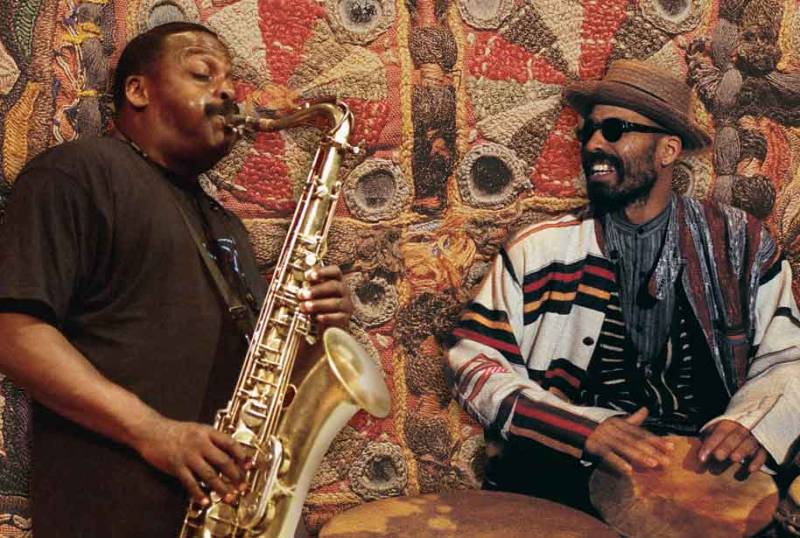
"caption": "David Murray and Kahil El’Zabar.",
"description": null,
"title": "557",
"credit": "Delmark Records",
"status": "inherit",
"altTag": null,
"isLoading": false,
"fetchFailed": false
},
"arts_13957653": {
"type": "attachments",
"id": "arts_13957653",
"meta": {
"index": "attachments_1716263798",
"site": "arts",
"id": "13957653",
"found": true
},
"parent": 13957645,
"imgSizes": {
"twentyfourteen-full-width": {
"file": "https://cdn.kqed.org/wp-content/uploads/sites/2/2024/05/1687-Market-Street.16x9-1038x576.jpg",
"width": 1038,
"mimeType": "image/jpeg",
"height": 576
},
"thumbnail": {
"file": "https://cdn.kqed.org/wp-content/uploads/sites/2/2024/05/1687-Market-Street.16x9-160x90.jpg",
"width": 160,
"mimeType": "image/jpeg",
"height": 90
},
"post-thumbnail": {
"file": "https://cdn.kqed.org/wp-content/uploads/sites/2/2024/05/1687-Market-Street.16x9-672x372.jpg",
"width": 672,
"mimeType": "image/jpeg",
"height": 372
},
"kqedFullSize": {
"file": "https://cdn.kqed.org/wp-content/uploads/sites/2/2024/05/1687-Market-Street.16x9.jpg",
"width": 2160,
"height": 1215
},
"2048x2048": {
"file": "https://cdn.kqed.org/wp-content/uploads/sites/2/2024/05/1687-Market-Street.16x9-2048x1152.jpg",
"width": 2048,
"mimeType": "image/jpeg",
"height": 1152
},
"large": {
"file": "https://cdn.kqed.org/wp-content/uploads/sites/2/2024/05/1687-Market-Street.16x9-1020x574.jpg",
"width": 1020,
"mimeType": "image/jpeg",
"height": 574
},
"1536x1536": {
"file": "https://cdn.kqed.org/wp-content/uploads/sites/2/2024/05/1687-Market-Street.16x9-1536x864.jpg",
"width": 1536,
"mimeType": "image/jpeg",
"height": 864
},
"full-width": {
"file": "https://cdn.kqed.org/wp-content/uploads/sites/2/2024/05/1687-Market-Street.16x9-1920x1080.jpg",
"width": 1920,
"mimeType": "image/jpeg",
"height": 1080
},
"medium": {
"file": "https://cdn.kqed.org/wp-content/uploads/sites/2/2024/05/1687-Market-Street.16x9-800x450.jpg",
"width": 800,
"mimeType": "image/jpeg",
"height": 450
},
"medium_large": {
"file": "https://cdn.kqed.org/wp-content/uploads/sites/2/2024/05/1687-Market-Street.16x9-768x432.jpg",
"width": 768,
"mimeType": "image/jpeg",
"height": 432
}
},
"publishDate": 1715373946,
"modified": 1715374000,
"caption": "Detail of a rendering of the proposed artist housing at 1687 Market Street, planned with 100 affordable artist units, studio and rehearsal spaces, a community center and a black box theater. ",
"description": null,
"title": "1687-Market-Street.16x9",
"credit": "Mark Cavagnero Associates Architects",
"status": "inherit",
"altTag": "A computer rendering of a 17-story building, on a street with people and cars.",
"isLoading": false,
"fetchFailed": false
},
"arts_13953880": {
"type": "attachments",
"id": "arts_13953880",
"meta": {
"index": "attachments_1716263798",
"site": "arts",
"id": "13953880",
"found": true
},
"parent": 13953773,
"imgSizes": {
"twentyfourteen-full-width": {
"file": "https://cdn.kqed.org/wp-content/uploads/sites/2/2024/03/Tammy-Hall-by-Janice-Rickert.16x9-1038x576.jpg",
"width": 1038,
"mimeType": "image/jpeg",
"height": 576
},
"thumbnail": {
"file": "https://cdn.kqed.org/wp-content/uploads/sites/2/2024/03/Tammy-Hall-by-Janice-Rickert.16x9-160x90.jpg",
"width": 160,
"mimeType": "image/jpeg",
"height": 90
},
"post-thumbnail": {
"file": "https://cdn.kqed.org/wp-content/uploads/sites/2/2024/03/Tammy-Hall-by-Janice-Rickert.16x9-672x372.jpg",
"width": 672,
"mimeType": "image/jpeg",
"height": 372
},
"kqedFullSize": {
"file": "https://cdn.kqed.org/wp-content/uploads/sites/2/2024/03/Tammy-Hall-by-Janice-Rickert.16x9.jpg",
"width": 2048,
"height": 1152
},
"large": {
"file": "https://cdn.kqed.org/wp-content/uploads/sites/2/2024/03/Tammy-Hall-by-Janice-Rickert.16x9-1020x574.jpg",
"width": 1020,
"mimeType": "image/jpeg",
"height": 574
},
"1536x1536": {
"file": "https://cdn.kqed.org/wp-content/uploads/sites/2/2024/03/Tammy-Hall-by-Janice-Rickert.16x9-1536x864.jpg",
"width": 1536,
"mimeType": "image/jpeg",
"height": 864
},
"full-width": {
"file": "https://cdn.kqed.org/wp-content/uploads/sites/2/2024/03/Tammy-Hall-by-Janice-Rickert.16x9-1920x1080.jpg",
"width": 1920,
"mimeType": "image/jpeg",
"height": 1080
},
"medium": {
"file": "https://cdn.kqed.org/wp-content/uploads/sites/2/2024/03/Tammy-Hall-by-Janice-Rickert.16x9-800x450.jpg",
"width": 800,
"mimeType": "image/jpeg",
"height": 450
},
"medium_large": {
"file": "https://cdn.kqed.org/wp-content/uploads/sites/2/2024/03/Tammy-Hall-by-Janice-Rickert.16x9-768x432.jpg",
"width": 768,
"mimeType": "image/jpeg",
"height": 432
}
},
"publishDate": 1710189561,
"modified": 1710189695,
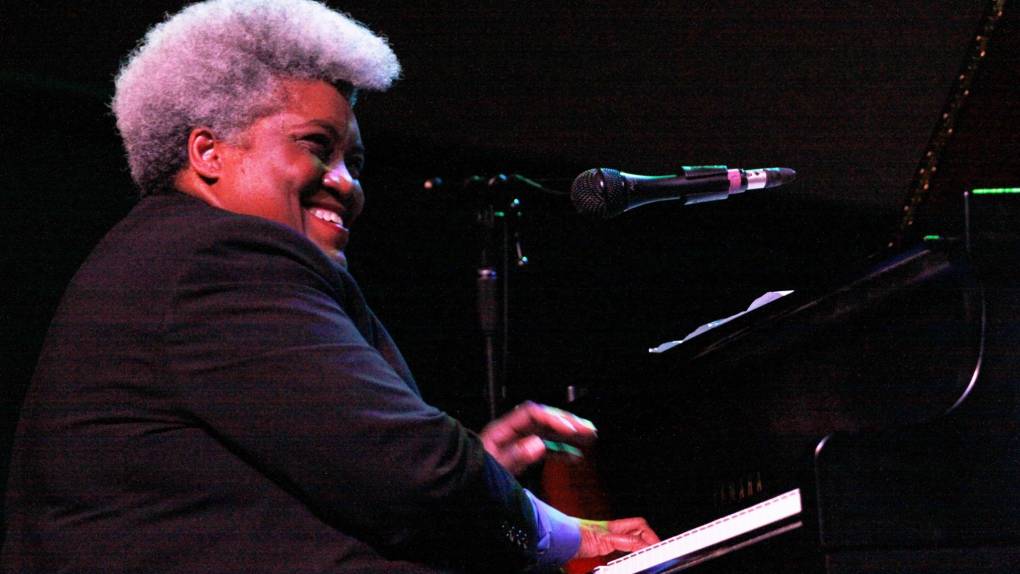
"caption": "Tammy Hall, one of the most in-demand vocal accompanists in the Bay Area jazz scene, plays a full slate of shows this month — and gets honored by others in a special tribute.",
"description": null,
"title": "Tammy Hall by Janice Rickert.16x9",
"credit": "Janice Rickert",
"status": "inherit",
"altTag": "A Black woman in black top and greyish hair styled up plays the piano.",
"isLoading": false,
"fetchFailed": false
},
"arts_13953841": {
"type": "attachments",
"id": "arts_13953841",
"meta": {
"index": "attachments_1716263798",
"site": "arts",
"id": "13953841",
"found": true
},
"parent": 0,
"imgSizes": {
"twentyfourteen-full-width": {
"file": "https://cdn.kqed.org/wp-content/uploads/sites/2/2024/03/Brandee-Younger-SFJAZZ.Mar_.9.photo-Jack-Brown.16x9-1038x576.jpg",
"width": 1038,
"mimeType": "image/jpeg",
"height": 576
},
"thumbnail": {
"file": "https://cdn.kqed.org/wp-content/uploads/sites/2/2024/03/Brandee-Younger-SFJAZZ.Mar_.9.photo-Jack-Brown.16x9-160x90.jpg",
"width": 160,
"mimeType": "image/jpeg",
"height": 90
},
"post-thumbnail": {
"file": "https://cdn.kqed.org/wp-content/uploads/sites/2/2024/03/Brandee-Younger-SFJAZZ.Mar_.9.photo-Jack-Brown.16x9-672x372.jpg",
"width": 672,
"mimeType": "image/jpeg",
"height": 372
},
"kqedFullSize": {
"file": "https://cdn.kqed.org/wp-content/uploads/sites/2/2024/03/Brandee-Younger-SFJAZZ.Mar_.9.photo-Jack-Brown.16x9.jpg",
"width": 1920,
"height": 1080
},
"large": {
"file": "https://cdn.kqed.org/wp-content/uploads/sites/2/2024/03/Brandee-Younger-SFJAZZ.Mar_.9.photo-Jack-Brown.16x9-1020x574.jpg",
"width": 1020,
"mimeType": "image/jpeg",
"height": 574
},
"1536x1536": {
"file": "https://cdn.kqed.org/wp-content/uploads/sites/2/2024/03/Brandee-Younger-SFJAZZ.Mar_.9.photo-Jack-Brown.16x9-1536x864.jpg",
"width": 1536,
"mimeType": "image/jpeg",
"height": 864
},
"medium": {
"file": "https://cdn.kqed.org/wp-content/uploads/sites/2/2024/03/Brandee-Younger-SFJAZZ.Mar_.9.photo-Jack-Brown.16x9-800x450.jpg",
"width": 800,
"mimeType": "image/jpeg",
"height": 450
},
"medium_large": {
"file": "https://cdn.kqed.org/wp-content/uploads/sites/2/2024/03/Brandee-Younger-SFJAZZ.Mar_.9.photo-Jack-Brown.16x9-768x432.jpg",
"width": 768,
"mimeType": "image/jpeg",
"height": 432
}
},
"publishDate": 1710171979,
"modified": 1710172092,
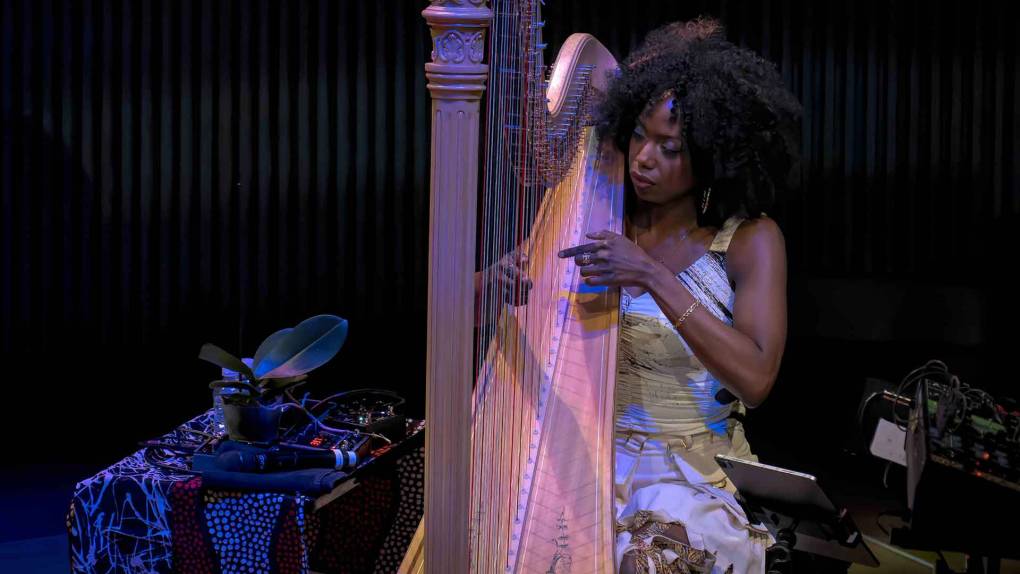
"caption": "Brandee Younger performs the music of Alice Coltrane at the SFJAZZ Center in San Francisco on Saturday, March 9, 2024. ",
"description": null,
"title": "Brandee-Younger,-SFJAZZ.Mar.9.photo-Jack-Brown.16x9",
"credit": "Jack Brown/SFJAZZ",
"status": "inherit",
"altTag": "A Black woman sitting in white dress plays the harp with musical equipment and a potted plant nearby",
"isLoading": false,
"fetchFailed": false
},
"arts_13951784": {
"type": "attachments",
"id": "arts_13951784",
"meta": {
"index": "attachments_1716263798",
"site": "arts",
"id": "13951784",
"found": true
},
"parent": 13951693,
"imgSizes": {
"thumbnail": {
"file": "https://cdn.kqed.org/wp-content/uploads/sites/2/2024/02/Mary-Stallings-160x90.jpg",
"width": 160,
"mimeType": "image/jpeg",
"height": 90
},
"post-thumbnail": {
"file": "https://cdn.kqed.org/wp-content/uploads/sites/2/2024/02/Mary-Stallings-672x372.jpg",
"width": 672,
"mimeType": "image/jpeg",
"height": 372
},
"kqedFullSize": {
"file": "https://cdn.kqed.org/wp-content/uploads/sites/2/2024/02/Mary-Stallings.jpg",
"width": 951,
"height": 535
},
"medium": {
"file": "https://cdn.kqed.org/wp-content/uploads/sites/2/2024/02/Mary-Stallings-800x450.jpg",
"width": 800,
"mimeType": "image/jpeg",
"height": 450
},
"medium_large": {
"file": "https://cdn.kqed.org/wp-content/uploads/sites/2/2024/02/Mary-Stallings-768x432.jpg",
"width": 768,
"mimeType": "image/jpeg",
"height": 432
}
},
"publishDate": 1707342433,
"modified": 1707342499,
"caption": "Mary Stallings performs at Keys Jazz Bistro on Feb. 16 and 17. ",
"description": null,
"title": "Mary Stallings",
"credit": "Courtesy of the artist",
"status": "inherit",
"altTag": null,
"isLoading": false,
"fetchFailed": false
},
"arts_13951311": {
"type": "attachments",
"id": "arts_13951311",
"meta": {
"index": "attachments_1716263798",
"site": "arts",
"id": "13951311",
"found": true
},
"parent": 13951290,
"imgSizes": {
"twentyfourteen-full-width": {
"file": "https://cdn.kqed.org/wp-content/uploads/sites/2/2024/01/Wiley.MAIN_-1038x576.jpg",
"width": 1038,
"mimeType": "image/jpeg",
"height": 576
},
"thumbnail": {
"file": "https://cdn.kqed.org/wp-content/uploads/sites/2/2024/01/Wiley.MAIN_-160x90.jpg",
"width": 160,
"mimeType": "image/jpeg",
"height": 90
},
"post-thumbnail": {
"file": "https://cdn.kqed.org/wp-content/uploads/sites/2/2024/01/Wiley.MAIN_-672x372.jpg",
"width": 672,
"mimeType": "image/jpeg",
"height": 372
},
"kqedFullSize": {
"file": "https://cdn.kqed.org/wp-content/uploads/sites/2/2024/01/Wiley.MAIN_-scaled.jpg",
"width": 2560,
"height": 1440
},
"2048x2048": {
"file": "https://cdn.kqed.org/wp-content/uploads/sites/2/2024/01/Wiley.MAIN_-2048x1152.jpg",
"width": 2048,
"mimeType": "image/jpeg",
"height": 1152
},
"large": {
"file": "https://cdn.kqed.org/wp-content/uploads/sites/2/2024/01/Wiley.MAIN_-1020x574.jpg",
"width": 1020,
"mimeType": "image/jpeg",
"height": 574
},
"1536x1536": {
"file": "https://cdn.kqed.org/wp-content/uploads/sites/2/2024/01/Wiley.MAIN_-1536x864.jpg",
"width": 1536,
"mimeType": "image/jpeg",
"height": 864
},
"full-width": {
"file": "https://cdn.kqed.org/wp-content/uploads/sites/2/2024/01/Wiley.MAIN_-1920x1080.jpg",
"width": 1920,
"mimeType": "image/jpeg",
"height": 1080
},
"medium": {
"file": "https://cdn.kqed.org/wp-content/uploads/sites/2/2024/01/Wiley.MAIN_-800x450.jpg",
"width": 800,
"mimeType": "image/jpeg",
"height": 450
},
"medium_large": {
"file": "https://cdn.kqed.org/wp-content/uploads/sites/2/2024/01/Wiley.MAIN_-768x432.jpg",
"width": 768,
"mimeType": "image/jpeg",
"height": 432
}
},
"publishDate": 1706730870,
"modified": 1706731044,
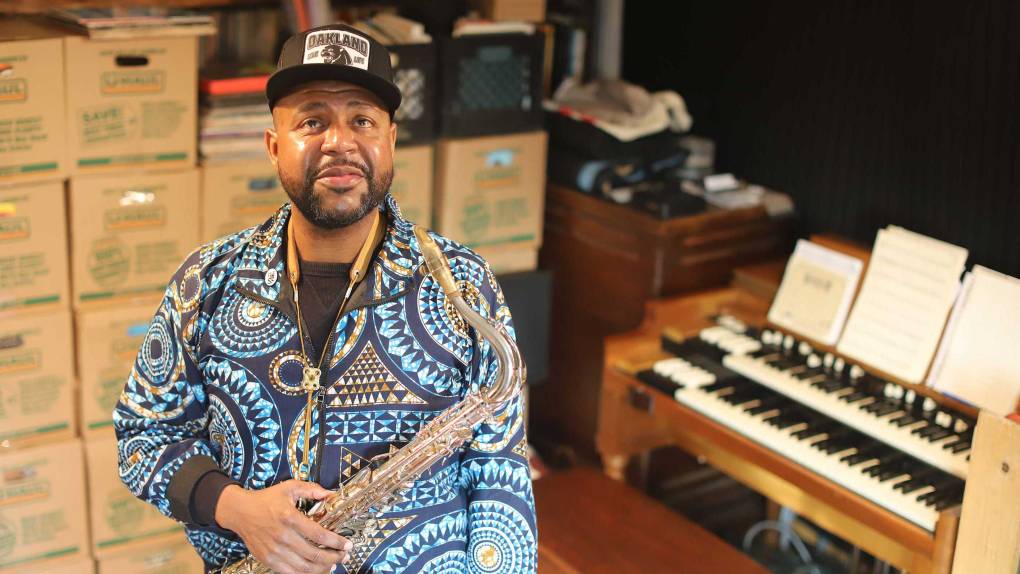
"caption": "Pictured in his Oakland studio, saxophonist Howard Wiley has been preparing for an upcoming run of gospel shows, titled 'Saturday Night to Sunday Morning.'",
"description": null,
"title": "Wiley.MAIN",
"credit": "Gabe Meline/KQED",
"status": "inherit",
"altTag": "A Black man in a cap and patterned blue shirt stands with a saxophone, with moving boxes and an organ in the background",
"isLoading": false,
"fetchFailed": false
},
"arts_13950440": {
"type": "attachments",
"id": "arts_13950440",
"meta": {
"index": "attachments_1716263798",
"site": "arts",
"id": "13950440",
"found": true
},
"parent": 13940505,
"imgSizes": {
"twentyfourteen-full-width": {
"file": "https://cdn.kqed.org/wp-content/uploads/sites/2/2024/01/JulianLage.ArtistPhoto-1038x576.jpg",
"width": 1038,
"mimeType": "image/jpeg",
"height": 576
},
"thumbnail": {
"file": "https://cdn.kqed.org/wp-content/uploads/sites/2/2024/01/JulianLage.ArtistPhoto-160x90.jpg",
"width": 160,
"mimeType": "image/jpeg",
"height": 90
},
"post-thumbnail": {
"file": "https://cdn.kqed.org/wp-content/uploads/sites/2/2024/01/JulianLage.ArtistPhoto-672x372.jpg",
"width": 672,
"mimeType": "image/jpeg",
"height": 372
},
"kqedFullSize": {
"file": "https://cdn.kqed.org/wp-content/uploads/sites/2/2024/01/JulianLage.ArtistPhoto.jpg",
"width": 1440,
"height": 810
},
"large": {
"file": "https://cdn.kqed.org/wp-content/uploads/sites/2/2024/01/JulianLage.ArtistPhoto-1020x574.jpg",
"width": 1020,
"mimeType": "image/jpeg",
"height": 574
},
"medium": {
"file": "https://cdn.kqed.org/wp-content/uploads/sites/2/2024/01/JulianLage.ArtistPhoto-800x450.jpg",
"width": 800,
"mimeType": "image/jpeg",
"height": 450
},
"medium_large": {
"file": "https://cdn.kqed.org/wp-content/uploads/sites/2/2024/01/JulianLage.ArtistPhoto-768x432.jpg",
"width": 768,
"mimeType": "image/jpeg",
"height": 432
}
},
"publishDate": 1705444652,
"modified": 1705444735,
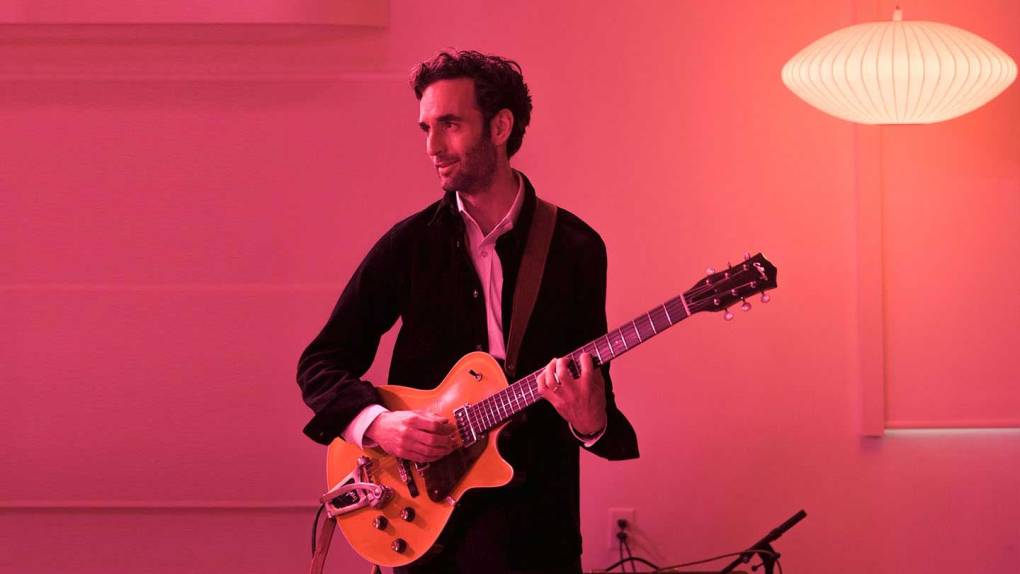
"caption": "Santa Rosa-raised jazz guitarist Julian Lage returns to the Bay Area for a four-day residency as an SFJAZZ artistic director in concerts running Jan. 18–21.",
"description": null,
"title": "JulianLage.ArtistPhoto",
"credit": "Artist Photo",
"status": "inherit",
"altTag": null,
"isLoading": false,
"fetchFailed": false
},
"arts_13935191": {
"type": "attachments",
"id": "arts_13935191",
"meta": {
"index": "attachments_1716263798",
"site": "arts",
"id": "13935191",
"found": true
},
"parent": 13935159,
"imgSizes": {
"twentyfourteen-full-width": {
"file": "https://ww2.kqed.org/app/uploads/sites/2/2023/09/8-Over-80-—-Thumbnail-1920-x-1080-1-2-1038x576.png",
"width": 1038,
"mimeType": "image/png",
"height": 576
},
"thumbnail": {
"file": "https://ww2.kqed.org/app/uploads/sites/2/2023/09/8-Over-80-—-Thumbnail-1920-x-1080-1-2-160x90.png",
"width": 160,
"mimeType": "image/png",
"height": 90
},
"post-thumbnail": {
"file": "https://ww2.kqed.org/app/uploads/sites/2/2023/09/8-Over-80-—-Thumbnail-1920-x-1080-1-2-672x372.png",
"width": 672,
"mimeType": "image/png",
"height": 372
},
"kqedFullSize": {
"file": "https://ww2.kqed.org/app/uploads/sites/2/2023/09/8-Over-80-—-Thumbnail-1920-x-1080-1-2.png",
"width": 1920,
"height": 1080
},
"large": {
"file": "https://ww2.kqed.org/app/uploads/sites/2/2023/09/8-Over-80-—-Thumbnail-1920-x-1080-1-2-1020x574.png",
"width": 1020,
"mimeType": "image/png",
"height": 574
},
"1536x1536": {
"file": "https://ww2.kqed.org/app/uploads/sites/2/2023/09/8-Over-80-—-Thumbnail-1920-x-1080-1-2-1536x864.png",
"width": 1536,
"mimeType": "image/png",
"height": 864
},
"medium": {
"file": "https://ww2.kqed.org/app/uploads/sites/2/2023/09/8-Over-80-—-Thumbnail-1920-x-1080-1-2-800x450.png",
"width": 800,
"mimeType": "image/png",
"height": 450
},
"medium_large": {
"file": "https://ww2.kqed.org/app/uploads/sites/2/2023/09/8-Over-80-—-Thumbnail-1920-x-1080-1-2-768x432.png",
"width": 768,
"mimeType": "image/png",
"height": 432
}
},
"publishDate": 1695274842,
"modified": 1695274875,
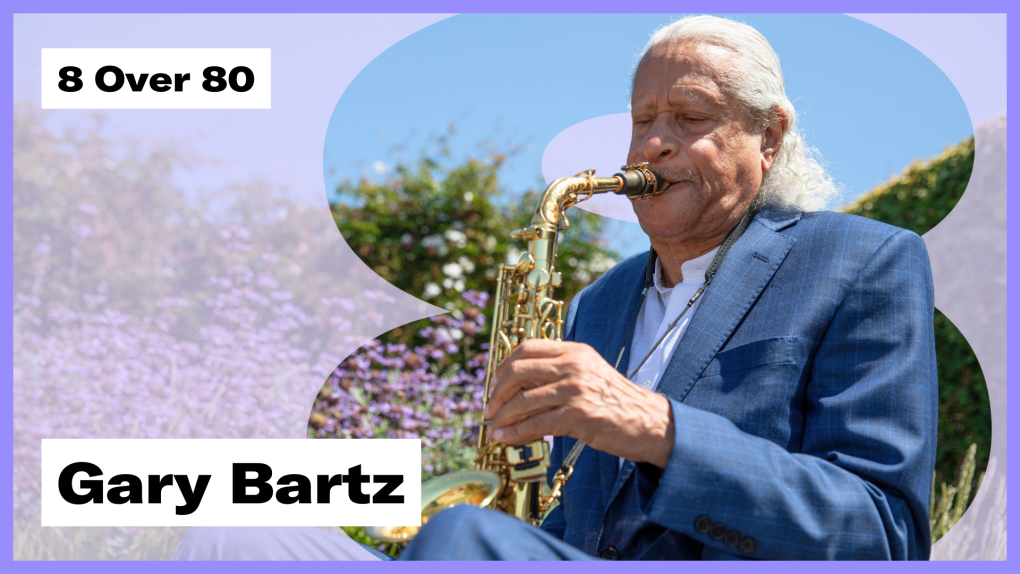
"caption": "Gary Bartz plays saxophone on the rooftop of KQED in San Francisco, Aug. 13, 2023. The recently named NEA Jazz Master has just finished recording three new projects, due to be released in 2024. ",
"description": null,
"title": "8 Over 80 — Thumbnail (1920 x 1080) (1)",
"credit": "Juliana Yamada/KQED",
"status": "inherit",
"altTag": "A man with white hair and a blue suit plays alto saxophone with foliage in the background.",
"isLoading": false,
"fetchFailed": false
},
"arts_13935187": {
"type": "attachments",
"id": "arts_13935187",
"meta": {
"index": "attachments_1716263798",
"site": "arts",
"id": "13935187",
"found": true
},
"parent": 13935159,
"imgSizes": {
"twentyfourteen-full-width": {
"file": "https://ww2.kqed.org/app/uploads/sites/2/2023/09/Bartz.Rooftop.MAIN_-1038x576.jpg",
"width": 1038,
"mimeType": "image/jpeg",
"height": 576
},
"thumbnail": {
"file": "https://ww2.kqed.org/app/uploads/sites/2/2023/09/Bartz.Rooftop.MAIN_-160x107.jpg",
"width": 160,
"mimeType": "image/jpeg",
"height": 107
},
"post-thumbnail": {
"file": "https://ww2.kqed.org/app/uploads/sites/2/2023/09/Bartz.Rooftop.MAIN_-672x372.jpg",
"width": 672,
"mimeType": "image/jpeg",
"height": 372
},
"kqedFullSize": {
"file": "https://ww2.kqed.org/app/uploads/sites/2/2023/09/Bartz.Rooftop.MAIN_.jpg",
"width": 1920,
"height": 1280
},
"large": {
"file": "https://ww2.kqed.org/app/uploads/sites/2/2023/09/Bartz.Rooftop.MAIN_-1020x680.jpg",
"width": 1020,
"mimeType": "image/jpeg",
"height": 680
},
"1536x1536": {
"file": "https://ww2.kqed.org/app/uploads/sites/2/2023/09/Bartz.Rooftop.MAIN_-1536x1024.jpg",
"width": 1536,
"mimeType": "image/jpeg",
"height": 1024
},
"medium": {
"file": "https://ww2.kqed.org/app/uploads/sites/2/2023/09/Bartz.Rooftop.MAIN_-800x533.jpg",
"width": 800,
"mimeType": "image/jpeg",
"height": 533
},
"medium_large": {
"file": "https://ww2.kqed.org/app/uploads/sites/2/2023/09/Bartz.Rooftop.MAIN_-768x512.jpg",
"width": 768,
"mimeType": "image/jpeg",
"height": 512
}
},
"publishDate": 1695269541,
"modified": 1695269658,
"caption": "Gary Bartz plays saxophone on the rooftop of KQED in San Francisco, Aug. 13, 2023. The recently named NEA Jazz Master has just finished recording three new projects, due to be released in 2024. ",
"description": null,
"title": "Bartz.Rooftop.MAIN",
"credit": "Juliana Yamada/KQED",
"status": "inherit",
"altTag": "A man with white hair and a blue suit plays alto saxophone with foliage in the background.",
"isLoading": false,
"fetchFailed": false
},
"arts_13931738": {
"type": "attachments",
"id": "arts_13931738",
"meta": {
"index": "attachments_1716263798",
"site": "arts",
"id": "13931738",
"found": true
},
"title": "SunRa.Detroit.THUMB",
"publishDate": 1689624925,
"status": "inherit",
"parent": 13931735,
"modified": 1718640788,
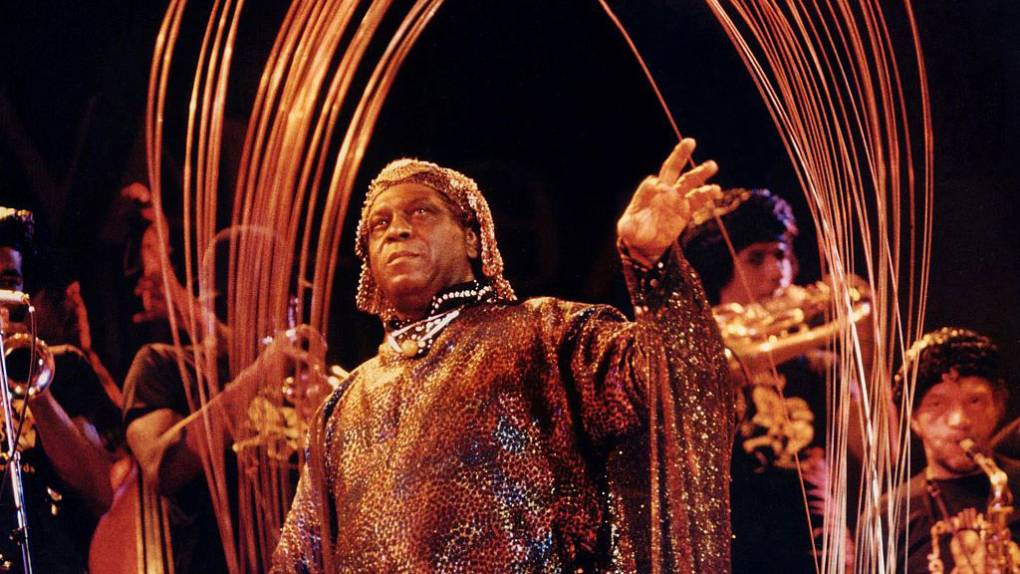
"caption": "Sun Ra and his Sun Ra Archestra performing on September 23, 1978, at Hill Auditorium in Ann Arbor, Michigan.",
"credit": "Leni Sinclair/Getty Images",
"altTag": "A Black man in a loose-fitting, glittery wardrobe motions with his left hand while looking into the distance, beneath an arch-shaped, gold-hued sculpture",
"description": null,
"imgSizes": {
"medium": {
"file": "https://cdn.kqed.org/wp-content/uploads/sites/2/2023/07/SunRa.Detroit.THUMB_-800x450.jpg",
"width": 800,
"height": 450,
"mimeType": "image/jpeg"
},
"large": {
"file": "https://cdn.kqed.org/wp-content/uploads/sites/2/2023/07/SunRa.Detroit.THUMB_-1020x574.jpg",
"width": 1020,
"height": 574,
"mimeType": "image/jpeg"
},
"thumbnail": {
"file": "https://cdn.kqed.org/wp-content/uploads/sites/2/2023/07/SunRa.Detroit.THUMB_-160x90.jpg",
"width": 160,
"height": 90,
"mimeType": "image/jpeg"
},
"medium_large": {
"file": "https://cdn.kqed.org/wp-content/uploads/sites/2/2023/07/SunRa.Detroit.THUMB_-768x432.jpg",
"width": 768,
"height": 432,
"mimeType": "image/jpeg"
},
"post-thumbnail": {
"file": "https://cdn.kqed.org/wp-content/uploads/sites/2/2023/07/SunRa.Detroit.THUMB_-672x372.jpg",
"width": 672,
"height": 372,
"mimeType": "image/jpeg"
},
"kqedFullSize": {
"file": "https://cdn.kqed.org/wp-content/uploads/sites/2/2023/07/SunRa.Detroit.THUMB_.jpg",
"width": 1024,
"height": 576
}
},
"isLoading": false,
"fetchFailed": false
},
"arts_13930241": {
"type": "attachments",
"id": "arts_13930241",
"meta": {
"index": "attachments_1716263798",
"site": "arts",
"id": "13930241",
"found": true
},
"parent": 13930236,
"imgSizes": {
"twentyfourteen-full-width": {
"file": "https://ww2.kqed.org/app/uploads/sites/2/2023/06/GettyImages-1235570644-1038x576.jpg",
"width": 1038,
"mimeType": "image/jpeg",
"height": 576
},
"thumbnail": {
"file": "https://ww2.kqed.org/app/uploads/sites/2/2023/06/GettyImages-1235570644-160x106.jpg",
"width": 160,
"mimeType": "image/jpeg",
"height": 106
},
"post-thumbnail": {
"file": "https://ww2.kqed.org/app/uploads/sites/2/2023/06/GettyImages-1235570644-672x372.jpg",
"width": 672,
"mimeType": "image/jpeg",
"height": 372
},
"kqedFullSize": {
"file": "https://ww2.kqed.org/app/uploads/sites/2/2023/06/GettyImages-1235570644-scaled.jpg",
"width": 2560,
"height": 1703
},
"2048x2048": {
"file": "https://ww2.kqed.org/app/uploads/sites/2/2023/06/GettyImages-1235570644-2048x1363.jpg",
"width": 2048,
"mimeType": "image/jpeg",
"height": 1363
},
"large": {
"file": "https://ww2.kqed.org/app/uploads/sites/2/2023/06/GettyImages-1235570644-1020x679.jpg",
"width": 1020,
"mimeType": "image/jpeg",
"height": 679
},
"1536x1536": {
"file": "https://ww2.kqed.org/app/uploads/sites/2/2023/06/GettyImages-1235570644-1536x1022.jpg",
"width": 1536,
"mimeType": "image/jpeg",
"height": 1022
},
"full-width": {
"file": "https://ww2.kqed.org/app/uploads/sites/2/2023/06/GettyImages-1235570644-1920x1277.jpg",
"width": 1920,
"mimeType": "image/jpeg",
"height": 1277
},
"medium": {
"file": "https://ww2.kqed.org/app/uploads/sites/2/2023/06/GettyImages-1235570644-800x532.jpg",
"width": 800,
"mimeType": "image/jpeg",
"height": 532
},
"medium_large": {
"file": "https://ww2.kqed.org/app/uploads/sites/2/2023/06/GettyImages-1235570644-768x511.jpg",
"width": 768,
"mimeType": "image/jpeg",
"height": 511
}
},
"publishDate": 1686173410,
"modified": 1686174041,
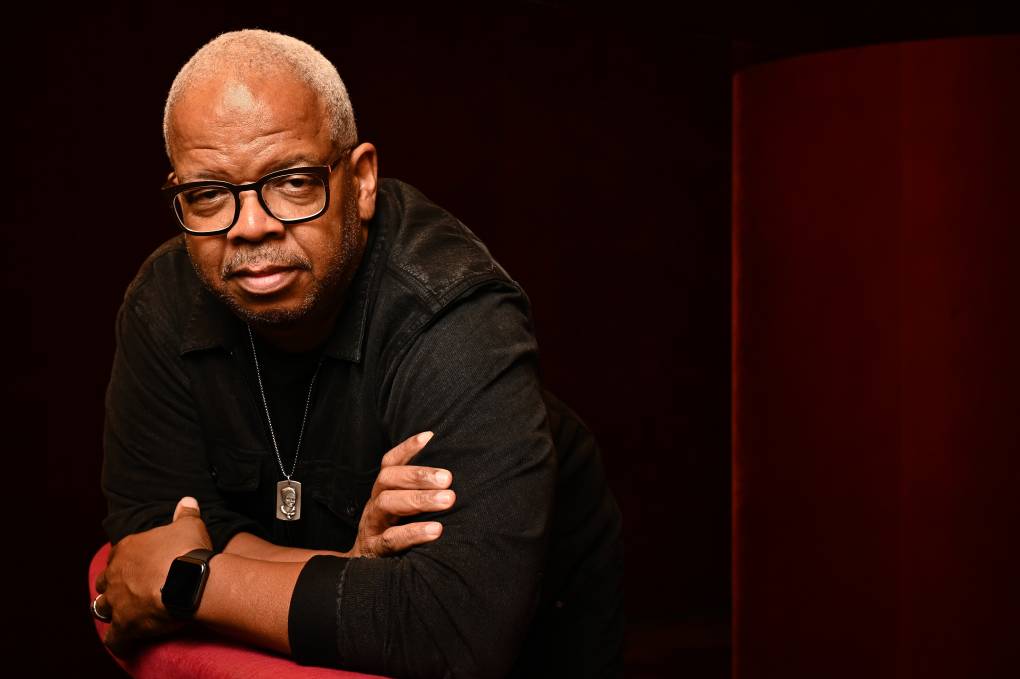
"caption": "Acclaimed trumpeter, pianist and composer Terence Blanchard will be the second executive director in SFJAZZ's history.",
"description": null,
"title": "The First Opera Composed By A Black Composer",
"credit": "Marvin Joseph/The Washington Post via Getty Images",
"status": "inherit",
"altTag": "a Black man with glasses in a long-sleeve black shirt with his arms crossed",
"isLoading": false,
"fetchFailed": false
},
"arts_13929728": {
"type": "attachments",
"id": "arts_13929728",
"meta": {
"index": "attachments_1716263798",
"site": "arts",
"id": "13929728",
"found": true
},
"parent": 13929691,
"imgSizes": {
"twentyfourteen-full-width": {
"file": "https://ww2.kqed.org/app/uploads/sites/2/2023/05/Marshall.Allen_-1024x576.jpg",
"width": 1024,
"mimeType": "image/jpeg",
"height": 576
},
"thumbnail": {
"file": "https://ww2.kqed.org/app/uploads/sites/2/2023/05/Marshall.Allen_-160x106.jpg",
"width": 160,
"mimeType": "image/jpeg",
"height": 106
},
"post-thumbnail": {
"file": "https://ww2.kqed.org/app/uploads/sites/2/2023/05/Marshall.Allen_-672x372.jpg",
"width": 672,
"mimeType": "image/jpeg",
"height": 372
},
"kqedFullSize": {
"file": "https://ww2.kqed.org/app/uploads/sites/2/2023/05/Marshall.Allen_.jpg",
"width": 1024,
"height": 681
},
"large": {
"file": "https://ww2.kqed.org/app/uploads/sites/2/2023/05/Marshall.Allen_-1020x678.jpg",
"width": 1020,
"mimeType": "image/jpeg",
"height": 678
},
"medium": {
"file": "https://ww2.kqed.org/app/uploads/sites/2/2023/05/Marshall.Allen_-800x532.jpg",
"width": 800,
"mimeType": "image/jpeg",
"height": 532
},
"medium_large": {
"file": "https://ww2.kqed.org/app/uploads/sites/2/2023/05/Marshall.Allen_-768x511.jpg",
"width": 768,
"mimeType": "image/jpeg",
"height": 511
}
},
"publishDate": 1685075153,
"modified": 1685075209,
"caption": "Marshall Allen of the Sun Ra Arkestra performs on stage in the United Kingdom in 2012. ",
"description": null,
"title": "ATP Curated By Jeff Mangum: Day 3",
"credit": "Gary Wolstenholme/Redferns via Getty Images",
"status": "inherit",
"altTag": null,
"isLoading": false,
"fetchFailed": false
},
"arts_13928728": {
"type": "attachments",
"id": "arts_13928728",
"meta": {
"index": "attachments_1716263798",
"site": "arts",
"id": "13928728",
"found": true
},
"parent": 13928699,
"imgSizes": {
"twentyfourteen-full-width": {
"file": "https://ww2.kqed.org/app/uploads/sites/2/2023/05/Chris-Potter-Branford-Marsalis-Mike-Rodriguez-David-Sanchez-1038x576.jpg",
"width": 1038,
"mimeType": "image/jpeg",
"height": 576
},
"thumbnail": {
"file": "https://ww2.kqed.org/app/uploads/sites/2/2023/05/Chris-Potter-Branford-Marsalis-Mike-Rodriguez-David-Sanchez-160x100.jpg",
"width": 160,
"mimeType": "image/jpeg",
"height": 100
},
"post-thumbnail": {
"file": "https://ww2.kqed.org/app/uploads/sites/2/2023/05/Chris-Potter-Branford-Marsalis-Mike-Rodriguez-David-Sanchez-672x372.jpg",
"width": 672,
"mimeType": "image/jpeg",
"height": 372
},
"kqedFullSize": {
"file": "https://ww2.kqed.org/app/uploads/sites/2/2023/05/Chris-Potter-Branford-Marsalis-Mike-Rodriguez-David-Sanchez.jpg",
"width": 1920,
"height": 1197
},
"large": {
"file": "https://ww2.kqed.org/app/uploads/sites/2/2023/05/Chris-Potter-Branford-Marsalis-Mike-Rodriguez-David-Sanchez-1020x636.jpg",
"width": 1020,
"mimeType": "image/jpeg",
"height": 636
},
"1536x1536": {
"file": "https://ww2.kqed.org/app/uploads/sites/2/2023/05/Chris-Potter-Branford-Marsalis-Mike-Rodriguez-David-Sanchez-1536x958.jpg",
"width": 1536,
"mimeType": "image/jpeg",
"height": 958
},
"medium": {
"file": "https://ww2.kqed.org/app/uploads/sites/2/2023/05/Chris-Potter-Branford-Marsalis-Mike-Rodriguez-David-Sanchez-800x499.jpg",
"width": 800,
"mimeType": "image/jpeg",
"height": 499
},
"medium_large": {
"file": "https://ww2.kqed.org/app/uploads/sites/2/2023/05/Chris-Potter-Branford-Marsalis-Mike-Rodriguez-David-Sanchez-768x479.jpg",
"width": 768,
"mimeType": "image/jpeg",
"height": 479
}
},
"publishDate": 1683312316,
"modified": 1683312461,
"caption": "Chris-Potter, Branford Marsalis, Mike Rodriguez and David Sanchez perform Wayne Shorter's 'Armageddon' at the SFJAZZ gala honoring founder Randall Kline, May 4, 2023.",
"description": null,
"title": "Chris-Potter,-Branford-Marsalis,-Mike-Rodriguez,-David-Sanchez",
"credit": "Drew Altizer Photography",
"status": "inherit",
"altTag": "four men play saxophones and trumpets",
"isLoading": false,
"fetchFailed": false
}
},
"audioPlayerReducer": {
"postId": "stream_live",
"isPaused": true,
"isPlaying": false,
"pfsActive": false,
"pledgeModalIsOpen": true,
"playerDrawerIsOpen": false,
"liveAudioPlayStartedAt": 0,
"liveAudioPlayContext": ""
},
"authorsReducer": {
"agilbert": {
"type": "authors",
"id": "86",
"meta": {
"index": "authors_1716337520",
"id": "86",
"found": true
},
"name": "Andrew Gilbert",
"firstName": "Andrew",
"lastName": "Gilbert",
"slug": "agilbert",
"email": "jazzscribe@aol.com",
"display_author_email": false,
"staff_mastheads": [],
"title": "KQED Contributor",
"bio": "A Los Angeles native based in the Berkeley area since 1996, Andrew Gilbert covers jazz, international music and dance for KQED's \u003ci>California Report, \u003c/i>the\u003ci> Mercury News\u003c/i>, \u003ci>San Francisco Chronicle\u003c/i>, \u003ci>Berkeleyside.com\u003c/i>, and other publications. He is available for weddings and bar and bat mitzvahs. #jazzscribe",
"avatar": "https://secure.gravatar.com/avatar/d7bcafdbefdd39e9a68f88724ca616eb4e7a5a6bff9cdfb62de652a1e1751471?s=600&d=blank&r=g",
"twitter": null,
"bluesky": null,
"facebook": null,
"instagram": null,
"linkedin": null,
"sites": [
{
"site": "arts",
"roles": [
"Contributor",
"author"
]
},
{
"site": "news",
"roles": [
"author"
]
}
],
"headData": {
"title": "Andrew Gilbert | KQED",
"description": "KQED Contributor",
"ogImgSrc": "https://secure.gravatar.com/avatar/d7bcafdbefdd39e9a68f88724ca616eb4e7a5a6bff9cdfb62de652a1e1751471?s=600&d=blank&r=g",
"twImgSrc": "https://secure.gravatar.com/avatar/d7bcafdbefdd39e9a68f88724ca616eb4e7a5a6bff9cdfb62de652a1e1751471?s=600&d=blank&r=g"
},
"isLoading": false,
"link": "/author/agilbert"
},
"gmeline": {
"type": "authors",
"id": "185",
"meta": {
"index": "authors_1716337520",
"id": "185",
"found": true
},
"name": "Gabe Meline",
"firstName": "Gabe",
"lastName": "Meline",
"slug": "gmeline",
"email": "gmeline@kqed.org",
"display_author_email": true,
"staff_mastheads": [
"arts"
],
"title": "Senior Editor, KQED Arts & Culture",
"bio": "Gabe Meline entered journalism at age 15 making photocopied zines, and has since earned awards from the Edward R. Murrow Awards, the Society for Professional Journalists, the Online Journalism Awards, the Association of Alternative Newsweeklies and the California Newspaper Publishers Association. Prior to KQED, he was the editor of the \u003cem>North Bay Bohemian\u003c/em> and a touring musician. He lives with his wife and daughter in his hometown of Santa Rosa, CA.",
"avatar": "https://secure.gravatar.com/avatar/5bebe57be0d8bc2dd318934feb47299e2d2d10cba28d09d8d7afb389a2ce2bdd?s=600&d=blank&r=g",
"twitter": null,
"bluesky": null,
"facebook": null,
"instagram": null,
"linkedin": null,
"sites": [
{
"site": "",
"roles": [
"editor"
]
},
{
"site": "arts",
"roles": [
"administrator"
]
},
{
"site": "artschool",
"roles": [
"editor"
]
},
{
"site": "news",
"roles": [
"author"
]
},
{
"site": "pop",
"roles": [
"editor"
]
},
{
"site": "bayareabites",
"roles": [
"editor"
]
},
{
"site": "food",
"roles": [
"editor"
]
},
{
"site": "forum",
"roles": [
"administrator"
]
},
{
"site": "liveblog",
"roles": [
"editor"
]
},
{
"site": "hiphop",
"roles": [
"editor"
]
}
],
"headData": {
"title": "Gabe Meline | KQED",
"description": "Senior Editor, KQED Arts & Culture",
"ogImgSrc": "https://secure.gravatar.com/avatar/5bebe57be0d8bc2dd318934feb47299e2d2d10cba28d09d8d7afb389a2ce2bdd?s=600&d=blank&r=g",
"twImgSrc": "https://secure.gravatar.com/avatar/5bebe57be0d8bc2dd318934feb47299e2d2d10cba28d09d8d7afb389a2ce2bdd?s=600&d=blank&r=g"
},
"isLoading": false,
"link": "/author/gmeline"
},
"ksong": {
"type": "authors",
"id": "11813",
"meta": {
"index": "authors_1716337520",
"id": "11813",
"found": true
},
"name": "Kristie Song",
"firstName": "Kristie",
"lastName": "Song",
"slug": "ksong",
"email": "ksong@kqed.org",
"display_author_email": false,
"staff_mastheads": [],
"title": "Editorial Intern ",
"bio": "Kristie Song is an Arts & Culture Intern at KQED. She is currently a graduate student at UC Berkeley, where she studies audio and multimedia journalism. Previously, she covered the local community for Oakland North, produced episodes for The Science of Happiness, and served as news director for KUCI, UC Irvine’s radio station. Outside of reporting, she likes drawing comics, listening to angsty rock, and practicing the guitar.",
"avatar": "https://secure.gravatar.com/avatar/c1149e78c3c44f92d4945a8ab0711af6?s=600&d=blank&r=g",
"twitter": null,
"facebook": null,
"instagram": null,
"linkedin": null,
"sites": [
{
"site": "arts",
"roles": [
"editor"
]
}
],
"headData": {
"title": "Kristie Song | KQED",
"description": "Editorial Intern ",
"ogImgSrc": "https://secure.gravatar.com/avatar/c1149e78c3c44f92d4945a8ab0711af6?s=600&d=blank&r=g",
"twImgSrc": "https://secure.gravatar.com/avatar/c1149e78c3c44f92d4945a8ab0711af6?s=600&d=blank&r=g"
},
"isLoading": false,
"link": "/author/ksong"
}
},
"pagesReducer": {
"arts_tag_sfjazz": {
"type": "terms",
"id": "arts_2048",
"meta": {
"index": "terms_1716263798",
"site": "arts",
"id": "2048",
"score": 9.892527
},
"featImg": null,
"name": "SFJAZZ",
"description": null,
"taxonomy": "tag",
"headData": {
"twImgId": null,
"twTitle": null,
"ogTitle": null,
"ogImgId": null,
"twDescription": null,
"description": null,
"title": "SFJAZZ Archives | KQED Arts",
"ogDescription": null
},
"ttid": 2060,
"slug": "sfjazz",
"isLoading": false,
"title": "SFJAZZ",
"pageMeta": {
"site": "arts",
"WpPageTemplate": "page-topic-editorial",
"currentPage": 2
},
"blocks": [
{
"blockName": "kqed/post-list",
"attrs": {
"layout": "cardArticle2",
"query": "posts/arts?tag=sfjazz",
"seeMore": false,
"paginated": true,
"page": 2
}
},
{
"blockName": "kqed/ad"
}
]
}
},
"pfsSessionReducer": {},
"postsReducer": {
"stream_live": {
"type": "live",
"id": "stream_live",
"audioUrl": "https://streams.kqed.org/kqedradio",
"title": "Live Stream",
"excerpt": "Live Stream information currently unavailable.",
"link": "/radio",
"featImg": "",
"label": {
"name": "KQED Live",
"link": "/"
}
},
"stream_kqedNewscast": {
"type": "posts",
"id": "stream_kqedNewscast",
"audioUrl": "https://www.kqed.org/.stream/anon/radio/RDnews/newscast.mp3?_=1",
"title": "KQED Newscast",
"featImg": "",
"label": {
"name": "88.5 FM",
"link": "/"
}
},
"arts_13957999": {
"type": "posts",
"id": "arts_13957999",
"meta": {
"index": "posts_1716263798",
"site": "arts",
"id": "13957999",
"score": null,
"sort": [
1715958028000
]
},
"parent": 0,
"labelTerm": {},
"blocks": [],
"publishDate": 1715958028,
"format": "aside",
"title": "10 Great Jazz and Classical Shows in the Bay Area This Summer",
"headTitle": "10 Great Jazz and Classical Shows in the Bay Area This Summer | KQED",
"content": "\u003cp>I know, I know — summertime is for staying out ’til 2 a.m., losing your mind to ear-splitting bass and dancing for hours. Not exactly the realm of classical music or jazz.\u003c/p>\n\u003cp>But there’s balance in all things, and this summer offers some exciting, not-to-be-missed jazz and classical performances in the Bay Area’s community centers, nightclubs and concert halls. Here are just 10 of them.\u003c/p>\n\u003cfigure id=\"attachment_13933558\" class=\"wp-caption aligncenter\" style=\"max-width: 2000px\">\u003cimg loading=\"lazy\" decoding=\"async\" src=\"https://cdn.kqed.org/wp-content/uploads/sites/2/2023/08/RS68119_20230818-GaryBartz-04-JY-KQED.jpg\" alt=\"Gary Bartz poses for a portrait with his saxophone\" width=\"2000\" height=\"1333\" class=\"size-full wp-image-13933558\" srcset=\"https://cdn.kqed.org/wp-content/uploads/sites/2/2023/08/RS68119_20230818-GaryBartz-04-JY-KQED.jpg 2000w, https://cdn.kqed.org/wp-content/uploads/sites/2/2023/08/RS68119_20230818-GaryBartz-04-JY-KQED-800x533.jpg 800w, https://cdn.kqed.org/wp-content/uploads/sites/2/2023/08/RS68119_20230818-GaryBartz-04-JY-KQED-1020x680.jpg 1020w, https://cdn.kqed.org/wp-content/uploads/sites/2/2023/08/RS68119_20230818-GaryBartz-04-JY-KQED-160x107.jpg 160w, https://cdn.kqed.org/wp-content/uploads/sites/2/2023/08/RS68119_20230818-GaryBartz-04-JY-KQED-768x512.jpg 768w, https://cdn.kqed.org/wp-content/uploads/sites/2/2023/08/RS68119_20230818-GaryBartz-04-JY-KQED-1536x1024.jpg 1536w, https://cdn.kqed.org/wp-content/uploads/sites/2/2023/08/RS68119_20230818-GaryBartz-04-JY-KQED-1920x1280.jpg 1920w\" sizes=\"(max-width: 2000px) 100vw, 2000px\">\u003cfigcaption class=\"wp-caption-text\">Gary Bartz poses for a portrait with his saxophone at KQED in San Francisco, Calif., on Friday, Aug. 18, 2023. \u003ccite>(Juliana Yamada/KQED)\u003c/cite>\u003c/figcaption>\u003c/figure>\n\u003ch2>\u003ca href=\"https://www.sfjazz.org/tickets/productions/41st-san-francisco-jazz-festival/gary-bartz/\">Gary Bartz Ntu Troop Revisited\u003c/a>\u003c/h2>\n\u003cp>\u003cem>June 9, 2024\u003cbr>\nSFJAZZ Center, San Francisco\u003c/em>\u003c/p>\n\u003cp>Saxophonist Gary Bartz may be 83 years old, but each time I’ve seen him, he’s played with more imagination and spirit than many musicians half his age. For this show, Bartz reassembles his Ntu Troop project, responsible for classics like “Celestial Blues,” and the Langston Hughes poem set to music, “I’ve Known Rivers,” which he performed earlier this month \u003ca href=\"https://www.npr.org/2024/05/13/1250054477/tiny-desk-concert-gary-bartz\">at NPR’s Tiny Desk\u003c/a>. (He was \u003ca href=\"https://www.kqed.org/arts/13935159/8-over-80-gary-bartz\">also part of KQED’s 8 Over 80 cohort\u003c/a> last year.) Bartz is joined on this show by fellow East Bay resident Ambrose Akinmusire, a phenomenal trumpet talent.\u003c/p>\n\u003cfigure id=\"attachment_13958057\" class=\"wp-caption aligncenter\" style=\"max-width: 940px\">\u003cimg loading=\"lazy\" decoding=\"async\" src=\"https://cdn.kqed.org/wp-content/uploads/sites/2/2024/05/GardenofMemory.jpg\" alt=\"\" width=\"940\" height=\"470\" class=\"size-full wp-image-13958057\" srcset=\"https://cdn.kqed.org/wp-content/uploads/sites/2/2024/05/GardenofMemory.jpg 940w, https://cdn.kqed.org/wp-content/uploads/sites/2/2024/05/GardenofMemory-800x400.jpg 800w, https://cdn.kqed.org/wp-content/uploads/sites/2/2024/05/GardenofMemory-160x80.jpg 160w, https://cdn.kqed.org/wp-content/uploads/sites/2/2024/05/GardenofMemory-768x384.jpg 768w\" sizes=\"(max-width: 940px) 100vw, 940px\">\u003cfigcaption class=\"wp-caption-text\">‘Garden of Memory’ at Chapel of the Chimes presents new music soloists and groups throughout the century-old columbarium once a year. \u003ccite>(Garden of Memory )\u003c/cite>\u003c/figcaption>\u003c/figure>\n\u003ch2>\u003ca href=\"https://www.gardenofmemory.com/\">Garden of Memory\u003c/a>\u003c/h2>\n\u003cp>\u003cem>June 21, 2024\u003cbr>\nChapel of the Chimes, Piedmont\u003c/em>\u003c/p>\n\u003cp>[ad fullwidth]\u003c/p>\n\u003cp>This annual event is one of the Bay Area’s best hidden gems. The idea is simple: place over 50 musicians throughout the Julia Morgan-designed columbarium, and let the public walk through to hear new sounds in jazz, classical and experimental music. The day includes Bay Area legends like ROVA, Sarah Cahill, Paul Dresher, Lisa Mezzacappa and Will Bernard, but the experience is less about marquee names and more about discovery. Surrounded by beautiful urns and receptacles for the dead, it’s also a meditation on existence itself.\u003c/p>\n\u003cfigure id=\"attachment_13958051\" class=\"wp-caption aligncenter\" style=\"max-width: 1131px\">\u003cimg loading=\"lazy\" decoding=\"async\" src=\"https://cdn.kqed.org/wp-content/uploads/sites/2/2024/05/LilianFarahani.MauriceLammertsvanBueren.jpg\" alt=\"\" width=\"1131\" height=\"731\" class=\"size-full wp-image-13958051\" srcset=\"https://cdn.kqed.org/wp-content/uploads/sites/2/2024/05/LilianFarahani.MauriceLammertsvanBueren.jpg 1131w, https://cdn.kqed.org/wp-content/uploads/sites/2/2024/05/LilianFarahani.MauriceLammertsvanBueren-800x517.jpg 800w, https://cdn.kqed.org/wp-content/uploads/sites/2/2024/05/LilianFarahani.MauriceLammertsvanBueren-1020x659.jpg 1020w, https://cdn.kqed.org/wp-content/uploads/sites/2/2024/05/LilianFarahani.MauriceLammertsvanBueren-160x103.jpg 160w, https://cdn.kqed.org/wp-content/uploads/sites/2/2024/05/LilianFarahani.MauriceLammertsvanBueren-768x496.jpg 768w\" sizes=\"(max-width: 1131px) 100vw, 1131px\">\u003cfigcaption class=\"wp-caption-text\">Lilian Farahani, who plays the role of the bride in ‘Innocence’ at San Francisco Opera. \u003ccite>(Maurice Lammerts van Bueren)\u003c/cite>\u003c/figcaption>\u003c/figure>\n\u003ch2>\u003ca href=\"https://www.sfopera.com/operas/innocence/\">‘Innocence’\u003c/a>\u003c/h2>\n\u003cp>\u003cem>June 1–21, 2024\u003c/em>\u003cbr>\n\u003cem>War Memorial Opera House\u003c/em>\u003c/p>\n\u003cp>An opera about… a \u003cem>school shooting\u003c/em>? Believe it. San Francisco Opera hosts the U.S. premiere of this contemporary opera, about a wedding thrown into turmoil when the bride suddenly learns that her husband-to-be is the brother of the gunman from a school shooting from 10 years prior. Exploring themes of love and betrayal, and interweaving teachers and students — and ghosts — with the events of the wedding, \u003cem>Innocence\u003c/em> has been \u003ca href=\"https://www.nytimes.com/2021/07/07/arts/music/innocence-saariaho-opera-aix.html\">hailed as a masterpiece\u003c/a>. (A supplemental event, \u003ca href=\"https://www.sfopera.com/operas/innocence/beyond-innocence/\">Beyond Innocence\u003c/a>, brings the discussion of gun violence in focus with a variety of local figures from the church, public policy, television, public media and hip-hop.)\u003c/p>\n\u003cfigure id=\"attachment_13958053\" class=\"wp-caption aligncenter\" style=\"max-width: 1920px\">\u003cimg loading=\"lazy\" decoding=\"async\" src=\"https://cdn.kqed.org/wp-content/uploads/sites/2/2024/05/Lawrence-Azar.jpg\" alt=\"\" width=\"1920\" height=\"1373\" class=\"size-full wp-image-13958053\" srcset=\"https://cdn.kqed.org/wp-content/uploads/sites/2/2024/05/Lawrence-Azar.jpg 1920w, https://cdn.kqed.org/wp-content/uploads/sites/2/2024/05/Lawrence-Azar-800x572.jpg 800w, https://cdn.kqed.org/wp-content/uploads/sites/2/2024/05/Lawrence-Azar-1020x729.jpg 1020w, https://cdn.kqed.org/wp-content/uploads/sites/2/2024/05/Lawrence-Azar-160x114.jpg 160w, https://cdn.kqed.org/wp-content/uploads/sites/2/2024/05/Lawrence-Azar-768x549.jpg 768w, https://cdn.kqed.org/wp-content/uploads/sites/2/2024/05/Lawrence-Azar-1536x1098.jpg 1536w\" sizes=\"(max-width: 1920px) 100vw, 1920px\">\u003cfigcaption class=\"wp-caption-text\">Azar Lawrence. \u003ccite>(Artist photo)\u003c/cite>\u003c/figcaption>\u003c/figure>\n\u003ch2>\u003ca href=\"https://yoshis.com/events/buy-tickets/azar-lawrence-1/detail\">The Azar Lawrence Experience\u003c/a>\u003c/h2>\n\u003cp>\u003cem>June 19, 2024\u003cbr>\nYoshi’s, Oakland\u003c/em>\u003c/p>\n\u003cp>A saxophonist of compelling power, Azar Lawrence may be the only musician who can say he’s collaborated with Marvin Gaye, Busta Rhymes, Tina Turner \u003cem>and\u003c/em> famed John Coltrane drummer Elvin Jones. A Coltrane acolyte, Lawrence has played nearly every style of music and returned home to searing, exploratory jazz; when I saw him at a Pharoah Sanders tribute last year, his playing was crisp and emotive. (Pro tip: If, like me, you make a tradition of going to \u003ca href=\"https://www.homeofchickenandwaffles.com/\">Home of Chicken and Waffles\u003c/a> after shows at Yoshi’s, know that they \u003ca href=\"https://www.instagram.com/the_homeofchickenandwaffles/\">recently closed\u003c/a> and plan to reopen soon, six blocks away.)\u003c/p>\n\u003cfigure id=\"attachment_13958055\" class=\"wp-caption aligncenter\" style=\"max-width: 914px\">\u003cimg loading=\"lazy\" decoding=\"async\" src=\"https://cdn.kqed.org/wp-content/uploads/sites/2/2024/05/557.jpg\" alt=\"\" width=\"914\" height=\"615\" class=\"size-full wp-image-13958055\" srcset=\"https://cdn.kqed.org/wp-content/uploads/sites/2/2024/05/557.jpg 914w, https://cdn.kqed.org/wp-content/uploads/sites/2/2024/05/557-800x538.jpg 800w, https://cdn.kqed.org/wp-content/uploads/sites/2/2024/05/557-160x108.jpg 160w, https://cdn.kqed.org/wp-content/uploads/sites/2/2024/05/557-768x517.jpg 768w\" sizes=\"(max-width: 914px) 100vw, 914px\">\u003cfigcaption class=\"wp-caption-text\">David Murray and Kahil El’Zabar. \u003ccite>(Delmark Records)\u003c/cite>\u003c/figcaption>\u003c/figure>\n\u003ch2>\u003ca href=\"https://www.instagram.com/p/C6-WGmdL8V9/\">Kahil El’Zabar and David Murray\u003c/a>\u003c/h2>\n\u003cp>\u003cem>June 15, 2024\u003cbr>\nEastside Cultural Center, Oakland\u003c/em>\u003c/p>\n\u003cp>The \u003ca href=\"https://www.eastsideartsalliance.org/\">Eastside Cultural Center\u003c/a> is a small community space doing important work in the neighborhood; it’s also an excellent, intimate place for a jazz show. This exciting evening features two legends in a duo setting: multi-instrumentalist Kahil El’Zabar, who just released the 18th album with his Ethnic Heritage Ensemble, and tenor titan David Murray, who brought down the sold-out house when his quartet appeared at Eastside last year. While they could easily perform at the Bay Area’s more traditional jazz clubs, it’s a testament to Eastside’s mission that Murray and El’Zabar chose the grassroots option in East Oakland.\u003c/p>\n\u003cfigure id=\"attachment_13958056\" class=\"wp-caption aligncenter\" style=\"max-width: 1920px\">\u003cimg loading=\"lazy\" decoding=\"async\" src=\"https://cdn.kqed.org/wp-content/uploads/sites/2/2024/05/FrancescoLecceChong.SusanandNeilSilvermanPhotography.jpg\" alt=\"\" width=\"1920\" height=\"1486\" class=\"size-full wp-image-13958056\" srcset=\"https://cdn.kqed.org/wp-content/uploads/sites/2/2024/05/FrancescoLecceChong.SusanandNeilSilvermanPhotography.jpg 1920w, https://cdn.kqed.org/wp-content/uploads/sites/2/2024/05/FrancescoLecceChong.SusanandNeilSilvermanPhotography-800x619.jpg 800w, https://cdn.kqed.org/wp-content/uploads/sites/2/2024/05/FrancescoLecceChong.SusanandNeilSilvermanPhotography-1020x789.jpg 1020w, https://cdn.kqed.org/wp-content/uploads/sites/2/2024/05/FrancescoLecceChong.SusanandNeilSilvermanPhotography-160x124.jpg 160w, https://cdn.kqed.org/wp-content/uploads/sites/2/2024/05/FrancescoLecceChong.SusanandNeilSilvermanPhotography-768x594.jpg 768w, https://cdn.kqed.org/wp-content/uploads/sites/2/2024/05/FrancescoLecceChong.SusanandNeilSilvermanPhotography-1536x1189.jpg 1536w\" sizes=\"(max-width: 1920px) 100vw, 1920px\">\u003cfigcaption class=\"wp-caption-text\">Santa Rosa Symphony Music Director Francesco Lecce-Chong. \u003ccite>(Susan and Neil Silverman Photography)\u003c/cite>\u003c/figcaption>\u003c/figure>\n\u003ch2>\u003ca href=\"https://www.srsymphony.org/event/road-to-100-the-complete-beethoven-symphonies-year-1/\">Road to 100: The Complete Beethoven Symphonies, Year 1\u003c/a>\u003c/h2>\n\u003cp>\u003cem>June 9, 2024\u003cbr>\nGreen Music Center, Rohnert Park\u003c/em>\u003c/p>\n\u003cp>The Santa Rosa Symphony didn’t exactly have auspicious beginnings: its first performance, in 1928, was at an Elks Club. Now, nearly 100 years later, the orchestra performs at a world-class music hall, led by the inventive, energetic director Francesco Lecce-Chong. To celebrate its upcoming centennial, the Santa Rosa Symphony plans to perform all of Beethoven’s symphonies over the next five years, starting with Nos. 1 and 3. And who said classical music is stuffy? Afterward, Lecce-Chong and the musicians will join a “Beethoven BBQ” on the lawn outside, chowing down on chicken drumsticks and chillin’ with the audience.\u003c/p>\n\u003cfigure id=\"attachment_13958058\" class=\"wp-caption aligncenter\" style=\"max-width: 1067px\">\u003cimg loading=\"lazy\" decoding=\"async\" src=\"https://cdn.kqed.org/wp-content/uploads/sites/2/2024/05/64c031e9d67135e187def3a1_Price.jpg\" alt=\"\" width=\"1067\" height=\"720\" class=\"size-full wp-image-13958058\" srcset=\"https://cdn.kqed.org/wp-content/uploads/sites/2/2024/05/64c031e9d67135e187def3a1_Price.jpg 1067w, https://cdn.kqed.org/wp-content/uploads/sites/2/2024/05/64c031e9d67135e187def3a1_Price-800x540.jpg 800w, https://cdn.kqed.org/wp-content/uploads/sites/2/2024/05/64c031e9d67135e187def3a1_Price-1020x688.jpg 1020w, https://cdn.kqed.org/wp-content/uploads/sites/2/2024/05/64c031e9d67135e187def3a1_Price-160x108.jpg 160w, https://cdn.kqed.org/wp-content/uploads/sites/2/2024/05/64c031e9d67135e187def3a1_Price-768x518.jpg 768w\" sizes=\"(max-width: 1067px) 100vw, 1067px\">\u003cfigcaption class=\"wp-caption-text\">Florence Price.\u003c/figcaption>\u003c/figure>\n\u003ch2>\u003ca href=\"https://www.leftcoastensemble.org/pathways\">‘Pathways: Florence Price Piano Quintet’\u003c/a>\u003c/h2>\n\u003cp>\u003cem>June 8 and 9, 2024\u003cbr>\nRuth Williams Opera House, Bayview, San Francisco\u003cbr>\nPiedmont Center for the Arts, Piedmont\u003c/em>\u003c/p>\n\u003cp>In 2009, the new owners of a house in Illinois stumbled upon reams of music manuscripts. They turned out to be the works of the late Black composer Florence Price, sparking a renaissance for Price’s music once the newly discovered pieces were performed and recorded. One of them, the Piano Quintet in A Minor, forms the centerpiece of these two shows by the Left Coast Chamber Ensemble. Pairing Price’s quintet with a piece by American composer David Sanford, as well as new works seeing their world premieres, the performances should open new possibilities in classical music, both past and future.\u003c/p>\n\u003cfigure id=\"attachment_13958050\" class=\"wp-caption aligncenter\" style=\"max-width: 1200px\">\u003cimg loading=\"lazy\" decoding=\"async\" src=\"https://cdn.kqed.org/wp-content/uploads/sites/2/2024/05/KronosQuartet2_creditLennyGonzalez.jpg\" alt=\"\" width=\"1200\" height=\"689\" class=\"size-full wp-image-13958050\" srcset=\"https://cdn.kqed.org/wp-content/uploads/sites/2/2024/05/KronosQuartet2_creditLennyGonzalez.jpg 1200w, https://cdn.kqed.org/wp-content/uploads/sites/2/2024/05/KronosQuartet2_creditLennyGonzalez-800x459.jpg 800w, https://cdn.kqed.org/wp-content/uploads/sites/2/2024/05/KronosQuartet2_creditLennyGonzalez-1020x586.jpg 1020w, https://cdn.kqed.org/wp-content/uploads/sites/2/2024/05/KronosQuartet2_creditLennyGonzalez-160x92.jpg 160w, https://cdn.kqed.org/wp-content/uploads/sites/2/2024/05/KronosQuartet2_creditLennyGonzalez-768x441.jpg 768w\" sizes=\"(max-width: 1200px) 100vw, 1200px\">\u003cfigcaption class=\"wp-caption-text\">Kronos Quartet. \u003ccite>(Lenny Gonzalez)\u003c/cite>\u003c/figcaption>\u003c/figure>\n\u003ch2>\u003ca href=\"https://kronosquartet.org/kronos-festival-2024/\">Kronos Festival 2024\u003c/a>\u003c/h2>\n\u003cp>\u003cem>June 20–23, 2024\u003cbr>\nSFJAZZ Center, San Francisco\u003c/em>\u003c/p>\n\u003cp>It’s a new era for the venerable, ever-searching Kronos Quartet: violinist John Sherba and violist Hank Dutt are retiring after 46 years with the group. This year’s annual Kronos Festival is their send-off, and what a party it is. Over four days, pieces by Terry Riley, Mahsa Vahdat, Sun Ra, Nicole Lizée, Zachary James Watkins and many others will get the full Kronos treatment. The festivities conclude with a performance of the “live documentary” \u003cem>A Thousand Thoughts\u003c/em>, and a farewell to Sherba and Dutt. Expect a long standing ovation; they deserve it.\u003c/p>\n\u003cfigure id=\"attachment_13958052\" class=\"wp-caption aligncenter\" style=\"max-width: 1920px\">\u003cimg loading=\"lazy\" decoding=\"async\" src=\"https://cdn.kqed.org/wp-content/uploads/sites/2/2024/05/Sheku-Song-Photo-5-Credit_-Ollie-Ali.jpg\" alt=\"\" width=\"1920\" height=\"1920\" class=\"size-full wp-image-13958052\" srcset=\"https://cdn.kqed.org/wp-content/uploads/sites/2/2024/05/Sheku-Song-Photo-5-Credit_-Ollie-Ali.jpg 1920w, https://cdn.kqed.org/wp-content/uploads/sites/2/2024/05/Sheku-Song-Photo-5-Credit_-Ollie-Ali-800x800.jpg 800w, https://cdn.kqed.org/wp-content/uploads/sites/2/2024/05/Sheku-Song-Photo-5-Credit_-Ollie-Ali-1020x1020.jpg 1020w, https://cdn.kqed.org/wp-content/uploads/sites/2/2024/05/Sheku-Song-Photo-5-Credit_-Ollie-Ali-160x160.jpg 160w, https://cdn.kqed.org/wp-content/uploads/sites/2/2024/05/Sheku-Song-Photo-5-Credit_-Ollie-Ali-768x768.jpg 768w, https://cdn.kqed.org/wp-content/uploads/sites/2/2024/05/Sheku-Song-Photo-5-Credit_-Ollie-Ali-1536x1536.jpg 1536w\" sizes=\"(max-width: 1920px) 100vw, 1920px\">\u003cfigcaption class=\"wp-caption-text\">Sheku Kanneh-Mason. \u003ccite>(Ollie Ali)\u003c/cite>\u003c/figcaption>\u003c/figure>\n\u003ch2>\u003ca href=\"https://www.sfsymphony.org/Buy-Tickets/2023-24/SALONEN-KANNEH-MASON\">Esa-Pekka Salonen & Sheku Kanneh-Mason\u003c/a>\u003c/h2>\n\u003cp>\u003cem>June 13–15, 2024\u003c/em>\u003cbr>\n\u003cem>Davies Symphony Hall, San Francisco\u003c/em>\u003c/p>\n\u003cp>What with Esa-Pekka Salonen’s impending departure — \u003ca href=\"https://www.kqed.org/arts/13954297/san-francisco-symphony-musicians-urge-leadership-to-keep-esa-pekka-salonen\">not without controversy\u003c/a> — from the San Francisco Symphony, I can’t be the only one making plans to catch him on the podium as much as possible in the coming year. An attractive option comes with Salonen conducting Shostakovich’s Cello Concerto No. 1, with the British cellist Sheku Kanneh-Mason. Shortly afterward in June, Salonen conducts \u003ca href=\"https://www.sfsymphony.org/Buy-Tickets/2023-24/SALONEN-BRONFMAN\">Schumann’s Piano Concerto\u003c/a> as well as \u003ca href=\"https://www.sfsymphony.org/Buy-Tickets/2023-24/SALONEN-CONDUCTS-MAHLER-3\">Mahler’s Third\u003c/a>, but my money’s on Shostakovich, and the cellist who, yes, \u003ca href=\"https://www.youtube.com/watch?v=TeDB27cq3fE\">performed at the wedding of Prince Harry and Meghan Markle\u003c/a>.\u003c/p>\n\u003cfigure id=\"attachment_13958054\" class=\"wp-caption aligncenter\" style=\"max-width: 1600px\">\u003cimg loading=\"lazy\" decoding=\"async\" src=\"https://cdn.kqed.org/wp-content/uploads/sites/2/2024/05/Arturo-Marquez-1600x900-1-e1651870192402.jpg\" alt=\"\" width=\"1600\" height=\"900\" class=\"size-full wp-image-13958054\" srcset=\"https://cdn.kqed.org/wp-content/uploads/sites/2/2024/05/Arturo-Marquez-1600x900-1-e1651870192402.jpg 1600w, https://cdn.kqed.org/wp-content/uploads/sites/2/2024/05/Arturo-Marquez-1600x900-1-e1651870192402-800x450.jpg 800w, https://cdn.kqed.org/wp-content/uploads/sites/2/2024/05/Arturo-Marquez-1600x900-1-e1651870192402-1020x574.jpg 1020w, https://cdn.kqed.org/wp-content/uploads/sites/2/2024/05/Arturo-Marquez-1600x900-1-e1651870192402-160x90.jpg 160w, https://cdn.kqed.org/wp-content/uploads/sites/2/2024/05/Arturo-Marquez-1600x900-1-e1651870192402-768x432.jpg 768w, https://cdn.kqed.org/wp-content/uploads/sites/2/2024/05/Arturo-Marquez-1600x900-1-e1651870192402-1536x864.jpg 1536w\" sizes=\"(max-width: 1600px) 100vw, 1600px\">\u003cfigcaption class=\"wp-caption-text\">Mexican composer Arturo Márquez.\u003c/figcaption>\u003c/figure>\n\u003ch2>\u003ca href=\"https://www.symphonysanjose.org/attend/current-season/classics-at-the-california/remember-the-titans/\">Remember the Titans: Mahler, Mozart and Márquez\u003c/a>\u003c/h2>\n\u003cp>\u003cem>June 1 and 2, 2024\u003c/em>\u003cbr>\n\u003cem>California Theatre, San Jos\u003c/em>e\u003c/p>\n\u003cp>[ad floatright]\u003c/p>\n\u003cp>San Francisco can’t have a \u003cem>complete\u003c/em> lock on Mahler, now, can it? In this cheekily titled program, Symphony San Jose performs Mahler’s First — the “Titan” symphony — a tone poem–esque work that marked the beginning of a legendary run. In another shade of the harmonic spectrum is Mozart’s Piano Concerto No. 21, used to great effect in the film \u003cem>Elvira Madigan\u003c/em>. Rounding out the program is \u003cem>Danzon No. 2\u003c/em>, by the living Mexican composer Arturo Márquez, which captures the lively rhythms and flavors of mariachi.\u003c/p>\n\n",
"stats": {
"hasVideo": false,
"hasChartOrMap": false,
"hasAudio": false,
"hasPolis": false,
"wordCount": 1380,
"hasGoogleForm": false,
"hasGallery": false,
"hasHearkenModule": false,
"iframeSrcs": [],
"paragraphCount": 24
},
"modified": 1716221723,
"excerpt": "From the community center to the concert hall, this summer brings exciting jazz and classical performances.",
"headData": {
"twImgId": "",
"twTitle": "",
"ogTitle": "",
"ogImgId": "",
"twDescription": "",
"description": "From the community center to the concert hall, this summer brings exciting jazz and classical performances.",
"title": "10 Great Jazz and Classical Shows in the Bay Area This Summer | KQED",
"ogDescription": "",
"schema": {
"@context": "https://schema.org",
"@type": "Article",
"headline": "10 Great Jazz and Classical Shows in the Bay Area This Summer",
"datePublished": "2024-05-17T08:00:28-07:00",
"dateModified": "2024-05-20T09:15:23-07:00",
"image": "https://cdn.kqed.org/wp-content/uploads/2020/02/KQED-OG-Image@1x.png"
}
},
"guestAuthors": [],
"slug": "best-jazz-and-classical-shows-bay-area-summer",
"status": "publish",
"sourceUrl": "https://www.kqed.org/arts/tag/summer-guide-2024",
"templateType": "standard",
"excludeFromSiteSearch": "Include",
"featuredImageType": "standard",
"sticky": false,
"source": "Summer Guide 2024",
"articleAge": "0",
"nprStoryId": "kqed-13957999",
"path": "/arts/13957999/best-jazz-and-classical-shows-bay-area-summer",
"audioTrackLength": null,
"parsedContent": [
{
"type": "contentString",
"content": "\u003cdiv class=\"post-body\">\u003cp>\u003cp>I know, I know — summertime is for staying out ’til 2 a.m., losing your mind to ear-splitting bass and dancing for hours. Not exactly the realm of classical music or jazz.\u003c/p>\n\u003cp>But there’s balance in all things, and this summer offers some exciting, not-to-be-missed jazz and classical performances in the Bay Area’s community centers, nightclubs and concert halls. Here are just 10 of them.\u003c/p>\n\u003cfigure id=\"attachment_13933558\" class=\"wp-caption aligncenter\" style=\"max-width: 2000px\">\u003cimg loading=\"lazy\" decoding=\"async\" src=\"https://cdn.kqed.org/wp-content/uploads/sites/2/2023/08/RS68119_20230818-GaryBartz-04-JY-KQED.jpg\" alt=\"Gary Bartz poses for a portrait with his saxophone\" width=\"2000\" height=\"1333\" class=\"size-full wp-image-13933558\" srcset=\"https://cdn.kqed.org/wp-content/uploads/sites/2/2023/08/RS68119_20230818-GaryBartz-04-JY-KQED.jpg 2000w, https://cdn.kqed.org/wp-content/uploads/sites/2/2023/08/RS68119_20230818-GaryBartz-04-JY-KQED-800x533.jpg 800w, https://cdn.kqed.org/wp-content/uploads/sites/2/2023/08/RS68119_20230818-GaryBartz-04-JY-KQED-1020x680.jpg 1020w, https://cdn.kqed.org/wp-content/uploads/sites/2/2023/08/RS68119_20230818-GaryBartz-04-JY-KQED-160x107.jpg 160w, https://cdn.kqed.org/wp-content/uploads/sites/2/2023/08/RS68119_20230818-GaryBartz-04-JY-KQED-768x512.jpg 768w, https://cdn.kqed.org/wp-content/uploads/sites/2/2023/08/RS68119_20230818-GaryBartz-04-JY-KQED-1536x1024.jpg 1536w, https://cdn.kqed.org/wp-content/uploads/sites/2/2023/08/RS68119_20230818-GaryBartz-04-JY-KQED-1920x1280.jpg 1920w\" sizes=\"(max-width: 2000px) 100vw, 2000px\">\u003cfigcaption class=\"wp-caption-text\">Gary Bartz poses for a portrait with his saxophone at KQED in San Francisco, Calif., on Friday, Aug. 18, 2023. \u003ccite>(Juliana Yamada/KQED)\u003c/cite>\u003c/figcaption>\u003c/figure>\n\u003ch2>\u003ca href=\"https://www.sfjazz.org/tickets/productions/41st-san-francisco-jazz-festival/gary-bartz/\">Gary Bartz Ntu Troop Revisited\u003c/a>\u003c/h2>\n\u003cp>\u003cem>June 9, 2024\u003cbr>\nSFJAZZ Center, San Francisco\u003c/em>\u003c/p>\n\u003cp>Saxophonist Gary Bartz may be 83 years old, but each time I’ve seen him, he’s played with more imagination and spirit than many musicians half his age. For this show, Bartz reassembles his Ntu Troop project, responsible for classics like “Celestial Blues,” and the Langston Hughes poem set to music, “I’ve Known Rivers,” which he performed earlier this month \u003ca href=\"https://www.npr.org/2024/05/13/1250054477/tiny-desk-concert-gary-bartz\">at NPR’s Tiny Desk\u003c/a>. (He was \u003ca href=\"https://www.kqed.org/arts/13935159/8-over-80-gary-bartz\">also part of KQED’s 8 Over 80 cohort\u003c/a> last year.) Bartz is joined on this show by fellow East Bay resident Ambrose Akinmusire, a phenomenal trumpet talent.\u003c/p>\n\u003cfigure id=\"attachment_13958057\" class=\"wp-caption aligncenter\" style=\"max-width: 940px\">\u003cimg loading=\"lazy\" decoding=\"async\" src=\"https://cdn.kqed.org/wp-content/uploads/sites/2/2024/05/GardenofMemory.jpg\" alt=\"\" width=\"940\" height=\"470\" class=\"size-full wp-image-13958057\" srcset=\"https://cdn.kqed.org/wp-content/uploads/sites/2/2024/05/GardenofMemory.jpg 940w, https://cdn.kqed.org/wp-content/uploads/sites/2/2024/05/GardenofMemory-800x400.jpg 800w, https://cdn.kqed.org/wp-content/uploads/sites/2/2024/05/GardenofMemory-160x80.jpg 160w, https://cdn.kqed.org/wp-content/uploads/sites/2/2024/05/GardenofMemory-768x384.jpg 768w\" sizes=\"(max-width: 940px) 100vw, 940px\">\u003cfigcaption class=\"wp-caption-text\">‘Garden of Memory’ at Chapel of the Chimes presents new music soloists and groups throughout the century-old columbarium once a year. \u003ccite>(Garden of Memory )\u003c/cite>\u003c/figcaption>\u003c/figure>\n\u003ch2>\u003ca href=\"https://www.gardenofmemory.com/\">Garden of Memory\u003c/a>\u003c/h2>\n\u003cp>\u003cem>June 21, 2024\u003cbr>\nChapel of the Chimes, Piedmont\u003c/em>\u003c/p>\n\u003cp>\u003c/p>\u003c/div>",
"attributes": {
"named": {},
"numeric": []
}
},
{
"type": "component",
"content": "",
"name": "ad",
"attributes": {
"named": {
"label": "fullwidth"
},
"numeric": [
"fullwidth"
]
}
},
{
"type": "contentString",
"content": "\u003cdiv class=\"post-body\">\u003cp>\u003c/p>\n\u003cp>This annual event is one of the Bay Area’s best hidden gems. The idea is simple: place over 50 musicians throughout the Julia Morgan-designed columbarium, and let the public walk through to hear new sounds in jazz, classical and experimental music. The day includes Bay Area legends like ROVA, Sarah Cahill, Paul Dresher, Lisa Mezzacappa and Will Bernard, but the experience is less about marquee names and more about discovery. Surrounded by beautiful urns and receptacles for the dead, it’s also a meditation on existence itself.\u003c/p>\n\u003cfigure id=\"attachment_13958051\" class=\"wp-caption aligncenter\" style=\"max-width: 1131px\">\u003cimg loading=\"lazy\" decoding=\"async\" src=\"https://cdn.kqed.org/wp-content/uploads/sites/2/2024/05/LilianFarahani.MauriceLammertsvanBueren.jpg\" alt=\"\" width=\"1131\" height=\"731\" class=\"size-full wp-image-13958051\" srcset=\"https://cdn.kqed.org/wp-content/uploads/sites/2/2024/05/LilianFarahani.MauriceLammertsvanBueren.jpg 1131w, https://cdn.kqed.org/wp-content/uploads/sites/2/2024/05/LilianFarahani.MauriceLammertsvanBueren-800x517.jpg 800w, https://cdn.kqed.org/wp-content/uploads/sites/2/2024/05/LilianFarahani.MauriceLammertsvanBueren-1020x659.jpg 1020w, https://cdn.kqed.org/wp-content/uploads/sites/2/2024/05/LilianFarahani.MauriceLammertsvanBueren-160x103.jpg 160w, https://cdn.kqed.org/wp-content/uploads/sites/2/2024/05/LilianFarahani.MauriceLammertsvanBueren-768x496.jpg 768w\" sizes=\"(max-width: 1131px) 100vw, 1131px\">\u003cfigcaption class=\"wp-caption-text\">Lilian Farahani, who plays the role of the bride in ‘Innocence’ at San Francisco Opera. \u003ccite>(Maurice Lammerts van Bueren)\u003c/cite>\u003c/figcaption>\u003c/figure>\n\u003ch2>\u003ca href=\"https://www.sfopera.com/operas/innocence/\">‘Innocence’\u003c/a>\u003c/h2>\n\u003cp>\u003cem>June 1–21, 2024\u003c/em>\u003cbr>\n\u003cem>War Memorial Opera House\u003c/em>\u003c/p>\n\u003cp>An opera about… a \u003cem>school shooting\u003c/em>? Believe it. San Francisco Opera hosts the U.S. premiere of this contemporary opera, about a wedding thrown into turmoil when the bride suddenly learns that her husband-to-be is the brother of the gunman from a school shooting from 10 years prior. Exploring themes of love and betrayal, and interweaving teachers and students — and ghosts — with the events of the wedding, \u003cem>Innocence\u003c/em> has been \u003ca href=\"https://www.nytimes.com/2021/07/07/arts/music/innocence-saariaho-opera-aix.html\">hailed as a masterpiece\u003c/a>. (A supplemental event, \u003ca href=\"https://www.sfopera.com/operas/innocence/beyond-innocence/\">Beyond Innocence\u003c/a>, brings the discussion of gun violence in focus with a variety of local figures from the church, public policy, television, public media and hip-hop.)\u003c/p>\n\u003cfigure id=\"attachment_13958053\" class=\"wp-caption aligncenter\" style=\"max-width: 1920px\">\u003cimg loading=\"lazy\" decoding=\"async\" src=\"https://cdn.kqed.org/wp-content/uploads/sites/2/2024/05/Lawrence-Azar.jpg\" alt=\"\" width=\"1920\" height=\"1373\" class=\"size-full wp-image-13958053\" srcset=\"https://cdn.kqed.org/wp-content/uploads/sites/2/2024/05/Lawrence-Azar.jpg 1920w, https://cdn.kqed.org/wp-content/uploads/sites/2/2024/05/Lawrence-Azar-800x572.jpg 800w, https://cdn.kqed.org/wp-content/uploads/sites/2/2024/05/Lawrence-Azar-1020x729.jpg 1020w, https://cdn.kqed.org/wp-content/uploads/sites/2/2024/05/Lawrence-Azar-160x114.jpg 160w, https://cdn.kqed.org/wp-content/uploads/sites/2/2024/05/Lawrence-Azar-768x549.jpg 768w, https://cdn.kqed.org/wp-content/uploads/sites/2/2024/05/Lawrence-Azar-1536x1098.jpg 1536w\" sizes=\"(max-width: 1920px) 100vw, 1920px\">\u003cfigcaption class=\"wp-caption-text\">Azar Lawrence. \u003ccite>(Artist photo)\u003c/cite>\u003c/figcaption>\u003c/figure>\n\u003ch2>\u003ca href=\"https://yoshis.com/events/buy-tickets/azar-lawrence-1/detail\">The Azar Lawrence Experience\u003c/a>\u003c/h2>\n\u003cp>\u003cem>June 19, 2024\u003cbr>\nYoshi’s, Oakland\u003c/em>\u003c/p>\n\u003cp>A saxophonist of compelling power, Azar Lawrence may be the only musician who can say he’s collaborated with Marvin Gaye, Busta Rhymes, Tina Turner \u003cem>and\u003c/em> famed John Coltrane drummer Elvin Jones. A Coltrane acolyte, Lawrence has played nearly every style of music and returned home to searing, exploratory jazz; when I saw him at a Pharoah Sanders tribute last year, his playing was crisp and emotive. (Pro tip: If, like me, you make a tradition of going to \u003ca href=\"https://www.homeofchickenandwaffles.com/\">Home of Chicken and Waffles\u003c/a> after shows at Yoshi’s, know that they \u003ca href=\"https://www.instagram.com/the_homeofchickenandwaffles/\">recently closed\u003c/a> and plan to reopen soon, six blocks away.)\u003c/p>\n\u003cfigure id=\"attachment_13958055\" class=\"wp-caption aligncenter\" style=\"max-width: 914px\">\u003cimg loading=\"lazy\" decoding=\"async\" src=\"https://cdn.kqed.org/wp-content/uploads/sites/2/2024/05/557.jpg\" alt=\"\" width=\"914\" height=\"615\" class=\"size-full wp-image-13958055\" srcset=\"https://cdn.kqed.org/wp-content/uploads/sites/2/2024/05/557.jpg 914w, https://cdn.kqed.org/wp-content/uploads/sites/2/2024/05/557-800x538.jpg 800w, https://cdn.kqed.org/wp-content/uploads/sites/2/2024/05/557-160x108.jpg 160w, https://cdn.kqed.org/wp-content/uploads/sites/2/2024/05/557-768x517.jpg 768w\" sizes=\"(max-width: 914px) 100vw, 914px\">\u003cfigcaption class=\"wp-caption-text\">David Murray and Kahil El’Zabar. \u003ccite>(Delmark Records)\u003c/cite>\u003c/figcaption>\u003c/figure>\n\u003ch2>\u003ca href=\"https://www.instagram.com/p/C6-WGmdL8V9/\">Kahil El’Zabar and David Murray\u003c/a>\u003c/h2>\n\u003cp>\u003cem>June 15, 2024\u003cbr>\nEastside Cultural Center, Oakland\u003c/em>\u003c/p>\n\u003cp>The \u003ca href=\"https://www.eastsideartsalliance.org/\">Eastside Cultural Center\u003c/a> is a small community space doing important work in the neighborhood; it’s also an excellent, intimate place for a jazz show. This exciting evening features two legends in a duo setting: multi-instrumentalist Kahil El’Zabar, who just released the 18th album with his Ethnic Heritage Ensemble, and tenor titan David Murray, who brought down the sold-out house when his quartet appeared at Eastside last year. While they could easily perform at the Bay Area’s more traditional jazz clubs, it’s a testament to Eastside’s mission that Murray and El’Zabar chose the grassroots option in East Oakland.\u003c/p>\n\u003cfigure id=\"attachment_13958056\" class=\"wp-caption aligncenter\" style=\"max-width: 1920px\">\u003cimg loading=\"lazy\" decoding=\"async\" src=\"https://cdn.kqed.org/wp-content/uploads/sites/2/2024/05/FrancescoLecceChong.SusanandNeilSilvermanPhotography.jpg\" alt=\"\" width=\"1920\" height=\"1486\" class=\"size-full wp-image-13958056\" srcset=\"https://cdn.kqed.org/wp-content/uploads/sites/2/2024/05/FrancescoLecceChong.SusanandNeilSilvermanPhotography.jpg 1920w, https://cdn.kqed.org/wp-content/uploads/sites/2/2024/05/FrancescoLecceChong.SusanandNeilSilvermanPhotography-800x619.jpg 800w, https://cdn.kqed.org/wp-content/uploads/sites/2/2024/05/FrancescoLecceChong.SusanandNeilSilvermanPhotography-1020x789.jpg 1020w, https://cdn.kqed.org/wp-content/uploads/sites/2/2024/05/FrancescoLecceChong.SusanandNeilSilvermanPhotography-160x124.jpg 160w, https://cdn.kqed.org/wp-content/uploads/sites/2/2024/05/FrancescoLecceChong.SusanandNeilSilvermanPhotography-768x594.jpg 768w, https://cdn.kqed.org/wp-content/uploads/sites/2/2024/05/FrancescoLecceChong.SusanandNeilSilvermanPhotography-1536x1189.jpg 1536w\" sizes=\"(max-width: 1920px) 100vw, 1920px\">\u003cfigcaption class=\"wp-caption-text\">Santa Rosa Symphony Music Director Francesco Lecce-Chong. \u003ccite>(Susan and Neil Silverman Photography)\u003c/cite>\u003c/figcaption>\u003c/figure>\n\u003ch2>\u003ca href=\"https://www.srsymphony.org/event/road-to-100-the-complete-beethoven-symphonies-year-1/\">Road to 100: The Complete Beethoven Symphonies, Year 1\u003c/a>\u003c/h2>\n\u003cp>\u003cem>June 9, 2024\u003cbr>\nGreen Music Center, Rohnert Park\u003c/em>\u003c/p>\n\u003cp>The Santa Rosa Symphony didn’t exactly have auspicious beginnings: its first performance, in 1928, was at an Elks Club. Now, nearly 100 years later, the orchestra performs at a world-class music hall, led by the inventive, energetic director Francesco Lecce-Chong. To celebrate its upcoming centennial, the Santa Rosa Symphony plans to perform all of Beethoven’s symphonies over the next five years, starting with Nos. 1 and 3. And who said classical music is stuffy? Afterward, Lecce-Chong and the musicians will join a “Beethoven BBQ” on the lawn outside, chowing down on chicken drumsticks and chillin’ with the audience.\u003c/p>\n\u003cfigure id=\"attachment_13958058\" class=\"wp-caption aligncenter\" style=\"max-width: 1067px\">\u003cimg loading=\"lazy\" decoding=\"async\" src=\"https://cdn.kqed.org/wp-content/uploads/sites/2/2024/05/64c031e9d67135e187def3a1_Price.jpg\" alt=\"\" width=\"1067\" height=\"720\" class=\"size-full wp-image-13958058\" srcset=\"https://cdn.kqed.org/wp-content/uploads/sites/2/2024/05/64c031e9d67135e187def3a1_Price.jpg 1067w, https://cdn.kqed.org/wp-content/uploads/sites/2/2024/05/64c031e9d67135e187def3a1_Price-800x540.jpg 800w, https://cdn.kqed.org/wp-content/uploads/sites/2/2024/05/64c031e9d67135e187def3a1_Price-1020x688.jpg 1020w, https://cdn.kqed.org/wp-content/uploads/sites/2/2024/05/64c031e9d67135e187def3a1_Price-160x108.jpg 160w, https://cdn.kqed.org/wp-content/uploads/sites/2/2024/05/64c031e9d67135e187def3a1_Price-768x518.jpg 768w\" sizes=\"(max-width: 1067px) 100vw, 1067px\">\u003cfigcaption class=\"wp-caption-text\">Florence Price.\u003c/figcaption>\u003c/figure>\n\u003ch2>\u003ca href=\"https://www.leftcoastensemble.org/pathways\">‘Pathways: Florence Price Piano Quintet’\u003c/a>\u003c/h2>\n\u003cp>\u003cem>June 8 and 9, 2024\u003cbr>\nRuth Williams Opera House, Bayview, San Francisco\u003cbr>\nPiedmont Center for the Arts, Piedmont\u003c/em>\u003c/p>\n\u003cp>In 2009, the new owners of a house in Illinois stumbled upon reams of music manuscripts. They turned out to be the works of the late Black composer Florence Price, sparking a renaissance for Price’s music once the newly discovered pieces were performed and recorded. One of them, the Piano Quintet in A Minor, forms the centerpiece of these two shows by the Left Coast Chamber Ensemble. Pairing Price’s quintet with a piece by American composer David Sanford, as well as new works seeing their world premieres, the performances should open new possibilities in classical music, both past and future.\u003c/p>\n\u003cfigure id=\"attachment_13958050\" class=\"wp-caption aligncenter\" style=\"max-width: 1200px\">\u003cimg loading=\"lazy\" decoding=\"async\" src=\"https://cdn.kqed.org/wp-content/uploads/sites/2/2024/05/KronosQuartet2_creditLennyGonzalez.jpg\" alt=\"\" width=\"1200\" height=\"689\" class=\"size-full wp-image-13958050\" srcset=\"https://cdn.kqed.org/wp-content/uploads/sites/2/2024/05/KronosQuartet2_creditLennyGonzalez.jpg 1200w, https://cdn.kqed.org/wp-content/uploads/sites/2/2024/05/KronosQuartet2_creditLennyGonzalez-800x459.jpg 800w, https://cdn.kqed.org/wp-content/uploads/sites/2/2024/05/KronosQuartet2_creditLennyGonzalez-1020x586.jpg 1020w, https://cdn.kqed.org/wp-content/uploads/sites/2/2024/05/KronosQuartet2_creditLennyGonzalez-160x92.jpg 160w, https://cdn.kqed.org/wp-content/uploads/sites/2/2024/05/KronosQuartet2_creditLennyGonzalez-768x441.jpg 768w\" sizes=\"(max-width: 1200px) 100vw, 1200px\">\u003cfigcaption class=\"wp-caption-text\">Kronos Quartet. \u003ccite>(Lenny Gonzalez)\u003c/cite>\u003c/figcaption>\u003c/figure>\n\u003ch2>\u003ca href=\"https://kronosquartet.org/kronos-festival-2024/\">Kronos Festival 2024\u003c/a>\u003c/h2>\n\u003cp>\u003cem>June 20–23, 2024\u003cbr>\nSFJAZZ Center, San Francisco\u003c/em>\u003c/p>\n\u003cp>It’s a new era for the venerable, ever-searching Kronos Quartet: violinist John Sherba and violist Hank Dutt are retiring after 46 years with the group. This year’s annual Kronos Festival is their send-off, and what a party it is. Over four days, pieces by Terry Riley, Mahsa Vahdat, Sun Ra, Nicole Lizée, Zachary James Watkins and many others will get the full Kronos treatment. The festivities conclude with a performance of the “live documentary” \u003cem>A Thousand Thoughts\u003c/em>, and a farewell to Sherba and Dutt. Expect a long standing ovation; they deserve it.\u003c/p>\n\u003cfigure id=\"attachment_13958052\" class=\"wp-caption aligncenter\" style=\"max-width: 1920px\">\u003cimg loading=\"lazy\" decoding=\"async\" src=\"https://cdn.kqed.org/wp-content/uploads/sites/2/2024/05/Sheku-Song-Photo-5-Credit_-Ollie-Ali.jpg\" alt=\"\" width=\"1920\" height=\"1920\" class=\"size-full wp-image-13958052\" srcset=\"https://cdn.kqed.org/wp-content/uploads/sites/2/2024/05/Sheku-Song-Photo-5-Credit_-Ollie-Ali.jpg 1920w, https://cdn.kqed.org/wp-content/uploads/sites/2/2024/05/Sheku-Song-Photo-5-Credit_-Ollie-Ali-800x800.jpg 800w, https://cdn.kqed.org/wp-content/uploads/sites/2/2024/05/Sheku-Song-Photo-5-Credit_-Ollie-Ali-1020x1020.jpg 1020w, https://cdn.kqed.org/wp-content/uploads/sites/2/2024/05/Sheku-Song-Photo-5-Credit_-Ollie-Ali-160x160.jpg 160w, https://cdn.kqed.org/wp-content/uploads/sites/2/2024/05/Sheku-Song-Photo-5-Credit_-Ollie-Ali-768x768.jpg 768w, https://cdn.kqed.org/wp-content/uploads/sites/2/2024/05/Sheku-Song-Photo-5-Credit_-Ollie-Ali-1536x1536.jpg 1536w\" sizes=\"(max-width: 1920px) 100vw, 1920px\">\u003cfigcaption class=\"wp-caption-text\">Sheku Kanneh-Mason. \u003ccite>(Ollie Ali)\u003c/cite>\u003c/figcaption>\u003c/figure>\n\u003ch2>\u003ca href=\"https://www.sfsymphony.org/Buy-Tickets/2023-24/SALONEN-KANNEH-MASON\">Esa-Pekka Salonen & Sheku Kanneh-Mason\u003c/a>\u003c/h2>\n\u003cp>\u003cem>June 13–15, 2024\u003c/em>\u003cbr>\n\u003cem>Davies Symphony Hall, San Francisco\u003c/em>\u003c/p>\n\u003cp>What with Esa-Pekka Salonen’s impending departure — \u003ca href=\"https://www.kqed.org/arts/13954297/san-francisco-symphony-musicians-urge-leadership-to-keep-esa-pekka-salonen\">not without controversy\u003c/a> — from the San Francisco Symphony, I can’t be the only one making plans to catch him on the podium as much as possible in the coming year. An attractive option comes with Salonen conducting Shostakovich’s Cello Concerto No. 1, with the British cellist Sheku Kanneh-Mason. Shortly afterward in June, Salonen conducts \u003ca href=\"https://www.sfsymphony.org/Buy-Tickets/2023-24/SALONEN-BRONFMAN\">Schumann’s Piano Concerto\u003c/a> as well as \u003ca href=\"https://www.sfsymphony.org/Buy-Tickets/2023-24/SALONEN-CONDUCTS-MAHLER-3\">Mahler’s Third\u003c/a>, but my money’s on Shostakovich, and the cellist who, yes, \u003ca href=\"https://www.youtube.com/watch?v=TeDB27cq3fE\">performed at the wedding of Prince Harry and Meghan Markle\u003c/a>.\u003c/p>\n\u003cfigure id=\"attachment_13958054\" class=\"wp-caption aligncenter\" style=\"max-width: 1600px\">\u003cimg loading=\"lazy\" decoding=\"async\" src=\"https://cdn.kqed.org/wp-content/uploads/sites/2/2024/05/Arturo-Marquez-1600x900-1-e1651870192402.jpg\" alt=\"\" width=\"1600\" height=\"900\" class=\"size-full wp-image-13958054\" srcset=\"https://cdn.kqed.org/wp-content/uploads/sites/2/2024/05/Arturo-Marquez-1600x900-1-e1651870192402.jpg 1600w, https://cdn.kqed.org/wp-content/uploads/sites/2/2024/05/Arturo-Marquez-1600x900-1-e1651870192402-800x450.jpg 800w, https://cdn.kqed.org/wp-content/uploads/sites/2/2024/05/Arturo-Marquez-1600x900-1-e1651870192402-1020x574.jpg 1020w, https://cdn.kqed.org/wp-content/uploads/sites/2/2024/05/Arturo-Marquez-1600x900-1-e1651870192402-160x90.jpg 160w, https://cdn.kqed.org/wp-content/uploads/sites/2/2024/05/Arturo-Marquez-1600x900-1-e1651870192402-768x432.jpg 768w, https://cdn.kqed.org/wp-content/uploads/sites/2/2024/05/Arturo-Marquez-1600x900-1-e1651870192402-1536x864.jpg 1536w\" sizes=\"(max-width: 1600px) 100vw, 1600px\">\u003cfigcaption class=\"wp-caption-text\">Mexican composer Arturo Márquez.\u003c/figcaption>\u003c/figure>\n\u003ch2>\u003ca href=\"https://www.symphonysanjose.org/attend/current-season/classics-at-the-california/remember-the-titans/\">Remember the Titans: Mahler, Mozart and Márquez\u003c/a>\u003c/h2>\n\u003cp>\u003cem>June 1 and 2, 2024\u003c/em>\u003cbr>\n\u003cem>California Theatre, San Jos\u003c/em>e\u003c/p>\n\u003cp>\u003c/p>\u003c/div>",
"attributes": {
"named": {},
"numeric": []
}
},
{
"type": "component",
"content": "",
"name": "ad",
"attributes": {
"named": {
"label": "floatright"
},
"numeric": [
"floatright"
]
}
},
{
"type": "contentString",
"content": "\u003cdiv class=\"post-body\">\u003cp>\u003c/p>\n\u003cp>San Francisco can’t have a \u003cem>complete\u003c/em> lock on Mahler, now, can it? In this cheekily titled program, Symphony San Jose performs Mahler’s First — the “Titan” symphony — a tone poem–esque work that marked the beginning of a legendary run. In another shade of the harmonic spectrum is Mozart’s Piano Concerto No. 21, used to great effect in the film \u003cem>Elvira Madigan\u003c/em>. Rounding out the program is \u003cem>Danzon No. 2\u003c/em>, by the living Mexican composer Arturo Márquez, which captures the lively rhythms and flavors of mariachi.\u003c/p>\n\n\u003c/div>\u003c/p>",
"attributes": {
"named": {},
"numeric": []
}
}
],
"link": "/arts/13957999/best-jazz-and-classical-shows-bay-area-summer",
"authors": [
"185"
],
"programs": [
"arts_140"
],
"categories": [
"arts_1",
"arts_69"
],
"tags": [
"arts_1312",
"arts_10278",
"arts_1420",
"arts_1367",
"arts_2960",
"arts_3316",
"arts_2048",
"arts_22150",
"arts_585",
"arts_4107"
],
"featImg": "arts_13958055",
"label": "source_arts_13957999"
},
"arts_13957645": {
"type": "posts",
"id": "arts_13957645",
"meta": {
"index": "posts_1716263798",
"site": "arts",
"id": "13957645",
"score": null,
"sort": [
1715374658000
]
},
"parent": 0,
"labelTerm": {
"site": "arts"
},
"blocks": [],
"publishDate": 1715374658,
"format": "aside",
"title": "$100 Million Gift Paves Way for Affordable Artist Housing in San Francisco",
"headTitle": "$100 Million Gift Paves Way for Affordable Artist Housing in San Francisco | KQED",
"content": "\u003cfigure id=\"attachment_13957614\" class=\"wp-caption aligncenter\" style=\"max-width: 2160px\">\u003cimg loading=\"lazy\" decoding=\"async\" src=\"https://cdn.kqed.org/wp-content/uploads/sites/2/2024/05/1687-Market-Street.png\" alt=\"A computer rendering of a 17-story building, on a street with people and cars.\" width=\"2160\" height=\"2160\" class=\"size-full wp-image-13957614\" srcset=\"https://cdn.kqed.org/wp-content/uploads/sites/2/2024/05/1687-Market-Street.png 2160w, https://cdn.kqed.org/wp-content/uploads/sites/2/2024/05/1687-Market-Street-800x800.png 800w, https://cdn.kqed.org/wp-content/uploads/sites/2/2024/05/1687-Market-Street-1020x1020.png 1020w, https://cdn.kqed.org/wp-content/uploads/sites/2/2024/05/1687-Market-Street-160x160.png 160w, https://cdn.kqed.org/wp-content/uploads/sites/2/2024/05/1687-Market-Street-768x768.png 768w, https://cdn.kqed.org/wp-content/uploads/sites/2/2024/05/1687-Market-Street-1536x1536.png 1536w, https://cdn.kqed.org/wp-content/uploads/sites/2/2024/05/1687-Market-Street-2048x2048.png 2048w, https://cdn.kqed.org/wp-content/uploads/sites/2/2024/05/1687-Market-Street-1920x1920.png 1920w\" sizes=\"(max-width: 2160px) 100vw, 2160px\">\u003cfigcaption class=\"wp-caption-text\">A rendering of the proposed artist housing at 1687 Market Street, planned with 100 affordable artist units, studio and rehearsal spaces, a community center and a black box theater. \u003ccite>(Mark Cavagnero Associates Architects)\u003c/cite>\u003c/figcaption>\u003c/figure>\n\u003cp>A new San Francisco development that would provide affordable housing and studio space for artists took its first step toward completion Friday.\u003c/p>\n\u003cp>Buoyed by a $100 million gift from an anonymous donor, two nonprofits, \u003ca href=\"https://projects.propublica.org/nonprofits/organizations/880678308\">Artists Hub on Market\u003c/a> and \u003ca href=\"https://www.mercyhousing.org/california/\">Mercy Housing of California\u003c/a>, filed plans with the city for 1687 Market St., the current site of the McRoskey Mattress Co. showroom.\u003c/p>\n\u003cp>The plans call for a 17-story building with 100 affordable apartments for artists, as well as studio space, practice rooms, a community center and a 99-seat black box theater. Though the construction price is not finalized, the gift was “based around the initial estimate” for such a project, according to \u003ca href=\"https://www.kqed.org/arts/13910898/randall-kline-stepping-down-from-sfjazz\">Randall Kline\u003c/a>, the president of Artists Hub on Market.\u003c/p>\n\u003cp>[aside postID='news_11973656']Kline said the project was inspired by the ongoing exodus of artists priced out of San Francisco as rents have skyrocketed and spaces closed. \u003c/p>\n\u003cp>“When I came to San Francisco almost 50 years ago, I was an aspiring artist, and I could live quite cheaply here,” he said. \u003c/p>\n\u003cp>[ad fullwidth]\u003c/p>\n\u003cp>“I think everyone’s in agreement that this would be a really great thing for the benefit of artists and the cultural life of San Francisco,” said Kline, who as founder and former director of SFJAZZ shepherded construction of the $64 million SFJAZZ Center, which opened in 2013 at Franklin and Fell Streets, six blocks from the proposed housing.\u003c/p>\n\u003cfigure id=\"attachment_13928729\" class=\"wp-caption aligncenter\" style=\"max-width: 1920px\">\u003cimg loading=\"lazy\" decoding=\"async\" src=\"https://cdn.kqed.org/wp-content/uploads/sites/2/2023/05/Randall.Kline_.2023.Gala_.jpg\" alt=\"\" width=\"1920\" height=\"1281\" class=\"size-full wp-image-13928729\" srcset=\"https://cdn.kqed.org/wp-content/uploads/sites/2/2023/05/Randall.Kline_.2023.Gala_.jpg 1920w, https://cdn.kqed.org/wp-content/uploads/sites/2/2023/05/Randall.Kline_.2023.Gala_-800x534.jpg 800w, https://cdn.kqed.org/wp-content/uploads/sites/2/2023/05/Randall.Kline_.2023.Gala_-1020x681.jpg 1020w, https://cdn.kqed.org/wp-content/uploads/sites/2/2023/05/Randall.Kline_.2023.Gala_-160x107.jpg 160w, https://cdn.kqed.org/wp-content/uploads/sites/2/2023/05/Randall.Kline_.2023.Gala_-768x512.jpg 768w, https://cdn.kqed.org/wp-content/uploads/sites/2/2023/05/Randall.Kline_.2023.Gala_-1536x1025.jpg 1536w\" sizes=\"(max-width: 1920px) 100vw, 1920px\">\u003cfigcaption class=\"wp-caption-text\">SFJAZZ founder Randall Kline accepts the Lifetime Achievement Award at the organization’s annual gala in San Francisco on May 4, 2023. \u003ccite>(Drew Alitzer Photography)\u003c/cite>\u003c/figcaption>\u003c/figure>\n\u003cp>According to Kline, both Mayor London Breed and San Francisco’s planning department have so far been enthusiastic about the project, known simply as 1687 Market. The project would be fast-tracked by \u003ca href=\"https://www.kqed.org/news/11923146/these-california-affordable-housing-bills-could-create-more-than-a-million-apartments-if-labor-unions-can-agree-on-terms\">Assembly Bill 2011\u003c/a>, approved in 2022, which encourages affordable housing on commercially zoned land.\u003c/p>\n\u003cp>The hope is to begin construction in late 2025, with completion sometime in 2027. Overseeing the project is San Francisco architect \u003ca href=\"https://www.cavagnero.com/\">Mark Cavagnero\u003c/a>, whose projects include the SFJAZZ Center as well as the nearby San Francisco Conservatory of Music. \u003c/p>\n\u003cp>[aside postID='arts_13910898']It is “far too soon” to provide an estimated monthly rent for space at 1687 Market, Kline said. Applications for artist housing in San Francisco are typically subject to a lottery, though \u003ca href=\"https://www.kqed.org/arts/13828581/san-francisco-looks-to-create-low-cost-housing-preference-for-artists\">that process has at times been onerous\u003c/a>. \u003c/p>\n\u003cp>As an inspiration for 1867 Market, Kline cited New York City’s Manhattan Plaza, an artist building that has been home to many jazz musicians, as well as singer Alicia Keys, writer Tennessee Williams, actor Timothée Chalamet and others.\u003c/p>\n\u003cp>“There’s a building older than that, also, called Westbeth,” Kline said, referring to the downtown New York building that has housed jazz guitarist John Scofield, visual artist Nam June Paik, choreographer Merce Cunningham and actor Robert de Niro.\u003c/p>\n\u003cfigure id=\"attachment_13957654\" class=\"wp-caption aligncenter\" style=\"max-width: 1920px\">\u003cimg loading=\"lazy\" decoding=\"async\" src=\"https://cdn.kqed.org/wp-content/uploads/sites/2/2024/05/GettyImages-1321602984.jpg\" alt=\"\" width=\"1920\" height=\"1304\" class=\"size-full wp-image-13957654\" srcset=\"https://cdn.kqed.org/wp-content/uploads/sites/2/2024/05/GettyImages-1321602984.jpg 1920w, https://cdn.kqed.org/wp-content/uploads/sites/2/2024/05/GettyImages-1321602984-800x543.jpg 800w, https://cdn.kqed.org/wp-content/uploads/sites/2/2024/05/GettyImages-1321602984-1020x693.jpg 1020w, https://cdn.kqed.org/wp-content/uploads/sites/2/2024/05/GettyImages-1321602984-160x109.jpg 160w, https://cdn.kqed.org/wp-content/uploads/sites/2/2024/05/GettyImages-1321602984-768x522.jpg 768w, https://cdn.kqed.org/wp-content/uploads/sites/2/2024/05/GettyImages-1321602984-1536x1043.jpg 1536w\" sizes=\"(max-width: 1920px) 100vw, 1920px\">\u003cfigcaption class=\"wp-caption-text\">Robin McRoskey Azevedo, pictured in 2010 at the McRoskey Mattress Co. on Market Street in San Francisco. The building site is planned for new artist housing. \u003ccite>(Liz Hafalia/The San Francisco Chronicle via Getty Images)\u003c/cite>\u003c/figcaption>\u003c/figure>\n\u003cp>The existing \u003ca href=\"https://www.mcroskey.com/heritage\">McRoskey Mattress Co.\u003c/a> building would be demolished to make way for the new housing. Building owner Robin McRoskey Azevedo sold the mattress company, which was founded in 1899, to Fresno-based Pleasant Mattress in 2018. In its factory loft, the building has hosted events with the San Francisco Silent Film Festival, for which Azevedo is a board member. \u003c/p>\n\u003cp>The project is coming about thanks to a combination of AB 2011, support from the city and a central location, Kline said, as well as \u003ca href=\"https://www.kqed.org/arts/13910898/randall-kline-stepping-down-from-sfjazz\">his decision last year to step down from SFJAZZ\u003c/a>. The anonymous donor, meanwhile, was crucial. \u003c/p>\n\u003cp>\u003c/p>\n\u003cp>“I mean, what a gift to the city,” Kline said. “This is really a person who doesn’t care about notoriety, but does care about the artistic and cultural life of the city.”\u003c/p>\n\n",
"stats": {
"hasVideo": false,
"hasChartOrMap": false,
"hasAudio": false,
"hasPolis": false,
"wordCount": 688,
"hasGoogleForm": false,
"hasGallery": false,
"hasHearkenModule": false,
"iframeSrcs": [],
"paragraphCount": 16
},
"modified": 1715977809,
"excerpt": "Plans for the 100-unit building on Market Street were filed with the city on Friday.",
"headData": {
"twImgId": "",
"twTitle": "",
"ogTitle": "",
"ogImgId": "",
"twDescription": "",
"description": "Plans for the 100-unit building on Market Street were filed with the city on Friday.",
"title": "$100 Million Gift Paves Way for Affordable Artist Housing in San Francisco | KQED",
"ogDescription": "",
"schema": {
"@context": "https://schema.org",
"@type": "Article",
"headline": "$100 Million Gift Paves Way for Affordable Artist Housing in San Francisco",
"datePublished": "2024-05-10T13:57:38-07:00",
"dateModified": "2024-05-17T13:30:09-07:00",
"image": "https://cdn.kqed.org/wp-content/uploads/2020/02/KQED-OG-Image@1x.png"
}
},
"guestAuthors": [],
"slug": "100-million-gift-affordable-artist-housing-mcroskey-mattress-san-francisco",
"status": "publish",
"templateType": "standard",
"excludeFromSiteSearch": "Include",
"featuredImageType": "standard",
"sticky": false,
"articleAge": "0",
"nprStoryId": "kqed-13957645",
"path": "/arts/13957645/100-million-gift-affordable-artist-housing-mcroskey-mattress-san-francisco",
"audioTrackLength": null,
"parsedContent": [
{
"type": "contentString",
"content": "\u003cdiv class=\"post-body\">\u003cp>\u003cfigure id=\"attachment_13957614\" class=\"wp-caption aligncenter\" style=\"max-width: 2160px\">\u003cimg loading=\"lazy\" decoding=\"async\" src=\"https://cdn.kqed.org/wp-content/uploads/sites/2/2024/05/1687-Market-Street.png\" alt=\"A computer rendering of a 17-story building, on a street with people and cars.\" width=\"2160\" height=\"2160\" class=\"size-full wp-image-13957614\" srcset=\"https://cdn.kqed.org/wp-content/uploads/sites/2/2024/05/1687-Market-Street.png 2160w, https://cdn.kqed.org/wp-content/uploads/sites/2/2024/05/1687-Market-Street-800x800.png 800w, https://cdn.kqed.org/wp-content/uploads/sites/2/2024/05/1687-Market-Street-1020x1020.png 1020w, https://cdn.kqed.org/wp-content/uploads/sites/2/2024/05/1687-Market-Street-160x160.png 160w, https://cdn.kqed.org/wp-content/uploads/sites/2/2024/05/1687-Market-Street-768x768.png 768w, https://cdn.kqed.org/wp-content/uploads/sites/2/2024/05/1687-Market-Street-1536x1536.png 1536w, https://cdn.kqed.org/wp-content/uploads/sites/2/2024/05/1687-Market-Street-2048x2048.png 2048w, https://cdn.kqed.org/wp-content/uploads/sites/2/2024/05/1687-Market-Street-1920x1920.png 1920w\" sizes=\"(max-width: 2160px) 100vw, 2160px\">\u003cfigcaption class=\"wp-caption-text\">A rendering of the proposed artist housing at 1687 Market Street, planned with 100 affordable artist units, studio and rehearsal spaces, a community center and a black box theater. \u003ccite>(Mark Cavagnero Associates Architects)\u003c/cite>\u003c/figcaption>\u003c/figure>\n\u003cp>A new San Francisco development that would provide affordable housing and studio space for artists took its first step toward completion Friday.\u003c/p>\n\u003cp>Buoyed by a $100 million gift from an anonymous donor, two nonprofits, \u003ca href=\"https://projects.propublica.org/nonprofits/organizations/880678308\">Artists Hub on Market\u003c/a> and \u003ca href=\"https://www.mercyhousing.org/california/\">Mercy Housing of California\u003c/a>, filed plans with the city for 1687 Market St., the current site of the McRoskey Mattress Co. showroom.\u003c/p>\n\u003cp>The plans call for a 17-story building with 100 affordable apartments for artists, as well as studio space, practice rooms, a community center and a 99-seat black box theater. Though the construction price is not finalized, the gift was “based around the initial estimate” for such a project, according to \u003ca href=\"https://www.kqed.org/arts/13910898/randall-kline-stepping-down-from-sfjazz\">Randall Kline\u003c/a>, the president of Artists Hub on Market.\u003c/p>\n\u003cp>\u003c/p>\u003c/div>",
"attributes": {
"named": {},
"numeric": []
}
},
{
"type": "component",
"content": "",
"name": "aside",
"attributes": {
"named": {
"postid": "news_11973656",
"label": ""
},
"numeric": []
}
},
{
"type": "contentString",
"content": "\u003cdiv class=\"post-body\">\u003cp>Kline said the project was inspired by the ongoing exodus of artists priced out of San Francisco as rents have skyrocketed and spaces closed. \u003c/p>\n\u003cp>“When I came to San Francisco almost 50 years ago, I was an aspiring artist, and I could live quite cheaply here,” he said. \u003c/p>\n\u003cp>\u003c/p>\u003c/div>",
"attributes": {
"named": {},
"numeric": []
}
},
{
"type": "component",
"content": "",
"name": "ad",
"attributes": {
"named": {
"label": "fullwidth"
},
"numeric": [
"fullwidth"
]
}
},
{
"type": "contentString",
"content": "\u003cdiv class=\"post-body\">\u003cp>\u003c/p>\n\u003cp>“I think everyone’s in agreement that this would be a really great thing for the benefit of artists and the cultural life of San Francisco,” said Kline, who as founder and former director of SFJAZZ shepherded construction of the $64 million SFJAZZ Center, which opened in 2013 at Franklin and Fell Streets, six blocks from the proposed housing.\u003c/p>\n\u003cfigure id=\"attachment_13928729\" class=\"wp-caption aligncenter\" style=\"max-width: 1920px\">\u003cimg loading=\"lazy\" decoding=\"async\" src=\"https://cdn.kqed.org/wp-content/uploads/sites/2/2023/05/Randall.Kline_.2023.Gala_.jpg\" alt=\"\" width=\"1920\" height=\"1281\" class=\"size-full wp-image-13928729\" srcset=\"https://cdn.kqed.org/wp-content/uploads/sites/2/2023/05/Randall.Kline_.2023.Gala_.jpg 1920w, https://cdn.kqed.org/wp-content/uploads/sites/2/2023/05/Randall.Kline_.2023.Gala_-800x534.jpg 800w, https://cdn.kqed.org/wp-content/uploads/sites/2/2023/05/Randall.Kline_.2023.Gala_-1020x681.jpg 1020w, https://cdn.kqed.org/wp-content/uploads/sites/2/2023/05/Randall.Kline_.2023.Gala_-160x107.jpg 160w, https://cdn.kqed.org/wp-content/uploads/sites/2/2023/05/Randall.Kline_.2023.Gala_-768x512.jpg 768w, https://cdn.kqed.org/wp-content/uploads/sites/2/2023/05/Randall.Kline_.2023.Gala_-1536x1025.jpg 1536w\" sizes=\"(max-width: 1920px) 100vw, 1920px\">\u003cfigcaption class=\"wp-caption-text\">SFJAZZ founder Randall Kline accepts the Lifetime Achievement Award at the organization’s annual gala in San Francisco on May 4, 2023. \u003ccite>(Drew Alitzer Photography)\u003c/cite>\u003c/figcaption>\u003c/figure>\n\u003cp>According to Kline, both Mayor London Breed and San Francisco’s planning department have so far been enthusiastic about the project, known simply as 1687 Market. The project would be fast-tracked by \u003ca href=\"https://www.kqed.org/news/11923146/these-california-affordable-housing-bills-could-create-more-than-a-million-apartments-if-labor-unions-can-agree-on-terms\">Assembly Bill 2011\u003c/a>, approved in 2022, which encourages affordable housing on commercially zoned land.\u003c/p>\n\u003cp>The hope is to begin construction in late 2025, with completion sometime in 2027. Overseeing the project is San Francisco architect \u003ca href=\"https://www.cavagnero.com/\">Mark Cavagnero\u003c/a>, whose projects include the SFJAZZ Center as well as the nearby San Francisco Conservatory of Music. \u003c/p>\n\u003cp>\u003c/p>\u003c/div>",
"attributes": {
"named": {},
"numeric": []
}
},
{
"type": "component",
"content": "",
"name": "aside",
"attributes": {
"named": {
"postid": "arts_13910898",
"label": ""
},
"numeric": []
}
},
{
"type": "contentString",
"content": "\u003cdiv class=\"post-body\">\u003cp>It is “far too soon” to provide an estimated monthly rent for space at 1687 Market, Kline said. Applications for artist housing in San Francisco are typically subject to a lottery, though \u003ca href=\"https://www.kqed.org/arts/13828581/san-francisco-looks-to-create-low-cost-housing-preference-for-artists\">that process has at times been onerous\u003c/a>. \u003c/p>\n\u003cp>As an inspiration for 1867 Market, Kline cited New York City’s Manhattan Plaza, an artist building that has been home to many jazz musicians, as well as singer Alicia Keys, writer Tennessee Williams, actor Timothée Chalamet and others.\u003c/p>\n\u003cp>“There’s a building older than that, also, called Westbeth,” Kline said, referring to the downtown New York building that has housed jazz guitarist John Scofield, visual artist Nam June Paik, choreographer Merce Cunningham and actor Robert de Niro.\u003c/p>\n\u003cfigure id=\"attachment_13957654\" class=\"wp-caption aligncenter\" style=\"max-width: 1920px\">\u003cimg loading=\"lazy\" decoding=\"async\" src=\"https://cdn.kqed.org/wp-content/uploads/sites/2/2024/05/GettyImages-1321602984.jpg\" alt=\"\" width=\"1920\" height=\"1304\" class=\"size-full wp-image-13957654\" srcset=\"https://cdn.kqed.org/wp-content/uploads/sites/2/2024/05/GettyImages-1321602984.jpg 1920w, https://cdn.kqed.org/wp-content/uploads/sites/2/2024/05/GettyImages-1321602984-800x543.jpg 800w, https://cdn.kqed.org/wp-content/uploads/sites/2/2024/05/GettyImages-1321602984-1020x693.jpg 1020w, https://cdn.kqed.org/wp-content/uploads/sites/2/2024/05/GettyImages-1321602984-160x109.jpg 160w, https://cdn.kqed.org/wp-content/uploads/sites/2/2024/05/GettyImages-1321602984-768x522.jpg 768w, https://cdn.kqed.org/wp-content/uploads/sites/2/2024/05/GettyImages-1321602984-1536x1043.jpg 1536w\" sizes=\"(max-width: 1920px) 100vw, 1920px\">\u003cfigcaption class=\"wp-caption-text\">Robin McRoskey Azevedo, pictured in 2010 at the McRoskey Mattress Co. on Market Street in San Francisco. The building site is planned for new artist housing. \u003ccite>(Liz Hafalia/The San Francisco Chronicle via Getty Images)\u003c/cite>\u003c/figcaption>\u003c/figure>\n\u003cp>The existing \u003ca href=\"https://www.mcroskey.com/heritage\">McRoskey Mattress Co.\u003c/a> building would be demolished to make way for the new housing. Building owner Robin McRoskey Azevedo sold the mattress company, which was founded in 1899, to Fresno-based Pleasant Mattress in 2018. In its factory loft, the building has hosted events with the San Francisco Silent Film Festival, for which Azevedo is a board member. \u003c/p>\n\u003cp>The project is coming about thanks to a combination of AB 2011, support from the city and a central location, Kline said, as well as \u003ca href=\"https://www.kqed.org/arts/13910898/randall-kline-stepping-down-from-sfjazz\">his decision last year to step down from SFJAZZ\u003c/a>. The anonymous donor, meanwhile, was crucial. \u003c/p>\n\u003cp>\u003c/p>\n\u003cp>“I mean, what a gift to the city,” Kline said. “This is really a person who doesn’t care about notoriety, but does care about the artistic and cultural life of the city.”\u003c/p>\n\n\u003c/div>\u003c/p>",
"attributes": {
"named": {},
"numeric": []
}
}
],
"link": "/arts/13957645/100-million-gift-affordable-artist-housing-mcroskey-mattress-san-francisco",
"authors": [
"185"
],
"categories": [
"arts_1",
"arts_235"
],
"tags": [
"arts_10342",
"arts_10278",
"arts_4544",
"arts_163",
"arts_2216",
"arts_2048"
],
"featImg": "arts_13957653",
"label": "arts"
},
"arts_13953773": {
"type": "posts",
"id": "arts_13953773",
"meta": {
"index": "posts_1716263798",
"site": "arts",
"id": "13953773",
"score": null,
"sort": [
1710190794000
]
},
"parent": 0,
"labelTerm": {
"site": "arts"
},
"blocks": [],
"publishDate": 1710190794,
"format": "aside",
"title": "In Praise of Tammy Hall, the Bay Area’s Indispensable Jazz Accompanist",
"headTitle": "In Praise of Tammy Hall, the Bay Area’s Indispensable Jazz Accompanist | KQED",
"content": "\u003cfigure id=\"attachment_13953882\" class=\"wp-caption aligncenter\" style=\"max-width: 800px\">\u003cimg loading=\"lazy\" decoding=\"async\" src=\"https://cdn.kqed.org/wp-content/uploads/sites/2/2024/03/Tammy-Hall-by-Janice-Rickert-800x533.jpg\" alt=\"A Black woman in black top and greyish hair styled up plays the piano.\" width=\"800\" height=\"533\" class=\"size-medium wp-image-13953882\" srcset=\"https://cdn.kqed.org/wp-content/uploads/sites/2/2024/03/Tammy-Hall-by-Janice-Rickert-800x533.jpg 800w, https://cdn.kqed.org/wp-content/uploads/sites/2/2024/03/Tammy-Hall-by-Janice-Rickert-1020x680.jpg 1020w, https://cdn.kqed.org/wp-content/uploads/sites/2/2024/03/Tammy-Hall-by-Janice-Rickert-160x107.jpg 160w, https://cdn.kqed.org/wp-content/uploads/sites/2/2024/03/Tammy-Hall-by-Janice-Rickert-768x512.jpg 768w, https://cdn.kqed.org/wp-content/uploads/sites/2/2024/03/Tammy-Hall-by-Janice-Rickert-1536x1024.jpg 1536w, https://cdn.kqed.org/wp-content/uploads/sites/2/2024/03/Tammy-Hall-by-Janice-Rickert-1920x1280.jpg 1920w, https://cdn.kqed.org/wp-content/uploads/sites/2/2024/03/Tammy-Hall-by-Janice-Rickert.jpg 2048w\" sizes=\"(max-width: 800px) 100vw, 800px\">\u003cfigcaption class=\"wp-caption-text\">Tammy Hall, one of the most in-demand vocal accompanists in the Bay Area jazz scene, plays a full slate of shows this month — and gets honored by others in a special tribute. \u003ccite>(Janice Rickert)\u003c/cite>\u003c/figcaption>\u003c/figure>\n\u003cp>The art of vocal accompaniment requires a pianist to hover in the background. The paradox of Tammy Hall is that, in mastering this selfless role of subsuming oneself, she’s turned herself into the Bay Area’s conspicuously indispensable woman — a near-iconic figure fought over by jazz divas, blues belters, Brazilian singers and stars of women’s music alike.\u003c/p>\n\u003cp>A supremely soulful player with a fierce left hand, Hall is a consummate musician who cherishes elevating other artists, keeping her chops in check so as not to call attention away from the singer. Hall isn’t averse to leading a combo; she’s delivered many a thrilling performance with a trio or quartet. But it’s the Jedi practice of attaining invisibility while shaping a vocalist’s performance that has made Hall a ubiquitous presence at venues around the region.\u003c/p>\n\u003cp>In a recent conversation from her home in Seaside, where she moved three years ago “to be with the love of my life” after being priced out of San Francisco, Hall described some of the attributes required for effective accompaniment.\u003c/p>\n\u003cp>https://www.youtube.com/watch?v=VFb0SR6WdIo\u003c/p>\n\u003cp> \u003c/p>\n\u003cp>[ad fullwidth]\u003c/p>\n\u003cp>“You cannot have an ego,” she said. “At its best, you don’t know where you begin and the singer ends. Playing with Kim Nalley for her Nina Simone tribute, it was feeling like I was breathing with her. There has to be a marked amount of empathy. Not everybody has the capacity. And if you get a solo, you better be really saying something, not just spouting out a lot of notes.”\u003c/p>\n\u003cp>Some serious health setbacks at the end of last year took Hall out of circulation for several months, and she’s still working to rebuild her stamina. She’s going to need it. Throughout March, she’s got a punishing schedule, including curating SFJAZZ’s four-part “\u003ca href=\"https://www.sfjazz.org/tickets/productions/23-24/education/discover-jazz/seen-heard-bay-area-women-jazz/\">Seen & Heard: Bay Area Women in Jazz & Beyond\u003c/a>.”\u003c/p>\n\u003cp>[aside postID='arts_13926121']Part of the organization’s Discover Jazz education program, the Wednesday night series kicked off last week and continues March 13 with Melba’s Kitchen, the all-women big band that performs compositions and arrangements by the late trombone great Melba Liston (with a generous helping of material by innovative pianist and composer Mary Lou Williams).\u003c/p>\n\u003cp>Trombonist Pat Mullan, who co-directs Melba’s Kitchen, started hearing Hall around three decades ago, shortly after the pianist returned to the Bay Area following a productive three-year stint in Brussels. Hall made a powerful impression backing jazz chanteuse Denise Perrier, but Mullan got a fuller sense of her power in the Montclair Women’s Big Band, “where I began to hear the extent of her genius,” Mullan said. “She could make that band swing!”\u003c/p>\n\u003cp>During the years when Mullan kept the East Bay’s long-running Junius Courtney Big Band going following the 2003 death of its namesake trumpeter, she sought out Hall for collaborations that revealed the depth of the pianist’s jazz knowledge. For a 2011 Freight & Salvage performance celebrating the legacy of Earl “Fatha” Hines, a pervasively influential pianist in the decades before World War II, she brought a “really clear vision, instructing the band about what she wanted from the group,” Mullan said. “She has a facility of getting her message across to musicians, and if you can do that, you can get it across to audiences. She really had Hines in her body.”\u003c/p>\n\u003cp>https://www.youtube.com/watch?v=i6qIICqjY4w\u003c/p>\n\u003cp> \u003c/p>\n\u003cp>It’s entirely in keeping with Hall’s personality and career that her SFJAZZ series turns the spotlight on other artists. On March 20, an illustrious cast comes together in the Joe Henderson Lab to celebrate Afro-Cuban vocalist Bobi Céspedes, a key figure on the Bay Area’s Latin music scene since the 1980s. Hall’s series concludes March 27 back in Miner Auditorium with a night dedicated to powerhouse vocalist Linda Tillery — who, like Hall, was deeply involved with the women’s music movement centered around \u003ca href=\"https://www.kqed.org/arts/13926121/barbara-higbie-teresa-trull-olivia-records\">Olivia Records\u003c/a>, which opened up space for a stylistically diverse array of lesbian musicians in the 1970s and ’80s.\u003c/p>\n\u003cp>“I’m really excited we get to celebrate Linda,” Hall said. “She’s been a vital and indelible force in this music. I remember first seeing her at Ollie’s in the back room playing drums.”\u003c/p>\n\u003cp>Darlene “Ollie” Oliveira’s namesake club in Oakland’s Temescal was a headquarters for lesbian musicians in the 1980s, and it was where Hall, who grew up in Dallas, landed one of her first regular Bay Area gigs, playing Sundays with a fusion band Beyond Definition. She’s since stayed connected to the women’s music scene, particularly through Holly Near, with whom she performs at \u003ca href=\"https://secure.thefreight.org/13987/holly-near-0518\">Freight & Salvage on May 18\u003c/a> for Near’s “Almost 75th Birthday Party” show.\u003c/p>\n\u003cfigure id=\"attachment_13953881\" class=\"wp-caption aligncenter\" style=\"max-width: 884px\">\u003cimg loading=\"lazy\" decoding=\"async\" src=\"https://cdn.kqed.org/wp-content/uploads/sites/2/2024/03/Tammy-Hall-courtesy-of-the-artist.jpg\" alt=\"\" width=\"884\" height=\"462\" class=\"size-full wp-image-13953881\" srcset=\"https://cdn.kqed.org/wp-content/uploads/sites/2/2024/03/Tammy-Hall-courtesy-of-the-artist.jpg 884w, https://cdn.kqed.org/wp-content/uploads/sites/2/2024/03/Tammy-Hall-courtesy-of-the-artist-800x418.jpg 800w, https://cdn.kqed.org/wp-content/uploads/sites/2/2024/03/Tammy-Hall-courtesy-of-the-artist-160x84.jpg 160w, https://cdn.kqed.org/wp-content/uploads/sites/2/2024/03/Tammy-Hall-courtesy-of-the-artist-768x401.jpg 768w\" sizes=\"(max-width: 884px) 100vw, 884px\">\u003cfigcaption class=\"wp-caption-text\">Tammy Hall. \u003ccite>(Courtesy Tammy Hall)\u003c/cite>\u003c/figcaption>\u003c/figure>\n\u003cp>While Hall hands out well-deserved bouquets to other women, the Civic Center jazz spot Mr. Tipple’s is ensuring she gets a floral arrangement of her own. She hasn’t just been a regular presence at Mr. Tipple’s: Tracy Piper’s \u003ca href=\"https://mitziemee.com/wp-content/uploads/2022/03/2022-3-28.jpg\">striking mural of the pianist\u003c/a> graces the club’s otherwise nondescript Fell Street façade. So turning \u003ca href=\"https://mrtipplessf.com/calendar/\">March 16 into a marathon toast\u003c/a> for Hall seems entirely fitting. Club proprietor Jay Bordeleau has booked five shows through the course of the night, including an early set by Hall’s trio, followed by the Santa Cruz samba band SambaDá and jazz vocalists Azure McCall, Christelle Durandy and Tiffany Austin.\u003c/p>\n\u003cp>“How do you book Women’s History Month without Tammy?” Bordeleau said. “Tiffany Austin said, ‘Let’s give Tammy her flowers and do a tribute she can enjoy.’ So we decided to do a celebration for her in her style, but not rely on her. I told her, ‘You can sit in the audience and just enjoy the shows.’”\u003c/p>\n\u003cp>[aside postID='arts_13830544']Hall backs another bevy of women players on March 23 at Freight & Salvage as the leader of the Lillian Armstrong Tribute Band for vocalist Rhonda Benin’s \u003ca href=\"https://secure.thefreight.org/13801/rhonda-benins-0202\">10th Annual Just Like a Woman\u003c/a> revue. And she’s back at \u003ca href=\"https://www.sfjazz.org/tickets/productions/23-24/education/family-matinee/tammy-l-hall/\">SFJAZZ’s Miner Auditorium on May 18\u003c/a> for a family matinee celebrating Mary Lou Williams and Brazilian pianist Tania Maria.\u003c/p>\n\u003cp>Rebeca Mauleón, a formidable pianist herself who’s worked closely with Hall over the years as director of education at SFJAZZ, has always admired Hall’s “rare combination of power and grace.”\u003c/p>\n\u003cp>[ad floatright]\u003c/p>\n\u003cp>“It’s as if she cradles the piano while knocking it on its rear end! Her musical generosity and humanity are always front and center,” Mauleón said. “Tammy truly shows up for her bandmates, for her colleagues, and for her students. She is unequivocally one of our Bay Area treasures.”\u003c/p>\n\n",
"stats": {
"hasVideo": true,
"hasChartOrMap": false,
"hasAudio": false,
"hasPolis": false,
"wordCount": 1258,
"hasGoogleForm": false,
"hasGallery": false,
"hasHearkenModule": false,
"iframeSrcs": [],
"paragraphCount": 18
},
"modified": 1710211165,
"excerpt": "The supremely talented jazz pianist and fixture at local clubs is busy this month receiving her flowers.",
"headData": {
"twImgId": "",
"twTitle": "",
"ogTitle": "",
"ogImgId": "",
"twDescription": "",
"description": "The supremely talented jazz pianist and fixture at local clubs is busy this month receiving her flowers.",
"title": "In Praise of Tammy Hall, the Bay Area’s Indispensable Jazz Accompanist | KQED",
"ogDescription": "",
"schema": {
"@context": "https://schema.org",
"@type": "Article",
"headline": "In Praise of Tammy Hall, the Bay Area’s Indispensable Jazz Accompanist",
"datePublished": "2024-03-11T13:59:54-07:00",
"dateModified": "2024-03-11T19:39:25-07:00",
"image": "https://cdn.kqed.org/wp-content/uploads/2020/02/KQED-OG-Image@1x.png"
}
},
"guestAuthors": [],
"slug": "in-praise-of-tammy-hall-bay-area-jazz-piano",
"status": "publish",
"templateType": "standard",
"excludeFromSiteSearch": "Include",
"featuredImageType": "standard",
"sticky": false,
"WpOldSlug": "in-praise-of-tammy-hall-the-bay-areas-indispensable-jazz-accompanist",
"articleAge": "0",
"path": "/arts/13953773/in-praise-of-tammy-hall-bay-area-jazz-piano",
"audioTrackLength": null,
"parsedContent": [
{
"type": "contentString",
"content": "\u003cdiv class=\"post-body\">\u003cp>\u003cfigure id=\"attachment_13953882\" class=\"wp-caption aligncenter\" style=\"max-width: 800px\">\u003cimg loading=\"lazy\" decoding=\"async\" src=\"https://cdn.kqed.org/wp-content/uploads/sites/2/2024/03/Tammy-Hall-by-Janice-Rickert-800x533.jpg\" alt=\"A Black woman in black top and greyish hair styled up plays the piano.\" width=\"800\" height=\"533\" class=\"size-medium wp-image-13953882\" srcset=\"https://cdn.kqed.org/wp-content/uploads/sites/2/2024/03/Tammy-Hall-by-Janice-Rickert-800x533.jpg 800w, https://cdn.kqed.org/wp-content/uploads/sites/2/2024/03/Tammy-Hall-by-Janice-Rickert-1020x680.jpg 1020w, https://cdn.kqed.org/wp-content/uploads/sites/2/2024/03/Tammy-Hall-by-Janice-Rickert-160x107.jpg 160w, https://cdn.kqed.org/wp-content/uploads/sites/2/2024/03/Tammy-Hall-by-Janice-Rickert-768x512.jpg 768w, https://cdn.kqed.org/wp-content/uploads/sites/2/2024/03/Tammy-Hall-by-Janice-Rickert-1536x1024.jpg 1536w, https://cdn.kqed.org/wp-content/uploads/sites/2/2024/03/Tammy-Hall-by-Janice-Rickert-1920x1280.jpg 1920w, https://cdn.kqed.org/wp-content/uploads/sites/2/2024/03/Tammy-Hall-by-Janice-Rickert.jpg 2048w\" sizes=\"(max-width: 800px) 100vw, 800px\">\u003cfigcaption class=\"wp-caption-text\">Tammy Hall, one of the most in-demand vocal accompanists in the Bay Area jazz scene, plays a full slate of shows this month — and gets honored by others in a special tribute. \u003ccite>(Janice Rickert)\u003c/cite>\u003c/figcaption>\u003c/figure>\n\u003cp>The art of vocal accompaniment requires a pianist to hover in the background. The paradox of Tammy Hall is that, in mastering this selfless role of subsuming oneself, she’s turned herself into the Bay Area’s conspicuously indispensable woman — a near-iconic figure fought over by jazz divas, blues belters, Brazilian singers and stars of women’s music alike.\u003c/p>\n\u003cp>A supremely soulful player with a fierce left hand, Hall is a consummate musician who cherishes elevating other artists, keeping her chops in check so as not to call attention away from the singer. Hall isn’t averse to leading a combo; she’s delivered many a thrilling performance with a trio or quartet. But it’s the Jedi practice of attaining invisibility while shaping a vocalist’s performance that has made Hall a ubiquitous presence at venues around the region.\u003c/p>\n\u003cp>In a recent conversation from her home in Seaside, where she moved three years ago “to be with the love of my life” after being priced out of San Francisco, Hall described some of the attributes required for effective accompaniment.\u003c/p>\u003c/p>\u003cp>\u003cspan class='utils-parseShortcode-shortcodes-__youtubeShortcode__embedYoutube'>\n \u003cspan class='utils-parseShortcode-shortcodes-__youtubeShortcode__embedYoutubeInside'>\n \u003ciframe\n loading='lazy'\n class='utils-parseShortcode-shortcodes-__youtubeShortcode__youtubePlayer'\n type='text/html'\n src='//www.youtube.com/embed/VFb0SR6WdIo'\n title='//www.youtube.com/embed/VFb0SR6WdIo'\n allowfullscreen='true'\n style='border:0;'>\u003c/iframe>\n \u003c/span>\n \u003c/span>\u003c/p>\u003cp>\u003cp> \u003c/p>\n\u003cp>\u003c/p>\u003c/div>",
"attributes": {
"named": {},
"numeric": []
}
},
{
"type": "component",
"content": "",
"name": "ad",
"attributes": {
"named": {
"label": "fullwidth"
},
"numeric": [
"fullwidth"
]
}
},
{
"type": "contentString",
"content": "\u003cdiv class=\"post-body\">\u003cp>\u003c/p>\n\u003cp>“You cannot have an ego,” she said. “At its best, you don’t know where you begin and the singer ends. Playing with Kim Nalley for her Nina Simone tribute, it was feeling like I was breathing with her. There has to be a marked amount of empathy. Not everybody has the capacity. And if you get a solo, you better be really saying something, not just spouting out a lot of notes.”\u003c/p>\n\u003cp>Some serious health setbacks at the end of last year took Hall out of circulation for several months, and she’s still working to rebuild her stamina. She’s going to need it. Throughout March, she’s got a punishing schedule, including curating SFJAZZ’s four-part “\u003ca href=\"https://www.sfjazz.org/tickets/productions/23-24/education/discover-jazz/seen-heard-bay-area-women-jazz/\">Seen & Heard: Bay Area Women in Jazz & Beyond\u003c/a>.”\u003c/p>\n\u003cp>\u003c/p>\u003c/div>",
"attributes": {
"named": {},
"numeric": []
}
},
{
"type": "component",
"content": "",
"name": "aside",
"attributes": {
"named": {
"postid": "arts_13926121",
"label": ""
},
"numeric": []
}
},
{
"type": "contentString",
"content": "\u003cdiv class=\"post-body\">\u003cp>Part of the organization’s Discover Jazz education program, the Wednesday night series kicked off last week and continues March 13 with Melba’s Kitchen, the all-women big band that performs compositions and arrangements by the late trombone great Melba Liston (with a generous helping of material by innovative pianist and composer Mary Lou Williams).\u003c/p>\n\u003cp>Trombonist Pat Mullan, who co-directs Melba’s Kitchen, started hearing Hall around three decades ago, shortly after the pianist returned to the Bay Area following a productive three-year stint in Brussels. Hall made a powerful impression backing jazz chanteuse Denise Perrier, but Mullan got a fuller sense of her power in the Montclair Women’s Big Band, “where I began to hear the extent of her genius,” Mullan said. “She could make that band swing!”\u003c/p>\n\u003cp>During the years when Mullan kept the East Bay’s long-running Junius Courtney Big Band going following the 2003 death of its namesake trumpeter, she sought out Hall for collaborations that revealed the depth of the pianist’s jazz knowledge. For a 2011 Freight & Salvage performance celebrating the legacy of Earl “Fatha” Hines, a pervasively influential pianist in the decades before World War II, she brought a “really clear vision, instructing the band about what she wanted from the group,” Mullan said. “She has a facility of getting her message across to musicians, and if you can do that, you can get it across to audiences. She really had Hines in her body.”\u003c/p>\u003c/p>\u003cp>\u003cspan class='utils-parseShortcode-shortcodes-__youtubeShortcode__embedYoutube'>\n \u003cspan class='utils-parseShortcode-shortcodes-__youtubeShortcode__embedYoutubeInside'>\n \u003ciframe\n loading='lazy'\n class='utils-parseShortcode-shortcodes-__youtubeShortcode__youtubePlayer'\n type='text/html'\n src='//www.youtube.com/embed/i6qIICqjY4w'\n title='//www.youtube.com/embed/i6qIICqjY4w'\n allowfullscreen='true'\n style='border:0;'>\u003c/iframe>\n \u003c/span>\n \u003c/span>\u003c/p>\u003cp>\u003cp> \u003c/p>\n\u003cp>It’s entirely in keeping with Hall’s personality and career that her SFJAZZ series turns the spotlight on other artists. On March 20, an illustrious cast comes together in the Joe Henderson Lab to celebrate Afro-Cuban vocalist Bobi Céspedes, a key figure on the Bay Area’s Latin music scene since the 1980s. Hall’s series concludes March 27 back in Miner Auditorium with a night dedicated to powerhouse vocalist Linda Tillery — who, like Hall, was deeply involved with the women’s music movement centered around \u003ca href=\"https://www.kqed.org/arts/13926121/barbara-higbie-teresa-trull-olivia-records\">Olivia Records\u003c/a>, which opened up space for a stylistically diverse array of lesbian musicians in the 1970s and ’80s.\u003c/p>\n\u003cp>“I’m really excited we get to celebrate Linda,” Hall said. “She’s been a vital and indelible force in this music. I remember first seeing her at Ollie’s in the back room playing drums.”\u003c/p>\n\u003cp>Darlene “Ollie” Oliveira’s namesake club in Oakland’s Temescal was a headquarters for lesbian musicians in the 1980s, and it was where Hall, who grew up in Dallas, landed one of her first regular Bay Area gigs, playing Sundays with a fusion band Beyond Definition. She’s since stayed connected to the women’s music scene, particularly through Holly Near, with whom she performs at \u003ca href=\"https://secure.thefreight.org/13987/holly-near-0518\">Freight & Salvage on May 18\u003c/a> for Near’s “Almost 75th Birthday Party” show.\u003c/p>\n\u003cfigure id=\"attachment_13953881\" class=\"wp-caption aligncenter\" style=\"max-width: 884px\">\u003cimg loading=\"lazy\" decoding=\"async\" src=\"https://cdn.kqed.org/wp-content/uploads/sites/2/2024/03/Tammy-Hall-courtesy-of-the-artist.jpg\" alt=\"\" width=\"884\" height=\"462\" class=\"size-full wp-image-13953881\" srcset=\"https://cdn.kqed.org/wp-content/uploads/sites/2/2024/03/Tammy-Hall-courtesy-of-the-artist.jpg 884w, https://cdn.kqed.org/wp-content/uploads/sites/2/2024/03/Tammy-Hall-courtesy-of-the-artist-800x418.jpg 800w, https://cdn.kqed.org/wp-content/uploads/sites/2/2024/03/Tammy-Hall-courtesy-of-the-artist-160x84.jpg 160w, https://cdn.kqed.org/wp-content/uploads/sites/2/2024/03/Tammy-Hall-courtesy-of-the-artist-768x401.jpg 768w\" sizes=\"(max-width: 884px) 100vw, 884px\">\u003cfigcaption class=\"wp-caption-text\">Tammy Hall. \u003ccite>(Courtesy Tammy Hall)\u003c/cite>\u003c/figcaption>\u003c/figure>\n\u003cp>While Hall hands out well-deserved bouquets to other women, the Civic Center jazz spot Mr. Tipple’s is ensuring she gets a floral arrangement of her own. She hasn’t just been a regular presence at Mr. Tipple’s: Tracy Piper’s \u003ca href=\"https://mitziemee.com/wp-content/uploads/2022/03/2022-3-28.jpg\">striking mural of the pianist\u003c/a> graces the club’s otherwise nondescript Fell Street façade. So turning \u003ca href=\"https://mrtipplessf.com/calendar/\">March 16 into a marathon toast\u003c/a> for Hall seems entirely fitting. Club proprietor Jay Bordeleau has booked five shows through the course of the night, including an early set by Hall’s trio, followed by the Santa Cruz samba band SambaDá and jazz vocalists Azure McCall, Christelle Durandy and Tiffany Austin.\u003c/p>\n\u003cp>“How do you book Women’s History Month without Tammy?” Bordeleau said. “Tiffany Austin said, ‘Let’s give Tammy her flowers and do a tribute she can enjoy.’ So we decided to do a celebration for her in her style, but not rely on her. I told her, ‘You can sit in the audience and just enjoy the shows.’”\u003c/p>\n\u003cp>\u003c/p>\u003c/div>",
"attributes": {
"named": {},
"numeric": []
}
},
{
"type": "component",
"content": "",
"name": "aside",
"attributes": {
"named": {
"postid": "arts_13830544",
"label": ""
},
"numeric": []
}
},
{
"type": "contentString",
"content": "\u003cdiv class=\"post-body\">\u003cp>Hall backs another bevy of women players on March 23 at Freight & Salvage as the leader of the Lillian Armstrong Tribute Band for vocalist Rhonda Benin’s \u003ca href=\"https://secure.thefreight.org/13801/rhonda-benins-0202\">10th Annual Just Like a Woman\u003c/a> revue. And she’s back at \u003ca href=\"https://www.sfjazz.org/tickets/productions/23-24/education/family-matinee/tammy-l-hall/\">SFJAZZ’s Miner Auditorium on May 18\u003c/a> for a family matinee celebrating Mary Lou Williams and Brazilian pianist Tania Maria.\u003c/p>\n\u003cp>Rebeca Mauleón, a formidable pianist herself who’s worked closely with Hall over the years as director of education at SFJAZZ, has always admired Hall’s “rare combination of power and grace.”\u003c/p>\n\u003cp>\u003c/p>\u003c/div>",
"attributes": {
"named": {},
"numeric": []
}
},
{
"type": "component",
"content": "",
"name": "ad",
"attributes": {
"named": {
"label": "floatright"
},
"numeric": [
"floatright"
]
}
},
{
"type": "contentString",
"content": "\u003cdiv class=\"post-body\">\u003cp>\u003c/p>\n\u003cp>“It’s as if she cradles the piano while knocking it on its rear end! Her musical generosity and humanity are always front and center,” Mauleón said. “Tammy truly shows up for her bandmates, for her colleagues, and for her students. She is unequivocally one of our Bay Area treasures.”\u003c/p>\n\n\u003c/div>\u003c/p>",
"attributes": {
"named": {},
"numeric": []
}
}
],
"link": "/arts/13953773/in-praise-of-tammy-hall-bay-area-jazz-piano",
"authors": [
"86"
],
"categories": [
"arts_1",
"arts_69"
],
"tags": [
"arts_10278",
"arts_1420",
"arts_3226",
"arts_22007",
"arts_2048"
],
"featImg": "arts_13953880",
"label": "arts"
},
"arts_13953845": {
"type": "posts",
"id": "arts_13953845",
"meta": {
"index": "posts_1716263798",
"site": "arts",
"id": "13953845",
"score": null,
"sort": [
1710184551000
]
},
"parent": 0,
"labelTerm": {
"site": "arts"
},
"blocks": [],
"publishDate": 1710184551,
"format": "aside",
"title": "Review: Brandee Younger Honors the Music — and Spirit — of Alice Coltrane at SFJAZZ",
"headTitle": "Review: Brandee Younger Honors the Music — and Spirit — of Alice Coltrane at SFJAZZ | KQED",
"content": "\u003cfigure id=\"attachment_13953842\" class=\"wp-caption aligncenter\" style=\"max-width: 800px\">\u003cimg loading=\"lazy\" decoding=\"async\" src=\"https://cdn.kqed.org/wp-content/uploads/sites/2/2024/03/Brandee-Younger-SFJAZZ-Center-March-9-2024-photo-Jack-Brown-800x533.jpg\" alt=\"A Black woman sitting in white dress plays the harp with musical equipment and a potted plant nearby\" width=\"800\" height=\"533\" class=\"size-medium wp-image-13953842\" srcset=\"https://cdn.kqed.org/wp-content/uploads/sites/2/2024/03/Brandee-Younger-SFJAZZ-Center-March-9-2024-photo-Jack-Brown-800x533.jpg 800w, https://cdn.kqed.org/wp-content/uploads/sites/2/2024/03/Brandee-Younger-SFJAZZ-Center-March-9-2024-photo-Jack-Brown-1020x680.jpg 1020w, https://cdn.kqed.org/wp-content/uploads/sites/2/2024/03/Brandee-Younger-SFJAZZ-Center-March-9-2024-photo-Jack-Brown-160x107.jpg 160w, https://cdn.kqed.org/wp-content/uploads/sites/2/2024/03/Brandee-Younger-SFJAZZ-Center-March-9-2024-photo-Jack-Brown-768x512.jpg 768w, https://cdn.kqed.org/wp-content/uploads/sites/2/2024/03/Brandee-Younger-SFJAZZ-Center-March-9-2024-photo-Jack-Brown-1536x1024.jpg 1536w, https://cdn.kqed.org/wp-content/uploads/sites/2/2024/03/Brandee-Younger-SFJAZZ-Center-March-9-2024-photo-Jack-Brown.jpg 1920w\" sizes=\"(max-width: 800px) 100vw, 800px\">\u003cfigcaption class=\"wp-caption-text\">Brandee Younger performs the music of Alice Coltrane at the SFJAZZ Center in San Francisco on Saturday, March 9, 2024. \u003ccite>(Jack Brown/SFJAZZ)\u003c/cite>\u003c/figcaption>\u003c/figure>\n\u003cp>I had started to worry about the term “spiritual jazz.” \u003c/p>\n\u003cp>For the past six or seven years, it has become divorced from its radical roots to become the new \u003ca href=\"https://putumayo.bandcamp.com/\">Putumayo Music\u003c/a> — a hip, vaguely “exotic” sound for well-to-do middle-aged white people to dabble in its aesthetics in order to feel sophisticated. It is no longer the social and political undercurrent of “\u003ca href=\"https://www.youtube.com/watch?v=OQ3vbrwabuM\">Alabama\u003c/a>,” “\u003ca href=\"https://www.youtube.com/watch?v=dokLwszdUgY\">Space is the Place\u003c/a>” or “\u003ca href=\"https://www.youtube.com/watch?v=FkDvkR5l1eg\">Colors\u003c/a>,” but playlist wallpaper. A few years ago, when I was in one of those lifestyle boutiques on Valencia Street — you know the kind, with candles, bespoke jewelry and a single rack of long dresses — and heard Alice Coltrane’s \u003cem>Journey in Satchidananda\u003c/em>, I knew something was amiss culturally, like something reverent was being stolen.\u003c/p>\n\u003cp>Thankfully, Brandee Younger came to the SFJAZZ Center this past weekend to take it back. \u003c/p>\n\u003cfigure id=\"attachment_13953843\" class=\"wp-caption aligncenter\" style=\"max-width: 800px\">\u003cimg loading=\"lazy\" decoding=\"async\" src=\"https://cdn.kqed.org/wp-content/uploads/sites/2/2024/03/Branddee-Younger-at-SFJAZZ-Center-March-9-2024-credit-Jack-Brown-800x533.jpg\" alt=\"\" width=\"800\" height=\"533\" class=\"size-medium wp-image-13953843\" srcset=\"https://cdn.kqed.org/wp-content/uploads/sites/2/2024/03/Branddee-Younger-at-SFJAZZ-Center-March-9-2024-credit-Jack-Brown-800x533.jpg 800w, https://cdn.kqed.org/wp-content/uploads/sites/2/2024/03/Branddee-Younger-at-SFJAZZ-Center-March-9-2024-credit-Jack-Brown-1020x680.jpg 1020w, https://cdn.kqed.org/wp-content/uploads/sites/2/2024/03/Branddee-Younger-at-SFJAZZ-Center-March-9-2024-credit-Jack-Brown-160x107.jpg 160w, https://cdn.kqed.org/wp-content/uploads/sites/2/2024/03/Branddee-Younger-at-SFJAZZ-Center-March-9-2024-credit-Jack-Brown-768x512.jpg 768w, https://cdn.kqed.org/wp-content/uploads/sites/2/2024/03/Branddee-Younger-at-SFJAZZ-Center-March-9-2024-credit-Jack-Brown-1536x1024.jpg 1536w, https://cdn.kqed.org/wp-content/uploads/sites/2/2024/03/Branddee-Younger-at-SFJAZZ-Center-March-9-2024-credit-Jack-Brown.jpg 1920w\" sizes=\"(max-width: 800px) 100vw, 800px\">\u003cfigcaption class=\"wp-caption-text\">Brandee Younger, second from right, performs the music of Alice Coltrane at the SFJAZZ Center in San Francisco on Saturday, March 9, 2024 with her ensemble. Left to right: string ensemble conducted by De’Sean Jones, drummer Makaya McCraven, flautist Nicole Mitchell, bassist Rashaan Carter, saxophonist Ravi Coltrane, harpist Younger, and pianist/ keyboardist Marc Cary. \u003ccite>(Jack Brown/SFJAZZ)\u003c/cite>\u003c/figcaption>\u003c/figure>\n\u003cp>For her program dedicated to the music of Alice Coltrane, Younger brought players closely connected to the music’s lineage. Nicole Mitchell, founder of the \u003ca href=\"https://www.youtube.com/watch?v=ZbCd6iPoQCA\">Black Earth Ensemble\u003c/a> and former chair of the \u003ca href=\"https://www.youtube.com/watch?v=c5CTjuCYOTw\">Association for the Advancement of Creative Musicians\u003c/a>, played flute. On drums was Makaya McCraven, whose father played with \u003ca href=\"https://www.youtube.com/watch?v=75MCN2k1tQw\">Archie Shepp\u003c/a>. On saxophone, well, you can’t do much better than Ravi Coltrane, the son of John and Alice Coltrane.\u003c/p>\n\u003cp>But it was Younger’s total immersion in the music, and commitment to honoring it deeply and properly, that elevated the program from surface-level tribute to sacred ritual. From lesser-known songs like set opener “Rama Rama” to eternal compositions like “Turiya & Ramakrishna,” Younger played solos that dug probingly into Coltrane’s modal chord figures and prodded the band to moments of transcendental alchemy. \u003c/p>\n\u003cp>[ad fullwidth]\u003c/p>\n\u003cp>That Alice Coltrane was overlooked in her time is no secret; plainly sexist notions, of her as mere wife of one of jazz’s most prominent musicians, kept the world from recognizing her genius. Shattered by her husband’s untimely death at the tail end of the civil rights era, she turned to religious education, founded Sai Anantam Ashram in Southern California and recorded privately pressed cassettes of Hindu devotional songs.\u003c/p>\n\u003cp>In other words, she lived with intention — and the group on Saturday night matched it. There were quite simply no weak links on stage. Credit must go to De’Sean Jones, who conducted a string sextet with a keen ear for dynamics, especially on the delicate “Pranadhana,” played by just harp, soprano sax and strings. Bassist Rashaan Carter anchored the group (the bass line for “Journey in Satchidananda” was one of the first he ever learned, remarked Younger after the song) and included a few brilliant solos of hammer-ons and pull-offs that never got too flashy for their own good. \u003c/p>\n\u003cp>[aside postID='news_11693821']Mitchell traded fours with Coltrane on the perpetually accelerating “Los Caballos,” which gave McCraven a chance to break out of his support role and play the disassembled beats he’s known for. On “Blue Nile” — a song that Alice Coltrane performed at her \u003ca href=\"https://www.eastbaytimes.com/2006/11/07/fans-share-a-love-supreme-with-alice-coltrane-and-son/\">last-ever concert\u003c/a>, at San Francisco’s Masonic Auditorium in 2006 — Mitchell infused her invigorating alto flute solo with a bluesy, human cry of experience. (\u003ca href=\"https://www.kqed.org/arts/13950805/andre-3000-tickets-san-francisco-bimbos-the-independent\">Andre 3000\u003c/a>, take notes.)\u003c/p>\n\u003cp>Ravi Coltrane, who just gets more revelatory every year, propelled the uptempo “Affinity” with a thrilling solo that maneuvered inside and out of the music. As for Marc Cary, who played piano and synthesizer? At the end of “Prema,” he soloed so bracingly up the piano keys that his fingers kept right on playing, off the right edge of the piano, into the air. \u003c/p>\n\u003cp>\u003c/p>\n\u003cp>Younger’s high regard for Alice Coltrane is more than evident; she introduced three different songs as “my favorite Alice Coltrane composition.” What she \u003cem>did\u003c/em> with that esteem at SFJAZZ on Saturday night, though? You won’t get it in a spiritual jazz playlist piped through Sonos speakers at a Thai fusion restaurant in Napa. You just had to be there, and let it wash over you.\u003c/p>\n\n",
"stats": {
"hasVideo": false,
"hasChartOrMap": false,
"hasAudio": false,
"hasPolis": false,
"wordCount": 787,
"hasGoogleForm": false,
"hasGallery": false,
"hasHearkenModule": false,
"iframeSrcs": [],
"paragraphCount": 12
},
"modified": 1710203624,
"excerpt": "With an ensemble connected to the roots of Coltrane's music, the harpist created sheer transcendence.",
"headData": {
"twImgId": "",
"twTitle": "",
"ogTitle": "",
"ogImgId": "",
"twDescription": "",
"description": "With an ensemble connected to the roots of Coltrane's music, the harpist created sheer transcendence.",
"title": "Review: Brandee Younger Honors the Music — and Spirit — of Alice Coltrane at SFJAZZ | KQED",
"ogDescription": "",
"schema": {
"@context": "https://schema.org",
"@type": "Article",
"headline": "Review: Brandee Younger Honors the Music — and Spirit — of Alice Coltrane at SFJAZZ",
"datePublished": "2024-03-11T12:15:51-07:00",
"dateModified": "2024-03-11T17:33:44-07:00",
"image": "https://cdn.kqed.org/wp-content/uploads/2020/02/KQED-OG-Image@1x.png"
}
},
"guestAuthors": [],
"slug": "review-brandee-younger-alice-coltrane-san-francisco-sfjazz",
"status": "publish",
"templateType": "standard",
"excludeFromSiteSearch": "Include",
"featuredImageType": "standard",
"sticky": false,
"WpOldSlug": "review-brandee-younger-honors-the-music-and-spirit-of-alice-coltrane-at-sfjazz",
"articleAge": "0",
"path": "/arts/13953845/review-brandee-younger-alice-coltrane-san-francisco-sfjazz",
"audioTrackLength": null,
"parsedContent": [
{
"type": "contentString",
"content": "\u003cdiv class=\"post-body\">\u003cp>\u003cfigure id=\"attachment_13953842\" class=\"wp-caption aligncenter\" style=\"max-width: 800px\">\u003cimg loading=\"lazy\" decoding=\"async\" src=\"https://cdn.kqed.org/wp-content/uploads/sites/2/2024/03/Brandee-Younger-SFJAZZ-Center-March-9-2024-photo-Jack-Brown-800x533.jpg\" alt=\"A Black woman sitting in white dress plays the harp with musical equipment and a potted plant nearby\" width=\"800\" height=\"533\" class=\"size-medium wp-image-13953842\" srcset=\"https://cdn.kqed.org/wp-content/uploads/sites/2/2024/03/Brandee-Younger-SFJAZZ-Center-March-9-2024-photo-Jack-Brown-800x533.jpg 800w, https://cdn.kqed.org/wp-content/uploads/sites/2/2024/03/Brandee-Younger-SFJAZZ-Center-March-9-2024-photo-Jack-Brown-1020x680.jpg 1020w, https://cdn.kqed.org/wp-content/uploads/sites/2/2024/03/Brandee-Younger-SFJAZZ-Center-March-9-2024-photo-Jack-Brown-160x107.jpg 160w, https://cdn.kqed.org/wp-content/uploads/sites/2/2024/03/Brandee-Younger-SFJAZZ-Center-March-9-2024-photo-Jack-Brown-768x512.jpg 768w, https://cdn.kqed.org/wp-content/uploads/sites/2/2024/03/Brandee-Younger-SFJAZZ-Center-March-9-2024-photo-Jack-Brown-1536x1024.jpg 1536w, https://cdn.kqed.org/wp-content/uploads/sites/2/2024/03/Brandee-Younger-SFJAZZ-Center-March-9-2024-photo-Jack-Brown.jpg 1920w\" sizes=\"(max-width: 800px) 100vw, 800px\">\u003cfigcaption class=\"wp-caption-text\">Brandee Younger performs the music of Alice Coltrane at the SFJAZZ Center in San Francisco on Saturday, March 9, 2024. \u003ccite>(Jack Brown/SFJAZZ)\u003c/cite>\u003c/figcaption>\u003c/figure>\n\u003cp>I had started to worry about the term “spiritual jazz.” \u003c/p>\n\u003cp>For the past six or seven years, it has become divorced from its radical roots to become the new \u003ca href=\"https://putumayo.bandcamp.com/\">Putumayo Music\u003c/a> — a hip, vaguely “exotic” sound for well-to-do middle-aged white people to dabble in its aesthetics in order to feel sophisticated. It is no longer the social and political undercurrent of “\u003ca href=\"https://www.youtube.com/watch?v=OQ3vbrwabuM\">Alabama\u003c/a>,” “\u003ca href=\"https://www.youtube.com/watch?v=dokLwszdUgY\">Space is the Place\u003c/a>” or “\u003ca href=\"https://www.youtube.com/watch?v=FkDvkR5l1eg\">Colors\u003c/a>,” but playlist wallpaper. A few years ago, when I was in one of those lifestyle boutiques on Valencia Street — you know the kind, with candles, bespoke jewelry and a single rack of long dresses — and heard Alice Coltrane’s \u003cem>Journey in Satchidananda\u003c/em>, I knew something was amiss culturally, like something reverent was being stolen.\u003c/p>\n\u003cp>Thankfully, Brandee Younger came to the SFJAZZ Center this past weekend to take it back. \u003c/p>\n\u003cfigure id=\"attachment_13953843\" class=\"wp-caption aligncenter\" style=\"max-width: 800px\">\u003cimg loading=\"lazy\" decoding=\"async\" src=\"https://cdn.kqed.org/wp-content/uploads/sites/2/2024/03/Branddee-Younger-at-SFJAZZ-Center-March-9-2024-credit-Jack-Brown-800x533.jpg\" alt=\"\" width=\"800\" height=\"533\" class=\"size-medium wp-image-13953843\" srcset=\"https://cdn.kqed.org/wp-content/uploads/sites/2/2024/03/Branddee-Younger-at-SFJAZZ-Center-March-9-2024-credit-Jack-Brown-800x533.jpg 800w, https://cdn.kqed.org/wp-content/uploads/sites/2/2024/03/Branddee-Younger-at-SFJAZZ-Center-March-9-2024-credit-Jack-Brown-1020x680.jpg 1020w, https://cdn.kqed.org/wp-content/uploads/sites/2/2024/03/Branddee-Younger-at-SFJAZZ-Center-March-9-2024-credit-Jack-Brown-160x107.jpg 160w, https://cdn.kqed.org/wp-content/uploads/sites/2/2024/03/Branddee-Younger-at-SFJAZZ-Center-March-9-2024-credit-Jack-Brown-768x512.jpg 768w, https://cdn.kqed.org/wp-content/uploads/sites/2/2024/03/Branddee-Younger-at-SFJAZZ-Center-March-9-2024-credit-Jack-Brown-1536x1024.jpg 1536w, https://cdn.kqed.org/wp-content/uploads/sites/2/2024/03/Branddee-Younger-at-SFJAZZ-Center-March-9-2024-credit-Jack-Brown.jpg 1920w\" sizes=\"(max-width: 800px) 100vw, 800px\">\u003cfigcaption class=\"wp-caption-text\">Brandee Younger, second from right, performs the music of Alice Coltrane at the SFJAZZ Center in San Francisco on Saturday, March 9, 2024 with her ensemble. Left to right: string ensemble conducted by De’Sean Jones, drummer Makaya McCraven, flautist Nicole Mitchell, bassist Rashaan Carter, saxophonist Ravi Coltrane, harpist Younger, and pianist/ keyboardist Marc Cary. \u003ccite>(Jack Brown/SFJAZZ)\u003c/cite>\u003c/figcaption>\u003c/figure>\n\u003cp>For her program dedicated to the music of Alice Coltrane, Younger brought players closely connected to the music’s lineage. Nicole Mitchell, founder of the \u003ca href=\"https://www.youtube.com/watch?v=ZbCd6iPoQCA\">Black Earth Ensemble\u003c/a> and former chair of the \u003ca href=\"https://www.youtube.com/watch?v=c5CTjuCYOTw\">Association for the Advancement of Creative Musicians\u003c/a>, played flute. On drums was Makaya McCraven, whose father played with \u003ca href=\"https://www.youtube.com/watch?v=75MCN2k1tQw\">Archie Shepp\u003c/a>. On saxophone, well, you can’t do much better than Ravi Coltrane, the son of John and Alice Coltrane.\u003c/p>\n\u003cp>But it was Younger’s total immersion in the music, and commitment to honoring it deeply and properly, that elevated the program from surface-level tribute to sacred ritual. From lesser-known songs like set opener “Rama Rama” to eternal compositions like “Turiya & Ramakrishna,” Younger played solos that dug probingly into Coltrane’s modal chord figures and prodded the band to moments of transcendental alchemy. \u003c/p>\n\u003cp>\u003c/p>\u003c/div>",
"attributes": {
"named": {},
"numeric": []
}
},
{
"type": "component",
"content": "",
"name": "ad",
"attributes": {
"named": {
"label": "fullwidth"
},
"numeric": [
"fullwidth"
]
}
},
{
"type": "contentString",
"content": "\u003cdiv class=\"post-body\">\u003cp>\u003c/p>\n\u003cp>That Alice Coltrane was overlooked in her time is no secret; plainly sexist notions, of her as mere wife of one of jazz’s most prominent musicians, kept the world from recognizing her genius. Shattered by her husband’s untimely death at the tail end of the civil rights era, she turned to religious education, founded Sai Anantam Ashram in Southern California and recorded privately pressed cassettes of Hindu devotional songs.\u003c/p>\n\u003cp>In other words, she lived with intention — and the group on Saturday night matched it. There were quite simply no weak links on stage. Credit must go to De’Sean Jones, who conducted a string sextet with a keen ear for dynamics, especially on the delicate “Pranadhana,” played by just harp, soprano sax and strings. Bassist Rashaan Carter anchored the group (the bass line for “Journey in Satchidananda” was one of the first he ever learned, remarked Younger after the song) and included a few brilliant solos of hammer-ons and pull-offs that never got too flashy for their own good. \u003c/p>\n\u003cp>\u003c/p>\u003c/div>",
"attributes": {
"named": {},
"numeric": []
}
},
{
"type": "component",
"content": "",
"name": "aside",
"attributes": {
"named": {
"postid": "news_11693821",
"label": ""
},
"numeric": []
}
},
{
"type": "contentString",
"content": "\u003cdiv class=\"post-body\">\u003cp>Mitchell traded fours with Coltrane on the perpetually accelerating “Los Caballos,” which gave McCraven a chance to break out of his support role and play the disassembled beats he’s known for. On “Blue Nile” — a song that Alice Coltrane performed at her \u003ca href=\"https://www.eastbaytimes.com/2006/11/07/fans-share-a-love-supreme-with-alice-coltrane-and-son/\">last-ever concert\u003c/a>, at San Francisco’s Masonic Auditorium in 2006 — Mitchell infused her invigorating alto flute solo with a bluesy, human cry of experience. (\u003ca href=\"https://www.kqed.org/arts/13950805/andre-3000-tickets-san-francisco-bimbos-the-independent\">Andre 3000\u003c/a>, take notes.)\u003c/p>\n\u003cp>Ravi Coltrane, who just gets more revelatory every year, propelled the uptempo “Affinity” with a thrilling solo that maneuvered inside and out of the music. As for Marc Cary, who played piano and synthesizer? At the end of “Prema,” he soloed so bracingly up the piano keys that his fingers kept right on playing, off the right edge of the piano, into the air. \u003c/p>\n\u003cp>\u003c/p>\n\u003cp>Younger’s high regard for Alice Coltrane is more than evident; she introduced three different songs as “my favorite Alice Coltrane composition.” What she \u003cem>did\u003c/em> with that esteem at SFJAZZ on Saturday night, though? You won’t get it in a spiritual jazz playlist piped through Sonos speakers at a Thai fusion restaurant in Napa. You just had to be there, and let it wash over you.\u003c/p>\n\n\u003c/div>\u003c/p>",
"attributes": {
"named": {},
"numeric": []
}
}
],
"link": "/arts/13953845/review-brandee-younger-alice-coltrane-san-francisco-sfjazz",
"authors": [
"185"
],
"categories": [
"arts_1",
"arts_69"
],
"tags": [
"arts_22002",
"arts_10278",
"arts_1420",
"arts_2269",
"arts_769",
"arts_1146",
"arts_2048"
],
"featImg": "arts_13953841",
"label": "arts"
},
"arts_13951693": {
"type": "posts",
"id": "arts_13951693",
"meta": {
"index": "posts_1716263798",
"site": "arts",
"id": "13951693",
"score": null,
"sort": [
1707351491000
]
},
"guestAuthors": [],
"slug": "black-history-valentines-day-concerts-jazz-soul-sf-bay-area",
"title": "Black History and Love Intertwine at These February Bay Area Concerts",
"publishDate": 1707351491,
"format": "standard",
"headTitle": "Black History and Love Intertwine at These February Bay Area Concerts | KQED",
"labelTerm": {
"site": "arts"
},
"content": "\u003cp>I’m hardly the first person to note that setting aside the four weeks of February to celebrate Black history can feel a little backhanded, given that it’s shortest month of the year. But the heart of winter also contains a holiday dedicated to romance, love and eros, and too little has been made of Black History Month’s coupling with Valentine’s Day, particularly given Black music’s essential role as the soundtrack for love in all its many manifestations. [aside postid='arts_13925077']\u003c/p>\n\u003cp>No force in American culture better evokes the jumbled, intermingled emotions, impulses and sensations we stuff into the Hermione’s handbag definition of love, which encompasses everything from carnal longing for a forbidden caress to desperate desire for unity with God. And in much the same way that classical Persian poets like Rumi and Hafez transmute spiritual ardor into the language of earthly passion, soul and R&B can transpose the ecstasy of Sunday morning worship into Saturday night revelry.\u003c/p>\n\u003cp>The Bay Area is blessed with a multitude of artists who are eloquent in these musical love languages, like the polymathic actor, songwriter, event curator and smoldering soulman Martin Luther McCoy. He’s celebrating Feb. 14 with a tribute to Sade at the SFJAZZ Center, “\u003ca href=\"https://www.sfjazz.org/tickets/productions/23-24/martin-luther-mccoy-sade-tribute/\">No Ordinary Love\u003c/a>,” a concert in which he’ll be slipping some of his original songs into the mix. (McCoy performs another Sade tribute on March 9 at \u003ca href=\"https://blackcatsf.turntabletickets.com/\">San Francisco’s Black Cat\u003c/a>, followed by a Prince tribute on March 10.)\u003c/p>\n\u003cp>Growing up in San Francisco, McCoy absorbed a broad sacred-to-secular spectrum of Black music, picking up Parliament from his older brother while “my parents were more into gospel and the church,” he said.\u003c/p>\n\u003cp>https://www.youtube.com/watch?v=he3DB5AqKpw\u003c/p>\n\u003cp>[ad fullwidth]\u003c/p>\n\u003cp>The McCoy household resounded with the artists who pioneered the soul aesthetic, like Dinah Washington, Ray Charles and Sam Cooke, whose classic live album \u003cem>Sam Cooke at the Copa “\u003c/em>was playing on the car tape deck every time we’d go to church,” he recalled. While Sade’s music eschews gospel’s melismatic drama in favor of lithe, cool-toned lines, McCoy brings extroverted fervor to every musical situation, whether he’s in singer-songwriter mode, accompanying himself on acoustic guitar, or belting out Sly Stone anthems with the SFJAZZ Collective. He’s releasing a new album Feb. 14, \u003cem>Welcome Back Love\u003c/em>, making his own statement about the enduring power of romantic Black music. And on March\u003c/p>\n\u003cp>For suave, swoon-inducing old-school R&B, no Bay Area artist has carried the torch with more style than Nicolas Bearde, who performs at North Beach’s \u003ca href=\"https://keysjazzbistro.com/upcoming-shows/\">Keys Jazz Bistro Feb. 10\u003c/a>, \u003ca href=\"https://www.caltix.com/e/saturday-nicolas-bearde-valentines-special-2/tickets\">Mama Kins in San Jose\u003c/a> on Valentine’s Day and Oakland’s \u003ca href=\"https://piedmontpiano.com/calendar/2024/2/18/nicolas-bearde\">Piedmont Piano Company Feb. 18\u003c/a>. He brings a vast world of experience to the stage, from performances with Linda Tillery’s field-hollers-to-hip-hop Cultural Heritage Choir to Bobby McFerrin’s improvisation-laced a cappella Voicestra and its spin-off SoVoSó.\u003c/p>\n\u003cp>https://www.youtube.com/watch?v=jOddHmSeQ5w\u003c/p>\n\u003cp>As a solo artist he earned an avid following crooning sophisticated R&B, but Bearde has evolved in recent years into a captivating jazz singer whose easy-going authority on ballads and mid-tempo swingers distinguished his 2019 album \u003cem>I Remember You: The Music of Nat King Cole.\u003c/em> He notes that the marriage of church and nightclub was “somewhat controversial at first.”\u003c/p>\n\u003cp>“The AME church I went to as a young person in Nashville would never have allowed a drum kit and electric bass,” he said. “That was devil music. The only thing you’d have is piano. Not even a tambourine. But the church a block away, when that band got to thumping sometimes I wished I could have got in there. It sounded like they were having a good time.”\u003c/p>\n\u003cp>When you’re looking for swaggering blues-drenched authority, Jamie Davis is the cat to call. He’s the headliner Feb. 17 at “\u003ca href=\"https://www.lesherartscenter.org/Home/Components/Calendar/Event/16606/3094\">Playing In the Key of Life\u003c/a>” at Walnut Creek’s Lesher Center for the Arts, where the Unity Music Foundation presents a fundraiser for scholarships supporting talented young musicians. A commanding baritone, Davis sings with a big band on a program that also includes performances by multi-instrumentalist Kyle Athayde, vocalist Clairdee and special guest drummer Greg Errico, a founding member of Sly and The Family Stone. [aside postid='arts_13951713']\u003c/p>\n\u003cp>One of the finest male vocalists in jazz, Davis can belt the blues, croon American Songbook ballads with a warm, burnished tone, and deliver Stevie Wonder hits with soulful authority. Born and raised in Ohio, he experienced music’s transporting power at his father’s Pentecostal church, where he first performed in the choir and then came into his own as a soloist. Always interested in a range of styles and idioms, he moved to San Francisco in the mid-1970s and established himself with top players like trumpeter Eddie Henderson and tenor saxophonist Pharoah Sanders.\u003c/p>\n\u003cp>https://www.youtube.com/watch?v=v14m0fi2QSM\u003c/p>\n\u003cp>Davis got his big break when word reached him indirectly that he’d been hired for the Basie Orchestra in 2000. While legendary pianist and bandleader Count Basie died in 1984, the orchestra has continued to build on its storied history as a showcase for great jazz singers, from Jimmy Rushing and Billie Holiday in the 1930s to San Francisco great Mary Stallings in the 1970s. (The orchestra just won its first Grammy, taking home the best large jazz ensemble album trophy for \u003cem>Basie Swings the Blues.\u003c/em>)\u003c/p>\n\u003cp>https://www.youtube.com/watch?v=jJi3u-O4vwM\u003c/p>\n\u003cp>Speaking of Clairdee and Mary Stallings, they’re both playing Keys Jazz Bistro next week. A sparking vocalist who infuses even melancholy material with a sense of optimism, Clairdee plays a run of \u003ca href=\"https://keysjazzbistro.com/event/clairdees-valentines-show/\">four Valentine’s shows Feb. 14-15\u003c/a>. And Stallings, who has established Keys as a premiere venue for vocalists with monthly appearances, \u003ca href=\"https://keysjazzbistro.com/event/mary-stallings-10/\">returns on Feb. 16-17\u003c/a>. The fact that she sounds magnificent at 81 makes it tempting to joke about her deal with the devil, but Stallings found her calling at seven years old at the First African Methodist Episcopal Zion Church on Geary Street. [aside postid='arts_13951430']\u003c/p>\n\u003cp>Sitting in the upstairs pews looking down at a gospel choir from Chicago, “something hit me,” she told journalist Rich Scheinin in a \u003ca href=\"https://www.sfjazz.org/onthecorner/qa-with-mary-stallings\">2020 interview\u003c/a>. “You can’t separate the music from the religious aspect, the spiritual aspect. This music is a spiritual thing. I was a little girl of seven years old, and I was touched. And when I came home, I told my mother, ‘Mama, I want to be singer. I want to sing! I want to sing!’”\u003c/p>\n\u003cp>[ad floatright]\u003c/p>\n\u003cp>\u003cimg loading=\"lazy\" decoding=\"async\" class=\"aligncenter size-full wp-image-12127869\" src=\"https://cdn.kqed.org/wp-content/uploads/sites/2/2016/09/Q.Logo_.Break_.jpg\" alt=\"\" width=\"800\" height=\"78\" srcset=\"https://cdn.kqed.org/wp-content/uploads/sites/2/2016/09/Q.Logo_.Break_.jpg 800w, https://cdn.kqed.org/wp-content/uploads/sites/2/2016/09/Q.Logo_.Break_-400x39.jpg 400w, https://cdn.kqed.org/wp-content/uploads/sites/2/2016/09/Q.Logo_.Break_-768x75.jpg 768w\" sizes=\"(max-width: 800px) 100vw, 800px\">\u003c/p>\n\n",
"blocks": [],
"excerpt": "Martin Luther McCoy, Mary Stallings and more offer a smooth soundtrack for Valentine's Day and Black History Month.",
"status": "publish",
"parent": 0,
"modified": 1726757282,
"stats": {
"hasAudio": false,
"hasVideo": true,
"hasChartOrMap": false,
"iframeSrcs": [],
"hasGoogleForm": false,
"hasGallery": false,
"hasHearkenModule": false,
"hasPolis": false,
"paragraphCount": 16,
"wordCount": 1168
},
"headData": {
"title": "Black History and Love Intertwine at February Bay Area Concerts | KQED",
"description": "Martin Luther McCoy, Mary Stallings and more offer a smooth soundtrack for Valentine's Day and Black History Month.",
"ogTitle": "",
"ogDescription": "",
"ogImgId": "",
"twTitle": "",
"twDescription": "",
"twImgId": "",
"socialTitle": "Black History and Love Intertwine at February Bay Area Concerts %%page%% %%sep%% KQED",
"schema": {
"@context": "https://schema.org",
"@type": "Article",
"headline": "Black History and Love Intertwine at These February Bay Area Concerts",
"datePublished": "2024-02-07T16:18:11-08:00",
"dateModified": "2024-09-19T07:48:02-07:00",
"image": "https://cdn.kqed.org/wp-content/uploads/2020/02/KQED-OG-Image@1x.png"
}
},
"sticky": false,
"templateType": "standard",
"featuredImageType": "standard",
"excludeFromSiteSearch": "Include",
"articleAge": "0",
"path": "/arts/13951693/black-history-valentines-day-concerts-jazz-soul-sf-bay-area",
"audioTrackLength": null,
"parsedContent": [
{
"type": "contentString",
"content": "\u003cdiv class=\"post-body\">\u003cp>\u003cp>I’m hardly the first person to note that setting aside the four weeks of February to celebrate Black history can feel a little backhanded, given that it’s shortest month of the year. But the heart of winter also contains a holiday dedicated to romance, love and eros, and too little has been made of Black History Month’s coupling with Valentine’s Day, particularly given Black music’s essential role as the soundtrack for love in all its many manifestations. \u003c/p>\u003c/div>",
"attributes": {
"named": {},
"numeric": []
}
},
{
"type": "component",
"content": "",
"name": "aside",
"attributes": {
"named": {
"postid": "arts_13925077",
"label": ""
},
"numeric": []
}
},
{
"type": "contentString",
"content": "\u003cdiv class=\"post-body\">\u003cp>\u003c/p>\n\u003cp>No force in American culture better evokes the jumbled, intermingled emotions, impulses and sensations we stuff into the Hermione’s handbag definition of love, which encompasses everything from carnal longing for a forbidden caress to desperate desire for unity with God. And in much the same way that classical Persian poets like Rumi and Hafez transmute spiritual ardor into the language of earthly passion, soul and R&B can transpose the ecstasy of Sunday morning worship into Saturday night revelry.\u003c/p>\n\u003cp>The Bay Area is blessed with a multitude of artists who are eloquent in these musical love languages, like the polymathic actor, songwriter, event curator and smoldering soulman Martin Luther McCoy. He’s celebrating Feb. 14 with a tribute to Sade at the SFJAZZ Center, “\u003ca href=\"https://www.sfjazz.org/tickets/productions/23-24/martin-luther-mccoy-sade-tribute/\">No Ordinary Love\u003c/a>,” a concert in which he’ll be slipping some of his original songs into the mix. (McCoy performs another Sade tribute on March 9 at \u003ca href=\"https://blackcatsf.turntabletickets.com/\">San Francisco’s Black Cat\u003c/a>, followed by a Prince tribute on March 10.)\u003c/p>\n\u003cp>Growing up in San Francisco, McCoy absorbed a broad sacred-to-secular spectrum of Black music, picking up Parliament from his older brother while “my parents were more into gospel and the church,” he said.\u003c/p>\u003c/p>\u003cp>\u003cspan class='utils-parseShortcode-shortcodes-__youtubeShortcode__embedYoutube'>\n \u003cspan class='utils-parseShortcode-shortcodes-__youtubeShortcode__embedYoutubeInside'>\n \u003ciframe\n loading='lazy'\n class='utils-parseShortcode-shortcodes-__youtubeShortcode__youtubePlayer'\n type='text/html'\n src='//www.youtube.com/embed/he3DB5AqKpw'\n title='//www.youtube.com/embed/he3DB5AqKpw'\n allowfullscreen='true'\n style='border:0;'>\u003c/iframe>\n \u003c/span>\n \u003c/span>\u003c/p>\u003cp>\u003cp>\u003c/p>\u003c/div>",
"attributes": {
"named": {},
"numeric": []
}
},
{
"type": "component",
"content": "",
"name": "ad",
"attributes": {
"named": {
"label": "fullwidth"
},
"numeric": [
"fullwidth"
]
}
},
{
"type": "contentString",
"content": "\u003cdiv class=\"post-body\">\u003cp>\u003c/p>\n\u003cp>The McCoy household resounded with the artists who pioneered the soul aesthetic, like Dinah Washington, Ray Charles and Sam Cooke, whose classic live album \u003cem>Sam Cooke at the Copa “\u003c/em>was playing on the car tape deck every time we’d go to church,” he recalled. While Sade’s music eschews gospel’s melismatic drama in favor of lithe, cool-toned lines, McCoy brings extroverted fervor to every musical situation, whether he’s in singer-songwriter mode, accompanying himself on acoustic guitar, or belting out Sly Stone anthems with the SFJAZZ Collective. He’s releasing a new album Feb. 14, \u003cem>Welcome Back Love\u003c/em>, making his own statement about the enduring power of romantic Black music. And on March\u003c/p>\n\u003cp>For suave, swoon-inducing old-school R&B, no Bay Area artist has carried the torch with more style than Nicolas Bearde, who performs at North Beach’s \u003ca href=\"https://keysjazzbistro.com/upcoming-shows/\">Keys Jazz Bistro Feb. 10\u003c/a>, \u003ca href=\"https://www.caltix.com/e/saturday-nicolas-bearde-valentines-special-2/tickets\">Mama Kins in San Jose\u003c/a> on Valentine’s Day and Oakland’s \u003ca href=\"https://piedmontpiano.com/calendar/2024/2/18/nicolas-bearde\">Piedmont Piano Company Feb. 18\u003c/a>. He brings a vast world of experience to the stage, from performances with Linda Tillery’s field-hollers-to-hip-hop Cultural Heritage Choir to Bobby McFerrin’s improvisation-laced a cappella Voicestra and its spin-off SoVoSó.\u003c/p>\u003c/p>\u003cp>\u003cspan class='utils-parseShortcode-shortcodes-__youtubeShortcode__embedYoutube'>\n \u003cspan class='utils-parseShortcode-shortcodes-__youtubeShortcode__embedYoutubeInside'>\n \u003ciframe\n loading='lazy'\n class='utils-parseShortcode-shortcodes-__youtubeShortcode__youtubePlayer'\n type='text/html'\n src='//www.youtube.com/embed/jOddHmSeQ5w'\n title='//www.youtube.com/embed/jOddHmSeQ5w'\n allowfullscreen='true'\n style='border:0;'>\u003c/iframe>\n \u003c/span>\n \u003c/span>\u003c/p>\u003cp>\u003cp>As a solo artist he earned an avid following crooning sophisticated R&B, but Bearde has evolved in recent years into a captivating jazz singer whose easy-going authority on ballads and mid-tempo swingers distinguished his 2019 album \u003cem>I Remember You: The Music of Nat King Cole.\u003c/em> He notes that the marriage of church and nightclub was “somewhat controversial at first.”\u003c/p>\n\u003cp>“The AME church I went to as a young person in Nashville would never have allowed a drum kit and electric bass,” he said. “That was devil music. The only thing you’d have is piano. Not even a tambourine. But the church a block away, when that band got to thumping sometimes I wished I could have got in there. It sounded like they were having a good time.”\u003c/p>\n\u003cp>When you’re looking for swaggering blues-drenched authority, Jamie Davis is the cat to call. He’s the headliner Feb. 17 at “\u003ca href=\"https://www.lesherartscenter.org/Home/Components/Calendar/Event/16606/3094\">Playing In the Key of Life\u003c/a>” at Walnut Creek’s Lesher Center for the Arts, where the Unity Music Foundation presents a fundraiser for scholarships supporting talented young musicians. A commanding baritone, Davis sings with a big band on a program that also includes performances by multi-instrumentalist Kyle Athayde, vocalist Clairdee and special guest drummer Greg Errico, a founding member of Sly and The Family Stone. \u003c/p>\u003c/div>",
"attributes": {
"named": {},
"numeric": []
}
},
{
"type": "component",
"content": "",
"name": "aside",
"attributes": {
"named": {
"postid": "arts_13951713",
"label": ""
},
"numeric": []
}
},
{
"type": "contentString",
"content": "\u003cdiv class=\"post-body\">\u003cp>\u003c/p>\n\u003cp>One of the finest male vocalists in jazz, Davis can belt the blues, croon American Songbook ballads with a warm, burnished tone, and deliver Stevie Wonder hits with soulful authority. Born and raised in Ohio, he experienced music’s transporting power at his father’s Pentecostal church, where he first performed in the choir and then came into his own as a soloist. Always interested in a range of styles and idioms, he moved to San Francisco in the mid-1970s and established himself with top players like trumpeter Eddie Henderson and tenor saxophonist Pharoah Sanders.\u003c/p>\u003c/p>\u003cp>\u003cspan class='utils-parseShortcode-shortcodes-__youtubeShortcode__embedYoutube'>\n \u003cspan class='utils-parseShortcode-shortcodes-__youtubeShortcode__embedYoutubeInside'>\n \u003ciframe\n loading='lazy'\n class='utils-parseShortcode-shortcodes-__youtubeShortcode__youtubePlayer'\n type='text/html'\n src='//www.youtube.com/embed/v14m0fi2QSM'\n title='//www.youtube.com/embed/v14m0fi2QSM'\n allowfullscreen='true'\n style='border:0;'>\u003c/iframe>\n \u003c/span>\n \u003c/span>\u003c/p>\u003cp>\u003cp>Davis got his big break when word reached him indirectly that he’d been hired for the Basie Orchestra in 2000. While legendary pianist and bandleader Count Basie died in 1984, the orchestra has continued to build on its storied history as a showcase for great jazz singers, from Jimmy Rushing and Billie Holiday in the 1930s to San Francisco great Mary Stallings in the 1970s. (The orchestra just won its first Grammy, taking home the best large jazz ensemble album trophy for \u003cem>Basie Swings the Blues.\u003c/em>)\u003c/p>\u003c/p>\u003cp>\u003cspan class='utils-parseShortcode-shortcodes-__youtubeShortcode__embedYoutube'>\n \u003cspan class='utils-parseShortcode-shortcodes-__youtubeShortcode__embedYoutubeInside'>\n \u003ciframe\n loading='lazy'\n class='utils-parseShortcode-shortcodes-__youtubeShortcode__youtubePlayer'\n type='text/html'\n src='//www.youtube.com/embed/jJi3u-O4vwM'\n title='//www.youtube.com/embed/jJi3u-O4vwM'\n allowfullscreen='true'\n style='border:0;'>\u003c/iframe>\n \u003c/span>\n \u003c/span>\u003c/p>\u003cp>\u003cp>Speaking of Clairdee and Mary Stallings, they’re both playing Keys Jazz Bistro next week. A sparking vocalist who infuses even melancholy material with a sense of optimism, Clairdee plays a run of \u003ca href=\"https://keysjazzbistro.com/event/clairdees-valentines-show/\">four Valentine’s shows Feb. 14-15\u003c/a>. And Stallings, who has established Keys as a premiere venue for vocalists with monthly appearances, \u003ca href=\"https://keysjazzbistro.com/event/mary-stallings-10/\">returns on Feb. 16-17\u003c/a>. The fact that she sounds magnificent at 81 makes it tempting to joke about her deal with the devil, but Stallings found her calling at seven years old at the First African Methodist Episcopal Zion Church on Geary Street. \u003c/p>\u003c/div>",
"attributes": {
"named": {},
"numeric": []
}
},
{
"type": "component",
"content": "",
"name": "aside",
"attributes": {
"named": {
"postid": "arts_13951430",
"label": ""
},
"numeric": []
}
},
{
"type": "contentString",
"content": "\u003cdiv class=\"post-body\">\u003cp>\u003c/p>\n\u003cp>Sitting in the upstairs pews looking down at a gospel choir from Chicago, “something hit me,” she told journalist Rich Scheinin in a \u003ca href=\"https://www.sfjazz.org/onthecorner/qa-with-mary-stallings\">2020 interview\u003c/a>. “You can’t separate the music from the religious aspect, the spiritual aspect. This music is a spiritual thing. I was a little girl of seven years old, and I was touched. And when I came home, I told my mother, ‘Mama, I want to be singer. I want to sing! I want to sing!’”\u003c/p>\n\u003cp>\u003c/p>\u003c/div>",
"attributes": {
"named": {},
"numeric": []
}
},
{
"type": "component",
"content": "",
"name": "ad",
"attributes": {
"named": {
"label": "floatright"
},
"numeric": [
"floatright"
]
}
},
{
"type": "contentString",
"content": "\u003cdiv class=\"post-body\">\u003cp>\u003c/p>\n\u003cp>\u003cimg loading=\"lazy\" decoding=\"async\" class=\"aligncenter size-full wp-image-12127869\" src=\"https://cdn.kqed.org/wp-content/uploads/sites/2/2016/09/Q.Logo_.Break_.jpg\" alt=\"\" width=\"800\" height=\"78\" srcset=\"https://cdn.kqed.org/wp-content/uploads/sites/2/2016/09/Q.Logo_.Break_.jpg 800w, https://cdn.kqed.org/wp-content/uploads/sites/2/2016/09/Q.Logo_.Break_-400x39.jpg 400w, https://cdn.kqed.org/wp-content/uploads/sites/2/2016/09/Q.Logo_.Break_-768x75.jpg 768w\" sizes=\"(max-width: 800px) 100vw, 800px\">\u003c/p>\n\n\u003c/div>\u003c/p>",
"attributes": {
"named": {},
"numeric": []
}
}
],
"link": "/arts/13951693/black-history-valentines-day-concerts-jazz-soul-sf-bay-area",
"authors": [
"86"
],
"categories": [
"arts_1",
"arts_69"
],
"tags": [
"arts_4096",
"arts_10278",
"arts_924",
"arts_2048",
"arts_3923"
],
"featImg": "arts_13951784",
"label": "arts"
},
"arts_13951290": {
"type": "posts",
"id": "arts_13951290",
"meta": {
"index": "posts_1716263798",
"site": "arts",
"id": "13951290",
"score": null,
"sort": [
1706733135000
]
},
"parent": 0,
"labelTerm": {
"site": "arts",
"term": 140
},
"blocks": [],
"publishDate": 1706733135,
"format": "aside",
"title": "The Gospel According to Howard Wiley",
"headTitle": "The Gospel According to Howard Wiley | KQED",
"content": "\u003cfigure id=\"attachment_13951313\" class=\"wp-caption aligncenter\" style=\"max-width: 2560px\">\u003cimg loading=\"lazy\" decoding=\"async\" class=\"size-full wp-image-13951313\" src=\"https://cdn.kqed.org/wp-content/uploads/sites/2/2024/01/HowardWiley3-scaled.jpg\" alt=\"A Black man in a cap and patterned blue shirt stands with a saxophone, with moving boxes and an organ in the background\" width=\"2560\" height=\"1706\" srcset=\"https://cdn.kqed.org/wp-content/uploads/sites/2/2024/01/HowardWiley3-scaled.jpg 2560w, https://cdn.kqed.org/wp-content/uploads/sites/2/2024/01/HowardWiley3-800x533.jpg 800w, https://cdn.kqed.org/wp-content/uploads/sites/2/2024/01/HowardWiley3-1020x680.jpg 1020w, https://cdn.kqed.org/wp-content/uploads/sites/2/2024/01/HowardWiley3-160x107.jpg 160w, https://cdn.kqed.org/wp-content/uploads/sites/2/2024/01/HowardWiley3-768x512.jpg 768w, https://cdn.kqed.org/wp-content/uploads/sites/2/2024/01/HowardWiley3-1536x1024.jpg 1536w, https://cdn.kqed.org/wp-content/uploads/sites/2/2024/01/HowardWiley3-2048x1365.jpg 2048w, https://cdn.kqed.org/wp-content/uploads/sites/2/2024/01/HowardWiley3-1920x1280.jpg 1920w\" sizes=\"(max-width: 2560px) 100vw, 2560px\">\u003cfigcaption class=\"wp-caption-text\">Pictured in his Oakland studio, saxophonist Howard Wiley has been preparing for an upcoming run of gospel shows, titled ‘Saturday Night to Sunday Morning.’ \u003ccite>(Gabe Meline/KQED)\u003c/cite>\u003c/figcaption>\u003c/figure>\n\u003cp>Some people go to church on Sunday morning. Others make it an all-day activity. Growing up, jazz saxophonist \u003ca href=\"https://www.kqed.org/arts/tag/howard-wiley\">Howard Wiley\u003c/a> attended two different Oakland churches, and used to ditch services to go to \u003cem>another\u003c/em> church.\u003c/p>\n\u003cp>If you know Wiley, the reason is probably obvious. “It was like a jam session!” he says, sitting in his Oakland studio on a recent afternoon. “They are playing music, they are singin’, they are jammin’. So I’d go down there just to hang out and check out the music.”\u003c/p>\n\u003cp>The musical bedrock laid by those childhood Sundays is the foundation of Wiley’s upcoming shows at SFJAZZ, a gospel and jazz hybrid that he’s titled \u003cem>\u003ca href=\"https://www.sfjazz.org/tickets/productions/23-24/howard-wiley/\">Saturday Night to Sunday Morning\u003c/a>\u003c/em>.\u003c/p>\n\u003cp>[aside postID='arts_10957761']Jazz and God have intersected before — famously through John Coltrane’s \u003cem>A Love Supreme\u003c/em>; locally in Duke Ellington’s concert to consecrate Grace Cathedral in San Francisco. Part gospel standards, part originals, Wiley’s show is less an evocation of a genre — gospel music — and more of a summoning of its spirit.\u003c/p>\n\u003cp>“There’s something that just make you, that give you chills, that raise a hair on your arm,” says Wiley, one of five resident artistic directors at SFJAZZ this season. “When that Holy Spirit hit, it’s no denying it. And I hear it in everybody’s music. I hear it in Coltrane’s music. I hear it in Cannonball Adderley’s music. I hear it in James Brown’s music. I hear it when I read James Baldwin.”\u003c/p>\n\u003cp>[ad fullwidth]\u003c/p>\n\u003cp>Those open ears, of the musician-as-receiver, guide Wiley’s omnivorous activity. In the past year, I’ve happened to see him playing raucous Second Line marches with MJ’s BrassBoppers, tender ballads in a duo with longtime collaborator Kev Choice, and angular back-and-forth solos with tenor sax titan David Murray. Every time, the spirit — that goosebumps thing — is present.\u003c/p>\n\u003cfigure id=\"attachment_13951312\" class=\"wp-caption aligncenter\" style=\"max-width: 1707px\">\u003cimg loading=\"lazy\" decoding=\"async\" class=\"size-full wp-image-13951312\" src=\"https://cdn.kqed.org/wp-content/uploads/sites/2/2024/01/HowardWiley5-scaled.jpg\" alt=\"\" width=\"1707\" height=\"2560\" srcset=\"https://cdn.kqed.org/wp-content/uploads/sites/2/2024/01/HowardWiley5-scaled.jpg 1707w, https://cdn.kqed.org/wp-content/uploads/sites/2/2024/01/HowardWiley5-800x1200.jpg 800w, https://cdn.kqed.org/wp-content/uploads/sites/2/2024/01/HowardWiley5-1020x1530.jpg 1020w, https://cdn.kqed.org/wp-content/uploads/sites/2/2024/01/HowardWiley5-160x240.jpg 160w, https://cdn.kqed.org/wp-content/uploads/sites/2/2024/01/HowardWiley5-768x1152.jpg 768w, https://cdn.kqed.org/wp-content/uploads/sites/2/2024/01/HowardWiley5-1024x1536.jpg 1024w, https://cdn.kqed.org/wp-content/uploads/sites/2/2024/01/HowardWiley5-1365x2048.jpg 1365w, https://cdn.kqed.org/wp-content/uploads/sites/2/2024/01/HowardWiley5-1920x2880.jpg 1920w\" sizes=\"(max-width: 1707px) 100vw, 1707px\">\u003cfigcaption class=\"wp-caption-text\">Jazz saxophonist Howard Wiley rehearses in his Oakland studio. \u003ccite>(Gabe Meline/KQED)\u003c/cite>\u003c/figcaption>\u003c/figure>\n\u003cp>For one song to be performed this week, “That’s Why We Praise His Holy Name,” Wiley put himself in the music after his faith was tested. During his years of playing at Glide Memorial in the Tenderloin, there was a small child that sat in the front row.\u003c/p>\n\u003cp>“I had found out the baby’s life had been so tried. His mother was incarcerated, his father was incarcerated,” Wiley says. “And I don’t see the baby one week. Next week I see the uncle, I’m like, ‘Hey, man, where’s the baby?’ He’s like, ‘The baby is dead.’ Hurt me to my soul.”\u003c/p>\n\u003cp>That same day, Wiley learned that another acquaintance — “a man of God, a family man who I respected, I knew his family” — had been convicted of molesting children. While wrestling with the fact that God could allow such things to happen, Wiley started writing.\u003c/p>\n\u003cp>“It’s like a conversation with God. It’s like ‘God, how can this happen?’ And then talking to the victim, ‘How can this happen?’ And through God’s light, I found a way that saved my mind and soul. That’s ‘That’s Why We Praise His Holy Name.'”\u003c/p>\n\u003cp>[aside postID='arts_13927947']Wiley’s quintet for \u003cem>Saturday Night to Sunday Morning\u003c/em> includes Damien Sneed, who collaborated with Wynton Marsalis on his Abyssinian Mass, along with Camille Thurman, Amina Scott and Darrell Green. The set’s traditional spirituals run in their blood; all share a language from the church.\u003c/p>\n\u003cp>For Wiley, that language came early, from Star Bethel Missionary Baptist Church and Triumph Church on San Pablo Avenue in Oakland, both founded after Wiley’s family left the south during the Great Migration — and, down the street, the jam sessions at The Church of God in Christ.\u003c/p>\n\u003cp>Wiley rattles off the names of church folk who planted something in him: Pastor Claiborne. Mae Mae on piano. Joe Bumpus on organ. Sister Willie Mae, Mother Scott, and Mother Gray and Papa Gray, who encouraged him. Willie B., who hired him for his first gig. All contribute in their own way to this week’s shows, which Wiley hopes will provide a bit of realignment.\u003c/p>\n\u003cp>“You know, look at all this war. Look at all this famine. Look at all this starvation. Look at our entire world ecosystem, where it’s haves and have-nots. That is not the way of God,” Wiley says.\u003c/p>\n\u003cp>“But this music, it’s just something that does it. Same with Stevie Wonder’s music, or to hear Bach’s music, Beethoven’s music \u003cspan style=\"font-weight: 400\">—\u003c/span> it’s just something that is so pure, it takes you out of this construct that we’re in.”\u003c/p>\n\u003cp>\u003cimg loading=\"lazy\" decoding=\"async\" class=\"aligncenter size-full wp-image-12127869\" src=\"https://cdn.kqed.org/wp-content/uploads/sites/2/2016/09/Q.Logo_.Break_.jpg\" alt=\"\" width=\"800\" height=\"78\" srcset=\"https://cdn.kqed.org/wp-content/uploads/sites/2/2016/09/Q.Logo_.Break_.jpg 800w, https://cdn.kqed.org/wp-content/uploads/sites/2/2016/09/Q.Logo_.Break_-400x39.jpg 400w, https://cdn.kqed.org/wp-content/uploads/sites/2/2016/09/Q.Logo_.Break_-768x75.jpg 768w\" sizes=\"(max-width: 800px) 100vw, 800px\">\u003c/p>\n\u003cp>\u003c/p>\n\u003cp>\u003cem>Howard Wiley’s ‘Saturday Night to Sunday Morning’ runs Saturday and Sunday, Feb. 2 and 3, with four shows at SFJAZZ in San Francisco. \u003ca href=\"https://www.sfjazz.org/tickets/productions/23-24/howard-wiley/\">Details here\u003c/a>. \u003c/em>\u003c/p>\n\n",
"stats": {
"hasVideo": false,
"hasChartOrMap": false,
"hasAudio": false,
"hasPolis": false,
"wordCount": 915,
"hasGoogleForm": false,
"hasGallery": false,
"hasHearkenModule": false,
"iframeSrcs": [],
"paragraphCount": 19
},
"modified": 1706739608,
"excerpt": "Raised in the church, the Bay Area jazz saxophonist prepares a show direct from Sunday mass.",
"headData": {
"twImgId": "",
"twTitle": "",
"socialTitle": "Howard Wiley's Gospel Upbringing Fuels New Show at SFJAZZ %%page%% %%sep%% KQED",
"ogTitle": "",
"ogImgId": "",
"twDescription": "",
"description": "Raised in the church, the Bay Area jazz saxophonist prepares a show direct from Sunday mass.",
"title": "Howard Wiley's Gospel Upbringing Fuels New Show at SFJAZZ | KQED",
"ogDescription": "",
"schema": {
"@context": "https://schema.org",
"@type": "Article",
"headline": "The Gospel According to Howard Wiley",
"datePublished": "2024-01-31T12:32:15-08:00",
"dateModified": "2024-01-31T14:20:08-08:00",
"image": "https://cdn.kqed.org/wp-content/uploads/2020/02/KQED-OG-Image@1x.png"
}
},
"guestAuthors": [],
"slug": "howard-wiley-gospel-jazz",
"status": "publish",
"templateType": "standard",
"excludeFromSiteSearch": "Include",
"featuredImageType": "standard",
"sticky": false,
"articleAge": "0",
"path": "/arts/13951290/howard-wiley-gospel-jazz",
"audioTrackLength": null,
"parsedContent": [
{
"type": "contentString",
"content": "\u003cdiv class=\"post-body\">\u003cp>\u003cfigure id=\"attachment_13951313\" class=\"wp-caption aligncenter\" style=\"max-width: 2560px\">\u003cimg loading=\"lazy\" decoding=\"async\" class=\"size-full wp-image-13951313\" src=\"https://cdn.kqed.org/wp-content/uploads/sites/2/2024/01/HowardWiley3-scaled.jpg\" alt=\"A Black man in a cap and patterned blue shirt stands with a saxophone, with moving boxes and an organ in the background\" width=\"2560\" height=\"1706\" srcset=\"https://cdn.kqed.org/wp-content/uploads/sites/2/2024/01/HowardWiley3-scaled.jpg 2560w, https://cdn.kqed.org/wp-content/uploads/sites/2/2024/01/HowardWiley3-800x533.jpg 800w, https://cdn.kqed.org/wp-content/uploads/sites/2/2024/01/HowardWiley3-1020x680.jpg 1020w, https://cdn.kqed.org/wp-content/uploads/sites/2/2024/01/HowardWiley3-160x107.jpg 160w, https://cdn.kqed.org/wp-content/uploads/sites/2/2024/01/HowardWiley3-768x512.jpg 768w, https://cdn.kqed.org/wp-content/uploads/sites/2/2024/01/HowardWiley3-1536x1024.jpg 1536w, https://cdn.kqed.org/wp-content/uploads/sites/2/2024/01/HowardWiley3-2048x1365.jpg 2048w, https://cdn.kqed.org/wp-content/uploads/sites/2/2024/01/HowardWiley3-1920x1280.jpg 1920w\" sizes=\"(max-width: 2560px) 100vw, 2560px\">\u003cfigcaption class=\"wp-caption-text\">Pictured in his Oakland studio, saxophonist Howard Wiley has been preparing for an upcoming run of gospel shows, titled ‘Saturday Night to Sunday Morning.’ \u003ccite>(Gabe Meline/KQED)\u003c/cite>\u003c/figcaption>\u003c/figure>\n\u003cp>Some people go to church on Sunday morning. Others make it an all-day activity. Growing up, jazz saxophonist \u003ca href=\"https://www.kqed.org/arts/tag/howard-wiley\">Howard Wiley\u003c/a> attended two different Oakland churches, and used to ditch services to go to \u003cem>another\u003c/em> church.\u003c/p>\n\u003cp>If you know Wiley, the reason is probably obvious. “It was like a jam session!” he says, sitting in his Oakland studio on a recent afternoon. “They are playing music, they are singin’, they are jammin’. So I’d go down there just to hang out and check out the music.”\u003c/p>\n\u003cp>The musical bedrock laid by those childhood Sundays is the foundation of Wiley’s upcoming shows at SFJAZZ, a gospel and jazz hybrid that he’s titled \u003cem>\u003ca href=\"https://www.sfjazz.org/tickets/productions/23-24/howard-wiley/\">Saturday Night to Sunday Morning\u003c/a>\u003c/em>.\u003c/p>\n\u003cp>\u003c/p>\u003c/div>",
"attributes": {
"named": {},
"numeric": []
}
},
{
"type": "component",
"content": "",
"name": "aside",
"attributes": {
"named": {
"postid": "arts_10957761",
"label": ""
},
"numeric": []
}
},
{
"type": "contentString",
"content": "\u003cdiv class=\"post-body\">\u003cp>Jazz and God have intersected before — famously through John Coltrane’s \u003cem>A Love Supreme\u003c/em>; locally in Duke Ellington’s concert to consecrate Grace Cathedral in San Francisco. Part gospel standards, part originals, Wiley’s show is less an evocation of a genre — gospel music — and more of a summoning of its spirit.\u003c/p>\n\u003cp>“There’s something that just make you, that give you chills, that raise a hair on your arm,” says Wiley, one of five resident artistic directors at SFJAZZ this season. “When that Holy Spirit hit, it’s no denying it. And I hear it in everybody’s music. I hear it in Coltrane’s music. I hear it in Cannonball Adderley’s music. I hear it in James Brown’s music. I hear it when I read James Baldwin.”\u003c/p>\n\u003cp>\u003c/p>\u003c/div>",
"attributes": {
"named": {},
"numeric": []
}
},
{
"type": "component",
"content": "",
"name": "ad",
"attributes": {
"named": {
"label": "fullwidth"
},
"numeric": [
"fullwidth"
]
}
},
{
"type": "contentString",
"content": "\u003cdiv class=\"post-body\">\u003cp>\u003c/p>\n\u003cp>Those open ears, of the musician-as-receiver, guide Wiley’s omnivorous activity. In the past year, I’ve happened to see him playing raucous Second Line marches with MJ’s BrassBoppers, tender ballads in a duo with longtime collaborator Kev Choice, and angular back-and-forth solos with tenor sax titan David Murray. Every time, the spirit — that goosebumps thing — is present.\u003c/p>\n\u003cfigure id=\"attachment_13951312\" class=\"wp-caption aligncenter\" style=\"max-width: 1707px\">\u003cimg loading=\"lazy\" decoding=\"async\" class=\"size-full wp-image-13951312\" src=\"https://cdn.kqed.org/wp-content/uploads/sites/2/2024/01/HowardWiley5-scaled.jpg\" alt=\"\" width=\"1707\" height=\"2560\" srcset=\"https://cdn.kqed.org/wp-content/uploads/sites/2/2024/01/HowardWiley5-scaled.jpg 1707w, https://cdn.kqed.org/wp-content/uploads/sites/2/2024/01/HowardWiley5-800x1200.jpg 800w, https://cdn.kqed.org/wp-content/uploads/sites/2/2024/01/HowardWiley5-1020x1530.jpg 1020w, https://cdn.kqed.org/wp-content/uploads/sites/2/2024/01/HowardWiley5-160x240.jpg 160w, https://cdn.kqed.org/wp-content/uploads/sites/2/2024/01/HowardWiley5-768x1152.jpg 768w, https://cdn.kqed.org/wp-content/uploads/sites/2/2024/01/HowardWiley5-1024x1536.jpg 1024w, https://cdn.kqed.org/wp-content/uploads/sites/2/2024/01/HowardWiley5-1365x2048.jpg 1365w, https://cdn.kqed.org/wp-content/uploads/sites/2/2024/01/HowardWiley5-1920x2880.jpg 1920w\" sizes=\"(max-width: 1707px) 100vw, 1707px\">\u003cfigcaption class=\"wp-caption-text\">Jazz saxophonist Howard Wiley rehearses in his Oakland studio. \u003ccite>(Gabe Meline/KQED)\u003c/cite>\u003c/figcaption>\u003c/figure>\n\u003cp>For one song to be performed this week, “That’s Why We Praise His Holy Name,” Wiley put himself in the music after his faith was tested. During his years of playing at Glide Memorial in the Tenderloin, there was a small child that sat in the front row.\u003c/p>\n\u003cp>“I had found out the baby’s life had been so tried. His mother was incarcerated, his father was incarcerated,” Wiley says. “And I don’t see the baby one week. Next week I see the uncle, I’m like, ‘Hey, man, where’s the baby?’ He’s like, ‘The baby is dead.’ Hurt me to my soul.”\u003c/p>\n\u003cp>That same day, Wiley learned that another acquaintance — “a man of God, a family man who I respected, I knew his family” — had been convicted of molesting children. While wrestling with the fact that God could allow such things to happen, Wiley started writing.\u003c/p>\n\u003cp>“It’s like a conversation with God. It’s like ‘God, how can this happen?’ And then talking to the victim, ‘How can this happen?’ And through God’s light, I found a way that saved my mind and soul. That’s ‘That’s Why We Praise His Holy Name.'”\u003c/p>\n\u003cp>\u003c/p>\u003c/div>",
"attributes": {
"named": {},
"numeric": []
}
},
{
"type": "component",
"content": "",
"name": "aside",
"attributes": {
"named": {
"postid": "arts_13927947",
"label": ""
},
"numeric": []
}
},
{
"type": "contentString",
"content": "\u003cdiv class=\"post-body\">\u003cp>Wiley’s quintet for \u003cem>Saturday Night to Sunday Morning\u003c/em> includes Damien Sneed, who collaborated with Wynton Marsalis on his Abyssinian Mass, along with Camille Thurman, Amina Scott and Darrell Green. The set’s traditional spirituals run in their blood; all share a language from the church.\u003c/p>\n\u003cp>For Wiley, that language came early, from Star Bethel Missionary Baptist Church and Triumph Church on San Pablo Avenue in Oakland, both founded after Wiley’s family left the south during the Great Migration — and, down the street, the jam sessions at The Church of God in Christ.\u003c/p>\n\u003cp>Wiley rattles off the names of church folk who planted something in him: Pastor Claiborne. Mae Mae on piano. Joe Bumpus on organ. Sister Willie Mae, Mother Scott, and Mother Gray and Papa Gray, who encouraged him. Willie B., who hired him for his first gig. All contribute in their own way to this week’s shows, which Wiley hopes will provide a bit of realignment.\u003c/p>\n\u003cp>“You know, look at all this war. Look at all this famine. Look at all this starvation. Look at our entire world ecosystem, where it’s haves and have-nots. That is not the way of God,” Wiley says.\u003c/p>\n\u003cp>“But this music, it’s just something that does it. Same with Stevie Wonder’s music, or to hear Bach’s music, Beethoven’s music \u003cspan style=\"font-weight: 400\">—\u003c/span> it’s just something that is so pure, it takes you out of this construct that we’re in.”\u003c/p>\n\u003cp>\u003cimg loading=\"lazy\" decoding=\"async\" class=\"aligncenter size-full wp-image-12127869\" src=\"https://cdn.kqed.org/wp-content/uploads/sites/2/2016/09/Q.Logo_.Break_.jpg\" alt=\"\" width=\"800\" height=\"78\" srcset=\"https://cdn.kqed.org/wp-content/uploads/sites/2/2016/09/Q.Logo_.Break_.jpg 800w, https://cdn.kqed.org/wp-content/uploads/sites/2/2016/09/Q.Logo_.Break_-400x39.jpg 400w, https://cdn.kqed.org/wp-content/uploads/sites/2/2016/09/Q.Logo_.Break_-768x75.jpg 768w\" sizes=\"(max-width: 800px) 100vw, 800px\">\u003c/p>\n\u003cp>\u003c/p>\n\u003cp>\u003cem>Howard Wiley’s ‘Saturday Night to Sunday Morning’ runs Saturday and Sunday, Feb. 2 and 3, with four shows at SFJAZZ in San Francisco. \u003ca href=\"https://www.sfjazz.org/tickets/productions/23-24/howard-wiley/\">Details here\u003c/a>. \u003c/em>\u003c/p>\n\n\u003c/div>\u003c/p>",
"attributes": {
"named": {},
"numeric": []
}
}
],
"link": "/arts/13951290/howard-wiley-gospel-jazz",
"authors": [
"185"
],
"programs": [
"arts_140"
],
"categories": [
"arts_1"
],
"tags": [
"arts_10278",
"arts_21905",
"arts_2683",
"arts_1420",
"arts_2048",
"arts_585"
],
"featImg": "arts_13951311",
"label": "arts_140"
},
"arts_13940505": {
"type": "posts",
"id": "arts_13940505",
"meta": {
"index": "posts_1716263798",
"site": "arts",
"id": "13940505",
"score": null,
"sort": [
1705445355000
]
},
"parent": 0,
"labelTerm": {
"site": "arts",
"term": 140
},
"blocks": [],
"publishDate": 1705445355,
"format": "standard",
"title": "Catching Up with Julian Lage",
"headTitle": "Catching Up with Julian Lage | KQED",
"content": "\u003cp>Julian Lage literally grew up on Bay Area stages.\u003c/p>\n\u003cp>From the age of five, the Santa Rosa-raised guitarist cut an irresistible, diminutive figure, playing with the poise, technique and preternatural maturity of a musician many times his age. He was such a \u003ca href=\"https://www.youtube.com/watch?v=Ro8vOlHDqYo\">conspicuously gifted player\u003c/a> that a 1996 documentary, \u003cem>\u003ca href=\"https://www.youtube.com/watch?v=s7FY65rd03I\">Jules at Eight\u003c/a>\u003c/em>, made the rounds at film festivals.\u003c/p>\n\u003cp>But rather than becoming a cautionary example of the pitfalls often associated with young, prodigious talent, Lage took time to let music — and life — take its own course.\u003c/p>\n\u003cp>Now 36, Lage has more than lived up to his promise, creating a vast body of music as a bandleader, composer and collaborator with some of contemporary music’s most celebrated artists. Those include fellow guitarists like \u003ca href=\"https://www.youtube.com/watch?v=Yrryw0HxV-A\">Bill Frisell\u003c/a> and \u003ca href=\"https://www.kqed.org/arts/10314475/ugly-sounds-beautiful-sounds-and-everything-in-between-a-talk-with-guitarist-julian-lage\">Nels Cline\u003c/a>, as well as vibraphonist \u003ca href=\"https://www.youtube.com/watch?v=fXjfvEcAV6w\">Gary Burton\u003c/a>, \u003ca href=\"https://www.youtube.com/watch?v=BqqnOjzv-zA\">tenor sax star Charles Lloyd\u003c/a> and \u003ca href=\"https://www.youtube.com/watch?v=8NAhjnGu8No\">altoist/composer John Zorn\u003c/a>.\u003c/p>\n\u003cp>Lage’s first stint as an SFJAZZ resident artistic director brings him back to the Bay Area from his home in New York City for \u003ca href=\"https://www.sfjazz.org/calendar/?month=1.2024&artist=Julian%20Lage&gclid=Cj0KCQiAwP6sBhDAARIsAPfK_wbtmnPb21HBePxkWROM6J6gmGDGc13xJiA9YnJa9xnJVQVa3PeVzeMaAg__EALw_wcB&gclsrc=aw.ds\">a four-night run at SFJAZZ on Jan. 18–21\u003c/a>, offering a intimate look at where he’s been lately.\u003c/p>\n\u003cp>[ad fullwidth]\u003c/p>\n\u003cp>https://www.youtube.com/watch?v=YqA8tfc89Bo\u003c/p>\n\u003cp> \u003c/p>\n\u003cp>“It’s an opportunity to do something so dear to your heart, or things that don’t get much attention,” he said on a recent phone call with his wife, the singer, songwriter and guitarist Margaret Glaspy. “It’s so cool and such a privilege. We have this January run and we’re back in early 2025. I think of this one as establishing a foundation, and the intent is for next year’s to be more experimental.”\u003c/p>\n\u003cp>There’s nothing more foundational than an artist alone on stage with a guitar, and Lage opens the run Thursday with a solo recital focusing on material from his 2015 album \u003cem>World’s Fair\u003c/em>, an acoustic straight-to-tape session he recorded on a 1939 Martin 000-18. Aside from the Richard Rodgers standard “Where Or When” and Gary Harrison’s old-time fiddle tune “Red Prairie Dawn,” the pieces are all originals — “almost songs without lyrics,” Lage said.\u003c/p>\n\u003cp>“It’s one acoustic guitar, one mic, austere,” Lage said. He’d just finished a two-week tour of solo performances, and found himself “approaching the concerts like [pianist] Paul Bley playing solo, slipping into a standard and an original, playing a free piece, so you hear how one instrument evolves over the course of an evening.”\u003c/p>\n\u003cp>[aside postID='arts_10314475']Friday offers the frisson of a Bay Area premiere: Lage and Glaspy perform together here for the first time in Rude Ruth, a project that resets her songs in the context of his long-running trio with bassist Jorge Roeder and The Bad Plus drummer Dave King.\u003c/p>\n\u003cp>Glaspy has been a regular presence on Bay Area stages over the past 10 years, most recently last November at The Independent on a tour for her third studio album \u003cem>Echo the Diamond\u003c/em>. For audiences well-acquainted with Lage, who’ve watched his rise since grade school, there’s something wondrous about getting this glimpse into his private creative life.\u003c/p>\n\u003cp>He and Glaspy met at Berklee, and playing music together “was always the basis of our connection,” he said. She’s produced several of his albums, including his upcoming debut on Blue Note, \u003cem>Squint\u003c/em>, a song-centric project with the trio slated for release in June.\u003c/p>\n\u003cp>https://www.youtube.com/watch?v=cEqgeN27Hhk\u003c/p>\n\u003cp> \u003c/p>\n\u003cp>Glaspy’s own projects tend toward the raw and dramatic, while Rude Ruth offers a lyrical setting with quieter dynamics. Another difference is that Glaspy leaves the guitar work to Lage, “so I’m free to be a singer and be in the very capable hands of Julian, which opens up a lot of doors for me as a vocalist,” she said. “In the writing process, I can dive in as a lyricist in a narrative way. For my solo work I’m often from first person, my own stories. Rude Ruth tells bigger narratives. Each one is a short story.”\u003c/p>\n\u003cp>Lage is also premiering a new set of music from an upcoming album \u003cem>Speak to Me\u003c/em>, a septet with Roeder, King, pianist Kris Davis, saxophonist Levon Henry, and keyboardist Patrick Warren. In the studio, he worked closely with veteran Los Angeles producer Joe Henry, who helped fill out the instrumental palette of “a record of spirituals and gospel, a project where the concept was to make a body of music as a form of devotion,” Lage said.\u003c/p>\n\u003cp>[aside postID='arts_13906722']While Sunday’s closing show is billed as a tribute to the late guitar legend Jim Hall, Lage says that’s not exactly accurate. Rather, he’s assembling a group of musicians similarly swayed by Hall’s profound yet puckish sensibility, “playing songs he loved to play, some originals, some not,” Lage said. Featuring saxophonist Chris Potter, bassist Scott Colley and drummer Joey Baron, who all performed and recorded with Hall, the group is less interested in repertoire than the close-listening chamber jazz aesthetic that Hall cultivated.\u003c/p>\n\u003cp>“More than anything it’s a disposition that’s rife with humor, that’s satirical and idiosyncratic,” Lage said. “That’s what Jim responded to. He was about progression.”\u003c/p>\n\u003cp>In following his multifarious muses, Lage is providing a similarly capacious road map for pursuing a creative life.\u003c/p>\n\u003cp>\u003cimg loading=\"lazy\" decoding=\"async\" src=\"https://cdn.kqed.org/wp-content/uploads/sites/2/2016/09/Q.Logo_.Break_.jpg\" alt=\"\" width=\"800\" height=\"78\" class=\"alignright size-full wp-image-12127869\" srcset=\"https://cdn.kqed.org/wp-content/uploads/sites/2/2016/09/Q.Logo_.Break_.jpg 800w, https://cdn.kqed.org/wp-content/uploads/sites/2/2016/09/Q.Logo_.Break_-400x39.jpg 400w, https://cdn.kqed.org/wp-content/uploads/sites/2/2016/09/Q.Logo_.Break_-768x75.jpg 768w\" sizes=\"(max-width: 800px) 100vw, 800px\">\u003c/p>\n\u003cp>\u003c/p>\n\u003cp>Julian Lage performs across four nights, Jan. 18–21, at SFJAZZ in San Francisco. Friday night’s concert will be livestreamed, then available on demand as of Jan. 26. \u003ca href=\"https://www.sfjazz.org/calendar/?month=1.2024&series=61709\">Details here\u003c/a>. \u003c/p>\n\n",
"stats": {
"hasVideo": true,
"hasChartOrMap": false,
"hasAudio": false,
"hasPolis": false,
"wordCount": 987,
"hasGoogleForm": false,
"hasGallery": false,
"hasHearkenModule": false,
"iframeSrcs": [],
"paragraphCount": 20
},
"modified": 1705527418,
"excerpt": "Now 36, the Santa Rosa-raised guitarist returns to the Bay Area for four nights of shows at SFJAZZ.",
"headData": {
"twImgId": "",
"twTitle": "",
"ogTitle": "",
"ogImgId": "",
"twDescription": "",
"description": "Now 36, the Santa Rosa-raised guitarist returns to the Bay Area for four nights of shows at SFJAZZ.",
"title": "Catching Up with Julian Lage | KQED",
"ogDescription": "",
"schema": {
"@context": "https://schema.org",
"@type": "Article",
"headline": "Catching Up with Julian Lage",
"datePublished": "2024-01-16T14:49:15-08:00",
"dateModified": "2024-01-17T13:36:58-08:00",
"image": "https://cdn.kqed.org/wp-content/uploads/2020/02/KQED-OG-Image@1x.png"
}
},
"guestAuthors": [],
"slug": "julian-lage-sfjazz-san-francisco",
"status": "publish",
"templateType": "standard",
"excludeFromSiteSearch": "Include",
"featuredImageType": "standard",
"sticky": false,
"articleAge": "0",
"path": "/arts/13940505/julian-lage-sfjazz-san-francisco",
"audioTrackLength": null,
"parsedContent": [
{
"type": "contentString",
"content": "\u003cdiv class=\"post-body\">\u003cp>\u003cp>Julian Lage literally grew up on Bay Area stages.\u003c/p>\n\u003cp>From the age of five, the Santa Rosa-raised guitarist cut an irresistible, diminutive figure, playing with the poise, technique and preternatural maturity of a musician many times his age. He was such a \u003ca href=\"https://www.youtube.com/watch?v=Ro8vOlHDqYo\">conspicuously gifted player\u003c/a> that a 1996 documentary, \u003cem>\u003ca href=\"https://www.youtube.com/watch?v=s7FY65rd03I\">Jules at Eight\u003c/a>\u003c/em>, made the rounds at film festivals.\u003c/p>\n\u003cp>But rather than becoming a cautionary example of the pitfalls often associated with young, prodigious talent, Lage took time to let music — and life — take its own course.\u003c/p>\n\u003cp>Now 36, Lage has more than lived up to his promise, creating a vast body of music as a bandleader, composer and collaborator with some of contemporary music’s most celebrated artists. Those include fellow guitarists like \u003ca href=\"https://www.youtube.com/watch?v=Yrryw0HxV-A\">Bill Frisell\u003c/a> and \u003ca href=\"https://www.kqed.org/arts/10314475/ugly-sounds-beautiful-sounds-and-everything-in-between-a-talk-with-guitarist-julian-lage\">Nels Cline\u003c/a>, as well as vibraphonist \u003ca href=\"https://www.youtube.com/watch?v=fXjfvEcAV6w\">Gary Burton\u003c/a>, \u003ca href=\"https://www.youtube.com/watch?v=BqqnOjzv-zA\">tenor sax star Charles Lloyd\u003c/a> and \u003ca href=\"https://www.youtube.com/watch?v=8NAhjnGu8No\">altoist/composer John Zorn\u003c/a>.\u003c/p>\n\u003cp>Lage’s first stint as an SFJAZZ resident artistic director brings him back to the Bay Area from his home in New York City for \u003ca href=\"https://www.sfjazz.org/calendar/?month=1.2024&artist=Julian%20Lage&gclid=Cj0KCQiAwP6sBhDAARIsAPfK_wbtmnPb21HBePxkWROM6J6gmGDGc13xJiA9YnJa9xnJVQVa3PeVzeMaAg__EALw_wcB&gclsrc=aw.ds\">a four-night run at SFJAZZ on Jan. 18–21\u003c/a>, offering a intimate look at where he’s been lately.\u003c/p>\n\u003cp>\u003c/p>\u003c/div>",
"attributes": {
"named": {},
"numeric": []
}
},
{
"type": "component",
"content": "",
"name": "ad",
"attributes": {
"named": {
"label": "fullwidth"
},
"numeric": [
"fullwidth"
]
}
},
{
"type": "contentString",
"content": "\u003cdiv class=\"post-body\">\u003cp>\u003c/p>\u003c/p>\u003cp>\u003cspan class='utils-parseShortcode-shortcodes-__youtubeShortcode__embedYoutube'>\n \u003cspan class='utils-parseShortcode-shortcodes-__youtubeShortcode__embedYoutubeInside'>\n \u003ciframe\n loading='lazy'\n class='utils-parseShortcode-shortcodes-__youtubeShortcode__youtubePlayer'\n type='text/html'\n src='//www.youtube.com/embed/YqA8tfc89Bo'\n title='//www.youtube.com/embed/YqA8tfc89Bo'\n allowfullscreen='true'\n style='border:0;'>\u003c/iframe>\n \u003c/span>\n \u003c/span>\u003c/p>\u003cp>\u003cp> \u003c/p>\n\u003cp>“It’s an opportunity to do something so dear to your heart, or things that don’t get much attention,” he said on a recent phone call with his wife, the singer, songwriter and guitarist Margaret Glaspy. “It’s so cool and such a privilege. We have this January run and we’re back in early 2025. I think of this one as establishing a foundation, and the intent is for next year’s to be more experimental.”\u003c/p>\n\u003cp>There’s nothing more foundational than an artist alone on stage with a guitar, and Lage opens the run Thursday with a solo recital focusing on material from his 2015 album \u003cem>World’s Fair\u003c/em>, an acoustic straight-to-tape session he recorded on a 1939 Martin 000-18. Aside from the Richard Rodgers standard “Where Or When” and Gary Harrison’s old-time fiddle tune “Red Prairie Dawn,” the pieces are all originals — “almost songs without lyrics,” Lage said.\u003c/p>\n\u003cp>“It’s one acoustic guitar, one mic, austere,” Lage said. He’d just finished a two-week tour of solo performances, and found himself “approaching the concerts like [pianist] Paul Bley playing solo, slipping into a standard and an original, playing a free piece, so you hear how one instrument evolves over the course of an evening.”\u003c/p>\n\u003cp>\u003c/p>\u003c/div>",
"attributes": {
"named": {},
"numeric": []
}
},
{
"type": "component",
"content": "",
"name": "aside",
"attributes": {
"named": {
"postid": "arts_10314475",
"label": ""
},
"numeric": []
}
},
{
"type": "contentString",
"content": "\u003cdiv class=\"post-body\">\u003cp>Friday offers the frisson of a Bay Area premiere: Lage and Glaspy perform together here for the first time in Rude Ruth, a project that resets her songs in the context of his long-running trio with bassist Jorge Roeder and The Bad Plus drummer Dave King.\u003c/p>\n\u003cp>Glaspy has been a regular presence on Bay Area stages over the past 10 years, most recently last November at The Independent on a tour for her third studio album \u003cem>Echo the Diamond\u003c/em>. For audiences well-acquainted with Lage, who’ve watched his rise since grade school, there’s something wondrous about getting this glimpse into his private creative life.\u003c/p>\n\u003cp>He and Glaspy met at Berklee, and playing music together “was always the basis of our connection,” he said. She’s produced several of his albums, including his upcoming debut on Blue Note, \u003cem>Squint\u003c/em>, a song-centric project with the trio slated for release in June.\u003c/p>\u003c/p>\u003cp>\u003cspan class='utils-parseShortcode-shortcodes-__youtubeShortcode__embedYoutube'>\n \u003cspan class='utils-parseShortcode-shortcodes-__youtubeShortcode__embedYoutubeInside'>\n \u003ciframe\n loading='lazy'\n class='utils-parseShortcode-shortcodes-__youtubeShortcode__youtubePlayer'\n type='text/html'\n src='//www.youtube.com/embed/cEqgeN27Hhk'\n title='//www.youtube.com/embed/cEqgeN27Hhk'\n allowfullscreen='true'\n style='border:0;'>\u003c/iframe>\n \u003c/span>\n \u003c/span>\u003c/p>\u003cp>\u003cp> \u003c/p>\n\u003cp>Glaspy’s own projects tend toward the raw and dramatic, while Rude Ruth offers a lyrical setting with quieter dynamics. Another difference is that Glaspy leaves the guitar work to Lage, “so I’m free to be a singer and be in the very capable hands of Julian, which opens up a lot of doors for me as a vocalist,” she said. “In the writing process, I can dive in as a lyricist in a narrative way. For my solo work I’m often from first person, my own stories. Rude Ruth tells bigger narratives. Each one is a short story.”\u003c/p>\n\u003cp>Lage is also premiering a new set of music from an upcoming album \u003cem>Speak to Me\u003c/em>, a septet with Roeder, King, pianist Kris Davis, saxophonist Levon Henry, and keyboardist Patrick Warren. In the studio, he worked closely with veteran Los Angeles producer Joe Henry, who helped fill out the instrumental palette of “a record of spirituals and gospel, a project where the concept was to make a body of music as a form of devotion,” Lage said.\u003c/p>\n\u003cp>\u003c/p>\u003c/div>",
"attributes": {
"named": {},
"numeric": []
}
},
{
"type": "component",
"content": "",
"name": "aside",
"attributes": {
"named": {
"postid": "arts_13906722",
"label": ""
},
"numeric": []
}
},
{
"type": "contentString",
"content": "\u003cdiv class=\"post-body\">\u003cp>While Sunday’s closing show is billed as a tribute to the late guitar legend Jim Hall, Lage says that’s not exactly accurate. Rather, he’s assembling a group of musicians similarly swayed by Hall’s profound yet puckish sensibility, “playing songs he loved to play, some originals, some not,” Lage said. Featuring saxophonist Chris Potter, bassist Scott Colley and drummer Joey Baron, who all performed and recorded with Hall, the group is less interested in repertoire than the close-listening chamber jazz aesthetic that Hall cultivated.\u003c/p>\n\u003cp>“More than anything it’s a disposition that’s rife with humor, that’s satirical and idiosyncratic,” Lage said. “That’s what Jim responded to. He was about progression.”\u003c/p>\n\u003cp>In following his multifarious muses, Lage is providing a similarly capacious road map for pursuing a creative life.\u003c/p>\n\u003cp>\u003cimg loading=\"lazy\" decoding=\"async\" src=\"https://cdn.kqed.org/wp-content/uploads/sites/2/2016/09/Q.Logo_.Break_.jpg\" alt=\"\" width=\"800\" height=\"78\" class=\"alignright size-full wp-image-12127869\" srcset=\"https://cdn.kqed.org/wp-content/uploads/sites/2/2016/09/Q.Logo_.Break_.jpg 800w, https://cdn.kqed.org/wp-content/uploads/sites/2/2016/09/Q.Logo_.Break_-400x39.jpg 400w, https://cdn.kqed.org/wp-content/uploads/sites/2/2016/09/Q.Logo_.Break_-768x75.jpg 768w\" sizes=\"(max-width: 800px) 100vw, 800px\">\u003c/p>\n\u003cp>\u003c/p>\n\u003cp>Julian Lage performs across four nights, Jan. 18–21, at SFJAZZ in San Francisco. Friday night’s concert will be livestreamed, then available on demand as of Jan. 26. \u003ca href=\"https://www.sfjazz.org/calendar/?month=1.2024&series=61709\">Details here\u003c/a>. \u003c/p>\n\n\u003c/div>\u003c/p>",
"attributes": {
"named": {},
"numeric": []
}
}
],
"link": "/arts/13940505/julian-lage-sfjazz-san-francisco",
"authors": [
"86"
],
"programs": [
"arts_140"
],
"categories": [
"arts_1",
"arts_69"
],
"tags": [
"arts_10278",
"arts_1420",
"arts_1146",
"arts_2048",
"arts_585"
],
"featImg": "arts_13950440",
"label": "arts_140"
},
"arts_13935159": {
"type": "posts",
"id": "arts_13935159",
"meta": {
"index": "posts_1716263798",
"site": "arts",
"id": "13935159",
"score": null,
"sort": [
1695304817000
]
},
"guestAuthors": [],
"slug": "8-over-80-gary-bartz",
"title": "For 82-Year-Old Jazz Saxophonist Gary Bartz, ‘Music Is My Religion’",
"publishDate": 1695304817,
"format": "aside",
"headTitle": "For 82-Year-Old Jazz Saxophonist Gary Bartz, ‘Music Is My Religion’ | KQED",
"labelTerm": {},
"content": "\u003cfigure id=\"attachment_13935187\" class=\"wp-caption aligncenter\" style=\"max-width: 1920px\">\u003cimg loading=\"lazy\" decoding=\"async\" class=\"size-full wp-image-13935187\" src=\"https://ww2.kqed.org/app/uploads/sites/2/2023/09/Bartz.Rooftop.MAIN_.jpg\" alt=\"A man with white hair and a blue suit plays alto saxophone with foliage in the background.\" width=\"1920\" height=\"1280\" srcset=\"https://cdn.kqed.org/wp-content/uploads/sites/2/2023/09/Bartz.Rooftop.MAIN_.jpg 1920w, https://cdn.kqed.org/wp-content/uploads/sites/2/2023/09/Bartz.Rooftop.MAIN_-800x533.jpg 800w, https://cdn.kqed.org/wp-content/uploads/sites/2/2023/09/Bartz.Rooftop.MAIN_-1020x680.jpg 1020w, https://cdn.kqed.org/wp-content/uploads/sites/2/2023/09/Bartz.Rooftop.MAIN_-160x107.jpg 160w, https://cdn.kqed.org/wp-content/uploads/sites/2/2023/09/Bartz.Rooftop.MAIN_-768x512.jpg 768w, https://cdn.kqed.org/wp-content/uploads/sites/2/2023/09/Bartz.Rooftop.MAIN_-1536x1024.jpg 1536w\" sizes=\"(max-width: 1920px) 100vw, 1920px\">\u003cfigcaption class=\"wp-caption-text\">Gary Bartz plays saxophone on the rooftop of KQED in San Francisco, Aug. 13, 2023. The recently named NEA Jazz Master has just finished recording three new projects, due to be released in 2024. \u003ccite>(Juliana Yamada/KQED)\u003c/cite>\u003c/figcaption>\u003c/figure>\n\u003cp>\u003ci>This story is part of the series \u003ca href=\"http://kqed.org/8over80\">8 Over 80\u003c/a>, celebrating artists and cultural figures over the age of 80 who continue to shape the greater Bay Area.\u003c/i>\u003c/p>\n\u003cp>[dropcap]G[/dropcap]ary Bartz wants to go to the playground. Walking along 17th Street in San Francisco, he spies a swing set in Franklin Square and clambers up the park stairs, carrying his saxophone.\u003c/p>\n\u003cp>In his 82 years, Bartz has released dozens of albums under his own name, and hundreds more as a sideman. He’s performed thousands of concerts with jazz luminaries like Miles Davis, Pharoah Sanders and Art Blakey, all over the globe. In August, three weeks before we meet, the \u003ca href=\"https://www.npr.org/2023/07/12/1187199875/nea-jazz-masters\">NEA named him a 2024 Jazz Master\u003c/a>, a prestigious national honor.\u003c/p>\n\u003cp>But today, he’s just returned from a marathon three-week recording session in Los Angeles, and he’s ready to unwind. At the playground, he hops on a swing, throws his head back with a wide smile and starts singing: “Fairy tales can come true / It can happen to you / If you’re young at heart…”\u003c/p>\n\u003cp>The passage of time, this inevitable thing that might nag at other octogenarians, comes to a halt. For a moment, singing of love and life and dreams, Bartz is a kid again, transported back to his childhood in Baltimore. When he reaches the end of the song, he stands up, brushes the dirt from the swing’s chains off his hands, and asks out loud to no one in particular:\u003c/p>\n\u003cp>“Who’s 82 \u003cem>now\u003c/em>?!”\u003c/p>\n\u003cfigure id=\"attachment_13933561\" class=\"wp-caption aligncenter\" style=\"max-width: 2000px\">\u003cimg loading=\"lazy\" decoding=\"async\" class=\"size-full wp-image-13933561\" src=\"https://ww2.kqed.org/app/uploads/sites/2/2023/08/RS68139_20230818-GaryBartz-23-JY-KQED.jpg\" alt=\"Gary Bartz swings at the playground at Franklin Square in San Francisco\" width=\"2000\" height=\"1333\" srcset=\"https://cdn.kqed.org/wp-content/uploads/sites/2/2023/08/RS68139_20230818-GaryBartz-23-JY-KQED.jpg 2000w, https://cdn.kqed.org/wp-content/uploads/sites/2/2023/08/RS68139_20230818-GaryBartz-23-JY-KQED-800x533.jpg 800w, https://cdn.kqed.org/wp-content/uploads/sites/2/2023/08/RS68139_20230818-GaryBartz-23-JY-KQED-1020x680.jpg 1020w, https://cdn.kqed.org/wp-content/uploads/sites/2/2023/08/RS68139_20230818-GaryBartz-23-JY-KQED-160x107.jpg 160w, https://cdn.kqed.org/wp-content/uploads/sites/2/2023/08/RS68139_20230818-GaryBartz-23-JY-KQED-768x512.jpg 768w, https://cdn.kqed.org/wp-content/uploads/sites/2/2023/08/RS68139_20230818-GaryBartz-23-JY-KQED-1536x1024.jpg 1536w, https://cdn.kqed.org/wp-content/uploads/sites/2/2023/08/RS68139_20230818-GaryBartz-23-JY-KQED-1920x1280.jpg 1920w\" sizes=\"(max-width: 2000px) 100vw, 2000px\">\u003cfigcaption class=\"wp-caption-text\">Gary Bartz swings at the playground at San Francisco’s Franklin Square. \u003ccite>(Juliana Yamada/KQED)\u003c/cite>\u003c/figcaption>\u003c/figure>\n\u003cp>There may be a reason for Bartz’s carefree mood these days. In addition to the NEA honor, which comes with a $25,000 grant, his music is undergoing a renaissance among younger listeners. Part of it is his recent collaboration with Adrian Younge and Ali Shaheed Muhammad (from A Tribe Called Quest) in their \u003cem>Jazz Is Dead\u003c/em> series, which introduced Bartz to a new audience amidst a growing crossover of jazz and hip-hop.\u003c/p>\n\u003cp>But mainly, it’s that Bartz has always made music that reflects the emotional, spiritual and political realms of the world. Everyone else is just catching up, is all.\u003c/p>\n\u003cp>[ad fullwidth]\u003c/p>\n\u003ch2>‘Spontaneous composition’ in the Bay Area\u003c/h2>\n\u003cp>For a college professor — he’s taught at Oberlin for over two decades — Bartz is quicker to admit what he doesn’t know than what he does. He says he can’t define love, exactly. He doesn’t know what happens to us in the afterlife, only that man-made religions exist to console those who refuse to see reality. As for music, this thing he’s spent his life studying, “we don’t know where it comes from, and we don’t know where it goes.”\u003c/p>\n\u003cp>He does know about the things he can control, though. On his days at home, Bartz sometimes runs or bikes around Lake Merritt or Lafayette Reservoir. He tries to stay on his diet, and listens to Frank Sinatra “about every day.” Most of the time, he practices his horn: running through his compositions, or spontaneously creating new ones. Other people, he says, foolishly call it “improvising.”\u003c/p>\n\u003cp>“But we’re not improvising. We’re composing, all the time,” he says about soloing. “Improvising means you’re making stuff up. You don’t study something for 50 years just to go make stuff up.”\u003c/p>\n\u003cfigure id=\"attachment_13933558\" class=\"wp-caption aligncenter\" style=\"max-width: 2000px\">\u003cimg loading=\"lazy\" decoding=\"async\" class=\"size-full wp-image-13933558\" src=\"https://ww2.kqed.org/app/uploads/sites/2/2023/08/RS68119_20230818-GaryBartz-04-JY-KQED.jpg\" alt=\"Gary Bartz poses for a portrait with his saxophone\" width=\"2000\" height=\"1333\" srcset=\"https://cdn.kqed.org/wp-content/uploads/sites/2/2023/08/RS68119_20230818-GaryBartz-04-JY-KQED.jpg 2000w, https://cdn.kqed.org/wp-content/uploads/sites/2/2023/08/RS68119_20230818-GaryBartz-04-JY-KQED-800x533.jpg 800w, https://cdn.kqed.org/wp-content/uploads/sites/2/2023/08/RS68119_20230818-GaryBartz-04-JY-KQED-1020x680.jpg 1020w, https://cdn.kqed.org/wp-content/uploads/sites/2/2023/08/RS68119_20230818-GaryBartz-04-JY-KQED-160x107.jpg 160w, https://cdn.kqed.org/wp-content/uploads/sites/2/2023/08/RS68119_20230818-GaryBartz-04-JY-KQED-768x512.jpg 768w, https://cdn.kqed.org/wp-content/uploads/sites/2/2023/08/RS68119_20230818-GaryBartz-04-JY-KQED-1536x1024.jpg 1536w, https://cdn.kqed.org/wp-content/uploads/sites/2/2023/08/RS68119_20230818-GaryBartz-04-JY-KQED-1920x1280.jpg 1920w\" sizes=\"(max-width: 2000px) 100vw, 2000px\">\u003cfigcaption class=\"wp-caption-text\">Gary Bartz poses for a portrait with his saxophone at KQED. \u003ccite>(Juliana Yamada/KQED)\u003c/cite>\u003c/figcaption>\u003c/figure>\n\u003cp>In those 50 years, Bartz kept being drawn to the Bay Area. He closed out the final show at the old Yoshi’s in North Oakland, appeared regularly at the Keystone Korner in San Francisco, and recorded prolifically at Fantasy Studios in Berkeley. He even tells a story of crossing paths with Bob Marley at a live radio broadcast session in Sausalito. “There’s so much great music that has come out of here,” he says. “It’s always been a very fertile place for me.”\u003c/p>\n\u003cp>Six years ago, Bartz moved to a house on the border of Oakland and Emeryville to be closer to family. He admits to a touch of nomadism, suggesting he may not stay forever. But in his time living in the Bay Area, he’s become part of the scene on major stages like the Kuumbwa Jazz Center and the San Jose Jazz Festival.\u003c/p>\n\u003cp>[aside tag='8over80' label='More 8 Over 80']At the SFJAZZ Center in January, Bartz appeared at a tribute to the late pianist McCoy Tyner, in whose band he performed for many years. (“He was composing music at the highest level,” Bartz says.) On tunes like “Contemplation,” Bartz soloed on stage — or rather, spontaneously composed — with more imagination, technique and spirit than many musicians half his age.\u003c/p>\n\u003cp>In June of this year, Bartz again paid tribute to a recently departed friend, who he calls “my brother”: the saxophone giant Pharoah Sanders. At the Healdsburg Jazz Festival, Bartz performed Sanders landmarks like “The Creator Has a Master Plan,” and stepped to the microphone to sing the pensive “Colors,” with its poetic lyrics about pushing aside the misery of life, and inviting happiness and joy.\u003c/p>\n\u003ch2>Hearing the future\u003c/h2>\n\u003cp>Bartz was just six when he heard Charlie Parker for the first time, and “it was the most beautiful thing I’d ever heard,” he says. He remembers thinking to himself: \u003cem>that’s what I want to do with my life\u003c/em>.\u003c/p>\n\u003cp>Five years later, during which he listened studiously to the jazz greats of the day, his parents bought him an alto saxophone. (His life goal was aided by the fact that his father, Floyd, ran a jazz club in Baltimore.) After attending Juilliard, he packed off to New York, where he hooked up with jazz drum giant Max Roach and, at age 24, joined Art Blakey’s Jazz Messengers. While stringing gigs together, he sometimes slept on the subway.\u003c/p>\n\u003cfigure id=\"attachment_13933560\" class=\"wp-caption aligncenter\" style=\"max-width: 2000px\">\u003cimg loading=\"lazy\" decoding=\"async\" class=\"size-full wp-image-13933560\" src=\"https://ww2.kqed.org/app/uploads/sites/2/2023/08/RS68136_20230818-GaryBartz-21-JY-KQED.jpg\" alt=\"A man in a blue suit looks determinedly into the camera\" width=\"2000\" height=\"1333\" srcset=\"https://cdn.kqed.org/wp-content/uploads/sites/2/2023/08/RS68136_20230818-GaryBartz-21-JY-KQED.jpg 2000w, https://cdn.kqed.org/wp-content/uploads/sites/2/2023/08/RS68136_20230818-GaryBartz-21-JY-KQED-800x533.jpg 800w, https://cdn.kqed.org/wp-content/uploads/sites/2/2023/08/RS68136_20230818-GaryBartz-21-JY-KQED-1020x680.jpg 1020w, https://cdn.kqed.org/wp-content/uploads/sites/2/2023/08/RS68136_20230818-GaryBartz-21-JY-KQED-160x107.jpg 160w, https://cdn.kqed.org/wp-content/uploads/sites/2/2023/08/RS68136_20230818-GaryBartz-21-JY-KQED-768x512.jpg 768w, https://cdn.kqed.org/wp-content/uploads/sites/2/2023/08/RS68136_20230818-GaryBartz-21-JY-KQED-1536x1024.jpg 1536w, https://cdn.kqed.org/wp-content/uploads/sites/2/2023/08/RS68136_20230818-GaryBartz-21-JY-KQED-1920x1280.jpg 1920w\" sizes=\"(max-width: 2000px) 100vw, 2000px\">\u003cfigcaption class=\"wp-caption-text\">Gary Bartz poses for a portrait on San Francisco’s Bryant Street. \u003ccite>(Juliana Yamada/KQED)\u003c/cite>\u003c/figcaption>\u003c/figure>\n\u003cp>By the time Miles Davis asked Bartz to join his band, in 1970, he’d already played with the likes of Charles Mingus, Roy Ayers, Eric Dolphy and Woody Shaw. But his time with Miles, captured on records like \u003cem>Live-Evil\u003c/em> and \u003cem>The Cellar Door Sessions\u003c/em>, was an experience like no other.\u003c/p>\n\u003cp>“Miles could hear the future,” Bartz says. “That’s the job of any artist, to be able to see or hear the future. Something that’s never been heard before. That’s what we’re all looking for.”\u003c/p>\n\u003cp>[aside postID='arts_13927947']Listening to Bartz’s own albums from the early 1970s, one gets a glimpse of his version of the future. On 1971’s \u003cem>Harlem Bush Music—Uhuru\u003c/em>, made with his group NTU Troop, blues and ramshackle proto-funk mix with avant-garde jazz and the music of Central and West Africa. Lyrics sung plainly by either Bartz or vocalist Andy Bey cover topics like Vietnam (“Vietcong”), life in the cosmos (“Celestial Blues”), conscientious objection to war (“Uhuru Sasa”), and the emotional abrasion of being Black in America (“Blue (A Folk Tale)”).\u003c/p>\n\u003cp>At the same time, Bartz also conveyed a playful side, as heard on the later tracks “Whasaname” and “Dozens (The Sounding Song),” which refers to the \u003ca href=\"https://www.elijahwald.com/dozens.html\">one-upping game of insults\u003c/a> which strongly influenced early hip-hop. (Rap is often a dividing line among generations, but Bartz understood it immediately: “When they asked Rakim where he got his flow, he said ‘I got my flow from listening to John Coltrane.’ So that should tell you something right there.”)\u003c/p>\n\u003cp>Bartz has also drawn on the words of poets, like Paul Laurence Dunbar for “\u003ca href=\"https://youtu.be/5uYVxQKLtVc?si=xYZq7titrr5KPQL0&t=1795\">Parted\u003c/a>,” and Langston Hughes for the rhythmic, reflective “\u003ca href=\"https://www.youtube.com/watch?v=l9WCFQzznC4\">I’ve Known Rivers\u003c/a>.” The latter is a highlight in Bartz’s catalog, and an ode to a community of people that spans the Congo to the Mississippi. Its final line is a meditation on age and experience: “My soul has grown deep like the rivers.”\u003c/p>\n\u003cp>https://www.youtube.com/watch?v=l9WCFQzznC4\u003c/p>\n\u003cp> \u003c/p>\n\u003cp>The world is still catching up to Gary Bartz, but to write so soulfully, so young, I gather Bartz was also catching up to himself. He first recorded “I’ve Known Rivers” in France when he was 33 years old. Almost 50 years later, after living in New York, Italy, Spain, and Los Angeles, I ask how he views modern-day America.\u003c/p>\n\u003cp>“Well, our laws are based on a false premise, which is that color of your skin makes a race. That’s a dumb premise,” he says. “There’s only one human race. I mean, I’ve never seen a different one. Little kids know it. They have to be taught different, either on purpose, or just by society. I found out by growing up in a segregated city.”\u003c/p>\n\u003cp>With so much lived experience, I wonder: Does he feel 82?\u003c/p>\n\u003cp>“Physically, I do, sometimes,” Bartz says. “Mentally, I see myself the same as I’ve always seen myself. But when I look in the mirror, I say, ‘Who is he?’”\u003c/p>\n\u003cfigure id=\"attachment_13933559\" class=\"wp-caption aligncenter\" style=\"max-width: 2000px\">\u003cimg loading=\"lazy\" decoding=\"async\" class=\"size-full wp-image-13933559\" src=\"https://ww2.kqed.org/app/uploads/sites/2/2023/08/RS68129_20230818-GaryBartz-13-JY-KQED.jpg\" alt=\"Gary Bartz plays his saxophone on the rooftop of KQED\" width=\"2000\" height=\"1333\" srcset=\"https://cdn.kqed.org/wp-content/uploads/sites/2/2023/08/RS68129_20230818-GaryBartz-13-JY-KQED.jpg 2000w, https://cdn.kqed.org/wp-content/uploads/sites/2/2023/08/RS68129_20230818-GaryBartz-13-JY-KQED-800x533.jpg 800w, https://cdn.kqed.org/wp-content/uploads/sites/2/2023/08/RS68129_20230818-GaryBartz-13-JY-KQED-1020x680.jpg 1020w, https://cdn.kqed.org/wp-content/uploads/sites/2/2023/08/RS68129_20230818-GaryBartz-13-JY-KQED-160x107.jpg 160w, https://cdn.kqed.org/wp-content/uploads/sites/2/2023/08/RS68129_20230818-GaryBartz-13-JY-KQED-768x512.jpg 768w, https://cdn.kqed.org/wp-content/uploads/sites/2/2023/08/RS68129_20230818-GaryBartz-13-JY-KQED-1536x1024.jpg 1536w, https://cdn.kqed.org/wp-content/uploads/sites/2/2023/08/RS68129_20230818-GaryBartz-13-JY-KQED-1920x1280.jpg 1920w\" sizes=\"(max-width: 2000px) 100vw, 2000px\">\u003cfigcaption class=\"wp-caption-text\">Gary Bartz plays his saxophone on the rooftop of KQED. ‘Listening is more important than playing,’ he often says. \u003ccite>(Juliana Yamada/KQED)\u003c/cite>\u003c/figcaption>\u003c/figure>\n\u003ch2>Staying devout\u003c/h2>\n\u003cp>A British reporter once asked Charlie Parker for his religious affiliation. “I am a devout musician,” Parker replied. Bartz likes that concept, and calls himself a born-again musician, “because there were times that I forsook music, and didn’t realize how important it really was.”\u003c/p>\n\u003cp>Bartz tells me if he could go back in time and give advice to himself at age 20, he’d say: “Be careful.”\u003c/p>\n\u003cp>Drugs were rampant in New York jazz circles at the time. Heroin, especially. If you did it, you were immediately connected to other musicians who did it too; people like Art Blakey, Kenny Dorham and Philly Joe Jones. Bartz did it, and naturally got hooked. It lasted on and off for years. “I endangered myself,” Bartz says.\u003c/p>\n\u003cfigure id=\"attachment_13935188\" class=\"wp-caption aligncenter\" style=\"max-width: 1920px\">\u003cimg loading=\"lazy\" decoding=\"async\" class=\"size-full wp-image-13935188\" src=\"https://ww2.kqed.org/app/uploads/sites/2/2023/09/BartzStage.72dpi.jpg\" alt=\"A man in long pants and yellow shit plays saxophone under stage lights \" width=\"1920\" height=\"1257\" srcset=\"https://cdn.kqed.org/wp-content/uploads/sites/2/2023/09/BartzStage.72dpi.jpg 1920w, https://cdn.kqed.org/wp-content/uploads/sites/2/2023/09/BartzStage.72dpi-800x524.jpg 800w, https://cdn.kqed.org/wp-content/uploads/sites/2/2023/09/BartzStage.72dpi-1020x668.jpg 1020w, https://cdn.kqed.org/wp-content/uploads/sites/2/2023/09/BartzStage.72dpi-160x105.jpg 160w, https://cdn.kqed.org/wp-content/uploads/sites/2/2023/09/BartzStage.72dpi-768x503.jpg 768w, https://cdn.kqed.org/wp-content/uploads/sites/2/2023/09/BartzStage.72dpi-1536x1006.jpg 1536w\" sizes=\"(max-width: 1920px) 100vw, 1920px\">\u003cfigcaption class=\"wp-caption-text\">Gary Bartz onstage with NTU Troop at the Montreux Jazz Festival in 1973. \u003ccite>(Tony Lane/Prestige Records)\u003c/cite>\u003c/figcaption>\u003c/figure>\n\u003cp>Once, a friend asked Bartz, “Who do you play music for?” “It was like a koan,” he says. “It took me a while to understand even the question: Who do I play music for?”\u003c/p>\n\u003cp>He says he spent much of the 1970s trying to answer the question. He got close to an answer in 1977, when he switched gears stylistically and recorded the song “\u003ca href=\"https://www.youtube.com/watch?v=RfiEkI3Z0ig\">Music is My Sanctuary\u003c/a>.” Released on Capitol Records, it became one of his better known commercial singles. But originally, it had a different title.\u003c/p>\n\u003cp>“For me,” Bartz says, “music is my \u003cem>religion\u003c/em>.”\u003c/p>\n\u003cp>[ad floatright]\u003c/p>\n",
"blocks": [],
"excerpt": "Why the recently named NEA Jazz Master, with multiple lifetimes of experience, still feels young at heart.",
"status": "publish",
"parent": 0,
"modified": 1726766099,
"stats": {
"hasAudio": false,
"hasVideo": true,
"hasChartOrMap": false,
"iframeSrcs": [],
"hasGoogleForm": false,
"hasGallery": false,
"hasHearkenModule": false,
"hasPolis": false,
"paragraphCount": 34,
"wordCount": 1957
},
"headData": {
"title": "For Jazz Saxophonist Gary Bartz, ‘Music is My Religion’ | KQED",
"description": "Why the recently named NEA Jazz Master, with multiple lifetimes of experience, still feels young at heart.",
"ogTitle": "For 82-Year-Old Jazz Saxophonist Gary Bartz, ‘Music Is My Religion’",
"ogDescription": "",
"ogImgId": "arts_13935187",
"twTitle": "For 82-Year-Old Jazz Saxophonist Gary Bartz, ‘Music Is My Religion’",
"twDescription": "",
"twImgId": "arts_13935187",
"socialTitle": "For Jazz Saxophonist Gary Bartz, ‘Music is My Religion’ %%page%% %%sep%% KQED",
"schema": {
"@context": "https://schema.org",
"@type": "Article",
"headline": "For 82-Year-Old Jazz Saxophonist Gary Bartz, ‘Music Is My Religion’",
"datePublished": "2023-09-21T07:00:17-07:00",
"dateModified": "2024-09-19T10:14:59-07:00",
"image": "https://cdn.kqed.org/wp-content/uploads/2020/02/KQED-OG-Image@1x.png"
}
},
"source": "8 Over 80",
"sourceUrl": "https://www.kqed.org/8over80",
"sticky": false,
"templateType": "standard",
"featuredImageType": "standard",
"excludeFromSiteSearch": "Include",
"articleAge": "0",
"path": "/arts/13935159/8-over-80-gary-bartz",
"audioTrackLength": null,
"parsedContent": [
{
"type": "contentString",
"content": "\u003cdiv class=\"post-body\">\u003cp>\u003cfigure id=\"attachment_13935187\" class=\"wp-caption aligncenter\" style=\"max-width: 1920px\">\u003cimg loading=\"lazy\" decoding=\"async\" class=\"size-full wp-image-13935187\" src=\"https://ww2.kqed.org/app/uploads/sites/2/2023/09/Bartz.Rooftop.MAIN_.jpg\" alt=\"A man with white hair and a blue suit plays alto saxophone with foliage in the background.\" width=\"1920\" height=\"1280\" srcset=\"https://cdn.kqed.org/wp-content/uploads/sites/2/2023/09/Bartz.Rooftop.MAIN_.jpg 1920w, https://cdn.kqed.org/wp-content/uploads/sites/2/2023/09/Bartz.Rooftop.MAIN_-800x533.jpg 800w, https://cdn.kqed.org/wp-content/uploads/sites/2/2023/09/Bartz.Rooftop.MAIN_-1020x680.jpg 1020w, https://cdn.kqed.org/wp-content/uploads/sites/2/2023/09/Bartz.Rooftop.MAIN_-160x107.jpg 160w, https://cdn.kqed.org/wp-content/uploads/sites/2/2023/09/Bartz.Rooftop.MAIN_-768x512.jpg 768w, https://cdn.kqed.org/wp-content/uploads/sites/2/2023/09/Bartz.Rooftop.MAIN_-1536x1024.jpg 1536w\" sizes=\"(max-width: 1920px) 100vw, 1920px\">\u003cfigcaption class=\"wp-caption-text\">Gary Bartz plays saxophone on the rooftop of KQED in San Francisco, Aug. 13, 2023. The recently named NEA Jazz Master has just finished recording three new projects, due to be released in 2024. \u003ccite>(Juliana Yamada/KQED)\u003c/cite>\u003c/figcaption>\u003c/figure>\n\u003cp>\u003ci>This story is part of the series \u003ca href=\"http://kqed.org/8over80\">8 Over 80\u003c/a>, celebrating artists and cultural figures over the age of 80 who continue to shape the greater Bay Area.\u003c/i>\u003c/p>\n\u003cp>\u003c/p>\u003cp>\u003cspan class=\"utils-parseShortcode-shortcodes-__dropcapShortcode__dropcap\">G\u003c/span>\u003c/p>\u003cp>ary Bartz wants to go to the playground. Walking along 17th Street in San Francisco, he spies a swing set in Franklin Square and clambers up the park stairs, carrying his saxophone.\u003c/p>\n\u003cp>In his 82 years, Bartz has released dozens of albums under his own name, and hundreds more as a sideman. He’s performed thousands of concerts with jazz luminaries like Miles Davis, Pharoah Sanders and Art Blakey, all over the globe. In August, three weeks before we meet, the \u003ca href=\"https://www.npr.org/2023/07/12/1187199875/nea-jazz-masters\">NEA named him a 2024 Jazz Master\u003c/a>, a prestigious national honor.\u003c/p>\n\u003cp>But today, he’s just returned from a marathon three-week recording session in Los Angeles, and he’s ready to unwind. At the playground, he hops on a swing, throws his head back with a wide smile and starts singing: “Fairy tales can come true / It can happen to you / If you’re young at heart…”\u003c/p>\n\u003cp>The passage of time, this inevitable thing that might nag at other octogenarians, comes to a halt. For a moment, singing of love and life and dreams, Bartz is a kid again, transported back to his childhood in Baltimore. When he reaches the end of the song, he stands up, brushes the dirt from the swing’s chains off his hands, and asks out loud to no one in particular:\u003c/p>\n\u003cp>“Who’s 82 \u003cem>now\u003c/em>?!”\u003c/p>\n\u003cfigure id=\"attachment_13933561\" class=\"wp-caption aligncenter\" style=\"max-width: 2000px\">\u003cimg loading=\"lazy\" decoding=\"async\" class=\"size-full wp-image-13933561\" src=\"https://ww2.kqed.org/app/uploads/sites/2/2023/08/RS68139_20230818-GaryBartz-23-JY-KQED.jpg\" alt=\"Gary Bartz swings at the playground at Franklin Square in San Francisco\" width=\"2000\" height=\"1333\" srcset=\"https://cdn.kqed.org/wp-content/uploads/sites/2/2023/08/RS68139_20230818-GaryBartz-23-JY-KQED.jpg 2000w, https://cdn.kqed.org/wp-content/uploads/sites/2/2023/08/RS68139_20230818-GaryBartz-23-JY-KQED-800x533.jpg 800w, https://cdn.kqed.org/wp-content/uploads/sites/2/2023/08/RS68139_20230818-GaryBartz-23-JY-KQED-1020x680.jpg 1020w, https://cdn.kqed.org/wp-content/uploads/sites/2/2023/08/RS68139_20230818-GaryBartz-23-JY-KQED-160x107.jpg 160w, https://cdn.kqed.org/wp-content/uploads/sites/2/2023/08/RS68139_20230818-GaryBartz-23-JY-KQED-768x512.jpg 768w, https://cdn.kqed.org/wp-content/uploads/sites/2/2023/08/RS68139_20230818-GaryBartz-23-JY-KQED-1536x1024.jpg 1536w, https://cdn.kqed.org/wp-content/uploads/sites/2/2023/08/RS68139_20230818-GaryBartz-23-JY-KQED-1920x1280.jpg 1920w\" sizes=\"(max-width: 2000px) 100vw, 2000px\">\u003cfigcaption class=\"wp-caption-text\">Gary Bartz swings at the playground at San Francisco’s Franklin Square. \u003ccite>(Juliana Yamada/KQED)\u003c/cite>\u003c/figcaption>\u003c/figure>\n\u003cp>There may be a reason for Bartz’s carefree mood these days. In addition to the NEA honor, which comes with a $25,000 grant, his music is undergoing a renaissance among younger listeners. Part of it is his recent collaboration with Adrian Younge and Ali Shaheed Muhammad (from A Tribe Called Quest) in their \u003cem>Jazz Is Dead\u003c/em> series, which introduced Bartz to a new audience amidst a growing crossover of jazz and hip-hop.\u003c/p>\n\u003cp>But mainly, it’s that Bartz has always made music that reflects the emotional, spiritual and political realms of the world. Everyone else is just catching up, is all.\u003c/p>\n\u003cp>\u003c/p>\u003c/div>",
"attributes": {
"named": {},
"numeric": []
}
},
{
"type": "component",
"content": "",
"name": "ad",
"attributes": {
"named": {
"label": "fullwidth"
},
"numeric": [
"fullwidth"
]
}
},
{
"type": "contentString",
"content": "\u003cdiv class=\"post-body\">\u003cp>\u003c/p>\n\u003ch2>‘Spontaneous composition’ in the Bay Area\u003c/h2>\n\u003cp>For a college professor — he’s taught at Oberlin for over two decades — Bartz is quicker to admit what he doesn’t know than what he does. He says he can’t define love, exactly. He doesn’t know what happens to us in the afterlife, only that man-made religions exist to console those who refuse to see reality. As for music, this thing he’s spent his life studying, “we don’t know where it comes from, and we don’t know where it goes.”\u003c/p>\n\u003cp>He does know about the things he can control, though. On his days at home, Bartz sometimes runs or bikes around Lake Merritt or Lafayette Reservoir. He tries to stay on his diet, and listens to Frank Sinatra “about every day.” Most of the time, he practices his horn: running through his compositions, or spontaneously creating new ones. Other people, he says, foolishly call it “improvising.”\u003c/p>\n\u003cp>“But we’re not improvising. We’re composing, all the time,” he says about soloing. “Improvising means you’re making stuff up. You don’t study something for 50 years just to go make stuff up.”\u003c/p>\n\u003cfigure id=\"attachment_13933558\" class=\"wp-caption aligncenter\" style=\"max-width: 2000px\">\u003cimg loading=\"lazy\" decoding=\"async\" class=\"size-full wp-image-13933558\" src=\"https://ww2.kqed.org/app/uploads/sites/2/2023/08/RS68119_20230818-GaryBartz-04-JY-KQED.jpg\" alt=\"Gary Bartz poses for a portrait with his saxophone\" width=\"2000\" height=\"1333\" srcset=\"https://cdn.kqed.org/wp-content/uploads/sites/2/2023/08/RS68119_20230818-GaryBartz-04-JY-KQED.jpg 2000w, https://cdn.kqed.org/wp-content/uploads/sites/2/2023/08/RS68119_20230818-GaryBartz-04-JY-KQED-800x533.jpg 800w, https://cdn.kqed.org/wp-content/uploads/sites/2/2023/08/RS68119_20230818-GaryBartz-04-JY-KQED-1020x680.jpg 1020w, https://cdn.kqed.org/wp-content/uploads/sites/2/2023/08/RS68119_20230818-GaryBartz-04-JY-KQED-160x107.jpg 160w, https://cdn.kqed.org/wp-content/uploads/sites/2/2023/08/RS68119_20230818-GaryBartz-04-JY-KQED-768x512.jpg 768w, https://cdn.kqed.org/wp-content/uploads/sites/2/2023/08/RS68119_20230818-GaryBartz-04-JY-KQED-1536x1024.jpg 1536w, https://cdn.kqed.org/wp-content/uploads/sites/2/2023/08/RS68119_20230818-GaryBartz-04-JY-KQED-1920x1280.jpg 1920w\" sizes=\"(max-width: 2000px) 100vw, 2000px\">\u003cfigcaption class=\"wp-caption-text\">Gary Bartz poses for a portrait with his saxophone at KQED. \u003ccite>(Juliana Yamada/KQED)\u003c/cite>\u003c/figcaption>\u003c/figure>\n\u003cp>In those 50 years, Bartz kept being drawn to the Bay Area. He closed out the final show at the old Yoshi’s in North Oakland, appeared regularly at the Keystone Korner in San Francisco, and recorded prolifically at Fantasy Studios in Berkeley. He even tells a story of crossing paths with Bob Marley at a live radio broadcast session in Sausalito. “There’s so much great music that has come out of here,” he says. “It’s always been a very fertile place for me.”\u003c/p>\n\u003cp>Six years ago, Bartz moved to a house on the border of Oakland and Emeryville to be closer to family. He admits to a touch of nomadism, suggesting he may not stay forever. But in his time living in the Bay Area, he’s become part of the scene on major stages like the Kuumbwa Jazz Center and the San Jose Jazz Festival.\u003c/p>\n\u003cp>\u003c/p>\u003c/div>",
"attributes": {
"named": {},
"numeric": []
}
},
{
"type": "component",
"content": "",
"name": "aside",
"attributes": {
"named": {
"tag": "8over80",
"label": "More 8 Over 80 "
},
"numeric": []
}
},
{
"type": "contentString",
"content": "\u003cdiv class=\"post-body\">\u003cp>At the SFJAZZ Center in January, Bartz appeared at a tribute to the late pianist McCoy Tyner, in whose band he performed for many years. (“He was composing music at the highest level,” Bartz says.) On tunes like “Contemplation,” Bartz soloed on stage — or rather, spontaneously composed — with more imagination, technique and spirit than many musicians half his age.\u003c/p>\n\u003cp>In June of this year, Bartz again paid tribute to a recently departed friend, who he calls “my brother”: the saxophone giant Pharoah Sanders. At the Healdsburg Jazz Festival, Bartz performed Sanders landmarks like “The Creator Has a Master Plan,” and stepped to the microphone to sing the pensive “Colors,” with its poetic lyrics about pushing aside the misery of life, and inviting happiness and joy.\u003c/p>\n\u003ch2>Hearing the future\u003c/h2>\n\u003cp>Bartz was just six when he heard Charlie Parker for the first time, and “it was the most beautiful thing I’d ever heard,” he says. He remembers thinking to himself: \u003cem>that’s what I want to do with my life\u003c/em>.\u003c/p>\n\u003cp>Five years later, during which he listened studiously to the jazz greats of the day, his parents bought him an alto saxophone. (His life goal was aided by the fact that his father, Floyd, ran a jazz club in Baltimore.) After attending Juilliard, he packed off to New York, where he hooked up with jazz drum giant Max Roach and, at age 24, joined Art Blakey’s Jazz Messengers. While stringing gigs together, he sometimes slept on the subway.\u003c/p>\n\u003cfigure id=\"attachment_13933560\" class=\"wp-caption aligncenter\" style=\"max-width: 2000px\">\u003cimg loading=\"lazy\" decoding=\"async\" class=\"size-full wp-image-13933560\" src=\"https://ww2.kqed.org/app/uploads/sites/2/2023/08/RS68136_20230818-GaryBartz-21-JY-KQED.jpg\" alt=\"A man in a blue suit looks determinedly into the camera\" width=\"2000\" height=\"1333\" srcset=\"https://cdn.kqed.org/wp-content/uploads/sites/2/2023/08/RS68136_20230818-GaryBartz-21-JY-KQED.jpg 2000w, https://cdn.kqed.org/wp-content/uploads/sites/2/2023/08/RS68136_20230818-GaryBartz-21-JY-KQED-800x533.jpg 800w, https://cdn.kqed.org/wp-content/uploads/sites/2/2023/08/RS68136_20230818-GaryBartz-21-JY-KQED-1020x680.jpg 1020w, https://cdn.kqed.org/wp-content/uploads/sites/2/2023/08/RS68136_20230818-GaryBartz-21-JY-KQED-160x107.jpg 160w, https://cdn.kqed.org/wp-content/uploads/sites/2/2023/08/RS68136_20230818-GaryBartz-21-JY-KQED-768x512.jpg 768w, https://cdn.kqed.org/wp-content/uploads/sites/2/2023/08/RS68136_20230818-GaryBartz-21-JY-KQED-1536x1024.jpg 1536w, https://cdn.kqed.org/wp-content/uploads/sites/2/2023/08/RS68136_20230818-GaryBartz-21-JY-KQED-1920x1280.jpg 1920w\" sizes=\"(max-width: 2000px) 100vw, 2000px\">\u003cfigcaption class=\"wp-caption-text\">Gary Bartz poses for a portrait on San Francisco’s Bryant Street. \u003ccite>(Juliana Yamada/KQED)\u003c/cite>\u003c/figcaption>\u003c/figure>\n\u003cp>By the time Miles Davis asked Bartz to join his band, in 1970, he’d already played with the likes of Charles Mingus, Roy Ayers, Eric Dolphy and Woody Shaw. But his time with Miles, captured on records like \u003cem>Live-Evil\u003c/em> and \u003cem>The Cellar Door Sessions\u003c/em>, was an experience like no other.\u003c/p>\n\u003cp>“Miles could hear the future,” Bartz says. “That’s the job of any artist, to be able to see or hear the future. Something that’s never been heard before. That’s what we’re all looking for.”\u003c/p>\n\u003cp>\u003c/p>\u003c/div>",
"attributes": {
"named": {},
"numeric": []
}
},
{
"type": "component",
"content": "",
"name": "aside",
"attributes": {
"named": {
"postid": "arts_13927947",
"label": ""
},
"numeric": []
}
},
{
"type": "contentString",
"content": "\u003cdiv class=\"post-body\">\u003cp>Listening to Bartz’s own albums from the early 1970s, one gets a glimpse of his version of the future. On 1971’s \u003cem>Harlem Bush Music—Uhuru\u003c/em>, made with his group NTU Troop, blues and ramshackle proto-funk mix with avant-garde jazz and the music of Central and West Africa. Lyrics sung plainly by either Bartz or vocalist Andy Bey cover topics like Vietnam (“Vietcong”), life in the cosmos (“Celestial Blues”), conscientious objection to war (“Uhuru Sasa”), and the emotional abrasion of being Black in America (“Blue (A Folk Tale)”).\u003c/p>\n\u003cp>At the same time, Bartz also conveyed a playful side, as heard on the later tracks “Whasaname” and “Dozens (The Sounding Song),” which refers to the \u003ca href=\"https://www.elijahwald.com/dozens.html\">one-upping game of insults\u003c/a> which strongly influenced early hip-hop. (Rap is often a dividing line among generations, but Bartz understood it immediately: “When they asked Rakim where he got his flow, he said ‘I got my flow from listening to John Coltrane.’ So that should tell you something right there.”)\u003c/p>\n\u003cp>Bartz has also drawn on the words of poets, like Paul Laurence Dunbar for “\u003ca href=\"https://youtu.be/5uYVxQKLtVc?si=xYZq7titrr5KPQL0&t=1795\">Parted\u003c/a>,” and Langston Hughes for the rhythmic, reflective “\u003ca href=\"https://www.youtube.com/watch?v=l9WCFQzznC4\">I’ve Known Rivers\u003c/a>.” The latter is a highlight in Bartz’s catalog, and an ode to a community of people that spans the Congo to the Mississippi. Its final line is a meditation on age and experience: “My soul has grown deep like the rivers.”\u003c/p>\u003c/p>\u003cp>\u003cspan class='utils-parseShortcode-shortcodes-__youtubeShortcode__embedYoutube'>\n \u003cspan class='utils-parseShortcode-shortcodes-__youtubeShortcode__embedYoutubeInside'>\n \u003ciframe\n loading='lazy'\n class='utils-parseShortcode-shortcodes-__youtubeShortcode__youtubePlayer'\n type='text/html'\n src='//www.youtube.com/embed/l9WCFQzznC4'\n title='//www.youtube.com/embed/l9WCFQzznC4'\n allowfullscreen='true'\n style='border:0;'>\u003c/iframe>\n \u003c/span>\n \u003c/span>\u003c/p>\u003cp>\u003cp> \u003c/p>\n\u003cp>The world is still catching up to Gary Bartz, but to write so soulfully, so young, I gather Bartz was also catching up to himself. He first recorded “I’ve Known Rivers” in France when he was 33 years old. Almost 50 years later, after living in New York, Italy, Spain, and Los Angeles, I ask how he views modern-day America.\u003c/p>\n\u003cp>“Well, our laws are based on a false premise, which is that color of your skin makes a race. That’s a dumb premise,” he says. “There’s only one human race. I mean, I’ve never seen a different one. Little kids know it. They have to be taught different, either on purpose, or just by society. I found out by growing up in a segregated city.”\u003c/p>\n\u003cp>With so much lived experience, I wonder: Does he feel 82?\u003c/p>\n\u003cp>“Physically, I do, sometimes,” Bartz says. “Mentally, I see myself the same as I’ve always seen myself. But when I look in the mirror, I say, ‘Who is he?’”\u003c/p>\n\u003cfigure id=\"attachment_13933559\" class=\"wp-caption aligncenter\" style=\"max-width: 2000px\">\u003cimg loading=\"lazy\" decoding=\"async\" class=\"size-full wp-image-13933559\" src=\"https://ww2.kqed.org/app/uploads/sites/2/2023/08/RS68129_20230818-GaryBartz-13-JY-KQED.jpg\" alt=\"Gary Bartz plays his saxophone on the rooftop of KQED\" width=\"2000\" height=\"1333\" srcset=\"https://cdn.kqed.org/wp-content/uploads/sites/2/2023/08/RS68129_20230818-GaryBartz-13-JY-KQED.jpg 2000w, https://cdn.kqed.org/wp-content/uploads/sites/2/2023/08/RS68129_20230818-GaryBartz-13-JY-KQED-800x533.jpg 800w, https://cdn.kqed.org/wp-content/uploads/sites/2/2023/08/RS68129_20230818-GaryBartz-13-JY-KQED-1020x680.jpg 1020w, https://cdn.kqed.org/wp-content/uploads/sites/2/2023/08/RS68129_20230818-GaryBartz-13-JY-KQED-160x107.jpg 160w, https://cdn.kqed.org/wp-content/uploads/sites/2/2023/08/RS68129_20230818-GaryBartz-13-JY-KQED-768x512.jpg 768w, https://cdn.kqed.org/wp-content/uploads/sites/2/2023/08/RS68129_20230818-GaryBartz-13-JY-KQED-1536x1024.jpg 1536w, https://cdn.kqed.org/wp-content/uploads/sites/2/2023/08/RS68129_20230818-GaryBartz-13-JY-KQED-1920x1280.jpg 1920w\" sizes=\"(max-width: 2000px) 100vw, 2000px\">\u003cfigcaption class=\"wp-caption-text\">Gary Bartz plays his saxophone on the rooftop of KQED. ‘Listening is more important than playing,’ he often says. \u003ccite>(Juliana Yamada/KQED)\u003c/cite>\u003c/figcaption>\u003c/figure>\n\u003ch2>Staying devout\u003c/h2>\n\u003cp>A British reporter once asked Charlie Parker for his religious affiliation. “I am a devout musician,” Parker replied. Bartz likes that concept, and calls himself a born-again musician, “because there were times that I forsook music, and didn’t realize how important it really was.”\u003c/p>\n\u003cp>Bartz tells me if he could go back in time and give advice to himself at age 20, he’d say: “Be careful.”\u003c/p>\n\u003cp>Drugs were rampant in New York jazz circles at the time. Heroin, especially. If you did it, you were immediately connected to other musicians who did it too; people like Art Blakey, Kenny Dorham and Philly Joe Jones. Bartz did it, and naturally got hooked. It lasted on and off for years. “I endangered myself,” Bartz says.\u003c/p>\n\u003cfigure id=\"attachment_13935188\" class=\"wp-caption aligncenter\" style=\"max-width: 1920px\">\u003cimg loading=\"lazy\" decoding=\"async\" class=\"size-full wp-image-13935188\" src=\"https://ww2.kqed.org/app/uploads/sites/2/2023/09/BartzStage.72dpi.jpg\" alt=\"A man in long pants and yellow shit plays saxophone under stage lights \" width=\"1920\" height=\"1257\" srcset=\"https://cdn.kqed.org/wp-content/uploads/sites/2/2023/09/BartzStage.72dpi.jpg 1920w, https://cdn.kqed.org/wp-content/uploads/sites/2/2023/09/BartzStage.72dpi-800x524.jpg 800w, https://cdn.kqed.org/wp-content/uploads/sites/2/2023/09/BartzStage.72dpi-1020x668.jpg 1020w, https://cdn.kqed.org/wp-content/uploads/sites/2/2023/09/BartzStage.72dpi-160x105.jpg 160w, https://cdn.kqed.org/wp-content/uploads/sites/2/2023/09/BartzStage.72dpi-768x503.jpg 768w, https://cdn.kqed.org/wp-content/uploads/sites/2/2023/09/BartzStage.72dpi-1536x1006.jpg 1536w\" sizes=\"(max-width: 1920px) 100vw, 1920px\">\u003cfigcaption class=\"wp-caption-text\">Gary Bartz onstage with NTU Troop at the Montreux Jazz Festival in 1973. \u003ccite>(Tony Lane/Prestige Records)\u003c/cite>\u003c/figcaption>\u003c/figure>\n\u003cp>Once, a friend asked Bartz, “Who do you play music for?” “It was like a koan,” he says. “It took me a while to understand even the question: Who do I play music for?”\u003c/p>\n\u003cp>He says he spent much of the 1970s trying to answer the question. He got close to an answer in 1977, when he switched gears stylistically and recorded the song “\u003ca href=\"https://www.youtube.com/watch?v=RfiEkI3Z0ig\">Music is My Sanctuary\u003c/a>.” Released on Capitol Records, it became one of his better known commercial singles. But originally, it had a different title.\u003c/p>\n\u003cp>“For me,” Bartz says, “music is my \u003cem>religion\u003c/em>.”\u003c/p>\n\u003cp>\u003c/p>\u003c/div>",
"attributes": {
"named": {},
"numeric": []
}
},
{
"type": "component",
"content": "",
"name": "ad",
"attributes": {
"named": {
"label": "floatright"
},
"numeric": [
"floatright"
]
}
},
{
"type": "contentString",
"content": "\u003cdiv class=\"post-body\">\u003cp>\u003c/p>\n\u003c/div>\u003c/p>",
"attributes": {
"named": {},
"numeric": []
}
}
],
"link": "/arts/13935159/8-over-80-gary-bartz",
"authors": [
"185"
],
"series": [
"arts_22317"
],
"categories": [
"arts_1",
"arts_69",
"arts_235"
],
"tags": [
"arts_21553",
"arts_1420",
"arts_2078",
"arts_2048",
"arts_4107"
],
"featImg": "arts_13935191",
"label": "source_arts_13935159"
},
"arts_13931735": {
"type": "posts",
"id": "arts_13931735",
"meta": {
"index": "posts_1716263798",
"site": "arts",
"id": "13931735",
"score": null,
"sort": [
1689625967000
]
},
"guestAuthors": [],
"slug": "sun-ra-where-to-begin",
"title": "A Beginner's Guide to Sun Ra",
"publishDate": 1689625967,
"format": "aside",
"headTitle": "A Beginner’s Guide to Sun Ra | KQED",
"labelTerm": {
"term": 140,
"site": "arts"
},
"content": "\u003cfigure id=\"attachment_13924298\" class=\"wp-caption aligncenter\" style=\"max-width: 1024px\">\u003cimg loading=\"lazy\" decoding=\"async\" src=\"https://ww2.kqed.org/app/uploads/sites/2/2023/01/GettyImages-486166770.jpg\" alt=\"\" width=\"1024\" height=\"660\" class=\"size-full wp-image-13924298\" srcset=\"https://cdn.kqed.org/wp-content/uploads/sites/2/2023/01/GettyImages-486166770.jpg 1024w, https://cdn.kqed.org/wp-content/uploads/sites/2/2023/01/GettyImages-486166770-800x516.jpg 800w, https://cdn.kqed.org/wp-content/uploads/sites/2/2023/01/GettyImages-486166770-1020x657.jpg 1020w, https://cdn.kqed.org/wp-content/uploads/sites/2/2023/01/GettyImages-486166770-160x103.jpg 160w, https://cdn.kqed.org/wp-content/uploads/sites/2/2023/01/GettyImages-486166770-768x495.jpg 768w\" sizes=\"auto, (max-width: 1024px) 100vw, 1024px\">\u003cfigcaption class=\"wp-caption-text\">Sun Ra and his Arkestra perform with a steel sculpture on September 23, 1978, at Hill Auditorium in Ann Arbor, Michigan. \u003ccite>(Leni Sinclair/Getty Images)\u003c/cite>\u003c/figcaption>\u003c/figure>\n\u003cp>The Sun Ra Arkestra comes to San Francisco this week, and if you’re like most people, \u003ca href=\"https://en.wikipedia.org/wiki/Sun_Ra_discography\">you probably find his discography overwhelming\u003c/a>. Even diehard fans of Sun Ra, the pianist and bandleader who departed this Earthly plane 30 years ago, regularly discover new material spread across hundreds of releases.\u003c/p>\n\u003cp>The vast world of Sun Ra’s spaceways is unlike anything in the history of recorded American music. Spanning over four decades, it keeps one foot in the big-band stylings of major figures like Fletcher Henderson and Duke Ellington, and one in the infinite universe of free jazz and electronic synthesizers.\u003c/p>\n\u003cp>[aside postID='arts_13931138']The band’s shows in San Francisco, in fact, are split along these lines: two nights of the “exploratory side of Sun Ra,” and two nights of a more traditional big-band sound. And while 99-year-old bandleader Marshall Allen won’t be on the stand (he recently stopped touring outside the Philadelphia area), the spirit of refined exploration should be wholly present.\u003c/p>\n\u003cp>For a newcomer, where to start? Below are five landmark Sun Ra compositions to start you on your journey.\u003c/p>\n\u003cp>https://www.youtube.com/watch?v=OK9CHK4Qmsw\u003c/p>\n\u003ch2>‘Sunology’\u003c/h2>\n\u003cp>An early tune that wouldn’t be out of place at the Savoy Ballroom in the late 1940s, Sun Ra referred to this as “a different kind of blues.” Note the Eastern influence and the wordplay of the title (“Sun-knowledge-y”), common markers in Sun Ra’s work.\u003c/p>\n\u003cp>[ad fullwidth]\u003c/p>\n\u003cp>https://www.youtube.com/watch?v=-cta8Jr2flk\u003c/p>\n\u003ch2>‘Fate in a Pleasant Mood’\u003c/h2>\n\u003cp>Another one of Sun Ra’s more big-band numbers, with traditional horn voicings that bend just a \u003cem>little\u003c/em> oblong. Imagine that it’s 1:49 a.m., the supper club’s about to close, and the couples on the dance floor are just as sleepy as the band. (A \u003ca href=\"https://www.youtube.com/watch?v=ZVn3wNFmXwQ\">1985 version\u003c/a> is more upbeat — and out there.)\u003c/p>\n\u003cp>https://www.youtube.com/watch?v=wUr2PoGa5Yc\u003c/p>\n\u003ch2>‘Interplanetary Music’\u003c/h2>\n\u003cp>Recorded in 1960, this shows the shape of Sun Ra’s music to come. Unusual instruments, rhythm and atmosphere over melody, and a repeating chant. In later live performances, this pivotal track would get a full workout.\u003c/p>\n\u003cp>https://www.youtube.com/watch?v=tfdORV1-qYI\u003c/p>\n\u003ch2>‘Strange Strings’\u003c/h2>\n\u003cp>Issued in 1967, \u003cem>Strange Strings\u003c/em> is the result of Sun Ra giving his band instruments they did not know how to play, rolling tape, and seeing what would happen. Echo effects and a giant pane of sheet metal round out the wild, improvised piece. \u003c/p>\n\u003cp>https://www.youtube.com/watch?v=CmY72PYQXek\u003c/p>\n\u003ch2>‘Space Is the Place’\u003c/h2>\n\u003cp>Sun Ra’s signature song, used in the 1974 film of the same name (\u003ca href=\"http://www.kqed.org/bayareahiphop/timeline#sun-ra-films-space-is-the-place-in-oakland\">filmed in Oakland\u003c/a>), also contains his defining ethos: “There is no limit to the things that you can do.” At Sun Ra’s funeral, mourners sang this song on the way out of the church, the melodic lines overlapping with one another to create a vision of infinity. \u003c/p>\n\u003cp>\u003cimg loading=\"lazy\" decoding=\"async\" src=\"https://ww2.kqed.org/app/uploads/sites/2/2016/09/Q.Logo_.Break_.jpg\" alt=\"\" width=\"800\" height=\"78\" class=\"aligncenter size-full wp-image-12127869\" srcset=\"https://cdn.kqed.org/wp-content/uploads/sites/2/2016/09/Q.Logo_.Break_.jpg 800w, https://cdn.kqed.org/wp-content/uploads/sites/2/2016/09/Q.Logo_.Break_-400x39.jpg 400w, https://cdn.kqed.org/wp-content/uploads/sites/2/2016/09/Q.Logo_.Break_-768x75.jpg 768w\" sizes=\"auto, (max-width: 800px) 100vw, 800px\">\u003c/p>\n\u003cp>\u003c/p>\n\u003cp>\u003cem>The Sun Ra Arkestra performs July 20–23 at SFJAZZ in San Francisco. \u003ca href=\"https://www.sfjazz.org/calendar/?month=7.2023&series=56108\">Details here\u003c/a>. \u003c/em>\u003c/p>\n\n",
"blocks": [],
"excerpt": "5 songs to know from the visionary of the outer spaceways.",
"status": "publish",
"parent": 0,
"modified": 1743093795,
"stats": {
"hasAudio": false,
"hasVideo": true,
"hasChartOrMap": false,
"iframeSrcs": [],
"hasGoogleForm": false,
"hasGallery": false,
"hasHearkenModule": false,
"hasPolis": false,
"paragraphCount": 13,
"wordCount": 562
},
"headData": {
"title": "A Beginner's Guide to Sun Ra | KQED",
"description": "5 songs to know from the visionary of the outer spaceways.",
"ogTitle": "",
"ogDescription": "",
"ogImgId": "",
"twTitle": "",
"twDescription": "",
"twImgId": "",
"schema": {
"@context": "https://schema.org",
"@type": "Article",
"headline": "A Beginner's Guide to Sun Ra",
"datePublished": "2023-07-17T13:32:47-07:00",
"dateModified": "2025-03-27T09:43:15-07:00",
"image": "https://cdn.kqed.org/wp-content/uploads/2020/02/KQED-OG-Image@1x.png"
}
},
"sticky": false,
"templateType": "standard",
"featuredImageType": "standard",
"excludeFromSiteSearch": "Include",
"articleAge": "0",
"path": "/arts/13931735/sun-ra-where-to-begin",
"audioTrackLength": null,
"parsedContent": [
{
"type": "contentString",
"content": "\u003cdiv class=\"post-body\">\u003cp>\u003cfigure id=\"attachment_13924298\" class=\"wp-caption aligncenter\" style=\"max-width: 1024px\">\u003cimg loading=\"lazy\" decoding=\"async\" src=\"https://ww2.kqed.org/app/uploads/sites/2/2023/01/GettyImages-486166770.jpg\" alt=\"\" width=\"1024\" height=\"660\" class=\"size-full wp-image-13924298\" srcset=\"https://cdn.kqed.org/wp-content/uploads/sites/2/2023/01/GettyImages-486166770.jpg 1024w, https://cdn.kqed.org/wp-content/uploads/sites/2/2023/01/GettyImages-486166770-800x516.jpg 800w, https://cdn.kqed.org/wp-content/uploads/sites/2/2023/01/GettyImages-486166770-1020x657.jpg 1020w, https://cdn.kqed.org/wp-content/uploads/sites/2/2023/01/GettyImages-486166770-160x103.jpg 160w, https://cdn.kqed.org/wp-content/uploads/sites/2/2023/01/GettyImages-486166770-768x495.jpg 768w\" sizes=\"auto, (max-width: 1024px) 100vw, 1024px\">\u003cfigcaption class=\"wp-caption-text\">Sun Ra and his Arkestra perform with a steel sculpture on September 23, 1978, at Hill Auditorium in Ann Arbor, Michigan. \u003ccite>(Leni Sinclair/Getty Images)\u003c/cite>\u003c/figcaption>\u003c/figure>\n\u003cp>The Sun Ra Arkestra comes to San Francisco this week, and if you’re like most people, \u003ca href=\"https://en.wikipedia.org/wiki/Sun_Ra_discography\">you probably find his discography overwhelming\u003c/a>. Even diehard fans of Sun Ra, the pianist and bandleader who departed this Earthly plane 30 years ago, regularly discover new material spread across hundreds of releases.\u003c/p>\n\u003cp>The vast world of Sun Ra’s spaceways is unlike anything in the history of recorded American music. Spanning over four decades, it keeps one foot in the big-band stylings of major figures like Fletcher Henderson and Duke Ellington, and one in the infinite universe of free jazz and electronic synthesizers.\u003c/p>\n\u003cp>\u003c/p>\u003c/div>",
"attributes": {
"named": {},
"numeric": []
}
},
{
"type": "component",
"content": "",
"name": "aside",
"attributes": {
"named": {
"postid": "arts_13931138",
"label": ""
},
"numeric": []
}
},
{
"type": "contentString",
"content": "\u003cdiv class=\"post-body\">\u003cp>The band’s shows in San Francisco, in fact, are split along these lines: two nights of the “exploratory side of Sun Ra,” and two nights of a more traditional big-band sound. And while 99-year-old bandleader Marshall Allen won’t be on the stand (he recently stopped touring outside the Philadelphia area), the spirit of refined exploration should be wholly present.\u003c/p>\n\u003cp>For a newcomer, where to start? Below are five landmark Sun Ra compositions to start you on your journey.\u003c/p>\u003c/p>\u003cp>\u003cspan class='utils-parseShortcode-shortcodes-__youtubeShortcode__embedYoutube'>\n \u003cspan class='utils-parseShortcode-shortcodes-__youtubeShortcode__embedYoutubeInside'>\n \u003ciframe\n loading='lazy'\n class='utils-parseShortcode-shortcodes-__youtubeShortcode__youtubePlayer'\n type='text/html'\n src='//www.youtube.com/embed/OK9CHK4Qmsw'\n title='//www.youtube.com/embed/OK9CHK4Qmsw'\n allowfullscreen='true'\n style='border:0;'>\u003c/iframe>\n \u003c/span>\n \u003c/span>\u003c/p>\u003cp>\u003ch2>‘Sunology’\u003c/h2>\n\u003cp>An early tune that wouldn’t be out of place at the Savoy Ballroom in the late 1940s, Sun Ra referred to this as “a different kind of blues.” Note the Eastern influence and the wordplay of the title (“Sun-knowledge-y”), common markers in Sun Ra’s work.\u003c/p>\n\u003cp>\u003c/p>\u003c/div>",
"attributes": {
"named": {},
"numeric": []
}
},
{
"type": "component",
"content": "",
"name": "ad",
"attributes": {
"named": {
"label": "fullwidth"
},
"numeric": [
"fullwidth"
]
}
},
{
"type": "contentString",
"content": "\u003cdiv class=\"post-body\">\u003cp>\u003c/p>\u003c/p>\u003cp>\u003cspan class='utils-parseShortcode-shortcodes-__youtubeShortcode__embedYoutube'>\n \u003cspan class='utils-parseShortcode-shortcodes-__youtubeShortcode__embedYoutubeInside'>\n \u003ciframe\n loading='lazy'\n class='utils-parseShortcode-shortcodes-__youtubeShortcode__youtubePlayer'\n type='text/html'\n src='//www.youtube.com/embed/-cta8Jr2flk'\n title='//www.youtube.com/embed/-cta8Jr2flk'\n allowfullscreen='true'\n style='border:0;'>\u003c/iframe>\n \u003c/span>\n \u003c/span>\u003c/p>\u003cp>\u003ch2>‘Fate in a Pleasant Mood’\u003c/h2>\n\u003cp>Another one of Sun Ra’s more big-band numbers, with traditional horn voicings that bend just a \u003cem>little\u003c/em> oblong. Imagine that it’s 1:49 a.m., the supper club’s about to close, and the couples on the dance floor are just as sleepy as the band. (A \u003ca href=\"https://www.youtube.com/watch?v=ZVn3wNFmXwQ\">1985 version\u003c/a> is more upbeat — and out there.)\u003c/p>\u003c/p>\u003cp>\u003cspan class='utils-parseShortcode-shortcodes-__youtubeShortcode__embedYoutube'>\n \u003cspan class='utils-parseShortcode-shortcodes-__youtubeShortcode__embedYoutubeInside'>\n \u003ciframe\n loading='lazy'\n class='utils-parseShortcode-shortcodes-__youtubeShortcode__youtubePlayer'\n type='text/html'\n src='//www.youtube.com/embed/wUr2PoGa5Yc'\n title='//www.youtube.com/embed/wUr2PoGa5Yc'\n allowfullscreen='true'\n style='border:0;'>\u003c/iframe>\n \u003c/span>\n \u003c/span>\u003c/p>\u003cp>\u003ch2>‘Interplanetary Music’\u003c/h2>\n\u003cp>Recorded in 1960, this shows the shape of Sun Ra’s music to come. Unusual instruments, rhythm and atmosphere over melody, and a repeating chant. In later live performances, this pivotal track would get a full workout.\u003c/p>\u003c/p>\u003cp>\u003cspan class='utils-parseShortcode-shortcodes-__youtubeShortcode__embedYoutube'>\n \u003cspan class='utils-parseShortcode-shortcodes-__youtubeShortcode__embedYoutubeInside'>\n \u003ciframe\n loading='lazy'\n class='utils-parseShortcode-shortcodes-__youtubeShortcode__youtubePlayer'\n type='text/html'\n src='//www.youtube.com/embed/tfdORV1-qYI'\n title='//www.youtube.com/embed/tfdORV1-qYI'\n allowfullscreen='true'\n style='border:0;'>\u003c/iframe>\n \u003c/span>\n \u003c/span>\u003c/p>\u003cp>\u003ch2>‘Strange Strings’\u003c/h2>\n\u003cp>Issued in 1967, \u003cem>Strange Strings\u003c/em> is the result of Sun Ra giving his band instruments they did not know how to play, rolling tape, and seeing what would happen. Echo effects and a giant pane of sheet metal round out the wild, improvised piece. \u003c/p>\u003c/p>\u003cp>\u003cspan class='utils-parseShortcode-shortcodes-__youtubeShortcode__embedYoutube'>\n \u003cspan class='utils-parseShortcode-shortcodes-__youtubeShortcode__embedYoutubeInside'>\n \u003ciframe\n loading='lazy'\n class='utils-parseShortcode-shortcodes-__youtubeShortcode__youtubePlayer'\n type='text/html'\n src='//www.youtube.com/embed/CmY72PYQXek'\n title='//www.youtube.com/embed/CmY72PYQXek'\n allowfullscreen='true'\n style='border:0;'>\u003c/iframe>\n \u003c/span>\n \u003c/span>\u003c/p>\u003cp>\u003ch2>‘Space Is the Place’\u003c/h2>\n\u003cp>Sun Ra’s signature song, used in the 1974 film of the same name (\u003ca href=\"http://www.kqed.org/bayareahiphop/timeline#sun-ra-films-space-is-the-place-in-oakland\">filmed in Oakland\u003c/a>), also contains his defining ethos: “There is no limit to the things that you can do.” At Sun Ra’s funeral, mourners sang this song on the way out of the church, the melodic lines overlapping with one another to create a vision of infinity. \u003c/p>\n\u003cp>\u003cimg loading=\"lazy\" decoding=\"async\" src=\"https://ww2.kqed.org/app/uploads/sites/2/2016/09/Q.Logo_.Break_.jpg\" alt=\"\" width=\"800\" height=\"78\" class=\"aligncenter size-full wp-image-12127869\" srcset=\"https://cdn.kqed.org/wp-content/uploads/sites/2/2016/09/Q.Logo_.Break_.jpg 800w, https://cdn.kqed.org/wp-content/uploads/sites/2/2016/09/Q.Logo_.Break_-400x39.jpg 400w, https://cdn.kqed.org/wp-content/uploads/sites/2/2016/09/Q.Logo_.Break_-768x75.jpg 768w\" sizes=\"auto, (max-width: 800px) 100vw, 800px\">\u003c/p>\n\u003cp>\u003c/p>\n\u003cp>\u003cem>The Sun Ra Arkestra performs July 20–23 at SFJAZZ in San Francisco. \u003ca href=\"https://www.sfjazz.org/calendar/?month=7.2023&series=56108\">Details here\u003c/a>. \u003c/em>\u003c/p>\n\n\u003c/div>\u003c/p>",
"attributes": {
"named": {},
"numeric": []
}
}
],
"link": "/arts/13931735/sun-ra-where-to-begin",
"authors": [
"185"
],
"programs": [
"arts_140"
],
"categories": [
"arts_1",
"arts_69"
],
"tags": [
"arts_11374",
"arts_10278",
"arts_1420",
"arts_7833",
"arts_1146",
"arts_2048",
"arts_22188",
"arts_585"
],
"featImg": "arts_13931738",
"label": "arts_140"
},
"arts_13930236": {
"type": "posts",
"id": "arts_13930236",
"meta": {
"index": "posts_1716263798",
"site": "arts",
"id": "13930236",
"score": null,
"sort": [
1686247257000
]
},
"guestAuthors": [],
"slug": "sfjazz-terence-blanchard-new-executive-artistic-director",
"title": "Terence Blanchard, Award-Winning Musician and Composer, to Lead SFJAZZ",
"publishDate": 1686247257,
"format": "standard",
"headTitle": "Terence Blanchard, Award-Winning Musician and Composer, to Lead SFJAZZ | KQED",
"labelTerm": {
"site": "arts"
},
"content": "\u003cp>\u003ca href=\"https://www.instagram.com/terence_blanchard\">Terence Blanchard\u003c/a>, an Academy Award-nominated and Grammy-winning jazz musician and composer, will be the new executive artistic director at SFJAZZ, the organization announced June 8.\u003c/p>\n\u003cp>Known for his rich and lively film scores, which have appeared in notable Spike Lee films like \u003cem>Da 5 Bloods\u003c/em> and \u003cem>BlacKkKlansman\u003c/em>, Blanchard has carved out an indelible presence within the contemporary jazz scene. In 2021, he was the first Black composer to have an opera staged at the Metropolitan Opera, breaking a long legacy of exclusion.[aside postid='arts_13928699']\u003c/p>\n\u003cp>Blanchard will succeed SFJAZZ executive artistic director and founder \u003ca href=\"https://www.kqed.org/arts/13910898/randall-kline-stepping-down-from-sfjazz\">Randall Kline, who plans to step down\u003c/a> from his role in November. Blanchard will lead the organization’s artistic programming, with duties including planning year-round concerts, community engagement events and educational opportunities.\u003c/p>\n\u003cp>Blanchard will also head the organization’s creative direction, with a goal of ushering in a new era of forward-thinking artistry. In a \u003ca href=\"https://www.youtube.com/watch?v=IIDG4GkqrhE\">2021 conversation with writer Hua Hsu\u003c/a>, Blanchard discussed the roles jazz greats John Coltrane and Thelonious Monk have had in his development as a musician. “But I’m not trying to be them,” said Blanchard. “I’m trying to find the sound for my generation.”\u003c/p>\n\u003cfigure id=\"attachment_13930243\" class=\"wp-caption aligncenter\" style=\"max-width: 800px\">\u003ca href=\"https://ww2.kqed.org/app/uploads/sites/2/2023/06/SFJAZZ-Executive-Artistic-Director-Terence-Blanchard-at-SFJAZZ-Center-in-San-Francisco-CA.-Photo-credit-Scott-Chernis.-2-scaled.jpeg\">\u003cimg loading=\"lazy\" decoding=\"async\" class=\"size-medium wp-image-13930243\" src=\"https://ww2.kqed.org/app/uploads/sites/2/2023/06/SFJAZZ-Executive-Artistic-Director-Terence-Blanchard-at-SFJAZZ-Center-in-San-Francisco-CA.-Photo-credit-Scott-Chernis.-2-800x1199.jpeg\" alt=\"a Black man with black glasses in a denim jacket stands in a window, you can see the letters spelling 'SFJAZZ' on the building behind him\" width=\"800\" height=\"1199\" srcset=\"https://cdn.kqed.org/wp-content/uploads/sites/2/2023/06/SFJAZZ-Executive-Artistic-Director-Terence-Blanchard-at-SFJAZZ-Center-in-San-Francisco-CA.-Photo-credit-Scott-Chernis.-2-800x1199.jpeg 800w, https://cdn.kqed.org/wp-content/uploads/sites/2/2023/06/SFJAZZ-Executive-Artistic-Director-Terence-Blanchard-at-SFJAZZ-Center-in-San-Francisco-CA.-Photo-credit-Scott-Chernis.-2-1020x1529.jpeg 1020w, https://cdn.kqed.org/wp-content/uploads/sites/2/2023/06/SFJAZZ-Executive-Artistic-Director-Terence-Blanchard-at-SFJAZZ-Center-in-San-Francisco-CA.-Photo-credit-Scott-Chernis.-2-160x240.jpeg 160w, https://cdn.kqed.org/wp-content/uploads/sites/2/2023/06/SFJAZZ-Executive-Artistic-Director-Terence-Blanchard-at-SFJAZZ-Center-in-San-Francisco-CA.-Photo-credit-Scott-Chernis.-2-768x1151.jpeg 768w, https://cdn.kqed.org/wp-content/uploads/sites/2/2023/06/SFJAZZ-Executive-Artistic-Director-Terence-Blanchard-at-SFJAZZ-Center-in-San-Francisco-CA.-Photo-credit-Scott-Chernis.-2-1025x1536.jpeg 1025w, https://cdn.kqed.org/wp-content/uploads/sites/2/2023/06/SFJAZZ-Executive-Artistic-Director-Terence-Blanchard-at-SFJAZZ-Center-in-San-Francisco-CA.-Photo-credit-Scott-Chernis.-2-1366x2048.jpeg 1366w, https://cdn.kqed.org/wp-content/uploads/sites/2/2023/06/SFJAZZ-Executive-Artistic-Director-Terence-Blanchard-at-SFJAZZ-Center-in-San-Francisco-CA.-Photo-credit-Scott-Chernis.-2-1920x2879.jpeg 1920w, https://cdn.kqed.org/wp-content/uploads/sites/2/2023/06/SFJAZZ-Executive-Artistic-Director-Terence-Blanchard-at-SFJAZZ-Center-in-San-Francisco-CA.-Photo-credit-Scott-Chernis.-2-scaled.jpeg 1708w\" sizes=\"(max-width: 800px) 100vw, 800px\">\u003c/a>\u003cfigcaption class=\"wp-caption-text\">Incoming SFJAZZ Executive Artistic Director Terence Blanchard at SFJAZZ Center in San Francisco. \u003ccite>(Scott Chernis)\u003c/cite>\u003c/figcaption>\u003c/figure>\n\u003cp>Dedicated to honoring the traditions of jazz music and its importance in Black culture and history, Blanchard is also looking towards the ways the genre is evolving and expanding — and incorporating that into SFJAZZ programming. In the announcement, Blanchard discussed his plans for the role: “I am looking forward to collaborating with the staff while also bringing my own ideas about how to move our music forward and continue the SFJAZZ mission to explore the full spectrum of jazz — from its origins to its diverse and evolving expressions around the world today.”\u003c/p>\n\u003cp>Terence Blanchard will join SFJAZZ for its \u003ca href=\"https://www.sfjazz.org/tickets/seasons-series/2023-summer-season/\">40th San Francisco Jazz Festival\u003c/a>, which began June 7, as well as its \u003ca href=\"https://www.sfjazz.org/tickets/seasons-series/2023-24-season/\">2023-2024\u003c/a> season, which begins Sept. 7.\u003c/p>\n\u003cp>\u003cimg loading=\"lazy\" decoding=\"async\" class=\"aligncenter size-full wp-image-12127869\" src=\"https://ww2.kqed.org/app/uploads/sites/2/2016/09/Q.Logo_.Break_.jpg\" alt=\"\" width=\"800\" height=\"78\" srcset=\"https://cdn.kqed.org/wp-content/uploads/sites/2/2016/09/Q.Logo_.Break_.jpg 800w, https://cdn.kqed.org/wp-content/uploads/sites/2/2016/09/Q.Logo_.Break_-400x39.jpg 400w, https://cdn.kqed.org/wp-content/uploads/sites/2/2016/09/Q.Logo_.Break_-768x75.jpg 768w\" sizes=\"(max-width: 800px) 100vw, 800px\">\u003c/p>\n\u003cp>[ad fullwidth]\u003c/p>\n\u003cp>\u003c/p>\n",
"blocks": [],
"excerpt": "The acclaimed trumpeter will succeed SFJAZZ founder Randall Kline, who plans to step down from his role in November.",
"status": "publish",
"parent": 0,
"modified": 1726758552,
"stats": {
"hasAudio": false,
"hasVideo": false,
"hasChartOrMap": false,
"iframeSrcs": [],
"hasGoogleForm": false,
"hasGallery": false,
"hasHearkenModule": false,
"hasPolis": false,
"paragraphCount": 9,
"wordCount": 346
},
"headData": {
"title": "Terence Blanchard, Acclaimed Trumpeter, to Lead SFJAZZ | KQED",
"description": "The acclaimed trumpeter will succeed SFJAZZ founder Randall Kline, who plans to step down from his role in November.",
"ogTitle": "Terence Blanchard, Award-Winning Musician and Composer, to Lead SFJAZZ",
"ogDescription": "",
"ogImgId": "",
"twTitle": "Terence Blanchard, Award-Winning Musician and Composer, to Lead SFJAZZ",
"twDescription": "",
"twImgId": "",
"socialTitle": "Terence Blanchard, Acclaimed Trumpeter, to Lead SFJAZZ %%page%% %%sep%% KQED",
"schema": {
"@context": "https://schema.org",
"@type": "Article",
"headline": "Terence Blanchard, Award-Winning Musician and Composer, to Lead SFJAZZ",
"datePublished": "2023-06-08T11:00:57-07:00",
"dateModified": "2024-09-19T08:09:12-07:00",
"image": "https://cdn.kqed.org/wp-content/uploads/2020/02/KQED-OG-Image@1x.png"
}
},
"sticky": false,
"templateType": "standard",
"featuredImageType": "standard",
"excludeFromSiteSearch": "Include",
"articleAge": "0",
"path": "/arts/13930236/sfjazz-terence-blanchard-new-executive-artistic-director",
"audioTrackLength": null,
"parsedContent": [
{
"type": "contentString",
"content": "\u003cdiv class=\"post-body\">\u003cp>\u003cp>\u003ca href=\"https://www.instagram.com/terence_blanchard\">Terence Blanchard\u003c/a>, an Academy Award-nominated and Grammy-winning jazz musician and composer, will be the new executive artistic director at SFJAZZ, the organization announced June 8.\u003c/p>\n\u003cp>Known for his rich and lively film scores, which have appeared in notable Spike Lee films like \u003cem>Da 5 Bloods\u003c/em> and \u003cem>BlacKkKlansman\u003c/em>, Blanchard has carved out an indelible presence within the contemporary jazz scene. In 2021, he was the first Black composer to have an opera staged at the Metropolitan Opera, breaking a long legacy of exclusion.\u003c/p>\u003c/div>",
"attributes": {
"named": {},
"numeric": []
}
},
{
"type": "component",
"content": "",
"name": "aside",
"attributes": {
"named": {
"postid": "arts_13928699",
"label": ""
},
"numeric": []
}
},
{
"type": "contentString",
"content": "\u003cdiv class=\"post-body\">\u003cp>\u003c/p>\n\u003cp>Blanchard will succeed SFJAZZ executive artistic director and founder \u003ca href=\"https://www.kqed.org/arts/13910898/randall-kline-stepping-down-from-sfjazz\">Randall Kline, who plans to step down\u003c/a> from his role in November. Blanchard will lead the organization’s artistic programming, with duties including planning year-round concerts, community engagement events and educational opportunities.\u003c/p>\n\u003cp>Blanchard will also head the organization’s creative direction, with a goal of ushering in a new era of forward-thinking artistry. In a \u003ca href=\"https://www.youtube.com/watch?v=IIDG4GkqrhE\">2021 conversation with writer Hua Hsu\u003c/a>, Blanchard discussed the roles jazz greats John Coltrane and Thelonious Monk have had in his development as a musician. “But I’m not trying to be them,” said Blanchard. “I’m trying to find the sound for my generation.”\u003c/p>\n\u003cfigure id=\"attachment_13930243\" class=\"wp-caption aligncenter\" style=\"max-width: 800px\">\u003ca href=\"https://ww2.kqed.org/app/uploads/sites/2/2023/06/SFJAZZ-Executive-Artistic-Director-Terence-Blanchard-at-SFJAZZ-Center-in-San-Francisco-CA.-Photo-credit-Scott-Chernis.-2-scaled.jpeg\">\u003cimg loading=\"lazy\" decoding=\"async\" class=\"size-medium wp-image-13930243\" src=\"https://ww2.kqed.org/app/uploads/sites/2/2023/06/SFJAZZ-Executive-Artistic-Director-Terence-Blanchard-at-SFJAZZ-Center-in-San-Francisco-CA.-Photo-credit-Scott-Chernis.-2-800x1199.jpeg\" alt=\"a Black man with black glasses in a denim jacket stands in a window, you can see the letters spelling 'SFJAZZ' on the building behind him\" width=\"800\" height=\"1199\" srcset=\"https://cdn.kqed.org/wp-content/uploads/sites/2/2023/06/SFJAZZ-Executive-Artistic-Director-Terence-Blanchard-at-SFJAZZ-Center-in-San-Francisco-CA.-Photo-credit-Scott-Chernis.-2-800x1199.jpeg 800w, https://cdn.kqed.org/wp-content/uploads/sites/2/2023/06/SFJAZZ-Executive-Artistic-Director-Terence-Blanchard-at-SFJAZZ-Center-in-San-Francisco-CA.-Photo-credit-Scott-Chernis.-2-1020x1529.jpeg 1020w, https://cdn.kqed.org/wp-content/uploads/sites/2/2023/06/SFJAZZ-Executive-Artistic-Director-Terence-Blanchard-at-SFJAZZ-Center-in-San-Francisco-CA.-Photo-credit-Scott-Chernis.-2-160x240.jpeg 160w, https://cdn.kqed.org/wp-content/uploads/sites/2/2023/06/SFJAZZ-Executive-Artistic-Director-Terence-Blanchard-at-SFJAZZ-Center-in-San-Francisco-CA.-Photo-credit-Scott-Chernis.-2-768x1151.jpeg 768w, https://cdn.kqed.org/wp-content/uploads/sites/2/2023/06/SFJAZZ-Executive-Artistic-Director-Terence-Blanchard-at-SFJAZZ-Center-in-San-Francisco-CA.-Photo-credit-Scott-Chernis.-2-1025x1536.jpeg 1025w, https://cdn.kqed.org/wp-content/uploads/sites/2/2023/06/SFJAZZ-Executive-Artistic-Director-Terence-Blanchard-at-SFJAZZ-Center-in-San-Francisco-CA.-Photo-credit-Scott-Chernis.-2-1366x2048.jpeg 1366w, https://cdn.kqed.org/wp-content/uploads/sites/2/2023/06/SFJAZZ-Executive-Artistic-Director-Terence-Blanchard-at-SFJAZZ-Center-in-San-Francisco-CA.-Photo-credit-Scott-Chernis.-2-1920x2879.jpeg 1920w, https://cdn.kqed.org/wp-content/uploads/sites/2/2023/06/SFJAZZ-Executive-Artistic-Director-Terence-Blanchard-at-SFJAZZ-Center-in-San-Francisco-CA.-Photo-credit-Scott-Chernis.-2-scaled.jpeg 1708w\" sizes=\"(max-width: 800px) 100vw, 800px\">\u003c/a>\u003cfigcaption class=\"wp-caption-text\">Incoming SFJAZZ Executive Artistic Director Terence Blanchard at SFJAZZ Center in San Francisco. \u003ccite>(Scott Chernis)\u003c/cite>\u003c/figcaption>\u003c/figure>\n\u003cp>Dedicated to honoring the traditions of jazz music and its importance in Black culture and history, Blanchard is also looking towards the ways the genre is evolving and expanding — and incorporating that into SFJAZZ programming. In the announcement, Blanchard discussed his plans for the role: “I am looking forward to collaborating with the staff while also bringing my own ideas about how to move our music forward and continue the SFJAZZ mission to explore the full spectrum of jazz — from its origins to its diverse and evolving expressions around the world today.”\u003c/p>\n\u003cp>Terence Blanchard will join SFJAZZ for its \u003ca href=\"https://www.sfjazz.org/tickets/seasons-series/2023-summer-season/\">40th San Francisco Jazz Festival\u003c/a>, which began June 7, as well as its \u003ca href=\"https://www.sfjazz.org/tickets/seasons-series/2023-24-season/\">2023-2024\u003c/a> season, which begins Sept. 7.\u003c/p>\n\u003cp>\u003cimg loading=\"lazy\" decoding=\"async\" class=\"aligncenter size-full wp-image-12127869\" src=\"https://ww2.kqed.org/app/uploads/sites/2/2016/09/Q.Logo_.Break_.jpg\" alt=\"\" width=\"800\" height=\"78\" srcset=\"https://cdn.kqed.org/wp-content/uploads/sites/2/2016/09/Q.Logo_.Break_.jpg 800w, https://cdn.kqed.org/wp-content/uploads/sites/2/2016/09/Q.Logo_.Break_-400x39.jpg 400w, https://cdn.kqed.org/wp-content/uploads/sites/2/2016/09/Q.Logo_.Break_-768x75.jpg 768w\" sizes=\"(max-width: 800px) 100vw, 800px\">\u003c/p>\n\u003cp>\u003c/p>\u003c/div>",
"attributes": {
"named": {},
"numeric": []
}
},
{
"type": "component",
"content": "",
"name": "ad",
"attributes": {
"named": {
"label": "fullwidth"
},
"numeric": [
"fullwidth"
]
}
},
{
"type": "contentString",
"content": "\u003cdiv class=\"post-body\">\u003cp>\u003c/p>\n\u003cp>\u003c/p>\n\u003c/div>\u003c/p>",
"attributes": {
"named": {},
"numeric": []
}
}
],
"link": "/arts/13930236/sfjazz-terence-blanchard-new-executive-artistic-director",
"authors": [
"11813"
],
"categories": [
"arts_1",
"arts_69"
],
"tags": [
"arts_10278",
"arts_1420",
"arts_2048",
"arts_6463"
],
"featImg": "arts_13930241",
"label": "arts"
},
"arts_13929691": {
"type": "posts",
"id": "arts_13929691",
"meta": {
"index": "posts_1716263798",
"site": "arts",
"id": "13929691",
"score": null,
"sort": [
1685106044000
]
},
"guestAuthors": [],
"slug": "10-jazz-and-classical-performances-to-catch-in-the-bay-area-this-summer",
"title": "10 Jazz and Classical Performances to Catch in the Bay Area This Summer",
"publishDate": 1685106044,
"format": "aside",
"headTitle": "10 Jazz and Classical Performances to Catch in the Bay Area This Summer | KQED",
"labelTerm": {},
"content": "\u003cp>They say that jazz is best as a cool, late-night experience, and classical concerts are often a nighttime affair. But don’t let that notion get in the way of enjoying the season where both genres hang a little loose, and let their formal suit buttons out. Here’s a solid list of picks for the club, concert hall and outdoor setting this summer.\u003c/p>\n\u003cfigure id=\"attachment_13929696\" class=\"wp-caption aligncenter\" style=\"max-width: 800px\">\u003cimg loading=\"lazy\" decoding=\"async\" class=\"size-full wp-image-13929696\" src=\"https://ww2.kqed.org/app/uploads/sites/2/2023/05/AndyBrick.GameOn.jpg\" alt=\"\" width=\"800\" height=\"532\" srcset=\"https://cdn.kqed.org/wp-content/uploads/sites/2/2023/05/AndyBrick.GameOn.jpg 800w, https://cdn.kqed.org/wp-content/uploads/sites/2/2023/05/AndyBrick.GameOn-160x106.jpg 160w, https://cdn.kqed.org/wp-content/uploads/sites/2/2023/05/AndyBrick.GameOn-768x511.jpg 768w\" sizes=\"auto, (max-width: 800px) 100vw, 800px\">\u003cfigcaption class=\"wp-caption-text\">Video game composer Andy Brock conducts ‘Game On!’ \u003ccite>(Courtesy Andy Brick)\u003c/cite>\u003c/figcaption>\u003c/figure>\n\u003ch2>‘\u003ca href=\"https://www.symphonysanjose.org/season/\">Game On!\u003c/a>’\u003c/h2>\n\u003cp>\u003cem>May 26 and 27\u003cbr>\nSan Jose Center for the Performing Arts\u003c/em>\u003c/p>\n\u003cp>Like trap music or TikTok, video game music is a generational divider: younger people who came of age playing \u003cem>Super Mario Bros.\u003c/em> recognize it as high art, and a certain older generation dismisses it as commercial decoration. While not all video game scores rise to the brilliant level of, say, \u003cem>Final Fantasy VII\u003c/em>, there’s enough craft in the canon at this point that symphonic concerts of video game music have become frequent — and popular. In \u003cem>Game On!\u003c/em>, game composer Andy Brick conducts the San Jose Symphony in an evening of music from titles like \u003cem>World of Warcraft, Diablo, Assassin’s Creed, League of Legends, Until Dawn\u003c/em> and more.\u003c/p>\n\u003cfigure id=\"attachment_13929695\" class=\"wp-caption aligncenter\" style=\"max-width: 800px\">\u003cimg loading=\"lazy\" decoding=\"async\" class=\"size-medium wp-image-13929695\" src=\"https://ww2.kqed.org/app/uploads/sites/2/2023/05/NavayeAzadiEnsemble-800x600.jpg\" alt=\"\" width=\"800\" height=\"600\" srcset=\"https://cdn.kqed.org/wp-content/uploads/sites/2/2023/05/NavayeAzadiEnsemble-800x600.jpg 800w, https://cdn.kqed.org/wp-content/uploads/sites/2/2023/05/NavayeAzadiEnsemble-1020x765.jpg 1020w, https://cdn.kqed.org/wp-content/uploads/sites/2/2023/05/NavayeAzadiEnsemble-160x120.jpg 160w, https://cdn.kqed.org/wp-content/uploads/sites/2/2023/05/NavayeAzadiEnsemble-768x576.jpg 768w, https://cdn.kqed.org/wp-content/uploads/sites/2/2023/05/NavayeAzadiEnsemble.jpg 1280w\" sizes=\"auto, (max-width: 800px) 100vw, 800px\">\u003cfigcaption class=\"wp-caption-text\">The Navaye Azadi Ensemble sings of the ‘women, life, freedom’ movement in Iran. \u003ccite>(SFIAF)\u003c/cite>\u003c/figcaption>\u003c/figure>\n\u003ch2>\u003ca href=\"https://www.sfiaf.org/2023_navaye_azadi\">Navaye Azadi Ensemble\u003c/a>\u003c/h2>\n\u003cp>\u003cem>June 11\u003cbr>\nBrava Theater, San Francisco\u003c/em>\u003c/p>\n\u003cp>As inspiring as the \u003ca href=\"https://en.wikipedia.org/wiki/Woman,_Life,_Freedom\">Women, Life, Freedom\u003c/a> movement in Iran may be, it’s important to remember that the opposition of the country’s morality police is strong, deadly, and not waning. To keep the movement in the public eye, and to express the issues of women’s rights and democracy through song, the Navaya Azadi Ensemble sings contemporary texts in Farsi, accompanied by violin and piano. The concert is part of the \u003ca href=\"https://www.sfiaf.org/\">San Francisco International Arts Festival\u003c/a>, itself a cornucopia of socially conscious performances over an 11-day span.\u003c/p>\n\u003cfigure id=\"attachment_13929694\" class=\"wp-caption aligncenter\" style=\"max-width: 800px\">\u003cimg loading=\"lazy\" decoding=\"async\" class=\"size-medium wp-image-13929694\" src=\"https://ww2.kqed.org/app/uploads/sites/2/2023/05/FridaDiego.CRED_.CarliKadelSDOpera-800x534.jpg\" alt=\"\" width=\"800\" height=\"534\" srcset=\"https://cdn.kqed.org/wp-content/uploads/sites/2/2023/05/FridaDiego.CRED_.CarliKadelSDOpera-800x534.jpg 800w, https://cdn.kqed.org/wp-content/uploads/sites/2/2023/05/FridaDiego.CRED_.CarliKadelSDOpera-1020x680.jpg 1020w, https://cdn.kqed.org/wp-content/uploads/sites/2/2023/05/FridaDiego.CRED_.CarliKadelSDOpera-160x107.jpg 160w, https://cdn.kqed.org/wp-content/uploads/sites/2/2023/05/FridaDiego.CRED_.CarliKadelSDOpera-768x512.jpg 768w, https://cdn.kqed.org/wp-content/uploads/sites/2/2023/05/FridaDiego.CRED_.CarliKadelSDOpera-1536x1024.jpg 1536w, https://cdn.kqed.org/wp-content/uploads/sites/2/2023/05/FridaDiego.CRED_.CarliKadelSDOpera.jpg 1600w\" sizes=\"auto, (max-width: 800px) 100vw, 800px\">\u003cfigcaption class=\"wp-caption-text\">Guadalupe Paz and Alfredo Daza in the San Diego Opera world premiere of ‘El ultimo sueño de Frida y Diego.’ \u003ccite>(Karli Cadel / San Diego Opera)\u003c/cite>\u003c/figcaption>\u003c/figure>\n\u003ch2>‘\u003ca href=\"https://www.sfopera.com/operas/el-ultimo-sueno-de-frida-y-diego/\">El último sueño de Frida y Diego\u003c/a>’\u003c/h2>\n\u003cp>\u003cem>June 13–30\u003cbr>\nWar Memorial Opera House, San Francisco\u003c/em>\u003c/p>\n\u003cp>[ad fullwidth]\u003c/p>\n\u003cp>In this summer’s most anticipated new work, the story of Frida Kahlo and Diego Rivera’s rollercoaster romance gets a creative treatment by Boonville-based composer Gabriela Lena Frank and librettist Nilo Cruz. Set three years after Kahlo’s death, and weeks before Rivera’s own, the opera imagines Rivera (Alfredo Daza) pining to see his wife Frida (Daniela Mack) one last time. Since it happens to be Día de los Muertos, his wish becomes an absorbing journey for both of them. With a relatively short run time of just over two hours, consider \u003cem>Frida y Diego\u003c/em> a perfect option for introducing first-timers to the opera.\u003c/p>\n\u003cfigure id=\"attachment_10811128\" class=\"wp-caption aligncenter\" style=\"max-width: 640px\">\u003cimg loading=\"lazy\" decoding=\"async\" class=\"size-full wp-image-10811128\" src=\"https://ww2.kqed.org/app/uploads/sites/2/2015/06/TerryDavid.jpg\" alt=\"\" width=\"640\" height=\"427\" srcset=\"https://cdn.kqed.org/wp-content/uploads/sites/2/2015/06/TerryDavid.jpg 640w, https://cdn.kqed.org/wp-content/uploads/sites/2/2015/06/TerryDavid-400x267.jpg 400w\" sizes=\"auto, (max-width: 640px) 100vw, 640px\">\u003cfigcaption class=\"wp-caption-text\">Terry Riley with the Kronos Quartet’s David Harrington at the SFJAZZ Center. \u003ccite>(Evan Neff)\u003c/cite>\u003c/figcaption>\u003c/figure>\n\u003ch2>\u003ca href=\"https://kronosquartet.org/kronos-festival-2023/\">Kronos Festival\u003c/a>\u003c/h2>\n\u003cp>\u003cem>June 22–24\u003cbr>\nSFJAZZ Center, San Francisco\u003c/em>\u003c/p>\n\u003cp>Put the classical canon in an air fryer, send it 50 years into the future, and play it at 1.5x speed, and you’d get something close to the atmospheres created by the Kronos Quartet. The Bay Area institution’s annual festival is always thrilling, with guest performers and daring works. This year’s lineup includes pieces by West African singer Angélique Kidjo, Pulitzer winner Henry Threadgill, Bay Area composer Gullermo Galindo, jazz-thrash polyglot Trey Spruance, and even some reliable standbys like Terry Riley (above) and Philip Glass. With Aizuri Quartet, Attacca Quartet and Friction Quartet joining Kronos, check your preconceptions at the door.\u003c/p>\n\u003cfigure id=\"attachment_13929699\" class=\"wp-caption aligncenter\" style=\"max-width: 800px\">\u003cimg loading=\"lazy\" decoding=\"async\" class=\"size-full wp-image-13929699\" src=\"https://ww2.kqed.org/app/uploads/sites/2/2023/05/IsaiahCollier.jpg\" alt=\"\" width=\"800\" height=\"519\" srcset=\"https://cdn.kqed.org/wp-content/uploads/sites/2/2023/05/IsaiahCollier.jpg 800w, https://cdn.kqed.org/wp-content/uploads/sites/2/2023/05/IsaiahCollier-160x104.jpg 160w, https://cdn.kqed.org/wp-content/uploads/sites/2/2023/05/IsaiahCollier-768x498.jpg 768w\" sizes=\"auto, (max-width: 800px) 100vw, 800px\">\u003cfigcaption class=\"wp-caption-text\">Isaiah Collier. \u003ccite>(Tiffany Smith)\u003c/cite>\u003c/figcaption>\u003c/figure>\n\u003ch2>\u003ca href=\"https://blackcatsf.turntabletickets.com/\">Isaiah Collier & the Chosen Few\u003c/a>\u003c/h2>\n\u003cp>\u003cem>June 22–25\u003cbr>\nThe Black Cat, San Francisco\u003c/em>\u003c/p>\n\u003cp>If you’ve ever wanted to travel back in time to see John Coltrane recording his landmark album \u003cem>A Love Supreme\u003c/em>, Isaiah Collier & the Chosen Few have a deal for you. For the saxophonist’s 2021 album \u003cem>Cosmic Transitions\u003c/em>, he brought his group to the same recording studio where \u003cem>A Love Supreme\u003c/em> was made, and on John Coltrane’s birthday, no less. This quaint anecdote could have ended there — if the results weren’t so vital and stunning. Live, Collier is always on his game, and in the classic confines of this Tenderloin basement club, his sets are bound to be a transporting experience.\u003c/p>\n\u003cfigure id=\"attachment_13929700\" class=\"wp-caption aligncenter\" style=\"max-width: 660px\">\u003cimg loading=\"lazy\" decoding=\"async\" class=\"size-full wp-image-13929700\" src=\"https://ww2.kqed.org/app/uploads/sites/2/2023/05/WillieColon.jpg\" alt=\"\" width=\"660\" height=\"480\" srcset=\"https://cdn.kqed.org/wp-content/uploads/sites/2/2023/05/WillieColon.jpg 660w, https://cdn.kqed.org/wp-content/uploads/sites/2/2023/05/WillieColon-160x116.jpg 160w\" sizes=\"auto, (max-width: 660px) 100vw, 660px\">\u003cfigcaption class=\"wp-caption-text\">Willie Colón. \u003ccite>(Artist photo)\u003c/cite>\u003c/figcaption>\u003c/figure>\n\u003ch2>\u003ca href=\"https://www.livenation.com/event/G5vYZ9Pb4EECE/cafe-con-leche-starring-willie-colon\">Willie Colón\u003c/a>\u003c/h2>\n\u003cp>\u003cem>July 15\u003cbr>\nShoreline Amphitheater, Mountain View\u003c/em>\u003c/p>\n\u003cp>Willie Colón’s name is near-synonymous with the New York Salsa renaissance of the early 1970s. In a series of underworld-themed albums on the Fania label, the trombonist, vocalist and bandleader worked with Hector Lavoe, Celia Cruz, Ruben Blades and many others. The Latin music legend headlines this package tour with Los Hermanos Rosario, Hector Acosta, Los Hermanos Flores and Fulanito. Pro tip: For a free concert of New York Latin music without the snarled traffic into and out of the parking lot, the Latin soul legend \u003ca href=\"https://ybgfestival.org/event/joe-bataan_la-dona/\">Joe Bataan plays with Mission District favorite La Doña at Yerba Buena Gardens\u003c/a> on the same day, July 15.\u003c/p>\n\u003cfigure id=\"attachment_13929728\" class=\"wp-caption aligncenter\" style=\"max-width: 800px\">\u003cimg loading=\"lazy\" decoding=\"async\" class=\"size-medium wp-image-13929728\" src=\"https://ww2.kqed.org/app/uploads/sites/2/2023/05/Marshall.Allen_-800x532.jpg\" alt=\"\" width=\"800\" height=\"532\" srcset=\"https://cdn.kqed.org/wp-content/uploads/sites/2/2023/05/Marshall.Allen_-800x532.jpg 800w, https://cdn.kqed.org/wp-content/uploads/sites/2/2023/05/Marshall.Allen_-1020x678.jpg 1020w, https://cdn.kqed.org/wp-content/uploads/sites/2/2023/05/Marshall.Allen_-160x106.jpg 160w, https://cdn.kqed.org/wp-content/uploads/sites/2/2023/05/Marshall.Allen_-768x511.jpg 768w, https://cdn.kqed.org/wp-content/uploads/sites/2/2023/05/Marshall.Allen_.jpg 1024w\" sizes=\"auto, (max-width: 800px) 100vw, 800px\">\u003cfigcaption class=\"wp-caption-text\">Marshall Allen of the Sun Ra Arkestra performs on stage in the United Kingdom in 2012. \u003ccite>(Gary Wolstenholme/Redferns via Getty Images)\u003c/cite>\u003c/figcaption>\u003c/figure>\n\u003ch2>\u003ca href=\"https://www.sfjazz.org/tickets/productions/summer23/sun-ra-arkestra-adventure-into-outer-space/\">Sun Ra Arkestra\u003c/a>\u003c/h2>\n\u003cp>\u003cem>July 20–23\u003cbr>\nSFJAZZ Center, San Francisco\u003c/em>\u003c/p>\n\u003cp>The music and mystique of Sun Ra just keep growing, and while Ra himself left this Earth to travel the outer spaceways in 1993, his mission is, thankfully, kept alive by 99-year-old saxophonist and bandleader Marshall Allen. (Note: Allen, 99, is no longer performing on the road with the band, and will not appear at these shows.) Cunningly, the group’s residency is split in half: two nights of Ra’s more borderless, avant-garde music, and two nights of his singular take on big-band swing. Attendees are advised to be ready for a journey — no one who experiences the music of Sun Ra in a live setting leaves unchanged.\u003c/p>\n\u003cfigure id=\"attachment_13929729\" class=\"wp-caption aligncenter\" style=\"max-width: 800px\">\u003cimg loading=\"lazy\" decoding=\"async\" class=\"size-medium wp-image-13929729\" src=\"https://ww2.kqed.org/app/uploads/sites/2/2023/05/Peter.Drake_-800x394.jpg\" alt=\"\" width=\"800\" height=\"394\" srcset=\"https://cdn.kqed.org/wp-content/uploads/sites/2/2023/05/Peter.Drake_-800x394.jpg 800w, https://cdn.kqed.org/wp-content/uploads/sites/2/2023/05/Peter.Drake_-160x79.jpg 160w, https://cdn.kqed.org/wp-content/uploads/sites/2/2023/05/Peter.Drake_-768x378.jpg 768w, https://cdn.kqed.org/wp-content/uploads/sites/2/2023/05/Peter.Drake_.jpg 1015w\" sizes=\"auto, (max-width: 800px) 100vw, 800px\">\u003cfigcaption class=\"wp-caption-text\">Tchaikovsky and… Drake?\u003c/figcaption>\u003c/figure>\n\u003ch2>\u003ca href=\"https://www.sfsymphony.org/Buy-Tickets/2022-23/Hackman-Tchaikovsky-X-Drake\">Tchaikovsky x Drake\u003c/a>\u003c/h2>\n\u003cp>\u003cem>July 29\u003cbr>\nDavis Symphony Hall, San Francisco\u003c/em>\u003c/p>\n\u003cp>Dude, I don’t know either. The classical establishment is always looking for ways to make classical music more enticing to younger people, and this seems to be its latest attempt: a touring production that blends the symphonies of Tchaikovsky with the half-melodic melodies and incel-adjacent bars of the famous Canadian rapper Drake. For a more local spin on this experiment, San Francisco rap icon \u003ca href=\"https://www.cityboxoffice.com/eventperformances.asp?evt=2867\">Andre Nickatina hosts a “reimagining” of his music with a classical ensemble\u003c/a> just one block away from Davies on June 24. Attention, NBA Youngboy and Yo-Yo Ma: your move!\u003c/p>\n\u003cfigure id=\"attachment_13929730\" class=\"wp-caption aligncenter\" style=\"max-width: 800px\">\u003cimg loading=\"lazy\" decoding=\"async\" class=\"size-medium wp-image-13929730\" src=\"https://ww2.kqed.org/app/uploads/sites/2/2023/05/Ahya.Simone-800x534.jpg\" alt=\"\" width=\"800\" height=\"534\" srcset=\"https://cdn.kqed.org/wp-content/uploads/sites/2/2023/05/Ahya.Simone-800x534.jpg 800w, https://cdn.kqed.org/wp-content/uploads/sites/2/2023/05/Ahya.Simone-1020x681.jpg 1020w, https://cdn.kqed.org/wp-content/uploads/sites/2/2023/05/Ahya.Simone-160x107.jpg 160w, https://cdn.kqed.org/wp-content/uploads/sites/2/2023/05/Ahya.Simone-768x513.jpg 768w, https://cdn.kqed.org/wp-content/uploads/sites/2/2023/05/Ahya.Simone.jpg 1298w\" sizes=\"auto, (max-width: 800px) 100vw, 800px\">\u003cfigcaption class=\"wp-caption-text\">Ahya Simone. \u003ccite>(Artist photo)\u003c/cite>\u003c/figcaption>\u003c/figure>\n\u003ch2>‘\u003ca href=\"https://operaparallele.org/expansive/\">Expansive: A Showcase of Transgender and Non-Binary Classical Artists\u003c/a>’\u003c/h2>\n\u003cp>\u003cem>Aug. 3 and 4\u003cbr>\nStrand Theater, San Francisco\u003c/em>\u003c/p>\n\u003cp>San Francisco’s first-of-its-kind Transgender District was founded in 2017, and in 2022, it partnered with Opera Parallèle to celebrate trans and nonbinary classical musicians. The series returns in a year that’s seen increased attacks on trans rights, both in distant state legislatures and on San Francisco’s own streets. Performing this year are singer Katherine Goforth, harpist Ahya Simone (above) and mezzo-soprano Nikola Printz. With host Afrika America, expect poignancy, humor and artistry of high order.\u003c/p>\n\u003cfigure id=\"attachment_13929731\" class=\"wp-caption aligncenter\" style=\"max-width: 800px\">\u003cimg loading=\"lazy\" decoding=\"async\" class=\"size-medium wp-image-13929731\" src=\"https://ww2.kqed.org/app/uploads/sites/2/2023/05/Patrice-Rushen-800x494.jpg\" alt=\"\" width=\"800\" height=\"494\" srcset=\"https://cdn.kqed.org/wp-content/uploads/sites/2/2023/05/Patrice-Rushen-800x494.jpg 800w, https://cdn.kqed.org/wp-content/uploads/sites/2/2023/05/Patrice-Rushen-1020x629.jpg 1020w, https://cdn.kqed.org/wp-content/uploads/sites/2/2023/05/Patrice-Rushen-160x99.jpg 160w, https://cdn.kqed.org/wp-content/uploads/sites/2/2023/05/Patrice-Rushen-768x474.jpg 768w, https://cdn.kqed.org/wp-content/uploads/sites/2/2023/05/Patrice-Rushen.jpg 1332w\" sizes=\"auto, (max-width: 800px) 100vw, 800px\">\u003cfigcaption class=\"wp-caption-text\">Patrice Rushen. \u003ccite>(San Jose Jazz)\u003c/cite>\u003c/figcaption>\u003c/figure>\n\u003ch2>\u003ca href=\"https://summerfest.sanjosejazz.org/\">San Jose Jazz Summer Fest\u003c/a>\u003c/h2>\n\u003cp>\u003cem>Aug. 11-13\u003cbr>\nVarious venues, downtown San Jose\u003c/em>\u003c/p>\n\u003cp>It’s remarkably common for small festivals to lose their steam and peter out after a couple years. Rare is the festival, like San Jose Summerfest, that just gets bigger and better each year. This year’s fun comes in the form of headliners like bassist extraordinaire Marcus Miller, experimentalists The Bad Plus, Zambian rock band W.I.T.C.H., soulful vocalist Gregory Porter and jazz phenomenon Veronica Swift. Spread out over central San Jose, the festival offers the sublime opportunity to listen to Patrice Rushen (above) on a Sunday afternoon, laying on a blanket in Plaza de César Chávez. Does summertime get much better?\u003c/p>\n\u003cp>\u003cem>\u003cstrong>Correction:\u003c/strong> \u003c/em>\u003cem>This story previously stated that San Jose Jazz Summer Fest takes place Aug. 3 and 4. The correct dates are Aug. 11-13. \u003c/em>\u003c/p>\n\u003cp>[ad floatright]\u003c/p>\n\u003cp>\u003cem>This story has also been updated to reflect that Marshall Allen is not performing with the Sun Ra Arkestra in Sam Francisco.\u003c/em>\u003c/p>\n\n",
"blocks": [],
"excerpt": "A Frida Kahlo opera, a salsa legend, an afrofuturist big band and, ahem, a mash-up between Tchaikovsky and Drake keep the jazz and classical scene lively this summer.",
"status": "publish",
"parent": 0,
"modified": 1743093841,
"stats": {
"hasAudio": false,
"hasVideo": false,
"hasChartOrMap": false,
"iframeSrcs": [],
"hasGoogleForm": false,
"hasGallery": false,
"hasHearkenModule": false,
"hasPolis": false,
"paragraphCount": 25,
"wordCount": 1441
},
"headData": {
"title": "10 Jazz and Classical Performances to Catch in the Bay Area This Summer | KQED",
"description": "A Frida Kahlo opera, a salsa legend, an afrofuturist big band and, ahem, a mash-up between Tchaikovsky and Drake keep the jazz and classical scene lively this summer.",
"ogTitle": "",
"ogDescription": "",
"ogImgId": "",
"twTitle": "",
"twDescription": "",
"twImgId": "",
"schema": {
"@context": "https://schema.org",
"@type": "Article",
"headline": "10 Jazz and Classical Performances to Catch in the Bay Area This Summer",
"datePublished": "2023-05-26T06:00:44-07:00",
"dateModified": "2025-03-27T09:44:01-07:00",
"image": "https://cdn.kqed.org/wp-content/uploads/2020/02/KQED-OG-Image@1x.png"
}
},
"source": "Hot Summer Guide 2023",
"sourceUrl": "http://www.kqed.org/summerguide2023",
"sticky": false,
"templateType": "standard",
"featuredImageType": "standard",
"excludeFromSiteSearch": "Include",
"articleAge": "0",
"path": "/arts/13929691/10-jazz-and-classical-performances-to-catch-in-the-bay-area-this-summer",
"audioTrackLength": null,
"parsedContent": [
{
"type": "contentString",
"content": "\u003cdiv class=\"post-body\">\u003cp>\u003cp>They say that jazz is best as a cool, late-night experience, and classical concerts are often a nighttime affair. But don’t let that notion get in the way of enjoying the season where both genres hang a little loose, and let their formal suit buttons out. Here’s a solid list of picks for the club, concert hall and outdoor setting this summer.\u003c/p>\n\u003cfigure id=\"attachment_13929696\" class=\"wp-caption aligncenter\" style=\"max-width: 800px\">\u003cimg loading=\"lazy\" decoding=\"async\" class=\"size-full wp-image-13929696\" src=\"https://ww2.kqed.org/app/uploads/sites/2/2023/05/AndyBrick.GameOn.jpg\" alt=\"\" width=\"800\" height=\"532\" srcset=\"https://cdn.kqed.org/wp-content/uploads/sites/2/2023/05/AndyBrick.GameOn.jpg 800w, https://cdn.kqed.org/wp-content/uploads/sites/2/2023/05/AndyBrick.GameOn-160x106.jpg 160w, https://cdn.kqed.org/wp-content/uploads/sites/2/2023/05/AndyBrick.GameOn-768x511.jpg 768w\" sizes=\"auto, (max-width: 800px) 100vw, 800px\">\u003cfigcaption class=\"wp-caption-text\">Video game composer Andy Brock conducts ‘Game On!’ \u003ccite>(Courtesy Andy Brick)\u003c/cite>\u003c/figcaption>\u003c/figure>\n\u003ch2>‘\u003ca href=\"https://www.symphonysanjose.org/season/\">Game On!\u003c/a>’\u003c/h2>\n\u003cp>\u003cem>May 26 and 27\u003cbr>\nSan Jose Center for the Performing Arts\u003c/em>\u003c/p>\n\u003cp>Like trap music or TikTok, video game music is a generational divider: younger people who came of age playing \u003cem>Super Mario Bros.\u003c/em> recognize it as high art, and a certain older generation dismisses it as commercial decoration. While not all video game scores rise to the brilliant level of, say, \u003cem>Final Fantasy VII\u003c/em>, there’s enough craft in the canon at this point that symphonic concerts of video game music have become frequent — and popular. In \u003cem>Game On!\u003c/em>, game composer Andy Brick conducts the San Jose Symphony in an evening of music from titles like \u003cem>World of Warcraft, Diablo, Assassin’s Creed, League of Legends, Until Dawn\u003c/em> and more.\u003c/p>\n\u003cfigure id=\"attachment_13929695\" class=\"wp-caption aligncenter\" style=\"max-width: 800px\">\u003cimg loading=\"lazy\" decoding=\"async\" class=\"size-medium wp-image-13929695\" src=\"https://ww2.kqed.org/app/uploads/sites/2/2023/05/NavayeAzadiEnsemble-800x600.jpg\" alt=\"\" width=\"800\" height=\"600\" srcset=\"https://cdn.kqed.org/wp-content/uploads/sites/2/2023/05/NavayeAzadiEnsemble-800x600.jpg 800w, https://cdn.kqed.org/wp-content/uploads/sites/2/2023/05/NavayeAzadiEnsemble-1020x765.jpg 1020w, https://cdn.kqed.org/wp-content/uploads/sites/2/2023/05/NavayeAzadiEnsemble-160x120.jpg 160w, https://cdn.kqed.org/wp-content/uploads/sites/2/2023/05/NavayeAzadiEnsemble-768x576.jpg 768w, https://cdn.kqed.org/wp-content/uploads/sites/2/2023/05/NavayeAzadiEnsemble.jpg 1280w\" sizes=\"auto, (max-width: 800px) 100vw, 800px\">\u003cfigcaption class=\"wp-caption-text\">The Navaye Azadi Ensemble sings of the ‘women, life, freedom’ movement in Iran. \u003ccite>(SFIAF)\u003c/cite>\u003c/figcaption>\u003c/figure>\n\u003ch2>\u003ca href=\"https://www.sfiaf.org/2023_navaye_azadi\">Navaye Azadi Ensemble\u003c/a>\u003c/h2>\n\u003cp>\u003cem>June 11\u003cbr>\nBrava Theater, San Francisco\u003c/em>\u003c/p>\n\u003cp>As inspiring as the \u003ca href=\"https://en.wikipedia.org/wiki/Woman,_Life,_Freedom\">Women, Life, Freedom\u003c/a> movement in Iran may be, it’s important to remember that the opposition of the country’s morality police is strong, deadly, and not waning. To keep the movement in the public eye, and to express the issues of women’s rights and democracy through song, the Navaya Azadi Ensemble sings contemporary texts in Farsi, accompanied by violin and piano. The concert is part of the \u003ca href=\"https://www.sfiaf.org/\">San Francisco International Arts Festival\u003c/a>, itself a cornucopia of socially conscious performances over an 11-day span.\u003c/p>\n\u003cfigure id=\"attachment_13929694\" class=\"wp-caption aligncenter\" style=\"max-width: 800px\">\u003cimg loading=\"lazy\" decoding=\"async\" class=\"size-medium wp-image-13929694\" src=\"https://ww2.kqed.org/app/uploads/sites/2/2023/05/FridaDiego.CRED_.CarliKadelSDOpera-800x534.jpg\" alt=\"\" width=\"800\" height=\"534\" srcset=\"https://cdn.kqed.org/wp-content/uploads/sites/2/2023/05/FridaDiego.CRED_.CarliKadelSDOpera-800x534.jpg 800w, https://cdn.kqed.org/wp-content/uploads/sites/2/2023/05/FridaDiego.CRED_.CarliKadelSDOpera-1020x680.jpg 1020w, https://cdn.kqed.org/wp-content/uploads/sites/2/2023/05/FridaDiego.CRED_.CarliKadelSDOpera-160x107.jpg 160w, https://cdn.kqed.org/wp-content/uploads/sites/2/2023/05/FridaDiego.CRED_.CarliKadelSDOpera-768x512.jpg 768w, https://cdn.kqed.org/wp-content/uploads/sites/2/2023/05/FridaDiego.CRED_.CarliKadelSDOpera-1536x1024.jpg 1536w, https://cdn.kqed.org/wp-content/uploads/sites/2/2023/05/FridaDiego.CRED_.CarliKadelSDOpera.jpg 1600w\" sizes=\"auto, (max-width: 800px) 100vw, 800px\">\u003cfigcaption class=\"wp-caption-text\">Guadalupe Paz and Alfredo Daza in the San Diego Opera world premiere of ‘El ultimo sueño de Frida y Diego.’ \u003ccite>(Karli Cadel / San Diego Opera)\u003c/cite>\u003c/figcaption>\u003c/figure>\n\u003ch2>‘\u003ca href=\"https://www.sfopera.com/operas/el-ultimo-sueno-de-frida-y-diego/\">El último sueño de Frida y Diego\u003c/a>’\u003c/h2>\n\u003cp>\u003cem>June 13–30\u003cbr>\nWar Memorial Opera House, San Francisco\u003c/em>\u003c/p>\n\u003cp>\u003c/p>\u003c/div>",
"attributes": {
"named": {},
"numeric": []
}
},
{
"type": "component",
"content": "",
"name": "ad",
"attributes": {
"named": {
"label": "fullwidth"
},
"numeric": [
"fullwidth"
]
}
},
{
"type": "contentString",
"content": "\u003cdiv class=\"post-body\">\u003cp>\u003c/p>\n\u003cp>In this summer’s most anticipated new work, the story of Frida Kahlo and Diego Rivera’s rollercoaster romance gets a creative treatment by Boonville-based composer Gabriela Lena Frank and librettist Nilo Cruz. Set three years after Kahlo’s death, and weeks before Rivera’s own, the opera imagines Rivera (Alfredo Daza) pining to see his wife Frida (Daniela Mack) one last time. Since it happens to be Día de los Muertos, his wish becomes an absorbing journey for both of them. With a relatively short run time of just over two hours, consider \u003cem>Frida y Diego\u003c/em> a perfect option for introducing first-timers to the opera.\u003c/p>\n\u003cfigure id=\"attachment_10811128\" class=\"wp-caption aligncenter\" style=\"max-width: 640px\">\u003cimg loading=\"lazy\" decoding=\"async\" class=\"size-full wp-image-10811128\" src=\"https://ww2.kqed.org/app/uploads/sites/2/2015/06/TerryDavid.jpg\" alt=\"\" width=\"640\" height=\"427\" srcset=\"https://cdn.kqed.org/wp-content/uploads/sites/2/2015/06/TerryDavid.jpg 640w, https://cdn.kqed.org/wp-content/uploads/sites/2/2015/06/TerryDavid-400x267.jpg 400w\" sizes=\"auto, (max-width: 640px) 100vw, 640px\">\u003cfigcaption class=\"wp-caption-text\">Terry Riley with the Kronos Quartet’s David Harrington at the SFJAZZ Center. \u003ccite>(Evan Neff)\u003c/cite>\u003c/figcaption>\u003c/figure>\n\u003ch2>\u003ca href=\"https://kronosquartet.org/kronos-festival-2023/\">Kronos Festival\u003c/a>\u003c/h2>\n\u003cp>\u003cem>June 22–24\u003cbr>\nSFJAZZ Center, San Francisco\u003c/em>\u003c/p>\n\u003cp>Put the classical canon in an air fryer, send it 50 years into the future, and play it at 1.5x speed, and you’d get something close to the atmospheres created by the Kronos Quartet. The Bay Area institution’s annual festival is always thrilling, with guest performers and daring works. This year’s lineup includes pieces by West African singer Angélique Kidjo, Pulitzer winner Henry Threadgill, Bay Area composer Gullermo Galindo, jazz-thrash polyglot Trey Spruance, and even some reliable standbys like Terry Riley (above) and Philip Glass. With Aizuri Quartet, Attacca Quartet and Friction Quartet joining Kronos, check your preconceptions at the door.\u003c/p>\n\u003cfigure id=\"attachment_13929699\" class=\"wp-caption aligncenter\" style=\"max-width: 800px\">\u003cimg loading=\"lazy\" decoding=\"async\" class=\"size-full wp-image-13929699\" src=\"https://ww2.kqed.org/app/uploads/sites/2/2023/05/IsaiahCollier.jpg\" alt=\"\" width=\"800\" height=\"519\" srcset=\"https://cdn.kqed.org/wp-content/uploads/sites/2/2023/05/IsaiahCollier.jpg 800w, https://cdn.kqed.org/wp-content/uploads/sites/2/2023/05/IsaiahCollier-160x104.jpg 160w, https://cdn.kqed.org/wp-content/uploads/sites/2/2023/05/IsaiahCollier-768x498.jpg 768w\" sizes=\"auto, (max-width: 800px) 100vw, 800px\">\u003cfigcaption class=\"wp-caption-text\">Isaiah Collier. \u003ccite>(Tiffany Smith)\u003c/cite>\u003c/figcaption>\u003c/figure>\n\u003ch2>\u003ca href=\"https://blackcatsf.turntabletickets.com/\">Isaiah Collier & the Chosen Few\u003c/a>\u003c/h2>\n\u003cp>\u003cem>June 22–25\u003cbr>\nThe Black Cat, San Francisco\u003c/em>\u003c/p>\n\u003cp>If you’ve ever wanted to travel back in time to see John Coltrane recording his landmark album \u003cem>A Love Supreme\u003c/em>, Isaiah Collier & the Chosen Few have a deal for you. For the saxophonist’s 2021 album \u003cem>Cosmic Transitions\u003c/em>, he brought his group to the same recording studio where \u003cem>A Love Supreme\u003c/em> was made, and on John Coltrane’s birthday, no less. This quaint anecdote could have ended there — if the results weren’t so vital and stunning. Live, Collier is always on his game, and in the classic confines of this Tenderloin basement club, his sets are bound to be a transporting experience.\u003c/p>\n\u003cfigure id=\"attachment_13929700\" class=\"wp-caption aligncenter\" style=\"max-width: 660px\">\u003cimg loading=\"lazy\" decoding=\"async\" class=\"size-full wp-image-13929700\" src=\"https://ww2.kqed.org/app/uploads/sites/2/2023/05/WillieColon.jpg\" alt=\"\" width=\"660\" height=\"480\" srcset=\"https://cdn.kqed.org/wp-content/uploads/sites/2/2023/05/WillieColon.jpg 660w, https://cdn.kqed.org/wp-content/uploads/sites/2/2023/05/WillieColon-160x116.jpg 160w\" sizes=\"auto, (max-width: 660px) 100vw, 660px\">\u003cfigcaption class=\"wp-caption-text\">Willie Colón. \u003ccite>(Artist photo)\u003c/cite>\u003c/figcaption>\u003c/figure>\n\u003ch2>\u003ca href=\"https://www.livenation.com/event/G5vYZ9Pb4EECE/cafe-con-leche-starring-willie-colon\">Willie Colón\u003c/a>\u003c/h2>\n\u003cp>\u003cem>July 15\u003cbr>\nShoreline Amphitheater, Mountain View\u003c/em>\u003c/p>\n\u003cp>Willie Colón’s name is near-synonymous with the New York Salsa renaissance of the early 1970s. In a series of underworld-themed albums on the Fania label, the trombonist, vocalist and bandleader worked with Hector Lavoe, Celia Cruz, Ruben Blades and many others. The Latin music legend headlines this package tour with Los Hermanos Rosario, Hector Acosta, Los Hermanos Flores and Fulanito. Pro tip: For a free concert of New York Latin music without the snarled traffic into and out of the parking lot, the Latin soul legend \u003ca href=\"https://ybgfestival.org/event/joe-bataan_la-dona/\">Joe Bataan plays with Mission District favorite La Doña at Yerba Buena Gardens\u003c/a> on the same day, July 15.\u003c/p>\n\u003cfigure id=\"attachment_13929728\" class=\"wp-caption aligncenter\" style=\"max-width: 800px\">\u003cimg loading=\"lazy\" decoding=\"async\" class=\"size-medium wp-image-13929728\" src=\"https://ww2.kqed.org/app/uploads/sites/2/2023/05/Marshall.Allen_-800x532.jpg\" alt=\"\" width=\"800\" height=\"532\" srcset=\"https://cdn.kqed.org/wp-content/uploads/sites/2/2023/05/Marshall.Allen_-800x532.jpg 800w, https://cdn.kqed.org/wp-content/uploads/sites/2/2023/05/Marshall.Allen_-1020x678.jpg 1020w, https://cdn.kqed.org/wp-content/uploads/sites/2/2023/05/Marshall.Allen_-160x106.jpg 160w, https://cdn.kqed.org/wp-content/uploads/sites/2/2023/05/Marshall.Allen_-768x511.jpg 768w, https://cdn.kqed.org/wp-content/uploads/sites/2/2023/05/Marshall.Allen_.jpg 1024w\" sizes=\"auto, (max-width: 800px) 100vw, 800px\">\u003cfigcaption class=\"wp-caption-text\">Marshall Allen of the Sun Ra Arkestra performs on stage in the United Kingdom in 2012. \u003ccite>(Gary Wolstenholme/Redferns via Getty Images)\u003c/cite>\u003c/figcaption>\u003c/figure>\n\u003ch2>\u003ca href=\"https://www.sfjazz.org/tickets/productions/summer23/sun-ra-arkestra-adventure-into-outer-space/\">Sun Ra Arkestra\u003c/a>\u003c/h2>\n\u003cp>\u003cem>July 20–23\u003cbr>\nSFJAZZ Center, San Francisco\u003c/em>\u003c/p>\n\u003cp>The music and mystique of Sun Ra just keep growing, and while Ra himself left this Earth to travel the outer spaceways in 1993, his mission is, thankfully, kept alive by 99-year-old saxophonist and bandleader Marshall Allen. (Note: Allen, 99, is no longer performing on the road with the band, and will not appear at these shows.) Cunningly, the group’s residency is split in half: two nights of Ra’s more borderless, avant-garde music, and two nights of his singular take on big-band swing. Attendees are advised to be ready for a journey — no one who experiences the music of Sun Ra in a live setting leaves unchanged.\u003c/p>\n\u003cfigure id=\"attachment_13929729\" class=\"wp-caption aligncenter\" style=\"max-width: 800px\">\u003cimg loading=\"lazy\" decoding=\"async\" class=\"size-medium wp-image-13929729\" src=\"https://ww2.kqed.org/app/uploads/sites/2/2023/05/Peter.Drake_-800x394.jpg\" alt=\"\" width=\"800\" height=\"394\" srcset=\"https://cdn.kqed.org/wp-content/uploads/sites/2/2023/05/Peter.Drake_-800x394.jpg 800w, https://cdn.kqed.org/wp-content/uploads/sites/2/2023/05/Peter.Drake_-160x79.jpg 160w, https://cdn.kqed.org/wp-content/uploads/sites/2/2023/05/Peter.Drake_-768x378.jpg 768w, https://cdn.kqed.org/wp-content/uploads/sites/2/2023/05/Peter.Drake_.jpg 1015w\" sizes=\"auto, (max-width: 800px) 100vw, 800px\">\u003cfigcaption class=\"wp-caption-text\">Tchaikovsky and… Drake?\u003c/figcaption>\u003c/figure>\n\u003ch2>\u003ca href=\"https://www.sfsymphony.org/Buy-Tickets/2022-23/Hackman-Tchaikovsky-X-Drake\">Tchaikovsky x Drake\u003c/a>\u003c/h2>\n\u003cp>\u003cem>July 29\u003cbr>\nDavis Symphony Hall, San Francisco\u003c/em>\u003c/p>\n\u003cp>Dude, I don’t know either. The classical establishment is always looking for ways to make classical music more enticing to younger people, and this seems to be its latest attempt: a touring production that blends the symphonies of Tchaikovsky with the half-melodic melodies and incel-adjacent bars of the famous Canadian rapper Drake. For a more local spin on this experiment, San Francisco rap icon \u003ca href=\"https://www.cityboxoffice.com/eventperformances.asp?evt=2867\">Andre Nickatina hosts a “reimagining” of his music with a classical ensemble\u003c/a> just one block away from Davies on June 24. Attention, NBA Youngboy and Yo-Yo Ma: your move!\u003c/p>\n\u003cfigure id=\"attachment_13929730\" class=\"wp-caption aligncenter\" style=\"max-width: 800px\">\u003cimg loading=\"lazy\" decoding=\"async\" class=\"size-medium wp-image-13929730\" src=\"https://ww2.kqed.org/app/uploads/sites/2/2023/05/Ahya.Simone-800x534.jpg\" alt=\"\" width=\"800\" height=\"534\" srcset=\"https://cdn.kqed.org/wp-content/uploads/sites/2/2023/05/Ahya.Simone-800x534.jpg 800w, https://cdn.kqed.org/wp-content/uploads/sites/2/2023/05/Ahya.Simone-1020x681.jpg 1020w, https://cdn.kqed.org/wp-content/uploads/sites/2/2023/05/Ahya.Simone-160x107.jpg 160w, https://cdn.kqed.org/wp-content/uploads/sites/2/2023/05/Ahya.Simone-768x513.jpg 768w, https://cdn.kqed.org/wp-content/uploads/sites/2/2023/05/Ahya.Simone.jpg 1298w\" sizes=\"auto, (max-width: 800px) 100vw, 800px\">\u003cfigcaption class=\"wp-caption-text\">Ahya Simone. \u003ccite>(Artist photo)\u003c/cite>\u003c/figcaption>\u003c/figure>\n\u003ch2>‘\u003ca href=\"https://operaparallele.org/expansive/\">Expansive: A Showcase of Transgender and Non-Binary Classical Artists\u003c/a>’\u003c/h2>\n\u003cp>\u003cem>Aug. 3 and 4\u003cbr>\nStrand Theater, San Francisco\u003c/em>\u003c/p>\n\u003cp>San Francisco’s first-of-its-kind Transgender District was founded in 2017, and in 2022, it partnered with Opera Parallèle to celebrate trans and nonbinary classical musicians. The series returns in a year that’s seen increased attacks on trans rights, both in distant state legislatures and on San Francisco’s own streets. Performing this year are singer Katherine Goforth, harpist Ahya Simone (above) and mezzo-soprano Nikola Printz. With host Afrika America, expect poignancy, humor and artistry of high order.\u003c/p>\n\u003cfigure id=\"attachment_13929731\" class=\"wp-caption aligncenter\" style=\"max-width: 800px\">\u003cimg loading=\"lazy\" decoding=\"async\" class=\"size-medium wp-image-13929731\" src=\"https://ww2.kqed.org/app/uploads/sites/2/2023/05/Patrice-Rushen-800x494.jpg\" alt=\"\" width=\"800\" height=\"494\" srcset=\"https://cdn.kqed.org/wp-content/uploads/sites/2/2023/05/Patrice-Rushen-800x494.jpg 800w, https://cdn.kqed.org/wp-content/uploads/sites/2/2023/05/Patrice-Rushen-1020x629.jpg 1020w, https://cdn.kqed.org/wp-content/uploads/sites/2/2023/05/Patrice-Rushen-160x99.jpg 160w, https://cdn.kqed.org/wp-content/uploads/sites/2/2023/05/Patrice-Rushen-768x474.jpg 768w, https://cdn.kqed.org/wp-content/uploads/sites/2/2023/05/Patrice-Rushen.jpg 1332w\" sizes=\"auto, (max-width: 800px) 100vw, 800px\">\u003cfigcaption class=\"wp-caption-text\">Patrice Rushen. \u003ccite>(San Jose Jazz)\u003c/cite>\u003c/figcaption>\u003c/figure>\n\u003ch2>\u003ca href=\"https://summerfest.sanjosejazz.org/\">San Jose Jazz Summer Fest\u003c/a>\u003c/h2>\n\u003cp>\u003cem>Aug. 11-13\u003cbr>\nVarious venues, downtown San Jose\u003c/em>\u003c/p>\n\u003cp>It’s remarkably common for small festivals to lose their steam and peter out after a couple years. Rare is the festival, like San Jose Summerfest, that just gets bigger and better each year. This year’s fun comes in the form of headliners like bassist extraordinaire Marcus Miller, experimentalists The Bad Plus, Zambian rock band W.I.T.C.H., soulful vocalist Gregory Porter and jazz phenomenon Veronica Swift. Spread out over central San Jose, the festival offers the sublime opportunity to listen to Patrice Rushen (above) on a Sunday afternoon, laying on a blanket in Plaza de César Chávez. Does summertime get much better?\u003c/p>\n\u003cp>\u003cem>\u003cstrong>Correction:\u003c/strong> \u003c/em>\u003cem>This story previously stated that San Jose Jazz Summer Fest takes place Aug. 3 and 4. The correct dates are Aug. 11-13. \u003c/em>\u003c/p>\n\u003cp>\u003c/p>\u003c/div>",
"attributes": {
"named": {},
"numeric": []
}
},
{
"type": "component",
"content": "",
"name": "ad",
"attributes": {
"named": {
"label": "floatright"
},
"numeric": [
"floatright"
]
}
},
{
"type": "contentString",
"content": "\u003cdiv class=\"post-body\">\u003cp>\u003c/p>\n\u003cp>\u003cem>This story has also been updated to reflect that Marshall Allen is not performing with the Sun Ra Arkestra in Sam Francisco.\u003c/em>\u003c/p>\n\n\u003c/div>\u003c/p>",
"attributes": {
"named": {},
"numeric": []
}
}
],
"link": "/arts/13929691/10-jazz-and-classical-performances-to-catch-in-the-bay-area-this-summer",
"authors": [
"185"
],
"programs": [
"arts_140"
],
"categories": [
"arts_1",
"arts_69",
"arts_235"
],
"tags": [
"arts_1175",
"arts_1312",
"arts_10278",
"arts_1420",
"arts_1367",
"arts_2078",
"arts_3316",
"arts_2048",
"arts_22188",
"arts_585"
],
"featImg": "arts_13929728",
"label": "source_arts_13929691"
},
"arts_13928699": {
"type": "posts",
"id": "arts_13928699",
"meta": {
"index": "posts_1716263798",
"site": "arts",
"id": "13928699",
"score": null,
"sort": [
1683313176000
]
},
"parent": 0,
"labelTerm": {
"site": "arts"
},
"blocks": [],
"publishDate": 1683313176,
"format": "standard",
"title": "Review: Magic in the Air for All-Star Celebration of SFJAZZ Founder",
"headTitle": "Review: Magic in the Air for All-Star Celebration of SFJAZZ Founder | KQED",
"content": "\u003cp>You might know \u003ca href=\"https://www.kqed.org/arts/13910898/randall-kline-stepping-down-from-sfjazz\">Randall Kline\u003c/a> as the guy who gets on stage before SFJAZZ shows to shower praise on the musicians. Last night, the tables were turned: as the recipient of the SFJAZZ Lifetime Achievement Award before his \u003ca href=\"https://www.kqed.org/arts/13910898/randall-kline-stepping-down-from-sfjazz\">upcoming retirement\u003c/a>, it was Kline, founder and driving force of SFJAZZ for 40 years, who was lauded by the jazz artists.\u003c/p>\n\u003cp>This began right at the start of the all-star gala concert, when a processional of nine musicians played a traditional Santeria chant while marching down the aisles, each stopping at Kline’s third-row seat for a fist bump. And it carried through to the end, when a more formal testimonial at the podium came from pianist Gonzalo Rubalcaba, who cited Kline’s “talent, charisma, intelligence and experience” in presenting jazz in San Francisco.\u003c/p>\n\u003cp>[aside postID='arts_13910898']The highest tribute, though, came from the music itself. \u003c/p>\n\u003cp>Playing at their highest caliber, saxophonists Chris Potter and David Sánchez duetted on Joe Henderson’s “Recorda Me.” Cécile McLorin Salvant delivered a buoyant, joyful “If This Isn’t Love” at the absolute height of jazz vocal artistry. Ravi Coltrane performed his mother Alice Coltrane’s pensive “Turiya and Ramakrishna,” and never before have I heard him play with more emotion, or depth. Truly, something was in the air.\u003c/p>\n\u003cfigure id=\"attachment_13928730\" class=\"wp-caption aligncenter\" style=\"max-width: 1920px\">\u003cimg loading=\"lazy\" decoding=\"async\" src=\"https://ww2.kqed.org/app/uploads/sites/2/2023/05/Dianne-Reeves.Ravi_.Coltrane.jpg\" alt=\"\" width=\"1920\" height=\"1417\" class=\"size-full wp-image-13928730\" srcset=\"https://cdn.kqed.org/wp-content/uploads/sites/2/2023/05/Dianne-Reeves.Ravi_.Coltrane.jpg 1920w, https://cdn.kqed.org/wp-content/uploads/sites/2/2023/05/Dianne-Reeves.Ravi_.Coltrane-800x590.jpg 800w, https://cdn.kqed.org/wp-content/uploads/sites/2/2023/05/Dianne-Reeves.Ravi_.Coltrane-1020x753.jpg 1020w, https://cdn.kqed.org/wp-content/uploads/sites/2/2023/05/Dianne-Reeves.Ravi_.Coltrane-160x118.jpg 160w, https://cdn.kqed.org/wp-content/uploads/sites/2/2023/05/Dianne-Reeves.Ravi_.Coltrane-768x567.jpg 768w, https://cdn.kqed.org/wp-content/uploads/sites/2/2023/05/Dianne-Reeves.Ravi_.Coltrane-1536x1134.jpg 1536w\" sizes=\"(max-width: 1920px) 100vw, 1920px\">\u003cfigcaption class=\"wp-caption-text\">(L–R) Host Diane Reeves and saxophonist Ravi Coltrane at the SFJAZZ gala honoring founder Randall Kline, May 4, 2023. \u003ccite>(Drew Alitzer Photography)\u003c/cite>\u003c/figcaption>\u003c/figure>\n\u003cp>Lost legends hung over portions of the set. Wayne Shorter, who \u003ca href=\"https://www.kqed.org/arts/13925776/wayne-shorter-dies-at-89\">died just two months ago\u003c/a>, was remembered by Branford Marsalis, leading a probing take on Shorter’s “Armageddon.” Oakland trumpeter \u003ca href=\"https://www.kqed.org/arts/13924375/ambrose-akinmusire-jazz-trumpet-grammys-oakland-music\">Ambrose Akinmusire\u003c/a> honored \u003ca href=\"https://www.kqed.org/arts/10753290/ornette-coleman-shape-of-jazz-bay-area\">Ornette Coleman\u003c/a> with a ferocious “Una Muy Bonita,” soloing while the rhythm section fell apart in all the best ways. At the concert’s most sublime moment, pianist Rubalcaba gave a breathtaking solo performance of \u003ca href=\"https://www.kqed.org/arts/10138969/remembering-jazz-legend-charlie-haden-who-crafted-his-voice-in-bass\">Charlie Haden\u003c/a>‘s “First Song.” \u003c/p>\n\u003cp>[ad fullwidth]\u003c/p>\n\u003cp>But the mood was not all somber. When host Diane Reeves announced the winning score of the Warriors game to wild cheers, it was apparent that this was a celebration, not a sad farewell. Right before violinist Regina Carter tore the house down on Cuban bassist Israel “Cachao” López’s “Chanchullo,” a cocktail glass dropped and shattered somewhere in the seats, and rather than murmuring uncomfortably, the audience hooted and clapped like it was a Havana party in 1949.\u003c/p>\n\u003cfigure id=\"attachment_13928729\" class=\"wp-caption aligncenter\" style=\"max-width: 1920px\">\u003cimg loading=\"lazy\" decoding=\"async\" src=\"https://ww2.kqed.org/app/uploads/sites/2/2023/05/Randall.Kline_.2023.Gala_.jpg\" alt=\"\" width=\"1920\" height=\"1281\" class=\"size-full wp-image-13928729\" srcset=\"https://cdn.kqed.org/wp-content/uploads/sites/2/2023/05/Randall.Kline_.2023.Gala_.jpg 1920w, https://cdn.kqed.org/wp-content/uploads/sites/2/2023/05/Randall.Kline_.2023.Gala_-800x534.jpg 800w, https://cdn.kqed.org/wp-content/uploads/sites/2/2023/05/Randall.Kline_.2023.Gala_-1020x681.jpg 1020w, https://cdn.kqed.org/wp-content/uploads/sites/2/2023/05/Randall.Kline_.2023.Gala_-160x107.jpg 160w, https://cdn.kqed.org/wp-content/uploads/sites/2/2023/05/Randall.Kline_.2023.Gala_-768x512.jpg 768w, https://cdn.kqed.org/wp-content/uploads/sites/2/2023/05/Randall.Kline_.2023.Gala_-1536x1025.jpg 1536w\" sizes=\"(max-width: 1920px) 100vw, 1920px\">\u003cfigcaption class=\"wp-caption-text\">SFJAZZ founder Randall Kline accepts the Lifetime Achievement Award at the organization’s annual gala in San Francisco on May 4, 2023. \u003ccite>(Drew Alitzer Photography)\u003c/cite>\u003c/figcaption>\u003c/figure>\n\u003cp>Vocalist Mary Stallings opened the evening with a lively “I Love Being Here With You,” backed by an ensemble of top-notch high school students. And to close the concert, the ageless Herbie Hancock, in a trio setting, played “Maiden Voyage.” (As the man sitting next to me whispered afterward, “When you think of the thousands of times he’s played that piece, it’s incredible how he breathes new life into it.”)\u003c/p>\n\u003cp>In an emotional speech, Kline fought back tears as he accepted his award, saying he was “overwhelmed — never could I have imagined being recognized like this.” After a 20-strong, all-star encore of an up-tempo “I’ll Be Seeing You,” with vocalists Veronica Swift, McLorin Salvant, Rosanne Cash and Reeves, and with two drummers, plus four pianists sharing the 88 keys, it’s safe to say: none of us could have imagined it either.\u003c/p>\n\u003cp>\u003cimg loading=\"lazy\" decoding=\"async\" src=\"https://ww2.kqed.org/app/uploads/sites/2/2017/03/Q.Logo_.Break_-400x39.jpg\" alt=\"\" width=\"400\" height=\"39\" class=\"aligncenter size-full wp-image-12904247\" srcset=\"https://cdn.kqed.org/wp-content/uploads/sites/2/2017/03/Q.Logo_.Break_-400x39.jpg 400w, https://cdn.kqed.org/wp-content/uploads/sites/2/2017/03/Q.Logo_.Break_-400x39-160x16.jpg 160w, https://cdn.kqed.org/wp-content/uploads/sites/2/2017/03/Q.Logo_.Break_-400x39-240x23.jpg 240w, https://cdn.kqed.org/wp-content/uploads/sites/2/2017/03/Q.Logo_.Break_-400x39-375x37.jpg 375w\" sizes=\"(max-width: 400px) 100vw, 400px\">\u003c/p>\n\u003cp>\u003c/p>\n\u003cp>\u003cem>The SFJAZZ Gala will be rebroadcast online on Sunday, May 7, at 5 p.m. Pacific time at \u003ca href=\"https://www.sfjazz.org/athome/special-events/watch-gala-2023/\">SFJAZZ’s site\u003c/a>.\u003c/em>\u003c/p>\n\n",
"stats": {
"hasVideo": false,
"hasChartOrMap": false,
"hasAudio": false,
"hasPolis": false,
"wordCount": 640,
"hasGoogleForm": false,
"hasGallery": false,
"hasHearkenModule": false,
"iframeSrcs": [],
"paragraphCount": 12
},
"modified": 1705005537,
"excerpt": "Herbie Hancock, Cécile McLorin Salvant, Ravi Coltrane and others paid tribute to Randall Kline, San Francisco's jazz impresario of 40 years.",
"headData": {
"twImgId": "",
"twTitle": "",
"ogTitle": "",
"ogImgId": "",
"twDescription": "",
"description": "Herbie Hancock, Cécile McLorin Salvant, Ravi Coltrane and others paid tribute to Randall Kline, San Francisco's jazz impresario of 40 years.",
"title": "Review: Magic in the Air for All-Star Celebration of SFJAZZ Founder | KQED",
"ogDescription": "",
"schema": {
"@context": "https://schema.org",
"@type": "Article",
"headline": "Review: Magic in the Air for All-Star Celebration of SFJAZZ Founder",
"datePublished": "2023-05-05T11:59:36-07:00",
"dateModified": "2024-01-11T12:38:57-08:00",
"image": "https://cdn.kqed.org/wp-content/uploads/2020/02/KQED-OG-Image@1x.png"
}
},
"guestAuthors": [],
"slug": "review-sfjazz-gala-2023-randall-kline",
"status": "publish",
"templateType": "standard",
"excludeFromSiteSearch": "Include",
"featuredImageType": "standard",
"sticky": false,
"WpOldSlug": "review-magic-in-the-air-for-all-star-celebration-of-sfjazz-founder",
"articleAge": "0",
"path": "/arts/13928699/review-sfjazz-gala-2023-randall-kline",
"audioTrackLength": null,
"parsedContent": [
{
"type": "contentString",
"content": "\u003cdiv class=\"post-body\">\u003cp>\u003cp>You might know \u003ca href=\"https://www.kqed.org/arts/13910898/randall-kline-stepping-down-from-sfjazz\">Randall Kline\u003c/a> as the guy who gets on stage before SFJAZZ shows to shower praise on the musicians. Last night, the tables were turned: as the recipient of the SFJAZZ Lifetime Achievement Award before his \u003ca href=\"https://www.kqed.org/arts/13910898/randall-kline-stepping-down-from-sfjazz\">upcoming retirement\u003c/a>, it was Kline, founder and driving force of SFJAZZ for 40 years, who was lauded by the jazz artists.\u003c/p>\n\u003cp>This began right at the start of the all-star gala concert, when a processional of nine musicians played a traditional Santeria chant while marching down the aisles, each stopping at Kline’s third-row seat for a fist bump. And it carried through to the end, when a more formal testimonial at the podium came from pianist Gonzalo Rubalcaba, who cited Kline’s “talent, charisma, intelligence and experience” in presenting jazz in San Francisco.\u003c/p>\n\u003cp>\u003c/p>\u003c/div>",
"attributes": {
"named": {},
"numeric": []
}
},
{
"type": "component",
"content": "",
"name": "aside",
"attributes": {
"named": {
"postid": "arts_13910898",
"label": ""
},
"numeric": []
}
},
{
"type": "contentString",
"content": "\u003cdiv class=\"post-body\">\u003cp>The highest tribute, though, came from the music itself. \u003c/p>\n\u003cp>Playing at their highest caliber, saxophonists Chris Potter and David Sánchez duetted on Joe Henderson’s “Recorda Me.” Cécile McLorin Salvant delivered a buoyant, joyful “If This Isn’t Love” at the absolute height of jazz vocal artistry. Ravi Coltrane performed his mother Alice Coltrane’s pensive “Turiya and Ramakrishna,” and never before have I heard him play with more emotion, or depth. Truly, something was in the air.\u003c/p>\n\u003cfigure id=\"attachment_13928730\" class=\"wp-caption aligncenter\" style=\"max-width: 1920px\">\u003cimg loading=\"lazy\" decoding=\"async\" src=\"https://ww2.kqed.org/app/uploads/sites/2/2023/05/Dianne-Reeves.Ravi_.Coltrane.jpg\" alt=\"\" width=\"1920\" height=\"1417\" class=\"size-full wp-image-13928730\" srcset=\"https://cdn.kqed.org/wp-content/uploads/sites/2/2023/05/Dianne-Reeves.Ravi_.Coltrane.jpg 1920w, https://cdn.kqed.org/wp-content/uploads/sites/2/2023/05/Dianne-Reeves.Ravi_.Coltrane-800x590.jpg 800w, https://cdn.kqed.org/wp-content/uploads/sites/2/2023/05/Dianne-Reeves.Ravi_.Coltrane-1020x753.jpg 1020w, https://cdn.kqed.org/wp-content/uploads/sites/2/2023/05/Dianne-Reeves.Ravi_.Coltrane-160x118.jpg 160w, https://cdn.kqed.org/wp-content/uploads/sites/2/2023/05/Dianne-Reeves.Ravi_.Coltrane-768x567.jpg 768w, https://cdn.kqed.org/wp-content/uploads/sites/2/2023/05/Dianne-Reeves.Ravi_.Coltrane-1536x1134.jpg 1536w\" sizes=\"(max-width: 1920px) 100vw, 1920px\">\u003cfigcaption class=\"wp-caption-text\">(L–R) Host Diane Reeves and saxophonist Ravi Coltrane at the SFJAZZ gala honoring founder Randall Kline, May 4, 2023. \u003ccite>(Drew Alitzer Photography)\u003c/cite>\u003c/figcaption>\u003c/figure>\n\u003cp>Lost legends hung over portions of the set. Wayne Shorter, who \u003ca href=\"https://www.kqed.org/arts/13925776/wayne-shorter-dies-at-89\">died just two months ago\u003c/a>, was remembered by Branford Marsalis, leading a probing take on Shorter’s “Armageddon.” Oakland trumpeter \u003ca href=\"https://www.kqed.org/arts/13924375/ambrose-akinmusire-jazz-trumpet-grammys-oakland-music\">Ambrose Akinmusire\u003c/a> honored \u003ca href=\"https://www.kqed.org/arts/10753290/ornette-coleman-shape-of-jazz-bay-area\">Ornette Coleman\u003c/a> with a ferocious “Una Muy Bonita,” soloing while the rhythm section fell apart in all the best ways. At the concert’s most sublime moment, pianist Rubalcaba gave a breathtaking solo performance of \u003ca href=\"https://www.kqed.org/arts/10138969/remembering-jazz-legend-charlie-haden-who-crafted-his-voice-in-bass\">Charlie Haden\u003c/a>‘s “First Song.” \u003c/p>\n\u003cp>\u003c/p>\u003c/div>",
"attributes": {
"named": {},
"numeric": []
}
},
{
"type": "component",
"content": "",
"name": "ad",
"attributes": {
"named": {
"label": "fullwidth"
},
"numeric": [
"fullwidth"
]
}
},
{
"type": "contentString",
"content": "\u003cdiv class=\"post-body\">\u003cp>\u003c/p>\n\u003cp>But the mood was not all somber. When host Diane Reeves announced the winning score of the Warriors game to wild cheers, it was apparent that this was a celebration, not a sad farewell. Right before violinist Regina Carter tore the house down on Cuban bassist Israel “Cachao” López’s “Chanchullo,” a cocktail glass dropped and shattered somewhere in the seats, and rather than murmuring uncomfortably, the audience hooted and clapped like it was a Havana party in 1949.\u003c/p>\n\u003cfigure id=\"attachment_13928729\" class=\"wp-caption aligncenter\" style=\"max-width: 1920px\">\u003cimg loading=\"lazy\" decoding=\"async\" src=\"https://ww2.kqed.org/app/uploads/sites/2/2023/05/Randall.Kline_.2023.Gala_.jpg\" alt=\"\" width=\"1920\" height=\"1281\" class=\"size-full wp-image-13928729\" srcset=\"https://cdn.kqed.org/wp-content/uploads/sites/2/2023/05/Randall.Kline_.2023.Gala_.jpg 1920w, https://cdn.kqed.org/wp-content/uploads/sites/2/2023/05/Randall.Kline_.2023.Gala_-800x534.jpg 800w, https://cdn.kqed.org/wp-content/uploads/sites/2/2023/05/Randall.Kline_.2023.Gala_-1020x681.jpg 1020w, https://cdn.kqed.org/wp-content/uploads/sites/2/2023/05/Randall.Kline_.2023.Gala_-160x107.jpg 160w, https://cdn.kqed.org/wp-content/uploads/sites/2/2023/05/Randall.Kline_.2023.Gala_-768x512.jpg 768w, https://cdn.kqed.org/wp-content/uploads/sites/2/2023/05/Randall.Kline_.2023.Gala_-1536x1025.jpg 1536w\" sizes=\"(max-width: 1920px) 100vw, 1920px\">\u003cfigcaption class=\"wp-caption-text\">SFJAZZ founder Randall Kline accepts the Lifetime Achievement Award at the organization’s annual gala in San Francisco on May 4, 2023. \u003ccite>(Drew Alitzer Photography)\u003c/cite>\u003c/figcaption>\u003c/figure>\n\u003cp>Vocalist Mary Stallings opened the evening with a lively “I Love Being Here With You,” backed by an ensemble of top-notch high school students. And to close the concert, the ageless Herbie Hancock, in a trio setting, played “Maiden Voyage.” (As the man sitting next to me whispered afterward, “When you think of the thousands of times he’s played that piece, it’s incredible how he breathes new life into it.”)\u003c/p>\n\u003cp>In an emotional speech, Kline fought back tears as he accepted his award, saying he was “overwhelmed — never could I have imagined being recognized like this.” After a 20-strong, all-star encore of an up-tempo “I’ll Be Seeing You,” with vocalists Veronica Swift, McLorin Salvant, Rosanne Cash and Reeves, and with two drummers, plus four pianists sharing the 88 keys, it’s safe to say: none of us could have imagined it either.\u003c/p>\n\u003cp>\u003cimg loading=\"lazy\" decoding=\"async\" src=\"https://ww2.kqed.org/app/uploads/sites/2/2017/03/Q.Logo_.Break_-400x39.jpg\" alt=\"\" width=\"400\" height=\"39\" class=\"aligncenter size-full wp-image-12904247\" srcset=\"https://cdn.kqed.org/wp-content/uploads/sites/2/2017/03/Q.Logo_.Break_-400x39.jpg 400w, https://cdn.kqed.org/wp-content/uploads/sites/2/2017/03/Q.Logo_.Break_-400x39-160x16.jpg 160w, https://cdn.kqed.org/wp-content/uploads/sites/2/2017/03/Q.Logo_.Break_-400x39-240x23.jpg 240w, https://cdn.kqed.org/wp-content/uploads/sites/2/2017/03/Q.Logo_.Break_-400x39-375x37.jpg 375w\" sizes=\"(max-width: 400px) 100vw, 400px\">\u003c/p>\n\u003cp>\u003c/p>\n\u003cp>\u003cem>The SFJAZZ Gala will be rebroadcast online on Sunday, May 7, at 5 p.m. Pacific time at \u003ca href=\"https://www.sfjazz.org/athome/special-events/watch-gala-2023/\">SFJAZZ’s site\u003c/a>.\u003c/em>\u003c/p>\n\n\u003c/div>\u003c/p>",
"attributes": {
"named": {},
"numeric": []
}
}
],
"link": "/arts/13928699/review-sfjazz-gala-2023-randall-kline",
"authors": [
"185"
],
"categories": [
"arts_1",
"arts_69"
],
"tags": [
"arts_10278",
"arts_1420",
"arts_2048"
],
"featImg": "arts_13928728",
"label": "arts"
}
},
"podcastsReducer": {
"isFetching": false,
"fetchFailed": false,
"hasFetched": false,
"podcasts": {}
},
"radioProgramsReducer": {
"isFetching": false,
"fetchFailed": false,
"hasFetched": false,
"radioPrograms": {}
},
"radioSearchSegmentsReducer": {},
"programsReducer": {
"all-things-considered": {
"id": "all-things-considered",
"title": "All Things Considered",
"info": "Every weekday, \u003cem>All Things Considered\u003c/em> hosts Robert Siegel, Audie Cornish, Ari Shapiro, and Kelly McEvers present the program's trademark mix of news, interviews, commentaries, reviews, and offbeat features. Michel Martin hosts on the weekends.",
"airtime": "MON-FRI 1pm-2pm, 4:30pm-6:30pm\u003cbr />SAT-SUN 5pm-6pm",
"imageSrc": "https://cdn.kqed.org/wp-content/uploads/2024/04/All-Things-Considered-Podcast-Tile-360x360-1.jpg",
"officialWebsiteLink": "https://www.npr.org/programs/all-things-considered/",
"meta": {
"site": "news",
"source": "npr"
},
"link": "/radio/program/all-things-considered"
},
"american-suburb-podcast": {
"id": "american-suburb-podcast",
"title": "American Suburb: The Podcast",
"tagline": "The flip side of gentrification, told through one town",
"info": "Gentrification is changing cities across America, forcing people from neighborhoods they have long called home. Call them the displaced. Now those priced out of the Bay Area are looking for a better life in an unlikely place. American Suburb follows this migration to one California town along the Delta, 45 miles from San Francisco. But is this once sleepy suburb ready for them?",
"imageSrc": "https://cdn.kqed.org/wp-content/uploads/2024/04/American-Suburb-Podcast-Tile-703x703-1.jpg",
"officialWebsiteLink": "/news/series/american-suburb-podcast",
"meta": {
"site": "news",
"source": "kqed",
"order": 19
},
"link": "/news/series/american-suburb-podcast/",
"subscribe": {
"npr": "https://rpb3r.app.goo.gl/RBrW",
"apple": "https://itunes.apple.com/WebObjects/MZStore.woa/wa/viewPodcast?mt=2&id=1287748328",
"tuneIn": "https://tunein.com/radio/American-Suburb-p1086805/",
"rss": "https://ww2.kqed.org/news/series/american-suburb-podcast/feed/podcast",
"google": "https://podcasts.google.com/feed/aHR0cHM6Ly9mZWVkcy5tZWdhcGhvbmUuZm0vS1FJTkMzMDExODgxNjA5"
}
},
"baycurious": {
"id": "baycurious",
"title": "Bay Curious",
"tagline": "Exploring the Bay Area, one question at a time",
"info": "KQED’s new podcast, Bay Curious, gets to the bottom of the mysteries — both profound and peculiar — that give the Bay Area its unique identity. And we’ll do it with your help! You ask the questions. You decide what Bay Curious investigates. And you join us on the journey to find the answers.",
"imageSrc": "https://cdn.kqed.org/wp-content/uploads/2024/04/Bay-Curious-Podcast-Tile-703x703-1.jpg",
"imageAlt": "KQED Bay Curious",
"officialWebsiteLink": "/news/series/baycurious",
"meta": {
"site": "news",
"source": "kqed",
"order": 3
},
"link": "/podcasts/baycurious",
"subscribe": {
"apple": "https://podcasts.apple.com/us/podcast/bay-curious/id1172473406",
"npr": "https://www.npr.org/podcasts/500557090/bay-curious",
"rss": "https://ww2.kqed.org/news/category/bay-curious-podcast/feed/podcast",
"amazon": "https://music.amazon.com/podcasts/9a90d476-aa04-455d-9a4c-0871ed6216d4/bay-curious",
"stitcher": "https://www.stitcher.com/podcast/kqed/bay-curious",
"spotify": "https://open.spotify.com/show/6O76IdmhixfijmhTZLIJ8k"
}
},
"bbc-world-service": {
"id": "bbc-world-service",
"title": "BBC World Service",
"info": "The day's top stories from BBC News compiled twice daily in the week, once at weekends.",
"airtime": "MON-FRI 9pm-10pm, TUE-FRI 1am-2am",
"imageSrc": "https://cdn.kqed.org/wp-content/uploads/2024/04/BBC-World-Service-Podcast-Tile-360x360-1.jpg",
"officialWebsiteLink": "https://www.bbc.co.uk/sounds/play/live:bbc_world_service",
"meta": {
"site": "news",
"source": "BBC World Service"
},
"link": "/radio/program/bbc-world-service",
"subscribe": {
"apple": "https://itunes.apple.com/us/podcast/global-news-podcast/id135067274?mt=2",
"tuneIn": "https://tunein.com/radio/BBC-World-Service-p455581/",
"rss": "https://podcasts.files.bbci.co.uk/p02nq0gn.rss"
}
},
"californiareport": {
"id": "californiareport",
"title": "The California Report",
"tagline": "California, day by day",
"info": "KQED’s statewide radio news program providing daily coverage of issues, trends and public policy decisions.",
"imageSrc": "https://cdn.kqed.org/wp-content/uploads/2024/04/The-California-Report-Podcast-Tile-703x703-1.jpg",
"imageAlt": "KQED The California Report",
"officialWebsiteLink": "/californiareport",
"meta": {
"site": "news",
"source": "kqed",
"order": 8
},
"link": "/californiareport",
"subscribe": {
"apple": "https://podcasts.apple.com/us/podcast/kqeds-the-california-report/id79681292",
"amazon": "https://music.amazon.com/podcasts/26099305-72af-4542-9dde-ac1807fe36d5/kqed-s-the-california-report",
"npr": "https://www.npr.org/podcasts/432285393/the-california-report",
"stitcher": "https://www.stitcher.com/podcast/kqedfm-kqeds-the-california-report-podcast-8838",
"rss": "https://ww2.kqed.org/news/tag/tcram/feed/podcast"
}
},
"californiareportmagazine": {
"id": "californiareportmagazine",
"title": "The California Report Magazine",
"tagline": "Your state, your stories",
"info": "Every week, The California Report Magazine takes you on a road trip for the ears: to visit the places and meet the people who make California unique. The in-depth storytelling podcast from the California Report.",
"airtime": "FRI 4:30pm-5pm, 6:30pm-7pm, 11pm-11:30pm",
"imageSrc": "https://cdn.kqed.org/wp-content/uploads/2024/04/The-California-Report-Magazine-Podcast-Tile-703x703-1.jpg",
"imageAlt": "KQED The California Report Magazine",
"officialWebsiteLink": "/californiareportmagazine",
"meta": {
"site": "news",
"source": "kqed",
"order": 10
},
"link": "/californiareportmagazine",
"subscribe": {
"apple": "https://podcasts.apple.com/us/podcast/the-california-report-magazine/id1314750545",
"google": "https://podcasts.google.com/feed/aHR0cHM6Ly9mZWVkcy5tZWdhcGhvbmUuZm0vS1FJTkM3NjkwNjk1OTAz",
"npr": "https://www.npr.org/podcasts/564733126/the-california-report-magazine",
"stitcher": "https://www.stitcher.com/podcast/kqed/the-california-report-magazine",
"rss": "https://ww2.kqed.org/news/tag/tcrmag/feed/podcast"
}
},
"city-arts": {
"id": "city-arts",
"title": "City Arts & Lectures",
"info": "A one-hour radio program to hear celebrated writers, artists and thinkers address contemporary ideas and values, often discussing the creative process. Please note: tapes or transcripts are not available",
"imageSrc": "https://ww2.kqed.org/radio/wp-content/uploads/sites/50/2018/05/cityartsandlecture-300x300.jpg",
"officialWebsiteLink": "https://www.cityarts.net/",
"airtime": "SUN 1pm-2pm, TUE 10pm, WED 1am",
"meta": {
"site": "news",
"source": "City Arts & Lectures"
},
"link": "https://www.cityarts.net",
"subscribe": {
"tuneIn": "https://tunein.com/radio/City-Arts-and-Lectures-p692/",
"rss": "https://www.cityarts.net/feed/"
}
},
"closealltabs": {
"id": "closealltabs",
"title": "Close All Tabs",
"tagline": "Your irreverent guide to the trends redefining our world",
"info": "Close All Tabs breaks down how digital culture shapes our world through thoughtful insights and irreverent humor.",
"imageSrc": "https://cdn.kqed.org/wp-content/uploads/2025/02/CAT_2_Tile-scaled.jpg",
"imageAlt": "KQED Close All Tabs",
"officialWebsiteLink": "/podcasts/closealltabs",
"meta": {
"site": "news",
"source": "kqed",
"order": 1
},
"link": "/podcasts/closealltabs",
"subscribe": {
"apple": "https://podcasts.apple.com/us/podcast/close-all-tabs/id214663465",
"rss": "https://feeds.megaphone.fm/KQINC6993880386",
"amazon": "https://music.amazon.com/podcasts/92d9d4ac-67a3-4eed-b10a-fb45d45b1ef2/close-all-tabs",
"spotify": "https://open.spotify.com/show/6LAJFHnGK1pYXYzv6SIol6?si=deb0cae19813417c"
}
},
"code-switch-life-kit": {
"id": "code-switch-life-kit",
"title": "Code Switch / Life Kit",
"info": "\u003cem>Code Switch\u003c/em>, which listeners will hear in the first part of the hour, has fearless and much-needed conversations about race. Hosted by journalists of color, the show tackles the subject of race head-on, exploring how it impacts every part of society — from politics and pop culture to history, sports and more.\u003cbr />\u003cbr />\u003cem>Life Kit\u003c/em>, which will be in the second part of the hour, guides you through spaces and feelings no one prepares you for — from finances to mental health, from workplace microaggressions to imposter syndrome, from relationships to parenting. The show features experts with real world experience and shares their knowledge. Because everyone needs a little help being human.\u003cbr />\u003cbr />\u003ca href=\"https://www.npr.org/podcasts/510312/codeswitch\">\u003cem>Code Switch\u003c/em> offical site and podcast\u003c/a>\u003cbr />\u003ca href=\"https://www.npr.org/lifekit\">\u003cem>Life Kit\u003c/em> offical site and podcast\u003c/a>\u003cbr />",
"airtime": "SUN 9pm-10pm",
"imageSrc": "https://cdn.kqed.org/wp-content/uploads/2024/04/Code-Switch-Life-Kit-Podcast-Tile-360x360-1.jpg",
"meta": {
"site": "radio",
"source": "npr"
},
"link": "/radio/program/code-switch-life-kit",
"subscribe": {
"apple": "https://podcasts.apple.com/podcast/1112190608?mt=2&at=11l79Y&ct=nprdirectory",
"google": "https://podcasts.google.com/feed/aHR0cHM6Ly93d3cubnByLm9yZy9yc3MvcG9kY2FzdC5waHA_aWQ9NTEwMzEy",
"spotify": "https://open.spotify.com/show/3bExJ9JQpkwNhoHvaIIuyV",
"rss": "https://feeds.npr.org/510312/podcast.xml"
}
},
"commonwealth-club": {
"id": "commonwealth-club",
"title": "Commonwealth Club of California Podcast",
"info": "The Commonwealth Club of California is the nation's oldest and largest public affairs forum. As a non-partisan forum, The Club brings to the public airwaves diverse viewpoints on important topics. The Club's weekly radio broadcast - the oldest in the U.S., dating back to 1924 - is carried across the nation on public radio stations and is now podcasting. Our website archive features audio of our recent programs, as well as selected speeches from our long and distinguished history. This podcast feed is usually updated twice a week and is always un-edited.",
"airtime": "THU 10pm, FRI 1am",
"imageSrc": "https://cdn.kqed.org/wp-content/uploads/2024/04/Commonwealth-Club-Podcast-Tile-360x360-1.jpg",
"officialWebsiteLink": "https://www.commonwealthclub.org/podcasts",
"meta": {
"site": "news",
"source": "Commonwealth Club of California"
},
"link": "/radio/program/commonwealth-club",
"subscribe": {
"apple": "https://itunes.apple.com/us/podcast/commonwealth-club-of-california-podcast/id976334034?mt=2",
"google": "https://podcasts.google.com/feed/aHR0cDovL3d3dy5jb21tb253ZWFsdGhjbHViLm9yZy9hdWRpby9wb2RjYXN0L3dlZWtseS54bWw",
"tuneIn": "https://tunein.com/radio/Commonwealth-Club-of-California-p1060/"
}
},
"forum": {
"id": "forum",
"title": "Forum",
"tagline": "The conversation starts here",
"info": "KQED’s live call-in program discussing local, state, national and international issues, as well as in-depth interviews.",
"airtime": "MON-FRI 9am-11am, 10pm-11pm",
"imageSrc": "https://cdn.kqed.org/wp-content/uploads/2024/04/Forum-Podcast-Tile-703x703-1.jpg",
"imageAlt": "KQED Forum with Mina Kim and Alexis Madrigal",
"officialWebsiteLink": "/forum",
"meta": {
"site": "news",
"source": "kqed",
"order": 9
},
"link": "/forum",
"subscribe": {
"apple": "https://podcasts.apple.com/us/podcast/kqeds-forum/id73329719",
"google": "https://podcasts.google.com/feed/aHR0cHM6Ly9mZWVkcy5tZWdhcGhvbmUuZm0vS1FJTkM5NTU3MzgxNjMz",
"npr": "https://www.npr.org/podcasts/432307980/forum",
"stitcher": "https://www.stitcher.com/podcast/kqedfm-kqeds-forum-podcast",
"rss": "https://feeds.megaphone.fm/KQINC9557381633"
}
},
"freakonomics-radio": {
"id": "freakonomics-radio",
"title": "Freakonomics Radio",
"info": "Freakonomics Radio is a one-hour award-winning podcast and public-radio project hosted by Stephen Dubner, with co-author Steve Levitt as a regular guest. It is produced in partnership with WNYC.",
"imageSrc": "https://ww2.kqed.org/news/wp-content/uploads/sites/10/2018/05/freakonomicsRadio.png",
"officialWebsiteLink": "http://freakonomics.com/",
"airtime": "SUN 1am-2am, SAT 3pm-4pm",
"meta": {
"site": "radio",
"source": "WNYC"
},
"link": "/radio/program/freakonomics-radio",
"subscribe": {
"npr": "https://rpb3r.app.goo.gl/4s8b",
"apple": "https://itunes.apple.com/us/podcast/freakonomics-radio/id354668519",
"tuneIn": "https://tunein.com/podcasts/WNYC-Podcasts/Freakonomics-Radio-p272293/",
"rss": "https://feeds.feedburner.com/freakonomicsradio"
}
},
"fresh-air": {
"id": "fresh-air",
"title": "Fresh Air",
"info": "Hosted by Terry Gross, \u003cem>Fresh Air from WHYY\u003c/em> is the Peabody Award-winning weekday magazine of contemporary arts and issues. One of public radio's most popular programs, Fresh Air features intimate conversations with today's biggest luminaries.",
"airtime": "MON-FRI 7pm-8pm",
"imageSrc": "https://cdn.kqed.org/wp-content/uploads/2024/04/Fresh-Air-Podcast-Tile-360x360-1.jpg",
"officialWebsiteLink": "https://www.npr.org/programs/fresh-air/",
"meta": {
"site": "radio",
"source": "npr"
},
"link": "/radio/program/fresh-air",
"subscribe": {
"npr": "https://rpb3r.app.goo.gl/4s8b",
"apple": "https://itunes.apple.com/WebObjects/MZStore.woa/wa/viewPodcast?s=143441&mt=2&id=214089682&at=11l79Y&ct=nprdirectory",
"tuneIn": "https://tunein.com/radio/Fresh-Air-p17/",
"rss": "https://feeds.npr.org/381444908/podcast.xml"
}
},
"here-and-now": {
"id": "here-and-now",
"title": "Here & Now",
"info": "A live production of NPR and WBUR Boston, in collaboration with stations across the country, Here & Now reflects the fluid world of news as it's happening in the middle of the day, with timely, in-depth news, interviews and conversation. Hosted by Robin Young, Jeremy Hobson and Tonya Mosley.",
"airtime": "MON-THU 11am-12pm",
"imageSrc": "https://cdn.kqed.org/wp-content/uploads/2024/04/Here-And-Now-Podcast-Tile-360x360-1.jpg",
"officialWebsiteLink": "http://www.wbur.org/hereandnow",
"meta": {
"site": "news",
"source": "npr"
},
"link": "/radio/program/here-and-now",
"subsdcribe": {
"apple": "https://itunes.apple.com/WebObjects/MZStore.woa/wa/viewPodcast?mt=2&id=426698661",
"tuneIn": "https://tunein.com/radio/Here--Now-p211/",
"rss": "https://feeds.npr.org/510051/podcast.xml"
}
},
"hidden-brain": {
"id": "hidden-brain",
"title": "Hidden Brain",
"info": "Shankar Vedantam uses science and storytelling to reveal the unconscious patterns that drive human behavior, shape our choices and direct our relationships.",
"imageSrc": "https://ww2.kqed.org/radio/wp-content/uploads/sites/50/2018/05/hiddenbrain.jpg",
"officialWebsiteLink": "https://www.npr.org/series/423302056/hidden-brain",
"airtime": "SUN 7pm-8pm",
"meta": {
"site": "news",
"source": "NPR"
},
"link": "/radio/program/hidden-brain",
"subscribe": {
"apple": "https://itunes.apple.com/us/podcast/hidden-brain/id1028908750?mt=2",
"tuneIn": "https://tunein.com/podcasts/Science-Podcasts/Hidden-Brain-p787503/",
"rss": "https://feeds.npr.org/510308/podcast.xml"
}
},
"how-i-built-this": {
"id": "how-i-built-this",
"title": "How I Built This with Guy Raz",
"info": "Guy Raz dives into the stories behind some of the world's best known companies. How I Built This weaves a narrative journey about innovators, entrepreneurs and idealists—and the movements they built.",
"imageSrc": "https://ww2.kqed.org/news/wp-content/uploads/sites/10/2018/05/howIBuiltThis.png",
"officialWebsiteLink": "https://www.npr.org/podcasts/510313/how-i-built-this",
"airtime": "SUN 7:30pm-8pm",
"meta": {
"site": "news",
"source": "npr"
},
"link": "/radio/program/how-i-built-this",
"subscribe": {
"npr": "https://rpb3r.app.goo.gl/3zxy",
"apple": "https://itunes.apple.com/us/podcast/how-i-built-this-with-guy-raz/id1150510297?mt=2",
"tuneIn": "https://tunein.com/podcasts/Arts--Culture-Podcasts/How-I-Built-This-p910896/",
"rss": "https://feeds.npr.org/510313/podcast.xml"
}
},
"hyphenacion": {
"id": "hyphenacion",
"title": "Hyphenación",
"tagline": "Where conversation and cultura meet",
"info": "What kind of no sabo word is Hyphenación? For us, it’s about living within a hyphenation. Like being a third-gen Mexican-American from the Texas border now living that Bay Area Chicano life. Like Xorje! Each week we bring together a couple of hyphenated Latinos to talk all about personal life choices: family, careers, relationships, belonging … everything is on the table. ",
"imageSrc": "https://cdn.kqed.org/wp-content/uploads/2025/03/Hyphenacion_FinalAssets_PodcastTile.png",
"imageAlt": "KQED Hyphenación",
"officialWebsiteLink": "/podcasts/hyphenacion",
"meta": {
"site": "news",
"source": "kqed",
"order": 15
},
"link": "/podcasts/hyphenacion",
"subscribe": {
"apple": "https://podcasts.apple.com/us/podcast/hyphenaci%C3%B3n/id1191591838",
"spotify": "https://open.spotify.com/show/2p3Fifq96nw9BPcmFdIq0o?si=39209f7b25774f38",
"youtube": "https://www.youtube.com/c/kqedarts",
"amazon": "https://music.amazon.com/podcasts/6c3dd23c-93fb-4aab-97ba-1725fa6315f1/hyphenaci%C3%B3n",
"rss": "https://feeds.megaphone.fm/KQINC2275451163"
}
},
"jerrybrown": {
"id": "jerrybrown",
"title": "The Political Mind of Jerry Brown",
"tagline": "Lessons from a lifetime in politics",
"info": "The Political Mind of Jerry Brown brings listeners the wisdom of the former Governor, Mayor, and presidential candidate. Scott Shafer interviewed Brown for more than 40 hours, covering the former governor's life and half-century in the political game – and Brown has some lessons he'd like to share. ",
"imageSrc": "https://cdn.kqed.org/wp-content/uploads/2024/04/The-Political-Mind-of-Jerry-Brown-Podcast-Tile-703x703-1.jpg",
"imageAlt": "KQED The Political Mind of Jerry Brown",
"officialWebsiteLink": "/podcasts/jerrybrown",
"meta": {
"site": "news",
"source": "kqed",
"order": 18
},
"link": "/podcasts/jerrybrown",
"subscribe": {
"npr": "https://www.npr.org/podcasts/790253322/the-political-mind-of-jerry-brown",
"apple": "https://itunes.apple.com/us/podcast/id1492194549",
"rss": "https://ww2.kqed.org/news/series/jerrybrown/feed/podcast/",
"tuneIn": "http://tun.in/pjGcK",
"stitcher": "https://www.stitcher.com/podcast/kqed/the-political-mind-of-jerry-brown",
"spotify": "https://open.spotify.com/show/54C1dmuyFyKMFttY6X2j6r?si=K8SgRCoISNK6ZbjpXrX5-w",
"amazon": "https://music.amazon.com/podcasts/44420f75-3b0e-4301-ab3b-16da6b09e543/the-political-mind-of-jerry-brown"
}
},
"latino-usa": {
"id": "latino-usa",
"title": "Latino USA",
"airtime": "MON 1am-2am, SUN 6pm-7pm",
"info": "Latino USA, the radio journal of news and culture, is the only national, English-language radio program produced from a Latino perspective.",
"imageSrc": "https://ww2.kqed.org/radio/wp-content/uploads/sites/50/2018/04/latinoUsa.jpg",
"officialWebsiteLink": "http://latinousa.org/",
"meta": {
"site": "news",
"source": "npr"
},
"link": "/radio/program/latino-usa",
"subscribe": {
"npr": "https://rpb3r.app.goo.gl/xtTd",
"apple": "https://itunes.apple.com/WebObjects/MZStore.woa/wa/viewPodcast?s=143441&mt=2&id=79681317&at=11l79Y&ct=nprdirectory",
"tuneIn": "https://tunein.com/radio/Latino-USA-p621/",
"rss": "https://feeds.npr.org/510016/podcast.xml"
}
},
"marketplace": {
"id": "marketplace",
"title": "Marketplace",
"info": "Our flagship program, helmed by Kai Ryssdal, examines what the day in money delivered, through stories, conversations, newsworthy numbers and more. Updated Monday through Friday at about 3:30 p.m. PT.",
"airtime": "MON-FRI 4pm-4:30pm, MON-WED 6:30pm-7pm",
"imageSrc": "https://cdn.kqed.org/wp-content/uploads/2024/04/Marketplace-Podcast-Tile-360x360-1.jpg",
"officialWebsiteLink": "https://www.marketplace.org/",
"meta": {
"site": "news",
"source": "American Public Media"
},
"link": "/radio/program/marketplace",
"subscribe": {
"apple": "https://itunes.apple.com/WebObjects/MZStore.woa/wa/viewPodcast?s=143441&mt=2&id=201853034&at=11l79Y&ct=nprdirectory",
"tuneIn": "https://tunein.com/radio/APM-Marketplace-p88/",
"rss": "https://feeds.publicradio.org/public_feeds/marketplace-pm/rss/rss"
}
},
"masters-of-scale": {
"id": "masters-of-scale",
"title": "Masters of Scale",
"info": "Masters of Scale is an original podcast in which LinkedIn co-founder and Greylock Partner Reid Hoffman sets out to describe and prove theories that explain how great entrepreneurs take their companies from zero to a gazillion in ingenious fashion.",
"airtime": "Every other Wednesday June 12 through October 16 at 8pm (repeats Thursdays at 2am)",
"imageSrc": "https://cdn.kqed.org/wp-content/uploads/2024/04/Masters-of-Scale-Podcast-Tile-360x360-1.jpg",
"officialWebsiteLink": "https://mastersofscale.com/",
"meta": {
"site": "radio",
"source": "WaitWhat"
},
"link": "/radio/program/masters-of-scale",
"subscribe": {
"apple": "http://mastersofscale.app.link/",
"rss": "https://rss.art19.com/masters-of-scale"
}
},
"mindshift": {
"id": "mindshift",
"title": "MindShift",
"tagline": "A podcast about the future of learning and how we raise our kids",
"info": "The MindShift podcast explores the innovations in education that are shaping how kids learn. Hosts Ki Sung and Katrina Schwartz introduce listeners to educators, researchers, parents and students who are developing effective ways to improve how kids learn. We cover topics like how fed-up administrators are developing surprising tactics to deal with classroom disruptions; how listening to podcasts are helping kids develop reading skills; the consequences of overparenting; and why interdisciplinary learning can engage students on all ends of the traditional achievement spectrum. This podcast is part of the MindShift education site, a division of KQED News. KQED is an NPR/PBS member station based in San Francisco. You can also visit the MindShift website for episodes and supplemental blog posts or tweet us \u003ca href=\"https://twitter.com/MindShiftKQED\">@MindShiftKQED\u003c/a> or visit us at \u003ca href=\"/mindshift\">MindShift.KQED.org\u003c/a>",
"imageSrc": "https://cdn.kqed.org/wp-content/uploads/2024/04/Mindshift-Podcast-Tile-703x703-1.jpg",
"imageAlt": "KQED MindShift: How We Will Learn",
"officialWebsiteLink": "/mindshift/",
"meta": {
"site": "news",
"source": "kqed",
"order": 12
},
"link": "/podcasts/mindshift",
"subscribe": {
"apple": "https://podcasts.apple.com/us/podcast/mindshift-podcast/id1078765985",
"google": "https://podcasts.google.com/feed/aHR0cHM6Ly9mZWVkcy5tZWdhcGhvbmUuZm0vS1FJTkM1NzY0NjAwNDI5",
"npr": "https://www.npr.org/podcasts/464615685/mind-shift-podcast",
"stitcher": "https://www.stitcher.com/podcast/kqed/stories-teachers-share",
"spotify": "https://open.spotify.com/show/0MxSpNYZKNprFLCl7eEtyx"
}
},
"morning-edition": {
"id": "morning-edition",
"title": "Morning Edition",
"info": "\u003cem>Morning Edition\u003c/em> takes listeners around the country and the world with multi-faceted stories and commentaries every weekday. Hosts Steve Inskeep, David Greene and Rachel Martin bring you the latest breaking news and features to prepare you for the day.",
"airtime": "MON-FRI 3am-9am",
"imageSrc": "https://cdn.kqed.org/wp-content/uploads/2024/04/Morning-Edition-Podcast-Tile-360x360-1.jpg",
"officialWebsiteLink": "https://www.npr.org/programs/morning-edition/",
"meta": {
"site": "news",
"source": "npr"
},
"link": "/radio/program/morning-edition"
},
"onourwatch": {
"id": "onourwatch",
"title": "On Our Watch",
"tagline": "Deeply-reported investigative journalism",
"info": "For decades, the process for how police police themselves has been inconsistent – if not opaque. In some states, like California, these proceedings were completely hidden. After a new police transparency law unsealed scores of internal affairs files, our reporters set out to examine these cases and the shadow world of police discipline. On Our Watch brings listeners into the rooms where officers are questioned and witnesses are interrogated to find out who this system is really protecting. Is it the officers, or the public they've sworn to serve?",
"imageSrc": "https://cdn.kqed.org/wp-content/uploads/2024/04/On-Our-Watch-Podcast-Tile-703x703-1.jpg",
"imageAlt": "On Our Watch from NPR and KQED",
"officialWebsiteLink": "/podcasts/onourwatch",
"meta": {
"site": "news",
"source": "kqed",
"order": 11
},
"link": "/podcasts/onourwatch",
"subscribe": {
"apple": "https://podcasts.apple.com/podcast/id1567098962",
"google": "https://podcasts.google.com/feed/aHR0cHM6Ly9mZWVkcy5ucHIub3JnLzUxMDM2MC9wb2RjYXN0LnhtbD9zYz1nb29nbGVwb2RjYXN0cw",
"npr": "https://rpb3r.app.goo.gl/onourwatch",
"spotify": "https://open.spotify.com/show/0OLWoyizopu6tY1XiuX70x",
"tuneIn": "https://tunein.com/radio/On-Our-Watch-p1436229/",
"stitcher": "https://www.stitcher.com/show/on-our-watch",
"rss": "https://feeds.npr.org/510360/podcast.xml"
}
},
"on-the-media": {
"id": "on-the-media",
"title": "On The Media",
"info": "Our weekly podcast explores how the media 'sausage' is made, casts an incisive eye on fluctuations in the marketplace of ideas, and examines threats to the freedom of information and expression in America and abroad. For one hour a week, the show tries to lift the veil from the process of \"making media,\" especially news media, because it's through that lens that we see the world and the world sees us",
"airtime": "SUN 2pm-3pm, MON 12am-1am",
"imageSrc": "https://ww2.kqed.org/radio/wp-content/uploads/sites/50/2018/04/onTheMedia.png",
"officialWebsiteLink": "https://www.wnycstudios.org/shows/otm",
"meta": {
"site": "news",
"source": "wnyc"
},
"link": "/radio/program/on-the-media",
"subscribe": {
"apple": "https://itunes.apple.com/us/podcast/on-the-media/id73330715?mt=2",
"tuneIn": "https://tunein.com/radio/On-the-Media-p69/",
"rss": "http://feeds.wnyc.org/onthemedia"
}
},
"pbs-newshour": {
"id": "pbs-newshour",
"title": "PBS NewsHour",
"info": "Analysis, background reports and updates from the PBS NewsHour putting today's news in context.",
"airtime": "MON-FRI 3pm-4pm",
"imageSrc": "https://cdn.kqed.org/wp-content/uploads/2024/04/PBS-News-Hour-Podcast-Tile-360x360-1.jpg",
"officialWebsiteLink": "https://www.pbs.org/newshour/",
"meta": {
"site": "news",
"source": "pbs"
},
"link": "/radio/program/pbs-newshour",
"subscribe": {
"apple": "https://itunes.apple.com/us/podcast/pbs-newshour-full-show/id394432287?mt=2",
"tuneIn": "https://tunein.com/radio/PBS-NewsHour---Full-Show-p425698/",
"rss": "https://www.pbs.org/newshour/feeds/rss/podcasts/show"
}
},
"perspectives": {
"id": "perspectives",
"title": "Perspectives",
"tagline": "KQED's series of daily listener commentaries since 1991",
"info": "KQED's series of daily listener commentaries since 1991.",
"imageSrc": "https://cdn.kqed.org/wp-content/uploads/2025/01/Perspectives_Tile_Final.jpg",
"imageAlt": "KQED Perspectives",
"officialWebsiteLink": "/perspectives/",
"meta": {
"site": "radio",
"source": "kqed",
"order": 14
},
"link": "/perspectives",
"subscribe": {
"apple": "https://podcasts.apple.com/us/podcast/id73801135",
"npr": "https://www.npr.org/podcasts/432309616/perspectives",
"rss": "https://ww2.kqed.org/perspectives/category/perspectives/feed/",
"google": "https://podcasts.google.com/feed/aHR0cHM6Ly93dzIua3FlZC5vcmcvcGVyc3BlY3RpdmVzL2NhdGVnb3J5L3BlcnNwZWN0aXZlcy9mZWVkLw"
}
},
"planet-money": {
"id": "planet-money",
"title": "Planet Money",
"info": "The economy explained. Imagine you could call up a friend and say, Meet me at the bar and tell me what's going on with the economy. Now imagine that's actually a fun evening.",
"airtime": "SUN 3pm-4pm",
"imageSrc": "https://ww2.kqed.org/radio/wp-content/uploads/sites/50/2018/04/planetmoney.jpg",
"officialWebsiteLink": "https://www.npr.org/sections/money/",
"meta": {
"site": "news",
"source": "npr"
},
"link": "/radio/program/planet-money",
"subscribe": {
"npr": "https://rpb3r.app.goo.gl/M4f5",
"apple": "https://itunes.apple.com/us/podcast/planet-money/id290783428?mt=2",
"tuneIn": "https://tunein.com/podcasts/Business--Economics-Podcasts/Planet-Money-p164680/",
"rss": "https://feeds.npr.org/510289/podcast.xml"
}
},
"politicalbreakdown": {
"id": "politicalbreakdown",
"title": "Political Breakdown",
"tagline": "Politics from a personal perspective",
"info": "Political Breakdown is a new series that explores the political intersection of California and the nation. Each week hosts Scott Shafer and Marisa Lagos are joined with a new special guest to unpack politics -- with personality — and offer an insider’s glimpse at how politics happens.",
"airtime": "THU 6:30pm-7pm",
"imageSrc": "https://cdn.kqed.org/wp-content/uploads/2024/04/Political-Breakdown-2024-Podcast-Tile-703x703-1.jpg",
"imageAlt": "KQED Political Breakdown",
"officialWebsiteLink": "/podcasts/politicalbreakdown",
"meta": {
"site": "radio",
"source": "kqed",
"order": 5
},
"link": "/podcasts/politicalbreakdown",
"subscribe": {
"apple": "https://podcasts.apple.com/us/podcast/political-breakdown/id1327641087",
"amazon": "https://music.amazon.com/podcasts/e0c2d153-ad36-4c8d-901d-f1da6a724824/political-breakdown",
"npr": "https://www.npr.org/podcasts/572155894/political-breakdown",
"stitcher": "https://www.stitcher.com/podcast/kqed/political-breakdown",
"spotify": "https://open.spotify.com/show/07RVyIjIdk2WDuVehvBMoN",
"rss": "https://ww2.kqed.org/news/tag/political-breakdown/feed/podcast"
}
},
"possible": {
"id": "possible",
"title": "Possible",
"info": "Possible is hosted by entrepreneur Reid Hoffman and writer Aria Finger. Together in Possible, Hoffman and Finger lead enlightening discussions about building a brighter collective future. The show features interviews with visionary guests like Trevor Noah, Sam Altman and Janette Sadik-Khan. Possible paints an optimistic portrait of the world we can create through science, policy, business, art and our shared humanity. It asks: What if everything goes right for once? How can we get there? Each episode also includes a short fiction story generated by advanced AI GPT-4, serving as a thought-provoking springboard to speculate how humanity could leverage technology for good.",
"airtime": "SUN 2pm",
"imageSrc": "https://cdn.kqed.org/wp-content/uploads/2024/04/Possible-Podcast-Tile-360x360-1.jpg",
"officialWebsiteLink": "https://www.possible.fm/",
"meta": {
"site": "news",
"source": "Possible"
},
"link": "/radio/program/possible",
"subscribe": {
"apple": "https://podcasts.apple.com/us/podcast/possible/id1677184070",
"spotify": "https://open.spotify.com/show/730YpdUSNlMyPQwNnyjp4k"
}
},
"pri-the-world": {
"id": "pri-the-world",
"title": "PRI's The World: Latest Edition",
"info": "Each weekday, host Marco Werman and his team of producers bring you the world's most interesting stories in an hour of radio that reminds us just how small our planet really is.",
"airtime": "MON-FRI 2pm-3pm",
"imageSrc": "https://cdn.kqed.org/wp-content/uploads/2024/04/The-World-Podcast-Tile-360x360-1.jpg",
"officialWebsiteLink": "https://www.pri.org/programs/the-world",
"meta": {
"site": "news",
"source": "PRI"
},
"link": "/radio/program/pri-the-world",
"subscribe": {
"apple": "https://itunes.apple.com/us/podcast/pris-the-world-latest-edition/id278196007?mt=2",
"tuneIn": "https://tunein.com/podcasts/News--Politics-Podcasts/PRIs-The-World-p24/",
"rss": "http://feeds.feedburner.com/pri/theworld"
}
},
"radiolab": {
"id": "radiolab",
"title": "Radiolab",
"info": "A two-time Peabody Award-winner, Radiolab is an investigation told through sounds and stories, and centered around one big idea. In the Radiolab world, information sounds like music and science and culture collide. Hosted by Jad Abumrad and Robert Krulwich, the show is designed for listeners who demand skepticism, but appreciate wonder. WNYC Studios is the producer of other leading podcasts including Freakonomics Radio, Death, Sex & Money, On the Media and many more.",
"airtime": "SUN 12am-1am, SAT 2pm-3pm",
"imageSrc": "https://ww2.kqed.org/radio/wp-content/uploads/sites/50/2018/04/radiolab1400.png",
"officialWebsiteLink": "https://www.wnycstudios.org/shows/radiolab/",
"meta": {
"site": "science",
"source": "WNYC"
},
"link": "/radio/program/radiolab",
"subscribe": {
"apple": "https://itunes.apple.com/us/podcast/radiolab/id152249110?mt=2",
"tuneIn": "https://tunein.com/radio/RadioLab-p68032/",
"rss": "https://feeds.wnyc.org/radiolab"
}
},
"reveal": {
"id": "reveal",
"title": "Reveal",
"info": "Created by The Center for Investigative Reporting and PRX, Reveal is public radios first one-hour weekly radio show and podcast dedicated to investigative reporting. Credible, fact based and without a partisan agenda, Reveal combines the power and artistry of driveway moment storytelling with data-rich reporting on critically important issues. The result is stories that inform and inspire, arming our listeners with information to right injustices, hold the powerful accountable and improve lives.Reveal is hosted by Al Letson and showcases the award-winning work of CIR and newsrooms large and small across the nation. In a radio and podcast market crowded with choices, Reveal focuses on important and often surprising stories that illuminate the world for our listeners.",
"airtime": "SAT 4pm-5pm",
"imageSrc": "https://ww2.kqed.org/radio/wp-content/uploads/sites/50/2018/04/reveal300px.png",
"officialWebsiteLink": "https://www.revealnews.org/episodes/",
"meta": {
"site": "news",
"source": "npr"
},
"link": "/radio/program/reveal",
"subscribe": {
"apple": "https://itunes.apple.com/us/podcast/reveal/id886009669",
"tuneIn": "https://tunein.com/radio/Reveal-p679597/",
"rss": "http://feeds.revealradio.org/revealpodcast"
}
},
"rightnowish": {
"id": "rightnowish",
"title": "Rightnowish",
"tagline": "Art is where you find it",
"info": "Rightnowish digs into life in the Bay Area right now… ish. Journalist Pendarvis Harshaw takes us to galleries painted on the sides of liquor stores in West Oakland. We'll dance in warehouses in the Bayview, make smoothies with kids in South Berkeley, and listen to classical music in a 1984 Cutlass Supreme in Richmond. Every week, Pen talks to movers and shakers about how the Bay Area shapes what they create, and how they shape the place we call home.",
"imageSrc": "https://cdn.kqed.org/wp-content/uploads/2024/04/Rightnowish-Podcast-Tile-500x500-1.jpg",
"imageAlt": "KQED Rightnowish with Pendarvis Harshaw",
"officialWebsiteLink": "/podcasts/rightnowish",
"meta": {
"site": "arts",
"source": "kqed",
"order": 16
},
"link": "/podcasts/rightnowish",
"subscribe": {
"npr": "https://www.npr.org/podcasts/721590300/rightnowish",
"rss": "https://ww2.kqed.org/arts/programs/rightnowish/feed/podcast",
"apple": "https://podcasts.apple.com/us/podcast/rightnowish/id1482187648",
"stitcher": "https://www.stitcher.com/podcast/kqed/rightnowish",
"google": "https://podcasts.google.com/feed/aHR0cHM6Ly9mZWVkcy5tZWdhcGhvbmUuZm0vS1FJTkMxMjU5MTY3NDc4",
"spotify": "https://open.spotify.com/show/7kEJuafTzTVan7B78ttz1I"
}
},
"science-friday": {
"id": "science-friday",
"title": "Science Friday",
"info": "Science Friday is a weekly science talk show, broadcast live over public radio stations nationwide. Each week, the show focuses on science topics that are in the news and tries to bring an educated, balanced discussion to bear on the scientific issues at hand. Panels of expert guests join host Ira Flatow, a veteran science journalist, to discuss science and to take questions from listeners during the call-in portion of the program.",
"airtime": "FRI 11am-1pm",
"imageSrc": "https://cdn.kqed.org/wp-content/uploads/2024/04/Science-Friday-Podcast-Tile-360x360-1.jpg",
"officialWebsiteLink": "https://www.wnycstudios.org/shows/science-friday",
"meta": {
"site": "news",
"source": "npr"
},
"link": "/radio/program/science-friday",
"subscribe": {
"apple": "https://itunes.apple.com/WebObjects/MZStore.woa/wa/viewPodcast?s=143441&mt=2&id=73329284&at=11l79Y&ct=nprdirectory",
"tuneIn": "https://tunein.com/radio/Science-Friday-p394/",
"rss": "http://feeds.wnyc.org/science-friday"
}
},
"snap-judgment": {
"id": "snap-judgment",
"title": "Snap Judgment",
"tagline": "Real stories with killer beats",
"info": "The Snap Judgment radio show and podcast mixes real stories with killer beats to produce cinematic, dramatic radio. Snap's musical brand of storytelling dares listeners to see the world through the eyes of another. This is storytelling... with a BEAT!! Snap first aired on public radio stations nationwide in July 2010. Today, Snap Judgment airs on over 450 public radio stations and is brought to the airwaves by KQED & PRX.",
"airtime": "SAT 1pm-2pm, 9pm-10pm",
"imageSrc": "https://cdn.kqed.org/wp-content/uploads/2024/05/Snap-Judgment-Podcast-Tile-703x703-1.jpg",
"imageAlt": "KQED Snap Judgment",
"officialWebsiteLink": "https://snapjudgment.org",
"meta": {
"site": "arts",
"source": "kqed",
"order": 4
},
"link": "https://snapjudgment.org",
"subscribe": {
"apple": "https://podcasts.apple.com/us/podcast/snap-judgment/id283657561",
"npr": "https://www.npr.org/podcasts/449018144/snap-judgment",
"stitcher": "https://www.pandora.com/podcast/snap-judgment/PC:241?source=stitcher-sunset",
"spotify": "https://open.spotify.com/show/3Cct7ZWmxHNAtLgBTqjC5v",
"rss": "https://snap.feed.snapjudgment.org/"
}
},
"soldout": {
"id": "soldout",
"title": "SOLD OUT: Rethinking Housing in America",
"tagline": "A new future for housing",
"info": "Sold Out: Rethinking Housing in America",
"imageSrc": "https://cdn.kqed.org/wp-content/uploads/2024/04/Sold-Out-Podcast-Tile-703x703-1.jpg",
"imageAlt": "KQED Sold Out: Rethinking Housing in America",
"officialWebsiteLink": "/podcasts/soldout",
"meta": {
"site": "news",
"source": "kqed",
"order": 13
},
"link": "/podcasts/soldout",
"subscribe": {
"npr": "https://www.npr.org/podcasts/911586047/s-o-l-d-o-u-t-a-new-future-for-housing",
"apple": "https://podcasts.apple.com/us/podcast/introducing-sold-out-rethinking-housing-in-america/id1531354937",
"rss": "https://feeds.megaphone.fm/soldout",
"spotify": "https://open.spotify.com/show/38dTBSk2ISFoPiyYNoKn1X",
"stitcher": "https://www.stitcher.com/podcast/kqed/sold-out-rethinking-housing-in-america",
"tunein": "https://tunein.com/radio/SOLD-OUT-Rethinking-Housing-in-America-p1365871/"
}
},
"spooked": {
"id": "spooked",
"title": "Spooked",
"tagline": "True-life supernatural stories",
"info": "",
"imageSrc": "https://cdn.kqed.org/wp-content/uploads/2024/10/Spooked-Podcast-Tile-703x703-1.jpg",
"imageAlt": "KQED Spooked",
"officialWebsiteLink": "https://spookedpodcast.org/",
"meta": {
"site": "news",
"source": "kqed",
"order": 7
},
"link": "https://spookedpodcast.org/",
"subscribe": {
"apple": "https://podcasts.apple.com/us/podcast/spooked/id1279361017",
"npr": "https://www.npr.org/podcasts/549547848/snap-judgment-presents-spooked",
"spotify": "https://open.spotify.com/show/76571Rfl3m7PLJQZKQIGCT",
"rss": "https://feeds.simplecast.com/TBotaapn"
}
},
"tech-nation": {
"id": "tech-nation",
"title": "Tech Nation Radio Podcast",
"info": "Tech Nation is a weekly public radio program, hosted by Dr. Moira Gunn. Founded in 1993, it has grown from a simple interview show to a multi-faceted production, featuring conversations with noted technology and science leaders, and a weekly science and technology-related commentary.",
"airtime": "FRI 10pm",
"imageSrc": "https://cdn.kqed.org/wp-content/uploads/2024/04/Tech-Nation-Radio-Podcast-Tile-360x360-1.jpg",
"officialWebsiteLink": "http://technation.podomatic.com/",
"meta": {
"site": "science",
"source": "Tech Nation Media"
},
"link": "/radio/program/tech-nation",
"subscribe": {
"rss": "https://technation.podomatic.com/rss2.xml"
}
},
"ted-radio-hour": {
"id": "ted-radio-hour",
"title": "TED Radio Hour",
"info": "The TED Radio Hour is a journey through fascinating ideas, astonishing inventions, fresh approaches to old problems, and new ways to think and create.",
"airtime": "SUN 3pm-4pm, SAT 10pm-11pm",
"imageSrc": "https://ww2.kqed.org/radio/wp-content/uploads/sites/50/2018/04/tedRadioHour.jpg",
"officialWebsiteLink": "https://www.npr.org/programs/ted-radio-hour/?showDate=2018-06-22",
"meta": {
"site": "news",
"source": "npr"
},
"link": "/radio/program/ted-radio-hour",
"subscribe": {
"npr": "https://rpb3r.app.goo.gl/8vsS",
"apple": "https://itunes.apple.com/WebObjects/MZStore.woa/wa/viewPodcast?s=143441&mt=2&id=523121474&at=11l79Y&ct=nprdirectory",
"tuneIn": "https://tunein.com/radio/TED-Radio-Hour-p418021/",
"rss": "https://feeds.npr.org/510298/podcast.xml"
}
},
"thebay": {
"id": "thebay",
"title": "The Bay",
"tagline": "Local news to keep you rooted",
"info": "Host Devin Katayama walks you through the biggest story of the day with reporters and newsmakers.",
"imageSrc": "https://cdn.kqed.org/wp-content/uploads/2024/04/The-Bay-Podcast-Tile-703x703-1.jpg",
"imageAlt": "KQED The Bay",
"officialWebsiteLink": "/podcasts/thebay",
"meta": {
"site": "radio",
"source": "kqed",
"order": 2
},
"link": "/podcasts/thebay",
"subscribe": {
"apple": "https://podcasts.apple.com/us/podcast/the-bay/id1350043452",
"amazon": "https://music.amazon.com/podcasts/d800ea4c-7a2c-42f2-b861-edaf78a5db0b/the-bay",
"npr": "https://www.npr.org/podcasts/586725995/the-bay",
"stitcher": "https://www.stitcher.com/podcast/kqed/the-bay",
"spotify": "https://open.spotify.com/show/4BIKBKIujizLHlIlBNaAqQ",
"rss": "https://feeds.megaphone.fm/KQINC8259786327"
}
},
"thelatest": {
"id": "thelatest",
"title": "The Latest",
"tagline": "Trusted local news in real time",
"info": "",
"imageSrc": "https://cdn.kqed.org/wp-content/uploads/2025/05/The-Latest-2025-Podcast-Tile-703x703-1.jpg",
"imageAlt": "KQED The Latest",
"officialWebsiteLink": "/thelatest",
"meta": {
"site": "news",
"source": "kqed",
"order": 6
},
"link": "/thelatest",
"subscribe": {
"apple": "https://podcasts.apple.com/us/podcast/the-latest-from-kqed/id1197721799",
"npr": "https://www.npr.org/podcasts/1257949365/the-latest-from-k-q-e-d",
"spotify": "https://open.spotify.com/show/5KIIXMgM9GTi5AepwOYvIZ?si=bd3053fec7244dba",
"rss": "https://feeds.megaphone.fm/KQINC9137121918"
}
},
"theleap": {
"id": "theleap",
"title": "The Leap",
"tagline": "What if you closed your eyes, and jumped?",
"info": "Stories about people making dramatic, risky changes, told by award-winning public radio reporter Judy Campbell.",
"imageSrc": "https://cdn.kqed.org/wp-content/uploads/2024/04/The-Leap-Podcast-Tile-703x703-1.jpg",
"imageAlt": "KQED The Leap",
"officialWebsiteLink": "/podcasts/theleap",
"meta": {
"site": "news",
"source": "kqed",
"order": 17
},
"link": "/podcasts/theleap",
"subscribe": {
"apple": "https://podcasts.apple.com/us/podcast/the-leap/id1046668171",
"npr": "https://www.npr.org/podcasts/447248267/the-leap",
"stitcher": "https://www.stitcher.com/podcast/kqed/the-leap",
"spotify": "https://open.spotify.com/show/3sSlVHHzU0ytLwuGs1SD1U",
"rss": "https://ww2.kqed.org/news/programs/the-leap/feed/podcast"
}
},
"the-moth-radio-hour": {
"id": "the-moth-radio-hour",
"title": "The Moth Radio Hour",
"info": "Since its launch in 1997, The Moth has presented thousands of true stories, told live and without notes, to standing-room-only crowds worldwide. Moth storytellers stand alone, under a spotlight, with only a microphone and a roomful of strangers. The storyteller and the audience embark on a high-wire act of shared experience which is both terrifying and exhilarating. Since 2008, The Moth podcast has featured many of our favorite stories told live on Moth stages around the country. For information on all of our programs and live events, visit themoth.org.",
"airtime": "SAT 8pm-9pm and SUN 11am-12pm",
"imageSrc": "https://ww2.kqed.org/radio/wp-content/uploads/sites/50/2018/04/theMoth.jpg",
"officialWebsiteLink": "https://themoth.org/",
"meta": {
"site": "arts",
"source": "prx"
},
"link": "/radio/program/the-moth-radio-hour",
"subscribe": {
"apple": "https://itunes.apple.com/us/podcast/the-moth-podcast/id275699983?mt=2",
"tuneIn": "https://tunein.com/radio/The-Moth-p273888/",
"rss": "http://feeds.themoth.org/themothpodcast"
}
},
"the-new-yorker-radio-hour": {
"id": "the-new-yorker-radio-hour",
"title": "The New Yorker Radio Hour",
"info": "The New Yorker Radio Hour is a weekly program presented by the magazine's editor, David Remnick, and produced by WNYC Studios and The New Yorker. Each episode features a diverse mix of interviews, profiles, storytelling, and an occasional burst of humor inspired by the magazine, and shaped by its writers, artists, and editors. This isn't a radio version of a magazine, but something all its own, reflecting the rich possibilities of audio storytelling and conversation. Theme music for the show was composed and performed by Merrill Garbus of tUnE-YArDs.",
"airtime": "SAT 10am-11am",
"imageSrc": "https://cdn.kqed.org/wp-content/uploads/2024/04/The-New-Yorker-Podcast-Tile-360x360-1.jpg",
"officialWebsiteLink": "https://www.wnycstudios.org/shows/tnyradiohour",
"meta": {
"site": "arts",
"source": "WNYC"
},
"link": "/radio/program/the-new-yorker-radio-hour",
"subscribe": {
"apple": "https://itunes.apple.com/us/podcast/id1050430296",
"tuneIn": "https://tunein.com/podcasts/WNYC-Podcasts/New-Yorker-Radio-Hour-p803804/",
"rss": "https://feeds.feedburner.com/newyorkerradiohour"
}
},
"the-sam-sanders-show": {
"id": "the-sam-sanders-show",
"title": "The Sam Sanders Show",
"info": "One of public radio's most dynamic voices, Sam Sanders helped launch The NPR Politics Podcast and hosted NPR's hit show It's Been A Minute. Now, the award-winning host returns with something brand new, The Sam Sanders Show. Every week, Sam Sanders and friends dig into the culture that shapes our lives: what's driving the biggest trends, how artists really think, and even the memes you can't stop scrolling past. Sam is beloved for his way of unpacking the world and bringing you up close to fresh currents and engaging conversations. The Sam Sanders Show is smart, funny and always a good time.",
"airtime": "FRI 12-1pm AND SAT 11am-12pm",
"imageSrc": "https://cdn.kqed.org/wp-content/uploads/2025/11/The-Sam-Sanders-Show-Podcast-Tile-400x400-1.jpg",
"officialWebsiteLink": "https://www.kcrw.com/shows/the-sam-sanders-show/latest",
"meta": {
"site": "arts",
"source": "KCRW"
},
"link": "https://www.kcrw.com/shows/the-sam-sanders-show/latest",
"subscribe": {
"rss": "https://feed.cdnstream1.com/zjb/feed/download/ac/28/59/ac28594c-e1d0-4231-8728-61865cdc80e8.xml"
}
},
"the-splendid-table": {
"id": "the-splendid-table",
"title": "The Splendid Table",
"info": "\u003cem>The Splendid Table\u003c/em> hosts our nation's conversations about cooking, sustainability and food culture.",
"imageSrc": "https://cdn.kqed.org/wp-content/uploads/2024/04/The-Splendid-Table-Podcast-Tile-360x360-1.jpg",
"officialWebsiteLink": "https://www.splendidtable.org/",
"airtime": "SUN 10-11 pm",
"meta": {
"site": "radio",
"source": "npr"
},
"link": "/radio/program/the-splendid-table"
},
"this-american-life": {
"id": "this-american-life",
"title": "This American Life",
"info": "This American Life is a weekly public radio show, heard by 2.2 million people on more than 500 stations. Another 2.5 million people download the weekly podcast. It is hosted by Ira Glass, produced in collaboration with Chicago Public Media, delivered to stations by PRX The Public Radio Exchange, and has won all of the major broadcasting awards.",
"airtime": "SAT 12pm-1pm, 7pm-8pm",
"imageSrc": "https://ww2.kqed.org/radio/wp-content/uploads/sites/50/2018/04/thisAmericanLife.png",
"officialWebsiteLink": "https://www.thisamericanlife.org/",
"meta": {
"site": "news",
"source": "wbez"
},
"link": "/radio/program/this-american-life",
"subscribe": {
"apple": "https://itunes.apple.com/WebObjects/MZStore.woa/wa/viewPodcast?s=143441&mt=2&id=201671138&at=11l79Y&ct=nprdirectory",
"rss": "https://www.thisamericanlife.org/podcast/rss.xml"
}
},
"tinydeskradio": {
"id": "tinydeskradio",
"title": "Tiny Desk Radio",
"info": "We're bringing the best of Tiny Desk to the airwaves, only on public radio.",
"airtime": "SUN 8pm and SAT 9pm",
"imageSrc": "https://cdn.kqed.org/wp-content/uploads/2025/04/300x300-For-Member-Station-Logo-Tiny-Desk-Radio-@2x.png",
"officialWebsiteLink": "https://www.npr.org/series/g-s1-52030/tiny-desk-radio",
"meta": {
"site": "news",
"source": "npr"
},
"link": "/radio/program/tinydeskradio",
"subscribe": {
"rss": "https://feeds.npr.org/g-s1-52030/rss.xml"
}
},
"wait-wait-dont-tell-me": {
"id": "wait-wait-dont-tell-me",
"title": "Wait Wait... Don't Tell Me!",
"info": "Peter Sagal and Bill Kurtis host the weekly NPR News quiz show alongside some of the best and brightest news and entertainment personalities.",
"airtime": "SUN 10am-11am, SAT 11am-12pm, SAT 6pm-7pm",
"imageSrc": "https://cdn.kqed.org/wp-content/uploads/2024/04/Wait-Wait-Podcast-Tile-300x300-1.jpg",
"officialWebsiteLink": "https://www.npr.org/programs/wait-wait-dont-tell-me/",
"meta": {
"site": "news",
"source": "npr"
},
"link": "/radio/program/wait-wait-dont-tell-me",
"subscribe": {
"npr": "https://rpb3r.app.goo.gl/Xogv",
"apple": "https://itunes.apple.com/WebObjects/MZStore.woa/wa/viewPodcast?s=143441&mt=2&id=121493804&at=11l79Y&ct=nprdirectory",
"tuneIn": "https://tunein.com/radio/Wait-Wait-Dont-Tell-Me-p46/",
"rss": "https://feeds.npr.org/344098539/podcast.xml"
}
},
"weekend-edition-saturday": {
"id": "weekend-edition-saturday",
"title": "Weekend Edition Saturday",
"info": "Weekend Edition Saturday wraps up the week's news and offers a mix of analysis and features on a wide range of topics, including arts, sports, entertainment, and human interest stories. The two-hour program is hosted by NPR's Peabody Award-winning Scott Simon.",
"airtime": "SAT 5am-10am",
"imageSrc": "https://cdn.kqed.org/wp-content/uploads/2024/04/Weekend-Edition-Podcast-Tile-360x360-1.jpg",
"officialWebsiteLink": "https://www.npr.org/programs/weekend-edition-saturday/",
"meta": {
"site": "news",
"source": "npr"
},
"link": "/radio/program/weekend-edition-saturday"
},
"weekend-edition-sunday": {
"id": "weekend-edition-sunday",
"title": "Weekend Edition Sunday",
"info": "Weekend Edition Sunday features interviews with newsmakers, artists, scientists, politicians, musicians, writers, theologians and historians. The program has covered news events from Nelson Mandela's 1990 release from a South African prison to the capture of Saddam Hussein.",
"airtime": "SUN 5am-10am",
"imageSrc": "https://cdn.kqed.org/wp-content/uploads/2024/04/Weekend-Edition-Podcast-Tile-360x360-1.jpg",
"officialWebsiteLink": "https://www.npr.org/programs/weekend-edition-sunday/",
"meta": {
"site": "news",
"source": "npr"
},
"link": "/radio/program/weekend-edition-sunday"
}
},
"racesReducer": {},
"racesGenElectionReducer": {},
"racesGenElection2026Reducer": {},
"radioSchedulesReducer": {},
"listsReducer": {
"posts/arts?tag=sfjazz": {
"isFetching": false,
"latestQuery": {
"from": 12,
"size": 12
},
"vitalsOnly": false,
"totalRequested": 12,
"isLoading": false,
"isLoadingMore": true,
"total": {
"value": 68,
"relation": "eq"
},
"items": [
"arts_13957999",
"arts_13957645",
"arts_13953773",
"arts_13953845",
"arts_13951693",
"arts_13951290",
"arts_13940505",
"arts_13935159",
"arts_13931735",
"arts_13930236",
"arts_13929691",
"arts_13928699"
],
"complete": true
}
},
"recallGuideReducer": {
"intros": {},
"policy": {},
"candidates": {}
},
"savedArticleReducer": {
"articles": [],
"status": {}
},
"newslettersReducer": {
"isFetching": false,
"fetchFailed": false,
"hasFetched": false,
"newsletters": {},
"isSubscribing": false,
"isUnsubscribing": false,
"subscribedNewsletters": {}
},
"termsReducer": {
"about": {
"name": "About",
"type": "terms",
"id": "about",
"slug": "about",
"link": "/about",
"taxonomy": "site"
},
"arts": {
"name": "Arts & Culture",
"grouping": [
"arts",
"pop",
"trulyca"
],
"description": "KQED Arts provides daily in-depth coverage of the Bay Area's music, art, film, performing arts, literature and arts news, as well as cultural commentary and criticism.",
"type": "terms",
"id": "arts",
"slug": "arts",
"link": "/arts",
"taxonomy": "site"
},
"artschool": {
"name": "Art School",
"parent": "arts",
"type": "terms",
"id": "artschool",
"slug": "artschool",
"link": "/artschool",
"taxonomy": "site"
},
"bayareabites": {
"name": "KQED food",
"grouping": [
"food",
"bayareabites",
"checkplease"
],
"parent": "food",
"type": "terms",
"id": "bayareabites",
"slug": "bayareabites",
"link": "/food",
"taxonomy": "site"
},
"bayareahiphop": {
"name": "Bay Area Hiphop",
"type": "terms",
"id": "bayareahiphop",
"slug": "bayareahiphop",
"link": "/bayareahiphop",
"taxonomy": "site"
},
"campaign21": {
"name": "Campaign 21",
"type": "terms",
"id": "campaign21",
"slug": "campaign21",
"link": "/campaign21",
"taxonomy": "site"
},
"careers": {
"name": "Careers",
"type": "terms",
"id": "careers",
"slug": "careers",
"link": "/careers",
"taxonomy": "site"
},
"checkplease": {
"name": "KQED food",
"grouping": [
"food",
"bayareabites",
"checkplease"
],
"parent": "food",
"type": "terms",
"id": "checkplease",
"slug": "checkplease",
"link": "/food",
"taxonomy": "site"
},
"education": {
"name": "Education",
"grouping": [
"education"
],
"type": "terms",
"id": "education",
"slug": "education",
"link": "/education",
"taxonomy": "site"
},
"elections": {
"name": "Elections",
"type": "terms",
"id": "elections",
"slug": "elections",
"link": "/elections",
"taxonomy": "site"
},
"events": {
"name": "Events",
"type": "terms",
"id": "events",
"slug": "events",
"link": "/events",
"taxonomy": "site"
},
"event": {
"name": "Event",
"alias": "events",
"type": "terms",
"id": "event",
"slug": "event",
"link": "/event",
"taxonomy": "site"
},
"filmschoolshorts": {
"name": "Film School Shorts",
"type": "terms",
"id": "filmschoolshorts",
"slug": "filmschoolshorts",
"link": "/filmschoolshorts",
"taxonomy": "site"
},
"food": {
"name": "KQED food",
"grouping": [
"food",
"bayareabites",
"checkplease"
],
"type": "terms",
"id": "food",
"slug": "food",
"link": "/food",
"taxonomy": "site"
},
"forum": {
"name": "Forum",
"relatedContentQuery": "posts/forum?",
"parent": "news",
"type": "terms",
"id": "forum",
"slug": "forum",
"link": "/forum",
"taxonomy": "site"
},
"futureofyou": {
"name": "Future of You",
"grouping": [
"science",
"futureofyou"
],
"parent": "science",
"type": "terms",
"id": "futureofyou",
"slug": "futureofyou",
"link": "/futureofyou",
"taxonomy": "site"
},
"jpepinheart": {
"name": "KQED food",
"relatedContentQuery": "posts/food,bayareabites,checkplease",
"parent": "food",
"type": "terms",
"id": "jpepinheart",
"slug": "jpepinheart",
"link": "/food",
"taxonomy": "site"
},
"liveblog": {
"name": "Live Blog",
"type": "terms",
"id": "liveblog",
"slug": "liveblog",
"link": "/liveblog",
"taxonomy": "site"
},
"livetv": {
"name": "Live TV",
"parent": "tv",
"type": "terms",
"id": "livetv",
"slug": "livetv",
"link": "/livetv",
"taxonomy": "site"
},
"lowdown": {
"name": "The Lowdown",
"relatedContentQuery": "posts/lowdown?",
"parent": "news",
"type": "terms",
"id": "lowdown",
"slug": "lowdown",
"link": "/lowdown",
"taxonomy": "site"
},
"mindshift": {
"name": "Mindshift",
"parent": "news",
"description": "MindShift explores the future of education by highlighting the innovative – and sometimes counterintuitive – ways educators and parents are helping all children succeed.",
"type": "terms",
"id": "mindshift",
"slug": "mindshift",
"link": "/mindshift",
"taxonomy": "site"
},
"news": {
"name": "News",
"grouping": [
"news",
"forum"
],
"type": "terms",
"id": "news",
"slug": "news",
"link": "/news",
"taxonomy": "site"
},
"newsletters": {
"name": "newsletters",
"type": "terms",
"id": "newsletters",
"slug": "newsletters",
"link": "/newsletters",
"taxonomy": "site"
},
"perspectives": {
"name": "Perspectives",
"parent": "radio",
"type": "terms",
"id": "perspectives",
"slug": "perspectives",
"link": "/perspectives",
"taxonomy": "site"
},
"podcasts": {
"name": "Podcasts",
"type": "terms",
"id": "podcasts",
"slug": "podcasts",
"link": "/podcasts",
"taxonomy": "site"
},
"pop": {
"name": "Pop",
"parent": "arts",
"type": "terms",
"id": "pop",
"slug": "pop",
"link": "/pop",
"taxonomy": "site"
},
"pressroom": {
"name": "Pressroom",
"type": "terms",
"id": "pressroom",
"slug": "pressroom",
"link": "/pressroom",
"taxonomy": "site"
},
"quest": {
"name": "Quest",
"parent": "science",
"type": "terms",
"id": "quest",
"slug": "quest",
"link": "/quest",
"taxonomy": "site"
},
"radio": {
"name": "Radio",
"grouping": [
"forum",
"perspectives"
],
"description": "Listen to KQED Public Radio – home of Forum and The California Report – on 88.5 FM in San Francisco, 89.3 FM in Sacramento, 88.3 FM in Santa Rosa and 88.1 FM in Martinez.",
"type": "terms",
"id": "radio",
"slug": "radio",
"link": "/radio",
"taxonomy": "site"
},
"root": {
"name": "KQED",
"image": "https://ww2.kqed.org/app/uploads/2020/02/KQED-OG-Image@1x.png",
"imageWidth": 1200,
"imageHeight": 630,
"headData": {
"title": "KQED | News, Radio, Podcasts, TV | Public Media for Northern California",
"description": "KQED provides public radio, television, and independent reporting on issues that matter to the Bay Area. We’re the NPR and PBS member station for Northern California."
},
"type": "terms",
"id": "root",
"slug": "root",
"link": "/root",
"taxonomy": "site"
},
"science": {
"name": "Science",
"grouping": [
"science",
"futureofyou"
],
"description": "KQED Science brings you award-winning science and environment coverage from the Bay Area and beyond.",
"type": "terms",
"id": "science",
"slug": "science",
"link": "/science",
"taxonomy": "site"
},
"stateofhealth": {
"name": "State of Health",
"parent": "science",
"type": "terms",
"id": "stateofhealth",
"slug": "stateofhealth",
"link": "/stateofhealth",
"taxonomy": "site"
},
"support": {
"name": "Support",
"type": "terms",
"id": "support",
"slug": "support",
"link": "/support",
"taxonomy": "site"
},
"thedolist": {
"name": "The Do List",
"parent": "arts",
"type": "terms",
"id": "thedolist",
"slug": "thedolist",
"link": "/thedolist",
"taxonomy": "site"
},
"trulyca": {
"name": "Truly CA",
"grouping": [
"arts",
"pop",
"trulyca"
],
"parent": "arts",
"type": "terms",
"id": "trulyca",
"slug": "trulyca",
"link": "/trulyca",
"taxonomy": "site"
},
"tv": {
"name": "TV",
"type": "terms",
"id": "tv",
"slug": "tv",
"link": "/tv",
"taxonomy": "site"
},
"voterguide": {
"name": "Voter Guide",
"parent": "elections",
"alias": "elections",
"type": "terms",
"id": "voterguide",
"slug": "voterguide",
"link": "/voterguide",
"taxonomy": "site"
},
"guiaelectoral": {
"name": "Guia Electoral",
"parent": "elections",
"alias": "elections",
"type": "terms",
"id": "guiaelectoral",
"slug": "guiaelectoral",
"link": "/guiaelectoral",
"taxonomy": "site"
},
"arts_tag_sfjazz": {
"isLoading": true
},
"arts_2048": {
"type": "terms",
"id": "arts_2048",
"meta": {
"index": "terms_1716263798",
"site": "arts",
"id": "2048",
"found": true
},
"relationships": {},
"featImg": null,
"name": "SFJAZZ",
"description": null,
"taxonomy": "tag",
"headData": {
"twImgId": null,
"twTitle": null,
"ogTitle": null,
"ogImgId": null,
"twDescription": null,
"description": null,
"title": "SFJAZZ Archives | KQED Arts",
"ogDescription": null
},
"ttid": 2060,
"slug": "sfjazz",
"isLoading": false,
"link": "/arts/tag/sfjazz"
},
"source_arts_13957999": {
"type": "terms",
"id": "source_arts_13957999",
"meta": {
"override": true
},
"name": "Summer Guide 2024",
"link": "https://www.kqed.org/arts/tag/summer-guide-2024",
"isLoading": false
},
"source_arts_13935159": {
"type": "terms",
"id": "source_arts_13935159",
"meta": {
"override": true
},
"name": "8 Over 80",
"link": "https://www.kqed.org/8over80",
"isLoading": false
},
"source_arts_13929691": {
"type": "terms",
"id": "source_arts_13929691",
"meta": {
"override": true
},
"name": "Hot Summer Guide 2023",
"link": "http://www.kqed.org/summerguide2023",
"isLoading": false
},
"arts_140": {
"type": "terms",
"id": "arts_140",
"meta": {
"index": "terms_1716263798",
"site": "arts",
"id": "140",
"found": true
},
"relationships": {},
"name": "The Do List",
"slug": "the-do-list",
"taxonomy": "program",
"description": null,
"featImg": "https://cdn.kqed.org/wp-content/uploads/sites/2/2015/11/The-Do-LIst-logo-2014-horizontal-015.png",
"headData": {
"title": "The Do List Archives | KQED Arts",
"description": null,
"ogTitle": null,
"ogDescription": null,
"ogImgId": null,
"twTitle": null,
"twDescription": null,
"twImgId": null
},
"ttid": 141,
"isLoading": false,
"link": "/arts/program/the-do-list"
},
"arts_1": {
"type": "terms",
"id": "arts_1",
"meta": {
"index": "terms_1716263798",
"site": "arts",
"id": "1",
"found": true
},
"relationships": {},
"featImg": null,
"name": "Arts",
"description": null,
"taxonomy": "category",
"headData": {
"twImgId": null,
"twTitle": null,
"ogTitle": null,
"ogImgId": null,
"twDescription": null,
"description": null,
"title": "Arts Archives | KQED Arts",
"ogDescription": null
},
"ttid": 1,
"slug": "arts",
"isLoading": false,
"link": "/arts/category/arts"
},
"arts_69": {
"type": "terms",
"id": "arts_69",
"meta": {
"index": "terms_1716263798",
"site": "arts",
"id": "69",
"found": true
},
"relationships": {},
"featImg": null,
"name": "Music",
"description": null,
"taxonomy": "category",
"headData": {
"twImgId": null,
"twTitle": null,
"ogTitle": null,
"ogImgId": null,
"twDescription": null,
"description": null,
"title": "Music Archives | KQED Arts",
"ogDescription": null
},
"ttid": 70,
"slug": "music",
"isLoading": false,
"link": "/arts/category/music"
},
"arts_1312": {
"type": "terms",
"id": "arts_1312",
"meta": {
"index": "terms_1716263798",
"site": "arts",
"id": "1312",
"found": true
},
"relationships": {},
"featImg": null,
"name": "classical music",
"description": null,
"taxonomy": "tag",
"headData": {
"twImgId": null,
"twTitle": null,
"socialTitle": "From Symphony Hall to Hidden Gems: Bay Area's Classical Music Stories",
"ogTitle": null,
"ogImgId": null,
"twDescription": null,
"description": "Immerse yourself in the Bay Area's rich classical music world! KQED brings you news, educational resources, and event listings.",
"metaRobotsNoIndex": "index",
"title": "From Symphony Hall to Hidden Gems: Bay Area's Classical Music Stories",
"ogDescription": null
},
"ttid": 1324,
"slug": "classical-music",
"isLoading": false,
"link": "/arts/tag/classical-music"
},
"arts_10278": {
"type": "terms",
"id": "arts_10278",
"meta": {
"index": "terms_1716263798",
"site": "arts",
"id": "10278",
"found": true
},
"relationships": {},
"featImg": null,
"name": "featured-arts",
"description": null,
"taxonomy": "tag",
"headData": {
"twImgId": null,
"twTitle": null,
"ogTitle": null,
"ogImgId": null,
"twDescription": null,
"description": null,
"title": "featured-arts Archives | KQED Arts",
"ogDescription": null
},
"ttid": 10290,
"slug": "featured-arts",
"isLoading": false,
"link": "/arts/tag/featured-arts"
},
"arts_1420": {
"type": "terms",
"id": "arts_1420",
"meta": {
"index": "terms_1716263798",
"site": "arts",
"id": "1420",
"found": true
},
"relationships": {},
"featImg": null,
"name": "jazz",
"description": null,
"taxonomy": "tag",
"headData": {
"twImgId": null,
"twTitle": null,
"ogTitle": null,
"ogImgId": null,
"twDescription": null,
"description": null,
"title": "jazz Archives | KQED Arts",
"ogDescription": null
},
"ttid": 1432,
"slug": "jazz",
"isLoading": false,
"link": "/arts/tag/jazz"
},
"arts_1367": {
"type": "terms",
"id": "arts_1367",
"meta": {
"index": "terms_1716263798",
"site": "arts",
"id": "1367",
"found": true
},
"relationships": {},
"featImg": null,
"name": "San Francisco Symphony",
"description": null,
"taxonomy": "tag",
"headData": {
"twImgId": null,
"twTitle": null,
"ogTitle": null,
"ogImgId": null,
"twDescription": null,
"description": null,
"title": "San Francisco Symphony Archives | KQED Arts",
"ogDescription": null
},
"ttid": 1379,
"slug": "san-francisco-symphony",
"isLoading": false,
"link": "/arts/tag/san-francisco-symphony"
},
"arts_2960": {
"type": "terms",
"id": "arts_2960",
"meta": {
"index": "terms_1716263798",
"site": "arts",
"id": "2960",
"found": true
},
"relationships": {},
"featImg": null,
"name": "Santa Rosa Symphony",
"description": null,
"taxonomy": "tag",
"headData": {
"twImgId": null,
"twTitle": null,
"ogTitle": null,
"ogImgId": null,
"twDescription": null,
"description": null,
"title": "Santa Rosa Symphony Archives | KQED Arts",
"ogDescription": null
},
"ttid": 2972,
"slug": "santa-rosa-symphony",
"isLoading": false,
"link": "/arts/tag/santa-rosa-symphony"
},
"arts_3316": {
"type": "terms",
"id": "arts_3316",
"meta": {
"index": "terms_1716263798",
"site": "arts",
"id": "3316",
"found": true
},
"relationships": {},
"featImg": null,
"name": "SF Opera",
"description": null,
"taxonomy": "tag",
"headData": {
"twImgId": null,
"twTitle": null,
"ogTitle": null,
"ogImgId": null,
"twDescription": null,
"description": null,
"title": "SF Opera Archives | KQED Arts",
"ogDescription": null
},
"ttid": 3328,
"slug": "sf-opera",
"isLoading": false,
"link": "/arts/tag/sf-opera"
},
"arts_22150": {
"type": "terms",
"id": "arts_22150",
"meta": {
"index": "terms_1716263798",
"site": "arts",
"id": "22150",
"found": true
},
"relationships": {},
"featImg": null,
"name": "Summer Guide 2024",
"description": null,
"taxonomy": "tag",
"headData": {
"twImgId": null,
"twTitle": null,
"ogTitle": null,
"ogImgId": null,
"twDescription": null,
"description": null,
"title": "Summer Guide 2024 Archives | KQED Arts",
"ogDescription": null
},
"ttid": 22162,
"slug": "summer-guide-2024",
"isLoading": false,
"link": "/arts/tag/summer-guide-2024"
},
"arts_585": {
"type": "terms",
"id": "arts_585",
"meta": {
"index": "terms_1716263798",
"site": "arts",
"id": "585",
"found": true
},
"relationships": {},
"featImg": null,
"name": "thedolist",
"description": null,
"taxonomy": "tag",
"headData": {
"twImgId": null,
"twTitle": null,
"ogTitle": null,
"ogImgId": null,
"twDescription": null,
"description": null,
"title": "thedolist Archives | KQED Arts",
"ogDescription": null
},
"ttid": 590,
"slug": "thedolist",
"isLoading": false,
"link": "/arts/tag/thedolist"
},
"arts_4107": {
"type": "terms",
"id": "arts_4107",
"meta": {
"index": "terms_1716263798",
"site": "arts",
"id": "4107",
"found": true
},
"relationships": {},
"featImg": null,
"name": "Yoshis",
"description": null,
"taxonomy": "tag",
"headData": {
"twImgId": null,
"twTitle": null,
"ogTitle": null,
"ogImgId": null,
"twDescription": null,
"description": null,
"title": "Yoshis Archives | KQED Arts",
"ogDescription": null
},
"ttid": 4119,
"slug": "yoshis",
"isLoading": false,
"link": "/arts/tag/yoshis"
},
"arts_21866": {
"type": "terms",
"id": "arts_21866",
"meta": {
"index": "terms_1716263798",
"site": "arts",
"id": "21866",
"found": true
},
"relationships": {},
"featImg": null,
"name": "Arts and Culture",
"description": null,
"taxonomy": "interest",
"headData": {
"twImgId": null,
"twTitle": null,
"ogTitle": null,
"ogImgId": null,
"twDescription": null,
"description": null,
"title": "Arts and Culture Archives | KQED Arts",
"ogDescription": null
},
"ttid": 21878,
"slug": "arts-and-culture",
"isLoading": false,
"link": "/arts/interest/arts-and-culture"
},
"arts_21871": {
"type": "terms",
"id": "arts_21871",
"meta": {
"index": "terms_1716263798",
"site": "arts",
"id": "21871",
"found": true
},
"relationships": {},
"featImg": null,
"name": "East Bay",
"description": null,
"taxonomy": "interest",
"headData": {
"twImgId": null,
"twTitle": null,
"ogTitle": null,
"ogImgId": null,
"twDescription": null,
"description": null,
"title": "East Bay Archives | KQED Arts",
"ogDescription": null
},
"ttid": 21883,
"slug": "east-bay",
"isLoading": false,
"link": "/arts/interest/east-bay"
},
"arts_21879": {
"type": "terms",
"id": "arts_21879",
"meta": {
"index": "terms_1716263798",
"site": "arts",
"id": "21879",
"found": true
},
"relationships": {},
"featImg": null,
"name": "Entertainment",
"description": null,
"taxonomy": "interest",
"headData": {
"twImgId": null,
"twTitle": null,
"ogTitle": null,
"ogImgId": null,
"twDescription": null,
"description": null,
"title": "Entertainment Archives | KQED Arts",
"ogDescription": null
},
"ttid": 21891,
"slug": "entertainment",
"isLoading": false,
"link": "/arts/interest/entertainment"
},
"arts_21870": {
"type": "terms",
"id": "arts_21870",
"meta": {
"index": "terms_1716263798",
"site": "arts",
"id": "21870",
"found": true
},
"relationships": {},
"featImg": null,
"name": "Events",
"description": null,
"taxonomy": "interest",
"headData": {
"twImgId": null,
"twTitle": null,
"ogTitle": null,
"ogImgId": null,
"twDescription": null,
"description": null,
"title": "Events Archives | KQED Arts",
"ogDescription": null
},
"ttid": 21882,
"slug": "events",
"isLoading": false,
"link": "/arts/interest/events"
},
"arts_21873": {
"type": "terms",
"id": "arts_21873",
"meta": {
"index": "terms_1716263798",
"site": "arts",
"id": "21873",
"found": true
},
"relationships": {},
"featImg": null,
"name": "North Bay",
"description": null,
"taxonomy": "interest",
"headData": {
"twImgId": null,
"twTitle": null,
"ogTitle": null,
"ogImgId": null,
"twDescription": null,
"description": null,
"title": "North Bay Archives | KQED Arts",
"ogDescription": null
},
"ttid": 21885,
"slug": "north-bay",
"isLoading": false,
"link": "/arts/interest/north-bay"
},
"arts_21860": {
"type": "terms",
"id": "arts_21860",
"meta": {
"index": "terms_1716263798",
"site": "arts",
"id": "21860",
"found": true
},
"relationships": {},
"featImg": null,
"name": "Oakland",
"description": null,
"taxonomy": "interest",
"headData": {
"twImgId": null,
"twTitle": null,
"ogTitle": null,
"ogImgId": null,
"twDescription": null,
"description": null,
"title": "Oakland Archives | KQED Arts",
"ogDescription": null
},
"ttid": 21872,
"slug": "oakland",
"isLoading": false,
"link": "/arts/interest/oakland"
},
"arts_21874": {
"type": "terms",
"id": "arts_21874",
"meta": {
"index": "terms_1716263798",
"site": "arts",
"id": "21874",
"found": true
},
"relationships": {},
"featImg": null,
"name": "Peninsula",
"description": null,
"taxonomy": "interest",
"headData": {
"twImgId": null,
"twTitle": null,
"ogTitle": null,
"ogImgId": null,
"twDescription": null,
"description": null,
"title": "Peninsula Archives | KQED Arts",
"ogDescription": null
},
"ttid": 21886,
"slug": "peninsula",
"isLoading": false,
"link": "/arts/interest/peninsula"
},
"arts_21859": {
"type": "terms",
"id": "arts_21859",
"meta": {
"index": "terms_1716263798",
"site": "arts",
"id": "21859",
"found": true
},
"relationships": {},
"featImg": null,
"name": "San Francisco",
"description": null,
"taxonomy": "interest",
"headData": {
"twImgId": null,
"twTitle": null,
"ogTitle": null,
"ogImgId": null,
"twDescription": null,
"description": null,
"title": "San Francisco Archives | KQED Arts",
"ogDescription": null
},
"ttid": 21871,
"slug": "san-francisco",
"isLoading": false,
"link": "/arts/interest/san-francisco"
},
"arts_21861": {
"type": "terms",
"id": "arts_21861",
"meta": {
"index": "terms_1716263798",
"site": "arts",
"id": "21861",
"found": true
},
"relationships": {},
"featImg": null,
"name": "South Bay",
"description": null,
"taxonomy": "interest",
"headData": {
"twImgId": null,
"twTitle": null,
"ogTitle": null,
"ogImgId": null,
"twDescription": null,
"description": null,
"title": "South Bay Archives | KQED Arts",
"ogDescription": null
},
"ttid": 21873,
"slug": "south-bay",
"isLoading": false,
"link": "/arts/interest/south-bay"
},
"arts_235": {
"type": "terms",
"id": "arts_235",
"meta": {
"index": "terms_1716263798",
"site": "arts",
"id": "235",
"found": true
},
"relationships": {},
"featImg": null,
"name": "News",
"description": null,
"taxonomy": "category",
"headData": {
"twImgId": null,
"twTitle": null,
"ogTitle": null,
"ogImgId": null,
"twDescription": null,
"description": null,
"title": "News Archives | KQED Arts",
"ogDescription": null
},
"ttid": 236,
"slug": "news",
"isLoading": false,
"link": "/arts/category/news"
},
"arts_10342": {
"type": "terms",
"id": "arts_10342",
"meta": {
"index": "terms_1716263798",
"site": "arts",
"id": "10342",
"found": true
},
"relationships": {},
"featImg": null,
"name": "editorspick",
"description": null,
"taxonomy": "tag",
"headData": {
"twImgId": null,
"twTitle": null,
"ogTitle": null,
"ogImgId": null,
"twDescription": null,
"description": null,
"title": "editorspick Archives | KQED Arts",
"ogDescription": null
},
"ttid": 10354,
"slug": "editorspick",
"isLoading": false,
"link": "/arts/tag/editorspick"
},
"arts_4544": {
"type": "terms",
"id": "arts_4544",
"meta": {
"index": "terms_1716263798",
"site": "arts",
"id": "4544",
"found": true
},
"relationships": {},
"featImg": null,
"name": "Housing",
"description": null,
"taxonomy": "tag",
"headData": {
"twImgId": null,
"twTitle": null,
"ogTitle": null,
"ogImgId": null,
"twDescription": null,
"description": null,
"title": "Housing Archives | KQED Arts",
"ogDescription": null
},
"ttid": 4556,
"slug": "housing",
"isLoading": false,
"link": "/arts/tag/housing"
},
"arts_163": {
"type": "terms",
"id": "arts_163",
"meta": {
"index": "terms_1716263798",
"site": "arts",
"id": "163",
"found": true
},
"relationships": {},
"featImg": null,
"name": "priced out",
"description": null,
"taxonomy": "tag",
"headData": {
"twImgId": null,
"twTitle": null,
"ogTitle": null,
"ogImgId": null,
"twDescription": null,
"description": null,
"title": "priced out Archives | KQED Arts",
"ogDescription": null
},
"ttid": 164,
"slug": "priced-out",
"isLoading": false,
"link": "/arts/tag/priced-out"
},
"arts_2216": {
"type": "terms",
"id": "arts_2216",
"meta": {
"index": "terms_1716263798",
"site": "arts",
"id": "2216",
"found": true
},
"relationships": {},
"featImg": null,
"name": "rent",
"description": null,
"taxonomy": "tag",
"headData": {
"twImgId": null,
"twTitle": null,
"ogTitle": null,
"ogImgId": null,
"twDescription": null,
"description": null,
"title": "rent Archives | KQED Arts",
"ogDescription": null
},
"ttid": 2228,
"slug": "rent",
"isLoading": false,
"link": "/arts/tag/rent"
},
"arts_21869": {
"type": "terms",
"id": "arts_21869",
"meta": {
"index": "terms_1716263798",
"site": "arts",
"id": "21869",
"found": true
},
"relationships": {},
"featImg": null,
"name": "Housing",
"description": null,
"taxonomy": "interest",
"headData": {
"twImgId": null,
"twTitle": null,
"ogTitle": null,
"ogImgId": null,
"twDescription": null,
"description": null,
"title": "Housing Archives | KQED Arts",
"ogDescription": null
},
"ttid": 21881,
"slug": "housing",
"isLoading": false,
"link": "/arts/interest/housing"
},
"arts_3226": {
"type": "terms",
"id": "arts_3226",
"meta": {
"index": "terms_1716263798",
"site": "arts",
"id": "3226",
"found": true
},
"relationships": {},
"name": "LGBTQ+",
"slug": "lgbtq",
"taxonomy": "tag",
"description": null,
"featImg": null,
"headData": {
"title": "LGBTQ+ | KQED Arts",
"description": null,
"ogTitle": null,
"ogDescription": null,
"ogImgId": null,
"twTitle": null,
"twDescription": null,
"twImgId": null
},
"ttid": 3238,
"isLoading": false,
"link": "/arts/tag/lgbtq"
},
"arts_22007": {
"type": "terms",
"id": "arts_22007",
"meta": {
"index": "terms_1716263798",
"site": "arts",
"id": "22007",
"found": true
},
"relationships": {},
"featImg": null,
"name": "mr. tipples",
"description": null,
"taxonomy": "tag",
"headData": {
"twImgId": null,
"twTitle": null,
"ogTitle": null,
"ogImgId": null,
"twDescription": null,
"description": null,
"title": "mr. tipples Archives | KQED Arts",
"ogDescription": null
},
"ttid": 22019,
"slug": "mr-tipples",
"isLoading": false,
"link": "/arts/tag/mr-tipples"
},
"arts_22002": {
"type": "terms",
"id": "arts_22002",
"meta": {
"index": "terms_1716263798",
"site": "arts",
"id": "22002",
"found": true
},
"relationships": {},
"featImg": null,
"name": "alice coltrane",
"description": null,
"taxonomy": "tag",
"headData": {
"twImgId": null,
"twTitle": null,
"ogTitle": null,
"ogImgId": null,
"twDescription": null,
"description": null,
"title": "alice coltrane Archives | KQED Arts",
"ogDescription": null
},
"ttid": 22014,
"slug": "alice-coltrane",
"isLoading": false,
"link": "/arts/tag/alice-coltrane"
},
"arts_2269": {
"type": "terms",
"id": "arts_2269",
"meta": {
"index": "terms_1716263798",
"site": "arts",
"id": "2269",
"found": true
},
"relationships": {},
"featImg": null,
"name": "john coltrane",
"description": null,
"taxonomy": "tag",
"headData": {
"twImgId": null,
"twTitle": null,
"ogTitle": null,
"ogImgId": null,
"twDescription": null,
"description": null,
"title": "john coltrane Archives | KQED Arts",
"ogDescription": null
},
"ttid": 2281,
"slug": "john-coltrane",
"isLoading": false,
"link": "/arts/tag/john-coltrane"
},
"arts_769": {
"type": "terms",
"id": "arts_769",
"meta": {
"index": "terms_1716263798",
"site": "arts",
"id": "769",
"found": true
},
"relationships": {},
"featImg": null,
"name": "review",
"description": null,
"taxonomy": "tag",
"headData": {
"twImgId": null,
"twTitle": null,
"ogTitle": null,
"ogImgId": null,
"twDescription": null,
"description": null,
"title": "review Archives | KQED Arts",
"ogDescription": null
},
"ttid": 787,
"slug": "review",
"isLoading": false,
"link": "/arts/tag/review"
},
"arts_1146": {
"type": "terms",
"id": "arts_1146",
"meta": {
"index": "terms_1716263798",
"site": "arts",
"id": "1146",
"found": true
},
"relationships": {},
"featImg": null,
"name": "San Francisco",
"description": null,
"taxonomy": "tag",
"headData": {
"twImgId": null,
"twTitle": null,
"ogTitle": null,
"ogImgId": null,
"twDescription": null,
"description": null,
"title": "San Francisco Archives | KQED Arts",
"ogDescription": null
},
"ttid": 701,
"slug": "san-francisco",
"isLoading": false,
"link": "/arts/tag/san-francisco"
},
"arts_4096": {
"type": "terms",
"id": "arts_4096",
"meta": {
"index": "terms_1716263798",
"site": "arts",
"id": "4096",
"found": true
},
"relationships": {},
"featImg": null,
"name": "black history month",
"description": null,
"taxonomy": "tag",
"headData": {
"twImgId": null,
"twTitle": null,
"ogTitle": null,
"ogImgId": null,
"twDescription": null,
"description": null,
"title": "black history month Archives | KQED Arts",
"ogDescription": null
},
"ttid": 4108,
"slug": "black-history-month",
"isLoading": false,
"link": "/arts/tag/black-history-month"
},
"arts_924": {
"type": "terms",
"id": "arts_924",
"meta": {
"index": "terms_1716263798",
"site": "arts",
"id": "924",
"found": true
},
"relationships": {},
"featImg": null,
"name": "R&B",
"description": null,
"taxonomy": "tag",
"headData": {
"twImgId": null,
"twTitle": null,
"ogTitle": null,
"ogImgId": null,
"twDescription": null,
"description": null,
"title": "R&B Archives | KQED Arts",
"ogDescription": null
},
"ttid": 942,
"slug": "rb",
"isLoading": false,
"link": "/arts/tag/rb"
},
"arts_3923": {
"type": "terms",
"id": "arts_3923",
"meta": {
"index": "terms_1716263798",
"site": "arts",
"id": "3923",
"found": true
},
"relationships": {},
"featImg": null,
"name": "valentines day",
"description": null,
"taxonomy": "tag",
"headData": {
"twImgId": null,
"twTitle": null,
"ogTitle": null,
"ogImgId": null,
"twDescription": null,
"description": null,
"title": "valentines day Archives | KQED Arts",
"ogDescription": null
},
"ttid": 3935,
"slug": "valentines-day",
"isLoading": false,
"link": "/arts/tag/valentines-day"
},
"arts_21905": {
"type": "terms",
"id": "arts_21905",
"meta": {
"index": "terms_1716263798",
"site": "arts",
"id": "21905",
"found": true
},
"relationships": {},
"featImg": null,
"name": "gospel music",
"description": null,
"taxonomy": "tag",
"headData": {
"twImgId": null,
"twTitle": null,
"ogTitle": null,
"ogImgId": null,
"twDescription": null,
"description": null,
"title": "gospel music Archives | KQED Arts",
"ogDescription": null
},
"ttid": 21917,
"slug": "gospel-music",
"isLoading": false,
"link": "/arts/tag/gospel-music"
},
"arts_2683": {
"type": "terms",
"id": "arts_2683",
"meta": {
"index": "terms_1716263798",
"site": "arts",
"id": "2683",
"found": true
},
"relationships": {},
"featImg": null,
"name": "Howard Wiley",
"description": null,
"taxonomy": "tag",
"headData": {
"twImgId": null,
"twTitle": null,
"ogTitle": null,
"ogImgId": null,
"twDescription": null,
"description": null,
"title": "Howard Wiley Archives | KQED Arts",
"ogDescription": null
},
"ttid": 2695,
"slug": "howard-wiley",
"isLoading": false,
"link": "/arts/tag/howard-wiley"
},
"arts_22317": {
"type": "terms",
"id": "arts_22317",
"meta": {
"index": "terms_1716263798",
"site": "arts",
"id": "22317",
"found": true
},
"relationships": {},
"name": "8 Over 80",
"slug": "8-over-80",
"taxonomy": "series",
"description": null,
"featImg": null,
"headData": {
"title": "8 Over 80 | KQED Arts",
"description": null,
"ogTitle": null,
"ogDescription": null,
"ogImgId": null,
"twTitle": null,
"twDescription": null,
"twImgId": null
},
"ttid": 22329,
"isLoading": false,
"link": "/arts/series/8-over-80"
},
"arts_21553": {
"type": "terms",
"id": "arts_21553",
"meta": {
"index": "terms_1716263798",
"site": "arts",
"id": "21553",
"found": true
},
"relationships": {},
"featImg": null,
"name": "8over80",
"description": null,
"taxonomy": "tag",
"headData": {
"twImgId": null,
"twTitle": null,
"ogTitle": null,
"ogImgId": null,
"twDescription": null,
"description": null,
"title": "8over80 Archives | KQED Arts",
"ogDescription": null
},
"ttid": 21565,
"slug": "8over80",
"isLoading": false,
"link": "/arts/tag/8over80"
},
"arts_2078": {
"type": "terms",
"id": "arts_2078",
"meta": {
"index": "terms_1716263798",
"site": "arts",
"id": "2078",
"found": true
},
"relationships": {},
"featImg": null,
"name": "san jose jazz",
"description": null,
"taxonomy": "tag",
"headData": {
"twImgId": null,
"twTitle": null,
"ogTitle": null,
"ogImgId": null,
"twDescription": null,
"description": null,
"title": "san jose jazz Archives | KQED Arts",
"ogDescription": null
},
"ttid": 2090,
"slug": "san-jose-jazz",
"isLoading": false,
"link": "/arts/tag/san-jose-jazz"
},
"arts_11374": {
"type": "terms",
"id": "arts_11374",
"meta": {
"index": "terms_1716263798",
"site": "arts",
"id": "11374",
"found": true
},
"relationships": {},
"featImg": null,
"name": "arts-featured",
"description": null,
"taxonomy": "tag",
"headData": {
"twImgId": null,
"twTitle": null,
"ogTitle": null,
"ogImgId": null,
"twDescription": null,
"description": null,
"title": "arts-featured Archives | KQED Arts",
"ogDescription": null
},
"ttid": 11386,
"slug": "arts-featured",
"isLoading": false,
"link": "/arts/tag/arts-featured"
},
"arts_7833": {
"type": "terms",
"id": "arts_7833",
"meta": {
"index": "terms_1716263798",
"site": "arts",
"id": "7833",
"found": true
},
"relationships": {},
"featImg": null,
"name": "marshall allen",
"description": null,
"taxonomy": "tag",
"headData": {
"twImgId": null,
"twTitle": null,
"ogTitle": null,
"ogImgId": null,
"twDescription": null,
"description": null,
"title": "marshall allen Archives | KQED Arts",
"ogDescription": null
},
"ttid": 7845,
"slug": "marshall-allen",
"isLoading": false,
"link": "/arts/tag/marshall-allen"
},
"arts_22188": {
"type": "terms",
"id": "arts_22188",
"meta": {
"index": "terms_1716263798",
"site": "arts",
"id": "22188",
"found": true
},
"relationships": {},
"name": "sun ra",
"slug": "sun-ra",
"taxonomy": "tag",
"description": null,
"featImg": null,
"headData": {
"title": "sun ra Archives | KQED Arts",
"description": null,
"ogTitle": null,
"ogDescription": null,
"ogImgId": null,
"twTitle": null,
"twDescription": null,
"twImgId": null
},
"ttid": 22200,
"isLoading": false,
"link": "/arts/tag/sun-ra"
},
"arts_6463": {
"type": "terms",
"id": "arts_6463",
"meta": {
"index": "terms_1716263798",
"site": "arts",
"id": "6463",
"found": true
},
"relationships": {},
"featImg": null,
"name": "spike lee",
"description": null,
"taxonomy": "tag",
"headData": {
"twImgId": null,
"twTitle": null,
"ogTitle": null,
"ogImgId": null,
"twDescription": null,
"description": null,
"title": "spike lee Archives | KQED Arts",
"ogDescription": null
},
"ttid": 6475,
"slug": "spike-lee",
"isLoading": false,
"link": "/arts/tag/spike-lee"
},
"arts_1175": {
"type": "terms",
"id": "arts_1175",
"meta": {
"index": "terms_1716263798",
"site": "arts",
"id": "1175",
"found": true
},
"relationships": {},
"featImg": null,
"name": "American Conservatory Theater",
"description": null,
"taxonomy": "tag",
"headData": {
"twImgId": null,
"twTitle": null,
"ogTitle": null,
"ogImgId": null,
"twDescription": null,
"description": null,
"title": "American Conservatory Theater Archives | KQED Arts",
"ogDescription": null
},
"ttid": 1187,
"slug": "american-conservatory-theater",
"isLoading": false,
"link": "/arts/tag/american-conservatory-theater"
}
},
"userPermissionsReducer": {
"wpLoggedIn": false
},
"eventsReducer": {},
"fssReducer": {},
"tvDailyScheduleReducer": {},
"tvWeeklyScheduleReducer": {},
"tvPrimetimeScheduleReducer": {},
"tvMonthlyScheduleReducer": {},
"userAccountReducer": {
"user": {
"email": null,
"emailStatus": "EMAIL_UNVALIDATED",
"loggedStatus": "LOGGED_OUT",
"loggingChecked": false,
"articles": [],
"firstName": null,
"lastName": null,
"phoneNumber": null,
"fetchingMembership": false,
"membershipError": false,
"memberships": [
{
"id": null,
"startDate": null,
"firstName": null,
"lastName": null,
"familyNumber": null,
"memberNumber": null,
"memberSince": null,
"expirationDate": null,
"pfsEligible": false,
"isSustaining": false,
"membershipLevel": "Prospect",
"membershipStatus": "Non Member",
"lastGiftDate": null,
"renewalDate": null,
"lastDonationAmount": null
}
]
},
"authModal": {
"isOpen": false,
"view": "LANDING_VIEW"
},
"error": null
},
"youthMediaReducer": {},
"checkPleaseReducer": {
"filterData": {
"region": {
"key": "Restaurant Region",
"filters": [
"Any Region"
]
},
"cuisine": {
"key": "Restaurant Cuisine",
"filters": [
"Any Cuisine"
]
}
},
"restaurantDataById": {},
"restaurantIdsSorted": [],
"error": null
},
"userAgentReducer": {
"userAgent": "Mozilla/5.0 AppleWebKit/537.36 (KHTML, like Gecko; compatible; ClaudeBot/1.0; +claudebot@anthropic.com)",
"isBot": true
},
"requestOutcomesReducer": {
"notFound": []
}
}