window.__IS_SSR__=true
window.__INITIAL_STATE__={
"attachmentsReducer": {
"audio_0": {
"type": "attachments",
"id": "audio_0",
"imgSizes": {
"kqedFullSize": {
"file": "https://ww2.kqed.org/news/wp-content/themes/KQED-unified/img/audio_bgs/background0.jpg"
}
}
},
"audio_1": {
"type": "attachments",
"id": "audio_1",
"imgSizes": {
"kqedFullSize": {
"file": "https://ww2.kqed.org/news/wp-content/themes/KQED-unified/img/audio_bgs/background1.jpg"
}
}
},
"audio_2": {
"type": "attachments",
"id": "audio_2",
"imgSizes": {
"kqedFullSize": {
"file": "https://ww2.kqed.org/news/wp-content/themes/KQED-unified/img/audio_bgs/background2.jpg"
}
}
},
"audio_3": {
"type": "attachments",
"id": "audio_3",
"imgSizes": {
"kqedFullSize": {
"file": "https://ww2.kqed.org/news/wp-content/themes/KQED-unified/img/audio_bgs/background3.jpg"
}
}
},
"audio_4": {
"type": "attachments",
"id": "audio_4",
"imgSizes": {
"kqedFullSize": {
"file": "https://ww2.kqed.org/news/wp-content/themes/KQED-unified/img/audio_bgs/background4.jpg"
}
}
},
"placeholder": {
"type": "attachments",
"id": "placeholder",
"imgSizes": {
"thumbnail": {
"file": "https://cdn.kqed.org/wp-content/uploads/2024/12/KQED-Default-Image-816638274-2000x1333-1-160x107.jpg",
"width": 160,
"height": 107,
"mimeType": "image/jpeg"
},
"medium": {
"file": "https://cdn.kqed.org/wp-content/uploads/2024/12/KQED-Default-Image-816638274-2000x1333-1-800x533.jpg",
"width": 800,
"height": 533,
"mimeType": "image/jpeg"
},
"medium_large": {
"file": "https://cdn.kqed.org/wp-content/uploads/2024/12/KQED-Default-Image-816638274-2000x1333-1-768x512.jpg",
"width": 768,
"height": 512,
"mimeType": "image/jpeg"
},
"large": {
"file": "https://cdn.kqed.org/wp-content/uploads/2024/12/KQED-Default-Image-816638274-2000x1333-1-1020x680.jpg",
"width": 1020,
"height": 680,
"mimeType": "image/jpeg"
},
"1536x1536": {
"file": "https://cdn.kqed.org/wp-content/uploads/2024/12/KQED-Default-Image-816638274-2000x1333-1-1536x1024.jpg",
"width": 1536,
"height": 1024,
"mimeType": "image/jpeg"
},
"fd-lrg": {
"file": "https://cdn.kqed.org/wp-content/uploads/2024/12/KQED-Default-Image-816638274-2000x1333-1-1536x1024.jpg",
"width": 1536,
"height": 1024,
"mimeType": "image/jpeg"
},
"fd-med": {
"file": "https://cdn.kqed.org/wp-content/uploads/2024/12/KQED-Default-Image-816638274-2000x1333-1-1020x680.jpg",
"width": 1020,
"height": 680,
"mimeType": "image/jpeg"
},
"fd-sm": {
"file": "https://cdn.kqed.org/wp-content/uploads/2024/12/KQED-Default-Image-816638274-2000x1333-1-800x533.jpg",
"width": 800,
"height": 533,
"mimeType": "image/jpeg"
},
"post-thumbnail": {
"file": "https://cdn.kqed.org/wp-content/uploads/2024/12/KQED-Default-Image-816638274-2000x1333-1-672x372.jpg",
"width": 672,
"height": 372,
"mimeType": "image/jpeg"
},
"twentyfourteen-full-width": {
"file": "https://cdn.kqed.org/wp-content/uploads/2024/12/KQED-Default-Image-816638274-2000x1333-1-1038x576.jpg",
"width": 1038,
"height": 576,
"mimeType": "image/jpeg"
},
"xxsmall": {
"file": "https://cdn.kqed.org/wp-content/uploads/2024/12/KQED-Default-Image-816638274-2000x1333-1-160x107.jpg",
"width": 160,
"height": 107,
"mimeType": "image/jpeg"
},
"xsmall": {
"file": "https://cdn.kqed.org/wp-content/uploads/2024/12/KQED-Default-Image-816638274-2000x1333-1-672x372.jpg",
"width": 672,
"height": 372,
"mimeType": "image/jpeg"
},
"small": {
"file": "https://cdn.kqed.org/wp-content/uploads/2024/12/KQED-Default-Image-816638274-2000x1333-1-672x372.jpg",
"width": 672,
"height": 372,
"mimeType": "image/jpeg"
},
"xlarge": {
"file": "https://cdn.kqed.org/wp-content/uploads/2024/12/KQED-Default-Image-816638274-2000x1333-1-1020x680.jpg",
"width": 1020,
"height": 680,
"mimeType": "image/jpeg"
},
"full-width": {
"file": "https://cdn.kqed.org/wp-content/uploads/2024/12/KQED-Default-Image-816638274-2000x1333-1-1920x1280.jpg",
"width": 1920,
"height": 1280,
"mimeType": "image/jpeg"
},
"guest-author-32": {
"file": "https://cdn.kqed.org/wp-content/uploads/2025/01/KQED-Default-Image-816638274-1333x1333-1-160x160.jpg",
"width": 32,
"height": 32,
"mimeType": "image/jpeg"
},
"guest-author-50": {
"file": "https://cdn.kqed.org/wp-content/uploads/2025/01/KQED-Default-Image-816638274-1333x1333-1-160x160.jpg",
"width": 50,
"height": 50,
"mimeType": "image/jpeg"
},
"guest-author-64": {
"file": "https://cdn.kqed.org/wp-content/uploads/2025/01/KQED-Default-Image-816638274-1333x1333-1-160x160.jpg",
"width": 64,
"height": 64,
"mimeType": "image/jpeg"
},
"guest-author-96": {
"file": "https://cdn.kqed.org/wp-content/uploads/2025/01/KQED-Default-Image-816638274-1333x1333-1-160x160.jpg",
"width": 96,
"height": 96,
"mimeType": "image/jpeg"
},
"guest-author-128": {
"file": "https://cdn.kqed.org/wp-content/uploads/2025/01/KQED-Default-Image-816638274-1333x1333-1-160x160.jpg",
"width": 128,
"height": 128,
"mimeType": "image/jpeg"
},
"detail": {
"file": "https://cdn.kqed.org/wp-content/uploads/2025/01/KQED-Default-Image-816638274-1333x1333-1-160x160.jpg",
"width": 160,
"height": 160,
"mimeType": "image/jpeg"
},
"kqedFullSize": {
"file": "https://cdn.kqed.org/wp-content/uploads/2024/12/KQED-Default-Image-816638274-2000x1333-1.jpg",
"width": 2000,
"height": 1333
}
}
},
"arts_13844901": {
"type": "attachments",
"id": "arts_13844901",
"meta": {
"index": "attachments_1716263798",
"site": "arts",
"id": "13844901",
"found": true
},
"parent": 13844854,
"imgSizes": {
"small": {
"file": "https://ww2.kqed.org/app/uploads/sites/2/2018/11/holcombe-waller-520x293.jpg",
"width": 520,
"mimeType": "image/jpeg",
"height": 293
},
"twentyfourteen-full-width": {
"file": "https://ww2.kqed.org/app/uploads/sites/2/2018/11/holcombe-waller-1038x576.jpg",
"width": 1038,
"mimeType": "image/jpeg",
"height": 576
},
"thumbnail": {
"file": "https://ww2.kqed.org/app/uploads/sites/2/2018/11/holcombe-waller-160x90.jpg",
"width": 160,
"mimeType": "image/jpeg",
"height": 90
},
"fd-sm": {
"file": "https://ww2.kqed.org/app/uploads/sites/2/2018/11/holcombe-waller-960x540.jpg",
"width": 960,
"mimeType": "image/jpeg",
"height": 540
},
"post-thumbnail": {
"file": "https://ww2.kqed.org/app/uploads/sites/2/2018/11/holcombe-waller-672x372.jpg",
"width": 672,
"mimeType": "image/jpeg",
"height": 372
},
"xsmall": {
"file": "https://ww2.kqed.org/app/uploads/sites/2/2018/11/holcombe-waller-375x211.jpg",
"width": 375,
"mimeType": "image/jpeg",
"height": 211
},
"kqedFullSize": {
"file": "https://ww2.kqed.org/app/uploads/sites/2/2018/11/holcombe-waller.jpg",
"width": 1920,
"height": 1080
},
"large": {
"file": "https://ww2.kqed.org/app/uploads/sites/2/2018/11/holcombe-waller-1020x574.jpg",
"width": 1020,
"mimeType": "image/jpeg",
"height": 574
},
"xlarge": {
"file": "https://ww2.kqed.org/app/uploads/sites/2/2018/11/holcombe-waller-1180x664.jpg",
"width": 1180,
"mimeType": "image/jpeg",
"height": 664
},
"complete_open_graph": {
"file": "https://ww2.kqed.org/app/uploads/sites/2/2018/11/holcombe-waller-1200x675.jpg",
"width": 1200,
"mimeType": "image/jpeg",
"height": 675
},
"guest-author-50": {
"file": "https://ww2.kqed.org/app/uploads/sites/2/2018/11/holcombe-waller-50x50.jpg",
"width": 50,
"mimeType": "image/jpeg",
"height": 50
},
"guest-author-96": {
"file": "https://ww2.kqed.org/app/uploads/sites/2/2018/11/holcombe-waller-96x96.jpg",
"width": 96,
"mimeType": "image/jpeg",
"height": 96
},
"medium": {
"file": "https://ww2.kqed.org/app/uploads/sites/2/2018/11/holcombe-waller-800x450.jpg",
"width": 800,
"mimeType": "image/jpeg",
"height": 450
},
"guest-author-64": {
"file": "https://ww2.kqed.org/app/uploads/sites/2/2018/11/holcombe-waller-64x64.jpg",
"width": 64,
"mimeType": "image/jpeg",
"height": 64
},
"guest-author-32": {
"file": "https://ww2.kqed.org/app/uploads/sites/2/2018/11/holcombe-waller-32x32.jpg",
"width": 32,
"mimeType": "image/jpeg",
"height": 32
},
"fd-lrg": {
"file": "https://ww2.kqed.org/app/uploads/sites/2/2018/11/holcombe-waller-1920x1080.jpg",
"width": 1920,
"mimeType": "image/jpeg",
"height": 1080
},
"fd-med": {
"file": "https://ww2.kqed.org/app/uploads/sites/2/2018/11/holcombe-waller-1180x664.jpg",
"width": 1180,
"mimeType": "image/jpeg",
"height": 664
},
"full-width": {
"file": "https://ww2.kqed.org/app/uploads/sites/2/2018/11/holcombe-waller-1920x1080.jpg",
"width": 1920,
"mimeType": "image/jpeg",
"height": 1080
},
"detail": {
"file": "https://ww2.kqed.org/app/uploads/sites/2/2018/11/holcombe-waller-150x150.jpg",
"width": 150,
"mimeType": "image/jpeg",
"height": 150
},
"medium_large": {
"file": "https://ww2.kqed.org/app/uploads/sites/2/2018/11/holcombe-waller-768x432.jpg",
"width": 768,
"mimeType": "image/jpeg",
"height": 432
},
"guest-author-128": {
"file": "https://ww2.kqed.org/app/uploads/sites/2/2018/11/holcombe-waller-128x128.jpg",
"width": 128,
"mimeType": "image/jpeg",
"height": 128
},
"xxsmall": {
"file": "https://ww2.kqed.org/app/uploads/sites/2/2018/11/holcombe-waller-240x135.jpg",
"width": 240,
"mimeType": "image/jpeg",
"height": 135
}
},
"publishDate": 1542222460,
"modified": 1542222517,
"caption": "Holcombe Waller. ",
"description": "Holcombe Waller. ",
"title": "OLYMPUS DIGITAL CAMERA",
"credit": "Brittney Valdez",
"status": "inherit",
"isLoading": false,
"fetchFailed": false
},
"arts_13842690": {
"type": "attachments",
"id": "arts_13842690",
"meta": {
"index": "attachments_1716263798",
"site": "arts",
"id": "13842690",
"found": true
},
"parent": 13842685,
"imgSizes": {
"small": {
"file": "https://ww2.kqed.org/app/uploads/sites/2/2018/10/Jessica-Bejarano-e1539375363614-520x294.jpg",
"width": 520,
"mimeType": "image/jpeg",
"height": 294
},
"twentyfourteen-full-width": {
"file": "https://ww2.kqed.org/app/uploads/sites/2/2018/10/Jessica-Bejarano-e1539375363614-1038x576.jpg",
"width": 1038,
"mimeType": "image/jpeg",
"height": 576
},
"thumbnail": {
"file": "https://ww2.kqed.org/app/uploads/sites/2/2018/10/Jessica-Bejarano-e1539375363614-160x90.jpg",
"width": 160,
"mimeType": "image/jpeg",
"height": 90
},
"fd-sm": {
"file": "https://ww2.kqed.org/app/uploads/sites/2/2018/10/Jessica-Bejarano-e1539375363614-960x542.jpg",
"width": 960,
"mimeType": "image/jpeg",
"height": 542
},
"post-thumbnail": {
"file": "https://ww2.kqed.org/app/uploads/sites/2/2018/10/Jessica-Bejarano-e1539375363614-672x372.jpg",
"width": 672,
"mimeType": "image/jpeg",
"height": 372
},
"xsmall": {
"file": "https://ww2.kqed.org/app/uploads/sites/2/2018/10/Jessica-Bejarano-e1539375363614-375x212.jpg",
"width": 375,
"mimeType": "image/jpeg",
"height": 212
},
"kqedFullSize": {
"file": "https://ww2.kqed.org/app/uploads/sites/2/2018/10/Jessica-Bejarano-e1539375363614.jpg",
"width": 1377,
"height": 778
},
"large": {
"file": "https://ww2.kqed.org/app/uploads/sites/2/2018/10/Jessica-Bejarano-e1539375363614-1020x576.jpg",
"width": 1020,
"mimeType": "image/jpeg",
"height": 576
},
"xlarge": {
"file": "https://ww2.kqed.org/app/uploads/sites/2/2018/10/Jessica-Bejarano-e1539375363614-1180x667.jpg",
"width": 1180,
"mimeType": "image/jpeg",
"height": 667
},
"complete_open_graph": {
"file": "https://ww2.kqed.org/app/uploads/sites/2/2018/10/Jessica-Bejarano-e1539375363614-1200x678.jpg",
"width": 1200,
"mimeType": "image/jpeg",
"height": 678
},
"guest-author-50": {
"file": "https://ww2.kqed.org/app/uploads/sites/2/2018/10/Jessica-Bejarano-e1539375363614-50x50.jpg",
"width": 50,
"mimeType": "image/jpeg",
"height": 50
},
"guest-author-96": {
"file": "https://ww2.kqed.org/app/uploads/sites/2/2018/10/Jessica-Bejarano-e1539375363614-96x96.jpg",
"width": 96,
"mimeType": "image/jpeg",
"height": 96
},
"medium": {
"file": "https://ww2.kqed.org/app/uploads/sites/2/2018/10/Jessica-Bejarano-e1539375363614-800x452.jpg",
"width": 800,
"mimeType": "image/jpeg",
"height": 452
},
"guest-author-64": {
"file": "https://ww2.kqed.org/app/uploads/sites/2/2018/10/Jessica-Bejarano-e1539375363614-64x64.jpg",
"width": 64,
"mimeType": "image/jpeg",
"height": 64
},
"guest-author-32": {
"file": "https://ww2.kqed.org/app/uploads/sites/2/2018/10/Jessica-Bejarano-e1539375363614-32x32.jpg",
"width": 32,
"mimeType": "image/jpeg",
"height": 32
},
"fd-lrg": {
"file": "https://ww2.kqed.org/app/uploads/sites/2/2018/10/Jessica-Bejarano-1920x1440.jpg",
"width": 1920,
"mimeType": "image/jpeg",
"height": 1440
},
"fd-med": {
"file": "https://ww2.kqed.org/app/uploads/sites/2/2018/10/Jessica-Bejarano-e1539375363614-1180x667.jpg",
"width": 1180,
"mimeType": "image/jpeg",
"height": 667
},
"full-width": {
"file": "https://ww2.kqed.org/app/uploads/sites/2/2018/10/Jessica-Bejarano-1920x1440.jpg",
"width": 1920,
"mimeType": "image/jpeg",
"height": 1440
},
"detail": {
"file": "https://ww2.kqed.org/app/uploads/sites/2/2018/10/Jessica-Bejarano-e1539375363614-150x150.jpg",
"width": 150,
"mimeType": "image/jpeg",
"height": 150
},
"medium_large": {
"file": "https://ww2.kqed.org/app/uploads/sites/2/2018/10/Jessica-Bejarano-e1539375363614-768x434.jpg",
"width": 768,
"mimeType": "image/jpeg",
"height": 434
},
"guest-author-128": {
"file": "https://ww2.kqed.org/app/uploads/sites/2/2018/10/Jessica-Bejarano-e1539375363614-128x128.jpg",
"width": 128,
"mimeType": "image/jpeg",
"height": 128
},
"xxsmall": {
"file": "https://ww2.kqed.org/app/uploads/sites/2/2018/10/Jessica-Bejarano-e1539375363614-240x136.jpg",
"width": 240,
"mimeType": "image/jpeg",
"height": 136
}
},
"publishDate": 1539375106,
"modified": 1539375553,
"caption": "Conductor Jessica Bejarano outside Davies Symphony Hall. September 6, 2018.",
"description": "Conductor Jessica Bejarano outside Davies Symphony Hall. September 6, 2018.",
"title": "Jessica Bejarano",
"credit": "Chloe Veltman/KQED",
"status": "inherit",
"isLoading": false,
"fetchFailed": false
},
"arts_13838905": {
"type": "attachments",
"id": "arts_13838905",
"meta": {
"index": "attachments_1716263798",
"site": "arts",
"id": "13838905",
"found": true
},
"parent": 13838727,
"imgSizes": {
"small": {
"file": "https://ww2.kqed.org/app/uploads/sites/2/2018/08/JBejarano.MAIN_-520x293.jpg",
"width": 520,
"mimeType": "image/jpeg",
"height": 293
},
"twentyfourteen-full-width": {
"file": "https://ww2.kqed.org/app/uploads/sites/2/2018/08/JBejarano.MAIN_-1038x576.jpg",
"width": 1038,
"mimeType": "image/jpeg",
"height": 576
},
"thumbnail": {
"file": "https://ww2.kqed.org/app/uploads/sites/2/2018/08/JBejarano.MAIN_-160x90.jpg",
"width": 160,
"mimeType": "image/jpeg",
"height": 90
},
"fd-sm": {
"file": "https://ww2.kqed.org/app/uploads/sites/2/2018/08/JBejarano.MAIN_-960x540.jpg",
"width": 960,
"mimeType": "image/jpeg",
"height": 540
},
"post-thumbnail": {
"file": "https://ww2.kqed.org/app/uploads/sites/2/2018/08/JBejarano.MAIN_-672x372.jpg",
"width": 672,
"mimeType": "image/jpeg",
"height": 372
},
"xsmall": {
"file": "https://ww2.kqed.org/app/uploads/sites/2/2018/08/JBejarano.MAIN_-375x211.jpg",
"width": 375,
"mimeType": "image/jpeg",
"height": 211
},
"kqedFullSize": {
"file": "https://ww2.kqed.org/app/uploads/sites/2/2018/08/JBejarano.MAIN_.jpg",
"width": 1920,
"height": 1080
},
"large": {
"file": "https://ww2.kqed.org/app/uploads/sites/2/2018/08/JBejarano.MAIN_-1020x574.jpg",
"width": 1020,
"mimeType": "image/jpeg",
"height": 574
},
"xlarge": {
"file": "https://ww2.kqed.org/app/uploads/sites/2/2018/08/JBejarano.MAIN_-1180x664.jpg",
"width": 1180,
"mimeType": "image/jpeg",
"height": 664
},
"complete_open_graph": {
"file": "https://ww2.kqed.org/app/uploads/sites/2/2018/08/JBejarano.MAIN_-1200x675.jpg",
"width": 1200,
"mimeType": "image/jpeg",
"height": 675
},
"guest-author-50": {
"file": "https://ww2.kqed.org/app/uploads/sites/2/2018/08/JBejarano.MAIN_-50x50.jpg",
"width": 50,
"mimeType": "image/jpeg",
"height": 50
},
"guest-author-96": {
"file": "https://ww2.kqed.org/app/uploads/sites/2/2018/08/JBejarano.MAIN_-96x96.jpg",
"width": 96,
"mimeType": "image/jpeg",
"height": 96
},
"medium": {
"file": "https://ww2.kqed.org/app/uploads/sites/2/2018/08/JBejarano.MAIN_-800x450.jpg",
"width": 800,
"mimeType": "image/jpeg",
"height": 450
},
"guest-author-64": {
"file": "https://ww2.kqed.org/app/uploads/sites/2/2018/08/JBejarano.MAIN_-64x64.jpg",
"width": 64,
"mimeType": "image/jpeg",
"height": 64
},
"guest-author-32": {
"file": "https://ww2.kqed.org/app/uploads/sites/2/2018/08/JBejarano.MAIN_-32x32.jpg",
"width": 32,
"mimeType": "image/jpeg",
"height": 32
},
"fd-lrg": {
"file": "https://ww2.kqed.org/app/uploads/sites/2/2018/08/JBejarano.MAIN_-1920x1080.jpg",
"width": 1920,
"mimeType": "image/jpeg",
"height": 1080
},
"fd-med": {
"file": "https://ww2.kqed.org/app/uploads/sites/2/2018/08/JBejarano.MAIN_-1180x664.jpg",
"width": 1180,
"mimeType": "image/jpeg",
"height": 664
},
"full-width": {
"file": "https://ww2.kqed.org/app/uploads/sites/2/2018/08/JBejarano.MAIN_-1920x1080.jpg",
"width": 1920,
"mimeType": "image/jpeg",
"height": 1080
},
"detail": {
"file": "https://ww2.kqed.org/app/uploads/sites/2/2018/08/JBejarano.MAIN_-150x150.jpg",
"width": 150,
"mimeType": "image/jpeg",
"height": 150
},
"medium_large": {
"file": "https://ww2.kqed.org/app/uploads/sites/2/2018/08/JBejarano.MAIN_-768x432.jpg",
"width": 768,
"mimeType": "image/jpeg",
"height": 432
},
"guest-author-128": {
"file": "https://ww2.kqed.org/app/uploads/sites/2/2018/08/JBejarano.MAIN_-128x128.jpg",
"width": 128,
"mimeType": "image/jpeg",
"height": 128
},
"xxsmall": {
"file": "https://ww2.kqed.org/app/uploads/sites/2/2018/08/JBejarano.MAIN_-240x135.jpg",
"width": 240,
"mimeType": "image/jpeg",
"height": 135
}
},
"publishDate": 1534182208,
"modified": 1534182329,
"caption": "Jessica Bejarano.",
"description": "Jessica Bejarano.",
"title": "JBejarano.MAIN",
"credit": "Jean Melesaine",
"status": "inherit",
"isLoading": false,
"fetchFailed": false
},
"arts_13837557": {
"type": "attachments",
"id": "arts_13837557",
"meta": {
"index": "attachments_1716263798",
"site": "arts",
"id": "13837557",
"found": true
},
"parent": 13837529,
"imgSizes": {
"small": {
"file": "https://ww2.kqed.org/app/uploads/sites/2/2018/07/fleisher-with-student-520x293.jpg",
"width": 520,
"mimeType": "image/jpeg",
"height": 293
},
"twentyfourteen-full-width": {
"file": "https://ww2.kqed.org/app/uploads/sites/2/2018/07/fleisher-with-student-1038x576.jpg",
"width": 1038,
"mimeType": "image/jpeg",
"height": 576
},
"thumbnail": {
"file": "https://ww2.kqed.org/app/uploads/sites/2/2018/07/fleisher-with-student-160x90.jpg",
"width": 160,
"mimeType": "image/jpeg",
"height": 90
},
"fd-sm": {
"file": "https://ww2.kqed.org/app/uploads/sites/2/2018/07/fleisher-with-student-960x540.jpg",
"width": 960,
"mimeType": "image/jpeg",
"height": 540
},
"post-thumbnail": {
"file": "https://ww2.kqed.org/app/uploads/sites/2/2018/07/fleisher-with-student-672x372.jpg",
"width": 672,
"mimeType": "image/jpeg",
"height": 372
},
"xsmall": {
"file": "https://ww2.kqed.org/app/uploads/sites/2/2018/07/fleisher-with-student-375x211.jpg",
"width": 375,
"mimeType": "image/jpeg",
"height": 211
},
"kqedFullSize": {
"file": "https://ww2.kqed.org/app/uploads/sites/2/2018/07/fleisher-with-student.jpg",
"width": 1920,
"height": 1080
},
"large": {
"file": "https://ww2.kqed.org/app/uploads/sites/2/2018/07/fleisher-with-student-1020x574.jpg",
"width": 1020,
"mimeType": "image/jpeg",
"height": 574
},
"xlarge": {
"file": "https://ww2.kqed.org/app/uploads/sites/2/2018/07/fleisher-with-student-1180x664.jpg",
"width": 1180,
"mimeType": "image/jpeg",
"height": 664
},
"complete_open_graph": {
"file": "https://ww2.kqed.org/app/uploads/sites/2/2018/07/fleisher-with-student-1200x675.jpg",
"width": 1200,
"mimeType": "image/jpeg",
"height": 675
},
"guest-author-50": {
"file": "https://ww2.kqed.org/app/uploads/sites/2/2018/07/fleisher-with-student-50x50.jpg",
"width": 50,
"mimeType": "image/jpeg",
"height": 50
},
"guest-author-96": {
"file": "https://ww2.kqed.org/app/uploads/sites/2/2018/07/fleisher-with-student-96x96.jpg",
"width": 96,
"mimeType": "image/jpeg",
"height": 96
},
"medium": {
"file": "https://ww2.kqed.org/app/uploads/sites/2/2018/07/fleisher-with-student-800x450.jpg",
"width": 800,
"mimeType": "image/jpeg",
"height": 450
},
"guest-author-64": {
"file": "https://ww2.kqed.org/app/uploads/sites/2/2018/07/fleisher-with-student-64x64.jpg",
"width": 64,
"mimeType": "image/jpeg",
"height": 64
},
"guest-author-32": {
"file": "https://ww2.kqed.org/app/uploads/sites/2/2018/07/fleisher-with-student-32x32.jpg",
"width": 32,
"mimeType": "image/jpeg",
"height": 32
},
"fd-lrg": {
"file": "https://ww2.kqed.org/app/uploads/sites/2/2018/07/fleisher-with-student-1920x1080.jpg",
"width": 1920,
"mimeType": "image/jpeg",
"height": 1080
},
"fd-med": {
"file": "https://ww2.kqed.org/app/uploads/sites/2/2018/07/fleisher-with-student-1180x664.jpg",
"width": 1180,
"mimeType": "image/jpeg",
"height": 664
},
"full-width": {
"file": "https://ww2.kqed.org/app/uploads/sites/2/2018/07/fleisher-with-student-1920x1080.jpg",
"width": 1920,
"mimeType": "image/jpeg",
"height": 1080
},
"detail": {
"file": "https://ww2.kqed.org/app/uploads/sites/2/2018/07/fleisher-with-student-150x150.jpg",
"width": 150,
"mimeType": "image/jpeg",
"height": 150
},
"medium_large": {
"file": "https://ww2.kqed.org/app/uploads/sites/2/2018/07/fleisher-with-student-768x432.jpg",
"width": 768,
"mimeType": "image/jpeg",
"height": 432
},
"guest-author-128": {
"file": "https://ww2.kqed.org/app/uploads/sites/2/2018/07/fleisher-with-student-128x128.jpg",
"width": 128,
"mimeType": "image/jpeg",
"height": 128
},
"xxsmall": {
"file": "https://ww2.kqed.org/app/uploads/sites/2/2018/07/fleisher-with-student-240x135.jpg",
"width": 240,
"mimeType": "image/jpeg",
"height": 135
}
},
"publishDate": 1532377182,
"modified": 1532377857,
"caption": "Leon Fleisher has been a faculty member of the Peabody Institute at Johns Hopkins University since 1959.",
"description": "Leon Fleisher has been a faculty member of the Peabody Institute at Johns Hopkins University since 1959.",
"title": "fleisher (with student)",
"credit": "Courtesy of Johns Hopkins University",
"status": "inherit",
"isLoading": false,
"fetchFailed": false
},
"arts_13836611": {
"type": "attachments",
"id": "arts_13836611",
"meta": {
"index": "attachments_1716263798",
"site": "arts",
"id": "13836611",
"found": true
},
"parent": 13836562,
"imgSizes": {
"small": {
"file": "https://ww2.kqed.org/app/uploads/sites/2/2018/07/flower-piano-520x293.jpg",
"width": 520,
"mimeType": "image/jpeg",
"height": 293
},
"twentyfourteen-full-width": {
"file": "https://ww2.kqed.org/app/uploads/sites/2/2018/07/flower-piano-1038x576.jpg",
"width": 1038,
"mimeType": "image/jpeg",
"height": 576
},
"thumbnail": {
"file": "https://ww2.kqed.org/app/uploads/sites/2/2018/07/flower-piano-160x90.jpg",
"width": 160,
"mimeType": "image/jpeg",
"height": 90
},
"fd-sm": {
"file": "https://ww2.kqed.org/app/uploads/sites/2/2018/07/flower-piano-960x540.jpg",
"width": 960,
"mimeType": "image/jpeg",
"height": 540
},
"post-thumbnail": {
"file": "https://ww2.kqed.org/app/uploads/sites/2/2018/07/flower-piano-672x372.jpg",
"width": 672,
"mimeType": "image/jpeg",
"height": 372
},
"xsmall": {
"file": "https://ww2.kqed.org/app/uploads/sites/2/2018/07/flower-piano-375x211.jpg",
"width": 375,
"mimeType": "image/jpeg",
"height": 211
},
"kqedFullSize": {
"file": "https://ww2.kqed.org/app/uploads/sites/2/2018/07/flower-piano.jpg",
"width": 1180,
"height": 664
},
"large": {
"file": "https://ww2.kqed.org/app/uploads/sites/2/2018/07/flower-piano-1020x574.jpg",
"width": 1020,
"mimeType": "image/jpeg",
"height": 574
},
"xlarge": {
"file": "https://ww2.kqed.org/app/uploads/sites/2/2018/07/flower-piano-1180x664.jpg",
"width": 1180,
"mimeType": "image/jpeg",
"height": 664
},
"guest-author-50": {
"file": "https://ww2.kqed.org/app/uploads/sites/2/2018/07/flower-piano-50x50.jpg",
"width": 50,
"mimeType": "image/jpeg",
"height": 50
},
"guest-author-96": {
"file": "https://ww2.kqed.org/app/uploads/sites/2/2018/07/flower-piano-96x96.jpg",
"width": 96,
"mimeType": "image/jpeg",
"height": 96
},
"medium": {
"file": "https://ww2.kqed.org/app/uploads/sites/2/2018/07/flower-piano-800x450.jpg",
"width": 800,
"mimeType": "image/jpeg",
"height": 450
},
"guest-author-64": {
"file": "https://ww2.kqed.org/app/uploads/sites/2/2018/07/flower-piano-64x64.jpg",
"width": 64,
"mimeType": "image/jpeg",
"height": 64
},
"guest-author-32": {
"file": "https://ww2.kqed.org/app/uploads/sites/2/2018/07/flower-piano-32x32.jpg",
"width": 32,
"mimeType": "image/jpeg",
"height": 32
},
"fd-med": {
"file": "https://ww2.kqed.org/app/uploads/sites/2/2018/07/flower-piano-1180x664.jpg",
"width": 1180,
"mimeType": "image/jpeg",
"height": 664
},
"detail": {
"file": "https://ww2.kqed.org/app/uploads/sites/2/2018/07/flower-piano-150x150.jpg",
"width": 150,
"mimeType": "image/jpeg",
"height": 150
},
"medium_large": {
"file": "https://ww2.kqed.org/app/uploads/sites/2/2018/07/flower-piano-768x432.jpg",
"width": 768,
"mimeType": "image/jpeg",
"height": 432
},
"guest-author-128": {
"file": "https://ww2.kqed.org/app/uploads/sites/2/2018/07/flower-piano-128x128.jpg",
"width": 128,
"mimeType": "image/jpeg",
"height": 128
},
"xxsmall": {
"file": "https://ww2.kqed.org/app/uploads/sites/2/2018/07/flower-piano-240x135.jpg",
"width": 240,
"mimeType": "image/jpeg",
"height": 135
}
},
"publishDate": 1530839888,
"modified": 1530839933,
"caption": "Mauro ffortissimo and Dean Mermell at \"Flower Piano\" in the San Francisco Botanical Gardens.",
"description": "Mauro ffortissimo and Dean Mermell at \"Flower Piano\" in the San Francisco Botanical Gardens.",
"title": "flower piano",
"credit": "Cy Musiker ",
"status": "inherit",
"isLoading": false,
"fetchFailed": false
},
"arts_13826175": {
"type": "attachments",
"id": "arts_13826175",
"meta": {
"index": "attachments_1716263798",
"site": "arts",
"id": "13826175",
"found": true
},
"parent": 13826120,
"imgSizes": {
"small": {
"file": "https://ww2.kqed.org/app/uploads/sites/2/2018/03/2-Niko-at-Journey-Live--520x260.jpg",
"width": 520,
"mimeType": "image/jpeg",
"height": 260
},
"twentyfourteen-full-width": {
"file": "https://ww2.kqed.org/app/uploads/sites/2/2018/03/2-Niko-at-Journey-Live--1038x576.jpg",
"width": 1038,
"mimeType": "image/jpeg",
"height": 576
},
"thumbnail": {
"file": "https://ww2.kqed.org/app/uploads/sites/2/2018/03/2-Niko-at-Journey-Live--160x80.jpg",
"width": 160,
"mimeType": "image/jpeg",
"height": 80
},
"fd-sm": {
"file": "https://ww2.kqed.org/app/uploads/sites/2/2018/03/2-Niko-at-Journey-Live--960x480.jpg",
"width": 960,
"mimeType": "image/jpeg",
"height": 480
},
"post-thumbnail": {
"file": "https://ww2.kqed.org/app/uploads/sites/2/2018/03/2-Niko-at-Journey-Live--672x372.jpg",
"width": 672,
"mimeType": "image/jpeg",
"height": 372
},
"xsmall": {
"file": "https://ww2.kqed.org/app/uploads/sites/2/2018/03/2-Niko-at-Journey-Live--375x188.jpg",
"width": 375,
"mimeType": "image/jpeg",
"height": 188
},
"kqedFullSize": {
"file": "https://ww2.kqed.org/app/uploads/sites/2/2018/03/2-Niko-at-Journey-Live-.jpg",
"width": 1920,
"height": 960
},
"large": {
"file": "https://ww2.kqed.org/app/uploads/sites/2/2018/03/2-Niko-at-Journey-Live--1020x510.jpg",
"width": 1020,
"mimeType": "image/jpeg",
"height": 510
},
"xlarge": {
"file": "https://ww2.kqed.org/app/uploads/sites/2/2018/03/2-Niko-at-Journey-Live--1180x590.jpg",
"width": 1180,
"mimeType": "image/jpeg",
"height": 590
},
"guest-author-50": {
"file": "https://ww2.kqed.org/app/uploads/sites/2/2018/03/2-Niko-at-Journey-Live--50x50.jpg",
"width": 50,
"mimeType": "image/jpeg",
"height": 50
},
"guest-author-96": {
"file": "https://ww2.kqed.org/app/uploads/sites/2/2018/03/2-Niko-at-Journey-Live--96x96.jpg",
"width": 96,
"mimeType": "image/jpeg",
"height": 96
},
"medium": {
"file": "https://ww2.kqed.org/app/uploads/sites/2/2018/03/2-Niko-at-Journey-Live--800x400.jpg",
"width": 800,
"mimeType": "image/jpeg",
"height": 400
},
"guest-author-64": {
"file": "https://ww2.kqed.org/app/uploads/sites/2/2018/03/2-Niko-at-Journey-Live--64x64.jpg",
"width": 64,
"mimeType": "image/jpeg",
"height": 64
},
"guest-author-32": {
"file": "https://ww2.kqed.org/app/uploads/sites/2/2018/03/2-Niko-at-Journey-Live--32x32.jpg",
"width": 32,
"mimeType": "image/jpeg",
"height": 32
},
"fd-lrg": {
"file": "https://ww2.kqed.org/app/uploads/sites/2/2018/03/2-Niko-at-Journey-Live--1920x960.jpg",
"width": 1920,
"mimeType": "image/jpeg",
"height": 960
},
"fd-med": {
"file": "https://ww2.kqed.org/app/uploads/sites/2/2018/03/2-Niko-at-Journey-Live--1180x590.jpg",
"width": 1180,
"mimeType": "image/jpeg",
"height": 590
},
"full-width": {
"file": "https://ww2.kqed.org/app/uploads/sites/2/2018/03/2-Niko-at-Journey-Live--1920x960.jpg",
"width": 1920,
"mimeType": "image/jpeg",
"height": 960
},
"detail": {
"file": "https://ww2.kqed.org/app/uploads/sites/2/2018/03/2-Niko-at-Journey-Live--150x150.jpg",
"width": 150,
"mimeType": "image/jpeg",
"height": 150
},
"medium_large": {
"file": "https://ww2.kqed.org/app/uploads/sites/2/2018/03/2-Niko-at-Journey-Live--768x384.jpg",
"width": 768,
"mimeType": "image/jpeg",
"height": 384
},
"guest-author-128": {
"file": "https://ww2.kqed.org/app/uploads/sites/2/2018/03/2-Niko-at-Journey-Live--128x128.jpg",
"width": 128,
"mimeType": "image/jpeg",
"height": 128
},
"xxsmall": {
"file": "https://ww2.kqed.org/app/uploads/sites/2/2018/03/2-Niko-at-Journey-Live--240x120.jpg",
"width": 240,
"mimeType": "image/jpeg",
"height": 120
}
},
"publishDate": 1520037991,
"modified": 1520040609,
"caption": "SFCM students give a live performance of the 'Journey' video game soundtrack, with the game's award-winning composer Austin Wintory as guest conductor.",
"description": null,
"title": "2 Niko at Journey Live",
"credit": "Courtesy of San Francisco Conservatory of Music",
"status": "inherit",
"isLoading": false,
"fetchFailed": false
},
"arts_13819437": {
"type": "attachments",
"id": "arts_13819437",
"meta": {
"index": "attachments_1716263798",
"site": "arts",
"id": "13819437",
"found": true
},
"parent": 13819256,
"imgSizes": {
"small": {
"file": "https://ww2.kqed.org/app/uploads/sites/2/2018/01/GettyImages-176910681-520x293.jpg",
"width": 520,
"mimeType": "image/jpeg",
"height": 293
},
"twentyfourteen-full-width": {
"file": "https://ww2.kqed.org/app/uploads/sites/2/2018/01/GettyImages-176910681-1038x576.jpg",
"width": 1038,
"mimeType": "image/jpeg",
"height": 576
},
"thumbnail": {
"file": "https://ww2.kqed.org/app/uploads/sites/2/2018/01/GettyImages-176910681-160x90.jpg",
"width": 160,
"mimeType": "image/jpeg",
"height": 90
},
"fd-sm": {
"file": "https://ww2.kqed.org/app/uploads/sites/2/2018/01/GettyImages-176910681-960x540.jpg",
"width": 960,
"mimeType": "image/jpeg",
"height": 540
},
"post-thumbnail": {
"file": "https://ww2.kqed.org/app/uploads/sites/2/2018/01/GettyImages-176910681-672x372.jpg",
"width": 672,
"mimeType": "image/jpeg",
"height": 372
},
"xsmall": {
"file": "https://ww2.kqed.org/app/uploads/sites/2/2018/01/GettyImages-176910681-375x211.jpg",
"width": 375,
"mimeType": "image/jpeg",
"height": 211
},
"kqedFullSize": {
"file": "https://ww2.kqed.org/app/uploads/sites/2/2018/01/GettyImages-176910681.jpg",
"width": 1920,
"height": 1080
},
"large": {
"file": "https://ww2.kqed.org/app/uploads/sites/2/2018/01/GettyImages-176910681-1020x574.jpg",
"width": 1020,
"mimeType": "image/jpeg",
"height": 574
},
"xlarge": {
"file": "https://ww2.kqed.org/app/uploads/sites/2/2018/01/GettyImages-176910681-1180x664.jpg",
"width": 1180,
"mimeType": "image/jpeg",
"height": 664
},
"guest-author-50": {
"file": "https://ww2.kqed.org/app/uploads/sites/2/2018/01/GettyImages-176910681-50x50.jpg",
"width": 50,
"mimeType": "image/jpeg",
"height": 50
},
"guest-author-96": {
"file": "https://ww2.kqed.org/app/uploads/sites/2/2018/01/GettyImages-176910681-96x96.jpg",
"width": 96,
"mimeType": "image/jpeg",
"height": 96
},
"medium": {
"file": "https://ww2.kqed.org/app/uploads/sites/2/2018/01/GettyImages-176910681-800x450.jpg",
"width": 800,
"mimeType": "image/jpeg",
"height": 450
},
"guest-author-64": {
"file": "https://ww2.kqed.org/app/uploads/sites/2/2018/01/GettyImages-176910681-64x64.jpg",
"width": 64,
"mimeType": "image/jpeg",
"height": 64
},
"guest-author-32": {
"file": "https://ww2.kqed.org/app/uploads/sites/2/2018/01/GettyImages-176910681-32x32.jpg",
"width": 32,
"mimeType": "image/jpeg",
"height": 32
},
"fd-lrg": {
"file": "https://ww2.kqed.org/app/uploads/sites/2/2018/01/GettyImages-176910681-1920x1080.jpg",
"width": 1920,
"mimeType": "image/jpeg",
"height": 1080
},
"fd-med": {
"file": "https://ww2.kqed.org/app/uploads/sites/2/2018/01/GettyImages-176910681-1180x664.jpg",
"width": 1180,
"mimeType": "image/jpeg",
"height": 664
},
"full-width": {
"file": "https://ww2.kqed.org/app/uploads/sites/2/2018/01/GettyImages-176910681-1920x1080.jpg",
"width": 1920,
"mimeType": "image/jpeg",
"height": 1080
},
"detail": {
"file": "https://ww2.kqed.org/app/uploads/sites/2/2018/01/GettyImages-176910681-150x150.jpg",
"width": 150,
"mimeType": "image/jpeg",
"height": 150
},
"medium_large": {
"file": "https://ww2.kqed.org/app/uploads/sites/2/2018/01/GettyImages-176910681-768x432.jpg",
"width": 768,
"mimeType": "image/jpeg",
"height": 432
},
"guest-author-128": {
"file": "https://ww2.kqed.org/app/uploads/sites/2/2018/01/GettyImages-176910681-128x128.jpg",
"width": 128,
"mimeType": "image/jpeg",
"height": 128
},
"xxsmall": {
"file": "https://ww2.kqed.org/app/uploads/sites/2/2018/01/GettyImages-176910681-240x135.jpg",
"width": 240,
"mimeType": "image/jpeg",
"height": 135
}
},
"publishDate": 1516236206,
"modified": 1516236301,
"caption": "The civil rights leader Martin Luther King waves to supporters on Aug. 28, 1963 at the March on Washington. ",
"description": "The civil rights leader Martin Luther King waves to supporters on Aug. 28, 1963 at the March on Washington. ",
"title": "BIO-MARTIN LUTHER KING-MARCH ON WASHINGTON",
"credit": "AFP/Getty Images",
"status": "inherit",
"isLoading": false,
"fetchFailed": false
},
"arts_12925897": {
"type": "attachments",
"id": "arts_12925897",
"meta": {
"index": "attachments_1716263798",
"site": "arts",
"id": "12925897",
"found": true
},
"parent": 12919043,
"imgSizes": {
"small": {
"file": "https://ww2.kqed.org/app/uploads/sites/2/2017/03/SOundboxMarch2017MAIN-520x293.jpg",
"width": 520,
"mimeType": "image/jpeg",
"height": 293
},
"twentyfourteen-full-width": {
"file": "https://ww2.kqed.org/app/uploads/sites/2/2017/03/SOundboxMarch2017MAIN-1038x576.jpg",
"width": 1038,
"mimeType": "image/jpeg",
"height": 576
},
"thumbnail": {
"file": "https://ww2.kqed.org/app/uploads/sites/2/2017/03/SOundboxMarch2017MAIN-160x90.jpg",
"width": 160,
"mimeType": "image/jpeg",
"height": 90
},
"fd-sm": {
"file": "https://ww2.kqed.org/app/uploads/sites/2/2017/03/SOundboxMarch2017MAIN-960x540.jpg",
"width": 960,
"mimeType": "image/jpeg",
"height": 540
},
"post-thumbnail": {
"file": "https://ww2.kqed.org/app/uploads/sites/2/2017/03/SOundboxMarch2017MAIN-672x372.jpg",
"width": 672,
"mimeType": "image/jpeg",
"height": 372
},
"xsmall": {
"file": "https://ww2.kqed.org/app/uploads/sites/2/2017/03/SOundboxMarch2017MAIN-375x211.jpg",
"width": 375,
"mimeType": "image/jpeg",
"height": 211
},
"kqedFullSize": {
"file": "https://ww2.kqed.org/app/uploads/sites/2/2017/03/SOundboxMarch2017MAIN.jpg",
"width": 1920,
"height": 1080
},
"large": {
"file": "https://ww2.kqed.org/app/uploads/sites/2/2017/03/SOundboxMarch2017MAIN-1020x574.jpg",
"width": 1020,
"mimeType": "image/jpeg",
"height": 574
},
"xlarge": {
"file": "https://ww2.kqed.org/app/uploads/sites/2/2017/03/SOundboxMarch2017MAIN-1180x664.jpg",
"width": 1180,
"mimeType": "image/jpeg",
"height": 664
},
"guest-author-50": {
"file": "https://ww2.kqed.org/app/uploads/sites/2/2017/03/SOundboxMarch2017MAIN-50x50.jpg",
"width": 50,
"mimeType": "image/jpeg",
"height": 50
},
"guest-author-96": {
"file": "https://ww2.kqed.org/app/uploads/sites/2/2017/03/SOundboxMarch2017MAIN-96x96.jpg",
"width": 96,
"mimeType": "image/jpeg",
"height": 96
},
"medium": {
"file": "https://ww2.kqed.org/app/uploads/sites/2/2017/03/SOundboxMarch2017MAIN-800x450.jpg",
"width": 800,
"mimeType": "image/jpeg",
"height": 450
},
"guest-author-64": {
"file": "https://ww2.kqed.org/app/uploads/sites/2/2017/03/SOundboxMarch2017MAIN-64x64.jpg",
"width": 64,
"mimeType": "image/jpeg",
"height": 64
},
"guest-author-32": {
"file": "https://ww2.kqed.org/app/uploads/sites/2/2017/03/SOundboxMarch2017MAIN-32x32.jpg",
"width": 32,
"mimeType": "image/jpeg",
"height": 32
},
"fd-lrg": {
"file": "https://ww2.kqed.org/app/uploads/sites/2/2017/03/SOundboxMarch2017MAIN-1920x1080.jpg",
"width": 1920,
"mimeType": "image/jpeg",
"height": 1080
},
"fd-med": {
"file": "https://ww2.kqed.org/app/uploads/sites/2/2017/03/SOundboxMarch2017MAIN-1180x664.jpg",
"width": 1180,
"mimeType": "image/jpeg",
"height": 664
},
"full-width": {
"file": "https://ww2.kqed.org/app/uploads/sites/2/2017/03/SOundboxMarch2017MAIN-1920x1080.jpg",
"width": 1920,
"mimeType": "image/jpeg",
"height": 1080
},
"detail": {
"file": "https://ww2.kqed.org/app/uploads/sites/2/2017/03/SOundboxMarch2017MAIN-150x150.jpg",
"width": 150,
"mimeType": "image/jpeg",
"height": 150
},
"medium_large": {
"file": "https://ww2.kqed.org/app/uploads/sites/2/2017/03/SOundboxMarch2017MAIN-768x432.jpg",
"width": 768,
"mimeType": "image/jpeg",
"height": 432
},
"guest-author-128": {
"file": "https://ww2.kqed.org/app/uploads/sites/2/2017/03/SOundboxMarch2017MAIN-128x128.jpg",
"width": 128,
"mimeType": "image/jpeg",
"height": 128
},
"xxsmall": {
"file": "https://ww2.kqed.org/app/uploads/sites/2/2017/03/SOundboxMarch2017MAIN-240x135.jpg",
"width": 240,
"mimeType": "image/jpeg",
"height": 135
}
},
"publishDate": 1489989289,
"modified": 1489989331,
"caption": "Davone Tines performs at Soundbox on March 17, 2017.",
"description": "Davone Tines performs at Soundbox on March 17, 2017.",
"title": "SOundboxMarch2017MAIN",
"credit": "Jessie Huntsman / Courtesy of the SF Symphony",
"status": "inherit",
"isLoading": false,
"fetchFailed": false
},
"arts_12736418": {
"type": "attachments",
"id": "arts_12736418",
"meta": {
"index": "attachments_1716263798",
"site": "arts",
"id": "12736418",
"found": true
},
"parent": 12730518,
"imgSizes": {
"small": {
"file": "https://ww2.kqed.org/app/uploads/sites/2/2017/02/image4-e1486519900955-520x320.jpg",
"width": 520,
"mimeType": "image/jpeg",
"height": 320
},
"twentyfourteen-full-width": {
"file": "https://ww2.kqed.org/app/uploads/sites/2/2017/02/image4-e1486519900955-1038x576.jpg",
"width": 1038,
"mimeType": "image/jpeg",
"height": 576
},
"thumbnail": {
"file": "https://ww2.kqed.org/app/uploads/sites/2/2017/02/image4-e1486519900955-160x98.jpg",
"width": 160,
"mimeType": "image/jpeg",
"height": 98
},
"fd-sm": {
"file": "https://ww2.kqed.org/app/uploads/sites/2/2017/02/image4-e1486519900955-960x590.jpg",
"width": 960,
"mimeType": "image/jpeg",
"height": 590
},
"post-thumbnail": {
"file": "https://ww2.kqed.org/app/uploads/sites/2/2017/02/image4-e1486519900955-672x372.jpg",
"width": 672,
"mimeType": "image/jpeg",
"height": 372
},
"xsmall": {
"file": "https://ww2.kqed.org/app/uploads/sites/2/2017/02/image4-e1486519900955-375x230.jpg",
"width": 375,
"mimeType": "image/jpeg",
"height": 230
},
"kqedFullSize": {
"file": "https://ww2.kqed.org/app/uploads/sites/2/2017/02/image4-e1486519900955.jpg",
"width": 1100,
"height": 676
},
"large": {
"file": "https://ww2.kqed.org/app/uploads/sites/2/2017/02/image4-e1486519900955-1020x627.jpg",
"width": 1020,
"mimeType": "image/jpeg",
"height": 627
},
"guest-author-50": {
"file": "https://ww2.kqed.org/app/uploads/sites/2/2017/02/image4-e1486519900955-50x50.jpg",
"width": 50,
"mimeType": "image/jpeg",
"height": 50
},
"guest-author-96": {
"file": "https://ww2.kqed.org/app/uploads/sites/2/2017/02/image4-e1486519900955-96x96.jpg",
"width": 96,
"mimeType": "image/jpeg",
"height": 96
},
"medium": {
"file": "https://ww2.kqed.org/app/uploads/sites/2/2017/02/image4-e1486519900955-800x492.jpg",
"width": 800,
"mimeType": "image/jpeg",
"height": 492
},
"guest-author-64": {
"file": "https://ww2.kqed.org/app/uploads/sites/2/2017/02/image4-e1486519900955-64x64.jpg",
"width": 64,
"mimeType": "image/jpeg",
"height": 64
},
"guest-author-32": {
"file": "https://ww2.kqed.org/app/uploads/sites/2/2017/02/image4-e1486519900955-32x32.jpg",
"width": 32,
"mimeType": "image/jpeg",
"height": 32
},
"detail": {
"file": "https://ww2.kqed.org/app/uploads/sites/2/2017/02/image4-e1486519900955-150x150.jpg",
"width": 150,
"mimeType": "image/jpeg",
"height": 150
},
"medium_large": {
"file": "https://ww2.kqed.org/app/uploads/sites/2/2017/02/image4-e1486519900955-768x472.jpg",
"width": 768,
"mimeType": "image/jpeg",
"height": 472
},
"guest-author-128": {
"file": "https://ww2.kqed.org/app/uploads/sites/2/2017/02/image4-e1486519900955-128x128.jpg",
"width": 128,
"mimeType": "image/jpeg",
"height": 128
},
"xxsmall": {
"file": "https://ww2.kqed.org/app/uploads/sites/2/2017/02/image4-e1486519900955-240x147.jpg",
"width": 240,
"mimeType": "image/jpeg",
"height": 147
}
},
"publishDate": 1486519782,
"modified": 1486519919,
"caption": "Lucas Debargue",
"description": null,
"title": "image4",
"credit": "Courtesy of the artist",
"status": "inherit",
"isLoading": false,
"fetchFailed": false
}
},
"audioPlayerReducer": {
"postId": "stream_live",
"isPaused": true,
"isPlaying": false,
"pfsActive": false,
"pledgeModalIsOpen": true,
"playerDrawerIsOpen": false,
"liveAudioPlayStartedAt": 0,
"liveAudioPlayContext": ""
},
"authorsReducer": {
"byline_arts_13837529": {
"type": "authors",
"id": "byline_arts_13837529",
"meta": {
"override": true
},
"slug": "byline_arts_13837529",
"name": "Elijah Ho",
"isLoading": false
},
"byline_arts_12730518": {
"type": "authors",
"id": "byline_arts_12730518",
"meta": {
"override": true
},
"slug": "byline_arts_12730518",
"name": "Elijah Ho",
"isLoading": false
},
"gmeline": {
"type": "authors",
"id": "185",
"meta": {
"index": "authors_1716337520",
"id": "185",
"found": true
},
"name": "Gabe Meline",
"firstName": "Gabe",
"lastName": "Meline",
"slug": "gmeline",
"email": "gmeline@kqed.org",
"display_author_email": true,
"staff_mastheads": [
"arts"
],
"title": "Senior Editor, KQED Arts & Culture",
"bio": "Gabe Meline entered journalism at age 15 making photocopied zines, and has since earned awards from the Edward R. Murrow Awards, the Society for Professional Journalists, the Online Journalism Awards, the Association of Alternative Newsweeklies and the California Newspaper Publishers Association. Prior to KQED, he was the editor of the \u003cem>North Bay Bohemian\u003c/em> and a touring musician. He lives with his wife and daughter in his hometown of Santa Rosa, CA.",
"avatar": "https://secure.gravatar.com/avatar/5bebe57be0d8bc2dd318934feb47299e2d2d10cba28d09d8d7afb389a2ce2bdd?s=600&d=blank&r=g",
"twitter": null,
"bluesky": null,
"facebook": null,
"instagram": null,
"linkedin": null,
"sites": [
{
"site": "",
"roles": [
"editor"
]
},
{
"site": "arts",
"roles": [
"administrator"
]
},
{
"site": "artschool",
"roles": [
"editor"
]
},
{
"site": "news",
"roles": [
"author"
]
},
{
"site": "pop",
"roles": [
"editor"
]
},
{
"site": "bayareabites",
"roles": [
"editor"
]
},
{
"site": "food",
"roles": [
"editor"
]
},
{
"site": "forum",
"roles": [
"administrator"
]
},
{
"site": "liveblog",
"roles": [
"editor"
]
},
{
"site": "hiphop",
"roles": [
"editor"
]
}
],
"headData": {
"title": "Gabe Meline | KQED",
"description": "Senior Editor, KQED Arts & Culture",
"ogImgSrc": "https://secure.gravatar.com/avatar/5bebe57be0d8bc2dd318934feb47299e2d2d10cba28d09d8d7afb389a2ce2bdd?s=600&d=blank&r=g",
"twImgSrc": "https://secure.gravatar.com/avatar/5bebe57be0d8bc2dd318934feb47299e2d2d10cba28d09d8d7afb389a2ce2bdd?s=600&d=blank&r=g"
},
"isLoading": false,
"link": "/author/gmeline"
},
"esilvers": {
"type": "authors",
"id": "7237",
"meta": {
"index": "authors_1716337520",
"id": "7237",
"found": true
},
"name": "Emma Silvers",
"firstName": "Emma",
"lastName": "Silvers",
"slug": "esilvers",
"email": "esilvers@kqed.org",
"display_author_email": false,
"staff_mastheads": [],
"title": "KQED Contributor",
"bio": "Emma Silvers is an editor at KQED Arts and a former digital producer at KQED News. Born and raised in the Bay Area, she has previously been an arts and entertainment editor at the \u003cem>San Francisco Chronicle\u003c/em>, \u003cem>SF Weekly\u003c/em> and the \u003cem>San Francisco Bay Guardian.\u003c/em> \u003ca href=\"https://www.emmasilvers.com\">Her work\u003c/a> has also appeared in \u003cem>Rolling Stone\u003c/em>, Pitchfork and \u003cem>Mother Jones\u003c/em>. In 2017 she was the recipient of the Society of Professional Journalists-Northern California's award for arts and culture reporting. In 1993 she \u003ca href=\"https://www.kqed.org/pop/16759/wait-what-my-coworker-was-a-voice-over-hyperventilator-for-jurassic-park\">hyperventilated in \u003cem>Jurassic Park\u003c/em>\u003c/a>.",
"avatar": "https://secure.gravatar.com/avatar/247beada39b88ea5759db1f51dba05cf?s=600&d=blank&r=g",
"twitter": "emmaruthless",
"facebook": null,
"instagram": null,
"linkedin": null,
"sites": [
{
"site": "arts",
"roles": [
"editor"
]
},
{
"site": "news",
"roles": [
"editor"
]
},
{
"site": "pop",
"roles": [
"contributor"
]
},
{
"site": "bayareabites",
"roles": [
"editor"
]
},
{
"site": "food",
"roles": [
"contributor"
]
},
{
"site": "liveblog",
"roles": [
"editor"
]
}
],
"headData": {
"title": "Emma Silvers | KQED",
"description": "KQED Contributor",
"ogImgSrc": "https://secure.gravatar.com/avatar/247beada39b88ea5759db1f51dba05cf?s=600&d=blank&r=g",
"twImgSrc": "https://secure.gravatar.com/avatar/247beada39b88ea5759db1f51dba05cf?s=600&d=blank&r=g"
},
"isLoading": false,
"link": "/author/esilvers"
},
"cveltman": {
"type": "authors",
"id": "8608",
"meta": {
"index": "authors_1716337520",
"id": "8608",
"found": true
},
"name": "Chloe Veltman",
"firstName": "Chloe",
"lastName": "Veltman",
"slug": "cveltman",
"email": "cveltman@kqed.org",
"display_author_email": true,
"staff_mastheads": [],
"title": "Arts and Culture Reporter",
"bio": "Chloe Veltman is a former arts and culture reporter for KQED. Prior to joining the organization, she launched and led the arts bureau at Colorado Public Radio, served as the Bay Area's culture columnist for the New York Times, and was the founder, host and executive producer of VoiceBox, a national award-winning weekly podcast/radio show and live events series all about the human voice. Chloe is the recipient of numerous prizes, grants and fellowships including a Webby Award for her work on interactive storytelling, both the John S Knight Journalism Fellowship and Humanities Center Fellowship at Stanford University, the Sundance Arts Writing Fellowship and a Library of Congress Research Fellowship. She is the author of the book \"On Acting\" and has appeared as a guest lecturer at Yale University and the San Francisco Conservatory of Music among other institutions. She holds a BA in english literature from King's College, Cambridge, and a Masters in Dramaturgy from the Central School of Speech and Drama/Harvard Institute for Advanced Theater Training.\r\n\u003ca href=\"https://www.chloeveltman.com\">www.chloeveltman.com\u003c/a>",
"avatar": "https://secure.gravatar.com/avatar/55403394b00a1ddab683952c2eb2cf85?s=600&d=blank&r=g",
"twitter": "chloeveltman",
"facebook": null,
"instagram": null,
"linkedin": null,
"sites": [
{
"site": "arts",
"roles": []
},
{
"site": "news",
"roles": [
"author"
]
},
{
"site": "pop",
"roles": [
"editor"
]
},
{
"site": "science",
"roles": []
}
],
"headData": {
"title": "Chloe Veltman | KQED",
"description": "Arts and Culture Reporter",
"ogImgSrc": "https://secure.gravatar.com/avatar/55403394b00a1ddab683952c2eb2cf85?s=600&d=blank&r=g",
"twImgSrc": "https://secure.gravatar.com/avatar/55403394b00a1ddab683952c2eb2cf85?s=600&d=blank&r=g"
},
"isLoading": false,
"link": "/author/cveltman"
},
"nvoynovskaya": {
"type": "authors",
"id": "11387",
"meta": {
"index": "authors_1716337520",
"id": "11387",
"found": true
},
"name": "Nastia Voynovskaya",
"firstName": "Nastia",
"lastName": "Voynovskaya",
"slug": "nvoynovskaya",
"email": "nvoynovskaya@kqed.org",
"display_author_email": false,
"staff_mastheads": [
"arts"
],
"title": "Editor and reporter",
"bio": "Nastia Voynovskaya is a reporter, editor and host at KQED Arts & Culture. She's been covering the arts in the Bay Area for over a decade, with a focus on music, queer culture, labor issues and grassroots organizing. She has edited KQED story series such as Trans Bay: A History of San Francisco's Gender-Diverse Community, and co-created KQED's Bay Area hip-hop history project, That's My Word. Nastia's work has been recognized by the Society of Professional Journalists and San Francisco Press Club. She regularly appears on podcasts and radio programs, including NPR's All Songs Considered, and hosts live events where music, culture and conversation meet.",
"avatar": "https://secure.gravatar.com/avatar/5025ee460e5a85d69ca20ea6c6f2f80d7e17795c828f61ea3aecfcd924e9042e?s=600&d=blank&r=g",
"twitter": null,
"bluesky": null,
"facebook": null,
"instagram": "https://www.instagram.com/nananastia/",
"linkedin": null,
"sites": [
{
"site": "",
"roles": [
"editor"
]
},
{
"site": "arts",
"roles": [
"administrator"
]
},
{
"site": "news",
"roles": [
"editor"
]
},
{
"site": "pop",
"roles": [
"administrator"
]
},
{
"site": "bayareabites",
"roles": [
"editor"
]
},
{
"site": "podcasts",
"roles": [
"editor"
]
},
{
"site": "hiphop",
"roles": [
"editor"
]
}
],
"headData": {
"title": "Nastia Voynovskaya | KQED",
"description": "Editor and reporter",
"ogImgSrc": "https://secure.gravatar.com/avatar/5025ee460e5a85d69ca20ea6c6f2f80d7e17795c828f61ea3aecfcd924e9042e?s=600&d=blank&r=g",
"twImgSrc": "https://secure.gravatar.com/avatar/5025ee460e5a85d69ca20ea6c6f2f80d7e17795c828f61ea3aecfcd924e9042e?s=600&d=blank&r=g"
},
"isLoading": false,
"link": "/author/nvoynovskaya"
}
},
"pagesReducer": {
"arts_tag_classical-music": {
"type": "terms",
"id": "arts_1312",
"meta": {
"index": "terms_1716263798",
"site": "arts",
"id": "1312",
"score": 9.892711
},
"featImg": null,
"name": "classical music",
"description": null,
"taxonomy": "tag",
"headData": {
"twImgId": null,
"twTitle": null,
"socialTitle": "From Symphony Hall to Hidden Gems: Bay Area's Classical Music Stories",
"ogTitle": null,
"ogImgId": null,
"twDescription": null,
"description": "Immerse yourself in the Bay Area's rich classical music world! KQED brings you news, educational resources, and event listings.",
"metaRobotsNoIndex": "index",
"title": "From Symphony Hall to Hidden Gems: Bay Area's Classical Music Stories",
"ogDescription": null
},
"ttid": 1324,
"slug": "classical-music",
"isLoading": false,
"title": "classical music",
"pageMeta": {
"site": "arts",
"WpPageTemplate": "page-topic-editorial",
"currentPage": 6
},
"blocks": [
{
"blockName": "kqed/post-list",
"attrs": {
"layout": "cardArticle2",
"query": "posts/arts?tag=classical-music",
"seeMore": false,
"paginated": true,
"page": 6
}
},
{
"blockName": "kqed/ad"
}
]
}
},
"pfsSessionReducer": {},
"postsReducer": {
"stream_live": {
"type": "live",
"id": "stream_live",
"audioUrl": "https://streams.kqed.org/kqedradio",
"title": "Live Stream",
"excerpt": "Live Stream information currently unavailable.",
"link": "/radio",
"featImg": "",
"label": {
"name": "KQED Live",
"link": "/"
}
},
"stream_kqedNewscast": {
"type": "posts",
"id": "stream_kqedNewscast",
"audioUrl": "https://www.kqed.org/.stream/anon/radio/RDnews/newscast.mp3?_=1",
"title": "KQED Newscast",
"featImg": "",
"label": {
"name": "88.5 FM",
"link": "/"
}
},
"arts_13844854": {
"type": "posts",
"id": "arts_13844854",
"meta": {
"index": "posts_1716263798",
"site": "arts",
"id": "13844854",
"score": null,
"sort": [
1542223283000
]
},
"parent": 0,
"labelTerm": {
"site": "arts",
"term": 140
},
"blocks": [],
"publishDate": 1542223283,
"format": "image",
"title": "Holcombe Waller Honors LGBTQ Community with 'Requiem Mass'",
"headTitle": "Holcombe Waller Honors LGBTQ Community with ‘Requiem Mass’ | KQED",
"content": "\u003cp>\u003ca href=\"https://www.gracecathedral.org/\" target=\"_blank\" rel=\"noopener\">Grace Cathedral\u003c/a> is known as the Bay Area’s “cool church” (earlier this year, its pews were packed for a \u003ca href=\"https://www.kqed.org/pop/103388/how-a-beyonce-themed-mass-got-an-atheist-to-believe-in-something\" rel=\"noopener\" target=\"_blank\">Beyoncé-themed mass\u003c/a>). This week, the San Francisco institution continues to push boundaries with composer \u003ca href=\"http://www.holcombewaller.com/\" target=\"_blank\" rel=\"noopener\">Holcombe Waller\u003c/a>‘s \u003ca href=\"https://www.ybca.org/whats-on/requiem-mass-a-queer-divine-rite\" target=\"_blank\" rel=\"noopener\">\u003cem>Requiem Mass: A Queer Divine Right\u003c/em>\u003c/a>, a choral work that honors those who’ve been persecuted because of their sexual orientation or gender identity.[contextly_sidebar id=”19vgXufql5CO4NftpBfDWh3b0uRd8NZd”]\u003c/p>\n\u003cp>Co-presented by Yerba Buena Center for the Arts and Ghiberti Foundation, the piece features an all-abilities volunteer choir (which includes KQED’s Chloe Veltman) and takes place Nov. 16 and 17 at 7:30pm. Waller, a composer, singer and performance artist who previously scored the film \u003cem>We Were Here: Voices from the AIDS Years in San Francisco\u003c/em>, created the emotional work based on research into the gay rights movement from the 1980s, when the AIDS epidemic ravaged the LGBTQ community, to today.\u003c/p>\n\u003cp>Grace Cathedral has long been a beacon of inclusivity; in 1965, Martin Luther King, Jr. preached a sermon that called for racial equality and empathy with the Civil Rights movement. With people around the country—and world—still using Christianity as a pretext to discriminate against the LGBTQ community, \u003cem>Requiem Mass: A Queer Divine Right \u003c/em>makes a powerful statement of solidarity and acceptance.\u003c/p>\n\u003cp>[ad fullwidth]\u003c/p>\u003cp>\u003c/p>\n",
"stats": {
"hasVideo": false,
"hasChartOrMap": false,
"hasAudio": false,
"hasPolis": false,
"wordCount": 228,
"hasGoogleForm": false,
"hasGallery": false,
"hasHearkenModule": false,
"iframeSrcs": [],
"paragraphCount": 5
},
"modified": 1705027019,
"excerpt": "The composer's new choral work honors those who've suffered persecution because of their sexual orientation or gender identity.",
"headData": {
"twImgId": "",
"twTitle": "",
"ogTitle": "",
"ogImgId": "",
"twDescription": "",
"description": "The composer's new choral work honors those who've suffered persecution because of their sexual orientation or gender identity.",
"title": "Holcombe Waller Honors LGBTQ Community with 'Requiem Mass' | KQED",
"ogDescription": "",
"schema": {
"@context": "https://schema.org",
"@type": "Article",
"headline": "Holcombe Waller Honors LGBTQ Community with 'Requiem Mass'",
"datePublished": "2018-11-14T11:21:23-08:00",
"dateModified": "2024-01-11T18:36:59-08:00",
"image": "https://cdn.kqed.org/wp-content/uploads/2020/02/KQED-OG-Image@1x.png"
}
},
"guestAuthors": [],
"slug": "holcombe-waller-honors-lgbtq-community-with-requiem-mass",
"status": "publish",
"sticky": false,
"path": "/arts/13844854/holcombe-waller-honors-lgbtq-community-with-requiem-mass",
"audioTrackLength": null,
"parsedContent": [
{
"type": "contentString",
"content": "\u003cdiv class=\"post-body\">\u003cp>\u003cp>\u003ca href=\"https://www.gracecathedral.org/\" target=\"_blank\" rel=\"noopener\">Grace Cathedral\u003c/a> is known as the Bay Area’s “cool church” (earlier this year, its pews were packed for a \u003ca href=\"https://www.kqed.org/pop/103388/how-a-beyonce-themed-mass-got-an-atheist-to-believe-in-something\" rel=\"noopener\" target=\"_blank\">Beyoncé-themed mass\u003c/a>). This week, the San Francisco institution continues to push boundaries with composer \u003ca href=\"http://www.holcombewaller.com/\" target=\"_blank\" rel=\"noopener\">Holcombe Waller\u003c/a>‘s \u003ca href=\"https://www.ybca.org/whats-on/requiem-mass-a-queer-divine-rite\" target=\"_blank\" rel=\"noopener\">\u003cem>Requiem Mass: A Queer Divine Right\u003c/em>\u003c/a>, a choral work that honors those who’ve been persecuted because of their sexual orientation or gender identity.\u003c/p>\u003cp>\u003c/p>\u003cp>\u003c/p>\n\u003cp>Co-presented by Yerba Buena Center for the Arts and Ghiberti Foundation, the piece features an all-abilities volunteer choir (which includes KQED’s Chloe Veltman) and takes place Nov. 16 and 17 at 7:30pm. Waller, a composer, singer and performance artist who previously scored the film \u003cem>We Were Here: Voices from the AIDS Years in San Francisco\u003c/em>, created the emotional work based on research into the gay rights movement from the 1980s, when the AIDS epidemic ravaged the LGBTQ community, to today.\u003c/p>\n\u003cp>Grace Cathedral has long been a beacon of inclusivity; in 1965, Martin Luther King, Jr. preached a sermon that called for racial equality and empathy with the Civil Rights movement. With people around the country—and world—still using Christianity as a pretext to discriminate against the LGBTQ community, \u003cem>Requiem Mass: A Queer Divine Right \u003c/em>makes a powerful statement of solidarity and acceptance.\u003c/p>\n\u003cp>\u003c/p>\u003c/div>",
"attributes": {
"named": {},
"numeric": []
}
},
{
"type": "component",
"content": "",
"name": "ad",
"attributes": {
"named": {
"label": "fullwidth"
},
"numeric": [
"fullwidth"
]
}
},
{
"type": "contentString",
"content": "\u003cdiv class=\"post-body\">\u003cp>\u003c/p>\u003cp>\u003c/p>\n\u003c/div>\u003c/p>",
"attributes": {
"named": {},
"numeric": []
}
}
],
"link": "/arts/13844854/holcombe-waller-honors-lgbtq-community-with-requiem-mass",
"authors": [
"11387"
],
"programs": [
"arts_140"
],
"categories": [
"arts_69"
],
"tags": [
"arts_1312",
"arts_1118",
"arts_3226",
"arts_596"
],
"featImg": "arts_13844901",
"label": "arts_140"
},
"arts_13842685": {
"type": "posts",
"id": "arts_13842685",
"meta": {
"index": "posts_1716263798",
"site": "arts",
"id": "13842685",
"score": null,
"sort": [
1541180538000
]
},
"guestAuthors": [],
"slug": "bay-brilliant-culture-date-no-2-at-the-symphony-with-jessica-bejarano",
"title": "Bay Brilliant 'Culture Date' No. 2: At the Symphony with Jessica Bejarano",
"publishDate": 1541180538,
"format": "audio",
"headTitle": "Bay Brilliant ‘Culture Date’ No. 2: At the Symphony with Jessica Bejarano | KQED",
"labelTerm": {
"site": "arts"
},
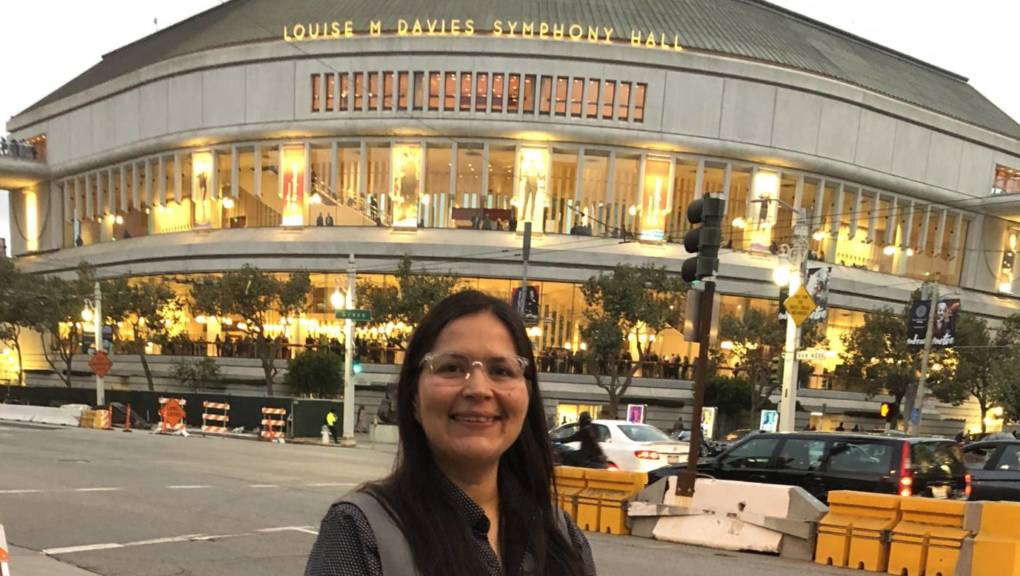
"content": "\u003cp>Welcome to the latest chapter of KQED Arts’ special, five-part Bay Brilliant audio series!\u003c/p>\n\u003cp>Each week, KQED reporter Chloe Veltman and producer Ashleyanne Krigbaum head out on a variety of cultural adventures around the Bay Area with a handful of of this year’s \u003ca href=\"https://www.kqed.org/arts/series/bay-brilliant\" rel=\"noopener\" target=\"_blank\">Bay Brilliant\u003c/a> honorees.\u003c/p>\n\u003cp>This week, orchestral conductor \u003ca href=\"http://jessicabejarano.com/\" target=\"_blank\" rel=\"noopener\">Jessica Bejarano\u003c/a> joins the KQED team for a visit to Davies Symphony Hall. They experience the Symphony’s annual, community-focused “\u003ca href=\"https://www.sfsymphony.org/Buy-Tickets/2018-19/All-San-Francisco-Concert.aspx\" target=\"_blank\" rel=\"noopener\">All San Francisco Concert\u003c/a>,” a performance aimed at local social service and neighborhood organizations in recognition of their services to the community.\u003c/p>\n\u003cp>Michael Tilson Thomas leads the orchestra in works by Lizst, Gershwin and Tchaikovsky (Jessica’s favorite composer).\u003c/p>\n\u003cp>Click the play button above to listen to a discussion between Jessica and Chloe about the concert, Jessica’s approach to conducting, and why community service matters to her.\u003c/p>\n\u003cp>[ad fullwidth]\u003c/p>\u003cp>\u003c/p>\n",
"blocks": [],
"excerpt": "The Bay Area orchestra conductor and KQED's Chloe Veltman head to Davies Symphony Hall to hear the San Francisco Symphony and to chat about Jessica's formidable career. ",
"status": "publish",
"parent": 0,
"modified": 1726770916,
"stats": {
"hasAudio": false,
"hasVideo": false,
"hasChartOrMap": false,
"iframeSrcs": [],
"hasGoogleForm": false,
"hasGallery": false,
"hasHearkenModule": false,
"hasPolis": false,
"paragraphCount": 7,
"wordCount": 151
},
"headData": {
"title": "Bay Brilliant 'Culture Date' No. 2: At the Symphony with Jessica Bejarano | KQED",
"description": "The Bay Area orchestra conductor and KQED's Chloe Veltman head to Davies Symphony Hall to hear the San Francisco Symphony and to chat about Jessica's formidable career. ",
"ogTitle": "",
"ogDescription": "",
"ogImgId": "",
"twTitle": "",
"twDescription": "",
"twImgId": "",
"schema": {
"@context": "https://schema.org",
"@type": "Article",
"headline": "Bay Brilliant 'Culture Date' No. 2: At the Symphony with Jessica Bejarano",
"datePublished": "2018-11-02T10:42:18-07:00",
"dateModified": "2024-09-19T11:35:16-07:00",
"image": "https://cdn.kqed.org/wp-content/uploads/2020/02/KQED-OG-Image@1x.png"
}
},
"audioUrl": "https://www.kqed.org/.stream/anon/radio/RDnews/2018/11/VeltmanBayBrilliantBejarano.mp3",
"sticky": false,
"audioTrackLength": 209,
"path": "/arts/13842685/bay-brilliant-culture-date-no-2-at-the-symphony-with-jessica-bejarano",
"parsedContent": [
{
"type": "contentString",
"content": "\u003cdiv class=\"post-body\">\u003cp>\u003cp>Welcome to the latest chapter of KQED Arts’ special, five-part Bay Brilliant audio series!\u003c/p>\n\u003cp>Each week, KQED reporter Chloe Veltman and producer Ashleyanne Krigbaum head out on a variety of cultural adventures around the Bay Area with a handful of of this year’s \u003ca href=\"https://www.kqed.org/arts/series/bay-brilliant\" rel=\"noopener\" target=\"_blank\">Bay Brilliant\u003c/a> honorees.\u003c/p>\n\u003cp>This week, orchestral conductor \u003ca href=\"http://jessicabejarano.com/\" target=\"_blank\" rel=\"noopener\">Jessica Bejarano\u003c/a> joins the KQED team for a visit to Davies Symphony Hall. They experience the Symphony’s annual, community-focused “\u003ca href=\"https://www.sfsymphony.org/Buy-Tickets/2018-19/All-San-Francisco-Concert.aspx\" target=\"_blank\" rel=\"noopener\">All San Francisco Concert\u003c/a>,” a performance aimed at local social service and neighborhood organizations in recognition of their services to the community.\u003c/p>\n\u003cp>Michael Tilson Thomas leads the orchestra in works by Lizst, Gershwin and Tchaikovsky (Jessica’s favorite composer).\u003c/p>\n\u003cp>Click the play button above to listen to a discussion between Jessica and Chloe about the concert, Jessica’s approach to conducting, and why community service matters to her.\u003c/p>\n\u003cp>\u003c/p>\u003c/div>",
"attributes": {
"named": {},
"numeric": []
}
},
{
"type": "component",
"content": "",
"name": "ad",
"attributes": {
"named": {
"label": "fullwidth"
},
"numeric": [
"fullwidth"
]
}
},
{
"type": "contentString",
"content": "\u003cdiv class=\"post-body\">\u003cp>\u003c/p>\u003cp>\u003c/p>\n\u003c/div>\u003c/p>",
"attributes": {
"named": {},
"numeric": []
}
}
],
"link": "/arts/13842685/bay-brilliant-culture-date-no-2-at-the-symphony-with-jessica-bejarano",
"authors": [
"8608"
],
"categories": [
"arts_69"
],
"tags": [
"arts_5449",
"arts_1312",
"arts_4058",
"arts_1118",
"arts_596"
],
"featImg": "arts_13842690",
"label": "arts"
},
"arts_13838727": {
"type": "posts",
"id": "arts_13838727",
"meta": {
"index": "posts_1716263798",
"site": "arts",
"id": "13838727",
"score": null,
"sort": [
1534188912000
]
},
"guestAuthors": [],
"slug": "bay-brilliant-jessica-bejarano",
"title": "Bay Brilliant: Jessica Bejarano",
"publishDate": 1534188912,
"format": "image",
"headTitle": "Bay Brilliant: Jessica Bejarano | KQED",
"labelTerm": {
"site": "arts"
},
"content": "\u003cp>\u003cem>Welcome to KQED Arts’ \u003ca href=\"https://www.kqed.org/arts/tag/bay-brilliant\" rel=\"noopener\" target=\"_blank\">Bay Brilliant\u003c/a>, a series celebrating 10 local artists, creatives and makers who are pushing boundaries in 2018. Driven by passion for their own disciplines—music, dance, theater, visual art, performance, writing, illustration and more—these artists are true vanguards paving the way in their respective communities.\u003c/em>\u003c/p>\n\u003cp>Jessica Bejarano isn’t your average classical conductor. As a tattooed Mexican-American woman holding the baton, she stands out on just about any orchestra’s podium. The thing is: Bejarano’s been on a lot of podiums, all over the world. When she isn’t at home conducting the \u003ca href=\"https://www.sfcivicmusic.org/\" rel=\"noopener\" target=\"_blank\">San Francisco Civic Symphony\u003c/a> or serving as music director for San Francisco University High School, she keeps busy conducting overseas in countries like Russia, Bulgaria, Italy, Romania, Spain, Venezuela, and the Czech Republic, and with orchestras in the U.S. from Santa Cruz to Baltimore. \u003c/p>\n\u003cp>That’s no small feat for someone who grew up in Bell Gardens, the largely minority and low-income city southeast of Los Angeles, where “classical music was not a thing, by any means,” Bejarano says. Add to that a rough coming-out experience, and the numerous times she was told point-blank that she’d never be a successful conductor in the U.S. due to her looks and background, her stature in the classical music world becomes even more impressive.\u003c/p>\n\u003cp>Now, she uses her position to lift up others. Recently, Bejarano invited San Francisco Symphony violinist Eliot Lev, the first openly transgender member of a major American orchestra, to perform Tchaikovsky’s Violin Concerto in D Major with the San Francisco Civic Symphony—an 85-member orchestra that’s among the most diverse in the region. And whether as a teacher, conductor, or director, Bejarano’s approach is the same: “There’s a wonderful magic that comes with inspiring people,” she says, “and knowing how to motivate them.”\u003c/p>\n\u003cfigure id=\"attachment_13838912\" class=\"wp-caption aligncenter\" style=\"max-width: 800px\">\u003cimg loading=\"lazy\" decoding=\"async\" src=\"https://ww2.kqed.org/arts/wp-content/uploads/sites/2/2018/08/JBejaranoHoriz1-1-800x571.jpg\" alt=\"Jessica Bejarano.\" width=\"800\" height=\"571\" class=\"size-medium wp-image-13838912\" srcset=\"https://cdn.kqed.org/wp-content/uploads/sites/2/2018/08/JBejaranoHoriz1-1-800x571.jpg 800w, https://cdn.kqed.org/wp-content/uploads/sites/2/2018/08/JBejaranoHoriz1-1-160x114.jpg 160w, https://cdn.kqed.org/wp-content/uploads/sites/2/2018/08/JBejaranoHoriz1-1-768x549.jpg 768w, https://cdn.kqed.org/wp-content/uploads/sites/2/2018/08/JBejaranoHoriz1-1-1020x729.jpg 1020w, https://cdn.kqed.org/wp-content/uploads/sites/2/2018/08/JBejaranoHoriz1-1-1200x857.jpg 1200w, https://cdn.kqed.org/wp-content/uploads/sites/2/2018/08/JBejaranoHoriz1-1-1180x843.jpg 1180w, https://cdn.kqed.org/wp-content/uploads/sites/2/2018/08/JBejaranoHoriz1-1-960x686.jpg 960w, https://cdn.kqed.org/wp-content/uploads/sites/2/2018/08/JBejaranoHoriz1-1-240x171.jpg 240w, https://cdn.kqed.org/wp-content/uploads/sites/2/2018/08/JBejaranoHoriz1-1-375x268.jpg 375w, https://cdn.kqed.org/wp-content/uploads/sites/2/2018/08/JBejaranoHoriz1-1-520x371.jpg 520w, https://cdn.kqed.org/wp-content/uploads/sites/2/2018/08/JBejaranoHoriz1-1.jpg 1512w\" sizes=\"(max-width: 800px) 100vw, 800px\">\u003cfigcaption class=\"wp-caption-text\">Jessica Bejarano. \u003ccite>(Jean Melesaine)\u003c/cite>\u003c/figcaption>\u003c/figure>\n\u003cp>\u003cstrong>What was your introduction to classical music? Did it feel exclusionary to you?\u003c/strong>\u003c/p>\n\u003cp>[ad fullwidth]\u003c/p>\n\u003cp>Yes. I didn’t discover classical music until my first year of college. In order to fulfill my scholarship, because I was a trumpet player, I had to play in a few ensembles. I sat in the orchestra, and I remember it was Beethoven’s Fifth Symphony, Smetana’s \u003cem>The Moldau\u003c/em>, and a Vaughan Williams requiem. And I remember just sitting there, blown away. I was like, “Where did this come from? Where has this been?” It was like that music was already ingrained in my body, but it just needed to be activated.\u003c/p>\n\u003cp>Initially my undergraduate degrees were in music education; I wanted to be a music educator at a top-notch high school or at a college. But then I had the epiphany that I wanted to be a conductor. And if I had stopped for a minute and been like, “Okay, let me do some research and look at the history. How many women are in this field? What does it look like? How many women exist in this country or outside of the country in this field?” If I’d have done that kind of homework and seen the statistics, or lack thereof, I might’ve been dissuaded and been like, “Whoa, this is gonna be more of a battle than I’m ready for.”\u003c/p>\n\u003cp>But I didn’t look at any of that. I didn’t look at the lack of females in the field. I just knew that I was motivated, I was thirsty for it, and I was passionate about conducting and being a leader. So I just went for it. \u003c/p>\n\u003cfigure id=\"attachment_13838911\" class=\"wp-caption aligncenter\" style=\"max-width: 800px\">\u003cimg loading=\"lazy\" decoding=\"async\" src=\"https://ww2.kqed.org/arts/wp-content/uploads/sites/2/2018/08/JBejaranoVert4-800x1120.jpg\" alt=\"Jessica Bejarano.\" width=\"800\" height=\"1120\" class=\"size-medium wp-image-13838911\" srcset=\"https://cdn.kqed.org/wp-content/uploads/sites/2/2018/08/JBejaranoVert4-800x1120.jpg 800w, https://cdn.kqed.org/wp-content/uploads/sites/2/2018/08/JBejaranoVert4-160x224.jpg 160w, https://cdn.kqed.org/wp-content/uploads/sites/2/2018/08/JBejaranoVert4-768x1075.jpg 768w, https://cdn.kqed.org/wp-content/uploads/sites/2/2018/08/JBejaranoVert4-1020x1428.jpg 1020w, https://cdn.kqed.org/wp-content/uploads/sites/2/2018/08/JBejaranoVert4-857x1200.jpg 857w, https://cdn.kqed.org/wp-content/uploads/sites/2/2018/08/JBejaranoVert4-960x1344.jpg 960w, https://cdn.kqed.org/wp-content/uploads/sites/2/2018/08/JBejaranoVert4-240x336.jpg 240w, https://cdn.kqed.org/wp-content/uploads/sites/2/2018/08/JBejaranoVert4-375x525.jpg 375w, https://cdn.kqed.org/wp-content/uploads/sites/2/2018/08/JBejaranoVert4-520x728.jpg 520w, https://cdn.kqed.org/wp-content/uploads/sites/2/2018/08/JBejaranoVert4.jpg 1080w\" sizes=\"(max-width: 800px) 100vw, 800px\">\u003cfigcaption class=\"wp-caption-text\">Jessica Bejarano. \u003ccite>(Artemisia Luk)\u003c/cite>\u003c/figcaption>\u003c/figure>\n\u003cp>\u003cstrong>What kind of challenges and obstacles have you faced?\u003c/strong>\u003c/p>\n\u003cp>Many. Maybe too many. But it’s those obstacles and all those “no”s that I’ve been told that I’ve used to my advantage. Every time I was told no, and every time I got a letter saying “thank you but no thank you,” or every time I was told I couldn’t make it as a conductor in this country, I would take that energy and use it to motivate me and to keep that fire burning even brighter.\u003c/p>\n\u003cp>Not all the people that mentored me were good to me. Not at all. There is a thing that people call tough love. I would just call it tough.\u003c/p>\n\u003cp>\u003cstrong>What was your coming-out story?\u003c/strong>\u003c/p>\n\u003cp>Oh, that’s not a pretty story. I was outed when I was 13, 14 years old. I told a cousin in confidence and he turned around and told my mother. My family being Mexican, very religiously driven and culturally driven, the woman is supposed to get married, be a wife, be a mother, bear children and so forth—I’m like the complete opposite of that. I was defying our culture, I was defying our religion. And then they were immigrants as well, so there was just that fear behind it. My mother and family did not take it well whatsoever. It took them years, years, \u003cem>years\u003c/em> to get over it. And then by the time I was in college, when a bunch of my cousins came out, they were just like, “Okay, I guess it’s fine.”\u003c/p>\n\u003cp>\u003cstrong>How does it feel now to not just have these accomplishments and this career, but to be able to help others who may have been told “no” along the way?\u003c/strong>\u003c/p>\n\u003cp>I’m starting my third year with San Francisco Civic Symphony. It’s a full size 85-piece orchestra; they’re the oldest community orchestra this side of the Mississippi. They’ve been around for over 80 years. The thing about that orchestra, it is a community orchestra, and you get an array of talent. So, for me as a director, it’s like, how do I make it all-inclusive for everyone?\u003c/p>\n\u003cp>For me, no matter if it’s a professional orchestra, a community orchestra, as a director, my philosophy when I work with musicians is not to demand and insist, but to motivate and inspire. And when I have that kind of energy with my musicians, it keeps them on their toes. It keeps them on the edge of their seat and it keeps them in tune. No one wants to listen as someone berate them over and over again, and just hammer over them how awful they are or they’re not getting this right.\u003c/p>\n\u003cp>There’s a wonderful magic that comes with inspiring people and knowing how to motivate them. \u003c/p>\n\u003cfigure id=\"attachment_13838914\" class=\"wp-caption aligncenter\" style=\"max-width: 800px\">\u003cimg loading=\"lazy\" decoding=\"async\" src=\"https://ww2.kqed.org/arts/wp-content/uploads/sites/2/2018/08/JBejaranoVert2-800x1120.jpg\" alt=\"Jessica Bejarano.\" width=\"800\" height=\"1120\" class=\"size-medium wp-image-13838914\" srcset=\"https://cdn.kqed.org/wp-content/uploads/sites/2/2018/08/JBejaranoVert2-800x1120.jpg 800w, https://cdn.kqed.org/wp-content/uploads/sites/2/2018/08/JBejaranoVert2-160x224.jpg 160w, https://cdn.kqed.org/wp-content/uploads/sites/2/2018/08/JBejaranoVert2-768x1075.jpg 768w, https://cdn.kqed.org/wp-content/uploads/sites/2/2018/08/JBejaranoVert2-1020x1428.jpg 1020w, https://cdn.kqed.org/wp-content/uploads/sites/2/2018/08/JBejaranoVert2-857x1200.jpg 857w, https://cdn.kqed.org/wp-content/uploads/sites/2/2018/08/JBejaranoVert2-960x1344.jpg 960w, https://cdn.kqed.org/wp-content/uploads/sites/2/2018/08/JBejaranoVert2-240x336.jpg 240w, https://cdn.kqed.org/wp-content/uploads/sites/2/2018/08/JBejaranoVert2-375x525.jpg 375w, https://cdn.kqed.org/wp-content/uploads/sites/2/2018/08/JBejaranoVert2-520x728.jpg 520w, https://cdn.kqed.org/wp-content/uploads/sites/2/2018/08/JBejaranoVert2.jpg 1080w\" sizes=\"(max-width: 800px) 100vw, 800px\">\u003cfigcaption class=\"wp-caption-text\">Jessica Bejarano. \u003ccite>(Jean Melesaine)\u003c/cite>\u003c/figcaption>\u003c/figure>\n\u003cp>\u003cstrong>How does living in San Francisco inform your work and what you do?\u003c/strong>\u003c/p>\n\u003cp>I’ve lived here 11 years now and I love this city. I absolutely love this city. Let me tell you what this city means to me. After I graduated from UC Davis, I had a plan to go to Europe conducting in Romania and Italy, travel around Europe, come back, and drive to South Carolina, because I got accepted to start my DMA in orchestral conducting.\u003c/p>\n\u003cp>Long story short, I was offered a job at the Peninsula Symphony down in Los Altos. Assistant conductor, Peninsula Symphony, four-year contract. And it paid $2,000 a year. After taxes, $224 a month. I had 24 hours to decide if I wanted to start my Doctorate like I’d planned, or be conducting in the Bay Area on $2,000 a year. \u003c/p>\n\u003cp>And San Francisco, as a kid, has always been my dream city. For me it was like gay Disneyland. I’ve always wanted to be here, but it seemed like my life was never going to bring me here—until this position came to fruition. So, I reached out to my mentors. I was like, “What would you do? What would you do?” Hands down, everyone said, “Take the job. Because you’re going to get your foot in the door. You’re actually going to be a conductor.”\u003c/p>\n\u003cp>So, I took my first job… for $2,000 a year.\u003c/p>\n\u003cp>https://www.youtube.com/watch?v=Gw0sqCBkTkI\u003c/p>\n\u003cp>\u003cstrong>What motivates you every day?\u003c/strong>\u003c/p>\n\u003cp>Obviously I have a love of music. But growing up in a very poor community and a poor family, I only grew up with my mother and she worked two, three jobs. She worked at Toys ‘R’ Us. She worked at a hamburger joint. She worked at a Pick ‘n Save. In the evenings, she would go collect cans and plastic bottles to recycle them and make more money. Later, when I was in college, my mom was working at a casino. You know those people that stand in the bathroom, that clean the counters and give you mints? That was my mom. She would push around the trash can. That was my mom at a casino in L.A.\u003c/p>\n\u003cp>I remember seeing her struggle, and wanting to be successful as an adult so that one day I could knock on her door and tell her, “Today you’re going to quit your job because I’m going to support you for the rest of your life. I’m going to take care of you now that you’ve taken care of me my entire life and given me everything that I needed. Now it’s my turn to take care of you.”\u003c/p>\n\u003cp>That was always my goal. That was always my dream. Unfortunately, five, six years ago she passed away from a massive brain aneurysm. And it happened on Mother’s Day, too. It was the lowest point of my life. It kept me quiet and dormant for about a year to process. But once I came out of it, I still kept her and that momentum and that inspiration going even stronger.\u003c/p>\n\u003cp>Because even though she was gone and I couldn’t knock on her door to have her quit her job and let me take care of her for the rest for life, I could still make her proud. Even though she’s not here, I could still make her proud. That’s what drove me to begin with and what continues to drive me now.\u003c/p>\n\u003cfigure id=\"attachment_13838910\" class=\"wp-caption aligncenter\" style=\"max-width: 800px\">\u003cimg loading=\"lazy\" decoding=\"async\" src=\"https://ww2.kqed.org/arts/wp-content/uploads/sites/2/2018/08/JBejaranoVert3-800x1120.jpg\" alt=\"Jessica Bejarano.\" width=\"800\" height=\"1120\" class=\"size-medium wp-image-13838910\" srcset=\"https://cdn.kqed.org/wp-content/uploads/sites/2/2018/08/JBejaranoVert3-800x1120.jpg 800w, https://cdn.kqed.org/wp-content/uploads/sites/2/2018/08/JBejaranoVert3-160x224.jpg 160w, https://cdn.kqed.org/wp-content/uploads/sites/2/2018/08/JBejaranoVert3-768x1075.jpg 768w, https://cdn.kqed.org/wp-content/uploads/sites/2/2018/08/JBejaranoVert3-1020x1428.jpg 1020w, https://cdn.kqed.org/wp-content/uploads/sites/2/2018/08/JBejaranoVert3-857x1200.jpg 857w, https://cdn.kqed.org/wp-content/uploads/sites/2/2018/08/JBejaranoVert3-960x1344.jpg 960w, https://cdn.kqed.org/wp-content/uploads/sites/2/2018/08/JBejaranoVert3-240x336.jpg 240w, https://cdn.kqed.org/wp-content/uploads/sites/2/2018/08/JBejaranoVert3-375x525.jpg 375w, https://cdn.kqed.org/wp-content/uploads/sites/2/2018/08/JBejaranoVert3-520x728.jpg 520w, https://cdn.kqed.org/wp-content/uploads/sites/2/2018/08/JBejaranoVert3.jpg 1080w\" sizes=\"(max-width: 800px) 100vw, 800px\">\u003cfigcaption class=\"wp-caption-text\">Jessica Bejarano. \u003ccite>(Artemisia Luk)\u003c/cite>\u003c/figcaption>\u003c/figure>\n\u003cp>\u003cstrong>What does your ideal future look like for artists in the Bay Area?\u003c/strong>\u003c/p>\n\u003cp>It’s getting incredibly tough for anyone to live in the Bay Area. Most artists that I know have multiple jobs in order to live comfortably. Even me—I’m also a music director at San Francisco University High School. But it’s worth it. It’s absolutely worth it. I can’t believe that I get paid to direct the San Francisco Civic Symphony, and to conduct the orchestra and the music program at University High School. That I paid to do all these things as my career, as my living, in San Francisco! For me, it’s a blessing. \u003c/p>\n\u003cp>I remember when I first moved here, I would literally sit right on that corner where City Hall is, that green patch of grass, kitty-corner to Davies Symphony Hall. I would sit there with my sandwich, my legs crossed on the grass, and I would just stare at Davies and think, and wonder, and get myself going, “It’s there and it’s possible. It’s tangible. It can happen. It can happen.” I was just keeping myself inspired with that $2,000 a year in my bank account.\u003c/p>\n\u003cp>Conducting a Tier 1 orchestra, it’s still a goal, but my goals are more flexible now, where I don’t have to necessarily have a Tier 1 orchestra to be a great conductor. I can be an amazing conductor at the San Francisco Civic Symphony and be as inspiring and as effective musically, and personally.\u003c/p>\n\u003cp>People think music, it’s a hobby or something, but the power of it can be so immense and intense. It took this girl out of the ghetto. I’ve been traveling around the world and working with so many different musicians on so many different levels and I’ve done so much with my life because of music. It saved my life. It literally saved my life.\u003c/p>\n\u003cp>For artists, despite the financial challenges that may come with being an artist, I think music or the arts give you something much more than financial gain, that’s worthy of seeking and pursuing. So, an ideal future might be getting enough of \u003cem>that\u003c/em> reward to offset the meager financial reward.\u003c/p>\n\u003cp>\u003cimg loading=\"lazy\" decoding=\"async\" src=\"https://ww2.kqed.org/arts/wp-content/uploads/sites/2/2016/09/Q.Logo_.Break_-800x78.jpg\" alt=\"\" width=\"800\" height=\"78\" class=\"aligncenter size-medium wp-image-12127869\" srcset=\"https://cdn.kqed.org/wp-content/uploads/sites/2/2016/09/Q.Logo_.Break_.jpg 800w, https://cdn.kqed.org/wp-content/uploads/sites/2/2016/09/Q.Logo_.Break_-400x39.jpg 400w, https://cdn.kqed.org/wp-content/uploads/sites/2/2016/09/Q.Logo_.Break_-768x75.jpg 768w\" sizes=\"(max-width: 800px) 100vw, 800px\">\u003c/p>\n\u003cp>[ad floatright]\u003c/p>\n\u003cp>\u003cem>Learn more about Jessica Bejarano \u003ca href=\"http://jessicabejarano.com/about/\" rel=\"noopener\" target=\"_blank\">here\u003c/a>.\u003c/em>\u003c/p>\n\n",
"blocks": [],
"excerpt": "As the conductor of the San Francisco Civic Symphony, Jessica Bejarano helps tear down the barriers of the classical music world.",
"status": "publish",
"parent": 0,
"modified": 1726703438,
"stats": {
"hasAudio": false,
"hasVideo": true,
"hasChartOrMap": false,
"iframeSrcs": [],
"hasGoogleForm": false,
"hasGallery": false,
"hasHearkenModule": false,
"hasPolis": false,
"paragraphCount": 37,
"wordCount": 2176
},
"headData": {
"title": "Bay Brilliant: Jessica Bejarano | KQED",
"description": "As the conductor of the San Francisco Civic Symphony, Jessica Bejarano helps tear down the barriers of the classical music world.",
"ogTitle": "",
"ogDescription": "",
"ogImgId": "",
"twTitle": "",
"twDescription": "",
"twImgId": "",
"schema": {
"@context": "https://schema.org",
"@type": "Article",
"headline": "Bay Brilliant: Jessica Bejarano",
"datePublished": "2018-08-13T12:35:12-07:00",
"dateModified": "2024-09-18T16:50:38-07:00",
"image": "https://cdn.kqed.org/wp-content/uploads/2020/02/KQED-OG-Image@1x.png"
}
},
"sticky": false,
"path": "/arts/13838727/bay-brilliant-jessica-bejarano",
"audioTrackLength": null,
"parsedContent": [
{
"type": "contentString",
"content": "\u003cdiv class=\"post-body\">\u003cp>\u003cp>\u003cem>Welcome to KQED Arts’ \u003ca href=\"https://www.kqed.org/arts/tag/bay-brilliant\" rel=\"noopener\" target=\"_blank\">Bay Brilliant\u003c/a>, a series celebrating 10 local artists, creatives and makers who are pushing boundaries in 2018. Driven by passion for their own disciplines—music, dance, theater, visual art, performance, writing, illustration and more—these artists are true vanguards paving the way in their respective communities.\u003c/em>\u003c/p>\n\u003cp>Jessica Bejarano isn’t your average classical conductor. As a tattooed Mexican-American woman holding the baton, she stands out on just about any orchestra’s podium. The thing is: Bejarano’s been on a lot of podiums, all over the world. When she isn’t at home conducting the \u003ca href=\"https://www.sfcivicmusic.org/\" rel=\"noopener\" target=\"_blank\">San Francisco Civic Symphony\u003c/a> or serving as music director for San Francisco University High School, she keeps busy conducting overseas in countries like Russia, Bulgaria, Italy, Romania, Spain, Venezuela, and the Czech Republic, and with orchestras in the U.S. from Santa Cruz to Baltimore. \u003c/p>\n\u003cp>That’s no small feat for someone who grew up in Bell Gardens, the largely minority and low-income city southeast of Los Angeles, where “classical music was not a thing, by any means,” Bejarano says. Add to that a rough coming-out experience, and the numerous times she was told point-blank that she’d never be a successful conductor in the U.S. due to her looks and background, her stature in the classical music world becomes even more impressive.\u003c/p>\n\u003cp>Now, she uses her position to lift up others. Recently, Bejarano invited San Francisco Symphony violinist Eliot Lev, the first openly transgender member of a major American orchestra, to perform Tchaikovsky’s Violin Concerto in D Major with the San Francisco Civic Symphony—an 85-member orchestra that’s among the most diverse in the region. And whether as a teacher, conductor, or director, Bejarano’s approach is the same: “There’s a wonderful magic that comes with inspiring people,” she says, “and knowing how to motivate them.”\u003c/p>\n\u003cfigure id=\"attachment_13838912\" class=\"wp-caption aligncenter\" style=\"max-width: 800px\">\u003cimg loading=\"lazy\" decoding=\"async\" src=\"https://ww2.kqed.org/arts/wp-content/uploads/sites/2/2018/08/JBejaranoHoriz1-1-800x571.jpg\" alt=\"Jessica Bejarano.\" width=\"800\" height=\"571\" class=\"size-medium wp-image-13838912\" srcset=\"https://cdn.kqed.org/wp-content/uploads/sites/2/2018/08/JBejaranoHoriz1-1-800x571.jpg 800w, https://cdn.kqed.org/wp-content/uploads/sites/2/2018/08/JBejaranoHoriz1-1-160x114.jpg 160w, https://cdn.kqed.org/wp-content/uploads/sites/2/2018/08/JBejaranoHoriz1-1-768x549.jpg 768w, https://cdn.kqed.org/wp-content/uploads/sites/2/2018/08/JBejaranoHoriz1-1-1020x729.jpg 1020w, https://cdn.kqed.org/wp-content/uploads/sites/2/2018/08/JBejaranoHoriz1-1-1200x857.jpg 1200w, https://cdn.kqed.org/wp-content/uploads/sites/2/2018/08/JBejaranoHoriz1-1-1180x843.jpg 1180w, https://cdn.kqed.org/wp-content/uploads/sites/2/2018/08/JBejaranoHoriz1-1-960x686.jpg 960w, https://cdn.kqed.org/wp-content/uploads/sites/2/2018/08/JBejaranoHoriz1-1-240x171.jpg 240w, https://cdn.kqed.org/wp-content/uploads/sites/2/2018/08/JBejaranoHoriz1-1-375x268.jpg 375w, https://cdn.kqed.org/wp-content/uploads/sites/2/2018/08/JBejaranoHoriz1-1-520x371.jpg 520w, https://cdn.kqed.org/wp-content/uploads/sites/2/2018/08/JBejaranoHoriz1-1.jpg 1512w\" sizes=\"(max-width: 800px) 100vw, 800px\">\u003cfigcaption class=\"wp-caption-text\">Jessica Bejarano. \u003ccite>(Jean Melesaine)\u003c/cite>\u003c/figcaption>\u003c/figure>\n\u003cp>\u003cstrong>What was your introduction to classical music? Did it feel exclusionary to you?\u003c/strong>\u003c/p>\n\u003cp>\u003c/p>\u003c/div>",
"attributes": {
"named": {},
"numeric": []
}
},
{
"type": "component",
"content": "",
"name": "ad",
"attributes": {
"named": {
"label": "fullwidth"
},
"numeric": [
"fullwidth"
]
}
},
{
"type": "contentString",
"content": "\u003cdiv class=\"post-body\">\u003cp>\u003c/p>\n\u003cp>Yes. I didn’t discover classical music until my first year of college. In order to fulfill my scholarship, because I was a trumpet player, I had to play in a few ensembles. I sat in the orchestra, and I remember it was Beethoven’s Fifth Symphony, Smetana’s \u003cem>The Moldau\u003c/em>, and a Vaughan Williams requiem. And I remember just sitting there, blown away. I was like, “Where did this come from? Where has this been?” It was like that music was already ingrained in my body, but it just needed to be activated.\u003c/p>\n\u003cp>Initially my undergraduate degrees were in music education; I wanted to be a music educator at a top-notch high school or at a college. But then I had the epiphany that I wanted to be a conductor. And if I had stopped for a minute and been like, “Okay, let me do some research and look at the history. How many women are in this field? What does it look like? How many women exist in this country or outside of the country in this field?” If I’d have done that kind of homework and seen the statistics, or lack thereof, I might’ve been dissuaded and been like, “Whoa, this is gonna be more of a battle than I’m ready for.”\u003c/p>\n\u003cp>But I didn’t look at any of that. I didn’t look at the lack of females in the field. I just knew that I was motivated, I was thirsty for it, and I was passionate about conducting and being a leader. So I just went for it. \u003c/p>\n\u003cfigure id=\"attachment_13838911\" class=\"wp-caption aligncenter\" style=\"max-width: 800px\">\u003cimg loading=\"lazy\" decoding=\"async\" src=\"https://ww2.kqed.org/arts/wp-content/uploads/sites/2/2018/08/JBejaranoVert4-800x1120.jpg\" alt=\"Jessica Bejarano.\" width=\"800\" height=\"1120\" class=\"size-medium wp-image-13838911\" srcset=\"https://cdn.kqed.org/wp-content/uploads/sites/2/2018/08/JBejaranoVert4-800x1120.jpg 800w, https://cdn.kqed.org/wp-content/uploads/sites/2/2018/08/JBejaranoVert4-160x224.jpg 160w, https://cdn.kqed.org/wp-content/uploads/sites/2/2018/08/JBejaranoVert4-768x1075.jpg 768w, https://cdn.kqed.org/wp-content/uploads/sites/2/2018/08/JBejaranoVert4-1020x1428.jpg 1020w, https://cdn.kqed.org/wp-content/uploads/sites/2/2018/08/JBejaranoVert4-857x1200.jpg 857w, https://cdn.kqed.org/wp-content/uploads/sites/2/2018/08/JBejaranoVert4-960x1344.jpg 960w, https://cdn.kqed.org/wp-content/uploads/sites/2/2018/08/JBejaranoVert4-240x336.jpg 240w, https://cdn.kqed.org/wp-content/uploads/sites/2/2018/08/JBejaranoVert4-375x525.jpg 375w, https://cdn.kqed.org/wp-content/uploads/sites/2/2018/08/JBejaranoVert4-520x728.jpg 520w, https://cdn.kqed.org/wp-content/uploads/sites/2/2018/08/JBejaranoVert4.jpg 1080w\" sizes=\"(max-width: 800px) 100vw, 800px\">\u003cfigcaption class=\"wp-caption-text\">Jessica Bejarano. \u003ccite>(Artemisia Luk)\u003c/cite>\u003c/figcaption>\u003c/figure>\n\u003cp>\u003cstrong>What kind of challenges and obstacles have you faced?\u003c/strong>\u003c/p>\n\u003cp>Many. Maybe too many. But it’s those obstacles and all those “no”s that I’ve been told that I’ve used to my advantage. Every time I was told no, and every time I got a letter saying “thank you but no thank you,” or every time I was told I couldn’t make it as a conductor in this country, I would take that energy and use it to motivate me and to keep that fire burning even brighter.\u003c/p>\n\u003cp>Not all the people that mentored me were good to me. Not at all. There is a thing that people call tough love. I would just call it tough.\u003c/p>\n\u003cp>\u003cstrong>What was your coming-out story?\u003c/strong>\u003c/p>\n\u003cp>Oh, that’s not a pretty story. I was outed when I was 13, 14 years old. I told a cousin in confidence and he turned around and told my mother. My family being Mexican, very religiously driven and culturally driven, the woman is supposed to get married, be a wife, be a mother, bear children and so forth—I’m like the complete opposite of that. I was defying our culture, I was defying our religion. And then they were immigrants as well, so there was just that fear behind it. My mother and family did not take it well whatsoever. It took them years, years, \u003cem>years\u003c/em> to get over it. And then by the time I was in college, when a bunch of my cousins came out, they were just like, “Okay, I guess it’s fine.”\u003c/p>\n\u003cp>\u003cstrong>How does it feel now to not just have these accomplishments and this career, but to be able to help others who may have been told “no” along the way?\u003c/strong>\u003c/p>\n\u003cp>I’m starting my third year with San Francisco Civic Symphony. It’s a full size 85-piece orchestra; they’re the oldest community orchestra this side of the Mississippi. They’ve been around for over 80 years. The thing about that orchestra, it is a community orchestra, and you get an array of talent. So, for me as a director, it’s like, how do I make it all-inclusive for everyone?\u003c/p>\n\u003cp>For me, no matter if it’s a professional orchestra, a community orchestra, as a director, my philosophy when I work with musicians is not to demand and insist, but to motivate and inspire. And when I have that kind of energy with my musicians, it keeps them on their toes. It keeps them on the edge of their seat and it keeps them in tune. No one wants to listen as someone berate them over and over again, and just hammer over them how awful they are or they’re not getting this right.\u003c/p>\n\u003cp>There’s a wonderful magic that comes with inspiring people and knowing how to motivate them. \u003c/p>\n\u003cfigure id=\"attachment_13838914\" class=\"wp-caption aligncenter\" style=\"max-width: 800px\">\u003cimg loading=\"lazy\" decoding=\"async\" src=\"https://ww2.kqed.org/arts/wp-content/uploads/sites/2/2018/08/JBejaranoVert2-800x1120.jpg\" alt=\"Jessica Bejarano.\" width=\"800\" height=\"1120\" class=\"size-medium wp-image-13838914\" srcset=\"https://cdn.kqed.org/wp-content/uploads/sites/2/2018/08/JBejaranoVert2-800x1120.jpg 800w, https://cdn.kqed.org/wp-content/uploads/sites/2/2018/08/JBejaranoVert2-160x224.jpg 160w, https://cdn.kqed.org/wp-content/uploads/sites/2/2018/08/JBejaranoVert2-768x1075.jpg 768w, https://cdn.kqed.org/wp-content/uploads/sites/2/2018/08/JBejaranoVert2-1020x1428.jpg 1020w, https://cdn.kqed.org/wp-content/uploads/sites/2/2018/08/JBejaranoVert2-857x1200.jpg 857w, https://cdn.kqed.org/wp-content/uploads/sites/2/2018/08/JBejaranoVert2-960x1344.jpg 960w, https://cdn.kqed.org/wp-content/uploads/sites/2/2018/08/JBejaranoVert2-240x336.jpg 240w, https://cdn.kqed.org/wp-content/uploads/sites/2/2018/08/JBejaranoVert2-375x525.jpg 375w, https://cdn.kqed.org/wp-content/uploads/sites/2/2018/08/JBejaranoVert2-520x728.jpg 520w, https://cdn.kqed.org/wp-content/uploads/sites/2/2018/08/JBejaranoVert2.jpg 1080w\" sizes=\"(max-width: 800px) 100vw, 800px\">\u003cfigcaption class=\"wp-caption-text\">Jessica Bejarano. \u003ccite>(Jean Melesaine)\u003c/cite>\u003c/figcaption>\u003c/figure>\n\u003cp>\u003cstrong>How does living in San Francisco inform your work and what you do?\u003c/strong>\u003c/p>\n\u003cp>I’ve lived here 11 years now and I love this city. I absolutely love this city. Let me tell you what this city means to me. After I graduated from UC Davis, I had a plan to go to Europe conducting in Romania and Italy, travel around Europe, come back, and drive to South Carolina, because I got accepted to start my DMA in orchestral conducting.\u003c/p>\n\u003cp>Long story short, I was offered a job at the Peninsula Symphony down in Los Altos. Assistant conductor, Peninsula Symphony, four-year contract. And it paid $2,000 a year. After taxes, $224 a month. I had 24 hours to decide if I wanted to start my Doctorate like I’d planned, or be conducting in the Bay Area on $2,000 a year. \u003c/p>\n\u003cp>And San Francisco, as a kid, has always been my dream city. For me it was like gay Disneyland. I’ve always wanted to be here, but it seemed like my life was never going to bring me here—until this position came to fruition. So, I reached out to my mentors. I was like, “What would you do? What would you do?” Hands down, everyone said, “Take the job. Because you’re going to get your foot in the door. You’re actually going to be a conductor.”\u003c/p>\n\u003cp>So, I took my first job… for $2,000 a year.\u003c/p>\u003c/p>\u003cp>\u003cspan class='utils-parseShortcode-shortcodes-__youtubeShortcode__embedYoutube'>\n \u003cspan class='utils-parseShortcode-shortcodes-__youtubeShortcode__embedYoutubeInside'>\n \u003ciframe\n loading='lazy'\n class='utils-parseShortcode-shortcodes-__youtubeShortcode__youtubePlayer'\n type='text/html'\n src='//www.youtube.com/embed/Gw0sqCBkTkI'\n title='//www.youtube.com/embed/Gw0sqCBkTkI'\n allowfullscreen='true'\n style='border:0;'>\u003c/iframe>\n \u003c/span>\n \u003c/span>\u003c/p>\u003cp>\u003cp>\u003cstrong>What motivates you every day?\u003c/strong>\u003c/p>\n\u003cp>Obviously I have a love of music. But growing up in a very poor community and a poor family, I only grew up with my mother and she worked two, three jobs. She worked at Toys ‘R’ Us. She worked at a hamburger joint. She worked at a Pick ‘n Save. In the evenings, she would go collect cans and plastic bottles to recycle them and make more money. Later, when I was in college, my mom was working at a casino. You know those people that stand in the bathroom, that clean the counters and give you mints? That was my mom. She would push around the trash can. That was my mom at a casino in L.A.\u003c/p>\n\u003cp>I remember seeing her struggle, and wanting to be successful as an adult so that one day I could knock on her door and tell her, “Today you’re going to quit your job because I’m going to support you for the rest of your life. I’m going to take care of you now that you’ve taken care of me my entire life and given me everything that I needed. Now it’s my turn to take care of you.”\u003c/p>\n\u003cp>That was always my goal. That was always my dream. Unfortunately, five, six years ago she passed away from a massive brain aneurysm. And it happened on Mother’s Day, too. It was the lowest point of my life. It kept me quiet and dormant for about a year to process. But once I came out of it, I still kept her and that momentum and that inspiration going even stronger.\u003c/p>\n\u003cp>Because even though she was gone and I couldn’t knock on her door to have her quit her job and let me take care of her for the rest for life, I could still make her proud. Even though she’s not here, I could still make her proud. That’s what drove me to begin with and what continues to drive me now.\u003c/p>\n\u003cfigure id=\"attachment_13838910\" class=\"wp-caption aligncenter\" style=\"max-width: 800px\">\u003cimg loading=\"lazy\" decoding=\"async\" src=\"https://ww2.kqed.org/arts/wp-content/uploads/sites/2/2018/08/JBejaranoVert3-800x1120.jpg\" alt=\"Jessica Bejarano.\" width=\"800\" height=\"1120\" class=\"size-medium wp-image-13838910\" srcset=\"https://cdn.kqed.org/wp-content/uploads/sites/2/2018/08/JBejaranoVert3-800x1120.jpg 800w, https://cdn.kqed.org/wp-content/uploads/sites/2/2018/08/JBejaranoVert3-160x224.jpg 160w, https://cdn.kqed.org/wp-content/uploads/sites/2/2018/08/JBejaranoVert3-768x1075.jpg 768w, https://cdn.kqed.org/wp-content/uploads/sites/2/2018/08/JBejaranoVert3-1020x1428.jpg 1020w, https://cdn.kqed.org/wp-content/uploads/sites/2/2018/08/JBejaranoVert3-857x1200.jpg 857w, https://cdn.kqed.org/wp-content/uploads/sites/2/2018/08/JBejaranoVert3-960x1344.jpg 960w, https://cdn.kqed.org/wp-content/uploads/sites/2/2018/08/JBejaranoVert3-240x336.jpg 240w, https://cdn.kqed.org/wp-content/uploads/sites/2/2018/08/JBejaranoVert3-375x525.jpg 375w, https://cdn.kqed.org/wp-content/uploads/sites/2/2018/08/JBejaranoVert3-520x728.jpg 520w, https://cdn.kqed.org/wp-content/uploads/sites/2/2018/08/JBejaranoVert3.jpg 1080w\" sizes=\"(max-width: 800px) 100vw, 800px\">\u003cfigcaption class=\"wp-caption-text\">Jessica Bejarano. \u003ccite>(Artemisia Luk)\u003c/cite>\u003c/figcaption>\u003c/figure>\n\u003cp>\u003cstrong>What does your ideal future look like for artists in the Bay Area?\u003c/strong>\u003c/p>\n\u003cp>It’s getting incredibly tough for anyone to live in the Bay Area. Most artists that I know have multiple jobs in order to live comfortably. Even me—I’m also a music director at San Francisco University High School. But it’s worth it. It’s absolutely worth it. I can’t believe that I get paid to direct the San Francisco Civic Symphony, and to conduct the orchestra and the music program at University High School. That I paid to do all these things as my career, as my living, in San Francisco! For me, it’s a blessing. \u003c/p>\n\u003cp>I remember when I first moved here, I would literally sit right on that corner where City Hall is, that green patch of grass, kitty-corner to Davies Symphony Hall. I would sit there with my sandwich, my legs crossed on the grass, and I would just stare at Davies and think, and wonder, and get myself going, “It’s there and it’s possible. It’s tangible. It can happen. It can happen.” I was just keeping myself inspired with that $2,000 a year in my bank account.\u003c/p>\n\u003cp>Conducting a Tier 1 orchestra, it’s still a goal, but my goals are more flexible now, where I don’t have to necessarily have a Tier 1 orchestra to be a great conductor. I can be an amazing conductor at the San Francisco Civic Symphony and be as inspiring and as effective musically, and personally.\u003c/p>\n\u003cp>People think music, it’s a hobby or something, but the power of it can be so immense and intense. It took this girl out of the ghetto. I’ve been traveling around the world and working with so many different musicians on so many different levels and I’ve done so much with my life because of music. It saved my life. It literally saved my life.\u003c/p>\n\u003cp>For artists, despite the financial challenges that may come with being an artist, I think music or the arts give you something much more than financial gain, that’s worthy of seeking and pursuing. So, an ideal future might be getting enough of \u003cem>that\u003c/em> reward to offset the meager financial reward.\u003c/p>\n\u003cp>\u003cimg loading=\"lazy\" decoding=\"async\" src=\"https://ww2.kqed.org/arts/wp-content/uploads/sites/2/2016/09/Q.Logo_.Break_-800x78.jpg\" alt=\"\" width=\"800\" height=\"78\" class=\"aligncenter size-medium wp-image-12127869\" srcset=\"https://cdn.kqed.org/wp-content/uploads/sites/2/2016/09/Q.Logo_.Break_.jpg 800w, https://cdn.kqed.org/wp-content/uploads/sites/2/2016/09/Q.Logo_.Break_-400x39.jpg 400w, https://cdn.kqed.org/wp-content/uploads/sites/2/2016/09/Q.Logo_.Break_-768x75.jpg 768w\" sizes=\"(max-width: 800px) 100vw, 800px\">\u003c/p>\n\u003cp>\u003c/p>\u003c/div>",
"attributes": {
"named": {},
"numeric": []
}
},
{
"type": "component",
"content": "",
"name": "ad",
"attributes": {
"named": {
"label": "floatright"
},
"numeric": [
"floatright"
]
}
},
{
"type": "contentString",
"content": "\u003cdiv class=\"post-body\">\u003cp>\u003c/p>\n\u003cp>\u003cem>Learn more about Jessica Bejarano \u003ca href=\"http://jessicabejarano.com/about/\" rel=\"noopener\" target=\"_blank\">here\u003c/a>.\u003c/em>\u003c/p>\n\n\u003c/div>\u003c/p>",
"attributes": {
"named": {},
"numeric": []
}
}
],
"link": "/arts/13838727/bay-brilliant-jessica-bejarano",
"authors": [
"185"
],
"categories": [
"arts_69"
],
"tags": [
"arts_5449",
"arts_1312",
"arts_1118",
"arts_596"
],
"featImg": "arts_13838905",
"label": "arts"
},
"arts_13837529": {
"type": "posts",
"id": "arts_13837529",
"meta": {
"index": "posts_1716263798",
"site": "arts",
"id": "13837529",
"score": null,
"sort": [
1532383272000
]
},
"parent": 0,
"labelTerm": {
"site": "arts"
},
"blocks": [],
"publishDate": 1532383272,
"format": "image",
"title": "At 90, SF Piano Great Leon Fleisher Continues to Inspire",
"headTitle": "At 90, SF Piano Great Leon Fleisher Continues to Inspire | KQED",
"content": "\u003cp>In a recent conversation with the Russian pianist Nikolai Demidenko, the subject turned to Brahms’s \u003cem>Piano Concerto No. 1 in D Minor\u003c/em>, a work recorded by virtually every pianist of renown, dead or alive. I raved about the electrifying recordings of William Kapell and Dimitri Mitropoulos, Vladimir Horowitz and Arturo Toscanini. Demidenko dismissed them all.\u003c/p>\n\u003cp>“The benchmark for me is [Leon] Fleisher’s recording with [George] Szell,” he said with a calm, serious tone in his voice, referring to the preeminent San Francisco-born pianist’s collaboration with the late conductor of the Cleveland Orchestra. “Fleisher’s recording is unsurpassed. What an agile, brilliant mind. And what a very interesting man. I have great respect for him.”\u003c/p>\n\u003cp>Leon Fleisher is ninety years old today. One of the most refined and transcendent musicians the United States has ever produced, he continues to inspire generations of musicians as a teacher, mentor and performer.\u003c/p>\n\u003cp>https://youtu.be/0tHdavyycsE\u003c/p>\n\u003cp>“Except for my sight, which is fast diminishing, I’m hale, hearty and ambulatory,” the pianist tells me in a recent phone interview from his home in Baltimore.\u003c/p>\n\u003cp>[ad fullwidth]\u003c/p>\n\u003cp>I ask for Fleisher’s account of that 1958 Brahms recording, which he made as a 29-year-old with Szell. “If I remember correctly, there was a snowstorm, and my piano didn’t arrive until the second and third movements,” he says. “Oh yes, I would do it differently today. It’s about growth. It’s a continuing process.”\u003c/p>\n\u003cp>Fleisher was born in San Francisco on July 23, 1928; the country, then led by President Coolidge, was mere months from facing the Great Depression. San Francisco was still recovering from the 1906 earthquake, which left half the city covered in ash, and destroyed many of its music venues. (Fleisher has lived through 16 presidencies. “We’re going to hell in a handbasket,” he says of the current administration.)\u003c/p>\n\u003cp>But there was hope buried in the rubble. Musicians like opera singer Luisa Tetrazzini vouched for San Francisco, declaring it her favorite city in the world in 1910. The city hosted the World’s Fair in 1915. Composer Sergei Prokofiev visited from Russia in 1926; Maurice Ravel, the French author of the \u003cem>Concerto for the Left Hand\u003c/em> that Fleisher would play “a thousand times” in his career, followed in February 1928 and conducted the nascent San Francisco Symphony.\u003c/p>\n\u003cp>Today, world-class arts institutions abound near San Francisco City Hall, and Fleisher is one of the most iconic pillars of the city’s musical legacy. In February 2019, San Francisco Performances presents Fleisher and his star pupil, pianist Jonathan Biss, in a celebratory \u003ca href=\"https://sfperformances.org/performances/1819/LeonFleisher.html\" target=\"_blank\" rel=\"noopener\">90th birthday recital\u003c/a> at the Herbst Theatre.\u003c/p>\n\u003cp>“I keep coming back to the view of the War Memorial Opera House,” Fleisher says of the building where he heard and later met composer Sergei Rachmaninoff in 1934.\u003c/p>\n\u003cfigure id=\"attachment_13837558\" class=\"wp-caption alignright\" style=\"max-width: 800px\">\u003cimg loading=\"lazy\" decoding=\"async\" class=\"size-medium wp-image-13837558\" src=\"https://ww2.kqed.org/arts/wp-content/uploads/sites/2/2018/07/fleisher-with-schnabel-800x1000.jpg\" alt=\"At nine years old, Leon Fleisher began studying with Viennese master Artur Schnabel.\" width=\"800\" height=\"1000\" srcset=\"https://cdn.kqed.org/wp-content/uploads/sites/2/2018/07/fleisher-with-schnabel-800x1000.jpg 800w, https://cdn.kqed.org/wp-content/uploads/sites/2/2018/07/fleisher-with-schnabel-160x200.jpg 160w, https://cdn.kqed.org/wp-content/uploads/sites/2/2018/07/fleisher-with-schnabel-768x960.jpg 768w, https://cdn.kqed.org/wp-content/uploads/sites/2/2018/07/fleisher-with-schnabel.jpg 960w, https://cdn.kqed.org/wp-content/uploads/sites/2/2018/07/fleisher-with-schnabel-240x300.jpg 240w, https://cdn.kqed.org/wp-content/uploads/sites/2/2018/07/fleisher-with-schnabel-375x469.jpg 375w, https://cdn.kqed.org/wp-content/uploads/sites/2/2018/07/fleisher-with-schnabel-520x650.jpg 520w\" sizes=\"(max-width: 800px) 100vw, 800px\">\u003cfigcaption class=\"wp-caption-text\">At nine years old, Leon Fleisher began studying with Viennese master Artur Schnabel. \u003ccite>(Courtesy of Johns Hopkins University)\u003c/cite>\u003c/figcaption>\u003c/figure>\n\u003cp>“I remember living on Fulton Street opposite the park; how, much to my mother’s dismay, I walked on the concrete walls of the park,” recalls Fleisher of his San Francisco youth. “I also lived on Pierce Street. It’s too bloody expensive a place to live today! Oh, but the Golden Gate, the view from Berkeley, from Oakland, it’s quite invigorating. The air is really quite special.”\u003c/p>\n\u003cp>Fleisher’s mother and father, immigrants from Poland and Ukraine, respectively, were hat makers who owned stores on Geary and Fillmore. For his mother, the piano represented “a gateway to a new and better world,” and so Fleisher began studying with distinguished Austrian pianist Artur Schnabel at age 9.\u003c/p>\n\u003cp>“Schnabel certainly had to convince me of the value of things. There are dimensions of meaningfulness in music. German music is metaphysical,” Fleisher told me in a previous interview in 2014. “Schnabel said Mozart is the most inaccessible of the great masters because with the fewest number of notes, he accesses the deepest levels of human awareness and experience.”\u003c/p>\n\u003cp>That early advice from Schnabel informed Fleisher’s approach for decades to come, and foreshadowed the effect he’d have on younger musicians: “You hear a great performance of that music and it can be soul-shattering. It can transform a person,” he says.\u003c/p>\n\u003ch2>Fleisher reinvents himself\u003c/h2>\n\u003cp>In 1944, at age 16, Fleisher was hailed by conductor Pierre Monteux as “the pianistic find of the century.” A gold medal at the 1952 Queen Elisabeth competition in Belgium further solidified his reputation as an outstanding, young American pianist. Alongside firebrands Eugene Istomin, Claude Frank, Graffman and Jacob Lateiner, Fleisher was among the precocious musicians who helped secure America’s status as a classical music powerhouse.\u003c/p>\n\u003cp>“It seemed like a new period when Americans were dominating,” says Jerome Lowenthal, 86, a longtime professor of piano at Juilliard who first met Fleisher at pianist William Kapell’s home in 1952. “They were a very brilliant group of pianists, close friends, and they shared their struggles as well as their aspirations.”\u003c/p>\n\u003cp>At the height of Fleisher’s fame and powers, disaster struck. In 1964, at age 36, Fleisher lost control of his right arm. A mysterious, incurable ailment—later diagnosed as focal dystonia—caused his fourth and fifth fingers to curl up. It was a devastating loss for the piano world, which had lost Dinu Lipatti, 33, to cancer in 1950 and Kapell, 31, to a Bay Area plane crash in 1953.\u003c/p>\n\u003cfigure id=\"attachment_13837559\" class=\"wp-caption aligncenter\" style=\"max-width: 800px\">\u003cimg loading=\"lazy\" decoding=\"async\" class=\"size-medium wp-image-13837559\" src=\"https://ww2.kqed.org/arts/wp-content/uploads/sites/2/2018/07/fleisher-with-graffman-and-istomin-800x542.jpg\" alt=\"Leon Fleisher with fellow pianists Gary Graffman and Eugene Istomin. \" width=\"800\" height=\"542\" srcset=\"https://cdn.kqed.org/wp-content/uploads/sites/2/2018/07/fleisher-with-graffman-and-istomin-800x542.jpg 800w, https://cdn.kqed.org/wp-content/uploads/sites/2/2018/07/fleisher-with-graffman-and-istomin-160x108.jpg 160w, https://cdn.kqed.org/wp-content/uploads/sites/2/2018/07/fleisher-with-graffman-and-istomin-768x521.jpg 768w, https://cdn.kqed.org/wp-content/uploads/sites/2/2018/07/fleisher-with-graffman-and-istomin-1020x691.jpg 1020w, https://cdn.kqed.org/wp-content/uploads/sites/2/2018/07/fleisher-with-graffman-and-istomin-1200x813.jpg 1200w, https://cdn.kqed.org/wp-content/uploads/sites/2/2018/07/fleisher-with-graffman-and-istomin-1180x800.jpg 1180w, https://cdn.kqed.org/wp-content/uploads/sites/2/2018/07/fleisher-with-graffman-and-istomin-960x651.jpg 960w, https://cdn.kqed.org/wp-content/uploads/sites/2/2018/07/fleisher-with-graffman-and-istomin-240x163.jpg 240w, https://cdn.kqed.org/wp-content/uploads/sites/2/2018/07/fleisher-with-graffman-and-istomin-375x254.jpg 375w, https://cdn.kqed.org/wp-content/uploads/sites/2/2018/07/fleisher-with-graffman-and-istomin-520x352.jpg 520w, https://cdn.kqed.org/wp-content/uploads/sites/2/2018/07/fleisher-with-graffman-and-istomin.jpg 1279w\" sizes=\"(max-width: 800px) 100vw, 800px\">\u003cfigcaption class=\"wp-caption-text\">Leon Fleisher with fellow pianists Gary Graffman and Eugene Istomin. \u003ccite>(Courtesy of Johns Hopkins University)\u003c/cite>\u003c/figcaption>\u003c/figure>\n\u003cp>“He is without doubt one of the major musical figures of the second half of the 20th century,” says pianist Gary Graffman, 89, former head of the Curtis Institute and Fleisher’s close friend of over 70 years. “I’ve always admired his playing very much. His whole approach to music is honest and convincing, very unique and personal. That he managed to accomplish everything he has, despite a playing career that was halted at age 36, is simply amazing.”\u003c/p>\n\u003cp>In 1967, after a nearly two-year absence from touring due to his ailment, Fleisher began his transformation, concentrating on the piano’s left-handed repertoire, starting with Ravel’s \u003cem>Piano Concerto for the Left Hand\u003c/em>. In the decades since, the list of contemporary composers who’ve written left-handed works for Fleisher includes Gunther Schuller, Lukas Foss, Leon Kirschner and William Bolcom.\u003c/p>\n\u003cp>https://youtu.be/ij0r9tsCHEs\u003c/p>\n\u003cp>In classical music, character is revealed in the form of tone, and many of Fleisher’s colleagues and former pupils, themselves now concert piano greats, praise Fleisher’s tone as altogether inimitable.\u003c/p>\n\u003cp>“I don’t think any of us who studied with him ever managed to reproduce his tone,” says award-winning pianist Jonathan Biss, 37, who teaches at the Curtis Institute in Philadelphia. “It’s a searing sound—he genuinely hates excess—and it gets to the center of the note and the musical idea in such a direct way.”\u003c/p>\n\u003cp>“His sound is definitely unique, and startling in its clarity and intention,” says Robert McDonald, who worked with Fleisher as a 21-year-old and is currently on the piano faculties at Juilliard and Curtis. “It has so much to do with how he thinks about and hears rhythmic direction in a phrase and the complex energy behind it.”\u003c/p>\n\u003cp>“His sound can be quite indistinguishable from the musical integrity of his playing, his seriousness of purpose,” says pianist Garrick Ohlsson, 70, the only American to ever win the prestigious International Chopin Piano Competition in Warsaw. “It’s an incredibly etched, crystalline and beautifully balanced sound.”\u003c/p>\n\u003ch2>Continuing a legacy\u003c/h2>\n\u003cp>In 1968, at the suggestion of a student, Fleisher stepped behind the podium, taking on the role of conductor. In 1973, he became the associate conductor of the Baltimore Symphony.\u003c/p>\n\u003cp>“I had a wonderful experience playing Rachmaninoff’s \u003cem>Third Piano Concerto\u003c/em> with him as conductor one summer in the 1970s,” says Ohlsson. “Even though he wasn’t playing anymore, I held him in a certain kind of awe and respect. He embodies a living tradition stretching back to Schnabel and Rachmaninoff, and as his junior colleague, I didn’t find him to be a formidable authority figure—I found him to be a generous, helpful, easy colleague. I’m a complete admirer of Leon Fleisher from start to finish.”\u003c/p>\n\u003cp>https://youtu.be/R78qse_Oc5o\u003c/p>\n\u003cp>In 2004, after receiving botox injections in his right hand, Fleisher regained some function and released his first two-handed recordings since the 1960s. “I must say that at age 90, I can’t really count on my hand for too much,” he says of his current state. “It might be a little bit better because I have not ceased to experiment, I’m still trying this and that. I can do certain things. And those things I try to do as well as I can.”\u003c/p>\n\u003cp>In the end, perhaps the role in which Fleisher continues to make the largest impact, touching generation after generation, is that of teacher. In 1959, Fleisher accepted a position at the Peabody Institute at Johns Hopkins University in Baltimore. Today, nearly sixty years later, his influence is found virtually everywhere—his pupils are esteemed faculty members of Juilliard and Curtis; some are renowned artists like Biss, André Watts and Hélène Grimaud.\u003c/p>\n\u003cp>As a testament to Fleisher’s influence, in 2014, arts patrons Robert Meyerhoff and Rheda Becker donated $1 million to the Peabody Institute to create a scholarship fund for students of the great pianist.\u003c/p>\n\u003cfigure id=\"attachment_13837560\" class=\"wp-caption alignright\" style=\"max-width: 800px\">\u003cimg loading=\"lazy\" decoding=\"async\" class=\"size-medium wp-image-13837560\" src=\"https://ww2.kqed.org/arts/wp-content/uploads/sites/2/2018/07/fleisher-as-pianist-and-conductor-800x1000.jpg\" alt=\"Leon Fleisher, conductor and pianist. \" width=\"800\" height=\"1000\" srcset=\"https://cdn.kqed.org/wp-content/uploads/sites/2/2018/07/fleisher-as-pianist-and-conductor-800x1000.jpg 800w, https://cdn.kqed.org/wp-content/uploads/sites/2/2018/07/fleisher-as-pianist-and-conductor-160x200.jpg 160w, https://cdn.kqed.org/wp-content/uploads/sites/2/2018/07/fleisher-as-pianist-and-conductor-768x960.jpg 768w, https://cdn.kqed.org/wp-content/uploads/sites/2/2018/07/fleisher-as-pianist-and-conductor-1020x1276.jpg 1020w, https://cdn.kqed.org/wp-content/uploads/sites/2/2018/07/fleisher-as-pianist-and-conductor-960x1201.jpg 960w, https://cdn.kqed.org/wp-content/uploads/sites/2/2018/07/fleisher-as-pianist-and-conductor-1920x2401.jpg 1920w, https://cdn.kqed.org/wp-content/uploads/sites/2/2018/07/fleisher-as-pianist-and-conductor-1180x1476.jpg 1180w, https://cdn.kqed.org/wp-content/uploads/sites/2/2018/07/fleisher-as-pianist-and-conductor-240x300.jpg 240w, https://cdn.kqed.org/wp-content/uploads/sites/2/2018/07/fleisher-as-pianist-and-conductor-375x469.jpg 375w, https://cdn.kqed.org/wp-content/uploads/sites/2/2018/07/fleisher-as-pianist-and-conductor-520x650.jpg 520w, https://cdn.kqed.org/wp-content/uploads/sites/2/2018/07/fleisher-as-pianist-and-conductor.jpg 1638w\" sizes=\"(max-width: 800px) 100vw, 800px\">\u003cfigcaption class=\"wp-caption-text\">Leon Fleisher, conductor and pianist. \u003ccite>(Courtesy of Johns Hopkins University)\u003c/cite>\u003c/figcaption>\u003c/figure>\n\u003cp>“Leon holds an important, even iconic place in the history of the piano and pianists,” says Julliard’s Robert McDonald. “A career of this distinction evolves always because of the value of its artistic force. Fleisher has occupied this role in our culture for decades.”\u003c/p>\n\u003cp>It’s been over seven decades since Fleisher and his peers put the United States on the classical music map—a golden age of artistic growth. Generations have come and gone, and the culture of America marches on—albeit, now to a vastly different beat. Biss speaks passionately about the need to preserve Fleisher’s musical legacy.\u003c/p>\n\u003cp>“There are very few people who do work that is important to the degree that it sort of outlives them. Leon Fleisher is one of those people,” says Biss. “He certainly was a fantastic guardian of the culture he inherited himself, and it’s up to us now to be equally good guardians of what we inherited from him. And if we can’t, then shame on us.”\u003c/p>\n\u003cp>Ten years ago, Fleisher wrote the following words in a piece that was published in \u003cem>The Washington Post\u003c/em>: “I am nearly 80 years old and have been making music for almost all of that time, sustained by the belief that, in the words that Beethoven inscribed in his copy of the \u003cem>Missa Solemnis\u003c/em>, the purpose of music is to communicate from the heart to the heart. Beethoven’s vision of music as a force capable of reconciling us to each other and to the world may seem remote, but that renders it an ever more crucial ideal for which to strive.”\u003c/p>\n\u003cp>[ad floatright]\u003c/p>\n\u003cp>Today, at 90, the inimitable artist is still plodding away, illuminating the darkness with his indomitable spirit.\u003c/p>\n\n",
"stats": {
"hasVideo": false,
"hasChartOrMap": false,
"hasAudio": false,
"hasPolis": false,
"wordCount": 2006,
"hasGoogleForm": false,
"hasGallery": false,
"hasHearkenModule": false,
"iframeSrcs": [],
"paragraphCount": 34
},
"modified": 1705027458,
"excerpt": "Leon Fleisher helped put the United States on the map in the Eurocentric classical music world and continues to influence several generations of pianists. ",
"headData": {
"twImgId": "",
"twTitle": "",
"ogTitle": "",
"ogImgId": "",
"twDescription": "",
"description": "Leon Fleisher helped put the United States on the map in the Eurocentric classical music world and continues to influence several generations of pianists. ",
"title": "At 90, SF Piano Great Leon Fleisher Continues to Inspire | KQED",
"ogDescription": "",
"schema": {
"@context": "https://schema.org",
"@type": "Article",
"headline": "At 90, SF Piano Great Leon Fleisher Continues to Inspire",
"datePublished": "2018-07-23T15:01:12-07:00",
"dateModified": "2024-01-11T18:44:18-08:00",
"image": "https://cdn.kqed.org/wp-content/uploads/2020/02/KQED-OG-Image@1x.png"
}
},
"guestAuthors": [],
"slug": "at-90-sf-piano-great-leon-fleisher-continues-to-inspire",
"status": "publish",
"nprByline": "Elijah Ho",
"sticky": false,
"path": "/arts/13837529/at-90-sf-piano-great-leon-fleisher-continues-to-inspire",
"audioTrackLength": null,
"parsedContent": [
{
"type": "contentString",
"content": "\u003cdiv class=\"post-body\">\u003cp>\u003cp>In a recent conversation with the Russian pianist Nikolai Demidenko, the subject turned to Brahms’s \u003cem>Piano Concerto No. 1 in D Minor\u003c/em>, a work recorded by virtually every pianist of renown, dead or alive. I raved about the electrifying recordings of William Kapell and Dimitri Mitropoulos, Vladimir Horowitz and Arturo Toscanini. Demidenko dismissed them all.\u003c/p>\n\u003cp>“The benchmark for me is [Leon] Fleisher’s recording with [George] Szell,” he said with a calm, serious tone in his voice, referring to the preeminent San Francisco-born pianist’s collaboration with the late conductor of the Cleveland Orchestra. “Fleisher’s recording is unsurpassed. What an agile, brilliant mind. And what a very interesting man. I have great respect for him.”\u003c/p>\n\u003cp>Leon Fleisher is ninety years old today. One of the most refined and transcendent musicians the United States has ever produced, he continues to inspire generations of musicians as a teacher, mentor and performer.\u003c/p>\u003c/p>\u003cp>\u003cspan class='utils-parseShortcode-shortcodes-__youtubeShortcode__embedYoutube'>\n \u003cspan class='utils-parseShortcode-shortcodes-__youtubeShortcode__embedYoutubeInside'>\n \u003ciframe\n loading='lazy'\n class='utils-parseShortcode-shortcodes-__youtubeShortcode__youtubePlayer'\n type='text/html'\n src='//www.youtube.com/embed/0tHdavyycsE'\n title='//www.youtube.com/embed/0tHdavyycsE'\n allowfullscreen='true'\n style='border:0;'>\u003c/iframe>\n \u003c/span>\n \u003c/span>\u003c/p>\u003cp>\u003cp>“Except for my sight, which is fast diminishing, I’m hale, hearty and ambulatory,” the pianist tells me in a recent phone interview from his home in Baltimore.\u003c/p>\n\u003cp>\u003c/p>\u003c/div>",
"attributes": {
"named": {},
"numeric": []
}
},
{
"type": "component",
"content": "",
"name": "ad",
"attributes": {
"named": {
"label": "fullwidth"
},
"numeric": [
"fullwidth"
]
}
},
{
"type": "contentString",
"content": "\u003cdiv class=\"post-body\">\u003cp>\u003c/p>\n\u003cp>I ask for Fleisher’s account of that 1958 Brahms recording, which he made as a 29-year-old with Szell. “If I remember correctly, there was a snowstorm, and my piano didn’t arrive until the second and third movements,” he says. “Oh yes, I would do it differently today. It’s about growth. It’s a continuing process.”\u003c/p>\n\u003cp>Fleisher was born in San Francisco on July 23, 1928; the country, then led by President Coolidge, was mere months from facing the Great Depression. San Francisco was still recovering from the 1906 earthquake, which left half the city covered in ash, and destroyed many of its music venues. (Fleisher has lived through 16 presidencies. “We’re going to hell in a handbasket,” he says of the current administration.)\u003c/p>\n\u003cp>But there was hope buried in the rubble. Musicians like opera singer Luisa Tetrazzini vouched for San Francisco, declaring it her favorite city in the world in 1910. The city hosted the World’s Fair in 1915. Composer Sergei Prokofiev visited from Russia in 1926; Maurice Ravel, the French author of the \u003cem>Concerto for the Left Hand\u003c/em> that Fleisher would play “a thousand times” in his career, followed in February 1928 and conducted the nascent San Francisco Symphony.\u003c/p>\n\u003cp>Today, world-class arts institutions abound near San Francisco City Hall, and Fleisher is one of the most iconic pillars of the city’s musical legacy. In February 2019, San Francisco Performances presents Fleisher and his star pupil, pianist Jonathan Biss, in a celebratory \u003ca href=\"https://sfperformances.org/performances/1819/LeonFleisher.html\" target=\"_blank\" rel=\"noopener\">90th birthday recital\u003c/a> at the Herbst Theatre.\u003c/p>\n\u003cp>“I keep coming back to the view of the War Memorial Opera House,” Fleisher says of the building where he heard and later met composer Sergei Rachmaninoff in 1934.\u003c/p>\n\u003cfigure id=\"attachment_13837558\" class=\"wp-caption alignright\" style=\"max-width: 800px\">\u003cimg loading=\"lazy\" decoding=\"async\" class=\"size-medium wp-image-13837558\" src=\"https://ww2.kqed.org/arts/wp-content/uploads/sites/2/2018/07/fleisher-with-schnabel-800x1000.jpg\" alt=\"At nine years old, Leon Fleisher began studying with Viennese master Artur Schnabel.\" width=\"800\" height=\"1000\" srcset=\"https://cdn.kqed.org/wp-content/uploads/sites/2/2018/07/fleisher-with-schnabel-800x1000.jpg 800w, https://cdn.kqed.org/wp-content/uploads/sites/2/2018/07/fleisher-with-schnabel-160x200.jpg 160w, https://cdn.kqed.org/wp-content/uploads/sites/2/2018/07/fleisher-with-schnabel-768x960.jpg 768w, https://cdn.kqed.org/wp-content/uploads/sites/2/2018/07/fleisher-with-schnabel.jpg 960w, https://cdn.kqed.org/wp-content/uploads/sites/2/2018/07/fleisher-with-schnabel-240x300.jpg 240w, https://cdn.kqed.org/wp-content/uploads/sites/2/2018/07/fleisher-with-schnabel-375x469.jpg 375w, https://cdn.kqed.org/wp-content/uploads/sites/2/2018/07/fleisher-with-schnabel-520x650.jpg 520w\" sizes=\"(max-width: 800px) 100vw, 800px\">\u003cfigcaption class=\"wp-caption-text\">At nine years old, Leon Fleisher began studying with Viennese master Artur Schnabel. \u003ccite>(Courtesy of Johns Hopkins University)\u003c/cite>\u003c/figcaption>\u003c/figure>\n\u003cp>“I remember living on Fulton Street opposite the park; how, much to my mother’s dismay, I walked on the concrete walls of the park,” recalls Fleisher of his San Francisco youth. “I also lived on Pierce Street. It’s too bloody expensive a place to live today! Oh, but the Golden Gate, the view from Berkeley, from Oakland, it’s quite invigorating. The air is really quite special.”\u003c/p>\n\u003cp>Fleisher’s mother and father, immigrants from Poland and Ukraine, respectively, were hat makers who owned stores on Geary and Fillmore. For his mother, the piano represented “a gateway to a new and better world,” and so Fleisher began studying with distinguished Austrian pianist Artur Schnabel at age 9.\u003c/p>\n\u003cp>“Schnabel certainly had to convince me of the value of things. There are dimensions of meaningfulness in music. German music is metaphysical,” Fleisher told me in a previous interview in 2014. “Schnabel said Mozart is the most inaccessible of the great masters because with the fewest number of notes, he accesses the deepest levels of human awareness and experience.”\u003c/p>\n\u003cp>That early advice from Schnabel informed Fleisher’s approach for decades to come, and foreshadowed the effect he’d have on younger musicians: “You hear a great performance of that music and it can be soul-shattering. It can transform a person,” he says.\u003c/p>\n\u003ch2>Fleisher reinvents himself\u003c/h2>\n\u003cp>In 1944, at age 16, Fleisher was hailed by conductor Pierre Monteux as “the pianistic find of the century.” A gold medal at the 1952 Queen Elisabeth competition in Belgium further solidified his reputation as an outstanding, young American pianist. Alongside firebrands Eugene Istomin, Claude Frank, Graffman and Jacob Lateiner, Fleisher was among the precocious musicians who helped secure America’s status as a classical music powerhouse.\u003c/p>\n\u003cp>“It seemed like a new period when Americans were dominating,” says Jerome Lowenthal, 86, a longtime professor of piano at Juilliard who first met Fleisher at pianist William Kapell’s home in 1952. “They were a very brilliant group of pianists, close friends, and they shared their struggles as well as their aspirations.”\u003c/p>\n\u003cp>At the height of Fleisher’s fame and powers, disaster struck. In 1964, at age 36, Fleisher lost control of his right arm. A mysterious, incurable ailment—later diagnosed as focal dystonia—caused his fourth and fifth fingers to curl up. It was a devastating loss for the piano world, which had lost Dinu Lipatti, 33, to cancer in 1950 and Kapell, 31, to a Bay Area plane crash in 1953.\u003c/p>\n\u003cfigure id=\"attachment_13837559\" class=\"wp-caption aligncenter\" style=\"max-width: 800px\">\u003cimg loading=\"lazy\" decoding=\"async\" class=\"size-medium wp-image-13837559\" src=\"https://ww2.kqed.org/arts/wp-content/uploads/sites/2/2018/07/fleisher-with-graffman-and-istomin-800x542.jpg\" alt=\"Leon Fleisher with fellow pianists Gary Graffman and Eugene Istomin. \" width=\"800\" height=\"542\" srcset=\"https://cdn.kqed.org/wp-content/uploads/sites/2/2018/07/fleisher-with-graffman-and-istomin-800x542.jpg 800w, https://cdn.kqed.org/wp-content/uploads/sites/2/2018/07/fleisher-with-graffman-and-istomin-160x108.jpg 160w, https://cdn.kqed.org/wp-content/uploads/sites/2/2018/07/fleisher-with-graffman-and-istomin-768x521.jpg 768w, https://cdn.kqed.org/wp-content/uploads/sites/2/2018/07/fleisher-with-graffman-and-istomin-1020x691.jpg 1020w, https://cdn.kqed.org/wp-content/uploads/sites/2/2018/07/fleisher-with-graffman-and-istomin-1200x813.jpg 1200w, https://cdn.kqed.org/wp-content/uploads/sites/2/2018/07/fleisher-with-graffman-and-istomin-1180x800.jpg 1180w, https://cdn.kqed.org/wp-content/uploads/sites/2/2018/07/fleisher-with-graffman-and-istomin-960x651.jpg 960w, https://cdn.kqed.org/wp-content/uploads/sites/2/2018/07/fleisher-with-graffman-and-istomin-240x163.jpg 240w, https://cdn.kqed.org/wp-content/uploads/sites/2/2018/07/fleisher-with-graffman-and-istomin-375x254.jpg 375w, https://cdn.kqed.org/wp-content/uploads/sites/2/2018/07/fleisher-with-graffman-and-istomin-520x352.jpg 520w, https://cdn.kqed.org/wp-content/uploads/sites/2/2018/07/fleisher-with-graffman-and-istomin.jpg 1279w\" sizes=\"(max-width: 800px) 100vw, 800px\">\u003cfigcaption class=\"wp-caption-text\">Leon Fleisher with fellow pianists Gary Graffman and Eugene Istomin. \u003ccite>(Courtesy of Johns Hopkins University)\u003c/cite>\u003c/figcaption>\u003c/figure>\n\u003cp>“He is without doubt one of the major musical figures of the second half of the 20th century,” says pianist Gary Graffman, 89, former head of the Curtis Institute and Fleisher’s close friend of over 70 years. “I’ve always admired his playing very much. His whole approach to music is honest and convincing, very unique and personal. That he managed to accomplish everything he has, despite a playing career that was halted at age 36, is simply amazing.”\u003c/p>\n\u003cp>In 1967, after a nearly two-year absence from touring due to his ailment, Fleisher began his transformation, concentrating on the piano’s left-handed repertoire, starting with Ravel’s \u003cem>Piano Concerto for the Left Hand\u003c/em>. In the decades since, the list of contemporary composers who’ve written left-handed works for Fleisher includes Gunther Schuller, Lukas Foss, Leon Kirschner and William Bolcom.\u003c/p>\u003c/p>\u003cp>\u003cspan class='utils-parseShortcode-shortcodes-__youtubeShortcode__embedYoutube'>\n \u003cspan class='utils-parseShortcode-shortcodes-__youtubeShortcode__embedYoutubeInside'>\n \u003ciframe\n loading='lazy'\n class='utils-parseShortcode-shortcodes-__youtubeShortcode__youtubePlayer'\n type='text/html'\n src='//www.youtube.com/embed/ij0r9tsCHEs'\n title='//www.youtube.com/embed/ij0r9tsCHEs'\n allowfullscreen='true'\n style='border:0;'>\u003c/iframe>\n \u003c/span>\n \u003c/span>\u003c/p>\u003cp>\u003cp>In classical music, character is revealed in the form of tone, and many of Fleisher’s colleagues and former pupils, themselves now concert piano greats, praise Fleisher’s tone as altogether inimitable.\u003c/p>\n\u003cp>“I don’t think any of us who studied with him ever managed to reproduce his tone,” says award-winning pianist Jonathan Biss, 37, who teaches at the Curtis Institute in Philadelphia. “It’s a searing sound—he genuinely hates excess—and it gets to the center of the note and the musical idea in such a direct way.”\u003c/p>\n\u003cp>“His sound is definitely unique, and startling in its clarity and intention,” says Robert McDonald, who worked with Fleisher as a 21-year-old and is currently on the piano faculties at Juilliard and Curtis. “It has so much to do with how he thinks about and hears rhythmic direction in a phrase and the complex energy behind it.”\u003c/p>\n\u003cp>“His sound can be quite indistinguishable from the musical integrity of his playing, his seriousness of purpose,” says pianist Garrick Ohlsson, 70, the only American to ever win the prestigious International Chopin Piano Competition in Warsaw. “It’s an incredibly etched, crystalline and beautifully balanced sound.”\u003c/p>\n\u003ch2>Continuing a legacy\u003c/h2>\n\u003cp>In 1968, at the suggestion of a student, Fleisher stepped behind the podium, taking on the role of conductor. In 1973, he became the associate conductor of the Baltimore Symphony.\u003c/p>\n\u003cp>“I had a wonderful experience playing Rachmaninoff’s \u003cem>Third Piano Concerto\u003c/em> with him as conductor one summer in the 1970s,” says Ohlsson. “Even though he wasn’t playing anymore, I held him in a certain kind of awe and respect. He embodies a living tradition stretching back to Schnabel and Rachmaninoff, and as his junior colleague, I didn’t find him to be a formidable authority figure—I found him to be a generous, helpful, easy colleague. I’m a complete admirer of Leon Fleisher from start to finish.”\u003c/p>\u003c/p>\u003cp>\u003cspan class='utils-parseShortcode-shortcodes-__youtubeShortcode__embedYoutube'>\n \u003cspan class='utils-parseShortcode-shortcodes-__youtubeShortcode__embedYoutubeInside'>\n \u003ciframe\n loading='lazy'\n class='utils-parseShortcode-shortcodes-__youtubeShortcode__youtubePlayer'\n type='text/html'\n src='//www.youtube.com/embed/R78qse_Oc5o'\n title='//www.youtube.com/embed/R78qse_Oc5o'\n allowfullscreen='true'\n style='border:0;'>\u003c/iframe>\n \u003c/span>\n \u003c/span>\u003c/p>\u003cp>\u003cp>In 2004, after receiving botox injections in his right hand, Fleisher regained some function and released his first two-handed recordings since the 1960s. “I must say that at age 90, I can’t really count on my hand for too much,” he says of his current state. “It might be a little bit better because I have not ceased to experiment, I’m still trying this and that. I can do certain things. And those things I try to do as well as I can.”\u003c/p>\n\u003cp>In the end, perhaps the role in which Fleisher continues to make the largest impact, touching generation after generation, is that of teacher. In 1959, Fleisher accepted a position at the Peabody Institute at Johns Hopkins University in Baltimore. Today, nearly sixty years later, his influence is found virtually everywhere—his pupils are esteemed faculty members of Juilliard and Curtis; some are renowned artists like Biss, André Watts and Hélène Grimaud.\u003c/p>\n\u003cp>As a testament to Fleisher’s influence, in 2014, arts patrons Robert Meyerhoff and Rheda Becker donated $1 million to the Peabody Institute to create a scholarship fund for students of the great pianist.\u003c/p>\n\u003cfigure id=\"attachment_13837560\" class=\"wp-caption alignright\" style=\"max-width: 800px\">\u003cimg loading=\"lazy\" decoding=\"async\" class=\"size-medium wp-image-13837560\" src=\"https://ww2.kqed.org/arts/wp-content/uploads/sites/2/2018/07/fleisher-as-pianist-and-conductor-800x1000.jpg\" alt=\"Leon Fleisher, conductor and pianist. \" width=\"800\" height=\"1000\" srcset=\"https://cdn.kqed.org/wp-content/uploads/sites/2/2018/07/fleisher-as-pianist-and-conductor-800x1000.jpg 800w, https://cdn.kqed.org/wp-content/uploads/sites/2/2018/07/fleisher-as-pianist-and-conductor-160x200.jpg 160w, https://cdn.kqed.org/wp-content/uploads/sites/2/2018/07/fleisher-as-pianist-and-conductor-768x960.jpg 768w, https://cdn.kqed.org/wp-content/uploads/sites/2/2018/07/fleisher-as-pianist-and-conductor-1020x1276.jpg 1020w, https://cdn.kqed.org/wp-content/uploads/sites/2/2018/07/fleisher-as-pianist-and-conductor-960x1201.jpg 960w, https://cdn.kqed.org/wp-content/uploads/sites/2/2018/07/fleisher-as-pianist-and-conductor-1920x2401.jpg 1920w, https://cdn.kqed.org/wp-content/uploads/sites/2/2018/07/fleisher-as-pianist-and-conductor-1180x1476.jpg 1180w, https://cdn.kqed.org/wp-content/uploads/sites/2/2018/07/fleisher-as-pianist-and-conductor-240x300.jpg 240w, https://cdn.kqed.org/wp-content/uploads/sites/2/2018/07/fleisher-as-pianist-and-conductor-375x469.jpg 375w, https://cdn.kqed.org/wp-content/uploads/sites/2/2018/07/fleisher-as-pianist-and-conductor-520x650.jpg 520w, https://cdn.kqed.org/wp-content/uploads/sites/2/2018/07/fleisher-as-pianist-and-conductor.jpg 1638w\" sizes=\"(max-width: 800px) 100vw, 800px\">\u003cfigcaption class=\"wp-caption-text\">Leon Fleisher, conductor and pianist. \u003ccite>(Courtesy of Johns Hopkins University)\u003c/cite>\u003c/figcaption>\u003c/figure>\n\u003cp>“Leon holds an important, even iconic place in the history of the piano and pianists,” says Julliard’s Robert McDonald. “A career of this distinction evolves always because of the value of its artistic force. Fleisher has occupied this role in our culture for decades.”\u003c/p>\n\u003cp>It’s been over seven decades since Fleisher and his peers put the United States on the classical music map—a golden age of artistic growth. Generations have come and gone, and the culture of America marches on—albeit, now to a vastly different beat. Biss speaks passionately about the need to preserve Fleisher’s musical legacy.\u003c/p>\n\u003cp>“There are very few people who do work that is important to the degree that it sort of outlives them. Leon Fleisher is one of those people,” says Biss. “He certainly was a fantastic guardian of the culture he inherited himself, and it’s up to us now to be equally good guardians of what we inherited from him. And if we can’t, then shame on us.”\u003c/p>\n\u003cp>Ten years ago, Fleisher wrote the following words in a piece that was published in \u003cem>The Washington Post\u003c/em>: “I am nearly 80 years old and have been making music for almost all of that time, sustained by the belief that, in the words that Beethoven inscribed in his copy of the \u003cem>Missa Solemnis\u003c/em>, the purpose of music is to communicate from the heart to the heart. Beethoven’s vision of music as a force capable of reconciling us to each other and to the world may seem remote, but that renders it an ever more crucial ideal for which to strive.”\u003c/p>\n\u003cp>\u003c/p>\u003c/div>",
"attributes": {
"named": {},
"numeric": []
}
},
{
"type": "component",
"content": "",
"name": "ad",
"attributes": {
"named": {
"label": "floatright"
},
"numeric": [
"floatright"
]
}
},
{
"type": "contentString",
"content": "\u003cdiv class=\"post-body\">\u003cp>\u003c/p>\n\u003cp>Today, at 90, the inimitable artist is still plodding away, illuminating the darkness with his indomitable spirit.\u003c/p>\n\n\u003c/div>\u003c/p>",
"attributes": {
"named": {},
"numeric": []
}
}
],
"link": "/arts/13837529/at-90-sf-piano-great-leon-fleisher-continues-to-inspire",
"authors": [
"byline_arts_13837529"
],
"categories": [
"arts_69",
"arts_235"
],
"tags": [
"arts_1312",
"arts_1118",
"arts_596",
"arts_5337"
],
"featImg": "arts_13837557",
"label": "arts"
},
"arts_13836562": {
"type": "posts",
"id": "arts_13836562",
"meta": {
"index": "posts_1716263798",
"site": "arts",
"id": "13836562",
"score": null,
"sort": [
1530840407000
]
},
"parent": 0,
"labelTerm": {
"site": "arts",
"term": 140
},
"blocks": [],
"publishDate": 1530840407,
"format": "standard",
"title": "'Flower Piano' Blooms in the San Francisco Botanical Garden",
"headTitle": "‘Flower Piano’ Blooms in the San Francisco Botanical Garden | KQED",
"content": "\u003cp>For the past several years, the \u003ca href=\"https://www.sfbotanicalgarden.org/\" target=\"_blank\" rel=\"noopener\">San Francisco Botanical Garden\u003c/a> has come alive during the summer—and not just with blossoms from every corner of the planet.\u003c/p>\n\u003cp>At “\u003ca href=\"https://www.sfbotanicalgarden.org/flowerpiano/\" target=\"_blank\" rel=\"noopener\">Flower Piano\u003c/a>,” pianists of all talent levels and musical tastes happily plonk away on 12 pianos spread across the garden’s 55 acres. The event takes place this year July 5–16.\u003c/p>\n\u003cp>On weekend days, the garden’s main partner in the event, Sunset Piano, invites professional pianists and other musicians to share their art. (Sunset Piano, founded by artists Mauro ffortissimo and Dean Mermell, is the subject of the feature documentary \u003ca href=\"https://www.amazon.com/dp/B079FR7CPK/\" target=\"_blank\" rel=\"noopener\">\u003cem>Twelve Pianos\u003c/em>\u003c/a>. It tells the story of the artists’ work to bring pianos to unlikely locations, like the windy bluffs overlooking the California coast or San Francisco’s streets—and the Botanical Gardens for “Flower Piano.”)\u003c/p>\n\u003cp>At the special \u003ca href=\"https://www.eventbrite.com/e/nightgarden-piano-tickets-44802793361\" target=\"_blank\" rel=\"noopener\">NightGarden\u003c/a> program on July 12–14, pros including Sarah Cahill, Elektra Schmidt and Rob Reich take to pianos around the gardens for pop-up performances. Their repertoires feature classical pieces by Beethoven, Brahms, Chopin and Debussy; tributes to Duke Ellington and Meredith Monk; and contemporary genres like neo-soul and funk.\u003c/p>\n\u003cp>\u003cimg loading=\"lazy\" decoding=\"async\" class=\"aligncenter size-medium wp-image-12127869\" src=\"https://ww2.kqed.org/arts/wp-content/uploads/sites/2/2016/09/Q.Logo_.Break_-800x78.jpg\" alt=\"\" width=\"800\" height=\"78\" srcset=\"https://cdn.kqed.org/wp-content/uploads/sites/2/2016/09/Q.Logo_.Break_.jpg 800w, https://cdn.kqed.org/wp-content/uploads/sites/2/2016/09/Q.Logo_.Break_-400x39.jpg 400w, https://cdn.kqed.org/wp-content/uploads/sites/2/2016/09/Q.Logo_.Break_-768x75.jpg 768w\" sizes=\"(max-width: 800px) 100vw, 800px\">\u003c/p>\n\u003cp>[ad fullwidth]\u003c/p>\n\u003cp>\u003c/p>\n\u003cp>\u003cem>Flower Piano runs July 5–16 at the San Francisco Botanical Garden. Details \u003ca href=\"https://www.sfbotanicalgarden.org/flowerpiano/\" target=\"_blank\" rel=\"noopener\">here\u003c/a>.\u003c/em>\u003c/p>\n\n",
"stats": {
"hasVideo": false,
"hasChartOrMap": false,
"hasAudio": false,
"hasPolis": false,
"wordCount": 220,
"hasGoogleForm": false,
"hasGallery": false,
"hasHearkenModule": false,
"iframeSrcs": [],
"paragraphCount": 8
},
"modified": 1705027527,
"excerpt": "The annual piano-in-the-park event provides pianists of all levels an opportunity to play al fresco on 12 pianos spread across 55 acres.",
"headData": {
"twImgId": "",
"twTitle": "",
"ogTitle": "",
"ogImgId": "",
"twDescription": "",
"description": "The annual piano-in-the-park event provides pianists of all levels an opportunity to play al fresco on 12 pianos spread across 55 acres.",
"title": "'Flower Piano' Blooms in the San Francisco Botanical Garden | KQED",
"ogDescription": "",
"schema": {
"@context": "https://schema.org",
"@type": "Article",
"headline": "'Flower Piano' Blooms in the San Francisco Botanical Garden",
"datePublished": "2018-07-05T18:26:47-07:00",
"dateModified": "2024-01-11T18:45:27-08:00",
"image": "https://cdn.kqed.org/wp-content/uploads/2020/02/KQED-OG-Image@1x.png"
}
},
"guestAuthors": [],
"slug": "flower-piano-blooms-in-the-san-francisco-botanical-garden",
"status": "publish",
"sticky": false,
"path": "/arts/13836562/flower-piano-blooms-in-the-san-francisco-botanical-garden",
"audioTrackLength": null,
"parsedContent": [
{
"type": "contentString",
"content": "\u003cdiv class=\"post-body\">\u003cp>\u003cp>For the past several years, the \u003ca href=\"https://www.sfbotanicalgarden.org/\" target=\"_blank\" rel=\"noopener\">San Francisco Botanical Garden\u003c/a> has come alive during the summer—and not just with blossoms from every corner of the planet.\u003c/p>\n\u003cp>At “\u003ca href=\"https://www.sfbotanicalgarden.org/flowerpiano/\" target=\"_blank\" rel=\"noopener\">Flower Piano\u003c/a>,” pianists of all talent levels and musical tastes happily plonk away on 12 pianos spread across the garden’s 55 acres. The event takes place this year July 5–16.\u003c/p>\n\u003cp>On weekend days, the garden’s main partner in the event, Sunset Piano, invites professional pianists and other musicians to share their art. (Sunset Piano, founded by artists Mauro ffortissimo and Dean Mermell, is the subject of the feature documentary \u003ca href=\"https://www.amazon.com/dp/B079FR7CPK/\" target=\"_blank\" rel=\"noopener\">\u003cem>Twelve Pianos\u003c/em>\u003c/a>. It tells the story of the artists’ work to bring pianos to unlikely locations, like the windy bluffs overlooking the California coast or San Francisco’s streets—and the Botanical Gardens for “Flower Piano.”)\u003c/p>\n\u003cp>At the special \u003ca href=\"https://www.eventbrite.com/e/nightgarden-piano-tickets-44802793361\" target=\"_blank\" rel=\"noopener\">NightGarden\u003c/a> program on July 12–14, pros including Sarah Cahill, Elektra Schmidt and Rob Reich take to pianos around the gardens for pop-up performances. Their repertoires feature classical pieces by Beethoven, Brahms, Chopin and Debussy; tributes to Duke Ellington and Meredith Monk; and contemporary genres like neo-soul and funk.\u003c/p>\n\u003cp>\u003cimg loading=\"lazy\" decoding=\"async\" class=\"aligncenter size-medium wp-image-12127869\" src=\"https://ww2.kqed.org/arts/wp-content/uploads/sites/2/2016/09/Q.Logo_.Break_-800x78.jpg\" alt=\"\" width=\"800\" height=\"78\" srcset=\"https://cdn.kqed.org/wp-content/uploads/sites/2/2016/09/Q.Logo_.Break_.jpg 800w, https://cdn.kqed.org/wp-content/uploads/sites/2/2016/09/Q.Logo_.Break_-400x39.jpg 400w, https://cdn.kqed.org/wp-content/uploads/sites/2/2016/09/Q.Logo_.Break_-768x75.jpg 768w\" sizes=\"(max-width: 800px) 100vw, 800px\">\u003c/p>\n\u003cp>\u003c/p>\u003c/div>",
"attributes": {
"named": {},
"numeric": []
}
},
{
"type": "component",
"content": "",
"name": "ad",
"attributes": {
"named": {
"label": "fullwidth"
},
"numeric": [
"fullwidth"
]
}
},
{
"type": "contentString",
"content": "\u003cdiv class=\"post-body\">\u003cp>\u003c/p>\n\u003cp>\u003c/p>\n\u003cp>\u003cem>Flower Piano runs July 5–16 at the San Francisco Botanical Garden. Details \u003ca href=\"https://www.sfbotanicalgarden.org/flowerpiano/\" target=\"_blank\" rel=\"noopener\">here\u003c/a>.\u003c/em>\u003c/p>\n\n\u003c/div>\u003c/p>",
"attributes": {
"named": {},
"numeric": []
}
}
],
"link": "/arts/13836562/flower-piano-blooms-in-the-san-francisco-botanical-garden",
"authors": [
"8608"
],
"programs": [
"arts_140"
],
"categories": [
"arts_69"
],
"tags": [
"arts_1312",
"arts_596",
"arts_1334"
],
"featImg": "arts_13836611",
"label": "arts_140"
},
"arts_13826120": {
"type": "posts",
"id": "arts_13826120",
"meta": {
"index": "posts_1716263798",
"site": "arts",
"id": "13826120",
"score": null,
"sort": [
1520366443000
]
},
"parent": 0,
"labelTerm": {
"site": "arts"
},
"blocks": [],
"publishDate": 1520366443,
"format": "image",
"title": "In San Francisco, Video Games Are Classical Music's New Frontier",
"headTitle": "In San Francisco, Video Games Are Classical Music’s New Frontier | KQED",
"content": "\u003cp>It’s Friday night at the \u003ca href=\"https://sfcm.edu\" target=\"_blank\" rel=\"noopener\">San Francisco Conservatory of Music\u003c/a> and although classes are over, the building is still bustling with students squeezing in rehearsals before leaving campus for the weekend. As \u003ca href=\"http://www.maryclarebrzytwa.com/\" target=\"_blank\" rel=\"noopener\">MaryClare Brzytwa\u003c/a>, the Executive Director of Technology and Applied Composition, walks down the hall and past the recording studio, she overhears a booming 808 — not a violin or piano, as one might expect at a hundred-year-old classical music institution like this one.\u003c/p>\n\u003cp>Brzytwa opens the door to find \u003ca href=\"https://soundcloud.com/soberseas\" target=\"_blank\" rel=\"noopener\">Jose Soberanes\u003c/a> hunched over a digital workstation in his bright orange beanie. Soberanes isn’t your stereotypical classical music student; for starters, his favorite artist is Travis Scott, the hit-making, psychedelic trap rapper. Since enrolling at the San Francisco Conservatory, he’s interned at Kanye West’s creative agency DONDA and done audio engineering for video games like \u003cem>The Walking Dead: A New Frontier\u003c/em> and \u003cem>Minecraft Story Mode Season 2\u003c/em>.\u003c/p>\n\u003cp>Soberanes is a second-year student in the conservatory’s innovative new program Technology and Applied Composition (TAC), which prepares students for careers in composition for video games, films, and other media. The new undergraduate major (and its adjacent one-year, post-grad professional studies diploma) has only existed at the San Francisco Conservatory of Music (SFCM) since 2015, when Brzytwa spearheaded it, and doesn’t even have a senior class yet. But its students have already produced \u003ca href=\"https://soundcloud.com/sfcmtac\" target=\"_blank\" rel=\"noopener\">cutting-edge, high-profile collaborations\u003c/a>.\u003c/p>\n\u003cfigure id=\"attachment_13826159\" class=\"wp-caption aligncenter\" style=\"max-width: 800px\">\u003cimg loading=\"lazy\" decoding=\"async\" class=\"size-medium wp-image-13826159\" src=\"https://ww2.kqed.org/arts/wp-content/uploads/sites/2/2018/03/Feb22_KQED-SFCM_9727-800x450.jpg\" alt=\"San Francisco Conservatory of Music student Jose Soberanes in the campus studio.\" width=\"800\" height=\"450\" srcset=\"https://cdn.kqed.org/wp-content/uploads/sites/2/2018/03/Feb22_KQED-SFCM_9727-800x450.jpg 800w, https://cdn.kqed.org/wp-content/uploads/sites/2/2018/03/Feb22_KQED-SFCM_9727-160x90.jpg 160w, https://cdn.kqed.org/wp-content/uploads/sites/2/2018/03/Feb22_KQED-SFCM_9727-768x432.jpg 768w, https://cdn.kqed.org/wp-content/uploads/sites/2/2018/03/Feb22_KQED-SFCM_9727-1020x574.jpg 1020w, https://cdn.kqed.org/wp-content/uploads/sites/2/2018/03/Feb22_KQED-SFCM_9727.jpg 1920w, https://cdn.kqed.org/wp-content/uploads/sites/2/2018/03/Feb22_KQED-SFCM_9727-1180x664.jpg 1180w, https://cdn.kqed.org/wp-content/uploads/sites/2/2018/03/Feb22_KQED-SFCM_9727-960x540.jpg 960w, https://cdn.kqed.org/wp-content/uploads/sites/2/2018/03/Feb22_KQED-SFCM_9727-240x135.jpg 240w, https://cdn.kqed.org/wp-content/uploads/sites/2/2018/03/Feb22_KQED-SFCM_9727-375x211.jpg 375w, https://cdn.kqed.org/wp-content/uploads/sites/2/2018/03/Feb22_KQED-SFCM_9727-520x293.jpg 520w\" sizes=\"(max-width: 800px) 100vw, 800px\">\u003cfigcaption class=\"wp-caption-text\">San Francisco Conservatory of Music student Jose Soberanes in the campus studio. \u003ccite>(Kristina Bakrevski)\u003c/cite>\u003c/figcaption>\u003c/figure>\n\u003cp>Case in point: Soberanes’ current project is an avant-garde, hip-hop-inspired score for the San Francisco Ballet \u003ca href=\"http://xseed2020.com\" target=\"_blank\" rel=\"noopener\">in collaboration with fellow student Moya Violet\u003c/a>. When Brzytwa enters, he pulls up an audio file to show off their progress. “[The TAC program] has definitely pushed me to be more experimental. I don’t know if it was on purpose,” he says, hitting play on a clip from his composition. A big wave of bass blasts through the speakers; hissing percussion transforms it into a club beat, which he then raps over.\u003c/p>\n\u003cp>Brzytwa laughs. “It \u003cem>definitely\u003c/em> was on purpose,” she answers, visibly proud.\u003c/p>\n\u003cfigure id=\"attachment_13826162\" class=\"wp-caption aligncenter\" style=\"max-width: 800px\">\u003cimg loading=\"lazy\" decoding=\"async\" class=\"size-medium wp-image-13826162\" src=\"https://ww2.kqed.org/arts/wp-content/uploads/sites/2/2018/03/mcb-at-sfcm-800x450.jpg\" alt=\"MaryClare Brzytwa, the San Francisco Conservatory of Music's Associate Dean for New Media and Music Technology, conceptualized the conservatory's new Technology and Applied Composition program.\" width=\"800\" height=\"450\" srcset=\"https://cdn.kqed.org/wp-content/uploads/sites/2/2018/03/mcb-at-sfcm.jpg 800w, https://cdn.kqed.org/wp-content/uploads/sites/2/2018/03/mcb-at-sfcm-160x90.jpg 160w, https://cdn.kqed.org/wp-content/uploads/sites/2/2018/03/mcb-at-sfcm-768x432.jpg 768w, https://cdn.kqed.org/wp-content/uploads/sites/2/2018/03/mcb-at-sfcm-240x135.jpg 240w, https://cdn.kqed.org/wp-content/uploads/sites/2/2018/03/mcb-at-sfcm-375x211.jpg 375w, https://cdn.kqed.org/wp-content/uploads/sites/2/2018/03/mcb-at-sfcm-520x293.jpg 520w\" sizes=\"(max-width: 800px) 100vw, 800px\">\u003cfigcaption class=\"wp-caption-text\">MaryClare Brzytwa, the San Francisco Conservatory of Music’s Associate Dean for New Media and Music Technology, conceptualized the conservatory’s new Technology and Applied Composition program. \u003ccite>(Nastia Voynovskaya)\u003c/cite>\u003c/figcaption>\u003c/figure>\n\u003cp>With her breadth of musical experience and connections in Silicon Valley, Brzytwa has pushed the San Francisco Conservatory to modernize its curriculum — and the country’s other top classical music schools are still catching up. In the TAC program, technology isn’t solely to enhance more traditional modes of music-making. Instead, it carries the same weight as classical training, and students learn to apply high-level musicianship to the entertainment industry’s real-world demands. That’s not to say that the program is purely technical like at a trade school; instead, Brzytwa fosters an experimental approach on campus and encourages students to pursue creatively challenging projects — like Soberanes’ San Francisco Ballet piece.\u003c/p>\n\u003cp>[ad fullwidth]\u003c/p>\n\u003cp>One could call TAC the perfect marriage of technology, classical musicianship, and experimentation. It’s a natural fit for classical musicians who want to write for video games and other applications in the Bay Area’s tech industry. And as its first cohort of undergrads prepares to enter the job market, the program has the potential to set a precedent for conservatories and music programs around the country.\u003c/p>\n\u003cp> \u003c/p>\n\u003ch2>‘The [Gaming] Industry Needs More Help’\u003c/h2>\n\u003cp>While technology plays a relatively small role at more traditional music schools like Julliard and the New England Conservatory, the San Francisco Conservatory’s Technology and Applied Composition program answers a growing need for composers who specialize in writing for media — and for the Bay Area in particular, that means video games. TAC students take many of the \u003ca href=\"https://sfcm.edu/departments/technology-and-applied-composition/curriculum-tac-undergraduate-students\" target=\"_blank\" rel=\"noopener\">same courses\u003c/a> one might expect from a classical composition major — like ear training and music theory — but they also study game audio, and do mock commissions for Sony and the Walt Disney Family Museum.\u003c/p>\n\u003cp>https://youtu.be/2FwvWgmK64E\u003c/p>\n\u003cp>The Bay Area is home to video game giants like Sony Interactive Entertainment, Electronic Arts, and Ubisoft. It’s also where you’ll find smaller game audio companies like Bay Area Sound, which, incidentally, was co-founded by SFCM professor Clint Bajakian, a former composer and sound design supervisor at George Lucas’ (now-shuttered) video game company LucasArts. As tech companies vie to make gaming a mainstream form of entertainment — and court demographics \u003ca href=\"https://www.washingtonpost.com/news/morning-mix/wp/2014/08/22/adult-women-gamers-outnumber-teenage-boys/?utm_term=.e1444c75d01d\" target=\"_blank\" rel=\"noopener\">outside of the stereotypical gamer bro\u003c/a> — there’s a growing demand for composers who can create music that deepens games’ emotional content and makes their interactive aspects more sensory and vivid.\u003c/p>\n\u003cfigure id=\"attachment_13826165\" class=\"wp-caption aligncenter\" style=\"max-width: 800px\">\u003cimg loading=\"lazy\" decoding=\"async\" class=\"size-medium wp-image-13826165\" src=\"https://ww2.kqed.org/arts/wp-content/uploads/sites/2/2018/03/TAC-Student-Thomas-Soto-is-demoing-a-VR-game-for-which-fellow-student-Niko-Korolog-composed-the-soundtrack-800x450.jpg\" alt=\"TAC student Thomas Soto demos a VR game for which fellow student Niko Korolog composed the soundtrack.\" width=\"800\" height=\"450\" srcset=\"https://cdn.kqed.org/wp-content/uploads/sites/2/2018/03/TAC-Student-Thomas-Soto-is-demoing-a-VR-game-for-which-fellow-student-Niko-Korolog-composed-the-soundtrack-800x450.jpg 800w, https://cdn.kqed.org/wp-content/uploads/sites/2/2018/03/TAC-Student-Thomas-Soto-is-demoing-a-VR-game-for-which-fellow-student-Niko-Korolog-composed-the-soundtrack-160x90.jpg 160w, https://cdn.kqed.org/wp-content/uploads/sites/2/2018/03/TAC-Student-Thomas-Soto-is-demoing-a-VR-game-for-which-fellow-student-Niko-Korolog-composed-the-soundtrack-768x432.jpg 768w, https://cdn.kqed.org/wp-content/uploads/sites/2/2018/03/TAC-Student-Thomas-Soto-is-demoing-a-VR-game-for-which-fellow-student-Niko-Korolog-composed-the-soundtrack-1020x574.jpg 1020w, https://cdn.kqed.org/wp-content/uploads/sites/2/2018/03/TAC-Student-Thomas-Soto-is-demoing-a-VR-game-for-which-fellow-student-Niko-Korolog-composed-the-soundtrack.jpg 1920w, https://cdn.kqed.org/wp-content/uploads/sites/2/2018/03/TAC-Student-Thomas-Soto-is-demoing-a-VR-game-for-which-fellow-student-Niko-Korolog-composed-the-soundtrack-1180x664.jpg 1180w, https://cdn.kqed.org/wp-content/uploads/sites/2/2018/03/TAC-Student-Thomas-Soto-is-demoing-a-VR-game-for-which-fellow-student-Niko-Korolog-composed-the-soundtrack-960x540.jpg 960w, https://cdn.kqed.org/wp-content/uploads/sites/2/2018/03/TAC-Student-Thomas-Soto-is-demoing-a-VR-game-for-which-fellow-student-Niko-Korolog-composed-the-soundtrack-240x135.jpg 240w, https://cdn.kqed.org/wp-content/uploads/sites/2/2018/03/TAC-Student-Thomas-Soto-is-demoing-a-VR-game-for-which-fellow-student-Niko-Korolog-composed-the-soundtrack-375x211.jpg 375w, https://cdn.kqed.org/wp-content/uploads/sites/2/2018/03/TAC-Student-Thomas-Soto-is-demoing-a-VR-game-for-which-fellow-student-Niko-Korolog-composed-the-soundtrack-520x293.jpg 520w\" sizes=\"(max-width: 800px) 100vw, 800px\">\u003cfigcaption class=\"wp-caption-text\">TAC student Thomas Soto demos a VR game for which fellow student Niko Korolog composed the soundtrack. \u003ccite>(Courtesy of the San Francisco Conservatory of Music.)\u003c/cite>\u003c/figcaption>\u003c/figure>\n\u003cp>Video game music has come a long way from the chiptune soundtracks of early Nintendo games like \u003cem>Super Mario Bros\u003c/em>, which typically consisted of little more than a few loops of computer melody. Today, video game soundtracks have evolved to be as varied and complex as those in film. Popular adventure games like \u003ca href=\"https://www.youtube.com/watch?v=_q51LZ2HpbE\" target=\"_blank\" rel=\"noopener\">\u003cem>Star Wars: Battlefront II\u003c/em>\u003c/a>, for instance, build drama through epic orchestral arrangements. \u003ca href=\"https://www.youtube.com/watch?v=n4IPBiB7SF4\" target=\"_blank\" rel=\"noopener\">\u003cem>The Last Night\u003c/em>\u003c/a>, one of this year’s most anticipated indie games, immerses players in a futuristic cyberpunk world via ’80s-inspired synthpop.\u003c/p>\n\u003cp>As games that prioritize storytelling over action continue to rise in popularity, music can play an even more crucial role in conveying their emotional content. For instance, one of the most critically acclaimed games of 2016, \u003ca href=\"https://www.nytimes.com/2016/03/17/arts/video-games/video-games-where-hearts-not-guns-drive-the-action.html\" target=\"_blank\" rel=\"noopener\">\u003cem>Firewatch\u003c/em>\u003c/a> (from San Francisco studio Campo Santo), tells the story of a Wyoming man who takes a job in the wilderness as his wife struggles with Alzheimer’s. A somber, guitar-driven soundtrack of folk, country, and bluegrass underscores the game’s rural environment and wistful tone.\u003c/p>\n\u003cp>“The industry needs more help; the scope and the scale of a lot of these projects have gotten to be such that you can’t just have the audio person handle all the audio for a game,” says Jonathan Mayer, a visiting lecturer at SFCM who previously served as music director at Sony Playstation and currently works in sound design at Facebook. “Something as simple as getting a gig assisting a bigger-name composer — those jobs are really important and require a more technical knowledge because they’re helping more established composers bridge this gap right now.”\u003c/p>\n\u003cfigure id=\"attachment_13826166\" class=\"wp-caption aligncenter\" style=\"max-width: 800px\">\u003cimg loading=\"lazy\" decoding=\"async\" class=\"size-medium wp-image-13826166\" src=\"https://ww2.kqed.org/arts/wp-content/uploads/sites/2/2018/03/Feb22_KQED-SFCM_9803-800x450.jpg\" alt=\"Jonathan Mayer, former music director at Sony Playstation, is a visiting lecturer at SFCM.\" width=\"800\" height=\"450\" srcset=\"https://cdn.kqed.org/wp-content/uploads/sites/2/2018/03/Feb22_KQED-SFCM_9803-800x450.jpg 800w, https://cdn.kqed.org/wp-content/uploads/sites/2/2018/03/Feb22_KQED-SFCM_9803-160x90.jpg 160w, https://cdn.kqed.org/wp-content/uploads/sites/2/2018/03/Feb22_KQED-SFCM_9803-768x432.jpg 768w, https://cdn.kqed.org/wp-content/uploads/sites/2/2018/03/Feb22_KQED-SFCM_9803-1020x574.jpg 1020w, https://cdn.kqed.org/wp-content/uploads/sites/2/2018/03/Feb22_KQED-SFCM_9803.jpg 1920w, https://cdn.kqed.org/wp-content/uploads/sites/2/2018/03/Feb22_KQED-SFCM_9803-1180x664.jpg 1180w, https://cdn.kqed.org/wp-content/uploads/sites/2/2018/03/Feb22_KQED-SFCM_9803-960x540.jpg 960w, https://cdn.kqed.org/wp-content/uploads/sites/2/2018/03/Feb22_KQED-SFCM_9803-240x135.jpg 240w, https://cdn.kqed.org/wp-content/uploads/sites/2/2018/03/Feb22_KQED-SFCM_9803-375x211.jpg 375w, https://cdn.kqed.org/wp-content/uploads/sites/2/2018/03/Feb22_KQED-SFCM_9803-520x293.jpg 520w\" sizes=\"(max-width: 800px) 100vw, 800px\">\u003cfigcaption class=\"wp-caption-text\">Jonathan Mayer, former music director at Sony Playstation, is a visiting lecturer at SFCM. \u003ccite>(Kristina Bakrevski )\u003c/cite>\u003c/figcaption>\u003c/figure>\n\u003cp>According to a Bureau of Labor Statistics study, music director and composer jobs \u003ca href=\"https://www.gamesoundcon.com/composer-employment-report\" target=\"_blank\" rel=\"noopener\">increased by 154 percent from 2004 to 2015\u003c/a>, and are projected to grow by \u003ca href=\"https://www.msn.com/en-us/money/markets/americas-fastest-growing-and-fastest-shrinking-jobs/ar-AAdVab7#page=10\" target=\"_blank\" rel=\"noopener\">an additional 4.5 percent\u003c/a> through 2022.\u003c/p>\n\u003cp>Part of that growth can be attributed to the gaming industry, which has sizably increased over the past decade with new games on the Apple App store and Facebook, as well as expansions in mainstream and indie studios. According to the Entertainment Software Association, the video game industry went from employing \u003ca href=\"http://www.theesa.com/article/u-s-video-game-industrys-growth-outpaces-national-economy/\" target=\"_blank\" rel=\"noopener\">80,000 people\u003c/a> in 2007 to \u003ca href=\"http://www.theesa.com/article/u-s-video-game-industry-expands-50-states-supporting-220000-jobs-30-4-billion-revenue/\" target=\"_blank\" rel=\"noopener\">over 220,000\u003c/a> in 2017.\u003c/p>\n\u003cp>\u003ca href=\"http://www.imdb.com/name/nm0048005/?ref_=nv_sr_1\" target=\"_blank\" rel=\"noopener\">Clint Bajakian\u003c/a>, whose composition and sound design credits include major game franchises like \u003cem>Star Wars\u003c/em>, \u003cem>God of War\u003c/em>, and \u003cem>Indiana Jones\u003c/em>, has observed an explosion of audio jobs in the gaming industry over the course of his 26-year career. But he says most conservatories are still focused primarily on live performance, despite students’ growing interest in tech.\u003c/p>\n\u003cp>As Bajakian sees it, conservatories of music “can be wary of introducing new ways of technology, new ways of doing things, because they’re concerned that the tradition of excellence that goes back hundreds of years might be threatened.”\u003c/p>\n\u003cfigure id=\"attachment_13826167\" class=\"wp-caption aligncenter\" style=\"max-width: 800px\">\u003cimg loading=\"lazy\" decoding=\"async\" class=\"size-medium wp-image-13826167\" src=\"https://ww2.kqed.org/arts/wp-content/uploads/sites/2/2018/03/Feb22_KQED-SFCM_9693-800x450.jpg\" alt=\"SFCM professor Clint Bajakian, a veteran composer who has done audio for game franchises like 'God of War' and 'Star Wars,' in a private lesson with a student.\" width=\"800\" height=\"450\" srcset=\"https://cdn.kqed.org/wp-content/uploads/sites/2/2018/03/Feb22_KQED-SFCM_9693-800x450.jpg 800w, https://cdn.kqed.org/wp-content/uploads/sites/2/2018/03/Feb22_KQED-SFCM_9693-160x90.jpg 160w, https://cdn.kqed.org/wp-content/uploads/sites/2/2018/03/Feb22_KQED-SFCM_9693-768x432.jpg 768w, https://cdn.kqed.org/wp-content/uploads/sites/2/2018/03/Feb22_KQED-SFCM_9693-1020x574.jpg 1020w, https://cdn.kqed.org/wp-content/uploads/sites/2/2018/03/Feb22_KQED-SFCM_9693.jpg 1920w, https://cdn.kqed.org/wp-content/uploads/sites/2/2018/03/Feb22_KQED-SFCM_9693-1180x664.jpg 1180w, https://cdn.kqed.org/wp-content/uploads/sites/2/2018/03/Feb22_KQED-SFCM_9693-960x540.jpg 960w, https://cdn.kqed.org/wp-content/uploads/sites/2/2018/03/Feb22_KQED-SFCM_9693-240x135.jpg 240w, https://cdn.kqed.org/wp-content/uploads/sites/2/2018/03/Feb22_KQED-SFCM_9693-375x211.jpg 375w, https://cdn.kqed.org/wp-content/uploads/sites/2/2018/03/Feb22_KQED-SFCM_9693-520x293.jpg 520w\" sizes=\"(max-width: 800px) 100vw, 800px\">\u003cfigcaption class=\"wp-caption-text\">SFCM professor Clint Bajakian, a veteran composer who has done audio for game franchises like ‘God of War’ and ‘Star Wars,’ in a private lesson with a student. \u003ccite>(Kristina Bakrevski)\u003c/cite>\u003c/figcaption>\u003c/figure>\n\u003cp>As a result, most conservatory graduates who aspire to work in video games and film have to learn on the job — which comes with limitations.\u003c/p>\n\u003cp>“Not many composers that I’ve worked with so far over the past couple decades could come to meeting with a game developer and speak the language of how the music is going to work in the game,” says Mayer. “So what TAC is doing that’s really smart is giving them more of a grounding in fundamental concepts and methodologies that will very easily transfer from format to format.”\u003c/p>\n\u003cp>“I think over time,” says Bajakian, “we will see more conservatories embracing this.”\u003c/p>\n\u003cp> \u003c/p>\n\u003ch2>Modernizing the Conservatory Curriculum\u003c/h2>\n\u003cp>On a recent afternoon, a dozen or so students gather at the San Francisco Conservatory’s Osher Salon, a versatile auditorium with high ceilings and good acoustics, for a class called Composition Workshop with Bajakian. Students and faculty casually refer to the project-based class as “the Sony project” because of the conservatory’s collaboration with the San Mateo-based tech giant.\u003c/p>\n\u003cp>At the beginning of the semester, students visit the Sony Interactive Entertainment headquarters to receive a mock commission to score a fictitious video game. When I sit in on a class in November, the semester is in its last few weeks, and it’s time for students to give each other feedback. Bajakian pulls up iTunes on the projector and plays a few of their compositions.\u003c/p>\n\u003cp>One, with a mischievous, violin- and flute-driven melody snaking through the beat of a bass drum, wouldn’t feel out of place in a \u003cem>Harry Potter\u003c/em> movie. Another builds suspense with minor-key flute piercing through an ominous rumble of orchestral percussion that evokes storm clouds gathering on the horizon.\u003c/p>\n\u003cp>Bajakian opens the floor to the students, several of whom enthusiastically raise their hands to offer feedback to their classmates. The professor encourages the dialogue with validating comments and advice, drawing on music theory concepts when he tells a student to extend a certain instrumental part here or add a section there.\u003c/p>\n\u003cp>By the end of the semester in December, students will have returned to Sony to record their compositions in the company’s studios with a professional orchestra and the help of professional producers and engineers. “Being in that recording studio and grabbing the microphone, I feel like a leader,” says second-year student Qianqian Jin, who took Composition Workshop during the Spring 2017 semester.\u003c/p>\n\u003cfigure id=\"attachment_13826168\" class=\"wp-caption aligncenter\" style=\"max-width: 800px\">\u003cimg loading=\"lazy\" decoding=\"async\" class=\"size-medium wp-image-13826168\" src=\"https://ww2.kqed.org/arts/wp-content/uploads/sites/2/2018/03/IMG_1241-800x450.jpg\" alt=\"TAC students at the Sony Playstation headquarters in San Mateo.\" width=\"800\" height=\"450\" srcset=\"https://cdn.kqed.org/wp-content/uploads/sites/2/2018/03/IMG_1241-800x450.jpg 800w, https://cdn.kqed.org/wp-content/uploads/sites/2/2018/03/IMG_1241-160x90.jpg 160w, https://cdn.kqed.org/wp-content/uploads/sites/2/2018/03/IMG_1241-768x432.jpg 768w, https://cdn.kqed.org/wp-content/uploads/sites/2/2018/03/IMG_1241-1020x574.jpg 1020w, https://cdn.kqed.org/wp-content/uploads/sites/2/2018/03/IMG_1241.jpg 1920w, https://cdn.kqed.org/wp-content/uploads/sites/2/2018/03/IMG_1241-1180x664.jpg 1180w, https://cdn.kqed.org/wp-content/uploads/sites/2/2018/03/IMG_1241-960x540.jpg 960w, https://cdn.kqed.org/wp-content/uploads/sites/2/2018/03/IMG_1241-240x135.jpg 240w, https://cdn.kqed.org/wp-content/uploads/sites/2/2018/03/IMG_1241-375x211.jpg 375w, https://cdn.kqed.org/wp-content/uploads/sites/2/2018/03/IMG_1241-520x293.jpg 520w\" sizes=\"(max-width: 800px) 100vw, 800px\">\u003cfigcaption class=\"wp-caption-text\">TAC students at the Sony Playstation headquarters in San Mateo. \u003ccite>(Courtesy of the San Francisco Conservatory of Music)\u003c/cite>\u003c/figcaption>\u003c/figure>\n\u003cp>For Brzytwa, preparing students for jobs in the industry means assembling a classically trained faculty made up of working professionals. A young, sharp-witted university administrator, Brzytwa founded the Oberlin Conservatory’s Professional Development and Outreach Center prior to arriving at SFCM. In addition to Mayer and Bajakian, she recruited \u003ca href=\"http://www.nerdtracks.com/\" target=\"_blank\" rel=\"noopener\">Dren McDonald\u003c/a>, who has scored dozens of indie and big-budget games including \u003cem>Transformers: Age of Extinction\u003c/em> and \u003cem>Gordon Ramsay Dash\u003c/em>; and \u003ca href=\"http://mattlevinemusic.com/about\" target=\"_blank\" rel=\"noopener\">Matt Levine\u003c/a>, who spent a decade as a composer at Sony.\u003c/p>\n\u003cp>“The majority of the faculty might have experience and training in classical music, but they’re not making their living or aspiring towards a career as a classical composer; they’re working composers in media, film, and the video game industry,” says Brzytwa. “They can really teach students how to incorporate electronic materials into a classical context in a way that I don’t think any other program offers in a serious way.”\u003c/p>\n\u003cfigure id=\"attachment_13826174\" class=\"wp-caption aligncenter\" style=\"max-width: 800px\">\u003cimg loading=\"lazy\" decoding=\"async\" class=\"size-medium wp-image-13826174\" src=\"https://ww2.kqed.org/arts/wp-content/uploads/sites/2/2018/03/Feb16_KQED-SFCM_2255-800x450.jpg\" alt=\"SFCM students in class with Professor Matt Levine, a former composer at Sony.\" width=\"800\" height=\"450\" srcset=\"https://cdn.kqed.org/wp-content/uploads/sites/2/2018/03/Feb16_KQED-SFCM_2255-800x450.jpg 800w, https://cdn.kqed.org/wp-content/uploads/sites/2/2018/03/Feb16_KQED-SFCM_2255-160x90.jpg 160w, https://cdn.kqed.org/wp-content/uploads/sites/2/2018/03/Feb16_KQED-SFCM_2255-768x432.jpg 768w, https://cdn.kqed.org/wp-content/uploads/sites/2/2018/03/Feb16_KQED-SFCM_2255-1020x574.jpg 1020w, https://cdn.kqed.org/wp-content/uploads/sites/2/2018/03/Feb16_KQED-SFCM_2255.jpg 1920w, https://cdn.kqed.org/wp-content/uploads/sites/2/2018/03/Feb16_KQED-SFCM_2255-1180x664.jpg 1180w, https://cdn.kqed.org/wp-content/uploads/sites/2/2018/03/Feb16_KQED-SFCM_2255-960x540.jpg 960w, https://cdn.kqed.org/wp-content/uploads/sites/2/2018/03/Feb16_KQED-SFCM_2255-240x135.jpg 240w, https://cdn.kqed.org/wp-content/uploads/sites/2/2018/03/Feb16_KQED-SFCM_2255-375x211.jpg 375w, https://cdn.kqed.org/wp-content/uploads/sites/2/2018/03/Feb16_KQED-SFCM_2255-520x293.jpg 520w\" sizes=\"(max-width: 800px) 100vw, 800px\">\u003cfigcaption class=\"wp-caption-text\">SFCM students in class with Professor Matt Levine, a former composer at Sony. \u003ccite>(Kristina Bakrevski)\u003c/cite>\u003c/figcaption>\u003c/figure>\n\u003cp>The Sony project is only part of the TAC students’ dynamic course load: They take classes on music technology, audio engineering, game audio, and contemporary composition techniques, but their technological curriculum is backed by a robust musical one. In addition to music theory and ear training, they’re required to take courses like Composer at the Keyboard, where they learn piano fundamentals — no technology allowed.\u003c/p>\n\u003cp>The Sony project also isn’t the conservatory’s only collaboration with a major entertainment company. This academic year, second-year students scored a short fashion film as part of the Walt Disney Family Museum’s Teen Animation Festival, and third-year students collaborated with young filmmakers from the San Francisco Film Society.\u003c/p>\n\u003cp>“It creates a bridge for businesses to participate in the Bay Area arts culture,” says Brzytwa.\u003c/p>\n\u003cp>https://youtu.be/HD5JaMXu20c\u003c/p>\n\u003cp>While several other \u003ca href=\"https://usa.sae.edu/programs/audio/audio-technology-diploma/\" target=\"_blank\" rel=\"noopener\">programs\u003c/a> around the state offer training in \u003ca href=\"https://music.usc.edu/departments/music-technology/\" target=\"_blank\" rel=\"noopener\">music and tech\u003c/a>, Brzytwa argues that what sets her program apart is its position in one of the country’s top-ten conservatories — and all the resources that come with that distinction. TAC students collaborate with their highly-skilled instrumentalist peers, for instance, and even record entire orchestras in SFCM’s concert hall, which connects to a 32-channel, analog recording console. When it’s time for them to graduate, they’ll enter the job market with a portfolio of professional-quality soundtrack work.\u003c/p>\n\u003cp>“That was an interesting opportunity that I haven’t seen done at any other school,” she says.\u003c/p>\n\u003cp> \u003c/p>\n\u003ch2>An Experimental Approach Pays Off\u003c/h2>\n\u003cp>A common complaint in the indie game world is that mainstream game companies often treat music as an afterthought. Perhaps, then, SFCM’s close working relationships with tech giants like Sony have the potential to shift the industry towards more artistic and thought-provoking gaming experiences.\u003c/p>\n\u003cp>\u003ca href=\"http://cabbi.bo/\" target=\"_blank\" rel=\"noopener\">Isaac Cohen\u003c/a>, an indie game developer whose VR works have been featured in the San Francisco Museum of Modern Art, says that an institution like SFCM formally embracing video games lends new legitimacy to the medium.\u003c/p>\n\u003cfigure class=\"wp-caption aligncenter\" style=\"max-width: 800px\">\u003cimg loading=\"lazy\" decoding=\"async\" class=\"size-medium wp-image-13826173\" src=\"https://ww2.kqed.org/arts/wp-content/uploads/sites/2/2018/03/Feb16_KQED-SFCM_2352-800x450.jpg\" alt=\"Daria Novo and Dren McDonald in the studio.\" width=\"800\" height=\"450\" srcset=\"https://cdn.kqed.org/wp-content/uploads/sites/2/2018/03/Feb16_KQED-SFCM_2352-800x450.jpg 800w, https://cdn.kqed.org/wp-content/uploads/sites/2/2018/03/Feb16_KQED-SFCM_2352-160x90.jpg 160w, https://cdn.kqed.org/wp-content/uploads/sites/2/2018/03/Feb16_KQED-SFCM_2352-768x432.jpg 768w, https://cdn.kqed.org/wp-content/uploads/sites/2/2018/03/Feb16_KQED-SFCM_2352-1020x574.jpg 1020w, https://cdn.kqed.org/wp-content/uploads/sites/2/2018/03/Feb16_KQED-SFCM_2352.jpg 1920w, https://cdn.kqed.org/wp-content/uploads/sites/2/2018/03/Feb16_KQED-SFCM_2352-1180x664.jpg 1180w, https://cdn.kqed.org/wp-content/uploads/sites/2/2018/03/Feb16_KQED-SFCM_2352-960x540.jpg 960w, https://cdn.kqed.org/wp-content/uploads/sites/2/2018/03/Feb16_KQED-SFCM_2352-240x135.jpg 240w, https://cdn.kqed.org/wp-content/uploads/sites/2/2018/03/Feb16_KQED-SFCM_2352-375x211.jpg 375w, https://cdn.kqed.org/wp-content/uploads/sites/2/2018/03/Feb16_KQED-SFCM_2352-520x293.jpg 520w\" sizes=\"(max-width: 800px) 100vw, 800px\">\u003cfigcaption class=\"wp-caption-text\">SFCM instructors Daria Novo and Dren McDonald in the studio.\u003c/figcaption>\u003c/figure>\n\u003cp>“Gaming is such a wide field and, for so long, it’s been looked down upon; when people think of games they either think of \u003cem>Bejeweled\u003c/em> and \u003cem>Candy Crush\u003c/em> or \u003cem>Call of Duty\u003c/em>,” he says. “That would be the equivalent of saying, ‘Oh movies, you know, \u003cem>Transformers\u003c/em> and \u003cem>Blue’s Clues\u003c/em>.’ It’s a much wider range than that. … For something like classical music to recognize video games as a worthwhile art form — that’s what’s the most exciting to me.”\u003c/p>\n\u003cp>\u003ca href=\"http://www.davidkanaga.com/\" target=\"_blank\" rel=\"noopener\">David Kanaga\u003c/a>, a Berkeley-based \u003ca href=\"https://waypoint.vice.com/en_us/article/mg4kpp/david-kanagas-dog-opera-oikospiel-is-delirious-protest-art\" target=\"_blank\" rel=\"noopener\">composer\u003c/a> and game developer known for his audio work on the award-winning indie games \u003cem>Dyad\u003c/em> and \u003cem>Proteus\u003c/em>, says that a program like TAC has the potential to inject the gaming industry with much-needed freshness. By teaching students to compose for games but also allowing them to experiment outside of industry pressures, it could push the medium forward artistically, he says.\u003c/p>\n\u003cp>“Some people don’t like the academia ivory tower kind of thing, but I like it when certain institutions set standards outside of the marketplace,” says Kanaga.\u003c/p>\n\u003cp>“Outside the marketplace” is a good way to describe Brzytwa’s passion for experimental music. She completed her undergraduate studies at Mills College — which has long been at the forefront of experimental music in the Bay Area — and makes avant-garde music that includes improvisation on flute. A hands-on, passionate educator, she’s known to do things like leave \u003ca href=\"https://ww2.kqed.org/arts/2016/11/26/pauline-oliveros-pioneer-of-deep-listening-dies-at-84/\" target=\"_blank\" rel=\"noopener\">Pauline Oliveros\u003c/a> CDs in her students’ practice spaces so that they “accidentally” find them and get inspired.\u003c/p>\n\u003cp>Her creative approach certainly manifests in students’ work. \u003ca href=\"https://www.qianqianjin.net/\" target=\"_blank\" rel=\"noopener\">Qianqian Jin\u003c/a>, for instance, has a background in traditional Chinese music and recently created a sample library of the Guzheng, a horizontal harp-like instrument, that producers can plug into software like Logic Pro and Ableton. And Kris Grant, who performs under the moniker \u003ca href=\"https://soundcloud.com/ideaunsound\" target=\"_blank\" rel=\"noopener\">Idea Unsound\u003c/a>, makes hip-hop and jazz-inspired electronic music in the vein of Flying Lotus. After meeting in the TAC program, Jin and Grant composed a duet combining the Guzheng, keyboard, and electronics, which they performed at Electronic Music Week in Shanghai in October 2017.\u003c/p>\n\u003cfigure id=\"attachment_13826172\" class=\"wp-caption aligncenter\" style=\"max-width: 800px\">\u003cimg loading=\"lazy\" decoding=\"async\" class=\"size-medium wp-image-13826172\" src=\"https://ww2.kqed.org/arts/wp-content/uploads/sites/2/2018/03/3-Kristopher-Grant-and-Qianqian-Jin-Courtesy-of-the-San-Francisco-Conservatory-of-Music-copy-800x450.jpg\" alt=\"Kristopher Grant and Qianqian Jin performing in Shanghai.\" width=\"800\" height=\"450\" srcset=\"https://cdn.kqed.org/wp-content/uploads/sites/2/2018/03/3-Kristopher-Grant-and-Qianqian-Jin-Courtesy-of-the-San-Francisco-Conservatory-of-Music-copy-800x450.jpg 800w, https://cdn.kqed.org/wp-content/uploads/sites/2/2018/03/3-Kristopher-Grant-and-Qianqian-Jin-Courtesy-of-the-San-Francisco-Conservatory-of-Music-copy-160x90.jpg 160w, https://cdn.kqed.org/wp-content/uploads/sites/2/2018/03/3-Kristopher-Grant-and-Qianqian-Jin-Courtesy-of-the-San-Francisco-Conservatory-of-Music-copy-768x432.jpg 768w, https://cdn.kqed.org/wp-content/uploads/sites/2/2018/03/3-Kristopher-Grant-and-Qianqian-Jin-Courtesy-of-the-San-Francisco-Conservatory-of-Music-copy-1020x574.jpg 1020w, https://cdn.kqed.org/wp-content/uploads/sites/2/2018/03/3-Kristopher-Grant-and-Qianqian-Jin-Courtesy-of-the-San-Francisco-Conservatory-of-Music-copy.jpg 1920w, https://cdn.kqed.org/wp-content/uploads/sites/2/2018/03/3-Kristopher-Grant-and-Qianqian-Jin-Courtesy-of-the-San-Francisco-Conservatory-of-Music-copy-1180x664.jpg 1180w, https://cdn.kqed.org/wp-content/uploads/sites/2/2018/03/3-Kristopher-Grant-and-Qianqian-Jin-Courtesy-of-the-San-Francisco-Conservatory-of-Music-copy-960x540.jpg 960w, https://cdn.kqed.org/wp-content/uploads/sites/2/2018/03/3-Kristopher-Grant-and-Qianqian-Jin-Courtesy-of-the-San-Francisco-Conservatory-of-Music-copy-240x135.jpg 240w, https://cdn.kqed.org/wp-content/uploads/sites/2/2018/03/3-Kristopher-Grant-and-Qianqian-Jin-Courtesy-of-the-San-Francisco-Conservatory-of-Music-copy-375x211.jpg 375w, https://cdn.kqed.org/wp-content/uploads/sites/2/2018/03/3-Kristopher-Grant-and-Qianqian-Jin-Courtesy-of-the-San-Francisco-Conservatory-of-Music-copy-520x293.jpg 520w\" sizes=\"(max-width: 800px) 100vw, 800px\">\u003cfigcaption class=\"wp-caption-text\">SFCM students Kristopher Grant and Qianqian Jin performing in Shanghai. \u003ccite>(Courtesy of the San Francisco Conservatory of Music)\u003c/cite>\u003c/figcaption>\u003c/figure>\n\u003cp>While the stereotypical conservatory student might be someone whose parents sent them to piano lessons since before they could talk, SFCM’s TAC program has attracted a diverse student body from a variety of backgrounds. Fifty-three-year-old undergrad \u003ca href=\"https://www.npr.org/2017/12/23/573003388/from-skid-row-to-the-san-francisco-conservatory-of-music\" target=\"_blank\" rel=\"noopener\">Ben Shirley\u003c/a>, for instance, was homeless and living in Los Angeles’ Skid Row before turning his life around and enrolling in the program.\u003c/p>\n\u003cp>Professionals from different corners of the music industry often give guest lectures for TAC, which has led to some interesting opportunities for students. Veteran indie rock producer \u003ca href=\"http://www.johnvanderslice.com/\" target=\"_blank\" rel=\"noopener\">John Vanderslice\u003c/a>, \u003cem>Call of Duty\u003c/em> composer \u003ca href=\"http://www.rogetmusic.com/\" target=\"_blank\" rel=\"noopener\">Wilbert Roget\u003c/a>, and experimental producer \u003ca href=\"https://en.wikipedia.org/wiki/Wobbly_(musician)\" target=\"_blank\" rel=\"noopener\">Jon Leidecker\u003c/a> — an expert on the history of electronic music and sampling — have all given small, intimate lectures on campus where they’ve answered students’ questions about making it in the industry.\u003c/p>\n\u003cfigure id=\"attachment_13826169\" class=\"wp-caption aligncenter\" style=\"max-width: 800px\">\u003cimg loading=\"lazy\" decoding=\"async\" class=\"size-medium wp-image-13826169\" src=\"https://ww2.kqed.org/arts/wp-content/uploads/sites/2/2018/03/jv-at-sfcm-800x450.jpg\" alt=\"Producer John Vanderslice giving a guest lecture at SFCM.\" width=\"800\" height=\"450\" srcset=\"https://cdn.kqed.org/wp-content/uploads/sites/2/2018/03/jv-at-sfcm.jpg 800w, https://cdn.kqed.org/wp-content/uploads/sites/2/2018/03/jv-at-sfcm-160x90.jpg 160w, https://cdn.kqed.org/wp-content/uploads/sites/2/2018/03/jv-at-sfcm-768x432.jpg 768w, https://cdn.kqed.org/wp-content/uploads/sites/2/2018/03/jv-at-sfcm-240x135.jpg 240w, https://cdn.kqed.org/wp-content/uploads/sites/2/2018/03/jv-at-sfcm-375x211.jpg 375w, https://cdn.kqed.org/wp-content/uploads/sites/2/2018/03/jv-at-sfcm-520x293.jpg 520w\" sizes=\"(max-width: 800px) 100vw, 800px\">\u003cfigcaption class=\"wp-caption-text\">Producer John Vanderslice giving a guest lecture at SFCM. \u003ccite>(Nastia Voynovskaya)\u003c/cite>\u003c/figcaption>\u003c/figure>\n\u003cp>There’s a networking aspect to guest lecturers as well. \u003ca href=\"https://rosehiporchestra.bandcamp.com/\" target=\"_blank\" rel=\"noopener\">Omar Akrouche\u003c/a>, a second-year student with a DIY punk background, landed an internship with Vanderslice’s Tiny Telephone recording studio after meeting him at SFCM. And \u003ca href=\"https://www.darianovo.com/\" target=\"_blank\" rel=\"noopener\">Daria Novo\u003c/a>, a graduate of TAC’s post-graduate professional certification program, recently began working with Professor Dren McDonald at his game audio company, NerdTracks, and took a job at SFCM as a recording engineer and composition instructor.\u003c/p>\n\u003cp>Brzytwa says that her goal is to make students as versatile as possible, so that with their technical mastery and creative openness, they can apply themselves in a variety of music industry contexts.\u003c/p>\n\u003cp>“They could go into production, creative direction, engineering; they could be a music editor — all of that,” she says.\u003c/p>\n\u003cp>“I think the TAC program opens up a gate to let me know there are a lot of different markets, different industries out here,” says Jin. She says she wants to develop an electronic version of the Guzheng and tour as a live performer, but thanks to the program, she has also become passionate about seriously pursuing video game and film audio.\u003c/p>\n\u003cp>“I like being a person,” she says, “who has the capacity to create a world.”\u003c/p>\n\u003cp>[ad floatright]\u003c/p>\n\u003cp>\u003cimg loading=\"lazy\" decoding=\"async\" class=\"aligncenter size-medium wp-image-13826333\" src=\"https://ww2.kqed.org/arts/wp-content/uploads/sites/2/2018/03/VideoGame.Break_-800x43.jpg\" alt=\"\" width=\"800\" height=\"43\" srcset=\"https://cdn.kqed.org/wp-content/uploads/sites/2/2018/03/VideoGame.Break_.jpg 800w, https://cdn.kqed.org/wp-content/uploads/sites/2/2018/03/VideoGame.Break_-160x9.jpg 160w, https://cdn.kqed.org/wp-content/uploads/sites/2/2018/03/VideoGame.Break_-768x41.jpg 768w, https://cdn.kqed.org/wp-content/uploads/sites/2/2018/03/VideoGame.Break_-240x13.jpg 240w, https://cdn.kqed.org/wp-content/uploads/sites/2/2018/03/VideoGame.Break_-375x20.jpg 375w, https://cdn.kqed.org/wp-content/uploads/sites/2/2018/03/VideoGame.Break_-520x28.jpg 520w\" sizes=\"(max-width: 800px) 100vw, 800px\">\u003c/p>\n\n",
"stats": {
"hasVideo": false,
"hasChartOrMap": false,
"hasAudio": false,
"hasPolis": false,
"wordCount": 3115,
"hasGoogleForm": false,
"hasGallery": false,
"hasHearkenModule": false,
"iframeSrcs": [],
"paragraphCount": 48
},
"modified": 1705028328,
"excerpt": "The San Francisco Conservatory of Music embraces video game soundtracks in its curriculum — and despite industry demands, other top music schools have yet to catch up.",
"headData": {
"twImgId": "",
"twTitle": "",
"ogTitle": "",
"ogImgId": "",
"twDescription": "",
"description": "The San Francisco Conservatory of Music embraces video game soundtracks in its curriculum — and despite industry demands, other top music schools have yet to catch up.",
"title": "In San Francisco, Video Games Are Classical Music's New Frontier | KQED",
"ogDescription": "",
"schema": {
"@context": "https://schema.org",
"@type": "Article",
"headline": "In San Francisco, Video Games Are Classical Music's New Frontier",
"datePublished": "2018-03-06T12:00:43-08:00",
"dateModified": "2024-01-11T18:58:48-08:00",
"image": "https://cdn.kqed.org/wp-content/uploads/2020/02/KQED-OG-Image@1x.png"
}
},
"guestAuthors": [],
"slug": "in-san-francisco-video-games-are-classical-musics-new-frontier",
"status": "publish",
"sticky": false,
"path": "/arts/13826120/in-san-francisco-video-games-are-classical-musics-new-frontier",
"audioTrackLength": null,
"parsedContent": [
{
"type": "contentString",
"content": "\u003cdiv class=\"post-body\">\u003cp>\u003cp>It’s Friday night at the \u003ca href=\"https://sfcm.edu\" target=\"_blank\" rel=\"noopener\">San Francisco Conservatory of Music\u003c/a> and although classes are over, the building is still bustling with students squeezing in rehearsals before leaving campus for the weekend. As \u003ca href=\"http://www.maryclarebrzytwa.com/\" target=\"_blank\" rel=\"noopener\">MaryClare Brzytwa\u003c/a>, the Executive Director of Technology and Applied Composition, walks down the hall and past the recording studio, she overhears a booming 808 — not a violin or piano, as one might expect at a hundred-year-old classical music institution like this one.\u003c/p>\n\u003cp>Brzytwa opens the door to find \u003ca href=\"https://soundcloud.com/soberseas\" target=\"_blank\" rel=\"noopener\">Jose Soberanes\u003c/a> hunched over a digital workstation in his bright orange beanie. Soberanes isn’t your stereotypical classical music student; for starters, his favorite artist is Travis Scott, the hit-making, psychedelic trap rapper. Since enrolling at the San Francisco Conservatory, he’s interned at Kanye West’s creative agency DONDA and done audio engineering for video games like \u003cem>The Walking Dead: A New Frontier\u003c/em> and \u003cem>Minecraft Story Mode Season 2\u003c/em>.\u003c/p>\n\u003cp>Soberanes is a second-year student in the conservatory’s innovative new program Technology and Applied Composition (TAC), which prepares students for careers in composition for video games, films, and other media. The new undergraduate major (and its adjacent one-year, post-grad professional studies diploma) has only existed at the San Francisco Conservatory of Music (SFCM) since 2015, when Brzytwa spearheaded it, and doesn’t even have a senior class yet. But its students have already produced \u003ca href=\"https://soundcloud.com/sfcmtac\" target=\"_blank\" rel=\"noopener\">cutting-edge, high-profile collaborations\u003c/a>.\u003c/p>\n\u003cfigure id=\"attachment_13826159\" class=\"wp-caption aligncenter\" style=\"max-width: 800px\">\u003cimg loading=\"lazy\" decoding=\"async\" class=\"size-medium wp-image-13826159\" src=\"https://ww2.kqed.org/arts/wp-content/uploads/sites/2/2018/03/Feb22_KQED-SFCM_9727-800x450.jpg\" alt=\"San Francisco Conservatory of Music student Jose Soberanes in the campus studio.\" width=\"800\" height=\"450\" srcset=\"https://cdn.kqed.org/wp-content/uploads/sites/2/2018/03/Feb22_KQED-SFCM_9727-800x450.jpg 800w, https://cdn.kqed.org/wp-content/uploads/sites/2/2018/03/Feb22_KQED-SFCM_9727-160x90.jpg 160w, https://cdn.kqed.org/wp-content/uploads/sites/2/2018/03/Feb22_KQED-SFCM_9727-768x432.jpg 768w, https://cdn.kqed.org/wp-content/uploads/sites/2/2018/03/Feb22_KQED-SFCM_9727-1020x574.jpg 1020w, https://cdn.kqed.org/wp-content/uploads/sites/2/2018/03/Feb22_KQED-SFCM_9727.jpg 1920w, https://cdn.kqed.org/wp-content/uploads/sites/2/2018/03/Feb22_KQED-SFCM_9727-1180x664.jpg 1180w, https://cdn.kqed.org/wp-content/uploads/sites/2/2018/03/Feb22_KQED-SFCM_9727-960x540.jpg 960w, https://cdn.kqed.org/wp-content/uploads/sites/2/2018/03/Feb22_KQED-SFCM_9727-240x135.jpg 240w, https://cdn.kqed.org/wp-content/uploads/sites/2/2018/03/Feb22_KQED-SFCM_9727-375x211.jpg 375w, https://cdn.kqed.org/wp-content/uploads/sites/2/2018/03/Feb22_KQED-SFCM_9727-520x293.jpg 520w\" sizes=\"(max-width: 800px) 100vw, 800px\">\u003cfigcaption class=\"wp-caption-text\">San Francisco Conservatory of Music student Jose Soberanes in the campus studio. \u003ccite>(Kristina Bakrevski)\u003c/cite>\u003c/figcaption>\u003c/figure>\n\u003cp>Case in point: Soberanes’ current project is an avant-garde, hip-hop-inspired score for the San Francisco Ballet \u003ca href=\"http://xseed2020.com\" target=\"_blank\" rel=\"noopener\">in collaboration with fellow student Moya Violet\u003c/a>. When Brzytwa enters, he pulls up an audio file to show off their progress. “[The TAC program] has definitely pushed me to be more experimental. I don’t know if it was on purpose,” he says, hitting play on a clip from his composition. A big wave of bass blasts through the speakers; hissing percussion transforms it into a club beat, which he then raps over.\u003c/p>\n\u003cp>Brzytwa laughs. “It \u003cem>definitely\u003c/em> was on purpose,” she answers, visibly proud.\u003c/p>\n\u003cfigure id=\"attachment_13826162\" class=\"wp-caption aligncenter\" style=\"max-width: 800px\">\u003cimg loading=\"lazy\" decoding=\"async\" class=\"size-medium wp-image-13826162\" src=\"https://ww2.kqed.org/arts/wp-content/uploads/sites/2/2018/03/mcb-at-sfcm-800x450.jpg\" alt=\"MaryClare Brzytwa, the San Francisco Conservatory of Music's Associate Dean for New Media and Music Technology, conceptualized the conservatory's new Technology and Applied Composition program.\" width=\"800\" height=\"450\" srcset=\"https://cdn.kqed.org/wp-content/uploads/sites/2/2018/03/mcb-at-sfcm.jpg 800w, https://cdn.kqed.org/wp-content/uploads/sites/2/2018/03/mcb-at-sfcm-160x90.jpg 160w, https://cdn.kqed.org/wp-content/uploads/sites/2/2018/03/mcb-at-sfcm-768x432.jpg 768w, https://cdn.kqed.org/wp-content/uploads/sites/2/2018/03/mcb-at-sfcm-240x135.jpg 240w, https://cdn.kqed.org/wp-content/uploads/sites/2/2018/03/mcb-at-sfcm-375x211.jpg 375w, https://cdn.kqed.org/wp-content/uploads/sites/2/2018/03/mcb-at-sfcm-520x293.jpg 520w\" sizes=\"(max-width: 800px) 100vw, 800px\">\u003cfigcaption class=\"wp-caption-text\">MaryClare Brzytwa, the San Francisco Conservatory of Music’s Associate Dean for New Media and Music Technology, conceptualized the conservatory’s new Technology and Applied Composition program. \u003ccite>(Nastia Voynovskaya)\u003c/cite>\u003c/figcaption>\u003c/figure>\n\u003cp>With her breadth of musical experience and connections in Silicon Valley, Brzytwa has pushed the San Francisco Conservatory to modernize its curriculum — and the country’s other top classical music schools are still catching up. In the TAC program, technology isn’t solely to enhance more traditional modes of music-making. Instead, it carries the same weight as classical training, and students learn to apply high-level musicianship to the entertainment industry’s real-world demands. That’s not to say that the program is purely technical like at a trade school; instead, Brzytwa fosters an experimental approach on campus and encourages students to pursue creatively challenging projects — like Soberanes’ San Francisco Ballet piece.\u003c/p>\n\u003cp>\u003c/p>\u003c/div>",
"attributes": {
"named": {},
"numeric": []
}
},
{
"type": "component",
"content": "",
"name": "ad",
"attributes": {
"named": {
"label": "fullwidth"
},
"numeric": [
"fullwidth"
]
}
},
{
"type": "contentString",
"content": "\u003cdiv class=\"post-body\">\u003cp>\u003c/p>\n\u003cp>One could call TAC the perfect marriage of technology, classical musicianship, and experimentation. It’s a natural fit for classical musicians who want to write for video games and other applications in the Bay Area’s tech industry. And as its first cohort of undergrads prepares to enter the job market, the program has the potential to set a precedent for conservatories and music programs around the country.\u003c/p>\n\u003cp> \u003c/p>\n\u003ch2>‘The [Gaming] Industry Needs More Help’\u003c/h2>\n\u003cp>While technology plays a relatively small role at more traditional music schools like Julliard and the New England Conservatory, the San Francisco Conservatory’s Technology and Applied Composition program answers a growing need for composers who specialize in writing for media — and for the Bay Area in particular, that means video games. TAC students take many of the \u003ca href=\"https://sfcm.edu/departments/technology-and-applied-composition/curriculum-tac-undergraduate-students\" target=\"_blank\" rel=\"noopener\">same courses\u003c/a> one might expect from a classical composition major — like ear training and music theory — but they also study game audio, and do mock commissions for Sony and the Walt Disney Family Museum.\u003c/p>\u003c/p>\u003cp>\u003cspan class='utils-parseShortcode-shortcodes-__youtubeShortcode__embedYoutube'>\n \u003cspan class='utils-parseShortcode-shortcodes-__youtubeShortcode__embedYoutubeInside'>\n \u003ciframe\n loading='lazy'\n class='utils-parseShortcode-shortcodes-__youtubeShortcode__youtubePlayer'\n type='text/html'\n src='//www.youtube.com/embed/2FwvWgmK64E'\n title='//www.youtube.com/embed/2FwvWgmK64E'\n allowfullscreen='true'\n style='border:0;'>\u003c/iframe>\n \u003c/span>\n \u003c/span>\u003c/p>\u003cp>\u003cp>The Bay Area is home to video game giants like Sony Interactive Entertainment, Electronic Arts, and Ubisoft. It’s also where you’ll find smaller game audio companies like Bay Area Sound, which, incidentally, was co-founded by SFCM professor Clint Bajakian, a former composer and sound design supervisor at George Lucas’ (now-shuttered) video game company LucasArts. As tech companies vie to make gaming a mainstream form of entertainment — and court demographics \u003ca href=\"https://www.washingtonpost.com/news/morning-mix/wp/2014/08/22/adult-women-gamers-outnumber-teenage-boys/?utm_term=.e1444c75d01d\" target=\"_blank\" rel=\"noopener\">outside of the stereotypical gamer bro\u003c/a> — there’s a growing demand for composers who can create music that deepens games’ emotional content and makes their interactive aspects more sensory and vivid.\u003c/p>\n\u003cfigure id=\"attachment_13826165\" class=\"wp-caption aligncenter\" style=\"max-width: 800px\">\u003cimg loading=\"lazy\" decoding=\"async\" class=\"size-medium wp-image-13826165\" src=\"https://ww2.kqed.org/arts/wp-content/uploads/sites/2/2018/03/TAC-Student-Thomas-Soto-is-demoing-a-VR-game-for-which-fellow-student-Niko-Korolog-composed-the-soundtrack-800x450.jpg\" alt=\"TAC student Thomas Soto demos a VR game for which fellow student Niko Korolog composed the soundtrack.\" width=\"800\" height=\"450\" srcset=\"https://cdn.kqed.org/wp-content/uploads/sites/2/2018/03/TAC-Student-Thomas-Soto-is-demoing-a-VR-game-for-which-fellow-student-Niko-Korolog-composed-the-soundtrack-800x450.jpg 800w, https://cdn.kqed.org/wp-content/uploads/sites/2/2018/03/TAC-Student-Thomas-Soto-is-demoing-a-VR-game-for-which-fellow-student-Niko-Korolog-composed-the-soundtrack-160x90.jpg 160w, https://cdn.kqed.org/wp-content/uploads/sites/2/2018/03/TAC-Student-Thomas-Soto-is-demoing-a-VR-game-for-which-fellow-student-Niko-Korolog-composed-the-soundtrack-768x432.jpg 768w, https://cdn.kqed.org/wp-content/uploads/sites/2/2018/03/TAC-Student-Thomas-Soto-is-demoing-a-VR-game-for-which-fellow-student-Niko-Korolog-composed-the-soundtrack-1020x574.jpg 1020w, https://cdn.kqed.org/wp-content/uploads/sites/2/2018/03/TAC-Student-Thomas-Soto-is-demoing-a-VR-game-for-which-fellow-student-Niko-Korolog-composed-the-soundtrack.jpg 1920w, https://cdn.kqed.org/wp-content/uploads/sites/2/2018/03/TAC-Student-Thomas-Soto-is-demoing-a-VR-game-for-which-fellow-student-Niko-Korolog-composed-the-soundtrack-1180x664.jpg 1180w, https://cdn.kqed.org/wp-content/uploads/sites/2/2018/03/TAC-Student-Thomas-Soto-is-demoing-a-VR-game-for-which-fellow-student-Niko-Korolog-composed-the-soundtrack-960x540.jpg 960w, https://cdn.kqed.org/wp-content/uploads/sites/2/2018/03/TAC-Student-Thomas-Soto-is-demoing-a-VR-game-for-which-fellow-student-Niko-Korolog-composed-the-soundtrack-240x135.jpg 240w, https://cdn.kqed.org/wp-content/uploads/sites/2/2018/03/TAC-Student-Thomas-Soto-is-demoing-a-VR-game-for-which-fellow-student-Niko-Korolog-composed-the-soundtrack-375x211.jpg 375w, https://cdn.kqed.org/wp-content/uploads/sites/2/2018/03/TAC-Student-Thomas-Soto-is-demoing-a-VR-game-for-which-fellow-student-Niko-Korolog-composed-the-soundtrack-520x293.jpg 520w\" sizes=\"(max-width: 800px) 100vw, 800px\">\u003cfigcaption class=\"wp-caption-text\">TAC student Thomas Soto demos a VR game for which fellow student Niko Korolog composed the soundtrack. \u003ccite>(Courtesy of the San Francisco Conservatory of Music.)\u003c/cite>\u003c/figcaption>\u003c/figure>\n\u003cp>Video game music has come a long way from the chiptune soundtracks of early Nintendo games like \u003cem>Super Mario Bros\u003c/em>, which typically consisted of little more than a few loops of computer melody. Today, video game soundtracks have evolved to be as varied and complex as those in film. Popular adventure games like \u003ca href=\"https://www.youtube.com/watch?v=_q51LZ2HpbE\" target=\"_blank\" rel=\"noopener\">\u003cem>Star Wars: Battlefront II\u003c/em>\u003c/a>, for instance, build drama through epic orchestral arrangements. \u003ca href=\"https://www.youtube.com/watch?v=n4IPBiB7SF4\" target=\"_blank\" rel=\"noopener\">\u003cem>The Last Night\u003c/em>\u003c/a>, one of this year’s most anticipated indie games, immerses players in a futuristic cyberpunk world via ’80s-inspired synthpop.\u003c/p>\n\u003cp>As games that prioritize storytelling over action continue to rise in popularity, music can play an even more crucial role in conveying their emotional content. For instance, one of the most critically acclaimed games of 2016, \u003ca href=\"https://www.nytimes.com/2016/03/17/arts/video-games/video-games-where-hearts-not-guns-drive-the-action.html\" target=\"_blank\" rel=\"noopener\">\u003cem>Firewatch\u003c/em>\u003c/a> (from San Francisco studio Campo Santo), tells the story of a Wyoming man who takes a job in the wilderness as his wife struggles with Alzheimer’s. A somber, guitar-driven soundtrack of folk, country, and bluegrass underscores the game’s rural environment and wistful tone.\u003c/p>\n\u003cp>“The industry needs more help; the scope and the scale of a lot of these projects have gotten to be such that you can’t just have the audio person handle all the audio for a game,” says Jonathan Mayer, a visiting lecturer at SFCM who previously served as music director at Sony Playstation and currently works in sound design at Facebook. “Something as simple as getting a gig assisting a bigger-name composer — those jobs are really important and require a more technical knowledge because they’re helping more established composers bridge this gap right now.”\u003c/p>\n\u003cfigure id=\"attachment_13826166\" class=\"wp-caption aligncenter\" style=\"max-width: 800px\">\u003cimg loading=\"lazy\" decoding=\"async\" class=\"size-medium wp-image-13826166\" src=\"https://ww2.kqed.org/arts/wp-content/uploads/sites/2/2018/03/Feb22_KQED-SFCM_9803-800x450.jpg\" alt=\"Jonathan Mayer, former music director at Sony Playstation, is a visiting lecturer at SFCM.\" width=\"800\" height=\"450\" srcset=\"https://cdn.kqed.org/wp-content/uploads/sites/2/2018/03/Feb22_KQED-SFCM_9803-800x450.jpg 800w, https://cdn.kqed.org/wp-content/uploads/sites/2/2018/03/Feb22_KQED-SFCM_9803-160x90.jpg 160w, https://cdn.kqed.org/wp-content/uploads/sites/2/2018/03/Feb22_KQED-SFCM_9803-768x432.jpg 768w, https://cdn.kqed.org/wp-content/uploads/sites/2/2018/03/Feb22_KQED-SFCM_9803-1020x574.jpg 1020w, https://cdn.kqed.org/wp-content/uploads/sites/2/2018/03/Feb22_KQED-SFCM_9803.jpg 1920w, https://cdn.kqed.org/wp-content/uploads/sites/2/2018/03/Feb22_KQED-SFCM_9803-1180x664.jpg 1180w, https://cdn.kqed.org/wp-content/uploads/sites/2/2018/03/Feb22_KQED-SFCM_9803-960x540.jpg 960w, https://cdn.kqed.org/wp-content/uploads/sites/2/2018/03/Feb22_KQED-SFCM_9803-240x135.jpg 240w, https://cdn.kqed.org/wp-content/uploads/sites/2/2018/03/Feb22_KQED-SFCM_9803-375x211.jpg 375w, https://cdn.kqed.org/wp-content/uploads/sites/2/2018/03/Feb22_KQED-SFCM_9803-520x293.jpg 520w\" sizes=\"(max-width: 800px) 100vw, 800px\">\u003cfigcaption class=\"wp-caption-text\">Jonathan Mayer, former music director at Sony Playstation, is a visiting lecturer at SFCM. \u003ccite>(Kristina Bakrevski )\u003c/cite>\u003c/figcaption>\u003c/figure>\n\u003cp>According to a Bureau of Labor Statistics study, music director and composer jobs \u003ca href=\"https://www.gamesoundcon.com/composer-employment-report\" target=\"_blank\" rel=\"noopener\">increased by 154 percent from 2004 to 2015\u003c/a>, and are projected to grow by \u003ca href=\"https://www.msn.com/en-us/money/markets/americas-fastest-growing-and-fastest-shrinking-jobs/ar-AAdVab7#page=10\" target=\"_blank\" rel=\"noopener\">an additional 4.5 percent\u003c/a> through 2022.\u003c/p>\n\u003cp>Part of that growth can be attributed to the gaming industry, which has sizably increased over the past decade with new games on the Apple App store and Facebook, as well as expansions in mainstream and indie studios. According to the Entertainment Software Association, the video game industry went from employing \u003ca href=\"http://www.theesa.com/article/u-s-video-game-industrys-growth-outpaces-national-economy/\" target=\"_blank\" rel=\"noopener\">80,000 people\u003c/a> in 2007 to \u003ca href=\"http://www.theesa.com/article/u-s-video-game-industry-expands-50-states-supporting-220000-jobs-30-4-billion-revenue/\" target=\"_blank\" rel=\"noopener\">over 220,000\u003c/a> in 2017.\u003c/p>\n\u003cp>\u003ca href=\"http://www.imdb.com/name/nm0048005/?ref_=nv_sr_1\" target=\"_blank\" rel=\"noopener\">Clint Bajakian\u003c/a>, whose composition and sound design credits include major game franchises like \u003cem>Star Wars\u003c/em>, \u003cem>God of War\u003c/em>, and \u003cem>Indiana Jones\u003c/em>, has observed an explosion of audio jobs in the gaming industry over the course of his 26-year career. But he says most conservatories are still focused primarily on live performance, despite students’ growing interest in tech.\u003c/p>\n\u003cp>As Bajakian sees it, conservatories of music “can be wary of introducing new ways of technology, new ways of doing things, because they’re concerned that the tradition of excellence that goes back hundreds of years might be threatened.”\u003c/p>\n\u003cfigure id=\"attachment_13826167\" class=\"wp-caption aligncenter\" style=\"max-width: 800px\">\u003cimg loading=\"lazy\" decoding=\"async\" class=\"size-medium wp-image-13826167\" src=\"https://ww2.kqed.org/arts/wp-content/uploads/sites/2/2018/03/Feb22_KQED-SFCM_9693-800x450.jpg\" alt=\"SFCM professor Clint Bajakian, a veteran composer who has done audio for game franchises like 'God of War' and 'Star Wars,' in a private lesson with a student.\" width=\"800\" height=\"450\" srcset=\"https://cdn.kqed.org/wp-content/uploads/sites/2/2018/03/Feb22_KQED-SFCM_9693-800x450.jpg 800w, https://cdn.kqed.org/wp-content/uploads/sites/2/2018/03/Feb22_KQED-SFCM_9693-160x90.jpg 160w, https://cdn.kqed.org/wp-content/uploads/sites/2/2018/03/Feb22_KQED-SFCM_9693-768x432.jpg 768w, https://cdn.kqed.org/wp-content/uploads/sites/2/2018/03/Feb22_KQED-SFCM_9693-1020x574.jpg 1020w, https://cdn.kqed.org/wp-content/uploads/sites/2/2018/03/Feb22_KQED-SFCM_9693.jpg 1920w, https://cdn.kqed.org/wp-content/uploads/sites/2/2018/03/Feb22_KQED-SFCM_9693-1180x664.jpg 1180w, https://cdn.kqed.org/wp-content/uploads/sites/2/2018/03/Feb22_KQED-SFCM_9693-960x540.jpg 960w, https://cdn.kqed.org/wp-content/uploads/sites/2/2018/03/Feb22_KQED-SFCM_9693-240x135.jpg 240w, https://cdn.kqed.org/wp-content/uploads/sites/2/2018/03/Feb22_KQED-SFCM_9693-375x211.jpg 375w, https://cdn.kqed.org/wp-content/uploads/sites/2/2018/03/Feb22_KQED-SFCM_9693-520x293.jpg 520w\" sizes=\"(max-width: 800px) 100vw, 800px\">\u003cfigcaption class=\"wp-caption-text\">SFCM professor Clint Bajakian, a veteran composer who has done audio for game franchises like ‘God of War’ and ‘Star Wars,’ in a private lesson with a student. \u003ccite>(Kristina Bakrevski)\u003c/cite>\u003c/figcaption>\u003c/figure>\n\u003cp>As a result, most conservatory graduates who aspire to work in video games and film have to learn on the job — which comes with limitations.\u003c/p>\n\u003cp>“Not many composers that I’ve worked with so far over the past couple decades could come to meeting with a game developer and speak the language of how the music is going to work in the game,” says Mayer. “So what TAC is doing that’s really smart is giving them more of a grounding in fundamental concepts and methodologies that will very easily transfer from format to format.”\u003c/p>\n\u003cp>“I think over time,” says Bajakian, “we will see more conservatories embracing this.”\u003c/p>\n\u003cp> \u003c/p>\n\u003ch2>Modernizing the Conservatory Curriculum\u003c/h2>\n\u003cp>On a recent afternoon, a dozen or so students gather at the San Francisco Conservatory’s Osher Salon, a versatile auditorium with high ceilings and good acoustics, for a class called Composition Workshop with Bajakian. Students and faculty casually refer to the project-based class as “the Sony project” because of the conservatory’s collaboration with the San Mateo-based tech giant.\u003c/p>\n\u003cp>At the beginning of the semester, students visit the Sony Interactive Entertainment headquarters to receive a mock commission to score a fictitious video game. When I sit in on a class in November, the semester is in its last few weeks, and it’s time for students to give each other feedback. Bajakian pulls up iTunes on the projector and plays a few of their compositions.\u003c/p>\n\u003cp>One, with a mischievous, violin- and flute-driven melody snaking through the beat of a bass drum, wouldn’t feel out of place in a \u003cem>Harry Potter\u003c/em> movie. Another builds suspense with minor-key flute piercing through an ominous rumble of orchestral percussion that evokes storm clouds gathering on the horizon.\u003c/p>\n\u003cp>Bajakian opens the floor to the students, several of whom enthusiastically raise their hands to offer feedback to their classmates. The professor encourages the dialogue with validating comments and advice, drawing on music theory concepts when he tells a student to extend a certain instrumental part here or add a section there.\u003c/p>\n\u003cp>By the end of the semester in December, students will have returned to Sony to record their compositions in the company’s studios with a professional orchestra and the help of professional producers and engineers. “Being in that recording studio and grabbing the microphone, I feel like a leader,” says second-year student Qianqian Jin, who took Composition Workshop during the Spring 2017 semester.\u003c/p>\n\u003cfigure id=\"attachment_13826168\" class=\"wp-caption aligncenter\" style=\"max-width: 800px\">\u003cimg loading=\"lazy\" decoding=\"async\" class=\"size-medium wp-image-13826168\" src=\"https://ww2.kqed.org/arts/wp-content/uploads/sites/2/2018/03/IMG_1241-800x450.jpg\" alt=\"TAC students at the Sony Playstation headquarters in San Mateo.\" width=\"800\" height=\"450\" srcset=\"https://cdn.kqed.org/wp-content/uploads/sites/2/2018/03/IMG_1241-800x450.jpg 800w, https://cdn.kqed.org/wp-content/uploads/sites/2/2018/03/IMG_1241-160x90.jpg 160w, https://cdn.kqed.org/wp-content/uploads/sites/2/2018/03/IMG_1241-768x432.jpg 768w, https://cdn.kqed.org/wp-content/uploads/sites/2/2018/03/IMG_1241-1020x574.jpg 1020w, https://cdn.kqed.org/wp-content/uploads/sites/2/2018/03/IMG_1241.jpg 1920w, https://cdn.kqed.org/wp-content/uploads/sites/2/2018/03/IMG_1241-1180x664.jpg 1180w, https://cdn.kqed.org/wp-content/uploads/sites/2/2018/03/IMG_1241-960x540.jpg 960w, https://cdn.kqed.org/wp-content/uploads/sites/2/2018/03/IMG_1241-240x135.jpg 240w, https://cdn.kqed.org/wp-content/uploads/sites/2/2018/03/IMG_1241-375x211.jpg 375w, https://cdn.kqed.org/wp-content/uploads/sites/2/2018/03/IMG_1241-520x293.jpg 520w\" sizes=\"(max-width: 800px) 100vw, 800px\">\u003cfigcaption class=\"wp-caption-text\">TAC students at the Sony Playstation headquarters in San Mateo. \u003ccite>(Courtesy of the San Francisco Conservatory of Music)\u003c/cite>\u003c/figcaption>\u003c/figure>\n\u003cp>For Brzytwa, preparing students for jobs in the industry means assembling a classically trained faculty made up of working professionals. A young, sharp-witted university administrator, Brzytwa founded the Oberlin Conservatory’s Professional Development and Outreach Center prior to arriving at SFCM. In addition to Mayer and Bajakian, she recruited \u003ca href=\"http://www.nerdtracks.com/\" target=\"_blank\" rel=\"noopener\">Dren McDonald\u003c/a>, who has scored dozens of indie and big-budget games including \u003cem>Transformers: Age of Extinction\u003c/em> and \u003cem>Gordon Ramsay Dash\u003c/em>; and \u003ca href=\"http://mattlevinemusic.com/about\" target=\"_blank\" rel=\"noopener\">Matt Levine\u003c/a>, who spent a decade as a composer at Sony.\u003c/p>\n\u003cp>“The majority of the faculty might have experience and training in classical music, but they’re not making their living or aspiring towards a career as a classical composer; they’re working composers in media, film, and the video game industry,” says Brzytwa. “They can really teach students how to incorporate electronic materials into a classical context in a way that I don’t think any other program offers in a serious way.”\u003c/p>\n\u003cfigure id=\"attachment_13826174\" class=\"wp-caption aligncenter\" style=\"max-width: 800px\">\u003cimg loading=\"lazy\" decoding=\"async\" class=\"size-medium wp-image-13826174\" src=\"https://ww2.kqed.org/arts/wp-content/uploads/sites/2/2018/03/Feb16_KQED-SFCM_2255-800x450.jpg\" alt=\"SFCM students in class with Professor Matt Levine, a former composer at Sony.\" width=\"800\" height=\"450\" srcset=\"https://cdn.kqed.org/wp-content/uploads/sites/2/2018/03/Feb16_KQED-SFCM_2255-800x450.jpg 800w, https://cdn.kqed.org/wp-content/uploads/sites/2/2018/03/Feb16_KQED-SFCM_2255-160x90.jpg 160w, https://cdn.kqed.org/wp-content/uploads/sites/2/2018/03/Feb16_KQED-SFCM_2255-768x432.jpg 768w, https://cdn.kqed.org/wp-content/uploads/sites/2/2018/03/Feb16_KQED-SFCM_2255-1020x574.jpg 1020w, https://cdn.kqed.org/wp-content/uploads/sites/2/2018/03/Feb16_KQED-SFCM_2255.jpg 1920w, https://cdn.kqed.org/wp-content/uploads/sites/2/2018/03/Feb16_KQED-SFCM_2255-1180x664.jpg 1180w, https://cdn.kqed.org/wp-content/uploads/sites/2/2018/03/Feb16_KQED-SFCM_2255-960x540.jpg 960w, https://cdn.kqed.org/wp-content/uploads/sites/2/2018/03/Feb16_KQED-SFCM_2255-240x135.jpg 240w, https://cdn.kqed.org/wp-content/uploads/sites/2/2018/03/Feb16_KQED-SFCM_2255-375x211.jpg 375w, https://cdn.kqed.org/wp-content/uploads/sites/2/2018/03/Feb16_KQED-SFCM_2255-520x293.jpg 520w\" sizes=\"(max-width: 800px) 100vw, 800px\">\u003cfigcaption class=\"wp-caption-text\">SFCM students in class with Professor Matt Levine, a former composer at Sony. \u003ccite>(Kristina Bakrevski)\u003c/cite>\u003c/figcaption>\u003c/figure>\n\u003cp>The Sony project is only part of the TAC students’ dynamic course load: They take classes on music technology, audio engineering, game audio, and contemporary composition techniques, but their technological curriculum is backed by a robust musical one. In addition to music theory and ear training, they’re required to take courses like Composer at the Keyboard, where they learn piano fundamentals — no technology allowed.\u003c/p>\n\u003cp>The Sony project also isn’t the conservatory’s only collaboration with a major entertainment company. This academic year, second-year students scored a short fashion film as part of the Walt Disney Family Museum’s Teen Animation Festival, and third-year students collaborated with young filmmakers from the San Francisco Film Society.\u003c/p>\n\u003cp>“It creates a bridge for businesses to participate in the Bay Area arts culture,” says Brzytwa.\u003c/p>\u003c/p>\u003cp>\u003cspan class='utils-parseShortcode-shortcodes-__youtubeShortcode__embedYoutube'>\n \u003cspan class='utils-parseShortcode-shortcodes-__youtubeShortcode__embedYoutubeInside'>\n \u003ciframe\n loading='lazy'\n class='utils-parseShortcode-shortcodes-__youtubeShortcode__youtubePlayer'\n type='text/html'\n src='//www.youtube.com/embed/HD5JaMXu20c'\n title='//www.youtube.com/embed/HD5JaMXu20c'\n allowfullscreen='true'\n style='border:0;'>\u003c/iframe>\n \u003c/span>\n \u003c/span>\u003c/p>\u003cp>\u003cp>While several other \u003ca href=\"https://usa.sae.edu/programs/audio/audio-technology-diploma/\" target=\"_blank\" rel=\"noopener\">programs\u003c/a> around the state offer training in \u003ca href=\"https://music.usc.edu/departments/music-technology/\" target=\"_blank\" rel=\"noopener\">music and tech\u003c/a>, Brzytwa argues that what sets her program apart is its position in one of the country’s top-ten conservatories — and all the resources that come with that distinction. TAC students collaborate with their highly-skilled instrumentalist peers, for instance, and even record entire orchestras in SFCM’s concert hall, which connects to a 32-channel, analog recording console. When it’s time for them to graduate, they’ll enter the job market with a portfolio of professional-quality soundtrack work.\u003c/p>\n\u003cp>“That was an interesting opportunity that I haven’t seen done at any other school,” she says.\u003c/p>\n\u003cp> \u003c/p>\n\u003ch2>An Experimental Approach Pays Off\u003c/h2>\n\u003cp>A common complaint in the indie game world is that mainstream game companies often treat music as an afterthought. Perhaps, then, SFCM’s close working relationships with tech giants like Sony have the potential to shift the industry towards more artistic and thought-provoking gaming experiences.\u003c/p>\n\u003cp>\u003ca href=\"http://cabbi.bo/\" target=\"_blank\" rel=\"noopener\">Isaac Cohen\u003c/a>, an indie game developer whose VR works have been featured in the San Francisco Museum of Modern Art, says that an institution like SFCM formally embracing video games lends new legitimacy to the medium.\u003c/p>\n\u003cfigure class=\"wp-caption aligncenter\" style=\"max-width: 800px\">\u003cimg loading=\"lazy\" decoding=\"async\" class=\"size-medium wp-image-13826173\" src=\"https://ww2.kqed.org/arts/wp-content/uploads/sites/2/2018/03/Feb16_KQED-SFCM_2352-800x450.jpg\" alt=\"Daria Novo and Dren McDonald in the studio.\" width=\"800\" height=\"450\" srcset=\"https://cdn.kqed.org/wp-content/uploads/sites/2/2018/03/Feb16_KQED-SFCM_2352-800x450.jpg 800w, https://cdn.kqed.org/wp-content/uploads/sites/2/2018/03/Feb16_KQED-SFCM_2352-160x90.jpg 160w, https://cdn.kqed.org/wp-content/uploads/sites/2/2018/03/Feb16_KQED-SFCM_2352-768x432.jpg 768w, https://cdn.kqed.org/wp-content/uploads/sites/2/2018/03/Feb16_KQED-SFCM_2352-1020x574.jpg 1020w, https://cdn.kqed.org/wp-content/uploads/sites/2/2018/03/Feb16_KQED-SFCM_2352.jpg 1920w, https://cdn.kqed.org/wp-content/uploads/sites/2/2018/03/Feb16_KQED-SFCM_2352-1180x664.jpg 1180w, https://cdn.kqed.org/wp-content/uploads/sites/2/2018/03/Feb16_KQED-SFCM_2352-960x540.jpg 960w, https://cdn.kqed.org/wp-content/uploads/sites/2/2018/03/Feb16_KQED-SFCM_2352-240x135.jpg 240w, https://cdn.kqed.org/wp-content/uploads/sites/2/2018/03/Feb16_KQED-SFCM_2352-375x211.jpg 375w, https://cdn.kqed.org/wp-content/uploads/sites/2/2018/03/Feb16_KQED-SFCM_2352-520x293.jpg 520w\" sizes=\"(max-width: 800px) 100vw, 800px\">\u003cfigcaption class=\"wp-caption-text\">SFCM instructors Daria Novo and Dren McDonald in the studio.\u003c/figcaption>\u003c/figure>\n\u003cp>“Gaming is such a wide field and, for so long, it’s been looked down upon; when people think of games they either think of \u003cem>Bejeweled\u003c/em> and \u003cem>Candy Crush\u003c/em> or \u003cem>Call of Duty\u003c/em>,” he says. “That would be the equivalent of saying, ‘Oh movies, you know, \u003cem>Transformers\u003c/em> and \u003cem>Blue’s Clues\u003c/em>.’ It’s a much wider range than that. … For something like classical music to recognize video games as a worthwhile art form — that’s what’s the most exciting to me.”\u003c/p>\n\u003cp>\u003ca href=\"http://www.davidkanaga.com/\" target=\"_blank\" rel=\"noopener\">David Kanaga\u003c/a>, a Berkeley-based \u003ca href=\"https://waypoint.vice.com/en_us/article/mg4kpp/david-kanagas-dog-opera-oikospiel-is-delirious-protest-art\" target=\"_blank\" rel=\"noopener\">composer\u003c/a> and game developer known for his audio work on the award-winning indie games \u003cem>Dyad\u003c/em> and \u003cem>Proteus\u003c/em>, says that a program like TAC has the potential to inject the gaming industry with much-needed freshness. By teaching students to compose for games but also allowing them to experiment outside of industry pressures, it could push the medium forward artistically, he says.\u003c/p>\n\u003cp>“Some people don’t like the academia ivory tower kind of thing, but I like it when certain institutions set standards outside of the marketplace,” says Kanaga.\u003c/p>\n\u003cp>“Outside the marketplace” is a good way to describe Brzytwa’s passion for experimental music. She completed her undergraduate studies at Mills College — which has long been at the forefront of experimental music in the Bay Area — and makes avant-garde music that includes improvisation on flute. A hands-on, passionate educator, she’s known to do things like leave \u003ca href=\"https://ww2.kqed.org/arts/2016/11/26/pauline-oliveros-pioneer-of-deep-listening-dies-at-84/\" target=\"_blank\" rel=\"noopener\">Pauline Oliveros\u003c/a> CDs in her students’ practice spaces so that they “accidentally” find them and get inspired.\u003c/p>\n\u003cp>Her creative approach certainly manifests in students’ work. \u003ca href=\"https://www.qianqianjin.net/\" target=\"_blank\" rel=\"noopener\">Qianqian Jin\u003c/a>, for instance, has a background in traditional Chinese music and recently created a sample library of the Guzheng, a horizontal harp-like instrument, that producers can plug into software like Logic Pro and Ableton. And Kris Grant, who performs under the moniker \u003ca href=\"https://soundcloud.com/ideaunsound\" target=\"_blank\" rel=\"noopener\">Idea Unsound\u003c/a>, makes hip-hop and jazz-inspired electronic music in the vein of Flying Lotus. After meeting in the TAC program, Jin and Grant composed a duet combining the Guzheng, keyboard, and electronics, which they performed at Electronic Music Week in Shanghai in October 2017.\u003c/p>\n\u003cfigure id=\"attachment_13826172\" class=\"wp-caption aligncenter\" style=\"max-width: 800px\">\u003cimg loading=\"lazy\" decoding=\"async\" class=\"size-medium wp-image-13826172\" src=\"https://ww2.kqed.org/arts/wp-content/uploads/sites/2/2018/03/3-Kristopher-Grant-and-Qianqian-Jin-Courtesy-of-the-San-Francisco-Conservatory-of-Music-copy-800x450.jpg\" alt=\"Kristopher Grant and Qianqian Jin performing in Shanghai.\" width=\"800\" height=\"450\" srcset=\"https://cdn.kqed.org/wp-content/uploads/sites/2/2018/03/3-Kristopher-Grant-and-Qianqian-Jin-Courtesy-of-the-San-Francisco-Conservatory-of-Music-copy-800x450.jpg 800w, https://cdn.kqed.org/wp-content/uploads/sites/2/2018/03/3-Kristopher-Grant-and-Qianqian-Jin-Courtesy-of-the-San-Francisco-Conservatory-of-Music-copy-160x90.jpg 160w, https://cdn.kqed.org/wp-content/uploads/sites/2/2018/03/3-Kristopher-Grant-and-Qianqian-Jin-Courtesy-of-the-San-Francisco-Conservatory-of-Music-copy-768x432.jpg 768w, https://cdn.kqed.org/wp-content/uploads/sites/2/2018/03/3-Kristopher-Grant-and-Qianqian-Jin-Courtesy-of-the-San-Francisco-Conservatory-of-Music-copy-1020x574.jpg 1020w, https://cdn.kqed.org/wp-content/uploads/sites/2/2018/03/3-Kristopher-Grant-and-Qianqian-Jin-Courtesy-of-the-San-Francisco-Conservatory-of-Music-copy.jpg 1920w, https://cdn.kqed.org/wp-content/uploads/sites/2/2018/03/3-Kristopher-Grant-and-Qianqian-Jin-Courtesy-of-the-San-Francisco-Conservatory-of-Music-copy-1180x664.jpg 1180w, https://cdn.kqed.org/wp-content/uploads/sites/2/2018/03/3-Kristopher-Grant-and-Qianqian-Jin-Courtesy-of-the-San-Francisco-Conservatory-of-Music-copy-960x540.jpg 960w, https://cdn.kqed.org/wp-content/uploads/sites/2/2018/03/3-Kristopher-Grant-and-Qianqian-Jin-Courtesy-of-the-San-Francisco-Conservatory-of-Music-copy-240x135.jpg 240w, https://cdn.kqed.org/wp-content/uploads/sites/2/2018/03/3-Kristopher-Grant-and-Qianqian-Jin-Courtesy-of-the-San-Francisco-Conservatory-of-Music-copy-375x211.jpg 375w, https://cdn.kqed.org/wp-content/uploads/sites/2/2018/03/3-Kristopher-Grant-and-Qianqian-Jin-Courtesy-of-the-San-Francisco-Conservatory-of-Music-copy-520x293.jpg 520w\" sizes=\"(max-width: 800px) 100vw, 800px\">\u003cfigcaption class=\"wp-caption-text\">SFCM students Kristopher Grant and Qianqian Jin performing in Shanghai. \u003ccite>(Courtesy of the San Francisco Conservatory of Music)\u003c/cite>\u003c/figcaption>\u003c/figure>\n\u003cp>While the stereotypical conservatory student might be someone whose parents sent them to piano lessons since before they could talk, SFCM’s TAC program has attracted a diverse student body from a variety of backgrounds. Fifty-three-year-old undergrad \u003ca href=\"https://www.npr.org/2017/12/23/573003388/from-skid-row-to-the-san-francisco-conservatory-of-music\" target=\"_blank\" rel=\"noopener\">Ben Shirley\u003c/a>, for instance, was homeless and living in Los Angeles’ Skid Row before turning his life around and enrolling in the program.\u003c/p>\n\u003cp>Professionals from different corners of the music industry often give guest lectures for TAC, which has led to some interesting opportunities for students. Veteran indie rock producer \u003ca href=\"http://www.johnvanderslice.com/\" target=\"_blank\" rel=\"noopener\">John Vanderslice\u003c/a>, \u003cem>Call of Duty\u003c/em> composer \u003ca href=\"http://www.rogetmusic.com/\" target=\"_blank\" rel=\"noopener\">Wilbert Roget\u003c/a>, and experimental producer \u003ca href=\"https://en.wikipedia.org/wiki/Wobbly_(musician)\" target=\"_blank\" rel=\"noopener\">Jon Leidecker\u003c/a> — an expert on the history of electronic music and sampling — have all given small, intimate lectures on campus where they’ve answered students’ questions about making it in the industry.\u003c/p>\n\u003cfigure id=\"attachment_13826169\" class=\"wp-caption aligncenter\" style=\"max-width: 800px\">\u003cimg loading=\"lazy\" decoding=\"async\" class=\"size-medium wp-image-13826169\" src=\"https://ww2.kqed.org/arts/wp-content/uploads/sites/2/2018/03/jv-at-sfcm-800x450.jpg\" alt=\"Producer John Vanderslice giving a guest lecture at SFCM.\" width=\"800\" height=\"450\" srcset=\"https://cdn.kqed.org/wp-content/uploads/sites/2/2018/03/jv-at-sfcm.jpg 800w, https://cdn.kqed.org/wp-content/uploads/sites/2/2018/03/jv-at-sfcm-160x90.jpg 160w, https://cdn.kqed.org/wp-content/uploads/sites/2/2018/03/jv-at-sfcm-768x432.jpg 768w, https://cdn.kqed.org/wp-content/uploads/sites/2/2018/03/jv-at-sfcm-240x135.jpg 240w, https://cdn.kqed.org/wp-content/uploads/sites/2/2018/03/jv-at-sfcm-375x211.jpg 375w, https://cdn.kqed.org/wp-content/uploads/sites/2/2018/03/jv-at-sfcm-520x293.jpg 520w\" sizes=\"(max-width: 800px) 100vw, 800px\">\u003cfigcaption class=\"wp-caption-text\">Producer John Vanderslice giving a guest lecture at SFCM. \u003ccite>(Nastia Voynovskaya)\u003c/cite>\u003c/figcaption>\u003c/figure>\n\u003cp>There’s a networking aspect to guest lecturers as well. \u003ca href=\"https://rosehiporchestra.bandcamp.com/\" target=\"_blank\" rel=\"noopener\">Omar Akrouche\u003c/a>, a second-year student with a DIY punk background, landed an internship with Vanderslice’s Tiny Telephone recording studio after meeting him at SFCM. And \u003ca href=\"https://www.darianovo.com/\" target=\"_blank\" rel=\"noopener\">Daria Novo\u003c/a>, a graduate of TAC’s post-graduate professional certification program, recently began working with Professor Dren McDonald at his game audio company, NerdTracks, and took a job at SFCM as a recording engineer and composition instructor.\u003c/p>\n\u003cp>Brzytwa says that her goal is to make students as versatile as possible, so that with their technical mastery and creative openness, they can apply themselves in a variety of music industry contexts.\u003c/p>\n\u003cp>“They could go into production, creative direction, engineering; they could be a music editor — all of that,” she says.\u003c/p>\n\u003cp>“I think the TAC program opens up a gate to let me know there are a lot of different markets, different industries out here,” says Jin. She says she wants to develop an electronic version of the Guzheng and tour as a live performer, but thanks to the program, she has also become passionate about seriously pursuing video game and film audio.\u003c/p>\n\u003cp>“I like being a person,” she says, “who has the capacity to create a world.”\u003c/p>\n\u003cp>\u003c/p>\u003c/div>",
"attributes": {
"named": {},
"numeric": []
}
},
{
"type": "component",
"content": "",
"name": "ad",
"attributes": {
"named": {
"label": "floatright"
},
"numeric": [
"floatright"
]
}
},
{
"type": "contentString",
"content": "\u003cdiv class=\"post-body\">\u003cp>\u003c/p>\n\u003cp>\u003cimg loading=\"lazy\" decoding=\"async\" class=\"aligncenter size-medium wp-image-13826333\" src=\"https://ww2.kqed.org/arts/wp-content/uploads/sites/2/2018/03/VideoGame.Break_-800x43.jpg\" alt=\"\" width=\"800\" height=\"43\" srcset=\"https://cdn.kqed.org/wp-content/uploads/sites/2/2018/03/VideoGame.Break_.jpg 800w, https://cdn.kqed.org/wp-content/uploads/sites/2/2018/03/VideoGame.Break_-160x9.jpg 160w, https://cdn.kqed.org/wp-content/uploads/sites/2/2018/03/VideoGame.Break_-768x41.jpg 768w, https://cdn.kqed.org/wp-content/uploads/sites/2/2018/03/VideoGame.Break_-240x13.jpg 240w, https://cdn.kqed.org/wp-content/uploads/sites/2/2018/03/VideoGame.Break_-375x20.jpg 375w, https://cdn.kqed.org/wp-content/uploads/sites/2/2018/03/VideoGame.Break_-520x28.jpg 520w\" sizes=\"(max-width: 800px) 100vw, 800px\">\u003c/p>\n\n\u003c/div>\u003c/p>",
"attributes": {
"named": {},
"numeric": []
}
}
],
"link": "/arts/13826120/in-san-francisco-video-games-are-classical-musics-new-frontier",
"authors": [
"11387"
],
"categories": [
"arts_69"
],
"tags": [
"arts_15393",
"arts_1312",
"arts_1118",
"arts_5849",
"arts_596",
"arts_4149"
],
"featImg": "arts_13826175",
"label": "arts"
},
"arts_13819256": {
"type": "posts",
"id": "arts_13819256",
"meta": {
"index": "posts_1716263798",
"site": "arts",
"id": "13819256",
"score": null,
"sort": [
1516291206000
]
},
"guestAuthors": [],
"slug": "tell-em-about-the-dream-kronos-quartet-explores-moment-mlk-went-off-script",
"title": "'Tell 'Em About the Dream': Kronos Quartet Explores Moment MLK Went Off-Script",
"publishDate": 1516291206,
"format": "image",
"headTitle": "‘Tell ‘Em About the Dream’: Kronos Quartet Explores Moment MLK Went Off-Script | KQED",
"labelTerm": {
"site": "arts"
},
"content": "\u003cp>Martin Luther King may have never delivered his “\u003ca href=\"https://www.archives.gov/files/press/exhibits/dream-speech.pdf\" target=\"_blank\" rel=\"noopener noreferrer\">I Have a Dream\u003c/a>” speech if it weren’t for two musicians.\u003c/p>\n\u003cp>One of them is King’s personal lawyer and speechwriter, \u003ca href=\"https://www.npr.org/2013/08/27/214224111/clarence-b-jones-a-guiding-hand-behind-i-have-a-dream\" target=\"_blank\" rel=\"noopener noreferrer\">Clarence Jones\u003c/a>, a classically trained clarinetist. Upon meeting King, Jones agreed to join his mission in part because of the young minister’s oratory abilities, particularly the musical qualities of his booming voice. Eventually, Jones’ notes from his conversations with King — about segregation, discrimination, financial disenfranchisement, and voter suppression — made their way into the first several paragraphs of “I Have a Dream.”\u003c/p>\n\u003cp>But it was \u003ca href=\"https://en.wikipedia.org/wiki/Mahalia_Jackson\" target=\"_blank\" rel=\"noopener noreferrer\">Mahalia Jackson\u003c/a>, the New Orleans-born singer widely regarded as the Queen of Gospel, who prompted King to go off-script on Aug. 28, 1963 at the March on Washington. When King was two-thirds of the way into his pre-written delivery, as Jones has recalled in various interviews, she shouted out from behind the podium, “Tell ’em about the dream, Martin.” King moved aside his script and began to improvise the speech’s most iconic passage, and that dream became synonymous with the civil rights movement as we know it today.\u003c/p>\n\u003cp>https://youtu.be/KxlOlynG6FY\u003c/p>\n\u003cp>That seemingly minute yet crucial moment in our nation’s history captivated \u003ca href=\"http://kronosquartet.org\" target=\"_blank\" rel=\"noopener noreferrer\">Kronos Quartet\u003c/a> founder and violinist David Harrington, who reached out to Jones after learning about it on the 50th anniversary of the “I Have a Dream” speech in 2013.\u003c/p>\n\u003cp>[ad fullwidth]\u003c/p>\n\u003cp>“I’m really interested in these pivotal details that kind of shape things,” says Harrington, when I meet him at Kronos Quartet’s Sunset District headquarters. He’s just finished a rehearsal for \u003cem>Peace Be Till\u003c/em>, a new piece based on that historic moment in Washington, D.C., composed by the young, Oakland-based musician \u003ca href=\"http://zacharyjameswatkins.com/bio.html\" target=\"_blank\" rel=\"noopener noreferrer\">Zachary James Watkins\u003c/a>, to be debuted at \u003ca href=\"https://www.carnegiehall.org/\" target=\"_blank\" rel=\"noopener noreferrer\">Carnegie Hall\u003c/a> in New York.\u003c/p>\n\u003cfigure id=\"attachment_13819432\" class=\"wp-caption aligncenter\" style=\"max-width: 800px\">\u003cimg loading=\"lazy\" decoding=\"async\" class=\"size-medium wp-image-13819432\" src=\"https://ww2.kqed.org/arts/wp-content/uploads/sites/2/2018/01/ZJW-x-David-Harrington-800x450.jpg\" alt=\"Zachary James Watkins (left) and David Harrington at Kronos Quartet's rehearsal for 'Peace Be Till.'\" width=\"800\" height=\"450\" srcset=\"https://cdn.kqed.org/wp-content/uploads/sites/2/2018/01/ZJW-x-David-Harrington-800x450.jpg 800w, https://cdn.kqed.org/wp-content/uploads/sites/2/2018/01/ZJW-x-David-Harrington-160x90.jpg 160w, https://cdn.kqed.org/wp-content/uploads/sites/2/2018/01/ZJW-x-David-Harrington-768x432.jpg 768w, https://cdn.kqed.org/wp-content/uploads/sites/2/2018/01/ZJW-x-David-Harrington-1020x574.jpg 1020w, https://cdn.kqed.org/wp-content/uploads/sites/2/2018/01/ZJW-x-David-Harrington.jpg 1920w, https://cdn.kqed.org/wp-content/uploads/sites/2/2018/01/ZJW-x-David-Harrington-1180x664.jpg 1180w, https://cdn.kqed.org/wp-content/uploads/sites/2/2018/01/ZJW-x-David-Harrington-960x540.jpg 960w, https://cdn.kqed.org/wp-content/uploads/sites/2/2018/01/ZJW-x-David-Harrington-240x135.jpg 240w, https://cdn.kqed.org/wp-content/uploads/sites/2/2018/01/ZJW-x-David-Harrington-375x211.jpg 375w, https://cdn.kqed.org/wp-content/uploads/sites/2/2018/01/ZJW-x-David-Harrington-520x293.jpg 520w\" sizes=\"(max-width: 800px) 100vw, 800px\">\u003cfigcaption class=\"wp-caption-text\">Zachary James Watkins (left) and David Harrington at Kronos Quartet’s rehearsal for ‘Peace Be Till.’ \u003ccite>(Nastia Voynovskaya)\u003c/cite>\u003c/figcaption>\u003c/figure>\n\u003cp>After learning about Mahalia Jackson’s exhortation to King, Harrington looked up Jones, who is now 87 years old and lives in Palo Alto. (“I Have a Dream” wasn’t the only crucial role Jones has played in history: He was the first African-American partner at a Wall Street investment bank, and he coordinated legal counsel for King in a landmark Supreme Court case — \u003cem>Sullivan vs. the New York Times\u003c/em> — that came to define our current understanding of libel.) These days, Jones is a visiting professor at the University of San Francisco and a scholar-in-residence at Stanford.\u003c/p>\n\u003cp>“Very quickly, he and I were talking, and basically he told me the whole story,” says Harrington. “He mentioned that he’d grown up wanting to be a clarinetist, and he studied at Julliard. When you start adding things up, Martin Luther King surrounded himself with musicians.”\u003c/p>\n\u003cp>Fast forward to 2017, when Carnegie Hall invited Kronos Quartet to participate in a festival, \u003cem>The ’60s: The Years that Changed America\u003c/em>. Harrington had been thinking of a way to tell the story of Martin Luther King, Jr. and Mahalia Jackson through music. Watkins, best known for his experimental duo \u003ca href=\"https://ww2.kqed.org/arts/2016/07/27/the-time-traversing-sound-of-oaklands-black-spirituals/\" target=\"_blank\" rel=\"noopener noreferrer\">Black Spirituals\u003c/a>, turned out to be the perfect composer for the challenge. With his academic training and DIY approach, his work with Black Spirituals is \u003ca href=\"https://www.nytimes.com/2015/09/24/arts/music/review-black-spirituals-a-duo-that-defies-categories.html?_r=0\" target=\"_blank\" rel=\"noopener noreferrer\">acclaimed\u003c/a> for channeling African-American legacies of music-as-resistance through visceral, emotive improvisation.\u003c/p>\n\u003cp>https://youtu.be/84nQjR9rQho\u003c/p>\n\u003cp>After Harrington tapped him for the project, Watkins, too, became obsessed with that significant interaction between King and Mahalia Jackson. “What is it that Mahalia sensed at that moment? What kinds of skills or qualities does it take to have the instinct to know this timing?” Watkins says, snapping his fingers emphatically. “Timing is part of the art we do. And it’s bigger than performance in this case. It’s about the timing of our consciousness, so she’s a really heavy person in that moment. That’s the weight this piece is attempting to explore.”\u003c/p>\n\u003cp>https://youtu.be/-t99yQQUi4g\u003c/p>\n\u003cp>\u003cem>Peace Be Till\u003c/em> features Watkins’ original score for Kronos Quartet, electronic sound design elements, and audio from his two-hour sit down with Jones at Women’s Audio Mission, where he interviewed him about his first time meeting King and the moments leading up to “I Have a Dream.” Watkins juxtaposes these personal anecdotes with Jones reading from King’s seminal text “\u003ca href=\"https://www.africa.upenn.edu/Articles_Gen/Letter_Birmingham.html\" target=\"_blank\" rel=\"noopener noreferrer\">Letter from a Birmingham Jail\u003c/a>,” which doesn’t mince words in calling out systemic racism and white moderates’ complacency in injustice.\u003c/p>\n\u003cp>The musicality of speech and how it can move people on an emotional level is another important line of inquiry for Watkins in \u003cem>Peace Be Till\u003c/em>. “Never had I heard any human being on two legs with a voice — never, never, ever had I heard anyone speak like that! It was mesmerizing! It was spellbinding,” says Jones of his first impression of King in the interview snippet Watkins uses in the piece. The same could be said about Jones’ own style of speaking: Carefully measured, yet emphatic when it needs to be, with a vigorous delivery that resounds from the chest.\u003c/p>\n\u003cfigure id=\"attachment_13819461\" class=\"wp-caption alignright\" style=\"max-width: 800px\">\u003cimg loading=\"lazy\" decoding=\"async\" class=\"size-medium wp-image-13819461\" src=\"https://ww2.kqed.org/arts/wp-content/uploads/sites/2/2018/01/GettyImages-620166236-800x1136.jpg\" alt=\"Clarence B. Jones attends PTTOW! SESSIONS and WORLDZ Kickoff Party at Spring Place on November 1, 2016 in New York City. \" width=\"800\" height=\"1136\" srcset=\"https://cdn.kqed.org/wp-content/uploads/sites/2/2018/01/GettyImages-620166236.jpg 800w, https://cdn.kqed.org/wp-content/uploads/sites/2/2018/01/GettyImages-620166236-160x227.jpg 160w, https://cdn.kqed.org/wp-content/uploads/sites/2/2018/01/GettyImages-620166236-768x1091.jpg 768w, https://cdn.kqed.org/wp-content/uploads/sites/2/2018/01/GettyImages-620166236-240x341.jpg 240w, https://cdn.kqed.org/wp-content/uploads/sites/2/2018/01/GettyImages-620166236-375x533.jpg 375w, https://cdn.kqed.org/wp-content/uploads/sites/2/2018/01/GettyImages-620166236-520x738.jpg 520w\" sizes=\"(max-width: 800px) 100vw, 800px\">\u003cfigcaption class=\"wp-caption-text\">Clarence B. Jones attends PTTOW! SESSIONS and WORLDZ Kickoff Party at Spring Place on November 1, 2016 in New York City. \u003ccite>(Ilya S. Savenok/Getty Images for PTTOW!)\u003c/cite>\u003c/figcaption>\u003c/figure>\n\u003cp>“That was a big part of the early stage of the piece: Listening and trying to gather musical ideas from [Clarence’s] voice and the tempo of his speaking,” says Watkins.\u003c/p>\n\u003cp>In the section rehearsed from the piece, Watkins chops up Jones’ narration out of chronological order, splicing his memories with drone-like humming, celestial electronics, and booming echoes that create a dreamlike, subliminally emotional effect. Snippets of singing well up throughout like the beginnings of, well, a black spiritual.\u003c/p>\n\u003cp>“Basically he’s talking about how his training in music and his own musical sensibility — how that was a resource for working with Dr. King, especially as a speech writer,” the composer says. “I really appreciated that information because that’s actually very deep, what he’s saying there.”\u003c/p>\n\u003cp>He elaborates: “It’s almost mystical how we are moved by speaking and speakers. And there’s also something that we can understand about oration and congregating and preaching. The voice — pretty powerful.” (Jones poignantly describes King’s speeches as “a symphony of social justice” in \u003cem>Peace Be Till\u003c/em>.)\u003c/p>\n\u003cp>Field recordings Watkins took of chains clanging — evoking the passage of the enslaved from Africa — and the recent Berkeley alt-right protests and counter-protests tether \u003cem>Peace Be Till\u003c/em> to the present as well as America’s inescapable history of subjugation and oppression. But its emphasis is on a historical figure who, perhaps like no other in recent history, united the masses to mobilize for justice — something that’s achingly missing from our deeply divided political moment.\u003c/p>\n\u003cp>One remedy for that? Listening, says Watkins.\u003c/p>\n\u003cp>“I think that we could all listen better,” he says. “That type of hunger to hear and to experience through patience and attentive listening can actually affect your energy, your decision-making, and just your engagement with the world.”\u003c/p>\n\u003cp>\u003cimg loading=\"lazy\" decoding=\"async\" class=\"aligncenter size-medium wp-image-12127869\" src=\"https://ww2.kqed.org/arts/wp-content/uploads/sites/2/2016/09/Q.Logo_.Break_-800x78.jpg\" alt=\"\" width=\"800\" height=\"78\" srcset=\"https://cdn.kqed.org/wp-content/uploads/sites/2/2016/09/Q.Logo_.Break_.jpg 800w, https://cdn.kqed.org/wp-content/uploads/sites/2/2016/09/Q.Logo_.Break_-400x39.jpg 400w, https://cdn.kqed.org/wp-content/uploads/sites/2/2016/09/Q.Logo_.Break_-768x75.jpg 768w\" sizes=\"(max-width: 800px) 100vw, 800px\">\u003c/p>\n\u003cp>\u003cem>More on Kronos Quartet can be found \u003ca href=\"http://www.kronosquartet.org/\" target=\"_blank\" rel=\"noopener noreferrer\">here\u003c/a>.\u003c/em>\u003c/p>\n\u003cp>[ad floatright]\u003c/p>\n\u003cp>\u003cimg loading=\"lazy\" decoding=\"async\" class=\"size-medium wp-image-13819437\" src=\"https://ww2.kqed.org/arts/wp-content/uploads/sites/2/2018/01/GettyImages-176910681-800x450.jpg\" alt=\"The civil rights leader Martin Luther King waves to supporters on Aug. 28, 1963 at the March on Washington.\" width=\"0\" height=\"0\" srcset=\"https://cdn.kqed.org/wp-content/uploads/sites/2/2018/01/GettyImages-176910681-800x450.jpg 800w, https://cdn.kqed.org/wp-content/uploads/sites/2/2018/01/GettyImages-176910681-160x90.jpg 160w, https://cdn.kqed.org/wp-content/uploads/sites/2/2018/01/GettyImages-176910681-768x432.jpg 768w, https://cdn.kqed.org/wp-content/uploads/sites/2/2018/01/GettyImages-176910681-1020x574.jpg 1020w, https://cdn.kqed.org/wp-content/uploads/sites/2/2018/01/GettyImages-176910681.jpg 1920w, https://cdn.kqed.org/wp-content/uploads/sites/2/2018/01/GettyImages-176910681-1180x664.jpg 1180w, https://cdn.kqed.org/wp-content/uploads/sites/2/2018/01/GettyImages-176910681-960x540.jpg 960w, https://cdn.kqed.org/wp-content/uploads/sites/2/2018/01/GettyImages-176910681-240x135.jpg 240w, https://cdn.kqed.org/wp-content/uploads/sites/2/2018/01/GettyImages-176910681-375x211.jpg 375w, https://cdn.kqed.org/wp-content/uploads/sites/2/2018/01/GettyImages-176910681-520x293.jpg 520w\" sizes=\"(max-width: 800px) 100vw, 800px\">\u003c/p>\n\n",
"blocks": [],
"excerpt": "Kronos Quartet commissioned Oakland composer Zachary James Watkins for a piece that explores a minute yet crucial moment in civil rights history. ",
"status": "publish",
"parent": 0,
"modified": 1726781911,
"stats": {
"hasAudio": false,
"hasVideo": false,
"hasChartOrMap": false,
"iframeSrcs": [],
"hasGoogleForm": false,
"hasGallery": false,
"hasHearkenModule": false,
"hasPolis": false,
"paragraphCount": 23,
"wordCount": 1271
},
"headData": {
"title": "'Tell 'Em About the Dream': Kronos Quartet Explores Moment MLK Went Off-Script | KQED",
"description": "Kronos Quartet commissioned Oakland composer Zachary James Watkins for a piece that explores a minute yet crucial moment in civil rights history. ",
"ogTitle": "",
"ogDescription": "",
"ogImgId": "",
"twTitle": "",
"twDescription": "",
"twImgId": "",
"schema": {
"@context": "https://schema.org",
"@type": "Article",
"headline": "'Tell 'Em About the Dream': Kronos Quartet Explores Moment MLK Went Off-Script",
"datePublished": "2018-01-18T08:00:06-08:00",
"dateModified": "2024-09-19T14:38:31-07:00",
"image": "https://cdn.kqed.org/wp-content/uploads/2020/02/KQED-OG-Image@1x.png"
}
},
"sticky": false,
"templateType": "standard",
"featuredImageType": "standard",
"path": "/arts/13819256/tell-em-about-the-dream-kronos-quartet-explores-moment-mlk-went-off-script",
"audioTrackLength": null,
"parsedContent": [
{
"type": "contentString",
"content": "\u003cdiv class=\"post-body\">\u003cp>\u003cp>Martin Luther King may have never delivered his “\u003ca href=\"https://www.archives.gov/files/press/exhibits/dream-speech.pdf\" target=\"_blank\" rel=\"noopener noreferrer\">I Have a Dream\u003c/a>” speech if it weren’t for two musicians.\u003c/p>\n\u003cp>One of them is King’s personal lawyer and speechwriter, \u003ca href=\"https://www.npr.org/2013/08/27/214224111/clarence-b-jones-a-guiding-hand-behind-i-have-a-dream\" target=\"_blank\" rel=\"noopener noreferrer\">Clarence Jones\u003c/a>, a classically trained clarinetist. Upon meeting King, Jones agreed to join his mission in part because of the young minister’s oratory abilities, particularly the musical qualities of his booming voice. Eventually, Jones’ notes from his conversations with King — about segregation, discrimination, financial disenfranchisement, and voter suppression — made their way into the first several paragraphs of “I Have a Dream.”\u003c/p>\n\u003cp>But it was \u003ca href=\"https://en.wikipedia.org/wiki/Mahalia_Jackson\" target=\"_blank\" rel=\"noopener noreferrer\">Mahalia Jackson\u003c/a>, the New Orleans-born singer widely regarded as the Queen of Gospel, who prompted King to go off-script on Aug. 28, 1963 at the March on Washington. When King was two-thirds of the way into his pre-written delivery, as Jones has recalled in various interviews, she shouted out from behind the podium, “Tell ’em about the dream, Martin.” King moved aside his script and began to improvise the speech’s most iconic passage, and that dream became synonymous with the civil rights movement as we know it today.\u003c/p>\u003c/p>\u003cp>\u003cspan class='utils-parseShortcode-shortcodes-__youtubeShortcode__embedYoutube'>\n \u003cspan class='utils-parseShortcode-shortcodes-__youtubeShortcode__embedYoutubeInside'>\n \u003ciframe\n loading='lazy'\n class='utils-parseShortcode-shortcodes-__youtubeShortcode__youtubePlayer'\n type='text/html'\n src='//www.youtube.com/embed/KxlOlynG6FY'\n title='//www.youtube.com/embed/KxlOlynG6FY'\n allowfullscreen='true'\n style='border:0;'>\u003c/iframe>\n \u003c/span>\n \u003c/span>\u003c/p>\u003cp>\u003cp>That seemingly minute yet crucial moment in our nation’s history captivated \u003ca href=\"http://kronosquartet.org\" target=\"_blank\" rel=\"noopener noreferrer\">Kronos Quartet\u003c/a> founder and violinist David Harrington, who reached out to Jones after learning about it on the 50th anniversary of the “I Have a Dream” speech in 2013.\u003c/p>\n\u003cp>\u003c/p>\u003c/div>",
"attributes": {
"named": {},
"numeric": []
}
},
{
"type": "component",
"content": "",
"name": "ad",
"attributes": {
"named": {
"label": "fullwidth"
},
"numeric": [
"fullwidth"
]
}
},
{
"type": "contentString",
"content": "\u003cdiv class=\"post-body\">\u003cp>\u003c/p>\n\u003cp>“I’m really interested in these pivotal details that kind of shape things,” says Harrington, when I meet him at Kronos Quartet’s Sunset District headquarters. He’s just finished a rehearsal for \u003cem>Peace Be Till\u003c/em>, a new piece based on that historic moment in Washington, D.C., composed by the young, Oakland-based musician \u003ca href=\"http://zacharyjameswatkins.com/bio.html\" target=\"_blank\" rel=\"noopener noreferrer\">Zachary James Watkins\u003c/a>, to be debuted at \u003ca href=\"https://www.carnegiehall.org/\" target=\"_blank\" rel=\"noopener noreferrer\">Carnegie Hall\u003c/a> in New York.\u003c/p>\n\u003cfigure id=\"attachment_13819432\" class=\"wp-caption aligncenter\" style=\"max-width: 800px\">\u003cimg loading=\"lazy\" decoding=\"async\" class=\"size-medium wp-image-13819432\" src=\"https://ww2.kqed.org/arts/wp-content/uploads/sites/2/2018/01/ZJW-x-David-Harrington-800x450.jpg\" alt=\"Zachary James Watkins (left) and David Harrington at Kronos Quartet's rehearsal for 'Peace Be Till.'\" width=\"800\" height=\"450\" srcset=\"https://cdn.kqed.org/wp-content/uploads/sites/2/2018/01/ZJW-x-David-Harrington-800x450.jpg 800w, https://cdn.kqed.org/wp-content/uploads/sites/2/2018/01/ZJW-x-David-Harrington-160x90.jpg 160w, https://cdn.kqed.org/wp-content/uploads/sites/2/2018/01/ZJW-x-David-Harrington-768x432.jpg 768w, https://cdn.kqed.org/wp-content/uploads/sites/2/2018/01/ZJW-x-David-Harrington-1020x574.jpg 1020w, https://cdn.kqed.org/wp-content/uploads/sites/2/2018/01/ZJW-x-David-Harrington.jpg 1920w, https://cdn.kqed.org/wp-content/uploads/sites/2/2018/01/ZJW-x-David-Harrington-1180x664.jpg 1180w, https://cdn.kqed.org/wp-content/uploads/sites/2/2018/01/ZJW-x-David-Harrington-960x540.jpg 960w, https://cdn.kqed.org/wp-content/uploads/sites/2/2018/01/ZJW-x-David-Harrington-240x135.jpg 240w, https://cdn.kqed.org/wp-content/uploads/sites/2/2018/01/ZJW-x-David-Harrington-375x211.jpg 375w, https://cdn.kqed.org/wp-content/uploads/sites/2/2018/01/ZJW-x-David-Harrington-520x293.jpg 520w\" sizes=\"(max-width: 800px) 100vw, 800px\">\u003cfigcaption class=\"wp-caption-text\">Zachary James Watkins (left) and David Harrington at Kronos Quartet’s rehearsal for ‘Peace Be Till.’ \u003ccite>(Nastia Voynovskaya)\u003c/cite>\u003c/figcaption>\u003c/figure>\n\u003cp>After learning about Mahalia Jackson’s exhortation to King, Harrington looked up Jones, who is now 87 years old and lives in Palo Alto. (“I Have a Dream” wasn’t the only crucial role Jones has played in history: He was the first African-American partner at a Wall Street investment bank, and he coordinated legal counsel for King in a landmark Supreme Court case — \u003cem>Sullivan vs. the New York Times\u003c/em> — that came to define our current understanding of libel.) These days, Jones is a visiting professor at the University of San Francisco and a scholar-in-residence at Stanford.\u003c/p>\n\u003cp>“Very quickly, he and I were talking, and basically he told me the whole story,” says Harrington. “He mentioned that he’d grown up wanting to be a clarinetist, and he studied at Julliard. When you start adding things up, Martin Luther King surrounded himself with musicians.”\u003c/p>\n\u003cp>Fast forward to 2017, when Carnegie Hall invited Kronos Quartet to participate in a festival, \u003cem>The ’60s: The Years that Changed America\u003c/em>. Harrington had been thinking of a way to tell the story of Martin Luther King, Jr. and Mahalia Jackson through music. Watkins, best known for his experimental duo \u003ca href=\"https://ww2.kqed.org/arts/2016/07/27/the-time-traversing-sound-of-oaklands-black-spirituals/\" target=\"_blank\" rel=\"noopener noreferrer\">Black Spirituals\u003c/a>, turned out to be the perfect composer for the challenge. With his academic training and DIY approach, his work with Black Spirituals is \u003ca href=\"https://www.nytimes.com/2015/09/24/arts/music/review-black-spirituals-a-duo-that-defies-categories.html?_r=0\" target=\"_blank\" rel=\"noopener noreferrer\">acclaimed\u003c/a> for channeling African-American legacies of music-as-resistance through visceral, emotive improvisation.\u003c/p>\u003c/p>\u003cp>\u003cspan class='utils-parseShortcode-shortcodes-__youtubeShortcode__embedYoutube'>\n \u003cspan class='utils-parseShortcode-shortcodes-__youtubeShortcode__embedYoutubeInside'>\n \u003ciframe\n loading='lazy'\n class='utils-parseShortcode-shortcodes-__youtubeShortcode__youtubePlayer'\n type='text/html'\n src='//www.youtube.com/embed/84nQjR9rQho'\n title='//www.youtube.com/embed/84nQjR9rQho'\n allowfullscreen='true'\n style='border:0;'>\u003c/iframe>\n \u003c/span>\n \u003c/span>\u003c/p>\u003cp>\u003cp>After Harrington tapped him for the project, Watkins, too, became obsessed with that significant interaction between King and Mahalia Jackson. “What is it that Mahalia sensed at that moment? What kinds of skills or qualities does it take to have the instinct to know this timing?” Watkins says, snapping his fingers emphatically. “Timing is part of the art we do. And it’s bigger than performance in this case. It’s about the timing of our consciousness, so she’s a really heavy person in that moment. That’s the weight this piece is attempting to explore.”\u003c/p>\u003c/p>\u003cp>\u003cspan class='utils-parseShortcode-shortcodes-__youtubeShortcode__embedYoutube'>\n \u003cspan class='utils-parseShortcode-shortcodes-__youtubeShortcode__embedYoutubeInside'>\n \u003ciframe\n loading='lazy'\n class='utils-parseShortcode-shortcodes-__youtubeShortcode__youtubePlayer'\n type='text/html'\n src='//www.youtube.com/embed/-t99yQQUi4g'\n title='//www.youtube.com/embed/-t99yQQUi4g'\n allowfullscreen='true'\n style='border:0;'>\u003c/iframe>\n \u003c/span>\n \u003c/span>\u003c/p>\u003cp>\u003cp>\u003cem>Peace Be Till\u003c/em> features Watkins’ original score for Kronos Quartet, electronic sound design elements, and audio from his two-hour sit down with Jones at Women’s Audio Mission, where he interviewed him about his first time meeting King and the moments leading up to “I Have a Dream.” Watkins juxtaposes these personal anecdotes with Jones reading from King’s seminal text “\u003ca href=\"https://www.africa.upenn.edu/Articles_Gen/Letter_Birmingham.html\" target=\"_blank\" rel=\"noopener noreferrer\">Letter from a Birmingham Jail\u003c/a>,” which doesn’t mince words in calling out systemic racism and white moderates’ complacency in injustice.\u003c/p>\n\u003cp>The musicality of speech and how it can move people on an emotional level is another important line of inquiry for Watkins in \u003cem>Peace Be Till\u003c/em>. “Never had I heard any human being on two legs with a voice — never, never, ever had I heard anyone speak like that! It was mesmerizing! It was spellbinding,” says Jones of his first impression of King in the interview snippet Watkins uses in the piece. The same could be said about Jones’ own style of speaking: Carefully measured, yet emphatic when it needs to be, with a vigorous delivery that resounds from the chest.\u003c/p>\n\u003cfigure id=\"attachment_13819461\" class=\"wp-caption alignright\" style=\"max-width: 800px\">\u003cimg loading=\"lazy\" decoding=\"async\" class=\"size-medium wp-image-13819461\" src=\"https://ww2.kqed.org/arts/wp-content/uploads/sites/2/2018/01/GettyImages-620166236-800x1136.jpg\" alt=\"Clarence B. Jones attends PTTOW! SESSIONS and WORLDZ Kickoff Party at Spring Place on November 1, 2016 in New York City. \" width=\"800\" height=\"1136\" srcset=\"https://cdn.kqed.org/wp-content/uploads/sites/2/2018/01/GettyImages-620166236.jpg 800w, https://cdn.kqed.org/wp-content/uploads/sites/2/2018/01/GettyImages-620166236-160x227.jpg 160w, https://cdn.kqed.org/wp-content/uploads/sites/2/2018/01/GettyImages-620166236-768x1091.jpg 768w, https://cdn.kqed.org/wp-content/uploads/sites/2/2018/01/GettyImages-620166236-240x341.jpg 240w, https://cdn.kqed.org/wp-content/uploads/sites/2/2018/01/GettyImages-620166236-375x533.jpg 375w, https://cdn.kqed.org/wp-content/uploads/sites/2/2018/01/GettyImages-620166236-520x738.jpg 520w\" sizes=\"(max-width: 800px) 100vw, 800px\">\u003cfigcaption class=\"wp-caption-text\">Clarence B. Jones attends PTTOW! SESSIONS and WORLDZ Kickoff Party at Spring Place on November 1, 2016 in New York City. \u003ccite>(Ilya S. Savenok/Getty Images for PTTOW!)\u003c/cite>\u003c/figcaption>\u003c/figure>\n\u003cp>“That was a big part of the early stage of the piece: Listening and trying to gather musical ideas from [Clarence’s] voice and the tempo of his speaking,” says Watkins.\u003c/p>\n\u003cp>In the section rehearsed from the piece, Watkins chops up Jones’ narration out of chronological order, splicing his memories with drone-like humming, celestial electronics, and booming echoes that create a dreamlike, subliminally emotional effect. Snippets of singing well up throughout like the beginnings of, well, a black spiritual.\u003c/p>\n\u003cp>“Basically he’s talking about how his training in music and his own musical sensibility — how that was a resource for working with Dr. King, especially as a speech writer,” the composer says. “I really appreciated that information because that’s actually very deep, what he’s saying there.”\u003c/p>\n\u003cp>He elaborates: “It’s almost mystical how we are moved by speaking and speakers. And there’s also something that we can understand about oration and congregating and preaching. The voice — pretty powerful.” (Jones poignantly describes King’s speeches as “a symphony of social justice” in \u003cem>Peace Be Till\u003c/em>.)\u003c/p>\n\u003cp>Field recordings Watkins took of chains clanging — evoking the passage of the enslaved from Africa — and the recent Berkeley alt-right protests and counter-protests tether \u003cem>Peace Be Till\u003c/em> to the present as well as America’s inescapable history of subjugation and oppression. But its emphasis is on a historical figure who, perhaps like no other in recent history, united the masses to mobilize for justice — something that’s achingly missing from our deeply divided political moment.\u003c/p>\n\u003cp>One remedy for that? Listening, says Watkins.\u003c/p>\n\u003cp>“I think that we could all listen better,” he says. “That type of hunger to hear and to experience through patience and attentive listening can actually affect your energy, your decision-making, and just your engagement with the world.”\u003c/p>\n\u003cp>\u003cimg loading=\"lazy\" decoding=\"async\" class=\"aligncenter size-medium wp-image-12127869\" src=\"https://ww2.kqed.org/arts/wp-content/uploads/sites/2/2016/09/Q.Logo_.Break_-800x78.jpg\" alt=\"\" width=\"800\" height=\"78\" srcset=\"https://cdn.kqed.org/wp-content/uploads/sites/2/2016/09/Q.Logo_.Break_.jpg 800w, https://cdn.kqed.org/wp-content/uploads/sites/2/2016/09/Q.Logo_.Break_-400x39.jpg 400w, https://cdn.kqed.org/wp-content/uploads/sites/2/2016/09/Q.Logo_.Break_-768x75.jpg 768w\" sizes=\"(max-width: 800px) 100vw, 800px\">\u003c/p>\n\u003cp>\u003cem>More on Kronos Quartet can be found \u003ca href=\"http://www.kronosquartet.org/\" target=\"_blank\" rel=\"noopener noreferrer\">here\u003c/a>.\u003c/em>\u003c/p>\n\u003cp>\u003c/p>\u003c/div>",
"attributes": {
"named": {},
"numeric": []
}
},
{
"type": "component",
"content": "",
"name": "ad",
"attributes": {
"named": {
"label": "floatright"
},
"numeric": [
"floatright"
]
}
},
{
"type": "contentString",
"content": "\u003cdiv class=\"post-body\">\u003cp>\u003c/p>\n\u003cp>\u003cimg loading=\"lazy\" decoding=\"async\" class=\"size-medium wp-image-13819437\" src=\"https://ww2.kqed.org/arts/wp-content/uploads/sites/2/2018/01/GettyImages-176910681-800x450.jpg\" alt=\"The civil rights leader Martin Luther King waves to supporters on Aug. 28, 1963 at the March on Washington.\" width=\"0\" height=\"0\" srcset=\"https://cdn.kqed.org/wp-content/uploads/sites/2/2018/01/GettyImages-176910681-800x450.jpg 800w, https://cdn.kqed.org/wp-content/uploads/sites/2/2018/01/GettyImages-176910681-160x90.jpg 160w, https://cdn.kqed.org/wp-content/uploads/sites/2/2018/01/GettyImages-176910681-768x432.jpg 768w, https://cdn.kqed.org/wp-content/uploads/sites/2/2018/01/GettyImages-176910681-1020x574.jpg 1020w, https://cdn.kqed.org/wp-content/uploads/sites/2/2018/01/GettyImages-176910681.jpg 1920w, https://cdn.kqed.org/wp-content/uploads/sites/2/2018/01/GettyImages-176910681-1180x664.jpg 1180w, https://cdn.kqed.org/wp-content/uploads/sites/2/2018/01/GettyImages-176910681-960x540.jpg 960w, https://cdn.kqed.org/wp-content/uploads/sites/2/2018/01/GettyImages-176910681-240x135.jpg 240w, https://cdn.kqed.org/wp-content/uploads/sites/2/2018/01/GettyImages-176910681-375x211.jpg 375w, https://cdn.kqed.org/wp-content/uploads/sites/2/2018/01/GettyImages-176910681-520x293.jpg 520w\" sizes=\"(max-width: 800px) 100vw, 800px\">\u003c/p>\n\n\u003c/div>\u003c/p>",
"attributes": {
"named": {},
"numeric": []
}
}
],
"link": "/arts/13819256/tell-em-about-the-dream-kronos-quartet-explores-moment-mlk-went-off-script",
"authors": [
"11387"
],
"categories": [
"arts_1",
"arts_69"
],
"tags": [
"arts_5426",
"arts_2733",
"arts_1312",
"arts_1118",
"arts_2244",
"arts_2123",
"arts_596"
],
"featImg": "arts_13819437",
"label": "arts"
},
"arts_12919043": {
"type": "posts",
"id": "arts_12919043",
"meta": {
"index": "posts_1716263798",
"site": "arts",
"id": "12919043",
"score": null,
"sort": [
1490022016000
]
},
"parent": 0,
"labelTerm": {
"site": "arts"
},
"blocks": [],
"publishDate": 1490022016,
"format": "image",
"title": "Soundbox's Timely 'Rebel' Concert Celebrates a Legacy of Resistance",
"headTitle": "Soundbox’s Timely ‘Rebel’ Concert Celebrates a Legacy of Resistance | KQED",
"content": "\u003cp>In a just world, one in which fame was proportionate to talent, Davóne Tines would be as big as Kanye.\u003c/p>\n\u003cp>In the world we live in — the one where live classical music and its patrons exist in a different orbit entirely from that of rock, pop, hip-hop and even jazz — he’s an alarmingly charismatic bass-baritone, a bright young star of the opera scene, one whose delivery draws clearly from the \u003ca href=\"http://www.latimes.com/entertainment/arts/la-ca-cm-davone-tines-el-nino-20161208-htmlstory.html\" target=\"_blank\" rel=\"noopener\">soulful church music on which he was raised\u003c/a>.\u003c/p>\n\u003cp>I didn’t know his name before last night. And if the San Francisco Symphony hadn’t created \u003ca href=\"https://ww2.kqed.org/arts/2014/12/15/live-review-soundbox-classical-goes-clubbing/\" target=\"_blank\" rel=\"noopener\">Soundbox, a two-year-old experiment that blends the atmosphere of a nightclub with classical performance and visual art installations\u003c/a> for a show curated around a different theme every month, performed over one weekend in a small, warehouse-like room abutting Davies Symphony Hall, I might never have known it.\u003c/p>\n\u003cfigure id=\"attachment_12925684\" class=\"wp-caption aligncenter\" style=\"max-width: 800px\">\u003cimg loading=\"lazy\" decoding=\"async\" class=\"size-medium wp-image-12925684\" src=\"https://ww2.kqed.org/arts/wp-content/uploads/sites/2/2017/03/06A2243-800x533.jpg\" alt=\"Christian Reif conducts members of the San Francisco Symphony at Soundbox on March 17, 2017.\" width=\"800\" height=\"533\" srcset=\"https://cdn.kqed.org/wp-content/uploads/sites/2/2017/03/06A2243-800x533.jpg 800w, https://cdn.kqed.org/wp-content/uploads/sites/2/2017/03/06A2243-160x107.jpg 160w, https://cdn.kqed.org/wp-content/uploads/sites/2/2017/03/06A2243-768x512.jpg 768w, https://cdn.kqed.org/wp-content/uploads/sites/2/2017/03/06A2243-1020x680.jpg 1020w, https://cdn.kqed.org/wp-content/uploads/sites/2/2017/03/06A2243-1920x1280.jpg 1920w, https://cdn.kqed.org/wp-content/uploads/sites/2/2017/03/06A2243-1180x787.jpg 1180w, https://cdn.kqed.org/wp-content/uploads/sites/2/2017/03/06A2243-960x640.jpg 960w, https://cdn.kqed.org/wp-content/uploads/sites/2/2017/03/06A2243-240x160.jpg 240w, https://cdn.kqed.org/wp-content/uploads/sites/2/2017/03/06A2243-375x250.jpg 375w, https://cdn.kqed.org/wp-content/uploads/sites/2/2017/03/06A2243-520x347.jpg 520w, https://cdn.kqed.org/wp-content/uploads/sites/2/2017/03/06A2243.jpg 2048w\" sizes=\"(max-width: 800px) 100vw, 800px\">\u003cfigcaption class=\"wp-caption-text\">Christian Reif conducts members of the San Francisco Symphony at Soundbox on March 17, 2017. \u003ccite>(Jessie Huntsman / Courtesy of the SF Symphony)\u003c/cite>\u003c/figcaption>\u003c/figure>\n\u003cp>Which also means I wouldn’t have experienced the moment Friday night, March 17, when Tines traced a slow lap through the audience, scanning the room as he reached deep into the bottom of his impressive register and emerged with such a powerful performance of Caroline Shaw’s “I’ll Fly Away” that the hair on my arms stood on end for a full five minutes. This man sings the way Olympic gymnasts tumble — \u003cem>How is that body doing that?\u003c/em> \u003cem>Why do I want to laugh and also cry?\u003c/em> He sings like there are stakes to every syllable. “Captivating” doesn’t begin to describe it.\u003c/p>\n\u003cp>That moment was just one of at least a dozen at Soundbox that exceeded any expectations I had for the evening. I am, to be sure, the audience member for whom Soundbox was created: young, city-dwelling, supportive of the arts in theory but in practice, perpetually broke and, relatedly, not prone to buying symphony tickets. Whether or not Soundbox has been a success in this capacity — as a “gateway” classical music drug of sorts, to eventually get young people hooked on the seated, cocktail-less performances in the building next door — will be determined over time. But the show’s popularity speaks for itself: performances tend to sell out about 20 minutes after tickets go on sale. Lining up at the entrance earlier that night, we’d overheard two under-21 attendees trying to figure out how to sneak in.\u003c/p>\n\u003cp>[ad fullwidth]\u003c/p>\n\u003cp>The theme for this evening was \u003cem>Rebel\u003c/em>, and the programming, curated by SFS Resident Conductor Christian Reif, was divided into three geographic regions: broadly, composers from Germany, Russia and the U.S. whose work responded to oppression or censorship.\u003c/p>\n\u003cp>\u003ca href=\"https://ww2.kqed.org/arts/wp-content/uploads/sites/2/2017/03/06A2275.jpg\">\u003cimg loading=\"lazy\" decoding=\"async\" class=\"aligncenter size-medium wp-image-12925690\" src=\"https://ww2.kqed.org/arts/wp-content/uploads/sites/2/2017/03/06A2275-800x533.jpg\" alt=\"_06A2275\" width=\"800\" height=\"533\" srcset=\"https://cdn.kqed.org/wp-content/uploads/sites/2/2017/03/06A2275-800x533.jpg 800w, https://cdn.kqed.org/wp-content/uploads/sites/2/2017/03/06A2275-160x107.jpg 160w, https://cdn.kqed.org/wp-content/uploads/sites/2/2017/03/06A2275-768x512.jpg 768w, https://cdn.kqed.org/wp-content/uploads/sites/2/2017/03/06A2275-1020x680.jpg 1020w, https://cdn.kqed.org/wp-content/uploads/sites/2/2017/03/06A2275-1920x1280.jpg 1920w, https://cdn.kqed.org/wp-content/uploads/sites/2/2017/03/06A2275-1180x787.jpg 1180w, https://cdn.kqed.org/wp-content/uploads/sites/2/2017/03/06A2275-960x640.jpg 960w, https://cdn.kqed.org/wp-content/uploads/sites/2/2017/03/06A2275-240x160.jpg 240w, https://cdn.kqed.org/wp-content/uploads/sites/2/2017/03/06A2275-375x250.jpg 375w, https://cdn.kqed.org/wp-content/uploads/sites/2/2017/03/06A2275-520x347.jpg 520w, https://cdn.kqed.org/wp-content/uploads/sites/2/2017/03/06A2275.jpg 2048w\" sizes=\"(max-width: 800px) 100vw, 800px\">\u003c/a>\u003c/p>\n\u003cp>Over the course of 90 minutes, with audience members lounging on couches or at bar tables, many of them wearing jeans and sneakers, nearly everyone sipping a cocktail or beer, music and video projections transformed the room into the Weimar Republic, then into Soviet Russia, and then again into contemporary America. Three different short stages — one of them square in the middle of the crowd — kept redirecting our attention around the room as groups of SFS players as small as two or as big as 20 performed, essentially, in our faces. It was intimate to say the least. In some cases (like when violinist Dan Carlson’s performance of the final movement of Hartmann’s \u003ci>Concerto funebre \u003c/i>left me half-expecting to see smoke rising from his instrument) the closeness was exhilarating.\u003c/p>\n\u003cfigure id=\"attachment_12925687\" class=\"wp-caption aligncenter\" style=\"max-width: 800px\">\u003ca href=\"https://ww2.kqed.org/arts/wp-content/uploads/sites/2/2017/03/06A2260.jpg\">\u003cimg loading=\"lazy\" decoding=\"async\" class=\"size-medium wp-image-12925687\" src=\"https://ww2.kqed.org/arts/wp-content/uploads/sites/2/2017/03/06A2260-800x533.jpg\" alt=\"Violinist Dan Carlson\" width=\"800\" height=\"533\" srcset=\"https://cdn.kqed.org/wp-content/uploads/sites/2/2017/03/06A2260-800x533.jpg 800w, https://cdn.kqed.org/wp-content/uploads/sites/2/2017/03/06A2260-160x107.jpg 160w, https://cdn.kqed.org/wp-content/uploads/sites/2/2017/03/06A2260-768x512.jpg 768w, https://cdn.kqed.org/wp-content/uploads/sites/2/2017/03/06A2260-1020x680.jpg 1020w, https://cdn.kqed.org/wp-content/uploads/sites/2/2017/03/06A2260-1920x1280.jpg 1920w, https://cdn.kqed.org/wp-content/uploads/sites/2/2017/03/06A2260-1180x787.jpg 1180w, https://cdn.kqed.org/wp-content/uploads/sites/2/2017/03/06A2260-960x640.jpg 960w, https://cdn.kqed.org/wp-content/uploads/sites/2/2017/03/06A2260-240x160.jpg 240w, https://cdn.kqed.org/wp-content/uploads/sites/2/2017/03/06A2260-375x250.jpg 375w, https://cdn.kqed.org/wp-content/uploads/sites/2/2017/03/06A2260-520x347.jpg 520w, https://cdn.kqed.org/wp-content/uploads/sites/2/2017/03/06A2260.jpg 2048w\" sizes=\"(max-width: 800px) 100vw, 800px\">\u003c/a>\u003cfigcaption class=\"wp-caption-text\">Violinist Dan Carlson \u003ccite>(Jessie Huntsman)\u003c/cite>\u003c/figcaption>\u003c/figure>\n\u003cp>Transported to Russia, we were soon in the hands of Shostakovich, a composer who lived something of a double life: forced to compose songs that served as propaganda for the Soviet government, he also quietly produced caustic work that’s now read as satire. Soprano Catherine Cook sang while Rief accompanied her at the piano for \u003cem>Satiri\u003c/em>, a piece full of bitter humor that Shostokovich apparently wrote as he was anticipating forced membership into the Communist Party.\u003c/p>\n\u003cfigure id=\"attachment_12925893\" class=\"wp-caption aligncenter\" style=\"max-width: 800px\">\u003ca href=\"https://ww2.kqed.org/arts/wp-content/uploads/sites/2/2017/03/IMG_4932.jpg\">\u003cimg loading=\"lazy\" decoding=\"async\" class=\"size-medium wp-image-12925893\" src=\"https://ww2.kqed.org/arts/wp-content/uploads/sites/2/2017/03/IMG_4932-800x600.jpg\" alt=\"Catherine Cook\" width=\"800\" height=\"600\" srcset=\"https://cdn.kqed.org/wp-content/uploads/sites/2/2017/03/IMG_4932-800x600.jpg 800w, https://cdn.kqed.org/wp-content/uploads/sites/2/2017/03/IMG_4932-160x120.jpg 160w, https://cdn.kqed.org/wp-content/uploads/sites/2/2017/03/IMG_4932-768x576.jpg 768w, https://cdn.kqed.org/wp-content/uploads/sites/2/2017/03/IMG_4932-1020x765.jpg 1020w, https://cdn.kqed.org/wp-content/uploads/sites/2/2017/03/IMG_4932-1920x1440.jpg 1920w, https://cdn.kqed.org/wp-content/uploads/sites/2/2017/03/IMG_4932-1180x885.jpg 1180w, https://cdn.kqed.org/wp-content/uploads/sites/2/2017/03/IMG_4932-960x720.jpg 960w, https://cdn.kqed.org/wp-content/uploads/sites/2/2017/03/IMG_4932-240x180.jpg 240w, https://cdn.kqed.org/wp-content/uploads/sites/2/2017/03/IMG_4932-375x281.jpg 375w, https://cdn.kqed.org/wp-content/uploads/sites/2/2017/03/IMG_4932-520x390.jpg 520w, https://cdn.kqed.org/wp-content/uploads/sites/2/2017/03/IMG_4932.jpg 2016w\" sizes=\"(max-width: 800px) 100vw, 800px\">\u003c/a>\u003cfigcaption class=\"wp-caption-text\">Catherine Cook \u003ccite>(Emma Silvers)\u003c/cite>\u003c/figcaption>\u003c/figure>\n\u003cp>“Artists have been feared by tyrants, because they speak the truth,” said Reif during a brief break between music. “You can get rid of people, but you can’t get rid of art.”\u003c/p>\n\u003cp>Perhaps unsurprisingly, the most poignant notes of the evening arrived in its final third: when we, as an audience sipping $13 cocktails on a Friday night, were asked to consider the United States’ own history of discrimination, oppression and abuse. If Tines stole the show on that spiritual, the two other pieces were close behind: Selections from \u003cem>Black Angels, \u003c/em>the avant-garde composer George Crumb’s response to the Vietnam War, conjured demons even without the dark video projections.\u003c/p>\n\u003cp>\u003ca href=\"https://ww2.kqed.org/arts/wp-content/uploads/sites/2/2017/03/IMG_4940.jpg\">\u003cimg loading=\"lazy\" decoding=\"async\" class=\"aligncenter size-medium wp-image-12925688\" src=\"https://ww2.kqed.org/arts/wp-content/uploads/sites/2/2017/03/IMG_4940-800x600.jpg\" alt=\"IMG_4940\" width=\"800\" height=\"600\" srcset=\"https://cdn.kqed.org/wp-content/uploads/sites/2/2017/03/IMG_4940-800x600.jpg 800w, https://cdn.kqed.org/wp-content/uploads/sites/2/2017/03/IMG_4940-160x120.jpg 160w, https://cdn.kqed.org/wp-content/uploads/sites/2/2017/03/IMG_4940-768x576.jpg 768w, https://cdn.kqed.org/wp-content/uploads/sites/2/2017/03/IMG_4940-1020x765.jpg 1020w, https://cdn.kqed.org/wp-content/uploads/sites/2/2017/03/IMG_4940-1920x1440.jpg 1920w, https://cdn.kqed.org/wp-content/uploads/sites/2/2017/03/IMG_4940-1180x885.jpg 1180w, https://cdn.kqed.org/wp-content/uploads/sites/2/2017/03/IMG_4940-960x720.jpg 960w, https://cdn.kqed.org/wp-content/uploads/sites/2/2017/03/IMG_4940-240x180.jpg 240w, https://cdn.kqed.org/wp-content/uploads/sites/2/2017/03/IMG_4940-375x281.jpg 375w, https://cdn.kqed.org/wp-content/uploads/sites/2/2017/03/IMG_4940-520x390.jpg 520w, https://cdn.kqed.org/wp-content/uploads/sites/2/2017/03/IMG_4940.jpg 2016w\" sizes=\"(max-width: 800px) 100vw, 800px\">\u003c/a>\u003c/p>\n\u003cp>And the excerpt from Julius Eastman’s emotional, minimalist \u003cem>Gay Guerilla\u003c/em> — which SFS Associate Director of Artistic Planning Richard Londsdorf casually told me after the show had required some interesting translations, it had never been performed with a symphony before — was rendered all the more moving by an introduction in which Reif explained that Eastman, a gay black composer, had died alone and homeless, his work receiving most of its acclaim after his death.\u003c/p>\n\u003cp>By the time the video screens projected images of the American flag around us during Jessie Montgomery’s \u003cem>Banner\u003c/em>, it was impossible to see it not as a sign of pride or patriotism but as a question, a reminder of the crossroads at which we currently find ourselves as Americans. Given the examples we’d just borne witness to — the weight of history, the potential outcomes from fascist regimes — where do we go from here? What kind of country do we want to be? When the protest songs of 2017 are performed 100 years from now, will they be tinged, as songs from Nazi Germany are, with futility?\u003c/p>\n\u003cfigure id=\"attachment_12925689\" class=\"wp-caption aligncenter\" style=\"max-width: 800px\">\u003ca href=\"https://ww2.kqed.org/arts/wp-content/uploads/sites/2/2017/03/06A2265.jpg\">\u003cimg loading=\"lazy\" decoding=\"async\" class=\"size-medium wp-image-12925689\" src=\"https://ww2.kqed.org/arts/wp-content/uploads/sites/2/2017/03/06A2265-800x533.jpg\" alt=\"Christian Reif addresses the audience\" width=\"800\" height=\"533\" srcset=\"https://cdn.kqed.org/wp-content/uploads/sites/2/2017/03/06A2265-800x533.jpg 800w, https://cdn.kqed.org/wp-content/uploads/sites/2/2017/03/06A2265-160x107.jpg 160w, https://cdn.kqed.org/wp-content/uploads/sites/2/2017/03/06A2265-768x512.jpg 768w, https://cdn.kqed.org/wp-content/uploads/sites/2/2017/03/06A2265-1020x680.jpg 1020w, https://cdn.kqed.org/wp-content/uploads/sites/2/2017/03/06A2265-1920x1280.jpg 1920w, https://cdn.kqed.org/wp-content/uploads/sites/2/2017/03/06A2265-1180x787.jpg 1180w, https://cdn.kqed.org/wp-content/uploads/sites/2/2017/03/06A2265-960x640.jpg 960w, https://cdn.kqed.org/wp-content/uploads/sites/2/2017/03/06A2265-240x160.jpg 240w, https://cdn.kqed.org/wp-content/uploads/sites/2/2017/03/06A2265-375x250.jpg 375w, https://cdn.kqed.org/wp-content/uploads/sites/2/2017/03/06A2265-520x347.jpg 520w, https://cdn.kqed.org/wp-content/uploads/sites/2/2017/03/06A2265.jpg 2048w\" sizes=\"(max-width: 800px) 100vw, 800px\">\u003c/a>\u003cfigcaption class=\"wp-caption-text\">Christian Reif addresses the audience. \u003ccite>(Jessie Huntsman)\u003c/cite>\u003c/figcaption>\u003c/figure>\n\u003cp>“Obviously the theme is timely,” the German-born Reif told me a few minutes after the show’s conclusion, as he and several performers, including Tines, mingled with audience members. “But I think artists have always had ways of speaking the truth about what’s happening around them, maybe ways [other people] can’t.” Finding examples of this throughout history, he said, wasn’t difficult.\u003c/p>\n\u003cp>People were beginning to trickle out then, and a playlist of classic anti-war songs (Creedence Clearwater Revival at the symphony, anyone?) was briefly interrupted by a police siren from the street outside. Outside, it was St. Patrick’s Day in 2017 in America, and the bars downtown were filled to the brim with Irish whiskey-swilling humans, many of them likely doing their best to forget the present. It’s an understandable desire.\u003c/p>\n\u003cp>But I also left Soundbox with an oddly calm sense of power, of context: a feeling in my bones that these waters aren’t uncharted. It is both terrifying and reassuring that the human race has been here before. And at every point in history, from pretty much every corner of the globe, artists have left behind important lessons for us, not-so-secret gems of notes for this very purpose — songs as messages in bottles, if you will. We just have to decide, really, to listen.\u003c/p>\n\u003cp>\u003cimg loading=\"lazy\" decoding=\"async\" class=\"aligncenter size-full wp-image-12127869\" src=\"https://ww2.kqed.org/arts/wp-content/uploads/sites/2/2016/09/Q.Logo_.Break_.jpg\" alt=\"Q.Logo.Break\" width=\"800\" height=\"78\" srcset=\"https://cdn.kqed.org/wp-content/uploads/sites/2/2016/09/Q.Logo_.Break_.jpg 800w, https://cdn.kqed.org/wp-content/uploads/sites/2/2016/09/Q.Logo_.Break_-400x39.jpg 400w, https://cdn.kqed.org/wp-content/uploads/sites/2/2016/09/Q.Logo_.Break_-768x75.jpg 768w\" sizes=\"(max-width: 800px) 100vw, 800px\">\u003c/p>\n\u003cp>[ad floatright]\u003c/p>\n\u003cp>\u003cem>The next Soundbox takes place April 14 and 15, curated by SFS trombonist Tim Higgins. \u003ca href=\"http://sfsoundbox.com/\" target=\"_blank\" rel=\"noopener\">Tickets ($45) go on sale Monday, March 20 at 10am; more info here\u003c/a>. \u003c/em>\u003c/p>\n\n",
"stats": {
"hasVideo": false,
"hasChartOrMap": false,
"hasAudio": false,
"hasPolis": false,
"wordCount": 1336,
"hasGoogleForm": false,
"hasGallery": false,
"hasHearkenModule": false,
"iframeSrcs": [],
"paragraphCount": 21
},
"modified": 1705031187,
"excerpt": "The weekend's edition of the SF Symphony's monthly classical-music-in-a-nightclub experiment included powerful performances -- and a world history lesson on art as a form of protest. ",
"headData": {
"twImgId": "",
"twTitle": "",
"ogTitle": "",
"ogImgId": "",
"twDescription": "",
"description": "The weekend's edition of the SF Symphony's monthly classical-music-in-a-nightclub experiment included powerful performances -- and a world history lesson on art as a form of protest. ",
"title": "Soundbox's Timely 'Rebel' Concert Celebrates a Legacy of Resistance | KQED",
"ogDescription": "",
"schema": {
"@context": "https://schema.org",
"@type": "Article",
"headline": "Soundbox's Timely 'Rebel' Concert Celebrates a Legacy of Resistance",
"datePublished": "2017-03-20T08:00:16-07:00",
"dateModified": "2024-01-11T19:46:27-08:00",
"image": "https://cdn.kqed.org/wp-content/uploads/2020/02/KQED-OG-Image@1x.png"
}
},
"guestAuthors": [],
"slug": "a-legacy-of-resistance-celebrated-at-soundboxs-rebel-concert",
"status": "publish",
"excludeFromSiteSearch": "Include",
"sticky": false,
"articleAge": "0",
"path": "/arts/12919043/a-legacy-of-resistance-celebrated-at-soundboxs-rebel-concert",
"audioTrackLength": null,
"parsedContent": [
{
"type": "contentString",
"content": "\u003cdiv class=\"post-body\">\u003cp>\u003cp>In a just world, one in which fame was proportionate to talent, Davóne Tines would be as big as Kanye.\u003c/p>\n\u003cp>In the world we live in — the one where live classical music and its patrons exist in a different orbit entirely from that of rock, pop, hip-hop and even jazz — he’s an alarmingly charismatic bass-baritone, a bright young star of the opera scene, one whose delivery draws clearly from the \u003ca href=\"http://www.latimes.com/entertainment/arts/la-ca-cm-davone-tines-el-nino-20161208-htmlstory.html\" target=\"_blank\" rel=\"noopener\">soulful church music on which he was raised\u003c/a>.\u003c/p>\n\u003cp>I didn’t know his name before last night. And if the San Francisco Symphony hadn’t created \u003ca href=\"https://ww2.kqed.org/arts/2014/12/15/live-review-soundbox-classical-goes-clubbing/\" target=\"_blank\" rel=\"noopener\">Soundbox, a two-year-old experiment that blends the atmosphere of a nightclub with classical performance and visual art installations\u003c/a> for a show curated around a different theme every month, performed over one weekend in a small, warehouse-like room abutting Davies Symphony Hall, I might never have known it.\u003c/p>\n\u003cfigure id=\"attachment_12925684\" class=\"wp-caption aligncenter\" style=\"max-width: 800px\">\u003cimg loading=\"lazy\" decoding=\"async\" class=\"size-medium wp-image-12925684\" src=\"https://ww2.kqed.org/arts/wp-content/uploads/sites/2/2017/03/06A2243-800x533.jpg\" alt=\"Christian Reif conducts members of the San Francisco Symphony at Soundbox on March 17, 2017.\" width=\"800\" height=\"533\" srcset=\"https://cdn.kqed.org/wp-content/uploads/sites/2/2017/03/06A2243-800x533.jpg 800w, https://cdn.kqed.org/wp-content/uploads/sites/2/2017/03/06A2243-160x107.jpg 160w, https://cdn.kqed.org/wp-content/uploads/sites/2/2017/03/06A2243-768x512.jpg 768w, https://cdn.kqed.org/wp-content/uploads/sites/2/2017/03/06A2243-1020x680.jpg 1020w, https://cdn.kqed.org/wp-content/uploads/sites/2/2017/03/06A2243-1920x1280.jpg 1920w, https://cdn.kqed.org/wp-content/uploads/sites/2/2017/03/06A2243-1180x787.jpg 1180w, https://cdn.kqed.org/wp-content/uploads/sites/2/2017/03/06A2243-960x640.jpg 960w, https://cdn.kqed.org/wp-content/uploads/sites/2/2017/03/06A2243-240x160.jpg 240w, https://cdn.kqed.org/wp-content/uploads/sites/2/2017/03/06A2243-375x250.jpg 375w, https://cdn.kqed.org/wp-content/uploads/sites/2/2017/03/06A2243-520x347.jpg 520w, https://cdn.kqed.org/wp-content/uploads/sites/2/2017/03/06A2243.jpg 2048w\" sizes=\"(max-width: 800px) 100vw, 800px\">\u003cfigcaption class=\"wp-caption-text\">Christian Reif conducts members of the San Francisco Symphony at Soundbox on March 17, 2017. \u003ccite>(Jessie Huntsman / Courtesy of the SF Symphony)\u003c/cite>\u003c/figcaption>\u003c/figure>\n\u003cp>Which also means I wouldn’t have experienced the moment Friday night, March 17, when Tines traced a slow lap through the audience, scanning the room as he reached deep into the bottom of his impressive register and emerged with such a powerful performance of Caroline Shaw’s “I’ll Fly Away” that the hair on my arms stood on end for a full five minutes. This man sings the way Olympic gymnasts tumble — \u003cem>How is that body doing that?\u003c/em> \u003cem>Why do I want to laugh and also cry?\u003c/em> He sings like there are stakes to every syllable. “Captivating” doesn’t begin to describe it.\u003c/p>\n\u003cp>That moment was just one of at least a dozen at Soundbox that exceeded any expectations I had for the evening. I am, to be sure, the audience member for whom Soundbox was created: young, city-dwelling, supportive of the arts in theory but in practice, perpetually broke and, relatedly, not prone to buying symphony tickets. Whether or not Soundbox has been a success in this capacity — as a “gateway” classical music drug of sorts, to eventually get young people hooked on the seated, cocktail-less performances in the building next door — will be determined over time. But the show’s popularity speaks for itself: performances tend to sell out about 20 minutes after tickets go on sale. Lining up at the entrance earlier that night, we’d overheard two under-21 attendees trying to figure out how to sneak in.\u003c/p>\n\u003cp>\u003c/p>\u003c/div>",
"attributes": {
"named": {},
"numeric": []
}
},
{
"type": "component",
"content": "",
"name": "ad",
"attributes": {
"named": {
"label": "fullwidth"
},
"numeric": [
"fullwidth"
]
}
},
{
"type": "contentString",
"content": "\u003cdiv class=\"post-body\">\u003cp>\u003c/p>\n\u003cp>The theme for this evening was \u003cem>Rebel\u003c/em>, and the programming, curated by SFS Resident Conductor Christian Reif, was divided into three geographic regions: broadly, composers from Germany, Russia and the U.S. whose work responded to oppression or censorship.\u003c/p>\n\u003cp>\u003ca href=\"https://ww2.kqed.org/arts/wp-content/uploads/sites/2/2017/03/06A2275.jpg\">\u003cimg loading=\"lazy\" decoding=\"async\" class=\"aligncenter size-medium wp-image-12925690\" src=\"https://ww2.kqed.org/arts/wp-content/uploads/sites/2/2017/03/06A2275-800x533.jpg\" alt=\"_06A2275\" width=\"800\" height=\"533\" srcset=\"https://cdn.kqed.org/wp-content/uploads/sites/2/2017/03/06A2275-800x533.jpg 800w, https://cdn.kqed.org/wp-content/uploads/sites/2/2017/03/06A2275-160x107.jpg 160w, https://cdn.kqed.org/wp-content/uploads/sites/2/2017/03/06A2275-768x512.jpg 768w, https://cdn.kqed.org/wp-content/uploads/sites/2/2017/03/06A2275-1020x680.jpg 1020w, https://cdn.kqed.org/wp-content/uploads/sites/2/2017/03/06A2275-1920x1280.jpg 1920w, https://cdn.kqed.org/wp-content/uploads/sites/2/2017/03/06A2275-1180x787.jpg 1180w, https://cdn.kqed.org/wp-content/uploads/sites/2/2017/03/06A2275-960x640.jpg 960w, https://cdn.kqed.org/wp-content/uploads/sites/2/2017/03/06A2275-240x160.jpg 240w, https://cdn.kqed.org/wp-content/uploads/sites/2/2017/03/06A2275-375x250.jpg 375w, https://cdn.kqed.org/wp-content/uploads/sites/2/2017/03/06A2275-520x347.jpg 520w, https://cdn.kqed.org/wp-content/uploads/sites/2/2017/03/06A2275.jpg 2048w\" sizes=\"(max-width: 800px) 100vw, 800px\">\u003c/a>\u003c/p>\n\u003cp>Over the course of 90 minutes, with audience members lounging on couches or at bar tables, many of them wearing jeans and sneakers, nearly everyone sipping a cocktail or beer, music and video projections transformed the room into the Weimar Republic, then into Soviet Russia, and then again into contemporary America. Three different short stages — one of them square in the middle of the crowd — kept redirecting our attention around the room as groups of SFS players as small as two or as big as 20 performed, essentially, in our faces. It was intimate to say the least. In some cases (like when violinist Dan Carlson’s performance of the final movement of Hartmann’s \u003ci>Concerto funebre \u003c/i>left me half-expecting to see smoke rising from his instrument) the closeness was exhilarating.\u003c/p>\n\u003cfigure id=\"attachment_12925687\" class=\"wp-caption aligncenter\" style=\"max-width: 800px\">\u003ca href=\"https://ww2.kqed.org/arts/wp-content/uploads/sites/2/2017/03/06A2260.jpg\">\u003cimg loading=\"lazy\" decoding=\"async\" class=\"size-medium wp-image-12925687\" src=\"https://ww2.kqed.org/arts/wp-content/uploads/sites/2/2017/03/06A2260-800x533.jpg\" alt=\"Violinist Dan Carlson\" width=\"800\" height=\"533\" srcset=\"https://cdn.kqed.org/wp-content/uploads/sites/2/2017/03/06A2260-800x533.jpg 800w, https://cdn.kqed.org/wp-content/uploads/sites/2/2017/03/06A2260-160x107.jpg 160w, https://cdn.kqed.org/wp-content/uploads/sites/2/2017/03/06A2260-768x512.jpg 768w, https://cdn.kqed.org/wp-content/uploads/sites/2/2017/03/06A2260-1020x680.jpg 1020w, https://cdn.kqed.org/wp-content/uploads/sites/2/2017/03/06A2260-1920x1280.jpg 1920w, https://cdn.kqed.org/wp-content/uploads/sites/2/2017/03/06A2260-1180x787.jpg 1180w, https://cdn.kqed.org/wp-content/uploads/sites/2/2017/03/06A2260-960x640.jpg 960w, https://cdn.kqed.org/wp-content/uploads/sites/2/2017/03/06A2260-240x160.jpg 240w, https://cdn.kqed.org/wp-content/uploads/sites/2/2017/03/06A2260-375x250.jpg 375w, https://cdn.kqed.org/wp-content/uploads/sites/2/2017/03/06A2260-520x347.jpg 520w, https://cdn.kqed.org/wp-content/uploads/sites/2/2017/03/06A2260.jpg 2048w\" sizes=\"(max-width: 800px) 100vw, 800px\">\u003c/a>\u003cfigcaption class=\"wp-caption-text\">Violinist Dan Carlson \u003ccite>(Jessie Huntsman)\u003c/cite>\u003c/figcaption>\u003c/figure>\n\u003cp>Transported to Russia, we were soon in the hands of Shostakovich, a composer who lived something of a double life: forced to compose songs that served as propaganda for the Soviet government, he also quietly produced caustic work that’s now read as satire. Soprano Catherine Cook sang while Rief accompanied her at the piano for \u003cem>Satiri\u003c/em>, a piece full of bitter humor that Shostokovich apparently wrote as he was anticipating forced membership into the Communist Party.\u003c/p>\n\u003cfigure id=\"attachment_12925893\" class=\"wp-caption aligncenter\" style=\"max-width: 800px\">\u003ca href=\"https://ww2.kqed.org/arts/wp-content/uploads/sites/2/2017/03/IMG_4932.jpg\">\u003cimg loading=\"lazy\" decoding=\"async\" class=\"size-medium wp-image-12925893\" src=\"https://ww2.kqed.org/arts/wp-content/uploads/sites/2/2017/03/IMG_4932-800x600.jpg\" alt=\"Catherine Cook\" width=\"800\" height=\"600\" srcset=\"https://cdn.kqed.org/wp-content/uploads/sites/2/2017/03/IMG_4932-800x600.jpg 800w, https://cdn.kqed.org/wp-content/uploads/sites/2/2017/03/IMG_4932-160x120.jpg 160w, https://cdn.kqed.org/wp-content/uploads/sites/2/2017/03/IMG_4932-768x576.jpg 768w, https://cdn.kqed.org/wp-content/uploads/sites/2/2017/03/IMG_4932-1020x765.jpg 1020w, https://cdn.kqed.org/wp-content/uploads/sites/2/2017/03/IMG_4932-1920x1440.jpg 1920w, https://cdn.kqed.org/wp-content/uploads/sites/2/2017/03/IMG_4932-1180x885.jpg 1180w, https://cdn.kqed.org/wp-content/uploads/sites/2/2017/03/IMG_4932-960x720.jpg 960w, https://cdn.kqed.org/wp-content/uploads/sites/2/2017/03/IMG_4932-240x180.jpg 240w, https://cdn.kqed.org/wp-content/uploads/sites/2/2017/03/IMG_4932-375x281.jpg 375w, https://cdn.kqed.org/wp-content/uploads/sites/2/2017/03/IMG_4932-520x390.jpg 520w, https://cdn.kqed.org/wp-content/uploads/sites/2/2017/03/IMG_4932.jpg 2016w\" sizes=\"(max-width: 800px) 100vw, 800px\">\u003c/a>\u003cfigcaption class=\"wp-caption-text\">Catherine Cook \u003ccite>(Emma Silvers)\u003c/cite>\u003c/figcaption>\u003c/figure>\n\u003cp>“Artists have been feared by tyrants, because they speak the truth,” said Reif during a brief break between music. “You can get rid of people, but you can’t get rid of art.”\u003c/p>\n\u003cp>Perhaps unsurprisingly, the most poignant notes of the evening arrived in its final third: when we, as an audience sipping $13 cocktails on a Friday night, were asked to consider the United States’ own history of discrimination, oppression and abuse. If Tines stole the show on that spiritual, the two other pieces were close behind: Selections from \u003cem>Black Angels, \u003c/em>the avant-garde composer George Crumb’s response to the Vietnam War, conjured demons even without the dark video projections.\u003c/p>\n\u003cp>\u003ca href=\"https://ww2.kqed.org/arts/wp-content/uploads/sites/2/2017/03/IMG_4940.jpg\">\u003cimg loading=\"lazy\" decoding=\"async\" class=\"aligncenter size-medium wp-image-12925688\" src=\"https://ww2.kqed.org/arts/wp-content/uploads/sites/2/2017/03/IMG_4940-800x600.jpg\" alt=\"IMG_4940\" width=\"800\" height=\"600\" srcset=\"https://cdn.kqed.org/wp-content/uploads/sites/2/2017/03/IMG_4940-800x600.jpg 800w, https://cdn.kqed.org/wp-content/uploads/sites/2/2017/03/IMG_4940-160x120.jpg 160w, https://cdn.kqed.org/wp-content/uploads/sites/2/2017/03/IMG_4940-768x576.jpg 768w, https://cdn.kqed.org/wp-content/uploads/sites/2/2017/03/IMG_4940-1020x765.jpg 1020w, https://cdn.kqed.org/wp-content/uploads/sites/2/2017/03/IMG_4940-1920x1440.jpg 1920w, https://cdn.kqed.org/wp-content/uploads/sites/2/2017/03/IMG_4940-1180x885.jpg 1180w, https://cdn.kqed.org/wp-content/uploads/sites/2/2017/03/IMG_4940-960x720.jpg 960w, https://cdn.kqed.org/wp-content/uploads/sites/2/2017/03/IMG_4940-240x180.jpg 240w, https://cdn.kqed.org/wp-content/uploads/sites/2/2017/03/IMG_4940-375x281.jpg 375w, https://cdn.kqed.org/wp-content/uploads/sites/2/2017/03/IMG_4940-520x390.jpg 520w, https://cdn.kqed.org/wp-content/uploads/sites/2/2017/03/IMG_4940.jpg 2016w\" sizes=\"(max-width: 800px) 100vw, 800px\">\u003c/a>\u003c/p>\n\u003cp>And the excerpt from Julius Eastman’s emotional, minimalist \u003cem>Gay Guerilla\u003c/em> — which SFS Associate Director of Artistic Planning Richard Londsdorf casually told me after the show had required some interesting translations, it had never been performed with a symphony before — was rendered all the more moving by an introduction in which Reif explained that Eastman, a gay black composer, had died alone and homeless, his work receiving most of its acclaim after his death.\u003c/p>\n\u003cp>By the time the video screens projected images of the American flag around us during Jessie Montgomery’s \u003cem>Banner\u003c/em>, it was impossible to see it not as a sign of pride or patriotism but as a question, a reminder of the crossroads at which we currently find ourselves as Americans. Given the examples we’d just borne witness to — the weight of history, the potential outcomes from fascist regimes — where do we go from here? What kind of country do we want to be? When the protest songs of 2017 are performed 100 years from now, will they be tinged, as songs from Nazi Germany are, with futility?\u003c/p>\n\u003cfigure id=\"attachment_12925689\" class=\"wp-caption aligncenter\" style=\"max-width: 800px\">\u003ca href=\"https://ww2.kqed.org/arts/wp-content/uploads/sites/2/2017/03/06A2265.jpg\">\u003cimg loading=\"lazy\" decoding=\"async\" class=\"size-medium wp-image-12925689\" src=\"https://ww2.kqed.org/arts/wp-content/uploads/sites/2/2017/03/06A2265-800x533.jpg\" alt=\"Christian Reif addresses the audience\" width=\"800\" height=\"533\" srcset=\"https://cdn.kqed.org/wp-content/uploads/sites/2/2017/03/06A2265-800x533.jpg 800w, https://cdn.kqed.org/wp-content/uploads/sites/2/2017/03/06A2265-160x107.jpg 160w, https://cdn.kqed.org/wp-content/uploads/sites/2/2017/03/06A2265-768x512.jpg 768w, https://cdn.kqed.org/wp-content/uploads/sites/2/2017/03/06A2265-1020x680.jpg 1020w, https://cdn.kqed.org/wp-content/uploads/sites/2/2017/03/06A2265-1920x1280.jpg 1920w, https://cdn.kqed.org/wp-content/uploads/sites/2/2017/03/06A2265-1180x787.jpg 1180w, https://cdn.kqed.org/wp-content/uploads/sites/2/2017/03/06A2265-960x640.jpg 960w, https://cdn.kqed.org/wp-content/uploads/sites/2/2017/03/06A2265-240x160.jpg 240w, https://cdn.kqed.org/wp-content/uploads/sites/2/2017/03/06A2265-375x250.jpg 375w, https://cdn.kqed.org/wp-content/uploads/sites/2/2017/03/06A2265-520x347.jpg 520w, https://cdn.kqed.org/wp-content/uploads/sites/2/2017/03/06A2265.jpg 2048w\" sizes=\"(max-width: 800px) 100vw, 800px\">\u003c/a>\u003cfigcaption class=\"wp-caption-text\">Christian Reif addresses the audience. \u003ccite>(Jessie Huntsman)\u003c/cite>\u003c/figcaption>\u003c/figure>\n\u003cp>“Obviously the theme is timely,” the German-born Reif told me a few minutes after the show’s conclusion, as he and several performers, including Tines, mingled with audience members. “But I think artists have always had ways of speaking the truth about what’s happening around them, maybe ways [other people] can’t.” Finding examples of this throughout history, he said, wasn’t difficult.\u003c/p>\n\u003cp>People were beginning to trickle out then, and a playlist of classic anti-war songs (Creedence Clearwater Revival at the symphony, anyone?) was briefly interrupted by a police siren from the street outside. Outside, it was St. Patrick’s Day in 2017 in America, and the bars downtown were filled to the brim with Irish whiskey-swilling humans, many of them likely doing their best to forget the present. It’s an understandable desire.\u003c/p>\n\u003cp>But I also left Soundbox with an oddly calm sense of power, of context: a feeling in my bones that these waters aren’t uncharted. It is both terrifying and reassuring that the human race has been here before. And at every point in history, from pretty much every corner of the globe, artists have left behind important lessons for us, not-so-secret gems of notes for this very purpose — songs as messages in bottles, if you will. We just have to decide, really, to listen.\u003c/p>\n\u003cp>\u003cimg loading=\"lazy\" decoding=\"async\" class=\"aligncenter size-full wp-image-12127869\" src=\"https://ww2.kqed.org/arts/wp-content/uploads/sites/2/2016/09/Q.Logo_.Break_.jpg\" alt=\"Q.Logo.Break\" width=\"800\" height=\"78\" srcset=\"https://cdn.kqed.org/wp-content/uploads/sites/2/2016/09/Q.Logo_.Break_.jpg 800w, https://cdn.kqed.org/wp-content/uploads/sites/2/2016/09/Q.Logo_.Break_-400x39.jpg 400w, https://cdn.kqed.org/wp-content/uploads/sites/2/2016/09/Q.Logo_.Break_-768x75.jpg 768w\" sizes=\"(max-width: 800px) 100vw, 800px\">\u003c/p>\n\u003cp>\u003c/p>\u003c/div>",
"attributes": {
"named": {},
"numeric": []
}
},
{
"type": "component",
"content": "",
"name": "ad",
"attributes": {
"named": {
"label": "floatright"
},
"numeric": [
"floatright"
]
}
},
{
"type": "contentString",
"content": "\u003cdiv class=\"post-body\">\u003cp>\u003c/p>\n\u003cp>\u003cem>The next Soundbox takes place April 14 and 15, curated by SFS trombonist Tim Higgins. \u003ca href=\"http://sfsoundbox.com/\" target=\"_blank\" rel=\"noopener\">Tickets ($45) go on sale Monday, March 20 at 10am; more info here\u003c/a>. \u003c/em>\u003c/p>\n\n\u003c/div>\u003c/p>",
"attributes": {
"named": {},
"numeric": []
}
}
],
"link": "/arts/12919043/a-legacy-of-resistance-celebrated-at-soundboxs-rebel-concert",
"authors": [
"7237"
],
"categories": [
"arts_69"
],
"tags": [
"arts_1642",
"arts_15393",
"arts_1312",
"arts_1118",
"arts_596",
"arts_769",
"arts_1367"
],
"featImg": "arts_12925897",
"label": "arts"
},
"arts_12730518": {
"type": "posts",
"id": "arts_12730518",
"meta": {
"index": "posts_1716263798",
"site": "arts",
"id": "12730518",
"score": null,
"sort": [
1486656001000
]
},
"parent": 0,
"labelTerm": {
"site": "arts"
},
"blocks": [],
"publishDate": 1486656001,
"format": "standard",
"title": "Meet Lucas Debargue, the Young Classical Pianist Breaking All the Rules",
"headTitle": "Meet Lucas Debargue, the Young Classical Pianist Breaking All the Rules | KQED",
"content": "\u003cp>Nostalgia is a powerful force in music. Dead musicians are worshipped, established training methods deeply cherished. Both create, in effect, standards and expectations within a genre.\u003c/p>\n\u003cp>So how does a gangly, bespectacled former employee of a Parisian grocery store enter Moscow’s prestigious International Tchaikovsky Competition with just three years of serious training under his belt, and walk away with the Critics’ award, Fourth Prize, a recording contract with Sony, and a burgeoning international career?\u003c/p>\n\u003cp>You’d have to ask Lucas Debargue.\u003c/p>\n\u003cp>“Today, you can come out on stage with a nice smile and the First Piano Concerto of Chopin and be considered a master of piano. For me, that is totally meaningless,” Debargue tells me over the phone from France, a couple weeks before his sold-out \u003ca href=\"https://calperformances.org/performances/2016-17/recital/lucas-debargue.php\" target=\"_blank\" rel=\"noopener\">West Coast debut Feb. 12 in Berkeley\u003c/a>. “You can be a master of the piano without being a musician at all.”\u003c/p>\n\u003cp>Suffice it to say, the pianist is not one to hold back. Incredibly polite, his tone is one of conviction, like a philosopher who’s been bottling it inside for years. Add to that well-circulated stories of his not owning a piano (true), his parents being unsupportive of his dreams (untrue), working part-time at a supermarket to support himself (true), and what you have is a wave of international intrigue.\u003c/p>\n\u003cp>[ad fullwidth]\u003c/p>\n\u003cp>https://www.youtube.com/watch?v=RgplMjfXqb8\u003c/p>\n\u003cp>“We, Russian members of the jury, loved and supported him,” said Boris Berezovsky, winner of the 1990 Tchaikovsky competition, on Russian radio after the 2015 event that made Debargue a star. “However, the foreign members of the jury didn’t accept him. They kept saying that he is unprofessional and pushed him down with all conceivable means, fair or unfair.”\u003c/p>\n\u003cp>At 26, Debargue is a befuddling case of musical potential. His talent is real; his training, mysterious; his artistry, at times arrestingly beautiful, especially in Medtner. Not since Ivo Pogorelich in 1980 has a pianist garnered more attention for, essentially, not winning a competition.\u003c/p>\n\u003cp>Born in Paris, Lucas Debargue grew up in Compiègne, an hour north of the capital. There were no musicians in the family, and it wasn’t until the age of nine that he discovered classical music albums in his home. He taught himself to read music, copied out scores, and at 11, entered the Conservatory of Compiègne in the class of one Madame Meunier.\u003c/p>\n\u003cp>“I remember when I entered her class,” he says. “I started showing her parts of Chopin Scherzi, Liszt ‘Mephisto Waltz,’ etc. I played these as I could — they were not clean, a total mess — but there was something there, and I was totally committed.”\u003c/p>\n\u003cp>The commitment lasted only four years. In high school, he joined a rock band and played bass guitar. Between the ages of 16 and 19 — considered crucial years of a pianist’s development — Debargue seldom touched a piano. Instead, he studied literature in Paris, and for two years, worked part-time at a supermarket.\u003c/p>\n\u003cfigure id=\"attachment_12740402\" class=\"wp-caption aligncenter\" style=\"max-width: 1100px\">\u003cimg loading=\"lazy\" decoding=\"async\" class=\"size-full wp-image-12740402\" src=\"https://ww2.kqed.org/arts/wp-content/uploads/sites/2/2017/02/Lucas.BW_.jpg\" alt=\"Lucas Debargue.\" width=\"1100\" height=\"1100\" srcset=\"https://cdn.kqed.org/wp-content/uploads/sites/2/2017/02/Lucas.BW_.jpg 1100w, https://cdn.kqed.org/wp-content/uploads/sites/2/2017/02/Lucas.BW_-160x160.jpg 160w, https://cdn.kqed.org/wp-content/uploads/sites/2/2017/02/Lucas.BW_-800x800.jpg 800w, https://cdn.kqed.org/wp-content/uploads/sites/2/2017/02/Lucas.BW_-768x768.jpg 768w, https://cdn.kqed.org/wp-content/uploads/sites/2/2017/02/Lucas.BW_-1020x1020.jpg 1020w, https://cdn.kqed.org/wp-content/uploads/sites/2/2017/02/Lucas.BW_-960x960.jpg 960w, https://cdn.kqed.org/wp-content/uploads/sites/2/2017/02/Lucas.BW_-240x240.jpg 240w, https://cdn.kqed.org/wp-content/uploads/sites/2/2017/02/Lucas.BW_-375x375.jpg 375w, https://cdn.kqed.org/wp-content/uploads/sites/2/2017/02/Lucas.BW_-520x520.jpg 520w, https://cdn.kqed.org/wp-content/uploads/sites/2/2017/02/Lucas.BW_-32x32.jpg 32w, https://cdn.kqed.org/wp-content/uploads/sites/2/2017/02/Lucas.BW_-50x50.jpg 50w, https://cdn.kqed.org/wp-content/uploads/sites/2/2017/02/Lucas.BW_-64x64.jpg 64w, https://cdn.kqed.org/wp-content/uploads/sites/2/2017/02/Lucas.BW_-96x96.jpg 96w, https://cdn.kqed.org/wp-content/uploads/sites/2/2017/02/Lucas.BW_-128x128.jpg 128w, https://cdn.kqed.org/wp-content/uploads/sites/2/2017/02/Lucas.BW_-150x150.jpg 150w\" sizes=\"(max-width: 1100px) 100vw, 1100px\">\u003cfigcaption class=\"wp-caption-text\">Lucas Debargue. \u003ccite>(Artist photo)\u003c/cite>\u003c/figcaption>\u003c/figure>\n\u003cp>At the age of 20, he took his raw talents to Rena Shereshevskaia at the Conservatoire de Rueil-Malmaison. She remains his teacher to this day, at the Ecole Normale de Musique de Paris.\u003c/p>\n\u003cp>“I didn’t agree with her way of working [initially]. I thought it was bullsh-t,” laughs Debargue. “[But] I finally decided to listen and found it very interesting. I understood the way I could work, the way to put things together seriously. By 2013, we decided it was time to get into some competitions.”\u003c/p>\n\u003cp>“Some competitions” included the 2015 International Tchaikovsky — historically, one of the most prestigious competitions for pianists, boasting former winners like Van Cliburn, Grigory Sokolov, and a pianist of growing renown, Daniil Trifonov.\u003c/p>\n\u003cp>Barry Douglas, another member of the 2015 jury — and himself a former winner of the 1986 competition — says Debargue made a memorable impression on him at the Tchaikovsky.\u003c/p>\n\u003cp>“I can’t divulge what the musings of the jury were at the time due to confidentiality agreements, but Debargue struck me as being a talented young man with a great future,” says Douglas. “His musicianship was full of originality and there were many things to marvel at.”\u003c/p>\n\u003cp>https://www.youtube.com/watch?v=i5qqcrC0fHA\u003c/p>\n\u003cp>Even with a hung jury, among the “things to marvel at” were Debargue’s jazz improvisations, both onstage and behind the scenes. An omnivorous music consumer, Debargue discovered Thelonius Monk, Charlie Parker and Erroll Garner sometime between the age of 22 and Moscow, and picked up enough of the art form to support himself playing in jazz clubs.\u003c/p>\n\u003cp>“For me, some of the jazz players at the beginning of the 20th century are among the best musicians ever,” says the pianist. “It’s not a question of style or genre or the kind of music you play, but a question of mastering music.”\u003c/p>\n\u003cp>In this sense, Debargue — a jazz aficionado who forsook the traditional route of classical training — rather ironically embodies the freedoms and improvisatory practices of Bach, Beethoven, Chopin and Liszt, perhaps more so than the majority of classical artists playing today. He learns everything from Bach to Schoenberg by ear, first. Then he streamlines the various sections in his mind, and refines his ability daily.\u003c/p>\n\u003cfigure id=\"attachment_12740403\" class=\"wp-caption alignright\" style=\"max-width: 800px\">\u003cimg loading=\"lazy\" decoding=\"async\" class=\"size-full wp-image-12740403\" src=\"https://ww2.kqed.org/arts/wp-content/uploads/sites/2/2017/02/lucas.2.jpg\" alt=\"Lucas Debargue.\" width=\"800\" height=\"800\" srcset=\"https://cdn.kqed.org/wp-content/uploads/sites/2/2017/02/lucas.2.jpg 800w, https://cdn.kqed.org/wp-content/uploads/sites/2/2017/02/lucas.2-160x160.jpg 160w, https://cdn.kqed.org/wp-content/uploads/sites/2/2017/02/lucas.2-768x768.jpg 768w, https://cdn.kqed.org/wp-content/uploads/sites/2/2017/02/lucas.2-240x240.jpg 240w, https://cdn.kqed.org/wp-content/uploads/sites/2/2017/02/lucas.2-375x375.jpg 375w, https://cdn.kqed.org/wp-content/uploads/sites/2/2017/02/lucas.2-520x520.jpg 520w, https://cdn.kqed.org/wp-content/uploads/sites/2/2017/02/lucas.2-32x32.jpg 32w, https://cdn.kqed.org/wp-content/uploads/sites/2/2017/02/lucas.2-50x50.jpg 50w, https://cdn.kqed.org/wp-content/uploads/sites/2/2017/02/lucas.2-64x64.jpg 64w, https://cdn.kqed.org/wp-content/uploads/sites/2/2017/02/lucas.2-96x96.jpg 96w, https://cdn.kqed.org/wp-content/uploads/sites/2/2017/02/lucas.2-128x128.jpg 128w, https://cdn.kqed.org/wp-content/uploads/sites/2/2017/02/lucas.2-150x150.jpg 150w\" sizes=\"(max-width: 800px) 100vw, 800px\">\u003cfigcaption class=\"wp-caption-text\">Lucas Debargue. \u003ccite>(Artist photo)\u003c/cite>\u003c/figcaption>\u003c/figure>\n\u003cp>“Some of the classical players can’t do anything but learn and perform — they do so very nicely, but they’re not full musicians,” says Debargue. “I’m sure Liszt and Chopin would have been very interested in jazz because they were composers, improvisers, and performers.”\u003c/p>\n\u003cp>While he’s made a name for himself as a classical pianist in part thanks to recognition from the old guard, Debargue doesn’t agree with the established order — the competition jurors who adjudicate their own students, the academic disputes of style and authenticity. His criticisms are many.\u003c/p>\n\u003cp>“Before I play one note, there are already so many people waiting to find something wrong with my playing. They will say, ‘Ah, it’s not the way it should be!’ But for me, what should be is the music,” says the pianist. “With Scarlatti, for example, I don’t play just one way because he’s a Baroque composer. Baroque is a huge thing and you can’t possibly associate it with all people who lived in that time. We are living in the age of Trump — does that mean we must all be little Trumps?”\u003c/p>\n\u003cp>With his powers of communication at the piano, the fury of his development and the unabashed willingness to point out deficiencies in the field as he sees them, the case of Lucas Debargue is understandably compelling. It may also be the kind of thing we’ve missed: the artist who holds his ideals with such conviction that he’s willing to upset the established order to explore new territory.\u003c/p>\n\u003cp>It’s all wonderfully mysterious and attractive — the kind of thing that, given a few decades, will make us feel nostalgic.\u003c/p>\n\u003cp>\u003cimg loading=\"lazy\" decoding=\"async\" class=\"aligncenter size-full wp-image-12127869\" src=\"http://ww2.kqed.org/arts/wp-content/uploads/sites/2/2016/09/Q.Logo_.Break_.jpg\" alt=\"Q.Logo.Break\" width=\"800\" height=\"78\" srcset=\"https://cdn.kqed.org/wp-content/uploads/sites/2/2016/09/Q.Logo_.Break_.jpg 800w, https://cdn.kqed.org/wp-content/uploads/sites/2/2016/09/Q.Logo_.Break_-400x39.jpg 400w, https://cdn.kqed.org/wp-content/uploads/sites/2/2016/09/Q.Logo_.Break_-768x75.jpg 768w\" sizes=\"(max-width: 800px) 100vw, 800px\">\u003c/p>\n\u003cp>[ad floatright]\u003c/p>\n\u003cp>\u003cem>Cal Performances presents \u003ca href=\"https://calperformances.org/performances/2016-17/recital/lucas-debargue.php\" target=\"_blank\" rel=\"noopener\">Lucas Debargue on Feb. 12 at UC Berkeley\u003c/a>. Sold out, but \u003ca href=\"https://docs.google.com/forms/d/e/1FAIpQLScV6UHmaFHNphWDC8XP9XoqlgQ7GquBgu4487p-PntXgve3xw/viewform\" target=\"_blank\" rel=\"noopener\">here’s a wait list for tickets\u003c/a> ($74), should more become available.\u003c/em>\u003c/p>\n\n",
"stats": {
"hasVideo": true,
"hasChartOrMap": false,
"hasAudio": false,
"hasPolis": false,
"wordCount": 1277,
"hasGoogleForm": false,
"hasGallery": false,
"hasHearkenModule": false,
"iframeSrcs": [],
"paragraphCount": 27
},
"modified": 1705031622,
"excerpt": "How one unconventional, outspoken young pianist has taken the classical world by storm — and he's only getting started. ",
"headData": {
"twImgId": "",
"twTitle": "",
"ogTitle": "",
"ogImgId": "",
"twDescription": "",
"description": "How one unconventional, outspoken young pianist has taken the classical world by storm — and he's only getting started. ",
"title": "Meet Lucas Debargue, the Young Classical Pianist Breaking All the Rules | KQED",
"ogDescription": "",
"schema": {
"@context": "https://schema.org",
"@type": "Article",
"headline": "Meet Lucas Debargue, the Young Classical Pianist Breaking All the Rules",
"datePublished": "2017-02-09T08:00:01-08:00",
"dateModified": "2024-01-11T19:53:42-08:00",
"image": "https://cdn.kqed.org/wp-content/uploads/2020/02/KQED-OG-Image@1x.png"
}
},
"guestAuthors": [],
"slug": "meet-lucas-debargue-the-young-classical-pianist-breaking-all-the-rules",
"status": "publish",
"nprByline": "Elijah Ho",
"sticky": false,
"path": "/arts/12730518/meet-lucas-debargue-the-young-classical-pianist-breaking-all-the-rules",
"audioTrackLength": null,
"parsedContent": [
{
"type": "contentString",
"content": "\u003cdiv class=\"post-body\">\u003cp>\u003cp>Nostalgia is a powerful force in music. Dead musicians are worshipped, established training methods deeply cherished. Both create, in effect, standards and expectations within a genre.\u003c/p>\n\u003cp>So how does a gangly, bespectacled former employee of a Parisian grocery store enter Moscow’s prestigious International Tchaikovsky Competition with just three years of serious training under his belt, and walk away with the Critics’ award, Fourth Prize, a recording contract with Sony, and a burgeoning international career?\u003c/p>\n\u003cp>You’d have to ask Lucas Debargue.\u003c/p>\n\u003cp>“Today, you can come out on stage with a nice smile and the First Piano Concerto of Chopin and be considered a master of piano. For me, that is totally meaningless,” Debargue tells me over the phone from France, a couple weeks before his sold-out \u003ca href=\"https://calperformances.org/performances/2016-17/recital/lucas-debargue.php\" target=\"_blank\" rel=\"noopener\">West Coast debut Feb. 12 in Berkeley\u003c/a>. “You can be a master of the piano without being a musician at all.”\u003c/p>\n\u003cp>Suffice it to say, the pianist is not one to hold back. Incredibly polite, his tone is one of conviction, like a philosopher who’s been bottling it inside for years. Add to that well-circulated stories of his not owning a piano (true), his parents being unsupportive of his dreams (untrue), working part-time at a supermarket to support himself (true), and what you have is a wave of international intrigue.\u003c/p>\n\u003cp>\u003c/p>\u003c/div>",
"attributes": {
"named": {},
"numeric": []
}
},
{
"type": "component",
"content": "",
"name": "ad",
"attributes": {
"named": {
"label": "fullwidth"
},
"numeric": [
"fullwidth"
]
}
},
{
"type": "contentString",
"content": "\u003cdiv class=\"post-body\">\u003cp>\u003c/p>\u003c/p>\u003cp>\u003cspan class='utils-parseShortcode-shortcodes-__youtubeShortcode__embedYoutube'>\n \u003cspan class='utils-parseShortcode-shortcodes-__youtubeShortcode__embedYoutubeInside'>\n \u003ciframe\n loading='lazy'\n class='utils-parseShortcode-shortcodes-__youtubeShortcode__youtubePlayer'\n type='text/html'\n src='//www.youtube.com/embed/RgplMjfXqb8'\n title='//www.youtube.com/embed/RgplMjfXqb8'\n allowfullscreen='true'\n style='border:0;'>\u003c/iframe>\n \u003c/span>\n \u003c/span>\u003c/p>\u003cp>\u003cp>“We, Russian members of the jury, loved and supported him,” said Boris Berezovsky, winner of the 1990 Tchaikovsky competition, on Russian radio after the 2015 event that made Debargue a star. “However, the foreign members of the jury didn’t accept him. They kept saying that he is unprofessional and pushed him down with all conceivable means, fair or unfair.”\u003c/p>\n\u003cp>At 26, Debargue is a befuddling case of musical potential. His talent is real; his training, mysterious; his artistry, at times arrestingly beautiful, especially in Medtner. Not since Ivo Pogorelich in 1980 has a pianist garnered more attention for, essentially, not winning a competition.\u003c/p>\n\u003cp>Born in Paris, Lucas Debargue grew up in Compiègne, an hour north of the capital. There were no musicians in the family, and it wasn’t until the age of nine that he discovered classical music albums in his home. He taught himself to read music, copied out scores, and at 11, entered the Conservatory of Compiègne in the class of one Madame Meunier.\u003c/p>\n\u003cp>“I remember when I entered her class,” he says. “I started showing her parts of Chopin Scherzi, Liszt ‘Mephisto Waltz,’ etc. I played these as I could — they were not clean, a total mess — but there was something there, and I was totally committed.”\u003c/p>\n\u003cp>The commitment lasted only four years. In high school, he joined a rock band and played bass guitar. Between the ages of 16 and 19 — considered crucial years of a pianist’s development — Debargue seldom touched a piano. Instead, he studied literature in Paris, and for two years, worked part-time at a supermarket.\u003c/p>\n\u003cfigure id=\"attachment_12740402\" class=\"wp-caption aligncenter\" style=\"max-width: 1100px\">\u003cimg loading=\"lazy\" decoding=\"async\" class=\"size-full wp-image-12740402\" src=\"https://ww2.kqed.org/arts/wp-content/uploads/sites/2/2017/02/Lucas.BW_.jpg\" alt=\"Lucas Debargue.\" width=\"1100\" height=\"1100\" srcset=\"https://cdn.kqed.org/wp-content/uploads/sites/2/2017/02/Lucas.BW_.jpg 1100w, https://cdn.kqed.org/wp-content/uploads/sites/2/2017/02/Lucas.BW_-160x160.jpg 160w, https://cdn.kqed.org/wp-content/uploads/sites/2/2017/02/Lucas.BW_-800x800.jpg 800w, https://cdn.kqed.org/wp-content/uploads/sites/2/2017/02/Lucas.BW_-768x768.jpg 768w, https://cdn.kqed.org/wp-content/uploads/sites/2/2017/02/Lucas.BW_-1020x1020.jpg 1020w, https://cdn.kqed.org/wp-content/uploads/sites/2/2017/02/Lucas.BW_-960x960.jpg 960w, https://cdn.kqed.org/wp-content/uploads/sites/2/2017/02/Lucas.BW_-240x240.jpg 240w, https://cdn.kqed.org/wp-content/uploads/sites/2/2017/02/Lucas.BW_-375x375.jpg 375w, https://cdn.kqed.org/wp-content/uploads/sites/2/2017/02/Lucas.BW_-520x520.jpg 520w, https://cdn.kqed.org/wp-content/uploads/sites/2/2017/02/Lucas.BW_-32x32.jpg 32w, https://cdn.kqed.org/wp-content/uploads/sites/2/2017/02/Lucas.BW_-50x50.jpg 50w, https://cdn.kqed.org/wp-content/uploads/sites/2/2017/02/Lucas.BW_-64x64.jpg 64w, https://cdn.kqed.org/wp-content/uploads/sites/2/2017/02/Lucas.BW_-96x96.jpg 96w, https://cdn.kqed.org/wp-content/uploads/sites/2/2017/02/Lucas.BW_-128x128.jpg 128w, https://cdn.kqed.org/wp-content/uploads/sites/2/2017/02/Lucas.BW_-150x150.jpg 150w\" sizes=\"(max-width: 1100px) 100vw, 1100px\">\u003cfigcaption class=\"wp-caption-text\">Lucas Debargue. \u003ccite>(Artist photo)\u003c/cite>\u003c/figcaption>\u003c/figure>\n\u003cp>At the age of 20, he took his raw talents to Rena Shereshevskaia at the Conservatoire de Rueil-Malmaison. She remains his teacher to this day, at the Ecole Normale de Musique de Paris.\u003c/p>\n\u003cp>“I didn’t agree with her way of working [initially]. I thought it was bullsh-t,” laughs Debargue. “[But] I finally decided to listen and found it very interesting. I understood the way I could work, the way to put things together seriously. By 2013, we decided it was time to get into some competitions.”\u003c/p>\n\u003cp>“Some competitions” included the 2015 International Tchaikovsky — historically, one of the most prestigious competitions for pianists, boasting former winners like Van Cliburn, Grigory Sokolov, and a pianist of growing renown, Daniil Trifonov.\u003c/p>\n\u003cp>Barry Douglas, another member of the 2015 jury — and himself a former winner of the 1986 competition — says Debargue made a memorable impression on him at the Tchaikovsky.\u003c/p>\n\u003cp>“I can’t divulge what the musings of the jury were at the time due to confidentiality agreements, but Debargue struck me as being a talented young man with a great future,” says Douglas. “His musicianship was full of originality and there were many things to marvel at.”\u003c/p>\u003c/p>\u003cp>\u003cspan class='utils-parseShortcode-shortcodes-__youtubeShortcode__embedYoutube'>\n \u003cspan class='utils-parseShortcode-shortcodes-__youtubeShortcode__embedYoutubeInside'>\n \u003ciframe\n loading='lazy'\n class='utils-parseShortcode-shortcodes-__youtubeShortcode__youtubePlayer'\n type='text/html'\n src='//www.youtube.com/embed/i5qqcrC0fHA'\n title='//www.youtube.com/embed/i5qqcrC0fHA'\n allowfullscreen='true'\n style='border:0;'>\u003c/iframe>\n \u003c/span>\n \u003c/span>\u003c/p>\u003cp>\u003cp>Even with a hung jury, among the “things to marvel at” were Debargue’s jazz improvisations, both onstage and behind the scenes. An omnivorous music consumer, Debargue discovered Thelonius Monk, Charlie Parker and Erroll Garner sometime between the age of 22 and Moscow, and picked up enough of the art form to support himself playing in jazz clubs.\u003c/p>\n\u003cp>“For me, some of the jazz players at the beginning of the 20th century are among the best musicians ever,” says the pianist. “It’s not a question of style or genre or the kind of music you play, but a question of mastering music.”\u003c/p>\n\u003cp>In this sense, Debargue — a jazz aficionado who forsook the traditional route of classical training — rather ironically embodies the freedoms and improvisatory practices of Bach, Beethoven, Chopin and Liszt, perhaps more so than the majority of classical artists playing today. He learns everything from Bach to Schoenberg by ear, first. Then he streamlines the various sections in his mind, and refines his ability daily.\u003c/p>\n\u003cfigure id=\"attachment_12740403\" class=\"wp-caption alignright\" style=\"max-width: 800px\">\u003cimg loading=\"lazy\" decoding=\"async\" class=\"size-full wp-image-12740403\" src=\"https://ww2.kqed.org/arts/wp-content/uploads/sites/2/2017/02/lucas.2.jpg\" alt=\"Lucas Debargue.\" width=\"800\" height=\"800\" srcset=\"https://cdn.kqed.org/wp-content/uploads/sites/2/2017/02/lucas.2.jpg 800w, https://cdn.kqed.org/wp-content/uploads/sites/2/2017/02/lucas.2-160x160.jpg 160w, https://cdn.kqed.org/wp-content/uploads/sites/2/2017/02/lucas.2-768x768.jpg 768w, https://cdn.kqed.org/wp-content/uploads/sites/2/2017/02/lucas.2-240x240.jpg 240w, https://cdn.kqed.org/wp-content/uploads/sites/2/2017/02/lucas.2-375x375.jpg 375w, https://cdn.kqed.org/wp-content/uploads/sites/2/2017/02/lucas.2-520x520.jpg 520w, https://cdn.kqed.org/wp-content/uploads/sites/2/2017/02/lucas.2-32x32.jpg 32w, https://cdn.kqed.org/wp-content/uploads/sites/2/2017/02/lucas.2-50x50.jpg 50w, https://cdn.kqed.org/wp-content/uploads/sites/2/2017/02/lucas.2-64x64.jpg 64w, https://cdn.kqed.org/wp-content/uploads/sites/2/2017/02/lucas.2-96x96.jpg 96w, https://cdn.kqed.org/wp-content/uploads/sites/2/2017/02/lucas.2-128x128.jpg 128w, https://cdn.kqed.org/wp-content/uploads/sites/2/2017/02/lucas.2-150x150.jpg 150w\" sizes=\"(max-width: 800px) 100vw, 800px\">\u003cfigcaption class=\"wp-caption-text\">Lucas Debargue. \u003ccite>(Artist photo)\u003c/cite>\u003c/figcaption>\u003c/figure>\n\u003cp>“Some of the classical players can’t do anything but learn and perform — they do so very nicely, but they’re not full musicians,” says Debargue. “I’m sure Liszt and Chopin would have been very interested in jazz because they were composers, improvisers, and performers.”\u003c/p>\n\u003cp>While he’s made a name for himself as a classical pianist in part thanks to recognition from the old guard, Debargue doesn’t agree with the established order — the competition jurors who adjudicate their own students, the academic disputes of style and authenticity. His criticisms are many.\u003c/p>\n\u003cp>“Before I play one note, there are already so many people waiting to find something wrong with my playing. They will say, ‘Ah, it’s not the way it should be!’ But for me, what should be is the music,” says the pianist. “With Scarlatti, for example, I don’t play just one way because he’s a Baroque composer. Baroque is a huge thing and you can’t possibly associate it with all people who lived in that time. We are living in the age of Trump — does that mean we must all be little Trumps?”\u003c/p>\n\u003cp>With his powers of communication at the piano, the fury of his development and the unabashed willingness to point out deficiencies in the field as he sees them, the case of Lucas Debargue is understandably compelling. It may also be the kind of thing we’ve missed: the artist who holds his ideals with such conviction that he’s willing to upset the established order to explore new territory.\u003c/p>\n\u003cp>It’s all wonderfully mysterious and attractive — the kind of thing that, given a few decades, will make us feel nostalgic.\u003c/p>\n\u003cp>\u003cimg loading=\"lazy\" decoding=\"async\" class=\"aligncenter size-full wp-image-12127869\" src=\"http://ww2.kqed.org/arts/wp-content/uploads/sites/2/2016/09/Q.Logo_.Break_.jpg\" alt=\"Q.Logo.Break\" width=\"800\" height=\"78\" srcset=\"https://cdn.kqed.org/wp-content/uploads/sites/2/2016/09/Q.Logo_.Break_.jpg 800w, https://cdn.kqed.org/wp-content/uploads/sites/2/2016/09/Q.Logo_.Break_-400x39.jpg 400w, https://cdn.kqed.org/wp-content/uploads/sites/2/2016/09/Q.Logo_.Break_-768x75.jpg 768w\" sizes=\"(max-width: 800px) 100vw, 800px\">\u003c/p>\n\u003cp>\u003c/p>\u003c/div>",
"attributes": {
"named": {},
"numeric": []
}
},
{
"type": "component",
"content": "",
"name": "ad",
"attributes": {
"named": {
"label": "floatright"
},
"numeric": [
"floatright"
]
}
},
{
"type": "contentString",
"content": "\u003cdiv class=\"post-body\">\u003cp>\u003c/p>\n\u003cp>\u003cem>Cal Performances presents \u003ca href=\"https://calperformances.org/performances/2016-17/recital/lucas-debargue.php\" target=\"_blank\" rel=\"noopener\">Lucas Debargue on Feb. 12 at UC Berkeley\u003c/a>. Sold out, but \u003ca href=\"https://docs.google.com/forms/d/e/1FAIpQLScV6UHmaFHNphWDC8XP9XoqlgQ7GquBgu4487p-PntXgve3xw/viewform\" target=\"_blank\" rel=\"noopener\">here’s a wait list for tickets\u003c/a> ($74), should more become available.\u003c/em>\u003c/p>\n\n\u003c/div>\u003c/p>",
"attributes": {
"named": {},
"numeric": []
}
}
],
"link": "/arts/12730518/meet-lucas-debargue-the-young-classical-pianist-breaking-all-the-rules",
"authors": [
"byline_arts_12730518"
],
"categories": [
"arts_69"
],
"tags": [
"arts_1312",
"arts_1119",
"arts_1118",
"arts_596"
],
"featImg": "arts_12736418",
"label": "arts"
}
},
"podcastsReducer": {
"isFetching": false,
"fetchFailed": false,
"hasFetched": false,
"podcasts": {}
},
"radioProgramsReducer": {
"isFetching": false,
"fetchFailed": false,
"hasFetched": false,
"radioPrograms": {}
},
"radioSearchSegmentsReducer": {},
"programsReducer": {
"all-things-considered": {
"id": "all-things-considered",
"title": "All Things Considered",
"info": "Every weekday, \u003cem>All Things Considered\u003c/em> hosts Robert Siegel, Audie Cornish, Ari Shapiro, and Kelly McEvers present the program's trademark mix of news, interviews, commentaries, reviews, and offbeat features. Michel Martin hosts on the weekends.",
"airtime": "MON-FRI 1pm-2pm, 4:30pm-6:30pm\u003cbr />SAT-SUN 5pm-6pm",
"imageSrc": "https://cdn.kqed.org/wp-content/uploads/2024/04/All-Things-Considered-Podcast-Tile-360x360-1.jpg",
"officialWebsiteLink": "https://www.npr.org/programs/all-things-considered/",
"meta": {
"site": "news",
"source": "npr"
},
"link": "/radio/program/all-things-considered"
},
"american-suburb-podcast": {
"id": "american-suburb-podcast",
"title": "American Suburb: The Podcast",
"tagline": "The flip side of gentrification, told through one town",
"info": "Gentrification is changing cities across America, forcing people from neighborhoods they have long called home. Call them the displaced. Now those priced out of the Bay Area are looking for a better life in an unlikely place. American Suburb follows this migration to one California town along the Delta, 45 miles from San Francisco. But is this once sleepy suburb ready for them?",
"imageSrc": "https://cdn.kqed.org/wp-content/uploads/2024/04/American-Suburb-Podcast-Tile-703x703-1.jpg",
"officialWebsiteLink": "/news/series/american-suburb-podcast",
"meta": {
"site": "news",
"source": "kqed",
"order": 19
},
"link": "/news/series/american-suburb-podcast/",
"subscribe": {
"npr": "https://rpb3r.app.goo.gl/RBrW",
"apple": "https://itunes.apple.com/WebObjects/MZStore.woa/wa/viewPodcast?mt=2&id=1287748328",
"tuneIn": "https://tunein.com/radio/American-Suburb-p1086805/",
"rss": "https://ww2.kqed.org/news/series/american-suburb-podcast/feed/podcast",
"google": "https://podcasts.google.com/feed/aHR0cHM6Ly9mZWVkcy5tZWdhcGhvbmUuZm0vS1FJTkMzMDExODgxNjA5"
}
},
"baycurious": {
"id": "baycurious",
"title": "Bay Curious",
"tagline": "Exploring the Bay Area, one question at a time",
"info": "KQED’s new podcast, Bay Curious, gets to the bottom of the mysteries — both profound and peculiar — that give the Bay Area its unique identity. And we’ll do it with your help! You ask the questions. You decide what Bay Curious investigates. And you join us on the journey to find the answers.",
"imageSrc": "https://cdn.kqed.org/wp-content/uploads/2024/04/Bay-Curious-Podcast-Tile-703x703-1.jpg",
"imageAlt": "KQED Bay Curious",
"officialWebsiteLink": "/news/series/baycurious",
"meta": {
"site": "news",
"source": "kqed",
"order": 3
},
"link": "/podcasts/baycurious",
"subscribe": {
"apple": "https://podcasts.apple.com/us/podcast/bay-curious/id1172473406",
"npr": "https://www.npr.org/podcasts/500557090/bay-curious",
"rss": "https://ww2.kqed.org/news/category/bay-curious-podcast/feed/podcast",
"amazon": "https://music.amazon.com/podcasts/9a90d476-aa04-455d-9a4c-0871ed6216d4/bay-curious",
"stitcher": "https://www.stitcher.com/podcast/kqed/bay-curious",
"spotify": "https://open.spotify.com/show/6O76IdmhixfijmhTZLIJ8k"
}
},
"bbc-world-service": {
"id": "bbc-world-service",
"title": "BBC World Service",
"info": "The day's top stories from BBC News compiled twice daily in the week, once at weekends.",
"airtime": "MON-FRI 9pm-10pm, TUE-FRI 1am-2am",
"imageSrc": "https://cdn.kqed.org/wp-content/uploads/2024/04/BBC-World-Service-Podcast-Tile-360x360-1.jpg",
"officialWebsiteLink": "https://www.bbc.co.uk/sounds/play/live:bbc_world_service",
"meta": {
"site": "news",
"source": "BBC World Service"
},
"link": "/radio/program/bbc-world-service",
"subscribe": {
"apple": "https://itunes.apple.com/us/podcast/global-news-podcast/id135067274?mt=2",
"tuneIn": "https://tunein.com/radio/BBC-World-Service-p455581/",
"rss": "https://podcasts.files.bbci.co.uk/p02nq0gn.rss"
}
},
"californiareport": {
"id": "californiareport",
"title": "The California Report",
"tagline": "California, day by day",
"info": "KQED’s statewide radio news program providing daily coverage of issues, trends and public policy decisions.",
"imageSrc": "https://cdn.kqed.org/wp-content/uploads/2024/04/The-California-Report-Podcast-Tile-703x703-1.jpg",
"imageAlt": "KQED The California Report",
"officialWebsiteLink": "/californiareport",
"meta": {
"site": "news",
"source": "kqed",
"order": 8
},
"link": "/californiareport",
"subscribe": {
"apple": "https://podcasts.apple.com/us/podcast/kqeds-the-california-report/id79681292",
"amazon": "https://music.amazon.com/podcasts/26099305-72af-4542-9dde-ac1807fe36d5/kqed-s-the-california-report",
"npr": "https://www.npr.org/podcasts/432285393/the-california-report",
"stitcher": "https://www.stitcher.com/podcast/kqedfm-kqeds-the-california-report-podcast-8838",
"rss": "https://ww2.kqed.org/news/tag/tcram/feed/podcast"
}
},
"californiareportmagazine": {
"id": "californiareportmagazine",
"title": "The California Report Magazine",
"tagline": "Your state, your stories",
"info": "Every week, The California Report Magazine takes you on a road trip for the ears: to visit the places and meet the people who make California unique. The in-depth storytelling podcast from the California Report.",
"airtime": "FRI 4:30pm-5pm, 6:30pm-7pm, 11pm-11:30pm",
"imageSrc": "https://cdn.kqed.org/wp-content/uploads/2024/04/The-California-Report-Magazine-Podcast-Tile-703x703-1.jpg",
"imageAlt": "KQED The California Report Magazine",
"officialWebsiteLink": "/californiareportmagazine",
"meta": {
"site": "news",
"source": "kqed",
"order": 10
},
"link": "/californiareportmagazine",
"subscribe": {
"apple": "https://podcasts.apple.com/us/podcast/the-california-report-magazine/id1314750545",
"google": "https://podcasts.google.com/feed/aHR0cHM6Ly9mZWVkcy5tZWdhcGhvbmUuZm0vS1FJTkM3NjkwNjk1OTAz",
"npr": "https://www.npr.org/podcasts/564733126/the-california-report-magazine",
"stitcher": "https://www.stitcher.com/podcast/kqed/the-california-report-magazine",
"rss": "https://ww2.kqed.org/news/tag/tcrmag/feed/podcast"
}
},
"city-arts": {
"id": "city-arts",
"title": "City Arts & Lectures",
"info": "A one-hour radio program to hear celebrated writers, artists and thinkers address contemporary ideas and values, often discussing the creative process. Please note: tapes or transcripts are not available",
"imageSrc": "https://ww2.kqed.org/radio/wp-content/uploads/sites/50/2018/05/cityartsandlecture-300x300.jpg",
"officialWebsiteLink": "https://www.cityarts.net/",
"airtime": "SUN 1pm-2pm, TUE 10pm, WED 1am",
"meta": {
"site": "news",
"source": "City Arts & Lectures"
},
"link": "https://www.cityarts.net",
"subscribe": {
"tuneIn": "https://tunein.com/radio/City-Arts-and-Lectures-p692/",
"rss": "https://www.cityarts.net/feed/"
}
},
"closealltabs": {
"id": "closealltabs",
"title": "Close All Tabs",
"tagline": "Your irreverent guide to the trends redefining our world",
"info": "Close All Tabs breaks down how digital culture shapes our world through thoughtful insights and irreverent humor.",
"imageSrc": "https://cdn.kqed.org/wp-content/uploads/2025/02/CAT_2_Tile-scaled.jpg",
"imageAlt": "KQED Close All Tabs",
"officialWebsiteLink": "/podcasts/closealltabs",
"meta": {
"site": "news",
"source": "kqed",
"order": 1
},
"link": "/podcasts/closealltabs",
"subscribe": {
"apple": "https://podcasts.apple.com/us/podcast/close-all-tabs/id214663465",
"rss": "https://feeds.megaphone.fm/KQINC6993880386",
"amazon": "https://music.amazon.com/podcasts/92d9d4ac-67a3-4eed-b10a-fb45d45b1ef2/close-all-tabs",
"spotify": "https://open.spotify.com/show/6LAJFHnGK1pYXYzv6SIol6?si=deb0cae19813417c"
}
},
"code-switch-life-kit": {
"id": "code-switch-life-kit",
"title": "Code Switch / Life Kit",
"info": "\u003cem>Code Switch\u003c/em>, which listeners will hear in the first part of the hour, has fearless and much-needed conversations about race. Hosted by journalists of color, the show tackles the subject of race head-on, exploring how it impacts every part of society — from politics and pop culture to history, sports and more.\u003cbr />\u003cbr />\u003cem>Life Kit\u003c/em>, which will be in the second part of the hour, guides you through spaces and feelings no one prepares you for — from finances to mental health, from workplace microaggressions to imposter syndrome, from relationships to parenting. The show features experts with real world experience and shares their knowledge. Because everyone needs a little help being human.\u003cbr />\u003cbr />\u003ca href=\"https://www.npr.org/podcasts/510312/codeswitch\">\u003cem>Code Switch\u003c/em> offical site and podcast\u003c/a>\u003cbr />\u003ca href=\"https://www.npr.org/lifekit\">\u003cem>Life Kit\u003c/em> offical site and podcast\u003c/a>\u003cbr />",
"airtime": "SUN 9pm-10pm",
"imageSrc": "https://cdn.kqed.org/wp-content/uploads/2024/04/Code-Switch-Life-Kit-Podcast-Tile-360x360-1.jpg",
"meta": {
"site": "radio",
"source": "npr"
},
"link": "/radio/program/code-switch-life-kit",
"subscribe": {
"apple": "https://podcasts.apple.com/podcast/1112190608?mt=2&at=11l79Y&ct=nprdirectory",
"google": "https://podcasts.google.com/feed/aHR0cHM6Ly93d3cubnByLm9yZy9yc3MvcG9kY2FzdC5waHA_aWQ9NTEwMzEy",
"spotify": "https://open.spotify.com/show/3bExJ9JQpkwNhoHvaIIuyV",
"rss": "https://feeds.npr.org/510312/podcast.xml"
}
},
"commonwealth-club": {
"id": "commonwealth-club",
"title": "Commonwealth Club of California Podcast",
"info": "The Commonwealth Club of California is the nation's oldest and largest public affairs forum. As a non-partisan forum, The Club brings to the public airwaves diverse viewpoints on important topics. The Club's weekly radio broadcast - the oldest in the U.S., dating back to 1924 - is carried across the nation on public radio stations and is now podcasting. Our website archive features audio of our recent programs, as well as selected speeches from our long and distinguished history. This podcast feed is usually updated twice a week and is always un-edited.",
"airtime": "THU 10pm, FRI 1am",
"imageSrc": "https://cdn.kqed.org/wp-content/uploads/2024/04/Commonwealth-Club-Podcast-Tile-360x360-1.jpg",
"officialWebsiteLink": "https://www.commonwealthclub.org/podcasts",
"meta": {
"site": "news",
"source": "Commonwealth Club of California"
},
"link": "/radio/program/commonwealth-club",
"subscribe": {
"apple": "https://itunes.apple.com/us/podcast/commonwealth-club-of-california-podcast/id976334034?mt=2",
"google": "https://podcasts.google.com/feed/aHR0cDovL3d3dy5jb21tb253ZWFsdGhjbHViLm9yZy9hdWRpby9wb2RjYXN0L3dlZWtseS54bWw",
"tuneIn": "https://tunein.com/radio/Commonwealth-Club-of-California-p1060/"
}
},
"forum": {
"id": "forum",
"title": "Forum",
"tagline": "The conversation starts here",
"info": "KQED’s live call-in program discussing local, state, national and international issues, as well as in-depth interviews.",
"airtime": "MON-FRI 9am-11am, 10pm-11pm",
"imageSrc": "https://cdn.kqed.org/wp-content/uploads/2024/04/Forum-Podcast-Tile-703x703-1.jpg",
"imageAlt": "KQED Forum with Mina Kim and Alexis Madrigal",
"officialWebsiteLink": "/forum",
"meta": {
"site": "news",
"source": "kqed",
"order": 9
},
"link": "/forum",
"subscribe": {
"apple": "https://podcasts.apple.com/us/podcast/kqeds-forum/id73329719",
"google": "https://podcasts.google.com/feed/aHR0cHM6Ly9mZWVkcy5tZWdhcGhvbmUuZm0vS1FJTkM5NTU3MzgxNjMz",
"npr": "https://www.npr.org/podcasts/432307980/forum",
"stitcher": "https://www.stitcher.com/podcast/kqedfm-kqeds-forum-podcast",
"rss": "https://feeds.megaphone.fm/KQINC9557381633"
}
},
"freakonomics-radio": {
"id": "freakonomics-radio",
"title": "Freakonomics Radio",
"info": "Freakonomics Radio is a one-hour award-winning podcast and public-radio project hosted by Stephen Dubner, with co-author Steve Levitt as a regular guest. It is produced in partnership with WNYC.",
"imageSrc": "https://ww2.kqed.org/news/wp-content/uploads/sites/10/2018/05/freakonomicsRadio.png",
"officialWebsiteLink": "http://freakonomics.com/",
"airtime": "SUN 1am-2am, SAT 3pm-4pm",
"meta": {
"site": "radio",
"source": "WNYC"
},
"link": "/radio/program/freakonomics-radio",
"subscribe": {
"npr": "https://rpb3r.app.goo.gl/4s8b",
"apple": "https://itunes.apple.com/us/podcast/freakonomics-radio/id354668519",
"tuneIn": "https://tunein.com/podcasts/WNYC-Podcasts/Freakonomics-Radio-p272293/",
"rss": "https://feeds.feedburner.com/freakonomicsradio"
}
},
"fresh-air": {
"id": "fresh-air",
"title": "Fresh Air",
"info": "Hosted by Terry Gross, \u003cem>Fresh Air from WHYY\u003c/em> is the Peabody Award-winning weekday magazine of contemporary arts and issues. One of public radio's most popular programs, Fresh Air features intimate conversations with today's biggest luminaries.",
"airtime": "MON-FRI 7pm-8pm",
"imageSrc": "https://cdn.kqed.org/wp-content/uploads/2024/04/Fresh-Air-Podcast-Tile-360x360-1.jpg",
"officialWebsiteLink": "https://www.npr.org/programs/fresh-air/",
"meta": {
"site": "radio",
"source": "npr"
},
"link": "/radio/program/fresh-air",
"subscribe": {
"npr": "https://rpb3r.app.goo.gl/4s8b",
"apple": "https://itunes.apple.com/WebObjects/MZStore.woa/wa/viewPodcast?s=143441&mt=2&id=214089682&at=11l79Y&ct=nprdirectory",
"tuneIn": "https://tunein.com/radio/Fresh-Air-p17/",
"rss": "https://feeds.npr.org/381444908/podcast.xml"
}
},
"here-and-now": {
"id": "here-and-now",
"title": "Here & Now",
"info": "A live production of NPR and WBUR Boston, in collaboration with stations across the country, Here & Now reflects the fluid world of news as it's happening in the middle of the day, with timely, in-depth news, interviews and conversation. Hosted by Robin Young, Jeremy Hobson and Tonya Mosley.",
"airtime": "MON-THU 11am-12pm",
"imageSrc": "https://cdn.kqed.org/wp-content/uploads/2024/04/Here-And-Now-Podcast-Tile-360x360-1.jpg",
"officialWebsiteLink": "http://www.wbur.org/hereandnow",
"meta": {
"site": "news",
"source": "npr"
},
"link": "/radio/program/here-and-now",
"subsdcribe": {
"apple": "https://itunes.apple.com/WebObjects/MZStore.woa/wa/viewPodcast?mt=2&id=426698661",
"tuneIn": "https://tunein.com/radio/Here--Now-p211/",
"rss": "https://feeds.npr.org/510051/podcast.xml"
}
},
"hidden-brain": {
"id": "hidden-brain",
"title": "Hidden Brain",
"info": "Shankar Vedantam uses science and storytelling to reveal the unconscious patterns that drive human behavior, shape our choices and direct our relationships.",
"imageSrc": "https://ww2.kqed.org/radio/wp-content/uploads/sites/50/2018/05/hiddenbrain.jpg",
"officialWebsiteLink": "https://www.npr.org/series/423302056/hidden-brain",
"airtime": "SUN 7pm-8pm",
"meta": {
"site": "news",
"source": "NPR"
},
"link": "/radio/program/hidden-brain",
"subscribe": {
"apple": "https://itunes.apple.com/us/podcast/hidden-brain/id1028908750?mt=2",
"tuneIn": "https://tunein.com/podcasts/Science-Podcasts/Hidden-Brain-p787503/",
"rss": "https://feeds.npr.org/510308/podcast.xml"
}
},
"how-i-built-this": {
"id": "how-i-built-this",
"title": "How I Built This with Guy Raz",
"info": "Guy Raz dives into the stories behind some of the world's best known companies. How I Built This weaves a narrative journey about innovators, entrepreneurs and idealists—and the movements they built.",
"imageSrc": "https://ww2.kqed.org/news/wp-content/uploads/sites/10/2018/05/howIBuiltThis.png",
"officialWebsiteLink": "https://www.npr.org/podcasts/510313/how-i-built-this",
"airtime": "SUN 7:30pm-8pm",
"meta": {
"site": "news",
"source": "npr"
},
"link": "/radio/program/how-i-built-this",
"subscribe": {
"npr": "https://rpb3r.app.goo.gl/3zxy",
"apple": "https://itunes.apple.com/us/podcast/how-i-built-this-with-guy-raz/id1150510297?mt=2",
"tuneIn": "https://tunein.com/podcasts/Arts--Culture-Podcasts/How-I-Built-This-p910896/",
"rss": "https://feeds.npr.org/510313/podcast.xml"
}
},
"hyphenacion": {
"id": "hyphenacion",
"title": "Hyphenación",
"tagline": "Where conversation and cultura meet",
"info": "What kind of no sabo word is Hyphenación? For us, it’s about living within a hyphenation. Like being a third-gen Mexican-American from the Texas border now living that Bay Area Chicano life. Like Xorje! Each week we bring together a couple of hyphenated Latinos to talk all about personal life choices: family, careers, relationships, belonging … everything is on the table. ",
"imageSrc": "https://cdn.kqed.org/wp-content/uploads/2025/03/Hyphenacion_FinalAssets_PodcastTile.png",
"imageAlt": "KQED Hyphenación",
"officialWebsiteLink": "/podcasts/hyphenacion",
"meta": {
"site": "news",
"source": "kqed",
"order": 15
},
"link": "/podcasts/hyphenacion",
"subscribe": {
"apple": "https://podcasts.apple.com/us/podcast/hyphenaci%C3%B3n/id1191591838",
"spotify": "https://open.spotify.com/show/2p3Fifq96nw9BPcmFdIq0o?si=39209f7b25774f38",
"youtube": "https://www.youtube.com/c/kqedarts",
"amazon": "https://music.amazon.com/podcasts/6c3dd23c-93fb-4aab-97ba-1725fa6315f1/hyphenaci%C3%B3n",
"rss": "https://feeds.megaphone.fm/KQINC2275451163"
}
},
"jerrybrown": {
"id": "jerrybrown",
"title": "The Political Mind of Jerry Brown",
"tagline": "Lessons from a lifetime in politics",
"info": "The Political Mind of Jerry Brown brings listeners the wisdom of the former Governor, Mayor, and presidential candidate. Scott Shafer interviewed Brown for more than 40 hours, covering the former governor's life and half-century in the political game – and Brown has some lessons he'd like to share. ",
"imageSrc": "https://cdn.kqed.org/wp-content/uploads/2024/04/The-Political-Mind-of-Jerry-Brown-Podcast-Tile-703x703-1.jpg",
"imageAlt": "KQED The Political Mind of Jerry Brown",
"officialWebsiteLink": "/podcasts/jerrybrown",
"meta": {
"site": "news",
"source": "kqed",
"order": 18
},
"link": "/podcasts/jerrybrown",
"subscribe": {
"npr": "https://www.npr.org/podcasts/790253322/the-political-mind-of-jerry-brown",
"apple": "https://itunes.apple.com/us/podcast/id1492194549",
"rss": "https://ww2.kqed.org/news/series/jerrybrown/feed/podcast/",
"tuneIn": "http://tun.in/pjGcK",
"stitcher": "https://www.stitcher.com/podcast/kqed/the-political-mind-of-jerry-brown",
"spotify": "https://open.spotify.com/show/54C1dmuyFyKMFttY6X2j6r?si=K8SgRCoISNK6ZbjpXrX5-w",
"amazon": "https://music.amazon.com/podcasts/44420f75-3b0e-4301-ab3b-16da6b09e543/the-political-mind-of-jerry-brown"
}
},
"latino-usa": {
"id": "latino-usa",
"title": "Latino USA",
"airtime": "MON 1am-2am, SUN 6pm-7pm",
"info": "Latino USA, the radio journal of news and culture, is the only national, English-language radio program produced from a Latino perspective.",
"imageSrc": "https://ww2.kqed.org/radio/wp-content/uploads/sites/50/2018/04/latinoUsa.jpg",
"officialWebsiteLink": "http://latinousa.org/",
"meta": {
"site": "news",
"source": "npr"
},
"link": "/radio/program/latino-usa",
"subscribe": {
"npr": "https://rpb3r.app.goo.gl/xtTd",
"apple": "https://itunes.apple.com/WebObjects/MZStore.woa/wa/viewPodcast?s=143441&mt=2&id=79681317&at=11l79Y&ct=nprdirectory",
"tuneIn": "https://tunein.com/radio/Latino-USA-p621/",
"rss": "https://feeds.npr.org/510016/podcast.xml"
}
},
"marketplace": {
"id": "marketplace",
"title": "Marketplace",
"info": "Our flagship program, helmed by Kai Ryssdal, examines what the day in money delivered, through stories, conversations, newsworthy numbers and more. Updated Monday through Friday at about 3:30 p.m. PT.",
"airtime": "MON-FRI 4pm-4:30pm, MON-WED 6:30pm-7pm",
"imageSrc": "https://cdn.kqed.org/wp-content/uploads/2024/04/Marketplace-Podcast-Tile-360x360-1.jpg",
"officialWebsiteLink": "https://www.marketplace.org/",
"meta": {
"site": "news",
"source": "American Public Media"
},
"link": "/radio/program/marketplace",
"subscribe": {
"apple": "https://itunes.apple.com/WebObjects/MZStore.woa/wa/viewPodcast?s=143441&mt=2&id=201853034&at=11l79Y&ct=nprdirectory",
"tuneIn": "https://tunein.com/radio/APM-Marketplace-p88/",
"rss": "https://feeds.publicradio.org/public_feeds/marketplace-pm/rss/rss"
}
},
"masters-of-scale": {
"id": "masters-of-scale",
"title": "Masters of Scale",
"info": "Masters of Scale is an original podcast in which LinkedIn co-founder and Greylock Partner Reid Hoffman sets out to describe and prove theories that explain how great entrepreneurs take their companies from zero to a gazillion in ingenious fashion.",
"airtime": "Every other Wednesday June 12 through October 16 at 8pm (repeats Thursdays at 2am)",
"imageSrc": "https://cdn.kqed.org/wp-content/uploads/2024/04/Masters-of-Scale-Podcast-Tile-360x360-1.jpg",
"officialWebsiteLink": "https://mastersofscale.com/",
"meta": {
"site": "radio",
"source": "WaitWhat"
},
"link": "/radio/program/masters-of-scale",
"subscribe": {
"apple": "http://mastersofscale.app.link/",
"rss": "https://rss.art19.com/masters-of-scale"
}
},
"mindshift": {
"id": "mindshift",
"title": "MindShift",
"tagline": "A podcast about the future of learning and how we raise our kids",
"info": "The MindShift podcast explores the innovations in education that are shaping how kids learn. Hosts Ki Sung and Katrina Schwartz introduce listeners to educators, researchers, parents and students who are developing effective ways to improve how kids learn. We cover topics like how fed-up administrators are developing surprising tactics to deal with classroom disruptions; how listening to podcasts are helping kids develop reading skills; the consequences of overparenting; and why interdisciplinary learning can engage students on all ends of the traditional achievement spectrum. This podcast is part of the MindShift education site, a division of KQED News. KQED is an NPR/PBS member station based in San Francisco. You can also visit the MindShift website for episodes and supplemental blog posts or tweet us \u003ca href=\"https://twitter.com/MindShiftKQED\">@MindShiftKQED\u003c/a> or visit us at \u003ca href=\"/mindshift\">MindShift.KQED.org\u003c/a>",
"imageSrc": "https://cdn.kqed.org/wp-content/uploads/2024/04/Mindshift-Podcast-Tile-703x703-1.jpg",
"imageAlt": "KQED MindShift: How We Will Learn",
"officialWebsiteLink": "/mindshift/",
"meta": {
"site": "news",
"source": "kqed",
"order": 12
},
"link": "/podcasts/mindshift",
"subscribe": {
"apple": "https://podcasts.apple.com/us/podcast/mindshift-podcast/id1078765985",
"google": "https://podcasts.google.com/feed/aHR0cHM6Ly9mZWVkcy5tZWdhcGhvbmUuZm0vS1FJTkM1NzY0NjAwNDI5",
"npr": "https://www.npr.org/podcasts/464615685/mind-shift-podcast",
"stitcher": "https://www.stitcher.com/podcast/kqed/stories-teachers-share",
"spotify": "https://open.spotify.com/show/0MxSpNYZKNprFLCl7eEtyx"
}
},
"morning-edition": {
"id": "morning-edition",
"title": "Morning Edition",
"info": "\u003cem>Morning Edition\u003c/em> takes listeners around the country and the world with multi-faceted stories and commentaries every weekday. Hosts Steve Inskeep, David Greene and Rachel Martin bring you the latest breaking news and features to prepare you for the day.",
"airtime": "MON-FRI 3am-9am",
"imageSrc": "https://cdn.kqed.org/wp-content/uploads/2024/04/Morning-Edition-Podcast-Tile-360x360-1.jpg",
"officialWebsiteLink": "https://www.npr.org/programs/morning-edition/",
"meta": {
"site": "news",
"source": "npr"
},
"link": "/radio/program/morning-edition"
},
"onourwatch": {
"id": "onourwatch",
"title": "On Our Watch",
"tagline": "Deeply-reported investigative journalism",
"info": "For decades, the process for how police police themselves has been inconsistent – if not opaque. In some states, like California, these proceedings were completely hidden. After a new police transparency law unsealed scores of internal affairs files, our reporters set out to examine these cases and the shadow world of police discipline. On Our Watch brings listeners into the rooms where officers are questioned and witnesses are interrogated to find out who this system is really protecting. Is it the officers, or the public they've sworn to serve?",
"imageSrc": "https://cdn.kqed.org/wp-content/uploads/2024/04/On-Our-Watch-Podcast-Tile-703x703-1.jpg",
"imageAlt": "On Our Watch from NPR and KQED",
"officialWebsiteLink": "/podcasts/onourwatch",
"meta": {
"site": "news",
"source": "kqed",
"order": 11
},
"link": "/podcasts/onourwatch",
"subscribe": {
"apple": "https://podcasts.apple.com/podcast/id1567098962",
"google": "https://podcasts.google.com/feed/aHR0cHM6Ly9mZWVkcy5ucHIub3JnLzUxMDM2MC9wb2RjYXN0LnhtbD9zYz1nb29nbGVwb2RjYXN0cw",
"npr": "https://rpb3r.app.goo.gl/onourwatch",
"spotify": "https://open.spotify.com/show/0OLWoyizopu6tY1XiuX70x",
"tuneIn": "https://tunein.com/radio/On-Our-Watch-p1436229/",
"stitcher": "https://www.stitcher.com/show/on-our-watch",
"rss": "https://feeds.npr.org/510360/podcast.xml"
}
},
"on-the-media": {
"id": "on-the-media",
"title": "On The Media",
"info": "Our weekly podcast explores how the media 'sausage' is made, casts an incisive eye on fluctuations in the marketplace of ideas, and examines threats to the freedom of information and expression in America and abroad. For one hour a week, the show tries to lift the veil from the process of \"making media,\" especially news media, because it's through that lens that we see the world and the world sees us",
"airtime": "SUN 2pm-3pm, MON 12am-1am",
"imageSrc": "https://ww2.kqed.org/radio/wp-content/uploads/sites/50/2018/04/onTheMedia.png",
"officialWebsiteLink": "https://www.wnycstudios.org/shows/otm",
"meta": {
"site": "news",
"source": "wnyc"
},
"link": "/radio/program/on-the-media",
"subscribe": {
"apple": "https://itunes.apple.com/us/podcast/on-the-media/id73330715?mt=2",
"tuneIn": "https://tunein.com/radio/On-the-Media-p69/",
"rss": "http://feeds.wnyc.org/onthemedia"
}
},
"pbs-newshour": {
"id": "pbs-newshour",
"title": "PBS NewsHour",
"info": "Analysis, background reports and updates from the PBS NewsHour putting today's news in context.",
"airtime": "MON-FRI 3pm-4pm",
"imageSrc": "https://cdn.kqed.org/wp-content/uploads/2024/04/PBS-News-Hour-Podcast-Tile-360x360-1.jpg",
"officialWebsiteLink": "https://www.pbs.org/newshour/",
"meta": {
"site": "news",
"source": "pbs"
},
"link": "/radio/program/pbs-newshour",
"subscribe": {
"apple": "https://itunes.apple.com/us/podcast/pbs-newshour-full-show/id394432287?mt=2",
"tuneIn": "https://tunein.com/radio/PBS-NewsHour---Full-Show-p425698/",
"rss": "https://www.pbs.org/newshour/feeds/rss/podcasts/show"
}
},
"perspectives": {
"id": "perspectives",
"title": "Perspectives",
"tagline": "KQED's series of daily listener commentaries since 1991",
"info": "KQED's series of daily listener commentaries since 1991.",
"imageSrc": "https://cdn.kqed.org/wp-content/uploads/2025/01/Perspectives_Tile_Final.jpg",
"imageAlt": "KQED Perspectives",
"officialWebsiteLink": "/perspectives/",
"meta": {
"site": "radio",
"source": "kqed",
"order": 14
},
"link": "/perspectives",
"subscribe": {
"apple": "https://podcasts.apple.com/us/podcast/id73801135",
"npr": "https://www.npr.org/podcasts/432309616/perspectives",
"rss": "https://ww2.kqed.org/perspectives/category/perspectives/feed/",
"google": "https://podcasts.google.com/feed/aHR0cHM6Ly93dzIua3FlZC5vcmcvcGVyc3BlY3RpdmVzL2NhdGVnb3J5L3BlcnNwZWN0aXZlcy9mZWVkLw"
}
},
"planet-money": {
"id": "planet-money",
"title": "Planet Money",
"info": "The economy explained. Imagine you could call up a friend and say, Meet me at the bar and tell me what's going on with the economy. Now imagine that's actually a fun evening.",
"airtime": "SUN 3pm-4pm",
"imageSrc": "https://ww2.kqed.org/radio/wp-content/uploads/sites/50/2018/04/planetmoney.jpg",
"officialWebsiteLink": "https://www.npr.org/sections/money/",
"meta": {
"site": "news",
"source": "npr"
},
"link": "/radio/program/planet-money",
"subscribe": {
"npr": "https://rpb3r.app.goo.gl/M4f5",
"apple": "https://itunes.apple.com/us/podcast/planet-money/id290783428?mt=2",
"tuneIn": "https://tunein.com/podcasts/Business--Economics-Podcasts/Planet-Money-p164680/",
"rss": "https://feeds.npr.org/510289/podcast.xml"
}
},
"politicalbreakdown": {
"id": "politicalbreakdown",
"title": "Political Breakdown",
"tagline": "Politics from a personal perspective",
"info": "Political Breakdown is a new series that explores the political intersection of California and the nation. Each week hosts Scott Shafer and Marisa Lagos are joined with a new special guest to unpack politics -- with personality — and offer an insider’s glimpse at how politics happens.",
"airtime": "THU 6:30pm-7pm",
"imageSrc": "https://cdn.kqed.org/wp-content/uploads/2024/04/Political-Breakdown-2024-Podcast-Tile-703x703-1.jpg",
"imageAlt": "KQED Political Breakdown",
"officialWebsiteLink": "/podcasts/politicalbreakdown",
"meta": {
"site": "radio",
"source": "kqed",
"order": 5
},
"link": "/podcasts/politicalbreakdown",
"subscribe": {
"apple": "https://podcasts.apple.com/us/podcast/political-breakdown/id1327641087",
"amazon": "https://music.amazon.com/podcasts/e0c2d153-ad36-4c8d-901d-f1da6a724824/political-breakdown",
"npr": "https://www.npr.org/podcasts/572155894/political-breakdown",
"stitcher": "https://www.stitcher.com/podcast/kqed/political-breakdown",
"spotify": "https://open.spotify.com/show/07RVyIjIdk2WDuVehvBMoN",
"rss": "https://ww2.kqed.org/news/tag/political-breakdown/feed/podcast"
}
},
"possible": {
"id": "possible",
"title": "Possible",
"info": "Possible is hosted by entrepreneur Reid Hoffman and writer Aria Finger. Together in Possible, Hoffman and Finger lead enlightening discussions about building a brighter collective future. The show features interviews with visionary guests like Trevor Noah, Sam Altman and Janette Sadik-Khan. Possible paints an optimistic portrait of the world we can create through science, policy, business, art and our shared humanity. It asks: What if everything goes right for once? How can we get there? Each episode also includes a short fiction story generated by advanced AI GPT-4, serving as a thought-provoking springboard to speculate how humanity could leverage technology for good.",
"airtime": "SUN 2pm",
"imageSrc": "https://cdn.kqed.org/wp-content/uploads/2024/04/Possible-Podcast-Tile-360x360-1.jpg",
"officialWebsiteLink": "https://www.possible.fm/",
"meta": {
"site": "news",
"source": "Possible"
},
"link": "/radio/program/possible",
"subscribe": {
"apple": "https://podcasts.apple.com/us/podcast/possible/id1677184070",
"spotify": "https://open.spotify.com/show/730YpdUSNlMyPQwNnyjp4k"
}
},
"pri-the-world": {
"id": "pri-the-world",
"title": "PRI's The World: Latest Edition",
"info": "Each weekday, host Marco Werman and his team of producers bring you the world's most interesting stories in an hour of radio that reminds us just how small our planet really is.",
"airtime": "MON-FRI 2pm-3pm",
"imageSrc": "https://cdn.kqed.org/wp-content/uploads/2024/04/The-World-Podcast-Tile-360x360-1.jpg",
"officialWebsiteLink": "https://www.pri.org/programs/the-world",
"meta": {
"site": "news",
"source": "PRI"
},
"link": "/radio/program/pri-the-world",
"subscribe": {
"apple": "https://itunes.apple.com/us/podcast/pris-the-world-latest-edition/id278196007?mt=2",
"tuneIn": "https://tunein.com/podcasts/News--Politics-Podcasts/PRIs-The-World-p24/",
"rss": "http://feeds.feedburner.com/pri/theworld"
}
},
"radiolab": {
"id": "radiolab",
"title": "Radiolab",
"info": "A two-time Peabody Award-winner, Radiolab is an investigation told through sounds and stories, and centered around one big idea. In the Radiolab world, information sounds like music and science and culture collide. Hosted by Jad Abumrad and Robert Krulwich, the show is designed for listeners who demand skepticism, but appreciate wonder. WNYC Studios is the producer of other leading podcasts including Freakonomics Radio, Death, Sex & Money, On the Media and many more.",
"airtime": "SUN 12am-1am, SAT 2pm-3pm",
"imageSrc": "https://ww2.kqed.org/radio/wp-content/uploads/sites/50/2018/04/radiolab1400.png",
"officialWebsiteLink": "https://www.wnycstudios.org/shows/radiolab/",
"meta": {
"site": "science",
"source": "WNYC"
},
"link": "/radio/program/radiolab",
"subscribe": {
"apple": "https://itunes.apple.com/us/podcast/radiolab/id152249110?mt=2",
"tuneIn": "https://tunein.com/radio/RadioLab-p68032/",
"rss": "https://feeds.wnyc.org/radiolab"
}
},
"reveal": {
"id": "reveal",
"title": "Reveal",
"info": "Created by The Center for Investigative Reporting and PRX, Reveal is public radios first one-hour weekly radio show and podcast dedicated to investigative reporting. Credible, fact based and without a partisan agenda, Reveal combines the power and artistry of driveway moment storytelling with data-rich reporting on critically important issues. The result is stories that inform and inspire, arming our listeners with information to right injustices, hold the powerful accountable and improve lives.Reveal is hosted by Al Letson and showcases the award-winning work of CIR and newsrooms large and small across the nation. In a radio and podcast market crowded with choices, Reveal focuses on important and often surprising stories that illuminate the world for our listeners.",
"airtime": "SAT 4pm-5pm",
"imageSrc": "https://ww2.kqed.org/radio/wp-content/uploads/sites/50/2018/04/reveal300px.png",
"officialWebsiteLink": "https://www.revealnews.org/episodes/",
"meta": {
"site": "news",
"source": "npr"
},
"link": "/radio/program/reveal",
"subscribe": {
"apple": "https://itunes.apple.com/us/podcast/reveal/id886009669",
"tuneIn": "https://tunein.com/radio/Reveal-p679597/",
"rss": "http://feeds.revealradio.org/revealpodcast"
}
},
"rightnowish": {
"id": "rightnowish",
"title": "Rightnowish",
"tagline": "Art is where you find it",
"info": "Rightnowish digs into life in the Bay Area right now… ish. Journalist Pendarvis Harshaw takes us to galleries painted on the sides of liquor stores in West Oakland. We'll dance in warehouses in the Bayview, make smoothies with kids in South Berkeley, and listen to classical music in a 1984 Cutlass Supreme in Richmond. Every week, Pen talks to movers and shakers about how the Bay Area shapes what they create, and how they shape the place we call home.",
"imageSrc": "https://cdn.kqed.org/wp-content/uploads/2024/04/Rightnowish-Podcast-Tile-500x500-1.jpg",
"imageAlt": "KQED Rightnowish with Pendarvis Harshaw",
"officialWebsiteLink": "/podcasts/rightnowish",
"meta": {
"site": "arts",
"source": "kqed",
"order": 16
},
"link": "/podcasts/rightnowish",
"subscribe": {
"npr": "https://www.npr.org/podcasts/721590300/rightnowish",
"rss": "https://ww2.kqed.org/arts/programs/rightnowish/feed/podcast",
"apple": "https://podcasts.apple.com/us/podcast/rightnowish/id1482187648",
"stitcher": "https://www.stitcher.com/podcast/kqed/rightnowish",
"google": "https://podcasts.google.com/feed/aHR0cHM6Ly9mZWVkcy5tZWdhcGhvbmUuZm0vS1FJTkMxMjU5MTY3NDc4",
"spotify": "https://open.spotify.com/show/7kEJuafTzTVan7B78ttz1I"
}
},
"science-friday": {
"id": "science-friday",
"title": "Science Friday",
"info": "Science Friday is a weekly science talk show, broadcast live over public radio stations nationwide. Each week, the show focuses on science topics that are in the news and tries to bring an educated, balanced discussion to bear on the scientific issues at hand. Panels of expert guests join host Ira Flatow, a veteran science journalist, to discuss science and to take questions from listeners during the call-in portion of the program.",
"airtime": "FRI 11am-1pm",
"imageSrc": "https://cdn.kqed.org/wp-content/uploads/2024/04/Science-Friday-Podcast-Tile-360x360-1.jpg",
"officialWebsiteLink": "https://www.wnycstudios.org/shows/science-friday",
"meta": {
"site": "news",
"source": "npr"
},
"link": "/radio/program/science-friday",
"subscribe": {
"apple": "https://itunes.apple.com/WebObjects/MZStore.woa/wa/viewPodcast?s=143441&mt=2&id=73329284&at=11l79Y&ct=nprdirectory",
"tuneIn": "https://tunein.com/radio/Science-Friday-p394/",
"rss": "http://feeds.wnyc.org/science-friday"
}
},
"snap-judgment": {
"id": "snap-judgment",
"title": "Snap Judgment",
"tagline": "Real stories with killer beats",
"info": "The Snap Judgment radio show and podcast mixes real stories with killer beats to produce cinematic, dramatic radio. Snap's musical brand of storytelling dares listeners to see the world through the eyes of another. This is storytelling... with a BEAT!! Snap first aired on public radio stations nationwide in July 2010. Today, Snap Judgment airs on over 450 public radio stations and is brought to the airwaves by KQED & PRX.",
"airtime": "SAT 1pm-2pm, 9pm-10pm",
"imageSrc": "https://cdn.kqed.org/wp-content/uploads/2024/05/Snap-Judgment-Podcast-Tile-703x703-1.jpg",
"imageAlt": "KQED Snap Judgment",
"officialWebsiteLink": "https://snapjudgment.org",
"meta": {
"site": "arts",
"source": "kqed",
"order": 4
},
"link": "https://snapjudgment.org",
"subscribe": {
"apple": "https://podcasts.apple.com/us/podcast/snap-judgment/id283657561",
"npr": "https://www.npr.org/podcasts/449018144/snap-judgment",
"stitcher": "https://www.pandora.com/podcast/snap-judgment/PC:241?source=stitcher-sunset",
"spotify": "https://open.spotify.com/show/3Cct7ZWmxHNAtLgBTqjC5v",
"rss": "https://snap.feed.snapjudgment.org/"
}
},
"soldout": {
"id": "soldout",
"title": "SOLD OUT: Rethinking Housing in America",
"tagline": "A new future for housing",
"info": "Sold Out: Rethinking Housing in America",
"imageSrc": "https://cdn.kqed.org/wp-content/uploads/2024/04/Sold-Out-Podcast-Tile-703x703-1.jpg",
"imageAlt": "KQED Sold Out: Rethinking Housing in America",
"officialWebsiteLink": "/podcasts/soldout",
"meta": {
"site": "news",
"source": "kqed",
"order": 13
},
"link": "/podcasts/soldout",
"subscribe": {
"npr": "https://www.npr.org/podcasts/911586047/s-o-l-d-o-u-t-a-new-future-for-housing",
"apple": "https://podcasts.apple.com/us/podcast/introducing-sold-out-rethinking-housing-in-america/id1531354937",
"rss": "https://feeds.megaphone.fm/soldout",
"spotify": "https://open.spotify.com/show/38dTBSk2ISFoPiyYNoKn1X",
"stitcher": "https://www.stitcher.com/podcast/kqed/sold-out-rethinking-housing-in-america",
"tunein": "https://tunein.com/radio/SOLD-OUT-Rethinking-Housing-in-America-p1365871/"
}
},
"spooked": {
"id": "spooked",
"title": "Spooked",
"tagline": "True-life supernatural stories",
"info": "",
"imageSrc": "https://cdn.kqed.org/wp-content/uploads/2024/10/Spooked-Podcast-Tile-703x703-1.jpg",
"imageAlt": "KQED Spooked",
"officialWebsiteLink": "https://spookedpodcast.org/",
"meta": {
"site": "news",
"source": "kqed",
"order": 7
},
"link": "https://spookedpodcast.org/",
"subscribe": {
"apple": "https://podcasts.apple.com/us/podcast/spooked/id1279361017",
"npr": "https://www.npr.org/podcasts/549547848/snap-judgment-presents-spooked",
"spotify": "https://open.spotify.com/show/76571Rfl3m7PLJQZKQIGCT",
"rss": "https://feeds.simplecast.com/TBotaapn"
}
},
"tech-nation": {
"id": "tech-nation",
"title": "Tech Nation Radio Podcast",
"info": "Tech Nation is a weekly public radio program, hosted by Dr. Moira Gunn. Founded in 1993, it has grown from a simple interview show to a multi-faceted production, featuring conversations with noted technology and science leaders, and a weekly science and technology-related commentary.",
"airtime": "FRI 10pm",
"imageSrc": "https://cdn.kqed.org/wp-content/uploads/2024/04/Tech-Nation-Radio-Podcast-Tile-360x360-1.jpg",
"officialWebsiteLink": "http://technation.podomatic.com/",
"meta": {
"site": "science",
"source": "Tech Nation Media"
},
"link": "/radio/program/tech-nation",
"subscribe": {
"rss": "https://technation.podomatic.com/rss2.xml"
}
},
"ted-radio-hour": {
"id": "ted-radio-hour",
"title": "TED Radio Hour",
"info": "The TED Radio Hour is a journey through fascinating ideas, astonishing inventions, fresh approaches to old problems, and new ways to think and create.",
"airtime": "SUN 3pm-4pm, SAT 10pm-11pm",
"imageSrc": "https://ww2.kqed.org/radio/wp-content/uploads/sites/50/2018/04/tedRadioHour.jpg",
"officialWebsiteLink": "https://www.npr.org/programs/ted-radio-hour/?showDate=2018-06-22",
"meta": {
"site": "news",
"source": "npr"
},
"link": "/radio/program/ted-radio-hour",
"subscribe": {
"npr": "https://rpb3r.app.goo.gl/8vsS",
"apple": "https://itunes.apple.com/WebObjects/MZStore.woa/wa/viewPodcast?s=143441&mt=2&id=523121474&at=11l79Y&ct=nprdirectory",
"tuneIn": "https://tunein.com/radio/TED-Radio-Hour-p418021/",
"rss": "https://feeds.npr.org/510298/podcast.xml"
}
},
"thebay": {
"id": "thebay",
"title": "The Bay",
"tagline": "Local news to keep you rooted",
"info": "Host Devin Katayama walks you through the biggest story of the day with reporters and newsmakers.",
"imageSrc": "https://cdn.kqed.org/wp-content/uploads/2024/04/The-Bay-Podcast-Tile-703x703-1.jpg",
"imageAlt": "KQED The Bay",
"officialWebsiteLink": "/podcasts/thebay",
"meta": {
"site": "radio",
"source": "kqed",
"order": 2
},
"link": "/podcasts/thebay",
"subscribe": {
"apple": "https://podcasts.apple.com/us/podcast/the-bay/id1350043452",
"amazon": "https://music.amazon.com/podcasts/d800ea4c-7a2c-42f2-b861-edaf78a5db0b/the-bay",
"npr": "https://www.npr.org/podcasts/586725995/the-bay",
"stitcher": "https://www.stitcher.com/podcast/kqed/the-bay",
"spotify": "https://open.spotify.com/show/4BIKBKIujizLHlIlBNaAqQ",
"rss": "https://feeds.megaphone.fm/KQINC8259786327"
}
},
"thelatest": {
"id": "thelatest",
"title": "The Latest",
"tagline": "Trusted local news in real time",
"info": "",
"imageSrc": "https://cdn.kqed.org/wp-content/uploads/2025/05/The-Latest-2025-Podcast-Tile-703x703-1.jpg",
"imageAlt": "KQED The Latest",
"officialWebsiteLink": "/thelatest",
"meta": {
"site": "news",
"source": "kqed",
"order": 6
},
"link": "/thelatest",
"subscribe": {
"apple": "https://podcasts.apple.com/us/podcast/the-latest-from-kqed/id1197721799",
"npr": "https://www.npr.org/podcasts/1257949365/the-latest-from-k-q-e-d",
"spotify": "https://open.spotify.com/show/5KIIXMgM9GTi5AepwOYvIZ?si=bd3053fec7244dba",
"rss": "https://feeds.megaphone.fm/KQINC9137121918"
}
},
"theleap": {
"id": "theleap",
"title": "The Leap",
"tagline": "What if you closed your eyes, and jumped?",
"info": "Stories about people making dramatic, risky changes, told by award-winning public radio reporter Judy Campbell.",
"imageSrc": "https://cdn.kqed.org/wp-content/uploads/2024/04/The-Leap-Podcast-Tile-703x703-1.jpg",
"imageAlt": "KQED The Leap",
"officialWebsiteLink": "/podcasts/theleap",
"meta": {
"site": "news",
"source": "kqed",
"order": 17
},
"link": "/podcasts/theleap",
"subscribe": {
"apple": "https://podcasts.apple.com/us/podcast/the-leap/id1046668171",
"npr": "https://www.npr.org/podcasts/447248267/the-leap",
"stitcher": "https://www.stitcher.com/podcast/kqed/the-leap",
"spotify": "https://open.spotify.com/show/3sSlVHHzU0ytLwuGs1SD1U",
"rss": "https://ww2.kqed.org/news/programs/the-leap/feed/podcast"
}
},
"the-moth-radio-hour": {
"id": "the-moth-radio-hour",
"title": "The Moth Radio Hour",
"info": "Since its launch in 1997, The Moth has presented thousands of true stories, told live and without notes, to standing-room-only crowds worldwide. Moth storytellers stand alone, under a spotlight, with only a microphone and a roomful of strangers. The storyteller and the audience embark on a high-wire act of shared experience which is both terrifying and exhilarating. Since 2008, The Moth podcast has featured many of our favorite stories told live on Moth stages around the country. For information on all of our programs and live events, visit themoth.org.",
"airtime": "SAT 8pm-9pm and SUN 11am-12pm",
"imageSrc": "https://ww2.kqed.org/radio/wp-content/uploads/sites/50/2018/04/theMoth.jpg",
"officialWebsiteLink": "https://themoth.org/",
"meta": {
"site": "arts",
"source": "prx"
},
"link": "/radio/program/the-moth-radio-hour",
"subscribe": {
"apple": "https://itunes.apple.com/us/podcast/the-moth-podcast/id275699983?mt=2",
"tuneIn": "https://tunein.com/radio/The-Moth-p273888/",
"rss": "http://feeds.themoth.org/themothpodcast"
}
},
"the-new-yorker-radio-hour": {
"id": "the-new-yorker-radio-hour",
"title": "The New Yorker Radio Hour",
"info": "The New Yorker Radio Hour is a weekly program presented by the magazine's editor, David Remnick, and produced by WNYC Studios and The New Yorker. Each episode features a diverse mix of interviews, profiles, storytelling, and an occasional burst of humor inspired by the magazine, and shaped by its writers, artists, and editors. This isn't a radio version of a magazine, but something all its own, reflecting the rich possibilities of audio storytelling and conversation. Theme music for the show was composed and performed by Merrill Garbus of tUnE-YArDs.",
"airtime": "SAT 10am-11am",
"imageSrc": "https://cdn.kqed.org/wp-content/uploads/2024/04/The-New-Yorker-Podcast-Tile-360x360-1.jpg",
"officialWebsiteLink": "https://www.wnycstudios.org/shows/tnyradiohour",
"meta": {
"site": "arts",
"source": "WNYC"
},
"link": "/radio/program/the-new-yorker-radio-hour",
"subscribe": {
"apple": "https://itunes.apple.com/us/podcast/id1050430296",
"tuneIn": "https://tunein.com/podcasts/WNYC-Podcasts/New-Yorker-Radio-Hour-p803804/",
"rss": "https://feeds.feedburner.com/newyorkerradiohour"
}
},
"the-sam-sanders-show": {
"id": "the-sam-sanders-show",
"title": "The Sam Sanders Show",
"info": "One of public radio's most dynamic voices, Sam Sanders helped launch The NPR Politics Podcast and hosted NPR's hit show It's Been A Minute. Now, the award-winning host returns with something brand new, The Sam Sanders Show. Every week, Sam Sanders and friends dig into the culture that shapes our lives: what's driving the biggest trends, how artists really think, and even the memes you can't stop scrolling past. Sam is beloved for his way of unpacking the world and bringing you up close to fresh currents and engaging conversations. The Sam Sanders Show is smart, funny and always a good time.",
"airtime": "FRI 12-1pm AND SAT 11am-12pm",
"imageSrc": "https://cdn.kqed.org/wp-content/uploads/2025/11/The-Sam-Sanders-Show-Podcast-Tile-400x400-1.jpg",
"officialWebsiteLink": "https://www.kcrw.com/shows/the-sam-sanders-show/latest",
"meta": {
"site": "arts",
"source": "KCRW"
},
"link": "https://www.kcrw.com/shows/the-sam-sanders-show/latest",
"subscribe": {
"rss": "https://feed.cdnstream1.com/zjb/feed/download/ac/28/59/ac28594c-e1d0-4231-8728-61865cdc80e8.xml"
}
},
"the-splendid-table": {
"id": "the-splendid-table",
"title": "The Splendid Table",
"info": "\u003cem>The Splendid Table\u003c/em> hosts our nation's conversations about cooking, sustainability and food culture.",
"imageSrc": "https://cdn.kqed.org/wp-content/uploads/2024/04/The-Splendid-Table-Podcast-Tile-360x360-1.jpg",
"officialWebsiteLink": "https://www.splendidtable.org/",
"airtime": "SUN 10-11 pm",
"meta": {
"site": "radio",
"source": "npr"
},
"link": "/radio/program/the-splendid-table"
},
"this-american-life": {
"id": "this-american-life",
"title": "This American Life",
"info": "This American Life is a weekly public radio show, heard by 2.2 million people on more than 500 stations. Another 2.5 million people download the weekly podcast. It is hosted by Ira Glass, produced in collaboration with Chicago Public Media, delivered to stations by PRX The Public Radio Exchange, and has won all of the major broadcasting awards.",
"airtime": "SAT 12pm-1pm, 7pm-8pm",
"imageSrc": "https://ww2.kqed.org/radio/wp-content/uploads/sites/50/2018/04/thisAmericanLife.png",
"officialWebsiteLink": "https://www.thisamericanlife.org/",
"meta": {
"site": "news",
"source": "wbez"
},
"link": "/radio/program/this-american-life",
"subscribe": {
"apple": "https://itunes.apple.com/WebObjects/MZStore.woa/wa/viewPodcast?s=143441&mt=2&id=201671138&at=11l79Y&ct=nprdirectory",
"rss": "https://www.thisamericanlife.org/podcast/rss.xml"
}
},
"tinydeskradio": {
"id": "tinydeskradio",
"title": "Tiny Desk Radio",
"info": "We're bringing the best of Tiny Desk to the airwaves, only on public radio.",
"airtime": "SUN 8pm and SAT 9pm",
"imageSrc": "https://cdn.kqed.org/wp-content/uploads/2025/04/300x300-For-Member-Station-Logo-Tiny-Desk-Radio-@2x.png",
"officialWebsiteLink": "https://www.npr.org/series/g-s1-52030/tiny-desk-radio",
"meta": {
"site": "news",
"source": "npr"
},
"link": "/radio/program/tinydeskradio",
"subscribe": {
"rss": "https://feeds.npr.org/g-s1-52030/rss.xml"
}
},
"wait-wait-dont-tell-me": {
"id": "wait-wait-dont-tell-me",
"title": "Wait Wait... Don't Tell Me!",
"info": "Peter Sagal and Bill Kurtis host the weekly NPR News quiz show alongside some of the best and brightest news and entertainment personalities.",
"airtime": "SUN 10am-11am, SAT 11am-12pm, SAT 6pm-7pm",
"imageSrc": "https://cdn.kqed.org/wp-content/uploads/2024/04/Wait-Wait-Podcast-Tile-300x300-1.jpg",
"officialWebsiteLink": "https://www.npr.org/programs/wait-wait-dont-tell-me/",
"meta": {
"site": "news",
"source": "npr"
},
"link": "/radio/program/wait-wait-dont-tell-me",
"subscribe": {
"npr": "https://rpb3r.app.goo.gl/Xogv",
"apple": "https://itunes.apple.com/WebObjects/MZStore.woa/wa/viewPodcast?s=143441&mt=2&id=121493804&at=11l79Y&ct=nprdirectory",
"tuneIn": "https://tunein.com/radio/Wait-Wait-Dont-Tell-Me-p46/",
"rss": "https://feeds.npr.org/344098539/podcast.xml"
}
},
"weekend-edition-saturday": {
"id": "weekend-edition-saturday",
"title": "Weekend Edition Saturday",
"info": "Weekend Edition Saturday wraps up the week's news and offers a mix of analysis and features on a wide range of topics, including arts, sports, entertainment, and human interest stories. The two-hour program is hosted by NPR's Peabody Award-winning Scott Simon.",
"airtime": "SAT 5am-10am",
"imageSrc": "https://cdn.kqed.org/wp-content/uploads/2024/04/Weekend-Edition-Podcast-Tile-360x360-1.jpg",
"officialWebsiteLink": "https://www.npr.org/programs/weekend-edition-saturday/",
"meta": {
"site": "news",
"source": "npr"
},
"link": "/radio/program/weekend-edition-saturday"
},
"weekend-edition-sunday": {
"id": "weekend-edition-sunday",
"title": "Weekend Edition Sunday",
"info": "Weekend Edition Sunday features interviews with newsmakers, artists, scientists, politicians, musicians, writers, theologians and historians. The program has covered news events from Nelson Mandela's 1990 release from a South African prison to the capture of Saddam Hussein.",
"airtime": "SUN 5am-10am",
"imageSrc": "https://cdn.kqed.org/wp-content/uploads/2024/04/Weekend-Edition-Podcast-Tile-360x360-1.jpg",
"officialWebsiteLink": "https://www.npr.org/programs/weekend-edition-sunday/",
"meta": {
"site": "news",
"source": "npr"
},
"link": "/radio/program/weekend-edition-sunday"
}
},
"racesReducer": {},
"racesGenElectionReducer": {},
"racesGenElection2026Reducer": {},
"radioSchedulesReducer": {},
"listsReducer": {
"posts/arts?tag=classical-music": {
"isFetching": false,
"latestQuery": {
"from": 60,
"size": 12
},
"vitalsOnly": false,
"totalRequested": 9,
"isLoading": false,
"isLoadingMore": true,
"total": {
"value": 69,
"relation": "eq"
},
"items": [
"arts_13844854",
"arts_13842685",
"arts_13838727",
"arts_13837529",
"arts_13836562",
"arts_13826120",
"arts_13819256",
"arts_12919043",
"arts_12730518"
],
"complete": true
}
},
"recallGuideReducer": {
"intros": {},
"policy": {},
"candidates": {}
},
"savedArticleReducer": {
"articles": [],
"status": {}
},
"newslettersReducer": {
"isFetching": false,
"fetchFailed": false,
"hasFetched": false,
"newsletters": {},
"isSubscribing": false,
"isUnsubscribing": false,
"subscribedNewsletters": {}
},
"termsReducer": {
"about": {
"name": "About",
"type": "terms",
"id": "about",
"slug": "about",
"link": "/about",
"taxonomy": "site"
},
"arts": {
"name": "Arts & Culture",
"grouping": [
"arts",
"pop",
"trulyca"
],
"description": "KQED Arts provides daily in-depth coverage of the Bay Area's music, art, film, performing arts, literature and arts news, as well as cultural commentary and criticism.",
"type": "terms",
"id": "arts",
"slug": "arts",
"link": "/arts",
"taxonomy": "site"
},
"artschool": {
"name": "Art School",
"parent": "arts",
"type": "terms",
"id": "artschool",
"slug": "artschool",
"link": "/artschool",
"taxonomy": "site"
},
"bayareabites": {
"name": "KQED food",
"grouping": [
"food",
"bayareabites",
"checkplease"
],
"parent": "food",
"type": "terms",
"id": "bayareabites",
"slug": "bayareabites",
"link": "/food",
"taxonomy": "site"
},
"bayareahiphop": {
"name": "Bay Area Hiphop",
"type": "terms",
"id": "bayareahiphop",
"slug": "bayareahiphop",
"link": "/bayareahiphop",
"taxonomy": "site"
},
"campaign21": {
"name": "Campaign 21",
"type": "terms",
"id": "campaign21",
"slug": "campaign21",
"link": "/campaign21",
"taxonomy": "site"
},
"careers": {
"name": "Careers",
"type": "terms",
"id": "careers",
"slug": "careers",
"link": "/careers",
"taxonomy": "site"
},
"checkplease": {
"name": "KQED food",
"grouping": [
"food",
"bayareabites",
"checkplease"
],
"parent": "food",
"type": "terms",
"id": "checkplease",
"slug": "checkplease",
"link": "/food",
"taxonomy": "site"
},
"education": {
"name": "Education",
"grouping": [
"education"
],
"type": "terms",
"id": "education",
"slug": "education",
"link": "/education",
"taxonomy": "site"
},
"elections": {
"name": "Elections",
"type": "terms",
"id": "elections",
"slug": "elections",
"link": "/elections",
"taxonomy": "site"
},
"events": {
"name": "Events",
"type": "terms",
"id": "events",
"slug": "events",
"link": "/events",
"taxonomy": "site"
},
"event": {
"name": "Event",
"alias": "events",
"type": "terms",
"id": "event",
"slug": "event",
"link": "/event",
"taxonomy": "site"
},
"filmschoolshorts": {
"name": "Film School Shorts",
"type": "terms",
"id": "filmschoolshorts",
"slug": "filmschoolshorts",
"link": "/filmschoolshorts",
"taxonomy": "site"
},
"food": {
"name": "KQED food",
"grouping": [
"food",
"bayareabites",
"checkplease"
],
"type": "terms",
"id": "food",
"slug": "food",
"link": "/food",
"taxonomy": "site"
},
"forum": {
"name": "Forum",
"relatedContentQuery": "posts/forum?",
"parent": "news",
"type": "terms",
"id": "forum",
"slug": "forum",
"link": "/forum",
"taxonomy": "site"
},
"futureofyou": {
"name": "Future of You",
"grouping": [
"science",
"futureofyou"
],
"parent": "science",
"type": "terms",
"id": "futureofyou",
"slug": "futureofyou",
"link": "/futureofyou",
"taxonomy": "site"
},
"jpepinheart": {
"name": "KQED food",
"relatedContentQuery": "posts/food,bayareabites,checkplease",
"parent": "food",
"type": "terms",
"id": "jpepinheart",
"slug": "jpepinheart",
"link": "/food",
"taxonomy": "site"
},
"liveblog": {
"name": "Live Blog",
"type": "terms",
"id": "liveblog",
"slug": "liveblog",
"link": "/liveblog",
"taxonomy": "site"
},
"livetv": {
"name": "Live TV",
"parent": "tv",
"type": "terms",
"id": "livetv",
"slug": "livetv",
"link": "/livetv",
"taxonomy": "site"
},
"lowdown": {
"name": "The Lowdown",
"relatedContentQuery": "posts/lowdown?",
"parent": "news",
"type": "terms",
"id": "lowdown",
"slug": "lowdown",
"link": "/lowdown",
"taxonomy": "site"
},
"mindshift": {
"name": "Mindshift",
"parent": "news",
"description": "MindShift explores the future of education by highlighting the innovative – and sometimes counterintuitive – ways educators and parents are helping all children succeed.",
"type": "terms",
"id": "mindshift",
"slug": "mindshift",
"link": "/mindshift",
"taxonomy": "site"
},
"news": {
"name": "News",
"grouping": [
"news",
"forum"
],
"type": "terms",
"id": "news",
"slug": "news",
"link": "/news",
"taxonomy": "site"
},
"newsletters": {
"name": "newsletters",
"type": "terms",
"id": "newsletters",
"slug": "newsletters",
"link": "/newsletters",
"taxonomy": "site"
},
"perspectives": {
"name": "Perspectives",
"parent": "radio",
"type": "terms",
"id": "perspectives",
"slug": "perspectives",
"link": "/perspectives",
"taxonomy": "site"
},
"podcasts": {
"name": "Podcasts",
"type": "terms",
"id": "podcasts",
"slug": "podcasts",
"link": "/podcasts",
"taxonomy": "site"
},
"pop": {
"name": "Pop",
"parent": "arts",
"type": "terms",
"id": "pop",
"slug": "pop",
"link": "/pop",
"taxonomy": "site"
},
"pressroom": {
"name": "Pressroom",
"type": "terms",
"id": "pressroom",
"slug": "pressroom",
"link": "/pressroom",
"taxonomy": "site"
},
"quest": {
"name": "Quest",
"parent": "science",
"type": "terms",
"id": "quest",
"slug": "quest",
"link": "/quest",
"taxonomy": "site"
},
"radio": {
"name": "Radio",
"grouping": [
"forum",
"perspectives"
],
"description": "Listen to KQED Public Radio – home of Forum and The California Report – on 88.5 FM in San Francisco, 89.3 FM in Sacramento, 88.3 FM in Santa Rosa and 88.1 FM in Martinez.",
"type": "terms",
"id": "radio",
"slug": "radio",
"link": "/radio",
"taxonomy": "site"
},
"root": {
"name": "KQED",
"image": "https://ww2.kqed.org/app/uploads/2020/02/KQED-OG-Image@1x.png",
"imageWidth": 1200,
"imageHeight": 630,
"headData": {
"title": "KQED | News, Radio, Podcasts, TV | Public Media for Northern California",
"description": "KQED provides public radio, television, and independent reporting on issues that matter to the Bay Area. We’re the NPR and PBS member station for Northern California."
},
"type": "terms",
"id": "root",
"slug": "root",
"link": "/root",
"taxonomy": "site"
},
"science": {
"name": "Science",
"grouping": [
"science",
"futureofyou"
],
"description": "KQED Science brings you award-winning science and environment coverage from the Bay Area and beyond.",
"type": "terms",
"id": "science",
"slug": "science",
"link": "/science",
"taxonomy": "site"
},
"stateofhealth": {
"name": "State of Health",
"parent": "science",
"type": "terms",
"id": "stateofhealth",
"slug": "stateofhealth",
"link": "/stateofhealth",
"taxonomy": "site"
},
"support": {
"name": "Support",
"type": "terms",
"id": "support",
"slug": "support",
"link": "/support",
"taxonomy": "site"
},
"thedolist": {
"name": "The Do List",
"parent": "arts",
"type": "terms",
"id": "thedolist",
"slug": "thedolist",
"link": "/thedolist",
"taxonomy": "site"
},
"trulyca": {
"name": "Truly CA",
"grouping": [
"arts",
"pop",
"trulyca"
],
"parent": "arts",
"type": "terms",
"id": "trulyca",
"slug": "trulyca",
"link": "/trulyca",
"taxonomy": "site"
},
"tv": {
"name": "TV",
"type": "terms",
"id": "tv",
"slug": "tv",
"link": "/tv",
"taxonomy": "site"
},
"voterguide": {
"name": "Voter Guide",
"parent": "elections",
"alias": "elections",
"type": "terms",
"id": "voterguide",
"slug": "voterguide",
"link": "/voterguide",
"taxonomy": "site"
},
"guiaelectoral": {
"name": "Guia Electoral",
"parent": "elections",
"alias": "elections",
"type": "terms",
"id": "guiaelectoral",
"slug": "guiaelectoral",
"link": "/guiaelectoral",
"taxonomy": "site"
},
"arts_tag_classical-music": {
"isLoading": true
},
"arts_1312": {
"type": "terms",
"id": "arts_1312",
"meta": {
"index": "terms_1716263798",
"site": "arts",
"id": "1312",
"found": true
},
"relationships": {},
"featImg": null,
"name": "classical music",
"description": null,
"taxonomy": "tag",
"headData": {
"twImgId": null,
"twTitle": null,
"socialTitle": "From Symphony Hall to Hidden Gems: Bay Area's Classical Music Stories",
"ogTitle": null,
"ogImgId": null,
"twDescription": null,
"description": "Immerse yourself in the Bay Area's rich classical music world! KQED brings you news, educational resources, and event listings.",
"metaRobotsNoIndex": "index",
"title": "From Symphony Hall to Hidden Gems: Bay Area's Classical Music Stories",
"ogDescription": null
},
"ttid": 1324,
"slug": "classical-music",
"isLoading": false,
"link": "/arts/tag/classical-music"
},
"arts_140": {
"type": "terms",
"id": "arts_140",
"meta": {
"index": "terms_1716263798",
"site": "arts",
"id": "140",
"found": true
},
"relationships": {},
"name": "The Do List",
"slug": "the-do-list",
"taxonomy": "program",
"description": null,
"featImg": "https://cdn.kqed.org/wp-content/uploads/sites/2/2015/11/The-Do-LIst-logo-2014-horizontal-015.png",
"headData": {
"title": "The Do List Archives | KQED Arts",
"description": null,
"ogTitle": null,
"ogDescription": null,
"ogImgId": null,
"twTitle": null,
"twDescription": null,
"twImgId": null
},
"ttid": 141,
"isLoading": false,
"link": "/arts/program/the-do-list"
},
"arts_69": {
"type": "terms",
"id": "arts_69",
"meta": {
"index": "terms_1716263798",
"site": "arts",
"id": "69",
"found": true
},
"relationships": {},
"featImg": null,
"name": "Music",
"description": null,
"taxonomy": "category",
"headData": {
"twImgId": null,
"twTitle": null,
"ogTitle": null,
"ogImgId": null,
"twDescription": null,
"description": null,
"title": "Music Archives | KQED Arts",
"ogDescription": null
},
"ttid": 70,
"slug": "music",
"isLoading": false,
"link": "/arts/category/music"
},
"arts_1118": {
"type": "terms",
"id": "arts_1118",
"meta": {
"index": "terms_1716263798",
"site": "arts",
"id": "1118",
"found": true
},
"relationships": {},
"featImg": null,
"name": "featured",
"description": null,
"taxonomy": "tag",
"headData": {
"twImgId": null,
"twTitle": null,
"ogTitle": null,
"ogImgId": null,
"twDescription": null,
"description": null,
"title": "featured Archives | KQED Arts",
"ogDescription": null
},
"ttid": 1135,
"slug": "featured",
"isLoading": false,
"link": "/arts/tag/featured"
},
"arts_3226": {
"type": "terms",
"id": "arts_3226",
"meta": {
"index": "terms_1716263798",
"site": "arts",
"id": "3226",
"found": true
},
"relationships": {},
"name": "LGBTQ+",
"slug": "lgbtq",
"taxonomy": "tag",
"description": null,
"featImg": null,
"headData": {
"title": "LGBTQ+ | KQED Arts",
"description": null,
"ogTitle": null,
"ogDescription": null,
"ogImgId": null,
"twTitle": null,
"twDescription": null,
"twImgId": null
},
"ttid": 3238,
"isLoading": false,
"link": "/arts/tag/lgbtq"
},
"arts_596": {
"type": "terms",
"id": "arts_596",
"meta": {
"index": "terms_1716263798",
"site": "arts",
"id": "596",
"found": true
},
"relationships": {},
"featImg": null,
"name": "ntv",
"description": null,
"taxonomy": "tag",
"headData": {
"twImgId": null,
"twTitle": null,
"ogTitle": null,
"ogImgId": null,
"twDescription": null,
"description": null,
"title": "ntv Archives | KQED Arts",
"ogDescription": null
},
"ttid": 602,
"slug": "ntv",
"isLoading": false,
"link": "/arts/tag/ntv"
},
"arts_5449": {
"type": "terms",
"id": "arts_5449",
"meta": {
"index": "terms_1716263798",
"site": "arts",
"id": "5449",
"found": true
},
"relationships": {},
"featImg": null,
"name": "bay brilliant",
"description": null,
"taxonomy": "tag",
"headData": {
"twImgId": null,
"twTitle": null,
"ogTitle": null,
"ogImgId": null,
"twDescription": null,
"description": null,
"title": "bay brilliant Archives | KQED Arts",
"ogDescription": null
},
"ttid": 5461,
"slug": "bay-brilliant",
"isLoading": false,
"link": "/arts/tag/bay-brilliant"
},
"arts_4058": {
"type": "terms",
"id": "arts_4058",
"meta": {
"index": "terms_1716263798",
"site": "arts",
"id": "4058",
"found": true
},
"relationships": {},
"featImg": null,
"name": "davies symphony hall",
"description": null,
"taxonomy": "tag",
"headData": {
"twImgId": null,
"twTitle": null,
"ogTitle": null,
"ogImgId": null,
"twDescription": null,
"description": null,
"title": "davies symphony hall Archives | KQED Arts",
"ogDescription": null
},
"ttid": 4070,
"slug": "davies-symphony-hall",
"isLoading": false,
"link": "/arts/tag/davies-symphony-hall"
},
"arts_235": {
"type": "terms",
"id": "arts_235",
"meta": {
"index": "terms_1716263798",
"site": "arts",
"id": "235",
"found": true
},
"relationships": {},
"featImg": null,
"name": "News",
"description": null,
"taxonomy": "category",
"headData": {
"twImgId": null,
"twTitle": null,
"ogTitle": null,
"ogImgId": null,
"twDescription": null,
"description": null,
"title": "News Archives | KQED Arts",
"ogDescription": null
},
"ttid": 236,
"slug": "news",
"isLoading": false,
"link": "/arts/category/news"
},
"arts_5337": {
"type": "terms",
"id": "arts_5337",
"meta": {
"index": "terms_1716263798",
"site": "arts",
"id": "5337",
"found": true
},
"relationships": {},
"featImg": null,
"name": "piano",
"description": null,
"taxonomy": "tag",
"headData": {
"twImgId": null,
"twTitle": null,
"ogTitle": null,
"ogImgId": null,
"twDescription": null,
"description": null,
"title": "piano Archives | KQED Arts",
"ogDescription": null
},
"ttid": 5349,
"slug": "piano",
"isLoading": false,
"link": "/arts/tag/piano"
},
"arts_1334": {
"type": "terms",
"id": "arts_1334",
"meta": {
"index": "terms_1716263798",
"site": "arts",
"id": "1334",
"found": true
},
"relationships": {},
"featImg": null,
"name": "the do list",
"description": null,
"taxonomy": "tag",
"headData": {
"twImgId": null,
"twTitle": null,
"ogTitle": null,
"ogImgId": null,
"twDescription": null,
"description": null,
"title": "the do list Archives | KQED Arts",
"ogDescription": null
},
"ttid": 1346,
"slug": "the-do-list",
"isLoading": false,
"link": "/arts/tag/the-do-list"
},
"arts_15393": {
"type": "terms",
"id": "arts_15393",
"meta": {
"index": "terms_1716263798",
"site": "arts",
"id": "15393",
"found": true
},
"relationships": {},
"featImg": null,
"name": "classical",
"description": null,
"taxonomy": "tag",
"headData": {
"twImgId": null,
"twTitle": null,
"ogTitle": null,
"ogImgId": null,
"twDescription": null,
"description": null,
"title": "classical Archives | KQED Arts",
"ogDescription": null
},
"ttid": 15405,
"slug": "classical",
"isLoading": false,
"link": "/arts/tag/classical"
},
"arts_5849": {
"type": "terms",
"id": "arts_5849",
"meta": {
"index": "terms_1716263798",
"site": "arts",
"id": "5849",
"found": true
},
"relationships": {},
"featImg": null,
"name": "long",
"description": null,
"taxonomy": "tag",
"headData": {
"twImgId": null,
"twTitle": null,
"ogTitle": null,
"ogImgId": null,
"twDescription": null,
"description": null,
"title": "long Archives | KQED Arts",
"ogDescription": null
},
"ttid": 5861,
"slug": "long",
"isLoading": false,
"link": "/arts/tag/long"
},
"arts_4149": {
"type": "terms",
"id": "arts_4149",
"meta": {
"index": "terms_1716263798",
"site": "arts",
"id": "4149",
"found": true
},
"relationships": {},
"featImg": null,
"name": "video games",
"description": null,
"taxonomy": "tag",
"headData": {
"twImgId": null,
"twTitle": null,
"ogTitle": null,
"ogImgId": null,
"twDescription": null,
"description": null,
"title": "video games Archives | KQED Arts",
"ogDescription": null
},
"ttid": 4161,
"slug": "video-games",
"isLoading": false,
"link": "/arts/tag/video-games"
},
"arts_1": {
"type": "terms",
"id": "arts_1",
"meta": {
"index": "terms_1716263798",
"site": "arts",
"id": "1",
"found": true
},
"relationships": {},
"featImg": null,
"name": "Arts",
"description": null,
"taxonomy": "category",
"headData": {
"twImgId": null,
"twTitle": null,
"ogTitle": null,
"ogImgId": null,
"twDescription": null,
"description": null,
"title": "Arts Archives | KQED Arts",
"ogDescription": null
},
"ttid": 1,
"slug": "arts",
"isLoading": false,
"link": "/arts/category/arts"
},
"arts_5426": {
"type": "terms",
"id": "arts_5426",
"meta": {
"index": "terms_1716263798",
"site": "arts",
"id": "5426",
"found": true
},
"relationships": {},
"name": "1960s",
"slug": "1960s",
"taxonomy": "tag",
"description": null,
"featImg": null,
"headData": {
"title": "1960s | KQED Arts",
"description": null,
"ogTitle": null,
"ogDescription": null,
"ogImgId": null,
"twTitle": null,
"twDescription": null,
"twImgId": null
},
"ttid": 5438,
"isLoading": false,
"link": "/arts/tag/1960s"
},
"arts_2733": {
"type": "terms",
"id": "arts_2733",
"meta": {
"index": "terms_1716263798",
"site": "arts",
"id": "2733",
"found": true
},
"relationships": {},
"featImg": null,
"name": "civil rights",
"description": null,
"taxonomy": "tag",
"headData": {
"twImgId": null,
"twTitle": null,
"ogTitle": null,
"ogImgId": null,
"twDescription": null,
"description": null,
"title": "civil rights Archives | KQED Arts",
"ogDescription": null
},
"ttid": 2745,
"slug": "civil-rights",
"isLoading": false,
"link": "/arts/tag/civil-rights"
},
"arts_2244": {
"type": "terms",
"id": "arts_2244",
"meta": {
"index": "terms_1716263798",
"site": "arts",
"id": "2244",
"found": true
},
"relationships": {},
"featImg": null,
"name": "Kronos Quartet",
"description": null,
"taxonomy": "tag",
"headData": {
"twImgId": null,
"twTitle": null,
"ogTitle": null,
"ogImgId": null,
"twDescription": null,
"description": null,
"title": "Kronos Quartet Archives | KQED Arts",
"ogDescription": null
},
"ttid": 2256,
"slug": "kronos-quartet",
"isLoading": false,
"link": "/arts/tag/kronos-quartet"
},
"arts_2123": {
"type": "terms",
"id": "arts_2123",
"meta": {
"index": "terms_1716263798",
"site": "arts",
"id": "2123",
"found": true
},
"relationships": {},
"featImg": null,
"name": "martin luther king jr",
"description": null,
"taxonomy": "tag",
"headData": {
"twImgId": null,
"twTitle": null,
"ogTitle": null,
"ogImgId": null,
"twDescription": null,
"description": null,
"title": "martin luther king jr Archives | KQED Arts",
"ogDescription": null
},
"ttid": 2135,
"slug": "martin-luther-king-jr",
"isLoading": false,
"link": "/arts/tag/martin-luther-king-jr"
},
"arts_1642": {
"type": "terms",
"id": "arts_1642",
"meta": {
"index": "terms_1716263798",
"site": "arts",
"id": "1642",
"found": true
},
"relationships": {},
"featImg": null,
"name": "#100daysart",
"description": null,
"taxonomy": "tag",
"headData": {
"twImgId": null,
"twTitle": null,
"ogTitle": null,
"ogImgId": null,
"twDescription": null,
"description": null,
"title": "#100daysart Archives | KQED Arts",
"ogDescription": null
},
"ttid": 1654,
"slug": "100daysart",
"isLoading": false,
"link": "/arts/tag/100daysart"
},
"arts_769": {
"type": "terms",
"id": "arts_769",
"meta": {
"index": "terms_1716263798",
"site": "arts",
"id": "769",
"found": true
},
"relationships": {},
"featImg": null,
"name": "review",
"description": null,
"taxonomy": "tag",
"headData": {
"twImgId": null,
"twTitle": null,
"ogTitle": null,
"ogImgId": null,
"twDescription": null,
"description": null,
"title": "review Archives | KQED Arts",
"ogDescription": null
},
"ttid": 787,
"slug": "review",
"isLoading": false,
"link": "/arts/tag/review"
},
"arts_1367": {
"type": "terms",
"id": "arts_1367",
"meta": {
"index": "terms_1716263798",
"site": "arts",
"id": "1367",
"found": true
},
"relationships": {},
"featImg": null,
"name": "San Francisco Symphony",
"description": null,
"taxonomy": "tag",
"headData": {
"twImgId": null,
"twTitle": null,
"ogTitle": null,
"ogImgId": null,
"twDescription": null,
"description": null,
"title": "San Francisco Symphony Archives | KQED Arts",
"ogDescription": null
},
"ttid": 1379,
"slug": "san-francisco-symphony",
"isLoading": false,
"link": "/arts/tag/san-francisco-symphony"
},
"arts_1119": {
"type": "terms",
"id": "arts_1119",
"meta": {
"index": "terms_1716263798",
"site": "arts",
"id": "1119",
"found": true
},
"relationships": {},
"featImg": null,
"name": "feature",
"description": null,
"taxonomy": "tag",
"headData": {
"twImgId": null,
"twTitle": null,
"ogTitle": null,
"ogImgId": null,
"twDescription": null,
"description": null,
"title": "feature Archives | KQED Arts",
"ogDescription": null
},
"ttid": 1136,
"slug": "feature",
"isLoading": false,
"link": "/arts/tag/feature"
}
},
"userPermissionsReducer": {
"wpLoggedIn": false
},
"eventsReducer": {},
"fssReducer": {},
"tvDailyScheduleReducer": {},
"tvWeeklyScheduleReducer": {},
"tvPrimetimeScheduleReducer": {},
"tvMonthlyScheduleReducer": {},
"userAccountReducer": {
"user": {
"email": null,
"emailStatus": "EMAIL_UNVALIDATED",
"loggedStatus": "LOGGED_OUT",
"loggingChecked": false,
"articles": [],
"firstName": null,
"lastName": null,
"phoneNumber": null,
"fetchingMembership": false,
"membershipError": false,
"memberships": [
{
"id": null,
"startDate": null,
"firstName": null,
"lastName": null,
"familyNumber": null,
"memberNumber": null,
"memberSince": null,
"expirationDate": null,
"pfsEligible": false,
"isSustaining": false,
"membershipLevel": "Prospect",
"membershipStatus": "Non Member",
"lastGiftDate": null,
"renewalDate": null,
"lastDonationAmount": null
}
]
},
"authModal": {
"isOpen": false,
"view": "LANDING_VIEW"
},
"error": null
},
"youthMediaReducer": {},
"checkPleaseReducer": {
"filterData": {
"region": {
"key": "Restaurant Region",
"filters": [
"Any Region"
]
},
"cuisine": {
"key": "Restaurant Cuisine",
"filters": [
"Any Cuisine"
]
}
},
"restaurantDataById": {},
"restaurantIdsSorted": [],
"error": null
},
"userAgentReducer": {
"userAgent": "Mozilla/5.0 AppleWebKit/537.36 (KHTML, like Gecko; compatible; ClaudeBot/1.0; +claudebot@anthropic.com)",
"isBot": true
},
"requestOutcomesReducer": {
"notFound": []
}
}